US10672055B2 - Method and system for presenting personalized products based on digital signage for electronic commerce - Google Patents
Method and system for presenting personalized products based on digital signage for electronic commerce Download PDFInfo
- Publication number
- US10672055B2 US10672055B2 US15/162,022 US201615162022A US10672055B2 US 10672055 B2 US10672055 B2 US 10672055B2 US 201615162022 A US201615162022 A US 201615162022A US 10672055 B2 US10672055 B2 US 10672055B2
- Authority
- US
- United States
- Prior art keywords
- products
- user
- group
- image
- facial
- Prior art date
- Legal status (The legal status is an assumption and is not a legal conclusion. Google has not performed a legal analysis and makes no representation as to the accuracy of the status listed.)
- Active, expires
Links
Images




Classifications
-
- G—PHYSICS
- G06—COMPUTING OR CALCULATING; COUNTING
- G06Q—INFORMATION AND COMMUNICATION TECHNOLOGY [ICT] SPECIALLY ADAPTED FOR ADMINISTRATIVE, COMMERCIAL, FINANCIAL, MANAGERIAL OR SUPERVISORY PURPOSES; SYSTEMS OR METHODS SPECIALLY ADAPTED FOR ADMINISTRATIVE, COMMERCIAL, FINANCIAL, MANAGERIAL OR SUPERVISORY PURPOSES, NOT OTHERWISE PROVIDED FOR
- G06Q30/00—Commerce
- G06Q30/06—Buying, selling or leasing transactions
- G06Q30/0601—Electronic shopping [e-shopping]
- G06Q30/0631—Recommending goods or services
-
- G—PHYSICS
- G06—COMPUTING OR CALCULATING; COUNTING
- G06F—ELECTRIC DIGITAL DATA PROCESSING
- G06F18/00—Pattern recognition
- G06F18/20—Analysing
- G06F18/24—Classification techniques
- G06F18/241—Classification techniques relating to the classification model, e.g. parametric or non-parametric approaches
- G06F18/2413—Classification techniques relating to the classification model, e.g. parametric or non-parametric approaches based on distances to training or reference patterns
- G06F18/24133—Distances to prototypes
-
- G06K9/00268—
-
- G06K9/4628—
-
- G06K9/6271—
-
- G—PHYSICS
- G06—COMPUTING OR CALCULATING; COUNTING
- G06N—COMPUTING ARRANGEMENTS BASED ON SPECIFIC COMPUTATIONAL MODELS
- G06N3/00—Computing arrangements based on biological models
- G06N3/02—Neural networks
-
- G—PHYSICS
- G06—COMPUTING OR CALCULATING; COUNTING
- G06N—COMPUTING ARRANGEMENTS BASED ON SPECIFIC COMPUTATIONAL MODELS
- G06N3/00—Computing arrangements based on biological models
- G06N3/02—Neural networks
- G06N3/04—Architecture, e.g. interconnection topology
- G06N3/0464—Convolutional networks [CNN, ConvNet]
-
- G—PHYSICS
- G06—COMPUTING OR CALCULATING; COUNTING
- G06N—COMPUTING ARRANGEMENTS BASED ON SPECIFIC COMPUTATIONAL MODELS
- G06N3/00—Computing arrangements based on biological models
- G06N3/02—Neural networks
- G06N3/08—Learning methods
- G06N3/09—Supervised learning
-
- G—PHYSICS
- G06—COMPUTING OR CALCULATING; COUNTING
- G06N—COMPUTING ARRANGEMENTS BASED ON SPECIFIC COMPUTATIONAL MODELS
- G06N3/00—Computing arrangements based on biological models
- G06N3/02—Neural networks
- G06N3/08—Learning methods
- G06N3/096—Transfer learning
-
- G—PHYSICS
- G06—COMPUTING OR CALCULATING; COUNTING
- G06V—IMAGE OR VIDEO RECOGNITION OR UNDERSTANDING
- G06V10/00—Arrangements for image or video recognition or understanding
- G06V10/40—Extraction of image or video features
- G06V10/44—Local feature extraction by analysis of parts of the pattern, e.g. by detecting edges, contours, loops, corners, strokes or intersections; Connectivity analysis, e.g. of connected components
- G06V10/443—Local feature extraction by analysis of parts of the pattern, e.g. by detecting edges, contours, loops, corners, strokes or intersections; Connectivity analysis, e.g. of connected components by matching or filtering
- G06V10/449—Biologically inspired filters, e.g. difference of Gaussians [DoG] or Gabor filters
- G06V10/451—Biologically inspired filters, e.g. difference of Gaussians [DoG] or Gabor filters with interaction between the filter responses, e.g. cortical complex cells
- G06V10/454—Integrating the filters into a hierarchical structure, e.g. convolutional neural networks [CNN]
-
- G—PHYSICS
- G06—COMPUTING OR CALCULATING; COUNTING
- G06V—IMAGE OR VIDEO RECOGNITION OR UNDERSTANDING
- G06V10/00—Arrangements for image or video recognition or understanding
- G06V10/70—Arrangements for image or video recognition or understanding using pattern recognition or machine learning
- G06V10/764—Arrangements for image or video recognition or understanding using pattern recognition or machine learning using classification, e.g. of video objects
-
- G—PHYSICS
- G06—COMPUTING OR CALCULATING; COUNTING
- G06V—IMAGE OR VIDEO RECOGNITION OR UNDERSTANDING
- G06V10/00—Arrangements for image or video recognition or understanding
- G06V10/70—Arrangements for image or video recognition or understanding using pattern recognition or machine learning
- G06V10/82—Arrangements for image or video recognition or understanding using pattern recognition or machine learning using neural networks
-
- G—PHYSICS
- G06—COMPUTING OR CALCULATING; COUNTING
- G06V—IMAGE OR VIDEO RECOGNITION OR UNDERSTANDING
- G06V40/00—Recognition of biometric, human-related or animal-related patterns in image or video data
- G06V40/10—Human or animal bodies, e.g. vehicle occupants or pedestrians; Body parts, e.g. hands
- G06V40/16—Human faces, e.g. facial parts, sketches or expressions
- G06V40/168—Feature extraction; Face representation
-
- G—PHYSICS
- G07—CHECKING-DEVICES
- G07F—COIN-FREED OR LIKE APPARATUS
- G07F17/00—Coin-freed apparatus for hiring articles; Coin-freed facilities or services
- G07F17/32—Coin-freed apparatus for hiring articles; Coin-freed facilities or services for games, toys, sports, or amusements
- G07F17/3225—Data transfer within a gaming system, e.g. data sent between gaming machines and users
- G07F17/323—Data transfer within a gaming system, e.g. data sent between gaming machines and users wherein the player is informed, e.g. advertisements, odds, instructions
-
- G—PHYSICS
- G06—COMPUTING OR CALCULATING; COUNTING
- G06N—COMPUTING ARRANGEMENTS BASED ON SPECIFIC COMPUTATIONAL MODELS
- G06N3/00—Computing arrangements based on biological models
- G06N3/02—Neural networks
- G06N3/04—Architecture, e.g. interconnection topology
- G06N3/045—Combinations of networks
-
- G06N3/0454—
-
- G—PHYSICS
- G06—COMPUTING OR CALCULATING; COUNTING
- G06N—COMPUTING ARRANGEMENTS BASED ON SPECIFIC COMPUTATIONAL MODELS
- G06N3/00—Computing arrangements based on biological models
- G06N3/02—Neural networks
- G06N3/08—Learning methods
Definitions
- the present teaching relates generally to methods, systems, and programming for electronic commerce (E-commerce). Particularly, the present teaching is directed to methods, systems, and programming for providing a personalized recommendation of products to a user.
- E-commerce electronic commerce
- the existing signage system cannot allow the viewers to explore only the products that are interesting to them. Additionally, it is challenging for the sellers or the operators of the signage systems to decide what advertisements should be provided on the signage systems that are interesting to the viewers. Further, the user engagement of the existing digital signage is very low, which may not motivate the viewers to come back. As a result, the existing digital signage systems for E-commerce may result in a very limited E-commerce conversion rate, i.e., a ratio of the number of viewers who make purchases to the total number of viewers.
- the present teaching describes methods, systems, and programming for presenting personalized content.
- a method implemented on at least one machine having at least one processor, storage, and a communication platform connected to a network for electronic commerce (E-commerce), is provided.
- An image of a user is obtained.
- a plurality of features based on the image of the user is determined.
- a group of products based on the plurality of features are selected.
- a recommendation to the user is provided based on the group of products.
- a system including at least one processor, storage, and a communication platform connected to a network for E-commerce.
- the system comprises a camera, an image processor, and a display.
- the camera is configured for obtaining an image of a user.
- the image processor is configured for determining a plurality of features based on the image of the user, and selecting a group of products based on the plurality of features.
- the display is configured for providing a recommendation to the user based on the group of products.
- a software product in accord with this concept, includes at least one machine-readable non-transitory medium and information carried by the medium.
- a machine-readable tangible and non-transitory medium having information for E-commerce, wherein the information, when read by the machine, causes the machine to perform the following.
- An image of a user is obtained.
- a plurality of features based on the image of the user is determined.
- a group of products based on the plurality of features are selected.
- a recommendation to the user is provided based on the group of products.
- FIG. 1 is a high level depiction of an exemplary system for providing personalized products to a user, according to an embodiment of the present teaching
- FIG. 2 illustrates an exemplary diagram of a recommendation device, according to an embodiment of the present teaching
- FIG. 3 illustrates a process of decomposing a user image using a photo-cropper
- FIG. 4 is a flowchart of an exemplary process for providing personalized products to a user, according to an embodiment of the present teaching
- FIG. 5 illustrates an exemplary diagram of a cartoon generator
- FIG. 6 is a flowchart of an exemplary process for creating a cartoon figure of a user
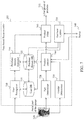
- FIG. 7 illustrates an exemplary diagram of a face-based recommender, according to an embodiment of the present teaching
- FIG. 8 is a flowchart of an exemplary process for providing personalized recommendations based on a facial part of a user image, according to an embodiment of the present teaching
- FIG. 9 illustrates an exemplary diagram of a product selector, according to an embodiment of the present teaching.
- FIG. 10 is a flowchart of an exemplary process for providing one or more products based on the age and the gender of the user, according to an embodiment of the present teaching
- FIG. 11 illustrates an exemplary diagram of a body-based recommender, according to an embodiment of the present teaching
- FIG. 12 is a flowchart of an exemplary process for training a feature model and an attribute model, according to an embodiment of the present teaching
- FIG. 13 is a flowchart of an exemplary process for providing personalized recommendations based on at least one non-facial part of a user image, according to an embodiment of the present teaching
- FIG. 14 illustrates an example of providing personalized recommendations based on a non-facial part of a user image, according to an embodiment of the present teaching
- FIG. 15 illustrates an exemplary diagram of an initial value generator
- FIG. 16 is a flowchart of an exemplary process of providing initial parameter values for the feature model and the attribute model in the body-based recommender
- FIG. 17 illustrates an exemplary process of training a feature model and an attribute model of a body-based recommender, according to an embodiment of the present teaching
- FIG. 18 depicts a general mobile device architecture on which the present teaching can be implemented.
- FIG. 19 depicts a general computer architecture on which the present teaching can be implemented.
- Various embodiments in accordance with the present teaching provide method and system related to E-commerce. More specifically, the method and system in various embodiments of the present teaching relate to provide a personalized recommendation of products to a user based on the image of the user.
- the recommendation device may capture an image of the user who is closest to the recommendation device through a camera.
- the recommendation device further determines the user's product preferences based on the image of the user. For example, the recommendation device may determine the user's age and gender based on the facial part of the image.
- the recommendation device may then recommend a first group of products based on the user's age and gender to the user.
- the first group of products may be the popular products corresponding to the user's age and gender.
- the recommendation device may determine the user's dressing style (e.g., colors, patterns, etc.) based on the one or more non-facial parts of the image.
- the recommendation device may then recommend a second group of products with the similar dressing style to the user.
- the second group of products may include shirts, pants, shoes, bags, purses, and other suitable items with the similar dressing style.
- the second group of products may be provided from a product database using a deep neural network.
- the recommendation device may recognize the gesture of the user. This is done so that after the recommended products are presented to the user, the user may select one or more products to check out without touching the screen of the recommendation device.
- the recommendation device may also execute a game after the user selects the one or more product for check out.
- a coupon may be provided to the user if the user wins the game. This is done so that the user engagement may be significantly improves, which may motivate the user to come back and use the recommendation device again.
- FIG. 1 is a high level depiction of an exemplary system 100 for providing personalized products to a user, according to an embodiment of the present teaching.
- the system 100 may include a recommendation device 110 with a camera 115 as a part of the recommendation device 110 , a network 130 , a content server 140 .
- the recommendation device 110 is in communication with the content server 140 through the network 130 .
- the content server 140 may store a product database.
- the content server 140 may further store a purchase history database, and/or a user database recording the previous users who made purchases using the recommendation device 110 .
- the recommendation device 110 can present desirable products obtained from the content server 140 , via the network 130 .
- the network 130 in the system 100 can be a single network or a combination of different networks.
- the network 130 can be a local area network (LAN), a wide area network (WAN), a public network, a private network, a proprietary network, a Public Telephone Switched Network (PSTN), the Internet, a wireless network, a virtual network, a wireless network like Wi-Fi, Bluetooth, or any combination thereof.
- LAN local area network
- WAN wide area network
- PSTN Public Telephone Switched Network
- the Internet a wireless network, a virtual network, a wireless network like Wi-Fi, Bluetooth, or any combination thereof.
- a plurality of users 120 may stand around the recommendation device 110 .
- the recommendation device 110 may use the camera 115 to capture an image of the user who stands closest to the recommendation device 110 .
- the recommendation device 110 may further provide a recommendation of products from the content server 140 to the user 120 based on the image of the user 120 .
- the recommendation device 110 may determine the user's age and gender based on the facial part of the image.
- the recommendation device 110 then may recommend a first group of products based on the user's age and gender to the user.
- the first group of products may be the popular products corresponding to the user's age and gender.
- the recommendation device 110 may determine the user's dressing style (e.g., colors, patterns, etc.) based on the one or more non-facial parts of the image. The recommendation device 110 may then recommend a second group of products with the similar dressing style to the user.
- the second group of products may include shirts, pants, shoes, bags, purses, and other suitable items with the similar dressing style.
- the second group of products may be provided from a product database using a deep neural network.
- the recommendation device 110 may be able to recognize the gesture of the user 120 . This is done so that after the recommended products are presented to the user 120 , the user may select one or more products to check out without touching the screen of the recommendation device 110 .
- the recommendation device 110 may also execute a game after the user 120 selects the one or more product for check out.
- a coupon may be provided to the user if the user wins the game. This is done so that the user engagement may be significantly improves, which may motivate the user 120 to come back and use the recommendation device 110 again.
- FIG. 2 illustrates an exemplary diagram of the recommendation device 110 , according to an embodiment of the present teaching.
- the recommendation device 110 includes the camera 115 , a photo cropper 240 , a face-based recommender 255 , a body-based recommender 260 , a display 265 , a gesture recognizer 235 , a user interface 250 , a cartoon generator 210 , a gaming unit 245 , a coupon generator 225 , a check-out unit 230 , and a card reader 215 .
- the different components of the recommendation device 110 may be arranged as shown or in any other suitable manner.
- the camera 115 may capture an image of the user 120 .
- the user 120 may be one of a group of users who is closest to the camera 115 .
- the photo cropper 240 may obtain the image from the camera 115 and decompose the image into a facial part of the image and at least one non-facial part of the image (e.g., as shown in FIG. 3 ).
- the camera 115 may be turned on all the time. This is done so that the gesture recognizer 235 may recognize the gestures of the user 120 based on the image of the user 120 in real time.
- the face-based recommender 255 may determine the user's age and gender based on the facial part of the image. The face-based recommender 255 may then determine a first group of products from the content server 140 based on the user's age and gender. The first group of products may be the popular products corresponding to the user's age and gender. More details about the face-based recommender 255 would be described in FIGS. 4-10 .
- the body-based recommender 260 may determine the user's dressing style (e.g., colors, patterns, etc.) based on the one or more non-facial parts of the image. The body-based recommender 260 may then determine a second group of products from the content server 140 based on the user's dressing style.
- the second group of products may include shirts, pants, shoes, bags, purses, and other suitable items with the similar dressing style.
- the second group of products may be provided from a product database using a deep neural network. More details about the body-based recommender 260 would be described in FIGS. 11-13 .
- the photo cropper 240 , the face-based recommender 255 , and the body-based recommender 260 may be collectively referred to as an image processor.
- the display 265 may present the first group of the products and the second group of products to the user 120 .
- the user 120 may select one or more products by touching the one or more products on the display 265 or through any suitable external devices such as a mouse and/or a keyboard.
- the user 120 may select the one or more products by make a suitable physical movement, which may be recognized by the gesture recognizer 235 though the camera 115 .
- the user interface 250 may in communicate with the display 265 and instruct the display 265 to present the selected one or more products to the user 120 .
- the check-out unit 230 may calculate the total prices of the one or more products and instruct the display 265 to present the balance to the user 120 .
- the cartoon generator 210 may generate a cartoon figure of the user 120 .
- the cartoon figure may be a virtual representation of the user 120 .
- the cartoon figure may be used in the gaming unit 245 for an interactive game as presented in the display 265 .
- the cartoon figure may make a movement (e.g., run, jump, laugh, etc.) in the game when the user makes the same movement.
- the gaming unit 245 may instruct the coupon generator 225 to generate a coupon.
- the coupon may be transmitted to the user 120 via an email, a text message, etc.
- the check-out unit 230 may apply the discount represented by the coupon to the total balance and instruct the display 265 to present the final balance after discount to the user 120 .
- the card reader 215 may be used to read the financial card (e.g., credit card, debit card, gift card, etc.) information of the user 120 to complete the transaction.
- the display 265 may further present information about e.g., when and where to pick up the selected one or more products.
- FIG. 3 illustrates a process of decomposing a user image 310 using the photo-cropper 240 .
- the photo cropper 240 may decompose the user image 310 into a facial part of the image 320 and at least one non-facial part of the image 330 .
- the user image 310 may be captured by the camera 115 in FIG. 2 .
- the facial part of the image 320 may be used by the face-based recommender 255 to select the first group of products.
- the first group of products may be the popular products corresponding to the user's age and gender determined based on the facial part of the image 320 .
- the at least one non-facial part of the image 330 may be used by the body-based recommender 260 to select the second group of products.
- the second group of products may include shirts, pants, shoes, bags, purses, and other suitable items with the similar dressing style determined based on the at least one non-facial part of the image 330 .
- FIG. 4 is a flowchart of an exemplary process for providing personalized products to a user, according to an embodiment of the present teaching. The process may be implemented by the recommendation device 110 .
- an image of a user is captured.
- the image is cropped into a facial part of the image and at least one non-facial part of the image.
- a first group of products may be provided based on the facial part of the image.
- the first group of products may be the popular products corresponding to the user's age and gender determined based on the facial part of the image.
- a second group of products may be provided based on the facial part of the image.
- the second group of products may include shirts, pants, shoes, bags, purses, and other suitable items with the similar dressing style of the user determined based on the at least one non-facial part of the image.
- the first group of products and the second group of products are presented to the user.
- the gesture of the user is recognized.
- at least one selection of products is received through the gesture of the user.
- a cartoon figure that represents the user is created.
- a user interactive game is executed. The user may be represented by the cartoon figure in the game.
- a coupon is generated after the game.
- the coupon is generated when the user wins the game.
- the coupon is transmitted to the user, for example, via an email, a text message, etc.
- the final balance is calculated.
- the final balance is presented to the user.
- the payment is received from the user, e.g., through reading the financial card (e.g., credit card, debit card, gift card, etc.) of the user.
- the user is informed of at least one method to receive the selected one or more products.
- the at least one method may include delivering the selected one or more products to the user's home at a specific time.
- the at least one method may further include picking up the one or more products at a specific location at a specific time.
- the transaction is completed.
- FIG. 5 illustrates an exemplary diagram of the cartoon generator 210 in FIG. 2 .
- the cartoon generator 210 includes a skeleton mapper 510 , a depth sensor 520 , and an image synthesizer 530 .
- the skeleton mapper 510 may convert a user image 310 to a skeleton image 515 .
- the user image 310 may be taken by the camera 115 in FIG. 2 .
- the depth sensor 520 may capture a depth image 525 of the user 120 .
- the image synthesizer 530 may combine the skeleton image 515 and the depth image 525 to generate the cartoon FIG. 535 .
- the depth sensor 520 and the camera 115 are turned on all the time. As a result, the cartoon FIG.
- the cartoon FIG. 535 may represent the user 120 in real time. For example, when the user 120 makes a movement (e.g., run, jump, laugh, etc.), the cartoon FIG. 535 may make the same movement. In an embodiment, the cartoon FIG. 535 may be a representation of the user 120 in the game executed by the gaming unit 245 .
- a movement e.g., run, jump, laugh, etc.
- the cartoon FIG. 535 may be a representation of the user 120 in the game executed by the gaming unit 245 .
- FIG. 6 is a flowchart of an exemplary process for creating a cartoon figure of a user.
- the process may be implemented by the cartoon generator 210 of the recommendation device 110 .
- a user image is obtained.
- the user image is captured by a camera, e.g., the camera 115 .
- a skeleton image of the user is obtained based on the user image.
- a depth image of the user is obtained.
- a cartoon figure of the user is created based on the skeleton image and the depth image.
- FIG. 7 illustrates an exemplary diagram of the face-based recommender 255 in FIG. 2 , according to an embodiment of the present teaching.
- the face-based recommender 255 includes an age determiner 720 , a gender determiner 725 , a product selector 740 , a user recognizer 710 , a purchase history extractor 730 , and a product filter 745 .
- the face-based recommender 255 may further include a database updater 140 , a user database 715 , and a purchase history database 735 .
- the components of the face-based recommender 255 may be arranged as shown or in any other suitable manner.
- the age determiner 720 may determine the age of the user based on the facial part of the image 320 . Additionally, the gender determiner 725 may determine the gender of the user based on the facial part of the image 320 .
- the product selector 740 may select a group of products from a purchase history database 735 based on the determined age and the determined gender of the user. In an embodiment, the purchase history database 735 may be stored in the content server 140 . As such, the product selector 740 may obtain the group of products from the purchase history database stored in the content server 140 directly.
- the database updater 750 may update the purchase history database 735 of the face-based recommender 255 regularly according to the purchase history database of the content server 140 .
- the purchase history database 735 of the face-based recommender 255 may be a replica of the purchase history database stored in the content server 140 .
- the product selector 740 may select the group of products from the purchase history database 735 of the face-based recommender 255 . More details about the product selector 740 would be described in FIGS. 9-10 .
- the user database 715 may include a plurality of facial parts of the images of the previous users who have made purchases using the recommendation device 110 .
- the database updater 750 may update the user database 715 regularly according to the user database stored in the content server 140 .
- the user recognizer 710 may determine whether the user 120 has made purchases using the recommendation device 110 based on the facial part of the image 320 . If a similar facial part of the image is found in the user database, it is determined the user 120 has made purchases using the recommendation device 110 before. Then the purchase history extractor 730 may obtain products that the user has purchased before from the purchase history database 735 .
- the product filter 745 may obtain a plurality of products from the product selector 740 and/or the purchase history extractor 730 .
- the product filter 745 may further exclude one or more products from the plurality of products received by the product filter 745 .
- the one or more products may be “regular” products which are purchased by previous customers of both genders and at least a predetermined range of ages.
- the one or more products may include toilet paper, flowers, etc. This is done so that only the most “distinctive” products with respect to the age and gender of the user are recommended as the first group of products to the user.
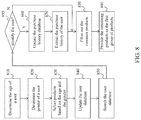
- FIG. 8 is a flowchart of an exemplary process for providing personalized recommendations based on a facial part of a user image, according to an embodiment of the present teaching. The process may be implemented by the face-based recommender 255 of the recommendation device 110 .
- the age of the user is determined based on the facial part of the image.
- the gender of the user is determined based on the facial part of the image.
- a group of products are selected based on the age and the gender of the user.
- the user database of the face-based recommender is updated according to the user database stored in the content server.
- the user database is searched based on the facial part of the image.
- the user database may include a plurality of facial parts of the images of the previous users who have made purchases using the recommendation device 110 .
- the purchase history database of the face-based recommender is updated.
- the one or more products that the user has purchased before using the recommendation device are extracted.
- the “regular” products have been excluded from a plurality of products.
- the plurality of products may include the group of products selected based on the age and gender of the user.
- the plurality of products may further include the one or more products that the user has purchased before.
- the remaining products are provided as the first group of products.
- FIG. 9 illustrates an exemplary diagram of the product selector 740 in FIG. 7 , according to an embodiment of the present teaching.
- the product selector 740 includes a product extractor 910 , a score calculator 930 , a product ranker 940 , and a product determiner 950 .
- the components of the product selector 740 may be arranged as shown or in any other suitable manner.
- the product extractor 910 may extract a subgroup of products from the purchase history database 735 based on the age and the gender of the user 120 .
- the subgroup of products from the purchase history database 735 may be purchased by the previous users with the same gender of the user 120 and within a predetermined range of the user age.
- the gender of the user 120 is determined as male, and the age of the user is determined as 24 years old.
- ⁇ may be 5, 8, 10, etc.
- the predetermined age parameter ⁇ is 5. Accordingly, the predetermined range of the user age may be between 19 years old and 29 years old.
- Table 1 shows an example of a subgroup of products from the purchase history database 735 .
- the first column indicates the subgroup of products includes, but not limited to, tissue, helmet, and backpack. Each product may be recorded in more than one rows of table 1.
- the second and the third columns indicate the genders and the ages of the previous users who purchase the products. As described above, the gender of the previous users (as indicated in the second column) is the same as the gender of the user 120 , i.e., male in this example. The ages of the previous users (as indicated in the third column) are within a range between 19 years old and 29 years old.
- the last column of table 1 indicates the number of purchases for each product by a male user with an age indicated by the third column.
- the score calculator may calculate a score for each of the subgroup of products, e.g. in table 1.
- the score for each of the subgroup of products may be calculated as:
- Score ⁇ ( product , gender , age ) ⁇ age - ⁇ ⁇ x ⁇ age + ⁇ ⁇ ⁇ count ⁇ ( gender , x ) ⁇ e - ( x - age ) 2 2 ⁇ ⁇ 2 ( 1 )
- gender is the determined gender of the user (i.e., male)
- age is the determined age of the user (i.e., 24 years old)
- Score(product, gender, age) represents the score for the product provided the gender and the age of the user
- a is the predetermined age parameter (i.e., 5 in this example)
- x is the age of the previous user who purchases the product
- count (gender, x) represents the number of purchases of the products by the previous users with the gender and age x.
- Table 2 is an example of the calculated score(product, gender, age) for each of the subgroup of products. Different from table 1, each product (as shown in the first column) may be recorded in only one row of table 2. The second column and the third column of table 2 represent the determined gender and age of the user, respectively. The last column shows the calculated scores for each product.
- the product ranker 940 may rank the subgroup of products, e.g., based on the scores.
- An example of the ranked subgroup of products may be shown in table 3. As shown, the order of the subgroup of products may be ranked according to the associated scores.
- the product determiner 950 may select one or more products from the subgroup of products based on the ranking, e.g., as shown in table 3. For example, the product determiner 950 may select the top product in table 3, i.e., the backpack. For another example, the product determiner 950 may select the top two products in table 3, i.e., the backpack and the tissue. For yet another example, the product determiner 950 may select the top three products in table 3, i.e., the backpack, the tissue, and the helmet.
- FIG. 10 is a flowchart of an exemplary process for providing one or more products based on the age and the gender of the user, according to an embodiment of the present teaching. The process may be implemented by the product selector 740 in FIG. 9 .
- a subgroup of products from the purchase history database is obtained.
- the subgroup of products may be purchased by the previous users with the same gender of the user 120 and within a predetermined range of the user age.
- the predetermined range of the user age may be between (x ⁇ ) and (x+ ⁇ ), where x is the determined age of the user, and ⁇ is a predetermined age parameter.
- ⁇ may be 5, 8, 10, etc.
- An example of the subgroup of products may be shown as table 1.
- a score is calculated for each of the subgroup of products.
- the score for each of the subgroup of products may be calculated based on equation (1).
- An example of the calculated score for each of the subgroup of products is shown in table 2.
- the subgroup of products is ranked according to the scores.
- An example of the ranked subgroup of products is shown in table 3.
- one or more products are selected based on the ranking.
- FIG. 11 illustrates an exemplary diagram of the body-based recommender 260 in FIG. 2 , according to an embodiment of the present teaching.
- the body-based recommender 260 may include a database updater 1110 , a product database 1120 , a feature extractor 1115 , a down-pooling unit 1135 , an attribute classifier 1165 , a parameter configurator 1170 , an initial value generator 1140 , a termination condition examiner 1130 , a plurality of parameters 1145 for the feature model 1125 and the attribute model 1160 , a cost function 1150 , an attribute extractor 1155 , and a product matcher 1175 .
- the components of the body-based recommender 260 may be arranged as shown or in any other suitable manner.
- the body-based recommender 260 may perform two operations.
- a plurality of training images from the product database 1120 may be used to train the feature model and the attribute model and obtain accurate values for the parameters of the feature model and the attribute model. This is done so that the body-based recommender 260 may be able to obtain the accurate values of a plurality of attributes of an image.
- the initial value generator 1140 may generate initial values for the parameters 1145 of the feature model 1125 and the attribute model 1160 .
- the database updater 1110 may update the product database 1120 of the body-based recommender.
- the updated product database 1120 may be a replica of the product database of the content server 140 .
- the feature extractor 1115 may obtain the training images from the product database and extract a plurality of features of the product in each of the training images.
- the feature extractor 1115 may be a convolutional neural network.
- the plurality of features of the product may include, but not limited to, the width, the length, the edge, and the angle.
- the down-pooling unit 1135 may obtain a subset of the plurality of features based on the plurality of features for each of the training images.
- the subset of the plurality of features may be obtained by down sampling the plurality of features.
- each value of the subset of the plurality of features may be an average of a portion of the plurality of features.
- each value of the subset of the plurality of features may be an extrema (i.e., a maximal value or a minimal value) of a portion of the plurality of features.
- the attribute classifier 1165 may determine the values of a plurality of attributes of each product of the training images based on each subset of the plurality of features.
- the plurality of attributes of a product in a training image may include, but not limited to, the pattern of the product and the color of the product.
- the attribute extractor 1155 may extract the pre-stored attribute values for each training image.
- the parameter configurator 1170 may calculate the cost function based on the pre-stored attribute values and the determined attribute values for each of the training images.
- the cost function may be a function of the differences between the determined and extracted attribute values are calculated.
- the parameter configurator 1170 may further reconfigure the values of the parameters 1145 for the feature model 1125 and the attribute model 1160 so that the value of the cost function may be further reduced.
- the termination condition examiner 1130 may determine whether a termination condition is satisfied.
- the termination condition may indicate the value of the cost function is within a predetermined range. If so, the first operation for training the feature model 1125 and the attribute model 1160 is complete. Otherwise, the above process repeats until the termination condition is satisfied.
- the body-based recommender 260 may perform the second operation.
- the body-based recommender 260 may provide personalized recommendations based on at least one non-facial part of a user image.
- the feature extractor 1115 may obtain at least one non-facial part of the user image 330 .
- the feature extractor 1115 may further extract a plurality of features of each product in the at least one non-facial part of the user image 330 .
- the feature extractor 1115 may be the convolutional neural network.
- the plurality of features may include, but not limited to, the width, the length, the edge, and the angle.
- the down-pooling unit may obtain a subset of the plurality of features from the plurality of features for each of the at least one non-facial part of the user image 330 .
- the subset of the plurality of features may be obtained by down sampling the plurality of features for each non-facial part of the image 330 .
- each value of the subset of the plurality of features may be an average of a portion of the plurality of features for each non-facial part of the image 330 .
- each value of the subset of the plurality of features may be an extrema (i.e., a maximal value or a minimal value) of a portion of the plurality of features for each non-facial part of the image 330 .
- the attribute classifier 1165 may determine the values of a plurality of attributes of the each product in the at least one non-facial part of the image 330 .
- the plurality of attributes may include, but not limited to, the pattern of the product and the color of the product.
- the product matcher 1175 may search the product database 1120 for the one or more products having the same or similar values of the plurality of attributes for each of the non-facial part of the image 330 .
- the product matcher 1175 may further output the selected products as the second group of products.
- FIG. 12 is a flowchart of an exemplary process for training the feature model 1125 and an attribute model 1160 , according to an embodiment of the present teaching.
- the process may be implemented by the body-based recommender 260 .
- initial parameter values for the feature model and the attribute model are obtained.
- the product database of the body-based recommender is updated.
- the updated product database may be a replica of the product database of the content server.
- a training image is obtained from the product database.
- a plurality of features of the product in the training image is determined, e.g., using a convolutional neural network.
- the plurality of features of the product may include, but not limited to, the width, the length, the edge, and the angle.
- a subset of the plurality of features is obtained.
- the subset of the plurality of features may be obtained by down sampling the plurality of features.
- each value of the subset of the plurality of features may be an average of a portion of the plurality of features.
- each value of the subset of the plurality of features may be an extrema (i.e., a maximal value or a minimal value) of a portion of the plurality of features.
- the values of a plurality of attributes of the product in the training image are determined based on the subset of the plurality of features.
- the plurality of attributes may include, but not limited to, the pattern of the product and the color of the product.
- the pre-stored attribute values for each training image are extracted.
- a cost function is calculated. In some examples, the cost function may be a function of the differences between the determined and extracted attribute values are calculated.
- the parameters for the feature model and the attribute model are reconfigured so that the value of the cost function may be further reduced.
- the termination condition may indicate the value of the cost function is within a predetermined range. If so, the process is finished at step 1265 . Otherwise, the process returns to step 1220 .
- FIG. 13 is a flowchart of an exemplary process for providing personalized recommendations based on at least one non-facial part of a user image, according to an embodiment of the present teaching.
- the process may be implemented by the body-based recommender 260 .
- the product database is updated.
- a non-facial part of the user image is obtained.
- a plurality of features of the product in the non-facial part of the user image is determined, e.g., using the convolutional neural network.
- the plurality of features of the product may include, but not limited to, the width, the length, the edge, and the angle.
- a subset of the plurality of features is obtained.
- the subset of the plurality of features may be obtained by down sampling the plurality of features.
- each value of the subset of the plurality of features may be an average of a portion of the plurality of features.
- each value of the subset of the plurality of features may be an extrema (i.e., a maximal value or a minimal value) of a portion of the plurality of features.
- the values of a plurality of attributes of the product in the training image are determined based on the subset of the plurality of features.
- the plurality of attributes may include, but not limited to, the pattern of the product and the color of the product.
- one or more products having the same or similar values of the plurality of attributes are selected from the product database.
- FIG. 14 illustrates an example of providing personalized recommendations based on a non-facial part of a user image, according to an embodiment of the present teaching.
- the non-facial part of the image 1410 includes a jean.
- the body-based recommender 260 provides the second group of products, i.e., different jeans with a similar dressing style as shown in the non-facial part of the image 1410 .
- the body-based recommender 260 may further provide other products 1430 that may match the dressing style of the jean.
- the body-based recommender 260 may further provide a shirt, and a pair of shoes that match the style of the jean in the non-facial part of the user image 1410 .
- FIG. 15 illustrates an exemplary diagram of the initial value generator 1140 .
- the initial value generator 1140 may include a feature extractor 1510 , a classifier 1535 , a feature model 1525 , a random value generator 1555 , a termination condition examiner 1530 , a plurality of parameters 1540 for the feature model 1525 , a parameter configurator 1560 , a cost function 1545 , a multiplexer 1515 , a plurality of databases 1520 , and a class extractor 1550 .
- the random value generator 1555 may generate a plurality of random values as the initial values 1565 for the parameters of the attribute model 1160 in the body-based recommender 260 .
- the random value generator 1555 may further output the initial values 1565 for the parameters of the attribute model 1160 in the body-based recommender 260 .
- the random value generator 1555 may generate random values as initial values for the parameters 1540 of the feature model 1525 in the initial value generator 1140 .
- the multiplexer 1515 may multiplex a plurality of databases 1520 (e.g., DB 1 , DB 2 , . . . , DBn as shown in FIG. 15 ).
- the product database may be one of the plurality of databases 1520 .
- the feature extractor 1510 may obtain the training images from the multiplexed databases.
- the feature extractor 1510 may further determine a plurality of features for each of the training images using the feature model 1525 .
- the classifier 1535 may determine a class for each object in the training images.
- the class may be a category that the object in the training image belongs to. For example, the class may indicate the object in the training image is a vegetable, an animal, a car, a plane, etc.
- the class extractor 1550 may extract a pre-stored class for each training image.
- the parameter configurator 1560 may calculate the cost function 1545 based on the pre-stored class and the determined class for each of the training image.
- the cost function may be a function of the differences between the determined class and the pre-stored class for each training image.
- the parameter configurator 1560 may further reconfigure the parameters of the feature model 1525 to reduce the value of the cost function 1545 .
- the termination condition examiner 1530 may determine whether a termination condition is satisfied.
- the termination condition indicates that the value of the cost function is within a predetermined range. If so, the parameter configurator may output the values of the parameters 1540 for the feature model 1525 as the initial values of the parameters for the feature model 1125 in the body-based recommender 260 . If not, the above operations repeat until the termination condition is satisfied.
- FIG. 16 is a flowchart of an exemplary process of providing initial parameter values for the feature model 1125 and the attribute model 1160 in the body-based recommender 260 in FIG. 11 .
- the process may be implemented by the initial value generator 1140 of the body-based recommender 260 .
- a plurality of databases e.g., DB 1 , DB 2 , . . . , DBn in FIG. 15
- a training image is obtained from the multiplexed databases.
- a plurality of features is determined based on the training image.
- a class is determined for the training image. The class may a category that the object in the training image belongs to. For example, the class may indicate the object in the training image is a vegetable, an animal, a car, a plane, etc.
- a pre-stored class is extracted for each training image.
- a cost function is calculated.
- the cost function may be a function of the differences between the determined class and the pre-stored class for each training image.
- the parameters for the feature model is reconfigured to reduce the cost function.
- random values are generated as the initial values for the parameters of the attribute model 1160 in the body-based recommender 260 .
- the initial values for the parameters of the attribute model 1160 in the body-based recommender 260 are outputted.
- the values of the parameters for the feature model 1525 in the initial value generator 1140 are outputted as the initial values of the parameters of the feature model 1125 in the body-based recommender 260 .
- FIG. 17 illustrates an exemplary process of training the feature model 1125 and the attribute model 1160 of the body-based recommender 260 , according to an embodiment of the present teaching.
- Training the feature model of the body-based recommender with random initial parameter values may be a very slow process.
- Using the parameter values of another trained feature model as initial parameter values for the feature model may expedite the training process of the feature model of the body-based recommender.
- the upper part 1710 of FIG. 17 may illustrate a process of supervised pre-training on a huge image database 1713 .
- the upper part 1710 may illustrate the operation of the initial value generator 1140 .
- the huge image database 1713 may be the multiplexed databases 1520 as shown in FIG. 15 .
- the huge image database 1713 may include 1.2 million images.
- the first convolutional neural network 1715 may determine a plurality of features 1730 for each of the images from the huge image database 1713 using a first feature model.
- the initial parameter values for the first feature model may be random.
- the first convolutional neural network 1715 may determine 4096 features for each of the images.
- a classifier e.g., the classifier 1535
- the one of the 1000 classes 1740 may indicate the object in an image is one of a vegetable, an animal, a person, a car, a plane, etc.
- the parameters of the first feature model may be reconfigured to reduce the differences between the pre-stored class and the determined class for each of the images from the huge image database 1713 .
- the above process may repeat until a first termination condition is satisfied.
- the first termination condition may indicate the differences between the determined classes and the pre-stored classes of the images from the huge image database 1713 are within a range. When the first termination condition is satisfied, the training process of the first feature model is complete.
- the lower part 1720 of FIG. 17 may illustrate a process of training the second feature model for the second convolutional neural network 1725 on the product database 1723 .
- the product database 1723 may be similar to product database 1120 .
- the product database 1723 may include 1 million images of different products.
- the second convolutional neural network 1725 may determine a plurality of features 1750 for each of the product images from the product database 1723 using a second feature model.
- the parameter values for the first feature model may be used as the initial parameter values for the second feature model.
- the second convolutional neural network 1725 may determine 4096 features for each of the images.
- a down-pooling unit (not shown) may determine a subset of the features from the plurality of features 1750 .
- the subset of the features may form a latent layer 1760 .
- the latent layer 1760 includes 1024 features.
- An attribute classifier (not shown) may determine values for a plurality of attributes 1775 based on the latent layer 1760 for each of the product images using an attribute model.
- the initial parameter values for the attribute model may be random.
- the plurality of attributes may include, but not limited to, a color and a pattern of each product in the product images.
- the parameters of the second feature model may be reconfigured to reduce the differences between the pre-stored attribute values and the determined attribute values for each of the product images from the product database 1723 .
- the above process may repeat until a second termination condition is satisfied.
- the second termination condition may indicate the differences between the determined attribute values and the pre-stored attribute values of the product images from the product database 1723 are within a range. When the second termination condition is satisfied, the training process of the second feature model and the attribute model is complete.
- FIG. 18 depicts a general mobile device architecture on which the present teaching can be implemented and has a functional block diagram illustration of a mobile device hardware platform which includes user interface elements.
- the mobile device may be a general-purpose mobile device or a special purpose mobile device.
- the user device is a mobile device 1800 , including but is not limited to, a smart phone, tablet, music player, handled gaming console, GPS.
- the mobile device 1800 in this example includes one or more central processing units (CPUs) 1802 , one or more graphic processing units (GPUs) 1804 , a display 1806 , a memory 1808 , a communication platform 1810 , such as a wireless communication module, storage 1812 , and one or more input/output (I/O) devices 1814 .
- CPUs central processing units
- GPUs graphic processing units
- storage 1812 storage 1812
- I/O input/output
- any other suitable component such as but not limited to a system bus or a controller (not shown), may also be included in the mobile device 1800 .
- one or more applications 1882 may be loaded into the memory 1808 from the storage 1812 in order to be executed by the CPU 1802 .
- the applications 1882 may be executed on various mobile operating systems, e.g., iOS, Android, Windows Phone, etc. Execution of the applications 1882 may cause the mobile device 1800 to perform the processing as described above, e.g., in FIGS. 4, 6, 8, 10, 12, 13, and 16 .
- FIG. 19 depicts a general computer architecture on which the present teaching can be implemented and has a functional block diagram illustration of a computer hardware platform which includes user interface elements.
- the computer may be a general-purpose computer or a special purpose computer.
- This computer 1900 can be used to implement any components of the system for presenting personalized content as described herein.
- Different components of the systems and devices 110 , 210 , 255 , 740 , 260 , and 1140 e.g., as depicted in FIGS. 2, 5, 7, 9, 11 , and 15 can all be implemented on one or more computers such as computer 1900 , via its hardware, software program, firmware, or a combination thereof.
- FIGS. 2, 5, 7, 9, 11 , and 15 can all be implemented on one or more computers such as computer 1900 , via its hardware, software program, firmware, or a combination thereof.
- the computer functions relating to dynamic relation and event detection may be implemented in a distributed fashion on a number of similar platforms, to distribute the processing load.
- the computer 1900 includes COM ports 1902 connected to and from a network connected thereto to facilitate data communications.
- the computer 1900 also includes a central processing unit (CPU) 1904 , in the form of one or more processors, for executing program instructions.
- the exemplary computer platform includes an internal communication bus 1906 , program storage and data storage of different forms, e.g., disk 1908 , read only memory (ROM) 1910 , or random access memory (RAM) 1912 , for various data files to be processed and/or communicated by the computer, as well as possibly program instructions to be executed by the CPU.
- the computer 1900 also includes an I/O component 1914 , supporting input/output flows between the computer and other components therein such as user interface elements 1916 .
- the computer 1900 may also receive programming and data via network communications.
- aspects of the method for presenting personalized content may be embodied in programming.
- Program aspects of the technology may be thought of as “products” or “articles of manufacture” typically in the form of executable code and/or associated data that is carried on or embodied in a type of machine readable medium.
- Tangible non-transitory “storage” type media include any or all of the memory or other storage for the computers, processors or the like, or associated modules thereof, such as various semiconductor memories, tape drives, disk drives and the like, which may provide storage at any time for the computer-implemented method.
- All or portions of the computer-implemented method may at times be communicated through a network such as the Internet or various other telecommunication networks. Such communications, for example, may enable loading of the software from one computer or processor into another.
- another type of media that may bear the elements of the computer-implemented method includes optical, electrical, and electromagnetic waves, such as used across physical interfaces between local devices, through wired and optical landline networks and over various air-links.
- the physical elements that carry such waves, such as wired or wireless links, optical links or the like, also may be considered as media bearing the computer-implemented method.
- terms such as computer or machine “readable medium” refer to any medium that participates in providing instructions to a processor for execution.
- Non-volatile storage media include, for example, optical or magnetic disks, such as any of the storage devices in any computer(s) or the like, which may be used to implement the system or any of its components as shown in the drawings.
- Volatile storage media include dynamic memory, such as a main memory of such a computer platform.
- Tangible transmission media include coaxial cables; copper wire and fiber optics, including the wires that form a bus within a computer system.
- Carrier-wave transmission media can take the form of electric or electromagnetic signals, or acoustic or light waves such as those generated during radio frequency (RF) and infrared (IR) data communications.
- Computer-readable media therefore include for example: a floppy disk, a flexible disk, hard disk, magnetic tape, any other magnetic medium, a CD-ROM, DVD or DVD-ROM, any other optical medium, punch cards paper tape, any other physical storage medium with patterns of holes, a RAM, a PROM and EPROM, a FLASH-EPROM, any other memory chip or cartridge, a carrier wave transporting data or instructions, cables or links transporting such a carrier wave, or any other medium from which a computer can read programming code and/or data. Many of these forms of computer readable media may be involved in carrying one or more sequences of one or more instructions to a processor for execution.
Landscapes
- Engineering & Computer Science (AREA)
- Theoretical Computer Science (AREA)
- Physics & Mathematics (AREA)
- General Physics & Mathematics (AREA)
- Health & Medical Sciences (AREA)
- Evolutionary Computation (AREA)
- General Health & Medical Sciences (AREA)
- Artificial Intelligence (AREA)
- Computing Systems (AREA)
- Software Systems (AREA)
- Computer Vision & Pattern Recognition (AREA)
- Business, Economics & Management (AREA)
- Life Sciences & Earth Sciences (AREA)
- Molecular Biology (AREA)
- Multimedia (AREA)
- Data Mining & Analysis (AREA)
- Biomedical Technology (AREA)
- General Engineering & Computer Science (AREA)
- Computational Linguistics (AREA)
- Mathematical Physics (AREA)
- Biophysics (AREA)
- Accounting & Taxation (AREA)
- Finance (AREA)
- Oral & Maxillofacial Surgery (AREA)
- Medical Informatics (AREA)
- Databases & Information Systems (AREA)
- Economics (AREA)
- Development Economics (AREA)
- Marketing (AREA)
- Strategic Management (AREA)
- General Business, Economics & Management (AREA)
- Biodiversity & Conservation Biology (AREA)
- Human Computer Interaction (AREA)
- Evolutionary Biology (AREA)
- Bioinformatics & Computational Biology (AREA)
- Bioinformatics & Cheminformatics (AREA)
- Management, Administration, Business Operations System, And Electronic Commerce (AREA)
Abstract
Description
| TABLE 1 |
| A subgroup of products from the purchase history database |
| Product | Gender | Age | Number of Purchase | ||
| Tissue | Male | 24 | 5 | ||
| Helmet | Male | 25 | 10 | ||
| Tissue | Male | 25 | 15 | ||
| Backpack | Male | 20 | 20 | ||
| . . . | . . . | . . . | . . . | ||
where gender is the determined gender of the user (i.e., male), age is the determined age of the user (i.e., 24 years old), Score(product, gender, age) represents the score for the product provided the gender and the age of the user, a is the predetermined age parameter (i.e., 5 in this example), x is the age of the previous user who purchases the product, and count (gender, x) represents the number of purchases of the products by the previous users with the gender and age x.
| TABLE 2 |
| A calculated score for each of the subgroup of products. |
| Product | Gender | Age | Score | ||
| Tissue | Male | 24 | 5 | ||
| Helmet | Male | 24 | 3 | ||
| Backpack | Male | 24 | 7 | ||
| . . . | . . . | . . . | . . . | ||
| TABLE 3 |
| A ranked subgroup of products based on the associated scores. |
| Product | Gender | Age | Score | ||
| Backpack | Male | 24 | 7 | ||
| Tissue | Male | 24 | 5 | ||
| Helmet | Male | 24 | 3 | ||
| . . . | . . . | . . . | . . . | ||
Claims (29)
Priority Applications (1)
| Application Number | Priority Date | Filing Date | Title |
|---|---|---|---|
| US15/162,022 US10672055B2 (en) | 2016-05-23 | 2016-05-23 | Method and system for presenting personalized products based on digital signage for electronic commerce |
Applications Claiming Priority (1)
| Application Number | Priority Date | Filing Date | Title |
|---|---|---|---|
| US15/162,022 US10672055B2 (en) | 2016-05-23 | 2016-05-23 | Method and system for presenting personalized products based on digital signage for electronic commerce |
Publications (2)
| Publication Number | Publication Date |
|---|---|
| US20170337611A1 US20170337611A1 (en) | 2017-11-23 |
| US10672055B2 true US10672055B2 (en) | 2020-06-02 |
Family
ID=60329599
Family Applications (1)
| Application Number | Title | Priority Date | Filing Date |
|---|---|---|---|
| US15/162,022 Active 2037-03-04 US10672055B2 (en) | 2016-05-23 | 2016-05-23 | Method and system for presenting personalized products based on digital signage for electronic commerce |
Country Status (1)
| Country | Link |
|---|---|
| US (1) | US10672055B2 (en) |
Cited By (1)
| Publication number | Priority date | Publication date | Assignee | Title |
|---|---|---|---|---|
| US12307812B2 (en) | 2021-05-05 | 2025-05-20 | Perfect Mobile Corp. | System and method for personality prediction using multi-tiered analysis |
Families Citing this family (11)
| Publication number | Priority date | Publication date | Assignee | Title |
|---|---|---|---|---|
| US20180336603A1 (en) * | 2017-05-22 | 2018-11-22 | Fujitsu Limited | Restaurant review systems |
| CN108230082A (en) | 2017-06-16 | 2018-06-29 | 深圳市商汤科技有限公司 | The recommendation method and apparatus of collocation dress ornament, electronic equipment, storage medium |
| US10776763B2 (en) | 2017-09-12 | 2020-09-15 | Paypal, Inc. | System and method for performing gesture-based unified multi-marketplace transactions |
| US11157985B2 (en) | 2017-11-29 | 2021-10-26 | Ditto Technologies, Inc. | Recommendation system, method and computer program product based on a user's physical features |
| US11470165B2 (en) | 2018-02-13 | 2022-10-11 | Ebay, Inc. | System, method, and medium for generating physical product customization parameters based on multiple disparate sources of computing activity |
| CN110119474B (en) * | 2018-05-16 | 2022-10-18 | 华为技术有限公司 | Recommendation model training method, prediction method and device based on recommendation model |
| CN110298684B (en) * | 2019-05-22 | 2023-06-06 | 平安科技(深圳)有限公司 | Vehicle type matching method and device, computer equipment and storage medium |
| CN111951043A (en) * | 2020-07-27 | 2020-11-17 | 深圳市欢太科技有限公司 | Information delivery processing method, device, storage medium and electronic device |
| US12293604B1 (en) * | 2024-04-10 | 2025-05-06 | Brilliance of Beauty, Inc. | Using image proccessing, machine learning and images of a human face for prompt generation related to beauty products for the human face |
| US12394126B1 (en) * | 2024-04-10 | 2025-08-19 | Lashify, Inc | Using two-dimensional images to identify search parameters for a search of false eyelashes |
| US12118821B1 (en) | 2024-04-10 | 2024-10-15 | Lashify, Inc. | Using image processing, machine learning and images of a human face for prompt generation related to false eyelashes |
Citations (18)
| Publication number | Priority date | Publication date | Assignee | Title |
|---|---|---|---|---|
| US20090288015A1 (en) * | 2008-03-13 | 2009-11-19 | Robb Fujioka | Widgetized avatar and a method and system of creating and using same |
| US20110302117A1 (en) * | 2007-11-02 | 2011-12-08 | Thomas Pinckney | Interestingness recommendations in a computing advice facility |
| US8219438B1 (en) * | 2008-06-30 | 2012-07-10 | Videomining Corporation | Method and system for measuring shopper response to products based on behavior and facial expression |
| US20130083999A1 (en) * | 2011-09-30 | 2013-04-04 | Anurag Bhardwaj | Extraction of image feature data from images |
| US20130215116A1 (en) * | 2008-03-21 | 2013-08-22 | Dressbot, Inc. | System and Method for Collaborative Shopping, Business and Entertainment |
| US20130343615A1 (en) * | 2012-06-20 | 2013-12-26 | Tong Zhang | Identifying a style of clothing based on an ascertained feature |
| US20140032359A1 (en) * | 2012-07-30 | 2014-01-30 | Infosys Limited | System and method for providing intelligent recommendations |
| US20140201126A1 (en) * | 2012-09-15 | 2014-07-17 | Lotfi A. Zadeh | Methods and Systems for Applications for Z-numbers |
| US20150055085A1 (en) * | 2013-08-22 | 2015-02-26 | Bespoke, Inc. | Method and system to create products |
| US20150067708A1 (en) * | 2013-08-30 | 2015-03-05 | United Video Properties, Inc. | Systems and methods for generating media asset representations based on user emotional responses |
| US20150106224A1 (en) * | 2013-10-16 | 2015-04-16 | International Business Machines Corporation | Determining picking costs for a set of candidate products for a product order |
| US20150145671A1 (en) * | 2013-11-22 | 2015-05-28 | Roy Cohen | Smart clothing system |
| US20150278590A1 (en) * | 2014-03-25 | 2015-10-01 | Wipro Limited | System and method for determining the characteristics of human personality and providing real-time recommendations |
| US20150369611A1 (en) * | 2014-06-19 | 2015-12-24 | Tracy Ogishi | Automated mall concierge |
| US20170178220A1 (en) * | 2015-12-21 | 2017-06-22 | International Business Machines Corporation | Personalized expert cosmetics recommendation system using hyperspectral imaging |
| US20170270593A1 (en) * | 2016-03-21 | 2017-09-21 | The Procter & Gamble Company | Systems and Methods For Providing Customized Product Recommendations |
| US20170300945A1 (en) * | 2016-04-15 | 2017-10-19 | International Business Machines Corporation | Segmenting mobile shoppers |
| US20170308909A1 (en) * | 2016-04-20 | 2017-10-26 | OA Labs LLC | Systems and methods for sensor data analysis through machine learning |
-
2016
- 2016-05-23 US US15/162,022 patent/US10672055B2/en active Active
Patent Citations (18)
| Publication number | Priority date | Publication date | Assignee | Title |
|---|---|---|---|---|
| US20110302117A1 (en) * | 2007-11-02 | 2011-12-08 | Thomas Pinckney | Interestingness recommendations in a computing advice facility |
| US20090288015A1 (en) * | 2008-03-13 | 2009-11-19 | Robb Fujioka | Widgetized avatar and a method and system of creating and using same |
| US20130215116A1 (en) * | 2008-03-21 | 2013-08-22 | Dressbot, Inc. | System and Method for Collaborative Shopping, Business and Entertainment |
| US8219438B1 (en) * | 2008-06-30 | 2012-07-10 | Videomining Corporation | Method and system for measuring shopper response to products based on behavior and facial expression |
| US20130083999A1 (en) * | 2011-09-30 | 2013-04-04 | Anurag Bhardwaj | Extraction of image feature data from images |
| US20130343615A1 (en) * | 2012-06-20 | 2013-12-26 | Tong Zhang | Identifying a style of clothing based on an ascertained feature |
| US20140032359A1 (en) * | 2012-07-30 | 2014-01-30 | Infosys Limited | System and method for providing intelligent recommendations |
| US20140201126A1 (en) * | 2012-09-15 | 2014-07-17 | Lotfi A. Zadeh | Methods and Systems for Applications for Z-numbers |
| US20150055085A1 (en) * | 2013-08-22 | 2015-02-26 | Bespoke, Inc. | Method and system to create products |
| US20150067708A1 (en) * | 2013-08-30 | 2015-03-05 | United Video Properties, Inc. | Systems and methods for generating media asset representations based on user emotional responses |
| US20150106224A1 (en) * | 2013-10-16 | 2015-04-16 | International Business Machines Corporation | Determining picking costs for a set of candidate products for a product order |
| US20150145671A1 (en) * | 2013-11-22 | 2015-05-28 | Roy Cohen | Smart clothing system |
| US20150278590A1 (en) * | 2014-03-25 | 2015-10-01 | Wipro Limited | System and method for determining the characteristics of human personality and providing real-time recommendations |
| US20150369611A1 (en) * | 2014-06-19 | 2015-12-24 | Tracy Ogishi | Automated mall concierge |
| US20170178220A1 (en) * | 2015-12-21 | 2017-06-22 | International Business Machines Corporation | Personalized expert cosmetics recommendation system using hyperspectral imaging |
| US20170270593A1 (en) * | 2016-03-21 | 2017-09-21 | The Procter & Gamble Company | Systems and Methods For Providing Customized Product Recommendations |
| US20170300945A1 (en) * | 2016-04-15 | 2017-10-19 | International Business Machines Corporation | Segmenting mobile shoppers |
| US20170308909A1 (en) * | 2016-04-20 | 2017-10-26 | OA Labs LLC | Systems and methods for sensor data analysis through machine learning |
Cited By (1)
| Publication number | Priority date | Publication date | Assignee | Title |
|---|---|---|---|---|
| US12307812B2 (en) | 2021-05-05 | 2025-05-20 | Perfect Mobile Corp. | System and method for personality prediction using multi-tiered analysis |
Also Published As
| Publication number | Publication date |
|---|---|
| US20170337611A1 (en) | 2017-11-23 |
Similar Documents
| Publication | Publication Date | Title |
|---|---|---|
| US10672055B2 (en) | Method and system for presenting personalized products based on digital signage for electronic commerce | |
| CN109697629B (en) | Product data pushing method and device, storage medium and computer equipment | |
| US10083521B1 (en) | Content recommendation based on color match | |
| CN106202316A (en) | Merchandise news acquisition methods based on video and device | |
| CN110135951B (en) | Game commodity recommendation method and device and readable storage medium | |
| US20140379617A1 (en) | Method and system for recommending information | |
| KR101998400B1 (en) | System and method for recommending mobile commerce information using big data | |
| CN106055710A (en) | Video-based commodity recommendation method and device | |
| JP7337396B2 (en) | Information processing method, information processing apparatus, and information processing program | |
| JP7130991B2 (en) | ADVERTISING DISPLAY SYSTEM, DISPLAY DEVICE, ADVERTISING OUTPUT DEVICE, PROGRAM AND ADVERTISING DISPLAY METHOD | |
| US10635280B2 (en) | Interactive interfaces for generating annotation information | |
| CN110246110B (en) | Image evaluation method, device and storage medium | |
| CN109598578A (en) | The method for pushing and device of business object data, storage medium, computer equipment | |
| CN107408265A (en) | Raise the method and system of risk funds for venture company with TV reality TV show by rewarding | |
| US11250338B2 (en) | Method for enhancing association rules, apparatus using the same and computer readable medium therefor | |
| US20150278910A1 (en) | Directed Recommendations | |
| US9449025B1 (en) | Determining similarity using human generated data | |
| US10587690B2 (en) | Systems and methods for utilizing athlete data to increase athlete performance | |
| WO2020073524A1 (en) | Method and apparatus for recommending a product offline, and electronic device | |
| US20240013287A1 (en) | Real time visual feedback for augmented reality map routing and item selection | |
| KR102245492B1 (en) | electronic terminal device for providing a style checking function of a user based on a clothing image selected by a user | |
| CN113158056B (en) | Method and device for generating recommendation words | |
| KR102354982B1 (en) | Method and apparatus for providing clothing platform service based on big data | |
| JP2020177262A (en) | Information processing equipment, systems, information processing methods, and programs | |
| KR102512371B1 (en) | System for Selling Clothing Online |
Legal Events
| Date | Code | Title | Description |
|---|---|---|---|
| AS | Assignment |
Owner name: YAHOO! INC., CALIFORNIA Free format text: ASSIGNMENT OF ASSIGNORS INTEREST;ASSIGNORS:HSIAO, JEN-HAO;CHEN, SHIH-YING;REEL/FRAME:038687/0980 Effective date: 20160523 |
|
| AS | Assignment |
Owner name: YAHOO HOLDINGS, INC., CALIFORNIA Free format text: ASSIGNMENT OF ASSIGNORS INTEREST;ASSIGNOR:YAHOO! INC.;REEL/FRAME:042963/0211 Effective date: 20170613 |
|
| AS | Assignment |
Owner name: OATH INC., NEW YORK Free format text: ASSIGNMENT OF ASSIGNORS INTEREST;ASSIGNOR:YAHOO HOLDINGS, INC.;REEL/FRAME:045240/0310 Effective date: 20171231 |
|
| STPP | Information on status: patent application and granting procedure in general |
Free format text: NON FINAL ACTION MAILED |
|
| STPP | Information on status: patent application and granting procedure in general |
Free format text: RESPONSE TO NON-FINAL OFFICE ACTION ENTERED AND FORWARDED TO EXAMINER |
|
| STPP | Information on status: patent application and granting procedure in general |
Free format text: NON FINAL ACTION MAILED |
|
| STPP | Information on status: patent application and granting procedure in general |
Free format text: RESPONSE TO NON-FINAL OFFICE ACTION ENTERED AND FORWARDED TO EXAMINER |
|
| STPP | Information on status: patent application and granting procedure in general |
Free format text: FINAL REJECTION MAILED |
|
| STPP | Information on status: patent application and granting procedure in general |
Free format text: RESPONSE AFTER FINAL ACTION FORWARDED TO EXAMINER |
|
| STPP | Information on status: patent application and granting procedure in general |
Free format text: DOCKETED NEW CASE - READY FOR EXAMINATION |
|
| STPP | Information on status: patent application and granting procedure in general |
Free format text: NOTICE OF ALLOWANCE MAILED -- APPLICATION RECEIVED IN OFFICE OF PUBLICATIONS |
|
| STPP | Information on status: patent application and granting procedure in general |
Free format text: PUBLICATIONS -- ISSUE FEE PAYMENT VERIFIED |
|
| STCF | Information on status: patent grant |
Free format text: PATENTED CASE |
|
| AS | Assignment |
Owner name: VERIZON MEDIA INC., NEW YORK Free format text: ASSIGNMENT OF ASSIGNORS INTEREST;ASSIGNOR:OATH INC.;REEL/FRAME:054258/0635 Effective date: 20201005 |
|
| AS | Assignment |
Owner name: YAHOO AD TECH LLC, VIRGINIA Free format text: CHANGE OF NAME;ASSIGNOR:VERIZON MEDIA INC.;REEL/FRAME:059471/0863 Effective date: 20211102 |
|
| MAFP | Maintenance fee payment |
Free format text: PAYMENT OF MAINTENANCE FEE, 4TH YEAR, LARGE ENTITY (ORIGINAL EVENT CODE: M1551); ENTITY STATUS OF PATENT OWNER: LARGE ENTITY Year of fee payment: 4 |