US10618926B2 - Process for making phosphoramidate protected nucleoside compounds - Google Patents
Process for making phosphoramidate protected nucleoside compounds Download PDFInfo
- Publication number
- US10618926B2 US10618926B2 US15/562,973 US201615562973A US10618926B2 US 10618926 B2 US10618926 B2 US 10618926B2 US 201615562973 A US201615562973 A US 201615562973A US 10618926 B2 US10618926 B2 US 10618926B2
- Authority
- US
- United States
- Prior art keywords
- group
- alkyl
- compound
- alkylene
- formula
- Prior art date
- Legal status (The legal status is an assumption and is not a legal conclusion. Google has not performed a legal analysis and makes no representation as to the accuracy of the status listed.)
- Active
Links
- 0 *[C@@H]1[C@@H](COP(=O)(NC([3*])C(=O)O[4*])O[2*])C[C@@H](B)[C@@]1([7*])[9*] Chemical compound *[C@@H]1[C@@H](COP(=O)(NC([3*])C(=O)O[4*])O[2*])C[C@@H](B)[C@@]1([7*])[9*] 0.000 description 23
- FJRCEOKQNWUEDP-MNEQLBNUSA-N C#C[C@]1(C)[C@H](O)[C@@H](CO[P@](=O)(N[C@@H](C)C(=O)OC(C)C)OC2=CC=CC=C2)O[C@H]1N1C=CC(=O)NC1=C.C#C[C@]1(C)[C@H](O)[C@@H](CO[P@](=O)(N[C@H](C)C(=O)OC(C)C)OC2=CC=CC=C2)O[C@H]1N1C=CC(=O)NC1=C.C=C1NC(=O)C=CN1[C@@H]1O[C@H](CO[P@](=O)(N[C@@H](C)C(=O)OC(C)C)OC2=CC=CC=C2)[C@@H](O)[C@@]1(C)F.C=C1NC(=O)C=CN1[C@@H]1O[C@H](CO[P@](=O)(N[C@@H](C)C(=O)OC(C)C)OC2=CC=CC=C2)[C@@H](O)[C@@]1(C)N.C=C1NC(=O)C=CN1[C@@H]1O[C@H](CO[P@](=O)(N[C@@H](C)C(=O)OC(C)C)OC2=CC=CC=C2)[C@@H](O)[C@@]1(C)N=[N+]=[N-].C=C1NC(=O)C=CN1[C@@H]1O[C@H](CO[P@](=O)(N[C@H](C)C(=O)OC(C)C)OC2=CC=CC=C2)[C@@H](O)[C@@]1(C)F.C=C1NC(=O)C=CN1[C@@H]1O[C@H](CO[P@](=O)(N[C@H](C)C(=O)OC(C)C)OC2=CC=CC=C2)[C@@H](O)[C@@]1(C)N.C=C1NC(=O)C=CN1[C@@H]1O[C@H](CO[P@](=O)(N[C@H](C)C(=O)OC(C)C)OC2=CC=CC=C2)[C@@H](O)[C@@]1(C)N=[N+]=[N-].[C-]#[N+][C@]1(C)[C@H](O)[C@@H](CO[P@](=O)(N[C@@H](C)C(=O)OC(C)C)OC2=CC=CC=C2)O[C@H]1N1C=CC(=O)NC1=C.[C-]#[N+][C@]1(C)[C@H](O)[C@@H](CO[P@](=O)(N[C@H](C)C(=O)OC(C)C)OC2=CC=CC=C2)O[C@H]1N1C=CC(=O)NC1=C.[C-]#[N+][C@]1(C)[C@H](OC(C)=O)[C@@H](CO[P@](=O)(N[C@@H](C)C(=O)OC(C)C)OC2=CC=CC=C2)O[C@H]1N1C=CC(=O)NC1=C.[C-]#[N+][C@]1(C)[C@H](OC(C)=O)[C@@H](CO[P@](=O)(N[C@H](C)C(=O)OC(C)C)OC2=CC=CC=C2)O[C@H]1N1C=CC(=O)NC1=O Chemical compound C#C[C@]1(C)[C@H](O)[C@@H](CO[P@](=O)(N[C@@H](C)C(=O)OC(C)C)OC2=CC=CC=C2)O[C@H]1N1C=CC(=O)NC1=C.C#C[C@]1(C)[C@H](O)[C@@H](CO[P@](=O)(N[C@H](C)C(=O)OC(C)C)OC2=CC=CC=C2)O[C@H]1N1C=CC(=O)NC1=C.C=C1NC(=O)C=CN1[C@@H]1O[C@H](CO[P@](=O)(N[C@@H](C)C(=O)OC(C)C)OC2=CC=CC=C2)[C@@H](O)[C@@]1(C)F.C=C1NC(=O)C=CN1[C@@H]1O[C@H](CO[P@](=O)(N[C@@H](C)C(=O)OC(C)C)OC2=CC=CC=C2)[C@@H](O)[C@@]1(C)N.C=C1NC(=O)C=CN1[C@@H]1O[C@H](CO[P@](=O)(N[C@@H](C)C(=O)OC(C)C)OC2=CC=CC=C2)[C@@H](O)[C@@]1(C)N=[N+]=[N-].C=C1NC(=O)C=CN1[C@@H]1O[C@H](CO[P@](=O)(N[C@H](C)C(=O)OC(C)C)OC2=CC=CC=C2)[C@@H](O)[C@@]1(C)F.C=C1NC(=O)C=CN1[C@@H]1O[C@H](CO[P@](=O)(N[C@H](C)C(=O)OC(C)C)OC2=CC=CC=C2)[C@@H](O)[C@@]1(C)N.C=C1NC(=O)C=CN1[C@@H]1O[C@H](CO[P@](=O)(N[C@H](C)C(=O)OC(C)C)OC2=CC=CC=C2)[C@@H](O)[C@@]1(C)N=[N+]=[N-].[C-]#[N+][C@]1(C)[C@H](O)[C@@H](CO[P@](=O)(N[C@@H](C)C(=O)OC(C)C)OC2=CC=CC=C2)O[C@H]1N1C=CC(=O)NC1=C.[C-]#[N+][C@]1(C)[C@H](O)[C@@H](CO[P@](=O)(N[C@H](C)C(=O)OC(C)C)OC2=CC=CC=C2)O[C@H]1N1C=CC(=O)NC1=C.[C-]#[N+][C@]1(C)[C@H](OC(C)=O)[C@@H](CO[P@](=O)(N[C@@H](C)C(=O)OC(C)C)OC2=CC=CC=C2)O[C@H]1N1C=CC(=O)NC1=C.[C-]#[N+][C@]1(C)[C@H](OC(C)=O)[C@@H](CO[P@](=O)(N[C@H](C)C(=O)OC(C)C)OC2=CC=CC=C2)O[C@H]1N1C=CC(=O)NC1=O FJRCEOKQNWUEDP-MNEQLBNUSA-N 0.000 description 2
- ZTIFXHPMIFMPIK-BAQZEHJBSA-N C.C.C.CC(C)OC(=O)[C@H](C)NP(=O)(OC1=CC=CC=C1)OC1=CN=CC(Cl)=C1.CC(C)OC(=O)[C@H](C)N[P@@](=O)(OC1=CC=CC=C1)OC1=CN=CC(Cl)=C1.CC(C)OC(=O)[C@H](C)N[P@](=O)(OC1=CC=CC=C1)OC1=CN=CC(Cl)=C1 Chemical compound C.C.C.CC(C)OC(=O)[C@H](C)NP(=O)(OC1=CC=CC=C1)OC1=CN=CC(Cl)=C1.CC(C)OC(=O)[C@H](C)N[P@@](=O)(OC1=CC=CC=C1)OC1=CN=CC(Cl)=C1.CC(C)OC(=O)[C@H](C)N[P@](=O)(OC1=CC=CC=C1)OC1=CN=CC(Cl)=C1 ZTIFXHPMIFMPIK-BAQZEHJBSA-N 0.000 description 2
- YNBRHUXMGILKAS-SSUCQYSQSA-N CC1=C(F)C(F)=C(F)C(O[P@](=O)(N[C@H](C)C(=O)OC(C)C)OC2=CC=CC=C2)=C1F Chemical compound CC1=C(F)C(F)=C(F)C(O[P@](=O)(N[C@H](C)C(=O)OC(C)C)OC2=CC=CC=C2)=C1F YNBRHUXMGILKAS-SSUCQYSQSA-N 0.000 description 2
- CSSPISQVHMDVCQ-NUMHFZQFSA-N C#C[C@@]1(C)C(N2C=CC(=O)NC2=O)O[C@H](CO)[C@H]1O.C#C[C@]1(C)[C@H](O)[C@@H](CO[P@](=O)(N[C@H](C)C(=O)OC(C)C)OC2=CC=CC=C2)O[C@H]1N1C=CC(=O)NC1=O.C1CCOC1.CC(C)OC(=O)[C@@H](C)N[P@@](=O)(OC1=CC=CC=C1)OC1=C(F)C(F)=C(F)C(F)=C1F Chemical compound C#C[C@@]1(C)C(N2C=CC(=O)NC2=O)O[C@H](CO)[C@H]1O.C#C[C@]1(C)[C@H](O)[C@@H](CO[P@](=O)(N[C@H](C)C(=O)OC(C)C)OC2=CC=CC=C2)O[C@H]1N1C=CC(=O)NC1=O.C1CCOC1.CC(C)OC(=O)[C@@H](C)N[P@@](=O)(OC1=CC=CC=C1)OC1=C(F)C(F)=C(F)C(F)=C1F CSSPISQVHMDVCQ-NUMHFZQFSA-N 0.000 description 1
- ZTIFXHPMIFMPIK-KPARQZTNSA-N C.C.C.CC(C)OC(=O)[C@@H](C)NP(=O)(OC1=CC=CC=C1)OC1=CN=CC(Cl)=C1.CC(C)OC(=O)[C@@H](C)N[P@@](=O)(OC1=CC=CC=C1)OC1=CN=CC(Cl)=C1.CC(C)OC(=O)[C@@H](C)N[P@](=O)(OC1=CC=CC=C1)OC1=CN=CC(Cl)=C1 Chemical compound C.C.C.CC(C)OC(=O)[C@@H](C)NP(=O)(OC1=CC=CC=C1)OC1=CN=CC(Cl)=C1.CC(C)OC(=O)[C@@H](C)N[P@@](=O)(OC1=CC=CC=C1)OC1=CN=CC(Cl)=C1.CC(C)OC(=O)[C@@H](C)N[P@](=O)(OC1=CC=CC=C1)OC1=CN=CC(Cl)=C1 ZTIFXHPMIFMPIK-KPARQZTNSA-N 0.000 description 1
- QVHURDCHFQNJKI-BIRCSZSXSA-N C.C.C.CC(C)OC(=O)[C@H](C)NP(=O)(OC1=CC=CC=C1)OC1=CN=CC(Cl)=C1.CC(C)OC(=O)[C@H](C)N[P@@](=O)(OC1=CC=CC=C1)OC1=CN=CC(Cl)=C1.CC(C)OC(=O)[C@H](C)N[P@](=O)(OC1=CC=CC=C1)OC1=C[N]=CC(Cl)=C1.CCN(CC)CC.OC1=CN=CC(Cl)=C1 Chemical compound C.C.C.CC(C)OC(=O)[C@H](C)NP(=O)(OC1=CC=CC=C1)OC1=CN=CC(Cl)=C1.CC(C)OC(=O)[C@H](C)N[P@@](=O)(OC1=CC=CC=C1)OC1=CN=CC(Cl)=C1.CC(C)OC(=O)[C@H](C)N[P@](=O)(OC1=CC=CC=C1)OC1=C[N]=CC(Cl)=C1.CCN(CC)CC.OC1=CN=CC(Cl)=C1 QVHURDCHFQNJKI-BIRCSZSXSA-N 0.000 description 1
- KUUYGBZQAVLHRF-FVLXRTDDSA-N C.C.C.CC(C)OC(=O)[C@H](C)NP(=O)(OC1=CC=CC=C1)OC1=CN=CC=C1.CC(C)OC(=O)[C@H](C)N[P@@](=O)(OC1=CC=CC=C1)OC1=CN=CC=C1.CC(C)OC(=O)[C@H](C)N[P@](=O)(OC1=CC=CC=C1)OC1=CN=CC=C1 Chemical compound C.C.C.CC(C)OC(=O)[C@H](C)NP(=O)(OC1=CC=CC=C1)OC1=CN=CC=C1.CC(C)OC(=O)[C@H](C)N[P@@](=O)(OC1=CC=CC=C1)OC1=CN=CC=C1.CC(C)OC(=O)[C@H](C)N[P@](=O)(OC1=CC=CC=C1)OC1=CN=CC=C1 KUUYGBZQAVLHRF-FVLXRTDDSA-N 0.000 description 1
- BRMYOGJENSGMOM-UHFFFAOYSA-N C=C1CC(C(C)C)C1 Chemical compound C=C1CC(C(C)C)C1 BRMYOGJENSGMOM-UHFFFAOYSA-N 0.000 description 1
- LVKXOFXRLLAHEJ-UHFFFAOYSA-N C=C1NC(=O)C=CN1C(C)C Chemical compound C=C1NC(=O)C=CN1C(C)C LVKXOFXRLLAHEJ-UHFFFAOYSA-N 0.000 description 1
- ZENZFYURTUKBFL-MTXAXMNQSA-N CC(C)OC(=O)[C@@H](C)N[P@@](=O)(OC1=CC=CC=C1)OC1=CC=CC(Cl)=C1.CC(C)OC(=O)[C@@H](C)N[P@](=O)(OC1=CC=CC=C1)OC1=CC=CC(Cl)=C1.CC(C)OC(=O)[C@H](C)N[P@@](=O)(OC1=CC=CC=C1)OC1=CN=CC(Cl)=C1.CC(C)OC(=O)[C@H](C)N[P@](=O)(OC1=CC=CC=C1)OC1=CC=CC(Cl)=C1 Chemical compound CC(C)OC(=O)[C@@H](C)N[P@@](=O)(OC1=CC=CC=C1)OC1=CC=CC(Cl)=C1.CC(C)OC(=O)[C@@H](C)N[P@](=O)(OC1=CC=CC=C1)OC1=CC=CC(Cl)=C1.CC(C)OC(=O)[C@H](C)N[P@@](=O)(OC1=CC=CC=C1)OC1=CN=CC(Cl)=C1.CC(C)OC(=O)[C@H](C)N[P@](=O)(OC1=CC=CC=C1)OC1=CC=CC(Cl)=C1 ZENZFYURTUKBFL-MTXAXMNQSA-N 0.000 description 1
- CPYDITZFWSYAGX-ZKZJSXOCSA-N CC(C)OC(=O)[C@H](C)N[P@@](=O)(OC1=CC=CC=C1)OC1=C(F)C(F)=C(F)C(F)=C1F.CC1=C(F)C(F)=C(F)C(O[P@@](=O)(N[C@H](C)C(=O)OC(C)C)OC2=CC=CC=C2)=C1F.CC1=C(F)C(F)=C(F)C(O[P@](=O)(N[C@@H](C)C(=O)OC(C)C)OC2=CC=CC=C2)=C1F.CC1=C(F)C(F)=C(F)C(O[P@](=O)(N[C@H](C)C(=O)OC(C)C)OC2=CC=CC=C2)=C1F Chemical compound CC(C)OC(=O)[C@H](C)N[P@@](=O)(OC1=CC=CC=C1)OC1=C(F)C(F)=C(F)C(F)=C1F.CC1=C(F)C(F)=C(F)C(O[P@@](=O)(N[C@H](C)C(=O)OC(C)C)OC2=CC=CC=C2)=C1F.CC1=C(F)C(F)=C(F)C(O[P@](=O)(N[C@@H](C)C(=O)OC(C)C)OC2=CC=CC=C2)=C1F.CC1=C(F)C(F)=C(F)C(O[P@](=O)(N[C@H](C)C(=O)OC(C)C)OC2=CC=CC=C2)=C1F CPYDITZFWSYAGX-ZKZJSXOCSA-N 0.000 description 1
- WFEHPNQJUYDRPX-LRPWFGPNSA-N CC(C)OC(=O)[C@H](C)N[P@@](=O)(OC1=CC=CC=C1)SC1=CC=C(Cl)C=C1.CC1=CC=C(S[P@@](=O)(N[C@H](C)C(=O)OC(C)C)OC2=CC=CC=C2)C=C1.CC1=CC=C(S[P@](=O)(N[C@@H](C)C(=O)OC(C)C)OC2=CC=CC=C2)C=C1.CC1=CC=C(S[P@](=O)(N[C@H](C)C(=O)OC(C)C)OC2=CC=CC=C2)C=C1 Chemical compound CC(C)OC(=O)[C@H](C)N[P@@](=O)(OC1=CC=CC=C1)SC1=CC=C(Cl)C=C1.CC1=CC=C(S[P@@](=O)(N[C@H](C)C(=O)OC(C)C)OC2=CC=CC=C2)C=C1.CC1=CC=C(S[P@](=O)(N[C@@H](C)C(=O)OC(C)C)OC2=CC=CC=C2)C=C1.CC1=CC=C(S[P@](=O)(N[C@H](C)C(=O)OC(C)C)OC2=CC=CC=C2)C=C1 WFEHPNQJUYDRPX-LRPWFGPNSA-N 0.000 description 1
- GLORJXZOCIZOOT-ZHYZDYHTSA-N CC(C)OC(=O)[C@H](C)N[P@](=O)(OC1=CC=CC=C1)OC1=C(F)C(F)=C(F)C(F)=C1F.[C-]#[N+][C@]1(C)[C@H](OC(=O)C(C)C)[C@@H](CO)O[C@H]1N1C=CC(=O)NC1=O.[C-]#[N+][C@]1(C)[C@H](OC(=O)C(C)C)[C@@H](CO[P@@](=O)(N[C@@H](C)C(C)=O)OC2=CC=CC=C2)O[C@H]1N1C=CC(=O)NC1=O Chemical compound CC(C)OC(=O)[C@H](C)N[P@](=O)(OC1=CC=CC=C1)OC1=C(F)C(F)=C(F)C(F)=C1F.[C-]#[N+][C@]1(C)[C@H](OC(=O)C(C)C)[C@@H](CO)O[C@H]1N1C=CC(=O)NC1=O.[C-]#[N+][C@]1(C)[C@H](OC(=O)C(C)C)[C@@H](CO[P@@](=O)(N[C@@H](C)C(C)=O)OC2=CC=CC=C2)O[C@H]1N1C=CC(=O)NC1=O GLORJXZOCIZOOT-ZHYZDYHTSA-N 0.000 description 1
- OSYSPKKWZFCRNM-UDENAVODSA-N CC(C)OC(=O)[C@H](C)N[P@](=O)(OC1=CC=CC=C1)OC1=C(F)C(F)=C(F)C(F)=C1F.[H][C@@]1(N2C=CC(=O)NC2=O)O[C@H](CO)[C@@H](O)[C@@]1(C)F.[H][C@@]1(N2C=CC(=O)NC2=O)O[C@H](CO[P@@](=O)(N[C@@H](C)C(=O)OC(C)C)OC2=CC=CC=C2)[C@@H](O)[C@@]1(C)F Chemical compound CC(C)OC(=O)[C@H](C)N[P@](=O)(OC1=CC=CC=C1)OC1=C(F)C(F)=C(F)C(F)=C1F.[H][C@@]1(N2C=CC(=O)NC2=O)O[C@H](CO)[C@@H](O)[C@@]1(C)F.[H][C@@]1(N2C=CC(=O)NC2=O)O[C@H](CO[P@@](=O)(N[C@@H](C)C(=O)OC(C)C)OC2=CC=CC=C2)[C@@H](O)[C@@]1(C)F OSYSPKKWZFCRNM-UDENAVODSA-N 0.000 description 1
- AFWVPEIKHRWQMM-UHFFFAOYSA-N CC(C)OC1=CC(Cl)=CC=C1 Chemical compound CC(C)OC1=CC(Cl)=CC=C1 AFWVPEIKHRWQMM-UHFFFAOYSA-N 0.000 description 1
- XNRZTDDFOAYOTG-UHFFFAOYSA-N [H]N1CCC(=O)C1C(C)C Chemical compound [H]N1CCC(=O)C1C(C)C XNRZTDDFOAYOTG-UHFFFAOYSA-N 0.000 description 1
Classifications
-
- C—CHEMISTRY; METALLURGY
- C07—ORGANIC CHEMISTRY
- C07H—SUGARS; DERIVATIVES THEREOF; NUCLEOSIDES; NUCLEOTIDES; NUCLEIC ACIDS
- C07H1/00—Processes for the preparation of sugar derivatives
- C07H1/02—Phosphorylation
-
- C—CHEMISTRY; METALLURGY
- C07—ORGANIC CHEMISTRY
- C07F—ACYCLIC, CARBOCYCLIC OR HETEROCYCLIC COMPOUNDS CONTAINING ELEMENTS OTHER THAN CARBON, HYDROGEN, HALOGEN, OXYGEN, NITROGEN, SULFUR, SELENIUM OR TELLURIUM
- C07F9/00—Compounds containing elements of Groups 5 or 15 of the Periodic Table
- C07F9/02—Phosphorus compounds
- C07F9/06—Phosphorus compounds without P—C bonds
- C07F9/22—Amides of acids of phosphorus
- C07F9/24—Esteramides
- C07F9/2404—Esteramides the ester moiety containing a substituent or a structure which is considered as characteristic
- C07F9/242—Esteramides the ester moiety containing a substituent or a structure which is considered as characteristic of hydroxyaryl compounds
-
- C—CHEMISTRY; METALLURGY
- C07—ORGANIC CHEMISTRY
- C07F—ACYCLIC, CARBOCYCLIC OR HETEROCYCLIC COMPOUNDS CONTAINING ELEMENTS OTHER THAN CARBON, HYDROGEN, HALOGEN, OXYGEN, NITROGEN, SULFUR, SELENIUM OR TELLURIUM
- C07F9/00—Compounds containing elements of Groups 5 or 15 of the Periodic Table
- C07F9/02—Phosphorus compounds
- C07F9/547—Heterocyclic compounds, e.g. containing phosphorus as a ring hetero atom
- C07F9/553—Heterocyclic compounds, e.g. containing phosphorus as a ring hetero atom having one nitrogen atom as the only ring hetero atom
- C07F9/576—Six-membered rings
- C07F9/58—Pyridine rings
-
- C—CHEMISTRY; METALLURGY
- C07—ORGANIC CHEMISTRY
- C07F—ACYCLIC, CARBOCYCLIC OR HETEROCYCLIC COMPOUNDS CONTAINING ELEMENTS OTHER THAN CARBON, HYDROGEN, HALOGEN, OXYGEN, NITROGEN, SULFUR, SELENIUM OR TELLURIUM
- C07F9/00—Compounds containing elements of Groups 5 or 15 of the Periodic Table
- C07F9/02—Phosphorus compounds
- C07F9/547—Heterocyclic compounds, e.g. containing phosphorus as a ring hetero atom
- C07F9/6558—Heterocyclic compounds, e.g. containing phosphorus as a ring hetero atom containing at least two different or differently substituted hetero rings neither condensed among themselves nor condensed with a common carbocyclic ring or ring system
- C07F9/65586—Heterocyclic compounds, e.g. containing phosphorus as a ring hetero atom containing at least two different or differently substituted hetero rings neither condensed among themselves nor condensed with a common carbocyclic ring or ring system at least one of the hetero rings does not contain nitrogen as ring hetero atom
-
- C—CHEMISTRY; METALLURGY
- C07—ORGANIC CHEMISTRY
- C07H—SUGARS; DERIVATIVES THEREOF; NUCLEOSIDES; NUCLEOTIDES; NUCLEIC ACIDS
- C07H19/00—Compounds containing a hetero ring sharing one ring hetero atom with a saccharide radical; Nucleosides; Mononucleotides; Anhydro-derivatives thereof
- C07H19/02—Compounds containing a hetero ring sharing one ring hetero atom with a saccharide radical; Nucleosides; Mononucleotides; Anhydro-derivatives thereof sharing nitrogen
- C07H19/04—Heterocyclic radicals containing only nitrogen atoms as ring hetero atom
- C07H19/06—Pyrimidine radicals
- C07H19/10—Pyrimidine radicals with the saccharide radical esterified by phosphoric or polyphosphoric acids
-
- C—CHEMISTRY; METALLURGY
- C07—ORGANIC CHEMISTRY
- C07H—SUGARS; DERIVATIVES THEREOF; NUCLEOSIDES; NUCLEOTIDES; NUCLEIC ACIDS
- C07H19/00—Compounds containing a hetero ring sharing one ring hetero atom with a saccharide radical; Nucleosides; Mononucleotides; Anhydro-derivatives thereof
- C07H19/02—Compounds containing a hetero ring sharing one ring hetero atom with a saccharide radical; Nucleosides; Mononucleotides; Anhydro-derivatives thereof sharing nitrogen
- C07H19/04—Heterocyclic radicals containing only nitrogen atoms as ring hetero atom
- C07H19/16—Purine radicals
- C07H19/20—Purine radicals with the saccharide radical esterified by phosphoric or polyphosphoric acids
Definitions
- the present invention is directed to a process for making Nucleoside Phosphoramidate Compounds which may be useful for the treatment or prophylaxis of HCV infection.
- HCV infection is a major health problem that leads to chronic liver disease, such as cirrhosis and hepatocellular carcinoma, in a substantial number of infected individuals, and is estimated to affect approximately 2-15% of the world's population. Once infected, about 20% of people clear the virus, but the rest harbor HCV the rest of their lives. Ten to twenty percent of chronically infected individuals eventually develop liver-destroying cirrhosis or cancer. HCV is transmitted parenterally by contaminated blood and blood products, contaminated needles, sexually or vertically from infected mothers or carrier mothers to their off-spring.
- HCV NS5B polymerase Inhibition of HCV NS5B polymerase prevents formation of the double-stranded HCV RNA and therefore constitutes an attractive approach to the development of HCV-specific antiviral therapies.
- nucleoside phosphoramidate compounds which may be useful in the treatment of infection by HCV and in the treatment, prophylaxis, or delay in the onset or progression of HCV infection.
- Representative nucleoside phosphoramidate compounds that may be useful for treating HCV infection are described, for example, in International Patent Publication Nos. WO 2013/177219 and WO 2014/058801.
- HCV NS5B polymerase inhibitors of HCV NS5B polymerase with potential for the treatment of HCV infection has been reviewed in Poordad et al., J. Viral. Hepat. 19(7): 449-464 (2012); Asselah et al., Liver Int., 29 Suppl 1: 57-67(2009); and Chatel-Chaix et al. Current Opinion in Virology, 2:588-598 (2012).
- Nucleoside analogs that inhibit HCV NS5B polymerase are disclosed, for example, in WO 2011/035231, WO 2005/003147, WO 2010/0081628, U.S. Pat. No. 7,879,815, WO 2010/075517, WO 2010/002877, and WO 2009/132123.
- nucleoside analogs are prodrugs which have the 5′-OH group masked as a phosphoramidate moiety (also referred to as “McGuigan” prodrugs). See, for example, Bobeck et al., Antiviral Therapy, 15: 935-950 (2010); and McGuigan et al., Bioorg Med Chem Lett, 20(16):4850-4854 (2010).
- U.S. Pat. No. 8,629,263 discloses reagents that can be used to add phosphoramidate groups onto nucleoside compounds to prepare McGuigan type prodrugs.
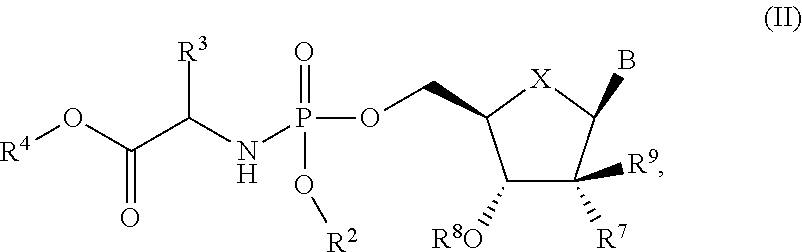
- the present invention is directed to a process for making Nucleoside Phosphoramidate Compounds of Formula (II) which may be useful for the treatment and prophylaxis of HCV infection. More particularly, the present invention includes a process (alternatively referred to herein as “Process A”) for preparing a compound of Formula (II):
- X is O, S or CH 2 ;
- B is a natural or non-natural purine or pyrimidine base, or B is selected from one of the following groups:
- R 1 is selected from —O—(C 6 -C 10 aryl), 5 or 6-membered monocyclic heteroaryl, 9 or 10-membered bicyclic heteroaryl, —O-(5 or 6-membered monocyclic heteroaryl), —O-(9 or 10-membered bicyclic heteroaryl), —O-(4 to 7-membered monocyclic heterocycloalkyl), —S-(5 or 6-membered monocyclic heteroaryl), —S-(9 or 10-membered bicyclic heteroaryl), —S-(4 to 7-membered monocyclic heterocycloalkyl) or 10-membered heteroaryl) and —S—(C 6 -C 10 aryl), wherein any of said 5 or 6-membered monocyclic heteroaryl groups, any of said 9 or 10-membered bicyclic heteroaryl groups, any of said 4 to 7-membered monocyclic heterocycloalkyl groups, and any of said C 6 -C 10
- R 2 is selected from C 6 -C 10 aryl, 5 or 6-membered monocyclic heteroaryl and 9 or 10-membered bicyclic heteroaryl, wherein said C 6 -C 10 aryl group, said 5 or 6-membered monocyclic heteroaryl group and said 9 or 10-membered bicyclic heteroaryl group can be optionally substituted with one or more R 5 groups;
- R 3 is selected from C 1 -C 6 alkyl, C 3 -C 7 cycloalkyl, phenyl or benzyl, wherein said C 3 -C 7 cycloalkyl group, said phenyl group and the phenyl moiety of said benzyl group can be optionally substituted with one or more R 5 groups;
- R 4 is selected from C 1 -C 6 alkyl, C 2 -C 6 alkenyl, —(C 1 -C 3 alkylene) m -(C 3 -C 14 cycloalkyl) and —(C 1 -C 3 alkylene) m -(C 6 -C 10 aryl);
- each occurrence of R 5 is independently selected from —C 1 -C 6 alkyl, halo, —OR 6 , —C(O)R 6 , —C(O)OR 6 , —SR 6 , —C 1 -C 6 hydroxyalkyl, —C 1 -C 6 haloalkyl, —N(R 6 ) 2 , —S(O)R 6 , —S(O) 2 R 6 , —CN and —NO 2 ;
- each occurrence of R 6 is independently H, C 1 -C 6 alkyl, C 1 -C 6 haloalkyl, C 1 -C 6 hydroxyalkyl, —(C 1 -C 3 alkylene) m -(C 3 -C 7 cycloalkyl), —(C 1 -C 3 alkylene) m -(C 6 -C 10 aryl), —(C 1 -C 3 alkylene) m -(4 to 7-membered heterocycloalkyl), —(C 1 -C 3 alkylene) m -(5- or 6-membered monocyclic heteroaryl) or —(C 1 -C 3 alkylene) m -(9- or 10-membered bicyclic heteroaryl);
- R 7 is selected from H, C 1 -C 6 alkyl, C 2 -C 6 alkenyl, C 2 -C 6 alkynyl, F, —CN, —N 3 ; —N(R 9 ) 2 , C 1 -C 6 haloalkyl, C 1 -C 6 hydroxyalkyl, C 2 -C 6 alkenyl, C 2 -C 6 alkynyl and C 3 -C 7 cycloalkyl;
- R 8 is selected from H and —C(O)R 13 ;
- each occurrence of R 9 is independently selected from H, C 1 -C 6 alkyl, C 6 -C 10 aryl and C 3 -C 7 cycloalkyl;
- R 10 , R 11 and R 12 are each independently selected from H, C 1 -C 6 alkyl, C 2 -C 6 alkenyl, C 2 -C 6 alkynyl, C 3 -C 7 cycloalkyl, halo, —OR 14 , —SR 14 , —S(O)R 14 , —S(O) 2 R 14 , —S(O) 2 N(R 14 ) 2 , —NHC(O)OR 14 , —NHC(O)N(R 14 ) 2 , C 1 -C 6 haloalkyl, C 1 -C 6 hydroxyalkyl, —O—(C 1 -C 6 haloalkyl), —CN, —NO 2 , —N(R 14 ) 2 , —NH(C 1 -C 6 alkylene)-(5- or 6-membered monocyclic heteroaryl), —NH(C 1 -C 6 alkylene)-(9-
- each occurrence of R 13 is independently H or C 1 -C 6 alkyl
- each occurrence of R 14 is independently selected from H, C 1 -C 10 alkyl, C 1 -C 6 haloalkyl, C 1 -C 6 hydroxyalkyl, —(C 1 -C 3 alkylene) m -(C 3 -C 7 cycloalkyl), —(C 1 -C 3 alkylene) m -(C 6 -C 10 aryl), —(C 1 -C 3 alkylene) m -(4 to 7-membered heterocycloalkyl), —(C 1 -C 3 alkylene) m -(5- or 6-membered monocyclic heteroaryl) and —(C 1 -C 3 alkylene) m -(9- or 10-membered bicyclic heteroaryl); and
- m is independently 0 or 1.
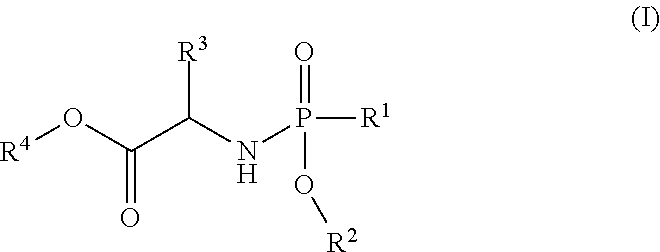
- the present invention is directed to a process for making Nucleoside Phosphoramidate Compounds of Formula (I) which may be useful for inhibiting HCV NS5B polymerase, inhibiting the replication of HCV and for the treatment or prophylaxis of HCV infection.
- C 1 -C 6 alkyl refers to an aliphatic hydrocarbon group, having from 1 to 6 carbon atoms wherein one of its hydrogen atoms is replaced with a bond.
- a C 1 -C 6 alkyl group may be straight or branched.
- Non-limiting examples of C 1 -C 6 alkyl groups include methyl, ethyl, n-propyl, isopropyl, n-butyl, sec-butyl, isobutyl, tert-butyl, n-pentyl, neopentyl, isopentyl, n-hexyl, isohexyl and neohexyl.
- a C 1 -C 6 alkyl group may be unsubstituted or substituted by one or more substituents which may be the same or different, each substituent being independently selected from the group consisting of halo, alkenyl, alkynyl, aryl, cycloalkyl, cyano, hydroxy, —O-alkyl, —O-aryl, -alkylene-O-alkyl, alkylthio, —NH 2 , —NH(alkyl), —N(alkyl) 2 , —NH(cycloalkyl), —O—C(O)-alkyl, —O—C(O)-aryl, —O—C(O)-cycloalkyl, —C(O)OH and —C(O)O-alkyl.
- substituents which may be the same or different, each substituent being independently selected from the group consisting of halo, alkenyl, alkynyl, aryl,
- a C 1 -C 6 alkyl group is linear. In another embodiment, a C 1 -C 6 alkyl group is branched. Unless otherwise indicated, a C 1 -C 6 alkyl group is unsubstituted.
- alkenyl refers to an aliphatic hydrocarbon group containing at least one carbon-carbon double bond and having one of its hydrogen atoms replaced with a bond.
- An alkenyl group may be straight or branched and contain from about 2 to about 15 carbon atoms. In one embodiment, an alkenyl group contains from about 2 to about 12 carbon atoms. In another embodiment, an alkenyl group contains from about 2 to about 6 carbon atoms.
- Non-limiting examples of alkenyl groups include ethenyl, propenyl, n-butenyl, 3-methylbut-2-enyl, n-pentenyl, octenyl and decenyl.
- An alkenyl group may be unsubstituted or substituted by one or more substituents which may be the same or different, each substituent being independently selected from the group consisting of halo, alkenyl, alkynyl, aryl, cycloalkyl, cyano, hydroxy, —O-alkyl, —O-aryl, -alkylene-O-alkyl, alkylthio, —NH 2 , —NH(alkyl), —N(alkyl) 2 , —NH(cycloalkyl), —O—C(O)-alkyl, —O—C(O)-aryl, —O—C(O)-cycloalkyl, —C(O)OH and —C(O)O-alkyl.
- C 2 -C 6 alkenyl refers to an alkenyl group having from 2 to 6 carbon atoms. Unless otherwise indicated, an alkenyl group is unsubstitute
- alkylene refers to an alkyl group, as defined above, wherein one of the alkyl group's hydrogen atoms has been replaced with a bond.
- alkylene groups include —CH 2 —, —CH 2 CH 2 —, —CH 2 CH 2 CH 2 —, —CH 2 CH 2 CH 2 CH 2 —, —CH(CH 3 )CH 2 CH 2 —, —CH(CH 3 )— and —CH 2 CH(CH 3 )CH 2 —.
- an alkylene group has from 1 to about 6 carbon atoms.
- an alkylene group is branched.
- an alkylene group is linear.
- an alkylene group is —CH 2 —.
- C 1 -C 6 alkylene refers to an alkylene group having from 1 to 6 carbon atoms.
- C 1 -C 3 alkylene refers to an alkylene group having from 1 to 3 carbon atoms.
- C 6 -C 10 aryl refers to phenyl and naphthyl. In one embodiment, an aryl group is phenyl.
- cycloalkyl refers to a non-aromatic monocyclic or multicyclic ring system comprising from about 3 to about 14 ring carbon atoms.
- 3 to 7-membered cycloalkyl refers to a monocyclic cycloalkyl group having from about 3 to about 7 ring carbon atoms.
- Examples of “3 to 7-membered cycloalkyl” groups include cyclopropyl, cyclobutyl, cyclopentyl, cyclohexyl and cycloheptyl.
- 7 to 14-membered cycloalkyl refers to a multicyclic cycloalkyl group having from about 7 to about 14 ring carbon atoms.
- Examples of “7 to 14-membered cycloalkyl” groups include, but are not limited to adamantyl and octahydro indene.
- a cycloalkyl group can be optionally substituted with one or more “ring system substituents” which may be the same or different, and are as defined herein below.
- a cycloalkyl group is unsubstituted.
- One or more ring carbon atoms of a cycloalkyl may be functionalized as a carbonyl group.
- An illustrative example of such a cycloalkyl (also referred to herein as a “cycloalkanoyl” group) includes, but is not limited to, cyclobutanoyl:
- halo refers to fluorine, chlorine, bromine and iodine (alternatively referred to as fluoro, chloro, bromo, and iodo).
- 5 or 6-membered monocyclic heteroaryl refers to an aromatic monocyclic ring system comprising about 5 to about 6 ring atoms, wherein from 1 to 4 of the ring atoms is independently O, N or S and the remaining ring atoms are carbon atoms.
- a 5 or 6-membered monocyclic heteroaryl group can be optionally substituted by one or more “ring system substituents” which may be the same or different, and are as defined herein below.
- a 5 or 6-membered monocyclic heteroaryl group is joined via a ring carbon atom, and any nitrogen atom of a heteroaryl can be optionally oxidized to the corresponding N-oxide.
- 5 or 6-membered monocyclic heteroaryl also encompasses a 5 or 6-membered monocyclic heteroaryl group, as defined above, which is fused to a benzene ring.
- Non-limiting examples of 5 or 6-membered monocyclic heteroaryls include pyridyl, pyrazinyl, furanyl, thienyl, pyrimidinyl, pyridone (including N-substituted pyridones), isoxazolyl, isothiazolyl, oxazolyl, oxadiazolyl, thiazolyl, pyrazolyl, furazanyl, pyrrolyl, triazolyl, 1,2,4-thiadiazolyl, pyrazinyl, pyridazinyl, benzofurazanyl, indolyl, azaindolyl, benzimidazolyl, benzothienyl, imidazolyl, benzimid
- 9 or 10-membered bicyclic heteroaryl refers to an aromatic bicyclic ring system comprising about 9 to about 10 ring atoms, wherein from 1 to 4 of the ring atoms is independently O, N or S and the remaining ring atoms are carbon atoms.
- a 9 or 10-membered bicyclic heteroaryl group can be optionally substituted by one or more “ring system substituents” which may be the same or different, and are as defined herein below.
- a 9 or 10-membered bicyclic heteroaryl group is joined via a ring carbon atom, and any nitrogen atom of a heteroaryl can be optionally oxidized to the corresponding N-oxide.
- Non-limiting examples of 9 or 10-membered bicyclic heteroaryls include imidazo[1,2-a]pyridinyl, imidazo[2,1-b]thiazolyl, benzofurazanyl, indolyl, azaindolyl, benzimidazolyl, benzothienyl, quinolinyl, benzimidazolyl, quinazolinyl, pyrrolopyridyl, imidazopyridyl, isoquinolinyl, benzoazaindolyl, benzothiazolyl, and the like, and all isomeric forms thereof. Unless otherwise indicated, a 9 or 10-membered bicyclic heteroaryl group is unsubstituted.
- heterocycloalkyl refers to a non-aromatic saturated monocyclic or multicyclic ring system comprising 3 to about 11 ring atoms, wherein from 1 to 4 of the ring atoms are independently O, S, N or Si, and the remainder of the ring atoms are carbon atoms.
- a heterocycloalkyl group can be joined via a ring carbon, ring silicon atom or ring nitrogen atom.
- a heterocycloalkyl group is monocyclic and has from about 3 to about 7 ring atoms.
- a heterocycloalkyl group is monocyclic has from about 4 to about 7 ring atoms.
- a heterocycloalkyl group is bicyclic and has from about 7 to about 11 ring atoms. In still another embodiment, a heterocycloalkyl group is monocyclic and has 5 or 6 ring atoms. In one embodiment, a heterocycloalkyl group is monocyclic. In another embodiment, a heterocycloalkyl group is bicyclic. There are no adjacent oxygen and/or sulfur atoms present in the ring system. Any —NH group in a heterocycloalkyl ring may exist protected such as, for example, as an —N(BOC), —N(Cbz), —N(Tos) group and the like; such protected heterocycloalkyl groups are considered part of this invention.
- heterocycloalkyl also encompasses a heterocycloalkyl group, as defined above, which is fused to an aryl (e.g., benzene) or heteroaryl ring.
- a heterocycloalkyl group can be optionally substituted by one or more “ring system substituents” which may be the same or different, and are as defined herein below.
- the nitrogen or sulfur atom of the heterocycloalkyl can be optionally oxidized to the corresponding N-oxide, S-oxide or S,S-dioxide.
- Non-limiting examples of monocyclic heterocycloalkyl rings include oxetanyl, piperidyl, pyrrolidinyl, piperazinyl, morpholinyl, thiomorpholinyl, thiazolidinyl, 1,4-dioxanyl, tetrahydrofuranyl, tetrahydrothiophenyl, delta-lactam, delta-lactone and the like, and all isomers thereof.
- a ring carbon atom of a heterocycloalkyl group may be functionalized as a carbonyl group.
- An illustrative example of such a heterocycloalkyl group is:
- a heterocycloalkyl group is a 5-membered monocyclic heterocycloalkyl. In another embodiment, a heterocycloalkyl group is a 6-membered monocyclic heterocycloalkyl.
- the term “3 to 6-membered monocyclic heterocycloalkyl” refers to a monocyclic heterocycloalkyl group having from 3 to 6 ring atoms.
- the term “4 to 7-membered monocyclic heterocycloalkyl” refers to a monocyclic heterocycloalkyl group having from 4 to 7 ring atoms.
- 7 to 11-membered bicyclic heterocycloalkyl refers to a bicyclic heterocycloalkyl group having from 7 to 11 ring atoms. Unless otherwise indicated, a heterocycloalkyl group is unsubstituted.
- transition metal catalyst refers to a complex comprising a transition metal and one or more ligands, which are independently selected from any organic and/or any inorganic ligands.
- any of the various cyclic rings and ring systems described herein may be attached to the rest of the compound of which they are a part at any ring atom (i.e., any carbon atom or any heteroatom) provided that a stable compound results.
- any variable occurs more than one time in a compound involved in the process of the invention (e.g., R 5 or m)
- its definition on each occurrence is independent of its definition at every other occurrence.
- combinations of substituents and/or variables are permissible only if such combinations result in a stable compound.
- substitution by a named substituent is permitted on any atom in a ring (e.g., cycloalkyl, aryl, or heteroaryl) provided such ring substitution is chemically allowed and results in a stable compound.
- a “stable” compound is one whose structure and properties remain or can be caused to remain essentially unchanged for a period of time sufficient to allow its use in the processes of the invention.
- a “stable” compound is a compound which can be prepared in accordance with the present invention and then isolated and whose structure and properties remain or can be caused to remain essentially unchanged for a period of time sufficient to allow use of the compound for its intended purpose; e.g., for use as a synthetic intermediate to make compounds capable of inhibiting HCV NS5B polymerase, and to make medicinally useful compounds, such as compounds useful for treating HCV infection in a subject.
- protecting groups When a functional group in a compound is termed “protected”, this means that the group is in modified form to preclude undesired side reactions at the protected site when the compound is subjected to a reaction. Suitable protecting groups will be recognized by those with ordinary skill in the art as well as by reference to standard textbooks such as, for example, T. W. Greene et al, Protective Groups in Organic Synthesis (1991), Wiley, New York.
- the Nucleoside Phosphoramidate Compounds can form salts which are also within the scope of this invention.
- the term “salt(s)”, as used herein, denotes acidic salts formed with inorganic and/or organic acids, as well as basic salts formed with inorganic and/or organic bases.
- a Nucleoside Phosphoramidate Compound contains both a basic moiety, such as, but not limited to a pyridine or imidazole, and an acidic moiety, such as, but not limited to a carboxylic acid, zwitterions (“inner salts”) may be formed and are included within the term “salt(s)” as used herein.
- the salt is a pharmaceutically acceptable (i.e., non-toxic, physiologically acceptable) salt.
- the salt is other than a pharmaceutically acceptable salt.
- Salts of the Compounds of Formula (II) may be formed, for example, by reacting a Nucleoside Phosphoramidate Compound with an amount of acid or base, such as an equivalent amount, in a medium such as one in which the salt precipitates or in an aqueous medium followed by lyophilization.
- Exemplary acid addition salts include acetates, ascorbates, benzoates, benzenesulfonates, bisulfates, borates, butyrates, citrates, camphorates, camphorsulfonates, fumarates, hydrochlorides, hydrobromides, hydroiodides, lactates, maleates, methanesulfonates, naphthalenesulfonates, nitrates, oxalates, phosphates, propionates, salicylates, succinates, sulfates, tartarates, thiocyanates, toluenesulfonates (also known as tosylates) and the like.
- Exemplary basic salts include ammonium salts, alkali metal salts such as sodium, lithium, and potassium salts, alkaline earth metal salts such as calcium and magnesium salts, salts with organic bases (for example, organic amines) such as dicyclohexylamine, t-butyl amine, choline, and salts with amino acids such as arginine, lysine and the like.
- alkali metal salts such as sodium, lithium, and potassium salts
- alkaline earth metal salts such as calcium and magnesium salts
- salts with organic bases for example, organic amines
- organic bases for example, organic amines
- amino acids such as arginine, lysine and the like.
- Basic nitrogen-containing groups may be quarternized with agents such as lower alkyl halides (e.g., methyl, ethyl, and butyl chlorides, bromides and iodides), dialkyl sulfates (e.g., dimethyl, diethyl, and dibutyl sulfates), long chain halides (e.g., decyl, lauryl, and stearyl chlorides, bromides and iodides), arylalkyl halides (e.g., benzyl and phenethyl bromides), and others.
- lower alkyl halides e.g., methyl, ethyl, and butyl chlorides, bromides and iodides
- dialkyl sulfates e.g., dimethyl, diethyl, and dibutyl sulfates
- long chain halides e.g., decyl, lauryl, and
- acid salts and base salts are considered equivalent to the free forms of the corresponding compounds for purposes of the invention.
- the acid salts and base salts of the invention are intended to be pharmaceutically acceptable salts within the scope of the invention.
- Diastereomeric mixtures can be separated into their individual diastereomers on the basis of their physical chemical differences by methods well-known to those skilled in the art, such as, for example, by chromatography and/or fractional crystallization.
- Enantiomers can be separated by converting the enantiomeric mixture into a diastereomeric mixture by reaction with an appropriate optically active compound (e.g., chiral auxiliary such as a chiral alcohol or Mosher's acid chloride), separating the diastereomers and converting (e.g., hydrolyzing) the individual diastereomers to the corresponding pure enantiomers.
- an appropriate optically active compound e.g., chiral auxiliary such as a chiral alcohol or Mosher's acid chloride
- Sterochemically pure compounds may also be prepared by using chiral starting materials or by employing salt resolution techniques.
- Nucleoside Phosphoramidate Compounds may be atropisomers (e.g., substituted biaryls) and are considered as part of this invention. Enantiomers can also be directly separated using chiral chromatographic techniques, such as chiral HPLC.
- Nucleoside Phosphoramidate Compounds may exist in different tautomeric forms, and all such stable forms are embraced within the scope of the invention.
- all stable keto-enol and imine-enamine forms of the compounds are included in the invention.
- Individual stereoisomers of the compounds of the invention may, for example, be substantially free of other isomers, or may be admixed, for example, as racemates or with all other, or other selected, stereoisomers.
- the chiral centers of the present invention can have the S or R configuration as defined by the IUPAC 1974 Recommendations.
- the use of the terms “salt”, “solvate”, “ester”, and the like, is intended to apply equally to the salt, solvate and ester of enantiomers, diastereomers, rotamers, tautomers or racemates of the inventive compounds.
- the present invention is directed to a process for making Nucleoside Phosphoramidate Compounds of Formula (II) which may be useful for inhibiting the replication of HCV and for the treatment or prophylaxis of HCV infection.
- One aspect of the present invention is the process for making Compounds of Formula (II) as set forth above in the Summary of the Invention (“Process A”):
- X is O, S or CH 2 ;
- B is a natural or non-natural purine or pyrimidine base, or B is selected from one of the following groups:
- R 1 is selected from —O—(C 6 -C 10 aryl), 5 or 6-membered monocyclic heteroaryl, 9 or 10-membered bicyclic heteroaryl, —O-(5 or 6-membered monocyclic heteroaryl), —O-(9 or 10-membered bicyclic heteroaryl), —O-(4 to 7-membered monocyclic heterocycloalkyl), —S-(5 or 6-membered monocyclic heteroaryl), —S-(9 or 10-membered bicyclic heteroaryl), —S-(4 to 7-membered monocyclic heterocycloalkyl) or 10-membered heteroaryl) and —S—(C 6 -C 10 aryl), wherein any of said 5 or 6-membered monocyclic heteroaryl groups, any of said 9 or 10-membered bicyclic heteroaryl groups, any of said 4 to 7-membered monocyclic heterocycloalkyl groups, and any of said C 6 -C 10
- R 2 is selected from C 6 -C 10 aryl, 5 or 6-membered monocyclic heteroaryl and 9 or 10-membered bicyclic heteroaryl, wherein said C 6 -C 10 aryl group, said 5 or 6-membered monocyclic heteroaryl group and said 9 or 10-membered bicyclic heteroaryl group can be optionally substituted with one or more R 5 groups;
- R 3 is selected from C 1 -C 6 alkyl, C 3 -C 7 cycloalkyl, phenyl or benzyl, wherein said C 3 -C 7 cycloalkyl group, said phenyl group and the phenyl moiety of said benzyl group can be optionally substituted with one or more R 5 groups;
- R 4 is selected from C 1 -C 6 alkyl, C 2 -C 6 alkenyl, —(C 1 -C 3 alkylene) m -(C 3 -C 14 cycloalkyl) and —(C 1 -C 3 alkylene) m -(C 6 -C 10 aryl);
- each occurrence of R 5 is independently selected from —C 1 -C 6 alkyl, halo, —OR 6 , —C(O)R 6 , —CO 2 R 6 , —SR 6 , —C 1 -C 6 hydroxyalkyl, —C 1 -C 6 haloalkyl, —N(R 6 ) 2 , —S(O)R 6 , —S(O) 2 R 6 , —CN and —NO 2 ;
- each occurrence of R 6 is independently H, C 1 -C 6 alkyl, C 1 -C 6 haloalkyl, C 1 -C 6 hydroxyalkyl, —(C 1 -C 3 alkylene) m -(C 3 -C 7 cycloalkyl), —(C 1 -C 3 alkylene) m -(C 6 -C 10 aryl), —(C 1 -C 3 alkylene) m -(4 to 7-membered heterocycloalkyl), —(C 1 -C 3 alkylene) m -(5- or 6-membered monocyclic heteroaryl) or —(C 1 -C 3 alkylene) m -(9- or 10-membered bicyclic heteroaryl);
- R 7 is selected from H, C 1 -C 6 alkyl, C 2 -C 6 alkenyl, C 2 -C 6 alkynyl, F, —CN, —N 3 , —N(R 9 ) 2 , C 1 -C 6 haloalkyl, C 1 -C 6 hydroxyalkyl, C 2 -C 6 alkenyl, C 2 -C 6 alkynyl and C 3 -C 7 cycloalkyl;
- R 8 is selected from H and —C(O)R 13 ;
- each occurrence of R 9 is independently selected from H, C 1 -C 6 alkyl, C 6 -C 10 aryl and C 3 -C 7 cycloalkyl;
- R 10 , R 11 and R 12 are each independently selected from H, C 1 -C 6 alkyl, C 2 -C 6 alkenyl, C 2 -C 6 alkynyl, C 3 -C 7 cycloalkyl, halo, —OR 14 , —SR 14 , —S(O)R 14 , —S(O) 2 R 14 , —S(O) 2 N(R 14 ) 2 , —NHC(O)OR 14 , —NHC(O)N(R 14 ) 2 , C 1 -C 6 haloalkyl, C 1 -C 6 hydroxyalkyl, —O—(C 1 -C 6 haloalkyl), —CN, —NO 2 , —N(R 14 ) 2 , —NH(C 1 -C 6 alkylene)-(5- or 6-membered monocyclic heteroaryl), —NH(C 1 -C 6 alkylene)-(9-
- each occurrence of R 13 is independently H or C 1 -C 6 alkyl
- each occurrence of R 14 is independently selected from H, C 1 -C 10 alkyl, C 1 -C 6 haloalkyl, C 1 -C 6 hydroxyalkyl, —(C 1 -C 3 alkylene) m -(C 3 -C 7 cycloalkyl), —(C 1 -C 3 alkylene) m -(C 6 -C 10 aryl), —(C 1 -C 3 alkylene) m -(4 to 7-membered heterocycloalkyl), —(C 1 -C 3 alkylene) m -(5- or 6-membered monocyclic heteroaryl) and —(C 1 -C 3 alkylene) m -(9- or 10-membered bicyclic heteroaryl); and
- m is independently 0 or 1.
- X is O.
- B is a natural or non-natural pyrimidine base.
- B is:
- R 1 is selected from —O—(C 6 -C 10 aryl), —O-(5 or 6-membered monocyclic heteroaryl) and —S—(C 6 -C 10 aryl), wherein said 5 or 6-membered monocyclic heteroaryl group or any of said C 6 -C 10 aryl groups can be optionally substituted with up to 5 groups, each independently selected from C 1 -C 6 alkyl, —NO 2 , halo and C 1 -C 6 haloalkyl.
- R 1 is —O—(C 6 -C 10 aryl), which can be optionally substituted with up to 5 groups, each independently selected from —NO 2 and halo.
- R 1 is —O-(5 or 6-membered monocyclic heteroaryl), which can be optionally substituted with up to 5 groups, each independently selected from halo.
- R 1 is —S—(C 6 -C 10 aryl), which can be optionally substituted with up to 5 groups, each independently selected from halo.
- R 1 is —O-phenyl or —O-pyridyl, each of which can be optionally substituted with up to 5 groups, each independently selected from F, Cl and —NO 2 .
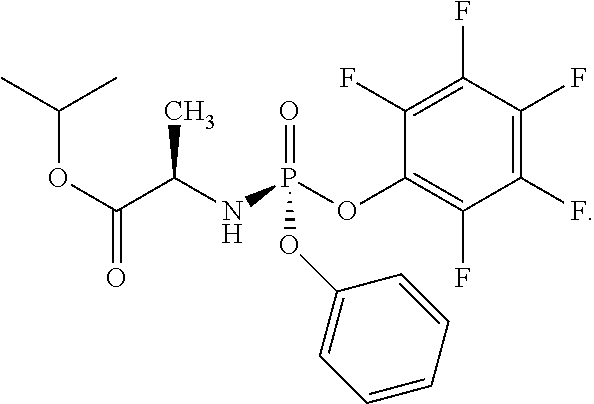
- R 1 is pentafluorophenoxy.
- R 1 is:
- R 2 is C 6 -C 10 aryl, which can be optionally substituted as set forth in formula (I) of Process A.
- R 2 is unsubstituted phenyl.
- R 3 is C 1 -C 6 alkyl.
- R 4 is C 1 -C 6 alkyl.
- R 3 and R 4 are each independently C 1 -C 6 alkyl.
- R 3 is methyl
- R 4 is isopropyl.
- R 3 is methyl and R 4 is isopropyl.
- R 2 is unsubstituted phenyl
- R 3 is methyl
- R 4 is isopropyl
- X is O and R 1 is a —O—(C 6 -C 10 aryl) group, optionally substituted with up to 5 groups, each independently selected from NO 2 and F.
- X is O and R 1 is pentafluorophenoxy.
- X is O;
- R 1 is a —O—(C 6 -C 10 aryl) group, optionally substituted with up to 5 groups, each independently selected from NO 2 and F;
- R 2 is unsubstituted phenyl; and
- R 3 and R 4 are each independently C 1 -C 6 alkyl.
- X is O;
- R 1 is a —O—(C 6 -C 10 aryl) group, optionally substituted with up to 5 groups, each independently selected from NO 2 and F;
- R 2 is unsubstituted phenyl;
- R 3 is methyl; and
- R 4 is isopropyl
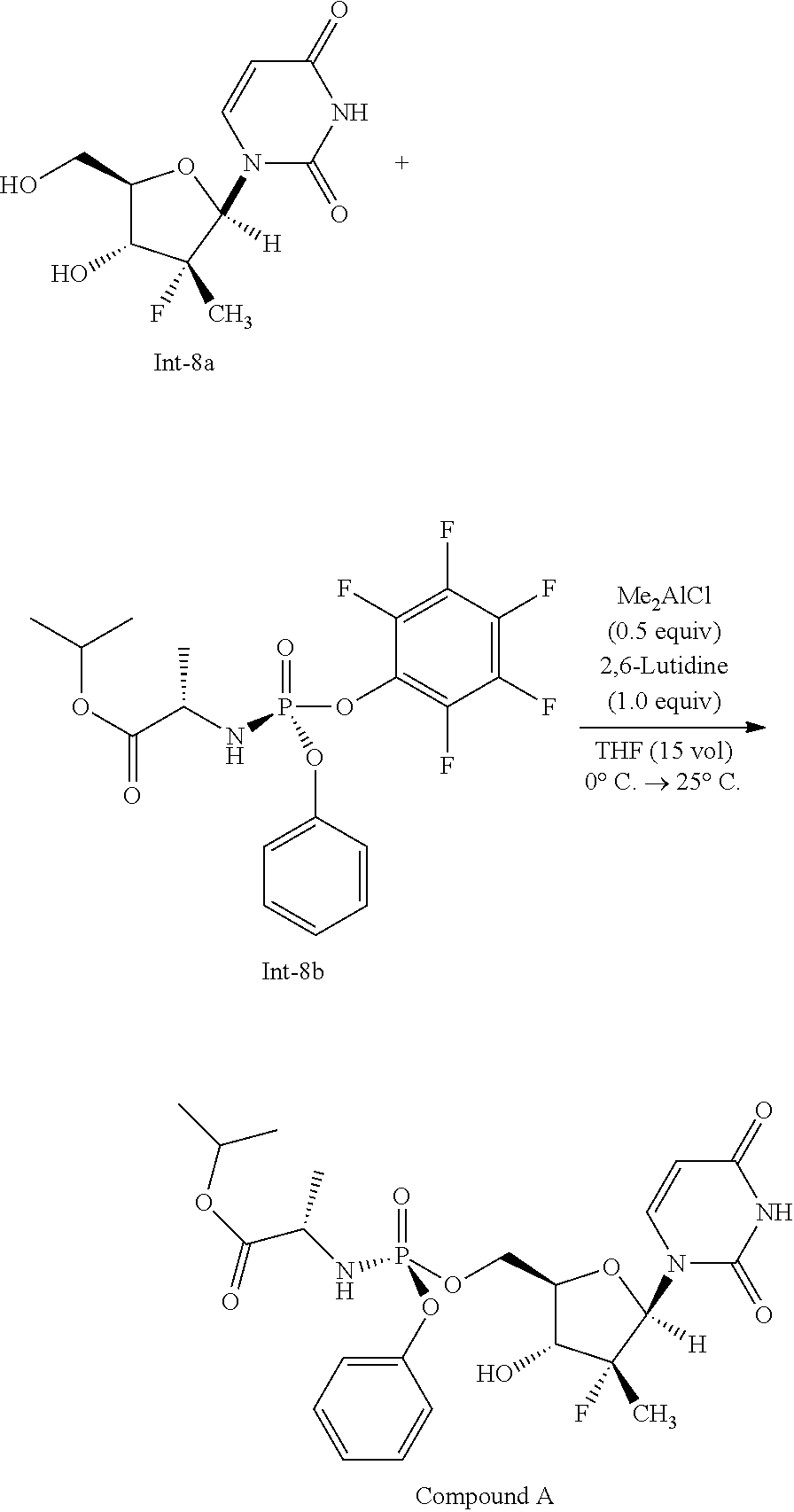
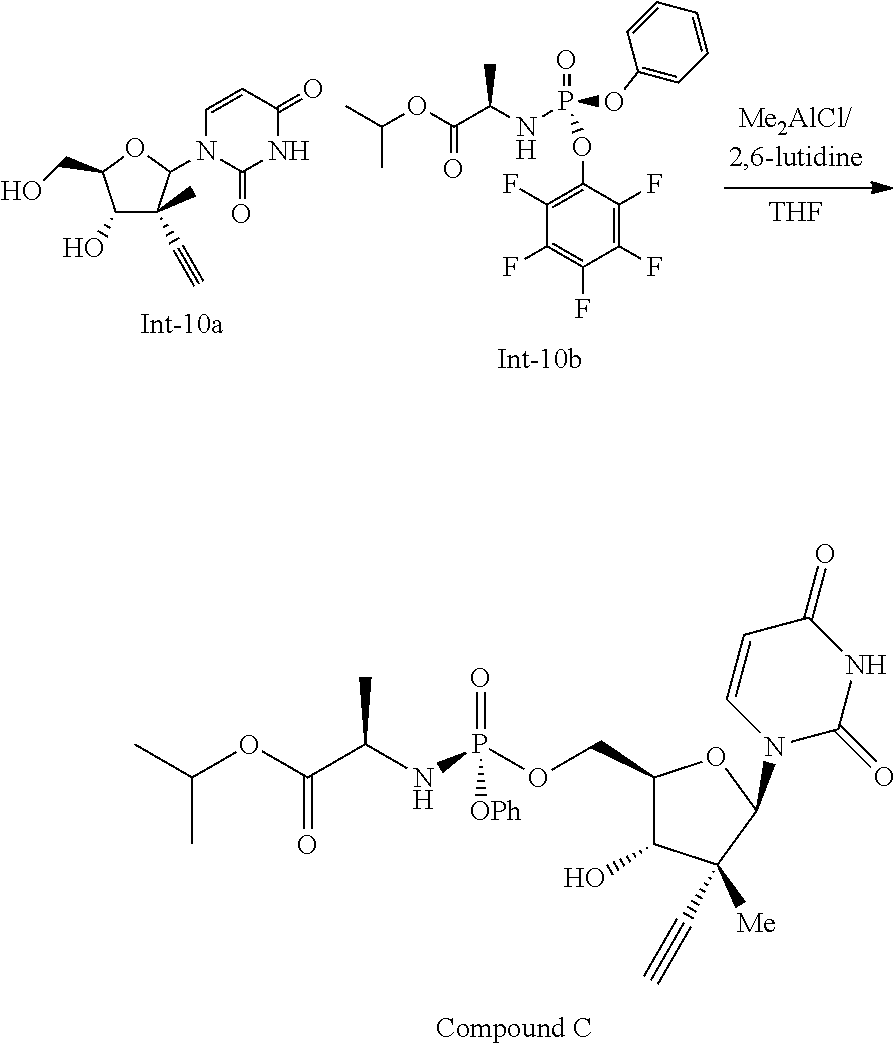
- X is O; B is a pyrimidine base; R 9 is methyl; R 7 is selected from F, —CN, C 2 -C 6 alkynyl, —NH 2 and —N 3 ; and R 8 is H or —C(O)CH(CH 3 ) 2 .
- R 9 is methyl; B is uridine; R 7 is selected from F, C 2 -C 6 alkynyl, and —CN; and R 8 is H or —C(O)CH(CH 3 ) 2 .
- R 9 is methyl; B is uridine; R 7 is —CN and R 8 is —C(O)CH(CH 3 ) 2 .
- R 9 is methyl; B is uridine; R 7 is —C ⁇ CH; and R 8 is —H.
- R 9 is methyl; B is uridine; R 7 is —F and R 8 is —H.
- the compound of formula (I) used in Process A has the formula (Ia) or (Ib):
- R 1 is selected from —O—(C 6 -C 10 aryl), —O-(5 or 6-membered monocyclic heteroaryl) and —S—(C 6 -C 10 aryl), wherein said 5 or 6-membered monocyclic heteroaryl group or any of said C 6 -C 10 aryl groups can be optionally substituted with up to 5 groups, each independently selected from C 1 -C 6 alkyl, —NO 2 , halo, C 1 -C 6 haloalkyl;
- R 3 is —C 1 -C 6 alkyl
- R 4 is —C 1 -C 6 alkyl.
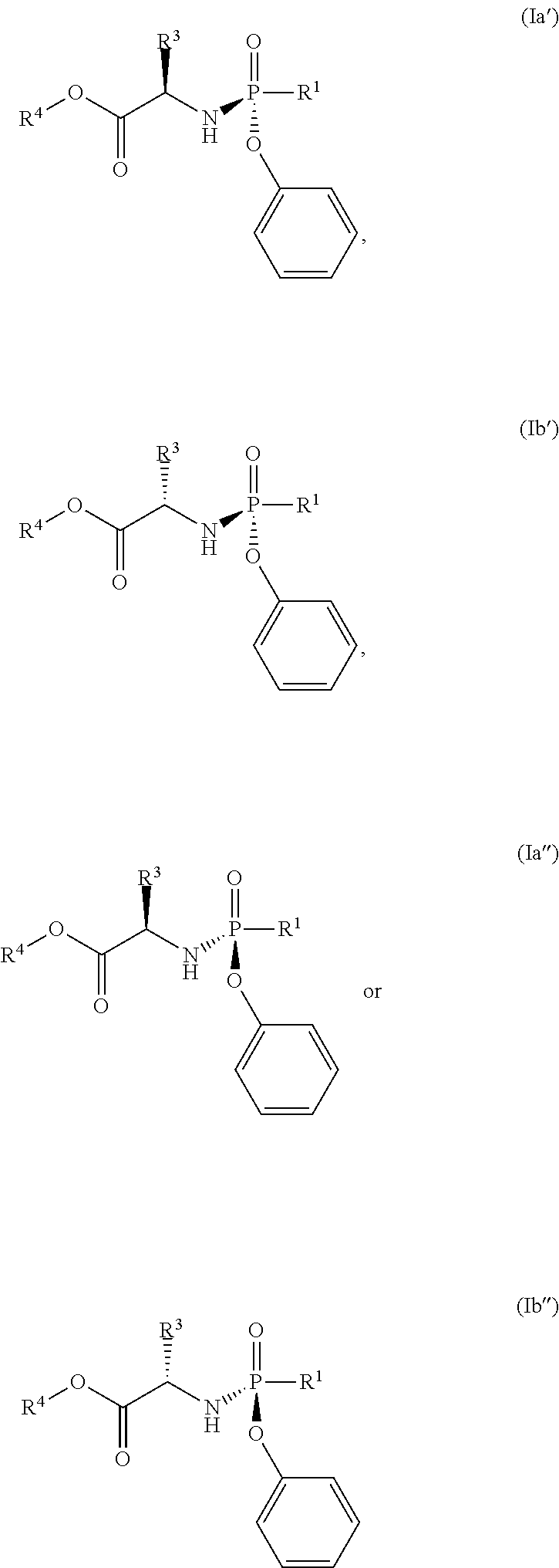
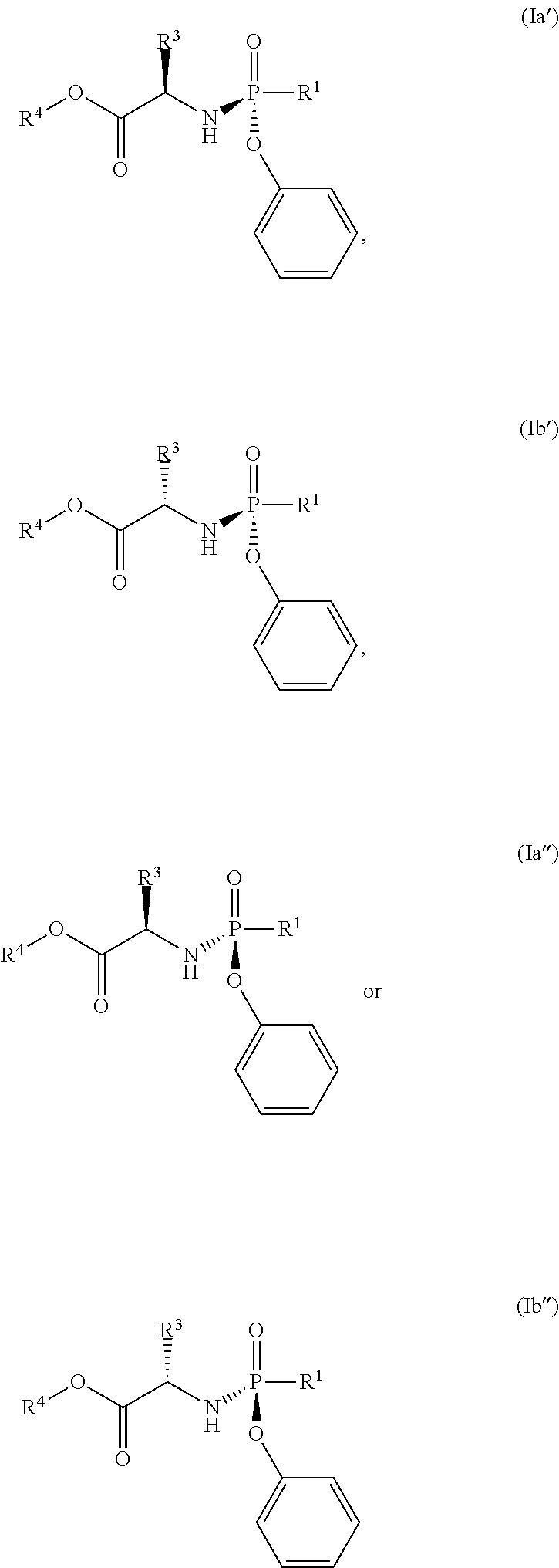
- the compound of formula (I) used in Process A has the formula (Ia′), (Ia′′), (Ib′) or (Ib′′):
- R 1 is selected from —O—(C 6 -C 10 aryl), —O-(5 or 6-membered monocyclic heteroaryl) and —S—(C 6 -C 10 aryl), wherein said 5 or 6-membered monocyclic heteroaryl group or any of said C 6 -C 10 aryl groups can be optionally substituted with up to 5 groups, each independently selected from C 1 -C 6 alkyl, —NO 2 , halo and C 1 -C 6 haloalkyl;
- R 3 is —C 1 -C 6 alkyl
- R 4 is —C 1 -C 6 alkyl.
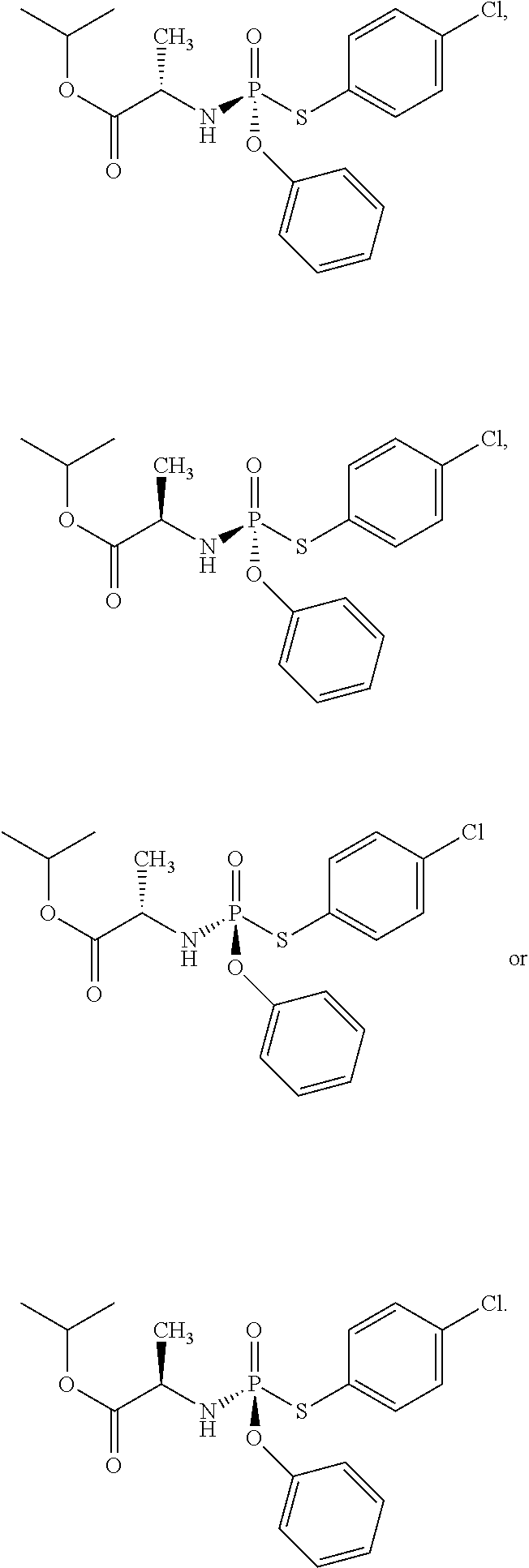
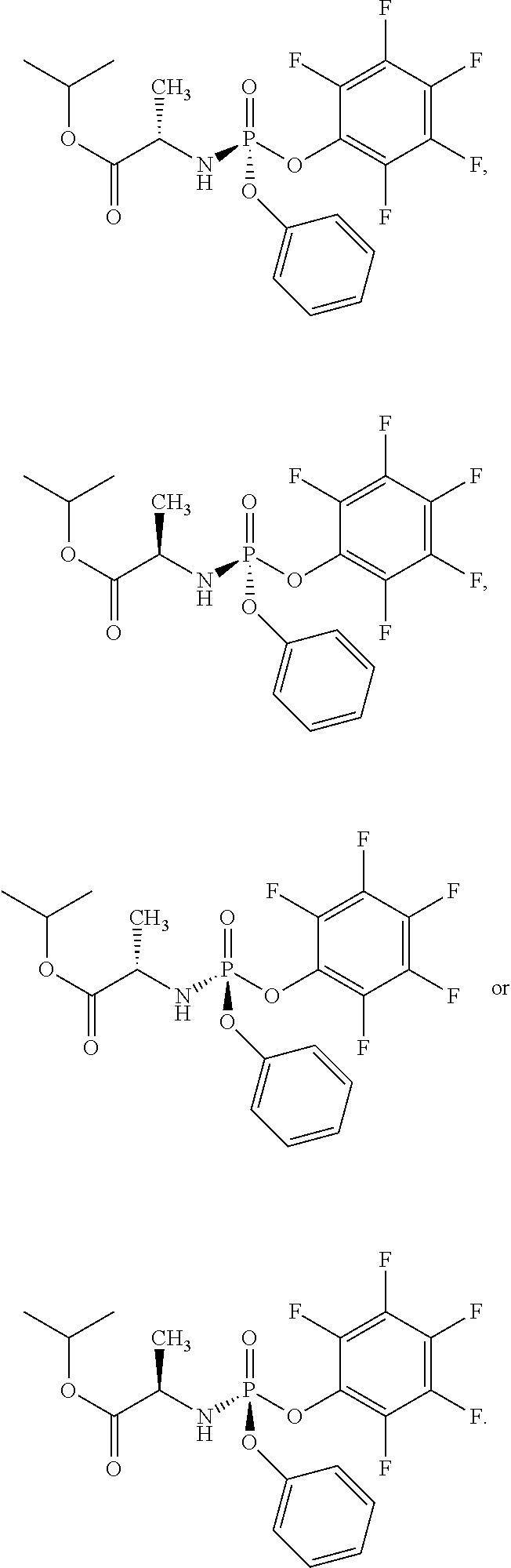
- the compound of formula (I) used in Process A has the structure:
- the compound of formula (I) used in Process A has the structure:
- the compound of formula (I) used in Process A has the structure:
- the compound of formula (I) used in Process A has the structure:
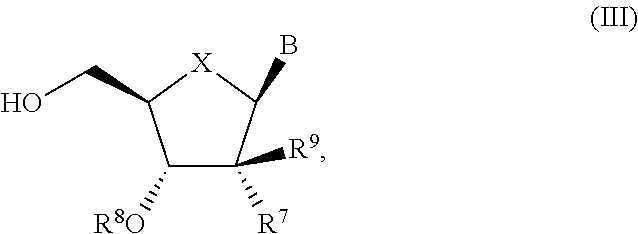
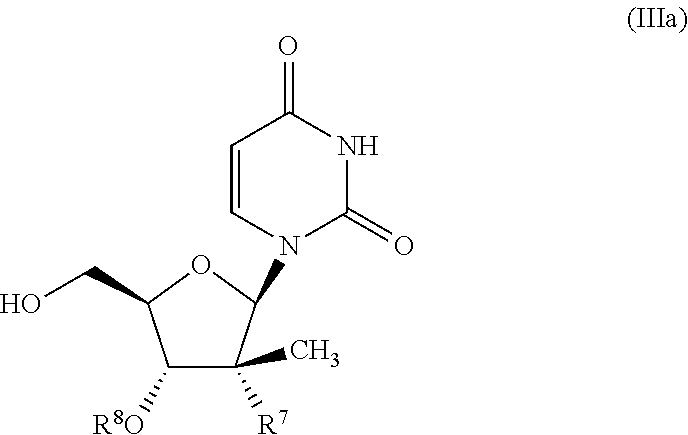
- the compound of formula (III) used in Process A is a compound of formula (IIIa):
- R 7 is selected from F, —CN, C 2 -C 6 alkynyl, —NH 2 and —N 3 ; and R 8 is H or —C(O)CH(CH 3 ) 2 .
- R 7 is selected from F, —C ⁇ CH, —N 3 and —NH 2 , and R 8 is H.
- R 7 —CN and R 8 is —C(O)CH(CH 3 ) 2 .
- organic solvent A is selected from toluene, THF, DCM, MTBE, DMF, propylene carbonate, DME, 1,3-dimethyl-3,4,5,6-tetrahydro-2(1H)-pyrimidinone, 2-methyltetrahydrofuran, xylenes, ethyl acetate, NMP, anisole, isopropyl acetate, acetonitrile and mixtures thereof.
- organic solvent A is selected from toluene, dichloromethane, benzene, tetrahydrofuran, 2-methyl tetrahydrofuran, ethyl acetate and acetonitrile.
- organic solvent A is tetrahydrofuran.
- Process A can be conducted in any organic solvent.
- the non-nucleophilic base used in Process A is a DBU, DBN, pyridine, 2,6-lutidine, tetramethyl guanidine or a phosphazene derived base.
- the non-nucleophilic base used in Process A is an organic amine.
- the base used in Process A is 2,6-lutidine.
- the base used in Process A is 2,6-lutidine and organic solvent A is THF.
- the aluminum complex used in Process A has the formula Al(—O—C 1 -C 6 alkyl) 3 , (C 1 -C 6 alkyl) 3 Al, (C 1 -C 6 alkyl) 2 AlCl or (C 1 -C 6 alkyl)AlCl 2 .
- the aluminum complex used in Process A is has the formula (C 1 -C 6 alkyl) 2 AlCl or Al(—O—(C 1 -C 6 alkyl)) 3 .
- the aluminum complex used in Process A is (CH 3 ) 2 AlCl or Al(t-BuO) 3 .
- the aluminum complex used in Process A is AlCl 3 .
- the aluminum complex used in Process A is (CH 3 ) 2 AlCl.
- the aluminum complex used in Process A is Al(Ot-Bu) 3 .
- the aluminum complex used in Process A is AlCl 3 and the base used in Process A is 2,6-lutidine.
- the aluminum complex used in Process A is (CH 3 ) 2 AlCl and the base used in Process A is 2,6-lutidine.
- the aluminum complex used in Process A is Al(Ot-Bu) 3 and the base used in Process A is 2,6-lutidine.
- Process A is conducted at a temperature in a range of from about ⁇ 40° C. to about 120° C.
- Process A is conducted at a temperature in a range of from about 0° C. to about 100° C.
- Process A is conducted at a temperature in a range of from about 20° C. to about 80° C.
- Process A is conducted at a temperature in a range of from about 25° C. to about 65° C.
- the organic solvent A is THF
- the base used is an organic amine
- the aluminum complex used is a compound of formula Al(—O—C 1 -C 6 alkyl) 3 or (C 1 -C 6 alkyl) 2 AlCl;
- the process is conducted at a temperature in a range of from about 0° C. to about 100° C.
- the organic solvent A is THF
- the base used is 2,6-lutidine
- the aluminum complex used is (CH 3 ) 2 AlCl or Al(Ot-Bu) 3 ;
- the process is conducted at a temperature in a range of from about 20° C. to about 80° C.;
- R 1 is —O-phenyl, —O-pyridyl or —S-phenyl wherein said phenyl or pyridyl groups can each be optionally substituted with up to 5 groups, each independently selected from C 1 -C 6 alkyl, —NO 2 , halo and C 1 -C 6 haloalkyl;
- R 3 is —C 1 -C 6 alkyl
- R 4 is —C 1 -C 6 alkyl.
- the organic solvent A is THF
- the base used is 2,6-lutidine
- the aluminum complex used is (CH 3 ) 2 AlCl or Al(Ot-Bu) 3 ;
- the process is conducted at a temperature in a range of from about 20° C. to about 60° C.;
- the compound of formula (I) used has the formula (Ia′), (Ia′′), (Ib′) or (Ib′′):
- R 1 is pentafluorophenoxy
- R 3 is —C 1 -C 6 alkyl
- R 4 is —C 1 -C 6 alkyl.
- the compound of formula (II) that is made by said process is selected from:
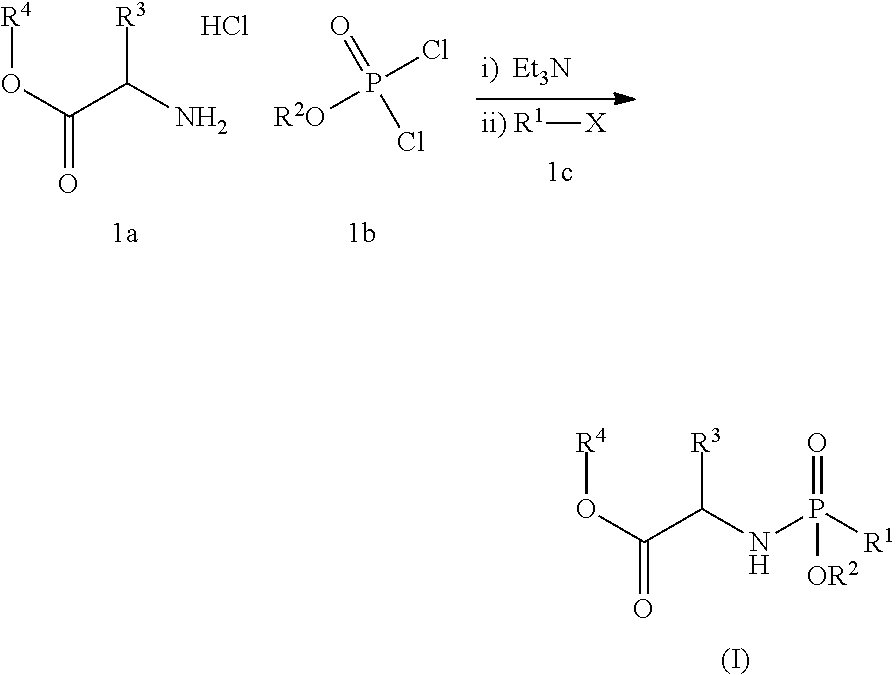
- a compound of formula 1a (19.22 g, 115 mmol) is charged to an inerted overhead stirred jacketed vessel followed by a suitable organic solvent (100-200 mL) to provide a solution which is then cooled to about ⁇ 20° C.
- a solution of a compound of formula 1b (25.0 g, 1.0 eq.) in a suitable organic solvent (100-200 mL) is then added while maintaining internal temperature below ⁇ 10° C. and the resulting solution is then cooled back to ⁇ 20° C.
- a suitable base 3.2 eq.
- the resulting reaction was re-cooled to ⁇ 20° C. and allowed to stand at this temperature without stirring for 30 minutes.
- a solution of compound 1c (1.0 eq.) in a suitable organic solvent (100-200 mL) is then added to the reaction over a period of 75 minutes and the resulting reaction is allowed to age at ⁇ 20° C. until the reaction has progressed to a suitable point.
- the reaction mixture is then warmed to room temperature and the resulting slurry is filtered.
- the collected solid is then washed with THF (2 ⁇ 100 mL) and the filtrates are combined to provide a solution of a compound of formula (I) (typically 80-90% yield).
- the Compounds of Formula (I) so obtained can then be further purified using workup, crystallization or chromatography methods well-known to those skilled in the art of organic synthesis.
- a solution of a compound of formula (I), obtained using the method described above, is diluted with MTBE (or other organic non water miscible solvents such as EtOAc and IPAc), then washed sequentially with an aqueous hydrochloric acid (2 ⁇ ), aqueous sodium hydrogencarbonate (2 ⁇ ), then water.
- MTBE organic non water miscible solvents
- the organic phase can then be concentrated in vacuo to provide a compound of formula (I).
- Pure single stereoisomers of the compounds of formula (I) can be isolated using chromatographic techniques well-known to those skilled in the art of organic synthesis, such as thin-layer chromatography, flash column chromatography on silica gel, MPLC or HPLC.
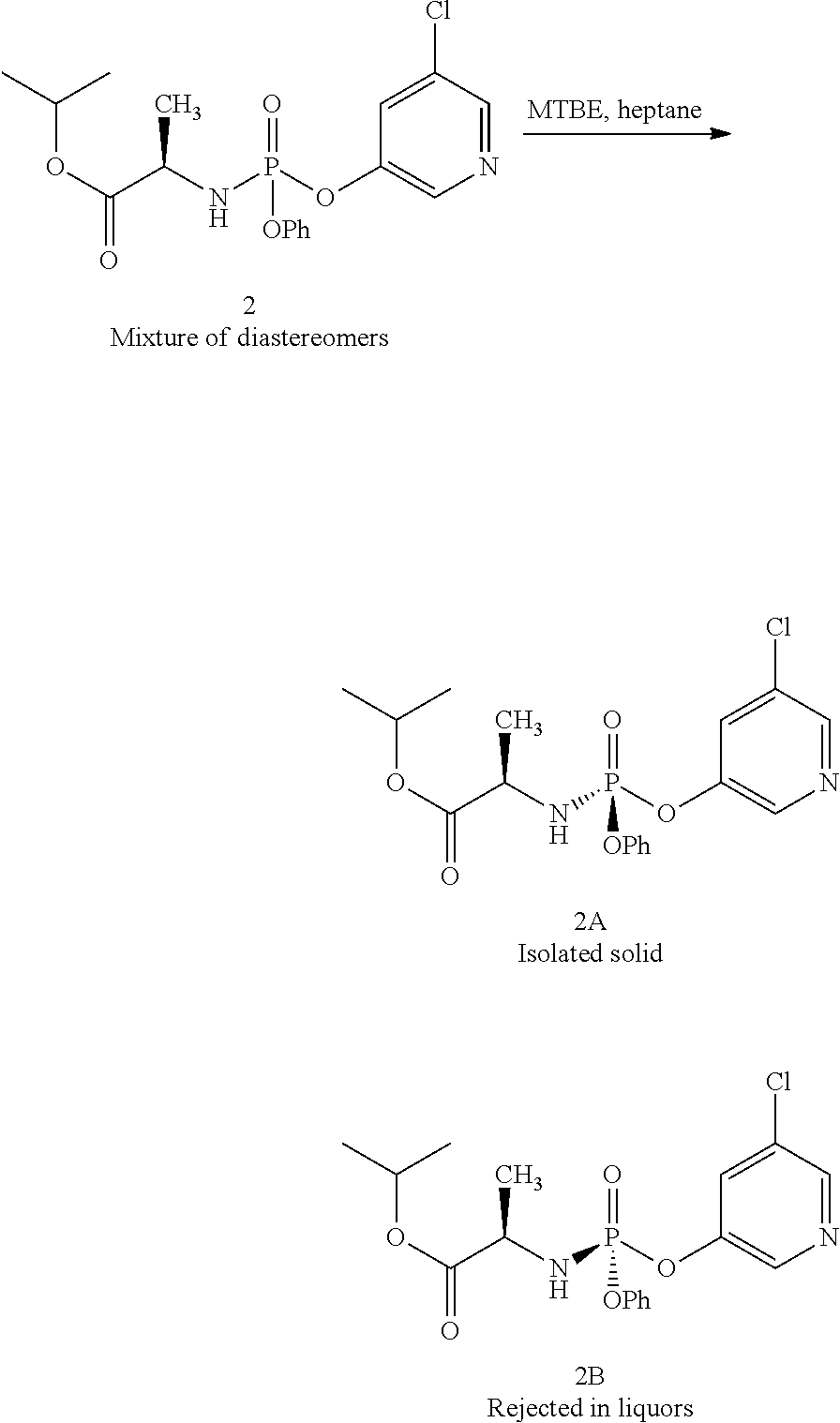
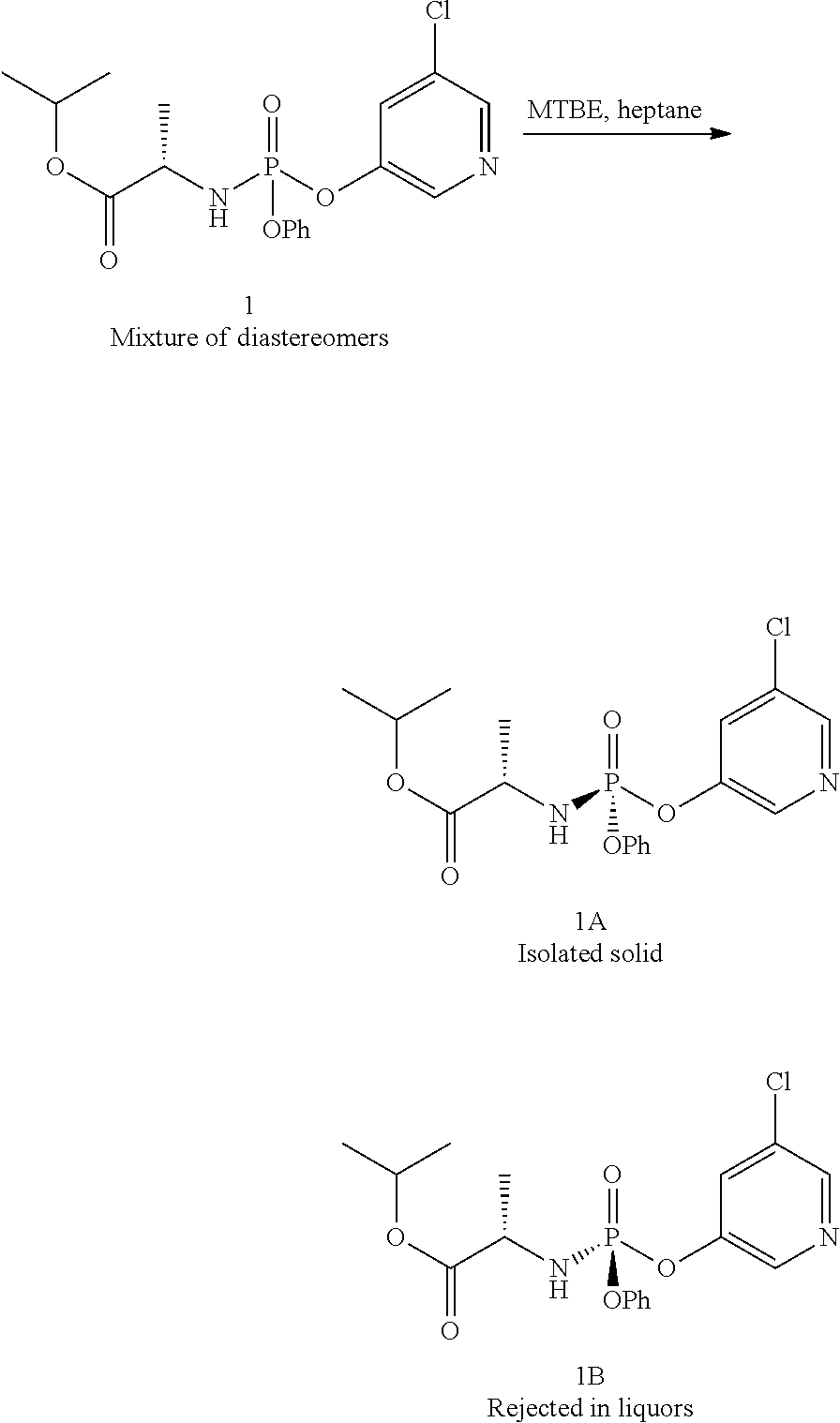
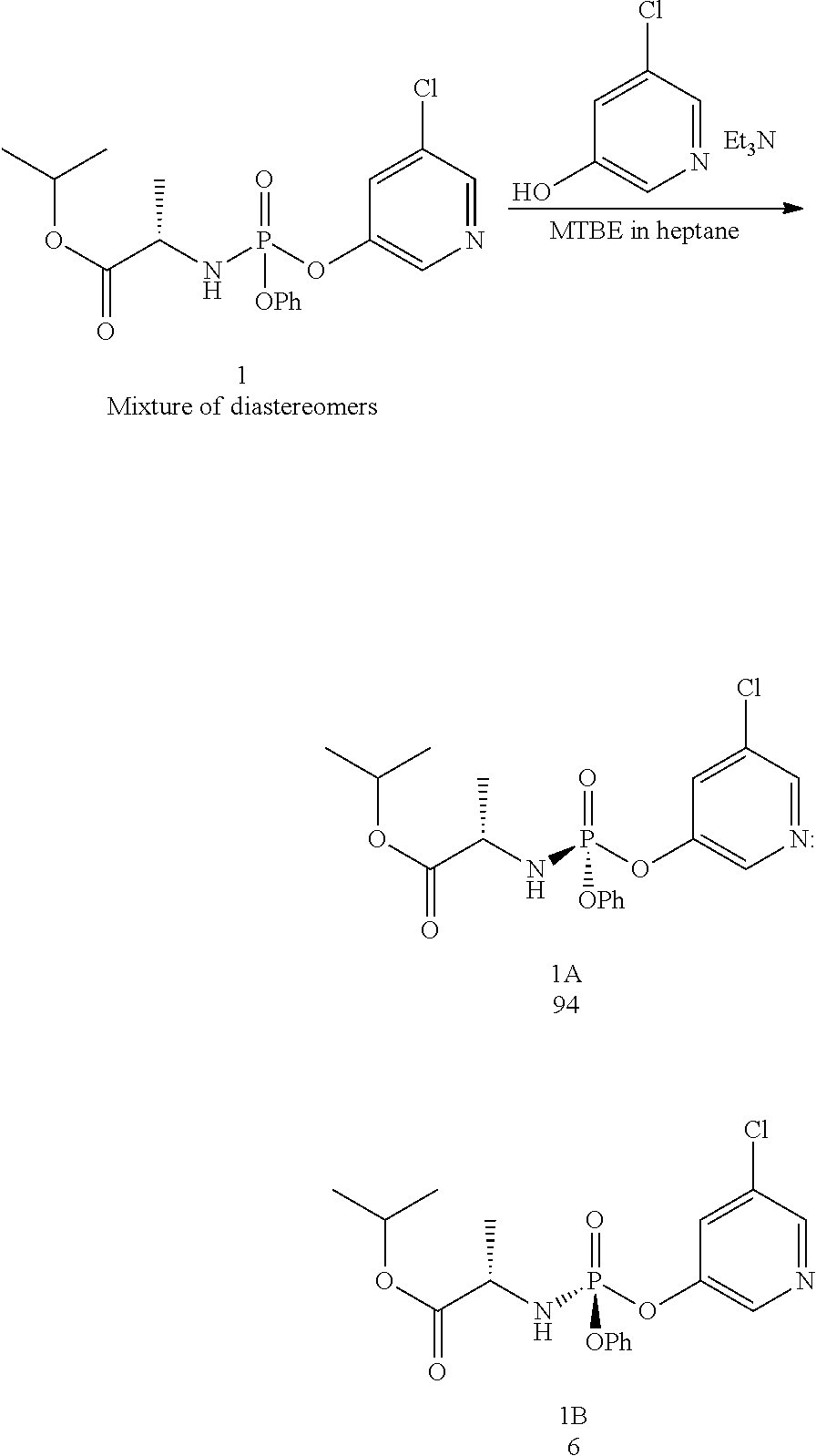
- Compound 1 was added to a mixture of 5% MTBE in heptane (10 mL/g), forming a slurry. Addition of 0.1 equiv 5-chloro-3-hydroxypyridine and 1 equiv triethylamine to the slurry allowing the resulting mixture to age at room temperature for 4 days provided a 94:6 mixture of 1A:1B. Addition of aqueous HCl and IPAc forms a biphasic mixture. The organic layer was washed with aqueous HCl, aqueous sodium hydrogen carbonate and then water. Solvent switching the organic layer into a 5% IPAc in heptane mixture (10 volumes) and filtration provided 1A in >99.5:0.5 dr.
- reaction mixture was allowed to warm to room temperature then stir at that temperature for 16 hours, at which time the reaction appears to have reached 85% conversion with a 38:1 dr and 41:1 mono:bis ratio.
- the reaction mixture was then heated to 45° C. and allowed to stir at this temperature for 4 hours.
- the reaction mixture was then diluted with isopropyl acetate (10 vol) and quenched with 30% aqueous tartaric acid (10 vol).
- the reaction mixture was transferred to a separatory funnel and the organic phase was collected and washed sequentially with 30% aqueous tartaric acid (5 vol) and brine (5 vol), the dried over magnesium sulfate, filtered, and concentrated in vacuo.
Landscapes
- Chemical & Material Sciences (AREA)
- Organic Chemistry (AREA)
- Health & Medical Sciences (AREA)
- Life Sciences & Earth Sciences (AREA)
- Biochemistry (AREA)
- General Health & Medical Sciences (AREA)
- Molecular Biology (AREA)
- Engineering & Computer Science (AREA)
- Biotechnology (AREA)
- Genetics & Genomics (AREA)
- Pharmaceuticals Containing Other Organic And Inorganic Compounds (AREA)
Abstract

Description

said process comprising the step of contacting a compound of formula (I):
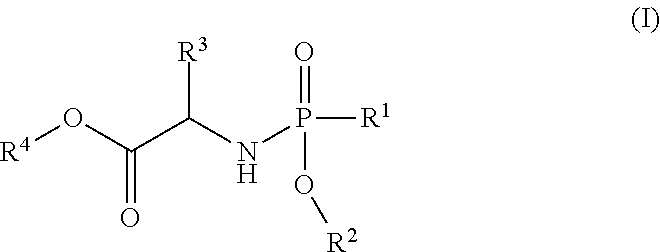
with a compound of formula (III):

in the presence of an aluminum complex and a non-nucleophilic base, in an organic solvent A for a time and at a temperature sufficient to form the compound of formula (II),
wherein:


said process comprising the step of contacting a compound of formula (I):

with a compound of formula (III):
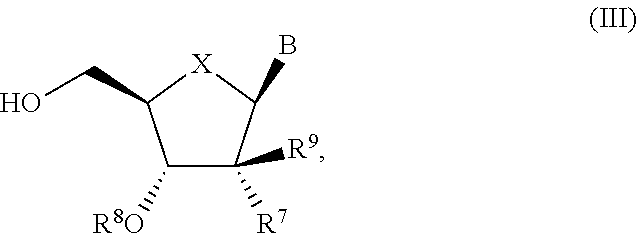
in the presence of an aluminum complex and a non-nucleophilic base, in an organic solvent A for a time and at a temperature sufficient to form the compound of formula (II),
wherein:

R1 is selected from —O—(C6-C10 aryl), 5 or 6-membered monocyclic heteroaryl, 9 or 10-membered bicyclic heteroaryl, —O-(5 or 6-membered monocyclic heteroaryl), —O-(9 or 10-membered bicyclic heteroaryl), —O-(4 to 7-membered monocyclic heterocycloalkyl), —S-(5 or 6-membered monocyclic heteroaryl), —S-(9 or 10-membered bicyclic heteroaryl), —S-(4 to 7-membered monocyclic heterocycloalkyl) or 10-membered heteroaryl) and —S—(C6-C10 aryl), wherein any of said 5 or 6-membered monocyclic heteroaryl groups, any of said 9 or 10-membered bicyclic heteroaryl groups, any of said 4 to 7-membered monocyclic heterocycloalkyl groups, and any of said C6-C10 aryl groups can each be optionally substituted with one or more R5 groups;
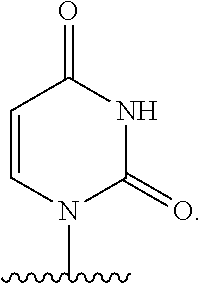


wherein:
wherein:



wherein R7 is selected from F, —CN, C2-C6 alkynyl, —NH2 and —N3; and R8 is H or —C(O)CH(CH3)2.

wherein:
wherein:




Claims (10)



Priority Applications (1)
| Application Number | Priority Date | Filing Date | Title |
|---|---|---|---|
| US15/562,973 US10618926B2 (en) | 2015-04-02 | 2016-03-28 | Process for making phosphoramidate protected nucleoside compounds |
Applications Claiming Priority (3)
| Application Number | Priority Date | Filing Date | Title |
|---|---|---|---|
| US201562142252P | 2015-04-02 | 2015-04-02 | |
| PCT/US2016/024411 WO2016160646A1 (en) | 2015-04-02 | 2016-03-28 | Process for making phosphoramidate protected nucleoside compounds |
| US15/562,973 US10618926B2 (en) | 2015-04-02 | 2016-03-28 | Process for making phosphoramidate protected nucleoside compounds |
Publications (2)
| Publication Number | Publication Date |
|---|---|
| US20180111954A1 US20180111954A1 (en) | 2018-04-26 |
| US10618926B2 true US10618926B2 (en) | 2020-04-14 |
Family
ID=57006355
Family Applications (1)
| Application Number | Title | Priority Date | Filing Date |
|---|---|---|---|
| US15/562,973 Active US10618926B2 (en) | 2015-04-02 | 2016-03-28 | Process for making phosphoramidate protected nucleoside compounds |
Country Status (2)
| Country | Link |
|---|---|
| US (1) | US10618926B2 (en) |
| WO (1) | WO2016160646A1 (en) |
Families Citing this family (2)
| Publication number | Priority date | Publication date | Assignee | Title |
|---|---|---|---|---|
| CN111116693B (en) * | 2019-12-27 | 2021-04-27 | 江苏科本药业有限公司 | Method for preparing sofosbuvir by combining 3, 3-diaryl acrolein and Grignard reagent |
| CN115322237B (en) * | 2022-10-13 | 2023-03-10 | 广东帕派恩生物科技有限公司 | A compound that inhibits RNA viruses |
Citations (16)
| Publication number | Priority date | Publication date | Assignee | Title |
|---|---|---|---|---|
| WO1992007864A1 (en) | 1990-10-26 | 1992-05-14 | Genta Incorporated | Improved process for the synthesis of oligomers |
| US20040023987A1 (en) | 2000-06-14 | 2004-02-05 | Yoshio Hata | Sustained release compositions |
| WO2005003147A2 (en) | 2003-05-30 | 2005-01-13 | Pharmasset, Inc. | Modified fluorinated nucleoside analogues |
| WO2009132123A1 (en) | 2008-04-23 | 2009-10-29 | Gilead Sciences, Inc. | Carba-nucleoside analogs for antiviral treatment |
| WO2010002877A2 (en) | 2008-07-03 | 2010-01-07 | Biota Scientific Management | Bycyclic nucleosides and nucleotides as therapeutic agents |
| WO2010075517A2 (en) | 2008-12-23 | 2010-07-01 | Pharmasset, Inc. | Nucleoside analogs |
| WO2010081628A1 (en) | 2009-01-13 | 2010-07-22 | Evonik Degussa Gmbh | Method for the production of coated rubber particles, coated rubber particles, and solvent-free coating formulation |
| US20100234316A1 (en) | 2006-02-14 | 2010-09-16 | Maccoss Malcolm | Nucleoside Aryl Phosphoramidates for the Treatment of RNA-Dependent RNA Viral Infection |
| WO2011035231A1 (en) | 2009-09-21 | 2011-03-24 | Gilead Sciences, Inc. | 2' -fluoro substituted carba-nucleoside analogs for antiviral treatment |
| US20130281686A1 (en) | 2010-07-19 | 2013-10-24 | Gilead Sciences, Inc. | Methods for the preparation of diasteromerically pure phosphoramidate prodrugs |
| WO2013177219A1 (en) | 2012-05-22 | 2013-11-28 | Idenix Pharmaceuticals, Inc. | D-amino acid compounds for liver disease |
| WO2014058801A1 (en) | 2012-10-08 | 2014-04-17 | Idenix Pharmaceuticals, Inc. | 2'-chloro nucleoside analogs for hcv infection |
| US20140121366A1 (en) | 2009-05-20 | 2014-05-01 | Gilead Pharmasset Llc | Nucleoside phosphoramidates |
| WO2015034420A1 (en) | 2013-09-04 | 2015-03-12 | Medivir Ab | Hcv polymerase inhibitors |
| US20170218006A1 (en) * | 2014-07-31 | 2017-08-03 | Sandoz Ag | Synthesis of Phosphoramidates |
| US10251903B2 (en) * | 2014-10-20 | 2019-04-09 | Merck Sharp & Dohme Corp. | Process for making nucleoside phosphoramidate compounds |
-
2016
- 2016-03-28 US US15/562,973 patent/US10618926B2/en active Active
- 2016-03-28 WO PCT/US2016/024411 patent/WO2016160646A1/en not_active Ceased
Patent Citations (17)
| Publication number | Priority date | Publication date | Assignee | Title |
|---|---|---|---|---|
| WO1992007864A1 (en) | 1990-10-26 | 1992-05-14 | Genta Incorporated | Improved process for the synthesis of oligomers |
| US20040023987A1 (en) | 2000-06-14 | 2004-02-05 | Yoshio Hata | Sustained release compositions |
| WO2005003147A2 (en) | 2003-05-30 | 2005-01-13 | Pharmasset, Inc. | Modified fluorinated nucleoside analogues |
| US20100234316A1 (en) | 2006-02-14 | 2010-09-16 | Maccoss Malcolm | Nucleoside Aryl Phosphoramidates for the Treatment of RNA-Dependent RNA Viral Infection |
| US7879815B2 (en) | 2006-02-14 | 2011-02-01 | Merck Sharp & Dohme Corp. | Nucleoside aryl phosphoramidates for the treatment of RNA-dependent RNA viral infection |
| WO2009132123A1 (en) | 2008-04-23 | 2009-10-29 | Gilead Sciences, Inc. | Carba-nucleoside analogs for antiviral treatment |
| WO2010002877A2 (en) | 2008-07-03 | 2010-01-07 | Biota Scientific Management | Bycyclic nucleosides and nucleotides as therapeutic agents |
| WO2010075517A2 (en) | 2008-12-23 | 2010-07-01 | Pharmasset, Inc. | Nucleoside analogs |
| WO2010081628A1 (en) | 2009-01-13 | 2010-07-22 | Evonik Degussa Gmbh | Method for the production of coated rubber particles, coated rubber particles, and solvent-free coating formulation |
| US20140121366A1 (en) | 2009-05-20 | 2014-05-01 | Gilead Pharmasset Llc | Nucleoside phosphoramidates |
| WO2011035231A1 (en) | 2009-09-21 | 2011-03-24 | Gilead Sciences, Inc. | 2' -fluoro substituted carba-nucleoside analogs for antiviral treatment |
| US20130281686A1 (en) | 2010-07-19 | 2013-10-24 | Gilead Sciences, Inc. | Methods for the preparation of diasteromerically pure phosphoramidate prodrugs |
| WO2013177219A1 (en) | 2012-05-22 | 2013-11-28 | Idenix Pharmaceuticals, Inc. | D-amino acid compounds for liver disease |
| WO2014058801A1 (en) | 2012-10-08 | 2014-04-17 | Idenix Pharmaceuticals, Inc. | 2'-chloro nucleoside analogs for hcv infection |
| WO2015034420A1 (en) | 2013-09-04 | 2015-03-12 | Medivir Ab | Hcv polymerase inhibitors |
| US20170218006A1 (en) * | 2014-07-31 | 2017-08-03 | Sandoz Ag | Synthesis of Phosphoramidates |
| US10251903B2 (en) * | 2014-10-20 | 2019-04-09 | Merck Sharp & Dohme Corp. | Process for making nucleoside phosphoramidate compounds |
Non-Patent Citations (1)
| Title |
|---|
| International Search Report and Written Opinion for PCT/US2016/024411, dated Jun. 30, 2016; 8 pages. |
Also Published As
| Publication number | Publication date |
|---|---|
| WO2016160646A1 (en) | 2016-10-06 |
| US20180111954A1 (en) | 2018-04-26 |
Similar Documents
| Publication | Publication Date | Title |
|---|---|---|
| CA2876690C (en) | Dihydropyrimidine compounds and their application in pharmaceuticals | |
| AU2017286890B2 (en) | Oxadiazepinone derivatives and their use in the treatment of hepatitis B infections | |
| JP6936848B2 (en) | A novel tetrahydropyrazolopyridine compound for the treatment of infectious diseases | |
| AU2015373996B2 (en) | Derivatives and methods of treating hepatitis B infections | |
| RU2678990C1 (en) | Dihydropyrimidine compounds and their application in pharmaceuticals | |
| CN108699077B (en) | Heterocyclic compounds as RSV inhibitors | |
| CN107089985B (en) | Pyrrolo- [2,3-D] pyrimidine derivatives as Zhan Nasi associated kinase (JAK) inhibitor | |
| CN104672288B (en) | A kind of deuterated Suo Feibuwei and application thereof | |
| EP3283472A1 (en) | Hepatitis b viral assembly effectors | |
| EP3325477A1 (en) | Novel tricyclic 4-pyridone-3-carboxylic acid derivatives for the treatment and prophylaxis of hepatitis b virus infection | |
| KR20120092153A (en) | 2'-fluoro-6'-methylene carbocyclic nucleosides and methods of treating viral infections | |
| KR20210095143A (en) | 5-membered heteroaryl carboxamide compounds for the treatment of HBV | |
| US10597422B2 (en) | Process for making chloro-substituted nucleoside phosphoramidate compounds | |
| TW202026296A (en) | Antiviral pyridopyrazinedione compounds | |
| WO2014123793A1 (en) | Tetracyclic heterocycle compounds and methods of use thereof for the treatment of hepatitis c | |
| US20220048884A1 (en) | Nrf2 activator | |
| AU2012233246B2 (en) | Novel furanone derivative | |
| KR20210006412A (en) | Dihydropyrimidine derivatives and their use in the treatment of HBV infections or HBV-induced diseases | |
| EP2321319B1 (en) | Antiviral compounds | |
| US10618926B2 (en) | Process for making phosphoramidate protected nucleoside compounds | |
| US10251903B2 (en) | Process for making nucleoside phosphoramidate compounds | |
| US10526363B2 (en) | Substituted phosphoramidate compounds and uses thereof | |
| US10131674B2 (en) | Process for preparing Substituted Indole Compounds | |
| WO2017019581A1 (en) | Process for making phosphorus-containing nucleoside prodrug compounds | |
| US10618892B2 (en) | Processes for the preparation of a BACE inhibitor |
Legal Events
| Date | Code | Title | Description |
|---|---|---|---|
| AS | Assignment |
Owner name: MERCK SHARP & DOHME CORP., NEW JERSEY Free format text: ASSIGNMENT OF ASSIGNORS INTEREST;ASSIGNORS:SILVERMAN, STEVEN M.;SIMMONS, BYRON LADD;LIAO, JING;AND OTHERS;SIGNING DATES FROM 20160224 TO 20160302;REEL/FRAME:043737/0871 |
|
| FEPP | Fee payment procedure |
Free format text: ENTITY STATUS SET TO UNDISCOUNTED (ORIGINAL EVENT CODE: BIG.); ENTITY STATUS OF PATENT OWNER: LARGE ENTITY |
|
| STPP | Information on status: patent application and granting procedure in general |
Free format text: NON FINAL ACTION MAILED |
|
| STPP | Information on status: patent application and granting procedure in general |
Free format text: NON FINAL ACTION MAILED |
|
| STPP | Information on status: patent application and granting procedure in general |
Free format text: RESPONSE TO NON-FINAL OFFICE ACTION ENTERED AND FORWARDED TO EXAMINER |
|
| STPP | Information on status: patent application and granting procedure in general |
Free format text: NOTICE OF ALLOWANCE MAILED -- APPLICATION RECEIVED IN OFFICE OF PUBLICATIONS |
|
| STPP | Information on status: patent application and granting procedure in general |
Free format text: NOTICE OF ALLOWANCE MAILED -- APPLICATION RECEIVED IN OFFICE OF PUBLICATIONS |
|
| STCF | Information on status: patent grant |
Free format text: PATENTED CASE |
|
| AS | Assignment |
Owner name: MERCK SHARP & DOHME LLC, NEW JERSEY Free format text: MERGER;ASSIGNOR:MERCK SHARP & DOHME CORP.;REEL/FRAME:061102/0145 Effective date: 20220407 |
|
| MAFP | Maintenance fee payment |
Free format text: PAYMENT OF MAINTENANCE FEE, 4TH YEAR, LARGE ENTITY (ORIGINAL EVENT CODE: M1551); ENTITY STATUS OF PATENT OWNER: LARGE ENTITY Year of fee payment: 4 |