US10595093B2 - Apparatus and method for presenting an electronic programming guide - Google Patents
Apparatus and method for presenting an electronic programming guide Download PDFInfo
- Publication number
- US10595093B2 US10595093B2 US15/093,830 US201615093830A US10595093B2 US 10595093 B2 US10595093 B2 US 10595093B2 US 201615093830 A US201615093830 A US 201615093830A US 10595093 B2 US10595093 B2 US 10595093B2
- Authority
- US
- United States
- Prior art keywords
- media content
- media
- user
- user profile
- schedules
- Prior art date
- Legal status (The legal status is an assumption and is not a legal conclusion. Google has not performed a legal analysis and makes no representation as to the accuracy of the status listed.)
- Expired - Fee Related, expires
Links
- 238000000034 method Methods 0.000 title claims description 35
- 238000004891 communication Methods 0.000 claims abstract description 42
- 238000012545 processing Methods 0.000 claims description 14
- 230000015654 memory Effects 0.000 claims description 10
- 230000006399 behavior Effects 0.000 claims description 5
- 230000008859 change Effects 0.000 claims description 5
- 230000008520 organization Effects 0.000 claims description 2
- 238000012544 monitoring process Methods 0.000 claims 9
- 238000009826 distribution Methods 0.000 description 15
- 230000006870 function Effects 0.000 description 8
- 230000005540 biological transmission Effects 0.000 description 4
- 238000004590 computer program Methods 0.000 description 2
- 238000013480 data collection Methods 0.000 description 2
- 239000000463 material Substances 0.000 description 2
- 230000003287 optical effect Effects 0.000 description 2
- 230000008569 process Effects 0.000 description 2
- 230000003068 static effect Effects 0.000 description 2
- RYGMFSIKBFXOCR-UHFFFAOYSA-N Copper Chemical compound [Cu] RYGMFSIKBFXOCR-UHFFFAOYSA-N 0.000 description 1
- 230000006978 adaptation Effects 0.000 description 1
- 230000002776 aggregation Effects 0.000 description 1
- 238000004220 aggregation Methods 0.000 description 1
- 238000003491 array Methods 0.000 description 1
- 230000003542 behavioural effect Effects 0.000 description 1
- 230000010267 cellular communication Effects 0.000 description 1
- 229910052802 copper Inorganic materials 0.000 description 1
- 239000010949 copper Substances 0.000 description 1
- 239000000835 fiber Substances 0.000 description 1
- 230000007274 generation of a signal involved in cell-cell signaling Effects 0.000 description 1
- 230000002452 interceptive effect Effects 0.000 description 1
- 230000000670 limiting effect Effects 0.000 description 1
- 239000004973 liquid crystal related substance Substances 0.000 description 1
- 238000012986 modification Methods 0.000 description 1
- 230000004048 modification Effects 0.000 description 1
- 230000006855 networking Effects 0.000 description 1
- 230000036961 partial effect Effects 0.000 description 1
- 238000003909 pattern recognition Methods 0.000 description 1
- 230000000644 propagated effect Effects 0.000 description 1
- 230000002829 reductive effect Effects 0.000 description 1
- 230000004044 response Effects 0.000 description 1
- 239000007787 solid Substances 0.000 description 1
- 238000006467 substitution reaction Methods 0.000 description 1
Images





Classifications
-
- H—ELECTRICITY
- H04—ELECTRIC COMMUNICATION TECHNIQUE
- H04N—PICTORIAL COMMUNICATION, e.g. TELEVISION
- H04N21/00—Selective content distribution, e.g. interactive television or video on demand [VOD]
- H04N21/40—Client devices specifically adapted for the reception of or interaction with content, e.g. set-top-box [STB]; Operations thereof
- H04N21/43—Processing of content or additional data, e.g. demultiplexing additional data from a digital video stream; Elementary client operations, e.g. monitoring of home network or synchronising decoder's clock; Client middleware
- H04N21/442—Monitoring of processes or resources, e.g. detecting the failure of a recording device, monitoring the downstream bandwidth, the number of times a movie has been viewed, the storage space available from the internal hard disk
- H04N21/44213—Monitoring of end-user related data
- H04N21/44222—Analytics of user selections, e.g. selection of programs or purchase activity
- H04N21/44224—Monitoring of user activity on external systems, e.g. Internet browsing
-
- H—ELECTRICITY
- H04—ELECTRIC COMMUNICATION TECHNIQUE
- H04N—PICTORIAL COMMUNICATION, e.g. TELEVISION
- H04N21/00—Selective content distribution, e.g. interactive television or video on demand [VOD]
- H04N21/40—Client devices specifically adapted for the reception of or interaction with content, e.g. set-top-box [STB]; Operations thereof
- H04N21/47—End-user applications
- H04N21/482—End-user interface for program selection
- H04N21/4821—End-user interface for program selection using a grid, e.g. sorted out by channel and broadcast time
-
- H—ELECTRICITY
- H04—ELECTRIC COMMUNICATION TECHNIQUE
- H04N—PICTORIAL COMMUNICATION, e.g. TELEVISION
- H04N21/00—Selective content distribution, e.g. interactive television or video on demand [VOD]
- H04N21/20—Servers specifically adapted for the distribution of content, e.g. VOD servers; Operations thereof
- H04N21/25—Management operations performed by the server for facilitating the content distribution or administrating data related to end-users or client devices, e.g. end-user or client device authentication, learning user preferences for recommending movies
- H04N21/251—Learning process for intelligent management, e.g. learning user preferences for recommending movies
-
- H—ELECTRICITY
- H04—ELECTRIC COMMUNICATION TECHNIQUE
- H04N—PICTORIAL COMMUNICATION, e.g. TELEVISION
- H04N21/00—Selective content distribution, e.g. interactive television or video on demand [VOD]
- H04N21/20—Servers specifically adapted for the distribution of content, e.g. VOD servers; Operations thereof
- H04N21/25—Management operations performed by the server for facilitating the content distribution or administrating data related to end-users or client devices, e.g. end-user or client device authentication, learning user preferences for recommending movies
- H04N21/254—Management at additional data server, e.g. shopping server, rights management server
-
- H—ELECTRICITY
- H04—ELECTRIC COMMUNICATION TECHNIQUE
- H04N—PICTORIAL COMMUNICATION, e.g. TELEVISION
- H04N21/00—Selective content distribution, e.g. interactive television or video on demand [VOD]
- H04N21/20—Servers specifically adapted for the distribution of content, e.g. VOD servers; Operations thereof
- H04N21/25—Management operations performed by the server for facilitating the content distribution or administrating data related to end-users or client devices, e.g. end-user or client device authentication, learning user preferences for recommending movies
- H04N21/258—Client or end-user data management, e.g. managing client capabilities, user preferences or demographics, processing of multiple end-users preferences to derive collaborative data
- H04N21/25866—Management of end-user data
- H04N21/25891—Management of end-user data being end-user preferences
-
- H—ELECTRICITY
- H04—ELECTRIC COMMUNICATION TECHNIQUE
- H04N—PICTORIAL COMMUNICATION, e.g. TELEVISION
- H04N21/00—Selective content distribution, e.g. interactive television or video on demand [VOD]
- H04N21/20—Servers specifically adapted for the distribution of content, e.g. VOD servers; Operations thereof
- H04N21/25—Management operations performed by the server for facilitating the content distribution or administrating data related to end-users or client devices, e.g. end-user or client device authentication, learning user preferences for recommending movies
- H04N21/262—Content or additional data distribution scheduling, e.g. sending additional data at off-peak times, updating software modules, calculating the carousel transmission frequency, delaying a video stream transmission, generating play-lists
- H04N21/26283—Content or additional data distribution scheduling, e.g. sending additional data at off-peak times, updating software modules, calculating the carousel transmission frequency, delaying a video stream transmission, generating play-lists for associating distribution time parameters to content, e.g. to generate electronic program guide data
-
- H—ELECTRICITY
- H04—ELECTRIC COMMUNICATION TECHNIQUE
- H04N—PICTORIAL COMMUNICATION, e.g. TELEVISION
- H04N21/00—Selective content distribution, e.g. interactive television or video on demand [VOD]
- H04N21/40—Client devices specifically adapted for the reception of or interaction with content, e.g. set-top-box [STB]; Operations thereof
- H04N21/41—Structure of client; Structure of client peripherals
- H04N21/414—Specialised client platforms, e.g. receiver in car or embedded in a mobile appliance
- H04N21/4147—PVR [Personal Video Recorder]
-
- H—ELECTRICITY
- H04—ELECTRIC COMMUNICATION TECHNIQUE
- H04N—PICTORIAL COMMUNICATION, e.g. TELEVISION
- H04N21/00—Selective content distribution, e.g. interactive television or video on demand [VOD]
- H04N21/40—Client devices specifically adapted for the reception of or interaction with content, e.g. set-top-box [STB]; Operations thereof
- H04N21/43—Processing of content or additional data, e.g. demultiplexing additional data from a digital video stream; Elementary client operations, e.g. monitoring of home network or synchronising decoder's clock; Client middleware
- H04N21/442—Monitoring of processes or resources, e.g. detecting the failure of a recording device, monitoring the downstream bandwidth, the number of times a movie has been viewed, the storage space available from the internal hard disk
- H04N21/44204—Monitoring of content usage, e.g. the number of times a movie has been viewed, copied or the amount which has been watched
-
- H—ELECTRICITY
- H04—ELECTRIC COMMUNICATION TECHNIQUE
- H04N—PICTORIAL COMMUNICATION, e.g. TELEVISION
- H04N21/00—Selective content distribution, e.g. interactive television or video on demand [VOD]
- H04N21/40—Client devices specifically adapted for the reception of or interaction with content, e.g. set-top-box [STB]; Operations thereof
- H04N21/43—Processing of content or additional data, e.g. demultiplexing additional data from a digital video stream; Elementary client operations, e.g. monitoring of home network or synchronising decoder's clock; Client middleware
- H04N21/442—Monitoring of processes or resources, e.g. detecting the failure of a recording device, monitoring the downstream bandwidth, the number of times a movie has been viewed, the storage space available from the internal hard disk
- H04N21/44213—Monitoring of end-user related data
- H04N21/44222—Analytics of user selections, e.g. selection of programs or purchase activity
-
- H—ELECTRICITY
- H04—ELECTRIC COMMUNICATION TECHNIQUE
- H04N—PICTORIAL COMMUNICATION, e.g. TELEVISION
- H04N21/00—Selective content distribution, e.g. interactive television or video on demand [VOD]
- H04N21/40—Client devices specifically adapted for the reception of or interaction with content, e.g. set-top-box [STB]; Operations thereof
- H04N21/45—Management operations performed by the client for facilitating the reception of or the interaction with the content or administrating data related to the end-user or to the client device itself, e.g. learning user preferences for recommending movies, resolving scheduling conflicts
- H04N21/4508—Management of client data or end-user data
- H04N21/4532—Management of client data or end-user data involving end-user characteristics, e.g. viewer profile, preferences
-
- H—ELECTRICITY
- H04—ELECTRIC COMMUNICATION TECHNIQUE
- H04N—PICTORIAL COMMUNICATION, e.g. TELEVISION
- H04N21/00—Selective content distribution, e.g. interactive television or video on demand [VOD]
- H04N21/40—Client devices specifically adapted for the reception of or interaction with content, e.g. set-top-box [STB]; Operations thereof
- H04N21/45—Management operations performed by the client for facilitating the reception of or the interaction with the content or administrating data related to the end-user or to the client device itself, e.g. learning user preferences for recommending movies, resolving scheduling conflicts
- H04N21/466—Learning process for intelligent management, e.g. learning user preferences for recommending movies
- H04N21/4667—Processing of monitored end-user data, e.g. trend analysis based on the log file of viewer selections
-
- H—ELECTRICITY
- H04—ELECTRIC COMMUNICATION TECHNIQUE
- H04N—PICTORIAL COMMUNICATION, e.g. TELEVISION
- H04N21/00—Selective content distribution, e.g. interactive television or video on demand [VOD]
- H04N21/40—Client devices specifically adapted for the reception of or interaction with content, e.g. set-top-box [STB]; Operations thereof
- H04N21/47—End-user applications
-
- H—ELECTRICITY
- H04—ELECTRIC COMMUNICATION TECHNIQUE
- H04N—PICTORIAL COMMUNICATION, e.g. TELEVISION
- H04N21/00—Selective content distribution, e.g. interactive television or video on demand [VOD]
- H04N21/40—Client devices specifically adapted for the reception of or interaction with content, e.g. set-top-box [STB]; Operations thereof
- H04N21/47—End-user applications
- H04N21/482—End-user interface for program selection
-
- H—ELECTRICITY
- H04—ELECTRIC COMMUNICATION TECHNIQUE
- H04N—PICTORIAL COMMUNICATION, e.g. TELEVISION
- H04N21/00—Selective content distribution, e.g. interactive television or video on demand [VOD]
- H04N21/40—Client devices specifically adapted for the reception of or interaction with content, e.g. set-top-box [STB]; Operations thereof
- H04N21/47—End-user applications
- H04N21/482—End-user interface for program selection
- H04N21/4828—End-user interface for program selection for searching program descriptors
-
- H—ELECTRICITY
- H04—ELECTRIC COMMUNICATION TECHNIQUE
- H04N—PICTORIAL COMMUNICATION, e.g. TELEVISION
- H04N21/00—Selective content distribution, e.g. interactive television or video on demand [VOD]
- H04N21/80—Generation or processing of content or additional data by content creator independently of the distribution process; Content per se
- H04N21/83—Generation or processing of protective or descriptive data associated with content; Content structuring
- H04N21/84—Generation or processing of descriptive data, e.g. content descriptors
-
- H04N5/44543—
-
- H—ELECTRICITY
- H04—ELECTRIC COMMUNICATION TECHNIQUE
- H04N—PICTORIAL COMMUNICATION, e.g. TELEVISION
- H04N7/00—Television systems
- H04N7/16—Analogue secrecy systems; Analogue subscription systems
- H04N7/173—Analogue secrecy systems; Analogue subscription systems with two-way working, e.g. subscriber sending a programme selection signal
- H04N7/17309—Transmission or handling of upstream communications
- H04N7/17318—Direct or substantially direct transmission and handling of requests
Definitions
- the present disclosure relates generally to Electronic Programming Guides (EPGs) and more specifically to an apparatus and method for presenting an EPG.
- EPGs Electronic Programming Guides
- Electronic programming guides are useful tools for guiding subscribers in selecting from a large suite of media content.
- Common sources of media content include without limitation on-line radio programs, and television (TV) programs supplied by media communication systems such as satellite TV, cable TV, and Internet Protocol TV.
- TV television
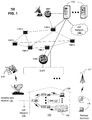
- FIGS. 1-3 depict illustrative embodiments of communication systems that provide media services
- FIG. 4 depicts an illustrative embodiment of a portal interacting with at least one among the communication systems of FIGS. 1-3 ;
- FIG. 5 depicts an illustrative method operating in portions of the communication systems of FIGS. 1-4 ;
- FIGS. 6-7 depict illustrative embodiments of the method of FIG. 5 ;
- FIG. 8 is a diagrammatic representation of a machine in the form of a computer system within which a set of instructions, when executed, may cause the machine to perform any one or more of the methodologies discussed herein.
- One embodiment of the present disclosure entails a Set-Top Box having a controller to establish a user profile, retrieve from a media communication system media content schedules according to the user profile, determine a consumption status for each of the retrieved media content schedules, generate an Electronic Programming Guide (EPG) comprising the retrieved media content schedules, each media content schedule depicting its corresponding consumption status, and present the EPG at a media presentation device upon request.
- EPG Electronic Programming Guide
- Another embodiment of the present disclosure entails a method involving assembling an EPG from media content schedules retrieved from a media communication system according to a user profile, wherein at least one the media content schedules depicts a consumption status of media content associated therewith.
- Yet another embodiment of the present disclosure entails a computer-readable storage medium having computer instructions for generating an EPG including a plurality of media content schedules selected according to a profile, and a consumption status depicted in at least each of a portion of the plurality of media content schedules.
- FIG. 1 depicts an illustrative embodiment of a first communication system 100 for delivering media content.
- the communication system 100 can represent an Internet Protocol Television (IPTV) broadcast media system.
- IPTV Internet Protocol Television
- SHO super head-end office
- SHS super headend office server
- media programs can represent audio content, moving image content such as videos, still image content, and/or combinations thereof.
- the SHS server forwards IP packets associated with the media content to video head-end servers (VHS) via a network of aggregation points such as video head-end offices (VHO) according to a common multicast communication method.
- VHS video head-end servers
- VHO video head-end offices
- the VHS then distributes multimedia broadcast programs via a local area network (LAN) to commercial and/or residential buildings 102 housing a gateway 104 (e.g., a residential gateway or RG).
- the LAN can represent a bank of digital subscriber line access multiplexers (DSLAMs) located in a central office or a service area interface that provide broadband services over optical links or copper twisted pairs to buildings 102 .
- DSLAMs digital subscriber line access multiplexers
- the gateway 104 distributes broadcast signals to media processors 106 such as Set-Top Boxes (STBs) which in turn present broadcast selections to media devices 108 such as computers or television sets managed in some instances by a media controller 107 (e.g., an infrared or RF remote control).
- STBs Set-Top Boxes
- Unicast traffic can also be exchanged between the media processors 106 and subsystems of the IPTV media system for services such as video-on-demand (VoD).
- VoD video-on-demand
- the media devices 108 and/or portable communication devices 116 shown in FIG. 1 can be an integral part of the media processor 106 and can be communicatively coupled to the gateway 104 .
- an integral device such as described can receive, respond, process and present multicast or unicast media content.
- the IPTV media system can be coupled to one or more computing devices 130 a portion of which can operate as a web server for providing portal services over an Internet Service Provider (ISP) network 132 to fixed line media devices 108 or portable communication devices 116 by way of a wireless access point 117 providing Wireless Fidelity or WiFi services, or cellular communication services (e.g., GSM, CDMA, UMTS, WiMAX, etc.).
- ISP Internet Service Provider
- Another distinct portion of the one or more computing devices 130 can be used as an electronic programming guide (EPG) system 130 for presenting media content schedules to subscribers of the first communication system 100 .
- EPG electronic programming guide
- a satellite broadcast television system can be used in place of the IPTV media system.
- signals transmitted by a satellite 115 can be intercepted by a satellite dish receiver 131 coupled to building 102 which conveys media signals to the media processors 106 .
- the media receivers 106 can be equipped with a broadband port to the ISP network 132 .
- the communication system 100 can also be combined or replaced with analog or digital broadcast distributions systems such as cable TV systems.
- FIG. 2 depicts an illustrative embodiment of a second communication system 200 for delivering media content.
- Communication system 200 can be overlaid or operably coupled with communication system 100 as another representative embodiment of said communication system.
- the system 200 includes a distribution switch/router system 228 at a central office 218 .
- the distribution switch/router system 228 receives video data via a multicast television stream 230 from a second distribution switch/router 234 at an intermediate office 220 .
- the multicast television stream 230 includes Internet Protocol (IP) data packets addressed to a multicast IP address associated with a television channel.
- IP Internet Protocol
- the distribution switch/router system 228 can cache data associated with each television channel received from the intermediate office 220 .
- the distribution switch/router system 228 also receives unicast data traffic from the intermediate office 220 via a unicast traffic stream 232 .
- the unicast traffic stream 232 includes data packets related to devices located at a particular residence, such as the residence 202 .
- the unicast traffic stream 232 can include data traffic related to a digital subscriber line, a telephone line, another data connection, or any combination thereof.
- the unicast traffic stream 232 can communicate data packets to and from a telephone 212 associated with a subscriber at the residence 202 .
- the telephone 212 can be a Voice over Internet Protocol (VoIP) telephone.
- VoIP Voice over Internet Protocol
- the unicast traffic stream 232 can communicate data packets to and from a personal computer 210 at the residence 202 via one or more data routers 208 .
- the unicast traffic stream 232 can communicate data packets to and from a set-top box device, such as the set-top box devices 204 , 206 .
- the unicast traffic stream 232 can communicate data packets to and from the devices located at the residence 202 via one or more residential gateways 214 associated with the residence 202 .
- the distribution switch/router system 228 can send data to one or more access switch/router systems 226 .
- the access switch/router system 226 can include or be included within a service area interface 216 .
- the access switch/router system 226 can include a DSLAM.
- the access switch/router system 226 can receive data from the distribution switch/router system 228 via a broadcast television (BTV) stream 222 and a plurality of unicast subscriber traffic streams 224 .
- BTV broadcast television
- the BTV stream 222 can be used to communicate video data packets associated with a multicast stream.
- the BTV stream 222 can include a multicast virtual local area network (VLAN) connection between the distribution switch/router system 228 and the access switch/router system 226 .
- VLAN virtual local area network
- Each of the plurality of subscriber traffic streams 224 can be used to communicate subscriber specific data packets.
- the first subscriber traffic stream can communicate data related to a first subscriber
- the nth subscriber traffic stream can communicate data related to an nth subscriber.
- Each subscriber to the system 200 can be associated with a respective subscriber traffic stream 224 .
- the subscriber traffic stream 224 can include a subscriber VLAN connection between the distribution switch/router system 228 and the access switch/router system 226 that is associated with a particular set-top box device 204 , 206 , a particular residence 202 , a particular residential gateway 214 , another device associated with a subscriber, or any combination thereof.
- a set-top box device receives a channel change command from an input device, such as a remoter control device.
- the channel change command can indicate selection of an IPTV channel.
- the set-top box device 204 After receiving the channel change command, the set-top box device 204 generates channel selection data that indicates the selection of the IPTV channel.
- the set-top box device 204 can send the channel selection data to the access switch/router system 226 via the residential gateway 214 .
- the channel selection data can include an Internet Group Management Protocol (IGMP) Join request.
- IGMP Internet Group Management Protocol
- the access switch/router system 226 can identify whether it is joined to a multicast group associated with the requested channel based on information in the IGMP Join request.
- the access switch/router system 226 can generate a multicast stream request.
- the multicast stream request can be generated by modifying the received channel selection data.
- the access switch/router system 226 can modify an IGMP Join request to produce a proxy IGMP Join request.
- the access switch/router system 226 can send the multicast stream request to the distribution switch/router system 228 via the BTV stream 222 .
- the distribution switch/router system 228 can send a stream associated with the requested channel to the access switch/router system 226 via the BTV stream 222 .
- the EPG system 130 of FIG. 1 can be operably coupled to the second communication system 200 for purposes similar to those described above.
- FIG. 3 depicts an illustrative embodiment of a third communication system 300 for delivering media content.
- Communication system 300 can be overlaid or operably coupled with communication systems 100 - 200 as another representative embodiment of said communication systems.
- the system 300 can include a client facing tier 302 , an application tier 304 , an acquisition tier 306 , and an operations and management tier 308 .
- Each tier 302 , 304 , 306 , 308 is coupled to a private network 310 , such as a network of common packet-switched routers and/or switches; to a public network 312 , such as the Internet; or to both the private network 310 and the public network 312 .
- the client-facing tier 302 can be coupled to the private network 310 .
- the application tier 304 can be coupled to the private network 310 and to the public network 312 .
- the acquisition tier 306 can also be coupled to the private network 310 and to the public network 312 .
- the operations and management tier 308 can be coupled to the public network 312 .
- the various tiers 302 , 304 , 306 , 308 communicate with each other via the private network 310 and the public network 312 .
- the client-facing tier 302 can communicate with the application tier 304 and the acquisition tier 306 via the private network 310 .
- the application tier 304 can communicate with the acquisition tier 306 via the private network 310 .
- the application tier 304 can communicate with the acquisition tier 306 and the operations and management tier 308 via the public network 312 .
- the acquisition tier 306 can communicate with the operations and management tier 308 via the public network 312 .
- elements of the application tier 304 including, but not limited to, a client gateway 350 , can communicate directly with the client-facing tier 302 .
- the client-facing tier 302 can communicate with user equipment via an access network 366 , such as an IPTV access network.
- customer premises equipment (CPE) 314 , 322 can be coupled to a local switch, router, or other device of the access network 366 .
- the client-facing tier 302 can communicate with a first representative set-top box device 316 via the first CPE 314 and with a second representative set-top box device 324 via the second CPE 322 .
- the first representative set-top box device 316 and the first CPE 314 can be located at a first customer premise
- the second representative set-top box device 324 and the second CPE 322 can be located at a second customer premise.
- the first representative set-top box device 316 and the second representative set-top box device 324 can be located at a single customer premise, both coupled to one of the CPE 314 , 322 .
- the CPE 314 , 322 can include routers, local area network devices, modems, such as digital subscriber line (DSL) modems, any other suitable devices for facilitating communication between a set-top box device and the access network 366 , or any combination thereof.
- DSL digital subscriber line
- the client-facing tier 302 can be coupled to the CPE 314 , 322 via fiber optic cables.
- the CPE 314 , 322 can include DSL modems that are coupled to one or more network nodes via twisted pairs, and the client-facing tier 302 can be coupled to the network nodes via fiber-optic cables.
- Each set-top box device 316 , 324 can process data received via the access network 366 , via a common IPTV software platform.
- the first set-top box device 316 can be coupled to a first external display device, such as a first television monitor 318
- the second set-top box device 324 can be coupled to a second external display device, such as a second television monitor 326 .
- the first set-top box device 316 can communicate with a first remote control 320
- the second set-top box device 324 can communicate with a second remote control 328 .
- the set-top box devices 316 , 324 can include IPTV set-top box devices; video gaming devices or consoles that are adapted to receive IPTV content; personal computers or other computing devices that are adapted to emulate set-top box device functionalities; any other device adapted to receive IPTV content and transmit data to an IPTV system via an access network; or any combination thereof.
- each set-top box device 316 , 324 can receive data, video, or any combination thereof, from the client-facing tier 302 via the access network 366 and render or display the data, video, or any combination thereof, at the display device 318 , 326 to which it is coupled.
- the set-top box devices 316 , 324 can include tuners that receive and decode television programming signals or packet streams for transmission to the display devices 318 , 326 .
- the set-top box devices 316 , 324 can each include a STB processor 370 and a STB memory device 372 that is accessible to the STB processor 370 .
- a computer program such as the STB computer program 374 , can be embedded within the STB memory device 372 .
- the client-facing tier 302 can include a client-facing tier (CFT) switch 330 that manages communication between the client-facing tier 302 and the access network 366 and between the client-facing tier 302 and the private network 310 .
- the CFT switch 330 is coupled to one or more distribution servers, such as Distribution-servers (D-servers) 332 , that store, format, encode, replicate, or otherwise manipulate or prepare video content for communication from the client-facing tier 302 to the set-top box devices 316 , 324 .
- D-servers Distribution-servers
- the CFT switch 330 can also be coupled to a terminal server 334 that provides terminal devices with a point of connection to the IPTV system 300 via the client-facing tier 302 .
- the CFT switch 330 can be coupled to a VoD server 336 that stores or provides VoD content imported by the IPTV system 300 . Further, the CFT switch 330 is coupled to one or more video servers 380 that receive video content and transmit the content to the set-top boxes 316 , 324 via the access network 366 .
- the client-facing tier 302 may include a CPE management server 382 that manages communications to and from the CPE 314 and the CPE 322 .
- the CPE management server 382 may collect performance data associated with the set-top box devices 316 , 324 from the CPE 314 or the CPE 322 and forward the collected performance data to a server associated with the operations and management tier 308 .
- the client-facing tier 302 can communicate with a large number of set-top boxes, such as the representative set-top boxes 316 , 324 , over a wide geographic area, such as a metropolitan area, a viewing area, a s nationwide area, a regional area, a nationwide area or any other suitable geographic area, market area, or subscriber or customer group that can be supported by networking the client-facing tier 302 to numerous set-top box devices.
- the CFT switch 330 or any portion thereof, can include a multicast router or switch that communicates with multiple set-top box devices via a multicast-enabled network.
- the application tier 304 can communicate with both the private network 310 and the public network 312 .
- the application tier 304 can include a first application tier (APP) switch 338 and a second APP switch 340 .
- the first APP switch 338 can be coupled to the second APP switch 340 .
- the first APP switch 338 can be coupled to an application server 342 and to an OSS/BSS gateway 344 .
- the application server 342 can provide applications to the set-top box devices 316 , 324 via the access network 366 , which enable the set-top box devices 316 , 324 to provide functions, such as interactive program guides, video gaming, display, messaging, processing of VoD material and other IPTV content, etc.
- the application server 342 can provide location information to the set-top box devices 316 , 324 .
- the OSS/BSS gateway 344 includes operation systems and support (OSS) data, as well as billing systems and support (BSS) data.
- the OSS/BSS gateway 344 can provide or restrict access to an OSS/BSS server 364 that stores operations and billing systems data.
- the second APP switch 340 can be coupled to a domain controller 346 that provides Internet access, for example, to users at their computers 368 via the public network 312 .
- the domain controller 346 can provide remote Internet access to IPTV account information, e-mail, personalized Internet services, or other online services via the public network 312 .
- the second APP switch 340 can be coupled to a subscriber and system store 348 that includes account information, such as account information that is associated with users who access the IPTV system 300 via the private network 310 or the public network 312 .
- the subscriber and system store 348 can store subscriber or customer data and create subscriber or customer profiles that are associated with IP addresses, stock-keeping unit (SKU) numbers, other identifiers, or any combination thereof, of corresponding set-top box devices 316 , 324 .
- the subscriber and system store can store data associated with capabilities of set-top box devices associated with particular customers.
- the client gateway 350 can verify subscriber information by communicating with the subscriber and system store 348 via the private network 310 . Further, the client gateway 350 can verify billing information and status by communicating with the OSS/BSS gateway 344 via the private network 310 . In one embodiment, the OSS/BSS gateway 344 can transmit a query via the public network 312 to the OSS/BSS server 364 . After the client gateway 350 confirms subscriber and/or billing information, the client gateway 350 can allow the set-top box device 316 to access IPTV content and VoD content at the client-facing tier 302 .
- the client gateway 350 can block transmissions to and from the set-top box device 316 beyond the access network 366 .
- the acquisition tier 306 includes an acquisition tier (AQT) switch 352 that communicates with the private network 310 .
- the AQT switch 352 can also communicate with the operations and management tier 308 via the public network 312 .
- the AQT switch 352 can be coupled to one or more live Acquisition-servers (A-servers) 354 that receive or acquire television content, movie content, advertisement content, other video content, or any combination thereof, from a broadcast service 356 , such as a satellite acquisition system or satellite head-end office.
- A-servers live Acquisition-servers
- the live acquisition server 354 can transmit content to the AQT switch 352
- the AQT switch 352 can transmit the content to the CFT switch 330 via the private network 310 .
- content can be transmitted to the D-servers 332 , where it can be encoded, formatted, stored, replicated, or otherwise manipulated and prepared for communication from the video server(s) 380 to the set-top box devices 316 , 324 .
- the CFT switch 330 can receive content from the video server(s) 380 and communicate the content to the CPE 314 , 322 via the access network 366 .
- the set-top box devices 316 , 324 can receive the content via the CPE 314 , 322 , and can transmit the content to the television monitors 318 , 326 .
- video or audio portions of the content can be streamed to the set-top box devices 316 , 324 .
- the AQT switch 352 can be coupled to a video-on-demand importer server 358 that receives and stores television or movie content received at the acquisition tier 306 and communicates the stored content to the VoD server 336 at the client-facing tier 302 via the private network 310 .
- the VoD importer server 358 can receive content from one or more VoD sources outside the IPTV system 300 , such as movie studios and programmers of non-live content.
- the VoD importer server 358 can transmit the VoD content to the AQT switch 352 , and the AQT switch 352 , in turn, can communicate the material to the CFT switch 330 via the private network 310 .
- the VoD content can be stored at one or more servers, such as the VoD server 336 .
- the requests can be transmitted over the access network 366 to the VoD server 336 , via the CFT switch 330 .
- the VoD server 336 can retrieve the requested VoD content and transmit the content to the set-top box devices 316 , 324 across the access network 366 , via the CFT switch 330 .
- the set-top box devices 316 , 324 can transmit the VoD content to the television monitors 318 , 326 .
- video or audio portions of VoD content can be streamed to the set-top box devices 316 , 324 .
- FIG. 3 further illustrates that the operations and management tier 308 can include an operations and management tier (OMT) switch 360 that conducts communication between the operations and management tier 308 and the public network 312 .
- OMT operations and management tier
- the OMT switch 360 is coupled to a TV2 server 362 .
- the OMT switch 360 can be coupled to an OSS/BSS server 364 and to a simple network management protocol monitor 386 that monitors network devices within or coupled to the IPTV system 300 .
- the OMT switch 360 can communicate with the AQT switch 352 via the public network 312 .
- the OSS/BSS server 364 may include a cluster of servers, such as one or more CPE data collection servers that are adapted to request and store operations systems data, such as performance data from the set-top box devices 316 , 324 .
- the CPE data collection servers may be adapted to analyze performance data to identify a condition of a physical component of a network path associated with a set-top box device, to predict a condition of a physical component of a network path associated with a set-top box device, or any combination thereof.
- the EPG system 130 of FIG. 1 can be operably coupled to the third communication system 300 for purposes similar to those described above.
- FIG. 4 depicts an illustrative embodiment of a portal 430 .
- the portal 430 can be used for managing services of communication systems 100 - 300 .
- the portal 430 can be accessed by a Uniform Resource Locator (URL) with a common Internet browser such as Microsoft's Internet Explorer using an Internet-capable communication device such as references 108 , 116 , or 210 of FIGS. 1-2 .
- the portal 430 can be configured to access a media processor such as references 106 , 204 , 206 , 316 , and 324 of FIGS. 1-3 and services managed thereby such as a Digital Video Recorder (DVR), an Electronic Programming Guide (EPG), VoD catalog, a personal catalog stored in the STB (e.g., personal videos, pictures, audio recordings, etc.), and so on.
- DVR Digital Video Recorder
- EPG Electronic Programming Guide
- VoD catalog e.g., personal videos, pictures, audio recordings, etc.
- FIG. 5 depicts an illustrative method 500 operating in portions of communication systems 100 - 300 .
- FIGS. 6-7 depict illustrative embodiments of method 500 .
- Method 500 begins with step 502 in which a media processor such as an STB of FIGS. 1-3 monitors and detects consumption behaviors of a user of the STB.
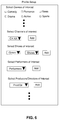
- the STB can receive from the user of the STB user preferences for media content. These preferences can include for example preferences for particular media programs (e.g., Star Trek, 48 Hours, Radio programs of interest, etc.), preferences for media programs by genre (Comedy, Family-oriented), content ratings such as G, PG, PG-13, etc., or other suitable preferences such as artists, directors, producers, and so on.
- the STB can retrieve in step 508 media content schedules from one or more databases operating in EPG system 130 of the aforementioned media communication systems of FIGS. 1-3 .
- These databases can comprise a comprehensive list of media content schedules for all media program channels offered by the media communication system.
- the STB can sift through the database for media programs that match the user profile.
- the media content schedules selected in step 508 can for example identify presentation schedules for the media programs that match the user profile, as well as other details (e.g., channel number on the STB, website(s) with related information, etc.).
- the STB can further determine a consumption status of the media content schedules.
- a consumption status can indicate a state of consumption of a media program for a select schedule.
- a select media content schedule can indicate that a media program associated with the schedule is a rerun. That is, the media program has been presented on prior occasions and is therefore not a first-time presentation.
- the select media content schedule can also indicate that a DVR coupled to or integrated with the STB is programmed to record the media program at the scheduled presentation time.
- the consumption status can be retrieved from the databases of the EPG system 130 as well as from a DVR coupled to or an integral part of the STB.
- the STB can determine in step 518 whether the user profile directs the STB to organize media schedules according to the most frequently viewed schedules. If such a request is made, the STB can present in step 520 the EPG showing media schedules according to a frequency of viewings of the schedules based on for example the most frequently viewed schedule first, the least frequently viewed schedule last, and others in between ordered according to their respective frequency of viewings. The STB can periodically update the organization of the media content schedules as the average frequency of viewings change. If neither a preferred list or frequency of viewings list is identified in the user profile, the STB can proceed to step 522 and present the EPG in any suitable order (e.g., alphabetical, by genre, etc.).
- any suitable order e.g., alphabetical, by genre, etc.
- the user profile illustrated can be much more comprehensive than what is shown in FIG. 6 . Moreover, the user profile can generate additional windows or GUIs based on a nested selection of preferences by the user. The user profile preferences entered manually by the user can also be enhanced by pattern recognition preferences detected by the STB.
- FIG. 7 presents an illustrative embodiment of a customized EPG resulting from the steps of method 500 .
- an EPG is presented in rows, each row identified by a genre 702 , media program 704 , or other identifiable category such as for example artists, directors, producers, and so on, which the user profile identifies as a category of interest to the user.
- Each media content schedule can include a schedule, a number of selectable items such a channel number, a “more” GUI button 712 , and symbol(s) 708 indicating a consumption status. Consumption status is illustrated in FIG. 7 by text symbols (e.g., LV for live presentation, RR for re-run presentation, DR for digital media recording, and so on).
- method 500 can be adapted so that the aforementioned steps occur at the EPG system 130 in whole or in part for at least a portion of STB subscribers. This option can be useful for subscribers who do not have an STB that has the sophistication described above. Accordingly, a service provider of the aforementioned media communication systems can have some subscribers with STBs that perform some or all of the functions of method 500 , while other subscribers procure the services of EPG system 130 to perform these functions remotely.
- FIG. 8 depicts an exemplary diagrammatic representation of a machine in the form of a computer system 800 within which a set of instructions, when executed, may cause the machine to perform any one or more of the methodologies discussed above.
- the machine operates as a standalone device.
- the machine may be connected (e.g., using a network) to other machines.
- the machine may operate in the capacity of a server or a client user machine in server-client user network environment, or as a peer machine in a peer-to-peer (or distributed) network environment.
- the computer system 800 may include a processor 802 (e.g., a central processing unit (CPU), a graphics processing unit (GPU, or both), a main memory 804 and a static memory 806 , which communicate with each other via a bus 808 .
- the computer system 800 may further include a video display unit 810 (e.g., a liquid crystal display (LCD), a flat panel, a solid state display, or a cathode ray tube (CRT)).
- the computer system 800 may include an input device 812 (e.g., a keyboard), a cursor control device 814 (e.g., a mouse), a disk drive unit 816 , a signal generation device 818 (e.g., a speaker or remote control) and a network interface device 820 .
- an input device 812 e.g., a keyboard
- a cursor control device 814 e.g., a mouse
- a disk drive unit 816 e.g., a disk drive unit 816
- a signal generation device 818 e.g., a speaker or remote control
- the disk drive unit 816 may include a machine-readable medium 822 on which is stored one or more sets of instructions (e.g., software 824 ) embodying any one or more of the methodologies or functions described herein, including those methods illustrated above.
- the instructions 824 may also reside, completely or at least partially, within the main memory 804 , the static memory 806 , and/or within the processor 802 during execution thereof by the computer system 800 .
- the main memory 804 and the processor 802 also may constitute machine-readable media.
- Dedicated hardware implementations including, but not limited to, application specific integrated circuits, programmable logic arrays and other hardware devices can likewise be constructed to implement the methods described herein.
- Applications that may include the apparatus and systems of various embodiments broadly include a variety of electronic and computer systems. Some embodiments implement functions in two or more specific interconnected hardware modules or devices with related control and data signals communicated between and through the modules, or as portions of an application-specific integrated circuit.
- the example system is applicable to software, firmware, and hardware implementations.
- the methods described herein are intended for operation as software programs running on a computer processor.
- software implementations can include, but not limited to, distributed processing or component/object distributed processing, parallel processing, or virtual machine processing can also be constructed to implement the methods described herein.
- the present disclosure contemplates a machine readable medium containing instructions 824 , or that which receives and executes instructions 824 from a propagated signal so that a device connected to a network environment 826 can send or receive voice, video or data, and to communicate over the network 826 using the instructions 824 .
- the instructions 824 may further be transmitted or received over a network 826 via the network interface device 820 .
- machine-readable medium 822 is shown in an example embodiment to be a single medium, the term “machine-readable medium” should be taken to include a single medium or multiple media (e.g., a centralized or distributed database, and/or associated caches and servers) that store the one or more sets of instructions.
- the term “machine-readable medium” shall also be taken to include any medium that is capable of storing, encoding or carrying a set of instructions for execution by the machine and that cause the machine to perform any one or more of the methodologies of the present disclosure.
- machine-readable medium shall accordingly be taken to include, but not be limited to: solid-state memories such as a memory card or other package that houses one or more read-only (non-volatile) memories, random access memories, or other re-writable (volatile) memories; magneto-optical or optical medium such as a disk or tape; and carrier wave signals such as a signal embodying computer instructions in a transmission medium; and/or a digital file attachment to e-mail or other self-contained information archive or set of archives is considered a distribution medium equivalent to a tangible storage medium. Accordingly, the disclosure is considered to include any one or more of a machine-readable medium or a distribution medium, as listed herein and including art-recognized equivalents and successor media, in which the software implementations herein are stored.
- inventive subject matter may be referred to herein, individually and/or collectively, by the term “invention” merely for convenience and without intending to voluntarily limit the scope of this application to any single invention or inventive concept if more than one is in fact disclosed.
- inventive concept merely for convenience and without intending to voluntarily limit the scope of this application to any single invention or inventive concept if more than one is in fact disclosed.
Landscapes
- Engineering & Computer Science (AREA)
- Multimedia (AREA)
- Signal Processing (AREA)
- Databases & Information Systems (AREA)
- Human Computer Interaction (AREA)
- Computer Networks & Wireless Communication (AREA)
- Health & Medical Sciences (AREA)
- General Health & Medical Sciences (AREA)
- Social Psychology (AREA)
- Computing Systems (AREA)
- Computer Graphics (AREA)
- Two-Way Televisions, Distribution Of Moving Picture Or The Like (AREA)
Abstract
Description
Claims (20)
Priority Applications (1)
| Application Number | Priority Date | Filing Date | Title |
|---|---|---|---|
| US15/093,830 US10595093B2 (en) | 2008-07-17 | 2016-04-08 | Apparatus and method for presenting an electronic programming guide |
Applications Claiming Priority (2)
| Application Number | Priority Date | Filing Date | Title |
|---|---|---|---|
| US12/174,927 US9338407B2 (en) | 2008-07-17 | 2008-07-17 | Apparatus and method for presenting an electronic programming guide |
| US15/093,830 US10595093B2 (en) | 2008-07-17 | 2016-04-08 | Apparatus and method for presenting an electronic programming guide |
Related Parent Applications (1)
| Application Number | Title | Priority Date | Filing Date |
|---|---|---|---|
| US12/174,927 Continuation US9338407B2 (en) | 2008-07-17 | 2008-07-17 | Apparatus and method for presenting an electronic programming guide |
Publications (2)
| Publication Number | Publication Date |
|---|---|
| US20160227290A1 US20160227290A1 (en) | 2016-08-04 |
| US10595093B2 true US10595093B2 (en) | 2020-03-17 |
Family
ID=41531420
Family Applications (2)
| Application Number | Title | Priority Date | Filing Date |
|---|---|---|---|
| US12/174,927 Expired - Fee Related US9338407B2 (en) | 2008-07-17 | 2008-07-17 | Apparatus and method for presenting an electronic programming guide |
| US15/093,830 Expired - Fee Related US10595093B2 (en) | 2008-07-17 | 2016-04-08 | Apparatus and method for presenting an electronic programming guide |
Family Applications Before (1)
| Application Number | Title | Priority Date | Filing Date |
|---|---|---|---|
| US12/174,927 Expired - Fee Related US9338407B2 (en) | 2008-07-17 | 2008-07-17 | Apparatus and method for presenting an electronic programming guide |
Country Status (1)
| Country | Link |
|---|---|
| US (2) | US9338407B2 (en) |
Families Citing this family (15)
| Publication number | Priority date | Publication date | Assignee | Title |
|---|---|---|---|---|
| US8943540B2 (en) * | 2001-09-28 | 2015-01-27 | Intel Corporation | Method and apparatus to provide a personalized channel |
| US9338407B2 (en) | 2008-07-17 | 2016-05-10 | At&T Intellectual Property I, Lp | Apparatus and method for presenting an electronic programming guide |
| US9113195B1 (en) * | 2008-12-31 | 2015-08-18 | Tivo Inc. | Real-time DVR programming |
| EP2478454A4 (en) * | 2009-09-15 | 2015-07-29 | Comcast Cable Comm Llc | CONTROL PLANE ARCHITECTURE FOR MULTICAST BUFFER MEMORY FILLING |
| US9258529B2 (en) * | 2009-10-15 | 2016-02-09 | Verizon Patent And Licensing Inc. | Data distribution |
| US9143737B2 (en) * | 2009-10-15 | 2015-09-22 | Verizon Patent And Licensing Inc. | Data distribution |
| US9445139B2 (en) * | 2010-10-05 | 2016-09-13 | Microsoft Technology Licensing, Llc | Authenticated content discovery |
| US9621954B2 (en) * | 2011-02-17 | 2017-04-11 | Verizon Patent And Licensing Inc. | Program guide including online channels |
| US10271047B2 (en) * | 2011-10-19 | 2019-04-23 | FedEx Supply Chain Logistics & Electronics, Inc. | Test fixture for testing set-top boxes |
| US11553018B2 (en) | 2014-04-08 | 2023-01-10 | Comcast Cable Communications, Llc | Dynamically switched multicast delivery |
| CN105072464B (en) * | 2015-07-24 | 2018-03-13 | 江苏省公用信息有限公司 | Electronic program menu display method based on viewing time |
| JP6952721B2 (en) | 2016-05-27 | 2021-10-20 | インターデジタル マディソン パテント ホールディングス, エスアーエス | Methods and equipment for delivering personal multimedia content |
| CN106791971A (en) * | 2016-12-06 | 2017-05-31 | 广东工业大学 | A kind of information-based System and method for of integrated third party of IPTV system |
| CN106803973B (en) * | 2017-01-18 | 2020-02-04 | 华数传媒网络有限公司 | Intelligent television program arranging method |
| US11140204B1 (en) * | 2020-04-03 | 2021-10-05 | Dish Network L.L.C. | Media delivery notification data ingestion and display |
Citations (35)
| Publication number | Priority date | Publication date | Assignee | Title |
|---|---|---|---|---|
| US5758257A (en) | 1994-11-29 | 1998-05-26 | Herz; Frederick | System and method for scheduling broadcast of and access to video programs and other data using customer profiles |
| US5805763A (en) * | 1995-05-05 | 1998-09-08 | Microsoft Corporation | System and method for automatically recording programs in an interactive viewing system |
| US20020083451A1 (en) * | 2000-12-21 | 2002-06-27 | Gill Komlika K. | User-friendly electronic program guide based on subscriber characterizations |
| US20020188947A1 (en) * | 2001-06-12 | 2002-12-12 | Chunzhi Wang | Television program selection apparatus and method |
| US6532589B1 (en) | 1999-03-25 | 2003-03-11 | Sony Corp. | Method and apparatus for providing a calendar-based planner in an electronic program guide for broadcast events |
| US20030084450A1 (en) | 2001-10-25 | 2003-05-01 | Thurston Nathaniel J. | Method and system for presenting personalized television program recommendation to viewers |
| US20030110492A1 (en) | 2001-12-07 | 2003-06-12 | Thurston Nathaniel J. | Recommendation-based electronic program guide with multiple modes of operation |
| US20030135855A1 (en) | 2001-10-04 | 2003-07-17 | Yassine Faihe | Method of television program suggestion and apparatus therefor |
| US20030237093A1 (en) * | 2002-06-19 | 2003-12-25 | Marsh David J. | Electronic program guide systems and methods for handling multiple users |
| US20040028375A1 (en) * | 2002-08-08 | 2004-02-12 | Kim Chul-Min | Video recording/reproducing apparatus and method of displaying menu guide |
| US20040060063A1 (en) * | 2002-09-24 | 2004-03-25 | Russ Samuel H. | PVR channel and PVR IPG information |
| US20040117357A1 (en) | 2002-12-17 | 2004-06-17 | International Business Machines Corporation | Method, system and program product for identifying similar user profiles in a collection |
| US20040148347A1 (en) | 2002-11-18 | 2004-07-29 | Barry Appelman | Dynamic identification of other users to an online user |
| US20050149987A1 (en) * | 2003-12-24 | 2005-07-07 | Gilles Boccon-Gibod | Television viewing communities |
| US20050160452A1 (en) * | 1995-05-05 | 2005-07-21 | Microsoft Corporation | Interactive program summary panel |
| US20050193414A1 (en) * | 2001-04-04 | 2005-09-01 | Microsoft Corporation | Training, inference and user interface for guiding the caching of media content on local stores |
| US20050212504A1 (en) | 2004-03-24 | 2005-09-29 | Dan Revital | System and method for cable localization |
| US20050216940A1 (en) | 2004-03-25 | 2005-09-29 | Comcast Cable Holdings, Llc | Method and system which enables subscribers to select videos from websites for on-demand delivery to subscriber televisions via cable television network |
| US20070005629A1 (en) | 2004-10-14 | 2007-01-04 | Hirokazu Tokuda | Memory device for a rail longitudinal guide for a motor vehicle seat |
| US7188355B1 (en) | 1999-09-30 | 2007-03-06 | Canon Kabushiki Kaisha | Television program recommendation system |
| US20070094292A1 (en) | 2003-12-26 | 2007-04-26 | Mitsuteru Kataoka | Recommended program notification method and recommended program notification device |
| US20070130595A1 (en) | 2002-05-03 | 2007-06-07 | Mcelhatten David | Technique for Effectively Accessing Programming Listing Information in an Entertainment Delivery System |
| US20070157247A1 (en) * | 2005-12-29 | 2007-07-05 | United Video Properties, Inc. | Systems and methods for managing content |
| US20070211158A1 (en) * | 2004-06-08 | 2007-09-13 | Matsushita Electric Industrial Co., Ltd. | Program Selection Support Device |
| CA2591385A1 (en) | 2006-06-13 | 2007-12-13 | Comcast Cable Holdings, Llc | Method of recommending related programs |
| US7418672B2 (en) | 2000-12-21 | 2008-08-26 | Exaflop Llc | Integrated content guide for interactive selection of content and services on personal computer systems with multiple sources and multiple media presentation |
| US20080209474A1 (en) * | 2004-11-24 | 2008-08-28 | Koninklijke Philips Electronics, N.V. | Method And Apparatus For Managing Tv Channel Lists |
| US20080216107A1 (en) * | 2007-02-01 | 2008-09-04 | David Downey | Verifying and encouraging asset consumption in a communications network |
| US20090100478A1 (en) * | 2007-10-12 | 2009-04-16 | Guideworks, Llc | Storage management of a recording device in a multi-user system |
| US20090165049A1 (en) | 2007-12-19 | 2009-06-25 | United Video Properties, Inc. | Methods and devices for presenting and interactive media guidance application |
| US20090249429A1 (en) * | 2008-03-31 | 2009-10-01 | At&T Knowledge Ventures, L.P. | System and method for presenting media content |
| US20090293090A1 (en) * | 2008-05-20 | 2009-11-26 | Broadcom Corporation | Mobile video device having unicast and multicast modes and methods for use therewith |
| US20100017824A1 (en) | 2008-07-17 | 2010-01-21 | At&T Intellectual Property I, L.P. | Apparatus and method for presenting an electronic programming guide |
| US8782698B2 (en) | 2007-04-30 | 2014-07-15 | Google Inc. | Customizable media channels |
| US8839300B2 (en) | 2008-02-19 | 2014-09-16 | At&T Intellectual Property I, Lp | Method and system for presenting electronic programming guides |
Family Cites Families (1)
| Publication number | Priority date | Publication date | Assignee | Title |
|---|---|---|---|---|
| US878698A (en) * | 1907-04-29 | 1908-02-11 | Hjalmar Wennerstroem | Locking and supporting means for suit or sample cases. |
-
2008
- 2008-07-17 US US12/174,927 patent/US9338407B2/en not_active Expired - Fee Related
-
2016
- 2016-04-08 US US15/093,830 patent/US10595093B2/en not_active Expired - Fee Related
Patent Citations (38)
| Publication number | Priority date | Publication date | Assignee | Title |
|---|---|---|---|---|
| US5758257A (en) | 1994-11-29 | 1998-05-26 | Herz; Frederick | System and method for scheduling broadcast of and access to video programs and other data using customer profiles |
| US20060150216A1 (en) * | 1994-11-29 | 2006-07-06 | Frederick Herz | System and method for scheduling broadcast of and access to video programs and other data using customer profiles |
| US5805763A (en) * | 1995-05-05 | 1998-09-08 | Microsoft Corporation | System and method for automatically recording programs in an interactive viewing system |
| US20050160452A1 (en) * | 1995-05-05 | 2005-07-21 | Microsoft Corporation | Interactive program summary panel |
| US6532589B1 (en) | 1999-03-25 | 2003-03-11 | Sony Corp. | Method and apparatus for providing a calendar-based planner in an electronic program guide for broadcast events |
| US7188355B1 (en) | 1999-09-30 | 2007-03-06 | Canon Kabushiki Kaisha | Television program recommendation system |
| US20020083451A1 (en) * | 2000-12-21 | 2002-06-27 | Gill Komlika K. | User-friendly electronic program guide based on subscriber characterizations |
| US7418672B2 (en) | 2000-12-21 | 2008-08-26 | Exaflop Llc | Integrated content guide for interactive selection of content and services on personal computer systems with multiple sources and multiple media presentation |
| US20050193414A1 (en) * | 2001-04-04 | 2005-09-01 | Microsoft Corporation | Training, inference and user interface for guiding the caching of media content on local stores |
| US20020188947A1 (en) * | 2001-06-12 | 2002-12-12 | Chunzhi Wang | Television program selection apparatus and method |
| US20030135855A1 (en) | 2001-10-04 | 2003-07-17 | Yassine Faihe | Method of television program suggestion and apparatus therefor |
| US20030084450A1 (en) | 2001-10-25 | 2003-05-01 | Thurston Nathaniel J. | Method and system for presenting personalized television program recommendation to viewers |
| US20030110492A1 (en) | 2001-12-07 | 2003-06-12 | Thurston Nathaniel J. | Recommendation-based electronic program guide with multiple modes of operation |
| US20070130595A1 (en) | 2002-05-03 | 2007-06-07 | Mcelhatten David | Technique for Effectively Accessing Programming Listing Information in an Entertainment Delivery System |
| US20030237093A1 (en) * | 2002-06-19 | 2003-12-25 | Marsh David J. | Electronic program guide systems and methods for handling multiple users |
| US20040028375A1 (en) * | 2002-08-08 | 2004-02-12 | Kim Chul-Min | Video recording/reproducing apparatus and method of displaying menu guide |
| US20040060063A1 (en) * | 2002-09-24 | 2004-03-25 | Russ Samuel H. | PVR channel and PVR IPG information |
| US20040148347A1 (en) | 2002-11-18 | 2004-07-29 | Barry Appelman | Dynamic identification of other users to an online user |
| US20040117357A1 (en) | 2002-12-17 | 2004-06-17 | International Business Machines Corporation | Method, system and program product for identifying similar user profiles in a collection |
| US20050149987A1 (en) * | 2003-12-24 | 2005-07-07 | Gilles Boccon-Gibod | Television viewing communities |
| US20070094292A1 (en) | 2003-12-26 | 2007-04-26 | Mitsuteru Kataoka | Recommended program notification method and recommended program notification device |
| US20050212504A1 (en) | 2004-03-24 | 2005-09-29 | Dan Revital | System and method for cable localization |
| US20050216940A1 (en) | 2004-03-25 | 2005-09-29 | Comcast Cable Holdings, Llc | Method and system which enables subscribers to select videos from websites for on-demand delivery to subscriber televisions via cable television network |
| US20070211158A1 (en) * | 2004-06-08 | 2007-09-13 | Matsushita Electric Industrial Co., Ltd. | Program Selection Support Device |
| US20070005629A1 (en) | 2004-10-14 | 2007-01-04 | Hirokazu Tokuda | Memory device for a rail longitudinal guide for a motor vehicle seat |
| US20080209474A1 (en) * | 2004-11-24 | 2008-08-28 | Koninklijke Philips Electronics, N.V. | Method And Apparatus For Managing Tv Channel Lists |
| US20070157247A1 (en) * | 2005-12-29 | 2007-07-05 | United Video Properties, Inc. | Systems and methods for managing content |
| CA2591385A1 (en) | 2006-06-13 | 2007-12-13 | Comcast Cable Holdings, Llc | Method of recommending related programs |
| US20080216107A1 (en) * | 2007-02-01 | 2008-09-04 | David Downey | Verifying and encouraging asset consumption in a communications network |
| US8782698B2 (en) | 2007-04-30 | 2014-07-15 | Google Inc. | Customizable media channels |
| US20090100478A1 (en) * | 2007-10-12 | 2009-04-16 | Guideworks, Llc | Storage management of a recording device in a multi-user system |
| US20090165049A1 (en) | 2007-12-19 | 2009-06-25 | United Video Properties, Inc. | Methods and devices for presenting and interactive media guidance application |
| US8839300B2 (en) | 2008-02-19 | 2014-09-16 | At&T Intellectual Property I, Lp | Method and system for presenting electronic programming guides |
| US20090249429A1 (en) * | 2008-03-31 | 2009-10-01 | At&T Knowledge Ventures, L.P. | System and method for presenting media content |
| US20090293090A1 (en) * | 2008-05-20 | 2009-11-26 | Broadcom Corporation | Mobile video device having unicast and multicast modes and methods for use therewith |
| US20100017824A1 (en) | 2008-07-17 | 2010-01-21 | At&T Intellectual Property I, L.P. | Apparatus and method for presenting an electronic programming guide |
| US9338407B2 (en) * | 2008-07-17 | 2016-05-10 | At&T Intellectual Property I, Lp | Apparatus and method for presenting an electronic programming guide |
| US20160227290A1 (en) * | 2008-07-17 | 2016-08-04 | At&T Intellectual Property I, Lp | Apparatus and Method for Presenting an Electronic Programming Guide |
Also Published As
| Publication number | Publication date |
|---|---|
| US20100017824A1 (en) | 2010-01-21 |
| US9338407B2 (en) | 2016-05-10 |
| US20160227290A1 (en) | 2016-08-04 |
Similar Documents
| Publication | Publication Date | Title |
|---|---|---|
| US10595093B2 (en) | Apparatus and method for presenting an electronic programming guide | |
| US9591356B2 (en) | System and method of determining viewership information | |
| US8230458B2 (en) | System and method of providing video content commentary | |
| US8949887B2 (en) | Apparatus and method for distributing media content | |
| US20070186243A1 (en) | System and method of providing television program recommendations | |
| US20070157221A1 (en) | System and method of providing television ratings information | |
| US8918808B2 (en) | Method and apparatus for presenting media content | |
| US8209721B2 (en) | System and method of providing program recommendations | |
| US20080040767A1 (en) | System and method of providing a set-top box application | |
| US20100077438A1 (en) | Apparatus and method for obtaining media content | |
| US10499101B2 (en) | Apparatus and method for providing media content | |
| US20080178225A1 (en) | Method and system for storing and accessing video data | |
| US20080178239A1 (en) | System and method of providing selected video content | |
| US10187669B2 (en) | Apparatus and method for managing media content for mobile devices | |
| US8627373B2 (en) | System and method for presenting media services | |
| US8707364B2 (en) | System for presenting media programming guides | |
| US20080295131A1 (en) | System and method of delivering media content | |
| US20110067079A1 (en) | System and Method of Analyzing Internet Protocol Television Content for Closed-Captioning Information | |
| US20110067078A1 (en) | System and Method of Proactively Recording to a Digital Video Recorder for Data Analysis | |
| US20110067077A1 (en) | System and Method of Analyzing Internet Protocol Television Content Credits Information |
Legal Events
| Date | Code | Title | Description |
|---|---|---|---|
| AS | Assignment |
Owner name: AT&T INTELLECTUAL PROPERTY I, LP, GEORGIA Free format text: ASSIGNMENT OF ASSIGNORS INTEREST;ASSIGNOR:MALIK, DALE;REEL/FRAME:038254/0369 Effective date: 20080717 |
|
| STPP | Information on status: patent application and granting procedure in general |
Free format text: DOCKETED NEW CASE - READY FOR EXAMINATION |
|
| STPP | Information on status: patent application and granting procedure in general |
Free format text: NON FINAL ACTION MAILED |
|
| STPP | Information on status: patent application and granting procedure in general |
Free format text: RESPONSE TO NON-FINAL OFFICE ACTION ENTERED AND FORWARDED TO EXAMINER |
|
| FEPP | Fee payment procedure |
Free format text: PETITION RELATED TO MAINTENANCE FEES GRANTED (ORIGINAL EVENT CODE: PTGR); ENTITY STATUS OF PATENT OWNER: LARGE ENTITY |
|
| STPP | Information on status: patent application and granting procedure in general |
Free format text: NOTICE OF ALLOWANCE MAILED -- APPLICATION RECEIVED IN OFFICE OF PUBLICATIONS |
|
| STPP | Information on status: patent application and granting procedure in general |
Free format text: PUBLICATIONS -- ISSUE FEE PAYMENT RECEIVED |
|
| STPP | Information on status: patent application and granting procedure in general |
Free format text: PUBLICATIONS -- ISSUE FEE PAYMENT VERIFIED |
|
| STCF | Information on status: patent grant |
Free format text: PATENTED CASE |
|
| FEPP | Fee payment procedure |
Free format text: MAINTENANCE FEE REMINDER MAILED (ORIGINAL EVENT CODE: REM.); ENTITY STATUS OF PATENT OWNER: LARGE ENTITY |
|
| LAPS | Lapse for failure to pay maintenance fees |
Free format text: PATENT EXPIRED FOR FAILURE TO PAY MAINTENANCE FEES (ORIGINAL EVENT CODE: EXP.); ENTITY STATUS OF PATENT OWNER: LARGE ENTITY |
|
| STCH | Information on status: patent discontinuation |
Free format text: PATENT EXPIRED DUE TO NONPAYMENT OF MAINTENANCE FEES UNDER 37 CFR 1.362 |
|
| FP | Lapsed due to failure to pay maintenance fee |
Effective date: 20240317 |