US10533141B2 - Process and device for treating high sulfur heavy marine fuel oil for use as feedstock in a subsequent refinery unit - Google Patents
Process and device for treating high sulfur heavy marine fuel oil for use as feedstock in a subsequent refinery unit Download PDFInfo
- Publication number
- US10533141B2 US10533141B2 US16/103,897 US201816103897A US10533141B2 US 10533141 B2 US10533141 B2 US 10533141B2 US 201816103897 A US201816103897 A US 201816103897A US 10533141 B2 US10533141 B2 US 10533141B2
- Authority
- US
- United States
- Prior art keywords
- feedstock
- iso
- hmfo
- fuel oil
- marine fuel
- Prior art date
- Legal status (The legal status is an assumption and is not a legal conclusion. Google has not performed a legal analysis and makes no representation as to the accuracy of the status listed.)
- Active
Links
Images



Classifications
-
- C—CHEMISTRY; METALLURGY
- C10—PETROLEUM, GAS OR COKE INDUSTRIES; TECHNICAL GASES CONTAINING CARBON MONOXIDE; FUELS; LUBRICANTS; PEAT
- C10G—CRACKING HYDROCARBON OILS; PRODUCTION OF LIQUID HYDROCARBON MIXTURES, e.g. BY DESTRUCTIVE HYDROGENATION, OLIGOMERISATION, POLYMERISATION; RECOVERY OF HYDROCARBON OILS FROM OIL-SHALE, OIL-SAND, OR GASES; REFINING MIXTURES MAINLY CONSISTING OF HYDROCARBONS; REFORMING OF NAPHTHA; MINERAL WAXES
- C10G45/00—Refining of hydrocarbon oils using hydrogen or hydrogen-generating compounds
-
- C—CHEMISTRY; METALLURGY
- C10—PETROLEUM, GAS OR COKE INDUSTRIES; TECHNICAL GASES CONTAINING CARBON MONOXIDE; FUELS; LUBRICANTS; PEAT
- C10L—FUELS NOT OTHERWISE PROVIDED FOR; NATURAL GAS; SYNTHETIC NATURAL GAS OBTAINED BY PROCESSES NOT COVERED BY SUBCLASSES C10G OR C10K; LIQUIFIED PETROLEUM GAS; USE OF ADDITIVES TO FUELS OR FIRES; FIRE-LIGHTERS
- C10L1/00—Liquid carbonaceous fuels
- C10L1/04—Liquid carbonaceous fuels essentially based on blends of hydrocarbons
-
- B—PERFORMING OPERATIONS; TRANSPORTING
- B01—PHYSICAL OR CHEMICAL PROCESSES OR APPARATUS IN GENERAL
- B01D—SEPARATION
- B01D3/00—Distillation or related exchange processes in which liquids are contacted with gaseous media, e.g. stripping
- B01D3/34—Distillation or related exchange processes in which liquids are contacted with gaseous media, e.g. stripping with one or more auxiliary substances
- B01D3/343—Distillation or related exchange processes in which liquids are contacted with gaseous media, e.g. stripping with one or more auxiliary substances the substance being a gas
-
- B—PERFORMING OPERATIONS; TRANSPORTING
- B01—PHYSICAL OR CHEMICAL PROCESSES OR APPARATUS IN GENERAL
- B01D—SEPARATION
- B01D53/00—Separation of gases or vapours; Recovering vapours of volatile solvents from gases; Chemical or biological purification of waste gases, e.g. engine exhaust gases, smoke, fumes, flue gases, aerosols
- B01D53/14—Separation of gases or vapours; Recovering vapours of volatile solvents from gases; Chemical or biological purification of waste gases, e.g. engine exhaust gases, smoke, fumes, flue gases, aerosols by absorption
- B01D53/1456—Removing acid components
- B01D53/1481—Removing sulfur dioxide or sulfur trioxide
-
- B—PERFORMING OPERATIONS; TRANSPORTING
- B01—PHYSICAL OR CHEMICAL PROCESSES OR APPARATUS IN GENERAL
- B01D—SEPARATION
- B01D53/00—Separation of gases or vapours; Recovering vapours of volatile solvents from gases; Chemical or biological purification of waste gases, e.g. engine exhaust gases, smoke, fumes, flue gases, aerosols
- B01D53/14—Separation of gases or vapours; Recovering vapours of volatile solvents from gases; Chemical or biological purification of waste gases, e.g. engine exhaust gases, smoke, fumes, flue gases, aerosols by absorption
- B01D53/18—Absorbing units; Liquid distributors therefor
-
- B—PERFORMING OPERATIONS; TRANSPORTING
- B01—PHYSICAL OR CHEMICAL PROCESSES OR APPARATUS IN GENERAL
- B01J—CHEMICAL OR PHYSICAL PROCESSES, e.g. CATALYSIS OR COLLOID CHEMISTRY; THEIR RELEVANT APPARATUS
- B01J21/00—Catalysts comprising the elements, oxides, or hydroxides of magnesium, boron, aluminium, carbon, silicon, titanium, zirconium, or hafnium
- B01J21/02—Boron or aluminium; Oxides or hydroxides thereof
- B01J21/04—Alumina
-
- B—PERFORMING OPERATIONS; TRANSPORTING
- B01—PHYSICAL OR CHEMICAL PROCESSES OR APPARATUS IN GENERAL
- B01J—CHEMICAL OR PHYSICAL PROCESSES, e.g. CATALYSIS OR COLLOID CHEMISTRY; THEIR RELEVANT APPARATUS
- B01J23/00—Catalysts comprising metals or metal oxides or hydroxides, not provided for in group B01J21/00
- B01J23/16—Catalysts comprising metals or metal oxides or hydroxides, not provided for in group B01J21/00 of arsenic, antimony, bismuth, vanadium, niobium, tantalum, polonium, chromium, molybdenum, tungsten, manganese, technetium or rhenium
- B01J23/24—Chromium, molybdenum or tungsten
-
- B—PERFORMING OPERATIONS; TRANSPORTING
- B01—PHYSICAL OR CHEMICAL PROCESSES OR APPARATUS IN GENERAL
- B01J—CHEMICAL OR PHYSICAL PROCESSES, e.g. CATALYSIS OR COLLOID CHEMISTRY; THEIR RELEVANT APPARATUS
- B01J23/00—Catalysts comprising metals or metal oxides or hydroxides, not provided for in group B01J21/00
- B01J23/38—Catalysts comprising metals or metal oxides or hydroxides, not provided for in group B01J21/00 of noble metals
- B01J23/40—Catalysts comprising metals or metal oxides or hydroxides, not provided for in group B01J21/00 of noble metals of the platinum group metals
-
- B—PERFORMING OPERATIONS; TRANSPORTING
- B01—PHYSICAL OR CHEMICAL PROCESSES OR APPARATUS IN GENERAL
- B01J—CHEMICAL OR PHYSICAL PROCESSES, e.g. CATALYSIS OR COLLOID CHEMISTRY; THEIR RELEVANT APPARATUS
- B01J23/00—Catalysts comprising metals or metal oxides or hydroxides, not provided for in group B01J21/00
- B01J23/70—Catalysts comprising metals or metal oxides or hydroxides, not provided for in group B01J21/00 of the iron group metals or copper
- B01J23/74—Iron group metals
-
- B—PERFORMING OPERATIONS; TRANSPORTING
- B01—PHYSICAL OR CHEMICAL PROCESSES OR APPARATUS IN GENERAL
- B01J—CHEMICAL OR PHYSICAL PROCESSES, e.g. CATALYSIS OR COLLOID CHEMISTRY; THEIR RELEVANT APPARATUS
- B01J8/00—Chemical or physical processes in general, conducted in the presence of fluids and solid particles; Apparatus for such processes
- B01J8/008—Details of the reactor or of the particulate material; Processes to increase or to retard the rate of reaction
-
- B—PERFORMING OPERATIONS; TRANSPORTING
- B01—PHYSICAL OR CHEMICAL PROCESSES OR APPARATUS IN GENERAL
- B01J—CHEMICAL OR PHYSICAL PROCESSES, e.g. CATALYSIS OR COLLOID CHEMISTRY; THEIR RELEVANT APPARATUS
- B01J8/00—Chemical or physical processes in general, conducted in the presence of fluids and solid particles; Apparatus for such processes
- B01J8/02—Chemical or physical processes in general, conducted in the presence of fluids and solid particles; Apparatus for such processes with stationary particles, e.g. in fixed beds
- B01J8/0278—Feeding reactive fluids
-
- B—PERFORMING OPERATIONS; TRANSPORTING
- B01—PHYSICAL OR CHEMICAL PROCESSES OR APPARATUS IN GENERAL
- B01J—CHEMICAL OR PHYSICAL PROCESSES, e.g. CATALYSIS OR COLLOID CHEMISTRY; THEIR RELEVANT APPARATUS
- B01J8/00—Chemical or physical processes in general, conducted in the presence of fluids and solid particles; Apparatus for such processes
- B01J8/02—Chemical or physical processes in general, conducted in the presence of fluids and solid particles; Apparatus for such processes with stationary particles, e.g. in fixed beds
- B01J8/0292—Chemical or physical processes in general, conducted in the presence of fluids and solid particles; Apparatus for such processes with stationary particles, e.g. in fixed beds with stationary packing material in the bed, e.g. bricks, wire rings, baffles
-
- B—PERFORMING OPERATIONS; TRANSPORTING
- B01—PHYSICAL OR CHEMICAL PROCESSES OR APPARATUS IN GENERAL
- B01J—CHEMICAL OR PHYSICAL PROCESSES, e.g. CATALYSIS OR COLLOID CHEMISTRY; THEIR RELEVANT APPARATUS
- B01J8/00—Chemical or physical processes in general, conducted in the presence of fluids and solid particles; Apparatus for such processes
- B01J8/02—Chemical or physical processes in general, conducted in the presence of fluids and solid particles; Apparatus for such processes with stationary particles, e.g. in fixed beds
- B01J8/04—Chemical or physical processes in general, conducted in the presence of fluids and solid particles; Apparatus for such processes with stationary particles, e.g. in fixed beds the fluid passing successively through two or more beds
- B01J8/0446—Chemical or physical processes in general, conducted in the presence of fluids and solid particles; Apparatus for such processes with stationary particles, e.g. in fixed beds the fluid passing successively through two or more beds the flow within the beds being predominantly vertical
- B01J8/0449—Chemical or physical processes in general, conducted in the presence of fluids and solid particles; Apparatus for such processes with stationary particles, e.g. in fixed beds the fluid passing successively through two or more beds the flow within the beds being predominantly vertical in two or more cylindrical beds
- B01J8/0457—Chemical or physical processes in general, conducted in the presence of fluids and solid particles; Apparatus for such processes with stationary particles, e.g. in fixed beds the fluid passing successively through two or more beds the flow within the beds being predominantly vertical in two or more cylindrical beds the beds being placed in separate reactors
-
- B—PERFORMING OPERATIONS; TRANSPORTING
- B01—PHYSICAL OR CHEMICAL PROCESSES OR APPARATUS IN GENERAL
- B01J—CHEMICAL OR PHYSICAL PROCESSES, e.g. CATALYSIS OR COLLOID CHEMISTRY; THEIR RELEVANT APPARATUS
- B01J8/00—Chemical or physical processes in general, conducted in the presence of fluids and solid particles; Apparatus for such processes
- B01J8/02—Chemical or physical processes in general, conducted in the presence of fluids and solid particles; Apparatus for such processes with stationary particles, e.g. in fixed beds
- B01J8/04—Chemical or physical processes in general, conducted in the presence of fluids and solid particles; Apparatus for such processes with stationary particles, e.g. in fixed beds the fluid passing successively through two or more beds
- B01J8/0492—Feeding reactive fluids
-
- C—CHEMISTRY; METALLURGY
- C10—PETROLEUM, GAS OR COKE INDUSTRIES; TECHNICAL GASES CONTAINING CARBON MONOXIDE; FUELS; LUBRICANTS; PEAT
- C10G—CRACKING HYDROCARBON OILS; PRODUCTION OF LIQUID HYDROCARBON MIXTURES, e.g. BY DESTRUCTIVE HYDROGENATION, OLIGOMERISATION, POLYMERISATION; RECOVERY OF HYDROCARBON OILS FROM OIL-SHALE, OIL-SAND, OR GASES; REFINING MIXTURES MAINLY CONSISTING OF HYDROCARBONS; REFORMING OF NAPHTHA; MINERAL WAXES
- C10G25/00—Refining of hydrocarbon oils in the absence of hydrogen, with solid sorbents
- C10G25/003—Specific sorbent material, not covered by C10G25/02 or C10G25/03
-
- C—CHEMISTRY; METALLURGY
- C10—PETROLEUM, GAS OR COKE INDUSTRIES; TECHNICAL GASES CONTAINING CARBON MONOXIDE; FUELS; LUBRICANTS; PEAT
- C10G—CRACKING HYDROCARBON OILS; PRODUCTION OF LIQUID HYDROCARBON MIXTURES, e.g. BY DESTRUCTIVE HYDROGENATION, OLIGOMERISATION, POLYMERISATION; RECOVERY OF HYDROCARBON OILS FROM OIL-SHALE, OIL-SAND, OR GASES; REFINING MIXTURES MAINLY CONSISTING OF HYDROCARBONS; REFORMING OF NAPHTHA; MINERAL WAXES
- C10G25/00—Refining of hydrocarbon oils in the absence of hydrogen, with solid sorbents
- C10G25/02—Refining of hydrocarbon oils in the absence of hydrogen, with solid sorbents with ion-exchange material
-
- C—CHEMISTRY; METALLURGY
- C10—PETROLEUM, GAS OR COKE INDUSTRIES; TECHNICAL GASES CONTAINING CARBON MONOXIDE; FUELS; LUBRICANTS; PEAT
- C10G—CRACKING HYDROCARBON OILS; PRODUCTION OF LIQUID HYDROCARBON MIXTURES, e.g. BY DESTRUCTIVE HYDROGENATION, OLIGOMERISATION, POLYMERISATION; RECOVERY OF HYDROCARBON OILS FROM OIL-SHALE, OIL-SAND, OR GASES; REFINING MIXTURES MAINLY CONSISTING OF HYDROCARBONS; REFORMING OF NAPHTHA; MINERAL WAXES
- C10G45/00—Refining of hydrocarbon oils using hydrogen or hydrogen-generating compounds
- C10G45/02—Refining of hydrocarbon oils using hydrogen or hydrogen-generating compounds to eliminate hetero atoms without changing the skeleton of the hydrocarbon involved and without cracking into lower boiling hydrocarbons; Hydrofinishing
-
- C—CHEMISTRY; METALLURGY
- C10—PETROLEUM, GAS OR COKE INDUSTRIES; TECHNICAL GASES CONTAINING CARBON MONOXIDE; FUELS; LUBRICANTS; PEAT
- C10G—CRACKING HYDROCARBON OILS; PRODUCTION OF LIQUID HYDROCARBON MIXTURES, e.g. BY DESTRUCTIVE HYDROGENATION, OLIGOMERISATION, POLYMERISATION; RECOVERY OF HYDROCARBON OILS FROM OIL-SHALE, OIL-SAND, OR GASES; REFINING MIXTURES MAINLY CONSISTING OF HYDROCARBONS; REFORMING OF NAPHTHA; MINERAL WAXES
- C10G45/00—Refining of hydrocarbon oils using hydrogen or hydrogen-generating compounds
- C10G45/02—Refining of hydrocarbon oils using hydrogen or hydrogen-generating compounds to eliminate hetero atoms without changing the skeleton of the hydrocarbon involved and without cracking into lower boiling hydrocarbons; Hydrofinishing
- C10G45/04—Refining of hydrocarbon oils using hydrogen or hydrogen-generating compounds to eliminate hetero atoms without changing the skeleton of the hydrocarbon involved and without cracking into lower boiling hydrocarbons; Hydrofinishing characterised by the catalyst used
-
- C—CHEMISTRY; METALLURGY
- C10—PETROLEUM, GAS OR COKE INDUSTRIES; TECHNICAL GASES CONTAINING CARBON MONOXIDE; FUELS; LUBRICANTS; PEAT
- C10G—CRACKING HYDROCARBON OILS; PRODUCTION OF LIQUID HYDROCARBON MIXTURES, e.g. BY DESTRUCTIVE HYDROGENATION, OLIGOMERISATION, POLYMERISATION; RECOVERY OF HYDROCARBON OILS FROM OIL-SHALE, OIL-SAND, OR GASES; REFINING MIXTURES MAINLY CONSISTING OF HYDROCARBONS; REFORMING OF NAPHTHA; MINERAL WAXES
- C10G45/00—Refining of hydrocarbon oils using hydrogen or hydrogen-generating compounds
- C10G45/02—Refining of hydrocarbon oils using hydrogen or hydrogen-generating compounds to eliminate hetero atoms without changing the skeleton of the hydrocarbon involved and without cracking into lower boiling hydrocarbons; Hydrofinishing
- C10G45/04—Refining of hydrocarbon oils using hydrogen or hydrogen-generating compounds to eliminate hetero atoms without changing the skeleton of the hydrocarbon involved and without cracking into lower boiling hydrocarbons; Hydrofinishing characterised by the catalyst used
- C10G45/06—Refining of hydrocarbon oils using hydrogen or hydrogen-generating compounds to eliminate hetero atoms without changing the skeleton of the hydrocarbon involved and without cracking into lower boiling hydrocarbons; Hydrofinishing characterised by the catalyst used containing nickel or cobalt metal, or compounds thereof
-
- C—CHEMISTRY; METALLURGY
- C10—PETROLEUM, GAS OR COKE INDUSTRIES; TECHNICAL GASES CONTAINING CARBON MONOXIDE; FUELS; LUBRICANTS; PEAT
- C10G—CRACKING HYDROCARBON OILS; PRODUCTION OF LIQUID HYDROCARBON MIXTURES, e.g. BY DESTRUCTIVE HYDROGENATION, OLIGOMERISATION, POLYMERISATION; RECOVERY OF HYDROCARBON OILS FROM OIL-SHALE, OIL-SAND, OR GASES; REFINING MIXTURES MAINLY CONSISTING OF HYDROCARBONS; REFORMING OF NAPHTHA; MINERAL WAXES
- C10G45/00—Refining of hydrocarbon oils using hydrogen or hydrogen-generating compounds
- C10G45/02—Refining of hydrocarbon oils using hydrogen or hydrogen-generating compounds to eliminate hetero atoms without changing the skeleton of the hydrocarbon involved and without cracking into lower boiling hydrocarbons; Hydrofinishing
- C10G45/04—Refining of hydrocarbon oils using hydrogen or hydrogen-generating compounds to eliminate hetero atoms without changing the skeleton of the hydrocarbon involved and without cracking into lower boiling hydrocarbons; Hydrofinishing characterised by the catalyst used
- C10G45/06—Refining of hydrocarbon oils using hydrogen or hydrogen-generating compounds to eliminate hetero atoms without changing the skeleton of the hydrocarbon involved and without cracking into lower boiling hydrocarbons; Hydrofinishing characterised by the catalyst used containing nickel or cobalt metal, or compounds thereof
- C10G45/08—Refining of hydrocarbon oils using hydrogen or hydrogen-generating compounds to eliminate hetero atoms without changing the skeleton of the hydrocarbon involved and without cracking into lower boiling hydrocarbons; Hydrofinishing characterised by the catalyst used containing nickel or cobalt metal, or compounds thereof in combination with chromium, molybdenum, or tungsten metals, or compounds thereof
-
- C—CHEMISTRY; METALLURGY
- C10—PETROLEUM, GAS OR COKE INDUSTRIES; TECHNICAL GASES CONTAINING CARBON MONOXIDE; FUELS; LUBRICANTS; PEAT
- C10G—CRACKING HYDROCARBON OILS; PRODUCTION OF LIQUID HYDROCARBON MIXTURES, e.g. BY DESTRUCTIVE HYDROGENATION, OLIGOMERISATION, POLYMERISATION; RECOVERY OF HYDROCARBON OILS FROM OIL-SHALE, OIL-SAND, OR GASES; REFINING MIXTURES MAINLY CONSISTING OF HYDROCARBONS; REFORMING OF NAPHTHA; MINERAL WAXES
- C10G45/00—Refining of hydrocarbon oils using hydrogen or hydrogen-generating compounds
- C10G45/02—Refining of hydrocarbon oils using hydrogen or hydrogen-generating compounds to eliminate hetero atoms without changing the skeleton of the hydrocarbon involved and without cracking into lower boiling hydrocarbons; Hydrofinishing
- C10G45/22—Refining of hydrocarbon oils using hydrogen or hydrogen-generating compounds to eliminate hetero atoms without changing the skeleton of the hydrocarbon involved and without cracking into lower boiling hydrocarbons; Hydrofinishing with hydrogen dissolved or suspended in the oil
-
- C—CHEMISTRY; METALLURGY
- C10—PETROLEUM, GAS OR COKE INDUSTRIES; TECHNICAL GASES CONTAINING CARBON MONOXIDE; FUELS; LUBRICANTS; PEAT
- C10G—CRACKING HYDROCARBON OILS; PRODUCTION OF LIQUID HYDROCARBON MIXTURES, e.g. BY DESTRUCTIVE HYDROGENATION, OLIGOMERISATION, POLYMERISATION; RECOVERY OF HYDROCARBON OILS FROM OIL-SHALE, OIL-SAND, OR GASES; REFINING MIXTURES MAINLY CONSISTING OF HYDROCARBONS; REFORMING OF NAPHTHA; MINERAL WAXES
- C10G47/00—Cracking of hydrocarbon oils, in the presence of hydrogen or hydrogen- generating compounds, to obtain lower boiling fractions
- C10G47/02—Cracking of hydrocarbon oils, in the presence of hydrogen or hydrogen- generating compounds, to obtain lower boiling fractions characterised by the catalyst used
-
- C—CHEMISTRY; METALLURGY
- C10—PETROLEUM, GAS OR COKE INDUSTRIES; TECHNICAL GASES CONTAINING CARBON MONOXIDE; FUELS; LUBRICANTS; PEAT
- C10G—CRACKING HYDROCARBON OILS; PRODUCTION OF LIQUID HYDROCARBON MIXTURES, e.g. BY DESTRUCTIVE HYDROGENATION, OLIGOMERISATION, POLYMERISATION; RECOVERY OF HYDROCARBON OILS FROM OIL-SHALE, OIL-SAND, OR GASES; REFINING MIXTURES MAINLY CONSISTING OF HYDROCARBONS; REFORMING OF NAPHTHA; MINERAL WAXES
- C10G65/00—Treatment of hydrocarbon oils by two or more hydrotreatment processes only
- C10G65/02—Treatment of hydrocarbon oils by two or more hydrotreatment processes only plural serial stages only
- C10G65/04—Treatment of hydrocarbon oils by two or more hydrotreatment processes only plural serial stages only including only refining steps
-
- C—CHEMISTRY; METALLURGY
- C10—PETROLEUM, GAS OR COKE INDUSTRIES; TECHNICAL GASES CONTAINING CARBON MONOXIDE; FUELS; LUBRICANTS; PEAT
- C10G—CRACKING HYDROCARBON OILS; PRODUCTION OF LIQUID HYDROCARBON MIXTURES, e.g. BY DESTRUCTIVE HYDROGENATION, OLIGOMERISATION, POLYMERISATION; RECOVERY OF HYDROCARBON OILS FROM OIL-SHALE, OIL-SAND, OR GASES; REFINING MIXTURES MAINLY CONSISTING OF HYDROCARBONS; REFORMING OF NAPHTHA; MINERAL WAXES
- C10G65/00—Treatment of hydrocarbon oils by two or more hydrotreatment processes only
- C10G65/02—Treatment of hydrocarbon oils by two or more hydrotreatment processes only plural serial stages only
- C10G65/12—Treatment of hydrocarbon oils by two or more hydrotreatment processes only plural serial stages only including cracking steps and other hydrotreatment steps
-
- C—CHEMISTRY; METALLURGY
- C10—PETROLEUM, GAS OR COKE INDUSTRIES; TECHNICAL GASES CONTAINING CARBON MONOXIDE; FUELS; LUBRICANTS; PEAT
- C10G—CRACKING HYDROCARBON OILS; PRODUCTION OF LIQUID HYDROCARBON MIXTURES, e.g. BY DESTRUCTIVE HYDROGENATION, OLIGOMERISATION, POLYMERISATION; RECOVERY OF HYDROCARBON OILS FROM OIL-SHALE, OIL-SAND, OR GASES; REFINING MIXTURES MAINLY CONSISTING OF HYDROCARBONS; REFORMING OF NAPHTHA; MINERAL WAXES
- C10G65/00—Treatment of hydrocarbon oils by two or more hydrotreatment processes only
- C10G65/14—Treatment of hydrocarbon oils by two or more hydrotreatment processes only plural parallel stages only
- C10G65/16—Treatment of hydrocarbon oils by two or more hydrotreatment processes only plural parallel stages only including only refining steps
-
- C—CHEMISTRY; METALLURGY
- C10—PETROLEUM, GAS OR COKE INDUSTRIES; TECHNICAL GASES CONTAINING CARBON MONOXIDE; FUELS; LUBRICANTS; PEAT
- C10G—CRACKING HYDROCARBON OILS; PRODUCTION OF LIQUID HYDROCARBON MIXTURES, e.g. BY DESTRUCTIVE HYDROGENATION, OLIGOMERISATION, POLYMERISATION; RECOVERY OF HYDROCARBON OILS FROM OIL-SHALE, OIL-SAND, OR GASES; REFINING MIXTURES MAINLY CONSISTING OF HYDROCARBONS; REFORMING OF NAPHTHA; MINERAL WAXES
- C10G67/00—Treatment of hydrocarbon oils by at least one hydrotreatment process and at least one process for refining in the absence of hydrogen only
- C10G67/02—Treatment of hydrocarbon oils by at least one hydrotreatment process and at least one process for refining in the absence of hydrogen only plural serial stages only
-
- C—CHEMISTRY; METALLURGY
- C10—PETROLEUM, GAS OR COKE INDUSTRIES; TECHNICAL GASES CONTAINING CARBON MONOXIDE; FUELS; LUBRICANTS; PEAT
- C10G—CRACKING HYDROCARBON OILS; PRODUCTION OF LIQUID HYDROCARBON MIXTURES, e.g. BY DESTRUCTIVE HYDROGENATION, OLIGOMERISATION, POLYMERISATION; RECOVERY OF HYDROCARBON OILS FROM OIL-SHALE, OIL-SAND, OR GASES; REFINING MIXTURES MAINLY CONSISTING OF HYDROCARBONS; REFORMING OF NAPHTHA; MINERAL WAXES
- C10G67/00—Treatment of hydrocarbon oils by at least one hydrotreatment process and at least one process for refining in the absence of hydrogen only
- C10G67/02—Treatment of hydrocarbon oils by at least one hydrotreatment process and at least one process for refining in the absence of hydrogen only plural serial stages only
- C10G67/06—Treatment of hydrocarbon oils by at least one hydrotreatment process and at least one process for refining in the absence of hydrogen only plural serial stages only including a sorption process as the refining step in the absence of hydrogen
-
- C—CHEMISTRY; METALLURGY
- C10—PETROLEUM, GAS OR COKE INDUSTRIES; TECHNICAL GASES CONTAINING CARBON MONOXIDE; FUELS; LUBRICANTS; PEAT
- C10G—CRACKING HYDROCARBON OILS; PRODUCTION OF LIQUID HYDROCARBON MIXTURES, e.g. BY DESTRUCTIVE HYDROGENATION, OLIGOMERISATION, POLYMERISATION; RECOVERY OF HYDROCARBON OILS FROM OIL-SHALE, OIL-SAND, OR GASES; REFINING MIXTURES MAINLY CONSISTING OF HYDROCARBONS; REFORMING OF NAPHTHA; MINERAL WAXES
- C10G69/00—Treatment of hydrocarbon oils by at least one hydrotreatment process and at least one other conversion process
- C10G69/02—Treatment of hydrocarbon oils by at least one hydrotreatment process and at least one other conversion process plural serial stages only
-
- C—CHEMISTRY; METALLURGY
- C10—PETROLEUM, GAS OR COKE INDUSTRIES; TECHNICAL GASES CONTAINING CARBON MONOXIDE; FUELS; LUBRICANTS; PEAT
- C10G—CRACKING HYDROCARBON OILS; PRODUCTION OF LIQUID HYDROCARBON MIXTURES, e.g. BY DESTRUCTIVE HYDROGENATION, OLIGOMERISATION, POLYMERISATION; RECOVERY OF HYDROCARBON OILS FROM OIL-SHALE, OIL-SAND, OR GASES; REFINING MIXTURES MAINLY CONSISTING OF HYDROCARBONS; REFORMING OF NAPHTHA; MINERAL WAXES
- C10G7/00—Distillation of hydrocarbon oils
-
- C—CHEMISTRY; METALLURGY
- C10—PETROLEUM, GAS OR COKE INDUSTRIES; TECHNICAL GASES CONTAINING CARBON MONOXIDE; FUELS; LUBRICANTS; PEAT
- C10L—FUELS NOT OTHERWISE PROVIDED FOR; NATURAL GAS; SYNTHETIC NATURAL GAS OBTAINED BY PROCESSES NOT COVERED BY SUBCLASSES C10G OR C10K; LIQUIFIED PETROLEUM GAS; USE OF ADDITIVES TO FUELS OR FIRES; FIRE-LIGHTERS
- C10L1/00—Liquid carbonaceous fuels
- C10L1/10—Liquid carbonaceous fuels containing additives
- C10L1/12—Inorganic compounds
-
- C—CHEMISTRY; METALLURGY
- C10—PETROLEUM, GAS OR COKE INDUSTRIES; TECHNICAL GASES CONTAINING CARBON MONOXIDE; FUELS; LUBRICANTS; PEAT
- C10L—FUELS NOT OTHERWISE PROVIDED FOR; NATURAL GAS; SYNTHETIC NATURAL GAS OBTAINED BY PROCESSES NOT COVERED BY SUBCLASSES C10G OR C10K; LIQUIFIED PETROLEUM GAS; USE OF ADDITIVES TO FUELS OR FIRES; FIRE-LIGHTERS
- C10L1/00—Liquid carbonaceous fuels
- C10L1/10—Liquid carbonaceous fuels containing additives
- C10L1/14—Organic compounds
-
- C—CHEMISTRY; METALLURGY
- C10—PETROLEUM, GAS OR COKE INDUSTRIES; TECHNICAL GASES CONTAINING CARBON MONOXIDE; FUELS; LUBRICANTS; PEAT
- C10L—FUELS NOT OTHERWISE PROVIDED FOR; NATURAL GAS; SYNTHETIC NATURAL GAS OBTAINED BY PROCESSES NOT COVERED BY SUBCLASSES C10G OR C10K; LIQUIFIED PETROLEUM GAS; USE OF ADDITIVES TO FUELS OR FIRES; FIRE-LIGHTERS
- C10L1/00—Liquid carbonaceous fuels
- C10L1/10—Liquid carbonaceous fuels containing additives
- C10L1/14—Organic compounds
- C10L1/16—Hydrocarbons
- C10L1/1608—Well defined compounds, e.g. hexane, benzene
-
- C—CHEMISTRY; METALLURGY
- C10—PETROLEUM, GAS OR COKE INDUSTRIES; TECHNICAL GASES CONTAINING CARBON MONOXIDE; FUELS; LUBRICANTS; PEAT
- C10L—FUELS NOT OTHERWISE PROVIDED FOR; NATURAL GAS; SYNTHETIC NATURAL GAS OBTAINED BY PROCESSES NOT COVERED BY SUBCLASSES C10G OR C10K; LIQUIFIED PETROLEUM GAS; USE OF ADDITIVES TO FUELS OR FIRES; FIRE-LIGHTERS
- C10L1/00—Liquid carbonaceous fuels
- C10L1/10—Liquid carbonaceous fuels containing additives
- C10L1/14—Organic compounds
- C10L1/18—Organic compounds containing oxygen
- C10L1/182—Organic compounds containing oxygen containing hydroxy groups; Salts thereof
- C10L1/183—Organic compounds containing oxygen containing hydroxy groups; Salts thereof at least one hydroxy group bound to an aromatic carbon atom
-
- F—MECHANICAL ENGINEERING; LIGHTING; HEATING; WEAPONS; BLASTING
- F23—COMBUSTION APPARATUS; COMBUSTION PROCESSES
- F23C—METHODS OR APPARATUS FOR COMBUSTION USING FLUID FUEL OR SOLID FUEL SUSPENDED IN A CARRIER GAS OR AIR
- F23C13/00—Apparatus in which combustion takes place in the presence of catalytic material
- F23C13/08—Apparatus in which combustion takes place in the presence of catalytic material characterised by the catalytic material
-
- B—PERFORMING OPERATIONS; TRANSPORTING
- B01—PHYSICAL OR CHEMICAL PROCESSES OR APPARATUS IN GENERAL
- B01J—CHEMICAL OR PHYSICAL PROCESSES, e.g. CATALYSIS OR COLLOID CHEMISTRY; THEIR RELEVANT APPARATUS
- B01J2208/00—Processes carried out in the presence of solid particles; Reactors therefor
- B01J2208/00008—Controlling the process
- B01J2208/00548—Flow
- B01J2208/00557—Flow controlling the residence time inside the reactor vessel
-
- B—PERFORMING OPERATIONS; TRANSPORTING
- B01—PHYSICAL OR CHEMICAL PROCESSES OR APPARATUS IN GENERAL
- B01J—CHEMICAL OR PHYSICAL PROCESSES, e.g. CATALYSIS OR COLLOID CHEMISTRY; THEIR RELEVANT APPARATUS
- B01J2208/00—Processes carried out in the presence of solid particles; Reactors therefor
- B01J2208/02—Processes carried out in the presence of solid particles; Reactors therefor with stationary particles
-
- B—PERFORMING OPERATIONS; TRANSPORTING
- B01—PHYSICAL OR CHEMICAL PROCESSES OR APPARATUS IN GENERAL
- B01J—CHEMICAL OR PHYSICAL PROCESSES, e.g. CATALYSIS OR COLLOID CHEMISTRY; THEIR RELEVANT APPARATUS
- B01J2208/00—Processes carried out in the presence of solid particles; Reactors therefor
- B01J2208/02—Processes carried out in the presence of solid particles; Reactors therefor with stationary particles
- B01J2208/023—Details
- B01J2208/024—Particulate material
- B01J2208/025—Two or more types of catalyst
-
- C—CHEMISTRY; METALLURGY
- C10—PETROLEUM, GAS OR COKE INDUSTRIES; TECHNICAL GASES CONTAINING CARBON MONOXIDE; FUELS; LUBRICANTS; PEAT
- C10G—CRACKING HYDROCARBON OILS; PRODUCTION OF LIQUID HYDROCARBON MIXTURES, e.g. BY DESTRUCTIVE HYDROGENATION, OLIGOMERISATION, POLYMERISATION; RECOVERY OF HYDROCARBON OILS FROM OIL-SHALE, OIL-SAND, OR GASES; REFINING MIXTURES MAINLY CONSISTING OF HYDROCARBONS; REFORMING OF NAPHTHA; MINERAL WAXES
- C10G2300/00—Aspects relating to hydrocarbon processing covered by groups C10G1/00 - C10G99/00
- C10G2300/10—Feedstock materials
- C10G2300/1037—Hydrocarbon fractions
-
- C—CHEMISTRY; METALLURGY
- C10—PETROLEUM, GAS OR COKE INDUSTRIES; TECHNICAL GASES CONTAINING CARBON MONOXIDE; FUELS; LUBRICANTS; PEAT
- C10G—CRACKING HYDROCARBON OILS; PRODUCTION OF LIQUID HYDROCARBON MIXTURES, e.g. BY DESTRUCTIVE HYDROGENATION, OLIGOMERISATION, POLYMERISATION; RECOVERY OF HYDROCARBON OILS FROM OIL-SHALE, OIL-SAND, OR GASES; REFINING MIXTURES MAINLY CONSISTING OF HYDROCARBONS; REFORMING OF NAPHTHA; MINERAL WAXES
- C10G2300/00—Aspects relating to hydrocarbon processing covered by groups C10G1/00 - C10G99/00
- C10G2300/10—Feedstock materials
- C10G2300/1037—Hydrocarbon fractions
- C10G2300/1044—Heavy gasoline or naphtha having a boiling range of about 100 - 180 °C
-
- C—CHEMISTRY; METALLURGY
- C10—PETROLEUM, GAS OR COKE INDUSTRIES; TECHNICAL GASES CONTAINING CARBON MONOXIDE; FUELS; LUBRICANTS; PEAT
- C10G—CRACKING HYDROCARBON OILS; PRODUCTION OF LIQUID HYDROCARBON MIXTURES, e.g. BY DESTRUCTIVE HYDROGENATION, OLIGOMERISATION, POLYMERISATION; RECOVERY OF HYDROCARBON OILS FROM OIL-SHALE, OIL-SAND, OR GASES; REFINING MIXTURES MAINLY CONSISTING OF HYDROCARBONS; REFORMING OF NAPHTHA; MINERAL WAXES
- C10G2300/00—Aspects relating to hydrocarbon processing covered by groups C10G1/00 - C10G99/00
- C10G2300/10—Feedstock materials
- C10G2300/1037—Hydrocarbon fractions
- C10G2300/1048—Middle distillates
-
- C—CHEMISTRY; METALLURGY
- C10—PETROLEUM, GAS OR COKE INDUSTRIES; TECHNICAL GASES CONTAINING CARBON MONOXIDE; FUELS; LUBRICANTS; PEAT
- C10G—CRACKING HYDROCARBON OILS; PRODUCTION OF LIQUID HYDROCARBON MIXTURES, e.g. BY DESTRUCTIVE HYDROGENATION, OLIGOMERISATION, POLYMERISATION; RECOVERY OF HYDROCARBON OILS FROM OIL-SHALE, OIL-SAND, OR GASES; REFINING MIXTURES MAINLY CONSISTING OF HYDROCARBONS; REFORMING OF NAPHTHA; MINERAL WAXES
- C10G2300/00—Aspects relating to hydrocarbon processing covered by groups C10G1/00 - C10G99/00
- C10G2300/10—Feedstock materials
- C10G2300/1037—Hydrocarbon fractions
- C10G2300/1048—Middle distillates
- C10G2300/1059—Gasoil having a boiling range of about 330 - 427 °C
-
- C—CHEMISTRY; METALLURGY
- C10—PETROLEUM, GAS OR COKE INDUSTRIES; TECHNICAL GASES CONTAINING CARBON MONOXIDE; FUELS; LUBRICANTS; PEAT
- C10G—CRACKING HYDROCARBON OILS; PRODUCTION OF LIQUID HYDROCARBON MIXTURES, e.g. BY DESTRUCTIVE HYDROGENATION, OLIGOMERISATION, POLYMERISATION; RECOVERY OF HYDROCARBON OILS FROM OIL-SHALE, OIL-SAND, OR GASES; REFINING MIXTURES MAINLY CONSISTING OF HYDROCARBONS; REFORMING OF NAPHTHA; MINERAL WAXES
- C10G2300/00—Aspects relating to hydrocarbon processing covered by groups C10G1/00 - C10G99/00
- C10G2300/10—Feedstock materials
- C10G2300/107—Atmospheric residues having a boiling point of at least about 538 °C
-
- C—CHEMISTRY; METALLURGY
- C10—PETROLEUM, GAS OR COKE INDUSTRIES; TECHNICAL GASES CONTAINING CARBON MONOXIDE; FUELS; LUBRICANTS; PEAT
- C10G—CRACKING HYDROCARBON OILS; PRODUCTION OF LIQUID HYDROCARBON MIXTURES, e.g. BY DESTRUCTIVE HYDROGENATION, OLIGOMERISATION, POLYMERISATION; RECOVERY OF HYDROCARBON OILS FROM OIL-SHALE, OIL-SAND, OR GASES; REFINING MIXTURES MAINLY CONSISTING OF HYDROCARBONS; REFORMING OF NAPHTHA; MINERAL WAXES
- C10G2300/00—Aspects relating to hydrocarbon processing covered by groups C10G1/00 - C10G99/00
- C10G2300/10—Feedstock materials
- C10G2300/1077—Vacuum residues
-
- C—CHEMISTRY; METALLURGY
- C10—PETROLEUM, GAS OR COKE INDUSTRIES; TECHNICAL GASES CONTAINING CARBON MONOXIDE; FUELS; LUBRICANTS; PEAT
- C10G—CRACKING HYDROCARBON OILS; PRODUCTION OF LIQUID HYDROCARBON MIXTURES, e.g. BY DESTRUCTIVE HYDROGENATION, OLIGOMERISATION, POLYMERISATION; RECOVERY OF HYDROCARBON OILS FROM OIL-SHALE, OIL-SAND, OR GASES; REFINING MIXTURES MAINLY CONSISTING OF HYDROCARBONS; REFORMING OF NAPHTHA; MINERAL WAXES
- C10G2300/00—Aspects relating to hydrocarbon processing covered by groups C10G1/00 - C10G99/00
- C10G2300/20—Characteristics of the feedstock or the products
- C10G2300/201—Impurities
-
- C—CHEMISTRY; METALLURGY
- C10—PETROLEUM, GAS OR COKE INDUSTRIES; TECHNICAL GASES CONTAINING CARBON MONOXIDE; FUELS; LUBRICANTS; PEAT
- C10G—CRACKING HYDROCARBON OILS; PRODUCTION OF LIQUID HYDROCARBON MIXTURES, e.g. BY DESTRUCTIVE HYDROGENATION, OLIGOMERISATION, POLYMERISATION; RECOVERY OF HYDROCARBON OILS FROM OIL-SHALE, OIL-SAND, OR GASES; REFINING MIXTURES MAINLY CONSISTING OF HYDROCARBONS; REFORMING OF NAPHTHA; MINERAL WAXES
- C10G2300/00—Aspects relating to hydrocarbon processing covered by groups C10G1/00 - C10G99/00
- C10G2300/20—Characteristics of the feedstock or the products
- C10G2300/201—Impurities
- C10G2300/202—Heteroatoms content, i.e. S, N, O, P
-
- C—CHEMISTRY; METALLURGY
- C10—PETROLEUM, GAS OR COKE INDUSTRIES; TECHNICAL GASES CONTAINING CARBON MONOXIDE; FUELS; LUBRICANTS; PEAT
- C10G—CRACKING HYDROCARBON OILS; PRODUCTION OF LIQUID HYDROCARBON MIXTURES, e.g. BY DESTRUCTIVE HYDROGENATION, OLIGOMERISATION, POLYMERISATION; RECOVERY OF HYDROCARBON OILS FROM OIL-SHALE, OIL-SAND, OR GASES; REFINING MIXTURES MAINLY CONSISTING OF HYDROCARBONS; REFORMING OF NAPHTHA; MINERAL WAXES
- C10G2300/00—Aspects relating to hydrocarbon processing covered by groups C10G1/00 - C10G99/00
- C10G2300/20—Characteristics of the feedstock or the products
- C10G2300/201—Impurities
- C10G2300/205—Metal content
-
- C—CHEMISTRY; METALLURGY
- C10—PETROLEUM, GAS OR COKE INDUSTRIES; TECHNICAL GASES CONTAINING CARBON MONOXIDE; FUELS; LUBRICANTS; PEAT
- C10G—CRACKING HYDROCARBON OILS; PRODUCTION OF LIQUID HYDROCARBON MIXTURES, e.g. BY DESTRUCTIVE HYDROGENATION, OLIGOMERISATION, POLYMERISATION; RECOVERY OF HYDROCARBON OILS FROM OIL-SHALE, OIL-SAND, OR GASES; REFINING MIXTURES MAINLY CONSISTING OF HYDROCARBONS; REFORMING OF NAPHTHA; MINERAL WAXES
- C10G2300/00—Aspects relating to hydrocarbon processing covered by groups C10G1/00 - C10G99/00
- C10G2300/20—Characteristics of the feedstock or the products
- C10G2300/201—Impurities
- C10G2300/205—Metal content
- C10G2300/206—Asphaltenes
-
- C—CHEMISTRY; METALLURGY
- C10—PETROLEUM, GAS OR COKE INDUSTRIES; TECHNICAL GASES CONTAINING CARBON MONOXIDE; FUELS; LUBRICANTS; PEAT
- C10G—CRACKING HYDROCARBON OILS; PRODUCTION OF LIQUID HYDROCARBON MIXTURES, e.g. BY DESTRUCTIVE HYDROGENATION, OLIGOMERISATION, POLYMERISATION; RECOVERY OF HYDROCARBON OILS FROM OIL-SHALE, OIL-SAND, OR GASES; REFINING MIXTURES MAINLY CONSISTING OF HYDROCARBONS; REFORMING OF NAPHTHA; MINERAL WAXES
- C10G2300/00—Aspects relating to hydrocarbon processing covered by groups C10G1/00 - C10G99/00
- C10G2300/20—Characteristics of the feedstock or the products
- C10G2300/201—Impurities
- C10G2300/207—Acid gases, e.g. H2S, COS, SO2, HCN
-
- C—CHEMISTRY; METALLURGY
- C10—PETROLEUM, GAS OR COKE INDUSTRIES; TECHNICAL GASES CONTAINING CARBON MONOXIDE; FUELS; LUBRICANTS; PEAT
- C10G—CRACKING HYDROCARBON OILS; PRODUCTION OF LIQUID HYDROCARBON MIXTURES, e.g. BY DESTRUCTIVE HYDROGENATION, OLIGOMERISATION, POLYMERISATION; RECOVERY OF HYDROCARBON OILS FROM OIL-SHALE, OIL-SAND, OR GASES; REFINING MIXTURES MAINLY CONSISTING OF HYDROCARBONS; REFORMING OF NAPHTHA; MINERAL WAXES
- C10G2300/00—Aspects relating to hydrocarbon processing covered by groups C10G1/00 - C10G99/00
- C10G2300/20—Characteristics of the feedstock or the products
- C10G2300/201—Impurities
- C10G2300/208—Sediments, e.g. bottom sediment and water or BSW
-
- C—CHEMISTRY; METALLURGY
- C10—PETROLEUM, GAS OR COKE INDUSTRIES; TECHNICAL GASES CONTAINING CARBON MONOXIDE; FUELS; LUBRICANTS; PEAT
- C10G—CRACKING HYDROCARBON OILS; PRODUCTION OF LIQUID HYDROCARBON MIXTURES, e.g. BY DESTRUCTIVE HYDROGENATION, OLIGOMERISATION, POLYMERISATION; RECOVERY OF HYDROCARBON OILS FROM OIL-SHALE, OIL-SAND, OR GASES; REFINING MIXTURES MAINLY CONSISTING OF HYDROCARBONS; REFORMING OF NAPHTHA; MINERAL WAXES
- C10G2300/00—Aspects relating to hydrocarbon processing covered by groups C10G1/00 - C10G99/00
- C10G2300/20—Characteristics of the feedstock or the products
- C10G2300/30—Physical properties of feedstocks or products
-
- C—CHEMISTRY; METALLURGY
- C10—PETROLEUM, GAS OR COKE INDUSTRIES; TECHNICAL GASES CONTAINING CARBON MONOXIDE; FUELS; LUBRICANTS; PEAT
- C10G—CRACKING HYDROCARBON OILS; PRODUCTION OF LIQUID HYDROCARBON MIXTURES, e.g. BY DESTRUCTIVE HYDROGENATION, OLIGOMERISATION, POLYMERISATION; RECOVERY OF HYDROCARBON OILS FROM OIL-SHALE, OIL-SAND, OR GASES; REFINING MIXTURES MAINLY CONSISTING OF HYDROCARBONS; REFORMING OF NAPHTHA; MINERAL WAXES
- C10G2300/00—Aspects relating to hydrocarbon processing covered by groups C10G1/00 - C10G99/00
- C10G2300/20—Characteristics of the feedstock or the products
- C10G2300/30—Physical properties of feedstocks or products
- C10G2300/302—Viscosity
-
- C—CHEMISTRY; METALLURGY
- C10—PETROLEUM, GAS OR COKE INDUSTRIES; TECHNICAL GASES CONTAINING CARBON MONOXIDE; FUELS; LUBRICANTS; PEAT
- C10G—CRACKING HYDROCARBON OILS; PRODUCTION OF LIQUID HYDROCARBON MIXTURES, e.g. BY DESTRUCTIVE HYDROGENATION, OLIGOMERISATION, POLYMERISATION; RECOVERY OF HYDROCARBON OILS FROM OIL-SHALE, OIL-SAND, OR GASES; REFINING MIXTURES MAINLY CONSISTING OF HYDROCARBONS; REFORMING OF NAPHTHA; MINERAL WAXES
- C10G2300/00—Aspects relating to hydrocarbon processing covered by groups C10G1/00 - C10G99/00
- C10G2300/20—Characteristics of the feedstock or the products
- C10G2300/30—Physical properties of feedstocks or products
- C10G2300/308—Gravity, density, e.g. API
-
- C—CHEMISTRY; METALLURGY
- C10—PETROLEUM, GAS OR COKE INDUSTRIES; TECHNICAL GASES CONTAINING CARBON MONOXIDE; FUELS; LUBRICANTS; PEAT
- C10G—CRACKING HYDROCARBON OILS; PRODUCTION OF LIQUID HYDROCARBON MIXTURES, e.g. BY DESTRUCTIVE HYDROGENATION, OLIGOMERISATION, POLYMERISATION; RECOVERY OF HYDROCARBON OILS FROM OIL-SHALE, OIL-SAND, OR GASES; REFINING MIXTURES MAINLY CONSISTING OF HYDROCARBONS; REFORMING OF NAPHTHA; MINERAL WAXES
- C10G2300/00—Aspects relating to hydrocarbon processing covered by groups C10G1/00 - C10G99/00
- C10G2300/40—Characteristics of the process deviating from typical ways of processing
- C10G2300/4012—Pressure
-
- C—CHEMISTRY; METALLURGY
- C10—PETROLEUM, GAS OR COKE INDUSTRIES; TECHNICAL GASES CONTAINING CARBON MONOXIDE; FUELS; LUBRICANTS; PEAT
- C10G—CRACKING HYDROCARBON OILS; PRODUCTION OF LIQUID HYDROCARBON MIXTURES, e.g. BY DESTRUCTIVE HYDROGENATION, OLIGOMERISATION, POLYMERISATION; RECOVERY OF HYDROCARBON OILS FROM OIL-SHALE, OIL-SAND, OR GASES; REFINING MIXTURES MAINLY CONSISTING OF HYDROCARBONS; REFORMING OF NAPHTHA; MINERAL WAXES
- C10G2300/00—Aspects relating to hydrocarbon processing covered by groups C10G1/00 - C10G99/00
- C10G2300/40—Characteristics of the process deviating from typical ways of processing
- C10G2300/4018—Spatial velocity, e.g. LHSV, WHSV
-
- C—CHEMISTRY; METALLURGY
- C10—PETROLEUM, GAS OR COKE INDUSTRIES; TECHNICAL GASES CONTAINING CARBON MONOXIDE; FUELS; LUBRICANTS; PEAT
- C10G—CRACKING HYDROCARBON OILS; PRODUCTION OF LIQUID HYDROCARBON MIXTURES, e.g. BY DESTRUCTIVE HYDROGENATION, OLIGOMERISATION, POLYMERISATION; RECOVERY OF HYDROCARBON OILS FROM OIL-SHALE, OIL-SAND, OR GASES; REFINING MIXTURES MAINLY CONSISTING OF HYDROCARBONS; REFORMING OF NAPHTHA; MINERAL WAXES
- C10G2300/00—Aspects relating to hydrocarbon processing covered by groups C10G1/00 - C10G99/00
- C10G2300/40—Characteristics of the process deviating from typical ways of processing
- C10G2300/4062—Geographical aspects, e.g. different process units form a combination process at different geographical locations
-
- C—CHEMISTRY; METALLURGY
- C10—PETROLEUM, GAS OR COKE INDUSTRIES; TECHNICAL GASES CONTAINING CARBON MONOXIDE; FUELS; LUBRICANTS; PEAT
- C10G—CRACKING HYDROCARBON OILS; PRODUCTION OF LIQUID HYDROCARBON MIXTURES, e.g. BY DESTRUCTIVE HYDROGENATION, OLIGOMERISATION, POLYMERISATION; RECOVERY OF HYDROCARBON OILS FROM OIL-SHALE, OIL-SAND, OR GASES; REFINING MIXTURES MAINLY CONSISTING OF HYDROCARBONS; REFORMING OF NAPHTHA; MINERAL WAXES
- C10G2300/00—Aspects relating to hydrocarbon processing covered by groups C10G1/00 - C10G99/00
- C10G2300/70—Catalyst aspects
-
- C—CHEMISTRY; METALLURGY
- C10—PETROLEUM, GAS OR COKE INDUSTRIES; TECHNICAL GASES CONTAINING CARBON MONOXIDE; FUELS; LUBRICANTS; PEAT
- C10G—CRACKING HYDROCARBON OILS; PRODUCTION OF LIQUID HYDROCARBON MIXTURES, e.g. BY DESTRUCTIVE HYDROGENATION, OLIGOMERISATION, POLYMERISATION; RECOVERY OF HYDROCARBON OILS FROM OIL-SHALE, OIL-SAND, OR GASES; REFINING MIXTURES MAINLY CONSISTING OF HYDROCARBONS; REFORMING OF NAPHTHA; MINERAL WAXES
- C10G2300/00—Aspects relating to hydrocarbon processing covered by groups C10G1/00 - C10G99/00
- C10G2300/80—Additives
-
- C—CHEMISTRY; METALLURGY
- C10—PETROLEUM, GAS OR COKE INDUSTRIES; TECHNICAL GASES CONTAINING CARBON MONOXIDE; FUELS; LUBRICANTS; PEAT
- C10G—CRACKING HYDROCARBON OILS; PRODUCTION OF LIQUID HYDROCARBON MIXTURES, e.g. BY DESTRUCTIVE HYDROGENATION, OLIGOMERISATION, POLYMERISATION; RECOVERY OF HYDROCARBON OILS FROM OIL-SHALE, OIL-SAND, OR GASES; REFINING MIXTURES MAINLY CONSISTING OF HYDROCARBONS; REFORMING OF NAPHTHA; MINERAL WAXES
- C10G2400/00—Products obtained by processes covered by groups C10G9/00 - C10G69/14
- C10G2400/04—Diesel oil
-
- C—CHEMISTRY; METALLURGY
- C10—PETROLEUM, GAS OR COKE INDUSTRIES; TECHNICAL GASES CONTAINING CARBON MONOXIDE; FUELS; LUBRICANTS; PEAT
- C10G—CRACKING HYDROCARBON OILS; PRODUCTION OF LIQUID HYDROCARBON MIXTURES, e.g. BY DESTRUCTIVE HYDROGENATION, OLIGOMERISATION, POLYMERISATION; RECOVERY OF HYDROCARBON OILS FROM OIL-SHALE, OIL-SAND, OR GASES; REFINING MIXTURES MAINLY CONSISTING OF HYDROCARBONS; REFORMING OF NAPHTHA; MINERAL WAXES
- C10G2400/00—Products obtained by processes covered by groups C10G9/00 - C10G69/14
- C10G2400/06—Gasoil
-
- C—CHEMISTRY; METALLURGY
- C10—PETROLEUM, GAS OR COKE INDUSTRIES; TECHNICAL GASES CONTAINING CARBON MONOXIDE; FUELS; LUBRICANTS; PEAT
- C10L—FUELS NOT OTHERWISE PROVIDED FOR; NATURAL GAS; SYNTHETIC NATURAL GAS OBTAINED BY PROCESSES NOT COVERED BY SUBCLASSES C10G OR C10K; LIQUIFIED PETROLEUM GAS; USE OF ADDITIVES TO FUELS OR FIRES; FIRE-LIGHTERS
- C10L2200/00—Components of fuel compositions
- C10L2200/02—Inorganic or organic compounds containing atoms other than C, H or O, e.g. organic compounds containing heteroatoms or metal organic complexes
- C10L2200/0263—Sulphur containing compounds
-
- C—CHEMISTRY; METALLURGY
- C10—PETROLEUM, GAS OR COKE INDUSTRIES; TECHNICAL GASES CONTAINING CARBON MONOXIDE; FUELS; LUBRICANTS; PEAT
- C10L—FUELS NOT OTHERWISE PROVIDED FOR; NATURAL GAS; SYNTHETIC NATURAL GAS OBTAINED BY PROCESSES NOT COVERED BY SUBCLASSES C10G OR C10K; LIQUIFIED PETROLEUM GAS; USE OF ADDITIVES TO FUELS OR FIRES; FIRE-LIGHTERS
- C10L2200/00—Components of fuel compositions
- C10L2200/04—Organic compounds
- C10L2200/0407—Specifically defined hydrocarbon fractions as obtained from, e.g. a distillation column
- C10L2200/0438—Middle or heavy distillates, heating oil, gasoil, marine fuels, residua
-
- C—CHEMISTRY; METALLURGY
- C10—PETROLEUM, GAS OR COKE INDUSTRIES; TECHNICAL GASES CONTAINING CARBON MONOXIDE; FUELS; LUBRICANTS; PEAT
- C10L—FUELS NOT OTHERWISE PROVIDED FOR; NATURAL GAS; SYNTHETIC NATURAL GAS OBTAINED BY PROCESSES NOT COVERED BY SUBCLASSES C10G OR C10K; LIQUIFIED PETROLEUM GAS; USE OF ADDITIVES TO FUELS OR FIRES; FIRE-LIGHTERS
- C10L2270/00—Specifically adapted fuels
- C10L2270/02—Specifically adapted fuels for internal combustion engines
-
- C—CHEMISTRY; METALLURGY
- C10—PETROLEUM, GAS OR COKE INDUSTRIES; TECHNICAL GASES CONTAINING CARBON MONOXIDE; FUELS; LUBRICANTS; PEAT
- C10L—FUELS NOT OTHERWISE PROVIDED FOR; NATURAL GAS; SYNTHETIC NATURAL GAS OBTAINED BY PROCESSES NOT COVERED BY SUBCLASSES C10G OR C10K; LIQUIFIED PETROLEUM GAS; USE OF ADDITIVES TO FUELS OR FIRES; FIRE-LIGHTERS
- C10L2270/00—Specifically adapted fuels
- C10L2270/02—Specifically adapted fuels for internal combustion engines
- C10L2270/026—Specifically adapted fuels for internal combustion engines for diesel engines, e.g. automobiles, stationary, marine
Definitions
- distillate based marine fuel also known as Marine Gas Oil (MGO) or Marine Diesel Oil (MDO); and residual based marine fuel, also known as heavy marine fuel oil (HMFO).
- MGO Marine Gas Oil
- MDO Marine Diesel Oil
- HMFO heavy marine fuel oil
- Gasoil (a heavy distillate) is used to heat homes and is used blending with lighter middle distillates as a fuel for heavy equipment such as cranes, bulldozers, generators, bobcats, tractors and combine harvesters.
- middle distillate recovery from heavy distillates mixed with petroleum residues is the most economic use of these materials by refiners because they can crack gas oils into valuable gasoline and distillates in a fluid catalytic cracking (FCC) unit.
- Diesel oils for road use are very similar to gas oils with road use diesel containing predominantly contain a middle distillate mixture of C 10 through C 19 hydrocarbons, which include approximately 64% aliphatic hydrocarbons, 1-2% olefinic hydrocarbons, and 35% aromatic hydrocarbons.
- Distillate based marine fuels are essentially road diesel or gas oil fractions blended with up to 15% residual process streams, and optionally up to 5% volume of polycyclic aromatic hydrocarbons (asphaltenes).
- the residual and asphaltene materials are blended into the middle distillate to form MDO and MGO as a way to both swell volume and productively use these low value materials.
- Asphaltenes are large and complex polycyclic hydrocarbons with a propensity to form complex and waxy precipitates, especially in the presence of aliphatic (paraffinic) hydrocarbons that are the primary component of Marine Diesel. Once asphaltenes have precipitated out, they are notoriously difficult to re-dissolve and are described as fuel tank sludge in the marine shipping industry and marine bunker fueling industry.
- One of skill in the art will appreciate that mixing Marine Diesel with asphaltenes and process residues is limited by the compatibility of the materials and formation of asphaltene precipitates and the minimum Cetane number required for such fuels.
- HMFO Heavy Marine Fuel Oil
- Typical refinery streams combined to from HMFO may include, but are not limited to: atmospheric tower bottoms (i.e. atmospheric residues), vacuum tower bottoms (i.e.
- HMFO has a higher aromatic content (especially polynuclear aromatics and asphaltenes) than the marine distillate fuels noted above.
- the HMFO component mixture varies widely depending upon the crude slate (i.e. source of crude oil) processed by a refinery and the processes utilized within that refinery to extract the most value out of a barrel of crude oil.
- the HMFO is generally characterized as being highly viscous, high in sulfur and metal content (up to 5 wt %), and high in asphaltenes making HMFO the one product of the refining process that has historically had a per barrel value less than feedstock crude oil.
- the International Convention for the Prevention of Pollution from Ships also known as the MARPOL convention or just MARPOL, as administered by the International Maritime Organization (IMO) was enacted to prevent marine pollution (i.e. marpol) from ships.
- IMO International Maritime Organization
- a new annex was added to the MARPOL convention; the Regulations for the Prevention of Air Pollution from Ships—Annex VI to minimize airborne emissions from ships (SO x , NO x , ODS, VOC) and their contribution to global air pollution.
- Annex VI with tightened emissions limits was adopted in October 2008 and effective 1 Jul. 2010 (hereafter called Annex VI (revised) or simply Annex VI).
- MARPOL Annex VI (revised) adopted in 2008 established a set of stringent air emissions limits for all vessel and more specifically designated Emission Control Areas (ECAs).
- ECAs under MARPOL Annex VI are: i) Baltic Sea area—as defined in Annex I of MARPOL—SO x only; ii) North Sea area—as defined in Annex V of MARPOL—SO x only; iii) North American—as defined in Appendix VII of Annex VI of MARPOL—SO x , NO x and PM; and, iv) United States Caribbean Sea area—as defined in Appendix VII of Annex VI of MARPOL—SO x , NO x and PM.
- Annex VI (revised) was codified in the United States by the Act to Prevent Pollution from Ships (APPS). Under the authority of APPS, the U.S. Environmental Protection Agency (the EPA), in consultation with the United States Coast Guard (USCG), promulgated regulations which incorporate by reference the full text of Annex VI. See 40 C.F.R. ⁇ 1043.100(a)(1). On Aug. 1, 2012 the maximum sulfur content of all marine fuel oils used onboard ships operating in US waters/ECA was reduced from 3.5% wt. to 1.00% wt. (10,000 ppm) and on Jan. 1, 2015 the maximum sulfur content of all marine fuel oils used in the North American ECA was lowered to 0.10% wt. (1,000 ppm).
- HMFO Heavy Marine Fuel Oil
- a first aspect and illustrative embodiment encompasses a multi-stage process for treating high sulfur Heavy Marine Fuel Oil for use as feedstock in a subsequent refinery unit, the process involving: mixing a quantity of the Feedstock Heavy Marine Fuel Oil with a quantity of Activating Gas mixture to give a Feedstock Mixture; contacting the Feedstock Mixture with one or more catalysts under reactive conditions to form a Process Mixture from the Feedstock Mixture; receiving the Process Mixture and separating the Product Heavy Marine Fuel Oil liquid components of the Process Mixture from the gaseous components and by-product hydrocarbon components of the Process Mixture and, discharging the Product Heavy Marine Fuel Oil.
- a second aspect and illustrative embodiment encompasses a device or plant for treating high sulfur Heavy Marine Fuel Oil and producing a Product HMFO for use as feedstock in a subsequent refinery unit.
- the illustrative devices embody the above illustrative core processes on a commercial scale.
- a third aspect and illustrative embodiment encompasses a feedstock Heavy Marine Fuel Oil composition resulting from the above illustrative processes and devices.
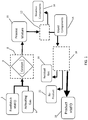
- FIG. 1 is a process block flow diagram of an illustrative core process to produce Product HMFO.
- FIG. 2 is a process flow diagram of a multistage process for transforming the high sulfur Feedstock HMFO to produce Product HMFO.
- FIG. 3 is a process flow diagram of a first alternative configuration for the reactor Section ( 11 ) for the process in FIG. 2 .
- FIG. 4 is a process flow diagram of a second alternative configuration for the reactor Section ( 11 ) for the process in FIG. 2 .
- FIG. 5 is a process flow diagram of a third alternative multi-reactor configuration for the Reactor System ( 11 ) in FIG. 2 .
- FIG. 6 is a process flow diagram of a fourth alternative multi-reactor matrix configuration for the Reactor System ( 11 ) in FIG. 2 .
- HMFO Heavy Marine Fuel Oil
- Environmental Contaminates are organic and inorganic components of HMFO that result in the formation of SO x , NO x and particulate materials upon combustion.
- Feedstock HMFO is a petroleum product fuel compliant with the ISO 8217 (2017) standards for the physical properties or characteristics of a merchantable HMFO except for the concentration of Environmental Contaminates, more specifically the Feedstock HMFO has a sulfur content greater than the global MARPOL Annex VI standard of 0.5% wt. sulfur, and preferably and has a sulfur content (ISO 14596 or ISO 8754) between the range of 5.0% wt. to 1.0% wt.
- Product HMFO is a petroleum product fuel that has a maximum sulfur content (ISO 14596 or ISO 8754) between the range of 0.05% wt. to 1.0% wt. and is suitable for use as a feedstock in subsequent refinery process such Coking or Fluid Catalytic Cracking.
- ISO 14596 or ISO 8754 maximum sulfur content
- Activating Gas is a mixture of gases utilized in the process combined with the catalyst to remove the environmental contaminates from the Feedstock HMFO.
- Fluid communication is the capability to transfer fluids (either liquid, gas or combinations thereof, which might have suspended solids) from a first vessel or location to a second vessel or location, this may encompass connections made by pipes (also called a line), spools, valves, intermediate holding tanks or surge tanks (also called a drum).
- Merchantable quality is a level of quality for a residual marine fuel oil so the fuel is fit for the ordinary purpose it should serve (i.e. serve as a residual fuel source for a marine ship) and can be commercially sold as and is fungible and compatible with other heavy or residual marine bunker fuels.
- Bpd or bpd is an abbreviation for Bbl per day.
- SCF is an abbreviation for standard cubic foot of a gas; a standard cubic foot (at 14.73 psi and 60° F.) equals 0.0283058557 standard cubic meters (at 101.325 kPa and 15° C.).
- Bulk Properties are broadly defined as the physical properties or characteristics of a merchantable HMFO as required by ISO 8217 (2017); and more specifically the measurements include: kinematic viscosity at 50° C. as determined by ISO 3104; density at 15° C. as determined by ISO 3675; CCAI value as determined by ISO 8217, ANNEX B; flash point as determined by ISO 2719; total sediment—aged as determined by ISO 10307-2; carbon residue—micro method as determined by ISO 10370; and preferably aluminum plus silicon content as determined by ISO 10478.
- FIG. 1 shows the generalized block process flows for a core process of transforming a high sulfur Feedstock HMFO and producing a Product HMFO that may be utilized in subsequent refinery process.
- a predetermined volume of Feedstock HMFO ( 2 ) is mixed with a predetermined quantity of Activating Gas ( 4 ) to give a Feedstock Mixture.
- the Feedstock HMFO utilized generally complies with the bulk physical and certain key chemical properties for a residual marine fuel oil otherwise compliant with ISO 8217 (2017) exclusive of the Environmental Contaminates. More particularly, when the Environmental Contaminate is sulfur, the concentration of sulfur in the Feedstock HMFO may be between the range of 5.0% wt.
- the Feedstock HMFO should have bulk physical properties required of an ISO 8217 (2017) compliant HMFO.
- the Feedstock HMFO should exhibit the Bulk Properties of: a maximum of kinematic viscosity at 50° C. (ISO 3104) between the range from 180 mm 2 /s to 700 mm 2 /s; a maximum of density at 15° C. (ISO 3675) between the range of 991.0 kg/m 3 to 1010.0 kg/m 3 ; a CCAI in the range of 780 to 870; and a flash point (ISO 2719) no lower than 60° C.
- Environmental Contaminates other than sulfur that may be present in the Feedstock HMFO over the ISO requirements may include vanadium, nickel, iron, aluminum and silicon substantially reduced by the process of the present invention.
- vanadium content serves as a general indicator of these other Environmental Contaminates.
- the vanadium content is ISO compliant so the Feedstock HMFO has a maximum vanadium content (ISO 14597) between the range from 350 mg/kg to 450 ppm mg/kg.
- the Activating Gas should be selected from mixtures of nitrogen, hydrogen, carbon dioxide, gaseous water, and methane.
- the mixture of gases within the Activating Gas should have an ideal gas partial pressure of hydrogen (p H2 ) greater than 80% of the total pressure of the Activating Gas mixture (P) and more preferably wherein the Activating Gas has an ideal gas partial pressure of hydrogen (p H2 ) greater than 95% of the total pressure of the Activating Gas mixture (P).
- the molar content of the Activating Gas is another criterion the Activating Gas should have a hydrogen mole fraction in the range between 80% and 100% of the total moles of Activating Gas mixture.
- the Feedstock Mixture i.e. mixture of Feedstock HMFO and Activating Gas
- a Reactor System preferably a reactor vessel
- the Feedstock Mixture is then contacted under reactive conditions with one or more catalysts ( 8 ) to form a Process Mixture from the Feedstock Mixture.
- the core process conditions are selected so the ratio of the quantity of the Activating Gas to the quantity of Feedstock HMFO is 250 scf gas/bbl of Feedstock HMFO to 10,000 scf gas/bbl of Feedstock HMFO; and preferably between 2000 scf gas/bbl of Feedstock HMFO 1 to 5000 scf gas/bbl of Feedstock HMFO more preferably between 2500 scf gas/bbl of Feedstock HMFO to 4500 scf gas/bbl of Feedstock HMFO.
- the process conditions are selected so the total pressure in the first vessel is between of 250 psig and 3000 psig; preferably between 1000 psig and 2500 psig, and more preferably between 1500 psig and 2200 psig.
- the process reactive conditions are selected so the indicated temperature within the first vessel is between of 500° F. to 900° F., preferably between 650° F. and 850° F. and more preferably between 680 OF and 800° F.
- the process conditions are selected so the liquid hourly space velocity within the first vessel is between 0.05 oil/hour/m 3 catalyst and 1.0 oil/hour/m 3 catalyst; preferably between 0.08 oil/hour/m 3 catalyst and 0.5 oil/hour/m 3 catalyst; and more preferably between 0.1 oil/hour/m 3 catalyst and 0.3 oil/hour/m 3 catalyst to achieve deep desulfurization with product sulfur levels below 0.1 ppmw.
- Exemplary hydraulic capacity for the treatment unit may be between 100 bbl of Feedstock HMFO/day and 100,000 bbl of Feedstock HMFO/day, preferably between 1000 bbl of Feedstock HMFO/day and 60,000 bbl of Feedstock HMFO/day, more preferably between 5,000 bbl of Feedstock HMFO/day and 45,000 bbl of Feedstock HMFO/day, and even more preferably between 10,000 bbl of Feedstock HMFO/day and 30,000 bbl of Feedstock HMFO/day.
- a fixed bed reactor using a supported transition metal heterogeneous catalyst will be the technically easiest to implement and is preferred.
- alternative reactor types may be utilized including, but not limited to: ebullated or fluidized bed reactors; structured bed reactors; three-phase bubble reactors; reactive distillation bed reactors and the like all of which may be co-current or counter current.
- high flux or liquid full type reactors may be used such as those disclosed in U.S. Pat. Nos. 6,123,835; 6,428,686; 6,881,326; 7,291,257; 7,569,136 and other similar and related patents and patent applications.
- the transition metal heterogeneous catalyst utilized comprises a porous inorganic oxide catalyst carrier and a transition metal catalytic metal.
- the porous inorganic oxide catalyst carrier is at least one carrier selected from the group consisting of alumina, alumina/boria carrier, a carrier containing metal-containing aluminosilicate, alumina/phosphorus carrier, alumina/alkaline earth metal compound carrier, alumina/titania carrier and alumina/zirconia carrier.
- the transition metal catalytic metal component of the catalyst is one or more metals selected from the group consisting of group 6, 8, 9 and 10 of the Periodic Table.
- the transition metal heterogeneous catalyst is a porous inorganic oxide catalyst carrier and a transition metal catalyst, in which the preferred porous inorganic oxide catalyst carrier is alumina and the preferred transition metal catalyst is Ni—Mo, Co—Mo, Ni—W or Ni—Co—Mo.
- the catalysts are commercially available as hydrodemetallization catalysts, transition catalysts, desulfurization catalyst and combinations of these which might be pre-sulfided.
- the Process Mixture ( 10 ) in this core process is removed from the Reactor System ( 8 ) and from being in contact with the one or more catalyst and is sent via fluid communication to a second vessel ( 12 ), preferably a gas-liquid separator or hot separators and cold separators, for separating the liquid components ( 14 ) of the Process Mixture from the bulk gaseous components ( 16 ) of the Process Mixture.
- the gaseous components ( 16 ) are treated beyond the battery limits of the immediate process.
- gaseous components may include a mixture of Activating Gas components and lighter hydrocarbons (mostly methane, ethane and propane but some wild naphtha) that may have been formed as part of the by-product hydrocarbons from the process.
- the Liquid Components ( 16 ) in this core process are sent via fluid communication to a third vessel ( 18 ), preferably a fuel oil product stripper system, for separating any residual gaseous components ( 20 ) and by-product hydrocarbon components ( 22 ) from the Product HMFO ( 24 ).
- the residual gaseous components ( 20 ) may be a mixture of gases selected from the group consisting of: nitrogen, hydrogen, carbon dioxide, hydrogen sulfide, gaseous water, C 1 -C 3 hydrocarbons. This residual gas is treated outside of the battery limits of the immediate process, combined with other gaseous components ( 16 ) removed from the Process Mixture ( 10 ) in the second vessel ( 12 ).
- the liquid by-product hydrocarbon component which are condensable hydrocarbons formed in the process ( 22 ) may be a mixture selected from the group consisting of C 4 -C 20 hydrocarbons (wild naphtha) (naphtha—diesel) and other condensable light liquid (C 4 -C 8 ) hydrocarbons that can be utilized as part of the motor fuel blending pool or sold as gasoline and diesel blending components on the open market. It is also contemplated that a second draw (not shown) may be included to withdraw a distillate product, preferably a middle to heavy distillate.
- These liquid by-product hydrocarbons should be less than 15% wt., preferably less than 5% wt. and more preferably less than 3% wt. of the overall process mass balance.
- the Product HMFO ( 24 ) resulting from the core process is discharged via fluid communication into storage tanks or for use beyond the battery limits of the immediate core process.
- the Product HMFO complies with ISO 8217 (2017) and has a maximum sulfur content (ISO 14596 or ISO 8754) between the range of 0.05 mass % to 1.0 mass % preferably a sulfur content (ISO 14596 or ISO 8754) between the range of 0.05 mass % ppm and 0.7 mass % and more preferably a sulfur content (ISO 14596 or ISO 8754) between the range of 0.1 mass % and 0.5 mass %.
- the vanadium content of the Product HMFO is also ISO compliant with a maximum vanadium content (ISO 14597) between the range from 350 mg/kg to 450 ppm mg/kg, preferably a vanadium content (ISO 14597) between the range of 200 mg/kg and 300 mg/kg and more preferably a vanadium content (ISO 14597) less than 50 mg/kg.
- a maximum vanadium content ISO 14597 between the range from 350 mg/kg to 450 ppm mg/kg, preferably a vanadium content (ISO 14597) between the range of 200 mg/kg and 300 mg/kg and more preferably a vanadium content (ISO 14597) less than 50 mg/kg.
- the Product HFMO should have bulk physical properties that are ISO 8217 (2017) compliant.
- the Product HMFO should exhibit Bulk Properties of: a maximum of kinematic viscosity at 50° C. (ISO 3104) between the range from 180 mm 2 /s to 700 mm 2 /s; a maximum of density at 15° C.
- the Product HMFO will have a sulfur content (ISO 14596 or ISO 8754) between 1% and 20% of the maximum sulfur content of the Feedstock HMFO. That is the sulfur content of the Product will be reduced by about 80% or greater when compared to the Feedstock HMFO.
- the vanadium content (ISO 14597) of the Product HMFO is between 1% and 20% of the maximum vanadium content of the Feedstock HMFO.
- the residual gaseous component is a mixture of gases selected from the group consisting of: nitrogen, hydrogen, carbon dioxide, hydrogen sulfide, gaseous water, C 1 -C 4 hydrocarbons.
- An amine scrubber will effectively remove the hydrogen sulfide content which can then be processed using technologies and processes well known to one of skill in the art.
- the hydrogen sulfide is converted into elemental sulfur using the well-known Claus process.
- An alternative embodiment utilizes a proprietary process for conversion of the Hydrogen sulfide to hydrosulfuric acid. Either way, the sulfur is removed from entering the environment prior to combusting the HMFO in a ships engine. The cleaned gas can be vented, flared or more preferably recycled back for use as Activating Gas.
- These pre- and post-process units may include, but are not limited to: removal of Detrimental Solids (such as catalyst fines); treatment with microwave energy; treatment with ultrasound energy; extraction of sulfur and other polar compounds with ionic liquids; absorption of sulfur and organosulfur compounds on absorptive media; selective oxidation of the organosulfur compounds, including the use of peroxides and ozone to form sulfones which can be subsequently removed; dewatering and desalting units; the use of guard beds to remove detrimental materials such as clays, ionic solids, particles, and the like; and combinations of these.
- Detrimental Solids such as catalyst fines
- treatment with microwave energy Treatment with ultrasound energy
- extraction of sulfur and other polar compounds with ionic liquids absorption of sulfur and organosulfur compounds on absorptive media
- selective oxidation of the organosulfur compounds including the use of peroxides and ozone to form sulfones which can be subsequently removed
- the Product HFMO resulting from the disclosed illustrative process may be used as a feedstock in subsequent refinery process selected from the group including: anode grade coking process unit, needle grade coking process unit and fluid catalytic cracking process unit.
- the Product HMFO has a sulfur content (ISO 14596 or ISO 8754) less than 0.5 wt % and preferably less than 0.1% wt. and thus forms a low sulfur feedstock material that is useful in subsequent refinery processes. That is the sulfur content of the Product HMFO has been reduced by about 80% or greater when compared to the Feedstock HMFO.
- the Product Heavy Marine Fuel Oil may be fractionated to remove a light to middle distillate fraction, said light to middle distillate fraction have a maximum boiling point less than 650 OF, preferably less than 600 OF. In this way one can remove a valuable by-product light and middle distillate fraction prior to sending it to the subsequent refinery processes.
- the Product HMFO as a coker process unit feedstock and a fluid catalytic cracking process feedstock are described below.
- Coking is a severe thermal cracking process during which residual feedstocks are cracked to produce lighter, more valuable products and simultaneously produce a coke material of desired quality.
- a fired heater is used in the process to reach thermal cracking temperatures of 485° C. to 505° C.
- the coking is delayed until the feed reaches the coking drums.
- the preheated feed in the tubes undergoes decomposition and condensation reactions and once the feed reaches the drum, the condensation reactions between the liquids result in the formation of coke along with the evolution of light gases and liquids.
- the quality of the coke formed depends on the quality of the feed and the temperature, pressure and the recycle ratio of the process.
- Anode grade coke is a porous solid which is used as a solid fuel or for the production of anodes for use in the aluminum industry.
- Shot coke is a less desirable coke occasionally produced along with sponge coke; it consists of small hard spheres of low porosity and typically is used as fuel.
- Needle coke is premium quality coke, which is characterized by a needle-like appearance and crystalline microstructure. The graphite artifacts made from needle coke have a low coefficient of thermal expansion and low electrical resistance and is used for making electrodes for use in the steel industry. The characteristics of the various cokes and their end use are presented below:
- Typical Feedstock Limitations to produce Anode Grade Coke generally include, but are not limited to: Sulfur: less than about 1.0 wt %; Vanadium: less than about 100 ppmw and Nickel: less than about 100 ppmw.
- Typical Feedstock Limitations to produce Needle Coke generally include, but are not limited to: Sulfur: in the range from about 0.0-0.7 wt %; Vanadium: less than about 50 ppmw; Nickel: less than about 50 ppmw; Aromatic Content: in the range from about 50-80 wt %; Asphaltene Content: less than about 8 wt %; Nitrogen Content: in the range from about 0.0-0.7 wt; Ash: less than about 100 ppmw.
- the Product HMFO has meets all of the requirements necessary to be used as high quality coker feedstock, that is: low sulfur content ( ⁇ 1%), low vanadium content (typically ⁇ 20 ppmw), low nickel content (typically ⁇ 20 ppmw), high aromatics content (50-80%), low asphaltene content ( ⁇ 10%), low saturates content ( ⁇ 15%), micro carbon residue (MCR) content of 5-20% wt.
- the design of the Product Stabilizer may be modified to take a distillate side cut product, to separate mid-boiling ( ⁇ approximately 600 F) components from the Product HMFO Coker Feedstock.
- the separation of distillate product and Coker Feedstock can be achieved in a separate distillation column.
- the cutpoint between Coker Feedstock and distillate may be adjusted to optimize coker performance.
- Fluid Catalytic Cracking is utilized as a generalized term to encompass both Fluid Catalytic Cracking and Resid Fluid Catalytic Cracking processes.
- the FCC Unit is the most common refinery unit used to upgrade heavier fractions to light products.
- the FCC cracks the feed material using heat in the presence of a catalyst.
- the primary product is FCC naphtha, which is used in gasoline product blending.
- the FCC also produces lighter products and heavier products that can be blended into diesel and residual fuel oil.
- the FCC is particularly valuable in a refinery that is trying to maximize gasoline production over residual fuel oil.
- the FCC yields a high volume of high quality naphtha (high octane and low vapor pressure).
- the diesel yield is low and of low quality, since it is made up of cracked material which tends to have low cetane.
- the RFCC is a variant on the FCC. It is a similar unit yielding a similar range and quality of products, but it is designed to handle heavier residual streams as a feed.
- heated feed is mixed with a heated catalyst and injected into a reactor, where the catalyst freely mixes with the feed as a fluid.
- the catalyst freely mixes with the feed as a fluid.
- cracked product is drawn off at the top of the reactor and is sent to a fractionator.
- Deactivated catalyst is drawn off the bottom of the reactor and is sent to a regenerator, where the coke is burned off by injecting heat and air.
- the cleaned (regenerated) catalyst is then sent back to the reactor, and the cycle repeats.
- the catalyst moves around the reactor and regenerator circuits in seconds at very high velocities, so many internal surfaces on the catalyst circuit must be protected against erosion by having ceramic coatings.
- the heat generated in the regenerator from burning the coke off the catalyst provides the majority of the heat required for the separation reactions taking place in the reactor, and the unit has to be heat-balanced between the reactor and regenerator.
- Coke burned off the catalyst in the regenerator creates a mix of carbon monoxide and carbon dioxide plus some SO x .
- This gas stream is passed through a carbon monoxide boiler and recovery gas compressor to recover some energy, then cleaned of catalyst fines and evacuated to the atmosphere, so the FCC is a major emitter of carbon dioxide from refineries.
- FCC naphtha This material has octane and vapor pressure close to the quality specifications for finished gasoline. This is typically the largest product at around 50% of FCC output;
- Cycle oils The FCC produces a diesel range product called cycle oil. This is highly aromatic, which makes it a poor diesel blendstock. It is typically blended into lower quality diesel, used as a cutter stock in fuel oil blending, or sent to the hydrocracker for upgrading;
- FCC slurry The heaviest product from the FCC is a highly aromatic residual stream.
- FCC gas This is sent for fuel oil blending, used as feed for the coker, or used to make specialty products such as carbon black or needle coke;
- FCC gas The light ends from the FCC include both saturated and unsaturated hydrocarbons, such as C 3 and C 4 hydrocarbons.
- Lighter gases ethane and methane are sent to a fuel system and utilized to power the refinery operations.
- the Product HMFO exhibits desirable properties of an FCC Unit feedstock that include: Sulfur Content below 0.5 wt % and more preferably in the range of 0.1 to 0.05 wt % sulfur; Metals Content, preferably Vanadium: less than about 50 ppmw; and Nickel: less than about 50 ppmw; reduced Asphaltene Content, preferably to less than 10 wt %; reduced micro carbon residue (MCR) content of 5-20% wt and reduced Nitrogen Content: in the range from about 0.0-0.7 wt.
- refiners will realize multiple economic and logistical benefits, including: no need to alter or rebalance the refinery operations and product streams in an effort to meet a new market demand for low sulfur or ultralow sulfur HMFO; instead to the otherwise previously low value high sulfur HMFO is transformed into a feedstock suitable for use in subsequent refinery process, more specifically in anode grade cokers and as feedstock into a fluid catalytic cracker. No additional units are needed in the refinery with additional hydrogen or sulfur capacity because the illustrative process can be conducted as a stand-alone unit; refinery operations can remain focused on those products that create the greatest value from the crude oil received (i.e. production of petrochemicals, gasoline and distillate (diesel); refiners can continue using the existing slates of crude oils without having to switch to sweeter or lighter crudes to meet the environmental requirements for HMFO products.
- FIG. 2 shows a schematic for a production plant implementing the process described above for transforming a Feedstock HMFO to produce a Product HMFO according to the second illustrative embodiment.
- FIG. 2 is a generalized schematic drawing, and the exact layout and configuration of a plant will depend upon factors such as location, production capacity, environmental conditions (i.e. wind load, etc.) and other factors and elements that a skilled detailed engineering firm will be able to provide. Such variations are contemplated and within the scope of the present disclosure.
- Feedstock HMFO (A) is fed from outside the battery limits (OSBL) to the Oil Feed Surge Drum ( 1 ) that receives feed from outside the battery limits (OSBL) and provides surge volume adequate to ensure smooth operation of the unit.
- Water entrained in the feed and bulk solids sand, rust particles, etc. are removed from the HMFO with the water and bulk solids being discharged a stream (Ic) for treatment OSBL.
- the Feedstock HMFO (A) is withdrawn from the Oil Feed Surge Drum ( 1 ) via line ( 1 b ) by the Oil Feed Pump ( 3 ) and is pressurized to a pressure required for the process.
- the pressurized HMFO (A′) then passes through line ( 3 a ) to the Oil Feed/Product Heat Exchanger ( 5 ) where the pressurized HMFO Feed (A′) is partially heated by the Product HMFO (B).
- the pressurized Feedstock HMFO (A′) passing through line ( 5 a ) is further heated against the effluent from the Reactor System (E) in the Reactor Feed/Effluent Heat Exchanger ( 7 ).
- the heated and pressurized Feedstock HMFO (A′′) in line ( 7 a ) is then mixed with Activating Gas (C) provided via line ( 23 c ) at Mixing Point (X) to form a Feedstock Mixture (D).
- the mixing point (X) can be any well know gas/liquid mixing system or entrainment mechanism well known to one skilled in the art.
- the Feedstock Mixture (D) passes through line ( 9 a ) to the Reactor Feed Furnace ( 9 ) where the Feedstock Mixture (D) is heated to the specified process temperature.
- the Reactor Feed Furnace ( 9 ) may be a fired heater furnace or any other kind to type of heater as known to one of skill in the art if it will raise the temperature of the Feedstock Mixture (D) to the desired temperature for the process conditions.
- the fully heated Feedstock Mixture (D′) exits the Reactor Feed Furnace ( 9 ) via line 9 b and is fed into the Reactor System ( 11 ).
- the fully heated Feedstock Mixture (D′) enters the Reactor System ( 11 ) where environmental contaminates, such a sulfur, nitrogen, and metals are preferentially removed from the Feedstock HMFO component of the fully heated Feedstock Mixture.
- the Reactor System contains a catalyst which preferentially removes the sulfur compounds in the Feedstock HMFO component by reacting them with hydrogen in the Activating Gas to form hydrogen sulfide.
- the Reactor System will also achieve demetallization, denitrogenation, and a certain amount of ring opening hydrogenation of the complex aromatics and asphaltenes, however minimal hydrocracking of hydrocarbons should take place.
- the process conditions of hydrogen partial pressure, reaction pressure, temperature and residence time as measured by liquid hourly velocity are optimized to achieve desired final product quality.
- the Reactor System Effluent (E) exits the Reactor System ( 11 ) via line ( 11 a ) and exchanges heat against the pressurized and partially heats the Feedstock HMFO (A′) in the Reactor Feed/Effluent Exchanger ( 7 ).
- the partially cooled Reactor System Effluent (E′) then flows via line ( 11 c ) to the Hot Separator ( 13 ).
- the Hot Separator ( 13 ) separates the gaseous components of the Reactor System Effluent (F) which are directed to line ( 13 a ) from the liquid components of the Reactor System effluent (G) which are directed to line ( 13 b ).
- the gaseous components of the Reactor System effluent in line ( 13 a ) are cooled against air in the Hot Separator Vapor Air Cooler ( 15 ) and then flow via line ( 15 a ) to the Cold Separator ( 17 ).
- the Cold Separator ( 17 ) further separates any remaining gaseous components from the liquid components in the cooled gaseous components of the Reactor System Effluent (F′).
- the gaseous components from the Cold Separator (F′′) are directed to line ( 17 a ) and fed onto the Amine Absorber ( 21 ).
- the Cold Separator ( 17 ) also separates any remaining Cold Separator hydrocarbon liquids (H) in line ( 17 b ) from any Cold Separator condensed liquid water (I).
- the Cold Separator condensed liquid water (I) is sent OSBL via line ( 17 c ) for treatment.
- the hydrocarbon liquid components of the Reactor System effluent from the Hot Separator (G) in line ( 13 b ) and the Cold Separator hydrocarbon liquids (H) in line ( 17 b ) are combined and are fed to the Oil Product Stripper System ( 19 ).
- the Oil Product Stripper System ( 19 ) removes any residual hydrogen and hydrogen sulfide from the Product HMFO (B) which is discharged in line ( 19 b ) to storage OSBL. It is also contemplated that a second draw (not shown) may be included to withdraw a distillate product, preferably a middle to heavy distillate.
- the vent stream (M) from the Oil Product Stripper in line ( 19 a ) may be sent to the fuel gas system or to the flare system that are OSBL.
- the gaseous components from the Cold Separator (F′′) in line ( 17 a ) contain a mixture of hydrogen, hydrogen sulfide and light hydrocarbons (mostly methane and ethane).
- This vapor stream ( 17 a ) feeds an Amine Absorber System ( 21 ) where it is contacted against Lean Amine (J) provided OSBL via line ( 21 a ) to the Amine Absorber System ( 21 ) to remove hydrogen sulfide from the gases making up the Activating Gas recycle stream (C′).
- Rich amine (K) which has absorbed hydrogen sulfide exits the bottom of the Amine Absorber System ( 21 ) and is sent OSBL via line ( 21 b ) for amine regeneration and sulfur recovery.
- the Amine Absorber System overhead vapor in line ( 21 c ) is preferably recycled to the process as a Recycle Activating Gas (C′) via the Recycle Compressor ( 23 ) and line ( 23 a ) where it is mixed with the Makeup Activating Gas (C′′) provided OSBL by line ( 23 b ).
- a Scrubbed Purge Gas stream (H) is taken from the Amine Absorber System overhead vapor line ( 21 c ) and sent via line ( 21 d ) to OSBL to prevent the buildup of light hydrocarbons or other non-condensable hydrocarbons.
- Amine Absorber System is contained in the “Amine Absorber System Description.”
- the core process Reactor System ( 11 ) illustrated in FIG. 2 comprises a single reactor vessel loaded with the process catalyst and sufficient controls, valves and sensors as one of skill in the art would readily appreciate.
- the reactor vessel itself must be engineered to withstand the pressures, temperatures and other conditions (i.e. presence of hydrogen and hydrogen sulfide) of the process.
- special alloys of stainless steel and other materials typical of such a unit are within the skill of one in the art and well known.
- fixed bed reactors are preferred as these are easier to operate and maintain, however other reactor types are also within the scope of the invention.
- a description of the process catalyst, the selection of the process catalyst and the loading and grading of the catalyst within the reactor vessel is contained in the “Catalyst in Reactor System”.
- FIG. 3 Alternative configurations for the core process Reactor System ( 11 ) are contemplated.
- more than one reactor vessel may be utilized in parallel as shown in FIG. 3 to replace the core process Reactor System ( 11 ) illustrated in FIG. 2 .
- each reactor vessel is loaded with process catalyst in a similar manner and each reactor vessel in the Reactor System is provided the heated Feed Mixture (D′) via a common line 9 b .
- the effluent from each reactor vessel in the Reactor System is recombined and forms a combined Reactor Effluent (E) for further processing as described above via line 11 a .
- the illustrated arrangement will allow the three reactors to carry out the process effectively multiplying the hydraulic capacity of the overall Reactor System. Control valves and isolation valves may also prevent feed from entering one reactor vessel but not another reactor vessel.
- a cascading series as shown in FIG. 4 can also be substituted for the single reactor vessel Reactor System 11 in FIG. 2 .
- the cascading reactor vessels are loaded with process catalyst with the same or different activities toward metals, sulfur or other environmental contaminates to be removed.
- one reactor may be loaded with a highly active demetallization catalyst
- a second subsequent or downstream reactor may be loaded with a balanced demetallization/desulfurizing catalyst
- reactor downstream from the second reactor may be loaded with a highly active desulfurization catalyst.
- This allows for greater control and balance in process conditions (temperature, pressure, space flow velocity, etc. . . . ) so it is tailored for each catalyst. In this way one can optimize the parameters in each reactor depending upon the material being fed to that specific reactor/catalyst combination and minimize the hydrocracking reactions.
- Heated Feed Mixture is provided to the reactor System via line 9 b and is distributed amongst multiple reactor vessels ( 11 , 12 a , 12 b , 12 c and 12 d ).
- Flow of heated Feedstock to each reactor vessel is controlled by reactor inlet valves ( 60 , 60 a , 60 b , 60 c , and 60 d ) associated with each reactor vessel respectively.
- Reactor Effluent from each reactor vessel is controlled by a reactor outlet valve ( 62 , 62 a , 62 b , 62 c and 62 d ) respectively.
- Line 9 b has multiple inflow diversion control valves ( 68 , 68 a , 68 b and 68 c ), the function and role of which will be described below.
- Line 11 a serves to connect the outlet of each reactor, and like Line 9 b has multiple outflow diversion control valves ( 70 , 70 a , 70 b and 70 c ) the function and role of which will be described below.
- a by-pass line defined by lower by-pass control valve ( 64 64 a , 64 b , 64 c ) and upper by-pass control valve ( 66 , 66 a , 66 b and 66 c ), between line 9 b and line 11 a the function and purpose of which will be described below.
- inflow diversion control valves ( 68 , 68 a , 68 b and 68 c ); open all of the reactor inlet valves ( 60 , 60 a , 60 b , 60 c , and 60 d ); open all of the reactor outlet valves 62 , 62 a , 62 b , 62 c and 62 d ; open all of the outflow diversion control valves ( 70 , 70 a , 70 b and 70 c ); and close lower by-pass control valve ( 64 64 a , 64 b , 64 c ) and upper by-pass control valve ( 66 , 66 a , 66 b and 66 c ), to substantially achieve a reactor configuration of five parallel reactors each receiving fully heated
- a second illustrative configuration of the control valves allows for the reactors to work in series as shown in FIG. 4 by using the by-pass lines.
- inflow diversion control valve 68 is closed and reactor inlet valve 60 is open.
- Reactor 11 is loaded with demetallization catalyst and the effluent from the reactor exits via open outlet control valve 62 .
- the closing of outflow diversion control valve 70 , the opening of lower by-pass control valve 64 and upper by-pass control valve 66 , the opening of reactor inlet valve 60 a and closing of inflow diversion control valve 68 a re-routes the effluent from reactor 11 to become the feed for reactor 12 a .
- reactor 12 a may be loaded with additional demetallization catalyst, or a transition catalyst loading or a desulfurization catalyst loading.
- additional demetallization catalyst or a transition catalyst loading or a desulfurization catalyst loading.
- this configuration can be extended to the other reactors 12 b , 12 c and 12 d , thus allowing for a wide range of flow configurations and flow patterns through the Reactor Section.
- an advantage of this illustrative embodiment of the Reactor Section is that it allows for any one reactor to be taken off-line, serviced and brought back on line without disrupting the transformation of Feedstock HMFO to Product HMFO. It will also allow a plant to adjust its configuration so that as the composition of the feedstock HMFO changes, the reactor configuration (number of stages) and catalyst types can be adjusted.
- a high metal containing Feedstock such as a Ural residual based HMFO
- a high metal containing Feedstock may require two or three reactors (i.e. reactors 11 , 12 a and 12 b ) loaded with demetallization catalyst and working in series while reactor 12 c is loaded with transition catalyst and reactor 12 d is loaded with desulfurization catalyst.
- reactors 11 , 12 a and 12 b may be required to load demetallization catalyst and working in series while reactor 12 c is loaded with transition catalyst and reactor 12 d is loaded with desulfurization catalyst.
- a large number of permutations and variations can be achieved by opening and closing control valves as needed and adjusting the catalyst loadings in each of the reactor vessels by one of skill in the art and only for the sake of brevity need not be described in detail.
- FIG. 6 Another illustrative embodiment of the replacement of the single reactor vessel Reactor System 11 in FIG. 2 is a matrix of reactors composed of interconnected reactors in parallel and in series.
- a simple 2 ⁇ 2 matrix arrangement of reactors with associated control valves and piping is shown in FIG. 6 , however a wide variety of matrix configurations such as 2 ⁇ 3; 3 ⁇ 3, etc. . . . are contemplated and within the scope of the present invention.
- FIG. 6 A simple 2 ⁇ 2 matrix arrangement of reactors with associated control valves and piping is shown in FIG. 6 , however a wide variety of matrix configurations such as 2 ⁇ 3; 3 ⁇ 3, etc. . . . are contemplated and within the scope of the present invention. As depicted in FIG.
- a 2 reactor by 2 reactor (2 ⁇ 2) matrix of comprises four reactor vessels ( 11 , 12 a , 14 and 14 b ) each with reactor inlet control valves ( 60 , 60 a , 76 , and 76 a ) and reactor outlet control valves ( 62 , 62 a , 78 and 78 a ) associated with each vessel.
- Horizontal flow control valves ( 68 , 68 a , 70 , 70 a , 70 b , 74 , 74 a , 74 b , 80 , 80 a , and 80 b ) regulate the flow across the matrix from heated Feedstock (D′) in line 9 b to discharging Reactor Effluent (E) into line 11 a .
- Vertical flow control valves ( 64 , 64 a , 66 , 66 a , 72 , 72 a , 72 b , 72 c , 82 , 82 a , 84 , and 84 b ) control the flow through the matrix from line 9 b to line 11 a .
- valves 11 , 14 , 12 a and 14 a in series open valves numbered: 60 , 62 , 72 , 76 , 78 , 80 , 82 , 84 , 72 a , 64 , 66 , 68 a , 60 a , 62 a , 72 b , 76 a , 78 a , and 80 b , with all other valves closed such that the flow for Feedstock will pass through reactors 11 , 14 , 12 a and 14 a in series.
- Another such configuration would be to open valves numbered: 60 , 62 , 70 , 64 , 66 , 68 a , 60 a , 62 a , 72 b , 76 a , 78 a , and 80 b , with all other valves closed such that the flow of Feedstock will pass through reactors 11 , 12 a and 14 a (but not 14 ).
- the nature of the Feedstock and the catalyst loaded in each reactor may be optimized and adjusted to achieve the desired Product HSFO properties, however for brevity of disclose all such variations will be apparent to one of skill in the art.
- One of the benefits of having a multi-reactor Reactor System is that it allows for a reactor that is experiencing decreased activity or plugging as a result of coke formation to be isolated and taken off line for turn-around (i.e. deactivated, catalyst and internals replaced, etc. . . . ) without the entire plant having to shut down.
- Another benefit as noted above is that it allows one to vary the catalyst loading in the Reactor System so that the overall process can be optimized for a specific feedstock.
- a further benefit is that one can design the piping, pumps, heaters/heat exchangers, etc. . . . to have excess capacity so that when an increase in capacity is desired, additional reactors can be quickly brought on-line. Conversely, it allows an operator to take capacity off line, or turn down a plant output without having a concern about turn down and minimum flow through a reactor.
- each Reactor System is loaded with one or more process catalysts.
- the exact design of the process catalyst system is a function of feedstock properties, product requirements and operating constraints and optimization of the process catalyst can be carried out by routine trial and error by one of ordinary skill in the art.
- the process catalyst(s) comprise at least one metal selected from the group consisting of the metals each belonging to the groups 6, 8, 9 and 10 of the Periodic Table, and more preferably a mixed transition metal catalyst such as Ni—Mo, Co—Mo, Ni—W or Ni—Co—Mo are utilized.
- the metal is preferably supported on a porous inorganic oxide catalyst carrier.
- the porous inorganic oxide catalyst carrier is at least one carrier selected from the group consisting of alumina, alumina/boria carrier, a carrier containing metal-containing aluminosilicate, alumina/phosphorus carrier, alumina/alkaline earth metal compound carrier, alumina/titania carrier and alumina/zirconia carrier.
- the preferred porous inorganic oxide catalyst carrier is alumina.
- the pore size and metal loadings on the carrier may be systematically varied and tested with the desired feedstock and process conditions to optimize the properties of the Product HMFO.
- a transition metal catalyst such as CoMO or NiMo
- the surface area for the catalyst material ranges from 200-300 m 2 /g.
- the systematic adjustment of pore size and surface area, and transition metal loadings activities to preferentially form a demetallization catalyst or a desulfurization catalyst are well known and routine to one of skill in the art.
- Catalyst in the fixed bed reactor(s) may be dense-loaded or sock-loaded and the inclusion of inert materials (such as glass or ceric balls) may be needed to ensure the desired porosity.
- the catalyst selection utilized within and for loading the Reactor System may be preferential to desulfurization by designing a catalyst loading scheme that results in the Feedstock mixture first contacting a catalyst bed that with a catalyst preferential to demetallization followed downstream by a bed of catalyst with mixed activity for demetallization and desulfurization followed downstream by a catalyst bed with high desulfurization activity. In effect the first bed with high demetallization activity acts as a guard bed for the desulfurization bed.
- the objective of the Reactor System is to treat the Feedstock HMFO at the severity required to meet the Product HMFO specification. Demetallization, denitrogenation and hydrocarbon hydrogenation reactions may also occur to some extent when the process conditions are optimized so the performance of the Reactor System achieves the required level of desulfurization. Hydrocracking is preferably minimized to reduce the volume of hydrocarbons formed as by-product hydrocarbons to the process.
- the objective of the process is to selectively remove the environmental contaminates from Feedstock HMFO and minimize the formation of unnecessary by-product hydrocarbons (C 1 -C 8 hydrocarbons).
- the process conditions in each reactor vessel will depend upon the feedstock, the catalyst utilized and the desired properties of the Product HMFO. Variations in conditions are to be expected by one of ordinary skill in the art and these may be determined by pilot plant testing and systematic optimization of the process. With this in mind it has been found that the operating pressure, the indicated operating temperature, the ratio of the Activating Gas to Feedstock HMFO, the partial pressure of hydrogen in the Activating Gas and the space velocity all are important parameters to consider.
- the operating pressure of the Reactor System should be in the range of 250 psig and 3000 psig, preferably between 1000 psig and 2500 psig and more preferably between 1500 psig and 2200 psig.
- the indicated operating temperature of the Reactor System should be 500° F.
- the ratio of the quantity of the Activating Gas to the quantity of Feedstock HMFO should be in the range of 250 scf gas/bbl of Feedstock HMFO to 10,000 scf gas/bbl of Feedstock HMFO, preferably between 2000 scf gas/bbl of Feedstock HMFO to 5000 scf gas/bbl of Feedstock HMFO and more preferably between 2500 scf gas/bbl of Feedstock HMFO to 4500 scf gas/bbl of Feedstock HMFO.
- the Activating Gas should be selected from mixtures of nitrogen, hydrogen, carbon dioxide, gaseous water, and methane, so Activating Gas has an ideal gas partial pressure of hydrogen (p H2 ) greater than 80% of the total pressure of the Activating Gas mixture (P) and preferably wherein the Activating Gas has an ideal gas partial pressure of hydrogen (p H2 ) greater than 90% of the total pressure of the Activating Gas mixture (P).
- the Activating Gas may have a hydrogen mole fraction in the range between 80% of the total moles of Activating Gas mixture and more preferably wherein the Activating Gas has a hydrogen mole fraction between 80% and 100% of the total moles of Activating Gas mixture.
- the liquid hourly space velocity within the Reactor System should be between 0.05 oil/hour/m 3 catalyst and 1.0 oil/hour/m 3 catalyst; preferably between 0.08 oil/hour/m 3 catalyst and 0.5 oil/hour/m 3 catalyst and more preferably between 0.1 oil/hour/m 3 catalyst and 0.3 oil/hour/m 3 catalyst to achieve deep desulfurization with product sulfur levels below 0.1 ppmw.
- the hydraulic capacity rate of the Reactor System should be between 100 bbl of Feedstock HMFO/day and 100,000 bbl of Feedstock HMFO/day, preferably between 1000 bbl of Feedstock HMFO/day and 60,000 bbl of Feedstock HMFO/day, more preferably between 5,000 bbl of Feedstock HMFO/day and 45,000 bbl of Feedstock HMFO/day, and even more preferably between 10,000 bbl of Feedstock HMFO/day and 30,000 bbl of Feedstock HMFO/day.
- the desired hydraulic capacity may be achieved in a single reactor vessel Reactor System or in a multiple reactor vessel Reactor System as described.
- the Oil Product Stripper System ( 19 ) comprises a stripper column (also known as a distillation column or exchange column) and ancillary equipment including internal elements and utilities required to remove hydrogen, hydrogen sulfide and light hydrocarbons lighter than diesel from the Product HMFO.
- a stripper column also known as a distillation column or exchange column
- ancillary equipment including internal elements and utilities required to remove hydrogen, hydrogen sulfide and light hydrocarbons lighter than diesel from the Product HMFO.
- Such systems are well known to one of skill in the art, see U.S. Pat. Nos. 6,640,161; 5,709,780; 5,755,933; 4,186,159; 3,314,879 U.S. Pat. Nos. 3,844,898; 4,681,661; or U.S. Pat. No. 3,619,377 the contents of which are incorporated herein by reference, a generalized functional description is provided herein.
- Oil Product Stripper Column ( 19 ). Stripping of hydrogen and hydrogen sulfide and light hydrocarbons lighter than diesel may be achieved via a reboiler, live steam or other stripping medium.
- the Oil Product Stripper System ( 19 ) may be designed with an overhead system comprising an overhead condenser, reflux drum and reflux pump or it may be designed without an overhead system.
- the conditions of the Oil Product Stripper may be optimized to control the bulk properties of the Product HMFO, more specifically viscosity and density. It is also contemplated that a second draw (not shown) may be included to withdraw a distillate product, preferably a middle to heavy distillate.
- the Amine Absorber System ( 21 ) comprises a gas liquid contacting column and ancillary equipment and utilities required to remove sour gas (i.e. hydrogen sulfide) from the Cold Separator vapor feed so the resulting scrubbed gas can be recycled and used as Activating Gas. Because such systems are well known to one of skill in the art, see U.S. Pat. Nos. 4,425,317; 4,085,199; 4,080,424; 4,001,386; which are incorporated herein by reference, a generalized functional description is provided herein. Vapors from the Cold Separator ( 17 ) feed the contacting column/system ( 19 ).
- sour gas i.e. hydrogen sulfide
- Lean Amine (or other suitable sour gas stripping fluids or systems) provided from OSBL is utilized to scrub the Cold Separator vapor so hydrogen sulfide is effectively removed.
- the Amine Absorber System ( 19 ) may be designed with a gas drying system to remove the any water vapor entrained into the Recycle Activating Gas (C′).
- the absorbed hydrogen sulfide is processed using conventional means OSBL in a tail gas treating unit, such as a Claus combustion sulfur recovery unit or sulfur recovery system that generates sulfuric acid.
- HMFO feedstock HMFO
- LS-HMFO Low Sulfur Heavy Marine Fuel Oil
- USL-HMFO Ultra-Low Sulfur Heavy Marine Fuel Oil
- the pilot unit will be set up with two 434 cm 3 reactors arranged in series to process the feedstock HMFO.
- the lead reactor will be loaded with a blend of a commercially available hydrodemetallization (HDM) catalyst and a commercially available hydro-transition (HDT) catalyst.
- HDM hydrodemetallization
- HDT hydro-transition
- the second reactor will be loaded with a blend of the commercially available hydro-transition (HDT) and a commercially available hydrodesulfurization (HDS). Alternatively, one can load the second reactor simply with a commercially hydrodesulfurization (HDS) catalyst.
- Feedstock HMFO may affect the proportion of HDM, HDT and HDS catalysts in the reactor system.
- a systematic process of testing different combinations with the same feed will yield the optimized catalyst combination for any feedstock and reaction conditions.
- the first reactor will be loaded with 2 ⁇ 3 hydrodemetallization catalyst and 1 ⁇ 3 hydro-transition catalyst.
- the second reactor will be loaded with all hydrodesulfurization catalyst.
- the catalysts in each reactor will be mixed with glass beads (approximately 50% by volume) to improve liquid distribution and better control reactor temperature.
- the catalyst can be activated by sulfiding the catalyst using dimethyldisulfide (DMDS) in a manner well known to one of skill in the art.
- DMDS dimethyldisulfide
- the pilot unit Upon completion of the activating step, the pilot unit will be ready to receive the feedstock HMFO and Activating Gas feed.
- the Activating Gas can be technical grade or better hydrogen gas.
- Expected impacts on the Feedstock HMFO properties are: Sulfur Content (wt %): Reduced by at least 80%; Metals Content (wt %): Reduced by at least 80%; MCR/Asphaltene Content (wt %): Reduced by at least 30%; Nitrogen Content (wt %): Reduced by at least 20%; C1-Naphtha Yield (wt %): Not over 3.0% and preferably not over 1.0%.
- Process conditions in the Pilot Unit can be systematically adjusted as per Table 4 to assess the impact of process conditions and optimize the performance of the process for the specific catalyst and feedstock HMFO utilized.
- the conditions of the pilot unit can be optimized to achieve less than 0.5% wt. sulfur product HMFO and preferably a 0.1% wt. sulfur product HMFO.
- Conditions for producing ULS-HMFO i.e. 0.1% wt. sulfur product HMFO
- Table 5 summarizes the anticipated impacts on key properties of HMFO.
- Table 6 lists analytical tests to be carried out for the characterization of the Feedstock HMFO and Product HMFO.
- the analytical tests include those required by ISO for the Feedstock HMFO and the product HMFO to qualify and trade in commerce as ISO compliant residual marine fuels.
- the additional parameters are provided so that one skilled in the art will be able to understand and appreciate the effectiveness of the inventive process.
- Table 7 contains the Feedstock HMFO analytical test results and the Product HMFO analytical test results expected from the inventive process that indicate the production of a LS HMFO. It will be noted by one of skill in the art that under the conditions, the levels of hydrocarbon cracking will be minimized to levels substantially lower than 10%, more preferably less than 5% and even more preferably less than 1% of the total mass balance.
- the product HMFO produced by the inventive process will reach ULS HMFO limits (i.e. 0.1% wt. sulfur product HMFO) by systematic variation of the process parameters, for example by a lower space velocity or by using a Feedstock HMFO with a lower initial sulfur content.
- ULS HMFO limits i.e. 0.1% wt. sulfur product HMFO
- the resulting product will make a ideal feedstock for anode or needle coking.
- a pilot unit was set up as noted above in Example 1 with the following changes: the first reactor was loaded with: as the first (upper) layer encountered by the feedstock 70% vol Albemarle KFR 20 series hydrodemetallization catalyst and 30% vol Albemarle KFR 30 series hydro-transition catalyst as the second (lower) layer.
- the second reactor was loaded with 20% Albemarle KFR 30 series hydrotransition catalyst as the first (upper) layer and 80% vol hydrodesulfurization catalyst as the second (lower) layer.
- the catalyst was activated by sulfiding the catalyst with dimethyldisulfide (DMDS) in a manner well known to one of skill in the art.
- DMDS dimethyldisulfide
- the pilot unit Upon completion of the activating step, the pilot unit was ready to receive the feedstock HMFO and Activating Gas feed.
- the Activating Gas was technical grade or better hydrogen gas.
- the Feedstock HMFO was a commercially available and merchantable ISO 8217 (2017) compliant HMFO, except for a high sulfur content (2.9 wt %).
- the mixed Feedstock HMFO and Activating Gas was provided to the pilot plant at rates and conditions as specified in Table 8 below. The conditions were varied to optimize the level of sulfur in the product HMFO material.
- the mixed Feedstock (RMK-500) HMFO and Activating Gas was provided to the pilot plant at rates and conditions and the resulting sulfur levels achieved in the table below
- HMFO i.e. 0.5% wt. sulfur
- LS HMFO i.e. 0.5% wt. sulfur
- the process can be successfully carried out under non-hydrocracking conditions (i.e. lower temperature and pressure) that substantially reduce the hydrocracking of the feedstock material.
- non-hydrocracking conditions i.e. lower temperature and pressure
- a product with a lower sulfur content was achieved, however it was observed that there was an increase in light hydrocarbons and wild naphtha production.
Landscapes
- Chemical & Material Sciences (AREA)
- Oil, Petroleum & Natural Gas (AREA)
- Chemical Kinetics & Catalysis (AREA)
- Organic Chemistry (AREA)
- Engineering & Computer Science (AREA)
- General Chemical & Material Sciences (AREA)
- Materials Engineering (AREA)
- Analytical Chemistry (AREA)
- Inorganic Chemistry (AREA)
- Combustion & Propulsion (AREA)
- Mechanical Engineering (AREA)
- General Engineering & Computer Science (AREA)
- Health & Medical Sciences (AREA)
- Emergency Medicine (AREA)
- Production Of Liquid Hydrocarbon Mixture For Refining Petroleum (AREA)
- Liquid Carbonaceous Fuels (AREA)
- Catalysts (AREA)
- Financial Or Insurance-Related Operations Such As Payment And Settlement (AREA)
Abstract
Description
| Type of Coke | Characteristics | End Use |
| Anode Grade | Sponge like appearance, higher | Aluminum anodes, |
| Coke | surface area, lower | TiO2 pigments |
| contaminant levels, higher | ||
| volatile content, higher HGI | ||
| (Hardgrove grindabillity index) | ||
| Shot Coke | Spherical appearance, lower | Coke ovens, |
| surface area, lower volatiles, | combustion | |
| lower HGI, tends to | ||
| agglomerate | ||
| Needle Coke | Needlelike appearance, low | Electrodes, |
| volatiles, high carbon contents. | Synthetic Graphite | |
| TABLE 4 |
| Optimization of Process Conditions |
| HC Feed Rate | Nm3 H2/m3 | |||
| (ml/h), | oil/scf H2/ | Temp | Pressure | |
| Case | [LHSV(/h)] | bbl oil | (° C./° F.) | (MPa(g)/psig) |
| Baseline | 108.5 [0.25] | 570/3200 | 372/702 | 13.8/2000 |
| T1 | 108.5 [0.25] | 570/3200 | 362/684 | 13.8/2000 |
| T2 | 108.5 [0.25] | 570/3200 | 382/720 | 13.8/2000 |
| L1 | 130.2 [0.30] | 570/3200 | 372/702 | 13.8/2000 |
| L2 | 86.8 [0.20] | 570/3200 | 372/702 | 13.8/2000 |
| H1 | 108.5 [0.25] | 500/2810 | 372/702 | 13.8/2000 |
| H2 | 108.5 [0.25] | 640/3590 | 372/702 | 13.8/2000 |
| S1 | 65.1 [0.15] | 620/3480 | 385/725 | 15.2/2200 |
| TABLE 5 |
| Expected Impact of Process on Key Properties of HMFO |
| Property | Minimum | Typical | Maximum |
| Sulfur Conversion/ |
80% | 90% | 98% |
| Metals Conversion/ |
80% | 90% | 100% |
| MCR Reduction | 30% | 50% | 70% |
| Asphaltene Reduction | 30% | 50% | 70 |
| Nitrogen Conversion | |||
| 10% | 30% | 70% | |
| C1 through Naphtha Yield | 0.5% | 1.0% | 4.0% |
| Hydrogen Consumption (scf/bbl) | 500 | 750 | 1500 |
| TABLE 6 |
| Analytical Tests and Testing Procedures |
| Sulfur Content | ISO 8754 or ISO 14596 | ||
| or ASTM D4294 | |||
| Density @ 15° C. | ISO 3675 or ISO 12185 | ||
| Kinematic Viscosity @ 50° C. | ISO 3104 | ||
| Pour Point, ° C. | ISO 3016 | ||
| Flash Point, ° C. | ISO 2719 | ||
| CCAI | ISO 8217, ANNEX B | ||
| Ash Content | ISO 6245 | ||
| Total Sediment - Aged | ISO 10307-2 | ||
| Micro Carbon Residue, mass % | ISO 10370 | ||
| H2S, mg/kg | IP 570 | ||
| Acid Number | ASTM D664 | ||
| Water | ISO 3733 | ||
| Specific Contaminants | IP 501 or IP 470 | ||
| (unless indicated otherwise) | |||
| Vanadium | or ISO 14597 | ||
| Sodium | |||
| Aluminum | or ISO 10478 | ||
| Silicon | or ISO 10478 | ||
| Calcium | or IP 500 | ||
| Zinc | or IP 500 | ||
| Phosphorous | IP 500 | ||
| Nickle | |||
| Iron | |||
| Distillation | ASTM D7169 | ||
| C:H Ratio | ASTM D3178 | ||
| SARA Analysis | ASTM D2007 | ||
| Asphaltenes, wt % | ASTM D6560 | ||
| Total Nitrogen | ASTM D5762 | ||
| Vent Gas Component Analysis | FID Gas Chromatography | ||
| or comparable | |||
| TABLE 7 |
| Analytical Results |
| Feedstock HMFO | Product HMFO | ||
| Sulfur Content, mass % | 3.0 | 0.3 |
| Density @ 15° C., kg/m3 | 990 | 950 (1) |
| Kinematic Viscosity @ | 380 | 100 (1) |
| 50° C., mm2/s | ||
| Pour Point, ° C. | 20 | 10 |
| Flash Point, ° C. | 110 | 100 (1) |
| CCAI | 850 | 820 |
| Ash Content, mass % | 0.1 | 0.0 |
| Total Sediment - Aged, mass % | 0.1 | 0.0 |
| Micro Carbon Residue, mass % | 13.0 | 6.5 |
| H2S, mg/kg | 0 | 0 |
| Acid Number, mg KO/g | 1 | 0.5 |
| Water, vol % | 0.5 | 0 |
| Specific Contaminants, mg/kg | ||
| Vanadium | 180 | 20 |
| Sodium | 30 | 1 |
| Aluminum | 10 | 1 |
| Silicon | 30 | 3 |
| Calcium | 15 | 1 |
| Zinc | 7 | 1 |
| Phosphorous | 2 | 0 |
| Nickle | 40 | 5 |
| Iron | 20 | 2 |
| Distillation, ° C./° F. | ||
| IBP | 160/320 | 120/248 |
| 5% wt | 235/455 | 225/437 |
| 10% wt | 290/554 | 270/518 |
| 30% wt | 410/770 | 370/698 |
| 50% wt | 540/1004 | 470/878 |
| 70% wt | 650/1202 | 580/1076 |
| 90% wt | 735/1355 | 660/1220 |
| FBP | 820/1508 | 730/1346 |
| C:H Ratio (ASTM D3178) | 1.2 | 1.3 |
| SARA Analysis | ||
| Saturates | 16 | 22 |
| Aromatics | 50 | 50 |
| Resins | 28 | 25 |
| Asphaltenes | 6 | 3 |
| Asphaltenes, wt % | 6.0 | 2.5 |
| Total Nitrogen, mg/kg | 4000 | 3000 |
| Note: | ||
| (1) It is expected that property will be adjusted to a higher value by post process removal of light material via distillation or stripping from product HMFO. | ||
| TABLE 8 |
| Process Conditions |
| Product | |||||
| HC Feed | Nm3 H2/m3 | Temp | Pressure | HMFO | |
| Rate (ml/h), | oil/scf H2/ | (° C./ | (MPa(g)/ | Sulfur | |
| Case | [LHSV(/h)] | bbl oil | ° F.) | psig) | % wt. |
| Baseline | 108.5 [0.25] | 570/3200 | 371/700 | 13.8/2000 | 0.24 |
| T1 | 108.5 [0.25] | 570/3200 | 362/684 | 13.8/2000 | 0.53 |
| T2 | 108.5 [0.25] | 570/3200 | 382/720 | 13.8/2000 | 0.15 |
| L1 | 130.2 [0.30] | 570/3200 | 372/702 | 13.8/2000 | 0.53 |
| S1 | 65.1 [0.15] | 620/3480 | 385/725 | 15.2/2200 | 0.10 |
| P1 | 108.5 [0.25] | 570/3200 | 371/700 | /1700 | 0.56 |
| T2/P1 | 108.5 [0.25] | 570/3200 | 382/720 | /1700 | 0.46 |
| TABLE 7 |
| Analytical Results - HMFO (RMG-380) |
| Feedstock | Product | Product | ||
| Sulfur Content, mass % | 2.9 | 0.3 | 0.1 |
| Density @ 15° C., kg/m3 | 988 | 932 | 927 |
| Kinematic Viscosity @ | 382 | 74 | 47 |
| 50° C., mm2/s | |||
| Pour Point, ° C. | −3 | −12 | −30 |
| Flash Point, ° C. | 116 | 96 | 90 |
| CCAI | 850 | 812 | 814 |
| Ash Content, mass % | 0.05 | 0.0 | 0.0 |
| Total Sediment - Aged, | 0.04 | 0.0 | 0.0 |
| mass % | |||
| Micro Carbon Residue, | 11.5 | 3.3 | 4.1 |
| mass % | |||
| H2S, mg/kg | 0.6 | 0 | 0 |
| Acid Number, mg KO/g | 0.3 | 0.1 | >0.05 |
| Water, vol % | 0 | 0.0 | 0.0 |
| Specific Contaminants, | |||
| mg/kg | |||
| Vanadium | 138 | 15 | <1 |
| Sodium | 25 | 5 | 2 |
| Aluminum | 21 | 2 | <1 |
| Silicon | 16 | 3 | 1 |
| Calcium | 6 | 2 | <1 |
| Zinc | 5 | <1 | <1 |
| Phosphorous | <1 | 2 | 1 |
| Nickle | 33 | 23 | 2 |
| Iron | 24 | 8 | 1 |
| Distillation, ° C./° F. | |||
| IBP | 178/352 | 168/334 | 161/322 |
| 5% wt | 258/496 | 235/455 | 230/446 |
| 10% wt | 298/569 | 270/518 | 264/507 |
| 30% wt | 395/743 | 360/680 | 351/664 |
| 50% wt | 517/962 | 461/862 | 439/822 |
| 70% wt | 633/1172 | 572/1062 | 552/1026 |
| 90% wt | >720/>1328 | 694/1281 | 679/1254 |
| FBP | >720/>1328 | >720/>1328 | >720/>1328 |
| C:H Ratio (ASTM D3178) | 1.2 | 1.3 | 1.3 |
| SARA Analysis | |||
| Saturates | 25.2 | 28.4 | 29.4 |
| Aromatics | 50.2 | 61.0 | 62.7 |
| Resins | 18.6 | 6.0 | 5.8 |
| Asphaltenes | 6.0 | 4.6 | 2.1 |
| Asphaltenes, wt % | 6.0 | 4.6 | 2.1 |
| Total Nitrogen, mg/kg | 3300 | 1700 | 1600 |
| TABLE 8 |
| Analytical Results- Feedstock HMFO (RMK-500) |
| Sulfur Content, mass % | 3.3 | ||
| Density @ 15° C., kg/m3 | 1006 | ||
| Kinematic Viscosity @ 50° C., mm2/s | 500 | ||
| TABLE 9 |
| Process Conditions |
| Product | |||||
| HC Feed Rate | Nm3 H2/m3 | Temp | Pressure | (RMK-500) | |
| (ml/h), | oil/scf H2/ | (° C./ | (MPa(g)/ | sulfur | |
| Case | [LHSV(/h)] | bbl oil | ° F.) | psig) | % wt. |
| A | 108.5 [0.25] | 640/3600 | 377/710 | 13.8/2000 | 0.57 |
| B | 95.5 [0.22] | 640/3600 | 390/735 | 13.8/2000 | 0.41 |
| C | 95.5 [0.22] | 640/3600 | 390/735 | 11.7/1700 | 0.44 |
| D | 95.5 [0.22] | 640/3600 | 393/740 | 10.3/1500 | 0.61 |
| E | 95.5 [0.22] | 640/3600 | 393/740 | 17.2/2500 | 0.37 |
| F | 95.5 [0.22] | 640/3600 | 393/740 | 8.3/1200 | 0.70 |
| G | 95.5 [0.22] | 640/3600 | 416/780 | 8.3/1200 | |
Claims (8)
Priority Applications (4)
| Application Number | Priority Date | Filing Date | Title |
|---|---|---|---|
| US16/103,897 US10533141B2 (en) | 2017-02-12 | 2018-08-14 | Process and device for treating high sulfur heavy marine fuel oil for use as feedstock in a subsequent refinery unit |
| US16/681,093 US11530360B2 (en) | 2017-02-12 | 2019-11-12 | Process and device for treating high sulfur heavy marine fuel oil for use as feedstock in a subsequent refinery unit |
| US18/074,212 US11912945B2 (en) | 2017-02-12 | 2022-12-02 | Process and device for treating high sulfur heavy marine fuel oil for use as feedstock in a subsequent refinery unit |
| US18/417,569 US12359133B2 (en) | 2017-02-12 | 2024-01-19 | Process and device for treating high sulfur heavy marine fuel oil for use as feedstock in a subsequent refinery unit |
Applications Claiming Priority (5)
| Application Number | Priority Date | Filing Date | Title |
|---|---|---|---|
| US201762458002P | 2017-02-12 | 2017-02-12 | |
| US201762589479P | 2017-11-21 | 2017-11-21 | |
| PCT/US2018/017863 WO2018148681A1 (en) | 2017-02-12 | 2018-02-12 | Heavy marine fuel oil composition |
| PCT/US2018/017855 WO2018148675A1 (en) | 2017-02-12 | 2018-02-12 | Process and device for reducing environmental contaminates in heavy marine fuel oil |
| US16/103,897 US10533141B2 (en) | 2017-02-12 | 2018-08-14 | Process and device for treating high sulfur heavy marine fuel oil for use as feedstock in a subsequent refinery unit |
Related Parent Applications (2)
| Application Number | Title | Priority Date | Filing Date |
|---|---|---|---|
| PCT/US2018/017863 Continuation-In-Part WO2018148681A1 (en) | 2017-02-12 | 2018-02-12 | Heavy marine fuel oil composition |
| PCT/US2018/017855 Continuation-In-Part WO2018148675A1 (en) | 2017-02-12 | 2018-02-12 | Process and device for reducing environmental contaminates in heavy marine fuel oil |
Related Child Applications (1)
| Application Number | Title | Priority Date | Filing Date |
|---|---|---|---|
| US16/681,093 Continuation US11530360B2 (en) | 2017-02-12 | 2019-11-12 | Process and device for treating high sulfur heavy marine fuel oil for use as feedstock in a subsequent refinery unit |
Publications (2)
| Publication Number | Publication Date |
|---|---|
| US20190016974A1 US20190016974A1 (en) | 2019-01-17 |
| US10533141B2 true US10533141B2 (en) | 2020-01-14 |
Family
ID=63106156
Family Applications (30)
| Application Number | Title | Priority Date | Filing Date |
|---|---|---|---|
| US15/892,608 Abandoned US20190233741A1 (en) | 2017-02-12 | 2018-02-09 | Multi-Stage Process and Device for Reducing Environmental Contaminates in Heavy Marine Fuel Oil |
| US15/892,603 Abandoned US20180230389A1 (en) | 2017-02-12 | 2018-02-09 | Multi-Stage Process and Device for Reducing Environmental Contaminates in Heavy Marine Fuel Oil |
| US15/892,595 Active 2038-09-14 US10655074B2 (en) | 2017-02-12 | 2018-02-09 | Multi-stage process and device for reducing environmental contaminates in heavy marine fuel oil |
| US16/484,868 Active 2038-10-06 US11345863B2 (en) | 2017-02-12 | 2018-02-12 | Heavy marine fuel oil composition |
| US16/484,978 Active US11492559B2 (en) | 2017-02-12 | 2018-02-12 | Process and device for reducing environmental contaminates in heavy marine fuel oil |
| US16/048,914 Active US10308884B2 (en) | 2017-02-12 | 2018-07-30 | Heavy marine fuel oil composition |
| US16/103,887 Abandoned US20190010408A1 (en) | 2017-02-12 | 2018-08-14 | Multi-Stage Process and Device Utilizing Structured Catalyst Beds for Production of a Low Sulfur Heavy Marine Fuel Oil |
| US16/103,897 Active US10533141B2 (en) | 2017-02-12 | 2018-08-14 | Process and device for treating high sulfur heavy marine fuel oil for use as feedstock in a subsequent refinery unit |
| US16/103,889 Abandoned US20180355263A1 (en) | 2017-02-12 | 2018-08-14 | Multi-Stage Process and Device for Treatment Heavy Marine Fuel Oil and Resultant Composition including Microwave Promoted Desulfurization |
| US16/103,896 Active 2038-05-26 US10836966B2 (en) | 2017-02-12 | 2018-08-14 | Multi-stage process and device utilizing structured catalyst beds and reactive distillation for the production of a low sulfur heavy marine fuel oil |
| US16/103,891 Active US11560520B2 (en) | 2017-02-12 | 2018-08-14 | Multi-stage process and device for treatment heavy marine fuel oil and resultant composition and the removal of detrimental solids |
| US16/103,895 Active US10563133B2 (en) | 2017-02-12 | 2018-08-14 | Multi-stage device and process for production of a low sulfur heavy marine fuel oil |
| US16/103,893 Active US10563132B2 (en) | 2017-02-12 | 2018-08-14 | Multi-stage process and device for treatment heavy marine fuel oil and resultant composition including ultrasound promoted desulfurization |
| US16/103,884 Abandoned US20190002772A1 (en) | 2017-02-12 | 2018-08-14 | Multi-Stage Process and Device for Distributive Production of a Low Sulfur Heavy Marine Fuel Oil |
| US16/394,550 Active US10584287B2 (en) | 2017-02-12 | 2019-04-25 | Heavy marine fuel oil composition |
| US16/681,093 Active 2038-05-28 US11530360B2 (en) | 2017-02-12 | 2019-11-12 | Process and device for treating high sulfur heavy marine fuel oil for use as feedstock in a subsequent refinery unit |
| US16/681,025 Active US10961468B2 (en) | 2017-02-12 | 2019-11-12 | Multi-stage device for reducing environmental contaminates in heavy marine fuel oil |
| US16/681,063 Active US10954456B2 (en) | 2017-02-12 | 2019-11-12 | Multi-stage device and process for production of a low sulfur heavy marine fuel oil |
| US16/719,430 Active US11203722B2 (en) | 2017-02-12 | 2019-12-18 | Multi-stage process and device for treatment heavy marine fuel oil and resultant composition including ultrasound promoted desulfurization |
| US16/719,485 Active US11021662B2 (en) | 2017-02-12 | 2019-12-18 | Multi-stage process and device utilizing structured catalyst beds and reactive distillation for the production of a low sulfur heavy marine fuel oil |
| US16/810,444 Active US11447706B2 (en) | 2017-02-12 | 2020-03-05 | Heavy marine fuel compositions |
| US16/810,454 Active 2038-02-21 US10876053B2 (en) | 2017-02-12 | 2020-03-05 | Heavy marine fuel oil composition |
| US17/199,148 Active US11441084B2 (en) | 2017-02-12 | 2021-03-11 | Multi-stage device and process for production of a low sulfur heavy marine fuel oil |
| US17/331,396 Active 2038-02-12 US12404462B2 (en) | 2017-02-12 | 2021-05-26 | Multi-stage process and device utilizing structured catalyst beds and reactive distillation for the production of a low sulfur heavy marine fuel oil |
| US17/942,906 Active US11884883B2 (en) | 2017-02-12 | 2022-09-12 | Multi-stage device and process for production of a low sulfur heavy marine fuel oil |
| US18/052,665 Abandoned US20230098572A1 (en) | 2017-02-12 | 2022-11-04 | Process and device for reducing environmental contaminates in heavy marine fuel oil |
| US18/074,212 Active US11912945B2 (en) | 2017-02-12 | 2022-12-02 | Process and device for treating high sulfur heavy marine fuel oil for use as feedstock in a subsequent refinery unit |
| US18/462,645 Active US12139672B2 (en) | 2017-02-12 | 2023-09-07 | Multi-stage device and process for production of a low sulfur heavy marine fuel oil |
| US18/417,569 Active US12359133B2 (en) | 2017-02-12 | 2024-01-19 | Process and device for treating high sulfur heavy marine fuel oil for use as feedstock in a subsequent refinery unit |
| US18/887,951 Pending US20250011662A1 (en) | 2017-02-12 | 2024-09-17 | Process and device for reducing environmental contaminates in heavy marine fuel oil |
Family Applications Before (7)
| Application Number | Title | Priority Date | Filing Date |
|---|---|---|---|
| US15/892,608 Abandoned US20190233741A1 (en) | 2017-02-12 | 2018-02-09 | Multi-Stage Process and Device for Reducing Environmental Contaminates in Heavy Marine Fuel Oil |
| US15/892,603 Abandoned US20180230389A1 (en) | 2017-02-12 | 2018-02-09 | Multi-Stage Process and Device for Reducing Environmental Contaminates in Heavy Marine Fuel Oil |
| US15/892,595 Active 2038-09-14 US10655074B2 (en) | 2017-02-12 | 2018-02-09 | Multi-stage process and device for reducing environmental contaminates in heavy marine fuel oil |
| US16/484,868 Active 2038-10-06 US11345863B2 (en) | 2017-02-12 | 2018-02-12 | Heavy marine fuel oil composition |
| US16/484,978 Active US11492559B2 (en) | 2017-02-12 | 2018-02-12 | Process and device for reducing environmental contaminates in heavy marine fuel oil |
| US16/048,914 Active US10308884B2 (en) | 2017-02-12 | 2018-07-30 | Heavy marine fuel oil composition |
| US16/103,887 Abandoned US20190010408A1 (en) | 2017-02-12 | 2018-08-14 | Multi-Stage Process and Device Utilizing Structured Catalyst Beds for Production of a Low Sulfur Heavy Marine Fuel Oil |
Family Applications After (22)
| Application Number | Title | Priority Date | Filing Date |
|---|---|---|---|
| US16/103,889 Abandoned US20180355263A1 (en) | 2017-02-12 | 2018-08-14 | Multi-Stage Process and Device for Treatment Heavy Marine Fuel Oil and Resultant Composition including Microwave Promoted Desulfurization |
| US16/103,896 Active 2038-05-26 US10836966B2 (en) | 2017-02-12 | 2018-08-14 | Multi-stage process and device utilizing structured catalyst beds and reactive distillation for the production of a low sulfur heavy marine fuel oil |
| US16/103,891 Active US11560520B2 (en) | 2017-02-12 | 2018-08-14 | Multi-stage process and device for treatment heavy marine fuel oil and resultant composition and the removal of detrimental solids |
| US16/103,895 Active US10563133B2 (en) | 2017-02-12 | 2018-08-14 | Multi-stage device and process for production of a low sulfur heavy marine fuel oil |
| US16/103,893 Active US10563132B2 (en) | 2017-02-12 | 2018-08-14 | Multi-stage process and device for treatment heavy marine fuel oil and resultant composition including ultrasound promoted desulfurization |
| US16/103,884 Abandoned US20190002772A1 (en) | 2017-02-12 | 2018-08-14 | Multi-Stage Process and Device for Distributive Production of a Low Sulfur Heavy Marine Fuel Oil |
| US16/394,550 Active US10584287B2 (en) | 2017-02-12 | 2019-04-25 | Heavy marine fuel oil composition |
| US16/681,093 Active 2038-05-28 US11530360B2 (en) | 2017-02-12 | 2019-11-12 | Process and device for treating high sulfur heavy marine fuel oil for use as feedstock in a subsequent refinery unit |
| US16/681,025 Active US10961468B2 (en) | 2017-02-12 | 2019-11-12 | Multi-stage device for reducing environmental contaminates in heavy marine fuel oil |
| US16/681,063 Active US10954456B2 (en) | 2017-02-12 | 2019-11-12 | Multi-stage device and process for production of a low sulfur heavy marine fuel oil |
| US16/719,430 Active US11203722B2 (en) | 2017-02-12 | 2019-12-18 | Multi-stage process and device for treatment heavy marine fuel oil and resultant composition including ultrasound promoted desulfurization |
| US16/719,485 Active US11021662B2 (en) | 2017-02-12 | 2019-12-18 | Multi-stage process and device utilizing structured catalyst beds and reactive distillation for the production of a low sulfur heavy marine fuel oil |
| US16/810,444 Active US11447706B2 (en) | 2017-02-12 | 2020-03-05 | Heavy marine fuel compositions |
| US16/810,454 Active 2038-02-21 US10876053B2 (en) | 2017-02-12 | 2020-03-05 | Heavy marine fuel oil composition |
| US17/199,148 Active US11441084B2 (en) | 2017-02-12 | 2021-03-11 | Multi-stage device and process for production of a low sulfur heavy marine fuel oil |
| US17/331,396 Active 2038-02-12 US12404462B2 (en) | 2017-02-12 | 2021-05-26 | Multi-stage process and device utilizing structured catalyst beds and reactive distillation for the production of a low sulfur heavy marine fuel oil |
| US17/942,906 Active US11884883B2 (en) | 2017-02-12 | 2022-09-12 | Multi-stage device and process for production of a low sulfur heavy marine fuel oil |
| US18/052,665 Abandoned US20230098572A1 (en) | 2017-02-12 | 2022-11-04 | Process and device for reducing environmental contaminates in heavy marine fuel oil |
| US18/074,212 Active US11912945B2 (en) | 2017-02-12 | 2022-12-02 | Process and device for treating high sulfur heavy marine fuel oil for use as feedstock in a subsequent refinery unit |
| US18/462,645 Active US12139672B2 (en) | 2017-02-12 | 2023-09-07 | Multi-stage device and process for production of a low sulfur heavy marine fuel oil |
| US18/417,569 Active US12359133B2 (en) | 2017-02-12 | 2024-01-19 | Process and device for treating high sulfur heavy marine fuel oil for use as feedstock in a subsequent refinery unit |
| US18/887,951 Pending US20250011662A1 (en) | 2017-02-12 | 2024-09-17 | Process and device for reducing environmental contaminates in heavy marine fuel oil |
Country Status (15)
| Country | Link |
|---|---|
| US (30) | US20190233741A1 (en) |
| EP (4) | EP3579947A4 (en) |
| JP (5) | JP7189892B2 (en) |
| KR (12) | KR20200015854A (en) |
| CN (4) | CN115011385A (en) |
| BR (2) | BR112019016659A2 (en) |
| CA (4) | CA3052981C (en) |
| CO (2) | CO2019009832A2 (en) |
| EC (2) | ECSP19060582A (en) |
| ES (1) | ES2960002T3 (en) |
| MX (2) | MX2019009477A (en) |
| RU (3) | RU2768712C2 (en) |
| SG (3) | SG10201913842QA (en) |
| WO (2) | WO2018148675A1 (en) |
| ZA (2) | ZA201905399B (en) |
Cited By (26)
| Publication number | Priority date | Publication date | Assignee | Title |
|---|---|---|---|---|
| US20190010405A1 (en) * | 2017-02-12 | 2019-01-10 | Magēmā Technology, LLC | Multi-Stage Process and Device for Treatment Heavy Marine Fuel Oil and Resultant Composition and the Removal of Detrimental Solids |
| US11136513B2 (en) | 2017-02-12 | 2021-10-05 | Magëmä Technology LLC | Multi-stage device and process for production of a low sulfur heavy marine fuel oil from distressed heavy fuel oil materials |
| US20210339236A1 (en) * | 2020-05-01 | 2021-11-04 | Uop Llc | System for ionic liquid catalyst regeneration |
| US11352577B2 (en) | 2020-02-19 | 2022-06-07 | Marathon Petroleum Company Lp | Low sulfur fuel oil blends for paraffinic resid stability and associated methods |
| US20220251457A1 (en) * | 2021-01-16 | 2022-08-11 | Alternative Petroleum Technologies, Inc. | System and method for desulfurization of hydrocarbon fuels |
| US11788017B2 (en) | 2017-02-12 | 2023-10-17 | Magëmã Technology LLC | Multi-stage process and device for reducing environmental contaminants in heavy marine fuel oil |
| US11802257B2 (en) | 2022-01-31 | 2023-10-31 | Marathon Petroleum Company Lp | Systems and methods for reducing rendered fats pour point |
| US11860069B2 (en) | 2021-02-25 | 2024-01-02 | Marathon Petroleum Company Lp | Methods and assemblies for determining and using standardized spectral responses for calibration of spectroscopic analyzers |
| US11891581B2 (en) | 2017-09-29 | 2024-02-06 | Marathon Petroleum Company Lp | Tower bottoms coke catching device |
| US11898109B2 (en) | 2021-02-25 | 2024-02-13 | Marathon Petroleum Company Lp | Assemblies and methods for enhancing control of hydrotreating and fluid catalytic cracking (FCC) processes using spectroscopic analyzers |
| US11905468B2 (en) | 2021-02-25 | 2024-02-20 | Marathon Petroleum Company Lp | Assemblies and methods for enhancing control of fluid catalytic cracking (FCC) processes using spectroscopic analyzers |
| US11970664B2 (en) | 2021-10-10 | 2024-04-30 | Marathon Petroleum Company Lp | Methods and systems for enhancing processing of hydrocarbons in a fluid catalytic cracking unit using a renewable additive |
| US11975316B2 (en) | 2019-05-09 | 2024-05-07 | Marathon Petroleum Company Lp | Methods and reforming systems for re-dispersing platinum on reforming catalyst |
| US12000720B2 (en) | 2018-09-10 | 2024-06-04 | Marathon Petroleum Company Lp | Product inventory monitoring |
| US12025435B2 (en) | 2017-02-12 | 2024-07-02 | Magēmã Technology LLC | Multi-stage device and process for production of a low sulfur heavy marine fuel oil |
| US12031676B2 (en) | 2019-03-25 | 2024-07-09 | Marathon Petroleum Company Lp | Insulation securement system and associated methods |
| US12031094B2 (en) | 2021-02-25 | 2024-07-09 | Marathon Petroleum Company Lp | Assemblies and methods for enhancing fluid catalytic cracking (FCC) processes during the FCC process using spectroscopic analyzers |
| US12071592B2 (en) | 2017-02-12 | 2024-08-27 | Magēmā Technology LLC | Multi-stage process and device utilizing structured catalyst beds and reactive distillation for the production of a low sulfur heavy marine fuel oil |
| US12281266B2 (en) | 2017-02-12 | 2025-04-22 | Magẽmã Technology LLC | Heavy marine fuel oil composition |
| US12306076B2 (en) | 2023-05-12 | 2025-05-20 | Marathon Petroleum Company Lp | Systems, apparatuses, and methods for sample cylinder inspection, pressurization, and sample disposal |
| US12311305B2 (en) | 2022-12-08 | 2025-05-27 | Marathon Petroleum Company Lp | Removable flue gas strainer and associated methods |
| US12345416B2 (en) | 2019-05-30 | 2025-07-01 | Marathon Petroleum Company Lp | Methods and systems for minimizing NOx and CO emissions in natural draft heaters |
| US12415962B2 (en) | 2023-11-10 | 2025-09-16 | Marathon Petroleum Company Lp | Systems and methods for producing aviation fuel |
| US12473500B2 (en) | 2021-02-25 | 2025-11-18 | Marathon Petroleum Company Lp | Assemblies and methods for enhancing control of fluid catalytic cracking (FCC) processes using spectroscopic analyzers |
| US12517106B2 (en) | 2021-02-25 | 2026-01-06 | Marathon Petroleum Company Lp | Methods and assemblies for enhancing control of refining processes using spectroscopic analyzers |
| US12533615B2 (en) | 2023-06-02 | 2026-01-27 | Marathon Petroleum Company Lp | Methods and systems for reducing contaminants in a feed stream |
Families Citing this family (39)
| Publication number | Priority date | Publication date | Assignee | Title |
|---|---|---|---|---|
| MX2018014995A (en) | 2016-10-18 | 2019-05-13 | Mawetal Llc | Environment-friendly marine fuel. |
| KR102243790B1 (en) | 2016-10-18 | 2021-04-22 | 모에탈 엘엘씨 | Fuel composition from hard tight oil and high sulfur fuel oil |
| US20230151282A1 (en) * | 2017-02-12 | 2023-05-18 | Magema Technology Llc | Multi-Stage Process and Device for Treatment Heavy Marine Fuel and Resultant Composition and the Removal of Detrimental Solids |
| EP3728523B1 (en) * | 2017-12-19 | 2021-12-15 | ExxonMobil Research and Engineering Company | Low sulfur marine fuel compositions |
| EA202091413A1 (en) * | 2018-07-11 | 2020-09-24 | Бейкер Хьюз Холдингз Ллк | WELL ASPHALTEN INHIBITORS BASED ON IONIC LIQUID AND METHODS OF THEIR APPLICATION |
| CN110882700B (en) * | 2018-09-11 | 2023-01-13 | 中国石油化工股份有限公司 | Preparation method of gasoline hydrodesulfurization catalyst, gasoline hydrodesulfurization catalyst and application thereof |
| US11566195B2 (en) * | 2018-12-28 | 2023-01-31 | Idemitsu Kosan Co., Ltd. | Fuel oil composition |
| CN110055121B (en) * | 2019-04-25 | 2022-02-15 | 唐山金利海生物柴油股份有限公司 | Device for preparing lubricating oil from biodiesel and using method thereof |
| CN112007383B (en) * | 2019-05-31 | 2021-11-16 | 中国石油化工股份有限公司 | A packed column and system for separating and analyzing hydrocarbon components in hydrocarbon fuel |
| US11236281B2 (en) * | 2019-06-10 | 2022-02-01 | Chevron U.S.A. Inc. | Production of stable fuel oils |
| EP4004162B1 (en) * | 2019-07-22 | 2025-07-30 | ExxonMobil Technology and Engineering Company | A method of blending a low sulfur fuel with adequate combustion quality |
| KR102793663B1 (en) * | 2019-09-11 | 2025-04-08 | 에스케이이노베이션 주식회사 | Low sulfur marine bunker fuels using hydrotreated residual oil and production method of the same |
| KR102771036B1 (en) | 2019-09-23 | 2025-02-19 | 주식회사 엘지에너지솔루션 | Binder for Anode of lithium secondary batteries and Anode for lithium secondary batteries comprising the binder |
| CN112619677B (en) * | 2019-10-09 | 2023-05-16 | 中国海洋石油集团有限公司 | Lubricating oil hydrofining catalyst and preparation method and application thereof |
| JP7770313B2 (en) * | 2019-10-31 | 2025-11-14 | 中国石油化工股▲ふん▼有限公司 | Method and system for processing aromatic-rich distillate oils |
| US11738310B2 (en) * | 2019-12-31 | 2023-08-29 | Industrial Technology Research Institute | Method for cleaning membrane |
| WO2021194043A1 (en) * | 2020-03-25 | 2021-09-30 | 한국과학기술연구원 | Catalyst for fenton reaction system comprising metal oxide containing functional group on surface thereof, and fenton reaction system using same |
| RU2734259C1 (en) * | 2020-05-22 | 2020-10-13 | федеральное государственное бюджетное образовательное учреждение высшего образования "Иркутский национальный исследовательский технический университет" (ФГБОУ ВО "ИРНИТУ") | Low-viscosity marine fuel |
| CN111834634B (en) * | 2020-07-07 | 2022-02-25 | 鞍钢化学科技有限公司 | High-performance artificial graphite negative electrode material and production process thereof |
| CN112142031A (en) * | 2020-08-12 | 2020-12-29 | 江苏大学 | A kind of desulfurization method of high-sulfur petroleum coke under the condition of low energy consumption |
| CN113322107A (en) * | 2020-08-26 | 2021-08-31 | 中国石油天然气股份有限公司 | Marine residual fuel oil and preparation method thereof |
| US11459515B2 (en) * | 2020-10-02 | 2022-10-04 | Saudi Arabian Oil Company | Process for upgrading hydrocarbon feedstock utilizing low pressure hydroprocessing and catalyst rejuvenation/regeneration steps |
| CN112403431A (en) * | 2020-10-27 | 2021-02-26 | 中国科学院过程工程研究所 | A corrugated support plate and tower equipment and application |
| EP4243974A1 (en) * | 2020-11-13 | 2023-09-20 | Shell Internationale Research Maatschappij B.V. | Methods for replacing a spent catalyst of a reactor train of an operating hydroprocessing system |
| CN112263894B (en) * | 2020-11-26 | 2025-03-18 | 西南石油大学 | Ionic liquid desulfurization method and equipment for sulfur-containing gas |
| US11590485B2 (en) | 2021-01-13 | 2023-02-28 | Saudi Arabian Oil Company | Process for modifying a hydroprocessing catalyst |
| WO2023023868A1 (en) * | 2021-08-27 | 2023-03-02 | Nuionic Technologies (Canada) Inc. | Method and system for treatment of liquid material to recover a gaseous effluent |
| EP4166630A1 (en) * | 2021-10-15 | 2023-04-19 | Basf Se | Process for reduction of asphaltenes from marine fuels |
| EP4166631A1 (en) * | 2021-10-15 | 2023-04-19 | Basf Se | Process for reduction of asphaltenes from marine fuels |
| US12060526B2 (en) | 2022-05-27 | 2024-08-13 | Baker Hughes Oilfield Operations, Llc | Additives for removal and fouling mitigation of residua from waste plastics pyrolysis |
| CN115011381A (en) * | 2022-07-18 | 2022-09-06 | 中国科学院过程工程研究所 | A blast furnace gas integrated desulfurization device and use thereof |
| WO2024158882A1 (en) * | 2023-01-27 | 2024-08-02 | Brightmark Plastics Renewal Technologies Llc | Hydrotreatment of pyrolyzed oil derived from plastic waste stock |
| US12516849B2 (en) | 2023-02-10 | 2026-01-06 | EnhancedGEO Holdings, LLC | Molten salt as heat transfer fluid in magma geothermal system |
| KR20250008194A (en) * | 2023-07-07 | 2025-01-14 | 주식회사 엘지화학 | Separation system |
| KR20250022329A (en) * | 2023-08-08 | 2025-02-17 | 주식회사 엘지화학 | Separation device |
| PT118873A (en) | 2023-08-17 | 2025-02-17 | Manuel Gomes Antunes Jorge | PROCESS FOR BLENDING HEAVY AND LIGHT FOSSIL LIQUID FUEL WITH RENEWABLE LIQUID FUEL, SYSTEM FOR CARRYING OUT THE PROCESS, USE OF THE FUEL OBTAINED AND USE IN MARITIME APPLICATIONS |
| CN117680130A (en) * | 2023-11-09 | 2024-03-12 | 浙江省白马湖实验室有限公司 | A heterogeneous ozone catalyst with dual center active sites and its preparation method and application |
| US12064715B1 (en) * | 2023-12-02 | 2024-08-20 | Djalloul Drissi | Method of on site oil recycling |
| US20250230368A1 (en) * | 2024-01-11 | 2025-07-17 | EnhancedGEO Holdings, LLC | Petrochemical refining powered by geothermal energy |
Citations (342)
| Publication number | Priority date | Publication date | Assignee | Title |
|---|---|---|---|---|
| US3163593A (en) | 1961-04-06 | 1964-12-29 | Shell Oil Co | Desulfurization of heavy oils |
| US3902991A (en) | 1973-04-27 | 1975-09-02 | Chevron Res | Hydrodesulfurization process for the production of low-sulfur hydrocarbon mixture |
| US4460707A (en) | 1982-12-28 | 1984-07-17 | Union Oil Company Of California | Hydroprocessing catalyst and method for preparing it |
| US4548710A (en) | 1982-12-28 | 1985-10-22 | Union Oil Company Of California | Hydrocarbon processing |
| WO1991013951A1 (en) | 1990-03-05 | 1991-09-19 | Exxon Chemical Patents Inc. | Fuel oil compositions |
| US5306419A (en) | 1993-08-05 | 1994-04-26 | Texaco Inc. | Used lubricating oil reclaiming |
| US5374350A (en) | 1991-07-11 | 1994-12-20 | Mobil Oil Corporation | Process for treating heavy oil |
| US5389595A (en) | 1993-09-30 | 1995-02-14 | Union Oil Company Of California | Hydroprocessing catalyst, its use, and method of preparation |
| US5391304A (en) | 1991-03-04 | 1995-02-21 | Lantos; Federico E. | Method for decreasing the level of contamination of fuels such as residual fuels and other liquid fuels containing residual hydrocarbons used for diesel engines and gas turbines |
| US5401392A (en) | 1989-03-16 | 1995-03-28 | Institut Francais Du Petrole | Process for eliminating mercury and possibly arsenic in hydrocarbons |
| US5417846A (en) | 1990-03-29 | 1995-05-23 | Institut Francais Du Petrole | Hydrotreatment method for a petroleum residue or heavy oil with a view to refining them and converting them to lighter fractions |
| US5543036A (en) | 1993-07-22 | 1996-08-06 | Mobil Oil Corporation | Process for hydrotreating |
| US5591325A (en) | 1993-08-18 | 1997-01-07 | Catalysts & Chemicals Industries Co., Ltd. | Process for hydrotreating heavy oil and hydrotreating apparatus |
| EP0804288A1 (en) | 1994-07-29 | 1997-11-05 | Chevron U.S.A. Inc. | Low macropore resid conversion catalyst |
| US5759385A (en) | 1994-10-17 | 1998-06-02 | Institut Francais Du Petrole | Process and plant for purifying spent oil |
| US5779992A (en) | 1993-08-18 | 1998-07-14 | Catalysts & Chemicals Industries Co., Ltd. | Process for hydrotreating heavy oil and hydrotreating apparatus |
| EP0870817A1 (en) | 1997-04-11 | 1998-10-14 | Akzo Nobel N.V. | Process for effecting deep HDS of hydrocarbon feedstocks |
| EP0876443A1 (en) | 1995-08-24 | 1998-11-11 | Texaco Development Corporation | Hydroconversion process employing a catalyst with specified pore size distribution and no added silica |
| US5837130A (en) * | 1996-10-22 | 1998-11-17 | Catalytic Distillation Technologies | Catalytic distillation refining |
| US5882364A (en) | 1995-07-14 | 1999-03-16 | Exxon Chemical Patents Inc. | Additives and fuel oil compositions |
| US5888379A (en) | 1995-08-21 | 1999-03-30 | Nippon Oil Co., Ltd. | Process for producing a fuel oil base material |
| WO1999019061A1 (en) | 1997-10-14 | 1999-04-22 | Japan Energy Corporation | Hydrotreating catalyst for heavy oil, carrier for the catalyst, and process for the preparation of the catalyst |
| US5897768A (en) | 1997-02-28 | 1999-04-27 | Exxon Research And Engineering Co. | Desulfurization process for removal of refractory organosulfur heterocycles from petroleum streams |
| EP0925888A1 (en) | 1997-12-26 | 1999-06-30 | Canon Kabushiki Kaisha | Sample separating apparatus and method, and substrate manufacture method |
| US5922189A (en) | 1997-09-19 | 1999-07-13 | Santos; Benjamin | Process to refine petroleum residues and sludges into asphalt and/or other petroleum products |
| US5928501A (en) | 1998-02-03 | 1999-07-27 | Texaco Inc. | Process for upgrading a hydrocarbon oil |
| US5948239A (en) | 1997-03-12 | 1999-09-07 | Abb Lummus Global Inc. | Process for obtaining distillate fuel products using a multi-bed catalytic reactor |
| US5958816A (en) | 1997-02-28 | 1999-09-28 | Tricat, Inc. | Method of presulfiding and passivating a hydrocarbon conversion catalyst |
| US5961709A (en) | 1996-08-23 | 1999-10-05 | Marathon Ashland Petroleum Llc | Environmentally improved asphalt compositions and their preparation |
| US5976361A (en) | 1997-08-13 | 1999-11-02 | Ormat Industries Ltd. | Method of and means for upgrading hydrocarbons containing metals and asphaltenes |
| US5997723A (en) | 1998-11-25 | 1999-12-07 | Exxon Research And Engineering Company | Process for blending petroleum oils to avoid being nearly incompatible |
| US6017443A (en) | 1998-02-05 | 2000-01-25 | Mobil Oil Corporation | Hydroprocessing process having staged reaction zones |
| EP1041133A1 (en) | 1999-04-02 | 2000-10-04 | Akzo Nobel N.V. | Process for effecting ultra-deep HDS of hydrocarbon feedstocks |
| US6160193A (en) | 1997-11-20 | 2000-12-12 | Gore; Walter | Method of desulfurization of hydrocarbons |
| US6162350A (en) | 1997-07-15 | 2000-12-19 | Exxon Research And Engineering Company | Hydroprocessing using bulk Group VIII/Group VIB catalysts (HEN-9901) |
| US6193766B1 (en) | 1996-06-27 | 2001-02-27 | Barto/Jordan Company, Inc. | Alfalfa extract fuel additive for reducing pollutant emissions |
| US6203695B1 (en) | 1997-06-10 | 2001-03-20 | Institut Francais Du Petrole | Hydrotreating hydrocarbon feeds |
| US6217749B1 (en) | 1996-12-31 | 2001-04-17 | Total Raffinage Distribution S.A. | Process for hydrotreating a hydrocarbon feedstock and apparatus for carrying out same |
| US6251263B1 (en) | 1998-10-05 | 2001-06-26 | Nippon Mitsubishi Oil Corporation | Process and apparatus for hydrodesulfurization of diesel gas oil |
| US6251262B1 (en) | 1998-10-05 | 2001-06-26 | Nippon Mitsubishi Oil Corporation | Process for hydrodesulfurization of diesel gas oil |
| WO2001045839A1 (en) | 1999-12-21 | 2001-06-28 | W.R. Grace & Co.-Conn. | Hydrothermally stable high pore volume aluminum oxide/swellable clay composites and methods of their preparation and use |
| US20010013484A1 (en) | 2000-01-25 | 2001-08-16 | Haldor Topsoe A/S | Process for reducing content of sulphur compounds and poly-aromatic hydrocarbons in a hydrocarbon feed |
| US6299759B1 (en) | 1998-02-13 | 2001-10-09 | Mobil Oil Corporation | Hydroprocessing reactor and process with gas and liquid quench |
| US6306289B1 (en) | 1998-03-16 | 2001-10-23 | Tonen Corporation | Catalyst for hydrogenation treatment and method for hydrogenation treatment of hydrocarbon oil |
| US6306287B1 (en) | 1998-10-14 | 2001-10-23 | Institut Francais Du Petrole | Process for hydrotreatment of a heavy hydrocarbon fraction using permutable reactors and introduction of a middle distillate |
| US6328880B1 (en) | 1994-03-29 | 2001-12-11 | Idemitsu Kosan Co., Ltd. | Process for hydrotreating hydrocarbon oil |
| US6344136B1 (en) | 1999-03-03 | 2002-02-05 | Fina Technology, Inc. | Methods for reducing sulfur and carbon in petroleum refining processes |
| WO2002009870A2 (en) | 2000-07-28 | 2002-02-07 | Akzo Nobel N.V. | Hydroprocessing catalyst for heavy oils and its use |
| US20020037806A1 (en) | 1998-10-12 | 2002-03-28 | Pierre Dufresne | Ex-situ presulfuration in the presence of a hydrocarbon molecule |
| US20020045540A1 (en) | 2000-08-30 | 2002-04-18 | Haldor Topsoe A/S | Hydrotreating catalyst particles |
| US6383975B1 (en) | 1998-07-07 | 2002-05-07 | Instituto Mexicano Del Petroleo | Procedure to obtain a catalyst for the hydrodenitrogenation and hydrodesulfurization of middle and heavy oil fraction and the resulting product |
| US20020056664A1 (en) | 2000-09-07 | 2002-05-16 | Julie Chabot | Extension of catalyst cycle length in residuum desulfurization processes |
| US6402940B1 (en) | 2000-09-01 | 2002-06-11 | Unipure Corporation | Process for removing low amounts of organic sulfur from hydrocarbon fuels |
| US20020070147A1 (en) | 2000-09-04 | 2002-06-13 | Sonnemans Johannes Wilhelmus Maria | Process for effecting ultra-deep HDS of hydrocarbon feedstocks |
| US6406615B1 (en) | 1998-05-26 | 2002-06-18 | Idemitsu Kosan Co., Ltd. | Hydrotreating process for residual oil |
| WO2002062926A2 (en) | 2001-02-08 | 2002-08-15 | Bp Corporation North America Inc. | Preparation of components for transportation fuels |
| US20020117426A1 (en) | 1999-06-14 | 2002-08-29 | Holder Keith Adrian | Process for treating a gas oil |
| US20020148757A1 (en) | 2001-02-08 | 2002-10-17 | Huff George A. | Hydrotreating of components for refinery blending of transportation fuels |
| US20020157990A1 (en) | 2000-12-28 | 2002-10-31 | Feimer Joseph L. | Removal of sulfur compounds from hydrocarbon feedstreams using cobalt containing adsorbents in the substantial absence of hydrogen |
| US20020195375A1 (en) | 2001-04-09 | 2002-12-26 | Institut Francais Du Petrole | Process and apparatus using a plurality of catalytic beds in series for the production of gas oils with a low sulphur content |
| US20030042172A1 (en) | 2001-04-24 | 2003-03-06 | Viktor Sharivker | Process for the desulphurization and upgrading fuel oils |
| US6540904B1 (en) | 2000-03-03 | 2003-04-01 | Suhas Ranjan Gun | Process for the upgradation of petroleum residue |
| EP1299192A1 (en) | 2000-06-19 | 2003-04-09 | Institut Francais Du Petrole | Method for presulfiding and preconditioning of residuum hydroconversion catalyst |
| US6554994B1 (en) | 1999-04-13 | 2003-04-29 | Chevron U.S.A. Inc. | Upflow reactor system with layered catalyst bed for hydrotreating heavy feedstocks |
| US6566296B2 (en) | 2000-07-12 | 2003-05-20 | Akzo Nobel N.V. | Process for preparing an additive-based mixed metal catalyst, its composition and use |
| US6576584B1 (en) | 1999-10-07 | 2003-06-10 | Tonen Corporation | Method for producing hydrotreating catalyst |
| US20030125198A1 (en) | 2000-11-28 | 2003-07-03 | Ginestra Josiane M. | Alumina having bimodal pore structure, catalysts made therefrom and processes using same |
| US20030131526A1 (en) | 2001-04-27 | 2003-07-17 | Colt Engineering Corporation | Method for converting heavy oil residuum to a useful fuel |
| US20030146133A1 (en) | 2000-11-17 | 2003-08-07 | Shigeki Nagamatsu | Method of desulfurizing gas oil fraction, desulfurized gas oil, and desulfurizer gas for oil fraction |
| US6620313B1 (en) | 1997-07-15 | 2003-09-16 | Exxonmobil Research And Engineering Company | Hydroconversion process using bulk group VIII/Group VIB catalysts |
| US6649042B2 (en) | 2001-03-01 | 2003-11-18 | Intevep, S.A. | Hydroprocessing process |
| US20030217951A1 (en) | 2002-03-29 | 2003-11-27 | Institut Francais Du Petrole | Process for the production of hydrocarbons with low sulfur and mercaptan content |
| US6656349B1 (en) | 1998-05-11 | 2003-12-02 | Nippon Ketjen Co., Ltd. | Hydroprocessing catalyst and process |
| US6656348B2 (en) | 2001-03-01 | 2003-12-02 | Intevep, S.A. | Hydroprocessing process |
| US20040007501A1 (en) | 2002-07-08 | 2004-01-15 | Sughrue Edward L. | Hydrocarbon desulfurization with pre-oxidation of organosulfur compounds |
| US20040020829A1 (en) | 2002-05-24 | 2004-02-05 | Institut Francais Du Petrole | Catalyst for hydrorefining and/or hydroconversion and its use in hydrotreatment processes for batches containing hydrocarbons |
| US20040040890A1 (en) | 2002-08-30 | 2004-03-04 | Morton Robert W. | Desulfurization and novel compositions for same |
| US20040055934A1 (en) | 2000-12-11 | 2004-03-25 | Pascal Tromeur | Method for hydrotreatment of a heavy hydrocarbon fraction with switchable reactors and reactors capable of being shorted out |
| US6712955B1 (en) | 1997-07-15 | 2004-03-30 | Exxonmobil Research And Engineering Company | Slurry hydroprocessing using bulk multimetallic catalysts |
| US6733659B1 (en) | 1997-08-29 | 2004-05-11 | Nippon Mitsubishi Oil Corporation | Reactor for hydrotreating and process for producing ultralow sulfur heavy oils by the use of the reactor |
| WO2004052534A1 (en) | 2002-12-06 | 2004-06-24 | Albemarle Netherlands B.V. | Heavy feed hpc process using a mixture of catalysts |
| WO2004053028A1 (en) | 2002-12-06 | 2004-06-24 | Albemarle Netherlands B.V. | Hydro processing of hydrocarbon using a mixture of catalysts |
| US20040134837A1 (en) | 2001-03-01 | 2004-07-15 | Dassori Carlos Gustavo | Hydroprocessing process |
| US6783661B1 (en) | 1999-08-24 | 2004-08-31 | Institut Francais Du Petrole | Process for producing oils with a high viscosity index |
| US20040178117A1 (en) | 2003-03-11 | 2004-09-16 | Morton Robert W. | Desulfurization and novel compositions for same |
| US20040186014A1 (en) | 2001-07-10 | 2004-09-23 | Takayuki Tsukada | Hydro-refining catalyst, carrier for use therein and method for production thereof |
| US6797153B1 (en) | 1999-04-28 | 2004-09-28 | Petroleum Energy Center | Catalyst for hydrocracking of heavy oils and method of hydrocracking heavy oils |
| US20040209771A1 (en) | 2001-06-08 | 2004-10-21 | Satoshi Abe | Two-stage heavy feed hpc process |
| US20040232041A1 (en) | 2003-05-22 | 2004-11-25 | Marathon Ashland Petroleum Llc | Method for making a low sulfur petroleum pitch |
| US20040256293A1 (en) | 2001-06-08 | 2004-12-23 | Satoshi Abe | Two-stage hpc process |
| US20050020446A1 (en) | 2003-07-23 | 2005-01-27 | Choudhary Tushar V. | Desulfurization and novel process for same |
| US6858132B2 (en) | 2000-06-08 | 2005-02-22 | Japan Energy Corporation | Hydrofining catalyst and hydrofining process |
| US6863803B1 (en) | 1997-07-15 | 2005-03-08 | Exxonmobil Research And Engineering Company | Production of low sulfur/low nitrogen hydrocrackates |
| WO2005028596A1 (en) | 2003-09-24 | 2005-03-31 | Viru Keemia Grupp As | Marine fuel |
| US20050101480A1 (en) | 2003-09-17 | 2005-05-12 | Ackerman Russell C. | Process and catalyst for the hydroconversion of a heavy hydrocarbon feedstock |
| US20050113250A1 (en) | 2003-11-10 | 2005-05-26 | Schleicher Gary P. | Hydrotreating catalyst system suitable for use in hydrotreating hydrocarbonaceous feedstreams |
| US20050109674A1 (en) | 2003-11-20 | 2005-05-26 | Advanced Refining Technologies Llc | Hydroconversion catalysts and methods of making and using same |
| US20050133405A1 (en) | 2003-12-19 | 2005-06-23 | Wellington Scott L. | Systems and methods of producing a crude product |
| US20050133416A1 (en) | 2003-12-19 | 2005-06-23 | Bhan Opinder K. | Systems, methods, and catalysts for producing a crude product |
| US20050148487A1 (en) | 2003-12-19 | 2005-07-07 | Brownscombe Thomas F. | Method of decomposing polymer |
| US20050150156A1 (en) | 2004-01-09 | 2005-07-14 | Karas Lawrence J. | Desulfurization process |
| US6929738B1 (en) | 1997-07-15 | 2005-08-16 | Exxonmobil Research And Engineering Company | Two stage process for hydrodesulfurizing distillates using bulk multimetallic catalyst |
| US20050269245A1 (en) | 2004-06-03 | 2005-12-08 | Huve Laurent G | Process for desulphurising and dewaxing a hydrocarbon feedstock boiling in the gasoil boiling range |
| US7001503B1 (en) | 1999-01-14 | 2006-02-21 | Japan Energy Corporation | Method and apparatus for stripping sulfur-containing compounds from hydrocarbon feed stock in hydrorefining of petroleum distillates |
| US20060052235A1 (en) | 2004-08-31 | 2006-03-09 | Chuansheng Bai | Selective hydrodesulfurization catalyst |
| US20060060509A1 (en) | 2002-06-11 | 2006-03-23 | Yoshimitsu Miyauchi | Process for the hydroprocessing of heavy hydrocarbon feeds using at least two reactors |
| US20060060510A1 (en) | 2004-09-17 | 2006-03-23 | Bhan Opinder K | High activity hydrodesulfurization catalyst, a method of making a high activity hydrodesulfurization catalyst, and a process for manufacturing an ultra-low sulfur distillate product |
| US20060060501A1 (en) | 2004-09-20 | 2006-03-23 | Thierry Gauthier | Process for hydroconversion of a heavy feedstock with dispersed catalyst |
| US20060102522A1 (en) | 2004-11-12 | 2006-05-18 | Turaga Uday T | Desulfurization and novel process for same |
| US20060175229A1 (en) | 2002-12-20 | 2006-08-10 | edni s.p.a | Process for the conversion of heavy feedstocks such as heavy crude oils and distillation residues |
| US7108779B1 (en) | 2003-09-25 | 2006-09-19 | Uop Llc | Hydrocarbon desulfurization process |
| US20060211900A1 (en) | 2003-03-07 | 2006-09-21 | Hideshi Iki | Method of hydrotreating gas oil fraction |
| EP1709141A2 (en) | 2003-12-19 | 2006-10-11 | Shell Internationale Researchmaatschappij B.V. | Systems, methods, and catalysts for producing a crude product |
| US20060234876A1 (en) | 2005-04-11 | 2006-10-19 | Bhan Opinder K | Systems, methods, and catalysts for producing a crude product |
| US20060231465A1 (en) | 2005-04-11 | 2006-10-19 | Bhan Opinder K | Systems, methods, and catalysts for producing a crude product |
| US20060234877A1 (en) | 2005-04-11 | 2006-10-19 | Bhan Opinder K | Systems, methods, and catalysts for producing a crude product |
| US20060231456A1 (en) | 2005-04-11 | 2006-10-19 | Bhan Opinder K | Systems, methods, and catalysts for producing a crude product |
| US20060249429A1 (en) | 2004-01-09 | 2006-11-09 | Nippon Oil Corporation | Hydrodesulfurization Catalyst for Petroleum Hydrocarbons and Process for Hydrodesulfurization Using the Same |
| US20060281638A1 (en) | 2005-06-13 | 2006-12-14 | Zaid Gene H | Methods and compositions for removing sulfur from liquid hydrocarbons |
| US20060289340A1 (en) | 2003-12-19 | 2006-12-28 | Brownscombe Thomas F | Methods for producing a total product in the presence of sulfur |
| US20070000808A1 (en) | 2003-12-19 | 2007-01-04 | Bhan Opinder K | Method and catalyst for producing a crude product having selected properties |
| US20070000810A1 (en) | 2003-12-19 | 2007-01-04 | Bhan Opinder K | Method for producing a crude product with reduced tan |
| US20070012595A1 (en) | 2003-12-19 | 2007-01-18 | Brownscombe Thomas F | Methods for producing a total product in the presence of sulfur |
| US7169294B2 (en) | 2001-01-05 | 2007-01-30 | Nippon Ketjen Co., Ltd. | Hydroprocessing catalyst and use thereof |
| US20070072765A1 (en) | 2005-09-29 | 2007-03-29 | Soled Stuart L | Method of preparing a supported hydrotreating catalyst |
| US20070084753A1 (en) | 2004-06-07 | 2007-04-19 | Nippon Oil Corporation | Hydrogenation catalyst for hydrocarbon oil and process for hydrogenation using the catalyst |
| US20070105714A1 (en) | 2003-12-12 | 2007-05-10 | Conocophillips Company | Desulfurization and novel compositions for same |
| US20070108098A1 (en) | 2005-11-14 | 2007-05-17 | North American Oil Sands Corporation | Process for treating a heavy hydrocarbon feedstock and a product obtained therefrom |
| US20070131584A1 (en) | 2005-12-14 | 2007-06-14 | Kalnes Tom N | Integrated process for the production of low sulfur diesel |
| US7232515B1 (en) | 1997-07-15 | 2007-06-19 | Exxonmobil Research And Engineering Company | Hydrofining process using bulk group VIII/Group VIB catalysts |
| US20070138055A1 (en) | 2005-12-16 | 2007-06-21 | Chevron U.S.A. Inc. | Process for upgrading heavy oil using a highly active slurry catalyst composition |
| US7244350B2 (en) | 2001-08-08 | 2007-07-17 | Shell Oil Company | Process to prepare a hydrocarbon product having a sulphur content below 0.05 wt |
| US20070170096A1 (en) | 2003-03-12 | 2007-07-26 | Zhiping Shan | Mesoporous aluminum oxide, preparation and use thereof |
| US20070175797A1 (en) | 2004-07-23 | 2007-08-02 | Nippon Oil Corporation | Hydrodesulfurization Catalyst for Petroleum Hydrocarbons and Process for Hydrodesulfurization Using the Same |
| US7288182B1 (en) | 1997-07-15 | 2007-10-30 | Exxonmobil Research And Engineering Company | Hydroprocessing using bulk Group VIII/Group VIB catalysts |
| US20070284285A1 (en) | 2006-06-09 | 2007-12-13 | Terence Mitchell Stepanik | Method of Upgrading a Heavy Oil Feedstock |
| US20080017551A1 (en) | 2004-03-26 | 2008-01-24 | Cosmo Oil., Ltd. | Catalyst for Hydrotreating Hydrocarbon Oil, Process for Producing the Same, and Method for Hydrotreating Hydrocarbon Oil |
| US20080073247A1 (en) | 2005-07-18 | 2008-03-27 | Oiltreid Limited Liabilities Company | Heavy Oil Fuel |
| US20080085225A1 (en) | 2006-10-06 | 2008-04-10 | Bhan Opinder K | Systems for treating a hydrocarbon feed |
| US7384537B2 (en) | 2000-10-24 | 2008-06-10 | Jgc Corporation | Refined oil and process for producing the same |
| US20080135453A1 (en) | 2006-08-03 | 2008-06-12 | Opinder Kishan Bhan | Highly stable heavy hydrocarbon hydrodesulfurization catalyst and methods of making and use thereof |
| US20080149531A1 (en) | 2006-12-21 | 2008-06-26 | Magalie Roy-Auberger | Process for slurry phase hydroconversion of heavy hydrocarbon feeds and/or coal using a supported catalyst |
| US20080167180A1 (en) | 2006-10-27 | 2008-07-10 | Peter John Van Den Brink | Method of manufacturing a catalyst |
| US20080210595A1 (en) | 2005-07-18 | 2008-09-04 | Oiltreid Limited Liabilities Company | Light Oil Fuel |
| US20080223755A1 (en) | 2007-03-16 | 2008-09-18 | Magalie Roy-Auberger | Process for hydroconversion of heavy hydrocarbon feeds in a slurry reactor in the presence of a heteropolyanion-based catalyst |
| US20080230440A1 (en) | 2007-03-12 | 2008-09-25 | Robert Graham | Methods and Systems for Producing Reduced Resid and Bottomless Products from Heavy Hydrocarbon Feedstocks |
| US20080262115A1 (en) | 2007-01-18 | 2008-10-23 | Hans Peter Alexander Calis | Catalyst, catalyst precursor, and catalyst carrier |
| US20080308459A1 (en) | 2004-10-01 | 2008-12-18 | Hideshi Iki | Process for Producing Hydrorefined Gas Oil, Hydrorefined Gas Oil, and Gas Oil Composition |
| WO2009001314A1 (en) | 2007-06-25 | 2008-12-31 | Bruno Weber | Fuel oil substitution product |
| US7491313B2 (en) | 2004-06-17 | 2009-02-17 | Exxonmobil Research And Engineering Company | Two-step hydroprocessing method for heavy hydrocarbon oil |
| US20090048097A1 (en) | 2003-12-09 | 2009-02-19 | Akzo Nobel N.V. | Process for the preparation of an oxidic catalyst composition comprising a divalent and a trivalent metal |
| US20090062590A1 (en) | 2007-08-28 | 2009-03-05 | Nadler Kirk C | Process for separating a heavy oil feedstream into improved products |
| US20090057194A1 (en) | 2005-12-16 | 2009-03-05 | Darush Farshid | Process For Upgrading Heavy Oil Using A Reactor WIth A Novel Reactor Separation System. |
| US7507325B2 (en) | 2001-11-09 | 2009-03-24 | Institut Francais Du Petrole | Process for converting heavy petroleum fractions for producing a catalytic cracking feedstock and middle distillates with a low sulfur content |
| US7513989B1 (en) | 1997-07-15 | 2009-04-07 | Exxonmobil Research And Engineering Company | Hydrocracking process using bulk group VIII/Group VIB catalysts |
| US20090114569A1 (en) | 2007-11-02 | 2009-05-07 | General Electric Company | Methods for removing metallic and non-metallic impurities from hydrocarbon oils |
| US20090134064A1 (en) | 2005-12-16 | 2009-05-28 | Bruce Reynolds | Reactor for use in upgrading heavy oil |
| US20090139902A1 (en) | 2007-11-28 | 2009-06-04 | Saudi Arabian Oil Company | Process for catalytic hydrotreating of sour crude oils |
| US20090166260A1 (en) | 2005-12-22 | 2009-07-02 | Stephane Kressmann | Irregularly shaped non-spherical supported catalyst, and a process for hydroconverting heavy oil fractions |
| US20090178951A1 (en) | 2008-01-10 | 2009-07-16 | Felix Balthasar | Fuel composition |
| US7585406B2 (en) | 2005-08-16 | 2009-09-08 | Research Institute Of Petroleum Industry (Ripi) | Process for hydroconverting of a heavy hydrocarbonaceous feedstock |
| US20090230022A1 (en) | 2008-03-11 | 2009-09-17 | Exxonmobil Research And Engineering Company | Hydroconversion process for petroleum resids using selective membrane separation followed by hydroconversion over carbon supported metal catalyst |
| US20090234166A1 (en) | 2008-03-11 | 2009-09-17 | Exxonmobil Research And Engineering Company | Hydroconversion process for petroleum resids by hydroconversion over carbon supported metal catalyst followed by selective membrane separation |
| US20090255850A1 (en) | 2008-04-10 | 2009-10-15 | Opinder Kishan Bhan | Catalysts having selected pore size distributions, method of making such catalysts, methods of producing a crude product, products obtained from such methods, and uses of products obtained |
| US20090255851A1 (en) | 2008-04-10 | 2009-10-15 | Opinder Kishan Bhan | Catalysts, preparation of such catalysts, methods of using such catalysts, products obtained in such methods and uses of products obtained |
| US20090275788A1 (en) | 2006-11-11 | 2009-11-05 | Uop Llc | Hydrogenation Processes Using Functional Surface Catalyst Composition |
| EP2130895A1 (en) | 2007-03-28 | 2009-12-09 | Nippon Oil Corporation | Gas oil composition |
| US20090308812A1 (en) | 2008-06-11 | 2009-12-17 | John Aibangbee Osaheni | Methods and system for removing impurities from heavy fuel |
| US20090314686A1 (en) | 2008-06-23 | 2009-12-24 | Zimmerman Paul R | System and process for reacting a petroleum fraction |
| US20100006475A1 (en) | 2008-07-03 | 2010-01-14 | Ginestra Josiane Marie-Rose | Catalyst composition and a process that uses the catalyst composition for the hydroconversion of a heavy hydrocarbon feedstock |
| US7651604B2 (en) | 2003-07-09 | 2010-01-26 | Instituto Mexicano Del Petroleo | Process for the catalytic hydrotreatment of heavy hydrocarbons of petroleum |
| US7651605B2 (en) | 2004-08-27 | 2010-01-26 | Nippon Oil Corporation | Process of hydrotreating heavy hydrocarbon oil |
| US20100025291A1 (en) | 2008-07-14 | 2010-02-04 | Saudi Arabian Oil Company | Process for the Treatment of Heavy Oils Using Light Hydrocarbon Components as a Diluent |
| US20100044274A1 (en) | 2006-12-22 | 2010-02-25 | Total Raffinage Marketing | Hydrotreatment catalyst, method for production and use thereof |
| US20100098602A1 (en) | 2003-12-19 | 2010-04-22 | Opinder Kishan Bhan | Systems, methods, and catalysts for producing a crude product |
| US7713905B2 (en) | 2003-04-30 | 2010-05-11 | Eurecat S.A. | Off-site treatment for hydrogenation catalysts |
| US7718050B2 (en) | 2005-06-09 | 2010-05-18 | Institut Francais Du Petrole | Process of mild hydrocracking including a dilution of the feedstock |
| US20100155301A1 (en) | 2008-12-18 | 2010-06-24 | Ifp | Hydrodemetallization and hydrodesulphurization catalysts, and use in a single formulation in a concatenated process |
| US20100200463A1 (en) | 2007-05-23 | 2010-08-12 | Eni S.P.A. | Process for the hydroconversion of heavy oils |
| US20100213103A1 (en) | 2007-05-23 | 2010-08-26 | Eni S.P.A. | System and process for the hydroconversion of heavy oils |
| US20100243526A1 (en) | 2009-03-24 | 2010-09-30 | Ginestra Josiane Marie-Rose | High surface area composition for use in the catalytic hydroconversion of a heavy hydrocarbon feedstock, a method making such composition and its use |
| US20100243532A1 (en) | 2009-03-31 | 2010-09-30 | David Nathan Myers | Apparatus and process for treating a hydrocarbon stream |
| US20100264067A1 (en) | 2009-04-16 | 2010-10-21 | General Electric Company | Method for removing impurities from hydrocarbon oils |
| US20100294698A1 (en) | 2009-05-20 | 2010-11-25 | Chevron U.S.A., Inc. | Deep desulfurization process |
| US20110017637A1 (en) | 2009-07-21 | 2011-01-27 | Bruce Reynolds | Systems and Methods for Producing a Crude Product |
| US20110079542A1 (en) | 2009-10-05 | 2011-04-07 | Exxonmobil Research And Engineering Company | Stacking of low activity or regenerated catalyst above higher activity catalyst |
| US20110083997A1 (en) | 2009-10-09 | 2011-04-14 | Silva Laura J | Process for treating heavy oil |
| US20110094938A1 (en) | 2009-10-23 | 2011-04-28 | IFP Energies Nouvelles | Process for the conversion of residue integrating moving-bed technology and ebullating-bed technology |
| US7938955B2 (en) | 2004-12-28 | 2011-05-10 | Japan Energy Corporation | Method for producing super-low sulfur gas oil blending component or super-low sulfur gas oil composition, and super-low sulfur gas oil composition |
| US20110108461A1 (en) | 2009-11-09 | 2011-05-12 | Alexei Grigorievich Gabrielov | Composition useful in the hydroprocessing of a hydrocarbon feedstock |
| US7943035B2 (en) | 2007-06-22 | 2011-05-17 | Fractal Systems, Inc. | Treated oils having reduced densities and viscosities |
| US20110127194A1 (en) | 2009-11-30 | 2011-06-02 | Merichem Company | Hydrocarbon Treatment Process |
| US20110155558A1 (en) | 2009-12-30 | 2011-06-30 | Petroleo Brasileiro S.A.-Petrobras | Process for reducing naphthenic acidity & simultaneous increase of api gravity of heavy oils |
| US20110155644A1 (en) | 2009-12-30 | 2011-06-30 | Uop Llc | Process for removing metals from vacuum gas oil |
| US20110178346A1 (en) | 2010-01-21 | 2011-07-21 | Stanley Nemee Milam | Hydrocarbon composition |
| US20110174681A1 (en) | 2010-01-21 | 2011-07-21 | Stanley Nemec Milam | Hydrocarbon composition |
| US20110186477A1 (en) | 2010-01-21 | 2011-08-04 | Stanley Nemec Milam | Hydrocarbon composition |
| US20110186480A1 (en) | 2010-01-21 | 2011-08-04 | Stanley Nemec Milam | Process for treating a hydrocarbon-containing feed |
| US20110203971A1 (en) | 2010-02-23 | 2011-08-25 | Gabor Kiss | Hydrotreating process |
| US8012343B2 (en) | 2002-12-06 | 2011-09-06 | Frans Lodewijk Plantenga | Heavy feed HPC process using a mixture of catalysts |
| US20110218097A1 (en) | 2005-11-29 | 2011-09-08 | Instituto Mexicano Del Petroleo | Catalyst for the hydrodesulfurization of residua and heavy crudes |
| US8021538B2 (en) | 2003-11-20 | 2011-09-20 | Advanced Refining Technologies Llc | Hydroconversion catalysts and methods of making and using same |
| US20110277377A1 (en) | 2010-05-14 | 2011-11-17 | Exxonmobil Research And Engineering Company | Hydroprocessing of pyrolysis oil and its use as a fuel |
| US20120018352A1 (en) | 2009-03-23 | 2012-01-26 | Hiroyuki Seki | Hydrotreating catalyst, process for producing same, and process for hydrotreating hydrocarbon oil |
| US20120103868A1 (en) | 2010-10-28 | 2012-05-03 | E. I. Du Pont De Nemours And Company | Hydroprocessing of heavy hydrocarbon feeds in liquid-full reactors |
| US8173570B2 (en) | 2007-10-31 | 2012-05-08 | Chevron U.S.A. Inc. | Hydroconversion processes employing multi-metallic catalysts and method for making thereof |
| US20120181219A1 (en) | 2009-09-30 | 2012-07-19 | Jgc Catalysts And Chemicals Ltd. | Hydrodesulfurization catalyst for hydrocarbon oil, process of producing same and method for hydrorefining |
| EP2510076A2 (en) | 2009-12-11 | 2012-10-17 | Uop Llc | Process and apparatus for producing hydrocarbon fuel and composition |
| US20130081977A1 (en) | 2011-08-31 | 2013-04-04 | Exxonmobil Research And Engineering Company | Hydroprocessing of heavy hydrocarbon feeds using small pore catalysts |
| US20130105364A1 (en) | 2011-10-27 | 2013-05-02 | Shell Oil Company | Low cost and high activity hydroprocessing catalyst |
| US20130105357A1 (en) | 2011-10-27 | 2013-05-02 | Shell Oil Company | Self-activating hydroprocessing catalyst and process for treating heavy hydrocarbon feedstocks |
| US20130186806A1 (en) | 2010-07-29 | 2013-07-25 | IFP Energies Nouvelles | Process for hydrotreating a hydrocarbon cut with a boiling point of more than 250°c in the presence of a sulphide catalyst prepared using a cyclic oligosaccharide |
| US20130225400A1 (en) | 2010-02-25 | 2013-08-29 | Petrochina Company Limited | Method for preparing hydrorefining catalyst |
| US8546626B2 (en) | 2008-12-23 | 2013-10-01 | IFP Energies Nouvelles | Method of converting effluents of renewable origin into fuel of excellent quality by using a molybdenum-based catalyst |
| US20130256190A1 (en) | 2012-03-28 | 2013-10-03 | Uop, Llc | Hydrocarbon conversion process |
| US20130267409A1 (en) | 2010-12-09 | 2013-10-10 | Sk Innovation Co., Ltd. | Hydroprocessing catalyst and method for preparing same |
| US8563456B2 (en) | 2008-10-03 | 2013-10-22 | Chevron U.S.A. Inc. | Hydrodemetallization catalyst and process |
| US20130277273A1 (en) | 2012-04-19 | 2013-10-24 | Baker Hughes Incorporated | In-situ hydrogenation of aromatic compounds for heavy oil upgrading |
| US20130288885A1 (en) | 2010-10-25 | 2013-10-31 | László Domokos | Hydrocarbon conversion catalyst composition |
| US20130306517A1 (en) | 2012-05-21 | 2013-11-21 | Shell Oil Company | Catalyst and process for hydroconversion of a heavy feedstock |
| US20140027351A1 (en) | 2011-01-10 | 2014-01-30 | IFP Energies Nouvelles | Process for hydrotreating heavy hydrocarbon feeds with switchable reactors including at least one step of progressive switching |
| US20140061094A1 (en) | 2012-08-31 | 2014-03-06 | Teng Xu | Hydroprocessed Product |
| US20140073821A1 (en) | 2011-05-26 | 2014-03-13 | Jx Nippon Oil & Energy Corporation | C heavy oil composition and method for producing same |
| US8679322B2 (en) | 2009-11-24 | 2014-03-25 | Intevep, S.A. | Hydroconversion process for heavy and extra heavy oils and residuals |
| US20140097125A1 (en) | 2012-10-10 | 2014-04-10 | IFP Energies Nouvelles | Filtering distributor plate for supplying a fixed bed reactor having a co-current downflow of gas and liquid for the treatment of heavy clogging feeds |
| US8722558B2 (en) | 2009-07-09 | 2014-05-13 | Jx Nippon Oil & Energy Corporation | Process for producing regenerated hydrotreating catalyst and process for producing petrochemical product |
| US8722564B2 (en) | 2010-06-01 | 2014-05-13 | Exxonmobil Research And Engineering Company | Hydroprocessing catalysts and their production |
| US8741129B2 (en) | 2011-08-31 | 2014-06-03 | Exxonmobil Research And Engineering Company | Use of low boiling point aromatic solvent in hydroprocessing heavy hydrocarbons |
| US20140166540A1 (en) | 2012-12-18 | 2014-06-19 | IFP Energies Nouvelles | Residue hydrotreatment catalyst comprising vanadium, and its use in a residue hydroconversion process |
| US20140174980A1 (en) | 2012-12-24 | 2014-06-26 | Exxonmobil Research And Engineering Company | Hydrotreated hydrocarbon tar, fuel oil composition, and process for making |
| WO2014096703A1 (en) | 2012-12-20 | 2014-06-26 | IFP Energies Nouvelles | Integrated process for treating petroleum feedstocks for the production of fuel oils with a low sulphur content |
| US20140174983A1 (en) | 2011-09-01 | 2014-06-26 | Advanced Refining Technologies Llc | Catalyst support and catalysts prepared therefrom |
| US20140183098A1 (en) | 2012-12-27 | 2014-07-03 | Shell Oil Company | Preparation of catalyst |
| US8784646B2 (en) | 2010-09-07 | 2014-07-22 | IFP Energies Nouvelles | Residue conversion process that includes a deasphalting stage and a hydroconversion stage with recycling of deasphalted oil |
| US8795514B2 (en) | 2010-01-18 | 2014-08-05 | Jx Nippon Oil & Energy Corporation | Regenerated hydrotreatment catalyst |
| US8821714B2 (en) | 2006-11-23 | 2014-09-02 | IFP Energies Nouvelles | Catalyst based on a material with a hierarchical porosity comprising silicon, and a process for hydrocracking/hydroconversion and hydrotreatment of hydrocarbon feeds |
| WO2014160603A1 (en) | 2013-03-26 | 2014-10-02 | Uop Llc | Hydroprocessing and apparatus relating thereto |
| US20140305843A1 (en) | 2013-04-11 | 2014-10-16 | Shell Oil Company | Low-pressure process utilizing a stacked-bed system of specific catalysts for the hydrotreating of a gas oil feedstock |
| US20140315712A1 (en) | 2013-04-17 | 2014-10-23 | Shell Oil Company | Process and catalyst for the hydrotreatment of a heavy hydrocarbon feedstock |
| US20140323779A1 (en) | 2013-04-30 | 2014-10-30 | IFP Energies Nouvelles | Process for the preparation of a catalyst based on tungsten for use in hydrotreatment or in hydrocracking |
| US20140326642A1 (en) | 2011-03-31 | 2014-11-06 | Japan Oil, Gas And Metals National Corporation | Hydrogenation refining catalyst and method for producing a hydrocarbon oil |
| US8894838B2 (en) | 2011-04-29 | 2014-11-25 | E I Du Pont De Nemours And Company | Hydroprocessing process using uneven catalyst volume distribution among catalyst beds in liquid-full reactors |
| US8946110B2 (en) | 2005-08-31 | 2015-02-03 | Instituto Mexicano Del Petroleo | Process for preparing a catalytic composition for the hydroconversion of petroleum fractions |
| US20150057205A1 (en) | 2012-03-21 | 2015-02-26 | Jx Nippon Oil & Energy Corporation | Highly aromatic base oil and method for producing highly aromatic base oil |
| WO2015034521A1 (en) | 2013-09-06 | 2015-03-12 | Chevron Phillips Chemical Company Lp | Selective hydrogenation catalyst containing bimodal support and methods of making and using same |
| US8987537B1 (en) | 2014-05-22 | 2015-03-24 | Shell Oil Company | Fuel compositions |
| FR3011004A1 (en) | 2013-09-20 | 2015-03-27 | IFP Energies Nouvelles | PROCESS FOR THE PRODUCTION OF LOW SULFUR CONTENT OF MARINE FUEL FROM A HYDROCARBON CUT FROM HCO CATALYTIC CRACKING USING A HYDROTREATMENT STEP. |
| JP2015059220A (en) | 2013-09-20 | 2015-03-30 | イエフペ エネルジ ヌヴェルIfp Energies Nouvelles | Method for producing marine fuel with low sulfur content from HCO or slurry-type hydrocarbon-containing fractions resulting from catalytic cracking employing a hydrotreating stage |
| US8999011B2 (en) | 2011-03-28 | 2015-04-07 | Exxonmobil Research And Engineering Company | Fuel compositions and methods for making same |
| US20150111726A1 (en) | 2013-10-17 | 2015-04-23 | Shell Oil Company | Ultra-stable heavy hydrocarbon hydroprocessing catalyst and methods of making and use thereof |
| US20150108039A1 (en) | 2013-10-17 | 2015-04-23 | Shell Oil Company | Catalyst for the hydrotreatment of a heavy hydrocarbon feedstock |
| US20150144531A1 (en) | 2013-11-25 | 2015-05-28 | Shell Oil Company | Process for the catalytic conversion of micro carbon residue content of heavy hydrocarbon feedstocks and a low surface area catalyst composition for use therein |
| US20150144532A1 (en) | 2012-06-20 | 2015-05-28 | Advanced Refining Technologies Llc | Resid hydrotreating catalyst containing titania |
| FR3013723A1 (en) | 2013-11-27 | 2015-05-29 | IFP Energies Nouvelles | PROCESS FOR THE PRODUCTION OF LOW SULFUR CONTENT OF MARINE FUELS FROM A HYDROCARBON CUT FROM SLURRY CATALYTIC CRACKING, USING A SPECIFIC HYDROTREATMENT STEP. |
| WO2015078674A1 (en) | 2013-11-28 | 2015-06-04 | IFP Energies Nouvelles | Method for hydrotreating diesel fuel in reactors in series, comprising hydrogen recirculation |
| US9057035B1 (en) | 2014-02-17 | 2015-06-16 | Shell Oil Company | Fuel compositions |
| WO2015097199A1 (en) | 2013-12-24 | 2015-07-02 | Shell Internationale Research Maatschappij B.V. | Process for producing middle distillates |
| US20150217261A1 (en) | 2014-01-31 | 2015-08-06 | Poly Shield Technologies, Inc. | Removal of contaminants from bunker oil fuel |
| US20150224476A1 (en) | 2012-02-17 | 2015-08-13 | Advanced Refining Technologies Llc | Spheroidal resid hydrodemetallation catalyst |
| EP2907867A1 (en) | 2014-02-17 | 2015-08-19 | Shell International Research Maatschappij B.V. | Fuel compositions |
| US9127215B2 (en) | 2011-01-10 | 2015-09-08 | Sk Innovation Co., Ltd. | Method for reducing the amount of organic acids in a hydrocarbon oil fraction |
| WO2015147223A1 (en) | 2014-03-27 | 2015-10-01 | 出光興産株式会社 | Method for regenerating and utilizing heavy-oil desulfurization catalyst |
| WO2015147222A1 (en) | 2014-03-27 | 2015-10-01 | 出光興産株式会社 | Method for regenerating and utilizing heavy-oil desulfurization catalyst |
| US20150315480A1 (en) | 2014-05-01 | 2015-11-05 | Exxonmobil Research And Engineering Company | Method and system of upgrading heavy oils in the presence of hydrogen and a dispersed catalyst |
| US20150321177A1 (en) | 2007-08-07 | 2015-11-12 | Instituto Mexicano Del Petroleo | Catalyst for the first hydrodemetalization step in a hydroprocessing system with multiple reactors for the improvement of heavy and extra heavy crudes |
| EP2947133A1 (en) | 2014-05-21 | 2015-11-25 | IFP Energies nouvelles | Method for converting a heavy hydrocarbon feedstock including selective de-asphalting upstream from the conversion step |
| US20150353851A1 (en) | 2014-06-05 | 2015-12-10 | Sunoco Partners Marketing & Terminals L.P. | Low sulfur marine fuel |
| US20150353848A1 (en) | 2013-01-30 | 2015-12-10 | Luigi Patron | Process with improved productivity for the conversion of heavy oils |
| WO2015189190A1 (en) | 2014-06-13 | 2015-12-17 | IFP Energies Nouvelles | Mesoporous and macroporous catalyst made from nickel having a macroporous median diameter of between 50 nm and 200 nm and use of same in hydrocarbon hydrogenation |
| US9216407B2 (en) | 2013-03-15 | 2015-12-22 | Advanced Refining Technologies Llc | Resid hydrotreating catalyst |
| US20160001272A1 (en) | 2014-07-04 | 2016-01-07 | IFP Energies Nouvelles | Hydrotreatment catalyst with a high density of molybdenum, and process for its preparation |
| US20160017240A1 (en) | 2012-02-17 | 2016-01-21 | Advanced Refining Technologies Llc | Extruded resid demetallation catalyst |
| US20160024396A1 (en) | 2014-07-22 | 2016-01-28 | Uop Llc | Methods and systems for removing sulfur compounds from a hydrocarbon stream |
| US20160060549A1 (en) | 2014-08-27 | 2016-03-03 | Instituto Mexicano Del Petroleo | Process for partial upgrading of heavy and/or extra-heavy crude oils for transportation |
| US9278339B2 (en) | 2009-09-30 | 2016-03-08 | Eni S.P.A. | Mixed oxides of transition metals, hydrotreatment catalysts obtained therefrom, and preparation process comprising sol-gel processes |
| EP2992070A2 (en) | 2013-05-02 | 2016-03-09 | Shell Internationale Research Maatschappij B.V. | Process for preparing a heavy base oil |
| US20160075954A1 (en) | 2014-09-17 | 2016-03-17 | Exxonmobil Chemical Patents Inc. | Method & Apparatus for the Purification of a Hydrocarbon-Containing Stream |
| US20160122666A1 (en) | 2014-11-04 | 2016-05-05 | IFP Energies Nouvelles | Process for the production of fuels of heavy fuel type from a heavy hydrocarbon-containing feedstock using a separation between the hydrotreatment stage and the hydrocracking stage |
| US20160129428A1 (en) | 2014-11-06 | 2016-05-12 | Shell Oil Company | Self-activating hydroprocessing catalyst having enhanced activity and self-activation characteristics and its use for treating resid feedstocks |
| US9340733B2 (en) | 2010-12-22 | 2016-05-17 | Centre National De La Recherche Scientifique | Process for Hydrodesulphuration of gasoil cuts using a catalyst based on heteropolyanions trapped in a mesostructured silica support |
| US20160145508A1 (en) | 2014-11-20 | 2016-05-26 | Exxonmobile Research And Engineering Company | Hydroprocessing for distillate production |
| US20160152901A1 (en) | 2013-03-06 | 2016-06-02 | Eurecat S.A. | Process for the start-up of hydrotreatment or hydroconversion units |
| WO2016089590A1 (en) | 2014-12-04 | 2016-06-09 | Exxonmobil Research And Engineering Company | Low sulfur marine bunker fuels and methods of making same |
| US20160177205A1 (en) | 2014-12-17 | 2016-06-23 | Exxonmobil Chemical Patents Inc. | Methods and Systems for Treating a Hydrocarbon Feed |
| US9387466B2 (en) | 2008-05-09 | 2016-07-12 | Instituto Mexicano Del Petroleo | Mild acidic catalyst for hydroprocessing of heavy crude oil and residue and its synthesis procedure |
| US20160200990A1 (en) | 2013-08-30 | 2016-07-14 | Jx Nippon Oil & Energy Corporation | Hydrocarbon oil production method |
| US20160220985A1 (en) | 2013-09-27 | 2016-08-04 | Cosmo Oil Co., Ltd | Hydrogenation catalyst for heavy hydrocarbon oil and hydrogenation method for heavy hydrocarbon oil |
| US20160220986A1 (en) | 2013-09-27 | 2016-08-04 | Cosmo Oil Co., Ltd. | Hydrogenation catalyst for heavy hydrocarbon oil, production method for hydrogenation catalyst for heavy hydrocarbon oil, and hydrogenation method for heavy hydrocarbon oil |
| US20160230102A1 (en) | 2013-10-11 | 2016-08-11 | Cosmo Oil Co., Ltd | Hydroprocessing catalyst for heavy hydrocarbon oil, method for manufacturing hydroprocessing catalyst for heavy hydrocarbon oil, and hydroprocessing method for heavy hydrocarbon oil |
| US20160264887A1 (en) | 2015-03-10 | 2016-09-15 | Uop Llc | Process and apparatus for hydroprocessing and cracking hydrocarbons |
| WO2016146326A1 (en) | 2015-03-16 | 2016-09-22 | IFP Energies Nouvelles | Improved method for converting heavy hydrocarbon feedstocks |
| US20160304794A1 (en) | 2013-12-03 | 2016-10-20 | IFP Energies Nouvelles | Process for the conversion of a heavy hydrocarbon feedstock integrating selective cascade deasphalting with recycling of a deasphalted cut |
| US20160340597A1 (en) | 2009-06-23 | 2016-11-24 | Lummus Technology Inc. | Multistage resid hydrocracking |
| US20160348012A1 (en) | 2015-05-29 | 2016-12-01 | Well Resources Inc. | Method of processing heavy oils and residua |
| US20160348013A1 (en) | 2015-06-01 | 2016-12-01 | Uop Llc | Process and apparatus for recovering hydrotreated hydrocarbons with two strippers |
| WO2016195973A1 (en) | 2015-05-29 | 2016-12-08 | Advanced Refining Technologies Llc | High hdn selectivity hydrotreating catalyst |
| US20160362615A1 (en) | 2015-06-15 | 2016-12-15 | Instituto Mexicano Del Petroleo | Hydroconversion process to upgrade the transport properties of heavy and extra-heavy crude oils at low severity conditions using dispersed-phase catalyst |
| US20170002273A1 (en) | 2015-06-30 | 2017-01-05 | Exxonmobil Research And Engineering Company | Fuel production from fcc products |
| US20170022433A1 (en) | 2015-07-24 | 2017-01-26 | Exxonmobil Research And Engineering Company | Fixed bed hydroprocessing of deasphalter rock |
| US20170044451A1 (en) | 2015-08-13 | 2017-02-16 | Exxonmobil Research And Engineering Company | Modification of fuel oils for compatibility |
| US20170058205A1 (en) | 2015-09-02 | 2017-03-02 | Spintek Filtration, Inc. | Non-Oxidized Desulfurization Process and Method of Using the Same |
| US20170066979A1 (en) | 2015-09-09 | 2017-03-09 | Chevron U.S.A. Inc. | Improved production of heavy api group ii base oil |
| US20170073592A1 (en) | 2014-03-10 | 2017-03-16 | Nippon Ketjen Co., Ltd | Hydrotreating catalyst, method for producing the catalyst, and hydrotreating process for hydrocarbon oil using the catalyst |
| US20170120224A1 (en) | 2014-06-13 | 2017-05-04 | IFP Energies Nouvelles | Catalyst with a mesoporous and macroporous co-mixed nickel active phase having a median macropore diameter of more than 300 nm, and its use in hydrogenation |
| US20170120229A1 (en) | 2014-06-13 | 2017-05-04 | IFP Energies Nouvelles | Active phase bimodal commixed catalyst, process for its preparation and use in hydrotreating residue |
| US20170121612A1 (en) | 2014-06-13 | 2017-05-04 | IFP Energies Nouvelles | Mesoporous and macroporous catalyst for hydroconversion of residues and preparation method |
| US20170120228A1 (en) | 2014-06-13 | 2017-05-04 | IFP Energies Nouvelles | Mesoporous catalyst for hydroconversion of residues and method for preparing the latter |
| US20170128912A1 (en) | 2014-06-13 | 2017-05-11 | IFP Energies Nouvelles | Mesoporous and macroporous nickel-based catalyst having a median macropore diameter of greater than 200 nm and its use with regard to hydrogenation |
| US9650580B2 (en) | 2013-12-17 | 2017-05-16 | IFP Energies Nouvelles | Integrated process for the treatment of oil feeds for the production of fuel oils with a low sulphur and sediment content |
| US20170136446A1 (en) | 2011-03-30 | 2017-05-18 | Eni S.P.A. | Mixed oxides of transition metals, hydrotreatment catalysts obtained therefrom and preparation process |
| US20170137725A1 (en) | 2014-06-13 | 2017-05-18 | IFP Energies Nouvelles | Mesoporous and macroporous catalyst with a co-mixed active phase, the preparation process thereof and the use thereof in hydrotreating of residues |
| WO2017080387A1 (en) | 2015-11-12 | 2017-05-18 | 中国石油化工股份有限公司 | Heavy oil hydrogenation processing system and heavy oil hydrogenation processing method |
| US9657236B2 (en) | 2012-03-31 | 2017-05-23 | China Petroleum & Chemical Corporation | Process for hydrotreating heavy raw oils |
| US20170175012A1 (en) | 2014-02-12 | 2017-06-22 | Bp Europá Se | Process for hydrocracking heavy oil and oil residue |
| US20170183575A1 (en) | 2015-12-28 | 2017-06-29 | Exxonmobil Research And Engineering Company | Fuel components from hydroprocessed deasphalted oils |
| US20170183582A1 (en) | 2012-08-20 | 2017-06-29 | Uop Llc | Hydrotreating process and apparatus relating thereto |
| US9737883B2 (en) | 2011-10-24 | 2017-08-22 | Jgc Catalysis And Chemicals Ltd. | Hydrogenation catalyst and method for producing same |
| US20170260463A1 (en) | 2014-02-12 | 2017-09-14 | Bp Europa Se | Process for hydrocracking heavy oil and oil residue with a non-metallised carbonaceous additive |
| US20170267937A1 (en) | 2014-02-12 | 2017-09-21 | Bp Europa Se | Process for hydrocracking heavy oil and oil residue with a carbonaceouse additive |
| US20170306250A1 (en) | 2016-04-25 | 2017-10-26 | Shell Oil Company | Ebullated bed process for high conversion of heavy hydrocarbons with a low sediment yield |
| US20170306252A1 (en) | 2016-04-25 | 2017-10-26 | Sherritt International Corporation | Process for Partial Upgrading of Heavy Oil |
| WO2017186484A1 (en) | 2016-04-27 | 2017-11-02 | IFP Energies Nouvelles | Conversion process comprising permutable hydrodemetallization guard beds, a fixed-bed hydrotreatment step and a hydrocracking step in permutable reactors |
| US20170335206A1 (en) | 2014-11-21 | 2017-11-23 | Lummus Technology Inc. | Process to upgrade partially converted vacuum residua |
| US20170349846A1 (en) | 2016-06-02 | 2017-12-07 | Saudi Arabian Oil Company | Systems and methods for upgrading heavy oils |
| US20170355913A1 (en) | 2016-06-08 | 2017-12-14 | Headwaters Heavy Oil, Llc | Dual catalyst system for ebullated bed upgrading to produce improved quality vacuum residue product |
| US20170355914A1 (en) | 2016-06-09 | 2017-12-14 | IFP Energies Nouvelles | Conversion process comprising at least one step for fixed bed hydrotreatment and a step for hydrocracking in by-passable reactors |
| US20170362514A1 (en) | 2016-06-20 | 2017-12-21 | Exxonmobil Research And Engineering Company | Deasphalting and hydroprocessing of steam cracker tar |
| US20180016505A1 (en) | 2015-05-29 | 2018-01-18 | Jxtg Nippon Oil & Energy Corporation | Method for producing hydrotreated oil and method for producing catalytic cracked oil |
| US9896630B2 (en) | 2011-12-07 | 2018-02-20 | IFP Energies Nouvelles | Process for hydroconverting oil feeds in fixed beds for the production of low sulphur fuels |
| US9908107B2 (en) | 2013-09-27 | 2018-03-06 | Cosmo Oil Co., Ltd. | Hydrogenation treatment catalyst for heavy hydrocarbon oil, and method for hydrogenation treatment of heavy hydrocarbon oil |
| US9919293B1 (en) | 2017-07-17 | 2018-03-20 | Kuwait Institute For Scientific Research | Catalyst for mild-hydrocracking of residual oil |
| US20180104676A1 (en) | 2015-05-27 | 2018-04-19 | Jgc Catalysts And Chemicals Ltd. | Hydrotreating catalyst for hydrocarbon oil, process for producing same, and hydrotreating method |
| WO2018075016A1 (en) | 2016-10-18 | 2018-04-26 | Mawetal Llc | Environment-friendly marine fuel |
| WO2018075017A1 (en) | 2016-10-18 | 2018-04-26 | Mawetal Llc | Fuel compositions from light tight oils and high sulfur fuel oils |
| WO2018073018A1 (en) | 2016-10-20 | 2018-04-26 | IFP Energies Nouvelles | Conversion process comprising fixed-bed hydrotreating, separation of a hydrotreated residue fraction, and a step of catalytic cracking for the production of marine fuels |
| WO2018075015A1 (en) | 2016-10-18 | 2018-04-26 | Mawetal Llc | Polished turbine fuel |
| US20180134974A1 (en) | 2015-06-01 | 2018-05-17 | IFP Energies Nouvelles | Method for converting feedstocks comprising a hydrocracking step, a precipitation step and a sediment separation step, in order to produce fuel oils |
| US20180134972A1 (en) | 2016-11-15 | 2018-05-17 | Exxonmobil Research And Engineering Company | Processing of challenged fractions and cracked co-feeds |
| US20180154340A1 (en) | 2014-06-13 | 2018-06-07 | IFP Energies Nouvelles | Catalyst with a mesoporous and macroporous co-mixed nickel active phase having a median macropore diameter in the range 50 to 300 nm, and its use in hydrogenation |
| WO2018101244A1 (en) | 2016-12-01 | 2018-06-07 | 昭和シェル石油株式会社 | Heavy fuel oil c composition |
| US20180230388A1 (en) | 2016-12-30 | 2018-08-16 | Beijing Huashi United Energy Technology And Development Co., Ltd. | Process and Device for Hydrogenation of Heavy Oil Using A Suspension-Bed |
| US20180251690A1 (en) | 2017-03-02 | 2018-09-06 | Hydrocarbon Technology & Innovation, Llc | Upgraded ebullated bed reactor with less fouling sediment |
Family Cites Families (202)
| Publication number | Priority date | Publication date | Assignee | Title |
|---|---|---|---|---|
| US2852545A (en) * | 1954-02-15 | 1958-09-16 | Frank J Jenny | Method and apparatus for synthesizing hydrocarbons |
| US3021538A (en) | 1956-04-16 | 1962-02-20 | Universal Thread Grinding Comp | Thread cutting tool with dulled edges on the guide teeth portion |
| US3012343A (en) | 1960-06-27 | 1961-12-12 | Charles E Dinkel | Sole protector for bowling shoes and the like |
| US3259587A (en) * | 1960-08-04 | 1966-07-05 | Petrolite Corp | Demulsification |
| US3234121A (en) | 1962-01-02 | 1966-02-08 | Exxon Research Engineering Co | Countercurrent hydrotreating process |
| US3227645A (en) | 1962-01-22 | 1966-01-04 | Chevron Res | Combined process for metal removal and hydrocracking of high boiling oils |
| US3287254A (en) | 1964-06-03 | 1966-11-22 | Chevron Res | Residual oil conversion process |
| US3306845A (en) | 1964-08-04 | 1967-02-28 | Union Oil Co | Multistage hydrofining process |
| US3567824A (en) * | 1965-02-15 | 1971-03-02 | Chevron Res | Non-sludging dimethyl - 1,2-dibromo-2,2-dichloroethyl phosphate-fuel oil compositions |
| US3531398A (en) | 1968-05-03 | 1970-09-29 | Exxon Research Engineering Co | Hydrodesulfurization of heavy petroleum distillates |
| US3518206A (en) * | 1968-05-17 | 1970-06-30 | Du Pont | Supported catalysts composed of substrate coated with colloidal silica and catalyst |
| US3544452A (en) | 1968-07-08 | 1970-12-01 | Chevron Res | Fluorine and metal phosphate-containing catalysts and preparation and use thereof |
| US3562800A (en) | 1968-10-25 | 1971-02-09 | Gulf Research Development Co | Asphaltene hydrodesulfurization with small catalyst particles utilizing a hydrogen quench for the reaction |
| US3577353A (en) | 1968-11-22 | 1971-05-04 | Chevron Res | Preparation of a cogelled catalyst of alumina and a group vi hydrogenating component |
| US3551328A (en) | 1968-11-26 | 1970-12-29 | Texaco Inc | Desulfurization of a heavy hydrocarbon fraction |
| BE758565A (en) | 1969-11-18 | 1971-05-06 | Shell Int Research | PROCEDURE FOR THE CATALYTIC HYDROGENATING CONVERSION OF A RESIDUAL CARBON HYDROGEN OIL |
| US3658681A (en) | 1970-02-24 | 1972-04-25 | Texaco Inc | Production of low sulfur fuel oil |
| US3694343A (en) * | 1970-08-20 | 1972-09-26 | Chevron Res | Separating light gases from a hydroconversion product |
| US3668116A (en) | 1970-10-16 | 1972-06-06 | Exxon Research Engineering Co | Slurry hydrodesulfurization of a heavy petroleum oil |
| US3880598A (en) | 1970-12-10 | 1975-04-29 | Shell Oil Co | Residual oil hydrodesulfurization apparatus |
| US3684688A (en) | 1971-01-21 | 1972-08-15 | Chevron Res | Heavy oil conversion |
| US3749664A (en) | 1971-04-01 | 1973-07-31 | Union Oil Co | Hydrogenative denitrogenation |
| US3893909A (en) | 1971-12-27 | 1975-07-08 | Universal Oil Prod Co | Fuel oil production by blending hydrodesulfurized vacuum gas oil and hydrodesulfurized deasphalted residuum |
| US3814683A (en) | 1972-06-14 | 1974-06-04 | Gulf Research Development Co | Hydrodesulfurization process with catalysts whose pore sizes are concentrated in a narrow range |
| US3809644A (en) | 1972-08-01 | 1974-05-07 | Hydrocarbon Research Inc | Multiple stage hydrodesulfurization of residuum |
| US3910834A (en) | 1972-08-29 | 1975-10-07 | Universal Oil Prod Co | Moving bed reactor conversion process for particulate containing hydrocarbons such as shale oil and tar-sands oil |
| US4006076A (en) | 1973-04-27 | 1977-02-01 | Chevron Research Company | Process for the production of low-sulfur-content hydrocarbon mixtures |
| US3859199A (en) | 1973-07-05 | 1975-01-07 | Universal Oil Prod Co | Hydrodesulfurization of asphaltene-containing black oil |
| US3926784A (en) * | 1973-08-22 | 1975-12-16 | Gulf Research Development Co | Plural stage residue hydrodesulfurization process with hydrogen sulfide addition and removal |
| NL187641C (en) | 1974-04-11 | 1991-12-02 | Shell Int Research | PROCESS FOR CATALYTIC HYDROGENIZING DESULFULIFYING WITHOUT CATALYST REPLACEMENT OF RESIDUAL HYDROCARBON OILS. |
| NL187914C (en) | 1974-05-20 | 1992-02-17 | Shell Int Research | PROCESS FOR CATALYTIC HYDROGENIZING DESULFULIFYING WITHOUT CATALYST REPLACEMENT OF VANADIUM AND NICKEL-RESIDENT HYDROCARBON OILS. |
| IL47524A (en) | 1974-07-01 | 1978-06-15 | Uop Inc | Hydrodesulfurization catalyst its manufacture and its use |
| US4054508A (en) | 1975-02-21 | 1977-10-18 | Mobil Oil Corporation | Demetalation and desulfurization of residual oil utilizing hydrogen and trickle beds of catalysts in three zones |
| US3968026A (en) | 1975-04-28 | 1976-07-06 | Gulf Research & Development Company | Hydrodesulfurization process with parallel first stages in series with a unified second stage |
| GB1550684A (en) * | 1975-08-28 | 1979-08-15 | Mobil Oil Corp | Demetalation-desulphurisation catalyst and the preparation and use thereof |
| US4017382A (en) | 1975-11-17 | 1977-04-12 | Gulf Research & Development Company | Hydrodesulfurization process with upstaged reactor zones |
| US4051021A (en) | 1976-05-12 | 1977-09-27 | Exxon Research & Engineering Co. | Hydrodesulfurization of hydrocarbon feed utilizing a silica stabilized alumina composite catalyst |
| US4102822A (en) | 1976-07-26 | 1978-07-25 | Chevron Research Company | Hydrocarbon hydroconversion catalyst and the method for its preparation |
| US4138227A (en) | 1976-10-28 | 1979-02-06 | Texaco Inc. | Production of low pour, low sulfur fuel oils |
| US4118310A (en) | 1977-06-28 | 1978-10-03 | Gulf Research & Development Company | Hydrodesulfurization process employing a guard reactor |
| US4225421A (en) | 1979-03-13 | 1980-09-30 | Standard Oil Company (Indiana) | Process for hydrotreating heavy hydrocarbons |
| US4357263A (en) | 1979-10-22 | 1982-11-02 | Mobil Oil Corporation | Catalyst for the upgrading of aromatic liquids |
| US4267033A (en) | 1979-10-22 | 1981-05-12 | Mobil Oil Corporation | Upgrading of aromatic liquids |
| US4306964A (en) | 1980-09-16 | 1981-12-22 | Mobil Oil Corporation | Multi-stage process for demetalation and desulfurization of petroleum oils |
| US4404097A (en) | 1980-09-16 | 1983-09-13 | Mobil Oil Corporation | Residua demetalation/desulfurization catalyst and methods for its use |
| US4430198A (en) | 1980-12-29 | 1984-02-07 | Mobil Oil Corporation | Hydrotreating hydrocarbon feedstocks |
| JPS5840386A (en) | 1981-06-30 | 1983-03-09 | ユニオン・カ−バイド・コ−ポレ−シヨン | Manufacture of low sulfur high quality coke from high sulfur decant oil |
| SU1012605A1 (en) * | 1981-08-06 | 1988-09-07 | Предприятие П/Я В-8620 | Method of hydrofining diesel fuel |
| US4420388A (en) | 1981-09-14 | 1983-12-13 | Standard Oil Company (Indiana) | Hydrotreating vacuum gas oils with catalyst and added organic fluorine compound |
| US4645584A (en) | 1981-09-24 | 1987-02-24 | Amoco Corporation | Mesophase pitch feedstock from hydrotreated decant oils |
| FR2528721B1 (en) | 1982-06-17 | 1986-02-28 | Pro Catalyse Ste Fse Prod Cata | SUPPORTED CATALYST HAVING INCREASED RESISTANCE TO POISONS AND ITS USE IN PARTICULAR FOR THE HYDROTREATMENT OF OIL FRACTIONS CONTAINING METALS |
| JPH0631324B2 (en) | 1982-07-19 | 1994-04-27 | シエブロン・リサ−チ・コンパニ− | How to improve the quality of hydrocarbon feeds |
| FR2538814B1 (en) | 1982-12-30 | 1986-06-27 | Inst Francais Du Petrole | PROCESS FOR TREATING HEAVY OIL OR HEAVY OIL FRACTION TO CONVERT THERE INTO LIGHTER FRACTIONS |
| FR2538813A1 (en) | 1982-12-31 | 1984-07-06 | Inst Francais Du Petrole | HYDROTREATMENT PROCESS CONVERTING IN AT LEAST TWO STEPS A HEAVY FRACTION OF HYDROCARBONS CONTAINING SULFUR IMPURITIES AND METAL IMPURITIES |
| DE3500574A1 (en) | 1984-02-16 | 1985-08-22 | HRI, Inc., Gibbsboro, N.J. | Multi-stage catalytic process for converting heavy hydrocarbon liquid charges |
| NL8403107A (en) | 1984-07-30 | 1986-02-17 | Gulf Research Development Co | CATALYST, AND METHOD FOR TREATING AN ASPHALT-CONTAINING HYDROCARBON WITH THIS CATALYST. |
| US4604185A (en) | 1985-07-02 | 1986-08-05 | Conoco Inc. | Co-processing of straight run vacuum resid and cracked residua |
| US4708784A (en) * | 1986-10-10 | 1987-11-24 | Phillips Petroleum Company | Hydrovisbreaking of oils |
| US5306289A (en) | 1987-08-26 | 1994-04-26 | United States Surgical Corporation | Braided suture of improved characteristics |
| US4925554A (en) | 1988-02-05 | 1990-05-15 | Catalysts & Chemicals Industries Co., Ltd. | Hydrotreating process for heavy hydrocarbon oils |
| US4885080A (en) * | 1988-05-25 | 1989-12-05 | Phillips Petroleum Company | Process for demetallizing and desulfurizing heavy crude oil |
| JPH05202367A (en) * | 1991-10-15 | 1993-08-10 | General Sekiyu Kk | Method for desulfurizing and denitrating light oil by extraction |
| US5622616A (en) * | 1991-05-02 | 1997-04-22 | Texaco Development Corporation | Hydroconversion process and catalyst |
| US5868923A (en) | 1991-05-02 | 1999-02-09 | Texaco Inc | Hydroconversion process |
| FR2681871B1 (en) | 1991-09-26 | 1993-12-24 | Institut Francais Petrole | PROCESS FOR HYDROTREATING A HEAVY FRACTION OF HYDROCARBONS WITH A VIEW TO REFINING IT AND CONVERTING IT TO LIGHT FRACTIONS. |
| US5342507A (en) | 1992-06-11 | 1994-08-30 | Texaco Inc. | Mild hydrocracking process employing catalysts containing dealuminated y-zeolites |
| AU6280294A (en) * | 1992-11-02 | 1994-05-24 | Anatoly Fedorovich Kladov | Process for cracking crude oil and petroleum products and a device for carrying out the same |
| US5348710A (en) * | 1993-06-11 | 1994-09-20 | Johnson Kenneth H | Catalytic distillation structure |
| US5620592A (en) | 1994-07-29 | 1997-04-15 | Chevron U.S.A. Inc. | Low macropore resid conversion catalyst |
| GB9504222D0 (en) | 1995-03-02 | 1995-04-19 | Exxon Chemical Patents Inc | Fuel oil compositions |
| WO1997029841A2 (en) | 1996-02-14 | 1997-08-21 | Texaco Development Corporation | Low pressure process for the hydroconversion of heavy hydrocarbo ns |
| FR2753985B1 (en) | 1996-10-02 | 1999-06-04 | Inst Francais Du Petrole | CATALYTIC PROCESS FOR THE CONVERSION OF AN OIL RESIDUE INVOLVING HYDRODEMETALLIZATION IN A FIXED BED OF CATALYST |
| FR2755625B1 (en) | 1996-11-13 | 1998-12-11 | Inst Francais Du Petrole | PHOSPHORUS-CONTAINING CATALYST AND METHOD FOR HYDROPROCESSING OIL LOADS WITH THIS CATALYST |
| FR2764300B1 (en) | 1997-06-10 | 1999-07-23 | Inst Francais Du Petrole | PROCESS FOR THE CONVERSION OF OIL HEAVY FRACTIONS COMPRISING A HYDRODESULFURIZATION STEP AND A STEP OF CONVERSION INTO A BOILING BED |
| FR2769635B1 (en) | 1997-10-14 | 2004-10-22 | Inst Francais Du Petrole | PROCESS FOR THE CONVERSION OF OIL HEAVY FRACTIONS COMPRISING A HYDROCONVERSION STEP INTO A BOILING BED AND A HYDROTREATMENT STEP |
| US6277271B1 (en) * | 1998-07-15 | 2001-08-21 | Uop Llc | Process for the desulfurization of a hydrocarbonaceoous oil |
| US6171478B1 (en) | 1998-07-15 | 2001-01-09 | Uop Llc | Process for the desulfurization of a hydrocarbonaceous oil |
| US5917101A (en) | 1998-10-07 | 1999-06-29 | Western Petroleum Enterprises, Inc. | Heating oil composition |
| JP5057315B2 (en) * | 1998-10-30 | 2012-10-24 | 日揮株式会社 | Method for producing gas turbine fuel oil |
| RU2149888C1 (en) * | 1999-04-07 | 2000-05-27 | Уфимский государственный нефтяной технический университет | Method for production of low-viscosity marine fuel |
| EP1050572A3 (en) | 1999-05-05 | 2001-06-06 | Bar-Co Processes Joint Venture | Residual oil fluid catalytic cracking process |
| BR9904569B1 (en) | 1999-07-20 | 2009-01-13 | process of removing impurities from solutions containing acetic derivatives from the manufacture of cellulose acetate using surfactants in a membrane nanofiltration. | |
| US6303531B1 (en) | 1999-12-21 | 2001-10-16 | W. R. Grace & Co.-Conn. | Hydrothermally stable high pore volume aluminum oxide/swellable clay composites and methods of their preparation and use |
| US6514403B1 (en) * | 2000-04-20 | 2003-02-04 | Abb Lummus Global Inc. | Hydrocracking of vacuum gas and other oils using a cocurrent/countercurrent reaction system and a post-treatment reactive distillation system |
| US6673230B2 (en) | 2001-02-08 | 2004-01-06 | Bp Corporation North America Inc. | Process for oxygenation of components for refinery blending of transportation fuels |
| US7871512B2 (en) * | 2001-05-10 | 2011-01-18 | Petrosonics, Llc | Treatment of crude oil fractions, fossil fuels, and products thereof |
| US20030051988A1 (en) * | 2001-05-22 | 2003-03-20 | Gunnerman Rudolf W. | Treatment of crude oil fractions, fossil fuels, and products thereof with ultrasound |
| US20030094400A1 (en) * | 2001-08-10 | 2003-05-22 | Levy Robert Edward | Hydrodesulfurization of oxidized sulfur compounds in liquid hydrocarbons |
| US6774275B2 (en) | 2001-08-21 | 2004-08-10 | Catalytic Distillation Technologies | Pulse flow reaction |
| DE10158805A1 (en) * | 2001-11-30 | 2003-06-18 | Siemens Ag | marine propulsion |
| ITMI20022713A1 (en) * | 2002-12-20 | 2004-06-21 | Enitecnologie Spa | PROCEDURE FOR THE CONVERSION OF HEAVY CHARGES SUCH AS |
| US20040222131A1 (en) * | 2003-05-05 | 2004-11-11 | Mark Cullen | Process for generating and removing sulfoxides from fossil fuel |
| RU2339680C2 (en) * | 2003-07-09 | 2008-11-27 | Институто Мехикано Дель Петролео | Method for catalytic hydro-treatment of heavy hydrocarbons of oil and product received by this method |
| US7517446B2 (en) | 2004-04-28 | 2009-04-14 | Headwaters Heavy Oil, Llc | Fixed bed hydroprocessing methods and systems and methods for upgrading an existing fixed bed system |
| MXPA06012528A (en) | 2004-04-28 | 2007-08-02 | Headwaters Heavy Oil Llc | Ebullated bed hydroprocessing methods and systems and methods of upgrading an existing ebullated bed system. |
| JP4801344B2 (en) | 2004-12-06 | 2011-10-26 | 出光興産株式会社 | Apparatus and method for preparing mixed fuel oil |
| US20060180500A1 (en) * | 2005-02-15 | 2006-08-17 | Sulphco, Inc., A Corporation Of The State Of Nevada | Upgrading of petroleum by combined ultrasound and microwave treatments |
| US7727383B2 (en) * | 2005-06-30 | 2010-06-01 | Amt International, Inc. | Process for producing petroleum oils with ultra-low nitrogen content |
| US8652817B2 (en) | 2005-07-01 | 2014-02-18 | Univeristy Of Florida Research Foundation, Inc. | Recombinant host cells and media for ethanol production |
| GB0526418D0 (en) | 2005-12-23 | 2006-02-08 | Ass Octel | Process |
| CA2662627C (en) * | 2006-03-03 | 2013-04-30 | Saudi Arabian Oil Company | Catalytic process for deep oxidative desulfurization of liquid transportation fuels |
| US7704377B2 (en) * | 2006-03-08 | 2010-04-27 | Institut Francais Du Petrole | Process and installation for conversion of heavy petroleum fractions in a boiling bed with integrated production of middle distillates with a very low sulfur content |
| US8021539B2 (en) | 2007-06-27 | 2011-09-20 | H R D Corporation | System and process for hydrodesulfurization, hydrodenitrogenation, or hydrofinishing |
| US9669381B2 (en) | 2007-06-27 | 2017-06-06 | Hrd Corporation | System and process for hydrocracking |
| US7879200B2 (en) * | 2007-07-05 | 2011-02-01 | Nevada Heat Treating, Inc. | Ultrasonic transducer and horn used in oxidative desulfurization of fossil fuels |
| CN101348732B (en) * | 2007-07-18 | 2013-01-09 | 中国石油化工股份有限公司 | Heavy distillate oil hydrotreating method |
| RU2372380C1 (en) * | 2008-07-29 | 2009-11-10 | ООО "Компания Катахим" | Method of selective treatment of gasoline fractions of catalytic cracking (versions) |
| FR2940313B1 (en) * | 2008-12-18 | 2011-10-28 | Inst Francais Du Petrole | HYDROCRACKING PROCESS INCLUDING PERMUTABLE REACTORS WITH LOADS CONTAINING 200PPM WEIGHT-2% WEIGHT OF ASPHALTENES |
| US9074143B2 (en) | 2009-12-11 | 2015-07-07 | Uop Llc | Process for producing hydrocarbon fuel |
| US8193401B2 (en) | 2009-12-11 | 2012-06-05 | Uop Llc | Composition of hydrocarbon fuel |
| US8133446B2 (en) | 2009-12-11 | 2012-03-13 | Uop Llc | Apparatus for producing hydrocarbon fuel |
| US9932945B2 (en) * | 2009-12-18 | 2018-04-03 | Chevron U.S.A. Inc. | Method of reducing nitrogen oxide emissions |
| US8980080B2 (en) * | 2010-03-16 | 2015-03-17 | Saudi Arabian Oil Company | System and process for integrated oxidative desulfurization, desalting and deasphalting of hydrocarbon feedstocks |
| FR2970260B1 (en) | 2011-01-10 | 2014-07-25 | IFP Energies Nouvelles | METHOD FOR HYDROTREATING HEAVY HYDROCARBON LOADS WITH PERMUTABLE REACTORS INCLUDING AT LEAST ONE SHORT-CIRCUIT STEP OF A CATALYTIC BED |
| US9212323B2 (en) | 2011-02-11 | 2015-12-15 | E I Du Pont De Nemours And Company | Liquid-full hydrotreating and selective ring opening processes |
| US9139782B2 (en) | 2011-02-11 | 2015-09-22 | E I Du Pont De Nemours And Company | Targeted pretreatment and selective ring opening in liquid-full reactors |
| US8926826B2 (en) | 2011-04-28 | 2015-01-06 | E I Du Pont De Nemours And Company | Liquid-full hydroprocessing to improve sulfur removal using one or more liquid recycle streams |
| US9206363B2 (en) | 2011-08-31 | 2015-12-08 | Exxonmobil Research And Engineering Company | Hydroprocessing of heavy hydrocarbon feeds |
| ITMI20111626A1 (en) | 2011-09-08 | 2013-03-09 | Eni Spa | CATALYTIC SYSTEM AND PROCEDURE FOR THE TOTAL HYDRO-CONVERSION OF HEAVY OILS |
| US8945372B2 (en) * | 2011-09-15 | 2015-02-03 | E I Du Pont De Nemours And Company | Two phase hydroprocessing process as pretreatment for tree-phase hydroprocessing process |
| US9285006B2 (en) | 2011-09-21 | 2016-03-15 | Hitachi Automotive Systems, Ltd. | Shock absorber |
| FR2981659B1 (en) | 2011-10-20 | 2013-11-01 | Ifp Energies Now | PROCESS FOR CONVERTING PETROLEUM LOADS COMPRISING A BOILING BED HYDROCONVERSION STEP AND A FIXED BED HYDROTREATMENT STEP FOR THE PRODUCTION OF LOW SULFUR CONTENT |
| WO2013083660A2 (en) | 2011-12-05 | 2013-06-13 | Blue Wave Co S.A. | Pressure vessel with controlled vessel weight/gas weight ratio |
| KR101287300B1 (en) | 2012-04-17 | 2013-07-17 | 에스케이에너지 주식회사 | Method for preparing stabilized hydrocarbon oil blends |
| US9365781B2 (en) | 2012-05-25 | 2016-06-14 | E I Du Pont De Nemours And Company | Process for direct hydrogen injection in liquid full hydroprocessing reactors |
| US20130319910A1 (en) | 2012-06-05 | 2013-12-05 | Jgc Catalysts And Chemicals Ltd. | Integrated process for deasphalting and desulfurizing whole crude oil |
| CA2783608A1 (en) | 2012-07-23 | 2014-01-23 | Lucie Wheeler | Environmental process to transform contaminated or uncontaminated feed materials into useful products, uses of the process, products thereby obtained and uses thereof, manufacturing of the corresponding plant |
| CN102888244B (en) * | 2012-10-22 | 2015-07-15 | 北京金海畅能源投资有限公司 | Production method of ship fuel oil |
| FR2997415B1 (en) * | 2012-10-29 | 2015-10-02 | IFP Energies Nouvelles | PROCESS FOR PRODUCING LOW SULFUR CONTENT GASOLINE |
| US9139783B2 (en) | 2012-11-06 | 2015-09-22 | E I Du Pont Nemours And Company | Hydroprocessing light cycle oil in liquid-full reactors |
| US8721871B1 (en) | 2012-11-06 | 2014-05-13 | E I Du Pont De Nemours And Company | Hydroprocessing light cycle oil in liquid-full reactors |
| MX349965B (en) | 2012-11-14 | 2017-08-04 | Univ Mexico Nac Autonoma | SUPPORTED CATALYSTS FOR THE PRODUCTION OF ULTRA-LOW SULFUR FUELS. |
| FR2999596B1 (en) * | 2012-12-19 | 2015-11-13 | IFP Energies Nouvelles | METHOD FOR CONVERTING CHARGES FROM RENEWABLE SOURCES TO MARINE FUEL BASES |
| FR3000098B1 (en) | 2012-12-20 | 2014-12-26 | IFP Energies Nouvelles | PROCESS WITH SEPARATING TREATMENT OF PETROLEUM LOADS FOR THE PRODUCTION OF LOW SULFUR CONTENT FIELDS |
| US9283551B2 (en) * | 2013-01-23 | 2016-03-15 | Mississippi State University Research And Technology Corporation | Catalysts for converting syngas into liquid hydrocarbons and methods thereof |
| US9452955B2 (en) * | 2013-03-14 | 2016-09-27 | Lummus Technology Inc. | Process for producing distillate fuels and anode grade coke from vacuum resid |
| US9650312B2 (en) | 2013-03-14 | 2017-05-16 | Lummus Technology Inc. | Integration of residue hydrocracking and hydrotreating |
| US9546327B2 (en) | 2013-04-11 | 2017-01-17 | Shell Oil Company | Process for upgrading a high endpoint gas oil containing high concentrations of thiophenes and nitrogen and providing for a reduced hydrogen consumption rate |
| WO2015049397A1 (en) | 2013-10-04 | 2015-04-09 | Telefonica Digital España, S.L.U | Method and system for preventing image captures of the information displayed on a screen, and computer program for same |
| KR102317607B1 (en) | 2013-11-27 | 2021-10-25 | 아이에프피 에너지스 누벨 | Process for the production of carbon black from at least one fcc slurry cut, comprising a specific hydrotreatment |
| CN103642539B (en) * | 2013-12-25 | 2015-02-11 | 济南开发区星火科学技术研究院 | Regulating method of bunker fuel oil |
| CN103695031B (en) * | 2013-12-27 | 2015-07-22 | 成都博晟能源科技有限公司 | Method for producing diesel oil and bunker fuel blend component from coal tar |
| US9902912B2 (en) * | 2014-01-29 | 2018-02-27 | Uop Llc | Hydrotreating coker kerosene with a separate trim reactor |
| US9393520B2 (en) * | 2014-03-25 | 2016-07-19 | Luis Gomez | System and method for creating and maintaining liquid bunker and reducing sulfur contaminants |
| CN105316041B (en) * | 2014-07-30 | 2018-04-10 | 中国石化工程建设有限公司 | A kind of residual hydrogenation method |
| HRP20200842T1 (en) * | 2014-08-07 | 2020-08-21 | Clariant International Ltd | SHIP DIESEL ACCESSORIES WITH REDUCED SULFUR CONTENT |
| US20160237355A1 (en) * | 2015-02-17 | 2016-08-18 | Portable GTL Systems, LLC | Fuel-cell reactor |
| EP3259337B1 (en) | 2015-02-18 | 2019-04-24 | Chevron Oronite Technology B.V. | Low sulfur marine distillate fuel trunk piston engine oil composition |
| RU2596868C1 (en) * | 2015-06-10 | 2016-09-10 | Общество с ограниченной ответственностью "ЛУКОЙЛ-Нижегороднефтеоргсинтез", (ООО "ЛУКОЙЛ-Нижегороднефтеоргсинтез") | Method of producing ecologically safe marine low-viscous fuel |
| US10260009B2 (en) | 2015-08-04 | 2019-04-16 | Duke Technologies, Llc | Hydroprocessing method with high liquid mass flux |
| US9663723B2 (en) * | 2015-08-26 | 2017-05-30 | King Fahd University Of Petroleum And Minerals | Method for removing sulfur compounds from fuel using an adsorbent |
| US9708546B2 (en) * | 2015-10-29 | 2017-07-18 | King Fahd University Of Petroleum And Minerals | Method for removing sulfur compounds from a hydrocarbon fluid using an adsorbent |
| CN105296025B (en) * | 2015-11-24 | 2017-05-03 | 周凤春 | Clean diesel oil additive, clean diesel oil and preparation method thereof |
| SG11201804061XA (en) | 2016-01-05 | 2018-07-30 | Saudi Arabian Oil Co | Pre-processing characterization of residual oil |
| ITUA20162218A1 (en) | 2016-04-01 | 2017-10-01 | Chimec Spa | COMPATIBILIZING AND STABILIZING EFFECT FOR COMBUSTIAL OILS (OC) AND PROCEDURE FOR STABILIZING THESE OILS |
| SG11201810699TA (en) | 2016-06-29 | 2019-01-30 | Exxonmobil Res & Eng Co | Processing of heavy hydrocarbon feeds |
| FR3053356A1 (en) | 2016-06-30 | 2018-01-05 | Ifp Energies Now | PROCESS FOR TREATING HEAVY LOADS OF HYDROCARBONS |
| WO2018053323A1 (en) | 2016-09-15 | 2018-03-22 | Board Of Regents, The University Of Texas System | Systems and methods for additive manufacturing of ceramics |
| AU2017360494A1 (en) | 2016-11-15 | 2019-05-16 | Exxonmobil Research And Engineering Company | Production of carbon blacks and resins from hydrotreated catalytic slurry oil |
| FR3059913B1 (en) | 2016-12-14 | 2020-12-11 | Ifp Energies Now | NEW TRIDIMENSIONAL STRUCTURE PADDING TO IMPROVE THE CONTACT BETWEEN A GAS PHASE AND A DISPERSED SOLID PHASE FLOWING AGAINST CURRENT |
| FR3061199A1 (en) | 2016-12-22 | 2018-06-29 | Axens | METHOD AND DEVICE FOR HYDROCRACKING WITH REDUCTION OF AROMATIC POLYNUCLEAR COMPOUNDS |
| US12025435B2 (en) * | 2017-02-12 | 2024-07-02 | Magēmã Technology LLC | Multi-stage device and process for production of a low sulfur heavy marine fuel oil |
| US10604709B2 (en) | 2017-02-12 | 2020-03-31 | Magēmā Technology LLC | Multi-stage device and process for production of a low sulfur heavy marine fuel oil from distressed heavy fuel oil materials |
| US20190233741A1 (en) | 2017-02-12 | 2019-08-01 | Magēmā Technology, LLC | Multi-Stage Process and Device for Reducing Environmental Contaminates in Heavy Marine Fuel Oil |
| US12071592B2 (en) * | 2017-02-12 | 2024-08-27 | Magēmā Technology LLC | Multi-stage process and device utilizing structured catalyst beds and reactive distillation for the production of a low sulfur heavy marine fuel oil |
| CA3059214A1 (en) | 2017-04-07 | 2018-10-11 | Exxonmobil Research And Engineering Company | Hydroprocessing of catalytic slurry oil and coker bottoms |
| EP3645673B1 (en) | 2017-06-27 | 2024-06-19 | ExxonMobil Technology and Engineering Company | Fuel components from hydroprocessed deasphalted oils |
| WO2019046355A1 (en) | 2017-08-29 | 2019-03-07 | Saudi Arabian Oil Company | Integrated residuum hydrocracking and hydrofinishing |
| SG11201913295XA (en) | 2017-09-08 | 2020-03-30 | Exxonmobil Res & Eng Co | Hydroprocessing of high density cracked fractions |
| FI20175815A1 (en) | 2017-09-14 | 2019-03-15 | Neste Oyj | Low sulfur fuel oil bunker composition and process for producing the same |
| EP3714024A1 (en) | 2017-11-21 | 2020-09-30 | Chevron U.S.A. Inc. | Process and system for upgrading hydrocracker unconverted heavy oil |
| EP3728523B1 (en) | 2017-12-19 | 2021-12-15 | ExxonMobil Research and Engineering Company | Low sulfur marine fuel compositions |
| FR3075810B1 (en) | 2017-12-21 | 2020-09-11 | Ifp Energies Now | IMPROVED RESIDUE CONVERSION PROCESS INTEGRATING DEEP HYDROCONVERSION STAGES AND A DESASPHALTING STAGE |
| FR3075809B1 (en) | 2017-12-21 | 2020-09-11 | Ifp Energies Now | PROCESS FOR CONVERTING HEAVY LOADS OF HYDROCARBONS WITH RECYCLE OF A DESASPHALTED OIL |
| SG11202006256TA (en) | 2017-12-29 | 2020-07-29 | Lummus Technology Inc | Conversion of heavy fuel oil to chemicals |
| US11028326B2 (en) | 2018-01-30 | 2021-06-08 | Uop Llc | Process for hydrotreating a residue stream with hydrogen recycle |
| CA3094409A1 (en) | 2018-03-23 | 2019-09-26 | International Ultrasonic Technologies Inc. | Ultrasonic oxidative desulfurization of heavy fuel oils |
| US10443006B1 (en) | 2018-11-27 | 2019-10-15 | Exxonmobil Research And Engineering Company | Low sulfur marine fuel compositions |
| US10597594B1 (en) | 2018-11-27 | 2020-03-24 | Exxonmobil Research And Engineering Company | Low sulfur marine fuel compositions |
| EP3894521B1 (en) | 2018-12-10 | 2024-09-11 | ExxonMobil Technology and Engineering Company | Upgrading polynucleararomatic hydrocarbon-rich feeds |
| RU2700705C1 (en) | 2018-12-12 | 2019-09-19 | Общество с ограниченной ответственностью "Русбункер" | Ship residual fuel |
| US11566195B2 (en) | 2018-12-28 | 2023-01-31 | Idemitsu Kosan Co., Ltd. | Fuel oil composition |
| JP2020122450A (en) | 2019-01-31 | 2020-08-13 | 株式会社豊田自動織機 | Compressor |
| US10800982B2 (en) | 2019-02-05 | 2020-10-13 | Ifp Energies Nouvelles (Ifpen) | Processing scheme for production of low sulfur bunker fuel |
| US10995290B2 (en) | 2019-03-11 | 2021-05-04 | Exxonmobil Research And Engineering Company | Wax flow viscosity for fuels |
| US11879105B2 (en) | 2019-03-11 | 2024-01-23 | ExxonMobil Technology and Engineering Company | Marine fuel compositions with acceptable wax behavior |
| CN111530380B (en) | 2019-03-15 | 2021-02-02 | 南京延长反应技术研究院有限公司 | Micro-interface enhanced reaction system and method for preparing ship fuel by heavy oil hydrogenation |
| BR112021022175A2 (en) | 2019-05-15 | 2021-12-21 | Steeper Energy Aps | Hydrocarbon blend containing fossil and renewable components and method for producing such blend |
| US11236281B2 (en) | 2019-06-10 | 2022-02-01 | Chevron U.S.A. Inc. | Production of stable fuel oils |
| JP7321790B2 (en) | 2019-06-25 | 2023-08-07 | 日揮触媒化成株式会社 | Method for hydrotreating heavy oil |
| US20190338205A1 (en) | 2019-07-15 | 2019-11-07 | Duke Technologies, Llc | Heavy Fuel Oil Product |
| EP4004162B1 (en) | 2019-07-22 | 2025-07-30 | ExxonMobil Technology and Engineering Company | A method of blending a low sulfur fuel with adequate combustion quality |
| US11261387B2 (en) | 2019-07-23 | 2022-03-01 | Saudi Arabian Oil Company | Fuel oil conversion |
| US11248176B2 (en) | 2019-08-28 | 2022-02-15 | Saudi Arabian Oil Company | Low-sulfur aromatic-rich fuel oil blending component |
| KR20210039743A (en) | 2019-10-02 | 2021-04-12 | 현대오일뱅크 주식회사 | A Very Low Sulfur Fuel Oil and a method for producing the same |
| WO2021094645A1 (en) | 2019-11-15 | 2021-05-20 | Neste Oyj | Production of paraffinic products |
| US11168266B2 (en) | 2019-11-21 | 2021-11-09 | Saudi Arabian Oil Company | Heavy aromatic solvents for catalyst reactivation |
| CA3109606C (en) | 2020-02-19 | 2022-12-06 | Marathon Petroleum Company Lp | Low sulfur fuel oil blends for paraffinic resid stability and associated methods |
| JP2020122150A (en) | 2020-04-01 | 2020-08-13 | マウェタール エルエルシー | Method of reducing sulfur-containing emissions from ships |
| US11485920B2 (en) | 2020-05-22 | 2022-11-01 | ExxonMobil Technology and Engineering Company | Ultra low sulfur marine fuel compositions |
| US10899983B1 (en) | 2020-05-22 | 2021-01-26 | Exxonmobil Research And Engineering Company | High napthenic content marine fuel compositions |
| US11396633B2 (en) | 2020-05-22 | 2022-07-26 | ExxonMobil Technology and Engineering Company | High napthenic content marine fuel compositions |
-
2018
- 2018-02-09 US US15/892,608 patent/US20190233741A1/en not_active Abandoned
- 2018-02-09 US US15/892,603 patent/US20180230389A1/en not_active Abandoned
- 2018-02-09 US US15/892,595 patent/US10655074B2/en active Active
- 2018-02-12 ES ES18751860T patent/ES2960002T3/en active Active
- 2018-02-12 MX MX2019009477A patent/MX2019009477A/en unknown
- 2018-02-12 US US16/484,868 patent/US11345863B2/en active Active
- 2018-02-12 CN CN202210512582.6A patent/CN115011385A/en active Pending
- 2018-02-12 KR KR1020207003521A patent/KR20200015854A/en not_active Ceased
- 2018-02-12 MX MX2019009486A patent/MX2019009486A/en unknown
- 2018-02-12 KR KR1020207003520A patent/KR20200015853A/en not_active Ceased
- 2018-02-12 EP EP18750847.8A patent/EP3579947A4/en active Pending
- 2018-02-12 SG SG10201913842QA patent/SG10201913842QA/en unknown
- 2018-02-12 KR KR1020197025749A patent/KR20190124724A/en not_active Ceased
- 2018-02-12 KR KR1020227009036A patent/KR102641652B1/en active Active
- 2018-02-12 BR BR112019016659A patent/BR112019016659A2/en not_active Application Discontinuation
- 2018-02-12 KR KR1020197025841A patent/KR20190116992A/en not_active Ceased
- 2018-02-12 CA CA3052981A patent/CA3052981C/en active Active
- 2018-02-12 KR KR1020227002811A patent/KR102568457B1/en active Active
- 2018-02-12 RU RU2021103536A patent/RU2768712C2/en active
- 2018-02-12 CN CN201880018929.3A patent/CN110462004A/en active Pending
- 2018-02-12 KR KR1020207037394A patent/KR20210002361A/en not_active Ceased
- 2018-02-12 CN CN201880019191.2A patent/CN110461439B/en active Active
- 2018-02-12 EP EP18751860.0A patent/EP3580313B1/en active Active
- 2018-02-12 SG SG11201907348WA patent/SG11201907348WA/en unknown
- 2018-02-12 WO PCT/US2018/017855 patent/WO2018148675A1/en not_active Ceased
- 2018-02-12 CA CA3142574A patent/CA3142574C/en active Active
- 2018-02-12 KR KR1020237007464A patent/KR102636831B1/en active Active
- 2018-02-12 CA CA3052649A patent/CA3052649C/en active Active
- 2018-02-12 RU RU2019126421A patent/RU2746591C2/en active
- 2018-02-12 CN CN202310459703.XA patent/CN116731756A/en active Pending
- 2018-02-12 BR BR112019016636-0A patent/BR112019016636B1/en active IP Right Grant
- 2018-02-12 JP JP2019564372A patent/JP7189892B2/en active Active
- 2018-02-12 JP JP2019564371A patent/JP7000460B2/en active Active
- 2018-02-12 WO PCT/US2018/017863 patent/WO2018148681A1/en not_active Ceased
- 2018-02-12 SG SG11201907353PA patent/SG11201907353PA/en unknown
- 2018-02-12 RU RU2019126422A patent/RU2743530C1/en active
- 2018-02-12 KR KR1020207037395A patent/KR20210002362A/en not_active Ceased
- 2018-02-12 EP EP20167680.6A patent/EP3696251A1/en active Pending
- 2018-02-12 CA CA3130931A patent/CA3130931A1/en active Pending
- 2018-02-12 KR KR1020247006041A patent/KR102691191B1/en active Active
- 2018-02-12 KR KR1020227009037A patent/KR102641348B1/en active Active
- 2018-02-12 KR KR1020227009035A patent/KR102641653B1/en active Active
- 2018-02-12 US US16/484,978 patent/US11492559B2/en active Active
- 2018-02-12 EP EP23187713.5A patent/EP4303286A3/en active Pending
- 2018-07-30 US US16/048,914 patent/US10308884B2/en active Active
- 2018-08-14 US US16/103,887 patent/US20190010408A1/en not_active Abandoned
- 2018-08-14 US US16/103,897 patent/US10533141B2/en active Active
- 2018-08-14 US US16/103,889 patent/US20180355263A1/en not_active Abandoned
- 2018-08-14 US US16/103,896 patent/US10836966B2/en active Active
- 2018-08-14 US US16/103,891 patent/US11560520B2/en active Active
- 2018-08-14 US US16/103,895 patent/US10563133B2/en active Active
- 2018-08-14 US US16/103,893 patent/US10563132B2/en active Active
- 2018-08-14 US US16/103,884 patent/US20190002772A1/en not_active Abandoned
-
2019
- 2019-04-25 US US16/394,550 patent/US10584287B2/en active Active
- 2019-08-15 ZA ZA2019/05399A patent/ZA201905399B/en unknown
- 2019-08-15 ZA ZA2019/05400A patent/ZA201905400B/en unknown
- 2019-08-22 EC ECSENADI201960582A patent/ECSP19060582A/en unknown
- 2019-09-10 CO CONC2019/0009832A patent/CO2019009832A2/en unknown
- 2019-09-11 CO CONC2019/0009842A patent/CO2019009842A2/en unknown
- 2019-09-12 EC ECSENADI201966229A patent/ECSP19066229A/en unknown
- 2019-11-12 US US16/681,093 patent/US11530360B2/en active Active
- 2019-11-12 US US16/681,025 patent/US10961468B2/en active Active
- 2019-11-12 US US16/681,063 patent/US10954456B2/en active Active
- 2019-12-18 US US16/719,430 patent/US11203722B2/en active Active
- 2019-12-18 US US16/719,485 patent/US11021662B2/en active Active
-
2020
- 2020-03-05 US US16/810,444 patent/US11447706B2/en active Active
- 2020-03-05 US US16/810,454 patent/US10876053B2/en active Active
-
2021
- 2021-03-11 US US17/199,148 patent/US11441084B2/en active Active
- 2021-04-07 JP JP2021065338A patent/JP7419289B2/en active Active
- 2021-05-26 US US17/331,396 patent/US12404462B2/en active Active
- 2021-09-27 JP JP2021156682A patent/JP7465248B2/en active Active
-
2022
- 2022-09-12 US US17/942,906 patent/US11884883B2/en active Active
- 2022-11-04 US US18/052,665 patent/US20230098572A1/en not_active Abandoned
- 2022-12-02 US US18/074,212 patent/US11912945B2/en active Active
-
2023
- 2023-04-12 JP JP2023064839A patent/JP2023080221A/en active Pending
- 2023-09-07 US US18/462,645 patent/US12139672B2/en active Active
-
2024
- 2024-01-19 US US18/417,569 patent/US12359133B2/en active Active
- 2024-09-17 US US18/887,951 patent/US20250011662A1/en active Pending
Patent Citations (441)
| Publication number | Priority date | Publication date | Assignee | Title |
|---|---|---|---|---|
| US3163593A (en) | 1961-04-06 | 1964-12-29 | Shell Oil Co | Desulfurization of heavy oils |
| US3902991A (en) | 1973-04-27 | 1975-09-02 | Chevron Res | Hydrodesulfurization process for the production of low-sulfur hydrocarbon mixture |
| US4460707A (en) | 1982-12-28 | 1984-07-17 | Union Oil Company Of California | Hydroprocessing catalyst and method for preparing it |
| US4548710A (en) | 1982-12-28 | 1985-10-22 | Union Oil Company Of California | Hydrocarbon processing |
| US5401392A (en) | 1989-03-16 | 1995-03-28 | Institut Francais Du Petrole | Process for eliminating mercury and possibly arsenic in hydrocarbons |
| WO1991013951A1 (en) | 1990-03-05 | 1991-09-19 | Exxon Chemical Patents Inc. | Fuel oil compositions |
| US5417846A (en) | 1990-03-29 | 1995-05-23 | Institut Francais Du Petrole | Hydrotreatment method for a petroleum residue or heavy oil with a view to refining them and converting them to lighter fractions |
| US5391304A (en) | 1991-03-04 | 1995-02-21 | Lantos; Federico E. | Method for decreasing the level of contamination of fuels such as residual fuels and other liquid fuels containing residual hydrocarbons used for diesel engines and gas turbines |
| US5374350A (en) | 1991-07-11 | 1994-12-20 | Mobil Oil Corporation | Process for treating heavy oil |
| US5543036A (en) | 1993-07-22 | 1996-08-06 | Mobil Oil Corporation | Process for hydrotreating |
| US5306419A (en) | 1993-08-05 | 1994-04-26 | Texaco Inc. | Used lubricating oil reclaiming |
| US5779992A (en) | 1993-08-18 | 1998-07-14 | Catalysts & Chemicals Industries Co., Ltd. | Process for hydrotreating heavy oil and hydrotreating apparatus |
| US5591325A (en) | 1993-08-18 | 1997-01-07 | Catalysts & Chemicals Industries Co., Ltd. | Process for hydrotreating heavy oil and hydrotreating apparatus |
| US5686375A (en) | 1993-09-30 | 1997-11-11 | Uop | Hydroprocessing catalyst and its use |
| US5389595A (en) | 1993-09-30 | 1995-02-14 | Union Oil Company Of California | Hydroprocessing catalyst, its use, and method of preparation |
| US6328880B1 (en) | 1994-03-29 | 2001-12-11 | Idemitsu Kosan Co., Ltd. | Process for hydrotreating hydrocarbon oil |
| EP0804288A1 (en) | 1994-07-29 | 1997-11-05 | Chevron U.S.A. Inc. | Low macropore resid conversion catalyst |
| US5759385A (en) | 1994-10-17 | 1998-06-02 | Institut Francais Du Petrole | Process and plant for purifying spent oil |
| US5882364A (en) | 1995-07-14 | 1999-03-16 | Exxon Chemical Patents Inc. | Additives and fuel oil compositions |
| US5888379A (en) | 1995-08-21 | 1999-03-30 | Nippon Oil Co., Ltd. | Process for producing a fuel oil base material |
| EP0876443A1 (en) | 1995-08-24 | 1998-11-11 | Texaco Development Corporation | Hydroconversion process employing a catalyst with specified pore size distribution and no added silica |
| US6193766B1 (en) | 1996-06-27 | 2001-02-27 | Barto/Jordan Company, Inc. | Alfalfa extract fuel additive for reducing pollutant emissions |
| US5961709A (en) | 1996-08-23 | 1999-10-05 | Marathon Ashland Petroleum Llc | Environmentally improved asphalt compositions and their preparation |
| US5837130A (en) * | 1996-10-22 | 1998-11-17 | Catalytic Distillation Technologies | Catalytic distillation refining |
| US20010001036A1 (en) | 1996-12-31 | 2001-05-10 | Total Raffinage Distribution S.A. | Process for hydrotreating a hydrocarbon feedstock and apparatus for carrying out same |
| US6217749B1 (en) | 1996-12-31 | 2001-04-17 | Total Raffinage Distribution S.A. | Process for hydrotreating a hydrocarbon feedstock and apparatus for carrying out same |
| US5897768A (en) | 1997-02-28 | 1999-04-27 | Exxon Research And Engineering Co. | Desulfurization process for removal of refractory organosulfur heterocycles from petroleum streams |
| US5958816A (en) | 1997-02-28 | 1999-09-28 | Tricat, Inc. | Method of presulfiding and passivating a hydrocarbon conversion catalyst |
| US5948239A (en) | 1997-03-12 | 1999-09-07 | Abb Lummus Global Inc. | Process for obtaining distillate fuel products using a multi-bed catalytic reactor |
| EP0870817A1 (en) | 1997-04-11 | 1998-10-14 | Akzo Nobel N.V. | Process for effecting deep HDS of hydrocarbon feedstocks |
| US6203695B1 (en) | 1997-06-10 | 2001-03-20 | Institut Francais Du Petrole | Hydrotreating hydrocarbon feeds |
| US7513989B1 (en) | 1997-07-15 | 2009-04-07 | Exxonmobil Research And Engineering Company | Hydrocracking process using bulk group VIII/Group VIB catalysts |
| US6863803B1 (en) | 1997-07-15 | 2005-03-08 | Exxonmobil Research And Engineering Company | Production of low sulfur/low nitrogen hydrocrackates |
| US7288182B1 (en) | 1997-07-15 | 2007-10-30 | Exxonmobil Research And Engineering Company | Hydroprocessing using bulk Group VIII/Group VIB catalysts |
| US6620313B1 (en) | 1997-07-15 | 2003-09-16 | Exxonmobil Research And Engineering Company | Hydroconversion process using bulk group VIII/Group VIB catalysts |
| US7232515B1 (en) | 1997-07-15 | 2007-06-19 | Exxonmobil Research And Engineering Company | Hydrofining process using bulk group VIII/Group VIB catalysts |
| US6162350A (en) | 1997-07-15 | 2000-12-19 | Exxon Research And Engineering Company | Hydroprocessing using bulk Group VIII/Group VIB catalysts (HEN-9901) |
| US6712955B1 (en) | 1997-07-15 | 2004-03-30 | Exxonmobil Research And Engineering Company | Slurry hydroprocessing using bulk multimetallic catalysts |
| US6929738B1 (en) | 1997-07-15 | 2005-08-16 | Exxonmobil Research And Engineering Company | Two stage process for hydrodesulfurizing distillates using bulk multimetallic catalyst |
| US5976361A (en) | 1997-08-13 | 1999-11-02 | Ormat Industries Ltd. | Method of and means for upgrading hydrocarbons containing metals and asphaltenes |
| US6733659B1 (en) | 1997-08-29 | 2004-05-11 | Nippon Mitsubishi Oil Corporation | Reactor for hydrotreating and process for producing ultralow sulfur heavy oils by the use of the reactor |
| US5922189A (en) | 1997-09-19 | 1999-07-13 | Santos; Benjamin | Process to refine petroleum residues and sludges into asphalt and/or other petroleum products |
| EP1052015A1 (en) | 1997-10-14 | 2000-11-15 | Japan Energy Corporation | Hydrotreating catalyst for heavy oil, carrier for the catalyst, and process for the preparation of the catalyst |
| WO1999019061A1 (en) | 1997-10-14 | 1999-04-22 | Japan Energy Corporation | Hydrotreating catalyst for heavy oil, carrier for the catalyst, and process for the preparation of the catalyst |
| US6160193A (en) | 1997-11-20 | 2000-12-12 | Gore; Walter | Method of desulfurization of hydrocarbons |
| EP0925888A1 (en) | 1997-12-26 | 1999-06-30 | Canon Kabushiki Kaisha | Sample separating apparatus and method, and substrate manufacture method |
| US5928501A (en) | 1998-02-03 | 1999-07-27 | Texaco Inc. | Process for upgrading a hydrocarbon oil |
| US6017443A (en) | 1998-02-05 | 2000-01-25 | Mobil Oil Corporation | Hydroprocessing process having staged reaction zones |
| US6299759B1 (en) | 1998-02-13 | 2001-10-09 | Mobil Oil Corporation | Hydroprocessing reactor and process with gas and liquid quench |
| US6306289B1 (en) | 1998-03-16 | 2001-10-23 | Tonen Corporation | Catalyst for hydrogenation treatment and method for hydrogenation treatment of hydrocarbon oil |
| US6656349B1 (en) | 1998-05-11 | 2003-12-02 | Nippon Ketjen Co., Ltd. | Hydroprocessing catalyst and process |
| US6406615B1 (en) | 1998-05-26 | 2002-06-18 | Idemitsu Kosan Co., Ltd. | Hydrotreating process for residual oil |
| US6383975B1 (en) | 1998-07-07 | 2002-05-07 | Instituto Mexicano Del Petroleo | Procedure to obtain a catalyst for the hydrodenitrogenation and hydrodesulfurization of middle and heavy oil fraction and the resulting product |
| US6251263B1 (en) | 1998-10-05 | 2001-06-26 | Nippon Mitsubishi Oil Corporation | Process and apparatus for hydrodesulfurization of diesel gas oil |
| US6251262B1 (en) | 1998-10-05 | 2001-06-26 | Nippon Mitsubishi Oil Corporation | Process for hydrodesulfurization of diesel gas oil |
| US20020037806A1 (en) | 1998-10-12 | 2002-03-28 | Pierre Dufresne | Ex-situ presulfuration in the presence of a hydrocarbon molecule |
| US6306287B1 (en) | 1998-10-14 | 2001-10-23 | Institut Francais Du Petrole | Process for hydrotreatment of a heavy hydrocarbon fraction using permutable reactors and introduction of a middle distillate |
| US5997723A (en) | 1998-11-25 | 1999-12-07 | Exxon Research And Engineering Company | Process for blending petroleum oils to avoid being nearly incompatible |
| US7001503B1 (en) | 1999-01-14 | 2006-02-21 | Japan Energy Corporation | Method and apparatus for stripping sulfur-containing compounds from hydrocarbon feed stock in hydrorefining of petroleum distillates |
| US6344136B1 (en) | 1999-03-03 | 2002-02-05 | Fina Technology, Inc. | Methods for reducing sulfur and carbon in petroleum refining processes |
| EP1041133A1 (en) | 1999-04-02 | 2000-10-04 | Akzo Nobel N.V. | Process for effecting ultra-deep HDS of hydrocarbon feedstocks |
| US6554994B1 (en) | 1999-04-13 | 2003-04-29 | Chevron U.S.A. Inc. | Upflow reactor system with layered catalyst bed for hydrotreating heavy feedstocks |
| US6797153B1 (en) | 1999-04-28 | 2004-09-28 | Petroleum Energy Center | Catalyst for hydrocracking of heavy oils and method of hydrocracking heavy oils |
| US20020117426A1 (en) | 1999-06-14 | 2002-08-29 | Holder Keith Adrian | Process for treating a gas oil |
| US6783661B1 (en) | 1999-08-24 | 2004-08-31 | Institut Francais Du Petrole | Process for producing oils with a high viscosity index |
| US6576584B1 (en) | 1999-10-07 | 2003-06-10 | Tonen Corporation | Method for producing hydrotreating catalyst |
| WO2001045839A1 (en) | 1999-12-21 | 2001-06-28 | W.R. Grace & Co.-Conn. | Hydrothermally stable high pore volume aluminum oxide/swellable clay composites and methods of their preparation and use |
| US20050133411A1 (en) | 2000-01-25 | 2005-06-23 | Per Zeuthen | Process for reducing content of sulphur compounds and poly-aromatic hydrocarbons in a hydrocarbon feed |
| US20010013484A1 (en) | 2000-01-25 | 2001-08-16 | Haldor Topsoe A/S | Process for reducing content of sulphur compounds and poly-aromatic hydrocarbons in a hydrocarbon feed |
| US6540904B1 (en) | 2000-03-03 | 2003-04-01 | Suhas Ranjan Gun | Process for the upgradation of petroleum residue |
| US6858132B2 (en) | 2000-06-08 | 2005-02-22 | Japan Energy Corporation | Hydrofining catalyst and hydrofining process |
| EP1894625A2 (en) | 2000-06-08 | 2008-03-05 | Japan Energy Corporation | Hydrofining catalyst and hydrofining process |
| EP1299192A1 (en) | 2000-06-19 | 2003-04-09 | Institut Francais Du Petrole | Method for presulfiding and preconditioning of residuum hydroconversion catalyst |
| US6566296B2 (en) | 2000-07-12 | 2003-05-20 | Akzo Nobel N.V. | Process for preparing an additive-based mixed metal catalyst, its composition and use |
| WO2002009870A2 (en) | 2000-07-28 | 2002-02-07 | Akzo Nobel N.V. | Hydroprocessing catalyst for heavy oils and its use |
| US20020045540A1 (en) | 2000-08-30 | 2002-04-18 | Haldor Topsoe A/S | Hydrotreating catalyst particles |
| US6402940B1 (en) | 2000-09-01 | 2002-06-11 | Unipure Corporation | Process for removing low amounts of organic sulfur from hydrocarbon fuels |
| US20020070147A1 (en) | 2000-09-04 | 2002-06-13 | Sonnemans Johannes Wilhelmus Maria | Process for effecting ultra-deep HDS of hydrocarbon feedstocks |
| US20020056664A1 (en) | 2000-09-07 | 2002-05-16 | Julie Chabot | Extension of catalyst cycle length in residuum desulfurization processes |
| US7384537B2 (en) | 2000-10-24 | 2008-06-10 | Jgc Corporation | Refined oil and process for producing the same |
| EP1352946A4 (en) | 2000-11-17 | 2004-12-01 | Jgc Corp | Method of desulfurizing gas oil fraction, desulfurized gas oil, and desulfurizer for gas oil fraction |
| EP1352946A1 (en) | 2000-11-17 | 2003-10-15 | Jgc Corporation | Method of desulfurizing gas oil fraction, desulfurized gas oil, and desulfurizer for gas oil fraction |
| US20030146133A1 (en) | 2000-11-17 | 2003-08-07 | Shigeki Nagamatsu | Method of desulfurizing gas oil fraction, desulfurized gas oil, and desulfurizer gas for oil fraction |
| US20030125198A1 (en) | 2000-11-28 | 2003-07-03 | Ginestra Josiane M. | Alumina having bimodal pore structure, catalysts made therefrom and processes using same |
| US20040055934A1 (en) | 2000-12-11 | 2004-03-25 | Pascal Tromeur | Method for hydrotreatment of a heavy hydrocarbon fraction with switchable reactors and reactors capable of being shorted out |
| US20020157990A1 (en) | 2000-12-28 | 2002-10-31 | Feimer Joseph L. | Removal of sulfur compounds from hydrocarbon feedstreams using cobalt containing adsorbents in the substantial absence of hydrogen |
| US7169294B2 (en) | 2001-01-05 | 2007-01-30 | Nippon Ketjen Co., Ltd. | Hydroprocessing catalyst and use thereof |
| WO2002062926A2 (en) | 2001-02-08 | 2002-08-15 | Bp Corporation North America Inc. | Preparation of components for transportation fuels |
| US20020148757A1 (en) | 2001-02-08 | 2002-10-17 | Huff George A. | Hydrotreating of components for refinery blending of transportation fuels |
| US20020144932A1 (en) | 2001-02-08 | 2002-10-10 | Gong William H. | Preparation of components for refinery blending of transportation fuels |
| EP1358302A2 (en) | 2001-02-08 | 2003-11-05 | BP Corporation North America Inc. | Preparation of components for transportation fuels |
| US20040134837A1 (en) | 2001-03-01 | 2004-07-15 | Dassori Carlos Gustavo | Hydroprocessing process |
| US20060115392A1 (en) | 2001-03-01 | 2006-06-01 | Dassori Carlos G | Hydroprocessing process |
| US6656348B2 (en) | 2001-03-01 | 2003-12-02 | Intevep, S.A. | Hydroprocessing process |
| US6649042B2 (en) | 2001-03-01 | 2003-11-18 | Intevep, S.A. | Hydroprocessing process |
| US20020195375A1 (en) | 2001-04-09 | 2002-12-26 | Institut Francais Du Petrole | Process and apparatus using a plurality of catalytic beds in series for the production of gas oils with a low sulphur content |
| US20030042172A1 (en) | 2001-04-24 | 2003-03-06 | Viktor Sharivker | Process for the desulphurization and upgrading fuel oils |
| US20030131526A1 (en) | 2001-04-27 | 2003-07-17 | Colt Engineering Corporation | Method for converting heavy oil residuum to a useful fuel |
| US20040209771A1 (en) | 2001-06-08 | 2004-10-21 | Satoshi Abe | Two-stage heavy feed hpc process |
| US20040256293A1 (en) | 2001-06-08 | 2004-12-23 | Satoshi Abe | Two-stage hpc process |
| US20040186014A1 (en) | 2001-07-10 | 2004-09-23 | Takayuki Tsukada | Hydro-refining catalyst, carrier for use therein and method for production thereof |
| US7244350B2 (en) | 2001-08-08 | 2007-07-17 | Shell Oil Company | Process to prepare a hydrocarbon product having a sulphur content below 0.05 wt |
| US7507325B2 (en) | 2001-11-09 | 2009-03-24 | Institut Francais Du Petrole | Process for converting heavy petroleum fractions for producing a catalytic cracking feedstock and middle distillates with a low sulfur content |
| US20030217951A1 (en) | 2002-03-29 | 2003-11-27 | Institut Francais Du Petrole | Process for the production of hydrocarbons with low sulfur and mercaptan content |
| US20040020829A1 (en) | 2002-05-24 | 2004-02-05 | Institut Francais Du Petrole | Catalyst for hydrorefining and/or hydroconversion and its use in hydrotreatment processes for batches containing hydrocarbons |
| US20060060509A1 (en) | 2002-06-11 | 2006-03-23 | Yoshimitsu Miyauchi | Process for the hydroprocessing of heavy hydrocarbon feeds using at least two reactors |
| US20040007501A1 (en) | 2002-07-08 | 2004-01-15 | Sughrue Edward L. | Hydrocarbon desulfurization with pre-oxidation of organosulfur compounds |
| US20040040890A1 (en) | 2002-08-30 | 2004-03-04 | Morton Robert W. | Desulfurization and novel compositions for same |
| WO2004053028A1 (en) | 2002-12-06 | 2004-06-24 | Albemarle Netherlands B.V. | Hydro processing of hydrocarbon using a mixture of catalysts |
| WO2004052534A1 (en) | 2002-12-06 | 2004-06-24 | Albemarle Netherlands B.V. | Heavy feed hpc process using a mixture of catalysts |
| US8012343B2 (en) | 2002-12-06 | 2011-09-06 | Frans Lodewijk Plantenga | Heavy feed HPC process using a mixture of catalysts |
| EP1567262A1 (en) | 2002-12-06 | 2005-08-31 | Akzo Nobel N.V. | Heavy feed hydroprocessing using a mixture of catalysts |
| US20060175229A1 (en) | 2002-12-20 | 2006-08-10 | edni s.p.a | Process for the conversion of heavy feedstocks such as heavy crude oils and distillation residues |
| US20060211900A1 (en) | 2003-03-07 | 2006-09-21 | Hideshi Iki | Method of hydrotreating gas oil fraction |
| US20040178117A1 (en) | 2003-03-11 | 2004-09-16 | Morton Robert W. | Desulfurization and novel compositions for same |
| US20070170096A1 (en) | 2003-03-12 | 2007-07-26 | Zhiping Shan | Mesoporous aluminum oxide, preparation and use thereof |
| US7713905B2 (en) | 2003-04-30 | 2010-05-11 | Eurecat S.A. | Off-site treatment for hydrogenation catalysts |
| US20040232041A1 (en) | 2003-05-22 | 2004-11-25 | Marathon Ashland Petroleum Llc | Method for making a low sulfur petroleum pitch |
| US7651604B2 (en) | 2003-07-09 | 2010-01-26 | Instituto Mexicano Del Petroleo | Process for the catalytic hydrotreatment of heavy hydrocarbons of petroleum |
| US20050020446A1 (en) | 2003-07-23 | 2005-01-27 | Choudhary Tushar V. | Desulfurization and novel process for same |
| US20050101480A1 (en) | 2003-09-17 | 2005-05-12 | Ackerman Russell C. | Process and catalyst for the hydroconversion of a heavy hydrocarbon feedstock |
| WO2005028596A1 (en) | 2003-09-24 | 2005-03-31 | Viru Keemia Grupp As | Marine fuel |
| US7108779B1 (en) | 2003-09-25 | 2006-09-19 | Uop Llc | Hydrocarbon desulfurization process |
| US20050113250A1 (en) | 2003-11-10 | 2005-05-26 | Schleicher Gary P. | Hydrotreating catalyst system suitable for use in hydrotreating hydrocarbonaceous feedstreams |
| US8021538B2 (en) | 2003-11-20 | 2011-09-20 | Advanced Refining Technologies Llc | Hydroconversion catalysts and methods of making and using same |
| US20050109674A1 (en) | 2003-11-20 | 2005-05-26 | Advanced Refining Technologies Llc | Hydroconversion catalysts and methods of making and using same |
| US20090048097A1 (en) | 2003-12-09 | 2009-02-19 | Akzo Nobel N.V. | Process for the preparation of an oxidic catalyst composition comprising a divalent and a trivalent metal |
| US20070105714A1 (en) | 2003-12-12 | 2007-05-10 | Conocophillips Company | Desulfurization and novel compositions for same |
| US8506794B2 (en) | 2003-12-19 | 2013-08-13 | Shell Oil Company | Systems, methods, and catalysts for producing a crude product |
| US20080272027A1 (en) | 2003-12-19 | 2008-11-06 | Scott Lee Wellington | Systems and methods of producing a crude product |
| US20090283444A1 (en) | 2003-12-19 | 2009-11-19 | Opinder Kishan Bhan | Systems, methods, and catalysts for producing a crude product |
| US20090288987A1 (en) | 2003-12-19 | 2009-11-26 | Opinder Kishan Bhan | Systems, methods, and catalysts for producing a crude product |
| US20090308791A1 (en) | 2003-12-19 | 2009-12-17 | Opinder Kishan Bhan | Systems, methods, and cataylsts for producing a crude product |
| US7588681B2 (en) | 2003-12-19 | 2009-09-15 | Shell Oil Company | Systems, methods, and catalysts for producing a crude product |
| US20050167331A1 (en) | 2003-12-19 | 2005-08-04 | Bhan Opinder K. | Systems, methods, and catalysts for producing a crude product |
| US20050167328A1 (en) | 2003-12-19 | 2005-08-04 | Bhan Opinder K. | Systems, methods, and catalysts for producing a crude product |
| US20050167327A1 (en) | 2003-12-19 | 2005-08-04 | Bhan Opinder K. | Systems, methods, and catalysts for producing a crude product |
| US20050167329A1 (en) | 2003-12-19 | 2005-08-04 | Bhan Opinder K. | Systems, methods, and catalysts for producing a crude product |
| EP1709141A2 (en) | 2003-12-19 | 2006-10-11 | Shell Internationale Researchmaatschappij B.V. | Systems, methods, and catalysts for producing a crude product |
| US7534342B2 (en) | 2003-12-19 | 2009-05-19 | Shell Oil Company | Systems, methods, and catalysts for producing a crude product |
| US20100018902A1 (en) | 2003-12-19 | 2010-01-28 | Thomas Fairchild Brownscombe | Methods for producing a total product at selected temperatures |
| US20050133405A1 (en) | 2003-12-19 | 2005-06-23 | Wellington Scott L. | Systems and methods of producing a crude product |
| US20050133406A1 (en) | 2003-12-19 | 2005-06-23 | Wellington Scott L. | Systems and methods of producing a crude product |
| US20100055005A1 (en) | 2003-12-19 | 2010-03-04 | Opinder Kishan Bhan | System for producing a crude product |
| US8764972B2 (en) | 2003-12-19 | 2014-07-01 | Shell Oil Company | Systems, methods, and catalysts for producing a crude product |
| US20060289340A1 (en) | 2003-12-19 | 2006-12-28 | Brownscombe Thomas F | Methods for producing a total product in the presence of sulfur |
| US20070000808A1 (en) | 2003-12-19 | 2007-01-04 | Bhan Opinder K | Method and catalyst for producing a crude product having selected properties |
| US20070000810A1 (en) | 2003-12-19 | 2007-01-04 | Bhan Opinder K | Method for producing a crude product with reduced tan |
| US20070012595A1 (en) | 2003-12-19 | 2007-01-18 | Brownscombe Thomas F | Methods for producing a total product in the presence of sulfur |
| US20050167321A1 (en) | 2003-12-19 | 2005-08-04 | Wellington Scott L. | Systems and methods of producing a crude product |
| US20100098602A1 (en) | 2003-12-19 | 2010-04-22 | Opinder Kishan Bhan | Systems, methods, and catalysts for producing a crude product |
| US20050135997A1 (en) | 2003-12-19 | 2005-06-23 | Wellington Scott L. | Systems and methods of producing a crude product |
| US20050155906A1 (en) | 2003-12-19 | 2005-07-21 | Wellington Scott L. | Systems and methods of producing a crude product |
| US8663453B2 (en) | 2003-12-19 | 2014-03-04 | Shell Oil Company | Crude product composition |
| US8613851B2 (en) | 2003-12-19 | 2013-12-24 | Shell Oil Company | Crude product composition |
| US20050150818A1 (en) | 2003-12-19 | 2005-07-14 | Bhan Opinder K. | Systems, methods, and catalysts for producing a crude product |
| US8608938B2 (en) | 2003-12-19 | 2013-12-17 | Shell Oil Company | Crude product composition |
| US20050133416A1 (en) | 2003-12-19 | 2005-06-23 | Bhan Opinder K. | Systems, methods, and catalysts for producing a crude product |
| US20050145538A1 (en) | 2003-12-19 | 2005-07-07 | Wellington Scott L. | Systems and methods of producing a crude product |
| US20050133417A1 (en) | 2003-12-19 | 2005-06-23 | Bhan Opinder K. | Systems, methods, and catalysts for producing a crude product |
| US20050145537A1 (en) | 2003-12-19 | 2005-07-07 | Wellington Scott L. | Systems and methods of producing a crude product |
| US8608946B2 (en) | 2003-12-19 | 2013-12-17 | Shell Oil Company | Systems, methods, and catalysts for producing a crude product |
| US20080272028A1 (en) | 2003-12-19 | 2008-11-06 | Scott Lee Wellington | Systems and methods of producing a crude product |
| US20080245702A1 (en) | 2003-12-19 | 2008-10-09 | Scott Lee Wellington | Systems and methods of producing a crude product |
| US20050148487A1 (en) | 2003-12-19 | 2005-07-07 | Brownscombe Thomas F. | Method of decomposing polymer |
| US20050145543A1 (en) | 2003-12-19 | 2005-07-07 | Bhan Opinder K. | Systems, methods, and catalysts for producing a crude product |
| US8475651B2 (en) | 2003-12-19 | 2013-07-02 | Shell Oil Company | Systems, methods, and catalysts for producing a crude product |
| US20050139512A1 (en) | 2003-12-19 | 2005-06-30 | Wellington Scott L. | Systems and methods of producing a crude product |
| US8394254B2 (en) | 2003-12-19 | 2013-03-12 | Shell Oil Company | Crude product composition |
| US8268164B2 (en) | 2003-12-19 | 2012-09-18 | Shell Oil Company | Systems and methods of producing a crude product |
| US8241489B2 (en) | 2003-12-19 | 2012-08-14 | Shell Oil Company | Systems, methods, and catalysts for producing a crude product |
| US7402547B2 (en) | 2003-12-19 | 2008-07-22 | Shell Oil Company | Systems and methods of producing a crude product |
| US7413646B2 (en) | 2003-12-19 | 2008-08-19 | Shell Oil Company | Systems and methods of producing a crude product |
| US7416653B2 (en) | 2003-12-19 | 2008-08-26 | Shell Oil Company | Systems and methods of producing a crude product |
| US8163166B2 (en) | 2003-12-19 | 2012-04-24 | Shell Oil Company | Systems and methods of producing a crude product |
| US20050139522A1 (en) | 2003-12-19 | 2005-06-30 | Bhan Opinder K. | Systems, methods, and catalysts for producing a crude product |
| US20050139520A1 (en) | 2003-12-19 | 2005-06-30 | Bhan Opinder K. | Systems, methods, and catalysts for producing a crude product |
| US20080245700A1 (en) | 2003-12-19 | 2008-10-09 | Scott Lee Wellington | Systems and methods of producing a crude product |
| US20050150156A1 (en) | 2004-01-09 | 2005-07-14 | Karas Lawrence J. | Desulfurization process |
| US20060249429A1 (en) | 2004-01-09 | 2006-11-09 | Nippon Oil Corporation | Hydrodesulfurization Catalyst for Petroleum Hydrocarbons and Process for Hydrodesulfurization Using the Same |
| US20080047875A1 (en) | 2004-01-09 | 2008-02-28 | Lyondell Chemical Technology, L.P. | Desulfurization process |
| US20080017551A1 (en) | 2004-03-26 | 2008-01-24 | Cosmo Oil., Ltd. | Catalyst for Hydrotreating Hydrocarbon Oil, Process for Producing the Same, and Method for Hydrotreating Hydrocarbon Oil |
| US20050269245A1 (en) | 2004-06-03 | 2005-12-08 | Huve Laurent G | Process for desulphurising and dewaxing a hydrocarbon feedstock boiling in the gasoil boiling range |
| US20070084753A1 (en) | 2004-06-07 | 2007-04-19 | Nippon Oil Corporation | Hydrogenation catalyst for hydrocarbon oil and process for hydrogenation using the catalyst |
| US7491313B2 (en) | 2004-06-17 | 2009-02-17 | Exxonmobil Research And Engineering Company | Two-step hydroprocessing method for heavy hydrocarbon oil |
| US20070175797A1 (en) | 2004-07-23 | 2007-08-02 | Nippon Oil Corporation | Hydrodesulfurization Catalyst for Petroleum Hydrocarbons and Process for Hydrodesulfurization Using the Same |
| US7651605B2 (en) | 2004-08-27 | 2010-01-26 | Nippon Oil Corporation | Process of hydrotreating heavy hydrocarbon oil |
| US20060052235A1 (en) | 2004-08-31 | 2006-03-09 | Chuansheng Bai | Selective hydrodesulfurization catalyst |
| US20140076783A1 (en) | 2004-09-17 | 2014-03-20 | Shell Oil Company | High activity hydrodesulfurization catalyst, a method of making a high activity hydrodesulfurization catalyst, and a process for manufacturing an ultra-low sulfur distillate product |
| US20060060510A1 (en) | 2004-09-17 | 2006-03-23 | Bhan Opinder K | High activity hydrodesulfurization catalyst, a method of making a high activity hydrodesulfurization catalyst, and a process for manufacturing an ultra-low sulfur distillate product |
| US20060060501A1 (en) | 2004-09-20 | 2006-03-23 | Thierry Gauthier | Process for hydroconversion of a heavy feedstock with dispersed catalyst |
| US20080308459A1 (en) | 2004-10-01 | 2008-12-18 | Hideshi Iki | Process for Producing Hydrorefined Gas Oil, Hydrorefined Gas Oil, and Gas Oil Composition |
| US20060102522A1 (en) | 2004-11-12 | 2006-05-18 | Turaga Uday T | Desulfurization and novel process for same |
| US7938955B2 (en) | 2004-12-28 | 2011-05-10 | Japan Energy Corporation | Method for producing super-low sulfur gas oil blending component or super-low sulfur gas oil composition, and super-low sulfur gas oil composition |
| US20060231456A1 (en) | 2005-04-11 | 2006-10-19 | Bhan Opinder K | Systems, methods, and catalysts for producing a crude product |
| US20060234877A1 (en) | 2005-04-11 | 2006-10-19 | Bhan Opinder K | Systems, methods, and catalysts for producing a crude product |
| US20060231465A1 (en) | 2005-04-11 | 2006-10-19 | Bhan Opinder K | Systems, methods, and catalysts for producing a crude product |
| US20060234876A1 (en) | 2005-04-11 | 2006-10-19 | Bhan Opinder K | Systems, methods, and catalysts for producing a crude product |
| US7718050B2 (en) | 2005-06-09 | 2010-05-18 | Institut Francais Du Petrole | Process of mild hydrocracking including a dilution of the feedstock |
| US20060281638A1 (en) | 2005-06-13 | 2006-12-14 | Zaid Gene H | Methods and compositions for removing sulfur from liquid hydrocarbons |
| US20080073247A1 (en) | 2005-07-18 | 2008-03-27 | Oiltreid Limited Liabilities Company | Heavy Oil Fuel |
| US20080210595A1 (en) | 2005-07-18 | 2008-09-04 | Oiltreid Limited Liabilities Company | Light Oil Fuel |
| US7585406B2 (en) | 2005-08-16 | 2009-09-08 | Research Institute Of Petroleum Industry (Ripi) | Process for hydroconverting of a heavy hydrocarbonaceous feedstock |
| US8946110B2 (en) | 2005-08-31 | 2015-02-03 | Instituto Mexicano Del Petroleo | Process for preparing a catalytic composition for the hydroconversion of petroleum fractions |
| US20070072765A1 (en) | 2005-09-29 | 2007-03-29 | Soled Stuart L | Method of preparing a supported hydrotreating catalyst |
| US20070108098A1 (en) | 2005-11-14 | 2007-05-17 | North American Oil Sands Corporation | Process for treating a heavy hydrocarbon feedstock and a product obtained therefrom |
| US20110218097A1 (en) | 2005-11-29 | 2011-09-08 | Instituto Mexicano Del Petroleo | Catalyst for the hydrodesulfurization of residua and heavy crudes |
| US20070131584A1 (en) | 2005-12-14 | 2007-06-14 | Kalnes Tom N | Integrated process for the production of low sulfur diesel |
| US20070138055A1 (en) | 2005-12-16 | 2007-06-21 | Chevron U.S.A. Inc. | Process for upgrading heavy oil using a highly active slurry catalyst composition |
| US20090057194A1 (en) | 2005-12-16 | 2009-03-05 | Darush Farshid | Process For Upgrading Heavy Oil Using A Reactor WIth A Novel Reactor Separation System. |
| US20090134064A1 (en) | 2005-12-16 | 2009-05-28 | Bruce Reynolds | Reactor for use in upgrading heavy oil |
| US7901569B2 (en) | 2005-12-16 | 2011-03-08 | Chevron U.S.A. Inc. | Process for upgrading heavy oil using a reactor with a novel reactor separation system |
| US20090166260A1 (en) | 2005-12-22 | 2009-07-02 | Stephane Kressmann | Irregularly shaped non-spherical supported catalyst, and a process for hydroconverting heavy oil fractions |
| US20070284285A1 (en) | 2006-06-09 | 2007-12-13 | Terence Mitchell Stepanik | Method of Upgrading a Heavy Oil Feedstock |
| US20080135453A1 (en) | 2006-08-03 | 2008-06-12 | Opinder Kishan Bhan | Highly stable heavy hydrocarbon hydrodesulfurization catalyst and methods of making and use thereof |
| US20100326890A1 (en) | 2006-08-03 | 2010-12-30 | Opinder Kishan Bhan | Highly stable heavy hydrocarbon hydrodesulfurization catalyst and methods of making and use thereof |
| US20080085225A1 (en) | 2006-10-06 | 2008-04-10 | Bhan Opinder K | Systems for treating a hydrocarbon feed |
| US20090057197A1 (en) | 2006-10-06 | 2009-03-05 | Opinder Kishan Bhan | Methods for producing a crude product |
| US20080167180A1 (en) | 2006-10-27 | 2008-07-10 | Peter John Van Den Brink | Method of manufacturing a catalyst |
| US20090275788A1 (en) | 2006-11-11 | 2009-11-05 | Uop Llc | Hydrogenation Processes Using Functional Surface Catalyst Composition |
| US8821714B2 (en) | 2006-11-23 | 2014-09-02 | IFP Energies Nouvelles | Catalyst based on a material with a hierarchical porosity comprising silicon, and a process for hydrocracking/hydroconversion and hydrotreatment of hydrocarbon feeds |
| US20080149531A1 (en) | 2006-12-21 | 2008-06-26 | Magalie Roy-Auberger | Process for slurry phase hydroconversion of heavy hydrocarbon feeds and/or coal using a supported catalyst |
| US20100044274A1 (en) | 2006-12-22 | 2010-02-25 | Total Raffinage Marketing | Hydrotreatment catalyst, method for production and use thereof |
| US20080262115A1 (en) | 2007-01-18 | 2008-10-23 | Hans Peter Alexander Calis | Catalyst, catalyst precursor, and catalyst carrier |
| US20140353210A1 (en) | 2007-03-12 | 2014-12-04 | Ivanhoe Htl Petroleum Ltd. | Methods and Systems for Producing Reduced Resid and Bottomless Products from Heavy Hydrocarbon Feedstocks |
| US20080230440A1 (en) | 2007-03-12 | 2008-09-25 | Robert Graham | Methods and Systems for Producing Reduced Resid and Bottomless Products from Heavy Hydrocarbon Feedstocks |
| US20130171039A1 (en) | 2007-03-12 | 2013-07-04 | Ivanhoe Energy, Inc. | Methods and systems for producing reduced resid and bottomless products from hydrocarbon feedstocks |
| US20080223755A1 (en) | 2007-03-16 | 2008-09-18 | Magalie Roy-Auberger | Process for hydroconversion of heavy hydrocarbon feeds in a slurry reactor in the presence of a heteropolyanion-based catalyst |
| EP2130895A1 (en) | 2007-03-28 | 2009-12-09 | Nippon Oil Corporation | Gas oil composition |
| US20100200463A1 (en) | 2007-05-23 | 2010-08-12 | Eni S.P.A. | Process for the hydroconversion of heavy oils |
| US20100213103A1 (en) | 2007-05-23 | 2010-08-26 | Eni S.P.A. | System and process for the hydroconversion of heavy oils |
| US20110240517A1 (en) | 2007-06-22 | 2011-10-06 | Michel Chornet | Treated oils having reduced densities and viscosities |
| US7943035B2 (en) | 2007-06-22 | 2011-05-17 | Fractal Systems, Inc. | Treated oils having reduced densities and viscosities |
| WO2009001314A1 (en) | 2007-06-25 | 2008-12-31 | Bruno Weber | Fuel oil substitution product |
| EP2167616A1 (en) | 2007-06-25 | 2010-03-31 | Bruno Weber | Fuel oil substitution product |
| US20150321177A1 (en) | 2007-08-07 | 2015-11-12 | Instituto Mexicano Del Petroleo | Catalyst for the first hydrodemetalization step in a hydroprocessing system with multiple reactors for the improvement of heavy and extra heavy crudes |
| US20090062590A1 (en) | 2007-08-28 | 2009-03-05 | Nadler Kirk C | Process for separating a heavy oil feedstream into improved products |
| US8702970B2 (en) | 2007-10-31 | 2014-04-22 | Chevron U.S.A. Inc. | Hydroconversion multi-metallic catalyst and method for making thereof |
| US8173570B2 (en) | 2007-10-31 | 2012-05-08 | Chevron U.S.A. Inc. | Hydroconversion processes employing multi-metallic catalysts and method for making thereof |
| US8343887B2 (en) | 2007-10-31 | 2013-01-01 | Chevron U.S.A. Inc. | Hydroconversion processes employing multi-metallic catalysts and method for making thereof |
| US20090114569A1 (en) | 2007-11-02 | 2009-05-07 | General Electric Company | Methods for removing metallic and non-metallic impurities from hydrocarbon oils |
| US20090139902A1 (en) | 2007-11-28 | 2009-06-04 | Saudi Arabian Oil Company | Process for catalytic hydrotreating of sour crude oils |
| US20090178951A1 (en) | 2008-01-10 | 2009-07-16 | Felix Balthasar | Fuel composition |
| US20090234166A1 (en) | 2008-03-11 | 2009-09-17 | Exxonmobil Research And Engineering Company | Hydroconversion process for petroleum resids by hydroconversion over carbon supported metal catalyst followed by selective membrane separation |
| US20090230022A1 (en) | 2008-03-11 | 2009-09-17 | Exxonmobil Research And Engineering Company | Hydroconversion process for petroleum resids using selective membrane separation followed by hydroconversion over carbon supported metal catalyst |
| US20120175285A1 (en) | 2008-04-10 | 2012-07-12 | Shell Oil Company | Catalysts, preparation of such catalysts, methods of using such catalysts, products obtained in such methods and uses of products obtained |
| US20120175286A1 (en) | 2008-04-10 | 2012-07-12 | Shell Oil Company | Catalysts, preparation of such catalysts, methods of using such catalysts, products obtained in such methods and uses of products obtained |
| US20120116145A1 (en) | 2008-04-10 | 2012-05-10 | Shell Oil Company | Method of producing a crude product |
| US20090255850A1 (en) | 2008-04-10 | 2009-10-15 | Opinder Kishan Bhan | Catalysts having selected pore size distributions, method of making such catalysts, methods of producing a crude product, products obtained from such methods, and uses of products obtained |
| US20090255851A1 (en) | 2008-04-10 | 2009-10-15 | Opinder Kishan Bhan | Catalysts, preparation of such catalysts, methods of using such catalysts, products obtained in such methods and uses of products obtained |
| US9387466B2 (en) | 2008-05-09 | 2016-07-12 | Instituto Mexicano Del Petroleo | Mild acidic catalyst for hydroprocessing of heavy crude oil and residue and its synthesis procedure |
| US20090308812A1 (en) | 2008-06-11 | 2009-12-17 | John Aibangbee Osaheni | Methods and system for removing impurities from heavy fuel |
| US20130037447A1 (en) | 2008-06-23 | 2013-02-14 | Uop Llc | Process for reacting a petroleum fraction |
| US20090314686A1 (en) | 2008-06-23 | 2009-12-24 | Zimmerman Paul R | System and process for reacting a petroleum fraction |
| US20100006475A1 (en) | 2008-07-03 | 2010-01-14 | Ginestra Josiane Marie-Rose | Catalyst composition and a process that uses the catalyst composition for the hydroconversion of a heavy hydrocarbon feedstock |
| US20100025291A1 (en) | 2008-07-14 | 2010-02-04 | Saudi Arabian Oil Company | Process for the Treatment of Heavy Oils Using Light Hydrocarbon Components as a Diluent |
| US8716164B2 (en) | 2008-10-03 | 2014-05-06 | Chevron U.S.A. Inc. | Hydrodemetallization catalyst and process |
| US8563456B2 (en) | 2008-10-03 | 2013-10-22 | Chevron U.S.A. Inc. | Hydrodemetallization catalyst and process |
| US20100155301A1 (en) | 2008-12-18 | 2010-06-24 | Ifp | Hydrodemetallization and hydrodesulphurization catalysts, and use in a single formulation in a concatenated process |
| US8546626B2 (en) | 2008-12-23 | 2013-10-01 | IFP Energies Nouvelles | Method of converting effluents of renewable origin into fuel of excellent quality by using a molybdenum-based catalyst |
| US20120018352A1 (en) | 2009-03-23 | 2012-01-26 | Hiroyuki Seki | Hydrotreating catalyst, process for producing same, and process for hydrotreating hydrocarbon oil |
| US20130126393A1 (en) | 2009-03-24 | 2013-05-23 | Shell Oil Company | High surface area composition for use in the catalytic hydroconversion of a heavy hydrocarbon feedstock, a method making such composition and its use |
| US8372268B2 (en) | 2009-03-24 | 2013-02-12 | Shell Oil Company | High surface area composition for use in the catalytic hydroconversion of a heavy hydrocarbon feedstock, a method making such composition and its use |
| US20100243526A1 (en) | 2009-03-24 | 2010-09-30 | Ginestra Josiane Marie-Rose | High surface area composition for use in the catalytic hydroconversion of a heavy hydrocarbon feedstock, a method making such composition and its use |
| US20140183099A1 (en) | 2009-03-24 | 2014-07-03 | Shell Oil Company | High surface area composition for use in the catalytic hydroconversion of a heavy hydrocarbon feedstock, a method making such composition and its use |
| US20100243532A1 (en) | 2009-03-31 | 2010-09-30 | David Nathan Myers | Apparatus and process for treating a hydrocarbon stream |
| US20120145528A1 (en) | 2009-03-31 | 2012-06-14 | Uop Llc | Apparatus and process for treating a hydrocarbon stream |
| US20100264067A1 (en) | 2009-04-16 | 2010-10-21 | General Electric Company | Method for removing impurities from hydrocarbon oils |
| US20100294698A1 (en) | 2009-05-20 | 2010-11-25 | Chevron U.S.A., Inc. | Deep desulfurization process |
| US20160340597A1 (en) | 2009-06-23 | 2016-11-24 | Lummus Technology Inc. | Multistage resid hydrocracking |
| US8722558B2 (en) | 2009-07-09 | 2014-05-13 | Jx Nippon Oil & Energy Corporation | Process for producing regenerated hydrotreating catalyst and process for producing petrochemical product |
| US20110017637A1 (en) | 2009-07-21 | 2011-01-27 | Bruce Reynolds | Systems and Methods for Producing a Crude Product |
| US20120181219A1 (en) | 2009-09-30 | 2012-07-19 | Jgc Catalysts And Chemicals Ltd. | Hydrodesulfurization catalyst for hydrocarbon oil, process of producing same and method for hydrorefining |
| US9278339B2 (en) | 2009-09-30 | 2016-03-08 | Eni S.P.A. | Mixed oxides of transition metals, hydrotreatment catalysts obtained therefrom, and preparation process comprising sol-gel processes |
| US20110079542A1 (en) | 2009-10-05 | 2011-04-07 | Exxonmobil Research And Engineering Company | Stacking of low activity or regenerated catalyst above higher activity catalyst |
| US20110083997A1 (en) | 2009-10-09 | 2011-04-14 | Silva Laura J | Process for treating heavy oil |
| US20110094938A1 (en) | 2009-10-23 | 2011-04-28 | IFP Energies Nouvelles | Process for the conversion of residue integrating moving-bed technology and ebullating-bed technology |
| US20110108461A1 (en) | 2009-11-09 | 2011-05-12 | Alexei Grigorievich Gabrielov | Composition useful in the hydroprocessing of a hydrocarbon feedstock |
| US8679322B2 (en) | 2009-11-24 | 2014-03-25 | Intevep, S.A. | Hydroconversion process for heavy and extra heavy oils and residuals |
| US20110127194A1 (en) | 2009-11-30 | 2011-06-02 | Merichem Company | Hydrocarbon Treatment Process |
| EP2510076A2 (en) | 2009-12-11 | 2012-10-17 | Uop Llc | Process and apparatus for producing hydrocarbon fuel and composition |
| US20110155558A1 (en) | 2009-12-30 | 2011-06-30 | Petroleo Brasileiro S.A.-Petrobras | Process for reducing naphthenic acidity & simultaneous increase of api gravity of heavy oils |
| US20110155644A1 (en) | 2009-12-30 | 2011-06-30 | Uop Llc | Process for removing metals from vacuum gas oil |
| US8795514B2 (en) | 2010-01-18 | 2014-08-05 | Jx Nippon Oil & Energy Corporation | Regenerated hydrotreatment catalyst |
| US20110186477A1 (en) | 2010-01-21 | 2011-08-04 | Stanley Nemec Milam | Hydrocarbon composition |
| US20110186480A1 (en) | 2010-01-21 | 2011-08-04 | Stanley Nemec Milam | Process for treating a hydrocarbon-containing feed |
| US20110174681A1 (en) | 2010-01-21 | 2011-07-21 | Stanley Nemec Milam | Hydrocarbon composition |
| US20110178346A1 (en) | 2010-01-21 | 2011-07-21 | Stanley Nemee Milam | Hydrocarbon composition |
| US20110203971A1 (en) | 2010-02-23 | 2011-08-25 | Gabor Kiss | Hydrotreating process |
| US20130225400A1 (en) | 2010-02-25 | 2013-08-29 | Petrochina Company Limited | Method for preparing hydrorefining catalyst |
| US20110277377A1 (en) | 2010-05-14 | 2011-11-17 | Exxonmobil Research And Engineering Company | Hydroprocessing of pyrolysis oil and its use as a fuel |
| US8722563B2 (en) | 2010-06-01 | 2014-05-13 | Exxonmobil Research And Engineering Company | Hydroprocessing catalysts and their production |
| US8722564B2 (en) | 2010-06-01 | 2014-05-13 | Exxonmobil Research And Engineering Company | Hydroprocessing catalysts and their production |
| US20130186806A1 (en) | 2010-07-29 | 2013-07-25 | IFP Energies Nouvelles | Process for hydrotreating a hydrocarbon cut with a boiling point of more than 250°c in the presence of a sulphide catalyst prepared using a cyclic oligosaccharide |
| US8784646B2 (en) | 2010-09-07 | 2014-07-22 | IFP Energies Nouvelles | Residue conversion process that includes a deasphalting stage and a hydroconversion stage with recycling of deasphalted oil |
| US20130288885A1 (en) | 2010-10-25 | 2013-10-31 | László Domokos | Hydrocarbon conversion catalyst composition |
| US20120103868A1 (en) | 2010-10-28 | 2012-05-03 | E. I. Du Pont De Nemours And Company | Hydroprocessing of heavy hydrocarbon feeds in liquid-full reactors |
| US20130267409A1 (en) | 2010-12-09 | 2013-10-10 | Sk Innovation Co., Ltd. | Hydroprocessing catalyst and method for preparing same |
| US9340733B2 (en) | 2010-12-22 | 2016-05-17 | Centre National De La Recherche Scientifique | Process for Hydrodesulphuration of gasoil cuts using a catalyst based on heteropolyanions trapped in a mesostructured silica support |
| US9127215B2 (en) | 2011-01-10 | 2015-09-08 | Sk Innovation Co., Ltd. | Method for reducing the amount of organic acids in a hydrocarbon oil fraction |
| US20140027351A1 (en) | 2011-01-10 | 2014-01-30 | IFP Energies Nouvelles | Process for hydrotreating heavy hydrocarbon feeds with switchable reactors including at least one step of progressive switching |
| US9109176B2 (en) | 2011-03-28 | 2015-08-18 | Exxonmobil Research And Engineering Company | Method for making marine bunker fuels |
| US8999011B2 (en) | 2011-03-28 | 2015-04-07 | Exxonmobil Research And Engineering Company | Fuel compositions and methods for making same |
| US20170136446A1 (en) | 2011-03-30 | 2017-05-18 | Eni S.P.A. | Mixed oxides of transition metals, hydrotreatment catalysts obtained therefrom and preparation process |
| US20140326642A1 (en) | 2011-03-31 | 2014-11-06 | Japan Oil, Gas And Metals National Corporation | Hydrogenation refining catalyst and method for producing a hydrocarbon oil |
| US8894838B2 (en) | 2011-04-29 | 2014-11-25 | E I Du Pont De Nemours And Company | Hydroprocessing process using uneven catalyst volume distribution among catalyst beds in liquid-full reactors |
| US20140073821A1 (en) | 2011-05-26 | 2014-03-13 | Jx Nippon Oil & Energy Corporation | C heavy oil composition and method for producing same |
| US8741129B2 (en) | 2011-08-31 | 2014-06-03 | Exxonmobil Research And Engineering Company | Use of low boiling point aromatic solvent in hydroprocessing heavy hydrocarbons |
| US20130081977A1 (en) | 2011-08-31 | 2013-04-04 | Exxonmobil Research And Engineering Company | Hydroprocessing of heavy hydrocarbon feeds using small pore catalysts |
| US20140174983A1 (en) | 2011-09-01 | 2014-06-26 | Advanced Refining Technologies Llc | Catalyst support and catalysts prepared therefrom |
| US20170165639A1 (en) | 2011-09-01 | 2017-06-15 | Advanced Refining Technologies Llc | Catalyst support and catalysts prepared therefrom |
| US9737883B2 (en) | 2011-10-24 | 2017-08-22 | Jgc Catalysis And Chemicals Ltd. | Hydrogenation catalyst and method for producing same |
| US20130105364A1 (en) | 2011-10-27 | 2013-05-02 | Shell Oil Company | Low cost and high activity hydroprocessing catalyst |
| US20130105357A1 (en) | 2011-10-27 | 2013-05-02 | Shell Oil Company | Self-activating hydroprocessing catalyst and process for treating heavy hydrocarbon feedstocks |
| US9896630B2 (en) | 2011-12-07 | 2018-02-20 | IFP Energies Nouvelles | Process for hydroconverting oil feeds in fixed beds for the production of low sulphur fuels |
| US20150224476A1 (en) | 2012-02-17 | 2015-08-13 | Advanced Refining Technologies Llc | Spheroidal resid hydrodemetallation catalyst |
| US20160017240A1 (en) | 2012-02-17 | 2016-01-21 | Advanced Refining Technologies Llc | Extruded resid demetallation catalyst |
| US20150057205A1 (en) | 2012-03-21 | 2015-02-26 | Jx Nippon Oil & Energy Corporation | Highly aromatic base oil and method for producing highly aromatic base oil |
| US20130256190A1 (en) | 2012-03-28 | 2013-10-03 | Uop, Llc | Hydrocarbon conversion process |
| US9657236B2 (en) | 2012-03-31 | 2017-05-23 | China Petroleum & Chemical Corporation | Process for hydrotreating heavy raw oils |
| US20130277273A1 (en) | 2012-04-19 | 2013-10-24 | Baker Hughes Incorporated | In-situ hydrogenation of aromatic compounds for heavy oil upgrading |
| US20130306517A1 (en) | 2012-05-21 | 2013-11-21 | Shell Oil Company | Catalyst and process for hydroconversion of a heavy feedstock |
| US20160256856A1 (en) | 2012-05-21 | 2016-09-08 | Shell Oil Company | Catalyst and process for hydroconversion of a heavy feedstock |
| US20160250622A1 (en) | 2012-06-20 | 2016-09-01 | Advanced Refining Technologies Llc | Resid hydrotreating catalyst containing titania |
| US20150144532A1 (en) | 2012-06-20 | 2015-05-28 | Advanced Refining Technologies Llc | Resid hydrotreating catalyst containing titania |
| US20160243528A1 (en) | 2012-06-20 | 2016-08-25 | Advanced Refining Technologies Llc | Resid hydrotreating catalyst containing titania |
| US20170183582A1 (en) | 2012-08-20 | 2017-06-29 | Uop Llc | Hydrotreating process and apparatus relating thereto |
| US20140061094A1 (en) | 2012-08-31 | 2014-03-06 | Teng Xu | Hydroprocessed Product |
| US20140097125A1 (en) | 2012-10-10 | 2014-04-10 | IFP Energies Nouvelles | Filtering distributor plate for supplying a fixed bed reactor having a co-current downflow of gas and liquid for the treatment of heavy clogging feeds |
| US20140166540A1 (en) | 2012-12-18 | 2014-06-19 | IFP Energies Nouvelles | Residue hydrotreatment catalyst comprising vanadium, and its use in a residue hydroconversion process |
| WO2014096703A1 (en) | 2012-12-20 | 2014-06-26 | IFP Energies Nouvelles | Integrated process for treating petroleum feedstocks for the production of fuel oils with a low sulphur content |
| US20140174980A1 (en) | 2012-12-24 | 2014-06-26 | Exxonmobil Research And Engineering Company | Hydrotreated hydrocarbon tar, fuel oil composition, and process for making |
| US20140183098A1 (en) | 2012-12-27 | 2014-07-03 | Shell Oil Company | Preparation of catalyst |
| US20150353848A1 (en) | 2013-01-30 | 2015-12-10 | Luigi Patron | Process with improved productivity for the conversion of heavy oils |
| US20160152901A1 (en) | 2013-03-06 | 2016-06-02 | Eurecat S.A. | Process for the start-up of hydrotreatment or hydroconversion units |
| US9434893B2 (en) | 2013-03-06 | 2016-09-06 | Eurecat S.A. | Process for the start-up of hydrotreatment or hydroconversion units |
| US9216407B2 (en) | 2013-03-15 | 2015-12-22 | Advanced Refining Technologies Llc | Resid hydrotreating catalyst |
| US9908105B2 (en) | 2013-03-15 | 2018-03-06 | Advanced Refining Technologies Llc | Resid hydrotreating catalyst |
| WO2014160603A1 (en) | 2013-03-26 | 2014-10-02 | Uop Llc | Hydroprocessing and apparatus relating thereto |
| US9127218B2 (en) | 2013-03-26 | 2015-09-08 | Uop Llc | Hydroprocessing and apparatus relating thereto |
| EP2978824A1 (en) | 2013-03-26 | 2016-02-03 | Uop Llc | Hydroprocessing and apparatus relating thereto |
| US20140305843A1 (en) | 2013-04-11 | 2014-10-16 | Shell Oil Company | Low-pressure process utilizing a stacked-bed system of specific catalysts for the hydrotreating of a gas oil feedstock |
| US20140315712A1 (en) | 2013-04-17 | 2014-10-23 | Shell Oil Company | Process and catalyst for the hydrotreatment of a heavy hydrocarbon feedstock |
| US20140323779A1 (en) | 2013-04-30 | 2014-10-30 | IFP Energies Nouvelles | Process for the preparation of a catalyst based on tungsten for use in hydrotreatment or in hydrocracking |
| EP2992070A2 (en) | 2013-05-02 | 2016-03-09 | Shell Internationale Research Maatschappij B.V. | Process for preparing a heavy base oil |
| US20160200990A1 (en) | 2013-08-30 | 2016-07-14 | Jx Nippon Oil & Energy Corporation | Hydrocarbon oil production method |
| WO2015034521A1 (en) | 2013-09-06 | 2015-03-12 | Chevron Phillips Chemical Company Lp | Selective hydrogenation catalyst containing bimodal support and methods of making and using same |
| EP3041608A1 (en) | 2013-09-06 | 2016-07-13 | Chevron Phillips Chemical Company LP | Selective hydrogenation catalyst containing bimodal support and methods of making and using same |
| JP2015059220A (en) | 2013-09-20 | 2015-03-30 | イエフペ エネルジ ヌヴェルIfp Energies Nouvelles | Method for producing marine fuel with low sulfur content from HCO or slurry-type hydrocarbon-containing fractions resulting from catalytic cracking employing a hydrotreating stage |
| FR3011004A1 (en) | 2013-09-20 | 2015-03-27 | IFP Energies Nouvelles | PROCESS FOR THE PRODUCTION OF LOW SULFUR CONTENT OF MARINE FUEL FROM A HYDROCARBON CUT FROM HCO CATALYTIC CRACKING USING A HYDROTREATMENT STEP. |
| US20160220985A1 (en) | 2013-09-27 | 2016-08-04 | Cosmo Oil Co., Ltd | Hydrogenation catalyst for heavy hydrocarbon oil and hydrogenation method for heavy hydrocarbon oil |
| US20160220986A1 (en) | 2013-09-27 | 2016-08-04 | Cosmo Oil Co., Ltd. | Hydrogenation catalyst for heavy hydrocarbon oil, production method for hydrogenation catalyst for heavy hydrocarbon oil, and hydrogenation method for heavy hydrocarbon oil |
| US9908107B2 (en) | 2013-09-27 | 2018-03-06 | Cosmo Oil Co., Ltd. | Hydrogenation treatment catalyst for heavy hydrocarbon oil, and method for hydrogenation treatment of heavy hydrocarbon oil |
| US20160230102A1 (en) | 2013-10-11 | 2016-08-11 | Cosmo Oil Co., Ltd | Hydroprocessing catalyst for heavy hydrocarbon oil, method for manufacturing hydroprocessing catalyst for heavy hydrocarbon oil, and hydroprocessing method for heavy hydrocarbon oil |
| US20150111726A1 (en) | 2013-10-17 | 2015-04-23 | Shell Oil Company | Ultra-stable heavy hydrocarbon hydroprocessing catalyst and methods of making and use thereof |
| US20150108039A1 (en) | 2013-10-17 | 2015-04-23 | Shell Oil Company | Catalyst for the hydrotreatment of a heavy hydrocarbon feedstock |
| US20150144531A1 (en) | 2013-11-25 | 2015-05-28 | Shell Oil Company | Process for the catalytic conversion of micro carbon residue content of heavy hydrocarbon feedstocks and a low surface area catalyst composition for use therein |
| FR3013723A1 (en) | 2013-11-27 | 2015-05-29 | IFP Energies Nouvelles | PROCESS FOR THE PRODUCTION OF LOW SULFUR CONTENT OF MARINE FUELS FROM A HYDROCARBON CUT FROM SLURRY CATALYTIC CRACKING, USING A SPECIFIC HYDROTREATMENT STEP. |
| WO2015078674A1 (en) | 2013-11-28 | 2015-06-04 | IFP Energies Nouvelles | Method for hydrotreating diesel fuel in reactors in series, comprising hydrogen recirculation |
| EP3074485A1 (en) | 2013-11-28 | 2016-10-05 | IFP Énergies nouvelles | Method for hydrotreating diesel fuel in reactors in series, comprising hydrogen recirculation |
| US20170029723A1 (en) | 2013-11-28 | 2017-02-02 | IFP Energies Nouvelles | Process for the hydrotreatment of a gas oil in a series of reactors with recycling of hydrogen |
| US20160304794A1 (en) | 2013-12-03 | 2016-10-20 | IFP Energies Nouvelles | Process for the conversion of a heavy hydrocarbon feedstock integrating selective cascade deasphalting with recycling of a deasphalted cut |
| US9650580B2 (en) | 2013-12-17 | 2017-05-16 | IFP Energies Nouvelles | Integrated process for the treatment of oil feeds for the production of fuel oils with a low sulphur and sediment content |
| WO2015097199A1 (en) | 2013-12-24 | 2015-07-02 | Shell Internationale Research Maatschappij B.V. | Process for producing middle distillates |
| US20150217261A1 (en) | 2014-01-31 | 2015-08-06 | Poly Shield Technologies, Inc. | Removal of contaminants from bunker oil fuel |
| US20170267937A1 (en) | 2014-02-12 | 2017-09-21 | Bp Europa Se | Process for hydrocracking heavy oil and oil residue with a carbonaceouse additive |
| US20170260463A1 (en) | 2014-02-12 | 2017-09-14 | Bp Europa Se | Process for hydrocracking heavy oil and oil residue with a non-metallised carbonaceous additive |
| US20170175012A1 (en) | 2014-02-12 | 2017-06-22 | Bp Europá Se | Process for hydrocracking heavy oil and oil residue |
| EP2907867A1 (en) | 2014-02-17 | 2015-08-19 | Shell International Research Maatschappij B.V. | Fuel compositions |
| US20150240174A1 (en) | 2014-02-17 | 2015-08-27 | Shell Oil Company | Fuel compositions |
| US9057035B1 (en) | 2014-02-17 | 2015-06-16 | Shell Oil Company | Fuel compositions |
| WO2015122931A1 (en) | 2014-02-17 | 2015-08-20 | Shell Oil Company | Fuel compositions |
| US20170009163A1 (en) | 2014-02-17 | 2017-01-12 | Shell Oil Company | Fuel compositions |
| US20170073592A1 (en) | 2014-03-10 | 2017-03-16 | Nippon Ketjen Co., Ltd | Hydrotreating catalyst, method for producing the catalyst, and hydrotreating process for hydrocarbon oil using the catalyst |
| WO2015147223A1 (en) | 2014-03-27 | 2015-10-01 | 出光興産株式会社 | Method for regenerating and utilizing heavy-oil desulfurization catalyst |
| WO2015147222A1 (en) | 2014-03-27 | 2015-10-01 | 出光興産株式会社 | Method for regenerating and utilizing heavy-oil desulfurization catalyst |
| US20150315480A1 (en) | 2014-05-01 | 2015-11-05 | Exxonmobil Research And Engineering Company | Method and system of upgrading heavy oils in the presence of hydrogen and a dispersed catalyst |
| EP2947133A1 (en) | 2014-05-21 | 2015-11-25 | IFP Energies nouvelles | Method for converting a heavy hydrocarbon feedstock including selective de-asphalting upstream from the conversion step |
| WO2015178941A1 (en) | 2014-05-22 | 2015-11-26 | Shell Oil Company | Fuel compositions |
| EP2990465A1 (en) | 2014-05-22 | 2016-03-02 | Shell Internationale Research Maatschappij B.V. | Fuel compositions |
| US8987537B1 (en) | 2014-05-22 | 2015-03-24 | Shell Oil Company | Fuel compositions |
| WO2015179017A2 (en) | 2014-05-22 | 2015-11-26 | Shell Oil Company | Fuel compositions |
| US20150337225A1 (en) | 2014-05-22 | 2015-11-26 | Shell Oil Company | Fuel compositions |
| EP2947135A1 (en) | 2014-05-22 | 2015-11-25 | Shell Internationale Research Maatschappij B.V. | Fuel compositions |
| US20170058223A1 (en) | 2014-05-22 | 2017-03-02 | Shell Oil Company | Fuel compositions |
| US20150353851A1 (en) | 2014-06-05 | 2015-12-10 | Sunoco Partners Marketing & Terminals L.P. | Low sulfur marine fuel |
| US20170121612A1 (en) | 2014-06-13 | 2017-05-04 | IFP Energies Nouvelles | Mesoporous and macroporous catalyst for hydroconversion of residues and preparation method |
| US20180154340A1 (en) | 2014-06-13 | 2018-06-07 | IFP Energies Nouvelles | Catalyst with a mesoporous and macroporous co-mixed nickel active phase having a median macropore diameter in the range 50 to 300 nm, and its use in hydrogenation |
| US20170120228A1 (en) | 2014-06-13 | 2017-05-04 | IFP Energies Nouvelles | Mesoporous catalyst for hydroconversion of residues and method for preparing the latter |
| US20170120229A1 (en) | 2014-06-13 | 2017-05-04 | IFP Energies Nouvelles | Active phase bimodal commixed catalyst, process for its preparation and use in hydrotreating residue |
| US20170120224A1 (en) | 2014-06-13 | 2017-05-04 | IFP Energies Nouvelles | Catalyst with a mesoporous and macroporous co-mixed nickel active phase having a median macropore diameter of more than 300 nm, and its use in hydrogenation |
| US20170128912A1 (en) | 2014-06-13 | 2017-05-11 | IFP Energies Nouvelles | Mesoporous and macroporous nickel-based catalyst having a median macropore diameter of greater than 200 nm and its use with regard to hydrogenation |
| US20170137725A1 (en) | 2014-06-13 | 2017-05-18 | IFP Energies Nouvelles | Mesoporous and macroporous catalyst with a co-mixed active phase, the preparation process thereof and the use thereof in hydrotreating of residues |
| WO2015189190A1 (en) | 2014-06-13 | 2015-12-17 | IFP Energies Nouvelles | Mesoporous and macroporous catalyst made from nickel having a macroporous median diameter of between 50 nm and 200 nm and use of same in hydrocarbon hydrogenation |
| US20160001272A1 (en) | 2014-07-04 | 2016-01-07 | IFP Energies Nouvelles | Hydrotreatment catalyst with a high density of molybdenum, and process for its preparation |
| US20160024396A1 (en) | 2014-07-22 | 2016-01-28 | Uop Llc | Methods and systems for removing sulfur compounds from a hydrocarbon stream |
| US20160060549A1 (en) | 2014-08-27 | 2016-03-03 | Instituto Mexicano Del Petroleo | Process for partial upgrading of heavy and/or extra-heavy crude oils for transportation |
| US20160075954A1 (en) | 2014-09-17 | 2016-03-17 | Exxonmobil Chemical Patents Inc. | Method & Apparatus for the Purification of a Hydrocarbon-Containing Stream |
| US20160122666A1 (en) | 2014-11-04 | 2016-05-05 | IFP Energies Nouvelles | Process for the production of fuels of heavy fuel type from a heavy hydrocarbon-containing feedstock using a separation between the hydrotreatment stage and the hydrocracking stage |
| US20160129428A1 (en) | 2014-11-06 | 2016-05-12 | Shell Oil Company | Self-activating hydroprocessing catalyst having enhanced activity and self-activation characteristics and its use for treating resid feedstocks |
| US20160145508A1 (en) | 2014-11-20 | 2016-05-26 | Exxonmobile Research And Engineering Company | Hydroprocessing for distillate production |
| US20160145503A1 (en) | 2014-11-20 | 2016-05-26 | Exxonmobil Research And Engineering Company | Hydroprocessing for distillate production |
| US20170335206A1 (en) | 2014-11-21 | 2017-11-23 | Lummus Technology Inc. | Process to upgrade partially converted vacuum residua |
| US20160160139A1 (en) * | 2014-12-04 | 2016-06-09 | Exxonmobil Research And Engineering Company | Low sulfur marine bunker fuels and methods of making same |
| WO2016089590A1 (en) | 2014-12-04 | 2016-06-09 | Exxonmobil Research And Engineering Company | Low sulfur marine bunker fuels and methods of making same |
| US20160177205A1 (en) | 2014-12-17 | 2016-06-23 | Exxonmobil Chemical Patents Inc. | Methods and Systems for Treating a Hydrocarbon Feed |
| US20160264887A1 (en) | 2015-03-10 | 2016-09-15 | Uop Llc | Process and apparatus for hydroprocessing and cracking hydrocarbons |
| WO2016146326A1 (en) | 2015-03-16 | 2016-09-22 | IFP Energies Nouvelles | Improved method for converting heavy hydrocarbon feedstocks |
| US20180104676A1 (en) | 2015-05-27 | 2018-04-19 | Jgc Catalysts And Chemicals Ltd. | Hydrotreating catalyst for hydrocarbon oil, process for producing same, and hydrotreating method |
| US20160348012A1 (en) | 2015-05-29 | 2016-12-01 | Well Resources Inc. | Method of processing heavy oils and residua |
| US20180147567A1 (en) | 2015-05-29 | 2018-05-31 | Advanced Refining Technologies Llc | High hdn selectivity hydrotreating catalyst |
| WO2016195973A1 (en) | 2015-05-29 | 2016-12-08 | Advanced Refining Technologies Llc | High hdn selectivity hydrotreating catalyst |
| US20180016505A1 (en) | 2015-05-29 | 2018-01-18 | Jxtg Nippon Oil & Energy Corporation | Method for producing hydrotreated oil and method for producing catalytic cracked oil |
| US20180134974A1 (en) | 2015-06-01 | 2018-05-17 | IFP Energies Nouvelles | Method for converting feedstocks comprising a hydrocracking step, a precipitation step and a sediment separation step, in order to produce fuel oils |
| US20160348013A1 (en) | 2015-06-01 | 2016-12-01 | Uop Llc | Process and apparatus for recovering hydrotreated hydrocarbons with two strippers |
| US20160362615A1 (en) | 2015-06-15 | 2016-12-15 | Instituto Mexicano Del Petroleo | Hydroconversion process to upgrade the transport properties of heavy and extra-heavy crude oils at low severity conditions using dispersed-phase catalyst |
| US20170002279A1 (en) | 2015-06-30 | 2017-01-05 | Exxonmobil Research And Engineering Company | Fuel production from fcc processing |
| US20170002273A1 (en) | 2015-06-30 | 2017-01-05 | Exxonmobil Research And Engineering Company | Fuel production from fcc products |
| US20170022433A1 (en) | 2015-07-24 | 2017-01-26 | Exxonmobil Research And Engineering Company | Fixed bed hydroprocessing of deasphalter rock |
| US20170044451A1 (en) | 2015-08-13 | 2017-02-16 | Exxonmobil Research And Engineering Company | Modification of fuel oils for compatibility |
| US20170058205A1 (en) | 2015-09-02 | 2017-03-02 | Spintek Filtration, Inc. | Non-Oxidized Desulfurization Process and Method of Using the Same |
| US20170066979A1 (en) | 2015-09-09 | 2017-03-09 | Chevron U.S.A. Inc. | Improved production of heavy api group ii base oil |
| WO2017080387A1 (en) | 2015-11-12 | 2017-05-18 | 中国石油化工股份有限公司 | Heavy oil hydrogenation processing system and heavy oil hydrogenation processing method |
| US20170183575A1 (en) | 2015-12-28 | 2017-06-29 | Exxonmobil Research And Engineering Company | Fuel components from hydroprocessed deasphalted oils |
| US20170306252A1 (en) | 2016-04-25 | 2017-10-26 | Sherritt International Corporation | Process for Partial Upgrading of Heavy Oil |
| US20170306250A1 (en) | 2016-04-25 | 2017-10-26 | Shell Oil Company | Ebullated bed process for high conversion of heavy hydrocarbons with a low sediment yield |
| WO2017186484A1 (en) | 2016-04-27 | 2017-11-02 | IFP Energies Nouvelles | Conversion process comprising permutable hydrodemetallization guard beds, a fixed-bed hydrotreatment step and a hydrocracking step in permutable reactors |
| US20170349846A1 (en) | 2016-06-02 | 2017-12-07 | Saudi Arabian Oil Company | Systems and methods for upgrading heavy oils |
| US20170355913A1 (en) | 2016-06-08 | 2017-12-14 | Headwaters Heavy Oil, Llc | Dual catalyst system for ebullated bed upgrading to produce improved quality vacuum residue product |
| US20170355914A1 (en) | 2016-06-09 | 2017-12-14 | IFP Energies Nouvelles | Conversion process comprising at least one step for fixed bed hydrotreatment and a step for hydrocracking in by-passable reactors |
| US20170362514A1 (en) | 2016-06-20 | 2017-12-21 | Exxonmobil Research And Engineering Company | Deasphalting and hydroprocessing of steam cracker tar |
| WO2018075015A1 (en) | 2016-10-18 | 2018-04-26 | Mawetal Llc | Polished turbine fuel |
| WO2018075017A1 (en) | 2016-10-18 | 2018-04-26 | Mawetal Llc | Fuel compositions from light tight oils and high sulfur fuel oils |
| WO2018075016A1 (en) | 2016-10-18 | 2018-04-26 | Mawetal Llc | Environment-friendly marine fuel |
| WO2018073018A1 (en) | 2016-10-20 | 2018-04-26 | IFP Energies Nouvelles | Conversion process comprising fixed-bed hydrotreating, separation of a hydrotreated residue fraction, and a step of catalytic cracking for the production of marine fuels |
| US20180134972A1 (en) | 2016-11-15 | 2018-05-17 | Exxonmobil Research And Engineering Company | Processing of challenged fractions and cracked co-feeds |
| WO2018093535A1 (en) | 2016-11-15 | 2018-05-24 | Exxonmobil Research And Engineering Company | Processing of challenged fractions and cracked co-feeds |
| WO2018101244A1 (en) | 2016-12-01 | 2018-06-07 | 昭和シェル石油株式会社 | Heavy fuel oil c composition |
| US20180230388A1 (en) | 2016-12-30 | 2018-08-16 | Beijing Huashi United Energy Technology And Development Co., Ltd. | Process and Device for Hydrogenation of Heavy Oil Using A Suspension-Bed |
| US20180251690A1 (en) | 2017-03-02 | 2018-09-06 | Hydrocarbon Technology & Innovation, Llc | Upgraded ebullated bed reactor with less fouling sediment |
| US9919293B1 (en) | 2017-07-17 | 2018-03-20 | Kuwait Institute For Scientific Research | Catalyst for mild-hydrocracking of residual oil |
Non-Patent Citations (52)
| Title |
|---|
| A Marafi, H. Al-Bazzaz, M. Al-Marri, F. Maruyama, M. Absi-Halbi, A. Stanislaus, Residual-Oil Hydrotreating Kinetics for graded Catalyst Systems: Effect of Original and Treated Feedstocks, Energy Fuels, vol. 17 (5), Jul. 2, 2003 pp. 1191-1197 American Chemical Society, Washington DC US. |
| A. Hauser, A. Marafi, A. Stanislaus, A. Al-Adwani, Relation Between Feed Quality and Coke Formation in a Three Stage Atmospheric Residue Desulfurization (ARDS) Process, Energy & Fuels, vol. 19 Feb. 8, 2005, pp. 544-553, American Chemical Society, Washington DC US. |
| A. Marafi, A. Hauser, A Stanislaus, Atmospheric Residual Desulfurization Process for Residual Oil Upgrading: An Investigation of the Effect of Catalyst Type and Operation Severity on Product Oil Quality, Energy & Fuels, vol. 20, Apr. 4, 2006, pp. 1145-1149, American Chemical Society, Washington DC US. |
| A.G. Okunev, E.V. Parkhomchuk, A.I. Lysikov, P.D. Parunin, V.S. Semeykina, V.N. Parmon, Catalytic Hydroprocessing of Heavy Oil Feedstocks, Russian Chemical Reviews, vol. 84, Sep. 2015, pp. 981-999, Russian Academy of Sciences and Turpion Ltd. Moscow, Russia. |
| Abdul Waheed Bhutto, Rashid Abro, Shurong Goa, Tauqeer Abbas, Xiaochun Chen, Guangren Yu, Oxidative Desulfurization of Fuel Oils Using Ionic Liquids: A Review, Journal of the Taiwan Institute of Chemical Engineers, vol. 62, Feb. 28, 2016, pp. 84-97, Elsevier B.V. Amsterdam The Netherlands. |
| American Bureau of Shipping, Notes Use of Low Sulphur Marine Fuel for Main and Auxiliary Diesel Engines, Jan. 1, 2010, pp. 1-68, Houston Texas US ( https://www.eagle.org/eagleExternalPortalWEB/ShowProperty/BEA%20Repository/pdfs/Regulatory/Docs/LowSulphurNote_Engine). |
| American Bureau of Shipping, Publication 31 Notes on Heavy Fuel Oil, 1984, pp. 1-68, Houston Texas US. |
| Andre Hauser, Abdulazim Marafi, Adel Almutairi, Anthony Stanislaus, Comparative Study of Hydrodemetallization (HDM) Catalyst Aging by Boscan Feed and Kuwait Atmospheric Residue, Energy & Fuels, vol. 22 Aug. 27, 2008, pp. 2952-2932, American Chemical Society, Washington DC US. |
| Blessing Umana, Nan Zhang, Robin Smith, Development of Vacuum Residue Hydrodesuphurization—Hydrocracking Models and Their Integration with Refinery Hydrogen Networks, Industrial & Engineering Chemistry Research, vol. 55, Jan. 27, 2016, pp. 2391-2406, American Chemical Society, Washington DC US. |
| BP Australia Pty Ltd., Material Safety Data Sheet—BP380 Marine Fuel, Oct. 27, 2011. pp. 1-6, Docklands, Victoria Australia. |
| Charles Olsen, Brian Watkins, Greg Rosinski, The Challenges of Processing FCC LCO, Catalagram 110 Special Edition, Fall 2011, pp. 6-8, W.R. Grace & Co. Advanced Refining Technologies, Columbus Maryland, US. |
| Chevron Lummus Group, Product web page—RDS / VRDS, 2013-2018, pp. 1-2, http://www.chevrontechnologymarketing.com/CLGtech/rds_vrds.aspx. |
| Christian J. Calderon Jorge Ancheyta, Modeling of Slurry-Phase Reactors for Hydrocracking of Heavy Oils, Energy & Fuels, vol. 30 Jan. 28, 2016, pp. 2525-2543, American Chemical Society, Washington DC US. |
| Coutrymark Refining and Logistics, LLC, Material Safety Data Sheet—No. 6 Fuel Oil, Dec. 2012, pp. 1-4, Mt. Vernon, Indiana US. |
| Criterion Catalyst & Technologies LP, Residue Upgrading Using Fixed-Bed Hydroconversion Product Brocure, pp. 1 and 2, https://www.digitalrefining.com/data/literature/file/571609022.pdf. |
| Criterion Catalysts & Technologies LP, Residue Upgrading Product Information Sheet, pp. 1 & 2, Aug. 2008, Houston Texas US. |
| Dawoud Bahzad, Jamal Al-Fadhli, Ayyad Al-Dhafeeri, Ali Abdal, Assessment of Selected Apparent Kinetic Parameters of the HDM and HDS reactions of Two Kuwaiti Residual Oils, Using Two Types of Commercial ARDS Catalysts, Energy & Fuels, vol. 24, Jan. 8, 2010, pp. 1495-1501, American Chemical Society, Washington DC US. |
| DNV GL Maritime, Hong Kong Requires Ocean-Going Vessels to Comply with 0.50% M/M Sulphur Limit While at Berth, Statutory Update No. 1, Mar. 2015, p. 1, DNV GL Maritime, Hamburg Germany. |
| DNV GL Maritime, Notice for Low Sulphur "Hybrid" Fuel Operation, Technical Update No. 3, Mar. 2015 p. 1&2, DNV GL Maritime, Hamburg Germany. |
| Ekaterina V. Parkhomchuk, Anton I. Lysikov, Alexey G. Okunev, Pavel D. Parunin, Victoria S. Semeikina, Artem B. Ayupov, Valentina A. Trunova, Valentin N. Parmon, Meso / Macroporous CoMo Alumina Pellets for Hydrotreating of Heavy Oil, Industrial & Engineering Chemistry Research, vol. 15 Nov. 13, 2013, pp. 17117-17125 American Chemical Society, Washington DC US. |
| Ernest Czermanski, Slawomir Drozdziecki, Maciej Matczak, Eugen Spangenberg, Bogusz Wisnicki, Suplphur Regulation—Technology Solutions and Economic Consequences, Institute of Maritime transport and Seaborne Trade, University of Gdansk, 2014, pp. 1-76, University of Gdansk, Gdansk Poland. |
| ExxonMobilCorporation, Material Safety Data Sheet—Marine Fuel Oil, pp. 1-12, Sep. 18, 2013, Fairfax Virginia US. |
| Gard AS, Bunkers and Bunkering—A selection of articles previously published by Gard AS, Jan. 2014, pp. 1-53, Arendal Norway. |
| Himaza Al-Bazza, Jia-Lin Kang, Dduha Chehadeh, Dawoud Bahzad, David Shan-Hill Wong, Shi-Shang Jang, Robust Predictions of Catalyst Deactivation of Atmospheric Residual Desulfurization, Energy Fuels, vol. 29, Oct. 21, 2015 pp. 7089-7100 American Chemical Society, Washington DC US. |
| I.V. Babich, J.A. Moulijn, Science and Technology of Novel Processes for Deep Desulfurization of Oil Refinery Streams: A Review, Fuel, vol. 82 ,Nov. 14, 2002, pp. 607-631 Elsevier B.V. Amsterdam The Netherlands Published first on the web via fuelfirst.com-http://www.fuelfirst.com. |
| International Search Report issued in corresponding International Application No. PCT/US2018/017855 dated Apr. 27, 2018 (3 pages). |
| International Search Report issued in corresponding International Application No. PCT/US2018/017863 dated Apr. 27, 2018 (3 pages). |
| James G. Speight, The Desulfurization of Heavy Oils and Residua, 2nd Ed. 1999, Chapter 5, pp. 168-205, Marcel Dekker Inc. New York NY US. |
| James G. Speight, The Desulfurization of Heavy Oils and Residua, 2nd Ed. 1999, Chapter 6, pp. 206-253, Marcel Dekker Inc. New York NY US. |
| James G. Speight, The Desulfurization of Heavy Oils and Residua, 2nd Ed. 1999, Chapter 8, pp. 302-334, Marcel Dekker Inc. New York NY US. |
| James G. Speight, The Desulfurization of Heavy Oils and Residua, 2nd Ed. 1999, Chapter 9, pp. 335-385, Marcel Dekker Inc. New York NY US. |
| James G. Speight, Upgrading Heavy Oils and Residua: The Nature of the Problem, Catalysis on the Energy Scene, 1984, pp. 515-527, Elsevier Science Publishers B.V. Amsterdam, The Netherlands. |
| John-Laurent Tronche, Jelena Grigorjeva, Annie Siebert (editor), How Are Refiners Preparing for 2015 Marine Fuel Spec Changes?, pp. 1-2, Jun. 6, 2014, S&P Global Platts. Houston Texas US. |
| M.M. Boduszynki, C.E. Rechsteiner, A.S.G. Shafzadeh, R.M.K. Carlson, Composition and Properties of Heavy Crudes, No. 1998.202 UNITAR Centre for Heavy Crude and Tar Sands, 1998, pp. 1-12, Canada. |
| Marathon Petroleum Company LP, Material Safety Data Sheet—Marathon No. 6 Fuel Oil, Dec. 7, 2010, pp. 1-14., Findlay, Ohio US. |
| Mike Stockle, Tina Knight, Impact of Low Sulphur Bunkers on Refineries, Catalysis, 2009, pp. 1-7, downloaded from website: www.digitalrefining.com/article/1000090. |
| Mike Stockle, Tina Knight, Impact of Low-Sulphur Bunkers on Refineries, Catalysis 2009, p. 1-7, www.digitalrefining.com/article/1000090, article based on presentation from the Nov. 2008 ERC Annual Meeting, Vienna Austria. |
| Monique B. Vermeire Everything You Need to Know About Marine Fuels, Jun. 2012, pp. 1-32, Ghent Belgium. |
| Oceanbat SA. Material Safety Data Sheet—Marine Fuel Oil, Jul. 2013, pp. 1-7, Guayaquil Ecuador. |
| Peiman Pourmoghaddam, Susan Davari, Zahra Delavar Moghaddam, A Technical and Economic Assessment of Fuel Oil Hydrotreating Technology for Steam Power Plant SO2 and NOx Emissions Control, Advances in Environmental Technology vol. 2, Issue 1, Accepted Oct. 3, 2016, pp. 45-54, Iranian Research Organization for Science and Technology, Tehran Islamic Republic of Iran. |
| Shell Trading (US) Company, Material Safety Data Sheet—Ultra Low Sulfur Fuel Oil, pp. 1-21, Jun. 19, 2018, Houston, Texas US. |
| Shuyi Zhang, Dong Liu, Wenan Deng, Guohe Que, A Review of Slurry-Phase Hydrocracking Heavy Oil Technology, Energy & Fuels, vol. 21, No. 6, Nov. 2007, pp. 3057-3062, American Chemical Society, Washington DC US. |
| Suncor Energy Inc., Material Safety Data Sheet—Heating Fuel Oil Type 6 / Residual Marine Fuel, pp. 1-11, Jun. 7, 2018, Calgary Alberta Canada. |
| T.M. Saleh, H. Ismail, J.E.Corbett, R.S. Bali, Commercial Experience in the Operation of Atmospheric Residue Desulfurization Unit in Kuwait national Petroleum Company at Mina Al-Ahmadi Refinery, Catalyst in Petroleum Refining, 1989, pp. 175-189, Elsevier Science Publishers B.V., Amsterdam The Netherlands. |
| Tesoro Refining & Marketing Co. Material Safety Data Sheet—Fuel Oil, pp. 1-10, Jul. 26, 2012, San Antonio, Texas, US. |
| Tesoro Refining & Marketing Co. Material Safety Data Sheet—Marine Gas Oil, pp. 1-11, Nov. 17, 2012, San Antonio, Texas, US. |
| Tesoro Refining & Marketing Co. Material Safety Data Sheet—Resid pp. 1-10, Apr. 6, 2015, San Antonio, Texas, US. |
| U.S. Oil & Refining Co., Material Safety Data Sheet—Residual Fuel Oil, Dec. 18, 2008, pp. 1-11. Tacoma, Washington US. |
| Valero Marekting & Supply Company, Material Safety Data Sheet—Residual Fuel Oil, Dec. 4, 2010, pp. 1-14, San Antonio, Texas US. |
| Victor S. Semeykina, Ekaterina V. Parkhomchuk, Alexander V. Polukhin, Pavel D. Parunin, Anton I. Lysikov, Artem B. Ayupov, Svetlana V. Cherepanova, Vladislav V. Kanazhevskiy, Vasil V. Kaichev, Tatyana S. Glazneva, Valentina V. Zvereva, CoMoNi Catalyst Texture and Surface Properties in Heavy Oil Processing. Part I: Hierarchical Macro / Mesoporous Alumina Support, Industrial & Engineering Chemistry Research, vol. 55, Feb. 29, 2016, pp. 3535-3545 American Chemical Society, Washington DC US. |
| Victor S. Semeykina, Ekaterina V. Parkhomchuk, Alexander V. Polukhin, Pavel D. Parunin, Anton I. Lysikov, Artem B. Ayupov, Svetlana V. Cherepanova, Vladislav V. Kanazhevskiy, Vasil V. Kaichev, Tatyana S. Glazneva, Valentina V. Zvereva, CoMoNi Catalyst Texture and Surface Properties in Heavy Oil Processing. Part II: Macroporous Sepiolite-Like Mineral, Industrial & Engineering Chemistry Research, vol. 55,Aug. 1, 2016, pp. 9129-9139 American Chemical Society, Washington DC US. |
| Yanzi Jia, Qinghe Yang, Shuling Sun, Hong Nie, Dadong Li, The Influence of Metal Deposits on Residue Hydrodemetallization Catalyst in the Absence and Presence of Coke, Energy Fuels, vol. 30 Feb. 22, 2016 pp. 2544-2554 American Chemical Society, Washington DC US. |
Cited By (55)
| Publication number | Priority date | Publication date | Assignee | Title |
|---|---|---|---|---|
| US11788017B2 (en) | 2017-02-12 | 2023-10-17 | Magëmã Technology LLC | Multi-stage process and device for reducing environmental contaminants in heavy marine fuel oil |
| US12071592B2 (en) | 2017-02-12 | 2024-08-27 | Magēmā Technology LLC | Multi-stage process and device utilizing structured catalyst beds and reactive distillation for the production of a low sulfur heavy marine fuel oil |
| US12528998B2 (en) | 2017-02-12 | 2026-01-20 | Magēmā Technology LLC | Multi-stage device and process for production of a low sulfur heavy marine fuel oil from distressed heavy fuel oil materials |
| US11203722B2 (en) | 2017-02-12 | 2021-12-21 | Magëmä Technology LLC | Multi-stage process and device for treatment heavy marine fuel oil and resultant composition including ultrasound promoted desulfurization |
| US11345863B2 (en) | 2017-02-12 | 2022-05-31 | Magema Technology, Llc | Heavy marine fuel oil composition |
| US11884883B2 (en) | 2017-02-12 | 2024-01-30 | MagêmãTechnology LLC | Multi-stage device and process for production of a low sulfur heavy marine fuel oil |
| US12281266B2 (en) | 2017-02-12 | 2025-04-22 | Magẽmã Technology LLC | Heavy marine fuel oil composition |
| US11530360B2 (en) | 2017-02-12 | 2022-12-20 | Magēmā Technology LLC | Process and device for treating high sulfur heavy marine fuel oil for use as feedstock in a subsequent refinery unit |
| US11492559B2 (en) | 2017-02-12 | 2022-11-08 | Magema Technology, Llc | Process and device for reducing environmental contaminates in heavy marine fuel oil |
| US11441084B2 (en) | 2017-02-12 | 2022-09-13 | Magēmā Technology LLC | Multi-stage device and process for production of a low sulfur heavy marine fuel oil |
| US11136513B2 (en) | 2017-02-12 | 2021-10-05 | Magëmä Technology LLC | Multi-stage device and process for production of a low sulfur heavy marine fuel oil from distressed heavy fuel oil materials |
| US11447706B2 (en) | 2017-02-12 | 2022-09-20 | Magēmā Technology LLC | Heavy marine fuel compositions |
| US12139672B2 (en) | 2017-02-12 | 2024-11-12 | Magēmā Technology LLC | Multi-stage device and process for production of a low sulfur heavy marine fuel oil |
| US11560520B2 (en) * | 2017-02-12 | 2023-01-24 | Magēmā Technology LLC | Multi-stage process and device for treatment heavy marine fuel oil and resultant composition and the removal of detrimental solids |
| US11912945B2 (en) | 2017-02-12 | 2024-02-27 | Magēmā Technology LLC | Process and device for treating high sulfur heavy marine fuel oil for use as feedstock in a subsequent refinery unit |
| US20190010405A1 (en) * | 2017-02-12 | 2019-01-10 | Magēmā Technology, LLC | Multi-Stage Process and Device for Treatment Heavy Marine Fuel Oil and Resultant Composition and the Removal of Detrimental Solids |
| US11795406B2 (en) | 2017-02-12 | 2023-10-24 | Magemä Technology LLC | Multi-stage device and process for production of a low sulfur heavy marine fuel oil from distressed heavy fuel oil materials |
| US12025435B2 (en) | 2017-02-12 | 2024-07-02 | Magēmã Technology LLC | Multi-stage device and process for production of a low sulfur heavy marine fuel oil |
| US11891581B2 (en) | 2017-09-29 | 2024-02-06 | Marathon Petroleum Company Lp | Tower bottoms coke catching device |
| US12000720B2 (en) | 2018-09-10 | 2024-06-04 | Marathon Petroleum Company Lp | Product inventory monitoring |
| US12031676B2 (en) | 2019-03-25 | 2024-07-09 | Marathon Petroleum Company Lp | Insulation securement system and associated methods |
| US11975316B2 (en) | 2019-05-09 | 2024-05-07 | Marathon Petroleum Company Lp | Methods and reforming systems for re-dispersing platinum on reforming catalyst |
| US12345416B2 (en) | 2019-05-30 | 2025-07-01 | Marathon Petroleum Company Lp | Methods and systems for minimizing NOx and CO emissions in natural draft heaters |
| US11905479B2 (en) | 2020-02-19 | 2024-02-20 | Marathon Petroleum Company Lp | Low sulfur fuel oil blends for stability enhancement and associated methods |
| US11667858B2 (en) | 2020-02-19 | 2023-06-06 | Marathon Petroleum Company Lp | Low sulfur fuel oil blends for stability enhancement and associated methods |
| US11352577B2 (en) | 2020-02-19 | 2022-06-07 | Marathon Petroleum Company Lp | Low sulfur fuel oil blends for paraffinic resid stability and associated methods |
| US12448578B2 (en) | 2020-02-19 | 2025-10-21 | Marathon Petroleum Company Lp | Low sulfur fuel oil blends for paraffinic resid stability and associated methods |
| US11352578B2 (en) | 2020-02-19 | 2022-06-07 | Marathon Petroleum Company Lp | Low sulfur fuel oil blends for stabtility enhancement and associated methods |
| US12421467B2 (en) | 2020-02-19 | 2025-09-23 | Marathon Petroleum Company Lp | Low sulfur fuel oil blends for stability enhancement and associated methods |
| US11920096B2 (en) | 2020-02-19 | 2024-03-05 | Marathon Petroleum Company Lp | Low sulfur fuel oil blends for paraffinic resid stability and associated methods |
| US11384301B2 (en) | 2020-02-19 | 2022-07-12 | Marathon Petroleum Company Lp | Low sulfur fuel oil blends for stability enhancement and associated methods |
| US11806698B2 (en) * | 2020-05-01 | 2023-11-07 | Uop Llc | System for ionic liquid catalyst regeneration |
| US20210339236A1 (en) * | 2020-05-01 | 2021-11-04 | Uop Llc | System for ionic liquid catalyst regeneration |
| US11912944B2 (en) * | 2021-01-16 | 2024-02-27 | Alternative Environmental Technologies Sulfex Corp. | System and method for desulfurization of hydrocarbon fuels |
| US20220251457A1 (en) * | 2021-01-16 | 2022-08-11 | Alternative Petroleum Technologies, Inc. | System and method for desulfurization of hydrocarbon fuels |
| US11921035B2 (en) | 2021-02-25 | 2024-03-05 | Marathon Petroleum Company Lp | Methods and assemblies for determining and using standardized spectral responses for calibration of spectroscopic analyzers |
| US12031094B2 (en) | 2021-02-25 | 2024-07-09 | Marathon Petroleum Company Lp | Assemblies and methods for enhancing fluid catalytic cracking (FCC) processes during the FCC process using spectroscopic analyzers |
| US11860069B2 (en) | 2021-02-25 | 2024-01-02 | Marathon Petroleum Company Lp | Methods and assemblies for determining and using standardized spectral responses for calibration of spectroscopic analyzers |
| US11906423B2 (en) | 2021-02-25 | 2024-02-20 | Marathon Petroleum Company Lp | Methods, assemblies, and controllers for determining and using standardized spectral responses for calibration of spectroscopic analyzers |
| US12163878B2 (en) | 2021-02-25 | 2024-12-10 | Marathon Petroleum Company Lp | Methods and assemblies for determining and using standardized spectral responses for calibration of spectroscopic analyzers |
| US12221583B2 (en) | 2021-02-25 | 2025-02-11 | Marathon Petroleum Company Lp | Assemblies and methods for enhancing control of hydrotreating and fluid catalytic cracking (FCC) processes using spectroscopic analyzers |
| US11885739B2 (en) | 2021-02-25 | 2024-01-30 | Marathon Petroleum Company Lp | Methods and assemblies for determining and using standardized spectral responses for calibration of spectroscopic analyzers |
| US12517106B2 (en) | 2021-02-25 | 2026-01-06 | Marathon Petroleum Company Lp | Methods and assemblies for enhancing control of refining processes using spectroscopic analyzers |
| US12473500B2 (en) | 2021-02-25 | 2025-11-18 | Marathon Petroleum Company Lp | Assemblies and methods for enhancing control of fluid catalytic cracking (FCC) processes using spectroscopic analyzers |
| US12461022B2 (en) | 2021-02-25 | 2025-11-04 | Marathon Petroleum Company Lp | Methods and assemblies for determining and using standardized spectral responses for calibration of spectroscopic analyzers |
| US11898109B2 (en) | 2021-02-25 | 2024-02-13 | Marathon Petroleum Company Lp | Assemblies and methods for enhancing control of hydrotreating and fluid catalytic cracking (FCC) processes using spectroscopic analyzers |
| US11905468B2 (en) | 2021-02-25 | 2024-02-20 | Marathon Petroleum Company Lp | Assemblies and methods for enhancing control of fluid catalytic cracking (FCC) processes using spectroscopic analyzers |
| US11970664B2 (en) | 2021-10-10 | 2024-04-30 | Marathon Petroleum Company Lp | Methods and systems for enhancing processing of hydrocarbons in a fluid catalytic cracking unit using a renewable additive |
| US12338396B2 (en) | 2021-10-10 | 2025-06-24 | Marathon Petroleum Company Lp | Methods and systems for enhancing processing of hydrocarbons in a fluid catalytic cracking unit using a renewable additive |
| US12297403B2 (en) | 2022-01-31 | 2025-05-13 | Marathon Petroleum Company Lp | Systems and methods for reducing rendered fats pour point |
| US11802257B2 (en) | 2022-01-31 | 2023-10-31 | Marathon Petroleum Company Lp | Systems and methods for reducing rendered fats pour point |
| US12311305B2 (en) | 2022-12-08 | 2025-05-27 | Marathon Petroleum Company Lp | Removable flue gas strainer and associated methods |
| US12306076B2 (en) | 2023-05-12 | 2025-05-20 | Marathon Petroleum Company Lp | Systems, apparatuses, and methods for sample cylinder inspection, pressurization, and sample disposal |
| US12533615B2 (en) | 2023-06-02 | 2026-01-27 | Marathon Petroleum Company Lp | Methods and systems for reducing contaminants in a feed stream |
| US12415962B2 (en) | 2023-11-10 | 2025-09-16 | Marathon Petroleum Company Lp | Systems and methods for producing aviation fuel |
Also Published As
Similar Documents
| Publication | Publication Date | Title |
|---|---|---|
| US12359133B2 (en) | Process and device for treating high sulfur heavy marine fuel oil for use as feedstock in a subsequent refinery unit | |
| US12528998B2 (en) | Multi-stage device and process for production of a low sulfur heavy marine fuel oil from distressed heavy fuel oil materials | |
| US20230151282A1 (en) | Multi-Stage Process and Device for Treatment Heavy Marine Fuel and Resultant Composition and the Removal of Detrimental Solids | |
| US12281266B2 (en) | Heavy marine fuel oil composition |
Legal Events
| Date | Code | Title | Description |
|---|---|---|---|
| FEPP | Fee payment procedure |
Free format text: ENTITY STATUS SET TO UNDISCOUNTED (ORIGINAL EVENT CODE: BIG.); ENTITY STATUS OF PATENT OWNER: LARGE ENTITY |
|
| AS | Assignment |
Owner name: MAGEMA TECHNOLOGY, LLC, UNITED STATES Free format text: ASSIGNMENT OF ASSIGNORS INTEREST;ASSIGNORS:MOORE, MICHAEL J;KLUSSMANN, BERTRAND R;WHITE, CARTER J;SIGNING DATES FROM 20180514 TO 20180814;REEL/FRAME:046859/0658 |
|
| FEPP | Fee payment procedure |
Free format text: ENTITY STATUS SET TO SMALL (ORIGINAL EVENT CODE: SMAL); ENTITY STATUS OF PATENT OWNER: LARGE ENTITY |
|
| STPP | Information on status: patent application and granting procedure in general |
Free format text: DOCKETED NEW CASE - READY FOR EXAMINATION |
|
| STPP | Information on status: patent application and granting procedure in general |
Free format text: NON FINAL ACTION MAILED |
|
| AS | Assignment |
Owner name: FIRST TENNESSEE BANK NATIONAL ASSOCIATION, TENNESS Free format text: SECURITY INTEREST;ASSIGNOR:MAGEMA TECHNOLOGY LLC;REEL/FRAME:050689/0421 Effective date: 20191008 Owner name: FIRST TENNESSEE BANK NATIONAL ASSOCIATION, TENNESSEE Free format text: SECURITY INTEREST;ASSIGNOR:MAGEMA TECHNOLOGY LLC;REEL/FRAME:050689/0421 Effective date: 20191008 |
|
| STPP | Information on status: patent application and granting procedure in general |
Free format text: NOTICE OF ALLOWANCE MAILED -- APPLICATION RECEIVED IN OFFICE OF PUBLICATIONS |
|
| FEPP | Fee payment procedure |
Free format text: ENTITY STATUS SET TO UNDISCOUNTED (ORIGINAL EVENT CODE: BIG.); ENTITY STATUS OF PATENT OWNER: LARGE ENTITY |
|
| STPP | Information on status: patent application and granting procedure in general |
Free format text: AWAITING TC RESP, ISSUE FEE PAYMENT VERIFIED |
|
| STPP | Information on status: patent application and granting procedure in general |
Free format text: PUBLICATIONS -- ISSUE FEE PAYMENT VERIFIED |
|
| STCF | Information on status: patent grant |
Free format text: PATENTED CASE |
|
| IPR | Aia trial proceeding filed before the patent and appeal board: inter partes review |
Free format text: TRIAL NO: IPR2021-01175 Opponent name: PHILLIPS 66, PHILLIPS 66 COMPANY, AND WRB REFINING LP Effective date: 20210714 |
|
| FEPP | Fee payment procedure |
Free format text: MAINTENANCE FEE REMINDER MAILED (ORIGINAL EVENT CODE: REM.); ENTITY STATUS OF PATENT OWNER: LARGE ENTITY |
|
| FEPP | Fee payment procedure |
Free format text: SURCHARGE FOR LATE PAYMENT, LARGE ENTITY (ORIGINAL EVENT CODE: M1554); ENTITY STATUS OF PATENT OWNER: LARGE ENTITY |
|
| MAFP | Maintenance fee payment |
Free format text: PAYMENT OF MAINTENANCE FEE, 4TH YEAR, LARGE ENTITY (ORIGINAL EVENT CODE: M1551); ENTITY STATUS OF PATENT OWNER: LARGE ENTITY Year of fee payment: 4 |