US10296851B2 - Automatic allocation of physical facilities for maximum collaboration - Google Patents
Automatic allocation of physical facilities for maximum collaboration Download PDFInfo
- Publication number
- US10296851B2 US10296851B2 US14/684,338 US201514684338A US10296851B2 US 10296851 B2 US10296851 B2 US 10296851B2 US 201514684338 A US201514684338 A US 201514684338A US 10296851 B2 US10296851 B2 US 10296851B2
- Authority
- US
- United States
- Prior art keywords
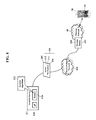
- wireless
- access
- local area
- database
- smartphone
- Prior art date
- Legal status (The legal status is an assumption and is not a legal conclusion. Google has not performed a legal analysis and makes no representation as to the accuracy of the status listed.)
- Active, expires
Links
Images




Classifications
-
- G—PHYSICS
- G06—COMPUTING OR CALCULATING; COUNTING
- G06Q—INFORMATION AND COMMUNICATION TECHNOLOGY [ICT] SPECIALLY ADAPTED FOR ADMINISTRATIVE, COMMERCIAL, FINANCIAL, MANAGERIAL OR SUPERVISORY PURPOSES; SYSTEMS OR METHODS SPECIALLY ADAPTED FOR ADMINISTRATIVE, COMMERCIAL, FINANCIAL, MANAGERIAL OR SUPERVISORY PURPOSES, NOT OTHERWISE PROVIDED FOR
- G06Q10/00—Administration; Management
- G06Q10/02—Reservations, e.g. for tickets, services or events
-
- H—ELECTRICITY
- H04—ELECTRIC COMMUNICATION TECHNIQUE
- H04W—WIRELESS COMMUNICATION NETWORKS
- H04W8/00—Network data management
- H04W8/005—Discovery of network devices, e.g. terminals
-
- H—ELECTRICITY
- H04—ELECTRIC COMMUNICATION TECHNIQUE
- H04W—WIRELESS COMMUNICATION NETWORKS
- H04W8/00—Network data management
- H04W8/02—Processing of mobility data, e.g. registration information at HLR [Home Location Register] or VLR [Visitor Location Register]; Transfer of mobility data, e.g. between HLR, VLR or external networks
Definitions
- Physical space is often wasted. When physical space is allocated to a group of people, conventional planning allocates the physical space for the entire group. That is, the physical space is planned for one hundred percent (100%) capacity. Most times, though, only a smaller percentage of the group is present at any time. People may be absent due to vacation, business travel, training, weather, illness, and many other factors. Inefficient allocation of physical space also detracts from collaborative efforts, which further introduces inefficiencies.
- FIGS. 1-7 are simplified schematics illustrating an environment in which exemplary embodiments may be implemented
- FIGS. 8-10 are more detailed block diagrams illustrating the operating environment, according to exemplary embodiments.
- FIGS. 11-12 are schematics illustrating a database of meetings, according to exemplary embodiments.
- FIGS. 13-18 are schematics illustrating locational tracking, according to exemplary embodiments.
- FIGS. 19-22 are schematics illustrating building services, according to exemplary embodiments.
- FIG. 23 is a schematic illustrating elevator summons, according to exemplary embodiments.
- FIGS. 24-25 are schematics further illustrating a database of calendars, according to exemplary embodiments.
- FIGS. 26-29 are schematics illustrating historical network tracking, according to exemplary embodiments.
- FIG. 30 is a schematic illustrating network tracking, according to exemplary embodiments.
- FIG. 32 is a schematic illustrating cancellations, according to exemplary embodiments.
- FIGS. 34-40 are schematics illustrating dynamic assignment of facilities, according to exemplary embodiments.
- FIGS. 41-42 are flowcharts illustrating an algorithm for access authorization, according to exemplary embodiments.
- first, second, etc. may be used herein to describe various elements, these elements should not be limited by these terms. These terms are only used to distinguish one element from another. For example, a first device could be termed a second device, and, similarly, a second device could be termed a first device without departing from the teachings of the disclosure.
- FIGS. 1-7 are simplified schematics illustrating an environment in which exemplary embodiments may be implemented.
- FIG. 1 illustrates a human user 20 in a lobby 22 of a building 24 .
- the human user 20 may be an employee working within the building 24 , or the human may be visiting someone within the building 24 .
- the human user 20 in short, may be an employee, a visitor, a contractor, a tenant, or a guest requesting entry into the building 24 .
- the human user 20 will mainly be described as a visitor.
- the visitor 20 wishes to enter an elevator 26 and proceed into secure areas of the building 24 , the visitor 20 usually must check-in with a security guard.
- exemplary embodiments detect the wireless presence of the visitor's mobile device 30 , such as her smartphone 32 . That is, if the visitor's smartphone 32 is recognized, then exemplary embodiments may permit entry of the visitor 20 to the secure areas within the building 24 . However, if the visitor's smartphone 32 is unrecognized, then exemplary embodiments may require more authentication credentials or additional measures, as later paragraphs will explain.
- FIG. 3 further illustrates secure access.
- the smartphone 32 is not matched to the database 44 of personnel, the visitor may still be granted access for legitimate purposes.
- the visitor may be a supplier or contractor attending a meeting within the building 24 .
- the security server 42 may consult a database 46 of meetings.
- the database 46 of meetings stores different meetings that are scheduled or calendared within the building 24 .
- Each meeting may have an associated list 48 of invitees who are authorized to attend the meeting.
- Each invitee may be identified according to his or her mobile device 30 . That is, each invitee may be identified by a unique cellular identifier associated with, or assigned to, their cellular mobile device (such as the smartphone 32 ).
- FIG. 4 further illustrates the database 46 of meetings.
- invitees may be more limited in the dates and times of their access.
- each meeting 50 may also be associated with a date 52 , a start time 54 , and a duration 56 .
- the visitor's smartphone 32 may be matched as an invitee to the meeting 50 , the visitor may still be denied access.
- a current date and time 58 may be time stamped. If the current date and time 58 does not match the scheduled date 52 of the meeting 50 , then entry may be denied.
- the smartphone 32 requests wireless access (to the wireless network 40 ) too early or too late for the scheduled meeting 50 , then entry may be denied.
- the scheduled meeting 50 may thus have a window 60 of arrival, before or after which the visitor may not enter. So, even though a supplier or contractor is authorized for entry, admittance may be limited to nearly the scheduled date 52 and start time 54 of the meeting 50 .
- the user of the smartphone 32 may thus be authorized for physical entry, but exemplary embodiments may require that the user wait until the window 60 of arrival is satisfied.
- the meeting 50 ends perhaps at a stop time calculated using the duration 56
- the visitor's smartphone 32 may not linger. Exemplary embodiments may thus continue tracking the smartphone 32 (as later paragraphs will explain) during and after the meeting 50 to ensure the visitor does not afterwards linger too long. If the attending visitor lingers too long after the meeting 50 , exemplary embodiments may deny exit from the building, as a security precaution.
- FIG. 6 illustrates notification.
- the security server 42 may thus generate and send one or more electronic messages 80 to destination devices 82 associated with different destination addresses 84 , thus alerting of the visitor's entry into the building.
- An employee for example, may be alerted to the visitor's arrival.
- Other meeting invitees may also be notified, using the unique identifier assigned to their respective smartphones.
- FIG. 7 illustrates entry.
- the security server 42 may thus generate an electronic entry instruction 86 to allow physical entry.
- the entry instruction 86 is then sent as packets of data to any destination device.
- FIG. 7 illustrates the entry instruction 86 routing to a network address assigned to a lock controller 88 .
- the lock controller 88 manages an electronic lock 90 securing some door or gate.
- the entry instruction 86 instructs the lock controller 88 to activate or unlock the electronic lock 90 , thus allowing the visitor to physically enter the building 24 and/or some floor within the building 22 .
- the security server 42 may further instruct an elevator controller 92 to summon an elevator 94 , thus lifting the visitor to some floor or level, as later paragraphs will explain.
- the security server 42 may also monitor or track the movement of the visitor's smartphone 32 to prevent frolic or unauthorized detours (as later paragraphs will also explain).
- Exemplary embodiments thus synchronize entry with wireless detection.
- Wireless detection of any mobile device 30 may thus be used to authorize entry to secure areas.
- FIGS. 1-7 primarily illustrate the visitor's smartphone 32
- exemplary embodiments may utilize any wired or wireless device (as later paragraphs will explain). Indeed, badges, watches, and other wearable smart devices may be wirelessly detected to permit access. Integration with personnel directories and calendaring systems further defines permissible locations of visitors.
- FIGS. 8-10 are more detailed block diagrams illustrating the operating environment, according to exemplary embodiments.
- FIG. 8 illustrates presence detection of the visitor's smartphone 32 .
- the smartphone 32 may establish wireless communication with the wireless network 40 serving the area.
- the smartphone 32 may request access or permission to a local area wireless fidelity (or WI-FI®) network, wide area cellular network, or any other network.
- the wireless network 40 may only recognize, or transmit/receive, using a particular frequency or band.
- the smartphone 32 may thus instruct its transceiver (not shown for simplicity) to wirelessly request access permission using the electromagnetic frequency band required by the wireless network 40 .
- the security server 42 may be notified.
- the wireless network 40 detects the smartphone 32
- exemplary embodiments may inform the security server 42 . That is, the smartphone 32 may send an access request to an access device 100 serving the wireless network 40 .
- FIG. 8 illustrates the access device 100 as a wireless router 102 , which commonly serves many residential and business WI-FI® networks.
- the access device 100 may be any network interface to an access network, such as a gateway, cable modem, or DSL modem.
- the smartphone 32 broadcasts a request that seeks access permission to the wireless network 40 .
- the access device 100 may send a packetized access notification 104 into a communications network 106 for routing and delivery to a network address associated with the security server 42 .
- the wireless router 102 may store or execute code or programming that forces or commands the access notification 104 when any device attempts to access the wireless network 40 .
- the access notification 104 may thus alert the security server 42 to the radio frequency presence of the visitor's smartphone 32 .
- the access notification 104 may further include information that uniquely identifies the smartphone 32 , such as data representing a cellular identifier 110 . While any alphanumeric combination may uniquely identify the smartphone 32 , FIG. 8 illustrates the smartphone's cellular telephone number (or “CTN”) 112 , International Mobile Subscriber Identity (or “IMSI”) 114 , or Mobile Station International Subscriber Directory Number (“MSISDN”) 116 . Whenever the mobile smartphone 32 sends messages or information, the smartphone 32 may include or self-report its CTN 112 , IMSI 114 , and/or its MSISDN 116 .
- CTN cellular telephone number
- IMSI International Mobile Subscriber Identity
- MSISDN Mobile Station International Subscriber Directory Number
- the security server 42 may authorize the smartphone 32 .
- the security server 42 has a processor 120 (e.g., “ ⁇ P”), application specific integrated circuit (ASIC), or other component that executes a security algorithm 122 stored in a local memory 124 .
- the security algorithm 122 instructs the processor 120 to perform operations, such as receiving and processing information received from a network interface to the communications network 106 .
- the information may be received as packets of data according to a packet protocol (such as any of the Internet Protocols).
- the packets of data contain bits or bytes of data describing the contents, or payload, of a message.
- a header of each packet of data may contain routing information identifying an origination address and/or a destination address.
- the security algorithm 122 may instruct the processor 120 to inspect the packetized access notification 104 for the cellular identifier 110 of the visitor's smartphone 32 requesting access to the wireless network 40 .
- FIG. 9 illustrates the database 44 of personnel.
- the database 44 of personnel may store names, addresses, images, and/or other information for personnel who are authorized to enter any area.
- the database 44 of personnel is illustrated as a table 130 that electronically maps, relates, or associates different employees or tenants 132 to their corresponding personal information.
- an entry may associate each person's name 134 , address 136 , and/or employee number 138 to the cellular identifier 110 associated with the person's personal wireless device (such as the smartphone 32 illustrated in FIGS. 1-8 ).
- FIG. 9 illustrates the cellular identifier 110 as the cellular telephone number 112 , the IMSI 114 , and/or the MSISDN 116 .
- Each person's wireless device may be additionally or alternatively uniquely identified by a network address, a manufacturer's serial number, or any other alphanumeric combination.
- the database 44 of personnel may further associate a digital image file 140 to the cellular identifier 110 , thus allowing retrieving, recognition, and/or analysis of a facial image.
- the database 44 of personnel is illustrated as being locally stored in the memory 124 of the security server 42 , but some or all of the database entries may be remotely maintained at some other server or location in the communications network (illustrated as reference numeral 106 in FIG. 8 ). While FIG. 9 only illustrates a few entries, in practice the database 44 of personnel may contain many entries for hundreds or thousands of people.
- the security server 42 may query the database 44 of personnel.
- the security algorithm 122 causes the processor 120 to query for entries that match the query search term(s) detailed or described in the electronic access notification 104 . If the database 44 of personnel contains a matching entry, then the security server 42 may authorize the smartphone 32 (and thus the corresponding user or visitor) to enter. The security server 42 thus recognizes the smartphone 32 as belonging to one of the personnel authorized to enter the building (illustrated as reference numeral 24 in FIGS. 1-7 ).
- the security server 42 may conclude that the corresponding user of the smartphone 32 is authorized to enter.
- FIG. 10 illustrates the entry instruction 86 .
- the security server 42 may authorize entry.
- the security algorithm 122 may thus instruct the processor 120 to generate the entry instruction 86 to allow physical entry.
- the entry instruction 86 may contain any information that confirms the smartphone 32 is authorized to enter the secure area.
- the entry instruction 86 may thus route to the network address assigned to the lock controller 88 , thus instructing the lock controller 88 to activate or unlock the electronic lock 90 .
- the security server 42 may thus unlock a door, gate, or turnstile that permits physical entry of the corresponding user of the smartphone 32 . An employee or tenant thus enters based on the wireless detection of the smartphone 32 .
- Exemplary embodiments thus present an elegant solution.
- people may be uniquely identified by their mobile devices (such as the smartphone 32 ).
- Employees, tenants, and visitors may thus be personally identified merely by carrying their smartphones.
- Exemplary embodiments may thus permit authorized entry to secure areas, simply by recognizing wireless transmissions from their mobile devices. No phone calls are needed, and labor expenses are reduced.
- Exemplary embodiments may be applied regardless of networking environment. Exemplary embodiments may be easily adapted to stationary or mobile devices having cellular, WI-FI®, near field, and/or BLUETOOTH® capability. Exemplary embodiments may be applied to mobile devices utilizing any portion of the electromagnetic spectrum and any signaling standard (such as the IEEE 802 family of standards, GSM/CDMA/TDMA or any cellular standard, and/or the ISM band). Exemplary embodiments, however, may be applied to any processor-controlled device operating in the radio-frequency domain and/or the Internet Protocol (IP) domain.
- IP Internet Protocol
- Exemplary embodiments may be applied to any processor-controlled device utilizing a distributed computing network, such as the Internet (sometimes alternatively known as the “World Wide Web”), an intranet, a local-area network (LAN), and/or a wide-area network (WAN).
- Exemplary embodiments may be applied to any processor-controlled device utilizing power line technologies, in which signals are communicated via electrical wiring. Indeed, exemplary embodiments may be applied regardless of physical componentry, physical configuration, or communications standard(s).
- Exemplary embodiments may utilize any processing component, configuration, or system.
- Any processor could be multiple processors, which could include distributed processors or parallel processors in a single machine or multiple machines.
- the processor can be used in supporting a virtual processing environment.
- the processor could include a state machine, application specific integrated circuit (ASIC), programmable gate array (PGA) including a Field PGA, or state machine.
- ASIC application specific integrated circuit
- PGA programmable gate array
- any of the processors execute instructions to perform “operations”, this could include the processor performing the operations directly and/or facilitating, directing, or cooperating with another device or component to perform the operations.
- FIGS. 11-12 are schematics further illustrating the database 46 of meetings, according to exemplary embodiments.
- the smartphone 32 may be an invitee to a meeting within some secure area.
- the access device 100 sends the access notification 105 to the security server 42 .
- the access notification 104 may uniquely identify the device (such as the smartphone 32 ) requesting wireless access, such as data representing the cellular identifier 110 (the CTN 112 , the IMSI 114 , and/or the MSISDN 116 ).
- the security server 42 may then query the database 46 of meetings to determine if the smartphone 32 matches the list 48 of invitees to any scheduled meeting 50 .
- FIG. 12 illustrates the database 46 of meetings.
- FIG. 12 illustrates the database 46 of meetings being locally stored in the memory 124 of the security server 42 .
- some or all of the database entries may be remotely maintained at some other server or location in the communications network (illustrated as reference numeral 106 in FIG. 11 ).
- FIG. 12 only illustrates a few entries, in practice the database 46 of meetings may contain many entries for hundreds or thousands of different meetings or gatherings.
- the database 46 of meetings is illustrated as a table 150 that maps, relates, or associates different scheduled meetings 50 to the corresponding list 48 of invitees.
- each invitee 48 may be identified by their name, here exemplary embodiments identify each invitee 48 according to his or her mobile device identifier.
- each invitee 48 may be identified by the unique cellular identifier 110 associated with, or assigned to, their cellular device (such as the smartphone 32 ).
- FIG. 12 thus illustrates database associations between a meeting 50 , an organizer or inviter 152 , and the different invitees 48 .
- Each party to the meeting 50 may thus be uniquely identified by their respective CTN 112 , IMSI 114 , and/or MSISDN 116 .
- the security server 42 may thus authorize entry, such as by generating the entry instruction 86 (as illustrated with reference to FIG. 10 ). Supplier personnel, contractors, and other invitees may thus quickly and easily enter the building, based on wireless recognition of their smartphones.
- FIGS. 13-18 are schematics illustrating locational tracking, according to exemplary embodiments.
- exemplary embodiments may monitor the movements of the smartphone 32 . If the visitor's smartphone 32 strays or frolics, a security concern may develop. Exemplary embodiments, then, may track the smartphone 32 to ensure the user stays on route to the meeting 50 .
- FIG. 13 illustrates room assignments.
- the database 46 of meetings may also associate a meeting location 154 to each meeting 50 .
- conference rooms, offices, beverage rooms, and auditoriums may be uniquely identified by some name and/or location. So, when the meeting 50 is scheduled or logged in the database 46 of meetings, exemplary embodiments may further store an electronic database association with the corresponding meeting location 154 .
- FIG. 14 illustrates security routings.
- the security server 42 may query a database 160 of routings.
- the database 160 of routings stores predetermined building routes 162 from some beginning location (such as a point of entry 164 ) to the destination at the meeting location 154 .
- the database 160 of routings may store different routes 162 from the lobby of the building (illustrated, respectively, as reference numerals 22 and 24 in FIG. 1 ) to the meeting location 154 of the scheduled meeting 50 .
- FIG. 1 illustrates security routings.
- FIG. 14 illustrates the database 160 of routings as being locally stored in the security server 42 , but some or all of the electronic database entries may be remotely maintained at some other server or location in the communications network (illustrated as reference numeral 106 in FIG. 11 ).
- a particular conference room for example, may have a route 162 along which the visitor is only permitted to walk or navigate. That is, only certain paths along particular halls and/or through particular doors are available to the visitor.
- the database 160 of routings may thus store approved routes 162 along which employees, tenants, and/or visitors may move from any point (such as the entry 164 ) to the final destination at the meeting location 154 .
- the security server 42 may compare the current location 172 to the GPS waypoints 170 associated with the meeting location 154 . If the current location 172 matches one of the GPS waypoints (perhaps within a locational tolerance), then the security algorithm 122 may conclude that the visitor's smartphone 32 is on track and proceeding as authorized.
- FIG. 16 illustrates network tracking
- exemplary embodiments may track the current location 172 of the visitor's smartphone 32 using network recognition.
- GPS signals are sometimes not received in indoor environments.
- Exemplary embodiments may additionally or alternatively track the current location 172 of the visitor's smartphone 32 using network identifiers.
- FIG. 16 thus illustrates network waypoints 180 along which the smartphone 32 must request access permission. That is, the predetermined route 162 may be defined as a series of network identifiers.
- WI-FI® wireless fidelity
- the visitor's smartphone 32 may also detect other identifiers of other networks (such as different cellular network cells). Regardless, the smartphone 32 may request access permission to each wireless network 40 .
- the corresponding access device 100 may thus notify the security server 42 using the access notification 104 (above explained with reference to FIG. 8 ).
- FIG. 16 illustrates the network waypoints 180 as a series 182 of service set identifiers.
- Each individual service set identifier (or “SSID”) 184 uniquely identifiers a different WI-FI® network serving some portion of the predetermined route 162 to the destination meeting location 154 .
- the security server 42 receives each access notification 104 , the access notification 104 may identify the corresponding SSID 184 .
- the security server 42 may thus compare the SSID 184 to the network waypoints 180 associated with the meeting location 154 . If the SSID 184 matches one of the network waypoints 180 , then the security algorithm 122 may conclude that the visitor's smartphone 32 is on track and proceeding as authorized. However, if the SSID 184 fails to match one or any of the network waypoints 180 , the security algorithm 122 may generate the security notification 174 with the correction 176 (as earlier explained).
- FIG. 17 illustrates a strict comparison.
- the security server 42 may require a strict sequential match with the network waypoints 180 .
- the visitor's smartphone 32 in other words, may be required to traverse the network waypoints 180 in sequential order, from a first entry SSID 190 to a final destination SSID 192 serving the destination meeting location 154 . If the visitor's smartphone 32 strays from the predetermined route 162 , one of the access notifications 104 will identify an SSID 184 not matching the approved route 162 .
- the smartphone 32 in other words, is requesting wireless access to an unauthorized network, thus revealing a frolic or detour.
- the security algorithm 122 may thus alert security (as earlier explained).
- FIG. 18 illustrates timing requirements.
- each network waypoint 180 may also have a corresponding timing parameter 200 .
- FIG. 18 thus illustrates each network waypoint 182 as an SSID/time pairing. That is, each network waypoint 182 may be a network/timing pair of values associated with each successive wireless network 40 .
- the security server 42 may monitor a speed or time of movement.
- Each access notification 104 may have a timestamp 202 that marks a time of requested access to the wireless network 40 (as identified by the SSID 184 ).
- the security server 42 may also require strict adherence to each corresponding timing parameter 200 .
- the security server 42 may initialize a timer 204 with receipt of the access notification 104 .
- the timer 204 counts up or down to a final value at a receipt of a next access notification 104 associated with the same smartphone 32 (e.g., the cellular identifier 110 ).
- the timer 204 may thus count a time in seconds or minutes between successive access notifications 104 sent from different access devices 100 along the predetermined route 162 . So, not only must each sequential SSID 184 match the network waypoints 180 , but exemplary embodiments may also require timing compliance between the successive network waypoints 180 .
- the security server 42 may thus compare a current value of the timer 204 to the timing parameter 200 associated with a next corresponding network waypoint 182 along the predetermined route 162 . If the current value of the timer 204 is less than or equal to the timing parameter 200 , then the security algorithm 122 may conclude that the visitor's smartphone 32 is on the approved route 162 and on track to arrive on time at the final meeting destination location 154 . However, if the current value of the timer 204 exceeds the timing parameter 200 , the security algorithm 122 may conclude that the visitor's smartphone 32 has strayed from the predetermined route 162 . The security algorithm 122 may thus alert security (as earlier explained).
- FIGS. 19-22 are schematics illustrating building services, according to exemplary embodiments.
- exemplary embodiments may coordinate or time various building services with respect to the location of the smartphone 32 .
- the security server 42 may thus order up or coordinate various building services at appropriate times and locations.
- FIG. 19 illustrates a database 210 of services.
- the database 210 of services is illustrated as a table 212 that associates different locations 214 to different services 216 .
- one of the services 216 may be lighting requirements 218 for each different location 214 .
- the security server 42 may query the database 210 of services for the corresponding lighting requirements 218 .
- Lights may thus be defined.
- the database 210 of services may thus store electronic database associations for the lights that illuminate the different locations 214 .
- Each wireless network 40 may be mapped to the light fixtures 220 and/or lighting loads 222 (such as individual electrical circuits) illuminating its wireless service area.
- the security server 42 may thus query for the SSID 184 and retrieve the lighting requirements 218 for its wireless service area.
- electronic database associations may be defined for any GPS coordinates or waypoints along the route 162 .
- the lights may be activated.
- the security server 42 may send a lighting command 230 into the communications network 106 for delivery to the network address associated with a lighting controller 232 .
- the lighting controller 232 responds by activating, or turning on, the corresponding physical light fixture 234 and/or the physical electrical load 236 .
- the security server 42 may thus coordinate the lights along the predetermined route 162 for safety and security. Lights may then be deactivated when no mobile device requests wireless access to the corresponding wireless service area. Lights may also be deactivated after some passage of time.
- FIG. 21 illustrates HVAC services.
- exemplary embodiments may also coordinate heat or air conditioning with respect to the location 214 along the approved route 162 .
- the security server 42 may heat or cool the corresponding physical space or area. Indeed, the security server 42 may even order up an ambient temperature within the destination meeting location (illustrated as reference numeral 154 in FIGS. 15-16 ).
- the database 210 of services may thus include entries for HVAC settings 240 associated with the location 214 along the approved route 162 .
- the security server 42 may thus query the database 210 of services for the SSID 184 and retrieve the corresponding HVAC settings 240 (such as a temperature 242 and/or humidity 244 ) associated with the corresponding physical space or area. The security server 42 may then send an HVAC command 246 into the communications network 106 for delivery to the network address associated with an HVAC system 248 . The security server 42 may even receive weather data 249 to further analyze and satisfy the HVAC settings 240 desired for the corresponding physical space or area.
- the corresponding HVAC settings 240 such as a temperature 242 and/or humidity 244
- FIG. 22 illustrates other services. Exemplary embodiments may also coordinate many other services for the comfort and convenience of the invitees/attendees.
- the database 210 of services may also have entries for other services, such as network access 250 , equipment 252 , and vending 254 .
- the security server 42 may query the database 210 of services for the SSID 184 of the meeting location 154 . The security server 42 may thus retrieve the corresponding services 216 defined for that meeting location 214 . The security server 42 may then generate a service order 256 that routes to a network address of a service provider system 258 .
- the security server 42 may arrange or prearrange wireless network access 250 for each attendee's mobile wireless device.
- the security server 42 knows the SSID 184 of the WI-FI® network serving the destination conference room, along with the unique cellular identifier 110 of each attendee's wireless device (as explained with reference to FIGS. 11-14 ).
- the security server 42 may thus pre-authorize each attendee's wireless device with the access device 100 providing wireless service in the destination conference room. Each attendee's device thus has immediate access to wireless services.
- the equipment 252 may also be ordered. Computers, projectors, conference phone set-up, pens, and whiteboards are just some of the equipment 252 that may be pre-ordered, based on the location 214 .
- the meeting organizer (illustrated as reference numeral 152 in FIG. 12 ) may thus enter any data or description of the equipment 252 desired for the meeting.
- the security server 42 may thus pre-arrange arrival and set-up of the equipment 252 . As the attendees enter the destination meeting location 154 , the equipment 252 they need is automatically ordered and waiting for use.
- Vending 254 may also be pre-arranged.
- the meeting organizer may thus enter or request any food and drink for the meeting.
- the security server 42 may thus issue orders or commands for on-time delivery of food and drink from some identified vendor. As the attendees enter the destination meeting location 154 , the requested food and drink is automatically ordered and waiting for consumption.
- FIG. 23 is a schematic illustrating elevator summons, according to exemplary embodiments.
- the smartphone 32 moves along the pre-approved route 162 to the destination meeting location 154 .
- Exemplary embodiments may thus track the smartphone's movement and generate elevator commands at appropriate moments in time or location.
- FIG. 23 illustrates an elevator command 270 as a data triplet 271 inserted into one of the network waypoints 180 .
- the elevator command 270 identifies which elevator (elevator number or identifier) is summoned for vertical travel from an entry floor to an exit floor. If a building only has one elevator, then perhaps the elevator command 270 may be simplified to a pair of data values. But many buildings may have multiple elevators, perhaps serving different floors.
- Exemplary embodiments may insert the elevator command 270 at appropriate positions and/or times in the sequential network waypoints 180 and/or the sequential GPS waypoints (illustrated as reference numeral 170 in FIG. 15 ).
- the security server 42 may thus read, retrieve, and/or execute the elevator command 270 as one of the sequential steps.
- the security server 42 may thus generate an elevator instruction 272 that is sent into the communications network 106 for delivery to the network address associated with the elevator controller 92 . Elevator service may thus be summoned to coincide with the current location of the smartphone 32 .
- FIGS. 24-25 are schematics further illustrating the database 70 of calendars, according to exemplary embodiments.
- the access device 100 sends the access notification 104 (as earlier explained).
- the security server 42 may then query the database 70 of calendars for a matching entry.
- the database 70 of calendars stores different electronic calendars for the different employees and/or tenants in the building.
- FIG. 25 illustrates the database 70 of calendars as a table 280 that maps, relates, or associates different electronic calendars 72 to different invitees 282 .
- the database 70 of calendars may store a memory pointer or network address to an individual person's electronic calendar 72 .
- FIG. 25 illustrates the database 70 of calendars storing electronic database associations between electronic calendar entries 72 and their respective invitees 282 .
- the invitee may be uniquely identified by his or her unique cellular identifier 110 .
- An appointment in an electronic calendar in other words, may be arranged or associated with the CTN 112 , the IMSI 114 , and/or the MSISDN 116 of a participant 282 .
- the security server 42 may authorize entry.
- the security server 42 may query the database 70 of calendars for the visitor's unique cellular identifier 110 . If a matching entry is determined, the security server 42 may permit physical entry, as the visitor is scheduled for an appointment with an employee or tenant. If the database 70 of calendars identifies the destination meeting location 154 , the security server 42 may further retrieve and monitor the predetermine route 162 to the meeting location 154 (as this disclosure explains).
- FIGS. 26-29 are schematics illustrating historical network tracking, according to exemplary embodiments.
- historical observances of wireless detections may be used to infer future actions. That is, a user's habitual usage of the smartphone 32 may be used to predict where she will move, and/or what she will do, based on her past wireless network access.
- exemplary embodiments may make recommendations and assumptions, based on habitual observance of its network usage.
- exemplary embodiments may match that detection to some past occurrence. In other words, most people are creatures of habit, so exemplary embodiments may predict our future movements and actions based on our historical behaviors.
- FIG. 26 illustrates a database 300 of usage.
- the database 300 of usage tracks historical usage of any user's wireless device 30 (such as the smartphone 32 ).
- the database 300 of usage may store entries related to usage at different times of days and/or at different locations.
- exemplary embodiments may query the database 300 of usage for historical usage at that same location.
- the database 300 of usage may thus log each current location 172 reported by the smartphone 32 .
- the smartphone 32 may send its current location 172 (such as GPS information) to the security server 42 for storage in the database 300 of usage.
- the database 300 of usage is illustrated as being locally stored within the security server 42 , but any of the database entries may be remotely maintained at other network-accessible locations or servers.
- FIG. 26 illustrates the database 300 of usage as a table 302 that electronically maps, relates, or associates the cellular identifier 110 to different location reports. That is, each time the smartphone 32 reports its current location 172 , the database 300 of usage may add an entry for the unique cellular identifier 110 , the reported current location 172 , and a date and time 304 of the report. Over time, then, the database 300 of usage may store long-term records of the movements of the smartphone 32 within the building 24 .
- FIG. 27 illustrates historical network usage.
- the corresponding access device 100 sends the access notification 104 to alert the security server 42 (as this disclosure earlier explained).
- the security server 42 may thus instruct the database 300 of usage to log the access notification 104 , perhaps also with the date and time 304 . That is, each time the smartphone 32 requests wireless access to the wireless network 40 , the database 300 of usage may add an entry for the unique cellular identifier 110 , the service set identifier (“SSID”) 184 of the wireless fidelity (“WI-FI®”) network 40 , and the date and time 304 of the request.
- SSID service set identifier
- WI-FI® wireless fidelity
- the database 300 of usage may merely log the timestamp 202 reported in the access notification 104 , or the database 300 of usage may log some other measure of time (such as receipt of the access notification 104 ). Regardless, over time the database 300 of usage reveals a comprehensive long-term central repository of network access requested by the smartphone 32 .
- the security server 42 may thus exploit the historical information.
- the security server 42 may query the database 300 of usage for any search terms and retrieve matching historical entries.
- the security server 42 may query for historical entries associated with the cellular identifier 110 .
- the security server 42 may thus retrieve historical locations or networks logged in the database 300 of usage. Indeed, the security server 42 may even query for historical entries having the same or approximate date and time 304 .
- the security server 42 may thus retrieve historical entries that match the same or similar day, time, current location 172 , or network SSID 184 .
- FIG. 28 illustrates locational prediction.
- the security server 42 may predict or infer a future location 310 .
- the security server 42 may query for a series or sequence of entries having about the same location 172 and/or the same date and time 304 .
- the security algorithm 122 may infer that the smartphone 32 is moving along a path historically observed. That is, the smartphone 32 is being carried along a familiar route to a historical destination previously logged in the database 300 of usage.
- the security algorithm 122 may conclude that the smartphone 32 is traveling along the same route to the same destination. If the smartphone 32 reports the same current locations 172 within a ten minute (10 min.) window of time as historically seen, the security server 42 may thus predict or infer that the smartphone 32 will have the future location 310 that matches at least one of the historical entries in the same series. As one example, if the smartphone's most recent five (5) location reports match some historical observance in the database 300 of usage, then the security server 42 may predict the smartphone's future location 310 will match the next historical sixth (6 th ) entry in the same historical sequence. The security server 42 may thus query for any search terms and retrieve one or multiple historical entries that match recent locational reports. As most people are creatures of habit, the security server 42 may thus predict the future location 310 of the smartphone 32 based on historical observances.
- FIG. 29 illustrates network prediction.
- the security algorithm 122 may predict the smartphone's access request to a wireless fidelity (“WI-FI®”) network, based on the historical entries in the database 300 of usage.
- the security server 42 may query for a series or sequence of entries having one or more matching SSID 184 entries and/or about the same date and time 304 . For example, if one or more of the recent access notifications 104 match one or more historical entries, then the security algorithm 122 may infer that the smartphone 32 is requesting access permissions along a path historically observed.
- WI-FI® wireless fidelity
- the security algorithm 122 may conclude that the smartphone 32 is requesting wireless access as historically seen. If a string or sequence 314 of the access notifications 104 match historical entries within a ten minute (10 min.) window 316 of time, the security server 42 may thus predict or infer that the smartphone 32 will request access to a next entry historically observed in the same series. As FIG.
- the security algorithm 122 may retrieve the next entry in the same sequence 314 and predict that the smartphone 32 will next request access to “SSID9.”
- the security algorithm 122 in other words, infers the future network 312 as the next entry in the matching sequence 314 .
- the security algorithm 122 may thus pre-arrange wireless access, elevator service, lighting, and other services based on this prediction.
- FIG. 30 is another schematic illustrating network tracking, according to exemplary embodiments.
- exemplary embodiments may track usage or access requests to any networking environment.
- the access notification 104 may report the networking details.
- the access notification 104 may report a radio frequency 320 and/or bitrate 322 of communication between the smartphone 32 and some other wireless device.
- the timestamp 202 may be further added.
- the security server 42 receives the access notification 104
- the security algorithm 122 may thus log these details in the database 300 of usage.
- the radio frequency 320 and/or bitrate 322 may allow the security algorithm 122 to log whether the wireless network 40 operates at cellular frequencies or WI-FI® frequencies.
- the radio frequency 320 and/or the bitrate 322 may reveal near-field communications and/or radio frequency identification (“RFID”) communications.
- RFID radio frequency identification
- the access notification 104 may additionally or alternatively report an initiator device 324 and a target device 326 .
- the access notification 104 may also detail unique radio frequency identification tags and readers.
- the security algorithm 122 may thus log these details in the database 300 of usage. Over time, then, the database 300 of usage contains historical entries detailing the near field and RFID transactions involving the smartphone 32 . If any current transaction matches some historical entry, the security algorithm 122 may predict or infer future actions and/or locations, based on the match. The security algorithm 122 may thus pre-arrange wireless access, elevator service, lighting, and other services based on this prediction.
- FIG. 31 is a schematic illustrating an overall database scheme, according to exemplary embodiments.
- the security server 42 may access any of the databases (illustrated as reference numerals 44 , 46 , 70 , 160 , 210 , and 300 ) to authorize access, to coordinate services, and to predict actions, as this disclosure explains.
- the databases may be individually maintained or grouped together, depending on networking, processing, and storage capabilities.
- FIG. 32 is a schematic illustrating cancellations, according to exemplary embodiments.
- the security server 42 may have authorized access, coordinated services, and/or predicted actions, sometimes cancellations are determined. For example, a meeting organizer may simply cancel a scheduled meeting in the database 46 of meetings. This cancellation 340 may then trickle down and affect access, services, and predictions. For example, if the cancellation 340 is determined in the database 46 of meetings, the security server 42 may disperse that cancellation 340 . The invitees' devices to the now-canceled meeting may be notified (perhaps using the notification message 80 illustrated in FIG. 6 ). Entry authorization for the invitees' devices may be canceled by removal from the database 46 of meetings and/or removal from the database 70 of calendars.
- the entry instruction (illustrated as reference numeral 86 in FIG. 7 ) may be canceled, thus stopping or ceasing any entry process.
- the elevator instruction (illustrated as reference numeral 272 in FIG. 23 ) may be canceled, thus removing any summons for elevators.
- any retrieval and/or analysis of routes in the database 160 of routings may be canceled or aborted.
- Any retrieval and/or electronic order of services in the database 210 of services may also be canceled or aborted.
- electronic notifications of the cancellation 340 may be sent to service providers (such as contractors and vendors). Any historical analysis of entries in the database 300 of usage may be halted or aborted.
- the cancellation 340 may thus electronically cancel any reservation for a conference room, HVAC needs, and lighting requirements.
- FIG. 33 is a schematic illustrating conferencing activities, according to exemplary embodiments.
- exemplary embodiments may arrange and set-up a teleconference call and/or a telepresence video call between the visitor's smartphone 32 and other participants.
- the security server 42 may thus use the unique cellular identifier 110 to retrieve any meeting entries in the database 46 of meetings and/or in the database 70 of calendars.
- the security server 42 may arrange a conference room and/or an office or desk for the visitor, in response to a matching entry.
- the security server 42 may also automatically set-up a teleconference call or a videoconference call to the meeting invitee devices retrieved from the database 46 of meetings and/or the database 70 of calendars.
- the security server 42 may also concomitantly arrange video cameras, whiteboards, beverages, lighting, and other services (perhaps revealed by the database 210 of services, as previously explained).
- FIGS. 34-39 are schematics illustrating dynamic assignment of facilities, according to exemplary embodiments.
- This disclosure explains how wireless detection of any person's mobile device 30 (such as the smartphone 32 ) may be used to make any prediction of location, action, and/or usage. That is, wireless detection of our mobile devices allows intelligent inferences and predictions of our habits and needs. For example, patterns of wireless usage may be used to optimally configure the locations of retail displays, employee tools, service kiosks, vending machines, and advertising displays. Analysis of wireless access may yield insights into group interactions, electronic communications and collaboration, prior locational trends, and calendar schedules.
- Exemplary embodiments may thus predict your daily schedule, your daily movements (e.g., work and play), friends and coworkers, and your activities, all based on patterns of wireless access associated with your mobile devices.
- the wireless detection of the mobile device 30 (such as the smartphone 32 ) may be tracked and historically monitored to discern and predict patterns of repeated movement and reception.
- These predictions may thus be used to correlate physical and logical interpersonal relationships to automatically and more effectively assign personnel to specific work locations on demand, thus maximizing productivity.
- Opportunities for dynamic innovation, perhaps through face-to-face interaction between people, are increased, thus allowing architects and building planners to more accurately and efficiently predict utilization and occupancy trends for use in future capacity planning.
- Exemplary embodiments thus reveal much information about users.
- the database 300 of usage may log interactions between the smartphone 32 and other wireless devices. This information thus reveals with whom the user is actually communicating and collaborating across both physical and electronic interactions. These interactions may be used to dynamically optimize physical work environments. These interactions may also be used to accurately adjust physical locations as relationships change over time. Due to the dynamic nature of today's global business, a person's sphere of interest and required contacts may change on a regular basis. Some users may have collaborational needs that change on a daily basis, while other users may have needs that change hourly or monthly. Exemplary embodiments may thus dynamically react, regardless of the time frame. These regular or irregular changes may result in broad changes of an enterprise's voice and data network service requirements, including access, bandwidth, and service quality.
- Exemplary embodiments may thus utilize big data analytics. As the reader may understand, information is currently generated for every phone call, instant message, email, social media posting, calendar event(s), work project(s), and audio or video conference (perhaps in both an enterprise environment and in a carrier environment). More data is created on the location of a person geospatially depending upon the configuration and capabilities of their laptop, smartphone, tablet or wearable device. Even though many enterprises and service providers generate and collect these data, exemplary embodiments add correlation to effect improvements in user productivity, to increase the opportunity for dynamic collaboration through face-to-face interactions, and to identify trends for capacity planning. For example, exemplary embodiments may automatically allocate workspace based on wireless detection of mobile devices. That is, teams of individuals may be defined by their respective cellular identifiers 110 .
- Physical space, and even work desks and conference rooms, may be allocated based on the wireless detection of their smartphones 32 .
- office space is automatically located with other team members having the same goals, projects and/or tasks.
- physical workplace assignments are optimally configured to enable regular, consistent, face-to-face and virtual interactions between team members, according to their unique cellular identifiers 110 .
- One day the physical space may reduce when few smartphones are detected or predicted in advance by analysis, while the next day the physical space may be expanded when many team members' smartphones request wireless access.
- Exemplary embodiments may thus collect electronic data regarding members of groups. As the members collaborate and communicate, their respective mobile devices generate electronic data. All this electronic data is conveyed along the wireless network 40 and/or the communications network 106 for delivery to different destinations. Any electronic data associated with the mobile devices 30 (such as the unique cellular identifier 110 of their smartphone 32 ) may thus be used to dynamically alter physical building needs. Small conference rooms may thus be scheduled when only a few cellular identifiers 110 are detected. Larger conference rooms are scheduled when many team members are detected.
- the databases may reveal long-term historical information that is of value to architects and other designers.
- Exemplary embodiments may reveal that only forty percent (40%) of employees' smartphones are detected or predicted on any given day. Physical needs may thus be significantly reduced, as one hundred percent (100%) capacity is not needed.
- one general all-purpose space such as an auditorium, cafeteria, lobby, warehouse footage, etc. may be developed to accommodate abnormally large gatherings of employees.
- the security server 42 may sum or tally the predicted or actual number of detected wireless devices and automatically reserve or arrange off-site space (such as a hotel conference room or school gymnasium). Long term patterns of wireless detection and usage may also reveal the need for physical and technological renovations of existing facilities.
- Exemplary embodiments may thus adapt to changing times and needs.
- floor space and office equipment become adaptive tools that generate data on their health and occupancy.
- Physical spaces may be dynamically optimized based on virtual or electronic interactions as those relationships change and evolve.
- Increasing the probability of face-to-face interactions as work locations are assigned enhances the opportunity for dynamic interpersonal innovation.
- exemplary embodiments improve real estate planning efforts, thus leveraging actual user data to predict future workplace capacity and utilization patterns.
- this approach also has potential impacts on energy utilization, commuter traffic utilization, civil/environmental engineering and employee satisfaction, recruiting/retention, and work-life balance.
- FIG. 34 thus illustrates a database 350 of groups.
- the database 350 of groups stores a roster for different groups 352 of employees, contractors, and other personnel.
- the database 350 of groups in other words, stores the membership of teams, departments, offices, and any other grouping or organization of people. However the groups 352 of people are organized, the database 350 of groups stores the different memberships of those groupings.
- Each member though, is uniquely identified by their mobile device 30 (illustrated as the smartphone 32 ).
- exemplary embodiments may log their presence in the database 350 of groups. That is, when each group member's smartphone 32 is wirelessly detected, exemplary embodiments may update the database 350 of groups.
- Exemplary embodiments may define membership according to each person's unique cellular identifier 110 .
- Each different group 352 in other words, may be defined according to the unique cellular identifiers 110 of its members.
- exemplary embodiments may determine the corresponding membership in one or more teams, departments, or other groupings.
- the security server 42 may query the database 350 of groups.
- the security algorithm 122 causes the processor 120 to query for entries that match the query search term(s) detailed or described in the electronic access notification 104 .
- the security server 42 may thus query the database 350 of groups for the cellular identifier 110 associated with the personal wireless device 30 (such as the smartphone 32 ) requesting wireless access to the wireless network 40 . If the database 350 of groups contains a matching entry, then the security server 42 knows that one of the members of the group 352 is present in the building 24 .
- the security server 42 may then dynamically configure physical facilities, as later paragraphs will further explain.
- FIG. 35 further illustrates the database 350 of groups.
- the security server 42 may query the database 350 of groups.
- the database 350 of groups is illustrated as a table 354 that electronically maps, relates, or associates different groups 352 to their corresponding membership 356 .
- each member 356 is defined by the cellular identifier 110 associated with the member's personal wireless device (such as the smartphone 32 illustrated in FIG. 34 ).
- Each member 356 may be additionally or alternatively uniquely identified by any other alphanumeric combination, such as an employee number, a network address, a manufacturer's serial number, or even a name.
- FIG. 35 illustrates the database 350 of groups as being locally stored in the memory 124 of the security server 42 , but some or all of the database entries may be remotely maintained at some other server or location in the communications network (illustrated as reference numeral 106 in FIG. 8 ). While FIG. 35 only illustrates a few entries, in practice the database 350 of groups may contain many entries for hundreds or thousands of groupings.
- Exemplary embodiments may thus track a wireless presence 358 of different groups.
- the security server 42 may determine its corresponding membership 356 in the one or more groups 352 .
- exemplary embodiments may also track the current wireless presence 358 of the different group members 356 . That is, whenever the member's cellular identifier 110 is matched as one of the group members 356 , the database 350 of groups may also log that wireless presence 358 .
- Exemplary embodiments in other words, may generate a listing 360 of members who have a physical presence in the building (illustrated as reference numeral 24 in FIG. 34 ), as determined by their wireless presence 358 .
- the listing 360 of members may be a list or string of the different cellular identifiers 110 associated with the members' personal wireless devices requesting wireless access.
- the security server 42 may query the database 350 of groups and retrieve the listing 360 of members who are physically present in the building 24 , as determined by their respective cellular identifiers 110 .
- Exemplary embodiments may maintain a numerical count 362 .
- their respective wireless devices will change their wireless presence 358 .
- the listing 360 of members will increase in number to reflect an addition of the team member 356 .
- the smartphone 32 leaves or disconnects from the wireless network 40 (e.g., no longer accesses the wireless network 40 )
- the listing 360 of members may decrease in number to reflect a subtraction of the team member 356 .
- the database 350 of groups may thus maintain the current numerical count 362 of the listing 360 of members who are physically present in the building 24 , as determined by their respective cellular identifiers 110 accessing the wireless network 40 . Exemplary embodiments may sum the entries in listing 360 of members to determine the current numerical count 362 . At any time, then, the security server 42 may query the database 350 of groups and retrieve the current numerical count 362 of the corresponding group members 356 who are physically present in the building 24 (as determined by their respective cellular identifiers 110 ).
- the database 350 of groups may include a physical space requirement 364 .
- Each different group 352 may have requirements for its physical space. Some groups, for example, may require a large space to complete their assigned task. A repair group, for example, may require a large physical space to accommodate both the members and their tools/equipment. Likewise, an engineering group may require a larger physical space to accommodate workstations, design mockups, and collaborative video conferencing tools. A smaller group, with lesser needs, may thus require a much smaller physical space. Each group 352 may thus have its associated physical space requirements 364 .
- FIG. 35 illustrates a square footage 366 . That is, the physical space requirement 364 may be defined in terms of the square footage 366 per member who is physically present.
- a group 352 may only have a fraction of its total membership present on any particular day. Some members may be on vacation, some may be sick, and some may work off-site. Physical needs may thus be significantly reduced, as one hundred percent (100%) capacity is not needed. Exemplary embodiments may thus calculate any group's physical space according to the square footage 366 per member who is physically present.
- the security server 42 may thus query the database 350 of groups and retrieve the current numerical count 362 of the corresponding group members 356 having the wireless presence 358 (as determined by summing their respective cellular identifiers 110 ).
- FIG. 36 illustrates a database 370 of physical spaces.
- the security server 42 may query the database 370 of physical spaces.
- the database 370 of physical spaces allows the security server 42 to dynamically assign facilities, according to the physical space requirement 364 for the members wirelessly detected.
- the database 370 of physical spaces is illustrated as a table 372 that electronically maps, relates, or associates different physical spaces 374 to their corresponding physical traits 376 .
- the database 370 of physical spaces for example, may have electronic database associations between different rooms and offices to their corresponding physical measurements (e.g., such as their square footage 378 ).
- FIG. 36 illustrates the database 370 of physical spaces as being locally stored in the memory 124 of the security server 42 , but some or all of the database entries may be remotely maintained at some other server or location in the communications network (illustrated as reference numeral 106 in FIG. 8 ). While FIG. 36 only illustrates a few entries, in practice the database 370 of physical spaces may contain many entries for hundreds or thousands of physical spaces. Regardless, once the security server 42 determines the physical space requirement 364 for the members wirelessly detected, the security server 42 may query the database 370 of physical spaces and retrieve the physical space 374 that matches the physical space requirement 364 for the detected members. The security server 42 may thus dynamically assign and reserve the physical space 374 that best meets the physical space requirement 364 for the members wirelessly detected.
- Exemplary embodiments may thus dynamically assign facilities. Again, a group 352 of one hundred different members 356 may only have twenty (20) present at any time, given different personal and work schedules. Exemplary embodiments thus use wireless detection of each member's mobile device 30 to determine physical needs. Exemplary embodiments may thus dynamically assign desks, workspaces, and other physical needs, based on wireless detection.
- FIGS. 37-38 illustrate other physical space requirements 364 .
- some groups 352 may have other requirements for its physical space. Some groups, for example, may require at least one workstation computer for complex analysis of design parameters. Another group 352 may require video conferencing capability, with a large display for conducting business or research. Still another group 352 may require a special laboratory with special equipment to perform research activities.
- the database 350 of groups may thus further include a textual description 380 of any additional physical space requirements 364 .
- the search term(s) may thus also include the textual description 380 of any additional physical space requirements 364 .
- the security server 42 may thus retrieve the physical space 374 that also matches the textual description 380 of any additional physical space requirements 364 .
- the security server 42 may thus dynamically assign and reserve the physical space 374 that best meets the textual description 380 of the additional physical space requirements 364 for the members wirelessly detected.
- the security server 42 in other words, may dynamically assign rooms or labs having specialized equipment needed by any group to accomplish their assigned task.
- Exemplary embodiments may also operate as previously mentioned. For example, once the security server 42 determines the physical space 374 , the security server 42 may retrieve the route 162 to the physical space 374 (as explained with reference to FIGS. 14-18 ). Exemplary embodiments may determine any of the services 216 associated with the physical space 374 (as explained with reference to FIGS. 19-22 ). An elevator may be summoned, as explained with reference to FIG. 23 . Exemplary embodiments may also track network usage and make predictions, as explained with reference to FIGS. 26-29 .
- FIG. 39 illustrates notification.
- the security server 42 may thus generate the electronic message 80 detailing the physical space 374 assigned to the group 352 .
- the electronic message 80 will include digital or electronic information uniquely describing a desk or room number assigned to members wirelessly detected.
- the electronic message 80 may identify a lounge or conference room selected to satisfy the physical space requirements 364 for the members wirelessly detected.
- the electronic message 80 may be addressed to the unique cellular identifier 110 associated with each member's device.
- FIG. 30 illustrates the electronic message 80 routing for transmission by the wireless network 40 to the smartphone 32 having the wireless presence 358 in the database 350 of groups. Each member may thus be notified of the physical space 374 assigned to the group 352 .
- Exemplary embodiments may thus dynamically allocate and reserve based on wireless presence. If only a single member of the group needs physical space, perhaps only a single desk or office is needed. Exemplary embodiments, then, may select a desk or office satisfying the locational and/or equipment needs of the single member. Exemplary embodiments may thus generate an electronic reservation to reserve the desk or office for the use of the single member. Exemplary embodiments, in other words, may form or generate an electronic database association between the member's unique cellular identifier 110 and a desk number and/or office number. A larger physical space may be reserved and electronically associated with a larger group of members' cellular identifiers 110 . The database 350 of groups may thus contain a central repository of reservations between the members 356 having the wireless presence 358 and their assigned, reserved physical space 374 .
- FIG. 40 illustrates predictive analysis.
- exemplary embodiments may implement a predictive component to further maximize collaboration and efficiency of physical space.
- the security server 42 may also access and execute a predictive module 382 .
- the predictive module 382 has instructions, programming, or code that causes the security server 42 to infer physical assignments, based on analysis of the electronic data or entries in any of the electronic databases 44 , 46 , 70 , 160 , 210 , 300 , 350 , and/or 370 .
- the predictive module 382 may thus have access to rules and other logical relationships defining conditions, parameters, and/or threshold values for predictive decisions.
- Predictive analytics may thus be applied to physical needs.
- This disclosure explains how each person's mobile device 30 may be tracked and monitored for movements. Moreover, this disclosure also explains how historical observances of mobile devices may be used to infer future actions.
- the database 300 of usage reveals habitual usage for any mobile device (such as the smartphone 32 ).
- the security server 42 may retrieve the corresponding usage pattern and predict future movements and actions, based on historical or habitual observance. This repeated observance thus reveals what mobile devices are typically detected at the same (or nearly the same) work location. Wireless detection also reveals which employees only intermittently work on site (such as those who remotely work from home or other facilities).
- the entries in the electronic databases 44 , 46 , 70 , 160 , 210 , 300 , 350 , and/or 370 reveal which workers often collaborate, whether or not assigned to the same group or team. Exemplary embodiments also know the locations of these formal or informal collaborations. Exemplary embodiments may thus automatically assign a typical or formal location for repeated collaborative efforts, thus promoting consistency in work location that fosters successful face-to-face communication. However, the security server 42 may determine that a random or different physical location is preferred, perhaps in an effort to spawn new ideas with new people.
- Calendric and locational information may be especially predictive. Whenever mobile devices 30 are wirelessly detected, the security server 42 may retrieve the corresponding electronic calendars and habitual usage (as earlier explained). The security server 42 may then assign a physical location based on this calendric and locational information. As one example, if a majority of the invitees or members of a group are nearly co-located, the security server 42 may select a physical space in the vicinity of the majority. However, if the invitees or group have special or unique space requirements (as illustrated with reference to FIGS. 35-38 ), a compatible physical space may be assigned. Personal days, holidays, and other calendric entries may be used to dynamically reduce headcounts and, thus, physical needs. Impending weather events (perhaps as revealed by the weather data 249 illustrated in FIG. 21 ) may also be used to dynamically reduce headcounts and, thus, physical needs.
- Intelligent notifications may be sent. Whenever any physical space is selected for any collaboration, people may be notified. This disclosure, for example, previously explained how the electronic message 80 may be sent any user's destination device 82 . Exemplary embodiments may thus additionally or alternatively send the electronic message 80 when alerting of a physical location assigned to a collaborative effort. Emails, text messages, and/or SMS messaging may be used to identify workspace assigned to a collaborative effort. Yet these electronic notifications may themselves be intelligently dispatched. For example, if an employee only occasionally enters the building 22 , then the electronic message 80 may be sent detailing an assigned workspace for that day. However, if a group habitually meets every Thursday in the same physical location, exemplary embodiments may decline to send the electronic message 80 .
- Exemplary embodiments may simply decline to clutter or clog messaging inboxes with known, habitual information describing a consistent work location. However, should the habitual routine change, then exemplary embodiments may send notifications to alert of an atypical, new, or more optimal location. For example, maintenance efforts may force the group to meet in a different location. A special event may also force the group to meet in a different location. Whatever the reason, exemplary embodiments need only notify when necessary or desired. Again, then, exemplary embodiments promote consistency in assignment.
- the security server 42 accesses the database 70 of calendars and retrieves electronic information describing one or more electronic calendars of employees (perhaps as identified by their respective mobile device 30 , as this disclosure explains). If any of the electronic calendars have entries indicating an absence, then the predictive module 382 may cause the security server 42 to infer or predict that those employees will not need physical space (e.g., a desk or office) for the absent times of days. If any of those absent employees are invitees to a meeting (as revealed by the database 46 of meetings), the security server 42 may infer or predict that those same absent employees will not be attendees to the scheduled meeting. Services may be reduced or even eliminated, as revealed by the database 210 of services.
- the absentees may be noted or logged in the database 350 of groups, thus perhaps further reducing any physical needs detailed in the database 370 of physical spaces. Perhaps electronic notifications need not be sent to the mobile devices of the absentees, as the messaging content may not be relevant for those not present.
- a simple electronic calendar entry in other words, may cascade throughout the architecture for maximum efficiency of physical spacing.
- Exemplary embodiments thus promote efficient and maximized collaboration.
- the entries in the electronic databases 44 , 46 , 70 , 160 , 210 , 300 , 350 , and/or 370 may be mined using data analytics to reveal habitual collaboration between people (based on wireless detection of their respective mobile devices 30 ).
- the locations of these collaborations may thus be matched with performance goals, product launches, and even sales figures.
- Exemplary embodiments in other words, may be matched against performance metrics to determine which collaborations yield successful outcomes.
- some employees may repeatedly collaborate on products that generate a steady stream or majority of revenues.
- Some physical locations may be better at spawning creative, new ideas (such as objectively measured by patent filings according to conference room, lobby, or other physical location within the building 22 ).
- FIGS. 41-42 are flowcharts illustrating an algorithm for access authorization, according to exemplary embodiments.
- a unique cellular identifier 110 is received (Block 400 ) and the security server 42 is notified (Block 402 ).
- a database is queried for the cellular identifier 110 (Block 404 ).
- Physical access to a secure area is granted, based on a matching entry in the database (Block 406 ).
- the electronic lock 90 may be activated to permit entry (Block 408 ).
- the electronic notification message 80 may be sent to a meeting organizer and/or other invitees, thus alerting to the arrival and access of the user associated with the cellular identifier (Block 410 ).
- the physical space 374 may also be dynamically determined, based on the membership 356 in the group 352 (Block 412 ). An electronic reservation is generated for the physical space 374 (Block 414 ).
- the corresponding route 162 may be retrieved (Block 416 ).
- the elevator 94 may be summoned (Block 418 ).
- the corresponding services 216 may also be retrieved (Block 420 ).
- Historical usage may be retrieved (Block 422 ).
- the future location 310 (Block 424 ) and/or the future network 312 (Block 426 ) may be predicted.
- FIG. 43 is a schematic illustrating still more exemplary embodiments.
- FIG. 43 is a more detailed diagram illustrating a processor-controlled device 450 .
- exemplary embodiments may partially or entirely operate in any mobile or stationary processor-controlled device.
- FIG. 43 illustrates the security algorithm 122 stored in a memory subsystem of the processor-controlled device 450 .
- One or more processors communicate with the memory subsystem and execute either, some, or all applications. Because the processor-controlled device 450 is well known to those of ordinary skill in the art, no further explanation is needed.
- FIG. 44 depicts other possible operating environments for additional aspects of the exemplary embodiments.
- FIG. 44 illustrates the security algorithm 122 operating within various other processor-controlled devices 450 .
- FIG. 44 illustrates that the security algorithm 122 may entirely or partially operate within a set-top box (“STB”) ( 452 ), a personal/digital video recorder (PVR/DVR) 454 , a Global Positioning System (GPS) device 458 , an interactive television 460 , a tablet computer 462 , or any computer system, communications device, or processor-controlled device utilizing the processor and/or a digital signal processor (DP/DSP) 464 .
- STB set-top box
- PVR/DVR personal/digital video recorder
- GPS Global Positioning System
- DP/DSP digital signal processor
- the device 450 may also include watches, radios, vehicle electronics, clocks, printers, gateways, mobile/implantable medical devices, and other apparatuses and systems. Because the architecture and operating principles of the various devices 450 are well known, the hardware and software componentry of the various devices 450 are not further shown and described.
- Exemplary embodiments may be physically embodied on or in a computer-readable storage medium.
- This computer-readable medium may include CD-ROM, DVD, tape, cassette, floppy disk, optical disk, memory card, memory drive, and large-capacity disks.
- This computer-readable medium, or media could be distributed to end-subscribers, licensees, and assignees.
- a computer program product comprises processor-executable instructions for dynamic assignment of physical space, as the above paragraphs explained.
Landscapes
- Engineering & Computer Science (AREA)
- Business, Economics & Management (AREA)
- Tourism & Hospitality (AREA)
- Entrepreneurship & Innovation (AREA)
- Marketing (AREA)
- Development Economics (AREA)
- Computer Networks & Wireless Communication (AREA)
- Economics (AREA)
- Databases & Information Systems (AREA)
- Human Resources & Organizations (AREA)
- Signal Processing (AREA)
- Operations Research (AREA)
- Quality & Reliability (AREA)
- Strategic Management (AREA)
- Physics & Mathematics (AREA)
- General Business, Economics & Management (AREA)
- General Physics & Mathematics (AREA)
- Theoretical Computer Science (AREA)
- Telephonic Communication Services (AREA)
Abstract
Description
physical space requirement=(5 members)×(16 ft2/member)=80 ft2.
As only five (5) team members' devices are wirelessly detected, the
Claims (20)
Priority Applications (7)
| Application Number | Priority Date | Filing Date | Title |
|---|---|---|---|
| US14/684,338 US10296851B2 (en) | 2015-04-11 | 2015-04-11 | Automatic allocation of physical facilities for maximum collaboration |
| US14/808,213 US9582841B2 (en) | 2015-03-24 | 2015-07-24 | Location based emergency management plans |
| US15/406,679 US9813886B2 (en) | 2015-03-24 | 2017-01-14 | WiFi-based route management |
| US15/719,670 US10021552B2 (en) | 2015-03-24 | 2017-09-29 | Route management |
| US16/009,270 US10959079B2 (en) | 2015-03-24 | 2018-06-15 | Route management |
| US16/368,918 US11074525B2 (en) | 2015-04-11 | 2019-03-29 | Automatic allocation of physical facilities |
| US17/344,445 US20210304085A1 (en) | 2015-04-11 | 2021-06-10 | Automatic allocation of physical facilities |
Applications Claiming Priority (1)
| Application Number | Priority Date | Filing Date | Title |
|---|---|---|---|
| US14/684,338 US10296851B2 (en) | 2015-04-11 | 2015-04-11 | Automatic allocation of physical facilities for maximum collaboration |
Related Child Applications (1)
| Application Number | Title | Priority Date | Filing Date |
|---|---|---|---|
| US16/368,918 Continuation US11074525B2 (en) | 2015-04-11 | 2019-03-29 | Automatic allocation of physical facilities |
Publications (2)
| Publication Number | Publication Date |
|---|---|
| US20160300160A1 US20160300160A1 (en) | 2016-10-13 |
| US10296851B2 true US10296851B2 (en) | 2019-05-21 |
Family
ID=57112765
Family Applications (3)
| Application Number | Title | Priority Date | Filing Date |
|---|---|---|---|
| US14/684,338 Active 2036-10-18 US10296851B2 (en) | 2015-03-24 | 2015-04-11 | Automatic allocation of physical facilities for maximum collaboration |
| US16/368,918 Active 2035-10-12 US11074525B2 (en) | 2015-04-11 | 2019-03-29 | Automatic allocation of physical facilities |
| US17/344,445 Abandoned US20210304085A1 (en) | 2015-04-11 | 2021-06-10 | Automatic allocation of physical facilities |
Family Applications After (2)
| Application Number | Title | Priority Date | Filing Date |
|---|---|---|---|
| US16/368,918 Active 2035-10-12 US11074525B2 (en) | 2015-04-11 | 2019-03-29 | Automatic allocation of physical facilities |
| US17/344,445 Abandoned US20210304085A1 (en) | 2015-04-11 | 2021-06-10 | Automatic allocation of physical facilities |
Country Status (1)
| Country | Link |
|---|---|
| US (3) | US10296851B2 (en) |
Cited By (7)
| Publication number | Priority date | Publication date | Assignee | Title |
|---|---|---|---|---|
| US10472205B2 (en) * | 2013-04-12 | 2019-11-12 | Kone Corporation | Building automation system control apparatus, method and computer program for providing control signalling |
| US11074525B2 (en) * | 2015-04-11 | 2021-07-27 | At&T Intellectual Property I, L.P. | Automatic allocation of physical facilities |
| US11909662B2 (en) | 2021-07-29 | 2024-02-20 | Zoom Video Communications, Inc. | Reservation-based resource configuration for dynamic workspaces |
| US11922347B2 (en) | 2021-07-29 | 2024-03-05 | Zoom Video Communications, Inc. | Future presence signaling for dynamic workspaces |
| US12293318B2 (en) | 2022-02-09 | 2025-05-06 | Bank Of America Corporation | System and method for resource allocation based on resource attributes and electronic feedback |
| US12361337B2 (en) | 2022-04-29 | 2025-07-15 | Zoom Communications, Inc. | Multi-factor available workspace reservation recommendation |
| US12511588B2 (en) | 2022-06-01 | 2025-12-30 | Zoom Communications, Inc. | Workspace reservation user verification |
Families Citing this family (24)
| Publication number | Priority date | Publication date | Assignee | Title |
|---|---|---|---|---|
| US10182487B2 (en) | 2012-11-30 | 2019-01-15 | Enlighted, Inc. | Distributed fixture beacon management |
| US9585228B2 (en) * | 2012-11-30 | 2017-02-28 | Enlighted, Inc. | Associating information with an asset or a physical space |
| US9582841B2 (en) | 2015-03-24 | 2017-02-28 | At&T Intellectual Property I, L.P. | Location based emergency management plans |
| US9824515B2 (en) * | 2015-03-24 | 2017-11-21 | At&T Intellectual Property I, L.P. | Automatic calendric physical access |
| US9972144B2 (en) | 2015-03-24 | 2018-05-15 | At&T Intellectual Property I, L.P. | Automatic physical access |
| US10380190B2 (en) * | 2015-11-18 | 2019-08-13 | International Business Machines Corporation | Optimized autocompletion of search field |
| US10832222B1 (en) * | 2015-12-11 | 2020-11-10 | Massachusetts Mutual Life Insurance Company | Location-based note generation using wireless devices |
| US10178737B2 (en) | 2016-04-02 | 2019-01-08 | Enlighted, Inc. | Monitoring occupancy of a desktop with a desktop apparatus |
| ES2836196T3 (en) * | 2016-04-06 | 2021-06-24 | Otis Elevator Co | Mobile visitor management |
| US11526852B2 (en) * | 2016-06-14 | 2022-12-13 | Verizon Patent And Licensing Inc. | Enhanced space management via micro-location tracking |
| US10572702B2 (en) * | 2016-07-25 | 2020-02-25 | Intellitix Technologies, Inc. | System and method of RFID portals |
| US20180075677A1 (en) * | 2016-09-09 | 2018-03-15 | Tyco Integrated Security, LLC | Architecture for Access Management |
| US11170208B2 (en) * | 2017-09-14 | 2021-11-09 | Nec Corporation Of America | Physical activity authentication systems and methods |
| US11768530B2 (en) * | 2018-02-20 | 2023-09-26 | Building Robotics, Inc. | Monitoring occupancy of a desktop with a desktop apparatus |
| US10861453B1 (en) * | 2018-05-01 | 2020-12-08 | Amazon Technologies, Inc. | Resource scheduling with voice controlled devices |
| WO2020208775A1 (en) * | 2019-04-11 | 2020-10-15 | 株式会社大正スカイビル | Rental space |
| JP2021071747A (en) * | 2019-10-29 | 2021-05-06 | 日本電気株式会社 | Information processing system, information processing method, and program |
| US11544592B2 (en) | 2019-11-14 | 2023-01-03 | Spaceti Lg Ltd | Occupant detection systems |
| US11665594B2 (en) * | 2019-12-02 | 2023-05-30 | Cisco Technology, Inc. | Telemetry data correlation for device-level assurance in wireless networks |
| US11593994B2 (en) * | 2020-11-05 | 2023-02-28 | Kyndryl, Inc. | Creating working boundaries in a multi-user environment |
| EP4360018A1 (en) | 2021-06-25 | 2024-05-01 | Microsoft Technology Licensing, LLC | System and method for assigning resources to networks |
| US11917015B2 (en) | 2022-02-09 | 2024-02-27 | Cisco Technology, Inc. | Infrastructure and policy orchestration for shared workspaces |
| US20240104514A1 (en) * | 2022-09-22 | 2024-03-28 | Lenovo (Singapore) Pte. Ltd. | Smart Office Account Sync Using Hub Camera or Microphone |
| US20250053887A1 (en) * | 2023-08-11 | 2025-02-13 | Rohde & Schwarz Gmbh & Co. Kg | System for booking of lab measurement devices |
Citations (97)
| Publication number | Priority date | Publication date | Assignee | Title |
|---|---|---|---|---|
| JPH11295097A (en) | 1998-04-07 | 1999-10-29 | Toshiba Eng Co Ltd | Management system for entrance to mountain area |
| US20020169539A1 (en) | 2001-03-28 | 2002-11-14 | Menard Raymond J. | Method and system for wireless tracking |
| US20030060212A1 (en) | 2000-02-28 | 2003-03-27 | Invention Depot, Inc. | Method and system for location tracking |
| US20030103075A1 (en) | 2001-12-03 | 2003-06-05 | Rosselot Robert Charles | System and method for control of conference facilities and equipment |
| US20040006697A1 (en) | 2002-07-07 | 2004-01-08 | Hideo Noyama | Authentication method and authentication system |
| US20040160909A1 (en) | 2003-02-18 | 2004-08-19 | Leonid Sheynblat | Method, apparatus, and machine-readable medium for providing indication of location service availability and the quality of available location services |
| US20040201470A1 (en) | 2003-03-13 | 2004-10-14 | Reed David L. | Premise evacuation system |
| US20050014522A1 (en) * | 1997-01-15 | 2005-01-20 | Karen Tirabassi | Communications system having pre-defined calling group |
| US20050032532A1 (en) | 2001-10-17 | 2005-02-10 | Petri Kokkonen | Method for the provision of location information |
| US20050148340A1 (en) | 2004-01-06 | 2005-07-07 | Olivier Guyot | Method and apparatus for reporting location of a mobile terminal |
| US7035650B1 (en) | 2000-06-14 | 2006-04-25 | International Business Machines Corporation | System and method for providing directions |
| US7130630B1 (en) | 2000-12-19 | 2006-10-31 | Bellsouth Intellectual Property Corporation | Location query service for wireless networks |
| US20060273878A1 (en) | 2003-01-22 | 2006-12-07 | Mark Michmerhuizen | System, method and device for providing communication between a vehicle and a plurality of wireless devices having different communication standards |
| US20070049259A1 (en) | 2005-08-25 | 2007-03-01 | Sumitomo Electric Industries, Ltd. | Portable communication terminal, evacuation route display system, and emergency alert broadcasting device |
| US7203497B2 (en) | 2003-06-06 | 2007-04-10 | Meshnetworks, Inc. | System and method for accurately computing the position of wireless devices inside high-rise buildings |
| US7245900B1 (en) | 2005-08-24 | 2007-07-17 | Sprint Spectrum L.P. | Method and system for using basic service set identifiers (BSSIDs) for emergency services routing |
| US7315949B1 (en) | 2000-06-24 | 2008-01-01 | Palm, Inc. | Method and system for providing a personal identification security feature to a portable computing device |
| US20080045232A1 (en) | 2006-08-02 | 2008-02-21 | Autodesk, Inc. | Personal Location Code Broker |
| US20080057873A1 (en) | 2005-08-29 | 2008-03-06 | International Business Machines Corporation | Method of indoor radio planning |
| US20080102859A1 (en) | 2006-10-27 | 2008-05-01 | Karr Lawrence J | Location of Cooperative Tags with Personal Electronic Device |
| US20080195665A1 (en) | 2007-02-09 | 2008-08-14 | Proctor & Stevenson Limited | Tracking web server |
| US7428571B2 (en) | 2002-04-11 | 2008-09-23 | Nec Corporation | Method of operating a gateway with a location information system |
| US20090027203A1 (en) | 2007-07-27 | 2009-01-29 | Lucomm Technologies, Inc. | Systems and methods for object localization and path identification based on rfid sensing |
| US20090138353A1 (en) | 2005-05-09 | 2009-05-28 | Ehud Mendelson | System and method for providing alarming notification and real-time, critical emergency information to occupants in a building or emergency designed area and evacuation guidance system to and in the emergency exit route |
| US20090170468A1 (en) | 2007-12-28 | 2009-07-02 | Motorola, Inc. | Prompting and directing users to safety during emergency situations |
| US20090247116A1 (en) | 2008-03-26 | 2009-10-01 | At&T Mobility Ii Llc | Integration of emergency alert information |
| US20090270065A1 (en) | 2008-04-25 | 2009-10-29 | Sharp Kabushiki Kaisha | Evacuation route obtaining system, mobile terminal apparatus, evacuation directive apparatus, evacuation route obtaining method, evacuation route sending method, computer-readable storage medium, and electronic conference system |
| US20100069086A1 (en) | 2008-09-17 | 2010-03-18 | Sony Ericsson Mobile Communications Ab | Mobile Terminals Providing Network-Based Location Data, and Methods and Computer Program Product for Operating the Same |
| US20100075656A1 (en) | 2008-09-24 | 2010-03-25 | Embarq Holdings Company, Llc | System and method for key free access to a vehicle |
| US20100136945A1 (en) | 2008-12-02 | 2010-06-03 | International Business Machines Corporation | System and method for calculating and disseminating intelligent evacuation routes based on location awareness and integrated analytics |
| US20100164732A1 (en) | 2008-12-30 | 2010-07-01 | Kurt Joseph Wedig | Evacuation system |
| US20100246522A1 (en) | 2008-02-26 | 2010-09-30 | Canon Kabushiki Kaisha | Management apparatus, control method, and program |
| US20100267389A1 (en) | 2001-02-26 | 2010-10-21 | Gallagher Michael D | Apparatus for supporting the handover of a telecommunication session between a licensed wireless system and an unlicensed wireless system |
| US20100321722A1 (en) | 2009-06-19 | 2010-12-23 | Fuji Xerox Co., Ltd. | Document processing apparatus, document processing method, document processing system, and computer readable medium |
| WO2010150031A1 (en) | 2009-06-23 | 2010-12-29 | Attila Angyal | System for locating and registration of mobile units moving in zones defined by access points |
| US20110103360A1 (en) | 2009-11-05 | 2011-05-05 | Samsung Sds Co., Ltd. | Location tracking system and method of wireless device using wireless lan access point |
| US20110130636A1 (en) | 2009-08-27 | 2011-06-02 | Daniel Simon R | Systems, Methods and Devices for the Rapid Assessment and Deployment of Appropriate Modular Aid Solutions in Response to Disasters. |
| US20110136463A1 (en) | 2009-12-03 | 2011-06-09 | Recursion Software, Inc. | System and method for controlling an emergency event in a region of interest |
| US8040216B2 (en) | 2006-09-21 | 2011-10-18 | Ubiquity Holdings, Inc. | Virtual entry assistant using automated greeter |
| US20110254659A1 (en) | 2010-01-19 | 2011-10-20 | Rick Bowen | Electronic Locking System with Wireless Update and Cascade Lock Control |
| US20120047083A1 (en) | 2010-08-18 | 2012-02-23 | Lifeng Qiao | Fire Situation Awareness And Evacuation Support |
| US20120068818A1 (en) | 2009-04-03 | 2012-03-22 | Inventio Ag | Access control system |
| US20120072106A1 (en) | 2010-07-21 | 2012-03-22 | Korea Advanced Institute Of Science And Technology | Location based service system and method for performing indoor navigation |
| US20120075068A1 (en) | 2010-09-23 | 2012-03-29 | Research In Motion Limited | Radio frequency identification (rfid) system providing meeting room reservation and scheduling features and related methods |
| US20120077438A1 (en) | 2010-09-29 | 2012-03-29 | Sena Technologies Inc. | Bluetooth headset for helmet having inter-communication function |
| US20120077468A1 (en) | 2010-09-24 | 2012-03-29 | At&T Intellectual Property I, L.P. | Providing integrated service-entity premium communication services |
| US20120108259A1 (en) | 2010-11-01 | 2012-05-03 | Wavemarket Inc. | System and method for aggregating and associating mobile device location data |
| JP2012087462A (en) | 2010-10-15 | 2012-05-10 | Miwa Lock Co Ltd | Entrance management system |
| US20120157113A1 (en) | 2010-12-15 | 2012-06-21 | At&T Mobility Ii Llc | Location reporting responsive to transitions in motional state of wireless equipment |
| US20120154148A1 (en) | 2010-12-16 | 2012-06-21 | King Fahd University Of Petroleum And Minerals | System and method for tracking people |
| US20120268243A1 (en) | 2011-03-29 | 2012-10-25 | Inventio Ag | Distribution of premises access information |
| US20120280789A1 (en) | 2011-05-02 | 2012-11-08 | Apigy Inc. | Systems and methods for controlling a locking mechanism using a portable electronic device |
| US20130225115A1 (en) | 2011-07-11 | 2013-08-29 | Ntt Docomo, Inc. | Communication terminal and information providing method |
| US20130262223A1 (en) | 2012-03-28 | 2013-10-03 | Informat Innovative Technologies Ltd. | Indoor navigation system |
| US8559979B2 (en) | 2010-04-01 | 2013-10-15 | Sony Corporation | Mobile terminal, location-based service server, and information providing system |
| US20130339478A1 (en) | 2012-06-15 | 2013-12-19 | Qualcomm Incorporated | Indoor location server provision and discovery |
| US8618931B2 (en) | 2008-04-18 | 2013-12-31 | Rittal Gmbh & Co. Kg | Position-monitoring device for persons in a tunnel system |
| US20140087686A1 (en) | 2012-09-24 | 2014-03-27 | Han-Seung Lee | Integrated Service Provision System Using Smart Terminals In Hotel |
| CN103780867A (en) | 2014-03-03 | 2014-05-07 | 深圳市未来新媒体科技有限公司 | Building access control talkback and advertisement device and system |
| US20140149771A1 (en) * | 2012-11-29 | 2014-05-29 | Ricoh Co., Ltd. | Smart Calendar for Scheduling and Controlling Collaboration Devices |
| US20140222562A1 (en) | 2013-02-04 | 2014-08-07 | Qualcomm Incorporated | Location based dynamic coupons |
| US20140232522A1 (en) | 2011-12-30 | 2014-08-21 | Merrick Schmidt-Lackner | Automated entry |
| US20140235266A1 (en) | 2013-02-16 | 2014-08-21 | Qualcomm Incorporated | Focused assistance data for WiFi access points and femtocells |
| US20140253285A1 (en) | 2013-03-05 | 2014-09-11 | Apple Inc. | Dynamically Authorizing Access to Restricted Areas |
| US20140273910A1 (en) | 2013-03-14 | 2014-09-18 | Motorola Mobility Llc | Method and apparatus for alert message reception |
| US20140287745A1 (en) | 2013-03-22 | 2014-09-25 | Alcatel-Lucent Usa Inc. | Location aggregation system |
| US20140293865A1 (en) | 2011-11-14 | 2014-10-02 | Thomson Licensing | Dynamic evacuation information delivery to mobile devices |
| US20140335823A1 (en) | 2010-04-22 | 2014-11-13 | Zipit Wireless, Inc. | System And Method For Administration And Operation Of One Or More Mobile Electronic Communications Devices |
| US20140357307A1 (en) | 2011-11-24 | 2014-12-04 | Telefonaktiebolaget L M Ericsson (Publ) | System and Method for Maintaining Location Information in a Database |
| US8922433B2 (en) | 2010-08-27 | 2014-12-30 | Alcatel Lucent | Unsupervised learning and location systems for tracking in wireless communication systems |
| US20150045054A1 (en) | 2013-08-09 | 2015-02-12 | Qualcomm Incorporated | Systems and Methods for Floor Determination of Access Points in Indoor Positioning Systems |
| US20150067792A1 (en) | 2013-08-27 | 2015-03-05 | Qualcomm Incorporated | Owner access point to control the unlocking of an entry |
| US20150075914A1 (en) | 2012-02-27 | 2015-03-19 | Otis Elevator Company | Elevator control system |
| US20150098442A1 (en) | 2013-10-04 | 2015-04-09 | Blackberry Limited | METHOD AND APPARATUS TO CORRECT INDOOR POSITIONING BY UTILIZING Wi-Fi HANDOVERS |
| CN103068039B (en) | 2012-12-17 | 2015-04-22 | 华南理工大学 | Wireless fidelity (WIFI) signal-based locating method for received signal strength indicator (RSSI) values |
| US20150160328A1 (en) | 2013-12-06 | 2015-06-11 | MCP LLC dba Peinwell Group | Tracking systems and methods |
| US20150179012A1 (en) | 2013-12-24 | 2015-06-25 | Pathway IP SARL | Room access control system |
| US20150181548A1 (en) | 2013-12-20 | 2015-06-25 | Apple Inc. | Indoor Remote Triggered Location Scanning |
| US9080883B2 (en) | 2013-02-05 | 2015-07-14 | Siemens Aktiengesellschaft | Dynamic emergency aid |
| US20150228153A1 (en) | 2014-02-13 | 2015-08-13 | Bally Gaming, Inc. | System and method for remote control gaming sessions using a mobile device |
| US9135612B1 (en) | 2011-04-17 | 2015-09-15 | Proctor Consulting, LLC | Proximity detection, virtual detection, or location based triggering of the exchange of value and information |
| US20150281960A1 (en) | 2014-03-25 | 2015-10-01 | Teliasonera Ab | Network authentication |
| US20150327039A1 (en) | 2014-05-07 | 2015-11-12 | Verizon Patent And Licensing Inc. | Method and apparatus for providing event investigation through witness devices |
| US20150334530A1 (en) | 2014-05-17 | 2015-11-19 | John Christian Scott | Monitoring system and method |
| US20160035160A1 (en) | 2013-03-15 | 2016-02-04 | Inventio Ag | Access control for areas with multiple doors |
| US20160044466A1 (en) | 2014-08-06 | 2016-02-11 | International Business Machines Corporation | Transaction based temporary and secure access |
| US20160088658A1 (en) | 2014-09-19 | 2016-03-24 | Cable Television Laboratories, Inc. | Network traffic prioritization |
| US20160127878A1 (en) | 2014-10-30 | 2016-05-05 | International Business Machines Corporation | Distributed Sensor Network |
| US20160162706A1 (en) | 2013-07-26 | 2016-06-09 | Institut Mines-Télécom | Method for processing geolocation data |
| US20160192163A1 (en) | 2014-12-29 | 2016-06-30 | Joshua Miner | Emergency communications from a local area network hotspot |
| US20160205514A1 (en) | 2015-01-13 | 2016-07-14 | Ricoh Company, Ltd. | Information processing apparatus and information processing system |
| US20160300160A1 (en) | 2015-04-11 | 2016-10-13 | At&T Intellectual Property I, L.P. | Automatic Allocation of Physical Facilities for Maximum Collaboration |
| US20170019755A1 (en) | 2015-07-16 | 2017-01-19 | WhereibleGPS | Self-Adjusting Environmental Behavioral System for GPS/Cellular Locator |
| US9582841B2 (en) | 2015-03-24 | 2017-02-28 | At&T Intellectual Property I, L.P. | Location based emergency management plans |
| US20170147189A1 (en) | 2015-11-24 | 2017-05-25 | Lg Electronics Inc. | Flexible display device and operating method thereof |
| US9824515B2 (en) | 2015-03-24 | 2017-11-21 | At&T Intellectual Property I, L.P. | Automatic calendric physical access |
| US9972144B2 (en) | 2015-03-24 | 2018-05-15 | At&T Intellectual Property I, L.P. | Automatic physical access |
Family Cites Families (10)
| Publication number | Priority date | Publication date | Assignee | Title |
|---|---|---|---|---|
| EP1513290B1 (en) | 2003-09-03 | 2006-07-12 | Alcatel | Mobile terminal location in a WLAN through access point registration |
| WO2007022035A2 (en) * | 2005-08-11 | 2007-02-22 | Jet Set Sports | Olympic event hospitality program management system |
| KR101085700B1 (en) | 2005-09-16 | 2011-11-22 | 삼성전자주식회사 | Method for providing location information service at LBS provider and method for receiving location information service at requester terminal |
| US8665067B2 (en) | 2007-07-27 | 2014-03-04 | Lucomm Technologies, Inc. | Systems and methods for object localization and path identification based on RFID sensing |
| US20090177336A1 (en) | 2008-01-07 | 2009-07-09 | Mcclellan Scott | System and Method for Triggering Vehicle Functions |
| US8320939B1 (en) | 2011-04-21 | 2012-11-27 | Google Inc. | Crowd-sourced information for interior localization and navigation |
| US20130171967A1 (en) * | 2012-01-04 | 2013-07-04 | Ayman S. Ashour | Providing Secure Execution of Mobile Device Workflows |
| US9171450B2 (en) | 2013-03-08 | 2015-10-27 | Qualcomm Incorporated | Emergency handling system using informative alarm sound |
| WO2015059259A1 (en) | 2013-10-25 | 2015-04-30 | Koninklijke Philips N.V. | Task assignment method, computer program product and task assignment system |
| US9526032B2 (en) * | 2014-09-26 | 2016-12-20 | Apple Inc. | Network bandwidth sharing for small mobile devices |
-
2015
- 2015-04-11 US US14/684,338 patent/US10296851B2/en active Active
-
2019
- 2019-03-29 US US16/368,918 patent/US11074525B2/en active Active
-
2021
- 2021-06-10 US US17/344,445 patent/US20210304085A1/en not_active Abandoned
Patent Citations (101)
| Publication number | Priority date | Publication date | Assignee | Title |
|---|---|---|---|---|
| US20050014522A1 (en) * | 1997-01-15 | 2005-01-20 | Karen Tirabassi | Communications system having pre-defined calling group |
| JPH11295097A (en) | 1998-04-07 | 1999-10-29 | Toshiba Eng Co Ltd | Management system for entrance to mountain area |
| US20030060212A1 (en) | 2000-02-28 | 2003-03-27 | Invention Depot, Inc. | Method and system for location tracking |
| US7035650B1 (en) | 2000-06-14 | 2006-04-25 | International Business Machines Corporation | System and method for providing directions |
| US7315949B1 (en) | 2000-06-24 | 2008-01-01 | Palm, Inc. | Method and system for providing a personal identification security feature to a portable computing device |
| US7130630B1 (en) | 2000-12-19 | 2006-10-31 | Bellsouth Intellectual Property Corporation | Location query service for wireless networks |
| US20100267389A1 (en) | 2001-02-26 | 2010-10-21 | Gallagher Michael D | Apparatus for supporting the handover of a telecommunication session between a licensed wireless system and an unlicensed wireless system |
| US20020169539A1 (en) | 2001-03-28 | 2002-11-14 | Menard Raymond J. | Method and system for wireless tracking |
| US20050032532A1 (en) | 2001-10-17 | 2005-02-10 | Petri Kokkonen | Method for the provision of location information |
| US20060211432A1 (en) | 2001-10-17 | 2006-09-21 | Nokia Corporation | Method for the provision of location information |
| US20030103075A1 (en) | 2001-12-03 | 2003-06-05 | Rosselot Robert Charles | System and method for control of conference facilities and equipment |
| US7428571B2 (en) | 2002-04-11 | 2008-09-23 | Nec Corporation | Method of operating a gateway with a location information system |
| US20040006697A1 (en) | 2002-07-07 | 2004-01-08 | Hideo Noyama | Authentication method and authentication system |
| US20060273878A1 (en) | 2003-01-22 | 2006-12-07 | Mark Michmerhuizen | System, method and device for providing communication between a vehicle and a plurality of wireless devices having different communication standards |
| US20040160909A1 (en) | 2003-02-18 | 2004-08-19 | Leonid Sheynblat | Method, apparatus, and machine-readable medium for providing indication of location service availability and the quality of available location services |
| US20040201470A1 (en) | 2003-03-13 | 2004-10-14 | Reed David L. | Premise evacuation system |
| US7203497B2 (en) | 2003-06-06 | 2007-04-10 | Meshnetworks, Inc. | System and method for accurately computing the position of wireless devices inside high-rise buildings |
| US20050148340A1 (en) | 2004-01-06 | 2005-07-07 | Olivier Guyot | Method and apparatus for reporting location of a mobile terminal |
| US20090138353A1 (en) | 2005-05-09 | 2009-05-28 | Ehud Mendelson | System and method for providing alarming notification and real-time, critical emergency information to occupants in a building or emergency designed area and evacuation guidance system to and in the emergency exit route |
| US7245900B1 (en) | 2005-08-24 | 2007-07-17 | Sprint Spectrum L.P. | Method and system for using basic service set identifiers (BSSIDs) for emergency services routing |
| US20070049259A1 (en) | 2005-08-25 | 2007-03-01 | Sumitomo Electric Industries, Ltd. | Portable communication terminal, evacuation route display system, and emergency alert broadcasting device |
| US20080057873A1 (en) | 2005-08-29 | 2008-03-06 | International Business Machines Corporation | Method of indoor radio planning |
| US20080045232A1 (en) | 2006-08-02 | 2008-02-21 | Autodesk, Inc. | Personal Location Code Broker |
| US8040216B2 (en) | 2006-09-21 | 2011-10-18 | Ubiquity Holdings, Inc. | Virtual entry assistant using automated greeter |
| US20080102859A1 (en) | 2006-10-27 | 2008-05-01 | Karr Lawrence J | Location of Cooperative Tags with Personal Electronic Device |
| US20080195665A1 (en) | 2007-02-09 | 2008-08-14 | Proctor & Stevenson Limited | Tracking web server |
| US20090027203A1 (en) | 2007-07-27 | 2009-01-29 | Lucomm Technologies, Inc. | Systems and methods for object localization and path identification based on rfid sensing |
| US20090170468A1 (en) | 2007-12-28 | 2009-07-02 | Motorola, Inc. | Prompting and directing users to safety during emergency situations |
| US20100246522A1 (en) | 2008-02-26 | 2010-09-30 | Canon Kabushiki Kaisha | Management apparatus, control method, and program |
| US20090247116A1 (en) | 2008-03-26 | 2009-10-01 | At&T Mobility Ii Llc | Integration of emergency alert information |
| US8618931B2 (en) | 2008-04-18 | 2013-12-31 | Rittal Gmbh & Co. Kg | Position-monitoring device for persons in a tunnel system |
| US20090270065A1 (en) | 2008-04-25 | 2009-10-29 | Sharp Kabushiki Kaisha | Evacuation route obtaining system, mobile terminal apparatus, evacuation directive apparatus, evacuation route obtaining method, evacuation route sending method, computer-readable storage medium, and electronic conference system |
| US20100069086A1 (en) | 2008-09-17 | 2010-03-18 | Sony Ericsson Mobile Communications Ab | Mobile Terminals Providing Network-Based Location Data, and Methods and Computer Program Product for Operating the Same |
| US20100075656A1 (en) | 2008-09-24 | 2010-03-25 | Embarq Holdings Company, Llc | System and method for key free access to a vehicle |
| US20100136945A1 (en) | 2008-12-02 | 2010-06-03 | International Business Machines Corporation | System and method for calculating and disseminating intelligent evacuation routes based on location awareness and integrated analytics |
| US20100164732A1 (en) | 2008-12-30 | 2010-07-01 | Kurt Joseph Wedig | Evacuation system |
| US8749392B2 (en) | 2008-12-30 | 2014-06-10 | Oneevent Technologies, Inc. | Evacuation system |
| US20120068818A1 (en) | 2009-04-03 | 2012-03-22 | Inventio Ag | Access control system |
| US20100321722A1 (en) | 2009-06-19 | 2010-12-23 | Fuji Xerox Co., Ltd. | Document processing apparatus, document processing method, document processing system, and computer readable medium |
| WO2010150031A1 (en) | 2009-06-23 | 2010-12-29 | Attila Angyal | System for locating and registration of mobile units moving in zones defined by access points |
| US20110130636A1 (en) | 2009-08-27 | 2011-06-02 | Daniel Simon R | Systems, Methods and Devices for the Rapid Assessment and Deployment of Appropriate Modular Aid Solutions in Response to Disasters. |
| US20110103360A1 (en) | 2009-11-05 | 2011-05-05 | Samsung Sds Co., Ltd. | Location tracking system and method of wireless device using wireless lan access point |
| US20110136463A1 (en) | 2009-12-03 | 2011-06-09 | Recursion Software, Inc. | System and method for controlling an emergency event in a region of interest |
| US20110254659A1 (en) | 2010-01-19 | 2011-10-20 | Rick Bowen | Electronic Locking System with Wireless Update and Cascade Lock Control |
| US8559979B2 (en) | 2010-04-01 | 2013-10-15 | Sony Corporation | Mobile terminal, location-based service server, and information providing system |
| US20140335823A1 (en) | 2010-04-22 | 2014-11-13 | Zipit Wireless, Inc. | System And Method For Administration And Operation Of One Or More Mobile Electronic Communications Devices |
| US20120072106A1 (en) | 2010-07-21 | 2012-03-22 | Korea Advanced Institute Of Science And Technology | Location based service system and method for performing indoor navigation |
| US20120047083A1 (en) | 2010-08-18 | 2012-02-23 | Lifeng Qiao | Fire Situation Awareness And Evacuation Support |
| US8922433B2 (en) | 2010-08-27 | 2014-12-30 | Alcatel Lucent | Unsupervised learning and location systems for tracking in wireless communication systems |
| US20120075068A1 (en) | 2010-09-23 | 2012-03-29 | Research In Motion Limited | Radio frequency identification (rfid) system providing meeting room reservation and scheduling features and related methods |
| US20120077468A1 (en) | 2010-09-24 | 2012-03-29 | At&T Intellectual Property I, L.P. | Providing integrated service-entity premium communication services |
| US20120077438A1 (en) | 2010-09-29 | 2012-03-29 | Sena Technologies Inc. | Bluetooth headset for helmet having inter-communication function |
| JP2012087462A (en) | 2010-10-15 | 2012-05-10 | Miwa Lock Co Ltd | Entrance management system |
| US20120108259A1 (en) | 2010-11-01 | 2012-05-03 | Wavemarket Inc. | System and method for aggregating and associating mobile device location data |
| US20120157113A1 (en) | 2010-12-15 | 2012-06-21 | At&T Mobility Ii Llc | Location reporting responsive to transitions in motional state of wireless equipment |
| US20120154148A1 (en) | 2010-12-16 | 2012-06-21 | King Fahd University Of Petroleum And Minerals | System and method for tracking people |
| US20120268243A1 (en) | 2011-03-29 | 2012-10-25 | Inventio Ag | Distribution of premises access information |
| US9135612B1 (en) | 2011-04-17 | 2015-09-15 | Proctor Consulting, LLC | Proximity detection, virtual detection, or location based triggering of the exchange of value and information |
| US20120280789A1 (en) | 2011-05-02 | 2012-11-08 | Apigy Inc. | Systems and methods for controlling a locking mechanism using a portable electronic device |
| US20130225115A1 (en) | 2011-07-11 | 2013-08-29 | Ntt Docomo, Inc. | Communication terminal and information providing method |
| US20140293865A1 (en) | 2011-11-14 | 2014-10-02 | Thomson Licensing | Dynamic evacuation information delivery to mobile devices |
| US20140357307A1 (en) | 2011-11-24 | 2014-12-04 | Telefonaktiebolaget L M Ericsson (Publ) | System and Method for Maintaining Location Information in a Database |
| US20140232522A1 (en) | 2011-12-30 | 2014-08-21 | Merrick Schmidt-Lackner | Automated entry |
| US20150075914A1 (en) | 2012-02-27 | 2015-03-19 | Otis Elevator Company | Elevator control system |
| US20130262223A1 (en) | 2012-03-28 | 2013-10-03 | Informat Innovative Technologies Ltd. | Indoor navigation system |
| US20130339478A1 (en) | 2012-06-15 | 2013-12-19 | Qualcomm Incorporated | Indoor location server provision and discovery |
| US20140087686A1 (en) | 2012-09-24 | 2014-03-27 | Han-Seung Lee | Integrated Service Provision System Using Smart Terminals In Hotel |
| US20140149771A1 (en) * | 2012-11-29 | 2014-05-29 | Ricoh Co., Ltd. | Smart Calendar for Scheduling and Controlling Collaboration Devices |
| CN103068039B (en) | 2012-12-17 | 2015-04-22 | 华南理工大学 | Wireless fidelity (WIFI) signal-based locating method for received signal strength indicator (RSSI) values |
| US20140222562A1 (en) | 2013-02-04 | 2014-08-07 | Qualcomm Incorporated | Location based dynamic coupons |
| US9080883B2 (en) | 2013-02-05 | 2015-07-14 | Siemens Aktiengesellschaft | Dynamic emergency aid |
| US20140235266A1 (en) | 2013-02-16 | 2014-08-21 | Qualcomm Incorporated | Focused assistance data for WiFi access points and femtocells |
| US20140253285A1 (en) | 2013-03-05 | 2014-09-11 | Apple Inc. | Dynamically Authorizing Access to Restricted Areas |
| US20140273910A1 (en) | 2013-03-14 | 2014-09-18 | Motorola Mobility Llc | Method and apparatus for alert message reception |
| US20160035160A1 (en) | 2013-03-15 | 2016-02-04 | Inventio Ag | Access control for areas with multiple doors |
| US20140287745A1 (en) | 2013-03-22 | 2014-09-25 | Alcatel-Lucent Usa Inc. | Location aggregation system |
| US20160162706A1 (en) | 2013-07-26 | 2016-06-09 | Institut Mines-Télécom | Method for processing geolocation data |
| US20150045054A1 (en) | 2013-08-09 | 2015-02-12 | Qualcomm Incorporated | Systems and Methods for Floor Determination of Access Points in Indoor Positioning Systems |
| US20150067792A1 (en) | 2013-08-27 | 2015-03-05 | Qualcomm Incorporated | Owner access point to control the unlocking of an entry |
| US20150098442A1 (en) | 2013-10-04 | 2015-04-09 | Blackberry Limited | METHOD AND APPARATUS TO CORRECT INDOOR POSITIONING BY UTILIZING Wi-Fi HANDOVERS |
| US20150160328A1 (en) | 2013-12-06 | 2015-06-11 | MCP LLC dba Peinwell Group | Tracking systems and methods |
| US20150181548A1 (en) | 2013-12-20 | 2015-06-25 | Apple Inc. | Indoor Remote Triggered Location Scanning |
| US20150179012A1 (en) | 2013-12-24 | 2015-06-25 | Pathway IP SARL | Room access control system |
| US20150228153A1 (en) | 2014-02-13 | 2015-08-13 | Bally Gaming, Inc. | System and method for remote control gaming sessions using a mobile device |
| CN103780867A (en) | 2014-03-03 | 2014-05-07 | 深圳市未来新媒体科技有限公司 | Building access control talkback and advertisement device and system |
| US20150281960A1 (en) | 2014-03-25 | 2015-10-01 | Teliasonera Ab | Network authentication |
| US20150327039A1 (en) | 2014-05-07 | 2015-11-12 | Verizon Patent And Licensing Inc. | Method and apparatus for providing event investigation through witness devices |
| US20150334530A1 (en) | 2014-05-17 | 2015-11-19 | John Christian Scott | Monitoring system and method |
| US20160044466A1 (en) | 2014-08-06 | 2016-02-11 | International Business Machines Corporation | Transaction based temporary and secure access |
| US20160088658A1 (en) | 2014-09-19 | 2016-03-24 | Cable Television Laboratories, Inc. | Network traffic prioritization |
| US20160127878A1 (en) | 2014-10-30 | 2016-05-05 | International Business Machines Corporation | Distributed Sensor Network |
| US20160192163A1 (en) | 2014-12-29 | 2016-06-30 | Joshua Miner | Emergency communications from a local area network hotspot |
| US20160205514A1 (en) | 2015-01-13 | 2016-07-14 | Ricoh Company, Ltd. | Information processing apparatus and information processing system |
| US9582841B2 (en) | 2015-03-24 | 2017-02-28 | At&T Intellectual Property I, L.P. | Location based emergency management plans |
| US9813886B2 (en) | 2015-03-24 | 2017-11-07 | At&T Intellectual Property I, L.P. | WiFi-based route management |
| US9824515B2 (en) | 2015-03-24 | 2017-11-21 | At&T Intellectual Property I, L.P. | Automatic calendric physical access |
| US9972144B2 (en) | 2015-03-24 | 2018-05-15 | At&T Intellectual Property I, L.P. | Automatic physical access |
| US10021552B2 (en) | 2015-03-24 | 2018-07-10 | At&T Intellectual Property I, L.P. | Route management |
| US20160300160A1 (en) | 2015-04-11 | 2016-10-13 | At&T Intellectual Property I, L.P. | Automatic Allocation of Physical Facilities for Maximum Collaboration |
| US20170019755A1 (en) | 2015-07-16 | 2017-01-19 | WhereibleGPS | Self-Adjusting Environmental Behavioral System for GPS/Cellular Locator |
| US20170147189A1 (en) | 2015-11-24 | 2017-05-25 | Lg Electronics Inc. | Flexible display device and operating method thereof |
Cited By (8)
| Publication number | Priority date | Publication date | Assignee | Title |
|---|---|---|---|---|
| US10472205B2 (en) * | 2013-04-12 | 2019-11-12 | Kone Corporation | Building automation system control apparatus, method and computer program for providing control signalling |
| US11074525B2 (en) * | 2015-04-11 | 2021-07-27 | At&T Intellectual Property I, L.P. | Automatic allocation of physical facilities |
| US11909662B2 (en) | 2021-07-29 | 2024-02-20 | Zoom Video Communications, Inc. | Reservation-based resource configuration for dynamic workspaces |
| US11922347B2 (en) | 2021-07-29 | 2024-03-05 | Zoom Video Communications, Inc. | Future presence signaling for dynamic workspaces |
| US12244512B2 (en) | 2021-07-29 | 2025-03-04 | Zoom Communications, Inc. | Reservation-based resource configuration for workspaces |
| US12293318B2 (en) | 2022-02-09 | 2025-05-06 | Bank Of America Corporation | System and method for resource allocation based on resource attributes and electronic feedback |
| US12361337B2 (en) | 2022-04-29 | 2025-07-15 | Zoom Communications, Inc. | Multi-factor available workspace reservation recommendation |
| US12511588B2 (en) | 2022-06-01 | 2025-12-30 | Zoom Communications, Inc. | Workspace reservation user verification |
Also Published As
| Publication number | Publication date |
|---|---|
| US20190228350A1 (en) | 2019-07-25 |
| US11074525B2 (en) | 2021-07-27 |
| US20160300160A1 (en) | 2016-10-13 |
| US20210304085A1 (en) | 2021-09-30 |
Similar Documents
| Publication | Publication Date | Title |
|---|---|---|
| US11074525B2 (en) | Automatic allocation of physical facilities | |
| US11521446B2 (en) | Automatic physical access | |
| US10269195B2 (en) | Automatic physical access | |
| US11775938B2 (en) | Lobby management system | |
| US10289966B2 (en) | Dynamic seating and workspace planning | |
| US12462225B2 (en) | System for reserving and configuring user-personalized workspace | |
| US9741020B2 (en) | Conference room scheduling based on attendee locations | |
| US8346589B1 (en) | Just-in-time conference room scheduling | |
| US20120150581A1 (en) | Automated analysis and mechanization of scheduling | |
| US20090327227A1 (en) | Meeting room and resource scheduling and prioritization based on attendee location | |
| US20160342950A1 (en) | Method and system for anticipatory meeting room scheduling | |
| US20180308029A1 (en) | Method And Arrangement For Allocating A Workspace To Employees In An Office Building | |
| US20230144231A1 (en) | Method, apparatus and computer program for managing booking of an office resource | |
| KR102542841B1 (en) | Smart office management system | |
| US20200226550A1 (en) | Method to determine optimal meeting location and time | |
| Nyarko et al. | Cloud based passive building occupancy characterization for attack and disaster response | |
| JP6918314B2 (en) | Information processing system, information processing device and program | |
| JP2023161448A (en) | Information processing method, program and information processing apparatus | |
| JP2012234233A (en) | Tv conference reservation system | |
| US20250267426A1 (en) | Location tracking method and system | |
| US20260044833A1 (en) | System for reserving and providing user access to a smart locker | |
| US20250021895A1 (en) | Managing physical workspaces with sensor data | |
| TW202548624A (en) | Information processing apparatus, information processing system, computer program, information terminal, and information processing method | |
| WO2017073421A1 (en) | Information presentation system, program, and information presentation method |
Legal Events
| Date | Code | Title | Description |
|---|---|---|---|
| AS | Assignment |
Owner name: AT&T INTELLECTUAL PROPERTY I, L.P., GEORGIA Free format text: ASSIGNMENT OF ASSIGNORS INTEREST;ASSIGNORS:HARP, GREGORY O.;KLEIN, CRAIG ARTHUR;SINEATH, JOSEPH ERIC;REEL/FRAME:035392/0479 Effective date: 20150410 |
|
| STPP | Information on status: patent application and granting procedure in general |
Free format text: PUBLICATIONS -- ISSUE FEE PAYMENT RECEIVED |
|
| STPP | Information on status: patent application and granting procedure in general |
Free format text: PUBLICATIONS -- ISSUE FEE PAYMENT VERIFIED |
|
| STCF | Information on status: patent grant |
Free format text: PATENTED CASE |
|
| MAFP | Maintenance fee payment |
Free format text: PAYMENT OF MAINTENANCE FEE, 4TH YEAR, LARGE ENTITY (ORIGINAL EVENT CODE: M1551); ENTITY STATUS OF PATENT OWNER: LARGE ENTITY Year of fee payment: 4 |
|
| AS | Assignment |
Owner name: SIMPLISAFE, INC., MASSACHUSETTS Free format text: ASSIGNMENT OF ASSIGNORS INTEREST;ASSIGNOR:AT&T INTELLECTUAL PROPERTY I, L.P.;REEL/FRAME:067947/0701 Effective date: 20240708 Owner name: SIMPLISAFE, INC., MASSACHUSETTS Free format text: ASSIGNMENT OF ASSIGNOR'S INTEREST;ASSIGNOR:AT&T INTELLECTUAL PROPERTY I, L.P.;REEL/FRAME:067947/0701 Effective date: 20240708 |