US10214079B2 - Vehicular air filter providing high efficiency particle and gas filtration - Google Patents
Vehicular air filter providing high efficiency particle and gas filtration Download PDFInfo
- Publication number
- US10214079B2 US10214079B2 US15/280,688 US201615280688A US10214079B2 US 10214079 B2 US10214079 B2 US 10214079B2 US 201615280688 A US201615280688 A US 201615280688A US 10214079 B2 US10214079 B2 US 10214079B2
- Authority
- US
- United States
- Prior art keywords
- air filter
- filter
- layer
- vehicular air
- range
- Prior art date
- Legal status (The legal status is an assumption and is not a legal conclusion. Google has not performed a legal analysis and makes no representation as to the accuracy of the status listed.)
- Active
Links
- 239000002245 particle Substances 0.000 title claims abstract description 23
- 238000001914 filtration Methods 0.000 title claims description 28
- OKTJSMMVPCPJKN-UHFFFAOYSA-N Carbon Chemical compound [C] OKTJSMMVPCPJKN-UHFFFAOYSA-N 0.000 claims description 42
- 239000012528 membrane Substances 0.000 claims description 20
- YXFVVABEGXRONW-UHFFFAOYSA-N Toluene Chemical compound CC1=CC=CC=C1 YXFVVABEGXRONW-UHFFFAOYSA-N 0.000 claims description 18
- RAHZWNYVWXNFOC-UHFFFAOYSA-N Sulphur dioxide Chemical compound O=S=O RAHZWNYVWXNFOC-UHFFFAOYSA-N 0.000 claims description 12
- 239000003365 glass fiber Substances 0.000 claims description 12
- 239000012209 synthetic fiber Substances 0.000 claims description 10
- 229920002994 synthetic fiber Polymers 0.000 claims description 10
- QGZKDVFQNNGYKY-UHFFFAOYSA-N Ammonia Chemical compound N QGZKDVFQNNGYKY-UHFFFAOYSA-N 0.000 claims description 9
- UHOVQNZJYSORNB-UHFFFAOYSA-N Benzene Chemical compound C1=CC=CC=C1 UHOVQNZJYSORNB-UHFFFAOYSA-N 0.000 claims description 9
- 150000002484 inorganic compounds Chemical class 0.000 claims description 9
- 229910010272 inorganic material Inorganic materials 0.000 claims description 9
- 150000002894 organic compounds Chemical class 0.000 claims description 9
- 229920000098 polyolefin Polymers 0.000 claims description 9
- 150000001875 compounds Chemical class 0.000 claims description 8
- 229920000728 polyester Polymers 0.000 claims description 8
- -1 polyethylene Polymers 0.000 claims description 7
- RWSOTUBLDIXVET-UHFFFAOYSA-N Dihydrogen sulfide Chemical compound S RWSOTUBLDIXVET-UHFFFAOYSA-N 0.000 claims description 6
- 239000000835 fiber Substances 0.000 claims description 6
- 229910000037 hydrogen sulfide Inorganic materials 0.000 claims description 6
- 239000004698 Polyethylene Substances 0.000 claims description 5
- 229920000573 polyethylene Polymers 0.000 claims description 5
- XDTMQSROBMDMFD-UHFFFAOYSA-N Cyclohexane Chemical compound C1CCCCC1 XDTMQSROBMDMFD-UHFFFAOYSA-N 0.000 claims description 4
- 229910021529 ammonia Inorganic materials 0.000 claims description 4
- LSDPWZHWYPCBBB-UHFFFAOYSA-N Methanethiol Chemical compound SC LSDPWZHWYPCBBB-UHFFFAOYSA-N 0.000 claims description 3
- 229920002313 fluoropolymer Polymers 0.000 claims description 3
- 239000003039 volatile agent Substances 0.000 claims description 3
- 239000008096 xylene Substances 0.000 claims description 3
- CTQNGGLPUBDAKN-UHFFFAOYSA-N O-Xylene Chemical compound CC1=CC=CC=C1C CTQNGGLPUBDAKN-UHFFFAOYSA-N 0.000 claims description 2
- CBENFWSGALASAD-UHFFFAOYSA-N Ozone Chemical compound [O-][O+]=O CBENFWSGALASAD-UHFFFAOYSA-N 0.000 claims description 2
- 239000004952 Polyamide Substances 0.000 claims description 2
- 238000009835 boiling Methods 0.000 claims description 2
- WSFSSNUMVMOOMR-NJFSPNSNSA-N methanone Chemical compound O=[14CH2] WSFSSNUMVMOOMR-NJFSPNSNSA-N 0.000 claims description 2
- 229920002647 polyamide Polymers 0.000 claims description 2
- MWUXSHHQAYIFBG-UHFFFAOYSA-N Nitric oxide Chemical compound O=[N] MWUXSHHQAYIFBG-UHFFFAOYSA-N 0.000 claims 6
- 239000004811 fluoropolymer Substances 0.000 claims 1
- 239000000356 contaminant Substances 0.000 abstract description 5
- 238000010276 construction Methods 0.000 description 16
- 229910052799 carbon Inorganic materials 0.000 description 11
- 239000004831 Hot glue Substances 0.000 description 6
- JCXJVPUVTGWSNB-UHFFFAOYSA-N Nitrogen dioxide Chemical compound O=[N]=O JCXJVPUVTGWSNB-UHFFFAOYSA-N 0.000 description 5
- VNWKTOKETHGBQD-UHFFFAOYSA-N methane Chemical class C VNWKTOKETHGBQD-UHFFFAOYSA-N 0.000 description 5
- IKHGUXGNUITLKF-UHFFFAOYSA-N Acetaldehyde Chemical compound CC=O IKHGUXGNUITLKF-UHFFFAOYSA-N 0.000 description 4
- 239000000443 aerosol Substances 0.000 description 4
- 238000012360 testing method Methods 0.000 description 4
- 238000003915 air pollution Methods 0.000 description 3
- 229920013640 amorphous poly alpha olefin Polymers 0.000 description 3
- 238000002347 injection Methods 0.000 description 3
- 239000007924 injection Substances 0.000 description 3
- 229920005989 resin Polymers 0.000 description 3
- 239000011347 resin Substances 0.000 description 3
- 238000001179 sorption measurement Methods 0.000 description 3
- XPVIQPQOGTVMSU-UHFFFAOYSA-N (4-acetamidophenyl)arsenic Chemical compound CC(=O)NC1=CC=C([As])C=C1 XPVIQPQOGTVMSU-UHFFFAOYSA-N 0.000 description 2
- 239000004743 Polypropylene Substances 0.000 description 2
- 239000000853 adhesive Substances 0.000 description 2
- 230000001070 adhesive effect Effects 0.000 description 2
- 239000011230 binding agent Substances 0.000 description 2
- 239000003344 environmental pollutant Substances 0.000 description 2
- 229930195733 hydrocarbon Natural products 0.000 description 2
- 150000002430 hydrocarbons Chemical class 0.000 description 2
- 238000001746 injection moulding Methods 0.000 description 2
- 239000000463 material Substances 0.000 description 2
- 231100000719 pollutant Toxicity 0.000 description 2
- 229920001155 polypropylene Polymers 0.000 description 2
- 239000012855 volatile organic compound Substances 0.000 description 2
- MGWGWNFMUOTEHG-UHFFFAOYSA-N 4-(3,5-dimethylphenyl)-1,3-thiazol-2-amine Chemical compound CC1=CC(C)=CC(C=2N=C(N)SC=2)=C1 MGWGWNFMUOTEHG-UHFFFAOYSA-N 0.000 description 1
- 241000894006 Bacteria Species 0.000 description 1
- WSFSSNUMVMOOMR-UHFFFAOYSA-N Formaldehyde Chemical compound O=C WSFSSNUMVMOOMR-UHFFFAOYSA-N 0.000 description 1
- 241000233866 Fungi Species 0.000 description 1
- 229910002089 NOx Inorganic materials 0.000 description 1
- 239000004676 acrylonitrile butadiene styrene Substances 0.000 description 1
- 230000000172 allergic effect Effects 0.000 description 1
- 208000006673 asthma Diseases 0.000 description 1
- 208000010668 atopic eczema Diseases 0.000 description 1
- 210000004666 bacterial spore Anatomy 0.000 description 1
- DQXBYHZEEUGOBF-UHFFFAOYSA-N but-3-enoic acid;ethene Chemical compound C=C.OC(=O)CC=C DQXBYHZEEUGOBF-UHFFFAOYSA-N 0.000 description 1
- 210000004027 cell Anatomy 0.000 description 1
- 239000012141 concentrate Substances 0.000 description 1
- VGHOWOWLIXPTOA-UHFFFAOYSA-N cyclohexane;toluene Chemical compound C1CCCCC1.CC1=CC=CC=C1 VGHOWOWLIXPTOA-UHFFFAOYSA-N 0.000 description 1
- 230000007123 defense Effects 0.000 description 1
- 238000013461 design Methods 0.000 description 1
- 239000000428 dust Substances 0.000 description 1
- 238000003912 environmental pollution Methods 0.000 description 1
- 239000005038 ethylene vinyl acetate Substances 0.000 description 1
- 238000011156 evaluation Methods 0.000 description 1
- 125000002485 formyl group Chemical class [H]C(*)=O 0.000 description 1
- 239000002803 fossil fuel Substances 0.000 description 1
- 230000002538 fungal effect Effects 0.000 description 1
- 239000007789 gas Substances 0.000 description 1
- 239000008187 granular material Substances 0.000 description 1
- 230000005484 gravity Effects 0.000 description 1
- 239000012943 hotmelt Substances 0.000 description 1
- 230000003100 immobilizing effect Effects 0.000 description 1
- 230000001900 immune effect Effects 0.000 description 1
- 229910001872 inorganic gas Inorganic materials 0.000 description 1
- 230000002503 metabolic effect Effects 0.000 description 1
- 238000000034 method Methods 0.000 description 1
- 244000005700 microbiome Species 0.000 description 1
- 238000002156 mixing Methods 0.000 description 1
- 239000002991 molded plastic Substances 0.000 description 1
- 229910000069 nitrogen hydride Inorganic materials 0.000 description 1
- 229920001084 poly(chloroprene) Polymers 0.000 description 1
- 229920001200 poly(ethylene-vinyl acetate) Polymers 0.000 description 1
- 229920000642 polymer Polymers 0.000 description 1
- 229920001343 polytetrafluoroethylene Polymers 0.000 description 1
- 238000012545 processing Methods 0.000 description 1
- 210000002345 respiratory system Anatomy 0.000 description 1
- 239000003566 sealing material Substances 0.000 description 1
- 239000007787 solid Substances 0.000 description 1
- 239000000243 solution Substances 0.000 description 1
- 239000004071 soot Substances 0.000 description 1
- 210000004215 spore Anatomy 0.000 description 1
- 230000003068 static effect Effects 0.000 description 1
- 239000000126 substance Substances 0.000 description 1
- 229920005992 thermoplastic resin Polymers 0.000 description 1
- 238000011144 upstream manufacturing Methods 0.000 description 1
- 150000003738 xylenes Chemical class 0.000 description 1
Images



Classifications
-
- B—PERFORMING OPERATIONS; TRANSPORTING
- B60—VEHICLES IN GENERAL
- B60H—ARRANGEMENTS OF HEATING, COOLING, VENTILATING OR OTHER AIR-TREATING DEVICES SPECIALLY ADAPTED FOR PASSENGER OR GOODS SPACES OF VEHICLES
- B60H3/00—Other air-treating devices
- B60H3/06—Filtering
-
- B—PERFORMING OPERATIONS; TRANSPORTING
- B01—PHYSICAL OR CHEMICAL PROCESSES OR APPARATUS IN GENERAL
- B01D—SEPARATION
- B01D39/00—Filtering material for liquid or gaseous fluids
- B01D39/14—Other self-supporting filtering material ; Other filtering material
- B01D39/16—Other self-supporting filtering material ; Other filtering material of organic material, e.g. synthetic fibres
- B01D39/1607—Other self-supporting filtering material ; Other filtering material of organic material, e.g. synthetic fibres the material being fibrous
- B01D39/1623—Other self-supporting filtering material ; Other filtering material of organic material, e.g. synthetic fibres the material being fibrous of synthetic origin
-
- B—PERFORMING OPERATIONS; TRANSPORTING
- B01—PHYSICAL OR CHEMICAL PROCESSES OR APPARATUS IN GENERAL
- B01D—SEPARATION
- B01D39/00—Filtering material for liquid or gaseous fluids
- B01D39/14—Other self-supporting filtering material ; Other filtering material
- B01D39/16—Other self-supporting filtering material ; Other filtering material of organic material, e.g. synthetic fibres
- B01D39/1692—Other shaped material, e.g. perforated or porous sheets
-
- B—PERFORMING OPERATIONS; TRANSPORTING
- B01—PHYSICAL OR CHEMICAL PROCESSES OR APPARATUS IN GENERAL
- B01D—SEPARATION
- B01D39/00—Filtering material for liquid or gaseous fluids
- B01D39/14—Other self-supporting filtering material ; Other filtering material
- B01D39/20—Other self-supporting filtering material ; Other filtering material of inorganic material, e.g. asbestos paper, metallic filtering material of non-woven wires
- B01D39/2003—Glass or glassy material
- B01D39/2017—Glass or glassy material the material being filamentary or fibrous
-
- B—PERFORMING OPERATIONS; TRANSPORTING
- B01—PHYSICAL OR CHEMICAL PROCESSES OR APPARATUS IN GENERAL
- B01D—SEPARATION
- B01D39/00—Filtering material for liquid or gaseous fluids
- B01D39/14—Other self-supporting filtering material ; Other filtering material
- B01D39/20—Other self-supporting filtering material ; Other filtering material of inorganic material, e.g. asbestos paper, metallic filtering material of non-woven wires
- B01D39/2055—Carbonaceous material
-
- B—PERFORMING OPERATIONS; TRANSPORTING
- B01—PHYSICAL OR CHEMICAL PROCESSES OR APPARATUS IN GENERAL
- B01D—SEPARATION
- B01D46/00—Filters or filtering processes specially modified for separating dispersed particles from gases or vapours
- B01D46/54—Particle separators, e.g. dust precipitators, using ultra-fine filter sheets or diaphragms
- B01D46/543—Particle separators, e.g. dust precipitators, using ultra-fine filter sheets or diaphragms using membranes
-
- B—PERFORMING OPERATIONS; TRANSPORTING
- B01—PHYSICAL OR CHEMICAL PROCESSES OR APPARATUS IN GENERAL
- B01D—SEPARATION
- B01D53/00—Separation of gases or vapours; Recovering vapours of volatile solvents from gases; Chemical or biological purification of waste gases, e.g. engine exhaust gases, smoke, fumes, flue gases, aerosols
- B01D53/02—Separation of gases or vapours; Recovering vapours of volatile solvents from gases; Chemical or biological purification of waste gases, e.g. engine exhaust gases, smoke, fumes, flue gases, aerosols by adsorption, e.g. preparative gas chromatography
- B01D53/04—Separation of gases or vapours; Recovering vapours of volatile solvents from gases; Chemical or biological purification of waste gases, e.g. engine exhaust gases, smoke, fumes, flue gases, aerosols by adsorption, e.g. preparative gas chromatography with stationary adsorbents
-
- B—PERFORMING OPERATIONS; TRANSPORTING
- B01—PHYSICAL OR CHEMICAL PROCESSES OR APPARATUS IN GENERAL
- B01D—SEPARATION
- B01D53/00—Separation of gases or vapours; Recovering vapours of volatile solvents from gases; Chemical or biological purification of waste gases, e.g. engine exhaust gases, smoke, fumes, flue gases, aerosols
- B01D53/02—Separation of gases or vapours; Recovering vapours of volatile solvents from gases; Chemical or biological purification of waste gases, e.g. engine exhaust gases, smoke, fumes, flue gases, aerosols by adsorption, e.g. preparative gas chromatography
- B01D53/04—Separation of gases or vapours; Recovering vapours of volatile solvents from gases; Chemical or biological purification of waste gases, e.g. engine exhaust gases, smoke, fumes, flue gases, aerosols by adsorption, e.g. preparative gas chromatography with stationary adsorbents
- B01D53/0407—Constructional details of adsorbing systems
-
- B—PERFORMING OPERATIONS; TRANSPORTING
- B60—VEHICLES IN GENERAL
- B60H—ARRANGEMENTS OF HEATING, COOLING, VENTILATING OR OTHER AIR-TREATING DEVICES SPECIALLY ADAPTED FOR PASSENGER OR GOODS SPACES OF VEHICLES
- B60H3/00—Other air-treating devices
- B60H3/06—Filtering
- B60H3/0658—Filter elements specially adapted for their arrangement in vehicles
-
- B—PERFORMING OPERATIONS; TRANSPORTING
- B01—PHYSICAL OR CHEMICAL PROCESSES OR APPARATUS IN GENERAL
- B01D—SEPARATION
- B01D2239/00—Aspects relating to filtering material for liquid or gaseous fluids
- B01D2239/06—Filter cloth, e.g. knitted, woven non-woven; self-supported material
- B01D2239/065—More than one layer present in the filtering material
-
- B—PERFORMING OPERATIONS; TRANSPORTING
- B01—PHYSICAL OR CHEMICAL PROCESSES OR APPARATUS IN GENERAL
- B01D—SEPARATION
- B01D2239/00—Aspects relating to filtering material for liquid or gaseous fluids
- B01D2239/06—Filter cloth, e.g. knitted, woven non-woven; self-supported material
- B01D2239/065—More than one layer present in the filtering material
- B01D2239/0654—Support layers
-
- B—PERFORMING OPERATIONS; TRANSPORTING
- B01—PHYSICAL OR CHEMICAL PROCESSES OR APPARATUS IN GENERAL
- B01D—SEPARATION
- B01D2239/00—Aspects relating to filtering material for liquid or gaseous fluids
- B01D2239/12—Special parameters characterising the filtering material
- B01D2239/1233—Fibre diameter
-
- B—PERFORMING OPERATIONS; TRANSPORTING
- B01—PHYSICAL OR CHEMICAL PROCESSES OR APPARATUS IN GENERAL
- B01D—SEPARATION
- B01D2253/00—Adsorbents used in seperation treatment of gases and vapours
- B01D2253/10—Inorganic adsorbents
- B01D2253/102—Carbon
-
- B—PERFORMING OPERATIONS; TRANSPORTING
- B01—PHYSICAL OR CHEMICAL PROCESSES OR APPARATUS IN GENERAL
- B01D—SEPARATION
- B01D2257/00—Components to be removed
- B01D2257/10—Single element gases other than halogens
- B01D2257/106—Ozone
-
- B—PERFORMING OPERATIONS; TRANSPORTING
- B01—PHYSICAL OR CHEMICAL PROCESSES OR APPARATUS IN GENERAL
- B01D—SEPARATION
- B01D2257/00—Components to be removed
- B01D2257/30—Sulfur compounds
- B01D2257/302—Sulfur oxides
-
- B—PERFORMING OPERATIONS; TRANSPORTING
- B01—PHYSICAL OR CHEMICAL PROCESSES OR APPARATUS IN GENERAL
- B01D—SEPARATION
- B01D2257/00—Components to be removed
- B01D2257/30—Sulfur compounds
- B01D2257/306—Organic sulfur compounds, e.g. mercaptans
-
- B—PERFORMING OPERATIONS; TRANSPORTING
- B01—PHYSICAL OR CHEMICAL PROCESSES OR APPARATUS IN GENERAL
- B01D—SEPARATION
- B01D2257/00—Components to be removed
- B01D2257/40—Nitrogen compounds
- B01D2257/404—Nitrogen oxides other than dinitrogen oxide
-
- B—PERFORMING OPERATIONS; TRANSPORTING
- B01—PHYSICAL OR CHEMICAL PROCESSES OR APPARATUS IN GENERAL
- B01D—SEPARATION
- B01D2257/00—Components to be removed
- B01D2257/40—Nitrogen compounds
- B01D2257/406—Ammonia
-
- B—PERFORMING OPERATIONS; TRANSPORTING
- B01—PHYSICAL OR CHEMICAL PROCESSES OR APPARATUS IN GENERAL
- B01D—SEPARATION
- B01D2257/00—Components to be removed
- B01D2257/70—Organic compounds not provided for in groups B01D2257/00 - B01D2257/602
- B01D2257/702—Hydrocarbons
- B01D2257/7022—Aliphatic hydrocarbons
-
- B—PERFORMING OPERATIONS; TRANSPORTING
- B01—PHYSICAL OR CHEMICAL PROCESSES OR APPARATUS IN GENERAL
- B01D—SEPARATION
- B01D2257/00—Components to be removed
- B01D2257/70—Organic compounds not provided for in groups B01D2257/00 - B01D2257/602
- B01D2257/702—Hydrocarbons
- B01D2257/7027—Aromatic hydrocarbons
-
- B—PERFORMING OPERATIONS; TRANSPORTING
- B01—PHYSICAL OR CHEMICAL PROCESSES OR APPARATUS IN GENERAL
- B01D—SEPARATION
- B01D2257/00—Components to be removed
- B01D2257/70—Organic compounds not provided for in groups B01D2257/00 - B01D2257/602
- B01D2257/708—Volatile organic compounds V.O.C.'s
-
- B—PERFORMING OPERATIONS; TRANSPORTING
- B01—PHYSICAL OR CHEMICAL PROCESSES OR APPARATUS IN GENERAL
- B01D—SEPARATION
- B01D2258/00—Sources of waste gases
- B01D2258/06—Polluted air
-
- B—PERFORMING OPERATIONS; TRANSPORTING
- B01—PHYSICAL OR CHEMICAL PROCESSES OR APPARATUS IN GENERAL
- B01D—SEPARATION
- B01D2259/00—Type of treatment
- B01D2259/45—Gas separation or purification devices adapted for specific applications
- B01D2259/4566—Gas separation or purification devices adapted for specific applications for use in transportation means
-
- B—PERFORMING OPERATIONS; TRANSPORTING
- B01—PHYSICAL OR CHEMICAL PROCESSES OR APPARATUS IN GENERAL
- B01D—SEPARATION
- B01D46/00—Filters or filtering processes specially modified for separating dispersed particles from gases or vapours
- B01D46/0027—Filters or filtering processes specially modified for separating dispersed particles from gases or vapours with additional separating or treating functions
- B01D46/0036—Filters or filtering processes specially modified for separating dispersed particles from gases or vapours with additional separating or treating functions by adsorption or absorption
-
- B—PERFORMING OPERATIONS; TRANSPORTING
- B60—VEHICLES IN GENERAL
- B60H—ARRANGEMENTS OF HEATING, COOLING, VENTILATING OR OTHER AIR-TREATING DEVICES SPECIALLY ADAPTED FOR PASSENGER OR GOODS SPACES OF VEHICLES
- B60H3/00—Other air-treating devices
- B60H3/06—Filtering
- B60H2003/0691—Adsorption filters, e.g. activated carbon
Definitions
- the present disclosure relates to a vehicular air filter. More specifically, the air filter herein provides vehicular occupants with high-efficiency particle arresting (HEPA) performance along with the removal of organic and/or inorganic gas contaminants.
- HEPA high-efficiency particle arresting
- the filter is particularly suitable for hybrid type vehicles.
- air pollution within the vehicle may be the result of atmospheric pollution and solid particulate that may accumulate on roadways.
- vehicular air pollution can be the direct result of the volatile organic and/or inorganic contaminants that are associated with vehicle operation such as vehicle exhaust that can concentrate in relatively high density traffic locations.
- environmental pollution in the form of volatile organic compounds has become a growing concern.
- pollutants are present in the environment of a motor vehicle so the motor vehicle cabin filter is exposed to a higher concentration of contaminants.
- pollutants can be, for example, dust and soot particles as well as pollen, bacterial spores and fungal spores, bacteria and fungi.
- Some metabolic products of the microorganisms are known to constitute allergic substances for the human respiratory system. In some individuals, they can cause asthma attacks and possibly an immunological defense reaction.
- a vehicular air filter comprising: particle filtering media containing a glass fiber backing layer or synthetic fiber backing layer having a basis weight of 50 g/m 2 to 150 g/m 2 including a polymeric membrane layer, wherein the particle filtering media provides a removal efficiency of 99.5% or greater of particles having a diameter of 0.3 microns or greater.
- the filter includes a volatile compound filtration layer comprising an activated carbon layer having a basis weight of 180 g/m 2 to 320 g/m 2 on a polymeric support layer, wherein the activated carbon layer reduces incoming levels of one or more volatile organic or inorganic compounds.
- the vehicle air filter provides a surface area for air filtration of 2.0 m 2 to 4.0 m 2
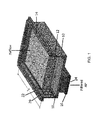
- FIG. 1 is a general perspective view of the filter configuration that may be employed herein.
- FIG. 2 illustrates one preferred layering configuration of the filter pack herein.
- FIG. 3 illustrated another preferred layering configuration of the filter pack herein.
- FIG. 4 illustrates the pressure drop of the pleated filter pack illustrated in FIG. 2 utilized in the filter construction shown generally in FIG. 1 .
- FIG. 5 illustrates the pressure drop of the pleated filter pack in FIG. 2 utilized in the filter construction shown generally in FIG. 1 .
- FIG. 6 illustrates the pressure drop of the pleated filter pack in FIG. 3 utilized in the filter construction shown generally in FIG. 1 .
- FIG. 7 illustrates the pressure drop of the pleated filter pack in FIG. 3 utilized in the filter construction shown generally in FIG. 1 .
- FIG. 1 provides a general perspective view of the filter configuration that may be employed herein.
- the filter includes at 10 an injection molded frame, which can be produced from a thermoplastic resin, one of which is preferably acrylonitrile-butadiene-styrene (ABS).
- Illustrated at 12 is the preferred multi-layer filter pleat pack, which is described in more detail herein.
- At 14 is the upstream gasket, at 16 is a downstream gasket, which is preferably made of closed cell neoprene, at 18 is a sealing material, at 20 is one edgeband material and at 22 is hot melt adhesive to secure the edgeband to the filter pleat pack.
- ABS acrylonitrile-butadiene-styrene
- the length of the injection molding housing may be in the range of 500 mm to 1500 mm, preferably 700 mm to 1200 mm, more preferably, 750 mm to 1110 mm. Note that in FIG. 1 the front of the housing is missing to provide the perspective view, so that the length includes the missing portion.
- the width of the injection molding housing may fall in the range of 300 mm to 500 mm, more preferably 350 mm to 450 mm, and most preferably, 400 mm to 450 mm.
- the injection molded downstream outlet duct shown at 24 may have an opening defined by a length and width where the length falls in the range of 150 mm to 300 mm, more preferably 200 mm to 300 mm, and the width falls in the range of 50 mm to 150 mm, more preferably 75 mm to 125 mm.
- One particularly preferred embodiment includes an outlet duct having a length of about 240 mm and a width of about 95 mm.
- FIG. 2 illustrates one preferred layering configuration for the filter herein.
- the filter media itself preferably comprises either a glass fiber backing layer or synthetic fiber backing layer 30 in combination with a polymeric type membrane layer 32 .
- the layer 30 may be preferably sourced from nonwoven fibers and continuous long fibers, but not staple fibers.
- the fibers may have diameters in the range of 15 ⁇ m to 40 ⁇ m, preferably 20 ⁇ m to 30 ⁇ m.
- the synthetic fibers may be selected from polyesters or polyolefines such as PET or polypropylene.
- the backing layer 30 may have a basis weight in the range of 50 g/m 2 to 150 g/m 2 .
- the membrane layer 32 is preferably polymeric, such as a polyolefin, polyamide or fluropolymer.
- the polyolefin may preferably be polyethylene and the fluropolymer (polymer containing one or more C—F bonds) such as polytetrafluroethylene.
- the membrane layer preferably has a basis weight of 10 g/m 2 to 30 g/m 2 , more preferably 15 g/m 2 to 25 g/m 2 , and in one preferred embodiment a basis weight of 20 g/m 2 .
- the preferred overall thickness of layer 30 (the glass fiber backing layer and/or synthetic fiber backing layer) and 32 (the membrane layer) is in the range of 0.30 mm to 0.60 mm, more preferably, 0.40 mm to 0.50 mm.
- the membrane layer 32 may itself have a thickness in the range of 100 ⁇ m to 150 ⁇ m, preferably in the range of 125 ⁇ m to 135 ⁇ m.
- the glass fiber or synthetic fiber backing layer together with the preferred polyethylene based membrane preferably has a 0.3 ⁇ m removal efficiency at a flow rate of 5.3 cm/s of 99.5% or greater, e.g. 99.6%, 99.7%, 99.8%, and more particularly, up to a level of 99.96%.
- the test is performed for 150 mm diameter sample size at 21.6° C., 45% Relative Humidity, 983 mbar ambient pressure with aerosol size distribution of 500 nm to 5 microns. Accordingly, the removal efficiency herein of 0.3 ⁇ m diameter or greater sized particles may be in the range of equal to or greater than 99.5% up to a level of 99.96%.
- Another preferred backing layer/membrane combination includes a polyester spun bond backing layer at a basis weight of 65/g/m 2 with a polyethylene membrane layer at a basis weight of 20 g/m 2 .
- the layering configuration in FIG. 3 also includes an activated carbon layer 34 , which preferably contains activated carbon granules having a basis weight of 180 g/m 2 to 320 g/m 2 and more preferably a basis weight of 250 g/m 2 at a variation of +/ ⁇ 10% (i.e. at a level of 225 g/m 2 to 275 g/m 2 ).
- Activated carbon is reference to carbon that is capable of removing volatile compounds, as described more fully herein.
- the activated carbon granules are present on a polymeric support layer, preferably a polyester or polyolefin support layer 36 .
- the thickness of the activated carbon layer 34 together with the polyester or polyolefin support layer 36 is preferably in the range of 0.75 mm to 2.0 mm. In one preferred embodiment the thickness of the activated carbon layer 34 and support layer 36 falls in the range of 1.0 mm to 2.0 mm, most preferably having a value in the range of 1.1 mm to 1.8 mm.
- the polyester support layer itself may have a thickness in the range of 0.4 mm to 0.5 mm.
- the activated carbon layer contains different blended activated carbons. This is achieved by blending carbon at a 125 g/m 2 basis weight which may be targeted for aldehyde removal and-carbon at 125 g/m 2 basis weight, which is targeted for removal of H 2 S, SO 2 and NO 2 .
- the activated carbon so provided also preferably includes polyolefin binder filaments with fiber diameters of about 15 ⁇ m where the binder filaments are present at a level of about 10-20% based upon the weight of the carbon present.
- a relatively small amount e.g. 5 g/m 2 to 20 g/m 2
- an adhesive present as between the backing layer 30 and membrane layer 32
- a small amount of adhesive present on the support layer 36 to assist in immobilizing the carbon granules in the carbon granule layer 34 .
- backing layer 30 and membrane layer 32 are physically adhered to the support layer containing the activated carbon layer, during the pleating process.
- FIG. 3 illustrates another preferred filter configuration for use in the present disclosure.
- the components are preferably the same as above, but as can be seen, the airflow direction is different. As can therefore be seen, in this configuration, the air flow is such that it initially passes through the polyester or polyolefin support layer 40 , then the activated carbon layer 42 , then through the membrane layer 44 and then through the glass fiber layer or synthetic fiber backing layer 46 .
- the activated carbon layer is again preferably sourced from activated carbon granules having a basis weight as recited above for the embodiment described in FIG. 2 .
- the thickness of support layer 40 and activated carbon layer 42 is also the same as recited above in connection with FIG. 2 . However, in this particular configuration, the thickness of the support layer 40 and activated carbon layer is preferably in the range of 1.5 mm to 2.0 mm.
- the membrane layer 44 and glass fiber or synthetic backing layer 46 again preferably have a thickness of 0.30 mm to 0.60 mm, more preferably, 0.40 mm to 0.50 mm.
- the filter media in either FIG. 2 or FIG. 3 is then preferably converted into a pleated filter configuration, where the distance between the peaks of the pleats falls in the range of 4.0 mm to 8.0 mm, more preferably in the range of 6.0 mm to 7.0 mm.
- the filter media having a distance between pleats of 6.0 mm, and having a preferred length of 1020 mm and a preferred width of 310 mm now provides an available surface area for filtration in the vehicle of 3.0 m 2 .
- the available surface area for filtration in the vehicle, for a filter having a length of 1022 mm and a width of 310 mm is 2.6 m 2 .
- the filter media herein it may have a length in the range of 650 mm to 1100 mm, and a width in the range of 300 mm to 400 mm.
- the surface area for air filtration of the filter which provides both particle filtration and removal of volatile organic or inorganic compounds, is at least 2.0 m 2 and in the range of 2.0 m 2 to 4.0 m 2 .
- Reference to volatile organic or inorganic compounds is understood herein as a compound having a boiling point of less than or equal to 250° C. measured at atmospheric pressure of 101.3 kPa.
- Such volatile organic or inorganic compounds may therefore include compounds that relatively easily become a vapor or gas, i.e. such compounds are volatile enough to evaporate from material surfaces at ambient conditions.
- edgeband 20 which can have a thickness of about 1.5 mm, is preferably selected to provide rigidity to the filter pleat pack, and is preferably selected from a polyester having a basis weight in the range of 200 g/m 2 to 300 m 2 and having a thickness of 0.40 mm to 0.60 mm, preferably 0.52 mm thickness.
- a hot melt adhesive 22 is preferably utilized to adhere edgeband 20 to the edgeband and it is preferably selected from polyolefin type resins, such as ethylene-vinyl acetate resin, having a density of 0.96 g/cc and a softening point of 186° F.
- the hot melt adhesive 22 may be selected from a polypropylene resin, having a density of 0.98 g/cc and a softening point of 155° C. to 170° C. In total, the amount of hot melt adhesive that is employed falls in the range of above 75 grams to 150 grams, more preferably 90 grams to 130 grams.
- a hot melt adhesive may be utilized to seal the filter pack 12 to the injection molded plastic housing.
- Such hot melt is preferably an amorphous poly-alpha-olefin (APAO).
- APAO amorphous poly-alpha-olefin
- a particular preferred APAO for use herein has a density of 0.93 g/cc (+/ ⁇ 0.1 g/cc) and provides a static adhesion failure temperature of 190° F. to 240° F. The total amount employed falls in the range of 70 grams to 175 grams.
- Another preferred hot melt adhesive has a specific gravity of 0.980 and a softening point of 230° F.
- the filter media from FIG. 2 and FIG. 3 are preferably converted into filter pleat packs by processing 60 to 100 pleats per minute, more preferably 80 pleats/min.
- the folds are stabilized by heat at 100° C. and then cut into bundles of filters and adding edgebanding.
- the filter pack herein ( FIG. 2 ) containing the glass or synthetic fiber backing layer 30 in combination with membrane layer 32 as well as the filter pack herein ( FIG. 3 ) containing a similar backing layer 48 and membrane layer 46 results in the ability to provide particle filtration, namely the ability to provide removal efficiencies of up to 99.97% of particles that have a size of 0.3 microns or greater.
- the filter pack herein illustrated in FIG. 2 or FIG. 3 is one that is able to achieve aspects of the required efficiencies according to European Union Standard (EN1822:2009).
- the filter pack herein is one that is particularly suitable for the removal of volatile organic or inorganic compounds, including but not limited to removal of one or more of NOx (NO+NO 2 ), SO 2 , O 3 , H 2 S, CH 2 O, NH 3 , CH 3 SH and various hydrocarbons.
- hydrocarbons include cyclohexane (C 6 H 12 ), benzene (C 6 H 6 ), toluene (C 7 H 8 ) and xylenes (C 8 H 10 ).
- the filter pack herein may efficiently remove all of these identified volatile organic or inorganic compound within the vehicle.
- FIG. 4 next illustrates the pressure drop of the pleated filter pack illustrated in FIG. 2 that is contemplated for use in the filter construction shown generally in FIG. 1 .
- the pressure drop is expected to be 73 Pa.
- the pressure drop is expected to be 63 Pa.
- FIG. 5 next illustrates the pressure drop of the pleated filter pack of FIG. 2 , contemplated for use in the filter construction shown generally in FIG. 1 .
- the pressure drop is 68 Pa where the carbon layer is at 250 g/m 2 .
- the pressure drop is 62 Pa where the carbon layer is again at 250 g/m 2 .
- FIG. 6 next illustrates the pressure drop of the pleated filter pack of FIG. 3 , contemplated for use in the filter construction shown generally in FIG. 1 .
- the pressure drop is 93 Pa.
- the pressure drop is 79 Pa.
- FIG. 7 next illustrates the pressure drop of the pleated filter pack of FIG. 3 , contemplated for use in the filter construction shown generally in FIG. 1 .
- the pressure drop is 85 Pa where the carbon layer is at 250 g/m 2 .
- the pressure drop is 77 Pa where the carbon layer is at 250 g/m 2 .
- Filter performance of a filter made according to the general configuration illustrated in FIG. 3 was next evaluated with regards particle filtration efficiency, pressure drop, capacity, and filtration efficiency with respect to various volatile compounds.
- the results are presented below for a reference filter having a length of 555 mm, width of 280 mm, height of 30 mm, with a filter area of 1.43 m 2 and with 92 pleats:
- flat sheet of the aforementioned filter can be seen to provide a 99.982% efficiency of removal of 0.3 ⁇ m particles at a face velocity of 0.8023 m/min and a 99.971 efficiency of removal of 0.3 ⁇ m particles at a face velocity of 1.6046 m/min, which satisfies the target specification of 99.97% efficiency at a face velocity of 1.52 m/min.
- Efficiency in the above table is defined as the effectiveness of the filter to adsorb gasses. More specifically, C 0 is reference to the original concentration and C 60 is reference to the concentration adsorbed by the filter. Accordingly in the case of toluene, 80 ppm of toluene is introduced at a flow rate of 100 m 3 /h, and after 60 seconds, the filter was able to adsorb 96% of the toluene. Such adsorption efficiency was the same at 1200 seconds and then at 7200 seconds, dropped to 70%, due to the capacity limitations of the filter (carbon content). A similar analysis applies for the other identified volatile compounds (cyclohexane, H 2 S, ammonia, SO 2 and acetaldehyde). As can be seen in the above, the filter herein may collectively and efficiently remove all of these compounds for the vehicle application.
- a filter pack herein having a surface area for filtration in the range of 2.0 m 2 to 4.0 m 2 , together with a content of carbon in the range of 500 grams to 800 grams, a remarkably high level of particulate filtration can be achieved, such that the filter is capable of providing a removal efficiency of 99.5% or greater of 0.3 micron particles.
- the filter is also one that provides volatile compound filtration which is a general reference of the ability to reduce the incoming levels of one or more of nitrogen dioxide, sulfur dioxide, ozone, toluene, benzene, xylene, hydrogen sulfide, formaldehyde, ammonia and mercaptan, that would otherwise be introduced into the vehicle interior.
- the filter pack herein provides such performance under condition where an airflow of 200 CMH indicates a pressure drop of less than or equal to 100 Pa, more preferably in the range of 50 Pa to 100 Pa.
Landscapes
- Chemical & Material Sciences (AREA)
- Chemical Kinetics & Catalysis (AREA)
- Engineering & Computer Science (AREA)
- Analytical Chemistry (AREA)
- General Chemical & Material Sciences (AREA)
- Oil, Petroleum & Natural Gas (AREA)
- Life Sciences & Earth Sciences (AREA)
- Geology (AREA)
- Mechanical Engineering (AREA)
- Filtering Materials (AREA)
Abstract
The present disclosure is directed at a vehicular air filter with relatively high efficiency particle arresting performance along with removal of volatile organic and/or inorganic contaminants. The filter is particularly suitable for hybrid type vehicles.
Description
This application claims the benefit of U.S. Provisional Patent Application Ser. No. 62/273,016 filed Dec. 30, 2015, which is fully incorporated herein by reference.
The present disclosure relates to a vehicular air filter. More specifically, the air filter herein provides vehicular occupants with high-efficiency particle arresting (HEPA) performance along with the removal of organic and/or inorganic gas contaminants. The filter is particularly suitable for hybrid type vehicles.
The quality of air flow within a vehicle is clearly an important consideration with respect to the health and comfort of the occupants. As may be appreciated, air pollution within the vehicle may be the result of atmospheric pollution and solid particulate that may accumulate on roadways. In addition, vehicular air pollution can be the direct result of the volatile organic and/or inorganic contaminants that are associated with vehicle operation such as vehicle exhaust that can concentrate in relatively high density traffic locations. In addition, environmental pollution in the form of volatile organic compounds has become a growing concern.
With regards to vehicular air filtration, one long-standing issue is that with respect to air filtration, the size and configurations available in the engine compartment impacts the size and configuration of the air filter. In that sense, air filtration is often times limited to a relatively compact design requirements, which in turn can lead to reduced efficiency in air filtration and the ability to provide the occupants with a cabin air environment that is more comfortable and relatively free of airborne contaminants.
Furthermore, due to the increasing air pollution, increasingly more pollutants are present in the environment of a motor vehicle so the motor vehicle cabin filter is exposed to a higher concentration of contaminants. These pollutants can be, for example, dust and soot particles as well as pollen, bacterial spores and fungal spores, bacteria and fungi. Some metabolic products of the microorganisms are known to constitute allergic substances for the human respiratory system. In some individuals, they can cause asthma attacks and possibly an immunological defense reaction.
In addition, while the efficiency of filters depends in particular on the surface area of the filter that is exposed to air flow, for motor vehicle cabin filters primarily zigzag-shaped folded filter media are used that are also often referred to as pleated filter media. In this way, due to the folding of the employed filter medium, depending on the height of the folds and the fold spacing of the various fold sections of the filter medium, an effective enlargement of the filter surface area flowed through by the air flow can be provided. However, as noted, given issues with available spacing in fossil fuel type engines, the use of pleated filters of relatively restricted size has still limited the ultimate efficiency that may be provided to vehicle occupants.
A vehicular air filter comprising: particle filtering media containing a glass fiber backing layer or synthetic fiber backing layer having a basis weight of 50 g/m2 to 150 g/m2 including a polymeric membrane layer, wherein the particle filtering media provides a removal efficiency of 99.5% or greater of particles having a diameter of 0.3 microns or greater. The filter includes a volatile compound filtration layer comprising an activated carbon layer having a basis weight of 180 g/m2 to 320 g/m2 on a polymeric support layer, wherein the activated carbon layer reduces incoming levels of one or more volatile organic or inorganic compounds. The vehicle air filter provides a surface area for air filtration of 2.0 m2 to 4.0 m2
The width of the injection molding housing, as indicated by arrow W, may fall in the range of 300 mm to 500 mm, more preferably 350 mm to 450 mm, and most preferably, 400 mm to 450 mm. The injection molded downstream outlet duct shown at 24 may have an opening defined by a length and width where the length falls in the range of 150 mm to 300 mm, more preferably 200 mm to 300 mm, and the width falls in the range of 50 mm to 150 mm, more preferably 75 mm to 125 mm. One particularly preferred embodiment includes an outlet duct having a length of about 240 mm and a width of about 95 mm.
The membrane layer 32 is preferably polymeric, such as a polyolefin, polyamide or fluropolymer. The polyolefin may preferably be polyethylene and the fluropolymer (polymer containing one or more C—F bonds) such as polytetrafluroethylene. The membrane layer preferably has a basis weight of 10 g/m2 to 30 g/m2, more preferably 15 g/m2 to 25 g/m2, and in one preferred embodiment a basis weight of 20 g/m2.
The preferred overall thickness of layer 30 (the glass fiber backing layer and/or synthetic fiber backing layer) and 32 (the membrane layer) is in the range of 0.30 mm to 0.60 mm, more preferably, 0.40 mm to 0.50 mm. The membrane layer 32 may itself have a thickness in the range of 100 μm to 150 μm, preferably in the range of 125 μm to 135 μm.
The glass fiber or synthetic fiber backing layer together with the preferred polyethylene based membrane preferably has a 0.3 μm removal efficiency at a flow rate of 5.3 cm/s of 99.5% or greater, e.g. 99.6%, 99.7%, 99.8%, and more particularly, up to a level of 99.96%. The test is performed for 150 mm diameter sample size at 21.6° C., 45% Relative Humidity, 983 mbar ambient pressure with aerosol size distribution of 500 nm to 5 microns. Accordingly, the removal efficiency herein of 0.3 μm diameter or greater sized particles may be in the range of equal to or greater than 99.5% up to a level of 99.96%. In one preferred configuration one can utilize a glass fiber backing layer with a polyethylene membrane layer where the basis weight of the glass fiber filter media is preferably be 56.6 g/m2. Another preferred backing layer/membrane combination includes a polyester spun bond backing layer at a basis weight of 65/g/m2 with a polyethylene membrane layer at a basis weight of 20 g/m2.
The layering configuration in FIG. 3 also includes an activated carbon layer 34, which preferably contains activated carbon granules having a basis weight of 180 g/m2 to 320 g/m2 and more preferably a basis weight of 250 g/m2 at a variation of +/−10% (i.e. at a level of 225 g/m2 to 275 g/m2). Activated carbon is reference to carbon that is capable of removing volatile compounds, as described more fully herein. The activated carbon granules are present on a polymeric support layer, preferably a polyester or polyolefin support layer 36. The thickness of the activated carbon layer 34 together with the polyester or polyolefin support layer 36 is preferably in the range of 0.75 mm to 2.0 mm. In one preferred embodiment the thickness of the activated carbon layer 34 and support layer 36 falls in the range of 1.0 mm to 2.0 mm, most preferably having a value in the range of 1.1 mm to 1.8 mm. The polyester support layer itself may have a thickness in the range of 0.4 mm to 0.5 mm.
Preferably, the activated carbon layer contains different blended activated carbons. This is achieved by blending carbon at a 125 g/m2 basis weight which may be targeted for aldehyde removal and-carbon at 125 g/m2 basis weight, which is targeted for removal of H2S, SO2 and NO2. The activated carbon so provided also preferably includes polyolefin binder filaments with fiber diameters of about 15 μm where the binder filaments are present at a level of about 10-20% based upon the weight of the carbon present.
With regards to FIG. 2 , it is noted that preferably, there is a relatively small amount (e.g. 5 g/m2 to 20 g/m2) of an adhesive present as between the backing layer 30 and membrane layer 32, as well as a small amount of adhesive present on the support layer 36 to assist in immobilizing the carbon granules in the carbon granule layer 34. In addition, it is noted that preferably, backing layer 30 and membrane layer 32 are physically adhered to the support layer containing the activated carbon layer, during the pleating process.
The activated carbon layer is again preferably sourced from activated carbon granules having a basis weight as recited above for the embodiment described in FIG. 2 . The thickness of support layer 40 and activated carbon layer 42 is also the same as recited above in connection with FIG. 2 . However, in this particular configuration, the thickness of the support layer 40 and activated carbon layer is preferably in the range of 1.5 mm to 2.0 mm. The membrane layer 44 and glass fiber or synthetic backing layer 46 again preferably have a thickness of 0.30 mm to 0.60 mm, more preferably, 0.40 mm to 0.50 mm.
The filter media in either FIG. 2 or FIG. 3 is then preferably converted into a pleated filter configuration, where the distance between the peaks of the pleats falls in the range of 4.0 mm to 8.0 mm, more preferably in the range of 6.0 mm to 7.0 mm. In that regard, the filter media having a distance between pleats of 6.0 mm, and having a preferred length of 1020 mm and a preferred width of 310 mm, now provides an available surface area for filtration in the vehicle of 3.0 m2. When the distance between the pleats is 7.0 mm, the available surface area for filtration in the vehicle, for a filter having a length of 1022 mm and a width of 310 mm is 2.6 m2. Accordingly, with respect to the filter media herein, it may have a length in the range of 650 mm to 1100 mm, and a width in the range of 300 mm to 400 mm.
Accordingly, in the broad context of the present disclosure, the surface area for air filtration of the filter, which provides both particle filtration and removal of volatile organic or inorganic compounds, is at least 2.0 m2 and in the range of 2.0 m2 to 4.0 m2. Reference to volatile organic or inorganic compounds is understood herein as a compound having a boiling point of less than or equal to 250° C. measured at atmospheric pressure of 101.3 kPa. Such volatile organic or inorganic compounds may therefore include compounds that relatively easily become a vapor or gas, i.e. such compounds are volatile enough to evaporate from material surfaces at ambient conditions.
With reference back to FIG. 1 , edgeband 20, which can have a thickness of about 1.5 mm, is preferably selected to provide rigidity to the filter pleat pack, and is preferably selected from a polyester having a basis weight in the range of 200 g/m2 to 300 m2 and having a thickness of 0.40 mm to 0.60 mm, preferably 0.52 mm thickness. It is noted that a hot melt adhesive 22 is preferably utilized to adhere edgeband 20 to the edgeband and it is preferably selected from polyolefin type resins, such as ethylene-vinyl acetate resin, having a density of 0.96 g/cc and a softening point of 186° F. In addition, it is contemplated that the hot melt adhesive 22 may be selected from a polypropylene resin, having a density of 0.98 g/cc and a softening point of 155° C. to 170° C. In total, the amount of hot melt adhesive that is employed falls in the range of above 75 grams to 150 grams, more preferably 90 grams to 130 grams.
In addition, a hot melt adhesive may be utilized to seal the filter pack 12 to the injection molded plastic housing. Such hot melt is preferably an amorphous poly-alpha-olefin (APAO). A particular preferred APAO for use herein has a density of 0.93 g/cc (+/−0.1 g/cc) and provides a static adhesion failure temperature of 190° F. to 240° F. The total amount employed falls in the range of 70 grams to 175 grams. Another preferred hot melt adhesive has a specific gravity of 0.980 and a softening point of 230° F.
The filter media from FIG. 2 and FIG. 3 are preferably converted into filter pleat packs by processing 60 to 100 pleats per minute, more preferably 80 pleats/min. The folds are stabilized by heat at 100° C. and then cut into bundles of filters and adding edgebanding.
As may now be appreciated, the filter pack herein (FIG. 2 ) containing the glass or synthetic fiber backing layer 30 in combination with membrane layer 32 as well as the filter pack herein (FIG. 3 ) containing a similar backing layer 48 and membrane layer 46, results in the ability to provide particle filtration, namely the ability to provide removal efficiencies of up to 99.97% of particles that have a size of 0.3 microns or greater. In addition, the filter pack herein illustrated in FIG. 2 or FIG. 3 is one that is able to achieve aspects of the required efficiencies according to European Union Standard (EN1822:2009).
In addition, with regards to the presence of the carbon granules, the filter pack herein is one that is particularly suitable for the removal of volatile organic or inorganic compounds, including but not limited to removal of one or more of NOx (NO+NO2), SO2, O3, H2S, CH2O, NH3, CH3SH and various hydrocarbons. Such hydrocarbons include cyclohexane (C6H12), benzene (C6H6), toluene (C7H8) and xylenes (C8H10). Accordingly, in preferred embodiment, the filter pack herein may efficiently remove all of these identified volatile organic or inorganic compound within the vehicle.
Filter performance of a filter made according to the general configuration illustrated in FIG. 3 was next evaluated with regards particle filtration efficiency, pressure drop, capacity, and filtration efficiency with respect to various volatile compounds. The results are presented below for a reference filter having a length of 555 mm, width of 280 mm, height of 30 mm, with a filter area of 1.43 m2 and with 92 pleats:
| Flat Sheet Media Test Boundary Conditions - |
| DOE-STD-3020-2005 @ 0.3 μm |
| Face velocity | Filtration | Specification @ 1.52 m/min |
| [m/min] | Efficiency | Filtration Efficiency |
| 0.8023 | 99.982% | 99.97% |
| 1.6046 | 99.971% | |
From the above, flat sheet of the aforementioned filter can be seen to provide a 99.982% efficiency of removal of 0.3 μm particles at a face velocity of 0.8023 m/min and a 99.971 efficiency of removal of 0.3 μm particles at a face velocity of 1.6046 m/min, which satisfies the target specification of 99.97% efficiency at a face velocity of 1.52 m/min.
Below is data showing pressure drop of the reference filter according to ISO 11155-1:
| Pressure Drop of Reference Filter according ISO 11155-1 |
| Specification | Reference filter average | |
| Air Flow | Pressure Drop | n = 5 Pressure Drop |
| [m3/h] | [Pa] | [Pa] |
| 100 | ≤60 | 59 |
| 200 | ≤125 | 123 |
| 300 | ≤200 | 190 |
| 400 | ≤230 | 255 |
| 500 | ≤320 | 317 |
| 600 | ≤395 | 389 |
From the above it can be seen that as air flows from 100 m3/h to 600 m3/h, at 100 m3/h increments the reference filter (average of 5 samples) indicated a pressure drop that satisfied the vehicle specification requirements.
Below are the results of testing on the reference filter to determine the capacity of particulate that may be collected:
| Specification | Capacity | Capacity |
| Capacity | dp absolute + 200 Pa | dp initial + 200 Pa |
| [g/m2] | [g/m2] | [g/m2] |
| 29 | 68 | ||
From the above, it can be seen that starting with whatever pressure drop may be present in the filter, when the pressure drop reaches 200 Pa, the capacity of particulate collected is 29 g/m2. In addition, when starting with the initial pressure drop, and adding a full 200 Pa of additional pressure drop, the capacity of particulate collected reaches 68 g/m2.
Below is a determination of filter efficiency with respect to the identified test aerosol solution of 2% KCl:
| Filtration Efficiency; 2% KCl | |
| Aerosol; 200 m3/h-ISO 11155-1 | 130 m3/h |
| Particle | Face velocity | Face velocity |
| Diameter | 2.31 m/min | 1.52 m/min |
| (Mobility | Filtration Efficiency | Filtration |
| Diameter) | n =5 | Efficiency n =5 |
| [nm] | dp initial [%] | average [%] |
| 10 | 99.55% | |
| 20 | 99.5% | |
| 30 | 99.5% | |
| 40 | 99.44% | |
| 50 | 97.0% | 99.42% |
| 100 | 99.2% | 99.53% |
| 200 | 99.6% | 99.68% |
| 300 | 99.84% | 99.98% |
| 400 | 99.86% | |
From the above it can be seen that in the case of a 2% KCl aerosol at a flow of 200 m3/h, and at a face velocity of 2.31 m/min, 97% to 99.86% of the identified particle diameters were captured by the filter media. At a flow of 130 m3/h 99.55% to 99.98% of the identified particle diameters were captured by the filter media.
Below is an evaluation of the reference filter with respect to adsorption efficiency of the indicated volatile organic compounds:
| Toluene | Cyclohexane | H2S | Ammonia | SO2 | |
|
| 80 |
80 |
10 |
30 |
30 |
30 ppm | |
| Efficiency | Efficiency | Efficiency | Efficiency | Efficiency | Efficiency | |
| Time [s] | [%] | [%] | [%] | [%] | [%] | [%] |
| C60/C0 | 96 | 98 | 98.8 | 48 | 99 | 98 |
| C1200/C0 | 96 | 75 | 88 | 90 | 28 | |
| C7200/C0 | 70 | |||||
| Capacity [g] | 56 g | 38 g | 2.3 g | 0.175 | 13 g | 1.4 g |
Efficiency in the above table is defined as the effectiveness of the filter to adsorb gasses. More specifically, C0 is reference to the original concentration and C60 is reference to the concentration adsorbed by the filter. Accordingly in the case of toluene, 80 ppm of toluene is introduced at a flow rate of 100 m3/h, and after 60 seconds, the filter was able to adsorb 96% of the toluene. Such adsorption efficiency was the same at 1200 seconds and then at 7200 seconds, dropped to 70%, due to the capacity limitations of the filter (carbon content). A similar analysis applies for the other identified volatile compounds (cyclohexane, H2S, ammonia, SO2 and acetaldehyde). As can be seen in the above, the filter herein may collectively and efficiently remove all of these compounds for the vehicle application.
Accordingly, it can be appreciated herein that by providing a filter pack herein, having a surface area for filtration in the range of 2.0 m2 to 4.0 m2, together with a content of carbon in the range of 500 grams to 800 grams, a remarkably high level of particulate filtration can be achieved, such that the filter is capable of providing a removal efficiency of 99.5% or greater of 0.3 micron particles. In addition, the filter is also one that provides volatile compound filtration which is a general reference of the ability to reduce the incoming levels of one or more of nitrogen dioxide, sulfur dioxide, ozone, toluene, benzene, xylene, hydrogen sulfide, formaldehyde, ammonia and mercaptan, that would otherwise be introduced into the vehicle interior. In addition, the filter pack herein provides such performance under condition where an airflow of 200 CMH indicates a pressure drop of less than or equal to 100 Pa, more preferably in the range of 50 Pa to 100 Pa.
Claims (12)
1. A vehicular air filter comprising:
particle filtering media containing a glass fiber backing layer or synthetic fiber backing layer comprising polyesters or polyolefins and having a basis weight of 50 g/m2 to 150 g/m2 including a polymeric membrane layer comprising a polyethylene, polyamide or fluoropolymer, wherein said particle filtering media provides a removal efficiency of 99.5% or greater of particles having a diameter of 0.3 microns or greater;
a volatile compound filtration layer affixed to said polymeric membrane layer comprising an activated carbon layer having a basis weight of 180 g/m2 to 320 g/m2 on a polymeric support layer, wherein said activated carbon layer reduces incoming levels of one or more volatile organic or inorganic compound;
wherein said vehicle air filter is pleated and provides a surface area for air filtration of 2.0 m2 to 4.0 m2; and
said vehicle air filter has a length in the range of 650 mm to 1100 mm and a width in the range of 300 mm to 400 mm.
2. The vehicular air filter of claim 1 wherein said particle filter media provides a removal efficiency of greater than or equal to 99.5% to 99.96%.
3. The vehicular air filter of claim 1 wherein said particle filter media, at an airflow of 200 cubic meters per hour (CMH), indicates a pressure drop of less than or equal to 100 Pa.
4. The vehicular air filter of claim 3 , wherein said pressure drop is in the range of 50 Pa to 100 Pa.
5. The vehicular filter of claim 1 wherein said volatile organic or inorganic compound comprises one or more compounds that has a boiling point of less than or equal to 250° C. measured at atmospheric pressure of 101.3 kPa.
6. The vehicular air filter of claim 1 wherein said volatile organic or inorganic compound comprises at least one of nitrogen oxide (NOx), sulfur dioxide, ozone, cyclohexane, toluene, benzene, xylene, hydrogen sulfide, formaldehyde, ammonia and mercaptan.
7. The vehicular air filter of claim 1 wherein said glass fiber backing layer or synthetic fiber backing layer has a thickness in the range of 0.30 mm to 0.60 mm.
8. The vehicular air filter of claim 1 wherein said glass fiber backing layer or synthetic fiber backing layer comprise fibers having a diameter of 15 μm to 40 μm.
9. The vehicular air filter of claim 1 wherein said polymeric membrane layer has thickness in the range of 100 μm to 150 μm.
10. The vehicular air filter of claim 1 wherein said polymeric membrane layer has a basis weight of 10 g/m2 to 30 g/m2.
11. The vehicular air filter of claim 1 wherein the thickness of the activated carbon layer together with the polymeric support layer is in the range of 0.75 mm to 2.0 mm.
12. The vehicular air filter of claim 1 wherein said pleats have peaks and wherein the distance between said peaks is in the range of 4.0 mm to 8.0 mm.
Priority Applications (1)
| Application Number | Priority Date | Filing Date | Title |
|---|---|---|---|
| US15/280,688 US10214079B2 (en) | 2015-12-30 | 2016-09-29 | Vehicular air filter providing high efficiency particle and gas filtration |
Applications Claiming Priority (2)
| Application Number | Priority Date | Filing Date | Title |
|---|---|---|---|
| US201562273016P | 2015-12-30 | 2015-12-30 | |
| US15/280,688 US10214079B2 (en) | 2015-12-30 | 2016-09-29 | Vehicular air filter providing high efficiency particle and gas filtration |
Publications (2)
| Publication Number | Publication Date |
|---|---|
| US20170189847A1 US20170189847A1 (en) | 2017-07-06 |
| US10214079B2 true US10214079B2 (en) | 2019-02-26 |
Family
ID=59235239
Family Applications (1)
| Application Number | Title | Priority Date | Filing Date |
|---|---|---|---|
| US15/280,688 Active US10214079B2 (en) | 2015-12-30 | 2016-09-29 | Vehicular air filter providing high efficiency particle and gas filtration |
Country Status (1)
| Country | Link |
|---|---|
| US (1) | US10214079B2 (en) |
Cited By (1)
| Publication number | Priority date | Publication date | Assignee | Title |
|---|---|---|---|---|
| US11648825B2 (en) | 2020-06-22 | 2023-05-16 | Caterpillar Inc. | Screen assembly for construction vehicle |
Families Citing this family (5)
| Publication number | Priority date | Publication date | Assignee | Title |
|---|---|---|---|---|
| GB2575321A (en) * | 2018-07-06 | 2020-01-08 | Dyson Automotive Res And Development Limited | Vehicle cabin filter assembly |
| GB2575320B (en) | 2018-07-06 | 2020-11-25 | Dyson Technology Ltd | Vehicle cabin filter assembly |
| GB2575323A (en) * | 2018-07-06 | 2020-01-08 | Dyson Automotive Res And Development Limited | Vehicle cabin filter assembly |
| GB2575322A (en) * | 2018-07-06 | 2020-01-08 | Dyson Automotive Res And Development Limited | Vehicle cabin filter assembly |
| GB2575319B (en) | 2018-07-06 | 2020-11-04 | Dyson Technology Ltd | Vehicle Cabin Filter Assembly |
Citations (4)
| Publication number | Priority date | Publication date | Assignee | Title |
|---|---|---|---|---|
| US6273938B1 (en) * | 1999-08-13 | 2001-08-14 | 3M Innovative Properties Company | Channel flow filter |
| US20100212506A1 (en) * | 2007-09-28 | 2010-08-26 | Ryoichi Togashi | Filter element and filter unit |
| US20140130469A1 (en) | 2012-11-13 | 2014-05-15 | Hollingsworth & Vose Company | Multi-layered filter media |
| US9199189B1 (en) * | 2012-06-13 | 2015-12-01 | Columbus Industries, Inc. | Filter medium having ozone and odor removal properties |
-
2016
- 2016-09-29 US US15/280,688 patent/US10214079B2/en active Active
Patent Citations (4)
| Publication number | Priority date | Publication date | Assignee | Title |
|---|---|---|---|---|
| US6273938B1 (en) * | 1999-08-13 | 2001-08-14 | 3M Innovative Properties Company | Channel flow filter |
| US20100212506A1 (en) * | 2007-09-28 | 2010-08-26 | Ryoichi Togashi | Filter element and filter unit |
| US9199189B1 (en) * | 2012-06-13 | 2015-12-01 | Columbus Industries, Inc. | Filter medium having ozone and odor removal properties |
| US20140130469A1 (en) | 2012-11-13 | 2014-05-15 | Hollingsworth & Vose Company | Multi-layered filter media |
Cited By (1)
| Publication number | Priority date | Publication date | Assignee | Title |
|---|---|---|---|---|
| US11648825B2 (en) | 2020-06-22 | 2023-05-16 | Caterpillar Inc. | Screen assembly for construction vehicle |
Also Published As
| Publication number | Publication date |
|---|---|
| US20170189847A1 (en) | 2017-07-06 |
Similar Documents
| Publication | Publication Date | Title |
|---|---|---|
| US10214079B2 (en) | Vehicular air filter providing high efficiency particle and gas filtration | |
| CN100455456C (en) | Portable air purifier for motor vehicle carriage | |
| TWI598146B (en) | Air filter with sorbent particles | |
| US7101419B2 (en) | Air filter assembly for low temperature catalytic processes | |
| CN107073384B (en) | System and method for carbon dioxide removal from air in a passenger compartment of a vehicle | |
| CN203829824U (en) | Air purification filter element | |
| RU2007128112A (en) | TURBINE AIR INTAKE FILTER | |
| CN105228720A (en) | Filter elements, especially air filter elements and filter systems with filter elements | |
| US10780383B2 (en) | Supply air arrangement for a mobile device | |
| JP2015000357A (en) | Air filter | |
| US20050208348A1 (en) | Air filtration system for fuel cell systems | |
| CN101254377A (en) | Anti-allergen filter and air cleaning system using the same | |
| KR100986797B1 (en) | Nonwoven filter | |
| US11628396B2 (en) | Carbon dioxide reduction filter | |
| US20170128870A1 (en) | Mobile purification device and method for purifying indoor air and/or fresh air | |
| JP2005517516A (en) | Filter and filter manufacturing method | |
| CN206683118U (en) | A kind of vehicular air purifier | |
| US20240198262A1 (en) | Air Filter Medium, Filter Medium Body, and Filter Element | |
| CN215462875U (en) | Air filtering material | |
| CN205007744U (en) | High -efficient filter of HEPA for air purification | |
| US20220233986A1 (en) | High-efficiency particulate air filter assembly | |
| CN202208242U (en) | Filter window of automobile air purifier | |
| CN207253929U (en) | A kind of built-in clarifier of novel on-vehicle | |
| JP4932564B2 (en) | Gas removal filter medium, method for producing the same, and gas removal element using the gas removal filter medium | |
| CN205360846U (en) | Vehicle air conditioner filter convenient to change |
Legal Events
| Date | Code | Title | Description |
|---|---|---|---|
| AS | Assignment |
Owner name: CARL FREUDENBERG KG, GERMANY Free format text: ASSIGNMENT OF ASSIGNORS INTEREST;ASSIGNORS:HASAN, KATHERINE;HAENDLER, VOLKER;STAUDENMAYER, OLIVER;AND OTHERS;SIGNING DATES FROM 20161206 TO 20170313;REEL/FRAME:042437/0200 |
|
| STCF | Information on status: patent grant |
Free format text: PATENTED CASE |
|
| MAFP | Maintenance fee payment |
Free format text: PAYMENT OF MAINTENANCE FEE, 4TH YEAR, LARGE ENTITY (ORIGINAL EVENT CODE: M1551); ENTITY STATUS OF PATENT OWNER: LARGE ENTITY Year of fee payment: 4 |