US10150945B2 - Cell culture device and manufacturing method therof - Google Patents
Cell culture device and manufacturing method therof Download PDFInfo
- Publication number
- US10150945B2 US10150945B2 US11/187,621 US18762105A US10150945B2 US 10150945 B2 US10150945 B2 US 10150945B2 US 18762105 A US18762105 A US 18762105A US 10150945 B2 US10150945 B2 US 10150945B2
- Authority
- US
- United States
- Prior art keywords
- lysine
- poly
- polylysine
- further polymerized
- solution
- Prior art date
- Legal status (The legal status is an assumption and is not a legal conclusion. Google has not performed a legal analysis and makes no representation as to the accuracy of the status listed.)
- Active, expires
Links
- 238000004113 cell culture Methods 0.000 title claims abstract description 53
- 238000004519 manufacturing process Methods 0.000 title claims description 17
- 229920001351 ε-poly-L-lysine Polymers 0.000 claims abstract description 53
- 150000003839 salts Chemical class 0.000 claims abstract description 36
- 239000000243 solution Substances 0.000 claims description 50
- 238000000034 method Methods 0.000 claims description 28
- 239000000758 substrate Substances 0.000 claims description 23
- 239000011521 glass Substances 0.000 claims description 21
- BTBUEUYNUDRHOZ-UHFFFAOYSA-N Borate Chemical compound [O-]B([O-])[O-] BTBUEUYNUDRHOZ-UHFFFAOYSA-N 0.000 claims description 9
- 239000007853 buffer solution Substances 0.000 claims description 9
- 238000001035 drying Methods 0.000 claims description 9
- 239000002904 solvent Substances 0.000 claims description 5
- 239000000057 synthetic resin Substances 0.000 claims description 5
- 229920003002 synthetic resin Polymers 0.000 claims description 5
- 238000009833 condensation Methods 0.000 claims description 4
- 238000000576 coating method Methods 0.000 abstract description 30
- 230000021164 cell adhesion Effects 0.000 abstract description 14
- 230000003013 cytotoxicity Effects 0.000 abstract description 11
- 231100000135 cytotoxicity Toxicity 0.000 abstract description 11
- 108010039918 Polylysine Proteins 0.000 description 97
- 210000004027 cell Anatomy 0.000 description 51
- 229920000656 polylysine Polymers 0.000 description 42
- VEXZGXHMUGYJMC-UHFFFAOYSA-N Hydrochloric acid Chemical compound Cl VEXZGXHMUGYJMC-UHFFFAOYSA-N 0.000 description 38
- 239000004033 plastic Substances 0.000 description 29
- 229920003023 plastic Polymers 0.000 description 29
- 239000011248 coating agent Substances 0.000 description 27
- 239000006059 cover glass Substances 0.000 description 25
- LFQSCWFLJHTTHZ-UHFFFAOYSA-N Ethanol Chemical compound CCO LFQSCWFLJHTTHZ-UHFFFAOYSA-N 0.000 description 15
- CPELXLSAUQHCOX-UHFFFAOYSA-N Hydrogen bromide Chemical compound Br CPELXLSAUQHCOX-UHFFFAOYSA-N 0.000 description 13
- 230000000052 comparative effect Effects 0.000 description 11
- 238000002474 experimental method Methods 0.000 description 10
- 239000000463 material Substances 0.000 description 10
- 230000012010 growth Effects 0.000 description 8
- 239000002609 medium Substances 0.000 description 8
- 230000008569 process Effects 0.000 description 8
- XLYOFNOQVPJJNP-UHFFFAOYSA-N water Substances O XLYOFNOQVPJJNP-UHFFFAOYSA-N 0.000 description 8
- 239000001963 growth medium Substances 0.000 description 7
- 229910021642 ultra pure water Inorganic materials 0.000 description 7
- 239000012498 ultrapure water Substances 0.000 description 7
- 241000283690 Bos taurus Species 0.000 description 6
- 239000004472 Lysine Substances 0.000 description 6
- KDXKERNSBIXSRK-UHFFFAOYSA-N Lysine Natural products NCCCCC(N)C(O)=O KDXKERNSBIXSRK-UHFFFAOYSA-N 0.000 description 6
- 210000003050 axon Anatomy 0.000 description 6
- 210000002966 serum Anatomy 0.000 description 6
- 239000000126 substance Substances 0.000 description 6
- QCQCHGYLTSGIGX-GHXANHINSA-N 4-[[(3ar,5ar,5br,7ar,9s,11ar,11br,13as)-5a,5b,8,8,11a-pentamethyl-3a-[(5-methylpyridine-3-carbonyl)amino]-2-oxo-1-propan-2-yl-4,5,6,7,7a,9,10,11,11b,12,13,13a-dodecahydro-3h-cyclopenta[a]chrysen-9-yl]oxy]-2,2-dimethyl-4-oxobutanoic acid Chemical compound N([C@@]12CC[C@@]3(C)[C@]4(C)CC[C@H]5C(C)(C)[C@@H](OC(=O)CC(C)(C)C(O)=O)CC[C@]5(C)[C@H]4CC[C@@H]3C1=C(C(C2)=O)C(C)C)C(=O)C1=CN=CC(C)=C1 QCQCHGYLTSGIGX-GHXANHINSA-N 0.000 description 5
- KDXKERNSBIXSRK-YFKPBYRVSA-N L-lysine Chemical compound NCCCC[C@H](N)C(O)=O KDXKERNSBIXSRK-YFKPBYRVSA-N 0.000 description 5
- 230000010261 cell growth Effects 0.000 description 5
- 239000006285 cell suspension Substances 0.000 description 5
- 210000004292 cytoskeleton Anatomy 0.000 description 5
- 239000000203 mixture Substances 0.000 description 5
- 239000004793 Polystyrene Substances 0.000 description 4
- 239000000853 adhesive Substances 0.000 description 4
- 230000001070 adhesive effect Effects 0.000 description 4
- 238000004458 analytical method Methods 0.000 description 4
- 238000010609 cell counting kit-8 assay Methods 0.000 description 4
- 230000002349 favourable effect Effects 0.000 description 4
- 238000001000 micrograph Methods 0.000 description 4
- -1 polypropylenes Polymers 0.000 description 4
- 229920002223 polystyrene Polymers 0.000 description 4
- 238000012546 transfer Methods 0.000 description 4
- QTBSBXVTEAMEQO-UHFFFAOYSA-N Acetic acid Chemical compound CC(O)=O QTBSBXVTEAMEQO-UHFFFAOYSA-N 0.000 description 3
- 206010058467 Lung neoplasm malignant Diseases 0.000 description 3
- OKKJLVBELUTLKV-UHFFFAOYSA-N Methanol Chemical compound OC OKKJLVBELUTLKV-UHFFFAOYSA-N 0.000 description 3
- ISWSIDIOOBJBQZ-UHFFFAOYSA-N Phenol Chemical compound OC1=CC=CC=C1 ISWSIDIOOBJBQZ-UHFFFAOYSA-N 0.000 description 3
- 150000001413 amino acids Chemical class 0.000 description 3
- 230000015572 biosynthetic process Effects 0.000 description 3
- KRKNYBCHXYNGOX-UHFFFAOYSA-N citric acid Chemical compound OC(=O)CC(O)(C(O)=O)CC(O)=O KRKNYBCHXYNGOX-UHFFFAOYSA-N 0.000 description 3
- 238000012258 culturing Methods 0.000 description 3
- 239000012737 fresh medium Substances 0.000 description 3
- 238000010438 heat treatment Methods 0.000 description 3
- 201000005202 lung cancer Diseases 0.000 description 3
- 208000020816 lung neoplasm Diseases 0.000 description 3
- 230000006855 networking Effects 0.000 description 3
- 210000002569 neuron Anatomy 0.000 description 3
- 239000012266 salt solution Substances 0.000 description 3
- 239000000725 suspension Substances 0.000 description 3
- 230000035899 viability Effects 0.000 description 3
- RGHNJXZEOKUKBD-SQOUGZDYSA-N D-gluconic acid Chemical compound OC[C@@H](O)[C@@H](O)[C@H](O)[C@@H](O)C(O)=O RGHNJXZEOKUKBD-SQOUGZDYSA-N 0.000 description 2
- VZCYOOQTPOCHFL-OWOJBTEDSA-N Fumaric acid Chemical compound OC(=O)\C=C\C(O)=O VZCYOOQTPOCHFL-OWOJBTEDSA-N 0.000 description 2
- NBIIXXVUZAFLBC-UHFFFAOYSA-N Phosphoric acid Chemical compound OP(O)(O)=O NBIIXXVUZAFLBC-UHFFFAOYSA-N 0.000 description 2
- 229920002873 Polyethylenimine Polymers 0.000 description 2
- QAOWNCQODCNURD-UHFFFAOYSA-N Sulfuric acid Chemical compound OS(O)(=O)=O QAOWNCQODCNURD-UHFFFAOYSA-N 0.000 description 2
- 238000002835 absorbance Methods 0.000 description 2
- 238000005903 acid hydrolysis reaction Methods 0.000 description 2
- WNLRTRBMVRJNCN-UHFFFAOYSA-N adipic acid Chemical compound OC(=O)CCCCC(O)=O WNLRTRBMVRJNCN-UHFFFAOYSA-N 0.000 description 2
- YZXBAPSDXZZRGB-DOFZRALJSA-N arachidonic acid Chemical compound CCCCC\C=C/C\C=C/C\C=C/C\C=C/CCCC(O)=O YZXBAPSDXZZRGB-DOFZRALJSA-N 0.000 description 2
- 239000012620 biological material Substances 0.000 description 2
- 210000000601 blood cell Anatomy 0.000 description 2
- 210000004204 blood vessel Anatomy 0.000 description 2
- 229920006317 cationic polymer Polymers 0.000 description 2
- 210000003710 cerebral cortex Anatomy 0.000 description 2
- 238000006243 chemical reaction Methods 0.000 description 2
- 239000003431 cross linking reagent Substances 0.000 description 2
- GHVNFZFCNZKVNT-UHFFFAOYSA-N decanoic acid Chemical compound CCCCCCCCCC(O)=O GHVNFZFCNZKVNT-UHFFFAOYSA-N 0.000 description 2
- 238000011161 development Methods 0.000 description 2
- XBDQKXXYIPTUBI-UHFFFAOYSA-N dimethylselenoniopropionate Natural products CCC(O)=O XBDQKXXYIPTUBI-UHFFFAOYSA-N 0.000 description 2
- 238000007598 dipping method Methods 0.000 description 2
- POULHZVOKOAJMA-UHFFFAOYSA-N dodecanoic acid Chemical compound CCCCCCCCCCCC(O)=O POULHZVOKOAJMA-UHFFFAOYSA-N 0.000 description 2
- 210000002889 endothelial cell Anatomy 0.000 description 2
- 238000011156 evaluation Methods 0.000 description 2
- 210000002950 fibroblast Anatomy 0.000 description 2
- 239000000706 filtrate Substances 0.000 description 2
- 238000001914 filtration Methods 0.000 description 2
- 238000007667 floating Methods 0.000 description 2
- JVTAAEKCZFNVCJ-UHFFFAOYSA-N lactic acid Chemical compound CC(O)C(O)=O JVTAAEKCZFNVCJ-UHFFFAOYSA-N 0.000 description 2
- BDAGIHXWWSANSR-UHFFFAOYSA-N methanoic acid Natural products OC=O BDAGIHXWWSANSR-UHFFFAOYSA-N 0.000 description 2
- 238000012986 modification Methods 0.000 description 2
- 230000004048 modification Effects 0.000 description 2
- 238000006116 polymerization reaction Methods 0.000 description 2
- 210000002243 primary neuron Anatomy 0.000 description 2
- 239000000047 product Substances 0.000 description 2
- 238000011002 quantification Methods 0.000 description 2
- 230000005855 radiation Effects 0.000 description 2
- 210000000329 smooth muscle myocyte Anatomy 0.000 description 2
- 238000002415 sodium dodecyl sulfate polyacrylamide gel electrophoresis Methods 0.000 description 2
- VZCYOOQTPOCHFL-UHFFFAOYSA-N trans-butenedioic acid Natural products OC(=O)C=CC(O)=O VZCYOOQTPOCHFL-UHFFFAOYSA-N 0.000 description 2
- 235000021122 unsaturated fatty acids Nutrition 0.000 description 2
- 238000005406 washing Methods 0.000 description 2
- OYHQOLUKZRVURQ-NTGFUMLPSA-N (9Z,12Z)-9,10,12,13-tetratritiooctadeca-9,12-dienoic acid Chemical compound C(CCCCCCC\C(=C(/C\C(=C(/CCCCC)\[3H])\[3H])\[3H])\[3H])(=O)O OYHQOLUKZRVURQ-NTGFUMLPSA-N 0.000 description 1
- WRIDQFICGBMAFQ-UHFFFAOYSA-N (E)-8-Octadecenoic acid Natural products CCCCCCCCCC=CCCCCCCC(O)=O WRIDQFICGBMAFQ-UHFFFAOYSA-N 0.000 description 1
- BJEPYKJPYRNKOW-REOHCLBHSA-N (S)-malic acid Chemical compound OC(=O)[C@@H](O)CC(O)=O BJEPYKJPYRNKOW-REOHCLBHSA-N 0.000 description 1
- JMMZCWZIJXAGKW-UHFFFAOYSA-N 2-methylpent-2-ene Chemical compound CCC=C(C)C JMMZCWZIJXAGKW-UHFFFAOYSA-N 0.000 description 1
- LQJBNNIYVWPHFW-UHFFFAOYSA-N 20:1omega9c fatty acid Natural products CCCCCCCCCCC=CCCCCCCCC(O)=O LQJBNNIYVWPHFW-UHFFFAOYSA-N 0.000 description 1
- BMYNFMYTOJXKLE-UHFFFAOYSA-N 3-azaniumyl-2-hydroxypropanoate Chemical compound NCC(O)C(O)=O BMYNFMYTOJXKLE-UHFFFAOYSA-N 0.000 description 1
- OSWFIVFLDKOXQC-UHFFFAOYSA-N 4-(3-methoxyphenyl)aniline Chemical compound COC1=CC=CC(C=2C=CC(N)=CC=2)=C1 OSWFIVFLDKOXQC-UHFFFAOYSA-N 0.000 description 1
- QSBYPNXLFMSGKH-UHFFFAOYSA-N 9-Heptadecensaeure Natural products CCCCCCCC=CCCCCCCCC(O)=O QSBYPNXLFMSGKH-UHFFFAOYSA-N 0.000 description 1
- 239000005632 Capric acid (CAS 334-48-5) Substances 0.000 description 1
- 229920001661 Chitosan Polymers 0.000 description 1
- 108010035532 Collagen Proteins 0.000 description 1
- 102000008186 Collagen Human genes 0.000 description 1
- RGHNJXZEOKUKBD-UHFFFAOYSA-N D-gluconic acid Natural products OCC(O)C(O)C(O)C(O)C(O)=O RGHNJXZEOKUKBD-UHFFFAOYSA-N 0.000 description 1
- 108010067306 Fibronectins Proteins 0.000 description 1
- 102000016359 Fibronectins Human genes 0.000 description 1
- 108010010803 Gelatin Proteins 0.000 description 1
- WQZGKKKJIJFFOK-GASJEMHNSA-N Glucose Natural products OC[C@H]1OC(O)[C@H](O)[C@@H](O)[C@@H]1O WQZGKKKJIJFFOK-GASJEMHNSA-N 0.000 description 1
- 108010085895 Laminin Proteins 0.000 description 1
- 102000007547 Laminin Human genes 0.000 description 1
- 239000005639 Lauric acid Substances 0.000 description 1
- 239000005642 Oleic acid Substances 0.000 description 1
- ZQPPMHVWECSIRJ-UHFFFAOYSA-N Oleic acid Natural products CCCCCCCCC=CCCCCCCCC(O)=O ZQPPMHVWECSIRJ-UHFFFAOYSA-N 0.000 description 1
- 239000004698 Polyethylene Substances 0.000 description 1
- 239000004743 Polypropylene Substances 0.000 description 1
- OFOBLEOULBTSOW-UHFFFAOYSA-N Propanedioic acid Natural products OC(=O)CC(O)=O OFOBLEOULBTSOW-UHFFFAOYSA-N 0.000 description 1
- 235000021355 Stearic acid Nutrition 0.000 description 1
- 241000972623 Streptomyces albulus Species 0.000 description 1
- 229920002600 TPX™ Polymers 0.000 description 1
- 208000002495 Uterine Neoplasms Diseases 0.000 description 1
- 108010031318 Vitronectin Proteins 0.000 description 1
- 102100035140 Vitronectin Human genes 0.000 description 1
- 235000011054 acetic acid Nutrition 0.000 description 1
- 229920006397 acrylic thermoplastic Polymers 0.000 description 1
- 229920000122 acrylonitrile butadiene styrene Polymers 0.000 description 1
- 239000001361 adipic acid Substances 0.000 description 1
- 235000011037 adipic acid Nutrition 0.000 description 1
- BJEPYKJPYRNKOW-UHFFFAOYSA-N alpha-hydroxysuccinic acid Natural products OC(=O)C(O)CC(O)=O BJEPYKJPYRNKOW-UHFFFAOYSA-N 0.000 description 1
- 230000004075 alteration Effects 0.000 description 1
- 229910000147 aluminium phosphate Inorganic materials 0.000 description 1
- 125000003277 amino group Chemical group 0.000 description 1
- BFNBIHQBYMNNAN-UHFFFAOYSA-N ammonium sulfate Chemical compound N.N.OS(O)(=O)=O BFNBIHQBYMNNAN-UHFFFAOYSA-N 0.000 description 1
- 229910052921 ammonium sulfate Inorganic materials 0.000 description 1
- 235000011130 ammonium sulphate Nutrition 0.000 description 1
- 229940114079 arachidonic acid Drugs 0.000 description 1
- 235000021342 arachidonic acid Nutrition 0.000 description 1
- 239000011324 bead Substances 0.000 description 1
- 229940041514 candida albicans extract Drugs 0.000 description 1
- 125000003178 carboxy group Chemical group [H]OC(*)=O 0.000 description 1
- 125000002091 cationic group Chemical group 0.000 description 1
- 238000005119 centrifugation Methods 0.000 description 1
- 210000001612 chondrocyte Anatomy 0.000 description 1
- 235000015165 citric acid Nutrition 0.000 description 1
- 239000011247 coating layer Substances 0.000 description 1
- 229920001436 collagen Polymers 0.000 description 1
- 150000001875 compounds Chemical class 0.000 description 1
- 238000012136 culture method Methods 0.000 description 1
- 210000004748 cultured cell Anatomy 0.000 description 1
- ZPWVASYFFYYZEW-UHFFFAOYSA-L dipotassium hydrogen phosphate Chemical compound [K+].[K+].OP([O-])([O-])=O ZPWVASYFFYYZEW-UHFFFAOYSA-L 0.000 description 1
- 238000004090 dissolution Methods 0.000 description 1
- 238000009826 distribution Methods 0.000 description 1
- 230000000694 effects Effects 0.000 description 1
- 210000001671 embryonic stem cell Anatomy 0.000 description 1
- 238000005516 engineering process Methods 0.000 description 1
- 210000002919 epithelial cell Anatomy 0.000 description 1
- IDGUHHHQCWSQLU-UHFFFAOYSA-N ethanol;hydrate Chemical compound O.CCO IDGUHHHQCWSQLU-UHFFFAOYSA-N 0.000 description 1
- 210000002744 extracellular matrix Anatomy 0.000 description 1
- 239000000835 fiber Substances 0.000 description 1
- 235000019253 formic acid Nutrition 0.000 description 1
- 238000005194 fractionation Methods 0.000 description 1
- 239000001530 fumaric acid Substances 0.000 description 1
- 235000011087 fumaric acid Nutrition 0.000 description 1
- 239000007789 gas Substances 0.000 description 1
- 239000008273 gelatin Substances 0.000 description 1
- 229920000159 gelatin Polymers 0.000 description 1
- 235000019322 gelatine Nutrition 0.000 description 1
- 235000011852 gelatine desserts Nutrition 0.000 description 1
- 238000002523 gelfiltration Methods 0.000 description 1
- 239000000174 gluconic acid Substances 0.000 description 1
- 235000012208 gluconic acid Nutrition 0.000 description 1
- 239000008103 glucose Substances 0.000 description 1
- 210000003494 hepatocyte Anatomy 0.000 description 1
- 239000011261 inert gas Substances 0.000 description 1
- 238000002347 injection Methods 0.000 description 1
- 239000007924 injection Substances 0.000 description 1
- SURQXAFEQWPFPV-UHFFFAOYSA-L iron(2+) sulfate heptahydrate Chemical compound O.O.O.O.O.O.O.[Fe+2].[O-]S([O-])(=O)=O SURQXAFEQWPFPV-UHFFFAOYSA-L 0.000 description 1
- QXJSBBXBKPUZAA-UHFFFAOYSA-N isooleic acid Natural products CCCCCCCC=CCCCCCCCCC(O)=O QXJSBBXBKPUZAA-UHFFFAOYSA-N 0.000 description 1
- 239000004310 lactic acid Substances 0.000 description 1
- 235000014655 lactic acid Nutrition 0.000 description 1
- 238000009630 liquid culture Methods 0.000 description 1
- 230000007774 longterm Effects 0.000 description 1
- 125000003588 lysine group Chemical group [H]N([H])C([H])([H])C([H])([H])C([H])([H])C([H])([H])C([H])(N([H])[H])C(*)=O 0.000 description 1
- WRUGWIBCXHJTDG-UHFFFAOYSA-L magnesium sulfate heptahydrate Chemical compound O.O.O.O.O.O.O.[Mg+2].[O-]S([O-])(=O)=O WRUGWIBCXHJTDG-UHFFFAOYSA-L 0.000 description 1
- 229940061634 magnesium sulfate heptahydrate Drugs 0.000 description 1
- VZCYOOQTPOCHFL-UPHRSURJSA-N maleic acid Chemical compound OC(=O)\C=C/C(O)=O VZCYOOQTPOCHFL-UPHRSURJSA-N 0.000 description 1
- 239000011976 maleic acid Substances 0.000 description 1
- 239000001630 malic acid Substances 0.000 description 1
- 235000011090 malic acid Nutrition 0.000 description 1
- 238000000386 microscopy Methods 0.000 description 1
- 150000007522 mineralic acids Chemical class 0.000 description 1
- 238000002156 mixing Methods 0.000 description 1
- 229910000402 monopotassium phosphate Inorganic materials 0.000 description 1
- 235000019796 monopotassium phosphate Nutrition 0.000 description 1
- 210000003757 neuroblast Anatomy 0.000 description 1
- 231100001083 no cytotoxicity Toxicity 0.000 description 1
- QIQXTHQIDYTFRH-UHFFFAOYSA-N octadecanoic acid Chemical compound CCCCCCCCCCCCCCCCCC(O)=O QIQXTHQIDYTFRH-UHFFFAOYSA-N 0.000 description 1
- OQCDKBAXFALNLD-UHFFFAOYSA-N octadecanoic acid Natural products CCCCCCCC(C)CCCCCCCCC(O)=O OQCDKBAXFALNLD-UHFFFAOYSA-N 0.000 description 1
- ZQPPMHVWECSIRJ-KTKRTIGZSA-N oleic acid Chemical compound CCCCCCCC\C=C/CCCCCCCC(O)=O ZQPPMHVWECSIRJ-KTKRTIGZSA-N 0.000 description 1
- 235000021313 oleic acid Nutrition 0.000 description 1
- 150000007524 organic acids Chemical class 0.000 description 1
- 235000005985 organic acids Nutrition 0.000 description 1
- 210000000963 osteoblast Anatomy 0.000 description 1
- 239000008055 phosphate buffer solution Substances 0.000 description 1
- PJNZPQUBCPKICU-UHFFFAOYSA-N phosphoric acid;potassium Chemical compound [K].OP(O)(O)=O PJNZPQUBCPKICU-UHFFFAOYSA-N 0.000 description 1
- 229920003229 poly(methyl methacrylate) Polymers 0.000 description 1
- 239000004417 polycarbonate Substances 0.000 description 1
- 229920000515 polycarbonate Polymers 0.000 description 1
- 229920000728 polyester Polymers 0.000 description 1
- 229920000573 polyethylene Polymers 0.000 description 1
- 229920000642 polymer Polymers 0.000 description 1
- 229920001155 polypropylene Polymers 0.000 description 1
- 230000002035 prolonged effect Effects 0.000 description 1
- XTUSEBKMEQERQV-UHFFFAOYSA-N propan-2-ol;hydrate Chemical compound O.CC(C)O XTUSEBKMEQERQV-UHFFFAOYSA-N 0.000 description 1
- 235000019260 propionic acid Nutrition 0.000 description 1
- IUVKMZGDUIUOCP-BTNSXGMBSA-N quinbolone Chemical compound O([C@H]1CC[C@H]2[C@H]3[C@@H]([C@]4(C=CC(=O)C=C4CC3)C)CC[C@@]21C)C1=CCCC1 IUVKMZGDUIUOCP-BTNSXGMBSA-N 0.000 description 1
- 230000009467 reduction Effects 0.000 description 1
- 229920005989 resin Polymers 0.000 description 1
- 239000011347 resin Substances 0.000 description 1
- 235000003441 saturated fatty acids Nutrition 0.000 description 1
- 150000004671 saturated fatty acids Chemical class 0.000 description 1
- 238000007789 sealing Methods 0.000 description 1
- 238000000926 separation method Methods 0.000 description 1
- 210000000813 small intestine Anatomy 0.000 description 1
- 238000004528 spin coating Methods 0.000 description 1
- 239000008117 stearic acid Substances 0.000 description 1
- 238000003860 storage Methods 0.000 description 1
- ISXSCDLOGDJUNJ-UHFFFAOYSA-N tert-butyl prop-2-enoate Chemical compound CC(C)(C)OC(=O)C=C ISXSCDLOGDJUNJ-UHFFFAOYSA-N 0.000 description 1
- 150000004670 unsaturated fatty acids Chemical class 0.000 description 1
- 206010046766 uterine cancer Diseases 0.000 description 1
- 239000012138 yeast extract Substances 0.000 description 1
- RZLVQBNCHSJZPX-UHFFFAOYSA-L zinc sulfate heptahydrate Chemical compound O.O.O.O.O.O.O.[Zn+2].[O-]S([O-])(=O)=O RZLVQBNCHSJZPX-UHFFFAOYSA-L 0.000 description 1
Images




Classifications
-
- C—CHEMISTRY; METALLURGY
- C12—BIOCHEMISTRY; BEER; SPIRITS; WINE; VINEGAR; MICROBIOLOGY; ENZYMOLOGY; MUTATION OR GENETIC ENGINEERING
- C12M—APPARATUS FOR ENZYMOLOGY OR MICROBIOLOGY; APPARATUS FOR CULTURING MICROORGANISMS FOR PRODUCING BIOMASS, FOR GROWING CELLS OR FOR OBTAINING FERMENTATION OR METABOLIC PRODUCTS, i.e. BIOREACTORS OR FERMENTERS
- C12M1/00—Apparatus for enzymology or microbiology
- C12M1/22—Petri dishes
-
- C—CHEMISTRY; METALLURGY
- C12—BIOCHEMISTRY; BEER; SPIRITS; WINE; VINEGAR; MICROBIOLOGY; ENZYMOLOGY; MUTATION OR GENETIC ENGINEERING
- C12N—MICROORGANISMS OR ENZYMES; COMPOSITIONS THEREOF; PROPAGATING, PRESERVING, OR MAINTAINING MICROORGANISMS; MUTATION OR GENETIC ENGINEERING; CULTURE MEDIA
- C12N5/00—Undifferentiated human, animal or plant cells, e.g. cell lines; Tissues; Cultivation or maintenance thereof; Culture media therefor
- C12N5/0068—General culture methods using substrates
-
- C—CHEMISTRY; METALLURGY
- C12—BIOCHEMISTRY; BEER; SPIRITS; WINE; VINEGAR; MICROBIOLOGY; ENZYMOLOGY; MUTATION OR GENETIC ENGINEERING
- C12M—APPARATUS FOR ENZYMOLOGY OR MICROBIOLOGY; APPARATUS FOR CULTURING MICROORGANISMS FOR PRODUCING BIOMASS, FOR GROWING CELLS OR FOR OBTAINING FERMENTATION OR METABOLIC PRODUCTS, i.e. BIOREACTORS OR FERMENTERS
- C12M3/00—Tissue, human, animal or plant cell, or virus culture apparatus
- C12M3/10—Tissue, human, animal or plant cell, or virus culture apparatus for culture in eggs
-
- C—CHEMISTRY; METALLURGY
- C12—BIOCHEMISTRY; BEER; SPIRITS; WINE; VINEGAR; MICROBIOLOGY; ENZYMOLOGY; MUTATION OR GENETIC ENGINEERING
- C12N—MICROORGANISMS OR ENZYMES; COMPOSITIONS THEREOF; PROPAGATING, PRESERVING, OR MAINTAINING MICROORGANISMS; MUTATION OR GENETIC ENGINEERING; CULTURE MEDIA
- C12N2533/00—Supports or coatings for cell culture, characterised by material
- C12N2533/10—Mineral substrates
- C12N2533/12—Glass
-
- C—CHEMISTRY; METALLURGY
- C12—BIOCHEMISTRY; BEER; SPIRITS; WINE; VINEGAR; MICROBIOLOGY; ENZYMOLOGY; MUTATION OR GENETIC ENGINEERING
- C12N—MICROORGANISMS OR ENZYMES; COMPOSITIONS THEREOF; PROPAGATING, PRESERVING, OR MAINTAINING MICROORGANISMS; MUTATION OR GENETIC ENGINEERING; CULTURE MEDIA
- C12N2533/00—Supports or coatings for cell culture, characterised by material
- C12N2533/30—Synthetic polymers
- C12N2533/32—Polylysine, polyornithine
Definitions
- the invention relates to a cell culture device the culture surface of which is coated with at least one of ⁇ -poly-L-lysine, further polymerized derivatives of ⁇ -poly-L-lysine and their salts.
- Devices for the culture of adhesive cells including Petri dishes and chambers, the culture surface of which is coated with a cationic polymer such as ⁇ -polylysine or polyethylenimine, to enhance cell adhesion, are generally known (as disclosed e.g. in Patent Ref. 1) and commercially available. Coating materials with higher biocompatibility, such as chitosan, are also under development.
- Such devices are relatively inexpensive and easy to manufacture, such that they are widely used for primary culture and subculture of adhesive cells, including fibroblasts, smooth muscle cells, blood vessel endothelial cells and corneal cells, as well as floating cells such as blood cells.
- cationic polymers such as ⁇ -polylysine or polyethylenimine are known to have a relatively high cytotoxicity.
- some kinds of cells can grow on such a device, insufficient adhesion or poor development of the cytoskeleton are often observed, particularly in primary cultures.
- some commercially available cell culture devices have the culture surface coated with extracellular matrices such as collagen or gelatin, or with biomaterials such as fibronectin, laminin or vitronectin (see e.g. general Ref. 1).
- Patent Reference 1 is JP-A-H06-181740, and General Reference 1 is Mochizuki, M., Kadoya, Y., Wakabayashi, Y., Kato, K., Okazaki, I., Yamada, M., Sato, T., Sakairi, N., Nishi, N., and Nomizu, M., FASEB J., 17, 875-877 (2003).
- the purpose of this invention is to provide a low-cost cell culture device, with a low cytotoxicity and improved cell adhesion, manufactured by a simplified coating process.
- the invention includes the following items.
- the 1 st item is a cell culture device wherein the surface of substrate is coated with at least one of ⁇ -poly-L-lysine, further polymerized derivatives of ⁇ -poly-L-lysine and their salts.
- the 2 nd item is about the device of the 1 st item, wherein the number average molecular weight of the further polymerized derivatives of ⁇ -poly-L-lysine is in a range 8,000 to 100,000.
- the 3 rd item is about the device of the 1 st item, wherein the amount coated of at least one of ⁇ -poly-L-lysine, further polymerized derivatives of ⁇ -poly-L-lysine and their salts is in a range 1 ng/cm 2 to 500 ⁇ g/cm 2 .
- the 4 th item is about the device of the 1 st item, wherein the substrate is glass.
- the 5 th item is about the device of the 1 st item, wherein the substrate is synthetic resin.
- the 6 th item is a method of manufacturing a cell culture device wherein the surface of substrate is coated with at least one of ⁇ -poly-L-lysine, further polymerized derivatives of ⁇ -poly-L-lysine and their salts, including a step wherein the substrate of the device is brought into contact with a solution of ⁇ -poly-L-lysine and/or at least one of its salts.
- the 7 th item is about the method of the 6 th item, wherein the number average molecular weight of the further polymerized derivatives of ⁇ -poly-L-lysine is in a range 8,000 to 100,000.
- the 8 th item is about the method of the 6 th item, including a step of drying the surface after the contact with a solution of at least one of ⁇ -poly-L-lysine, further polymerized derivatives of ⁇ -poly-L-lysine and their salts.
- the 9 th item is about the method of the 6 th item, including a step of removing an excessive amount of the solution after the contact with a solution of at least one of ⁇ -poly-L-lysine, further polymerized derivatives of ⁇ -poly-L-lysine and their salts.
- the 10 th item is about the method of the 6 th item, including a step of removing an excessive amount of said solution followed by a step of drying the surface, after the contact with a solution of at least one of ⁇ -poly-L-lysine, further polymerized derivatives of ⁇ -poly-L-lysine and their salts.
- the 11 th item is about the method of the 6 th item, wherein a solvent of the solution of at least one of ⁇ -poly-L-lysine, further polymerized derivatives of ⁇ -poly-L-lysine and their salts is a borate buffer solution.
- the 12 th item is about the method of the 6 th item, wherein the substrate of the device is glass.
- the 13 th item is about the method of the 6 th item, wherein the substrate of the device is synthetic resin.
- the cell culture device provides a high cell adhesion, and conditions favorable to cell expansion and growth of cytoskeleton, as well as a low cytotoxicity, owing to the coating of at least the portion used for cell culture of the surface with at least one of ⁇ -poly-L-lysine, further polymerized derivatives of ⁇ -poly-L-lysine and their salts.
- the invention also provides a manufacturing process whereby at least one of ⁇ -poly-L-lysine, further polymerized derivatives of ⁇ -poly-L-lysine and their salts may be coated in a simple conventional process onto the substrate surface of the device, facilitating a reduction in cost and extensive supply of the device.
- FIG. 1 shows an A549 cell culture on a cell culture device according to the invention (non-dried glass).
- FIG. 2 shows another A549 cell culture on a cell culture device according to the invention (dried glass).
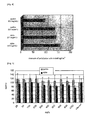
- FIG. 3 shows the evaluation of viable A549 cell counts on a cell culture device coated with polylysine salt.
- FIG. 4 shows the amount of polylysine salt absorbed on the cell culture device coated with polylysine salt.
- FIG. 5 shows the viability of A549 cells after treatment with polylysine salt solution, evaluated using Cell Counting Kit-8.
- FIG. 6 shows a neurocyte culture on a cell culture device according to the invention (non-dried glass).
- FIG. 7 shows still another A549 cell culture on a cell culture device according to the invention (plastic dish).
- FIG. 8 shows a HeLa D98 cell culture on a cell culture device according to the invention (plastic plate).
- FIG. 9 shows a primary neuron culture on a cell culture device according to the invention (dried glass).
- the cell culture device possesses a substrate coating of at least one of ⁇ -poly-L-lysine (“ ⁇ -polylysine” hereinafter), further polymerized derivatives of ⁇ -poly-L-lysine and their salts.
- the coating may cover a part of or the whole surface, provided that the portion of the surface used for cell culture is covered.
- the substrate of the device may consist of any material provided it possesses no cytotoxicity and is water-resistant and suitable for cell culture.
- materials include glasses and synthetic resins; they should preferably be transparent with respect to the wavelengths (visible or UV) used for observation, taking particularly into account application in fluorescent microscopy.
- transparent non-glass materials include polystyrenes, polycarbonates, polyesters, TPX resins (methylpentene polymers), and acrylics; those of opaque non-glass materials include polypropylenes, polyethylenes, and ABS resins.
- the substrate may have any shape including, as examples, a plate, bead, fiber or porous body.
- ⁇ -Polylysine may be manufactured in any appropriate process. For example, it may be chemically synthesized from lysine, but the synthetic process is difficult and the product is very expensive. A practical process is given in JP 1245361, according to which ⁇ -polylysine is separated from the product obtained by culturing Streptomyces albulus ssp.
- lysinopolymerus in a medium adjusted to pH 6.8 consisting 5 wt % glucose, 0.5 wt % yeast extract, 1 wt % ammonium sulfate, 0.08 wt % dipotassium hydrogen phosphate, 0.136 wt % potassium dihydrogen phosphate, 0.05 wt % magnesium sulfate heptahydrate, 0.004 wt % zinc sulfate heptahydrate, and 0.03 wt % iron sulfate heptahydrate.
- polymerized ⁇ -polylysine are compounds derived from the polymerization of ⁇ -polylysine as a repeating unit.
- Manufacturing methods of the polymerized ⁇ -polylysine include, for example, treatment with radiation described in Japan patent publication No. 3502879 and treatment with a cross-linking agent described in Japan unexamined patent publication No. 2003-171464.
- Simplified and straightforward manufacturing methods of polymerized ⁇ -polylysine include, for example, the method described in Japan unexamined patent publication No. 2003-171463, wherein ⁇ -polylysine undergoes dehydration-condensation by heat treatment at 150° C. or higher in an inert gas or vacuum.
- the resultant average molecular weight of polymerized ⁇ -polylysine can be controlled by adjusting the temperature and/or time of treatment, with both the higher temperature and the longer treatment times resulting in higher average molecular weight.
- the polymerized ⁇ -polylysine manufactured in such methods tends to possess a broader molecular weight distribution and thus appropriate fractionation methods including gel filtration in order to obtain a fraction with the desired molecular weight.
- polymerized ⁇ -polylysine used in the invention may have a wide range of number average molecular weight, while the molecular weight 8,000 to 100,000 is preferable for stable manufacturing.
- molecular weights of ⁇ -polylysine, polymerized ⁇ -polylysine and their salts are determined by SDS-polyacrylamide gel electrophoresis.
- Examples of the ⁇ -polylysine or polymerized ⁇ -polylysine salts used in the invention include: inorganic salts formed by reacting ⁇ -polylysine or polymerized ⁇ -polylysine with inorganic acids such as hydrochloric acid, hydrobromic acid, sulfuric acid, or phosphoric acid; organic salts formed by reacting ⁇ -polylysine or polymerized ⁇ -polylysine with organic acids such as acetic acid, formic acid, propionic acid, fumaric acid, malic acid, citric acid, maleic acid, adipic acid, gluconic acid, or lactic acid; saturated fatty acid salts formed by reacting ⁇ -polylysine or polymerized ⁇ -polylysine with medium- or long-chain saturated fatty acids such as capric acid, lauric acid, or stearic acid; and unsaturated fatty acid salts formed by reacting ⁇ -polylysine or polymerized ⁇
- the amount of at least one of ⁇ -polylysine, polymerized ⁇ -polylysine and their salts (sometimes refered to simply as “ ⁇ -polylysines” hereinafter) used in coating of the substrate surface should preferably be 1 ng/cm 2 -500 ⁇ g/cm 2 , or more desirably 5 ng/cm 2 -5 ⁇ g/cm 2 , or still more desirably 10-500 ng/cm 2 . These amounts of the coating material ensure suitable conditions for culture of adhesive cells.
- the cell culture device may be used for primary culture or subculture of any cells, including adhesive cells such as fibroblasts, smooth muscle cells, blood vessel endothelial cells, corneal cells, chondrocytes, hepatocytes, small intestine epithelial cells, epidermal keratosic cells, osteoblasts, medullary mesenchymal cells, embryonic stem cells, adult stem cells, neuroblasts and neurocytes, and floating cells such as blood cells.
- adhesive cells such as fibroblasts, smooth muscle cells, blood vessel endothelial cells, corneal cells, chondrocytes, hepatocytes, small intestine epithelial cells, epidermal keratosic cells, osteoblasts, medullary mesenchymal cells, embryonic stem cells, adult stem cells, neuroblasts and neurocytes, and floating cells such as blood cells.
- a cell suspension and a liquid culture medium e.g. DME, D-MEM, MEM, HamF12, or HamF10 medium
- a liquid culture medium e.g. DME, D-MEM, MEM, HamF12, or HamF10 medium
- Culture conditions suitable for particular cells can be selected.
- the manufacturing process of the cell culture device of the invention involves a step that brings the culture surface into contact with an ⁇ -polylysine solution.
- Any solvent may be used to prepare the ⁇ -polylysine solution provided it dissolves the substance without any alteration.
- the solvent include water, methanol, ethanol-water mixture, isopropanol-water mixture, phosphate buffer solution, borate buffer solution, or a mixture thereof.
- a borate buffer solution is particularly preferable for coating onto glass.
- a method of contacting the culture surface of the device of the invention with the ⁇ -polylysines solution includes spin coating, bar coating or any other known coating process wherein the amount of the solution applied on the area is controlled. Although no drying process is required before the start of cell culture, a drying step at room temperature (23° C.) to 150° C., according to the material composition of the substrate, may be included.
- a surface possessing a small culture area or complex geometrical shape that does not lend to uniform coating in a conventional process may be coated by dipping in the ⁇ -polylysines solution or by dropping the solution onto the area.
- the concentration of the solution should preferably be 1.0 ng/mL-20.0 mg/mL, or more desirably 1.0 ⁇ g/mL-10.0 mg/mL, or still more desirably, taking the solution cost and amount coated into consideration, 0.01-5.0 mg/mL.
- the contact period of the ⁇ -polylysines solution with the substrate surface may be selected as necessary; dipping for several minutes to several tens of minutes will suffice if the contact angle between the solution and the surface is 40 degrees or lower, while contact for a few hours is preferable if the contact angle exceeds 40 degrees. Contact for 12-24 hours is recommended for the culture of cells with poor adhesion.
- the amount of the ⁇ -polylysines solution applied on the substrate surface by removing excessive solution after the contact process.
- the excessive solution may be removed by washing the surface after the contact process.
- the washing medium is normally the same solvent as was used to prepare the ⁇ -polylysines solution, but sterilized water or ultrapure water may also be used.
- a drying step at room temperature (23° C.) to 150° C., according to the material composition of the substrate may be included.
- ⁇ -polylysine solutions at concentrations of 0.2 mg/mL and 1.0 mg/mL were prepared by dissolving ⁇ -polylysine hydrochloride (hydrochloride salt of ⁇ -polylysine possessing a number average molecular weight of 4,000; manufactured by Chisso Corp.) in 0.1 M borate buffer solution.
- ⁇ -polylysine hydrochloride hydrochloride salt of ⁇ -polylysine possessing a number average molecular weight of 4,000; manufactured by Chisso Corp.
- a sheet of the coated cover glass manufactured above was crushed and transferred to a glass tube.
- the container used in crushing was thoroughly washed with 6 M HCl with 100 ⁇ L of 0.1% PhOH to ensure complete transfer.
- the glass tube was then centrifuged using a centrifuge with a swing-out rotor for 5 minutes at 2000 rpm before being sealed.
- the sealed glass tube was then heated in a dry sterilizer for acid hydrolysis: the temperature was raised to 120° C. in 30 minutes and held at that temperature for 5 minutes, then further heated to 150° C. in 20 minutes and held at the temperature for 2 hours. After being cooled down to room temperature (23° C.) the glass tube was opened to transfer the solution contained therein to an Eppendorf tube with filter (Millipore Ultrafree-MC 0.1- ⁇ m filter unit) using a Gilson Pipetman, the tube being thoroughly washed with 50 ⁇ L of sterilized ultrapure water for complete transfer. The Eppendorf tube then underwent centrifuging for 5 minutes at 2000 rpm and filtration. Lysine in the filtrate was quantified by an amino acid analyzer.
- the amount of polylysine salt applied on the cell culture surface was determined dividing the amount of polylysine salt calculated from the amount of the lysine by the surface area of the cover glass. The result showed that the amount of ⁇ -polylysine hydrochloride applied on the cell culture surface was 100 ng/cm 2 when the 0.2 mg/mL solution was used for coating, and 120 ng/cm 2 when the 1.0 mg/mL solution was used.
- Coated cover glass sheets were manufactured as in Example 1 except that ⁇ -polylysine hydrobromide (Wako Pure Chemical, number average molecular weight 15,000) was used instead of ⁇ -polylysine hydrochloride. Analysis demonstrated that the amount of ⁇ -polylysine hydrobromide applied on the cell culture surface was 130 ng/cm 2 and 160 ng/cm 2 , respectively.
- Example 1 and Comparative Example 1 Coated cover glass sheets manufactured as in Example 1 and Comparative Example 1 were placed in 3.5 cm plastic Petri dishes, to which 1 mL each of DME culture medium (containing 10% bovine embryonic serum) for A549 cells (human lung cancer cells, obtained from ATCC) was added. Then 1 mL each of A549 cell suspension (1 ⁇ 10 5 cells/well) was gradually added onto the cover glass. The cells were examined after 20 hours for adhesion and growth under a phase-contrast microscope. The micrographs shown in FIG. 1 clearly indicate higher adhesion and better expansion of the cells for Example 1 ( ⁇ -polylysines coating) than Comparative Example 1, demonstrating that the former is more favorable for cytoskeleton formation.
- DME culture medium containing 10% bovine embryonic serum
- A549 cells human lung cancer cells, obtained from ATCC
- ⁇ -polylysine solutions at concentrations of 0.2 mg/mL and 1.0 mg/mL were prepared by dissolving ⁇ -polylysine hydrochloride (hydrochloride salt of ⁇ -polylysine possessing a number average molecular weight of 4,000; manufactured by Chisso Corp.) in 0.1 M borate buffer solution.
- Sheets of cover glasses (18 mm, manufactured by Iwaki Glass) were placed in a 10 cm plastic Petri dish, to which 100% ethanol was added. The cover glass sheets were left to stand for 30 minutes at room temperature (23° C.) before being washed two times with ultrapure water (shaken for 10 minutes each time), and subsequently left to stand overnight at 23° C.
- Dry coated cover glass sheets were manufactured as in Example 2 except that ⁇ -polylysine hydrobromide (Wako Pure Chemical, number average molecular weight 15,000) was used instead of ⁇ -polylysine hydrochloride. Analysis demonstrated that the amount of ⁇ -polylysine hydrobromide applied on the cell culture surface was 135 ng/cm 2 and 150 ng/cm 2 , respectively.
- Example 2 The amounts applied on the cover glass sheets manufactured in Example 2 and Comparative Example 2 are compared in FIG. 4 .
- the amount per unit area is lower for ⁇ -polylysine hydrochloride than for the comparison. This result suggests that the high cell adhesion and low cytotoxicity of ⁇ -polylysines contribute to a coating showing enhanced cell adhesion of the device of the invention.
- Dry coated cover glass sheets manufactured as in Example 2 were, as in the cell culture experiment (1), placed in 3.5 cm plastic Petri dishes, to which 1 mL each of DME culture medium (containing 10% bovine embryonic serum) for A549 cells was added. Then 1 mL each of A549 cell suspension (1 ⁇ 10 5 cells/well) was gradually added onto the cover glass. The cells were examined after 20 hours for adhesion and growth under a phase-contrast microscope. The micrographs shown in FIG. 2 indicate that the drying step does not affect the performance of the device according to the invention coated with ⁇ -polylysines.
- Dry coated cover glass sheets manufactured in Example 2 and Comparative Example 2 were, as in the cell culture experiment (1), placed in 3.5 cm plastic Petri dishes, to which 1 mL each of DME culture medium (containing 10% bovine embryonic serum) for A549 cells was added. Then 1 mL each of A549 cell suspension (1 ⁇ 10 5 cells/well) was gradually added onto the cover glass.
- DME culture medium containing 10% bovine embryonic serum
- the cells were washed twice with 1 mL of 1 ⁇ PBS.
- the cover glass was then carefully lifted off from the Petri dish, avoiding any scratch on the surface, rinsed with 1 mL of 1 ⁇ PBS, and placed in a two-well culture chamber (Nunc Lab-Tek Chamber Slide 177380), to which 1.1 mL of new medium was added.
- 300 ⁇ L each of Cell Counting Kit-8 (Dojindo Laboratories) was added to each well, and the assembly was gently shaken for uniform mixing before being placed in a CO 2 incubator to culture for 2 hours at 37° C. 110 ⁇ L/well of the culture medium colored by the reaction with Cell Counting Kit-8 was transferred from the chamber to a 96-well plate.
- a plate reader (Thermo Labsystems Multiskan Ascent BIF) was used to measure absorbance at 450 nm and 620 nm and determine the viable cell count.
- the results shown in FIG. 3 clearly demonstrate that the cell culture device coated with ⁇ -polylysines (“epsilon”) according to Example 2 provides better cell adhesion than one coated with ⁇ -polylisine hydrobromide (“alpha”) according to Comparative Example 2.
- the cytotoxicity of ⁇ -polylysines, the coating material used in the invention, to A549 cells (human lung cancer cells, obtained from ATCC) was evaluated.
- the cytotoxicity to ⁇ -polylysine hydrochloride (Chisso Corp.) was compared with that to ⁇ -polylysine hydrobromide (Wako Pure Chemical, average molecular weight 15,000).
- A549 cells were seeded on a 96-well microplate at a density of 1 ⁇ 10 4 cells/well. After culturing overnight at 37° C. under 5% CO 2 using DME medium (containing 10% bovine embryonic serum), the medium was removed with an aspirator, and 40 ⁇ L each of fresh medium 1.25 times more concentrated as standard was added to each well. Finally 10 ⁇ L each of a polylysine salt solution that would eventually attain the specified concentration, and cultured at 37° C. for 3 hours.
- the medium was removed again by an aspirator, 100 ⁇ L/well of fresh medium was added, and culture continued for 46 hours.
- the medium was still once more replaced by 110 ⁇ L of fresh medium, 10 ⁇ L each of Cell Counting Kit-8 (Dojindo Laboratories) was added and continued to be cultured for 2 hours at 37° C. for color reaction.
- a plate reader (Thermo Labsystems Multiskan Ascent BIF) was used to determine the absorbance at 450 nm (with 650 nm as a reference) and calculate the viability of the cells. Results are shown in FIG. 5 .
- Two ⁇ -polylysine solutions at concentrations of 0.2 mg/mL and 1.0 mg/mL were prepared by dissolving ⁇ -polylysine hydrochloride (hydrochloride salt of ⁇ -polylysine possessing a number average molecular weight of 4,000; manufactured by Chisso Corp.) in 0.1 M borate buffer solution.
- ⁇ -polylysine hydrochloride hydrochloride salt of ⁇ -polylysine possessing a number average molecular weight of 4,000; manufactured by Chisso Corp.
- a 3.5 cm plastic dish Gibiner Bio-One polystyrene Petri dish, contact angle 65-70 degrees
- the dish was then dipped in 2 mL of the ⁇ -polylysine hydrochloride solution and left to stand overnight at room temperature (23° C.). After being washed with sterilized water twice (shaken for 2 hours each time), the dish was placed in a dry sterilizer and completely dried for 12 hours at 70° C. to obtain a coated plastic dish.
- the coating layer was dissolved by adding 6M HCl to the coated dish, covered with sealing tape, and heated in a dry sterilizer for an hour at 70° C. After allowing to cool, the HCl was completely transferred to a glass tube, to which 6M HCl and 20% PhOH solution were added so that 0.1% PhOH solution in 6M HCl is formed in the glass tube. The tube was then sealed using a gas burner, and heated in a dry sterilizer to allow acid hydrolysis: the temperature was raised to 120° C. in 30 minutes and held at that temperature for 5 minutes, then further heated to 150° C. in 20 minutes and held at the temperature for 2 hours.
- the glass tube After being cooled down to room temperature (23° C.) the glass tube was opened, and the opening was covered with Parafilm, in which two holes were pierced using an injection needle. The tube was then placed in a desiccator for removal of the HCl under reduced pressure. Amino acids were dissolved by adding 100 ⁇ L of 0.02 M HCl. The solution was dripped into an Eppendorf tube with filter (Millipore Ultrafree-MC 0.1- ⁇ m filter unit), and the tube was additionally washed with 50 ⁇ L of 0.02 M HCl for complete transfer of the solution to the filter. The total amount of HCl used for dissolution was 150 ⁇ L. The Eppendorf tube then underwent centrifugation for 5 minutes at 2000 rpm and filtration.
- Lysine in the filtrate was quantified by an amino acid analyzer.
- the amount of polylysine salt applied on the cell culture surface was determined dividing the amount of polylysine salt calculated from the amount of the lysine by the surface area of the plastic dish. The result showed that the amount of ⁇ -polylysine hydrochloride applied on the cell culture surface was 70 ng/cm 2 when the 0.2 mg/mL solution was used for coating, and 135 ng/cm 2 when the 1.0 mg/mL solution was used.
- a dry coated plastic dish was manufactured as in Example 3 with the exception that a-polylysine hydrobromide (Wako Pure Chemical, number average molecular weight 15,000) was used instead of ⁇ -polylysine hydrochloride. Analysis demonstrated that the amount of ⁇ -polylysine hydrobromide coated was 50 ng/cm 2 and 110 ng/cm 2 , respectively.
- A549 cells human lung cancer cells, obtained from ATCC
- DME culture medium containing 10% bovine embryonic serum
- A549 cells human lung cancer cells, obtained from ATCC
- Two ⁇ -polylysine solutions at concentrations of 0.2 mg/mL and 1.0 mg/mL were prepared by dissolving ⁇ -polylysine hydrochloride (hydrochloride salt of ⁇ -polylysine possessing a number average molecular weight of 4,000; manufactured by Chisso Corp.) in 0.1 M borate buffer solution.
- ⁇ -polylysine hydrochloride hydrochloride salt of ⁇ -polylysine possessing a number average molecular weight of 4,000; manufactured by Chisso Corp.
- a 24-well plastic plate (Falcon non-treated polystyrene plate, contact angle 80-84 degrees) was filled with 100% ethanol and left to stand for 30 minutes at room temperature (23° C.) before being washed with ultrapure water twice (shaken for 10 minutes each time).
- the plate was then dipped in 1 mL of said ⁇ -polylysine hydrochloride solution and left to stand overnight at room temperature (23° C.). After being washed with sterilized water twice (shaken for 2 hours each time), the plate was placed in a dry sterilizer and completely dried for 12 hours at 70° C. to obtain a coated plastic plate.
- a dry coated plastic plate was manufactured as in Example 4 except that ⁇ -polylysine hydrobromide (Wako Pure Chemical, number average molecular weight 15,000) was used instead of ⁇ -polylysine hydrochloride. Analysis demonstrated that the amount of ⁇ -polylysine hydrobromide coated was 35 ng/cm 2 and 100 ng/cm 2 from 0.2 mg/mL and 1.0 mg/mL of the solution, respectively.
- ⁇ -polylysine possessing a number average molecular weight of 4,000 manufactured by Chisso Corp.
- a glass microtube was placed into a glass microtube, and underwent dehydration-condensation in a vacuum at 185° C. for 40 minutes using a glass tube oven (manufactured by Sibata Scientific Technology Ltd., GTO-350-RD).
- Polymerized ⁇ -polylysine was obtained, and was confirmed to possess a molecular weight 20,000 to 70,000 by SDS-polyacrylamide gel electrophoresis.
- Two polymerized ⁇ -polylysine solutions at concentrations of 0.05 mg/mL and 0.2 mg/mL were prepared by dissolving polymerized ⁇ -polylysine prepared as in Example 5 in 0.1 M borate buffer solution.
- Sheets of round cover glasses (12 mm, manufactured by Matsunami Glass Ind., Ltd.) were placed in a 10 cm plastic Petri dish, to which approximately 15 mL of 100% ethanol was added.
- the cover glass sheets were left to stand for 30 minutes at room temperature (23° C.) before being washed two times with ultrapure water (shaken for 10 minutes each time), and subsequently placed in a 24-well plate (Falcon non-treated polystyrene plate) and left to stand for 20 hours at 23° C.
- Dry coated cover glass sheets were manufactured as in Example 5 except that ⁇ -polylysine hydrochloride (hydrochloride salt of ⁇ -polylysine having number average molecular weight 4,000; manufactured by Chisso Corp.) was used instead of the polymerized ⁇ -polylysine.
- the amount of ⁇ -polylysine hydrochloride applied was determined as in Example 1.
- the amount of ⁇ -polylysine hydrochloride applied on the cell culture surface was 610 ng/cm 2 and 920 ng/cm 2 , respectively.
- Example 5 One (1) milliliter per well of a suspension of primary Rat cerebral cortex-derived neurons, containing 2 ⁇ 10 4 cells/mL, was added to dry coated cover glass sheets prepared as in Example 5 and Example 6. Cells were cultured at 37° C., and adhesion of the cultured cells and growth of the axons were observed under a phase-contrast microscope on day 10 and day 20. Results shown in FIG. 9 indicate that the ⁇ -polylysine coating provides better cell adhesion and axon networking than the polymerized ⁇ -polylysine coating on day 10 , while the polymerized ⁇ -polylysine coating provides better cell adhesion and axon networking on day 20 in contrast that coating with ⁇ -polylysine hydrochloride. The polymerized ⁇ -polylysine coating is thus shown to be suitable for cell adhesion and axon networking where neurons are cultured for the long term.
Landscapes
- Life Sciences & Earth Sciences (AREA)
- Engineering & Computer Science (AREA)
- Health & Medical Sciences (AREA)
- Bioinformatics & Cheminformatics (AREA)
- Chemical & Material Sciences (AREA)
- Zoology (AREA)
- Organic Chemistry (AREA)
- Wood Science & Technology (AREA)
- Biomedical Technology (AREA)
- Biotechnology (AREA)
- Genetics & Genomics (AREA)
- General Health & Medical Sciences (AREA)
- Biochemistry (AREA)
- General Engineering & Computer Science (AREA)
- Microbiology (AREA)
- Cell Biology (AREA)
- Sustainable Development (AREA)
- Virology (AREA)
- Medicinal Chemistry (AREA)
- Apparatus Associated With Microorganisms And Enzymes (AREA)
- Micro-Organisms Or Cultivation Processes Thereof (AREA)
Abstract
Description
Claims (12)
Applications Claiming Priority (6)
| Application Number | Priority Date | Filing Date | Title |
|---|---|---|---|
| JP2004-215747 | 2004-07-23 | ||
| JP2004215747 | 2004-07-23 | ||
| JP2005044380A JP2006055157A (en) | 2004-07-23 | 2005-02-21 | Cell culture device and method for producing the same |
| JP2005-44380 | 2005-02-21 | ||
| JP2005205404A JP4837317B2 (en) | 2005-07-14 | 2005-07-14 | Cell culture device and method for producing the same |
| JP2005-205404 | 2005-07-14 |
Publications (2)
| Publication Number | Publication Date |
|---|---|
| US20060019378A1 US20060019378A1 (en) | 2006-01-26 |
| US10150945B2 true US10150945B2 (en) | 2018-12-11 |
Family
ID=34976429
Family Applications (1)
| Application Number | Title | Priority Date | Filing Date |
|---|---|---|---|
| US11/187,621 Active 2030-02-16 US10150945B2 (en) | 2004-07-23 | 2005-07-21 | Cell culture device and manufacturing method therof |
Country Status (2)
| Country | Link |
|---|---|
| US (1) | US10150945B2 (en) |
| GB (1) | GB2416543B (en) |
Families Citing this family (7)
| Publication number | Priority date | Publication date | Assignee | Title |
|---|---|---|---|---|
| US20060281168A1 (en) | 2005-06-13 | 2006-12-14 | Tosoh Corporation | Cell fusion chamber, cell fusion device, and method for cell fusion using the same |
| WO2009057802A1 (en) * | 2007-11-01 | 2009-05-07 | Osaka City University | β-1,3-GLUCAN-DERIVED POLYALDEHYDE/POLYAMINE HYDROGEL |
| JP2009151022A (en) * | 2007-12-19 | 2009-07-09 | Olympus Corp | Fluorescence observation or fluorescence photometry system and method using optical base material having low autofluorescence and good adhesive property to cell |
| US20090246864A1 (en) * | 2008-03-14 | 2009-10-01 | Szlosek Paul M | Cell culture device and methods for manufacturing and using the cell culture device |
| JP2009273459A (en) * | 2008-04-15 | 2009-11-26 | Tosoh Corp | Cell selection apparatus, and cell selection method using the same |
| US10753892B2 (en) * | 2013-04-19 | 2020-08-25 | The Johns Hopkins University | Non-invasive sensing of free metal ions using ion chemical exchange saturation transfer |
| JPWO2019189758A1 (en) * | 2018-03-30 | 2021-04-01 | 味の素株式会社 | A composition for promoting cell growth, which comprises a polylysine analog. |
Citations (6)
| Publication number | Priority date | Publication date | Assignee | Title |
|---|---|---|---|---|
| EP0599652A2 (en) | 1992-11-25 | 1994-06-01 | Chisso Corporation | Enzyme reaction stabilizers and enzyme preservatives |
| JPH06181740A (en) | 1992-09-17 | 1994-07-05 | Sumitomo Bakelite Co Ltd | Culture vessel and its production |
| US20020128234A1 (en) * | 1999-04-28 | 2002-09-12 | Hubbell Jeffrey A. | Multifunctional polymeric surface coatings in analytic and sensor devices |
| US6528514B1 (en) * | 1998-03-11 | 2003-03-04 | Welfide Corporation | IgE antibody production inhibitors and autoimmune diseases inhibitors |
| JP2003171463A (en) * | 2001-12-06 | 2003-06-20 | Chisso Corp | Polylysine and method for producing the same |
| US20030223996A1 (en) * | 2000-06-16 | 2003-12-04 | Ruben Steven M. | Antibodies that immunospecifically bind to BLyS |
-
2005
- 2005-07-21 US US11/187,621 patent/US10150945B2/en active Active
- 2005-07-22 GB GB0515121A patent/GB2416543B/en not_active Expired - Fee Related
Patent Citations (7)
| Publication number | Priority date | Publication date | Assignee | Title |
|---|---|---|---|---|
| JPH06181740A (en) | 1992-09-17 | 1994-07-05 | Sumitomo Bakelite Co Ltd | Culture vessel and its production |
| EP0599652A2 (en) | 1992-11-25 | 1994-06-01 | Chisso Corporation | Enzyme reaction stabilizers and enzyme preservatives |
| US5674726A (en) * | 1992-11-25 | 1997-10-07 | Chisso Corporation | Enzyme stabilization with poly-L-lysine |
| US6528514B1 (en) * | 1998-03-11 | 2003-03-04 | Welfide Corporation | IgE antibody production inhibitors and autoimmune diseases inhibitors |
| US20020128234A1 (en) * | 1999-04-28 | 2002-09-12 | Hubbell Jeffrey A. | Multifunctional polymeric surface coatings in analytic and sensor devices |
| US20030223996A1 (en) * | 2000-06-16 | 2003-12-04 | Ruben Steven M. | Antibodies that immunospecifically bind to BLyS |
| JP2003171463A (en) * | 2001-12-06 | 2003-06-20 | Chisso Corp | Polylysine and method for producing the same |
Non-Patent Citations (3)
| Title |
|---|
| "Laminin-1 peptide-conjugated chitosan membranes as a novel approach for cell engineeringI " Mayumi Mochizuki et al. / The FASEB Journal, vol. 17, May 2003 / p. 875-877. |
| "Transfection by Polyethyleneimine-Coated Microspheres" William S. Manuel et al. / Journal of Drug Targeting, 2001, vol. 9 No. 1 / pp. 15-22. |
| Machine translation of JP2003-171463 A (translated on Apr. 1, 2011). * |
Also Published As
| Publication number | Publication date |
|---|---|
| GB0515121D0 (en) | 2005-08-31 |
| GB2416543B (en) | 2009-01-07 |
| GB2416543A (en) | 2006-02-01 |
| US20060019378A1 (en) | 2006-01-26 |
Similar Documents
| Publication | Publication Date | Title |
|---|---|---|
| EP0914835B1 (en) | Biocompatible polymeric coatings | |
| US8557583B2 (en) | Cell culture support and manufacture thereof | |
| Chen et al. | Control of cell attachment on pH-responsive chitosan surface by precise adjustment of medium pH | |
| AU614747B2 (en) | Cell culture of anchorage dependent cells, materials and products | |
| US9206391B2 (en) | Method for preparing biological tissue | |
| EP0529751A1 (en) | Cell culture substrate, test material for cell culture and preparations thereof | |
| WO2018116904A1 (en) | Cell culture substrate | |
| US10150945B2 (en) | Cell culture device and manufacturing method therof | |
| US20100273260A1 (en) | Cell culture substrate and process for producing the same and method for culturing cells | |
| JPH11164685A (en) | Methods for increasing the stability and / or shelf life of various substrates | |
| Liu et al. | Cell attachment and detachment on micropattern-immobilized poly (N-isopropylacrylamide) with gelatin | |
| JP4837317B2 (en) | Cell culture device and method for producing the same | |
| Woerly et al. | Synthetic polymer derivatives as substrata for neuronal adhesion and growth | |
| Yang et al. | Preparation of poly (acrylic acid) modified polyurethane membrane for biomaterial by UV radiation without degassing | |
| JPS63196281A (en) | Substrate for cell culture | |
| JP6229503B2 (en) | Temperature-responsive cell culture substrate and method for producing the same | |
| CN113265032A (en) | Preparation method and application of polyacrylamide modified temperature-sensitive copolymer | |
| JP2006055157A (en) | Cell culture device and method for producing the same | |
| JPH08173144A (en) | Laminin-coated cell incubator and its production | |
| JPH06153905A (en) | Cell culture base and method for cell culture | |
| WO2023282253A1 (en) | Cell culture base material for serum-free medium | |
| US20220186179A1 (en) | Method for separating cells using a stimulus-responsive polymer | |
| JPS63196285A (en) | Substrate for cell culture | |
| JP2002142752A (en) | Collagen-coated cell culture vessel and method for producing the same | |
| EP0080384B1 (en) | A bed for culturing biological cells and a culture method employing said bed |
Legal Events
| Date | Code | Title | Description |
|---|---|---|---|
| AS | Assignment |
Owner name: NAGASAKI, TAKESHI, JAPAN Free format text: ASSIGNMENT OF ASSIGNORS INTEREST;ASSIGNORS:NAGASAKI, TAKESHI;SHINKAI, SEIJI;UNO, ATSUSHI;REEL/FRAME:016644/0478 Effective date: 20050809 Owner name: CHISSO CORPORATION, JAPAN Free format text: ASSIGNMENT OF ASSIGNORS INTEREST;ASSIGNORS:NAGASAKI, TAKESHI;SHINKAI, SEIJI;UNO, ATSUSHI;REEL/FRAME:016644/0478 Effective date: 20050809 |
|
| AS | Assignment |
Owner name: JNC CORPORATION, JAPAN Free format text: ASSIGNMENT OF ASSIGNORS INTEREST;ASSIGNOR:CHISSO CORPORATION;REEL/FRAME:026207/0653 Effective date: 20110412 |
|
| STCF | Information on status: patent grant |
Free format text: PATENTED CASE |
|
| MAFP | Maintenance fee payment |
Free format text: PAYMENT OF MAINTENANCE FEE, 4TH YEAR, LARGE ENTITY (ORIGINAL EVENT CODE: M1551); ENTITY STATUS OF PATENT OWNER: LARGE ENTITY Year of fee payment: 4 |