TWI862163B - Speaker system and automatic tuning method thereof - Google Patents
Speaker system and automatic tuning method thereof Download PDFInfo
- Publication number
- TWI862163B TWI862163B TW112134845A TW112134845A TWI862163B TW I862163 B TWI862163 B TW I862163B TW 112134845 A TW112134845 A TW 112134845A TW 112134845 A TW112134845 A TW 112134845A TW I862163 B TWI862163 B TW I862163B
- Authority
- TW
- Taiwan
- Prior art keywords
- sound
- audio signal
- signal
- preset
- strength
- Prior art date
Links
Images



Landscapes
- Circuit For Audible Band Transducer (AREA)
Abstract
Description
本發明係關於一種揚聲系統及其自動調音方法,特別是關於一種具有兩揚聲裝置的揚聲系統及其自動調音方法。 The present invention relates to a speaker system and an automatic tuning method thereof, and in particular to a speaker system having two speaker devices and an automatic tuning method thereof.
目前針對學校教室的室內空間,其音訊設備普遍放置於該環境的某一區域,而通常只有1至2個喇叭置於教室的前、後方的位置,因此無論放置的高度為何皆會造成每位聽講者接收音量不一致的問題。此時,需要透過中控(電腦主機或擴大機)去調整聲量大小,但由於擴大機只有一個,無論喇叭的數量多寡,都只能對一個訊號源做相同音量的調整,依然無法達到區域音量統一的目的。 Currently, audio equipment in school classrooms is generally placed in a certain area of the environment, and usually only 1 to 2 speakers are placed at the front and back of the classroom. Therefore, no matter how high they are placed, each listener will receive inconsistent volume. At this time, the volume needs to be adjusted through the central control (computer host or amplifier), but since there is only one amplifier, no matter how many speakers there are, only one signal source can be adjusted to the same volume, and the purpose of regional volume unification cannot be achieved.
鑒於上述,本發明提供一種揚聲系統及其自動調音方法。 In view of the above, the present invention provides a speaker system and an automatic tuning method thereof.
依據本發明一實施例的揚聲系統,包含一第一揚聲裝置及一第二揚聲裝置。第一揚聲裝置包含一第一聲音輸出元件,用於受一擴大機或一控制主機的一第一音頻訊號控制以輸出一第一聲音。第二揚聲裝置包含一第二聲音輸出元件、一收音元件及一比較控制電路。第二聲音輸出元件用於受一第二音頻訊號控制以輸出一第二聲音。收音元件用於進行收音以產生關聯於所述第一聲音及第二聲音的一收音訊號。比 較控制電路電性連接於所述第二聲音輸出元件及收音元件,且用於取得所述第一音頻訊號,比較收音訊號的強度及至少一預設強度以產生一調音倍率,並根據調音倍率調製所取得的第一音頻訊號以更新第二音頻訊號。 According to an embodiment of the present invention, a speaker system includes a first speaker device and a second speaker device. The first speaker device includes a first sound output element, which is used to be controlled by a first audio signal of an amplifier or a control host to output a first sound. The second speaker device includes a second sound output element, a sound receiving element and a comparison control circuit. The second sound output element is used to be controlled by a second audio signal to output a second sound. The sound receiving element is used to receive sound to generate a sound receiving signal related to the first sound and the second sound. The comparison control circuit is electrically connected to the second sound output element and the sound receiving element, and is used to obtain the first audio signal, compare the strength of the sound receiving signal with at least one preset strength to generate a tuning factor, and modulate the obtained first audio signal according to the tuning factor to update the second audio signal.
依據本發明一實施例的揚聲系統的自動調音方法,包含:透過一擴大機或一控制主機,以一第一音頻訊號控制一第一聲音輸出元件輸出一第一聲音;以一第二音頻訊號控制一第二聲音輸出元件輸出一第二聲音;進行收音以產生關聯於所述第一聲音及第二聲音的一收音訊號;比較所述收音訊號的強度及所述至少一預設強度以產生一調音倍率;以及根據所述調音倍率調製所取得的第一音頻訊號以更新控制所述第二聲音輸出元件的所述第二音頻訊號。 According to an embodiment of the present invention, an automatic tuning method for a loudspeaker system includes: controlling a first sound output element to output a first sound with a first audio signal through an amplifier or a control host; controlling a second sound output element to output a second sound with a second audio signal; performing sound reception to generate a reception signal related to the first sound and the second sound; comparing the strength of the reception signal with the at least one preset strength to generate a tuning factor; and modulating the obtained first audio signal according to the tuning factor to update the second audio signal that controls the second sound output element.
藉由上述結構,本案所揭示的揚聲系統及其自動調音方法,可以透過以收音元件對主揚聲器與至少一副揚聲器的聲音進行收音及分析的方式,來對副揚聲器的音量進行調節,即透過收音元件將接收到的收音訊號與目標訊號的強度進行比較並做出適當的補償,讓使用者可以只需將主揚聲器的音量調整至固定大小便可讓副揚聲器輸出合適的音量,而不需額外調整副揚聲器的音量。據此,可以依比較結果以動態調整的方式實時取得適當的調音倍率,使區域音量達到預期的均衡效果。 With the above structure, the speaker system and automatic tuning method disclosed in this case can adjust the volume of the secondary speaker by using a sound receiving element to receive and analyze the sound of the main speaker and at least one secondary speaker, that is, the sound receiving element compares the strength of the received sound signal with the target signal and makes appropriate compensation, so that the user can adjust the volume of the main speaker to a fixed level to make the secondary speaker output an appropriate volume without additionally adjusting the volume of the secondary speaker. Accordingly, the appropriate tuning ratio can be obtained in real time by dynamic adjustment according to the comparison result, so that the regional volume can achieve the expected balanced effect.
以上之關於本揭露內容之說明及以下之實施方式之說明係用以示範與解釋本發明之精神與原理,並且提供本發明之專利申請範圍更進一步之解釋。 The above description of the disclosed content and the following description of the implementation method are used to demonstrate and explain the spirit and principle of the present invention, and provide a further explanation of the scope of the patent application of the present invention.
100,100’:揚聲系統 100,100’:Speaker system
1:第一揚聲裝置 1: First speaker device
11:第一聲音輸出元件 11: First sound output element
2,2’:第二揚聲裝置 2,2’: Second speaker
21:第二聲音輸出元件 21: Second sound output element
22:收音元件 22: Radio components
23比較控制電路 23Comparison control circuit
23a:比較子電路 23a: Comparison of subcircuits
23b:放大器 23b: Amplifier
24:音訊處理電路 24: Audio processing circuit
200:控制主機 200: Control host
S1-S9,S71-S72,S71’-S73’,S61-S63:步驟 S1-S9, S71-S72, S71’-S73’, S61-S63: Steps
圖1係依據本發明一實施例所繪示的揚聲系統的方塊圖。 FIG1 is a block diagram of a speaker system according to an embodiment of the present invention.
圖2係依據本發明一實施例所繪示的自動調音方法的流程圖。 Figure 2 is a flow chart of an automatic tuning method according to an embodiment of the present invention.
圖3係依據本發明一實施例所繪示的自動調音方法的產生調音倍率的步驟的流程圖。 FIG3 is a flow chart of the steps of generating tuning magnifications in an automatic tuning method according to an embodiment of the present invention.
圖4係依據本發明另一實施例所繪示的自動調音方法的產生調音倍率的步驟的流程圖。 FIG4 is a flow chart of the steps of generating tuning magnifications in an automatic tuning method according to another embodiment of the present invention.
圖5係依據本發明另一實施例所繪示的揚聲系統的方塊圖。 FIG5 is a block diagram of a speaker system according to another embodiment of the present invention.
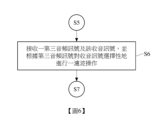
圖6係依據本發明另一實施例所繪示的自動調音方法的流程圖。 FIG6 is a flow chart of an automatic tuning method according to another embodiment of the present invention.
圖7係依據本發明圖6實施例所繪示的自動調音方法的濾波操作的步驟的流程圖。 FIG. 7 is a flow chart of the steps of the filtering operation of the automatic tuning method according to the embodiment of FIG. 6 of the present invention.
以下在實施方式中詳細敘述本發明之詳細特徵以及優點,其內容足以使任何熟習相關技藝者了解本發明之技術內容並據以實施,且根據本說明書所揭露之內容、申請專利範圍及圖式,任何熟習相關技藝者可輕易地理解本發明相關之目的及優點。以下之實施例係進一步詳細說明本發明之觀點,但非以任何觀點限制本發明之範疇。 The detailed features and advantages of the present invention are described in detail in the following implementation method. The content is sufficient for anyone familiar with the relevant technology to understand the technical content of the present invention and implement it accordingly. According to the content disclosed in this specification, the scope of the patent application and the drawings, anyone familiar with the relevant technology can easily understand the relevant purposes and advantages of the present invention. The following embodiments are to further illustrate the viewpoints of the present invention, but do not limit the scope of the present invention by any viewpoint.
請參考圖1,圖1係依據本發明一實施例所繪示的揚聲系統的方塊圖。如圖1所示,揚聲系統100包含一第一揚聲裝置1及一第二揚聲裝置2。第一揚聲裝置1包含一第一聲音輸出元件11,用於受一控制主機200的一第一音頻訊號(控制主機200傳輸之音頻訊號)控制以輸出
一第一聲音。第一音頻訊號包含聲音資料(audio information)。第二揚聲裝置2包含一第二聲音輸出元件21、一收音元件22及一比較控制電路23。第二聲音輸出元件21用於受一第二音頻訊號(根據第一音頻訊號調整之音頻訊號)控制以輸出一第二聲音。第二音頻訊號是經處理(例如依據調音倍率調整)的音頻訊號,其包含聲音資料。收音元件22用於進行收音以產生關聯於所述第一聲音及第二聲音的一收音訊號。比較控制電路23電性連接於第二聲音輸出元件21及收音元件22,且用於取得所述第一音頻訊號,比較收音訊號的強度及至少一預設強度以產生一調音倍率,並根據所述調音倍率調製所述取得的第一音頻訊號以更新第二音頻訊號。於此,圖1示例性地繪示揚聲系統100受控於控制主機200,而於其他實施例中,控制主機200可置換為其他音訊來源裝置,也就是說,第一音頻訊號也可透過其他音訊來源裝置產生,例如一擴大機。具體來說,控制主機200可為產生第一音頻訊號的裝置,而擴大機可為接收一音訊再進行擴大以產生第一音頻訊號的裝置,本案對於第一音頻訊號的各種音訊來源裝置並不加以限制。
Please refer to FIG. 1, which is a block diagram of a speaker system according to an embodiment of the present invention. As shown in FIG. 1, the
在本例中,第一揚聲裝置1及第二揚聲裝置2可共同連接並受控於一控制主機200,其中控制主機200可為電腦或音控設備,並以有線或無線方式(如藍牙、Wifi等)連接於第一揚聲裝置1及第二揚聲裝置2。在實體配置上,第一揚聲裝置1及第二揚聲裝置2可設置於一空間中(如一教室中)的不同位置。第一揚聲裝置1的第一聲音輸出元件11及第二揚聲裝置2的第二聲音輸出元件21可分別以揚聲器(喇叭)實現,其中第一聲音輸出元件11可視為一主揚聲器,第二聲音輸出元件21可視為
一副揚聲器。特別來說,第二揚聲裝置2不限於透過一殼體將第二收音輸出元件21、收音元件22及比較控制電路23涵蓋在同一腔體內。收音元件22可為收音麥克風,用於將接收到的聲音轉換為電子的收音訊號。
In this example, the
上述控制主機200、第一揚聲裝置1及第二揚聲裝置2更可包含或外接數位/類比轉換器及類比/數位轉換器中的一或二者。舉例而言,控制主機200所發出的第一音頻訊號可原為類比訊號,透過控制主機200所包含或外接的一類比/數位轉換器轉換為數位訊號,再透過第一揚聲裝置1所包含或外接的一數位/類比轉換器轉換為類比訊號後,傳送至第一聲音輸出元件11。第一音頻訊號被轉換為數位訊號後,經由第二揚聲裝置2的比較控制電路23調製而變為第二音頻訊號(數位訊號),再透過第二揚聲裝置2所包含或外接的一數位/類比轉換器轉為類比訊號後,傳送至第二聲音輸出元件21。另外,第二揚聲裝置2的收音元件22接收收音訊號後可透過第二揚聲裝置2所包含或外接的一類比/數位轉換器轉換為數位訊號再傳送至比較控制電路23。
The
進一步來說明比較控制電路23,其可包含一比較子電路23a及一放大器23b,用於執行揚聲系統100的自動調音的相關流程。比較子電路23a電性連接於收音元件22,用於比較該收音訊號的強度及該至少一預設強度以產生該調音倍率。放大器23b電性連接於比較子電路23a及第二聲音輸出元件21,用於根據該調音倍率調製第一音頻訊號以更新傳送至第二聲音輸出元件21的第二音頻訊號。更進一步來說,比較子電路23a可包含微控制器,其中微控制器用於執行前述比較強度的功能。
The
請參照圖2,圖2係依據本發明一實施例所繪示的自動調音方法的流程圖。如圖2所示,自動調音流程包含:步驟S1:以第一音頻訊號控制第一聲音輸出元件輸出第一聲音;步驟S3:以第二音頻訊號控制第二聲音輸出元件輸出第二聲音;步驟S5:進行收音以產生關聯於所述第一聲音及第二聲音的收音訊號;步驟S7:比較所述收音訊號的強度及至少一預設強度以產生一調音倍率;以及步驟S9:根據所述調音倍率調製第一音頻訊號以更新控制第二聲音輸出元件的第二音頻訊號。 Please refer to FIG. 2, which is a flow chart of an automatic tuning method according to an embodiment of the present invention. As shown in FIG. 2, the automatic tuning process includes: step S1: controlling the first sound output element to output the first sound with the first audio signal; step S3: controlling the second sound output element to output the second sound with the second audio signal; step S5: performing sound reception to generate a reception signal related to the first sound and the second sound; step S7: comparing the intensity of the reception signal with at least one preset intensity to generate a tuning factor; and step S9: modulating the first audio signal according to the tuning factor to update the second audio signal that controls the second sound output element.
請結合圖1及圖2參考以下描述。在步驟S1中,第一聲音輸出元件11受來自控制主機200的第一音頻訊號控制以輸出第一聲音;在步驟S3中,第二聲音輸出元件21受第二音頻訊號控制以輸出第二聲音,其中第一音頻訊號/第二音頻訊號的訊號值(強度)可對應於第一聲音/第二聲音的聲音強度。在尚未自動調音前,初始的第二音頻訊號可與來自控制主機200的音源訊號實質上相同,也就是說,此時第一聲音與第二聲音的聲音強度實質上相等。另外,步驟S1與S3之間沒有特定順序關係。在步驟S5中,收音元件22可對第一聲音輸出元件11及第二聲音輸出元件21所輸出的第一及第二聲音進行收音以產生一收音訊號。
Please refer to the following description in conjunction with FIG. 1 and FIG. 2. In step S1, the first
在步驟S7中,比較控制電路23可比較該收音訊號的強度及至少一預設強度以產生一調音倍率。調音倍率的初始值可例如為1倍,而當系統甫啟動時,比較控制電路23會根據具有初始值的調音倍率調製第一音頻訊號以產生初始的第二音頻訊號,即,初始的第二音頻訊號基本可與第一音頻訊號相同。之後,當比較控制電路23比較收音訊號的強度及至少一預設強度時,若判斷收音訊號的強度過低,可產生大於一倍
的調音倍率;反之,若判斷收音訊號的強度過高,可產生小於一倍的調音倍率。在步驟S9中,比較控制電路23可根據該調音倍率調製第一音頻訊號以更新控制第二聲音輸出元件21的第二音頻訊號,以達到調整第二揚聲裝置2的輸出音量的目的,進一步產生聲音均衡之效果。
In step S7, the
請進一步參考圖3,圖3係依據本發明一實施例所繪示的自動調音方法的產生調音倍率的步驟的流程圖。如圖3所示,本例的揚聲系統在執行如圖2所示的步驟S5與步驟S9之間所執行的產生調音倍率的步驟S7可包含步驟S71:判斷收音訊號的強度屬於預存的多個預設強度範圍中的一判定強度範圍;以及步驟S72:從預存的多個預設倍率中取得對應於該判定強度範圍的一者作為調音倍率。具體而言,在步驟S71中,比較控制電路可儲存多個預設強度範圍及分別對應於該些預設強度範圍的多個預設倍率,並將收音訊號的強度所對應的所述多個預設強度範圍的一者作為一判定強度範圍。在步驟S72中,比較控制電路可根據上述判定強度範圍來從該些預設倍率中取得對應於該判定強度範圍的一者作為該調音倍率。關於本例的預設強度範圍以及對應的預設倍率,可參考以下表1為例。 Please further refer to FIG. 3, which is a flow chart of the steps of generating a tuning magnification in an automatic tuning method according to an embodiment of the present invention. As shown in FIG. 3, the step S7 of generating a tuning magnification executed by the speaker system of this example between the steps S5 and S9 shown in FIG. 2 may include step S71: determining that the intensity of the received audio signal belongs to a determined intensity range among a plurality of pre-stored preset intensity ranges; and step S72: obtaining one of the pre-stored preset magnifications corresponding to the determined intensity range as the tuning magnification. Specifically, in step S71, the comparison control circuit can store multiple preset intensity ranges and multiple preset magnifications corresponding to the preset intensity ranges, and use one of the multiple preset intensity ranges corresponding to the intensity of the received signal as a determination intensity range. In step S72, the comparison control circuit can obtain one of the preset magnifications corresponding to the determination intensity range as the tuning magnification based on the above determination intensity range. For the preset intensity range and the corresponding preset magnification in this example, please refer to the following Table 1 as an example.
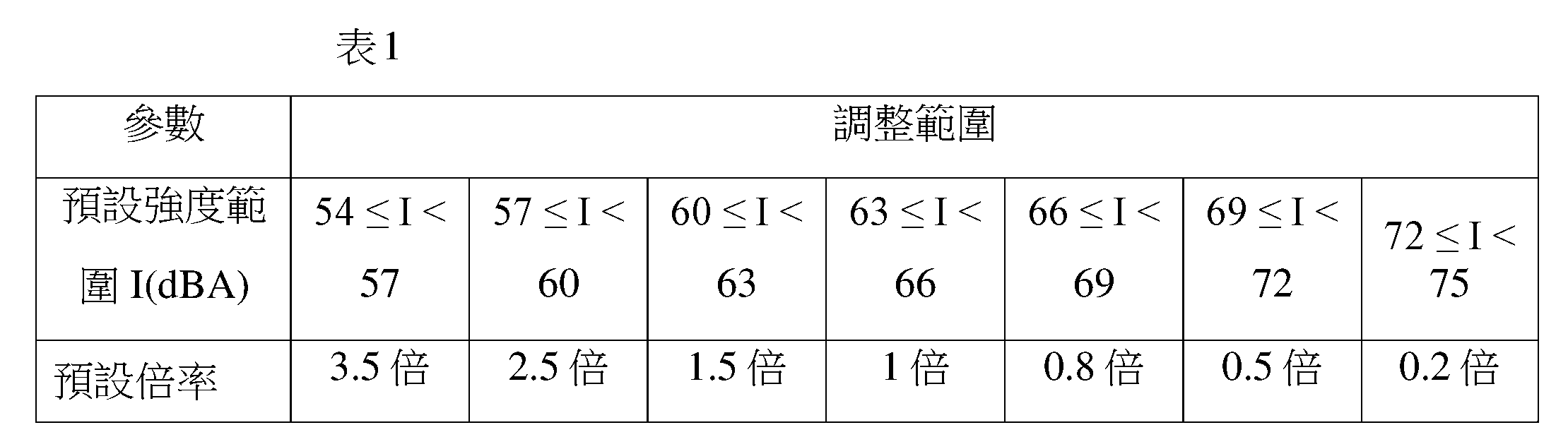
在本例中,圖1所示的比較控制電路23可包含儲存預設強度範圍與預設倍率之間的對應關係(如表1)的微控制器。或者,圖1所示的比較子電路23a的微處理器可儲存有預設強度範圍與預設倍率之間的對應關係。作為一例子,請參照表1,使用者可透過設定或選擇將大於或等於63且小於66分貝的聲音強度範圍定為一目標強度範圍。當收音元件接收的收音訊號的強度小於所述目標強度範圍時,比較控制電路可於步驟S71中判斷收音訊號的強度(如58分貝)屬於預設強度範圍中的一判定強度範圍(即,大於或等於57且小於60分貝),於步驟S72中從預設的多個預設倍率中取得對應的一者作為調音倍率(即,2.5倍)。透過上述步驟,比較控制電路可於步驟S9中,根據適當的調音倍率,調製第一音頻訊號以更新第二音頻訊號,以調整第二聲音輸出元件輸出的第二聲音的音量。上述表1適用於收音訊號的強度落在各種範圍的情況,即無論當收音訊號的強度大於或小於目標強度範圍時,比較控制電路皆可產生對應的調音倍率。
In this example, the
進一步,本案的自動調音方法可重複執行,以持續調整第二聲音輸出元件的輸出音量。而當收音訊號的強度已經落在目標強度範圍時,比較控制電路可產生一倍的預設倍率,使得調製後的第二音頻訊號的強度與調製前的強度相同而達成一穩定狀態。以上例而言,在以2.5倍的調音倍率調製而產生第二音頻訊號後,收音元件可持續進行收音。若此時收音訊號的強度已經落在目標強度範圍,則比較控制電路可在步驟S71中產生更新的調音倍率(1倍),並在步驟S72中以更新的調音倍率(1倍)乘上原本的調音倍率(2.5倍)以產生另一調音倍率(2.5倍),即維持 原本的調音倍率。透過上述方式,可以持續對第二聲音輸出元件的音量進行調整,並將收音元件接收到的聲音強度維持在目標強度範圍內。 Furthermore, the automatic tuning method of the present invention can be repeatedly executed to continuously adjust the output volume of the second sound output element. When the intensity of the received signal has fallen within the target intensity range, the comparison control circuit can generate a preset magnification of one, so that the intensity of the modulated second audio signal is the same as the intensity before modulation to achieve a stable state. In the above example, after the second audio signal is modulated at a 2.5-fold tuning magnification to generate the second audio signal, the receiving element can continue to receive the sound. If the intensity of the received signal has fallen within the target intensity range, the comparison control circuit can generate an updated tuning magnification (1x) in step S71, and multiply the updated tuning magnification (1x) by the original tuning magnification (2.5x) in step S72 to generate another tuning magnification (2.5x), that is, maintain the original tuning magnification. Through the above method, the volume of the second sound output element can be continuously adjusted, and the sound intensity received by the sound receiving element can be maintained within the target intensity range.
另外,本例的預設強度範圍以及對應的預設倍率也可以下表2及表3為例。 In addition, the default intensity range and the corresponding default magnification of this example can also be shown in Table 2 and Table 3 below.
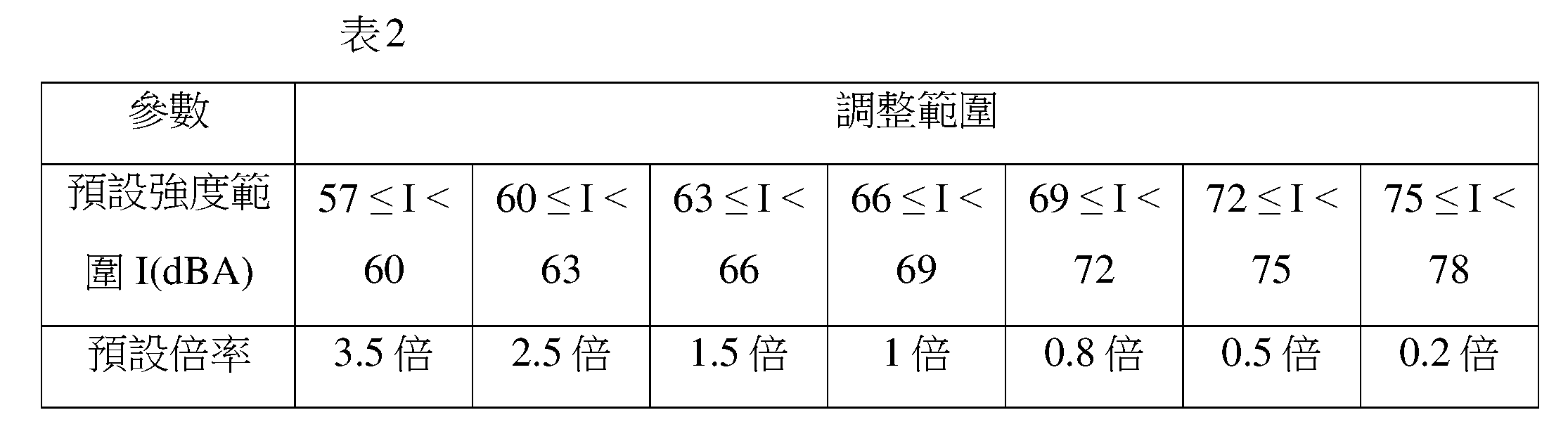

從以上表1至表3可以看出,本案的自動調音方法可以根據不同的目標強度範圍選擇預設強度範圍與預設倍率之間的關係。特別來說,比較控制電路可根據第一音頻訊號的強度決定所述至少一預設強度。舉例而言,當第一音頻訊號的強度對應於67分貝的音量時,比較控制電路可據此決定如表2所示的預設強度範圍及預設倍率。或者,當第一音頻訊號的強度對應於61分貝的音量時,比較控制電路可據此決定如表3所示的預設強度範圍及預設倍率。然而,在其他實施例中,比較控制電路也可不根據第一音頻訊號的強度決定所述至少一預設強度。舉例而言,當使用者希望場域內的聽眾可以均勻且穩定地聽到64分貝左右的音 量時,則可將比較控制電路設定為依照表1所示的強度-倍率關係來進行自動調音。或者,舉例而言,初始依照表1所示的強度-倍率關係來進行自動調音,之後當其中一個揚聲裝置移動,使得第一與第二揚聲裝置的距離改變時,可以參照表2或表3的所示的預設強度範圍及預設倍率調大或調小第二聲音的音量,使場域內的聽眾可以均勻且穩定地聽到適當大小的音量。也就是說,可依場域內聽眾的實際聽覺感受調整第二聲音的大小。 As can be seen from Tables 1 to 3 above, the automatic tuning method of the present case can select the relationship between the preset intensity range and the preset magnification according to different target intensity ranges. In particular, the comparison control circuit can determine the at least one preset intensity according to the intensity of the first audio signal. For example, when the intensity of the first audio signal corresponds to a volume of 67 decibels, the comparison control circuit can determine the preset intensity range and the preset magnification as shown in Table 2 accordingly. Alternatively, when the intensity of the first audio signal corresponds to a volume of 61 decibels, the comparison control circuit can determine the preset intensity range and the preset magnification as shown in Table 3 accordingly. However, in other embodiments, the comparison control circuit may not determine the at least one preset intensity according to the intensity of the first audio signal. For example, when the user wants the listeners in the field to hear a sound volume of about 64 decibels evenly and stably, the comparison control circuit can be set to perform automatic tuning according to the intensity-multiplier relationship shown in Table 1. Or, for example, the automatic tuning is initially performed according to the intensity-multiplier relationship shown in Table 1, and then when one of the speaker devices moves, causing the distance between the first and second speaker devices to change, the volume of the second sound can be increased or decreased with reference to the preset intensity range and preset multiplier shown in Table 2 or Table 3, so that the listeners in the field can hear the appropriate volume evenly and stably. In other words, the volume of the second sound can be adjusted according to the actual auditory perception of the listeners in the field.
前述根據預設強度來產生調音倍率的自動調音方法可能包含各種實施方式。請參考圖4,圖4係依據本發明另一實施例所繪示的自動調音方法的產生調音倍率的步驟的流程圖。如圖4所示,本例的揚聲系統在執行如圖2所示的步驟S5與步驟S9之間所執行的產生調音倍率的步驟S7可包含步驟S71’:取得多個預設差異值與多個預設倍率之間的一關係式;步驟S72’:比較收音訊號的強度與一目標強度之間的一差異值;以及步驟S73’:根據所述關係式決定所述收音訊號所對應的調音倍率。舉例而言,請參考以下表4。 The aforementioned automatic tuning method for generating a tuning factor according to a preset strength may include various implementations. Please refer to FIG. 4, which is a flow chart of the steps of generating a tuning factor of the automatic tuning method according to another embodiment of the present invention. As shown in FIG. 4, the step S7 of generating a tuning factor executed by the speaker system of this example between the steps S5 and S9 shown in FIG. 2 may include step S71': obtaining a relationship between a plurality of preset difference values and a plurality of preset factors; step S72': comparing a difference value between the strength of the received signal and a target strength; and step S73': determining the tuning factor corresponding to the received signal according to the relationship. For example, please refer to Table 4 below.
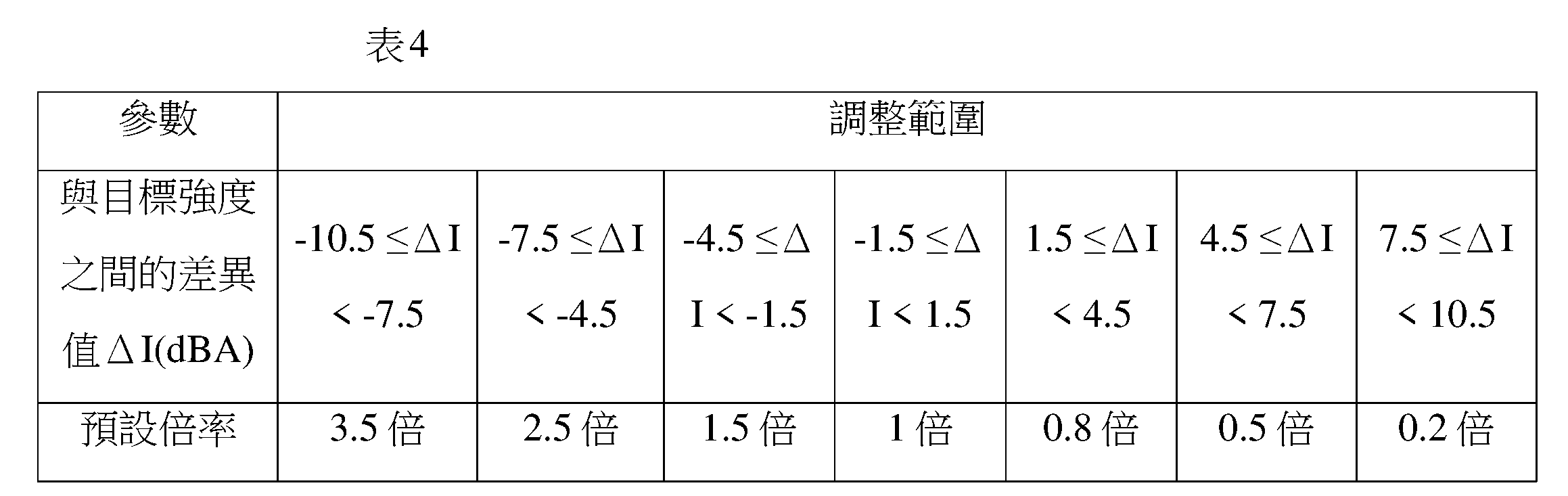
在步驟S71’中,比較控制電路可取得如表4所示的關係式。在步驟S72’中,比較控制電路可先取得一目標強度,並比較收音訊號的強度與目標強度之間的差異值。例如,目標強度為60分貝,收音訊號的強度為65分貝,則兩者的差異值為5分貝。在步驟S73’中,比較控制電路可根據上述關係式決定調音倍率。以前述舉例而言,5分貝的差異值對應於0.5倍的調音倍率。透過此方案,比較控制電路可根據收音訊號的強度於目標強度之間的差異來調整第二音頻訊號的強度,即第二聲音輸出元件的輸出音量大小。需要注意的是,無論是上述表1至表4的方案,其中各項參數都可因應實際需求而被調整,本案不予以限制。特別來說,上述預設倍率的數值可根據第一揚聲裝置與第二揚聲裝置之間的距離、設置的空間大小,或環境的開闊程度及回音狀況來做調整。另外,本例所描述的差異值不限於音訊強度之間的相減的差值或相除的比值,而應涵蓋廣義上的差異值。 In step S71', the comparison control circuit can obtain the relationship shown in Table 4. In step S72', the comparison control circuit can first obtain a target intensity and compare the difference between the intensity of the received signal and the target intensity. For example, if the target intensity is 60 decibels and the intensity of the received signal is 65 decibels, the difference between the two is 5 decibels. In step S73', the comparison control circuit can determine the tuning factor according to the above relationship. Taking the above example, a difference of 5 decibels corresponds to a tuning factor of 0.5 times. Through this scheme, the comparison control circuit can adjust the intensity of the second audio signal, that is, the output volume of the second sound output element, according to the difference between the intensity of the received signal and the target intensity. It should be noted that, regardless of the schemes in Tables 1 to 4 above, the parameters therein can be adjusted according to actual needs, and this scheme is not limited. In particular, the value of the above-mentioned preset magnification can be adjusted according to the distance between the first speaker and the second speaker, the size of the space in which they are installed, or the openness of the environment and the echo condition. In addition, the difference value described in this example is not limited to the difference between the subtraction and division ratios of the audio signal intensities, but should cover the difference value in a broad sense.
請參考圖5,圖5係依據本發明另一實施例所繪示的揚聲系統的方塊圖。如圖5所示,本例的揚聲系統100’與圖3所示的揚聲系統100相比,同樣包含連接於控制主機200的第一揚聲裝置1及第二揚聲裝置2’。第一揚聲裝置1包含第一聲音輸出元件11,第二揚聲裝置2除了包含第二聲音輸出元件21、收音元件22、比較控制電路23(比較子電路23a及放大器23b)以外,更包含一音訊處理電路24,其電性連接於收音元件22及比較控制電路23。請進一步參考圖6,圖6係依據本發明另一實施例所繪示的自動調音方法的流程圖。如圖6所示,本例的自動調音方法在上述步驟S5與S7之間,可更包含以音訊處理電路24執行的步驟S6:接收一
第三音頻訊號(第一音頻訊號之相關訊息)及收音訊號,並根據第三音頻訊號對收音訊號選擇性地進行一濾波操作。
Please refer to FIG5, which is a block diagram of a speaker system according to another embodiment of the present invention. As shown in FIG5, the speaker system 100' of this embodiment, compared with the
請進一步參考圖7,圖7係依據本發明圖6實施例所繪示的自動調音方法的濾波操作的步驟的流程圖。如圖7所示,本例的自動調音方法在產生收音訊號的步驟S5與產生調音倍率的步驟S7之間所執行的選擇性進行濾波操作的步驟S6可包含步驟S61:根據第三音頻訊號擷取收音訊號中對應於一環境音的一背景訊號;步驟S62:判斷所述背景訊號的訊號值是否超出一非預期音訊閾值;若是,則執行步驟S63:透過所述濾波操作將所述背景訊號自收音訊號中濾除,再執行前述步驟S7;若否,則直接執行前述步驟7。在一種實施態樣中,非預期音訊閾值可正相關於第一音頻訊號的強度,例如當第一音頻訊號的強度越大,第一聲音的音量也越大,使得收音訊號中可容忍較高的背景訊號。
Please further refer to FIG. 7 , which is a flow chart of the filtering operation steps of the automatic tuning method according to the embodiment of FIG. 6 of the present invention. As shown in FIG7 , the step S6 of selectively performing filtering operation executed between the step S5 of generating the received audio signal and the step S7 of generating the tuning factor in the automatic tuning method of this example may include the step S61: capturing a background signal corresponding to an ambient sound in the received audio signal according to the third audio signal; the step S62: determining whether the signal value of the background signal exceeds an unexpected audio threshold; if so, executing the step S63: filtering the background signal from the received audio signal through the filtering operation, and then executing the aforementioned step S7; if not, directly executing the
在本例中,音訊處理電路24可包含一濾波器及一微控制器,對收音訊號進行前處理(濾波操作),以減少收音訊號中除了對應於第一聲音及第二聲音以外的聲音訊號,避免比較控制電路23在對收音訊號進行處理時,受到雜訊的干擾。舉例而言,在步驟S61中,音訊處理電路24接收除了第一音頻訊號及第二音頻訊號以外的第一音頻第三音頻訊號,並對第三音頻訊號及收音訊號進行頻譜分析,比對兩者的聲音成分,並把不一樣的聲音成分視為環境音的背景訊號。接著,在步驟S62及S63中,音訊處理電路24可選擇性地對背景訊號進行濾波操作。
In this example, the
雖然本案上述皆以兩個揚聲裝置為例進行說明,然而於一些實施例中,揚聲系統可包含一個主揚聲裝置(對應於圖1的第一揚聲
裝置1),以及多個副揚聲裝置(對應於圖1的第二揚聲裝置2),且其中每個副揚聲裝置可包含前述第二揚聲裝置所包含的元件,且可以執行如前述的運作。也就是說,透過在空間中設置具有調音機制的副揚聲裝置,可在不影響主揚聲裝置的輸出音量的前提下,有效均衡空間中的音量大小,避免在空間中特定位置音量過大而其他位置音量過小的問題。本案的揚聲系統及其自動調音方法亦可透過回饋機制,根據主/副揚聲裝置之間的當下相對位置動態調整副揚聲裝置的輸出音量,舉例而言,主/副揚聲裝置針對一空間之位置分布,可至於該空間之前方及後方,或是左側及右側,但不以此為限。
Although the above description of the present case is based on two speaker devices, in some embodiments, the speaker system may include a main speaker device (corresponding to the
藉由上述結構,本案所揭示的揚聲系統及其自動調音方法,可以透過以收音元件對主揚聲器與至少一副揚聲器的聲音進行收音及分析的方式,來對副揚聲器的音量進行調節,即透過收音元件將接收到的收音訊號與目標訊號的強度進行比較並做出適當的補償,讓使用者可以只需將主揚聲器的音量調整至固定大小便可讓副揚聲器輸出合適的音量,而不需額外調整副揚聲器的音量。據此,可以依比較結果以動態調整的方式實時取得適當的調音倍率,使區域音量達到預期的均衡效果。此外,考量到收音元件可能接收到非預期的噪音訊號(例如環境音、回音等),可以先透過音訊處理電路先將背景訊號消除,再進行強度比較以調整倍率的步驟,藉此可以降低環境異音的影響,進而使副揚聲器音量調整之結果更符合預期。 With the above structure, the speaker system and automatic tuning method disclosed in this case can adjust the volume of the secondary speaker by using a sound receiving element to receive and analyze the sound of the main speaker and at least one secondary speaker, that is, the sound receiving element compares the strength of the received sound signal with the target signal and makes appropriate compensation, so that the user can only adjust the volume of the main speaker to a fixed level to make the secondary speaker output an appropriate volume without additionally adjusting the volume of the secondary speaker. Accordingly, the appropriate tuning factor can be obtained in real time by dynamic adjustment according to the comparison result, so that the regional volume can achieve the expected balanced effect. In addition, considering that the sound receiving element may receive unexpected noise signals (such as ambient sound, echo, etc.), the background signal can be eliminated through the audio processing circuit first, and then the intensity comparison is performed to adjust the magnification. This can reduce the impact of environmental noise, thereby making the result of the sub-speaker volume adjustment more in line with expectations.
雖然本發明以前述之實施例揭露如上,然其並非用以限定本發明。在不脫離本發明之精神和範圍內,所為之更動與潤飾,均屬 本發明之專利保護範圍。關於本發明所界定之保護範圍請參考所附之申請專利範圍。 Although the present invention is disclosed as above by the aforementioned embodiments, it is not intended to limit the present invention. Any changes and modifications made within the spirit and scope of the present invention are within the scope of patent protection of the present invention. Please refer to the attached patent application for the scope of protection defined by the present invention.
100:揚聲系統 100:Speaker system
1:第一揚聲裝置 1: First speaker device
11:第一聲音輸出元件 11: First sound output element
2:第二揚聲裝置 2: Second speaker
21:第二聲音輸出元件 21: Second sound output element
22:收音元件 22: Radio components
23:比較控制電路 23: Comparison control circuit
23a:比較子電路 23a: Comparison of subcircuits
23b:放大器 23b: Amplifier
200:控制主機 200: Control host
Claims (13)
Priority Applications (1)
| Application Number | Priority Date | Filing Date | Title |
|---|---|---|---|
| TW112134845A TWI862163B (en) | 2023-09-13 | 2023-09-13 | Speaker system and automatic tuning method thereof |
Applications Claiming Priority (1)
| Application Number | Priority Date | Filing Date | Title |
|---|---|---|---|
| TW112134845A TWI862163B (en) | 2023-09-13 | 2023-09-13 | Speaker system and automatic tuning method thereof |
Publications (2)
| Publication Number | Publication Date |
|---|---|
| TWI862163B true TWI862163B (en) | 2024-11-11 |
| TW202511935A TW202511935A (en) | 2025-03-16 |
Family
ID=94379713
Family Applications (1)
| Application Number | Title | Priority Date | Filing Date |
|---|---|---|---|
| TW112134845A TWI862163B (en) | 2023-09-13 | 2023-09-13 | Speaker system and automatic tuning method thereof |
Country Status (1)
| Country | Link |
|---|---|
| TW (1) | TWI862163B (en) |
Citations (7)
| Publication number | Priority date | Publication date | Assignee | Title |
|---|---|---|---|---|
| TW200520589A (en) * | 2003-09-26 | 2005-06-16 | Velodyne Acoustics Inc | Adjustable speaker systems and methods |
| CN1835648A (en) * | 2005-03-15 | 2006-09-20 | 雅马哈株式会社 | Position detecting system, speaker system, and user terminal apparatus |
| TW201804820A (en) * | 2016-03-31 | 2018-02-01 | 3M新設資產公司 | Noise simulating booth for safely testing and demonstrating hearing protection equipment |
| US20200174738A1 (en) * | 2018-12-03 | 2020-06-04 | At&T Intellectual Property I, L.P. | Service for targeted crowd sourced audio for virtual interaction |
| CN111654800A (en) * | 2020-05-28 | 2020-09-11 | 维沃移动通信有限公司 | Speaker control method, device, electronic device and medium |
| US20210120339A1 (en) * | 2018-04-13 | 2021-04-22 | Samsung Electronics Co., Ltd. | Electronic device, and method for processing stereo audio signal thereof |
| CN113453123A (en) * | 2021-07-01 | 2021-09-28 | 江苏苏宁银行股份有限公司 | Multifunctional interaction system for bank counter business handling |
-
2023
- 2023-09-13 TW TW112134845A patent/TWI862163B/en active
Patent Citations (7)
| Publication number | Priority date | Publication date | Assignee | Title |
|---|---|---|---|---|
| TW200520589A (en) * | 2003-09-26 | 2005-06-16 | Velodyne Acoustics Inc | Adjustable speaker systems and methods |
| CN1835648A (en) * | 2005-03-15 | 2006-09-20 | 雅马哈株式会社 | Position detecting system, speaker system, and user terminal apparatus |
| TW201804820A (en) * | 2016-03-31 | 2018-02-01 | 3M新設資產公司 | Noise simulating booth for safely testing and demonstrating hearing protection equipment |
| US20210120339A1 (en) * | 2018-04-13 | 2021-04-22 | Samsung Electronics Co., Ltd. | Electronic device, and method for processing stereo audio signal thereof |
| US20200174738A1 (en) * | 2018-12-03 | 2020-06-04 | At&T Intellectual Property I, L.P. | Service for targeted crowd sourced audio for virtual interaction |
| CN111654800A (en) * | 2020-05-28 | 2020-09-11 | 维沃移动通信有限公司 | Speaker control method, device, electronic device and medium |
| CN113453123A (en) * | 2021-07-01 | 2021-09-28 | 江苏苏宁银行股份有限公司 | Multifunctional interaction system for bank counter business handling |
Also Published As
| Publication number | Publication date |
|---|---|
| TW202511935A (en) | 2025-03-16 |
Similar Documents
| Publication | Publication Date | Title |
|---|---|---|
| EP2395659B1 (en) | Adaptive audio output | |
| CN106463107B (en) | Cooperative processing of audio between headphones and source | |
| US20110002467A1 (en) | Dynamic enhancement of audio signals | |
| CN109691137B (en) | Entertainment Audio Processing | |
| KR102565447B1 (en) | Electronic device and method for adjusting gain of digital audio signal based on hearing recognition characteristics | |
| EP4333464A1 (en) | Hearing loss amplification that amplifies speech and noise subsignals differently | |
| US11689876B2 (en) | Dynamics processing effect architecture | |
| CN111935429B (en) | Sound quality self-adaptive adjusting method, related system and equipment and storage medium | |
| CN106714017A (en) | Method and device for adjusting earphone sound field, terminal, and earphone | |
| US10805760B2 (en) | Orientation aware audio soundstage mapping for a mobile device | |
| US20150125001A1 (en) | Audio Device and Method Having Bypass Function for Effect Change | |
| US11343621B2 (en) | Controlling a volume dynamic of a hearing device | |
| US8428917B2 (en) | Signal processing device and signal processing method | |
| TWI862163B (en) | Speaker system and automatic tuning method thereof | |
| CN119094949A (en) | A method, device, equipment and medium for controlling center speaker | |
| CN113689890B (en) | Multi-channel signal conversion method, device and storage medium | |
| US20240404498A1 (en) | Wearable Acoustic Device, Wearable Acoustic System, and Acoustic Processing Method | |
| US9137601B2 (en) | Audio adjusting method and acoustic processing apparatus | |
| US12477290B2 (en) | Calibration of a loudspeaker system | |
| JP2016010048A (en) | Audio signal adjustment circuit | |
| KR20200068684A (en) | Method for setting parameters for individual adaptation of audio signals | |
| US20250150775A1 (en) | Output of audio signals | |
| CN117956385A (en) | Calibration of loudspeaker systems | |
| US20140376725A1 (en) | Sound enhancement for powered speakers | |
| CN119605194A (en) | Spatial audio rendering that adapts to signal level and loudspeaker playback limiting thresholds |