TWI647220B - Heteroaryl compound and its use - Google Patents
Heteroaryl compound and its use Download PDFInfo
- Publication number
- TWI647220B TWI647220B TW103109277A TW103109277A TWI647220B TW I647220 B TWI647220 B TW I647220B TW 103109277 A TW103109277 A TW 103109277A TW 103109277 A TW103109277 A TW 103109277A TW I647220 B TWI647220 B TW I647220B
- Authority
- TW
- Taiwan
- Prior art keywords
- compound
- ring
- group
- substituted
- oxygen
- Prior art date
Links
- -1 Heteroaryl compound Chemical class 0.000 title claims description 106
- 150000001875 compounds Chemical class 0.000 claims abstract description 524
- 239000000203 mixture Substances 0.000 claims abstract description 152
- IJGRMHOSHXDMSA-UHFFFAOYSA-N Atomic nitrogen Chemical compound N#N IJGRMHOSHXDMSA-UHFFFAOYSA-N 0.000 claims description 187
- 229920006395 saturated elastomer Polymers 0.000 claims description 156
- QVGXLLKOCUKJST-UHFFFAOYSA-N atomic oxygen Chemical compound [O] QVGXLLKOCUKJST-UHFFFAOYSA-N 0.000 claims description 152
- 229910052757 nitrogen Inorganic materials 0.000 claims description 148
- 229910052760 oxygen Inorganic materials 0.000 claims description 148
- 239000001301 oxygen Substances 0.000 claims description 145
- 125000005842 heteroatom Chemical group 0.000 claims description 110
- 229910052717 sulfur Inorganic materials 0.000 claims description 96
- 239000011593 sulfur Substances 0.000 claims description 96
- NINIDFKCEFEMDL-UHFFFAOYSA-N Sulfur Chemical compound [S] NINIDFKCEFEMDL-UHFFFAOYSA-N 0.000 claims description 94
- 229910052736 halogen Inorganic materials 0.000 claims description 94
- 150000002367 halogens Chemical class 0.000 claims description 94
- 229910004013 NO 2 Inorganic materials 0.000 claims description 82
- QJGQUHMNIGDVPM-UHFFFAOYSA-N nitrogen group Chemical group [N] QJGQUHMNIGDVPM-UHFFFAOYSA-N 0.000 claims description 80
- 125000001931 aliphatic group Chemical group 0.000 claims description 67
- 102100027844 Fibroblast growth factor receptor 4 Human genes 0.000 claims description 66
- 101000917134 Homo sapiens Fibroblast growth factor receptor 4 Proteins 0.000 claims description 66
- 125000000217 alkyl group Chemical group 0.000 claims description 62
- 150000003839 salts Chemical class 0.000 claims description 57
- 229910052739 hydrogen Inorganic materials 0.000 claims description 56
- WYURNTSHIVDZCO-UHFFFAOYSA-N Tetrahydrofuran Chemical compound C1CCOC1 WYURNTSHIVDZCO-UHFFFAOYSA-N 0.000 claims description 54
- 239000001257 hydrogen Substances 0.000 claims description 54
- 125000003118 aryl group Chemical group 0.000 claims description 49
- 125000000623 heterocyclic group Chemical group 0.000 claims description 48
- 125000001997 phenyl group Chemical group [H]C1=C([H])C([H])=C(*)C([H])=C1[H] 0.000 claims description 39
- 125000002619 bicyclic group Chemical group 0.000 claims description 37
- GVNVAWHJIKLAGL-UHFFFAOYSA-N 2-(cyclohexen-1-yl)cyclohexan-1-one Chemical compound O=C1CCCCC1C1=CCCCC1 GVNVAWHJIKLAGL-UHFFFAOYSA-N 0.000 claims description 36
- 101150065749 Churc1 gene Proteins 0.000 claims description 36
- 102100038239 Protein Churchill Human genes 0.000 claims description 36
- 125000002837 carbocyclic group Chemical group 0.000 claims description 36
- 208000037265 diseases, disorders, signs and symptoms Diseases 0.000 claims description 33
- 125000002950 monocyclic group Chemical group 0.000 claims description 32
- 125000001424 substituent group Chemical group 0.000 claims description 30
- 230000000694 effects Effects 0.000 claims description 28
- 125000001559 cyclopropyl group Chemical group [H]C1([H])C([H])([H])C1([H])* 0.000 claims description 27
- 238000002360 preparation method Methods 0.000 claims description 24
- 125000004435 hydrogen atom Chemical group [H]* 0.000 claims description 23
- 230000001404 mediated effect Effects 0.000 claims description 23
- UFHFLCQGNIYNRP-UHFFFAOYSA-N Hydrogen Chemical compound [H][H] UFHFLCQGNIYNRP-UHFFFAOYSA-N 0.000 claims description 22
- 125000004429 atom Chemical group 0.000 claims description 22
- 125000001072 heteroaryl group Chemical group 0.000 claims description 21
- 239000000126 substance Substances 0.000 claims description 19
- 125000002947 alkylene group Chemical group 0.000 claims description 17
- 239000003814 drug Substances 0.000 claims description 17
- 239000003795 chemical substances by application Substances 0.000 claims description 16
- RWRDLPDLKQPQOW-UHFFFAOYSA-N Pyrrolidine Chemical compound C1CCNC1 RWRDLPDLKQPQOW-UHFFFAOYSA-N 0.000 claims description 15
- 229910052799 carbon Inorganic materials 0.000 claims description 15
- 238000011282 treatment Methods 0.000 claims description 15
- 239000012472 biological sample Substances 0.000 claims description 14
- 125000000113 cyclohexyl group Chemical group [H]C1([H])C([H])([H])C([H])([H])C([H])(*)C([H])([H])C1([H])[H] 0.000 claims description 14
- 125000000882 C2-C6 alkenyl group Chemical group 0.000 claims description 13
- YLQBMQCUIZJEEH-UHFFFAOYSA-N tetrahydrofuran Natural products C=1C=COC=1 YLQBMQCUIZJEEH-UHFFFAOYSA-N 0.000 claims description 13
- NQRYJNQNLNOLGT-UHFFFAOYSA-N Piperidine Chemical compound C1CCNCC1 NQRYJNQNLNOLGT-UHFFFAOYSA-N 0.000 claims description 12
- 150000002431 hydrogen Chemical class 0.000 claims description 12
- 239000002671 adjuvant Substances 0.000 claims description 11
- 125000001995 cyclobutyl group Chemical group [H]C1([H])C([H])([H])C([H])(*)C1([H])[H] 0.000 claims description 9
- 125000001511 cyclopentyl group Chemical group [H]C1([H])C([H])([H])C([H])([H])C([H])(*)C1([H])[H] 0.000 claims description 9
- 206010073071 hepatocellular carcinoma Diseases 0.000 claims description 9
- 231100000844 hepatocellular carcinoma Toxicity 0.000 claims description 9
- HXJUTPCZVOIRIF-UHFFFAOYSA-N sulfolane Chemical compound O=S1(=O)CCCC1 HXJUTPCZVOIRIF-UHFFFAOYSA-N 0.000 claims description 9
- 125000006163 5-membered heteroaryl group Chemical group 0.000 claims description 8
- KYQCOXFCLRTKLS-UHFFFAOYSA-N Pyrazine Chemical compound C1=CN=CC=N1 KYQCOXFCLRTKLS-UHFFFAOYSA-N 0.000 claims description 8
- JUJWROOIHBZHMG-UHFFFAOYSA-N Pyridine Chemical compound C1=CC=NC=C1 JUJWROOIHBZHMG-UHFFFAOYSA-N 0.000 claims description 8
- KAESVJOAVNADME-UHFFFAOYSA-N Pyrrole Chemical compound C=1C=CNC=1 KAESVJOAVNADME-UHFFFAOYSA-N 0.000 claims description 8
- 125000001495 ethyl group Chemical group [H]C([H])([H])C([H])([H])* 0.000 claims description 8
- 125000005843 halogen group Chemical group 0.000 claims description 8
- 201000009410 rhabdomyosarcoma Diseases 0.000 claims description 8
- 125000003601 C2-C6 alkynyl group Chemical group 0.000 claims description 7
- 125000000956 methoxy group Chemical group [H]C([H])([H])O* 0.000 claims description 7
- 125000004433 nitrogen atom Chemical group N* 0.000 claims description 7
- 125000003341 7 membered heterocyclic group Chemical group 0.000 claims description 6
- 125000000596 cyclohexenyl group Chemical group C1(=CCCCC1)* 0.000 claims description 6
- 238000006467 substitution reaction Methods 0.000 claims description 6
- 230000004048 modification Effects 0.000 claims description 5
- 238000012986 modification Methods 0.000 claims description 5
- 125000004169 (C1-C6) alkyl group Chemical group 0.000 claims description 4
- 125000006272 (C3-C7) cycloalkyl group Chemical group 0.000 claims description 4
- PCNDJXKNXGMECE-UHFFFAOYSA-N Phenazine Natural products C1=CC=CC2=NC3=CC=CC=C3N=C21 PCNDJXKNXGMECE-UHFFFAOYSA-N 0.000 claims description 4
- CZPWVGJYEJSRLH-UHFFFAOYSA-N Pyrimidine Chemical compound C1=CN=CN=C1 CZPWVGJYEJSRLH-UHFFFAOYSA-N 0.000 claims description 4
- 125000000304 alkynyl group Chemical group 0.000 claims description 4
- 208000014829 head and neck neoplasm Diseases 0.000 claims description 4
- PBMFSQRYOILNGV-UHFFFAOYSA-N pyridazine Chemical compound C1=CC=NN=C1 PBMFSQRYOILNGV-UHFFFAOYSA-N 0.000 claims description 4
- UMJSCPRVCHMLSP-UHFFFAOYSA-N pyridine Natural products COC1=CC=CN=C1 UMJSCPRVCHMLSP-UHFFFAOYSA-N 0.000 claims description 4
- WTKZEGDFNFYCGP-UHFFFAOYSA-N Pyrazole Chemical compound C=1C=NNC=1 WTKZEGDFNFYCGP-UHFFFAOYSA-N 0.000 claims description 3
- 125000003545 alkoxy group Chemical group 0.000 claims description 3
- LVWZTYCIRDMTEY-UHFFFAOYSA-N metamizole Chemical compound O=C1C(N(CS(O)(=O)=O)C)=C(C)N(C)N1C1=CC=CC=C1 LVWZTYCIRDMTEY-UHFFFAOYSA-N 0.000 claims description 3
- 206010006187 Breast cancer Diseases 0.000 claims description 2
- 208000026310 Breast neoplasm Diseases 0.000 claims description 2
- 208000000461 Esophageal Neoplasms Diseases 0.000 claims description 2
- 206010030155 Oesophageal carcinoma Diseases 0.000 claims description 2
- 125000005278 alkyl sulfonyloxy group Chemical group 0.000 claims description 2
- 150000001989 diazonium salts Chemical class 0.000 claims description 2
- 201000004101 esophageal cancer Diseases 0.000 claims description 2
- 208000026037 malignant tumor of neck Diseases 0.000 claims description 2
- 125000000325 methylidene group Chemical group [H]C([H])=* 0.000 claims 23
- 125000001183 hydrocarbyl group Chemical group 0.000 claims 18
- 125000004980 cyclopropylene group Chemical group 0.000 claims 6
- 241000009298 Trigla lyra Species 0.000 claims 1
- 125000000218 acetic acid group Chemical class C(C)(=O)* 0.000 claims 1
- 239000012954 diazonium Chemical class 0.000 claims 1
- 102000001253 Protein Kinase Human genes 0.000 abstract description 51
- 238000000034 method Methods 0.000 abstract description 51
- 108060006633 protein kinase Proteins 0.000 abstract description 51
- 239000003112 inhibitor Substances 0.000 abstract description 27
- 239000000543 intermediate Substances 0.000 description 209
- 238000004949 mass spectrometry Methods 0.000 description 168
- YMWUJEATGCHHMB-UHFFFAOYSA-N Dichloromethane Chemical compound ClCCl YMWUJEATGCHHMB-UHFFFAOYSA-N 0.000 description 146
- XEKOWRVHYACXOJ-UHFFFAOYSA-N Ethyl acetate Chemical compound CCOC(C)=O XEKOWRVHYACXOJ-UHFFFAOYSA-N 0.000 description 136
- OKKJLVBELUTLKV-UHFFFAOYSA-N Methanol Chemical compound OC OKKJLVBELUTLKV-UHFFFAOYSA-N 0.000 description 108
- 230000015572 biosynthetic process Effects 0.000 description 96
- 238000003786 synthesis reaction Methods 0.000 description 92
- 239000000243 solution Substances 0.000 description 82
- BAVYZALUXZFZLV-UHFFFAOYSA-N Methylamine Chemical compound NC BAVYZALUXZFZLV-UHFFFAOYSA-N 0.000 description 74
- 235000019439 ethyl acetate Nutrition 0.000 description 67
- 238000005481 NMR spectroscopy Methods 0.000 description 61
- 238000006243 chemical reaction Methods 0.000 description 52
- XLYOFNOQVPJJNP-UHFFFAOYSA-N water Substances O XLYOFNOQVPJJNP-UHFFFAOYSA-N 0.000 description 52
- 239000011734 sodium Substances 0.000 description 47
- 239000012044 organic layer Substances 0.000 description 45
- JGFZNNIVVJXRND-UHFFFAOYSA-N N,N-Diisopropylethylamine (DIPEA) Chemical compound CCN(C(C)C)C(C)C JGFZNNIVVJXRND-UHFFFAOYSA-N 0.000 description 44
- ZMXDDKWLCZADIW-UHFFFAOYSA-N N,N-Dimethylformamide Chemical compound CN(C)C=O ZMXDDKWLCZADIW-UHFFFAOYSA-N 0.000 description 44
- 239000011541 reaction mixture Substances 0.000 description 42
- 239000000523 sample Substances 0.000 description 42
- IAZDPXIOMUYVGZ-WFGJKAKNSA-N Dimethyl sulfoxide Chemical compound [2H]C([2H])([2H])S(=O)C([2H])([2H])[2H] IAZDPXIOMUYVGZ-WFGJKAKNSA-N 0.000 description 40
- 125000001570 methylene group Chemical group [H]C([H])([*:1])[*:2] 0.000 description 39
- 150000002430 hydrocarbons Chemical class 0.000 description 37
- 239000007858 starting material Substances 0.000 description 35
- 239000012043 crude product Substances 0.000 description 31
- VYPSYNLAJGMNEJ-UHFFFAOYSA-N Silicium dioxide Chemical compound O=[Si]=O VYPSYNLAJGMNEJ-UHFFFAOYSA-N 0.000 description 30
- 230000002401 inhibitory effect Effects 0.000 description 30
- ZMANZCXQSJIPKH-UHFFFAOYSA-N Triethylamine Chemical compound CCN(CC)CC ZMANZCXQSJIPKH-UHFFFAOYSA-N 0.000 description 29
- 238000010898 silica gel chromatography Methods 0.000 description 29
- LFQSCWFLJHTTHZ-UHFFFAOYSA-N Ethanol Chemical compound CCO LFQSCWFLJHTTHZ-UHFFFAOYSA-N 0.000 description 28
- 239000000460 chlorine Substances 0.000 description 27
- 239000012267 brine Substances 0.000 description 26
- HPALAKNZSZLMCH-UHFFFAOYSA-M sodium;chloride;hydrate Chemical compound O.[Na+].[Cl-] HPALAKNZSZLMCH-UHFFFAOYSA-M 0.000 description 26
- RYHBNJHYFVUHQT-UHFFFAOYSA-N 1,4-Dioxane Chemical compound C1COCCO1 RYHBNJHYFVUHQT-UHFFFAOYSA-N 0.000 description 24
- VLKZOEOYAKHREP-UHFFFAOYSA-N n-Hexane Chemical compound CCCCCC VLKZOEOYAKHREP-UHFFFAOYSA-N 0.000 description 21
- 210000004027 cell Anatomy 0.000 description 19
- 229920001223 polyethylene glycol Polymers 0.000 description 19
- YBJHBAHKTGYVGT-ZKWXMUAHSA-N (+)-Biotin Chemical group N1C(=O)N[C@@H]2[C@H](CCCCC(=O)O)SC[C@@H]21 YBJHBAHKTGYVGT-ZKWXMUAHSA-N 0.000 description 18
- 239000007864 aqueous solution Substances 0.000 description 18
- 239000013038 irreversible inhibitor Substances 0.000 description 18
- 108090000623 proteins and genes Proteins 0.000 description 18
- 230000002829 reductive effect Effects 0.000 description 18
- GEYOCULIXLDCMW-UHFFFAOYSA-N 1,2-phenylenediamine Chemical compound NC1=CC=CC=C1N GEYOCULIXLDCMW-UHFFFAOYSA-N 0.000 description 17
- 238000003818 flash chromatography Methods 0.000 description 17
- 229920000642 polymer Polymers 0.000 description 17
- 102000004169 proteins and genes Human genes 0.000 description 17
- 239000002904 solvent Substances 0.000 description 17
- IMNFDUFMRHMDMM-UHFFFAOYSA-N N-Heptane Chemical compound CCCCCCC IMNFDUFMRHMDMM-UHFFFAOYSA-N 0.000 description 16
- DTQVDTLACAAQTR-UHFFFAOYSA-N Trifluoroacetic acid Chemical compound OC(=O)C(F)(F)F DTQVDTLACAAQTR-UHFFFAOYSA-N 0.000 description 16
- 239000000725 suspension Substances 0.000 description 16
- CIUYJYRQKYGNQP-UHFFFAOYSA-N (3-nitrophenyl)methanamine Chemical compound NCC1=CC=CC([N+]([O-])=O)=C1 CIUYJYRQKYGNQP-UHFFFAOYSA-N 0.000 description 15
- KNKRKFALVUDBJE-UHFFFAOYSA-N 1,2-dichloropropane Chemical compound CC(Cl)CCl KNKRKFALVUDBJE-UHFFFAOYSA-N 0.000 description 15
- YXFVVABEGXRONW-UHFFFAOYSA-N Toluene Chemical compound CC1=CC=CC=C1 YXFVVABEGXRONW-UHFFFAOYSA-N 0.000 description 15
- 238000000746 purification Methods 0.000 description 15
- 239000000741 silica gel Substances 0.000 description 15
- 229910002027 silica gel Inorganic materials 0.000 description 15
- 238000010992 reflux Methods 0.000 description 14
- 239000007787 solid Substances 0.000 description 14
- WEVYAHXRMPXWCK-UHFFFAOYSA-N Acetonitrile Chemical compound CC#N WEVYAHXRMPXWCK-UHFFFAOYSA-N 0.000 description 13
- 125000003386 piperidinyl group Chemical group 0.000 description 13
- 125000004076 pyridyl group Chemical group 0.000 description 13
- 125000006847 BOC protecting group Chemical group 0.000 description 12
- 235000018102 proteins Nutrition 0.000 description 12
- HTJDQJBWANPRPF-UHFFFAOYSA-N Cyclopropylamine Chemical compound NC1CC1 HTJDQJBWANPRPF-UHFFFAOYSA-N 0.000 description 11
- 102000018233 Fibroblast Growth Factor Human genes 0.000 description 11
- 108050007372 Fibroblast Growth Factor Proteins 0.000 description 11
- 239000002552 dosage form Substances 0.000 description 11
- 229940126864 fibroblast growth factor Drugs 0.000 description 11
- 239000000706 filtrate Substances 0.000 description 11
- 230000002427 irreversible effect Effects 0.000 description 11
- 239000012074 organic phase Substances 0.000 description 11
- 125000003226 pyrazolyl group Chemical group 0.000 description 11
- DCKVNWZUADLDEH-UHFFFAOYSA-N sec-butyl acetate Chemical compound CCC(C)OC(C)=O DCKVNWZUADLDEH-UHFFFAOYSA-N 0.000 description 11
- VHYFNPMBLIVWCW-UHFFFAOYSA-N 4-Dimethylaminopyridine Chemical compound CN(C)C1=CC=NC=C1 VHYFNPMBLIVWCW-UHFFFAOYSA-N 0.000 description 10
- LYCAIKOWRPUZTN-UHFFFAOYSA-N Ethylene glycol Chemical compound OCCO LYCAIKOWRPUZTN-UHFFFAOYSA-N 0.000 description 10
- 241000124008 Mammalia Species 0.000 description 10
- WGQKYBSKWIADBV-UHFFFAOYSA-N benzylamine Chemical compound NCC1=CC=CC=C1 WGQKYBSKWIADBV-UHFFFAOYSA-N 0.000 description 10
- 229960002685 biotin Drugs 0.000 description 10
- 239000011616 biotin Substances 0.000 description 10
- 201000010099 disease Diseases 0.000 description 10
- 125000004193 piperazinyl group Chemical group 0.000 description 10
- 125000000335 thiazolyl group Chemical group 0.000 description 10
- 210000001519 tissue Anatomy 0.000 description 10
- QTBSBXVTEAMEQO-UHFFFAOYSA-N Acetic acid Chemical compound CC(O)=O QTBSBXVTEAMEQO-UHFFFAOYSA-N 0.000 description 9
- CSCPPACGZOOCGX-UHFFFAOYSA-N Acetone Chemical compound CC(C)=O CSCPPACGZOOCGX-UHFFFAOYSA-N 0.000 description 9
- 102000004190 Enzymes Human genes 0.000 description 9
- 108090000790 Enzymes Proteins 0.000 description 9
- 108091000080 Phosphotransferase Proteins 0.000 description 9
- DNIAPMSPPWPWGF-UHFFFAOYSA-N Propylene glycol Chemical compound CC(O)CO DNIAPMSPPWPWGF-UHFFFAOYSA-N 0.000 description 9
- HEMHJVSKTPXQMS-UHFFFAOYSA-M Sodium hydroxide Chemical compound [OH-].[Na+] HEMHJVSKTPXQMS-UHFFFAOYSA-M 0.000 description 9
- 235000020958 biotin Nutrition 0.000 description 9
- 229910052801 chlorine Inorganic materials 0.000 description 9
- 238000001914 filtration Methods 0.000 description 9
- 229910052731 fluorine Inorganic materials 0.000 description 9
- 125000000524 functional group Chemical group 0.000 description 9
- 239000006166 lysate Substances 0.000 description 9
- 239000003607 modifier Substances 0.000 description 9
- 102000020233 phosphotransferase Human genes 0.000 description 9
- 238000012360 testing method Methods 0.000 description 9
- VEXZGXHMUGYJMC-UHFFFAOYSA-N Hydrochloric acid Chemical compound Cl VEXZGXHMUGYJMC-UHFFFAOYSA-N 0.000 description 8
- PMZURENOXWZQFD-UHFFFAOYSA-L Sodium Sulfate Chemical compound [Na+].[Na+].[O-]S([O-])(=O)=O PMZURENOXWZQFD-UHFFFAOYSA-L 0.000 description 8
- 230000003647 oxidation Effects 0.000 description 8
- 238000007254 oxidation reaction Methods 0.000 description 8
- ABZLKHKQJHEPAX-UHFFFAOYSA-N tetramethylrhodamine Chemical compound C=12C=CC(N(C)C)=CC2=[O+]C2=CC(N(C)C)=CC=C2C=1C1=CC=CC=C1C([O-])=O ABZLKHKQJHEPAX-UHFFFAOYSA-N 0.000 description 8
- 238000012546 transfer Methods 0.000 description 8
- 239000003981 vehicle Substances 0.000 description 8
- HTLZVHNRZJPSMI-UHFFFAOYSA-N N-ethylpiperidine Chemical compound CCN1CCCCC1 HTLZVHNRZJPSMI-UHFFFAOYSA-N 0.000 description 7
- 206010028980 Neoplasm Diseases 0.000 description 7
- 239000002202 Polyethylene glycol Substances 0.000 description 7
- GRRMZXFOOGQMFA-UHFFFAOYSA-J YoYo-1 Chemical compound [I-].[I-].[I-].[I-].C12=CC=CC=C2C(C=C2N(C3=CC=CC=C3O2)C)=CC=[N+]1CCC[N+](C)(C)CCC[N+](C)(C)CCC[N+](C1=CC=CC=C11)=CC=C1C=C1N(C)C2=CC=CC=C2O1 GRRMZXFOOGQMFA-UHFFFAOYSA-J 0.000 description 7
- 229910052794 bromium Inorganic materials 0.000 description 7
- 239000002775 capsule Substances 0.000 description 7
- KXDHJXZQYSOELW-UHFFFAOYSA-N carbonic acid monoamide Natural products NC(O)=O KXDHJXZQYSOELW-UHFFFAOYSA-N 0.000 description 7
- 229940079593 drug Drugs 0.000 description 7
- 239000000975 dye Substances 0.000 description 7
- 238000000338 in vitro Methods 0.000 description 7
- 230000005764 inhibitory process Effects 0.000 description 7
- 229910052740 iodine Inorganic materials 0.000 description 7
- 150000002500 ions Chemical class 0.000 description 7
- 239000010410 layer Substances 0.000 description 7
- 125000002496 methyl group Chemical group [H]C([H])([H])* 0.000 description 7
- 125000002757 morpholinyl group Chemical group 0.000 description 7
- 125000002971 oxazolyl group Chemical group 0.000 description 7
- 239000000047 product Substances 0.000 description 7
- 238000003756 stirring Methods 0.000 description 7
- 229920003169 water-soluble polymer Polymers 0.000 description 7
- PUPZLCDOIYMWBV-UHFFFAOYSA-N (+/-)-1,3-Butanediol Chemical compound CC(O)CCO PUPZLCDOIYMWBV-UHFFFAOYSA-N 0.000 description 6
- SSJXIUAHEKJCMH-OLQVQODUSA-N (1s,2r)-cyclohexane-1,2-diamine Chemical compound N[C@H]1CCCC[C@H]1N SSJXIUAHEKJCMH-OLQVQODUSA-N 0.000 description 6
- GUBGYTABKSRVRQ-XLOQQCSPSA-N Alpha-Lactose Chemical compound O[C@@H]1[C@@H](O)[C@@H](O)[C@@H](CO)O[C@H]1O[C@@H]1[C@@H](CO)O[C@H](O)[C@H](O)[C@H]1O GUBGYTABKSRVRQ-XLOQQCSPSA-N 0.000 description 6
- WVDDGKGOMKODPV-UHFFFAOYSA-N Benzyl alcohol Chemical compound OCC1=CC=CC=C1 WVDDGKGOMKODPV-UHFFFAOYSA-N 0.000 description 6
- OKTJSMMVPCPJKN-UHFFFAOYSA-N Carbon Chemical compound [C] OKTJSMMVPCPJKN-UHFFFAOYSA-N 0.000 description 6
- PEDCQBHIVMGVHV-UHFFFAOYSA-N Glycerine Chemical compound OCC(O)CO PEDCQBHIVMGVHV-UHFFFAOYSA-N 0.000 description 6
- GUBGYTABKSRVRQ-QKKXKWKRSA-N Lactose Natural products OC[C@H]1O[C@@H](O[C@H]2[C@H](O)[C@@H](O)C(O)O[C@@H]2CO)[C@H](O)[C@@H](O)[C@H]1O GUBGYTABKSRVRQ-QKKXKWKRSA-N 0.000 description 6
- SECXISVLQFMRJM-UHFFFAOYSA-N N-Methylpyrrolidone Chemical compound CN1CCCC1=O SECXISVLQFMRJM-UHFFFAOYSA-N 0.000 description 6
- UIIMBOGNXHQVGW-UHFFFAOYSA-M Sodium bicarbonate Chemical compound [Na+].OC([O-])=O UIIMBOGNXHQVGW-UHFFFAOYSA-M 0.000 description 6
- 238000010521 absorption reaction Methods 0.000 description 6
- 239000004480 active ingredient Substances 0.000 description 6
- 125000003342 alkenyl group Chemical group 0.000 description 6
- 239000002585 base Substances 0.000 description 6
- XBDQKXXYIPTUBI-UHFFFAOYSA-N dimethylselenoniopropionate Natural products CCC(O)=O XBDQKXXYIPTUBI-UHFFFAOYSA-N 0.000 description 6
- RAXXELZNTBOGNW-UHFFFAOYSA-N imidazole Natural products C1=CNC=N1 RAXXELZNTBOGNW-UHFFFAOYSA-N 0.000 description 6
- 239000008101 lactose Substances 0.000 description 6
- HQKMJHAJHXVSDF-UHFFFAOYSA-L magnesium stearate Chemical compound [Mg+2].CCCCCCCCCCCCCCCCCC([O-])=O.CCCCCCCCCCCCCCCCCC([O-])=O HQKMJHAJHXVSDF-UHFFFAOYSA-L 0.000 description 6
- 231100000252 nontoxic Toxicity 0.000 description 6
- 230000003000 nontoxic effect Effects 0.000 description 6
- 239000003921 oil Substances 0.000 description 6
- 235000019198 oils Nutrition 0.000 description 6
- 239000000546 pharmaceutical excipient Substances 0.000 description 6
- 125000001436 propyl group Chemical group [H]C([*])([H])C([H])([H])C([H])([H])[H] 0.000 description 6
- 125000000714 pyrimidinyl group Chemical group 0.000 description 6
- PYWVYCXTNDRMGF-UHFFFAOYSA-N rhodamine B Chemical compound [Cl-].C=12C=CC(=[N+](CC)CC)C=C2OC2=CC(N(CC)CC)=CC=C2C=1C1=CC=CC=C1C(O)=O PYWVYCXTNDRMGF-UHFFFAOYSA-N 0.000 description 6
- 208000024891 symptom Diseases 0.000 description 6
- 239000001993 wax Substances 0.000 description 6
- CXNIUSPIQKWYAI-UHFFFAOYSA-N xantphos Chemical compound C=12OC3=C(P(C=4C=CC=CC=4)C=4C=CC=CC=4)C=CC=C3C(C)(C)C2=CC=CC=1P(C=1C=CC=CC=1)C1=CC=CC=C1 CXNIUSPIQKWYAI-UHFFFAOYSA-N 0.000 description 6
- 125000006661 (C4-C6) heterocyclic group Chemical group 0.000 description 5
- 125000001963 4 membered heterocyclic group Chemical group 0.000 description 5
- KVCQTKNUUQOELD-UHFFFAOYSA-N 4-amino-n-[1-(3-chloro-2-fluoroanilino)-6-methylisoquinolin-5-yl]thieno[3,2-d]pyrimidine-7-carboxamide Chemical compound N=1C=CC2=C(NC(=O)C=3C4=NC=NC(N)=C4SC=3)C(C)=CC=C2C=1NC1=CC=CC(Cl)=C1F KVCQTKNUUQOELD-UHFFFAOYSA-N 0.000 description 5
- 108091008794 FGF receptors Proteins 0.000 description 5
- XEEYBQQBJWHFJM-UHFFFAOYSA-N Iron Chemical compound [Fe] XEEYBQQBJWHFJM-UHFFFAOYSA-N 0.000 description 5
- CSNNHWWHGAXBCP-UHFFFAOYSA-L Magnesium sulfate Chemical compound [Mg+2].[O-][S+2]([O-])([O-])[O-] CSNNHWWHGAXBCP-UHFFFAOYSA-L 0.000 description 5
- 229920003171 Poly (ethylene oxide) Polymers 0.000 description 5
- 239000002253 acid Substances 0.000 description 5
- 230000004913 activation Effects 0.000 description 5
- 150000001721 carbon Chemical group 0.000 description 5
- 238000000576 coating method Methods 0.000 description 5
- 125000000753 cycloalkyl group Chemical group 0.000 description 5
- 125000000151 cysteine group Chemical group N[C@@H](CS)C(=O)* 0.000 description 5
- 208000035475 disorder Diseases 0.000 description 5
- 239000002270 dispersing agent Substances 0.000 description 5
- 239000003937 drug carrier Substances 0.000 description 5
- 238000005516 engineering process Methods 0.000 description 5
- 239000007850 fluorescent dye Substances 0.000 description 5
- 238000009472 formulation Methods 0.000 description 5
- 125000002883 imidazolyl group Chemical group 0.000 description 5
- 125000001449 isopropyl group Chemical group [H]C([H])([H])C([H])(*)C([H])([H])[H] 0.000 description 5
- 239000007788 liquid Substances 0.000 description 5
- 239000002245 particle Substances 0.000 description 5
- 239000006187 pill Substances 0.000 description 5
- 239000000843 powder Substances 0.000 description 5
- 239000002244 precipitate Substances 0.000 description 5
- 125000000719 pyrrolidinyl group Chemical group 0.000 description 5
- 239000000377 silicon dioxide Substances 0.000 description 5
- 229910052938 sodium sulfate Inorganic materials 0.000 description 5
- 235000011152 sodium sulphate Nutrition 0.000 description 5
- 239000007909 solid dosage form Substances 0.000 description 5
- 125000003718 tetrahydrofuranyl group Chemical group 0.000 description 5
- JOXIMZWYDAKGHI-UHFFFAOYSA-N toluene-4-sulfonic acid Chemical class CC1=CC=C(S(O)(=O)=O)C=C1 JOXIMZWYDAKGHI-UHFFFAOYSA-N 0.000 description 5
- UCPYLLCMEDAXFR-UHFFFAOYSA-N triphosgene Chemical compound ClC(Cl)(Cl)OC(=O)OC(Cl)(Cl)Cl UCPYLLCMEDAXFR-UHFFFAOYSA-N 0.000 description 5
- VFNKZQNIXUFLBC-UHFFFAOYSA-N 2',7'-dichlorofluorescein Chemical compound O1C(=O)C2=CC=CC=C2C21C1=CC(Cl)=C(O)C=C1OC1=C2C=C(Cl)C(O)=C1 VFNKZQNIXUFLBC-UHFFFAOYSA-N 0.000 description 4
- WNRGWPVJGDABME-UHFFFAOYSA-N 3,5-Dimethoxyaniline Chemical compound COC1=CC(N)=CC(OC)=C1 WNRGWPVJGDABME-UHFFFAOYSA-N 0.000 description 4
- MJKVTPMWOKAVMS-UHFFFAOYSA-N 3-hydroxy-1-benzopyran-2-one Chemical compound C1=CC=C2OC(=O)C(O)=CC2=C1 MJKVTPMWOKAVMS-UHFFFAOYSA-N 0.000 description 4
- 229960000549 4-dimethylaminophenol Drugs 0.000 description 4
- IKYJCHYORFJFRR-UHFFFAOYSA-N Alexa Fluor 350 Chemical compound O=C1OC=2C=C(N)C(S(O)(=O)=O)=CC=2C(C)=C1CC(=O)ON1C(=O)CCC1=O IKYJCHYORFJFRR-UHFFFAOYSA-N 0.000 description 4
- WHVNXSBKJGAXKU-UHFFFAOYSA-N Alexa Fluor 532 Chemical compound [H+].[H+].CC1(C)C(C)NC(C(=C2OC3=C(C=4C(C(C(C)N=4)(C)C)=CC3=3)S([O-])(=O)=O)S([O-])(=O)=O)=C1C=C2C=3C(C=C1)=CC=C1C(=O)ON1C(=O)CCC1=O WHVNXSBKJGAXKU-UHFFFAOYSA-N 0.000 description 4
- ZAINTDRBUHCDPZ-UHFFFAOYSA-M Alexa Fluor 546 Chemical compound [H+].[Na+].CC1CC(C)(C)NC(C(=C2OC3=C(C4=NC(C)(C)CC(C)C4=CC3=3)S([O-])(=O)=O)S([O-])(=O)=O)=C1C=C2C=3C(C(=C(Cl)C=1Cl)C(O)=O)=C(Cl)C=1SCC(=O)NCCCCCC(=O)ON1C(=O)CCC1=O ZAINTDRBUHCDPZ-UHFFFAOYSA-M 0.000 description 4
- PAYRUJLWNCNPSJ-UHFFFAOYSA-N Aniline Chemical compound NC1=CC=CC=C1 PAYRUJLWNCNPSJ-UHFFFAOYSA-N 0.000 description 4
- XKRFYHLGVUSROY-UHFFFAOYSA-N Argon Chemical compound [Ar] XKRFYHLGVUSROY-UHFFFAOYSA-N 0.000 description 4
- 108020004414 DNA Proteins 0.000 description 4
- 102000053602 DNA Human genes 0.000 description 4
- 102000044168 Fibroblast Growth Factor Receptor Human genes 0.000 description 4
- 239000007821 HATU Substances 0.000 description 4
- YNAVUWVOSKDBBP-UHFFFAOYSA-N Morpholine Chemical compound C1COCCN1 YNAVUWVOSKDBBP-UHFFFAOYSA-N 0.000 description 4
- KWYUFKZDYYNOTN-UHFFFAOYSA-M Potassium hydroxide Chemical compound [OH-].[K+] KWYUFKZDYYNOTN-UHFFFAOYSA-M 0.000 description 4
- 229920002472 Starch Polymers 0.000 description 4
- 235000010443 alginic acid Nutrition 0.000 description 4
- 229920000615 alginic acid Polymers 0.000 description 4
- NMJJFJNHVMGPGM-UHFFFAOYSA-N butyl formate Chemical compound CCCCOC=O NMJJFJNHVMGPGM-UHFFFAOYSA-N 0.000 description 4
- 239000001768 carboxy methyl cellulose Substances 0.000 description 4
- 239000000969 carrier Substances 0.000 description 4
- 239000003054 catalyst Substances 0.000 description 4
- 230000036755 cellular response Effects 0.000 description 4
- 239000003153 chemical reaction reagent Substances 0.000 description 4
- 238000004587 chromatography analysis Methods 0.000 description 4
- 238000012258 culturing Methods 0.000 description 4
- RGBVWCQARBEPPW-UHFFFAOYSA-N cyclobut-3-ene-1,2-dione Chemical compound O=C1C=CC1=O RGBVWCQARBEPPW-UHFFFAOYSA-N 0.000 description 4
- 125000000298 cyclopropenyl group Chemical group [H]C1=C([H])C1([H])* 0.000 description 4
- XUJNEKJLAYXESH-UHFFFAOYSA-N cysteine Natural products SCC(N)C(O)=O XUJNEKJLAYXESH-UHFFFAOYSA-N 0.000 description 4
- 235000018417 cysteine Nutrition 0.000 description 4
- 235000014113 dietary fatty acids Nutrition 0.000 description 4
- 239000003085 diluting agent Substances 0.000 description 4
- 239000003995 emulsifying agent Substances 0.000 description 4
- 108010048367 enhanced green fluorescent protein Proteins 0.000 description 4
- 239000000194 fatty acid Substances 0.000 description 4
- 229930195729 fatty acid Natural products 0.000 description 4
- 238000002866 fluorescence resonance energy transfer Methods 0.000 description 4
- 125000002541 furyl group Chemical group 0.000 description 4
- 229930195733 hydrocarbon Natural products 0.000 description 4
- AMWRITDGCCNYAT-UHFFFAOYSA-L hydroxy(oxo)manganese;manganese Chemical compound [Mn].O[Mn]=O.O[Mn]=O AMWRITDGCCNYAT-UHFFFAOYSA-L 0.000 description 4
- 239000003701 inert diluent Substances 0.000 description 4
- 125000004594 isoindolinyl group Chemical group C1(NCC2=CC=CC=C12)* 0.000 description 4
- 229940043355 kinase inhibitor Drugs 0.000 description 4
- 239000003446 ligand Substances 0.000 description 4
- 239000000463 material Substances 0.000 description 4
- BDAGIHXWWSANSR-UHFFFAOYSA-N methanoic acid Natural products OC=O BDAGIHXWWSANSR-UHFFFAOYSA-N 0.000 description 4
- HQCYVSPJIOJEGA-UHFFFAOYSA-N methoxycoumarin Chemical compound C1=CC=C2OC(=O)C(OC)=CC2=C1 HQCYVSPJIOJEGA-UHFFFAOYSA-N 0.000 description 4
- 239000000346 nonvolatile oil Substances 0.000 description 4
- 239000002674 ointment Substances 0.000 description 4
- 239000008194 pharmaceutical composition Substances 0.000 description 4
- 230000026731 phosphorylation Effects 0.000 description 4
- 238000006366 phosphorylation reaction Methods 0.000 description 4
- 238000012746 preparative thin layer chromatography Methods 0.000 description 4
- 125000003373 pyrazinyl group Chemical group 0.000 description 4
- 125000002294 quinazolinyl group Chemical group N1=C(N=CC2=CC=CC=C12)* 0.000 description 4
- 230000005855 radiation Effects 0.000 description 4
- 230000002285 radioactive effect Effects 0.000 description 4
- 102000005962 receptors Human genes 0.000 description 4
- 108020003175 receptors Proteins 0.000 description 4
- 125000006413 ring segment Chemical group 0.000 description 4
- 230000011664 signaling Effects 0.000 description 4
- 235000019698 starch Nutrition 0.000 description 4
- 239000008107 starch Substances 0.000 description 4
- 239000000375 suspending agent Substances 0.000 description 4
- 239000003826 tablet Substances 0.000 description 4
- DYHSDKLCOJIUFX-UHFFFAOYSA-N tert-butoxycarbonyl anhydride Chemical compound CC(C)(C)OC(=O)OC(=O)OC(C)(C)C DYHSDKLCOJIUFX-UHFFFAOYSA-N 0.000 description 4
- AKQXKEBCONUWCL-UHFFFAOYSA-N tert-butyl 3-aminopiperidine-1-carboxylate Chemical compound CC(C)(C)OC(=O)N1CCCC(N)C1 AKQXKEBCONUWCL-UHFFFAOYSA-N 0.000 description 4
- 125000003831 tetrazolyl group Chemical group 0.000 description 4
- 125000001544 thienyl group Chemical group 0.000 description 4
- KJAMZCVTJDTESW-UHFFFAOYSA-N tiracizine Chemical compound C1CC2=CC=CC=C2N(C(=O)CN(C)C)C2=CC(NC(=O)OCC)=CC=C21 KJAMZCVTJDTESW-UHFFFAOYSA-N 0.000 description 4
- 230000000699 topical effect Effects 0.000 description 4
- 239000003039 volatile agent Substances 0.000 description 4
- 239000000080 wetting agent Substances 0.000 description 4
- PVPBBTJXIKFICP-UHFFFAOYSA-N (7-aminophenothiazin-3-ylidene)azanium;chloride Chemical compound [Cl-].C1=CC(=[NH2+])C=C2SC3=CC(N)=CC=C3N=C21 PVPBBTJXIKFICP-UHFFFAOYSA-N 0.000 description 3
- 125000006569 (C5-C6) heterocyclic group Chemical group 0.000 description 3
- JOZSYOPADROCMP-UHFFFAOYSA-N 1,3-thiazol-2-ylmethanamine Chemical compound NCC1=NC=CS1 JOZSYOPADROCMP-UHFFFAOYSA-N 0.000 description 3
- FHVDTGUDJYJELY-UHFFFAOYSA-N 6-{[2-carboxy-4,5-dihydroxy-6-(phosphanyloxy)oxan-3-yl]oxy}-4,5-dihydroxy-3-phosphanyloxane-2-carboxylic acid Chemical compound O1C(C(O)=O)C(P)C(O)C(O)C1OC1C(C(O)=O)OC(OP)C(O)C1O FHVDTGUDJYJELY-UHFFFAOYSA-N 0.000 description 3
- WFDIJRYMOXRFFG-UHFFFAOYSA-N Acetic anhydride Chemical compound CC(=O)OC(C)=O WFDIJRYMOXRFFG-UHFFFAOYSA-N 0.000 description 3
- ZKHQWZAMYRWXGA-UHFFFAOYSA-N Adenosine triphosphate Natural products C1=NC=2C(N)=NC=NC=2N1C1OC(COP(O)(=O)OP(O)(=O)OP(O)(O)=O)C(O)C1O ZKHQWZAMYRWXGA-UHFFFAOYSA-N 0.000 description 3
- 108090001008 Avidin Proteins 0.000 description 3
- 239000004215 Carbon black (E152) Substances 0.000 description 3
- 229920002134 Carboxymethyl cellulose Polymers 0.000 description 3
- ZAMOUSCENKQFHK-UHFFFAOYSA-N Chlorine atom Chemical compound [Cl] ZAMOUSCENKQFHK-UHFFFAOYSA-N 0.000 description 3
- IGXWBGJHJZYPQS-SSDOTTSWSA-N D-Luciferin Chemical compound OC(=O)[C@H]1CSC(C=2SC3=CC=C(O)C=C3N=2)=N1 IGXWBGJHJZYPQS-SSDOTTSWSA-N 0.000 description 3
- CYCGRDQQIOGCKX-UHFFFAOYSA-N Dehydro-luciferin Natural products OC(=O)C1=CSC(C=2SC3=CC(O)=CC=C3N=2)=N1 CYCGRDQQIOGCKX-UHFFFAOYSA-N 0.000 description 3
- RTZKZFJDLAIYFH-UHFFFAOYSA-N Diethyl ether Chemical class CCOCC RTZKZFJDLAIYFH-UHFFFAOYSA-N 0.000 description 3
- IAZDPXIOMUYVGZ-UHFFFAOYSA-N Dimethylsulphoxide Chemical compound CS(C)=O IAZDPXIOMUYVGZ-UHFFFAOYSA-N 0.000 description 3
- 108090000386 Fibroblast Growth Factor 1 Proteins 0.000 description 3
- 108090000379 Fibroblast growth factor 2 Proteins 0.000 description 3
- BJGNCJDXODQBOB-UHFFFAOYSA-N Fivefly Luciferin Natural products OC(=O)C1CSC(C=2SC3=CC(O)=CC=C3N=2)=N1 BJGNCJDXODQBOB-UHFFFAOYSA-N 0.000 description 3
- PXGOKWXKJXAPGV-UHFFFAOYSA-N Fluorine Chemical compound FF PXGOKWXKJXAPGV-UHFFFAOYSA-N 0.000 description 3
- DDWFXDSYGUXRAY-UHFFFAOYSA-N Luciferin Natural products CCc1c(C)c(CC2NC(=O)C(=C2C=C)C)[nH]c1Cc3[nH]c4C(=C5/NC(CC(=O)O)C(C)C5CC(=O)O)CC(=O)c4c3C DDWFXDSYGUXRAY-UHFFFAOYSA-N 0.000 description 3
- 241001465754 Metazoa Species 0.000 description 3
- 229910002651 NO3 Inorganic materials 0.000 description 3
- NHNBFGGVMKEFGY-UHFFFAOYSA-N Nitrate Chemical compound [O-][N+]([O-])=O NHNBFGGVMKEFGY-UHFFFAOYSA-N 0.000 description 3
- MUBZPKHOEPUJKR-UHFFFAOYSA-N Oxalic acid Chemical compound OC(=O)C(O)=O MUBZPKHOEPUJKR-UHFFFAOYSA-N 0.000 description 3
- 229910019142 PO4 Inorganic materials 0.000 description 3
- GLUUGHFHXGJENI-UHFFFAOYSA-N Piperazine Chemical compound C1CNCCN1 GLUUGHFHXGJENI-UHFFFAOYSA-N 0.000 description 3
- OFOBLEOULBTSOW-UHFFFAOYSA-N Propanedioic acid Natural products OC(=O)CC(O)=O OFOBLEOULBTSOW-UHFFFAOYSA-N 0.000 description 3
- 102000004022 Protein-Tyrosine Kinases Human genes 0.000 description 3
- 108090000412 Protein-Tyrosine Kinases Proteins 0.000 description 3
- 229930006000 Sucrose Natural products 0.000 description 3
- CZMRCDWAGMRECN-UGDNZRGBSA-N Sucrose Chemical compound O[C@H]1[C@H](O)[C@@H](CO)O[C@@]1(CO)O[C@@H]1[C@H](O)[C@@H](O)[C@H](O)[C@@H](CO)O1 CZMRCDWAGMRECN-UGDNZRGBSA-N 0.000 description 3
- FZWLAAWBMGSTSO-UHFFFAOYSA-N Thiazole Chemical compound C1=CSC=N1 FZWLAAWBMGSTSO-UHFFFAOYSA-N 0.000 description 3
- 239000013543 active substance Substances 0.000 description 3
- 229940072056 alginate Drugs 0.000 description 3
- 150000001409 amidines Chemical class 0.000 description 3
- 150000001412 amines Chemical class 0.000 description 3
- 150000001413 amino acids Chemical class 0.000 description 3
- 238000004458 analytical method Methods 0.000 description 3
- 230000033115 angiogenesis Effects 0.000 description 3
- 239000008346 aqueous phase Substances 0.000 description 3
- 150000001540 azides Chemical class 0.000 description 3
- 210000004369 blood Anatomy 0.000 description 3
- 239000008280 blood Substances 0.000 description 3
- 230000037396 body weight Effects 0.000 description 3
- 125000000484 butyl group Chemical group [H]C([*])([H])C([H])([H])C([H])([H])C([H])([H])[H] 0.000 description 3
- 201000011510 cancer Diseases 0.000 description 3
- 235000010948 carboxy methyl cellulose Nutrition 0.000 description 3
- 125000002057 carboxymethyl group Chemical group [H]OC(=O)C([H])([H])[*] 0.000 description 3
- 239000008112 carboxymethyl-cellulose Substances 0.000 description 3
- 230000010261 cell growth Effects 0.000 description 3
- KRKNYBCHXYNGOX-UHFFFAOYSA-N citric acid Chemical compound OC(=O)CC(O)(C(O)=O)CC(O)=O KRKNYBCHXYNGOX-UHFFFAOYSA-N 0.000 description 3
- 239000004020 conductor Substances 0.000 description 3
- 229920001577 copolymer Polymers 0.000 description 3
- 125000000582 cycloheptyl group Chemical group [H]C1([H])C([H])([H])C([H])([H])C([H])([H])C([H])(*)C([H])([H])C1([H])[H] 0.000 description 3
- 230000003111 delayed effect Effects 0.000 description 3
- 238000001514 detection method Methods 0.000 description 3
- 238000010494 dissociation reaction Methods 0.000 description 3
- 230000005593 dissociations Effects 0.000 description 3
- 238000004090 dissolution Methods 0.000 description 3
- 239000008298 dragée Substances 0.000 description 3
- 239000003596 drug target Substances 0.000 description 3
- 239000003480 eluent Substances 0.000 description 3
- 239000000839 emulsion Substances 0.000 description 3
- 239000003623 enhancer Substances 0.000 description 3
- 150000002148 esters Chemical class 0.000 description 3
- 230000005284 excitation Effects 0.000 description 3
- 239000000284 extract Substances 0.000 description 3
- 150000004665 fatty acids Chemical class 0.000 description 3
- 239000000945 filler Substances 0.000 description 3
- 239000011737 fluorine Substances 0.000 description 3
- 235000013305 food Nutrition 0.000 description 3
- 239000008187 granular material Substances 0.000 description 3
- 125000000592 heterocycloalkyl group Chemical group 0.000 description 3
- 239000005556 hormone Substances 0.000 description 3
- 229940088597 hormone Drugs 0.000 description 3
- WGCNASOHLSPBMP-UHFFFAOYSA-N hydroxyacetaldehyde Natural products OCC=O WGCNASOHLSPBMP-UHFFFAOYSA-N 0.000 description 3
- NPZTUJOABDZTLV-UHFFFAOYSA-N hydroxybenzotriazole Substances O=C1C=CC=C2NNN=C12 NPZTUJOABDZTLV-UHFFFAOYSA-N 0.000 description 3
- 239000005457 ice water Substances 0.000 description 3
- 238000001727 in vivo Methods 0.000 description 3
- 125000000842 isoxazolyl group Chemical group 0.000 description 3
- 238000002372 labelling Methods 0.000 description 3
- 238000004895 liquid chromatography mass spectrometry Methods 0.000 description 3
- 239000000314 lubricant Substances 0.000 description 3
- 235000019359 magnesium stearate Nutrition 0.000 description 3
- 230000005291 magnetic effect Effects 0.000 description 3
- 238000004519 manufacturing process Methods 0.000 description 3
- 239000002207 metabolite Substances 0.000 description 3
- 229910052751 metal Inorganic materials 0.000 description 3
- 239000002184 metal Substances 0.000 description 3
- MWUXSHHQAYIFBG-UHFFFAOYSA-N nitrogen oxide Inorganic materials O=[N] MWUXSHHQAYIFBG-UHFFFAOYSA-N 0.000 description 3
- ZQPPMHVWECSIRJ-KTKRTIGZSA-N oleic acid Chemical compound CCCCCCCC\C=C/CCCCCCCC(O)=O ZQPPMHVWECSIRJ-KTKRTIGZSA-N 0.000 description 3
- 210000000056 organ Anatomy 0.000 description 3
- 125000001715 oxadiazolyl group Chemical group 0.000 description 3
- 239000010452 phosphate Substances 0.000 description 3
- NBIIXXVUZAFLBC-UHFFFAOYSA-K phosphate Chemical compound [O-]P([O-])([O-])=O NBIIXXVUZAFLBC-UHFFFAOYSA-K 0.000 description 3
- 239000003757 phosphotransferase inhibitor Substances 0.000 description 3
- 239000007856 photoaffinity label Substances 0.000 description 3
- 239000002504 physiological saline solution Substances 0.000 description 3
- 239000003755 preservative agent Substances 0.000 description 3
- 235000019260 propionic acid Nutrition 0.000 description 3
- 238000001243 protein synthesis Methods 0.000 description 3
- 125000002098 pyridazinyl group Chemical group 0.000 description 3
- 125000000168 pyrrolyl group Chemical group 0.000 description 3
- 239000002096 quantum dot Substances 0.000 description 3
- IUVKMZGDUIUOCP-BTNSXGMBSA-N quinbolone Chemical compound O([C@H]1CC[C@H]2[C@H]3[C@@H]([C@]4(C=CC(=O)C=C4CC3)C)CC[C@@]21C)C1=CCCC1 IUVKMZGDUIUOCP-BTNSXGMBSA-N 0.000 description 3
- 108091008598 receptor tyrosine kinases Proteins 0.000 description 3
- 102000027426 receptor tyrosine kinases Human genes 0.000 description 3
- 238000004007 reversed phase HPLC Methods 0.000 description 3
- 235000017557 sodium bicarbonate Nutrition 0.000 description 3
- 229910000030 sodium bicarbonate Inorganic materials 0.000 description 3
- 239000008247 solid mixture Substances 0.000 description 3
- 241000894007 species Species 0.000 description 3
- 238000001228 spectrum Methods 0.000 description 3
- 239000007921 spray Substances 0.000 description 3
- 125000003107 substituted aryl group Chemical group 0.000 description 3
- 239000005720 sucrose Substances 0.000 description 3
- 239000000829 suppository Substances 0.000 description 3
- FPGGTKZVZWFYPV-UHFFFAOYSA-M tetrabutylammonium fluoride Chemical compound [F-].CCCC[N+](CCCC)(CCCC)CCCC FPGGTKZVZWFYPV-UHFFFAOYSA-M 0.000 description 3
- 125000003039 tetrahydroisoquinolinyl group Chemical group C1(NCCC2=CC=CC=C12)* 0.000 description 3
- 125000000147 tetrahydroquinolinyl group Chemical group N1(CCCC2=CC=CC=C12)* 0.000 description 3
- CXWXQJXEFPUFDZ-UHFFFAOYSA-N tetralin Chemical compound C1=CC=C2CCCCC2=C1 CXWXQJXEFPUFDZ-UHFFFAOYSA-N 0.000 description 3
- 229940124597 therapeutic agent Drugs 0.000 description 3
- VZCYOOQTPOCHFL-UHFFFAOYSA-N trans-butenedioic acid Natural products OC(=O)C=CC(O)=O VZCYOOQTPOCHFL-UHFFFAOYSA-N 0.000 description 3
- 230000014616 translation Effects 0.000 description 3
- 230000001960 triggered effect Effects 0.000 description 3
- SSJXIUAHEKJCMH-PHDIDXHHSA-N (1r,2r)-cyclohexane-1,2-diamine Chemical compound N[C@@H]1CCCC[C@H]1N SSJXIUAHEKJCMH-PHDIDXHHSA-N 0.000 description 2
- DLZXLCHQWOZGSE-UHFFFAOYSA-N (3-nitrophenyl)methylazanium;chloride Chemical compound Cl.NCC1=CC=CC([N+]([O-])=O)=C1 DLZXLCHQWOZGSE-UHFFFAOYSA-N 0.000 description 2
- QGKMIGUHVLGJBR-UHFFFAOYSA-M (4z)-1-(3-methylbutyl)-4-[[1-(3-methylbutyl)quinolin-1-ium-4-yl]methylidene]quinoline;iodide Chemical compound [I-].C12=CC=CC=C2N(CCC(C)C)C=CC1=CC1=CC=[N+](CCC(C)C)C2=CC=CC=C12 QGKMIGUHVLGJBR-UHFFFAOYSA-M 0.000 description 2
- WRIDQFICGBMAFQ-UHFFFAOYSA-N (E)-8-Octadecenoic acid Natural products CCCCCCCCCC=CCCCCCCC(O)=O WRIDQFICGBMAFQ-UHFFFAOYSA-N 0.000 description 2
- LBUJPTNKIBCYBY-UHFFFAOYSA-N 1,2,3,4-tetrahydroquinoline Chemical compound C1=CC=C2CCCNC2=C1 LBUJPTNKIBCYBY-UHFFFAOYSA-N 0.000 description 2
- YFEQTUUFQKDATK-UHFFFAOYSA-N 1,3-thiazol-4-ylmethanamine Chemical compound NCC1=CSC=N1 YFEQTUUFQKDATK-UHFFFAOYSA-N 0.000 description 2
- LQPFSUBPAKSGQX-UHFFFAOYSA-N 1-(2,4-dichloropyrimidin-5-yl)ethanone Chemical compound CC(=O)C1=CN=C(Cl)N=C1Cl LQPFSUBPAKSGQX-UHFFFAOYSA-N 0.000 description 2
- BMEMBBFDTYHTLH-UHFFFAOYSA-N 1-(2-methoxyethyl)piperazine Chemical compound COCCN1CCNCC1 BMEMBBFDTYHTLH-UHFFFAOYSA-N 0.000 description 2
- VBICKXHEKHSIBG-UHFFFAOYSA-N 1-monostearoylglycerol Chemical compound CCCCCCCCCCCCCCCCCC(=O)OCC(O)CO VBICKXHEKHSIBG-UHFFFAOYSA-N 0.000 description 2
- FJXJIUHGLVUXQP-UHFFFAOYSA-N 2',7'-difluoro-3',6'-dihydroxyspiro[2-benzofuran-3,9'-xanthene]-1-one Chemical compound O1C(=O)C2=CC=CC=C2C21C1=CC(F)=C(O)C=C1OC1=C2C=C(F)C(O)=C1 FJXJIUHGLVUXQP-UHFFFAOYSA-N 0.000 description 2
- VGIRNWJSIRVFRT-UHFFFAOYSA-N 2',7'-difluorofluorescein Chemical compound OC(=O)C1=CC=CC=C1C1=C2C=C(F)C(=O)C=C2OC2=CC(O)=C(F)C=C21 VGIRNWJSIRVFRT-UHFFFAOYSA-N 0.000 description 2
- NEIMQFSSWKAYTR-UHFFFAOYSA-N 2,4-dichloro-5-(iodomethyl)pyrimidine Chemical compound ClC1=NC=C(CI)C(Cl)=N1 NEIMQFSSWKAYTR-UHFFFAOYSA-N 0.000 description 2
- JNGRENQDBKMCCR-UHFFFAOYSA-N 2-(3-amino-6-iminoxanthen-9-yl)benzoic acid;hydrochloride Chemical compound [Cl-].C=12C=CC(=[NH2+])C=C2OC2=CC(N)=CC=C2C=1C1=CC=CC=C1C(O)=O JNGRENQDBKMCCR-UHFFFAOYSA-N 0.000 description 2
- RUVJFMSQTCEAAB-UHFFFAOYSA-M 2-[3-[5,6-dichloro-1,3-bis[[4-(chloromethyl)phenyl]methyl]benzimidazol-2-ylidene]prop-1-enyl]-3-methyl-1,3-benzoxazol-3-ium;chloride Chemical compound [Cl-].O1C2=CC=CC=C2[N+](C)=C1C=CC=C(N(C1=CC(Cl)=C(Cl)C=C11)CC=2C=CC(CCl)=CC=2)N1CC1=CC=C(CCl)C=C1 RUVJFMSQTCEAAB-UHFFFAOYSA-M 0.000 description 2
- IOOMXAQUNPWDLL-UHFFFAOYSA-N 2-[6-(diethylamino)-3-(diethyliminiumyl)-3h-xanthen-9-yl]-5-sulfobenzene-1-sulfonate Chemical compound C=12C=CC(=[N+](CC)CC)C=C2OC2=CC(N(CC)CC)=CC=C2C=1C1=CC=C(S(O)(=O)=O)C=C1S([O-])(=O)=O IOOMXAQUNPWDLL-UHFFFAOYSA-N 0.000 description 2
- YEDUAINPPJYDJZ-UHFFFAOYSA-N 2-hydroxybenzothiazole Chemical compound C1=CC=C2SC(O)=NC2=C1 YEDUAINPPJYDJZ-UHFFFAOYSA-N 0.000 description 2
- ASUDFOJKTJLAIK-UHFFFAOYSA-N 2-methoxyethanamine Chemical compound COCCN ASUDFOJKTJLAIK-UHFFFAOYSA-N 0.000 description 2
- LQJBNNIYVWPHFW-UHFFFAOYSA-N 20:1omega9c fatty acid Natural products CCCCCCCCCCC=CCCCCCCCC(O)=O LQJBNNIYVWPHFW-UHFFFAOYSA-N 0.000 description 2
- OSWFIVFLDKOXQC-UHFFFAOYSA-N 4-(3-methoxyphenyl)aniline Chemical compound COC1=CC=CC(C=2C=CC(N)=CC=2)=C1 OSWFIVFLDKOXQC-UHFFFAOYSA-N 0.000 description 2
- OHLCAKAXMPBWIO-UHFFFAOYSA-N 4-amino-2-butylpiperidine-1-carboxylic acid Chemical group CCCCC1CC(N)CCN1C(O)=O OHLCAKAXMPBWIO-UHFFFAOYSA-N 0.000 description 2
- NJYVEMPWNAYQQN-UHFFFAOYSA-N 5-carboxyfluorescein Chemical compound C12=CC=C(O)C=C2OC2=CC(O)=CC=C2C21OC(=O)C1=CC(C(=O)O)=CC=C21 NJYVEMPWNAYQQN-UHFFFAOYSA-N 0.000 description 2
- BZTDTCNHAFUJOG-UHFFFAOYSA-N 6-carboxyfluorescein Chemical compound C12=CC=C(O)C=C2OC2=CC(O)=CC=C2C11OC(=O)C2=CC=C(C(=O)O)C=C21 BZTDTCNHAFUJOG-UHFFFAOYSA-N 0.000 description 2
- RYAPPSYMRJVIFR-UHFFFAOYSA-N 7-chloro-3-(3,5-dimethoxyphenyl)-1,4-dimethyl-4h-pyrimido[4,5-d]pyrimidin-2-one Chemical compound COC1=CC(OC)=CC(N2C(N(C)C3=NC(Cl)=NC=C3C2C)=O)=C1 RYAPPSYMRJVIFR-UHFFFAOYSA-N 0.000 description 2
- DJFNQJJTTPMBIL-UHFFFAOYSA-N 7-nitrobenzoxadiazole-6-aminohexanoic acid Chemical compound OC(=O)CCCCCNC1=CC=C([N+]([O-])=O)C2=NON=C12 DJFNQJJTTPMBIL-UHFFFAOYSA-N 0.000 description 2
- QSBYPNXLFMSGKH-UHFFFAOYSA-N 9-Heptadecensaeure Natural products CCCCCCCC=CCCCCCCCC(O)=O QSBYPNXLFMSGKH-UHFFFAOYSA-N 0.000 description 2
- 239000012103 Alexa Fluor 488 Substances 0.000 description 2
- 239000012104 Alexa Fluor 500 Substances 0.000 description 2
- 239000012109 Alexa Fluor 568 Substances 0.000 description 2
- 239000012110 Alexa Fluor 594 Substances 0.000 description 2
- 239000012112 Alexa Fluor 633 Substances 0.000 description 2
- 239000012115 Alexa Fluor 660 Substances 0.000 description 2
- 239000012116 Alexa Fluor 680 Substances 0.000 description 2
- 239000012099 Alexa Fluor family Substances 0.000 description 2
- VVJKKWFAADXIJK-UHFFFAOYSA-N Allylamine Chemical compound NCC=C VVJKKWFAADXIJK-UHFFFAOYSA-N 0.000 description 2
- QGZKDVFQNNGYKY-UHFFFAOYSA-N Ammonia Chemical compound N QGZKDVFQNNGYKY-UHFFFAOYSA-N 0.000 description 2
- QGZKDVFQNNGYKY-UHFFFAOYSA-O Ammonium Chemical compound [NH4+] QGZKDVFQNNGYKY-UHFFFAOYSA-O 0.000 description 2
- CIWBSHSKHKDKBQ-JLAZNSOCSA-N Ascorbic acid Chemical compound OC[C@H](O)[C@H]1OC(=O)C(O)=C1O CIWBSHSKHKDKBQ-JLAZNSOCSA-N 0.000 description 2
- FONLYGLTTVYCLS-CAGKOAJJSA-N C1=CC=CC=2C3=CC=CC=C3CC12.OC(=O)CCCC[C@@H]1SC[C@@H]2NC(=O)N[C@H]12 Chemical compound C1=CC=CC=2C3=CC=CC=C3CC12.OC(=O)CCCC[C@@H]1SC[C@@H]2NC(=O)N[C@H]12 FONLYGLTTVYCLS-CAGKOAJJSA-N 0.000 description 2
- MWNLTKCQHFZFHN-UHFFFAOYSA-N CBQCA reagent Chemical compound C1=CC(C(=O)O)=CC=C1C(=O)C1=CC2=CC=CC=C2N=C1C=O MWNLTKCQHFZFHN-UHFFFAOYSA-N 0.000 description 2
- VTYYLEPIZMXCLO-UHFFFAOYSA-L Calcium carbonate Chemical compound [Ca+2].[O-]C([O-])=O VTYYLEPIZMXCLO-UHFFFAOYSA-L 0.000 description 2
- 229920002101 Chitin Polymers 0.000 description 2
- HEDRZPFGACZZDS-UHFFFAOYSA-N Chloroform Chemical compound ClC(Cl)Cl HEDRZPFGACZZDS-UHFFFAOYSA-N 0.000 description 2
- 229920002261 Corn starch Polymers 0.000 description 2
- PDKDKIZVZVKGTP-UHFFFAOYSA-N DY-485XL Chemical compound O=C1OC2=CC(N(CCCCCC(O)=O)CC)=CC=C2C=C1C1=CC=[N+](CCCS([O-])(=O)=O)C=C1 PDKDKIZVZVKGTP-UHFFFAOYSA-N 0.000 description 2
- 206010059866 Drug resistance Diseases 0.000 description 2
- IAYPIBMASNFSPL-UHFFFAOYSA-N Ethylene oxide Chemical compound C1CO1 IAYPIBMASNFSPL-UHFFFAOYSA-N 0.000 description 2
- 102000003971 Fibroblast Growth Factor 1 Human genes 0.000 description 2
- 102000003974 Fibroblast growth factor 2 Human genes 0.000 description 2
- OZLGRUXZXMRXGP-UHFFFAOYSA-N Fluo-3 Chemical compound CC1=CC=C(N(CC(O)=O)CC(O)=O)C(OCCOC=2C(=CC=C(C=2)C2=C3C=C(Cl)C(=O)C=C3OC3=CC(O)=C(Cl)C=C32)N(CC(O)=O)CC(O)=O)=C1 OZLGRUXZXMRXGP-UHFFFAOYSA-N 0.000 description 2
- OUVXYXNWSVIOSJ-UHFFFAOYSA-N Fluo-4 Chemical compound CC1=CC=C(N(CC(O)=O)CC(O)=O)C(OCCOC=2C(=CC=C(C=2)C2=C3C=C(F)C(=O)C=C3OC3=CC(O)=C(F)C=C32)N(CC(O)=O)CC(O)=O)=C1 OUVXYXNWSVIOSJ-UHFFFAOYSA-N 0.000 description 2
- 239000004705 High-molecular-weight polyethylene Substances 0.000 description 2
- 206010020751 Hypersensitivity Diseases 0.000 description 2
- DGAQECJNVWCQMB-PUAWFVPOSA-M Ilexoside XXIX Chemical compound C[C@@H]1CC[C@@]2(CC[C@@]3(C(=CC[C@H]4[C@]3(CC[C@@H]5[C@@]4(CC[C@@H](C5(C)C)OS(=O)(=O)[O-])C)C)[C@@H]2[C@]1(C)O)C)C(=O)O[C@H]6[C@@H]([C@H]([C@@H]([C@H](O6)CO)O)O)O.[Na+] DGAQECJNVWCQMB-PUAWFVPOSA-M 0.000 description 2
- 108010021625 Immunoglobulin Fragments Proteins 0.000 description 2
- 102000008394 Immunoglobulin Fragments Human genes 0.000 description 2
- 102000000589 Interleukin-1 Human genes 0.000 description 2
- 108010002352 Interleukin-1 Proteins 0.000 description 2
- KFZMGEQAYNKOFK-UHFFFAOYSA-N Isopropanol Chemical compound CC(C)O KFZMGEQAYNKOFK-UHFFFAOYSA-N 0.000 description 2
- JVTAAEKCZFNVCJ-UHFFFAOYSA-M Lactate Chemical compound CC(O)C([O-])=O JVTAAEKCZFNVCJ-UHFFFAOYSA-M 0.000 description 2
- LFTLOKWAGJYHHR-UHFFFAOYSA-N N-methylmorpholine N-oxide Chemical compound CN1(=O)CCOCC1 LFTLOKWAGJYHHR-UHFFFAOYSA-N 0.000 description 2
- AWZJFZMWSUBJAJ-UHFFFAOYSA-N OG-514 dye Chemical compound OC(=O)CSC1=C(F)C(F)=C(C(O)=O)C(C2=C3C=C(F)C(=O)C=C3OC3=CC(O)=C(F)C=C32)=C1F AWZJFZMWSUBJAJ-UHFFFAOYSA-N 0.000 description 2
- 239000005642 Oleic acid Substances 0.000 description 2
- ZQPPMHVWECSIRJ-UHFFFAOYSA-N Oleic acid Natural products CCCCCCCCC=CCCCCCCCC(O)=O ZQPPMHVWECSIRJ-UHFFFAOYSA-N 0.000 description 2
- NBIIXXVUZAFLBC-UHFFFAOYSA-N Phosphoric acid Chemical compound OP(O)(O)=O NBIIXXVUZAFLBC-UHFFFAOYSA-N 0.000 description 2
- OAICVXFJPJFONN-UHFFFAOYSA-N Phosphorus Chemical compound [P] OAICVXFJPJFONN-UHFFFAOYSA-N 0.000 description 2
- 229920000805 Polyaspartic acid Polymers 0.000 description 2
- 239000004373 Pullulan Substances 0.000 description 2
- 229920001218 Pullulan Polymers 0.000 description 2
- CGNLCCVKSWNSDG-UHFFFAOYSA-N SYBR Green I Chemical compound CN(C)CCCN(CCC)C1=CC(C=C2N(C3=CC=CC=C3S2)C)=C2C=CC=CC2=[N+]1C1=CC=CC=C1 CGNLCCVKSWNSDG-UHFFFAOYSA-N 0.000 description 2
- CDBYLPFSWZWCQE-UHFFFAOYSA-L Sodium Carbonate Chemical compound [Na+].[Na+].[O-]C([O-])=O CDBYLPFSWZWCQE-UHFFFAOYSA-L 0.000 description 2
- FAPWRFPIFSIZLT-UHFFFAOYSA-M Sodium chloride Chemical compound [Na+].[Cl-] FAPWRFPIFSIZLT-UHFFFAOYSA-M 0.000 description 2
- QAOWNCQODCNURD-UHFFFAOYSA-N Sulfuric acid Chemical compound OS(O)(=O)=O QAOWNCQODCNURD-UHFFFAOYSA-N 0.000 description 2
- YTPLMLYBLZKORZ-UHFFFAOYSA-N Thiophene Chemical compound C=1C=CSC=1 YTPLMLYBLZKORZ-UHFFFAOYSA-N 0.000 description 2
- GYDJEQRTZSCIOI-UHFFFAOYSA-N Tranexamic acid Chemical compound NCC1CCC(C(O)=O)CC1 GYDJEQRTZSCIOI-UHFFFAOYSA-N 0.000 description 2
- 108091023040 Transcription factor Proteins 0.000 description 2
- 102000040945 Transcription factor Human genes 0.000 description 2
- YZCKVEUIGOORGS-NJFSPNSNSA-N Tritium Chemical compound [3H] YZCKVEUIGOORGS-NJFSPNSNSA-N 0.000 description 2
- 108060008682 Tumor Necrosis Factor Proteins 0.000 description 2
- 102000000852 Tumor Necrosis Factor-alpha Human genes 0.000 description 2
- ISAKRJDGNUQOIC-UHFFFAOYSA-N Uracil Chemical compound O=C1C=CNC(=O)N1 ISAKRJDGNUQOIC-UHFFFAOYSA-N 0.000 description 2
- 240000001717 Vaccinium macrocarpon Species 0.000 description 2
- 235000012545 Vaccinium macrocarpon Nutrition 0.000 description 2
- 235000002118 Vaccinium oxycoccus Nutrition 0.000 description 2
- ULHRKLSNHXXJLO-UHFFFAOYSA-L Yo-Pro-1 Chemical compound [I-].[I-].C1=CC=C2C(C=C3N(C4=CC=CC=C4O3)C)=CC=[N+](CCC[N+](C)(C)C)C2=C1 ULHRKLSNHXXJLO-UHFFFAOYSA-L 0.000 description 2
- 230000002159 abnormal effect Effects 0.000 description 2
- 239000007801 affinity label Substances 0.000 description 2
- 229910052783 alkali metal Inorganic materials 0.000 description 2
- 150000001340 alkali metals Chemical class 0.000 description 2
- 229910052784 alkaline earth metal Inorganic materials 0.000 description 2
- 150000001345 alkine derivatives Chemical class 0.000 description 2
- 229940024606 amino acid Drugs 0.000 description 2
- DFNYGALUNNFWKJ-UHFFFAOYSA-N aminoacetonitrile Chemical compound NCC#N DFNYGALUNNFWKJ-UHFFFAOYSA-N 0.000 description 2
- 102000036639 antigens Human genes 0.000 description 2
- 108091007433 antigens Proteins 0.000 description 2
- 230000006907 apoptotic process Effects 0.000 description 2
- 239000007900 aqueous suspension Substances 0.000 description 2
- 229910052786 argon Inorganic materials 0.000 description 2
- 230000003305 autocrine Effects 0.000 description 2
- 125000003785 benzimidazolyl group Chemical group N1=C(NC2=C1C=CC=C2)* 0.000 description 2
- 125000001164 benzothiazolyl group Chemical group S1C(=NC2=C1C=CC=C2)* 0.000 description 2
- 125000004196 benzothienyl group Chemical group S1C(=CC2=C1C=CC=C2)* 0.000 description 2
- 235000019445 benzyl alcohol Nutrition 0.000 description 2
- SESFRYSPDFLNCH-UHFFFAOYSA-N benzyl benzoate Chemical compound C=1C=CC=CC=1C(=O)OCC1=CC=CC=C1 SESFRYSPDFLNCH-UHFFFAOYSA-N 0.000 description 2
- 229920002988 biodegradable polymer Polymers 0.000 description 2
- 239000004621 biodegradable polymer Substances 0.000 description 2
- 239000012620 biological material Substances 0.000 description 2
- 150000001615 biotins Chemical class 0.000 description 2
- 239000000872 buffer Substances 0.000 description 2
- 239000006172 buffering agent Substances 0.000 description 2
- OKIIEJOIXGHUKX-UHFFFAOYSA-L cadmium iodide Chemical compound [Cd+2].[I-].[I-] OKIIEJOIXGHUKX-UHFFFAOYSA-L 0.000 description 2
- 125000000609 carbazolyl group Chemical group C1(=CC=CC=2C3=CC=CC=C3NC12)* 0.000 description 2
- 239000004359 castor oil Substances 0.000 description 2
- 235000019438 castor oil Nutrition 0.000 description 2
- 239000013592 cell lysate Substances 0.000 description 2
- 229920002678 cellulose Polymers 0.000 description 2
- 239000001913 cellulose Substances 0.000 description 2
- 235000010980 cellulose Nutrition 0.000 description 2
- VYXSBFYARXAAKO-WTKGSRSZSA-N chembl402140 Chemical compound Cl.C1=2C=C(C)C(NCC)=CC=2OC2=C\C(=N/CC)C(C)=CC2=C1C1=CC=CC=C1C(=O)OCC VYXSBFYARXAAKO-WTKGSRSZSA-N 0.000 description 2
- 125000003636 chemical group Chemical group 0.000 description 2
- 239000011248 coating agent Substances 0.000 description 2
- 229940110456 cocoa butter Drugs 0.000 description 2
- 235000019868 cocoa butter Nutrition 0.000 description 2
- 239000008120 corn starch Substances 0.000 description 2
- KCDCNGXPPGQERR-UHFFFAOYSA-N coumarin 343 Chemical compound C1CCC2=C(OC(C(C(=O)O)=C3)=O)C3=CC3=C2N1CCC3 KCDCNGXPPGQERR-UHFFFAOYSA-N 0.000 description 2
- 235000004634 cranberry Nutrition 0.000 description 2
- 239000006071 cream Substances 0.000 description 2
- 239000013078 crystal Substances 0.000 description 2
- PAFZNILMFXTMIY-UHFFFAOYSA-N cyclohexylamine Chemical compound NC1CCCCC1 PAFZNILMFXTMIY-UHFFFAOYSA-N 0.000 description 2
- NLUNLVTVUDIHFE-UHFFFAOYSA-N cyclooctylcyclooctane Chemical group C1CCCCCCC1C1CCCCCCC1 NLUNLVTVUDIHFE-UHFFFAOYSA-N 0.000 description 2
- IGSKHXTUVXSOMB-UHFFFAOYSA-N cyclopropylmethanamine Chemical compound NCC1CC1 IGSKHXTUVXSOMB-UHFFFAOYSA-N 0.000 description 2
- 231100000433 cytotoxic Toxicity 0.000 description 2
- 230000001472 cytotoxic effect Effects 0.000 description 2
- 125000001295 dansyl group Chemical group [H]C1=C([H])C(N(C([H])([H])[H])C([H])([H])[H])=C2C([H])=C([H])C([H])=C(C2=C1[H])S(*)(=O)=O 0.000 description 2
- 230000003247 decreasing effect Effects 0.000 description 2
- 239000007933 dermal patch Substances 0.000 description 2
- 238000011161 development Methods 0.000 description 2
- 230000018109 developmental process Effects 0.000 description 2
- 235000005911 diet Nutrition 0.000 description 2
- 230000037213 diet Effects 0.000 description 2
- ZUOUZKKEUPVFJK-UHFFFAOYSA-N diphenyl Chemical compound C1=CC=CC=C1C1=CC=CC=C1 ZUOUZKKEUPVFJK-UHFFFAOYSA-N 0.000 description 2
- MOTZDAYCYVMXPC-UHFFFAOYSA-N dodecyl hydrogen sulfate Chemical compound CCCCCCCCCCCCOS(O)(=O)=O MOTZDAYCYVMXPC-UHFFFAOYSA-N 0.000 description 2
- 229940043264 dodecyl sulfate Drugs 0.000 description 2
- 239000006196 drop Substances 0.000 description 2
- 239000012636 effector Substances 0.000 description 2
- 229910052876 emerald Inorganic materials 0.000 description 2
- 239000010976 emerald Substances 0.000 description 2
- 230000001804 emulsifying effect Effects 0.000 description 2
- 239000002702 enteric coating Substances 0.000 description 2
- 238000009505 enteric coating Methods 0.000 description 2
- VYXSBFYARXAAKO-UHFFFAOYSA-N ethyl 2-[3-(ethylamino)-6-ethylimino-2,7-dimethylxanthen-9-yl]benzoate;hydron;chloride Chemical compound [Cl-].C1=2C=C(C)C(NCC)=CC=2OC2=CC(=[NH+]CC)C(C)=CC2=C1C1=CC=CC=C1C(=O)OCC VYXSBFYARXAAKO-UHFFFAOYSA-N 0.000 description 2
- OAYLNYINCPYISS-UHFFFAOYSA-N ethyl acetate;hexane Chemical compound CCCCCC.CCOC(C)=O OAYLNYINCPYISS-UHFFFAOYSA-N 0.000 description 2
- UKZQEOHHLOYJLY-UHFFFAOYSA-M ethyl eosin Chemical compound [K+].CCOC(=O)C1=CC=CC=C1C1=C2C=C(Br)C(=O)C(Br)=C2OC2=C(Br)C([O-])=C(Br)C=C21 UKZQEOHHLOYJLY-UHFFFAOYSA-M 0.000 description 2
- 230000005281 excited state Effects 0.000 description 2
- 230000029142 excretion Effects 0.000 description 2
- 230000001747 exhibiting effect Effects 0.000 description 2
- 238000002474 experimental method Methods 0.000 description 2
- 239000000796 flavoring agent Substances 0.000 description 2
- 238000000684 flow cytometry Methods 0.000 description 2
- 125000003983 fluorenyl group Chemical group C1(=CC=CC=2C3=CC=CC=C3CC12)* 0.000 description 2
- GNBHRKFJIUUOQI-UHFFFAOYSA-N fluorescein Chemical compound O1C(=O)C2=CC=CC=C2C21C1=CC=C(O)C=C1OC1=CC(O)=CC=C21 GNBHRKFJIUUOQI-UHFFFAOYSA-N 0.000 description 2
- MHMNJMPURVTYEJ-UHFFFAOYSA-N fluorescein-5-isothiocyanate Chemical compound O1C(=O)C2=CC(N=C=S)=CC=C2C21C1=CC=C(O)C=C1OC1=CC(O)=CC=C21 MHMNJMPURVTYEJ-UHFFFAOYSA-N 0.000 description 2
- 235000019253 formic acid Nutrition 0.000 description 2
- 210000001035 gastrointestinal tract Anatomy 0.000 description 2
- XGALLCVXEZPNRQ-UHFFFAOYSA-N gefitinib Chemical compound C=12C=C(OCCCN3CCOCC3)C(OC)=CC2=NC=NC=1NC1=CC=C(F)C(Cl)=C1 XGALLCVXEZPNRQ-UHFFFAOYSA-N 0.000 description 2
- 239000000499 gel Substances 0.000 description 2
- 239000007903 gelatin capsule Substances 0.000 description 2
- 238000007429 general method Methods 0.000 description 2
- 125000005456 glyceride group Chemical group 0.000 description 2
- ZEMPKEQAKRGZGQ-XOQCFJPHSA-N glycerol triricinoleate Natural products CCCCCC[C@@H](O)CC=CCCCCCCCC(=O)OC[C@@H](COC(=O)CCCCCCCC=CC[C@@H](O)CCCCCC)OC(=O)CCCCCCCC=CC[C@H](O)CCCCCC ZEMPKEQAKRGZGQ-XOQCFJPHSA-N 0.000 description 2
- 230000036541 health Effects 0.000 description 2
- 125000004404 heteroalkyl group Chemical group 0.000 description 2
- 125000004475 heteroaralkyl group Chemical group 0.000 description 2
- 125000005885 heterocycloalkylalkyl group Chemical group 0.000 description 2
- VKYKSIONXSXAKP-UHFFFAOYSA-N hexamethylenetetramine Chemical compound C1N(C2)CN3CN1CN2C3 VKYKSIONXSXAKP-UHFFFAOYSA-N 0.000 description 2
- 238000004128 high performance liquid chromatography Methods 0.000 description 2
- 125000003392 indanyl group Chemical group C1(CCC2=CC=CC=C12)* 0.000 description 2
- 125000001041 indolyl group Chemical group 0.000 description 2
- 208000015181 infectious disease Diseases 0.000 description 2
- 239000007972 injectable composition Substances 0.000 description 2
- 210000000936 intestine Anatomy 0.000 description 2
- QXJSBBXBKPUZAA-UHFFFAOYSA-N isooleic acid Natural products CCCCCCCC=CCCCCCCCCC(O)=O QXJSBBXBKPUZAA-UHFFFAOYSA-N 0.000 description 2
- 125000001786 isothiazolyl group Chemical group 0.000 description 2
- 150000002576 ketones Chemical class 0.000 description 2
- 150000002632 lipids Chemical class 0.000 description 2
- 239000008297 liquid dosage form Substances 0.000 description 2
- 239000006210 lotion Substances 0.000 description 2
- 239000007937 lozenge Substances 0.000 description 2
- 229910052943 magnesium sulfate Inorganic materials 0.000 description 2
- 235000019341 magnesium sulphate Nutrition 0.000 description 2
- VZCYOOQTPOCHFL-UPHRSURJSA-N maleic acid Chemical compound OC(=O)\C=C/C(O)=O VZCYOOQTPOCHFL-UPHRSURJSA-N 0.000 description 2
- 230000003211 malignant effect Effects 0.000 description 2
- 239000003550 marker Substances 0.000 description 2
- 239000011159 matrix material Substances 0.000 description 2
- 239000002609 medium Substances 0.000 description 2
- 125000005948 methanesulfonyloxy group Chemical group 0.000 description 2
- 125000004170 methylsulfonyl group Chemical group [H]C([H])([H])S(*)(=O)=O 0.000 description 2
- 239000004530 micro-emulsion Substances 0.000 description 2
- 239000003094 microcapsule Substances 0.000 description 2
- 239000002480 mineral oil Substances 0.000 description 2
- 235000010446 mineral oil Nutrition 0.000 description 2
- 150000007522 mineralic acids Chemical class 0.000 description 2
- 238000002156 mixing Methods 0.000 description 2
- 239000000178 monomer Substances 0.000 description 2
- 125000001624 naphthyl group Chemical group 0.000 description 2
- 150000002829 nitrogen Chemical class 0.000 description 2
- 239000012299 nitrogen atmosphere Substances 0.000 description 2
- 231100000344 non-irritating Toxicity 0.000 description 2
- 239000004006 olive oil Substances 0.000 description 2
- 235000008390 olive oil Nutrition 0.000 description 2
- 150000007524 organic acids Chemical class 0.000 description 2
- 235000005985 organic acids Nutrition 0.000 description 2
- AHHWIHXENZJRFG-UHFFFAOYSA-N oxetane Chemical compound C1COC1 AHHWIHXENZJRFG-UHFFFAOYSA-N 0.000 description 2
- 125000003566 oxetanyl group Chemical group 0.000 description 2
- VLTRZXGMWDSKGL-UHFFFAOYSA-N perchloric acid Chemical compound OCl(=O)(=O)=O VLTRZXGMWDSKGL-UHFFFAOYSA-N 0.000 description 2
- 235000019271 petrolatum Nutrition 0.000 description 2
- 239000012071 phase Substances 0.000 description 2
- 125000001791 phenazinyl group Chemical group C1(=CC=CC2=NC3=CC=CC=C3N=C12)* 0.000 description 2
- 125000001484 phenothiazinyl group Chemical group C1(=CC=CC=2SC3=CC=CC=C3NC12)* 0.000 description 2
- 239000002953 phosphate buffered saline Substances 0.000 description 2
- 229910052698 phosphorus Inorganic materials 0.000 description 2
- 239000011574 phosphorus Substances 0.000 description 2
- XHXFXVLFKHQFAL-UHFFFAOYSA-N phosphoryl trichloride Chemical compound ClP(Cl)(Cl)=O XHXFXVLFKHQFAL-UHFFFAOYSA-N 0.000 description 2
- 238000007699 photoisomerization reaction Methods 0.000 description 2
- 125000004592 phthalazinyl group Chemical group C1(=NN=CC2=CC=CC=C12)* 0.000 description 2
- XUWHAWMETYGRKB-UHFFFAOYSA-N piperidin-2-one Chemical compound O=C1CCCCN1 XUWHAWMETYGRKB-UHFFFAOYSA-N 0.000 description 2
- 108010064470 polyaspartate Proteins 0.000 description 2
- 235000013855 polyvinylpyrrolidone Nutrition 0.000 description 2
- 239000001267 polyvinylpyrrolidone Substances 0.000 description 2
- 229920000036 polyvinylpyrrolidone Polymers 0.000 description 2
- 238000002953 preparative HPLC Methods 0.000 description 2
- 125000002924 primary amino group Chemical group [H]N([H])* 0.000 description 2
- 230000008569 process Effects 0.000 description 2
- 230000035755 proliferation Effects 0.000 description 2
- KRIOVPPHQSLHCZ-UHFFFAOYSA-N propiophenone Chemical compound CCC(=O)C1=CC=CC=C1 KRIOVPPHQSLHCZ-UHFFFAOYSA-N 0.000 description 2
- WGYKZJWCGVVSQN-UHFFFAOYSA-N propylamine Chemical compound CCCN WGYKZJWCGVVSQN-UHFFFAOYSA-N 0.000 description 2
- 239000003909 protein kinase inhibitor Substances 0.000 description 2
- 235000019423 pullulan Nutrition 0.000 description 2
- 125000000561 purinyl group Chemical group N1=C(N=C2N=CNC2=C1)* 0.000 description 2
- KXXXUIKPSVVSAW-UHFFFAOYSA-K pyranine Chemical compound [Na+].[Na+].[Na+].C1=C2C(O)=CC(S([O-])(=O)=O)=C(C=C3)C2=C2C3=C(S([O-])(=O)=O)C=C(S([O-])(=O)=O)C2=C1 KXXXUIKPSVVSAW-UHFFFAOYSA-K 0.000 description 2
- HDOUGSFASVGDCS-UHFFFAOYSA-N pyridin-3-ylmethanamine Chemical compound NCC1=CC=CN=C1 HDOUGSFASVGDCS-UHFFFAOYSA-N 0.000 description 2
- 150000003254 radicals Chemical class 0.000 description 2
- 210000000664 rectum Anatomy 0.000 description 2
- 238000011160 research Methods 0.000 description 2
- MYFATKRONKHHQL-UHFFFAOYSA-N rhodamine 123 Chemical compound [Cl-].COC(=O)C1=CC=CC=C1C1=C2C=CC(=[NH2+])C=C2OC2=CC(N)=CC=C21 MYFATKRONKHHQL-UHFFFAOYSA-N 0.000 description 2
- 229940043267 rhodamine b Drugs 0.000 description 2
- 230000028327 secretion Effects 0.000 description 2
- 238000000926 separation method Methods 0.000 description 2
- 230000035939 shock Effects 0.000 description 2
- 230000019491 signal transduction Effects 0.000 description 2
- SQGYOTSLMSWVJD-UHFFFAOYSA-N silver(1+) nitrate Chemical compound [Ag+].[O-]N(=O)=O SQGYOTSLMSWVJD-UHFFFAOYSA-N 0.000 description 2
- 229910052708 sodium Inorganic materials 0.000 description 2
- ZSOMPVKQDGLTOT-UHFFFAOYSA-J sodium green Chemical compound C[N+](C)(C)C.C[N+](C)(C)C.C[N+](C)(C)C.C[N+](C)(C)C.COC=1C=C(NC(=O)C=2C=C(C(=CC=2)C2=C3C=C(Cl)C(=O)C=C3OC3=CC([O-])=C(Cl)C=C32)C([O-])=O)C(OC)=CC=1N(CCOCC1)CCOCCOCCN1C(C(=C1)OC)=CC(OC)=C1NC(=O)C1=CC=C(C2=C3C=C(Cl)C(=O)C=C3OC3=CC([O-])=C(Cl)C=C32)C(C([O-])=O)=C1 ZSOMPVKQDGLTOT-UHFFFAOYSA-J 0.000 description 2
- 239000012321 sodium triacetoxyborohydride Substances 0.000 description 2
- 125000000547 substituted alkyl group Chemical group 0.000 description 2
- 125000005346 substituted cycloalkyl group Chemical group 0.000 description 2
- 239000000758 substrate Substances 0.000 description 2
- 238000004808 supercritical fluid chromatography Methods 0.000 description 2
- 239000003765 sweetening agent Substances 0.000 description 2
- 125000005942 tetrahydropyridyl group Chemical group 0.000 description 2
- MPLHNVLQVRSVEE-UHFFFAOYSA-N texas red Chemical compound [O-]S(=O)(=O)C1=CC(S(Cl)(=O)=O)=CC=C1C(C1=CC=2CCCN3CCCC(C=23)=C1O1)=C2C1=C(CCC1)C3=[N+]1CCCC3=C2 MPLHNVLQVRSVEE-UHFFFAOYSA-N 0.000 description 2
- 230000001225 therapeutic effect Effects 0.000 description 2
- 125000001113 thiadiazolyl group Chemical group 0.000 description 2
- 238000004809 thin layer chromatography Methods 0.000 description 2
- 150000003573 thiols Chemical group 0.000 description 2
- 238000011200 topical administration Methods 0.000 description 2
- 125000001425 triazolyl group Chemical group 0.000 description 2
- 229910052722 tritium Inorganic materials 0.000 description 2
- 125000001493 tyrosinyl group Chemical group [H]OC1=C([H])C([H])=C(C([H])=C1[H])C([H])([H])C([H])(N([H])[H])C(*)=O 0.000 description 2
- JWZZKOKVBUJMES-UHFFFAOYSA-N (+-)-Isoprenaline Chemical compound CC(C)NCC(O)C1=CC=C(O)C(O)=C1 JWZZKOKVBUJMES-UHFFFAOYSA-N 0.000 description 1
- DTLVBHCSSNJCMJ-UHFFFAOYSA-N (2,5-dioxopyrrolidin-1-yl) 3-[2-[2-[2-[2-[5-(2-oxo-1,3,3a,4,6,6a-hexahydrothieno[3,4-d]imidazol-4-yl)pentanoylamino]ethoxy]ethoxy]ethoxy]ethoxy]propanoate Chemical compound S1CC2NC(=O)NC2C1CCCCC(=O)NCCOCCOCCOCCOCCC(=O)ON1C(=O)CCC1=O DTLVBHCSSNJCMJ-UHFFFAOYSA-N 0.000 description 1
- KIUKXJAPPMFGSW-DNGZLQJQSA-N (2S,3S,4S,5R,6R)-6-[(2S,3R,4R,5S,6R)-3-Acetamido-2-[(2S,3S,4R,5R,6R)-6-[(2R,3R,4R,5S,6R)-3-acetamido-2,5-dihydroxy-6-(hydroxymethyl)oxan-4-yl]oxy-2-carboxy-4,5-dihydroxyoxan-3-yl]oxy-5-hydroxy-6-(hydroxymethyl)oxan-4-yl]oxy-3,4,5-trihydroxyoxane-2-carboxylic acid Chemical compound CC(=O)N[C@H]1[C@H](O)O[C@H](CO)[C@@H](O)[C@@H]1O[C@H]1[C@H](O)[C@@H](O)[C@H](O[C@H]2[C@@H]([C@@H](O[C@H]3[C@@H]([C@@H](O)[C@H](O)[C@H](O3)C(O)=O)O)[C@H](O)[C@@H](CO)O2)NC(C)=O)[C@@H](C(O)=O)O1 KIUKXJAPPMFGSW-DNGZLQJQSA-N 0.000 description 1
- JNYAEWCLZODPBN-JGWLITMVSA-N (2r,3r,4s)-2-[(1r)-1,2-dihydroxyethyl]oxolane-3,4-diol Chemical compound OC[C@@H](O)[C@H]1OC[C@H](O)[C@H]1O JNYAEWCLZODPBN-JGWLITMVSA-N 0.000 description 1
- JYKKOXNJIUCFPJ-UHFFFAOYSA-N (3-aminophenyl)methylcarbamic acid Chemical compound NC1=CC=CC(CNC(O)=O)=C1 JYKKOXNJIUCFPJ-UHFFFAOYSA-N 0.000 description 1
- GRRIMVWABNHKBX-UHFFFAOYSA-N (3-methoxyphenyl)methanamine Chemical compound COC1=CC=CC(CN)=C1 GRRIMVWABNHKBX-UHFFFAOYSA-N 0.000 description 1
- MZOFCQQQCNRIBI-VMXHOPILSA-N (3s)-4-[[(2s)-1-[[(2s)-1-[[(1s)-1-carboxy-2-hydroxyethyl]amino]-4-methyl-1-oxopentan-2-yl]amino]-5-(diaminomethylideneamino)-1-oxopentan-2-yl]amino]-3-[[2-[[(2s)-2,6-diaminohexanoyl]amino]acetyl]amino]-4-oxobutanoic acid Chemical compound OC[C@@H](C(O)=O)NC(=O)[C@H](CC(C)C)NC(=O)[C@H](CCCN=C(N)N)NC(=O)[C@H](CC(O)=O)NC(=O)CNC(=O)[C@@H](N)CCCCN MZOFCQQQCNRIBI-VMXHOPILSA-N 0.000 description 1
- IIFVWLUQBAIPMJ-UHFFFAOYSA-N (4-fluorophenyl)methanamine Chemical compound NCC1=CC=C(F)C=C1 IIFVWLUQBAIPMJ-UHFFFAOYSA-N 0.000 description 1
- 125000006570 (C5-C6) heteroaryl group Chemical group 0.000 description 1
- KZPYGQFFRCFCPP-UHFFFAOYSA-N 1,1'-bis(diphenylphosphino)ferrocene Chemical compound [Fe+2].C1=CC=C[C-]1P(C=1C=CC=CC=1)C1=CC=CC=C1.C1=CC=C[C-]1P(C=1C=CC=CC=1)C1=CC=CC=C1 KZPYGQFFRCFCPP-UHFFFAOYSA-N 0.000 description 1
- 125000004502 1,2,3-oxadiazolyl group Chemical group 0.000 description 1
- 125000004511 1,2,3-thiadiazolyl group Chemical group 0.000 description 1
- 125000001399 1,2,3-triazolyl group Chemical group N1N=NC(=C1)* 0.000 description 1
- 125000004504 1,2,4-oxadiazolyl group Chemical group 0.000 description 1
- 125000004514 1,2,4-thiadiazolyl group Chemical group 0.000 description 1
- 125000001376 1,2,4-triazolyl group Chemical group N1N=C(N=C1)* 0.000 description 1
- 125000004506 1,2,5-oxadiazolyl group Chemical group 0.000 description 1
- 125000004517 1,2,5-thiadiazolyl group Chemical group 0.000 description 1
- LRANPJDWHYRCER-UHFFFAOYSA-N 1,2-diazepine Chemical compound N1C=CC=CC=N1 LRANPJDWHYRCER-UHFFFAOYSA-N 0.000 description 1
- CXWGKAYMVASWDQ-UHFFFAOYSA-N 1,2-dithiane Chemical compound C1CCSSC1 CXWGKAYMVASWDQ-UHFFFAOYSA-N 0.000 description 1
- 125000001781 1,3,4-oxadiazolyl group Chemical group 0.000 description 1
- 125000004520 1,3,4-thiadiazolyl group Chemical group 0.000 description 1
- WNXJIVFYUVYPPR-UHFFFAOYSA-N 1,3-dioxolane Chemical compound C1COCO1 WNXJIVFYUVYPPR-UHFFFAOYSA-N 0.000 description 1
- IDPURXSQCKYKIJ-UHFFFAOYSA-N 1-(4-methoxyphenyl)methanamine Chemical compound COC1=CC=C(CN)C=C1 IDPURXSQCKYKIJ-UHFFFAOYSA-N 0.000 description 1
- WGCYRFWNGRMRJA-UHFFFAOYSA-N 1-ethylpiperazine Chemical compound CCN1CCNCC1 WGCYRFWNGRMRJA-UHFFFAOYSA-N 0.000 description 1
- UFETTXCVHFVMPU-UHFFFAOYSA-N 1-ethylpiperidin-4-amine Chemical compound CCN1CCC(N)CC1 UFETTXCVHFVMPU-UHFFFAOYSA-N 0.000 description 1
- ALOCUZOKRULSAA-UHFFFAOYSA-N 1-methylpiperidin-4-amine Chemical compound CN1CCC(N)CC1 ALOCUZOKRULSAA-UHFFFAOYSA-N 0.000 description 1
- IIZPXYDJLKNOIY-JXPKJXOSSA-N 1-palmitoyl-2-arachidonoyl-sn-glycero-3-phosphocholine Chemical compound CCCCCCCCCCCCCCCC(=O)OC[C@H](COP([O-])(=O)OCC[N+](C)(C)C)OC(=O)CCC\C=C/C\C=C/C\C=C/C\C=C/CCCCC IIZPXYDJLKNOIY-JXPKJXOSSA-N 0.000 description 1
- JPAMAQWNSMPRLT-UHFFFAOYSA-N 11h-indeno[2,1-a]phenanthrene Chemical compound C1=CC=C2C3=CC=C4C5=CC=CC=C5CC4=C3C=CC2=C1 JPAMAQWNSMPRLT-UHFFFAOYSA-N 0.000 description 1
- 125000005955 1H-indazolyl group Chemical group 0.000 description 1
- JLQSRMIXXTWQJH-UHFFFAOYSA-N 2,3-dihydro-1,2-benzothiazole Chemical compound C1=CC=C2CNSC2=C1 JLQSRMIXXTWQJH-UHFFFAOYSA-N 0.000 description 1
- CHHHXKFHOYLYRE-UHFFFAOYSA-M 2,4-Hexadienoic acid, potassium salt (1:1), (2E,4E)- Chemical compound [K+].CC=CC=CC([O-])=O CHHHXKFHOYLYRE-UHFFFAOYSA-M 0.000 description 1
- NAZDVUBIEPVUKE-UHFFFAOYSA-N 2,5-dimethoxyaniline Chemical compound COC1=CC=C(OC)C(N)=C1 NAZDVUBIEPVUKE-UHFFFAOYSA-N 0.000 description 1
- SMZOUWXMTYCWNB-UHFFFAOYSA-N 2-(2-methoxy-5-methylphenyl)ethanamine Chemical compound COC1=CC=C(C)C=C1CCN SMZOUWXMTYCWNB-UHFFFAOYSA-N 0.000 description 1
- XNWFRZJHXBZDAG-UHFFFAOYSA-N 2-METHOXYETHANOL Chemical compound COCCO XNWFRZJHXBZDAG-UHFFFAOYSA-N 0.000 description 1
- NIXOWILDQLNWCW-UHFFFAOYSA-N 2-Propenoic acid Natural products OC(=O)C=C NIXOWILDQLNWCW-UHFFFAOYSA-N 0.000 description 1
- MSWZFWKMSRAUBD-IVMDWMLBSA-N 2-amino-2-deoxy-D-glucopyranose Chemical compound N[C@H]1C(O)O[C@H](CO)[C@@H](O)[C@@H]1O MSWZFWKMSRAUBD-IVMDWMLBSA-N 0.000 description 1
- QAQJMSZWWPFNJB-UHFFFAOYSA-N 2-chloro-3,5-dimethoxyaniline Chemical compound COC1=CC(N)=C(Cl)C(OC)=C1 QAQJMSZWWPFNJB-UHFFFAOYSA-N 0.000 description 1
- VHCSBTPOPKFYIU-UHFFFAOYSA-N 2-chloroethanesulfonyl chloride Chemical compound ClCCS(Cl)(=O)=O VHCSBTPOPKFYIU-UHFFFAOYSA-N 0.000 description 1
- GMPMGSCJCDAUMP-UHFFFAOYSA-H 2-hydroxypropane-1,2,3-tricarboxylate;lead(2+);trihydrate Chemical compound O.O.O.[Pb+2].[Pb+2].[Pb+2].[O-]C(=O)CC(O)(CC([O-])=O)C([O-])=O.[O-]C(=O)CC(O)(CC([O-])=O)C([O-])=O GMPMGSCJCDAUMP-UHFFFAOYSA-H 0.000 description 1
- KOHBEDRJXKOYHL-UHFFFAOYSA-N 2-methoxy-n-methylethanamine Chemical compound CNCCOC KOHBEDRJXKOYHL-UHFFFAOYSA-N 0.000 description 1
- JWUJQDFVADABEY-UHFFFAOYSA-N 2-methyltetrahydrofuran Chemical compound CC1CCCO1 JWUJQDFVADABEY-UHFFFAOYSA-N 0.000 description 1
- 229940080296 2-naphthalenesulfonate Drugs 0.000 description 1
- IQUPABOKLQSFBK-UHFFFAOYSA-N 2-nitrophenol Chemical compound OC1=CC=CC=C1[N+]([O-])=O IQUPABOKLQSFBK-UHFFFAOYSA-N 0.000 description 1
- LEACJMVNYZDSKR-UHFFFAOYSA-N 2-octyldodecan-1-ol Chemical compound CCCCCCCCCCC(CO)CCCCCCCC LEACJMVNYZDSKR-UHFFFAOYSA-N 0.000 description 1
- RSEBUVRVKCANEP-UHFFFAOYSA-N 2-pyrroline Chemical compound C1CC=CN1 RSEBUVRVKCANEP-UHFFFAOYSA-N 0.000 description 1
- BCHZICNRHXRCHY-UHFFFAOYSA-N 2h-oxazine Chemical compound N1OC=CC=C1 BCHZICNRHXRCHY-UHFFFAOYSA-N 0.000 description 1
- AGIJRRREJXSQJR-UHFFFAOYSA-N 2h-thiazine Chemical compound N1SC=CC=C1 AGIJRRREJXSQJR-UHFFFAOYSA-N 0.000 description 1
- PYSRRFNXTXNWCD-UHFFFAOYSA-N 3-(2-phenylethenyl)furan-2,5-dione Chemical compound O=C1OC(=O)C(C=CC=2C=CC=CC=2)=C1 PYSRRFNXTXNWCD-UHFFFAOYSA-N 0.000 description 1
- XFKPORAVEUOIRF-UHFFFAOYSA-N 3-(aminomethyl)benzonitrile Chemical compound NCC1=CC=CC(C#N)=C1 XFKPORAVEUOIRF-UHFFFAOYSA-N 0.000 description 1
- WSNKEJIFARPOSQ-UHFFFAOYSA-N 3-[4-(aminomethyl)-6-(trifluoromethyl)pyridin-2-yl]oxy-N-(1-benzothiophen-2-ylmethyl)benzamide Chemical compound NCC1=CC(=NC(=C1)C(F)(F)F)OC=1C=C(C(=O)NCC2=CC3=C(S2)C=CC=C3)C=CC=1 WSNKEJIFARPOSQ-UHFFFAOYSA-N 0.000 description 1
- WGLQHUKCXBXUDV-UHFFFAOYSA-L 3-aminophthalate Chemical compound NC1=CC=CC(C([O-])=O)=C1C([O-])=O WGLQHUKCXBXUDV-UHFFFAOYSA-L 0.000 description 1
- DSKKEOXRMGSCSN-UHFFFAOYSA-N 3-aminopiperidine-1-carboxylic acid Chemical compound NC1CCCN(C(O)=O)C1 DSKKEOXRMGSCSN-UHFFFAOYSA-N 0.000 description 1
- BMYNFMYTOJXKLE-UHFFFAOYSA-N 3-azaniumyl-2-hydroxypropanoate Chemical compound NCC(O)C(O)=O BMYNFMYTOJXKLE-UHFFFAOYSA-N 0.000 description 1
- ASVKKRLMJCWVQF-UHFFFAOYSA-N 3-buten-1-amine Chemical compound NCCC=C ASVKKRLMJCWVQF-UHFFFAOYSA-N 0.000 description 1
- 125000004080 3-carboxypropanoyl group Chemical group O=C([*])C([H])([H])C([H])([H])C(O[H])=O 0.000 description 1
- NHQDETIJWKXCTC-UHFFFAOYSA-N 3-chloroperbenzoic acid Chemical compound OOC(=O)C1=CC=CC(Cl)=C1 NHQDETIJWKXCTC-UHFFFAOYSA-N 0.000 description 1
- ZRPLANDPDWYOMZ-UHFFFAOYSA-N 3-cyclopentylpropionic acid Chemical compound OC(=O)CCC1CCCC1 ZRPLANDPDWYOMZ-UHFFFAOYSA-N 0.000 description 1
- FHYDHJXZZQCXOX-UHFFFAOYSA-N 3-fluoro-n-methylaniline Chemical compound CNC1=CC=CC(F)=C1 FHYDHJXZZQCXOX-UHFFFAOYSA-N 0.000 description 1
- XMIIGOLPHOKFCH-UHFFFAOYSA-M 3-phenylpropionate Chemical compound [O-]C(=O)CCC1=CC=CC=C1 XMIIGOLPHOKFCH-UHFFFAOYSA-M 0.000 description 1
- IWFHBRFJOHTIPU-UHFFFAOYSA-N 4,5-dichlorobenzene-1,2-diamine Chemical compound NC1=CC(Cl)=C(Cl)C=C1N IWFHBRFJOHTIPU-UHFFFAOYSA-N 0.000 description 1
- YKQKTLFFQSDTGM-UHFFFAOYSA-N 4-(aminomethyl)pyridin-2-amine Chemical compound NCC1=CC=NC(N)=C1 YKQKTLFFQSDTGM-UHFFFAOYSA-N 0.000 description 1
- ARZSRJNMSIMAKS-UHFFFAOYSA-N 4-aminobutane-1,2-diol Chemical compound NCCC(O)CO ARZSRJNMSIMAKS-UHFFFAOYSA-N 0.000 description 1
- YNZLUXHJKQRHQF-UHFFFAOYSA-N 4-chloro-3-methoxy-n-methylaniline Chemical compound CNC1=CC=C(Cl)C(OC)=C1 YNZLUXHJKQRHQF-UHFFFAOYSA-N 0.000 description 1
- OZRGLPAXIYOWIG-HZPUXBNGSA-N 4-nitrobenzylamine Chemical compound CC(C)C(CC[C@@H](C)[C@H]1CC[C@H]2[C@@H]3CCC4=CCCC[C@]4(C)[C@H]3CC[C@]12C)=O OZRGLPAXIYOWIG-HZPUXBNGSA-N 0.000 description 1
- KOZWHQPRAOJMBN-ZKWXMUAHSA-N 5-[(3as,4s,6ar)-2-oxo-1,3,3a,4,6,6a-hexahydrothieno[3,4-d]imidazol-4-yl]pentanehydrazide Chemical group N1C(=O)N[C@@H]2[C@H](CCCCC(=O)NN)SC[C@@H]21 KOZWHQPRAOJMBN-ZKWXMUAHSA-N 0.000 description 1
- SQDAZGGFXASXDW-UHFFFAOYSA-N 5-bromo-2-(trifluoromethoxy)pyridine Chemical compound FC(F)(F)OC1=CC=C(Br)C=N1 SQDAZGGFXASXDW-UHFFFAOYSA-N 0.000 description 1
- RMIFLIVHJLREFJ-UHFFFAOYSA-N 5-bromo-2-nitroaniline Chemical compound NC1=CC(Br)=CC=C1[N+]([O-])=O RMIFLIVHJLREFJ-UHFFFAOYSA-N 0.000 description 1
- YSFGBPCBPNVLOK-UHFFFAOYSA-N 6-hydroxy-2-methylhex-2-enamide Chemical compound NC(=O)C(C)=CCCCO YSFGBPCBPNVLOK-UHFFFAOYSA-N 0.000 description 1
- ZKHQWZAMYRWXGA-KQYNXXCUSA-J ATP(4-) Chemical compound C1=NC=2C(N)=NC=NC=2N1[C@@H]1O[C@H](COP([O-])(=O)OP([O-])(=O)OP([O-])([O-])=O)[C@@H](O)[C@H]1O ZKHQWZAMYRWXGA-KQYNXXCUSA-J 0.000 description 1
- 108091006112 ATPases Proteins 0.000 description 1
- 102000057290 Adenosine Triphosphatases Human genes 0.000 description 1
- 229920001817 Agar Polymers 0.000 description 1
- 108010088751 Albumins Proteins 0.000 description 1
- 102000009027 Albumins Human genes 0.000 description 1
- 102100023635 Alpha-fetoprotein Human genes 0.000 description 1
- 239000005995 Aluminium silicate Substances 0.000 description 1
- 208000024827 Alzheimer disease Diseases 0.000 description 1
- DCXYFEDJOCDNAF-UHFFFAOYSA-N Asparagine Natural products OC(=O)C(N)CC(N)=O DCXYFEDJOCDNAF-UHFFFAOYSA-N 0.000 description 1
- 208000023275 Autoimmune disease Diseases 0.000 description 1
- NOWKCMXCCJGMRR-UHFFFAOYSA-N Aziridine Chemical compound C1CN1 NOWKCMXCCJGMRR-UHFFFAOYSA-N 0.000 description 1
- 102000004506 Blood Proteins Human genes 0.000 description 1
- 108010017384 Blood Proteins Proteins 0.000 description 1
- BTBUEUYNUDRHOZ-UHFFFAOYSA-N Borate Chemical compound [O-]B([O-])[O-] BTBUEUYNUDRHOZ-UHFFFAOYSA-N 0.000 description 1
- WKBOTKDWSSQWDR-UHFFFAOYSA-N Bromine atom Chemical compound [Br] WKBOTKDWSSQWDR-UHFFFAOYSA-N 0.000 description 1
- FERIUCNNQQJTOY-UHFFFAOYSA-M Butyrate Chemical compound CCCC([O-])=O FERIUCNNQQJTOY-UHFFFAOYSA-M 0.000 description 1
- FERIUCNNQQJTOY-UHFFFAOYSA-N Butyric acid Natural products CCCC(O)=O FERIUCNNQQJTOY-UHFFFAOYSA-N 0.000 description 1
- OYPRJOBELJOOCE-UHFFFAOYSA-N Calcium Chemical compound [Ca] OYPRJOBELJOOCE-UHFFFAOYSA-N 0.000 description 1
- BVKZGUZCCUSVTD-UHFFFAOYSA-L Carbonate Chemical compound [O-]C([O-])=O BVKZGUZCCUSVTD-UHFFFAOYSA-L 0.000 description 1
- 208000024172 Cardiovascular disease Diseases 0.000 description 1
- ZEOWTGPWHLSLOG-UHFFFAOYSA-N Cc1ccc(cc1-c1ccc2c(n[nH]c2c1)-c1cnn(c1)C1CC1)C(=O)Nc1cccc(c1)C(F)(F)F Chemical compound Cc1ccc(cc1-c1ccc2c(n[nH]c2c1)-c1cnn(c1)C1CC1)C(=O)Nc1cccc(c1)C(F)(F)F ZEOWTGPWHLSLOG-UHFFFAOYSA-N 0.000 description 1
- 229920001287 Chondroitin sulfate Polymers 0.000 description 1
- KRKNYBCHXYNGOX-UHFFFAOYSA-K Citrate Chemical compound [O-]C(=O)CC(O)(CC([O-])=O)C([O-])=O KRKNYBCHXYNGOX-UHFFFAOYSA-K 0.000 description 1
- RYGMFSIKBFXOCR-UHFFFAOYSA-N Copper Chemical compound [Cu] RYGMFSIKBFXOCR-UHFFFAOYSA-N 0.000 description 1
- 102000004127 Cytokines Human genes 0.000 description 1
- 108090000695 Cytokines Proteins 0.000 description 1
- FBPFZTCFMRRESA-KVTDHHQDSA-N D-Mannitol Chemical compound OC[C@@H](O)[C@@H](O)[C@H](O)[C@H](O)CO FBPFZTCFMRRESA-KVTDHHQDSA-N 0.000 description 1
- RGHNJXZEOKUKBD-SQOUGZDYSA-M D-gluconate Chemical compound OC[C@@H](O)[C@@H](O)[C@H](O)[C@@H](O)C([O-])=O RGHNJXZEOKUKBD-SQOUGZDYSA-M 0.000 description 1
- YZCKVEUIGOORGS-OUBTZVSYSA-N Deuterium Chemical compound [2H] YZCKVEUIGOORGS-OUBTZVSYSA-N 0.000 description 1
- 229920002307 Dextran Polymers 0.000 description 1
- FEWJPZIEWOKRBE-JCYAYHJZSA-N Dextrotartaric acid Chemical compound OC(=O)[C@H](O)[C@@H](O)C(O)=O FEWJPZIEWOKRBE-JCYAYHJZSA-N 0.000 description 1
- 235000019739 Dicalciumphosphate Nutrition 0.000 description 1
- 101000868789 Drosophila melanogaster Carboxypeptidase D Proteins 0.000 description 1
- 102000001301 EGF receptor Human genes 0.000 description 1
- 108060006698 EGF receptor Proteins 0.000 description 1
- 238000002965 ELISA Methods 0.000 description 1
- 238000004435 EPR spectroscopy Methods 0.000 description 1
- 241000196324 Embryophyta Species 0.000 description 1
- 241000792859 Enema Species 0.000 description 1
- 239000004593 Epoxy Substances 0.000 description 1
- 101150082429 FGFR4 gene Proteins 0.000 description 1
- 102100031706 Fibroblast growth factor 1 Human genes 0.000 description 1
- 102100024785 Fibroblast growth factor 2 Human genes 0.000 description 1
- 102100023593 Fibroblast growth factor receptor 1 Human genes 0.000 description 1
- 101710182386 Fibroblast growth factor receptor 1 Proteins 0.000 description 1
- 239000004606 Fillers/Extenders Substances 0.000 description 1
- BDAGIHXWWSANSR-UHFFFAOYSA-M Formate Chemical compound [O-]C=O BDAGIHXWWSANSR-UHFFFAOYSA-M 0.000 description 1
- 108010010803 Gelatin Proteins 0.000 description 1
- 241000206672 Gelidium Species 0.000 description 1
- WQZGKKKJIJFFOK-GASJEMHNSA-N Glucose Natural products OC[C@H]1OC(O)[C@H](O)[C@@H](O)[C@@H]1O WQZGKKKJIJFFOK-GASJEMHNSA-N 0.000 description 1
- DHCLVCXQIBBOPH-UHFFFAOYSA-N Glycerol 2-phosphate Chemical compound OCC(CO)OP(O)(O)=O DHCLVCXQIBBOPH-UHFFFAOYSA-N 0.000 description 1
- DHMQDGOQFOQNFH-UHFFFAOYSA-N Glycine Chemical compound NCC(O)=O DHMQDGOQFOQNFH-UHFFFAOYSA-N 0.000 description 1
- AEMRFAOFKBGASW-UHFFFAOYSA-N Glycolic acid Polymers OCC(O)=O AEMRFAOFKBGASW-UHFFFAOYSA-N 0.000 description 1
- 241000282412 Homo Species 0.000 description 1
- 101000692455 Homo sapiens Platelet-derived growth factor receptor beta Proteins 0.000 description 1
- 238000006736 Huisgen cycloaddition reaction Methods 0.000 description 1
- 102000008100 Human Serum Albumin Human genes 0.000 description 1
- 108091006905 Human Serum Albumin Proteins 0.000 description 1
- MHAJPDPJQMAIIY-UHFFFAOYSA-N Hydrogen peroxide Chemical compound OO MHAJPDPJQMAIIY-UHFFFAOYSA-N 0.000 description 1
- 239000005909 Kieselgur Substances 0.000 description 1
- DCXYFEDJOCDNAF-REOHCLBHSA-N L-asparagine Chemical compound OC(=O)[C@@H](N)CC(N)=O DCXYFEDJOCDNAF-REOHCLBHSA-N 0.000 description 1
- CKLJMWTZIZZHCS-REOHCLBHSA-N L-aspartic acid Chemical compound OC(=O)[C@@H](N)CC(O)=O CKLJMWTZIZZHCS-REOHCLBHSA-N 0.000 description 1
- LEVWYRKDKASIDU-IMJSIDKUSA-N L-cystine Chemical compound [O-]C(=O)[C@@H]([NH3+])CSSC[C@H]([NH3+])C([O-])=O LEVWYRKDKASIDU-IMJSIDKUSA-N 0.000 description 1
- HNDVDQJCIGZPNO-YFKPBYRVSA-N L-histidine Chemical compound OC(=O)[C@@H](N)CC1=CN=CN1 HNDVDQJCIGZPNO-YFKPBYRVSA-N 0.000 description 1
- KDXKERNSBIXSRK-YFKPBYRVSA-N L-lysine Chemical compound NCCCC[C@H](N)C(O)=O KDXKERNSBIXSRK-YFKPBYRVSA-N 0.000 description 1
- AYFVYJQAPQTCCC-GBXIJSLDSA-N L-threonine Chemical compound C[C@@H](O)[C@H](N)C(O)=O AYFVYJQAPQTCCC-GBXIJSLDSA-N 0.000 description 1
- 239000005517 L01XE01 - Imatinib Substances 0.000 description 1
- 239000005411 L01XE02 - Gefitinib Substances 0.000 description 1
- 239000004166 Lanolin Substances 0.000 description 1
- 244000147568 Laurus nobilis Species 0.000 description 1
- 235000017858 Laurus nobilis Nutrition 0.000 description 1
- 240000007472 Leucaena leucocephala Species 0.000 description 1
- 235000010643 Leucaena leucocephala Nutrition 0.000 description 1
- WHXSMMKQMYFTQS-UHFFFAOYSA-N Lithium Chemical compound [Li] WHXSMMKQMYFTQS-UHFFFAOYSA-N 0.000 description 1
- 239000004472 Lysine Substances 0.000 description 1
- KDXKERNSBIXSRK-UHFFFAOYSA-N Lysine Natural products NCCCCC(N)C(O)=O KDXKERNSBIXSRK-UHFFFAOYSA-N 0.000 description 1
- FYYHWMGAXLPEAU-UHFFFAOYSA-N Magnesium Chemical compound [Mg] FYYHWMGAXLPEAU-UHFFFAOYSA-N 0.000 description 1
- OFOBLEOULBTSOW-UHFFFAOYSA-L Malonate Chemical compound [O-]C(=O)CC([O-])=O OFOBLEOULBTSOW-UHFFFAOYSA-L 0.000 description 1
- 240000003183 Manihot esculenta Species 0.000 description 1
- 235000016735 Manihot esculenta subsp esculenta Nutrition 0.000 description 1
- 229930195725 Mannitol Natural products 0.000 description 1
- AFVFQIVMOAPDHO-UHFFFAOYSA-N Methanesulfonic acid Chemical compound CS(O)(=O)=O AFVFQIVMOAPDHO-UHFFFAOYSA-N 0.000 description 1
- 229920000168 Microcrystalline cellulose Polymers 0.000 description 1
- KRODYYJNQMXZGY-UHFFFAOYSA-N N-[3-[[7-chloro-3-(2,6-dichloro-3,5-dimethoxyphenyl)-2-oxo-4H-pyrimido[4,5-d]pyrimidin-1-yl]methyl]phenyl]methanesulfonamide Chemical compound COC1=CC(OC)=C(Cl)C(N2C(N(CC=3C=C(NS(C)(=O)=O)C=CC=3)C3=NC(Cl)=NC=C3C2)=O)=C1Cl KRODYYJNQMXZGY-UHFFFAOYSA-N 0.000 description 1
- IXQIUDNVFVTQLJ-UHFFFAOYSA-N Naphthofluorescein Chemical compound O1C(=O)C2=CC=CC=C2C21C(C=CC=1C3=CC=C(O)C=1)=C3OC1=C2C=CC2=CC(O)=CC=C21 IXQIUDNVFVTQLJ-UHFFFAOYSA-N 0.000 description 1
- 208000012902 Nervous system disease Diseases 0.000 description 1
- 208000025966 Neurological disease Diseases 0.000 description 1
- PVNIIMVLHYAWGP-UHFFFAOYSA-N Niacin Chemical compound OC(=O)C1=CC=CN=C1 PVNIIMVLHYAWGP-UHFFFAOYSA-N 0.000 description 1
- 108091028043 Nucleic acid sequence Proteins 0.000 description 1
- 108091034117 Oligonucleotide Proteins 0.000 description 1
- 108010038807 Oligopeptides Proteins 0.000 description 1
- 102000015636 Oligopeptides Human genes 0.000 description 1
- 240000007594 Oryza sativa Species 0.000 description 1
- 235000007164 Oryza sativa Nutrition 0.000 description 1
- ZCQWOFVYLHDMMC-UHFFFAOYSA-N Oxazole Chemical compound C1=COC=N1 ZCQWOFVYLHDMMC-UHFFFAOYSA-N 0.000 description 1
- 229930040373 Paraformaldehyde Natural products 0.000 description 1
- 235000019483 Peanut oil Nutrition 0.000 description 1
- 229920002230 Pectic acid Polymers 0.000 description 1
- 239000004264 Petrolatum Substances 0.000 description 1
- 229920002732 Polyanhydride Polymers 0.000 description 1
- 108010020346 Polyglutamic Acid Proteins 0.000 description 1
- 229920000954 Polyglycolide Polymers 0.000 description 1
- 108010039918 Polylysine Proteins 0.000 description 1
- 229920001710 Polyorthoester Polymers 0.000 description 1
- 239000004743 Polypropylene Substances 0.000 description 1
- 229920001214 Polysorbate 60 Polymers 0.000 description 1
- 239000004372 Polyvinyl alcohol Substances 0.000 description 1
- ZLMJMSJWJFRBEC-UHFFFAOYSA-N Potassium Chemical compound [K] ZLMJMSJWJFRBEC-UHFFFAOYSA-N 0.000 description 1
- XBDQKXXYIPTUBI-UHFFFAOYSA-M Propionate Chemical compound CCC([O-])=O XBDQKXXYIPTUBI-UHFFFAOYSA-M 0.000 description 1
- 102000007327 Protamines Human genes 0.000 description 1
- 108010007568 Protamines Proteins 0.000 description 1
- 102000001708 Protein Isoforms Human genes 0.000 description 1
- 108010029485 Protein Isoforms Proteins 0.000 description 1
- XUIMIQQOPSSXEZ-UHFFFAOYSA-N Silicon Chemical compound [Si] XUIMIQQOPSSXEZ-UHFFFAOYSA-N 0.000 description 1
- DBMJMQXJHONAFJ-UHFFFAOYSA-M Sodium laurylsulphate Chemical compound [Na+].CCCCCCCCCCCCOS([O-])(=O)=O DBMJMQXJHONAFJ-UHFFFAOYSA-M 0.000 description 1
- 244000061456 Solanum tuberosum Species 0.000 description 1
- 235000002595 Solanum tuberosum Nutrition 0.000 description 1
- HVUMOYIDDBPOLL-XWVZOOPGSA-N Sorbitan monostearate Chemical compound CCCCCCCCCCCCCCCCCC(=O)OC[C@@H](O)[C@H]1OC[C@H](O)[C@H]1O HVUMOYIDDBPOLL-XWVZOOPGSA-N 0.000 description 1
- SSZBUIDZHHWXNJ-UHFFFAOYSA-N Stearinsaeure-hexadecylester Natural products CCCCCCCCCCCCCCCCCC(=O)OCCCCCCCCCCCCCCCC SSZBUIDZHHWXNJ-UHFFFAOYSA-N 0.000 description 1
- 108010090804 Streptavidin Proteins 0.000 description 1
- 229920000147 Styrene maleic anhydride Polymers 0.000 description 1
- KDYFGRWQOYBRFD-UHFFFAOYSA-N Succinic acid Natural products OC(=O)CCC(O)=O KDYFGRWQOYBRFD-UHFFFAOYSA-N 0.000 description 1
- QAOWNCQODCNURD-UHFFFAOYSA-L Sulfate Chemical compound [O-]S([O-])(=O)=O QAOWNCQODCNURD-UHFFFAOYSA-L 0.000 description 1
- UCKMPCXJQFINFW-UHFFFAOYSA-N Sulphide Chemical compound [S-2] UCKMPCXJQFINFW-UHFFFAOYSA-N 0.000 description 1
- FEWJPZIEWOKRBE-UHFFFAOYSA-N Tartaric acid Natural products [H+].[H+].[O-]C(=O)C(O)C(O)C([O-])=O FEWJPZIEWOKRBE-UHFFFAOYSA-N 0.000 description 1
- 235000005212 Terminalia tomentosa Nutrition 0.000 description 1
- YPWFISCTZQNZAU-UHFFFAOYSA-N Thiane Chemical compound C1CCSCC1 YPWFISCTZQNZAU-UHFFFAOYSA-N 0.000 description 1
- AYFVYJQAPQTCCC-UHFFFAOYSA-N Threonine Natural products CC(O)C(N)C(O)=O AYFVYJQAPQTCCC-UHFFFAOYSA-N 0.000 description 1
- 239000004473 Threonine Substances 0.000 description 1
- 229910052770 Uranium Inorganic materials 0.000 description 1
- 208000027418 Wounds and injury Diseases 0.000 description 1
- 239000001089 [(2R)-oxolan-2-yl]methanol Substances 0.000 description 1
- WGCOQYDRMPFAMN-ZDUSSCGKSA-N [(3S)-3-[4-(aminomethyl)-6-(trifluoromethyl)pyridin-2-yl]oxypiperidin-1-yl]-pyrimidin-5-ylmethanone Chemical compound NCC1=CC(=NC(=C1)C(F)(F)F)O[C@@H]1CN(CCC1)C(=O)C=1C=NC=NC=1 WGCOQYDRMPFAMN-ZDUSSCGKSA-N 0.000 description 1
- REAYFGLASQTHKB-UHFFFAOYSA-N [2-[3-(1H-pyrazol-4-yl)phenoxy]-6-(trifluoromethyl)pyridin-4-yl]methanamine Chemical compound N1N=CC(=C1)C=1C=C(OC2=NC(=CC(=C2)CN)C(F)(F)F)C=CC=1 REAYFGLASQTHKB-UHFFFAOYSA-N 0.000 description 1
- OLVPVISSZPVOGR-UHFFFAOYSA-N [2-amino-4-(trifluoromethyl)phenyl]carbamic acid Chemical compound NC1=CC(C(F)(F)F)=CC=C1NC(O)=O OLVPVISSZPVOGR-UHFFFAOYSA-N 0.000 description 1
- FDLQZKYLHJJBHD-UHFFFAOYSA-N [3-(aminomethyl)phenyl]methanamine Chemical compound NCC1=CC=CC(CN)=C1 FDLQZKYLHJJBHD-UHFFFAOYSA-N 0.000 description 1
- JLCPHMBAVCMARE-UHFFFAOYSA-N [3-[[3-[[3-[[3-[[3-[[3-[[3-[[3-[[3-[[3-[[3-[[5-(2-amino-6-oxo-1H-purin-9-yl)-3-[[3-[[3-[[3-[[3-[[3-[[5-(2-amino-6-oxo-1H-purin-9-yl)-3-[[5-(2-amino-6-oxo-1H-purin-9-yl)-3-hydroxyoxolan-2-yl]methoxy-hydroxyphosphoryl]oxyoxolan-2-yl]methoxy-hydroxyphosphoryl]oxy-5-(5-methyl-2,4-dioxopyrimidin-1-yl)oxolan-2-yl]methoxy-hydroxyphosphoryl]oxy-5-(6-aminopurin-9-yl)oxolan-2-yl]methoxy-hydroxyphosphoryl]oxy-5-(6-aminopurin-9-yl)oxolan-2-yl]methoxy-hydroxyphosphoryl]oxy-5-(6-aminopurin-9-yl)oxolan-2-yl]methoxy-hydroxyphosphoryl]oxy-5-(6-aminopurin-9-yl)oxolan-2-yl]methoxy-hydroxyphosphoryl]oxyoxolan-2-yl]methoxy-hydroxyphosphoryl]oxy-5-(5-methyl-2,4-dioxopyrimidin-1-yl)oxolan-2-yl]methoxy-hydroxyphosphoryl]oxy-5-(4-amino-2-oxopyrimidin-1-yl)oxolan-2-yl]methoxy-hydroxyphosphoryl]oxy-5-(5-methyl-2,4-dioxopyrimidin-1-yl)oxolan-2-yl]methoxy-hydroxyphosphoryl]oxy-5-(5-methyl-2,4-dioxopyrimidin-1-yl)oxolan-2-yl]methoxy-hydroxyphosphoryl]oxy-5-(6-aminopurin-9-yl)oxolan-2-yl]methoxy-hydroxyphosphoryl]oxy-5-(6-aminopurin-9-yl)oxolan-2-yl]methoxy-hydroxyphosphoryl]oxy-5-(4-amino-2-oxopyrimidin-1-yl)oxolan-2-yl]methoxy-hydroxyphosphoryl]oxy-5-(4-amino-2-oxopyrimidin-1-yl)oxolan-2-yl]methoxy-hydroxyphosphoryl]oxy-5-(4-amino-2-oxopyrimidin-1-yl)oxolan-2-yl]methoxy-hydroxyphosphoryl]oxy-5-(6-aminopurin-9-yl)oxolan-2-yl]methoxy-hydroxyphosphoryl]oxy-5-(4-amino-2-oxopyrimidin-1-yl)oxolan-2-yl]methyl [5-(6-aminopurin-9-yl)-2-(hydroxymethyl)oxolan-3-yl] hydrogen phosphate Polymers Cc1cn(C2CC(OP(O)(=O)OCC3OC(CC3OP(O)(=O)OCC3OC(CC3O)n3cnc4c3nc(N)[nH]c4=O)n3cnc4c3nc(N)[nH]c4=O)C(COP(O)(=O)OC3CC(OC3COP(O)(=O)OC3CC(OC3COP(O)(=O)OC3CC(OC3COP(O)(=O)OC3CC(OC3COP(O)(=O)OC3CC(OC3COP(O)(=O)OC3CC(OC3COP(O)(=O)OC3CC(OC3COP(O)(=O)OC3CC(OC3COP(O)(=O)OC3CC(OC3COP(O)(=O)OC3CC(OC3COP(O)(=O)OC3CC(OC3COP(O)(=O)OC3CC(OC3COP(O)(=O)OC3CC(OC3COP(O)(=O)OC3CC(OC3COP(O)(=O)OC3CC(OC3COP(O)(=O)OC3CC(OC3COP(O)(=O)OC3CC(OC3CO)n3cnc4c(N)ncnc34)n3ccc(N)nc3=O)n3cnc4c(N)ncnc34)n3ccc(N)nc3=O)n3ccc(N)nc3=O)n3ccc(N)nc3=O)n3cnc4c(N)ncnc34)n3cnc4c(N)ncnc34)n3cc(C)c(=O)[nH]c3=O)n3cc(C)c(=O)[nH]c3=O)n3ccc(N)nc3=O)n3cc(C)c(=O)[nH]c3=O)n3cnc4c3nc(N)[nH]c4=O)n3cnc4c(N)ncnc34)n3cnc4c(N)ncnc34)n3cnc4c(N)ncnc34)n3cnc4c(N)ncnc34)O2)c(=O)[nH]c1=O JLCPHMBAVCMARE-UHFFFAOYSA-N 0.000 description 1
- HGMCCUMQECCTMA-UHFFFAOYSA-N [Ag].C1(=CC=CC=C1)C1=C2C=CC(C(=C3C=CC(=C(C=4C=CC(=C(C5=CC=C1N5)C5=CC=CC=C5)N4)C4=CC=CC=C4)N3)C3=CC=CC=C3)=N2 Chemical compound [Ag].C1(=CC=CC=C1)C1=C2C=CC(C(=C3C=CC(=C(C=4C=CC(=C(C5=CC=C1N5)C5=CC=CC=C5)N4)C4=CC=CC=C4)N3)C3=CC=CC=C3)=N2 HGMCCUMQECCTMA-UHFFFAOYSA-N 0.000 description 1
- DPDMMXDBJGCCQC-UHFFFAOYSA-N [Na].[Cl] Chemical compound [Na].[Cl] DPDMMXDBJGCCQC-UHFFFAOYSA-N 0.000 description 1
- ABUBSBSOTTXVPV-UHFFFAOYSA-H [U+6].CC([O-])=O.CC([O-])=O.CC([O-])=O.CC([O-])=O.CC([O-])=O.CC([O-])=O Chemical compound [U+6].CC([O-])=O.CC([O-])=O.CC([O-])=O.CC([O-])=O.CC([O-])=O.CC([O-])=O ABUBSBSOTTXVPV-UHFFFAOYSA-H 0.000 description 1
- 238000000862 absorption spectrum Methods 0.000 description 1
- DPXJVFZANSGRMM-UHFFFAOYSA-N acetic acid;2,3,4,5,6-pentahydroxyhexanal;sodium Chemical compound [Na].CC(O)=O.OCC(O)C(O)C(O)C(O)C=O DPXJVFZANSGRMM-UHFFFAOYSA-N 0.000 description 1
- 230000002378 acidificating effect Effects 0.000 description 1
- 125000000641 acridinyl group Chemical group C1(=CC=CC2=NC3=CC=CC=C3C=C12)* 0.000 description 1
- 150000001252 acrylic acid derivatives Chemical class 0.000 description 1
- 230000003213 activating effect Effects 0.000 description 1
- 125000005073 adamantyl group Chemical group C12(CC3CC(CC(C1)C3)C2)* 0.000 description 1
- WNLRTRBMVRJNCN-UHFFFAOYSA-L adipate(2-) Chemical compound [O-]C(=O)CCCCC([O-])=O WNLRTRBMVRJNCN-UHFFFAOYSA-L 0.000 description 1
- 239000003463 adsorbent Substances 0.000 description 1
- 235000010419 agar Nutrition 0.000 description 1
- 239000000783 alginic acid Substances 0.000 description 1
- 229960001126 alginic acid Drugs 0.000 description 1
- 150000004781 alginic acids Chemical class 0.000 description 1
- 150000001342 alkaline earth metals Chemical class 0.000 description 1
- 150000008055 alkyl aryl sulfonates Chemical class 0.000 description 1
- 150000005215 alkyl ethers Chemical class 0.000 description 1
- 150000008052 alkyl sulfonates Chemical class 0.000 description 1
- 230000007815 allergy Effects 0.000 description 1
- AEMOLEFTQBMNLQ-BKBMJHBISA-M alpha-D-galacturonate Chemical compound O[C@H]1O[C@H](C([O-])=O)[C@H](O)[C@H](O)[C@H]1O AEMOLEFTQBMNLQ-BKBMJHBISA-M 0.000 description 1
- 108010026331 alpha-Fetoproteins Proteins 0.000 description 1
- PNEYBMLMFCGWSK-UHFFFAOYSA-N aluminium oxide Inorganic materials [O-2].[O-2].[O-2].[Al+3].[Al+3] PNEYBMLMFCGWSK-UHFFFAOYSA-N 0.000 description 1
- 229910000147 aluminium phosphate Inorganic materials 0.000 description 1
- 235000012211 aluminium silicate Nutrition 0.000 description 1
- CEGOLXSVJUTHNZ-UHFFFAOYSA-K aluminium tristearate Chemical compound [Al+3].CCCCCCCCCCCCCCCCCC([O-])=O.CCCCCCCCCCCCCCCCCC([O-])=O.CCCCCCCCCCCCCCCCCC([O-])=O CEGOLXSVJUTHNZ-UHFFFAOYSA-K 0.000 description 1
- 229940063655 aluminum stearate Drugs 0.000 description 1
- 235000001014 amino acid Nutrition 0.000 description 1
- 125000000539 amino acid group Chemical group 0.000 description 1
- 125000003277 amino group Chemical group 0.000 description 1
- 229910021529 ammonia Inorganic materials 0.000 description 1
- APUPEJJSWDHEBO-UHFFFAOYSA-P ammonium molybdate Chemical compound [NH4+].[NH4+].[O-][Mo]([O-])(=O)=O APUPEJJSWDHEBO-UHFFFAOYSA-P 0.000 description 1
- 239000011609 ammonium molybdate Substances 0.000 description 1
- 235000018660 ammonium molybdate Nutrition 0.000 description 1
- 229940010552 ammonium molybdate Drugs 0.000 description 1
- 239000005557 antagonist Substances 0.000 description 1
- 125000002178 anthracenyl group Chemical group C1(=CC=CC2=CC3=CC=CC=C3C=C12)* 0.000 description 1
- 239000000427 antigen Substances 0.000 description 1
- 229940045988 antineoplastic drug protein kinase inhibitors Drugs 0.000 description 1
- 238000003491 array Methods 0.000 description 1
- 239000002473 artificial blood Substances 0.000 description 1
- 125000003710 aryl alkyl group Chemical group 0.000 description 1
- 125000005160 aryl oxy alkyl group Chemical group 0.000 description 1
- 125000005279 aryl sulfonyloxy group Chemical group 0.000 description 1
- 229940072107 ascorbate Drugs 0.000 description 1
- 235000010323 ascorbic acid Nutrition 0.000 description 1
- 239000011668 ascorbic acid Substances 0.000 description 1
- 229960001230 asparagine Drugs 0.000 description 1
- 235000009582 asparagine Nutrition 0.000 description 1
- 229940009098 aspartate Drugs 0.000 description 1
- 238000003556 assay Methods 0.000 description 1
- 208000006673 asthma Diseases 0.000 description 1
- 238000000376 autoradiography Methods 0.000 description 1
- GOOXRYWLNNXLFL-UHFFFAOYSA-H azane oxygen(2-) ruthenium(3+) ruthenium(4+) hexachloride Chemical compound N.N.N.N.N.N.N.N.N.N.N.N.N.N.[O--].[O--].[Cl-].[Cl-].[Cl-].[Cl-].[Cl-].[Cl-].[Ru+3].[Ru+3].[Ru+4] GOOXRYWLNNXLFL-UHFFFAOYSA-H 0.000 description 1
- HONIICLYMWZJFZ-UHFFFAOYSA-N azetidine Chemical compound C1CNC1 HONIICLYMWZJFZ-UHFFFAOYSA-N 0.000 description 1
- 210000003719 b-lymphocyte Anatomy 0.000 description 1
- 235000013871 bee wax Nutrition 0.000 description 1
- 239000012166 beeswax Substances 0.000 description 1
- 230000008901 benefit Effects 0.000 description 1
- 239000000440 bentonite Substances 0.000 description 1
- 229910000278 bentonite Inorganic materials 0.000 description 1
- SVPXDRXYRYOSEX-UHFFFAOYSA-N bentoquatam Chemical compound O.O=[Si]=O.O=[Al]O[Al]=O SVPXDRXYRYOSEX-UHFFFAOYSA-N 0.000 description 1
- SRSXLGNVWSONIS-UHFFFAOYSA-M benzenesulfonate Chemical compound [O-]S(=O)(=O)C1=CC=CC=C1 SRSXLGNVWSONIS-UHFFFAOYSA-M 0.000 description 1
- MXMZCLLIUQEKSN-UHFFFAOYSA-N benzimidazoline Chemical compound C1=CC=C2NCNC2=C1 MXMZCLLIUQEKSN-UHFFFAOYSA-N 0.000 description 1
- 125000000499 benzofuranyl group Chemical group O1C(=CC2=C1C=CC=C2)* 0.000 description 1
- 125000004618 benzofuryl group Chemical group O1C(=CC2=C1C=CC=C2)* 0.000 description 1
- WPYMKLBDIGXBTP-UHFFFAOYSA-N benzoic acid Chemical compound OC(=O)C1=CC=CC=C1 WPYMKLBDIGXBTP-UHFFFAOYSA-N 0.000 description 1
- 125000003354 benzotriazolyl group Chemical group N1N=NC2=C1C=CC=C2* 0.000 description 1
- 125000004541 benzoxazolyl group Chemical group O1C(=NC2=C1C=CC=C2)* 0.000 description 1
- 229960002903 benzyl benzoate Drugs 0.000 description 1
- MSWZFWKMSRAUBD-UHFFFAOYSA-N beta-D-galactosamine Natural products NC1C(O)OC(CO)C(O)C1O MSWZFWKMSRAUBD-UHFFFAOYSA-N 0.000 description 1
- WQZGKKKJIJFFOK-VFUOTHLCSA-N beta-D-glucose Chemical compound OC[C@H]1O[C@@H](O)[C@H](O)[C@@H](O)[C@@H]1O WQZGKKKJIJFFOK-VFUOTHLCSA-N 0.000 description 1
- XMIIGOLPHOKFCH-UHFFFAOYSA-N beta-phenylpropanoic acid Natural products OC(=O)CCC1=CC=CC=C1 XMIIGOLPHOKFCH-UHFFFAOYSA-N 0.000 description 1
- 125000002618 bicyclic heterocycle group Chemical group 0.000 description 1
- 150000005350 bicyclononyls Chemical group 0.000 description 1
- 239000011230 binding agent Substances 0.000 description 1
- 239000012867 bioactive agent Substances 0.000 description 1
- 238000004166 bioassay Methods 0.000 description 1
- 230000008827 biological function Effects 0.000 description 1
- 230000033228 biological regulation Effects 0.000 description 1
- 230000005540 biological transmission Effects 0.000 description 1
- 238000001574 biopsy Methods 0.000 description 1
- 235000010290 biphenyl Nutrition 0.000 description 1
- 239000004305 biphenyl Substances 0.000 description 1
- 229910052797 bismuth Inorganic materials 0.000 description 1
- JCXGWMGPZLAOME-UHFFFAOYSA-N bismuth atom Chemical compound [Bi] JCXGWMGPZLAOME-UHFFFAOYSA-N 0.000 description 1
- 210000004204 blood vessel Anatomy 0.000 description 1
- 210000001124 body fluid Anatomy 0.000 description 1
- 239000010839 body fluid Substances 0.000 description 1
- 230000036760 body temperature Effects 0.000 description 1
- GDTBXPJZTBHREO-UHFFFAOYSA-N bromine Substances BrBr GDTBXPJZTBHREO-UHFFFAOYSA-N 0.000 description 1
- KDYFGRWQOYBRFD-NUQCWPJISA-N butanedioic acid Chemical compound O[14C](=O)CC[14C](O)=O KDYFGRWQOYBRFD-NUQCWPJISA-N 0.000 description 1
- GTXRYQGMNAPQDP-UHFFFAOYSA-N butyl-chloro-diphenylsilane Chemical compound C=1C=CC=CC=1[Si](Cl)(CCCC)C1=CC=CC=C1 GTXRYQGMNAPQDP-UHFFFAOYSA-N 0.000 description 1
- 229940075417 cadmium iodide Drugs 0.000 description 1
- 239000011575 calcium Substances 0.000 description 1
- 229910052791 calcium Inorganic materials 0.000 description 1
- 229910000019 calcium carbonate Inorganic materials 0.000 description 1
- 235000010216 calcium carbonate Nutrition 0.000 description 1
- 239000001506 calcium phosphate Substances 0.000 description 1
- CJZGTCYPCWQAJB-UHFFFAOYSA-L calcium stearate Chemical compound [Ca+2].CCCCCCCCCCCCCCCCCC([O-])=O.CCCCCCCCCCCCCCCCCC([O-])=O CJZGTCYPCWQAJB-UHFFFAOYSA-L 0.000 description 1
- 235000013539 calcium stearate Nutrition 0.000 description 1
- 239000008116 calcium stearate Substances 0.000 description 1
- LSPHULWDVZXLIL-QUBYGPBYSA-N camphoric acid Chemical class CC1(C)[C@H](C(O)=O)CC[C@]1(C)C(O)=O LSPHULWDVZXLIL-QUBYGPBYSA-N 0.000 description 1
- MIOPJNTWMNEORI-UHFFFAOYSA-N camphorsulfonic acid Chemical compound C1CC2(CS(O)(=O)=O)C(=O)CC1C2(C)C MIOPJNTWMNEORI-UHFFFAOYSA-N 0.000 description 1
- 108010043595 captavidin Proteins 0.000 description 1
- 150000004657 carbamic acid derivatives Chemical class 0.000 description 1
- 230000025938 carbohydrate utilization Effects 0.000 description 1
- 125000004623 carbolinyl group Chemical group 0.000 description 1
- XEVRDFDBXJMZFG-UHFFFAOYSA-N carbonyl dihydrazine Chemical compound NNC(=O)NN XEVRDFDBXJMZFG-UHFFFAOYSA-N 0.000 description 1
- 150000007942 carboxylates Chemical class 0.000 description 1
- 150000001733 carboxylic acid esters Chemical group 0.000 description 1
- 239000012876 carrier material Substances 0.000 description 1
- 108020001778 catalytic domains Proteins 0.000 description 1
- 230000003197 catalytic effect Effects 0.000 description 1
- 238000004113 cell culture Methods 0.000 description 1
- 230000022131 cell cycle Effects 0.000 description 1
- 230000024245 cell differentiation Effects 0.000 description 1
- 230000004663 cell proliferation Effects 0.000 description 1
- 230000033077 cellular process Effects 0.000 description 1
- 229960000541 cetyl alcohol Drugs 0.000 description 1
- 230000008859 change Effects 0.000 description 1
- 229910052729 chemical element Inorganic materials 0.000 description 1
- FZFAMSAMCHXGEF-UHFFFAOYSA-N chloro formate Chemical compound ClOC=O FZFAMSAMCHXGEF-UHFFFAOYSA-N 0.000 description 1
- 229940059329 chondroitin sulfate Drugs 0.000 description 1
- 230000035602 clotting Effects 0.000 description 1
- 239000008119 colloidal silica Substances 0.000 description 1
- 239000003086 colorant Substances 0.000 description 1
- 238000004040 coloring Methods 0.000 description 1
- 238000010835 comparative analysis Methods 0.000 description 1
- 238000013270 controlled release Methods 0.000 description 1
- 229910052802 copper Inorganic materials 0.000 description 1
- 239000010949 copper Substances 0.000 description 1
- 239000002285 corn oil Substances 0.000 description 1
- 235000005687 corn oil Nutrition 0.000 description 1
- 238000012937 correction Methods 0.000 description 1
- 239000002385 cottonseed oil Substances 0.000 description 1
- 235000012343 cottonseed oil Nutrition 0.000 description 1
- 238000010168 coupling process Methods 0.000 description 1
- 229940125808 covalent inhibitor Drugs 0.000 description 1
- 125000004122 cyclic group Chemical group 0.000 description 1
- 125000000392 cycloalkenyl group Chemical group 0.000 description 1
- KZZKOVLJUKWSKX-UHFFFAOYSA-N cyclobutanamine Chemical compound NC1CCC1 KZZKOVLJUKWSKX-UHFFFAOYSA-N 0.000 description 1
- 125000001047 cyclobutenyl group Chemical group C1(=CCC1)* 0.000 description 1
- 125000000640 cyclooctyl group Chemical group [H]C1([H])C([H])([H])C([H])([H])C([H])([H])C([H])(*)C([H])([H])C([H])([H])C1([H])[H] 0.000 description 1
- ZPWOOKQUDFIEIX-UHFFFAOYSA-N cyclooctyne Chemical compound C1CCCC#CCC1 ZPWOOKQUDFIEIX-UHFFFAOYSA-N 0.000 description 1
- 125000002433 cyclopentenyl group Chemical group C1(=CCCC1)* 0.000 description 1
- 229960003067 cystine Drugs 0.000 description 1
- 230000001086 cytosolic effect Effects 0.000 description 1
- 230000006378 damage Effects 0.000 description 1
- 125000004856 decahydroquinolinyl group Chemical group N1(CCCC2CCCCC12)* 0.000 description 1
- 230000001419 dependent effect Effects 0.000 description 1
- 229910052805 deuterium Inorganic materials 0.000 description 1
- 125000004431 deuterium atom Chemical group 0.000 description 1
- 229960002086 dextran Drugs 0.000 description 1
- 229960000633 dextran sulfate Drugs 0.000 description 1
- 238000003745 diagnosis Methods 0.000 description 1
- 238000002059 diagnostic imaging Methods 0.000 description 1
- 150000004985 diamines Chemical class 0.000 description 1
- 125000004987 dibenzofuryl group Chemical group C1(=CC=CC=2OC3=C(C21)C=CC=C3)* 0.000 description 1
- NEFBYIFKOOEVPA-UHFFFAOYSA-K dicalcium phosphate Chemical compound [Ca+2].[Ca+2].[O-]P([O-])([O-])=O NEFBYIFKOOEVPA-UHFFFAOYSA-K 0.000 description 1
- 229940038472 dicalcium phosphate Drugs 0.000 description 1
- 229910000390 dicalcium phosphate Inorganic materials 0.000 description 1
- 239000005546 dideoxynucleotide Substances 0.000 description 1
- 230000004069 differentiation Effects 0.000 description 1
- FSBVERYRVPGNGG-UHFFFAOYSA-N dimagnesium dioxido-bis[[oxido(oxo)silyl]oxy]silane hydrate Chemical compound O.[Mg+2].[Mg+2].[O-][Si](=O)O[Si]([O-])([O-])O[Si]([O-])=O FSBVERYRVPGNGG-UHFFFAOYSA-N 0.000 description 1
- ZPWVASYFFYYZEW-UHFFFAOYSA-L dipotassium hydrogen phosphate Chemical compound [K+].[K+].OP([O-])([O-])=O ZPWVASYFFYYZEW-UHFFFAOYSA-L 0.000 description 1
- 229910000396 dipotassium phosphate Inorganic materials 0.000 description 1
- 235000019797 dipotassium phosphate Nutrition 0.000 description 1
- LOKCTEFSRHRXRJ-UHFFFAOYSA-I dipotassium trisodium dihydrogen phosphate hydrogen phosphate dichloride Chemical compound P(=O)(O)(O)[O-].[K+].P(=O)(O)([O-])[O-].[Na+].[Na+].[Cl-].[K+].[Cl-].[Na+] LOKCTEFSRHRXRJ-UHFFFAOYSA-I 0.000 description 1
- BNIILDVGGAEEIG-UHFFFAOYSA-L disodium hydrogen phosphate Chemical compound [Na+].[Na+].OP([O-])([O-])=O BNIILDVGGAEEIG-UHFFFAOYSA-L 0.000 description 1
- 125000002228 disulfide group Chemical group 0.000 description 1
- LOZWAPSEEHRYPG-UHFFFAOYSA-N dithiane Natural products C1CSCCS1 LOZWAPSEEHRYPG-UHFFFAOYSA-N 0.000 description 1
- VHJLVAABSRFDPM-QWWZWVQMSA-N dithiothreitol Chemical compound SC[C@@H](O)[C@H](O)CS VHJLVAABSRFDPM-QWWZWVQMSA-N 0.000 description 1
- 239000000890 drug combination Substances 0.000 description 1
- 239000003221 ear drop Substances 0.000 description 1
- 229940047652 ear drops Drugs 0.000 description 1
- 238000002848 electrochemical method Methods 0.000 description 1
- 239000003792 electrolyte Substances 0.000 description 1
- 238000010894 electron beam technology Methods 0.000 description 1
- 238000000804 electron spin resonance spectroscopy Methods 0.000 description 1
- 238000001962 electrophoresis Methods 0.000 description 1
- 238000010828 elution Methods 0.000 description 1
- 239000002158 endotoxin Substances 0.000 description 1
- 239000007920 enema Substances 0.000 description 1
- 229940095399 enema Drugs 0.000 description 1
- 230000007613 environmental effect Effects 0.000 description 1
- 230000002255 enzymatic effect Effects 0.000 description 1
- YQGOJNYOYNNSMM-UHFFFAOYSA-N eosin Chemical compound [Na+].OC(=O)C1=CC=CC=C1C1=C2C=C(Br)C(=O)C(Br)=C2OC2=C(Br)C(O)=C(Br)C=C21 YQGOJNYOYNNSMM-UHFFFAOYSA-N 0.000 description 1
- IINNWAYUJNWZRM-UHFFFAOYSA-L erythrosin B Chemical compound [Na+].[Na+].[O-]C(=O)C1=CC=CC=C1C1=C2C=C(I)C(=O)C(I)=C2OC2=C(I)C([O-])=C(I)C=C21 IINNWAYUJNWZRM-UHFFFAOYSA-L 0.000 description 1
- CCIVGXIOQKPBKL-UHFFFAOYSA-M ethanesulfonate Chemical compound CCS([O-])(=O)=O CCIVGXIOQKPBKL-UHFFFAOYSA-M 0.000 description 1
- BEFDCLMNVWHSGT-UHFFFAOYSA-N ethenylcyclopentane Chemical compound C=CC1CCCC1 BEFDCLMNVWHSGT-UHFFFAOYSA-N 0.000 description 1
- 150000002170 ethers Chemical class 0.000 description 1
- 125000001301 ethoxy group Chemical group [H]C([H])([H])C([H])([H])O* 0.000 description 1
- 230000008622 extracellular signaling Effects 0.000 description 1
- 239000003889 eye drop Substances 0.000 description 1
- 229940012356 eye drops Drugs 0.000 description 1
- 210000003608 fece Anatomy 0.000 description 1
- 229940044631 ferric chloride hexahydrate Drugs 0.000 description 1
- KCPRYVGBEBFLIG-UHFFFAOYSA-N fluorescein bis-arsenide Chemical compound OC(=O)C1=CC=CC=C1C1=C2C=CC(=O)C([As]3SCCS3)=C2OC2=C([As]3SCCS3)C(O)=CC=C21 KCPRYVGBEBFLIG-UHFFFAOYSA-N 0.000 description 1
- 235000013355 food flavoring agent Nutrition 0.000 description 1
- 235000003599 food sweetener Nutrition 0.000 description 1
- 239000003205 fragrance Substances 0.000 description 1
- VZCYOOQTPOCHFL-OWOJBTEDSA-L fumarate(2-) Chemical compound [O-]C(=O)\C=C\C([O-])=O VZCYOOQTPOCHFL-OWOJBTEDSA-L 0.000 description 1
- 230000006870 function Effects 0.000 description 1
- 239000007789 gas Substances 0.000 description 1
- 238000002309 gasification Methods 0.000 description 1
- 229960002584 gefitinib Drugs 0.000 description 1
- 239000008273 gelatin Substances 0.000 description 1
- 229920000159 gelatin Polymers 0.000 description 1
- 235000019322 gelatine Nutrition 0.000 description 1
- 235000011852 gelatine desserts Nutrition 0.000 description 1
- 230000014509 gene expression Effects 0.000 description 1
- 230000002068 genetic effect Effects 0.000 description 1
- 229940080856 gleevec Drugs 0.000 description 1
- 229940050410 gluconate Drugs 0.000 description 1
- 229960002442 glucosamine Drugs 0.000 description 1
- 239000008103 glucose Substances 0.000 description 1
- 235000001727 glucose Nutrition 0.000 description 1
- 230000004153 glucose metabolism Effects 0.000 description 1
- 229940075507 glyceryl monostearate Drugs 0.000 description 1
- 229940046257 glyceryl phosphate Drugs 0.000 description 1
- PCHJSUWPFVWCPO-UHFFFAOYSA-N gold Chemical compound [Au] PCHJSUWPFVWCPO-UHFFFAOYSA-N 0.000 description 1
- 229910052737 gold Inorganic materials 0.000 description 1
- 239000010931 gold Substances 0.000 description 1
- 210000003714 granulocyte Anatomy 0.000 description 1
- 239000003102 growth factor Substances 0.000 description 1
- 150000004820 halides Chemical class 0.000 description 1
- 125000001188 haloalkyl group Chemical group 0.000 description 1
- 210000003128 head Anatomy 0.000 description 1
- 239000001307 helium Substances 0.000 description 1
- 229910052734 helium Inorganic materials 0.000 description 1
- SWQJXJOGLNCZEY-UHFFFAOYSA-N helium atom Chemical compound [He] SWQJXJOGLNCZEY-UHFFFAOYSA-N 0.000 description 1
- MNWFXJYAOYHMED-UHFFFAOYSA-N heptanoic acid Chemical compound CCCCCCC(O)=O MNWFXJYAOYHMED-UHFFFAOYSA-N 0.000 description 1
- ULLYUYLDAISRDE-SSPAHAAFSA-N heptanoic acid (2R,3S,4R,5R)-2,3,4,5,6-pentahydroxyhexanal Chemical compound C(CCCCCC)(=O)O.O=C[C@H](O)[C@@H](O)[C@H](O)[C@H](O)CO ULLYUYLDAISRDE-SSPAHAAFSA-N 0.000 description 1
- BXWNKGSJHAJOGX-UHFFFAOYSA-N hexadecan-1-ol Chemical compound CCCCCCCCCCCCCCCCO BXWNKGSJHAJOGX-UHFFFAOYSA-N 0.000 description 1
- IPCSVZSSVZVIGE-UHFFFAOYSA-M hexadecanoate Chemical compound CCCCCCCCCCCCCCCC([O-])=O IPCSVZSSVZVIGE-UHFFFAOYSA-M 0.000 description 1
- 235000010299 hexamethylene tetramine Nutrition 0.000 description 1
- 239000004312 hexamethylene tetramine Substances 0.000 description 1
- FUZZWVXGSFPDMH-UHFFFAOYSA-N hexanoic acid Chemical compound CCCCCC(O)=O FUZZWVXGSFPDMH-UHFFFAOYSA-N 0.000 description 1
- HNDVDQJCIGZPNO-UHFFFAOYSA-N histidine Natural products OC(=O)C(N)CC1=CN=CN1 HNDVDQJCIGZPNO-UHFFFAOYSA-N 0.000 description 1
- 229920002674 hyaluronan Polymers 0.000 description 1
- 229960003160 hyaluronic acid Drugs 0.000 description 1
- BRWIZMBXBAOCCF-UHFFFAOYSA-N hydrazinecarbothioamide Chemical compound NNC(N)=S BRWIZMBXBAOCCF-UHFFFAOYSA-N 0.000 description 1
- 150000002429 hydrazines Chemical group 0.000 description 1
- 150000004678 hydrides Chemical class 0.000 description 1
- QAOWNCQODCNURD-UHFFFAOYSA-M hydrogensulfate Chemical compound OS([O-])(=O)=O QAOWNCQODCNURD-UHFFFAOYSA-M 0.000 description 1
- 229920001477 hydrophilic polymer Polymers 0.000 description 1
- XLYOFNOQVPJJNP-UHFFFAOYSA-M hydroxide Chemical compound [OH-] XLYOFNOQVPJJNP-UHFFFAOYSA-M 0.000 description 1
- 229920013821 hydroxy alkyl cellulose Polymers 0.000 description 1
- 125000002887 hydroxy group Chemical group [H]O* 0.000 description 1
- NFMHSPWHNQRFNR-UHFFFAOYSA-N hyponitrous acid Chemical compound ON=NO NFMHSPWHNQRFNR-UHFFFAOYSA-N 0.000 description 1
- 238000005286 illumination Methods 0.000 description 1
- 238000003384 imaging method Methods 0.000 description 1
- YLMAHDNUQAMNNX-UHFFFAOYSA-N imatinib methanesulfonate Chemical compound CS(O)(=O)=O.C1CN(C)CCN1CC1=CC=C(C(=O)NC=2C=C(NC=3N=C(C=CN=3)C=3C=NC=CC=3)C(C)=CC=2)C=C1 YLMAHDNUQAMNNX-UHFFFAOYSA-N 0.000 description 1
- 125000002632 imidazolidinyl group Chemical group 0.000 description 1
- 150000002466 imines Chemical group 0.000 description 1
- 238000000099 in vitro assay Methods 0.000 description 1
- 125000003453 indazolyl group Chemical group N1N=C(C2=C1C=CC=C2)* 0.000 description 1
- PSCMQHVBLHHWTO-UHFFFAOYSA-K indium(iii) chloride Chemical compound Cl[In](Cl)Cl PSCMQHVBLHHWTO-UHFFFAOYSA-K 0.000 description 1
- 125000004926 indolenyl group Chemical group 0.000 description 1
- 208000027866 inflammatory disease Diseases 0.000 description 1
- 238000001802 infusion Methods 0.000 description 1
- 239000007924 injection Substances 0.000 description 1
- 238000002347 injection Methods 0.000 description 1
- 208000014674 injury Diseases 0.000 description 1
- 238000003780 insertion Methods 0.000 description 1
- 230000037431 insertion Effects 0.000 description 1
- 230000000968 intestinal effect Effects 0.000 description 1
- 230000003834 intracellular effect Effects 0.000 description 1
- 230000031146 intracellular signal transduction Effects 0.000 description 1
- 230000004068 intracellular signaling Effects 0.000 description 1
- 238000007917 intracranial administration Methods 0.000 description 1
- 238000007918 intramuscular administration Methods 0.000 description 1
- 238000010255 intramuscular injection Methods 0.000 description 1
- 239000007927 intramuscular injection Substances 0.000 description 1
- 238000007919 intrasynovial administration Methods 0.000 description 1
- 238000007913 intrathecal administration Methods 0.000 description 1
- 238000001990 intravenous administration Methods 0.000 description 1
- PNDPGZBMCMUPRI-UHFFFAOYSA-N iodine Chemical compound II PNDPGZBMCMUPRI-UHFFFAOYSA-N 0.000 description 1
- 238000005342 ion exchange Methods 0.000 description 1
- 229940084651 iressa Drugs 0.000 description 1
- NQXWGWZJXJUMQB-UHFFFAOYSA-K iron trichloride hexahydrate Chemical compound O.O.O.O.O.O.[Cl-].Cl[Fe+]Cl NQXWGWZJXJUMQB-UHFFFAOYSA-K 0.000 description 1
- 230000007794 irritation Effects 0.000 description 1
- SUMDYPCJJOFFON-UHFFFAOYSA-N isethionic acid Chemical compound OCCS(O)(=O)=O SUMDYPCJJOFFON-UHFFFAOYSA-N 0.000 description 1
- 125000001977 isobenzofuranyl group Chemical group C=1(OC=C2C=CC=CC12)* 0.000 description 1
- 125000000959 isobutyl group Chemical group [H]C([H])([H])C([H])(C([H])([H])[H])C([H])([H])* 0.000 description 1
- 125000005438 isoindazolyl group Chemical group 0.000 description 1
- 125000000904 isoindolyl group Chemical group C=1(NC=C2C=CC=CC12)* 0.000 description 1
- 125000002183 isoquinolinyl group Chemical group C1(=NC=CC2=CC=CC=C12)* 0.000 description 1
- ZLTPDFXIESTBQG-UHFFFAOYSA-N isothiazole Chemical compound C=1C=NSC=1 ZLTPDFXIESTBQG-UHFFFAOYSA-N 0.000 description 1
- CTAPFRYPJLPFDF-UHFFFAOYSA-N isoxazole Chemical compound C=1C=NOC=1 CTAPFRYPJLPFDF-UHFFFAOYSA-N 0.000 description 1
- NLYAJNPCOHFWQQ-UHFFFAOYSA-N kaolin Chemical compound O.O.O=[Al]O[Si](=O)O[Si](=O)O[Al]=O NLYAJNPCOHFWQQ-UHFFFAOYSA-N 0.000 description 1
- 238000012933 kinetic analysis Methods 0.000 description 1
- 235000019388 lanolin Nutrition 0.000 description 1
- 229940039717 lanolin Drugs 0.000 description 1
- FYDKNKUEBJQCCN-UHFFFAOYSA-N lanthanum(3+);trinitrate Chemical compound [La+3].[O-][N+]([O-])=O.[O-][N+]([O-])=O.[O-][N+]([O-])=O FYDKNKUEBJQCCN-UHFFFAOYSA-N 0.000 description 1
- 239000011133 lead Substances 0.000 description 1
- RLJMLMKIBZAXJO-UHFFFAOYSA-N lead nitrate Chemical compound [O-][N+](=O)O[Pb]O[N+]([O-])=O RLJMLMKIBZAXJO-UHFFFAOYSA-N 0.000 description 1
- 239000000787 lecithin Substances 0.000 description 1
- 235000010445 lecithin Nutrition 0.000 description 1
- 229940067606 lecithin Drugs 0.000 description 1
- 230000031700 light absorption Effects 0.000 description 1
- 239000002502 liposome Substances 0.000 description 1
- 238000001294 liquid chromatography-tandem mass spectrometry Methods 0.000 description 1
- 239000006194 liquid suspension Substances 0.000 description 1
- 229910052744 lithium Inorganic materials 0.000 description 1
- 230000005923 long-lasting effect Effects 0.000 description 1
- HWYHZTIRURJOHG-UHFFFAOYSA-N luminol Chemical compound O=C1NNC(=O)C2=C1C(N)=CC=C2 HWYHZTIRURJOHG-UHFFFAOYSA-N 0.000 description 1
- 210000001165 lymph node Anatomy 0.000 description 1
- 210000002540 macrophage Anatomy 0.000 description 1
- 239000011777 magnesium Substances 0.000 description 1
- 229910052749 magnesium Inorganic materials 0.000 description 1
- 239000000391 magnesium silicate Substances 0.000 description 1
- 229940099273 magnesium trisilicate Drugs 0.000 description 1
- 229910000386 magnesium trisilicate Inorganic materials 0.000 description 1
- 235000019793 magnesium trisilicate Nutrition 0.000 description 1
- 229940049920 malate Drugs 0.000 description 1
- BJEPYKJPYRNKOW-UHFFFAOYSA-L malate(2-) Chemical compound [O-]C(=O)C(O)CC([O-])=O BJEPYKJPYRNKOW-UHFFFAOYSA-L 0.000 description 1
- 239000011976 maleic acid Substances 0.000 description 1
- 210000004962 mammalian cell Anatomy 0.000 description 1
- 239000000594 mannitol Substances 0.000 description 1
- 235000010355 mannitol Nutrition 0.000 description 1
- 238000005259 measurement Methods 0.000 description 1
- 238000002844 melting Methods 0.000 description 1
- 230000008018 melting Effects 0.000 description 1
- 108020004999 messenger RNA Proteins 0.000 description 1
- 208000030159 metabolic disease Diseases 0.000 description 1
- 150000002739 metals Chemical class 0.000 description 1
- HNQIVZYLYMDVSB-UHFFFAOYSA-N methanesulfonimidic acid Chemical compound CS(N)(=O)=O HNQIVZYLYMDVSB-UHFFFAOYSA-N 0.000 description 1
- KQSSATDQUYCRGS-UHFFFAOYSA-N methyl glycinate Chemical compound COC(=O)CN KQSSATDQUYCRGS-UHFFFAOYSA-N 0.000 description 1
- 235000019813 microcrystalline cellulose Nutrition 0.000 description 1
- 239000008108 microcrystalline cellulose Substances 0.000 description 1
- 229940016286 microcrystalline cellulose Drugs 0.000 description 1
- 230000005012 migration Effects 0.000 description 1
- 238000013508 migration Methods 0.000 description 1
- 229940042472 mineral oil Drugs 0.000 description 1
- 230000002297 mitogenic effect Effects 0.000 description 1
- 230000003020 moisturizing effect Effects 0.000 description 1
- 239000001788 mono and diglycerides of fatty acids Substances 0.000 description 1
- CQDGTJPVBWZJAZ-UHFFFAOYSA-N monoethyl carbonate Chemical compound CCOC(O)=O CQDGTJPVBWZJAZ-UHFFFAOYSA-N 0.000 description 1
- 230000004118 muscle contraction Effects 0.000 description 1
- 230000035772 mutation Effects 0.000 description 1
- 239000002105 nanoparticle Substances 0.000 description 1
- KVBGVZZKJNLNJU-UHFFFAOYSA-M naphthalene-2-sulfonate Chemical compound C1=CC=CC2=CC(S(=O)(=O)[O-])=CC=C21 KVBGVZZKJNLNJU-UHFFFAOYSA-M 0.000 description 1
- 229940097496 nasal spray Drugs 0.000 description 1
- 239000007922 nasal spray Substances 0.000 description 1
- 230000004770 neurodegeneration Effects 0.000 description 1
- 208000015122 neurodegenerative disease Diseases 0.000 description 1
- 230000000926 neurological effect Effects 0.000 description 1
- 230000007935 neutral effect Effects 0.000 description 1
- 235000001968 nicotinic acid Nutrition 0.000 description 1
- 239000011664 nicotinic acid Substances 0.000 description 1
- 125000006574 non-aromatic ring group Chemical group 0.000 description 1
- 150000007523 nucleic acids Chemical group 0.000 description 1
- 238000010534 nucleophilic substitution reaction Methods 0.000 description 1
- 239000002777 nucleoside Substances 0.000 description 1
- 239000002773 nucleotide Substances 0.000 description 1
- 125000003729 nucleotide group Chemical group 0.000 description 1
- QIQXTHQIDYTFRH-UHFFFAOYSA-N octadecanoic acid Chemical compound CCCCCCCCCCCCCCCCCC(O)=O QIQXTHQIDYTFRH-UHFFFAOYSA-N 0.000 description 1
- 125000004930 octahydroisoquinolinyl group Chemical group C1(NCCC2CCCC=C12)* 0.000 description 1
- 229940049964 oleate Drugs 0.000 description 1
- 229920001542 oligosaccharide Polymers 0.000 description 1
- 150000002482 oligosaccharides Chemical class 0.000 description 1
- 239000006186 oral dosage form Substances 0.000 description 1
- 239000000668 oral spray Substances 0.000 description 1
- 229940041678 oral spray Drugs 0.000 description 1
- 230000003204 osmotic effect Effects 0.000 description 1
- 230000002018 overexpression Effects 0.000 description 1
- 235000006408 oxalic acid Nutrition 0.000 description 1
- SFJGCXYXEFWEBK-UHFFFAOYSA-N oxazepine Chemical compound O1C=CC=CC=N1 SFJGCXYXEFWEBK-UHFFFAOYSA-N 0.000 description 1
- OJEOJUQOECNDND-UHFFFAOYSA-N oxetan-3-amine Chemical compound NC1COC1 OJEOJUQOECNDND-UHFFFAOYSA-N 0.000 description 1
- 150000002923 oximes Chemical group 0.000 description 1
- 150000002924 oxiranes Chemical class 0.000 description 1
- 125000004430 oxygen atom Chemical group O* 0.000 description 1
- VYNDHICBIRRPFP-UHFFFAOYSA-N pacific blue Chemical compound FC1=C(O)C(F)=C2OC(=O)C(C(=O)O)=CC2=C1 VYNDHICBIRRPFP-UHFFFAOYSA-N 0.000 description 1
- 230000003076 paracrine Effects 0.000 description 1
- 239000012188 paraffin wax Substances 0.000 description 1
- 229920002866 paraformaldehyde Polymers 0.000 description 1
- 230000005298 paramagnetic effect Effects 0.000 description 1
- 238000007911 parenteral administration Methods 0.000 description 1
- 230000036961 partial effect Effects 0.000 description 1
- 239000006072 paste Substances 0.000 description 1
- 230000001575 pathological effect Effects 0.000 description 1
- 239000000312 peanut oil Substances 0.000 description 1
- KHIWWQKSHDUIBK-UHFFFAOYSA-N periodic acid Chemical compound OI(=O)(=O)=O KHIWWQKSHDUIBK-UHFFFAOYSA-N 0.000 description 1
- 230000000737 periodic effect Effects 0.000 description 1
- 230000002093 peripheral effect Effects 0.000 description 1
- JRKICGRDRMAZLK-UHFFFAOYSA-L peroxydisulfate Chemical compound [O-]S(=O)(=O)OOS([O-])(=O)=O JRKICGRDRMAZLK-UHFFFAOYSA-L 0.000 description 1
- 229940066842 petrolatum Drugs 0.000 description 1
- 230000000144 pharmacologic effect Effects 0.000 description 1
- 125000001644 phenoxazinyl group Chemical group C1(=CC=CC=2OC3=CC=CC=C3NC12)* 0.000 description 1
- WVDDGKGOMKODPV-ZQBYOMGUSA-N phenyl(114C)methanol Chemical compound O[14CH2]C1=CC=CC=C1 WVDDGKGOMKODPV-ZQBYOMGUSA-N 0.000 description 1
- 125000002467 phosphate group Chemical group [H]OP(=O)(O[H])O[*] 0.000 description 1
- DHRLEVQXOMLTIM-UHFFFAOYSA-N phosphoric acid;trioxomolybdenum Chemical compound O=[Mo](=O)=O.O=[Mo](=O)=O.O=[Mo](=O)=O.O=[Mo](=O)=O.O=[Mo](=O)=O.O=[Mo](=O)=O.O=[Mo](=O)=O.O=[Mo](=O)=O.O=[Mo](=O)=O.O=[Mo](=O)=O.O=[Mo](=O)=O.O=[Mo](=O)=O.OP(O)(O)=O DHRLEVQXOMLTIM-UHFFFAOYSA-N 0.000 description 1
- IYDGMDWEHDFVQI-UHFFFAOYSA-N phosphoric acid;trioxotungsten Chemical compound O=[W](=O)=O.O=[W](=O)=O.O=[W](=O)=O.O=[W](=O)=O.O=[W](=O)=O.O=[W](=O)=O.O=[W](=O)=O.O=[W](=O)=O.O=[W](=O)=O.O=[W](=O)=O.O=[W](=O)=O.O=[W](=O)=O.OP(O)(O)=O IYDGMDWEHDFVQI-UHFFFAOYSA-N 0.000 description 1
- XKJCHHZQLQNZHY-UHFFFAOYSA-N phthalimide Chemical compound C1=CC=C2C(=O)NC(=O)C2=C1 XKJCHHZQLQNZHY-UHFFFAOYSA-N 0.000 description 1
- 230000035790 physiological processes and functions Effects 0.000 description 1
- RFIOZSIHFNEKFF-UHFFFAOYSA-N piperazine-1-carboxylic acid Chemical compound OC(=O)N1CCNCC1 RFIOZSIHFNEKFF-UHFFFAOYSA-N 0.000 description 1
- IUGYQRQAERSCNH-UHFFFAOYSA-M pivalate Chemical compound CC(C)(C)C([O-])=O IUGYQRQAERSCNH-UHFFFAOYSA-M 0.000 description 1
- 229950010765 pivalate Drugs 0.000 description 1
- 230000010118 platelet activation Effects 0.000 description 1
- 229920000765 poly(2-oxazolines) Polymers 0.000 description 1
- 229920001308 poly(aminoacid) Polymers 0.000 description 1
- 229920000058 polyacrylate Polymers 0.000 description 1
- 229920002643 polyglutamic acid Polymers 0.000 description 1
- 229920000656 polylysine Polymers 0.000 description 1
- 239000001818 polyoxyethylene sorbitan monostearate Substances 0.000 description 1
- 235000010989 polyoxyethylene sorbitan monostearate Nutrition 0.000 description 1
- 229920001155 polypropylene Polymers 0.000 description 1
- 229920001451 polypropylene glycol Polymers 0.000 description 1
- 229920001282 polysaccharide Polymers 0.000 description 1
- 239000005017 polysaccharide Substances 0.000 description 1
- 150000004804 polysaccharides Chemical class 0.000 description 1
- 229920000136 polysorbate Polymers 0.000 description 1
- 229940113124 polysorbate 60 Drugs 0.000 description 1
- 229920002451 polyvinyl alcohol Polymers 0.000 description 1
- 229920006316 polyvinylpyrrolidine Polymers 0.000 description 1
- 238000002600 positron emission tomography Methods 0.000 description 1
- 239000011591 potassium Substances 0.000 description 1
- 229910052700 potassium Inorganic materials 0.000 description 1
- 239000000276 potassium ferrocyanide Substances 0.000 description 1
- 235000010241 potassium sorbate Nutrition 0.000 description 1
- 239000004302 potassium sorbate Substances 0.000 description 1
- 229940069338 potassium sorbate Drugs 0.000 description 1
- 108090000765 processed proteins & peptides Proteins 0.000 description 1
- 230000002062 proliferating effect Effects 0.000 description 1
- 230000000069 prophylactic effect Effects 0.000 description 1
- 235000013772 propylene glycol Nutrition 0.000 description 1
- 229950008679 protamine sulfate Drugs 0.000 description 1
- 125000002755 pyrazolinyl group Chemical group 0.000 description 1
- 125000005412 pyrazyl group Chemical group 0.000 description 1
- RDRCCJPEJDWSRJ-UHFFFAOYSA-N pyridine;1h-pyrrole Chemical compound C=1C=CNC=1.C1=CC=NC=C1 RDRCCJPEJDWSRJ-UHFFFAOYSA-N 0.000 description 1
- HAMAGKWXRRTWCJ-UHFFFAOYSA-N pyrido[2,3-b][1,4]oxazin-3-one Chemical compound C1=CN=C2OC(=O)C=NC2=C1 HAMAGKWXRRTWCJ-UHFFFAOYSA-N 0.000 description 1
- ZVJHJDDKYZXRJI-UHFFFAOYSA-N pyrroline Natural products C1CC=NC1 ZVJHJDDKYZXRJI-UHFFFAOYSA-N 0.000 description 1
- 125000001422 pyrrolinyl group Chemical group 0.000 description 1
- 238000006862 quantum yield reaction Methods 0.000 description 1
- 150000003856 quaternary ammonium compounds Chemical class 0.000 description 1
- 125000001453 quaternary ammonium group Chemical group 0.000 description 1
- 125000002943 quinolinyl group Chemical group N1=C(C=CC2=CC=CC=C12)* 0.000 description 1
- 125000005493 quinolyl group Chemical group 0.000 description 1
- 239000002287 radioligand Substances 0.000 description 1
- 230000035484 reaction time Effects 0.000 description 1
- 238000011084 recovery Methods 0.000 description 1
- 229940100618 rectal suppository Drugs 0.000 description 1
- 239000006215 rectal suppository Substances 0.000 description 1
- 230000003578 releasing effect Effects 0.000 description 1
- 239000013557 residual solvent Substances 0.000 description 1
- 230000004044 response Effects 0.000 description 1
- 208000037803 restenosis Diseases 0.000 description 1
- 238000004366 reverse phase liquid chromatography Methods 0.000 description 1
- 230000002441 reversible effect Effects 0.000 description 1
- 239000013037 reversible inhibitor Substances 0.000 description 1
- 235000009566 rice Nutrition 0.000 description 1
- 210000003296 saliva Anatomy 0.000 description 1
- 229930195734 saturated hydrocarbon Natural products 0.000 description 1
- 239000012047 saturated solution Substances 0.000 description 1
- 238000003345 scintillation counting Methods 0.000 description 1
- 239000013535 sea water Substances 0.000 description 1
- 210000000582 semen Anatomy 0.000 description 1
- 239000004054 semiconductor nanocrystal Substances 0.000 description 1
- 239000008159 sesame oil Substances 0.000 description 1
- 235000011803 sesame oil Nutrition 0.000 description 1
- 150000004760 silicates Chemical class 0.000 description 1
- RMAQACBXLXPBSY-UHFFFAOYSA-N silicic acid Chemical compound O[Si](O)(O)O RMAQACBXLXPBSY-UHFFFAOYSA-N 0.000 description 1
- 229910052710 silicon Inorganic materials 0.000 description 1
- 239000010703 silicon Substances 0.000 description 1
- 235000012239 silicon dioxide Nutrition 0.000 description 1
- 229910001961 silver nitrate Inorganic materials 0.000 description 1
- 238000002603 single-photon emission computed tomography Methods 0.000 description 1
- 229910000029 sodium carbonate Inorganic materials 0.000 description 1
- 235000019812 sodium carboxymethyl cellulose Nutrition 0.000 description 1
- 229920001027 sodium carboxymethylcellulose Polymers 0.000 description 1
- 239000001509 sodium citrate Substances 0.000 description 1
- NLJMYIDDQXHKNR-UHFFFAOYSA-K sodium citrate Chemical compound O.O.[Na+].[Na+].[Na+].[O-]C(=O)CC(O)(CC([O-])=O)C([O-])=O NLJMYIDDQXHKNR-UHFFFAOYSA-K 0.000 description 1
- 235000019333 sodium laurylsulphate Nutrition 0.000 description 1
- AKHNMLFCWUSKQB-UHFFFAOYSA-L sodium thiosulfate Chemical compound [Na+].[Na+].[O-]S([O-])(=O)=S AKHNMLFCWUSKQB-UHFFFAOYSA-L 0.000 description 1
- 235000019345 sodium thiosulphate Nutrition 0.000 description 1
- XMVONEAAOPAGAO-UHFFFAOYSA-N sodium tungstate Chemical compound [Na+].[Na+].[O-][W]([O-])(=O)=O XMVONEAAOPAGAO-UHFFFAOYSA-N 0.000 description 1
- 235000010199 sorbic acid Nutrition 0.000 description 1
- 239000004334 sorbic acid Substances 0.000 description 1
- 229940075582 sorbic acid Drugs 0.000 description 1
- 239000001587 sorbitan monostearate Substances 0.000 description 1
- 235000011076 sorbitan monostearate Nutrition 0.000 description 1
- 229940035048 sorbitan monostearate Drugs 0.000 description 1
- 125000006850 spacer group Chemical group 0.000 description 1
- 210000004989 spleen cell Anatomy 0.000 description 1
- 230000002269 spontaneous effect Effects 0.000 description 1
- 239000008223 sterile water Substances 0.000 description 1
- 239000003206 sterilizing agent Substances 0.000 description 1
- 239000003270 steroid hormone Substances 0.000 description 1
- 230000004936 stimulating effect Effects 0.000 description 1
- 230000000638 stimulation Effects 0.000 description 1
- 238000003860 storage Methods 0.000 description 1
- 238000007920 subcutaneous administration Methods 0.000 description 1
- 238000010254 subcutaneous injection Methods 0.000 description 1
- 239000007929 subcutaneous injection Substances 0.000 description 1
- 125000005017 substituted alkenyl group Chemical group 0.000 description 1
- 150000003890 succinate salts Chemical class 0.000 description 1
- 150000003456 sulfonamides Chemical group 0.000 description 1
- 150000003467 sulfuric acid derivatives Chemical class 0.000 description 1
- 239000004094 surface-active agent Substances 0.000 description 1
- 230000004083 survival effect Effects 0.000 description 1
- 229920001059 synthetic polymer Polymers 0.000 description 1
- 239000006188 syrup Substances 0.000 description 1
- 235000020357 syrup Nutrition 0.000 description 1
- 239000000454 talc Substances 0.000 description 1
- 229910052623 talc Inorganic materials 0.000 description 1
- 238000002626 targeted therapy Methods 0.000 description 1
- 239000011975 tartaric acid Substances 0.000 description 1
- 235000002906 tartaric acid Nutrition 0.000 description 1
- 150000003892 tartrate salts Chemical class 0.000 description 1
- 210000001138 tear Anatomy 0.000 description 1
- 229920001897 terpolymer Polymers 0.000 description 1
- KLKBCNDBOVRQIJ-UHFFFAOYSA-N tert-butyl 4-(aminomethyl)piperidine-1-carboxylate Chemical compound CC(C)(C)OC(=O)N1CCC(CN)CC1 KLKBCNDBOVRQIJ-UHFFFAOYSA-N 0.000 description 1
- 125000000999 tert-butyl group Chemical group [H]C([H])([H])C(*)(C([H])([H])[H])C([H])([H])[H] 0.000 description 1
- ITNKEMSWAOSDIT-UHFFFAOYSA-N tert-butyl n-(2-amino-5-methylphenyl)carbamate Chemical compound CC1=CC=C(N)C(NC(=O)OC(C)(C)C)=C1 ITNKEMSWAOSDIT-UHFFFAOYSA-N 0.000 description 1
- YLIQJMVMNGQZQU-UHFFFAOYSA-N tert-butyl n-[2-amino-5-(trifluoromethyl)phenyl]carbamate Chemical compound CC(C)(C)OC(=O)NC1=CC(C(F)(F)F)=CC=C1N YLIQJMVMNGQZQU-UHFFFAOYSA-N 0.000 description 1
- MHYGQXWCZAYSLJ-UHFFFAOYSA-N tert-butyl-chloro-diphenylsilane Chemical compound C=1C=CC=CC=1[Si](Cl)(C(C)(C)C)C1=CC=CC=C1 MHYGQXWCZAYSLJ-UHFFFAOYSA-N 0.000 description 1
- BSYVTEYKTMYBMK-UHFFFAOYSA-N tetrahydrofurfuryl alcohol Chemical compound OCC1CCCO1 BSYVTEYKTMYBMK-UHFFFAOYSA-N 0.000 description 1
- 125000001712 tetrahydronaphthyl group Chemical group C1(CCCC2=CC=CC=C12)* 0.000 description 1
- 125000005958 tetrahydrothienyl group Chemical group 0.000 description 1
- RAOIDOHSFRTOEL-UHFFFAOYSA-N tetrahydrothiophene Chemical compound C1CCSC1 RAOIDOHSFRTOEL-UHFFFAOYSA-N 0.000 description 1
- CZDYPVPMEAXLPK-UHFFFAOYSA-N tetramethylsilane Chemical compound C[Si](C)(C)C CZDYPVPMEAXLPK-UHFFFAOYSA-N 0.000 description 1
- XOGGUFAVLNCTRS-UHFFFAOYSA-N tetrapotassium;iron(2+);hexacyanide Chemical compound [K+].[K+].[K+].[K+].[Fe+2].N#[C-].N#[C-].N#[C-].N#[C-].N#[C-].N#[C-] XOGGUFAVLNCTRS-UHFFFAOYSA-N 0.000 description 1
- OULAJFUGPPVRBK-UHFFFAOYSA-N tetratriacontan-1-ol Chemical compound CCCCCCCCCCCCCCCCCCCCCCCCCCCCCCCCCCO OULAJFUGPPVRBK-UHFFFAOYSA-N 0.000 description 1
- 150000003536 tetrazoles Chemical class 0.000 description 1
- 229910052716 thallium Inorganic materials 0.000 description 1
- BKVIYDNLLOSFOA-UHFFFAOYSA-N thallium Chemical compound [Tl] BKVIYDNLLOSFOA-UHFFFAOYSA-N 0.000 description 1
- NYERMPLPURRVGM-UHFFFAOYSA-N thiazepine Chemical compound S1C=CC=CC=N1 NYERMPLPURRVGM-UHFFFAOYSA-N 0.000 description 1
- 150000003567 thiocyanates Chemical class 0.000 description 1
- 125000000101 thioether group Chemical group 0.000 description 1
- 125000003396 thiol group Chemical group [H]S* 0.000 description 1
- 229930192474 thiophene Natural products 0.000 description 1
- VGBPIHVLVSGJGR-UHFFFAOYSA-N thorium(4+);tetranitrate Chemical compound [Th+4].[O-][N+]([O-])=O.[O-][N+]([O-])=O.[O-][N+]([O-])=O.[O-][N+]([O-])=O VGBPIHVLVSGJGR-UHFFFAOYSA-N 0.000 description 1
- 230000036962 time dependent Effects 0.000 description 1
- 239000012049 topical pharmaceutical composition Substances 0.000 description 1
- 231100000419 toxicity Toxicity 0.000 description 1
- 230000001988 toxicity Effects 0.000 description 1
- 238000011269 treatment regimen Methods 0.000 description 1
- 125000004306 triazinyl group Chemical group 0.000 description 1
- 150000003852 triazoles Chemical class 0.000 description 1
- 239000001226 triphosphate Substances 0.000 description 1
- 235000011178 triphosphate Nutrition 0.000 description 1
- 230000004614 tumor growth Effects 0.000 description 1
- WFKWXMTUELFFGS-UHFFFAOYSA-N tungsten Chemical compound [W] WFKWXMTUELFFGS-UHFFFAOYSA-N 0.000 description 1
- 229910052721 tungsten Inorganic materials 0.000 description 1
- 239000010937 tungsten Substances 0.000 description 1
- ZDPHROOEEOARMN-UHFFFAOYSA-N undecanoic acid Chemical class CCCCCCCCCCC(O)=O ZDPHROOEEOARMN-UHFFFAOYSA-N 0.000 description 1
- 229930195735 unsaturated hydrocarbon Natural products 0.000 description 1
- 230000003827 upregulation Effects 0.000 description 1
- 229940035893 uracil Drugs 0.000 description 1
- DNYWZCXLKNTFFI-UHFFFAOYSA-N uranium Chemical compound [U][U][U][U][U][U][U][U][U][U][U][U][U][U][U][U][U][U][U][U][U][U][U][U][U][U][U][U][U][U][U][U][U][U][U][U][U][U][U][U][U][U][U][U][U][U][U][U][U][U][U][U][U][U][U][U][U][U][U][U][U][U][U][U][U][U][U][U][U][U][U][U][U][U][U][U][U][U][U][U][U][U][U][U][U][U][U][U][U][U][U][U][U][U][U][U][U][U][U][U][U][U][U][U][U][U][U][U][U][U][U][U][U][U] DNYWZCXLKNTFFI-UHFFFAOYSA-N 0.000 description 1
- KUKDDTFBSTXDTC-UHFFFAOYSA-N uranium;hexanitrate Chemical compound [U].[O-][N+]([O-])=O.[O-][N+]([O-])=O.[O-][N+]([O-])=O.[O-][N+]([O-])=O.[O-][N+]([O-])=O.[O-][N+]([O-])=O KUKDDTFBSTXDTC-UHFFFAOYSA-N 0.000 description 1
- 229910002007 uranyl nitrate Inorganic materials 0.000 description 1
- 210000002700 urine Anatomy 0.000 description 1
- NQPDZGIKBAWPEJ-UHFFFAOYSA-M valerate Chemical class CCCCC([O-])=O NQPDZGIKBAWPEJ-UHFFFAOYSA-M 0.000 description 1
- NQPDZGIKBAWPEJ-UHFFFAOYSA-N valeric acid Chemical compound CCCCC(O)=O NQPDZGIKBAWPEJ-UHFFFAOYSA-N 0.000 description 1
- UUUGYDOQQLOJQA-UHFFFAOYSA-L vanadyl sulfate Chemical compound [V+2]=O.[O-]S([O-])(=O)=O UUUGYDOQQLOJQA-UHFFFAOYSA-L 0.000 description 1
- 229940041260 vanadyl sulfate Drugs 0.000 description 1
- 229910000352 vanadyl sulfate Inorganic materials 0.000 description 1
- 230000002792 vascular Effects 0.000 description 1
- 229940099259 vaseline Drugs 0.000 description 1
- 229920002554 vinyl polymer Polymers 0.000 description 1
- XOSXWYQMOYSSKB-LDKJGXKFSA-L water blue Chemical compound CC1=CC(/C(\C(C=C2)=CC=C2NC(C=C2)=CC=C2S([O-])(=O)=O)=C(\C=C2)/C=C/C\2=N\C(C=C2)=CC=C2S([O-])(=O)=O)=CC(S(O)(=O)=O)=C1N.[Na+].[Na+] XOSXWYQMOYSSKB-LDKJGXKFSA-L 0.000 description 1
- 238000001262 western blot Methods 0.000 description 1
- 239000003871 white petrolatum Substances 0.000 description 1
- 230000029663 wound healing Effects 0.000 description 1
- 150000003751 zinc Chemical class 0.000 description 1
Classifications
-
- C—CHEMISTRY; METALLURGY
- C07—ORGANIC CHEMISTRY
- C07D—HETEROCYCLIC COMPOUNDS
- C07D239/00—Heterocyclic compounds containing 1,3-diazine or hydrogenated 1,3-diazine rings
- C07D239/70—Heterocyclic compounds containing 1,3-diazine or hydrogenated 1,3-diazine rings condensed with carbocyclic rings or ring systems
- C07D239/72—Quinazolines; Hydrogenated quinazolines
- C07D239/78—Quinazolines; Hydrogenated quinazolines with hetero atoms directly attached in position 2
- C07D239/80—Oxygen atoms
-
- A—HUMAN NECESSITIES
- A61—MEDICAL OR VETERINARY SCIENCE; HYGIENE
- A61K—PREPARATIONS FOR MEDICAL, DENTAL OR TOILETRY PURPOSES
- A61K31/00—Medicinal preparations containing organic active ingredients
- A61K31/33—Heterocyclic compounds
- A61K31/395—Heterocyclic compounds having nitrogen as a ring hetero atom, e.g. guanethidine or rifamycins
- A61K31/495—Heterocyclic compounds having nitrogen as a ring hetero atom, e.g. guanethidine or rifamycins having six-membered rings with two or more nitrogen atoms as the only ring heteroatoms, e.g. piperazine or tetrazines
- A61K31/505—Pyrimidines; Hydrogenated pyrimidines, e.g. trimethoprim
- A61K31/517—Pyrimidines; Hydrogenated pyrimidines, e.g. trimethoprim ortho- or peri-condensed with carbocyclic ring systems, e.g. quinazoline, perimidine
-
- A—HUMAN NECESSITIES
- A61—MEDICAL OR VETERINARY SCIENCE; HYGIENE
- A61K—PREPARATIONS FOR MEDICAL, DENTAL OR TOILETRY PURPOSES
- A61K31/00—Medicinal preparations containing organic active ingredients
- A61K31/33—Heterocyclic compounds
- A61K31/395—Heterocyclic compounds having nitrogen as a ring hetero atom, e.g. guanethidine or rifamycins
- A61K31/495—Heterocyclic compounds having nitrogen as a ring hetero atom, e.g. guanethidine or rifamycins having six-membered rings with two or more nitrogen atoms as the only ring heteroatoms, e.g. piperazine or tetrazines
- A61K31/505—Pyrimidines; Hydrogenated pyrimidines, e.g. trimethoprim
- A61K31/519—Pyrimidines; Hydrogenated pyrimidines, e.g. trimethoprim ortho- or peri-condensed with heterocyclic rings
-
- A—HUMAN NECESSITIES
- A61—MEDICAL OR VETERINARY SCIENCE; HYGIENE
- A61K—PREPARATIONS FOR MEDICAL, DENTAL OR TOILETRY PURPOSES
- A61K47/00—Medicinal preparations characterised by the non-active ingredients used, e.g. carriers or inert additives; Targeting or modifying agents chemically bound to the active ingredient
- A61K47/50—Medicinal preparations characterised by the non-active ingredients used, e.g. carriers or inert additives; Targeting or modifying agents chemically bound to the active ingredient the non-active ingredient being chemically bound to the active ingredient, e.g. polymer-drug conjugates
- A61K47/51—Medicinal preparations characterised by the non-active ingredients used, e.g. carriers or inert additives; Targeting or modifying agents chemically bound to the active ingredient the non-active ingredient being chemically bound to the active ingredient, e.g. polymer-drug conjugates the non-active ingredient being a modifying agent
- A61K47/54—Medicinal preparations characterised by the non-active ingredients used, e.g. carriers or inert additives; Targeting or modifying agents chemically bound to the active ingredient the non-active ingredient being chemically bound to the active ingredient, e.g. polymer-drug conjugates the non-active ingredient being a modifying agent the modifying agent being an organic compound
- A61K47/545—Heterocyclic compounds
-
- A—HUMAN NECESSITIES
- A61—MEDICAL OR VETERINARY SCIENCE; HYGIENE
- A61K—PREPARATIONS FOR MEDICAL, DENTAL OR TOILETRY PURPOSES
- A61K49/00—Preparations for testing in vivo
- A61K49/001—Preparation for luminescence or biological staining
- A61K49/0013—Luminescence
- A61K49/0017—Fluorescence in vivo
- A61K49/005—Fluorescence in vivo characterised by the carrier molecule carrying the fluorescent agent
- A61K49/0052—Small organic molecules
-
- A—HUMAN NECESSITIES
- A61—MEDICAL OR VETERINARY SCIENCE; HYGIENE
- A61K—PREPARATIONS FOR MEDICAL, DENTAL OR TOILETRY PURPOSES
- A61K51/00—Preparations containing radioactive substances for use in therapy or testing in vivo
- A61K51/02—Preparations containing radioactive substances for use in therapy or testing in vivo characterised by the carrier, i.e. characterised by the agent or material covalently linked or complexing the radioactive nucleus
- A61K51/04—Organic compounds
- A61K51/041—Heterocyclic compounds
- A61K51/044—Heterocyclic compounds having nitrogen as a ring hetero atom, e.g. guanethidine, rifamycins
- A61K51/0459—Heterocyclic compounds having nitrogen as a ring hetero atom, e.g. guanethidine, rifamycins having six-membered rings with two nitrogen atoms as the only ring hetero atoms, e.g. piperazine
-
- A—HUMAN NECESSITIES
- A61—MEDICAL OR VETERINARY SCIENCE; HYGIENE
- A61P—SPECIFIC THERAPEUTIC ACTIVITY OF CHEMICAL COMPOUNDS OR MEDICINAL PREPARATIONS
- A61P35/00—Antineoplastic agents
-
- A—HUMAN NECESSITIES
- A61—MEDICAL OR VETERINARY SCIENCE; HYGIENE
- A61P—SPECIFIC THERAPEUTIC ACTIVITY OF CHEMICAL COMPOUNDS OR MEDICINAL PREPARATIONS
- A61P43/00—Drugs for specific purposes, not provided for in groups A61P1/00-A61P41/00
-
- C—CHEMISTRY; METALLURGY
- C07—ORGANIC CHEMISTRY
- C07D—HETEROCYCLIC COMPOUNDS
- C07D239/00—Heterocyclic compounds containing 1,3-diazine or hydrogenated 1,3-diazine rings
- C07D239/70—Heterocyclic compounds containing 1,3-diazine or hydrogenated 1,3-diazine rings condensed with carbocyclic rings or ring systems
- C07D239/72—Quinazolines; Hydrogenated quinazolines
- C07D239/78—Quinazolines; Hydrogenated quinazolines with hetero atoms directly attached in position 2
- C07D239/84—Nitrogen atoms
-
- C—CHEMISTRY; METALLURGY
- C07—ORGANIC CHEMISTRY
- C07D—HETEROCYCLIC COMPOUNDS
- C07D471/00—Heterocyclic compounds containing nitrogen atoms as the only ring hetero atoms in the condensed system, at least one ring being a six-membered ring with one nitrogen atom, not provided for by groups C07D451/00 - C07D463/00
- C07D471/02—Heterocyclic compounds containing nitrogen atoms as the only ring hetero atoms in the condensed system, at least one ring being a six-membered ring with one nitrogen atom, not provided for by groups C07D451/00 - C07D463/00 in which the condensed system contains two hetero rings
- C07D471/04—Ortho-condensed systems
-
- C—CHEMISTRY; METALLURGY
- C07—ORGANIC CHEMISTRY
- C07D—HETEROCYCLIC COMPOUNDS
- C07D487/00—Heterocyclic compounds containing nitrogen atoms as the only ring hetero atoms in the condensed system, not provided for by groups C07D451/00 - C07D477/00
- C07D487/02—Heterocyclic compounds containing nitrogen atoms as the only ring hetero atoms in the condensed system, not provided for by groups C07D451/00 - C07D477/00 in which the condensed system contains two hetero rings
- C07D487/04—Ortho-condensed systems
-
- C—CHEMISTRY; METALLURGY
- C07—ORGANIC CHEMISTRY
- C07D—HETEROCYCLIC COMPOUNDS
- C07D495/00—Heterocyclic compounds containing in the condensed system at least one hetero ring having sulfur atoms as the only ring hetero atoms
- C07D495/02—Heterocyclic compounds containing in the condensed system at least one hetero ring having sulfur atoms as the only ring hetero atoms in which the condensed system contains two hetero rings
- C07D495/04—Ortho-condensed systems
-
- C—CHEMISTRY; METALLURGY
- C07—ORGANIC CHEMISTRY
- C07D—HETEROCYCLIC COMPOUNDS
- C07D519/00—Heterocyclic compounds containing more than one system of two or more relevant hetero rings condensed among themselves or condensed with a common carbocyclic ring system not provided for in groups C07D453/00 or C07D455/00
-
- C—CHEMISTRY; METALLURGY
- C12—BIOCHEMISTRY; BEER; SPIRITS; WINE; VINEGAR; MICROBIOLOGY; ENZYMOLOGY; MUTATION OR GENETIC ENGINEERING
- C12N—MICROORGANISMS OR ENZYMES; COMPOSITIONS THEREOF; PROPAGATING, PRESERVING, OR MAINTAINING MICROORGANISMS; MUTATION OR GENETIC ENGINEERING; CULTURE MEDIA
- C12N9/00—Enzymes; Proenzymes; Compositions thereof; Processes for preparing, activating, inhibiting, separating or purifying enzymes
- C12N9/10—Transferases (2.)
- C12N9/12—Transferases (2.) transferring phosphorus containing groups, e.g. kinases (2.7)
-
- C—CHEMISTRY; METALLURGY
- C12—BIOCHEMISTRY; BEER; SPIRITS; WINE; VINEGAR; MICROBIOLOGY; ENZYMOLOGY; MUTATION OR GENETIC ENGINEERING
- C12N—MICROORGANISMS OR ENZYMES; COMPOSITIONS THEREOF; PROPAGATING, PRESERVING, OR MAINTAINING MICROORGANISMS; MUTATION OR GENETIC ENGINEERING; CULTURE MEDIA
- C12N9/00—Enzymes; Proenzymes; Compositions thereof; Processes for preparing, activating, inhibiting, separating or purifying enzymes
- C12N9/96—Stabilising an enzyme by forming an adduct or a composition; Forming enzyme conjugates
-
- C—CHEMISTRY; METALLURGY
- C12—BIOCHEMISTRY; BEER; SPIRITS; WINE; VINEGAR; MICROBIOLOGY; ENZYMOLOGY; MUTATION OR GENETIC ENGINEERING
- C12Y—ENZYMES
- C12Y207/00—Transferases transferring phosphorus-containing groups (2.7)
- C12Y207/10—Protein-tyrosine kinases (2.7.10)
- C12Y207/10001—Receptor protein-tyrosine kinase (2.7.10.1)
Landscapes
- Chemical & Material Sciences (AREA)
- Organic Chemistry (AREA)
- Health & Medical Sciences (AREA)
- Life Sciences & Earth Sciences (AREA)
- General Health & Medical Sciences (AREA)
- Medicinal Chemistry (AREA)
- Engineering & Computer Science (AREA)
- Bioinformatics & Cheminformatics (AREA)
- Animal Behavior & Ethology (AREA)
- Public Health (AREA)
- Veterinary Medicine (AREA)
- Pharmacology & Pharmacy (AREA)
- Epidemiology (AREA)
- Genetics & Genomics (AREA)
- Zoology (AREA)
- Wood Science & Technology (AREA)
- Biomedical Technology (AREA)
- Molecular Biology (AREA)
- Biochemistry (AREA)
- General Engineering & Computer Science (AREA)
- Biotechnology (AREA)
- Microbiology (AREA)
- Chemical Kinetics & Catalysis (AREA)
- General Chemical & Material Sciences (AREA)
- Nuclear Medicine, Radiotherapy & Molecular Imaging (AREA)
- Proteomics, Peptides & Aminoacids (AREA)
- Physics & Mathematics (AREA)
- Optics & Photonics (AREA)
- Pharmaceuticals Containing Other Organic And Inorganic Compounds (AREA)
Abstract
本發明提供適用作蛋白激酶之抑制劑的化合物、其醫藥學上可接受之組合物及使用其之方法。 The present invention provides compounds suitable as inhibitors of protein kinases, pharmaceutically acceptable compositions thereof, and methods of using the same.
Description
本申請案主張2013年3月15日申請之美國臨時申請案第61/793,113號之優先權,該案之全部內容以引用的方式併入本文中。 This application claims priority from US Provisional Application No. 61 / 793,113, filed on March 15, 2013, the entire contents of which are incorporated herein by reference.
本發明係關於適用作蛋白激酶之抑制劑的化合物。本發明亦提供包含本發明化合物的醫藥學上可接受之組合物及使用該等組合物治療多種病症之方法。 The present invention relates to compounds suitable as inhibitors of protein kinases. The invention also provides pharmaceutically acceptable compositions comprising a compound of the invention and methods of using the compositions to treat a variety of conditions.
近年來,藉由更好地理解與疾病相關之酶及其他生物分子之結構,已對新穎治療劑之研究提供極大幫助。已成為廣泛研究對象之一個重要酶類別為蛋白激酶。 In recent years, by better understanding the structure of disease-related enzymes and other biomolecules, research on novel therapeutic agents has been greatly assisted. An important class of enzymes that has been the subject of extensive research is protein kinases.
蛋白激酶構成負責控制細胞內多種信號轉導過程之結構上相關之酶的巨大家族。由於蛋白激酶之結構及催化功能保守,因此認為其自共同祖先基因演化而來。幾乎所有激酶均含有類似的250-300個胺基酸催化域。激酶可根據其磷酸化之受質而分類成各家族(例如蛋白質-酪胺酸、蛋白質-絲胺酸/蘇胺酸、脂質等)。 Protein kinases constitute a huge family of structurally related enzymes responsible for controlling various signal transduction processes in cells. Because the structure and catalytic function of protein kinases are conserved, they are thought to have evolved from a common ancestral gene. Almost all kinases contain similar 250-300 amino acid catalytic domains. Kinases can be classified into families based on their phosphorylated substrates (eg, protein-tyrosine, protein-serine / threonine, lipids, etc.).
一般而言,蛋白激酶藉由實現信號傳導路徑中涉及的自三磷酸核苷至蛋白質受體之磷醯基轉移來介導細胞內信號傳導。此等磷酸化事件充當可調節或調控目標蛋白生物功能之分子開/關轉換器。此等 磷酸化事件最終回應於多種細胞外刺激及其他刺激引發。該等刺激之實例包括環境及化學應力信號(例如滲壓衝擊、熱衝擊、紫外輻射、細菌內毒素及H2O2)、細胞因子(例如介白素-1(IL-1)及腫瘤壞死因子α(TNF-α))及生長因子(例如顆粒球巨噬細胞群落刺激因子(GM-CSF)及纖維母細胞生長因子(FGF))。細胞外刺激可影響與細胞生長、遷移、分化、激素分泌、轉錄因子活化、肌肉收縮、葡萄糖代謝、蛋白質合成之控制及細胞週期之調控相關的一或多個細胞反應。 Generally speaking, protein kinases mediate intracellular signaling by achieving a phosphoryl group transfer from nucleoside triphosphates to protein receptors involved in the signaling pathway. These phosphorylation events act as molecular on / off switches that can regulate or regulate the biological function of the protein of interest. These phosphorylation events are ultimately triggered by a variety of extracellular and other stimuli. Examples of such stimuli include environmental and chemical stress signals (such as osmotic shock, thermal shock, ultraviolet radiation, bacterial endotoxin and H 2 O 2 ), cytokines (such as interleukin-1 (IL-1), and tumor necrosis Factor α (TNF-α)) and growth factors (such as granulocyte macrophage community stimulating factor (GM-CSF) and fibroblast growth factor (FGF)). Extracellular stimulation can affect one or more cellular responses related to cell growth, migration, differentiation, hormone secretion, activation of transcription factors, muscle contraction, glucose metabolism, control of protein synthesis, and regulation of the cell cycle.
多種疾病與由如上文所述之蛋白激酶介導之事件引發的異常細胞反應有關。此等疾病包括(但不限於)自體免疫疾病、發炎疾病、骨骼疾病、代謝疾病、神經及神經退化性疾病、癌症、心血管疾病、過敏症及哮喘、阿茲海默氏病(Alzheimer's disease)及激素相關疾病。因此,仍需要尋找適用作治療劑之蛋白激酶抑制劑。 Many diseases are associated with abnormal cellular responses triggered by protein kinase-mediated events as described above. These diseases include, but are not limited to, autoimmune diseases, inflammatory diseases, skeletal diseases, metabolic diseases, neurological and neurodegenerative diseases, cancer, cardiovascular diseases, allergies and asthma, Alzheimer's disease ) And hormone-related diseases. Therefore, there is still a need to find protein kinase inhibitors suitable for use as therapeutic agents.
現已發現本發明化合物及其醫藥學上可接受之組合物有效用作一或多種蛋白激酶之抑制劑。該等化合物具有通式I:
或其醫藥學上可接受之鹽,其中環A、R1、R2、R3、X1、X2、X3、X4、X5、G、Y、T及q中之每一者如本文實施例中所定義及描述。在某些實施例中,R1為彈頭基團。 Or a pharmaceutically acceptable salt thereof, wherein each of rings A, R 1 , R 2 , R 3 , X 1 , X 2 , X 3 , X 4 , X 5 , G, Y, T, and q As defined and described in the examples herein. In certain embodiments, R 1 is a warhead group.
本發明化合物及其醫藥學上可接受之組合物適用於治療與蛋白激酶介導之事件引發的異常細胞反應相關之多種疾病、病症或病況。 該等疾病、病症或病狀包括本文所述者。 The compounds of the present invention and their pharmaceutically acceptable compositions are suitable for treating a variety of diseases, disorders or conditions associated with abnormal cellular responses triggered by protein kinase-mediated events. Such diseases, disorders or conditions include those described herein.
本發明提供之化合物亦適用於研究生物學及病理學現象中之激酶;該等激酶介導之細胞內信號轉導路徑之研究;及新激酶抑制劑之比較性評估。 The compounds provided by the present invention are also suitable for studying kinases in biological and pathological phenomena; studies of intracellular signal transduction pathways mediated by these kinases; and comparative evaluation of new kinase inhibitors.
圖1:I-1對FGFR4之質量修正。 Figure 1: I-1 quality correction for FGFR4.
圖2:顯示化合物I-69對MDA-MB-453細胞中pFGFR4信號傳導具有長期作用持續(PDA)的資料與FGFR4之再合成速率一致。 Figure 2: Data showing that compound I-69 has long-lasting effect (PDA) on pFGFR4 signaling in MDA-MB-453 cells is consistent with the rate of FGFR4 resynthesis.
圖3:顯示化合物I-1對MDA-MB-453細胞中之pFGFR4信號傳導具有PDA的資料與FGFR4之再合成速率一致,而其非共價可逆類似物I-234不具有PDA。 Figure 3: Data showing that compound I-1 has PDA for pFGFR4 signaling in MDA-MB-453 cells is consistent with the resynthesis rate of FGFR4, while its non-covalent reversible analog I-234 does not have PDA.
圖4:FGFR4之胺基酸序列(SEQ ID NO.1)。 Figure 4: Amino acid sequence of FGFR4 (SEQ ID NO. 1).
在特定實施例中,本發明提供FGFR4之不可逆抑制劑。在一些實施例中,該等化合物包括具有本文所述化學式者,或其醫藥學上可接受之鹽,其中各變數如本文所定義及描述。 In a specific embodiment, the invention provides an irreversible inhibitor of FGFR4. In some embodiments, the compounds include those having the chemical formulae described herein, or a pharmaceutically acceptable salt thereof, wherein each variable is as defined and described herein.
本發明化合物包括上文一般描述之化合物且由本文所揭示之類別、子類及種類進一步說明。除非另有指出,否則如本文所用之以下定義應適用。對於本發明,根據Periodic Table of the Elements,CAS版,Handbook of Chemistry and Physics,第75版識別化學元素。此外,有機化學之一般原理描述於「Organic Chemistry」,Thomas Sorrell,University Science Books,Sausalito:1999及「March's Advanced Organic Chemistry」,第5版,Smith,M.B.及March,J.編,John Wiley & Sons,New York:2001中,其全部內容以引用的方式併 入本文中。 The compounds of the invention include compounds generally described above and are further illustrated by the classes, subclasses, and species disclosed herein. Unless otherwise stated, the following definitions as used herein shall apply. For the present invention, chemical elements are identified according to the Periodic Table of the Elements, CAS edition, Handbook of Chemistry and Physics, 75th edition. In addition, the general principles of organic chemistry are described in "Organic Chemistry", Thomas Sorrell, University Science Books, Sausalito: 1999 and "March's Advanced Organic Chemistry", 5th edition, edited by Smith, MB and March, J., John Wiley & Sons New York: 2001, the entire content of which is incorporated by reference Included in this article.
如本文所用,術語「脂族」或「脂族基團」意謂完全飽和或含有一或多個不飽和單元之直鏈(亦即未分支)或分支鏈、經取代或未經取代之烴鏈,或完全飽和或含有一或多個不飽和單元,但不為芳族之單環烴或雙環烴(本文中亦稱為「碳環」、「環脂族」或「環烷基」),其具有與分子其餘部分之單一連接點。除非另外規定,否則脂族基團含有1至6個脂族碳原子。在一些實施例中,脂族基團含有1至5個脂族碳原子。在其他實施例中,脂族基團含有1至4個脂族碳原子。在其他實施例中,脂族基團含有1至3個脂族碳原子,且在其他實施例中,脂族基團含有1至2個脂族碳原子。在一些實施例中,「環脂族」(或「碳環」或「環烷基」)係指完全飽和或含有一或多個不飽和單元之單環C3-C6烴,但其不為芳族的,具有與分子其餘部分之單一連接點。例示性脂族基團或直鏈或分支鏈、經取代或未經取代之烷基、烯基、炔基及其氫化物,諸如(環烷基)烷基、(環烯基)烷基或(環烷基)烯基。 As used herein, the term "aliphatic" or "aliphatic group" means a straight chain (i.e., unbranched) or branched chain, substituted or unsubstituted hydrocarbon that is fully saturated or contains one or more unsaturated units Chain, or fully saturated or monocyclic or bicyclic hydrocarbons containing one or more unsaturated units, but not aromatic (also referred to herein as "carbocyclic", "cycloaliphatic" or "cycloalkyl") Which has a single point of attachment to the rest of the molecule. Unless otherwise specified, aliphatic groups contain 1 to 6 aliphatic carbon atoms. In some embodiments, the aliphatic group contains 1 to 5 aliphatic carbon atoms. In other embodiments, the aliphatic group contains 1 to 4 aliphatic carbon atoms. In other embodiments, the aliphatic group contains 1 to 3 aliphatic carbon atoms, and in other embodiments, the aliphatic group contains 1 to 2 aliphatic carbon atoms. In some embodiments, "cycloaliphatic" (or "carbocyclic" or "cycloalkyl") refers to a monocyclic C 3 -C 6 hydrocarbon that is fully saturated or contains one or more unsaturated units, but it is not Aromatic, with a single point of attachment to the rest of the molecule. Exemplary aliphatic groups or straight or branched chains, substituted or unsubstituted alkyl, alkenyl, alkynyl, and hydrides thereof, such as (cycloalkyl) alkyl, (cycloalkenyl) alkyl, or (Cycloalkyl) alkenyl.
如本文所用,術語「橋接雙環」係指任何雙環系統,亦即碳環或雜環、飽和或部分不飽和、具有至少一個橋。如IUPAC所定義,「橋」為連接兩個橋頭之原子或價鍵的未分支鏈,其中「橋頭」為環系統的鍵結於三個或三個以上骨架原子(氫除外)之任何骨架原子。在一些實施例中,橋接雙環具有7至12個環成員及0至4個獨立地選自氮、氧或硫之雜原子。該等橋接雙環基團為此項技術所熟知且包括下文所述之基團,其中各基團在任何可取代碳或氮原子處連接於分子之其餘部分。除非另外規定,否則橋接雙環基團視情況經一或多個如針對脂族基團所述之取代基取代。另外或替代地,橋接雙環基團之任何可取代氮視情況經取代。例示性橋接雙環包括:
術語「低碳烷基」係指C1-4直鏈或分支鏈烷基。例示性低碳烷基為甲基、乙基、丙基、異丙基、丁基、異丁基及第三丁基。 The term "lower alkyl" refers to a C 1-4 straight or branched chain alkyl group. Exemplary lower alkyl groups are methyl, ethyl, propyl, isopropyl, butyl, isobutyl, and tert-butyl.
術語「低碳鹵烷基」係指經一或多個鹵素原子取代之C1-4直鏈或分支鏈烷基。 The term "lower haloalkyl" refers to a C 1-4 straight or branched chain alkyl group substituted with one or more halogen atoms.
術語「雜原子」意謂氧、硫、氮或磷(包括氮、硫或磷之任何氧化形式;任何鹼性氮之四級銨化形式;或雜環之可取代氮,例如N(如3,4-二氫-2H-吡咯基中)、NH(如吡咯啶基中)或NR+(如N-取代之吡咯啶基中))中之一或多者。 The term "heteroatom" means oxygen, sulfur, nitrogen, or phosphorus (including any oxidized form of nitrogen, sulfur, or phosphorus; any quaternized form of any basic nitrogen; or a substituted nitrogen of a heterocycle, such as N (e.g., 3 , 4-dihydro- 2H -pyrrolidinyl), NH (as in pyrrolidinyl) or NR + (as in N-substituted pyrrolidinyl)).
如本文所用,術語「不飽和」意謂具有一或多個不飽和單元之部分。 As used herein, the term "unsaturated" means a portion having one or more unsaturated units.
如本文所用,術語「二價C1-8(或C1-6)飽和或不飽和直鏈或分支鏈烴鏈」係指如本文所定義之直鏈或分支鏈二價伸烷基、伸烯基及伸炔基鏈。 As used herein, the term "divalent C 1-8 (or C 1-6 ) saturated or unsaturated straight or branched hydrocarbon chain" means a straight or branched chain divalent alkylene, Alkenyl and alkynyl chains.
術語「伸烷基」係指二價烷基。「伸烷基鏈」為聚亞甲基,亦即-(CH2)n-,其中n為正整數,較佳1至6、1至4、1至3、1至2或2至3。經 取代伸烷基鏈為一或多個亞甲基氫原子置換為取代基的聚亞甲基。適合取代基包括下文針對經取代脂族基團所述之取代基。 The term "alkylene" refers to a divalent alkyl group. The "alkylene chain" is polymethylene, that is,-(CH 2 ) n- , where n is a positive integer, preferably 1 to 6, 1 to 4, 1 to 3, 1 to 2 or 2 to 3. A substituted methylene chain is a polymethylene group in which one or more methylene hydrogen atoms are replaced with a substituent. Suitable substituents include those described below for substituted aliphatic groups.
術語「伸烯基」係指二價烯基。經取代伸烯基鏈為一或多個氫原子置換為取代基的含有至少一個雙鍵之聚亞甲基。適合取代基包括下文針對經取代脂族基團所述之取代基。 The term "alkenyl" refers to a divalent alkenyl. A polymethylene group containing at least one double bond in which a substituted alkenyl chain is substituted with one or more hydrogen atoms with a substituent. Suitable substituents include those described below for substituted aliphatic groups.
如本文所用,術語「環丙烯基」係指具有以下結構之二價環丙基: As used herein, the term "cyclopropenyl" refers to a divalent cyclopropyl group having the following structure:
術語「鹵素」意謂F、Cl、Br或I。 The term "halogen" means F, Cl, Br or I.
單獨使用或用作「芳烷基」、「芳烷氧基」或「芳氧基烷基」中較大部分之術語「芳基」係指總共具有五至十四個環成員的單環及雙環系統,其中系統中至少一個環為芳族的且其中系統中之各環含有三至七個環成員。術語「芳基」與術語「芳基環」可互換使用。在本發明之某些實施例中,「芳基」係指芳族環系統。例示性芳基為苯基、聯苯基、萘基、蒽基及其類似基團,其視情況包括一或多個取代基。如本文所用,術語「芳基」之範疇內亦包括為芳族環稠合於一或多個非芳族環之基團,諸如茚滿基、鄰苯二甲醯亞胺基、萘醯亞胺基、啡啶基或四氫萘基,及其類似基團。 The term "aryl" used alone or as a larger part of "aralkyl", "aralkoxy" or "aryloxyalkyl" means a monocyclic ring having five to fourteen ring members in total and A bicyclic ring system in which at least one ring in the system is aromatic and in which each ring in the system contains three to seven ring members. The term "aryl" is used interchangeably with the term "aryl ring". In certain embodiments of the invention, "aryl" refers to an aromatic ring system. Exemplary aryl groups are phenyl, biphenyl, naphthyl, anthracenyl, and the like, which optionally include one or more substituents. As used herein, the term "aryl" also includes within its scope an aromatic ring fused to one or more non-aromatic rings, such as indanyl, phthalimide, naphthylene Amine, morphinyl or tetralin, and similar groups.
單獨使用或用作較大部分(例如「雜芳烷基」或「雜芳烷氧基」)之部分的術語「雜芳基」及「雜芳-」係指具有5至10個環原子,較佳5、6或9個環原子;環陣列中具有6、10或14個共用π電子;且除碳原子外具有一至五個雜原子的基團。術語「雜原子」係指氮、氧或硫,且包括氮或硫之任何氧化形式,及鹼性氮之任何四級銨化形式。雜芳基包括(但不限於)噻吩基、呋喃基、吡咯基、咪唑基、吡唑基、三唑基、四唑基、噁唑基、異噁唑基、噁二唑基、噻唑基、異噻唑基、噻二唑基、吡啶基、噠嗪基、嘧啶基、吡嗪基、吲哚嗪基、嘌呤基、 啶基及喋啶基。如本文所用,術語「雜芳基」及「雜芳-」亦包括雜芳族環稠合於一或多個芳基、環脂族或雜環基環的基團,其中基團或連接點在雜芳族環上。非限制性實例包括吲哚基、異吲哚基、苯并噻吩基、苯并呋喃基、二苯并呋喃基、吲唑基、苯并咪唑基、苯并噻唑基、喹啉基、異喹啉基、啉基、酞嗪基、喹唑啉基、喹喏啉基、4H-喹嗪基、咔唑基、吖啶基、啡嗪基、啡噻嗪基、啡噁嗪基、四氫喹啉基、四氫異喹啉基及吡啶并[2,3-b]-1,4-噁嗪-3(4H)-酮。雜芳基視情況為單環或雙環。術語「雜芳基」與術語「雜芳基環」、「雜芳基」或「雜芳族」可互換使用,該等術語中任一者包括視情況經取代之環。術語「雜芳烷基」係指經雜芳基取代之烷基,其中烷基及雜芳基部分獨立地視情況經取代。 The terms "heteroaryl" and "heteroaryl-" used alone or as part of a larger moiety (such as "heteroaralkyl" or "heteroaralkoxy") have 5 to 10 ring atoms, Preferred are 5, 6, or 9 ring atoms; the ring array has 6, 10 or 14 π electrons in common; and a group having one to five heteroatoms in addition to the carbon atom. The term "heteroatom" refers to nitrogen, oxygen, or sulfur, and includes any oxidized form of nitrogen or sulfur, and any quaternized form of basic nitrogen. Heteroaryl groups include, but are not limited to, thienyl, furyl, pyrrolyl, imidazolyl, pyrazolyl, triazolyl, tetrazolyl, oxazolyl, isoxazolyl, oxadiazolyl, thiazolyl, Isothiazolyl, thiadiazolyl, pyridyl, pyridazinyl, pyrimidinyl, pyrazinyl, indolazinyl, purinyl, Pyrimidinyl and pyrimidinyl. As used herein, the terms "heteroaryl" and "heteroaryl-" also include groups in which a heteroaromatic ring is fused to one or more aryl, cycloaliphatic, or heterocyclyl rings, where the group or point of attachment On a heteroaromatic ring. Non-limiting examples include indolyl, isoindolyl, benzothienyl, benzofuryl, dibenzofuryl, indazolyl, benzimidazolyl, benzothiazolyl, quinolinyl, isoquinyl Phosphono, Phenyl, phthalazinyl, quinazolinyl, quinazolinyl, 4H -quinazinyl, carbazolyl, acridinyl, phenazinyl, phenothiazinyl, phenoxazinyl, tetrahydroquinoline , Tetrahydroisoquinolinyl, and pyrido [2,3-b] -1,4-oxazin-3 (4H) -one. Heteroaryl is optionally monocyclic or bicyclic. The term "heteroaryl" is used interchangeably with the terms "heteroaryl ring", "heteroaryl" or "heteroaromatic", and any of these terms includes optionally substituted rings. The term "heteroaralkyl" refers to an alkyl group substituted with a heteroaryl group in which the alkyl group and the heteroaryl portion are independently substituted as appropriate.
如本文所用,術語「雜環」(「heterocycle」、「heterocyclic ring」)及「雜環基」(「heterocyclyl」、「heterocyclic radical」)可互換使用且係指飽和或部分不飽和,且除碳原子外具有一或多個,較佳一至四個如上文定義之雜原子的穩定5至7員單環或7至10員雙環雜環部分。當關於雜環之環原子使用時,術語「氮」包括經取代氮。舉例而言,在具有0至3個選自氧、硫或氮之雜原子的飽和或部分不飽和環中,氮為N(如3,4-二氫-2H-吡咯基中)、NH(如吡咯啶基中)或+NR(如N-取代之吡咯啶基)。 As used herein, the terms "heterocycle", "heterocyclic ring" and "heterocyclicyl"("heterocyclicyl","heterocyclicradical") are used interchangeably and refer to saturated or partially unsaturated, and to remove carbon Stable 5 to 7-membered monocyclic or 7 to 10-membered bicyclic heterocyclic moieties having one or more, preferably one to four heteroatoms as defined above, outside the atom. When used with reference to a ring atom of a heterocycle, the term "nitrogen" includes substituted nitrogen. For example, in a saturated or partially unsaturated ring having 0 to 3 heteroatoms selected from oxygen, sulfur, or nitrogen, the nitrogen is N (e.g., in 3,4-dihydro- 2H -pyrrolyl), NH (As in pyrrolidinyl) or + NR (as N -substituted pyrrolidinyl).
雜環可在導致穩定結構之任何雜原子或碳原子處及可視情況經取代之任何環原子處連接於其側接基團。該等飽和或部分不飽和雜環基之實例包括(但不限於)四氫呋喃基、四氫噻吩基、吡咯啶基、哌啶基、吡咯啉基、四氫喹啉基、四氫異喹啉基、十氫喹啉基、噁唑啶基、哌嗪基、二氧雜環己烷基、二氧戊環基、二氮呯基、噁氮呯基、噻氮呯基、嗎啉基及啶基。術語「雜環」(「heterocycle」、「heterocyclic ring」)、「雜環基」(「heterocyclyl」、「heterocyclic group」、「heterocyclic radical」)、「雜環基環」及「雜環部分」在本文中可互換使用,且亦包括雜環基環稠合於一或多個芳基、雜芳基或環脂族環的基團,諸如吲哚啉基、3H-吲哚基、烷基、啡啶基或四氫喹啉基,其中基團或連接點在雜環基環上。雜環基視情況為單環或雙環。術語「雜環烷基」係指經雜環基取代之烷基,其中烷基及雜環基部分獨立地視情況經取代。 A heterocyclic ring may be attached to its pendant group at any heteroatom or carbon atom that results in a stable structure and, optionally, any ring atom that is substituted. Examples of such saturated or partially unsaturated heterocyclic groups include, but are not limited to, tetrahydrofuranyl, tetrahydrothienyl, pyrrolidinyl, piperidinyl, pyrrolinyl, tetrahydroquinolinyl, tetrahydroisoquinolinyl , Decahydroquinolyl, oxazolyl, piperazinyl, dioxane, dioxolane, diazepine, oxaazepine, thiazepine, morpholinyl and Pyridyl. The terms "heterocycle", "heterocyclic ring", "heterocyclyl", "heterocyclic group", "heterocyclic radical"), "heterocyclic ring" and "heterocyclic moiety" It is used interchangeably herein and also includes groups in which a heterocyclyl ring is fused to one or more aryl, heteroaryl or cycloaliphatic rings, such as indololinyl, 3H -indolyl, Alkyl, morphinyl or tetrahydroquinolinyl, where the group or point of attachment is on a heterocyclyl ring. Heterocyclyl is optionally monocyclic or bicyclic. The term "heterocycloalkyl" refers to an alkyl substituted with a heterocyclyl, wherein the alkyl and heterocyclyl portions are independently substituted as appropriate.
如本文所用,術語「部分不飽和」係指包括至少一個雙鍵或參鍵之環部分。術語「部分不飽和」欲涵蓋具有多個不飽和位點之環,但不欲包括如本文所定義之芳基或雜芳基部分。 As used herein, the term "partially unsaturated" refers to a ring moiety that includes at least one double or reference bond. The term "partially unsaturated" is intended to encompass rings having multiple sites of unsaturation, but is not intended to include aryl or heteroaryl moieties as defined herein.
如本文所述,本發明之某些化合物含有「視情況經取代之」部分。一般而言,術語「經取代」不管是否冠以術語「視情況」皆意謂指定部分之一或多個氫置換為適合取代基。「經取代」適用於由結構 明示或暗示之一或多個氫(例如係指至少;且 係指至少或)。除非另外指出, 否則「視情況經取代之」基團在基團之各可取代位置具有適合取代基,且當任何既定結構中之一個以上位置經一個以上選自規定基團之取代基取代時,每一位置之取代基可能相同或不同。本發明設想之取代基組合較佳為導致形成穩定或化學上可行之化合物的組合。如本文所用,術語「穩定」係指當經受允許製造、偵測及在某些實施例中回收、純化及用於本文揭示之一或多種目的的條件時未發生實質改變之化合物。 As described herein, certain compounds of the invention contain "optionally substituted" moieties. In general, the term "substituted", whether or not it is preceded by the term "as appropriate", means that one or more hydrogens of the specified moiety are replaced with a suitable substituent. `` Substituted '' applies to one or more hydrogens (such as Means at least ; And Means at least or ). Unless otherwise indicated, "optionally substituted" groups have suitable substituents at each substitutable position of the group, and when more than one position in any given structure is substituted with more than one substituent selected from the specified groups The substituents at each position may be the same or different. The combination of substituents contemplated by the present invention is preferably a combination that results in the formation of a stable or chemically feasible compound. As used herein, the term "stable" refers to a compound that has not changed substantially when subjected to conditions that permit manufacturing, detection, and in some embodiments recovery, purification, and use for one or more of the purposes disclosed herein.
「視情況經取代之」基團的可取代碳原子上之適合單價取代基獨立地為鹵素;-(CH2)0-4R○;-(CH2)0-4OR○;-O(CH2)0-4R○;-O-(CH2)0-4C(O)OR○;- (CH2)0-4CH(OR○)2;-(CH2)0-4SR○;視情況經R○取代之-(CH2)0-4Ph;視情況經R○取代之-(CH2)0-4O(CH2)0-1Ph;視情況經R○取代之-CH=CHPh;視情況經R○取代之-(CH2)0-4O(CH2)0-1-吡啶基;-NO2;-CN;-N3;-(CH2)0-4N(R○)2;-(CH2)0-4N(R○)C(O)R○;-N(R○)C(S)R○;-(CH2)0-4N(R○)C(O)NR○ 2;-N(R○)C(S)NR○ 2;-(CH2)0-4N(R○)C(O)OR○;-N(R○)N(R○)C(O)R○;-N(R○)N(R○)C(O)NR○ 2;-N(R○)N(R○)C(O)OR○;-(CH2)0-4C(O)R○;-C(S)R○;-(CH2)0-4C(O)OR○;-(CH2)0-4C(O)SR○;-(CH2)0-4C(O)OSiR○ 3;-(CH2)0-4OC(O)R○;-OC(O)(CH2)0-4SR○;SC(S)SR○;-(CH2)0-4SC(O)R○;-(CH2)0-4C(O)NR○ 2;-C(S)NR○ 2;-C(S)SR○;-SC(S)SR○,-(CH2)0-4OC(O)NR○ 2;-C(O)N(OR○)R○;-C(O)C(O)R○;-C(O)CH2C(O)R○;-C(NOR○)R○;-(CH2)0-4SSR○;-(CH2)0-4S(O)2R○;-(CH2)0-4S(O)2OR○;-(CH2)0-4OS(O)2R○;-S(O)2NR○ 2;-(CH2)0-4S(O)R○;-N(R○)S(O)2NR○ 2;-N(R○)S(O)2R○;-N(OR○)R○;-C(NH)NR○ 2;-P(O)2R○;-P(O)R○ 2;-OP(O)R○ 2;-OP(O)(OR○)2;SiR○ 3;-(C1-4直鏈或分支鏈伸烷基)O-N(R○)2;或-(C1-4直鏈或分支鏈伸烷基)C(O)O-N(R○)2,其中各R○如下文所定義視情況經取代且獨立地為氫、C1-6脂族基、-CH2Ph、-O(CH2)0-1Ph、-CH2-(5至6員雜芳基環),或具有0至4個選自氮、氧或硫之雜原子的5至6員飽和、部分不飽和或芳基環,或儘管上文定義,但兩個獨立存在之R○與其插入原子一起形成具有0至4個獨立地選自氮、氧或硫之雜原子的3至12員飽和、部分不飽和或芳基單環或雙環,其如下文所定義視情況經取代。 "The optionally substituted" group may be substituted for a carbon atom of the monovalent substituent independently halogen ;-( CH 2) 0-4 R ○ ;-( CH 2) 0-4 OR ○; -O ( CH 2 ) 0-4 R ○ ; -O- (CH 2 ) 0-4 C (O) OR ○ ;-(CH 2 ) 0-4 CH (OR ○ ) 2 ;-(CH 2 ) 0-4 SR ○; optionally substituted with R ○ of - (CH 2) 0-4 Ph; the optionally substituted by R ○ - (CH 2) 0-4 O (CH 2) 0-1 Ph; optionally substituted with R ○ the -CH = CHPh; the optionally substituted by R ○ - (CH 2) 0-4 O (CH 2) 0-1 - pyridyl; -NO 2; -CN; -N 3 ;-( CH 2) 0 -4 N (R ○ ) 2 ;-(CH 2 ) 0-4 N (R ○ ) C (O) R ○ ; -N (R ○ ) C (S) R ○ ;-( CH 2 ) 0-4 N (R ○ ) C (O) NR ○ 2 ; -N (R ○ ) C (S) NR ○ 2 ;-(CH 2 ) 0-4 N (R ○ ) C (O) OR ○ ; -N ( R ○ ) N (R ○ ) C (O) R ○ ; -N (R ○ ) N (R ○ ) C (O) NR ○ 2 ; -N (R ○ ) N (R ○ ) C (O) OR ○ ;-(CH 2 ) 0-4 C (O) R ○ ; -C (S) R ○ ;-(CH 2 ) 0-4 C (O) OR ○ ;-(CH 2 ) 0-4 C ( O) SR ○ ;-(CH 2 ) 0-4 C (O) OSiR ○ 3 ;-(CH 2 ) 0-4 OC (O) R ○ ; -OC (O) (CH 2 ) 0-4 SR ○ ; SC (S) SR ○ ;-(CH 2 ) 0-4 SC (O) R ○ ;-(CH 2 ) 0-4 C (O) NR ○ 2 ; -C (S) NR ○ 2 ; -C (S) SR ○ ; -SC (S) SR ○ ,-(CH 2 ) 0-4 OC (O) NR ○ 2 ;- C (O) N (OR ○ ) R ○ ; -C (O) C (O) R ○ ; -C (O) CH 2 C (O) R ○ ; -C (NOR ○ ) R ○ ;-(CH 2 ) 0-4 SSR ○ ;-(CH 2 ) 0-4 S (O) 2 R ○ ;-(CH 2 ) 0-4 S (O) 2 OR ○ ;-(CH 2 ) 0-4 OS ( O) 2 R ○ ; -S (O) 2 NR ○ 2 ;-(CH 2 ) 0-4 S (O) R ○ ; -N (R ○ ) S (O) 2 NR ○ 2 ; -N (R ○ ) S (O) 2 R ○ ; -N (OR ○ ) R ○ ; -C (NH) NR ○ 2; -P (O) 2 R ○; -P (O) R ○ 2 ; -OP (O ) R ○ 2 ; -OP (O) (OR ○ ) 2 ; SiR ○ 3 ;-(C 1-4 straight or branched chain alkylene) ON (R ○ ) 2 ; or- (C 1-4 straight Chain or branched chain alkylene) C (O) ON (R ○ ) 2 , where each R ○ is as defined below, optionally substituted and independently hydrogen, C 1-6 aliphatic, -CH 2 Ph, -O (CH 2 ) 0-1 Ph, -CH 2- (5- to 6-membered heteroaryl ring), or 5- to 6-membered saturated, partially having 0 to 4 heteroatoms selected from nitrogen, oxygen, or sulfur Unsaturated or aryl ring, or despite the definitions above, two independently existing R ○ together with its intervening atoms form 0 to 4 independently selected from nitrogen, oxygen or sulfur 3 to 12 members of the heteroatom are saturated, partially unsaturated, or aryl monocyclic or bicyclic, which are optionally substituted as defined below.
R○(或兩個獨立存在之R○與其插入原子一起形成之環)上的適合單價取代基獨立地為鹵素、-(CH2)0-2R˙、-(鹵基R˙)、-(CH2)0-2OH、-(CH2)0-2OR˙、-(CH2)0-2CH(OR˙)2;-O(鹵基R˙)、-CN、-N3、-(CH2)0-2C(O)R˙、-(CH2)0-2C(O)OH、-(CH2)0-2C(O)OR˙、-(CH2)0-2SR˙、- (CH2)0-2SH、-(CH2)0-2NH2、-(CH2)0-2NHR˙、-(CH2)0-2NR˙ 2、-NO2、-SiR˙ 3、-OSiR˙ 3、-C(O)SR˙、-(C1-4直鏈或分支鏈伸烷基)C(O)OR˙或-SSR˙,其中各R˙未經取代或冠以「鹵基」時僅經一或多個鹵素取代,且獨立地選自C1-4脂族基、-CH2Ph、-O(CH2)0-1Ph或具有0至4個獨立地選自氮、氧或硫之雜原子的5至6員飽和、部分不飽和或芳基環。R○之飽和碳原子上的適合二價取代基包括=O及=S。 Suitable monovalent substituents on R ○ (or two rings where R ○ and its intervening atom form together) are independently halogen,-(CH 2 ) 0-2 R 、, -(halo R ˙ ),- (CH 2 ) 0-2 OH,-(CH 2 ) 0-2 OR ˙ ,-(CH 2 ) 0-2 CH (OR ˙ ) 2 ; -O (halo R ˙ ), -CN, -N 3 ,-(CH 2 ) 0-2 C (O) R ˙ ,-(CH 2 ) 0-2 C (O) OH,-(CH 2 ) 0-2 C (O) OR ˙ ,-(CH 2 ) 0-2 SR ˙ ,-(CH 2 ) 0-2 SH,-(CH 2 ) 0-2 NH 2 ,-(CH 2 ) 0-2 NHR ˙ ,-(CH 2 ) 0-2 NR ˙ 2 , -NO 2 , -SiR ˙ 3 , -OSiR ˙ 3 , -C (O) SR ˙ ,-(C 1-4 straight or branched chain alkylene) C (O) OR ˙ or -SSR ˙ , each of which R ˙ is unsubstituted or substituted with only one or more halogens, and is independently selected from C 1-4 aliphatic, -CH 2 Ph, -O (CH 2 ) 0-1 Ph Or a 5 to 6 membered saturated, partially unsaturated, or aryl ring having 0 to 4 heteroatoms independently selected from nitrogen, oxygen, or sulfur. Suitable divalent substituents on the saturated carbon atom of R 包括 include = O and = S.
「視情況經取代之」基團的飽和碳原子上之適合二價取代基包括以下:=O、=S、=NNR* 2、=NNHC(O)R*、=NNHC(O)OR*、=NNHS(O)2R*、=NR*、=NOR*、-O(C(R* 2))2-3O-或-S(C(R* 2))2-3S-,其中各獨立存在之R*係選自氫、如下文所定義經取代之C1-6脂族基,或具有0至4個獨立地選自氮、氧或硫之雜原子的未經取代之5至6員飽和、部分不飽和或芳基環。鍵結於「視情況經取代之」基團之鄰近可取代碳的適合二價取代基包括:-O(CR* 2)2-3O-,其中各獨立存在之R*係選自氫、如下文所定義視情況經取代之C1-6脂族基,或具有0至4個獨立地選自氮、氧或硫之雜原子的未經取代之5至6員飽和、部分不飽和或芳基環。 Suitable divalent substituents on the saturated carbon atom of the "optionally substituted" group include the following: = O, = S, = NNR * 2 , = NNHC (O) R * , = NNHC (O) OR * , = NNHS (O) 2 R * , = NR * , = NOR * , -O (C (R * 2 )) 2-3 O- or -S (C (R * 2 )) 2-3 S-, where Each independently existing R * is selected from hydrogen, a substituted C 1-6 aliphatic group as defined below, or an unsubstituted 5 having 0 to 4 heteroatoms independently selected from nitrogen, oxygen, or sulfur Up to 6 members are saturated, partially unsaturated or aryl rings. Suitable divalent substituents adjacent to a substitutable carbon bonded to a "optionally substituted" group include: -O (CR * 2 ) 2-3 O-, where each independently existing R * is selected from hydrogen, Optionally substituted C 1-6 aliphatic, as defined below, or unsubstituted 5 to 6 members saturated, partially unsaturated, or having 0 to 4 heteroatoms independently selected from nitrogen, oxygen, or sulfur Aryl ring.
R*之脂族基團上的適合取代基包括鹵素、-R˙、-(鹵基R˙)、-OH、-OR˙、-O(鹵基R˙)、-CN、-C(O)OH、-C(O)OR˙、-NH2、-NHR˙、-NR˙ 2或-NO2,其中各R˙未經取代或冠以「鹵基」時僅經一或多個鹵素取代,且獨立地為C1-4脂族基、-CH2Ph、-O(CH2)0-1Ph或具有0至4個獨立地選自氮、氧或硫之雜原子的5至6員飽和、部分不飽和或芳基環。 Suitable substituents on the aliphatic groups of R * include halogen, -R˙ ,-(halo R˙ ), -OH, -OR˙ , -O (halo R˙ ), -CN, -C (O ) OH, -C (O) OR ˙ , -NH 2 , -NHR ˙ , -NR ˙ 2 or -NO 2 , where each R ˙ is unsubstituted or crowned with "halo" via only one or more halogens Substituted, and independently C 1-4 aliphatic, -CH 2 Ph, -O (CH 2 ) 0-1 Ph or 5 to 4 having 0 to 4 heteroatoms independently selected from nitrogen, oxygen or sulfur 6-membered saturated, partially unsaturated or aryl ring.
「視情況經取代之」基團之可取代氮上的適合取代基包括-R†、-NR† 2、-C(O)R†、-C(O)OR†、-C(O)C(O)R†、-C(O)CH2C(O)R†、-S(O)2R†、-S(O)2NR† 2、-C(S)NR† 2、-C(NH)NR† 2或-N(R†)S(O)2R†;其中各R†獨立地為氫、如下文所定義視情況經取代之C1-6脂族基、未經取代之-OPh 或具有0至4個獨立地選自氮、氧或硫之雜原子的未經取代之5至6員飽和、部分不飽和或芳基環,或儘管上文定義,但兩個獨立存在之R†與其插入原子一起形成具有0至4個獨立地選自氮、氧或硫之雜原子的未經取代之3至12員飽和、部分不飽和或芳基單環或雙環。 Suitable substituents on the replaceable nitrogen of the "optionally substituted" group include -R † , -NR † 2 , -C (O) R † , -C (O) OR † , -C (O) C (O) R † , -C (O) CH 2 C (O) R † , -S (O) 2 R † , -S (O) 2 NR † 2 , -C (S) NR † 2 , -C (NH) NR † 2 or -N (R † ) S (O) 2 R † ; where each R † is independently hydrogen, a substituted C 1-6 aliphatic group, as defined below, as appropriate, unsubstituted -OPh or an unsubstituted 5- to 6-membered saturated, partially unsaturated, or aryl ring having 0 to 4 heteroatoms independently selected from nitrogen, oxygen, or sulfur, or two independently, although defined above Existing R † together with its insertion atom forms an unsubstituted 3 to 12 membered saturated, partially unsaturated, or aryl monocyclic or bicyclic ring having 0 to 4 heteroatoms independently selected from nitrogen, oxygen, or sulfur.
R†之脂族基團上的適合取代基獨立地為鹵素、-R˙、-(鹵基R˙)、-OH、-OR˙、-O(鹵基R˙)、-CN、-C(O)OH、-C(O)OR˙、-NH2、-NHR˙、-NR˙ 2或-NO2,其中各R˙未經取代或冠以「鹵基」時僅經一或多個鹵素取代,且獨立地為C1-4脂族基、-CH2Ph、-O(CH2)0-1Ph或具有0至4個獨立地選自氮、氧或硫之雜原子的5至6員飽和、部分不飽和或芳基環。 Suitable substituents on the aliphatic group of R † are independently halogen, -R ˙ ,-(halo R ˙ ), -OH, -OR ˙ , -O (halo R ˙ ), -CN, -C (O) OH, -C (O) OR ˙ , -NH 2 , -NHR ˙ , -NR ˙ 2 or -NO 2 , where each R ˙ is unsubstituted or crowned with "halo" only after one or more Halogen substituted, and is independently C 1-4 aliphatic, -CH 2 Ph, -O (CH 2 ) 0-1 Ph or having 0 to 4 heteroatoms independently selected from nitrogen, oxygen or sulfur 5 to 6 membered saturated, partially unsaturated or aryl rings.
如本文所用,術語「醫藥學上可接受之鹽」係指在正確醫學判斷之範疇內,適用於與人類及低等動物之組織接觸而無不當毒性、刺激、過敏反應及其類似反應,且與合理收益/風險比相稱之彼等鹽。此項技術中熟知醫藥學上可接受之鹽。舉例而言,S.M.Berge等人在以引用方式併入本文中之J.Pharmaceutical Sciences,1977,66,1-19中詳細描述醫藥學上可接受之鹽。本發明化合物之醫藥學上可接受之鹽包括自適合無機及有機酸及鹼衍生之鹽。醫藥學上可接受之無毒酸加成鹽之實例為胺基與無機酸(諸如鹽酸、氫溴酸、磷酸、硫酸及高氯酸)或有機酸(諸如乙酸、乙二酸、順丁烯二酸、酒石酸、檸檬酸、丁二酸或丙二酸)形成之鹽,或藉由使用此項技術中所用的諸如離子交換之其他方法形成之鹽。其他醫藥學上可接受之鹽包括己二酸鹽、海藻酸鹽、抗壞血酸鹽、天冬胺酸鹽、苯磺酸鹽、苯甲酸鹽、硫酸氫鹽、硼酸鹽、丁酸鹽、樟腦酸鹽、樟腦磺酸鹽、檸檬酸鹽、環戊烷丙酸鹽、二葡糖酸鹽、十二烷基硫酸鹽、乙烷磺酸鹽、甲酸鹽、反丁烯二酸鹽、葡糖庚酸鹽、甘油磷酸鹽、葡糖酸鹽、半硫酸鹽、庚酸鹽、己酸鹽、氫碘酸鹽、2-羥基-乙烷磺酸鹽、乳糖酸鹽、乳酸鹽、月桂 酸鹽、月桂基硫酸鹽、蘋果酸鹽、順丁烯二酸鹽、丙二酸鹽、甲烷磺酸鹽、2-萘磺酸鹽、菸鹼酸鹽、硝酸鹽、油酸鹽、乙二酸鹽、棕櫚酸鹽、雙羥萘酸鹽、果膠酸鹽、過硫酸鹽、3-苯基丙酸鹽、磷酸鹽、特戊酸鹽、丙酸鹽、硬脂酸鹽、丁二酸鹽、硫酸鹽、酒石酸鹽、硫氰酸鹽、對甲苯磺酸鹽、十一烷酸鹽、戊酸鹽及其類似鹽。 As used herein, the term "pharmaceutically acceptable salt" means, within the scope of correct medical judgment, suitable for contact with human and lower animal tissues without undue toxicity, irritation, allergic reactions and similar reactions, and Their salt commensurate with a reasonable return / risk ratio. Pharmaceutically acceptable salts are well known in the art. For example, S.M.Berge et al. Describe pharmaceutically acceptable salts in detail in J. Pharmaceutical Sciences, 1977, 66, 1-19, which is incorporated herein by reference. Pharmaceutically acceptable salts of the compounds of this invention include salts derived from suitable inorganic and organic acids and bases. Examples of pharmaceutically acceptable non-toxic acid addition salts are amines and inorganic acids (such as hydrochloric acid, hydrobromic acid, phosphoric acid, sulfuric acid, and perchloric acid) or organic acids (such as acetic acid, oxalic acid, maleic acid, etc.). Acid, tartaric acid, citric acid, succinic acid, or malonic acid), or by using other methods such as ion exchange used in this technology. Other pharmaceutically acceptable salts include adipate, alginate, ascorbate, aspartate, besylate, benzoate, bisulfate, borate, butyrate, camphoric acid Salt, camphor sulfonate, citrate, cyclopentanepropionate, digluconate, dodecyl sulfate, ethane sulfonate, formate, fumarate, glucose Heptanoate, glyceryl phosphate, gluconate, hemisulfate, heptanoate, hexanoate, hydroiodate, 2-hydroxy-ethanesulfonate, lactate, lactate, laurel Acid salt, lauryl sulfate, malate, maleate, malonate, methanesulfonate, 2-naphthalenesulfonate, nicotinate, nitrate, oleate, ethylene glycol Acid salt, palmitate, pamoate, pectate, persulfate, 3-phenylpropionate, phosphate, pivalate, propionate, stearate, succinate Salts, sulfates, tartrates, thiocyanates, p-toluenesulfonates, undecanoates, valerates and the like.
自適當鹼衍生之鹽包括鹼金屬、鹼土金屬、銨及N+(C1-4烷基)4鹽。代表性鹼金屬或鹼土金屬鹽包括鈉、鋰、鉀、鈣、鎂及其類似物。適當時,其他醫藥學上可接受之鹽包括無毒銨、四級銨及使用相對離子形成之胺陽離子,該等相對離子諸如鹵離子、氫氧根、羧酸根、硫酸根、磷酸根、硝酸根、低碳烷基磺酸根及芳基磺酸根。 Salts derived from suitable bases include alkali metal, alkaline earth metal, ammonium and N + (C 1-4 alkyl) 4 salts. Representative alkali metal or alkaline earth metal salts include sodium, lithium, potassium, calcium, magnesium, and the like. Where appropriate, other pharmaceutically acceptable salts include non-toxic ammonium, quaternary ammonium, and amine cations formed using counter ions such as halide, hydroxide, carboxylate, sulfate, phosphate, nitrate , Lower alkyl sulfonate and aryl sulfonate.
除非另外說明,否則本文描繪之結構亦欲包括該結構之所有異構(例如對映異構、非對映異構及幾何異構(或構形異構))形式;例如,各不對稱中心之R及S構形、Z及E雙鍵異構體,以及Z及E構形異構體。因此,本發明化合物之單個立體化學異構體以及對映異構、非對映異構及幾何異構(或構形異構)混合物在本發明範疇內。除非另外說明,否則本發明化合物之所有互變異構形式在本發明範疇內。此外,除非另外說明,否則本文描繪之結構亦欲包括僅在存在一或多種同位素增濃原子方面不同之化合物。舉例而言,具有本發明結構且包括以氘或氚置換氫或以13C或14C增濃碳置換碳之化合物在本發明範疇內。該等化合物例如適用作分析工具、生物分析法中之探針或本發明之治療劑。在一些實施例中,R1基團包含一或多個氘原子。 Unless otherwise stated, the structures depicted herein are intended to include all isomeric (e.g., enantiomeric, diastereomeric, and geometrically isomeric (or conformational)) forms of the structure; for example, each asymmetric center R and S configuration, Z and E double bond isomers, and Z and E configuration isomers. Therefore, single stereochemical isomers and enantiomeric, diastereomeric, and geometric (or conformational) mixtures of the compounds of the invention are within the scope of the invention. Unless otherwise stated, all tautomeric forms of the compounds of the invention are within the scope of the invention. In addition, unless otherwise stated, the structures depicted herein are also intended to include compounds that differ only in the presence of one or more isotopically enriched atoms. For example, compounds having the structure of the present invention and including replacement of hydrogen with deuterium or tritium or replacement of carbon with 13 C or 14 C-enriched carbon are within the scope of the present invention. These compounds are suitable, for example, as analytical tools, probes in bioassays, or therapeutic agents of the invention. In some embodiments, the R 1 group contains one or more deuterium atoms.
如本文所用,術語「不可逆」或「不可逆抑制劑」係指能夠以實質上不可逆方式共價結合於目標蛋白激酶的抑制劑(亦即化合物)。亦即,鑒於可逆抑制劑能夠結合於目標蛋白激酶(但一般不能形成共價鍵),且因此可與目標蛋白激酶解離,不可逆抑制劑在形成共價鍵後將保持與目標蛋白激酶實質上結合。不可逆抑制劑一般呈現時間依 賴性,抑制程度藉此隨抑制劑與酶的接觸時間增加。在某些實施例中,不可逆抑制劑在共價鍵形成後將保持與激酶實質上結合且將保持結合的時間將比蛋白質壽命長。 As used herein, the term "irreversible" or "irreversible inhibitor" refers to an inhibitor (ie, a compound) capable of covalently binding to a target protein kinase in a substantially irreversible manner. That is, given that a reversible inhibitor can bind to the target protein kinase (but generally cannot form a covalent bond) and therefore can dissociate from the target protein kinase, the irreversible inhibitor will remain substantially bound to the target protein kinase after forming a covalent bond. . Irreversible inhibitors generally show time dependent Depending on the nature, the degree of inhibition thereby increases with the contact time of the inhibitor with the enzyme. In certain embodiments, the irreversible inhibitor will remain substantially bound to the kinase after the covalent bond is formed and will remain bound for a longer period of time than the protein.
一般技術者熟知識別化合物是否用作不可逆抑制劑之方法。該等方法包括(但不限於)具有蛋白激酶目標之化合物的抑制概況之酶動力學分析、使用在抑制劑化合物存在下修飾之蛋白質藥物目標之質譜法、不連續暴露(亦稱為「洗脫」)實驗及使用標記(諸如放射性標記抑制劑)顯示酶之共價修飾,以及熟習此項技術者已知的其他方法。 Methods of identifying whether a compound is useful as an irreversible inhibitor are well known to those of ordinary skill. These methods include (but are not limited to) enzymatic kinetic analysis of inhibition profiles of compounds with protein kinase targets, mass spectrometry using protein drug targets modified in the presence of inhibitor compounds, discontinuous exposure (also known as `` elution ") Experiments and the use of labels (such as radiolabeled inhibitors) to show covalent modification of enzymes, and other methods known to those skilled in the art.
一般技術者將瞭解某些反應性官能基可用作「彈頭」。如本文所用,術語「彈頭」或「彈頭基團」係指本發明化合物上存在之官能基,其中該官能基能夠共價結合於目標蛋白之結合袋中存在的胺基酸殘基(諸如半胱胺酸、離胺酸、組胺酸或能夠共價修飾之其他殘基),藉此不可逆抑制蛋白質。應瞭解,如本文所定義及描述之-L-Y基團提供用於共價及不可逆抑制蛋白質的該等彈頭基團。在某些情形中,使用「前彈頭基團」替換彈頭基團。該等前彈頭基團活體內或活體外轉化為彈頭基團。 Those of ordinary skill will appreciate that certain reactive functional groups can be used as "warheads". As used herein, the term "warhead" or "warhead group" refers to a functional group present on a compound of the invention, wherein the functional group is capable of covalently binding to an amino acid residue (such as a semi-amino acid) present in a binding pocket of a target protein. Cystine, lysine, histidine, or other residues capable of covalent modification), thereby irreversibly inhibiting the protein. It should be understood that -L-Y groups as defined and described herein provide such warhead groups for covalent and irreversible inhibition of proteins. In some cases, the "warhead group" is used to replace the warhead group. The front warhead groups are converted into warhead groups in vivo or in vitro.
如本文所用,術語「抑制劑」定義為以可量測親和力結合及/或抑制目標蛋白激酶之化合物。在某些實施例中,抑制劑具有小於約50μM,小於約1μM,小於約500nM,小於約100nM或小於約10nM之IC50及/或結合常數。 As used herein, the term "inhibitor" is defined as a compound that binds and / or inhibits a target protein kinase with a measurable affinity. In certain embodiments, the inhibitor is less than about 50 M, less than about [mu] M, less than about 500 nM, less than about 100nM, or less than about 10nM of IC 50 and / or the binding constant.
如本文所用,術語「可量測親和力」及「可量測抑制」意謂在無該化合物或其組合物存在下,包含本發明化合物或其組合物及FGFR4之樣品與包含FGFR4之等效樣品之間的FGFR4活性之可量測改變。 As used herein, the terms "measurable affinity" and "measurable inhibition" mean a sample comprising a compound of the invention or a composition thereof and FGFR4 and an equivalent sample comprising FGFR4 in the absence of the compound or composition thereof Measurable changes in FGFR4 activity between.
本發明設想之取代基及變數之組合僅為導致形成穩定化合物之組合。如本文所用,術語「穩定」係指具有足以允許製造之穩定性及 保持化合物完整性持續足以適用於本文詳述目的(例如向個體治療性或預防性投與)之時段的化合物。 The combinations of substituents and variables contemplated by this invention are only those that result in the formation of stable compounds. As used herein, the term "stable" means having stability sufficient to permit manufacturing and Maintaining the integrity of a compound persists for a period of time sufficient for the purposes detailed herein (e.g., therapeutic or prophylactic administration to an individual).
化學基團清單在本文變數之任何定義中的敍述包括彼變數作為任何單個基團或所列基團之組合的定義。本文變數之實施例的敍述包括作為任何單個實施例或與任何其他實施例或其部分組合的實施例。 The recitation of a list of chemical groups in any definition of a variable herein includes the definition of that variable as any single group or combination of listed groups. The description of the embodiments of the variables herein includes embodiments as any single embodiment or in combination with any other embodiment or part thereof.
根據一個態樣,本發明提供式I化合物,
或其醫藥學上可接受之鹽,其中:X1為-NR4、N、-CR4R4'或-CR4;X2為-NR5、N、-CR5R5'或-CR5;X3為N或CR6;X4為N或CR7;X5為N、C或CH;其中X1、X2、X3、X4或X5中至少一者為N;G為H、O、OR或N(R)(R);環A為視情況經取代之選自以下之基團:苯基、3至8員飽和或部分不飽和碳環、具有1至4個獨立地選自氮、氧或硫之雜原子的5至6員單環雜芳基環、具有1至4個獨立地選自氮、氧或硫之雜原子的4至7員飽和或部分不飽和雜環,或7至10員雙環飽和、部分不飽和或芳基環;各R獨立地為氫或視情況經取代之選自以下之基團:C1-6脂族 基、苯基、3至8員飽和或部分不飽和碳環、具有1至4個獨立地選自氮、氧或硫之雜原子的4至7員雜環,或具有1至4個獨立地選自氮、氧或硫之雜原子的5至6員單環雜芳基環;或同一氮原子上之兩個R基團與其所連接之該氮原子一起形成具有0至2個獨立地選自氮、氧或硫之額外雜原子的4至7員雜環,或具有0至4個獨立地選自氮、氧或硫之額外雜原子的4至7員雜芳基環;R1為彈頭基團;其中R1連接於與T連接之原子相鄰的原子;各R2獨立地為-R、鹵素、-鹵烷基、-OR、-SR、-CN、-NO2、-SO2R、-SOR、-C(O)R、-CO2R、-C(O)N(R)2、-NRC(O)R、-NRC(O)N(R)2、-NRSO2R或-N(R)2;R3為氫、C2-6烯基、-W-Cy或C1-6烷基,其中該C1-6烷基視情況經1至3個獨立地選自以下之基團取代:鹵素、-CN、側氧基(oxo)、-OR'或-C(O)O(C1-6烷基);W不存在或為視情況經一或多個R"取代的二價C1-3伸烷基鏈且其中W之一個亞甲基單元視情況置換為-O-、-S-或-NR'-;各R'獨立地為氫或C1-6烷基;各R"獨立地為鹵素或C1-6烷基,其中該C1-6烷基視情況經1至3個獨立地選自以下之基團取代:鹵素、-CN、側氧基或-OR';Cy為苯基、C3-7環烷基或具有1至3個獨立地選自氮、氧或硫之雜原子的3至7員單環或5至10員雙環飽和、部分不飽和或雜芳基環,其中Cy視情況經1至3個Rx取代;各Rx獨立地為H、-CN、側氧基、-NH2、C1-6烷基、鹵素、-OR'、-N(R')2、-NHC(O)(C1-6烷基)、-C(O)N(R')2、-C(O)O(C1-6烷基)、-NHSO2(C1-6烷基)或-SO2N(R')2;或若化合價不允許,則R3不存在;R4及R4'中之每一者獨立地為氫或視情況經取代的選自以下之基 團:C1-6脂族基、苯基、視情況橋接之3至8員飽和或部分不飽和碳環、具有1至4個獨立地選自氮、氧或硫之雜原子的4至7員雜環、具有1至4個獨立地選自氮、氧或硫之雜原子的5至6員單環雜芳基環,或視情況橋接之7至10員雙環飽和、部分不飽和或芳基環;R5及R5'中之每一者獨立地為-R、鹵素、-OR、-SR、-CN、-NO2、-SO2R、-SOR、-C(O)R、-CO2R、-C(O)N(R)2、-NRC(O)R、-NRC(O)N(R)2、-NRSO2R或-N(R)2;Y為O或NRa;Ra為氫或視情況經取代之C1-6脂族基團;T為共價鍵或二價直鏈或分支鏈、飽和或不飽和C1-6烴鏈,其中一或多個亞甲基單元視情況經以下置換:-O-、-S-、-N(R)-、-C(O)-、-OC(O)-、-C(O)O-、-C(O)N(R)-、-N(R)C(O)-、-N(R)C(O)N(R)-、-S(O)-、-SO2-、-SO2N(R)-、-N(R)SO2-或-N(R)SO2N(R)-;q為0-6;且R6及R7中之每一者獨立地為-R、鹵素、-OR、-SR、-CN、-NO2、-SO2R、-SOR、-C(O)R、-CO2R、-C(O)N(R)2、-NRC(O)R、-NRC(O)N(R)2、-NRSO2R或-N(R)2。 Or a pharmaceutically acceptable salt thereof, wherein: X 1 is -NR 4 , N, -CR 4 R 4 ' or -CR 4 ; X 2 is -NR 5 , N, -CR 5 R 5' or -CR 5 ; X 3 is N or CR 6 ; X 4 is N or CR 7 ; X 5 is N, C or CH; wherein at least one of X 1 , X 2 , X 3 , X 4 or X 5 is N; G H, O, OR, or N (R) (R); Ring A is optionally substituted from the group selected from: phenyl, 3 to 8 member saturated or partially unsaturated carbocyclic ring, having 1 to 4 5 to 6 membered monocyclic heteroaryl rings independently selected from heteroatoms of nitrogen, oxygen, or sulfur, 4 to 7 members saturated or partially unsaturated with 1 to 4 heteroatoms independently selected from nitrogen, oxygen, or sulfur Saturated heterocyclic ring, or 7 to 10-membered bicyclic saturated, partially unsaturated, or aryl ring; each R is independently hydrogen or optionally substituted group selected from: C 1-6 aliphatic, phenyl, 3 to 8 membered saturated or partially unsaturated carbocyclic rings, 4 to 7 membered heterocyclic rings having 1 to 4 heteroatoms independently selected from nitrogen, oxygen, or sulfur, or 1 to 4 members independently selected from nitrogen, oxygen Or a 5 to 6 membered monocyclic heteroaryl ring of a hetero atom of sulfur; or two R groups on the same nitrogen atom together with the nitrogen atom to which it is attached form 0 to 2 4- to 7-membered heterocycles independently selected from additional heteroatoms selected from nitrogen, oxygen, or sulfur, or 4 to 7-membered heterocycles with 0 to 4 additional heteroatoms independently selected from nitrogen, oxygen, or sulfur Aryl ring; R 1 is a warhead group; wherein R 1 is connected to an atom adjacent to the atom to which T is connected; each R 2 is independently -R, halogen, -haloalkyl, -OR, -SR, -CN , -NO 2 , -SO 2 R, -SOR, -C (O) R, -CO 2 R, -C (O) N (R) 2 , -NRC (O) R, -NRC (O) N ( R) 2 , -NRSO 2 R or -N (R) 2 ; R 3 is hydrogen, C 2-6 alkenyl, -W-Cy or C 1-6 alkyl, wherein the C 1-6 alkyl is as appropriate Substituted by 1 to 3 groups independently selected from: halogen, -CN, oxo, -OR 'or -C (O) O (C 1-6 alkyl); W is absent or Is a divalent C 1-3 alkylene chain optionally substituted with one or more R "and one of the methylene units of W is optionally substituted with -O-, -S-, or -NR'-; each R 'Is independently hydrogen or C 1-6 alkyl; each R "is independently halogen or C 1-6 alkyl, wherein the C 1-6 alkyl is optionally selected from 1 to 3 groups independently Group substitution: halogen, -CN, pendant oxy or -OR '; Cy is phenyl, C 3-7 cycloalkyl or has 1 to 3 independently selected 3- to 7-membered monocyclic or 5- to 10-membered bicyclic saturated, partially unsaturated, or heteroaryl rings from heteroatoms of nitrogen, oxygen, or sulfur, where Cy is optionally substituted with 1 to 3 R x ; each R x is independent Ground is H, -CN, pendant oxygen, -NH 2 , C 1-6 alkyl, halogen, -OR ' , -N (R') 2 , -NHC (O) (C 1-6 alkyl), -C (O) N (R ') 2 , -C (O) O (C 1-6 alkyl), -NHSO 2 (C 1-6 alkyl) or -SO 2 N (R') 2 ; or If the valence does not allow, R 3 does not exist; each of R 4 and R 4 ′ is independently hydrogen or optionally substituted groups selected from the group consisting of C 1-6 aliphatic, phenyl, Optionally bridged 3 to 8 membered saturated or partially unsaturated carbocyclic rings, 4 to 7 membered heterocyclic rings having 1 to 4 heteroatoms independently selected from nitrogen, oxygen, or sulfur, 1 to 4 independently selected from 5 to 6 membered monocyclic heteroaryl rings of heteroatoms of nitrogen, oxygen, or sulfur, or bridged 7 to 10 membered bicyclic saturated, partially unsaturated, or aryl rings, as appropriate; each of R 5 and R 5 ' Are independently -R, halogen, -OR, -SR, -CN, -NO 2 , -SO 2 R, -SOR, -C (O) R, -CO 2 R, -C (O) N (R ) 2, -NRC (O) R , -NRC (O) N (R) 2, -NRSO 2 R or -N (R) 2; Y is O or NR a; R a Hydrogen or optionally substituted C 1-6 aliphatic group of the group; T is a covalent bond or a divalent straight or branched, saturated or unsaturated C 1-6 hydrocarbon chain, wherein one or more methylene units Replaced as appropriate: -O-, -S-, -N (R)-, -C (O)-, -OC (O)-, -C (O) O-, -C (O) N ( R)-, -N (R) C (O)-, -N (R) C (O) N (R)-, -S (O)-, -SO 2- , -SO 2 N (R)- , -N (R) SO 2 -or -N (R) SO 2 N (R)-; q is 0-6; and each of R 6 and R 7 is independently -R, halogen, -OR , -SR, -CN, -NO 2 , -SO 2 R, -SOR, -C (O) R, -CO 2 R, -C (O) N (R) 2 , -NRC (O) R,- NRC (O) N (R) 2 , -NRSO 2 R, or -N (R) 2 .
在某些實施例中,X1為-NR4。在某些實施例中,X1為N。在某些實施例中,X1為-CR4R4'。在某些實施例中,X1為-CR4。 In certain embodiments, X 1 is -NR 4 . In certain embodiments, X 1 is N. In certain embodiments, X 1 is -CR 4 R 4 ' . In certain embodiments, X 1 is -CR 4 .
在某些實施例中,X2為-NR5。在某些實施例中,X2為N。在某些實施例中,X2為-CR5R5'。在某些實施例中,X2為-CR5。 In certain embodiments, X 2 is -NR 5 . In certain embodiments, X 2 is N. In certain embodiments, X 2 is -CR 5 R 5 ' . In certain embodiments, X 2 is -CR 5 .
在某些實施例中,X3為N。在某些實施例中,X3為CR6。 In certain embodiments, X 3 is N. In certain embodiments, X 3 is CR 6 .
在某些實施例中,X4為N。在某些實施例中,X4為CR7。 In certain embodiments, X 4 is N. In certain embodiments, X 4 is CR 7 .
在某些實施例中,X5為N。在某些實施例中,X5為C。在某些實施例中,X5為CH。 In certain embodiments, X 5 is N. In certain embodiments, X 5 is C. In certain embodiments, X 5 is CH.
在某些實施例中,G為H。在某些實施例中,G為O。在某些實施 例中,G為OR。在某些實施例中,G為N(R)(R)。 In certain embodiments, G is H. In certain embodiments, G is O. In some implementations In the example, G is OR. In certain embodiments, G is N (R) (R).
在某些實施例中,G為OMe。在某些實施例中,G為NH2。 In certain embodiments, G is OMe. In certain embodiments, G is NH 2 .
在某些實施例中,Y為O。在某些實施例中,Y為NRa。 In certain embodiments, Y is O. In certain embodiments, Y is NR a.
如上文一般定義,環A為視情況經取代之選自以下之基團:苯基、3至8員飽和或部分不飽和碳環、具有1至4個獨立地選自氮、氧或硫之雜原子的5至6員單環雜芳基環、具有1至4個獨立地選自氮、氧或硫之雜原子的4至7員飽和或部分不飽和雜環,或7至10員雙環飽和、部分不飽和或芳基環。 As generally defined above, ring A is a group optionally substituted from phenyl, a 3 to 8 member saturated or partially unsaturated carbocyclic ring, having 1 to 4 independently selected from nitrogen, oxygen, or sulfur Heteroatom 5 to 6 membered monocyclic heteroaryl ring, 4 to 7 membered saturated or partially unsaturated heterocyclic ring having 1 to 4 heteroatoms independently selected from nitrogen, oxygen or sulfur, or 7 to 10 membered bicyclic ring Saturated, partially unsaturated or aryl rings.
在某些實施例中,環A為視情況經取代之苯基。在一些實施例中,環A為視情況經取代之3至8員飽和或部分不飽和碳環。在一些實施例中,環A為具有1至4個獨立地選自氮、氧或硫之雜原子的視情況經取代之5至6員單環雜芳基環。在一些實施例中,環A為具有1至4個獨立地選自氮、氧或硫之雜原子的視情況經取代之4至7員飽和或部分不飽和雜環。在一些實施例中,環A為視情況經取代之7至10員雙環飽和、部分不飽和或芳基環。 In certain embodiments, Ring A is optionally substituted phenyl. In some embodiments, Ring A is a optionally substituted 3 to 8 member saturated or partially unsaturated carbocyclic ring. In some embodiments, Ring A is a optionally substituted 5 to 6 membered monocyclic heteroaryl ring having 1 to 4 heteroatoms independently selected from nitrogen, oxygen, or sulfur. In some embodiments, Ring A is a optionally substituted 4 to 7 membered saturated or partially unsaturated heterocyclic ring having 1 to 4 heteroatoms independently selected from nitrogen, oxygen, or sulfur. In some embodiments, Ring A is optionally substituted 7 to 10 membered bicyclic saturated, partially unsaturated, or aryl rings.
在多個實施例中,環A為環丙基、環丁基、環戊基、環己基、環庚基、金剛烷基、環辛基、[3.3.0]雙環辛基、[4.3.0]雙環壬基、[4.4.0]雙環癸基、[2.2.2]雙環辛基、茀基、苯基、萘基、茚滿基、四氫萘基、吖啶基、氮基、苯并咪唑基、苯并呋喃基、苯并噻喃基、苯并噻吩基、苯并噁唑基、苯并噻唑基、苯并三唑基、苯并四唑基、苯并異噁唑基、苯并異噻唑基、苯并咪唑啉基、咔唑基、NH-咔唑基、咔啉基、烷基、烯基、啉基、十氫喹啉基、2H,6H-1,5,2-二噻嗪基、二氫呋喃并[2,3-b]四氫呋喃基、呋喃基、呋呫基、咪唑啶基、咪唑啉基、咪唑基、1H-吲唑基、吲哚烯基、吲哚啉基、吲哚嗪基、吲哚基、3H-吲哚基、異吲哚啉基、異吲哚烯基、異苯并呋喃基、異烷基、異吲唑基、異吲哚啉基、異吲哚基、異喹啉基、異噻 唑基、異噁唑基、嗎啉基、啶基、八氫異喹啉基、噁二唑基、1,2,3-噁二唑基、1,2,4-噁二唑基、1,2,5-噁二唑基、1,3,4-噁二唑基、噁唑啶基、噁唑基、噁唑啶基、嘧啶基、啡啶基、啡啉基、啡嗪基、啡噻嗪基、啡噁噻基、啡噁嗪基、酞嗪基、哌嗪基、哌啶基、喋啶基、嘌呤基、哌喃基、吡嗪基、吡唑啶基、吡唑啉基、吡唑基、噠嗪基、吡啶并噁唑基、吡啶并咪唑基、吡啶并噻唑基、吡啶基(pyridinyl、pyridyl)、嘧啶基、吡咯啶基、吡咯啉基、2H-吡咯基、吡咯基、喹唑啉基、喹啉基、4H-喹嗪基、喹喏啉基、啶基、四氫呋喃基、四氫異喹啉基、四氫喹啉基、6H-1,2,5-噻二嗪基、1,2,3-噻二唑基、1,2,4-噻二唑基、1,2,5-噻二唑基、1,3,4-噻二唑基、噻噁基、噻唑基、噻吩基、噻吩并噻唑基、噻吩并噁唑基、噻吩并咪唑基、噻吩基、三嗪基、1,2,3-三唑基、1,2,4-三唑基、1,2,5-三唑基、1,3,4-三唑基或基。 In various embodiments, ring A is cyclopropyl, cyclobutyl, cyclopentyl, cyclohexyl, cycloheptyl, adamantyl, cyclooctyl, [3.3.0] bicyclooctyl, [4.3.0 ] Bicyclononyl, [4.4.0] Bicyclodecyl, [2.2.2] Bicyclooctyl, fluorenyl, phenyl, naphthyl, indanyl, tetrahydronaphthyl, acrylyl, nitrogen Base, benzimidazolyl, benzofuranyl, benzothianyl, benzothienyl, benzoxazolyl, benzothiazolyl, benzotriazolyl, benzotetrazolyl, benzoisoxamine Oxazolyl, benzoisothiazolyl, benzimidazoline, carbazolyl, NH-carbazolyl, carbolinyl, alkyl, Alkenyl, Phenyl, decahydroquinolinyl, 2H, 6H-1,5,2-dithiazinyl, dihydrofuro [2,3-b] tetrahydrofuranyl, furyl, furyl, imidazolidinyl, imidazole Phenyl, imidazolyl, 1H-indazolyl, indolenyl, indololinyl, indolazinyl, indolyl, 3H -indolyl, isoindolinyl, isoindolinyl, Isobenzofuranyl, iso Alkyl, isoindazolyl, isoindolinyl, isoindolinyl, isoquinolinyl, isothiazolyl, isoxazolyl, morpholinyl, Pyridyl, octahydroisoquinolinyl, oxadiazolyl, 1,2,3-oxadiazolyl, 1,2,4-oxadiazolyl, 1,2,5-oxadiazolyl, 1, 3,4-oxadiazolyl, oxazolyl, oxazolyl, oxazolyl, pyrimidinyl, morphinyl, morpholinyl, phenazinyl, phenothiazinyl, morphoxazinyl, morphoxan Pyrazinyl, phthalazinyl, piperazinyl, piperidinyl, pyridinyl, purinyl, piperanyl, pyrazinyl, pyrazinyl, pyrazolinyl, pyrazyl, pyridazinyl, pyrido Oxazolyl, pyridoimidazolyl, pyridothiazolyl, pyridyl (pyridyl), pyrimidinyl, pyrrolidyl, pyrrolidyl, 2H -pyrrolyl, pyrrolyl, quinazolinyl, quinolyl , 4H-quinazinyl, quinazolinyl, Pyridyl, tetrahydrofuranyl, tetrahydroisoquinolinyl, tetrahydroquinolinyl, 6 H -1,2,5-thiadiazinyl, 1,2,3-thiadiazolyl, 1,2,4- Thiadiazolyl, 1,2,5-thiadiazolyl, 1,3,4-thiadiazolyl, thiaxyl, thiazolyl, thienyl, thienothiazolyl, thienoxazolyl, thieno Imidazolyl, thienyl, triazinyl, 1,2,3-triazolyl, 1,2,4-triazolyl, 1,2,5-triazolyl, 1,3,4-triazolyl or base.
在某些實施例中,環A為苯基、環己基、環己烯基、環戊基、環丁基、環丙基、吡啶、嘧啶、吡嗪、噠嗪、吡咯、吡唑、哌啶、哌啶酮、吡咯啶、四氫哌喃、四氫呋喃、四氫噻吩二氧化物或環丁烯二酮。 In certain embodiments, Ring A is phenyl, cyclohexyl, cyclohexenyl, cyclopentyl, cyclobutyl, cyclopropyl, pyridine, pyrimidine, pyrazine, pyridazine, pyrrole, pyrazole, piperidine , Piperidone, pyrrolidine, tetrahydropiran, tetrahydrofuran, tetrahydrothiophene dioxide or cyclobutenedione.
在某些實施例中,環A為視情況經取代之選自以下之基團:苯基、環己基、7至8員飽和或部分不飽和碳環或具有1至3個獨立地選自氮、氧或硫之雜原子的4至7員飽和或部分不飽和雜環。 In certain embodiments, Ring A is a group optionally substituted from phenyl, cyclohexyl, 7 to 8 membered saturated or partially unsaturated carbocyclic rings, or having 1 to 3 independently selected from nitrogen 4- to 7-membered saturated or partially unsaturated heterocycles of heteroatoms of oxygen, oxygen or sulfur.
在多個實施例中,環A為視情況及取代之選自苯基或環己基之基團。 In various embodiments, Ring A is an optionally selected group selected from phenyl or cyclohexyl.
在某些實施例中,環A如本文所定義經取代。在一些實施例中,環A經一個、兩個或三個各自經獨立選擇之R2基團取代。環A上之例示性取代基包括Br、I、Cl、F、Me、-CF3、-OMe、-OR、-N(R)2、吡唑基、噻唑基、哌啶基、哌嗪基或嗎啉基。 In certain embodiments, Ring A is substituted as defined herein. In some embodiments, Ring A is substituted with one, two, or three each independently selected R 2 groups. Exemplary substituents on the ring A include Br, I, Cl, F, Me, -CF 3, -OMe, -OR, -N (R) 2, pyrazolyl, thiazolyl, piperidinyl, piperazinyl Or morpholinyl.
下文闡述例示性環A基團:
在一些實施例中,環A包含一或多個具有特定構形之對掌性中心。 In some embodiments, ring A includes one or more opposing palm centers with a specific configuration.
在某些實施例中,環A為3至8員飽和或部分不飽和碳環、具有1至4個獨立地選自氮、氧或硫之雜原子的4至7員飽和或部分不飽和雜環或7至10員雙環飽和或部分不飽和環,其中環A之取代基-T-Y-及R1為「順式」構形。 In certain embodiments, Ring A is a 3 to 8 membered saturated or partially unsaturated carbocyclic ring, a 4 to 7 membered saturated or partially unsaturated heterocyclic ring having 1 to 4 heteroatoms independently selected from nitrogen, oxygen, or sulfur. Ring or 7 to 10-membered bicyclic saturated or partially unsaturated ring, wherein the substituents -TY- and R 1 of ring A are in the "cis" configuration.
熟習化學技術者將瞭解在環A之取代基-T-Y-及R1的情形中,「順式」意謂化合物包含以下環A構形中之任一者:
其中環A、R1、R2、R3、X1、X2、X3、X4、X5、G、Y、T及q中 之每一者如上文定義且在上文及此處之實施例、類別及子類中單獨或組合描述。 Wherein each of rings A, R 1 , R 2 , R 3 , X 1 , X 2 , X 3 , X 4 , X 5 , G, Y, T and q are as defined above and above and here Examples, categories and sub-categories are described individually or in combination.
在一些實施例中,本發明化合物具有式I-順(1):
舉例而言,在一些實施例中,本發明提供式I-順(1)化合物,其中環A為3至8員飽和或部分不飽和碳環。在一些實施例中,本發明提供式I-順(1)化合物,其中環A為具有1至4個獨立地選自氮、氧或硫之雜原子的4至7員飽和或部分不飽和雜環。在一些實施例中,本發明提供式I-順(1)化合物,其中環A為7至10員雙環飽和或部分不飽和環。 For example, in some embodiments, the invention provides compounds of formula I-cis (1) , wherein ring A is a 3 to 8 membered saturated or partially unsaturated carbocyclic ring. In some embodiments, the present invention provides a compound of formula I-cis (1) , wherein ring A is a 4- to 7-membered saturated or partially unsaturated heterocycle having 1 to 4 heteroatoms independently selected from nitrogen, oxygen, or sulfur. ring. In some embodiments, the invention provides compounds of formula I-cis (1) , wherein ring A is a 7 to 10 membered bicyclic saturated or partially unsaturated ring.
在某些實施例中,本發明提供式I-順(1)化合物,其中環A視情況經取代且係選自環己基、環己烯基、環戊基、環丁基、環丙基、哌啶基、哌啶酮基、吡咯啶基、四氫哌喃基、四氫呋喃基、四氫噻吩二氧化物或環丁烯二酮基。在某些實施例中,本發明提供式I-順(1)化合物,其中環A為視情況經取代之四氫呋喃。 In certain embodiments, the invention provides compounds of formula I-cis (1) , wherein ring A is optionally substituted and is selected from cyclohexyl, cyclohexenyl, cyclopentyl, cyclobutyl, cyclopropyl, Piperidinyl, piperidinyl, pyrrolidinyl, tetrahydropiperanyl, tetrahydrofuranyl, tetrahydrothiophene dioxide or cyclobutenedione. In certain embodiments, the invention provides compounds of formula I-cis (1) , wherein ring A is optionally substituted tetrahydrofuran.
式I-順(1)之例示性化合物包括例如化合物I-82、I-92、I-114、I-241、I-186及其類似物。 Exemplary compounds of formula I-cis (1) include, for example, compounds I-82, I-92, I-114, I-241, I-186, and the like.
在一些實施例中,本發明提供式I-順(2)化合物,其中環A為上文及此處所述結構中之任一者,其在式I-順(1)中描繪之位點處能夠具有 對掌性中心。 In some embodiments, the present invention provides a compound of formula I-cis (2) , wherein ring A is any of the structures described above and herein, and its position depicted in formula I-cis (1) Everywhere can have a center of palm.
在一些實施例中,本發明化合物具有式I-順(2):
或其醫藥學上可接受之鹽,或其醫藥學上可接受之鹽,其中環A、R1、R2、R3、X1、X2、X3、X4、X5、G、Y、T及q中之每一者如上文定義且在上文及此處之實施例、類別及子類中單獨或組合描述。 Or a pharmaceutically acceptable salt thereof, or a pharmaceutically acceptable salt thereof, wherein the ring A, R 1 , R 2 , R 3 , X 1 , X 2 , X 3 , X 4 , X 5 , G, Each of Y, T, and q is as defined above and described separately or in combination in the examples, classes, and subclasses above and here.
舉例而言,在一些實施例中,本發明提供式I-順(2)化合物,其中環A為3至8員飽和或部分不飽和碳環。在一些實施例中,本發明提供式I-順(2)化合物,其中環A為具有1至4個獨立地選自氮、氧或硫之雜原子的4至7員飽和或部分不飽和雜環。在一些實施例中,本發明提供式I-順(2)化合物,其中環A為7至10員雙環飽和或部分不飽和環。 For example, in some embodiments, the invention provides compounds of formula I-cis (2) , wherein ring A is a 3 to 8 membered saturated or partially unsaturated carbocyclic ring. In some embodiments, the present invention provides a compound of formula I-cis (2) , wherein ring A is a 4- to 7-membered saturated or partially unsaturated heterocycle having 1 to 4 heteroatoms independently selected from nitrogen, oxygen, or sulfur. ring. In some embodiments, the invention provides compounds of formula I-cis (2) , wherein ring A is a 7 to 10-membered bicyclic saturated or partially unsaturated ring.
在某些實施例中,本發明提供式I-順(2)化合物,其中環A視情況經取代且係選自環己基、環己烯基、環戊基、環丁基、環丙基、哌啶基、哌啶酮基、吡咯啶基、四氫哌喃基、四氫呋喃基、四氫噻吩二氧化物或環丁烯二酮基。在某些實施例中,本發明提供式I-順(2)化合物,其中環A為視情況經取代之四氫呋喃。 In certain embodiments, the invention provides compounds of formula I-cis (2) , wherein ring A is optionally substituted and is selected from cyclohexyl, cyclohexenyl, cyclopentyl, cyclobutyl, cyclopropyl, Piperidinyl, piperidinyl, pyrrolidinyl, tetrahydropiperanyl, tetrahydrofuranyl, tetrahydrothiophene dioxide or cyclobutenedione. In certain embodiments, the invention provides compounds of formula I-cis (2) , wherein ring A is optionally substituted tetrahydrofuran.
式I-順(2)之例示性化合物包括例如化合物I-66、I-93、I-119、I-240、I-185及其類似物。 Exemplary compounds of formula I-cis (2) include, for example, compounds I-66, I-93, I-119, I-240, I-185, and the like.
在一些實施例中,本發明提供式I-順(2)化合物,其中環A為上文及此處所述結構中之任一者,其在式I-順(2)中描繪之位點處能夠具有對掌性中心。 In some embodiments, the present invention provides a compound of formula I-cis (2) , wherein ring A is any of the structures described above and herein, and its position depicted in formula I-cis (2) Everywhere can have a center of palm.
在另一實施例中,各R2獨立地為-R。 In another embodiment, each R 2 is independently -R.
在另一實施例中,各R2為氫。 In another embodiment, each R 2 is hydrogen.
在另一實施例中,各R2獨立地為鹵素、-鹵烷基、-OR、-SR、-CN、-NO2、-SO2R、-SOR、-C(O)R、-CO2R、-C(O)N(R)2、-NRC(O)R、-NRC(O)N(R)2、-NRSO2R或-N(R)2。 In another embodiment, each R 2 is independently halogen, -haloalkyl, -OR, -SR, -CN, -NO 2 , -SO 2 R, -SOR, -C (O) R, -CO 2 R, -C (O) N (R) 2 , -NRC (O) R, -NRC (O) N (R) 2 , -NRSO 2 R, or -N (R) 2 .
在某些實施例中,各R2獨立地為甲基、乙基、丙基、異丙基、F、Cl、Br、I、CF3、哌啶基、哌嗪基、嗎啉基、四氫吡啶基、吡唑基、噻唑基或四唑基。 In certain embodiments, each R 2 is independently methyl, ethyl, propyl, isopropyl, F, Cl, Br, I, CF 3 , piperidinyl, piperazinyl, morpholinyl, tetra Hydropyridyl, pyrazolyl, thiazolyl or tetrazolyl.
在某些實施例中,各R2獨立地為-CH3、-Cl、-F、-CF3或-OMe;或係選自
在某些實施例中,環A係選自
在多個實施例中,R3為氫。 In various embodiments, R 3 is hydrogen.
在多個實施例中,R3為C2-6烯基、-W-Cy或C1-6烷基,其中C1-6烷基視情況經1至3個獨立地選自以下之基團取代:鹵素、-CN、側氧基、-OR'或-C(O)O(C1-6烷基)。 In various embodiments, R 3 is C 2-6 alkenyl, -W-Cy or C 1-6 alkyl, wherein C 1-6 alkyl is optionally selected from 1 to 3 groups independently selected from the following Group substitution: halogen, -CN, pendant oxy, -OR 'or -C (O) O (C 1-6 alkyl).
在某些實施例中,W不存在(亦即W為共價鍵)。在某些實施例中,W為視情況經一或多個R"取代的二價C1-3伸烷基鏈且其中W之一個亞甲基單元視情況置換為-O-、-S-或-NR'-。在某些實施例中,Cy為苯基,其中Cy視情況經1至3個Rx取代。在某些實施例中,Cy為C3-7環烷基,其中Cy視情況經1至3個Rx取代。在某些實施例中,Cy為具有1至3個獨立地選自氮、氧或硫之雜原子的3至7員單環或5至10員雙環飽和或部分不飽和雜環,其中Cy視情況經1至3個Rx取代。在某些實施例中,Cy為具有1至3個獨立地選自氮、氧或硫之雜原子的3至7員單環或5至10員雙環雜芳基環,其中Cy視情況經1至3個Rx取代。 In certain embodiments, W is absent (ie W is a covalent bond). In certain embodiments, W is a divalent C 1-3 alkylene chain optionally substituted with one or more R "and wherein one methylene unit of W is optionally substituted with -O-, -S- Or -NR'-. In certain embodiments, Cy is phenyl, where Cy is optionally substituted with 1 to 3 R x . In certain embodiments, Cy is C 3-7 cycloalkyl, where Cy Optionally substituted with 1 to 3 R x . In certain embodiments, Cy is a 3 to 7 membered monocyclic ring or 5 to 10 membered bicyclic ring having 1 to 3 heteroatoms independently selected from nitrogen, oxygen, or sulfur Saturated or partially unsaturated heterocycles, where Cy is optionally substituted with 1 to 3 R x . In certain embodiments, Cy is 3 to 3 having heteroatoms independently selected from nitrogen, oxygen, or sulfur 7-membered monocyclic or 5 to 10-membered bicyclic heteroaryl ring, where Cy is optionally substituted with 1 to 3 R x .
在一些實施例中,各Rx獨立地為H、-CN、側氧基、-NH2、C1-6烷基、鹵素、-OR'、-N(R')2、-C(O)R'、-NHC(O)(C1-6烷基)、- C(O)N(R')2、-C(O)O(C1-6烷基)、-NHSO2(C1-6烷基)或-SO2N(R')2。 In some embodiments, each R x is independently H, -CN, pendant oxygen, -NH 2 , C 1-6 alkyl, halogen, -OR ' , -N (R') 2 , -C (O ) R ', -NHC (O) (C 1-6 alkyl), -C (O) N (R') 2 , -C (O) O (C 1-6 alkyl), -NHSO 2 (C 1-6 alkyl) or -SO 2 N (R ') 2 .
在一些實施例中,Rx為-C(O)R'。在一些實施例中,Rx為-C(O)Me。 In some embodiments, R x is -C (O) R ' . In some embodiments, R x is -C (O) Me.
在某些實施例中,R3為C1-6烷基。 In certain embodiments, R 3 is C 1-6 alkyl.
在某些實施例中,R3為環丙基、環丁基、環戊基、環己基、環庚基、氧雜環丁烷基、苯基、哌啶基、吡啶基、吡唑基、噻唑基或吡啶酮基。 In certain embodiments, R 3 is cyclopropyl, cyclobutyl, cyclopentyl, cyclohexyl, cycloheptyl, oxetanyl, phenyl, piperidinyl, pyridyl, pyrazolyl, Thiazolyl or pyridone.
在某些實施例中,R3為
在一些實施例中,R3為
在某些實施例中,R3不存在。 In certain embodiments, R 3 is absent.
在某些實施例中,R4及R4'中之每一者獨立地為氫。 In certain embodiments, each of R 4 and R 4 ′ is independently hydrogen.
在某些實施例中,R4及R4'中之每一者獨立地為視情況經取代之苯基。在某些實施例中,R4及R4'中之每一者獨立地為視情況經取代之C1-6脂族基。在某些實施例中,R4及R4'中之每一者獨立地為3至8員飽和或部分不飽和碳環。在其他實施例中,R4及R4'中之每一者獨立地為具有1至4個獨立地選自氮、氧或硫之雜原子的視情況經取代之4至7員雜環,或具有1至4個獨立地選自氮、氧或硫之雜原子的5至6員單環雜芳基環。 In certain embodiments, each of R 4 and R 4 ′ is independently a optionally substituted phenyl. In certain embodiments, each of R 4 and R 4 ′ is independently a substituted C 1-6 aliphatic group, as appropriate. In certain embodiments, each of R 4 and R 4 ′ is independently a 3 to 8 member saturated or partially unsaturated carbocyclic ring. In other embodiments, each of R 4 and R 4 ′ is independently a optionally substituted 4 to 7 membered heterocyclic ring having 1 to 4 heteroatoms independently selected from nitrogen, oxygen, or sulfur, Or a 5 to 6 membered monocyclic heteroaryl ring having 1 to 4 heteroatoms independently selected from nitrogen, oxygen, or sulfur.
在某些實施例中,R4及R4'中之每一者獨立地為視情況經取代之苯基或3至8員飽和或部分不飽和碳環。在某些實施例中,R4及R4'中之每一者獨立地為視情況經取代之苯基。 In certain embodiments, each of R 4 and R 4 ′ is independently a optionally substituted phenyl or 3 to 8 membered saturated or partially unsaturated carbocyclic ring. In certain embodiments, each of R 4 and R 4 ′ is independently a optionally substituted phenyl.
在某些實施例中,R4及R4'中之每一者獨立地為視情況經取代之環丙基、環丁基、環戊基、環己基、環庚基、氧雜環丁烷基、苯基、哌啶基、吡啶基、吡唑基、噻唑基或吡啶酮基。 In certain embodiments, each of R 4 and R 4 ′ is independently a cyclopropyl, cyclobutyl, cyclopentyl, cyclohexyl, cycloheptyl, oxetane, optionally substituted Radical, phenyl, piperidinyl, pyridyl, pyrazolyl, thiazolyl or pyridone.
在某些實施例中,R4及R4'中之每一者獨立地為乙基、苯基、環己基、
在某些實施例中,R5及R5'中之每一者獨立地為-R。 In certain embodiments, each of R 5 and R 5 ′ is independently -R.
在某些實施例中,R5及R5'中之每一者獨立地為H。在某些實施例中,R5及R5'皆為H。在某些實施例中,R5及R5'中之一者為H。在某些實施例中,R5及R5'獨立地為H或-Me。 In certain embodiments, each of R 5 and R 5 ′ is independently H. In certain embodiments, R 5 and R 5 ′ are both H. In certain embodiments, one of R 5 and R 5 ′ is H. In certain embodiments, R 5 and R 5 ′ are independently H or —Me.
在某些實施例中,R5及R5'中之每一者獨立地為鹵素、-OR、-SR、-CN、-NO2、-SO2R、-SOR、-C(O)R、-CO2R、-C(O)N(R)2、-NRC(O)R、-NRC(O)N(R)2、-NRSO2R或-N(R)2。 In certain embodiments, each of R 5 and R 5 ′ is independently halogen, -OR, -SR, -CN, -NO 2 , -SO 2 R, -SOR, -C (O) R -CO 2 R, -C (O) N (R) 2 , -NRC (O) R, -NRC (O) N (R) 2 , -NRSO 2 R, or -N (R) 2 .
在一些實施例中,Ra為氫。在一些實施例中,Ra為視情況經取代之C1-6脂族基團。 In some embodiments, R a is hydrogen. In some embodiments, R a is an optionally substituted C 1-6 aliphatic group.
在另一實施例中,T為共價鍵。在另一實施例中,T為二價直鏈或分支鏈、飽和或不飽和C1-6烴鏈,其中一或多個亞甲基單元視情況經以下置換:-O-、-S-、-N(R)-、-C(O)-、-OC(O)-、-C(O)O-、-C(O)N(R)-、-N(R)C(O)-、-N(R)C(O)N(R)-、-S(O)-、-SO2-、-SO2N(R)-、-N(R)SO2-或-N(R)SO2N(R)-。 In another embodiment, T is a covalent bond. In another embodiment, T is a divalent straight or branched chain, a saturated or unsaturated C 1-6 hydrocarbon chain, wherein one or more methylene units are optionally substituted as follows: -O-, -S- , -N (R)-, -C (O)-, -OC (O)-, -C (O) O-, -C (O) N (R)-, -N (R) C (O) -, -N (R) C (O) N (R)-, -S (O)-, -SO 2- , -SO 2 N (R)-, -N (R) SO 2- , or -N ( R) SO 2 N (R)-.
在另一實施例中,其中T為二價直鏈或分支鏈、飽和或不飽和C1-6烴鏈,其中一或多個亞甲基單元視情況置換為-O-、-S-、-N(R)-、-C(O)-、-OC(O)-、-C(O)O-、-C(O)N(R)-、-N(R)C(O)-、-N(R)C(O)N(R)-、-N(R)SO2-或-N(R)SO2N(R)-。 In another embodiment, wherein T is a divalent straight or branched chain, a saturated or unsaturated C 1-6 hydrocarbon chain, and one or more methylene units are optionally substituted with -O-, -S-, -N (R)-, -C (O)-, -OC (O)-, -C (O) O-, -C (O) N (R)-, -N (R) C (O)- , -N (R) C (O) N (R)-, -N (R) SO 2- , or -N (R) SO 2 N (R)-.
在另一實施例中,T為共價鍵或二價直鏈或分支鏈、飽和或不飽和C1-6烴鏈。 In another embodiment, T is a covalent bond or a divalent straight or branched chain, a saturated or unsaturated C 1-6 hydrocarbon chain.
在某些實施例中,q為0。在其他實施例中,q為1。在其他實施例中,q為2-6。 In certain embodiments, q is 0. In other embodiments, q is 1. In other embodiments, q is 2-6.
在某些實施例中,本發明提供式I-a化合物,
或其醫藥學上可接受之鹽,其中R1、R2、R3、R4、R5、R5'、Ra、T及q中之每一者如上文定義且在上文及此處之實施例、類別及子類中單獨或組合描述。 Or a pharmaceutically acceptable salt thereof, wherein R 1, R 2, R 3 , R 4, R 5, R 5 ', R a, T and q are each as defined above and in the above and here Examples, categories, and subcategories are described individually or in combination.
在某些實施例中,化合物具有式I-b:
在某些實施例中,本發明提供式I-c化合物:
在某些實施例中,本發明提供式I-d化合物:
在其他實施例中,本發明提供式I-e化合物:
在其他實施例中,本發明提供式I-f化合物:
在某些實施例中,本發明提供式I-g化合物:
在某些實施例中,本發明提供式I-h化合物:
在某些實施例中,本發明提供式I-h化合物,其中環A為視情況經取代之選自以下之基團:苯基、3至8員飽和或部分不飽和碳環、具有1至4個獨立地選自氮、氧或硫之雜原子的5至6員單環雜芳基環、具有1至4個獨立地選自氮、氧或硫之雜原子的4至7員飽和或部分不飽和雜環,或7至10員雙環飽和、部分不飽和或芳基環。 In certain embodiments, the present invention provides a compound of formula Ih , wherein ring A is a group optionally substituted from phenyl, a 3 to 8 member saturated or partially unsaturated carbocyclic ring, having 1 to 4 5 to 6 membered monocyclic heteroaryl rings independently selected from heteroatoms of nitrogen, oxygen, or sulfur, 4 to 7 members saturated or partially unsaturated with 1 to 4 heteroatoms independently selected from nitrogen, oxygen, or sulfur Saturated heterocycle, or 7 to 10 membered bicyclic saturated, partially unsaturated or aryl ring.
在一些實施例中,化合物具有式I-h且環A為視情況經取代之單環。在一些實施例中,化合物具有式I-h且環A為視情況經取代之單環碳環。在一些實施例中,化合物具有式I-h且環A為視情況經取代之單環雜環。 In some embodiments, the compound has Formula Ih and Ring A is a monocyclic ring optionally substituted. In some embodiments, the compound has Formula Ih and Ring A is a monocyclic carbocyclic ring optionally substituted. In some embodiments, the compound has Formula Ih and Ring A is a monocyclic heterocyclic ring optionally substituted.
在一些實施例中,化合物具有式I-h且環A為視情況經取代之芳基。在某些實施例中,化合物具有式I-h且環A為視情況經取代之苯基。 In some embodiments, the compound has Formula Ih and Ring A is optionally substituted aryl. In certain embodiments, the compound has Formula Ih and Ring A is optionally substituted phenyl.
在一些實施例中,化合物具有式I-h且環A為視情況經取代之雜芳基。在某些實施例中,化合物具有式I-h且環A為視情況經取代之吡啶基。 In some embodiments, the compound has Formula Ih and Ring A is optionally substituted heteroaryl. In certain embodiments, the compound has Formula Ih and Ring A is optionally substituted pyridyl.
在一些實施例中,化合物具有式I-h且環A為具有1至3個獨立地選自氮、氧或硫之雜原子的視情況經取代之4至7員飽和或部分不飽和雜環。在某些實施例中,化合物具有式I-h且環A為具有1至3個獨立地選自氮、氧或硫之雜原子的視情況經取代之5員飽和雜環。 In some embodiments, the compound has Formula Ih and Ring A is an optionally substituted 4 to 7 membered saturated or partially unsaturated heterocyclic ring having 1 to 3 heteroatoms independently selected from nitrogen, oxygen, or sulfur. In certain embodiments, the compound has Formula Ih and Ring A is an optionally substituted 5-membered saturated heterocyclic ring having 1 to 3 heteroatoms independently selected from nitrogen, oxygen, or sulfur.
在某些實施例中,化合物具有式I-h且環A為苯基、環己基、環己烯基、環戊基、環丁基、環丙基、吡啶、嘧啶、吡嗪、噠嗪、吡咯、吡唑、哌啶、哌啶酮、吡咯啶、四氫哌喃、四氫呋喃、四氫噻吩二氧化物或環丁烯二酮。 In certain embodiments, the compound has Formula Ih and ring A is phenyl, cyclohexyl, cyclohexenyl, cyclopentyl, cyclobutyl, cyclopropyl, pyridine, pyrimidine, pyrazine, pyridazine, pyrrole, Pyrazole, piperidine, piperidone, pyrrolidine, tetrahydropiran, tetrahydrofuran, tetrahydrothiophene dioxide or cyclobutenedione.
在某些實施例中,化合物具有式I-h且環A為視情況經取代之選自以下之基團:四氫哌喃、四氫呋喃或四氫噻吩二氧化物。在某些實施例中,化合物具有式I-h且環A為視情況經取代之四氫哌喃。在某些實施例中,化合物具有式I-h且環A為未經取代之四氫哌喃。在某些實施例中,化合物具有式I-h且環A為視情況經取代之四氫呋喃。在某些實施例中,化合物具有式I-h且環A為未經取代之四氫呋喃。在某些實施例中,化合物具有式I-h且環A為視情況經取代之四氫噻吩二氧化物。在某些實施例中,化合物具有式I-h且環A為未經取代之四氫噻吩二氧化物。 In certain embodiments, the compound has formula Ih and ring A is optionally substituted from the group selected from tetrahydropiperan, tetrahydrofuran, or tetrahydrothiophene dioxide. In certain embodiments, the compound has formula Ih and ring A is optionally substituted tetrahydropiperan. In certain embodiments, the compound has Formula Ih and Ring A is unsubstituted tetrahydropiperan. In certain embodiments, the compound has Formula Ih and Ring A is optionally substituted tetrahydrofuran. In certain embodiments, the compound has Formula Ih and Ring A is unsubstituted tetrahydrofuran. In certain embodiments, the compound has Formula Ih and Ring A is optionally substituted tetrahydrothiophene dioxide. In certain embodiments, the compound has Formula Ih and Ring A is an unsubstituted tetrahydrothiophene dioxide.
在某些實施例中,化合物具有式I-h且環A如本文所定義經取代。 In certain embodiments, the compound has Formula Ih and Ring A is substituted as defined herein.
在一些實施例中,化合物具有式I-h且環A經一個、兩個或三個各自經獨立地選擇之R2基團取代。環A上之例示性取代基包括Br、I、Cl、F、Me、-CF3、-OMe、-OR、-N(R)2、吡唑基、噻唑基、哌啶基、哌嗪基或嗎啉基。 In some embodiments, the compound has Formula Ih and ring A is substituted with one, two, or three each independently selected R 2 groups. Exemplary substituents on the ring A include Br, I, Cl, F, Me, -CF 3, -OMe, -OR, -N (R) 2, pyrazolyl, thiazolyl, piperidinyl, piperazinyl Or morpholinyl.
在一些實施例中,化合物具有式I-h且環A經一個、兩個或三個各自經獨立地選擇之R2基團取代。環A上之例示性取代基包括Br、I、Cl、F、Me、-CF3、-OMe、-OR、-N(R)2、-C(O)R'、=O或視情況經取代之選自以下之基團:環烷基、吡唑基、噻唑基、哌啶基、哌嗪基、噠嗪基、咪唑基或嗎啉基。 In some embodiments, the compound has Formula Ih and ring A is substituted with one, two, or three each independently selected R 2 groups. Exemplary substituents on ring A include Br, I, Cl, F, Me, -CF 3 , -OMe, -OR, -N (R) 2 , -C (O) R ', = O or as appropriate Substituted groups are selected from the group consisting of cycloalkyl, pyrazolyl, thiazolyl, piperidinyl, piperazinyl, pyridazinyl, imidazolyl, or morpholinyl.
在一些實施例中,化合物具有式I-h且環A為具有1至3個獨立地選自氮、氧或硫之雜原子的4至7員飽和或部分不飽和雜環,其中環A經一個、兩個或三個各自獨立地選擇之R2基團取代。 In some embodiments, the compound has Formula Ih and ring A is a 4 to 7 membered saturated or partially unsaturated heterocyclic ring having 1 to 3 heteroatoms independently selected from nitrogen, oxygen, or sulfur, wherein ring A is Two or three independently selected R 2 groups are substituted.
在一些實施例中,化合物具有式I-h且環A為經一個、兩個或三個各自經獨立地選擇之R2基團取代之四氫哌喃。 In some embodiments, the compound has formula Ih and ring A is tetrahydropiperan substituted with one, two, or three each independently selected R 2 groups.
在一些實施例中,化合物具有式I-h且環A為經一個、兩個或三 個各自經獨立地選擇之R2基團取代之四氫呋喃。 In some embodiments, the compound has Formula Ih and ring A is tetrahydrofuran substituted with one, two, or three each independently selected R 2 groups.
在一些實施例中,化合物具有式I-h且環A為經一個、兩個或三個各自經獨立地選擇之R2基團取代之四氫噻吩二氧化物。 In some embodiments, the compound has Formula Ih and Ring A is a tetrahydrothiophene dioxide substituted with one, two, or three each independently selected R 2 groups.
在某些實施例中,化合物具有式I-h且各R2獨立地為甲基、乙基、丙基、異丙基、F、Cl、Br、I、CF3、哌啶基、哌嗪基、嗎啉基、四氫吡啶基、吡唑基、噻唑基或四唑基。 In certain embodiments, the compound has Formula Ih and each R 2 is independently methyl, ethyl, propyl, isopropyl, F, Cl, Br, I, CF 3 , piperidinyl, piperazinyl, Morpholine, tetrahydropyridyl, pyrazolyl, thiazolyl or tetrazolyl.
在一些實施例中,化合物具有式I-h且R2為視情況經取代之吡唑基。在一些實施例中,化合物具有式I-h且R2為n-取代之吡唑基。在一些實施例中,化合物具有式I-h且R2為n-烷基吡唑基。在一些實施例中,化合物具有式I-h且R2為n-甲基吡唑基。 In some embodiments, the compound has Formula Ih and R 2 is optionally substituted pyrazolyl. In some embodiments, the compound has Formula Ih and R 2 is n-substituted pyrazolyl. In some embodiments, the compound has Formula Ih and R 2 is n-alkylpyrazolyl. In some embodiments, the compound has Formula Ih and R 2 is n-methylpyrazolyl.
在一些實施例中,化合物具有式I-h且R2為視情況經取代之吡啶基。在一些實施例中,化合物具有式I-h且R2為未經取代之吡啶基。 In some embodiments, the compound has Formula Ih and R 2 is optionally substituted pyridyl. In some embodiments, the compound has Formula Ih and R 2 is unsubstituted pyridyl.
在一些實施例中,化合物具有式I-h且R2為n-取代之四唑基。在一些實施例中,化合物具有式I-h且R2為n-烷基四唑基。在一些實施例中,化合物具有式I-h且R2為n-甲基四唑基。 In some embodiments, the compound has Formula Ih and R 2 is n-substituted tetrazolyl. In some embodiments, the compound has Formula Ih and R 2 is n-alkyltetrazolyl. In some embodiments, the compound has Formula Ih and R 2 is n-methyltetrazolyl.
在一些實施例中,化合物具有式I-h且R2為視情況經取代之哌嗪基。在一些實施例中,化合物具有式I-h且R2為n-取代之哌嗪基。在一些實施例中,化合物具有式I-h且R2為n-烷基哌嗪基。在一些實施例中,化合物具有式I-h且R2為n-甲基哌嗪基。在一些實施例中,化合物具有式I-h且R2為n-乙基哌嗪基。 In some embodiments, the compound has Formula Ih and R 2 is optionally substituted piperazinyl. In some embodiments, the compound has Formula Ih and R 2 is n-substituted piperazinyl. In some embodiments, the compound has Formula Ih and R 2 is n-alkylpiperazinyl. In some embodiments, the compound has Formula Ih and R 2 is n-methylpiperazinyl. In some embodiments, the compound has Formula Ih and R 2 is n-ethylpiperazinyl.
在一些實施例中,化合物具有式I-h且各R2獨立地為鹵素、-鹵烷基、-OR、-SR、-CN、-NO2、-SO2R、-SOR、-C(O)R、-CO2R、-C(O)N(R)2、-NRC(O)R、-NRC(O)N(R)2、-NRSO2R或-N(R)2。 In some embodiments, the compound has Formula Ih and each R 2 is independently halogen, -haloalkyl, -OR, -SR, -CN, -NO 2 , -SO 2 R, -SOR, -C (O) R, -CO 2 R, -C (O) N (R) 2 , -NRC (O) R, -NRC (O) N (R) 2 , -NRSO 2 R, or -N (R) 2 .
在一些實施例中,化合物具有式I-h且R2為-OR。在某些實施例中,化合物具有式I-h且R2為-OH。 In some embodiments, the compound has Formula Ih and R 2 is -OR. In certain embodiments, the compound has Formula Ih and R 2 is -OH.
在一些實施例中,化合物具有式I-h且R2為-C(O)R。在某些實施 例中,化合物具有式I-h且R2為-C(O)Me。 In some embodiments, the compound has Formula Ih and R 2 is -C (O) R. In certain embodiments, the compound has Formula Ih and R 2 is -C (O) Me.
在一些實施例中,化合物具有式I-h且各R2獨立地為-R。 In some embodiments, the compound has Formula Ih and each R 2 is independently -R.
在一些實施例中,化合物具有式I-h且R2為視情況經取代之環烷基。在一些實施例中,化合物具有式I-h且R2為視情況經取代之環丙基。在一些實施例中,化合物具有式I-h且R2為未經取代之環丙基。 In some embodiments, the compound has Formula Ih and R 2 is optionally substituted cycloalkyl. In some embodiments, the compound has Formula Ih and R 2 is optionally substituted cyclopropyl. In some embodiments, the compound has Formula Ih and R 2 is unsubstituted cyclopropyl.
在一些實施例中,化合物具有式I-h且R3為C2-6烯基、-W-Cy或C1-6烷基,其中C1-6烷基視情況經1至3個獨立地選自以下之基團取代:鹵素、-CN、側氧基、-OR'或-C(O)O(C1-6烷基)。 In some embodiments, the compound has Formula Ih and R 3 is C 2-6 alkenyl, -W-Cy, or C 1-6 alkyl, wherein C 1-6 alkyl is optionally selected from 1 to 3, as appropriate Substituted from the group: halogen, -CN, pendant oxy, -OR 'or -C (O) O (C 1-6 alkyl).
舉例而言,在某些實施例中,化合物具有式I-h且R3為C1-6烷基,其中C1-6烷基視情況經1至3個-OH基團取代。在某些實施例中,化合物具有式I-h且R3為C1-6烷基,其中C1-6烷基視情況經1至2個-OH基團取代。在某些實施例中,化合物具有式I-h且R3為視情況經1至3個-OH基團取代之C3-6烷基。在某些實施例中,化合物具有式I-h且R3為視情況經1至2個-OH基團取代之C3-6烷基。 For example, in certain embodiments, the compound has Formula Ih and R 3 is C 1-6 alkyl, where C 1-6 alkyl is optionally substituted with 1 to 3 -OH groups. In certain embodiments, the compound has Formula Ih and R 3 is C 1-6 alkyl, wherein C 1-6 alkyl is optionally substituted with 1 to 2 -OH groups. In certain embodiments, the compound has Formula Ih and R 3 is a C 3-6 alkyl optionally substituted with 1 to 3 -OH groups. In certain embodiments, the compound has Formula Ih and R 3 is a C 3-6 alkyl optionally substituted with 1 to 2 -OH groups.
在一些實施例中,化合物具有式I-h且R3為C1-6烷基。在一些實施例中,化合物具有式I-h且R3為甲基、乙基或丙基。在某些實施例中,化合物具有式I-h且R3為甲基。在某些實施例中,化合物具有式I-h且R3為乙基。在某些實施例中,化合物具有式I-h且R3為丙基,例如異丙基。 In some embodiments, the compound has Formula Ih and R 3 is C 1-6 alkyl. In some embodiments, the compound has Formula Ih and R 3 is methyl, ethyl, or propyl. In certain embodiments, the compound having the formula Ih and R 3 is methyl. In certain embodiments, the compound having the formula Ih and R 3 is ethyl. In certain embodiments, the compound has Formula Ih and R 3 is propyl, such as isopropyl.
在一些實施例中,化合物具有式I-h且R3為-W-Cy。在某些實施例中,化合物具有式I-h,R3為-W-Cy,且W不存在(亦即W為共價鍵)。 In some embodiments, the compound has Formula Ih and R 3 is -W-Cy. In certain embodiments, the compound has Formula Ih , R 3 is -W-Cy, and W is absent (ie, W is a covalent bond).
在某些實施例中,化合物具有式I-h,R3為-W-Cy且W為視情況經一或多個R"取代的二價C1-3伸烷基鏈且其中W之一個亞甲基單元視情況置換為-O-、-S-或-NR'-。在某些實施例中,化合物具有式I-h,R3為-W-Cy,且Cy為C3-7環烷基,其中Cy視情況經1至3個Rx取代。 In certain embodiments, the compound has the formula Ih , R 3 is -W-Cy, and W is a divalent C 1-3 alkylene chain optionally substituted with one or more R "and one of W is methylene group means optionally substituted with -O -, - S-, or -NR'- in certain embodiments, a compound having the formula Ih, R 3 is -W-Cy, and Cy is a C 3-7 cycloalkyl group. Where Cy is optionally substituted by 1 to 3 R x .
在某些實施例中,化合物具有式I-h,R3為-W-Cy,且Cy為具有1 至3個獨立地選自氮、氧或硫之雜原子的3至7員單環飽和環,其中Cy視情況經1至3個Rx取代。在某些實施例中,化合物具有式I-h,R3為-W-Cy,W為視情況經一或多個R"取代之二價C1-3伸烷基鏈,且Cy為具有1至3個獨立地選自氮、氧或硫之雜原子的3至7員單環飽和環,其中Cy視情況經1至3個Rx取代。在某些實施例中,化合物具有式I-h,R3為-W-Cy,W為視情況經一或多個R"取代之二價C1伸烷基鏈,且Cy為具有1至3個獨立地選自氮、氧或硫之雜原子的3至7員單環飽和環,其中Cy視情況經1至3個Rx取代。在某些實施例中,化合物具有式I-h,R3為-W-Cy,W為視情況經一或多個R"取代之二價C1-3伸烷基鏈,且Cy為具有1至3個獨立地選自氮、氧或硫之雜原子的3至5員單環飽和環,其中Cy視情況經1至3個Rx取代。在某些實施例中,化合物具有式I-h,R3為-W-Cy,W為視情況經一或多個R"取代之二價C1伸烷基鏈,且Cy為具有1至3個獨立地選自氮、氧或硫之雜原子的5員單環飽和環,其中Cy視情況經1至3個Rx取代。在某些實施例中,化合物具有式I-h,R3為-W-Cy,W為視情況經一或多個R"取代之二價C1伸烷基鏈,且Cy為具有1個獨立地選自氮、氧或硫之雜原子的5員單環飽和環,其中Cy視情況經1至3個Rx取代。在某些實施例中,R3如上文所定義且Rx為-C(O)R'。在某些實施例中,R3如上文所定義且Rx為-C(O)Me。 In certain embodiments, a compound having the formula Ih, R 3 is -W-Cy, and Cy having 1-3 heteroatoms independently selected from nitrogen, oxygen, or sulfur 3- to 7-membered monocyclic saturated ring, Where Cy is optionally substituted by 1 to 3 R x . In certain embodiments, the compound has Formula Ih , R 3 is -W-Cy, W is a divalent C 1-3 alkylene chain optionally substituted with one or more R ", and Cy is 1 to three heteroatoms independently selected from nitrogen, oxygen, or sulfur 3- to 7-membered monocyclic saturated ring, wherein Cy is optionally substituted with 1-3 R x. in certain embodiments, a compound having the formula Ih, R 3 is -W-Cy, W is a divalent C 1 alkylene chain optionally substituted with one or more R ", and Cy is a hetero atom having 1 to 3 independently selected from nitrogen, oxygen, or sulfur 3 to 7-membered monocyclic saturated rings in which Cy is optionally substituted with 1 to 3 R x . In certain embodiments, the compound has Formula Ih , R 3 is -W-Cy, W is a divalent C 1-3 alkylene chain optionally substituted with one or more R ", and Cy is 1 to three heteroatoms independently selected from nitrogen, oxygen, or sulfur of 3-5 monocyclic saturated ring, wherein Cy is optionally substituted with 1-3 R x. in certain embodiments, a compound having the formula Ih, R 3 is -W-Cy, W is a divalent C 1 alkylene chain optionally substituted with one or more R ", and Cy is a hetero atom having 1 to 3 independently selected from nitrogen, oxygen, or sulfur A 5-membered monocyclic saturated ring in which Cy is optionally substituted with 1 to 3 R x . In certain embodiments, the compound has the formula Ih , R 3 is -W-Cy, W is a divalent C 1 alkylene chain optionally substituted with one or more R ", and Cy has 1 independently heteroatom selected from nitrogen, oxygen, or sulfur of the 5-membered monocyclic saturated ring, wherein Cy is optionally substituted with 1-3 R x. in certain embodiments, R 3 is as defined above and R x is -C (O) R '. in certain embodiments, R 3 is as defined above and R x is -C (O) Me.
在某些實施例中,化合物具有式I-h且R3為
在某些實施例中,化合物具有式I-h且R3為:
在某些實施例中,化合物具有式I-h且R4為視情況經取代之苯基。在某些實施例中,化合物具有式I-h且R4為視情況經1至5個鹵素取代之苯基。在某些實施例中,化合物具有式I-h且R4為視情況經1至5個烷氧基取代之苯基。在某些實施例中,化合物具有式I-h且R4為視 情況經1至5個獨立地選自鹵素及烷氧基之基團取代之苯基。在某些實施例中,化合物具有式I-h且R4為視情況經1至5個獨立地選自氯、氟、甲氧基及乙氧基之基團取代之苯基。在某些實施例中,化合物具有式I-h且R4為視情況經取代之苯基,其中該視情況存在之取代為上文及此處所述之任一者。 In certain embodiments, the compound having the formula Ih and R 4 is optionally substituted phenyl it. In certain embodiments, the compound has Formula Ih and R 4 is phenyl optionally substituted with 1 to 5 halogens. In certain embodiments, the compound having the formula Ih and R 4 is optionally substituted with 1-5 alkoxy substituents of the phenyl group. In certain embodiments, the compound has formula Ih and R 4 is optionally a phenyl group substituted with 1 to 5 groups independently selected from halogen and alkoxy. In certain embodiments, the compound has Formula Ih and R 4 is optionally a phenyl group substituted with 1 to 5 groups independently selected from chlorine, fluorine, methoxy, and ethoxy. In certain embodiments, the compound has formula Ih and R 4 is optionally substituted phenyl, wherein the optionally present substitution is any of those described above and herein.
在某些實施例中,化合物具有式I-h且R4為乙基、苯基、環己基、
在某些實施例中,化合物具有式I-h且R4為
在一些實施例中,式I-h化合物具有式I-h(順)(1)或I-h(順)(2):
或其醫藥學上可接受之鹽,其中環A、R1、R2、R3、R4、Ra及q中之每一者如上文定義且在上文及此處之實施例、類別及子類中單獨或組合描述。 Or a pharmaceutically acceptable salt thereof, wherein Ring A, R 1, R 2, R 3, R 4, R a and each q is as defined above and, in the embodiments described above and herein, the category And subclasses described individually or in combination.
在某些實施例中,式I-h化合物具有式I-h(順)(1):
或其醫藥學上可接受之鹽,其中環A、R1、R2、R3、R4、Ra及q中之每一者如上文定義且在上文及此處之實施例、類別及子類中單獨 或組合描述。 Or a pharmaceutically acceptable salt thereof, wherein Ring A, R 1, R 2, R 3, R 4, R a and each q is as defined above and, in the embodiments described above and herein, the category And subclasses described individually or in combination.
在某些實施例中,式I-h化合物具有式I-H(順)(2):
或其醫藥學上可接受之鹽,其中環A、R1、R2、R3、R4、Ra及q中之每一者如上文定義且在上文及此處之實施例、類別及子類中單獨或組合描述。 Or a pharmaceutically acceptable salt thereof, wherein Ring A, R 1, R 2, R 3, R 4, R a and each q is as defined above and, in the embodiments described above and herein, the category And subclasses described individually or in combination.
在某些實施例中,本發明提供式I-j化合物:
在某些實施例中,本發明提供式I-k化合物:
在某些實施例中,本發明提供式I-n化合物:
在某些實施例中,化合物具有式I-q:
在某些實施例中,本發明提供選自表1或表2之化合物:表1
在某些實施例中,本發明提供選自表2之化合物:
在某些實施例中,本發明提供選自以下之化合物:
在一些實施例中,本發明提供選自表3之化合物表3:
在一些實施例中,本發明提供選自上文描繪之化合物的化合物或其醫藥學上可接受之鹽。 In some embodiments, the invention provides a compound selected from the compounds depicted above, or a pharmaceutically acceptable salt thereof.
如上文一般定義,本文任何化學式之R1基團為-L-Y,其中:L為共價鍵或二價C1-8飽和或不飽和直鏈或分支鏈烴鏈,其中L之一個、兩個或三個亞甲基單元視情況且獨立地置換為伸環丙基、-NR-、-N(R)C(O)-、-C(O)N(R)-、-N(R)SO2-、-SO2N(R)-、-O-、-C(O)-、-OC(O)-、-C(O)O-、-S-、-SO-、-SO2-、-C(=S)-、-C(=NR)-、-N=N-或-C(=N2)-;Y為氫、視情況經側氧基、鹵素、NO2或CN取代之C1-6脂族基,或具有0至3個獨立地選自氮、氧或硫之雜原子的3至10員單環或雙環飽和、部分不飽和或芳基環,且其中該環經1至4個Re基團取代;且各Re係獨立地選自-Q-Z、側氧基、NO2、鹵素、CN、適合離去基或視情況經側氧基、鹵素、NO2或CN取代之C1-6脂族基,其中:Q為共價鍵或二價C1-6飽和或不飽和直鏈或分支鏈烴鏈,其中Q之一個或兩個亞甲基單元視情況且獨立地由以下置換:-N(R)-、-S-、-O-、-C(O)-、-OC(O)-、-C(O)O-、-SO-或-SO2-、-N(R)C(O)-、-C(O)N(R)-、-N(R)SO2-或-SO2N(R)-;且Z為氫或視情況經側氧基、鹵素、NO2或CN取代之C1-6脂族基。 As generally defined above, the R 1 group of any chemical formula herein is -LY, where: L is a covalent bond or a divalent C 1-8 saturated or unsaturated straight or branched hydrocarbon chain, of which one or two of L Or three methylene units are optionally and independently replaced with cyclopropyl, -NR-, -N (R) C (O)-, -C (O) N (R)-, -N (R) SO 2- , -SO 2 N (R)-, -O-, -C (O)-, -OC (O)-, -C (O) O-, -S-, -SO-, -SO 2 -, -C (= S)-, -C (= NR)-, -N = N- or -C (= N 2 )-; Y is hydrogen, optionally via pendant oxygen, halogen, NO 2 or CN A substituted C 1-6 aliphatic group, or a 3 to 10 membered monocyclic or bicyclic saturated, partially unsaturated, or aryl ring having 0 to 3 heteroatoms independently selected from nitrogen, oxygen, or sulfur, and wherein The ring is substituted with 1 to 4 R e groups; and each R e is independently selected from -QZ, pendant oxygen, NO 2 , halogen, CN, suitable leaving group or optionally pendant oxygen, halogen, NO 2 or CN substituted C 1-6 aliphatic groups, wherein: Q is a covalent bond or a divalent C 1-6 saturated or unsaturated straight or branched hydrocarbon chain, in which one or two methylene units of Q As appropriate and independently replaced by -N (R)-, -S-, -O-, -C (O)-, -OC (O)- -C (O) O -, - SO- or -SO 2 -, - N (R ) C (O) -, - C (O) N (R) -, - N (R) SO 2 - or -SO 2 N (R)-; and Z is hydrogen or a C 1-6 aliphatic group optionally substituted with pendant oxygen, halogen, NO 2 or CN.
在某些實施例中,L為共價鍵。 In certain embodiments, L is a covalent bond.
在某些實施例中,L為二價C1-8飽和或不飽和直鏈或分支鏈烴鏈。在某些實施例中,L為-CH2-。 In certain embodiments, L is a divalent C 1-8 saturated or unsaturated straight or branched hydrocarbon chain. In certain embodiments, L is -CH 2- .
在某些實施例中,L為共價鍵、-CH2-、-NH-、-CH2NH-、-NHCH2-、-NHC(O)-、-NHC(O)CH2OC(O)-、-CH2NHC(O)-、-NHSO2-、-NHSO2CH2-、-NHC(O)CH2OC(O)-或-SO2NH-。 In certain embodiments, L is a covalent bond, -CH 2- , -NH-, -CH 2 NH-, -NHCH 2- , -NHC (O)-, -NHC (O) CH 2 OC (O )-, -CH 2 NHC (O)-, -NHSO 2- , -NHSO 2 CH 2- , -NHC (O) CH 2 OC (O)-, or -SO 2 NH-.
在一些實施例中,L為二價C2-8直鏈或分支鏈烴鏈,其中L具有至少一個雙鍵且L之一個或兩個額外亞甲基單元視情況且獨立地由以下 置換:-NRC(O)-、-C(O)NR-、-N(R)SO2-、-SO2N(R)-、-S-、-S(O)-、-SO2-、-OC(O)-、-C(O)O-、伸環丙基、-O-、-N(R)-或-C(O)-。 In some embodiments, L is a divalent C 2-8 straight or branched hydrocarbon chain, where L has at least one double bond and one or two additional methylene units of L are optionally and independently replaced by: -NRC (O)-, -C (O) NR-, -N (R) SO 2- , -SO 2 N (R)-, -S-, -S (O)-, -SO 2 -,- OC (O)-, -C (O) O-, cyclopropyl, -O-, -N (R)-or -C (O)-.
在某些實施例中,L為二價C2-8直鏈或分支鏈烴鏈,其中L具有至少一個雙鍵且L之至少一個亞甲基單元置換為-C(O)-、-NRC(O)-、-C(O)NR-、-N(R)SO2-、-SO2N(R)-、-S-、-S(O)-、-SO2-、-OC(O)-或-C(O)O-,且L之一個或兩個額外亞甲基單元視情況且獨立地置換為伸環丙基、-O-、-N(R)-或-C(O)-。 In certain embodiments, L is a divalent C 2-8 straight or branched hydrocarbon chain, wherein L has at least one double bond and at least one methylene unit of L is replaced by -C (O)-, -NRC (O)-, -C (O) NR-, -N (R) SO 2- , -SO 2 N (R)-, -S-, -S (O)-, -SO 2- , -OC ( O)-or -C (O) O-, and one or two additional methylene units of L are optionally and independently replaced by cyclopropyl, -O-, -N (R)-or -C ( O)-.
在一些實施例中,L為二價C2-8直鏈或分支鏈烴鏈,其中L具有至少一個雙鍵且L之至少一個亞甲基單元置換為-C(O)-,且L之一個或兩個額外亞甲基單元視情況且獨立地置換為伸環丙基、-O-、-N(R)-或-C(O)-。 In some embodiments, L is a divalent C 2-8 straight or branched hydrocarbon chain, wherein L has at least one double bond and at least one methylene unit of L is replaced by -C (O)-, and L is One or two additional methylene units are optionally and independently replaced by cyclopropyl, -O-, -N (R)-or -C (O)-.
如上文所述,在某些實施例中,L為二價C2-8直鏈或分支鏈烴鏈,其中L具有至少一個雙鍵。一般技術者將瞭解,該雙鍵可存在於烴鏈主鏈內或在主鏈「外」,且因此形成亞烷基。舉例而言,該具有亞烷基分支鏈之L基團包括-CH2C(=CH2)CH2-。因此,在一些實施例中,L為二價C2-8直鏈或分支鏈烴鏈,其中L具有至少一個亞烷基雙鍵。例示性L基團包括-NHC(O)C(=CH2)CH2-。 As described above, in certain embodiments, L is a divalent C 2-8 straight or branched hydrocarbon chain, where L has at least one double bond. Those of ordinary skill will understand that this double bond may be present within or "outside" the hydrocarbon chain backbone and thus form an alkylene group. For example, the L group having an alkylene branch includes -CH 2 C (= CH 2 ) CH 2- . Thus, in some embodiments, L is a divalent C 2-8 straight or branched hydrocarbon chain, where L has at least one alkylene double bond. Exemplary L groups include -NHC (O) C (= CH 2) CH 2 -.
在某些實施例中,L為二價C2-8直鏈或分支鏈烴鏈,其中L具有至少一個雙鍵且L之至少一個亞甲基單元置換為-C(O)-。在某些實施例中,L為-C(O)CH=CH(CH3)-、-C(O)CH=CHCH2NH(CH3)-、-C(O)CH=CH(CH3)-、-C(O)CH=CH-、-CH2C(O)CH=CH-、-CH2C(O)CH=CH(CH3)-、-CH2CH2C(O)CH=CH-、-CH2CH2C(O)CH=CHCH2-、-CH2CH2C(O)CH=CHCH2NH(CH3)-或-CH2CH2C(O)CH=CH(CH3)-,或-CH(CH3)OC(O)CH=CH-。 In certain embodiments, L is a divalent C 2-8 straight or branched hydrocarbon chain, wherein L has at least one double bond and at least one methylene unit of L is substituted with -C (O)-. In certain embodiments, L is -C (O) CH = CH (CH 3 )-, -C (O) CH = CHCH 2 NH (CH 3 )-, -C (O) CH = CH (CH 3 )-, -C (O) CH = CH-, -CH 2 C (O) CH = CH-, -CH 2 C (O) CH = CH (CH 3 )-, -CH 2 CH 2 C (O) CH = CH-, -CH 2 CH 2 C (O) CH = CHCH 2- , -CH 2 CH 2 C (O) CH = CHCH 2 NH (CH 3 )-or -CH 2 CH 2 C (O) CH = CH (CH 3 )-, or -CH (CH 3 ) OC (O) CH = CH-.
在某些實施例中,L為二價C2-8直鏈或分支鏈烴鏈,其中L具有至少一個雙鍵且L之至少一個亞甲基單元置換為-OC(O)-。 In certain embodiments, L is a divalent C 2-8 straight or branched hydrocarbon chain, wherein L has at least one double bond and at least one methylene unit of L is substituted with -OC (O)-.
在一些實施例中,L為二價C2-8直鏈或分支鏈烴鏈,其中L具有至少一個雙鍵且L之至少一個亞甲基單元置換為-NRC(O)-、-C(O)NR-、-N(R)SO2-、-SO2N(R)-、-S-、-S(O)-、-SO2-、-OC(O)-或-C(O)O-,且L之一個或兩個額外亞甲基單元視情況且獨立地置換為伸環丙基、-O-、-N(R)-或-C(O)-。在一些實施例中,L為-CH2OC(O)CH=CHCH2-、-CH2-OC(O)CH=CH-或-CH(CH=CH2)OC(O)CH=CH-。 In some embodiments, L is a divalent C 2-8 straight or branched hydrocarbon chain, wherein L has at least one double bond and at least one methylene unit of L is substituted with -NRC (O)-, -C ( O) NR-, -N (R) SO 2- , -SO 2 N (R)-, -S-, -S (O)-, -SO 2- , -OC (O)-, or -C (O ) O-, and one or two additional methylene units of L are optionally and independently replaced with cyclopropyl, -O-, -N (R)-, or -C (O)-. In some embodiments, L is -CH 2 OC (O) CH = CHCH 2- , -CH 2 -OC (O) CH = CH-, or -CH (CH = CH 2 ) OC (O) CH = CH- .
在某些實施例中,L為-NRC(O)CH=CH-、-NRC(O)CH=CHCH2N(CH3)-、-NRC(O)CH=CHCH2O-、-CH2NRC(O)CH=CH-、-NRSO2CH=CH-、-NRSO2CH=CHCH2-、-NRC(O)(C=N2)-、-NRC(O)(C=N2)C(O)-、-NRC(O)CH=CHCH2N(CH3)-、-NRC(O)C(=CH2)CH2-、-CH2NRC(O)-、-CH2CH2NRC(O)-或-CH2NRC(O)伸環丙基-;其中R為H或視情況經取代之C1-6脂族基;且Y為氫或視情況經側氧基、鹵素、NO2或CN取代之C1-6脂族基。 In certain embodiments, L is -NRC (O) CH = CH-, -NRC (O) CH = CHCH 2 N (CH 3 )-, -NRC (O) CH = CHCH 2 O-, -CH 2 NRC (O) CH = CH-, -NRSO 2 CH = CH-, -NRSO 2 CH = CHCH 2- , -NRC (O) (C = N 2 )-, -NRC (O) (C = N 2 ) C (O)-, -NRC (O) CH = CHCH 2 N (CH 3 )-, -NRC (O) C (= CH 2 ) CH 2- , -CH 2 NRC (O)-, -CH 2 CH 2 NRC (O)-or -CH 2 NRC (O) cyclopropyl-; where R is H or optionally substituted C 1-6 aliphatic; and Y is hydrogen or optionally pendant oxygen, Halo, NO 2 or CN substituted C 1-6 aliphatic.
在某些實施例中,L為-NHC(O)CH=CH-、-NHC(O)CH=CHCH2N(CH3)-、-NHC(O)CH=CHCH2O-、-CH2NHC(O)CH=CH-、-NHSO2CH=CH-、-NHSO2CH=CHCH2-、-NHC(O)(C=N2)-、-NHC(O)(C=N2)C(O)-、-NHC(O)C(=CH2)CH2-、-CH2NHC(O)-、-CH2CH2NHC(O)-或-CH2NHC(O)伸環丙基-。 In certain embodiments, L is -NHC (O) CH = CH-, -NHC (O) CH = CHCH 2 N (CH 3 )-, -NHC (O) CH = CHCH 2 O-, -CH 2 NHC (O) CH = CH-, -NHSO 2 CH = CH-, -NHSO 2 CH = CHCH 2- , -NHC (O) (C = N 2 )-, -NHC (O) (C = N 2 ) C (O)-, -NHC (O) C (= CH 2 ) CH 2- , -CH 2 NHC (O)-, -CH 2 CH 2 NHC (O)-or -CH 2 NHC (O) Propyl-.
在一些實施例中,L為二價C2-8直鏈或分支鏈烴鏈,其中L具有至少一個參鍵。在某些實施例中,L為二價C2-8直鏈或分支鏈烴鏈,其中L具有至少一個參鍵且L之一或兩個額外亞甲基單元視情況且獨立地置換為-NRC(O)-、-C(O)NR-、-S-、-S(O)-、-SO2-、-C(=S)-、-C(=NR)-、-O-、-N(R)-或-C(O)-。在一些實施例中,L具有至少一個參鍵且L之至少一個亞甲基單元置換為-N(R)-、-N(R)C(O)-、-C(O)-、-C(O)O-或-OC(O)-,或-O-。 In some embodiments, L is a divalent C 2-8 straight or branched hydrocarbon chain, where L has at least one reference bond. In certain embodiments, L is a divalent C 2-8 straight or branched hydrocarbon chain, wherein L has at least one para-bond and one or two additional methylene units of L are optionally and independently replaced by − NRC (O)-, -C (O) NR-, -S-, -S (O)-, -SO 2- , -C (= S)-, -C (= NR)-, -O-, -N (R)-or -C (O)-. In some embodiments, L has at least one reference bond and at least one methylene unit of L is substituted with -N (R)-, -N (R) C (O)-, -C (O)-, -C (O) O- or -OC (O)-, or -O-.
例示性L基團包括-C≡C-、-C≡CCH2N(異丙基)-、- NHC(O)C≡CCH2CH2-、-CH2-C≡C-CH2-、-C≡CCH2O-、-CH2C(O)C≡C-、-C(O)C≡C-或-CH2OC(=O)C≡C-。 Exemplary L groups include -C≡C-, -C≡CCH 2 N (isopropyl)-,-NHC (O) C≡CCH 2 CH 2- , -CH 2 -C≡C-CH 2- , -C≡CCH 2 O-, -CH 2 C (O) C≡C-, -C (O) C≡C-, or -CH 2 OC (= O) C≡C-.
在某些實施例中,L為二價C2-8直鏈或分支鏈烴鏈,其中L之一個亞甲基單元置換為伸環丙基且L之一或兩個額外亞甲基單元獨立地置換為-C(O)-、-NRC(O)-、-C(O)NR-、-N(R)SO2-或-SO2N(R)-。例示性L基團包括-NHC(O)-伸環丙基-SO2-及-NHC(O)-伸環丙基-。 In certain embodiments, L is a divalent C 2-8 straight or branched hydrocarbon chain, wherein one methylene unit of L is replaced with a cyclopropene group and one or two additional methylene units of L are independent To -C (O)-, -NRC (O)-, -C (O) NR-, -N (R) SO 2 -or -SO 2 N (R)-. Exemplary L groups include -NHC (O) -cyclopropyl-SO 2 -and -NHC (O) -cyclopropyl-.
如上文一般定義,Y為氫、視情況經側氧基、鹵素、NO2或CN取代之C1-6脂族基,或具有0至3個獨立地選自氮、氧或硫之雜原子的3至10員單環或雙環飽和、部分不飽和或芳基環,且其中該環經1至4個Re基團取代,各Re係獨立地選自-Q-Z、側氧基、NO2、鹵素、CN、適合離去基或C1-6脂族基,其中Q為共價鍵或二價C1-6飽和或不飽和直鏈或分支鏈烴鏈,其中Q之一或兩個亞甲基單元視情況且獨立地置換為-N(R)-、-S-、-O-、-C(O)-、-OC(O)-、-C(O)O-、-SO-或-SO2-、-N(R)C(O)-、-C(O)N(R)-、-N(R)SO2-或-SO2N(R)-;且Z為氫或視情況經側氧基、鹵素、NO2或CN取代之C1-6脂族基。 As generally defined above, Y is hydrogen, optionally substituted C 1-6 aliphatic group with pendant oxygen, halogen, NO 2 or CN, or has 0 to 3 heteroatoms independently selected from nitrogen, oxygen or sulfur 3 to 10 membered monocyclic or bicyclic saturated, partially unsaturated, or aryl ring and wherein the ring is substituted with 1-4 R e groups, each R e are independently selected -QZ, oxo, nO 2. Halogen, CN, suitable leaving group or C 1-6 aliphatic group, in which Q is a covalent bond or a divalent C 1-6 saturated or unsaturated straight or branched hydrocarbon chain, in which one or two of Q Methylene units are optionally replaced with -N (R)-, -S-, -O-, -C (O)-, -OC (O)-, -C (O) O-,- SO- or -SO 2- , -N (R) C (O)-, -C (O) N (R)-, -N (R) SO 2 -or -SO 2 N (R)-; and Z It is hydrogen or a C 1-6 aliphatic group optionally substituted with a pendant oxygen group, halogen, NO 2 or CN.
在某些實施例中,Y為氫。 In certain embodiments, Y is hydrogen.
在某些實施例中,Y為視情況經側氧基、鹵素、NO2或CN取代之C1-6脂族基。在一些實施例中,Y為視情況經側氧基、鹵素、NO2或CN取代之C2-6烯基。在其他實施例中,Y為視情況經側氧基、鹵素、NO2或CN取代之C2-6炔基。在一些實施例中,Y為C2-6烯基。在其他實施例中,Y為C2-4炔基。 In certain embodiments, Y is a C 1-6 aliphatic group optionally substituted with pendant oxy, halogen, NO 2 or CN. In some embodiments, Y is C 2-6 alkenyl optionally substituted with pendant oxy, halogen, NO 2 or CN. In other embodiments, Y is a C 2-6 alkynyl optionally substituted with pendant oxy, halogen, NO 2, or CN. In some embodiments, Y is C 2-6 alkenyl. In other embodiments, Y is C 2-4 alkynyl.
在其他實施例中,Y為經側氧基、鹵素、NO2或CN取代之C1-6烷基。該等Y基團包括-CH2F、-CH2Cl、-CH2CN及-CH2NO2。 In other embodiments, Y is C 1-6 alkyl substituted with pendant oxy, halogen, NO 2 or CN. These Y groups include -CH 2 F, -CH 2 Cl, -CH 2 CN, and -CH 2 NO 2 .
在某些實施例中,Y為具有0至3個獨立地選自氮、氧或硫之雜原子的飽和3至6員單環,其中Y經1至4個Re基團取代,其中各Re如上文所定義且如本文所述。 In certain embodiments, Y is a saturated 3 to 6 membered monocyclic ring having 0 to 3 heteroatoms independently selected from nitrogen, oxygen, or sulfur, wherein Y is substituted with 1 to 4 R e groups, wherein each R e is as defined above and as described herein.
在一些實施例中,Y為具有1個選自氧或氮之雜原子的飽和3至4員雜環,其中該環經1至2個Re基團取代,其中各Re如上文所定義且如本文所述。例示性所述環為環氧化物及氧雜環丁烷環,其中各環經1至2個Re基團取代,其中各Re如上文所定義且如本文所述。 In some embodiments, Y is a saturated 3 to 4 membered heterocyclic ring having 1 heteroatom selected from oxygen or nitrogen, wherein the ring is substituted with 1 to 2 R e groups, wherein each R e is as defined above And as described herein. Exemplary such rings are epoxide and oxetane rings, wherein each ring is substituted with 1-2 R e groups, wherein each R e is as defined above and described herein.
在其他實施例中,Y為具有1至2個選自氧或氮之雜原子的飽和5至6員雜環,其中該環經1至4個Re基團取代,其中各Re如上文所定義且如本文所述。該等環包括哌啶及吡咯啶,其中各環經1至4個Re基團取代,其中各Re如上文所定義且如本文所述。在某些實施例中,Y為 或,其中各R、Q、Z及Re如上文所定義 且如本文所述。 In other embodiments, Y is a saturated 5- to 6-membered heterocyclic ring having 1 to 2 heteroatoms selected from oxygen or nitrogen, wherein the ring is substituted with 1 to 4 R e groups, wherein each R e is as above Defined and as described herein. Such rings include piperidine and pyrrolidine, wherein each ring is substituted with 1-4 R e groups, wherein each R e is as defined above and described herein. In certain embodiments, Y is or , Wherein each R, Q, Z and R e are as defined above and described herein.
在一些實施例中,Y為飽和3至6員碳環,其中該環經1至4個Re基團取代,其中各Re如上文所定義且如本文所述。在某些實施例中,Y為環丙基、環丁基、環戊基或環己基,其中各環經1至4個Re基團取代,其中各Re如上文所定義且如本文所述。在某些實施例中,Y為 ,其中Re如上文所定義且如本文所述。在某些實施例中,Y為 視情況經鹵素、CN或NO2取代之環丙基。 In some embodiments, Y is a saturated 3-6 carbocyclic ring, wherein the ring is substituted with 1-4 R e groups, wherein each R e is as defined above and described herein. In certain embodiments, Y is cyclopropyl, cyclobutyl, cyclopentyl or cyclohexyl, wherein each ring is substituted with 1-4 R e groups, wherein each R e is as defined above and as used herein Described. In certain embodiments, Y is Where R e is as defined above and as described herein. In certain embodiments, Y is cyclopropyl optionally substituted with halogen, CN, or NO 2 .
在某些實施例中,Y為具有0至3個獨立地選自氮、氧或硫之雜原子的部分不飽和3至6員單環,其中該環經1至4個Re基團取代,其中各Re如上文所定義且如本文所述。 In certain embodiments, Y having 0-3 heteroatoms independently selected from nitrogen, oxygen, or sulfur of a partially unsaturated monocyclic 3-6, wherein the ring is substituted with 1-4 R e groups Wherein each R e is as defined above and as described herein.
在一些實施例中,Y為部分不飽和3至6員碳環,其中該環經1至4個Re基團取代,其中各Re如上文所定義且如本文所述。在一些實施例中,Y為環丙烯基、環丁烯基、環戊烯基或環己烯基,其中各環經1至4個Re基團取代,其中各Re如上文所定義且如本文所述。在某些實 施例中,Y為,其中各Re如上文所定義且如本文所述。 In some embodiments, Y is a partially unsaturated 3-6 carbocyclic ring, wherein the ring is substituted with 1-4 R e groups, wherein each R e is as defined above and described herein. In some embodiments, Y is cyclopropenyl, cyclobutenyl, cyclopentenyl, or cyclohexenyl, wherein each ring is substituted with 1 to 4 R e groups, wherein each R e is as defined above and As described herein. In certain embodiments, Y is Wherein each R e is as defined above and as described herein.
在某些實施例中,Y為具有1至2個獨立地選自氮、氧或硫之雜原子的部分不飽和4至6員雜環,其中該環經1至4個Re基團取代,其中各Re如上文所定義且如本文所述。在某些實施例中,Y係選自:
其中各R及Re如上文所定義且如本文所述。 Wherein each R and R e are as defined above and described herein.
在某些實施例中,Y為具有0至2個氮之6員芳族環,其中該環經1至4個Re基團取代,其中各Re基團如上文所定義且如本文所述。在某些實施例中,Y為苯基、吡啶基或嘧啶基,其中各環經1至4個Re基團取代,其中各Re如上文所定義且如本文所述。 In certain embodiments, Y is nitrogen having 0-2 aromatic rings of six, wherein the ring is substituted with 1-4 R e groups, wherein each group R e is as defined above and as used herein Described. In certain embodiments, Y is phenyl, pyridyl, or pyrimidinyl, wherein each ring is substituted with one to four R e groups, wherein each R e is as defined above and described herein.
在一些實施例中,Y係選自:
其中各Re如上文所定義且如本文所述。 Wherein each R e is as defined above and as described herein.
在其他實施例中,Y為具有1至3個獨立地選自氮、氧或硫之雜原子的5員雜芳基環,其中該環經1至3個Re基團取代,其中各Re基團如上文所定義且如本文所述。在一些實施例中,Y為具有1至3個獨立地選自氮、氧及硫之雜原子的5員部分不飽和或芳基環,其中該環經1至4個Re基團取代,其中各Re基團如上文所定義且如本文所述。例示性該等環為異噁唑基、噁唑基、噻唑基、咪唑基、吡唑基、吡咯基、呋喃基、噻吩基、三唑基、噻二唑基及噁二唑基,其中各環經1至3個Re基團取代,其中各Re基團如上文所定義且如本文所述。在某些實施例中,Y係選自:
其中各R及Re如上文所定義且如本文所述。 Wherein each R and R e are as defined above and described herein.
在某些實施例中,Y為具有0至3個獨立地選自氮、氧或硫之雜原子的8至10員雙環、飽和、部分不飽和或芳基環,其中該環經1至4個Re基團取代,其中Re如上文所定義且如本文所述。根據另一態樣,Y為具有1至3個獨立地選自氮、氧或硫之雜原子的9至10員雙環、部分不飽和或芳基環,其中該環經1至4個Re基團取代,其中Re如上文所定義且如本文所述。例示性所述雙環包括2,3-二氫苯并[d]異噻唑,其中該環經1至4個Re基團取代,其中Re如上文所定義且如本文所述。 In certain embodiments, Y is an 8 to 10 membered bicyclic, saturated, partially unsaturated, or aryl ring having 0 to 3 heteroatoms independently selected from nitrogen, oxygen, or sulfur, wherein the ring is 1 to 4 two R e groups, wherein R e is as defined above and described herein. According to another aspect, Y is a 9 to 10 membered bicyclic, partially unsaturated, or aryl ring having 1 to 3 heteroatoms independently selected from nitrogen, oxygen, or sulfur, wherein the ring is passed through 1 to 4 R e Group substitution, wherein R e is as defined above and as described herein. Exemplary bicyclic include 2,3-dihydro-benzo [d] isothiazole, wherein the ring is substituted with 1-4 R e groups, wherein R e is as defined above and described herein.
如上文一般定義,各Re基團獨立地選自-Q-Z、側氧基、NO2、鹵素、CN、適合離去基或視情況經側氧基、鹵素、NO2或CN取代之C1-6脂族基,其中Q為共價鍵或二價C1-6飽和或不飽和、直鏈或分支鏈烴鏈,其中Q之一或兩個亞甲基單元視情況且獨立地置換為-N(R)-、-S-、-O-、-C(O)-、-OC(O)-、-C(O)O-、-SO-或-SO2-、-N(R)C(O)-、-C(O)N(R)-、-N(R)SO2-或-SO2N(R)-;且Z為氫或視情況經側氧基、鹵素、NO2或CN取代之C1-6脂族基。 As generally defined above, each R e group is independently selected from -QZ, pendant oxygen, NO 2 , halogen, CN, suitable leaving group or optionally C 1 substituted with pendant oxygen, halogen, NO 2 or CN -6 aliphatic, where Q is a covalent bond or a divalent C 1-6 saturated or unsaturated, straight or branched hydrocarbon chain, where one or two methylene units of Q are optionally and independently replaced with -N (R)-, -S-, -O-, -C (O)-, -OC (O)-, -C (O) O-, -SO- or -SO 2- , -N (R ) C (O)-, -C (O) N (R)-, -N (R) SO 2 -or -SO 2 N (R)-; and Z is hydrogen or optionally via pendant oxygen, halogen, NO 2 or CN substituted C 1-6 aliphatic.
在某些實施例中,Re為視情況經側氧基、鹵素、NO2或CN取代之C1-6脂族基。在其他實施例中,Re為側氧基、NO2、鹵素或CN。 In certain embodiments, R e is a C 1-6 aliphatic group optionally substituted with pendant oxy, halogen, NO 2 or CN. In other embodiments, R e is a pendant oxygen group, NO 2 , halogen, or CN.
在一些實施例中,Re為-Q-Z,其中Q為共價鍵且Z為氫(亦即Re為 氫)。在其他實施例中,Re為-Q-Z,其中Q為二價C1-6飽和或不飽和直鏈或分支鏈烴鏈,其中Q之一或兩個亞甲基單元視情況且獨立地置換為-NR-、-NRC(O)-、-C(O)NR-、-S-、-O-、-C(O)-、-SO-或-SO2-。在其他實施例中,Q為具有至少一個雙鍵之二價C2-6直鏈或分支鏈烴鏈,其中Q之一或兩個亞甲基單元視情況且獨立地置換為-NR-、-NRC(O)-、-C(O)NR-、-S-、-O-、-C(O)-、-SO-或-SO2-。在某些實施例中,Re基團之Z部分為氫。在一些實施例中,-Q-Z為-NHC(O)CH=CH2或-C(O)CH=CH2。 In some embodiments, R e is -QZ, where Q is a covalent bond and Z is hydrogen (ie, R e is hydrogen). In other embodiments, R e is -QZ, where Q is a divalent C 1-6 saturated or unsaturated straight or branched hydrocarbon chain, wherein one or two methylene units of Q are substituted as appropriate and independently It is -NR-, -NRC (O)-, -C (O) NR-, -S-, -O-, -C (O)-, -SO-, or -SO 2- . In other embodiments, Q is a bivalent C 2-6 straight or branched hydrocarbon chain having at least one double bond, wherein one or two methylene units of Q are optionally and independently replaced with -NR-, -NRC (O)-, -C (O) NR-, -S-, -O-, -C (O)-, -SO-, or -SO 2- . In certain embodiments, Z is part of the group R e is hydrogen. In some embodiments, -QZ is -NHC (O) CH = CH 2 or -C (O) CH = CH 2 .
在某些實施例中,各Re係獨立地選自側氧基、NO2、CN、氟、氯、-NHC(O)CH=CH2、-C(O)CH=CH2、-CH2CH=CH2、-C≡CH、-C(O)OCH2Cl、-C(O)OCH2F、-C(O)OCH2CN、-C(O)CH2Cl、-C(O)CH2F、-C(O)CH2CN或-CH2C(O)CH3。 In certain embodiments, each R e is independently selected from the group consisting of pendant oxygen, NO 2 , CN, fluorine, chlorine, -NHC (O) CH = CH 2 , -C (O) CH = CH 2 , -CH 2 CH = CH 2 , -C≡CH, -C (O) OCH 2 Cl, -C (O) OCH 2 F, -C (O) OCH 2 CN, -C (O) CH 2 Cl, -C ( O) CH 2 F, -C (O) CH 2 CN or -CH 2 C (O) CH 3 .
在某些實施例中,Re為適合離去基,亦即經受親核置換之基團。「適合離去基」為容易由所要引入化學部分(諸如所關注半胱胺酸之硫醇部分)置換的化學基團。適合離去基為此項技術中熟知,例如參看「Advanced Organic Chemistry,」Jerry March,第5版,第351頁-第357頁,John Wiley and Sons,N.Y。該等離去基包括(但不限於)鹵素、烷氧基、磺醯氧基、視情況經取代之烷基磺醯氧基、視情況經取代之烯基磺醯氧基、視情況經取代之芳基磺醯氧基、醯基及重氮鹽部分。適合離去基之實例包括氯、碘、溴、氟、乙醯氧基、甲烷磺醯氧基(甲磺醯氧基)、甲苯磺醯氧基、三氟甲磺醯氧基、硝基-苯基磺醯氧基(硝基苯磺醯氧基)及溴-苯基磺醯氧基(溴苯磺醯氧基)。 In certain embodiments, R e is a suitable leaving group, that is, a group that undergoes a nucleophilic substitution. A "suitable leaving group" is a chemical group that is easily replaced by the chemical moiety to be introduced, such as the thiol moiety of the cysteine of interest. Suitable leaving groups are well known in the art, see, for example, "Advanced Organic Chemistry," Jerry March, 5th Edition, pages 351-357, John Wiley and Sons, NY. The leaving groups include, but are not limited to, halogen, alkoxy, sulfonyloxy, optionally substituted alkylsulfonyloxy, optionally substituted alkenylsulfonyloxy, and optionally substituted Arylsulfonyloxy, fluorenyl and diazonium salt moieties. Examples of suitable leaving groups include chlorine, iodine, bromine, fluorine, ethenyloxy, methanesulfonyloxy (methanesulfonyloxy), tosylsulfonyloxy, trifluoromethanesulfonyloxy, nitro- Phenylsulfonyloxy (nitrobenzenesulfonyloxy) and bromo-phenylsulfonyloxy (bromobenzenesulfonyloxy).
在某些實施例中,-L-Y之以下實施例及組合適用:(a)L為二價C2-8直鏈或分支鏈烴鏈,其中L具有至少一個雙鍵且L之一或兩個額外亞甲基單元視情況且獨立地置換為-NRC(O)-、-C(O)NR-、-N(R)SO2-、-SO2N(R)-、-S-、-S(O)-、-SO2-、-OC(O)-、- C(O)O-、伸環丙基、-O-、-N(R)-或-C(O)-;且Y為氫或視情況經側氧基、鹵素、NO2或CN取代之C1-6脂族基;或(b)L為二價C2-8直鏈或分支鏈烴鏈,其中L具有至少一個雙鍵且L之至少一個亞甲基單元置換為-C(O)-、-NRC(O)-、-C(O)NR-、-N(R)SO2-、-SO2N(R)-、-S-、-S(O)-、-SO2-、-OC(O)-或-C(O)O-,且L之一個或兩個額外亞甲基單元視情況且獨立地置換為伸環丙基、-O-、-N(R)-或-C(O)-;且Y為氫或視情況經側氧基、鹵素、NO2或CN取代之C1-6脂族基;或(c)L為二價C2-8直鏈或分支鏈烴鏈,其中L具有至少一個雙鍵且L之至少一個亞甲基單元置換為-C(O)-,且L之一個或兩個額外亞甲基單元視情況且獨立地置換為伸環丙基、-O-、-N(R)-或-C(O)-;且Y為氫或視情況經側氧基、鹵素、NO2或CN取代之C1-6脂族基;或(d)L為二價C2-8直鏈或分支鏈烴鏈,其中L具有至少一個雙鍵且L之至少一個亞甲基單元置換為-C(O)-;且Y為氫或視情況經側氧基、鹵素、NO2或CN取代之C1-6脂族基;或(e)L為二價C2-8直鏈或分支鏈烴鏈,其中L具有至少一個雙鍵且L之至少一個亞甲基單元置換為-OC(O)-;且Y為氫或視情況經側氧基、鹵素、NO2或CN取代之C1-6脂族基;或(f)L為-NRC(O)CH=CH-、-NRC(O)CH=CHCH2N(CH3)-、-NRC(O)CH=CHCH2O-、-CH2NRC(O)CH=CH-、-NRSO2CH=CH-、-NRSO2CH=CHCH2-、-NRC(O)(C=N2)-、-NRC(O)(C=N2)C(O)-、-NRC(O)CH=CHCH2O-、-NRC(O)C(=CH2)CH2-、-CH2NRC(O)-、-CH2CH2NRC(O)-或-CH2NRC(O)伸環丙基-;其中R為H或視情況經取代之C1-6脂族基;且Y為氫或視情況經側氧基、鹵素、NO2或CN取代之C1-6脂族基;或(g)L為-NHC(O)CH=CH-、-NHC(O)CH=CHCH2N(CH3)-、- NHC(O)CH=CHCH2O-、-CH2NHC(O)CH=CH-、-NHSO2CH=CH-、-NHSO2CH=CHCH2-、-NHC(O)(C=N2)-、-NHC(O)(C=N2)C(O)-、-NHC(O)C(=CH2)CH2-、-CH2NHC(O)-、-CH2CH2NHC(O)-或-CH2NHC(O)伸環丙基-;且Y為氫或視情況經側氧基、鹵素、NO2或CN取代之C1-6脂族基;或(h)L為二價C2-8直鏈或分支鏈烴鏈,其中L具有至少一個亞烷基雙鍵且L之至少一個亞甲基單元置換為-C(O)-、-NRC(O)-、-C(O)NR-、-N(R)SO2-、-SO2N(R)-、-S-、-S(O)-、-SO2-、-OC(O)-或-C(O)O-,且L之一或兩個額外亞甲基單元視情況且獨立地置換為伸環丙基、-O-、-N(R)-或-C(O)-;且Y為氫或視情況經側氧基、鹵素、NO2或CN取代之C1-6脂族基;或(i)L為二價C2-8直鏈或分支鏈烴鏈,其中L具有至少一個參鍵且L之一或兩個額外亞甲基單元視情況且獨立地置換為-NRC(O)-、-C(O)NR-、-N(R)SO2-、-SO2N(R)-、-S-、-S(O)-、-SO2-、-OC(O)-或-C(O)O-,且Y為氫或視情況經側氧基、鹵素、NO2或CN取代之C1-6脂族基;或(j)L為-C≡C-、-C≡CCH2N(異丙基)-、-NHC(O)C≡CCH2CH2-、-CH2-C≡C-CH2-、-C≡CCH2O-、-CH2C(O)C≡C-、-C(O)C≡C-或-CH2OC(=O)C≡C-;且Y為氫或視情況經側氧基、鹵素、NO2或CN取代之C1-6脂族基;或(k)L為二價C2-8直鏈或分支鏈烴鏈,其中L之一個亞甲基單元置換為伸環丙基且L之一或兩個額外亞甲基單元獨立地置換為-NRC(O)-、-C(O)NR-、-N(R)SO2-、-SO2N(R)-、-S-、-S(O)-、-SO2-、-OC(O)-或-C(O)O-;且Y為氫或視情況經側氧基、鹵素、NO2或CN取代之C1-6脂族基;或(l)L為共價鍵且Y係選自: (i)經側氧基、鹵素、NO2或CN取代之C1-6烷基;(ii)視情況經側氧基、鹵素、NO2或CN取代之C2-6烯基;或(iii)視情況經側氧基、鹵素、NO2或CN取代之C2-6炔基;或(iv)具有1個選自氧或氮之雜原子的飽和3至4員雜環,其中該環經1至2個Re基團取代,其中各Re如上文所定義且如本文所述;或(v)具有1至2個選自氧或氮之雜原子的飽和5至6員雜環,其中該環經1至4個Re基團取代,其中各Re如上文所定義且如本文所述;或 (vi)或,其中各R、Q、Z及Re如上 文所定義且如本文所述;或(vii)飽和3至6員碳環,其中該環經1至4個Re基團取代,其中各Re如上文所定義且如本文所述;或(viii)具有0至3個獨立地選自氮、氧或硫之雜原子的部分不飽和3至6員單環,其中該環經1至4個Re基團取代,其中各Re如上文所定義且如本文所述;或(ix)部分不飽和3至6員碳環,其中該環經1至4個Re基團取代,其中各Re如上文所定義且如本文所述;或 (x),其中各Re如上文所定義且如本文所述;或 (xi)具有1至2個獨立地選自氮、氧或硫之雜原子的部分不飽和4至6員雜環,其中該環經1至4個Re基團取代,其中各Re如上文所定義且如本文所述;或 (xii)或 In certain embodiments, the following embodiments and combinations of -LY are applicable: (a) L is a divalent C 2-8 straight or branched hydrocarbon chain, where L has at least one double bond and one or two of L Additional methylene units are optionally and independently replaced with -NRC (O)-, -C (O) NR-, -N (R) SO 2- , -SO 2 N (R)-, -S-,- S (O)-, -SO 2- , -OC (O)-,-C (O) O-, cyclopropyl, -O-, -N (R)-or -C (O)-; and Y is hydrogen or a C 1-6 aliphatic group optionally substituted with pendant oxygen, halogen, NO 2 or CN; or (b) L is a divalent C 2-8 straight or branched hydrocarbon chain, where L has At least one double bond and at least one methylene unit of L substituted with -C (O)-, -NRC (O)-, -C (O) NR-, -N (R) SO 2- , -SO 2 N (R)-, -S-, -S (O)-, -SO 2- , -OC (O)-or -C (O) O-, and one or two additional methylene units of L as appropriate And independently replaced by cyclopropyl, -O-, -N (R)-or -C (O)-; and Y is hydrogen or C 1 substituted with pendant oxy, halogen, NO 2 or CN as appropriate -6 aliphatic; or (c) L is a divalent C 2-8 straight or branched hydrocarbon chain, where L has at least one double bond and at least one methylene unit of L is replaced by -C (O)- And one or two sums of L The outer methylene unit is optionally and independently replaced with a cyclopropyl, -O-, -N (R)-or -C (O)-; and Y is hydrogen or optionally via pendant oxygen, halogen, NO 2 or CN substituted C 1-6 aliphatic groups; or (d) L is a divalent C 2-8 straight or branched hydrocarbon chain in which L has at least one double bond and at least one methylene unit of L is substituted Is -C (O)-; and Y is hydrogen or a C 1-6 aliphatic group optionally substituted with pendant oxygen, halogen, NO 2 or CN; or (e) L is a divalent C 2-8 straight chain Or branched hydrocarbon chain, where L has at least one double bond and at least one methylene unit of L is replaced with -OC (O)-; and Y is hydrogen or optionally substituted with pendant oxy, halogen, NO 2 or CN the C 1 - 6 aliphatic group; or (f) L is -NRC (O) CH = CH - , - NRC (O) CH = CHCH 2 N (CH 3) -, - NRC (O) CH = CHCH 2 O-, -CH 2 NRC (O) CH = CH-, -NRSO 2 CH = CH-, -NRSO 2 CH = CHCH 2- , -NRC (O) (C = N 2 )-, -NRC (O) (C = N 2 ) C (O)-, -NRC (O) CH = CHCH 2 O-, -NRC (O) C (= CH 2 ) CH 2- , -CH 2 NRC (O)-, -CH 2 CH 2 NRC (O)-or -CH 2 NRC (O) cyclopropyl-; where R is H or optionally substituted C 1-6 aliphatic; and Y is hydrogen or optionally lateral oxygen , halogen, NO 2 or CN C 1-6 aliphatic group; or (g) L is -NHC (O) CH = CH - , - NHC (O) CH = CHCH 2 N (CH 3) -, - NHC (O) CH = CHCH 2 O -, -CH 2 NHC (O) CH = CH-, -NHSO 2 CH = CH-, -NHSO 2 CH = CHCH 2- , -NHC (O) (C = N 2 )-, -NHC (O) ( C = N 2 ) C (O)-, -NHC (O) C (= CH 2 ) CH 2- , -CH 2 NHC (O)-, -CH 2 CH 2 NHC (O)-, or -CH 2 NHC (O) Cyclopropyl-; and Y is hydrogen or a C 1-6 aliphatic group optionally substituted with pendant oxy, halogen, NO 2 or CN; or (h) L is a divalent C 2-8 straight Chain or branched hydrocarbon chain, wherein L has at least one alkylene double bond and at least one methylene unit of L is replaced by -C (O)-, -NRC (O)-, -C (O) NR-, -N (R) SO 2- , -SO 2 N (R)-, -S-, -S (O)-, -SO 2- , -OC (O)-, or -C (O) O-, and One or two additional methylene units of L are optionally and independently replaced with cyclopropyl, -O-, -N (R)-, or -C (O)-; and Y is hydrogen or optionally laterally An oxy, halogen, NO 2 or CN substituted C 1-6 aliphatic group; or (i) L is a divalent C 2-8 straight or branched hydrocarbon chain, wherein L has at least one para-bond and one of L Or two additional methylene units are optionally and independently replaced by -NRC (O)-, -C (O) NR-, -N (R) SO 2- , -SO 2 N (R)-, -S -, -S (O)-, -SO 2- , -OC (O)-or -C (O) O-, and Y is hydrogen or C 1- substituted with pendant oxygen, halogen, NO 2 or CN as appropriate 6 aliphatic group; or (j) L is -C≡C-, -C≡CCH 2 N (isopropyl)-, -NHC (O) C≡CCH 2 CH 2- , -CH 2 -C≡C -CH 2- , -C≡CCH 2 O-, -CH 2 C (O) C≡C-, -C (O) C≡C-, or -CH 2 OC (= O) C≡C-; and Y Is hydrogen or a C 1-6 aliphatic group optionally substituted with pendant oxy, halogen, NO 2 or CN; or (k) L is a divalent C 2-8 straight or branched hydrocarbon chain, one of L Methylene units are replaced with cyclopropene and one or two additional methylene units of L are independently replaced with -NRC (O)-, -C (O) NR-, -N (R) SO 2- , -SO 2 N (R)-, -S-, -S (O)-, -SO 2- , -OC (O)-, or -C (O) O-; and Y is hydrogen or lateral oxygen as appropriate A C 1-6 aliphatic group substituted with a radical, halogen, NO 2 or CN; or (l) L is a covalent bond and Y is selected from: ( i ) C substituted with pendant oxy, halogen, NO 2 or CN 1-6 alkyl; ( ii ) C 2-6 alkenyl optionally substituted with pendant oxy, halogen, NO 2 or CN; or ( iii ) optionally substituted with pendant oxy, halogen, NO 2 or CN C 2-6 alkynyl; or (iv) a saturated 3 1 heteroatom selected from oxygen or nitrogen atoms 4 heterocyclic ring, wherein the ring is substituted with 1-2 R e groups, wherein each R e is as defined above and described herein; or (v) having 1-2 hetero atoms selected from oxygen or nitrogen, A saturated 5 to 6 membered heterocyclic ring, wherein the ring is substituted with 1 to 4 R e groups, wherein each R e is as defined above and as described herein; or ( vi ) or , Wherein each R, Q, Z and R e are as defined above and described herein; or (vii) a saturated 3-6 carbocyclic ring, wherein the ring is substituted with 1-4 R e groups, wherein each R e is as defined above and as described herein; or ( viii ) a partially unsaturated 3- to 6-membered monocyclic ring having 0 to 3 heteroatoms independently selected from nitrogen, oxygen, or sulfur, wherein the ring passes 1 to 4 two R e groups, wherein each R e is as defined above and described herein; or (ix) a partially unsaturated 3-6 carbocyclic ring, wherein the ring is substituted with 1-4 R e groups, wherein Each R e is as defined above and as described herein; or ( x ) Wherein each R e is as defined above and as described herein; or ( xi ) a partially unsaturated 4- to 6-membered heterocyclic ring having 1 to 2 heteroatoms independently selected from nitrogen, oxygen, or sulfur, wherein the ring Substituted with 1 to 4 R e groups, wherein each R e is as defined above and as described herein; or ( xii ) or
其中各R及Re如上文所定義且如本文所述;或 (xiii)具有0至2個氮之6員芳族環,其中該環經1至4個Re基團取代,其中各Re基團如上文所定義且如本文所述;或 (xiv) Wherein each R and R e are as defined above and described herein; or (xiii) 6-membered aromatic ring having 0-2 nitrogen, wherein the ring is substituted with 1-4 R e groups, wherein each R the e group is as defined above and as described herein; or ( xiv )
其中各Re如上文所定義且如本文所述;或(xv)具有1至3個獨立地選自氮、氧或硫之雜原子的5員雜芳基環,其中該環經1至3個Re基團取代,其中各Re基團如上文所定義且如本文所述;或
(xvi)
其中各R及Re如上文所定義且如本文所述;或(xvii)具有0至3個獨立地選自氮、氧或硫之雜原子的8至10員雙環、飽和、部分不飽和或芳基環,其中該環經1至4個Re基團取代,其中Re如上文所定義且如本文所述;(m)L為-C(O)-且Y係選自:(i)經側氧基、鹵素、NO2或CN取代之C1-6烷基;或(ii)視情況經側氧基、鹵素、NO2或CN取代之C2-6烯基;或(iii)視情況經側氧基、鹵素、NO2或CN取代之C2-6炔基;或(iv)具有1個選自氧或氮之雜原子的飽和3至4員雜環,其中該環經1至2個Re基團取代,其中各Re如上文所定義且如本文所述;或(v)具有1至2個選自氧或氮之雜原子的飽和5至6員雜環,其中該 環經1至4個Re基團取代,其中各Re如上文所定義且如本文所述;或 (vi)或,其中各R、Q、Z及Re如上 文所定義且如本文所述;或(vii)飽和3至6員碳環,其中該環經1至4個Re基團取代,其中各Re如上文所定義且如本文所述;或(viii)具有0至3個獨立地選自氮、氧或硫之雜原子的部分不飽和3至6員單環,其中該環經1至4個Re基團取代,其中各Re如上文所定義且如本文所述;或(ix)部分不飽和3至6員碳環,其中該環經1至4個Re基團取代,其中各Re如上文所定義且如本文所述;或 (x),其中各Re如上文所定義且如本文所述;或 (xi)具有1至2個獨立地選自氮、氧或硫之雜原子的部分不飽和4至6員雜環,其中該環經1至4個Re基團取代,其中各Re如上文所定義且如本文所述;或 (xii)或 其中各R及Re如上文所定義且如本文所述;或(xiii)具有0至2個氮之6員芳族環,其中該環經1至4個Re基團取代,其中各Re基團如上文所定義且如本文所述;或 (xiv) Wherein each R and R e are as defined above and as described herein; or ( xvii ) 8 to 10 membered bicyclic, saturated, partially unsaturated, or 0 to 3 heteroatoms independently selected from nitrogen, oxygen, or sulfur An aryl ring, wherein the ring is substituted with 1 to 4 R e groups, wherein R e is as defined above and as described herein; (m) L is -C (O)-and Y is selected from: ( i ) C 1-6 alkyl substituted with pendant oxygen, halogen, NO 2 or CN; or ( ii ) C 2-6 alkenyl optionally substituted with pendant oxygen, halogen, NO 2 or CN; or ( iii ) Optionally a C 2-6 alkynyl group substituted with a pendant oxygen, halogen, NO 2 or CN; or ( iv ) a saturated 3 to 4 membered heterocyclic ring having 1 heteroatom selected from oxygen or nitrogen, wherein the ring by 1-2 R e groups, wherein each R e is as defined above and described herein; or (v) a saturated heterocyclic ring 5-6 heteroatoms selected from 1-2 oxygen or nitrogen atoms , Wherein the ring is substituted with 1 to 4 R e groups, wherein each R e is as defined above and as described herein; or ( vi ) or , Wherein each R, Q, Z and R e are as defined above and described herein; or (vii) a saturated 3-6 carbocyclic ring, wherein the ring is substituted with 1-4 R e groups, wherein each R e is as defined above and as described herein; or ( viii ) a partially unsaturated 3- to 6-membered monocyclic ring having 0 to 3 heteroatoms independently selected from nitrogen, oxygen, or sulfur, wherein the ring passes 1 to 4 two R e groups, wherein each R e is as defined above and described herein; or (ix) a partially unsaturated 3-6 carbocyclic ring, wherein the ring is substituted with 1-4 R e groups, wherein Each R e is as defined above and as described herein; or ( x ) Wherein each R e is as defined above and as described herein; or ( xi ) a partially unsaturated 4- to 6-membered heterocyclic ring having 1 to 2 heteroatoms independently selected from nitrogen, oxygen, or sulfur, wherein the ring Substituted with 1 to 4 R e groups, wherein each R e is as defined above and as described herein; or ( xii ) or Wherein each R and R e are as defined above and described herein; or (xiii) 6-membered aromatic ring having 0-2 nitrogen, wherein the ring is substituted with 1-4 R e groups, wherein each R the e group is as defined above and as described herein; or ( xiv )
其中各Re如上文所定義且如本文所述;或(xv)具有1至3個獨立地選自氮、氧或硫之雜原子的5員雜芳基
環,其中該環經1至3個Re基團取代,其中各Re基團如上文所定義且如本文所述;或
(xvi)
其中各R及Re如上文所定義且如本文所述;或(xvii)具有0至3個獨立地選自氮、氧或硫之雜原子的8至10員雙環、飽和、部分不飽和或芳基環,其中該環經1至4個Re基團取代,其中Re如上文所定義且如本文所述;(n)L為-N(R)C(O)-且Y係選自:(i)經側氧基、鹵素、NO2或CN取代之C1-6烷基;或(ii)視情況經側氧基、鹵素、NO2或CN取代之C2-6烯基;或(iii)視情況經側氧基、鹵素、NO2或CN取代之C2-6炔基;或(iv)具有1個選自氧或氮之雜原子的飽和3至4員雜環,其中該環經1至2個Re基團取代,其中各Re如上文所定義且如本文所述;或(v)具有1至2個選自氧或氮之雜原子的飽和5至6員雜環,其中該環經1至4個Re基團取代,其中各Re如上文所定義且如本文所述;或 (vi)或,其中各R、Q、Z及Re如上 文所定義且如本文所述;或(vii)飽和3至6員碳環,其中該環經1至4個Re基團取代,其中各Re 如上文所定義且如本文所述;或(viii)具有0至3個獨立地選自氮、氧或硫之雜原子的部分不飽和3至6員單環,其中該環經1至4個Re基團取代,其中各Re如上文所定義且如本文所述;或(ix)部分不飽和3至6員碳環,其中該環經1至4個Re基團取代,其中各Re如上文所定義且如本文所述;或 (x),其中各Re如上文所定義且如本文所述;或 (xi)具有1至2個獨立地選自氮、氧或硫之雜原子的部分不飽和4至6員雜環,其中該環經1至4個Re基團取代,其中各Re如上文所定義且如本文所述;或 (xii)或 Wherein each R and R e are as defined above and as described herein; or ( xvii ) 8 to 10 membered bicyclic, saturated, partially unsaturated, or 0 to 3 heteroatoms independently selected from nitrogen, oxygen, or sulfur An aryl ring, wherein the ring is substituted with 1 to 4 R e groups, wherein R e is as defined above and as described herein; (n) L is -N (R) C (O)-and Y is selected From: ( i ) a C 1-6 alkyl group substituted with a pendant oxygen group, halogen, NO 2 or CN; or ( ii ) a C 2-6 alkenyl group optionally substituted with a pendant oxygen group, halogen, NO 2 or CN ; Or ( iii ) optionally a C 2-6 alkynyl group substituted with a pendant oxygen, halogen, NO 2 or CN; or ( iv ) a saturated 3- to 4-membered heterocyclic ring having one heteroatom selected from oxygen or nitrogen Wherein the ring is substituted with 1 to 2 R e groups, wherein each R e is as defined above and as described herein; or ( v ) a saturated 5 to 2 having 1 to 2 heteroatoms selected from oxygen or nitrogen 6-membered heterocyclic ring, wherein the ring is substituted with 1 to 4 R e groups, wherein each R e is as defined above and as described herein; or ( vi ) or , Wherein each R, Q, Z and R e are as defined above and described herein; or (vii) a saturated 3-6 carbocyclic ring, wherein the ring is substituted with 1-4 R e groups, wherein each R e is as defined above and as described herein; or ( viii ) a partially unsaturated 3- to 6-membered monocyclic ring having 0 to 3 heteroatoms independently selected from nitrogen, oxygen, or sulfur, wherein the ring is two R e groups, wherein each R e is as defined above and described herein; or (ix) a partially unsaturated 3-6 carbocyclic ring, wherein the ring is substituted with 1-4 R e groups, wherein Each R e is as defined above and as described herein; or ( x ) Wherein each R e is as defined above and as described herein; or ( xi ) a partially unsaturated 4- to 6-membered heterocyclic ring having 1 to 2 heteroatoms independently selected from nitrogen, oxygen, or sulfur, wherein the ring Substituted with 1 to 4 R e groups, wherein each R e is as defined above and as described herein; or ( xii ) or
其中各R及Re如上文所定義且如本文所述;或(xiii)具有0至2個氮之6員芳族環,其中該環經1至4個Re基團取代,其中各Re基團如上文所定義且如本文所述;或 (xiv) Wherein each R and R e are as defined above and described herein; or (xiii) 6-membered aromatic ring having 0-2 nitrogen, wherein the ring is substituted with 1-4 R e groups, wherein each R the e group is as defined above and as described herein; or ( xiv )
其中各Re如上文所定義且如本文所述;或(xv)具有1至3個獨立地選自氮、氧或硫之雜原子的5員雜芳基環,其中該環經1至3個Re基團取代,其中各Re基團如上文所定義且如本文所述;或
(xvi)
其中各R及Re如上文所定義且如本文所述;或(xvii)具有0至3個獨立地選自氮、氧或硫之雜原子的8至10員雙環、飽和、部分不飽和或芳基環,其中該環經1至4個Re基團取代,其中Re如上文所定義且如本文所述;(o)L為二價C1-8飽和或不飽和直鏈或分支鏈烴鏈;且Y係選自:(i)經側氧基、鹵素、NO2或CN取代之C1-6烷基;(ii)視情況經側氧基、鹵素、NO2或CN取代之C2-6烯基;或(iii)視情況經側氧基、鹵素、NO2或CN取代之C2-6炔基;或(iv)具有1個選自氧或氮之雜原子的飽和3至4員雜環,其中該環經1至2個Re基團取代,其中各Re如上文所定義且如本文所述;或(v)具有1至2個選自氧或氮之雜原子的飽和5至6員雜環,其中該環經1至4個Re基團取代,其中各Re如上文所定義且如本文所述;或 (vi)或,其中各R、Q、Z及Re如上 文所定義且如本文所述;或(vii)飽和3至6員碳環,其中該環經1至4個Re基團取代,其中各Re如上文所定義且如本文所述;或(viii)具有0至3個獨立地選自氮、氧或硫之雜原子的部分不飽和3至6員單環,其中該環經1至4個Re基團取代,其中各Re如上文所定義且如本文所述;或 (ix)部分不飽和3至6員碳環,其中該環經1至4個Re基團取代,其中各Re如上文所定義且如本文所述;或 (x),其中各Re如上文所定義且如本文所述;或 (xi)具有1至2個獨立地選自氮、氧或硫之雜原子的部分不飽和4至6員雜環,其中該環經1至4個Re基團取代,其中各Re如上文所定義且如本文所述;或 (xii)或 Wherein each R and R e are as defined above and as described herein; or ( xvii ) 8 to 10 membered bicyclic, saturated, partially unsaturated, or 0 to 3 heteroatoms independently selected from nitrogen, oxygen, or sulfur An aryl ring, wherein the ring is substituted with 1 to 4 R e groups, wherein R e is as defined above and as described herein; (o) L is a divalent C 1-8 saturated or unsaturated straight or branched chain A hydrocarbon chain; and Y is selected from: ( i ) a C 1-6 alkyl group substituted with a pendant oxygen group, halogen, NO 2 or CN; ( ii ) optionally substituted with a pendant oxygen group, halogen, NO 2 or CN C 2-6 alkenyl; or ( iii ) C 2-6 alkynyl optionally substituted with pendant oxy, halogen, NO 2 or CN; or ( iv ) having 1 heteroatom selected from oxygen or nitrogen Saturated 3 to 4 membered heterocyclic ring, wherein the ring is substituted with 1 to 2 R e groups, wherein each R e is as defined above and as described herein; or ( v ) has 1 to 2 selected from oxygen or nitrogen A saturated 5- to 6-membered heterocyclic ring of a hetero atom, wherein the ring is substituted with 1 to 4 R e groups, wherein each R e is as defined above and as described herein; or ( vi ) or , Wherein each R, Q, Z and R e are as defined above and described herein; or (vii) a saturated 3-6 carbocyclic ring, wherein the ring is substituted with 1-4 R e groups, wherein each R e is as defined above and as described herein; or ( viii ) a partially unsaturated 3- to 6-membered monocyclic ring having 0 to 3 heteroatoms independently selected from nitrogen, oxygen, or sulfur, wherein the ring passes 1 to 4 two R e groups, wherein each R e is as defined above and described herein; or (ix) a partially unsaturated 3-6 carbocyclic ring, wherein the ring is substituted with 1-4 R e groups, wherein Each R e is as defined above and as described herein; or ( x ) Wherein each R e is as defined above and as described herein; or ( xi ) a partially unsaturated 4- to 6-membered heterocyclic ring having 1 to 2 heteroatoms independently selected from nitrogen, oxygen, or sulfur, wherein the ring Substituted with 1 to 4 R e groups, wherein each R e is as defined above and as described herein; or ( xii ) or
其中各R及Re如上文所定義且如本文所述;或(xiii)具有0至2個氮之6員芳族環,其中該環經1至4個Re基團取代,其中各Re基團如上文所定義且如本文所述;或 (xiv) Wherein each R and R e are as defined above and described herein; or (xiii) 6-membered aromatic ring having 0-2 nitrogen, wherein the ring is substituted with 1-4 R e groups, wherein each R the e group is as defined above and as described herein; or ( xiv )
其中各Re如上文所定義且如本文所述;或(xv)具有1至3個獨立地選自氮、氧或硫之雜原子的5員雜芳基環,其中該環經1至3個Re基團取代,其中各Re基團如上文所定義且如本文所述;或
(xvi)
其中各R及Re如上文所定義且如本文所述;或(xvii)具有0至3個獨立地選自氮、氧或硫之雜原子的8至10員雙環、飽和、部分不飽和或芳基環,其中該環經1至4個Re基團取代,其中Re如上文所定義且如本文所述;(p)L為共價鍵、-CH2-、-NH-、-C(O)-、-CH2NH-、-NHCH2-、-NHC(O)-、-NHC(O)CH2OC(O)-、-CH2NHC(O)-、-NHSO2-、-NHSO2CH2-、-NHC(O)CH2OC(O)-或-SO2NH-;且Y係選自:(i)經側氧基、鹵素、NO2或CN取代之C1-6烷基;或(ii)視情況經側氧基、鹵素、NO2或CN取代之C2-6烯基;或(iii)視情況經側氧基、鹵素、NO2或CN取代之C2-6炔基;或(iv)具有1個選自氧或氮之雜原子的飽和3至4員雜環,其中該環經1至2個Re基團取代,其中各Re如上文所定義且如本文所述;或(v)具有1至2個選自氧或氮之雜原子的飽和5至6員雜環,其中該環經1至4個Re基團取代,其中各Re如上文所定義且如本文所述;或 (vi)或,其中各R、Q、Z及Re如上 文所定義且如本文所述;或(vii)飽和3至6員碳環,其中該環經1至4個Re基團取代,其中各Re如上文所定義且如本文所述;或(viii)具有0至3個獨立地選自氮、氧或硫之雜原子的部分不飽和3至6員單環,其中該環經1至4個Re基團取代,其中各Re如上文所定義且如本文所述;或(ix)部分不飽和3至6員碳環,其中該環經1至4個Re基團取代,其中各Re如上文所定義且如本文所述;或 (x),其中各Re如上文所定義且如本文所述;或 (xi)具有1至2個獨立地選自氮、氧或硫之雜原子的部分不飽和4至6員雜環,其中該環經1至4個Re基團取代,其中各Re如上文所定義且如本文所述;或 (xii)或 Wherein each R and R e are as defined above and as described herein; or ( xvii ) 8 to 10 membered bicyclic, saturated, partially unsaturated, or 0 to 3 heteroatoms independently selected from nitrogen, oxygen, or sulfur An aryl ring, wherein the ring is substituted with 1 to 4 R e groups, wherein R e is as defined above and as described herein; (p) L is a covalent bond, -CH 2- , -NH-,- C (O)-, -CH 2 NH-, -NHCH 2- , -NHC (O)-, -NHC (O) CH 2 OC (O)-, -CH 2 NHC (O)-, -NHSO 2- , -NHSO 2 CH 2- , -NHC (O) CH 2 OC (O)-, or -SO 2 NH-; and Y is selected from: ( i ) C substituted with pendant oxygen, halogen, NO 2 or CN 1-6 alkyl; or ( ii ) C2-6 alkenyl optionally substituted with pendant oxy, halogen, NO 2 or CN; or ( iii ) optionally substituted with pendant oxy, halogen, NO 2 or CN C 2-6 alkynyl; or ( iv ) a saturated 3 to 4 membered heterocyclic ring having one heteroatom selected from oxygen or nitrogen, wherein the ring is substituted with 1 to 2 R e groups, wherein each R e as defined above and described herein; or (v) a saturated 5-6 heterocycle of 1-2 atoms selected from oxygen or nitrogen, wherein the ring is substituted with 1-4 R e groups, wherein each R e is as defined above and as used herein Above; or (vi) or , Wherein each R, Q, Z and R e are as defined above and described herein; or (vii) a saturated 3-6 carbocyclic ring, wherein the ring is substituted with 1-4 R e groups, wherein each R e is as defined above and as described herein; or ( viii ) a partially unsaturated 3- to 6-membered monocyclic ring having 0 to 3 heteroatoms independently selected from nitrogen, oxygen, or sulfur, wherein the ring is two R e groups, wherein each R e is as defined above and described herein; or (ix) a partially unsaturated 3-6 carbocyclic ring, wherein the ring is substituted with 1-4 R e groups, wherein Each R e is as defined above and as described herein; or ( x ) Wherein each R e is as defined above and as described herein; or ( xi ) a partially unsaturated 4- to 6-membered heterocyclic ring having 1 to 2 heteroatoms independently selected from nitrogen, oxygen, or sulfur, wherein the ring Substituted with 1 to 4 R e groups, wherein each R e is as defined above and as described herein; or ( xii ) or
其中各R及Re如上文所定義且如本文所述;或(xiii)具有0至2個氮之6員芳族環,其中該環經1至4個Re基團取代,其中各Re基團如上文所定義且如本文所述;或 (xiv) Wherein each R and R e are as defined above and described herein; or (xiii) 6-membered aromatic ring having 0-2 nitrogen, wherein the ring is substituted with 1-4 R e groups, wherein each R the e group is as defined above and as described herein; or ( xiv )
其中各Re如上文所定義且如本文所述;或(xv)具有1至3個獨立地選自氮、氧或硫之雜原子的5員雜芳基環,其中該環經1至3個Re基團取代,其中各Re基團如上文所定義且如本文所述;或
(xvi)
其中各R及Re如上文所定義且如本文所述;或(xvii)具有0至3個獨立地選自氮、氧或硫之雜原子的8至10員雙環、飽和、部分不飽和或芳基環,其中該環經1至4個Re基團取代,其中Re如上文所定義且如本文所述。 Wherein each R and R e are as defined above and as described herein; or ( xvii ) 8 to 10 membered bicyclic, saturated, partially unsaturated, or 0 to 3 heteroatoms independently selected from nitrogen, oxygen, or sulfur aryl ring, wherein the ring is substituted with 1-4 R e groups, wherein R e is as defined above and described herein.
(q)L為二價C2-8直鏈或分支鏈烴鏈,其中L之兩個或三個亞甲基單元視情況且獨立地置換為-NRC(O)-、-C(O)NR-、-N(R)SO2-、-SO2N(R)-、-S-、-S(O)-、-SO2-、-OC(O)-、-C(O)O-、伸環丙基、-O-、-N(R)-或-C(O)-;且Y為氫或視情況經側氧基、鹵素、NO2或CN取代之C1-6脂族基。 (q) L is a divalent C 2-8 straight or branched hydrocarbon chain, in which two or three methylene units of L are optionally and independently replaced by -NRC (O)-, -C (O) NR-, -N (R) SO 2- , -SO 2 N (R)-, -S-, -S (O)-, -SO 2- , -OC (O)-, -C (O) O -, Cyclopropyl, -O-, -N (R)-or -C (O)-; and Y is hydrogen or C 1-6 lipid substituted with pendant oxygen, halogen, NO 2 or CN as appropriate Family base.
(r)L-Y為活體外或活體內轉化為不可逆彈頭之「前彈頭」。在某
些實施例中,L-Y為,其中LG為離去基。在某些實施例
中,L-Y為或。在某些實施例中,「前彈
頭」根據以下轉化為不可逆彈頭:
或
在某些實施例中,本文任何化學式之Y基團係選自表1、表2、表3、表7或表8中所述者,其中各波形線指示與分子其餘部分之連接點。 In certain embodiments, the Y group of any chemical formula herein is selected from those described in Table 1, Table 2, Table 3, Table 7, or Table 8, wherein each waveform line indicates a point of attachment to the rest of the molecule.
在某些實施例中,R1為-L-Y,其中:L為共價鍵或二價C1-8飽和或不飽和直鏈或分支鏈烴鏈,其中L之一個、兩個或三個亞甲基單元視情況且獨立地置換為-N(R)-、-N(R)C(O)-、-N(R)SO2-、-O-、-C(O)-或-SO2-;且Y為氫或視情況經側氧基、鹵素、N(R)2、NO2或CN取代之C1-6脂族基。 In certain embodiments, R 1 is -LY, wherein: L is a covalent bond or a divalent C 1-8 saturated or unsaturated straight or branched hydrocarbon chain, wherein one, two, or three subunits of L Methyl units are optionally replaced with -N (R)-, -N (R) C (O)-, -N (R) SO 2- , -O-, -C (O)-, or -SO 2- ; and Y is hydrogen or a C 1-6 aliphatic group optionally substituted with a pendant oxygen group, halogen, N (R) 2 , NO 2 or CN.
在某些實施例中,R1基團之Y基團-L-Y係選自下表4中所述者,其中各波形線指示與分子其餘部分之連接點。 In certain embodiments, the Y group -LY of the R 1 group is selected from those described in Table 4 below, where each wavy line indicates the point of attachment to the rest of the molecule.
其中各Re獨立地為適合離去基、NO2、CN或側氧基。 Wherein each R e is independently a suitable leaving group, NO 2 , CN or a pendant oxygen group.
在某些實施例中,R1為-C(O)CH2CH2C(O)CH=C(CH3)2、- C(O)CH2CH2C(O)CH=CH(環丙基)、-C(O)CH2CH2C(O)CH=CHCH3、-C(O)CH2CH2C(O)CH=CHCH2CH3或-C(O)CH2CH2C(O)C(=CH2)CH3。在某些實施例中,R1為-C(O)CH2NHC(O)CH=CH2、-C(O)CH2NHC(O)CH2CH2C(O)CH=CHCH3或-C(O)CH2NHC(O)CH2CH2C(O)C(=CH2)CH3。在某些實施例中,R1為-S(O)2CH2CH2NHC(O)CH2CH2C(O)CH=C(CH3)2、-S(O)2CH2CH2NHC(O)CH2CH2C(O)CH=CHCH3或-S(O)2CH2CH2NHC(O)CH2CH2C(O)CH=CH2。在某些實施例中,R1為-C(O)(CH2)3NHC(O)CH2CH2C(O)CH=CHCH3或-C(O)(CH2)3NHC(O)CH2CH2C(O)CH=CH2。 In certain embodiments, R 1 is -C (O) CH 2 CH 2 C (O) CH = C (CH 3 ) 2 ,-C (O) CH 2 CH 2 C (O) CH = CH (ring (Propyl), -C (O) CH 2 CH 2 C (O) CH = CHCH 3 , -C (O) CH 2 CH 2 C (O) CH = CHCH 2 CH 3 or -C (O) CH 2 CH 2 C (O) C (= CH 2 ) CH 3 . In certain embodiments, R 1 is -C (O) CH 2 NHC (O) CH = CH 2 , -C (O) CH 2 NHC (O) CH 2 CH 2 C (O) CH = CHCH 3 or -C (O) CH 2 NHC (O) CH 2 CH 2 C (O) C (= CH 2 ) CH 3 . In certain embodiments, R 1 is -S (O) 2 CH 2 CH 2 NHC (O) CH 2 CH 2 C (O) CH = C (CH 3 ) 2 , -S (O) 2 CH 2 CH 2 NHC (O) CH 2 CH 2 C (O) CH = CHCH 3 or -S (O) 2 CH 2 CH 2 NHC (O) CH 2 CH 2 C (O) CH = CH 2 . In certain embodiments, R 1 is -C (O) (CH 2 ) 3 NHC (O) CH 2 CH 2 C (O) CH = CHCH 3 or -C (O) (CH 2 ) 3 NHC (O ) CH 2 CH 2 C (O) CH = CH 2 .
在某些實施例中,R1為-C≡CH、-C≡CCH2NH(異丙基)、-NHC(O)C≡CCH2CH3、-CH2-C≡C-CH3、-C≡CCH2OH、-CH2C(O)C≡CH、-C(O)C≡CH或-CH2OC(=O)C≡CH。在一些實施例中,R1係選自-NHC(O)CH=CH2、-NHC(O)CH=CHCH2N(CH3)2或-CH2NHC(O)CH=CH2。 In certain embodiments, R 1 is -C≡CH, -C≡CCH 2 NH (isopropyl), -NHC (O) C≡CCH 2 CH 3 , -CH 2 -C≡C-CH 3 , -C≡CCH 2 OH, -CH 2 C (O) C≡CH, -C (O) C≡CH, or -CH 2 OC (= O) C≡CH. In some embodiments, R 1 is selected from -NHC (O) CH = CH 2 , -NHC (O) CH = CHCH 2 N (CH 3 ) 2 or -CH 2 NHC (O) CH = CH 2 .
在某些實施例中,R1係選自下表5中所述者,其中各波形線指示與分子其餘部分之連接點。 In certain embodiments, R 1 is selected from those described in Table 5, wherein the connecting portion of the remainder of the molecule each wavy line indicates the point.
其中各Re獨立地為適合離去基、NO2、CN或側氧基。 Wherein each R e is independently a suitable leaving group, NO 2 , CN or a pendant oxygen group.
在某些實施例中,R1係選自
在某些實施例中,R1係選自
在某些實施例中,R1係選自:
在一些實施例中,R1係選自表1、表2、表3、表7或表8中所描繪者。 In some embodiments, R 1 is selected from those depicted in Table 1, Table 2, Table 3, Table 7, or Table 8.
如上文一般定義,R1為彈頭基團。不希望受任何特定理論約束,咸信該等R1基團(亦即彈頭基團)尤其適於共價結合於某些蛋白激酶之結合域中之關鍵半胱胺酸殘基。在結合域中具有半胱胺酸殘基之蛋白激酶為一般技術者所已知且包括FGFR4或其突變體。圖4提供SEQ ID NO.1,其為FGFR4之胺基酸序列。在某些實施例中,本發明化合物具有彈頭基團,其特徵在於本發明化合物以半胱胺酸552殘基(其在圖4中由方框強調且在下文中為粗體加下劃線)為目標:含有C552之FGFR4子序列:LGVCTQEGPLYVIVE C AAKGNLREFLRARRP As generally defined above, R 1 is a warhead group. Without wishing to be bound by any particular theory, it is believed that such R 1 groups (ie, warhead groups) are particularly suitable for covalent binding to key cysteine residues in the binding domain of certain protein kinases. Protein kinases with cysteine residues in the binding domain are known to those of ordinary skill and include FGFR4 or a mutant thereof. Figure 4 provides SEQ ID NO. 1, which is the amino acid sequence of FGFR4. In certain embodiments, the compounds of the invention have a warhead group, characterized in that the compounds of the invention target cysteine 552 residues (which are emphasized by boxes in Figure 4 and bold and underlined below) : FGFR4 subsequence containing C552: LGVCTQEGPLYVIVE C AAKGNLREFLRARRP
因此,在一些實施例中,R1特徵在於-L-Y部分能夠共價結合於半胱胺酸552殘基,藉此不可逆抑制酶。半胱胺酸殘基為FGFR4或其突變體之Cys552,其中所提供之殘基編號是根據Uniprot P22455。 Therefore, in some embodiments, R 1 is characterized by the -LY moiety being able to covalently bind to the cysteine 552 residue, thereby irreversibly inhibiting the enzyme. The cysteine residue is Cys552 of FGFR4 or a mutant thereof, and the residue number provided is according to Uniprot P22455 .
一般技術者將瞭解多種如本文所定義之彈頭基團適於該共價結合。 Those of ordinary skill will appreciate that a variety of warhead groups, as defined herein, are suitable for this covalent association.
在某些實施例中,R1特徵在於-L-Y部分能夠共價結合於FGFR4之半胱胺酸殘基,藉此不可逆抑制酶。在一些實施例中,半胱胺酸殘基為Cys 552。 In certain embodiments, R 1 is characterized in that the -LY moiety is capable of covalently binding to the cysteine residue of FGFR4, thereby irreversibly inhibiting the enzyme. In some embodiments, the cysteine residue is Cys 552.
一般技術者將瞭解多種如本文所定義之彈頭基團適於該共價結合。該等R1基團包括(但不限於)本文所述及上文描繪者。 Those of ordinary skill will appreciate that a variety of warhead groups, as defined herein, are suitable for this covalent association. Such R 1 groups include, but are not limited to, those described herein and described above.
在某些實施例中,本發明提供上文任何表中描繪之任何化合物 或其醫藥學上可接受之鹽。 In certain embodiments, the invention provides any compound depicted in any of the tables above Or a pharmaceutically acceptable salt thereof.
如本文所述,本發明化合物為FGFR4或其突變體之不可逆抑制劑。 As described herein, the compounds of the invention are irreversible inhibitors of FGFR4 or a mutant thereof.
在某些實施例中,本發明提供式A結合物: Cys552-修飾子-抑制部分 A 其中:Cys552為FGFR4之Cys552;修飾子為由彈頭基團與FGFR4激酶之Cys552共價結合而產生之二價基團;該彈頭基團為能夠共價結合於Cys552之官能基;且該抑制部分為在該FGFR4激酶之結合位點結合的部分。 In certain embodiments, the present invention provides a conjugate of formula A : Cys552-modifier-inhibitory moiety A wherein: Cys552 is Cys552 of FGFR4; the modifier is the second produced by covalent binding of the warhead group and Cys552 of FGFR4 kinase The warhead group is a functional group capable of covalently binding to Cys552; and the inhibitory moiety is a moiety that binds at the binding site of the FGFR4 kinase.
在某些實施例中,結合物A之抑制部分具有式I-i :
其中波形線指示經修飾子與結合物A之Cys552的連接點;且其中式I-i 之環A、R2、R3、X1、X2、X3、X4、X5、Y、G、T及q中之每一者如上文針對式I所定義且如本文實施例中定義及描述。 Wherein the wavy line indicates the point of attachment of the modified promoter and Cys552 conjugate of A; and Formula I- i wherein Ring A, R 2, R 3, X 1, X 2, X 3, X 4, X 5, Y, Each of G, T, and q is as defined above for Formula I and as defined and described in the examples herein.
在某些實施例中,結合物A之抑制部分具有式I-a-i :
其中波形線指示經修飾子與結合物A之Cys552的連接點;且其中式I-a-i 之環A、R2、R3、R4、R5、R5'、Ra、T及q中之每一者如上文針對式I-a所定義且如本文實施例中定義及描述。 Where the waveform line indicates the point of attachment of the modifier to Cys552 of conjugate A ; and where in the rings A, R 2 , R 3 , R 4 , R 5 , R 5 ′ , R a , T and q of formula Ia- i Each is as defined above for formula Ia and as defined and described in the examples herein.
在某些實施例中,結合物A之抑制部分具有式I-b-i :
其中波形線指示經修飾子與結合物A之Cys552的連接點;且其中式I-b-i 之環A、R2、R3、R4、T及q中之每一者如上文針對式I-b所定義且如本文實施例中定義及描述。 Cys552 wherein the wavy line indicates the modified promoter and the connection point A conjugate; and wherein formula Ib- i Ring A, R 2, R 3, R 4, T and q are each as defined above for the formula Ib Defined and as defined and described in the examples herein.
在某些實施例中,結合物A之抑制部分具有式I-c-i :
其中波形線指示經修飾子與結合物A之Cys552的連接點;且其中 式I-c-i 之R2、R3、R4、Ra及q中之每一者如上文針對式I-c所定義且如本文實施例中定義及描述。 Cys552 wherein the point of attachment of the wavy line indicates the modified sub-combination of A; and wherein formula Ic- i of R 2, R 3, R 4 , R a and q in each of the above for formula Ic as defined above and As defined and described in the examples herein.
在某些實施例中,結合物A之抑制部分具有式I-d-i :
其中波形線指示經修飾子與結合物A之Cys552的連接點;且其中式I-d-i 之R2、R3、R4、Ra及q中之每一者如上文針對式I-d所定義且如本文實施例中定義及描述。 Cys552 wherein the point of attachment of the wavy line indicates the modified sub-combination of A; and wherein formula Id- i of R 2, R 3, R 4 , R a and q in each of the above for formula Id as defined above and As defined and described in the examples herein.
在某些實施例中,結合物A之抑制部分具有式I-e-i :
其中波形線指示經修飾子與結合物A之Cys552的連接點;且其中式I-e-i 之環A、R2、R3、R5、R5'、Ra及q中之每一者如上文針對式I-e所定義且如本文實施例中定義及描述。 Where the waveform line indicates the point of attachment of the modifier to Cys552 of conjugate A ; and wherein each of the loops A, R 2 , R 3 , R 5 , R 5 ′ , R a and q of formula Ie- i is as above The text is defined for Formula Ie and as defined and described in the examples herein.
在某些實施例中,結合物A之抑制部分具有式I-f-i :
其中波形線指示經修飾子與結合物A之Cys552的連接點;且其中式I-f-i 之環A、R2、R3、R5、R5'、Ra及q中之每一者如上文針對式I-f所定義且如本文實施例中定義及描述。 Where the waveform line indicates the point of attachment of the modifier to Cys552 of the conjugate A ; and wherein each of the rings A, R 2 , R 3 , R 5 , R 5 ′ , R a and q of the formula If- i is as above The text is defined for Formula If and is defined and described in the examples herein.
在某些實施例中,結合物A之抑制部分具有式I-g-i :
其中波形線指示經修飾子與結合物A之Cys552的連接點;且其中式I-g-i 之環A、R2、R3、R4、Ra及q中之每一者如上文針對式I-g所定義且如本文實施例中定義及描述。 Cys552 wherein the wavy line indicates the modified promoter and the connection point A conjugate; and wherein formula Ig- i Ring A, R 2, R 3, R 4, each of R a and q in the above for formula Ig Defined and as defined and described in the examples herein.
在某些實施例中,結合物A之抑制部分具有式I-h-i :
其中波形線指示經修飾子與結合物A之Cys552的連接點;且其中式I-h-i 之環A、R2、R3、R4、Ra及q中之每一者如上文針對式I-h所定 義且如本文實施例中定義及描述。 Cys552 wherein the wavy line indicates the modified promoter and the connection point A conjugate; and wherein formula Ih- i Ring A, R 2, R 3, R 4, each of R a and q in the above for formula Ih Defined and as defined and described in the examples herein.
在某些實施例中,結合物A之抑制部分具有式I-j-i :
其中波形線指示經修飾子與結合物A之Cys552的連接點;且其中式I-j-i 之環A、R2、R4、Ra及q中之每一者如上文針對式I-j所定義且如本文實施例中定義及描述。 Cys552 wherein the point of attachment of the wavy line indicates the modified sub-combination of A; and wherein formula Ij- i Ring A, R 2, R 4, R a and q in each of the above defined for formula Ij and As defined and described in the examples herein.
在某些實施例中,結合物A之抑制部分具有式I-k-i :
其中波形線指示經修飾子與結合物A之Cys552的連接點;且其中式I-k-i 之環A、R2、R3、R4、Ra及q中之每一者如上文針對式I-k所定義且如本文實施例中定義及描述。 Cys552 wherein the wavy line indicates the modified promoter and the connection point A conjugate; and wherein formula Ik- i Ring A, R 2, R 3, R 4, each of R a and q in the above for Formula Ik Defined and as defined and described in the examples herein.
在某些實施例中,結合物A之抑制部分具有式I-n-i :
其中波形線指示經修飾子與結合物A之Cys552的連接點;且其中 式I-n-i 之環A、R2、R3、R4及q中之每一者如上文針對式I-n所定義且如本文實施例中定義及描述。 Cys552 wherein the wavy line indicates the modified promoter and the connection point A conjugate; and wherein formula In- i Ring A, R 2, R 3, R 4 and q in the formula above for each defined and In As defined and described in the examples herein.
在某些實施例中,結合物A之抑制部分具有式I-q-i :
其中波形線指示經修飾子與結合物A之Cys552的連接點;且其中式I-q-i 之環A、R2、R3、R4、Ra、T及q中之每一者如上文針對式I-q所定義且如本文實施例中定義及描述。 Cys552 wherein the point of attachment of the wavy line indicates the modified sub-combination of A; and wherein formula Iq- i Ring A, R 2, R 3, R 4, R a, each of T and q are as described above for Formula Iq is defined and as defined and described in the examples herein.
在某些實施例中,本發明提供下式中任一者之結合物:
其中關於上式之Cys552、修飾子、環A、R2、R3、R4、R5、R5'、Ra、X1、X2、X3、X4、X5、T、Y、G及q中之每一者如針對式I、I-a、I-b、I-c、I-d、I-e、I-f、I-g、I-h、I-j、I-k、I-n及I-q之本文實施例中所定義及描述。 Among them, Cys552, the modifier, the ring A, R 2 , R 3 , R 4 , R 5 , R 5 ' , R a , X 1 , X 2 , X 3 , X 4 , X 5 , T, Y Each of G, G, and q is as defined and described in the examples herein for Formulas I , Ia , Ib , Ic , Id , Ie , If , Ig , Ih , Ij , Ik , In, and Iq .
在其他實施例中,上文所述結合物中任一者之修飾子部分係選自下表6中所述者。例示性修飾子進一步包括表1、表2、表3、表5、表7或表8中存在之彈頭部分與FGFR4之半胱胺酸552的共價鍵結形成的任何二價基團。應理解,下文之例示性修飾子顯示結合於Cys552之巰基。 In other embodiments, the modifier portion of any of the combinations described above is selected from those described in Table 6 below. Exemplary modifiers further include any divalent group formed by covalent bonding of the warhead portion present in Table 1, Table 2, Table 3, Table 5, Table 7 or Table 8 with cysteine 552 of FGFR4. It should be understood that the exemplary modifiers below show binding to a thiol group of Cys552.
表6. 結合於Cys552之例示性修飾子:Table 6. Exemplary modifiers that bind to Cys552:
根據另一實施例,本發明提供一種組合物,其包含本發明之化合物或其醫藥學上可接受之衍生物及醫藥學上可接受之載劑、佐劑或媒劑。本發明組合物中化合物之量可有效以可量測方式抑制生物樣品 或患者中之蛋白激酶(尤其FGFR4)或其突變體。在某些實施例中,本發明組合物中化合物之量可有效以可量測方式抑制生物樣品或患者中之FGFR4或其突變體。在某些實施例中,本發明組合物經調配用於向需要該組合物之患者投與。在一些實施例中,本發明組合物經調配用於向患者經口投與。 According to another embodiment, the present invention provides a composition comprising a compound of the present invention or a pharmaceutically acceptable derivative thereof and a pharmaceutically acceptable carrier, adjuvant, or vehicle. The amount of the compound in the composition of the present invention can effectively inhibit a biological sample in a measurable manner Or a protein kinase (especially FGFR4) or a mutant thereof in a patient. In certain embodiments, the amount of compound in a composition of the invention is effective to measurably inhibit FGFR4 or a mutant thereof in a biological sample or patient. In certain embodiments, a composition of the invention is formulated for administration to a patient in need of the composition. In some embodiments, the compositions of the invention are formulated for oral administration to a patient.
如本文所用,術語「患者」意謂動物,較佳為哺乳動物,且最佳為人類。 As used herein, the term "patient" means an animal, preferably a mammal, and most preferably a human.
術語「醫藥學上可接受之載劑、佐劑或媒劑」係指不會破壞所調配化合物之藥理學活性之無毒載劑、佐劑或媒劑。用於本發明組合物之醫藥學上可接受之載劑、佐劑或媒劑包括(但不限於)離子交換劑;氧化鋁;硬脂酸鋁;卵磷脂;血清蛋白,諸如人血清白蛋白;緩衝物質,諸如磷酸鹽;甘胺酸;山梨酸;山梨酸鉀;飽和植物脂肪酸之偏甘油酯混合物;水;鹽或電解質,諸如硫酸魚精蛋白、磷酸氫二鈉、磷酸氫鉀、氯化鈉、鋅鹽;膠狀二氧化矽;三矽酸鎂;聚乙烯吡咯啶酮;基於纖維素之物質;聚乙二醇;羧甲基纖維素鈉;聚丙烯酸酯;蠟;聚乙烯-聚氧丙烯-嵌段聚合物;聚乙二醇及羊毛脂。 The term "pharmaceutically acceptable carrier, adjuvant or vehicle" means a non-toxic carrier, adjuvant or vehicle that does not disrupt the pharmacological activity of the compound being formulated. Pharmaceutically acceptable carriers, adjuvants, or vehicles used in the compositions of the present invention include, but are not limited to, ion exchangers; alumina; aluminum stearate; lecithin; serum proteins, such as human serum albumin Buffer substances such as phosphate; glycine; sorbic acid; potassium sorbate; a mixture of partial glycerides of saturated plant fatty acids; water; salts or electrolytes such as protamine sulfate, disodium hydrogen phosphate, potassium hydrogen phosphate, chlorine Sodium and zinc salts; colloidal silica; magnesium trisilicate; polyvinylpyrrolidone; cellulose-based substances; polyethylene glycol; sodium carboxymethyl cellulose; polyacrylates; waxes; polyethylene- Polyoxypropylene-block polymers; polyethylene glycol and lanolin.
「醫藥學上可接受之衍生物」意謂向接受者投與後能夠直接或間接提供本發明化合物或其抑制活性代謝物或殘基的本發明化合物之任何無毒鹽、酯、酯之鹽或其他衍生物。 `` Pharmaceutically acceptable derivative '' means any non-toxic salt, ester, ester salt of a compound of the invention or a compound of the invention that can directly or indirectly provide the compound of the invention or its inhibitory active metabolite or residue after administration to a recipient. Other derivatives.
如本文所用,術語「其抑制活性代謝物或殘基」意謂其代謝物或殘基亦為FGFR4或其突變體之抑制劑。 As used herein, the term "its inhibitory active metabolite or residue" means that its metabolite or residue is also an inhibitor of FGFR4 or a mutant thereof.
本發明組合物經口、非經腸、藉由吸入噴霧、局部、直腸、經鼻、經頰、經陰道或經植入儲集器投與。如本文所用,術語「非腸胃」包括皮下、靜脈內、肌肉內、關節內、滑膜內、胸骨內、鞘內、肝內、病灶內及顱內注射或輸液技術。該等組合物較佳經口、腹膜內或靜脈內投與。本發明組合物之無菌可注射形式包括水性或油性懸浮 液。此等懸浮液根據此項技術中已知之技術使用適合分散劑或濕潤劑及懸浮劑調配。無菌可注射製劑亦為無毒非經腸可接受之稀釋劑或溶劑中之無菌可注射溶液或懸浮液,例如1,3-丁二醇中之溶液。採用之可接受媒劑及溶劑為水、林格氏溶液(Ringer's solution)及等張氯化鈉溶液。此外,無菌不揮發性油習知用作溶劑或懸浮介質。 The composition of the invention is administered orally, parenterally, by inhalation spray, topically, rectally, nasally, bucally, transvaginally, or via an implanted reservoir. As used herein, the term "parenteral" includes subcutaneous, intravenous, intramuscular, intraarticular, intrasynovial, intrasternal, intrathecal, intrahepatic, intralesional, and intracranial injection or infusion techniques. These compositions are preferably administered orally, intraperitoneally or intravenously. Sterile injectable forms of the compositions of the present invention include aqueous or oily suspensions liquid. These suspensions are formulated according to techniques known in the art using suitable dispersing or wetting agents and suspending agents. Sterile injectable preparations are also sterile injectable solutions or suspensions in non-toxic parenterally acceptable diluents or solvents, such as those in 1,3-butanediol. The acceptable vehicles and solvents used are water, Ringer's solution and isotonic sodium chloride solution. In addition, sterile non-volatile oils are conventionally used as solvents or suspension media.
為此,採用之任何溫和不揮發性油包括合成單甘油酯或二甘油酯。諸如油酸之脂肪酸及其甘油酯衍生物適用於可注射製劑中,如尤其呈聚氧乙基化形式之天然醫藥學上可接受之油(諸如橄欖油或蓖麻油)。此等油溶液或懸浮液亦含有長鏈醇稀釋劑或分散劑,諸如羧甲基纖維素或類似分散劑,其通常用於調配醫藥學上可接受之劑型,包括乳液及懸浮液。其他通常使用之界面活性劑(諸如Tweens、Spans)及其他通常用於製造醫藥學上可接受之固體、液體或其他劑型之乳化劑或生物可用性增強劑亦可用於調配之目的。 For this purpose, any mildly nonvolatile oil used includes synthetic mono- or diglycerides. Fatty acids such as oleic acid and its glyceride derivatives are suitable for use in injectable preparations, such as natural pharmaceutically acceptable oils (such as olive oil or castor oil), especially in polyoxyethylated form. These oil solutions or suspensions also contain long-chain alcohol diluents or dispersants, such as carboxymethyl cellulose or similar dispersants, which are commonly used to formulate pharmaceutically acceptable dosage forms, including emulsions and suspensions. Other commonly used surfactants (such as Tweens, Spans) and other emulsifiers or bioavailability enhancers commonly used in the manufacture of pharmaceutically acceptable solid, liquid or other dosage forms can also be used for formulation purposes.
本發明之醫藥學上可接受之組合物以任何經口可接受之劑型經口投與。例示性經口劑型為膠囊、錠劑、水性懸浮液或溶液。在經口使用之錠劑的情形中,常用載劑包括乳糖及玉米澱粉。通常亦添加諸如硬脂酸鎂之潤滑劑。對於以膠囊形式經口投與而言,適用之稀釋劑包括乳糖及經乾燥之玉米澱粉。當經口使用需要水性懸浮液時,將活性成分與乳化劑及懸浮劑組合。需要時,視情況亦添加某些甜味劑、調味劑或著色劑。 The pharmaceutically acceptable composition of the present invention is administered orally in any orally acceptable dosage form. Exemplary oral dosage forms are capsules, lozenges, aqueous suspensions or solutions. In the case of tablets for oral use, common carriers include lactose and corn starch. Lubricants such as magnesium stearate are also commonly added. For oral administration in a capsule form, suitable diluents include lactose and dried corn starch. When aqueous suspensions are required for oral use, the active ingredient is combined with emulsifying and suspending agents. If necessary, certain sweetening, flavoring or coloring agents are also added.
或者,本發明之醫藥學上可接受之組合物以用於直腸投與之栓劑形式投與。此等可藉由混合藥劑與適合非刺激性賦形劑來製備,該賦形劑在室溫下為固體但在直腸溫度下為液體,且因此將在直腸中熔融釋放藥物。該等材料包括可可脂、蜂蠟及聚乙二醇。 Alternatively, the pharmaceutically acceptable composition of the present invention is administered in the form of a suppository for rectal administration. These can be prepared by mixing the medicament with a suitable non-irritating excipient that is solid at room temperature but liquid at the rectal temperature and will therefore melt release the drug in the rectum. Such materials include cocoa butter, beeswax and polyethylene glycol.
本發明之醫藥學上可接受之組合物亦局部投與,當治療目標包括藉由局部施用容易接近之區域或器官(包括眼睛、皮膚或下腸道之 疾病)時尤其如此。容易製備針對此等區域或器官中每一者的適合局部調配物。 The pharmaceutically acceptable composition of the present invention is also administered locally when the treatment target includes areas or organs (including eyes, skin, or lower intestine) that are easily accessible by topical application. Disease). It is easy to prepare suitable topical formulations for each of these areas or organs.
下腸道之局部施用可以直腸栓劑調配物(參看上文)或適合灌腸劑調配物實現。亦使用局部經皮貼片。 Topical administration of the lower intestinal tract can be accomplished with rectal suppository formulations (see above) or suitable enema formulations. Topical transdermal patches are also used.
對應局部施用,在含有懸浮或溶解於一或多種載劑中之活性組分的適合軟膏中調配所提供之醫藥學上可接受之組合物。用於局部投與此化合物之例示性載劑為礦物油、液體凡士林、白凡士林、丙二醇、聚氧乙烯、聚氧丙烯化合物、乳化蠟及水。或者,所提供醫藥學上可接受之組合物可在含有懸浮或溶解於一或多種醫藥學上可接受之載劑中的活性組分之適合洗劑或乳膏中調配。適合載劑包括(但不限於)礦物油、去水山梨醇單硬脂酸酯、聚山梨醇酯60、鯨蠟酯蠟、十六醇十八醇、2-辛基十二醇、苯甲醇及水。 For topical application, the provided pharmaceutically acceptable composition is formulated in a suitable ointment containing the active ingredient suspended or dissolved in one or more carriers. Exemplary carriers for topical administration of this compound are mineral oil, liquid petrolatum, white petrolatum, propylene glycol, polyoxyethylene, polyoxypropylene compounds, emulsified waxes, and water. Alternatively, the provided pharmaceutically acceptable compositions may be formulated in a suitable lotion or cream containing the active ingredients suspended or dissolved in one or more pharmaceutically acceptable carriers. Suitable carriers include, but are not limited to, mineral oil, sorbitan monostearate, polysorbate 60, cetyl ester wax, cetyl stearyl alcohol, 2-octyldodecanol, benzyl alcohol And water.
對於眼用途,所提供醫藥學上可接受之組合物視情況在等張pH值調整無菌生理食鹽水中調配成微粒化懸浮液,或較佳在等張pH值調整無菌生理食鹽水中調配成溶液,其中具有或不具有防腐劑(諸如氯苄烷銨)。或者,對於眼用途,醫藥學上可接受之組合物在諸如凡士林之軟膏中調配。 For ophthalmic use, the provided pharmaceutically acceptable composition is formulated into a micronized suspension in isotonic pH-adjusted sterile physiological saline, or is preferably formulated into a solution in isotonic pH-adjusted sterile physiological saline, With or without preservatives (such as ammonium chlorobenzyl). Alternatively, for ophthalmic use, a pharmaceutically acceptable composition is formulated in an ointment such as vaseline.
本發明之醫藥學上可接受之組合物視情況藉由鼻用氣化噴霧劑投與或吸入投與。該等組合物根據醫藥調配領域中熟知之技術製備且在採用苯甲醇或其他適合防腐劑、提高生物可用性之吸收促進劑、氟碳化物及/或其他習知增溶劑或分散劑之生理食鹽水中製備為溶液。 The pharmaceutically acceptable composition of the present invention is optionally administered by nasal gasification spray or by inhalation. These compositions are prepared according to techniques well known in the field of pharmaceutical formulation and prepared in physiological saline using benzyl alcohol or other suitable preservatives, bioavailability absorption enhancers, fluorocarbons, and / or other conventional solubilizers or dispersants. Solution.
本發明之醫藥學上可接受之組合物最佳調配用於經口投與。該等調配物可與食物一起或不與食物一起投與。在一些實施例中,本發明之醫藥學上可接受之組合物不與食物一起投與。在其他實施例中,本發明之醫藥學上可接受之組合物與食物一起投與。 The pharmaceutically acceptable composition of the present invention is optimally formulated for oral administration. These formulations can be administered with or without food. In some embodiments, the pharmaceutically acceptable composition of the invention is not administered with food. In other embodiments, the pharmaceutically acceptable composition of the invention is administered with food.
視情況與載劑材料組合產生單個劑型之組合物的本發明化合物 之量將視待治療主體、特定投與模式而變化。較佳地,所提供組合物應經調配使得可向接受此等組合物之患者投與0.01-100mg/kg體重/天之劑量的抑制劑。 Compounds of the invention optionally combined with carrier materials to produce a single dosage form composition The amount will vary depending on the subject to be treated and the particular mode of administration. Preferably, the provided compositions should be formulated so that a patient receiving such compositions can be administered a dose of the inhibitor from 0.01 to 100 mg / kg body weight / day.
亦應理解,任何特定患者之特定劑量及治療方案將視多種因素而定,包括所用特定化合物之活性、年齡、體重、整體健康狀況、性別、飲食、投與時間、排泄速率、藥物組合及治療醫師之診斷以及所治療特定疾病之嚴重程度。組合物中本發明化合物之量亦將視組合物中之特定化合物而定。 It should also be understood that the specific dosage and treatment regimen for any particular patient will depend on a number of factors, including the activity of the particular compound used, age, weight, overall health, gender, diet, time of administration, rate of excretion, combination of drugs and treatment Physician's diagnosis and the severity of the specific disease being treated. The amount of the compound of the invention in the composition will also depend on the particular compound in the composition.
本文所述化合物及組合物一般適用於抑制一或多種酶之蛋白激酶活性。 The compounds and compositions described herein are generally suitable for inhibiting the protein kinase activity of one or more enzymes.
耐藥性作為目標療法之重要挑戰顯現。舉例而言,Gleevec®及Iressa®以及正在研發之若干其他激酶抑制劑已報導耐藥性。此外,cKit及PDGFR受體已報導耐藥性。已報導不可逆抑制劑可有效抵抗蛋白激酶之耐藥性形式(Kwak,E.L.,R.Sordella等人,(2005).「Irreversible inhibitors of the EGF receptor may circumvent acquired resistance to gefitinib.」PNAS 102(21):7665-7670。)不希望受任何特定理論約束,本發明化合物為蛋白激酶之耐藥性形式的有效抑制劑。 Drug resistance emerges as an important challenge for targeted therapies. For example, Gleevec ® and Iressa ® and several other kinase inhibitors under development have reported resistance. In addition, cKit and PDGFR receptors have reported resistance. It has been reported irreversible inhibitors may be effective against drug-resistant forms of protein kinases (Kwak, EL, R.Sordella et al., (2005). "Irreversible inhibitors of the EGF receptor may circumvent acquired resistance to gefitinib. " PNAS 102 (21) : 7665-7670.) Without wishing to be bound by any particular theory, the compounds of the invention are effective inhibitors of the drug-resistant form of protein kinases.
由本文所述之化合物及組合物抑制且本文所述之方法適用之激酶實例包括FGFR4或其突變體。在一些實施例中,所提供化合物相較於其他FGFR抑制劑選擇性抑制FGFR4。 Examples of kinases that are inhibited by the compounds and compositions described herein and to which the methods described herein are applicable include FGFR4 or a mutant thereof. In some embodiments, the provided compounds selectively inhibit FGFR4 compared to other FGFR inhibitors.
可活體外、活體內或在細胞株中測試本發明用作FGFR4或其突變體之測試化合物的化合物之活性。活體外分析包括判斷經活化FGFR4或其突變體之磷酸化活性及/或後續功能結果或ATP酶活性之抑制的分析法。替代活體外分析法定量測試化合物結合於FGFR4之能力。可在 結合、分離測試化合物/FGFR4複合物及測定放射性標記結合量之前藉由放射性標記抑制劑量測抑制劑結合。或者,可藉由進行競爭實驗測定測試化合物結合,其中新測試化合物用結合於已知放射性配位體之FGFR4培育。下文實例中闡述用於分析本發明用作FGFR4或其突變體之測試化合物的化合物之詳細條件。 The activity of the compound of the present invention as a test compound of FGFR4 or a mutant thereof can be tested in vitro, in vivo, or in a cell line. In vitro analysis includes assays to determine the phosphorylation activity and / or subsequent functional results or inhibition of ATPase activity of activated FGFR4 or a mutant thereof. Alternative in vitro assays are used to quantify the ability of a compound to bind to FGFR4. Available at Binding, separation of the test compound / FGFR4 complex and measurement of the radiolabelled binding inhibitor inhibitors were measured by radiolabeled inhibitors. Alternatively, test compound binding can be determined by performing a competition experiment, where a new test compound is incubated with FGFR4 bound to a known radioligand. Detailed conditions for analyzing the compounds of the present invention for use as test compounds for FGFR4 or a mutant thereof are set forth in the examples below.
蛋白質酪胺酸激酶為催化磷酸酯基自ATP或GTP轉移至位於蛋白質受質上的酪胺酸殘基之一類酶。受體酪胺酸激酶藉由經由磷酸化事件活化第二訊息效應子自細胞外部向內部傳輸信號。多種細胞過程由此等信號推動,包括增殖、碳水化合物利用、蛋白質合成、血管生成、細胞生長及細胞存活。 Protein tyrosine kinases are a class of enzymes that catalyze the transfer of phosphate groups from ATP or GTP to tyrosine residues located on protein substrates. Receptor tyrosine kinase transmits a signal from the outside to the inside of the cell by activating a second message effector via a phosphorylation event. A variety of cellular processes are driven by these signals, including proliferation, carbohydrate utilization, protein synthesis, angiogenesis, cell growth, and cell survival.
蛋白酪胺酸激酶(PTK)受體之纖維母細胞生長因子(FGF)家族調節生理功能之分集陣列,包括致有絲分裂、傷口癒合、細胞分化及血管新生,及發育。正常及惡性細胞生長以及增殖皆受FGF(用作自分泌以及旁分泌因子之細胞外信號傳導分子)局部濃度變化影響。自分泌FGF信號傳導在類固醇激素依賴性癌症進展至非激素依賴性狀態中可尤其重要(Powers等人,(2000)Endocr.Relat.Cancer,7,165-197)。 Diversified arrays of fibroblast growth factor (FGF) family of protein tyrosine kinase (PTK) receptors that regulate physiological functions, including mitogenic, wound healing, cell differentiation and angiogenesis, and development. Both normal and malignant cell growth and proliferation are affected by changes in local concentrations of FGF (extracellular signaling molecules used as autocrine and paracrine factors). Autocrine FGF signaling can be particularly important in the progression of steroid hormone-dependent cancers to a hormone-independent state (Powers et al. (2000) Endocr. Relat. Cancer, 7, 165-197).
FGF及其受體在若干組織及細胞株中以高程度表現,且咸信過度表現造成惡性表型。 FGF and its receptors are expressed to a high degree in several tissues and cell lines, and the overexpression of FGF causes a malignant phenotype.
兩個原型成員為酸性纖維母細胞生長因子(aFGF或FGF1)及鹼性纖維母細胞生長因子(bFGF或FGF2),且迄今為止,至少已識別出二十種獨特FGF家族成員。經四種類型之高親和力跨膜蛋白酪胺酸激酶纖維母細胞生長因子受體(FGFR)第1號至第4號(FGFR1至FGFR4)傳輸FGF之細胞反應。在配位體結合後,受體二聚且自體磷酸化或反式磷酸化特異性細胞質酪胺酸殘基以傳輸細胞內信號,該信號最終調控核轉錄因子效應子。 The two prototype members are acidic fibroblast growth factor (aFGF or FGF1) and basic fibroblast growth factor (bFGF or FGF2), and to date, at least twenty unique members of the FGF family have been identified. Cellular response to FGF transmission via four types of high-affinity transmembrane protein tyrosine kinase fibroblast growth factor receptor (FGFR) Nos. 1 to 4 (FGFR1 to FGFR4). After ligand binding, the receptor dimerizes and autophosphorylates or transphosphorylates specific cytoplasmic tyrosine residues to transmit intracellular signals that ultimately regulate nuclear transcription factor effectors.
抑制FGFR之化合物將適用於提供尤其藉由預防血管新生防止腫瘤生長或誘發腫瘤中之細胞凋亡的方式。因此預期將證明化合物適用於治療或預防增生性病症,諸如癌症。特定言之,具有受體酪胺酸激酶之活化突變體或受體酪胺酸激酶上調之腫瘤對抑制劑尤其敏感。 Compounds that inhibit FGFR would be suitable for providing a way to prevent tumor growth or induce apoptosis in tumors, especially by preventing angiogenesis. It is therefore expected that the compounds will prove useful in treating or preventing a proliferative disorder, such as cancer. In particular, tumors with activated mutants of receptor tyrosine kinases or up-regulation of receptor tyrosine kinases are particularly sensitive to inhibitors.
多個研究描述在細胞株模型中用抗體拮抗劑靶向FGFR4激酶活性或其配位體FGF 19中之任一者來抑制增殖及誘導細胞凋亡。Ho等人(2009)Journal of Hepatology,50顯示三分之一患者在表現高含量mRNA之FGFR4基因中具有常見多形現象,且此等腫瘤與高分泌量之肝細胞癌標記α-胎蛋白相關。 Several studies have described the use of antibody antagonists to target either FGFR4 kinase activity or its ligand FGF 19 in cell line models to inhibit proliferation and induce apoptosis. Ho et al. (2009) Journal of Hepatology, 50 showed that one-third of patients had a common polymorphism in the FGFR4 gene exhibiting high levels of mRNA, and that these tumors were associated with high secretion of hepatocellular carcinoma marker α-fetoprotein .
在某些實施例中,本發明提供一種用於抑制FGFR4或其突變體在患者或生物樣品中之活性之方法,其包含向該患者投與本發明化合物或使該生物樣品與本發明化合物接觸的步驟。 In certain embodiments, the present invention provides a method for inhibiting the activity of FGFR4 or a mutant thereof in a patient or a biological sample, comprising administering to the patient a compound of the invention or contacting the biological sample with a compound of the invention A step of.
在某些實施例中,FGFR4或其突變體活性被不可逆抑制。在某些實施例中,FGFR4或其突變體活性藉由共價修飾FGFR4之Cys 552不可逆抑制。 In certain embodiments, the activity of FGFR4 or a mutant thereof is irreversibly inhibited. In certain embodiments, the activity of FGFR4 or a mutant thereof is irreversibly inhibited by covalently modifying Cys 552 of FGFR4.
在某些實施例中,本發明提供一種治療有需要患者之FGFR4介導之病症的方法,其包含向該患者投與本發明化合物或其醫藥學上可接受之組合物的步驟。 In certain embodiments, the invention provides a method of treating an FGFR4-mediated disorder in a patient in need thereof, comprising the step of administering to the patient a compound of the invention or a pharmaceutically acceptable composition thereof.
在一些實施例中,本發明提供一種治療有需要患者之肝細胞癌的方法,其包含向該患者投與本發明化合物或其醫藥學上可接受之組合物的步驟。 In some embodiments, the invention provides a method of treating hepatocellular carcinoma in a patient in need thereof, comprising the step of administering to the patient a compound of the invention or a pharmaceutically acceptable composition thereof.
在一些實施例中,本發明提供一種治療有需要患者之橫紋肌肉瘤、食道癌、乳癌或頭或頸癌的方法,其包含向該患者投與本發明化合物或其醫藥學上可接受之組合物的步驟。 In some embodiments, the invention provides a method of treating rhabdomyosarcoma, esophageal cancer, breast cancer, or head or neck cancer in a patient in need thereof, comprising administering to the patient a compound of the invention or a pharmaceutically acceptable composition thereof A step of.
如本文所用,術語「臨床耐藥性」係指由於藥物目標中之突變,藥物目標對藥物治療失去易感性。 As used herein, the term "clinical resistance" refers to a drug target that has lost its susceptibility to drug treatment due to mutations in the drug target.
如本文所用,術語「耐藥性」係指編碼目標蛋白之野生型核酸序列,及/或目標之蛋白序列中改變、降低或消除抑制劑對目標蛋白之抑制作用的變化。 As used herein, the term "drug resistance" refers to a change in the target protein's wild-type nucleic acid sequence and / or target protein sequence that alters, reduces or eliminates the inhibitory effect of the inhibitor on the target protein.
如本文所用,術語「治療」係指逆轉、減輕、延遲如本文所述之疾病或病症或其一或多種症狀之發作,或抑制其進展。在一些實施例中,在已產生一或多種症狀後投與治療。在其他實施例中,在無症狀存在下投與治療。舉例而言,在症狀發作之前(例如根據症狀史及/或根據遺傳或其他易感因素)向易感個體投與治療。在症狀已解決後亦繼續治療,例如以防止或延遲其復發。 As used herein, the term "treatment" refers to reversing, reducing, delaying, or inhibiting the onset of, a disease or disorder or one or more symptoms thereof as described herein. In some embodiments, treatment is administered after one or more symptoms have developed. In other embodiments, the treatment is administered in the absence of symptoms. For example, treatment is administered to a susceptible individual prior to the onset of symptoms (eg, based on a history of symptoms and / or based on genetic or other susceptible factors). Treatment continues after the symptoms have resolved, for example to prevent or delay their recurrence.
使用有效治療上文提供之病症或減輕該病症嚴重程度的任何量及任何途徑之投與來投與根據本發明方法之化合物及組合物。所需確切量將視以下因素隨個體變化:物種、年齡及個體一般狀況、感染嚴重程度、特定藥劑、其投與模式及其類似因素。本發明化合物較佳調配為容易投與且劑量均勻的單位劑型。如本文所用,表述「單位劑型」係指適於待治療患者之藥劑的物理離散單元。然而,應理解,本發明之化合物及組合物之每日總用量將由主治醫師在正確醫學判斷範疇內來決定。針對任何特定患者或生物體之特定有效劑量將視多種因素而定,包括所治療之病症及該病症之嚴重程度;所用特定化合物之活性;所用特定組合物;患者之年齡、體重、一般健康狀況、性別及飲食;所採用特定化合物之投與時間、投與途徑及排泄速率;治療持續時間,與所採用特定化合物組合或一致之藥物,及醫學技術中熟知之類似因素。 The compounds and compositions according to the methods of the invention are administered using any amount and any route of administration effective to treat or reduce the severity of the conditions provided above. The exact amount required will vary from individual to individual depending on: species, age, and general condition of the individual, severity of infection, specific agent, mode of administration, and similar factors. The compound of the present invention is preferably formulated into a unit dosage form that is easy to administer and uniform in dosage. As used herein, the expression "unit dosage form" refers to a physically discrete unit of an agent suitable for a patient to be treated. It should be understood, however, that the total daily usage of the compounds and compositions of the present invention will be determined by the attending physician within the scope of sound medical judgment. The specific effective dose for any particular patient or organism will depend on a variety of factors, including the condition being treated and the severity of the condition; the activity of the specific compound used; the specific composition used; the age, weight, and general health of the patient , Sex and diet; the administration time, administration route and excretion rate of the specific compound used; the duration of treatment, the drug combination or consistency with the specific compound used, and similar factors well known in medical technology.
本發明之醫藥學上可接受之組合物可視所治療感染之嚴重程度而定經口、經直腸、非經腸、腦池內、陰道內、腹膜內、局部(如藉由粉末、軟膏或滴劑)、經頰、作為經口或經鼻噴霧或其類似物向人類及其他動物投與。在某些實施例中,本發明之化合物可以每天每公 斤個體體重約0.01毫克至約50毫克且較佳每公斤個體體重約1毫克至約25毫克,每天一或多次經口或非經腸投與,以獲得所要治療效應。 The pharmaceutically acceptable composition of the present invention may be orally, transrectally, parenterally, intracranially, intravaginally, intraperitoneally, topically (e.g., by powder, ointment or drip) depending on the severity of the infection to be treated Agents), buccally, as an oral or nasal spray or the like, for administration to humans and other animals. In certain embodiments, the compounds of the invention may The body weight of a catty individual ranges from about 0.01 mg to about 50 mg, and preferably from about 1 mg to about 25 mg per kg of body weight, administered orally or parenterally one or more times per day to obtain the desired therapeutic effect.
用於經口投與之液體劑型包括(但不限於)醫藥學上可接受之乳液、微乳液、溶液、懸浮液、糖漿及酏劑。除活性化合物之外,液體劑型視情況含有通常用於此項技術中之惰性稀釋劑,諸如水或其他溶劑、增溶劑及乳化劑,諸如乙醇、異丙醇、碳酸乙酯、乙酸乙酯、苯甲醇、苯甲酸苯甲酯、丙二醇、1,3-丁二醇、二甲基甲醯胺、油(詳言之棉籽油、花生油、玉米油、胚芽油、橄欖油、蓖麻油及芝麻油)、甘油、四氫糠醇、聚乙二醇及脫水山梨糖醇之脂肪酸酯,及其混合物。除惰性稀釋劑之外,經口組合物亦可包括佐劑,諸如濕潤劑、乳化劑及懸浮劑、甜味劑、調味劑及芳香劑。 Liquid dosage forms for oral administration include, but are not limited to, pharmaceutically acceptable emulsions, microemulsions, solutions, suspensions, syrups, and elixirs. In addition to the active compound, the liquid dosage form optionally contains inert diluents such as water or other solvents, solubilizers, and emulsifiers such as ethanol, isopropanol, ethyl carbonate, ethyl acetate, Benzyl alcohol, benzyl benzoate, propylene glycol, 1,3-butanediol, dimethylformamide, oil (more specifically cottonseed oil, peanut oil, corn oil, germ oil, olive oil, castor oil and sesame oil) Fatty acid esters of glycerol, tetrahydrofurfuryl alcohol, polyethylene glycol and sorbitan, and mixtures thereof. In addition to inert diluents, oral compositions can also include adjuvants such as wetting agents, emulsifying and suspending agents, sweeteners, flavoring agents, and fragrances.
根據已知技術使用適合分散劑或濕潤劑及懸浮劑調配可注射製劑,例如無菌可注射水性或油性懸浮液。無菌可注射製劑亦為無毒非經腸可接受之稀釋劑或溶劑中的無菌可注射溶液、懸浮液或乳液,例如1,3-丁二醇中之溶液。在可接受之媒劑及溶劑中,可採用水、林格氏溶液、U.S.P.及等張氯化鈉溶液。此外,無菌不揮發性油習知用作溶劑或懸浮介質。為此,可採用包括合成單甘油酯或二甘油酯之任何溫和不揮發性油。此外,使用諸如油酸之脂肪酸製備可注射製劑。 Injectable preparations are formulated according to known techniques using suitable dispersing or wetting agents and suspending agents, such as sterile injectable aqueous or oily suspensions. Sterile injectable preparations are also sterile injectable solutions, suspensions or emulsions in non-toxic parenterally acceptable diluents or solvents, such as those in 1,3-butanediol. Among acceptable vehicles and solvents, water, Ringer's solution, U.S.P. and isotonic sodium chloride solution can be used. In addition, sterile non-volatile oils are conventionally used as solvents or suspension media. For this purpose, any mild non-volatile oil including synthetic mono- or diglycerides can be used. In addition, fatty acids such as oleic acid are used to prepare injectable preparations.
可對可注射調配物進行滅菌,例如藉由經細菌截留過濾器過濾,或藉由併入呈無菌固體組合物形式之滅菌劑,該等組合物可在使用之前溶解或分散於無菌水或其他無菌可注射介質中。 Injectable formulations can be sterilized, such as by filtering through a bacteria-retaining filter, or by incorporating a sterilizing agent in the form of a sterile solid composition that can be dissolved or dispersed in sterile water or other prior to use In sterile injectable medium.
為了延長本發明化合物之作用,通常需要減緩自皮下或肌肉內注射之化合物的吸收。此藉由使用具有不良水溶性之結晶或非晶形材料之液體懸浮液來實現。化合物之吸收速率則視其溶解速率而定,而溶解速率又可視晶體大小及結晶形式而定。或者,非經腸投與之化合物形式的延遲吸收可藉由將化合物溶解或懸浮於油媒劑中來實現。藉 由在生物可降解之聚合物(諸如聚丙交酯-聚乙交酯)中形成化合物之微膠囊基質來製得可注射之儲槽形式。視化合物與聚合物之比率及所用特定聚合物之性質而定,可控制化合物釋放速率。其他生物可降解之聚合物的實例包括聚(原酸酯)及聚(酸酐)。亦藉由將化合物覆埋於與身體組織相容之脂質體或微乳液中來製備儲槽式可注射調配物。 In order to prolong the effect of a compound of the invention, it is often necessary to slow the absorption of the compound from subcutaneous or intramuscular injection. This is achieved by using liquid suspensions of crystalline or amorphous materials with poor water solubility. The absorption rate of a compound depends on its dissolution rate, and the dissolution rate depends on the crystal size and crystal form. Alternatively, delayed absorption in the form of a compound for parenteral administration can be achieved by dissolving or suspending the compound in an oil vehicle. borrow An injectable reservoir form is made from a microcapsule matrix that forms a compound in a biodegradable polymer such as polylactide-polyglycolide. Depending on the ratio of compound to polymer and the nature of the particular polymer used, the rate of compound release can be controlled. Examples of other biodegradable polymers include poly (orthoesters) and poly (anhydrides). Tank-type injectable formulations are also prepared by burying the compound in liposomes or microemulsions compatible with body tissue.
用於經直腸或經陰道投與之組合物較佳為栓劑,其可藉由將本發明化合物與在環境溫度下為固體但在體溫下為液體且因此在直腸或陰道腔中熔融且釋放活性化合物之適合非刺激性賦形劑或載劑(諸如可可脂、聚乙二醇或栓劑蠟)混合來製備。 The composition for transrectal or transvaginal administration is preferably a suppository, which can be obtained by combining the compound of the present invention with a solid at ambient temperature but a liquid at body temperature and thus melting in the rectum or vaginal cavity and releasing activity Compounds are prepared by mixing suitable non-irritating excipients or vehicles such as cocoa butter, polyethylene glycol or suppository waxes.
用於經口投與之固體劑型包括膠囊、錠劑、丸劑、散劑及顆粒。在該等固體劑型中,活性化合物與至少一種諸如檸檬酸鈉或磷酸二鈣之醫藥學上可接受之惰性賦形劑或載劑及/或以下混合:a)填充劑或增量劑,諸如澱粉、乳糖、蔗糖、葡萄糖、甘露糖醇及矽酸;b)黏合劑,諸如羧甲基纖維素、海藻酸鹽、明膠、聚乙烯吡咯啶酮、蔗糖及阿拉伯膠(acacia);c)保濕劑,諸如甘油;d)崩解劑,諸如瓊脂-瓊脂、碳酸鈣、馬鈴薯或木薯澱粉、海藻酸、某些矽酸鹽及碳酸鈉;e)溶液阻滯劑,諸如石蠟;f)吸收促進劑,諸如四級銨化合物;g)濕潤劑,諸如十六醇及單硬脂酸甘油酯;h)吸附劑,諸如高嶺土及膨潤土;及i)潤滑劑,諸如滑石、硬脂酸鈣、硬脂酸鎂、固體聚乙二醇、月桂基硫酸鈉及其混合物。在膠囊、錠劑及丸劑情形中,劑型亦視情況包含緩衝劑。 Solid dosage forms for oral administration include capsules, tablets, pills, powders and granules. In such solid dosage forms, the active compound is mixed with at least one pharmaceutically acceptable inert excipient or carrier such as sodium citrate or dicalcium phosphate and / or the following: a) a filler or extender such as Starch, lactose, sucrose, glucose, mannitol and silicic acid; b) binders such as carboxymethyl cellulose, alginate, gelatin, polyvinylpyrrolidone, sucrose and acacia; c) moisturizing Agents, such as glycerol; d) disintegrating agents, such as agar-agar, calcium carbonate, potato or cassava starch, alginic acid, certain silicates, and sodium carbonate; e) solution blockers, such as paraffin; f) absorption promotion Agents such as quaternary ammonium compounds; g) wetting agents such as cetyl alcohol and glyceryl monostearate; h) adsorbents such as kaolin and bentonite; and i) lubricants such as talc, calcium stearate, hard Magnesium stearate, solid polyethylene glycol, sodium lauryl sulfate and mixtures thereof. In the case of capsules, tablets, and pills, the dosage form also optionally contains buffering agents.
亦使用相似類型之固體組合物作為軟填充及硬填充明膠膠囊中之填充劑,該等膠囊使用賦形劑,諸如乳糖以及高分子量聚乙二醇及其類似物。可以包衣劑及結殼劑(諸如腸溶衣及醫藥調配技術中熟知之其他包衣劑)製備錠劑、糖衣藥丸、膠囊、丸劑及顆粒的固體劑型。其視情況含有遮光劑,且亦可為僅在或較佳在腸道某特定部分釋 放或視情況以延遲方式釋放活性成分的組合物。可使用之包埋組合物的實例包括聚合物質及蠟。亦使用相似類型之固體組合物作為軟填充及硬填充明膠膠囊中之填充劑,該等膠囊使用賦形劑,諸如乳糖以及高分子量聚乙二醇及其類似物。 Similar types of solid compositions are also used as fillers in soft-filled and hard-filled gelatin capsules, which use excipients such as lactose and high molecular weight polyethylene glycols and the like. Coatings and crusting agents (such as enteric coatings and other coating agents well known in pharmaceutical formulation technology) can be used to prepare solid dosage forms of lozenges, sugar-coated pills, capsules, pills, and granules. It contains opacifying agents as appropriate, and can also be released only or preferably in a specific part of the intestine A composition that releases or optionally releases the active ingredient in a delayed manner. Examples of embedding compositions that can be used include polymeric substances and waxes. Similar types of solid compositions are also used as fillers in soft-filled and hard-filled gelatin capsules, which use excipients such as lactose and high molecular weight polyethylene glycols and the like.
活性化合物亦可與一或多種上述賦形劑一起存在於微膠囊形成中。可以包衣劑及結殼劑(諸如腸溶衣、控制釋放包衣劑及醫藥調配技術中熟知之其他包衣劑)製備錠劑、糖衣藥丸、膠囊、丸劑及顆粒的固體劑型。在該等固體劑型中,活性化合物可與至少一種惰性稀釋劑(諸如蔗糖、乳糖或澱粉)混雜。在通常實踐中,該等劑型亦包含惰性稀釋劑之外的額外物質,例如製錠潤滑劑及其他製錠助劑,諸如硬脂酸鎂及微晶纖維素。在膠囊、錠劑及丸劑情形中,劑型亦視情況包含緩衝劑。其視情況含有遮光劑,且亦可為僅在或較佳在腸道某特定部分釋放或視情況以延遲方式釋放活性成分的組合物。可使用之包埋組合物的實例包括聚合物質及蠟。 The active compound may also be present in microcapsule formation with one or more of the above-mentioned excipients. Coatings and crusting agents (such as enteric coatings, controlled release coatings, and other coatings well known in pharmaceutical formulation technology) can be used to prepare solid dosage forms of dragees, sugar-coated pills, capsules, pills, and granules. In such solid dosage forms, the active compound may be mixed with at least one inert diluent, such as sucrose, lactose or starch. In general practice, these dosage forms also contain additional substances other than inert diluents, such as tableting lubricants and other tableting aids, such as magnesium stearate and microcrystalline cellulose. In the case of capsules, tablets, and pills, the dosage form also optionally contains buffering agents. It optionally contains opacifying agents, and can also be a composition which releases the active ingredient only or preferably in a specific part of the intestinal tract or optionally in a delayed manner. Examples of embedding compositions that can be used include polymeric substances and waxes.
用於局部或經皮投與本發明化合物之劑型包括軟膏、糊劑、乳膏、洗液、凝膠、散劑、溶液、噴霧劑、吸入劑或皮膚貼。在無菌條件下,將活性組分與醫藥學上可接受之載體及任何所需防腐劑或緩衝劑按要求混雜。眼用調配物、滴耳劑及滴眼劑亦涵蓋於本發明之範疇內。此外,本發明涵蓋皮膚貼之用途,其具有提供控制本發明化合物至身體之傳遞的額外優勢。可藉由將化合物溶解或分散於適當介質中來製造該等劑型。亦可使用吸收增進劑來增加化合物的透皮量。速率可藉由提供速率控制膜或將化合物分散於聚合物基質或凝膠中來控制。 Dosage forms for topical or transdermal administration of a compound of this invention include ointments, pastes, creams, lotions, gels, powders, solutions, sprays, inhalants or skin patches. Under aseptic conditions, the active ingredient is mixed with a pharmaceutically acceptable carrier and any required preservatives or buffers as required. Ophthalmic formulations, ear drops and eye drops are also encompassed within the scope of the invention. In addition, the invention encompasses the use of skin patches, which have the additional advantage of providing controlled delivery of the compounds of the invention to the body. These dosage forms can be made by dissolving or dispersing the compound in a suitable medium. Absorption enhancers can also be used to increase the transdermal amount of the compound. The rate can be controlled by providing a rate controlling film or dispersing the compound in a polymer matrix or gel.
根據一個實施例,本發明係關於抑制生物樣品中之蛋白激酶活性的方法,其包含使該生物樣品與本發明化合物或包含該化合物之組合物接觸的步驟。 According to one embodiment, the invention is a method for inhibiting protein kinase activity in a biological sample, comprising the step of contacting the biological sample with a compound of the invention or a composition comprising the compound.
根據另一實施例,本發明係關於一種抑制生物樣品中FGFR4或其突變體活性之方法,其包含使該生物樣品與本發明化合物或包含該化合物之組合物接觸的步驟。在某些實施例中,本發明係關於一種不可逆抑制生物樣品中FGFR4或其突變體活性之方法,其包含使該生物樣品與本發明化合物或包含該化合物之組合物接觸的步驟。 According to another embodiment, the present invention relates to a method for inhibiting the activity of FGFR4 or a mutant thereof in a biological sample, comprising the step of contacting the biological sample with a compound of the invention or a composition comprising the compound. In certain embodiments, the invention relates to a method for irreversibly inhibiting the activity of FGFR4 or a mutant thereof in a biological sample, comprising the step of contacting the biological sample with a compound of the invention or a composition comprising the compound.
如本文所用,術語「生物樣品」包括(但不限於)細胞培養物或其提取物;由哺乳動物所獲得之活組織檢查材料或其提取物;及血液、唾液、尿、糞便、精液、眼淚或其他體液或其提取物。 As used herein, the term "biological sample" includes, but is not limited to, cell cultures or extracts thereof; biopsy materials or extracts obtained from mammals; and blood, saliva, urine, feces, semen, tears Or other body fluids or their extracts.
生物樣品中FGFR4或其突變體活性之抑制適用於熟習此項技術者已知的多種目的。該等目的之實例包括(但不限於)輸血、器官移植、生物標本儲存及生物分析。 Inhibition of the activity of FGFR4 or a mutant thereof in a biological sample is suitable for a variety of purposes known to those skilled in the art. Examples of these purposes include, but are not limited to, blood transfusions, organ transplants, biological specimen storage, and biological analysis.
本發明之另一實施例係關於一種抑制患者體內蛋白激酶活性之方法,其包含向該患者投與本發明化合物或包含該化合物之組合物的步驟。 Another embodiment of the present invention relates to a method for inhibiting protein kinase activity in a patient, which comprises the step of administering to the patient a compound of the present invention or a composition comprising the compound.
根據另一實施例,本發明係關於一種抑制患者體內FGFR4或其突變體活性之方法,其包含向該患者投與本發明化合物或包含該化合物之組合物的步驟。根據某些實施例,本發明係關於一種不可逆抑制患者體內FGFR4或其突變體活性之方法,其包含向該患者投與本發明化合物或包含該化合物之組合物的步驟。在其他實施例中,本發明提供一種治療有需要患者體內由FGFR4或其突變體介導之病症之方法,其包含向該患者投與本發明化合物或其醫藥學上可接受之組合物的步驟。該等病症在本文中詳細描述。 According to another embodiment, the present invention relates to a method for inhibiting the activity of FGFR4 or a mutant thereof in a patient, comprising the step of administering to the patient a compound of the present invention or a composition comprising the compound. According to some embodiments, the invention is a method for irreversibly inhibiting the activity of FGFR4 or a mutant thereof in a patient, comprising the step of administering to the patient a compound of the invention or a composition comprising the compound. In other embodiments, the present invention provides a method for treating a condition mediated by FGFR4 or a mutant thereof in a patient in need thereof, comprising the step of administering to the patient a compound of the present invention or a pharmaceutically acceptable composition thereof . These conditions are described in detail herein.
本發明化合物或其醫藥組合物視情況併入至用於塗覆可植入醫學裝置(諸如假體、人工瓣膜、人工血管、支架及導管)的組合物中。已使用例如血管支架克服再狹窄(損傷後血管壁再變窄)。然而,使用支架或其他可植入裝置之患者有凝塊形成或血小板活化之危險。藉由 用包含激酶抑制劑之醫藥學上可接受之組合物預塗該裝置來防止或減輕此等非所要作用。經本發明化合物塗覆之可植入裝置為本發明之另一實施例。 The compound of the present invention or a pharmaceutical composition thereof is optionally incorporated into a composition for coating an implantable medical device such as a prosthesis, a prosthetic valve, an artificial blood vessel, a stent, and a catheter. Restenosis (re-narrowing of the vessel wall after injury) has been used, for example, with vascular stents. However, patients using stents or other implantable devices are at risk of clot formation or platelet activation. By The device is pre-coated with a pharmaceutically acceptable composition comprising a kinase inhibitor to prevent or mitigate these undesirable effects. An implantable device coated with a compound of the invention is another embodiment of the invention.
在某些態樣中,本發明化合物繫栓至可偵測部分形成探針化合物。在一個態樣中,本發明之探針化合物包含本文所述之任何化學式的不可逆蛋白激酶抑制劑、可偵測部分及將抑制劑連接於可偵測部分之繫栓部分。 In some aspects, the compounds of the invention are tethered to a detectable moiety to form a probe compound. In one aspect, the probe compounds of the present invention comprise an irreversible protein kinase inhibitor of any of the formulae described herein, a detectable moiety, and a tethering moiety linking the inhibitor to the detectable moiety.
在一些實施例中,該等本發明之探針化合物包含所提供的本文所述之任何化學式之化合物,其藉由二價繫栓部分-T1-繫栓可偵測部分Rt。繫栓部分經環A、環B或R1連接於本發明化合物。一般技術者將瞭解當繫栓部分連接於R1時,R1為表示為R1'之二價彈頭基團。在某些實施例中,所提供之探針化合物係選自式I-t中之任一者:
其中環A、R1、R2、R3、X1、X2、X3、X4、X5、G、Y、T及q中之每一者如上文所定義且描述於此處之類別及子類中,R2'為二價R2;T1為二價繫栓部分;且Rt為可偵測部分。 Wherein each of rings A, R 1 , R 2 , R 3 , X 1 , X 2 , X 3 , X 4 , X 5 , G, Y, T, and q are as defined above and described herein In the categories and subclasses, R 2 ′ is a bivalent R 2 ; T 1 is a bivalent tethered part; and R t is a detectable part.
在一些實施例中,Rt為選自一級標記或二級標記之可偵測部分。在某些實施例中,Rt為選自以下之可偵測部分:螢光標記(例如螢光染料或螢光團)、質量標籤、化學發光基團、發色團、電子緻密基團 或能量轉移劑。在一些實施例中,Rt為生物素、生物素亞碸、放射性同位素或螢光標記。 In some embodiments, R t is a detectable moiety selected from a primary label or a secondary label. In certain embodiments, R t is a detectable moiety selected from a fluorescent label (such as a fluorescent dye or fluorophore), a mass label, a chemiluminescent group, a chromophore, an electron dense group, or Energy transfer agent. In some embodiments, R t is biotin, biotinylide, radioisotope, or fluorescent label.
如本文所用,術語「可偵測部分」與術語「標記」及「報導體」可互換使用且係關於任何能夠被偵測之部分,例如一級標記及二級標記。可使用定量(絕對、近似或相對條件)所研究系統中之可偵測部分之方法量測可偵測部分之存在。在一些實施例中,該等方法為一般技術者所熟知且包括定量報導體部分(例如標記、染料、光交聯反應劑、細胞毒性化合物、藥物、親和力標記、光親和力標記、反應性化合物、抗體或抗體片段、生物材料、奈米粒子、自旋標記、螢光團、含有金屬之部分、放射性部分、量子點、新穎官能基、與其他分子共價或非共價相互作用之基團、光籠形部分、光化輻射激發部分、配位體、光異構化部分、生物素、生物素類似物(例如生物素亞碸)、併入重原子之部分、可化學裂解基團、可光裂解基團、氧化還原活性劑、同位素標記部分、生物物理探針、磷光基團、化學發光基團、電子緻密基團、磁性基團、嵌入基團、發色團、能量轉移劑、生物活性劑、可偵測標記及上述之任何組合)之任何方法。 As used herein, the term "detectable portion" is used interchangeably with the terms "marker" and "conductor" and refers to any portion that can be detected, such as a primary mark and a secondary mark. The presence of detectable parts can be measured using quantitative (absolute, approximate, or relative conditions) methods of detectable parts in the system under study. In some embodiments, the methods are well known to those of ordinary skill and include quantitative reporter conductor moieties (e.g., labels, dyes, photocrosslinkers, cytotoxic compounds, drugs, affinity labels, photoaffinity labels, reactive compounds, Antibodies or antibody fragments, biological materials, nano particles, spin labels, fluorophores, metal-containing portions, radioactive portions, quantum dots, novel functional groups, groups that covalently or non-covalently interact with other molecules, Photocage fraction, actinic radiation excitation portion, ligand, photoisomerization portion, biotin, biotin analogue (e.g., biotin fluorene), portion incorporating heavy atom, chemically cleavable group, Photocleavable group, redox active agent, isotope-labeled moiety, biophysical probe, phosphorescent group, chemiluminescent group, electron-dense group, magnetic group, embedded group, chromophore, energy transfer agent, biological Active agent, detectable label, and any combination thereof).
諸如放射性同位素(例如氚、32P、33P、35S、14C、123I、124I、125I或131I)之一級標記、質量標籤為穩定同位素(例如13C、2H、17O、18O、15N、19F及127I)、正電子發射同位素(例如11C、18F、13N、124I及15O)及螢光標記,其為無需進一步修飾即可偵測到的產生信號之報導體基團。可偵測部分可藉由方法加以分析。例示性方法為螢光、正電子發射斷層攝影法、SPECT醫學成像、化學發光、電子自旋共振、紫外光/可見光吸收譜、質譜、核磁共振、磁共振、流動式細胞測量術、自放射攝影術、閃爍計數、磷光成像及電化學方法。 Primary labels such as radioactive isotopes (e.g. tritium, 32 P, 33 P, 35 S, 14 C, 123 I, 124 I, 125 I, or 131 I), and mass labels are stable isotopes (e.g. 13 C, 2 H, 17 O , 18 O, 15 N, 19 F, and 127 I), positron emission isotopes (such as 11 C, 18 F, 13 N, 124 I, and 15 O) and fluorescent labels, which can be detected without further modification Signaling conductor group. The detectable part can be analyzed by methods. Exemplary methods are fluorescence, positron emission tomography, SPECT medical imaging, chemiluminescence, electron spin resonance, ultraviolet / visible light absorption spectrum, mass spectrometry, nuclear magnetic resonance, magnetic resonance, flow cytometry, autoradiography Techniques, scintillation counting, phosphorescence imaging, and electrochemical methods.
如本文所用,術語「二級標記」係指諸如生物素之部分及多種蛋白質抗原,其需要存在可產生偵測到信號之第二中間物。對於生物 素而言,二級中間物包括抗生蛋白鏈菌素-酶結合物。對於抗原標記而言,二級中間物包括抗體-酶結合物。一些螢光基團可用作二級標記,因為其在非輻射螢光共振能量轉移(FRET)過程中會向另一基團轉移能量,且第二基團會產生所偵測之信號。 As used herein, the term "secondary label" refers to moieties such as biotin and multiple protein antigens that require the presence of a second intermediate that can generate a detected signal. For creatures In terms of biotin, secondary intermediates include streptavidin-enzyme conjugates. For antigen labeling, secondary intermediates include antibody-enzyme conjugates. Some fluorescent groups can be used as secondary labels because they transfer energy to another group during non-radiative fluorescent resonance energy transfer (FRET) and the second group generates a detected signal.
如本文所用,術語「螢光標記」、「螢光染料」及「螢光團」係指吸收既定激發波長之光能且發射不同波長之光能的部分。螢光標記之實例包括(但不限於):Alexa Fluor染料(Alexa Fluor 350、Alexa Fluor 488、Alexa Fluor 532、Alexa Fluor 546、Alexa Fluor 568、Alexa Fluor 594、Alexa Fluor 633、Alexa Fluor 660及Alexa Fluor 680)、AMCA、AMCA-S、BODIPY染料(BODIPY FL、BODIPY R6G、BODIPY TMR、BODIPY TR、BODIPY 493/503、BODIPY 530/550、BODIPY 558/568、BODIPY 564/570、BODIPY 576/589、BODIPY 581/591、BODIPY 630/650、BODIPY 650/665)、羧基若丹明6G(Carboxyrhodamine 6G)、羧基-X-若丹明(ROX)、Cascade Blue、Cascade Yellow、Coumarin 343、Cyanine染料(Cy3、Cy5、Cy3.5、Cy5.5)、Dansyl、Dapoxyl、二烷基胺基香豆素、4',5'-二氯-2',7'-二甲氧基-螢光素、DM-NERF、曙紅(Eosin)、紅螢素(Erythrosin)、螢光素、FAM、羥基香豆素、IRDyes(IRD40、IRD 700、IRD 800)、JOE、麗絲胺若丹明B(Lissamine rhodamine B)、海藍(Marina Blue)、甲氧基香豆素、萘并螢光素、Oregon綠488、Oregon綠500、Oregon綠514、海水藍(Pacific Blue)、PyMPO、芘、若丹明B、若丹明6G、若丹明綠、若丹明紅、Rhodol綠、2',4',5',7'-四-溴碸-螢光素、四甲基-若丹明(TMR)、羧基四甲基若丹明(TAMRA)、Texas紅、Texas紅-X、5(6)-羧基螢光素、2,7-二氯螢光素、N,N-雙(2,4,6-三甲基苯基)-3,4:9,10-苝雙(二甲醯胺、HPTS、乙基曙紅、DY-490XL MegaStokes、DY-485XL MegaStokes、Adirondack綠520、ATTO 465、ATTO 488、 ATTO 495、YOYO-1,5-FAM、BCECF、二氯螢光素、若丹明110、若丹明123、YO-PRO-1、SYTOX綠、鈉綠(Sodium Green)、SYBR綠I、Alexa Fluor 500、FITC、Fluo-3、Fluo-4、氟-祖母綠、YoYo-1 ssDNA、YoYo-1 dsDNA、YoYo-1、SYTO RNASelect、福沙綠-FP(Diversa Green-FP)、深綠(Dragon Green)、EvaGreen、Surf綠EX、光譜綠(Spectrum Green)、NeuroTrace 500525、NBD-X、MitoTracker綠FM、LysoTracker綠DND-26、CBQCA、PA-GFP(活化後)、WEGFP(活化後)、FlASH-CCXXCC、單體阿茲米綠(Azami Green monomeric)、阿茲米綠、綠螢光素蛋白(GFP)、EGFP(Campbell Tsien 2003)、EGFP(Patterson 2001)、Kaede綠、7-苯甲基胺基-4-硝基苯-2-氧雜-1,3-二唑、Bexl、小紅莓、盧米奧綠(Lumio Green)及SuperGlo GFP。 As used herein, the terms "fluorescent label", "fluorescent dye" and "fluorescent group" refer to the portion that absorbs light energy of a predetermined excitation wavelength and emits light energy of different wavelengths. Examples of fluorescent labels include, but are not limited to: Alexa Fluor dyes (Alexa Fluor 350, Alexa Fluor 488, Alexa Fluor 532, Alexa Fluor 546, Alexa Fluor 568, Alexa Fluor 594, Alexa Fluor 633, Alexa Fluor 660, and Alexa Fluor 680), AMCA, AMCA-S, BODIPY dyes (BODIPY FL, BODIPY R6G, BODIPY TMR, BODIPY TR, BODIPY 493/503, BODIPY 530/550, BODIPY 558/568, BODIPY 564/570, BODIPY 576/589, BODIPY 581/591, BODIPY 630/650, BODIPY 650/665), Carboxyrhodamine 6G, Carbox-X-Rhodamine (ROX), Cascade Blue, Cascade Yellow, Coumarin 343, Cyanine Dyes (Cy3, Cy5, Cy3.5, Cy5.5), Dansyl, Dapoxyl, dialkylaminocoumarin, 4 ', 5'-dichloro-2', 7'-dimethoxy-luciferin, DM- NERF, Eosin, Erythrosin, luciferin, FAM, hydroxycoumarin, IRDyes (IRD40, IRD 700, IRD 800), JOE, Lissamine rhodamine B ), Marina Blue (Marina Blue), methoxycoumarin, naphthofluorescein, Oregon Green 488, Oregon Green 500, Oregon Green 514, Pacific Blue, PyMPO芘, Rhodamine B, Rhodamine 6G, Rhodamine Green, Rhodamine Red, Rhodol Green, 2 ', 4', 5 ', 7'-tetra-bromofluorene-fluorescein, tetramethyl- Rhodamine (TMR), carboxytetramethylrhodamine (TAMRA), Texas red, Texas red-X, 5 (6) -carboxyfluorescein, 2,7-dichlorofluorescein, N, N- Bis (2,4,6-trimethylphenyl) -3,4: 9,10-fluorenebis (dimethylformamide, HPTS, ethyl eosin, DY-490XL MegaStokes, DY-485XL MegaStokes, Adirondack green 520, ATTO 465, ATTO 488, ATTO 495, YOYO-1,5-FAM, BCECF, dichlorofluorescein, rhodamine 110, rhodamine 123, YO-PRO-1, SYTOX green, sodium green, SYBR green I, Alexa Fluor 500, FITC, Fluo-3, Fluo-4, Fluoro-Emerald, YoYo-1 ssDNA, YoYo-1 dsDNA, YoYo-1, SYTO RNASelect, Fossa Green-FP (Diversa Green-FP), Dark Green ( Dragon Green), EvaGreen, Surf Green EX, Spectrum Green, NeuroTrace 500525, NBD-X, MitoTracker Green FM, LysoTracker Green DND-26, CBQCA, PA-GFP (after activation), WEGFP (after activation), FlASH-CCXXCC, Azami Green monomeric, Azami Green, Green Fluorescein (GFP), EGFP (Campbell Tsien 2003), EGFP (Patterson 2001), Kaede Green, 7-Benzyl Aminoamino-4-nitrobenzene-2-oxa-1,3-diazole, Bexl, cranberry, Lumio Green and SuperGlo GFP.
如本文所用,術語「質量標籤」係指能夠使用質譜(MS)偵測技術藉助於質量唯一偵測之任何部分。質量標籤之實例包括電泳釋放標籤,諸如N-[3-[4'-[(對甲氧基四氟苯甲基)氧基]苯基]-3-甲基丙三醇基]異哌啶甲酸、4'-[2,3,5,6-四氟-4-(五氟苯氧基)]甲基苯乙酮及其衍生物。此等質量標籤之合成及效用描述於美國專利4,650,750、4,709,016、5,360,8191、5,516,931、5,602,273、5,604,104、5,610,020及5,650,270中。質量標籤之其他實例包括(但不限於)核苷酸、雙脫氧核苷酸、不同長度及鹼基組成之寡核苷酸、寡肽、寡醣及不同長度及單體組成之其他合成聚合物。適當質量範圍(100-2000道爾頓(Dalton))之多種有機分子(中性及帶電)(生物分子或合成化合物)亦用作質量標籤。適合同位素(例如13C、2H、17O、18O及15N)亦用作質量標籤。 As used herein, the term "mass label" refers to any part that can be detected uniquely by mass using mass spectrometry (MS) detection technology. Examples of mass labels include electrophoretic release labels such as N- [3- [4 '-[(p-methoxytetrafluorobenzyl) oxy] phenyl] -3-methylglycerol] isopiperidine Formic acid, 4 '-[2,3,5,6-tetrafluoro-4- (pentafluorophenoxy)] methylacetophenone and its derivatives. The synthesis and utility of these quality labels are described in US Patents 4,650,750, 4,709,016, 5,360,8191, 5,516,931, 5,602,273, 5,604,104, 5,610,020, and 5,650,270. Other examples of mass labels include, but are not limited to, nucleotides, dideoxynucleotides, oligonucleotides of different lengths and base compositions, oligopeptides, oligosaccharides, and other synthetic polymers of different lengths and monomer compositions . Various organic molecules (neutral and charged) (biomolecules or synthetic compounds) in the appropriate mass range (100-2000 Dalton) are also used as mass labels. Suitable isotopes (eg 13 C, 2 H, 17 O, 18 O and 15 N) are also used as mass labels.
如本文所用,術語「化學發光基團」係指由於未添加熱量之化學反應發光的基團。舉例而言,魯米諾(uminol)(5-胺基-2,3-二氫-1,4-酞嗪二酮)與如過氧化氫(H2O2)之氧化物在鹼及金屬催化劑存在下反 應產生激發態產物(3-胺基鄰苯二甲酸酯,3-APA)。 As used herein, the term "chemoluminescent group" refers to a group that emits light due to a chemical reaction without the addition of heat. For example, uminol (5-amino-2,3-dihydro-1,4-phthalazinedione) and oxides such as hydrogen peroxide (H 2 O 2 ) in alkalis and metals The reaction in the presence of a catalyst produces an excited state product (3-aminophthalate, 3-APA).
如本文所用,術語「化學發光基團」係指吸收可見波長、UV波長或IR波長之光的分子。 As used herein, the term "chemoluminescent group" refers to a molecule that absorbs light at visible, UV, or IR wavelengths.
如本文所用,術語「染料」係指含有發色團之可溶性著色物質。 As used herein, the term "dye" refers to a soluble coloring substance containing a chromophore.
如本文所用,術語「電子緻密基團」係指當用電子束照射時散射電子之基團。該等基團包括(但不限於)鉬酸銨、次硝酸鉍、碘化鎘、碳醯肼、六水合氯化鐵、六亞甲基四胺、無水三氯化銦、硝酸鑭、三水合乙酸鉛、三水合檸檬酸鉛、硝酸鉛、高碘酸、磷鉬酸、磷鎢酸、鐵氰化鉀、亞鐵氰化鉀、釕紅、硝酸銀、「強」蛋白銀(Ag分析:8.0-8.5%)、四苯基卟啉銀(S-TPPS)、氯金酸鹽鈉、鎢酸鈉、硝酸鉈、胺基硫脲(TSC)、乙酸鈾醯、硝酸鈾醯及硫酸氧釩。 As used herein, the term "electron-dense group" refers to a group that scatters electrons when irradiated with an electron beam. These groups include, but are not limited to, ammonium molybdate, bismuth hyponitrite, cadmium iodide, carbazide, ferric chloride hexahydrate, hexamethylenetetramine, anhydrous indium chloride, lanthanum nitrate, trihydrate Lead acetate, lead citrate trihydrate, lead nitrate, periodic acid, phosphomolybdic acid, phosphotungstic acid, potassium ferricyanide, potassium ferrocyanide, ruthenium red, silver nitrate, "strong" protein silver (Ag analysis: 8.0 -8.5%), silver tetraphenylporphyrin (S-TPPS), sodium chloroaurate, sodium tungstate, thorium nitrate, aminothiourea (TSC), uranium acetate, uranium nitrate, and vanadyl sulfate.
如本文所用,術語「能量轉移劑」係指貢獻能量或自另一分子接受能量之分子。僅舉例而言,螢光共振能量轉移(FRET)為螢光供體分子之激發態能量藉以非輻射性轉移至未激發受體分子,未激發受體分子接著以較長波長螢光發射所貢獻能量的偶極子-偶極子偶合過程。 As used herein, the term "energy transfer agent" refers to a molecule that contributes energy or receives energy from another molecule. By way of example only, fluorescence resonance energy transfer (FRET) is the non-radiative transfer of excited state energy of a fluorescent donor molecule to an unexcited acceptor molecule, which then contributes with longer wavelength fluorescence emission Dipole-dipole coupling process of energy.
如本文所用,術語「併有重原子之部分」係指併有一般比碳重之原子的離子之基團。在一些實施例中,該等離子或原子包括(但不限於)矽、鎢、金、鉛及鈾。 As used herein, the term "portion having heavy atoms" refers to a group of ions having atoms generally heavier than carbon. In some embodiments, the ions or atoms include, but are not limited to, silicon, tungsten, gold, lead, and uranium.
如本文所用,術語「光親和力標記」係指具有暴露於光時與標記具有親和力之分子形成鍵聯之基團的標記。 As used herein, the term "photoaffinity label" refers to a label having a group that, when exposed to light, forms a bond with a molecule that has an affinity for the label.
如本文所用,術語「光籠形部分」係指在特定波長下照射時共價或非共價結合其他離子或分子之基團。 As used herein, the term "light cage portion" refers to a group that covalently or non-covalently binds to other ions or molecules when irradiated at a particular wavelength.
如本文所用,術語「光異構化部分」係指用光照射時從一種異構形式變為另一種異構形式之基團。 As used herein, the term "photoisomerized moiety" refers to a group that changes from one isomeric form to another isoform when irradiated with light.
如本文所用,術語「放射性部分」係指核自發發出核輻射,諸如α、β或γ粒子之基團;其中α粒子為氦核,β粒子為電子且γ粒子為高能光子。 As used herein, the term "radioactive moiety" refers to the spontaneous emission of nuclear radiation by a nucleus, such as a group of alpha, beta or gamma particles; where alpha particles are helium nuclei, beta particles are electrons and gamma particles are high-energy photons.
如本文所用,術語「自旋標記」係指含有展現未成對電子自旋(亦即穩定順磁性基團)之原子或原子基團之分子,該未成對電子自旋在一些實施例中由電子自旋共振光譜偵測且在其他實施例中連接於另一分子。該等自旋標記分子包括(但不限於)硝醯基及氮氧化物,且在一些實施例中為單自旋標記或雙自旋標記。 As used herein, the term "spin label" refers to a molecule containing an atom or an atomic group exhibiting an unpaired electron spin (i.e., a stable paramagnetic group), which in some embodiments consists of an electron Spin resonance spectroscopy is detected and linked to another molecule in other embodiments. The spin-labeled molecules include, but are not limited to, nitrate and nitrogen oxides, and in some embodiments are single-spin or double-spin.
如本文所用,術語「量子點」係指在一些實施例中在近紅外中偵測且具有極高量子產率(亦即在適度照明時極亮)的膠狀半導體奈米晶體。 As used herein, the term "quantum dot" refers to a colloidal semiconductor nanocrystal that is detected in the near infrared in some embodiments and has extremely high quantum yields (ie, extremely bright under moderate illumination).
一般技術者將瞭解可偵測部分經適合取代基連接於所提供化合物。如本文所用,術語「適合取代基」係指能夠共價連接於可偵測部分之部分。該等部分為一般技術者所熟知且包括含有例如(略舉數例)羧酸酯部分、胺基部分、硫醇部分或羥基部分之基團。應瞭解,該等部分直接或經繫栓部分(諸如二價飽和或不飽和烴鏈)連接於所提供化合物。 One of ordinary skill will understand that the detectable moiety is attached to the provided compound via suitable substituents. As used herein, the term "suitable substituent" refers to a moiety capable of being covalently attached to a detectable moiety. These moieties are well known to those of ordinary skill and include groups containing, for example (to name a few) carboxylic acid ester moieties, amine moieties, thiol moieties, or hydroxyl moieties. It should be understood that such moieties are attached to the provided compound either directly or via a tethered moiety, such as a divalent saturated or unsaturated hydrocarbon chain.
在一些實施例中,可偵測部分經點擊化學連接於所提供化合物。在一些實施例中,該等部分經疊氮化物與炔烴視情況在銅催化劑存在下1,3-環加成連接.使用點擊化學之方法為此項技術中已知且包括Rostovtsev等人,Angew.Chem.Int.Ed.2002,41,2596-99及Sun等人,Bioconjugate Chem.,2006,17,52-57所述者。在一些實施例中,提供點擊準備抑制劑部分且與點擊準備-T-Rt部分反應。如本文所用,「點擊準備」係指部分含有用於點擊化學反應之疊氮化物或炔烴。在一些實施例中,點擊準備抑制劑部分包含疊氮化物。在某些實施例中,點擊準備-T-Rt部分包含用於無銅點擊化學反應之應變環辛炔(例如使用 Baskin等人,Proc.Natl.Acad.Sci.USA 2007,104,16793-16797中所述之方法)。 In some embodiments, the detectable moiety is linked to the provided compound via a click chemistry. In some embodiments, the moieties are azide-linked to an alkyne, optionally in the presence of a copper catalyst, by a 1,3-cycloaddition connection. Methods using click chemistry are known in the art and include Rostovtsev et al., Angew. Chem. Int. Ed. 2002, 41 , 2596-99 and Sun et al., Bioconjugate Chem., 2006, 17 , 52-57. In some embodiments, a click preparation inhibitor portion is provided and reacts with the click preparation-TR t portion. As used herein, "click preparation" means a portion containing an azide or alkyne for a click chemical reaction. In some embodiments, the click preparation inhibitor portion comprises an azide. In some embodiments, the click preparation-TR t portion contains strained cyclooctyne for copper-free click chemistry (eg, using Baskin et al., Proc. Natl. Acad. Sci. USA 2007, 104 , 16793-16797 The method described).
在一些實施例中,可偵測部分Rt係選自標記、染料、光交聯反應劑、細胞毒性化合物、藥物、親和力標記、光親和力標記、反應性化合物、抗體或抗體片段、生物材料、奈米粒子、自旋標記、螢光團、含有金屬之部分、放射性部分、量子點、新穎官能基、與其他分子共價或非共價相互作用之基團、光籠形部分、光化輻射激發部分、配位體、光異構化部分、生物素、生物素類似物(例如生物素亞碸)、併入重原子之部分、可化學裂解基團、可光裂解基團、氧化還原活性劑、同位素標記部分、生物物理探針、磷光基團、化學發光基團、電子緻密基團、磁性基團、嵌入基團、發色團、能量轉移劑、生物活性劑、可偵測標記或其組合。 In some embodiments, the detectable portion of Rt is selected from the group consisting of a label, a dye, a photocrosslinking reagent, a cytotoxic compound, a drug, an affinity label, a photoaffinity label, a reactive compound, an antibody or antibody fragment, a biological material, Rice particles, spin labels, fluorophores, metal-containing parts, radioactive parts, quantum dots, novel functional groups, groups that covalently or non-covalently interact with other molecules, light cage parts, actinic radiation excitation Moieties, ligands, photoisomerization moieties, biotin, biotin analogs (e.g., biotin fluorene), moieties incorporating heavy atoms, chemically cleavable groups, photocleavable groups, redox active agents , Isotope-labeled portion, biophysical probe, phosphorescent group, chemiluminescent group, electron dense group, magnetic group, embedded group, chromophore, energy transfer agent, bioactive agent, detectable label or combination.
在一些實施例中,Rt為生物素或其類似物。在某些實施例中,Rt為生物素。在某些其他實施例中,Rt為生物素碸。 In some embodiments, R t is biotin or an analog thereof. In certain embodiments, R t is biotin. In certain other embodiments, R t is biotin hydrazone.
在另一實施例中,Rt為螢光團。在另一實施例中,螢光團係選自Alexa Fluor染料(Alexa Fluor 350、Alexa Fluor 488、Alexa Fluor 532、Alexa Fluor 546、Alexa Fluor 568、Alexa Fluor 594、Alexa Fluor 633、Alexa Fluor 660及Alexa Fluor 680)、AMCA、AMCA-S、BODIPY染料(BODIPY FL、BODIPY R6G、BODIPY TMR、BODIPY TR、BODIPY 493/503、BODIPY 530/550、BODIPY 558/568、BODIPY 564/570、BODIPY 576/589、BODIPY 581/591、BODIPY 630/650、BODIPY 650/665)、羧基若丹明6G、羧基-X-若丹明(ROX)、Cascade Blue、Cascade Yellow、Coumarin 343、Cyanine染料(Cy3、Cy5、Cy3.5、Cy5.5)、Dansyl、Dapoxyl、二烷基胺基香豆素、4',5'-二氯-2',7'-二甲氧基-螢光素、DM-NERF、曙紅、紅螢素、螢光素、FAM、羥基香豆素、IRDyes(IRD40、IRD 700、IRD 800)、 JOE、麗絲胺若丹明B、海藍、甲氧基香豆素、萘并螢光素、Oregon綠488、Oregon綠500、Oregon綠514、海水藍、PyMPO、芘、若丹明B、若丹明6G、若丹明綠、若丹明紅、Rhodol綠、2',4',5',7'-四-溴碸-螢光素、四甲基-若丹明(TMR)、羧基四甲基若丹明(TAMRA)、Texas紅、Texas紅-X、5(6)-羧基螢光素、2,7-二氯螢光素、N,N-雙(2,4,6-三甲基苯基)-3,4:9,10-苝雙(二甲醯胺、HPTS、乙基曙紅、DY-490XL MegaStokes、DY-485XL MegaStokes、Adirondack綠520、ATTO 465、ATTO 488、ATTO 495、YOYO-1,5-FAM、BCECF、二氯螢光素、若丹明110、若丹明123、YO-PRO-1、SYTOX綠、鈉綠、SYBR綠I、Alexa Fluor 500、FITC、Fluo-3、Fluo-4、氟-祖母綠、YoYo-1 ssDNA、YoYo-1 dsDNA、YoYo-1、SYTO RNASelect、福沙綠-FP、深綠、EvaGreen、Surf綠EX、光譜綠、NeuroTrace 500525、NBD-X、MitoTracker綠FM、LysoTracker綠DND-26、CBQCA、PA-GFP(活化後)、WEGFP(活化後)、FlASH-CCXXCC、單體阿茲米綠、阿茲米綠、綠螢光素蛋白(GFP)、EGFP(Campbell Tsien 2003)、EGFP(Patterson 2001)、Kaede綠、7-苯甲基胺基-4-硝基苯-2-氧雜-1,3-二唑、Bexl、小紅莓、盧米奧綠或SuperGlo GFP。 In another embodiment, R t is a fluorophore. In another embodiment, the fluorophore is selected from the group consisting of Alexa Fluor dyes (Alexa Fluor 350, Alexa Fluor 488, Alexa Fluor 532, Alexa Fluor 546, Alexa Fluor 568, Alexa Fluor 594, Alexa Fluor 633, Alexa Fluor 660, and Alexa Fluor 680), AMCA, AMCA-S, BODIPY dyes (BODIPY FL, BODIPY R6G, BODIPY TMR, BODIPY TR, BODIPY 493/503, BODIPY 530/550, BODIPY 558/568, BODIPY 564/570, BODIPY 576/589, BODIPY 581/591, BODIPY 630/650, BODIPY 650/665), Carboxyl Rhodamine 6G, Carboxy-X-Rhodamine (ROX), Cascade Blue, Cascade Yellow, Coumarin 343, Cyanine Dyes (Cy3, Cy5, Cy3 .5, Cy5.5), Dansyl, Dapoxyl, dialkylaminocoumarin, 4 ', 5'-dichloro-2', 7'-dimethoxy-luciferin, DM-NERF, Dawn Red, fluorescein, luciferin, FAM, hydroxycoumarin, IRDyes (IRD40, IRD 700, IRD 800), JOE, Lissamine Rhodamine B, sea blue, methoxycoumarin, naphthofluorene Luminin, Oregon Green 488, Oregon Green 500, Oregon Green 514, Sea Water Blue, PyMPO, Thallium, Rhodamine B, Rhodamine 6G, Rhodamine Green, Rhodamine Red, Rhodol Green, 2 ', 4' , 5 ', 7'-four -Bromofluorene-luciferin, tetramethyl-rhodamine (TMR), carboxytetramethylrhodamine (TAMRA), Texas red, Texas red-X, 5 (6) -carboxyfluorescein, 2, 7-dichlorofluorescein, N, N-bis (2,4,6-trimethylphenyl) -3,4: 9,10-fluorenebis (dimethylformamide, HPTS, ethyl eosin, DY-490XL MegaStokes, DY-485XL MegaStokes, Adirondack Green 520, ATTO 465, ATTO 488, ATTO 495, YOYO-1, 5-FAM, BCECF, Dichlorofluorescein, Rhodamine 110, Rhodamine 123, YO -PRO-1, SYTOX Green, Sodium Green, SYBR Green I, Alexa Fluor 500, FITC, Fluo-3, Fluo-4, Fluoro-Emerald, YoYo-1 ssDNA, YoYo-1 dsDNA, YoYo-1, SYTO RNASelect , Fusha Green-FP, Dark Green, EvaGreen, Surf Green EX, Spectrum Green, NeuroTrace 500525, NBD-X, MitoTracker Green FM, LysoTracker Green DND-26, CBQCA, PA-GFP (after activation), WEGFP (after activation) ), FLASH-CCXXCC, monomer Azimi green, Azimi green, green luciferin (GFP), EGFP (Campbell Tsien 2003), EGFP (Patterson 2001), Kaede green, 7-benzylamino -4-nitrobenzene-2-oxa-1,3-diazole, Bexl, cranberry, Lumio green or SuperGlo GFP.
如上文一般描述,所提供探針化合物包含繫栓部分-T-,其將不可逆抑制劑連接於可偵測部分。如本文所用,術語「繫栓」或「繫栓部分」係指任何二價化學間隔基團。例示性繫栓為共價鍵、聚合物、水溶性聚合物、視情況經取代之烷基、視情況經取代之雜烷基、視情況經取代之雜環烷基、視情況經取代之環烷基、視情況經取代之雜環基、視情況經取代之雜環烷基烷基、視情況經取代之雜環烷基烯基、視情況經取代之芳基、視情況經取代之雜芳基、視情況經取代之雜環烷基烯基烷基、視情況經取代之醯胺部分、醚部分、酮部分、酯部分、視情況經取代之胺基甲酸酯部分、視情況經取代之腙部分、視情 況經取代之肼部分、視情況經取代之肟部分、二硫化物部分、視情況經取代之亞胺部分、視情況經取代之磺醯胺部分、碸部分、亞碸部分、硫醚部分或其任何組合。 As generally described above, the provided probe compounds comprise a tethering moiety -T-, which links an irreversible inhibitor to a detectable moiety. As used herein, the term "tethering" or "tethering moiety" refers to any divalent chemical spacer group. Exemplary tethers are covalent bonds, polymers, water-soluble polymers, optionally substituted alkyls, optionally substituted heteroalkyls, optionally substituted heterocycloalkyls, and optionally substituted rings Alkyl, optionally substituted heterocyclyl, optionally substituted heterocycloalkylalkyl, optionally substituted heterocycloalkylalkenyl, optionally substituted aryl, optionally substituted hetero Aryl, optionally substituted heterocycloalkyl alkenylalkyl, optionally substituted amidine, ether, ketone, ester, optionally substituted carbamate, optionally Replacement part, as appropriate Optionally substituted hydrazine moiety, optionally substituted oxime moiety, disulfide moiety, optionally substituted imine moiety, optionally substituted sulfonamide moiety, amidine moiety, amidine moiety, sulfide moiety, or Any combination of them.
在一些實施例中,繫栓部分-T1-係選自共價鍵、聚合物、水溶性聚合物、視情況經取代之烷基、視情況經取代之雜烷基、視情況經取代之雜環烷基、視情況經取代之環烷基、視情況經取代之雜環烷基烷基、視情況經取代之雜環烷基烯基、視情況經取代之芳基、視情況經取代之雜芳基及視情況經取代之雜環烷基烯基烷基。在一些實施例中,繫栓部分為視情況經取代之雜環。在一些實施例中,雜環係選自氮丙啶、環氧乙烷、環氧硫化物、氮雜環丁烷、氧雜環丁烷、吡咯啉、四氫呋喃、四氫噻吩、吡咯啶、吡唑、吡咯、咪唑、三唑、四唑、噁唑、異噁唑、環氧乙烯、噻唑、異噻唑、二硫雜環戊烷、呋喃、噻吩、哌啶、四氫哌喃、硫化環戊烷、吡啶、哌喃、噻喃酮、噠嗪、嘧啶、吡嗪、哌嗪、噁嗪、噻嗪、二噻烷及二噁烷。在一些實施例中,雜環為哌嗪。在其他實施例中,繫栓部分視情況經鹵素、-CN、-OH、-NO2、烷基、S(O)及S(O)2取代。在其他實施例中,水溶性聚合物為PEG基團。 In some embodiments, the tethering moiety -T 1 -is selected from covalent bonds, polymers, water-soluble polymers, optionally substituted alkyls, optionally substituted heteroalkyls, and optionally substituted Heterocycloalkyl, optionally substituted cycloalkyl, optionally substituted heterocycloalkylalkyl, optionally substituted heterocycloalkylalkenyl, optionally substituted aryl, optionally substituted Heteroaryl and optionally substituted heterocycloalkylalkenylalkyl. In some embodiments, the tethering moiety is an optionally substituted heterocyclic ring. In some embodiments, the heterocyclic system is selected from the group consisting of aziridine, ethylene oxide, epoxy sulfide, azetidine, oxetane, pyrroline, tetrahydrofuran, tetrahydrothiophene, pyrrolidine, pyridine Azole, pyrrole, imidazole, triazole, tetrazole, oxazole, isoxazole, ethylene oxide, thiazole, isothiazole, dithiacyclopentane, furan, thiophene, piperidine, tetrahydropiran, cyclopentylsulfide Alkane, pyridine, piperan, thiane, pyridazine, pyrimidine, pyrazine, piperazine, oxazine, thiazine, dithiane, and dioxane. In some embodiments, the heterocycle is piperazine. In other embodiments, the tethering moiety optionally substituted with halo, -CN, -OH, -NO 2, alkyl, S (O) and S (O) 2 group. In other embodiments, the water-soluble polymer is a PEG group.
在其他實施例中,繫栓部分在可偵測部分與蛋白激酶抑制部分之間提供充分空間分離。在其他實施例中,繫栓部分穩定。在另一實施例中,繫栓部分不會實質影響可偵測部分之反應。在其他實施例中,繫栓部分向探針化合物提供化學穩定性。在其他實施例中,繫栓部分向探針化合物提供足夠可溶性。 In other embodiments, the tethered portion provides sufficient spatial separation between the detectable portion and the protein kinase inhibitory portion. In other embodiments, the tether is partially stable. In another embodiment, the tethered portion does not substantially affect the response of the detectable portion. In other embodiments, the tethering moiety provides chemical stability to the probe compound. In other embodiments, the tethering moiety provides sufficient solubility to the probe compound.
在一些實施例中,繫栓部分-T1-(諸如水溶性聚合物)的一端偶合於所提供之不可逆抑制劑且另一端偶合於可偵測部分Rt。在其他實施例中,水溶性聚合物經所提供不可逆抑制劑之官能基或取代基偶合。在其他實施例中,水溶性聚合物經報導體部分之官能基或取代基偶 合。 In some embodiments, one end of the tethering moiety -T 1- (such as a water soluble polymer) is coupled to a provided irreversible inhibitor and the other end is coupled to a detectable moiety R t . In other embodiments, the water-soluble polymer is coupled via the functional group or substituent of the provided irreversible inhibitor. In other embodiments, the water-soluble polymer is coupled via a functional group or a substituent of the reporter moiety.
在一些實施例中,用於繫栓部分-T1-中之親水性聚合物之實例包括(但不限於):聚烷基醚及其烷氧基封端之類似物(例如聚氧乙二醇、聚氧乙二醇/丙二醇及其甲氧基或乙氧基封端之類似物、聚氧乙二醇,聚氧乙二醇亦稱為聚乙二醇或PEG);聚乙烯吡咯啶酮;聚乙烯烷基醚;聚噁唑啉、聚烷基噁唑啉及聚羥基烷基噁唑啉;聚丙烯醯胺、聚烷基丙烯醯胺及聚羥基烷基丙烯醯胺(例如聚羥基丙基甲基丙烯醯胺及其衍生物);聚丙烯酸羥基烷基酯;聚唾液酸及其類似物、親水性肽序列;多醣及其衍生物,包括葡聚糖及葡聚糖衍生物,例如羧甲基葡聚糖、硫酸葡聚糖、胺基葡聚糖;纖維素及其衍生物,例如羧甲基纖維素、羥基烷基纖維素;幾丁質及其衍生物,例如聚葡萄胺糖、丁二醯基聚葡萄胺糖、羧甲基幾丁質、羧甲基聚葡萄胺糖;玻尿酸及其衍生物;澱粉;海藻酸鹽;硫酸軟骨素;白蛋白;普魯蘭及羧甲基普魯蘭;聚胺基酸及其衍生物,例如聚麩胺酸、聚離胺酸、聚天冬胺酸、聚天冬醯胺;順丁烯二酸酐共聚物,諸如:苯乙烯順丁烯二酸酐共聚物、二乙烯基乙基醚順丁烯二酸酐共聚物;聚乙烯醇;其共聚物、其三元共聚物,其混合物,及前述之衍生物。在其他實施例中,水溶性聚合物為任何結構形式。例示性形式為線性、分叉或分支鏈。在其他實施例中,多官能聚合物衍生物包括(但不限於)具有兩個末端之線性聚合物,各末端鍵結於相同或不同之官能基。 In some embodiments, examples of hydrophilic polymers used in the tethering moiety -T 1 -include (but are not limited to): polyalkyl ethers and their alkoxy-terminated analogs (eg, polyoxyethylene) Alcohol, polyoxyethylene glycol / propylene glycol and its methoxy- or ethoxy-terminated analogues, polyoxyethylene glycol, polyoxyethylene glycol is also known as polyethylene glycol or PEG); polyvinyl pyrrolidine Ketones; polyvinyl alkyl ethers; polyoxazolines, polyalkyloxazolines, and polyhydroxyalkyloxazolines; polypropylene amidamine, polyalkylacrylamides, and polyhydroxyalkylacrylamides (such as poly Hydroxypropylmethacrylamide and its derivatives); polyhydroxyalkyl acrylates; polysialic acid and its analogs, hydrophilic peptide sequences; polysaccharides and their derivatives, including dextran and dextran derivatives , Such as carboxymethyldextran, dextran sulfate, aminodextran; cellulose and its derivatives, such as carboxymethyl cellulose, hydroxyalkyl cellulose; chitin and its derivatives, such as poly Glucosamine, succinyl polyglucosamine, carboxymethyl chitin, carboxymethyl polyglucosamine; hyaluronic acid and its derivatives; starch; sea Alginate; chondroitin sulfate; albumin; pullulan and carboxymethyl pullulan; polyamino acids and their derivatives, such as polyglutamic acid, polylysine, polyaspartic acid, polyaspartic acid Asparagine; maleic anhydride copolymers, such as: styrene maleic anhydride copolymer, divinyl ethyl ether maleic anhydride copolymer; polyvinyl alcohol; its copolymers, its terpolymer Substances, mixtures thereof, and the aforementioned derivatives. In other embodiments, the water-soluble polymer is in any structural form. Exemplary forms are linear, forked, or branched chains. In other embodiments, the polyfunctional polymer derivative includes, but is not limited to, a linear polymer having two ends, each end being bonded to the same or different functional group.
在一些實施例中,水聚合物包含聚(乙二醇)部分。在其他實施例中,聚合物之分子量具有廣泛範圍。例示性範圍為約100Da至約100,000Da或100,000Da以上。在其他實施例中,聚合物之分子量為約100Da至約100,000Da、約100,000Da、約95,000Da、約90,000Da、約85,000Da、約80,000Da、約75,000Da、約70,000Da、約65,000Da、約60,000Da、約55,000Da、約50,000Da、約45,000Da、 約40,000Da、約35,000Da、30,000Da、約25,000Da、約20,000Da、約15,000Da、約10,000Da、約9,000Da、約8,000Da、約7,000Da、約6,000Da、約5,000Da、約4,000Da、約3,000Da、約2,000Da、約1,000Da、約900Da、約800Da、約700Da、約600Da、約500Da、約400Da、約300Da、約200Da及約100Da。在一些實施例中,聚合物之分子量為約100Da至50,000Da。在一些實施例中,聚合物之分子量為約100Da至40,000Da。在一些實施例中,聚合物之分子量為約1,000Da至40,000Da。在一些實施例中,聚合物之分子量為約5,000Da至40,000Da。在一些實施例中,聚合物之分子量為約10,000Da至40,000Da。在一些實施例中,聚(乙二醇)分子為分支鏈聚合物。在其他實施例中,分支鏈PEG之分子量為約1,000Da至約100,000Da。例示性範圍為約100,000Da、約95,000Da、約90,000Da、約85,000Da、約80,000Da、約75,000Da、約70,000Da、約65,000Da、約60,000Da、約55,000Da、約50,000Da、約45,000Da、約40,000Da、約35,000Da、約30,000Da、約25,000Da、約20,000Da、約15,000Da、約10,000Da、約9,000Da、約8,000Da、約7,000Da、約6,000Da、約5,000Da、約4,000Da、約3,000Da、約2,000Da及約1,000Da。在一些實施例中,分支鏈PEG之分子量為約1,000Da至約50,000Da。在一些實施例中,分支鏈PEG之分子量為約1,000Da至約40,000Da。在一些實施例中,分支鏈PEG之分子量為約5,000Da至約40,000Da。在一些實施例中,分支鏈PEG之分子量為約5,000Da至約20,000Da。實質上水溶性主鏈之上述清單絕非詳盡的且僅為說明性的,且在一些實施例中,具有上文所述品質之聚合材料適用於本文所述之方法及組合物中。 In some embodiments, the water polymer comprises a poly (ethylene glycol) moiety. In other embodiments, the molecular weight of the polymer has a wide range. Exemplary ranges are from about 100 Da to about 100,000 Da or more. In other embodiments, the molecular weight of the polymer is about 100 Da to about 100,000 Da, about 100,000 Da, about 95,000 Da, about 90,000 Da, about 85,000 Da, about 80,000 Da, about 75,000 Da, about 70,000 Da, about 65,000 Da, About 60,000Da, about 55,000Da, about 50,000Da, about 45,000Da, About 40,000Da, about 35,000Da, 30,000Da, about 25,000Da, about 20,000Da, about 15,000Da, about 10,000Da, about 9,000Da, about 8,000Da, about 7,000Da, about 6,000Da, about 5,000Da, about 4,000Da , About 3,000 Da, about 2,000 Da, about 1,000 Da, about 900 Da, about 800 Da, about 700 Da, about 600 Da, about 500 Da, about 400 Da, about 300 Da, about 200 Da, and about 100 Da. In some embodiments, the molecular weight of the polymer is about 100 Da to 50,000 Da. In some embodiments, the molecular weight of the polymer is about 100 Da to 40,000 Da. In some embodiments, the molecular weight of the polymer is about 1,000 Da to 40,000 Da. In some embodiments, the molecular weight of the polymer is about 5,000 Da to 40,000 Da. In some embodiments, the molecular weight of the polymer is from about 10,000 Da to 40,000 Da. In some embodiments, the poly (ethylene glycol) molecule is a branched chain polymer. In other embodiments, the molecular weight of the branched chain PEG is from about 1,000 Da to about 100,000 Da. Exemplary ranges are about 100,000Da, about 95,000Da, about 90,000Da, about 85,000Da, about 80,000Da, about 75,000Da, about 70,000Da, about 65,000Da, about 60,000Da, about 55,000Da, about 50,000Da, about 45,000 Da, about 40,000Da, about 35,000Da, about 30,000Da, about 25,000Da, about 20,000Da, about 15,000Da, about 10,000Da, about 9,000Da, about 8,000Da, about 7,000Da, about 6,000Da, about 5,000Da, About 4,000 Da, about 3,000 Da, about 2,000 Da, and about 1,000 Da. In some embodiments, the molecular weight of the branched chain PEG is from about 1,000 Da to about 50,000 Da. In some embodiments, the molecular weight of the branched chain PEG is from about 1,000 Da to about 40,000 Da. In some embodiments, the molecular weight of the branched chain PEG is from about 5,000 Da to about 40,000 Da. In some embodiments, the molecular weight of the branched chain PEG is from about 5,000 Da to about 20,000 Da. The above list of substantially water-soluble backbones is by no means exhaustive and merely illustrative, and in some embodiments, polymeric materials having the qualities described above are suitable for use in the methods and compositions described herein.
一般技術者應瞭解,當-T1-Rt經R2基團連接於本文化學式之化合物時,則所得繫栓部分包含R2基團。 Those of ordinary skill will understand that when -T 1 -R t is attached to a compound of the formula herein via an R 2 group, the resulting tethered moiety contains the R 2 group.
在某些實施例中,繫栓部分-T1-具有以下結構中之一者:
在一些實施例中,繫栓部分-T1-具有以下結構:
在一些實施例中,繫栓部分-T1-具有以下結構:
在其他實施例中,繫栓部分-T1-具有以下結構:
在某些其他實施例中,繫栓部分-T1-具有以下結構:
在其他實施例中,繫栓部分-T1-具有以下結構:
在一些實施例中,繫栓部分-T1-具有以下結構:
在一些實施例中,-T1-Rt具有以下結構:
在一些實施例中,-T1-Rt具有以下結構:
在其他實施例中,-T1-Rt具有以下結構:
在某些實施例中,-T1-Rt具有以下結構:
在一些實施例中,式I-t之探針化合物衍生自本文所述之任何化合物。 In some embodiments, the probe compound of Formula It is derived from any compound described herein.
在某些實施例中,探針化合物具有以下結構中之一者:
應瞭解,許多-T1-Rt試劑市場有售。舉例而言,眾多生物素標記試劑獲自例如Thermo Scientific,具有不同繫栓長度。該等試劑包括NHS-PEG4-生物素及NHS-PEG12-生物素。 It should be understood that many -T 1 -R t reagents are commercially available. For example, many biotinylated reagents are obtained from, for example, Thermo Scientific, with different tether lengths. These reagents include NHS-PEG 4 -biotin and NHS-PEG 12 -biotin.
在一些實施例中,與上文例示者類似之探針結構使用如本文所述之點擊準備抑制部分及點擊準備-T1-Rt部分製備。 In some embodiments, probe structures similar to those exemplified above are prepared using a click preparation inhibition portion and a click preparation-T 1 -R t portion as described herein.
在一些實施例中,所提供探針化合物共價修飾蛋白激酶之磷酸化構形。在一個態樣中,蛋白激酶之磷酸化構形為蛋白激酶之活性或非活性形式。在某些實施例中,蛋白激酶之磷酸化構形為該激酶之活性形式。在某些實施例中,探針化合物可滲透細胞。 In some embodiments, provided probe compounds covalently modify the phosphorylated configuration of a protein kinase. In one aspect, the phosphorylated configuration of the protein kinase is an active or inactive form of the protein kinase. In certain embodiments, the phosphorylated configuration of a protein kinase is the active form of the kinase. In certain embodiments, the probe compound is permeable to cells.
在一些實施例中,本發明提供一種判斷患者體內所提供不可逆抑制劑(亦即本文呈現之任何化學式之化合物)對蛋白激酶之佔有率之方法,其包含提供自投與至少一種劑量之該不可逆抑制劑之化合物的患者獲得的一或多種組織、細胞類型或其溶解產物,使該組織、細胞 類型或其溶解產物與探針化合物(亦即式I-t之化合物)接觸以共價修飾該溶解產物中存在的至少一種蛋白激酶,且量測由探針化合物共價修飾之該蛋白激酶之量以判斷相較於該探針化合物對該蛋白激酶之佔有率,該化合物對該蛋白激酶之佔有率。在某些實施例中,該方法進一步包含調整本文呈現之化學式之化合物的劑量以提高蛋白激酶之佔有率的步驟。在某些其他實施例中,該方法進一步包含調整本文呈現之化學式之化合物的劑量以降低蛋白激酶之佔有率的步驟。 In some embodiments, the present invention provides a method for determining the occupancy rate of a protein kinase provided by a patient with an irreversible inhibitor (i.e., a compound of any of the chemical formulae presented herein), which comprises providing the irreversible at least one dose by self-administration. One or more tissues, cell types, or lysates thereof obtained by a patient of an inhibitor compound, contacting the tissues, cell types, or lysates thereof with a probe compound (that is, a compound of Formula It ) to covalently modify the lysates At least one protein kinase present in the protein, and the amount of the protein kinase covalently modified by the probe compound is measured to determine the protein kinase's share of the protein kinase compared to the probe compound's share of the protein kinase . In certain embodiments, the method further comprises the step of adjusting the dosage of a compound of the chemical formula presented herein to increase the occupancy rate of a protein kinase. In certain other embodiments, the method further comprises the step of adjusting the dosage of a compound of the chemical formula presented herein to reduce the occupancy of the protein kinase.
如本文所用,術語「佔有率」或「佔有」係指蛋白激酶被所提供共價抑制劑化合物修飾的程度。一般技術者應瞭解,需要投與可能達到蛋白激酶之所要有效佔有率的最低劑量。 As used herein, the term "occupancy" or "occupancy" refers to the degree to which a protein kinase is modified by a provided covalent inhibitor compound. One of ordinary skill will understand that the lowest dose necessary to achieve the desired effective occupancy of a protein kinase is required.
在一些實施例中,待修飾之蛋白激酶為FGFR4。 In some embodiments, the protein kinase to be modified is FGFR4.
在一些實施例中,探針化合物包含正測定佔有率之不可逆抑制劑。 In some embodiments, the probe compound comprises an irreversible inhibitor that is determining occupancy.
在一些實施例中,本發明提供一種評定所提供不可逆抑制劑於哺乳動物體內之功效的方法,其包含向該哺乳動物投與所提供之不可逆抑制劑,向自該哺乳動物分離之組織或細胞或其溶解產物投與所提供之探針化合物,量測探針化合物之可偵測部分之活性,且比較該可偵測部分之活性與標準物之活性。 In some embodiments, the present invention provides a method for assessing the efficacy of a provided irreversible inhibitor in a mammal, comprising administering the provided irreversible inhibitor to the mammal, and separating the tissue or cells from the mammal Or the lysate thereof is administered to the provided probe compound, and the activity of the detectable portion of the probe compound is measured, and the activity of the detectable portion is compared with the activity of the standard.
在其他實施例中,本發明提供一種評定所提供不可逆抑制劑於哺乳動物中之藥物動力學之方法,其包含向該哺乳動物投與所提供之不可逆抑制劑,向自該哺乳動物分離之一或多種細胞類型或其溶解產物投與本文呈現之探針化合物,及在投與抑制劑之後在不同時間點量測探針化合物之可偵測部分的活性。 In other embodiments, the present invention provides a method for assessing the pharmacokinetics of a provided irreversible inhibitor in a mammal, comprising administering the provided irreversible inhibitor to the mammal, and isolating one of the mammals from the mammal. One or more cell types or their lysates are administered to the probe compounds presented herein, and the activity of the detectable portion of the probe compounds is measured at different time points after the inhibitor is administered.
在其他實施例中,本發明提供一種活體外標記蛋白激酶之方法,其包含使該蛋白激酶與本文所述之探針化合物接觸。在一個實施例中,接觸步驟包含用本文呈現之探針化合物培育蛋白激酶。 In other embodiments, the invention provides a method for labeling a protein kinase in vitro comprising contacting the protein kinase with a probe compound described herein. In one embodiment, the contacting step comprises incubating a protein kinase with a probe compound presented herein.
在某些實施例中,本發明提供一種活體外標記蛋白激酶之方法,其包含使表現蛋白激酶之一或多種細胞或組織或其溶解產物與本文所述之探針化合物接觸。 In certain embodiments, the invention provides a method for labeling a protein kinase in vitro comprising contacting one or more cells or tissues expressing a protein kinase or a lysate thereof with a probe compound described herein.
在某些其他實施例中,本發明提供一種偵測經標記蛋白激酶之方法,其包含藉由電泳法分離蛋白質(該等蛋白質包含由本文所述之探針化合物標記的蛋白激酶)及藉由螢光偵測探針化合物。 In certain other embodiments, the present invention provides a method for detecting labeled protein kinases, comprising isolating proteins by electrophoresis (the proteins comprising protein kinases labeled with probe compounds described herein) and Fluorescent detection probe compounds.
在一些實施例中,本發明提供一種活體外評定所提供不可逆抑制劑之藥物動力學之方法,其包含用目標蛋白激酶培育所提供之不可逆抑制劑,向目標蛋白激酶添加本文呈現之探針化合物,且測定探針化合物修飾之目標的量。 In some embodiments, the present invention provides a method for assessing the pharmacokinetics of an irreversible inhibitor provided in vitro, comprising culturing the provided irreversible inhibitor with a target protein kinase, and adding the probe compound presented herein to the target protein kinase. And determine the target amount of probe compound modification.
在某些實施例中,探針化合物藉由結合於抗生物素蛋白、抗生蛋白鏈菌素、親和素或卡普他維汀(captavidin)偵測。 In certain embodiments, the probe compound is detected by binding to avidin, streptavidin, avidin or captavidin.
在一些實施例中,探針藉由西方墨點法(Western blot)偵測。在其他實施例中,探針藉由ELISA偵測。在某些實施例中,探針藉由流動式細胞測量術偵測。 In some embodiments, the probe is detected by Western blot. In other embodiments, the probe is detected by ELISA. In some embodiments, the probe is detected by flow cytometry.
在其他實施例中,本發明提供一種用不可逆抑制劑探測激酶組之方法,其包含用生物素標記探針化合物培育一或多種細胞類型或其溶解產物產生用生物素部分修飾之蛋白質,消化蛋白質,用抗生物素蛋白或其類似物捕捉,且執行多個二維LC-MS-MS識別藉由探針化合物修飾之蛋白激酶及該等激酶之內收位點。 In other embodiments, the present invention provides a method for detecting a kinase group with an irreversible inhibitor, comprising culturing one or more cell types or a lysate thereof with a biotin-labeled probe compound to produce a protein modified with a biotin moiety, and digesting the protein. , Capture with avidin or its analogue, and perform multiple two-dimensional LC-MS-MS to identify protein kinases modified by the probe compound and the acceptance sites of these kinases.
在某些實施例中,本發明提供一種量測細胞中蛋白質合成之方法,其包含用目標蛋白之不可逆抑制劑培育細胞,在特殊時間點形成細胞溶解產物,且用本發明探針化合物培育該等細胞溶解產物量測游離蛋白質很長一段時間的外觀。 In certain embodiments, the present invention provides a method for measuring protein synthesis in a cell, which comprises culturing a cell with an irreversible inhibitor of a target protein, forming a cell lysate at a specific time point, and culturing the cell with the probe compound of the present invention. Wait for cell lysates to measure the appearance of free protein over a long period of time.
在其他實施例中,本發明提供一種測定使哺乳動物體內目標蛋白激酶佔有率最大的給藥時程之方法,其包含分析一或多種自哺乳動 物分離且來自投與所提供具有本文呈現之化學式中任一者的不可逆抑制劑之哺乳動物的細胞類型或其溶解產物(源自例如脾細胞、周邊B細胞、全血、淋巴結、腸組織或其他組織),其中該分析步驟包含使該一或多種組織、細胞類型或其溶解產物與所提供探針化合物接觸且量測藉由探針化合物共價修飾之蛋白激酶之量。 In other embodiments, the present invention provides a method for determining the time course of administration that maximizes the occupancy of a target protein kinase in a mammal, comprising analyzing one or more self-lactating kinetics Isolated and derived from a mammalian cell type or a lysate thereof (derived from, for example, spleen cells, peripheral B cells, whole blood, lymph nodes, intestinal tissue or Other tissues), wherein the step of analyzing comprises contacting the one or more tissues, cell types or lysates thereof with a provided probe compound and measuring the amount of protein kinase covalently modified by the probe compound.
如下文實例中描繪,在某些例示性實施例中,根據以下一般程序製備化合物。應瞭解,儘管一般方法描繪本發明某些化合物之合成,但以下一般方法及一般技術者已知之其他方法可應用於如本文所述之所有化合物及此等化合物中每一者之子類及種類。 As depicted in the examples below, in certain exemplary embodiments, compounds were prepared according to the following general procedures. It should be understood that although the general methods depict the synthesis of certain compounds of the invention, the following general methods and other methods known to those of ordinary skill can be applied to all compounds as described herein and the subclasses and species of each of these compounds.
下文實例中所用之化合物編號對應於上文所述之化合物編號。 The compound numbers used in the examples below correspond to the compound numbers described above.
在下文說明性實例中,除非另外說明,否則在室溫或環境溫度下,在18至25℃範圍內進行反應。經無水硫酸鎂或硫酸鈉乾燥有機溶液且使用旋轉式汽化器在減壓下蒸發溶劑。一般而言,反應過程繼之以TLC或LCMS且反應時間為代表性的。產量僅針對說明給出且不必為勤勞過程開發可獲得者。1HNMR資料為相對於四甲矽烷(TMS)或殘餘溶劑以百萬分率(ppm)給出的主要診斷質子之δ值。在400MHz下測定1HNMR譜。根據體積:體積(v/v)給出溶劑比。質譜(MS)資料在LCMS系統上產生,其中HPLC組件一般包含Agilent或Shimadzu LCMS-2020儀器,且在Sepax BR-C18(4.6×50mm,3μm)管柱或類似物上操作,其以酸性溶離劑(例如使用0-95%水/具有0.1%甲酸或三氟乙酸之乙腈的梯度)溶離。層析在正、負及/或UV之電噴霧(ESI)中進行。全文提供LCMS值(m/z)且一般僅報導指示母核質量之離子。除非另外指出,否則引用之值為針對正離子模式之(M+H)+或(M+1)+。製備型HPLC在使用漸減極性混合物(例如水與含有1%三氟乙酸之乙腈的漸減極性混合物)作為溶離劑之C18逆相二氧化矽上進行。對映異構 增濃中間物及最終化合物藉由『abs』命名且外消旋類似物藉由『rac』命名。對映異構增濃產物及中間物藉由使用CHIRALPAK AD-H(6×150mm,5μm)管柱或類似物之對掌性HPLC表徵且一般具有95:5之對映異構比。除非另外規定,否則起始物質市場有售或根據已知方法合成。 In the illustrative examples below, unless otherwise stated, the reaction is carried out at room temperature or ambient temperature in the range of 18 to 25 ° C. The organic solution was dried over anhydrous magnesium sulfate or sodium sulfate and the solvent was evaporated under reduced pressure using a rotary evaporator. In general, the reaction process is followed by TLC or LCMS and the reaction time is representative. Yields are given only for instructions and do not have to be developed for hardworking processes. The 1 HNMR data are the delta values of the main diagnostic protons given in parts per million (ppm) relative to tetramethylsilane (TMS) or residual solvents. The 1 HNMR spectrum was measured at 400 MHz. The solvent ratio is given in terms of volume: volume (v / v). Mass spectrometry (MS) data was generated on an LCMS system, where the HPLC components typically included an Agilent or Shimadzu LCMS-2020 instrument, and were operated on a Sepax BR-C18 (4.6 x 50 mm, 3 μm) column or the like, which used an acidic eluent (Eg using a gradient of 0-95% water / acetonitrile with 0.1% formic acid or trifluoroacetic acid). Chromatography was performed in positive, negative and / or UV electrospray (ESI). LCMS values (m / z) are provided throughout and generally only ions indicating the quality of the mother core are reported. Unless otherwise noted, the values quoted are (M + H) + or (M + 1) + for positive ion mode. Preparative HPLC was performed on C18 reverse-phase silica using a decreasing polarity mixture (such as a decreasing polarity mixture of water and acetonitrile containing 1% trifluoroacetic acid) as the eluent. Enantiomerically enriched intermediates and final compounds are named by "abs" and racemic analogs are named by "rac". Enantiomerically enriched products and intermediates are characterized by dual-phase HPLC using a CHIRALPAK AD-H (6 × 150mm, 5μm) column or the like and generally have 95: 5 enantiomeric ratio. Unless otherwise specified, starting materials are commercially available or synthesized according to known methods.
TFA;三氟乙酸 TFA; trifluoroacetic acid
THF;四氫呋喃; DMF;N,N-二甲基甲醯胺 THF; tetrahydrofuran; DMF; N, N-dimethylformamide
EtOAc;乙酸乙酯 EtOAc; ethyl acetate
DCM;二氯甲烷 DCM; methylene chloride
DMSO;二甲亞碸 DMSO
DIPEA;N,N-二異丙基乙胺 DIPEA; N, N-diisopropylethylamine
TBAF;氟化四-正丁基銨 TBAF; tetra-n-butylammonium fluoride
DMAP;4-二甲基胺基吡啶 DMAP; 4-dimethylaminopyridine
NMO;N-甲基嗎啉N-氧化物 NMO; N-methylmorpholine N-oxide
TBDPSCl:第三丁基(氯)二苯基矽烷 TBDPSCl: third butyl (chloro) diphenylsilane
NMP;N-甲基-2-吡咯啶酮 NMP; N-methyl-2-pyrrolidone
Ms;甲磺醯基,甲烷磺醯基 Ms; methanesulfonyl, methanesulfonyl
SFC;超臨界流體層析法 SFC; supercritical fluid chromatography
er;對映異構比 er; enantiomeric ratio
h:小時 h: hour
min:分鐘 min: minutes
aq:水溶液 aq: aqueous solution
sat:飽和 sat: saturated
PBS;磷酸鹽緩衝鹽水 PBS; phosphate buffered saline
DTT;二硫蘇糖醇 DTT; Dithiothreitol
ATP;三磷酸腺苷 ATP; adenosine triphosphate
向裝備有機械攪拌器之1L三頸燒瓶裝入尿嘧啶(45.0g,401mmol)及三聚甲醛(14.5g,483mmol)。以一份添加氫氧化鉀溶液(0.5M,600mL,0.30mol)。在55℃下攪拌所得混合物隔夜。在冰水浴中冷卻混合物且用12N HCl將pH值調整至6。藉由過濾收集所得沈澱物且乾燥獲得呈白色固體狀之標題化合物(46.0g),其未經進一步純化即用於下一步驟中。1H NMR(400MHz,DMSO-d6):δ 4.12(d,2H),4.78(t,1H),7.24(s,1H),10.64(s,1H),10.98(s,1H)。 A 1 L three-necked flask equipped with a mechanical stirrer was charged with uracil (45.0 g, 401 mmol) and paraformaldehyde (14.5 g, 483 mmol). A potassium hydroxide solution (0.5M, 600 mL, 0.30 mol) was added in one portion. The resulting mixture was stirred at 55 ° C overnight. The mixture was cooled in an ice-water bath and the pH was adjusted to 6 with 12N HCl. The resulting precipitate was collected by filtration and dried to give the title compound (46.0 g) as a white solid, which was used in the next step without further purification. 1 H NMR (400 MHz, DMSO-d6): δ 4.12 (d, 2H), 4.78 (t, 1H), 7.24 (s, 1H), 10.64 (s, 1H), 10.98 (s, 1H).
向裝備有機械攪拌器之500mL三頸燒瓶裝入中間物1(25.0g, 176mmol)、甲苯(30mL)及氧氯化磷(125mL)。經10分鐘逐滴添加DIPEA(130mL)。在回流下加熱所得混合物隔夜。濃縮溶液且將所得殘餘物緩慢倒入冷(0℃)1.5M HCl上且用EtOAc萃取。有機相用水、NaHCO3飽和水溶液、鹽水洗滌,經無水Na2SO4乾燥且濃縮獲得標題化合物(32.0g),其未經進一步純化即用於下一步驟中。1H NMR(400MHz,CDCl3):δ 4.64(s,2H),8.66(s,1H)。 A 500 mL three-necked flask equipped with a mechanical stirrer was charged with Intermediate 1 (25.0 g, 176 mmol), toluene (30 mL), and phosphorus oxychloride (125 mL). DIPEA (130 mL) was added dropwise over 10 minutes. The resulting mixture was heated under reflux overnight. The solution was concentrated and the resulting residue was slowly poured onto cold (0 ° C) 1.5M HCl and extracted with EtOAc. The organic phase was washed with water, NaHCO 3 saturated solution, brine, dried over anhydrous Na 2 SO 4 dried and concentrated to give the title compound (32.0 g), which was used without further purification in the next step. 1 H NMR (400 MHz, CDCl 3 ): δ 4.64 (s, 2H), 8.66 (s, 1H).
向裝備有機械攪拌器之500mL三頸燒瓶裝入中間物2(32.0g,111mmol)、丙酮(150mL)、NaI(26.5g,177mmol)。在環境溫度下攪拌混合物15分鐘,接著在回流下加熱30分鐘。將混合物冷卻至環境溫度且過濾移除所得固體。濃縮濾液獲得46.0g標題化合物,其未經進一步純化即用於下一步驟中。1H NMR(400MHz,CDCl3):δ 4.39(s,2H),8.60(s,1H)。 A 500 mL three-necked flask equipped with a mechanical stirrer was charged with Intermediate 2 (32.0 g, 111 mmol), acetone (150 mL), NaI (26.5 g, 177 mmol). The mixture was stirred at ambient temperature for 15 minutes, and then heated under reflux for 30 minutes. The mixture was cooled to ambient temperature and the resulting solid was removed by filtration. The filtrate was concentrated to give 46.0 g of the title compound, which was used in the next step without further purification. 1 H NMR (400 MHz, CDCl 3 ): δ 4.39 (s, 2H), 8.60 (s, 1H).
在環境溫度下攪拌中間物3(15.0g,47.9mmol)、3,5-二甲氧基苯胺(8.80g,57.4mmol)及K2CO3(14.4g,104mmol)於丙酮(150mL)中之混合物隔夜。在冰水浴中冷卻溶液且過濾移除所得固體。濃縮濾液且用EtOH(100mL)濕磨殘餘物,接著在0℃下攪拌30分鐘。藉由過濾收集沈澱物且乾燥獲得9.40g標題化合物。MS m/z:314.2(M+H+)。1H NMR(400MHz,CDCl3):δ 3.73(s,6H),4.22(br s,1H),4.40(s,2H),5.74(d,2H),5.94(t,1H),8.53(s,1H)。 Stir intermediate 3 (15.0 g, 47.9 mmol), 3,5-dimethoxyaniline (8.80 g, 57.4 mmol), and K 2 CO 3 (14.4 g, 104 mmol) in acetone (150 mL) at ambient temperature. The mixture was overnight. The solution was cooled in an ice-water bath and the resulting solid was removed by filtration. The filtrate was concentrated and the residue was triturated with EtOH (100 mL), followed by stirring at 0 ° C for 30 minutes. The precipitate was collected by filtration and dried to obtain 9.40 g of the title compound. MS m / z: 314.2 (M + H + ). 1 H NMR (400MHz, CDCl 3 ): δ 3.73 (s, 6H), 4.22 (br s, 1H), 4.40 (s, 2H), 5.74 (d, 2H), 5.94 (t, 1H), 8.53 (s , 1H).
在密封試管中,在60℃下攪拌中間物4(9.40g,29.9mmol)、DIPEA(9.60g,74.3mmol)及MeNH2HCl(2.40g,35.8mmol)於二噁烷(150mL)中之溶液隔夜。使溶液冷卻至環境溫度。添加DIPEA(9.60g,74.3mmol),隨後緩慢添加含三光氣(9.30g,31.3mmol)之二噁烷(60mL)。在環境溫度下攪拌溶液1小時,此後將其加熱至70℃持續3小時。濃縮溶液,添加水,且在環境溫度下攪拌混合物30分鐘。藉由過濾收集所得固體,接著溶解於MeOH/H2O(135mL/15mL)中,且在回流下加熱10分鐘,此後在冰水浴中冷卻溶液且藉由過濾收集所得固體,用冷MeOH/H2O(v/v:18/2)洗滌且乾燥獲得標題化合物(5.80g),其未經進一步純化即用於下一步驟中。MS m/z:335.3(M+H+)。1H NMR(400MHz,CDCl3):δ 3.46(s,3H),3.79(s,6H),4.74(s,2H),6.41(t,1H),6.46(d,2H),8.12(s,1H)。 In a sealed test tube, stir a solution of intermediate 4 (9.40 g, 29.9 mmol), DIPEA (9.60 g, 74.3 mmol), and MeNH 2 HCl (2.40 g, 35.8 mmol) in dioxane (150 mL) at 60 ° C. Overnight. Allow the solution to cool to ambient temperature. DIPEA (9.60 g, 74.3 mmol) was added, followed by the slow addition of triphosgene (9.30 g, 31.3 mmol) in dioxane (60 mL). The solution was stirred at ambient temperature for 1 hour, after which it was heated to 70 ° C for 3 hours. The solution was concentrated, water was added, and the mixture was stirred at ambient temperature for 30 minutes. The resulting solid was collected by filtration, then dissolved in MeOH / H 2 O (135 mL / 15 mL) and heated under reflux for 10 minutes, after which the solution was cooled in an ice-water bath and the resulting solid was collected by filtration, and cooled with cold MeOH / H 2 O (v / v: 18/2 ) was washed and dried to obtain the title compound (5.80g), which was used without further purification in the next step. MS m / z: 335.3 (M + H + ). 1 H NMR (400MHz, CDCl 3 ): δ 3.46 (s, 3H), 3.79 (s, 6H), 4.74 (s, 2H), 6.41 (t, 1H), 6.46 (d, 2H), 8.12 (s, 1H).
將中間物5(5.50g,16.4mmol)於DCM(150mL)中之溶液冷卻至0℃且逐滴添加含SO2Cl2(4.70g,34.8mmol)之DCM(20mL)。在0℃下攪拌所得混合物1小時,此後將其倒入NaHCO3飽和水溶液中且分離有機相,用水、鹽水洗滌,經Na2SO4乾燥且濃縮獲得6.00g標題化合物。MS m/z:403.3(M+H+)。1H NMR(400MHz,CDCl3):δ 3.47(s, 3H),3.95(s,6H),4.65(s,2H),6.62(s,1H),8.12(s,1H)。 A solution of intermediate 5 (5.50 g, 16.4 mmol) in DCM (150 mL) was cooled to 0 ° C and SO 2 Cl 2 (4.70 g, 34.8 mmol) in DCM (20 mL) was added dropwise. The resulting mixture was stirred at 0 ° C. for 1 hour, after which it was poured into a saturated aqueous solution of NaHCO 3 and the organic phase was separated, washed with water, brine, dried over Na 2 SO 4 and concentrated to obtain 6.00 g of the title compound. MS m / z: 403.3 (M + H + ). 1 H NMR (400 MHz, CDCl 3 ): δ 3.47 (s, 3H), 3.95 (s, 6H), 4.65 (s, 2H), 6.62 (s, 1H), 8.12 (s, 1H).
根據中間物1之文獻程序(EP2112150 A1,2009)製備中間物2。 According to the literature procedure of Intermediate 1 (EP2112150 A1,2009) Intermediate 2 was prepared.
向中間物2(2.10g,11.0mmol)於140mL 1,4-二噁烷中之懸浮液 中添加3-硝基苯甲基胺鹽酸鹽(2.49g,13.2mmol)及三乙胺(5.22mL,37.5mmol)。在95℃下攪拌混合物24小時。添加額外3-硝基苯甲基胺鹽酸鹽(208mg,1.10mmol)及三乙胺(3.08mL,22.1mmol)且在100℃下攪拌反應物17小時。濃縮反應混合物且對粗產物進行矽膠急驟層析法(用含50-100% EtOAc之庚烷之梯度溶離)。接著用EtOAc濕磨所得殘餘物獲得2.05g標題化合物。MS m/z:307.0(M+H)+。1H NMR(400MHz,DMSO-d6):δ:8.18(1H,s),7.85(1H,s),7.74(1H,d),7.59(2H,m),5.11(1H,t),4.66(2H,d),4.35(2H,d),2.28(3H,s)。 To a suspension of intermediate 2 (2.10 g, 11.0 mmol) in 140 mL of 1,4-dioxane was added 3-nitrobenzylamine hydrochloride (2.49 g, 13.2 mmol) and triethylamine (5.22 mL, 37.5 mmol). The mixture was stirred at 95 ° C for 24 hours. Additional 3-nitrobenzylamine hydrochloride (208 mg, 1.10 mmol) and triethylamine (3.08 mL, 22.1 mmol) were added and the reaction was stirred at 100 ° C for 17 hours. The reaction mixture was concentrated and the crude product was subjected to silica gel flash chromatography (dissociation with a gradient of 50-100% EtOAc in heptane). The resulting residue was then triturated with EtOAc to obtain 2.05 g of the title compound. MS m / z: 307.0 (M + H) + . 1 H NMR (400MHz, DMSO-d6): δ: 8.18 (1H, s), 7.85 (1H, s), 7.74 (1H, d), 7.59 (2H, m), 5.11 (1H, t), 4.66 ( 2H, d), 4.35 (2H, d), 2.28 (3H, s).
向中間物3(2.10g,6.69mmol)於140mL DCM中之溶液中添加氧化錳(8.02g,53.5mmol)且在環境溫度下攪拌混合物17小時。反應混合物經矽藻土過濾,用DCM洗滌且在減壓下濃縮濾液獲得1.85g標題化合物,其未經純化即直接使用。MS m/z:305.1(M+H+)。1H NMR(400MHz,CDCl3):δ:9.75(1H,s),9.08(1H,br s),8.38(1H,s),8.20(1H,s),8.15(1H,d),7.66(1H,d),7.52(1H,t),4.87(2H,d),2.48(3H,s)。 To a solution of intermediate 3 (2.10 g, 6.69 mmol) in 140 mL of DCM was added manganese oxide (8.02 g, 53.5 mmol) and the mixture was stirred at ambient temperature for 17 hours. The reaction mixture was filtered through celite, washed with DCM and the filtrate was concentrated under reduced pressure to obtain 1.85 g of the title compound, which was used directly without purification. MS m / z: 305.1 (M + H + ). 1 H NMR (400MHz, CDCl 3 ): δ: 9.75 (1H, s), 9.08 (1H, br s), 8.38 (1H, s), 8.20 (1H, s), 8.15 (1H, d), 7.66 ( 1H, d), 7.52 (1H, t), 4.87 (2H, d), 2.48 (3H, s).
在氬氣下,向中間物4(500mg,1.64mmol)於9mL DCM中之溶液中添加3,5-二甲氧基苯胺(229mg,1.49mmol)及乙酸(94.1μL,1.64 mmol)。在環境溫度下攪拌混合物15分鐘,隨後分2份添加三乙醯氧基硼氫化鈉(2×238mg,2.24mmol),之間間隔15分鐘。在環境溫度下攪拌反應物17小時,添加額外三乙醯氧基硼氫化鈉(476mg,2.24mmol)且再攪拌混合物6小時。反應物用10mL 1M NaOH淬滅,此導致氣體劇烈逸出,此後攪拌混合物15分鐘。水層以DCM(×3)萃取,且經合併之有機層用鹽水洗滌,乾燥(Na2SO4),過濾且濃縮。對粗產物進行矽膠急驟層析法(用含50% EtOAc之庚烷溶離),獲得591mg標題化合物。MS m/z:442.1(M+H)+。 To a solution of intermediate 4 (500 mg, 1.64 mmol) in 9 mL of DCM under argon was added 3,5-dimethoxyaniline (229 mg, 1.49 mmol) and acetic acid (94.1 μL, 1.64 mmol). The mixture was stirred at ambient temperature for 15 minutes, and then sodium triacetoxyborohydride (2 x 238 mg, 2.24 mmol) was added in 2 portions, with an interval of 15 minutes. The reaction was stirred at ambient temperature for 17 hours, additional sodium triacetoxyborohydride (476 mg, 2.24 mmol) was added and the mixture was stirred for another 6 hours. The reaction was quenched with 10 mL of 1M NaOH, which caused a violent gas evolution, after which the mixture was stirred for 15 minutes. The aqueous layer was extracted with DCM (× 3), and the combined organic layers were washed with brine, dried (Na 2 SO 4 ), filtered and concentrated. The crude product was subjected to silica gel flash chromatography (dissolved with 50% EtOAc in heptane) to obtain 591 mg of the title compound. MS m / z: 442.1 (M + H) + .
在氬氣下,向中間物5(591mg,1.34mmol)於6mL 2-MeTHF中之溶液中添加三光氣(437mg,1.47mmol),隨後緩慢添加三乙胺(578μL,4.15mmol)。在環境溫度下攪拌混合物1小時,接著在70℃下攪拌1.5小時。反應物用NaHCO3飽和水溶液/H2O之1:1混合物(12mL)淬滅,且藉由過濾移除所得固體且用EtOAc洗滌。分離濾液層且用EtOAc,隨後用DCM萃取水層。用鹽水洗滌經合併之有機層,乾燥(Na2SO4),過濾且真空濃縮。對粗產物進行乾式-矽膠急驟層析法(用含50-70% EtOAc之庚烷之梯度溶離)。所得殘餘物接著用Et2O濕磨獲得398mg標題化合物。MS m/z:468.0(ES+,M+H+)。1H NMR(400MHz,CDCl3):δ:8.34(1H,s),8.11(2H,m),7.80(1H,d),7.47(1H,t),6.47(2H,d),6.40(1H,t),5.38(2H,s),4.73(2H,s),3.77(6H,s),2.52(3H,s)。 To a solution of intermediate 5 (591 mg, 1.34 mmol) in 6 mL of 2-MeTHF under argon was added triphosgene (437 mg, 1.47 mmol), followed by slowly adding triethylamine (578 μL, 4.15 mmol). The mixture was stirred at ambient temperature for 1 hour and then at 70 ° C for 1.5 hours. The reaction was 1 / H 2 O with a saturated aqueous solution of NaHCO 3: 1 mixture (12 mL) was quenched, and the resulting solid was removed by filtration and washed with EtOAc. The layers of the filtrate were separated and the aqueous layer was extracted with EtOAc followed by DCM. Washed with brine the combined organic layers were dried (Na 2 SO 4), filtered and concentrated in vacuo. The crude product was subjected to dry-silica flash chromatography (dissociation with a gradient of 50-70% EtOAc in heptane). The resulting residue was then triturated with Et 2 O to obtain 398 mg of the title compound. MS m / z: 468.0 (ES +, M + H + ). 1 H NMR (400MHz, CDCl 3 ): δ: 8.34 (1H, s), 8.11 (2H, m), 7.80 (1H, d), 7.47 (1H, t), 6.47 (2H, d), 6.40 (1H , t), 5.38 (2H, s), 4.73 (2H, s), 3.77 (6H, s), 2.52 (3H, s).
向中間物6(396mg,0.847mmol)於7mL MeCN及15mL DCM中之經冷卻(0℃)溶液中添加硫醯氯(137μL,1.69mmol)。在0℃下攪拌反應物15分鐘。反應物用NaHCO3飽和水溶液淬滅且水相用DCM(×2)萃取。經合併之有機層乾燥(Na2SO4),過濾且真空濃縮獲得452mg標題產物,其未經純化即直接使用。MS m/z:536.0(H+)。1H NMR(400MHz,CDCl3):δ:8.32(1H,s),8.09(2H,m),7.78(1H,d),7.46(1H,t),6.61(1H,s),5.38(2H,s),4.65(2H,s),3.94(6H,s),2.49(3H,s)。 To a cooled (0 ° C) solution of intermediate 6 (396 mg, 0.847 mmol) in 7 mL of MeCN and 15 mL of DCM was added thionine chloride (137 μL, 1.69 mmol). The reaction was stirred at 0 ° C for 15 minutes. The reaction was quenched with a saturated aqueous solution of NaHCO 3 and the aqueous phase was extracted with DCM (× 2). The combined organic layers were dried (Na 2 SO 4), filtered and concentrated in vacuo to obtain 452mg of the title product which was used directly without purification. MS m / z: 536.0 (H + ). 1 H NMR (400MHz, CDCl 3 ): δ: 8.32 (1H, s), 8.09 (2H, m), 7.78 (1H, d), 7.46 (1H, t), 6.61 (1H, s), 5.38 (2H , s), 4.65 (2H, s), 3.94 (6H, s), 2.49 (3H, s).
向中間物7(451mg,0.841mmol)於10mL DCM中之溶液中添加mCPBA(228mg,0.925mmol)。在環境溫度下攪拌反應物1小時,接著用6mL NaHCO3飽和水溶液及4mL2M硫代硫酸鈉淬滅。攪拌混合物15分鐘,接著用H2O稀釋且用DCM(×3)萃取水相。經合併之有機層乾燥(Na2SO4),過濾且濃縮獲得468mg標題產物,其未經純化即直接使用。MS m/z:552.0(M+H+)。 To a solution of Intermediate 7 (451 mg, 0.841 mmol) in 10 mL of DCM was added mCPBA (228 mg, 0.925 mmol). The reaction was stirred at ambient temperature for 1 hour, and then quenched with 6 mL of a saturated aqueous solution of NaHCO3 and 4 mL of 2M sodium thiosulfate. The mixture was stirred for 15 minutes, then diluted with H 2 O and the aqueous phase was extracted with DCM (× 3). The combined organic layers were dried (Na 2 SO 4), filtered, and concentrated to obtain 468mg of the title product which was used directly without purification. MS m / z: 552.0 (M + H + ).
向來自實例2之中間物8(150mg,0.27mmol)於1,4-二噁烷(8mL)中之溶液中添加苯-1,2-二胺(88.1mg,0.82mmol)及對甲苯磺酸(23.4mg,0.14mmol)。在100℃下,在氮氣下,加熱混合物隔夜。使混合物冷卻至環境溫度,添加水且過濾所得懸浮液獲得145mg標題化合物。MS m/z:596.3(M+H)+。 To a solution of Intermediate 8 (150 mg, 0.27 mmol) from Example 2 in 1,4-dioxane (8 mL) was added benzene-1,2-diamine (88.1 mg, 0.82 mmol) and p-toluenesulfonic acid. (23.4 mg, 0.14 mmol). The mixture was heated at 100 ° C under nitrogen overnight. The mixture was cooled to ambient temperature, water was added and the resulting suspension was filtered to obtain 145 mg of the title compound. MS m / z: 596.3 (M + H) + .
向中間物2(145mg,0.24mmol)於THF(15mL)中之溶液中添加三乙胺(98.0mg,0.97mmol)及(Boc)2O(106mg,0.48mmol)。在回流下加熱反應混合物隔夜。使混合物冷卻至環境溫度,添加水,且用EtOAc(30mL×3)萃取水層。乾燥(Na2SO4)經合併之有機層,過濾且濃縮。對粗產物進行矽膠急驟層析法(65% EtOAc/己烷)獲得121mg標題化合物。1H NMR(400MHz,DMSO-d6):δ 1.44(s,9H),3.97(s,6H),4.62(s,2H),5.16(s,2H),6.96-7.11(m,3H),7.39(d,1H),7.47-7.57(m,3H),8.04-8.07(m,2H),8.16(s,1H),8.48(s,1H),8.58(s,1H)。 To a solution of Intermediate 2 (145 mg, 0.24 mmol) in THF (15 mL) was added triethylamine (98.0 mg, 0.97 mmol) and (Boc) 2 O (106 mg, 0.48 mmol). The reaction mixture was heated at reflux overnight. The mixture was allowed to cool to ambient temperature, water was added, and the aqueous layer was extracted with EtOAc (30 mL x 3). Dried (Na 2 SO 4) the organic layers were combined, filtered and concentrated. The crude product was subjected to silica gel flash chromatography (65% EtOAc / hexane) to obtain 121 mg of the title compound. 1 H NMR (400MHz, DMSO-d6): δ 1.44 (s, 9H), 3.97 (s, 6H), 4.62 (s, 2H), 5.16 (s, 2H), 6.96-7.11 (m, 3H), 7.39 (d, 1H), 7.47-7.57 (m, 3H), 8.04-8.07 (m, 2H), 8.16 (s, 1H), 8.48 (s, 1H), 8.58 (s, 1H).
向中間物3(112mg,0.16mmol)於乙醇(8mL)及水(4mL)中之溶液中添加鐵粉(54.0mg,0.96mmol)及NH4Cl(52mg,0.96mmol)。在回流下加熱混合物1.5小時。使反應混合物冷卻至環境溫度,過濾,且濃縮濾液。向所得殘餘物中添加水且用EtOAc(30mL×3)萃取水層。經合併之有機層用飽和NaHCO3洗滌,乾燥(Na2SO4),過濾且濃縮獲得104.4mg標題化合物,其未經純化即直接用於下一步驟。MS m/z:666.4[M+H]+ To a solution of Intermediate 3 (112 mg, 0.16 mmol) in ethanol (8 mL) and water (4 mL) was added iron powder (54.0 mg, 0.96 mmol) and NH 4 Cl (52 mg, 0.96 mmol). The mixture was heated under reflux for 1.5 hours. The reaction mixture was cooled to ambient temperature, filtered, and the filtrate was concentrated. Water was added to the resulting residue and the aqueous layer was extracted with EtOAc (30 mL x 3). The combined organic layers were washed with saturated NaHCO 3 , dried (Na 2 SO 4 ), filtered and concentrated to give 104.4 mg of the title compound, which was used directly in the next step without purification. MS m / z: 666.4 [M + H] +
使中間物4(98.6mg,0.15mmol)、丙酸(16.4mg,0.22mmol)及HATU(113mg,0.30mmol)於DMF(6mL)中之混合物冷卻至0℃。添加DIPEA(57.3mg,0.44mmol)且在環境溫度下攪拌反應混合物隔夜。添加水且用EtOAc(60mL×3)萃取所得混合物。乾燥(Na2SO4)經合併之有機層,過濾且濃縮。對粗產物進行矽膠急驟層析法(3% MeOH/DCM)獲得74mg標題化合物。MS m/z:722.4[M+H]+ A mixture of intermediate 4 (98.6 mg, 0.15 mmol), propionic acid (16.4 mg, 0.22 mmol) and HATU (113 mg, 0.30 mmol) in DMF (6 mL) was cooled to 0 ° C. DIPEA (57.3 mg, 0.44 mmol) was added and the reaction mixture was stirred at ambient temperature overnight. Water was added and the resulting mixture was extracted with EtOAc (60 mL x 3). Dried (Na 2 SO 4) the organic layers were combined, filtered and concentrated. Flash chromatography of the crude product (3% MeOH / DCM) gave 74 mg of the title compound. MS m / z: 722.4 [M + H] +
向中間物5(74.0mg,0.10mmol)於DCM(2mL)中之溶液中添加TFA(2mL),且在環境溫度下攪拌溶液30分鐘。移除溶劑且向殘餘物中添加水,用EtOAc(30mL×3)萃取殘餘物。經合併之有機層用飽和NaHCO3洗滌,乾燥(Na2SO4),過濾且濃縮獲得79mg標題化合物,其未經純化即使用。MS m/z:622.4[M+H]+ To a solution of intermediate 5 (74.0 mg, 0.10 mmol) in DCM (2 mL) was added TFA (2 mL), and the solution was stirred at ambient temperature for 30 minutes. The solvent was removed and water was added to the residue, and the residue was extracted with EtOAc (30 mL x 3). The combined organic layers were washed with saturated NaHCO 3, dried (Na 2 SO 4), filtered, and concentrated to obtain 79mg of the title compound, which was used without purification. MS m / z: 622.4 [M + H] +
向中間物6(79.0mg,0.13mmol)及DIPEA(33.0mg,o.25mmol)於THF(3mL)中之經冷卻(0℃)溶液中添加丙烯醯氯(13.8mg,0.15mmol)。在0℃下攪拌反應物10分鐘。以NaHCO3飽和水溶液淬滅反應物,且用EtOAc(30mL×3)萃取。用NaHCO3飽和水溶液洗滌經合併之有機層,乾燥(Na2SO4),過濾且濃縮。對粗產物進行矽膠急驟層析法(5% MeOH/DCM)獲得34.3mg標題化合物。MS m/z:676.4[M+H]+。1H NMR(400MHz,DMSO-d6):δ 1.08(t,3H),2.29(q,2H),3.96(s,6H),4.60(s,2H),5.06(s,2H),5.68-5.83(m,1H),6.26(dd,1H),6.40-6.56(m,1H),6.83(d,1H),6.95-7.09(m,3H),7.16(t,1H),7.37-7.48(m,1H),7.50-7.53(m,3H),8.14(s,1H),8.53(s,1H),9.70(s,1H),9.74(s,1H)。 To a cooled (0 ° C) solution of intermediate 6 (79.0 mg, 0.13 mmol) and DIPEA (33.0 mg, o.25 mmol) in THF (3 mL) was added propylene chloride (13.8 mg, 0.15 mmol). The reaction was stirred at 0 ° C for 10 minutes. The reaction was quenched with a saturated aqueous solution of NaHCO 3 and extracted with EtOAc (30 mL × 3). Washed with aqueous saturated NaHCO 3 The organic layers were combined, dried (Na 2 SO 4), filtered and concentrated. The crude product was subjected to silica gel flash chromatography (5% MeOH / DCM) to obtain 34.3 mg of the title compound. MS m / z: 676.4 [M + H] + . 1 H NMR (400MHz, DMSO-d6): δ 1.08 (t, 3H), 2.29 (q, 2H), 3.96 (s, 6H), 4.60 (s, 2H), 5.06 (s, 2H), 5.68-5.83 (m, 1H), 6.26 (dd, 1H), 6.40-6.56 (m, 1H), 6.83 (d, 1H), 6.95-7.09 (m, 3H), 7.16 (t, 1H), 7.37-7.48 (m , 1H), 7.50-7.53 (m, 3H), 8.14 (s, 1H), 8.53 (s, 1H), 9.70 (s, 1H), 9.74 (s, 1H).
在氮氣下,在回流下加熱中間物1(如實例2中所述,在步驟2中使用甲胺代替3-硝基苯甲基胺製備(106mg,0.25mmol))、苯-1,2-二胺(80mg,0.74mmol)及p-TsOH(21.2mg,0.12mmol)於1,4-二噁烷(8mL)中之混合物16小時。使反應混合物冷卻至環境溫度且分配於EtOAc與水之間。用NaHCO3飽和水溶液、鹽水洗滌有機相,乾燥(Na2SO4)且真空濃縮。用矽膠管柱層析法(5% MeOH/DCM)純化粗產物獲得標題化合物(69.3mg)。MS m/z:475.3(M+H)+。1H NMR(400MHz,DMSO-d6):δ 3.23(s,3H),3.97(s,6H),4.50(s,2H),4.81(s,2H),6.57(t,1H),6.70-6.79(m,1H),6.83-6.94(m,1H),6.99(s,1H),7.35(d,1H),8.04(s,1H),8.45(s,1H)。 Under nitrogen, heat intermediate 1 under reflux (as described in Example 2, using methylamine in place of 3-nitrobenzylamine in step 2 (106 mg, 0.25 mmol)), benzene-1,2- A mixture of diamine (80 mg, 0.74 mmol) and p- TsOH (21.2 mg, 0.12 mmol) in 1,4-dioxane (8 mL) for 16 hours. The reaction mixture was cooled to ambient temperature and partitioned between EtOAc and water. With saturated aqueous NaHCO 3, the organic phase was washed with brine, dried (Na 2 SO 4) and concentrated in vacuo. The crude product was purified by silica gel column chromatography (5% MeOH / DCM) to obtain the title compound (69.3 mg). MS m / z: 475.3 (M + H) + . 1 H NMR (400MHz, DMSO-d6): δ 3.23 (s, 3H), 3.97 (s, 6H), 4.50 (s, 2H), 4.81 (s, 2H), 6.57 (t, 1H), 6.70-6.79 (m, 1H), 6.83-6.94 (m, 1H), 6.99 (s, 1H), 7.35 (d, 1H), 8.04 (s, 1H), 8.45 (s, 1H).
向中間物2(69.1mg,0.15mmol)及DIPEA(37.4mg,0.29mmol)於THF(10mL)中之經冷卻(0℃)溶液中添加丙烯醯氯(15.8mg,0.17mmol)。在0℃下攪拌反應物10分鐘。用NaHCO3飽和水溶液淬滅反應物,且用EtOAc(40mL×3)萃取。用NaHCO3飽和水溶液洗滌經合併之有機層,乾燥(Na2SO4),過濾且真空濃縮。藉由矽膠管柱層析法(3% MeOH/DCM)純化粗產物獲得I-2(23.3mg)。MS m/z:529.3(M+H)+。1H NMR(400MHz,DMSO-d6):δ 3.22(s,3H),3.96(s,6H), 4.52(s,2H),5.77(dd,2.0Hz,1H),6.27(dd,2.0Hz,1H),6.47-6.54(m,1H),6.99(s,1H),7.108-7.13(m,1H),7.17-7.22(m,1H),7.56(d,1H),7.80(d,1H),8.09(s,1H),8.59(s,1H),9.76(s,1H)。 To a cooled (0 ° C) solution of intermediate 2 (69.1 mg, 0.15 mmol) and DIPEA (37.4 mg, 0.29 mmol) in THF (10 mL) was added propylene chloride (15.8 mg, 0.17 mmol). The reaction was stirred at 0 ° C for 10 minutes. The reaction was quenched with a saturated aqueous solution of NaHCO 3 and extracted with EtOAc (40 mL × 3). Washed with aqueous saturated NaHCO 3 The organic layers were combined, dried (Na 2 SO 4), filtered and concentrated in vacuo. The crude product was purified by silica gel column chromatography (3% MeOH / DCM) to obtain I-2 (23.3 mg). MS m / z: 529.3 (M + H) + . 1 H NMR (400MHz, DMSO-d6): δ 3.22 (s, 3H), 3.96 (s, 6H), 4.52 (s, 2H), 5.77 (dd, 2.0Hz, 1H), 6.27 (dd, 2.0Hz, 1H), 6.47-6.54 (m, 1H), 6.99 (s, 1H), 7.108-7.13 (m, 1H), 7.17-7.22 (m, 1H), 7.56 (d, 1H), 7.80 (d, 1H) , 8.09 (s, 1H), 8.59 (s, 1H), 9.76 (s, 1H).
向中間物1之混合物(如實例1中所述,在步驟4中使用苯甲基胺代替甲胺製備(54.0mg,0.11mmol))中添加苯-1,2-二胺(24.0mg,0.22mmol)於1,4-二噁烷(2mL)及一滴TFA。在密封試管中,在回流下加熱反應混合物16小時,此後將其冷卻至環境溫度且分配於EtOAc與水之間。用NaHCO3飽和水溶液、鹽水洗滌有機相,乾燥(Na2SO4)且真空濃縮。用矽膠管柱層析法(用100% EtOAc溶離)純化粗產物獲得標題化合物(34.5mg)。MS m/z:551.0(M+H)+。 To a mixture of intermediate 1 (prepared as described in Example 1 using benzylamine instead of methylamine in step 4 (54.0 mg, 0.11 mmol)) was added benzene-1,2-diamine (24.0 mg, 0.22 mmol) in 1,4-dioxane (2 mL) and one drop of TFA. In a sealed test tube, the reaction mixture was heated under reflux for 16 hours, after which it was cooled to ambient temperature and partitioned between EtOAc and water. With saturated aqueous NaHCO 3, the organic phase was washed with brine, dried (Na 2 SO 4) and concentrated in vacuo. The crude product was purified by silica gel column chromatography (isolated with 100% EtOAc) to obtain the title compound (34.5 mg). MS m / z: 551.0 (M + H) + .
向中間物2(14.0mg,0.025mmol)於THF(1mL)中之經冷卻(0℃)溶液中添加丙烯醯氯(1.9μL,0.023mmol)。在0℃下攪拌反應物10分鐘,此後藉由逆相HPLC(用含0-90% MeCN之水之梯度溶離)純化。與NaHCO3飽和水溶液一起攪拌經合併之溶離份,用DCM萃取,且濃縮有機層獲得10.6mg標題化合物。MS m/z:605.2(M+H)+。 To a cooled (0 ° C) solution of Intermediate 2 (14.0 mg, 0.025 mmol) in THF (1 mL) was added propylene chloride (1.9 μL, 0.023 mmol). The reaction was stirred at 0 ° C for 10 minutes, after which it was purified by reverse phase HPLC (eluent with a gradient of water containing 0-90% MeCN). Saturated aqueous NaHCO 3 with stirring of the combined fractions were extracted with DCM, and the organic layer was concentrated and the obtained 10.6mg of the title compound. MS m / z: 605.2 (M + H) + .
如實例3中所述,在步驟1中使用3-胺基苯甲基胺基甲酸第三丁酯代替苯-1,2-二胺,製備標題化合物。MS m/z:690.2(M+H+)。1H NMR(400MHz,CD3OD):δ:8.07(1H,s),7.63(1H,s),7.45(1H,s),7.32(2H,m),7.23(2H,m),7.00(2H,m),6.90(1H,s),6.26(2H,m),5.66(1H,m),5.28(2H,s),4.68(2H,s),4.33(2H,s),3.96(6H,s),2.34(2H,q),1.89(3H,t)。 The title compound was prepared as described in Example 3 using the 3-aminobenzylaminocarboxylic acid third butyl ester in step 1 instead of benzene-1,2-diamine. MS m / z: 690.2 (M + H + ). 1 H NMR (400MHz, CD 3 OD): δ: 8.07 (1H, s), 7.63 (1H, s), 7.45 (1H, s), 7.32 (2H, m), 7.23 (2H, m), 7.00 ( 2H, m), 6.90 (1H, s), 6.26 (2H, m), 5.66 (1H, m), 5.28 (2H, s), 4.68 (2H, s), 4.33 (2H, s), 3.96 (6H , s), 2.34 (2H, q), 1.89 (3H, t).
向來自實例1之中間物5(30.1mg,0.09mmol)及苯-1,2-二胺(19.5mg,0.18mmol)於1,4-二噁烷(1mL)中之混合物中添加一滴TFA。在密封試管中,在回流下加熱反應混合物16小時,此後將其冷卻至環境溫度且分配於EtOAc與水之間。用NaHCO3飽和水溶液、鹽水洗滌有機相,乾燥(Na2SO4)且真空濃縮。經矽膠管柱層析法(用100% EtOAc溶離)純化粗產物獲得標題化合物(16.7mg)。MS m/z:551.0(M+H)+。 To a mixture of intermediate 5 (30.1 mg, 0.09 mmol) from Example 1 and benzene-1,2-diamine (19.5 mg, 0.18 mmol) in 1,4-dioxane (1 mL) was added a drop of TFA. In a sealed test tube, the reaction mixture was heated under reflux for 16 hours, after which it was cooled to ambient temperature and partitioned between EtOAc and water. With saturated aqueous NaHCO 3, the organic phase was washed with brine, dried (Na 2 SO 4) and concentrated in vacuo. The crude product was purified by silica gel column chromatography (isolated with 100% EtOAc) to obtain the title compound (16.7 mg). MS m / z: 551.0 (M + H) + .
向中間物2(14.0mg,0.034mmol)於THF(1mL)中之經冷卻(0℃) 溶液中添加丙烯醯氯(2.8μL,0.034mmol)。在0℃下攪拌反應物10分鐘,此後藉由逆相HPLC(用含0-90% MeCN之水(具有0.1% TFA)之梯度溶離)純化。濃縮經合併之溶離份,與NaHCO3飽和水溶液一起攪拌,用DCM萃取,且濃縮有機層獲得14.6mg標題化合物。MS m/z:407.2(M+H)+。1H NMR(400MHz,DMSO-d6):δ 3.23(s,3H),3.75(s,6H),4.72(s,2H),5.79(dd,1H),6.28(dd,1H),6.56-6.45(m,2H),6.60(s,2H),7.25-7.27(m,2H),7.59(d,1H),7.72(d,1H),8.09(s,1H),9.41(br s,1H),9.88(s,1H)。 To a cooled (0 ° C) solution of Intermediate 2 (14.0 mg, 0.034 mmol) in THF (1 mL) was added propylene chloride (2.8 μL, 0.034 mmol). The reaction was stirred at 0 ° C for 10 minutes, after which it was purified by reverse-phase HPLC (dissociation with a gradient of 0-90% MeCN in water (with 0.1% TFA)). The combined solution was concentrated the fractions were stirred with saturated aqueous NaHCO 3, extracted with DCM, and the organic layer was concentrated and the obtained 14.6mg of the title compound. MS m / z: 407.2 (M + H) + . 1 H NMR (400MHz, DMSO-d6): δ 3.23 (s, 3H), 3.75 (s, 6H), 4.72 (s, 2H), 5.79 (dd, 1H), 6.28 (dd, 1H), 6.56-6.45 (m, 2H), 6.60 (s, 2H), 7.25-7.27 (m, 2H), 7.59 (d, 1H), 7.72 (d, 1H), 8.09 (s, 1H), 9.41 (br s, 1H) , 9.88 (s, 1H).
如實例5中所述,在步驟1中使用(2-胺基-4-(三氟甲基)苯基)胺基甲酸第三丁酯代替苯-1,2-二胺製備化合物I-6。MS m/z:673.1(M+H)+ As described in Example 5, compound 1-6 was prepared in step 1 using (2-amino-4- (trifluoromethyl) phenyl) aminocarboxylic acid third butyl ester instead of benzene-1,2-diamine. . MS m / z: 673.1 (M + H) +
向來自實例2之中間物8(150mg,0.27mmol)於二噁烷(15mL)中之溶液中添加反-環己烷-1,2-二胺(62mg,0.54mmol)及催化劑對甲苯磺酸。在回流下加熱所得混合物16小時。將反應混合物分配於EtOAc與NaHCO3飽和水溶液之間。分離有機層,乾燥(Na2SO4)且蒸發至乾燥。藉由製備型TLC(含6.6%甲醇之二氯甲烷)純化粗產物獲得標題化合物(150mg)。MS m/z:602.3(M+H)+。 To a solution of intermediate 8 (150 mg, 0.27 mmol) from Example 2 in dioxane (15 mL) was added trans-cyclohexane-1,2-diamine (62 mg, 0.54 mmol) and the catalyst p-toluenesulfonic acid. . The resulting mixture was heated under reflux for 16 hours. The reaction mixture was partitioned between EtOAc and saturated aqueous NaHCO 3. The organic layer was separated, dried (Na 2 SO 4) and evaporated to dryness. The crude product was purified by prep-TLC (6.6% methanol in dichloromethane) to obtain the title compound (150 mg). MS m / z: 602.3 (M + H) + .
向中間物2(150mg,0.25mmol)於DCM(15mL)中之溶液中添加三乙胺(50mg,0.49mmol)及二碳酸二第三丁酯(65mg,0.29mmol)。在環境溫度下攪拌所得混合物2小時。將反應混合物分配於EtOAc與水之間。分離有機相,用1N HCl、NaHCO3飽和水溶液洗滌,經無水硫酸鈉乾燥且蒸發至乾燥獲得標題化合物(130mg)。MS m/z:702.3(M+H)+。 To a solution of intermediate 2 (150 mg, 0.25 mmol) in DCM (15 mL) was added triethylamine (50 mg, 0.49 mmol) and di-tert-butyl dicarbonate (65 mg, 0.29 mmol). The resulting mixture was stirred at ambient temperature for 2 hours. The reaction mixture was partitioned between EtOAc and water. The organic phase was separated, washed with 1N HCl, NaHCO 3 saturated aqueous solution, dried over anhydrous sodium sulfate and evaporated to dryness to obtain the title compound (130mg). MS m / z: 702.3 (M + H) + .
向中間物3(130mg,0.180mmol)於乙醇(15mL)及NH4Cl飽和水溶液(2mL)中之懸浮液中添加Fe粉(83.0mg,1.48mmol)且在回流下加熱所得混合物2小時,此後用DCM(60mL)稀釋,分離有機相,經無水硫酸鈉乾燥,且蒸發至乾燥獲得標題化合物(120mg)。 To a suspension of intermediate 3 (130 mg, 0.180 mmol) in ethanol (15 mL) and a saturated aqueous solution of NH 4 Cl (2 mL) was added Fe powder (83.0 mg, 1.48 mmol) and the resulting mixture was heated under reflux for 2 hours, after which Diluted with DCM (60 mL), separated the organic phase, dried over anhydrous sodium sulfate, and evaporated to dryness to give the title compound (120 mg).
將中間物4(110mg,0.16mmol)、丙酸(18.0mg,0.24mmol)及 HATU(124mg,0.33mmol)溶解於DMF(10mL)中。在N2下,將反應混合物冷卻至0℃,且緩慢添加DIPEA(63mg,0.49mmol),且在環境溫度下攪拌混合物16小時。將反應混合物分配於EtOAc與水之間。分離有機相,用水洗滌,經無水硫酸鈉乾燥且蒸發至乾燥。藉由矽膠管柱層析法(含4% MeOH之DCM)純化殘餘物獲得標題產物(80mg)。MS m/z:728.4(M+H)+ Intermediate 4 (110 mg, 0.16 mmol), propionic acid (18.0 mg, 0.24 mmol) and HATU (124 mg, 0.33 mmol) were dissolved in DMF (10 mL). The reaction mixture was cooled to 0 ° C. under N 2 , and DIPEA (63 mg, 0.49 mmol) was slowly added, and the mixture was stirred at ambient temperature for 16 hours. The reaction mixture was partitioned between EtOAc and water. The organic phase was separated, washed with water, dried over anhydrous sodium sulfate and evaporated to dryness. The residue was purified by silica gel column chromatography (4% MeOH in DCM) to obtain the title product (80 mg). MS m / z: 728.4 (M + H) +
將中間物5(80.0mg,0.11mmol)溶解於DCM(2mL)中,隨後添加TFA(5mL)。在環境溫度下攪拌所得混合物1小時,此後濃縮。將殘餘物溶解於DCM中,且添加DIPEA直至pH=7。將溶液冷卻至0℃,添加丙烯醯氯(15.0mg,0.17mmol),且在0℃下攪拌混合物10分鐘。藉由添加NaHCO3飽和水溶液淬滅反應物,用EtOAc萃取,且經無水Na2SO4乾燥有機層且濃縮。藉由製備型TLC(含4% MeOH之DCM)純化殘餘物獲得標題化合物(20mg,兩個步驟26%)。MS m/z:682.4(M+H)+。1H NMR(400MHz,DMSO-d6):δ:1.02-1.11(t,3H),1.16-1.30(m,3H),1.49-1.70(m,3H),1.76-1.94(m,2H),2.28(q,2H),3.66-3.75(m,1H),3.96(s,6H),4.50(s,2H),5.11(s,2H),5.46-5.54(m,1H),6.01(d,1H),6.03-6.15(m,1H),6.61-6.70(m,1H),6.99(s,1H),6.94(d,1H),7.18(s,1H),7.34-7.43(m,1H),7.57-7.65(m,1H),7.96(s,1H),9.76(s,1H)。 Intermediate 5 (80.0 mg, 0.11 mmol) was dissolved in DCM (2 mL), followed by TFA (5 mL). The resulting mixture was stirred at ambient temperature for 1 hour, after which it was concentrated. The residue was dissolved in DCM and DIPEA was added until pH = 7. The solution was cooled to 0 ° C, propylene chloride (15.0 mg, 0.17 mmol) was added, and the mixture was stirred at 0 ° C for 10 minutes. By the addition of saturated aqueous NaHCO 3 was quenched reaction was extracted with EtOAc, and the combined organic layer was dried over anhydrous Na 2 SO 4 and concentrated. The residue was purified by preparative TLC (4% MeOH in DCM) to obtain the title compound (20 mg, 26% in two steps). MS m / z: 682.4 (M + H) + . 1 H NMR (400MHz, DMSO-d 6 ): δ: 1.02-1.11 (t, 3H), 1.16-1.30 (m, 3H), 1.49-1.70 (m, 3H), 1.76-1.94 (m, 2H), 2.28 (q, 2H), 3.66-3.75 (m, 1H), 3.96 (s, 6H), 4.50 (s, 2H), 5.11 (s, 2H), 5.46-5.54 (m, 1H), 6.01 (d, 1H), 6.03-6.15 (m, 1H), 6.61-6.70 (m, 1H), 6.99 (s, 1H), 6.94 (d, 1H), 7.18 (s, 1H), 7.34-7.43 (m, 1H) , 7.57-7.65 (m, 1H), 7.96 (s, 1H), 9.76 (s, 1H).
向來自實例2之中間物8(150mg,0.27mmol)於1,4-二噁烷(8mL)中之溶液中添加順-環己烷-1,2-二胺(93.0mg,0.82mmol)及p-TSA(23.4mg,0.14mmol)。在100℃下加熱反應混合物16小時。添加水,且用EtOAc(50mL×3)萃取所得混合物。經Na2SO4乾燥經合併之有機 層,過濾且真空濃縮獲得標題化合物(164mg),其未經進一步純化即可使用。MS m/z:602.3[M+1]+。 To a solution of Intermediate 8 (150 mg, 0.27 mmol) from Example 2 in 1,4-dioxane (8 mL) was added cis-cyclohexane-1,2-diamine (93.0 mg, 0.82 mmol) and p- TSA (23.4 mg, 0.14 mmol). The reaction mixture was heated at 100 ° C for 16 hours. Water was added and the resulting mixture was extracted with EtOAc (50 mL x 3). The combined organic layers were dried over Na 2 SO 4 , filtered and concentrated in vacuo to give the title compound (164 mg), which was used without further purification. MS m / z: 602.3 [M + 1] + .
向中間物2(164mg,0.27mmol)於DCM(6mL)中之溶液中添加三乙胺(82.6mg,0.82mmol)及二碳酸二第三丁酯(89.0mg,0.41mmol)。在環境溫度下攪拌反應混合物2小時。濃縮反應混合物且對粗產物進行矽膠管柱層析法(2% MeOH/DCM)獲得標題化合物(159mg)。1H NMR(400MHz,DMSO-d6):δ 1.34(s,9H),1.42-1.52(m,2H),1.56-1.77(m,2H),3.25(d,2H),3.48-3.64(m,1H),3.75-3.91(m,1H),3.97(s,6H),4.55(s,2H),5.25(s,2H),6.31-6.47(m,1H),6.54-6.64(m,1H),7.01(s,1H),7.62(t,1H),7.76(d,1H),8.02(s,1H),8.07-8.18(m,2H)。 To a solution of intermediate 2 (164 mg, 0.27 mmol) in DCM (6 mL) was added triethylamine (82.6 mg, 0.82 mmol) and di-tert-butyl dicarbonate (89.0 mg, 0.41 mmol). The reaction mixture was stirred at ambient temperature for 2 hours. The reaction mixture was concentrated and the crude product was subjected to silica gel column chromatography (2% MeOH / DCM) to obtain the title compound (159 mg). 1 H NMR (400MHz, DMSO-d6): δ 1.34 (s, 9H), 1.42-1.52 (m, 2H), 1.56-1.77 (m, 2H), 3.25 (d, 2H), 3.48-3.64 (m, 1H), 3.75-3.91 (m, 1H), 3.97 (s, 6H), 4.55 (s, 2H), 5.25 (s, 2H), 6.31-6.47 (m, 1H), 6.54-6.64 (m, 1H) , 7.01 (s, 1H), 7.62 (t, 1H), 7.76 (d, 1H), 8.02 (s, 1H), 8.07-8.18 (m, 2H).
向中間物3(153mg,0.22mmol)於EtOH(10mL)及水(5mL)中之溶液中添加Fe粉(72.0mg,1.31mmol)及NH4Cl(70.0mg,1.31mmol)。在回流下加熱混合物2小時。過濾反應混合物,且真空濃縮濾液。向殘餘物中添加水且用EtOAc(50mL×3)萃取水溶液。用飽和 NaHCO3洗滌經合併之有機層,經Na2SO4乾燥,過濾且真空濃縮獲得標題化合物(96.7mg),其未經純化即使用。MS m/z:672.4(M+H)+ To a solution of Intermediate 3 (153 mg, 0.22 mmol) in EtOH (10 mL) and water (5 mL) was added Fe powder (72.0 mg, 1.31 mmol) and NH 4 Cl (70.0 mg, 1.31 mmol). The mixture was heated under reflux for 2 hours. The reaction mixture was filtered, and the filtrate was concentrated in vacuo. Water was added to the residue and the aqueous solution was extracted with EtOAc (50 mL x 3). , Washed with saturated NaHCO 3 dried by the combined organic layers over Na 2 SO 4, filtered and concentrated in vacuo to obtain the title compound (96.7 mg), which was used without purification. MS m / z: 672.4 (M + H) +
向中間物4(96.7mg,0.14mmol)於DMF(6mL)中之溶液中添加丙酸(16.0mg,0.22mmol)及HATU(109.5mg,0.29mmol)。使混合物冷卻至0℃,且添加DIPEA(55.7mg,0.43mmol)。在環境溫度下攪拌反應混合物16小時。添加水,且用EtOAc(50mL×3)萃取混合物。用鹽水洗滌經合併之有機層,乾燥(Na2SO4),且真空濃縮。對粗產物進行矽膠管柱層析法(3% MeOH/DCM)獲得標題化合物(98.0mg)。MS m/z:728.5(M+H)+ To a solution of Intermediate 4 (96.7 mg, 0.14 mmol) in DMF (6 mL) was added propionic acid (16.0 mg, 0.22 mmol) and HATU (109.5 mg, 0.29 mmol). The mixture was cooled to 0 ° C, and DIPEA (55.7 mg, 0.43 mmol) was added. The reaction mixture was stirred at ambient temperature for 16 hours. Water was added and the mixture was extracted with EtOAc (50 mL x 3). Washed with brine the combined organic layers were dried (Na 2 SO 4), and concentrated in vacuo. The crude product was subjected to silica gel column chromatography (3% MeOH / DCM) to obtain the title compound (98.0 mg). MS m / z: 728.5 (M + H) +
向中間物5(98.0mg,0.13mmol)於DCM(2mL)中之溶液中添加TFA(2mL),且在環境溫度下攪拌反應混合物30分鐘。真空濃縮反應混合物,添加水且用EtOAc(50mL×3)萃取所得混合物。用NaHCO3飽和水溶液洗滌經合併之有機層,乾燥(Na2SO4),且真空濃縮獲得標題化合物(88.3mg),其未經進一步純化即使用。MS m/z:628.4(M+H)+ To a solution of intermediate 5 (98.0 mg, 0.13 mmol) in DCM (2 mL) was added TFA (2 mL) and the reaction mixture was stirred at ambient temperature for 30 minutes. The reaction mixture was concentrated in vacuo, water was added and the resulting mixture was extracted with EtOAc (50 mL x 3). Washed with aqueous saturated NaHCO 3 The organic layers were combined, dried (Na 2 SO 4), and concentrated in vacuo to obtain the title compound (88.3 mg), which was used without further purification. MS m / z: 628.4 (M + H) +
向中間物6(88.3mg,0.14mmol)及DIPEA(36.1mg,0.28mmol)於4mL THF中之經冷卻(0℃)溶液中添加丙烯醯氯(15.3mg,0.17mmol)。在0℃下攪拌反應物10分鐘。用NaHCO3飽和水溶液淬滅混合物,且用EtOAc(40mL×3)萃取。用NaHCO3飽和水溶液洗滌經合併之有機層,乾燥(Na2SO4),且真空濃縮。對所得殘餘物進行矽膠管柱層析法(5% MeOH/DCM)獲得標題化合物(55.9mg)。MS m/z:682.3(M+H)+。1H NMR(400MHz,DMSO-d6):δ 1.07(t,3H),1.22-1.83(m,8H),2.28(q,2H),3.96(s,6H),4.13(br,1H),4.51(s,2H),5.04-5.14(m,2H),5.55(dd,2.4Hz,1H),5.74(s,1H),6.05(dd,1H),6.22-6.41(m,1H),6.60(br s,1H),6.91-7.05(m,2H),7.18(t,1H),7.41(d,1H),7.58(s,1H),7.67(d,1H),7.98(s,1H),9.73(s,1H)。 To a cooled (0 ° C) solution of intermediate 6 (88.3 mg, 0.14 mmol) and DIPEA (36.1 mg, 0.28 mmol) in 4 mL of THF was added propylene chloride (15.3 mg, 0.17 mmol). The reaction was stirred at 0 ° C for 10 minutes. The mixture was quenched with a saturated aqueous solution of NaHCO 3 and extracted with EtOAc (40 mL × 3). Washed with aqueous saturated NaHCO 3 The organic layers were combined, dried (Na 2 SO 4), and concentrated in vacuo. The obtained residue was subjected to silica gel column chromatography (5% MeOH / DCM) to obtain the title compound (55.9 mg). MS m / z: 682.3 (M + H) + . 1 H NMR (400MHz, DMSO-d6): δ 1.07 (t, 3H), 1.22-1.83 (m, 8H), 2.28 (q, 2H), 3.96 (s, 6H), 4.13 (br, 1H), 4.51 (s, 2H), 5.04-5.14 (m, 2H), 5.55 (dd, 2.4Hz, 1H), 5.74 (s, 1H), 6.05 (dd, 1H), 6.22-6.41 (m, 1H), 6.60 ( br s, 1H), 6.91-7.05 (m, 2H), 7.18 (t, 1H), 7.41 (d, 1H), 7.58 (s, 1H), 7.67 (d, 1H), 7.98 (s, 1H), 9.73 (s, 1H).
如實例17(下文)中所述,在步驟2中使用1-(2-甲氧基乙基)哌嗪代替N-乙基哌啶且使用如實例2中針對中間物6所述之方式製備的中間物,其使用實例2中所述之mCPBA氧化,製備標題化合物。MS m/z:750.3(M+H+)。1H NMR(400MHz,CD3OD):δ:7.97(1H,s),7.63(1H, s),7.40(2H,d),7.33(2H,m),7.16(1H,t),6.87(2H,m),6.57(2H,s),6.45(1H,dd),6.39(1H,m),5.75(1H,dd),5.13(2H,s),4.75(2H,s),3.77(6H,s),3.76(1H,m),3.43(3H,s),2.36(2H,q),1.62(3H,t) As described in Example 17 (below), 1- (2-methoxyethyl) piperazine was used in step 2 instead of N-ethylpiperidine and prepared as described in Example 2 for intermediate 6 The intermediate was oxidized using mCPBA as described in Example 2 to prepare the title compound. MS m / z: 750.3 (M + H + ). 1 H NMR (400MHz, CD 3 OD): δ: 7.97 (1H, s), 7.63 (1H, s), 7.40 (2H, d), 7.33 (2H, m), 7.16 (1H, t), 6.87 ( 2H, m), 6.57 (2H, s), 6.45 (1H, dd), 6.39 (1H, m), 5.75 (1H, dd), 5.13 (2H, s), 4.75 (2H, s), 3.77 (6H , s), 3.76 (1H, m), 3.43 (3H, s), 2.36 (2H, q), 1.62 (3H, t)
如實例5中所述,在步驟1中使用(2-胺基-5-(三氟甲基)苯基)胺基甲酸第三丁酯代替苯-1,2-二胺製備化合物I-10。MS m/z:673.1(M+H+)。 As described in Example 5, compound 1-10 was prepared in step 1 using (2-amino-5- (trifluoromethyl) phenyl) aminocarboxylic acid third butyl ester instead of benzene-1,2-diamine. . MS m / z: 673.1 (M + H + ).
如實例5中所述,在步驟1中使用4,5-二氯苯-1,2-二胺代替苯-1,2-二胺製備化合物I-11。MS m/z:673.1(M+H+)。 As described in Example 5, compound I-11 was prepared in step 1 using 4,5-dichlorobenzene-1,2-diamine instead of benzene-1,2-diamine. MS m / z: 673.1 (M + H + ).
如實例5中所述,在步驟1中使用(3-氟苯基)甲胺代替甲胺製備化 合物I-12。MS m/z:623.3(M+H+)。 As described in Example 5, compound ( I-12 ) was prepared in step 1 using (3-fluorophenyl) methylamine instead of methylamine. MS m / z: 623.3 (M + H + ).
如實例17(下文)中所述,在步驟2中使用2-甲氧基-N-甲基甲胺代替N-乙基哌啶且在步驟4中使用來自實例1之中間物5之衍生物(在步驟5中使用苯甲胺代替甲胺製備)代替中間物4,製備標題化合物。MS m/z:624.3(M+H+)。1H NMR(400MHz,CDCl3):δ:7.92(1H,s),7.29(1H,d),7.21(6H,m),6.78(1H,dd),6.55(2H,s),6.46(1H,s),6.41(2H,m),5.77(1H,dd),5.15(2H,s),4.51(2H,s),3.78(6H,s),3.60(2H,t),3.54(2H,t),3.06(3H,t)。 As described in Example 17 (below), 2-methoxy-N-methylmethylamine was used in place of N-ethylpiperidine in step 2 and a derivative of intermediate 5 from example 1 was used in step 4 (Prepared using benzylamine instead of methylamine in step 5) Instead of intermediate 4, the title compound was prepared. MS m / z: 624.3 (M + H + ). 1 H NMR (400MHz, CDCl 3 ): δ: 7.92 (1H, s), 7.29 (1H, d), 7.21 (6H, m), 6.78 (1H, dd), 6.55 (2H, s), 6.46 (1H , s), 6.41 (2H, m), 5.77 (1H, dd), 5.15 (2H, s), 4.51 (2H, s), 3.78 (6H, s), 3.60 (2H, t), 3.54 (2H, t), 3.06 (3H, t).
如實例17中所述,在步驟2中使用2-甲氧基-1-乙醇代替N-乙基哌啶且在步驟4中使用來自實例1之中間物5之衍生物(在步驟5中使用苯甲胺代替甲胺製備)代替中間物4,製備化合物I-14。MS m/z:611.3(M+H+)。 As described in Example 17, 2-methoxy-1-ethanol was used in place of N-ethylpiperidine in step 2 and a derivative of intermediate 5 from example 1 was used in step 4 (used in step 5) Preparation of benzylamine in place of methylamine) in place of intermediate 4 to prepare compound I-14 . MS m / z: 611.3 (M + H + ).
向中間物1(2.34g,15.0mmol)於DMF(50mL)中之溶液中添加(Boc)2O(6.60g,30.3mmol)及DMAP(600mg,4.9mmol)。在室溫下攪拌反應物隔夜。在減壓下移除DMF後,藉由矽膠層析法分離產物。MS m/z:357.2(M+H+)。 To a solution of Intermediate 1 (2.34 g, 15.0 mmol) in DMF (50 mL) was added (Boc) 2 O (6.60 g, 30.3 mmol) and DMAP (600 mg, 4.9 mmol). The reaction was stirred at room temperature overnight. After DMF was removed under reduced pressure, the product was isolated by silica gel chromatography. MS m / z: 357.2 (M + H + ).
在DMF(3.0mL)中混合中間物2(300mg,084mmol)與N-乙基哌 啶(0.30mL,2.19mmol)。在110℃下加熱混合物3.0小時。接著,真空濃縮反應物且藉由矽膠急驟層析法純化獲得330mg標題化合物。MS m/z:351.3(M+H)+。 Intermediate 2 (300 mg, 084 mmol) and N-ethylpiperidine (0.30 mL, 2.19 mmol) were mixed in DMF (3.0 mL). The mixture was heated at 110 ° C for 3.0 hours. Then, the reaction was concentrated in vacuo and purified by silica gel flash chromatography to obtain 330 mg of the title compound. MS m / z: 351.3 (M + H) + .
將來自步驟2之產物溶解於MeOH(10mL)中,且添加10重量% Pd/C(100mg)。在環境溫度下,在H2氣球下,攪拌反應混合物4.5小時。經短矽藻土栓過濾反應混合物且真空濃縮獲得275mg標題化合物,其未經純化即使用。MS m/z:292.1(M+H+)。 The product from step 2 was dissolved in MeOH (10 mL) and 10% by weight Pd / C (100 mg) was added. The reaction mixture was stirred at ambient temperature under a H 2 balloon for 4.5 hours. The reaction mixture was filtered through a short celite plug and concentrated in vacuo to give 275 mg of the title compound, which was used without purification. MS m / z: 292.1 (M + H + ).
將中間物3(200mg,0.68mmol)、中間物6(來自實例1)(150mg,0.37mmol)及TFA(5.0μL)溶解於1,4-二噁烷(2.0mL)中,且在110℃下加熱反應混合物16小時。將反應混合物冷卻至環境溫度,濃縮且藉由矽膠層析法純化獲得110mg標題化合物。MS m/z:619.8(M+H)+。 Intermediate 3 (200 mg, 0.68 mmol), Intermediate 6 (from Example 1) (150 mg, 0.37 mmol) and TFA (5.0 μL) were dissolved in 1,4-dioxane (2.0 mL) at 110 ° C The reaction mixture was heated for 16 hours. The reaction mixture was cooled to ambient temperature, concentrated and purified by silica chromatography to obtain 110 mg of the title compound. MS m / z: 619.8 (M + H) + .
在環境溫度下,將中間物5溶解於20% TFA/DCM中,且攪拌3.5小時。濃縮反應混合物,將所得殘餘物溶解於DCM中且用二氧化矽支撐之碳酸鹽處理,且過濾混合物。濃縮濾液,接著溶解於THF(2.0mL)中,且冷卻至-10℃,隨後添加丙烯醯氯(7.0μL,0.086mmol)。10分鐘後,濃縮反應物且藉由製備型HPLC純化。MS m/z:573.2(M+H+)。1H NMR(400MHz,CDCl3):δ:8.67(1H,s),7.78(1H,s),7.67(1H,s),7.48(1H,d),6.67(1H,dd),6.40(5H,m),5.74(1H,dd),4.63(2H,s),3.77(6H,s),3.66(4H,m),3.41(2H,m),3.33(3H,s),3.14(2H,m),2.89(2H,m),1.39(3H,t)。 Intermediate 5 was dissolved in 20% TFA / DCM at ambient temperature and stirred for 3.5 hours. The reaction mixture was concentrated, the resulting residue was dissolved in DCM and treated with a carbonate supported by silica, and the mixture was filtered. The filtrate was concentrated, then dissolved in THF (2.0 mL) and cooled to -10 ° C, followed by addition of propylene chloride (7.0 μL, 0.086 mmol). After 10 minutes, the reaction was concentrated and purified by preparative HPLC. MS m / z: 573.2 (M + H + ). 1 H NMR (400MHz, CDCl 3 ): δ: 8.67 (1H, s), 7.78 (1H, s), 7.67 (1H, s), 7.48 (1H, d), 6.67 (1H, dd), 6.40 (5H , m), 5.74 (1H, dd), 4.63 (2H, s), 3.77 (6H, s), 3.66 (4H, m), 3.41 (2H, m), 3.33 (3H, s), 3.14 (2H, m), 2.89 (2H, m), 1.39 (3H, t).
如實例5中所述,使用(4-甲氧基苯基)甲胺代替甲胺製備起始物質,製備化合物I-16。MS m/z:635.4(M+H+)。 Compound I-16 was prepared as described in Example 5 using (4-methoxyphenyl) methylamine instead of methylamine to prepare the starting material. MS m / z: 635.4 (M + H + ).
如實例17中所述,在步驟2中使用嗎啉代替N-乙基哌啶且在步驟4中使用來自實例1之中間物5代替中間物6,製備標題化合物。MS m/z:546.2(M+H+)。1H NMR(400MHz,CD3OD):δ:7.87(1H,s),7.40(1H,d),7.25(1H,s),6.98(1H,dd),6.54(2H,s),6.46(1H,m),6.35(1H,dd),5.80(1H,dd),4.71(2H,s),3.84(4H,t),3.77(6H,s),3.38(3H,s),3.21(4H,t)。 The title compound was prepared as described in Example 17 using morpholine in place of N-ethylpiperidine in step 2 and intermediate 5 from Example 1 in step 4 instead of intermediate 6. MS m / z: 546.2 (M + H + ). 1 H NMR (400MHz, CD 3 OD): δ: 7.87 (1H, s), 7.40 (1H, d), 7.25 (1H, s), 6.98 (1H, dd), 6.54 (2H, s), 6.46 ( 1H, m), 6.35 (1H, dd), 5.80 (1H, dd), 4.71 (2H, s), 3.84 (4H, t), 3.77 (6H, s), 3.38 (3H, s), 3.21 (4H , t).
如實例21中所述,在步驟1中使用mCPBA代替SO2Cl2(實例2,步驟7中描述mCPBA氧化)製備化合物I-18。MS m/z:476.4(M+H+)。 As described in Example 21, instead of using mCPBA SO 2 Cl 2 (Example 2, Step 7 described mCPBA oxidation) Compound I-18 was prepared in step 1. MS m / z: 476.4 (M + H + ).
向中間物1(如實例2中所述,在步驟2中使用甲胺代替3-硝基苯甲基胺且跳過步驟6製備)(250mg,0.72mmol)於MeCN(2mL)及DCM(4mL)之冰冷卻之溶液中添加硫醯氯(0.12mL,1.44mmol)。在0℃下攪拌反應物15分鐘。用NaHCO3飽和水溶液淬滅反應物且用DCM(30mL×3)萃取水層。乾燥(Na2SO4)經合併之有機層,過濾且真空濃縮。藉由矽膠管柱層析法(2% MeOH/DCM)純化粗產物獲得192mg標題化合物。1H NMR(400MHz,DMSO-d6):δ 2.96(s,3H),3.41(s,3H),4.03(s,6H),4.81(s,2H),7.08(s,1H),8.64(s,1H)。 Intermediate 1 (as described in Example 2, using methylamine in place of 3-nitrobenzylamine in step 2 and skipping step 6) (250 mg, 0.72 mmol) in MeCN (2 mL) and DCM (4 mL To the ice-cooled solution, thionine chloride (0.12 mL, 1.44 mmol) was added. The reaction was stirred at 0 ° C for 15 minutes. The reaction was quenched with a saturated aqueous solution of NaHCO 3 and the aqueous layer was extracted with DCM (30 mL × 3). Dried (Na 2 SO 4) the organic layers were combined, filtered and concentrated in vacuo. The crude product was purified by silica gel column chromatography (2% MeOH / DCM) to obtain 192 mg of the title compound. 1 H NMR (400MHz, DMSO-d6): δ 2.96 (s, 3H), 3.41 (s, 3H), 4.03 (s, 6H), 4.81 (s, 2H), 7.08 (s, 1H), 8.64 (s , 1H).
向中間物2(60.0mg,0.14mmol)於1,4-二噁烷(5mL)中之溶液中添加順-環己烷-1,2-二胺(47.7mg,0.42mmol)及p-TSA(12.0mg,0.07mmol)。在105℃下加熱反應物隔夜。使混合物冷卻至環境溫度,添加水,且用EtOAc(50mL×3)萃取所得混合物。用NaHCO3飽和水溶液洗滌經合併之有機層,乾燥(Na2SO4),過濾且真空濃縮。藉由矽膠管柱層析法(10% MeOH/DCM)純化粗產物獲得73.9mg標題化合物。MS m/z:481.3(M+1)+ To a solution of Intermediate 2 (60.0 mg, 0.14 mmol) in 1,4-dioxane (5 mL) was added cis-cyclohexane-1,2-diamine (47.7 mg, 0.42 mmol) and p- TSA (12.0 mg, 0.07 mmol). The reaction was heated at 105 ° C overnight. The mixture was allowed to cool to ambient temperature, water was added, and the resulting mixture was extracted with EtOAc (50 mL x 3). Washed with aqueous saturated NaHCO 3 The organic layers were combined, dried (Na 2 SO 4), filtered and concentrated in vacuo. The crude product was purified by silica gel column chromatography (10% MeOH / DCM) to obtain 73.9 mg of the title compound. MS m / z: 481.3 (M + 1) +
向中間物3(73.9mg,0.15mmol)及DIPEA(39.7mg,0.31mmol)於THF(3mL)中之冰冷卻溶液中添加丙烯醯氯(16.7mg,0.18 mmol)。在0℃下攪拌反應物10分鐘。以NaHCO3飽和水溶液淬滅反應物,且用EtOAc(30mL×3)萃取。用NaHCO3飽和水溶液洗滌經合併之有機層,乾燥(Na2SO4),過濾且真空濃縮。藉由矽膠管柱層析法(5% MeOH/DCM)純化粗產物獲得40.7mg標題化合物。MS m/z:535.3(M+1)+。1H NMR(400MHz,DMSO-d6):δ1.35-1.84(m,8H),3.96(s,6H),4.11-4.29(m,2H),4.44(s,2H),5.50-5.75(m,1H),5.99-6.25(m,1H),6.23-6.47(m,1H),6.52-6.86(m,1H),6.97-7.18(m,1H),7.66-7.90(m,1H),7.96-8.14(m,1H)。 To an ice-cooled solution of Intermediate 3 (73.9 mg, 0.15 mmol) and DIPEA (39.7 mg, 0.31 mmol) in THF (3 mL) was added propylene chloride (16.7 mg, 0.18 mmol). The reaction was stirred at 0 ° C for 10 minutes. The reaction was quenched with a saturated aqueous solution of NaHCO 3 and extracted with EtOAc (30 mL × 3). Washed with aqueous saturated NaHCO 3 The organic layers were combined, dried (Na 2 SO 4), filtered and concentrated in vacuo. The crude product was purified by silica gel column chromatography (5% MeOH / DCM) to obtain 40.7 mg of the title compound. MS m / z: 535.3 (M + 1) + . 1 H NMR (400MHz, DMSO-d6): δ1.35-1.84 (m, 8H), 3.96 (s, 6H), 4.11-4.29 (m, 2H), 4.44 (s, 2H), 5.50-5.75 (m , 1H), 5.99-6.25 (m, 1H), 6.23-6.47 (m, 1H), 6.52-6.86 (m, 1H), 6.97-7.18 (m, 1H), 7.66-7.90 (m, 1H), 7.96 -8.14 (m, 1H).
如實例17中所述,在步驟2中使用1-(2-甲氧基乙基)哌嗪代替N-乙基哌啶且在步驟4中使用中間物5(來自實例1)代替中間物6,製備標題化合物。MS m/z:603.3(M+H+)。1H NMR(400MHz,CD3OD):δ:7.94(1H,s),7.50(1H,d),7.40(1H,d),7.00(1H,dd),6.54(2H,s),6.44(2H,m),6.39(1H,m),5.80(1H,dd),4.71(2H,s),3.79(6H,s),3.44(5H,m),3.31(3H,s)。 As described in Example 17, 1- (2-methoxyethyl) piperazine was used in place of N-ethylpiperidine in step 2 and intermediate 5 (from example 1) was used in step 4 instead of intermediate 6 To prepare the title compound. MS m / z: 603.3 (M + H + ). 1 H NMR (400MHz, CD 3 OD): δ: 7.94 (1H, s), 7.50 (1H, d), 7.40 (1H, d), 7.00 (1H, dd), 6.54 (2H, s), 6.44 ( 2H, m), 6.39 (1H, m), 5.80 (1H, dd), 4.71 (2H, s), 3.79 (6H, s), 3.44 (5H, m), 3.31 (3H, s).
如實例17中所述,在步驟2中使用2-甲氧基-N-甲基乙胺代替N-乙 基哌啶且在步驟4中使用中間物5(來自實例1)代替中間物6,製備標題化合物。MS m/z:548.3(M+H+)。1H NMR(400MHz,CD3OD):δ:7.86(1H,s),7.39(1H,d),7.15(1H,s),6.85(1H,dd),6.53(2H,m),6.46(1H,m),6.35(1H,m),5.79(1H,dd),4.70(2H,s),3.77(6H,s),3.59(2H,s),3.38(3H,s),3.06(3H,s)。 As described in Example 17, using 2-methoxy-N-methylethylamine instead of N-ethylpiperidine in step 2 and using intermediate 5 (from Example 1) instead of intermediate 6 in step 4, The title compound was prepared. MS m / z: 548.3 (M + H + ). 1 H NMR (400MHz, CD 3 OD): δ: 7.86 (1H, s), 7.39 (1H, d), 7.15 (1H, s), 6.85 (1H, dd), 6.53 (2H, m), 6.46 ( 1H, m), 6.35 (1H, m), 5.79 (1H, dd), 4.70 (2H, s), 3.77 (6H, s), 3.59 (2H, s), 3.38 (3H, s), 3.06 (3H , s).
如實例21中所述,在步驟2中使用反-環己烷-1,2-二胺代替順-環己烷-1,2-二胺,製備化合物I-22。MS m/z:535.3(M+H+)。 As described in Example 21, using trans-cyclohexane-1,2-diamine instead of cis-cyclohexane-1,2-diamine in step 2, compound I-22 was prepared. MS m / z: 535.3 (M + H + ).
在環境溫度下攪拌中間物1(750mg,3.93mmol)於環丙胺(5mL)中之溶液隔夜,此後濃縮溶液,用EtOAc濕磨且過濾獲得700mg標題化合物。MS m/z:212.1(M+H)+ A solution of intermediate 1 (750 mg, 3.93 mmol) in cyclopropylamine (5 mL) was stirred at ambient temperature overnight, after which the solution was concentrated, triturated with EtOAc and filtered to give 700 mg of the title compound. MS m / z: 212.1 (M + H) +
向中間物2(700mg,3.32mmol)於DCM(30mL)中之溶液中添加氧化錳(2.30g,26.4mmol)且在環境溫度下攪拌混合物3小時。經矽藻土過濾反應混合物且用DCM洗滌,且濃縮濾液獲得550mg標題化合物。MS m/z:210.2(M+H)+ To a solution of intermediate 2 (700 mg, 3.32 mmol) in DCM (30 mL) was added manganese oxide (2.30 g, 26.4 mmol) and the mixture was stirred at ambient temperature for 3 hours. The reaction mixture was filtered through celite and washed with DCM, and the filtrate was concentrated to give 550 mg of the title compound. MS m / z: 210.2 (M + H) +
在氮氣下,向中間物3(550mg,2.63mmol)於DCM(20mL)中之溶液中添加3,5-二甲氧基苯胺(480mg,3.14mmol)及乙酸(0.13g,2.17mmol)。在環境溫度下攪拌混合物15分鐘,隨後以15分鐘間隔分兩份添加NaBH(OAc)3(0.55g×2,5.19mmol)。在環境溫度下攪拌反應物17小時,隨後用1M NaOH淬滅且攪拌15分鐘。用DCM(50mL×3)萃取水層,且經合併之有機層用鹽水洗滌,乾燥(Na2SO4),過濾且濃縮。對粗產物進行矽膠急驟層析法(含10% EtOAc之DCM)獲得0.83g標題化合物。MS m/z:347.2(M+H)+ To a solution of Intermediate 3 (550 mg, 2.63 mmol) in DCM (20 mL) under nitrogen was added 3,5-dimethoxyaniline (480 mg, 3.14 mmol) and acetic acid (0.13 g, 2.17 mmol). The mixture was stirred at ambient temperature for 15 minutes, and then NaBH (OAc) 3 (0.55 g × 2, 5.19 mmol) was added in two portions at 15 minute intervals. The reaction was stirred at ambient temperature for 17 hours, then quenched with 1M NaOH and stirred for 15 minutes. The aqueous layer was extracted with DCM (50 mL × 3), and the combined organic layers were washed with brine, dried (Na 2 SO 4 ), filtered and concentrated. The crude product was subjected to silica gel flash chromatography (10% EtOAc in DCM) to obtain 0.83 g of the title compound. MS m / z: 347.2 (M + H) +
在氮氣下,向中間物4(830mg,2.41mmol)於THF(20mL)中之溶液中添加三光氣(890mg,3.57mmol),隨後添加三乙胺(1.20g,11.9mmol)。在環境溫度下攪拌混合物1小時,接著在回流下攪拌3小時。用NaHCO3飽和水溶液/H2O之1:1混合物(20mL)淬滅反應物且用 EtOAc(60mL×3)萃取。用鹽水洗滌經合併之有機層,乾燥(Na2SO4),過濾且濃縮。用己烷洗滌粗產物獲得500mg標題化合物。MS m/z:373.3(M+H)+ To a solution of intermediate 4 (830 mg, 2.41 mmol) in THF (20 mL) under nitrogen was added triphosgene (890 mg, 3.57 mmol), followed by triethylamine (1.20 g, 11.9 mmol). The mixture was stirred at ambient temperature for 1 hour and then at reflux for 3 hours. With saturated aqueous NaHCO 3 1 / H 2 O of: 1 mixture of (20mL) The reaction was quenched and extracted with EtOAc (60mL × 3). Washed with brine the combined organic layers were dried (Na 2 SO 4), filtered and concentrated. The crude product was washed with hexane to obtain 500 mg of the title compound. MS m / z: 373.3 (M + H) +
向中間物5(150mg,0.40mmol)於MeCN(6mL)及DCM(12mL)中之冰冷卻溶液中添加硫醯氯(108mg,0.80mmol)。在0℃下攪拌反應物10分鐘。用NaHCO3飽和水溶液淬滅反應物且用DCM(50mL×3)萃取水相。乾燥(Na2SO4)經合併之有機層,過濾且濃縮。藉由製備型TLC(含5% MeOH之DCM)純化粗產物獲得60mg標題化合物。MS m/z:457.2(M+H)+。1H NMR(400MHz,DMSO-d6):δ 0.62-0.70(m,2H),1.09-1.00(m,2H),2.73-2.83(m,1H),2.91(s,3H),3.97(s,6H),4.60-4.69(m,2H),7.01(s,1H),8.62(s,1H) To an ice-cooled solution of intermediate 5 (150 mg, 0.40 mmol) in MeCN (6 mL) and DCM (12 mL) was added thionine chloride (108 mg, 0.80 mmol). The reaction was stirred at 0 ° C for 10 minutes. The reaction was quenched with a saturated aqueous solution of NaHCO 3 and the aqueous phase was extracted with DCM (50 mL × 3). Dried (Na 2 SO 4) the organic layers were combined, filtered and concentrated. The crude product was purified by preparative TLC (DCM with 5% MeOH) to obtain 60 mg of the title compound. MS m / z: 457.2 (M + H) + . 1 H NMR (400MHz, DMSO-d6): δ 0.62-0.70 (m, 2H), 1.09-1.00 (m, 2H), 2.73-2.83 (m, 1H), 2.91 (s, 3H), 3.97 (s, 6H), 4.60-4.69 (m, 2H), 7.01 (s, 1H), 8.62 (s, 1H)
向中間物6(60mg,0.13mmol)於二噁烷(10mL)中之溶液中添加苯-1,2-二胺(43mg,0.39mmol)及催化劑p-TSA(2mg)。將所得混合物加熱至回流隔夜。將反應混合物冷卻至環境溫度,用EtOAc稀釋,用NaHCO3飽和水溶液洗滌,經Na2SO4乾燥且濃縮。藉由製備型TLC(含2% MeOH之DCM)純化粗產物獲得30mg標題化合物。MS m/z:501.3 (M+H)+。1H NMR(400MHz,DMSO-d6):δ 0.62(d,2H),0.95(d,2H),2.60(dd,1H),3.95(s,6H),4.39(s,2H),4.83(s,2H),6.47-6.63(m,1H),6.73(dd,1H),6.82-6.86(m,1H),6.98(s,1H),8.06(s,1H),7.51(d,1H),8.39(s,1H)。 To a solution of intermediate 6 (60 mg, 0.13 mmol) in dioxane (10 mL) was added benzene-1,2-diamine (43 mg, 0.39 mmol) and catalyst p- TSA (2 mg). The resulting mixture was heated to reflux overnight. The reaction mixture was cooled to ambient temperature, diluted with EtOAc, washed with saturated aqueous NaHCO 3, dried over Na 2 SO 4 and concentrated. The crude product was purified by preparative TLC (2% MeOH in DCM) to obtain 30 mg of the title compound. MS m / z: 501.3 (M + H) + . 1 H NMR (400MHz, DMSO-d6): δ 0.62 (d, 2H), 0.95 (d, 2H), 2.60 (dd, 1H), 3.95 (s, 6H), 4.39 (s, 2H), 4.83 (s , 2H), 6.47-6.63 (m, 1H), 6.73 (dd, 1H), 6.82-6.86 (m, 1H), 6.98 (s, 1H), 8.06 (s, 1H), 7.51 (d, 1H), 8.39 (s, 1H).
向中間物7(30mg,0.06mmol)於THF(10mL)中之溶液中添加DIPEA(15mg,0.12mmol)且冷卻至-78℃。向反應混合物中添加丙烯醯氯(6.5mg,0.07mmol)。在-78℃下攪拌反應混合物10分鐘,此後將其用NaHCO3飽和水溶液淬滅,用EtOAc萃取且濃縮。藉由製備型TLC(含3至4% MeOH之DCM)純化粗產物獲得20mg標題化合物。MS m/z:555.3(M+H)+。1H NMR(400MHz,DMSO-d6):δ 0.55-0.67(m,2H),0.96(q,2H),2.61-2.64(m,1H),3.95(s,6H),4.41(s,2H),5.78(dd,1H),6.28(dd,1H),6.52(dd,1H),6.98(s,1H),7.06-7.12(m,1H),7.17-7.24(m,1H),7.51(d,1H),7.98(d,1H),8.11(s,1H),8.53(s,1H),9.83(s,1H)。 To a solution of intermediate 7 (30 mg, 0.06 mmol) in THF (10 mL) was added DIPEA (15 mg, 0.12 mmol) and cooled to -78 ° C. To the reaction mixture was added propylene chloride (6.5 mg, 0.07 mmol). The reaction mixture was stirred at -78 ℃ 10 minutes, after which was quenched with saturated aqueous NaHCO 3, extracted with EtOAc and concentrated. The crude product was purified by preparative TLC (3 to 4% MeOH in DCM) to obtain 20 mg of the title compound. MS m / z: 555.3 (M + H) + . 1 H NMR (400MHz, DMSO-d 6 ): δ 0.55-0.67 (m, 2H), 0.96 (q, 2H), 2.61-2.64 (m, 1H), 3.95 (s, 6H), 4.41 (s, 2H ), 5.78 (dd, 1H), 6.28 (dd, 1H), 6.52 (dd, 1H), 6.98 (s, 1H), 7.06-7.12 (m, 1H), 7.17-7.24 (m, 1H), 7.51 ( d, 1H), 7.98 (d, 1H), 8.11 (s, 1H), 8.53 (s, 1H), 9.83 (s, 1H).
如實例25中所述,在步驟2中使用(4-氯-3-甲氧基苯基)甲胺代替 環丙胺製備化合物I-24。MS m/z:669.4(M+H+)。 Compound I-24 was prepared as described in Example 25 using (4-chloro-3-methoxyphenyl) methylamine in place of cyclopropylamine in step 2. MS m / z: 669.4 (M + H + ).
如實例25中所述,在步驟2中使用(4-氟苯基)甲胺代替環丙胺製備化合物I-25。MS m/z:623.3(M+H+)。 As described in Example 25, using in step (4-fluorophenyl) methanamine in place of 2 cyclic amine Preparation of Compound I-25. MS m / z: 623.3 (M + H + ).
如實例3之多個步驟中所述,但使用以下順序:步驟1、步驟6、步驟3製備化合物I-26。MS m/z:620.4(M+H+)。 Compounds I-26 were prepared as described in the multiple steps of Example 3, but using the following sequence: Step 1, Step 6, Step 3. MS m / z: 620.4 (M + H + ).
向中間物1(466mg,2.15mmol)於DMF(6.0mL)中之溶液中添加(Boc)2O(515mg,2.36mmol)及DMAP(20mg)。在環境溫度下攪拌反應物16小時。在減壓下移除DMF且藉由矽膠層析法純化獲得480mg標題化合物。MS m/z:317.1(M+H+)。 To a solution of intermediate 1 (466 mg, 2.15 mmol) in DMF (6.0 mL) was added (Boc) 2 O (515 mg, 2.36 mmol) and DMAP (20 mg). The reaction was stirred at ambient temperature for 16 hours. DMF was removed under reduced pressure and purified by silica gel chromatography to obtain 480 mg of the title compound. MS m / z: 317.1 (M + H + ).
在1,4-二噁烷(5mL)及2MNa2CO3水溶液(l.2mL)中合併中間物2(90mg,0.28mmol)、中間物3(120mg,0.58mmol)及Pd(dppf)Cl2(22.0mg,0.03mmol)。在110℃下加熱混合物30分鐘。以EtOAc稀釋反應混合物,用NaHCO3飽和水溶液及鹽水洗滌,乾燥(Na2SO4),過濾且真空濃縮。對殘餘物進行矽膠急驟層析法獲得47mg標題化合物。MS m/z:319.2(M+H+)。 Intermediate 2 (90 mg, 0.28 mmol), Intermediate 3 (120 mg, 0.58 mmol) and Pd (dppf) Cl 2 were combined in 1,4-dioxane (5 mL) and 2M Na 2 CO 3 aqueous solution (1.2 mL). (22.0 mg, 0.03 mmol). The mixture was heated at 110 ° C for 30 minutes. The reaction mixture was diluted with EtOAc, washed with saturated aqueous NaHCO 3 and brine, dried (Na 2 SO 4), filtered and concentrated in vacuo. The residue was subjected to silica gel flash chromatography to obtain 47 mg of the title compound. MS m / z: 319.2 (M + H + ).
將中間物4(47.0mg,0.15mmol)溶解於MeOH(5mL)中,向其中添加10重量% Pd/C(20mg)。在環境溫度下,在H2氣球下,攪拌反應混合物3.5小時。經短矽藻土栓過濾反應混合物且真空濃縮獲得標題化合物(定量),其直接使用。MS m/z:288.1(M+H+)。 Intermediate 4 (47.0 mg, 0.15 mmol) was dissolved in MeOH (5 mL), and 10% by weight of Pd / C (20 mg) was added thereto. The reaction mixture was stirred under an H 2 balloon at ambient temperature for 3.5 hours. The reaction mixture was filtered through a short celite plug and concentrated in vacuo to give the title compound (quantitative), which was used directly. MS m / z: 288.1 (M + H + ).
如實例5中所述,使用來自實例1之共用中間物5製備標題化合物。MS m/z:541.2(M+H+)。1H NMR(400MHz,CD3OD):δ:7.92(1H,s),7.31(2H,m),7.18(2H,m),6.92(1H,m),6.86(1H,s),6.53(2H,m),6.46(1H,dd),5.44(1H,dd),5.01(2H,s),4.89(6H,s),4.64(1H,m),4.57(1H,s),3.93(3H,s),3.87(2H,m),3.29(1H,m)。 The title compound was prepared as described in Example 5 using the common intermediate 5 from Example 1. MS m / z: 541.2 (M + H + ). 1 H NMR (400MHz, CD 3 OD): δ: 7.92 (1H, s), 7.31 (2H, m), 7.18 (2H, m), 6.92 (1H, m), 6.86 (1H, s), 6.53 ( 2H, m), 6.46 (1H, dd), 5.44 (1H, dd), 5.01 (2H, s), 4.89 (6H, s), 4.64 (1H, m), 4.57 (1H, s), 3.93 (3H , s), 3.87 (2H, m), 3.29 (1H, m).
如實例5中所述製備化合物I-28。使用(3-甲氧基苯基)甲胺代替甲胺製備起始物質。MS m/z:654.5(M+H+)。 Compound I-28 was prepared as described in Example 5. The starting material was prepared using (3-methoxyphenyl) methylamine instead of methylamine. MS m / z: 654.5 (M + H + ).
在環境溫度下攪拌中間物1(3.0g,21.3mmol)於甲胺(乙醇溶液,30mL)中之溶液2小時,此後在減壓下蒸發揮發物。向殘餘物中添加NaHCO3水溶液(50mL)且用EtOAc(30mL×3)萃取混合物。經Na2SO4乾燥經合併之有機層且濃縮獲得3.53g標題化合物。1H NMR(400MHz,CDCl3):δ3.03(d,3H),6.63-6.67(m,1H),6.84(d,1H),7.43-7.48(m,1H),7.99(br s,1H),8.17(dd,1H)。 A solution of intermediate 1 (3.0 g, 21.3 mmol) in methylamine (ethanol solution, 30 mL) was stirred at ambient temperature for 2 hours, after which the volatiles were evaporated under reduced pressure. Add aqueous NaHCO 3 (50mL) and the mixture was extracted with EtOAc (30mL × 3) to the residue. The combined organic layers were dried over Na 2 SO 4 and concentrated to give 3.53 g of the title compound. 1 H NMR (400MHz, CDCl 3 ): δ 3.03 (d, 3H), 6.63-6.67 (m, 1H), 6.84 (d, 1H), 7.43-7.48 (m, 1H), 7.99 (br s, 1H ), 8.17 (dd, 1H).
向中間物3(500mg,3.29mmol)及DIPEA(900mg,7.0mmol)於DMF(5mL)中之溶液中添加丙烯醯氯(1.92g,21.4mmol)。在環境溫度下攪拌反應物2.5小時。將混合物分配於EtOAc與水之間。分離有機層且用水、鹽水洗滌,經Na2SO4乾燥且對粗產物進行矽膠急驟層析法(用含6% MeOH之DCM溶離)獲得583mg標題化合物。MS m/z:207.2(M+1)+。1H NMR(400MHz,CDCl3):δ3.32(s,3H),5.53(d,1H),5.82-5.89(m,1H),6.37(d,1H),7.37(d,1H),7.56(t,1H),7.67-7.71(m,1H),8.01(d,1H)。 To a solution of Intermediate 3 (500 mg, 3.29 mmol) and DIPEA (900 mg, 7.0 mmol) in DMF (5 mL) was added propylene chloride (1.92 g, 21.4 mmol). The reaction was stirred at ambient temperature for 2.5 hours. The mixture was partitioned between EtOAc and water. The organic layer was separated and washed with water, brine, dried over Na 2 SO 4 and the crude product was subjected to silica gel flash chromatography (eluted with 6% MeOH in DCM) to obtain 583 mg of the title compound. MS m / z: 207.2 (M + 1) + . 1 H NMR (400MHz, CDCl 3 ): δ3.32 (s, 3H), 5.53 (d, 1H), 5.82-5.89 (m, 1H), 6.37 (d, 1H), 7.37 (d, 1H), 7.56 (t, 1H), 7.67-7.71 (m, 1H), 8.01 (d, 1H).
在80℃下攪拌中間物3(200mg,0.97mmol)及Fe(272mg,4.85mmol)於NH4Cl水溶液(3mL)及EtOH(6mL)中之混合物1小時。藉由過濾移除固體且濃縮濾液。用水稀釋殘餘物且用EtOAc(20mL×3)萃 取,用鹽水洗滌有機層,乾燥(Na2SO4)且真空濃縮。藉由矽膠急驟層析法(用含5% MeOH之DCM溶離)純化粗產物獲得105mg標題化合物。MS m/z:177.2(M+1)+。1H NMR(400MHz,CDCl3):δ3.26(s,3H),3.76(br,2H),5.52(dd,1H),6.07(dd,1H),6.39(dd,1H),6.74-6.80(m,1H),6.99(dd,1H),7.14-7.18(m,1H),7.26(s,1H) Stirring 3 (200mg, 0.97mmol) and intermediate Fe (272mg, 4.85mmol) in NH 4 Cl solution (3mL) and EtOH (6mL) the mixture for 1 hour at 80 ℃. The solid was removed by filtration and the filtrate was concentrated. The residue was diluted with water and extracted with EtOAc (20mL × 3), the organic layer was washed with brine, dried (Na 2 SO 4) and concentrated in vacuo. The crude product was purified by silica gel flash chromatography (dissolved with 5% MeOH in DCM) to obtain 105 mg of the title compound. MS m / z: 177.2 (M + 1) + . 1 H NMR (400MHz, CDCl 3 ): δ 3.26 (s, 3H), 3.76 (br, 2H), 5.52 (dd, 1H), 6.07 (dd, 1H), 6.39 (dd, 1H), 6.74-6.80 (m, 1H), 6.99 (dd, 1H), 7.14-7.18 (m, 1H), 7.26 (s, 1H)
在95℃下,在N2下攪拌來自實例1之中間物6(100mg,0.24mmol)、中間物4(44mg,0.24mmol)、Cs2CO3(162mg,0.48mmol)、Pd2(dba)3(21.4mg,0.038mmol)及Xantphos(43.0mg,0.076mmol)於1,4-二噁烷(2mL)中之混合物5小時。在減壓下蒸發揮發物。將殘餘物分配於EtOAc與水之間,且用鹽水洗滌有機層,乾燥(Na2SO4),過濾,且真空濃縮。對粗產物進行矽膠急驟層析法(用含50% EtOAc之己烷溶離)獲得29.8mg標題化合物。MS m/z:543.3(M+1)+。1H NMR(400MHz,DMSO-d6):δ3.15(s,3H),3.25(s,3H),4.00(s,6H),4.52(s,2H),5.34-5.57(m,1H),5.88-6.16(m,2H),7.00(s,1H),7.17-7.23(m,2H),7.34-7.43(m,1H),7.87(d,1H),8.05(s,1H),8.76(s,1H)。 Intermediate 6 (100 mg, 0.24 mmol), Intermediate 4 (44 mg, 0.24 mmol), Cs 2 CO 3 (162 mg, 0.48 mmol), Pd 2 (dba) from Example 1 were stirred under N 2 at 95 ° C. 3 (21.4 mg, 0.038 mmol) and a mixture of Xantphos (43.0 mg, 0.076 mmol) in 1,4-dioxane (2 mL) for 5 hours. The volatiles were evaporated under reduced pressure. The residue was partitioned between EtOAc and water, and the organic layer was washed with brine, dried (Na 2 SO 4), filtered, and concentrated in vacuo. The crude product was subjected to silica gel flash chromatography (dissociated with 50% EtOAc in hexane) to obtain 29.8 mg of the title compound. MS m / z: 543.3 (M + 1) + . 1 H NMR (400MHz, DMSO- d 6): δ3.15 (s, 3H), 3.25 (s, 3H), 4.00 (s, 6H), 4.52 (s, 2H), 5.34-5.57 (m, 1H) , 5.88-6.16 (m, 2H), 7.00 (s, 1H), 7.17-7.23 (m, 2H), 7.34-7.43 (m, 1H), 7.87 (d, 1H), 8.05 (s, 1H), 8.76 (s, 1H).
如實例17中所述,使用中間物5(來自實例1)代替中間物6製備化合物I-30。MS m/z:573.5(M+H+)。 Compound I-30 was prepared as described in Example 17 using Intermediate 5 (from Example 1) instead of Intermediate 6. MS m / z: 573.5 (M + H + ).
向中間物1(2.34g,15.0mmol)於DMF(50mL)中之溶液中添加(Boc)2O(6.60g,30.3mmol)及DMAP(600mg,4.9mmol)。在環境溫度下攪拌反應物隔夜。在減壓下移除DMF,且藉由矽膠層析法分離標題化合物。MS m/z:257.2(M+H+)。 To a solution of Intermediate 1 (2.34 g, 15.0 mmol) in DMF (50 mL) was added (Boc) 2 O (6.60 g, 30.3 mmol) and DMAP (600 mg, 4.9 mmol). The reaction was stirred at ambient temperature overnight. DMF was removed under reduced pressure, and the title compound was separated by silica chromatography. MS m / z: 257.2 (M + H + ).
在DMF(6.0mL)中合併中間物2(660mg,2.57mmol)及哌啶(0.65mL,6.60mmol)。在110℃下加熱反應混合物3小時。真空濃縮反應物且藉由矽膠急驟層析法純化獲得660mg標題化合物。MS m/z:322.3(M+H+)。 Intermediate 2 (660 mg, 2.57 mmol) and piperidine (0.65 mL, 6.60 mmol) were combined in DMF (6.0 mL). The reaction mixture was heated at 110 ° C for 3 hours. The reaction was concentrated in vacuo and purified by silica gel flash chromatography to obtain 660 mg of the title compound. MS m / z: 322.3 (M + H + ).
將中間物3(660mg,2.06mmol)溶解於MeOH(10mL)中,向其中添加10重量% Pd/C(100mg)。在H2氣球下,攪拌反應物4.5小時。經短矽藻土栓過濾反應物且真空濃縮。粗產物(定量)未經純化直接用於下一步驟中。MS m/z:292.1(M+H)+。 Intermediate 3 (660 mg, 2.06 mmol) was dissolved in MeOH (10 mL), and 10% by weight of Pd / C (100 mg) was added thereto. The reaction was stirred under a H 2 balloon for 4.5 hours. The reaction was filtered through a short diatomaceous earth plug and concentrated in vacuo. The crude product (quantitative) was used directly in the next step without purification. MS m / z: 292.1 (M + H) + .
使用如實例5中所述之程序,自中間物4及中間物5(來自實例1)製備標題化合物。MS m/z:544.3(M+H+)。1H NMR(400MHz,CDCl3):δ:8.65(1H,s),8.24(1H,s),7.71(1H,m),7.44(1H,m),6.41(5H,m),5.79(1H,dd),4.65(2H,s),3.77(6H,s),3.39(4H,m),3.34 (3H,s),2.00(4H,m),1.67(2H,m)。 The title compound was prepared from Intermediate 4 and Intermediate 5 (from Example 1) using the procedure described in Example 5. MS m / z: 544.3 (M + H + ). 1 H NMR (400MHz, CDCl 3 ): δ: 8.65 (1H, s), 8.24 (1H, s), 7.71 (1H, m), 7.44 (1H, m), 6.41 (5H, m), 5.79 (1H , dd), 4.65 (2H, s), 3.77 (6H, s), 3.39 (4H, m), 3.34 (3H, s), 2.00 (4H, m), 1.67 (2H, m).
如實例25中所述,在步驟1中使用烯丙基胺代替環丙胺且在步驟5中使用mCPBA代替SO2Cl2(實例2,步驟7中描述mCPBA氧化),製備化合物I-32。MS m/z:487.1(M+H+)。 As described in Example 25, using allylamine in place of cyclopropylamine in step 1 and mCPBA in place of SO 2 Cl 2 in step 5 (example 2, mCPBA oxidation described in step 7), compound I-32 was prepared. MS m / z: 487.1 (M + H + ).
如實例25中所述,在步驟1中使用3-胺基丙-1,2-二醇代替環丙胺且在步驟5中使用mCPBA代替SO2Cl2(實例2,步驟7中描述mCPBA氧化),製備化合物I-33。MS m/z:521.2(M+H+)。 As described in Example 25, 3-aminopropyl-1,2-diol was used in place of cyclopropylamine in step 1 and mCPBA was used in place of SO 2 Cl 2 in step 5 (example 2, mCPBA oxidation described in step 7) To prepare compound I-33 . MS m / z: 521.2 (M + H + ).
如實例7中所述製備化合物I-34。如實例1中所述,在步驟5中使用環丙胺代替甲胺,製備起始物質。MS m/z:487.3(M+H+)。 Compound I-34 was prepared as described in Example 7. As described in Example 1, the starting material was prepared using cyclopropylamine instead of methylamine in step 5. MS m / z: 487.3 (M + H + ).
如實例21中所述製備化合物I-35。如實例2中所述,在步驟2中使用吡啶-3-基甲胺代替3-硝基苯甲胺,製備起始物質。MS m/z:612.3(M+H+)。 Compound I-35 was prepared as described in Example 21. As described in Example 2, the starting material was prepared in step 2 using pyridin-3-ylmethylamine instead of 3-nitrobenzylamine. MS m / z: 612.3 (M + H + ).
如實例7中所述製備化合物I-36。如實例2中所述,在步驟2中使用3-胺基哌啶-1-甲酸第三丁酯代替3-硝基苯甲基胺且跳過步驟6,製備初始物質。MS m/z:630.3(M+H+)。 Compound I-36 was prepared as described in Example 7. As described in Example 2, 3-aminopiperidine-1-carboxylic acid tert-butyl ester was used in step 2 instead of 3-nitrobenzylamine and step 6 was skipped to prepare the starting material. MS m / z: 630.3 (M + H + ).
如實例5中所述,在步驟1中使用(2-胺基苯基)(甲基)胺基甲酸第三丁酯代替1,2-苯二胺製備化合物I-37。在步驟2之前執行脫除BOC保護基步驟(如實例3,步驟5中所述)。MS m/z:619.4(M+H+)。 As described in Example 5, using in Step 1 (2-aminophenyl) tertiary butyl (meth) Preparation of carbamic acid in place of 1,2-phenylene diamine Compound I-37. The step of removing the BOC protecting group is performed before step 2 (as described in Example 3, step 5). MS m / z: 619.4 (M + H + ).
如實例53中所述,在步驟1中使用苯胺代替環丙胺製備化合物I-38。MS m/z:401.3(M+H+)。 Compound I-38 was prepared in step 1 using aniline instead of cyclopropylamine as described in Example 53. MS m / z: 401.3 (M + H + ).
如實例21中所述,在步驟1中使用mCPBA代替SO2Cl2(實例2,步驟7中描述mCPBA氧化)且在步驟2中使用(順-2-胺基環己基)(甲基)胺基甲酸第三丁酯代替順-環己烷-1,2-二胺,製備化合物I-39。在步驟3之前執行脫除BOC保護基步驟(如實例3,步驟5中所述)。MS m/z:481.5(M+H+)。 As described in Example 21, mCPBA was used in place of SO 2 Cl 2 in step 1 (example 2, mCPBA oxidation is described in step 7) and (cis-2-aminocyclohexyl) (meth) amine was used in step 2 The third butyl carboxylate was substituted for cis-cyclohexane-1,2-diamine to prepare compound I-39 . The step of removing the BOC protecting group is performed before step 3 (as described in Example 3, step 5). MS m / z: 481.5 (M + H + ).
如實例7中所述製備標題化合物。如實例2中所述,在步驟2中使用3-胺基哌啶-1-甲酸第三丁酯代替4-硝基苯甲基胺且跳過步驟6,製備初始物質。如實例3,步驟5中所述執行最終脫除BOC保護基步驟。 MS m/z:544.3(M+H+)。1H NMR(400MHz,CD3OD):δ:8.02(1H,s),7.76(1H,d),7.55(1H,d),7.36(2H,m),6.53(2H,s),6.46(1H,m),6.36(1H,dd),5.80(1H,dd),4.73(2H,s),3.82(2H,d),3.77(6H,s),3.30(2H,s),2.81(2H,t),1.92(1H,m),1.68(2H,m),1.30(2H,q)。 The title compound was prepared as described in Example 7. As described in Example 2, the 3-aminopiperidine-1-carboxylic acid third butyl ester was used in step 2 instead of 4-nitrobenzylamine and step 6 was skipped to prepare the starting material. The final BOC protecting group removal step was performed as described in Example 3, step 5. MS m / z: 544.3 (M + H + ). 1 H NMR (400MHz, CD 3 OD): δ: 8.02 (1H, s), 7.76 (1H, d), 7.55 (1H, d), 7.36 (2H, m), 6.53 (2H, s), 6.46 ( 1H, m), 6.36 (1H, dd), 5.80 (1H, dd), 4.73 (2H, s), 3.82 (2H, d), 3.77 (6H, s), 3.30 (2H, s), 2.81 (2H , t), 1.92 (1H, m), 1.68 (2H, m), 1.30 (2H, q).
如實例7中所述,在步驟1中使用(2-胺基-5-甲基苯基)胺基甲酸第三丁酯代替1,2-苯二胺製備化合物I-41。在步驟2之前執行脫除BOC保護基步驟(如實例3,步驟5中所述)。MS m/z:475.4(M+H+)。 As described in Example 7, compound ( I-41) was prepared in step 1 using (2-amino-5-methylphenyl) carbamic acid third butyl ester instead of 1,2-phenylenediamine. The step of removing the BOC protecting group is performed before step 2 (as described in Example 3, step 5). MS m / z: 475.4 (M + H + ).
如實例7中所述,在步驟1中使用(2-胺基-5-三氟甲基苯基)胺基甲酸第三丁酯代替1,2-苯二胺製備化合物I-42。在步驟2之前執行脫除BOC保護基步驟(如實例3,步驟5中所述)。MS m/z:529.4(M+H+)。 As described in Example 7, step 1 using (2-amino-5-trifluoromethylphenyl) carbamic acid tert-butyl ester in place of 1,2-phenylene diamine Preparation of Compound I-42. The step of removing the BOC protecting group is performed before step 2 (as described in Example 3, step 5). MS m / z: 529.4 (M + H + ).
如實例7中所述製備標題化合物。如實例2中所述,在步驟2中使用3-胺基哌啶-1-甲酸第三丁酯代替3-硝基苯甲基胺且跳過步驟6,製備初始物質。如實例3,步驟5中所述執行最終脫除BOC保護基步驟。MS m/z:530.2(M+H+)。1H NMR(400MHz,CDCl3):δ:7.87(1H,s),7.68(1H,m),7.43(1H,m),7.24(1H,m),7.18(2H,m),6.32(4H,m),5.68(1H,dd),4.85(1H,m),4.52(2H,s),4.13(1H,m),3.70(6H,s),3.30(3H,m),2.39(2H,m),1.72(2H,m),1.88(2H,m)。 The title compound was prepared as described in Example 7. As described in Example 2, 3-aminopiperidine-1-carboxylic acid tert-butyl ester was used in step 2 instead of 3-nitrobenzylamine and step 6 was skipped to prepare the starting material. The final BOC protecting group removal step was performed as described in Example 3, step 5. MS m / z: 530.2 (M + H + ). 1 H NMR (400MHz, CDCl 3 ): δ: 7.87 (1H, s), 7.68 (1H, m), 7.43 (1H, m), 7.24 (1H, m), 7.18 (2H, m), 6.32 (4H , m), 5.68 (1H, dd), 4.85 (1H, m), 4.52 (2H, s), 4.13 (1H, m), 3.70 (6H, s), 3.30 (3H, m), 2.39 (2H, m), 1.72 (2H, m), 1.88 (2H, m).
如實例5中所述製備標題化合物。如實例1中所述,在步驟5中使用吡啶-3-基甲胺代替甲胺製備中間物1。MS m/z:538.3(M+H+)。1H NMR(400MHz,CD3OD):δ:8.62(2H,m),8.23(1H,d),8.05(1H,s),7.78(1H,m),7.65(1H,dd),7.48(1H,dd),7.31(2H,m),6.55(2H,s),6.46(1H,s),6.36(2H,m),5.77(1H,dd),5.22(2H,dd),4.75(2H,s),3.77(6H,s)。 The title compound was prepared as described in Example 5. As described in Example 1, intermediate 1 was prepared in step 5 using pyridin-3-ylmethylamine instead of methylamine. MS m / z: 538.3 (M + H + ). 1 H NMR (400MHz, CD 3 OD): δ: 8.62 (2H, m), 8.23 (1H, d), 8.05 (1H, s), 7.78 (1H, m), 7.65 (1H, dd), 7.48 ( 1H, dd), 7.31 (2H, m), 6.55 (2H, s), 6.46 (1H, s), 6.36 (2H, m), 5.77 (1H, dd), 5.22 (2H, dd), 4.75 (2H , s), 3.77 (6H, s).
如實例10中所述製備化合物I-45。如實例2中所述,在步驟2中使用3-胺基哌啶-1-甲酸第三丁酯代替3-硝基苯甲基胺且跳過步驟6,製備初始物質。MS m/z:636.3(M+H+)。 Compound I-45 was prepared as described in Example 10. As described in Example 2, 3-aminopiperidine-1-carboxylic acid tert-butyl ester was used in step 2 instead of 3-nitrobenzylamine and step 6 was skipped to prepare the starting material. MS m / z: 636.3 (M + H + ).
如實例21中所述,在步驟1中使用mCPBA代替SO2Cl2(實例2,步驟7中描述mCPBA氧化)製備標題化合物。如實例2中所述,在步驟2中使用3-胺基哌啶-1-甲酸第三丁酯代替3-硝基苯甲基胺且跳過步驟6,製備初始物質。如實例3,步驟5中所述執行最終脫除BOC保護基步驟。MS m/z:536.3(M+H+)。1H NMR(400MHz,CD3OD):δ:7.98(1H,s),6.51(2H,s),6.46(1H,s),6.17(2H,m),5.62(1H,dd),5.03(1H,m),4.62(2H,m),4.28(1H,m),3.93(1H,m),3.77(6H,s),3.40(2H,m),2.94(1H,m),2.59(1H,m),2.10(2H,m),1.96(2H,m),1.77(6H,m),1.54(2H,m)。 The title compound was prepared as described in Example 21 using mCPBA instead of SO 2 Cl 2 in Step 1 (Example 2, mCPBA oxidation described in Step 7). As described in Example 2, 3-aminopiperidine-1-carboxylic acid tert-butyl ester was used in step 2 instead of 3-nitrobenzylamine and step 6 was skipped to prepare the starting material. The final BOC protecting group removal step was performed as described in Example 3, step 5. MS m / z: 536.3 (M + H + ). 1 H NMR (400MHz, CD 3 OD): δ: 7.98 (1H, s), 6.51 (2H, s), 6.46 (1H, s), 6.17 (2H, m), 5.62 (1H, dd), 5.03 ( 1H, m), 4.62 (2H, m), 4.28 (1H, m), 3.93 (1H, m), 3.77 (6H, s), 3.40 (2H, m), 2.94 (1H, m), 2.59 (1H , m), 2.10 (2H, m), 1.96 (2H, m), 1.77 (6H, m), 1.54 (2H, m).
如實例21中所述製備標題化合物。如實例2中所述,在步驟2中使用2-胺基乙腈代替3-硝基苯甲胺,製備起始物質。MS m/z:560.2(M+H+)。1H NMR(400MHz,CD3OD):δ:8.07(1H,s),6.92(1H,s),6.33(1H,m),6.18(1H,dd),5.63(1H,dd),5.01(2H,s),4.61(2H,s),4.48(2H,m),3.97(6H,s),1.79(6H,m),1.55(2H,m)。 The title compound was prepared as described in Example 21. As described in Example 2, the starting material was prepared in step 2 using 2-aminoacetonitrile instead of 3-nitrobenzylamine. MS m / z: 560.2 (M + H + ). 1 H NMR (400MHz, CD 3 OD): δ: 8.07 (1H, s), 6.92 (1H, s), 6.33 (1H, m), 6.18 (1H, dd), 5.63 (1H, dd), 5.01 ( 2H, s), 4.61 (2H, s), 4.48 (2H, m), 3.97 (6H, s), 1.79 (6H, m), 1.55 (2H, m).
如實例4中所述製備標題化合物。如實例2中所述,在步驟2中使用2-胺基乙腈代替3-硝基苯甲胺且跳過步驟6,製備起始物質。MS m/z:486.2(M+H+)。1H NMR(400MHz,CD3OD):δ:8.06(1H,s),7.76(1H,d),7.51(1H,d),7.32(2H,m),6.56(2H,s),6.47(3H,m),5.79(1H,dd),4.7(2H,s),4.72(2H,s),3.77(6H,s)。 The title compound was prepared as described in Example 4. As described in Example 2, using 2-aminoacetonitrile instead of 3-nitrobenzylamine in step 2 and skipping step 6, the starting material was prepared. MS m / z: 486.2 (M + H + ). 1 H NMR (400MHz, CD 3 OD): δ: 8.06 (1H, s), 7.76 (1H, d), 7.51 (1H, d), 7.32 (2H, m), 6.56 (2H, s), 6.47 ( 3H, m), 5.79 (1H, dd), 4.7 (2H, s), 4.72 (2H, s), 3.77 (6H, s).
如實例7中所述,在步驟1中使用(2-胺基-5-甲基苯基)胺基甲酸第 三丁酯代替1,2-苯二胺製備化合物I-49。在步驟2之前執行脫除BOC保護基步驟(如實例3,步驟5中所述)。MS m/z:475.4(M+H+)。 As described in Example 7, step 1 using (2-amino-5-methylphenyl) carbamic acid tert-butyl ester in place of 1,2-phenylene diamine Preparation of Compound I-49. The step of removing the BOC protecting group is performed before step 2 (as described in Example 3, step 5). MS m / z: 475.4 (M + H + ).
如實例7中所述,在步驟1中使用(2-胺基-5-三氟甲基苯基)胺基甲酸第三丁酯代替1,2-苯二胺製備化合物I-50。在步驟2之前執行脫除BOC保護基步驟(如實例3,步驟5中所述)。MS m/z:529.4(M+H+)。 As described in Example 7, compound 1-50 was prepared in step 1 using (2-amino-5-trifluoromethylphenyl) aminocarboxylic acid third butyl ester instead of 1,2-phenylenediamine. The step of removing the BOC protecting group is performed before step 2 (as described in Example 3, step 5). MS m / z: 529.4 (M + H + ).
向2,4-二氯-5-(碘甲基)嘧啶(1.70g,5.88mmol)於MeCN(5mL)及甲苯(15mL)中之溶液中添加NaOH水溶液(1.5mL,5.88mmol),含環丙胺(580mg,5.88mmol)之MeCN(6mL)/甲苯(6mL)。在0℃下攪拌混合物4小時。將混合物分配於EtOAc與H2O之間。用鹽水洗滌有機層,經Na2SO4乾燥且濃縮。藉由矽膠管柱層析法(用含30% EtOAc之己烷溶離)純化殘餘物獲得540mg標題化合物。MS m/z:218.2 (M+1)+。1H NMR(400MHz,CDCl3):δ 0.40-0.54(m,4H),2.13-2.18(m,1H),3.97(s,2H),8.62(s,1H) To a solution of 2,4-dichloro-5- (iodomethyl) pyrimidine (1.70 g, 5.88 mmol) in MeCN (5 mL) and toluene (15 mL) was added an aqueous NaOH solution (1.5 mL, 5.88 mmol) containing a ring Propylamine (580 mg, 5.88 mmol) in MeCN (6 mL) / toluene (6 mL). The mixture was stirred at 0 ° C for 4 hours. The mixture was partitioned between EtOAc and H 2 O. The organic layer was washed with brine, dried and concentrated over Na 2 SO 4. The residue was purified by silica gel column chromatography (eluted with 30% EtOAc in hexane) to obtain 540 mg of the title compound. MS m / z: 218.2 (M + 1) + . 1 H NMR (400MHz, CDCl 3 ): δ 0.40-0.54 (m, 4H), 2.13-2.18 (m, 1H), 3.97 (s, 2H), 8.62 (s, 1H)
在0℃下攪拌中間物1(540mg,2.55mmol)於甲胺(乙醇溶液,10mL)中之溶液1小時。在減壓下蒸發揮發物。將殘餘物分配於EtOAc與水之間且用鹽水洗滌有機層,經Na2SO4乾燥且濃縮。藉由矽膠管柱層析法(用含5% MeOH之DCM溶離)純化殘餘物獲得350mg標題化合物。MS m/z:213.3(M+1)+。1H NMR(400MHz,CDCl3):δ 0.29~0.33(m,2H),0.45-0.50(m,2H),2.08-2.13(m,1H),2.98(d,3H),3.74(s,2H),7.17(br,1H),7.75(s,1H)。 A solution of Intermediate 1 (540 mg, 2.55 mmol) in methylamine (ethanol solution, 10 mL) was stirred at 0 ° C for 1 hour. The volatiles were evaporated under reduced pressure. The residue was partitioned and the organic layer was washed with brine between EtOAc and water, dried over Na 2 SO 4 dried and concentrated. The residue was purified by silica gel column chromatography (eluted with 5% MeOH in DCM) to obtain 350 mg of the title compound. MS m / z: 213.3 (M + 1) + . 1 H NMR (400MHz, CDCl 3 ): δ 0.29 ~ 0.33 (m, 2H), 0.45-0.50 (m, 2H), 2.08-2.13 (m, 1H), 2.98 (d, 3H), 3.74 (s, 2H ), 7.17 (br, 1H), 7.75 (s, 1H).
在80℃下攪拌中間物2(100mg,0.47mmol)、三光氣(83mg,0.28mmol)、TEA(95mg,0.94mmol)於THF(3mL)中之混合物16小時。將混合物分配於EtOAc與H2O之間。用鹽水洗滌有機層,經Na2SO4乾燥且濃縮。藉由矽膠管柱層析法(用含2% MeOH之DCM溶離)純化殘餘物獲得60mg標題化合物。MS m/z:239.3(M+1)+。 A mixture of intermediate 2 (100 mg, 0.47 mmol), triphosgene (83 mg, 0.28 mmol), TEA (95 mg, 0.94 mmol) in THF (3 mL) was stirred at 80 ° C for 16 hours. The mixture was partitioned between EtOAc and H 2 O. The organic layer was washed with brine, dried and concentrated over Na 2 SO 4. The residue was purified by silica gel column chromatography (eluted with 2% MeOH in DCM) to obtain 60 mg of the title compound. MS m / z: 239.3 (M + 1) + .
在90℃下,在N2氛圍下,攪拌中間物3(60mg,0.25mmol)、苯- 1,2-二胺(32.7mg,0.30mmol)、Cs2CO3(164mg,0.50mmol)、Pd2(dba)3(21.7mg,0.038mmol)及Xantphos(43.7mg,0.076mmol)於1,4-二噁烷(2mL)中之混合物16小時。在減壓下蒸發揮發物。用水稀釋殘餘物,且用EtOAc(20mL×3)萃取。用鹽水洗滌有機層,經Na2SO4乾燥且濃縮。藉由矽膠管柱層析法(用含5% MeOH之DCM溶離)純化殘餘物獲得39mg標題化合物。MS m/z:311.3(M+1)+ Stir Intermediate 3 (60 mg, 0.25 mmol), benzene-1,2-diamine (32.7 mg, 0.30 mmol), Cs 2 CO 3 (164 mg, 0.50 mmol), Pd under a N 2 atmosphere at 90 ° C. A mixture of 2 (dba) 3 (21.7 mg, 0.038 mmol) and Xantphos (43.7 mg, 0.076 mmol) in 1,4-dioxane (2 mL) for 16 hours. The volatiles were evaporated under reduced pressure. The residue was diluted with water and extracted with EtOAc (20 mL x 3). The organic layer was washed with brine, dried and concentrated over Na 2 SO 4. The residue was purified by silica gel column chromatography (eluted with 5% MeOH in DCM) to obtain 39 mg of the title compound. MS m / z: 311.3 (M + 1) +
在-78℃下,向中間物4(39mg,0.13mmol)及DIPEA(38.7mg,0.3mmol)於THF(5mL)中之溶液中添加丙烯醯氯(13.6g,0.15mmol)。在-78℃下攪拌反應混合物20分鐘。添加水且用EtOAc(20mL×3)萃取混合物。用鹽水洗滌有機層,經Na2SO4乾燥且濃縮。藉由矽膠管柱層析法(用含5% MeOH之DCM溶離)純化殘餘物獲得9.3mg標題化合物。MS m/z:365.4(M+1)+。1H NMR(400MHz,CDCl3):δ 0.63-0.71(m,2H),0.88(q,2H),2.62-2.69(m,1H),3.30(s,3H),4.25(s,2H),5.71(d,1H),6.21(dd,1H),6.38(d,1H),7.18-7.22(m,2H),7.28(br s,1H),7.50(br,1H),7.89(s,1H),8.38(br s,1H)。 To a solution of intermediate 4 (39 mg, 0.13 mmol) and DIPEA (38.7 mg, 0.3 mmol) in THF (5 mL) at -78 ° C was added propylene chloride (13.6 g, 0.15 mmol). The reaction mixture was stirred at -78 ° C for 20 minutes. Water was added and the mixture was extracted with EtOAc (20 mL x 3). The organic layer was washed with brine, dried and concentrated over Na 2 SO 4. The residue was purified by silica gel column chromatography (eluted with 5% MeOH in DCM) to obtain 9.3 mg of the title compound. MS m / z: 365.4 (M + 1) + . 1 H NMR (400MHz, CDCl 3 ): δ 0.63-0.71 (m, 2H), 0.88 (q, 2H), 2.62- 2.69 (m, 1H), 3.30 (s, 3H), 4.25 (s, 2H), 5.71 (d, 1H), 6.21 (dd, 1H), 6.38 (d, 1H), 7.18-7.22 (m, 2H), 7.28 (br s, 1H), 7.50 (br, 1H), 7.89 (s, 1H ), 8.38 (br s, 1H).
如實例53中所述,在步驟1中使用環己胺代替環丙胺製備化合物I-52。MS m/z:407.4(M+H+)。 Compound I-52 was prepared as described in Example 53 using cyclohexylamine instead of cyclopropylamine in step 1. MS m / z: 407.4 (M + H + ).
如實例21中所述,在步驟2中使用(順-2-胺基環己基)(甲基)胺基甲酸第三丁酯代替順-環己烷-1,2-二胺,製備化合物I-53。在步驟3之前執行脫除BOC保護基步驟(如實例3,步驟5中所述)。MS m/z:549.5(M+H+)。 As described in Example 21, in step 2 using (cis-2-aminocyclohexyl) (meth) carbamic acid third butyl ester instead of cis-cyclohexane-1,2-diamine to prepare compound I -53 . The step of removing the BOC protecting group is performed before step 3 (as described in Example 3, step 5). MS m / z: 549.5 (M + H + ).
如實例17中所述,使用(2-胺基-5-(1-乙基哌啶-4-基)苯基)胺基甲酸第三丁酯代替中間物3製備化合物I-54。MS m/z:572.6(M+H+)。 Compound I-54 was prepared as described in Example 17 using (2-amino-5- (1-ethylpiperidin-4-yl) phenyl) aminocarboxylic acid third butyl instead of intermediate 3. MS m / z: 572.6 (M + H + ).
如實例17中所述,使用(5-(4-乙醯基哌嗪-1-基)-2-胺基苯基)胺基甲酸第三丁酯代替中間物3製備化合物I-55。MS m/z:587.5(M+H+)。 Compound I-55 was prepared as described in Example 17 using (5- (4-ethylamidinopiperazin-1-yl) -2-aminophenyl) aminocarboxylic acid third butyl ester instead of intermediate 3. MS m / z: 587.5 (M + H + ).
如實例17中所述,使用(2-胺基-5-(1-乙基-1,2,3,6-四氫吡啶-4基)苯基)胺基甲酸第三丁酯代替中間物3製備化合物I-56。MS m/z:570.6(M+H+)。 As described in Example 17, (2-amino-5- (1-ethyl-1,2,3,6-tetrahydropyridin-4yl) phenyl) aminocarboxylic acid third butyl ester was used instead of the intermediate 3 Preparation of compound I-56 . MS m / z: 570.6 (M + H + ).
如實例25中所述,在步驟1中使用丁-3-烯-1-胺代替環丙胺且在步驟5中使用mCPBA代替SO2Cl2(實例2,步驟7中描述mCPBA氧化),製備化合物I-57。MS m/z:501.1(M+H+)。 The compound was prepared as described in Example 25 using but-3-en-1-amine instead of cyclopropylamine in step 1 and mCPBA instead of SO 2 Cl 2 in step 5 (example 2, mCPBA oxidation described in step 7). I-57 . MS m / z: 501.1 (M + H + ).
如實例25中所述,在步驟1中使用4-胺基丁-1,2-二醇代替環丙胺且在步驟5中使用mCPBA代替SO2Cl2(實例2,步驟7中描述mCPBA氧化),製備化合物I-58。MS m/z:535.1(M+H+)。 As described in Example 25, 4-aminobutane-1,2-diol was used in place of cyclopropylamine in step 1 and mCPBA was used in place of SO 2 Cl 2 in step 5 (mCPBA oxidation is described in step 2, step 7) To prepare compound I-58 . MS m / z: 535.1 (M + H + ).
如實例7中所述製備標題化合物。如實例1中所述,在步驟5中使用2-甲氧基乙胺代替甲胺且跳過步驟6,製備起始物質。MS m/z:505.3(M+H+)。1H NMR(400MHz,CD3OD):δ:7.97(1H,s),7.67(1H,m),7.56(1H,m),7.34(2H,m),6.53(2H,s),6.46(2H,m),6.39(1H,m),5.80(1H,dd),4.70(2H,s),4.20(2H,t),3.77(6H,s),3.57(2H,t),3.25(3H,s)。 The title compound was prepared as described in Example 7. As described in Example 1, 2-methoxyethylamine was used in place of methylamine in step 5 and step 6 was skipped to prepare the starting material. MS m / z: 505.3 (M + H + ). 1 H NMR (400MHz, CD 3 OD): δ: 7.97 (1H, s), 7.67 (1H, m), 7.56 (1H, m), 7.34 (2H, m), 6.53 (2H, s), 6.46 ( 2H, m), 6.39 (1H, m), 5.80 (1H, dd), 4.70 (2H, s), 4.20 (2H, t), 3.77 (6H, s), 3.57 (2H, t), 3.25 (3H , s).
如實例25中所述,在步驟1中使用4-(胺基甲基)哌啶-1-甲酸第三丁酯代替環丙胺且在步驟5中使用mCPBA代替SO2Cl2(實例2,步驟7中描述mCPBA氧化),製備化合物I-60。MS m/z:644.7(M+H+)。 As described in Example 25, 4- (aminomethyl) piperidine-1-carboxylic acid tert-butyl ester was used in step 1 instead of cyclopropylamine and mCPBA was used in step 5 instead of SO 2 Cl 2 (Example 2, step MCPBA oxidation is described in 7) to prepare compound I-60 . MS m / z: 644.7 (M + H + ).
如實例116中所述製備標題化合物。如實例1中所述,在步驟5中使用2-甲氧基乙胺代替甲胺,製備起始物質。MS m/z:579.2(M+H+)。1H NMR(400MHz,CD3OD):δ:7.97(1H,s),6.91(1H,s), 6.34(1H,m),6.17(1H,dd),5.63(1H,d),4.59(2H,m),4.48(1H,br s),4.37(1H,br s),4.29(2H,m),3.97(6H,s),3.48(2H,s),3.35(3H,s),1.76(6H,m)。 The title compound was prepared as described in Example 116. As described in Example 1, the starting material was prepared using 2-methoxyethylamine in place of methylamine in step 5. MS m / z: 579.2 (M + H + ). 1 H NMR (400MHz, CD 3 OD): δ: 7.97 (1H, s), 6.91 (1H, s), 6.34 (1H, m), 6.17 (1H, dd), 5.63 (1H, d), 4.59 ( 2H, m), 4.48 (1H, br s), 4.37 (1H, br s), 4.29 (2H, m), 3.97 (6H, s), 3.48 (2H, s), 3.35 (3H, s), 1.76 (6H, m).
如實例17中所述,在步驟2中使用哌嗪-1-甲酸第三丁酯代替N-乙基哌嗪製備化合物I-62。MS m/z:713.5(M+H+)。 Compound I-62 was prepared as described in Example 17 using piperazine-1-carboxylic acid third butyl instead of N-ethylpiperazine in step 2. MS m / z: 713.5 (M + H + ).
如實例21中所述製備化合物I-63。如實例2中所述,在步驟2中使用苯甲胺代替3-硝基苯甲胺,製備中間物1。MS m/z:611.4(M+H+)。 Compound I-63 was prepared as described in Example 21. Intermediate 1 was prepared as described in Example 2 using benzylamine instead of 3-nitrobenzylamine in step 2. MS m / z: 611.4 (M + H + ).
如實例7中所述製備化合物I-64。如實例1中所述,在步驟5中使用噻唑-4-基甲胺代替甲胺,製備起始物質。MS m/z:544.4(M+H+)。 Compound I-64 was prepared as described in Example 7. As described in Example 1, the starting material was prepared using thiazol-4-ylmethylamine in place of methylamine in step 5. MS m / z: 544.4 (M + H + ).
在100℃下加熱來自實例1之中間物6(100mg,0.25mmol)、2-硝基苯酚(51.7mg,0.37mmol)、Cs2CO3(162mg,0.50mmol)於NMP(5mL)中之混合物16小時。使混合物冷卻至環境溫度。添加水且用EtOAc(35mL×3)萃取所得混合物。用鹽水洗滌經合併之有機層,乾燥(Na2SO4),過濾且真空濃縮。藉由矽膠管柱層析法(4% EtOAc/DCM)純化粗產物獲得52.5mg標題化合物。 A mixture of intermediate 6 (100 mg, 0.25 mmol), 2-nitrophenol (51.7 mg, 0.37 mmol), Cs 2 CO 3 (162 mg, 0.50 mmol) in NMP (5 mL) from Example 1 was heated at 100 ° C. 16 hours. The mixture was allowed to cool to ambient temperature. Water was added and the resulting mixture was extracted with EtOAc (35 mL x 3). Washed with brine the combined organic layers were dried (Na 2 SO 4), filtered and concentrated in vacuo. The crude product was purified by silica gel column chromatography (4% EtOAc / DCM) to obtain 52.5 mg of the title compound.
將中間物2(52.5mg,0.10mmol)、Fe(34.5mg,0.62mmol)、NH4Cl(33.3mg,0.62mmol)於乙醇(4mL)及H2O(2mL)中之混合物加熱至回流2小時。接著,使混合物冷卻至環境溫度且過濾。真空濃縮濾液,添加水且用EtOAc(35mL×3)萃取所得混合物。用飽和NaHCO3洗滌經合併之有機層,乾燥(Na2SO4),過濾且真空濃縮。藉由矽膠管柱層析法(3% MeOH/DCM)純化粗產物獲得7.1mg標題化合物。MS m/z:476.3(M+1)+ A mixture of intermediate 2 (52.5 mg, 0.10 mmol), Fe (34.5 mg, 0.62 mmol), NH 4 Cl (33.3 mg, 0.62 mmol) in ethanol (4 mL) and H 2 O (2 mL) was heated to reflux 2 hour. The mixture was then cooled to ambient temperature and filtered. The filtrate was concentrated in vacuo, water was added and the resulting mixture was extracted with EtOAc (35 mL x 3). Washed with saturated NaHCO 3 The organic layers were combined, dried (Na 2 SO 4), filtered and concentrated in vacuo. The crude product was purified by silica gel column chromatography (3% MeOH / DCM) to obtain 7.1 mg of the title compound. MS m / z: 476.3 (M + 1) +
向中間物3(7.10mg,0.02mmol)及DIPEA(3.9mg,0.03mmol)於THF(4mL)中之經冷卻(0℃)溶液中添加丙烯醯氯(1.6mg,0.02mmol)。在0℃下攪拌反應物10分鐘,此後用飽和NaHCO3淬滅且用EtOAc(20mL×3)萃取。用飽和NaHCO3洗滌經合併之有機層,乾燥(Na2SO4),過濾且真空濃縮。藉由矽膠管柱層析法(含4% EtOAc之DCM)純化殘餘物獲得3.0mg標題化合物。MS m/z:530.4(M+1)+。1H NMR(400MHz,CDCl3):δ 3.45(s,3H),3.94(s,6H),4.57(s,2H),6.08(d,1H),6.41(dd,1H),6.61(s,1H),6.67(d,1H),7.05-7.11(m,1H),7.20(d,1H),7.27-7.30(m,1H),7.97(s,1H),8.38(d,1H)。 To a cooled (0 ° C) solution of Intermediate 3 (7.10 mg, 0.02 mmol) and DIPEA (3.9 mg, 0.03 mmol) in THF (4 mL) was added propylene chloride (1.6 mg, 0.02 mmol). The reaction was stirred at 0 ℃ 10 minutes, after which quenched with saturated NaHCO 3 and extracted with EtOAc (20mL × 3). Washed with saturated NaHCO 3 The organic layers were combined, dried (Na 2 SO 4), filtered and concentrated in vacuo. The residue was purified by silica gel column chromatography (4% EtOAc in DCM) to obtain 3.0 mg of the title compound. MS m / z: 530.4 (M + 1) + . 1 H NMR (400MHz, CDCl 3 ): δ 3.45 (s, 3H), 3.94 (s, 6H), 4.57 (s, 2H), 6.08 (d, 1H), 6.41 (dd, 1H), 6.61 (s, 1H), 6.67 (d, 1H), 7.05-7.11 (m, 1H), 7.20 (d, 1H), 7.27-7.30 (m, 1H), 7.97 (s, 1H), 8.38 (d, 1H).
如實例84中所述,在步驟3中使用(1R,2S)-2-胺基環己基)胺基甲酸第三丁酯代替(1S,2R)-2-胺基環己基)胺基甲酸第三丁酯製備標題化合物(40mg)。MS m/z:611.1(M+H+)。1H NMR(400MHz,DMSO-d6):δ:7.96(1H,d),7.71(1H,d),7.28(4H,m),7.2(1H,m),7.0(1H,s),6.3(1H,dd),6.05(1H,dd),5.55(1H,dd),5.12(1H,br s),4.5(2H,s),3.96(6H,s),1.2-1.8(8H,m)。 As described in Example 84, (1R, 2S) -2-aminocyclohexyl) carbamic acid third butyl ester was used in step 3 instead of (1S, 2R) -2-aminocyclohexyl) carbamic acid. Tributyl ester prepared the title compound (40 mg). MS m / z: 611.1 (M + H + ). 1 H NMR (400MHz, DMSO-d6): δ: 7.96 (1H, d), 7.71 (1H, d), 7.28 (4H, m), 7.2 (1H, m), 7.0 (1H, s), 6.3 ( 1H, dd), 6.05 (1H, dd), 5.55 (1H, dd), 5.12 (1H, br s), 4.5 (2H, s), 3.96 (6H, s), 1.2-1.8 (8H, m).
在90℃下,在氮氣氛圍下,攪拌來自實例1之中間物5(150mg, 0.45mmol)、苯-1,2-二胺(48.5mg,0.45mmol)、Cs2CO3(292mg,0.90mmol)、Pd2(dba)3(41.0mg,0.045mmol)及xantphos(51.8mg,0.09mmol)於1,4-二噁烷(6mL)中之混合物5小時。使混合物冷卻至環境溫度。添加水且用EtOAc(30mL×3)萃取所得混合物。用鹽水洗滌經合併之有機層,乾燥(Na2SO4),過濾且真空濃縮。藉由矽膠管柱層析法(3% MeOH/DCM)純化粗產物獲得88.5mg標題化合物。MS m/z:407.4(M+1)+。 Stir the intermediate 5 (150 mg, 0.45 mmol), benzene-1,2-diamine (48.5 mg, 0.45 mmol), Cs 2 CO 3 (292 mg, 0.90 mmol) from Example 1 under nitrogen in a nitrogen atmosphere at 90 ° C. ), A mixture of Pd 2 (dba) 3 (41.0 mg, 0.045 mmol) and xantphos (51.8 mg, 0.09 mmol) in 1,4-dioxane (6 mL) for 5 hours. The mixture was allowed to cool to ambient temperature. Water was added and the resulting mixture was extracted with EtOAc (30 mL x 3). Washed with brine the combined organic layers were dried (Na 2 SO 4), filtered and concentrated in vacuo. The crude product was purified by silica gel column chromatography (3% MeOH / DCM) to obtain 88.5 mg of the title compound. MS m / z: 407.4 (M + 1) + .
向中間物2(88.2mg,0.22mmol)及Et3N(87.8mg,0.87mmol)於THF(6mL)中之經冷卻(0℃)溶液中添加2-氯乙烷磺醯氯(35.4mg,0.22mmol)。在40℃下加熱反應物6小時。添加水且用EtOAc(30mL×3)萃取所得混合物。乾燥(Na2SO4)經合併之有機層,過濾且真空濃縮。藉由矽膠管柱層析法(3% MeOH/DCM)純化粗產物獲得8.8mg標題化合物。MS m/z:497.4(M+1)+。1H NMR(400MHz,CDCl3):δ 3.40(s,3H),3.79(s,6H),4.64(s,2H),5.86(d,1H),6.14(d,1H),6.39(s,1H),6.48(d,2H),6.55(dd,9.6Hz,1H),7.17-7.27(m,3H),7.46-7.52(m,2H),7.95(s,1H),8.12(s,1H)。 To a cooled (0 ° C) solution of intermediate 2 (88.2 mg, 0.22 mmol) and Et 3 N (87.8 mg, 0.87 mmol) in THF (6 mL) was added 2-chloroethanesulfonyl chloride (35.4 mg, 0.22 mmol). The reaction was heated at 40 ° C for 6 hours. Water was added and the resulting mixture was extracted with EtOAc (30 mL x 3). Dried (Na 2 SO 4) the organic layers were combined, filtered and concentrated in vacuo. The crude product was purified by silica gel column chromatography (3% MeOH / DCM) to obtain 8.8 mg of the title compound. MS m / z: 497.4 (M + 1) + . 1 H NMR (400MHz, CDCl 3 ): δ 3.40 (s, 3H), 3.79 (s, 6H), 4.64 (s, 2H), 5.86 (d, 1H), 6.14 (d, 1H), 6.39 (s, 1H), 6.48 (d, 2H), 6.55 (dd, 9.6Hz, 1H), 7.17-7.27 (m, 3H), 7.46-7.52 (m, 2H), 7.95 (s, 1H), 8.12 (s, 1H ).
如實例21中所述,使用來自實例25之中間物6代替中間物2製備化合物I-68。MS m/z:561.5(M+H+)。 Compound I-68 was prepared as described in Example 21 using Intermediate 6 from Example 25 instead of Intermediate 2. MS m / z: 561.5 (M + H + ).
如實例21中所述,使用來自實例116之中間物1代替中間物2製備化合物I-69。MS m/z:618.4(M+H+)。 Compound I-69 was prepared as described in Example 21 using Intermediate 1 from Example 116 instead of Intermediate 2. MS m / z: 618.4 (M + H + ).
如實例21中所述製備化合物I-70。如實例2中所述,在步驟2中使用環丁胺代替3-硝基苯甲胺,製備起始物質。MS m/z:575.3(M+H+)。 Compound I-70 was prepared as described in Example 21. As described in Example 2, the starting material was prepared in step 2 using cyclobutylamine instead of 3-nitrobenzylamine. MS m / z: 575.3 (M + H + ).
如實例10中所述,在步驟1中使用7-氯-3-(3,5-二甲氧基苯基)-1,4-二甲基-3,4-二氫嘧啶并[4,5-d]嘧啶-2(1H)-酮代替中間物8(如實例2中所述,在步驟2中使用1-(2,4-二氯嘧啶-5-基)乙酮代替中間物2,使用甲胺代替3-硝基苯甲基胺且忽略步驟6製備)且忽略步驟2至5,製備化合物I-71。MS m/z:481.5(M+H+)。 As described in Example 10, 7-chloro-3- (3,5-dimethoxyphenyl) -1,4-dimethyl-3,4-dihydropyrimido [4, 5-d] Pyrimidine-2 (1H) -one instead of intermediate 8 (as described in Example 2, 1- (2,4-dichloropyrimidin-5-yl) ethanone was used instead of intermediate 2 in step 2 Using methylamine instead of 3-nitrobenzylamine and omitting step 6) and omitting steps 2 to 5, compound I-71 was prepared. MS m / z: 481.5 (M + H + ).
如實例4中所述,在步驟1中使用7-氯-3-(3,5-二甲氧基苯基)-1,4-二甲基-3,4-二氫嘧啶并[4,5-d]嘧啶-2(1H)-酮代替中間物1(如實例2中所述,在步驟2中使用1-(2,4-二氯嘧啶-5-基)乙酮代替中間物2,使用甲胺代替3-硝基苯甲基胺且忽略步驟6製備),製備化合物I-72。MS m/z:475.5(M+H+)。 As described in Example 4, 7-chloro-3- (3,5-dimethoxyphenyl) -1,4-dimethyl-3,4-dihydropyrimido [4, 5-d] Pyrimidine-2 (1H) -one instead of intermediate 1 (as described in Example 2, 1- (2,4-dichloropyrimidin-5-yl) ethanone was used instead of intermediate 2 as described in Example 2 Using methylamine instead of 3-nitrobenzylamine and omitting step 6), compound I-72 was prepared. MS m / z: 475.5 (M + H + ).
如實例21中所述製備化合物I-73。如實例2中所述,在步驟2中使 用氨(amonia)代替3-硝基苯甲胺,製備起始物質。MS m/z:521.2(M+H+)。 Compound I-73 was prepared as described in Example 21. As described in Example 2, the starting material was prepared using amonia instead of 3-nitrobenzylamine in step 2. MS m / z: 521.2 (M + H + ).
如實例29中所述,使用來自實例1之中間物6代替中間物5製備標題化合物。MS m/z:609.0(M+H+)。1H NMR(400MHz,CDCl3):δ:8.01(1H,s),7.95(2H,m),7.84(1H,s),7.52(1H,dd),7.44(1H,dd),6.88(1H,s),6.47(1H,dd),6.38(1H,dd),5.80(1H,dd),4.60(2H,s),3.95(6H,s),3.91(3H,s),3.35(3H,s)。 The title compound was prepared as described in Example 29 using Intermediate 6 from Example 1 instead of Intermediate 5. MS m / z: 609.0 (M + H + ). 1 H NMR (400MHz, CDCl 3 ): δ: 8.01 (1H, s), 7.95 (2H, m), 7.84 (1H, s), 7.52 (1H, dd), 7.44 (1H, dd), 6.88 (1H , s), 6.47 (1H, dd), 6.38 (1H, dd), 5.80 (1H, dd), 4.60 (2H, s), 3.95 (6H, s), 3.91 (3H, s), 3.35 (3H, s).
如實例102中所述,在步驟5中使用甲胺代替環丙胺製備化合物I-75。MS m/z:495.3(M+H+)。 Compound I-75 was prepared as described in Example 102 using methylamine in place of cyclopropylamine in step 5. MS m / z: 495.3 (M + H + ).
如實例21中所述製備化合物I-76。如實例2中所述,在步驟2中使用甲胺代替3-硝基苯甲胺,在步驟4中使用2-氯-3,5-二甲氧基苯胺代替3,5-二甲氧基苯胺且跳過步驟6,製備起始物質。MS m/z:501.3(M+H+)。 Compound I-76 was prepared as described in Example 21. As described in Example 2, methylamine was used in place of 3-nitrobenzylamine in step 2, and 2-chloro-3,5-dimethoxyaniline was used in place of 3,5-dimethoxymethyl in step 4. Aniline and skip step 6 to prepare the starting material. MS m / z: 501.3 (M + H + ).
如實例29中所述,在步驟1中使用5-溴-2硝基苯胺代替中間物1製備標題化合物。MS m/z:541.2(M+H+)。1H NMR(400MHz,CDCl3):δ:8.00(1H,s),7.95(1H,s),7.84(1H,s),7.77(1H,s),7.64(1H,d),7.53(1H,m),6.54(2H,s),6.46(1H,m),6.41(1H,m),5.83(1H,dd),4.71(2H,s),3.93(3H,s),3.78(6H,s),3.36(3H,s)。 The title compound was prepared as described in Example 29 using 5-bromo-2nitroaniline instead of intermediate 1 in step 1. MS m / z: 541.2 (M + H + ). 1 H NMR (400MHz, CDCl 3 ): δ: 8.00 (1H, s), 7.95 (1H, s), 7.84 (1H, s), 7.77 (1H, s), 7.64 (1H, d), 7.53 (1H , m), 6.54 (2H, s), 6.46 (1H, m), 6.41 (1H, m), 5.83 (1H, dd), 4.71 (2H, s), 3.93 (3H, s), 3.78 (6H, s), 3.36 (3H, s).
如實例29中所述,在步驟2中使用2-(4,4,5,5-四甲基-1,3,2-二氧硼-2-基)噻唑代替中間物3,製備標題化合物。MS m/z:544.2(M+H+)。1H NMR(400MHz,DMSO-d6):δ:9.94(1H,s),8.91(1H,s),8.52(1H,s),8.12(1H,s),7.89(1H,d),7.74(1H,d),7.68(1H,dd),6.54(3H,m),6.41(1H,m),6.27(1H,dd),5.79(1H,dd),4.69(2H,s),3.72(6H,s),3.26(3H,s)。 As described in Example 29, 2- (4,4,5,5-tetramethyl-1,3,2-dioxane was used in step 2 2-yl) thiazole in place of intermediate 3 to prepare the title compound. MS m / z: 544.2 (M + H + ). 1 H NMR (400MHz, DMSO-d6): δ: 9.94 (1H, s), 8.91 (1H, s), 8.52 (1H, s), 8.12 (1H, s), 7.89 (1H, d), 7.74 ( 1H, d), 7.68 (1H, dd), 6.54 (3H, m), 6.41 (1H, m), 6.27 (1H, dd), 5.79 (1H, dd), 4.69 (2H, s), 3.72 (6H , s), 3.26 (3H, s).
如實例7中所述製備化合物I-79。如實例1中所述,在步驟5中使用1-甲基哌啶-4-胺代替甲胺,製備起始物質。MS m/z:468.3(M+H+)。 Compound I-79 was prepared as described in Example 7. The starting material was prepared as described in Example 1 using 1-methylpiperidine-4-amine instead of methylamine in step 5. MS m / z: 468.3 (M + H + ).
如實例7中所述製備化合物I-80。如實例1中所述,在步驟5中使用1-乙基哌啶-4-胺代替甲胺,製備起始物質。MS m/z:558.4(M+H+)。 Compound I-80 was prepared as described in Example 7. The starting material was prepared as described in Example 1 using 1-ethylpiperidine-4-amine in place of methylamine in step 5. MS m / z: 558.4 (M + H + ).
如實例7中所述製備化合物I-81。如實例1中所述,在步驟5中使用4-胺基哌啶-1-甲酸第三丁酯代替甲胺,製備起始物質。執行最終脫除BOC保護基(如實例3,步驟5中所述)。MS m/z:530.3(M+H+)。 Compound I-81 was prepared as described in Example 7. As described in Example 1, the starting material was prepared in step 5 using tertiary butyl 4-aminopiperidine-1-carboxylic acid instead of methylamine. A final removal of the BOC protecting group was performed (as described in Example 3, step 5). MS m / z: 530.3 (M + H + ).
如實例1中所述,在步驟5中使用苯甲胺代替甲胺,製備標題化合物。 The title compound was prepared as described in Example 1 using benzylamine instead of methylamine in step 5.
如文獻(Chemistry & Biology 2010,17,285-295)中所述製備標題化合物。將中間物2(150mg,0.31mmol)及HOBT(78mg,0.51mmoL)溶解於4mL DMF中且攪拌90分鐘。添加氨(3.8mL,二噁烷中0.5N,1.9mmoL)且在環境溫度下攪拌反應混合物隔夜。減壓移除溶劑,且將反應混合物分配於水、鹽水及氯仿之間。經硫酸鈉乾燥有機相,且減壓移除溶劑獲得300mg標題化合物,其原樣用於下一反應中。MS m/z:578.2(M+H+)。 The title compound was prepared as described in the literature ( Chemistry & Biology 2010 , 17 , 285-295). Intermediate 2 (150 mg, 0.31 mmol) and HOBT (78 mg, 0.51 mmoL) were dissolved in 4 mL DMF and stirred for 90 minutes. Ammonia (3.8 mL, 0.5 N in dioxane, 1.9 mmoL) was added and the reaction mixture was stirred at ambient temperature overnight. The solvent was removed under reduced pressure, and the reaction mixture was partitioned between water, brine and chloroform. The organic phase was dried over sodium sulfate, and the solvent was removed under reduced pressure to obtain 300 mg of the title compound, which was used as such in the next reaction. MS m / z: 578.2 (M + H + ).
將中間物3(300mg,0.52mmoL)、((1S,2R)-2-胺基環己基)胺基甲酸第三丁酯(214mg,1mmoL)及DIPEA(170μL,1.56mmoL)於4mL DMF中之溶液加熱至70℃持續4小時。使反應混合物冷卻,且分配於水、鹽水及EtOAc之間。經硫酸鈉乾燥有機相,且使溶劑減壓。對粗產物進行矽膠層析法(用含0-75% EtOAc之庚烷梯度溶離),獲得57mg標題化合物。MS m/z:657.2(M+H+)。 Intermediate 3 (300mg, 0.52mmoL), ((1S, 2R) -2-aminocyclohexyl) aminocarboxylic acid third butyl ester (214mg, 1mmoL) and DIPEA (170μL, 1.56mmoL) in 4mL DMF The solution was heated to 70 ° C for 4 hours. The reaction mixture was allowed to cool and was partitioned between water, brine and EtOAc. The organic phase was dried over sodium sulfate and the solvent was decompressed. The crude product was subjected to silica gel chromatography (dissolved with a gradient of 0-75% EtOAc in heptane) to obtain 57 mg of the title compound. MS m / z: 657.2 (M + H + ).
向中間物4(57mg,0.087mmol)於5mL DCM中之溶液中添加500μL HCl(二噁烷中4N)且在環境溫度下攪拌反應物1小時。加壓移除溶 劑,獲得77mg標題化合物。MS m/z:557.2(M+H+)。 To a solution of intermediate 4 (57 mg, 0.087 mmol) in 5 mL of DCM was added 500 μL HCl (4N in dioxane) and the reaction was stirred at ambient temperature for 1 hour. The solvent was removed under pressure to obtain 77 mg of the title compound. MS m / z: 557.2 (M + H + ).
向中間物5(77mg,0.13mmoL)及丙烯酸(9μl,0.13mmoL)於500μL of DMF中之溶液中添加DIPEA(114μL,0.65mmoL)及HATU(49mg,0.13mmoL)。在環境溫度下攪拌反應物15分鐘,接著藉由急驟層析法(用含0-70%丙酮之庚烷梯度溶離)直接純化,獲得16mg標題化合物。MS m/z:611.1(M+H+)。1H NMR(400MHz,DMSO-d6):δ:7.96(1H,d),7.72(1H,d),7.28(4H,m),7.2(1H,m),7.0(1H,s),6.31(1H,dd),6.05(1H,dd),5.55(1H,dd),5.12(2H,br s),4.5(2H,s),3.96(6H,s),1.2-1.8(8H,m)。 To a solution of Intermediate 5 (77 mg, 0.13 mmoL) and acrylic acid (9 μl, 0.13 mmoL) in 500 μL of DMF was added DIPEA (114 μL, 0.65 mmoL) and HATU (49 mg, 0.13 mmoL). The reaction was stirred at ambient temperature for 15 minutes, and then directly purified by flash chromatography (gradient dissolution with 0-70% acetone in heptane) to obtain 16 mg of the title compound. MS m / z: 611.1 (M + H + ). 1 H NMR (400MHz, DMSO-d6): δ: 7.96 (1H, d), 7.72 (1H, d), 7.28 (4H, m), 7.2 (1H, m), 7.0 (1H, s), 6.31 ( 1H, dd), 6.05 (1H, dd), 5.55 (1H, dd), 5.12 (2H, br s), 4.5 (2H, s), 3.96 (6H, s), 1.2-1.8 (8H, m).
根據文獻程序(WO 01/29042;PCT/EP00/10088)自中間物1製備標題化合物。 The title compound was prepared from Intermediate 1 according to the literature procedure (WO 01/29042; PCT / EP00 / 10088).
在微波中,在120℃下均勻加熱中間物2(53mg,0.14mmol)及苯二胺(74mg,0.69mmoL)30分鐘。對粗產物進行矽膠急驟層析法(用含0-80% EtOAc之庚烷梯度溶離),獲得30mg標題化合物。MS m/z:415.1(M+H+)。 Intermediate 2 (53 mg, 0.14 mmol) and phenylenediamine (74 mg, 0.69 mmoL) were uniformly heated in a microwave at 120 ° C for 30 minutes. The crude product was subjected to silica gel flash chromatography (dissolved with a gradient of 0-80% EtOAc in heptane) to obtain 30 mg of the title compound. MS m / z: 415.1 (M + H + ).
向中間物3(30mg,0.072mmol)於500μL THF中之經冷卻(-10℃)溶液中添加丙烯醯氯(6.1μL,0.076mmoL)。在-10℃下攪拌反應物5分鐘,接著用DIPEA(14μL,0.079mmoL)處理且再攪拌5分鐘。將反應混合物分配於水、鹽水之間,且分離有機層,且使用矽膠急驟層析法(用含0-100% EtOAc之庚烷梯度溶離)純化,獲得25mg標題化合物。MS m/z:469.1(M+H+)。1H NMR(400MHz,DMSO-d6):δ:8.68(1H,s),8.12(1H,s),7.8(1H,d),7.64(2H,d),7.58(1H,d),7.48(1H,t),7.2(1H,t),7.12(1H,t),6.5(1H,dd),6.3(1H,dd),5.79(1H,dd), 4.57(2H,s),3.25(3H,s)。 To a cooled (-10 ° C) solution of intermediate 3 (30 mg, 0.072 mmol) in 500 μL of THF was added propylene chloride (6.1 μL, 0.076 mmoL). The reaction was stirred at -10 ° C for 5 minutes, then treated with DIPEA (14 μL, 0.079 mmoL) and stirred for another 5 minutes. The reaction mixture was partitioned between water and brine, and the organic layer was separated and purified using silica gel flash chromatography (eluted with a gradient of 0-100% EtOAc in heptane) to obtain 25 mg of the title compound. MS m / z: 469.1 (M + H + ). 1 H NMR (400MHz, DMSO-d6): δ: 8.68 (1H, s), 8.12 (1H, s), 7.8 (1H, d), 7.64 (2H, d), 7.58 (1H, d), 7.48 ( 1H, t), 7.2 (1H, t), 7.12 (1H, t), 6.5 (1H, dd), 6.3 (1H, dd), 5.79 (1H, dd), 4.57 (2H, s), 3.25 (3H , s).
如實例31中所述,在步驟2中使用2-(4,4,5,5-四甲基-1,3,2-二氧硼-2-基)噻唑代替中間物3,製備化合物I-84。MS m/z:544.4(M+H+)。 As described in Example 31, 2- (4,4,5,5-tetramethyl-1,3,2-dioxane was used in step 2 2-yl) thiazole was used instead of intermediate 3 to prepare compound I-84 . MS m / z: 544.4 (M + H + ).
如實例7中所述製備化合物I-85。如實例1中所述,在步驟5中使用4-胺基哌啶-1-甲酸第三丁酯代替甲胺,製備起始物質。執行最終脫除BOC保護基(如實例3,步驟5中所述)。MS m/z:598.2(M+H+)。 Compound I-85 was prepared as described in Example 7. As described in Example 1, the starting material was prepared in step 5 using tertiary butyl 4-aminopiperidine-1-carboxylic acid instead of methylamine. A final removal of the BOC protecting group was performed (as described in Example 3, step 5). MS m / z: 598.2 (M + H + ).
如實例7中所述製備化合物I-86。如實例1中所述,在步驟5中使用噻唑-4-基甲胺代替甲胺,製備起始物質。MS m/z:612.3(M+H+)。 Compound I-86 was prepared as described in Example 7. As described in Example 1, the starting material was prepared using thiazol-4-ylmethylamine in place of methylamine in step 5. MS m / z: 612.3 (M + H + ).
如實例7中所述製備化合物I-87。如實例1中所述,在步驟5中使用4-(胺基甲基)吡啶-2-胺代替甲胺,製備起始物質。MS m/z:553.4(M+H+)。 Compound I-87 was prepared as described in Example 7. As described in Example 1, 4- (aminomethyl) pyridine-2-amine was used in place of methylamine in step 5 to prepare the starting material. MS m / z: 553.4 (M + H + ).
如實例7中所述製備化合物I-88。如實例1中所述,在步驟5中使用氧雜環丁-3-胺代替甲胺,製備起始物質。MS m/z:503.4(M+H+)。 Compound I-88 was prepared as described in Example 7. As described in Example 1, the starting material was prepared using oxetan-3-amine instead of methylamine in step 5. MS m / z: 503.4 (M + H + ).
如實例21中所述製備化合物I-89。使用N-(3-((7-氯-3-(2,6-二氯-3,5-二甲氧基苯基)-2-側氧基-3,4-二氫嘧啶并[4,5-d]嘧啶-1(2H)-基)甲基)苯基)甲烷磺醯胺代替中間物2且其如實例1中所述,在步驟5中使用N-(3-(胺基甲基)苯基)甲烷磺醯胺代替甲胺製備。MS m/z:704.3 (M+H+)。 Compound I-89 was prepared as described in Example 21. Use N- (3-((7-chloro-3- (2,6-dichloro-3,5-dimethoxyphenyl) -2-oxo-3,4-dihydropyrimido [4 , 5-d] pyrimidin-1 (2H) -yl) methyl) phenyl) methanesulfonylamine instead of intermediate 2 and it is as described in Example 1 using N- (3- (amino group) in step 5 Methyl) phenyl) methanesulfonamide is prepared in place of methylamine. MS m / z: 704.3 (M + H + ).
如實例7中所述製備化合物I-90。如實例1中所述,在步驟5中使用3-(胺基甲基)苯甲腈代替甲胺,製備起始物質。MS m/z:562.5(M+H+)。 Compound I-90 was prepared as described in Example 7. As described in Example 1, starting material was prepared using 3- (aminomethyl) benzonitrile in place of methylamine in step 5. MS m / z: 562.5 (M + H + ).
如實例5中所述製備標題化合物。如實例1中所述,在步驟5中使用噻唑-2-基甲胺代替甲胺,製備起始物質。MS m/z:612.0(M+H+)。1H NMR(400MHz,CDCl3):δ:8.07(1H,s),7.11(1H,d),7.51(3H,m),7.23(2H,m),6.90(1H,s),6.45(1H,dd),6.34(1H,dd),5.79(1H,dd),5.50(2H,s),4.67(2H,s),3.96(6H,s)。 The title compound was prepared as described in Example 5. As described in Example 1, the starting material was prepared using thiazol-2-ylmethylamine in place of methylamine in step 5. MS m / z: 612.0 (M + H + ). 1 H NMR (400MHz, CDCl 3 ): δ: 8.07 (1H, s), 7.11 (1H, d), 7.51 (3H, m), 7.23 (2H, m), 6.90 (1H, s), 6.45 (1H , dd), 6.34 (1H, dd), 5.79 (1H, dd), 5.50 (2H, s), 4.67 (2H, s), 3.96 (6H, s).
如實例116中所述製備標題化合物。如實例1中所述,在步驟5中使用噻唑-2-基甲胺代替甲胺,製備起始物質。MS m/z:618.2(M+H+)。1H NMR(400MHz,CD3OD):δ:8.00(1H,s),7.70(1H,d),7.52(1H,d),6.92(1H,s),6.32(1H,dd),6.16(1H,d),5.62(1H,dd),5.56(2H,br),4.65(2H,s),3.97(6H,s),1.69(6H,br),1.51(2H,br)。 The title compound was prepared as described in Example 116. As described in Example 1, the starting material was prepared using thiazol-2-ylmethylamine in place of methylamine in step 5. MS m / z: 618.2 (M + H + ). 1 H NMR (400MHz, CD 3 OD): δ: 8.00 (1H, s), 7.70 (1H, d), 7.52 (1H, d), 6.92 (1H, s), 6.32 (1H, dd), 6.16 ( 1H, d), 5.62 (1H, dd), 5.56 (2H, br), 4.65 (2H, s), 3.97 (6H, s), 1.69 (6H, br), 1.51 (2H, br).
如實例116中所述,在步驟2中使用((1R,2S)-2-胺基環己基)胺基甲酸第三丁酯代替((1S,2R)-2-胺基環己基)胺基甲酸第三丁酯製備化合物I-93。如實例1中所述,在步驟5中使用噻唑-2-基甲胺代替甲胺,製備起始物質。MS m/z:618.1(M+H+)。 As described in Example 116, ((1R, 2S) -2-aminocyclohexyl) amino formate was used in step 2 instead of ((1S, 2R) -2-aminocyclohexyl) amino Third butyl formate prepared compound I-93 . As described in Example 1, the starting material was prepared using thiazol-2-ylmethylamine in place of methylamine in step 5. MS m / z: 618.1 (M + H + ).
如實例116中所述,在步驟2中使用((1R,2S)-2-胺基環己基)胺基甲酸第三丁酯代替((1S,2R)-2-胺基環己基)胺基甲酸第三丁酯製備化合物I-94。起始物質為來自實例1之中間物6。MS m/z:535.1(M+H+)。 As described in Example 116, ((1R, 2S) -2-aminocyclohexyl) amino formate was used in step 2 instead of ((1S, 2R) -2-aminocyclohexyl) amino Third butyl formate prepared compound I-94 . The starting material was intermediate 6 from Example 1. MS m / z: 535.1 (M + H + ).
如實例84中所述,在步驟2中使用6-CF3-HOBT代替HOBT,自中間物6(實例1)製備標題化合物(645mg,MS m/z:570.0(M+H+))。 As described in Example 84, using 6-CF 3 -HOBT place of HOBT in step 2, from Intermediate 6 (Example 1) Preparation of the title compound (645mg, MS m / z: 570.0 (M + H +)).
如實例84,步驟3中所述,自中間物2製備標題化合物(440mg,MS m/z:581.2(M+H+)。 The title compound (440 mg, MS m / z: 581.2 (M + H + )) was prepared from intermediate 2 as described in Example 84, step 3.
向中間物3(440mg,0.76mmol)於10mL DCM中之溶液中添加10mL HCl(二噁烷中4N)且在環境溫度下攪拌反應物2小時。減壓移除溶劑且所得固體直接用於後續反應中。 To a solution of intermediate 3 (440 mg, 0.76 mmol) in 10 mL DCM was added 10 mL of HCl (4N in dioxane) and the reaction was stirred at ambient temperature for 2 hours. The solvent was removed under reduced pressure and the resulting solid was used directly in the subsequent reaction.
如實例84,步驟5中所述製備標題化合物(190mg)。MS m/z:535.1(M+H)+。1H NMR(400MHz,DMSO-d6):δ:7.96(1H,s),7.77(1H,d),6.98(1H,s),6.7(1H,br s),6.32(1H,br s),6.04(1H,d),5.55(1H,dd),4.44(2H,s),4.14(2H,m),3.97(6H,s),3.22(3H,s),1.37-1.76(8H,m)。 The title compound (190 mg) was prepared as described in Example 84, step 5. MS m / z: 535.1 (M + H) + . 1 H NMR (400MHz, DMSO-d6): δ: 7.96 (1H, s), 7.77 (1H, d), 6.98 (1H, s), 6.7 (1H, br s), 6.32 (1H, br s), 6.04 (1H, d), 5.55 (1H, dd), 4.44 (2H, s), 4.14 (2H, m), 3.97 (6H, s), 3.22 (3H, s), 1.37-1.76 (8H, m) .
如實例7中所述製備化合物I-96。如實例1中所述,在步驟5中使用2-胺基乙酸第三丁酯代替甲胺,製備起始物質。MS m/z:561.5(M+H+)。 Compound I-96 was prepared as described in Example 7. As described in Example 1, the starting material was prepared using step 3 methyl 2-aminoacetate in place of methylamine in step 5. MS m / z: 561.5 (M + H + ).
如實例7中所述製備化合物I-97。如實例1中所述,在步驟5中使用3-(胺基甲基)苯甲胺代替甲胺,製備起始物質。MS m/z:580.4(M+H+)。 Compound I-97 was prepared as described in Example 7. As described in Example 1, starting material was prepared using 3- (aminomethyl) benzylamine in place of methylamine in step 5. MS m / z: 580.4 (M + H + ).
如實例7中所述製備化合物I-98。如實例1中所述,在步驟5中使用環丙基甲胺代替甲胺,製備起始物質。MS m/z:501.5(M+H+)。 Compound I-98 was prepared as described in Example 7. As described in Example 1, the starting material was prepared using cyclopropylmethylamine instead of methylamine in step 5. MS m / z: 501.5 (M + H + ).
如實例7中所述製備化合物I-99。如實例1中所述,在步驟5中使用2,2-二氟丙-1-胺代替甲胺,製備起始物質。MS m/z:511.6(M+H+)。 Compound I-99 was prepared as described in Example 7. As described in Example 1, the starting material was prepared using 2,2-difluoroprop-1-amine in place of methylamine in step 5. MS m / z: 511.6 (M + H + ).
向125mL密封試管中,向甲苯(50mL,469mmol)中添加3,5-二甲氧基苯胺(2.00g,13.1mmol)。緩慢添加乙酸酐(1.36mL,14.4mmol)且形成沈澱物。將反應物加熱至45℃持續30分鐘,接著在室溫下攪拌反應物隔夜。第二天,用己烷稀釋反應物且過濾,用額外己烷沖洗且真空乾燥獲得2.5g標題化合物。MS m/z:196.2(M+H)+。 In a 125 mL sealed test tube, 3,5-dimethoxyaniline (2.00 g, 13.1 mmol) was added to toluene (50 mL, 469 mmol). Acetic anhydride (1.36 mL, 14.4 mmol) was added slowly and a precipitate formed. The reaction was heated to 45 ° C for 30 minutes, and then the reaction was stirred at room temperature overnight. The next day, the reaction was diluted with hexane and filtered, rinsed with additional hexane and dried in vacuo to give 2.5 g of the title compound. MS m / z: 196.2 (M + H) + .
向250mL圓底燒瓶中添加含N-(3,5-二甲氧基苯基)乙醯胺(3.20 g,16.4mmol)之DCM(75mL)。使反應混合物冷卻至0℃。緩慢添加含N-氯丁二醯亞胺(2.30g,17.2mmol)之25mL DCM且在環境溫度下攪拌混合物16小時。濃縮反應物且溶解於己烷-EtOAc之1-1混合物中。過濾所得沈澱物,濃縮濾液,溶解於1:1己烷-EtOAc中且過濾固體獲得第二批固體。合併所收集之沈澱物,且藉由矽膠(用含25% EtOAc之己烷溶離)純化獲得1.50g標題化合物。MS m/z:230.2(M+H)+。 To a 250 mL round bottom flask was added N- (3,5-dimethoxyphenyl) acetamidamine (3.20 g, 16.4 mmol) in DCM (75 mL). The reaction mixture was cooled to 0 ° C. 25 mL of DCM containing N-chlorobutanediimide (2.30 g, 17.2 mmol) was slowly added and the mixture was stirred at ambient temperature for 16 hours. The reaction was concentrated and dissolved in a 1-1 mixture of hexane-EtOAc. The resulting precipitate was filtered, the filtrate was concentrated, dissolved in 1: 1 hexane-EtOAc and the solid was filtered to obtain a second crop of solid. The collected precipitates were combined and purified by silica gel (isolated with 25% EtOAc in hexane) to obtain 1.50 g of the title compound. MS m / z: 230.2 (M + H) + .
向125mL密封燒瓶中添加含中間物3(1.90g,8.27mmol)之EtOH(50mL,856mmol),隨後添加含氫氧化鉀(2.32g,41.4mmol)之10mL水。在95℃下攪拌反應物16小時,隨後冷卻且濃縮。將所得油狀物分配於水與EtOAc之間,經MgSO4乾燥有機層,過濾且濃縮獲得1.00g標題化合物。MS m/z:188.1(M+H)+。 To a 125 mL sealed flask was added EtOH (50 mL, 856 mmol) containing Intermediate 3 (1.90 g, 8.27 mmol), followed by 10 mL of water containing potassium hydroxide (2.32 g, 41.4 mmol). The reaction was stirred at 95 ° C for 16 hours, then cooled and concentrated. The resulting oil was partitioned between water and EtOAc, the organic layer was dried over MgSO 4, filtered and concentrated to obtain 1.00g of the title compound. MS m / z: 188.1 (M + H) + .
向密封容器中,添加含中間物4(1.50g,8.00mmol)之DMA(5mL,53.3mmol),隨後添加DIPEA(820μl,8.80mmol)。在環境溫度下攪拌反應混合物10分鐘,且添加來自實例1之2,4-二氯-5-(碘甲基)嘧啶(2.31g,8.00mmol)。在60℃下攪拌反應混合物7.5小時,接著在環境溫度下攪拌16小時。濃縮反應混合物且與甲苯共沸若干次。添加EtOAc,且用鹽水(3×)洗滌有機層。用硫酸鈉乾燥有機層,濃縮且藉由急驟管柱層析法(用含5-25% EtOAc之庚烷)純化獲得1.75g標題化合 物。MS m/z:348.2(M+H)+。 To a sealed container, DMA (5 mL, 53.3 mmol) containing Intermediate 4 (1.50 g, 8.00 mmol) was added, followed by DIPEA (820 μl, 8.80 mmol). The reaction mixture was stirred at ambient temperature for 10 minutes, and 2,4-dichloro-5- (iodomethyl) pyrimidine (2.31 g, 8.00 mmol) from Example 1 was added. The reaction mixture was stirred at 60 ° C for 7.5 hours, and then at ambient temperature for 16 hours. The reaction mixture was concentrated and azeotroped several times with toluene. EtOAc was added, and the organic layer was washed with brine (3 ×). The organic layer was dried over sodium sulfate, concentrated and purified by flash column chromatography (using 5-25% EtOAc in heptane) to obtain 1.75 g of the title compound. MS m / z: 348.2 (M + H) + .
將中間物5(1.50g,4.30mmol)溶解於1,4-二噁烷(20mL)中。添加環丙基甲胺(612mg,8.61mmol)及DIPEA(1.54mL,8.61mmol)。在35℃下攪拌溶液3小時。添加水(20mL),且分離有機層,經硫酸鎂乾燥、過濾且減壓濃縮。對殘餘物進行矽膠層析法(用DCM溶離)獲得1.17g標題化合物。MS m/z:383.4(M+H)+。 Intermediate 5 (1.50 g, 4.30 mmol) was dissolved in 1,4-dioxane (20 mL). Cyclopropylmethylamine (612 mg, 8.61 mmol) and DIPEA (1.54 mL, 8.61 mmol) were added. The solution was stirred at 35 ° C for 3 hours. Water (20 mL) was added, and the organic layer was separated, dried over magnesium sulfate, filtered, and concentrated under reduced pressure. The residue was subjected to silica gel chromatography (eluted with DCM) to obtain 1.17 g of the title compound. MS m / z: 383.4 (M + H) + .
將中間物6(1.16g,3.03mmol)溶解於DCM(15mL)中。以一份添加三光氣(873mg,3.33mmol)。黃色溶液變得部分混濁,接著變回溶液。在環境溫度下攪拌混合物30分鐘。添加三乙胺(2.11 mL,15.13mmol),且在環境溫度下攪拌所得懸浮液18小時。觀測到形成氯甲酸酯中間物([M+H]+=445m/z)。將懸浮液轉移至壓力容器中且在50℃下再攪拌48小時。使混合物冷卻且用水(20mL)及碳酸氫鈉飽和水溶液(20mL)洗滌有機相。經硫酸鎂乾燥有機層,過濾且減壓濃縮。對殘餘物進行矽膠層析法(含0-5% EtOAC之DCM)獲得1.04g標題化合物。MS m/z:409.4(M+H)+。 Intermediate 6 (1.16 g, 3.03 mmol) was dissolved in DCM (15 mL). Triphosgene (873 mg, 3.33 mmol) was added in one portion. The yellow solution became partially cloudy and then returned to solution. The mixture was stirred at ambient temperature for 30 minutes. Triethylamine (2.11 mL, 15.13 mmol) was added, and the resulting suspension was stirred at ambient temperature for 18 hours. The formation of a chloroformate intermediate was observed ([M + H] + = 445 m / z). The suspension was transferred to a pressure vessel and stirred for an additional 48 hours at 50 ° C. The mixture was allowed to cool and the organic phase was washed with water (20 mL) and a saturated aqueous solution of sodium bicarbonate (20 mL). The organic layer was dried over magnesium sulfate, filtered and concentrated under reduced pressure. The residue was subjected to silica gel chromatography (DCM containing 0-5% EtOAC) to obtain 1.04 g of the title compound. MS m / z: 409.4 (M + H) + .
將中間物7溶解於1,4-二噁烷(3mL)中,且添加苯-1,2-二胺(52.85mg,489μmol)及TFA(244μmol)。在95℃下攪拌溶液20小時。用EtOAc稀釋溶液且用碳酸氫鈉飽和水溶液(5mL)及鹽水(5mL)洗滌,接著經硫酸鈉乾燥,過濾且減壓濃縮。對殘餘物進行矽膠層析法(含5% MeOH之DCM)獲得100mg標題化合物。MS m/z:481.5(M+H)+ Intermediate 7 was dissolved in 1,4-dioxane (3 mL), and benzene-1,2-diamine (52.85 mg, 489 μmol) and TFA (244 μmol) were added. The solution was stirred at 95 ° C for 20 hours. The solution was diluted with EtOAc and washed with a saturated aqueous solution of sodium bicarbonate (5 mL) and brine (5 mL), then dried over sodium sulfate, filtered and concentrated under reduced pressure. The residue was subjected to silica gel chromatography (5% MeOH in DCM) to obtain 100 mg of the title compound. MS m / z: 481.5 (M + H) +
將中間物8(98.0mg,204μmol)溶解於DCM(2mL)中。添加Et3N(56.8μl,408μmol),隨後添加丙烯醯氯(19.9μl,245μmol)。在環境溫度下攪拌溶液30分鐘,接著添加MeOH,且減壓濃縮反應混合物。經逆相層析法(用MeOH,接著含1N NH3之甲醇預溶離)層析殘餘物。隨後經矽膠(含20-30% EtOAc之DCM)層析獲得21.0mg標題化合物。MS m/z:535.6(M+H)+。1H NMR(400MHz,DMSO-d6)δ 9.84(s,1H),8.56(s,1H),8.08(d,1H),7.74(dd,1H),7.57(d,1H),7.19(td,1H),7.12(td,1H),6.76(dd,2H),6.52(dd,1H),6.28(dd,1H),5.78(dd,1H),4.78-4.67(m,1H),4.47(d,1H),4.14-3.93(m,1H),3.87(s,3H),3.79(m,5H),1.17(m,1H),1.01-0.69(m,1H),0.48-0.10(m,4H)。 Intermediate 8 (98.0 mg, 204 μmol) was dissolved in DCM (2 mL). Et 3 N (56.8 μl, 408 μmol) was added, followed by propylene chloride (19.9 μl, 245 μmol). The solution was stirred at ambient temperature for 30 minutes, then MeOH was added, and the reaction mixture was concentrated under reduced pressure. By reverse phase chromatography (eluted with MeOH, followed by 1N NH 3 in methanol containing the pre-eluting) and the residue was chromatographed. Subsequent chromatography on silica gel (20-30% EtOAc in DCM) gave 21.0 mg of the title compound. MS m / z: 535.6 (M + H) + . 1 H NMR (400MHz, DMSO-d6) δ 9.84 (s, 1H), 8.56 (s, 1H), 8.08 (d, 1H), 7.74 (dd, 1H), 7.57 (d, 1H), 7.19 (td, 1H), 7.12 (td, 1H), 6.76 (dd, 2H), 6.52 (dd, 1H), 6.28 (dd, 1H), 5.78 (dd, 1H), 4.78-4.67 (m, 1H), 4.47 (d , 1H), 4.14-3.93 (m, 1H), 3.87 (s, 3H), 3.79 (m, 5H), 1.17 (m, 1H), 1.01-0.69 (m, 1H), 0.48-0.10 (m, 4H ).
將來自實例102之中間物7(100mg,244μmol)與順環己烷-1,2-二胺(69.75mg,610.85μmol)合併且溶解於1,4-二噁烷(3mL)中。在95℃下攪拌溶液20小時。使溶液冷卻至環境溫度且減壓濃縮。對殘餘物進行矽膠層析法(3%含MeOH中1N NH3之DCM)獲得90mg標題化合物。MS m/z:487.5(M+H)+。 Intermediate 7 (100 mg, 244 μmol) from Example 102 was combined with ciscyclohexane-1,2-diamine (69.75 mg, 610.85 μmol) and dissolved in 1,4-dioxane (3 mL). The solution was stirred at 95 ° C for 20 hours. The solution was cooled to ambient temperature and concentrated under reduced pressure. The residue was subjected to silica gel chromatography (3% DCM containing 1N NH 3 in MeOH) to obtain 90 mg of the title compound. MS m / z: 487.5 (M + H) + .
將中間物2(90mg,185μmol)溶解於DCM(2mL)中。添加三乙胺(51.5μl,370μmol),隨後添加丙烯醯氯(18.0μl,222μmol)。在環境溫度下攪拌溶液30分鐘,此後用MeOH淬滅且減壓濃縮。經逆相HPLC層析殘餘物,接著矽膠層析獲得標題化合物。MS m/z:541.6(M+H)+。1H NMR(400MHz,DMSO-d6)δ 7.95(s,1H),7.74(d,1H), 6.78(t,1H),),6.73(d,1H),6.60(br s,1H),6.34(dd,2H),6.04(dd,1H),5.56(dd,1H),4.64(d,1H),4.41(d,1H),4.22(br s,1H),4.05(br s,1H),3.90-3.80(3,7H),1.84-1.03(m,10H),0.92-0.73(m,1H),0.61-0.3(m,4H)。 Intermediate 2 (90 mg, 185 μmol) was dissolved in DCM (2 mL). Triethylamine (51.5 μl, 370 μmol) was added, followed by propylene chloride (18.0 μl, 222 μmol). The solution was stirred at ambient temperature for 30 minutes, after which it was quenched with MeOH and concentrated under reduced pressure. The residue was chromatographed by reverse phase HPLC followed by silica gel chromatography to obtain the title compound. MS m / z: 541.6 (M + H) + . 1 H NMR (400MHz, DMSO-d6) δ 7.95 (s, 1H), 7.74 (d, 1H), 6.78 (t, 1H),), 6.73 (d, 1H), 6.60 (br s, 1H), 6.34 (dd, 2H), 6.04 (dd, 1H), 5.56 (dd, 1H), 4.64 (d, 1H), 4.41 (d, 1H), 4.22 (br s, 1H), 4.05 (br s, 1H), 3.90-3.80 (3,7H), 1.84-1.03 (m, 10H), 0.92-0.73 (m, 1H), 0.61-0.3 (m, 4H).
如實例7中所述製備化合物I-102。如實例1中所述,在步驟5中使用2-氟丙-1-胺代替甲胺,製備起始物質。MS m/z:493.6(M+H+)。 Compound I-102 was prepared as described in Example 7. As described in Example 1, the starting material was prepared using 2-fluoroprop-1-amine in place of methylamine in step 5. MS m / z: 493.6 (M + H + ).
如實例7中所述製備化合物I-103。如實例1中所述,在步驟5中使用2,2-二氟丙-1-胺代替甲胺,製備起始物質。MS m/z:579.5(M+H+)。 Compound I-103 was prepared as described in Example 7. As described in Example 1, the starting material was prepared using 2,2-difluoroprop-1-amine in place of methylamine in step 5. MS m / z: 579.5 (M + H + ).
如實例7中所述製備化合物I-104。如實例1中所述,在步驟5中使 用2,2-二氟丙-1-胺代替甲胺且在步驟4中使用2-氯-3,5-二甲氧基苯胺代替3,5-二甲氧基苯胺,製備起始物質。MS m/z:545.5(M+H+)。 Compound I-104 was prepared as described in Example 7. As described in Example 1, 2,5-difluoroprop-1-amine was used in place of methylamine in step 5 and 2-chloro-3,5-dimethoxyaniline was used in place of 3,5- in step 4 Dimethoxyaniline to prepare the starting material. MS m / z: 545.5 (M + H + ).
如實例21中所述製備化合物I-105。使用7-氯-3-(2,6-二氯-3,5-二甲氧基苯基)-1-(2,2-二氟乙基)-3,4-二氫嘧啶并[4,5-d]嘧啶-2(1H)-酮代替中間物2且如實例1中所述在步驟5中使用2,2-二氟丙-1-胺代替甲胺製備。MS m/z:585.5(M+H+)。 Compound I-105 was prepared as described in Example 21. Use 7-chloro-3- (2,6-dichloro-3,5-dimethoxyphenyl) -1- (2,2-difluoroethyl) -3,4-dihydropyrimido [4 , 5-d] pyrimidin-2 (1H) -one was prepared in place of intermediate 2 and as described in Example 1 using 2,2-difluoroprop-1-amine instead of methylamine in step 5. MS m / z: 585.5 (M + H + ).
如實例21中所述製備化合物I-106。使用7-氯-3-(2,6-二氯-3,5-二甲氧基苯基)-1-(2-氟乙基)-3,4-二氫嘧啶并[4,5-d]嘧啶-2(1H)-酮代替中間物2且如實例1中所述在步驟5中使用2-氟丙-1-胺代替甲胺製備。MS m/z:567.5(M+H+)。 Compound I-106 was prepared as described in Example 21. Use 7-chloro-3- (2,6-dichloro-3,5-dimethoxyphenyl) -1- (2-fluoroethyl) -3,4-dihydropyrimido [4,5- d] Pyrimidine-2 (1H) -one was prepared in place of intermediate 2 and as described in Example 1 using 2-fluoroprop-1-amine in place of methylamine in step 5. MS m / z: 567.5 (M + H + ).
如實例21中所述製備化合物I-107。使用7-氯-3-(2-氯-3,5-二甲氧基苯基)-1-(2,2-二氟乙基)-3,4-二氫嘧啶并[4,5-d]嘧啶-2(1H)-酮代替中間物2且如實例1中所述在步驟5中使用2,2-二氟丙-1-胺代替甲胺且在步驟4中使用2-氯-3,5-二甲氧基苯胺代替3,5-二甲氧基苯胺製備。MS m/z:551.6(M+H+)。 Compound I-107 was prepared as described in Example 21. Use 7-chloro-3- (2-chloro-3,5-dimethoxyphenyl) -1- (2,2-difluoroethyl) -3,4-dihydropyrimido [4,5- d) Pyrimidine-2 (1H) -one instead of intermediate 2 and 2,5-difluoroprop-1-amine instead of methylamine in step 5 as described in Example 1 and 2-chloro- in step 4 3,5-dimethoxyaniline was prepared in place of 3,5-dimethoxyaniline. MS m / z: 551.6 (M + H + ).
向125mL密封試管中,添加含3,5-二甲氧基苯胺(2.00g,13.1mmol)之甲苯(50mL)。添加乙酸酐(1.36mL,14.4mmol)且開始形成沈澱物。將反應物加熱至45℃持續30分鐘,接著冷卻至環境溫度且攪拌16小時。用己烷稀釋反應混合物且過濾。用額外己烷沖洗固體且真 空乾燥濾液獲得2.50g標題化合物。MS m/z:196.2(M+H)+。 To a 125 mL sealed test tube, toluene (50 mL) containing 3,5-dimethoxyaniline (2.00 g, 13.1 mmol) was added. Acetic anhydride (1.36 mL, 14.4 mmol) was added and a precipitate started to form. The reaction was heated to 45 ° C for 30 minutes, then cooled to ambient temperature and stirred for 16 hours. The reaction mixture was diluted with hexane and filtered. The solid was washed with additional hexane and the filtrate was dried in vacuo to obtain 2.50 g of the title compound. MS m / z: 196.2 (M + H) + .
向125mL圓底燒瓶中添加selectfluor(5.99g,16.9mmol)及MeCN(40mL)且冷卻至0℃。在0℃下添加含中間物1(3.00g,15.4mmol)之10mL MeCN且攪拌反應物且升溫至環境溫度16小時。濃縮反應物,添加EtOAc及H2O,且分離有機層,經MgSO4乾燥,過濾且濃縮濾液。對所得殘餘物進行矽膠(用DCM-EtOAc溶離)純化。第二次純化(用含4% MeOH之DCM溶離)獲得800mg標題化合物。LC.MS m/z:214.2(M+H)+ To a 125 mL round bottom flask was added selectfluor (5.99 g, 16.9 mmol) and MeCN (40 mL) and cooled to 0 ° C. 10 mL of MeCN containing Intermediate 1 (3.00 g, 15.4 mmol) was added at 0 ° C and the reaction was stirred and warmed to ambient temperature for 16 hours. The reaction was concentrated, EtOAc was added and H 2 O, and the organic layer was separated, dried over MgSO 4, filtered and the filtrate was concentrated. The resulting residue was purified by silica gel (isolated with DCM-EtOAc). A second purification (dissociation with 4% MeOH in DCM) gave 800 mg of the title compound. LC.MS m / z: 214.2 (M + H) +
向125mL圓底燒瓶中添加含中間物2(700mg,3.28mmol)之EtOH(9.6mL)及含氫氧化鉀(918mg,16.4mmol)之4mL H2O,且密封反應物,且在90℃下加熱20小時。濃縮反應混合物,添加H2O及EtOAc,且分離有機層,經MgS04乾燥,過濾且濃縮。藉由矽膠(用含40% EtOAc之己烷溶離)純化所得固體獲得450mg標題化合物。LC.MS m/z:172.1(M+H)+。 To a 125 mL round bottom flask was added EtOH (9.6 mL) containing Intermediate 2 (700 mg, 3.28 mmol) and 4 mL H 2 O containing potassium hydroxide (918 mg, 16.4 mmol), and the reaction was sealed and at 90 ° C. Heat for 20 hours. The reaction mixture was concentrated, added H 2 O and EtOAc, and the organic layer was separated, dried over MgS0 4, filtered and concentrated. The resulting solid was purified by silica gel (isolated with 40% EtOAc in hexane) to obtain 450 mg of the title compound. LC.MS m / z: 172.1 (M + H) + .
向密封容器中添加中間物3(2.38g,13.9mmol)、DMA(20mL)及DIPEA(27.8mmol,2.59mL)。在環境溫度下攪拌反應混合物15分 鐘,此後添加2,4-二氯-5-(碘甲基)嘧啶(4.02g,13.9mmol)。在50℃下加熱反應混合物16小時,此後使其冷卻至環境溫度,接著分配於NH4Cl飽和水溶液(40mL)與EtOAc(40mL)之間。收集有機相且再用EtOAc(40mL)萃取水相一次。合併有機相,經MgSO4乾燥且濃縮。藉由矽膠急驟層析法(用含30% EtOAc之己烷溶離)純化獲得4.07g標題化合物。MS m/z:332.2(M+H)+。 To a sealed container was added Intermediate 3 (2.38 g, 13.9 mmol), DMA (20 mL), and DIPEA (27.8 mmol, 2.59 mL). The reaction mixture was stirred at ambient temperature for 15 minutes, after which 2,4-dichloro-5- (iodomethyl) pyrimidine (4.02 g, 13.9 mmol) was added. The reaction mixture was heated at 50 ° C. for 16 hours, after which it was allowed to cool to ambient temperature, and then partitioned between saturated aqueous NH 4 Cl (40 mL) and EtOAc (40 mL). The organic phase was collected and the aqueous phase was extracted once more with EtOAc (40 mL). The combined organic phases were dried and concentrated over MgSO 4. Purification by flash chromatography on silica (isolated with 30% EtOAc in hexane) gave 4.07 g of the title compound. MS m / z: 332.2 (M + H) + .
向中間物4(1.00g,3.00mmol)於二噁烷(10mL)中之溶液中添加DIPEA(0.70mL,7.53mmol)及含2M甲胺之THF(4.52mL,9.03mmol)。將反應混合物加熱至50℃持續16小時。添加額外甲胺(9.03mmol,4.52mL),且在50℃下再攪拌反應混合物16小時。濃縮反應混合物且藉由矽膠急驟層析法(用含50% EtOAC之庚烷溶離)純化獲得570mg標題化合物。MS m/z:327.3(M+H)+。 To a solution of intermediate 4 (1.00 g, 3.00 mmol) in dioxane (10 mL) was added DIPEA (0.70 mL, 7.53 mmol) and 2M methylamine in THF (4.52 mL, 9.03 mmol). The reaction mixture was heated to 50 ° C for 16 hours. Additional methylamine (9.03 mmol, 4.52 mL) was added, and the reaction mixture was stirred at 50 ° C for another 16 hours. The reaction mixture was concentrated and purified by silica gel flash chromatography (dissociated with heptane containing 50% EtOAC) to obtain 570 mg of the title compound. MS m / z: 327.3 (M + H) + .
在環境溫度下,向中間物5(570mg,1.74mmol)於THF(10mL)中之溶液中添加三光氣(1.92mmol,569mg)。在環境溫度下攪拌混合物30分鐘,此後添加Et3N(0.74mL,5.23mmol),且在環境溫度下攪拌反應混合物5小時。向反應混合物(5mL)中緩慢添加H2O,隨後添加NaH2CO3飽和水溶液(20mL)直至達到pH 10。 To a solution of intermediate 5 (570 mg, 1.74 mmol) in THF (10 mL) at ambient temperature was added triphosgene (1.92 mmol, 569 mg). The mixture was stirred at ambient temperature for 30 minutes, after which was added Et 3 N (0.74mL, 5.23mmol) , and stirred at ambient temperature for 5 hours the reaction mixture. To the reaction mixture (5 mL) was slowly added H 2 O, followed by a saturated aqueous solution of NaH 2 CO 3 (20 mL) until a pH of 10 was reached.
用EtOAc(2×20mL)萃取反應混合物,用鹽水洗滌經合併之有機 相且經MgSO4乾燥,且減壓移除溶劑。用Et2O濕磨所得殘餘物,且過濾固體獲得490mg標題化合物。濃縮濾液獲得額外100mg標題化合物,其藉由矽膠急驟層析法(用含10% EtOAc之DCM溶離)純化獲得額外20mg標題化合物。MS m/z:353.3(M+H)+。 The reaction mixture was extracted with EtOAc (2 × 20mL) was extracted, and dried with MgSO 4, the solvent was removed under reduced pressure and washed with brine the combined organic. The resulting residue was triturated with Et 2 O, and the solid was filtered to obtain 490 mg of the title compound. The filtrate was concentrated to give an additional 100 mg of the title compound, which was purified by silica gel flash chromatography (dissolved with 10% EtOAc in DCM) to give an additional 20 mg of the title compound. MS m / z: 353.3 (M + H) + .
在環境溫度下,向中間物6(250mg,0.71mmol)於1,4-二噁烷(5mL)中之溶液中添加1,2-苯二胺(230mg,2.3mmol),隨後添加2滴TFA。在95℃下加熱反應混合物16小時,此後使其冷卻至環境溫度,且分配於NH4Cl飽和水溶液(10mL)與EtOAc(20mL)之間。用鹽水洗滌有機相,經MgSO4乾燥,減壓濃縮且藉由矽膠急驟層析法(用含20% EtOAc之DCM溶離)純化所得殘餘物獲得163mg標題化合物。MS m/z:425.5(M+H)+。 At ambient temperature, to a solution of intermediate 6 (250 mg, 0.71 mmol) in 1,4-dioxane (5 mL) was added 1,2-phenylenediamine (230 mg, 2.3 mmol), followed by 2 drops of TFA . The reaction was heated at 95 deg.] C for 16 h, then allowed to cool to ambient temperature and partitioned between saturated NH 4 Cl solution (10 mL) and EtOAc (20mL). The organic phase was washed with brine, dried over MgSO 4, and concentrated under reduced pressure by silica gel flash chromatography (DCM 20% EtOAc containing fractions of) the residue was purified to obtain 163mg of the title compound. MS m / z: 425.5 (M + H) + .
向中間物7(163mg,0.38mmol)於DCM(5mL)中之溶液中添加Et3N(0.05mL,0.38mmol)。使混合物冷卻至0℃,且逐滴添加丙烯醯氯(34.8mg,0.38mmol)。在0℃下攪拌反應混合物5分鐘,接著升溫至環境溫度持續30分鐘。將反應混合物分配於NH4Cl飽和水溶液(10mL)與EtOAc(20mL)之間。經MgSO4乾燥有機相,濃縮,且藉由矽膠急驟層析法(用含60% EtOAc之DMC溶離)純化殘餘物獲得32mg標題 化合物。MS m/z:479.5(M+H)+。1H NMR(400MHz,CDCl3):δ 3.4(s,3H),3.80(s,3H),3.90(s,3H),4.6(s,2H),5.75(d,1H),6.2(m,1H),6.4(m,2H),6.55(d,1H),7.25(m,3H),7.5(s,1H),7.8(s,1H),7.9(s,1H),8.4(s,1H)。 To Intermediate 7 (163mg, 0.38mmol) was added in DCM (5mL) in a solution of Et 3 N (0.05mL, 0.38mmol) . The mixture was cooled to 0 ° C, and propylene chloride (34.8 mg, 0.38 mmol) was added dropwise. The reaction mixture was stirred at 0 ° C for 5 minutes, then warmed to ambient temperature for 30 minutes. The reaction mixture was partitioned between saturated NH 4 Cl solution (10 mL) and EtOAc (20mL). The organic phase was dried over MgSO 4, concentrated and silica gel by flash chromatography (60% EtOAc in containing the solvent the DMC from) the residue was purified to obtain 32mg of the title compound. MS m / z: 479.5 (M + H) + . 1 H NMR (400MHz, CDCl3): δ 3.4 (s, 3H), 3.80 (s, 3H), 3.90 (s, 3H), 4.6 (s, 2H), 5.75 (d, 1H), 6.2 (m, 1H ), 6.4 (m, 2H), 6.55 (d, 1H), 7.25 (m, 3H), 7.5 (s, 1H), 7.8 (s, 1H), 7.9 (s, 1H), 8.4 (s, 1H) .
如實例7中所述製備化合物I-109。如實例1中所述,在步驟5中使用環丙基甲胺代替甲胺且在步驟4中使用2-氟-3,5-二甲氧基苯胺代替3,5-二甲氧基苯胺,製備起始物質。MS m/z:519.6(M+H+)。 Compound I-109 was prepared as described in Example 7. As described in Example 1, cyclopropylmethylamine was used in place of methylamine in step 5 and 2-fluoro-3,5-dimethoxyaniline was used in place of 3,5-dimethoxyaniline in step 4, Preparation of starting materials. MS m / z: 519.6 (M + H + ).
如實例7中所述製備化合物I-110。如實例1中所述,在步驟5中使用2-氟丙-1-胺代替甲胺且在步驟4中使用2-氯-3,5-二甲氧基苯胺代替3,5-二甲氧基苯胺,製備起始物質。MS m/z:527.5(M+H+)。 Compound I-110 was prepared as described in Example 7. As described in Example 1, 2-fluoroprop-1-amine was used in place of methylamine in step 5 and 2-chloro-3,5-dimethoxyaniline was used in place of 3,5-dimethoxy in step 4. Aniline, starting material. MS m / z: 527.5 (M + H + ).
如實例21中所述製備化合物I-111。使用7-氯-3-(2-氯-3,5-二甲氧基苯基)-1-(2-氟乙基)-3,4-二氫嘧啶并[4,5-d]嘧啶-2(1H)-酮代替中間物2且如實例1中所述在步驟5中使用2-氟丙-1-胺代替甲胺且在步驟4中使用2-氯-3,5-二甲氧基苯胺代替3,5-二甲氧基苯胺製備。MS m/z:533.5(M+H+)。 Compound I-111 was prepared as described in Example 21. Use 7-chloro-3- (2-chloro-3,5-dimethoxyphenyl) -1- (2-fluoroethyl) -3,4-dihydropyrimido [4,5-d] pyrimidine -2 (1H) -one instead of intermediate 2 and 2-fluoroprop-1-amine in place of methylamine in step 5 and 2-chloro-3,5-dimethyl in step 4 as described in Example 1 It was prepared by replacing aniline with 3,5-dimethoxyaniline. MS m / z: 533.5 (M + H + ).
如實例21中所述,在步驟2中使用順-環戊烷-1,2-二胺代替順-環己烷-1,2-二胺,製備化合物I-112。MS m/z:521.3(M+H+)。 As described in Example 21, in step 2, cis-cyclopentane-1,2-diamine was used instead of cis-cyclohexane-1,2-diamine to prepare compound I-112 . MS m / z: 521.3 (M + H + ).
如實例21中所述,在步驟2中使用順-環己-4-烯-1,2-二胺代替順-環己烷-1,2-二胺,製備化合物I-113。MS m/z:533.4(M+H+)。 As described in Example 21, in step 2, cis-cyclohex-4-ene-1,2-diamine was used instead of cis-cyclohexane-1,2-diamine to prepare compound I-113 . MS m / z: 533.4 (M + H + ).
根據經修正文獻程序(WO 2009;PCT/US2009/002401)自中間物1製備標題化合物。如實例1中所述,在步驟5中使用噻唑-4-基甲胺代替甲胺製備中間物1。將中間物1(540mg,1.11mmoL)、HOBT(340mg,2.23mmoL)及NMP(735μL,6.68mmoL)裝入12mL二噁烷中;加熱至100℃持續2小時。減壓移除溶劑,且添加水以引起沈澱,藉由過濾移除所得固體且濃縮濾液獲得672mg標題化合物,其直接用於下一反應中。MS m/z:585.0(M+H+)。 The title compound was prepared from Intermediate 1 according to a modified literature procedure ( WO 2009; PCT / US2009 / 002401 ). As described in Example 1, Intermediate 1 was prepared in step 5 using thiazol-4-ylmethylamine instead of methylamine. Intermediate 1 (540 mg, 1.11 mmoL), HOBT (340 mg, 2.23 mmoL) and NMP (735 μL, 6.68 mmoL) were charged into 12 mL of dioxane; heated to 100 ° C. for 2 hours. The solvent was removed under reduced pressure, and water was added to cause precipitation, the resulting solid was removed by filtration and the filtrate was concentrated to obtain 672 mg of the title compound, which was used directly in the next reaction. MS m / z: 585.0 (M + H + ).
將中間物2(672mg,1.15mmoL)、((1S,2R)-2-胺基環己基)胺基甲酸第三丁酯(492mg,2.3mmoL)及NMP(400μL,3.67mmoL)於12mL DMF/1.2mL NMP中之溶液加熱至100℃持續16小時。減壓移除溶劑且對粗產物進行矽膠層析法(用含0-100% EtOAc之庚烷梯度溶離),獲得650mg標題化合物。MS m/z:664.1(M+H+)。 Intermediate 2 (672mg, 1.15mmoL), ((1S, 2R) -2-aminocyclohexyl) aminocarboxylic acid third butyl ester (492mg, 2.3mmoL), and NMP (400μL, 3.67mmoL) in 12mL DMF / The solution in 1.2 mL of NMP was heated to 100 ° C for 16 hours. The solvent was removed under reduced pressure and the crude product was subjected to silica gel chromatography (eluted with a gradient of 0-100% EtOAc in heptane) to obtain 650 mg of the title compound. MS m / z: 664.1 (M + H + ).
向中間物3(650mg,0.98mmoL)於10mL DCM中之溶液中添加10mL HCl(二噁烷中4N)且在環境溫度下攪拌反應物2小時。減壓移除溶劑獲得標題化合物。MS m/z:564.0(M+H+)。 To a solution of intermediate 3 (650 mg, 0.98 mmoL) in 10 mL of DCM was added 10 mL of HCl (4N in dioxane) and the reaction was stirred at ambient temperature for 2 hours. The solvent was removed under reduced pressure to obtain the title compound. MS m / z: 564.0 (M + H + ).
在冰水/甲醇浴中冷卻中間物4(552mg,0.98mmoL)於3mL DMF中之溶液且添加丙烯酸(62μl,0.98mmoL)。向混合物中添加DIPEA(1mL,5.9mmoL),接著添加HATU(345mg,0.98mmoL)。在環境溫度下攪拌反應物15分鐘,且藉由急驟層析法(用含0-100%丙酮之庚烷梯度溶離)直接純化,獲得515mg標題化合物。MS m/z:618.0(M+H+)。 A solution of Intermediate 4 (552 mg, 0.98 mmoL) in 3 mL DMF was cooled in an ice water / methanol bath and acrylic acid (62 μl, 0.98 mmoL) was added. To the mixture was added DIPEA (1 mL, 5.9 mmoL), followed by HATU (345 mg, 0.98 mmoL). The reaction was stirred at ambient temperature for 15 minutes and purified directly by flash chromatography (dissolved with a gradient of 0-100% acetone in heptane) to obtain 515 mg of the title compound. MS m / z: 618.0 (M + H + ).
向1000mL圓底燒瓶中添加selectfluor(13.5g,38.2mmol)及MeCN(400mL)。將懸浮液冷卻至0℃,且經10分鐘緩慢添加含3,5-二甲氧基苯甲酸甲酯(5.00g,25.5mmol)之最少MeCN。攪拌反應混合物且經2天升溫至室溫,此後添加碳酸鈉飽和水溶液且攪拌反應混合物15分鐘,且減壓移除MeCN。添加水及EtOAc,且用NaCl飽和水溶液(3×)洗滌有機層。經MgSO4乾燥有機層,過濾且乾燥濃縮且經矽膠急驟層析法(用含30至50%己烷之DCM溶離)純化獲得1.0g標題化合物。MS m/z:233.3(M+H+)。 To a 1000 mL round bottom flask was added selectfluor (13.5 g, 38.2 mmol) and MeCN (400 mL). The suspension was cooled to 0 ° C, and a minimum of MeCN containing methyl 3,5-dimethoxybenzoate (5.00 g, 25.5 mmol) was slowly added over 10 minutes. The reaction mixture was stirred and warmed to room temperature over 2 days, after which a saturated aqueous solution of sodium carbonate was added and the reaction mixture was stirred for 15 minutes, and MeCN was removed under reduced pressure. Water and EtOAc were added, and the organic layer was washed with a saturated aqueous solution of NaCl (3 ×). The organic layer was dried over MgSO 4, filtered and concentrated and dried by flash silica gel chromatography (with 30 to 50% DCM as hexane fractions) to obtain 1.0g of the title compound was purified. MS m / z: 233.3 (M + H + ).
向125mL密封試管中添加含甲基中間物1(1.00g,4.31mmol)及KOH(507mg,9.04mmol)之EtOH(25mL)。將反應混合物加熱至90℃持續20小時,接著冷卻且濃縮。添加水且用1N HCl處理所得溶液直至達到pH <3。形成白色沈澱物,將其過濾且用水沖洗。將固體溶解於EtOAc中,經MgSO4乾燥,且濃縮有機濾液獲得600mg標題化合物。MS m/z:219.2(M+H+)。 To a 125 mL sealed test tube was added EtOH (25 mL) containing methyl intermediate 1 (1.00 g, 4.31 mmol) and KOH (507 mg, 9.04 mmol). The reaction mixture was heated to 90 ° C for 20 hours, then cooled and concentrated. Water was added and the resulting solution was treated with 1N HCl until a pH <3 was reached. A white precipitate formed, which was filtered and rinsed with water. The solid was dissolved in EtOAc, dried over MgSO 4, and the organic filtrate was concentrated to obtain 600mg of the title compound. MS m / z: 219.2 (M + H + ).
向125mL圓底試管中添加含中間物2(0.62g,2.84mmol)、疊氮磷酸二苯酯(647μl,2.98mmol)、Et3N(416μl,2.98mmol)及2-甲基丙-2-醇(299μl,3.13mmol)之甲苯(5mL)且密封反應混合物且加熱至70℃持續2小時。冷卻反應混合物,且減壓移除甲苯。添加EtOAc且依序用Na2CO3飽和水溶液(2×)及NaCl飽和水溶液(2×)洗滌有機相。經MgSO4乾燥有機相,濃縮,且藉由矽膠(用含100% EtOAc之DMC溶離)純化所得殘餘物獲得500mg標題化合物。1H NMR(500MHz,DMSO-d6):δ 8.81(s,1H),6.89(t,1H),3.32(s,6H),1.42(s,9H)。 To a 125 mL round-bottomed test tube was added intermediate 2 (0.62 g, 2.84 mmol), diphenyl azide phosphate (647 μl, 2.98 mmol), Et 3 N (416 μl, 2.98 mmol), and 2-methylpropan-2- Alcohol (299 μl, 3.13 mmol) in toluene (5 mL) and the reaction mixture was sealed and heated to 70 ° C. for 2 hours. The reaction mixture was cooled, and toluene was removed under reduced pressure. EtOAc was added and the organic phase was washed sequentially with a saturated aqueous solution of Na 2 CO 3 (2 ×) and a saturated aqueous solution of NaCl (2 ×). The organic phase was dried over MgSO 4, concentrated, and by silica gel (100% EtOAc with the DMC containing fractions) was obtained residue was purified 500mg of the title compound. 1 H NMR (500 MHz, DMSO-d6): δ 8.81 (s, 1H), 6.89 (t, 1H), 3.32 (s, 6H), 1.42 (s, 9H).
向125mL圓底燒瓶中添加中間物3(500mg,1.73mmol)、含4N HCl之二噁烷(8.64mL,34.6mmol)且在環境溫度下攪拌反應混合物5小時,此後濃縮獲得標題化合物之HCl鹽。1H NMR(500MHz,DMSO-d6):δ 6.17(s,2H),3.77(s,6H)。 To a 125 mL round bottom flask was added intermediate 3 (500 mg, 1.73 mmol), 4N HCl in dioxane (8.64 mL, 34.6 mmol) and the reaction mixture was stirred at ambient temperature for 5 hours, after which it was concentrated to obtain the HCl salt of the title compound. . 1 H NMR (500 MHz, DMSO-d6): δ 6.17 (s, 2H), 3.77 (s, 6H).
向125mL試管中添加含中間物4(360mg,1.60mmol)、2,4-二氯-5-(碘甲基)嘧啶(461mg,1.60mmol)及DIPEA(848μl,4.79mmol)之DMA(4mL)。密封試管且在攪拌下將反應混合物加熱至65℃持續4小時,隨後冷卻,濃縮且與甲苯共蒸發若干次。將所得油狀物溶解於EtOAc中,且藉由過濾移除固體。濃縮濾液,溶解於DCM中且藉由矽膠急驟層析法(用EtOAc/己烷溶離)純化獲得350mg標題化合物。MS m/z:350.3(M+H+)。 To a 125 mL test tube was added DMA (4 mL) containing Intermediate 4 (360 mg, 1.60 mmol), 2,4-dichloro-5- (iodomethyl) pyrimidine (461 mg, 1.60 mmol), and DIPEA (848 μl, 4.79 mmol). . The test tube was sealed and the reaction mixture was heated to 65 ° C with stirring for 4 hours, then cooled, concentrated and co-evaporated with toluene several times. The resulting oil was dissolved in EtOAc and the solids were removed by filtration. The filtrate was concentrated, dissolved in DCM and purified by silica gel flash chromatography (isolated with EtOAc / hexane) to give 350 mg of the title compound. MS m / z: 350.3 (M + H + ).
將中間物5(128mg,365.56μmol)及2,2-二氟乙胺(59.3mg,731μmol)溶解於1,4-二噁烷中。添加DIPEA(131μl,731μmol)且在45℃下攪拌溶液5小時,接著在40℃下攪拌2天。減壓濃縮溶液,且經矽膠急驟層析法(含30% EtOAc之己烷)純化所得殘餘物獲得105mg標題化合物。MS m/z:395.4(M+H+)。 Intermediate 5 (128 mg, 365.56 μmol) and 2,2-difluoroethylamine (59.3 mg, 731 μmol) were dissolved in 1,4-dioxane. DIPEA (131 μl, 731 μmol) was added and the solution was stirred at 45 ° C. for 5 hours, followed by stirring at 40 ° C. for 2 days. The solution was concentrated under reduced pressure, and the resulting residue was purified by silica gel flash chromatography (30% EtOAc in hexane) to obtain 105 mg of the title compound. MS m / z: 395.4 (M + H + ).
將中間物6(103mg,261μmol)溶解於DCM(2mL)中且添加三光氣(85.2mg,287μmol)。在環境溫度下攪拌溶液1小時。添加Et3N(182μl,1.30mmol)且再攪拌溶液1小時。LCMS顯示中間物6消失且形成胺甲醯氯中間物。在50℃下加熱反應混合物持續72小時,此後使其冷卻至環境溫度且添加水(2mL),隨後添加碳酸氫鈉飽和水溶液(3mL)。在環境溫度下攪拌混合物30分鐘,接著用DCM萃取且經MgSO4乾燥有機層,過濾且減壓濃縮。經矽膠急驟層析法(用DCM溶離)純化所得殘餘物獲得80mg標題化合物。MS m/z:421.4(M+H+)。 Intermediate 6 (103 mg, 261 μmol) was dissolved in DCM (2 mL) and triphosgene (85.2 mg, 287 μmol) was added. The solution was stirred at ambient temperature for 1 hour. Et 3 N (182 μl, 1.30 mmol) was added and the solution was stirred for another hour. LCMS showed the disappearance of intermediate 6 and the formation of the carbamate chloride intermediate. The reaction mixture was heated at 50 ° C for 72 hours, after which it was allowed to cool to ambient temperature and water (2 mL) was added, followed by a saturated aqueous sodium bicarbonate solution (3 mL). The mixture was stirred at ambient temperature for 30 minutes, then extracted with DCM and the organic layer was dried over MgSO 4, filtered and concentrated under reduced pressure. The resulting residue was purified by silica gel flash chromatography (isolated with DCM) to obtain 80 mg of the title compound. MS m / z: 421.4 (M + H + ).
將中間物7(32.0mg,76.1μmol)溶解於1,4-二噁烷(0.5mL)中且添加順-環己烷-1,2-二胺(21.7mg,190μmol)。在密封試管中,在90℃下攪拌溶液18小時,隨後減壓濃縮且經矽膠急驟層析法(用含10% MeOH之DCM溶離)純化所得殘餘物獲得33mg標題化合物。MS m/z:499.6(M+H+)。 Intermediate 7 (32.0 mg, 76.1 μmol) was dissolved in 1,4-dioxane (0.5 mL) and cis-cyclohexane-1,2-diamine (21.7 mg, 190 μmol) was added. In a sealed test tube, the solution was stirred at 90 ° C. for 18 hours, then concentrated under reduced pressure and the resulting residue was purified by silica gel flash chromatography (dissolved with 10% MeOH in DCM) to obtain 33 mg of the title compound. MS m / z: 499.6 (M + H + ).
將中間物8(30mg,60.2μmol)溶解於DCM中。將溶液冷卻至0℃,且添加Et3N(16.8μl,120μmol),隨後添加丙烯醯氯(4.87μl,60.2μmol)。在0℃下攪拌懸浮液45分鐘。添加甲醇且減壓濃縮所得溶液。對殘餘物進行矽膠層析法(用含60% EtOAc之DCM溶離)獲得20mg標題化合物。MS m/z:553.6(M+H+)。1H NMR(400MHz,DMSO-d6)δ 8.01(s,1H),7.76(m,1H),7.07(t,1H),7.00-6.60(m,1H),6.48-6.11(m,2H),6.03(dd,1H),5.54(dd,1H),4.57(s,2H),4.37(m,2H),4.18(m,2H),4.09(s,6H),1.86-1.24(m,8H)。 Intermediate 8 (30 mg, 60.2 μmol) was dissolved in DCM. The solution was cooled to 0 ° C. and Et 3 N (16.8 μl, 120 μmol) was added, followed by propylene chloride (4.87 μl, 60.2 μmol). The suspension was stirred at 0 ° C for 45 minutes. Methanol was added and the resulting solution was concentrated under reduced pressure. The residue was subjected to silica gel chromatography (dissolved with 60% EtOAc in DCM) to obtain 20 mg of the title compound. MS m / z: 553.6 (M + H + ). 1 H NMR (400MHz, DMSO-d6) δ 8.01 (s, 1H), 7.76 (m, 1H), 7.07 (t, 1H), 7.00-6.60 (m, 1H), 6.48-6.11 (m, 2H), 6.03 (dd, 1H), 5.54 (dd, 1H), 4.57 (s, 2H), 4.37 (m, 2H), 4.18 (m, 2H), 4.09 (s, 6H), 1.86-1.24 (m, 8H) .
將來自實例117之中間物7溶解於1,4-二噁烷(0.5mL)中,且添加苯-1,2-二胺(16.5mg,152μmol)及2滴TFA。密封容器,且在90℃下攪拌溶液18小時,隨後減壓濃縮反應混合物且經矽膠層析法(用含60% EtOAc之DCM溶離)純化所得殘餘物獲得21.0mg標題化合物。MS m/z:493.5(M+H+)。 Intermediate 7 from Example 117 was dissolved in 1,4-dioxane (0.5 mL), and benzene-1,2-diamine (16.5 mg, 152 μmol) and 2 drops of TFA were added. The container was sealed, and the solution was stirred at 90 ° C for 18 hours, then the reaction mixture was concentrated under reduced pressure and the resulting residue was purified by silica gel chromatography (dissolved with DCM containing 60% EtOAc) to obtain 21.0 mg of the title compound. MS m / z: 493.5 (M + H + ).
將中間物2(20.0mg,40.6μmol)溶解於DCM中且將溶液冷卻至0℃。添加Et3N(11.3μl,81.2μmol),隨後添加丙烯醯氯(3.21μl,40.6μmol)。在0℃下攪拌懸浮液1.5小時,隨後添加甲醇且減壓濃縮混合物。對所得殘餘物進行矽膠層析法(含30% EtOAc之DCM)獲得11.0mg標題化合物。MS m/z:547.6(M+H+)。1H NMR(400MHz,DMSO-d6)δ 9.82(s,1H),8.75(s,1H),8.14(s,1H),7.72(dd,1H),7.65-7.53(m,1H),7.25-7.01(m,3H),6.51(dd,1H),6.40-6.04(m,2H),5.78(dd,1H),4.65(s,2H),4.32(m,2H),3.90(s,6H)。 Intermediate 2 (20.0 mg, 40.6 μmol) was dissolved in DCM and the solution was cooled to 0 ° C. Et 3 N (11.3 μl, 81.2 μmol) was added, followed by propylene chloride (3.21 μl, 40.6 μmol). The suspension was stirred at 0 ° C for 1.5 hours, then methanol was added and the mixture was concentrated under reduced pressure. The resulting residue was subjected to silica gel chromatography (30% EtOAc in DCM) to obtain 11.0 mg of the title compound. MS m / z: 547.6 (M + H + ). 1H NMR (400MHz, DMSO-d6) δ 9.82 (s, 1H), 8.75 (s, 1H), 8.14 (s, 1H), 7.72 (dd, 1H), 7.65-7.53 (m, 1H), 7.25-7.01 (m, 3H), 6.51 (dd, 1H), 6.40-6.04 (m, 2H), 5.78 (dd, 1H), 4.65 (s, 2H), 4.32 (m, 2H), 3.90 (s, 6H).
向10mL試管中添加含來自實例1之中間物6(140mg,347μmol)、碳酸鉀(240mg,1.73mmol)、Brett Phos(16.2mg,17.3μmol)、1-甲基-1H-吡唑-3,4-二胺二鹽酸鹽(64.2mg,347μmol)之第三丁醇(6ml,62.7mmol),且密封反應混合物且用氮氣淨化。將混合物加熱至110℃持續8小時,隨後濕氣冷卻至環境溫度且添加水。經過濾收集所得沈澱物。且用DCM萃取濾液。經MgSO4乾燥有機層,過濾且濃縮。藉由矽膠急驟層析法(MeOH/DCM)純化經合併之固體獲得48.0mg標題化合物。MS m/z:479.4(M+H)+。1HNMR符合單種異構體,儘管2D NMR相互關係未確認形成何種異構體。指派材料之區位化學性,中間物2之指派基於N-甲基吡唑胺降低之親電子性且材料用於下一步驟。 To a 10 mL test tube was added intermediate 6 (140 mg, 347 μmol), potassium carbonate (240 mg, 1.73 mmol), Brett Phos (16.2 mg, 17.3 μmol), 1-methyl-1H-pyrazole-3, 4-diamine dihydrochloride (64.2 mg, 347 μmol) of third butanol (6 ml, 62.7 mmol), and the reaction mixture was sealed and purged with nitrogen. The mixture was heated to 110 ° C for 8 hours, then the moisture was cooled to ambient temperature and water was added. The resulting precipitate was collected by filtration. And the filtrate was extracted with DCM. The organic layer was dried over MgSO 4, filtered and concentrated. The combined solids were purified by silica flash chromatography (MeOH / DCM) to obtain 48.0 mg of the title compound. MS m / z: 479.4 (M + H) + . 1 HNMR was consistent with a single isomer, although 2D NMR correlation did not confirm what isomer was formed. The regiochemistry of the assigned material, the assignment of intermediate 2 is based on the reduced electrophilicity of N-methylpyrazolamide and the material is used in the next step.
將中間物2(48.0mg,100μmol)溶解於DCM(1ml)中。將懸浮液冷卻至0℃。添加Et3N(27.9μl,200μmol),隨後添加丙烯醯氯(7.92μl,100μmol)。在0℃下攪拌所得懸浮液90分鐘。添加甲醇且減壓濃縮混合物。經矽膠急驟層析法(含30% DCM之EtOAc)純化所得殘餘物獲得30.0mg標題化合物。MS m/z:533.5(M+H)+。1H NMR(400MHz,DMSO-d6)δ 10.74(s,1H),8.95(s,1H),8.10(d,2H),7.01(s,1H),6.53(m,1H),6.36(m,1H),5.82(dd,1H),4.53(s,2H),3.98(s,6H),3.81(s,3H)。 Intermediate 2 (48.0 mg, 100 μmol) was dissolved in DCM (1 ml). The suspension was cooled to 0 ° C. Et 3 N (27.9 μl, 200 μmol) was added, followed by propylene chloride (7.92 μl, 100 μmol). The resulting suspension was stirred at 0 ° C for 90 minutes. Methanol was added and the mixture was concentrated under reduced pressure. The resulting residue was purified by silica gel flash chromatography (30% DCM in EtOAc) to obtain 30.0 mg of the title compound. MS m / z: 533.5 (M + H) + . 1 H NMR (400MHz, DMSO-d6) δ 10.74 (s, 1H), 8.95 (s, 1H), 8.10 (d, 2H), 7.01 (s, 1H), 6.53 (m, 1H), 6.36 (m, 1H), 5.82 (dd, 1H), 4.53 (s, 2H), 3.98 (s, 6H), 3.81 (s, 3H).
如實例116中所述,在步驟2中使用((1R,2S)-2-胺基環己基)胺基甲酸第三丁酯代替((1S,2R)-2-胺基環己基)胺基甲酸第三丁酯製備標題化合物。MS m/z:618.0(M+H+)。1H NMR(400MHz,DMSO-d6):δ:9.01(1H,d),8.0(1H,s),7.69(1H,d),6.99(1H,s),6.3(1H,dd),6.05(1H,dd),5.55(1H,dd),5.26(2H,bs),4.52(2H,s),3.96(6H,s),3.3(4H,m),2.16(4H,m),1.9(4H,m)。 As described in Example 116, ((1R, 2S) -2-aminocyclohexyl) amino formate was used in step 2 instead of ((1S, 2R) -2-aminocyclohexyl) amino Third butyl formate prepared the title compound. MS m / z: 618.0 (M + H + ). 1 H NMR (400MHz, DMSO-d6): δ: 9.01 (1H, d), 8.0 (1H, s), 7.69 (1H, d), 6.99 (1H, s), 6.3 (1H, dd), 6.05 ( 1H, dd), 5.55 (1H, dd), 5.26 (2H, bs), 4.52 (2H, s), 3.96 (6H, s), 3.3 (4H, m), 2.16 (4H, m), 1.9 (4H , m).
如實例53中所述,在步驟1中使用乙胺代替環丙胺且在步驟2中代替甲胺,製備化合物I-120。MS m/z:367.3(M+H+)。 Compound I-120 was prepared as described in Example 53, using ethylamine in place of cyclopropylamine in step 1 and methylamine in step 2. MS m / z: 367.3 (M + H + ).
如實例7中所述製備化合物I-121。如實例1中所述,在步驟5中使用(1H-吡唑-4-基)甲胺代替甲胺,製備起始物質。MS m/z:527.5(M+H+)。 Compound I-121 was prepared as described in Example 7. As described in Example 1, the starting material was prepared using (1H-pyrazol-4-yl) methylamine in place of methylamine in step 5. MS m / z: 527.5 (M + H + ).
在110℃下加熱含中間物1(57.0mg,0.034mmol)及PMB-NH2(0.13mL,1.01mmol)之DMF(2.0mL)4小時。真空移除DMF,且將所得殘餘物溶解於DCM(5mL)中,隨後添加AcOH(0.1mL)及N-乙基哌嗪(0.10mL,7.90mmol)。1小時後,添加NaHB(OAc)3(100mg,0.47mmol)且攪拌反應物16小時。添加EtOAc且用NaHCO3飽和水溶液及鹽水洗滌有機相,乾燥(Na2SO4),過濾且真空濃縮。矽膠急驟層析法獲得80mg標題化合物。MS m/z:385.2(M+H+)。 DMF (2.0 mL) containing Intermediate 1 (57.0 mg, 0.034 mmol) and PMB-NH 2 (0.13 mL, 1.01 mmol) was heated at 110 ° C for 4 hours. DMF was removed in vacuo and the resulting residue was dissolved in DCM (5 mL), followed by addition of AcOH (0.1 mL) and N-ethylpiperazine (0.10 mL, 7.90 mmol). After 1 hour, NaHB (OAc) 3 (100 mg, 0.47 mmol) was added and the reaction was stirred for 16 hours. EtOAc was added and washed with saturated aqueous and the organic phase was washed with brine NaHCO, dried (Na 2 SO 4), filtered and concentrated in vacuo. Silica gel flash chromatography gave 80 mg of the title compound. MS m / z: 385.2 (M + H + ).
在環境溫度下用含20體積% TFA之DCM處理中間物2(80.0mg,0.21mmol)且攪拌反應混合物30分鐘。真空濃縮反應混合物,且用二氧化矽支撐之碳酸鹽處理所得殘餘物,過濾且濃縮獲得定量產量之標題化合物,其未經進一步純化即使用。MS m/z:265.2(M+H+)。 Intermediate 2 (80.0 mg, 0.21 mmol) was treated with 20 vol% TFA in DCM at ambient temperature and the reaction mixture was stirred for 30 minutes. The reaction mixture was concentrated in vacuo, and the resulting residue was treated with a silica-supported carbonate, filtered and concentrated to give a quantitative yield of the title compound, which was used without further purification. MS m / z: 265.2 (M + H + ).
向中間物3(56.0mg,0.21mmol)於DMF(4.0mL)中之溶液中添加(Boc)2O(100mg,0.46mmol)及DMAP(10.0mg,0.08mmol)。在環 境溫度下攪拌反應物隔夜。在減壓下移除DMF,且藉由矽膠層析法分離產物(98.0mg)。MS m/z:465.3(M+H+)。 To a solution of intermediate 3 (56.0 mg, 0.21 mmol) in DMF (4.0 mL) was added (Boc) 2 O (100 mg, 0.46 mmol) and DMAP (10.0 mg, 0.08 mmol). The reaction was stirred at ambient temperature overnight. DMF was removed under reduced pressure, and the product (98.0 mg) was isolated by silica chromatography. MS m / z: 465.3 (M + H + ).
在0℃下,向中間物4(98.0mg,0.21mmol)於MeOH(5mL)中之溶液中添加NiCl2-6H2O及NaBH4。30分鐘後,藉由添加水淬滅反應物,經矽藻土過濾,且濃縮獲得62.0mg標題化合物,其未經進一步純化即使用。MS m/z:335.3(M+H+)。 To a solution of intermediate 4 (98.0 mg, 0.21 mmol) in MeOH (5 mL) at 0 ° C was added NiCl 2 -6H 2 O and NaBH 4 . After 30 minutes, the reaction was quenched by the addition of water, filtered through celite, and concentrated to give 62.0 mg of the title compound, which was used without further purification. MS m / z: 335.3 (M + H + ).
如實例5中所述,使用來自實例1之中間物5製備標題化合物。MS m/z:587.3(M+H+)。1H NMR(400MHz,CD3OD):δ:8.00(1H,s),7.79(1H,d),7.64(1H,s),7.55(1H,d),7.29(1H,dd),6.53(2H,s),6.45(2H,m),5.81(1H,dd),4.71(2H,s),3.78(6H,s),3.77(2H,s),3.35(3H,s),3.35(4H,d)3.30(4H,d)3.19(2H,q),1.32(3H,t)。 The title compound was prepared as described in Example 5 using Intermediate 5 from Example 1. MS m / z: 587.3 (M + H + ). 1 H NMR (400MHz, CD 3 OD): δ: 8.00 (1H, s), 7.79 (1H, d), 7.64 (1H, s), 7.55 (1H, d), 7.29 (1H, dd), 6.53 ( 2H, s), 6.45 (2H, m), 5.81 (1H, dd), 4.71 (2H, s), 3.78 (6H, s), 3.77 (2H, s), 3.35 (3H, s), 3.35 (4H , d) 3.30 (4H, d) 3.19 (2H, q), 1.32 (3H, t).
如實例128中所述,在步驟2中使用丁二酸代替N-生物素基-NH-(PEG)2-COOH,製備化合物I-123。MS m/z:713.5(M+H+)。 Compound I-123 was prepared as described in Example 128 using succinic acid instead of N-biotinyl-NH- (PEG) 2-COOH in step 2. MS m / z: 713.5 (M + H + ).
如實例7中所述製備化合物I-124。如實例1中所述,在步驟5中使用4-(胺基甲基)-1H-吡唑-1-甲酸第三丁酯代替甲胺,製備起始物質。執行最終脫除BOC保護基步驟(如實例3,步驟5中所述)。MS m/z:595.4(M+H+)。 Compound I-124 was prepared as described in Example 7. As described in Example 1, the starting material was prepared in step 5 using 4- (aminomethyl) -1H-pyrazole-1-carboxylic acid third butyl ester instead of methylamine. The final step of removing the BOC protecting group is performed (as described in Example 3, step 5). MS m / z: 595.4 (M + H + ).
如實例7中所述製備化合物I-125。如實例1中所述,在步驟5中使用氨代替甲胺,製備起始物質。MS m/z:447.4(M+H+)。 Compound I-125 was prepared as described in Example 7. As described in Example 1, the starting material was prepared using ammonia in place of methylamine in step 5. MS m / z: 447.4 (M + H + ).
向中間物1(2.00g,28.53mmol)於50mL丙酮/H2O(4:1)中之溶液中添加NMO(10g,50%水溶液,42.7mmol)及K2OsO4.2H2O(210mg,0.57mmol)。在環境溫度下攪拌反應混合物16小時。添加Na2SO3(8.0g)且攪拌所得混合物10分鐘。將反應混合物蒸發至乾燥且將殘餘物溶解於EtOAc。過濾所得懸浮液且將濾液蒸發至乾燥獲得2.50g標題化合物。 To a solution of intermediate 1 (2.00 g, 28.53 mmol) in 50 mL of acetone / H 2 O (4: 1) was added NMO (10 g, 50% aqueous solution, 42.7 mmol) and K 2 OsO 4 . 2H 2 O (210 mg, 0.57 mmol). The reaction mixture was stirred at ambient temperature for 16 hours. Add Na 2 SO 3 (8.0g) and the resulting mixture was stirred for 10 min. The reaction mixture was evaporated to dryness and the residue was dissolved in EtOAc. The resulting suspension was filtered and the filtrate was evaporated to dryness to obtain 2.50 g of the title compound.
向中間物2(2.50g,24.0mmol)及Et3N(12.2g,121mmol)於 DCM(50mL)中之冰冷卻溶液中添加甲烷磺醯氯(13.8g,121mmol)。在0℃下攪拌混合物30分鐘。添加Na2CO3飽和水溶液且將反應混合物分配於DCM與水之間。分離有機層,用鹽水洗滌,經無水Na2SO4乾燥且蒸發。用乙醇再結晶粗固體獲得4.83g標題化合物。1H NMR(400MHz,CDCl3):δ 3.15(s,6H),3.98-4.02(m,2H),4.14-4.19(m,2H),5.18-5.21(m,2H)。 To an ice-cooled solution of Intermediate 2 (2.50 g, 24.0 mmol) and Et 3 N (12.2 g, 121 mmol) in DCM (50 mL) was added methanesulfonyl chloride (13.8 g, 121 mmol). The mixture was stirred at 0 ° C for 30 minutes. Add saturated aqueous Na 2 CO 3 and the reaction mixture was partitioned between DCM and water. The organic layer was separated, washed with brine, dried over anhydrous Na 2 SO 4 dried and evaporated. The crude solid was recrystallized from ethanol to obtain 4.83 g of the title compound. 1 H NMR (400 MHz, CDCl 3 ): δ 3.15 (s, 6H), 3.98-4.02 (m, 2H), 4.14-4.19 (m, 2H), 5.18-5.21 (m, 2H).
向中間物3(4.83g,18.6mmol)於DMF(50mL)中之溶液中添加15-冠-5(0.40g,1.82mmol)及NaN3(6.03g,92.8mmol)。在N2下,將混合物加熱至100℃隔夜。用EtOAc稀釋反應混合物,用水及鹽水洗滌,經無水Na2SO4乾燥且蒸發至乾燥獲得2.60g標題化合物。 To a solution of Intermediate 3 (4.83 g, 18.6 mmol) in DMF (50 mL) was added 15-crown-5 (0.40 g, 1.82 mmol) and NaN 3 (6.03 g, 92.8 mmol). The mixture was heated to 100 ° C. overnight under N 2 . The reaction was diluted mixture was washed with water and brine with EtOAc, dried over anhydrous Na 2 SO 4 and evaporated to dryness to obtain 2.60g of the title compound.
向中間物4(2.60g,16.9mmol)於MeOH(15mL)中之溶液中添加Pd/C(10重量%,0.78g)且在環境溫度下攪拌反應混合物16小時。過濾反應混合物且濃縮濾液獲得1.45g標題化合物,其未經進一步純化即使用。 To a solution of Intermediate 4 (2.60 g, 16.9 mmol) in MeOH (15 mL) was added Pd / C (10% by weight, 0.78 g) and the reaction mixture was stirred at ambient temperature for 16 hours. The reaction mixture was filtered and the filtrate was concentrated to obtain 1.45 g of the title compound, which was used without further purification.
向中間物5(0.90g,8.81mmol)及來自實例1之中間物6(1.42g,0.40當量)於NMP(10mL)中之溶液中添加DIPEA(2.30g,17.8mmol)。在氮氣下,在100℃下加熱反應混合物16小時。使反應混合物冷卻至環境溫度,添加水,且用EtOAc(40mL×3)萃取水層。乾燥(無水Na2SO4)經合併之有機層,過濾且濃縮。藉由矽膠管柱層析法(含5% MeOH之DCM)純化獲得162mg標題化合物。MS m/z:469.4(M+H)+。 To a solution of Intermediate 5 (0.90 g, 8.81 mmol) and Intermediate 6 (1.42 g, 0.40 equivalent) from Example 1 in NMP (10 mL) was added DIPEA (2.30 g, 17.8 mmol). The reaction mixture was heated under nitrogen at 100 ° C for 16 hours. The reaction mixture was cooled to ambient temperature, water was added, and the aqueous layer was extracted with EtOAc (40 mL x 3). Dried (anhydrous Na 2 SO 4) the organic layers were combined, filtered and concentrated. Purification by silica gel column chromatography (5% MeOH in DCM) gave 162 mg of the title compound. MS m / z: 469.4 (M + H) + .
向中間物6(162mg,0.35mmol)及Et3N(37.5mg,0.41mmol)於DCM(10mL)中之冰冷卻溶液中添加丙烯醯氯(41.9mg,0.41mmol)。在0℃下攪拌混合物10分鐘。用NaHCO3飽和水溶液淬滅反應混合物且用EtOAc萃取所得混合物。乾燥有機相,濃縮,且藉由矽膠管柱層析法(含3% MeOH之DCM)純化殘餘物獲得112mg標題化合物。MS m/z:523.4(M+H)+。1H NMR(400MHz,CDCl3)δ:3.39(s,3H),3.71-3.81(m,2H),3.94(s,6H),4.17-4.21(m,2H),4.52(s,2H),4.73-4.79(m,2H),5.62-5.65(m,2H),6.02-6.07(m,1H),6.26(d,1H),6.32(br,1H),6.60(s,1H),7.84(s,1H)。 To an ice-cooled solution of Intermediate 6 (162 mg, 0.35 mmol) and Et 3 N (37.5 mg, 0.41 mmol) in DCM (10 mL) was added propylene chloride (41.9 mg, 0.41 mmol). The mixture was stirred at 0 ° C for 10 minutes. The reaction mixture was quenched with a saturated aqueous solution of NaHCO 3 and the resulting mixture was extracted with EtOAc. The organic phase was dried, concentrated, and the residue was purified by silica gel column chromatography (3% MeOH in DCM) to obtain 112 mg of the title compound. MS m / z: 523.4 (M + H) + . 1 H NMR (400MHz, CDCl 3 ) δ: 3.39 (s, 3H), 3.71-3.81 (m, 2H), 3.94 (s, 6H), 4.17-4.21 (m, 2H), 4.52 (s, 2H), 4.73-4.79 (m, 2H), 5.62-5.65 (m, 2H), 6.02-6.07 (m, 1H), 6.26 (d, 1H), 6.32 (br, 1H), 6.60 (s, 1H), 7.84 ( s, 1H).
向I-62(30.0mg,0.042mmol)於2mL DCM中之溶液中添加200μL TFA,且在環境溫度下攪拌反應混合物1小時。減壓移除溶劑且將所得固體溶解於300μl DMF中。向此溶液中添加N-生物素基-NH-(PEG)2-COOH.DIPEA(35mg,0.049mmol)、HOBT(7mg,0.046mmol)、EDC(9mg,0.046mmol)及NMM(30μL,0.28mmol),且在環境溫度下攪拌混合物16小時。藉由逆相製備型HPLC(用含10-90% MeCN之具有0.1% TFA水溶液之H2O梯度溶離)純化粗產物,獲得22mg標題化合物。MS m/z:1155.3(M+H+)。1H NMR(400MHz,DMSO-d6):δ:9.73(1H,s),8.05(1H,s),7.77(2H,m),7.47(1H,d),7.3(1H,s),7.0(1H,s),6.86(1H,dd),6.5(1H,dd),6.45(1H,br s),6.25(1H,dd),5.77(1H,dd),4.51(2H,s),4.3(1H,m),4.1-3.0(31H,m),2.8(1H,dd),2.34(3H,m),2.08(5H,tt),1.73(3H,m),1.6(6H,m),1.5-1.2(8H,m)。 To a solution of I-62 (30.0 mg, 0.042 mmol) in 2 mL of DCM was added 200 μL of TFA and the reaction mixture was stirred at ambient temperature for 1 hour. The solvent was removed under reduced pressure and the resulting solid was dissolved in 300 μl DMF. To this solution was added N-biotinyl-NH- (PEG) 2 -COOH.DIPEA (35 mg, 0.049 mmol), HOBT (7 mg, 0.046 mmol), EDC (9 mg, 0.046 mmol), and NMM (30 μL, 0.28 mmol) ), And the mixture was stirred at ambient temperature for 16 hours. The crude product was purified by reverse-phase preparative HPLC using a gradient of H 2 O with 10-90% MeCN in 0.1% TFA in water to obtain 22 mg of the title compound. MS m / z: 1155.3 (M + H + ). 1 H NMR (400MHz, DMSO-d6): δ: 9.73 (1H, s), 8.05 (1H, s), 7.77 (2H, m), 7.47 (1H, d), 7.3 (1H, s), 7.0 ( 1H, s), 6.86 (1H, dd), 6.5 (1H, dd), 6.45 (1H, br s), 6.25 (1H, dd), 5.77 (1H, dd), 4.51 (2H, s), 4.3 ( 1H, m), 4.1-3.0 (31H, m), 2.8 (1H, dd), 2.34 (3H, m), 2.08 (5H, tt), 1.73 (3H, m), 1.6 (6H, m), 1.5 -1.2 (8H, m).
根據文獻程序(WO 01/19825;PCT/US00/17037;WO 2008/051820;PCT/US2007/081899)自中間物1製備標題化合物。 The title compound was prepared from Intermediate 1 according to the literature procedure ( WO 01/19825; PCT / US00 / 17037; WO 2008/051820; PCT / US2007 / 081899 ).
將中間物2(200mg,1.04mmol)及mono-BOC苯二胺(450mg,2.07mmol)於9mL 1:2 THF/IPA中之溶液加熱至100℃持續l小時。減壓移除溶劑且將反應混合物分配於水與EtOAc之間。經Na2SO4乾燥有機層,過濾且減壓濃縮。對粗產物進行矽膠層析法(用含0-50% EtOAc之庚烷梯度溶離),獲得150mg標題化合物。MS m/z:361.1(M+H+) A solution of Intermediate 2 (200 mg, 1.04 mmol) and mono-BOC phenylenediamine (450 mg, 2.07 mmol) in 9 mL of 1: 2 THF / IPA was heated to 100 ° C for 1 hour. The solvent was removed under reduced pressure and the reaction mixture was partitioned between water and EtOAc. The organic layer was dried over Na 2 SO 4, filtered and concentrated under reduced pressure. The crude product was subjected to silica gel chromatography (dissolved with a gradient of 0-50% EtOAc in heptane) to obtain 150 mg of the title compound. MS m / z: 361.1 (M + H + )
向中間物3(250mg,0.69mmol)於6mL二噁烷中之溶液中添加亞硫酸氫鈉(1.5g,12mL水中8.68mmol)及500μl濃氫氧化銨。用超音波處理所形成之固體直至獲得溶液。濃縮溶液且分配於鹽水與EtOAc之間;用Na2SO4乾燥有機層,過濾且減壓移除溶劑獲得260mg標題化合物。MS m/z:331.1(M+H+) To a solution of intermediate 3 (250 mg, 0.69 mmol) in 6 mL of dioxane was added sodium bisulfite (1.5 g, 8.68 mmol in 12 mL of water) and 500 μl of concentrated ammonium hydroxide. The formed solid was treated with ultrasound until a solution was obtained. The solution was concentrated and partitioned between brine and EtOAc in; The organic layer was dried over Na 2 SO 4, filtered and the solvent was removed under reduced pressure to obtain 260mg of the title compound. MS m / z: 331.1 (M + H + )
使中間物4(260mg,0.79mmol)及2-(3,5-二甲氧基苯基)-2-側氧基乙酸乙酯(220mg,0.94mmol)於含有400μl乙酸之10mL EtOH中之溶液回流16小時。過濾所形成之固體獲得150mg標題化合物。MS m/z:505.2(M+H+) Solution of intermediate 4 (260 mg, 0.79 mmol) and ethyl 2- (3,5-dimethoxyphenyl) -2-oxoacetate (220 mg, 0.94 mmol) in 10 mL of EtOH containing 400 μl of acetic acid Reflux for 16 hours. The formed solid was filtered to obtain 150 mg of the title compound. MS m / z: 505.2 (M + H + )
向中間物5(150mg,0.3mmol)於10mL DCM中之溶液中添加2mL TFA,且在環境溫度下攪拌反應混合物2小時。減壓移除溶劑且分配於冷(0℃)飽和NaHCO3與EtOAc之間。過濾所形成之固體獲得122mg游離胺中間物。MS m/z:405.2(M+H+)。接著將固體懸浮於5mL THF及500μL DMF中,且在冰水/甲醇浴中冷卻溶液。添加丙烯醯氯 (20μL,0.23mmol)且在-10℃下攪拌反應混合物5分鐘,此後用DIPEA(50μL,0.276mmol)處理且在環境溫度下攪拌30分鐘。減少溶劑體積,且對粗產物進行矽膠層析法(用含0-75% EtOAc之庚烷梯度溶離)。藉由逆相製備型HPLC(用含10-90%乙腈之具有0.1% TFA水溶液之H2O梯度溶離)進一步純化標題化合物,獲得10mg標題化合物。MS m/z:459.0(M+H+)。1H NMR(400MHz,DMSO-d6):δ:9.87(1H,s),9.43(1H,s),8.87(1H,s),7.81(1H,d),7.649(1H,d),7.408(2H,d),7.25(2H,m),6.64(1H,dd),6.5(1H,dd),6.3(1H,dd),5.78(1H,dd),3.8(6H,s),3.50(3H,s)。 To a solution of intermediate 5 (150 mg, 0.3 mmol) in 10 mL of DCM was added 2 mL of TFA, and the reaction mixture was stirred at ambient temperature for 2 hours. The solvent was removed and partitioned between cold (0 deg.] C) between saturated NaHCO 3 and EtOAc under reduced pressure. The formed solid was filtered to obtain 122 mg of a free amine intermediate. MS m / z: 405.2 (M + H + ). The solid was then suspended in 5 mL of THF and 500 μL of DMF, and the solution was cooled in an ice water / methanol bath. Acrylic acid chloride (20 μL, 0.23 mmol) was added and the reaction mixture was stirred at -10 ° C. for 5 minutes, after which it was treated with DIPEA (50 μL, 0.276 mmol) and stirred at ambient temperature for 30 minutes. The solvent volume was reduced, and the crude product was subjected to silica gel chromatography (eluted with a gradient of 0-75% EtOAc in heptane). The title compound was further purified by reverse-phase preparative HPLC using a gradient of H 2 O with 10-90% acetonitrile in 0.1% TFA in water to obtain 10 mg of the title compound. MS m / z: 459.0 (M + H + ). 1 H NMR (400MHz, DMSO-d6): δ: 9.87 (1H, s), 9.43 (1H, s), 8.87 (1H, s), 7.81 (1H, d), 7.649 (1H, d), 7.408 ( 2H, d), 7.25 (2H, m), 6.64 (1H, dd), 6.5 (1H, dd), 6.3 (1H, dd), 5.78 (1H, dd), 3.8 (6H, s), 3.50 (3H , s).
如實例21中所述製備化合物I-129。使用7-氯-1-(環丙基甲基)-3-(2,6-二氯-3,5-二甲氧基苯基)-3,4-二氫嘧啶并[4,5-d]嘧啶-2(1H)-酮代替中間物2且其如實例1中所述在步驟5中使用環丙基甲胺代替甲胺製備。MS m/z:575.5(M+H+)。 Compound I-129 was prepared as described in Example 21. Use 7-chloro-1- (cyclopropylmethyl) -3- (2,6-dichloro-3,5-dimethoxyphenyl) -3,4-dihydropyrimido [4,5- d] Pyrimidine-2 (1H) -one is replaced by intermediate 2 and it is prepared as described in Example 1 using cyclopropylmethylamine instead of methylamine in step 5. MS m / z: 575.5 (M + H + ).
如實例7中所述製備化合物I-130。如實例1中所述,在步驟5中使 用環丙基甲胺代替甲胺,製備起始物質。MS m/z:569.5(M+H+)。 Compound I-130 was prepared as described in Example 7. As described in Example 1, the starting material was prepared using cyclopropylmethylamine instead of methylamine in step 5. MS m / z: 569.5 (M + H + ).
如實例7中所述製備化合物I-131。如實例1中所述,在步驟4中使用2,6-二氟-3,5-二甲氧基苯胺代替3,5-二甲氧基苯胺,製備起始物質。MS m/z:497.5(M+H+)。 Compound I-131 was prepared as described in Example 7. As described in Example 1, the starting material was prepared in step 4 using 2,6-difluoro-3,5-dimethoxyaniline instead of 3,5-dimethoxyaniline. MS m / z: 497.5 (M + H + ).
在1,4-二噁烷(5mL)中合併來自實例1之中間物4(380mg,1.21mmol)、中間物2(如US 7713994中所述製備)(251mg,1.81mmol)及DIPEA(642μl,3.63mmol)。密封反應容器,且加熱至50℃持續16小時,隨後濃縮且將所得殘餘物溶解於DCM中。過濾固體且經矽膠急驟層析法(用含1-5% MeOH之EtOAc溶離)純化濾液獲得160mg具有20%區位異構體雜質之標題化合物,其未經進一步純化即使用。MS m/z:416.4(M+H+)。 The intermediate 4 (380 mg, 1.21 mmol), intermediate 2 (prepared as described in US 7713994) (251 mg, 1.81 mmol) and DIPEA (642 μl, 3.63 mmol). The reaction vessel was sealed and heated to 50 ° C. for 16 hours, then concentrated and the resulting residue was dissolved in DCM. The solid was filtered and the filtrate was purified by silica gel flash chromatography (isolated with 1-5% MeOH in EtOAc) to obtain 160 mg of the title compound with 20% regioisomeric impurities, which was used without further purification. MS m / z: 416.4 (M + H + ).
在THF(5mL)中合併中間物3(160mg,385μmol)及三光氣(120mg,404μmol)且攪拌30分鐘。添加Et3N(154μl,1.15mmol)且將反應物加熱至50℃持續16小時,隨後冷卻至環境溫度且經矽膠急驟層析法(用MeOH/DCM溶離)純化所得殘餘物獲得60mg標題化合物。MS m/z:442.4(M+H+)。 The intermediate 3 (160 mg, 385 μmol) and triphosgene (120 mg, 404 μmol) were combined in THF (5 mL) and stirred for 30 minutes. Et 3 N (154 μl, 1.15 mmol) was added and the reaction was heated to 50 ° C. for 16 hours, then cooled to ambient temperature and the resulting residue was purified by silica gel flash chromatography (isolated with MeOH / DCM) to obtain 60 mg of the title compound. MS m / z: 442.4 (M + H + ).
將中間物4(56mg,127μmol)溶解於MeCN(0.3mL)及DCM(0.3mL)中。將溶液冷卻至0℃且添加二硫醯氯(20.6μl,254μmol)。在0℃下攪拌混合物2小時。添加水,隨後添加碳酸氫鈉飽和水溶液,且在環境溫度下再攪拌混合物20分鐘。用DCM萃取反應混合物,且經MgSO4乾燥經合併之有機層,且減壓濃縮且藉由矽膠急驟層析法(用含30% EtOAc之DCM溶離)純化獲得16mg標題化合物。MS m/z:510(M+H+)。 Intermediate 4 (56 mg, 127 μmol) was dissolved in MeCN (0.3 mL) and DCM (0.3 mL). The solution was cooled to 0 ° C and dithizone chloride (20.6 μl, 254 μmol) was added. The mixture was stirred at 0 ° C for 2 hours. Water was added, followed by a saturated aqueous solution of sodium bicarbonate, and the mixture was stirred for an additional 20 minutes at ambient temperature. The reaction mixture was extracted with DCM, and the combined organic layers were dried over MgSO 4 and concentrated under reduced pressure and purified by silica gel flash chromatography (dissolved with 30% EtOAc in DCM) to obtain 16 mg of the title compound. MS m / z: 510 (M + H + ).
將中間物5(16.0mg,31.3μmol)懸浮於1,4-二噁烷(0.5mL)中且添加(順)-環己烷-1,2-二胺(7.15mg,62.3μmol)及Et3N(13.1μl,94.0μmol)。在95℃下攪拌所得懸浮液6小時,隨後減壓濃縮反應混合物且藉由矽膠急驟層析法(用含15% MeOH之DCM溶離)純化所得殘餘物獲得15.0mg標題化合物。 Intermediate 5 (16.0 mg, 31.3 μmol) was suspended in 1,4-dioxane (0.5 mL) and (cis) -cyclohexane-1,2-diamine (7.15 mg, 62.3 μmol) and Et were added 3 N (13.1 μl, 94.0 μmol). The resulting suspension was stirred at 95 ° C for 6 hours, then the reaction mixture was concentrated under reduced pressure and the resulting residue was purified by silica gel chromatography (eluted with DCM containing 15% MeOH) to obtain 15.0 mg of the title compound.
將中間物6(15.0mg,25.5μmol)懸浮於DCM(0.25mL)中且添加Et3N(7.11μg,51.0μmol)。將混合物冷卻至0℃且添加丙烯醯氯(1.60μl,25.5μmol)。在0℃下攪拌混合物30分鐘,接著添加MeOH(3mL)。減壓濃縮溶液,且經矽膠急驟層析法(含10% MeOH之DCM)純化所得殘餘物獲得5mg標題化合物。MS m/z:642.6(M+H+)。1H NMR(400MHz,DMSO-d6)δ 8.01(m,1H),7.68(d,1H),7.61(d,1H),7.00(s,1H),6.74(m,1H),6.40-6.23(m,1H),6.17-5.98(m,3H),5.54(dt,1H),4.91(s,2H),4.53(s,2H),3.96(s,5H),4.01(m,1H),3.36(s,6H),1.87-1.11(m,8H)。 Intermediate 6 (15.0 mg, 25.5 μmol) was suspended in DCM (0.25 mL) and Et 3 N (7.11 μg, 51.0 μmol) was added. The mixture was cooled to 0 ° C and propylene chloride (1.60 μl, 25.5 μmol) was added. The mixture was stirred at 0 ° C for 30 minutes, then MeOH (3 mL) was added. The solution was concentrated under reduced pressure, and the resulting residue was purified by silica gel flash chromatography (10% MeOH in DCM) to obtain 5 mg of the title compound. MS m / z: 642.6 (M + H + ). 1 H NMR (400MHz, DMSO-d6) δ 8.01 (m, 1H), 7.68 (d, 1H), 7.61 (d, 1H), 7.00 (s, 1H), 6.74 (m, 1H), 6.40-6.23 ( m, 1H), 6.17-5.98 (m, 3H), 5.54 (dt, 1H), 4.91 (s, 2H), 4.53 (s, 2H), 3.96 (s, 5H), 4.01 (m, 1H), 3.36 (s, 6H), 1.87-1.11 (m, 8H).
如實例21中所述製備化合物I-133。使用1-((2-胺基吡啶-4-基)甲基)-7-氯-3-(2,6-二氯-3,5-二甲氧基苯基)-3,4-二氫嘧啶并[4,5-d]嘧啶-2(1H)-酮代替中間物2且其如實例1中所述在步驟5中使用4-(胺基甲基)吡啶-2-胺代替甲胺製備。MS m/z:627.5(M+H+)。 Compound I-133 was prepared as described in Example 21. Use 1-((2-aminopyridin-4-yl) methyl) -7-chloro-3- (2,6-dichloro-3,5-dimethoxyphenyl) -3,4-di Hydropyrimido [4,5-d] pyrimidin-2 (1H) -one replaces intermediate 2 and it uses 4- (aminomethyl) pyridin-2-amine instead of formazan in step 5 as described in Example 1 Amine preparation. MS m / z: 627.5 (M + H + ).
如實例7中所述製備化合物I-134。如實例1中所述,在步驟5中使用(2-甲基噻唑-4-基)甲胺代替甲胺,製備起始物質。MS m/z:626.4(M+H+)。 Compound I-134 was prepared as described in Example 7. As described in Example 1, the starting material was prepared using (2-methylthiazol-4-yl) methylamine in place of methylamine in step 5. MS m / z: 626.4 (M + H + ).
如實例7中所述製備化合物I-135。如實例1中所述,在步驟5中使用4-(胺基甲基)吡啶-2-胺代替甲胺,製備起始物質。MS m/z:621.4(M+H+)。 Compound I-135 was prepared as described in Example 7. As described in Example 1, 4- (aminomethyl) pyridine-2-amine was used in place of methylamine in step 5 to prepare the starting material. MS m / z: 621.4 (M + H + ).
如實例7中所述製備化合物I-136。如實例1中所述,在步驟5中使用(1-甲基-1H-吡唑-3-基)甲胺代替甲胺,製備起始物質。MS m/z:609.4(M+H+)。 Compound I-136 was prepared as described in Example 7. As described in Example 1, the starting material was prepared using (1-methyl-1H-pyrazol-3-yl) methylamine in place of methylamine in step 5. MS m / z: 609.4 (M + H + ).
如實例21中所述製備化合物I-137。使用7-氯-3-(2,6-二氯-3,5-二甲氧基苯基)-1-((2-甲基噻唑-4-基)甲基)-3,4-二氫嘧啶并[4,5-d]嘧啶-2(1H)-酮代替中間物2且如實例1中所述在步驟5中使用(2-甲基噻唑-4-基)甲胺代替甲胺製備。MS m/z:632.5(M+H+)。 Compound I-137 was prepared as described in Example 21. 7-chloro-3- (2,6-dichloro-3,5-dimethoxyphenyl) -1-((2-methylthiazol-4-yl) methyl) -3,4-di Hydropyrimido [4,5-d] pyrimidin-2 (1H) -one was used instead of intermediate 2 and (2-methylthiazol-4-yl) methylamine was used instead of methylamine in step 5 as described in Example 1. preparation. MS m / z: 632.5 (M + H + ).
如實例21中所述,在步驟2中使用順-1-甲基吡咯啶-3,4-二胺代替順-環己烷-1,2-二胺,製備化合物I-138。MS m/z:536.4(M+H+)。 As described in Example 21, cis-1-methylpyrrolidin-3,4-diamine was used in step 2 instead of cis-cyclohexane-1,2-diamine to prepare compound I-138 . MS m / z: 536.4 (M + H + ).
如實例21中所述,在步驟2中使用順-1-(3,4-二胺基吡咯啶-1-基)乙酮代替順-環己烷-1,2-二胺製備化合物I-139。MS m/z:564.5(M+H+)。 As described in Example 21, compound I was prepared in step 2 using cis-1- (3,4-diaminopyrrolidin-1-yl) ethanone instead of cis-cyclohexane-1,2-diamine. 139 . MS m / z: 564.5 (M + H + ).
如實例84中所述,在步驟3中使用((3R,4R)-4-胺基四氫-2H-哌喃-3-基)胺基甲酸第三丁酯代替((1S,2R)-2-胺基環己基)胺基甲酸酯,且以來自實例1之中間物6之衍生物(在步驟5中使用苯甲胺代替甲胺製備)為起始物質,製備標題化合物(2mg)。MS m/z:537.2(M+H+)。 As described in Example 84, ((3R, 4R) -4-aminotetrahydro-2H-piperan-3-yl) aminocarboxylic acid third butyl ester was used in step 3 instead of ((1S, 2R)- 2-Aminocyclohexyl) carbamate, and the derivative from intermediate 6 from Example 1 (prepared with benzylamine in place of methylamine in step 5) as the starting material to prepare the title compound (2mg) . MS m / z: 537.2 (M + H + ).
如實例29中所述,在步驟2中使用1-甲基-4-(4,4,5,5-四甲基-1,3,2-二氧硼-2-基)-1H-吡唑代替中間物3且在步驟4中使用來自實例1之共用中間物6,製備化合物I-141。MS m/z:609.4(M+H+)。 As described in Example 29, 1-methyl-4- (4,4,5,5-tetramethyl-1,3,2-dioxane was used in step 2 2-yl) -1H-pyrazole was used instead of intermediate 3 and the common intermediate 6 from Example 1 was used in step 4 to prepare compound I-141 . MS m / z: 609.4 (M + H + ).
將來自實例4之中間物2(43.0mg,90.5μmol)懸浮於DCM(1mL)中且添加Et3N(37.8μl,272μmol)。將懸浮液冷卻至0℃且添加甲基丙烯醯氯(9.81μl,99.5μmol)。在0℃下攪拌反應混合物45分鐘,在0℃下添加甲醇,且減壓濃縮反應混合物。經矽膠急驟層析法(含5% EtOAc之DCM)純化所得殘餘物獲得3.4mg標題化合物。MS m/z:543.5(M+H+)。1H NMR(400MHz,DMSO-d6)δ 9.49(s,1H),8.71(s,1H),8.11(d,1H),7.74(dd,1H),7.50(dd,1H),7.17(ddd,2H),7.00(s,1H),5.80(m,1H),5.52(t,1H),4.52(s,2H),3.96(s,6H),3.22(s,3H),1.94(s,3H)。 Intermediate 2 (43.0 mg, 90.5 μmol) from Example 4 was suspended in DCM (1 mL) and Et 3 N (37.8 μl, 272 μmol) was added. The suspension was cooled to 0 ° C and methacrylic acid chloride (9.81 μl, 99.5 μmol) was added. The reaction mixture was stirred at 0 ° C for 45 minutes, methanol was added at 0 ° C, and the reaction mixture was concentrated under reduced pressure. The resulting residue was purified by silica gel flash chromatography (5% EtOAc in DCM) to obtain 3.4 mg of the title compound. MS m / z: 543.5 (M + H + ). 1 H NMR (400MHz, DMSO-d6) δ 9.49 (s, 1H), 8.71 (s, 1H), 8.11 (d, 1H), 7.74 (dd, 1H), 7.50 (dd, 1H), 7.17 (ddd, 2H), 7.00 (s, 1H), 5.80 (m, 1H), 5.52 (t, 1H), 4.52 (s, 2H), 3.96 (s, 6H), 3.22 (s, 3H), 1.94 (s, 3H ).
如實例84中所述,自步驟2開始,製備標題化合物。如實例117,中間物7中所述,在步驟6中用甲胺代替2,2-二氟乙胺,製備中間物2。MS m/z:503.1(M+H+)。1H NMR(400MHz,CD3OD):δ:7.94(1H,s),6.96(1H,t),6.29(1H,br),6.19(1H,dd),5.64(1H,dd),4.65(2H,s),4.44(2H,br),3.92(6H,s),3.42(3H,s),1.78(6H,br),1.56(2H,br)。 As described in Example 84, starting from step 2, the title compound was prepared. As described in Example 117, Intermediate 7, Intermediate 2 was prepared by replacing methyl 2,2-difluoroethylamine with methylamine in step 6. MS m / z: 503.1 (M + H + ). 1 H NMR (400MHz, CD 3 OD): δ: 7.94 (1H, s), 6.96 (1H, t), 6.29 (1H, br), 6.19 (1H, dd), 5.64 (1H, dd), 4.65 ( 2H, s), 4.44 (2H, br), 3.92 (6H, s), 3.42 (3H, s), 1.78 (6H, br), 1.56 (2H, br).
如實例7中所述製備化合物I-144。如實例1中所述,在步驟5中使 用(5-(胺基甲基)-2-氟苯基)胺基甲酸第三丁酯代替甲胺,製備起始物質。執行最終脫除BOC保護基步驟(如實例3,步驟5中所述)。MS m/z:638.5(M+H+)。 Compound I-144 was prepared as described in Example 7. As described in Example 1, the starting material was prepared in step 5 using (5- (aminomethyl) -2-fluorophenyl) carbamic acid third butyl ester instead of methylamine. The final step of removing the BOC protecting group is performed (as described in Example 3, step 5). MS m / z: 638.5 (M + H + ).
如實例17中所述,使用4-(2-甲基-2H-四唑-5-基)-2-硝基苯胺(Bioorganic & Medicinal Chemistry Letters,18(18),4997-5001;2008)代替中間物1,且跳過步驟2,製備化合物I-145。MS m/z:611.4(M+H+)。 As described in Example 17, 4- (2-methyl-2H-tetrazol-5-yl) -2-nitroaniline (Bioorganic & Medicinal Chemistry Letters, 18 (18), 4997-5001; 2008) was used instead Intermediate 1 and skip step 2 to prepare compound I-145 . MS m / z: 611.4 (M + H + ).
如實例17中所述,使用4-(2-甲基-2H-四唑-5-基)-2-硝基苯胺(Bioorganic & Medicinal Chemistry Letters,18(18))代替中間物1,使用來自實例1之中間物5且跳過步驟2,製備化合物I-146。MS m/z:543.5(M+H+)。 As described in Example 17, 4- (2-methyl-2H-tetrazol-5-yl) -2-nitroaniline (Bioorganic & Medicinal Chemistry Letters, 18 (18)) was used instead of Intermediate 1, using Intermediate 5 of Example 1 and skipping Step 2 prepared compound I-146 . MS m / z: 543.5 (M + H + ).
如實例116中所述製備化合物I-147。如實例1中所述,在步驟5中使用(1-甲基-1H-吡唑-3-基)甲胺代替甲胺,製備起始物質。MS m/z:615.5(M+H+)。 Compound I-147 was prepared as described in Example 116. As described in Example 1, the starting material was prepared using (1-methyl-1H-pyrazol-3-yl) methylamine in place of methylamine in step 5. MS m / z: 615.5 (M + H + ).
如實例116中所述製備化合物I-148。如實例1中所述,在步驟5中使用(1-甲基-1H-吡唑-4-基)甲胺代替甲胺,製備起始物質。MS m/z:605.6(M+H+)。 Compound I-148 was prepared as described in Example 116. As described in Example 1, the starting material was prepared in step 5 using (1-methyl-1H-pyrazol-4-yl) methylamine instead of methylamine. MS m / z: 605.6 (M + H + ).
如實例7中所述製備化合物I-149。如實例1中所述,在步驟5中使用(1-甲基-1H-吡唑-4-基)甲胺代替甲胺,製備起始物質。MS m/z:522.6(M+H+)。 Compound I-149 was prepared as described in Example 7. As described in Example 1, the starting material was prepared in step 5 using (1-methyl-1H-pyrazol-4-yl) methylamine instead of methylamine. MS m / z: 522.6 (M + H + ).
如實例7中所述製備化合物I-150。在步驟1中使用(2-胺基-5-((1-甲基哌啶-4-基)胺甲醯基)苯基)胺基甲酸第三丁酯代替苯-1,2-二胺。使用來自實例1之中間物6代替中間物5。MS m/z:669.5(M+H+)。 Compound I-150 was prepared as described in Example 7. (2-amino-5-((1-methylpiperidin-4-yl) carbamyl) phenyl) carbamic acid third butyl ester was used in step 1 instead of benzene-1,2-diamine . Instead of intermediate 5, intermediate 6 from Example 1 was used. MS m / z: 669.5 (M + H + ).
如實例7中所述製備化合物I-151。在步驟1中使用(2-胺基-5-((1-甲基哌啶-3-基)胺甲醯基)苯基)胺基甲酸第三丁酯代替苯-1,2-二胺。MS m/z:601.5(M+H+)。 Compound I-151 was prepared as described in Example 7. (2-amino-5-((1-methylpiperidin-3-yl) carbamyl) phenyl) carbamic acid third butyl ester was used in step 1 instead of benzene-1,2-diamine . MS m / z: 601.5 (M + H + ).
如實例116中所述製備化合物I-152。如實例1中所述,在步驟5中使用4-(胺基甲基)-1H-吡唑-1-甲酸第三丁酯代替甲胺,製備起始物質。如實例3,步驟5中所述執行最終脫除BOC保護基步驟。MS m/z:601.4(M+H+)。 Compound I-152 was prepared as described in Example 116. As described in Example 1, the starting material was prepared in step 5 using 4- (aminomethyl) -1H-pyrazole-1-carboxylic acid third butyl ester instead of methylamine. The final BOC protecting group removal step was performed as described in Example 3, step 5. MS m / z: 601.4 (M + H + ).
如實例17中所述,使用4-(1-甲基-1H-四唑-5-基)-2-硝基苯胺(如2007年6月14日之PCT國際申請案2007066201中所述製備)代替中間物1,且跳過步驟2,製備化合物I-154。MS m/z:611.4(M+H+)。 As described in Example 17, 4- (1-methyl-1H-tetrazol-5-yl) -2-nitroaniline was used (prepared as described in PCT International Application 2007066201 on June 14, 2007) Instead of Intermediate 1, and skipping Step 2, Compound I-154 was prepared. MS m / z: 611.4 (M + H + ).
如實例7中所述製備化合物I-155。在步驟1中使用順-1-(1-甲基哌啶-4-基)吡咯啶-3,4-二胺代替苯-1,2-二胺。使用來自實例1之中間物6代替中間物5。MS m/z:547.1(M+H+)。 Compound I-155 was prepared as described in Example 7. In step 1, cis-1- (1-methylpiperidin-4-yl) pyrrolidin-3,4-diamine was used instead of benzene-1,2-diamine. Instead of intermediate 5, intermediate 6 from Example 1 was used. MS m / z: 547.1 (M + H + ).
根據文獻(J.Med.Chem. 2005,48,4628-4653)且如上文流程中所述製備標題化合物。 The title compound was prepared according to the literature ( J. Med. Chem. 2005 , 48 , 4628-4653) and as described in the scheme above.
如實例7步驟2中所述,自中間物7製備標題化合物。MS m/z:443.1(M+H+)。1H NMR(400MHz,DMSO-d6):δ .9.92(1H,br s),9.51(1H,br s),8.99(1H,s),8.15(2H,br s),7.76-7.67(2H,m),7.26-7.26(2H,m),6.64-6.62(4H,m),6.62(1H,dd),6.28(1H,dd),5.78(1H, dd)。 The title compound was prepared from Intermediate 7 as described in Example 7, Step 2. MS m / z: 443.1 (M + H + ). 1 H NMR (400 MHz, DMSO-d6): δ .9.92 (1H, br s), 9.51 (1H, br s), 8.99 (1H, s), 8.15 (2H, br s), 7.76-7.67 (2H, m), 7.26-7.26 (2H, m), 6.64-6.62 (4H, m), 6.62 (1H, dd), 6.28 (1H, dd), 5.78 (1H, dd).
如實例116中所述製備化合物I-156。如實例1中所述,在步驟5中使用3-(胺基甲基)-1H-吡唑-1-甲酸第三丁酯代替甲胺,製備起始物質。如實例3,步驟5中所述執行最終脫除BOC保護基步驟。MS m/z:601.4(M+H+)。 Compound I-156 was prepared as described in Example 116. As described in Example 1, the starting material was prepared in step 5 using 3- (aminomethyl) -1H-pyrazole-1-carboxylic acid tert-butyl ester instead of methylamine. The final BOC protecting group removal step was performed as described in Example 3, step 5. MS m / z: 601.4 (M + H + ).
如實例7中所述製備化合物I-157。如實例1中所述,在步驟5中使用5-(胺基甲基)-1H-吡唑-1-甲酸第三丁酯代替甲胺,製備起始物質。如實例3,步驟5中所述執行最終脫除BOC保護基步驟。MS m/z:595.4(M+H+)。 Compound I-157 was prepared as described in Example 7. As described in Example 1, the starting material was prepared in step 5 using 5- (aminomethyl) -1H-pyrazole-1-carboxylic acid third butyl ester instead of methylamine. The final BOC protecting group removal step was performed as described in Example 3, step 5. MS m / z: 595.4 (M + H + ).
如實例17中所述,使用4-(1-甲基-1H-四唑-5-基)-2-硝基苯胺(如 2007年6月14日之PCT國際申請案2007066201中所述製備)代替中間物1,來自實例1之中間物5代替中間物6且跳過步驟2,製備化合物I-158。MS m/z:543.5(M+H+)。 As described in Example 17, 4- (1-methyl-1H-tetrazol-5-yl) -2-nitroaniline was used (prepared as described in PCT International Application 2007066201 on June 14, 2007) Instead of Intermediate 1, Intermediate 5 from Example 1 replaced Intermediate 6 and skip step 2 to prepare Compound I-158 . MS m / z: 543.5 (M + H + ).
如實例7中所述製備化合物I-159。在步驟1中使用順-3,4-二胺基吡咯啶-1-甲酸第三丁酯代替苯-1,2-二胺。使用來自實例1之中間物6代替中間物5。MS m/z:622.5(M+H+)。 Compound I-159 was prepared as described in Example 7. In step 1, cis-3,4-diaminopyrrolidine-1-carboxylic acid tert-butyl ester was used instead of benzene-1,2-diamine. Instead of intermediate 5, intermediate 6 from Example 1 was used. MS m / z: 622.5 (M + H + ).
如實例7中所述製備化合物I-160。在步驟1中使用(2-((順)-3,4-二胺基吡咯啶-1-基)-2-側氧基乙基)胺基甲酸第三丁酯代替苯-1,2-二胺。使用來自實例1之中間物6代替中間物5。如實例3,步驟5中所述執行最終脫除BOC保護基步驟。MS m/z:579.5(M+H+)。 Compound I-160 was prepared as described in Example 7. (2-((cis) -3,4-diaminopyrrolidin-1-yl) -2-oxoethyl) amino carboxylic acid third butyl ester was used in step 1 instead of benzene-1,2- Diamine. Instead of intermediate 5, intermediate 6 from Example 1 was used. The final BOC protecting group removal step was performed as described in Example 3, step 5. MS m / z: 579.5 (M + H + ).
如實例7中所述製備化合物I-161。在步驟1中使用1-((順)-3,4-二胺基吡咯啶-1-基)-2-羥基乙酮代替苯-1,2-二胺。使用來自實例1之中間物6代替中間物5。MS m/z:580.4(M+H+)。 Compound I-161 was prepared as described in Example 7. In step 1, 1-((cis) -3,4-diaminopyrrolidin-1-yl) -2-hydroxyethyl ketone was used instead of benzene-1,2-diamine. Instead of intermediate 5, intermediate 6 from Example 1 was used. MS m / z: 580.4 (M + H + ).
如實例116中所述,在步驟2中使用((1S,2R)-2-胺基環戊基)胺基甲酸第三丁酯代替((1S,2R)-2-胺基環己基)胺基甲酸第三丁酯,且以來自實例1之中間物6為起始物質,製備化合物I-162。MS m/z:521.1(M+H+)。 As described in Example 116, ((1S, 2R) -2-aminocyclopentyl) amino formate was used in step 2 instead of ((1S, 2R) -2-aminocyclohexyl) amine Tert-butyl carbamate, and using intermediate 6 from Example 1 as a starting material, compound I-162 was prepared. MS m / z: 521.1 (M + H + ).
如實例7中所述製備化合物I-163。如實例1中所述,在步驟5中使用5-(胺基甲基)-1H-咪唑-1-甲酸第三丁酯代替甲胺,製備起始物質。如實例3,步驟5中所述執行最終脫除BOC保護基步驟。MS m/z:595.4(M+H+)。 Compound I-163 was prepared as described in Example 7. As described in Example 1, the starting material was prepared in step 5 using 5- (aminomethyl) -1H-imidazole-1-carboxylic acid third butyl ester instead of methylamine. The final BOC protecting group removal step was performed as described in Example 3, step 5. MS m / z: 595.4 (M + H + ).
如實例7中所述製備化合物I-164。在步驟1中使用((順)-3,4-二胺基吡咯啶-1-基)(1-甲基哌啶-4-基)甲酮代替苯-1,2-二胺。使用來自實例1之中間物6代替中間物5。MS m/z:647.5(M+H+)。 Compound I-164 was prepared as described in Example 7. Instead of benzene-1,2-diamine, ((cis) -3,4-diaminopyrrolidin-1-yl) (1-methylpiperidin-4-yl) methanone was used in step 1. Instead of intermediate 5, intermediate 6 from Example 1 was used. MS m / z: 647.5 (M + H + ).
向來自實例178之中間物10(86.0mg,0.13mmoL)於2mL DCM中之溶液中添加200μL HCl(二噁烷中4N)且在室溫下攪拌反應物30分鐘。減壓移除溶劑獲得胺鹽酸鹽。MS m/z:553.2(M+H+)。在冰水/甲醇浴中冷卻鹽及丙烯酸(10μL,0.13mmoL)於500μL DMF中之溶液。向混合物中添加DIEA(130μL,0.74mmol),接著添加HATU(55mg,0.13mmol)。在室溫下攪拌反應物15分鐘,且藉由急驟層析法(用含0-70%丙酮之庚烷梯度溶離)直接純化,獲得36mg標題化合物。 MS m/z:607.1(M+H+)。 To a solution of Intermediate 10 (86.0 mg, 0.13 mmoL) from Example 178 in 2 mL of DCM was added 200 μL of HCl (4N in dioxane) and the reaction was stirred at room temperature for 30 minutes. The solvent was removed under reduced pressure to obtain the amine hydrochloride. MS m / z: 553.2 (M + H + ). A solution of salt and acrylic acid (10 μL, 0.13 mmoL) in 500 μL DMF was cooled in an ice water / methanol bath. To the mixture was added DIEA (130 μL, 0.74 mmol), followed by HATU (55 mg, 0.13 mmol). The reaction was stirred at room temperature for 15 minutes and purified directly by flash chromatography (eluent with a gradient of 0-70% acetone in heptane) to obtain 36 mg of the title compound. MS m / z: 607.1 (M + H + ).
如實例7中所述製備化合物I-166。在步驟1中使用((順)-3,4-二胺基吡咯啶-1-基)(1-甲基哌啶-2-基)甲酮代替苯-1,2-二胺。使用來自實例1之中間物6代替中間物5。MS m/z:647.5(M+H+)。 Compound I-166 was prepared as described in Example 7. In step 1, ((cis) -3,4-diaminopyrrolidin-1-yl) (1-methylpiperidin-2-yl) methanone was used instead of benzene-1,2-diamine. Instead of intermediate 5, intermediate 6 from Example 1 was used. MS m / z: 647.5 (M + H + ).
如實例7中所述製備化合物I-167。在步驟1中使用((順)-3,4-二胺基吡咯啶-1-基)(1-甲基哌啶-3-基)甲酮代替苯-1,2-二胺。使用來自實例1之中間物6代替中間物5。MS m/z:647.5(M+H+)。 Compound I-167 was prepared as described in Example 7. Instead of benzene-1,2-diamine, ((cis) -3,4-diaminopyrrolidin-1-yl) (1-methylpiperidin-3-yl) methanone was used in step 1. Instead of intermediate 5, intermediate 6 from Example 1 was used. MS m / z: 647.5 (M + H + ).
向來自實例166之I-165(34.0mg,0.06mmoL)於各500μl IPA、THF及水中之溶液添加單水合LiOH(7.50mg,0.18mmoL),且在環境溫度下攪拌反應混合物2小時。減壓移除溶劑且用2滴3N HCl處理所得殘餘物引起沈澱。過濾沈澱物且乾燥獲得14.0mg標題化合物。MS m/z:579.2(M+H+)。 To a solution of I-165 (34.0 mg, 0.06 mmoL) from Example 166 in each 500 μl of IPA, THF and water was added LiOH monohydrate (7.50 mg, 0.18 mmoL), and the reaction mixture was stirred at ambient temperature for 2 hours. The solvent was removed under reduced pressure and the resulting residue was treated with 2 drops of 3N HCl to cause precipitation. The precipitate was filtered and dried to obtain 14.0 mg of the title compound. MS m / z: 579.2 (M + H + ).
如實例116中所述製備化合物I-169。如實例1中所述,在步驟4中使用3-甲氧基-5-(三氟甲基)苯胺代替3,5-二甲氧基苯胺且跳過步驟7,製備起始物質。MS m/z:505.5(M+H+)。 Compound I-169 was prepared as described in Example 116. As described in Example 1, 3-methoxy-5- (trifluoromethyl) aniline was used in step 4 instead of 3,5-dimethoxyaniline and step 7 was skipped to prepare the starting material. MS m / z: 505.5 (M + H + ).
如實例7中所述製備化合物I-170。在步驟1中使用(順)-1-(吡啶-2-基)吡咯啶-3,4-二胺代替苯-1,2-二胺。使用來自實例1之中間物6代替中間物5。MS m/z:559.4(M+H+)。 Compound I-170 was prepared as described in Example 7. In step 1, (cis) -1- (pyridin-2-yl) pyrrolidin-3,4-diamine was used instead of benzene-1,2-diamine. Instead of intermediate 5, intermediate 6 from Example 1 was used. MS m / z: 559.4 (M + H + ).
如實例116中所述製備化合物I-171。如實例1中所述,在步驟5中使用5-(胺基甲基)-1H-咪唑-1-甲酸第三丁酯代替甲胺,製備起始物質。如實例3,步驟5中所述執行最終脫除BOC保護基步驟。MS m/z:601.4(M+H+)。 Compound I-171 was prepared as described in Example 116. As described in Example 1, the starting material was prepared in step 5 using 5- (aminomethyl) -1H-imidazole-1-carboxylic acid third butyl ester instead of methylamine. The final BOC protecting group removal step was performed as described in Example 3, step 5. MS m / z: 601.4 (M + H + ).
如實例174中所述且跳過步驟4製備化合物I-172。MS m/z:463.2(M+H+)。 Compound I-172 was prepared as described in Example 174 and skipping step 4. MS m / z: 463.2 (M + H + ).
在110℃下加熱中間物1(WO 2009153313)(102mg,0.37mmol)及順-1,2-二胺基環己烷(0.20mL,1.67mmol)於二噁烷(2.0mL)中之混合物16小時。使反應混合物冷卻至環境溫度,濃縮至乾燥,溶解於DCM(20mL)中且且環境溫度下用(Boc)2O(1.20g)處理,接著攪拌隔夜。接著濃縮粗反應物且進行矽膠急驟層析法(0-100% EtOAc/己烷)獲得50mg標題化合物。MS:452.2[M+H]+ A mixture of intermediate 1 (WO 2009153313) (102 mg, 0.37 mmol) and cis-1,2-diaminocyclohexane (0.20 mL, 1.67 mmol) in dioxane (2.0 mL) was heated at 110 ° C. 16 hour. The reaction mixture was cooled to ambient temperature, concentrated to dryness, dissolved in DCM (20 mL) and treated with (Boc) 2 O (1.20 g) at ambient temperature, followed by stirring overnight. The crude reaction was then concentrated and subjected to silica gel flash chromatography (0-100% EtOAc / hexane) to give 50 mg of the title compound. MS: 452.2 [M + H] +
在二噁烷(3mL)及2.0M Na2CO3水溶液(0.7mL)中合併中間物2(50.0mg,0.110mmol)及2-(3,5-二甲氧基苯基)-4,4,5,5-四甲基-1,3,2-二氧硼(60.0mg,0.22mmol),及Pd(dppf)Cl2(10.0mg,0.014mmol)。在微波反應器中,在120℃下加熱混合物30分鐘。用EtOAc稀釋反應混合物,用NaHCO3飽和水溶液、鹽水洗滌,經Na2SO4乾燥,過濾且真空濃縮。藉由矽膠急驟層析法純化所得殘餘物獲得48mg標 題化合物。MS m/z:509.4(M+H+)。 Combine intermediate 2 (50.0 mg, 0.110 mmol) and 2- (3,5-dimethoxyphenyl) -4,4 in dioxane (3 mL) and a 2.0 M aqueous Na 2 CO 3 solution (0.7 mL). , 5,5-tetramethyl-1,3,2-dioxane (60.0mg, 0.22mmol), and Pd (dppf) Cl 2 (10.0mg , 0.014mmol). In a microwave reactor, the mixture was heated at 120 ° C for 30 minutes. The reaction mixture was diluted with EtOAc, washed with saturated aqueous NaHCO 3, brine, dried over Na 2 SO 4, filtered and concentrated in vacuo. The resulting residue was purified by silica gel flash chromatography to obtain 48 mg of the title compound. MS m / z: 509.4 (M + H + ).
將中間物3(40.0mg,0.079mmol)溶解於DCM(2mL)及MeCN(2mL)中。在0℃下,添加SO2Cl2(13μL,0.16mmol)且將反應物保持於0℃下2.5小時。移除溶劑後,在室溫下用20% TFA/DCM(4.0mL)處理粗混合物30分鐘。蒸發所有揮發物後,將殘餘物溶解於DCM中且用二氧化矽支撐之碳酸鹽處理使鹼性胺游離。過濾且濃縮後,獲得定量產物且粗產物原樣用於下一步驟中。MS m/z:477.4(M+H+)。 Intermediate 3 (40.0 mg, 0.079 mmol) was dissolved in DCM (2 mL) and MeCN (2 mL). At 0 ° C, SO 2 Cl 2 (13 μL, 0.16 mmol) was added and the reaction was held at 0 ° C for 2.5 hours. After removing the solvent, the crude mixture was treated with 20% TFA / DCM (4.0 mL) at room temperature for 30 minutes. After evaporation of all volatiles, the residue was dissolved in DCM and treated with a carbonate supported on silica to free the basic amine. After filtration and concentration, a quantitative product was obtained and the crude product was used as such in the next step. MS m / z: 477.4 (M + H + ).
將中間物4(40mg,0.088mmol)溶解於THF(3.0mL)中且冷卻至-10℃。添加丙烯醯氯(7.2μL,0.088mmol)且在-10℃下攪拌反應混合物10分鐘。濃縮反應混合物且將所得殘餘物溶解於DMSO中且藉由製備型HPLC純化。MS m/z:531.2(M+H+)。1H NMR(400MHz,CD3OD):9.25(1H,s),8.15(1H,s),7.77(1H,s),6.91(1H,s),6.36(1H,dd),6.16(1H,dd),5.62(1H,dd),4.56(2H,m),3.97(6H,s),3.95(3H,s),1.86(6H,m),1.60(2H,m)。 Intermediate 4 (40 mg, 0.088 mmol) was dissolved in THF (3.0 mL) and cooled to -10 ° C. Acrylic acid chloride (7.2 μL, 0.088 mmol) was added and the reaction mixture was stirred at -10 ° C for 10 minutes. The reaction mixture was concentrated and the resulting residue was dissolved in DMSO and purified by preparative HPLC. MS m / z: 531.2 (M + H + ). 1H NMR (400MHz, CD3OD): 9.25 (1H, s), 8.15 (1H, s), 7.77 (1H, s), 6.91 (1H, s), 6.36 (1H, dd), 6.16 (1H, dd), 5.62 (1H, dd), 4.56 (2H, m), 3.97 (6H, s), 3.95 (3H, s), 1.86 (6H, m), 1.60 (2H, m).
如實例7中所述製備化合物I-174。在步驟1中使用((反)-4-胺基-6-側氧基哌啶-3-基)胺基甲酸第三丁酯代替苯-1,2-二胺。使用來自實例1之中間物6代替中間物5。如實例3,步驟5中所述執行最終脫除BOC保護基步驟。MS m/z:550.4(M+H+)。 Compound I-174 was prepared as described in Example 7. Instead of benzene-1,2-diamine, ((trans) -4-amino-6-oxopiperidin-3-yl) aminocarboxylic acid third butyl ester was used in step 1. Instead of intermediate 5, intermediate 6 from Example 1 was used. The final BOC protecting group removal step was performed as described in Example 3, step 5. MS m / z: 550.4 (M + H + ).
如實例102中所述製備標題化合物,其中氯嘧啶環脲中間物(實例102中中間物7之等效物)如實例102中所述,在步驟5中使用2-氯-6-氟-3,5-二甲氧基苯胺代替中間物4,使用甲胺代替環丙基甲胺,且在步驟7中使用((1S,2R)-2-胺基環己基)胺基甲酸第三丁酯代替1,2-苯二胺製備。MS m/z:519.4(M+H)+。1H NMR(400MHz,氯仿-d)δ 7.81(s,1H),6.63(d,1H),6.23(ddd,1H),6.03(ddd,1H),5.59(ddd,1H),4.52(d,2H),4.41(s,1H),4.17(d,1H),3.92(d,6H),3.38(s,3H),2.00-1.00(m,9H)。 The title compound was prepared as described in Example 102, wherein the chloropyrimidine cyclic urea intermediate (equivalent to intermediate 7 in Example 102) was as described in Example 102, and 2-chloro-6-fluoro-3 was used in step 5. 5,5-dimethoxyaniline is used instead of intermediate 4, methylamine is used instead of cyclopropylmethylamine, and ((1S, 2R) -2-aminocyclohexyl) amino formate is used in step 7 Instead of 1,2-phenylenediamine. MS m / z: 519.4 (M + H) + . 1 H NMR (400MHz, chloroform-d) δ 7.81 (s, 1H), 6.63 (d, 1H), 6.23 (ddd, 1H), 6.03 (ddd, 1H), 5.59 (ddd, 1H), 4.52 (d, 2H), 4.41 (s, 1H), 4.17 (d, 1H), 3.92 (d, 6H), 3.38 (s, 3H), 2.00-1.00 (m, 9H).
如實例116中所述製備化合物I-176。如實例1中所述,在步驟4中使用4-甲氧基苯胺代替3,5-二甲氧基苯胺且跳過步驟7,製備起始物質。MS m/z:437.4(M+H+)。 Compound I-176 was prepared as described in Example 116. As described in Example 1, 4-methoxyaniline was used in place of 3,5-dimethoxyaniline in step 4 and step 7 was skipped to prepare the starting material. MS m / z: 437.4 (M + H + ).
根據文獻且如上文流程中所述製備標題化合物。將中間物8(US 2005/0020645 A1;Bioorganic & Medicinal Chemistry,2009,17,1193-1206)(45.0mg,0.16mmoL)、如實例116中所述之方式使用來自實例1之中間物6製備之中間物9(45mg,0.08mmoL)、NMM(26μL,0.24mmoL)於1mL二噁烷及100μL NMP中之溶液加熱至100℃持續16小時。減壓移除溶劑且藉由矽膠急驟層析法(用含0-100% EtOAc之庚烷梯度溶離)純化所得殘餘物,獲得40mg標題化合物。MS m/z:653.2(M+H+)。 The title compound was prepared according to the literature and as described in the scheme above. Intermediate 8 ( US 2005/0020645 A1; Bioorganic & Medicinal Chemistry, 2009 , 17,1193-1206) (45.0 mg, 0.16 mmoL) was prepared as described in Example 116 using Intermediate 6 from Example 1 A solution of intermediate 9 (45 mg, 0.08 mmoL), NMM (26 μL, 0.24 mmoL) in 1 mL of dioxane and 100 μL of NMP was heated to 100 ° C. for 16 hours. The solvent was removed under reduced pressure and the resulting residue was purified by silica gel flash chromatography (eluted with a gradient of 0-100% EtOAc in heptane) to obtain 40 mg of the title compound. MS m / z: 653.2 (M + H + ).
向中間物10(100mg,0.15mmoL)於1mL THF及500μL水中之溶液中添加單水合LiOH(20.0mg,0.46mmoL),且在60℃下攪拌反應物2小時。減壓移除溶劑且用5滴3N HCl處理所得殘餘物引起沈澱。過濾沈澱物且乾燥獲得50mg標題化合物。MS m/z:625.1(M+H+)。 To a solution of Intermediate 10 (100 mg, 0.15 mmoL) in 1 mL of THF and 500 μL of water was added LiOH monohydrate (20.0 mg, 0.46 mmoL), and the reaction was stirred at 60 ° C. for 2 hours. The solvent was removed under reduced pressure and the resulting residue was treated with 5 drops of 3N HCl to cause precipitation. The precipitate was filtered and dried to obtain 50 mg of the title compound. MS m / z: 625.1 (M + H + ).
向中間物11(50mg,0.08mmoL)於500μL THF中之溶液中添加 HATU(30.0mg,0.08mmoL)、NMM(26μL,0.24mmoL)及過量乙胺(THF中2M,5mL)。在環境溫度下攪拌反應混合物5天。減壓移除溶劑且藉由矽膠急驟層析法(用含0-100%丙酮之庚烷梯度溶離)純化所得殘餘物,獲得25.0mg標題化合物。MS m/z:652.2(M+H+)。 To a solution of intermediate 11 (50 mg, 0.08 mmoL) in 500 μL of THF was added HATU (30.0 mg, 0.08 mmoL), NMM (26 μL, 0.24 mmoL), and excess ethylamine (2M in THF, 5 mL). The reaction mixture was stirred at ambient temperature for 5 days. The solvent was removed under reduced pressure and the resulting residue was purified by silica gel flash chromatography (eluting with a gradient of 0-100% acetone in heptane) to obtain 25.0 mg of the title compound. MS m / z: 652.2 (M + H + ).
向中間物12(25mg,0.04mmol)於5mL DCM中之溶液中添加1mL HCl(二噁烷中4N)且在環境溫度下攪拌反應物30分鐘。減壓移除溶劑獲得中間物12之胺鹽酸鹽,MS m/z:552.2(M+H+),將其溶解於500μL DMF中且添加丙烯酸(2.4μl,0.04mmoL)。在冰水/甲醇浴中冷卻反應混合物且添加DIPEA(40μL,0.21mmoL),隨後添加HATU(14.0mg,0.04mmol)。在環境溫度下攪拌反應混合物15分鐘,接著藉由製備型HPLC(用10-90%含有0.1%TFA及MeCN之水梯度溶離)純化,獲得7.0mg標題化合物。MS m/z:606.2(M+H+)。 To a solution of intermediate 12 (25 mg, 0.04 mmol) in 5 mL of DCM was added 1 mL of HCl (4N in dioxane) and the reaction was stirred at ambient temperature for 30 minutes. The solvent was removed under reduced pressure to obtain the amine hydrochloride of Intermediate 12 , MS m / z: 552.2 (M + H + ), which was dissolved in 500 μL of DMF and acrylic acid (2.4 μl, 0.04 mmoL) was added. The reaction mixture was cooled in an ice water / methanol bath and DIPEA (40 μL, 0.21 mmoL) was added, followed by HATU (14.0 mg, 0.04 mmol). The reaction mixture was stirred at ambient temperature for 15 minutes, and then purified by preparative HPLC using a 10-90% gradient of water containing 0.1% TFA and MeCN to obtain 7.0 mg of the title compound. MS m / z: 606.2 (M + H + ).
如實例3中所述製備標題化合物。在步驟1中使用3-胺基苯甲基胺基甲酸第三丁酯代替苯-1,2-二胺,且跳過步驟2之Boc保護。MS m/z:690.2(M+H+)。 The title compound was prepared as described in Example 3. In step 1, a 3-butylbenzylaminocarbamic acid third butyl ester was used instead of benzene-1,2-diamine, and the Boc protection of step 2 was skipped. MS m / z: 690.2 (M + H + ).
如實例3中所述製備標題化合物。在步驟1中使用3-胺基苯甲基胺基甲酸第三丁酯代替苯-1,2-二胺。在步驟2之前執行脫除BOC保護基步驟(如實例3,步驟5中所述)。MS m/z:690.1(M+H+)。 The title compound was prepared as described in Example 3. Instead of benzene-1,2-diamine, a third butyl 3-aminobenzylcarbamate was used in step 1. The step of removing the BOC protecting group is performed before step 2 (as described in Example 3, step 5). MS m / z: 690.1 (M + H + ).
如實例7中所述製備標題化合物。在步驟1中使用3-胺基苯甲基胺基甲酸第三丁酯代替苯-1,2-二胺。使用來自實例1之中間物6代替中間物5。在步驟2之前執行脫除BOC保護基步驟(如實例3,步驟5中所述之脫除BOC保護基)。MS m/z:543.3(M+H+)。 The title compound was prepared as described in Example 7. Instead of benzene-1,2-diamine, a third butyl 3-aminobenzylcarbamate was used in step 1. Instead of intermediate 5, intermediate 6 from Example 1 was used. The step of removing the BOC protecting group is performed before step 2 (as described in Example 3, step 5 for removing the BOC protecting group). MS m / z: 543.3 (M + H + ).
如實例7中所述製備標題化合物。在步驟1中使用4,5-二甲氧基環己烷-順-1,2-二胺代替苯-1,2-二胺。使用來自實例1之中間物6代替中 間物5。MS m/z:595.5(M+H+)。 The title compound was prepared as described in Example 7. In step 1, 4,5-dimethoxycyclohexane-cis-1,2-diamine was used instead of benzene-1,2-diamine. Instead of intermediate 5, intermediate 6 from Example 1 was used. MS m / z: 595.5 (M + H + ).
如實例7中所述製備標題化合物。在步驟1中使用順-1-(吡嗪-3-基)吡咯啶-3,4-二胺代替苯-1,2-二胺。使用來自實例1之中間物6代替中間物5。MS m/z:600.4(M+H+)。 The title compound was prepared as described in Example 7. In step 1, cis-1- (pyrazin-3-yl) pyrrolidin-3,4-diamine was used instead of benzene-1,2-diamine. Instead of intermediate 5, intermediate 6 from Example 1 was used. MS m / z: 600.4 (M + H + ).
如實例116中所述製備標題化合物。如實例1中所述,在步驟4中使用2-氯-6-氟-3,5-二甲氧基苯胺代替3,5-二甲氧基苯胺且跳過步驟7製備起始物質。MS m/z:519.4(M+H+)。 The title compound was prepared as described in Example 116. As described in Example 1, 2-chloro-6-fluoro-3,5-dimethoxyaniline was used in step 4 instead of 3,5-dimethoxyaniline and step 7 was prepared to prepare the starting material. MS m / z: 519.4 (M + H + ).
對掌性分離I-126(Chiralpak IA,250mm×4.6mm ID,5μm,0.4mL/min,含30%庚烷之EtOH)獲得Rt=23及31min之兩種對映異構體,其分別指派為絕對構型I-186及I-185(>98% ee)。基於酶促及細胞功效類似於I-94及I-95指派絕對構型。 For palm separation I-126 (Chiralpak IA, 250mm × 4.6mm ID, 5μm, 0.4mL / min, 30% heptane in EtOH), two enantiomers with Rt = 23 and 31min were obtained, which were assigned Absolute configuration I-186 and I-185 (> 98% ee). Absolute configurations are assigned based on enzymatic and cellular efficacy similar to I-94 and I-95 .
I-185:MS m/z:523.5(M+H+),[α]D=-20(C=1.00mg/mL,CH2Cl2,23℃),1H NMR(400MHz,CDCl3)δ:3.39(s,3H),3.71-3.81(m,2H),3.94(s,6H),4.17-4.21(m,2H),4.52(s,2H),4.73-4.79(m,2H),5.62-5.65(m,2H),6.02-6.07(m,1H),6.26(d,1H),6.32(br,1H),6.60(s,1H),7.84(s,1H)。 I-185 : MS m / z: 523.5 (M + H + ), [α] D = -20 (C = 1.00 mg / mL, CH 2 Cl 2 , 23 ° C), 1 H NMR (400 MHz, CDCl 3 ) δ: 3.39 (s, 3H), 3.71-3.81 (m, 2H), 3.94 (s, 6H), 4.17-4.21 (m, 2H), 4.52 (s, 2H), 4.73-4.79 (m, 2H), 5.62-5.65 (m, 2H), 6.02-6.07 (m, 1H), 6.26 (d, 1H), 6.32 (br, 1H), 6.60 (s, 1H), 7.84 (s, 1H).
I-186:MS m/z:523.5(M+H+),[α]D=+38(C=1.00mg/mL,CH2Cl2,23℃),1H NMR(400MHz,CDCl3)δ:3.39(s,3H),3.71-3.81(m,2H),3.94(s,6H),4.17-4.21(m,2H),4.52(s,2H),4.73-4.79(m,2H),5.62-5.65(m,2H),6.02-6.07(m,1H),6.26(d,1H),6.32(br,1H),6.60(s,1H),7.84(s,1H)。 I-186 : MS m / z: 523.5 (M + H + ), [α] D = +38 (C = 1.00 mg / mL, CH 2 Cl 2 , 23 ° C), 1 H NMR (400 MHz, CDCl 3 ) δ: 3.39 (s, 3H), 3.71-3.81 (m, 2H), 3.94 (s, 6H), 4.17-4.21 (m, 2H), 4.52 (s, 2H), 4.73-4.79 (m, 2H), 5.62-5.65 (m, 2H), 6.02-6.07 (m, 1H), 6.26 (d, 1H), 6.32 (br, 1H), 6.60 (s, 1H), 7.84 (s, 1H).
藉由根據下文流程之對映選擇性合成確認之I-186絕對構型。根據文獻(JACS, 1995,117,5897-5898)且如實例226中所述製備N-((3R,4S)-4-胺基四氫呋喃-3-基)丙烯醯胺,且在實例127中用於代替順-四氫呋喃-3,4-二胺。 The absolute configuration of I-186 was confirmed by enantioselective synthesis according to the procedure below. N-(((3R, 4S) -4-aminotetrahydrofuran-3-yl) propenamide was prepared according to the literature ( JACS, 1995 , 117 , 5897-5898) and as described in Example 226, and used in Example 127 Yu instead of cis-tetrahydrofuran-3,4-diamine.
根據實例226中所述之程序合成中間物7(上文流程)。藉由與來自實例127之中間物6偶合,隨後使用如實例127中所述之程序脫除Boc保護基及丙烯醯胺形成,使用中間物7製備I-186。I-186:MS m/z:523.5(M+H+),1H NMR(400MHz,CDCl3)δ:3.39(s,3H),3.71-3.81(m,2H),3.94(s,6H),4.17-4.21(m,2H),4.52(s,2H),4.73-4.79(m,2H),5.65(dd,1H),6.02-6.07(m,1H),6.26(d,1H),6.32(br,1H),6.60(s,1H),7.84(s,1H)。 Intermediate 7 was synthesized according to the procedure described in Example 226 (flow above). Intermediate 7 was used to prepare I-186 by coupling with intermediate 6 from Example 127 followed by removal of the Boc protecting group and acrylamide formation using the procedure described in Example 127. I-186: MS m / z: 523.5 (M + H + ), 1 H NMR (400 MHz, CDCl 3 ) δ: 3.39 (s, 3H), 3.71-3.81 (m, 2H), 3.94 (s, 6H) , 4.17-4.21 (m, 2H), 4.52 (s, 2H), 4.73-4.79 (m, 2H), 5.65 (dd, 1H), 6.02-6.07 (m, 1H), 6.26 (d, 1H), 6.32 (br, 1H), 6.60 (s, 1H), 7.84 (s, 1H).
使用本文所述之技術,製備以下化合物。對於製備為外消旋或非對映異構混合物形式之化合物,可藉由採用對掌性起始物質或執行對掌性層析法製備光學純形式之單個異構體。 Using the techniques described herein, the following compounds were prepared. For compounds prepared as racemic or diastereomeric mixtures, the individual isomers can be prepared in optically pure form by using a parameric starting material or by performing a parameric chromatography.
如實例7中所述製備標題化合物。如實例1中所述,在步驟4中使用4-胺基雙環并[2.2.2]辛-1-醇代替3,5-二甲氧基苯胺且跳過步驟7,製備起始物質。 The title compound was prepared as described in Example 7. As described in Example 1, 4-aminobicyclo [2.2.2] oct-1-ol was used in place of 3,5-dimethoxyaniline in step 4 and step 7 was skipped to prepare the starting material.
如實例7中所述製備標題化合物。如實例1中所述,在步驟4中使 用4-胺基雙環并[2.2.2]辛-1-醇代替3,5-二甲氧基苯胺,在步驟5中使用苯甲胺代替甲胺且跳過步驟7,製備起始物質。 The title compound was prepared as described in Example 7. As described in Example 1, in step 4 make 4-aminobicyclo [2.2.2] oct-1-ol was used in place of 3,5-dimethoxyaniline, benzylamine was used in place of methylamine in step 5 and step 7 was skipped to prepare the starting material.
如實例7中所述製備標題化合物。如實例1中所述,在步驟4中使用4-胺基雙環并[2.2.2]辛-1-醇代替3,5-二甲氧基苯胺,在步驟5中使用環丙胺代替甲胺且跳過步驟7,製備起始物質。 The title compound was prepared as described in Example 7. As described in Example 1, 4-aminobicyclo [2.2.2] oct-1-ol was used in place of 3,5-dimethoxyaniline in step 4, cyclopropylamine was used in place of methylamine in step 5 and Skip step 7 to prepare the starting material.
如實例116中所述製備標題化合物。如實例1中所述,在步驟5中使用3-(胺基甲基)苯磺醯胺代替甲胺,製備起始物質。 The title compound was prepared as described in Example 116. As described in Example 1, starting material was prepared using 3- (aminomethyl) benzenesulfonamide in place of methylamine in step 5.
如實例7中所述,在步驟1中使用(2-胺基-5-(4-乙基哌嗪-1-基)環己基)胺基甲酸第三丁酯代替苯-1,2-二胺,使用來自實例1之中間物6代替中間物5,且添加如實例3,步驟5中所述之最終脫除BOC保護基 步驟,製備標題化合物。 As described in Example 7, instead of benzene-1,2-di, (2-amino-5- (4-ethylpiperazin-1-yl) cyclohexyl) aminocarboxylic acid third butyl ester was used in step 1. Amine, using intermediate 6 from Example 1 instead of intermediate 5, and adding the final removal of the BOC protecting group as described in Example 3, step 5 Procedure to prepare the title compound.
如實例7中所述,在步驟1中使用((順)-5-胺基-2-側氧基哌啶-4-基)胺基甲酸第三丁酯代替苯-1,2-二胺,使用來自實例1之中間物6代替中間物5,且添加如實例3,步驟5中所述之最終脫除BOC保護基步驟,製備標題化合物。 As described in Example 7, instead of benzene-1,2-diamine, ((cis) -5-amino-2-oxopiperidin-4-yl) amino formate was used in step 1 Using the intermediate 6 from Example 1 instead of the intermediate 5, and adding the final step of removing the BOC protecting group as described in Example 3, step 5, the title compound was prepared.
如實例7中所述,在步驟1中使用((順)-4-胺基-6-側氧基哌啶-3-基)胺基甲酸第三丁酯代替苯-1,2-二胺,使用來自實例1之中間物6代替中間物5,且添加如實例3,步驟5中所述之最終脫除BOC保護基步驟,製備標題化合物。 As described in Example 7, instead of benzene-1,2-diamine, ((cis) -4-amino-6-oxopiperidin-3-yl) aminocarboxylic acid third butyl ester was used in step 1. Using the intermediate 6 from Example 1 instead of the intermediate 5, and adding the final step of removing the BOC protecting group as described in Example 3, step 5, the title compound was prepared.
如實例7中所述,在步驟1中使用((反)-5-胺基-2-側氧基哌啶-4-基)胺基甲酸第三丁酯代替苯-1,2-二胺,使用來自實例1之中間物6代替中間物5,且添加如實例3,步驟5中所述之最終脫除BOC保護基步驟,製備標題化合物。 As described in Example 7, instead of benzene-1,2-diamine, ((trans) -5-amino-2- pendantoxypiperidin-4-yl) amino formate was used in step Using the intermediate 6 from Example 1 instead of the intermediate 5, and adding the final step of removing the BOC protecting group as described in Example 3, step 5, the title compound was prepared.
如實例7中所述,在步驟1中使用((反)-4-胺基-6-側氧基哌啶-3-基)胺基甲酸第三丁酯代替苯-1,2-二胺,使用來自實例1之中間物6代替中間物5,且添加如實例3,步驟5中所述之最終脫除BOC保護基步驟,製備標題化合物。MS m/z:550.4(M+H+)。 As described in Example 7, instead of benzene-1,2-diamine, ((trans) -4-amino-6-oxopiperidin-3-yl) aminocarboxylic acid third butyl ester was used in step 1. Using the intermediate 6 from Example 1 instead of the intermediate 5, and adding the final step of removing the BOC protecting group as described in Example 3, step 5, the title compound was prepared. MS m / z: 550.4 (M + H + ).
使用本文所述之技術,製備以下化合物。對於製備為外消旋或非對映異構混合物形式之化合物,可藉由採用對掌性起始物質或執行對掌性層析法製備光學純形式之單個異構體。 Using the techniques described herein, the following compounds were prepared. For compounds prepared as racemic or diastereomeric mixtures, the individual isomers can be prepared in optically pure form by using a parameric starting material or by performing a parameric chromatography.
如實例127中所述製備標題化合物。如實例1中所述,在步驟4中使用3,5-二甲氧基-2,6-二甲基苯胺代替3,5-二甲氧基苯胺,且跳過步驟7,製備氯環脲衍生物。 The title compound was prepared as described in Example 127. As described in Example 1, 3,5-dimethoxy-2,6-dimethylaniline was used in step 4 instead of 3,5-dimethoxyaniline, and step 7 was skipped to prepare the chlorourea derivative.
如實例127中所述製備標題化合物。如實例1中所述,在步驟4中使用2,6-二氟-3,5-二甲氧基苯胺代替3,5-二甲氧基苯胺,且跳過步驟7,製備氯環脲衍生物。MS m/z:491.5(M+H+)。 The title compound was prepared as described in Example 127. As described in Example 1, use 2,6-difluoro-3,5-dimethoxyaniline instead of 3,5-dimethoxyaniline in step 4 and skip step 7 to prepare the chlorocyclic urea derivative Thing. MS m / z: 491.5 (M + H + ).
如實例116中所述製備標題化合物。如實例1中所述,在步驟4中使用2,6-二甲基-3,5-二甲氧基苯胺代替3,5-二甲氧基苯胺且跳過步驟7,製備起始物質。 The title compound was prepared as described in Example 116. As described in Example 1, 2,6-dimethyl-3,5-dimethoxyaniline was used in step 4 instead of 3,5-dimethoxyaniline and step 7 was skipped to prepare a starting material.
如實例127中所述,使用2,5-二氫噻吩代替中間物2且如文獻(JOC,2010, 75,4629-4631)中所述執行硫之氧化,製備標題化合物。MS m/z:571.4(M+H+)。 The title compound was prepared as described in Example 127 using 2,5-dihydrothiophene instead of Intermediate 2 and performing sulfur oxidation as described in the literature ( JOC , 2010, 75 , 4629-4631). MS m / z: 571.4 (M + H + ).
如實例7中所述,在步驟1中使用(順)-1-(嘧啶-4-基)吡咯啶-3,4-二胺代替苯-1,2-二胺,且使用來自實例1之中間物6代替中間物5,製備標題化合物。MS m/z:600.5(M+H+)。 As described in Example 7, instead of benzene-1,2-diamine, (cis) -1- (pyrimidin-4-yl) pyrrolidin-3,4-diamine was used in step 1, and Intermediate 6 was used instead of intermediate 5 to prepare the title compound. MS m / z: 600.5 (M + H + ).
如實例7中所述,在步驟1中使用(順)-1-(吡啶-2-基)吡咯啶-3,4-二胺代替苯-1,2-二胺,且使用來自實例1之中間物6代替中間物5,製備標題化合物。MS m/z:599.4(M+H+)。 As described in Example 7, in step 1, (cis) -1- (pyridin-2-yl) pyrrolidin-3,4-diamine was used instead of benzene-1,2-diamine, and Intermediate 6 was used instead of intermediate 5 to prepare the title compound. MS m / z: 599.4 (M + H + ).
使用本文所述之技術,製備以下化合物。對於製備為外消旋或非對映異構混合物形式之化合物,可藉由採用對掌性起始物質或執行對掌性層析法製備光學純形式之單個異構體。 Using the techniques described herein, the following compounds were prepared. For compounds prepared as racemic or diastereomeric mixtures, the individual isomers can be prepared in optically pure form by using a parameric starting material or by performing a parameric chromatography.
如實例7中所述,在步驟1中使用(順)-1-(1H-吡唑-3-基)吡咯啶- 3,4-二胺代替苯-1,2-二胺,且使用來自實例1之中間物6代替中間物5,製備標題化合物。 As described in Example 7, (cis) -1- (1H-pyrazol-3-yl) pyrrolidine was used in step 1- 3,4-Diamine was used in place of benzene-1,2-diamine and Intermediate 6 from Example 1 was used in place of Intermediate 5 to prepare the title compound.
如實例7中所述,在步驟1中使用(順)-1-(1-甲基-1H-吡唑-3-基)吡咯啶-3,4-二胺代替苯-1,2-二胺,且使用來自實例1之中間物6代替中間物5,製備標題化合物。MS m/z:602.5(M+H+)。 As described in Example 7, instead of benzene-1,2-di, (cis) -1- (1-methyl-1H-pyrazol-3-yl) pyrrolidine-3,4-diamine was used in step 1. Amine and using Intermediate 6 from Example 1 in place of Intermediate 5 to prepare the title compound. MS m / z: 602.5 (M + H + ).
如實例127中所述製備標題化合物。如實例1中所述,在步驟4中使用3,5-二乙氧基苯胺代替3,5-二甲氧基苯胺製備氯環脲衍生物。MS m/z:551.5(M+H+)。 The title compound was prepared as described in Example 127. As described in Example 1, the 3,5-diethoxyaniline was used in step 4 instead of 3,5-dimethoxyaniline to prepare the chlorourea derivative. MS m / z: 551.5 (M + H + ).
如實例127中所述製備標題化合物。如實例1中所述,在步驟4中使用2-氟-6-氟-3,5-二甲氧基苯胺代替3,5-二甲氧基苯胺,且跳過步驟 7,製備氯環脲衍生物。MS m/z:507.4(M+H+)。 The title compound was prepared as described in Example 127. As described in Example 1, 2-fluoro-6-fluoro-3,5-dimethoxyaniline was used in step 4 instead of 3,5-dimethoxyaniline, and step 7 was skipped to prepare chlorourea derivative. MS m / z: 507.4 (M + H + ).
如實例127中所述製備標題化合物。如實例1中所述,在步驟4中使用3,4,5-三甲氧基苯胺代替3,5-二甲氧基苯胺且跳過步驟7製備氯環脲衍生物。MS m/z:485.5(M+H+)。 The title compound was prepared as described in Example 127. As described in Example 1, 3,4,5-trimethoxyaniline was used instead of 3,5-dimethoxyaniline in step 4 and step 7 was skipped to prepare the chlorocyclic urea derivative. MS m / z: 485.5 (M + H + ).
如實例127中所述製備標題化合物。如實例1中所述,在步驟4中使用3,4,5-三甲氧基苯胺代替3,5-二甲氧基苯胺製備氯環脲衍生物。MS m/z:553.4(M+H+)。 The title compound was prepared as described in Example 127. As described in Example 1, a 3,4-, 5-trimethoxyaniline was used in step 4 instead of 3,5-dimethoxyaniline to prepare a chlorocyclic urea derivative. MS m / z: 553.4 (M + H + ).
如實例127中所述製備標題化合物。如實例1中所述,在步驟4中使用4-甲氧基苯胺代替3,5-二甲氧基苯胺且跳過步驟7製備氯環脲衍生物。MS m/z:425.4(M+H+)。 The title compound was prepared as described in Example 127. As described in Example 1, 4-methoxyaniline was used in place of 3,5-dimethoxyaniline in step 4 and step 7 was skipped to prepare a chlorocyclic urea derivative. MS m / z: 425.4 (M + H + ).
如實例127中所述製備標題化合物。如實例1中所述,在步驟5中使用噻唑-4-基甲胺代替甲胺,製備氯環脲衍生物。MS m/z:606.4(M+H+)。 The title compound was prepared as described in Example 127. As described in Example 1, a chlorocyclourea derivative was prepared using thiazol-4-ylmethylamine in place of methylamine in step 5. MS m / z: 606.4 (M + H + ).
如實例127中所述製備標題化合物。如實例1中所述,在步驟5中使用環丙基甲胺代替甲胺,製備氯環脲衍生物。MS m/z:563.4(M+H+)。 The title compound was prepared as described in Example 127. As described in Example 1, a cyclochlorourea derivative was prepared using cyclopropylmethylamine instead of methylamine in step 5. MS m / z: 563.4 (M + H + ).
如實例127中所述製備標題化合物。如實例1中所述,在步驟5中使用(1-甲基-1H-吡唑-4-基)甲胺代替甲胺,製備氯環脲衍生物。MS m/z:603.5(M+H+)。 The title compound was prepared as described in Example 127. As described in Example 1, using (1-methyl-1H-pyrazol-4-yl) methylamine in place of methylamine in step 5, a chlorocyclic urea derivative was prepared. MS m / z: 603.5 (M + H + ).
如實例127中所述製備標題化合物。如實例1中所述,在步驟5中使用(1H-吡唑-4-基)甲胺代替甲胺,製備氯環脲衍生物。MS m/z:589.5(M+H+)。 The title compound was prepared as described in Example 127. As described in Example 1, the (1H-pyrazol-4-yl) methylamine was used in place of methylamine in step 5 to prepare a chlorocyclic urea derivative. MS m / z: 589.5 (M + H + ).
如實例127中所述製備標題化合物。如實例1中所述,在步驟5中使用(1-甲基-1H-吡唑-3-基)甲胺代替甲胺,製備氯環脲衍生物。MS m/z:603.5(M+H+)。 The title compound was prepared as described in Example 127. As described in Example 1, using (1-methyl-1H-pyrazol-3-yl) methylamine instead of methylamine in step 5 to prepare a chlorocyclic urea derivative. MS m / z: 603.5 (M + H + ).
如實例127中所述製備標題化合物。如實例1中所述,在步驟5中使用(1H-吡唑-3-基)甲胺代替甲胺,製備氯環脲衍生物。MS m/z:589.5(M+H+)。 The title compound was prepared as described in Example 127. As described in Example 1, the (1H-pyrazol-3-yl) methylamine was used in place of methylamine in step 5 to prepare a chlorocyclic urea derivative. MS m / z: 589.5 (M + H + ).
如實例127中所述製備標題化合物。如實例1中所述,在步驟5中使用乙胺代替甲胺,製備氯環脲衍生物。MS m/z:537.4(M+H+)。 The title compound was prepared as described in Example 127. As described in Example 1, a chlorocyclic urea derivative was prepared using ethylamine instead of methylamine in step 5. MS m / z: 537.4 (M + H + ).
如實例127中所述,在步驟5之前使用甲基化步驟(如實例31,步驟1中所述),製備標題化合物。MS m/z:537.5(M+H+)。 The title compound was prepared as described in Example 127 using a methylation step (as described in Example 31, Step 1) before Step 5. MS m / z: 537.5 (M + H + ).
如實例116中所述製備標題化合物。如實例1中所述,在步驟4中使用3,5-二乙氧基苯胺代替3,5-二甲氧基苯胺製備起始物質。MS m/z:563.5(M+H+)。 The title compound was prepared as described in Example 116. As described in Example 1, the starting material was prepared in step 4 using 3,5-diethoxyaniline instead of 3,5-dimethoxyaniline. MS m / z: 563.5 (M + H + ).
如實例116中所述製備標題化合物。如實例1中所述,在步驟4中使用3,4,5-三甲氧基苯胺代替3,5-二甲氧基苯胺且跳過步驟7,製備起始物質。MS m/z:497.5(M+H+)。 The title compound was prepared as described in Example 116. As described in Example 1, 3,4,5-trimethoxyaniline was used in step 4 instead of 3,5-dimethoxyaniline and step 7 was skipped to prepare the starting material. MS m / z: 497.5 (M + H + ).
使用本文所述之技術,製備以下化合物。對於製備為外消旋或非對映異構混合物形式之化合物,可藉由採用對掌性起始物質或執行對掌性層析法製備光學純形式之單個異構體。 Using the techniques described herein, the following compounds were prepared. For compounds prepared as racemic or diastereomeric mixtures, the individual isomers can be prepared in optically pure form by using a parameric starting material or by performing a parameric chromatography.
如實例116中所述製備標題化合物。如實例1中所述,在步驟4中使用3,4,5-三甲氧基苯胺代替3,5-二甲氧基苯胺,製備起始物質。MS m/z:565.5(M+H+)。 The title compound was prepared as described in Example 116. As described in Example 1, 3,4,5-trimethoxyaniline was used in step 4 instead of 3,5-dimethoxyaniline to prepare the starting material. MS m / z: 565.5 (M + H + ).
如實例116中所述製備標題化合物。如實例1中所述,在步驟4中使用4-甲氧基苯胺代替3,5-二甲氧基苯胺且跳過步驟7,製備起始物 質。MS m/z:437.5(M+H+)。 The title compound was prepared as described in Example 116. As described in Example 1, 4-methoxyaniline was used in place of 3,5-dimethoxyaniline in step 4 and step 7 was skipped to prepare the starting material. MS m / z: 437.5 (M + H + ).
如實例224中所述,在步驟1中使用((1S,2R)-2-胺基環己基)胺基甲酸第三丁酯代替順-四氫呋喃-3,4-二胺,製備標題化合物。MS m/z:532.5(M+H+)。1HNMR(400MHz,CDCl3):1.50-1.78(m,8H),3.68(s,3H),3.95(s,6H),4.30(br,1H),4.53(br,1H),5.61(d,1H),5.99-6.05(m,1H),6.26(d,1H),6.63(s,1H),7.41(s,1H),8.44(s,1H)。 The title compound was prepared as described in Example 224 using ((1S, 2R) -2-aminocyclohexyl) aminocarboxylic acid third butyl ester in step 1 instead of cis-tetrahydrofuran-3,4-diamine. MS m / z: 532.5 (M + H + ). 1 HNMR (400MHz, CDCl3): 1.50-1.78 (m, 8H), 3.68 (s, 3H), 3.95 (s, 6H), 4.30 (br, 1H), 4.53 (br, 1H), 5.61 (d, 1H ), 5.99-6.05 (m, 1H), 6.26 (d, 1H), 6.63 (s, 1H), 7.41 (s, 1H), 8.44 (s, 1H).
使用本文所述之技術,製備以下化合物。對於製備為外消旋或非對映異構混合物形式之化合物,可藉由採用對掌性起始物質或執行對掌性層析法製備光學純形式之單個異構體。 Using the techniques described herein, the following compounds were prepared. For compounds prepared as racemic or diastereomeric mixtures, the individual isomers can be prepared in optically pure form by using a parameric starting material or by performing a parameric chromatography.
如實例116中所述製備標題化合物。如實例1中所述,在步驟4中使用3,5-雙(三氟甲氧基)苯胺代替3,5-二甲氧基苯胺,製備起始物質。 The title compound was prepared as described in Example 116. As described in Example 1, 3,5-bis (trifluoromethoxy) aniline was used in step 4 instead of 3,5-dimethoxyaniline to prepare the starting material.
如實例127中所述製備標題化合物。如實例1中所述,在步驟4中使用3,5-雙(三氟甲氧基)苯胺代替3,5-二甲氧基苯胺,製備氯環脲衍生物。 The title compound was prepared as described in Example 127. As described in Example 1, a 3,5-bis (trifluoromethoxy) aniline was used in step 4 instead of 3,5-dimethoxyaniline to prepare a chlorocyclic urea derivative.
如實例7中所述,在步驟1中使用3,4-二胺基環丁-3-烯-1,2-二酮代替苯-1,2-二胺,且使用來自實例1之中間物6代替中間物5,製備標題化合物。 As described in Example 7, 3,4-diaminocyclobut-3-ene-1,2-dione was used in step 1 instead of benzene-1,2-diamine, and the intermediate from Example 1 was used 6 instead of intermediate 5 to prepare the title compound.
如實例7中所述製備標題化合物。如實例1中所述,在步驟4中使用2-溴-6-氟-3,5-二甲氧基苯胺代替3,5-二甲氧基苯胺,在步驟5中使用環丙基甲胺代替甲胺且跳過步驟7,製備起始物質。 The title compound was prepared as described in Example 7. As described in Example 1, 2-bromo-6-fluoro-3,5-dimethoxyaniline was used in step 4 instead of 3,5-dimethoxyaniline, and cyclopropylmethylamine was used in step 5. Instead of methylamine and skipping step 7, the starting material was prepared.
如實例116中所述製備標題化合物。如實例1中所述,在步驟4中使用2-溴-6-氟-3,5-二甲氧基苯胺代替3,5-二甲氧基苯胺且跳過步驟7,製備起始物質。MS m/z:563.4(M+H+)。 The title compound was prepared as described in Example 116. As described in Example 1, 2-bromo-6-fluoro-3,5-dimethoxyaniline was used in step 4 instead of 3,5-dimethoxyaniline and step 7 was skipped to prepare the starting material. MS m / z: 563.4 (M + H + ).
使用本文所述之技術,製備以下化合物。對於製備為外消旋或非對映異構混合物形式之化合物,可藉由採用對掌性起始物質或執行對掌性層析法製備光學純形式之單個異構體。 Using the techniques described herein, the following compounds were prepared. For compounds prepared as racemic or diastereomeric mixtures, the individual isomers can be prepared in optically pure form by using a parameric starting material or by performing a parameric chromatography.
如實例116中所述製備標題化合物。如實例1中所述,在步驟4中使用2,4,6-三氟-3,5-二甲氧基苯胺代替3,5-二甲氧基苯胺且跳過步驟7,製備起始物質。 The title compound was prepared as described in Example 116. As described in Example 1, 2,4,6-trifluoro-3,5-dimethoxyaniline was used in place of 3,5-dimethoxyaniline in step 4 and step 7 was skipped to prepare the starting material .
如實例116中所述製備標題化合物。如實例1中所述,在步驟4中 使用2-環丙基-6-氟-3,5-二甲氧基苯胺代替3,5-二甲氧基苯胺且跳過步驟7,製備起始物質。 The title compound was prepared as described in Example 116. As described in Example 1, in step 4 Use 2-cyclopropyl-6-fluoro-3,5-dimethoxyaniline instead of 3,5-dimethoxyaniline and skip step 7 to prepare the starting material.
如實例116中所述製備標題化合物。如實例1中所述,在步驟4中使用2-環丙基-6-氯-3,5-二甲氧基苯胺代替3,5-二甲氧基苯胺且跳過步驟7,製備起始物質。 The title compound was prepared as described in Example 116. As described in Example 1, 2-cyclopropyl-6-chloro-3,5-dimethoxyaniline was used in step 4 instead of 3,5-dimethoxyaniline and step 7 was skipped to prepare the starting substance.
如實例116中所述,在步驟4中使用丙酸代替丙烯酸,製備化合物I-118。MS m/z:602.2(M+H+)。 Compound I-118 was prepared as described in Example 116 using propionic acid instead of acrylic acid in step 4. MS m / z: 602.2 (M + H + ).
如實例3中所述製備化合物I-232。在步驟1中使用(3-胺基苯基)胺基甲酸第三丁酯代替苯-1,2-二胺。MS m/z:676.4(M+H+)。 Compound I-232 was prepared as described in Example 3. Instead of benzene-1,2-diamine, a third butyl (3-aminophenyl) aminoformate was used in step 1. MS m / z: 676.4 (M + H + ).
如實例3中所述製備化合物I-233。在步驟1中使用(4-胺基苯基)胺基甲酸第三丁酯代替苯-1,2-二胺。MS m/z:676.3(M+H+)。 Compound I-233 was prepared as described in Example 3. Instead of benzene-1,2-diamine, a third butyl (4-aminophenyl) aminoformate was used in step 1. MS m / z: 676.3 (M + H + ).
如實例3中所述製備化合物I-234。在步驟6中使用丙醯氯代替丙烯醯氯。MS m/z:678.2(M+H+)。 Compound I-234 was prepared as described in Example 3. Instead of propylene chloride, propidium chloride was used in step 6. MS m / z: 678.2 (M + H + ).
如實例7中所述製備化合物I-235。使用來自實例1之中間物6代替中間物5。在步驟2中使用丙醯氯代替丙烯醯氯。MS m/z:531.0(M+H+)。 Compound I-235 was prepared as described in Example 7. Instead of intermediate 5, intermediate 6 from Example 1 was used. In step 2, propylene chloride was used instead of propylene chloride. MS m / z: 531.0 (M + H + ).
如實例5中所述製備化合物I-236。在步驟2中使用丙醯氯代替丙烯醯氯。MS m/z:607.1(M+H+)。 Compound I-236 was prepared as described in Example 5. In step 2, propylene chloride was used instead of propylene chloride. MS m / z: 607.1 (M + H + ).
如實例7中所述製備化合物I-237。在步驟1中使用苯胺代替苯-1,2-二胺。MS m/z:392.3(M+H+)。 Compound I-237 was prepared as described in Example 7. Aniline was used in step 1 instead of benzene-1,2-diamine. MS m / z: 392.3 (M + H + ).
如實例7中所述製備化合物I-238。在步驟1中使用苯胺代替苯-1,2-二胺。使用來自實例1之中間物6代替中間物5。MS m/z:460.1(M+H+)。 Compound I-238 was prepared as described in Example 7. Aniline was used in step 1 instead of benzene-1,2-diamine. Instead of intermediate 5, intermediate 6 from Example 1 was used. MS m / z: 460.1 (M + H + ).
向中間物I-186(3.80mg,0.007mmoL)於500μL THF中之溶液中添加催化劑10%Pd/C。經氣球引入1atm H2且在環境溫度下攪拌反應混合物1小時。經矽藻土墊過濾反應混合物,且減壓移除溶劑獲得3.7mg標題化合物。MS m/z:525.2(M+H+)。 To a solution of intermediate I-186 (3.80 mg, 0.007 mmoL) in 500 μL of THF was added a catalyst 10% Pd / C. 1 atm H 2 was introduced via a balloon and the reaction mixture was stirred at ambient temperature for 1 hour. The reaction mixture was filtered through a celite pad, and the solvent was removed under reduced pressure to obtain 3.7 mg of the title compound. MS m / z: 525.2 (M + H + ).
向中間物1(1.35g,6.88mmol)於EtOH中之混合物中添加濃H2SO4(4滴)。在85℃下加熱反應混合物16小時,隨後使其冷卻至環境 溫度且濃縮。用水(20mL)稀釋所得殘餘物且用DCM(25mL×3)萃取。用鹽水(50mL)洗滌經合併之有機層,經Na2SO4乾燥且濃縮獲得呈黃色固體狀之標題化合物(2.85g,100%)。 To a mixture of Intermediate 1 (1.35 g, 6.88 mmol) in EtOH was added concentrated H 2 SO 4 (4 drops). The reaction mixture was heated at 85 ° C for 16 hours, then allowed to cool to ambient temperature and concentrated. The resulting residue was diluted with water (20 mL) and extracted with DCM (25 mL x 3). The combined organic layers were washed with brine (50 mL), dried over Na 2 SO 4 and concentrated to give the title compound (2.85 g, 100%) as a yellow solid.
在0℃下,將含甲胺之EtOH(33%,17.5mL,140mmol)緩慢添加至中間物3(10.0g,43.1mmol)於120mL二氯甲烷中之溶液中。攪拌溶液30分鐘。添加水(150ml),且分離所得混合物,經MgSO4乾燥有機層,過濾且濃縮獲得呈白色固體狀之標題化合物(9.77g,100%)。 EtOH (33%, 17.5 mL, 140 mmol) containing methylamine was slowly added to a solution of intermediate 3 (10.0 g, 43.1 mmol) in 120 mL of dichloromethane at 0 ° C. The solution was stirred for 30 minutes. Water (150 ml) was added, and the resulting mixture was separated, and the organic layer was dried over MgSO 4 , filtered, and concentrated to obtain the title compound (9.77 g, 100%) as a white solid.
在0℃下,向LAH(2.45g,64.6mmol)於無水THF(30mL)中之混合物中逐滴添加中間物4(9.77g,43.0mmol)於無水THF(45mL)中之溶液。在環境溫度下攪拌反應混合物15分鐘。小心地逐滴添加水(18mL)。攪拌混合物30分鐘。逐滴添加NaOH水溶液(15%,8.5mL),隨後添加水(26mL)。在環境溫度下攪拌所得懸浮液17小時,隨後過濾反應混合物,且依序用THF(100mL×2)洗滌。濃縮經合併之濾液及洗滌液且將所得殘餘物懸浮於乙酸乙酯/己烷(體積比:2:1,200mL)中。藉由過濾收集固體獲得呈黃色固體狀之標題化合物(4.23g,53%)。 To a mixture of LAH (2.45 g, 64.6 mmol) in anhydrous THF (30 mL) was added dropwise a solution of intermediate 4 (9.77 g, 43.0 mmol) in anhydrous THF (45 mL) at 0 ° C. The reaction mixture was stirred at ambient temperature for 15 minutes. Carefully add water (18 mL) dropwise. The mixture was stirred for 30 minutes. Aqueous NaOH (15%, 8.5 mL) was added dropwise, followed by water (26 mL). The resulting suspension was stirred at ambient temperature for 17 hours, then the reaction mixture was filtered and washed sequentially with THF (100 mL x 2). The combined filtrate and washings were concentrated and the resulting residue was suspended in ethyl acetate / hexane (volume ratio: 2: 1,200 mL). The solid was collected by filtration to obtain the title compound (4.23 g, 53%) as a yellow solid.
將化合物5(4.23g,23.2mmol)溶解於二氯甲烷(1L)中且在攪拌下用二氧化錳(18.0g,207mmol)處理。攪拌所得懸浮液24小時,接著經矽藻土過濾,用二氯甲烷(100mL)洗滌,且濃縮經合併之有機層獲得標題化合物(3.00g,75%)。 Compound 5 (4.23 g, 23.2 mmol) was dissolved in dichloromethane (1 L) and treated with manganese dioxide (18.0 g, 207 mmol) with stirring. The resulting suspension was stirred for 24 hours, then filtered through celite, washed with dichloromethane (100 mL), and the combined organic layers were concentrated to obtain the title compound (3.00 g, 75%).
將中間物2(1.29g,5.75mmol)、中間物6(1.00g,5.46mmol)及K2CO3(1.50g,10.9mmol)於DMF(100mL)中之混合物加熱至110℃持續4小時。將混合物冷卻至環境溫度,倒入至水中,過濾,且乾燥固體獲得呈白色固體狀之標題化合物(1.20g,63%)。 A mixture of intermediate 2 (1.29 g, 5.75 mmol), intermediate 6 (1.00 g, 5.46 mmol) and K 2 CO 3 (1.50 g, 10.9 mmol) in DMF (100 mL) was heated to 110 ° C. for 4 hours. The mixture was cooled to ambient temperature, poured into water, filtered, and the solid was dried to obtain the title compound (1.20 g, 63%) as a white solid.
在0℃下,向中間物7(1.33g,3.88mmol)於DCM(15mL)及NMP(5mL)中之溶液逐滴添加SO2Cl2(2.10g,15.6mmol)。在0℃下攪拌所得混合物30分鐘,隨後濃縮,用水稀釋,用EtOAc(25mL×4)萃取且經Na2SO4乾燥經合併之有機層。濃縮有機層獲得呈白色固體狀之標題化合物(1.50g,87%)。用乙酸乙酯再結晶所得固體或藉由矽膠管柱層析法純化獲得呈白色固體狀之標題化合物(1.20g,70%)。 To a solution of intermediate 7 (1.33 g, 3.88 mmol) in DCM (15 mL) and NMP (5 mL) at 0 ° C was added dropwise SO 2 Cl 2 (2.10 g, 15.6 mmol). The resulting mixture was stirred at 0 ℃ mixture for 30 minutes, then concentrated, diluted with water, (25mL × 4) was extracted with EtOAc and the combined organic layers were dried over Na 2 SO 4. The organic layer was concentrated to obtain the title compound (1.50 g, 87%) as a white solid. The obtained solid was recrystallized from ethyl acetate or purified by silica gel column chromatography to obtain the title compound (1.20 g, 70%) as a white solid.
將來自實例223之共用中間物8(300mg,0.68mmol)、順-四氫呋喃-3,4-二胺(204mg,2.0mmol)及DIPEA(387mg,3.0mmol)於NMP(5mL)中之混合物加熱至80℃持續3小時。使混合物冷卻至環境溫度且分配於EtOAc與水之間。分離有機相,用水、鹽水洗滌,經無水Na2SO4乾燥且經二氧化矽管柱層析法純化所得殘餘物獲得標題化合物(137mg,44%)。MS m/z:466.3(M+H+)。 A mixture of the common intermediate 8 (300 mg, 0.68 mmol), cis-tetrahydrofuran-3,4-diamine (204 mg, 2.0 mmol) and DIPEA (387 mg, 3.0 mmol) in NMP (5 mL) from Example 223 was heated to 80 ° C for 3 hours. The mixture was cooled to ambient temperature and partitioned between EtOAc and water. The organic phase was separated, washed with water, brine, dried over anhydrous Na 2 SO 4 dried and was purified by column chromatography silicon dioxide residue the title compound (137mg, 44%). MS m / z: 466.3 (M + H + ).
在0℃下,向中間物1(3.50g,7.5mmol)、DIPEA(1.94g,15mmol)於無水DCM(100mL)中之溶液中逐滴添加丙烯醯氯(680mg,7.50mmol)於無水DCM(5mL)中之溶液。攪拌反應混合物10分鐘,隨 後分配於DCM與H2O之間。分離有機相,用鹽水洗滌,經Na2SO4乾燥且經矽膠管柱層析法純化粗產物獲得標題化合物(2.90g,74%)。MS m/z:520.4(M+H+)。1HNMR(400Hz,CDCl3):3.68-3.85(m,5H),3.95(s,6H),4.16-4.24(m,2H),4.87(br,2H),5.62(d,1H),6.02-6.08(m,1H),6.24-6.39(m,3H),6.63(s,1H),7.43(s,1H),8.47(s,1H)。 To a solution of Intermediate 1 (3.50 g, 7.5 mmol) and DIPEA (1.94 g, 15 mmol) in anhydrous DCM (100 mL) at 0 ° C was added dropwise propylene chloride (680 mg, 7.50 mmol) in anhydrous DCM ( 5 mL). The reaction mixture was stirred for 10 minutes and then partitioned between DCM and H 2 O. The organic phase was separated, washed with brine, dried over Na 2 SO 4 and the crude product was purified by silica gel column chromatography to obtain the title compound (2.90 g, 74%). MS m / z: 520.4 (M + H + ). 1 HNMR (400Hz, CDCl 3 ): 3.68-3.85 (m, 5H), 3.95 (s, 6H), 4.16-4.24 (m, 2H), 4.87 (br, 2H), 5.62 (d, 1H), 6.02- 6.08 (m, 1H), 6.24-6.39 (m, 3H), 6.63 (s, 1H), 7.43 (s, 1H), 8.47 (s, 1H).
對掌性SFC分離I-211(ChiralCel OD-3,150×4.6mm,5μm,2.4mL/min,CO2中40%具有0.05% DEA之MeOH)獲得Rt=3.46及4.89min之兩種對映異構體,其分別指派I-240及I-241之絕對構形(>98% ee)。基於酶促及細胞功效類似於I-94及I-95指派絕對構型。 For palm SFC separation I-211 (ChiralCel OD-3, 150 × 4.6mm, 5μm, 2.4mL / min, 40% CO 2 in MeOH with 0.05% DEA) to obtain two enantiomers with Rt = 3.46 and 4.89min Isomers, which assign absolute configurations (> 98% ee) of I-240 and I-241 , respectively. Absolute configurations are assigned based on enzymatic and cellular efficacy similar to I-94 and I-95 .
I-241:MS m/z:520.4(M+H+),[α]D=+75(C=4.00mg/mL,CH2Cl2,23℃),1HNMR(400Hz,CDCl3):3.68-3.85(m,5H),3.95(s,6H),4.16-4.24(m,2H),4.87(br,2H),5.62(d,1H),6.02-6.08(m,1H),6.24-6.39(m,3H),6.63(s,1H),7.43(s,1H),8.47(s,1H)。 I-241: MS m / z: 520.4 (M + H + ), [α] D = +75 (C = 4.00 mg / mL, CH 2 Cl 2 , 23 ° C), 1 HNMR (400 Hz, CDCl 3 ): 3.68-3.85 (m, 5H), 3.95 (s, 6H), 4.16-4.24 (m, 2H), 4.87 (br, 2H), 5.62 (d, 1H), 6.02-6.08 (m, 1H), 6.24- 6.39 (m, 3H), 6.63 (s, 1H), 7.43 (s, 1H), 8.47 (s, 1H).
I-240:MS m/z:520.4(M+H+),[α]D=-65(C=4.00mg/mL,CH2Cl2,23℃),1HNMR(400Hz,CDCl3):3.68-3.85(m,5H),3.95(s,6H),4.16-4.24(m,2H),4.87(br,2H),5.62(d,1H),6.02-6.08(m,1H),6.24-6.39(m,3H),6.63(s,1H),7.43(s,1H),8.47(s,1H)。 I-240: MS m / z: 520.4 (M + H + ), [α] D = -65 (C = 4.00 mg / mL, CH 2 Cl 2 , 23 ° C), 1 HNMR (400 Hz, CDCl 3 ): 3.68-3.85 (m, 5H), 3.95 (s, 6H), 4.16-4.24 (m, 2H), 4.87 (br, 2H), 5.62 (d, 1H), 6.02-6.08 (m, 1H), 6.24- 6.39 (m, 3H), 6.63 (s, 1H), 7.43 (s, 1H), 8.47 (s, 1H).
藉由根據下文流程之對映選擇性合成確認之I-241絕對構型。根據文獻(JACS, 1995,117,5897-5898)且如實例226中所述製備N- ((3R,4S)-4-胺基四氫呋喃-3-基)丙烯醯胺,且在實例224中用於代替順-四氫呋喃-3,4-二胺。 The absolute configuration of I-241 was confirmed by enantioselective synthesis according to the procedure below. N-((3R, 4S) -4-aminotetrahydrofuran-3-yl) propenamide was prepared according to the literature ( JACS, 1995 , 117 , 5897-5898) and described in Example 226, and used in Example 224 Yu instead of cis-tetrahydrofuran-3,4-diamine.
向裝備有攪拌棒之燒瓶中裝入(R,R)-Salen催化劑(600mg,0.02當量,Sigma Aldrich,目錄號531944,CAS # 164931-83-3),且用N2吹拂。在環境溫度下依序添加環氧環戊烷(4.30g,50.0mmol)及TMSN3(6.00g,1.05當量)。攪拌反應混合物12小時,此時減壓移除過量TMSN3,且藉由矽膠管柱層析法(用30% EtOAc/己烷溶離)純化殘餘物獲得呈黃色油狀之標題化合物(7.80g,78%,91% ee,JACS, 1995,117,5897-5898)。1HNMR(CDCl3,400MHz):δ 0.00(s,9H),3.46-3.49(m,1H),3.64-3.69(m,2H),3.83(dd,1H),3.89(dd,,1H),4.08-4.11(m,1H)。 A flask equipped with a stir bar was charged with (R, R) -Salen catalyst (600 mg, 0.02 equivalents, Sigma Aldrich, catalog number 531944, CAS # 164931-83-3), and blown with N 2 . Epoxycyclopentane (4.30 g, 50.0 mmol) and TMSN 3 (6.00 g, 1.05 equivalent) were added sequentially at ambient temperature. The reaction mixture was stirred for 12 hours, at which time excess TMSN 3 was removed under reduced pressure, and the residue was purified by silica gel column chromatography (eluted with 30% EtOAc / hexane) to obtain the title compound (7.80 g, 78%, 91% ee, JACS, 1995 , 117 , 5897-5898). 1 HNMR (CDCl 3, 400MHz): δ 0.00 (s, 9H), 3.46-3.49 (m, 1H), 3.64-3.69 (m, 2H), 3.83 (dd, 1H), 3.89 (dd ,, 1H), 4.08-4.11 (m, 1H).
向((3R,4S)-4-疊氮基四氫呋喃-3-基氧基)三甲基矽烷(7.80g,38.8mmol)於MeOH(100mL)中之溶液中添加TFA(10.0mg,0.002當量),且在室溫下攪拌混合物30分鐘。用Pd/C(1.90g,25wt%)處理所得溶液且在環境溫度下,在H2氛圍下攪拌40小時。經矽藻土過濾反應 溶液,且用MeOH洗滌濾餅。減壓濃縮經合併之有機物獲得標題化合物(3.10g)。1HNMR(CDCl3,400MHz):δ 3.38-3.40(m,2H),3.54(m,2H),3.68-3.72(m,2H),3.75(dd,1H),3.83(dd,1H),4.00-4.03(m,1H)。 To a solution of ((3R, 4S) -4-azidotetrahydrofuran-3-yloxy) trimethylsilane (7.80 g, 38.8 mmol) in MeOH (100 mL) was added TFA (10.0 mg, 0.002 equivalent) And the mixture was stirred at room temperature for 30 minutes. And stirred for 40 hours under H 2 atmosphere using Pd / C (1.90g, 25wt% ) and the resulting solution was treated at ambient temperature. The reaction solution was filtered through celite, and the filter cake was washed with MeOH. The combined organics were concentrated under reduced pressure to obtain the title compound (3.10 g). 1 HNMR (CDCl 3, 400MHz): δ 3.38-3.40 (m, 2H), 3.54 (m, 2H), 3.68-3.72 (m, 2H), 3.75 (dd, 1H), 3.83 (dd, 1H), 4.00 -4.03 (m, 1H).
向(3R,4S)-4-胺基四氫呋喃-3-醇(1.00g,9.71mmol)於THF(30mL)中之溶液添加(Boc)2O(2.70g,1.30當量)。在環境溫度下攪拌混合物隔夜。減壓濃縮反應溶液。將殘餘物分配於EtOAc與水之間,用水及鹽水洗滌有機層,經無水Na2SO4乾燥且減壓濃縮。藉由管柱層析法(用5% EtOAc/己烷溶離)純化粗產物獲得呈白色固體形式之標題化合物(1.20g,61%)。1HNMR(CDCl3,400MHz):δ 1.45(s,9H),3.11(s,1H),3.60-3.63(m,1H),3.68-3.71(1H),3.95(s,br,1H),4.04-4.11(m,2H),4.28-4.30(m,1H),4.74(s,br,1H)。 To a solution of (3R, 4S) -4-aminotetrahydrofuran-3-ol (1.00 g, 9.71 mmol) in THF (30 mL) was added (Boc) 2 O (2.70 g, 1.30 equivalents). The mixture was stirred at ambient temperature overnight. The reaction solution was concentrated under reduced pressure. The residue was partitioned between EtOAc and water, the organic layer was washed with water and brine, dried over anhydrous Na 2 SO 4 dried, and concentrated under reduced pressure. The crude product was purified by column chromatography (isolated with 5% EtOAc / hexane) to obtain the title compound (1.20 g, 61%) as a white solid. 1 HNMR (CDCl 3, 400MHz): δ 1.45 (s, 9H), 3.11 (s, 1H), 3.60-3.63 (m, 1H), 3.68-3.71 (1H), 3.95 (s, br, 1H), 4.04 -4.11 (m, 2H), 4.28-4.30 (m, 1H), 4.74 (s, br, 1H).
在0℃下,在氮氣氛圍下,向(3S,4R)-4-羥基四氫呋喃-3-基胺基甲酸第三丁酯(1.20g,5.91mmol)及TEA(0.89g,1.50當量)於DCM(40mL)中之溶液中分部分添加甲烷磺醯氯(0.88g,1.30當量)。使混合物緩慢升溫至室溫且攪拌1小時。用水、1N HCl及碳酸氫鈉飽和水溶液洗滌所得溶液,經無水Na2SO4乾燥且減壓濃縮獲得標題化合物(1.60g,96%)。1HNMR(CDCl3,400MHz):δ 1.45(s,9H),3.21(s,3H),3.70-3.73(m,1H),3.97-3.99.(m,1H),4.05-4.07(m,1H),4.17-4.19(m,2H),4.76(s,1H),5.05(d,1H)。 At 0 ° C, under a nitrogen atmosphere, (3S, 4R) -4-hydroxytetrahydrofuran-3-ylaminocarboxylic acid third butyl ester (1.20 g, 5.91 mmol) and TEA (0.89 g, 1.50 equivalent) were added to DCM. (40 mL) was added in portions to the solution in methanesulfonyl chloride (0.88 g, 1.30 equivalents). The mixture was slowly warmed to room temperature and stirred for 1 hour. The resulting solution was washed with water, 1N HCl and a saturated aqueous solution of sodium bicarbonate, dried over anhydrous Na 2 SO 4 and concentrated under reduced pressure to obtain the title compound (1.60 g, 96%). 1 HNMR (CDCl 3, 400MHz): δ 1.45 (s, 9H), 3.21 (s, 3H), 3.70-3.73 (m, 1H), 3.97-3.99. (M, 1H), 4.05-4.07 (m, 1H ), 4.17-4.19 (m, 2H), 4.76 (s, 1H), 5.05 (d, 1H).
向(3R,4S)-甲烷磺酸4-(第三丁氧羰基胺基)四氫呋喃-3-基酯(1.60g,5.70mmol)於NMP(10mL)中之溶液中添加NaN3(0.92g,2.50當 量)。在95℃下攪拌混合物5小時。用水淬滅所得溶液且用乙酸乙酯萃取。用鹽水洗滌有機相,經硫酸鈉乾燥,過濾且減壓濃縮獲得標題化合物(620mg,48%)。1HNMR(CDCl3,400MHz):δ 1.47(s,9H),3.45(t,1H),3.87-3.89(m,1H),4.02-4.07(m,2H),4.21(s,br,1H),4.36-4.44(m,1H),4.85(s,br,1H)。 To a solution of (3R, 4S) -methanesulfonic acid 4- (third butoxycarbonylamino) tetrahydrofuran-3-yl ester (1.60 g, 5.70 mmol) in NMP (10 mL) was added NaN 3 (0.92 g, 2.50 equivalents). The mixture was stirred at 95 ° C for 5 hours. The resulting solution was quenched with water and extracted with ethyl acetate. The organic phase was washed with brine, dried over sodium sulfate, filtered and concentrated under reduced pressure to give the title compound (620 mg, 48%). 1 HNMR (CDCl 3, 400MHz): δ 1.47 (s, 9H), 3.45 (t, 1H), 3.87-3.89 (m, 1H), 4.02-4.07 (m, 2H), 4.21 (s, br, 1H) , 4.36-4.44 (m, 1H), 4.85 (s, br, 1H).
向(3R,4S)-4-疊氮基四氫呋喃-3-基胺基甲酸第三丁酯(620mg,2.72mmol)於甲醇(15ml)中之溶液中添加Pd/C(10%,170mg)。在環境溫度下,在氫氣下氫化(3atm)混合物隔夜,隨後過濾反應混合物,且濃縮濾液獲得標題化合物(350mg,63%,91% ee)。1HNMR(CDCl3,400MHz):δ 1.26(s,br,1H),1.46(s,9H),1.68(s,br,1H),3.47-3.49(m,1H),3.57-3.59(m,2H),3.98-4.06(m,2H),4.10(d,1H),5.24(s,br,1H)。 To a solution of (3R, 4S) -4-azidotetrahydrofuran-3-ylaminocarboxylic acid third butyl ester (620 mg, 2.72 mmol) in methanol (15 ml) was added Pd / C (10%, 170 mg). The mixture was hydrogenated (3 atm) under hydrogen overnight at ambient temperature, then the reaction mixture was filtered, and the filtrate was concentrated to obtain the title compound (350 mg, 63%, 91% ee ). 1 HNMR (CDCl 3, 400MHz): δ 1.26 (s, br, 1H), 1.46 (s, 9H), 1.68 (s, br, 1H), 3.47-3.49 (m, 1H), 3.57-3.59 (m, 2H), 3.98-4.06 (m, 2H), 4.10 (d, 1H), 5.24 (s, br, 1H).
藉由與來自實例224之中間物8偶合,隨後使用如實例224中所述之程序脫除Boc保護基及丙烯醯胺形成,使用中間物7製備I-241。I-241:MS m/z:520.4(M+H+),1HNMR(400MHz,CDCl3):3.68-3.85(m,5H),3.95(s,6H),4.16-4.24(m,2H),4.87(br,2H),5.62(d,1H),6.02-6.08(m,1H),6.24-6.39(m,3H),6.63(s,1H),7.43(s,1H),8.47(s,1H)。 Intermediate 7 was used to prepare I-241 by coupling with intermediate 8 from Example 224, followed by removal of the Boc protecting group and acrylamide formation using the procedure described in Example 224. I-241: MS m / z : 520.4 (M + H +), 1 HNMR (400MHz, CDCl 3): 3.68-3.85 (m, 5H), 3.95 (s, 6H), 4.16-4.24 (m, 2H) , 4.87 (br, 2H), 5.62 (d, 1H), 6.02-6.08 (m, 1H), 6.24-6.39 (m, 3H), 6.63 (s, 1H), 7.43 (s, 1H), 8.47 (s , 1H).
向4-甲氧基-2-硝基苯胺(170mg,1.02mmol)於無水NMP(5mL)中之溶液中添加NaH(60%,42.0mg,1.02mmol)。在室溫下攪拌反應混合物10分鐘,隨後在100℃下加熱0.5小時,隨後添加來自實例223之共用中間物8(300mg,0.68mmol)。在100℃下攪拌反應混合物隔夜,隨後冷卻至室溫且分配於EtOAc與水之間。分離有機相且用水、鹽水洗滌,經無水Na2SO4乾燥且經矽膠管柱層析法純化粗產物獲得標題化合物(200mg,55%)。MS m/z:532.4(M+H+)。 To a solution of 4-methoxy-2-nitroaniline (170 mg, 1.02 mmol) in anhydrous NMP (5 mL) was added NaH (60%, 42.0 mg, 1.02 mmol). The reaction mixture was stirred at room temperature for 10 minutes, then heated at 100 ° C for 0.5 hour, and then the common intermediate 8 (300 mg, 0.68 mmol) from Example 223 was added. The reaction mixture was stirred at 100 ° C overnight, then cooled to room temperature and partitioned between EtOAc and water. The organic phase was separated and washed with water, brine, dried over anhydrous Na 2 SO 4 and the crude product was purified by silica gel column chromatography to obtain the title compound (200 mg, 55%). MS m / z: 532.4 (M + H + ).
將中間物1(200mg,0.38mmol)、Fe(130mg,2.26mmol)及NH4Cl(130mg,2.43mmol)於EtOH(10mL)與H2O(6mL)中之混合物加熱至回流持續1小時。藉由過濾移除所得固體且用DCM萃取濾液。 用鹽水洗滌有機相,經Na2SO4乾燥且經矽膠管柱層析法純化粗產物獲得標題化合物(180mg,95%)。MS m/z:502.4(M+H+)。 A mixture of intermediate 1 (200 mg, 0.38 mmol), Fe (130 mg, 2.26 mmol), and NH 4 Cl (130 mg, 2.43 mmol) in EtOH (10 mL) and H 2 O (6 mL) was heated to reflux for 1 hour. The resulting solid was removed by filtration and the filtrate was extracted with DCM. The organic phase was washed with brine, dried over Na 2 SO 4 and the crude product was purified by silica gel column chromatography to obtain the title compound (180 mg, 95%). MS m / z: 502.4 (M + H + ).
在0℃下,向中間物2(180mg,0.36mmol)及DIPEA(70mg,0.54mmol)於無水DCM(5mL)中之溶液中逐滴添加丙烯醯氯(40mg,0.43mmol)於無水DCM(1mL)中之溶液。10分鐘後,將反應混合物分配於DCM/H2O之間,且分離有機相,用鹽水洗滌且經Na2SO4乾燥。經矽膠管柱層析法純化所得固體獲得標題化合物(60.0mg,30%)。MS m/z:556.4(M+H+)。1HNMR(400Hz,DMSO-d6):δ 3.48(s,3H),3.78(s,3H),3.96(q,6H),5.74(d,1H),6.27(dd,1H),6.53(q,1H),6.82(dd,1H),6.99(s,1H),7.40(br,1H),7.58(br,1H),7.76(s,1H),8.73(s,1H),9.15(s,1H),9.68(br,1H)。 To a solution of Intermediate 2 (180 mg, 0.36 mmol) and DIPEA (70 mg, 0.54 mmol) in anhydrous DCM (5 mL) at 0 ° C was added dropwise propylene chloride (40 mg, 0.43 mmol) in anhydrous DCM (1 mL). ) 的 溶液。 In solution. After 10 minutes, the reaction mixture was partitioned between DCM / H 2 O, and the organic phase was separated, washed with brine and dried over Na 2 SO 4 . The obtained solid was purified by silica gel column chromatography to obtain the title compound (60.0 mg, 30%). MS m / z: 556.4 (M + H + ). 1 HNMR (400Hz, DMSO-d6): δ 3.48 (s, 3H), 3.78 (s, 3H), 3.96 (q, 6H), 5.74 (d, 1H), 6.27 (dd, 1H), 6.53 (q, 1H), 6.82 (dd, 1H), 6.99 (s, 1H), 7.40 (br, 1H), 7.58 (br, 1H), 7.76 (s, 1H), 8.73 (s, 1H), 9.15 (s, 1H ), 9.68 (br, 1H).
如實例227中所述,在步驟1中使用4-甲基-2-硝基苯胺代替4-甲氧基-2-硝基苯胺製備標題化合物。MS m/z:540.5(M+H+)。 The title compound was prepared as described in Example 227 using 4-methyl-2-nitroaniline in place of 4-methoxy-2-nitroaniline in step 1. MS m / z: 540.5 (M + H + ).
如實例227中所述,在步驟1中使用2-硝基苯胺代替4-甲氧基-2-硝基苯胺製備標題化合物。MS m/z:526.4(M+H+)。 The title compound was prepared as described in Example 227 using 2-nitroaniline in place of 4-methoxy-2-nitroaniline in step 1. MS m / z: 526.4 (M + H + ).
如實例227中所述,在步驟1中使用4-氟-2-硝基苯胺代替4-甲氧基-2-硝基苯胺製備標題化合物。MS m/z:544.4(M+H+)。 The title compound was prepared as described in Example 227 using 4-fluoro-2-nitroaniline in place of 4-methoxy-2-nitroaniline in step 1. MS m / z: 544.4 (M + H + ).
如實例127中所述,在步驟5中使用4-氯-3-(7-氯-1-甲基-2-側氧基-1,2-二氫嘧啶并[4,5-d]嘧啶-3(4H)-基)-N-(3-(2-氰基丙-2-基)苯基)苯甲醯胺代替中間物6(其如實例1中所述,在步驟4中使用3-胺基-4-氯-N-(3-(2-氰基丙-2-基)苯基)苯甲醯胺代替3,5-二甲氧基苯胺製備),製備 標題化合物。MS m/z:615.6(M+H+)。 As described in Example 127, 4-chloro-3- (7-chloro-1-methyl-2- pendantoxy-1,2-dihydropyrimido [4,5-d] pyrimidine was used in step 5 -3 (4H) -yl) -N- (3- (2-cyanoprop-2-yl) phenyl) benzamidine instead of intermediate 6 (which was used in step 4 as described in Example 1 3-Amino-4-chloro-N- (3- (2-cyanoprop-2-yl) phenyl) benzamide was prepared in place of 3,5-dimethoxyaniline) to prepare the title compound. MS m / z: 615.6 (M + H + ).
如實例127中所述,在步驟5中使用N-(3-(第三丁基)苯基)-4-氯-3-(7-氯-1-甲基-2-側氧基-1,2-二氫嘧啶并[4,5-d]嘧啶-3(4H)-基)苯甲醯胺代替中間物6(其如實例1中所述,在步驟4中使用3-胺基-N-(3-(第三丁基)苯基)-4-氯苯甲醯胺代替3,5-二甲氧基苯胺製備),製備標題化合物。MS m/z:604.6(M+H+)。 As described in Example 127, N- (3- (third-butyl) phenyl) -4-chloro-3- (7-chloro-1-methyl-2- pendantoxy-1 was used in step 5 , 2-Dihydropyrimido [4,5-d] pyrimidin-3 (4H) -yl) benzamidine instead of intermediate 6 (which was used in step 4 as described in Example 1 with 3-amino- N- (3- (Third-butyl) phenyl) -4-chlorobenzamide was prepared in place of 3,5-dimethoxyaniline) to prepare the title compound. MS m / z: 604.6 (M + H + ).
在0℃下,向來自實例223之共用中間物8(3.50g,7.88mmol)於THF/H2O(50/50mL)中之混合物中分部分添加KOH(1.30g,23.6mmol)。在室溫下攪拌所得混合物4小時,隨後濃縮且將pH值調整至2。藉由過濾收集所得沈澱物,且乾燥獲得呈白色固體狀之標題化合物(2.50g,83%)。LCMS:382.3[M+1]+。1H NMR(400MHz,DMSO-d 6):δ 3.46(s,3H),3.96(s,6H),6.99(s,1H),7.63(s,1H),8.57(s,1H), 12.43(s,1H)。 At 0 ℃, 223 to the common intermediate from Example KOH was added to the mixture in portions of 2 O (50 / 50mL) THF / H 8 (3.50g, 7.88mmol) (1.30g, 23.6mmol). The resulting mixture was stirred at room temperature for 4 hours, then concentrated and the pH was adjusted to 2. The resulting precipitate was collected by filtration, and dried to obtain the title compound (2.50 g, 83%) as a white solid. LCMS: 382.3 [M + 1] + . 1 H NMR (400MHz, DMSO- d 6 ): δ 3.46 (s, 3H), 3.96 (s, 6H), 6.99 (s, 1H), 7.63 (s, 1H), 8.57 (s, 1H), 12.43 ( s, 1H).
向中間物1(2.50g,6.56mmol)於CH3CN(80mL)中之混合物中添加POCl3(10.0mL)。在90℃下攪拌混合物6小時,隨後濃縮且溶解於水中。過濾沈澱物且乾燥(Na2SO4)獲得呈白色固體狀之標題化合物(2.50g,95%)。LCMS:400.3[M+1]+。1H NMR(400MHz,DMSO-d 6):δ 3.65(s,3H),3.98(s,6H),7.04(s,1H),8.09(s,1H),9.08(s,1H)。 To a mixture of Intermediate 1 (2.50 g, 6.56 mmol) in CH 3 CN (80 mL) was added POCl 3 (10.0 mL). The mixture was stirred at 90 ° C for 6 hours, then concentrated and dissolved in water. The precipitate was filtered and dried (Na 2 SO 4) to obtain a white solid of the title compound (2.50g, 95%). LCMS: 400.3 [M + 1] + . 1 H NMR (400 MHz, DMSO- d 6 ): δ 3.65 (s, 3H), 3.98 (s, 6H), 7.04 (s, 1H), 8.09 (s, 1H), 9.08 (s, 1H).
在室溫下,向1-甲基-1H-吡唑-3-胺(2.0g,20.6mmol)、3-溴丙-1-烯(5.25g,43.4mmol)於無水THF(50mL)中之溶液中分部分添加NaH(60%,1.73g,43.3mmol)。在60℃下攪拌混合物16小時。將混合物冷卻至室溫,且藉由在冷卻下逐滴添加水小心地淬滅。濃縮反應混合物且用EtOAc(50mL×2)萃取。用鹽水(50mL)洗滌經合併之有 機層,經無水Na2SO4乾燥且濃縮。藉由矽膠層析法(用含50% EtOAc之己烷溶離)純化粗產物獲得呈黃色油狀之標題化合物(2.07g,54%)。 To 1-methyl-1H-pyrazole-3-amine (2.0 g, 20.6 mmol), 3-bromoprop-1-ene (5.25 g, 43.4 mmol) in anhydrous THF (50 mL) at room temperature. To the solution was added NaH (60%, 1.73 g, 43.3 mmol) in portions. The mixture was stirred at 60 ° C for 16 hours. The mixture was cooled to room temperature and carefully quenched by adding water dropwise under cooling. The reaction mixture was concentrated and extracted with EtOAc (50 mL x 2). The combined organic layers were washed with brine (50 mL), dried over anhydrous Na 2 SO 4 and concentrated. The crude product was purified by silica gel chromatography (isolated with 50% EtOAc in hexanes) to obtain the title compound (2.07 g, 54%) as a yellow oil.
向中間物2(1.00g,5.65mmol)於甲苯(50mL)中之溶液中添加Grubbs第二代催化劑(50mg,43.3mmol)。在氮氣氛圍下,在95℃下攪拌混合物16小時,隨後冷卻至室溫且濃縮。藉由矽膠層析法(用含50% EtOAc之己烷溶離)純化所得殘餘物獲得呈黃色油狀之標題化合物(130mg,15%)。LCMS:150.2[M+1]+。1H NMR(400MHz,CDCl3):δ3.61-3.64(m,2H),3.75(s,3H),3.77-3.82(m,2H),5.26-5.29(m,2H),5.46(d,1H),7.15(d,1H)。 To a solution of Intermediate 2 (1.00 g, 5.65 mmol) in toluene (50 mL) was added Grubbs second-generation catalyst (50 mg, 43.3 mmol). The mixture was stirred under a nitrogen atmosphere at 95 ° C for 16 hours, then cooled to room temperature and concentrated. The resulting residue was purified by silica gel chromatography (dissolved with 50% EtOAc in hexane) to obtain the title compound (130 mg, 15%) as a yellow oil. LCMS: 150.2 [M + 1] + . 1 H NMR (400MHz, CDCl 3 ): δ 3.61-3.64 (m, 2H), 3.75 (s, 3H), 3.77-3.82 (m, 2H), 5.26-5.29 (m, 2H), 5.46 (d, 1H), 7.15 (d, 1H).
向中間物3(130mg,0.87mmol)及K2OsO4 2H2O(38.0mg,0.10mmol)於THF(50mL)中之溶液中添加50% NMO(306mg,1.31mmol)。在室溫下攪拌混合物4小時。添加Na2SO3(200mg)且再攪拌反應混合物30分鐘。濃縮混合物,且藉由矽膠層析法(用含5% MeOH之DCM溶離)純化所得殘餘物獲得呈無色油狀之標題化合物(90mg,60%)。LCMS:184.2[M+1]+。1H NMR(400MHz,CDCl3):δ 3.27-3.30(m,2H),3.70(s,3H),3.47-3.51(m,2H),4.28(m,2H),5.41(d,1H),7.09(d,1H)。 To a solution of intermediate 3 (130 mg, 0.87 mmol) and K 2 O s O 4 2H 2 O (38.0 mg, 0.10 mmol) in THF (50 mL) was added 50% NMO (306 mg, 1.31 mmol). The mixture was stirred at room temperature for 4 hours. Add Na 2 SO 3 (200mg) and the reaction mixture was stirred for 30 minutes. The mixture was concentrated, and the resulting residue was purified by silica gel chromatography (dissolved with 5% MeOH in DCM) to obtain the title compound (90 mg, 60%) as a colorless oil. LCMS: 184.2 [M + 1] + . 1 H NMR (400MHz, CDCl 3 ): δ 3.27-3.30 (m, 2H), 3.70 (s, 3H), 3.47-3.51 (m, 2H), 4.28 (m, 2H), 5.41 (d, 1H), 7.09 (d, 1H).
在0℃下,向中間物4(456mg,2.49mmol)及Et3N(754mg,7.47mmol)於DCM(20mL)中之溶液中逐滴添加MsCl(115mg,7.43mmol)。在0℃下攪拌混合物30分鐘。用H2O(25mL)淬滅混合物且用DCM(50mL×2)萃取。用鹽水(50mL)洗滌經合併之有機層,經無水Na2SO4乾燥且濃縮獲得呈淡黃色固體狀之標題化合物(103g),其未經進一步純化即使用。LCMS:340.2[M+1]+。 To a solution of Intermediate 4 (456 mg, 2.49 mmol) and Et 3 N (754 mg, 7.47 mmol) in DCM (20 mL) at 0 ° C was added MsCl (115 mg, 7.43 mmol) dropwise. The mixture was stirred at 0 ° C for 30 minutes. The mixture was quenched with H 2 O (25mL) and extracted with DCM (50mL × 2). The combined organic layers were washed with brine (50 mL), dried over anhydrous Na 2 SO 4 and concentrated to give the title compound (103 g) as a pale yellow solid, which was used without further purification. LCMS: 340.2 [M + 1] + .
在NMP(4mL)中合併中間物5(103mg,3.03mmol)、NaN3(601mg,9.25mmol)及15-冠-5(102mg,0.46mmol),且在85℃下攪拌所得混合物隔夜。使混合物冷卻至室溫且分配於EtOAc與水之間。用水、鹽水洗滌有機相,經無水Na2SO4乾燥,且濃縮獲得呈淡黃色油狀之標題化合物(905mg),其未經進一步純化即使用。LCMS:234.2[M+1]+。1H NMR(400MHz,CDCl3):δ 3.38-3.42(m,2H),3.58-3.62(m,2H),3.70(s,3H),4.13-4.17(m,2H),5.41(d,1H),7.10(d,1H)。 The intermediate 5 (103 mg, 3.03 mmol), NaN 3 (601 mg, 9.25 mmol) and 15-crown-5 (102 mg, 0.46 mmol) were combined in NMP (4 mL), and the resulting mixture was stirred at 85 ° C. overnight. The mixture was cooled to room temperature and partitioned between EtOAc and water. Washed with water, the organic phase was washed with brine, dried over anhydrous Na 2 SO 4, and concentrated to give a light yellow oil of the title compound (905 mg), which was used without further purification. LCMS: 234.2 [M + 1] + . 1 H NMR (400MHz, CDCl 3 ): δ 3.38-3.42 (m, 2H), 3.58-3.62 (m, 2H), 3.70 (s, 3H), 4.13-4.17 (m, 2H), 5.41 (d, 1H ), 7.10 (d, 1H).
向中間物6(905mg,3.88mmol)於MeOH(50mL)中之溶液中添加 10% Pd/C(200mg)。在真空下脫氣所得懸浮液且用H2淨化。在室溫下,在氫氣氛圍下攪拌混合物16小時。經矽藻土墊過濾懸浮液,且用MeOH洗滌。將經合併之濾液濃縮至乾燥獲得呈淡黃色油狀之標題化合物(682mg,97%)。MS:182.2[M+1 To a solution of intermediate 6 (905 mg, 3.88 mmol) in MeOH (50 mL) was added 10% Pd / C (200 mg). The resulting suspension was degassed under vacuum and purged with H 2. The mixture was stirred at room temperature under a hydrogen atmosphere for 16 hours. The suspension was filtered through a pad of celite and washed with MeOH. The combined filtrates were concentrated to dryness to obtain the title compound (682 mg, 97%) as a pale yellow oil. MS: 182.2 [M + 1
將中間物7(100mg,0.55mmol)、來自實例233之共用中間物2(148mg,0.37mmol)及DIPEA(142mg,1.10mmol)於NMP(10mL)中之混合物脫氣且用N2淨化。在100℃下加熱所得反應混合物1小時。使反應混合物冷卻至室溫且倒入冰水中。過濾所得固體,用水洗滌且乾燥獲得粗產物,將其藉由矽膠層析法(用含5% MeOH之DCM溶離)純化獲得呈黃色固體狀之標題化合物(170mg,84%)。LCMS:545.6[M+1]+。1H NMR(400MHz,CDCl3):δ 3.27-3.35(m,2H),3.63-3.67(m,1H),3.73(br,3H),3.75(s,3H),3.77-3.81(m,2H),3.95(s,6H),4.67-4.68(m,1H),5.49(d,1H),6.63(s,1H),7.14(d,1H),7.42(s,1H),8.47(s,1H)。 A mixture of intermediate 7 (100mg, 0.55mmol), the intermediate from Example 233 was the common 2 (148mg, 0.37mmol) and DIPEA (142mg, 1.10mmol) in a mixture of NMP (10mL) was degassed and purged with N. The resulting reaction mixture was heated at 100 ° C for 1 hour. The reaction mixture was cooled to room temperature and poured into ice water. The obtained solid was filtered, washed with water and dried to obtain a crude product, which was purified by silica gel chromatography (dissolved with 5% MeOH in DCM) to obtain the title compound (170 mg, 84%) as a yellow solid. LCMS: 545.6 [M + 1] + . 1 H NMR (400MHz, CDCl 3 ): δ 3.27-3.35 (m, 2H), 3.63-3.67 (m, 1H), 3.73 (br, 3H), 3.75 (s, 3H), 3.77-3.81 (m, 2H ), 3.95 (s, 6H), 4.67-4.68 (m, 1H), 5.49 (d, 1H), 6.63 (s, 1H), 7.14 (d, 1H), 7.42 (s, 1H), 8.47 (s, 1H).
在0℃下,向中間物8(190mg,0.35mmol)及DIPEA(90.0mg,0.70mmol)於DCM(10mL)中之溶液中逐滴添加丙烯醯氯(31.6mg,0.35mmol)。在0℃下攪拌混合物30分鐘。用水淬滅混合物且用DCM (50mL×3)萃取。用鹽水(50mL)洗滌經合併之有機層,經無水Na2SO4乾燥且濃縮。藉由矽膠層析法(用含5% MeOH之DCM溶離)純化殘餘物獲得呈灰白色固體狀之標題化合物(90.0mg,43%)。MS:599.5[M+1]+。1H NMR(400MHz,CDCl3):δ 3.38-3.46(m,2H),3.71-3.76(m,7H),3.81-3.85(m,1H),3.95(s,6H),4.91-4.93(m,2H),5.51(d,1H),5.63(d,1H),6.03-6.10(m,1H),6.28(d,1H),6.35(br,1H),6.63(s,1H),7.17(d,1H),7.40(s,1H),8.45(s,1H)。 To a solution of Intermediate 8 (190 mg, 0.35 mmol) and DIPEA (90.0 mg, 0.70 mmol) in DCM (10 mL) was added dropwise propylene chloride (31.6 mg, 0.35 mmol) at 0 ° C. The mixture was stirred at 0 ° C for 30 minutes. The mixture was quenched with water and extracted with DCM (50 mL x 3). The combined organic layers were washed with brine (50 mL), dried over anhydrous Na 2 SO 4 and concentrated. The residue was purified by silica gel chromatography (eluted with 5% MeOH in DCM) to obtain the title compound (90.0 mg, 43%) as an off-white solid. MS: 599.5 [M + 1] + . 1 H NMR (400MHz, CDCl 3 ): δ 3.38-3.46 (m, 2H), 3.71-3.76 (m, 7H), 3.81-3.85 (m, 1H), 3.95 (s, 6H), 4.91-4.93 (m , 2H), 5.51 (d, 1H), 5.63 (d, 1H), 6.03-6.10 (m, 1H), 6.28 (d, 1H), 6.35 (br, 1H), 6.63 (s, 1H), 7.17 ( d, 1H), 7.40 (s, 1H), 8.45 (s, 1H).
在80℃下,在N2下加熱來自實例233之共用中間物2(200mg,0.45mmol)、順-3,4-二胺基吡咯啶-1-甲酸第三丁酯(180mg,0.90mmol)及DIPEA(116.mg,0.90mmol)於NMP(4mL)中之混合物1小時。使混合物冷卻至室溫且分配於EtOAc與水之間。分離有機相,用水、鹽水洗滌,經無水Na2SO4乾燥且蒸發獲得呈黃色固體狀之標題化合物(270mg,91%)。 The common intermediate 2 from Example 233 (200 mg, 0.45 mmol), cis-3,4-diaminopyrrolidine-1-carboxylic acid third butyl ester (180 mg, 0.90 mmol) was heated under N 2 at 80 ° C under N 2 . And a mixture of DIPEA (116.mg, 0.90 mmol) in NMP (4 mL) for 1 hour. The mixture was cooled to room temperature and partitioned between EtOAc and water. The organic phase was separated, washed with water, brine, dried over anhydrous Na 2 SO 4 and evaporated to obtain a yellow solid of the title compound (270mg, 91%).
根據上文流程且如先前所述進行丙醯化獲得標題化合物。 The title compound was obtained according to the procedure above and propylated as previously described.
根據上文流程且如先前所述進行脫除Boc保護基獲得標題化合物。 Removal of the Boc protecting group according to the above scheme and as previously described gave the title compound.
向中間物3(207mg,0.40mmol)於1,4-二噁烷(8mL)中之溶液添加2-氯吡啶(37.0mg,0.36mmol)、BINAP(46.0mg,0.08mmol)、Pd2(dba)3(37.0mg,0.04mmol)及Cs2CO3(260mg,0.80mg),且在95℃下,在N2下攪拌混合物隔夜。使混合物冷卻至室溫且分配於DCM與水之間。分離有機相,用飽和NaHCO3洗滌,經無水Na2SO4乾燥,且進行矽膠管柱層析法(用含5% MeOH之DCM溶離)獲得標題化合物(35.0mg,15%)。LCMS:596.1[M+1]+。1H NMR(400MHz,CDCl3)δ3.53(dd,1H),3.61(dd,1H),3.71(s,3H),3.95(s,6H),3.96-4.07(m,2H),4.95(s,2H),5.66(d,1H),6.06(dd,1H),6.30(d,1H),6.41(d,1H),6.61-6.67(m,2H),7.41(s,1H),7.48(t,1H),8.18(d,1H), 8.46(s,1H)。 To a solution of intermediate 3 (207 mg, 0.40 mmol) in 1,4-dioxane (8 mL) was added 2-chloropyridine (37.0 mg, 0.36 mmol), BINAP (46.0 mg, 0.08 mmol), Pd 2 (dba ) 3 (37.0 mg, 0.04 mmol) and Cs 2 CO 3 (260 mg, 0.80 mg), and the mixture was stirred at 95 ° C. under N 2 overnight. The mixture was cooled to room temperature and partitioned between DCM and water. The organic phase was separated, washed with saturated NaHCO 3, dried over anhydrous Na 2 SO 4, and silica gel column for chromatography (DCM 5% MeOH containing the fractions) to obtain the title compound (35.0mg, 15%). LCMS: 596.1 [M + 1] + . 1 H NMR (400MHz, CDCl 3 ) δ 3.53 (dd, 1H), 3.61 (dd, 1H), 3.71 (s, 3H), 3.95 (s, 6H), 3.96-4.07 (m, 2H), 4.95 ( s, 2H), 5.66 (d, 1H), 6.06 (dd, 1H), 6.30 (d, 1H), 6.41 (d, 1H), 6.61-6.67 (m, 2H), 7.41 (s, 1H), 7.48 (t, 1H), 8.18 (d, 1H), 8.46 (s, 1H).
在110℃下,在1,4-二噁烷(2.0mL)中加熱來自實例223之共用中間物8(96.0mg,0.22mmol)及((1S,2R)-2-胺基環戊基)胺基甲酸第三丁酯(200mg,1.00nmol)持續20小時。濃縮反應混合物且藉由矽膠層析法(0-100% EtOAc/己烷)純化獲得標題化合物(120mg,97%)。LCMS m/z:564.2[M+H]+。 The common intermediate 8 (96.0 mg, 0.22 mmol) and ((1S, 2R) -2-aminocyclopentyl) from Example 223 were heated in 1,4-dioxane (2.0 mL) at 110 ° C Tertiary butyl carbamate (200 mg, 1.00 nmol) for 20 hours. The reaction mixture was concentrated and purified by silica gel chromatography (0-100% EtOAc / hexane) to obtain the title compound (120 mg, 97%). LCMS m / z: 564.2 [M + H] + .
在室溫下,將中間物2(120mg)溶解於4.0M HCl/二噁烷中且攪拌2小時,隨後將反應混合物蒸發至乾燥且所得殘餘物未經進一步純化即用於下一步驟中。 Intermediate 2 (120 mg) was dissolved in 4.0M HCl / dioxane at room temperature and stirred for 2 hours, then the reaction mixture was evaporated to dryness and the resulting residue was used in the next step without further purification.
向中間物3(23.0mg,0.046mmol)於DCM(2.0mL)中之溶液中添加DIPEA(100μL)及3-氯丙烷-1-磺醯氯(8μL,0.066mmol)。在室溫下攪拌反應混合物4小時,接著濃縮且藉由製備型HPLC純化獲得標題化合物,LCMS:554.2[M+H]+。 To a solution of Intermediate 3 (23.0 mg, 0.046 mmol) in DCM (2.0 mL) was added DIPEA (100 μL) and 3-chloropropane-1-sulfosulfanyl chloride (8 μL, 0.066 mmol). The reaction mixture was stirred at room temperature for 4 hours, then concentrated and purified by prep-HPLC to obtain the title compound, LCMS: 554.2 [M + H] + .
如實例223中所述,在步驟6中使用3當量SO2Cl2製備中間物1。將中間物1(139mg,0.37mmol)、如實例226中所述製備之(3R,4S)-4-胺基四氫呋喃-3-基胺基甲酸第三丁酯(112mg,0.55mmol)及DIPEA(95.0mg,0.74mmol)溶解於NMP(6mL)中且加熱至80℃持續1小時。使混合物冷卻至室溫且分配於EtOAc與水之間。分離有機相,用水、鹽水洗滌,經無水Na2SO4乾燥且濃縮。經矽膠層析法(含10% MeOH之DCM)純化所得殘餘物獲得標題化合物(90.0mg,49%)。LCMS:498.6[M+1]+。1HNMR(400MHz,CDCl3):1.38(s,9H),2.00-2.04(m,1H),2.36-2.40(m,1H),3.73(s,3H),3.95(s,6H),3.83(s,6H),4.23- 4.27(m,1H),4.51(br,1H),4.76-4.81(m,1H),4.90(d,1H),6.48(t,1H),6.82(d,2H),7.63(s,1H),8.49(s,1H)。 Intermediate 1 was prepared in step 6 using 3 equivalents of SO 2 Cl 2 as described in Example 223. Intermediate 1 (139 mg, 0.37 mmol), (3R, 4S) -4-aminotetrahydrofuran-3-ylaminocarboxylic acid third butyl ester (112 mg, 0.55 mmol) and DIPEA ( 95.0 mg, 0.74 mmol) was dissolved in NMP (6 mL) and heated to 80 ° C for 1 hour. The mixture was cooled to room temperature and partitioned between EtOAc and water. The organic phase was separated, washed with water, brine, dried over anhydrous Na 2 SO 4 dried and concentrated. The resulting residue was purified by silica gel chromatography (10% MeOH in DCM) to obtain the title compound (90.0 mg, 49%). LCMS: 498.6 [M + 1] + . 1 HNMR (400MHz, CDCl 3 ): 1.38 (s, 9H), 2.00-2.04 (m, 1H), 2.36-2.40 (m, 1H), 3.73 (s, 3H), 3.95 (s, 6H), 3.83 ( s, 6H), 4.23- 4.27 (m, 1H), 4.51 (br, 1H), 4.76-4.81 (m, 1H), 4.90 (d, 1H), 6.48 (t, 1H), 6.82 (d, 2H) , 7.63 (s, 1H), 8.49 (s, 1H).
向中間物2(70.0mg,0.14mmol)於DCM(2mL)中之溶液中添加TFA(4mL)。在室溫下攪拌反應混合物1小時。濃縮反應混合物獲得呈黃色固體狀之標題化合物。LCMS:398.4[M+1]+ To a solution of intermediate 2 (70.0 mg, 0.14 mmol) in DCM (2 mL) was added TFA (4 mL). The reaction mixture was stirred at room temperature for 1 hour. The reaction mixture was concentrated to give the title compound as a yellow solid. LCMS: 398.4 [M + 1] +
在-78℃下,向中間物2及DIPEA(39.0mg,0.30mmol)於無水DCM(6mL)中之溶液中逐滴添加丙烯醯氯(14.0mg,0.15mmol)於無水DCM(1mL)中之溶液。攪拌反應物10分鐘,隨後將其分配於DCM與H2O之間。分離有機相,用鹽水洗滌且經Na2SO4乾燥。經矽膠層析法純化所得殘餘物獲得標題化合物(50.0mg,74%)。LCMS:452.4[M+1]+。1HNMR(400MHz,CDCl3):3.72(s,3H),3.75-3.79(m,8H),4.18-4.21(m,1H),4.25-4.29(m,1H),4.83-4.88(m,2H),5.63(dd,1H),5.86(br,1H),5.98-6.05(m,2H),6.26(dd,1H),6.49(t,1H),6.81(d,2H),7.62(s,1H),8.49(s,1H)。 To a solution of Intermediate 2 and DIPEA (39.0 mg, 0.30 mmol) in anhydrous DCM (6 mL) at -78 ° C was added dropwise propylene chloride (14.0 mg, 0.15 mmol) in anhydrous DCM (1 mL). Solution. The reaction was stirred for 10 minutes and then partitioned between DCM and H 2 O. The organic phase was separated, washed with brine and dried over Na 2 SO 4. The obtained residue was purified by silica gel chromatography to obtain the title compound (50.0 mg, 74%). LCMS: 452.4 [M + 1] + . 1 HNMR (400MHz, CDCl 3 ): 3.72 (s, 3H), 3.75-3.79 (m, 8H), 4.18-4.21 (m, 1H), 4.25-4.29 (m, 1H), 4.83-4.88 (m, 2H ). 1H), 8.49 (s, 1H).
在25℃下,向中間物1(120mg,0.207mmol)於DCM(5mL)中之溶液中添加m-CPBA(89.0mg,0.517mmol)。在25℃下攪拌混合物5小時,隨後濃縮且藉由矽膠層析法(含5% MeOH之DCM)純化所得殘餘物獲得呈白色固體狀之標題化合物(40.0mg,31%)。LCMS:614.5[M+1]+。 To a solution of Intermediate 1 (120 mg, 0.207 mmol) in DCM (5 mL) at 25 ° C was added m-CPBA (89.0 mg, 0.517 mmol). The mixture was stirred at 25 ° C for 5 hours, then concentrated and the resulting residue was purified by silica gel chromatography (5% MeOH in DCM) to obtain the title compound (40.0 mg, 31%) as a white solid. LCMS: 614.5 [M + 1] + .
在25℃下,向中間物2(40.0mg,0.065mmol)於DCM(4mL)中之溶液中添加TFA(4mL),且在25℃下攪拌混合物4小時。濃縮混合物獲得呈黃色油狀之標題化合物,其未經進一步純化即使用。 To a solution of Intermediate 2 (40.0 mg, 0.065 mmol) in DCM (4 mL) at 25 ° C was added TFA (4 mL), and the mixture was stirred at 25 ° C for 4 hours. The mixture was concentrated to give the title compound as a yellow oil, which was used without further purification.
在-20℃下,向中間物3(33.5mg,0.065mmol)於THF(20mL)中之溶液中添加丙烯醯氯(6.48mg,0.072mmol)。在-20℃下攪拌混合物30分鐘,隨後用水淬滅且用EtOAc萃取。用鹽水(50mL)洗滌經合併之有機層,經無水Na2SO4乾燥且濃縮。經矽膠層析法(含5% MeOH之DCM)純化所得殘餘物獲得呈白色固體狀之標題化合物(13.5mg,36%)。LCMS:568.5[M+1]+。1H NMR(400MHz,DMSO-d 6):δ 3.42-3.59(m,1H),3.65(s,3H),3.67-3.77(m,3H),3.96(s,6H),5.00-5.09(m,3H),5.60-5.62(m,1H),6.09-6.23(m,3H),6.97(s,1H),7.75(s,1H),8.72(s,1H)。 To a solution of Intermediate 3 (33.5 mg, 0.065 mmol) in THF (20 mL) at -20 ° C was added propylene chloride (6.48 mg, 0.072 mmol). The mixture was stirred at -20 ° C for 30 minutes, then quenched with water and extracted with EtOAc. The combined organic layers were washed with brine (50 mL), dried over anhydrous Na 2 SO 4 and concentrated. The resulting residue was purified by silica gel chromatography (5% MeOH in DCM) to obtain the title compound (13.5 mg, 36%) as a white solid. LCMS: 568.5 [M + 1] + . 1 H NMR (400MHz, DMSO- d 6 ): δ 3.42-3.59 (m, 1H), 3.65 (s, 3H), 3.67-3.77 (m, 3H), 3.96 (s, 6H), 5.00-5.09 (m , 3H), 5.60-5.62 (m, 1H), 6.09-6.23 (m, 3H), 6.97 (s, 1H), 7.75 (s, 1H), 8.72 (s, 1H).
在100℃下,在氮氣氛圍下,加熱來自實例233之共用中間物2(100mg,0.28mmol)、4,5-二氟苯-1,2-二胺(48.0mg,0.34mmol)、Pd2(dba)3(50.0mg,0.05mmol)、Davephos(43.0mg,0.11mmol)及Na2CO3(206mg,1.95mmol)於第三戊醇(4mL)中之混合物3小時。將反應混合物冷卻至室溫,且用水(25mL)稀釋。用DCM萃取所得混合物。用鹽水(20mL)洗滌經合併之有機層,經無水Na2SO4乾燥且濃縮。藉由矽膠管柱層析法(用含1-2% MeOH之DCM溶離)純化所得殘餘物獲得標題化合物(25mg,18%)。LCMS:508.4[M+H]+。1H NMR(400MHz,CDCl3):δ10.88(s,1H),9.28(d,1H),8.74(s,1H),8.60(s, 1H),7.92(d,1H),7.58(s,1H),6.66(s,1H),3.96(s,6H),3.84(s,3H)。 The common intermediate 2 (100 mg, 0.28 mmol), 4,5-difluorobenzene-1,2-diamine (48.0 mg, 0.34 mmol), Pd 2 from Example 233 were heated at 100 ° C under a nitrogen atmosphere. (dba) 3 (50.0 mg, 0.05 mmol), a mixture of Davephos (43.0 mg, 0.11 mmol) and Na 2 CO 3 (206 mg, 1.95 mmol) in tertiary pentanol (4 mL) for 3 hours. The reaction mixture was cooled to room temperature and diluted with water (25 mL). The resulting mixture was extracted with DCM. The combined organic layers were washed with brine (20 mL), dried over anhydrous Na 2 SO 4 and concentrated. The obtained residue was purified by silica gel column chromatography (eluted with DCM containing 1-2% MeOH) to obtain the title compound (25 mg, 18%). LCMS: 508.4 [M + H] + . 1 H NMR (400MHz, CDCl 3 ): δ10.88 (s, 1H), 9.28 (d, 1H), 8.74 (s, 1H), 8.60 (s, 1H), 7.92 (d, 1H), 7.58 (s 1H), 6.66 (s, 1H), 3.96 (s, 6H), 3.84 (s, 3H).
在0℃下,向中間物1(30.0mg,0.05mmol)、DIPEA(14.2mg,0.05mmol)於DCM(10mL)中之混合物中添加丙烯醯氯(5.30mg,0.06mmol),且在0℃下攪拌所得混合物10分鐘。用水淬滅反應物且用EtOAc萃取水性混合物。用鹽水洗滌經合併之有機層,乾燥(Na2SO4),過濾且濃縮。藉由矽膠管柱層析法(用含2-5% MeOH之DCM溶離)純化所得殘餘物獲得呈白色固體狀之標題化合物(12.1mg,42%)。LCMS:562.5[M+H]+。1H NMR(400MHz,CDCl3):δ 8.53(s,1H),7.94(s,1H),7.83(t,1H),7.68-7.62(m,1H),7.48(s,1H),6.64(s,1H),6.48(d,1H),6.27(q,1H),5.81(d,1H),3.95(s,6H),3.69(s,3H)。 To a mixture of Intermediate 1 (30.0 mg, 0.05 mmol), DIPEA (14.2 mg, 0.05 mmol) in DCM (10 mL) at 0 ° C, propylene chloride (5.30 mg, 0.06 mmol) was added, and at 0 ° C The resulting mixture was stirred for 10 minutes. The reaction was quenched with water and the aqueous mixture was extracted with EtOAc. Washed with brine the combined organic layers were dried (Na 2 SO 4), filtered and concentrated. The obtained residue was purified by silica gel column chromatography (eluted with 2-5% MeOH in DCM) to obtain the title compound (12.1 mg, 42%) as a white solid. LCMS: 562.5 [M + H] + . 1 H NMR (400MHz, CDCl 3 ): δ 8.53 (s, 1H), 7.94 (s, 1H), 7.83 (t, 1H), 7.68-7.62 (m, 1H), 7.48 (s, 1H), 6.64 ( s, 1H), 6.48 (d, 1H), 6.27 (q, 1H), 5.81 (d, 1H), 3.95 (s, 6H), 3.69 (s, 3H).
在25℃下,向2-硝基-5-(三氟甲基)苯胺(100mg,0.23mmol)於NMP(10mL)中之溶液中逐滴添加NaH(5.40mg,0.23mmol)。在25℃下攪拌混合物0.5小時。添加來自實例223之共用中間物8(100mg,0.23mmol)且在100℃下攪拌所得混合物1小時。用水淬滅反應物,用EtOAc萃取,且用鹽水洗滌經合併之有機層,乾燥(Na2SO4),過濾且真空濃縮獲得呈黃色固體狀之標題化合物(100mg,78%)。 To a solution of 2-nitro-5- (trifluoromethyl) aniline (100 mg, 0.23 mmol) in NMP (10 mL) at 25 ° C was added NaH (5.40 mg, 0.23 mmol) dropwise. The mixture was stirred at 25 ° C for 0.5 hours. The common intermediate 8 (100 mg, 0.23 mmol) from Example 223 was added and the resulting mixture was stirred at 100 ° C for 1 hour. The reaction was quenched with water, extracted with EtOAc, washed with brine and the combined organic layers were dried (Na 2 SO 4), filtered and concentrated in vacuo to obtain a yellow solid of the title compound (100mg, 78%).
使中間物1(100mg,0.17mmol)、Fe(59.0mg,1.05mmol)及NH4Cl(57.0mg,1.05mmol)於EtOH(10mL)/水(10mL)中之混合物回流1小時。藉由過濾移除固體且濃縮濾液。用EtOAc萃取所得殘餘物且用鹽水洗滌經合併之有機層,經無水Na2SO4乾燥且濃縮。藉由矽膠管柱層析法(用含2-5% MeOH之DCM溶離)純化殘餘物獲得呈黃色固體狀之標題化合物(10.0mg,11%)。LCMS:540.5[M+H]+。 A mixture of Intermediate 1 (100 mg, 0.17 mmol), Fe (59.0 mg, 1.05 mmol) and NH 4 Cl (57.0 mg, 1.05 mmol) in EtOH (10 mL) / water (10 mL) was refluxed for 1 hour. The solid was removed by filtration and the filtrate was concentrated. The resulting residue was extracted with EtOAc and washed with brine and the organic layers were combined, dried over anhydrous Na 2 SO 4 dried and concentrated. The residue was purified by silica gel column chromatography (eluted with 2-5% MeOH in DCM) to obtain the title compound (10.0 mg, 11%) as a yellow solid. LCMS: 540.5 [M + H] + .
在25℃下攪拌中間物2(10.0mg,0.02mmol)、DIPEA(4.70mg,0.04mmoL)於THF(10mL)中之混合物。在0℃下添加丙烯醯氯(2.00mg,0.02mmol)且在0℃下攪拌所得混合物10分鐘。用水淬滅反應物 且用EtOAc萃取。用鹽水洗滌經合併之有機層,乾燥(Na2SO4),過濾且真空濃縮。藉由矽膠管柱層析法(用含2-5% MeOH之DCM溶離)純化殘餘物獲得呈黃色固體狀之標題化合物(4.60mg,42%)。LCMS:594.5[M+H]+。1H NMR(400MHz,CD3OD):δ 8.65(s,1H),8.29(s,1H),7.72(d,1H),7.62(s,1H),7.40(d,1H),6.78(s,1H),6.45-6.31(m,2H),5.73(d,1H),3.86(s,6H),3.56(s,3H)。 A mixture of Intermediate 2 (10.0 mg, 0.02 mmol), DIPEA (4.70 mg, 0.04 mmoL) in THF (10 mL) was stirred at 25 ° C. Acrylic acid chloride (2.00 mg, 0.02 mmol) was added at 0 ° C and the resulting mixture was stirred at 0 ° C for 10 minutes. The reaction was quenched with water and extracted with EtOAc. Washed with brine the combined organic layers were dried (Na 2 SO 4), filtered and concentrated in vacuo. The residue was purified by silica gel column chromatography (eluted with 2-5% MeOH in DCM) to obtain the title compound (4.60 mg, 42%) as a yellow solid. LCMS: 594.5 [M + H] + . 1 H NMR (400MHz, CD 3 OD): δ 8.65 (s, 1H), 8.29 (s, 1H), 7.72 (d, 1H), 7.62 (s, 1H), 7.40 (d, 1H), 6.78 (s , 1H), 6.45-6.31 (m, 2H), 5.73 (d, 1H), 3.86 (s, 6H), 3.56 (s, 3H).
在100℃下,在N2氛圍下,加熱來自實例223之共用中間物2(50.0mg,0.13mmol)、2-氟-6-硝基苯胺(23.5mg,0.15mmol)、Pd2(dba)3(24.0mg,0.026mmol)、Davephos(20.0mg,0.052mmol)及Na2CO3(96.0mg,0.91mmol)於第三戊醇(2mL)中之混合物持續4小時。使反應混合物冷卻至室溫且分配於DCM與水之間。分離有機層,用鹽水洗滌,經無水Na2SO4乾燥且濃縮。藉由製備型TLC純化所得殘餘物獲得標題化合物(20.0mg,31%)。LCMS:520.4[M+1]+。 The common intermediate 2 (50.0 mg, 0.13 mmol), 2-fluoro-6-nitroaniline (23.5 mg, 0.15 mmol), Pd 2 (dba) from Example 223 were heated at 100 ° C. under an N 2 atmosphere. A mixture of 3 (24.0 mg, 0.026 mmol), Davephos (20.0 mg, 0.052 mmol), and Na 2 CO 3 (96.0 mg, 0.91 mmol) in tertiary pentanol (2 mL) for 4 hours. The reaction mixture was cooled to room temperature and partitioned between DCM and water. The organic layer was separated, washed with brine, dried over anhydrous Na 2 SO 4 dried and concentrated. The obtained residue was purified by prep-TLC to obtain the title compound (20.0 mg, 31%). LCMS: 520.4 [M + 1] + .
將中間物1(20.0mg,0.038mmol)、Fe(13.0mg,1.40mmol)及NH4Cl(80.0mg,1.40mmol)於EtOH/H2O(10/10ml)中之混合物加熱至80℃且攪拌4小時。過濾懸浮液,且濃縮濾液。藉由製備型TLC純化所得殘餘物獲得呈黃色固體狀之產物(10.0mg,53%)。LCMS:490.4[M+1]+。 A mixture of intermediate 1 (20.0 mg, 0.038 mmol), Fe (13.0 mg, 1.40 mmol) and NH 4 Cl (80.0 mg, 1.40 mmol) in EtOH / H 2 O (10/10 ml) was heated to 80 ° C. and Stir for 4 hours. The suspension was filtered, and the filtrate was concentrated. The resulting residue was purified by prep-TLC to obtain the product as a yellow solid (10.0 mg, 53%). LCMS: 490.4 [M + 1] + .
如先前實例中所述進行中間物2之丙醯化獲得標題化合物。LCMS:544.5[M+1]+。1H NMR(400MHz,CD3OD):δ 3.45(s,3H),3.86(s,6H),5.64-5.67(m,1H),6.24-6.29(m,1H),6.33-6.40(m,1H),6.78(s,1H),6.98-7.03(m,1H),7.22-7.27(m,1H),7.55(d,1H),7.60(s,1H),8.58(s,1H)。 Propionylation of Intermediate 2 as described in the previous examples gave the title compound. LCMS: 544.5 [M + 1] + . 1 H NMR (400MHz, CD 3 OD): δ 3.45 (s, 3H), 3.86 (s, 6H), 5.64-5.67 (m, 1H), 6.24-6.29 (m, 1H), 6.33-6.40 (m, 1H), 6.78 (s, 1H), 6.98-7.03 (m, 1H), 7.22-7.27 (m, 1H), 7.55 (d, 1H), 7.60 (s, 1H), 8.58 (s, 1H).
使4-氯-3-甲基苯甲酸甲酯(4.00g,24.0mmol)、n-溴丁二醯亞胺(NBS,4.30g,24.0mmol)及過氧化苯甲醯(BPO,0.58g,2.40mmol)於CCl4(50mL)中之混合物回流4小時。使混合物冷卻至室溫,過濾,且濃縮濾液。藉由矽膠管柱層析法(用含2-5% EtOAc之己烷溶離)純化所得殘餘物獲得呈白色固體狀之標題化合物(2.70g,43%)。1H NMR(400MHz,CDCl3):δ 8.12(d,1H),7.92(dd,Hz,1H),7.47(d,1H),4.61(s,2H),3.93(s,3H)。 Methyl 4-chloro-3-methylbenzoate (4.00 g, 24.0 mmol), n-bromosuccinimide (NBS, 4.30 g, 24.0 mmol), and benzoylperoxide (BPO, 0.58 g, A mixture of 2.40 mmol) in CCl 4 (50 mL) was refluxed for 4 hours. The mixture was allowed to cool to room temperature, filtered, and the filtrate was concentrated. The obtained residue was purified by silica gel column chromatography (eluted with 2-5% EtOAc in hexane) to obtain the title compound (2.70 g, 43%) as a white solid. 1 H NMR (400 MHz, CDCl 3 ): δ 8.12 (d, 1H), 7.92 (dd, Hz, 1H), 7.47 (d, 1H), 4.61 (s, 2H), 3.93 (s, 3H).
使中間物1(1.00g,3.80mmol)、TMSNC(0.56g,5.69mmol)及K2CO3(786mg,5.69mmol)於CH3CN(50mL)中之混合物回流16小時。使混合物冷卻至室溫,過濾,且濃縮濾液。藉由矽膠管柱層析法(用含5-10% EtOAc之己烷溶離)純化所得殘餘物獲得呈白色固體狀之標題化合物(590mg,75%)。1H NMR(400MHz,CDCl3):δ 8.18(d,1H),7.99(dd,1H),7.52(d,1H),3.94(s,3H),3.88(s,2H)。 A mixture of intermediate 1 (1.00 g, 3.80 mmol), TMSNC (0.56 g, 5.69 mmol) and K 2 CO 3 (786 mg, 5.69 mmol) in CH 3 CN (50 mL) was refluxed for 16 hours. The mixture was allowed to cool to room temperature, filtered, and the filtrate was concentrated. The obtained residue was purified by silica gel column chromatography (eluted with 5-10% EtOAc in hexane) to obtain the title compound (590 mg, 75%) as a white solid. 1 H NMR (400 MHz, CDCl 3 ): δ 8.18 (d, 1H), 7.99 (dd, 1H), 7.52 (d, 1H), 3.94 (s, 3H), 3.88 (s, 2H).
在25℃下,向中間物2(920mg,4.41mmol)於MeOH(10mL)中之溶液中添加H2SO4(4mL)。在60℃下攪拌混合物16小時。用Na2CO3飽和水溶液將混合物鹼化至pH 8且用DCM萃取。經無水Na2SO4乾燥經合併之有機層且濃縮獲得呈灰白色固體狀之標題化合物(910mg,86%)。1H NMR(400MHz,CDCl3):δ 7.97(d,1H),7.46(d,1H),7.90(dd,1H),3.91(s,3H),3.83(s,2H),3.72(s,3H)。 To a solution of Intermediate 2 (920 mg, 4.41 mmol) in MeOH (10 mL) at 25 ° C was added H 2 SO 4 (4 mL). The mixture was stirred at 60 ° C for 16 hours. With saturated aqueous Na 2 CO 3 and the mixture was basified to pH 8 and extracted with DCM. Dried over anhydrous Na 2 SO 4 and concentrated to obtain a combined organic layers were off-white solid of the title compound (910mg, 86%). 1 H NMR (400MHz, CDCl 3 ): δ 7.97 (d, 1H), 7.46 (d, 1H), 7.90 (dd, 1H), 3.91 (s, 3H), 3.83 (s, 2H), 3.72 (s, 3H).
在25℃下,向中間物3(270mg,1.11mmol)及4-(甲基胺基)-2-(甲硫基)嘧啶-5-甲醛(204mg,1.11mmol)於DMF(10mL)中之溶液中添加K2CO3(307mg,2.22mmol)。在110℃下攪拌混合物4小時,隨後添加水且藉由過濾收集沈澱物獲得標題化合物(320mg,77%)。LCMS:376.3[M+H]+。 Intermediate 3 (270 mg, 1.11 mmol) and 4- (methylamino) -2- (methylthio) pyrimidine-5-carboxaldehyde (204 mg, 1.11 mmol) in DMF (10 mL) at 25 ° C. K 2 CO 3 (307 mg, 2.22 mmol) was added to the solution. The mixture was stirred at 110 ° C for 4 hours, then water was added and the precipitate was collected by filtration to obtain the title compound (320 mg, 77%). LCMS: 376.3 [M + H] + .
向中間物4(320mg,0.85mmol)於THF(10mL)中之溶液中添加5M NaOH(5mL)。在室溫下攪拌混合物4小時,隨後用1M HCl鹼化至pH=6且藉由過濾收集固體獲得標題化合物(150mg,49%)。 To a solution of intermediate 4 (320 mg, 0.85 mmol) in THF (10 mL) was added 5M NaOH (5 mL). The mixture was stirred at room temperature for 4 hours, then basified with 1M HCl to pH = 6 and the solid was collected by filtration to obtain the title compound (150 mg, 49%).
在室溫下,向中間物5(180mg,0.50mmol)、HATU(87.0mg,0.23mmol)及3-第三丁基苯胺(67.4mg,0.45mmol)於DMF(20mL)中之溶液中逐滴添加DIPEA(117mg,0.90mmol)。在40℃下攪拌混合物4小時,隨後將其分配於EtOAc與H2O之間。用鹽水洗滌有機相,經Na2SO4乾燥,濃縮且藉由矽膠管柱層析法(用含5-10% EtOAc之己烷溶離)純化所得殘餘物獲得呈黃色粉末狀之標題化合物(100mg,41%)。LCMS:493.5[M+1]+。 At room temperature, dropwise to a solution of intermediate 5 (180 mg, 0.50 mmol), HATU (87.0 mg, 0.23 mmol) and 3-tert-butylaniline (67.4 mg, 0.45 mmol) in DMF (20 mL) DIPEA (117 mg, 0.90 mmol) was added. The mixture was stirred at 40 ° C. for 4 hours, and then it was partitioned between EtOAc and H 2 O. The organic phase was washed with brine, dried over Na 2 SO 4 , concentrated, and the resulting residue was purified by silica gel column chromatography (eluted with 5-10% EtOAc in hexane) to obtain the title compound (100 mg) as a yellow powder , 41%). LCMS: 493.5 [M + 1] + .
在0℃下,向中間物6(100mg,0.20mmol)於DCM(10mL)中之溶液中添加m-CPBA(87mg,0.51mmol)。在室溫下攪拌混合物16小時。將混合物分配於EtOAc與H2O之間。用鹽水洗滌有機相,經Na2SO4乾燥,濃縮且藉由矽膠管柱層析法(用含2-5% MeOH之DCM溶離)純化粗產物獲得呈黃色粉末狀之標題化合物(80mg,75%)。 To a solution of intermediate 6 (100 mg, 0.20 mmol) in DCM (10 mL) at 0 ° C was added m-CPBA (87 mg, 0.51 mmol). The mixture was stirred at room temperature for 16 hours. The mixture was partitioned between EtOAc and H 2 O. The organic phase was washed with brine, dried over Na 2 SO 4 , concentrated, and the crude product was purified by silica gel column chromatography (eluted with 2-5% MeOH in DCM) to obtain the title compound (80 mg, 75 %).
將中間物7(80.0mg,0.15mmol)、如實例226中所述製備之(3R,4S)-4-胺基四氫呋喃-3-基胺基甲酸第三丁酯(61.0mg,0.30mmol)及DIPEA(39.0mg,0.30mmol)於NMP中之溶液脫氣且用N2淨化。在80℃下攪拌混合物1小時,隨後將其分配於EtOAc與H2O之間。用鹽水洗滌有機層,經Na2SO4乾燥,濃縮且藉由矽膠管柱層析法(用含2-5% MeOH之DCM溶離)純化所得殘餘物獲得標題化合物(30.0mg,31%)。LCMS:647.7[M+1]+。 Intermediate 7 (80.0 mg, 0.15 mmol), (3R, 4S) -4-aminotetrahydrofuran-3-ylaminocarboxylic acid third butyl ester (61.0 mg, 0.30 mmol) prepared as described in Example 226, and DIPEA (39.0mg, 0.30mmol) in NMP and the solution was degassed and purged with N 2. The mixture was stirred at 80 ° C. for 1 hour, and then it was partitioned between EtOAc and H 2 O. , The organic layer was washed with brine, dried over Na 2 SO 4, and concentrated by silica gel column chromatography (DCM 2-5% MeOH containing fractions of) the residue was purified to obtain the title compound (30.0mg, 31%). LCMS: 647.7 [M + 1] + .
在25℃下,攪拌中間物8(30.0mg,0.05mmol)於DCM(2mL)及TFA(2mL)中之溶液1小時。濃縮混合物且用DIPEA將pH值調整至>7。在0℃下,向混合物中添加丙烯醯氯(4.20mg,0.05mmol)。再攪拌反應混合物10分鐘,隨後用NaHCO3飽和水溶液(25mL)淬滅且用 DCM萃取。用鹽水洗滌經合併之有機層,經無水Na2SO4乾燥且濃縮。藉由矽膠管柱層析法(用含5-10% MeOH之DCM溶離)純化所得殘餘物獲得呈黃色固體狀之標題化合物(7.50mg,25%)。LCMS:601.6[M+H]+。1H NMR(400MHz,CDCl3):δ 9.81(s,1H),8.27(s,1H),8.01(s,1H),7.85(d,2H),7.61-7.55(m,3H),7.50(d,1H),7.30(t,1H),7.20(d,1H),6.62(s,1H),6.26(d,1H),6.14(q,1H),5.67(d,1H),5.04-4.96(m,1H),4.91-4.88(m,1H),4.24-4.17(m,2H),3.96-3.93(m,1H),3.88-3.83(m,1H),3.72(s,3H),1.32(s,9H)。 A solution of intermediate 8 (30.0 mg, 0.05 mmol) in DCM (2 mL) and TFA (2 mL) was stirred at 25 ° C for 1 hour. The mixture was concentrated and the pH was adjusted to> 7 with DIPEA. At 0 ° C, propylene chloride (4.20 mg, 0.05 mmol) was added to the mixture. The reaction mixture was stirred for 10 minutes, followed by (25mL) and quenched with saturated aqueous NaHCO 3 and extracted with DCM. Washed with brine the organic layers were combined, dried over anhydrous sulfate and concentrated Na 2 SO 4. The obtained residue was purified by silica gel column chromatography (eluted with DCM containing 5-10% MeOH) to obtain the title compound (7.50 mg, 25%) as a yellow solid. LCMS: 601.6 [M + H] + . 1 H NMR (400MHz, CDCl 3 ): δ 9.81 (s, 1H), 8.27 (s, 1H), 8.01 (s, 1H), 7.85 (d, 2H), 7.61-7.55 (m, 3H), 7.50 ( d, 1H), 7.30 (t, 1H), 7.20 (d, 1H), 6.62 (s, 1H), 6.26 (d, 1H), 6.14 (q, 1H), 5.67 (d, 1H), 5.04-4.96 (m, 1H), 4.91-4.88 (m, 1H), 4.24-4.17 (m, 2H), 3.96-3.93 (m, 1H), 3.88-3.83 (m, 1H), 3.72 (s, 3H), 1.32 (s, 9H).
在100℃下,攪拌5-氟-2-硝基苯胺(2.00g,12.8mmol)、1-乙基哌嗪(1.60g,14.1mmol)及K2CO3(2.65g,119.2mmol)於DMSO(50mL)中之混合物12小時。將反應混合物分配於EtOAc與H2O之間,用鹽水洗滌有機層,乾燥(Na2SO4),過濾且真空濃縮。經矽膠(DCM:MeOH=30:1)純化所得殘餘物獲得呈黃色固體狀之標題化合物(1.40g,44%)。 At 100 ° C, stir 5-fluoro-2-nitroaniline (2.00 g, 12.8 mmol), 1-ethylpiperazine (1.60 g, 14.1 mmol) and K 2 CO 3 (2.65 g, 119.2 mmol) in DMSO. (50 mL) of the mixture for 12 hours. The reaction mixture was partitioned between EtOAc and H 2 O, the organic layer was washed with brine, dried (Na 2 SO 4), filtered and concentrated in vacuo. The obtained residue was purified by silica gel (DCM: MeOH = 30: 1) to obtain the title compound (1.40 g, 44%) as a yellow solid.
將丙烯醯氯(867mg,9.6mmol)逐滴添加至中間物1(400mg,1.60mmol)及DIPEA(2.06g,16.0mmol)於NMP(10mL)中之混合物中。在30℃下攪拌反應混合物12小時。將反應混合物分配於EtOAc與H2O之間,用鹽水洗滌經合併之有機層,乾燥(Na2SO4),過濾且真空濃縮獲得呈黃色油狀之中間物2(400mg,粗產物)。LCMS:305.4[M+1]+。1H NMR(400MHz,DMSO-d 6):δ1.03(t,3H),2.36(q,2H),3.47-3.49(m,4H),3.41-3.44(m,4H),5.84-5.87(m,1H),6.27-6.31(m,1H),6.50-6.56(m,1H),6.84(dd,1H),7.75(d,1H),8.01(d,1H),10.65(s,1H)。 Propylene chloride (867 mg, 9.6 mmol) was added dropwise to a mixture of intermediate 1 (400 mg, 1.60 mmol) and DIPEA (2.06 g, 16.0 mmol) in NMP (10 mL). The reaction mixture was stirred at 30 ° C for 12 hours. The reaction mixture was partitioned between EtOAc and H 2 O, washed with brine and the organic layers were combined, dried (Na 2 SO 4), filtered and concentrated in vacuo a yellow oil was obtained as the intermediate product 2 (400mg, crude). LCMS: 305.4 [M + 1] + . 1 H NMR (400MHz, DMSO- d 6 ): δ 1.03 (t, 3H), 2.36 (q, 2H), 3.47-3.49 (m, 4H), 3.41-3.44 (m, 4H), 5.84-5.87 ( m, 1H), 6.27-6.31 (m, 1H), 6.50-6.56 (m, 1H), 6.84 (dd, 1H), 7.75 (d, 1H), 8.01 (d, 1H), 10.65 (s, 1H) .
來自先前步驟之中間物2、Fe(1.16g,20.7mmol)及NH4Cl(1.12g,20.7mmol)溶解於EtOH/H2O(20mL/10mL)中且在75℃下攪拌2小時,隨後冷卻反應混合物,過濾且用MeOH洗滌沈澱物。真空濃縮濾液,接著分配於EtOAc與NaHCO3水溶液之間。用鹽水洗滌有機層,乾燥(Na2SO4),過濾且濃縮。藉由矽膠層析法(DCM:MeOH:NH4OH=400:8:4)純化所得殘餘物獲得呈黃色固體狀之標題化合物(200mg,22%)。LCMS:275.4[M+1]+。 Intermediate 2, Fe (1.16 g, 20.7 mmol) and NH 4 Cl (1.12 g, 20.7 mmol) from the previous step were dissolved in EtOH / H 2 O (20 mL / 10 mL) and stirred at 75 ° C. for 2 hours, then The reaction mixture was cooled, filtered and the precipitate was washed with MeOH. The filtrate was concentrated in vacuo, then partitioned between EtOAc and aqueous NaHCO 3. The organic layer was washed with brine, dried (Na 2 SO 4), filtered and concentrated. By silica gel chromatography (DCM: MeOH: NH 4 OH = 400: 8: 4) The resulting residue was purified to obtain a yellow solid of the title compound (200mg, 22%). LCMS: 275.4 [M + 1] + .
在100℃下,在N2下,攪拌中間物3(200mg,0.73mmol)、來自實例233之共用中間物2(290mg,0.73mmol)及對甲苯磺酸(62.0mg,0.36mmol)於1,4-二噁烷(10mL)中之混合物12小時。將反應混合物分配於EtOAc與NaHCO3水溶液之間,且用鹽水洗滌有機層,乾燥(Na2SO4),過濾且真空濃縮。藉由逆相製備型HPLC純化所得殘餘物獲得呈黃色固體狀之標題化合物(29.2mg,6%)。LCMS:638.6[M+1]+。1H NMR(400MHz,CDCl3):δ 1.43(t,3H),3.12-3.15(m,2H),3.24-3.33(m,4H),3.63(s,3H),3.70-3.73(m,2H),3.91-3.98(m,8H),5.79(dd,1H),6.37-6.52(m,2H),6.91(s,1H),7.02(dd,1H),7.43(s,1H),7.68-7.70(m,2H),8.70(s,1H)。 Stir Intermediate 3 (200 mg, 0.73 mmol), Common Intermediate 2 (290 mg, 0.73 mmol) from Example 233, and p-Toluenesulfonic acid (62.0 mg, 0.36 mmol) at 100 ° C under N 2 at 1, The mixture in 4-dioxane (10 mL) was for 12 hours. The reaction mixture was partitioned between EtOAc and aqueous NaHCO 3, and the organic layer was washed with brine, dried (Na 2 SO 4), filtered and concentrated in vacuo. The resulting residue was purified by reverse-phase preparative HPLC to obtain the title compound (29.2 mg, 6%) as a yellow solid. LCMS: 638.6 [M + 1] + . 1 H NMR (400MHz, CDCl 3 ): δ 1.43 (t, 3H), 3.12-3.15 (m, 2H), 3.24-3.33 (m, 4H), 3.63 (s, 3H), 3.70-3.73 (m, 2H ), 3.91-3.98 (m, 8H), 5.79 (dd, 1H), 6.37-6.52 (m, 2H), 6.91 (s, 1H), 7.02 (dd, 1H), 7.43 (s, 1H), 7.68- 7.70 (m, 2H), 8.70 (s, 1H).
向3,5-二甲氧基苯甲酸甲酯(2.00g,10.2mmol)於CH3CN(20mL)中之溶液中添加1-(氯甲基)-4-氟-1,4-二氮鎓雙環[2.2.2]辛烷二-四氟硼酸酯(SelectfluorTM,5.40g,15.2mmol)。在室溫下攪拌反應物隔夜,隨後用水稀釋且用乙酸乙酯萃取。用水及鹽水洗滌有機層,經硫酸鈉乾燥且真空濃縮。藉由管柱層析法(己烷/乙酸乙酯:10/1)純化所得殘餘物獲得呈白色固體狀之標題化合物(800mg,38%)。1H NMR(400MHz,CDCl3):δ 3.81(s,3H),3.87(s,3H),3.93(s,3H),6.70(dd,1H),6.91(dd,1H)。 To a solution of methyl 3,5-dimethoxybenzoate (2.00 g, 10.2 mmol) in CH 3 CN (20 mL) was added 1- (chloromethyl) -4-fluoro-1,4-diazepine. Onium bicyclo [2.2.2] octane di-tetrafluoroborate (Selectfluor ™ , 5.40 g, 15.2 mmol). The reaction was stirred at room temperature overnight, then diluted with water and extracted with ethyl acetate. The organic layer was washed with water and brine, dried over sodium sulfate and concentrated in vacuo. The obtained residue was purified by column chromatography (hexane / ethyl acetate: 10/1) to obtain the title compound (800 mg, 38%) as a white solid. 1 H NMR (400 MHz, CDCl 3 ): δ 3.81 (s, 3H), 3.87 (s, 3H), 3.93 (s, 3H), 6.70 (dd, 1H), 6.91 (dd, 1H).
向中間物1(800mg,3.70mmol)於THF(10mL)中之冰冷卻溶液中分部分添加LiAlH4(0.30g,7.90mmol)。在室溫下攪拌反應物30分鐘,接著向混合物中緩慢添加水且藉由過濾移除所得固體。真空濃縮濾液獲得呈油狀之標題化合物(610mg,87.9%),其直接用於下一步驟中。1H NMR(400MHz,CDCl3):δ 3.79(s,3H),3.86(s,3H),3.88(s,1H),4.74(d,2H),6.45-6.49(m,1H),6.49-6.55(m,1H)。 To an ice-cooled solution of Intermediate 1 (800 mg, 3.70 mmol) in THF (10 mL) was added LiAlH 4 (0.30 g, 7.90 mmol) in portions. The reaction was stirred at room temperature for 30 minutes, then water was slowly added to the mixture and the resulting solid was removed by filtration. The filtrate was concentrated in vacuo to give the title compound (610 mg, 87.9%) as an oil, which was used directly in the next step. 1 H NMR (400MHz, CDCl 3 ): δ 3.79 (s, 3H), 3.86 (s, 3H), 3.88 (s, 1H), 4.74 (d, 2H), 6.45-6.49 (m, 1H), 6.49- 6.55 (m, 1H).
在0℃下,向中間物2(610mg,3.30mmol)於DCM(10mL)中之溶液中添加PBr3(1.06g,3.90mmol)。在室溫下攪拌反應物4小時。向反應混合物中添加NaHCO3飽和水溶液且用水稀釋且用乙酸乙酯萃取。用水及鹽水洗滌有機層,經硫酸鈉乾燥且真空濃縮。藉由管柱層析法(己烷/乙酸乙酯:10/1)純化所得殘餘物獲得呈白色固體狀之標題化合物(640mg,79%)。 To a solution of Intermediate 2 (610 mg, 3.30 mmol) in DCM (10 mL) at 0 ° C was added PBr 3 (1.06 g, 3.90 mmol). The reaction was stirred at room temperature for 4 hours. And it was diluted with water and extracted with ethyl acetate and saturated aqueous NaHCO 3 was added to the reaction mixture. The organic layer was washed with water and brine, dried over sodium sulfate and concentrated in vacuo. The obtained residue was purified by column chromatography (hexane / ethyl acetate: 10/1) to obtain the title compound (640 mg, 79%) as a white solid.
向中間物3(640mg,2.60mmol)於DCM(15mL)中之溶液中添加TMSCN(510mg,5.1mmol)及K2CO3(709mg,5.10mmol)。在60℃下攪拌反應物隔夜,隨後用水稀釋反應混合物且用乙酸乙酯萃取。用水及鹽水洗滌有機層,經硫酸鈉乾燥且真空濃縮。藉由管柱層析法(己烷/乙酸乙酯:10/1)純化粗產物獲得呈白色固體狀之標題化合物(454mg,90%)。 To a solution of intermediate 3 (640 mg, 2.60 mmol) in DCM (15 mL) was added TMSCN (510 mg, 5.1 mmol) and K 2 CO 3 (709 mg, 5.10 mmol). The reaction was stirred at 60 ° C. overnight, then the reaction mixture was diluted with water and extracted with ethyl acetate. The organic layer was washed with water and brine, dried over sodium sulfate and concentrated in vacuo. The crude product was purified by column chromatography (hexane / ethyl acetate: 10/1) to obtain the title compound (454 mg, 90%) as a white solid.
向中間物4(454mg,2.30mmol)於EtOH(4mL)中之溶液中添加濃H2SO4(1mL)。在90℃下攪拌反應物4小時。用水稀釋反應混合物且用乙酸乙酯萃取。用水及鹽水洗滌有機層,經硫酸鈉乾燥且真空濃縮獲得標題化合物(400mg,59%),其未經進一步純化即用於下一步驟中。 To a solution of Intermediate 4 (454 mg, 2.30 mmol) in EtOH (4 mL) was added concentrated H 2 SO 4 (1 mL). The reaction was stirred at 90 ° C for 4 hours. The reaction mixture was diluted with water and extracted with ethyl acetate. The organic layer was washed with water and brine, dried over sodium sulfate and concentrated in vacuo to give the title compound (400 mg, 59%), which was used in the next step without further purification.
向中間物5(400mg,1.65mmol)於DMF(10mL)中之溶液中添加4-(甲基胺基)-2-(甲硫基)嘧啶-5-甲醛(302.6mg,1.65mmol)及K2CO3(456mg,3.3mmol)。在110℃下攪拌反應物4小時。用水稀釋反應混合物,且藉由過濾收集沈澱物獲得呈白色固體狀之標題化合物(500mg,84%)。LCMS:362.4[M+1]+。 To a solution of intermediate 5 (400 mg, 1.65 mmol) in DMF (10 mL) was added 4- (methylamino) -2- (methylthio) pyrimidine-5-carboxaldehyde (302.6 mg, 1.65 mmol) and K 2 CO 3 (456 mg, 3.3 mmol). The reaction was stirred at 110 ° C for 4 hours. The reaction mixture was diluted with water, and the precipitate was collected by filtration to obtain the title compound (500 mg, 84%) as a white solid. LCMS: 362.4 [M + 1] + .
向中間物6(500mg,1.38mmol)於DCM(10mL)中之溶液中添加m-CPBA(594mg,3.45mmol)。在室溫下攪拌反應物隔夜,隨後過濾且濃縮。藉由矽膠管柱層析法(DCM/MeOH:40/1)純化所得殘餘物獲得呈淡黃色固體狀之標題化合物(210mg,30%)。LCMS:394.3[M+1]+。 To a solution of intermediate 6 (500 mg, 1.38 mmol) in DCM (10 mL) was added m-CPBA (594 mg, 3.45 mmol). The reaction was stirred at room temperature overnight, then filtered and concentrated. The obtained residue was purified by silica gel column chromatography (DCM / MeOH: 40/1) to obtain the title compound (210 mg, 30%) as a pale yellow solid. LCMS: 394.3 [M + 1] + .
向中間物7(50.0mg,0.13mmol)於NMP(5mL)中之溶液中添加(3R,4S)-4-胺基四氫呋喃-3-基胺基甲酸第三丁酯(38.5mg,0.19mmol)及DIPEA(33.0mg,0.26mmol)。在100℃下攪拌反應物1小時,隨後冷卻至室溫,用水稀釋且用乙酸乙酯萃取。用水及鹽水洗滌有機層,經硫酸鈉乾燥且真空濃縮。藉由矽膠管柱層析法(DCM/MeOH:20/1)純化粗產物獲得呈白色固體狀之標題化合物(60.0mg,92%)。LCMS:516.6[M+1]+。 To a solution of intermediate 7 (50.0 mg, 0.13 mmol) in NMP (5 mL) was added (3R, 4S) -4-aminotetrahydrofuran-3-ylaminocarboxylic acid third butyl ester (38.5 mg, 0.19 mmol) And DIPEA (33.0 mg, 0.26 mmol). The reaction was stirred at 100 ° C for 1 hour, then cooled to room temperature, diluted with water and extracted with ethyl acetate. The organic layer was washed with water and brine, dried over sodium sulfate and concentrated in vacuo. The crude product was purified by silica gel column chromatography (DCM / MeOH: 20/1) to obtain the title compound (60.0 mg, 92%) as a white solid. LCMS: 516.6 [M + 1] + .
向中間物8(60.0mg,0.11mmol)於DCM(3mL)中之溶液中添加TFA(3mL)。在環境溫度下攪拌反應混合物30分鐘,隨後真空蒸發溶 劑獲得標題化合物(52.0mg),其未經進一步純化即用於下一步驟中。 To a solution of intermediate 8 (60.0 mg, 0.11 mmol) in DCM (3 mL) was added TFA (3 mL). The reaction mixture was stirred at ambient temperature for 30 minutes, and then evaporated in vacuo The title compound (52.0 mg) was obtained and used in the next step without further purification.
在0℃下向中間物9(52.0mg,0.11mmol)於DCM(5mL)中之溶液中添加DIPEA(28.4mL,0.22mmol)及丙烯醯氯(9.00mg,0.10mmol)。在攪拌下將反應物升溫至室溫持續30分鐘。用水稀釋反應混合物且用DCM萃取。用水及鹽水洗滌有機層,經硫酸鈉乾燥且真空濃縮。藉由矽膠管柱層析法(DCM/MeOH:20/1)純化所得殘餘物獲得呈白色固體狀之標題化合物(7.10mg,12%)。LCMS:470.5[M+1]+。1H NMR(400MHz,CDCl3):δ 3.71(s,3H),3.75-3.78(m,1H),3.80(s,3H),3.81-3.85(m,1H),3.89(s,3H),4.17-4.22(m,1H),4.24-4.31(m,1H),4.81-4.90(m,2H),5.65(dd,1H),5.80-5.89(m,1H),6.04(d,2H),6.26(dd,1H),6.56(dd,2H),7.62(s,1H),8.47(s,1H)。 To a solution of intermediate 9 (52.0 mg, 0.11 mmol) in DCM (5 mL) at 0 ° C was added DIPEA (28.4 mL, 0.22 mmol) and propylene chloride (9.00 mg, 0.10 mmol). The reaction was warmed to room temperature with stirring for 30 minutes. The reaction mixture was diluted with water and extracted with DCM. The organic layer was washed with water and brine, dried over sodium sulfate and concentrated in vacuo. The obtained residue was purified by silica gel column chromatography (DCM / MeOH: 20/1) to obtain the title compound (7.10 mg, 12%) as a white solid. LCMS: 470.5 [M + 1] + . 1 H NMR (400MHz, CDCl 3 ): δ 3.71 (s, 3H), 3.75-3.78 (m, 1H), 3.80 (s, 3H), 3.81-3.85 (m, 1H), 3.89 (s, 3H), 4.17-4.22 (m, 1H), 4.24-4.31 (m, 1H), 4.81-4.90 (m, 2H), 5.65 (dd, 1H), 5.80-5.89 (m, 1H), 6.04 (d, 2H), 6.26 (dd, 1H), 6.56 (dd, 2H), 7.62 (s, 1H), 8.47 (s, 1H).
在25℃下,向4-(1-甲基-1H-四唑-5-基)-2-硝基苯胺(30.0mg,0.14mmol)於NMP(5mL)中之溶液中添加NaH(11.3mg,0.47mmol)。在25℃下攪拌混合物0.5小時。添加來自實例233之共用中間物2(50.0mg,0.11mmol)且在100℃下攪拌所得混合物1小時。用水淬滅反應物且用EtOAc萃取。用鹽水洗滌經合併之有機層,乾燥(Na2SO4),過濾且真空濃縮獲得呈黃色固體狀之標題化合物(47.0mg,73%)。LCMS:584.4[M+H]+。 To a solution of 4- (1-methyl-1H-tetrazol-5-yl) -2-nitroaniline (30.0 mg, 0.14 mmol) in NMP (5 mL) at 25 ° C was added NaH (11.3 mg , 0.47 mmol). The mixture was stirred at 25 ° C for 0.5 hours. The common intermediate 2 (50.0 mg, 0.11 mmol) from Example 233 was added and the resulting mixture was stirred at 100 ° C for 1 hour. The reaction was quenched with water and extracted with EtOAc. Washed with brine the combined organic layers were dried (Na 2 SO 4), filtered and concentrated in vacuo to obtain a yellow solid of title compound (47.0mg, 73%). LCMS: 584.4 [M + H] + .
將中間物1(47.0mg,0.08mmol)、Fe(27.0mg,0.48mol)及NH4Cl(26.0mg,0.48mol)溶解於EtOH(10mL)/水(10mL)中且回流1小時。藉由過濾移除固體且濃縮濾液。將所得殘餘物溶解於EtOAc中,用鹽水洗滌,經無水Na2SO4乾燥,濃縮且藉由矽膠層析法(用含2-5% MeOH之DCM溶離)純化獲得呈黃色固體狀之標題化合物(30.0mg,68%)。 A mixture of intermediate 1 (47.0mg, 0.08mmol), Fe (27.0mg, 0.48mol) and NH 4 Cl (26.0mg, 0.48mol) was dissolved in EtOH (10mL) / water (10mL) and refluxed for 1 hour. The solid was removed by filtration and the filtrate was concentrated. The obtained residue was dissolved in EtOAc, washed with brine, dried over anhydrous Na 2 SO 4 , concentrated and purified by silica gel chromatography (dissolved with 2-5% MeOH in DCM) to obtain the title compound as a yellow solid (30.0 mg, 68%).
在25℃下攪拌中間物2(30.0mg,0.05mmol)及DIPEA(14.0mg,0.10mmoL)於DCM(10mL)中之溶液。在0℃下添加丙烯醯氯(5.00 mg,0.05mmol)且在0℃下攪拌所得混合物10分鐘。用水淬滅反應物且用EtOAc萃取。用鹽水洗滌有機層,乾燥(Na2SO4),過濾且真空濃縮。藉由矽膠管柱層析法(用含2-5% MeOH之DCM溶離)純化所得殘餘物獲得呈黃色固體狀之標題化合物(3.60mg,12%)。LCMS:608.6[M+H]+。1H NMR(400MHz,DMSO-d 6):δ10.01(s,1H),9.63(s,1H),8.85(s,1H),8.22(s,1H),8.15(d,1H),7.84(s,1H),7.75(d,1H),7.00(s,1H),6.60-6.52(m,1H),6.32(d,1H),5.81(d,1H),4.23(s,3H),3.96(s,6H),3.56(s,3H)。 A solution of Intermediate 2 (30.0 mg, 0.05 mmol) and DIPEA (14.0 mg, 0.10 mmoL) in DCM (10 mL) was stirred at 25 ° C. Acrylic acid chloride (5.00 mg, 0.05 mmol) was added at 0 ° C and the resulting mixture was stirred at 0 ° C for 10 minutes. The reaction was quenched with water and extracted with EtOAc. The organic layer was washed with brine, dried (Na 2 SO 4), filtered and concentrated in vacuo. The obtained residue was purified by silica gel column chromatography (eluted with 2-5% MeOH in DCM) to obtain the title compound (3.60 mg, 12%) as a yellow solid. LCMS: 608.6 [M + H] + . 1 H NMR (400MHz, DMSO- d 6 ): δ 10.01 (s, 1H), 9.63 (s, 1H), 8.85 (s, 1H), 8.22 (s, 1H), 8.15 (d, 1H), 7.84 (s, 1H), 7.75 (d, 1H), 7.00 (s, 1H), 6.60-6.52 (m, 1H), 6.32 (d, 1H), 5.81 (d, 1H), 4.23 (s, 3H), 3.96 (s, 6H), 3.56 (s, 3H).
在室溫下,在氫氣氛圍下,攪拌6-甲基-3-硝基吡啶-2-胺(500mg,3.26mmol)及Pt/C(250mg)於MeOH(12mL)中之混合物4小時。過濾反應混合物且濃縮濾液獲得黃色固體(300mg,75%產率)。LCMS:124.3[M+1]+。 A mixture of 6-methyl-3-nitropyridin-2-amine (500 mg, 3.26 mmol) and Pt / C (250 mg) in MeOH (12 mL) was stirred at room temperature under a hydrogen atmosphere for 4 hours. The reaction mixture was filtered and the filtrate was concentrated to give a yellow solid (300 mg, 75% yield). LCMS: 124.3 [M + 1] + .
在100℃下加熱中間物1(56.0mg,0.45mmol)、來自實例233之共用中間物2(150mg,0.38mmol)及p-TSA(10.0mg,0.06mmol)於1,4-二噁烷(12mL)中之混合物隔夜。冷卻至室溫後,濃縮混合物且將所得殘餘物溶解於DCM中,用NaHCO3飽和水溶液及鹽水洗滌,濃縮且經矽膠管柱層析法(含10% MeOH之DCM)純化獲得呈黃色固體狀之標題化合物(32.0mg,17%產率)。LCMS:487.4[M+1]+。 Heat Intermediate 1 (56.0 mg, 0.45 mmol), Common Intermediate 2 (150 mg, 0.38 mmol) and p-TSA (10.0 mg, 0.06 mmol) from 1,233 dioxane ( 12 mL) overnight. After cooling to room temperature, the mixture was concentrated and the resulting residue was dissolved in DCM, washed with saturated NaHCO 3 aqueous solution and brine, concentrated and purified by silica gel column chromatography (10% MeOH in DCM) to obtain a yellow solid The title compound (32.0 mg, 17% yield). LCMS: 487.4 [M + 1] + .
向中間物2(32.0mg,0.07mmol)及DIPEA(17.0mg,0.131mmol)於DCM(6mL)中之經冷卻(0℃)溶液中添加丙烯醯氯(6.00mg,0.07mmol)。在0℃下攪拌反應物10分鐘,隨後藉由添加水淬滅且用DCM萃取。用鹽水洗滌經合併之有機層,乾燥(Na2SO4),過濾且真空濃縮。藉由矽膠管柱層析法(含1% MeOH之DCM)純化所得殘餘物獲得呈白色固體狀之標題化合物(20.0mg,56%)。LCMS:541.5[M+1]+。1HNMR(400MHz,CDCl3):δ 2.55(s,3H),3.71(s,3H),3.97(s,6H),5.92(d,1H),6.49-6.54(m,1H),6.59-6.67(m,2H),7.19(br,1H),7.46(s,1H),8.50(br,1H),8.57(s,1H),9.50(br,1H)。 To a cooled (0 ° C) solution of intermediate 2 (32.0 mg, 0.07 mmol) and DIPEA (17.0 mg, 0.131 mmol) in DCM (6 mL) was added propylene chloride (6.00 mg, 0.07 mmol). The reaction was stirred at 0 ° C for 10 minutes, then quenched by adding water and extracted with DCM. Washed with brine the combined organic layers were dried (Na 2 SO 4), filtered and concentrated in vacuo. The obtained residue was purified by silica gel column chromatography (1% MeOH in DCM) to obtain the title compound (20.0 mg, 56%) as a white solid. LCMS: 541.5 [M + 1] + . 1 HNMR (400MHz, CDCl 3 ): δ 2.55 (s, 3H), 3.71 (s, 3H), 3.97 (s, 6H), 5.92 (d, 1H), 6.49-6.54 (m, 1H), 6.59-6.67 (m, 2H), 7.19 (br, 1H), 7.46 (s, 1H), 8.50 (br, 1H), 8.57 (s, 1H), 9.50 (br, 1H).
向如實例244中所述製備之6-(2-氟-3,5-二甲氧基苯基)-8-甲基-2-(甲基磺醯基)吡啶并[2,3-d]嘧啶-7(8H)-酮(160mg,0.40mmol)於DCM(10mL)中之冰冷卻溶液中添加SO2Cl2(55.0mg,0.38mmol),且在0℃下攪拌反應物30分鐘。添加飽和NaHCO3,且分離有機層,用鹽水洗滌,乾燥且真空濃縮獲得標題化合物(162mg,94%)。 To 6- (2-fluoro-3,5-dimethoxyphenyl) -8-methyl-2- (methylsulfonyl) pyrido [2,3-d, prepared as described in Example 244 To an ice-cooled solution of pyrimidine-7 (8H) -one (160 mg, 0.40 mmol) in DCM (10 mL) was added SO 2 Cl 2 (55.0 mg, 0.38 mmol), and the reaction was stirred at 0 ° C for 30 minutes. Saturated NaHCO 3, and the organic layer was separated, washed with brine, dried and concentrated in vacuo to obtain the title compound (162mg, 94%).
在85℃下,在N2下,將中間物1(180mg,0.42mmol)、如實例226中所述製備之(3R,4S)-4-胺基四氫呋喃-3-基胺基甲酸第三丁酯(97.0mg,0.48mmol)、DIPEA(10.mg,0.80mmol)於NMP(5mL)中之混合物加熱3小時。使混合物冷卻至室溫且分配於EtOAc與水之間。分離有機相,用水、鹽水洗滌,經無水Na2SO4乾燥,且對所得殘餘物進行矽膠管柱層析法(用含5% MeOH之DCM溶離)獲得呈黃色固體狀之標題化合物(90.0mg,40%)。LCMS:550.5[M+1]+。 Intermediate 1 (180 mg, 0.42 mmol), (3R, 4S) -4-aminotetrahydrofuran-3-ylaminocarboxylic acid, tert-butyl, prepared as described in Example 226, under N 2 at 85 ° C. A mixture of the ester (97.0 mg, 0.48 mmol), DIPEA (10.mg, 0.80 mmol) in NMP (5 mL) was heated for 3 hours. The mixture was cooled to room temperature and partitioned between EtOAc and water. The organic phase was separated, washed with water, brine, dried over anhydrous Na 2 SO 4 , and the resulting residue was subjected to silica gel column chromatography (eluted with 5% MeOH in DCM) to obtain the title compound (90.0 mg) as a yellow solid , 40%). LCMS: 550.5 [M + 1] + .
如先前所述進行丙醯化獲得標題化合物(34%)。對掌性HPLC表明滯轉異構體之1:1混合物,其藉由MG II製備型SFC層析法分離,該層析法使用ChiralCel OD-H管柱,移動相為含60% CO2之乙醇(0.1%NH3‧H2O)且流動速率為50mL/min。分離純溶離份且在室溫下儲存時平衡成混合物,因此獲得呈滯轉異構體混合物形式之I-279。LCMS:504.5[M+1]+。1H NMR(400MHz,CDCl3):δ3.71(s,3H),3.76(dd,1H),3.83(dd,1H),3.92(d,6H),4.19(dd,1H),4.22-4.30(m,1H),4.86(s,2H),5.63(d,1H),6.03(dd,1H),6.26(d,2H),6.66(d,1H),7.52(s,1H),8.47(s,1H)。 Propionization was performed as described previously to obtain the title compound (34%). Palm HPLC showed a 1: 1 mixture of delayed isomers separated by MG II preparative SFC chromatography using a ChiralCel OD-H column with a mobile phase of 60% CO 2 Ethanol (0.1% NH 3 ‧ H 2 O) and a flow rate of 50 mL / min. The pure fractions were separated and equilibrated into a mixture upon storage at room temperature, thus obtaining I-279 as a mixture of delayed isomers. LCMS: 504.5 [M + 1] + . 1 H NMR (400MHz, CDCl 3 ): δ 3.71 (s, 3H), 3.76 (dd, 1H), 3.83 (dd, 1H), 3.92 (d, 6H), 4.19 (dd, 1H), 4.22-4.30 (m, 1H), 4.86 (s, 2H), 5.63 (d, 1H), 6.03 (dd, 1H), 6.26 (d, 2H), 6.66 (d, 1H), 7.52 (s, 1H), 8.47 ( s, 1H).
向3,5-二甲氧基苯甲酸甲酯(500mg,2.55mmol)於CH3CN(25mL)中之溶液中分小份添加1-(氯甲基)-4-氟-1,4-二氮鎓雙環[2.2.2]辛烷二-四氟硼酸酯(SelectfluorTM,1.80g,5.10mmol)。在室溫下攪拌所得混合物隔夜。將混合物倒入水中,用EtOAc萃取,乾燥且蒸發至乾燥。經矽膠層析法(用含20% EtOAc之己烷溶離)純化所得殘餘物獲得標題化合物(240mg,49%)。1H NMR(400MHz,CDCl3):δ 3.89(s,6H),3.96(s,3H),6.73(t,1H)。 To a solution of methyl 3,5-dimethoxybenzoate (500 mg, 2.55 mmol) in CH 3 CN (25 mL) was added 1- (chloromethyl) -4-fluoro-1,4- in small portions. Diazenium bicyclo [2.2.2] octane di-tetrafluoroborate (Selectfluor ™ , 1.80 g, 5.10 mmol). The resulting mixture was stirred at room temperature overnight. The mixture was poured into water, extracted with EtOAc, dried and evaporated to dryness. The resulting residue was purified by silica gel chromatography (eluent with 20% EtOAc in hexane) to obtain the title compound (240 mg, 49%). 1 H NMR (400 MHz, CDCl 3 ): δ 3.89 (s, 6H), 3.96 (s, 3H), 6.73 (t, 1H).
向中間物1(240mg,1.03mmol)於THF中之冰冷卻溶液中添加LAH(60.0mg,1.58mmol),且在0℃下攪拌混合物30分鐘。添加EtOAc及水,且用EtOAc萃取所得混合物,乾燥且真空蒸發。經矽膠層析法(用含30% EtOAc之己烷溶離)純化所得殘餘物獲得標題化合物(100mg,43%)。1H NMR(400MHz,CDCl3):δ 1.93(t,1H),3.88(s,6H),4.80(d,2H),6.62(t,1H)。 To an ice-cooled solution of Intermediate 1 (240 mg, 1.03 mmol) in THF was added LAH (60.0 mg, 1.58 mmol), and the mixture was stirred at 0 ° C for 30 minutes. EtOAc and water were added, and the resulting mixture was extracted with EtOAc, dried and evaporated in vacuo. The resulting residue was purified by silica gel chromatography (isolated with 30% EtOAc in hexane) to obtain the title compound (100 mg, 43%). 1 H NMR (400 MHz, CDCl 3 ): δ 1.93 (t, 1H), 3.88 (s, 6H), 4.80 (d, 2H), 6.62 (t, 1H).
在0℃下,向中間物2(670mg,3.28mmol)及Et3N(660mg,6.0mmol)於DCM(20mL)中之冰冷卻溶液中緩慢添加MsCl(83.0g,310mmol),且在0℃下攪拌混合物0.5小時。用冰水淬滅混合物,用DCM萃取,經無水Na2SO4乾燥且蒸發至乾燥獲得標題化合物(920mg,99%)。 To an ice-cooled solution of Intermediate 2 (670 mg, 3.28 mmol) and Et 3 N (660 mg, 6.0 mmol) in DCM (20 mL) at 0 ° C, MsCl (83.0 g, 310 mmol) was slowly added, and at 0 ° C The mixture was stirred for 0.5 hours. The mixture was quenched with ice water, extracted with DCM, dried over anhydrous Na 2 SO 4 and evaporated to dryness to obtain the title compound (920 mg, 99%).
向中間物3(0.92g,3.28mmol)及TMSCN(650mg,6.57mmol)於CH3CN(15mL)中之溶液中添加K2CO3(0.97g,6.57mmol)。在80℃下,在N2下攪拌混合物隔夜。用NaHCO3飽和水溶液淬滅混合物,用乙酸乙酯萃取,經無水Na2SO4乾燥且蒸發至乾燥獲得呈褐色油狀之標題化合物,其靜置時固化(0.60g,85%)。1HNMR(400MHz,CDCl3):δ 3.74(s,2H),3.89(s,6H),6.65(t,1H)。 To a solution of intermediate 3 (0.92 g, 3.28 mmol) and TMSCN (650 mg, 6.57 mmol) in CH 3 CN (15 mL) was added K 2 CO 3 (0.97 g, 6.57 mmol). The mixture was stirred under N 2 overnight at 80 ° C. The mixture was quenched with a saturated aqueous solution of NaHCO 3 , extracted with ethyl acetate, dried over anhydrous Na 2 SO 4 and evaporated to dryness to give the title compound as a brown oil, which solidified upon standing (0.60 g, 85%). 1 HNMR (400 MHz, CDCl 3 ): δ 3.74 (s, 2H), 3.89 (s, 6H), 6.65 (t, 1H).
向中間物4(600mg,2.82mmol)於EtOH(8mL)中之溶液中緩慢添加H2SO4(4mL),且將混合物加熱至回流16小時。用Na2CO3飽和水溶液淬滅混合物,將pH值調整至>7。用乙酸乙酯萃取水層,經無水Na2SO4乾燥且蒸發至乾燥獲得標題化合物(600mg,82%)。1HNMR(400MHz,CDCl3):δ 1.26(t,3H),3.71(t,2H),3.89(s,6H),4.18(q,2H),6.59(t,1H)。 Was added to the intermediate product of 4 (600mg, 2.82mmol) in EtOH (8mL) was added slowly H 2 SO 4 (4mL), and the mixture was heated to reflux for 16 hours. With saturated aqueous Na 2 CO 3 the mixture was quenched, the pH was adjusted to> 7. The aqueous layer was extracted with ethyl acetate, dried over anhydrous Na 2 SO 4 and evaporated to dryness to obtain the title compound (600 mg, 82%). 1 HNMR (400 MHz, CDCl 3 ): δ 1.26 (t, 3H), 3.71 (t, 2H), 3.89 (s, 6H), 4.18 (q, 2H), 6.59 (t, 1H).
向4-(甲基胺基)-2-(甲硫基)嘧啶-5-甲醛(349mg,1.92mmol)於DMF(10mL)中之溶液中添加中間物5(500mg,1.92mmol)及K2CO3(530mg,3.84mmol),且在100℃下攪拌混合物20小時。使反應混合物冷卻至室溫且倒入水中。過濾所得固體,用水洗滌,且自乙醇再結 晶獲得呈黃色固體狀之標題化合物(250mg,34%)。LCMS:380.2[M+1]+。 To a solution of 4- (methylamino) -2- (methylthio) pyrimidine-5-carboxaldehyde (349 mg, 1.92 mmol) in DMF (10 mL) was added intermediate 5 (500 mg, 1.92 mmol) and K 2 CO 3 (530 mg, 3.84 mmol), and the mixture was stirred at 100 ° C. for 20 hours. The reaction mixture was cooled to room temperature and poured into water. The obtained solid was filtered, washed with water, and recrystallized from ethanol to obtain the title compound (250 mg, 34%) as a yellow solid. LCMS: 380.2 [M + 1] + .
向中間物6(210mg,0.55mmol)於DCM(20mL)中之溶液中以一份添加m-CPBA(146mg,0.85mmol),且在室溫下攪拌混合物30分鐘。用DCM稀釋混合物,用飽和Na2SO3及飽和NaHCO3洗滌。分離有機層,經Na2SO4乾燥,且真空濃縮獲得呈淡黃色固體狀之標題化合物(210mg,97%)。LCMS:396.2[M+1]+。 To a solution of intermediate 6 (210 mg, 0.55 mmol) in DCM (20 mL) was added m-CPBA (146 mg, 0.85 mmol) in one portion, and the mixture was stirred at room temperature for 30 minutes. , Washed with saturated Na 2 SO 3 and saturated NaHCO 3 mixture was diluted with DCM. The organic layer was separated, dried over Na 2 SO 4, and concentrated in vacuo to obtain a light yellow solid of the title compound (210mg, 97%). LCMS: 396.2 [M + 1] + .
在85℃下,在N2下,加熱中間物7(100mg,0.25mmol)、如實例226中所述製備之((3R,4S)-4-胺基四氫呋喃-3-基)胺基甲酸第三丁酯(77.0mg,0.38mmol)、DIPEA(10.0mg,0.80mmol)於NMP(3mL)中之混合物1.5小時。使反應混合物冷卻至室溫且分配於EtOAc與水之間。分離有機相,用水、鹽水洗滌,且經無水Na2SO4乾燥。對所得殘餘物進行矽膠管柱層析法(用含5% MeOH之DCM溶離)獲得呈黃色固體狀之標題產物(106mg,79%)。LCMS:534.5[M+1]+。 Intermediate 7 (100 mg, 0.25 mmol) was heated at 85 ° C under N 2 and the ((3R, 4S) -4-aminotetrahydrofuran-3-yl) aminocarboxylic acid prepared as described in Example 226 was heated. A mixture of tributyl ester (77.0 mg, 0.38 mmol), DIPEA (10.0 mg, 0.80 mmol) in NMP (3 mL) for 1.5 hours. The reaction mixture was cooled to room temperature and partitioned between EtOAc and water. The organic phase was separated, washed with water, brine, and dried over anhydrous Na 2 SO 4. The resulting residue was subjected to silica gel column chromatography (eluted with 5% MeOH in DCM) to obtain the title product (106 mg, 79%) as a yellow solid. LCMS: 534.5 [M + 1] + .
根據上文流程且如先前所述進行丙醯化獲得標題化合物(54.0mg,69%)。LCMS:488.5[M+1]+。 The title compound (54.0 mg, 69%) was obtained according to the procedure above and propylated as previously described. LCMS: 488.5 [M + 1] + .
1H NMR(400MHz,CDCl3):δ 3.71(s,3H),3.75-3.80(m,1H),3.83(dd,1H),3.89(s,6H),4.16-4.22(m,1H),4.24-4.31(m,1H),4.82-4.90(m,2H),5.64(d,1H),6.02(dd,2H),6.27(d,1H),6.69(t,1H),7.59(s,1H),8.47(s,1H)。 1 H NMR (400MHz, CDCl 3 ): δ 3.71 (s, 3H), 3.75-3.80 (m, 1H), 3.83 (dd, 1H), 3.89 (s, 6H), 4.16-4.22 (m, 1H), 4.24-4.31 (m, 1H), 4.82-4.90 (m, 2H), 5.64 (d, 1H), 6.02 (dd, 2H), 6.27 (d, 1H), 6.69 (t, 1H), 7.59 (s, 1H), 8.47 (s, 1H).
將化合物環戊-3-烯醇(1.5g,17.9mmol)於10mL DMF中之溶液 冷卻至0℃且在N2下向混合物中添加TBDPSCl(7.35g,26.8mmol)、咪唑(3.6g,53.6mmol)及DMAP(0.2g,1.8mmol)。在28℃下,在N2下攪拌混合物隔夜,隨後藉由添加NaHCO3飽和水溶液淬滅,用EtOAc萃取,乾燥且蒸發至乾燥。(5.0g,87%)。1H NMR(400MHz,CDCl3):δ1.08(s,9H),2.32-2.51(m,4H),4.54-4.59(m,1H)5.62(s,2H),7.35-7.46(m,6H),7.68(dd,4H)。 A solution of the compound cyclopent-3-enol (1.5 g, 17.9 mmol) in 10 mL of DMF was cooled to 0 ° C and TBDPSCl (7.35 g, 26.8 mmol), imidazole (3.6 g, 53.6) was added to the mixture under N 2 . mmol) and DMAP (0.2 g, 1.8 mmol). The mixture was stirred at 28 ° C. under N 2 overnight, then quenched by the addition of a saturated aqueous solution of NaHCO 3 , extracted with EtOAc, dried and evaporated to dryness. (5.0g, 87%). 1 H NMR (400MHz, CDCl 3 ): δ 1.08 (s, 9H), 2.32-2.51 (m, 4H), 4.54-4.59 (m, 1H) 5.62 (s, 2H), 7.35-7.46 (m, 6H ), 7.68 (dd, 4H).
根據上文流程,使用如實例226中所述之方案,將中間物1轉化為中間物5。 According to the procedure above, intermediate 1 was converted to intermediate 5 using the protocol described in Example 226.
將中間物5(233mg,0.57mmol)、來自實例233之共用中間物2(200mg,0.57mmol)及DIPEA(125mg,1.00mmol)於NMP(6mL)中之混合物加熱至80℃持續1小時。使混合物冷卻至室溫且分配於EtOAc與水之間。分離有機相,用水、鹽水洗滌,經無水Na2SO4乾燥且經管柱層析法純化所得殘餘物獲得標題化合物(60.0mg,15%)。LCMS:818.7[M+1]+。 A mixture of Intermediate 5 (233 mg, 0.57 mmol), Common Intermediate 2 (200 mg, 0.57 mmol) from Example 233, and DIPEA (125 mg, 1.00 mmol) in NMP (6 mL) was heated to 80 ° C for 1 hour. The mixture was cooled to room temperature and partitioned between EtOAc and water. The organic phase was separated, washed with water, brine, dried over anhydrous Na 2 SO 4 and the resulting residue was purified by column chromatography to obtain the title compound (60.0 mg, 15%). LCMS: 818.7 [M + 1] + .
向中間物6(500mg,0.69mmol)於20mL DCM中之溶液中添加(Boc)2O(304mg,1.38mmol)且在30℃下攪拌混合物2小時。用NaHSO4(10%)、飽和NaCl(飽和水溶液)及飽和NaHCO3(飽和水溶液)淬滅混合物,用DCM萃取,乾燥且濃縮獲得標題化合物(400mg,71%)。LCMS:818.6[M+H]+。 (, 0.69mmol 500mg) in 20mL DCM was added to the middle of intermediate 6 (Boc) 2 O (304mg , 1.38mmol) and stirred at 30 deg.] C for 2 hours. The mixture was quenched with NaHSO 4 (10%), saturated NaCl (saturated aqueous solution) and saturated NaHCO 3 (saturated aqueous solution), extracted with DCM, dried and concentrated to give the title compound (400 mg, 71%). LCMS: 818.6 [M + H] + .
向中間物7(300mg,0.37mmol)於8mL THF中之溶液中添加TBAF(311mg,0.73mmol)且在室溫下攪拌混合物2小時。用水淬滅混合物,用EtOAc萃取,乾燥且蒸發至乾燥獲得標題化合物。(160mg,74%)。LCMS:580.5[M+H]+。 To a solution of intermediate 7 (300 mg, 0.37 mmol) in 8 mL of THF was added TBAF (311 mg, 0.73 mmol) and the mixture was stirred at room temperature for 2 hours. The mixture was quenched with water, extracted with EtOAc, dried and evaporated to dryness to give the title compound. (160 mg, 74%). LCMS: 580.5 [M + H] + .
向中間物8(160mg,0.27mmol)於6mL DCM中之溶液中添加戴斯-馬汀高碘烷(Dess-Martin Periodinane)(234mg,0.54mmol)且在室溫下攪拌混合物2小時。用飽和NaHCO3(飽和水溶液)淬滅混合物,用 DCM萃取,乾燥且蒸發至乾燥。藉由管柱層析法(DCM:MeOH=20:1)純化所得殘餘物獲得標題化合物。(120mg,76%)。LCMS:578.5[M+H]+。 To a solution of intermediate 8 (160 mg, 0.27 mmol) in 6 mL of DCM was added Dess-Martin Periodinane (234 mg, 0.54 mmol) and the mixture was stirred at room temperature for 2 hours. With 3 (saturated aqueous solution) the mixture was quenched with saturated NaHCO, and extracted with DCM, dried and evaporated to dryness. The obtained residue was purified by column chromatography (DCM: MeOH = 20: 1) to obtain the title compound. (120 mg, 76%). LCMS: 578.5 [M + H] + .
向中間物9(50.0mg,0.087mmol)於DCM(2mL)中之溶液中添加TFA(2mL),且在室溫下攪拌混合物30分鐘。真空移除溶劑獲得呈TFA鹽形式之產物。 To a solution of intermediate 9 (50.0 mg, 0.087 mmol) in DCM (2 mL) was added TFA (2 mL), and the mixture was stirred at room temperature for 30 minutes. The solvent was removed in vacuo to obtain the product in the form of a TFA salt.
根據上文流程且如先前所述進行中間物10之丙醯化獲得標題化合物。LCMS:532.5[M+H]+。1H NMR(400MHz,CDCl3):δ2.47-2.61(m,2H),2.80(s,2H),3.63(d,3H),3.95(d,6H),4.81-4.99(m,2H),5.63(s,1H),6.09(dd,1H),6.28(dd,1H),6.63(s,1H),7.44(s,1H),8.48(s,1H)。 Propionylation of Intermediate 10 according to the above procedure and as previously described yields the title compound. LCMS: 532.5 [M + H] + . 1 H NMR (400MHz, CDCl 3 ): δ 2.47-2.61 (m, 2H), 2.80 (s, 2H), 3.63 (d, 3H), 3.95 (d, 6H), 4.81-4.99 (m, 2H) , 5.63 (s, 1H), 6.09 (dd, 1H), 6.28 (dd, 1H), 6.63 (s, 1H), 7.44 (s, 1H), 8.48 (s, 1H).
使來自實例249之中間物1(60.0mg,0.10mmol)於10mL DCM中之溶液冷卻至0℃且逐滴添加二乙基胺基三氟化硫(DAST)(8mL)。在0℃下攪拌混合物0.5小時。用飽和NaHCO3淬滅混合物,用DCM萃取,乾燥且濃縮。藉由管柱層析法(DCM:MeOH=30:1)純化所得殘餘物獲得標題化合物(40mg,67%)。LCMS:600.5[M+H]+。 A solution of Intermediate 1 (60.0 mg, 0.10 mmol) from Example 249 in 10 mL of DCM was cooled to 0 ° C and diethylaminosulfur trifluoride (DAST) (8 mL) was added dropwise. The mixture was stirred at 0 ° C for 0.5 hours. Quenched with saturated NaHCO 3 the mixture was extracted with DCM, dried and concentrated. The obtained residue was purified by column chromatography (DCM: MeOH = 30: 1) to obtain the title compound (40 mg, 67%). LCMS: 600.5 [M + H] + .
如先前所述自中間物2製備I-288。LCMS:554.5(M+H)+。1H NMR(400MHz,CDCl3):δ 2.28-2.41(m,2H),2.65-2.79(m,2H),3.68(s,3H),3.95(s,6H),4.74-4.90(m,2H),5.64(dd,1H),6.02(dd,2H),6.26(dd,1H),6.63(s,1H),7.43(s,1H),8.47(s,1H)。 I-288 was prepared from Intermediate 2 as previously described. LCMS: 554.5 (M + H) + . 1 H NMR (400MHz, CDCl 3 ): δ 2.28-2.41 (m, 2H), 2.65-2.79 (m, 2H), 3.68 (s, 3H), 3.95 (s, 6H), 4.74-4.90 (m, 2H ), 5.64 (dd, 1H), 6.02 (dd, 2H), 6.26 (dd, 1H), 6.63 (s, 1H), 7.43 (s, 1H), 8.47 (s, 1H).
在0℃下,向(9.0g,42mmol)於無水THF(50mL)中之溶液中分部分添加LiAlH4(3.2g,84mmol),隨後在室溫下攪拌混合物1小時。向混合物中添加Na2SO4-10H2O,隨後過濾。濃縮濾液獲得呈黃色固體狀之標題化合物(7.55g)。LCMS:172.3[M+1]+。1H NMR(400MHz,CDCl3):δ1.38(dd,3H),2.52(s,3H),4.34(q,2H),5.62-5.49(m,1H),8.70(s,1H)。 To a solution of (9.0 g, 42 mmol) in anhydrous THF (50 mL) at 0 ° C was added LiAlH 4 (3.2 g, 84 mmol) in portions, followed by stirring the mixture at room temperature for 1 hour. To the mixture was added Na 2 SO 4 -10H 2 O, followed by filtration. The filtrate was concentrated to obtain the title compound (7.55 g) as a yellow solid. LCMS: 172.3 [M + 1] + . 1 H NMR (400 MHz, CDCl 3 ): δ 1.38 (dd, 3H), 2.52 (s, 3H), 4.34 (q, 2H), 5.62-5.49 (m, 1H), 8.70 (s, 1H).
在室溫下攪拌中間物1(7.5g,44mmol)及MnO2(55g,630mmol)於DCM(60mL)中之混合物隔夜。過濾混合物,且濃縮濾液。藉由管柱層析法(DCM:MeOH=20:1)純化所得殘餘物獲得呈淡黃色固體狀之標題化合物(3.85g,52%)。LCMS:170.2[M+1]+。1HNMR (400MHz,CDCl3):δ 2.55(s,3H),8.42(s,1H),9.78(s,1H)。 A mixture of Intermediate 1 (7.5 g, 44 mmol) and MnO 2 (55 g, 630 mmol) in DCM (60 mL) was stirred at room temperature overnight. The mixture was filtered, and the filtrate was concentrated. The obtained residue was purified by column chromatography (DCM: MeOH = 20: 1) to obtain the title compound (3.85 g, 52%) as a pale yellow solid. LCMS: 170.2 [M + 1] + . 1 HNMR (400 MHz, CDCl 3 ): δ 2.55 (s, 3H), 8.42 (s, 1H), 9.78 (s, 1H).
將中間物2(500mg,3.0mmol)、2-(3,5-二甲氧基苯基)乙酸乙酯(1.0g,4.5mmol)及K2CO3(1.3g,9.4mmol)於DMF(20mL)中之混合物加熱至110℃隔夜。用水稀釋混合物且過濾所得懸浮液。用水洗滌沈澱物且乾燥獲得呈白色固體狀之標題化合物(830mg)。LCMS:330.3[M+1]+。1H NMR(400MHz,DMSO-d 6):δ 2.59(s,3H),3.79(s,6H),6.55(t,1H),6.89(d,2H),8.14(s,1H),8.89(s,1H),12.55(s,1H)。 Intermediate 2 (500 mg, 3.0 mmol), ethyl 2- (3,5-dimethoxyphenyl) ethyl acetate (1.0 g, 4.5 mmol), and K 2 CO 3 (1.3 g, 9.4 mmol) in DMF ( 20 mL) was heated to 110 ° C. overnight. The mixture was diluted with water and the resulting suspension was filtered. The precipitate was washed with water and dried to obtain the title compound (830 mg) as a white solid. LCMS: 330.3 [M + 1] + . 1 H NMR (400MHz, DMSO- d 6 ): δ 2.59 (s, 3H), 3.79 (s, 6H), 6.55 (t, 1H), 6.89 (d, 2H), 8.14 (s, 1H), 8.89 ( s, 1H), 12.55 (s, 1H).
在-10℃下,向中間物3(500mg,1.5mmol)於NMP(10mL)中之溶液中逐滴添加SO2Cl2(620mg,4.6mmol),且攪拌所得混合物1小時。用水稀釋混合物,藉由過濾收集沈澱物,且乾燥獲得呈灰白色固體狀之標題化合物(770mg,100%)。LCMS:430.3[M+1]+。1H NMR(400MHz,CDCl3):δ 3.45-3.35(m,3H),3.95(t,6H),6.68(s,1H),7.75(s,1H),9.04(s,1H),9.48(s,1H)。 To a solution of Intermediate 3 (500 mg, 1.5 mmol) in NMP (10 mL) was added dropwise SO 2 Cl 2 (620 mg, 4.6 mmol) at -10 ° C, and the resulting mixture was stirred for 1 hour. The mixture was diluted with water, and the precipitate was collected by filtration, and dried to obtain the title compound (770 mg, 100%) as an off-white solid. LCMS: 430.3 [M + 1] + . 1 H NMR (400MHz, CDCl 3 ): δ 3.45-3.35 (m, 3H), 3.95 (t, 6H), 6.68 (s, 1H), 7.75 (s, 1H), 9.04 (s, 1H), 9.48 ( s, 1H).
將中間物4(200mg,0.47mmol)、DIPEA(91mg,0.71mmol)及來自實例226之(3R,4S)-4-胺基四氫呋喃-3-基胺基甲酸第三丁酯(110mg,0.55mmol)溶解於NMP(10mL)中且在85℃下,在N2氛圍下攪拌3小時。使混合物冷卻至室溫,用水稀釋且用乙酸乙酯萃取。用鹽水洗滌有機層,經無水Na2SO4乾燥且濃縮。藉由管柱層析法(5% MeOH/DCM)純化所得殘餘物獲得呈白色固體狀之標題化合物(214mg,85%)。LCMS:552.5[M+1]+。 Intermediate 4 (200 mg, 0.47 mmol), DIPEA (91 mg, 0.71 mmol) and (3R, 4S) -4-aminotetrahydrofuran-3-ylaminocarboxylic acid third butyl ester from Example 226 (110 mg, 0.55 mmol ) Was dissolved in NMP (10 mL) and stirred at 85 ° C. under a N 2 atmosphere for 3 hours. The mixture was allowed to cool to room temperature, diluted with water and extracted with ethyl acetate. The organic layer was washed with brine, dried over anhydrous Na 2 SO 4 and concentrated. The obtained residue was purified by column chromatography (5% MeOH / DCM) to obtain the title compound (214 mg, 85%) as a white solid. LCMS: 552.5 [M + 1] + .
向中間物5(214mg)於DCM(8mL)中之溶液中添加TFA(4ml),且在室溫下攪拌混合物0.5小時。真空移除TFA,用DCM(20mL)稀釋殘餘物,用飽和碳酸氫鈉洗滌,乾燥且濃縮獲得呈淡黃色固體狀之標題化合物(170mg)。LCMS:452.4[M+1]+。 To a solution of intermediate 5 (214 mg) in DCM (8 mL) was added TFA (4 ml), and the mixture was stirred at room temperature for 0.5 hours. TFA was removed in vacuo, the residue was diluted with DCM (20 mL), washed with saturated sodium bicarbonate, dried and concentrated to give the title compound (170 mg) as a pale yellow solid. LCMS: 452.4 [M + 1] + .
如先前所述進行中間物6之丙醯化獲得呈白色固體狀之標題化合物(50mg,55%)。LCMS:506.4[M+1]+。1HNMR(400MHz,DMSO-d 6):δ3.72-3.92(m,2H),3.98(d,8H),4.83-4.96(m,2H),5.46-5.54(m,1H),5.71-5.81(m,1H),6.07-6.16(m,1H),6.65(s,1H),7.06-7.11(m,1H),7.60(s,1H),8.64(s,1H),8.85-8.77(m,1H)。 Propionization of intermediate 6 was performed as described previously to obtain the title compound (50 mg, 55%) as a white solid. LCMS: 506.4 [M + 1] + . 1 HNMR (400MHz, DMSO- d 6 ): δ3.72-3.92 (m, 2H), 3.98 (d, 8H), 4.83-4.96 (m, 2H), 5.46-5.54 (m, 1H), 5.71-5.81 (m, 1H), 6.07-6.16 (m, 1H), 6.65 (s, 1H), 7.06-7.11 (m, 1H), 7.60 (s, 1H), 8.64 (s, 1H), 8.85-8.77 (m , 1H).
根據上文流程且如針對I-248所述製備中間物10。LCMS:585.2[M+1]+。1H NMR(400MHz,DMSO-d 6 ):δ 3.28-3.31(m,1H),3.39-3.43(m,1H),3.53-3.56(m,1H),3.59(s,3H),3.66-3.70(m,1H),3.96(s,6H),4.70-4.84(m,2H),5.49-5.59(m,2H),5.98-6.08(m,1H),6.18-6.25(m,1H),6.98(s,1H),7.44(s,1H),7.71(s,1H),7.85(d,1H),8.26(d,1H),8.65(s,1H),11.73(br,1H)。 Intermediate 10 was prepared according to the procedure above and as described for I-248. LCMS: 585.2 [M + 1] + . 1 H NMR (400MHz, DMSO- d 6 ): δ 3.28-3.31 (m, 1H), 3.39-3.43 (m, 1H), 3.53-3.56 (m, 1H), 3.59 (s, 3H), 3.66-3.70 (m, 1H), 3.96 (s, 6H), 4.70-4.84 (m, 2H), 5.49-5.59 (m, 2H), 5.98-6.08 (m, 1H), 6.18-6.25 (m, 1H), 6.98 (s, 1H), 7.44 (s, 1H), 7.71 (s, 1H), 7.85 (d, 1H), 8.26 (d, 1H), 8.65 (s, 1H), 11.73 (br, 1H).
藉由製備型SFC層析法純化中間物10獲得>98% er標題化合物(ChiralCel OJ-H管柱,250×30mmI.D,移動相含60% CO2之MEOH,0.1% NH3‧H2O,流動速率=50ml/min,38℃)。基於酶促及細胞功效類似於I-94/I-95及I-240/I-241指派絕對構型。 Intermediate 10 was purified by preparative SFC chromatography to obtain> 98% er title compound (ChiralCel OJ-H column, 250 × 30mmI.D, MEOH with 60% CO 2 in mobile phase, 0.1% NH 3 ‧H 2 O, flow rate = 50 ml / min, 38 ° C). Absolute configurations were assigned based on enzymatic and cellular efficacy similar to I-94 / I-95 and I-240 / I-241.
在氮氣氛圍下,在250ml 3頸燒瓶中,將1-溴-3,5-二甲氧基苯(3.5g)溶解於DMF中且冷卻至-20℃。經加料漏斗逐滴添加POCl3(4.8g),同時保持反應溫度低於5℃。接著使反應混合物升溫至90℃且攪拌隔夜。將混合物倒入冰水中,用EtOAc萃取,用NaHCO3洗滌,經無水Na2SO4乾燥且真空濃縮。所得殘餘物(5.0g,0.02mol)直接用於下一步驟中。1H NMR(400MHz,CDCl3):δ 3.88(d,6H),6.44(d,1H),6.79(d,1H),10.32(s,1H)。 Under a nitrogen atmosphere, in a 250 ml 3-necked flask, 1-bromo-3,5-dimethoxybenzene (3.5 g) was dissolved in DMF and cooled to -20 ° C. Via addition funnel was added dropwise POCl 3 (4.8g), while maintaining the reaction temperature below 5 ℃. The reaction mixture was then warmed to 90 ° C and stirred overnight. The mixture was poured into ice water and extracted with EtOAc, washed with NaHCO 3, 2 SO 4 and concentrated in vacuo and dried over anhydrous Na. The resulting residue (5.0 g, 0.02 mol) was used directly in the next step. 1 H NMR (400 MHz, CDCl 3 ): δ 3.88 (d, 6H), 6.44 (d, 1H), 6.79 (d, 1H), 10.32 (s, 1H).
向中間物2(5.0g,0.021mol)於乙二醇(10mL)中之溶液中添加KOH(3.5g,6.3mmol)及N2H4.H2O(2.1g,42mmol)。在回流下加熱反應物3小時,接著冷卻至室溫,用水稀釋且用EtOAc萃取。用NaHCO3洗滌有機層,經無水Na2SO4乾燥且真空濃縮。所得殘餘物直接用於下一步驟中。1H NMR(400MHz,CDCl3):δ 2.22(s,3H),378(d,6H),6.38(d,1H),6.70(d,1H)。 To a solution of Intermediate 2 (5.0 g, 0.021 mol) in ethylene glycol (10 mL) was added KOH (3.5 g, 6.3 mmol) and N 2 H 4 . H 2 O (2.1 g, 42 mmol). The reaction was heated at reflux for 3 hours, then cooled to room temperature, diluted with water and extracted with EtOAc. The organic layer was washed with NaHCO 3 , dried over anhydrous Na 2 SO 4 and concentrated in vacuo. The resulting residue was used directly in the next step. 1 H NMR (400 MHz, CDCl 3 ): δ 2.22 (s, 3H), 378 (d, 6H), 6.38 (d, 1H), 6.70 (d, 1H).
用於合成中間物3之程序與中間物1相同。1H NMR(400MHz,CDCl3):δ 2.28(s,3H),3.92(d,6H),6.43(s,1H),10.38(s,1H)。 The procedure used to synthesize Intermediate 3 is the same as Intermediate 1. 1 H NMR (400 MHz, CDCl 3 ): δ 2.28 (s, 3H), 3.92 (d, 6H), 6.43 (s, 1H), 10.38 (s, 1H).
用於合成中間物4之程序與中間物2相同。1H NMR(400MHz,CDCl3):δ 2.27(s,6H),3.82(d,6H),6.43(s,1H)。 The procedure for synthesizing intermediate 4 is the same as that of intermediate 2. 1 H NMR (400 MHz, CDCl 3 ): δ 2.27 (s, 6H), 3.82 (d, 6H), 6.43 (s, 1H).
在-78℃下,向中間物4(1.0g,4.1mmol)於THF(5mL)中之溶液中逐滴添加正丁基鋰(2mL,己烷中2.5M,4.9mmol)於THF(10mL)中之溶液。30分鐘後,添加硼酸三甲酯(0.9g,8.2mol),且使混合物升溫至室溫隔夜。將混合物倒至10% HCl上,且用EtOAc萃取。用飽和鹽水洗滌有機層,乾燥(Na2SO4)且濃縮獲得呈褐色油狀之標題化合物。1HNMR(400MHz,CDCl3):δ 0.07(s,1H),2.27(s,6H),3.82(s,6H),6.43(s,1H)。 To a solution of intermediate 4 (1.0 g, 4.1 mmol) in THF (5 mL) at -78 ° C was added dropwise n-butyllithium (2 mL, 2.5 M in hexane, 4.9 mmol) in THF (10 mL). In solution. After 30 minutes, trimethyl borate (0.9 g, 8.2 mol) was added and the mixture was allowed to warm to room temperature overnight. The mixture was poured onto 10% HCl and extracted with EtOAc. The organic layer was washed with saturated brine, dried (Na 2 SO 4) and concentrated to obtain a brown oil of the title compound. 1 HNMR (400 MHz, CDCl 3 ): δ 0.07 (s, 1H), 2.27 (s, 6H), 3.82 (s, 6H), 6.43 (s, 1H).
向((3R,4S)-4-((6-溴-8-甲基-7-側氧基-7,8-二氫吡啶并[2,3-d]嘧啶-2-基)胺基)四氫呋喃-3-基)胺基甲酸酯(150mg,0.34mmol)於甲苯/H2O(5mL/0.5mL)中之溶液中添加中間物5(200mg,0.68mmol)、Pd(PPh3)4(39mg,0.03mmol)及Na2CO3(73mg,0.7mmol)。在95℃下攪拌所得混合物隔夜。用EtOAc稀釋混合物,用水及鹽水洗滌,經無水Na2SO4乾燥且濃縮。經矽膠層析法(用含50% EtOAc之己烷溶離)純化所得殘餘物獲得標題化合物(80mg,45%)。LCMS:526.3[M+1]+。 ((3R, 4S) -4-((6-Bromo-8-methyl-7- pendantoxy-7,8-dihydropyrido [2,3-d] pyrimidin-2-yl) amino ) Tetrahydrofuran-3-yl) carbamate (150 mg, 0.34 mmol) in toluene / H 2 O (5 mL / 0.5 mL) was added with intermediate 5 (200 mg, 0.68 mmol), Pd (PPh 3 ) 4 (39 mg, 0.03 mmol) and Na 2 CO 3 (73 mg, 0.7 mmol). The resulting mixture was stirred at 95 ° C overnight. Diluted mixture was washed with water and brine with EtOAc, dried over anhydrous Na 2 SO 4 and concentrated. The resulting residue was purified by silica gel chromatography (isolated with 50% EtOAc in hexane) to obtain the title compound (80 mg, 45%). LCMS: 526.3 [M + 1] + .
向中間物6(80mg,0.15mmol)於DCM(5mL)中之溶液中添加TFA(5mL),且在室溫下攪拌混合物30分鐘。蒸發揮發物獲得呈TFA鹽形式之標題化合物,將其溶解於DCM(10mL)中。添加DIPEA直至pH>7,將混合物冷卻至0℃,且逐滴添加丙烯醯氯(14mg,0.15mmol)於DCM(1mL)中之溶液。攪拌反應混合物10分鐘,隨後將其分配於DCM與水之間,分離有機相,用鹽水洗滌,經Na2SO4乾燥且經矽膠管柱層析法純化所得殘餘物獲得標題化合物(24mg,34%)。LCMS:480.3[M+1]+。1HNMR(400MHz,CDCl3):δ 1.90(d,6H),3.73(s,3H),3.87(d,7H),3.96(dd,1H),4.18-4.24(m,2H),4.92(s,1H),5.02(d,1H),5.66(d,1H),6.15(d,1H),6.26(d,1H),6.52(s,1H),6.79-6.81(dd,1H),7.27(s,1H),8.20(s,1H)。 To a solution of intermediate 6 (80 mg, 0.15 mmol) in DCM (5 mL) was added TFA (5 mL), and the mixture was stirred at room temperature for 30 minutes. Evaporation of the volatiles gave the title compound as a TFA salt, which was dissolved in DCM (10 mL). DIPEA was added until pH> 7, the mixture was cooled to 0 ° C, and a solution of propylene chloride (14 mg, 0.15 mmol) in DCM (1 mL) was added dropwise. The reaction mixture was stirred for 10 minutes, then it was partitioned between DCM and water, the organic phase was separated, washed with brine, dried over Na 2 SO 4 and the resulting residue was purified by silica gel column chromatography to obtain the title compound (24 mg, 34 %). LCMS: 480.3 [M + 1] + . 1 HNMR (400MHz, CDCl 3 ): δ 1.90 (d, 6H), 3.73 (s, 3H), 3.87 (d, 7H), 3.96 (dd, 1H), 4.18-4.24 (m, 2H), 4.92 (s , 1H), 5.02 (d, 1H), 5.66 (d, 1H), 6.15 (d, 1H), 6.26 (d, 1H), 6.52 (s, 1H), 6.79-6.81 (dd, 1H), 7.27 ( s, 1H), 8.20 (s, 1H).
在60℃下攪拌4-氯-2-(甲硫基)嘧啶-5-甲酸乙酯(5.0g,21mmol)及丙-2-胺(2.5g,43mmol)於NMP(15mL)中之混合物隔夜。用水稀釋混合物且過濾所得懸浮液,乾燥,濃縮且藉由管柱層析法(含12.5%乙酸乙酯之己烷)純化獲得呈灰白色固體狀之標題化合物(4.9g,98%)。LCMS:256.3[M+1]+。 A mixture of 4-chloro-2- (methylthio) pyrimidine-5-carboxylic acid ethyl ester (5.0 g, 21 mmol) and propan-2-amine (2.5 g, 43 mmol) in NMP (15 mL) was stirred overnight at 60 ° C. . The mixture was diluted with water and the resulting suspension was filtered, dried, concentrated and purified by column chromatography (12.5% ethyl acetate in hexanes) to obtain the title compound (4.9 g, 98%) as an off-white solid. LCMS: 256.3 [M + 1] + .
在0℃下,向中間物1(4.9g,19mmol)於無水THF(50mL)中之溶液中分部分添加LiAlH4(1.4g,39mmol)。在室溫下攪拌混合物1小 時,接著逐滴添加Na2SO4-10H2O。過濾反應混合物,且濃縮濾液獲得呈灰白色固體形式之標題化合物(4.23g,100%)。LCMS:214.3[M+1]+。 To a solution of Intermediate 1 (4.9 g, 19 mmol) in anhydrous THF (50 mL) at 0 ° C was added LiAlH 4 (1.4 g, 39 mmol) in portions. The mixture was stirred at room temperature for 1 hour, and then Na 2 SO 4 -10H 2 O was added dropwise. The reaction mixture was filtered, and the filtrate was concentrated to obtain the title compound (4.23 g, 100%) as an off-white solid. LCMS: 214.3 [M + 1] + .
在室溫下攪拌中間物2(4.2g,19mmol)及MnO2(18g,210mmol)於DCM(50mL)中之混合物隔夜。過濾混合物,且濃縮濾液且藉由矽膠層析法(DCM:MeOH=20:1)純化獲得呈褐色固體狀之標題化合物(3.0g,75%)。LCMS:212.2[M+1]+。 A mixture of intermediate 2 (4.2 g, 19 mmol) and MnO 2 (18 g, 210 mmol) in DCM (50 mL) was stirred at room temperature overnight. The mixture was filtered, and the filtrate was concentrated and purified by silica gel chromatography (DCM: MeOH = 20: 1) to obtain the title compound (3.0 g, 75%) as a brown solid. LCMS: 212.2 [M + 1] + .
在室溫下攪拌2-(3,5-二甲氧基苯基)乙酸乙酯(59mg,2.6mmol)、KF/Al2O3(1.7g,12mmol)及中間物3(500mg,2.4mmol)於NMP(20ml)中之混合物0.5小時。將混合物添加至鹽水中,用EtOAc萃取,經(Na2SO4)乾燥且真空濃縮獲得呈油狀之標題化合物。LCMS:312.4[M+1]+。 Ethyl 2- (3,5-dimethoxyphenyl) acetate (59 mg, 2.6 mmol), KF / Al 2 O 3 (1.7 g, 12 mmol) and intermediate 3 (500 mg, 2.4 mmol) were stirred at room temperature. ) In NMP (20 ml) for 0.5 hours. The mixture was added to brine and extracted with EtOAc, (Na 2 SO 4) and concentrated in vacuo dried to obtain the title compound as an oil. LCMS: 312.4 [M + 1] + .
在-10℃下,向中間物4(880mg,2.4mmol)於DCM(30mL)中之 溶液中逐滴添加SO2Cl2(640mg,4.7mmol)。攪拌所得混合物1小時,隨後用飽和NaHCO3淬滅且用DCM萃取。用飽和NaHCO3洗滌經合併之有機層,乾燥且真空濃縮獲得呈灰白色固體狀之標題化合物(860mg,79%)。LCMS:456.1[M+1]+。 To a solution of Intermediate 4 (880 mg, 2.4 mmol) in DCM (30 mL) at -10 ° C was added dropwise SO 2 Cl 2 (640 mg, 4.7 mmol). The resulting mixture was stirred for 1 hour, then extracted with DCM and quenched with saturated NaHCO 3. Washed with saturated NaHCO 3 The organic layers were combined, dried and concentrated in vacuo to obtain an off-white solid of the title compound (860mg, 79%). LCMS: 456.1 [M + 1] + .
將中間物5(200mg,0.44mmol)、DIPEA(85mg,0.66mmol)及來自實例226之(3R,4S)-4-胺基四氫呋喃-3-基胺基甲酸第三丁酯(107mg,0.53mmol)在NMP(10mL)中合併且在85℃下,在N2氛圍下攪拌2小時。使混合物冷卻至室溫,用水稀釋,用乙酸乙酯萃取且用鹽水洗滌有機層,經無水Na2SO4乾燥且濃縮。藉由管柱層析法(1% MeOH/DCM)純化所得殘餘物獲得呈白色固體狀之標題化合物(190mg,73%)。LCMS:594.2[M+1]+. Intermediate 5 (200 mg, 0.44 mmol), DIPEA (85 mg, 0.66 mmol) and (3R, 4S) -4-aminotetrahydrofuran-3-ylaminocarboxylic acid third butyl ester from Example 226 (107 mg, 0.53 mmol ) Combine in NMP (10 mL) and stir at 85 ° C. under N 2 atmosphere for 2 hours. The mixture was allowed to cool to room temperature, diluted with water, extracted with ethyl acetate and the organic layer was washed with brine, dried over anhydrous Na 2 SO 4 and concentrated. The obtained residue was purified by column chromatography (1% MeOH / DCM) to obtain the title compound (190 mg, 73%) as a white solid. LCMS: 594.2 [M + 1] + .
如先前所述進行中間物6之脫除Boc保護基獲得標題化合物(170mg)。1HNMR(400MHz,CDCl3):δ 2.05(s,3H),3.62-3.66(m,1H),3.68-3.77(m,2H),3.94(s,6H),4.12(q,3H),4.23-4.31(m,1H),4.46-4.55(m,1H),5.80(s,1H),6.61(s,1H),7.37(s,1H),8.44(s,1H)。 The removal of the Boc protecting group of Intermediate 6 was performed as described previously to obtain the title compound (170 mg). 1 HNMR (400MHz, CDCl 3 ): δ 2.05 (s, 3H), 3.62-3.66 (m, 1H), 3.68-3.77 (m, 2H), 3.94 (s, 6H), 4.12 (q, 3H), 4.23 -4.31 (m, 1H), 4.46-4.55 (m, 1H), 5.80 (s, 1H), 6.61 (s, 1H), 7.37 (s, 1H), 8.44 (s, 1H).
如先前所述進行中間物7之丙醯化獲得呈白色固體狀之標題化合物(40mg,46%)。LCMS:548.3[M+1]+。1HNMR(400MHz,CDCl3):δ1.61(d,6H),3.86(s,3H),3.94(s,6H),4.23(dd,2H),4.78-4.93(m,2H),5.66(dd,1H),5.74(d,1H),6.12(d,1H),6.29(dd,2H),6.62(s,1H),7.37(s,1H),8.42(s,1H)。 Propionization of intermediate 7 was performed as described previously to obtain the title compound (40 mg, 46%) as a white solid. LCMS: 548.3 [M + 1] + . 1 HNMR (400MHz, CDCl 3 ): δ1.61 (d, 6H), 3.86 (s, 3H), 3.94 (s, 6H), 4.23 (dd, 2H), 4.78-4.93 (m, 2H), 5.66 ( dd, 1H), 5.74 (d, 1H), 6.12 (d, 1H), 6.29 (dd, 2H), 6.62 (s, 1H), 7.37 (s, 1H), 8.42 (s, 1H).
將來自實例251之中間物1(654mg,1.99mmol)、(R)-3-(((甲基磺醯基)氧基)甲基)吡咯啶-1-甲酸第三丁酯(832mg,2.98mmol)及K2CO3(550mg,3.98mmol)於NMP(20mL)中之混合物加熱至80℃持續3小時。使混合物冷卻至室溫且分配於EtOAc與水之間。分離有機相,用水、鹽水洗滌,且經無水Na2SO4乾燥。經矽膠管柱層析法(DCM:MeOH=120:1)純化所得殘餘物獲得呈白色固體狀之標題產物(1.0g,99%)。LCMS:513.3[M+1]+。 Intermediate 1 (654 mg, 1.99 mmol), (R) -3-(((methylsulfonyl) oxy) methyl) pyrrolidine-1-carboxylic acid third butyl ester (832 mg, 2.98 mmol) and a mixture of K 2 CO 3 (550 mg, 3.98 mmol) in NMP (20 mL) was heated to 80 ° C. for 3 hours. The mixture was cooled to room temperature and partitioned between EtOAc and water. The organic phase was separated, washed with water, brine, and dried over anhydrous Na 2 SO 4. The obtained residue was purified by silica gel column chromatography (DCM: MeOH = 120: 1) to obtain the title product (1.0 g, 99%) as a white solid. LCMS: 513.3 [M + 1] + .
在室溫下,攪拌中間物2(1.00g,1.95mmol)及TFA(8mL)於DCM(16mL)中之混合物1小時。將溶液之pH值調整至9,用DCM稀釋,用水、鹽水洗滌,經無水Na2SO4乾燥且濃縮。經矽膠管柱層析法(DCM:MeOH:NH4OH=300:10:4)純化所得殘餘物獲得呈黃色固體狀之標題化合物(600mg,75%)。LCMS:413.3[M+1]+。 A mixture of intermediate 2 (1.00 g, 1.95 mmol) and TFA (8 mL) in DCM (16 mL) was stirred at room temperature for 1 hour. The pH of the solution was adjusted to 9, diluted with DCM, washed with water, brine, dried over anhydrous Na 2 SO 4 and concentrated. By silica gel column chromatography (DCM: MeOH: NH 4 OH = 300: 10: 4) The resulting residue was purified to obtain a yellow solid of the title compound (600mg, 75%). LCMS: 413.3 [M + 1] + .
在0℃下,將Ac2O(178mg,1.75mmol)逐滴添加至中間物3(600mg,1.46mmol)及Et3N(220mg,2.18mmol)於DCM(20mL)中之混合物中。攪拌混合物0.5小時,隨後用1N.HCl、NaHCO3水溶液及鹽水洗滌。經無水Na2SO4乾燥有機層且濃縮獲得呈黃色油狀之標題化合物 (600mg,91%)。LCMS:455.3[M+1]+。 Ac 2 O (178 mg, 1.75 mmol) was added dropwise to a mixture of intermediate 3 (600 mg, 1.46 mmol) and Et 3 N (220 mg, 2.18 mmol) in DCM (20 mL) at 0 ° C. The mixture was stirred for 0.5 hours, followed by 1N. HCl, NaHCO 3 solution and washed with brine. The organic layer was dried over anhydrous Na 2 SO 4 and concentrated to give a yellow oil of the title compound (600mg, 91%). LCMS: 455.3 [M + 1] + .
在0℃下,向中間物4(200mg,0.44mmol)於DCM(20mL)中之溶液中逐滴添加SO2Cl2(148mg,1.1mmol),接著在0℃下攪拌混合物30分鐘,用NaHCO3水溶液淬滅,用鹽水洗滌,經無水Na2SO4乾燥且濃縮獲得呈黃色油狀之標題產物(270mg),其直接用於下一步驟中。LCMS:677.3[M+1]+。 To a solution of intermediate 4 (200 mg, 0.44 mmol) in DCM (20 mL) at 0 ° C was added dropwise SO 2 Cl 2 (148 mg, 1.1 mmol), followed by stirring the mixture at 0 ° C for 30 minutes, with NaHCO The aqueous solution was quenched, washed with brine, dried over anhydrous Na 2 SO 4 and concentrated to give the title product (270 mg) as a yellow oil, which was used directly in the next step. LCMS: 677.3 [M + 1] + .
將中間物5(270mg,0.48mmol)、((3R,4S)-4-胺基四氫呋喃-3-基)胺基甲酸第三丁酯(127mg,0.63mmol)、DIPEA(186mg,1.44mmol)於NMP(10mL)中之混合物加熱至80℃持續3小時。使混合物冷卻至室溫且分配於EtOAc與水之間。分離有機相,用水、鹽水洗滌,且經無水Na2SO4乾燥。經管柱層析法(DCM:MeOH=40:1)純化所得殘餘物獲得呈白色固體狀之標題產物(200mg,61%)。 Intermediate 5 (270 mg, 0.48 mmol), ((3R, 4S) -4-aminotetrahydrofuran-3-yl) aminocarboxylic acid third butyl ester (127 mg, 0.63 mmol), DIPEA (186 mg, 1.44 mmol) were added to The mixture in NMP (10 mL) was heated to 80 ° C for 3 hours. The mixture was cooled to room temperature and partitioned between EtOAc and water. The organic phase was separated, washed with water, brine, and dried over anhydrous Na 2 SO 4. The resulting residue was purified by column chromatography (DCM: MeOH = 40: 1) to obtain the title product (200 mg, 61%) as a white solid.
在室溫下,攪拌中間物6(100mg,0.15mmol)及TFA(2mL)於DCM(4mL)中之混合物0.5小時。濃縮反應溶液且所得殘餘物直接用於下一步驟中(假定100%產率)。LCMS:577.2[M+1]+。 A mixture of intermediate 6 (100 mg, 0.15 mmol) and TFA (2 mL) in DCM (4 mL) was stirred at room temperature for 0.5 hours. The reaction solution was concentrated and the resulting residue was used directly in the next step (assuming 100% yield). LCMS: 577.2 [M + 1] + .
在冰-鹽水浴中,向中間物7及DIPEA(194mg,1.5mmol)於無水DCM(20mL)中之溶液中逐滴添加丙烯醯氯(13mg,0.15mmol)於無水DCM(2mL)中之溶液。攪拌反應混合物10分鐘,隨後將其分配於DCM與H2O之間。分離有機相,用鹽水洗滌,經Na2SO4乾燥且經製備型HPLC純化粗產物獲得呈白色固體狀之標題化合物(20mg)。LCMS[M+1]+:631.2。1H NMR(400MHz,CD3OD):δ 1.86-2.06(m,5H),2.94-3.00(m,1H),3.32-3.33(m,2H),3.39-3.98(m,10H),4.13-4.24(m,2H),4.47-4.64(m,2H),4.80-4.85(m,1H),4.94-4.97(m,1H),5.54-5.60(m,1H),6.08-6.16(m,2H),6.90(s,1H),7.66(s,1H),8.63(s,1H)。 To a solution of intermediate 7 and DIPEA (194 mg, 1.5 mmol) in anhydrous DCM (20 mL) in an ice-brine bath was added dropwise a solution of propylene chloride (13 mg, 0.15 mmol) in anhydrous DCM (2 mL). . The reaction mixture was stirred for 10 minutes and then partitioned between DCM and H 2 O. The organic phase was separated, washed with brine, dried over Na 2 SO 4 and the crude product was purified by preparative HPLC to give the title compound (20 mg) as a white solid. LCMS [M + 1] + : 631.2. 1 H NMR (400MHz, CD 3 OD): δ 1.86-2.06 (m, 5H), 2.94-3.00 (m, 1H), 3.32-3.33 (m, 2H), 3.39-3.98 (m, 10H), 4.13- 4.24 (m, 2H), 4.47-4.64 (m, 2H), 4.80-4.85 (m, 1H), 4.94-4.97 (m, 1H), 5.54-5.60 (m, 1H), 6.08-6.16 (m, 2H ), 6.90 (s, 1H), 7.66 (s, 1H), 8.63 (s, 1H).
如先前實例中所述合成及表徵下表7及8中呈現之化合物。 The compounds presented in Tables 7 and 8 below were synthesized and characterized as described in the previous examples.
將FGFR4完整蛋白質(來自SignalChem(表9中之方法)或Invitrogen(表9中之方法)與本發明化合物(化合物對於蛋白質10倍過量)培育60分鐘。培育後,在使用micro C4 ZipTip方案脫鹽之前用15μL 0.2% TFA稀釋5μL樣品等分試樣,將其直接添加至使用芥子酸作為解吸附基質的MALDI目標(0.1% TFA:乙腈50:50(體積比)中10mg/mL)。將對照樣品中FGFR4之質心質量與用本發明化合物培育之FGFR4的質心質量比較。經處理FGFR4之質心質量相較於未經處理FGFR4之移位除以本發明化合物之分子量。此計算提供培育1小時後的經修飾蛋白質百分比。此分析確認FGFR4目標是否共價結合於測試化合物(亦即蛋白質質量是否經修飾)。 FGFR4 intact protein (from SignalChem (method in Table 9) or Invitrogen (method in Table 9)) was incubated with the compound of the present invention (compound for protein a 10-fold excess) for 60 minutes. After incubation, before desalting using the micro C4 ZipTip protocol A 5 μL sample aliquot was diluted with 15 μL 0.2% TFA and added directly to a MALDI target (10% / mL in 0.1% TFA: acetonitrile 50:50 (volume ratio)) using erucic acid as a desorption matrix. A control sample The mass center of mass of FGFR4 is compared with the mass center of mass of FGFR4 cultivated with the compound of the present invention. The mass center of mass of treated FGFR4 is shifted from the untreated FGFR4 divided by the molecular weight of the compound of the present invention. This calculation provides incubation 1 Percent of modified protein after hours. This analysis confirms whether the FGFR4 target is covalently bound to the test compound (ie, whether the protein mass is modified).
舉例而言,為了評定FGFR4經I-1之質量修正,完整FGFR4(Invitrogen,目錄號:P3054)單獨培育及用I-1(I-1相對於蛋白質10倍過量)培育。60分鐘後,稀釋蛋白質樣品且蛋白質樣品如上文所述製備。蛋白質之質心質量(m/z:42761.7;顯示於圖1,畫面A中)與經處理蛋白質之質心質量(m/z:43350.2;顯示於圖1,畫面B中)比較。589Da(87%)之質心質量移位表明I-1完全修飾FGFR4。其他化合物亦使用此方式測試。此等實驗之結果描繪於表9中。 For example, in order to assess the quality correction of FGFR4 by I-1 , intact FGFR4 (Invitrogen, catalog number: P3054) was individually cultured and incubated with I-1 (10-fold excess of I-1 relative to protein). After 60 minutes, the protein samples were diluted and the protein samples were prepared as described above. The centroid mass of the protein (m / z: 42761.7; shown in Fig. 1, panel A ) is compared with the centroid mass of the processed protein (m / z: 43350.2; shown in Fig. 1, panel B ). 589 Da (87%) mass center of mass shift indicates that I-1 completely modifies FGFR4. Other compounds are also tested in this way. The results of these experiments are depicted in Table 9 .
表9、表10及表11顯示所選本發明化合物在多種FGFR分析中之活性。表9、表10及表11中之化合物編號與上文化合物編號對應。 Tables 9, 10 and 11 show the activity of selected compounds of the invention in various FGFR analyses. The compound numbers in Tables 9, 10 and 11 correspond to the compound numbers above.
活性命名為「A」之化合物提供EC50/IC50/GI50 100nM;活性命名為「B」之化合物提供101-500nM之EC50/IC50/GI50;活性命名為「C」之化合物提供501-999nM之EC50/IC50/GI50;活性命名為「D」之化合物提供EC50/IC50/GI50 1000nM。 Compounds with activity named "A" provide EC 50 / IC 50 / GI 50 10OnM; EC 101-500nM provide the named active 50 / IC 50 / GI 50 compound "B"of; EC 501-999nM provide the named active 50 / IC 50 / GI 50 compound "C"of; activity designated as " D '' compounds provide EC 50 / IC 50 / GI 50 1000nM.
活性命名為「E」之化合物提供70%之質量修正;活性命名為「F」之化合物提供31-69%之質量修正;活性命名為「G」之化合物 提供30%之質量修正。 Provided by the compound named "E" 70% mass correction; compounds with activity named "F" provide 31-69% mass correction; compounds with activity named "G" provide 30% quality correction.
對應於表10中之方法a的FGFR4-WT之10倍儲備溶液(PR4380C或P3054)(來自Invitrogen,Carlsbad,CA)如下文所述製備。或者,對應於表10中之方法b的FGFR4-WT(F01-11G)之10倍儲備溶液(SignalChem,Richmond,BC)如下文所述製備。在由20mM Tris,pH 7.5、5mM MgCl2、1mM EGTA、5mM β-甘油磷酸酯、5%甘油(10×儲備液,KB002A)及0.2mM DTT(DS001A)組成之1×激酶反應緩衝液中製備1.4×ATP(AS001A)及5×Tyr-Sox結合肽受質(KNZ3101)之溶液。將5μL FGFR4吸入Corning(#3574)384孔白色未結合表面微量滴定盤(Corning,NY)中,該盤中含有0.5μL體積之100% DMSO。在Tecan EVO100上製備連續稀釋化合物。向各孔中添加第二次添加之10μl Tyr-Sox FGFR4受質,且藉由添加35μL 1.4×ATP開始激酶反應。在來自BioTek之Synergy板讀取器(Winooski,VT)中,在λex360/λem485下,每71秒監測反應,持續240分鐘。在各分析結束時,檢驗各孔之發展曲線的線性反應動力學及擬合統計學(R2、95%信賴區間、絕對平方和)。自相對螢光單元對於時間(秒)之曲線的斜率測定各反應之初始速度(0分鐘至約60分鐘),接著針對抑制劑濃度繪 製曲線以自log[抑制劑]對於反應(來自GraphPad Software之GraphPad Prism中的可變斜率模型(San Diego,CA))估算IC50。 A 10-fold stock solution of FGFR4-WT (PR4380C or P3054) (from Invitrogen, Carlsbad, CA) corresponding to Method a in Table 10 was prepared as described below. Alternatively, a 10-fold stock solution (SignalChem, Richmond, BC) of FGFR4-WT (F01-11G) corresponding to method b in Table 10 was prepared as described below. Prepared in 1 × kinase reaction buffer consisting of 20 mM Tris, pH 7.5, 5 mM MgCl 2 , 1 mM EGTA, 5 mM β-glyceryl phosphate, 5% glycerol (10 × stock solution, KB002A), and 0.2 mM DTT (DS001A). Solution of 1.4 × ATP (AS001A) and 5 × Tyr-Sox binding peptide substrate (KNZ3101). 5 μL of FGFR4 was sucked into a Corning (# 3574) 384-well white unbound surface microtiter plate (Corning, NY), which contained 0.5 μL volume of 100% DMSO. Serially diluted compounds were prepared on Tecan EVO100. A second addition of 10 μl of Tyr-Sox FGFR4 substrate was added to each well, and the kinase reaction was started by adding 35 μL of 1.4 × ATP. The reaction was monitored every 71 seconds in a Synergy plate reader (Winooski, VT) from BioTek at λ ex 360 / λ em 485 for 240 minutes. At the end of each analysis, the linear reaction kinetics and fit statistics (R 2 , 95% confidence interval, absolute sum of squares) of the development curves of each well were examined. The initial velocity of each reaction (0 minutes to about 60 minutes) was determined from the slope of the curve of the relative fluorescence unit versus time (seconds), and then a curve was plotted against the inhibitor concentration to measure the response from in GraphPad Prism variable slope model (San Diego, CA)) estimated IC 50.
方法:a)[FGFR4-WT]=10nM,[ATP]=300μM,[Y10-Sox]=10μM(ATP KMapp~300μM),b)[FGFR4-WT]=2.5nM,[ATP]=250μM,[Y10-Sox]=10μM(ATP KMapp~250μM),tools.invitrogen.com/content/sfs/manuals/omnia_kinase_assay_man.pdf Methods: a) [FGFR4-WT] = 10nM, [ATP] = 300μM, [Y10-Sox] = 10μM (ATP K Mapp ~ 300μM), b) [FGFR4-WT] = 2.5nM, [ATP] = 250μM, [Y10-Sox] = 10μM (ATP K Mapp ~ 250μM), tools.invitrogen.com/content/sfs/manuals/omnia_kinase_assay_man.pdf
此等實驗之結果(以IC50形式報導)顯示本發明化合物抑制FGFR酶活性之能力且描繪於表10中。 The results of these experiments (50 reported in the form of IC) display capabilities of FGFR activity inhibiting compounds of the invention and depicted in Table 10.
細胞製備:使用MDA-MB-453(乳癌)及Huh7(肝細胞癌)細胞。在補充有10% FBS(Invitrogen)及1%青黴素(Penicillin)-鏈黴素(Streptomycin)(P/S,Lonza,Walkersville,MD)之DMEM(Invitrogen,Carlsbad,CA)中生長Huh7細胞。在補充有10% FBS及1% P/S之完全RPMI 1640(Invitrogen)中生長MDA-MB-453細胞。在37℃下,在5% CO2含濕氣培育箱中,所有細胞均以單層培養物形式維持及增殖。 Cell preparation: MDA-MB-453 (breast cancer) and Huh7 (hepatocellular carcinoma) cells were used. Huh7 cells were grown in DMEM (Invitrogen, Carlsbad, CA) supplemented with 10% FBS (Invitrogen) and 1% Penicillin-Streptomycin (P / S, Lonza, Walkersville, MD). MDA-MB-453 cells were grown in complete RPMI 1640 (Invitrogen) supplemented with 10% FBS and 1% P / S. All cells were maintained and proliferated as a monolayer culture in a 5% CO 2 moisture-containing incubator at 37 ° C.
對於MSD及ELISA分析,全體FGFR4抗體獲自R&D Systems(Minneapolis,MN)且在1:500下使用。對於免疫墨點(西方墨點)分析,全體FGFR4抗體獲自Santa Cruz(Santa Cruz,CA)且在1:1000下使用。磷酸基-FGFR抗體獲自Cell Signaling(Danvers,MA)或R&D Systems且在1:1000下使用。來自Cell Signaling之磷酸基-FGFR抗體用於免疫墨點,而來自R&D之磷酸基-FGFR抗體用於MSD及ELISA分析。二級抗體在1:10,000下使用。山羊抗小鼠IgG IRDye 800CW抗體獲自LiCor Biosciences(Lincoln,NE)且山羊抗家兔IgG Alexa Fluor 680獲自Invitrogen。抗家兔Sulfo標籤及抗-抗生蛋白鏈菌素Sulfo標籤抗體獲自Meso Scale Discovery(Gaithersburg,MD),且分別在1:1000及1:5000下使用。 For MSD and ELISA analysis, all FGFR4 antibodies were obtained from R & D Systems (Minneapolis, MN) and used at 1: 500. For immunodot (Western dot) analysis, all FGFR4 antibodies were obtained from Santa Cruz (Santa Cruz, CA) and used at 1: 1000. Phospho-FGFR antibodies were obtained from Cell Signaling (Danvers, MA) or R & D Systems and used at 1: 1000. Phospho-FGFR antibody from Cell Signaling was used to immunize the dots, while phospho-FGFR antibody from R & D was used for MSD and ELISA analysis. Secondary antibodies were used at 1: 10,000. Goat anti-mouse IgG IRDye 800CW antibody was obtained from LiCor Biosciences (Lincoln, NE) and goat anti-rabbit IgG Alexa Fluor 680 was obtained from Invitrogen. Anti-rabbit Sulfo-tagged and anti-streptavidin Sulfo-tagged antibodies were obtained from Meso Scale Discovery (Gaithersburg, MD) and used at 1: 1000 and 1: 5000, respectively.
對於MDA-MB-453細胞信號傳導,細胞在96孔聚D-離胺酸板(BD Bioscience,San Jose,CA)中生長至90%匯合,接著在低血清(0.1% FBS)介質中培育16-18小時。接著在低血清(0.1% FBS)培養基中用5、1.25、0.31、0.078、0.020或0.005μM測試化合物處理細胞1小時。處理後,細胞用冷PBS(Invitrogen)洗滌且藉由在32μL冷細胞提取緩衝液(Invitrogen)中冷凍/熔融3次立即溶解,該緩衝液中補充有完全蛋白酶抑制劑(Roche,Indianapolis,IN)及PhosphoSTOP(Roche)磷酸酶抑制劑。 For MDA-MB-453 cell signaling, cells were grown to 90% confluence in 96-well poly-D-lysine plates (BD Bioscience, San Jose, CA), followed by incubation in low serum (0.1% FBS) media16 -18 hours. Cells were then treated with low-serum (0.1% FBS) medium with 5, 1.25, 0.31, 0.078, 0.020, or 0.005 μM test compounds for 1 hour. After treatment, cells were washed with cold PBS (Invitrogen) and immediately lysed by freezing / melting 3 times in 32 μL of cold cell extraction buffer (Invitrogen), which was supplemented with a complete protease inhibitor (Roche, Indianapolis, IN) And PhosphoSTOP (Roche) phosphatase inhibitors.
藉由BCA分析(Pierce,Rockford,IL)測定MDA-MB-453蛋白質濃度。50-100μg各溶解產物樣品藉由4-12%梯度(SDS-PAGE(Invitrogen))分離,轉移至硝基纖維素膜(Biorad,Hercules,CA)且用特異性抗體探測。使用Odyssey紅外成像(Li-Cor Biosciences)定量磷酸基-蛋白質信號。 The MDA-MB-453 protein concentration was determined by BCA analysis (Pierce, Rockford, IL). 50-100 μg of each lysate sample was separated by a 4-12% gradient (SDS-PAGE (Invitrogen)), transferred to a nitrocellulose membrane (Biorad, Hercules, CA) and detected with specific antibodies. Phospho-protein signals were quantified using Odyssey infrared imaging (Li-Cor Biosciences).
為了評定磷酸基-FGFR信號傳導,用抗磷酸基-FGFR (Y653/Y654)及全體抗FGFR抗體探測墨點。磷酸基FGFR信號根據各樣品之全體FGFR表現標準化。結果根據DMSO對照%表示。使用S形曲線分析程式(Graph Pad Prism第5版)擬合標準化資料與可變希爾斜率(Hill slope),以測定EC50值。結果提供於表11中的題為「信號傳導EC50(nM)」欄中。 To assess phospho-FGFR signaling, anti-phospho-FGFR (Y653 / Y654) and all anti-FGFR antibodies were used to detect ink dots. The phosphate-based FGFR signal is normalized based on the overall FGFR performance of each sample. Results are expressed as DMSO control%. Using an S-shaped curve analysis program (Graph Pad Prism Version 5) fitted with variable Hill slope normalized data (Hill slope), 50 to determine the value of EC. The results are provided in the column entitled "Signaling EC 50 (nM)" in Table 11.
MDA-MB-453及Huh7細胞在96孔聚-D-離胺酸板(BD Bioscience,San Jose,CA)中生長至90%匯合。接著在低血清(0.1% FBS)培養基中培育細胞16-18小時,接著在低血清(0.1% FBS)培養基中用5、1.67、0.56、0.185、0.068、0.021或0.007μM測試化合物處理1小時。處理後,細胞用冷PBS(Invitrogen)洗滌且藉由在32μL冷細胞提取緩衝液(Invitrogen)中冷凍/熔融3次立即溶解,該緩衝液中補充有完全蛋白酶抑制劑(Roche)及PhosphoSTOP(Roche)磷酸酶抑制劑。 MDA-MB-453 and Huh7 cells were grown to 90% confluence in 96-well poly-D-lysine plates (BD Bioscience, San Jose, CA). Cells were then incubated in low serum (0.1% FBS) medium for 16-18 hours, followed by treatment with 5, 1.67, 0.56, 0.185, 0.068, 0.021, or 0.007 μM test compounds in low serum (0.1% FBS) medium for 1 hour. After treatment, cells were washed with cold PBS (Invitrogen) and immediately lysed by freezing / melting 3 times in 32 μL of cold cell extraction buffer (Invitrogen), which was supplemented with complete protease inhibitor (Roche) and PhosphoSTOP (Roche ) Phosphatase inhibitors.
在4℃下,用全體FGFR-4抗體塗覆MSD板(Meso Scale Discovery)隔夜。在4℃下,將溶解產物(25μL)添加至MSD板隔夜。藉由在室溫下用磷酸基-FGFR抗體(R&D Systems)及抗家兔磺基標籤抗體(Meso Scale)培育2小時獲得MSD信號。結果根據DMSO對照%表示。使用S形曲線分析程式(Graph Pad Prism第5版)擬合資料與可變希爾斜率(Hill slope),以測定EC50值。結果提供於表11中的題為「信號傳導EC50(nM)」欄中。 MSD plates (Meso Scale Discovery) were coated with whole FGFR-4 antibody at 4 ° C overnight. The lysate (25 μL) was added to the MSD plate at 4 ° C. overnight. The MSD signal was obtained by incubating at room temperature with a phosphate-FGFR antibody (R & D Systems) and an anti-rabbit sulfo-tag antibody (Meso Scale) for 2 hours. Results are expressed as DMSO control%. Data were fitted to a variable Hill slope using a sigmoid curve analysis program (Graph Pad Prism Version 5) to determine the EC 50 value. The results are provided in the column entitled "Signaling EC 50 (nM)" in Table 11.
MDA-MB-453細胞在96孔聚-D-離胺酸板(BD Bioscience,San Jose,CA)中生長至90%匯合。接著在低血清(0.1% FBS)培養基中培育細胞16-18小時。接著在低血清(0.1% FBS)培養基中用5、1.67、0.56、0.185、0.068、0.021或0.007μM測試化合物處理MDA-MB-453細胞1小時。處理後,MDA-MB-453細胞用冷PBS(Invitrogen)洗滌且 藉由在32μL冷細胞提取緩衝液(Invitrogen)中冷凍/熔融3次立即溶解,該緩衝液中補充有完全蛋白酶抑制劑(Roche)及PhosphoSTOP(Roche)磷酸酶抑制劑。 MDA-MB-453 cells were grown to 90% confluence in a 96-well poly-D-lysine plate (BD Bioscience, San Jose, CA). Cells were then incubated in low serum (0.1% FBS) medium for 16-18 hours. MDA-MB-453 cells were then treated with low-serum (0.1% FBS) medium with 5, 1.67, 0.56, 0.185, 0.068, 0.021, or 0.007 μM test compounds for 1 hour. After treatment, MDA-MB-453 cells were washed with cold PBS (Invitrogen) and It was immediately lysed by freezing / melting 3 times in 32 μL of cold cell extraction buffer (Invitrogen), which was supplemented with a complete protease inhibitor (Roche) and PhosphoSTOP (Roche) phosphatase inhibitor.
在4℃下,用全體FGFR-4抗體塗覆Nunc免疫板(96孔;Sigma,St.Louis,MO)隔夜。在室溫下,向板中添加溶解產物(25μL)持續2小時。在室溫下,每孔添加磷酸基-FGFR偵測抗體(100μL)持續2小時,隨後添加山羊抗家兔HRP抗體(100μL)持續45分鐘。結果根據DMSO對照%表示。使用S形曲線分析程式(Graph Pad Prism第5版)擬合資料與可變希爾斜率(Hill slope),以測定EC50值。 Nunc immunoplates (96 wells; Sigma, St. Louis, MO) were coated with whole FGFR-4 antibodies overnight at 4 ° C. At room temperature, lysate (25 μL) was added to the plate for 2 hours. At room temperature, phosphate-FGFR detection antibody (100 μL) was added to each well for 2 hours, followed by goat anti-rabbit HRP antibody (100 μL) for 45 minutes. Results are expressed as DMSO control%. Data were fitted to a variable Hill slope using a sigmoid curve analysis program (Graph Pad Prism Version 5) to determine the EC 50 value.
此等實驗之結果顯示本發明化合物抑制細胞中FGFR4之磷光體信號傳導的能力。結果描繪於表11中的題為「信號傳導EC50(nM)」欄中。MDA-MB-453細胞結果歸入標題「pFGFR4(MDA)」且Huh7結果歸入標題「pFGFR4(Huh)」 The results of these experiments show the ability of the compounds of the invention to inhibit phosphorylation of FGFR4 in cells. The results are depicted in the column entitled "Signaling EC 50 (nM)" in Table 11 . MDA-MB-453 cell results are classified under the heading "pFGFR4 (MDA)" and Huh7 results are classified under the heading "pFGFR4 (Huh)"
MDA-MB-453及Huh7細胞接種於96孔組織培養板(Corning)中補充有5% FBS及1% P/S之適當生長培養基中,如表11中所指示。對於MDA-MB-453及Huh7細胞兩者,起始密度為每孔5000個細胞。使細胞沈降4小時,接著用5、1.25、0.31、0.078、0.020或0.005μM測試化合物處理:MDA-MB-453處理96小時且Huh7細胞處理120小時。藉由CellTiter Glo(Promega,Madison,WI)測定細胞活力且使用標準曲線將結果轉化為細胞編號。藉由Graph Pad Prism測定生長抑制(GI50)值 MDA-MB-453 and Huh7 cells were seeded in 96-well tissue culture plates (Corning) in appropriate growth medium supplemented with 5% FBS and 1% P / S, as indicated in Table 11. For both MDA-MB-453 and Huh7 cells, the starting density was 5000 cells per well. The cells were allowed to settle for 4 hours, followed by treatment with 5, 1.25, 0.31, 0.078, 0.020, or 0.005 μM test compound: MDA-MB-453 for 96 hours and Huh7 cells for 120 hours. Cell viability was determined by CellTiter Glo (Promega, Madison, WI) and the results were converted to cell numbers using a standard curve. Growth inhibition (GI 50 ) value by Graph Pad Prism
此等實驗之結果顯示化合物抑制FGFR依賴細胞株中細胞生長之能力且描繪於表11中題為「細胞增殖GI50(nM)」欄中。MDA-MB-453細胞結果歸入標題「MDA」且Huh7細胞結果歸入標題「Huh」。 The results of these experiments show the compounds' ability to inhibit cell growth in FGFR-dependent cell lines and are depicted in Table 11 in the column entitled "Cell Proliferation GI 50 (nM)". MDA-MB-453 cell results are classified under the heading "MDA" and Huh7 cell results are classified under the heading "Huh".
利用生物素標記共價探針評定游離FGFR4蛋白質。如實例235, 方法B中所述,用測試化合物處理MDA-MB-453細胞,洗滌及溶解。各溶解產物(25μL)添加至96孔板中且添加2μM生物素標記共價探針(I-127)。在室溫下培育反應物2小時。在室溫下,將樣品及探針混合物轉移至FGFR4塗覆之MSD板中持續2小時。在室溫下,用抗-抗生蛋白鏈菌素Sulfo標籤(Meso Scale)抗體獲得MSD信號持續1小時。結果根據DMSO對照%表示。使用S形曲線分析程式(Graph Pad Prism第5版)擬合資料與可變希爾斜率(Hill slope),以測定EC50值。 Biotinylated covalent probes were used to assess free FGFR4 protein. MDA-MB-453 cells were treated with test compounds as described in Example 235, Method B, washed and lysed. Each lysate (25 μL) was added to a 96-well plate and 2 μM biotin-labeled covalent probe ( I-127 ) was added. The reaction was incubated at room temperature for 2 hours. The sample and probe mixtures were transferred to FGFR4-coated MSD plates at room temperature for 2 hours. MSD signals were obtained with anti-streptavidin Sulfo-tagged (Meso Scale) antibodies at room temperature for 1 hour. Results are expressed as DMSO control%. Data were fitted to a variable Hill slope using a sigmoid curve analysis program (Graph Pad Prism Version 5) to determine the EC 50 value.
此等實驗之結果藉由評定游離FGFR4蛋白質之量顯示本發明化合物共價修飾MDA-MB-453細胞中之FGFR4的能力。若化合物完全(100%)共價修飾FGFR4,則無游離FGFR4可用於供生物素標記探針共價修飾及隨後結合於抗生蛋白鏈菌素及偵測。結果描繪於表11中的題為「FGFR4佔有率EC50(nM)」欄中。 The results of these experiments showed the ability of the compounds of the present invention to covalently modify FGFR4 in MDA-MB-453 cells by assessing the amount of free FGFR4 protein. If the compound is completely (100%) covalently modified with FGFR4, no free FGFR4 can be used for covalent modification of biotinylated probes and subsequent binding to streptavidin and detection. The results are plotted in the column entitled "FGFR4 Occupancy EC 50 (nM)" in Table 11 .
將MDA-MB-453細胞接種於12孔或96孔組織培養板中之補充有10% FBS及1% P/S之適當生長培養基中直至90%匯合。使細胞沈降4小時,接著保持於低血清(0.1% FBS)培養基中隔夜。 MDA-MB-453 cells were seeded in 12- or 96-well tissue culture plates in an appropriate growth medium supplemented with 10% FBS and 1% P / S until 90% confluence. The cells were allowed to settle for 4 hours and then kept in low serum (0.1% FBS) medium overnight.
第二天早晨,移除培養基且在低血清培養基中用1000-2000nM測試化合物處理1小時。用PBS(Invitrogen)洗滌細胞,使其不含測試化合物(3×)。一組細胞如上文所述立即溶解(0小時時間點)。用適當完全生長培養基(10-20% FBS)培育剩餘細胞持續1、2、4、8、16(在某些情形中)及24小時。在所有時間點收集DMSO(0.5%)對照。 The next morning, the medium was removed and treated with 1000-2000 nM test compounds for 1 hour in low serum medium. Cells were washed with PBS (Invitrogen) so that they were free of test compounds (3x). One group of cells immediately lysed as described above (0 hour time point). The remaining cells were incubated with appropriate complete growth medium (10-20% FBS) for 1, 2, 4, 8, 16 (in some cases) and 24 hours. DMSO (0.5%) controls were collected at all time points.
代表性資料顯示於圖2及圖3中。藉由細胞洗滌後磷酸化FGFR4(pFGFR4)之偵測評定,圖2中之資料顯示代表性化合物I-69對FGFR4自體磷酸化提供長期抑制。圖2中之圖形顯示pFGFR4之抑制與所檢驗細胞中FGFR4之再合成速率(T1/2~4-8h)一致。圖3中之資料比較共價改質(不可逆)化合物I-1及其相應非共價改質(可逆)類似物I-234之作用持續時間。共價修飾FGFR4之I-1具有長期作用持續時間,此與細胞中FGFR4之再合成速率一致,而I-234在洗脫後不顯示長期作用持續時間。 Representative data are shown in Figures 2 and 3. Based on the detection and evaluation of phosphorylated FGFR4 (pFGFR4) after cell washing, the data in Figure 2 shows that the representative compound I-69 provides long-term inhibition of FGFR4 autophosphorylation. The graph in Figure 2 shows that the inhibition of pFGFR4 is consistent with the resynthesis rate (T1 / 2 ~ 4-8h) of FGFR4 in the cells tested. The data in Figure 3 compare the duration of action of covalently modified (irreversible) compound I-1 and its corresponding non-covalently modified (reversible) analog I-234 . I-1 of the covalently modified FGFR4 has a long-term duration of action, which is consistent with the rate of FGFR4 resynthesis in cells, while I-234 does not show a long-term duration of action after elution.
儘管本文描述本發明之大量實施例,但顯而易知可對基本實例作出改變,以提供其他利用本發明化合物及方法之實施例。因此,應瞭解,本發明之範疇由隨附申請專利範圍而非以實例方式提出之特定實施例界定。 Although a large number of examples of the invention are described herein, it will be readily apparent that changes can be made to the basic examples to provide other examples utilizing the compounds and methods of the invention. Therefore, it should be understood that the scope of the present invention is defined by the scope of the accompanying patent application rather than the specific embodiments proposed by way of example.
Claims (75)


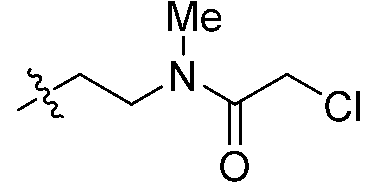

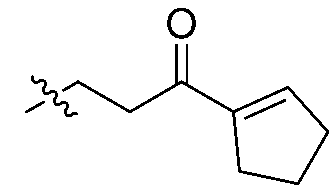
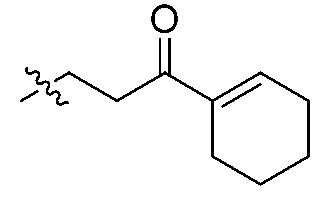


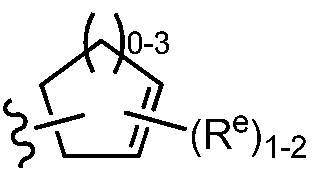
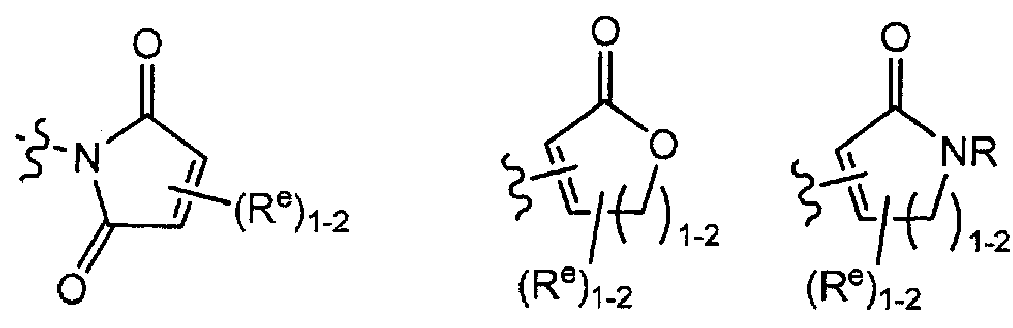
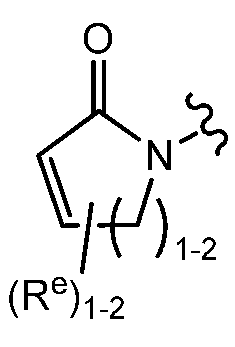

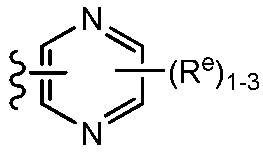

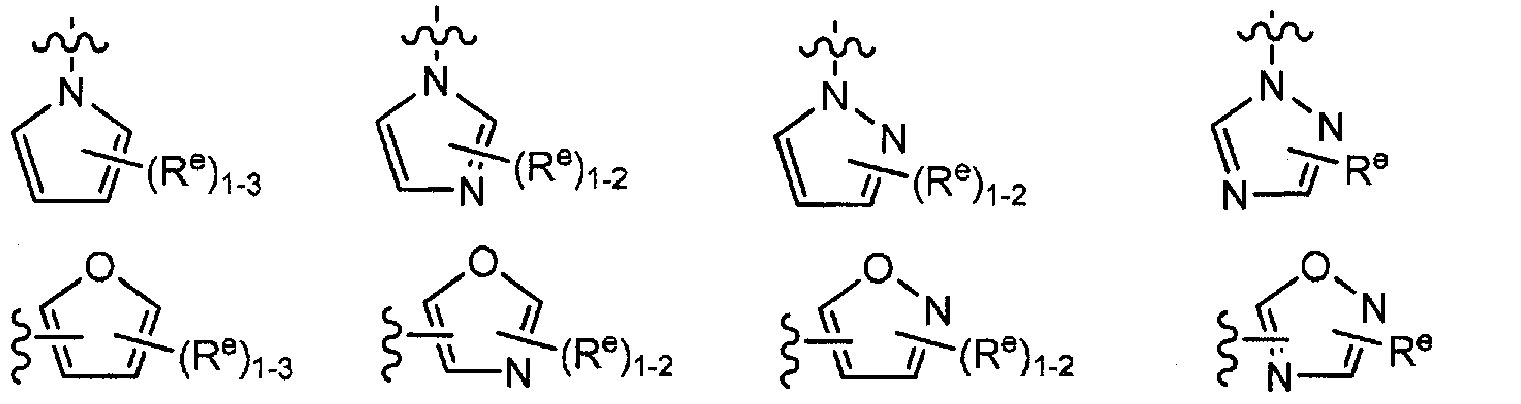


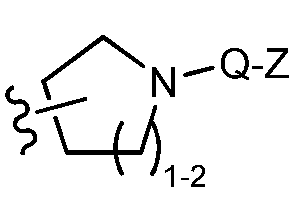
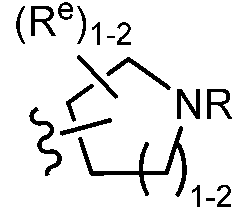

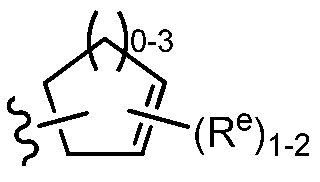
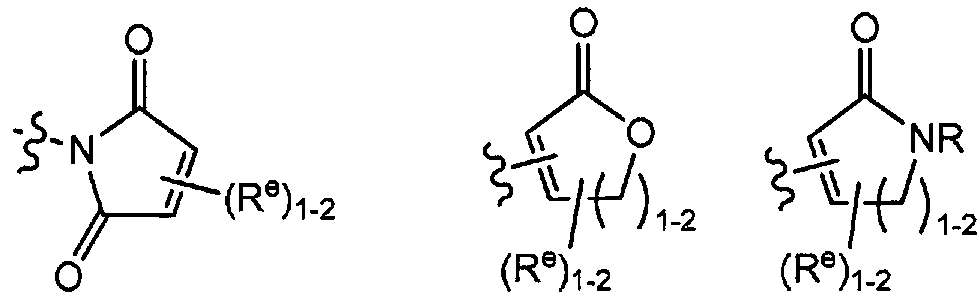


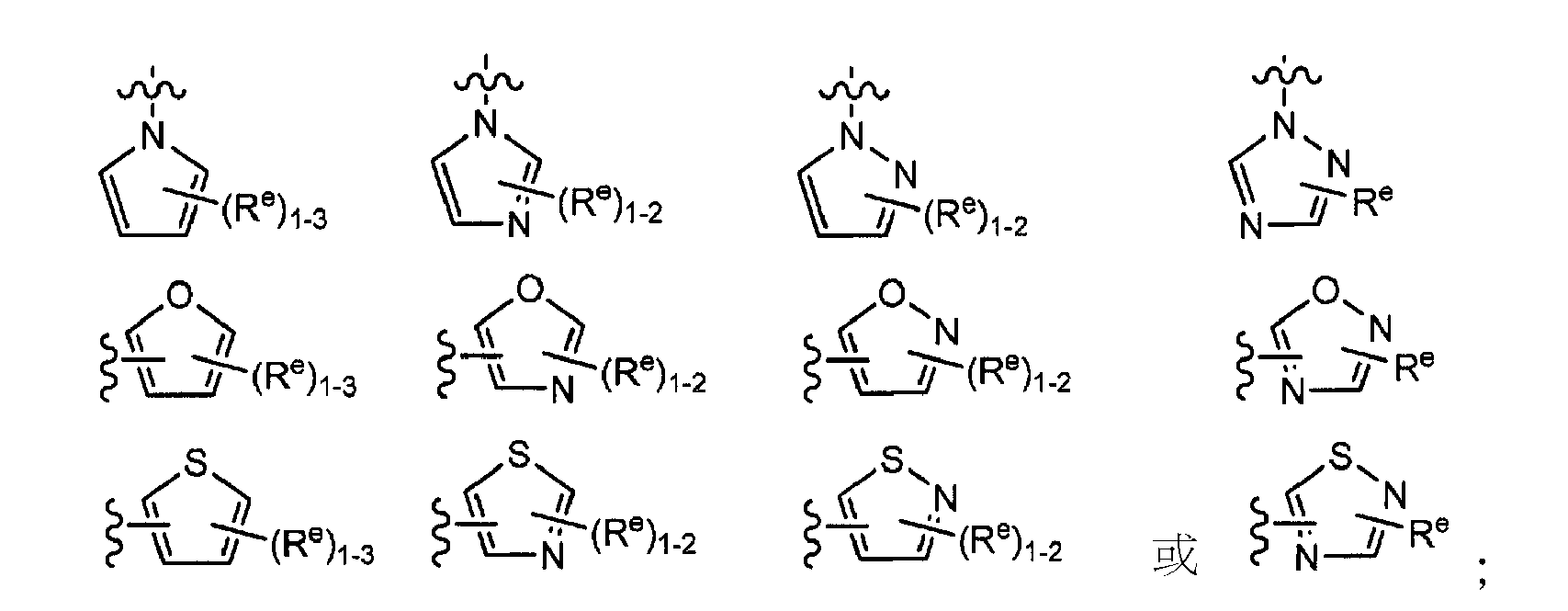


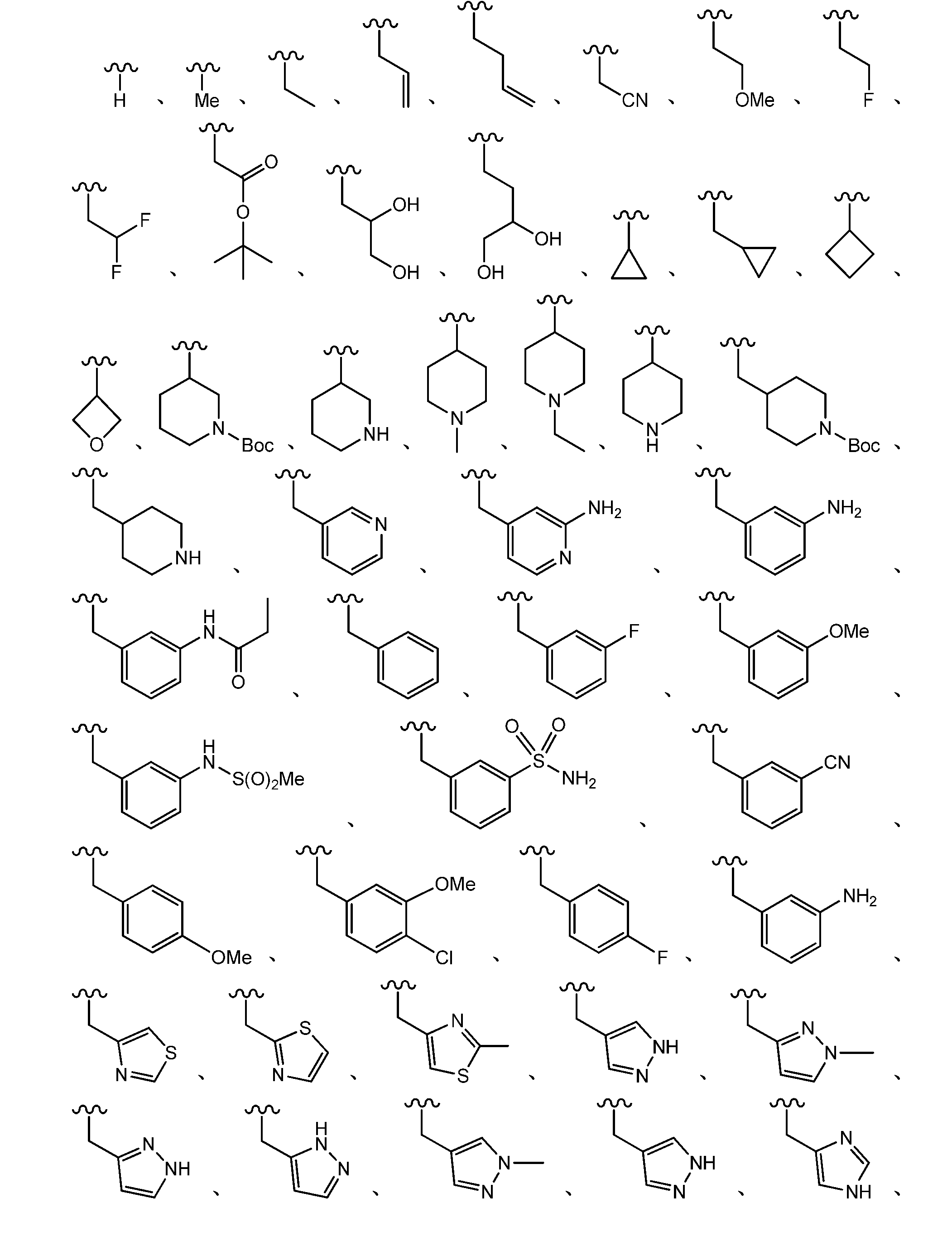


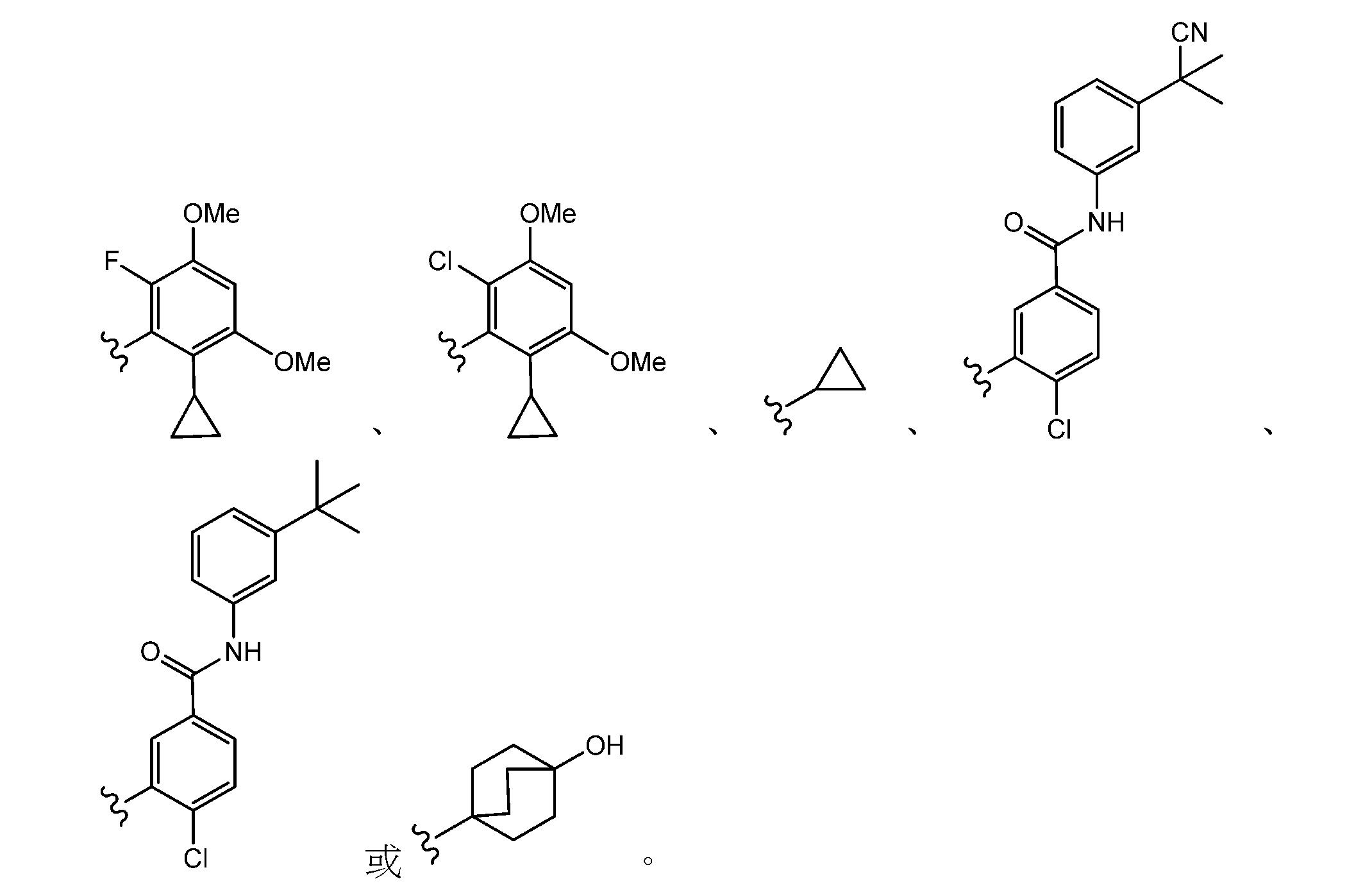

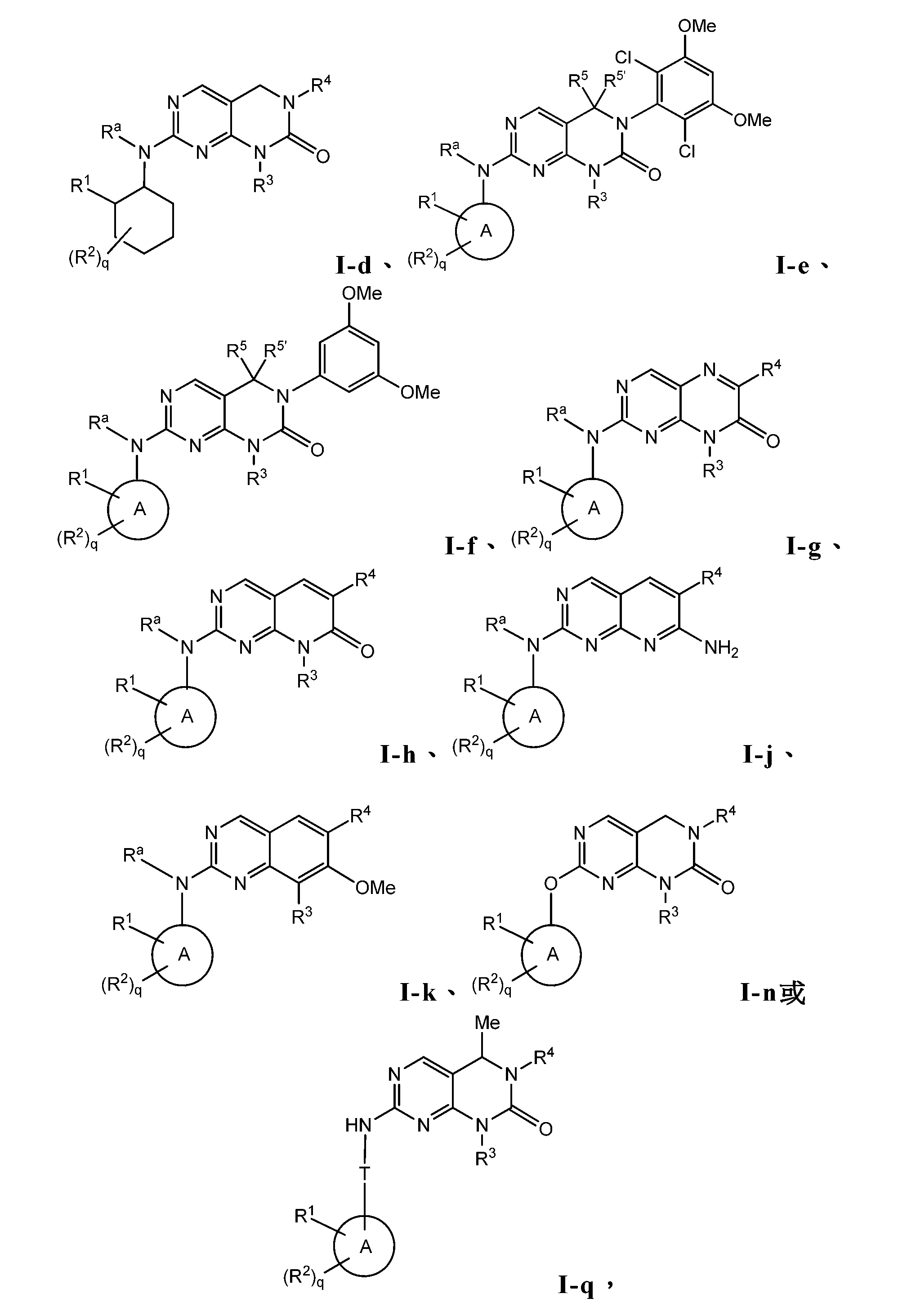

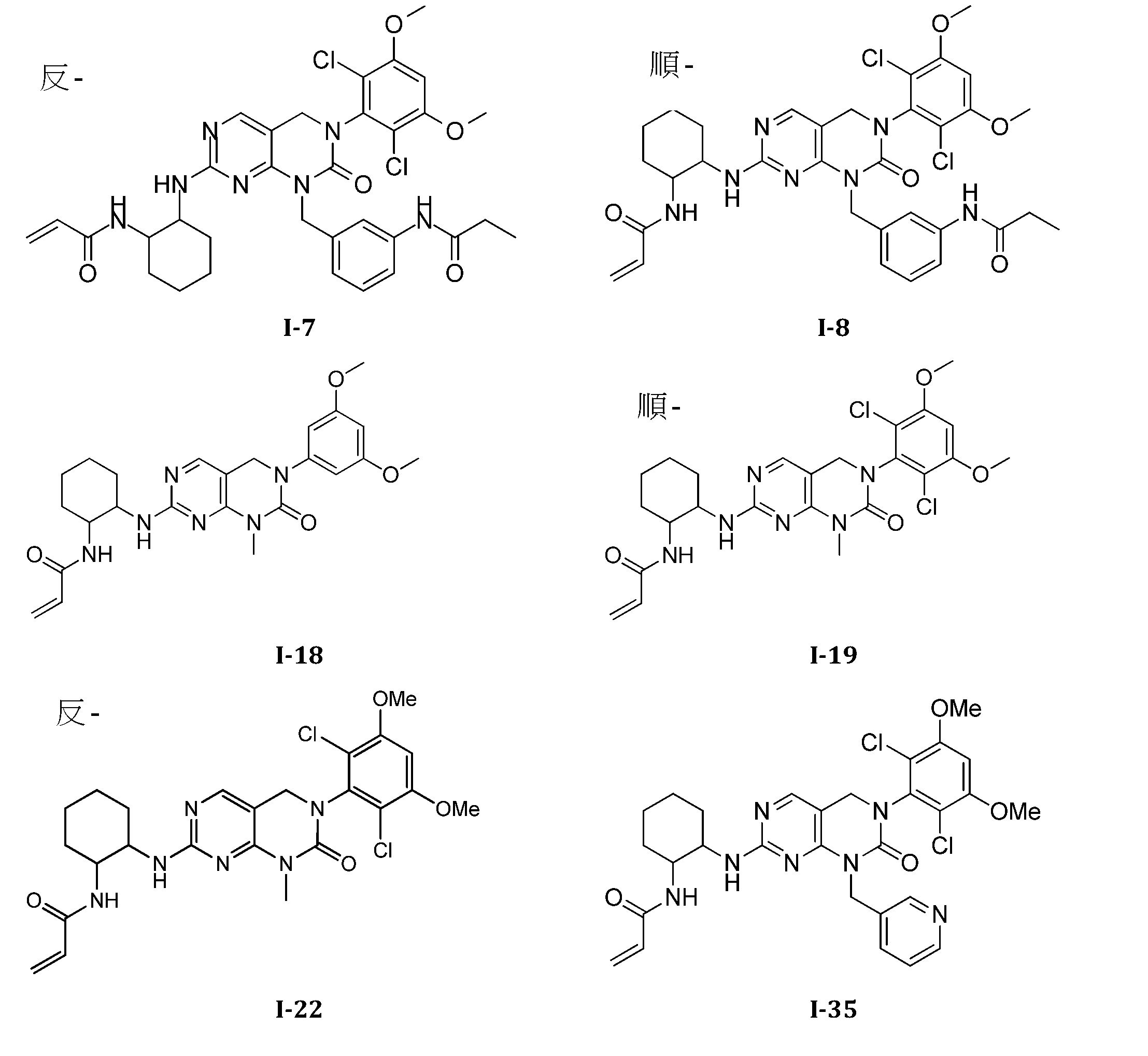

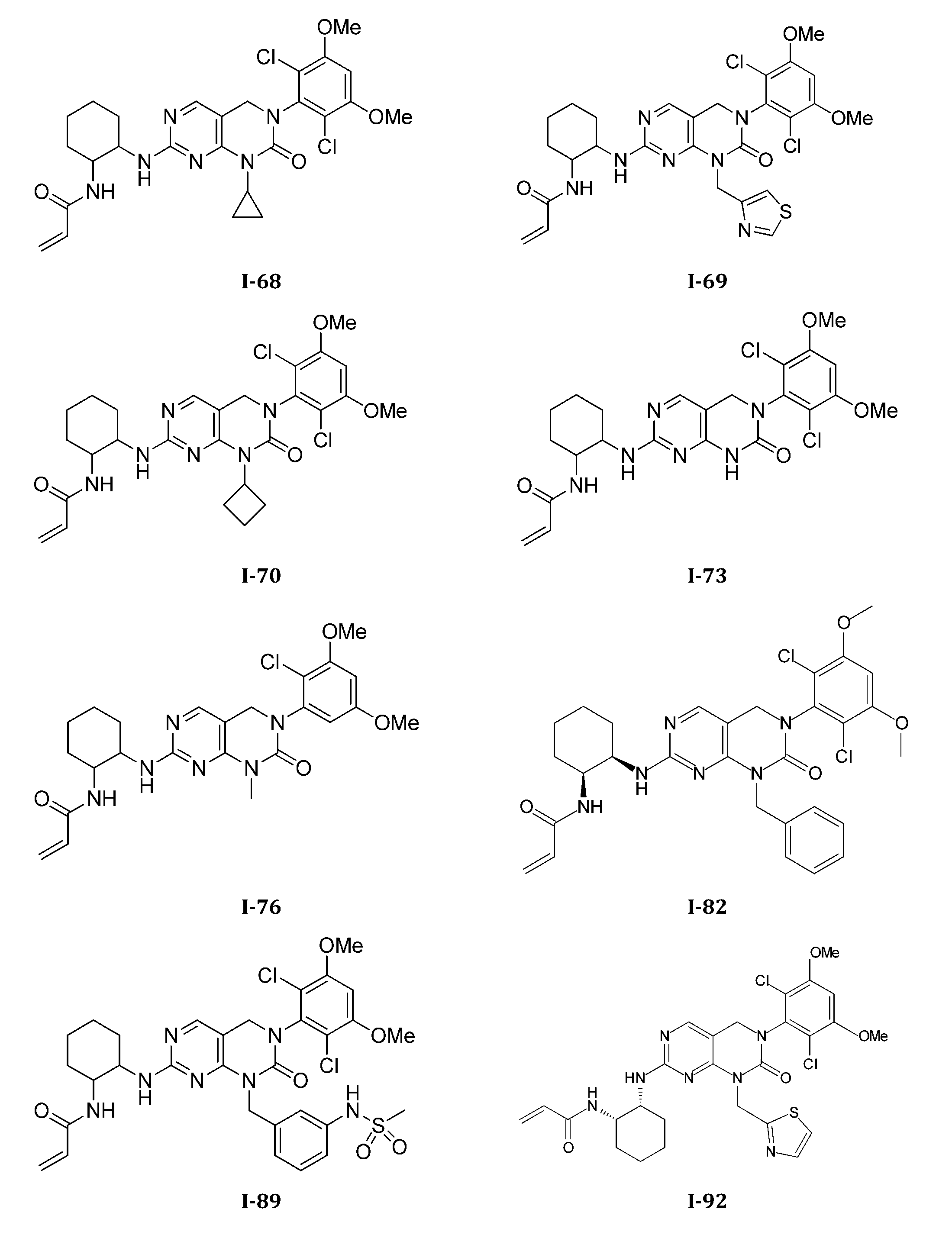


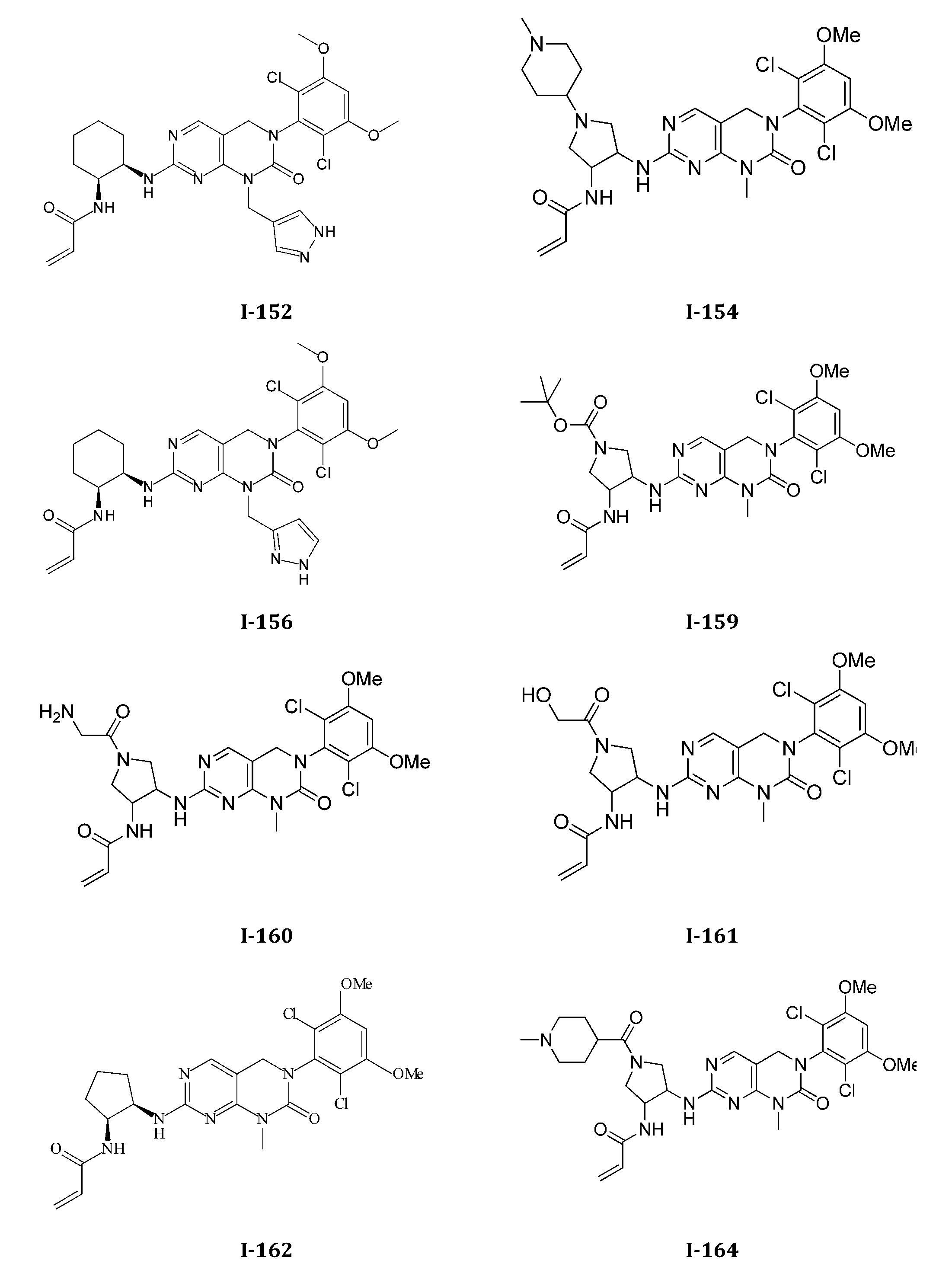
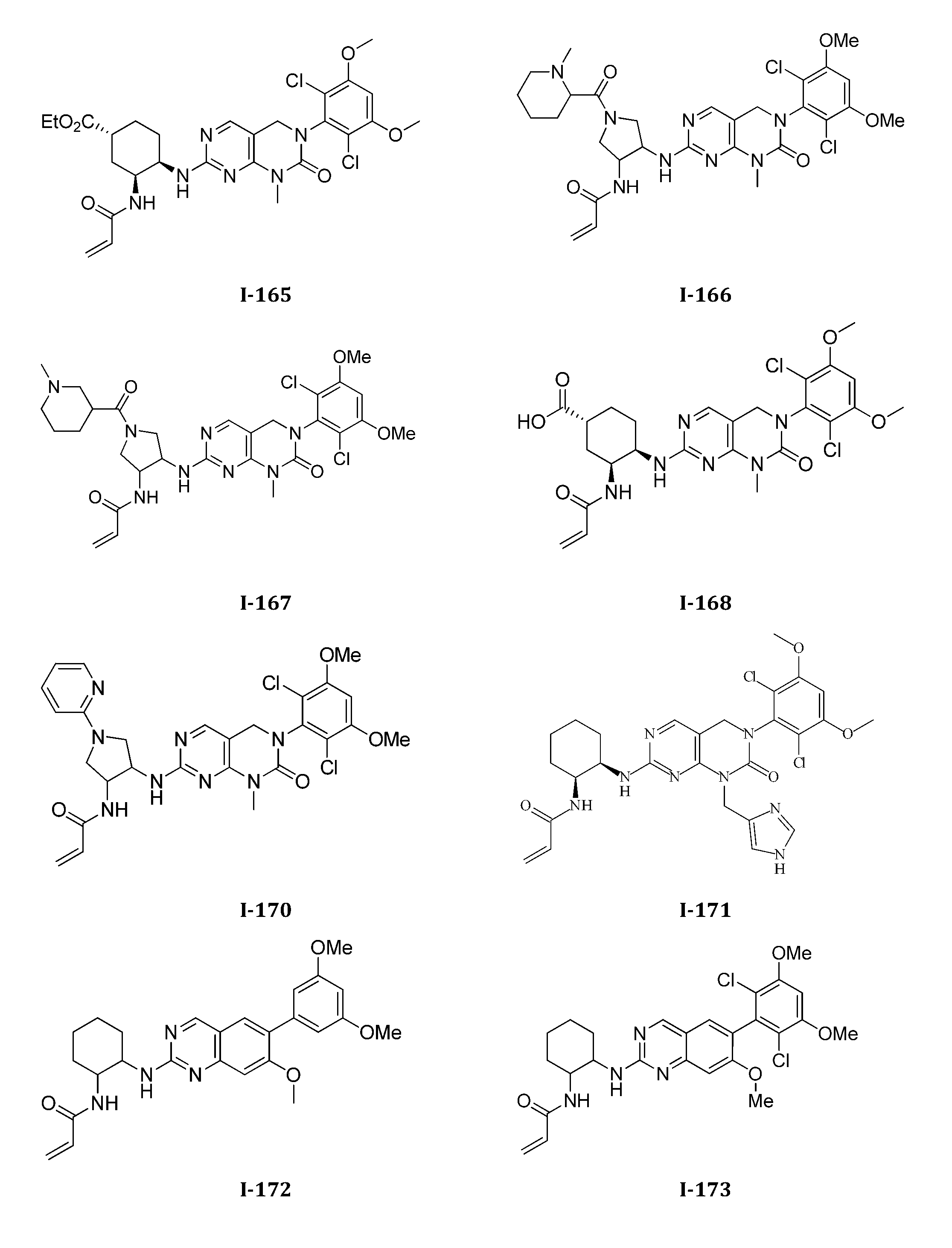

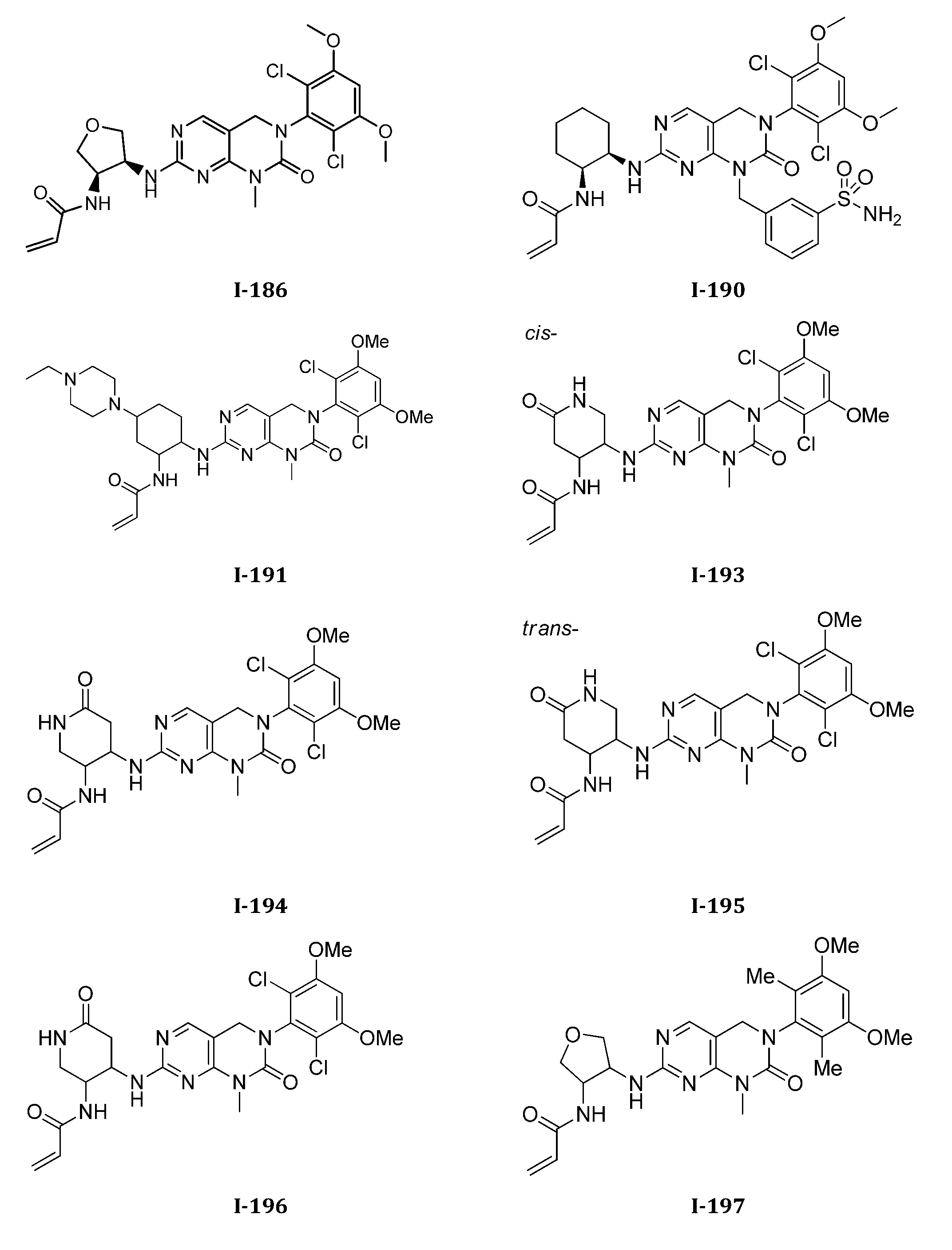


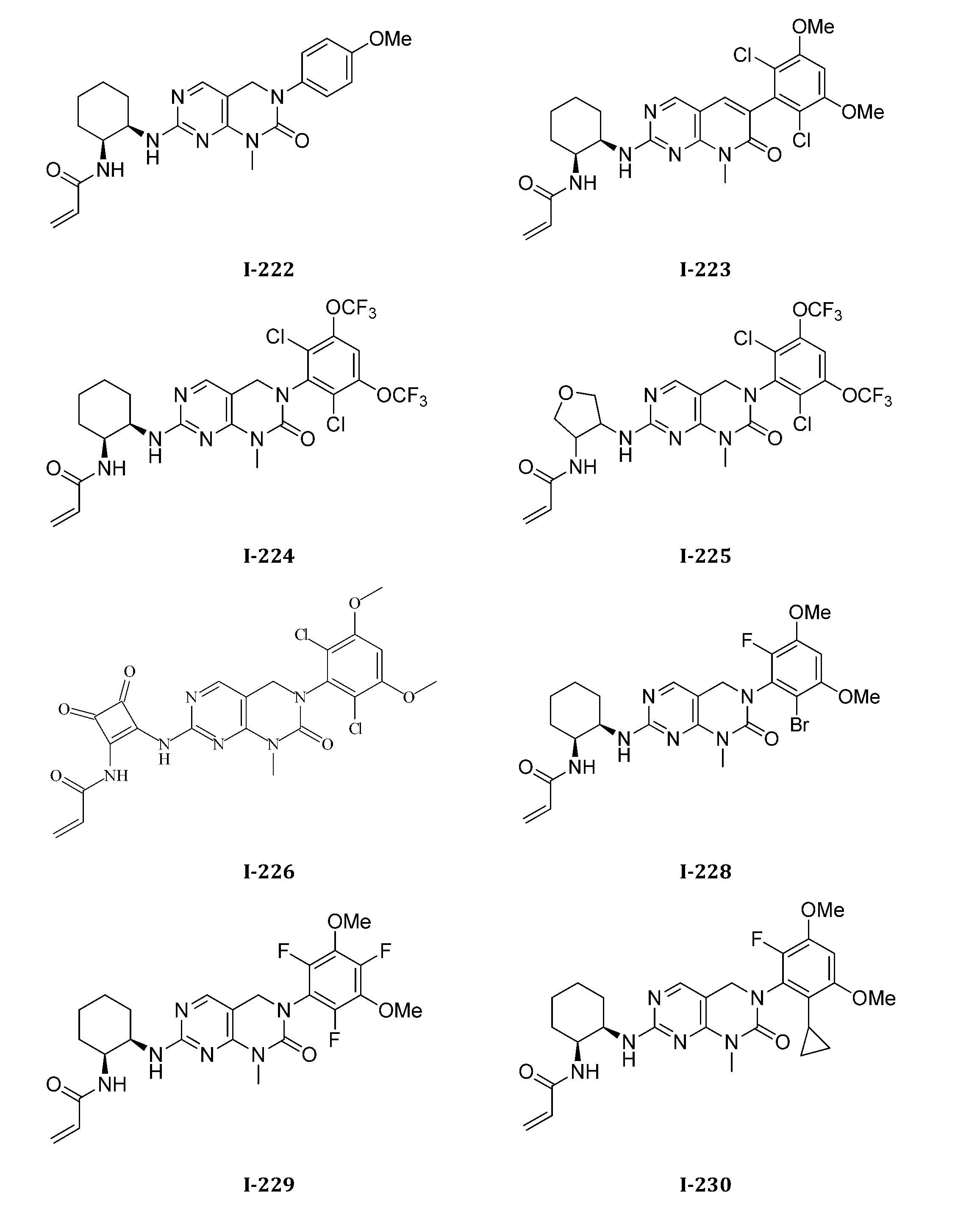
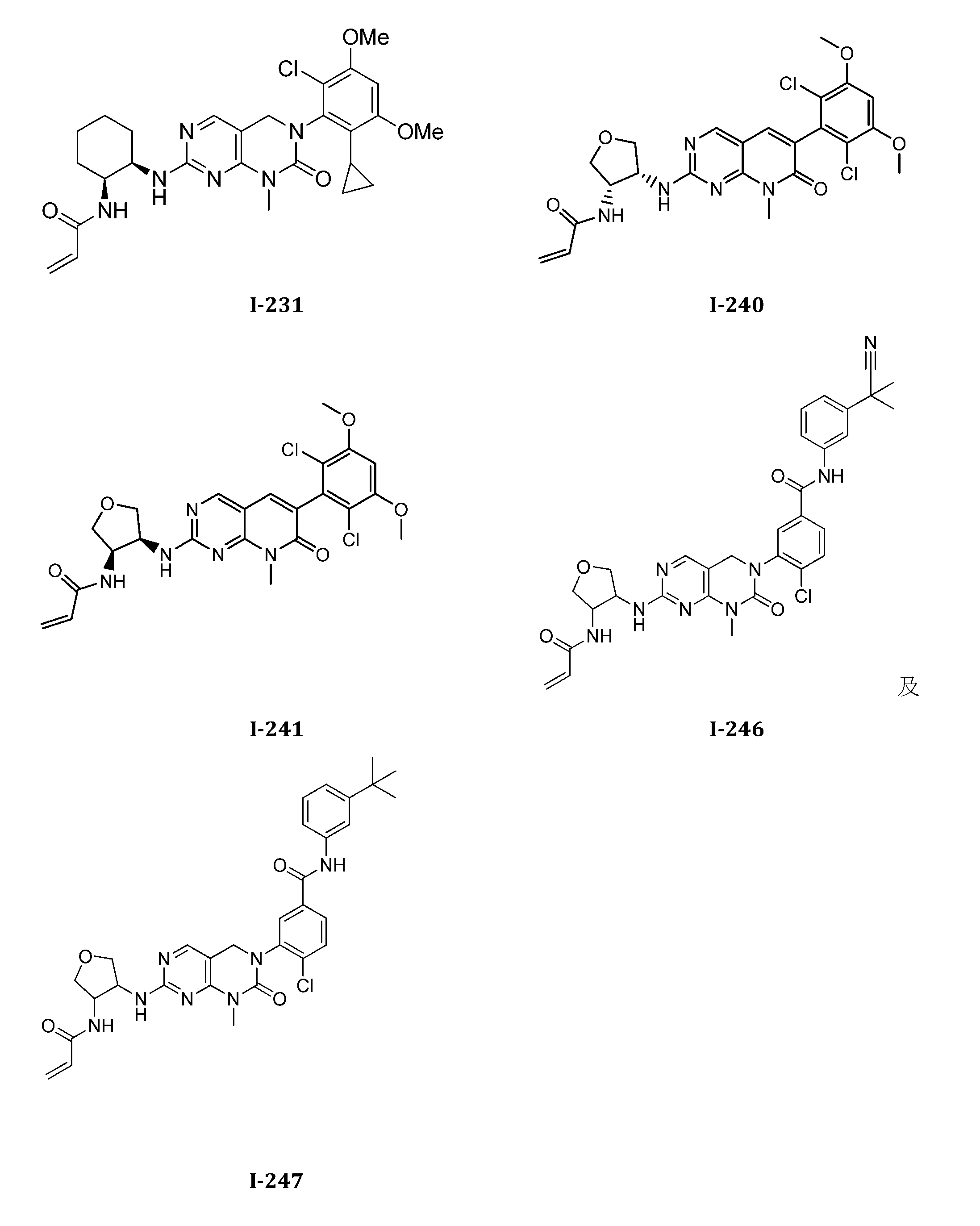
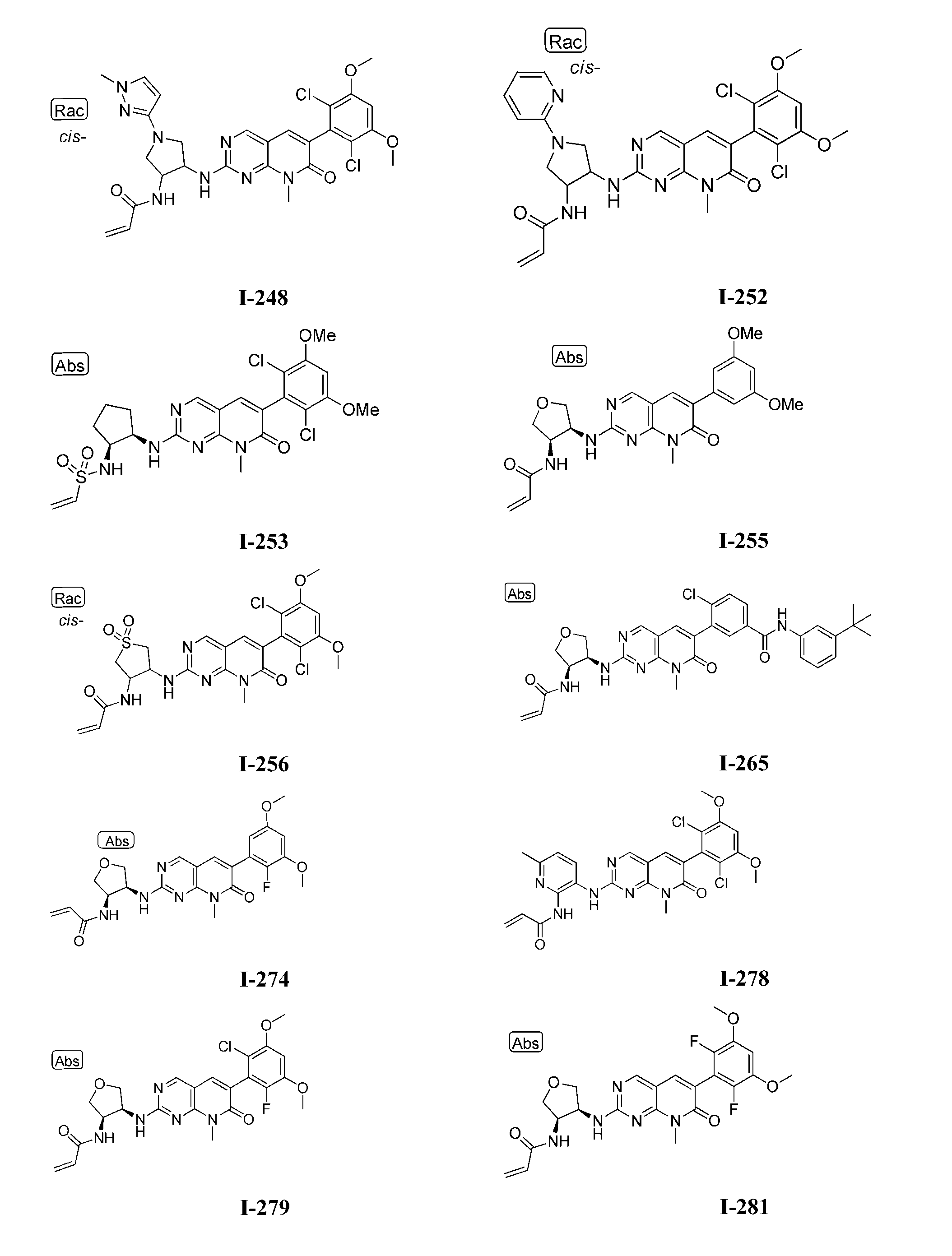


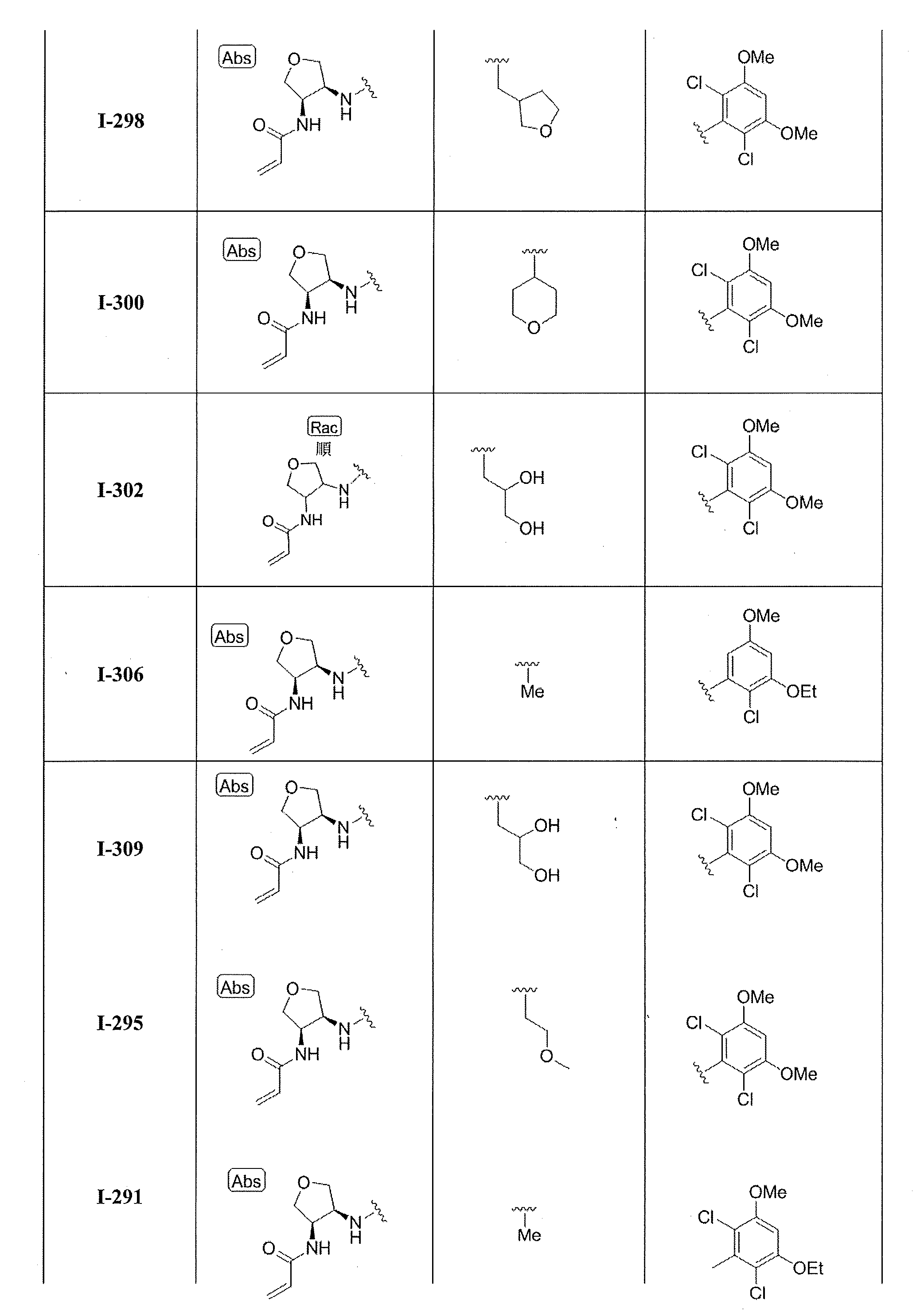


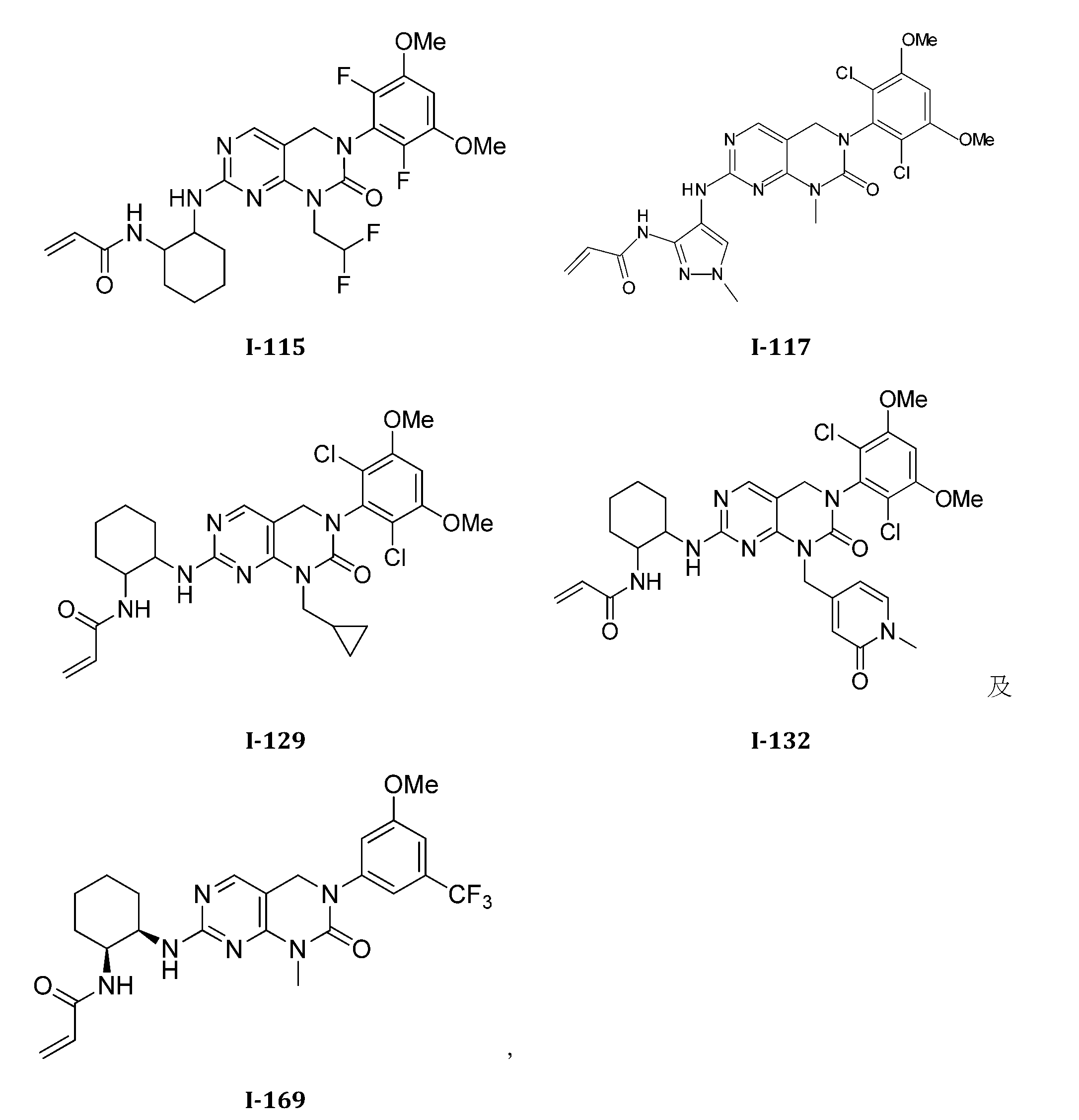


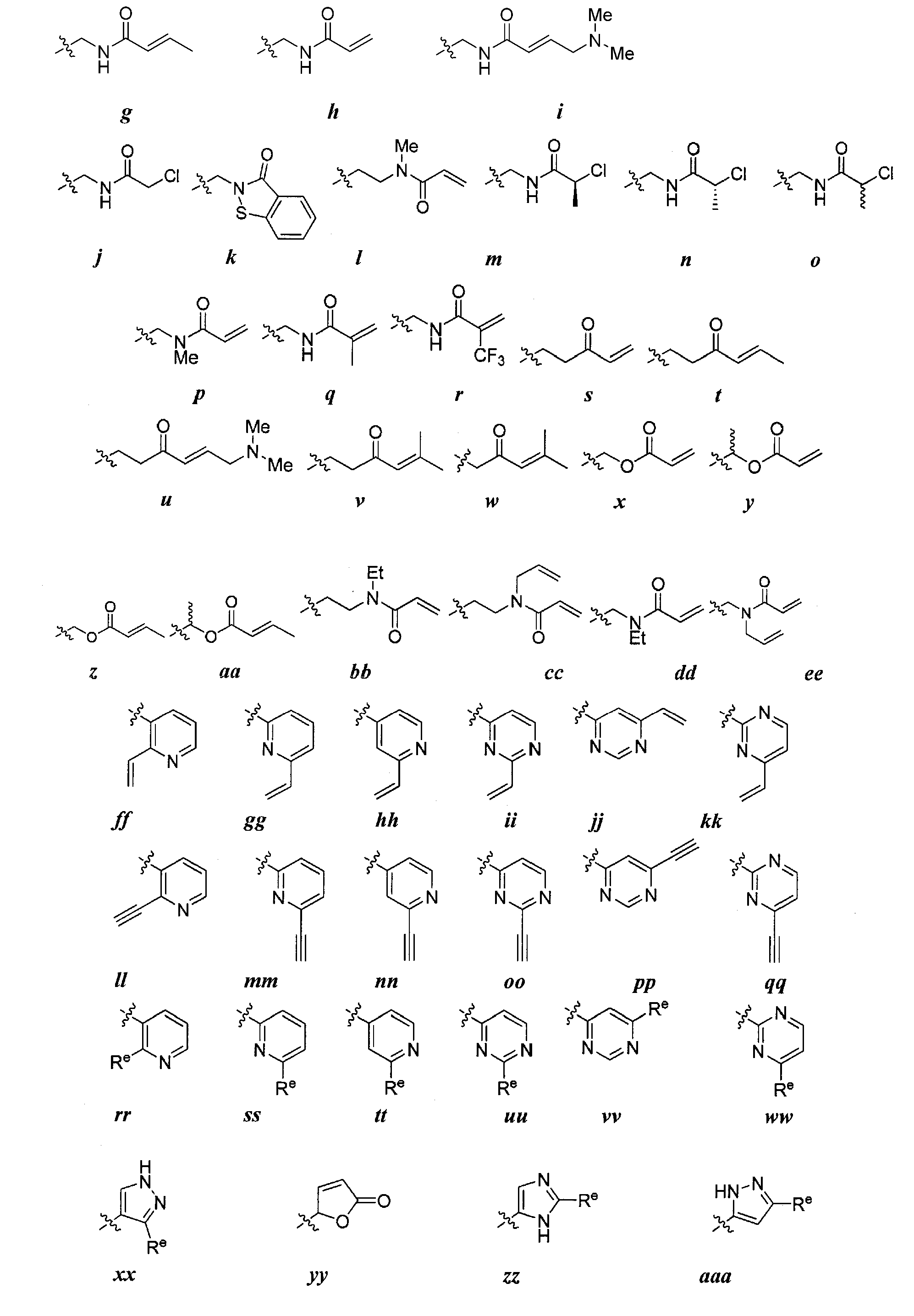


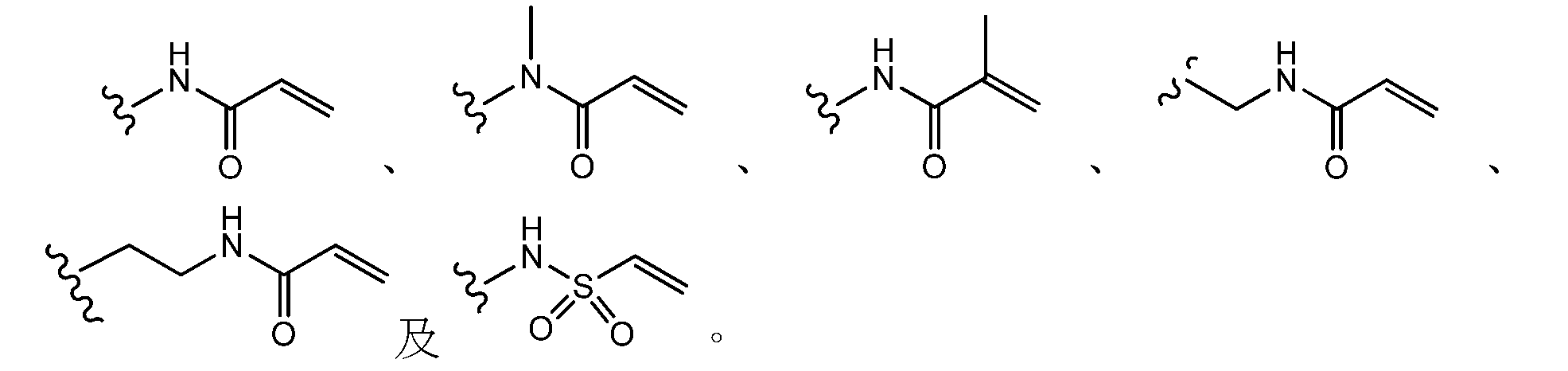

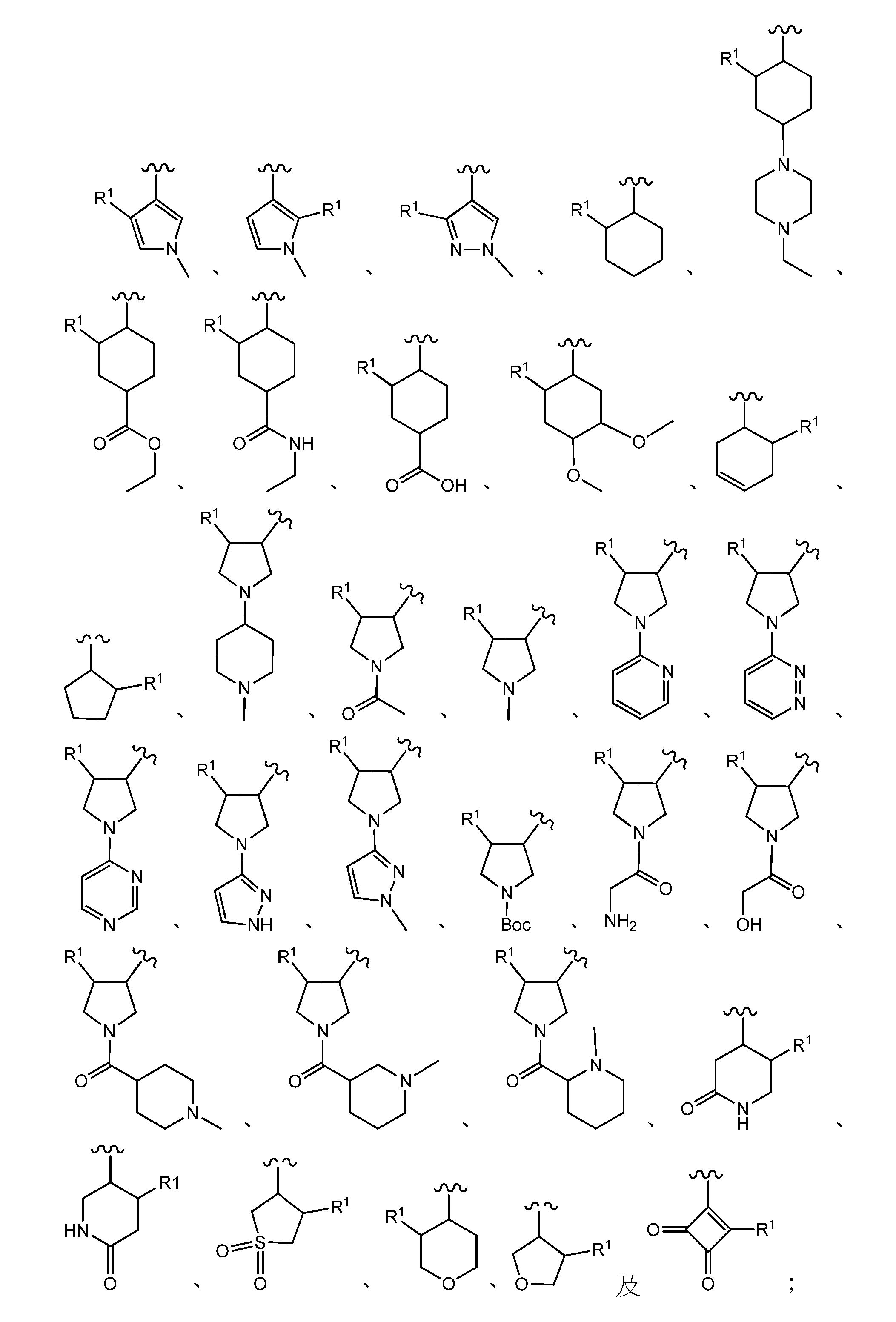


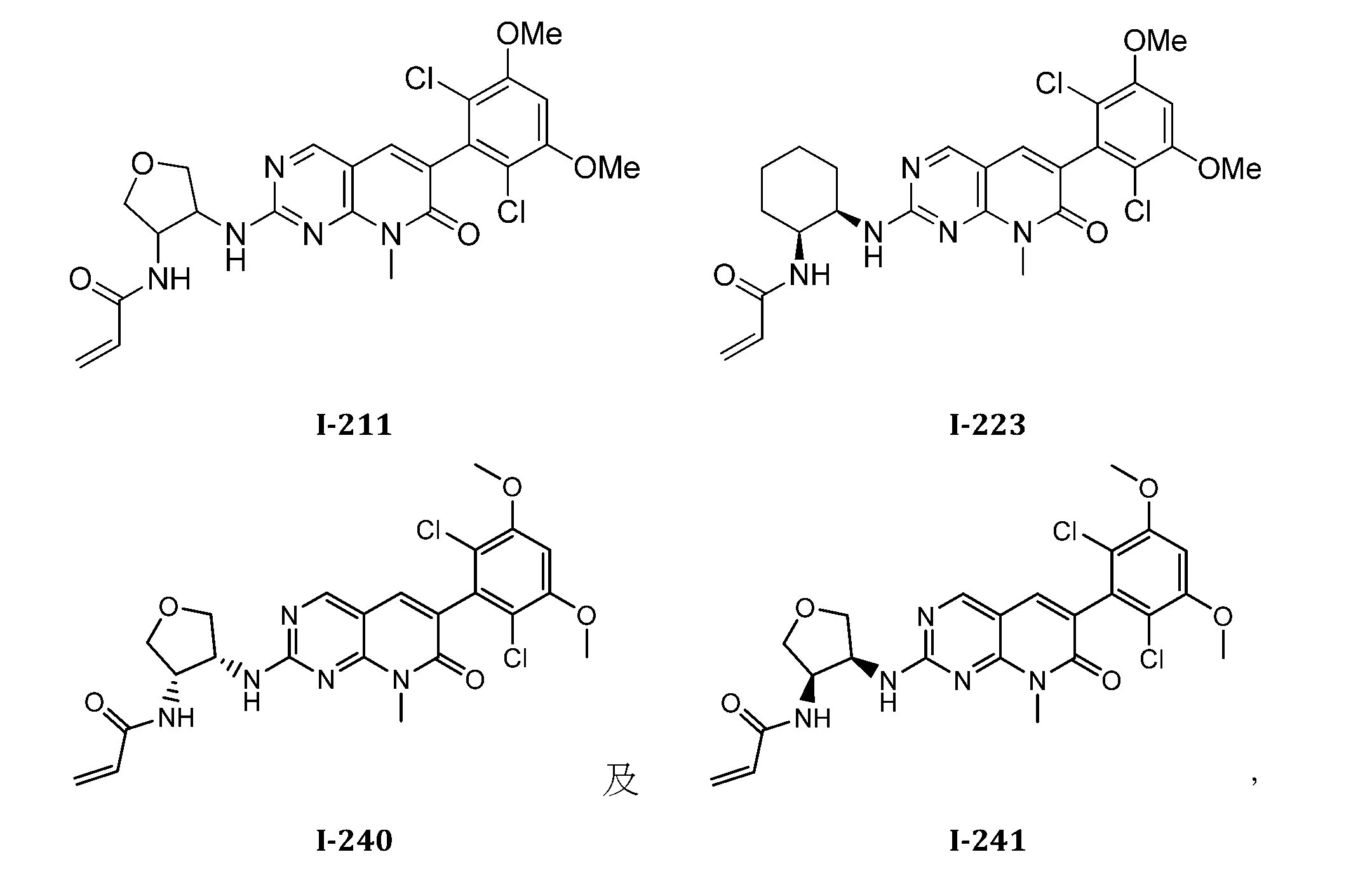

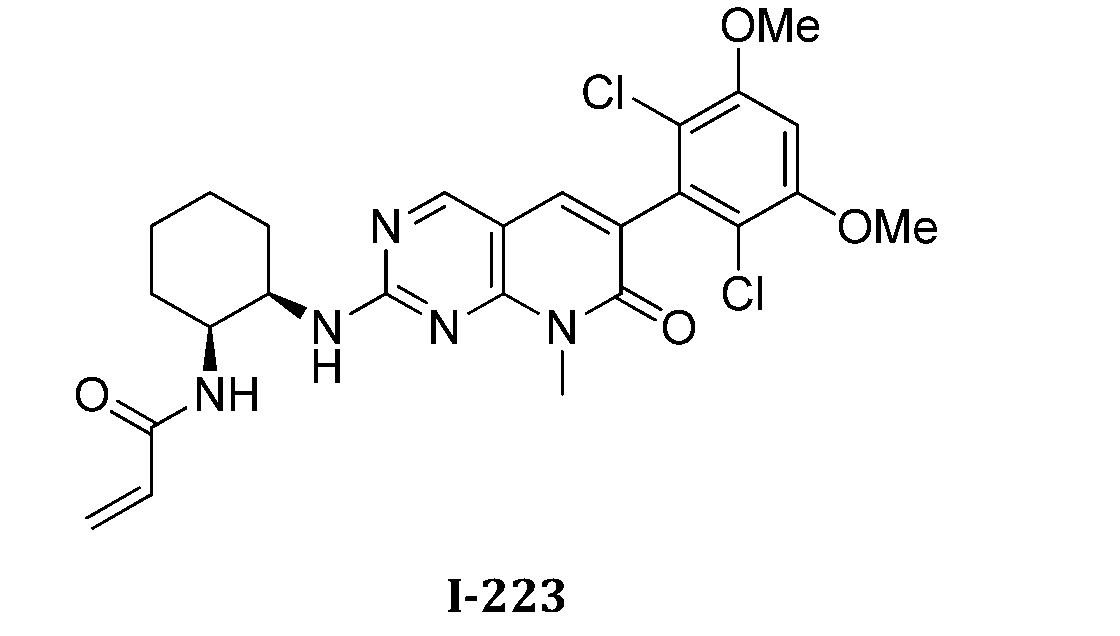


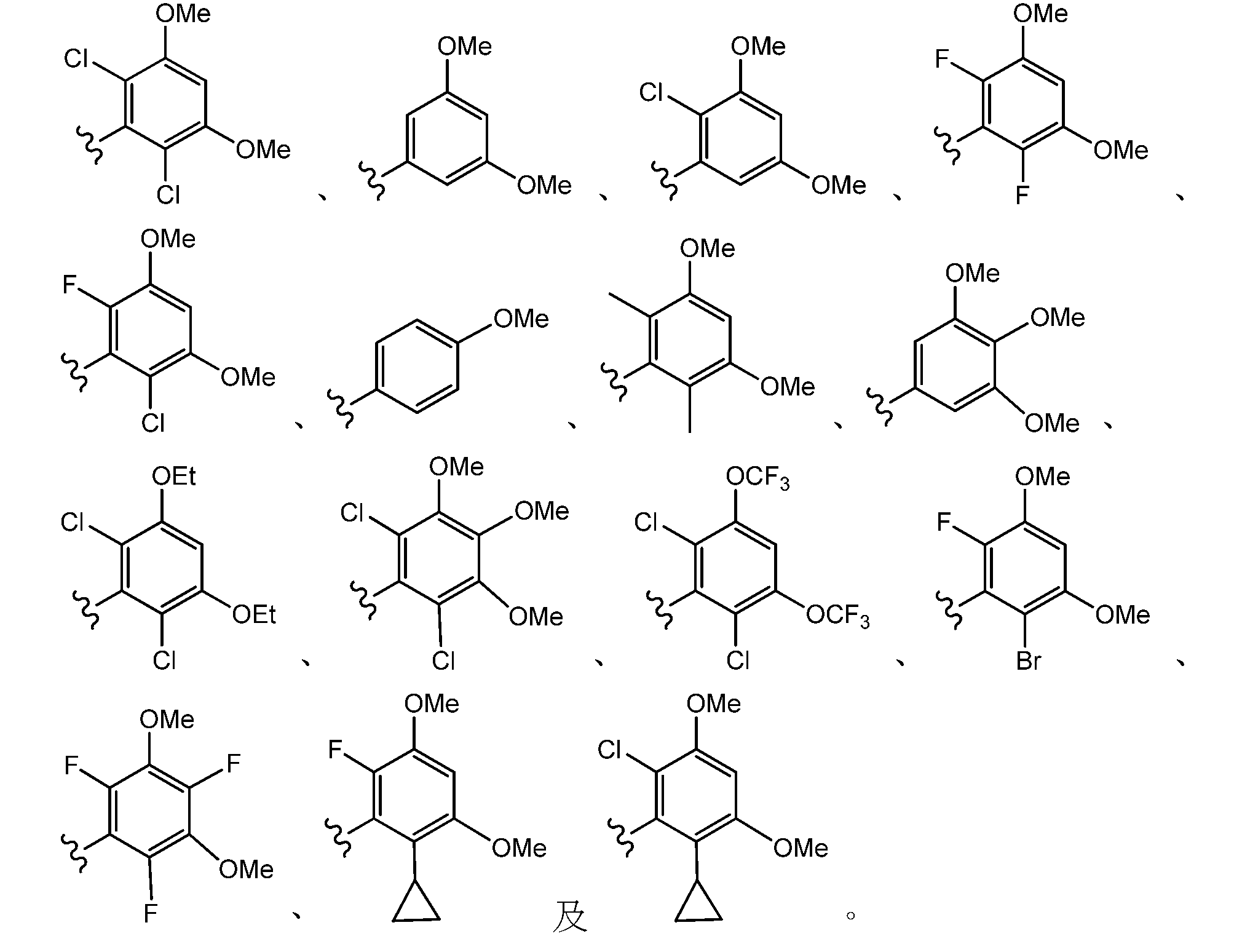
Applications Claiming Priority (2)
| Application Number | Priority Date | Filing Date | Title |
|---|---|---|---|
| US201361793113P | 2013-03-15 | 2013-03-15 | |
| US61/793,113 | 2013-03-15 |
Publications (2)
| Publication Number | Publication Date |
|---|---|
| TW201444805A TW201444805A (en) | 2014-12-01 |
| TWI647220B true TWI647220B (en) | 2019-01-11 |
Family
ID=51621441
Family Applications (1)
| Application Number | Title | Priority Date | Filing Date |
|---|---|---|---|
| TW103109277A TWI647220B (en) | 2013-03-15 | 2014-03-14 | Heteroaryl compound and its use |
Country Status (4)
| Country | Link |
|---|---|
| US (5) | US9321786B2 (en) |
| AR (1) | AR095464A1 (en) |
| EC (1) | ECSP15043696A (en) |
| TW (1) | TWI647220B (en) |
Families Citing this family (37)
| Publication number | Priority date | Publication date | Assignee | Title |
|---|---|---|---|---|
| US8754114B2 (en) | 2010-12-22 | 2014-06-17 | Incyte Corporation | Substituted imidazopyridazines and benzimidazoles as inhibitors of FGFR3 |
| CN107652289B (en) | 2012-06-13 | 2020-07-21 | 因塞特控股公司 | Substituted tricyclic compounds as FGFR inhibitors |
| HUE055502T2 (en) * | 2012-07-11 | 2021-11-29 | Blueprint Medicines Corp | Fibroblast growth factor receptor inhibitors |
| US9388185B2 (en) | 2012-08-10 | 2016-07-12 | Incyte Holdings Corporation | Substituted pyrrolo[2,3-b]pyrazines as FGFR inhibitors |
| KR102350704B1 (en) | 2013-03-15 | 2022-01-13 | 셀젠 카르 엘엘씨 | Heteroaryl compounds and uses thereof |
| TWI647220B (en) | 2013-03-15 | 2019-01-11 | 美商西建卡爾有限責任公司 | Heteroaryl compound and its use |
| CN111793068A (en) | 2013-03-15 | 2020-10-20 | 西建卡尔有限责任公司 | Heteroaryl compounds and uses thereof |
| KR102269032B1 (en) | 2013-04-19 | 2021-06-24 | 인사이트 홀딩스 코포레이션 | Bicyclic heterocycles as fgfr inhibitors |
| CA2928042C (en) | 2013-10-25 | 2022-05-10 | Blueprint Medicines Corporation | Inhibitors of the fibroblast growth factor receptor |
| US9695165B2 (en) | 2014-01-15 | 2017-07-04 | Blueprint Medicines Corporation | Inhibitors of the fibroblast growth factor receptor |
| US9828373B2 (en) | 2014-07-26 | 2017-11-28 | Sunshine Lake Pharma Co., Ltd. | 2-amino-pyrido[2,3-D]pyrimidin-7(8H)-one derivatives as CDK inhibitors and uses thereof |
| EP3200786B1 (en) | 2014-10-03 | 2019-08-28 | Novartis AG | Use of ring-fused bicyclic pyridyl derivatives as fgfr4 inhibitors |
| US10851105B2 (en) | 2014-10-22 | 2020-12-01 | Incyte Corporation | Bicyclic heterocycles as FGFR4 inhibitors |
| WO2016115412A1 (en) * | 2015-01-18 | 2016-07-21 | Newave Pharmaceutical Llc | Dual-warhead covalent inhibitors of fgfr-4 |
| WO2016128465A1 (en) | 2015-02-11 | 2016-08-18 | Basilea Pharmaceutica Ag | Substituted mono- and polyazanaphthalene derivatives and their use |
| PE20171514A1 (en) | 2015-02-20 | 2017-10-20 | Incyte Corp | BICYCLE HETEROCYCLES AS FGFR INHIBITORS |
| MA41551A (en) | 2015-02-20 | 2017-12-26 | Incyte Corp | BICYCLIC HETEROCYCLES USED AS FGFR4 INHIBITORS |
| WO2016134294A1 (en) | 2015-02-20 | 2016-08-25 | Incyte Corporation | Bicyclic heterocycles as fgfr4 inhibitors |
| MY198534A (en) | 2016-08-15 | 2023-09-04 | Pfizer | Pyridopyrimdinone cdk2/4/6 inhibitors |
| US20190192522A1 (en) * | 2016-09-08 | 2019-06-27 | Blueprint Medicines Corporation | Inhibitors of the fibroblast growth factor receptor 4 in combination with cyclin-dependent kinase inhibitors |
| AR111960A1 (en) | 2017-05-26 | 2019-09-04 | Incyte Corp | CRYSTALLINE FORMS OF A FGFR INHIBITOR AND PROCESSES FOR ITS PREPARATION |
| BR112020022373A2 (en) | 2018-05-04 | 2021-02-02 | Incyte Corporation | salts of a fgfr inhibitor |
| SG11202010636VA (en) | 2018-05-04 | 2020-11-27 | Incyte Corp | Solid forms of an fgfr inhibitor and processes for preparing the same |
| WO2020185532A1 (en) | 2019-03-08 | 2020-09-17 | Incyte Corporation | Methods of treating cancer with an fgfr inhibitor |
| WO2021007269A1 (en) | 2019-07-09 | 2021-01-14 | Incyte Corporation | Bicyclic heterocycles as fgfr inhibitors |
| WO2021067374A1 (en) | 2019-10-01 | 2021-04-08 | Incyte Corporation | Bicyclic heterocycles as fgfr inhibitors |
| WO2021076602A1 (en) | 2019-10-14 | 2021-04-22 | Incyte Corporation | Bicyclic heterocycles as fgfr inhibitors |
| WO2021076728A1 (en) | 2019-10-16 | 2021-04-22 | Incyte Corporation | Bicyclic heterocycles as fgfr inhibitors |
| JP7720840B2 (en) | 2019-12-04 | 2025-08-08 | インサイト・コーポレイション | Tricyclic heterocycles as FGFR inhibitors |
| CN115151539A (en) | 2019-12-04 | 2022-10-04 | 因赛特公司 | Derivatives of FGFR Inhibitors |
| KR102382613B1 (en) * | 2020-01-15 | 2022-04-06 | 한국과학기술연구원 | 7-amino-3,4-dihydropyrimido pyrimidin-2-one derivatives as protein kinase inhibitors and pharmaceutical compositions for treating disease containing the same |
| WO2021146424A1 (en) | 2020-01-15 | 2021-07-22 | Incyte Corporation | Bicyclic heterocycles as fgfr inhibitors |
| CA3213379A1 (en) * | 2021-03-26 | 2022-09-29 | Weiqiang Zhan | Bicyclic heterocyclic fgfr4 inhibitor, pharmaceutical composition and preparation, and a use thereof |
| US12065494B2 (en) | 2021-04-12 | 2024-08-20 | Incyte Corporation | Combination therapy comprising an FGFR inhibitor and a Nectin-4 targeting agent |
| AR126102A1 (en) | 2021-06-09 | 2023-09-13 | Incyte Corp | TRICYCLIC HETEROCYCLES AS FGFR INHIBITORS |
| CA3220155A1 (en) | 2021-06-09 | 2022-12-15 | Incyte Corporation | Tricyclic heterocycles as fgfr inhibitors |
| WO2024242495A1 (en) * | 2023-05-25 | 2024-11-28 | 주식회사 매직불릿테라퓨틱스 | Novel compound for inhibiting protein kinases and pharmaceutical composition comprising same |
Citations (2)
| Publication number | Priority date | Publication date | Assignee | Title |
|---|---|---|---|---|
| US20050222177A1 (en) * | 2003-07-29 | 2005-10-06 | Irm Llc | Compounds and compositions as protein kinase inhibitors |
| WO2008021369A2 (en) * | 2006-08-14 | 2008-02-21 | Chembridge Research Laboratories, Inc. | Tricyclic compounds and its use as tyrosine kinase modulators |
Family Cites Families (91)
| Publication number | Priority date | Publication date | Assignee | Title |
|---|---|---|---|---|
| SK281724B6 (en) | 1994-11-14 | 2001-07-10 | Warner-Lambert Company | 6-ARYLPYRIDO [2,3-D] PYRIMIDINS, THEIR USE AND PHARMACEUTICAL COMPOSITIONS ON THEIR BASE |
| GB9508535D0 (en) | 1995-04-27 | 1995-06-14 | Zeneca Ltd | Quinazoline derivative |
| KR20000070751A (en) | 1997-02-05 | 2000-11-25 | 로즈 암스트롱, 크리스틴 에이. 트러트웨인 | Pyrido[2,3-D]pyrimidines and 4-Aminopyrimidines as Inhibitors of Cellular Proliferation |
| DE19802377A1 (en) | 1998-01-22 | 1999-08-19 | Max Planck Gesellschaft | Use of inhibitors for the treatment of RTK-over-functional disorders, especially of cancer |
| KR20010043829A (en) | 1998-05-26 | 2001-05-25 | 로즈 암스트롱, 크리스틴 에이. 트러트웨인 | Bicyclic Pyrimidines and Bicyclic 3,4-Dihydropyrimidines as Inhibitors of Cellular Proliferation |
| HRP20010274A2 (en) | 1998-10-23 | 2002-06-30 | Hoffmann La Roche | Bicyclic nitrogen heterocycles |
| KR100537241B1 (en) | 1999-10-21 | 2005-12-19 | 에프. 호프만-라 로슈 아게 | Alkylamino substituted bicyclic nitrogen heterocycles as inhibitors of p38 protein kinase |
| WO2001029042A1 (en) | 1999-10-21 | 2001-04-26 | F. Hoffmann-La Roche Ag | Heteroalkylamino-substituted bicyclic nitrogen heterocycles as inhibitors of p38 protein kinase |
| AR030053A1 (en) | 2000-03-02 | 2003-08-13 | Smithkline Beecham Corp | 1H-PIRIMIDO [4,5-D] PIRIMIDIN-2-ONAS AND SALTS, PHARMACEUTICAL COMPOSITIONS, USE FOR THE MANUFACTURE OF A MEDICINAL PRODUCT AND PROCEDURE FOR PRODUCERS |
| JP2004519422A (en) | 2000-08-04 | 2004-07-02 | ワーナー−ランバート・カンパニー、リミテッド、ライアビリティ、カンパニー | 2- (4-Pyridyl) amino-6-dialkoxyphenylpyrido [2,3-d] pyrimidin-7-one |
| AU2001293784B2 (en) | 2000-08-31 | 2007-08-30 | F. Hoffmann-La Roche Ag | 7-OXO pyridopyrimidines as inhibitors of a cellular proliferation |
| ES2243568T3 (en) | 2000-08-31 | 2005-12-01 | F. Hoffmann-La Roche Ag | 7-OXO-PYRIDOPIRIMIDINAS. |
| US6506749B2 (en) | 2000-08-31 | 2003-01-14 | Syntex (U.S.A.) Llc | 7-oxo-pyridopyrimidines (I) |
| US6518276B2 (en) | 2000-08-31 | 2003-02-11 | Syntex (U.S.A.) Llc | 7-oxo-pyridopyrimidines (II) |
| WO2002076985A1 (en) | 2001-03-23 | 2002-10-03 | Smithkline Beecham Corporation | Compounds useful as kinase inhibitors for the treatment of hyperproliferative diseases |
| PA8577501A1 (en) | 2002-07-25 | 2004-02-07 | Warner Lambert Co | KINASE INHIBITORS |
| WO2004014869A2 (en) | 2002-08-13 | 2004-02-19 | Warner-Lambert Company Llc | 5,6-fused 3,4-dihydropyrimidine-2-one derivatives as matrix metalloproteinase inhibitors |
| US7084270B2 (en) | 2002-08-14 | 2006-08-01 | Hoffman-La Roche Inc. | Pyrimido compounds having antiproliferative activity |
| US7129351B2 (en) | 2002-11-04 | 2006-10-31 | Hoffmann-La Roche Inc. | Pyrimido compounds having antiproliferative activity |
| TW200413381A (en) | 2002-11-04 | 2004-08-01 | Hoffmann La Roche | Novel amino-substituted dihydropyrimido [4,5-d]pyrimidinone derivatives, their manufacture and use as pharmaceutical agents |
| US7098332B2 (en) | 2002-12-20 | 2006-08-29 | Hoffmann-La Roche Inc. | 5,8-Dihydro-6H-pyrido[2,3-d]pyrimidin-7-ones |
| EP1572682A4 (en) | 2002-12-20 | 2008-01-23 | Pharmacia Corp | Acyclic pyrazole compounds |
| WO2004063195A1 (en) | 2003-01-03 | 2004-07-29 | Sloan-Kettering Institute For Cancer Research | Pyridopyrimidine kinase inhibitors |
| KR20050111636A (en) | 2003-04-10 | 2005-11-25 | 에프. 호프만-라 로슈 아게 | Pyrimido compounds |
| EP1620408A2 (en) | 2003-04-16 | 2006-02-01 | F. Hoffmann-La Roche Ag | Quinazoline compounds |
| JP4758349B2 (en) | 2003-10-08 | 2011-08-24 | アイアールエム・リミテッド・ライアビリティ・カンパニー | Compounds and compositions as protein kinase inhibitors |
| WO2005066211A2 (en) * | 2003-12-19 | 2005-07-21 | Five Prime Therapeutics, Inc. | Fibroblast growth factor receptors 1, 2, 3, and 4 as targets for therapeutic intervention |
| EP2260849A1 (en) | 2004-01-21 | 2010-12-15 | Emory University | Compositions and methods of use for tyrosine kinase inhibitors to treat pathogenic infection |
| WO2005105097A2 (en) | 2004-04-28 | 2005-11-10 | Gpc Biotech Ag | Pyridopyrimidines for treating inflammatory and other diseases |
| GB0512324D0 (en) | 2005-06-16 | 2005-07-27 | Novartis Ag | Organic compounds |
| RU2007111757A (en) | 2004-08-31 | 2008-10-10 | Ф.Хоффманн-Ля Рош Аг (Ch) | AMIDIC DERIVATIVES OF 3-PHENYLDIGIDROPYRIMIDO [4,5-D] PYRIMIDINONES, THEIR PRODUCTION AND USE AS PHARMACEUTICAL AGENTS |
| MX2007002089A (en) | 2004-08-31 | 2007-03-29 | Hoffmann La Roche | Amide derivatives of 7-amino-3-phenyl-dihydropyrimido [4,5-d]pyrimidinones, their manufacture and use as pharmaceutical agents. |
| US20090118261A1 (en) | 2004-08-31 | 2009-05-07 | Astrazeneca Ab | Quinazolinone derivatives and their use as b-raf inhibitors |
| WO2006038112A1 (en) | 2004-10-01 | 2006-04-13 | Warner-Lambert Company Llc | Use of kinase inhibitors to promote neochondrogenesis |
| EP1828186A1 (en) | 2004-12-13 | 2007-09-05 | Sunesis Pharmaceuticals, Inc. | Pyrido pyrimidinones, dihydro pyrimido pyrimidinones and pteridinones useful as raf kinase inhibitors |
| US20060142312A1 (en) | 2004-12-23 | 2006-06-29 | Pfizer Inc | C6-aryl and heteroaryl substituted pyrido[2,3-D] pyrimidin-7-ones |
| US7906522B2 (en) | 2005-04-28 | 2011-03-15 | Kyowa Hakko Kirin Co., Ltd | 2-aminoquinazoline derivatives |
| MX2007015610A (en) | 2005-06-10 | 2008-02-21 | Irm Llc | Compounds that maintain pluripotency of embryonic stem cells. |
| WO2006137421A1 (en) | 2005-06-21 | 2006-12-28 | Kyowa Hakko Kogyo Co., Ltd. | Agent for topical administration |
| EP2083081A1 (en) * | 2005-07-22 | 2009-07-29 | Five Prime Therapeutics, Inc. | Compositions and methods of treating disease with FGFR fusion proteins |
| WO2007014250A2 (en) | 2005-07-26 | 2007-02-01 | Vertex Pharmaceuticals Incorporated | Abl kinase inhibition |
| KR100832594B1 (en) | 2005-11-08 | 2008-05-27 | 한미약품 주식회사 | Quinazoline derivatives as an multiplex inhibitor and method for the preparation thereof |
| US7618982B2 (en) | 2005-12-19 | 2009-11-17 | Nerviano Medical Sciences S.R.L. | Heteroarylpyrrolopyridinones active as kinase inhibitors |
| BRPI0620408B8 (en) | 2005-12-21 | 2021-05-25 | Novartis Ag | pyrimidinyl aryl urea derivatives being FGF inhibitors, their uses, and pharmaceutical preparation |
| WO2007134259A2 (en) | 2006-05-11 | 2007-11-22 | Irm Llc | Compounds and compositions as protein kinase inhibitors |
| EP2018167A4 (en) | 2006-05-15 | 2010-07-14 | Irm Llc | Compositions and methods for fgf receptor kinases inhibitors |
| WO2008150260A1 (en) | 2007-06-06 | 2008-12-11 | Gpc Biotech, Inc. | 8-oxy-2-aminopyrido (2, 3-d) pyrimidin-7-one derivatives as kinase inhibitors and anticancer agents |
| EP1914234A1 (en) | 2006-10-16 | 2008-04-23 | GPC Biotech Inc. | Pyrido[2,3-d]pyrimidines and their use as kinase inhibitors |
| AU2007311480A1 (en) | 2006-10-16 | 2008-04-24 | Forma Therapeutics, Inc. | Pyrido [2, 3-d] pyrimidines and their use as kinase inhibitors |
| CA2668731A1 (en) | 2006-11-09 | 2008-05-15 | Tobias Gabriel | Kinase inhibitors and methods for using the same |
| US7737149B2 (en) | 2006-12-21 | 2010-06-15 | Astrazeneca Ab | N-[5-[2-(3,5-dimethoxyphenyl)ethyl]-2H-pyrazol-3-yl]-4-(3,5-dimethylpiperazin-1-yl)benzamide and salts thereof |
| MX2009006706A (en) | 2006-12-22 | 2009-07-02 | Astex Therapeutics Ltd | Bicyclic heterocyclic compounds as fgfr inhibitors. |
| RS51655B (en) | 2006-12-27 | 2011-10-31 | Sanofi-Aventis | Isoquinoline derivatives and isoquinolinone derivatives substituted by cycloalkylamine |
| JP5313919B2 (en) | 2006-12-27 | 2013-10-09 | サノフイ | Novel substituted isoquinoline and isoquinolinone derivatives |
| HRP20161536T1 (en) | 2007-06-15 | 2016-12-30 | Msd K.K. | Bicycloaniline derivative |
| GB0720038D0 (en) | 2007-10-12 | 2007-11-21 | Astex Therapeutics Ltd | New compounds |
| US7989465B2 (en) | 2007-10-19 | 2011-08-02 | Avila Therapeutics, Inc. | 4,6-disubstituted pyrimidines useful as kinase inhibitors |
| US8216783B2 (en) * | 2008-04-14 | 2012-07-10 | The United States Of America, As Represented By The Secretary, Department Of Health And Human Services | Over-expression and mutation of a tyrosine kinase receptor FGFR4 in tumors |
| EP2269993B1 (en) | 2008-04-23 | 2013-02-27 | Kyowa Hakko Kirin Co., Ltd. | 2-aminoquinazoline derivative |
| AU2009248774B2 (en) | 2008-05-23 | 2012-05-31 | Novartis Ag | Derivatives of quinolines and quinoxalines as protein tyrosine kinase inhibitors |
| DK2361248T3 (en) | 2008-06-27 | 2019-01-14 | Celgene Car Llc | Heteroberl compounds and uses thereof |
| MY156789A (en) | 2008-09-05 | 2016-03-31 | Celgene Avilomics Res Inc | Algorithm for designing irreversible inhibitors |
| WO2010067888A1 (en) | 2008-12-12 | 2010-06-17 | Banyu Pharmaceutical Co.,Ltd. | Dihydropyrimidopyrimidine derivatives |
| JP2012511502A (en) | 2008-12-12 | 2012-05-24 | Msd株式会社 | Dihydropyrimidopyrimidine derivatives |
| WO2010080712A2 (en) | 2009-01-06 | 2010-07-15 | Dana Farber Cancer Institute | Pyrimido-diazepinone kinase scaffold compounds and methods of treating disorders |
| RU2012114902A (en) | 2009-09-16 | 2013-10-27 | Авила Терапьютикс, Инк. | CONJUGATES AND PROTEINKINASE INHIBITORS |
| AR079257A1 (en) | 2009-12-07 | 2012-01-04 | Novartis Ag | CRYSTAL FORMS OF 3- (2,6-DICLORO-3-5-DIMETOXI-PHENYL) -1- {6- [4- (4-ETIL-PIPERAZIN-1-IL) -PENYL-AMINO] -PIRIMIDIN-4- IL} -1-METHYL-UREA AND SALTS OF THE SAME |
| UA109888C2 (en) * | 2009-12-07 | 2015-10-26 | ANTIBODY OR ANTIBODILITY ANTIBODY OR ITS BINDING TO THE β-CLOTE, FGF RECEPTORS AND THEIR COMPLEXES | |
| WO2011075620A1 (en) | 2009-12-18 | 2011-06-23 | Novartis Ag | Method for treating haematological cancers |
| GB201007286D0 (en) | 2010-04-30 | 2010-06-16 | Astex Therapeutics Ltd | New compounds |
| US20120258967A1 (en) | 2011-03-09 | 2012-10-11 | Avila Therapeutics, Inc. | Pi3 kinase inhibitors and uses thereof |
| MX342240B (en) | 2011-04-07 | 2016-09-21 | Genentech Inc | Anti-fgfr4 antibodies and methods of use. |
| DK2710007T3 (en) | 2011-05-17 | 2020-01-27 | Principia Biopharma Inc | kinase inhibitors |
| CN102887895B (en) | 2011-07-22 | 2016-08-24 | 山东轩竹医药科技有限公司 | Pyridopyrimidine class mTOR inhibitors |
| BR112014010420A2 (en) | 2011-11-04 | 2017-04-25 | Afraxis Holdings Inc | pak inhibitors for the treatment of cell proliferative disorders |
| MX372814B (en) | 2012-06-07 | 2020-07-03 | Deciphera Pharmaceuticals Llc | DIHYDRONAPHTYRIDINES AND RELATED COMPOUNDS USEFUL AS KINASE INHIBITORS FOR THE TREATMENT OF PROLIFERATIVE DISEASES. |
| US8461179B1 (en) | 2012-06-07 | 2013-06-11 | Deciphera Pharmaceuticals, Llc | Dihydronaphthyridines and related compounds useful as kinase inhibitors for the treatment of proliferative diseases |
| HUE055502T2 (en) | 2012-07-11 | 2021-11-29 | Blueprint Medicines Corp | Fibroblast growth factor receptor inhibitors |
| TWI629266B (en) | 2012-12-28 | 2018-07-11 | 藍印藥品公司 | Inhibitors of the fibroblast growth factor receptor |
| CN111793068A (en) | 2013-03-15 | 2020-10-20 | 西建卡尔有限责任公司 | Heteroaryl compounds and uses thereof |
| TWI647220B (en) | 2013-03-15 | 2019-01-11 | 美商西建卡爾有限責任公司 | Heteroaryl compound and its use |
| WO2014160521A1 (en) | 2013-03-15 | 2014-10-02 | Blueprint Medicines Corporation | Piperazine derivatives and their use as kit modulators |
| KR102350704B1 (en) | 2013-03-15 | 2022-01-13 | 셀젠 카르 엘엘씨 | Heteroaryl compounds and uses thereof |
| CA2917667A1 (en) | 2013-07-09 | 2015-01-15 | Dana-Farber Cancer Institute, Inc. | Kinase inhibitors for the treatment of disease |
| EP3027654B1 (en) | 2013-07-30 | 2019-09-25 | Blueprint Medicines Corporation | Pik3c2g fusions |
| US10407509B2 (en) | 2013-07-30 | 2019-09-10 | Blueprint Medicines Corporation | NTRK2 fusions |
| PL3057969T3 (en) | 2013-10-17 | 2018-11-30 | Blueprint Medicines Corporation | Compositions useful for treating disorders related to kit |
| WO2015058129A1 (en) | 2013-10-17 | 2015-04-23 | Blueprint Medicines Corporation | Compositions useful for treating disorders related to kit |
| KR101826015B1 (en) | 2013-10-18 | 2018-02-06 | 에자이 알앤드디 매니지먼트 가부시키가이샤 | Pyrimidine fgfr4 inhibitors |
| CA2928042C (en) | 2013-10-25 | 2022-05-10 | Blueprint Medicines Corporation | Inhibitors of the fibroblast growth factor receptor |
| US9695165B2 (en) | 2014-01-15 | 2017-07-04 | Blueprint Medicines Corporation | Inhibitors of the fibroblast growth factor receptor |
-
2014
- 2014-03-14 TW TW103109277A patent/TWI647220B/en not_active IP Right Cessation
- 2014-03-14 US US14/212,048 patent/US9321786B2/en active Active
- 2014-03-14 AR ARP140101067A patent/AR095464A1/en unknown
-
2015
- 2015-10-15 EC ECIEPI201543696A patent/ECSP15043696A/en unknown
-
2016
- 2016-04-20 US US15/133,755 patent/US9695132B2/en active Active
-
2017
- 2017-06-28 US US15/635,954 patent/US10189794B2/en active Active
-
2019
- 2019-01-23 US US16/254,838 patent/US10774052B2/en active Active
-
2020
- 2020-09-11 US US17/018,641 patent/US20220332687A1/en not_active Abandoned
Patent Citations (2)
| Publication number | Priority date | Publication date | Assignee | Title |
|---|---|---|---|---|
| US20050222177A1 (en) * | 2003-07-29 | 2005-10-06 | Irm Llc | Compounds and compositions as protein kinase inhibitors |
| WO2008021369A2 (en) * | 2006-08-14 | 2008-02-21 | Chembridge Research Laboratories, Inc. | Tricyclic compounds and its use as tyrosine kinase modulators |
Also Published As
| Publication number | Publication date |
|---|---|
| TW201444805A (en) | 2014-12-01 |
| US9321786B2 (en) | 2016-04-26 |
| US20160221966A1 (en) | 2016-08-04 |
| ECSP15043696A (en) | 2017-07-31 |
| US10774052B2 (en) | 2020-09-15 |
| US9695132B2 (en) | 2017-07-04 |
| US20180022713A1 (en) | 2018-01-25 |
| US20220332687A1 (en) | 2022-10-20 |
| US20190375719A1 (en) | 2019-12-12 |
| AR095464A1 (en) | 2015-10-21 |
| US10189794B2 (en) | 2019-01-29 |
| US20140296233A1 (en) | 2014-10-02 |
Similar Documents
| Publication | Publication Date | Title |
|---|---|---|
| TWI647220B (en) | Heteroaryl compound and its use | |
| KR102219695B1 (en) | Heteroaryl compounds and uses thereof | |
| KR102350704B1 (en) | Heteroaryl compounds and uses thereof | |
| US8530489B2 (en) | 5-cyano-4-(pyrrolo [2,3B] pyridine-3-yl)-pyrimidine derivatives useful as protein kinase inhibitors | |
| CN108047142B (en) | Heteroaryl compounds and their uses | |
| KR101747159B1 (en) | Heteroaryl compounds and uses thereof | |
| US12053459B2 (en) | CDK2 inhibitors and methods of using the same | |
| US20240174665A1 (en) | Cdk2 inhibitors and uses thereof | |
| US20240150365A1 (en) | Pyridinylsulfonamide compounds and their use in therapy | |
| HK1220357B (en) | Heteroaryl compounds and uses thereof |
Legal Events
| Date | Code | Title | Description |
|---|---|---|---|
| MM4A | Annulment or lapse of patent due to non-payment of fees |