TW202003846A - Methods and compositions for macrophage polarization - Google Patents
Methods and compositions for macrophage polarization Download PDFInfo
- Publication number
- TW202003846A TW202003846A TW108104676A TW108104676A TW202003846A TW 202003846 A TW202003846 A TW 202003846A TW 108104676 A TW108104676 A TW 108104676A TW 108104676 A TW108104676 A TW 108104676A TW 202003846 A TW202003846 A TW 202003846A
- Authority
- TW
- Taiwan
- Prior art keywords
- extracellular
- extracellular vesicle
- aso
- macrophage
- certain embodiments
- Prior art date
Links
Images




Classifications
-
- C—CHEMISTRY; METALLURGY
- C12—BIOCHEMISTRY; BEER; SPIRITS; WINE; VINEGAR; MICROBIOLOGY; ENZYMOLOGY; MUTATION OR GENETIC ENGINEERING
- C12N—MICROORGANISMS OR ENZYMES; COMPOSITIONS THEREOF; PROPAGATING, PRESERVING, OR MAINTAINING MICROORGANISMS; MUTATION OR GENETIC ENGINEERING; CULTURE MEDIA
- C12N5/00—Undifferentiated human, animal or plant cells, e.g. cell lines; Tissues; Cultivation or maintenance thereof; Culture media therefor
- C12N5/06—Animal cells or tissues; Human cells or tissues
- C12N5/0602—Vertebrate cells
- C12N5/0634—Cells from the blood or the immune system
- C12N5/0645—Macrophages, e.g. Kuepfer cells in the liver; Monocytes
-
- C—CHEMISTRY; METALLURGY
- C12—BIOCHEMISTRY; BEER; SPIRITS; WINE; VINEGAR; MICROBIOLOGY; ENZYMOLOGY; MUTATION OR GENETIC ENGINEERING
- C12N—MICROORGANISMS OR ENZYMES; COMPOSITIONS THEREOF; PROPAGATING, PRESERVING, OR MAINTAINING MICROORGANISMS; MUTATION OR GENETIC ENGINEERING; CULTURE MEDIA
- C12N15/00—Mutation or genetic engineering; DNA or RNA concerning genetic engineering, vectors, e.g. plasmids, or their isolation, preparation or purification; Use of hosts therefor
- C12N15/09—Recombinant DNA-technology
- C12N15/11—DNA or RNA fragments; Modified forms thereof; Non-coding nucleic acids having a biological activity
- C12N15/113—Non-coding nucleic acids modulating the expression of genes, e.g. antisense oligonucleotides; Antisense DNA or RNA; Triplex- forming oligonucleotides; Catalytic nucleic acids, e.g. ribozymes; Nucleic acids used in co-suppression or gene silencing
- C12N15/1135—Non-coding nucleic acids modulating the expression of genes, e.g. antisense oligonucleotides; Antisense DNA or RNA; Triplex- forming oligonucleotides; Catalytic nucleic acids, e.g. ribozymes; Nucleic acids used in co-suppression or gene silencing against oncogenes or tumor suppressor genes
-
- C—CHEMISTRY; METALLURGY
- C12—BIOCHEMISTRY; BEER; SPIRITS; WINE; VINEGAR; MICROBIOLOGY; ENZYMOLOGY; MUTATION OR GENETIC ENGINEERING
- C12N—MICROORGANISMS OR ENZYMES; COMPOSITIONS THEREOF; PROPAGATING, PRESERVING, OR MAINTAINING MICROORGANISMS; MUTATION OR GENETIC ENGINEERING; CULTURE MEDIA
- C12N5/00—Undifferentiated human, animal or plant cells, e.g. cell lines; Tissues; Cultivation or maintenance thereof; Culture media therefor
- C12N5/06—Animal cells or tissues; Human cells or tissues
- C12N5/0602—Vertebrate cells
- C12N5/0684—Cells of the urinary tract or kidneys
- C12N5/0686—Kidney cells
-
- A—HUMAN NECESSITIES
- A61—MEDICAL OR VETERINARY SCIENCE; HYGIENE
- A61K—PREPARATIONS FOR MEDICAL, DENTAL OR TOILETRY PURPOSES
- A61K31/00—Medicinal preparations containing organic active ingredients
- A61K31/70—Carbohydrates; Sugars; Derivatives thereof
- A61K31/7088—Compounds having three or more nucleosides or nucleotides
-
- A—HUMAN NECESSITIES
- A61—MEDICAL OR VETERINARY SCIENCE; HYGIENE
- A61K—PREPARATIONS FOR MEDICAL, DENTAL OR TOILETRY PURPOSES
- A61K35/00—Medicinal preparations containing materials or reaction products thereof with undetermined constitution
- A61K35/12—Materials from mammals; Compositions comprising non-specified tissues or cells; Compositions comprising non-embryonic stem cells; Genetically modified cells
- A61K35/22—Urine; Urinary tract, e.g. kidney or bladder; Intraglomerular mesangial cells; Renal mesenchymal cells; Adrenal gland
-
- A—HUMAN NECESSITIES
- A61—MEDICAL OR VETERINARY SCIENCE; HYGIENE
- A61K—PREPARATIONS FOR MEDICAL, DENTAL OR TOILETRY PURPOSES
- A61K38/00—Medicinal preparations containing peptides
-
- A—HUMAN NECESSITIES
- A61—MEDICAL OR VETERINARY SCIENCE; HYGIENE
- A61K—PREPARATIONS FOR MEDICAL, DENTAL OR TOILETRY PURPOSES
- A61K9/00—Medicinal preparations characterised by special physical form
- A61K9/48—Preparations in capsules, e.g. of gelatin, of chocolate
- A61K9/50—Microcapsules having a gas, liquid or semi-solid filling; Solid microparticles or pellets surrounded by a distinct coating layer, e.g. coated microspheres, coated drug crystals
- A61K9/5005—Wall or coating material
- A61K9/5063—Compounds of unknown constitution, e.g. material from plants or animals
- A61K9/5068—Cell membranes or bacterial membranes enclosing drugs
-
- A—HUMAN NECESSITIES
- A61—MEDICAL OR VETERINARY SCIENCE; HYGIENE
- A61P—SPECIFIC THERAPEUTIC ACTIVITY OF CHEMICAL COMPOUNDS OR MEDICINAL PREPARATIONS
- A61P35/00—Antineoplastic agents
-
- C—CHEMISTRY; METALLURGY
- C07—ORGANIC CHEMISTRY
- C07K—PEPTIDES
- C07K14/00—Peptides having more than 20 amino acids; Gastrins; Somatostatins; Melanotropins; Derivatives thereof
- C07K14/435—Peptides having more than 20 amino acids; Gastrins; Somatostatins; Melanotropins; Derivatives thereof from animals; from humans
- C07K14/705—Receptors; Cell surface antigens; Cell surface determinants
- C07K14/70596—Molecules with a "CD"-designation not provided for elsewhere
-
- C—CHEMISTRY; METALLURGY
- C07—ORGANIC CHEMISTRY
- C07K—PEPTIDES
- C07K16/00—Immunoglobulins [IGs], e.g. monoclonal or polyclonal antibodies
- C07K16/18—Immunoglobulins [IGs], e.g. monoclonal or polyclonal antibodies against material from animals or humans
- C07K16/28—Immunoglobulins [IGs], e.g. monoclonal or polyclonal antibodies against material from animals or humans against receptors, cell surface antigens or cell surface determinants
- C07K16/2803—Immunoglobulins [IGs], e.g. monoclonal or polyclonal antibodies against material from animals or humans against receptors, cell surface antigens or cell surface determinants against the immunoglobulin superfamily
- C07K16/2818—Immunoglobulins [IGs], e.g. monoclonal or polyclonal antibodies against material from animals or humans against receptors, cell surface antigens or cell surface determinants against the immunoglobulin superfamily against CD28 or CD152
-
- C—CHEMISTRY; METALLURGY
- C07—ORGANIC CHEMISTRY
- C07K—PEPTIDES
- C07K16/00—Immunoglobulins [IGs], e.g. monoclonal or polyclonal antibodies
- C07K16/18—Immunoglobulins [IGs], e.g. monoclonal or polyclonal antibodies against material from animals or humans
- C07K16/28—Immunoglobulins [IGs], e.g. monoclonal or polyclonal antibodies against material from animals or humans against receptors, cell surface antigens or cell surface determinants
- C07K16/2803—Immunoglobulins [IGs], e.g. monoclonal or polyclonal antibodies against material from animals or humans against receptors, cell surface antigens or cell surface determinants against the immunoglobulin superfamily
- C07K16/2827—Immunoglobulins [IGs], e.g. monoclonal or polyclonal antibodies against material from animals or humans against receptors, cell surface antigens or cell surface determinants against the immunoglobulin superfamily against B7 molecules, e.g. CD80, CD86
-
- C—CHEMISTRY; METALLURGY
- C12—BIOCHEMISTRY; BEER; SPIRITS; WINE; VINEGAR; MICROBIOLOGY; ENZYMOLOGY; MUTATION OR GENETIC ENGINEERING
- C12N—MICROORGANISMS OR ENZYMES; COMPOSITIONS THEREOF; PROPAGATING, PRESERVING, OR MAINTAINING MICROORGANISMS; MUTATION OR GENETIC ENGINEERING; CULTURE MEDIA
- C12N15/00—Mutation or genetic engineering; DNA or RNA concerning genetic engineering, vectors, e.g. plasmids, or their isolation, preparation or purification; Use of hosts therefor
- C12N15/09—Recombinant DNA-technology
- C12N15/11—DNA or RNA fragments; Modified forms thereof; Non-coding nucleic acids having a biological activity
- C12N15/113—Non-coding nucleic acids modulating the expression of genes, e.g. antisense oligonucleotides; Antisense DNA or RNA; Triplex- forming oligonucleotides; Catalytic nucleic acids, e.g. ribozymes; Nucleic acids used in co-suppression or gene silencing
-
- A—HUMAN NECESSITIES
- A61—MEDICAL OR VETERINARY SCIENCE; HYGIENE
- A61K—PREPARATIONS FOR MEDICAL, DENTAL OR TOILETRY PURPOSES
- A61K39/00—Medicinal preparations containing antigens or antibodies
- A61K2039/505—Medicinal preparations containing antigens or antibodies comprising antibodies
-
- A—HUMAN NECESSITIES
- A61—MEDICAL OR VETERINARY SCIENCE; HYGIENE
- A61K—PREPARATIONS FOR MEDICAL, DENTAL OR TOILETRY PURPOSES
- A61K45/00—Medicinal preparations containing active ingredients not provided for in groups A61K31/00 - A61K41/00
- A61K45/06—Mixtures of active ingredients without chemical characterisation, e.g. antiphlogistics and cardiaca
-
- C—CHEMISTRY; METALLURGY
- C07—ORGANIC CHEMISTRY
- C07K—PEPTIDES
- C07K2319/00—Fusion polypeptide
-
- C—CHEMISTRY; METALLURGY
- C12—BIOCHEMISTRY; BEER; SPIRITS; WINE; VINEGAR; MICROBIOLOGY; ENZYMOLOGY; MUTATION OR GENETIC ENGINEERING
- C12N—MICROORGANISMS OR ENZYMES; COMPOSITIONS THEREOF; PROPAGATING, PRESERVING, OR MAINTAINING MICROORGANISMS; MUTATION OR GENETIC ENGINEERING; CULTURE MEDIA
- C12N2310/00—Structure or type of the nucleic acid
- C12N2310/10—Type of nucleic acid
- C12N2310/11—Antisense
-
- C—CHEMISTRY; METALLURGY
- C12—BIOCHEMISTRY; BEER; SPIRITS; WINE; VINEGAR; MICROBIOLOGY; ENZYMOLOGY; MUTATION OR GENETIC ENGINEERING
- C12N—MICROORGANISMS OR ENZYMES; COMPOSITIONS THEREOF; PROPAGATING, PRESERVING, OR MAINTAINING MICROORGANISMS; MUTATION OR GENETIC ENGINEERING; CULTURE MEDIA
- C12N2310/00—Structure or type of the nucleic acid
- C12N2310/30—Chemical structure
- C12N2310/32—Chemical structure of the sugar
- C12N2310/321—2'-O-R Modification
-
- C—CHEMISTRY; METALLURGY
- C12—BIOCHEMISTRY; BEER; SPIRITS; WINE; VINEGAR; MICROBIOLOGY; ENZYMOLOGY; MUTATION OR GENETIC ENGINEERING
- C12N—MICROORGANISMS OR ENZYMES; COMPOSITIONS THEREOF; PROPAGATING, PRESERVING, OR MAINTAINING MICROORGANISMS; MUTATION OR GENETIC ENGINEERING; CULTURE MEDIA
- C12N2310/00—Structure or type of the nucleic acid
- C12N2310/30—Chemical structure
- C12N2310/35—Nature of the modification
- C12N2310/351—Conjugate
- C12N2310/3515—Lipophilic moiety, e.g. cholesterol
-
- C—CHEMISTRY; METALLURGY
- C12—BIOCHEMISTRY; BEER; SPIRITS; WINE; VINEGAR; MICROBIOLOGY; ENZYMOLOGY; MUTATION OR GENETIC ENGINEERING
- C12N—MICROORGANISMS OR ENZYMES; COMPOSITIONS THEREOF; PROPAGATING, PRESERVING, OR MAINTAINING MICROORGANISMS; MUTATION OR GENETIC ENGINEERING; CULTURE MEDIA
- C12N2320/00—Applications; Uses
- C12N2320/30—Special therapeutic applications
- C12N2320/32—Special delivery means, e.g. tissue-specific
-
- C—CHEMISTRY; METALLURGY
- C12—BIOCHEMISTRY; BEER; SPIRITS; WINE; VINEGAR; MICROBIOLOGY; ENZYMOLOGY; MUTATION OR GENETIC ENGINEERING
- C12N—MICROORGANISMS OR ENZYMES; COMPOSITIONS THEREOF; PROPAGATING, PRESERVING, OR MAINTAINING MICROORGANISMS; MUTATION OR GENETIC ENGINEERING; CULTURE MEDIA
- C12N2509/00—Methods for the dissociation of cells, e.g. specific use of enzymes
- C12N2509/10—Mechanical dissociation
Landscapes
- Health & Medical Sciences (AREA)
- Life Sciences & Earth Sciences (AREA)
- Engineering & Computer Science (AREA)
- Genetics & Genomics (AREA)
- Chemical & Material Sciences (AREA)
- Biomedical Technology (AREA)
- Organic Chemistry (AREA)
- Bioinformatics & Cheminformatics (AREA)
- Zoology (AREA)
- Molecular Biology (AREA)
- General Health & Medical Sciences (AREA)
- Biotechnology (AREA)
- Wood Science & Technology (AREA)
- General Engineering & Computer Science (AREA)
- Biophysics (AREA)
- Biochemistry (AREA)
- Immunology (AREA)
- Medicinal Chemistry (AREA)
- Microbiology (AREA)
- Public Health (AREA)
- Veterinary Medicine (AREA)
- Animal Behavior & Ethology (AREA)
- Pharmacology & Pharmacy (AREA)
- Physics & Mathematics (AREA)
- Plant Pathology (AREA)
- Cell Biology (AREA)
- Epidemiology (AREA)
- Oncology (AREA)
- Proteomics, Peptides & Aminoacids (AREA)
- Virology (AREA)
- Urology & Nephrology (AREA)
- Botany (AREA)
- Gastroenterology & Hepatology (AREA)
- Chemical Kinetics & Catalysis (AREA)
- General Chemical & Material Sciences (AREA)
- Nuclear Medicine, Radiotherapy & Molecular Imaging (AREA)
- Toxicology (AREA)
- Developmental Biology & Embryology (AREA)
- Hematology (AREA)
- Pharmaceuticals Containing Other Organic And Inorganic Compounds (AREA)
Abstract
Description
本發明係關於包含靶向基因之具有核酸之細胞外囊泡之組合物及引起腫瘤相關巨噬細胞之巨噬細胞極化之方法。The present invention relates to a composition of a nucleic acid-containing extracellular vesicle containing a targeting gene and a method of causing macrophage polarization of tumor-associated macrophages.
免疫療法為藉由誘導、增強或遏制免疫反應進行之疾病治療。癌症免疫療法之副作用通常比諸如化學療法及輻射療法之傳統癌症療法之副作用少。在一種方法中,癌症免疫療法已用於刺激患者之自身巨噬細胞以攻擊癌細胞。巨噬細胞呈現不同表現型,例如其可能具有促癌活性,或其可能具有抗癌活性。M2表現型或「替代活化巨噬細胞」通常展現諸如免疫系統遏制及細胞外基質及組織重塑活性產生之促癌活性。M1表現型或「古典活化巨噬細胞」通常展現諸如腫瘤細胞吞噬作用及適應性免疫刺激之抗癌活性以使得腫瘤細胞可受到辨識及攻擊。需要促進巨噬細胞極化(亦即轉化成M1表現型)之免疫調節方法及組合物中之改善。Immunotherapy is the treatment of diseases by inducing, enhancing or suppressing the immune response. Cancer immunotherapy usually has fewer side effects than traditional cancer therapies such as chemotherapy and radiation therapy. In one approach, cancer immunotherapy has been used to stimulate the patient's own macrophages to attack cancer cells. Macrophages exhibit different phenotypes, for example, they may have cancer-promoting activity, or they may have anti-cancer activity. The M2 phenotype or "replacement activated macrophage" usually exhibits cancer-promoting activities such as immune system suppression and extracellular matrix and tissue remodeling activity. The M1 phenotype or "classical activated macrophages" usually exhibit anti-cancer activities such as phagocytosis of tumor cells and adaptive immune stimulation so that tumor cells can be identified and attacked. There is a need for improvements in immunomodulation methods and compositions that promote macrophage polarization (ie, conversion to the M1 phenotype).
本文提供包含選擇有一或多種可改質巨噬細胞活性之免疫調節組分、增濃有一或多種可改質巨噬細胞活性之免疫調節組分或經一或多種可改質巨噬細胞活性之免疫調節組分工程改造之細胞外囊泡之組合物,及促進巨噬細胞自M2表現型轉換成M1表現型(巨噬細胞極化)及強化患者之抗癌免疫系統的方法。Provided herein is an immunomodulatory component containing one or more modifiable macrophage activities, an immunomodulatory component enriched with one or more modifiable macrophage activities, or one or more modified macrophage activities A composition of extracellular vesicles engineered by immunomodulatory components, and a method of promoting the conversion of macrophages from the M2 phenotype to the M1 phenotype (macrophage polarization) and strengthening the patient's anti-cancer immune system.
因此,在第一態樣中,本文提供包含一或多種免疫調節組分之細胞外囊泡,該一或多種免疫調節組分例如為抑制靶細胞中之至少一種基因之核酸分子。在某些實施例中,靶細胞為巨噬細胞,且與等莫耳量之單獨(多種)免疫調節組分相比,基因抑制增加自M2表現型向M1表現型之巨噬細胞極化。在某些實施例中,細胞外囊泡為胞外體。在某些實施例中,核酸為抑制性RNA。在某些實施例中,抑制性RNA為反義RNA、siRNA、shRNA、miRNA、lncRNA、初級miRNA(pri-miRNA)或前驅miRNA(pre-miRNA)。在某些實施例中,至少一種基因係選自由以下組成之群:KRAS、HRAS、NRAS、HIF1-α、HIF1-β、Sp1、P300、LKB1、AMPK、STAT3、STAT6、n-MYC、c-MYC、HCAR1、A2AB、IDO、TDO、精胺酸酶、麩醯胺酸酶、CEBP/β、Pi3Kγ及PKM2。在某些實施例中,基因為KRAS。在某些實施例中,核酸為靶向野生型人類KRAS之抑制性RNA。在某些實施例中,抑制性RNA亦靶向小鼠KrasG12D 。在某些實施例中,巨噬細胞為腫瘤駐留巨噬細胞。在某些實施例中,腫瘤為胰臟腫瘤。在某些實施例中,細胞外囊泡進一步包含額外免疫調節組分。在某些實施例中,額外免疫調節組分為小分子藥物、抗體或治療性蛋白質。在某些實施例中,抗體為免疫檢查點抑制劑。在某些態樣中,本文提供包含以上所提及之細胞外囊泡中之任一種之醫藥組合物。Therefore, in the first aspect, provided herein is an extracellular vesicle comprising one or more immunomodulatory components, such as a nucleic acid molecule that inhibits at least one gene in a target cell. In certain embodiments, the target cell is a macrophage, and gene suppression increases the polarization of macrophages from the M2 phenotype to the M1 phenotype as compared to an equal molar amount of immune modulating component(s) alone. In certain embodiments, the extracellular vesicles are extracellular bodies. In certain embodiments, the nucleic acid is inhibitory RNA. In certain embodiments, the inhibitory RNA is antisense RNA, siRNA, shRNA, miRNA, lncRNA, primary miRNA (pri-miRNA), or precursor miRNA (pre-miRNA). In some embodiments, at least one gene line is selected from the group consisting of KRAS, HRAS, NRAS, HIF1-α, HIF1-β, Sp1, P300, LKB1, AMPK, STAT3, STAT6, n-MYC, c- MYC, HCAR1, A2AB, IDO, TDO, arginase, glutaminase, CEBP/β, Pi3Kγ and PKM2. In certain embodiments, the gene is KRAS. In certain embodiments, the nucleic acid is an inhibitory RNA that targets wild-type human KRAS. In certain embodiments, inhibitory RNA also targets mouse Kras G12D . In certain embodiments, the macrophages are tumor-resident macrophages. In certain embodiments, the tumor is a pancreatic tumor. In certain embodiments, the extracellular vesicles further comprise additional immunomodulatory components. In some embodiments, the additional immunomodulatory component is a small molecule drug, antibody, or therapeutic protein. In certain embodiments, the antibody is an immune checkpoint inhibitor. In some aspects, provided herein is a pharmaceutical composition comprising any of the extracellular vesicles mentioned above.
在某些態樣中,本文描述治療有需要之患者之疾病之方法,其包含向患者投與本文所描述之細胞外囊泡或醫藥組合物,由此治療患者疾病。在某些實施例中,疾病為癌症。在某些實施例中,癌症為胰臟癌。在一些實施例中,疾病為纖維化病況。在一些實施例中,纖維化病況為肺纖維化、肝纖維化或胰纖維化。在某些實施例中,肝纖維化為非酒精性脂肪變性肝炎或NASH。在某些實施例中,患者為人類。在某些實施例中,核酸為靶向原致癌基因之抑制性RNA。在某些實施例中,原致癌基因為人類KRAS。在某些實施例中,癌症為胰臟癌。在某些實施例中,該等方法進一步包含執行至少第二療法。在某些實施例中,第二療法包含手術療法、化學療法、輻射療法、冷凍療法、激素療法或免疫療法。In certain aspects, a method of treating a disease in a patient in need is described herein, which comprises administering to the patient the extracellular vesicles or pharmaceutical composition described herein, thereby treating the patient's disease. In certain embodiments, the disease is cancer. In certain embodiments, the cancer is pancreatic cancer. In some embodiments, the disease is a fibrotic condition. In some embodiments, the fibrotic condition is pulmonary fibrosis, liver fibrosis, or pancreatic fibrosis. In certain embodiments, the liver fibrosis is non-alcoholic steatohepatitis or NASH. In some embodiments, the patient is a human. In certain embodiments, the nucleic acid is an inhibitory RNA that targets proto-oncogenes. In certain embodiments, the proto-oncogene is human KRAS. In certain embodiments, the cancer is pancreatic cancer. In some embodiments, the methods further include performing at least a second therapy. In certain embodiments, the second therapy includes surgery, chemotherapy, radiation therapy, cryotherapy, hormone therapy, or immunotherapy.
在某些實施例中,靶細胞M2巨噬細胞為選自由M2a、M2b及M2c巨噬細胞組成之群之腫瘤相關巨噬細胞。在某些實施例中,與極化之前之M2巨噬細胞相比,M1巨噬細胞顯示增加分泌選自由INFγ、IL-12、IL-23、TNFα、IL-6、IL-1、CSCL9、CXCL10及CXCL11組成之群之發炎性細胞介素及趨化介素。在某些實施例中,與極化之前之M2巨噬細胞相比,M1巨噬細胞顯示之減少分泌選自由IL-10、TGFβ、PGE2、CCL2、CCL17、CCL18、CCL22及CCL24組成之群之免疫抑制性細胞介素及趨化介素。在某些實施例中,與極化之前之M2巨噬細胞相比,M1巨噬細胞表現增加之腫瘤相關抗原。在某些實施例中,與極化之前之M2巨噬細胞相比,M1巨噬細胞增加CD8+ T細胞及/或自然殺手細胞之刺激。In certain embodiments, the target cell M2 macrophage is a tumor-associated macrophage selected from the group consisting of M2a, M2b, and M2c macrophages. In certain embodiments, M1 macrophages display increased secretion selected from the group consisting of INFγ, IL-12, IL-23, TNFα, IL-6, IL-1, CSCL9, and M2 macrophages before polarization. Inflammatory cytokines and chemokines in the group consisting of CXCL10 and CXCL11. In certain embodiments, M1 macrophages exhibit reduced secretion selected from the group consisting of IL-10, TGFβ, PGE2, CCL2, CCL17, CCL18, CCL22, and CCL24 compared to M2 macrophages before polarization Immunosuppressive cytokines and chemokines. In certain embodiments, M1 macrophages exhibit increased tumor-associated antigens compared to M2 macrophages before polarization. In certain embodiments, M1 macrophages increase the stimulation of CD8 + T cells and/or natural killer cells compared to M2 macrophages before polarization.
在某些態樣中,本文描述治療個體之胰臟癌之方法,其包含向個體投與包含靶向人類野生型KRAS之抑制性RNA之細胞外囊泡;其中治療將腫瘤駐留巨噬細胞自M2表現型極化成M1表現型之百分比增加至高於在經靶向人類KRASG12D 之抑制性RNA治療之患者中所觀測到的極化百分比的水準。In certain aspects, the present invention describes a method of treating pancreatic cancer in an individual, which comprises administering to the individual an extracellular vesicle containing an inhibitory RNA targeting human wild-type KRAS; wherein the treatment removes tumor-resident macrophages from The percentage of the M2 phenotype polarized into the M1 phenotype increased to a level higher than that observed in patients treated with inhibitory RNA targeting human KRAS G12D .
巨噬細胞極化為巨噬細胞藉由其而採用不同之對來自巨噬細胞微環境之信號起反應之功能性程式的方法。此能力與其在生物體中之多種作用相關:其為先天性免疫系統之有力效應細胞,且亦在細胞碎片移除、胚胎發展及組織修復中至關重要。Macrophage polarization is a method by which macrophages use different functional programs that react to signals from the macrophage microenvironment. This ability is related to its various roles in organisms: it is a powerful effector cell of the innate immune system, and is also crucial in the removal of cell debris, embryonic development, and tissue repair.
巨噬細胞表現型廣泛地分成2組:M1 (古典活化巨噬細胞)及M2 (替代活化巨噬細胞)。此廣泛分類係基於活體外研究,其中經培養之巨噬細胞經刺激其表現型轉換成特定狀態之分子治療。M1巨噬細胞在直接抗病原體之宿主防禦(諸如促炎性細胞介素及殺微生物分子之吞噬及分泌)中具有促炎性、重要性。M2巨噬細胞具有完全相反功能:調節發炎之消退期及修復受損組織。參見例如Wynn, T. A., Chawla, A.及Pollard, J. W. (2013). Origins and Hallmarks of Macrophages: Development, Homeostasis, and Disease.Nature , 496(7446), 445-455;Mills, C. D., Kincaid, K., Alt, J. M., Heilman, M. J.及Hill, A. M. (2000). M-1/M-2 Macrophages and the Th1/Th2 Paradigm.The Journal of Immunology , 164(12), 6166-6173。許多固態腫瘤之特徵在於富骨髓細胞浸潤物,其常常包含稱為腫瘤相關巨噬細胞(TAM)之一種類型之M2巨噬細胞。M2巨噬細胞(諸如TAM)表現促進代謝酶精胺酸酶(Arg1)表現之高量磷酸化STAT3及STAT6。TAM介導多種促腫瘤活性,諸如(例如)癌細胞運動性促進、癌轉移形成及血管生成,且TAM形成係視在發展腫瘤中存在之微環境因子而定。TAM產生免疫抑制性細胞介素(諸如(例如) IL-10、TGFβ、PGE2及極少量之NO或ROI)及低量發炎性細胞介素(IL-12、IL-1β、TNFα、IL-6)。與「古典活化」M1巨噬細胞相比,藉由TAM進行之腫瘤相關抗原呈現減少,T細胞及NK細胞之抗腫瘤功能之刺激亦如此。與M1巨噬細胞不同,TAM不能溶解腫瘤細胞。https://en.wikipedia.org/wiki/Macrophage_polarization - cite_note-Sica2008-31 因此,如已經由傳遞藥劑以更改TAM之募集及分佈、耗竭現存TAM或誘導TAM自M2表現型向M1表現型之再教育所證實,TAM及其他M2巨噬細胞靶向提供新穎抗癌治療策略。Macrophage phenotypes are broadly divided into 2 groups: M1 (classical activated macrophages) and M2 (replacement activated macrophages). This broad classification is based on in vitro studies in which cultured macrophages are stimulated to switch their phenotype to a specific state of molecular therapy. M1 macrophages are pro-inflammatory and important in host defenses against pathogens such as phagocytosis and secretion of pro-inflammatory interleukins and microbicidal molecules. M2 macrophages have completely opposite functions: regulating the regression phase of inflammation and repairing damaged tissues. See, for example, Wynn, TA, Chawla, A. and Pollard, JW (2013). Origins and Hallmarks of Macrophages: Development, Homeostasis, and Disease. Nature , 496 (7446), 445-455; Mills, CD, Kincaid, K. , Alt, JM, Heilman, MJ and Hill, AM (2000). M-1/M-2 Macrophages and the Th1/Th2 Paradigm. The Journal of Immunology , 164(12), 6166-6173. Many solid tumors are characterized by bone marrow-rich cell infiltrate, which often contains a type of M2 macrophages called tumor-associated macrophages (TAM). M2 macrophages (such as TAM) exhibit high levels of phosphorylated STAT3 and STAT6 that promote the expression of the metabolic enzyme arginase (Arg1). TAM mediates various tumor-promoting activities, such as, for example, cancer cell motility promotion, cancer metastasis formation, and angiogenesis, and TAM formation depends on the microenvironmental factors present in the development of tumors. TAM produces immunosuppressive cytokines (such as, for example, IL-10, TGFβ, PGE2, and very small amounts of NO or ROI) and low amounts of inflammatory cytokines (IL-12, IL-1β, TNFα, IL-6 ). Compared with "classical activation" of M1 macrophages, the tumor-associated antigens performed by TAM are reduced, as is the stimulation of the anti-tumor function of T cells and NK cells. Unlike M1 macrophages, TAM cannot lyse tumor cells. https://en.wikipedia.org/wiki/Macrophage_polarization-cite_note-Sica2008-31 Therefore, if the delivery of the agent has been changed to change the recruitment and distribution of TAM, depletion of the existing TAM or induce the renewal of TAM from M2 phenotype to M1 phenotype The Education Institute confirmed that TAM and other M2 macrophage targeting provide novel anti-cancer treatment strategies.
本發明之胞外體治療劑對M2巨噬細胞具有選擇性作用以促進組織滯留微環境來在如癌症及纖維化之疾病之情形下藉由將異常巨噬細胞「再極化」成M1表現型來治療此等疾病。本文所描述之胞外體精確地經各種生物活性分子工程改造至胞外體表面上或於胞外體腔內部以產生接合將M2巨噬細胞再極化成M1表現型以治療人類疾病之路徑的候選藥物。The extracellular body therapeutic agent of the present invention has a selective effect on M2 macrophages to promote tissue retention in the microenvironment in the case of diseases such as cancer and fibrosis by "repolarizing" abnormal macrophages into M1 expression Type to treat these diseases. The extracellular bodies described herein are precisely engineered on the surface of the extracellular body or inside the extracellular body cavity with various biologically active molecules to create a candidate for a pathway that engages to repolarize M2 macrophages into the M1 phenotype to treat human disease drug.
腫瘤相關M2極化巨噬細胞或TAM可有效地遏制T細胞增殖及效應功能且促進腫瘤生長。亦使用耗竭針對CSF-1受體之巨噬細胞之抗體報導TAM逆轉回至M1表現型。此等方法由於窄治療窗及因如所預期靶向全部巨噬細胞而不僅僅靶向異常M2巨噬細胞所致之特異性缺乏而在臨床試驗中顯示有限成效。預期該成批巨噬細胞耗竭導致增加之感染風險及其他安全性問題。本發明之胞外體由於針對巨噬細胞之天然胞外體向性而更具選擇性地靶向M2巨噬細胞,且打破針對所需M1表現型之功能之平衡。此等胞外體再極化巨噬細胞,引起抗腫瘤免疫反應所需之發炎性細胞介素之所需頻譜之產生。Tumor-associated M2 polarized macrophages or TAM can effectively suppress T cell proliferation and effector functions and promote tumor growth. Antibodies depleting macrophages against the CSF-1 receptor have also been used to report TAM reversion to the M1 phenotype. These methods have shown limited effectiveness in clinical trials due to the narrow therapeutic window and the lack of specificity due to targeting all macrophages as expected, not just abnormal M2 macrophages. It is expected that the depletion of the batch of macrophages will lead to increased infection risk and other safety issues. The exosomes of the present invention target M2 macrophages more selectively due to the natural exosome tropism of macrophages, and break the balance of functions against the desired M1 phenotype. These extracellular bodies repolarize the macrophages, causing the production of the required spectrum of inflammatory cytokines required for the anti-tumor immune response.
胞外體將免疫抑制性M2巨噬細胞活體外再程式化成M1表現型。The exosomes reprogram the immunosuppressive M2 macrophages into the M1 phenotype in vitro.
除腫瘤微環境中所誘導之免疫抑制之外,M2極化巨噬細胞分泌大量轉變生長因子β或TGFβ,亦即細胞信號傳導中所涉及之重要細胞介素,其誘導纖維母細胞積聚,此引起膠原蛋白沈積及組織重塑,最終引起組織纖維化。已顯示藉由靶向如STAT3之關鍵信號傳導分子來再程式化此等M2巨噬細胞以減少TGFβ產生在肺纖維化之臨床前模型中具有有益活性。已採用若干種靶向STAT3之小分子方法,但僅在異常M2巨噬細胞內之抑制特異性缺乏已阻止此治療方法可行。此處所描述之特定胞外體選擇性地靶向允許M2巨噬細胞靶向STAT3之M2巨噬細胞中之關鍵路徑以及肺及其他組織纖維化症候群中之其他細胞路徑。In addition to the immunosuppression induced in the tumor microenvironment, M2 polarized macrophages secrete a large amount of transforming growth factor β or TGFβ, which is an important cytokine involved in cell signaling, which induces the accumulation of fibroblasts. Causes collagen deposition and tissue remodeling, which ultimately causes tissue fibrosis. It has been shown that reprogramming these M2 macrophages by targeting key signaling molecules such as STAT3 to reduce TGFβ production has beneficial activity in preclinical models of pulmonary fibrosis. Several small molecule methods targeting STAT3 have been used, but the lack of specificity of inhibition only in abnormal M2 macrophages has prevented this treatment method from being feasible. The specific exosomes described herein selectively target critical pathways in M2 macrophages that allow M2 macrophages to target STAT3 and other cellular pathways in the fibrosis syndrome of the lung and other tissues.
本文揭示適用於調節免疫系統之巨噬細胞之細胞外囊泡。此等細胞外囊泡包含一或多種免疫調節組分,其在與巨噬細胞接觸時,抑制至少一種巨噬細胞靶基因,由此與等莫耳量之單獨一或多種免疫調節組分相比,增加自M2表現型向M1表現型之巨噬細胞極化。亦提供用於產生細胞外囊泡之方法及使用此等細胞外囊泡治療癌症及諸如(例如)纖維化病況之其他免疫系統相關疾病之方法。This article discloses extracellular vesicles suitable for regulating macrophages of the immune system. These extracellular vesicles contain one or more immunomodulatory components that, when in contact with macrophages, inhibit at least one macrophage target gene, and thus are equivalent to one or more immunomodulatory components in equal molar amounts In contrast, the macrophage polarization from the M2 phenotype to the M1 phenotype is increased. Also provided are methods for generating extracellular vesicles and methods of using these extracellular vesicles to treat cancer and other immune system-related diseases such as, for example, fibrotic conditions.
在更詳細地描述本發明之前,應理解,本發明不限於所描述之特定實施例,因此當然可變化。亦應理解,本文所使用之術語僅出於描述特定實施例之目的而不意欲為限制性的,此係因為本發明之範疇將僅由隨附申請專利範圍限制。Before describing the present invention in more detail, it should be understood that the present invention is not limited to the specific embodiments described, and therefore can of course vary. It should also be understood that the terminology used herein is for the purpose of describing specific embodiments only and is not intended to be limiting, as the scope of the present invention will be limited only by the scope of the accompanying patent application.
在提供一定範圍之值之情況下,應理解本發明涵蓋彼範圍之上限與下限之間之各中間值(除非上下文另外清晰地指示,否則至下限單位之十分之一)及彼所陳述範圍內之任何其他所陳述或中間值。此等較小範圍之上限及下限可獨立地包括於較小範圍內且亦涵蓋於本發明內,在所陳述範圍內受到任何特定排他性之限制。在所陳述範圍包括限制中之一個或兩個之情況下,本發明亦包括不包括彼等所包括限制中之一個或兩個之範圍。In the case of providing a range of values, it should be understood that the present invention covers each intermediate value between the upper limit and the lower limit of that range (unless the context clearly indicates otherwise, to one tenth of the lower limit unit) and the range he stated Any other stated or intermediate value within. The upper and lower limits of these smaller ranges may independently be included in the smaller range and are also covered by the present invention, subject to any specific exclusivity within the stated range. Where the stated range includes one or both of the limitations, the invention also includes ranges that do not include one or both of their included limitations.
除非另外規定,否則本文所使用之所有技術及科學術語均具有與本發明所屬領域之一般技術者通常所理解之含義相同之含義。儘管在本發明之實踐或測試中亦可使用與本文所描述之方法及材料類似或等效之任何方法及材料,但現描述代表性說明性方法及材料。Unless otherwise specified, all technical and scientific terms used herein have the same meaning as commonly understood by those of ordinary skill in the art to which this invention belongs. Although any methods and materials similar or equivalent to those described herein can also be used in the practice or testing of the present invention, representative illustrative methods and materials are now described.
本說明書中所引用之所有公開及專利均以引用之方式併入本文中,如同特定地且單獨地指示各個別公開或專利以引用之方式併入一般,且以引用之方式併入本文中以結合所引用之公開揭示且描述方法及/或材料。All publications and patents cited in this specification are incorporated herein by reference, as if each individual publication or patent was specifically and individually indicated to be incorporated by reference, and incorporated herein by reference. Methods and/or materials are disclosed and described in conjunction with the cited publications.
應注意,除非上下文另外清晰地指示,否則如本文中及隨附申請專利範圍中所使用之單數形式「一(a/an)」及「該/該等」包括複數個(種)提及物。類似地,術語「至少一個(種)」包括複數個(種)提及物(亦即除非上下文另外清晰地指示,否則等效於片語「一或多個(種)」)。應進一步注意,申請專利範圍可撰寫成不包括任何視情況選用之元素。因此,此陳述意欲與對所主張元素之敍述結合充當使用諸如「僅(solely/only)」及其類似者之排他性術語或意欲充當使用否定性限制之前提基礎。It should be noted that unless the context clearly indicates otherwise, the singular forms "a (an)" and "the/these" as used in this document and the accompanying patent application include plural (species) references . Similarly, the term "at least one (species)" includes plural (species) references (that is, unless the context clearly indicates otherwise, it is equivalent to the phrase "one or more (species)"). It should be further noted that the scope of the patent application can be drafted so as not to include any optional elements. Therefore, this statement is intended to serve as a basis for the use of exclusive terms such as "solely/only" and the like in conjunction with the description of the claimed elements or is intended to serve as a negative limit for use.
術語「約」在用於修飾數值時意欲涵蓋如可容易地由熟習此項技術者所測定之與出於實踐所描述技術之目的之所陳述值功能性等效之所陳述值中的變化。在某些實施例中,術語「約」包括+/- 5%、+/- 10%、+/- 20%、+/- 30%、+/- 40%或+/- 50%自所陳述值之變化。The term "about" when used to modify a numerical value is intended to cover changes in the stated value as can be easily determined by those skilled in the art and are functionally equivalent to the stated value for the purpose of practicing the described technology. In certain embodiments, the term "about" includes +/- 5%, +/- 10%, +/- 20%, +/- 30%, +/- 40%, or +/- 50% as stated Change in value.
如熟習此項技術者在閱讀本發明之後將顯而易見,本文所描述及說明之個別實施例中之各者具有離散組分及特點,該等離散組分及特點可在不脫離本發明之範疇或精神之情況下容易地與其他若干實施例中之任一者之特點分離或組合。任何所列舉方法均可按所列舉事件之次序或按邏輯上有可能之任何其他次序來進行。As will be apparent to those skilled in the art after reading the present invention, each of the individual embodiments described and illustrated herein has discrete components and features, which can be without departing from the scope of the present invention or Spiritually, it is easy to separate or combine with the features of any one of several other embodiments. Any listed method can be performed in the order of listed events or in any other order that is logically possible.
在進一步描述本發明中,將更詳細地論述用於實踐本發明方法之本發明系統,隨後論述相關方法綜述。In further describing the invention, the system of the invention for practicing the method of the invention will be discussed in more detail, followed by a summary of related methods.
如本文所使用之術語「細胞外囊泡」係指包含封閉內部空間之膜之細胞源性囊泡。細胞外囊泡包含所有直徑小於衍生其之細胞之直徑之膜結合囊泡。一般而言,細胞外囊泡在20 nm至1000 nm直徑範圍內,且可包含處於內部空間內、展現於細胞外囊泡之外表面上及/或跨越膜之各種巨分子貨物。貨物可包含核酸、蛋白質、碳水化合物、脂質、小分子及/或其組合。舉例而言且非限制性地,細胞外囊泡包括凋亡體、細胞片段、藉由直接或間接操縱(例如藉由連續擠出或用鹼性溶液進行之處理)而來源於細胞之囊泡、含有小囊之胞器及由活細胞產生(例如藉由直接質膜出芽(plasma membrane budding)或融合晚期胞內體與質膜)之囊泡。細胞外囊泡可來源於活生物體或死生物體、外植組織或器官及/或經培養之細胞。細胞外囊泡物種包括如例如出於所有目的以引用之方式併入本文中之共有美國專利第10,195,290號中所描述之胞外體及微型囊泡。The term "extracellular vesicle" as used herein refers to a cell-derived vesicle that contains a membrane that encloses an internal space. Extracellular vesicles include all membrane-bound vesicles with a diameter smaller than the diameter of the cells from which they are derived. In general, extracellular vesicles are in the 20 nm to 1000 nm diameter range, and may contain various macromolecular cargoes that are located in the internal space, displayed on the outer surface of the extracellular vesicles, and/or across the membrane. The cargo may include nucleic acids, proteins, carbohydrates, lipids, small molecules, and/or combinations thereof. For example and without limitation, extracellular vesicles include apoptotic bodies, cell fragments, vesicles derived from cells by direct or indirect manipulation (such as by continuous extrusion or treatment with alkaline solution) 2. Organelles containing small vesicles and vesicles produced by living cells (for example, by direct plasma membrane budding or fusion of late endosome and plasma membrane). Extracellular vesicles can be derived from living or dead organisms, explanted tissues or organs, and/or cultured cells. Extracellular vesicle species include exosomes and microvesicles as described in, for example, Common U.S. Patent No. 10,195,290, incorporated herein by reference for all purposes.
如本文所使用之術語「胞外體」係指包含封閉內部空間之膜之細胞源性小(直徑在20-300 nm之間,直徑更佳在40-200 nm之間)囊泡,且該囊泡係藉由直接質膜出芽或藉由融合晚期胞內體與質膜而由該細胞產生。胞外體為細胞外囊泡物種。胞外體包含脂質或脂肪酸及多肽,且視情況包含有效負載物(例如治療劑)、接收體(例如靶向部分)、聚核苷酸(例如核酸、RNA或DNA)、糖(例如單糖、多糖或聚糖)或其他分子。胞外體可來源於生產細胞,且基於其尺寸、密度、生物化學參數或其組合自生產細胞中分離。The term "exosomes" as used herein refers to vesicles of small cell origin (diameter between 20-300 nm, more preferably between 40-200 nm in diameter) containing a membrane that encloses the internal space, and the Vesicles are produced by the cells by budding directly from the plasma membrane or by fusing late endosomes with the plasma membrane. Exosomes are extracellular vesicle species. Extracellular bodies contain lipids or fatty acids and polypeptides, and optionally include payloads (eg therapeutic agents), receptors (eg targeting moieties), polynucleotides (eg nucleic acids, RNA or DNA), sugars (eg monosaccharides) , Polysaccharides or glycans) or other molecules. The extracellular body can be derived from the production cell and isolated from the production cell based on its size, density, biochemical parameters, or a combination thereof.
如本文所使用之術語「微型囊泡」係指包含封閉內部空間之膜之細胞源性小(直徑在20-250 nm之間,直徑更佳在30-150 nm之間)囊泡,且該囊泡係藉由直接或間接操縱以使得微型囊泡不在無操縱之情況下由生產細胞產生而由該細胞生成。生產細胞之適當操縱包括但不限於連續擠出、用鹼性溶液進行之處理、音波處理或其組合。在一些情況下,微型囊泡產生可能導致生產細胞損壞。較佳地,微型囊泡群實質上不含藉助於自質膜直接出芽或融合晚期胞內體與質膜而來源於生產細胞之囊泡。微型囊泡為細胞外囊泡物種。微型囊泡包含脂質或脂肪酸及多肽,且視情況包含有效負載物(例如治療劑)、接收體(例如靶向部分)、聚核苷酸(例如核酸、RNA或DNA)、糖(例如單糖、多糖或聚糖)或其他分子。一旦微型囊泡根據操縱來源於生產細胞,則其可基於其尺寸、密度、生物化學參數或其組合自生產細胞中分離。As used herein, the term "microvesicles" refers to vesicles of small cell origin (diameter between 20-250 nm, more preferably between 30-150 nm in diameter) containing a membrane that encloses the internal space, and the Vesicles are produced by direct or indirect manipulation so that microvesicles are not produced by the production cell without manipulation. Appropriate manipulation of production cells includes, but is not limited to, continuous extrusion, treatment with alkaline solution, sonic treatment, or a combination thereof. In some cases, the production of microvesicles may cause damage to the production cells. Preferably, the microvesicle group is substantially free of vesicles derived from producer cells by directly budding from the plasma membrane or fusing late endosomes and plasma membrane. Microvesicles are extracellular vesicle species. Microvesicles contain lipids or fatty acids and polypeptides, and optionally include payloads (e.g. therapeutic agents), receptors (e.g. targeting moieties), polynucleotides (e.g. nucleic acids, RNA or DNA), sugars (e.g. monosaccharides) , Polysaccharides or glycans) or other molecules. Once the microvesicle is derived from the production cell according to manipulation, it can be separated from the production cell based on its size, density, biochemical parameters, or a combination thereof.
如本文所使用之術語「M2表現型」係指展現一或多種促腫瘤活性或表現此項技術中已知與M2表現型相關聯之標記之巨噬細胞,該等一或多種促腫瘤活性或標記諸如但不限於CD8+ T細胞及/或自然殺手細胞刺激之減少或缺乏;腫瘤細胞之吞噬缺乏;M2相關細胞介素(例如IL-10、TGFβ、PGE2、CCL2、CCL17、CCL18、CCL22及CCL24)之分泌及/或表現;生長因子(例如VEGF-A、VEGF-C、EGF及TGF-β)之分泌及/或表現;轉移性酶(例如基質金屬蛋白酶MMP2、MMP9、半胱胺酸組織蛋白酶)之分泌及/或表現;免疫抑制性因子(例如精胺酸酶I (ArgI),其自可誘導氧化氮合成酶(iNOS)提取受質L-精胺酸)之分泌/表現;細胞表面標記YM1、FIZZ1、Dectin-1、MGL之表現;M2相關miRNA (例如miRNA146a、miRNA let 7b及miR-223)之表現(參見例如Mosser, D. M.及Edwards, J. P. (2008). Exploring the full spectrum of macrophage activation.Nature Reviews Immunology , 8(12), 958-96;Murray, P. J., Allen, J. E., Biswas, S. K., Fisher, E. A., Gilroy, D. W., Goerdt, S., Wynn, T. A. (2014). Macrophage activation and polarization: nomenclature and experimental guidelines.Immunity , 41(1), 14-20;及Liu, Y. C., Zou, X. B., Chai, Y. F.及Yao, Y. M. (2014). Macrophage polarization in inflammatory diseases.International Journal of Biological Sciences , 10(5), 520-5299,及其中所引用之參考文獻,各文獻出於所有目的以引用之方式併入)及/或下文所列舉與至少一種參考檢體相比之M1相關因子之減少的表現/分泌或降低的M1相關活性,其中參考檢體包含M1活化巨噬細胞群。活體外M1活化係藉由用諸如典型用於革蘭氏陰性細菌之細菌脂多糖(LPS)及典型用於革蘭氏陽性細菌之脂磷壁酸(LTA)、顆粒球-巨噬細胞群落刺激因子(GM-CSF)或LPS及干擾素γ組合(IFN-γ)之TLR配位體處理來引發。參見Mills, C. D., Kincaid, K., Alt, J. M., Heilman, M. J.及Hill, A. M. (2000). M-1/M-2 Macrophages and the Th1/Th2 Paradigm. The Journal ofImmunology , 164(12), 6166-6173;Krausgruber, Thomas等人. 「IRF5 promotes inflammatory macrophage polarization and TH1-TH17 responses.」Nature immunology 12.3 (2011): 231-238及Martinez, F. O.及Gordon, S. (2014). The M1 and M2 paradigm of macrophage activation: time for reassessment.F1000Prime Reports , 6(3月), 1-13,及其中所引用之參考文獻,各文獻出於所有目的以引用之方式併入本文中。As used herein, the term "M2 phenotype" refers to macrophages that exhibit one or more tumor-promoting activities or that exhibit markers known in the art to be associated with the M2 phenotype. These one or more tumor-promoting activities or Markers such as, but not limited to, reduction or lack of stimulation of CD8 + T cells and/or natural killer cells; lack of phagocytosis of tumor cells; M2-related cytokines (eg IL-10, TGFβ, PGE2, CCL2, CCL17, CCL18, CCL22 and CCL24) secretion and/or expression; growth factors (eg VEGF-A, VEGF-C, EGF and TGF-β) secretion and/or expression; transferases (eg matrix metalloproteinases MMP2, MMP9, cysteine Secretion and/or expression of cathepsins; secretion/performance of immunosuppressive factors (such as arginine enzyme I (ArgI), which extracts substrate L-arginine from inducible nitric oxide synthase (iNOS)); Performance of cell surface markers YM1, FIZZ1, Dectin-1, MGL; performance of M2 related miRNAs (eg miRNA146a, miRNA let 7b and miR-223) (see eg Mosser, DM and Edwards, JP (2008). Exploring the full spectrum of macrophage activation. Nature Reviews Immunology , 8(12), 958-96; Murray, PJ, Allen, JE, Biswas, SK, Fisher, EA, Gilroy, DW, Goerdt, S., Wynn, TA (2014). Macrophage activation and polarization: nomenclature and experimental guidelines. Immunity , 41(1), 14-20; and Liu, YC, Zou, XB, Chai, YF and Yao, YM (2014). Macrophage polarization in inflammatory diseases. International Journal of Biological Sciences , 10(5), 520-5299, and the references cited therein, each of which is incorporated by reference for all purposes) and/or the M1 related factors listed below compared to at least one reference specimen Reduced expression/secretion or reduced M1-related activity, where the reference sample contains a population of M1-activated macrophages. In vitro M1 activation is stimulated by bacterial lipopolysaccharides (LPS) typically used in Gram-negative bacteria and lipoteichoic acid (LTA) typically used in Gram-positive bacteria, granulocyte-macrophage colonies Factor (GM-CSF) or LPS and interferon γ combination (IFN-γ) TLR ligand treatment to trigger. See Mills, CD, Kincaid, K., Alt, JM, Heilman, MJ and Hill, AM (2000). M-1/M-2 Macrophages and the Th1/Th2 Paradigm. The Journal of Immunology , 164(12), 6166-6173; Krausgruber, Thomas et al. "IRF5 promotes inflammatory macrophage polarization and TH1-TH17 responses." Nature immunology 12.3 (2011): 231-238 and Martinez, FO and Gordon, S. (2014). The M1 and M2 Paradigm of macrophage activation: time for reassessment. F1000 Prime Reports , 6 (March), 1-13, and references cited therein, each of which is incorporated herein by reference for all purposes.
如本文所使用之術語「M1表現型」係指展現抗腫瘤活性或此項技術中已知與M1表現型相關聯之標記之巨噬細胞,該等抗腫瘤活性或標記諸如但不限於CD8+ T細胞及/或自然殺手細胞之刺激、腫瘤細胞之吞噬、M1相關細胞介素(例如INFγ、IL-12、IL-23、TNFα、IL-6、IL-1、CCL5、CSCL9、CXCL10及CXCL11)之分泌及/或表現、M1相關miRNA (例如miRNA155、miR-33)之表現(參見例如Mosser, D. M.及Edwards, J. P. (2008). Exploring the full spectrum of macrophage activation.Nature Reviews Immunology , 8(12), 958-96;Murray, P. J., Allen, J. E., Biswas, S. K., Fisher, E. A., Gilroy, D. W., Goerdt, S., Wynn, T. A. (2014). Macrophage activation and polarization: nomenclature and experimental guidelines.Immunity , 41(1), 14-20;及Liu, Y. C., Zou, X. B., Chai, Y. F.及Yao, Y. M. (2014). Macrophage polarization in inflammatory diseases.International Journal of Biological Sciences , 10(5), 520-5299,及其中所引用之參考文獻,各文獻出於所有目的以引用之方式併入)及/或上文所列舉與至少一種參考檢體相比之M2相關因子之減少的表現/分泌或降低的M2相關活性,其中參考檢體包含M2活化巨噬細胞群。活體外M2活化係藉由用IL-4及IL-13處理來引發(參見例如Liu, Y. C., Zou, X. B., Chai, Y. F.及Yao, Y. M. (2014). Macrophage polarization in inflammatory diseases.International Journal of Biological Sciences , 10(5), 520-529,出於所有目的以引用之方式併入)。The term "M1 phenotype" as used herein refers to macrophages that exhibit anti-tumor activity or markers known in the art to be associated with the M1 phenotype, such anti-tumor activities or markers such as but not limited to CD8 + Stimulation of T cells and/or natural killer cells, phagocytosis of tumor cells, M1 related cytokines (eg INFγ, IL-12, IL-23, TNFα, IL-6, IL-1, CCL5, CSCL9, CXCL10 and CXCL11 ) Secretion and/or performance, M1 related miRNA (eg miRNA155, miR-33) performance (see for example Mosser, DM and Edwards, JP (2008). Exploring the full spectrum of macrophage activation. Nature Reviews Immunology , 8(12 ), 958-96; Murray, PJ, Allen, JE, Biswas, SK, Fisher, EA, Gilroy, DW, Goerdt, S., Wynn, TA (2014). Macrophage activation and polarization: nomenclature and experimental guidelines. Immunity , 41(1), 14-20; and Liu, YC, Zou, XB, Chai, YF and Yao, YM (2014). Macrophage polarization in inflammatory diseases. International Journal of Biological Sciences , 10(5), 520-5299, And the references cited therein, each of which is incorporated by reference for all purposes) and/or the reduced performance/secretion or reduced M2 of the M2-related factors listed above compared to at least one reference specimen Relevant activity, where the reference sample contains a population of M2 activated macrophages. In vitro M2 activation is initiated by treatment with IL-4 and IL-13 (see for example Liu, YC, Zou, XB, Chai, YF and Yao, YM (2014). Macrophage polarization in inflammatory diseases. International Journal of Biological Sciences , 10(5), 520-529, incorporated by reference for all purposes).
如本文所使用之術語「巨噬細胞極化」係指巨噬細胞自M2表現型向M1表現型之變化,且/或係指與至少一種參考檢體(例如在測試檢體或歷史資料之前取自同一患者之檢體)相比之展現M1表現型之巨噬細胞之於患者中所發現之巨噬細胞(例如腫瘤相關巨噬細胞或循環巨噬細胞)群的百分比增加。參見例如Mills, C. D., Kincaid, K., Alt, J. M., Heilman, M. J.及Hill, A. M. (2000). M-1/M-2 Macrophages and the Th1/Th2 Paradigm.The Journal of Immunology , 164(12), 6166-6173;Mosser, D. M.及Edwards, J. P. (2008). Exploring the full spectrum of macrophage activation.Nature Reviews Immunology , 8(12), 958-969;及Xue, J., Schmidt, S. V.及Schultze, J. L. (2014), Transcriptome-Based Network Analysis Reveals a Spectrum Model of Human Macrophage Activation.Immunity , 40(2)L 274-288,各文獻出於所有目的以引用之方式併入。The term "macrophage polarization" as used herein refers to the change of macrophages from the M2 phenotype to the M1 phenotype, and/or refers to at least one reference specimen (eg, before testing the specimen or historical data) (Samples taken from the same patient) The percentage of macrophages found in patients (eg, tumor-associated macrophages or circulating macrophages) increased compared to macrophages displaying the M1 phenotype. See for example Mills, CD, Kincaid, K., Alt, JM, Heilman, MJ and Hill, AM (2000). M-1/M-2 Macrophages and the Th1/Th2 Paradigm. The Journal of Immunology , 164(12) , 6166-6173; Mosser, DM and Edwards, JP (2008). Exploring the full spectrum of macrophage activation. Nature Reviews Immunology , 8(12), 958-969; and Xue, J., Schmidt, SV and Schultze, JL (2014), Transcriptome-Based Network Analysis Reveals a Spectrum Model of Human Macrophage Activation. Immunity , 40(2)L 274-288, each document is incorporated by reference for all purposes.
術語「細胞外囊泡傳遞(extracellular vesicle delivery/delivery of extracellular vesicles)」係指向本發明之靶組織、細胞及/或器官之細胞外囊泡投與及定位。在一些實施例中,可將免疫調節組分傳遞至靶細胞之細胞質。在其他實施例中,將免疫調節組分傳遞至靶細胞之膜。在一些實施例中,細胞外囊泡之膜與靶細胞之膜融合。The term "extracellular vesicle delivery/delivery of extracellular vesicles" refers to the administration and positioning of extracellular vesicles of the target tissues, cells and/or organs of the present invention. In some embodiments, immunomodulatory components can be delivered to the cytoplasm of target cells. In other embodiments, the immunomodulatory component is delivered to the membrane of the target cell. In some embodiments, the membrane of the extracellular vesicle is fused with the membrane of the target cell.
如本文所使用之術語「生產細胞」係指可與細胞外囊泡分離之任何細胞。生產細胞為充當細胞外囊泡之源之細胞。生產細胞可與細胞外囊泡共用蛋白質、脂質、糖或核酸組分。在一些實施例中,生產細胞為經修飾細胞或合成細胞。在一些實施例中,生產細胞為經培養之細胞或經分離之細胞。在某些實施例中,生產細胞為細胞株。在一些實施例中,生產細胞株為人類胎腎細胞株。在一些實施例中,生產細胞株為HEK293SF細胞株。在某些其他實施例中,生產細胞為原代細胞。在一些特定實施例中,生產細胞為免疫細胞,諸如(例如) B淋巴球、T淋巴球、樹突狀細胞、肥大細胞、巨噬細胞、自然殺手細胞(NK細胞)、抗原呈現細胞、T輔助細胞或調節T細胞(Treg細胞)。The term "producer cell" as used herein refers to any cell that can be separated from extracellular vesicles. Production cells are cells that serve as a source of extracellular vesicles. The producer cells can share protein, lipid, sugar or nucleic acid components with extracellular vesicles. In some embodiments, the producer cell is a modified cell or a synthetic cell. In some embodiments, the producer cell is a cultured cell or an isolated cell. In certain embodiments, the producer cell is a cell line. In some embodiments, the producer cell line is a human fetal kidney cell line. In some embodiments, the production cell line is a HEK293SF cell line. In certain other embodiments, the producer cell is a primary cell. In some specific embodiments, the producer cells are immune cells, such as, for example, B lymphocytes, T lymphocytes, dendritic cells, mast cells, macrophages, natural killer cells (NK cells), antigen presenting cells, T Helper cells or regulatory T cells (Treg cells).
如本文所使用之「膜」為包含一或多種生物化合物(通常為脂質及視情況選用之多肽及/或碳水化合物)之分離內部空間與外部空間之邊界層。在一些實施例中,膜包含脂質及脂肪酸。在一些實施例中,膜包含磷脂、糖脂、脂肪酸、神經鞘脂質、磷甘油酯、固醇、膽固醇及磷脂醯絲胺酸。在此等實施例中之一些中,膜進一步包含一或多種多肽及/或一或多種多糖(諸如聚糖)。細胞外囊泡包含如本文所定義之膜。As used herein, a "membrane" is a boundary layer containing one or more biological compounds (usually lipids and optionally polypeptides and/or carbohydrates) that separates the inner space from the outer space. In some embodiments, the membrane includes lipids and fatty acids. In some embodiments, the membrane comprises phospholipids, glycolipids, fatty acids, sphingolipids, phosphoglycerides, sterols, cholesterol, and phospholipid amide serine. In some of these embodiments, the membrane further comprises one or more polypeptides and/or one or more polysaccharides (such as glycans). The extracellular vesicles contain a membrane as defined herein.
如本文所使用之術語「免疫調節組分」係指作用於與藥劑接觸之靶標(例如靶基因,包括例如但不限於KRAS、HRAS、NRAS、HIF1-α、HIF1-β、Sp1、P300、LKB1、AMPK、STAT3、STAT6、n-MYC、c-MYC、HCAR1、A2AB、IDO、TDO、精胺酸酶、麩醯胺酸酶、CEBP/β、Pi3Kγ及PKM2)且修飾免疫細胞(例如巨噬細胞或其他免疫細胞)之治療劑。可引入細胞外囊泡及/或生產細胞中之免疫調節組分包括治療劑,諸如聚核苷酸(諸如抑制性核酸(例如反義寡核苷酸(ASO)、siRNA、miRNA、反義RNA、shRNA、lncRNA、初級miRNA及前驅miRNA))、促效劑、拮抗劑、抗體及/或抗原結合片段、免疫檢查點抑制劑或免疫檢查點抑制劑配位體之調節劑、表面抗原及其衍生物以及/或細胞介素及其衍生物。在某些實施例中,免疫調節組分為抑制性核酸(例如反義寡核苷酸(ASO)、siRNA、miRNA、反義RNA、shRNA、lncRNA、初級miRNA及前驅miRNA)。參見例如Weiss, B. (編): Antisense Oligodeoxynucleotides and Antisense RNA : Novel Pharmacological and Therapeutic Agents, CRC Press, Boca Raton, FL, 1997;Elbashir S, Harborth J, Lendeckel W, Yalcin A, Weber K, Tuschl T (2001年). 「Duplexes of 21-nucleotide RNAs mediate RNA interference in cultured mammalian cells」.Nature . 411 ( 6836 ): 494-988;: Bartel DP (2004年1月). 「MicroRNAs: genomics, biogenesis, mechanism, and function」.Cell . 116 (2): 281-97;Paddison, PJ;Caudy, AA;Bernstein, E;Hannon, GJ;Conklin, DS (2002年4月15日). 「Short hairpin RNAs (shRNAs) induce sequence-specific silencing in mammalian cells」.Genes & Development . 16 (8): 948-58;Ma L, Bajic VB, Zhang Z (2013年6月). 「On the classification of long non-coding RNAs」. RNA Biology . 10 (6): 925-33;及Ambros V, Bartel B, Bartel DP, Burge CB, Carrington JC, Chen X, Dreyfuss G, Eddy SR, Griffiths-Jones S, Marshall M, Matzke M, Ruvkun G, Tuschl T (2003年3月). 「A uniform system for microRNA annotation」.RNA . 9 (3): 277-9,該等文獻中之各者係出於所有目的併入本文中。As used herein, the term "immunomodulatory component" refers to a target (e.g., target gene including, but not limited to, KRAS, HRAS, NRAS, HIF1-α, HIF1-β, Sp1, P300, LKB1 , AMPK, STAT3, STAT6, n-MYC, c-MYC, HCAR1, A2AB, IDO, TDO, arginase, glutaminase, CEBP/β, Pi3Kγ, and PKM2) and modify immune cells (such as macrophages Cells or other immune cells). Immunomodulatory components that can be introduced into extracellular vesicles and/or producer cells include therapeutic agents, such as polynucleotides (such as inhibitory nucleic acids (eg, antisense oligonucleotides (ASO), siRNA, miRNA, antisense RNA , ShRNA, lncRNA, primary miRNA and precursor miRNA)), agonists, antagonists, antibodies and/or antigen-binding fragments, immune checkpoint inhibitors or modulators of immune checkpoint inhibitor ligands, surface antigens and their Derivatives and/or cytokines and their derivatives. In certain embodiments, the immunomodulatory component is an inhibitory nucleic acid (eg, antisense oligonucleotide (ASO), siRNA, miRNA, antisense RNA, shRNA, lncRNA, primary miRNA, and precursor miRNA). See, for example, Weiss, B. (eds): Antisense Oligodeoxynucleotides and Antisense RNA: Novel Pharmacological and Therapeutic Agents, CRC Press, Boca Raton, FL, 1997; Elbashir S, Harborth J, Lendeckel W, Yalcin A, Weber K, Tuschl T ( 2001). "Duplexes of 21-nucleotide RNAs mediate RNA interference in cultured mammalian cells". Nature . 411 ( 6836 ): 494-988;: Bartel DP (January 2004). "MicroRNAs: genomics, biogenesis, mechanism, and function". Cell . 116 (2): 281-97; Paddison, PJ; Caudy, AA; Bernstein, E; Hannon, GJ; Conklin, DS (April 15, 2002) . "Short hairpin RNAs (shRNAs) induce sequence-specific silencing in mammalian cells". Genes & Development . 16 (8): 948-58; Ma L, Bajic VB, Zhang Z (June 2013). "On the classification of long non-coding RNAs" . RNA Biology . 10 (6): 925-33; and Ambros V, Bartel B, Bartel DP, Burge CB, Carrington JC, Chen X, Dreyfuss G, Eddy SR, Griffiths-Jones S, Marshall M, Matzke M, Ruvkun G , Tuschl T (March 2003). "A uniform system for microRNA annotation". RNA . 9 (3): 277-9, each of which is incorporated in this article for all purposes.
如本文所使用之片語「抑制核酸分子」或「抑制性核酸」係指在引入細胞中以使得其與靶基因相互作用時引起彼靶基因之表現或活性之抑制的任何核酸。術語「抑制」、「阻遏」、「調節」、「更改」在本文中用於描述與無(多種)免疫調節組分之條件相比之靶基因之表現或活性中的變化。抑制核酸分子(亦即抑制性核酸)可為DNA或抑制性RNA (例如siRNA、miRNA、反義RNA、shRNA、lncRNA、前驅miRNA或mRNA),其中該RNA為單股、雙股的,或含有單股區及雙股區兩者。在一些實施例中,抑制性核酸為反義寡核苷酸(ASO)。ASO可為單股或雙股DNA、RNA或DNA/RNA雜交體。參見例如Antisense Oligodeoxynucleotides and Antisense RNA : Novel Pharmacological and Therapeutic Agents, CRC Press, Boca Raton, FL, 1997,其出於所有目的以引用之方式併入本文中。「EXO ASO」為經由與囊泡膜(例如如與膽固醇或脂肪-醯基衍生之ASO一起出現)相互作用或藉由使用諸如電穿孔之技術負載至囊泡腔中或經由諸如藉由例如轉染或轉導以將編碼所需ASO之構築體引入生產細胞中來基因工程改造生產細胞、隨後分離細胞外囊泡與經工程改造之生產細胞而與諸如(例如)胞外體之細胞外囊泡物理上締合的ASO。The phrase "inhibitory nucleic acid molecule" or "inhibitory nucleic acid" as used herein refers to any nucleic acid that causes the inhibition of the expression or activity of the target gene when it is introduced into the cell so that it interacts with the target gene. The terms "inhibit", "repress", "modulate", "modify" are used herein to describe changes in the performance or activity of a target gene compared to conditions without immunomodulating component(s). The inhibitory nucleic acid molecule (ie, inhibitory nucleic acid) may be DNA or inhibitory RNA (such as siRNA, miRNA, antisense RNA, shRNA, lncRNA, precursor miRNA, or mRNA), wherein the RNA is single-stranded, double-stranded, or contains Both single-strand and double-strand areas. In some embodiments, the inhibitory nucleic acid is an antisense oligonucleotide (ASO). ASO can be single-stranded or double-stranded DNA, RNA, or DNA/RNA hybrids. See, for example, Antisense Oligodeoxynucleotides and Antisense RNA: Novel Pharmacological and Therapeutic Agents, CRC Press, Boca Raton, FL, 1997, which is incorporated herein by reference for all purposes. "EXO ASO" is loaded into the vesicle cavity by interacting with a vesicle membrane (e.g. as occurs with cholesterol or fat-acyl-derived ASO) or by using techniques such as electroporation or Transfection or transduction to introduce a construct encoding the desired ASO into the production cell to genetically engineer the production cell, followed by isolation of the extracellular vesicles and the engineered production cell to interact with the extracellular vesicles such as, for example, extracellular bodies Bubble physically associated ASO.
術語「接收體」係指在個體中將細胞外囊泡導向靶標且/或促進細胞外囊泡與靶標相互作用之分子。在一些實施例中,接收體為多肽,亦在本文中有時稱為「接收體多肽」。在一些實施例中,接收體能夠諸如藉由定向運輸至個體靶組織來增加個體組織中之免疫調節組分之濃度。接收體之實例包括但不限於表3中所列舉之實例。The term "recipient" refers to a molecule that directs extracellular vesicles to a target and/or promotes interaction between extracellular vesicles and the target in the individual. In some embodiments, the recipient is a polypeptide, also sometimes referred to herein as a "recipient polypeptide." In some embodiments, the recipient can increase the concentration of immunomodulatory components in the individual's tissue, such as by targeted transport to the individual's target tissue. Examples of receivers include but are not limited to the examples listed in Table 3.
術語「靶標」可指基因,其活性係由本發明之免疫調節組分(亦即靶基因)調節。在某些實施例中,靶基因受與細胞外囊泡締合(亦即與膜表面結合、插入脂質雙層內或囊封於囊泡之封閉體內)之核酸分子(諸如(例如)抑制性ASO)抑制。靶基因之實例包括但不限於KRAS、HRAS、NRAS、HIF1-α、HIF1-β、Sp1、P300、LKB1、AMPK、STAT3、STAT6、n-MYC、c-MYC、HCAR1、A2AB、IDO、TDO、精胺酸酶、麩醯胺酸酶、CEBP/β、Pi3Kγ及PKM2。「靶標」亦可指本發明之細胞外囊泡所定向之細胞(亦即靶細胞)。在某些實施例中,靶細胞為免疫細胞(例如巨噬細胞)。在某些實施例中,靶細胞為造血幹細胞或多潛能幹細胞。在某些實施例中,靶細胞為循環巨噬細胞。在某些實施例中,靶細胞為腫瘤駐留巨噬細胞(亦即位於腫瘤微環境中、腫瘤組織中或腫瘤表面附近之巨噬細胞)。另外,「靶標」亦可指靶細胞上之蛋白質,其活性係藉由與本發明之免疫調節組分接觸來調節,或充當用於結合本發明之細胞外囊泡之配位體之蛋白質(亦即靶蛋白)。因此,在某些實施例中,靶蛋白係在靶細胞上且與細胞外囊泡相互作用。The term "target" may refer to a gene whose activity is regulated by the immunomodulatory component (ie, target gene) of the present invention. In certain embodiments, the target gene is inhibited by nucleic acid molecules (such as, for example) that are associated with extracellular vesicles (ie, bound to the membrane surface, inserted into the lipid bilayer, or encapsulated within the vesicle enclosure) ASO) inhibition. Examples of target genes include, but are not limited to KRAS, HRAS, NRAS, HIF1-α, HIF1-β, Sp1, P300, LKB1, AMPK, STAT3, STAT6, n-MYC, c-MYC, HCAR1, A2AB, IDO, TDO, Arginase, glutaminase, CEBP/β, Pi3Kγ and PKM2. "Target" can also refer to the cells (ie, target cells) to which the extracellular vesicles of the present invention are directed. In certain embodiments, the target cell is an immune cell (eg, macrophage). In certain embodiments, the target cells are hematopoietic stem cells or pluripotent stem cells. In certain embodiments, the target cells are circulating macrophages. In some embodiments, the target cells are tumor-resident macrophages (ie, macrophages located in the tumor microenvironment, in tumor tissue, or near the tumor surface). In addition, "target" can also refer to a protein on a target cell whose activity is regulated by contact with the immunomodulatory component of the invention, or a protein that serves as a ligand for binding to the extracellular vesicles of the invention ( (Ie target protein). Thus, in certain embodiments, the target protein is on target cells and interacts with extracellular vesicles.
「治療劑」或「治療分子」包括當以有效量存在時對有需要之個體產生所需治療效果、藥理及/或生理效應之化合物或分子。其包括當向個體投與時對個體具有可量測或可輸送效應(例如其緩解或減輕疾病、病症或病況之症狀)之任何化合物,例如小分子藥物或生物製品(例如多肽藥物或核酸藥物)。"Therapeutic agent" or "therapeutic molecule" includes a compound or molecule that produces the desired therapeutic effect, pharmacological and/or physiological effect on an individual in need when present in an effective amount. It includes any compound that has a measurable or deliverable effect on the individual when administered to the individual (such as it alleviates or alleviates the symptoms of the disease, disorder or condition), such as small molecule drugs or biological products (such as polypeptide drugs or nucleic acid drugs ).
如本文所使用之術語「免疫檢查點抑制劑」或「檢查點抑制劑」係指藉由減少遏制免疫細胞之免疫抑制性檢查點路徑來刺激免疫細胞活性之治療劑(例如抑制PD-1/PD-L1之藥劑(諸如靶向PD-1之納武單抗(Nivolumab)、賽咪單抗(Cemiplimab)及派姆單抗(Pembrolizumab),及各自靶向PD-L1之阿特珠單抗(Atezolizumab)、阿維魯單抗(Avelumab)、德瓦魯單抗(Durvalumab))及抑制CTLA-4/B7-1/B7-2之藥劑(諸如伊匹單抗(Ipilimumab)))。參見例如Pardoll DM (March 2012). 「The blockade of immune checkpoints in cancer immunotherapy」.Nature Reviews . Cancer. 12 (4): 252-64。The term "immune checkpoint inhibitor" or "checkpoint inhibitor" as used herein refers to a therapeutic agent that stimulates the activity of immune cells by reducing the immunosuppressive checkpoint pathway that suppresses immune cells (e.g., inhibits PD-1/ Agents for PD-L1 (such as Nivolumab, Cemiplimab, and Pembrolizumab targeting PD-1, and atezumab that each target PD-L1 (Atezolizumab), Avilumab (Avelumab), Durvalumab (Durvalumab)) and agents that inhibit CTLA-4/B7-1/B7-2 (such as Ipilimumab)). See, for example, Pardoll DM (March 2012). "The blockade of immune checkpoints in cancer immunotherapy". Nature Reviews . Cancer. 12 (4): 252-64.
如本文所使用之術語「抗體」涵蓋不論天然或部分或全部以合成方式產生之免疫球蛋白及其片段。該術語亦覆蓋具有與免疫球蛋白結合域同源之結合域之任何蛋白質。「抗體」進一步包括特異性結合且辨識抗原之包含來自免疫球蛋白基因或其片段之構架區之多肽。術語抗體之使用意在包括完全抗體、多株抗體、單株抗體及重組抗體、其片段,且進一步包括單鏈抗體、人類化抗體、鼠抗體、嵌合單株抗體、小鼠-人類單株抗體、小鼠-靈長類動物單株抗體、靈長類動物-人類單株抗體、抗個體基因型抗體、抗體片段(諸如(例如) scFv、(scFv)2 、Fab、Fab'及F(ab')2 、F(ab1)2 、Fv、dAb及Fd片段)、雙功能抗體及抗體相關多肽。抗體包括雙特異性抗體及多特異性抗體,只要其展現所需生物活性或功能即可。例示性抗體組合物包括抑制CTLA-4之抗體(諸如(例如)伊匹單抗)、抑制PD-1之抗體(諸如(例如)納武單抗、賽咪單抗及派姆單抗)、抑制PD-L1之抗體(諸如(例如)阿特珠單抗、阿維魯單抗、德瓦魯單抗)及抑制CSFR1之抗體(諸如(例如)吡昔替尼(Pexidartinib)、PLX7486、ARRY-382、JNJ-40346527、BLZ945、艾瑪圖單抗(Emactuzumab)、AMG820、IMC-CS4及卡比拉單抗(Cabiralizumab))。本文所使用之術語「抗原結合片段」係指完整免疫球蛋白片段及包括具有特異性結合至抗原之能力之抗原結合區之多肽的任何部分。舉例而言,抗原結合片段可為F(ab')2 片段、Fab'片段、Fab片段、Fv片段或scFv片段,但不限於此。Fab片段具有抗原結合位點且含有輕鏈可變區及重鏈可變區、輕鏈恆定區及重鏈之第一恆定區CH1。Fab'片段不同於Fab片段,此係因為Fab'片段另外包括重鏈鉸鏈區,其在重鏈CH1區之C端處包括至少一種半胱胺酸殘基。F(ab')2 片段產生,從而Fab'片段之半胱胺酸殘基藉由鉸鏈區處之雙硫鍵接合。Fv片段為僅具有重鏈可變區及輕鏈可變區之最小抗體片段,且用於產生Fv片段之重組技術在此項技術中眾所周知。雙鏈Fv片段可具有其中重鏈可變區藉由非共價鍵與輕鏈可變區連接之結構。單鏈Fv (scFv)片段一般可具有如同雙鏈Fv片段中之二聚體結構之二聚體結構,其中重鏈可變區經由肽連接子共價結合至輕鏈可變區,或重鏈可變區及輕鏈可變區在其C端處彼此直接鍵聯。抗原結合片段可使用蛋白酶來獲得(例如,完全抗體經木瓜酶消化以獲得Fab片段,且經胃蛋白酶消化以獲得F(ab')2 片段),且可藉由基因重組技術來製備。dAb片段由VH域組成。單鏈抗體分子可包含具有多種單獨分子之聚合物,例如二聚體、三聚體或其他聚合物。The term "antibody" as used herein encompasses immunoglobulins and fragments thereof whether produced naturally or partially or wholly or synthetically. The term also covers any protein that has a binding domain that is homologous to an immunoglobulin binding domain. "Antibodies" further include polypeptides that specifically bind to and recognize antigens and include framework regions from immunoglobulin genes or fragments thereof. The use of the term antibody is meant to include complete antibodies, multiple antibodies, monoclonal antibodies, and recombinant antibodies, fragments thereof, and further includes single chain antibodies, humanized antibodies, murine antibodies, chimeric monoclonal antibodies, mouse-human monoclonal antibodies Antibodies, mouse-primate monoclonal antibodies, primate-human monoclonal antibodies, anti-idiotype antibodies, antibody fragments (such as, for example, scFv, (scFv) 2 , Fab, Fab', and F( ab') 2 , F(ab1) 2 , Fv, dAb and Fd fragments), bifunctional antibodies and antibody-related polypeptides. Antibodies include bispecific antibodies and multispecific antibodies, as long as they exhibit the desired biological activity or function. Exemplary antibody compositions include antibodies that inhibit CTLA-4 (such as (e.g., ipilimumab)), antibodies that inhibit PD-1 (such as (e.g., nivolumab, simelimumab, and pembrolizumab)), Antibodies that inhibit PD-L1 (such as (e.g., atizumab, aviluzumab, devaruzumab)) and those that inhibit CSFR1 (such as (e.g.) Pexidartinib), PLX7486, ARRY -382, JNJ-40346527, BLZ945, Emactuzumab (Emactuzumab), AMG820, IMC-CS4 and Cabiralizumab). The term "antigen-binding fragment" as used herein refers to a complete immunoglobulin fragment and any part of a polypeptide that includes an antigen-binding region that has the ability to specifically bind to an antigen. For example, the antigen-binding fragment may be an F(ab') 2 fragment, Fab' fragment, Fab fragment, Fv fragment, or scFv fragment, but is not limited thereto. The Fab fragment has an antigen binding site and contains a light chain variable region and a heavy chain variable region, a light chain constant region, and a first constant region CH1 of the heavy chain. The Fab' fragment is different from the Fab fragment because the Fab' fragment additionally includes a heavy chain hinge region, which includes at least one cysteine residue at the C-terminus of the heavy chain CH1 region. The F(ab') 2 fragment is generated so that the cysteine residues of the Fab' fragment are joined by a disulfide bond at the hinge region. Fv fragments are the smallest antibody fragments having only heavy chain variable regions and light chain variable regions, and recombinant techniques for generating Fv fragments are well known in the art. The double-stranded Fv fragment may have a structure in which the heavy chain variable region is connected to the light chain variable region by a non-covalent bond. Single-chain Fv (scFv) fragments can generally have a dimer structure like the dimer structure in double-chain Fv fragments, in which the heavy chain variable region is covalently bonded to the light chain variable region via a peptide linker, or the heavy chain The variable region and the light chain variable region are directly linked to each other at their C-terminus. Antigen-binding fragments can be obtained using proteases (for example, complete antibodies are digested with papain to obtain Fab fragments, and digested with pepsin to obtain F(ab') 2 fragments), and can be prepared by genetic recombination techniques. The dAb fragment consists of the VH domain. Single chain antibody molecules can include polymers with multiple individual molecules, such as dimers, trimers, or other polymers.
片語「核酸分子」係指具有去氧核糖核苷酸或核糖核苷酸鹼基之單股或雙股聚合物。其包括染色體DNA及自我複製質體、載體、mRNA、tRNA、siRNA、miRNA等。核酸分子可為重組的,且當將核酸引入細胞中時外源性多肽可得到表現。該術語涵蓋經化學修飾之核酸,諸如描述於例如Selvam C, Mutisya D, Prakash S, Ranganna K, Thilagavathi R. 「Therapeutic potential of chemically modified siRNA: Recent trends」,Chem Biol Drug Des . 2017年11月;90(5):665-678中之經化學修飾之核酸;如例如Petersen M, Wengel J (2003年2月). 「LNA: a versatile tool for therapeutics and genomics」.Trends Biotechnol . 21 (2): 74-81中所描述之鎖核酸(LNA);及其他類型之臨床上相關、經化學修飾之核酸,諸如描述於例如Summerton, J; Weller, D (1997). 「Morpholino Antisense Oligomers: Design, Preparation and Properties」.Antisense & Nucleic Acid Drug Development . 7 (3): 187-195;Goodchild, J (2011). Therapeutic oligonucleotides.Methods in Molecular Biology . 764. 第1-15頁中之臨床上相關、經化學修飾之核酸,各文獻出於所有目的以引用之方式併入本文中。The phrase "nucleic acid molecule" refers to a single-stranded or double-stranded polymer having deoxyribonucleotides or ribonucleotide bases. It includes chromosomal DNA and self-replicating plastids, vectors, mRNA, tRNA, siRNA, miRNA, etc. The nucleic acid molecule can be recombinant, and the exogenous polypeptide can be expressed when the nucleic acid is introduced into the cell. The term covers chemically modified nucleic acids, such as those described in, for example, Selvam C, Mutisya D, Prakash S, Ranganna K, Thilagavathi R. "Therapeutic potential of chemically modified siRNA: Recent trends", Chem Biol Drug Des . November 2017; 90(5): 665-678 chemically modified nucleic acids; for example, Petersen M, Wengel J (February 2003). "LNA: a versatile tool for therapeutics and genomics". Trends Biotechnol . 21 (2): LNAs described in 74-81; and other types of clinically relevant, chemically modified nucleic acids, such as those described in, for example, Summerton, J; Weller, D (1997). "Morpholino Antisense Oligomers: Design, Preparation and Properties”. Antisense & Nucleic Acid Drug Development . 7 (3): 187-195; Goodchild, J (2011). Therapeutic oligonucleotides. Methods in Molecular Biology . 764. Clinically relevant and economical chemistry on pages 1-15 The modified nucleic acids are incorporated herein by reference for all purposes.
術語「促效劑」係指結合至受體且活化受體以產生生物反應之分子。受體可藉由內源性促效劑或外源性促效劑來活化。內源性促效劑之非限制性實例包括激素及神經傳遞質。外源性促效劑之非限制性實例包括各種類別之包括小分子、抗體、合成肽等之化合物。促效劑可為完全、部分或反向促效劑。The term "agonist" refers to a molecule that binds to a receptor and activates the receptor to produce a biological response. Receptors can be activated by endogenous agonists or exogenous agonists. Non-limiting examples of endogenous agonists include hormones and neurotransmitters. Non-limiting examples of exogenous agonists include various classes of compounds including small molecules, antibodies, synthetic peptides, and the like. The agonist may be a full, partial or reverse agonist.
術語「拮抗劑」係指在結合至受體時阻斷或阻尼促效劑介導之反應而非引起自身生物反應之分子。許多拮抗劑藉由與內源性配位體或受質競爭受體上之結構上界定之結合位點來達成其效力。拮抗劑之非限制性實例包括α阻斷劑、β阻斷劑及鈣離子通道阻斷劑。拮抗劑可為競爭性、非競爭性或無競爭性拮抗劑。The term "antagonist" refers to a molecule that blocks or dampens an agonist-mediated response when it binds to a receptor, rather than causing its own biological response. Many antagonists achieve their effectiveness by competing with endogenous ligands or substrates for structurally defined binding sites on the receptor. Non-limiting examples of antagonists include alpha blockers, beta blockers, and calcium channel blockers. The antagonist may be a competitive, non-competitive or non-competitive antagonist.
如本文所使用之術語「醫藥組合物」係指本文所描述之化合物中之一或多種,諸如(例如)與一或多種諸如醫藥學上可接受之載劑及賦形劑之其他化學組分混合或摻和或懸浮於其中之細胞外囊泡。醫藥組合物之一個目的為促進向個體之細胞外囊泡製劑之投與。術語「醫藥學上可接受之」及其文法變型係指能夠投與至個體或投與至個體上而不產生非所需生理效應至阻止投與組合物之程度之組合物、載劑、稀釋劑及試劑。術語「賦形劑」或「載劑」係指添加至醫藥組合物中以進一步促進化合物投與之惰性物質。術語「醫藥學上可接受之載劑」或「醫藥學上可接受之賦形劑」涵蓋經美國聯邦政府之管理機構批准或美國動物(包括人類)用藥典中所列舉之藥劑中之任一種,以及不對個體造成相當大之刺激且不消除所投與化合物之生物活性及性質的任何載劑或稀釋劑。包括適用於製備醫藥組合物且一般為安全、無毒且合乎需要之賦形劑及載劑。The term "pharmaceutical composition" as used herein refers to one or more of the compounds described herein, such as (for example) and one or more other chemical components such as pharmaceutically acceptable carriers and excipients Extracellular vesicles mixed or blended or suspended therein. One purpose of the pharmaceutical composition is to facilitate the administration of an extracellular vesicle preparation to an individual. The term "pharmaceutically acceptable" and its grammatical variations refer to compositions, carriers, and dilutions that can be administered to an individual or administered to an individual without producing undesirable physiological effects to the extent that prevents administration of the composition Agents and reagents. The term "excipient" or "vehicle" refers to an inert substance added to a pharmaceutical composition to further facilitate administration of the compound. The term "pharmaceutically acceptable carrier" or "pharmaceutically acceptable excipient" covers any of the agents approved by the regulatory agencies of the US Federal Government or listed in the US Pharmacopeia for Animals (including Humans) , And any carrier or diluent that does not cause considerable irritation to the individual and does not eliminate the biological activity and properties of the compound administered. Including excipients and carriers suitable for preparing pharmaceutical compositions and generally safe, non-toxic and desirable.
如本文所使用之術語「分離(isolate/isolated/isolating)」或「純化(purify/purified/purifying)」以及「提取(extracted/extracting)」可互換使用,且係指已進行一或多個純化過程(例如選擇或增濃所需細胞外囊泡製劑)之所需細胞外囊泡製劑狀態(例如複數個已知或未知量及/或濃度)。在一些實施例中,如本文所使用之分離或純化為自含有生產細胞之檢體中移除、部分移除(例如溶離)細胞外囊泡之過程。在一些實施例中,經分離之細胞外囊泡組合物不具有可偵測之非所需活性,或可替代地,非所需活性之水準或量等於或低於可接受之水準或量。在其他實施例中,經分離之細胞外囊泡組合物具有等於或高於可接受之量及/或濃度之量及/或濃度之所需細胞外囊泡。在其他實施例中,與自其中獲得組合物之起始材料(例如生產細胞製劑)相比,經分離之細胞外囊泡組合物得到增濃。與起始材料相比,此增濃可為10%、20%、30%、40%、50%、60%、70%、80%、90%、95%、96%、97%、98%、99%、99.9%、99.99%、99.999%、99.9999%或超過99.9999%。在一些實施例中,經分離之細胞外囊泡製劑實質上不含殘餘生物產物。在一些實施例中,經分離之細胞外囊泡製劑之100%不含、99%不含、98%不含、97%不含、96%不含或95%不含任何污染生物物質。殘餘生物產物可包括非生物材料(包括化學物質)或不合需要之核酸、蛋白質、脂質或代謝物。實質上不含殘餘生物產物亦可意謂細胞外囊泡組合物不含有可偵測之生產細胞,且僅細胞外囊泡為可偵測的。As used herein, the terms "isolate/isolated/isolating" or "purify/purified/purifying" and "extracted/extracting" are used interchangeably and refer to one or more purifications that have been performed The desired extracellular vesicle preparation status (eg, a plurality of known or unknown amounts and/or concentrations) of the process (eg, selection or concentration of the desired extracellular vesicle preparation). In some embodiments, isolation or purification as used herein is a process of removing, partially removing (eg, dissolving) extracellular vesicles from a specimen containing producer cells. In some embodiments, the isolated extracellular vesicle composition does not have detectable undesirable activity, or alternatively, the level or amount of undesirable activity is equal to or lower than the acceptable level or amount. In other embodiments, the isolated extracellular vesicle composition has an amount and/or concentration of desired extracellular vesicles equal to or higher than an acceptable amount and/or concentration. In other embodiments, the isolated extracellular vesicle composition is enriched compared to the starting material from which the composition was obtained (eg, production of cell preparations). Compared with the starting material, this concentration can be 10%, 20%, 30%, 40%, 50%, 60%, 70%, 80%, 90%, 95%, 96%, 97%, 98% , 99%, 99.9%, 99.99%, 99.999%, 99.9999% or more than 99.9999%. In some embodiments, the isolated extracellular vesicle preparation is substantially free of residual biological products. In some embodiments, the isolated extracellular vesicle formulation is 100% free, 99% free, 98% free, 97% free, 96% free, or 95% free of any contaminating biological material. Residual biological products may include non-biological materials (including chemicals) or undesirable nucleic acids, proteins, lipids or metabolites. Substantially free of residual biological products may also mean that the extracellular vesicle composition does not contain detectable production cells, and only the extracellular vesicles are detectable.
術語「投與(administration/administering)」及其變體係指將諸如細胞外囊泡之組合物或藥劑引入個體中,且包括按與產生治療效果一致之任何排程並行及依序引入一或多種額外組合物或藥劑。可選定劑量投與時序以在個體內達成恆定量(例如血漿量)之所投與藥劑,或以間歇性暴露,例如以減少毒性或預防減敏作用。達成此等結果之方法已為一般熟習此項技術者基於如例如Goodman及Gilman之The Pharmacological Basis of Therapeutics (Macmillan Publishing Co. 第13版)中所闡述之已知藥物動力學原理所熟知。向個體中之組合物或藥劑之引入係藉由任何合適途徑進行,該途徑包括經口、經肺、鼻內、非經腸(靜脈內、動脈內、肌內、腹膜內或皮下)、經直腸、淋巴內、鞘內、眼周、瘤內或局部。投與包括自我投與及由另一者投與。合適投與途徑允許組合物或藥劑執行其預期功能。舉例而言,若合適途徑為靜脈內,則藉由將組合物或藥劑引入個體之靜脈中來投與組合物。The term "administration/administering" and its variants refer to the introduction of compositions or agents such as extracellular vesicles into an individual, and include the parallel and sequential introduction of one or more in accordance with any schedule consistent with the therapeutic effect Additional composition or medicament. The timing of dose administration can be selected to achieve a constant amount (eg, plasma volume) of the administered agent within the individual, or with intermittent exposure, for example, to reduce toxicity or prevent desensitization. Methods to achieve these results are well known to those skilled in the art based on known pharmacokinetic principles as described in, for example, Goodman and Gilman's The Pharmacological Basis of Therapeutics (Macmillan Publishing Co. 13th edition). The introduction of the composition or agent into the individual is performed by any suitable route including oral, pulmonary, intranasal, parenteral (intravenous, intraarterial, intramuscular, intraperitoneal or subcutaneous), Rectum, intralymphatic, intrathecal, periocular, intratumoral or local. Giving includes self-giving and another. Appropriate administration routes allow the composition or agent to perform its intended function. For example, if the appropriate route is intravenous, the composition is administered by introducing the composition or agent into the individual's vein.
如本文所使用之術語「調節(modulate/modulating)」、「修飾」及/或「調節劑」一般係指藉由增加或降低進行之更改能力,例如直接地或間接地促進/刺激/上調或干擾/抑制/下調特定濃度、量、表現、功能或狀態,諸如(例如)以充當拮抗劑或促效劑。在一些情況下,調節劑可相對於對照而言或相對於一般所預期之活性之平均水準而言或相對於活性之對照水準而言增加及/或降低特定濃度、量、活性或功能。The terms "modulate/modulating", "modifying" and/or "modulating agent" as used herein generally refer to the ability to modify by increasing or decreasing, such as directly/indirectly promoting/stimulating/up-regulating or Interfering/suppressing/down-regulating a specific concentration, amount, performance, function or state, such as, for example, to act as an antagonist or agonist. In some cases, a modulator may increase and/or decrease a specific concentration, amount, activity, or function relative to a control or relative to an average level of activity generally expected or relative to a control level of activity.
術語「足夠量」意謂足以產生所需效應之量,例如足以調節個體之病況之量。The term "sufficient amount" means an amount sufficient to produce the desired effect, for example, an amount sufficient to regulate the condition of the individual.
術語「治療有效量」為可有效改善疾病症狀之量。治療有效量可為「防治有效量」,因為防治可視為療法。The term "therapeutically effective amount" is an amount that can effectively improve the symptoms of the disease. The therapeutically effective amount can be "prevention and treatment effective amount" because prevention and treatment can be regarded as therapy.
如本文所使用之術語「實質上」或「實質性」例如係指特定空間中之實體之存在、量或濃度、一種實體對另一實體之效應或治療效應。舉例而言,若相對於基線而言增加為2倍、3倍、4倍、5倍、10倍、50倍、100倍或1000倍,則實體之活性、量或濃度實質上增加。若相對於基線而言增加為5%、10%、20%、30%、40%、50%、60%、70%、80%、90%、100%、200%或500%,則實體之活性、量或濃度亦實質上增加。The term "substantially" or "substantially" as used herein refers to, for example, the presence, amount, or concentration of an entity in a specific space, the effect of one entity on another entity, or the therapeutic effect. For example, if the increase is 2 times, 3 times, 4 times, 5 times, 10 times, 50 times, 100 times, or 1000 times relative to the baseline, the activity, amount, or concentration of the entity substantially increases. If the increase relative to the baseline is 5%, 10%, 20%, 30%, 40%, 50%, 60%, 70%, 80%, 90%, 100%, 200%, or 500%, the entity’s The activity, amount or concentration also increases substantially.
術語「活體內」係指活有機體中出現之過程。The term "in vivo" refers to processes that occur in living organisms.
如本文所使用之術語「哺乳動物」包括人類及非人類哺乳動物兩者。The term "mammal" as used herein includes both human and non-human mammals.
本申請案中所使用之縮寫包括以下:「mRNA」係指信使RNA;「miRNA」係指微小RNA;「siRNA」係指短小干擾RNA;「反義RNA」係指與mRNA互補之單股RNA,其可另外包含DNA核苷酸,且常常稱為反義寡核苷酸或「ASO」;「shRNA」係指小或短髮夾RNA;「lncRNA」係指長非編碼RNA;及「dsDNA」係指雙股DNA。 組合物The abbreviations used in this application include the following: "mRNA" refers to messenger RNA; "miRNA" refers to microRNA; "siRNA" refers to short interfering RNA; "antisense RNA" refers to single-stranded RNA complementary to mRNA , Which may additionally contain DNA nucleotides, and is often referred to as antisense oligonucleotides or "ASO"; "shRNA" refers to small or short hairpin RNA; "lncRNA" refers to long non-coding RNA; and "dsDNA" "Refers to double-stranded DNA. combination
本發明之態樣包括能夠調節免疫系統之組合物。該組合物包含有包含細胞膜之細胞外囊泡及與細胞膜締合或封閉於膜結合封閉體內之至少一種免疫調節組分。膜結合體內之封閉可使用包括電穿孔、凍乾之技術或經由工程改造生產細胞(諸如(例如) HEK293細胞、中國倉鼠卵巢(CHO)細胞及間葉幹細胞(MSC))以引入諸如核酸(編碼ASO)或蛋白質之編碼免疫調節組分之構築體來實現。與細胞膜之締合涵蓋與膜之內部或外部脂質小葉之結合及向脂質雙層中之跨膜插入。在一些情況下,膜締合係使用以下來達成:蛋白質(例如支架蛋白或其片段),諸如(例如)前列腺素F2受體負調節因子(PTGFRN);基礎免疫球蛋白(BSG);免疫球蛋白超家族成員2 (IGSF2);免疫球蛋白超家族成員3 (IGSF3);免疫球蛋白超家族成員8 (IGSF8);整合素β-1 (ITGB1);整合素α-4 (ITGA4);4F2細胞表面抗原重鏈(SLC3A2);及一類ATP運輸蛋白(已鑑別為於可提供包含支架及免疫調節組分之融合蛋白元素之胞外體表面上高度增濃(如共有美國專利第10,195,290號中所描述)的ATP1A1、ATP1A2、ATP1A3、ATP1A4、ATP1B3、ATP2B1、ATP2B2、ATP2B3、ATP2B4。該等細胞外囊泡及例示性技術詳細地描述於共有美國專利第10,195,290號中,該案出於所有目的以引用之方式併入本文中。如共有美國專利第10,195,290號中所描述,表面經工程改造之胞外體可藉由諸如PEG誘導融合及/或超音波融合以將此等支架蛋白(及其片段)引入胞外體或生產細胞中之化學及/或物理方法來生成。複合物可於外源性治療性蛋白質與支架蛋白之間生成。可替代地,融合蛋白可藉由綴合支架蛋白質與外源性治療性蛋白質(諸如(例如)免疫調節蛋白)及產生含有於表面上之複合物或融合蛋白之經工程改造之胞外體、使用前述化學及/或物理方法來產生。治療性蛋白質之天然全長片段或生物活性片段可藉由綴合至支架蛋白來運輸至胞外體表面。該等胞外體亦可自包含插入細胞基因組中之外源性序列之生產細胞中獲得。舉例而言,可將外源性序列插入位於編碼PTGFRN、BSG、IGSF2、IGSF3、IGSF8、ITGB1、ITGA4、SLC3A2或ATP運輸蛋白之基因組序列之3'或5'端之基因組位點中。舉例而言,可將外源性序列插入編碼PTGFRN、BSG、IGSF2、IGSF3、IGSF8、ITGB1、ITGA4、SLC3A2或ATP運輸蛋白之基因組序列中。與細胞膜之締合涵蓋免疫調節組分與內部或外部膜表面之結合、於脂質雙層內之免疫調節組分之錨定或通過脂質雙層之免疫調節組分之延伸。如共有美國專利第10,195,290號中所描述,免疫調節組分可繫栓至支架蛋白,或表示為與支架蛋白之融合蛋白。 細胞外囊泡Aspects of the invention include compositions capable of modulating the immune system. The composition includes extracellular vesicles including cell membranes and at least one immunomodulatory component associated with or enclosed in the cell membranes. Membrane conjugation in vivo can use techniques including electroporation, lyophilization, or engineered production cells (such as, for example, HEK293 cells, Chinese hamster ovary (CHO) cells, and mesenchymal stem cells (MSC)) to introduce, for example, nucleic acids (encoding ASO) or protein-encoding immunomodulatory component constructs. Association with the cell membrane encompasses binding to the inner or outer lipid leaflets of the membrane and transmembrane insertion into the lipid bilayer. In some cases, membrane associations are achieved using: proteins (eg, scaffold proteins or fragments thereof), such as (eg) prostaglandin F2 receptor negative regulator (PTGFRN); basic immunoglobulin (BSG); immunoglobulins Protein superfamily member 2 (IGSF2); immunoglobulin superfamily member 3 (IGSF3); immunoglobulin superfamily member 8 (IGSF8); integrin β-1 (ITGB1); integrin α-4 (ITGA4); 4F2 Cell surface antigen heavy chain (SLC3A2); and a class of ATP transporters (identified as highly enriched on the surface of exosomes that can provide fusion protein elements including scaffolds and immunomodulatory components (as in US Patent No. 10,195,290 Described) of ATP1A1, ATP1A2, ATP1A3, ATP1A4, ATP1B3, ATP2B1, ATP2B2, ATP2B3, ATP2B4. These extracellular vesicles and exemplary techniques are described in detail in co-owned US Patent No. 10,195,290, which is for all purposes Incorporated herein by reference. As described in co-owned U.S. Patent No. 10,195,290, surface engineered extracellular bodies can incorporate fusion proteins such as PEG and/or ultrasound to induce these scaffold proteins (and their Fragments) are introduced into the extracellular body or the production cell by chemical and/or physical methods. The complex can be generated between the exogenous therapeutic protein and the scaffold protein. Alternatively, the fusion protein can be obtained by conjugating the scaffold protein It is produced using exogenous therapeutic proteins (such as, for example, immunomodulatory proteins) and engineered extracellular bodies that produce complexes or fusion proteins contained on the surface using the aforementioned chemical and/or physical methods. Natural full-length fragments or biologically active fragments of proteins can be transported to the surface of extracellular bodies by conjugation to scaffold proteins. These extracellular bodies can also be obtained from production cells containing foreign sequences inserted into the genome of the cell. For example, the exogenous sequence can be inserted into a genomic site located at the 3'or 5'end of the genomic sequence encoding PTGFRN, BSG, IGSF2, IGSF3, IGSF8, ITGB1, ITGA4, SLC3A2, or ATP transport protein. For example , The foreign sequence can be inserted into the genomic sequence encoding PTGFRN, BSG, IGSF2, IGSF3, IGSF8, ITGB1, ITGA4, SLC3A2 or ATP transport protein. The association with the cell membrane covers the immune regulatory components and the internal or external membrane surface Binding, anchoring of the immunomodulating component within the lipid bilayer or extending through the immunomodulating component of the lipid bilayer. As described in co-owned US Patent No. 10,195,290, the immunomodulatory component can be tethered to the scaffold protein, Or expressed as fusion protein with scaffold protein. Extracellular vesicles
在各種實施例中,組合物包含細胞外囊泡。在某些實施例中,如共有美國專利第10,195,290號中所描述,細胞外囊泡為包含封閉內部空間之膜之細胞源性囊泡。In various embodiments, the composition comprises extracellular vesicles. In certain embodiments, as described in co-owned US Patent No. 10,195,290, extracellular vesicles are cell-derived vesicles that contain a membrane that encloses an internal space.
在各種實施例中,細胞外囊泡可為直徑小於衍生其之細胞之直徑之膜結合囊泡。在一些實施例中,細胞外囊泡之最長尺寸在約20-1000 nm之間,諸如在約20-100 nm、20-200 nm、20-300 nm、20-400 nm、20-500 nm、20-600 nm、20-700 nm、20-800 nm、20-900 nm、30-100 nm、30-200 nm、30-300 nm、30-400 nm、30-500 nm、30-600 nm、30-700 nm、30-800 nm、30-900 nm、40-100 nm、40-200 nm、40-300 nm、40-400 nm、40-500 nm、40-600 nm、40-700 nm、40-800 nm、40-900 nm、50-150 nm、50-500 nm、50-750 nm、100-200 nm、100-500 nm或500-1000 nm之間。In various embodiments, the extracellular vesicles may be membrane-bound vesicles with a diameter smaller than the diameter of the cells from which they are derived. In some embodiments, the longest dimension of extracellular vesicles is between about 20-1000 nm, such as about 20-100 nm, 20-200 nm, 20-300 nm, 20-400 nm, 20-500 nm, 20-600 nm, 20-700 nm, 20-800 nm, 20-900 nm, 30-100 nm, 30-200 nm, 30-300 nm, 30-400 nm, 30-500 nm, 30-600 nm, 30-700 nm, 30-800 nm, 30-900 nm, 40-100 nm, 40-200 nm, 40-300 nm, 40-400 nm, 40-500 nm, 40-600 nm, 40-700 nm, 40-800 nm, 40-900 nm, 50-150 nm, 50-500 nm, 50-750 nm, 100-200 nm, 100-500 nm or 500-1000 nm.
在某些實施例中,細胞外囊泡為胞外體。在某些實施例中,細胞外囊泡為微型囊泡。在某些實施例中,細胞外囊泡為細胞凋亡體。在某些實施例中,細胞外囊泡為細胞片段。在某些實施例中,細胞外囊泡為藉由直接或間接操縱而來源於細胞之囊泡。在某些實施例中,細胞外囊泡為含有小囊之胞器。在各種實施例中,細胞外囊泡為由活細胞產生之囊泡。In certain embodiments, the extracellular vesicles are extracellular bodies. In certain embodiments, the extracellular vesicles are microvesicles. In certain embodiments, the extracellular vesicles are apoptotic bodies. In some embodiments, the extracellular vesicles are cell fragments. In some embodiments, extracellular vesicles are vesicles derived from cells by direct or indirect manipulation. In certain embodiments, the extracellular vesicles are organelles containing small vesicles. In various embodiments, extracellular vesicles are vesicles produced by living cells.
在一些實施例中,細胞外囊泡來源於活有機體。在一些實施例中,細胞外囊泡來源於死生物體。在一些實施例中,細胞外囊泡來源於外植組織。在一些實施例中,細胞外囊泡來源於外植器官。在一些實施例中,細胞外囊泡來源於經培養之細胞。在此等實施例中之一些中,當在細胞培養系統中生成細胞外囊泡時,進一步分離細胞外囊泡(例如藉由分離細胞外囊泡與經培養之細胞)。分離可藉由沈降來達成。舉例而言,細胞外囊泡之比密度可在0.5-2.0、0.6-1.0、0.7-1.0、0.8-1.0、0.9-1.0、1.0-1.1、1.1-1.2、1.2-1.3、1.4-1.5、1.0-1.5、1.5-2.0及1.0-2.0 kg/m3 之間。分離亦可藉由親和純化來達成。舉例而言,細胞外囊泡可藉由結合包含細胞外囊泡之種群與樹脂來純化,該樹脂包含複數種具有針對細胞外囊泡表面上之一或多種蛋白質之特異性親和力之配位體。蛋白質可為四跨膜蛋白(例如CD63、CD81、CD9)、EWI蛋白/免疫球蛋白超家族成員(例如PTGFRN、IGSF8、IGSF3)、整合素(例如ITGB1、ITGA4)、ATP運輸蛋白(例如ATP1A1、ATP1A2、ATP1A3、ATP1A4、ATP1B3、ATP2B1、ATP2B2、ATP2B3、ATP2B4)、SLC3A2、BSG或CD98hc。In some embodiments, extracellular vesicles are derived from living organisms. In some embodiments, extracellular vesicles are derived from dead organisms. In some embodiments, extracellular vesicles are derived from explanted tissue. In some embodiments, extracellular vesicles are derived from explanted organs. In some embodiments, the extracellular vesicles are derived from cultured cells. In some of these embodiments, when extracellular vesicles are generated in the cell culture system, the extracellular vesicles are further separated (eg, by separating the extracellular vesicles from the cultured cells). Separation can be achieved by settling. For example, the specific density of extracellular vesicles can be 0.5-2.0, 0.6-1.0, 0.7-1.0, 0.8-1.0, 0.9-1.0, 1.0-1.1, 1.1-1.2, 1.2-1.3, 1.4-1.5, 1.0 -1.5,1.5-2.0 and 1.0-2.0 kg / m 3. Separation can also be achieved by affinity purification. For example, extracellular vesicles can be purified by combining a population containing extracellular vesicles with a resin containing a plurality of ligands with specific affinity for one or more proteins on the surface of the extracellular vesicles . The protein may be a four-transmembrane protein (e.g. CD63, CD81, CD9), a member of the EWI protein/immunoglobulin superfamily (e.g. PTGFRN, IGSF8, IGSF3), an integrin (e.g. ITGB1, ITGA4), an ATP transport protein (e.g. ATP1A1 ATP1A2, ATP1A3, ATP1A4, ATP1B3, ATP2B1, ATP2B2, ATP2B3, ATP2B4), SLC3A2, BSG or CD98hc.
在各種實施例中,細胞外囊泡包含脂質或脂肪酸及多肽。在某些實施例中,細胞外囊泡進一步包含糖。在某些實施例中,細胞外囊泡進一步包含聚核苷酸。In various embodiments, the extracellular vesicles contain lipids or fatty acids and polypeptides. In certain embodiments, the extracellular vesicles further comprise sugar. In certain embodiments, the extracellular vesicles further comprise polynucleotides.
在各種實施例中,細胞外囊泡膜包含內表面及外表面且封閉內部空間。在一些實施例中,細胞外囊泡進一步包含有效負載物,諸如如本文所描述之免疫調節組分。在某些實施例中,有效負載物封閉於內部空間內。在某些實施例中,有效負載物展現於細胞外囊泡之外表面上。在某些實施例中,有效負載物跨越細胞外囊泡之膜。在各種實施例中,有效負載物包含核酸、蛋白質、碳水化合物、脂質、小分子及/或其組合。用於產生具有有效負載物之細胞外囊泡之方法包括電穿孔、凍乾及可與細胞外囊泡分離之生產細胞之基因工程改造。參見例如共有美國專利第10,195,290號且同上。在一些實施例中,細胞外囊泡進一步包含接收體,亦即如共有美國專利第10,195,290號中所描述可對器官、組織或細胞具有特異性之靶向部分。使用具有靶向部分之融合蛋白。舉例而言,融合蛋白可包含PTGFRN、BSG、IGSF2、IGSF3、IGSF8、ITGB1、ITGA4、SLC3A2、ATP運輸蛋白或其片段或變異體及靶向部分。靶向部分可用於靶向胞外體至特定器官、組織或細胞以用於使用胞外體進行治療。在一些實施例中,靶向部分為抗體或其抗原結合片段。抗體及其抗原結合片段包括完全抗體、多株抗體、單株抗體及重組抗體、其片段,且進一步包括單鏈抗體、人類化抗體、鼠抗體、嵌合單株抗體、小鼠-人類單株抗體、小鼠-靈長類動物單株抗體、靈長類動物-人類單株抗體、抗個體基因型抗體、抗體片段(諸如(例如) scFv、(scFv)2 、Fab、Fab'及F(ab')2 、F(ab1)2 、Fv、dAb及Fd片段)、雙功能抗體及抗體相關多肽。抗體及其抗原結合片段亦包括雙特異性抗體及多特異性抗體,只要其展現所需生物活性或功能即可。 胞外體In various embodiments, the extracellular vesicle membrane includes an inner surface and an outer surface and closes the inner space. In some embodiments, the extracellular vesicles further comprise a payload, such as an immunomodulatory component as described herein. In some embodiments, the payload is enclosed in the internal space. In certain embodiments, the payload is displayed on the outer surface of the extracellular vesicles. In certain embodiments, the payload spans the membrane of extracellular vesicles. In various embodiments, the payload comprises nucleic acids, proteins, carbohydrates, lipids, small molecules, and/or combinations thereof. Methods for producing extracellular vesicles with payloads include electroporation, lyophilization, and genetic engineering of production cells that can be separated from extracellular vesicles. See, for example, U.S. Patent No. 10,195,290 and ibid. In some embodiments, the extracellular vesicles further comprise a receiver, ie, a targeting moiety that can be specific to an organ, tissue, or cell as described in co-owned US Patent No. 10,195,290. Use a fusion protein with a targeting moiety. For example, the fusion protein may include PTGFRN, BSG, IGSF2, IGSF3, IGSF8, ITGB1, ITGA4, SLC3A2, ATP transporter protein or a fragment or variant thereof and a targeting portion. The targeting moiety can be used to target extracellular bodies to specific organs, tissues or cells for treatment with the extracellular bodies. In some embodiments, the targeting moiety is an antibody or antigen-binding fragment thereof. Antibodies and antigen-binding fragments include complete antibodies, multiple antibodies, monoclonal antibodies and recombinant antibodies, fragments thereof, and further include single-chain antibodies, humanized antibodies, murine antibodies, chimeric monoclonal antibodies, mouse-human monoclonal antibodies Antibodies, mouse-primate monoclonal antibodies, primate-human monoclonal antibodies, anti-idiotype antibodies, antibody fragments (such as, for example, scFv, (scFv) 2 , Fab, Fab', and F( ab') 2 , F(ab1) 2 , Fv, dAb and Fd fragments), bifunctional antibodies and antibody-related polypeptides. Antibodies and antigen-binding fragments also include bispecific antibodies and multispecific antibodies, as long as they exhibit the desired biological activity or function. Exosome
在各種實施例中,細胞外囊泡為胞外體。在某些實施例中,胞外體為由生產細胞分泌之小膜結合囊泡。In various embodiments, the extracellular vesicles are extracellular bodies. In certain embodiments, the exosomes are small membrane-bound vesicles secreted by producer cells.
在一些實施例中,來自生產細胞之胞外體之最長尺寸在約20-300 nm之間,諸如在約20-290 nm、20-280 nm、20-270 nm、20-260 nm、20-250 nm、20-240 nm、20-230 nm、20-220 nm、20-210 nm、20-200 nm、20-190 nm、20-180 nm、20-170 nm、20-160 nm、20-150 nm、20-140 nm、20-130 nm、20-120 nm、20-110 nm、20-100 nm、20-90 nm、20-80 nm、20-70 nm、20-60 nm、20-50 nm、20-40 nm、20-30 nm、30-300 nm、30-290 nm、30-280 nm、30-270 nm、30-260 nm、30-250 nm、30-240 nm、30-230 nm、30-220 nm、30-210 nm、30-200 nm、30-190 nm、30-180 nm、30-170 nm、30-160 nm、30-150 nm、30-140 nm、30-130 nm、30-120 nm、30-110 nm、30-100 nm、30-90 nm、30-80 nm、30-70 nm、30-60 nm、30-50 nm、30-40 nm、40-300 nm、40-290 nm、40-280 nm、40-270 nm、40-260 nm、40-250 nm、40-240 nm、40-230 nm、40-220 nm、40-210 nm、40-200 nm、40-190 nm、40-180 nm、40-170 nm、40-160 nm、40-150 nm、40-140 nm、40-130 nm、40-120 nm、40-110 nm、40-100 nm、40-90 nm、40-80 nm、40-70 nm、40-60 nm、40-50 nm、50-300 nm、50-290 nm、50-280 nm、50-270 nm、50-260 nm、50-250 nm、50-240 nm、50-230 nm、50-220 nm、50-210 nm、50-200 nm、50-190 nm、50-180 nm、50-170 nm、50-160 nm、50-150 nm、50-140 nm、50-130 nm、50-120 nm、50-110 nm、50-100 nm、50-90 nm、50-80 nm、50-70 nm、50-60 nm、60-300 nm、60-290 nm、60-280 nm、60-270 nm、60-260 nm、60-250 nm、60-240 nm、60-230 nm、60-220 nm、60-210 nm、60-200 nm、60-190 nm、60-180 nm、60-170 nm、60-160 nm、60-150 nm、60-140 nm、60-130 nm、60-120 nm、60-110 nm、60-100 nm、60-90 nm、60-80 nm、60-70 nm、70-300 nm、70-290 nm、70-280 nm、70-270 nm、70-260 nm、70-250 nm、70-240 nm、70-230 nm、70-220 nm、70-210 nm、70-200 nm、70-190 nm、70-180 nm、70-170 nm、70-160 nm、70-150 nm、70-140 nm、70-130 nm、70-120 nm、70-110 nm、70-100 nm、70-90 nm、70-80 nm、80-300 nm、80-290 nm、80-280 nm、80-270 nm、80-260 nm、80-250 nm、80-240 nm、80-230 nm、80-220 nm、80-210 nm、80-200 nm、80-190 nm、80-180 nm、80-170 nm、80-160 nm、80-150 nm、80-140 nm、80-130 nm、80-120 nm、80-110 nm、80-100 nm、80-90 nm、90-300 nm、90-290 nm、90-280 nm、90-270 nm、90-260 nm、90-250 nm、90-240 nm、90-230 nm、90-220 nm、90-210 nm、90-200 nm、90-190 nm、90-180 nm、90-170 nm、90-160 nm、90-150 nm、90-140 nm、90-130 nm、90-120 nm、90-110 nm、90-100 nm、100-300 nm、110-290 nm、120-280 nm、130-270 nm、140-260 nm、150-250 nm、160-240 nm、170-230 nm、180-220 nm或190-210 nm之間。In some embodiments, the longest dimension of the extracellular body from the production cell is between about 20-300 nm, such as about 20-290 nm, 20-280 nm, 20-270 nm, 20-260 nm, 20- 250 nm, 20-240 nm, 20-230 nm, 20-220 nm, 20-210 nm, 20-200 nm, 20-190 nm, 20-180 nm, 20-170 nm, 20-160 nm, 20- 150 nm, 20-140 nm, 20-130 nm, 20-120 nm, 20-110 nm, 20-100 nm, 20-90 nm, 20-80 nm, 20-70 nm, 20-60 nm, 20- 50 nm, 20-40 nm, 20-30 nm, 30-300 nm, 30-290 nm, 30-280 nm, 30-270 nm, 30-260 nm, 30-250 nm, 30-240 nm, 30- 230 nm, 30-220 nm, 30-210 nm, 30-200 nm, 30-190 nm, 30-180 nm, 30-170 nm, 30-160 nm, 30-150 nm, 30-140 nm, 30- 130 nm, 30-120 nm, 30-110 nm, 30-100 nm, 30-90 nm, 30-80 nm, 30-70 nm, 30-60 nm, 30-50 nm, 30-40 nm, 40- 300 nm, 40-290 nm, 40-280 nm, 40-270 nm, 40-260 nm, 40-250 nm, 40-240 nm, 40-230 nm, 40-220 nm, 40-210 nm, 40- 200 nm, 40-190 nm, 40-180 nm, 40-170 nm, 40-160 nm, 40-150 nm, 40-140 nm, 40-130 nm, 40-120 nm, 40-110 nm, 40- 100 nm, 40-90 nm, 40-80 nm, 40-70 nm, 40-60 nm, 40-50 nm, 50-300 nm, 50-290 nm, 50-280 nm, 50-270 nm, 50- 260 nm, 50-250 nm, 50-240 nm, 50-230 nm, 50-220 nm, 50-210 nm, 50-200 nm, 50-190 nm, 50-180 nm, 50-170 nm, 50- 160 nm, 50-150 nm, 50-140 nm, 50-130 nm, 50-120 nm, 50-110 nm, 50-100 nm, 50-90 nm, 50-80 nm, 50-70 nm, 50-60 nm, 60-300 nm, 60-290 nm, 60-280 nm, 60-270 nm, 60-260 nm, 60-250 nm, 60-240 nm, 60-230 nm, 60-220 nm, 60-210 nm, 60-200 nm, 60-190 nm, 60-180 nm, 60-170 nm, 60-160 nm, 60-150 nm, 60-140 nm, 60-130 nm, 60-120 nm, 60-110 nm, 60-100 nm, 60-90 nm, 60-80 nm, 60-70 nm, 70-300 nm, 70-290 nm, 70-280 nm, 70-270 nm, 70-260 nm, 70-250 nm, 70-240 nm, 70-230 nm, 70-220 nm, 70-210 nm, 70-200 nm, 70-190 nm, 70-180 nm, 70-170 nm, 70-160 nm, 70-150 nm, 70-140 nm, 70-130 nm, 70-120 nm, 70-110 nm, 70-100 nm, 70-90 nm, 70-80 nm, 80-300 nm, 80-290 nm, 80-280 nm, 80-270 nm, 80-260 nm, 80-250 nm, 80-240 nm, 80-230 nm, 80-220 nm, 80-210 nm, 80-200 nm, 80-190 nm, 80-180 nm, 80-170 nm, 80-160 nm, 80-150 nm, 80-140 nm, 80-130 nm, 80-120 nm, 80-110 nm, 80-100 nm, 80-90 nm, 90-300 nm, 90-290 nm, 90-280 nm, 90-270 nm, 90-260 nm, 90-250 nm, 90-240 nm, 90-230 nm, 90-220 nm, 90-210 nm, 90-200 nm, 90-190 nm, 90-180 nm, 90-170 nm, 90-160 nm, 90-150 nm, 90-140 nm, 90-130 nm, 90-120 nm, 90-110 nm, 90-100 nm, 100-300 nm, 110-290 nm, 120-280 nm, 130- Between 270 nm, 140-260 nm, 150-250 nm, 160-240 nm, 170-230 nm, 180-220 nm or 190-210 nm.
在尤其較佳之實施例中,本文所描述之來自生產細胞之胞外體之最長尺寸在約30-100 nm之間。在另一較佳實施例中,來自生產細胞之胞外體之最長尺寸在約20-300 nm之間。在另一較佳實施例中,來自生產細胞之胞外體之最長尺寸在約40-200 nm之間。在另一實施例中,本文所描述之胞外體群包含其中胞外體之90%具有最長尺寸20-300 nm之種群。在另一實施例中,本文所描述之胞外體群包含其中胞外體之95%具有最長尺寸20-300 nm之種群。在另一實施例中,本文所描述之胞外體群包含其中胞外體之99%具有最長尺寸20-300 nm之種群。在另一實施例中,本文所描述之胞外體群包含其中胞外體之90%具有最長尺寸40-200 nm之種群。在另一實施例中,本文所描述之胞外體群包含其中胞外體之95%具有最長尺寸40-200 nm之種群。在另一實施例中,本文所描述之胞外體群包含其中胞外體之99%具有最長尺寸40-200 nm之種群。在其他較佳實施例中,本文所描述之胞外體或胞外體群之尺寸係根據下文所描述方法來量測。In a particularly preferred embodiment, the longest dimension of the extracellular bodies from the production cells described herein is between about 30-100 nm. In another preferred embodiment, the longest dimension of the extracellular body from the production cell is between about 20-300 nm. In another preferred embodiment, the longest dimension of the extracellular body from the production cell is between about 40-200 nm. In another embodiment, the extracellular body populations described herein include populations in which 90% of the extracellular bodies have a longest dimension of 20-300 nm. In another embodiment, the extracellular body populations described herein include populations in which 95% of the extracellular bodies have a longest dimension of 20-300 nm. In another embodiment, the extracellular body populations described herein include populations where 99% of the extracellular bodies have a longest dimension of 20-300 nm. In another embodiment, the extracellular body populations described herein include populations in which 90% of the extracellular bodies have a longest dimension of 40-200 nm. In another embodiment, the extracellular body populations described herein include populations in which 95% of the extracellular bodies have a longest dimension of 40-200 nm. In another embodiment, the extracellular body populations described herein include populations in which 99% of the extracellular bodies have a longest dimension of 40-200 nm. In other preferred embodiments, the size of the extracellular body or extracellular body group described herein is measured according to the method described below.
在一些實施例中,胞外體由生產細胞生成。在一些實施例中,胞外體之膜包含一或多種來源於生產細胞之分子。在一些實施例中,胞外體係在細胞培養系統中生成且分離(例如藉由分離胞外體與生產細胞)。分離可藉由沈降來達成。舉例而言,胞外體之比密度可在0.5-2.0、0.6-1.0、0.7-1.0、0.8-1.0、0.9-1.0、1.0-1.1、1.1-1.2、1.2-1.3、1.4-1.5、1.0-1.5、1.5-2.0及1.0-2.0 kg/m3 之間。分離亦可藉由親和純化來達成。舉例而言,細胞外囊泡可藉由結合包含細胞外囊泡之種群與樹脂來純化,該樹脂包含複數種具有針對細胞外囊泡表面上之一或多種蛋白質之特異性親和力之配位體。細胞外囊泡表面上之一或多種蛋白質可為四跨膜蛋白(例如CD63、CD81及/或CD9)、EWI蛋白/免疫球蛋白超家族成員(例如PTGFRN、IGSF8及/或IGSF3)、整合素(例如ITGB1及/或ITGA4)、ATP運輸蛋白(例如ATP1A1、ATP1A2、ATP1A3、ATP1A4、ATP1B3、ATP2B1、ATP2B2、ATP2B3及/或ATP2B4)、SLC3A2、BSG或CD98hc。蛋白質可作為視情況經由融合至具有所需藥理學活性之多肽部分(諸如(例如)具有檢查點抑制活性之抗體、抗體片段、scFv等)來展現於胞外體表面上之免疫調節組分而另外具有活性。該等抗體為此項技術中已知的,例如靶向CTLA-4之伊匹單抗、靶向PD-1之納武單抗、賽咪單抗及派姆單抗以及各自靶向PD-L1之阿特珠單抗、阿維魯單抗、德瓦魯單抗(參見例如Pardoll DM (2012年3月). 「The blockade of immune checkpoints in cancer immunotherapy」.Nature Reviews . Cancer . 12 (4): 252-64,其以引用之方式併入本文中)。In some embodiments, extracellular bodies are produced by producer cells. In some embodiments, the membrane of the extracellular body contains one or more molecules derived from the production cell. In some embodiments, the extracellular system is generated and isolated in a cell culture system (eg, by separating the extracellular body and the production cell). Separation can be achieved by settling. For example, the specific density of exosomes can be 0.5-2.0, 0.6-1.0, 0.7-1.0, 0.8-1.0, 0.9-1.0, 1.0-1.1, 1.1-1.2, 1.2-1.3, 1.4-1.5, 1.0- 1.5,1.5-2.0, and 1.0-2.0 kg / m 3. Separation can also be achieved by affinity purification. For example, extracellular vesicles can be purified by combining a population containing extracellular vesicles with a resin containing a plurality of ligands with specific affinity for one or more proteins on the surface of the extracellular vesicles . One or more proteins on the surface of extracellular vesicles may be four transmembrane proteins (e.g. CD63, CD81 and/or CD9), EWI protein/immunoglobulin superfamily members (e.g. PTGFRN, IGSF8 and/or IGSF3), integrins (Eg ITGB1 and/or ITGA4), ATP transporter (eg ATP1A1, ATP1A2, ATP1A3, ATP1A4, ATP1B3, ATP2B1, ATP2B2, ATP2B3 and/or ATP2B4), SLC3A2, BSG or CD98hc. The protein can be displayed as an immunomodulatory component on the surface of the extracellular body as appropriate by fusion to a part of the polypeptide having the desired pharmacological activity (such as, for example, an antibody having a checkpoint inhibitory activity, antibody fragment, scFv, etc.) Also active. These antibodies are known in the art, for example, ipilimumab targeting CTLA-4, nivolumab targeting PD-1, semizumab and pembrolizumab, and each targeting PD- Atlizumab, Avilizumab, Devaruzumab (see, for example, Pardoll DM (March 2012). "The blockade of immune checkpoints in cancer immunotherapy". Nature Reviews . Cancer . 12 (4 ): 252-64, which is incorporated herein by reference).
在一些實施例中,胞外體膜包含內表面及外表面。在某些實施例中,內表面面向胞外體之內核。在某些實施例中,外表面可與胞內體、多囊泡體或生產細胞之膜/細胞質或靶細胞接觸。In some embodiments, the extracellular membrane includes an inner surface and an outer surface. In some embodiments, the inner surface faces the inner core of the extracellular body. In some embodiments, the outer surface may be in contact with the endosome, multivesicular body, or the membrane/cytoplasm of the production cell or target cell.
在一些實施例中,胞外體膜包含脂質及脂肪酸。在一些實施例中,胞外體膜包含磷脂、糖脂、脂肪酸、神經鞘脂質、磷甘油酯、固醇、膽固醇及磷脂醯絲胺酸。在一些實施例中,脂質及脂肪酸可為表1中所列舉之脂質及脂肪酸中之一或多種。In some embodiments, the extracellular membrane comprises lipids and fatty acids. In some embodiments, the extracellular membrane comprises phospholipids, glycolipids, fatty acids, sphingolipids, phosphoglycerides, sterols, cholesterol, and phospholipid amide serine. In some embodiments, the lipid and fatty acid may be one or more of the lipids and fatty acids listed in Table 1.
在某些實施例中,胞外體包含由內部小葉及外部小葉構成之脂質雙層。內部小葉及外部小葉之組成可藉由此項技術中已知之跨雙層分佈分析來測定,參見例如Kuypers等人 Biohim Biophys Acta 1985 819:170。在一些實施例中,外部小葉之組成係在約70%-90%膽鹼磷脂之間、在約0%-15%酸性磷脂之間及在約5%-30%磷脂醯乙醇胺之間。在一些實施例中,內部小葉之組成係在約15%-40%膽鹼磷脂之間、在約10%-50%酸性磷脂之間及在約30%-60%磷脂醯乙醇胺之間。In certain embodiments, the extracellular body comprises a lipid bilayer composed of inner and outer leaflets. The composition of the inner and outer leaflets can be determined by analysis of the distribution across the bilayer known in the art, see for example Kuypers et al. Biohim Biophys Acta 1985 819:170. In some embodiments, the composition of the outer leaflets is between about 70%-90% choline phospholipids, between about 0%-15% acid phospholipids, and between about 5%-30% phospholipid acetylethanolamine. In some embodiments, the composition of the inner leaflet is between about 15%-40% choline phospholipid, between about 10%-50% acid phospholipid, and between about 30%-60% phospholipid ethanolamine.
在一些實施例中,胞外體膜進一步包含一或多種多肽。在某些實施例中,胞外體包含一或多種選自以下清單之多肽,該清單包括但不限於血影蛋白、類肌凝蛋白多肽、帶3、SLC4A1、肌動蛋白、類肌動蛋白多肽、甘油醛3-P去氫酶(G3PD)、四跨膜蛋白(例如CD63、CD81及/或CD9)、Alix及TSG101、整合素(例如ITGB1及/或ITGA4)、選滯蛋白、CR1、TNFRI、蛋白水解酶、糖基化磷脂醯肌醇(GPI)連接蛋白或組織蛋白、EWI蛋白/免疫球蛋白超家族成員(例如PTGFRN、IGSF8及/或IGSF3)、ATP運輸蛋白(例如ATP1A1、ATP1A2、ATP1A3、ATP1A4、ATP1B3、ATP2B1、ATP2B2、ATP2B3及/或ATP2B4)、SLC3A2、BSG或CD98hc。在一些實施例中,胞外體包含至少一種選自表2之多肽。In some embodiments, the extracellular membrane further comprises one or more polypeptides. In certain embodiments, the extracellular body comprises one or more polypeptides selected from the list including, but not limited to, spectrin, myosin-like polypeptide,
在一些實施例中,胞外體包含於其表面上之多肽。在一些實施例中,胞外體經修飾以含有一或多種多肽。在一些實施例中,生產細胞經修飾以含有一或多種多肽。在一些實施例中,生產細胞天然地含有一或多種多肽,且源自其之胞外體亦含有多肽。一定量之任何所需表面標記可直接在胞外體上經修飾(例如藉由使複合物與以重組方式產生之多肽接觸以引起向複合物膜中之插入或與複合物膜之綴合)。可替代地或另外,一定量之任何所需表面標記可直接在生產細胞上經修飾(例如藉由使複合物與以重組方式產生之多肽接觸以引起向該細胞膜中之插入或與該細胞膜之綴合)。可替代地,可藉由將外源性核酸轉導成生產細胞以表現所需表面標記來修飾生產細胞。表面標記可已天然地存在於生產細胞上,在此情況下外源性構築體可能導致標記過度表現及生產細胞中或上之標記之濃度增加。可替代地,可自生產細胞中移除天然表現之表面標記(例如藉由誘導生產細胞中之基因靜默(gene silencing))。多肽可賦予胞外體以不同功能(例如特異性靶向能力、傳遞功能(例如融合分子)、酶功能、延長或縮短之活體內半衰期等)。在一些實施例中,多肽包括但不限於CD47、CD55、CD49、CD40、CD133、CD59、磷脂醯肌醇蛋白聚糖-1、CD9、CD63、CD81、整合素、選滯蛋白、凝集素及鈣黏蛋白。In some embodiments, the extracellular body comprises a polypeptide on its surface. In some embodiments, the extracellular body is modified to contain one or more polypeptides. In some embodiments, the production cell is modified to contain one or more polypeptides. In some embodiments, the production cell naturally contains one or more polypeptides, and the extracellular body derived therefrom also contains the polypeptide. A certain amount of any desired surface marker can be directly modified on the extracellular body (e.g. by contacting the complex with a recombinantly produced polypeptide to cause insertion into the complex membrane or conjugation to the complex membrane) . Alternatively or additionally, a certain amount of any desired surface markers can be directly modified on the production cell (for example by contacting the complex with a recombinantly produced polypeptide to cause insertion into or contact with the cell membrane Conjugated). Alternatively, the production cell can be modified by transducing the exogenous nucleic acid into the production cell to express the desired surface marker. The surface marker may already exist naturally on the production cell, in which case the exogenous construct may cause excessive expression of the marker and an increase in the concentration of the marker in or on the production cell. Alternatively, naturally-occurring surface markers can be removed from the production cells (eg, by inducing gene silencing in the production cells). Polypeptides can confer different functions to extracellular bodies (eg specific targeting ability, delivery function (eg fusion molecule), enzyme function, prolonged or shortened half-life in vivo, etc.). In some embodiments, polypeptides include, but are not limited to, CD47, CD55, CD49, CD40, CD133, CD59, phosphatidylinositol-1, CD9, CD63, CD81, integrin, selectin, lectin, and calcium Mucin.
在特定實施例中,胞外體包含於其表面上之一或多種多肽,其中該等多肽選自近期鑑別為於胞外體表面上增濃之蛋白質之群(詳細地描述於共有美國專利申請案62/550,543及PCT/US2018/048026,該等案以全文引用之方式併入本文中)。此群多肽包括前列腺素F2受體負調節因子(PTGFRN);基礎免疫球蛋白(BSG);免疫球蛋白超家族成員3 (IGSF3);免疫球蛋白超家族成員8 (IGSF8);整合素β-1 (ITGB1);整合素α-4 (ITGA4);4F2細胞表面抗原重鏈(SLC3A2);及一類ATP運輸蛋白(ATP1A1、ATP1A2、ATP1A3、ATP1A4、ATP1B3、ATP2B1、ATP2B2、ATP2B3、ATP2B4)。In a particular embodiment, the extracellular body comprises one or more polypeptides on its surface, wherein the polypeptides are selected from the group of proteins recently identified as enriched on the surface of the extracellular body (detailed in the co-pending US patent application Case 62/550,543 and PCT/US2018/048026, which are incorporated herein by reference in their entirety). This group of peptides includes prostaglandin F2 receptor negative regulator (PTGFRN); basic immunoglobulin (BSG); immunoglobulin superfamily member 3 (IGSF3); immunoglobulin superfamily member 8 (IGSF8); integrin β- 1 (ITGB1); integrin α-4 (ITGA4); 4F2 cell surface antigen heavy chain (SLC3A2); and a class of ATP transport proteins (ATP1A1, ATP1A2, ATP1A3, ATP1A4, ATP1B3, ATP2B1, ATP2B2, ATP2B3, ATP2B4).
在各種實施例中,一或多種於胞外體表面上之多肽包含抗體或抗原結合片段。抗體或抗原結合片段可來源於天然來源或部分或全部以合成方式產生。在一些實施例中,抗體為單株抗體。在此等實施例中之一些中,單株抗體為IgG抗體。在某些實施例中,單株抗體為IgG1、IgG2、IgG3或IgG4。在一些其他實施例中,抗體為多株抗體。在某些實施例中,抗原結合片段選自Fab、Fab'及F(ab')2 、F(ab1)2 、Fv、dAb及Fd片段。在某些實施例中,抗原結合片段為scFv或(scFv)2 片段。在某些其他實施例中,抗體或抗原結合片段為Nanobody® (單域抗體)。在一些實施例中,抗體或抗原結合片段為雙特異性抗體或多特異性抗體。在各種實施例中,抗體或其抗原結合片段結合至間皮素。In various embodiments, one or more polypeptides on the surface of the extracellular body comprise antibodies or antigen-binding fragments. Antibodies or antigen-binding fragments can be derived from natural sources or partially or wholly produced synthetically. In some embodiments, the antibody is a monoclonal antibody. In some of these embodiments, the monoclonal antibody is an IgG antibody. In certain embodiments, the monoclonal antibody is IgG1, IgG2, IgG3, or IgG4. In some other embodiments, the antibodies are multiple antibodies. In certain embodiments, the antigen-binding fragment is selected from Fab, Fab', and F(ab') 2 , F(ab1) 2 , Fv, dAb, and Fd fragments. In certain embodiments, the antigen-binding fragment is a scFv or (scFv) 2 fragment. In certain other embodiments, the antibody or antigen-binding fragment is Nanobody ® (single domain antibody). In some embodiments, the antibody or antigen-binding fragment is a bispecific antibody or a multispecific antibody. In various embodiments, the antibody or antigen-binding fragment thereof binds to mesothelin.
在一些實施例中,胞外體包含於其表面上之包含(1) PTGFRN或其片段及(2)抗體或其抗原結合片段之融合蛋白,其中抗體或其抗原結合片段結合至PD-1、PD-1L、CSF1-R或其他免疫調節組分。In some embodiments, the extracellular body comprises on its surface a fusion protein comprising (1) PTGFRN or a fragment thereof and (2) an antibody or antigen-binding fragment thereof, wherein the antibody or antigen-binding fragment thereof binds to PD-1, PD-1L, CSF1-R or other immunomodulatory components.
在一些實施例中,胞外體膜進一步包含一或多種諸如聚糖之多糖。In some embodiments, the extracellular membrane further comprises one or more polysaccharides such as glycans.
在一些實施例中,胞外體將有效負載物(治療劑)傳遞至靶標。有效負載物為作用於與胞外體接觸之靶標(例如靶細胞)之治療劑。在某些實施例中,有效負載物為例如抑制性RNA之免疫調節組分。接觸可出現在活體外或個體中。可引入胞外體及/或生產細胞中之有效負載物包括治療劑,諸如核苷酸(例如包含可偵測部分或破壞轉錄之毒素之核苷酸)、核酸(例如,編碼諸如酶之多肽之DNA或mRNA分子,或諸如miRNA、dsDNA、lncRNA或siRNA之具有調節性功能之RNA分子)、胺基酸(例如包含可偵測部分或破壞轉譯之毒素之胺基酸)、多肽(例如酶)、脂質、碳水化合物、小分子(例如小分子藥物及毒素)及其組合。在某些實施例中,胞外體傳遞超過一種治療劑。在某些實施例中,治療劑為一或多種抑制一或多種靶基因之核酸。在某些實施例中,治療劑包含抗體及核酸。在某些實施例中,治療劑包含核酸及小分子。在某些實施例中,治療劑包含CSF1R抑制劑,諸如臨床候選藥物吡昔替尼、PLX7486、ARRY-382、JNJ-40346527、BLZ945、艾瑪圖單抗、AMG820及IMC-CS4以及例如Cannarile MA, Weisser M, Jacob W, Jegg AM, Ries CH, Rüttinger D (2017). 「Colony-stimulating factor 1 receptor (CSF1R) inhibitors in cancer therapy」.Journal for Immunotherapy of Cancer
. 5 (1): 53中所描述之其他藥劑;亦參見例如Patel S, Player MR (2009). 「Colony-stimulating factor-1 receptor inhibitors for the treatment of cancer and inflammatory disease」. Curr Top Med Chem. 9: 599-610,作為單株抗體且在早期臨床試驗中用於轉移性胰臟癌之卡比拉單抗(Cabiralizumab) (cabira; FPA-008) (參見A phase I/II dose escalation and expansion study of cabiralizumab (cabira; FPA-008), an anti-CSF1R antibody, in tenosynovial giant cell tumor (TGCT, diffuse pigmented villonodular synovitis D-PVNS;A Study of Cabiralzumab Given by Itself or With Nivolumab in Advanced Cancer or Cancer That Has Spread;及Novel Combination Shows Promising Responses in Pancreatic Cancer Nov 2017)。在某些實施例中,治療劑包含免疫檢查點抑制劑。在某些實施例中,免疫檢查點抑制劑係在諸如(例如)靶向CTLA-4之伊匹單抗、靶向PD-1之納武單抗、賽咪單抗及派姆單抗以及各自靶向PD-L1之阿特珠單抗、阿維魯單抗、德瓦魯單抗之抗體中。In some embodiments, the extracellular body delivers the payload (therapeutic agent) to the target. The payload is a therapeutic agent that acts on a target (e.g., target cell) in contact with the extracellular body. In certain embodiments, the payload is an immunomodulatory component such as inhibitory RNA. Contact can occur in vitro or in an individual. Payloads that can be introduced into exosomes and/or producer cells include therapeutic agents, such as nucleotides (e.g., nucleotides containing detectable moieties or disrupted toxins), nucleic acids (e.g., encoding polypeptides such as enzymes DNA or mRNA molecules, or RNA molecules with regulatory functions such as miRNA, dsDNA, lncRNA or siRNA), amino acids (e.g. amino acids containing detectable parts or toxins that disrupt translation), polypeptides (e.g. enzymes ), lipids, carbohydrates, small molecules (such as small molecule drugs and toxins) and combinations thereof. In certain embodiments, the extracellular body delivers more than one therapeutic agent. In certain embodiments, the therapeutic agent is one or more nucleic acids that inhibit one or more target genes. In certain embodiments, the therapeutic agent comprises antibodies and nucleic acids. In certain embodiments, the therapeutic agent includes nucleic acids and small molecules. In certain embodiments, the therapeutic agent comprises a CSF1R inhibitor, such as the clinical candidate drugs pirixtinib, PLX7486, ARRY-382, JNJ-40346527, BLZ945, Emmatuzumab, AMG820 and IMC-CS4, and for example Cannarile MA , Weisser M, Jacob W, Jegg AM, Ries CH, Rüttinger D (2017). "Colony-stimulating
胞外體可經由膜融合與靶細胞相互作用且傳遞於胞外體組合物中之有效負載物(例如治療劑)至靶細胞之表面或細胞質。在一些實施例中,膜融合出現在胞外體與靶細胞之質膜之間。在其他實施例中,膜融合出現在胞外體與靶細胞之胞內體膜之間。The extracellular body can interact with the target cell via membrane fusion and deliver the payload (eg, therapeutic agent) in the extracellular body composition to the surface or cytoplasm of the target cell. In some embodiments, membrane fusion occurs between the extracellular body and the plasma membrane of the target cell. In other embodiments, membrane fusion occurs between the extracellular body and the endosomal membrane of the target cell.
在一些實施例中,胞外體包含接收體多肽。接收體多肽可為合成的。在一些實施例中,將接收體多肽引入生產細胞中(例如將編碼接收體多肽之外源性核酸引入生產細胞中),或在生產細胞外部製成重組接收體多肽(例如藉由蛋白表現系統合成)。在一些實施例中,將接收體多肽(例如以重組方式產生之多肽)直接引入胞外體中(例如在胞外體與生產細胞分離之後)。在一些實施例中,接收體多肽可在胞外體之表面上。在一些實施例中,接收體多肽能夠靶向胞外體至於諸如血液之個體循環系統中循環之特定靶標(例如諸如病原體、代謝物、蛋白質、多肽複合物或細胞(諸如非功能細胞或癌細胞)之靶標),或滯留於組織(諸如患病組織)中之靶標。In some embodiments, the extracellular body comprises a recipient polypeptide. The recipient polypeptide may be synthetic. In some embodiments, the recipient polypeptide is introduced into the production cell (eg, an exogenous nucleic acid encoding the recipient polypeptide is introduced into the production cell), or the recombinant recipient polypeptide is made outside the production cell (eg, by a protein expression system synthesis). In some embodiments, the recipient polypeptide (eg, a polypeptide produced recombinantly) is directly introduced into the extracellular body (eg, after separation of the extracellular body from the production cell). In some embodiments, the recipient polypeptide may be on the surface of the extracellular body. In some embodiments, the recipient polypeptide can target extracellular bodies to specific targets circulating in the individual circulatory system such as blood (eg, such as pathogens, metabolites, proteins, polypeptide complexes, or cells (such as non-functional cells or cancer cells )), or targets that remain in tissues such as diseased tissues.
在一些實施例中,胞外體為合成的。亦即在自生產細胞中回收胞外體之後對其進行修飾以添加額外組分。舉例而言,胞外體可包含有效負載物(諸如(例如)治療多肽)、核酸(諸如DNA或RNA)或其他聚核苷酸、多糖或聚糖、脂質或脂肪酸、大生物製品、小分子或在自生產細胞中回收時不於胞外體中發現之毒素。在一些實施例中,胞外體經修飾(例如藉由引入有效負載物,或以其他方式修改複合物之含量,諸如藉由改變膜之蛋白質、脂質或聚糖含量)。舉例而言,首先將胞外體與生產細胞分離且隨後按需要進行修飾,由此生成合成胞外體。在一些實施例中,生產細胞為經修飾的。舉例而言,可將外源性核酸、外源性多肽或小分子或毒素引入生產細胞中。可替代地或另外,生產細胞可以其他方式經修飾(例如藉由修改細胞或膜含量,諸如藉由改變細胞膜之脂質或聚糖含量)。由經修飾之生產細胞生成之胞外體包含生產細胞之修飾物中之一或多種。該方法產生合成胞外體。在一些實施例中,生產細胞及與生產細胞分離之胞外體兩者均如本文所描述經修飾。 微型囊泡In some embodiments, the extracellular body is synthetic. That is, after recovering the extracellular bodies from the production cells, they are modified to add additional components. For example, extracellular bodies may contain payloads (such as, for example, therapeutic polypeptides), nucleic acids (such as DNA or RNA) or other polynucleotides, polysaccharides or glycans, lipids or fatty acids, large biological products, small molecules Or toxins not found in extracellular bodies when recovered from producer cells. In some embodiments, the extracellular body is modified (for example, by introducing a payload, or otherwise modifying the content of the complex, such as by changing the protein, lipid, or glycan content of the membrane). For example, the extracellular body is first separated from the production cell and then modified as necessary, thereby generating a synthetic extracellular body. In some embodiments, the production cell is modified. For example, exogenous nucleic acids, exogenous polypeptides or small molecules or toxins can be introduced into the production cells. Alternatively or additionally, the production cell may be modified in other ways (for example by modifying the cell or membrane content, such as by changing the lipid or glycan content of the cell membrane). The extracellular body produced by the modified producer cell contains one or more of the modifiers of the producer cell. This method produces synthetic exosomes. In some embodiments, both the producer cell and the extracellular body separated from the producer cell are modified as described herein. Microvesicle
在各種實施例中,細胞外囊泡為微型囊泡。在某些實施例中,微型囊泡為包含封閉內部空間之膜之細胞源性小囊泡,且該囊泡係藉由直接或間接操縱以使得微型囊泡不在無操縱之情況下由該細胞產生而由該細胞生成。細胞之適當操縱包括但不限於連續擠出、用鹼性溶液進行之處理、音波處理或其組合,且在一些情況下,可能導致生產細胞損壞。In various embodiments, the extracellular vesicles are microvesicles. In some embodiments, the microvesicles are cell-derived small vesicles that contain a membrane that encloses the internal space, and the vesicles are manipulated directly or indirectly so that the microvesicles are not manipulated by the cells without manipulation Produced by this cell. Appropriate manipulation of cells includes, but is not limited to, continuous extrusion, treatment with alkaline solution, sonic treatment, or a combination thereof, and in some cases, may cause damage to the production cells.
在各種實施例中,微型囊泡之最長尺寸在約20-250 nm之間,諸如在約20-100 nm、20-150 nm、20-200 nm、30-100 nm、30-150 nm、30-200 nm、30-250 nm、40-100 nm、40-150 nm、40-200 nm、40-250 nm、50-100 nm、50-150 nm、50-200 nm、50-250 nm、100-200 nm或150-250 nm之間。In various embodiments, the longest dimension of the microvesicles is between about 20-250 nm, such as about 20-100 nm, 20-150 nm, 20-200 nm, 30-100 nm, 30-150 nm, 30 -200 nm, 30-250 nm, 40-100 nm, 40-150 nm, 40-200 nm, 40-250 nm, 50-100 nm, 50-150 nm, 50-200 nm, 50-250 nm, 100 -200 nm or 150-250 nm.
在各種實施例中,微型囊泡來源於生產細胞。在某些實施例中,微型囊泡係藉由直接或間接操縱由生產細胞生成。適當操縱包括但不限於連續擠出、用鹼性溶液進行之處理、音波處理或其組合。在此等實施例中之一些中,操縱可能導致生產細胞損壞。在一些較佳實施例中,微型囊泡群實質上不含藉助於自質膜直接出芽或融合晚期胞內體與質膜而來源於生產細胞之囊泡。In various embodiments, the microvesicles are derived from producer cells. In certain embodiments, microvesicles are produced by producer cells by direct or indirect manipulation. Appropriate manipulations include but are not limited to continuous extrusion, treatment with alkaline solution, sonic treatment, or a combination thereof. In some of these embodiments, manipulation may cause damage to the production cells. In some preferred embodiments, the microvesicle population is substantially free of vesicles derived from producer cells by directly budding from the plasma membrane or fusing late endosomes with the plasma membrane.
在一些實施例中,微型囊泡係基於其尺寸、密度、生物化學參數或其組合自生產細胞中分離。在某些實施例中,分離可藉由沈降來達成。舉例而言,微型囊泡之比密度可在0.5-2.0、0.6-1.0、0.7-1.0、0.8-1.0、0.9-1.0、1.0-1.1、1.1-1.2、1.2-1.3、1.4-1.5、1.0-1.5、1.5-2.0及1.0-2.0 kg/m3 之間。In some embodiments, the microvesicles are separated from the production cells based on their size, density, biochemical parameters, or a combination thereof. In some embodiments, separation can be achieved by settling. For example, the specific density of microvesicles can be 0.5-2.0, 0.6-1.0, 0.7-1.0, 0.8-1.0, 0.9-1.0, 1.0-1.1, 1.1-1.2, 1.2-1.3, 1.4-1.5, 1.0- 1.5,1.5-2.0, and 1.0-2.0 kg / m 3.
在各種實施例中,微型囊泡包含脂質或脂肪酸及多肽。在某些實施例中,微型囊泡進一步包含糖。在某些實施例中,微型囊泡進一步包含聚核苷酸。在一些實施例中,微型囊泡進一步包含接收體。在一些實施例中,微型囊泡進一步包含有效負載物。在此等實施例中之一些中,有效負載物包含核酸、蛋白質、碳水化合物、脂質、小分子及/或其組合。 免疫調節組分In various embodiments, the microvesicles contain lipids or fatty acids and polypeptides. In some embodiments, the microvesicles further comprise sugar. In certain embodiments, the microvesicles further comprise polynucleotides. In some embodiments, the microvesicles further comprise a receiver. In some embodiments, the microvesicles further comprise a payload. In some of these embodiments, the payload includes nucleic acids, proteins, carbohydrates, lipids, small molecules, and/or combinations thereof. Immunomodulatory component
在一態樣中,例如胞外體之細胞外囊泡包含至少一種增加自M2表現型向M1表現型之巨噬細胞極化之免疫調節組分。在一態樣中,就包含M2巨噬細胞群之參考檢體而言評估自M2表現型向M1表現型之增加。在一態樣中,藉由本發明之細胞外囊泡達成之增加大於或等於藉由等莫耳量之單獨免疫調節組分達成之增加。在某些實施例中,免疫調節組分為增加巨噬細胞極化之聚核苷酸。在某些實施例中,聚核苷酸為抑制至少一種諸如(例如)原致癌基因及其他類型基因之基因之核酸,這種抑制性會促進增加M2表現型極化成M1表現型,該至少一種基因包括例如但不限於以下基因:KRAS、HRAS、NRAS、HIF1-α、HIF1-β、Sp1、P300、LKB1、AMPK、STAT3、STAT6、n-MYC、c-MYC、HCAR1、A2AB、IDO、TDO、精胺酸酶、麩醯胺酸酶、CEBP/β、Pi3Kγ及PKM2。在某些實施例中,考慮聚核苷酸及蛋白質免疫調節組分組合,其包括蛋白質免疫調節組分,諸如(例如)靶向PD-1、PD-L1、CTLA-4之抗體或抗體片段(諸如(例如)靶向CTLA-4之伊匹單抗、靶向PD-1之納武單抗、賽咪單抗及派姆單抗以及各自靶向PD-L1之阿特珠單抗、阿維魯單抗、德瓦魯單抗)、CSF1R抑制劑(諸如(例如)臨床候選藥物吡昔替尼、PLX7486、ARRY-382、JNJ-40346527、BLZ945、艾瑪圖單抗、AMG820及IMC-CS4以及例如Cannarile MA, Weisser M, Jacob W, Jegg AM, Ries CH, Rüttinger D (2017). 「Colony-stimulating factor 1 receptor (CSF1R) inhibitors in cancer therapy」.Journal for Immunotherapy of Cancer
. 5 (1): 53中所描述之其他藥劑;亦參見例如Patel S, Player MR (2009). 「Colony-stimulating factor-1 receptor inhibitors for the treatment of cancer and inflammatory disease」. Curr Top Med Chem. 9: 599-610,作為單株抗體且在早期臨床試驗中用於轉移性胰臟癌之卡比拉單抗(cabira; FPA-008) (參見A phase I/II dose escalation and expansion study of cabiralizumab (cabira; FPA-008), an anti-CSF1R antibody, in tenosynovial giant cell tumor (TGCT, diffuse pigmented villonodular synovitis D-PVNS;A Study of Cabiralzumab Given by Itself or With Nivolumab in Advanced Cancer or Cancer That Has Spread;及Novel Combination Shows Promising Responses in Pancreatic Cancer Nov 2017),及適用於治療癌症及發炎病況之其他免疫調節組分。In one aspect, extracellular vesicles such as extracellular bodies contain at least one immunomodulatory component that increases the polarization of macrophages from the M2 phenotype to the M1 phenotype. In one aspect, the increase from the M2 phenotype to the M1 phenotype is evaluated for a reference sample that contains the M2 macrophage population. In one aspect, the increase achieved by the extracellular vesicles of the present invention is greater than or equal to the increase achieved by equal molar amounts of individual immunomodulatory components. In certain embodiments, the immunomodulatory component is a polynucleotide that increases the polarization of macrophages. In certain embodiments, the polynucleotide is a nucleic acid that inhibits at least one gene such as, for example, a proto-oncogene and other types of genes. This inhibitory effect promotes increased polarization of the M2 phenotype into the M1 phenotype. Genes include, for example and without limitation, the following genes: KRAS, HRAS, NRAS, HIF1-α, HIF1-β, Sp1, P300, LKB1, AMPK, STAT3, STAT6, n-MYC, c-MYC, HCAR1, A2AB, IDO, TDO , Arginase, glutaminase, CEBP/β, Pi3Kγ and PKM2. In certain embodiments, a combination of polynucleotide and protein immunomodulatory components is considered, which includes protein immunomodulatory components such as, for example, antibodies or antibody fragments targeting PD-1, PD-L1, CTLA-4 (Such as (e.g.) ipilimumab targeting CTLA-4, nivolumab targeting PD-1, simimumab and pembrolizumab, and atezumab each targeting PD-L1, Avilizumab, devarizumab), CSF1R inhibitors (such as (for example) clinical candidate drugs pirixtinib, PLX7486, ARRY-382, JNJ-40346527, BLZ945, emmatuzumab, AMG820 and IMC -CS4 and for example Cannarile MA, Weisser M, Jacob W, Jegg AM, Ries CH, Rüttinger D (2017). "Colony-stimulating
在此等實施例中之一些中,核酸包括但不限於mRNA、miRNA、siRNA、反義RNA、shRNA、lncRNA及dsDNA。在一些實施例中,核酸為RNA (例如mRNA、miRNA、siRNA、反義RNA、shRNA或lncRNA)。在此等實施例中之一些中,當聚核苷酸為mRNA時,其可轉譯成所需多肽。在一些實施例中,聚核苷酸為微小RNA (miRNA)、初級miRNA或前驅miRNA分子。在此等實施例中之一些中,將miRNA傳遞至靶細胞之細胞質以使得miRNA分子可使靶細胞中之天然mRNA靜默。在一些實施例中,聚核苷酸為能夠干擾致癌基因或其他調節異常多肽之表現之短小干擾RNA (siRNA)或短髮夾RNA (shRNA)。在此等實施例中之一些中,將siRNA傳遞至靶細胞之細胞質以使得siRNA分子可使靶細胞中之天然mRNA靜默。在一些實施例中,聚核苷酸為與mRNA互補之反義RNA。在一些實施例中,聚核苷酸為能夠調節基因表現且調節疾病之長非編碼RNA (lncRNA)。在一些實施例中,聚核苷酸為反義寡核苷酸(ASO)。在各種實施例中,ASO為單股或雙股DNA、RNA或DNA/RNA雜交體。參見例如Antisense Oligodeoxynucleotides and Antisense RNA : Novel Pharmacological and Therapeutic Agents, CRC Press, Boca Raton, FL, 1997,其出於所有目的以引用之方式併入本文中。In some of these embodiments, nucleic acids include, but are not limited to, mRNA, miRNA, siRNA, antisense RNA, shRNA, lncRNA, and dsDNA. In some embodiments, the nucleic acid is RNA (eg, mRNA, miRNA, siRNA, antisense RNA, shRNA, or lncRNA). In some of these embodiments, when the polynucleotide is mRNA, it can be translated into the desired polypeptide. In some embodiments, the polynucleotide is a microRNA (miRNA), a primary miRNA, or a precursor miRNA molecule. In some of these embodiments, the miRNA is delivered to the cytoplasm of the target cell so that the miRNA molecule can silence the native mRNA in the target cell. In some embodiments, the polynucleotide is a short interfering RNA (siRNA) or short hairpin RNA (shRNA) that can interfere with the performance of oncogenes or other regulatory abnormal polypeptides. In some of these embodiments, the siRNA is delivered to the cytoplasm of the target cell so that the siRNA molecule can silence the native mRNA in the target cell. In some embodiments, the polynucleotide is an antisense RNA complementary to mRNA. In some embodiments, the polynucleotide is a long non-coding RNA (lncRNA) capable of regulating gene expression and regulating disease. In some embodiments, the polynucleotide is an antisense oligonucleotide (ASO). In various embodiments, ASO is a single-stranded or double-stranded DNA, RNA, or DNA/RNA hybrid. See, for example, Antisense Oligodeoxynucleotides and Antisense RNA: Novel Pharmacological and Therapeutic Agents, CRC Press, Boca Raton, FL, 1997, which is incorporated herein by reference for all purposes.
在一些實施例中,聚核苷酸為可轉錄成RNA之DNA。在此等實施例中之一些中,經轉錄之RNA可轉譯成所需多肽。在某些實施例中,核酸抑制至少一種由以下組成之基因:KRAS、HRAS、NRAS、HIF1-α、HIF1-β、Sp1、P300、LKB1、AMPK、STAT3、STAT6、n-MYC、c-MYC、HCAR1、A2AB、IDO、TDO、精胺酸酶、CEBP/β、Pi3Kγ、麩醯胺酸酶及PKM2。在某些實施例中,核酸抑制至少一種由以下組成之基因:STAT3、STAT6、CEBP/β、Pi3Kγ、KRAS及HIF1-α。在某些實施例中,核酸為抑制至少一種由以下組成之基因之抑制性RNA:KRAS、HRAS、NRAS、HIF1-α、HIF1-β、Sp1、P300、LKB1、AMPK、STAT3、STAT6、n-MYC、c-MYC、HCAR1、A2AB、IDO、TDO、精胺酸酶、CEBP/β、Pi3Kγ、麩醯胺酸酶及PKM2。在某些實施例中,核酸為抑制至少一種由以下組成之基因之抑制性RNA:STAT3、STAT6、CEBP/β、Pi3Kγ、KRAS及HIF1-α。在某些實施例中,核酸為抑制至少一種由以下組成之基因之反義寡核苷酸(ASO):KRAS、HRAS、NRAS、HIF1-α、HIF1-β、Sp1、P300、LKB1、AMPK、STAT3、STAT6、n-MYC、c-MYC、HCAR1、A2AB、IDO、TDO、精胺酸酶、CEBP/β、Pi3Kγ、麩醯胺酸酶及PKM2。在某些實施例中,核酸為抑制至少一種由以下組成之基因之反義寡核苷酸(ASO):STAT3、STAT6、CEBP/β、Pi3Kγ、KRAS及HIF1-α。在某些實施例中,核酸抑制人類KRAS原致癌基因。在某些實施例中,核酸為抑制人類KRAS原致癌基因之抑制性RNA。在某些實施例中,核酸抑制STAT3。In some embodiments, the polynucleotide is DNA that can be transcribed into RNA. In some of these embodiments, the transcribed RNA can be translated into the desired polypeptide. In certain embodiments, the nucleic acid inhibits at least one gene consisting of: KRAS, HRAS, NRAS, HIF1-α, HIF1-β, Sp1, P300, LKB1, AMPK, STAT3, STAT6, n-MYC, c-MYC , HCAR1, A2AB, IDO, TDO, arginase, CEBP/β, Pi3Kγ, glutaminase and PKM2. In certain embodiments, the nucleic acid inhibits at least one gene consisting of STAT3, STAT6, CEBP/β, Pi3Kγ, KRAS, and HIF1-α. In certain embodiments, the nucleic acid is an inhibitory RNA that inhibits at least one gene consisting of: KRAS, HRAS, NRAS, HIF1-α, HIF1-β, Sp1, P300, LKB1, AMPK, STAT3, STAT6, n- MYC, c-MYC, HCAR1, A2AB, IDO, TDO, arginase, CEBP/β, Pi3Kγ, glutaminase and PKM2. In certain embodiments, the nucleic acid is an inhibitory RNA that inhibits at least one gene consisting of STAT3, STAT6, CEBP/β, Pi3Kγ, KRAS, and HIF1-α. In certain embodiments, the nucleic acid is an antisense oligonucleotide (ASO) that inhibits at least one gene consisting of: KRAS, HRAS, NRAS, HIF1-α, HIF1-β, Sp1, P300, LKB1, AMPK, STAT3, STAT6, n-MYC, c-MYC, HCAR1, A2AB, IDO, TDO, arginase, CEBP/β, Pi3Kγ, glutaminase and PKM2. In certain embodiments, the nucleic acid is an antisense oligonucleotide (ASO) that inhibits at least one gene consisting of: STAT3, STAT6, CEBP/β, Pi3Kγ, KRAS, and HIF1-α. In certain embodiments, the nucleic acid inhibits the human KRAS proto-oncogene. In certain embodiments, the nucleic acid is an inhibitory RNA that inhibits human KRAS proto-oncogenes. In certain embodiments, the nucleic acid inhibits STAT3.
在一些實施例中,核酸為抑制STAT3之反義寡核苷酸(ASO)。在各種實施例中,ASO包含與TAAGCTGATAATTCAACTCA (SEQ ID NO:1)具有至少90%至99%一致性之序列。在某些實施例中,ASO包含與SEQ ID NO: 1具有至少90%一致性之序列。在某些實施例中,ASO包含與SEQ ID NO: 1具有至少91%一致性之序列。在某些實施例中,ASO包含與SEQ ID NO: 1具有至少92%一致性之序列。在某些實施例中,ASO包含與SEQ ID NO: 1具有至少93%一致性之序列。在某些實施例中,ASO包含與SEQ ID NO: 1具有至少94%一致性之序列。在某些實施例中,ASO包含與SEQ ID NO: 1具有至少95%一致性之序列。在某些實施例中,ASO包含與SEQ ID NO: 1具有至少96%一致性之序列。在某些實施例中,ASO包含與SEQ ID NO: 1具有至少97%一致性之序列。在某些實施例中,ASO包含與SEQ ID NO: 1具有至少98%一致性之序列。在某些實施例中,ASO包含與SEQ ID NO: 1具有至少99%一致性之序列。在某些實施例中,ASO包含SEQ ID NO: 1之序列。在一些實施例中,ASO經MOE或LNA化學修飾。在一些實施例中,ASO進一步包含在5'或3'端處之膽固醇標籤。In some embodiments, the nucleic acid is an antisense oligonucleotide (ASO) that inhibits STAT3. In various embodiments, the ASO comprises a sequence having at least 90% to 99% identity with TAAGCTGATAATTCAACTCA (SEQ ID NO: 1). In certain embodiments, ASO comprises a sequence that is at least 90% identical to SEQ ID NO: 1. In certain embodiments, ASO comprises a sequence that is at least 91% identical to SEQ ID NO: 1. In certain embodiments, the ASO comprises a sequence that is at least 92% identical to SEQ ID NO: 1. In certain embodiments, the ASO comprises a sequence that is at least 93% identical to SEQ ID NO: 1. In certain embodiments, ASO comprises a sequence that is at least 94% identical to SEQ ID NO: 1. In certain embodiments, ASO comprises a sequence that is at least 95% identical to SEQ ID NO: 1. In certain embodiments, ASO comprises a sequence that is at least 96% identical to SEQ ID NO: 1. In certain embodiments, ASO comprises a sequence that is at least 97% identical to SEQ ID NO: 1. In certain embodiments, ASO comprises a sequence that is at least 98% identical to SEQ ID NO: 1. In certain embodiments, ASO comprises a sequence that is at least 99% identical to SEQ ID NO: 1. In certain embodiments, ASO comprises the sequence of SEQ ID NO: 1. In some embodiments, ASO is chemically modified with MOE or LNA. In some embodiments, the ASO further includes a cholesterol tag at the 5'or 3'end.
在一些實施例中,核酸為抑制STAT6之反義寡核苷酸(ASO)。在各種實施例中,ASO包含與TGAGCGAATGGACAGGTCTT (SEQ ID NO:2)具有至少90%至99%一致性之序列。在某些實施例中,ASO包含與SEQ ID NO: 2具有至少90%一致性之序列。在某些實施例中,ASO包含與SEQ ID NO: 2具有至少91%一致性之序列。在某些實施例中,ASO包含與SEQ ID NO: 2具有至少92%一致性之序列。在某些實施例中,ASO包含與SEQ ID NO: 2具有至少93%一致性之序列。在某些實施例中,ASO包含與SEQ ID NO: 2具有至少94%一致性之序列。在某些實施例中,ASO包含與SEQ ID NO: 2具有至少95%一致性之序列。在某些實施例中,ASO包含與SEQ ID NO: 2具有至少96%一致性之序列。在某些實施例中,ASO包含與SEQ ID NO: 2具有至少97%一致性之序列。在某些實施例中,ASO包含與SEQ ID NO: 2具有至少98%一致性之序列。在某些實施例中,ASO包含與SEQ ID NO: 2具有至少99%一致性之序列。在某些實施例中,ASO包含SEQ ID NO: 2之序列。在一些實施例中,ASO經MOE或LNA化學物質修飾。在一些實施例中,ASO進一步包含在5'或3'端處之膽固醇標籤。In some embodiments, the nucleic acid is an antisense oligonucleotide (ASO) that inhibits STAT6. In various embodiments, the ASO comprises a sequence that is at least 90% to 99% identical to TGAGCGAATGGACAGGTCTT (SEQ ID NO: 2). In certain embodiments, ASO comprises a sequence that is at least 90% identical to SEQ ID NO: 2. In certain embodiments, the ASO comprises a sequence having at least 91% identity with SEQ ID NO: 2. In certain embodiments, the ASO comprises a sequence that is at least 92% identical to SEQ ID NO: 2. In certain embodiments, ASO comprises a sequence that is at least 93% identical to SEQ ID NO: 2. In certain embodiments, the ASO comprises a sequence that is at least 94% identical to SEQ ID NO: 2. In certain embodiments, ASO comprises a sequence that is at least 95% identical to SEQ ID NO: 2. In certain embodiments, ASO comprises a sequence that is at least 96% identical to SEQ ID NO: 2. In certain embodiments, ASO comprises a sequence that is at least 97% identical to SEQ ID NO: 2. In certain embodiments, ASO comprises a sequence that is at least 98% identical to SEQ ID NO: 2. In certain embodiments, ASO comprises a sequence that is at least 99% identical to SEQ ID NO: 2. In certain embodiments, ASO comprises the sequence of SEQ ID NO: 2. In some embodiments, ASO is modified with MOE or LNA chemicals. In some embodiments, the ASO further includes a cholesterol tag at the 5'or 3'end.
在一些實施例中,核酸為抑制CebpB之反義寡核苷酸(ASO)。在各種實施例中,ASO包含與TGGATTTAAAGGCAGGCGGC (SEQ ID NO:3)具有至少90%至99%一致性之序列。在某些實施例中,ASO包含與SEQ ID NO: 3具有至少90%一致性之序列。在某些實施例中,ASO包含與SEQ ID NO: 3具有至少91%一致性之序列。在某些實施例中,ASO包含與SEQ ID NO: 3具有至少92%一致性之序列。在某些實施例中,ASO包含與SEQ ID NO: 3具有至少93%一致性之序列。在某些實施例中,ASO包含與SEQ ID NO: 3具有至少94%一致性之序列。在某些實施例中,ASO包含與SEQ ID NO: 3具有至少95%一致性之序列。在某些實施例中,ASO包含與SEQ ID NO: 3具有至少96%一致性之序列。在某些實施例中,ASO包含與SEQ ID NO: 3具有至少97%一致性之序列。在某些實施例中,ASO包含與SEQ ID NO: 3具有至少98%一致性之序列。在某些實施例中,ASO包含與SEQ ID NO: 3具有至少99%一致性之序列。在某些實施例中,ASO包含SEQ ID NO: 3之序列。在一些實施例中,ASO經MOE或LNA化學物質修飾。在一些實施例中,ASO進一步包含在5'或3'端處之膽固醇標籤。In some embodiments, the nucleic acid is an antisense oligonucleotide (ASO) that inhibits CebpB. In various embodiments, the ASO comprises a sequence having at least 90% to 99% identity with TGGATTTAAAGGCAGGCGGC (SEQ ID NO: 3). In certain embodiments, ASO comprises a sequence that is at least 90% identical to SEQ ID NO: 3. In certain embodiments, ASO comprises a sequence that is at least 91% identical to SEQ ID NO: 3. In certain embodiments, ASO comprises a sequence that is at least 92% identical to SEQ ID NO: 3. In certain embodiments, ASO comprises a sequence that is at least 93% identical to SEQ ID NO: 3. In certain embodiments, the ASO comprises a sequence having at least 94% identity with SEQ ID NO: 3. In certain embodiments, the ASO comprises a sequence having at least 95% identity with SEQ ID NO: 3. In certain embodiments, the ASO comprises a sequence having at least 96% identity with SEQ ID NO: 3. In certain embodiments, ASO comprises a sequence that is at least 97% identical to SEQ ID NO: 3. In certain embodiments, ASO comprises a sequence that is at least 98% identical to SEQ ID NO: 3. In certain embodiments, ASO comprises a sequence that is at least 99% identical to SEQ ID NO: 3. In certain embodiments, ASO comprises the sequence of SEQ ID NO: 3. In some embodiments, ASO is modified with MOE or LNA chemicals. In some embodiments, the ASO further includes a cholesterol tag at the 5'or 3'end.
在一些實施例中,核酸為抑制Pi3Kγ之反義寡核苷酸(ASO)。在各種實施例中,ASO包含與TTGGGTAAAGTCGTGCAGCA (SEQ ID NO:4)具有至少90%至99%一致性之序列。在某些實施例中,ASO包含與SEQ ID NO: 4具有至少90%一致性之序列。在某些實施例中,ASO包含與SEQ ID NO: 4具有至少91%一致性之序列。在某些實施例中,ASO包含與SEQ ID NO: 4具有至少92%一致性之序列。在某些實施例中,ASO包含與SEQ ID NO: 4具有至少93%一致性之序列。在某些實施例中,ASO包含與SEQ ID NO: 4具有至少94%一致性之序列。在某些實施例中,ASO包含與SEQ ID NO: 4具有至少95%一致性之序列。在某些實施例中,ASO包含與SEQ ID NO: 4具有至少96%一致性之序列。在某些實施例中,ASO包含與SEQ ID NO: 4具有至少97%一致性之序列。在某些實施例中,ASO包含與SEQ ID NO: 4具有至少98%一致性之序列。在某些實施例中,ASO包含與SEQ ID NO: 4具有至少99%一致性之序列。在某些實施例中,ASO包含SEQ ID NO: 4之序列。在一些實施例中,ASO經MOE或LNA化學物質修飾。在一些實施例中,ASO進一步包含在5'或3'端處之膽固醇標籤。In some embodiments, the nucleic acid is an antisense oligonucleotide (ASO) that inhibits Pi3Kγ. In various embodiments, the ASO comprises a sequence having at least 90% to 99% identity with TTGGGTAAAGTCGTGCAGCA (SEQ ID NO: 4). In certain embodiments, ASO comprises a sequence that is at least 90% identical to SEQ ID NO: 4. In certain embodiments, the ASO comprises a sequence that is at least 91% identical to SEQ ID NO: 4. In certain embodiments, ASO comprises a sequence that is at least 92% identical to SEQ ID NO: 4. In certain embodiments, ASO comprises a sequence that is at least 93% identical to SEQ ID NO: 4. In certain embodiments, the ASO comprises a sequence that is at least 94% identical to SEQ ID NO: 4. In certain embodiments, ASO comprises a sequence that is at least 95% identical to SEQ ID NO: 4. In certain embodiments, ASO comprises a sequence that is at least 96% identical to SEQ ID NO: 4. In certain embodiments, ASO comprises a sequence that is at least 97% identical to SEQ ID NO: 4. In certain embodiments, the ASO comprises a sequence having at least 98% identity with SEQ ID NO: 4. In certain embodiments, ASO comprises a sequence that is at least 99% identical to SEQ ID NO: 4. In certain embodiments, ASO comprises the sequence of SEQ ID NO: 4. In some embodiments, ASO is modified with MOE or LNA chemicals. In some embodiments, the ASO further includes a cholesterol tag at the 5'or 3'end.
在一些實施例中,核酸為抑制HIF1a之反義寡核苷酸(ASO)。在各種實施例中,ASO包含與SEQ ID NO: 5具有至少90%至99%一致性之序列。在某些實施例中,ASO包含與SEQ ID NO: 5具有至少90%一致性之序列。在某些實施例中,ASO包含與SEQ ID NO: 5具有至少91%一致性之序列。在某些實施例中,ASO包含與SEQ ID NO: 5具有至少92%一致性之序列。在某些實施例中,ASO包含與SEQ ID NO: 5具有至少93%一致性之序列。在某些實施例中,ASO包含與SEQ ID NO: 5具有至少94%一致性之序列。在某些實施例中,ASO包含與SEQ ID NO: 5具有至少95%一致性之序列。在某些實施例中,ASO包含與SEQ ID NO: 5具有至少96%一致性之序列。在某些實施例中,ASO包含與SEQ ID NO: 5具有至少97%一致性之序列。在某些實施例中,ASO包含與SEQ ID NO: 5具有至少98%一致性之序列。在某些實施例中,ASO包含與SEQ ID NO: 5具有至少99%一致性之序列。在某些實施例中,ASO包含SEQ ID NO: 5之序列。在一些實施例中,ASO經MOE或LNA化學物質修飾。在一些實施例中,ASO進一步包含在5'或3'端處之膽固醇標籤。In some embodiments, the nucleic acid is an antisense oligonucleotide (ASO) that inhibits HIF1a. In various embodiments, ASO comprises a sequence having at least 90% to 99% identity with SEQ ID NO: 5. In certain embodiments, ASO comprises a sequence that is at least 90% identical to SEQ ID NO: 5. In certain embodiments, ASO comprises a sequence that is at least 91% identical to SEQ ID NO: 5. In certain embodiments, the ASO comprises a sequence that is at least 92% identical to SEQ ID NO: 5. In certain embodiments, ASO comprises a sequence that is at least 93% identical to SEQ ID NO: 5. In certain embodiments, ASO comprises a sequence that is at least 94% identical to SEQ ID NO: 5. In certain embodiments, the ASO comprises a sequence having at least 95% identity with SEQ ID NO: 5. In certain embodiments, ASO comprises a sequence that is at least 96% identical to SEQ ID NO: 5. In certain embodiments, the ASO comprises a sequence that is at least 97% identical to SEQ ID NO: 5. In certain embodiments, ASO comprises a sequence that is at least 98% identical to SEQ ID NO: 5. In certain embodiments, ASO comprises a sequence that is at least 99% identical to SEQ ID NO: 5. In certain embodiments, ASO comprises the sequence of SEQ ID NO: 5. In some embodiments, ASO is modified with MOE or LNA chemicals. In some embodiments, the ASO further includes a cholesterol tag at the 5'or 3'end.
在一些實施例中,核酸為抑制Kras之反義寡核苷酸(ASO)。在各種實施例中,ASO包含與GTAGCATGTAAATATAGCCC (SEQ ID NO:6)具有至少90%至99%一致性之序列。在某些實施例中,ASO包含與SEQ ID NO: 6具有至少90%一致性之序列。在某些實施例中,ASO包含與SEQ ID NO: 6具有至少91%一致性之序列。在某些實施例中,ASO包含與SEQ ID NO: 6具有至少92%一致性之序列。在某些實施例中,ASO包含與SEQ ID NO: 6具有至少93%一致性之序列。在某些實施例中,ASO包含與SEQ ID NO: 6具有至少94%一致性之序列。在某些實施例中,ASO包含與SEQ ID NO: 6具有至少95%一致性之序列。在某些實施例中,ASO包含與SEQ ID NO: 6具有至少96%一致性之序列。在某些實施例中,ASO包含與SEQ ID NO: 6具有至少97%一致性之序列。在某些實施例中,ASO包含與SEQ ID NO: 6具有至少98%一致性之序列。在某些實施例中,ASO包含與SEQ ID NO: 6具有至少99%一致性之序列。在某些實施例中,ASO包含SEQ ID NO: 6之序列。在一些實施例中,ASO經MOE或LNA化學物質修飾。在一些實施例中,ASO進一步包含在5'或3'端處之膽固醇標籤。In some embodiments, the nucleic acid is an antisense oligonucleotide (ASO) that inhibits Kras. In various embodiments, the ASO comprises a sequence having at least 90% to 99% identity with GTAGCATGTAAATATAGCCC (SEQ ID NO: 6). In certain embodiments, ASO comprises a sequence that is at least 90% identical to SEQ ID NO: 6. In certain embodiments, the ASO comprises a sequence that is at least 91% identical to SEQ ID NO: 6. In certain embodiments, the ASO comprises a sequence that is at least 92% identical to SEQ ID NO: 6. In certain embodiments, the ASO comprises a sequence that is at least 93% identical to SEQ ID NO: 6. In certain embodiments, the ASO comprises a sequence that is at least 94% identical to SEQ ID NO: 6. In certain embodiments, ASO comprises a sequence that is at least 95% identical to SEQ ID NO: 6. In certain embodiments, the ASO comprises a sequence having at least 96% identity with SEQ ID NO: 6. In certain embodiments, ASO comprises a sequence that is at least 97% identical to SEQ ID NO: 6. In certain embodiments, ASO comprises a sequence that is at least 98% identical to SEQ ID NO: 6. In certain embodiments, ASO comprises a sequence that is at least 99% identical to SEQ ID NO: 6. In certain embodiments, ASO comprises the sequence of SEQ ID NO: 6. In some embodiments, ASO is modified with MOE or LNA chemicals. In some embodiments, the ASO further includes a cholesterol tag at the 5'or 3'end.
在某些實施例中,組合物包含例如胞外體之細胞外囊泡,進一步包含作為已知促進巨噬細胞極化之小分子、抗體或抗體片段之額外免疫調節組分。在某些實施例中,額外免疫調節組分為群落刺激因子1受體(CSF1R)抑制劑。In certain embodiments, the composition comprises extracellular vesicles, such as extracellular bodies, further comprising additional immunomodulatory components as small molecules, antibodies or antibody fragments known to promote macrophage polarization. In certain embodiments, the additional immunomodulatory component is a
在某些實施例中,組合物包含具有抗腫瘤活性之額外免疫調節組分。在一些實施例中,額外免疫調節組分調節先天性免疫反應。在此等實施例中之一些中,額外免疫調節組分靶向自然殺手細胞。在一些其他實施例中,額外免疫調節組分調節適應性免疫反應。在此等實施例中之一些中,額外免疫調節組分靶向細胞毒性T細胞。In certain embodiments, the composition includes additional immunomodulatory components with anti-tumor activity. In some embodiments, additional immunomodulatory components modulate the innate immune response. In some of these embodiments, additional immunomodulatory components target natural killer cells. In some other embodiments, the additional immunomodulatory component regulates the adaptive immune response. In some of these embodiments, additional immunomodulatory components target cytotoxic T cells.
在一些實施例中,額外免疫調節組分位於細胞外囊泡之表面上。在一些實施例中,額外免疫調節組分位於細胞外囊泡內部。在一些實施例中,額外免疫調節組分位於細胞外囊泡之表面上及內部兩者。In some embodiments, additional immunomodulatory components are located on the surface of extracellular vesicles. In some embodiments, additional immunomodulatory components are located inside the extracellular vesicles. In some embodiments, additional immunomodulatory components are located both on the surface and inside the extracellular vesicles.
在一些實施例中,額外免疫調節組分以其全長形式表現於生產細胞中。在其他實施例中,額外免疫調節組分表現為向胞外體表面蛋白之轉譯融合蛋白,此引起胞外體表面上之免疫調節化合物之生物活性部分之較高量表現。在一些實施例中,額外免疫調節化合物為可溶性蛋白,該可溶性蛋白表現為向胞外體表面蛋白之轉譯融合蛋白以使得該可溶性蛋白留存於胞外體之表面上。In some embodiments, the additional immunomodulatory component is expressed in the producer cell in its full-length form. In other embodiments, the additional immunomodulatory component is expressed as a translational fusion protein to an extracellular surface protein, which causes a higher amount of the biologically active portion of the immunomodulatory compound on the surface of the extracellular body. In some embodiments, the additional immunomodulatory compound is a soluble protein that appears as a translational fusion protein to an extracellular surface protein so that the soluble protein remains on the surface of the extracellular body.
在一些實施例中,額外免疫調節組分為用於諸如(例如) A2AR、B7-H3 (CD276)、B7-H4 (VTCN1)、BTLA、CTLA-4、IDO、KIR、LAG3、NOX2、PD-1、TIM-3、VISTA、SIGLEC7 (CD328)及SIGLEC9 (CD329)之負檢查點調節因子之抑制劑。在一些實施例中,額外免疫調節組分為用於諸如(例如) PD-L1及PD-L2之負檢查點調節因子之結合配偶體之抑制劑。In some embodiments, the additional immunomodulatory component is used for, for example, A2AR, B7-H3 (CD276), B7-H4 (VTCN1), BTLA, CTLA-4, IDO, KIR, LAG3, NOX2, PD- 1. TIM-3, VISTA, SIGLEC7 (CD328) and SIGLEC9 (CD329) inhibitors of negative checkpoint regulators. In some embodiments, the additional immunomodulatory component is an inhibitor for binding partners of negative checkpoint regulators such as, for example, PD-L1 and PD-L2.
在某些實施例中,額外免疫調節組分為細胞毒性T淋巴球締合蛋白4 (CTLA-4)之抑制劑。在此等實施例中之一些中,CTLA-4抑制劑為CTLA-4之單株抗體。在某些實施例中,抑制劑為CTLA-4之單株抗體之片段。在某些實施例中,抗體片段為CTLA-4之單株抗體之scFv、(scFv)2 、Fab、Fab'及F(ab')2 、F(ab1)2 、Fv、dAb或Fd。在某些實施例中,抑制劑為抗CTLA-4之奈米抗體、雙特異性抗體或多特異性抗體。在一些特定實施例中,單株抗體為伊匹單抗。在一些特定實施例中,單株抗體為曲美木單抗(tremelimumab)。In certain embodiments, the additional immunomodulatory component is an inhibitor of cytotoxic T-lymphocyte association protein 4 (CTLA-4). In some of these embodiments, the CTLA-4 inhibitor is a monoclonal antibody to CTLA-4. In certain embodiments, the inhibitor is a fragment of a monoclonal antibody to CTLA-4. In some embodiments, the antibody fragment is a scFv, (scFv) 2 , Fab, Fab', and F(ab') 2 , F(ab1) 2 , Fv, dAb, or Fd of a CTLA-4 monoclonal antibody. In certain embodiments, the inhibitor is a nanoantibody against CTLA-4, a bispecific antibody, or a multispecific antibody. In some specific embodiments, the monoclonal antibody is ipilimumab. In some specific embodiments, the monoclonal antibody is tremelimumab.
在某些實施例中,額外免疫調節組分為程式化細胞死亡蛋白1 (PD-1)之抑制劑。在某些實施例中,額外免疫調節組分為程式化死亡配位體1 (PD-L1)之抑制劑。在某些實施例中,額外免疫調節組分為程式化死亡配位體2 (PD-L2)之抑制劑。在一些實施例中,PD-1、PD-L1或PD-L2之抑制劑為PD-1、PD-L1或PD-L2之單株抗體。在某些實施例中,抑制劑為PD-1、PD-L1或PD-L2之單株抗體之片段。在某些實施例中,抗體片段為PD-1、PD-L1或PD-L2之單株抗體之scFv、(scFv)2 、Fab、Fab'及F(ab')2 、F(ab1)2 、Fv、dAb或Fd。在某些實施例中,抑制劑為抗PD-1、PD-L1或PD-L2之奈米抗體、雙特異性抗體或多特異性抗體。在一些特定實施例中,單株抗體為納武單抗。在一些特定實施例中,單株抗體為派姆單抗。在一些特定實施例中,單株抗體為皮立珠單抗(pidilizumab)。在一些特定實施例中,單株抗體為阿特珠單抗。在一些特定實施例中,單株抗體為阿維魯單抗。In certain embodiments, the additional immunomodulatory component is an inhibitor of programmed cell death protein 1 (PD-1). In certain embodiments, the additional immunomodulatory component is an inhibitor of programmed death ligand 1 (PD-L1). In certain embodiments, the additional immunomodulatory component is an inhibitor of programmed death ligand 2 (PD-L2). In some embodiments, the inhibitor of PD-1, PD-L1 or PD-L2 is a monoclonal antibody to PD-1, PD-L1 or PD-L2. In certain embodiments, the inhibitor is a fragment of a monoclonal antibody to PD-1, PD-L1 or PD-L2. In certain embodiments, the antibody fragments are scFv, (scFv) 2 , Fab, Fab' and F(ab') 2 , F(ab1) 2 of monoclonal antibodies of PD-1, PD-L1 or PD-L2 , Fv, dAb or Fd. In certain embodiments, the inhibitor is a nanoantibody, bispecific antibody, or multispecific antibody against PD-1, PD-L1, or PD-L2. In some specific embodiments, the monoclonal antibody is nivolumab. In some specific embodiments, the monoclonal antibody is pembrolizumab. In some specific embodiments, the monoclonal antibody is pidilizumab. In some specific embodiments, the monoclonal antibody is atezumab. In some specific embodiments, the monoclonal antibody is avilimumab.
在某些實施例中,額外免疫調節組分為淋巴球活化基因3 (LAG3)之抑制劑。在此等實施例中之一些中,LAG3之抑制劑為LAG3之單株抗體,諸如(例如) BMS-986016 (參見ClinicalTrials.gov處之臨床試驗編號NCT01968109 「Safety Study of Anti-LAG-3 With and Without Anti-PD-1 in the Treatment of Solid Tumors」)。In certain embodiments, the additional immunomodulatory component is an inhibitor of lymphocyte activation gene 3 (LAG3). In some of these embodiments, the inhibitor of LAG3 is a monoclonal antibody to LAG3, such as, for example, BMS-986016 (see Clinical Trials.gov, clinical trial number NCT01968109 "Safety Study of Anti-LAG-3 With and Without Anti-PD-1 in the Treatment of Solid Tumors").
在某些實施例中,額外免疫調節組分為含T細胞免疫球蛋白黏蛋白之蛋白3 (TIM-3)之抑制劑。在某些實施例中,額外免疫調節組分為B淋巴球及T淋巴球衰減子(BTLA)之抑制劑。在某些實施例中,額外免疫調節組分為具有Ig域及ITIM域之T細胞免疫受體(TIGIT)之抑制劑。在某些實施例中,額外免疫調節組分為T細胞活化之V域Ig抑制因子(VISTA)之抑制劑。在某些實施例中,額外免疫調節組分為腺苷A2a受體(A2aR)之抑制劑。在某些實施例中,額外免疫調節組分為類殺手細胞免疫球蛋白受體(KIR)之抑制劑。在某些實施例中,額外免疫調節組分為吲哚胺2,3-二氧酶(IDO)之抑制劑。在某些實施例中,額外免疫調節組分為CD20、CD39或CD73之抑制劑。In certain embodiments, the additional immunomodulatory component is an inhibitor of T cell immunoglobulin mucin protein 3 (TIM-3). In certain embodiments, the additional immunomodulatory component is an inhibitor of B lymphocyte and T lymphocyte attenuator (BTLA). In certain embodiments, the additional immunomodulatory component is an inhibitor of T cell immunoreceptor (TIGIT) with Ig domain and ITIM domain. In certain embodiments, the additional immunomodulatory component is an inhibitor of T cell activated V domain Ig inhibitory factor (VISTA). In certain embodiments, the additional immunomodulatory component is an inhibitor of adenosine A2a receptor (A2aR). In certain embodiments, the additional immunomodulatory component is an inhibitor of killer cell-like immunoglobulin receptor (KIR). In certain embodiments, the additional immunomodulatory component is an inhibitor of
在一些實施例中,額外免疫調節組分為用於正共刺激分子之活化劑。在一些實施例中,額外免疫調節組分為用於正共刺激分子之結合配偶體之活化劑。In some embodiments, the additional immunomodulatory component is an activator for positive costimulatory molecules. In some embodiments, the additional immunomodulatory component is an activator for the binding partner of the positive costimulatory molecule.
在一些實施例中,額外免疫調節組分為諸如促效性抗體或天然配位體或TNF受體超家族成員之TNF受體超家族成員之活化劑。在某些實施例中,TNF受體超家族成員係選自由以下組成之群:CD120a、CD120b、CD18、OX40、CD40、Fas受體、M68、CD27、CD30、4-1BB、TRAILR1、TRAILR2、TRAILR3、TRAILR4、RANK、OCIF、TWEAK受體、TACI、BAFF受體、ATAR、CD271、CD269、GITR、TROY、CD358、TRAMP及XEDAR。在一些實施例中,額外免疫調節組分為TNF超家族成員。在某些實施例中,TNF超家族成員係選自由以下組成之群:TNFα、TNF-C、OX40L、CD40L、FasL、LIGHT、TL1A、CD27L、Siva、CD153、4-1BB配位體、TRAIL、RANKL、TWEAK、APRIL、BAFF、CAMLG、NGF、BDNF、NT-3、NT-4、GITR配位體及EDA-2。In some embodiments, the additional immunomodulatory component is an activator of a member of the TNF receptor superfamily, such as a agonist antibody or natural ligand or a member of the TNF receptor superfamily. In certain embodiments, the TNF receptor superfamily members are selected from the group consisting of CD120a, CD120b, CD18, OX40, CD40, Fas receptor, M68, CD27, CD30, 4-1BB, TRAILR1, TRAILR2, TRAILR3 , TRAILR4, RANK, OCIF, TWEAK receptor, TACI, BAFF receptor, ATAR, CD271, CD269, GITR, TROY, CD358, TRAMP and XEDAR. In some embodiments, the additional immunomodulatory component is a member of the TNF superfamily. In certain embodiments, the TNF superfamily members are selected from the group consisting of: TNFα, TNF-C, OX40L, CD40L, FasL, LIGHT, TL1A, CD27L, Siva, CD153, 4-1BB ligand, TRAIL, RANKL, TWEAK, APRIL, BAFF, CAMLG, NGF, BDNF, NT-3, NT-4, GITR ligand and EDA-2.
在某些實施例中,額外免疫調節組分為TNF受體超家族成員4 (OX40)之活化劑。在此等實施例中之一些中,OX40之活化劑為OX40之促效劑抗體。在此等實施例中之一些其他實施例中,OX40之活化劑為OX40配位體(OX40L)。In certain embodiments, the additional immunomodulatory component is an activator of TNF receptor superfamily member 4 (OX40). In some of these embodiments, the activator of OX40 is an agonist antibody to OX40. In some other of these embodiments, the activator of OX40 is the OX40 ligand (OX40L).
在某些實施例中,額外免疫調節組分為CD27之活化劑。在此等實施例中之一些中,CD27之活化劑為CD27之促效劑抗體。在此等實施例中之一些其他實施例中,CD27之活化劑為CD27配位體(CD27L)。In certain embodiments, the additional immunomodulatory component is an activator of CD27. In some of these embodiments, the activator of CD27 is an agonist antibody to CD27. In some other of these embodiments, the activator of CD27 is the CD27 ligand (CD27L).
在某些實施例中,額外免疫調節組分為CD40之活化劑。在此等實施例中之一些中,CD40之活化劑為CD40之促效劑抗體。在此等實施例中之一些其他實施例中,CD40之活化劑為CD40配位體(CD40L)。In certain embodiments, the additional immunomodulatory component is an activator of CD40. In some of these embodiments, the activator of CD40 is an agonist antibody to CD40. In some other of these embodiments, the activator of CD40 is the CD40 ligand (CD40L).
在某些實施例中,額外免疫調節組分為糖皮質素誘導之TNFR相關蛋白(GITR)之活化劑。在此等實施例中之一些中,GITR之活化劑為GITR之促效劑抗體。在此等實施例中之一些其他實施例中,GITR之活化劑為GITR之天然配位體。In certain embodiments, the additional immunomodulatory component is an activator of glucocorticoid-induced TNFR-related protein (GITR). In some of these embodiments, the activator of GITR is an agonist antibody to GITR. In some other of these embodiments, the activator of GITR is the natural ligand of GITR.
在某些實施例中,額外免疫調節組分為4-1BB之活化劑。在此等實施例中之一些中,4-1BB之活化劑為4-1BB之促效劑抗體。在此等實施例中之一些其他實施例中,4-1BB之活化劑為4-1BB之天然配位體。In certain embodiments, the additional immunomodulatory component is an activator of 4-1BB. In some of these embodiments, the activator of 4-1BB is an agonist antibody of 4-1BB. In some other of these embodiments, the activator of 4-1BB is the natural ligand of 4-1BB.
在一些實施例中,額外免疫調節組分為Fas受體(Fas)。在此等實施例中之一些中,Fas受體展現於細胞外囊泡之表面上。在一些其他實施例中,額外免疫調節組分為Fas配位體(FasL)。在此等實施例中之一些中,Fas配位體展現於細胞外囊泡之表面上。在某些實施例中,額外免疫調節組分為Fas受體之抗體。在某些實施例中,額外免疫調節組分為Fas配位體之抗體。In some embodiments, the additional immunomodulatory component is the Fas receptor (Fas). In some of these embodiments, the Fas receptor is displayed on the surface of extracellular vesicles. In some other embodiments, the additional immunomodulatory component is Fas ligand (FasL). In some of these embodiments, the Fas ligand is displayed on the surface of extracellular vesicles. In certain embodiments, the additional immunomodulatory component is an antibody to Fas receptor. In certain embodiments, the additional immunomodulatory component is an antibody to Fas ligand.
在一些實施例中,額外免疫調節組分為CD28超家族共刺激分子之活化劑。在某些實施例中,CD28超家族共刺激分子為ICOS或CD28。在某些實施例中,額外免疫調節組分為ICOSL、CD80或CD86。In some embodiments, the additional immunomodulatory component is an activator of CD28 superfamily costimulatory molecules. In certain embodiments, the CD28 superfamily costimulatory molecule is ICOS or CD28. In certain embodiments, the additional immunomodulatory component is ICOSL, CD80, or CD86.
在某些實施例中,額外免疫調節組分為可誘導T細胞共刺激因子(ICOS)之活化劑。在此等實施例中之一些中,ICOS之活化劑為ICOS之促效劑抗體。在此等實施例中之一些其他實施例中,ICOS之活化劑為ICOS配位體(ICOSL)。In certain embodiments, the additional immunomodulatory component is an activator that can induce T cell costimulatory factor (ICOS). In some of these embodiments, the activator of ICOS is an agonist antibody to ICOS. In some other of these embodiments, the activator of ICOS is ICOS ligand (ICOSL).
在某些實施例中,額外免疫調節組分為CD28之活化劑。在此等實施例中之一些中,CD28之活化劑為CD28之促效劑抗體。在此等實施例中之一些其他實施例中,CD28之活化劑為CD28之天然配位體。在某些實施例中,CD28之配位體為CD80。In certain embodiments, the additional immunomodulatory component is an activator of CD28. In some of these embodiments, the activator of CD28 is an agonist antibody to CD28. In some other of these embodiments, the activator of CD28 is the natural ligand of CD28. In certain embodiments, the ligand for CD28 is CD80.
在某些實施例中,額外免疫調節組分為細胞介素。在一些實施例中,細胞介素為已轉譯融合至胞外體表面蛋白或其片段之可溶性細胞介素。在一些實施例中,細胞介素為IL-2。在一些實施例中,細胞介素為IL-7。在一些實施例中,細胞介素為IL-12。在一些實施例中,細胞介素為IL-15。In certain embodiments, the additional immunomodulatory component is cytokines. In some embodiments, the cytokine is a soluble cytokine that has been fused to an exosome surface protein or fragment thereof. In some embodiments, the interleukin is IL-2. In some embodiments, the interleukin is IL-7. In some embodiments, the interleukin is IL-12. In some embodiments, the interleukin is IL-15.
在一些實施例中,額外免疫調節組分為T細胞受體(TCR)或其衍生物。在某些實施例中,額外免疫調節組分為TCR α-鏈或其衍生物。在某些實施例中,額外免疫調節組分為TCR β-鏈或其衍生物。在一些實施例中,額外免疫調節組分為T細胞之輔受體或其衍生物。In some embodiments, the additional immunomodulatory component is a T cell receptor (TCR) or derivative thereof. In certain embodiments, the additional immunomodulatory component is the TCR α-chain or derivative thereof. In certain embodiments, the additional immunomodulatory component is TCR β-chain or a derivative thereof. In some embodiments, the additional immunomodulatory component is a T cell co-receptor or derivative thereof.
在一些實施例中,額外免疫調節組分為腫瘤抗原。在某些實施例中,腫瘤抗原係選自由以下組成之群:α-胎蛋白(AFP)、癌胚抗原(CEA)、上皮腫瘤抗原(ETA)、黏蛋白1 (MUC1)、Tn-MUC1、黏蛋白16 (MUC16)、酪胺酸酶、黑色素瘤相關抗原(MAGE)、腫瘤蛋白p53 (p53)、CD4、CD8、CD45、CD80、CD86、程式化死亡配位體1 (PD-L1)、程式化死亡配位體2 (PD-L2)、NY-ESO-1、PSMA、TAG-72、HER2、GD2、cMET、EGFR、間皮素、VEGFR、α-葉酸受體、CE7R、IL-3、癌症-睾丸抗原、MART-1 gp100及TNF相關細胞凋亡誘導配位體。In some embodiments, the additional immunomodulatory component is a tumor antigen. In certain embodiments, the tumor antigen is selected from the group consisting of: alpha-fetoprotein (AFP), carcinoembryonic antigen (CEA), epithelial tumor antigen (ETA), mucin 1 (MUC1), Tn-MUC1 Mucin 16 (MUC16), tyrosinase, melanoma-associated antigen (MAGE), tumor protein p53 (p53), CD4, CD8, CD45, CD80, CD86, programmed death ligand 1 (PD-L1), Stylized death ligand 2 (PD-L2), NY-ESO-1, PSMA, TAG-72, HER2, GD2, cMET, EGFR, mesothelin, VEGFR, α-folate receptor, CE7R, IL-3 , Cancer-testis antigen, MART-1 gp100 and TNF-related apoptosis-inducing ligand.
在某些實施例中,腫瘤抗原為癌胚抗原(CEA)。在某些實施例中,腫瘤抗原為上皮腫瘤抗原(ETA)。In certain embodiments, the tumor antigen is carcinoembryonic antigen (CEA). In certain embodiments, the tumor antigen is epithelial tumor antigen (ETA).
在某些實施例中,腫瘤抗原為黏蛋白。在此等實施例中之一些中,黏蛋白為經分泌之黏蛋白。在此等實施例中之一些其他實施例中,黏蛋白為跨膜黏蛋白。在特定實施例中,腫瘤抗原為黏蛋白1 (MUC1)。在特定實施例中,腫瘤抗原為Tn-MUC1。在特定實施例中,腫瘤抗原為黏蛋白16 (MUC16)。In certain embodiments, the tumor antigen is mucin. In some of these embodiments, the mucin is secreted mucin. In some other of these embodiments, the mucin is transmembrane mucin. In a specific embodiment, the tumor antigen is mucin 1 (MUC1). In specific embodiments, the tumor antigen is Tn-MUC1. In a specific embodiment, the tumor antigen is mucin 16 (MUC16).
在某些實施例中,腫瘤抗原為黑色素瘤相關抗原(MAGE)。在此等實施例中之一些中,MAGE為I型MAGE。在此等實施例中之一些其他實施例中,MAGE為II型MAGE。在特定實施例中,I型MAGE為MAGE-A2。在特定實施例中,I型MAGE為MAGE-A4。In certain embodiments, the tumor antigen is a melanoma-associated antigen (MAGE). In some of these embodiments, the MAGE is a type I MAGE. In some other of these embodiments, the MAGE is type II MAGE. In a particular embodiment, the type I MAGE is MAGE-A2. In a particular embodiment, the type I MAGE is MAGE-A4.
在某些實施例中,腫瘤抗原為α-胎蛋白(AFP)。在某些實施例中,腫瘤抗原為腫瘤蛋白p53 (p53)。在某些實施例中,腫瘤抗原為酪胺酸酶。在某些實施例中,腫瘤抗原為酪胺酸酶相關蛋白(TRP)。在一些實施例中,腫瘤抗原為程式化死亡配位體1 (PD-L1)或程式化死亡配位體2 (PD-L2)。在各種實施例中,腫瘤抗原係選自由以下組成之群:CD4、CD8、CD45、CD80及CD86。In certain embodiments, the tumor antigen is alpha-fetoprotein (AFP). In certain embodiments, the tumor antigen is the tumor protein p53 (p53). In certain embodiments, the tumor antigen is tyrosinase. In certain embodiments, the tumor antigen is tyrosinase-related protein (TRP). In some embodiments, the tumor antigen is programmed death ligand 1 (PD-L1) or programmed death ligand 2 (PD-L2). In various embodiments, the tumor antigen is selected from the group consisting of CD4, CD8, CD45, CD80, and CD86.
在一些實施例中,免疫調節組分為嵌合抗原受體(CAR)或其衍生物。在一些實施例中,CAR結合至以下中之一或多種:α-胎蛋白(AFP)、癌胚抗原(CEA)、上皮腫瘤抗原(ETA)、黏蛋白1 (MUC1)、Tn-MUC1、黏蛋白16 (MUC16)、酪胺酸酶、黑色素瘤相關抗原(MAGE)、腫瘤蛋白p53 (p53)、CD4、CD8、CD45、CD80、CD86、程式化死亡配位體1 (PD-L1)、程式化死亡配位體2 (PD-L2)、NY-ESO-1、PSMA、TAG-72、HER2、GD2、cMET、EGFR、間皮素、VEGFR、α-葉酸受體、CE7R、IL-3、癌症-睾丸抗原、MART-1 gp100及TNF相關細胞凋亡誘導配位體。In some embodiments, the immunomodulatory component is a chimeric antigen receptor (CAR) or a derivative thereof. In some embodiments, CAR binds to one or more of: alpha-fetoprotein (AFP), carcinoembryonic antigen (CEA), epithelial tumor antigen (ETA), mucin 1 (MUC1), Tn-MUC1, mucin Protein 16 (MUC16), tyrosinase, melanoma-associated antigen (MAGE), tumor protein p53 (p53), CD4, CD8, CD45, CD80, CD86, programmed death ligand 1 (PD-L1), program Death ligand 2 (PD-L2), NY-ESO-1, PSMA, TAG-72, HER2, GD2, cMET, EGFR, mesothelin, VEGFR, α-folate receptor, CE7R, IL-3, Cancer-testis antigen, MART-1 gp100 and TNF-related apoptosis-inducing ligand.
在一些實施例中,額外免疫調節組分為T細胞受體或輔受體之活化劑。在某些實施例中,額外免疫調節組分為CD3之活化劑。在某些實施例中,活化劑為CD3之單株抗體之片段。在某些實施例中,抗體片段為CD3之單株抗體之scFv、(scFv)2 、Fab、Fab'及F(ab')2 、F(ab1)2 、Fv、dAb或Fd。在某些實施例中,活化劑為抗CD3之奈米抗體、雙特異性抗體或多特異性抗體。在某些實施例中,額外免疫調節組分為CD28之活化劑。在某些實施例中,活化劑為CD28之單株抗體之片段。在某些實施例中,抗體片段為CD28之單株抗體之scFv、(scFv)2 、Fab、Fab'及F(ab')2 、F(ab1)2 、Fv、dAb或Fd。在某些實施例中,活化劑為抗CD28之奈米抗體、雙特異性抗體或多特異性抗體。In some embodiments, the additional immunomodulatory component is an activator of T cell receptors or co-receptors. In certain embodiments, the additional immunomodulatory component is an activator of CD3. In certain embodiments, the activator is a fragment of a monoclonal antibody to CD3. In certain embodiments, the antibody fragments are scFv, (scFv) 2 , Fab, Fab', and F(ab') 2 , F(ab1) 2 , Fv, dAb, or Fd of monoclonal antibodies to CD3. In certain embodiments, the activator is a nanoantibody against CD3, a bispecific antibody, or a multispecific antibody. In certain embodiments, the additional immunomodulatory component is an activator of CD28. In certain embodiments, the activator is a fragment of a monoclonal antibody to CD28. In certain embodiments, the antibody fragments are scFv, (scFv) 2 , Fab, Fab', and F(ab') 2 , F(ab1) 2 , Fv, dAb, or Fd of monoclonal antibodies to CD28. In certain embodiments, the activator is a nanoantibody against CD28, a bispecific antibody, or a multispecific antibody.
在一些實施例中,額外免疫調節組分為主要組織相容複合物(MHC)或其衍生物。在此等實施例中之一些中,額外免疫調節組分為I類MHC或其衍生物。在此等實施例中之一些中,額外免疫調節組分為II類MHC或其衍生物。在此等實施例中之一些中,額外免疫調節組分為III類MHC或其衍生物。In some embodiments, the additional immunomodulatory component is a major histocompatibility complex (MHC) or a derivative thereof. In some of these embodiments, the additional immunomodulatory component is MHC class I or a derivative thereof. In some of these embodiments, the additional immunomodulatory component is MHC class II or a derivative thereof. In some of these embodiments, the additional immunomodulatory component is class III MHC or a derivative thereof.
在一些實施例中,額外免疫調節組分為人類白血球抗原(HLA)或其衍生物。在此等實施例中之一些中,額外免疫調節組分為HLA-A、HLA-B、HLA-C或其衍生物。在此等實施例中之一些中,額外免疫調節組分為HLA-E、HLA-F、HLA-G或其衍生物。在此等實施例中之一些中,額外免疫調節組分為HLA-DP、HLA-DQ、HLA-DR或其衍生物。In some embodiments, the additional immunomodulatory component is human leukocyte antigen (HLA) or a derivative thereof. In some of these embodiments, the additional immunomodulatory component is HLA-A, HLA-B, HLA-C, or a derivative thereof. In some of these embodiments, the additional immunomodulatory component is HLA-E, HLA-F, HLA-G, or derivatives thereof. In some of these embodiments, the additional immunomodulatory component is HLA-DP, HLA-DQ, HLA-DR, or a derivative thereof.
在各種實施例中,免疫調節組分可為多肽、聚核苷酸、多糖、脂質、小分子或毒素。In various embodiments, the immunomodulatory component may be a polypeptide, polynucleotide, polysaccharide, lipid, small molecule, or toxin.
在一些實施例中,免疫調節組分可為蛋白質、肽、糖脂或糖蛋白。In some embodiments, the immunomodulatory component may be a protein, peptide, glycolipid, or glycoprotein.
在某些實施例中,免疫調節組分為促效劑。在此等實施例中之一些中,促效劑為諸如激素或神經傳遞質之內源性促效劑。在此等實施例中之一些其他實施例中,促效劑為諸如藥物之外源性促效劑。在一些實施例中,促效劑為可在不結合至受體之情況下產生促效劑反應之物理促效劑。在一些實施例中,促效劑為可產生比內源性促效劑更大之最大反應之超促效劑。在某些實施例中,促效劑為對受體具有完全功效之完全促效劑。在某些其他實施例中,促效劑為相對於完全促效劑而言對受體僅具有部分功效之部分促效劑。在一些實施例中,促效劑為可抑制受體之構成活性之反向促效劑。在一些實施例中,促效劑為與其他共促效劑一起起作用以對受體產生效應之共促效劑。在某些實施例中,促效劑為經由形成共價鍵而永久結合至受體之不可逆促效劑。在某些實施例中,促效劑為用於特定類型之受體之選擇性促效劑。In certain embodiments, the immunomodulatory component is an agonist. In some of these embodiments, the agonist is an endogenous agonist such as a hormone or neurotransmitter. In some other of these embodiments, the agonist is an exogenous agonist such as a drug. In some embodiments, the agonist is a physical agonist that can produce an agonist response without binding to the receptor. In some embodiments, the agonist is a super-agonist that can produce a greater maximum response than the endogenous agonist. In certain embodiments, the agonist is a full agonist with full efficacy on the receptor. In certain other embodiments, the agonist is a partial agonist that has only a partial effect on the receptor relative to a full agonist. In some embodiments, the agonist is an inverse agonist that can inhibit the constituent activity of the receptor. In some embodiments, the agonist is a co-agonist that works with other co-agonists to produce an effect on the receptor. In some embodiments, the agonist is an irreversible agonist that permanently binds to the receptor via the formation of a covalent bond. In certain embodiments, the agonist is a selective agonist for a specific type of receptor.
在某些實施例中,免疫調節組分為拮抗劑。在此等實施例中之一些中,拮抗劑為競爭性拮抗劑,其在不活化受體之情況下在相同結合位點處與內源性配位體或促效劑一起可逆地結合至受體。競爭性拮抗劑可影響達成最大反應所必需之促效劑之量。在此等實施例中之一些其他實施例中,拮抗劑為非競爭性拮抗劑,其結合至受體之活性位點或受體之異位位點。非競爭性拮抗劑可降低可藉由任何量之促效劑獲得之最大反應之程度。在一些其他實施例中,拮抗劑為無競爭性拮抗劑,在其與單獨異位結合位點結合之前其需要藉由促效劑活化受體。In certain embodiments, the immunomodulatory component is an antagonist. In some of these embodiments, the antagonist is a competitive antagonist that reversibly binds to the receptor together with the endogenous ligand or agonist at the same binding site without activating the receptor body. Competitive antagonists can affect the amount of agonist necessary to achieve maximum response. In some other of these embodiments, the antagonist is a non-competitive antagonist that binds to the active site of the receptor or the ectopic site of the receptor. Non-competitive antagonists can reduce the degree of maximum response that can be obtained with any amount of agonist. In some other embodiments, the antagonist is a non-competitive antagonist, which requires activation of the receptor by an agonist before it binds to the ectopic binding site alone.
在各種實施例中,免疫調節組分包含抗體或抗原結合片段。免疫調節組分可為全長蛋白或其片段。抗體或抗原結合片段可來源於天然來源或部分或全部以合成方式產生。在一些實施例中,抗體為單株抗體。在此等實施例中之一些中,單株抗體為IgG抗體。在某些實施例中,單株抗體為IgG1、IgG2、IgG3或IgG4。在一些其他實施例中,抗體為多株抗體。在某些實施例中,抗原結合片段選自Fab、Fab'及F(ab')2 、F(ab1)2 、Fv、dAb及Fd片段。在某些實施例中,抗原結合片段為scFv或(scFv)2 片段。在某些其他實施例中,抗體或抗原結合片段為Nanobody® (單域抗體)。在一些實施例中,抗體或抗原結合片段為雙特異性抗體或多特異性抗體。In various embodiments, the immunomodulatory component comprises antibodies or antigen-binding fragments. The immunomodulatory component may be a full-length protein or a fragment thereof. Antibodies or antigen-binding fragments can be derived from natural sources or partially or wholly produced synthetically. In some embodiments, the antibody is a monoclonal antibody. In some of these embodiments, the monoclonal antibody is an IgG antibody. In certain embodiments, the monoclonal antibody is IgG1, IgG2, IgG3, or IgG4. In some other embodiments, the antibodies are multiple antibodies. In certain embodiments, the antigen-binding fragment is selected from Fab, Fab', and F(ab') 2 , F(ab1) 2 , Fv, dAb, and Fd fragments. In certain embodiments, the antigen-binding fragment is a scFv or (scFv) 2 fragment. In certain other embodiments, the antibody or antigen-binding fragment is Nanobody ® (single domain antibody). In some embodiments, the antibody or antigen-binding fragment is a bispecific antibody or a multispecific antibody.
在各種實施例中,抗體或抗原結合片段為完全人類的。在一些實施例中,抗體或抗原結合片段為人類化的。在一些實施例中,抗體或抗原結合片段為嵌合的。在此等實施例中之一些中,嵌合抗體具有非人類V區域及人類C區域。在一些實施例中,抗體或抗原結合片段為非人類的,諸如鼠或家畜的。In various embodiments, the antibody or antigen-binding fragment is fully human. In some embodiments, the antibody or antigen-binding fragment is humanized. In some embodiments, the antibody or antigen-binding fragment is chimeric. In some of these embodiments, the chimeric antibody has a non-human V region and a human C region. In some embodiments, the antibody or antigen-binding fragment is non-human, such as murine or domestic animal.
在一些實施例中,免疫調節組分為蛋白質、肽、糖脂或糖蛋白。In some embodiments, the immunomodulatory component is a protein, peptide, glycolipid, or glycoprotein.
在各種實施例中,組合物包含兩種或更多種上文所提及之免疫調節組分,包括原子、分子等之混合物、融合體、組合及綴合物。在某些實施例中,組合物包含與多肽組合之核酸。在某些實施例中,組合物包含兩種或更多種彼此綴合之多肽。在某些實施例中,組合物包含綴合至生物活性分子之蛋白質。在此等實施例中之一些中,生物活性分子為前驅藥。 醫藥組合物In various embodiments, the composition includes two or more immunomodulatory components mentioned above, including mixtures, fusions, combinations, and conjugates of atoms, molecules, and the like. In certain embodiments, the composition includes a nucleic acid combined with a polypeptide. In certain embodiments, the composition comprises two or more polypeptides conjugated to each other. In certain embodiments, the composition includes a protein conjugated to a biologically active molecule. In some of these embodiments, the bioactive molecule is a prodrug. Pharmaceutical composition
醫藥組合物一般包含複數個細胞外囊泡及呈適用於向個體投與之形式之醫藥學上可接受之賦形劑或載劑。醫藥學上可接受之賦形劑或載劑部分由所投與之特定組合物以及由用於投與組合物之特定方法決定。因此,存在廣泛多種之包含複數個細胞外囊泡之醫藥組合物之合適配方。(參見例如Remington's Pharmaceutical Sciences, Mack Publishing Co., Easton, Pa. 第21版 (2005))。醫藥組合物一般經調配為無菌的,且完全符合美國食品藥物管理局(U.S. Food and Drug Administration)之所有優良製造規範(Good Manufacturing Practice,GMP)法規。The pharmaceutical composition generally includes a plurality of extracellular vesicles and a pharmaceutically acceptable excipient or carrier in a form suitable for administration to an individual. Pharmaceutically acceptable excipients or carriers are determined in part by the particular composition administered and by the particular method used to administer the composition. Therefore, there are a wide variety of suitable formulations of pharmaceutical compositions containing a plurality of extracellular vesicles. (See, for example, Remington's Pharmaceutical Sciences, Mack Publishing Co., Easton, Pa. 21st Edition (2005)). The pharmaceutical composition is generally formulated to be sterile and fully complies with all Good Manufacturing Practice (GMP) regulations of the U.S. Food and Drug Administration.
在一些實施例中,醫藥組合物包含一或多種治療劑及本文所描述之細胞外囊泡。在一些實施例中,細胞外囊泡與一或多種單獨治療劑一起共投與,其中共投與包括在投與細胞外囊泡之前、在其之後或與其並行投與單獨治療劑。In some embodiments, the pharmaceutical composition includes one or more therapeutic agents and the extracellular vesicles described herein. In some embodiments, the extracellular vesicles are co-administered with one or more individual therapeutic agents, wherein co-administration includes administering the individual therapeutic agents before, after, or in parallel with the administration of the extracellular vesicles.
醫藥學上可接受之賦形劑包括一般為安全、無毒且合乎需要之賦形劑,包括為獸醫用途以及人類醫藥用途可接受之賦形劑。Pharmaceutically acceptable excipients include generally safe, non-toxic and desirable excipients, including excipients that are acceptable for veterinary use and human medical use.
載劑或稀釋劑之實例包括但不限於水、生理鹽水、林格氏溶液(Ringer's solution)、右旋糖溶液及5%人類血清白蛋白。該等介質及化合物用於醫藥活性物質之用途在此項技術中眾所周知。除非任何習知介質或化合物與本文所描述之細胞外囊泡不相容,否則考慮其在組合物中之使用。亦可將補充治療劑摻入組合物中。通常,醫藥組合物經調配成可與其預期投與途徑相容。細胞外囊泡可藉由非經腸、局部、靜脈內、經口、皮下、動脈內、皮內、經皮、經直腸、顱內、腹膜內、鼻內、肌內途徑或以吸入劑形式來投與。在某些實施例中,靜脈內投與(例如藉由注射)包含細胞外囊泡之醫藥組合物。細胞外囊泡可視情況與至少部分有效地治療預期細胞外囊泡之疾病、病症或病況之其他治療劑組合投與。Examples of carriers or diluents include, but are not limited to, water, saline, Ringer's solution, dextrose solution, and 5% human serum albumin. The use of such media and compounds for pharmaceutical active substances is well known in the art. Unless any conventional medium or compound is incompatible with the extracellular vesicles described herein, its use in the composition is considered. Supplementary therapeutic agents can also be incorporated into the composition. Generally, the pharmaceutical composition is formulated to be compatible with its intended route of administration. Extracellular vesicles can be administered by parenteral, topical, intravenous, oral, subcutaneous, intraarterial, intradermal, transdermal, transrectal, intracranial, intraperitoneal, intranasal, intramuscular routes or in the form of inhalants Come and give. In certain embodiments, the pharmaceutical composition comprising extracellular vesicles is administered intravenously (eg, by injection). The extracellular vesicles can be administered in combination with other therapeutic agents that are at least partially effective in treating the disease, disorder, or condition of the expected extracellular vesicles, as appropriate.
溶液或懸浮液可包括以下組分:諸如水、生理鹽水溶液、非揮發性油、聚乙二醇、甘油、丙二醇或其他合成溶劑之無菌稀釋劑;諸如苄醇或對羥基苯甲酸甲酯之抗菌化合物;諸如抗壞血酸或亞硫酸氫鈉之抗氧化劑;諸如乙二胺四乙酸(EDTA)之螯合化合物;諸如乙酸酯、檸檬酸酯或磷酸酯之緩衝劑;及諸如氯化鈉或右旋糖之用於調整張力之化合物。pH可用諸如氫氯酸或氫氧化鈉之酸或鹼來調整。製劑可封閉在安瓿、拋棄式注射器或由玻璃或塑膠製成之多劑量小瓶中。Solutions or suspensions may include the following components: sterile diluents such as water, physiological saline solution, non-volatile oils, polyethylene glycol, glycerin, propylene glycol or other synthetic solvents; such as benzyl alcohol or methyl paraben Antibacterial compounds; antioxidants such as ascorbic acid or sodium bisulfite; chelating compounds such as ethylenediaminetetraacetic acid (EDTA); buffers such as acetate, citrate or phosphate; and buffers such as sodium chloride or dextran The compound used to adjust the tension. The pH can be adjusted with acids or bases such as hydrochloric acid or sodium hydroxide. The preparation can be enclosed in ampoules, disposable syringes or multi-dose vials made of glass or plastic.
適用於可注射用途之醫藥組合物包括無菌水溶液(若為水溶性)或分散液及無菌散劑。對於靜脈內投與,合適載劑包括生理鹽水、抑菌水、Cremophor EL™ (BASF, Parsippany, N.J.)或磷酸鹽緩衝生理鹽水(PBS)。組合物一般無菌且流體至一定程度以至存在易於可注射性。載劑可為含有例如水、乙醇、多元醇(例如甘油、丙二醇及液體聚乙二醇以及其類似物)及其合適混合物之溶劑或分散介質。適當流動性可例如藉由使用諸如卵磷脂之包衣、藉由在分散液之情況下維持所需粒度及藉由使用界面活性劑來維持。微生物體行動之防止可藉由例如對羥苯甲酸酯、氯丁醇、苯酚、抗壞血酸、乙汞硫柳酸鈉及其類似物之各種抗細菌化合物及抗真菌化合物來達成。視需要,可將例如糖、多元醇(諸如甘露糖醇、山梨糖醇)及氯化鈉之等張化合物添加至組合物中。可注射組合物之延長吸收可藉由在組合物中包括例如單硬脂酸鋁及明膠之延遲吸收之化合物來實現。Pharmaceutical compositions suitable for injectable use include sterile aqueous solutions (if water-soluble) or dispersions and sterile powders. For intravenous administration, suitable carriers include saline, bacteriostatic water, Cremophor EL™ (BASF, Parsippany, N.J.) or phosphate buffered saline (PBS). The composition is generally sterile and fluid to the extent that there is easy injectability. The carrier can be a solvent or dispersion medium containing, for example, water, ethanol, polyol (eg, glycerin, propylene glycol, and liquid polyethylene glycol, and the like) and suitable mixtures thereof. Appropriate fluidity can be maintained, for example, by using a coating such as lecithin, by maintaining the desired particle size in the case of a dispersion, and by using a surfactant. The prevention of microbial action can be achieved by various antibacterial compounds and antifungal compounds such as parabens, chlorobutanol, phenol, ascorbic acid, sodium thiomersal, and the like. If desired, isotonic compounds such as sugar, polyols (such as mannitol, sorbitol), and sodium chloride can be added to the composition. Prolonged absorption of injectable compositions can be achieved by including in the composition compounds that delay absorption, such as aluminum monostearate and gelatin.
無菌可注射溶液可按需要藉由將細胞外囊泡以有效量摻入且在適當溶劑中與本文所列舉之一種成分或成分組合一起摻入來製備。一般而言,分散液係藉由將細胞外囊泡摻入含有鹼性分散介質及任何所需其他成分之無菌媒劑中來製備。在用於製備無菌可注射溶液之無菌散劑之情況下,製備方法為真空乾燥及冷凍乾燥,該等製備方法由其先前經無菌過濾之溶液產生活性成分加上任何額外所需成分之散劑。細胞外囊泡可以儲槽式注射劑或植入式製劑之形式投與,該儲槽式注射劑或植入式製劑可以使得准許細胞外囊泡持續或脈衝式釋放之方式來調配。Sterile injectable solutions can be prepared as desired by incorporating extracellular vesicles in an effective amount and in an appropriate solvent with one or a combination of ingredients enumerated herein. Generally, dispersions are prepared by incorporating extracellular vesicles into a sterile vehicle containing an alkaline dispersion medium and any other required ingredients. In the case of sterile powders for the preparation of sterile injectable solutions, the preparation methods are vacuum drying and freeze-drying. These preparation methods produce powders of the active ingredient plus any additional required ingredients from its previously sterile-filtered solution. Extracellular vesicles can be administered in the form of reservoir injections or implantable formulations, which can be formulated in a manner that permits sustained or pulsed release of extracellular vesicles.
包含細胞外囊泡之組合物之全身性投與亦可藉由經黏膜手段來進行。對於經黏膜投與,在調配物中使用適合於待滲透之障壁之滲透劑。該等滲透劑一般為此項技術中已知的,且對於經黏膜投與,包括例如清潔劑、膽汁鹽及梭鏈孢酸衍生物。經黏膜投與可經由使用例如鼻用噴霧來實現。Systemic administration of compositions containing extracellular vesicles can also be performed by transmucosal means. For transmucosal administration, penetrants suitable for the barrier to be penetrated are used in the formulation. Such penetrants are generally known in the art, and for transmucosal administration, include, for example, detergents, bile salts, and fusidic acid derivatives. Transmucosal administration can be achieved by using, for example, a nasal spray.
在某些實施例中,將包含細胞外囊泡之醫藥組合物靜脈內投與至應受益於醫藥組合物之個體中。在某些其他實施例中,例如藉由淋巴管內注射或藉由結節內注射(參見例如Senti等人, PNAS 105( 46): 17908 (2008))或藉由肌內注射、藉由皮下投與、藉由直接注射至胸腺中或至肝臟中來將組合物投與至淋巴系統。In certain embodiments, the pharmaceutical composition comprising extracellular vesicles is administered intravenously to an individual who should benefit from the pharmaceutical composition. In certain other embodiments, for example by intralymphatic injection or by intranodular injection (see for example Senti et al., PNAS 105(46): 17908 (2008)) or by intramuscular injection, by subcutaneous injection And, the composition is administered to the lymphatic system by direct injection into the thymus or into the liver.
在某些實施例中,將包含細胞外囊泡之醫藥組合物以液體懸浮液之形式投與。在某些實施例中,將醫藥組合物以能夠在投與後形成儲存物之調配物之形式投與。在某些較佳實施例中,儲存物將細胞外囊泡緩慢地釋放至循環中,或保持呈儲存物形式。In certain embodiments, the pharmaceutical composition containing extracellular vesicles is administered as a liquid suspension. In certain embodiments, the pharmaceutical composition is administered in the form of a formulation capable of forming a depot after administration. In certain preferred embodiments, the storage slowly releases extracellular vesicles into circulation, or remains in the form of storage.
通常,醫藥學上可接受之組合物經高度純化為不含污染物,具有生物相容性且不具有毒性,且適合於向個體投與。若水為載劑之成分,則水經高度純化且經處理為不含例如內毒素之污染物。Generally, pharmaceutically acceptable compositions are highly purified to be free of contaminants, biocompatible and non-toxic, and suitable for administration to individuals. If water is a component of the carrier, the water is highly purified and treated to be free of contaminants such as endotoxin.
醫藥學上可接受之載劑可為乳糖、右旋糖、蔗糖、山梨糖醇、甘露糖醇、澱粉、阿拉伯膠、磷酸鈣、褐藻酸鹽、明膠、矽酸鈣、微晶纖維素、聚乙烯吡咯啶酮、纖維素、水、糖漿、甲基纖維素、苯甲酸甲基羥酯、苯甲酸丙基羥酯、滑石、硬脂酸鎂及/或礦物油,但不限於此。醫藥組合物可進一步包括潤滑劑、潤濕劑、甜味劑、香味增強劑、乳化劑、懸浮劑及/或防腐劑。Pharmaceutically acceptable carriers can be lactose, dextrose, sucrose, sorbitol, mannitol, starch, gum arabic, calcium phosphate, alginate, gelatin, calcium silicate, microcrystalline cellulose, polysaccharide Vinylpyrrolidone, cellulose, water, syrup, methyl cellulose, methyl hydroxybenzoate, propyl hydroxybenzoate, talc, magnesium stearate, and/or mineral oil, but not limited thereto. The pharmaceutical composition may further include lubricants, wetting agents, sweeteners, flavor enhancers, emulsifiers, suspending agents, and/or preservatives.
本文所描述之醫藥組合物包含本文所描述之細胞外囊泡及視情況選用之醫藥活性劑或治療劑。治療劑可為生物劑、小分子劑或核酸劑。The pharmaceutical compositions described herein include the extracellular vesicles described herein and optionally pharmaceutically active or therapeutic agents. The therapeutic agent may be a biological agent, a small molecule agent, or a nucleic acid agent.
劑型之限制條件為包含本文所描述之包含細胞外囊泡之醫藥組合物。在一些實施例中,劑型經調配為呈液體懸浮液形式以用於靜脈內注射。The limitation of the dosage form is the inclusion of the pharmaceutical composition containing extracellular vesicles described herein. In some embodiments, the dosage form is formulated as a liquid suspension for intravenous injection.
在某些實施例中,使細胞外囊泡製劑經受例如X射線、γ射線、β粒子、α粒子、中子、質子、元素核、UV射線之輻射以便損壞殘餘複製勝任型核酸。In certain embodiments, the extracellular vesicle preparation is subjected to radiation such as X-rays, gamma rays, beta particles, alpha particles, neutrons, protons, elemental nuclei, UV rays in order to damage residual replication competent nucleic acids.
在某些實施例中,使用超過1、5、10、15、20、25、30、35、40、50、60、70、80、90、100或超過100 kGy之照射劑量使細胞外囊泡製劑經受γ照射。In certain embodiments, extracellular vesicles are irradiated with radiation doses exceeding 1, 5, 10, 15, 20, 25, 30, 35, 40, 50, 60, 70, 80, 90, 100 or exceeding 100 kGy The formulation is subjected to gamma irradiation.
在某些實施例中,使用超過0.1、0.5、1、5、10、15、20、25、30、35、40、50、60、70、80、90、100、200、300、400、500、600、700、800、900、1000、2000、3000、4000、5000、6000、7000、8000、9000、10000或超過10000 mSv之照射劑量使細胞外囊泡製劑經受X射線照射。 方法In certain embodiments, more than 0.1, 0.5, 1, 5, 10, 15, 20, 25, 30, 35, 40, 50, 60, 70, 80, 90, 100, 200, 300, 400, 500 are used , 600, 700, 800, 900, 1000, 2000, 3000, 4000, 5000, 6000, 7000, 8000, 9000, 10000 or more than 10000 mSv irradiation dose of extracellular vesicle preparations subjected to X-ray irradiation. method
本發明之態樣亦包括產生包含細胞外囊泡及免疫調節組分之組合物之方法。在一些實施例中,該方法包含:自生產細胞中獲得細胞外囊泡,其中生產細胞天然地含有免疫調節組分;且視情況分離所獲得之細胞外囊泡。在一些實施例中,該方法包含:用免疫調節組分修飾生產細胞;自經修飾之生產細胞中獲得細胞外囊泡;且視情況分離所獲得之細胞外囊泡。在一些其他實施例中,該方法包含:自生產細胞中獲得細胞外囊泡;分離所獲得之細胞外囊泡;且用免疫調節組分修飾經分離之細胞外囊泡。在某些實施例中,該方法進一步包含將經分離之細胞外囊泡調配至醫藥組合物中。 產生細胞外囊泡之方法 用免疫調節組分修飾生產細胞之方法Aspects of the invention also include methods of producing compositions comprising extracellular vesicles and immunomodulatory components. In some embodiments, the method comprises: obtaining extracellular vesicles from the production cells, wherein the production cells naturally contain immunomodulatory components; and optionally isolating the obtained extracellular vesicles. In some embodiments, the method comprises: modifying the production cells with immunomodulatory components; obtaining extracellular vesicles from the modified production cells; and isolating the obtained extracellular vesicles as appropriate. In some other embodiments, the method comprises: obtaining extracellular vesicles from producer cells; isolating the obtained extracellular vesicles; and modifying the isolated extracellular vesicles with immunomodulatory components. In certain embodiments, the method further comprises formulating the isolated extracellular vesicles into a pharmaceutical composition. Method for producing extracellular vesicles Method for modifying production cells with immunomodulatory components
在各種實施例中,該方法包含用免疫調節組分修飾生產細胞。In various embodiments, the method includes modifying the production cells with immunomodulatory components.
生產細胞可為哺乳動物細胞株、植物細胞株、昆蟲細胞株、真菌細胞株或原核細胞株。在某些實施例中,生產細胞為哺乳動物細胞株。哺乳動物細胞株包括但不限於人類胎腎(HEK)細胞株、中國倉鼠卵巢(CHO)細胞株、HT-1080細胞株、海拉細胞株、PERC-6細胞株、CEVEC細胞株、纖維母細胞株、羊水細胞株、上皮細胞株及間葉幹細胞(MSC)細胞株。在一些較佳實施例中,哺乳動物細胞株可為HEK-293細胞、BJ人類包皮纖維母細胞、fHDF纖維母細胞、AGE.HN® 神經元前驅細胞、CAP® 羊水細胞、脂肪間葉幹細胞或RPTEC/TERT1細胞。生產細胞亦可為原代細胞。在各種實施例中,原代細胞可為原代哺乳動物細胞、原代植物細胞、原代昆蟲細胞、原代真菌細胞或原代原核細胞。The production cell may be a mammalian cell line, a plant cell line, an insect cell line, a fungal cell line, or a prokaryotic cell line. In certain embodiments, the producer cell is a mammalian cell line. Mammalian cell lines include but are not limited to human fetal kidney (HEK) cell line, Chinese hamster ovary (CHO) cell line, HT-1080 cell line, Hella cell line, PERC-6 cell line, CEVEC cell line, fibroblast Strain, amniotic fluid cell line, epithelial cell line and mesenchymal stem cell (MSC) cell line. In some preferred embodiments, the mammalian cell line may be HEK-293 cells, BJ human foreskin fibroblasts, fHDF fibroblasts, AGE.HN ® neuronal precursor cells, CAP ® amniotic fluid cells, adipose mesenchymal stem cells or RPTEC/TERT1 cells. The production cell can also be a primary cell. In various embodiments, the primary cells may be primary mammalian cells, primary plant cells, primary insect cells, primary fungal cells, or primary prokaryotic cells.
在某些較佳實施例中,生產細胞為免疫細胞,諸如樹突狀細胞、T細胞、B細胞、自然殺手細胞(NK細胞)、抗原呈現細胞、巨噬細胞、T輔助細胞或調節T細胞(Treg細胞)。In certain preferred embodiments, the producer cells are immune cells, such as dendritic cells, T cells, B cells, natural killer cells (NK cells), antigen presenting cells, macrophages, T helper cells or regulatory T cells (Treg cells).
在各種實施例中,免疫調節組分可在生產細胞中由藉由轉染(參見例如Bacchetti S, Graham FL (1977年4月). 「Transfer of the gene for thymidine kinase to thymidine kinase-deficient human cells by purified herpes simplex viral DNA」.Proceedings of the National Academy of Sciences of the United States of America . 74 (4): 1590-4;Kriegler M (1991). Transfer and Expression: A Laboratory Manual. W. H. Freeman. 第96-97頁;Felgner PL, Gadek TR, Holm M, Roman R, Chan HW, Wenz M, Northrop JP, Ringold GM, Danielsen M (1987年11月). 「Lipofection: a highly efficient, lipid-mediated DNA-transfection procedure」.Proceedings of the National Academy of Sciences of the United States of America . 84 (21): 7413-7;Felgner JH, Kumar R, Sridhar CN, Wheeler CJ, Tsai YJ, Border R, Ramsey P, Martin M, Felgner PL (1994年1月). 「Enhanced gene delivery and mechanism studies with a novel series of cationic lipid formulations」.The Journal of Biological Chemistry . 269 (4): 2550-61)、病毒轉導(參見例如Griffiths AJ, Miller JH, Suzuki DT, Lewontin RC, Gelbart WM (2000). 「 Transduction 」. An Introduction to Genetic Analysis (第7版))、電穿孔(參見例如Neumann, E; Schaefer-Ridder, M; Wang, Y; Hofschneider, PH (1982). 「Gene transfer into mouse lyoma cells by electroporation in high electric fields」.The EMBO Journal . 1 (7): 841-5))、擠出(參見例如Sharei A, Zoldan J, Adamo A, Sim WY, Cho N, Jackson E, Mao S, Schneider S, Han MJ, Lytton-Jean A, Basto PA, Jhunjhunwala S, Lee J, Heller DA, Kang JW, Hartoularos GC, Kim KS, Anderson DG, Langer R, Jensen KF (2013年2月). 「A vector-free microfluidic platform for intracellular delivery」.Proceedings of the National Academy of Sciences of the United States of America . 110 (6): 2082-7)、音波處理(參見例如Yizhi Song (2007). 「Ultrasound-mediated DNA transfer for bacteria」.Nucleic Acids Res . 35 (19): e129.)、細胞融合(參見例如Felgner PL, Gadek TR, Holm M, Roman R, Chan HW, Wenz M, Northrop JP, Ringold GM, Danielsen M (1987年11月). 「Lipofection: a highly efficient, lipid-mediated DNA-transfection procedure」.Proceedings of the National Academy of Sciences of the United States of America . 84 (21): 7413-)或熟習此項技術者已知之其他方法而引入生產細胞中之轉基因或mRNA表現。In various embodiments, immunomodulatory components can be transfected in producer cells (see, for example, Bacchetti S, Graham FL (April 1977). "Transfer of the gene for thymidine kinase to thymidine kinase-deficient human cells by purified herpes simplex viral DNA". Proceedings of the National Academy of Sciences of the United States of America . 74 (4): 1590-4; Kriegler M (1991). Transfer and Expression: A Laboratory Manual. WH Freeman. No. 96 -97 pages; Felgner PL, Gadek TR, Holm M, Roman R, Chan HW, Wenz M, Northrop JP, Ringold GM, Danielsen M (November 1987). "Lipofection: a highly efficient, lipid-mediated DNA-transfection procedure”. Proceedings of the National Academy of Sciences of the United States of America . 84 (21): 7413-7; Felgner JH, Kumar R, Sridhar CN, Wheeler CJ, Tsai YJ, Border R, Ramsey P, Martin M, Felgner PL (January 1994). "Enhanced gene delivery and mechanism studies with a novel series of cationic lipid formulations". The Journal of Biological Chemistry . 269 (4): 2550-61), viral transduction (see for example Griffiths AJ , Miller JH, Suzuki DT, Lewontin RC, Gelbart WM (2000). " Transduc tion ". An Introduction to Genetic Analysis (7th edition)), electroporation (see, for example, Neumann, E; Schaefer-Ridder, M; Wang, Y; Hofschneider, PH (1982). "Gene transfer into mouse lyoma cells by electroporation in high electric fields". The EMBO Journal . 1 (7): 841-5)), extrusion (see for example Sharei A, Zoldan J, Adamo A, Sim WY, Cho N, Jackson E, Mao S, Schneider S, Han MJ, Lytton-Jean A, Basto PA, Jhunjhunwala S, Lee J, Heller DA, Kang JW, Hartoularos GC, Kim KS, Anderson DG, Langer R, Jensen KF (February 2013). "A vector-free microfluidic platform for intracellular delivery". Proceedings of the National Academy of Sciences of the United States of America . 110 (6): 2082-7), sonic processing (see for example Yizhi Song (2007). "Ultrasound-mediated DNA transfer for bacteria" Nucleic Acids Res . 35 (19): e129.), cell fusion (see for example Felgner PL, Gadek TR, Holm M, Roman R, Chan HW, Wenz M, Northrop JP, Ringold GM, Danielsen M (November 1987 ). "Lipofection: a highly efficient, lipid-mediated DNA-transfection procedure". Proceedings of the National Academy of Sciences of the United States of America . 84 (21): 7413-) or other methods known to those skilled in the art to introduce the expression of transgenes or mRNA into production cells.
在某些實施例中,藉由轉染將免疫調節組分引入生產細胞中。在一些實施例中,可使用諸如陽離子型脂質及聚合物之合成巨分子將免疫調節組分引入合適生產細胞中(Papapetrou等人, Gene Therapy 12: S118-S130 (2005))。在一些實施例中,陽離子型脂質經由電荷相互作用與免疫調節組分一起形成複合物。在此等實施例中之一些中,帶正電之複合物結合至帶負電之細胞表面且由細胞藉由胞吞作用攝取。在一些其他實施例中,陽離子型聚合物可用於轉染生產細胞。在此等實施例中之一些中,陽離子型聚合物為聚伸乙亞胺(PEI)。在某些實施例中,可使用諸如磷酸鈣、環糊精或凝聚胺之化學物質以將免疫調節組分引入生產細胞中。亦可使用諸如粒子介導之轉染、「基因槍(gene gun)」、基因槍(biolistics)或粒子轟擊技術之物理方法將免疫調節組分引入生產細胞中(Papapetrou等人, Gene Therapy 12: S118-S130 (2005))。諸如(例如) β-半乳糖苷酶、氯黴素乙醯基轉移酶、螢光素酶或綠色螢光蛋白之報導基因可用於評估生產細胞之轉染效率。In certain embodiments, the immunomodulatory components are introduced into the production cells by transfection. In some embodiments, synthetic macromolecules such as cationic lipids and polymers can be used to introduce immunomodulatory components into suitable production cells (Papapetrou et al., Gene Therapy 12: S118-S130 (2005)). In some embodiments, cationic lipids form complexes with immunomodulatory components via charge interactions. In some of these embodiments, the positively charged complex binds to the surface of the negatively charged cell and is taken up by the cell by endocytosis. In some other embodiments, cationic polymers can be used to transfect producer cells. In some of these embodiments, the cationic polymer is polyethyleneimine (PEI). In certain embodiments, chemicals such as calcium phosphate, cyclodextrin, or polybrene can be used to introduce immunomodulatory components into the production cells. Physical methods such as particle-mediated transfection, "gene gun", biolistics, or particle bombardment techniques can also be used to introduce immunomodulatory components into the production cells (Papapetrou et al., Gene Therapy 12: S118-S130 (2005)). Reporter genes such as, for example, β-galactosidase, chloramphenicol acetyltransferase, luciferase, or green fluorescent protein can be used to assess the transfection efficiency of producer cells.
在某些實施例中,藉由病毒轉導將免疫調節組分引入生產細胞中。多種病毒可用作基因轉移媒劑,其包括莫洛尼鼠白血病病毒(MMLV)、腺病毒、腺相關病毒(AAV)、單純疱疹病毒(HSV)、慢病毒及泡沫病毒。病毒介導之基因轉移媒劑包含基於諸如腺病毒、腺相關病毒及疱疹病毒之DNA病毒之載體以及基於反轉錄病毒之載體。In certain embodiments, immunomodulatory components are introduced into producer cells by viral transduction. Various viruses can be used as gene transfer vehicles, including Moloney murine leukemia virus (MMLV), adenovirus, adeno-associated virus (AAV), herpes simplex virus (HSV), lentivirus, and foamy virus. Virus-mediated gene transfer vehicles include vectors based on DNA viruses such as adenovirus, adeno-associated virus, and herpes virus, and vectors based on retrovirus.
在某些實施例中,藉由電穿孔將免疫調節組分引入生產細胞中。電穿孔在細胞膜中創建瞬時孔隙,允許將各種分子引入細胞中。在一些實施例中,可藉由電穿孔將DNA及RNA以及多肽及非多肽治療劑引入生產細胞中。In certain embodiments, the immunomodulatory components are introduced into the production cells by electroporation. Electroporation creates transient pores in the cell membrane, allowing various molecules to be introduced into the cell. In some embodiments, DNA and RNA as well as polypeptide and non-polypeptide therapeutic agents can be introduced into producer cells by electroporation.
在某些實施例中,藉由顯微注射將免疫調節組分引入生產細胞中。在一些實施例中,可使用玻璃微量吸管以將免疫調節組分以微量注入生產細胞中。In certain embodiments, the immunomodulatory components are introduced into the production cells by microinjection. In some embodiments, a glass micropipette can be used to inject the immunomodulatory components into the production cells in micro amounts.
在某些實施例中,藉由擠出將免疫調節組分引入生產細胞中。In certain embodiments, the immunomodulatory components are introduced into the production cells by extrusion.
在某些實施例中,藉由音波處理將免疫調節組分引入生產細胞中。在一些實施例中,使生產細胞暴露於高強度聲波,引起細胞膜瞬時破壞,允許負載免疫調節組分。In certain embodiments, the immunomodulatory components are introduced into the production cells by sonication. In some embodiments, the production cells are exposed to high-intensity sound waves, causing instantaneous destruction of the cell membrane, allowing the loading of immunomodulatory components.
在某些實施例中,藉由細胞融合將免疫調節組分引入生產細胞中。在一些實施例中,藉由電細胞融合引入免疫調節組分。在一些其他實施例中,使用聚乙二醇(PEG)以融合生產細胞。在一些其他實施例中,使用仙台病毒以融合生產細胞。In certain embodiments, the immunomodulatory components are introduced into the production cells by cell fusion. In some embodiments, immunomodulatory components are introduced by electrical cell fusion. In some other embodiments, polyethylene glycol (PEG) is used to fuse the production cells. In some other embodiments, Sendai virus is used to fuse production cells.
在一些實施例中,藉由低滲透壓溶解將免疫調節組分引入生產細胞中。在此等實施例中之一些中,使生產細胞暴露於低離子強度緩衝劑,使其破裂,允許負載免疫調節組分。在一些替代實施例中,使用針對低滲透壓溶液之受控滲析以使生產細胞膨脹且以在生產細胞膜中創建孔隙。隨後,使生產細胞暴露於允許再密封膜之條件。In some embodiments, the immunomodulatory components are introduced into the production cells by low osmotic pressure lysis. In some of these embodiments, the producer cells are exposed to a low ionic strength buffer, causing them to rupture, allowing for the loading of immunomodulatory components. In some alternative embodiments, controlled dialysis against a low osmotic pressure solution is used to swell the production cells and to create pores in the production cell membrane. Subsequently, the producer cells are exposed to conditions that allow the membrane to be resealed.
在一些實施例中,藉由清潔劑處理將免疫調節組分引入生產細胞中。在某些實施例中,用溫和清潔劑處理生產細胞,藉由創建孔隙來瞬時損害生產細胞膜,允許負載免疫調節組分。在負載生產細胞之後,將清潔劑洗滌掉,由此再密封膜。In some embodiments, the immunomodulatory components are introduced into the production cells by cleaning agent treatment. In certain embodiments, the production cells are treated with a mild cleanser, which creates transient pores to damage the production cell membrane, allowing for the loading of immunomodulatory components. After loading the production cells, the detergent is washed away, thereby resealing the membrane.
在一些實施例中,藉由受體介導之胞吞作用將免疫調節組分引入生產細胞中。在某些實施例中,生產細胞具有表面受體,該表面受體在結合免疫調節組分時誘導受體及相關免疫調節組分之內化。In some embodiments, the immunomodulatory component is introduced into the production cell through receptor-mediated endocytosis. In certain embodiments, the producer cell has a surface receptor that induces internalization of the receptor and related immunomodulatory components when it binds to the immunomodulatory component.
在一些實施例中,藉由過濾將免疫調節組分引入生產細胞中。在某些實施例中,可迫使生產細胞及免疫調節組分通過孔隙尺寸小於生產細胞之過濾器,引起生產細胞膜瞬時破壞且允許免疫調節組分進入生產細胞中。In some embodiments, the immunomodulatory components are introduced into the production cells by filtration. In certain embodiments, the production cell and the immunomodulatory component may be forced to pass through a filter with a pore size smaller than the production cell, causing transient damage to the production cell membrane and allowing the immunomodulatory component to enter the production cell.
在一些實施例中,使生產細胞經受若干次凍融循環,引起細胞膜破壞,允許負載免疫調節組分。 用免疫調節組分修飾細胞外囊泡之方法In some embodiments, the production cells are subjected to several freeze-thaw cycles, causing destruction of the cell membrane, allowing the loading of immunomodulatory components. Method for modifying extracellular vesicles with immunomodulatory components
在各種替代實施例中,在分離細胞外囊泡之後將免疫調節組分直接引入細胞外囊泡中。In various alternative embodiments, the immunomodulatory component is introduced directly into the extracellular vesicles after isolation of the extracellular vesicles.
在某些實施例中,藉由轉染將免疫調節組分引入細胞外囊泡中。在一些實施例中,可使用諸如陽離子型脂質及聚合物之合成巨分子將免疫調節組分引入細胞外囊泡中(Papapetrou等人, Gene Therapy 12: S118-S130 (2005))。在某些實施例中,可使用諸如磷酸鈣、環糊精或凝聚胺之化學物質以將免疫調節組分引入細胞外囊泡中。In certain embodiments, immunomodulatory components are introduced into extracellular vesicles by transfection. In some embodiments, synthetic macromolecules such as cationic lipids and polymers can be used to introduce immunomodulatory components into extracellular vesicles (Papapetrou et al., Gene Therapy 12: S118-S130 (2005)). In certain embodiments, chemicals such as calcium phosphate, cyclodextrin, or polybrene can be used to introduce immunomodulatory components into extracellular vesicles.
在某些實施例中,藉由電穿孔將免疫調節組分引入細胞外囊泡中。在一些實施例中,使細胞外囊泡暴露於電場,此在細胞外囊泡膜中產生瞬時孔,允許負載免疫調節組分。In certain embodiments, immunomodulatory components are introduced into extracellular vesicles by electroporation. In some embodiments, the extracellular vesicles are exposed to an electric field, which creates transient pores in the extracellular vesicle membrane, allowing the loading of immunomodulatory components.
在某些實施例中,藉由顯微注射將免疫調節組分引入細胞外囊泡中。在一些實施例中,可使用玻璃微量吸管以將免疫調節組分以微量直接注入細胞外囊泡中。In certain embodiments, immunomodulatory components are introduced into extracellular vesicles by microinjection. In some embodiments, glass micropipettes can be used to inject immunomodulatory components directly into extracellular vesicles in small amounts.
在某些實施例中,藉由擠出將免疫調節組分引入細胞外囊泡中。In certain embodiments, immunomodulatory components are introduced into extracellular vesicles by extrusion.
在某些實施例中,藉由音波處理將免疫調節組分引入細胞外囊泡中。在一些實施例中,使細胞外囊泡暴露於高強度聲波,引起細胞外囊泡膜瞬時破壞,允許負載免疫調節組分。In certain embodiments, immunomodulatory components are introduced into extracellular vesicles by sonication. In some embodiments, exposing extracellular vesicles to high-intensity sound waves causes transient destruction of extracellular vesicle membranes, allowing the loading of immunomodulatory components.
在一些實施例中,可使免疫調節組分綴合至細胞外囊泡之表面。綴合可藉由此項技術中已知之方法以化學方式或以酶方式達成。In some embodiments, immunomodulatory components can be conjugated to the surface of extracellular vesicles. Conjugation can be achieved chemically or enzymatically by methods known in the art.
在一些實施例中,細胞外囊泡包含以化學方式綴合之免疫調節組分。化學綴合可藉由在使用或不使用連接子之情況下共價鍵結免疫調節組分與另一分子來實現。該等綴合物之形成係在技術人員之技能內且已知用於實現綴合之各種技術,且選擇由待綴合之材料所導引之特定技術。在某些實施例中,使多肽綴合至細胞外囊泡。在某些其他實施例中,使諸如脂質、碳水化合物、核酸及小分子之非多肽綴合至細胞外囊泡。In some embodiments, the extracellular vesicles contain chemically conjugated immunomodulatory components. Chemical conjugation can be achieved by covalently bonding the immunomodulatory component with another molecule with or without a linker. The formation of these conjugates is within the skill of the skilled person and is known to implement various techniques for conjugation, and select specific techniques that are guided by the materials to be conjugated. In certain embodiments, the polypeptide is conjugated to extracellular vesicles. In certain other embodiments, non-polypeptides such as lipids, carbohydrates, nucleic acids, and small molecules are conjugated to extracellular vesicles.
在一些實施例中,藉由低滲透壓溶解將免疫調節組分引入細胞外囊泡中。在此等實施例中之一些中,使細胞外囊泡暴露於低離子強度緩衝劑,使其破裂,允許負載免疫調節組分。在一些替代實施例中,使用針對低滲透壓溶液之受控滲析以使細胞外囊泡膨脹且以在細胞外囊泡膜中創建孔隙。隨後,使細胞外囊泡暴露於允許再密封膜之條件。In some embodiments, immunomodulatory components are introduced into extracellular vesicles by low osmotic pressure dissolution. In some of these embodiments, the extracellular vesicles are exposed to a low ionic strength buffer, causing them to rupture, allowing for the loading of immunomodulatory components. In some alternative embodiments, controlled dialysis against a low osmotic pressure solution is used to inflate extracellular vesicles and to create pores in the extracellular vesicle membrane. Subsequently, the extracellular vesicles are exposed to conditions that allow resealing of the membrane.
在一些實施例中,藉由清潔劑處理將免疫調節組分引入細胞外囊泡中。在某些實施例中,用溫和清潔劑處理細胞外囊泡,藉由創建孔隙來瞬時損害細胞外囊泡膜,允許負載免疫調節組分。在負載細胞外囊泡之後,將清潔劑洗滌掉,由此再密封膜。In some embodiments, the immunomodulatory component is introduced into the extracellular vesicles by cleaning agent treatment. In certain embodiments, the extracellular vesicles are treated with a mild detergent, which creates transient pores to damage the extracellular vesicle membranes, allowing the loading of immunomodulatory components. After loading the extracellular vesicles, the detergent is washed away, thereby resealing the membrane.
在一些實施例中,藉由受體介導之胞吞作用將免疫調節組分引入細胞外囊泡中。在某些實施例中,細胞外囊泡具有表面受體,該表面受體在結合免疫調節組分時誘導受體及相關免疫調節組分之內化。In some embodiments, immunomodulatory components are introduced into extracellular vesicles through receptor-mediated endocytosis. In certain embodiments, extracellular vesicles have surface receptors that, when bound to immunomodulatory components, induce internalization of the receptor and related immunomodulatory components.
在一些實施例中,藉由機械燃燒將免疫調節組分引入細胞外囊泡中。在某些實施例中,可用連接至諸如金微載體之重粒子或帶電粒子之免疫調節組分轟擊細胞外囊泡。在此等實施例中之一些中,可以機械方式或以電氣方式加速粒子以使得其橫穿細胞外囊泡膜。In some embodiments, immunomodulatory components are introduced into extracellular vesicles by mechanical combustion. In certain embodiments, extracellular vesicles can be bombarded with immunomodulatory components attached to heavy particles or charged particles such as gold microcarriers. In some of these embodiments, the particles can be accelerated mechanically or electrically so that they traverse the extracellular vesicle membrane.
在一些實施例中,藉由過濾將免疫調節組分引入細胞外囊泡中。在某些實施例中,可迫使細胞外囊泡及免疫調節組分通過孔隙尺寸小於細胞外囊泡之過濾器,引起細胞外囊泡膜瞬時破壞且允許免疫調節組分進入細胞外囊泡中。In some embodiments, the immunomodulatory components are introduced into extracellular vesicles by filtration. In certain embodiments, the extracellular vesicles and immunomodulatory components can be forced to pass through a filter with a pore size smaller than the extracellular vesicles, causing transient damage to the extracellular vesicle membrane and allowing the immunomodulatory components to enter the extracellular vesicles .
在一些實施例中,使細胞外囊泡經受若干次凍融循環,引起細胞外囊泡膜破壞,允許負載免疫調節組分。 分離細胞外囊泡之方法In some embodiments, the extracellular vesicles are subjected to several freeze-thaw cycles, causing the destruction of the extracellular vesicle membrane, allowing the loading of immunomodulatory components. Method for separating extracellular vesicles
細胞外囊泡可與生產細胞分離。在某些實施例中,細胞外囊泡係藉由生產細胞來釋放至細胞培養基中。預期分離細胞外囊泡之所有已知方式均視為適用於本文中。舉例而言,可採用細胞外囊泡之物理性質以分離其與介質或其他源材料,該分離包括基於電荷之分離(例如電泳分離)、基於尺寸之分離(例如過濾、分子篩分等)、基於密度之分離(例如有規律或梯度離心)、基於沈降常數之分離(例如在具有或不具有外力之情況下之沈降等)。可替代地或另外,分離可基於一或多種生物性質,且包括可採用表面標記之方法(例如用於沈澱、與固相之可逆結合、FACS分離、特異性配位體結合、非特異性配位體結合、親和純化等)。Extracellular vesicles can be separated from producer cells. In certain embodiments, extracellular vesicles are released into the cell culture medium by producing cells. All known ways of isolating extracellular vesicles are expected to be applicable herein. For example, the physical properties of extracellular vesicles can be used to separate them from media or other source materials. The separation includes charge-based separation (eg, electrophoretic separation), size-based separation (eg, filtration, molecular sieve, etc.), based on Separation of density (eg regular or gradient centrifugation), separation based on sedimentation constant (eg sedimentation with or without external force, etc.). Alternatively or additionally, separation can be based on one or more biological properties, and includes methods that can employ surface labeling (eg, for precipitation, reversible binding to solid phase, FACS separation, specific ligand binding, non-specific ligand Site binding, affinity purification, etc.).
分離及增濃可以通常包括連續離心之一般且非選擇性方式進行。可替代地,分離及增濃可以諸如使用細胞外囊泡或生產細胞特異性表面標記之更特定且選擇性方式進行。舉例而言,特異性表面標記可用於免疫沈澱、FACS分選、親和純化及與珠粒結合配位體之磁力分離。Separation and enrichment can be performed in a general and non-selective manner that usually includes continuous centrifugation. Alternatively, separation and enrichment can be performed in a more specific and selective manner, such as using extracellular vesicles or producing cell-specific surface markers. For example, specific surface labels can be used for immunoprecipitation, FACS sorting, affinity purification, and magnetic separation of ligands bound to beads.
在一些實施例中,可利用粒徑篩析層析法以分離細胞外囊泡。粒徑篩析層析法技術為此項技術中已知的。本文提供例示性非限制性技術。在一些實施例中,空隙體積餾分經分離且包含所關注之細胞外囊泡。此外,在一些實施例中,細胞外囊泡可在藉由如此項技術中一般已知之(一或多種層析法餾分)離心技術進行層析分離之後進行進一步分離。在一些實施例中,舉例而言,可利用密度梯度離心以進一步分離細胞外囊泡。在某些實施例中,進一步分離生產細胞源性細胞外囊泡與其他起源之細胞外囊泡可為合乎需要的。舉例而言,可藉由使用對生產細胞具有特異性之抗原抗體進行免疫吸附捕獲來使生產細胞源性細胞外囊泡與非生產細胞源性細胞外囊泡分離。In some embodiments, particle size sieving chromatography can be used to isolate extracellular vesicles. The particle size sieve chromatography technique is known in the art. This article provides exemplary non-limiting techniques. In some embodiments, the void volume fraction is separated and contains the extracellular vesicles of interest. In addition, in some embodiments, extracellular vesicles can be further separated after chromatographic separation by centrifugation techniques commonly known in such technology (one or more chromatographic fractions). In some embodiments, for example, density gradient centrifugation can be used to further isolate extracellular vesicles. In certain embodiments, it may be desirable to further isolate producer cell-derived extracellular vesicles from other originating extracellular vesicles. For example, the production cell-derived extracellular vesicles can be separated from the non-producer cell-derived extracellular vesicles by immunosorbent capture using antigen antibodies specific to the production cells.
在一些實施例中,細胞外囊泡分離可涉及包括但不限於以下之方法組合:差速離心、基於尺寸之膜過濾、免疫沈澱、FACS分選及磁力分離。 量測細胞外囊泡尺寸之方法In some embodiments, extracellular vesicle separation may involve a combination of methods including but not limited to: differential centrifugation, size-based membrane filtration, immunoprecipitation, FACS sorting, and magnetic separation. Method for measuring extracellular vesicle size
在一些實施例中,本文所描述之方法包含量測細胞外囊泡尺寸及/或細胞外囊泡群。一般而言,細胞外囊泡尺寸量測為最長可量測尺寸。一般而言,細胞外囊泡之最長可量測尺寸亦稱為其直徑。In some embodiments, the methods described herein include measuring extracellular vesicle size and/or extracellular vesicle population. In general, the extracellular vesicle size is measured as the longest measurable size. In general, the longest measurable size of extracellular vesicles is also called its diameter.
細胞外囊泡尺寸可使用動態光散射(DLS)及/或多角度光散射(MALS)來量測。使用DLS及/或MALS量測細胞外囊泡尺寸之方法為熟習此項技術者所知,且包括奈米粒子追蹤分析(NTA,例如使用Malvern NanoSight NS300奈米粒子追蹤裝置)。在特定實施例中,使用Malvern NanoSight NS300測定細胞外囊泡尺寸。在一些實施例中,如藉由NTA (例如使用Malvern NanoSight NS300)所量測,本文所描述之細胞外囊泡之最長尺寸為約20-300 nm。在其他實施例中,如藉由NTA (例如使用Malvern NanoSight NS300)所量測,本文所描述之細胞外囊泡之最長尺寸為約40-200 nm。在其他實施例中,本文所描述之細胞外囊泡群包含種群,其中如藉由NTA (例如使用Malvern NanoSight NS300)所量測,細胞外囊泡之90%之最長尺寸為約20-300 nm。在其他實施例中,本文所描述之細胞外囊泡群包含種群,其中如藉由NTA (例如使用Malvern NanoSight NS300)所量測,細胞外囊泡之95%之最長尺寸為約20-300 nm。在其他實施例中,本文所描述之細胞外囊泡群包含種群,其中如藉由NTA (例如使用Malvern NanoSight NS300)所量測,細胞外囊泡之99%之最長尺寸為約20-300 nm。在其他實施例中,本文所描述之細胞外囊泡群包含種群,其中如藉由NTA (例如使用Malvern NanoSight NS300)所量測,細胞外囊泡之90%之最長尺寸為約40-200 nm。在其他實施例中,本文所描述之細胞外囊泡群包含種群,其中如藉由NTA (例如使用Malvern NanoSight NS300)所量測,細胞外囊泡之95%之最長尺寸為約40-200 nm。在其他實施例中,本文所描述之細胞外囊泡群包含種群,其中如藉由NTA (例如使用Malvern NanoSight NS300)所量測,細胞外囊泡之99%之最長尺寸為約40-200 nm。Extracellular vesicle size can be measured using dynamic light scattering (DLS) and/or multi-angle light scattering (MALS). Methods for measuring the size of extracellular vesicles using DLS and/or MALS are known to those skilled in the art, and include nanoparticle tracking analysis (NTA, for example using the Malvern NanoSight NS300 nanoparticle tracking device). In specific embodiments, Malvern NanoSight NS300 is used to determine extracellular vesicle size. In some embodiments, as measured by NTA (eg, using Malvern NanoSight NS300), the longest dimension of the extracellular vesicles described herein is about 20-300 nm. In other embodiments, as measured by NTA (eg, using Malvern NanoSight NS300), the longest dimension of the extracellular vesicles described herein is about 40-200 nm. In other embodiments, the extracellular vesicle populations described herein include populations, wherein the longest dimension of 90% of the extracellular vesicles is about 20-300 nm as measured by NTA (eg, using Malvern NanoSight NS300) . In other embodiments, the extracellular vesicle populations described herein include populations, wherein the longest dimension of 95% of the extracellular vesicles is about 20-300 nm as measured by NTA (eg, using Malvern NanoSight NS300) . In other embodiments, the extracellular vesicle populations described herein include populations, wherein the longest dimension of 99% of extracellular vesicles is about 20-300 nm as measured by NTA (eg, using Malvern NanoSight NS300) . In other embodiments, the extracellular vesicle populations described herein include populations, where the longest dimension of 90% of the extracellular vesicles is about 40-200 nm as measured by NTA (eg, using Malvern NanoSight NS300) . In other embodiments, the extracellular vesicle populations described herein include populations, where the longest dimension of 95% of the extracellular vesicles is about 40-200 nm as measured by NTA (eg, using Malvern NanoSight NS300) . In other embodiments, the extracellular vesicle populations described herein include populations, wherein the longest dimension of 99% of extracellular vesicles is about 40-200 nm as measured by NTA (eg, using Malvern NanoSight NS300) .
細胞外囊泡尺寸可使用可調式阻性脈衝感測器(TRPS)來量測。在特定實施例中,如藉由TRPS所量測之細胞外囊泡尺寸係使用iZON qNANO Gold來測定。在一些實施例中,如藉由TRPS (例如使用iZON qNano Gold)所量測,本文所描述之細胞外囊泡之最長尺寸為約20-300 nm。在其他實施例中,如藉由TRPS (例如iZON qNano Gold)所量測,本文所描述之細胞外囊泡之最長尺寸為約40-200 nm。在其他實施例中,本文所描述之細胞外囊泡群包含種群,其中如藉由TRPS (例如使用iZON qNano Gold)所量測,細胞外囊泡之90%之最長尺寸為約20-300 nm。在其他實施例中,本文所描述之細胞外囊泡群包含種群,其中如藉由TRPS (例如使用iZON qNano Gold)所量測,細胞外囊泡之95%之最長尺寸為約20-300 nm。在其他實施例中,本文所描述之細胞外囊泡群包含種群,其中如藉由TRPS (例如使用iZON qNano Gold)所量測,細胞外囊泡之99%之最長尺寸為約20-300 nm。在其他實施例中,本文所描述之細胞外囊泡群包含種群,其中如藉由TRPS (例如使用iZON qNano Gold)所量測,細胞外囊泡之90%之最長尺寸為約40-200 nm。在其他實施例中,本文所描述之細胞外囊泡群包含種群,其中如藉由TRPS (例如使用iZON qNano Gold)所量測,細胞外囊泡之95%之最長尺寸為約40-200 nm。在其他實施例中,本文所描述之細胞外囊泡群包含種群,其中如藉由TRPS (例如使用iZON qNano Gold)所量測,細胞外囊泡之99%之最長尺寸為約40-200 nm。The extracellular vesicle size can be measured using an adjustable resistive pulse sensor (TRPS). In specific embodiments, the extracellular vesicle size as measured by TRPS is determined using iZON qNANO Gold. In some embodiments, as measured by TRPS (eg, using iZON qNano Gold), the longest dimension of the extracellular vesicles described herein is about 20-300 nm. In other embodiments, as measured by TRPS (e.g. iZON qNano Gold), the longest dimension of the extracellular vesicles described herein is about 40-200 nm. In other embodiments, the extracellular vesicle populations described herein include populations, wherein the longest dimension of 90% of the extracellular vesicles is about 20-300 nm as measured by TRPS (eg, using iZON qNano Gold) . In other embodiments, the extracellular vesicle populations described herein include populations, where the longest dimension of 95% of the extracellular vesicles is about 20-300 nm as measured by TRPS (eg using iZON qNano Gold) . In other embodiments, the extracellular vesicle populations described herein include populations, where the longest dimension of 99% of extracellular vesicles is about 20-300 nm as measured by TRPS (eg using iZON qNano Gold) . In other embodiments, the extracellular vesicle populations described herein include populations, wherein the longest dimension of 90% of the extracellular vesicles is about 40-200 nm as measured by TRPS (eg using iZON qNano Gold) . In other embodiments, the extracellular vesicle population described herein includes a population, wherein the longest dimension of 95% of the extracellular vesicles is about 40-200 nm as measured by TRPS (eg using iZON qNano Gold) . In other embodiments, the extracellular vesicle populations described herein include populations, wherein the longest dimension of 99% of extracellular vesicles is about 40-200 nm as measured by TRPS (eg using iZON qNano Gold) .
細胞外囊泡尺寸可使用電子顯微法來量測。在一些實施例中,用於量測細胞外囊泡尺寸之電子顯微法為穿透電子顯微法。在特定實施例中,用於量測細胞外囊泡尺寸之穿透電子顯微鏡為Tecnai™ G2 Spirit BioTWIN。使用電子顯微鏡量測細胞外囊泡尺寸之方法為熟習此項技術者所熟知,且任何該方法可適合於量測細胞外囊泡尺寸。在一些實施例中,如藉由掃描電子顯微鏡(例如Tecnai™ G2 Spirit BioTWIN掃描電子顯微鏡)所量測,本文所描述之細胞外囊泡之最長尺寸為約20-300 nm。在其他實施例中,如藉由掃描電子顯微鏡(例如Tecnai™ G2 Spirit BioTWIN掃描電子顯微鏡)所量測,本文所描述之細胞外囊泡之最長尺寸為約40-200 nm。在其他實施例中,本文所描述之細胞外囊泡群包含種群,其中如藉由掃描電子顯微鏡(例如Tecnai™ G2 Spirit BioTWIN掃描電子顯微鏡)所量測,細胞外囊泡之90%之最長尺寸為約20-300 nm。在其他實施例中,本文所描述之細胞外囊泡群包含種群,其中如藉由掃描電子顯微鏡(例如Tecnai™ G2 Spirit BioTWIN掃描電子顯微鏡)所量測,細胞外囊泡之95%之最長尺寸為約20-300 nm。在其他實施例中,本文所描述之細胞外囊泡群包含種群,其中如藉由掃描電子顯微鏡(例如Tecnai™ G2 Spirit BioTWIN掃描電子顯微鏡)所量測,細胞外囊泡之99%之最長尺寸為約20-300 nm。在其他實施例中,本文所描述之細胞外囊泡群包含種群,其中如藉由掃描電子顯微鏡(例如Tecnai™ G2 Spirit BioTWIN掃描電子顯微鏡)所量測,細胞外囊泡之90%之最長尺寸為約40-200 nm。在其他實施例中,本文所描述之細胞外囊泡群包含種群,其中如藉由掃描電子顯微鏡(例如Tecnai™ G2 Spirit BioTWIN掃描電子顯微鏡)所量測,細胞外囊泡之95%之最長尺寸為約40-200 nm。在其他實施例中,本文所描述之細胞外囊泡群包含種群,其中如藉由掃描電子顯微鏡(例如Tecnai™ G2 Spirit BioTWIN掃描電子顯微鏡)所量測,細胞外囊泡之99%之最長尺寸為約40-200 nm。 用於測定巨噬細胞極化之方法Extracellular vesicle size can be measured using electron microscopy. In some embodiments, the electron microscopy used to measure the size of extracellular vesicles is penetration electron microscopy. In a specific embodiment, the transmission electron microscope used to measure the size of extracellular vesicles is Tecnai™ G 2 Spirit BioTWIN. Methods for measuring the size of extracellular vesicles using an electron microscope are well known to those skilled in the art, and any such method may be suitable for measuring the size of extracellular vesicles. In some embodiments, as measured by a scanning electron microscope (eg, Tecnai™ G 2 Spirit BioTWIN scanning electron microscope), the longest dimension of the extracellular vesicles described herein is about 20-300 nm. In other embodiments, as measured by a scanning electron microscope (eg, Tecnai™ G 2 Spirit BioTWIN scanning electron microscope), the longest dimension of the extracellular vesicles described herein is about 40-200 nm. In other embodiments, the extracellular vesicle populations described herein include populations, wherein as measured by a scanning electron microscope (eg, Tecnai™ G 2 Spirit BioTWIN scanning electron microscope), the longest 90% of extracellular vesicles The size is about 20-300 nm. In other embodiments, the extracellular vesicle populations described herein include populations, wherein as measured by a scanning electron microscope (eg, Tecnai™ G 2 Spirit BioTWIN scanning electron microscope), the longest 95% of extracellular vesicles The size is about 20-300 nm. In other embodiments, the extracellular vesicle populations described herein include populations, wherein as measured by a scanning electron microscope (eg, Tecnai™ G 2 Spirit BioTWIN scanning electron microscope), the longest 99% of extracellular vesicles The size is about 20-300 nm. In other embodiments, the extracellular vesicle populations described herein include populations, wherein as measured by a scanning electron microscope (eg, Tecnai™ G 2 Spirit BioTWIN scanning electron microscope), the longest 90% of extracellular vesicles The size is about 40-200 nm. In other embodiments, the extracellular vesicle populations described herein include populations, wherein as measured by a scanning electron microscope (eg, Tecnai™ G 2 Spirit BioTWIN scanning electron microscope), the longest 95% of extracellular vesicles The size is about 40-200 nm. In other embodiments, the extracellular vesicle populations described herein include populations, wherein as measured by a scanning electron microscope (eg, Tecnai™ G 2 Spirit BioTWIN scanning electron microscope), the longest 99% of extracellular vesicles The size is about 40-200 nm. Method for determining the polarization of macrophages
本文揭示用於使用包含一或多種抑制巨噬細胞靶基因表現之免疫調節組分之細胞外囊泡增加自M2表現型向M1表現型之巨噬細胞極化的方法及組合物。組合物優先由巨噬細胞攝取(相較於諸如T細胞、B細胞、巨噬細胞或樹突狀細胞之其他細胞類型而言),且增加巨噬細胞極化之效果與等莫耳量之單獨免疫調節組分相同或比其更佳。包括偵測巨噬細胞之M2及M1表現型之用於測定巨噬細胞極化之方法可藉由此項技術中已知之用於測定M2及M1表現型之任何方法來執行。可針對泛巨噬細胞以及M2及M1巨噬細胞之標記對組織切片(例如來自腫瘤生物檢體)、血液檢體等進行分析(例如染色),該等標記包括但不限於M2細胞表面標記(例如YM1、FIZZ1、Dectin-1、MGL)、M2相關細胞介素(例如IL-10、TGFβ、PGE2、CCL2、CCL17、CCL18、CCL22及CCL24)、M1相關細胞介素(例如INFγ、IL-12、IL-23、TNFα、IL-6、IL-1、CCL5、CSCL9、CXCL10及CXCL11)、生長因子(例如VEGF-A、VEGF-C、EGF及TGF-β)、酶(例如基質金屬蛋白酶MMP2、MMP9、半胱胺酸組織蛋白酶)、M2相關miRNA (例如miRNA146a、miRNA let 7b及miR-223)及/或M1相關miRNA (例如miRNA155、miR-33)。參見例如Mosser, D. M.及Edwards, J. P. (2008). Exploring the full spectrum of macrophage activation.Nature Reviews Immunology , 8(12), 958-969;Murray, P. J., Allen, J. E., Biswas, S. K., Fisher, E. A., Gilroy, D. W., Goerdt, S., Wynn, T. A. (2014). Macrophage activation and polarization: nomenclature and experimental guidelines.Immunity , 41(1), 14-20。檢體內之巨噬細胞及/或巨噬細胞組分、分泌物或巨噬細胞活動(參見例如Gautier, E. L., Shay, T., Miller, J., Greter, M., Jakubzick, C., Ivanov, S., Randolph, G. J. (2007). Gene expression profiles and transcriptional regulatory pathways underlying mouse tissue macrophage identity and diversity,Nature Immunology 13(11), 1118-1128)可藉由流動式細胞量測術、免疫組織化學、免疫墨點法、定量PCR或此項技術中已知之偵測生物檢體中之細胞或細胞產物之任何其他方法來偵測。 治療癌症之方法Disclosed herein are methods and compositions for increasing the polarization of macrophages from the M2 phenotype to the M1 phenotype using extracellular vesicles containing one or more immunomodulatory components that inhibit the expression of macrophage target genes. The composition is preferentially taken up by macrophages (compared to other cell types such as T cells, B cells, macrophages or dendritic cells), and increases the effect of macrophage polarization and the equivalent molar amount Individual immunomodulatory components are the same or better. The method for determining macrophage polarization, including the detection of M2 and M1 phenotypes of macrophages, can be performed by any method known in the art for determining M2 and M1 phenotypes. Analysis of tissue sections (eg from tumor biological specimens) and blood specimens (eg staining) for pan-macrophages and M2 and M1 macrophage markers, including but not limited to M2 cell surface markers ( For example, YM1, FIZZ1, Dectin-1, MGL), M2 related cytokines (such as IL-10, TGFβ, PGE2, CCL2, CCL17, CCL18, CCL22 and CCL24), M1 related cytokines (such as INFγ, IL-12 , IL-23, TNFα, IL-6, IL-1, CCL5, CSCL9, CXCL10 and CXCL11), growth factors (e.g. VEGF-A, VEGF-C, EGF and TGF-β), enzymes (e.g. matrix metalloproteinase MMP2 , MMP9, cysteine cathepsin), M2-related miRNA (eg miRNA146a, miRNA let 7b and miR-223) and/or M1-related miRNA (eg miRNA155, miR-33). See for example Mosser, DM and Edwards, JP (2008). Exploring the full spectrum of macrophage activation. Nature Reviews Immunology , 8(12), 958-969; Murray, PJ, Allen, JE, Biswas, SK, Fisher, EA, Gilroy, DW, Goerdt, S., Wynn, TA (2014). Macrophage activation and polarization: nomenclature and experimental guidelines. Immunity , 41(1), 14-20. Macrophages and/or macrophage components, secretions or macrophage activity in the specimen (see e.g. Gautier, EL, Shay, T., Miller, J., Greter, M., Jakubzick, C., Ivanov , S., Randolph, GJ (2007). Gene expression profiles and transcriptional regulatory pathways underlying mouse tissue macrophage identity and diversity, Nature Immunology 13(11), 1118-1128) can be used by flow cytometry, immunohistochemistry , Immunoblotting, quantitative PCR, or any other method known in the art to detect cells or cell products in biological samples. Treatment of cancer
此外,本文提供治療個體之癌症之方法。In addition, this article provides methods for treating cancer in an individual.
在各種實施例中,向患有癌症之個體投與具有包含一或多種免疫調節組分之細胞外囊泡(例如胞外體)的組合物,該一或多種免疫調節組分抑制至少一種基因且由此增加自M2表現型向M1表現型之巨噬細胞極化。在此等實施例中之一些中,組合物可上調免疫反應且增強個體之免疫系統之腫瘤靶向。在一些態樣中,增加之自M2表現型向M1表現型之巨噬細胞極化本身上調個體之免疫反應且增強個體之免疫系統的腫瘤靶向。一些作者提及M2d亞型活化作為對IL-6及腺苷之反應,且此等巨噬細胞亦稱為腫瘤相關巨噬細胞(TAM)。參見例如Rőszer, T. (2015). Understanding the Mysterious M2 Macrophage through Activation Markers and Effector Mechanisms. Mediators of Inflammation, 2015, 1-16;Funes, S. C., Rios, M., Escobar-Vera, J.及Kalergis, A. M. (2018). Implications of macrophage polarization in autoimmunity. Immunology, 154(2), 186-195;及Q. Wang, H. Ni, L. Lan, X. Wei, R. Xiang及Y. Wang, 「Fra-1 protooncogene regulates IL6 expression in macrophages and promotes the generation of M2d macrophages」, Cell Research,第20卷, 第6號, 第701-712頁, 2010。腫瘤相關巨噬細胞(TAM)之典型在於其如癌細胞運動性促進、癌轉移形成及血管生成之促腫瘤功能,且其形成係視在發展腫瘤中存在之微環境因子而定。TAM產生免疫抑制性細胞介素(如IL-10、TGFβ、PGE2及極少量之NO或ROI)及低量發炎性細胞介素(IL-12、IL-1β、TNFα、IL-6)。TAM呈現腫瘤相關抗原之能力以及T細胞及NK細胞之抗腫瘤功能之刺激降低。此外,TAM不能夠溶解腫瘤細胞。https://en.wikipedia.org/wiki/Macrophage_polarization - cite_note-Sica2008-31 如已經由傳遞藥劑以更改TAM之募集及分佈、耗竭現存TAM或誘導TAM自M2表現型向M1表現型之再教育所證實,TAM靶向可為新穎抗癌治療策略。參見例如Lewis, Claire E.及Jeffrey W. Pollard. 「Distinct role of macrophages in different tumor microenvironments」. Cancer research 66.2 (2006): 605-612;Sica, Antonio等人 「Macrophage polarization in tumour progression」. Seminars in Cancer Biology. 第18卷. 第5號. Academic Press, 2008;Sica, Antonio等人 Autocrine production of IL-10 mediates defective IL-12 production and NF-kappa B activation in tumor-associated macrophages. J Immunol. 2000年1月15日;164(2):762-7;Cuccarese, Michael F.; Dubach, J. Matthew; Pfirschke, Christina; Engblom, Camilla; Garris, Christopher; Miller, Miles A.; Pittet, Mikael J.; Weissleder, Ralph (2017-02-08). 「Heterogeneity of macrophage infiltration and therapeutic response in lung carcinoma revealed by 3D organ imaging」. Nature Communications. 8: 14293;Zeisberger, S M; Odermatt, B; Marty, C; Zehnder-Fjällman, A H M; Ballmer-Hofer, K; Schwendener, R A (2006-07-11). 「Clodronate-liposome-mediated depletion of tumour-associated macrophages: a new and highly effective antiangiogenic therapy approach」. British Journal of Cancer. 95 (3): 272-281;Rodell, Christopher B.; Arlauckas, Sean P.; Cuccarese, Michael F.; Garris, Christopher S.; Li, Ran; Ahmed, Maaz S.; Kohler, Rainer H.; Pittet, Mikael J.; Weissleder, Ralph (2018-05-21). 「TLR7/8-agonist-loaded nanoparticles promote the polarization of tumour-associated macrophages to enhance cancer immunotherapy」. Nature Biomedical Engineering; Guerriero, Jennifer L.;Sotayo, Alaba; Ponichtera, Holly E.; Castrillon, Jessica A.; Pourzia, Alexandra L.; Schad, Sara; Johnson, Shawn F.; Carrasco, Ruben D.; Lazo, Suzan (2017年3月). 「Class IIa HDAC inhibition reduces breast tumours and metastases through anti-tumour macrophages」. Nature. 543 (7645): 428-432。In various embodiments, an individual with cancer is administered a composition with extracellular vesicles (eg, extracellular bodies) comprising one or more immunomodulatory components that inhibit at least one gene And thereby increase the polarization of macrophages from M2 phenotype to M1 phenotype. In some of these embodiments, the composition can upregulate the immune response and enhance tumor targeting of the individual's immune system. In some aspects, increased macrophage polarization from the M2 phenotype to the M1 phenotype itself upregulates the immune response of the individual and enhances tumor targeting of the individual's immune system. Some authors mention M2d subtype activation as a response to IL-6 and adenosine, and these macrophages are also called tumor-associated macrophages (TAM). See for example Rőszer, T. (2015). Understanding the Mysterious M2 Macrophage through Activation Markers and Effector Mechanisms. Mediators of Inflammation, 2015, 1-16; Funes, SC, Rios, M., Escobar-Vera, J. and Kalergis, AM (2018). Implications of macrophage polarization in autoimmunity. Immunology, 154(2), 186-195; and Q. Wang, H. Ni, L. Lan, X. Wei, R. Xiang and Y. Wang, "Fra -1 protooncogene regulates IL6 expression in macrophages and promotes the generation of M2d macrophages”, Cell Research,
在一些實施例中,所治療之癌症之特徵在於白血球(T細胞、B細胞、巨噬細胞、樹突狀細胞、單核球)向腫瘤微環境或所謂之「熱腫瘤」或「發炎性腫瘤」中之浸潤。在一些實施例中,所治療之癌症之特徵在於低量或不可偵測量之白血球向腫瘤微環境或所謂之「冷腫瘤」或「非發炎性腫瘤」中之浸潤。在一些實施例中,組合物之投與量及持續時間足以將「冷腫瘤」轉化成「熱腫瘤」,亦即該投與引起白血球(諸如T細胞)浸潤至腫瘤微環境中。In some embodiments, the cancer being treated is characterized by white blood cells (T cells, B cells, macrophages, dendritic cells, mononuclear cells) towards the tumor microenvironment or the so-called "hot tumor" or "inflammatory tumor" "Infiltration." In some embodiments, the cancer being treated is characterized by the infiltration of low or undetectable amounts of white blood cells into the tumor microenvironment or the so-called "cold tumor" or "non-inflammatory tumor". In some embodiments, the amount and duration of administration of the composition is sufficient to transform a "cold tumor" into a "hot tumor", that is, the administration causes infiltration of white blood cells (such as T cells) into the tumor microenvironment.
在一些實施例中,組合物包含細胞外囊泡及超過一種免疫調節組分之組合,該超過一種免疫調節組分包括促進自M2表現型向M1表現型之巨噬細胞極化之組分,及另外增強免疫反應之組分,諸如檢查點阻斷抑制劑,例如靶向CTLA-4之伊匹單抗、靶向PD-1之納武單抗、賽咪單抗及派姆單抗以及各自靶向PD-L1之阿特珠單抗、阿維魯單抗、德瓦魯單抗;及CSFR-1之抑制劑,諸如吡昔替尼、PLX7486、ARRY-382、JNJ-40346527、BLZ945、艾瑪圖單抗、AMG820、IMC-CS4及卡比拉單抗。作為用於患有癌症之個體之治療之此等組合物投與可進一步上調免疫反應且經由免疫調節組分之組合作用增強個體之免疫系統的腫瘤靶向。In some embodiments, the composition comprises a combination of extracellular vesicles and more than one immunomodulatory component, the more than one immunomodulatory component including a component that promotes the polarization of macrophages from the M2 phenotype to the M1 phenotype, And other components that enhance the immune response, such as checkpoint blockade inhibitors, such as ipilimumab targeting CTLA-4, nivolumab targeting PD-1, semizumab and pembrolizumab, and Atezuzumab, Avilizumab, and Devaruzumab, each targeting PD-L1; and inhibitors of CSFR-1, such as Pixitinib, PLX7486, ARRY-382, JNJ-40346527, BLZ945 , Emmatuzumab, AMG820, IMC-CS4 and Kabila monoclonal antibody. Administration of these compositions as treatments for individuals with cancer can further upregulate the immune response and enhance the tumor targeting of the individual's immune system through the combined action of immunomodulatory components.
在一些實施例中,額外免疫調節組分為靶向CTLA-4、PD-1、PD-L1或CSF1-R之抗體或活性片段。在實施例中,抗體或其活性片段包含與伊匹單抗之CDR具有至少90%、91%、92%、93%、94%、95%、96%、97%、98%、99%或100%一致性之CDR。在實施例中,抗體或其活性片段包含與納武單抗之CDR具有至少90%、91%、92%、93%、94%、95%、96%、97%、98%、99%或100%一致性之CDR。在實施例中,抗體或其活性片段包含與賽咪單抗之CDR具有至少90%、91%、92%、93%、94%、95%、96%、97%、98%、99%或100%一致性之CDR。在實施例中,抗體或其活性片段包含與派姆單抗之CDR具有至少90%、91%、92%、93%、94%、95%、96%、97%、98%、99%或100%一致性之CDR。在實施例中,抗體或其活性片段包含與阿特珠單抗之CDR具有至少90%、91%、92%、93%、94%、95%、96%、97%、98%、99%或100%一致性之CDR。在實施例中,抗體或其活性片段包含與阿維魯單抗之CDR具有至少90%、91%、92%、93%、94%、95%、96%、97%、98%、99%或100%一致性之CDR。在實施例中,抗體或其活性片段包含與德瓦魯單抗之CDR具有至少90%、91%、92%、93%、94%、95%、96%、97%、98%、99%或100%一致性之CDR。在實施例中,抗體或其活性片段包含與吡昔替尼之CDR具有至少90%、91%、92%、93%、94%、95%、96%、97%、98%、99%或100%一致性之CDR。在實施例中,抗體或其活性片段包含與PLX7486之CDR具有至少90%、91%、92%、93%、94%、95%、96%、97%、98%、99%或100%一致性之CDR。在實施例中,抗體或其活性片段包含與ARRY-382之CDR具有至少90%、91%、92%、93%、94%、95%、96%、97%、98%、99%或100%一致性之CDR。在實施例中,抗體或其活性片段包含與JNJ-40346527之CDR具有至少90%、91%、92%、93%、94%、95%、96%、97%、98%、99%或100%一致性之CDR。在實施例中,抗體或其活性片段包含與BLZ945之CDR具有至少90%、91%、92%、93%、94%、95%、96%、97%、98%、99%或100%一致性之CDR。在實施例中,抗體或其活性片段包含與艾瑪圖單抗之CDR具有至少90%、91%、92%、93%、94%、95%、96%、97%、98%、99%或100%一致性之CDR。在實施例中,抗體或其活性片段包含與AMG820之CDR具有至少90%、91%、92%、93%、94%、95%、96%、97%、98%、99%或100%一致性之CDR。在實施例中,抗體或其活性片段包含與IMC-CS4之CDR具有至少90%、91%、92%、93%、94%、95%、96%、97%、98%、99%或100%一致性之CDR。在實施例中,抗體或其活性片段包含與卡比拉單抗之CDR具有至少90%、91%、92%、93%、94%、95%、96%、97%、98%、99%或100%一致性之CDR。In some embodiments, the additional immunomodulatory component is an antibody or active fragment that targets CTLA-4, PD-1, PD-L1, or CSF1-R. In an embodiment, the antibody or active fragment thereof comprises at least 90%, 91%, 92%, 93%, 94%, 95%, 96%, 97%, 98%, 99% or CDRs of
在一些實施例中,向個體投與包含細胞外囊泡及免疫調節組分之組合物作為癌症疫苗。在此等實施例中之一些中,向個體投與組合物作為個人化癌症疫苗。在一些實施例中,免疫調節組分為腫瘤抗原或來源於腫瘤抗原之肽。合適腫瘤抗原之實例包括:α-胎蛋白(AFP)、癌胚抗原(CEA)、上皮腫瘤抗原(ETA)、黏蛋白1 (MUC1)、Tn-MUC1、黏蛋白16 (MUC16)、酪胺酸酶、黑色素瘤相關抗原(MAGE)、腫瘤蛋白p53 (p53)、CD4、CD8、CD45、CD80、CD86、程式化死亡配位體1 (PD-L1)、程式化死亡配位體2 (PD-L2)、NY-ESO-1、PSMA、TAG-72、HER2、GD2、cMET、EGFR、間皮素、VEGFR、α-葉酸受體、CE7R、IL-3、癌症-睾丸抗原、MART-1 gp100及TNF相關細胞凋亡誘導配位體。在某些實施例中,腫瘤抗原來源於參考基因組序列。在某些實施例中,腫瘤抗原來源於接受組合物之個體之基因組序列。In some embodiments, the individual is administered a composition comprising extracellular vesicles and immunomodulatory components as a cancer vaccine. In some of these embodiments, the composition is administered to the individual as a personalized cancer vaccine. In some embodiments, the immunomodulatory component is a tumor antigen or a peptide derived from a tumor antigen. Examples of suitable tumor antigens include: alpha-fetoprotein (AFP), carcinoembryonic antigen (CEA), epithelial tumor antigen (ETA), mucin 1 (MUC1), Tn-MUC1, mucin 16 (MUC16), tyrosine Enzymes, melanoma-associated antigen (MAGE), tumor proteins p53 (p53), CD4, CD8, CD45, CD80, CD86, programmed death ligand 1 (PD-L1), programmed death ligand 2 (PD-L1) L2), NY-ESO-1, PSMA, TAG-72, HER2, GD2, cMET, EGFR, mesothelin, VEGFR, α-folate receptor, CE7R, IL-3, cancer-testis antigen, MART-1 gp100 And TNF-related apoptosis-inducing ligand. In certain embodiments, the tumor antigen is derived from a reference genome sequence. In certain embodiments, the tumor antigen is derived from the genomic sequence of the individual receiving the composition.
可經組合物治療之癌症包括但不限於表5中所列舉之癌症。 調節巨噬細胞中之基因表現、轉錄網路及極化之方法Cancers treatable by the composition include, but are not limited to, those listed in Table 5. Method for regulating gene expression, transcription network and polarization in macrophages
一些實施例提供調節巨噬細胞中之基因表現之方法,其包含向個體投與包含一或多種免疫調節組分之細胞外囊泡,其中免疫調節組分靶向基因,且其中調節等於或大於藉由投與等莫耳量之靶向基因之游離免疫調節組分所產生之調節。亦提供抑制巨噬細胞中之基因表現之方法,其包含向個體投與包含一或多種免疫調節組分之細胞外囊泡,其中免疫調節組分靶向基因,且其中抑制等於或大於藉由投與等莫耳量之靶向基因之游離免疫調節組分所產生之抑制。一些實施例提供阻遏巨噬細胞中之基因之下游靶標之方法,其包含向個體投與包含一或多種免疫調節組分之細胞外囊泡,其中免疫調節組分靶向基因,且其中阻遏等於或大於藉由投與等莫耳量之靶向基因之游離免疫調節組分所產生之阻遏。一些實施例提供更改巨噬細胞群之極化之方法,其包含向個體投與包含一或多種免疫調節組分之細胞外囊泡,其中免疫調節組分靶向基因,且其中極化更改等於或大於藉由投與等莫耳量之靶向基因之游離免疫調節組分所產生之極化更改。在一些實施例中,細胞外囊泡為胞外體。在一些實施例中,免疫調節組分為ASO。在一些實施例中,極化中之更改為自M2表現型向M1表現型之變化。 治療纖維化病況之方法Some embodiments provide a method of modulating gene expression in macrophages, which comprises administering to an individual an extracellular vesicle comprising one or more immunomodulatory components, wherein the immunomodulatory component targets the gene, and wherein the modulation is equal to or greater than Modulation produced by the administration of free immunomodulatory components of targeted genes in equal molar amounts. Also provided is a method of inhibiting gene expression in macrophages, comprising administering to an individual an extracellular vesicle comprising one or more immunomodulatory components, wherein the immunomodulatory component targets the gene, and wherein the inhibition is equal to or greater than Suppression of free immunomodulatory components of targeted genes administered in equal molar amounts. Some embodiments provide a method of repressing downstream targets of genes in macrophages, which comprises administering to the individual an extracellular vesicle comprising one or more immunomodulatory components, wherein the immunomodulatory components target the gene, and wherein the repression is equal to Or greater than the suppression produced by the administration of an equal molar amount of free immunomodulatory components of the targeted gene. Some embodiments provide a method of modifying the polarization of a macrophage cell population, which includes administering to an individual an extracellular vesicle comprising one or more immunomodulatory components, wherein the immunomodulatory component targets a gene, and wherein the polarization modification is equal to Or greater than the polarization change produced by the administration of an equal molar amount of free immunomodulatory components of the targeted gene. In some embodiments, the extracellular vesicles are extracellular bodies. In some embodiments, the immunomodulatory component is ASO. In some embodiments, the change in polarization is a change from the M2 phenotype to the M1 phenotype. Treatment of fibrosis
此外,本文提供治療個體之纖維化病況之方法,其包含向有需要之個體投與有效量之包含有包含免疫調節組分之胞外體之組合物,該免疫調節組分將巨噬細胞自M2表現型再極化成M1表現型。在一些實施例中,纖維化病況為肺纖維化、肝纖維化或胰纖維化。在某些實施例中,肝纖維化為非酒精性脂肪變性肝炎或NASH。 投與模式In addition, provided herein is a method of treating fibrotic conditions in an individual, which comprises administering to an individual in need thereof an effective amount of a composition comprising an extracellular body comprising an immunomodulatory component that controls macrophages from The M2 phenotype is repolarized into the M1 phenotype. In some embodiments, the fibrotic condition is pulmonary fibrosis, liver fibrosis, or pancreatic fibrosis. In certain embodiments, the liver fibrosis is non-alcoholic steatohepatitis or NASH. Cast mode
在一些實施例中,將組合物靜脈內投與至個體循環系統。在一些實施例中,將組合物輸注於合適液體中且投與至個體靜脈中。In some embodiments, the composition is administered intravenously to the individual's circulatory system. In some embodiments, the composition is infused in a suitable liquid and administered into the individual's vein.
在一些實施例中,將組合物動脈內投與至個體循環系統。在一些實施例中,將組合物輸注於合適液體中且投與至個體動脈中。In some embodiments, the composition is administered intra-arterially to the individual's circulatory system. In some embodiments, the composition is infused in a suitable liquid and administered into an individual's artery.
在一些實施例中,藉由鞘內投與向個體投與組合物。在一些實施例中,將組合物經由注射劑投與至脊髓管中,或至蛛膜下間隙中以使得其到達腦脊髓液(CSF)。In some embodiments, the composition is administered to the individual by intrathecal administration. In some embodiments, the composition is administered into the spinal canal via injection, or into the subarachnoid space so that it reaches the cerebrospinal fluid (CSF).
在一些實施例中,藉由鼻內投與向個體投與組合物。在一些實施例中,可以局部投與或全身性投與之形式經由鼻吹入組合物。在某些實施例中,將組合物以鼻用噴霧形式投與。In some embodiments, the composition is administered to the individual by intranasal administration. In some embodiments, the composition may be insufflated via nasal administration in the form of local administration or systemic administration. In certain embodiments, the composition is administered as a nasal spray.
在一些實施例中,藉由腹膜內投與向個體投與組合物。在一些實施例中,將組合物輸注於合適液體中且注射至個體腹膜中。在一些實施例中,該腹膜內投與引起組合物(例如組合物中之細胞外囊泡)分佈至淋巴管。在一些實施例中,該腹膜內投與引起組合物(例如組合物中之細胞外囊泡)分佈至胸腺、脾臟及/或骨髓。在一些實施例中,該腹膜內投與引起組合物(例如組合物中之細胞外囊泡)分佈至一或多個淋巴結。在一些實施例中,該腹膜內投與引起組合物(例如組合物中之細胞外囊泡)分佈至子宮頸淋巴結、腹股溝淋巴結、縱隔淋巴結或胸骨淋巴結中之一或多者。在一些實施例中,該腹膜內投與引起組合物(例如組合物中之細胞外囊泡)分佈至胰臟。In some embodiments, the composition is administered to the individual by intraperitoneal administration. In some embodiments, the composition is infused in a suitable liquid and injected into the peritoneum of the individual. In some embodiments, the intraperitoneal administration causes the composition (eg, extracellular vesicles in the composition) to distribute to the lymphatic vessels. In some embodiments, the intraperitoneal administration causes distribution of the composition (eg, extracellular vesicles in the composition) to the thymus, spleen, and/or bone marrow. In some embodiments, the intraperitoneal administration causes the composition (eg, extracellular vesicles in the composition) to be distributed to one or more lymph nodes. In some embodiments, the intraperitoneal administration causes the composition (eg, extracellular vesicles in the composition) to be distributed to one or more of cervical lymph nodes, inguinal lymph nodes, mediastinal lymph nodes, or sternal lymph nodes. In some embodiments, the intraperitoneal administration causes distribution of the composition (eg, extracellular vesicles in the composition) to the pancreas.
在一些實施例中,藉由眼周投與向個體投與組合物。在一些實施例中,將組合物注射至眼周組織中。眼周藥物投與包括結膜下、前房眼球筋膜囊下、後房眼球筋膜囊下及眼球後投與途徑。In some embodiments, the composition is administered to the individual by periocular administration. In some embodiments, the composition is injected into the tissue around the eye. Drug administration around the eye includes subconjunctival, anterior chamber eyeball fascia sac, posterior chamber eyeball fascia sac and posterior eyeball administration route.
在一些實施例中,藉由多種投與途徑將組合物投與至同一個體中。在一些實施例中,該多種投與途徑包含靜脈內投與、動脈內投與、鞘內投與、鼻內投與、腹膜內投與及/或眼周投與。在較佳實施例中,該多種投與途徑包含靜脈內投與及腹膜內投與。In some embodiments, the composition is administered to the same individual by multiple administration routes. In some embodiments, the multiple administration routes include intravenous administration, intra-arterial administration, intrathecal administration, intranasal administration, intraperitoneal administration, and/or periocular administration. In a preferred embodiment, the multiple administration routes include intravenous administration and intraperitoneal administration.
在某些實施例中,細胞外囊泡之劑量在1 ng至10 ng、10 ng至100 ng、100 ng至1 μg、1 μg至5 μg、5 μg至10 μg、10 μg至50 μg、50 μg至75 μg、75 μg至100 μg、100 μg至150 μg、150 μg至200 μg、200 μg至300 μg、300 μg至500 μg、500 μg至1 mg或1mg至10 mg之間。In certain embodiments, the dosage of extracellular vesicles is 1 ng to 10 ng, 10 ng to 100 ng, 100 ng to 1 μg, 1 μg to 5 μg, 5 μg to 10 μg, 10 μg to 50 μg, 50 μg to 75 μg, 75 μg to 100 μg, 100 μg to 150 μg, 150 μg to 200 μg, 200 μg to 300 μg, 300 μg to 500 μg, 500 μg to 1 mg or 1 mg to 10 mg.
可向個體投與一次組合物。可替代地,可在一段時間內執行多次投與。舉例而言,可給與個體兩次、三次、四次、五次或更多次投與。在一些實施例中,可視需要給與投與例如達與疾病、病症或病況相關症狀持續時間一樣長之時間。在一些實施例中,可針對個體生命之剩餘時間指定重複投與。治療期可變化且可例如不超過一年、六個月、三個月、兩個月、一個月、兩週、一週、三天、兩天或不超過一天。The composition can be administered to the individual once. Alternatively, multiple administrations can be performed over a period of time. For example, an individual can be administered twice, three times, four times, five times, or more. In some embodiments, the administration may be administered as long as necessary for as long as the symptoms associated with the disease, disorder or condition, for example. In some embodiments, repeated administration may be specified for the remaining time of the individual's life. The treatment period may vary and may, for example, not exceed one year, six months, three months, two months, one month, two weeks, one week, three days, two days, or no more than one day.
在某些實施例中,細胞外囊泡之劑量係以諸如每日一次、每隔一天、每週一次、每週兩次、每月一次或每月兩次之間隔投與。In certain embodiments, the dose of extracellular vesicles is administered at intervals such as once daily, every other day, once a week, twice a week, once a month, or twice a month.
在一些實施例中,以足以有效地增加靶細胞或組織中之免疫調節組分之濃度高於與疾病、病症或病況症狀相關之水準之頻率投與醫藥組合物。In some embodiments, the pharmaceutical composition is administered at a frequency sufficient to effectively increase the concentration of the immunomodulatory component in the target cell or tissue above the level associated with the disease, disorder, or condition symptom.
在一些實施例中,在治療期內投與至少兩次組合物以使得治療疾病、病症或病況,或改善其症狀。在一些實施例中,在治療期內投與至少兩次組合物以使得治療疾病、病症或病況,或預防其症狀。在一些實施例中,在治療期內投與足夠次數之醫藥組合物以使得在治療期間將足夠量之免疫調節組分傳遞至靶細胞或組織。在一些實施例中,在治療期內投與足夠次數之醫藥組合物以使得在治療期間將足夠量之免疫調節組分傳遞至靶細胞或組織,以使得預防、減輕、改善或延遲疾病、病症或病況之一或多種症狀。在一些實施例中,增加靶細胞或組織中之免疫調節組分濃度包括增加峰值濃度,而在其他實施例中,其包括增加平均濃度。在一些實施例中,治療期間之實質性增加可藉由比較個體中之預治療期或治療期後或藉由比較進行治療之種群中進行的量測與經匹配之未經治療對照種群中進行的量測來測定。In some embodiments, the composition is administered at least twice during the treatment period so as to treat the disease, disorder, or condition, or improve its symptoms. In some embodiments, the composition is administered at least twice during the treatment period so as to treat the disease, disorder or condition, or prevent its symptoms. In some embodiments, the pharmaceutical composition is administered a sufficient number of times during the treatment period so that a sufficient amount of immunomodulatory components are delivered to the target cells or tissues during the treatment period. In some embodiments, the pharmaceutical composition is administered a sufficient number of times during the treatment period so that a sufficient amount of immunomodulatory components are delivered to the target cells or tissues during the treatment period so that the disease, condition is prevented, alleviated, ameliorated, or delayed Or one or more symptoms of the condition. In some embodiments, increasing the concentration of the immunomodulatory component in the target cell or tissue includes increasing the peak concentration, while in other embodiments, it includes increasing the average concentration. In some embodiments, a substantial increase during treatment can be performed by comparing the measurements made in the pre-treatment period or after the treatment period in the individual or in the population treated by comparison with the matched untreated control population To measure.
在一些實施例中,每個治療期投與足夠次數之醫藥組合物,使得靶細胞或組織中之免疫調節組分之濃度增加達至少約一週、兩週、三週、四週、一個月、兩個月、三個月、四個月、五個月、六個月或超過六個月。在一些實施例中,每個治療期投與足夠次數之醫藥組合物,使得靶細胞或組織中之免疫調節組分之濃度增加達至少與治療期一樣長之時間。In some embodiments, the pharmaceutical composition is administered a sufficient number of times per treatment period to increase the concentration of immunomodulatory components in the target cells or tissues for at least about one week, two weeks, three weeks, four weeks, one month, two Months, three months, four months, five months, six months or more than six months. In some embodiments, the pharmaceutical composition is administered a sufficient number of times per treatment period so that the concentration of the immunomodulatory component in the target cell or tissue increases for at least as long as the treatment period.
在一些實施例中,治療期內之重複投與之間之時間間隔不會比循環中之細胞外囊泡之數目減少至小於所投與醫藥組合物中所存在細胞外囊泡數目之約5%、10%、15%、20%、25%、30%、35%、40%、45%、50%、55%、60%、65%、70%、75%、80%、85%、90%或95%的時間更長。In some embodiments, the time interval between repeated administrations during the treatment period does not decrease from the number of extracellular vesicles in circulation to less than about 5 of the number of extracellular vesicles present in the administered pharmaceutical composition %, 10%, 15%, 20%, 25%, 30%, 35%, 40%, 45%, 50%, 55%, 60%, 65%, 70%, 75%, 80%, 85%, 90% or 95% longer.
在一些實施例中,治療方法進一步包含在注射合適治療劑量之攜帶細胞外囊泡之治療劑之前,注射一或多次劑量之非治療性細胞外囊泡。在某些實施例中,非治療性細胞外囊泡係與治療性細胞外囊泡分開投與,且以不同於治療性細胞外囊泡之劑量投與。在某些實施例中,非治療性細胞外囊泡之劑量大於治療性細胞外囊泡之劑量。在某些其他實施例中,非治療性細胞外囊泡之劑量小於治療性細胞外囊泡之劑量。在某些實施例中,非治療性細胞外囊泡之劑量與治療性細胞外囊泡之劑量相同。在各種實施例中,在注射合適劑量之治療性細胞外囊泡之前先注射非治療性細胞外囊泡之方法,減少肝臟、肺臟及/或脾臟中之治療性細胞外囊泡之更新。參見共有PCT申請案PCT/US2017/047794,其出於所有目的以引用之方式併入本文中。In some embodiments, the method of treatment further comprises injecting one or more doses of non-therapeutic extracellular vesicles before injecting a suitable therapeutic dose of the therapeutic agent carrying the extracellular vesicles. In certain embodiments, the non-therapeutic extracellular vesicles are administered separately from the therapeutic extracellular vesicles, and are administered at a different dose than the therapeutic extracellular vesicles. In certain embodiments, the dose of non-therapeutic extracellular vesicles is greater than the dose of therapeutic extracellular vesicles. In certain other embodiments, the dose of non-therapeutic extracellular vesicles is less than the dose of therapeutic extracellular vesicles. In certain embodiments, the dose of non-therapeutic extracellular vesicles is the same as the dose of therapeutic extracellular vesicles. In various embodiments, the method of injecting non-therapeutic extracellular vesicles before injecting the appropriate dose of therapeutic extracellular vesicles reduces the renewal of therapeutic extracellular vesicles in the liver, lung, and/or spleen. See Common PCT Application PCT/US2017/047794, which is incorporated herein by reference for all purposes.
至少部分地基於靶組織、靶細胞類型、投藥方式、細胞外囊泡之物理特徵(例如尺寸,且在一些情況下指分子之傳遞程度)及其他決定因素提供有效量之組合物。一般而言,有效量之組合物提供有效之靶細胞細胞反應。增加之效率可由宿主個體之增加之細胞轉染(亦即經細胞外囊泡成分轉染之細胞之百分比)、增加之細胞反應或減少之先天性免疫反應來證實。An effective amount of the composition is provided based at least in part on the target tissue, target cell type, method of administration, physical characteristics of the extracellular vesicles (eg, size, and in some cases, the degree of molecular delivery), and other determinants. In general, an effective amount of the composition provides an effective target cell response. The increased efficiency can be confirmed by increased cell transfection of the host individual (ie, the percentage of cells transfected with extracellular vesicle components), increased cell response, or reduced innate immune response.
細胞外囊泡及其醫藥組合物之投與劑量及頻率可例如由主治醫師基於諸如疾病嚴重程度、患者年齡、性別及膳食、任何發炎嚴重程度、投與時間及其他臨床因素之各種因素來決定。在實例中,靜脈內投與係以最低限度有效之劑量開始,且在經預先選擇之時程內增加劑量直至觀測到正效應為止。隨後,將遞增之劑量增加限於產生有效對應增加之水準,同時考慮可能出現之任何副作用。 額外實施例The dosage and frequency of administration of extracellular vesicles and their pharmaceutical compositions can be determined, for example, by the attending physician based on various factors such as the severity of the disease, the patient's age, sex, and diet, the severity of any inflammation, the time of administration, and other clinical factors . In the example, intravenous administration begins with the minimum effective dose, and the dose is increased over a pre-selected time period until a positive effect is observed. Subsequently, the incremental dose increase is limited to the level that produces an effective corresponding increase, taking into account any side effects that may occur. Additional embodiments
其他態樣及實施例提供於以下經編號條項中。1.
一種包含一或多種核酸分子之細胞外囊泡,該一或多種核酸分子抑制至少一種基因且由此增加自M2表現型向M1表現型之巨噬細胞極化。2.
如實施例1之細胞外囊泡,其中該細胞外囊泡為胞外體。3.
如實施例1或2之細胞外囊泡,其中該核酸為抑制性RNA。4.
如實施例1至3中任一項之細胞外囊泡,其中該抑制性RNA為反義RNA、siRNA、ShRNA、miRNA、lncRNA或前驅miRNA。5.
如實施例1至4中任一項之細胞外囊泡,其中該至少一種基因係選自由以下組成之群:
KRAS、HRAS、NRAS、HIF1-α、HIF1-β、Sp1、P300、LKB1、AMPK、STAT3、STAT6、n-MYC及c-MYC、HCAR1、A2AB、IDO、TDO、精胺酸酶、麩醯胺酸酶及PKM2。6.
如實施例5之細胞外囊泡,其中該基因為KRAS。7.
如實施例6之細胞外囊泡,其中該核酸為靶向野生型人類KRAS之抑制性RNA。8.
如實施例7之細胞外囊泡,其中該抑制性RNA亦靶向小鼠KrasG12D
。9.
如實施例1至8中任一項之細胞外囊泡,其中該巨噬細胞為腫瘤駐留巨噬細胞。10.
如實施例9之細胞外囊泡,其中該腫瘤為胰臟腫瘤。11.
如實施例1至10中任一項之細胞外囊泡,其進一步包含額外免疫調節組分。12.
如實施例11之細胞外囊泡,其中該額外免疫調節組分為小分子藥物、抗體或治療性蛋白質。13.
如實施例12之細胞外囊泡,其中該抗體為免疫檢查點抑制劑。14.
一種醫藥組合物,其包含如實施例1至12中任一項之細胞外囊泡。15.
一種治療有需要之患者之疾病之方法,其包含向該患者投與如實施例1至12中任一項之細胞外囊泡或如實施例[0004]之醫藥組合物,由此治療該患者之該疾病。16.
如實施例15之方法,其中該疾病為癌症。17.
如實施例15或16之方法,其中該患者為人類。18.
如實施例1至17中任一項之方法,其中該核酸為靶向原致癌基因之抑制性RNA。19.
如實施例18之方法,其中該原致癌基因為人類KRAS。20.
如實施例19之方法,其中該癌症為胰臟癌。21.
如實施例15至20中任一項之方法,其進一步包含執行至少第二療法。22.
如實施例21之方法,其中該第二療法包含手術療法、化學療法、輻射療法、冷凍療法、激素療法或免疫療法。23.
如前述實施例中任一項之細胞外囊泡,其中該M2巨噬細胞為選自由M2a、M2b及M2c巨噬細胞組成之群之腫瘤相關巨噬細胞。24.
如前述實施例中任一項之細胞外囊泡,其中與極化之前該M2巨噬細胞相比,該M1巨噬細胞顯示增加分泌選自由INFγ、IL-12、IL-23、TNFα、IL-6、IL-1、CSCL9、CXCL10及CXCL11組成之群之發炎性細胞介素及趨化介素。25.
如前述實施例中任一項之細胞外囊泡,其中與極化之前該M2巨噬細胞相比,該M1巨噬細胞顯示減少分泌選自由IL-10、TGFβ、PGE2
、CCL2、CCL17、CCL18、CCL22及CCL24組成之群之免疫抑制性細胞介素及趨化介素。26.
如前述實施例中任一項之細胞外囊泡,其中與極化之前該M2巨噬細胞相比,該M1巨噬細胞表現增加之腫瘤相關抗原。27.
如前述實施例中任一項之細胞外囊泡,其中與極化之前該M2巨噬細胞相比,該M1巨噬細胞增加CD8+
T細胞及/或自然殺手細胞之刺激。28.
一種治療個體之胰臟癌之方法,其包含:向該個體投與包含靶向人類野生型KRAS之抑制性RNA之細胞外囊泡;其中該治療將腫瘤駐留巨噬細胞自M2表現型極化成M1表現型之百分比增加至高於在經靶向人類KRASG12D
之抑制性RNA治療之患者中所觀測到的極化百分比的水準。
實例Other aspects and examples are provided in the numbered items below. 1. An extracellular vesicle comprising one or more nucleic acid molecules that inhibits at least one gene and thereby increases macrophage polarization from the M2 phenotype to the M1 phenotype. 2. The extracellular vesicles of
提出以下實例以便向一般熟習此項技術者提供對如何製造且使用本發明之完整揭示內容及描述,且不意欲限制本發明人視為其發明之內容之範疇,其亦不意欲表示以下實驗為所執行之所有或唯一實驗。已努力確保就所用數目(例如量、溫度等)而言之精確度,但應考慮一些實驗誤差及偏差。除非另外指示,否則份數為重量份,分子量為重量平均分子量,溫度係以攝氏度為單位,且壓力為大氣壓或接近大氣壓。可使用標準縮寫,例如bp,鹼基對;kb,千鹼基;pl,微微升;s或sec,秒;min,分鐘;h或hr,小時;aa,(多種)胺基酸;nt,(多種)核苷酸;及其類似者。The following examples are presented in order to provide those who are familiar with the art with a complete disclosure and description of how to make and use the present invention, and are not intended to limit the scope of what the inventor regards as the content of his invention, nor is it intended to indicate that the following experiment is All or only experiments performed. Efforts have been made to ensure accuracy in terms of the number used (eg quantity, temperature, etc.), but some experimental errors and deviations should be considered. Unless indicated otherwise, parts are parts by weight, molecular weight is weight average molecular weight, temperature is in degrees Celsius, and pressure is at or near atmospheric. Standard abbreviations can be used, such as bp, base pairs; kb, kilobases; pl, picoliters; s or sec, seconds; min, minutes; h or hr, hours; aa, amino acid(s); nt, (Multiple) nucleotides; and the like.
除非另外指示,否則本發明之實踐將採用本領域技能內之蛋白質化學、生物化學、重組DNA技術及藥理學之習知方法。該等技術在文獻中已充分解釋。參見例如T.E. Creighton, Proteins: Structures and Molecular Properties (W.H. Freeman and Company, 1993);A.L. Lehninger, Biochemistry (Worth Publishers, Inc.,當前新增);Sambrook等人, Molecular Cloning: A Laboratory Manual (第2版, 1989);Methods In Enzymology (S. Colowick及N. Kaplan編, Academic Press, Inc.);Remington's Pharmaceutical Sciences, 第21版(Easton, Pennsylvania: Mack Publishing Company, 2005);Carey及Sundberg Advanced Organic Chemistry 第3版(Plenum Press) 第A及B卷(1992)。實例 1 : M2 巨噬細胞中之轉錄因子之減弱 方法 : 分離單核球與 PBMC :
• 接受50 ml膚色血球層
• 將15 ml聚蔗糖吸取至50 ml STEMCELL SepMate管中
• 將膚色血球層稀釋於PBS 2mM EDTA中以使得最終容積為~250mL
• 將經稀釋之膚色血球層檢體傾入Sepmate管中直至試管中之最終容積為~45-50 ml為止
• 將試管在1000 g下離心15 min,且1個試管上具有制動器
• 由自旋試管抽吸血漿,且用輔助吸管將膚色血球層收集至50 ml錐形管中。使試管填充有PBS/EDTA且將細胞在500 g下離心成集結粒達3 min。
• 若紅血細胞高度存在,則將細胞再懸浮於10 ml ACK溶解緩衝劑(ThermoFisher,目錄號A1049201)中且在室溫下培育3分鐘(製造商方案)。使試管填充有PBS/EDTA且在500 g下離心3分鐘。
• 將試管在400×g下消旋5 min,且將集結粒用PBS EDTA再次洗滌且再集結
• 將集結粒再懸浮於RoboSep緩衝劑(STEMCELL,目錄號20104)中,且使用與錐蟲藍(Thermofisher) (由一個膚色血球層產生之~5億PBMC)之1:1稀釋液計數細胞。
• 根據製造商方案使用EasySep人類單核球增濃套組(STEMCELL,目錄號19059RF)分離CD14+單核球(總細胞之~10%分離為單核球)
• 將5百萬單核球塗鋪在於RPMI 10% FBS 1% Anti Anti+40 ng/ml M-CSF中之一個盤中。巨噬細胞分化及極化 : ( 採納自
https://www.atsjournals.org/doi/full/10.1165/rcmb.2015-0012OC)
• 將所塗鋪之細胞在37℃、5% CO2下在RPMI-1640 10% FBS 1% Anti Anti 1% PenStrep + 40 ng/ml M-CSF (Biolegend)中培養5-6天。在塗鋪之後第1天及第3天添加5 ml相同新鮮培養基。在第5天,如下添加極化細胞介素(與40 ng/ml MSCF一起;所有細胞介素均以20 ng/ml添加):
• M0:無細胞介素
• M2a:IL-4
• M2c:IL-10
• M2++:Il4、Il10、TGFb
• M1:IFN-g + LPS (100 ng/ml)
• TAM:75% Panc-1上清液
• 將細胞與細胞介素一起培育24小時
• 在第6天,抽吸培養基,用PBS洗滌細胞,且隨後每個盤添加10 ml PBS 5 mM EDTA (冰冷),且在4℃下培育30 min
• 將細胞輕輕地刮下離開盤,且計數。
• 隨後,將50,000個細胞/孔與針對不同巨噬細胞群之各別細胞介素(參見上文)一起塗鋪在於RPMI-1640 10% FBS 1% Anti Anti 1% PenStrep + 40 ng/ml M-CSF (Biolegend)中之96孔盤中達24小時,之後開始治療。胞外體純化: Unless otherwise indicated, the practice of the present invention will employ conventional methods of protein chemistry, biochemistry, recombinant DNA technology, and pharmacology within the skill in the art. These techniques have been fully explained in the literature. See, for example, TE Creighton, Proteins: Structures and Molecular Properties (WH Freeman and Company, 1993); AL Lehninger, Biochemistry (Worth Publishers, Inc., currently added); Sambrook et al., Molecular Cloning: A Laboratory Manual (Second Edition) , 1989); Methods In Enzymology (Edited by S. Colowick and N. Kaplan, Academic Press, Inc.); Remington's Pharmaceutical Sciences, 21st Edition (Easton, Pennsylvania: Mack Publishing Company, 2005); Carey and Sundberg Advanced Organic Chemistry 3rd Edition (Plenum Press) Volumes A and B (1992). Example 1: The method for mitigating M2 macrophages of transcription factors of: isolated monocytes and PBMCs: • receiving 50 ml skin blood cell layer • a 15 ml Ficoll pipetted into 50 ml STEMCELL SepMate tube • the skin blood cell layer was diluted to a PBS 2mM EDTA so that the final volume is ~250mL • Pour the diluted skin hemocytometer into a Sepmate tube until the final volume in the test tube is ~45-50 ml • Centrifuge the test tube at 1000 g for 15 min, And one test tube has a stopper. • Aspirate the plasma from the spin test tube, and collect the skin layer of hematocrit into a 50 ml conical tube with an auxiliary pipette. The test tube was filled with PBS/EDTA and the cells were centrifuged at 500 g into aggregated pellets for 3 min. • If red blood cells are highly present, resuspend the cells in 10 ml of ACK lysis buffer (ThermoFisher, catalog number A1049201) and incubate at room temperature for 3 minutes (manufacturer's protocol). The test tube was filled with PBS/EDTA and centrifuged at 500 g for 3 minutes. • Racemize the test tube at 400×g for 5 min, and wash the aggregated pellets again with PBS EDTA and reassemble. • Resuspend the aggregated pellets in RoboSep buffer (STEMCELL, catalog number 20104) and use Trypan Blue Count the cells in a 1:1 dilution of (Thermofisher) (~500 million PBMCs produced from a skin layer of hematocrit). • Use EasySep Human Mononuclear Enrichment Kit (STEMCELL, catalog number 19059RF) to isolate CD14+ mononuclear spheres (~10% of total cells separated into mononuclear spheres) according to the manufacturer’s plan • Spread 5 million mononuclear spheres It is in one of RPMI 10
9天之後自具有HEK293 SF細胞之高密度懸浮培養物之上清液中收集胞外體。將上清液藉由陰離子交換層析法過濾且分餾,且在氯化鈉之分步梯度中溶析。具有最高蛋白質濃度之峰值餾分含有胞外體及污染細胞組分。將峰值餾分分離且藉由超速離心在Optiprep™ (60%碘克沙醇w/v)密度梯度上進一步分餾。After 9 days, extracellular bodies were collected from the supernatant of high-density suspension cultures with HEK293 SF cells. The supernatant was filtered and fractionated by anion exchange chromatography, and eluted in a step gradient of sodium chloride. The peak fraction with the highest protein concentration contains extracellular bodies and contaminated cell components. The peak fraction was separated and further fractionated on the density gradient of Optiprep™ (60% iodixanol w/v) by ultracentrifugation.
將胞外體餾分在4℃下在用於SW 32 Ti轉子之38.5 mL Ultra-Clear (344058)試管中在133,900×g下藉由超速離心濃縮3小時。將集結材料再懸浮於1 mL PBS及3 mL OptiprepTM
中,使最終碘克沙醇濃度為45%。對於OptiprepTM
梯度,在用於SW 41 Ti轉子之12 mL Ultra-Clear (344059)試管中用4 mL含有45%碘克沙醇之再懸浮材料、3 mL 30%碘克沙醇、2 mL 22.5%碘克沙醇、2 mL 17.5%碘克沙醇及1 mL PBS製備4層無菌梯度。將OptiprepTM
梯度在150,000×g下在4℃下超速離心16小時以分離胞外體餾分。超速離心產生已知含有胞外體之頂部餾分、含有中度密度之細胞碎片之中間餾分及含有高密度聚集物及細胞碎片之底部餾分。隨後,自試管之頂部~3 mL輕輕地收集胞外體層。The exosome fraction was concentrated by ultracentrifugation at 133,900×g in a 38.5 mL Ultra-Clear (344058) test tube for a SW 32 Ti rotor at 4° C. for 3 hours. The aggregated material was resuspended in 1 mL PBS and 3 mL Optiprep TM so that the final iodixanol concentration was 45%. For the Optiprep TM gradient,
將胞外體餾分稀釋在於38.5 mL Ultra-Clear (344058)試管中之~32 mL PBS中且在4℃下在133,900×g下超速離心3小時以集結經純化之胞外體。隨後,將集結胞外體再懸浮於最小體積之PBS (~200 µL)中且儲存於4℃下。The exosome fraction was diluted in ~32 mL of PBS in a 38.5 mL Ultra-Clear (344058) test tube and ultracentrifuged at 133,900×g for 3 hours at 4°C to collect purified exosomes. Subsequently, the assembled exosomes were resuspended in a minimum volume of PBS (~200 µL) and stored at 4°C.
許多固態腫瘤之特徵在於富骨髓細胞浸潤物,其常常包含表徵為具有替代活化或M2表現型之腫瘤相關巨噬細胞。M2巨噬細胞表現促進代謝酶精胺酸酶(Arg1)表現之高量磷酸化STAT3及STAT6。為證實關鍵M2基因之基因表現減弱更改活體外分化巨噬細胞之M2表現型,將鼠RAW264.7巨噬細胞極化成如上文所描述之M2狀態。用遞增量之靶向STAT3、STAT6、CEBPβ-1、CEBPβ-2、Pi3Kγ或KRAS之siRNA (12.5 nM、25 nM、50 nM及100 nM)轉染所培養之經極化巨噬細胞。以劑量依賴型方式阻遏基因中之各者(圖1),且各M2基因之基因表現減弱導致伴隨之Arg1減少(圖2),此證實M2表現型可藉由減少上調節劑之表現來更改。實例 2 :由巨噬細胞亞型攝取之差異胞外體 Many solid-state tumors are characterized by bone marrow-rich cell infiltrate, which often contains tumor-associated macrophages characterized by alternative activation or M2 phenotype. M2 macrophages exhibit high levels of phosphorylated STAT3 and STAT6 that promote the expression of the metabolic enzyme arginase (Arg1). In order to confirm that the gene expression of key M2 genes was weakened and changed the M2 phenotype of differentiated macrophages in vitro, rat RAW264.7 macrophages were polarized to the M2 state as described above. Transfected cultured polarized macrophages were transfected with increasing amounts of siRNA (12.5 nM, 25 nM, 50 nM and 100 nM) targeting STAT3, STAT6, CEBPβ-1, CEBPβ-2, Pi3Kγ or KRAS. Repress each of the genes in a dose-dependent manner (Figure 1), and the reduced gene expression of each M2 gene leads to a concomitant decrease in Arg1 (Figure 2), which confirms that the M2 phenotype can be modified by reducing the performance of up-regulators . Example 2 : Differential extracellular uptake by macrophage subtypes
巨噬細胞亞型之特徵在於代謝及其他表現型活性中之更改。為理解特定巨噬細胞亞型係否優先攝取胞外體,將六個巨噬細胞亞群(M0、M1、M2a、M2c、M2++及TAM)與遞增量之經工程改造以表現腔GFP之HEK293SF源性胞外體一起培育。胞外體攝取係藉由在36小時內在IncuCyte® 活細胞分析系統(Essen Bioscience)中量測總細胞GFP強度來測定。如圖3中所示,當所有巨噬細胞亞型均顯示胞外體攝取時,與其他巨噬細胞亞型相比,M0巨噬細胞在攝取胞外體方面最不為有效的,而M2++巨噬細胞在攝取胞外體方面實質上更高效。Macrophage subtypes are characterized by changes in metabolism and other phenotypic activities. To understand whether a particular macrophage subtype system preferentially takes up extracellular bodies, six macrophage subpopulations (M0, M1, M2a, M2c, M2++, and TAM) and increasing amounts of HEK293SF engineered to express cavity GFP The source exosomes are cultivated together. Extracellular uptake measured by total cell-based GFP strength inherent in an amount of 36 hours IncuCyte ® live cell analysis system (Essen Bioscience) was determined. As shown in Figure 3, when all macrophage subtypes show uptake of exosomes, M0 macrophages are the least effective in uptake of exosomes compared to other macrophage subtypes, while M2++ Macrophages are substantially more efficient at taking up extracellular bodies.
因為M2巨噬細胞有效地攝取胞外體,故吾等研究負載ASO之胞外體係否比單獨ASO更高效地靶向細胞內巨噬細胞靶標(例如更高效地阻斷靶基因及基因信號傳導路徑內之下游效應分子之基因表現)。生成靶向STAT3且攜載Cy5螢光追蹤器及5'膽固醇連接子之2'-甲氧基乙基(MOE)單股DNA/RNA ASO。使HEK293SF胞外體與膽固醇標籤螢光ASO混合,且藉由超速離心及移除含ASO上清液來移除游離ASO。如藉由總螢光強度所量測,將M2及M0巨噬細胞以相等密度塗鋪且與濃度匹配之游離ASO或負載ASO之胞外體(Exo-ASO)一起培育。在48小時內量測總細胞螢光且使用IncuCyte® 活細胞分析系統來定量。如圖4中所示,與M0巨噬細胞相比,M2巨噬細胞更容易地攝取游離ASO及Exo-ASO兩者。引起關注地,M0及M2巨噬細胞兩者更有效地攝取Exo-ASO,此表明向M2巨噬細胞之ASO傳遞可藉由負載於胞外體上來增強。Because M2 macrophages efficiently take up extracellular bodies, we investigated whether the extracellular system loaded with ASO can target intracellular macrophage targets more efficiently than ASO alone (such as blocking target genes and gene signaling more efficiently Gene expression of downstream effector molecules in the path). Generate 2'-methoxyethyl (MOE) single-stranded DNA/RNA ASO targeting STAT3 and carrying Cy5 fluorescent tracker and 5'cholesterol linker. The HEK293SF extracellular body was mixed with cholesterol-labeled fluorescent ASO, and free ASO was removed by ultracentrifugation and removal of the ASO-containing supernatant. As measured by total fluorescence intensity, M2 and M0 macrophages were plated at equal density and incubated with concentration-matched free ASO or ASO-loaded exosomes (Exo-ASO). Measured within 48 hours and total cell fluorescence of viable cells using the IncuCyte ® quantitative analysis system. As shown in FIG. 4, M2 macrophages take up both free ASO and Exo-ASO more easily than M0 macrophages. Interestingly, both M0 and M2 macrophages uptake Exo-ASO more efficiently, which indicates that ASO delivery to M2 macrophages can be enhanced by loading on the extracellular body.
為確定與其他細胞類型相比巨噬細胞係否活體內差異攝取胞外體或Exo-ASO,使未處理小鼠腹膜內給藥有1×10¹¹ 或1×10¹² 個含GFP胞外體。注射後一小時,總腹膜細胞經分離且在不同免疫細胞子集(亦即B細胞、樹突狀細胞、嗜中性白血球、自然殺手(NK)細胞、T細胞及巨噬細胞)中藉由針對GFP陽性之流動式細胞量測術來表徵。如圖5A中所示,在兩種劑量下,巨噬細胞為攝取螢光胞外體之主要細胞類型。為確定此差異係否出現在疾病環境中,使B16F10腫瘤攜帶小鼠注射有單次劑量之Cy5標記Exo-ASO或天然未標記胞外體。經注射之腫瘤經分離、解離且藉由流動式細胞量測術量測。如圖5B中所示,巨噬細胞攝取Exo-ASO之容易性比腫瘤細胞高得多(大於約100倍之總體Cy5信號),此表明Exo-ASO傳遞可達至於若干種複合細胞混合物中之巨噬細胞群。此外,相較於另一所測試細胞類型(B細胞、樹突狀細胞、嗜中性白血球、自然殺手(NK)細胞及T細胞)之巨噬細胞對Exo-ASO之優先攝取致能靶向巨噬細胞之ASO傳遞之方法,其包含向個體投與Exo-ASO組合物,其中個體中所存在之巨噬細胞優先攝取所投與組合物(與例如B細胞、樹突狀細胞、嗜中性白血球、自然殺手(NK)細胞及T細胞之其他免疫細胞子集之攝取相比)。此增強之Exo-ASO組合物之巨噬細胞特異性藉由減少於脫靶細胞中之效應來改善所投與組合物之安全性。實例 3 :反義寡核苷酸之胞外體介導之傳遞有力地失調巨噬細胞轉錄網路且更改極化 To determine whether macrophage cell lines uptake exosomes or Exo-ASO differentially in vivo compared to other cell types, 1×10 11 or 1×10 12 GFP-containing exosomes were administered intraperitoneally to untreated mice . One hour after the injection, the total peritoneal cells were isolated and passed through different subsets of immune cells (ie B cells, dendritic cells, neutrophils, natural killer (NK) cells, T cells and macrophages). Characterized by flow cytometry for GFP positive. As shown in FIG. 5A, at two doses, macrophages are the main cell types that take up fluorescent exosomes. To determine whether this difference occurred in the disease environment, mice bearing B16F10 tumors were injected with a single dose of Cy5 labeled Exo-ASO or natural unlabeled exosomes. The injected tumor was isolated, dissociated and measured by flow cytometry. As shown in Figure 5B, macrophages are much more likely to take up Exo-ASO than tumor cells (greater than about 100 times the overall Cy5 signal), which indicates that Exo-ASO transmission can reach as many as a mixture of multiple cell types Macrophage population. In addition, the macrophages of the other tested cell types (B cells, dendritic cells, neutrophils, natural killer (NK) cells and T cells) preferentially uptake Exo-ASO to enable targeting ASO delivery method for macrophages, which includes administering an Exo-ASO composition to an individual, wherein macrophages present in the individual preferentially ingest the administered composition (e.g., B cells, dendritic cells, neutrophils) Compared to the uptake of other immune cell subsets of sexual leukocytes, natural killer (NK) cells and T cells). The enhanced macrophage specificity of the Exo-ASO composition improves the safety of the administered composition by reducing the effect in off-target cells. Example 3 : Exosome-mediated delivery of antisense oligonucleotides effectively deregulates macrophage transcription networks and alters polarization
先前實驗表明ASO之胞外體介導之傳遞可為更改巨噬細胞基因表現模式之有效方法。根據以上方法純化之HEK293SF源性胞外體負載有五種不同之靶向STAT3之膽固醇標籤ASO (4.1,雙股MOE化學物質;5.1及5.2,單股O-甲基化學物質;5.3及5.4,單股MOE化學物質)中之一種。ASO序列顯示於表0中。將M2極化之鼠RAW264.7細胞與5 μM游離膽固醇標籤ASO或1×10⁵
或1×10⁶
個負載有膽固醇標籤ASO之胞外體一起培育。在治療之後24小時量測STAT3轉錄量,此揭露與游離ASO相比之在Exo-ASO治療情況下之STAT3之相當或優越的基因表現減弱。與經極化之巨噬細胞一起培育之未經修飾之胞外體對STAT3表現無影響(圖6)。為檢驗STAT3之下游靶標,在治療之後48小時量測ARG1轉錄量。如圖7中所示,在游離ASO或Exo-ASO情況下之STAT3基因表現減弱引起Arg1之穩健阻遏,在若干種情況下超過90%之穩健阻遏(圖7)。針對STAT3、KRAS及C/EBPβ,將M2極化之RAW264.7細胞與高(4 μM)及低(0.4 μM) ASO或Exo-ASO一起培育。如圖8A-C中所示,Exo-ASO檢體在所有測試劑量下同樣強力(STAT3)或更強力(KRAS、C/EBPβ) (圖8A-C)。ASO序列顯示於表0中。Previous experiments have shown that exosome-mediated delivery of ASO can be an effective method to change the gene expression pattern of macrophages. The HEK293SF-derived extracellular body purified according to the above method is loaded with five different STAT3-targeted cholesterol tags ASO (4.1, double-stranded MOE chemicals; 5.1 and 5.2, single-stranded O-methyl chemicals; 5.3 and 5.4, One of MOE chemical substances). The ASO sequence is shown in Table 0. M2 polarized mouse RAW264.7 cells were incubated with 5 μM free cholesterol-tagged ASO or 1×10 5 or 1×10 6 extracellular bodies loaded with cholesterol-tagged ASO. Measurement of
此結果證實,對於各種治療應用,與游離ASO之投與相比,Exo-ASO為巨噬細胞表現網路之強力調節劑且可提供優越、差異模態。一種調節巨噬細胞中之基因表現之該方法,其包含向個體投與Exo-ASO,其中該ASO靶向該基因,且其中調節等於或大於藉由投與等莫耳量之靶向該基因之游離ASO所產生之調節。另一實施例包含抑制巨噬細胞中之基因表現之方法,其包含向個體投與Exo ASO,其中該ASO靶向該基因,且其中抑制等於或大於藉由投與等莫耳量之靶向該基因之游離ASO所產生之抑制。另一實施例包含阻遏巨噬細胞中之基因之下游靶標之方法,其包含向個體投與Exo-ASO,其中該ASO靶向該基因,且其中阻遏等於或大於藉由投與等莫耳量之靶向該基因之游離ASO所產生之阻遏。又另一實施例包含更改巨噬細胞群之極化之方法,其包含向個體投與Exo-ASO,其中該ASO靶向於巨噬細胞中表現之基因,且其中極化更改等於或大於藉由投與等莫耳量之靶向該基因之游離ASO所產生之極化更改。在該等實施例中,極化中之更改可為自M2表現型向M1表現型之變化。This result confirms that for various therapeutic applications, Exo-ASO is a powerful regulator of macrophage expression networks and can provide superior, differential modalities compared to the administration of free ASO. A method for regulating gene expression in macrophages, which includes administering Exo-ASO to an individual, wherein the ASO targets the gene, and wherein the regulation is equal to or greater than targeting the gene by administering an equal molar amount The regulation of free ASO. Another embodiment includes a method of inhibiting gene expression in macrophages, which includes administering Exo ASO to an individual, wherein the ASO targets the gene, and wherein the inhibition is equal to or greater than targeting by an equal molar amount by administration Inhibition of free ASO of this gene. Another embodiment includes a method of repressing a downstream target of a gene in a macrophage, which includes administering Exo-ASO to an individual, wherein the ASO targets the gene, and wherein the repression is equal to or greater than the molar amount by administration The repression of free ASO targeting the gene. Yet another embodiment includes a method of changing the polarization of a macrophage population, which includes administering Exo-ASO to an individual, wherein the ASO targets genes expressed in macrophages, and wherein the polarization change is equal to or greater than Polarization changes caused by the administration of an equal molar amount of free ASO targeting the gene. In these embodiments, the change in polarization may be from the M2 phenotype to the M1 phenotype.
為測試Exo-ASO在人類細胞中之作用,將原代人類巨噬細胞極化成M2表現型且用變化劑量之游離STAT3 ASO或STAT3 Exo-ASO治療。使用來自三種獨立人類供體之巨噬細胞,Exo-ASO持續更強力地阻遏治療之後24小時之STAT3轉錄量(圖9A)。與游離ASO相比,Exo-ASO亦更大大地調節M2極化之下游人類標記CD163 (圖9B)。針對HIF1α、Pi3Kγ、CEBP/β、STAT6及STAT3,亦用4 μM游離ASO或Exo-ASO治療人類M2巨噬細胞。如圖10中所示,所有治療組均引起靶基因之阻遏,但在所有情況下,Exo-ASO比游離ASO治療更強力。重要地,巨噬細胞靶標中之任一種之Exo-ASO基因表現減弱引起CD163表現中之穩健減少(圖11),此證實ASO之胞外體介導之傳遞有力地且可再現地干擾重要巨噬細胞信號傳導網路。To test the role of Exo-ASO in human cells, primary human macrophages were polarized to the M2 phenotype and treated with varying doses of free STAT3 ASO or STAT3 Exo-ASO. Using macrophages from three independent human donors, Exo-ASO continued to more strongly suppress
M2巨噬細胞極化之功能性結果為促炎性細胞介素中之減少,此促成促致瘤微環境。因此,巨噬細胞自M2表現型向M1表現型之轉化應引起增強之促炎性信號傳導。M2巨噬細胞向M1狀態之轉化可由LPS誘導,此引起包括IL-12及IL-23之細胞介素之誘導。STAT3為此細胞介素表現網路之負調節劑,且因此吾等測試在存在LPS之情況下之STAT3抑制係否可進一步增強促炎性細胞介素的產生。使M2極化之人類巨噬細胞經4 μM游離STAT3 ASO、4 μM STAT3 Exo-ASO、4 μM加擾Exo-ASO、天然胞外體或C188-9 (亦即STAT3之小分子抑制劑)治療。在24小時之後,將培養基更換為含有10 ng/ml LPS之培養基,且在24小時之後分離上清液。如圖12中所示,LPS誘導IL-12及IL-23之分泌(LPS 10 ng/ml組對無LPS組)。用STAT3 Exo-ASO而非游離STAT3 ASO進行之治療進一步增強各細胞介素之表現,此表明Exo-ASO可更有力地引起對相關免疫調節信號起反應之M1表現型的促進作用。The functional result of M2 macrophage polarization is a reduction in proinflammatory interleukins, which contributes to the tumor-causing microenvironment. Therefore, the conversion of macrophages from the M2 phenotype to the M1 phenotype should cause enhanced pro-inflammatory signaling. The transformation of M2 macrophages to the M1 state can be induced by LPS, which causes the induction of cytokines including IL-12 and IL-23. STAT3 is a negative regulator of this cytokine expression network, and we therefore tested whether STAT3 inhibition in the presence of LPS can further enhance the production of proinflammatory cytokines. Human macrophages that polarize M2 are treated with 4 μM free STAT3 ASO, 4 μM STAT3 Exo-ASO, 4 μM scrambled Exo-ASO, natural extracellular bodies or C188-9 (also known as small molecule inhibitors of STAT3) . After 24 hours, the medium was changed to a medium containing 10 ng/ml LPS, and the supernatant was separated after 24 hours. As shown in Figure 12, LPS induced the secretion of IL-12 and IL-23 (
STAT3、STAT6及其他巨噬細胞調節路徑之調節異常引起基因表現模式中之廣泛變化。為理解Exo-ASO治療之差異全局影響,在呈其穩態且對用未經修飾之胞外體(僅EV)及濃度匹配之ASO及Exo-ASO進行之治療起反應之人類M2巨噬細胞上進行奈米串mRNA分析。使用nCounter® 人類骨髓先天性免疫面板進行之標準化mRNA計數證實STAT3轉錄物在游離ASO及Exo-ASO治療兩者之後減少(圖13A)。在ASO治療之後,下游標記CD163 (圖13D)、TGFβ (圖13C)及STAT6 (圖13D)全部受到有力下調。Abnormal regulation of STAT3, STAT6 and other macrophage regulatory pathways has caused widespread changes in gene expression patterns. To understand the differential global impact of Exo-ASO treatment, human M2 macrophages that are in their steady state and respond to treatment with unmodified extracellular bodies (EV only) and matched concentrations of ASO and Exo-ASO Perform nanostring mRNA analysis. Standardized mRNA counts performed using the nCounter ® Human Bone Marrow Innate Immunity Panel confirmed that STAT3 transcripts were reduced after both free ASO and Exo-ASO treatment (Figure 13A). After ASO treatment, the downstream markers CD163 (Figure 13D), TGFβ (Figure 13C) and STAT6 (Figure 13D) were all strongly down-regulated.
TGFβ之穩健阻遏(<85%)為M2巨噬細胞極化之關鍵調節劑,(Yang及Zhang Journal of Hematology & Oncology (2017) 10:58)。吾等檢驗STAT3、STAT6及CEBP/β Exo-ASO治療對TGFβ表現之影響。使人類M2極化之巨噬細胞經負載有針對STAT3之ASO (MOE及LNA化學物質兩者)、針對STAT6之ASO (MOE化學物質)及針對CEBP/β之ASO (MOE化學物質)之胞外體治療。在所有情況下,在經次微莫耳量之ASO治療之後,TGFβ量大大地減少(圖14)。此等結果證實針對諸多巨噬細胞極化調節劑之ASO之胞外體介導之傳遞可能導致可能在諸多癌症治療中有影響之細胞程式之穩健、穩定的調節異常。重要地,包括作為此過程調節劑之KRAS新穎識別之巨噬細胞靶標中之各者已表徵為「不可成藥之」靶標,此係因為其在疾病及其他細胞過程中之作用得到良好辨識,但安全、有效之治療已避開藥物研發之古典方法。 實例4:在正位小鼠胰臟癌模型中野生型KRAS抑制引起增加之巨噬細胞極化及減小之活體內腫瘤尺寸.方法 :The robust suppression of TGFβ (<85%) is a key regulator of M2 macrophage polarization, (Yang and Zhang Journal of Hematology & Oncology (2017) 10:58). We examined the effect of STAT3, STAT6 and CEBP/β Exo-ASO treatment on TGFβ performance. Macrophages that polarize human M2 are loaded extracellularly with ASO against STAT3 (both MOE and LNA chemicals), ASO against STAT6 (MOE chemicals), and ASO against CEBP/β (MOE chemicals) Body treatment. In all cases, after submicromolar ASO treatment, the amount of TGFβ was greatly reduced (Figure 14). These results confirm that the exosome-mediated delivery of ASO to many macrophage polarization regulators may lead to abnormalities in the robust and stable regulation of cell programs that may be affected in the treatment of many cancers. Importantly, each of the macrophage targets newly identified by KRAS as a regulator of this process has been characterized as a "non-drugable" target because its role in diseases and other cellular processes is well recognized, but Safe and effective treatment has avoided the classical methods of drug development. Example 4: Inhibition of wild-type KRAS in an orthotopic mouse pancreatic cancer model causes increased macrophage polarization and reduced in vivo tumor size. Method :
生產且分離 KRAS 胞外體 :使用電穿孔方法以將KRAS siRNA構築體插入胞外體中而不功能性損壞胞外體。使用已確立之超速離心方法將胞外體與在以化學方式界定之培養基中生長之人類胎腎(HEK) 293SF懸浮細胞分離(Kahlert等人, 2014)。胞外體之純度及均質性(80-150 nm直徑粒子)係藉由Nanosight™量測、穿透電子顯微法及CD9免疫金標記來驗證。亦執行蔗糖梯度超速離心及qPCR以驗證KRAS siRNA之存在及豐度。亦生成含有加擾siRNA之胞外體。 Production and isolation of KRAS extracellular bodies : An electroporation method was used to insert KRAS siRNA constructs into the extracellular body without functional damage to the extracellular body. The established ultracentrifugation method was used to separate extracellular bodies from human fetal kidney (HEK) 293SF suspension cells grown in a chemically defined medium (Kahlert et al., 2014). The purity and homogeneity of extracellular bodies (80-150 nm diameter particles) were verified by Nanosight™ measurement, penetrating electron microscopy and CD9 immunogold labeling. Sucrose gradient ultracentrifugation and qPCR were also performed to verify the presence and abundance of KRAS siRNA. Extracellular bodies containing scrambled siRNA are also generated.
RNAi 策略。 靶向小鼠野生型KRAS之KRAS siRNA序列包含TT核苷酸突出物以促進靜默效率。RNAi亦在有義股上之3'端處標記有Alexa Fluor® 647螢光團以追蹤其傳遞。 RNAi strategy. The KRAS siRNA sequence targeting mouse wild-type KRAS contains TT nucleotide overhangs to promote silent efficiency. RNAi is also marked with Alexa Fluor® 647 fluorophore at the 3'end of the sense strand to track its delivery.
小鼠及成像。 在21-23℃及40%-60%濕度下在12 h亮-暗循環內將4-6週齡之間之雌性無胸腺nu/nu小鼠(Charles Rivers)單獨地圈養於通風籠中。使小鼠自由獲取經照射之膳食及經滅菌之水。在全身麻醉下,使用27規格注射器將致瘤人類胰臟Panc-1 (Krasasp12 (Rejiba等人, 2007;Sun等人, 2001))細胞或BXPC-3細胞(106 個,再懸浮於10 μl PBS中)注射至胰尾中。對於正位腫瘤尺寸/體積分析,使用Living Image型號4.4 (Caliper Life Sciences)以定量所有腫瘤計算。界定胰臟及腫瘤周圍之圓形所關注之區域(ROI)且設定為比較相同實驗組內之所有影像之標準。另外,對於所有實驗組中之所有量測,暴露條件(時間、孔徑、平台位置、格化儲存)保持一致。隨後,對於所有實驗組,在相同條件下獲得後續腫瘤量測(p/sec/cm2 /sr)。使小鼠有規律地成像且隨機分成治療組。小鼠每隔一天i.p.接受2×108 個於100 μl體積之PBS中之胞外體。在注射之前,使胞外體電穿孔有2 μg siRNA且經PBS洗滌。 Mice and imaging. Female athymic nu/nu mice (Charles Rivers) between 4-6 weeks of age were individually housed in ventilated cages at 21-23°C and 40%-60% humidity in a 12-hour light-dark cycle. The mice were allowed free access to irradiated diet and sterilized water. Under general anesthesia, using a 27 gauge syringe tumorigenic human pancreatic Panc-1 (Kras asp12 (Rejiba et al., 2007; Sun et al., 2001)) cells or BXPC-3 cells (10 6, resuspended in 10 μl PBS) into the tail of the pancreas. For orthotopic tumor size/volume analysis, Living Image model 4.4 (Caliper Life Sciences) was used to quantify all tumor calculations. The circular region of interest (ROI) around the pancreas and tumor is defined and set as the standard for comparing all images in the same experimental group. In addition, for all measurements in all experimental groups, the exposure conditions (time, pore size, platform position, grid storage) remained consistent. Subsequently, for all experimental groups, subsequent tumor measurements (p/sec/cm 2 /sr) were obtained under the same conditions. The mice were imaged regularly and randomly divided into treatment groups. Ip every other day mice receiving 2 × 10 8 to extracellular bodies in 100 μl volume of PBS. Before injection, the extracellular body was electroporated with 2 μg siRNA and washed with PBS.
組織學、組織病理學及免疫組織化學。 將組織固定在福馬林中且處理以進行石蠟包埋。切割5 μm厚度之組織切片且染色蘇木精及曙紅(H&E)及梅森氏三色染色法(Masson's richrome,MTS) (Leica)。對於組織病理學評分,基於胰臟癌之形態學階段記分H&E染色載玻片:正常、胰臟上皮內贅瘤形成(PaNIN)及胰管腺癌(PDAC)。對於各組織切片,以胰臟組織學專家不知情之方式手動獲得對於三個階段(正常、PaNIN、PDAC)中之各者之百分比分數,隨後平均化以得到對於各群之100分以內的總分數。隨後,對於各別群中之各小鼠,採取此等百分比分數之平均值。亦針對巨噬細胞(具有泛巨噬細胞標記(例如用於偵測腫瘤駐留巨噬細胞之F4/80抗體及/或M2及M1特異性細胞標記))染色腫瘤組織切片。 Histology, histopathology and immunohistochemistry. The tissue was fixed in formalin and processed for paraffin embedding. Tissue sections of 5 μm thickness were cut and stained with hematoxylin and eosin (H&E) and Masson's richrome (MTS) (Leica). For histopathological scoring, H&E stained slides were scored based on the morphological stage of pancreatic cancer: normal, pancreatic intraepithelial neoplasia (PaNIN) and pancreatic duct adenocarcinoma (PDAC). For each tissue section, the percentage scores for each of the three stages (normal, PaNIN, PDAC) were manually obtained without the knowledge of a pancreas histology expert, and then averaged to obtain a total score within 100 points for each group fraction. Subsequently, for each mouse in each group, the average of these percentage scores is taken. Tumor tissue sections are also stained for macrophages (with pan-macrophage markers (eg, F4/80 antibody for detecting tumor-resident macrophages and/or M2 and M1 specific cell markers)).
針對巨噬細胞表現型表徵之分析。 自小鼠收集血液檢體及腫瘤檢體。分離且染色巨噬細胞以用於藉由流動式細胞量測術進行之M1及M2標記分析。針對泛巨噬細胞標記以及M2表現型細胞表面標記(例如YM1、FIZZ1、Dectin-1及/或MGL)及M1表現型細胞表面標記染色巨噬細胞。隨後,計數且分類M2及M1巨噬細胞以用於進一步諸如定量PCR之分析以偵測細胞介素及/或與M1表現型及/或M2表現型締合之miRNA之miRNA表現。 Analysis of phenotypic characterization of macrophages. Blood samples and tumor samples were collected from mice. Macrophages were isolated and stained for M1 and M2 labeling analysis by flow cytometry. Macrophages are stained for pan-macrophage markers and M2 phenotypic cell surface markers (eg YM1, FIZZ1, Dectin-1 and/or MGL) and M1 phenotypic cell surface markers. Subsequently, M2 and M1 macrophages are counted and classified for further analysis such as quantitative PCR to detect the miRNA performance of cytokines and/or miRNAs associated with the M1 phenotype and/or M2 phenotype.
來自異種移植實驗及正位腫瘤體積分析之結果證實,與具有加擾siRNA之胞外體相比,包含KRAS野生型siRNA之胞外體有效地減小胰臟腫瘤之尺寸且增加M1表現型腫瘤相關巨噬細胞之數目,此指示包含靶向人類野生型KRAS之抑制性RNA之胞外體投與能夠有效地治療癌症。
表
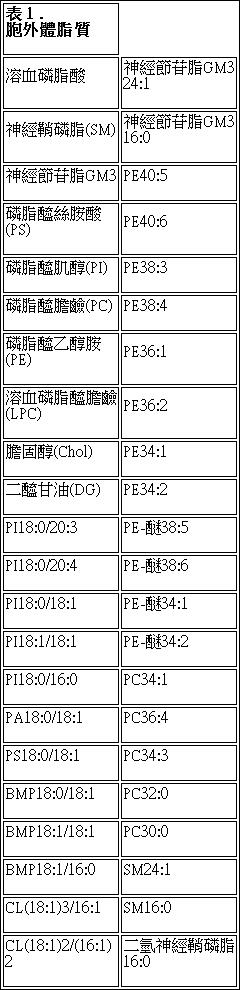


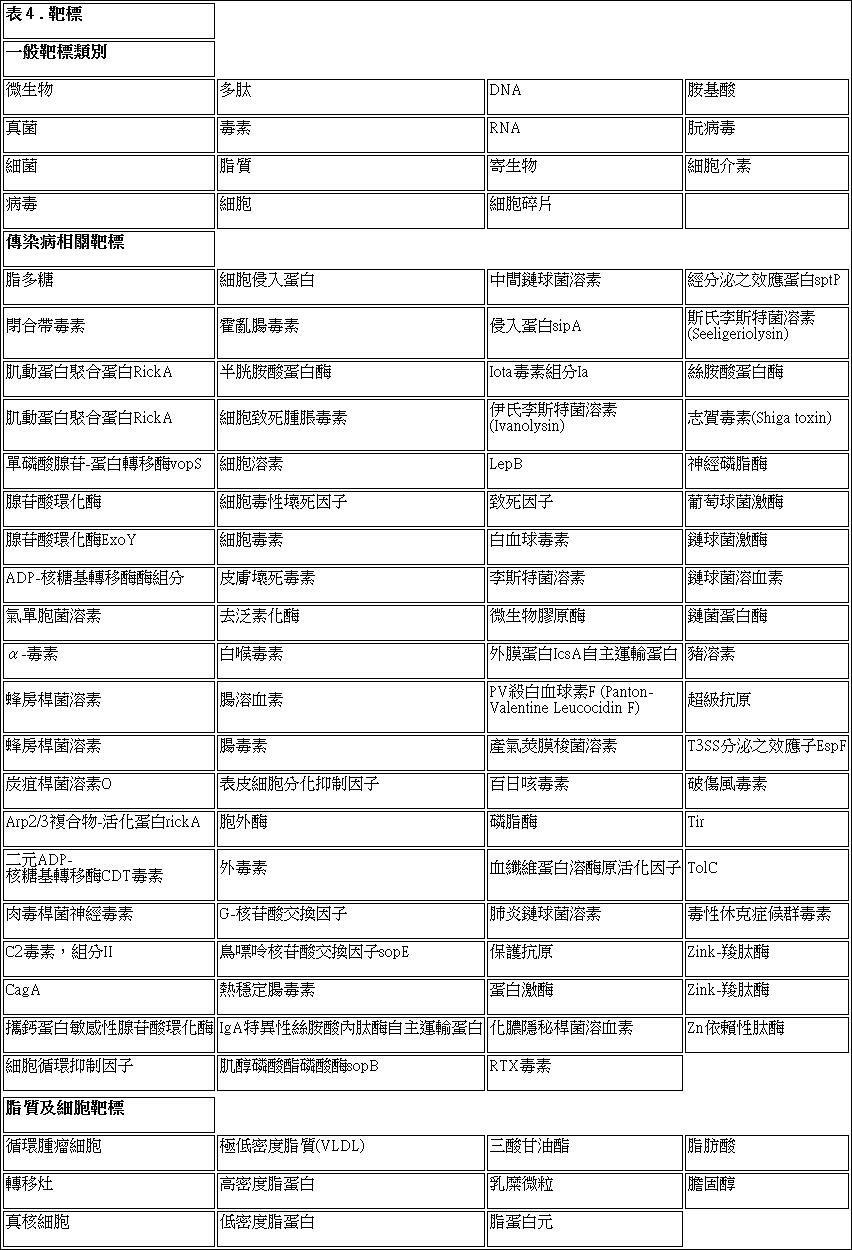

本發明已就代表實例而言有所描述,該等代表實例視為不限制僅由申請專利範圍定義之本發明之範疇之說明性實施例。對包括科學公開案、論文、教科書、專利申請案及經發佈專利之公開案之所有提及均出於所有目的特此以引用之方式併入。The present invention has been described in terms of representative examples, which are considered as non-limiting illustrative embodiments of the scope of the present invention defined only by the scope of the patent application. All references to publications including scientific publications, papers, textbooks, patent applications and issued patents are hereby incorporated by reference for all purposes.
圖 1
顯示Stat 3、Stat 6、Cebpβ-1、Pi3Kγ、CEBPβ-2及Kras在轉染遞增量之靶向基因中之各者之siRNA之後的基因表現量。 Figure 1 shows the gene expression levels of
圖 2
顯示在轉染增加量之分別靶向Stat 3、Stat 6、Cebpβ-1、Pi3Kγ、CEBPβ-2及Kras之siRNA之後的Arg1表現。加擾siRNA轉染巨噬細胞用作對照。 Figure 2 shows the performance of Arg1 after transfection with increasing amounts of
圖 3 顯示如藉由六個巨噬細胞亞群(M0、M1、M2a、M2c、M2++及TAM)之總細胞GFP強度所測定之胞外體攝取。 Figure 3 shows the extracellular body uptake as determined by the total cellular GFP intensity of the six macrophage subpopulations (MO, Ml, M2a, M2c, M2++ and TAM).
圖 4 顯示如藉由總螢光強度所量測之M2或M0巨噬細胞之游離反義寡核苷酸(游離ASO)及負載ASO之胞外體(Exo-ASO)攝取。 Figure 4 shows the uptake of free antisense oligonucleotides (free ASO) and ASO-loaded exosomes (Exo-ASO) of M2 or M0 macrophages as measured by total fluorescence intensity.
圖 5A 顯示在於未處理小鼠中腹膜內注射1x10¹¹ 或1x10¹² 個含GFP胞外體之後活體內巨噬細胞之胞外體攝取。圖 5B 顯示在於B16F10腫瘤攜帶小鼠中注射單次劑量之天然未標記胞外體或Cy5標記Exo-ASO之後藉由活體內腫瘤細胞及巨噬細胞進行之天然胞外體及Exo-ASO更新。 Figure 5A shows the exosome uptake of macrophages in vivo after intraperitoneal injection of 1x10 11 or 1x10 12 GFP-containing exosomes in untreated mice. FIG. 5B shows the natural exosomes and Exo-ASO renewal performed by tumor cells and macrophages in vivo after a single dose of natural unlabeled exosomes or Cy5 labeled Exo-ASO in B16F10 tumor-bearing mice.
圖 6
顯示在與5 μM游離膽固醇標籤ASO或1x10⁵
或1x10⁶
個負載有膽固醇標籤ASO之胞外體一起培育之後M2極化鼠RAW264.7細胞中之Stat 3表現。測試五種不同之靶向STAT3之膽固醇標籤ASO:ASO 4.1,雙股MOE化學物質;ASO 5.1及ASO 5.2,單股O-甲基化學物質;ASO 5.3及ASO 5.4,單股MOE化學物質。未經治療之極化巨噬細胞及與未經修飾之胞外體一起培育之極化巨噬細胞用作陰性對照。Stat 3 siRNA轉染巨噬細胞用作陽性對照。 Figure 6 shows the
圖 7
顯示在與5 μM游離膽固醇標籤ASO或1x10⁵
或1x10⁶
個負載有膽固醇標籤ASO之胞外體一起培育之後M2極化鼠RAW264.7細胞中之Arg1轉錄量。測試五種不同之靶向STAT3之膽固醇標籤ASO:ASO 4.1,雙股MOE化學物質;ASO 5.1及ASO 5.2,單股O-甲基化學物質;ASO 5.3及ASO 5.4,單股MOE化學物質。未經治療之極化巨噬細胞及與未經修飾之胞外體一起培育之極化巨噬細胞用作陰性對照。Stat 3 siRNA轉染巨噬細胞用作陽性對照。 Figure 7 shows the amount of Arg1 transcription in M2 polarized mouse RAW264.7 cells after incubation with 5 μM free cholesterol tag ASO or 1×10 5 or 1×10 6 cholesterol tag ASO loaded extracellular bodies. Test five different cholesterol labeling ASOs targeting STAT3: ASO 4.1, double-stranded MOE chemicals; ASO 5.1 and ASO 5.2, single-strand O-methyl chemicals; ASO 5.3 and ASO 5.4, single-strand MOE chemicals. Untreated polarized macrophages and polarized macrophages incubated with unmodified extracellular bodies were used as negative controls.
圖 8A 顯示針對STAT3之在與高劑量(4 μM)之ASO或高劑量(4 μM)及低劑量(0.4 μM)之Exo-ASO一起培育之後M2極化鼠RAW264.7細胞中之STAT3表現。圖 8B 顯示針對KRAS之在與高劑量(4 μM)之ASO或Exo-ASO一起培育之後M2極化鼠RAW264.7細胞中之KRAS表現。圖 8C 顯示針對C/EBPβ之在與高劑量(4 μM)及低劑量(0.4 μM)之ASO或Exo-ASO一起培育之後M2極化鼠RAW264.7細胞中之C/EBPβ表現。 FIG. 8A shows the performance of STAT3 in M2 polarized mouse RAW264.7 cells after incubation with STAT3 with high dose (4 μM) ASO or high dose (4 μM) and low dose (0.4 μM) Exo-ASO. Figure 8B shows KRAS performance for MRAS polarized mouse RAW264.7 cells after incubation with high dose (4 μM) ASO or Exo-ASO for KRAS. Figure 8C shows the performance of C/EBPβ in M2 polarized mouse RAW264.7 cells after incubation with high dose (4 μM) and low dose (0.4 μM) ASO or Exo-ASO for C/EBPβ.
圖 9A 顯示在經變化劑量之游離STAT3 ASO或STAT3 Exo-ASO治療之後來自三個單獨供體之原代人類巨噬細胞中之STAT3轉錄量。呈現各治療之IC50及相較於游離STAT3 ASO之STAT3 Exo-ASO之改善倍數。圖 9B 顯示在經變化劑量之游離STAT3 ASO或STAT3 Exo-ASO治療之後來自三個單獨供體之原代人類巨噬細胞中之CD163量。呈現各治療之IC50及相較於游離STAT3 ASO之STAT3 Exo-ASO之改善倍數。 Figure 9A shows the amount of STAT3 transcription in primary human macrophages from three separate donors after treatment with varying doses of free STAT3 ASO or STAT3 Exo-ASO. The IC50 of each treatment and the fold improvement of STAT3 Exo-ASO compared to free STAT3 ASO are presented. Figure 9B shows the amount of CD163 in primary human macrophages from three separate donors after treatment with varying doses of free STAT3 ASO or STAT3 Exo-ASO. The IC50 of each treatment and the fold improvement of STAT3 Exo-ASO compared to free STAT3 ASO are presented.
圖 10 顯示分別針對HIF1α、Pi3Kγ、CEBP/β、STAT6及STAT3之在經4 μM游離ASO或Exo-ASO治療之後人類M2巨噬細胞中之靶基因表現。未經治療之人類M2巨噬細胞及經4 μM加擾Exo-ASO治療之人類M2巨噬細胞用作對照。 Figure 10 shows the target gene performance in human M2 macrophages after treatment with 4 μM free ASO or Exo-ASO for HIF1α, Pi3Kγ, CEBP/β, STAT6 and STAT3, respectively. Untreated human M2 macrophages and human M2 macrophages treated with 4 μM scrambled Exo-ASO were used as controls.
圖 11 顯示分別針對HIF1α、Pi3Kγ、CEBP/β、STAT6及STAT3之在經4 μM游離ASO或Exo-ASO治療之後人類M2巨噬細胞中之CD163表現。未經治療之人類M2巨噬細胞及經4 μM加擾Exo-ASO治療之人類M2巨噬細胞用作對照。 Figure 11 shows CD163 performance in human M2 macrophages after treatment with 4 μM free ASO or Exo-ASO for HIF1α, Pi3Kγ, CEBP/β, STAT6 and STAT3, respectively. Untreated human M2 macrophages and human M2 macrophages treated with 4 μM scrambled Exo-ASO were used as controls.
圖 12A 顯示在存在或不存在LPS之情況下經4 μM游離STAT3 ASO、4 μM STAT3 Exo-ASO、4 μM加擾Exo-ASO、天然胞外體或C188-9 (亦即STAT3之小分子抑制劑)治療之後之IL-12誘導。圖 12B 顯示在存在或不存在LPS之情況下經4 μM游離STAT3 ASO、4 μM STAT3 Exo-ASO、4 μM加擾Exo-ASO、天然胞外體或C188-9 (亦即STAT3之小分子抑制劑)治療之後之IL-23誘導。 Figure 12A shows 4 μM free STAT3 ASO, 4 μM STAT3 Exo-ASO, 4 μM scrambled Exo-ASO, native exosomes or C188-9 (i.e. small molecule inhibition of STAT3 in the presence or absence of LPS Agent) IL-12 induction after treatment. Figure 12B shows 4 μM free STAT3 ASO, 4 μM STAT3 Exo-ASO, 4 μM scrambled Exo-ASO, native exosomes or C188-9 (i.e. small molecule inhibition of STAT3 in the presence or absence of LPS Agent) IL-23 induction after treatment.
圖 13A
顯示在經未經修飾之胞外體(僅EV)及濃度匹配之Stat 3游離ASO及Stat 3 Exo-ASO治療之後之STAT3轉錄量。圖 13B
顯示在經未經修飾之胞外體(僅EV)及濃度匹配之Stat 3游離ASO及Stat 3 Exo-ASO治療之後之CD163轉錄量。圖 13C
顯示在經未經修飾之胞外體(僅EV)及濃度匹配之Stat 3游離ASO及Stat 3 Exo-ASO治療之後之TGFβ轉錄量。圖 13D
顯示在經未經修飾之胞外體(僅EV)及濃度匹配之Stat 3游離ASO及Stat 3 Exo-ASO治療之後之STAT6轉錄量。 Figure 13A shows the amount of STAT3 transcription after treatment with unmodified exosomes (EV only) and
圖 14 顯示在經分別負載有針對STAT3之ASO (MOE及LNA化學物質兩者)、針對STAT6之ASO (MOE化學物質)及針對CEBP/β之ASO (MOE化學物質)之胞外體治療之後的TGFβ表現量。 Fig. 14 shows the treatment after exosomes loaded with ASO for STAT3 (both MOE and LNA chemicals), ASO for STAT6 (MOE chemicals) and ASO for CEBP/β (MOE chemicals). TGFβ performance.
Claims (66)
Applications Claiming Priority (2)
| Application Number | Priority Date | Filing Date | Title |
|---|---|---|---|
| US201862629563P | 2018-02-12 | 2018-02-12 | |
| US62/629,563 | 2018-02-12 |
Publications (1)
| Publication Number | Publication Date |
|---|---|
| TW202003846A true TW202003846A (en) | 2020-01-16 |
Family
ID=65729420
Family Applications (1)
| Application Number | Title | Priority Date | Filing Date |
|---|---|---|---|
| TW108104676A TW202003846A (en) | 2018-02-12 | 2019-02-12 | Methods and compositions for macrophage polarization |
Country Status (17)
| Country | Link |
|---|---|
| US (2) | US11512315B2 (en) |
| EP (2) | EP3752615B1 (en) |
| JP (2) | JP2021512608A (en) |
| KR (1) | KR20200120624A (en) |
| CN (2) | CN111918967B (en) |
| AU (1) | AU2019218991A1 (en) |
| BR (1) | BR112020016228A2 (en) |
| CA (1) | CA3088009A1 (en) |
| CL (1) | CL2020002053A1 (en) |
| CO (1) | CO2020009694A2 (en) |
| EA (1) | EA202091486A1 (en) |
| IL (1) | IL276409A (en) |
| MX (1) | MX2020008103A (en) |
| PH (1) | PH12020551195A1 (en) |
| SG (1) | SG11202006021SA (en) |
| TW (1) | TW202003846A (en) |
| WO (1) | WO2019157535A1 (en) |
Families Citing this family (35)
| Publication number | Priority date | Publication date | Assignee | Title |
|---|---|---|---|---|
| CA3088009A1 (en) | 2018-02-12 | 2019-08-15 | Codiak Biosciences, Inc. | Methods and compositions for macrophage polarization |
| US12473598B2 (en) | 2018-03-28 | 2025-11-18 | Board Of Regents, The University Of Texas System | Identification of epigenetic alterations in DNA isolated from exosomes |
| US12312584B2 (en) | 2018-10-02 | 2025-05-27 | Exosome Therapeutics, Inc. | cGMP exosome loaded therapeutics for treating sickle cell disease |
| WO2020106771A1 (en) * | 2018-11-19 | 2020-05-28 | Exosome Therapeutics, Inc. | Compositions and methods for producing exosome loaded therapeutics for the treatment of multiple oncological disorders |
| US20250115904A1 (en) * | 2019-08-14 | 2025-04-10 | Lonza Sales Ag | Extracellular vesicle-aso constructs targeting stat6 |
| CN114729366A (en) * | 2019-08-14 | 2022-07-08 | 科迪亚克生物科学公司 | Extracellular vesicle-ASO constructs targeting CEBP/beta |
| US20220354963A1 (en) * | 2019-08-14 | 2022-11-10 | Codiak Biosciences, Inc. | Extracellular vesicle linked to molecules and uses thereof |
| JP2022544290A (en) * | 2019-08-14 | 2022-10-17 | コディアック バイオサイエンシーズ, インコーポレイテッド | Extracellular vesicles with antisense oligonucleotides targeting KRAS |
| WO2021030769A1 (en) * | 2019-08-14 | 2021-02-18 | Codiak Biosciences, Inc. | Extracellular vesicles with nras antisense oligonucleotides |
| JP2022549328A (en) * | 2019-09-25 | 2022-11-24 | コディアック バイオサイエンシーズ, インコーポレイテッド | extracellular vesicle composition |
| CA3164248A1 (en) * | 2019-12-05 | 2021-06-10 | Board Of Regents, The University Of Texas System | Exosomes-based therapy for liver fibrosis and other diseases associated with fibrosis |
| EP4150054A4 (en) | 2020-05-11 | 2025-08-27 | Strm Bio Incorporated | Compositions and methods related to extracellular vesicles from megakaryocytes |
| WO2021237100A1 (en) * | 2020-05-21 | 2021-11-25 | Codiak Biosciences, Inc. | Methods of targeting extracellular vesicles to lung |
| CN111748523B (en) * | 2020-07-17 | 2022-11-22 | 南通大学 | A preparation method and application of immunoregulatory small extracellular vesicles |
| WO2022076596A1 (en) * | 2020-10-06 | 2022-04-14 | Codiak Biosciences, Inc. | Extracellular vesicle-aso constructs targeting stat6 |
| CA3191515A1 (en) * | 2020-10-30 | 2022-05-05 | Alejandro VILLAGRA | Stat-activated macrophages, compositions, and uses thereof |
| AU2022216260A1 (en) * | 2021-02-03 | 2023-08-17 | Research Institute At Nationwide Children's Hospital | Compositions and methods for treating disease associated with dux4 overexpression |
| EP4329783A4 (en) | 2021-04-26 | 2025-04-02 | STRM.Bio Incorporated | COMPOSITIONS AND METHODS RELATING TO MEGAKARYOCYTE-DERIVED EXTRACELLULAR VESICLES FOR FANCONI ANEMIA |
| CN113262305B (en) * | 2021-05-27 | 2022-03-25 | 浙江大学 | Application of Coro1a gene as target in preparation of antitumor drugs |
| CA3223475A1 (en) | 2021-07-02 | 2023-01-05 | Spark Biopharma, Inc | Novel benzopyran derivative and use thereof |
| CN113521252B (en) * | 2021-07-29 | 2022-12-20 | 南开大学 | Use of TNFSF15 protein as a macrophage immune enhancer and its activation method |
| EP4395901A4 (en) * | 2021-09-02 | 2025-10-01 | Molecular Axiom Llc | COMPOSITIONS AND METHODS FOR MODULATING KRAS EXPRESSION |
| EP4419686A4 (en) * | 2021-10-21 | 2025-10-15 | Nanothera Biosciences Inc | COMPOSITIONS AND METHODS FOR KRAS DAMPING |
| CN114058621B (en) * | 2021-12-03 | 2023-06-16 | 温州医科大学 | Exosome secreted by lncRNA gene modified cells and application thereof |
| CN114209814B (en) * | 2021-12-15 | 2024-02-23 | 南开大学 | Application of TNFSF15 protein in promoting differentiation of bone marrow stem cells into macrophages and expansion |
| CN114561347A (en) * | 2022-02-25 | 2022-05-31 | 和携科技有限公司 | Culture medium and culture method of adipose-derived mesenchymal stem cells |
| CN115948496A (en) * | 2022-04-15 | 2023-04-11 | 健艾仕生物医药科技(杭州)有限公司 | A method and application of high-throughput detection of macrophage polarization process |
| CN115137708B (en) * | 2022-06-24 | 2023-05-16 | 重庆医科大学 | Liver fibrosis targeting nanoparticles loaded with YAP1 nucleic acid sequence and its preparation method and application |
| JP2025523813A (en) * | 2022-07-13 | 2025-07-25 | ナビディア、バイオファーマスーティカルズ、インコーポレイテッド | Mannosylated amine dextran drug delivery vehicles with degradable disulfide/carbonate linkers that target payloads to CD206-expressing cells - Patent Application 20070233334 |
| CN115261410A (en) * | 2022-07-20 | 2022-11-01 | 中山大学 | Preparation method and application of gene editing engineered M1 macrophage exosomes |
| WO2024044788A2 (en) * | 2022-08-26 | 2024-02-29 | Georgia State University Research Foundation, Inc. | Treating chronic inflammation and cancer by macrophage polarization |
| CN115814108B (en) * | 2022-12-27 | 2025-04-25 | 华中科技大学 | An engineered macrophage drug-loaded microparticle preparation for personalized tumor treatment and its preparation method |
| CN116370647B (en) * | 2023-04-11 | 2025-07-11 | 吉林大学 | An engineered exosome for pancreatic cancer immunotherapy and preparation method thereof |
| CN119215144B (en) * | 2023-09-08 | 2025-08-08 | 首都医科大学附属北京朝阳医院 | Application of LRG1 in preparation of drugs for promoting macrophage differentiation to M1 type and macrophage activator |
| KR102635831B1 (en) * | 2023-11-01 | 2024-02-13 | 강원대학교 산학협력단 | Use for treating pulmonary fibrosis by inducing repolarization of M2 macrophage by CXCL11 |
Family Cites Families (19)
| Publication number | Priority date | Publication date | Assignee | Title |
|---|---|---|---|---|
| GB2382408B (en) * | 2000-06-19 | 2004-06-02 | Halliburton Energy Systems Inc | Apparatus and methods for applying time lapse VSP to monitor a reservoir |
| US20040115634A1 (en) * | 2002-12-11 | 2004-06-17 | Isis Pharmaceuticals, Inc. | Modulation of stat 6 expression |
| DE102006050655A1 (en) * | 2006-10-24 | 2008-04-30 | Halmon Beheer B.V. | Pharmaceutical composition useful for treating allergic diseases comprises RNA and an allergen |
| KR101791702B1 (en) * | 2009-04-03 | 2017-10-30 | 다이서나 파마수이티컬, 인크. | Methods and Compositions for the Specific Inhibition of KRAS by Asymmetric double-stranded RNA |
| WO2010115202A2 (en) * | 2009-04-03 | 2010-10-07 | Dicerna Pharmaceuticals, Inc. | Methods and compositions for the specific inhibition of kras by blunt ended double-stranded rna |
| AU2012220872A1 (en) * | 2011-02-22 | 2013-09-12 | Caris Life Sciences Switzerland Holdings Gmbh | Circulating biomarkers |
| WO2014082083A1 (en) * | 2012-11-26 | 2014-05-30 | Caris Science, Inc. | Biomarker compositions and methods |
| US20160243192A1 (en) * | 2013-10-17 | 2016-08-25 | Children's Hospital Los Angeles | Antibody dependent exosome therapy |
| EP3550019A1 (en) * | 2014-10-24 | 2019-10-09 | Astrazeneca AB | Combination |
| MX2017015962A (en) * | 2015-06-10 | 2018-07-06 | Univ Texas | Use of exosomes for the treatment of disease. |
| GB201516801D0 (en) * | 2015-09-22 | 2015-11-04 | Immunovia Ab | Method, array and use thereof |
| RU2018113709A (en) | 2015-09-24 | 2019-10-30 | Айонис Фармасьютикалз, Инк. | KRAS EXPRESSION MODULATORS |
| RU2018136151A (en) * | 2016-03-15 | 2020-04-15 | Кодиак Байосайнсиз, Инк. | THERAPEUTIC MEMBRANE VESICULES |
| US20210290556A1 (en) | 2016-08-22 | 2021-09-23 | Codiak Biosciences, Inc. | Methods of suppressing delivery of exosomes to liver and spleen |
| CN111212632B (en) | 2017-08-25 | 2024-04-16 | 隆萨销售股份公司 | Using membrane proteins to generate therapeutic exosomes |
| CA3088009A1 (en) | 2018-02-12 | 2019-08-15 | Codiak Biosciences, Inc. | Methods and compositions for macrophage polarization |
| US20220354963A1 (en) * | 2019-08-14 | 2022-11-10 | Codiak Biosciences, Inc. | Extracellular vesicle linked to molecules and uses thereof |
| US20210322405A1 (en) * | 2020-04-15 | 2021-10-21 | Washington University | Compositions and methods for treating cancer |
| JP2025509183A (en) * | 2022-03-04 | 2025-04-11 | アイ-エムエービー バイオファーマ ユーエス リミテッド | Combination Therapies Containing KRAS Inhibitors for the Treatment of Cancer - Patent application |
-
2019
- 2019-02-12 CA CA3088009A patent/CA3088009A1/en active Pending
- 2019-02-12 SG SG11202006021SA patent/SG11202006021SA/en unknown
- 2019-02-12 CN CN201980011011.0A patent/CN111918967B/en active Active
- 2019-02-12 MX MX2020008103A patent/MX2020008103A/en unknown
- 2019-02-12 EP EP19710511.7A patent/EP3752615B1/en active Active
- 2019-02-12 WO PCT/US2019/017731 patent/WO2019157535A1/en not_active Ceased
- 2019-02-12 KR KR1020207022341A patent/KR20200120624A/en not_active Ceased
- 2019-02-12 BR BR112020016228-0A patent/BR112020016228A2/en unknown
- 2019-02-12 AU AU2019218991A patent/AU2019218991A1/en not_active Abandoned
- 2019-02-12 EP EP25198027.2A patent/EP4663245A2/en active Pending
- 2019-02-12 TW TW108104676A patent/TW202003846A/en unknown
- 2019-02-12 EA EA202091486A patent/EA202091486A1/en unknown
- 2019-02-12 US US16/969,511 patent/US11512315B2/en active Active
- 2019-02-12 JP JP2020542161A patent/JP2021512608A/en not_active Ceased
- 2019-02-12 CN CN202411511570.7A patent/CN119614501A/en active Pending
-
2020
- 2020-07-30 IL IL276409A patent/IL276409A/en unknown
- 2020-08-05 CO CONC2020/0009694A patent/CO2020009694A2/en unknown
- 2020-08-06 PH PH12020551195A patent/PH12020551195A1/en unknown
- 2020-08-07 CL CL2020002053A patent/CL2020002053A1/en unknown
-
2022
- 2022-11-04 US US18/052,785 patent/US20230365971A1/en active Pending
-
2024
- 2024-09-09 JP JP2024154757A patent/JP2024166292A/en active Pending
Also Published As
| Publication number | Publication date |
|---|---|
| BR112020016228A2 (en) | 2020-12-08 |
| CO2020009694A2 (en) | 2020-10-30 |
| WO2019157535A1 (en) | 2019-08-15 |
| AU2019218991A1 (en) | 2020-07-09 |
| IL276409A (en) | 2020-09-30 |
| CL2020002053A1 (en) | 2020-12-18 |
| MX2020008103A (en) | 2020-09-25 |
| CN119614501A (en) | 2025-03-14 |
| US11512315B2 (en) | 2022-11-29 |
| PH12020551195A1 (en) | 2021-08-16 |
| EA202091486A1 (en) | 2021-02-08 |
| CN111918967B (en) | 2024-11-19 |
| JP2024166292A (en) | 2024-11-28 |
| EP3752615B1 (en) | 2025-08-27 |
| JP2021512608A (en) | 2021-05-20 |
| KR20200120624A (en) | 2020-10-21 |
| US20200407725A1 (en) | 2020-12-31 |
| EP4663245A2 (en) | 2025-12-17 |
| CA3088009A1 (en) | 2019-08-15 |
| SG11202006021SA (en) | 2020-08-28 |
| US20230365971A1 (en) | 2023-11-16 |
| EP3752615A1 (en) | 2020-12-23 |
| EP3752615C0 (en) | 2025-08-27 |
| CN111918967A (en) | 2020-11-10 |
Similar Documents
| Publication | Publication Date | Title |
|---|---|---|
| TW202003846A (en) | Methods and compositions for macrophage polarization | |
| JP7507090B2 (en) | Exosomes for immuno-oncology and anti-inflammatory therapy | |
| Choo et al. | M1 macrophage-derived nanovesicles potentiate the anticancer efficacy of immune checkpoint inhibitors | |
| AU2020201605B2 (en) | Novel pharmaceutical composition comprising particles comprising a complex of a double-stranded polyribonucleotide and a polyalkyleneimine | |
| US12383575B2 (en) | Polyinosinic—polycytidylic acid compositions | |
| US20230346700A1 (en) | Multilamellar RNA Nanoparticles and Methods of Sensitizing Tumors to Treatment with Immune Checkpoint Inhibitors | |
| US20250345283A1 (en) | Macrophage-derived engineered vesicles for targeted delivery and treatment | |
| US20250249072A1 (en) | Methods of treating cancer | |
| Zhang et al. | PROKR1 delivery by cell-derived vesicles restores the myogenic potential of Prokr1-deficient C2C12 myoblasts | |
| US20250360204A1 (en) | Adjuvant composition containing galactan structure and uses thereof | |
| Huang | Clinical Applications of Exosomes | |
| Van Woensel et al. | Sensitization of glioblastoma tumor micro-environment to chemo-and immunotherapy by Galectin-1 reduction after intranasal anti-Gal-1 siRNA administration |