KR20250015612A - Method for sharing information related to object and wearable electronic device supporting the same - Google Patents
Method for sharing information related to object and wearable electronic device supporting the same Download PDFInfo
- Publication number
- KR20250015612A KR20250015612A KR1020230113936A KR20230113936A KR20250015612A KR 20250015612 A KR20250015612 A KR 20250015612A KR 1020230113936 A KR1020230113936 A KR 1020230113936A KR 20230113936 A KR20230113936 A KR 20230113936A KR 20250015612 A KR20250015612 A KR 20250015612A
- Authority
- KR
- South Korea
- Prior art keywords
- electronic device
- processor
- display
- information related
- external electronic
- Prior art date
- Legal status (The legal status is an assumption and is not a legal conclusion. Google has not performed a legal analysis and makes no representation as to the accuracy of the status listed.)
- Pending
Links
Images




Classifications
-
- G—PHYSICS
- G06—COMPUTING OR CALCULATING; COUNTING
- G06F—ELECTRIC DIGITAL DATA PROCESSING
- G06F3/00—Input arrangements for transferring data to be processed into a form capable of being handled by the computer; Output arrangements for transferring data from processing unit to output unit, e.g. interface arrangements
- G06F3/01—Input arrangements or combined input and output arrangements for interaction between user and computer
- G06F3/048—Interaction techniques based on graphical user interfaces [GUI]
- G06F3/0484—Interaction techniques based on graphical user interfaces [GUI] for the control of specific functions or operations, e.g. selecting or manipulating an object, an image or a displayed text element, setting a parameter value or selecting a range
- G06F3/04842—Selection of displayed objects or displayed text elements
-
- G—PHYSICS
- G06—COMPUTING OR CALCULATING; COUNTING
- G06F—ELECTRIC DIGITAL DATA PROCESSING
- G06F1/00—Details not covered by groups G06F3/00 - G06F13/00 and G06F21/00
- G06F1/16—Constructional details or arrangements
- G06F1/1613—Constructional details or arrangements for portable computers
- G06F1/163—Wearable computers, e.g. on a belt
-
- G—PHYSICS
- G06—COMPUTING OR CALCULATING; COUNTING
- G06F—ELECTRIC DIGITAL DATA PROCESSING
- G06F3/00—Input arrangements for transferring data to be processed into a form capable of being handled by the computer; Output arrangements for transferring data from processing unit to output unit, e.g. interface arrangements
- G06F3/01—Input arrangements or combined input and output arrangements for interaction between user and computer
- G06F3/011—Arrangements for interaction with the human body, e.g. for user immersion in virtual reality
- G06F3/013—Eye tracking input arrangements
-
- G—PHYSICS
- G06—COMPUTING OR CALCULATING; COUNTING
- G06F—ELECTRIC DIGITAL DATA PROCESSING
- G06F3/00—Input arrangements for transferring data to be processed into a form capable of being handled by the computer; Output arrangements for transferring data from processing unit to output unit, e.g. interface arrangements
- G06F3/01—Input arrangements or combined input and output arrangements for interaction between user and computer
- G06F3/017—Gesture based interaction, e.g. based on a set of recognized hand gestures
-
- G—PHYSICS
- G06—COMPUTING OR CALCULATING; COUNTING
- G06F—ELECTRIC DIGITAL DATA PROCESSING
- G06F3/00—Input arrangements for transferring data to be processed into a form capable of being handled by the computer; Output arrangements for transferring data from processing unit to output unit, e.g. interface arrangements
- G06F3/01—Input arrangements or combined input and output arrangements for interaction between user and computer
- G06F3/048—Interaction techniques based on graphical user interfaces [GUI]
- G06F3/0484—Interaction techniques based on graphical user interfaces [GUI] for the control of specific functions or operations, e.g. selecting or manipulating an object, an image or a displayed text element, setting a parameter value or selecting a range
- G06F3/0486—Drag-and-drop
-
- H—ELECTRICITY
- H04—ELECTRIC COMMUNICATION TECHNIQUE
- H04W—WIRELESS COMMUNICATION NETWORKS
- H04W4/00—Services specially adapted for wireless communication networks; Facilities therefor
- H04W4/80—Services using short range communication, e.g. near-field communication [NFC], radio-frequency identification [RFID] or low energy communication
Landscapes
- Engineering & Computer Science (AREA)
- Theoretical Computer Science (AREA)
- General Engineering & Computer Science (AREA)
- Human Computer Interaction (AREA)
- Physics & Mathematics (AREA)
- General Physics & Mathematics (AREA)
- Computer Hardware Design (AREA)
- Computer Networks & Wireless Communication (AREA)
- Signal Processing (AREA)
- User Interface Of Digital Computer (AREA)
Abstract
일 실시예에 따른 웨어러블 전자 장치는, 통신 회로(410), 디스플레이(420), 및 상기 통신 회로(410) 및 상기 디스플레이(420)와 작동적으로 연결된 적어도 하나의 프로세서를 포함할 수 있다. 상기 적어도 하나의 프로세서는, 사용자의 응시 지점을 획득하도록 구성될 수 있다. 상기 적어도 하나의 프로세서는, 상기 응시 지점에 대응하는 위치에 위치하는 제 1 객체를 식별하도록 구성될 수 있다. 상기 적어도 하나의 프로세서는, 상기 제 1 객체를 식별함에 기반하여, 상기 식별된 제 1 객체에 대응하는 제 2 객체를 상기 디스플레이(420)를 통하여 표시하도록 구성될 수 있다. 상기 적어도 하나의 프로세서는, 상기 제 2 객체와 관련된 제 1 입력에 기반하여, 상기 제 1 객체와 관련된 정보를 수신할 외부 전자 장치에 대응하는 제 3 객체를 상기 디스플레이(420)를 통하여 표시하도록 구성될 수 있다. 상기 적어도 하나의 프로세서는, 상기 제 3 객체와 관련된 제 2 입력에 기반하여, 상기 제 1 객체와 관련된 정보를, 상기 외부 전자 장치로 상기 통신 회로(410)를 통하여 전송하도록 구성될 수 있다.A wearable electronic device according to one embodiment may include a communication circuit (410), a display (420), and at least one processor operatively connected to the communication circuit (410) and the display (420). The at least one processor may be configured to acquire a gaze point of a user. The at least one processor may be configured to identify a first object located at a location corresponding to the gaze point. The at least one processor may be configured to display a second object corresponding to the identified first object through the display (420) based on the identification of the first object. The at least one processor may be configured to display a third object corresponding to an external electronic device that receives information related to the first object through the display (420) based on a first input related to the second object. The at least one processor may be configured to transmit information related to the first object to the external electronic device via the communication circuit (410), based on a second input related to the third object.
Description
본 개시는 객체와 관련된 정보를 공유하는 방법 및 이를 지원하는 웨어러블 전자 장치에 관한 것이다.The present disclosure relates to a method for sharing information related to an object and a wearable electronic device supporting the same.
AR 글래스(augmented reality glass), VR 글래스(virtual reality glass), HMD(head mounted display) 장치와 같은 웨어러블 전자 장치를 통해 제공되는 다양한 서비스 및 부가 기능들이 점차 증가하고 있다. 이러한 웨어러블 전자 장치의 효용 가치를 높이고 다양한 사용자들의 욕구를 만족시키기 위해서, 통신 서비스 제공자 또는 웨어러블 전자 장치 제조사들은 다양한 기능들을 제공하고 다른 업체와의 차별화를 위해 웨어러블 전자 장치를 경쟁적으로 개발하고 있다. 이에 따라, 웨어러블 전자 장치를 통해서 제공되는 다양한 기능들도 점점 고도화 되고 있다.The variety of services and additional functions provided through wearable electronic devices such as augmented reality glasses (AR glasses), virtual reality glasses (VR glasses), and head mounted displays (HMDs) are gradually increasing. In order to increase the utility value of these wearable electronic devices and satisfy the needs of various users, communication service providers or wearable electronic device manufacturers are competitively developing wearable electronic devices to provide various functions and differentiate themselves from other companies. Accordingly, the variety of functions provided through wearable electronic devices are also becoming increasingly advanced.
웨어러블 전자 장치는 외부 전자 장치와 정보(예: 컨텐트)를 공유할 수 있다. 예를 들어, 웨어러블 전자 장치는, 무선 통신(예: WiFi, 블루투스와 같은 근거리 무선 통신, LTE, 5G와 같은 셀룰러 통신)을 이용하여, 웨어러블 전자 장치 주변에 위치하는 하나 이상의 외부 전자 장치들을 확인할 수 있다. 웨어러블 전자 장치는, 상기 하나 이상의 외부 전자 장치들 중에서 사용자 입력에 기반하여 선택된 외부 전자 장치로 무선 통신을 이용하여, 정보를 전송(및 수신)할 수 있다.The wearable electronic device can share information (e.g., content) with external electronic devices. For example, the wearable electronic device can identify one or more external electronic devices located around the wearable electronic device using wireless communication (e.g., short-range wireless communication such as WiFi, Bluetooth, cellular communication such as LTE, 5G). The wearable electronic device can transmit (and receive) information to an external electronic device selected from among the one or more external electronic devices using wireless communication based on a user input.
상술한 정보는 본 개시에 대한 이해를 돕기 위한 목적으로 하는 배경 기술(related art)로 제공될 수 있다. 상술한 내용 중 어느 것도 본 개시와 관련된 종래 기술(prior art)로서 적용될 수 있는지에 대하여 어떠한 주장이나 결정이 제기되지 않는다.The above information may be provided as related art for the purpose of assisting in understanding the present disclosure. No claim or determination is made as to whether any of the above is applicable as prior art related to the present disclosure.
본 개시는, 웨어러블 전자 장치에서 식별된 객체(예: 현실 객체, 가상 객체)와 관련된 정보를 쉽고 직관적으로 외부 전자 장치와 공유할 수 있는, 객체와 관련된 정보를 공유하는 방법 및 이를 지원하는 웨어러블 전자 장치에 관한 것이다.The present disclosure relates to a method for sharing information related to an object, which can easily and intuitively share information related to an object (e.g., a real object, a virtual object) identified in a wearable electronic device with an external electronic device, and a wearable electronic device supporting the same.
본 개시가 이루고자 하는 기술적 과제들은 이상에서 언급한 기술적 과제로 제한되지 않으며, 언급되지 않은 또 다른 기술적 과제들은 아래의 기재로부터 본 발명이 속하는 기술분야에서 통상의 지식을 가진 자에게 명확하게 이해될 수 있을 것이다.The technical problems to be achieved by the present disclosure are not limited to the technical problems mentioned above, and other technical problems not mentioned will be clearly understood by a person having ordinary skill in the technical field to which the present invention belongs from the description below.
일 실시예에 따른 웨어러블 전자 장치는, 통신 회로, 디스플레이, 및 상기 통신 회로 및 상기 디스플레이와 작동적으로 연결된 적어도 하나의 프로세서를 포함할 수 있다. 상기 적어도 하나의 프로세서는, 사용자의 응시 지점을 획득하도록 구성될 수 있다. 상기 적어도 하나의 프로세서는, 상기 응시 지점에 대응하는 위치에 위치하는 제 1 객체를 식별하도록 구성될 수 있다. 상기 적어도 하나의 프로세서는, 상기 제 1 객체를 식별함에 기반하여, 상기 식별된 제 1 객체에 대응하는 제 2 객체를 상기 디스플레이를 통하여 표시하도록 구성될 수 있다. 상기 적어도 하나의 프로세서는, 상기 제 2 객체와 관련된 제 1 입력에 기반하여, 상기 제 1 객체와 관련된 정보를 수신할 외부 전자 장치에 대응하는 제 3 객체를 상기 디스플레이를 통하여 표시하도록 구성될 수 있다. 상기 적어도 하나의 프로세서는, 상기 제 3 객체와 관련된 제 2 입력에 기반하여, 상기 제 1 객체와 관련된 정보를, 상기 외부 전자 장치로 상기 통신 회로를 통하여 전송하도록 구성될 수 있다.A wearable electronic device according to one embodiment may include a communication circuit, a display, and at least one processor operatively connected to the communication circuit and the display. The at least one processor may be configured to acquire a gaze point of a user. The at least one processor may be configured to identify a first object located at a location corresponding to the gaze point. The at least one processor may be configured to display a second object corresponding to the identified first object through the display based on the identification of the first object. The at least one processor may be configured to display a third object corresponding to an external electronic device that receives information related to the first object through the display based on a first input related to the second object. The at least one processor may be configured to transmit information related to the first object to the external electronic device through the communication circuit based on a second input related to the third object.
일 실시예에 따른, 웨어러블 전자 장치에서 객체와 관련된 정보를 공유하는 방법은, 사용자의 응시 지점을 획득하는 동작을 포함할 수 있다. 상기 방법은, 상기 응시 지점에 대응하는 위치에 위치하는 제 1 객체를 식별하는 동작을 포함할 수 있다. 상기 방법은, 상기 제 1 객체를 식별함에 기반하여, 상기 식별된 제 1 객체에 대응하는 제 2 객체를 상기 웨어러블 전자 장치의 디스플레이를 통하여 표시하는 동작을 포함할 수 있다. 상기 방법은, 상기 제 2 객체와 관련된 제 1 입력에 기반하여, 상기 제 1 객체와 관련된 정보를 수신할 외부 전자 장치에 대응하는 제 3 객체를 상기 디스플레이를 통하여 표시하는 동작을 포함할 수 있다. 상기 방법은, 상기 제 3 객체와 관련된 제 2 입력에 기반하여, 상기 제 1 객체와 관련된 정보를, 상기 외부 전자 장치로 상기 웨어러블 전자 장치의 통신 회로를 통하여 전송하는 동작을 포함할 수 있다.In one embodiment, a method for sharing information related to an object in a wearable electronic device may include an operation of acquiring a gaze point of a user. The method may include an operation of identifying a first object located at a location corresponding to the gaze point. The method may include an operation of displaying a second object corresponding to the identified first object through a display of the wearable electronic device based on the identification of the first object. The method may include an operation of displaying a third object corresponding to an external electronic device that receives information related to the first object through the display based on a first input related to the second object. The method may include an operation of transmitting information related to the first object to the external electronic device through a communication circuit of the wearable electronic device based on a second input related to the third object.
일 실시예에 따른, 웨어러블 전자 장치는, 통신 회로, 디스플레이, 및 상기 통신 회로 및 상기 디스플레이와 작동적으로 연결된 적어도 하나의 프로세서를 포함할 수 있다. 상기 적어도 하나의 프로세서는, 상기 응시 지점에 대응하는 위치에 위치하는 제 1 객체를 식별하도록 구성될 수 있다. 상기 적어도 하나의 프로세서는, 상기 제 1 객체에 대한 제 1 핸드 제스처에 기반하여, 상기 확인된 제 1 객체와 관련된 정보를 전송하기 위한 제 2 객체를 상기 디스플레이를 통하여 표시하도록 구성될 수 있다. 상기 적어도 하나의 프로세서는, 상기 제 2 객체에 대한 제 2 핸드 제스처에 기반하여, 상기 제 1 객체와 관련된 정보를 수신할 수 있는 하나 이상의 외부 전자 장치들 각각에 대응하는 하나 이상의 제 3 객체들을 상기 디스플레이를 통하여 표시하도록 구성될 수 있다. 상기 적어도 하나의 프로세서는, 제 3 핸드 제스처에 기반하여, 상기 하나 이상의 제 3 객체들 중에서 적어도 하나의 제 3 객체를 선택하도록 구성될 수 있다. 상기 적어도 하나의 프로세서는, 상기 제 1 객체와 관련된 정보를, 상기 선택된 적어도 하나의 제 3 객체에 대응하는 적어도 하나의 외부 전자 장치로 상기 통신 회로를 통하여 전송하도록 구성될 수 있다.In one embodiment, a wearable electronic device may include a communication circuit, a display, and at least one processor operatively connected to the communication circuit and the display. The at least one processor may be configured to identify a first object located at a location corresponding to the gaze point. The at least one processor may be configured to display, through the display, a second object for transmitting information related to the identified first object based on a first hand gesture toward the first object. The at least one processor may be configured to display, through the display, one or more third objects corresponding to each of one or more external electronic devices capable of receiving information related to the first object based on the second hand gesture toward the second object. The at least one processor may be configured to select, based on the third hand gesture, at least one third object from among the one or more third objects. The at least one processor may be configured to transmit information related to the first object to at least one external electronic device corresponding to the at least one selected third object via the communication circuit.
일 실시예에서, 컴퓨터 실행 가능 명령어들을 기록한 비-일시적인 컴퓨터 판독 가능 매체에 있어서, 상기 컴퓨터 실행 가능 명령어들은, 실행 시, 적어도 하나의 프로세서를 포함하는 웨어러블 전자 장치가, 사용자의 응시 지점을 획득하도록 할 수 있다. 상기 컴퓨터 실행 가능 명령어들은, 실행 시, 적어도 하나의 프로세서를 포함하는 웨어러블 전자 장치가, 상기 응시 지점에 대응하는 위치에 위치하는 제 1 객체를 식별하도록 할 수 있다. 상기 컴퓨터 실행 가능 명령어들은, 실행 시, 적어도 하나의 프로세서를 포함하는 웨어러블 전자 장치가, 상기 제 1 객체를 식별함에 기반하여, 상기 식별된 제 1 객체에 대응하는 제 2 객체를 상기 웨어러블 전자 장치의 디스플레이를 통하여 표시하도록 할 수 있다. 상기 컴퓨터 실행 가능 명령어들은, 실행 시, 적어도 하나의 프로세서를 포함하는 웨어러블 전자 장치가, 상기 제 2 객체와 관련된 제 1 입력에 기반하여, 상기 제 1 객체와 관련된 정보를 수신할 외부 전자 장치에 대응하는 제 3 객체를 상기 디스플레이를 통하여 표시하도록 할 수 있다. 상기 컴퓨터 실행 가능 명령어들은, 실행 시, 적어도 하나의 프로세서를 포함하는 웨어러블 전자 장치가, 상기 제 3 객체와 관련된 제 2 입력에 기반하여, 상기 제 1 객체와 관련된 정보를, 상기 외부 전자 장치로 상기 웨어러블 전자 장치의 통신 회로를 통하여 전송하도록 할 수 있다.In one embodiment, a non-transitory computer-readable medium having computer-executable instructions recorded thereon may cause a wearable electronic device including at least one processor to acquire a point of gaze of a user when executed. The computer-executable instructions, when executed, may cause the wearable electronic device including at least one processor to identify a first object located at a location corresponding to the point of gaze. The computer-executable instructions, when executed, may cause the wearable electronic device including at least one processor to display a second object corresponding to the identified first object through a display of the wearable electronic device based on the identification of the first object. The computer-executable instructions, when executed, may cause the wearable electronic device including at least one processor to display a third object corresponding to an external electronic device to receive information related to the first object through the display based on a first input related to the second object. The computer-executable instructions, when executed, may cause the wearable electronic device including at least one processor to transmit information related to the first object to the external electronic device through a communication circuit of the wearable electronic device, based on a second input related to the third object.
본 개시의 일 실시예에 따른, 객체와 관련된 정보를 공유하는 방법 및 이를 지원하는 웨어러블 전자 장치는, 웨어러블 전자 장치에서 식별된 객체(예: 현실 객체, 가상 객체)와 관련된 정보를, 쉽고 직관적으로, 외부 전자 장치와 공유할 수 있다.According to one embodiment of the present disclosure, a method for sharing information related to an object and a wearable electronic device supporting the same can easily and intuitively share information related to an object (e.g., a real object, a virtual object) identified in the wearable electronic device with an external electronic device.
도 1은, 일 실시예에 따른 따른, 네트워크 환경 내의 전자 장치의 블록도이다.
도 2는, 본 개시의 일 실시 예에 따른, 웨어러블 전자 장치의 내부 구성을 설명하기 위한 사시도이다.
도 3a는, 일 실시 예에 따른, 웨어러블 전자 장치의 전면을 나타내는 도면이다.
도 3b는, 일 실시 예에 따른, 웨어러블 전자 장치의 후면을 나타내는 도면이다.
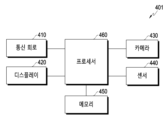
도 4는, 일 실시 예에 따른, 웨어러블 전자 장치의 블록도이다.
도 5는, 일 실시예에 따른, 객체와 관련된 정보를 공유하는 방법을 설명하기 위한 흐름도이다.
도 6은, 일 실시예에 따른, 객체와 관련된 정보를 공유하는 방법을 설명하기 위한 흐름도이다.
도 7a 및 도 7b는, 일 실시예에 따른, 객체와 관련된 정보를 공유하는 방법을 설명하기 위한 도면이다.
도 8은, 일 실시예에 따른, 객체와 관련된 정보를 공유하는 방법을 설명하기 위한 흐름도이다.
도 9a 및 도 9b는, 일 실시예에 따른, 객체와 관련된 정보를 공유하는 방법을 설명하기 위한 도면이다.
도 10은, 일 실시예에 따른, 객체와 관련된 정보를 공유하는 방법을 설명하기 위한 흐름도이다.
도 11은, 일 실시예에 따른, 객체와 관련된 정보를 공유하는 방법을 설명하기 위한 흐름도이다.
도 12는, 일 실시예에 따른, 객체와 관련된 정보를 공유하는 방법을 설명하기 위한 도면이다.
도 13은, 일 실시예에 따른, 객체와 관련된 정보를 공유하는 방법을 설명하기 위한 흐름도이다.FIG. 1 is a block diagram of an electronic device within a network environment according to one embodiment.
FIG. 2 is a perspective view illustrating the internal configuration of a wearable electronic device according to an embodiment of the present disclosure.
FIG. 3A is a diagram illustrating a front side of a wearable electronic device according to one embodiment.
FIG. 3b is a drawing showing the rear side of a wearable electronic device according to one embodiment.
FIG. 4 is a block diagram of a wearable electronic device according to one embodiment.
FIG. 5 is a flowchart illustrating a method for sharing information related to an object according to one embodiment.
FIG. 6 is a flowchart illustrating a method for sharing information related to an object according to one embodiment.
FIGS. 7A and 7B are diagrams illustrating a method of sharing information related to an object according to one embodiment.
FIG. 8 is a flowchart illustrating a method of sharing information related to an object according to one embodiment.
FIGS. 9A and 9B are diagrams illustrating a method of sharing information related to an object according to one embodiment.
FIG. 10 is a flowchart illustrating a method of sharing information related to an object according to one embodiment.
FIG. 11 is a flowchart illustrating a method of sharing information related to an object according to one embodiment.
FIG. 12 is a diagram illustrating a method for sharing information related to an object according to one embodiment.
FIG. 13 is a flowchart illustrating a method of sharing information related to an object according to one embodiment.
도 1은, 일 실시예에 따른, 네트워크 환경(100) 내의 전자 장치(101)의 블록도이다.FIG. 1 is a block diagram of an electronic device (101) within a network environment (100), according to one embodiment.
도 1을 참조하면, 네트워크 환경(100)에서 전자 장치(101)는 제 1 네트워크(198)(예: 근거리 무선 통신 네트워크)를 통하여 전자 장치(102)와 통신하거나, 또는 제 2 네트워크(199)(예: 원거리 무선 통신 네트워크)를 통하여 전자 장치(104) 또는 서버(108) 중 적어도 하나와 통신할 수 있다. 일 실시예에 따르면, 전자 장치(101)는 서버(108)를 통하여 전자 장치(104)와 통신할 수 있다. 일 실시예에 따르면, 전자 장치(101)는 프로세서(120), 메모리(130), 입력 모듈(150), 음향 출력 모듈(155), 디스플레이 모듈(160), 오디오 모듈(170), 센서 모듈(176), 인터페이스(177), 연결 단자(178), 햅틱 모듈(179), 카메라 모듈(180), 전력 관리 모듈(188), 배터리(189), 통신 모듈(190), 가입자 식별 모듈(196), 또는 안테나 모듈(197)을 포함할 수 있다. 어떤 실시예에서는, 전자 장치(101)에는, 이 구성요소들 중 적어도 하나(예: 연결 단자(178))가 생략되거나, 하나 이상의 다른 구성요소가 추가될 수 있다. 어떤 실시예에서는, 이 구성요소들 중 일부들(예: 센서 모듈(176), 카메라 모듈(180), 또는 안테나 모듈(197))은 하나의 구성요소(예: 디스플레이 모듈(160))로 통합될 수 있다.Referring to FIG. 1, in a network environment (100), an electronic device (101) may communicate with an electronic device (102) via a first network (198) (e.g., a short-range wireless communication network), or may communicate with at least one of an electronic device (104) or a server (108) via a second network (199) (e.g., a long-range wireless communication network). According to one embodiment, the electronic device (101) may communicate with the electronic device (104) via the server (108). According to one embodiment, the electronic device (101) may include a processor (120), a memory (130), an input module (150), an audio output module (155), a display module (160), an audio module (170), a sensor module (176), an interface (177), a connection terminal (178), a haptic module (179), a camera module (180), a power management module (188), a battery (189), a communication module (190), a subscriber identification module (196), or an antenna module (197). In some embodiments, the electronic device (101) may omit at least one of these components (e.g., the connection terminal (178)), or may have one or more other components added. In some embodiments, some of these components (e.g., the sensor module (176), the camera module (180), or the antenna module (197)) may be integrated into one component (e.g., the display module (160)).
프로세서(120)는, 예를 들면, 소프트웨어(예: 프로그램(140))를 실행하여 프로세서(120)에 연결된 전자 장치(101)의 적어도 하나의 다른 구성요소(예: 하드웨어 또는 소프트웨어 구성요소)를 제어할 수 있고, 다양한 데이터 처리 또는 연산을 수행할 수 있다. 일 실시예에 따르면, 데이터 처리 또는 연산의 적어도 일부로서, 프로세서(120)는 다른 구성요소(예: 센서 모듈(176) 또는 통신 모듈(190))로부터 수신된 명령 또는 데이터를 휘발성 메모리(132)에 저장하고, 휘발성 메모리(132)에 저장된 명령 또는 데이터를 처리하고, 결과 데이터를 비휘발성 메모리(134)에 저장할 수 있다. 일 실시예에 따르면, 프로세서(120)는 메인 프로세서(121)(예: 중앙 처리 장치 또는 어플리케이션 프로세서) 또는 이와는 독립적으로 또는 함께 운영 가능한 보조 프로세서(123)(예: 그래픽 처리 장치, 신경망 처리 장치(NPU: neural processing unit), 이미지 시그널 프로세서, 센서 허브 프로세서, 또는 커뮤니케이션 프로세서)를 포함할 수 있다. 예를 들어, 전자 장치(101)가 메인 프로세서(121) 및 보조 프로세서(123)를 포함하는 경우, 보조 프로세서(123)는 메인 프로세서(121)보다 저전력을 사용하거나, 지정된 기능에 특화되도록 설정될 수 있다. 보조 프로세서(123)는 메인 프로세서(121)와 별개로, 또는 그 일부로서 구현될 수 있다.The processor (120) may control at least one other component (e.g., a hardware or software component) of the electronic device (101) connected to the processor (120) by executing, for example, software (e.g., a program (140)), and may perform various data processing or calculations. According to one embodiment, as at least a part of the data processing or calculations, the processor (120) may store a command or data received from another component (e.g., a sensor module (176) or a communication module (190)) in the volatile memory (132), process the command or data stored in the volatile memory (132), and store result data in the nonvolatile memory (134). According to one embodiment, the processor (120) may include a main processor (121) (e.g., a central processing unit or an application processor) or an auxiliary processor (123) (e.g., a graphic processing unit, a neural processing unit (NPU), an image signal processor, a sensor hub processor, or a communication processor) that can operate independently or together therewith. For example, if the electronic device (101) includes a main processor (121) and a secondary processor (123), the secondary processor (123) may be configured to use lower power than the main processor (121) or to be specialized for a given function. The secondary processor (123) may be implemented separately from the main processor (121) or as a part thereof.
보조 프로세서(123)는, 예를 들면, 메인 프로세서(121)가 인액티브(예: 슬립) 상태에 있는 동안 메인 프로세서(121)를 대신하여, 또는 메인 프로세서(121)가 액티브(예: 어플리케이션 실행) 상태에 있는 동안 메인 프로세서(121)와 함께, 전자 장치(101)의 구성요소들 중 적어도 하나의 구성요소(예: 디스플레이 모듈(160), 센서 모듈(176), 또는 통신 모듈(190))와 관련된 기능 또는 상태들의 적어도 일부를 제어할 수 있다. 일 실시예에 따르면, 보조 프로세서(123)(예: 이미지 시그널 프로세서 또는 커뮤니케이션 프로세서)는 기능적으로 관련 있는 다른 구성요소(예: 카메라 모듈(180) 또는 통신 모듈(190))의 일부로서 구현될 수 있다. 일 실시예에 따르면, 보조 프로세서(123)(예: 신경망 처리 장치)는 인공지능 모델의 처리에 특화된 하드웨어 구조를 포함할 수 있다. 인공지능 모델은 기계 학습을 통해 생성될 수 있다. 이러한 학습은, 예를 들어, 인공지능 모델이 수행되는 전자 장치(101) 자체에서 수행될 수 있고, 별도의 서버(예: 서버(108))를 통해 수행될 수도 있다. 학습 알고리즘은, 예를 들어, 지도형 학습(supervised learning), 비지도형 학습(unsupervised learning), 준지도형 학습(semi-supervised learning) 또는 강화 학습(reinforcement learning)을 포함할 수 있으나, 전술한 예에 한정되지 않는다. 인공지능 모델은, 복수의 인공 신경망 레이어들을 포함할 수 있다. 인공 신경망은 심층 신경망(DNN: deep neural network), CNN(convolutional neural network), RNN(recurrent neural network), RBM(restricted boltzmann machine), DBN(deep belief network), BRDNN(bidirectional recurrent deep neural network), 심층 Q-네트워크(deep Q-networks) 또는 상기 중 둘 이상의 조합 중 하나일 수 있으나, 전술한 예에 한정되지 않는다. 인공지능 모델은 하드웨어 구조 이외에, 추가적으로 또는 대체적으로, 소프트웨어 구조를 포함할 수 있다.The auxiliary processor (123) may control at least a portion of functions or states associated with at least one of the components of the electronic device (101) (e.g., the display module (160), the sensor module (176), or the communication module (190)), for example, on behalf of the main processor (121) while the main processor (121) is in an inactive (e.g., sleep) state, or together with the main processor (121) while the main processor (121) is in an active (e.g., application execution) state. In one embodiment, the auxiliary processor (123) (e.g., an image signal processor or a communication processor) may be implemented as a part of another functionally related component (e.g., a camera module (180) or a communication module (190)). In one embodiment, the auxiliary processor (123) (e.g., a neural network processing device) may include a hardware structure specialized for processing artificial intelligence models. The artificial intelligence models may be generated through machine learning. Such learning may be performed, for example, in the electronic device (101) itself on which the artificial intelligence model is executed, or may be performed through a separate server (e.g., server (108)). The learning algorithm may include, for example, supervised learning, unsupervised learning, semi-supervised learning, or reinforcement learning, but is not limited to the examples described above. The artificial intelligence model may include a plurality of artificial neural network layers. The artificial neural network may be one of a deep neural network (DNN), a convolutional neural network (CNN), a recurrent neural network (RNN), a restricted Boltzmann machine (RBM), a deep belief network (DBN), a bidirectional recurrent deep neural network (BRDNN), deep Q-networks, or a combination of two or more of the above, but is not limited to the examples described above. In addition to the hardware structure, the artificial intelligence model may additionally or alternatively include a software structure.
메모리(130)는, 전자 장치(101)의 적어도 하나의 구성요소(예: 프로세서(120) 또는 센서 모듈(176))에 의해 사용되는 다양한 데이터를 저장할 수 있다. 데이터는, 예를 들어, 소프트웨어(예: 프로그램(140)) 및, 이와 관련된 명령에 대한 입력 데이터 또는 출력 데이터를 포함할 수 있다. 메모리(130)는, 휘발성 메모리(132) 또는 비휘발성 메모리(134)를 포함할 수 있다.The memory (130) can store various data used by at least one component (e.g., processor (120) or sensor module (176)) of the electronic device (101). The data can include, for example, software (e.g., program (140)) and input data or output data for commands related thereto. The memory (130) can include volatile memory (132) or nonvolatile memory (134).
프로그램(140)은 메모리(130)에 소프트웨어로서 저장될 수 있으며, 예를 들면, 운영 체제(142), 미들 웨어(144) 또는 어플리케이션(146)을 포함할 수 있다.The program (140) may be stored as software in memory (130) and may include, for example, an operating system (142), middleware (144), or an application (146).
입력 모듈(150)은, 전자 장치(101)의 구성요소(예: 프로세서(120))에 사용될 명령 또는 데이터를 전자 장치(101)의 외부(예: 사용자)로부터 수신할 수 있다. 입력 모듈(150)은, 예를 들면, 마이크, 마우스, 키보드, 키(예: 버튼), 또는 디지털 펜(예: 스타일러스 펜)을 포함할 수 있다.The input module (150) can receive commands or data to be used in a component of the electronic device (101) (e.g., a processor (120)) from an external source (e.g., a user) of the electronic device (101). The input module (150) can include, for example, a microphone, a mouse, a keyboard, a key (e.g., a button), or a digital pen (e.g., a stylus pen).
음향 출력 모듈(155)은 음향 신호를 전자 장치(101)의 외부로 출력할 수 있다. 음향 출력 모듈(155)은, 예를 들면, 스피커 또는 리시버를 포함할 수 있다. 스피커는 멀티미디어 재생 또는 녹음 재생과 같이 일반적인 용도로 사용될 수 있다. 리시버는 착신 전화를 수신하기 위해 사용될 수 있다. 일 실시예에 따르면, 리시버는 스피커와 별개로, 또는 그 일부로서 구현될 수 있다.The audio output module (155) can output an audio signal to the outside of the electronic device (101). The audio output module (155) can include, for example, a speaker or a receiver. The speaker can be used for general purposes such as multimedia playback or recording playback. The receiver can be used to receive an incoming call. According to one embodiment, the receiver can be implemented separately from the speaker or as a part thereof.
디스플레이 모듈(160)은 전자 장치(101)의 외부(예: 사용자)로 정보를 시각적으로 제공할 수 있다. 디스플레이 모듈(160)은, 예를 들면, 디스플레이, 홀로그램 장치, 또는 프로젝터 및 해당 장치를 제어하기 위한 제어 회로를 포함할 수 있다. 일 실시예에 따르면, 디스플레이 모듈(160)은 터치를 감지하도록 설정된 터치 센서, 또는 상기 터치에 의해 발생되는 힘의 세기를 측정하도록 설정된 압력 센서를 포함할 수 있다. The display module (160) can visually provide information to an external party (e.g., a user) of the electronic device (101). The display module (160) can include, for example, a display, a holographic device, or a projector and a control circuit for controlling the device. According to one embodiment, the display module (160) can include a touch sensor configured to detect a touch, or a pressure sensor configured to measure the intensity of a force generated by the touch.
오디오 모듈(170)은 소리를 전기 신호로 변환시키거나, 반대로 전기 신호를 소리로 변환시킬 수 있다. 일 실시예에 따르면, 오디오 모듈(170)은, 입력 모듈(150)을 통해 소리를 획득하거나, 음향 출력 모듈(155), 또는 전자 장치(101)와 직접 또는 무선으로 연결된 외부 전자 장치(예: 전자 장치(102))(예: 스피커 또는 헤드폰)를 통해 소리를 출력할 수 있다.The audio module (170) can convert sound into an electrical signal, or vice versa, convert an electrical signal into sound. According to one embodiment, the audio module (170) can obtain sound through an input module (150), or output sound through an audio output module (155), or an external electronic device (e.g., an electronic device (102)) (e.g., a speaker or a headphone) directly or wirelessly connected to the electronic device (101).
센서 모듈(176)은 전자 장치(101)의 작동 상태(예: 전력 또는 온도), 또는 외부의 환경 상태(예: 사용자 상태)를 감지하고, 감지된 상태에 대응하는 전기 신호 또는 데이터 값을 생성할 수 있다. 일 실시예에 따르면, 센서 모듈(176)은, 예를 들면, 제스처 센서, 자이로 센서, 기압 센서, 마그네틱 센서, 가속도 센서, 그립 센서, 근접 센서, 컬러 센서, IR(infrared) 센서, 생체 센서, 온도 센서, 습도 센서, 또는 조도 센서를 포함할 수 있다. The sensor module (176) can detect an operating state (e.g., power or temperature) of the electronic device (101) or an external environmental state (e.g., user state) and generate an electric signal or data value corresponding to the detected state. According to one embodiment, the sensor module (176) can include, for example, a gesture sensor, a gyro sensor, a barometric pressure sensor, a magnetic sensor, an acceleration sensor, a grip sensor, a proximity sensor, a color sensor, an IR (infrared) sensor, a biometric sensor, a temperature sensor, a humidity sensor, or an illuminance sensor.
인터페이스(177)는 전자 장치(101)가 외부 전자 장치(예: 전자 장치(102))와 직접 또는 무선으로 연결되기 위해 사용될 수 있는 하나 이상의 지정된 프로토콜들을 지원할 수 있다. 일 실시예에 따르면, 인터페이스(177)는, 예를 들면, HDMI(high definition multimedia interface), USB(universal serial bus) 인터페이스, SD카드 인터페이스, 또는 오디오 인터페이스를 포함할 수 있다.The interface (177) may support one or more designated protocols that may be used to directly or wirelessly connect the electronic device (101) with an external electronic device (e.g., the electronic device (102)). According to one embodiment, the interface (177) may include, for example, a high definition multimedia interface (HDMI), a universal serial bus (USB) interface, an SD card interface, or an audio interface.
연결 단자(178)는, 그를 통해서 전자 장치(101)가 외부 전자 장치(예: 전자 장치(102))와 물리적으로 연결될 수 있는 커넥터를 포함할 수 있다. 일 실시예에 따르면, 연결 단자(178)는, 예를 들면, HDMI 커넥터, USB 커넥터, SD 카드 커넥터, 또는 오디오 커넥터(예: 헤드폰 커넥터)를 포함할 수 있다.The connection terminal (178) may include a connector through which the electronic device (101) may be physically connected to an external electronic device (e.g., the electronic device (102)). According to one embodiment, the connection terminal (178) may include, for example, an HDMI connector, a USB connector, an SD card connector, or an audio connector (e.g., a headphone connector).
햅틱 모듈(179)은 전기적 신호를 사용자가 촉각 또는 운동 감각을 통해서 인지할 수 있는 기계적인 자극(예: 진동 또는 움직임) 또는 전기적인 자극으로 변환할 수 있다. 일 실시예에 따르면, 햅틱 모듈(179)은, 예를 들면, 모터, 압전 소자, 또는 전기 자극 장치를 포함할 수 있다.The haptic module (179) can convert an electrical signal into a mechanical stimulus (e.g., vibration or movement) or an electrical stimulus that a user can perceive through a tactile or kinesthetic sense. According to one embodiment, the haptic module (179) can include, for example, a motor, a piezoelectric element, or an electrical stimulation device.
카메라 모듈(180)은 정지 영상 및 동영상을 촬영할 수 있다. 일 실시예에 따르면, 카메라 모듈(180)은 하나 이상의 렌즈들, 이미지 센서들, 이미지 시그널 프로세서들, 또는 플래시들을 포함할 수 있다.The camera module (180) can capture still images and moving images. According to one embodiment, the camera module (180) can include one or more lenses, image sensors, image signal processors, or flashes.
전력 관리 모듈(188)은 전자 장치(101)에 공급되는 전력을 관리할 수 있다. 일 실시예에 따르면, 전력 관리 모듈(188)은, 예를 들면, PMIC(power management integrated circuit)의 적어도 일부로서 구현될 수 있다.The power management module (188) can manage power supplied to the electronic device (101). According to one embodiment, the power management module (188) can be implemented as, for example, at least a part of a power management integrated circuit (PMIC).
배터리(189)는 전자 장치(101)의 적어도 하나의 구성요소에 전력을 공급할 수 있다. 일 실시예에 따르면, 배터리(189)는, 예를 들면, 재충전 불가능한 1차 전지, 재충전 가능한 2차 전지 또는 연료 전지를 포함할 수 있다.The battery (189) can power at least one component of the electronic device (101). In one embodiment, the battery (189) can include, for example, a non-rechargeable primary battery, a rechargeable secondary battery, or a fuel cell.
통신 모듈(190)은 전자 장치(101)와 외부 전자 장치(예: 전자 장치(102), 전자 장치(104), 또는 서버(108)) 간의 직접(예: 유선) 통신 채널 또는 무선 통신 채널의 수립, 및 수립된 통신 채널을 통한 통신 수행을 지원할 수 있다. 통신 모듈(190)은 프로세서(120)(예: 어플리케이션 프로세서)와 독립적으로 운영되고, 직접(예: 유선) 통신 또는 무선 통신을 지원하는 하나 이상의 커뮤니케이션 프로세서를 포함할 수 있다. 일 실시예에 따르면, 통신 모듈(190)은 무선 통신 모듈(192)(예: 셀룰러 통신 모듈, 근거리 무선 통신 모듈, 또는 GNSS(global navigation satellite system) 통신 모듈) 또는 유선 통신 모듈(194)(예: LAN(local area network) 통신 모듈, 또는 전력선 통신 모듈)을 포함할 수 있다. 이들 통신 모듈 중 해당하는 통신 모듈은 제 1 네트워크(198)(예: 블루투스, WiFi(wireless fidelity) direct 또는 IrDA(infrared data association)와 같은 근거리 통신 네트워크) 또는 제 2 네트워크(199)(예: 레거시 셀룰러 네트워크, 5G 네트워크, 차세대 통신 네트워크, 인터넷, 또는 컴퓨터 네트워크(예: LAN 또는 WAN)와 같은 원거리 통신 네트워크)를 통하여 외부의 전자 장치(104)와 통신할 수 있다. 이런 여러 종류의 통신 모듈들은 하나의 구성요소(예: 단일 칩)로 통합되거나, 또는 서로 별도의 복수의 구성요소들(예: 복수 칩들)로 구현될 수 있다. 무선 통신 모듈(192)은 가입자 식별 모듈(196)에 저장된 가입자 정보(예: 국제 모바일 가입자 식별자(IMSI))를 이용하여 제 1 네트워크(198) 또는 제 2 네트워크(199)와 같은 통신 네트워크 내에서 전자 장치(101)를 확인 또는 인증할 수 있다. The communication module (190) may support establishment of a direct (e.g., wired) communication channel or a wireless communication channel between the electronic device (101) and an external electronic device (e.g., the electronic device (102), the electronic device (104), or the server (108)), and performance of communication through the established communication channel. The communication module (190) may operate independently from the processor (120) (e.g., the application processor) and may include one or more communication processors that support direct (e.g., wired) communication or wireless communication. According to one embodiment, the communication module (190) may include a wireless communication module (192) (e.g., a cellular communication module, a short-range wireless communication module, or a GNSS (global navigation satellite system) communication module) or a wired communication module (194) (e.g., a local area network (LAN) communication module or a power line communication module). Among these communication modules, a corresponding communication module may communicate with an external electronic device (104) via a first network (198) (e.g., a short-range communication network such as Bluetooth, wireless fidelity (WiFi) direct, or infrared data association (IrDA)) or a second network (199) (e.g., a long-range communication network such as a legacy cellular network, a 5G network, a next-generation communication network, the Internet, or a computer network (e.g., a LAN or WAN)). These various types of communication modules may be integrated into a single component (e.g., a single chip) or implemented as multiple separate components (e.g., multiple chips). The wireless communication module (192) may use subscriber information (e.g., an international mobile subscriber identity (IMSI)) stored in the subscriber identification module (196) to identify or authenticate the electronic device (101) within a communication network such as the first network (198) or the second network (199).
무선 통신 모듈(192)은 4G 네트워크 이후의 5G 네트워크 및 차세대 통신 기술, 예를 들어, NR 접속 기술(new radio access technology)을 지원할 수 있다. NR 접속 기술은 고용량 데이터의 고속 전송(eMBB(enhanced mobile broadband)), 단말 전력 최소화와 다수 단말의 접속(mMTC(massive machine type communications)), 또는 고신뢰도와 저지연(URLLC(ultra-reliable and low-latency communications))을 지원할 수 있다. 무선 통신 모듈(192)은, 예를 들어, 높은 데이터 전송률 달성을 위해, 고주파 대역(예: mmWave 대역)을 지원할 수 있다. 무선 통신 모듈(192)은 고주파 대역에서의 성능 확보를 위한 다양한 기술들, 예를 들어, 빔포밍(beamforming), 거대 배열 다중 입출력(massive MIMO(multiple-input and multiple-output)), 전차원 다중입출력(FD-MIMO: full dimensional MIMO), 어레이 안테나(array antenna), 아날로그 빔형성(analog beam-forming), 또는 대규모 안테나(large scale antenna)와 같은 기술들을 지원할 수 있다. 무선 통신 모듈(192)은 전자 장치(101), 외부 전자 장치(예: 전자 장치(104)) 또는 네트워크 시스템(예: 제 2 네트워크(199))에 규정되는 다양한 요구사항을 지원할 수 있다. 일 실시예에 따르면, 무선 통신 모듈(192)은 eMBB 실현을 위한 Peak data rate(예: 20Gbps 이상), mMTC 실현을 위한 손실 Coverage(예: 164dB 이하), 또는 URLLC 실현을 위한 U-plane latency(예: 다운링크(DL) 및 업링크(UL) 각각 0.5ms 이하, 또는 라운드 트립 1ms 이하)를 지원할 수 있다.The wireless communication module (192) can support a 5G network and next-generation communication technology after a 4G network, for example, NR access technology (new radio access technology). The NR access technology can support high-speed transmission of high-capacity data (eMBB (enhanced mobile broadband)), terminal power minimization and connection of multiple terminals (mMTC (massive machine type communications)), or high reliability and low latency (URLLC (ultra-reliable and low-latency communications)). The wireless communication module (192) can support, for example, a high-frequency band (e.g., mmWave band) to achieve a high data transmission rate. The wireless communication module (192) may support various technologies for securing performance in a high-frequency band, such as beamforming, massive multiple-input and multiple-output (MIMO), full dimensional MIMO (FD-MIMO), array antenna, analog beam-forming, or large scale antenna. The wireless communication module (192) may support various requirements specified in an electronic device (101), an external electronic device (e.g., an electronic device (104)), or a network system (e.g., a second network (199)). According to one embodiment, the wireless communication module (192) may support a peak data rate (e.g., 20 Gbps or more) for eMBB realization, a loss coverage (e.g., 164 dB or less) for mMTC realization, or a U-plane latency (e.g., 0.5 ms or less for downlink (DL) and uplink (UL) each, or 1 ms or less for round trip) for URLLC realization.
안테나 모듈(197)은 신호 또는 전력을 외부(예: 외부의 전자 장치)로 송신하거나 외부로부터 수신할 수 있다. 일 실시예에 따르면, 안테나 모듈(197)은 서브스트레이트(예: PCB) 위에 형성된 도전체 또는 도전성 패턴으로 이루어진 방사체를 포함하는 안테나를 포함할 수 있다. 일 실시예에 따르면, 안테나 모듈(197)은 복수의 안테나들(예: 어레이 안테나)을 포함할 수 있다. 이런 경우, 제 1 네트워크(198) 또는 제 2 네트워크(199)와 같은 통신 네트워크에서 사용되는 통신 방식에 적합한 적어도 하나의 안테나가, 예를 들면, 통신 모듈(190)에 의하여 상기 복수의 안테나들로부터 선택될 수 있다. 신호 또는 전력은 상기 선택된 적어도 하나의 안테나를 통하여 통신 모듈(190)과 외부의 전자 장치 간에 송신되거나 수신될 수 있다. 어떤 실시예에 따르면, 방사체 이외에 다른 부품(예: RFIC(radio frequency integrated circuit))이 추가로 안테나 모듈(197)의 일부로 형성될 수 있다.The antenna module (197) can transmit or receive signals or power to or from the outside (e.g., an external electronic device). According to one embodiment, the antenna module (197) can include an antenna including a radiator formed of a conductor or a conductive pattern formed on a substrate (e.g., a PCB). According to one embodiment, the antenna module (197) can include a plurality of antennas (e.g., an array antenna). In this case, at least one antenna suitable for a communication method used in a communication network, such as the first network (198) or the second network (199), can be selected from the plurality of antennas by, for example, the communication module (190). A signal or power can be transmitted or received between the communication module (190) and the external electronic device through the selected at least one antenna. According to some embodiments, in addition to the radiator, another component (e.g., a radio frequency integrated circuit (RFIC)) can be additionally formed as a part of the antenna module (197).
다양한 실시예에 따르면, 안테나 모듈(197)은 mmWave 안테나 모듈을 형성할 수 있다. 일 실시예에 따르면, mmWave 안테나 모듈은 인쇄 회로 기판, 상기 인쇄 회로 기판의 제 1 면(예: 아래 면)에 또는 그에 인접하여 배치되고 지정된 고주파 대역(예: mmWave 대역)을 지원할 수 있는 RFIC, 및 상기 인쇄 회로 기판의 제 2 면(예: 윗 면 또는 측 면)에 또는 그에 인접하여 배치되고 상기 지정된 고주파 대역의 신호를 송신 또는 수신할 수 있는 복수의 안테나들(예: 어레이 안테나)을 포함할 수 있다.According to various embodiments, the antenna module (197) may form a mmWave antenna module. According to one embodiment, the mmWave antenna module may include a printed circuit board, an RFIC disposed on or adjacent a first side (e.g., a bottom side) of the printed circuit board and capable of supporting a designated high-frequency band (e.g., a mmWave band), and a plurality of antennas (e.g., an array antenna) disposed on or adjacent a second side (e.g., a top side or a side) of the printed circuit board and capable of transmitting or receiving signals in the designated high-frequency band.
상기 구성요소들 중 적어도 일부는 주변 기기들간 통신 방식(예: 버스, GPIO(general purpose input and output), SPI(serial peripheral interface), 또는 MIPI(mobile industry processor interface))을 통해 서로 연결되고 신호(예: 명령 또는 데이터)를 상호간에 교환할 수 있다.At least some of the above components may be interconnected and exchange signals (e.g., commands or data) with each other via a communication method between peripheral devices (e.g., a bus, a general purpose input and output (GPIO), a serial peripheral interface (SPI), or a mobile industry processor interface (MIPI)).
일 실시예에 따르면, 명령 또는 데이터는 제 2 네트워크(199)에 연결된 서버(108)를 통해서 전자 장치(101)와 외부의 전자 장치(104)간에 송신 또는 수신될 수 있다. 외부의 전자 장치(102, 또는 104) 각각은 전자 장치(101)와 동일한 또는 다른 종류의 장치일 수 있다. 일 실시예에 따르면, 전자 장치(101)에서 실행되는 동작들의 전부 또는 일부는 외부의 전자 장치들(102, 104, 또는 108) 중 하나 이상의 외부의 전자 장치들에서 실행될 수 있다. 예를 들면, 전자 장치(101)가 어떤 기능이나 서비스를 자동으로, 또는 사용자 또는 다른 장치로부터의 요청에 반응하여 수행해야 할 경우에, 전자 장치(101)는 기능 또는 서비스를 자체적으로 실행시키는 대신에 또는 추가적으로, 하나 이상의 외부의 전자 장치들에게 그 기능 또는 그 서비스의 적어도 일부를 수행하라고 요청할 수 있다. 상기 요청을 수신한 하나 이상의 외부의 전자 장치들은 요청된 기능 또는 서비스의 적어도 일부, 또는 상기 요청과 관련된 추가 기능 또는 서비스를 실행하고, 그 실행의 결과를 전자 장치(101)로 전달할 수 있다. 전자 장치(101)는 상기 결과를, 그대로 또는 추가적으로 처리하여, 상기 요청에 대한 응답의 적어도 일부로서 제공할 수 있다. 이를 위하여, 예를 들면, 클라우드 컴퓨팅, 분산 컴퓨팅, 모바일 에지 컴퓨팅(MEC: mobile edge computing), 또는 클라이언트-서버 컴퓨팅 기술이 이용될 수 있다. 전자 장치(101)는, 예를 들어, 분산 컴퓨팅 또는 모바일 에지 컴퓨팅을 이용하여 초저지연 서비스를 제공할 수 있다. 다른 실시예에 있어서, 외부의 전자 장치(104)는 IoT(internet of things) 기기를 포함할 수 있다. 서버(108)는 기계 학습 및/또는 신경망을 이용한 지능형 서버일 수 있다. 일 실시예에 따르면, 외부의 전자 장치(104) 또는 서버(108)는 제 2 네트워크(199) 내에 포함될 수 있다. 전자 장치(101)는 5G 통신 기술 및 IoT 관련 기술을 기반으로 지능형 서비스(예: 스마트 홈, 스마트 시티, 스마트 카, 또는 헬스 케어)에 적용될 수 있다.In one embodiment, commands or data may be transmitted or received between the electronic device (101) and an external electronic device (104) via a server (108) connected to a second network (199). Each of the external electronic devices (102, or 104) may be the same or a different type of device as the electronic device (101). In one embodiment, all or part of the operations executed in the electronic device (101) may be executed in one or more of the external electronic devices (102, 104, or 108). For example, when the electronic device (101) is to perform a certain function or service automatically or in response to a request from a user or another device, the electronic device (101) may, instead of or in addition to executing the function or service itself, request one or more external electronic devices to perform at least a part of the function or service. One or more external electronic devices that have received the request may execute at least a part of the requested function or service, or an additional function or service related to the request, and transmit the result of the execution to the electronic device (101). The electronic device (101) may process the result as is or additionally and provide it as at least a part of a response to the request. For this purpose, for example, cloud computing, distributed computing, mobile edge computing (MEC), or client-server computing technology may be used. The electronic device (101) may provide an ultra-low latency service by using, for example, distributed computing or mobile edge computing. In another embodiment, the external electronic device (104) may include an IoT (Internet of Things) device. The server (108) may be an intelligent server using machine learning and/or a neural network. According to one embodiment, the external electronic device (104) or the server (108) may be included in the second network (199). The electronic device (101) can be applied to intelligent services (e.g., smart home, smart city, smart car, or healthcare) based on 5G communication technology and IoT-related technology.
본 문서에 개시된 다양한 실시예들에 따른 전자 장치는 다양한 형태의 장치가 될 수 있다. 전자 장치는, 예를 들면, 휴대용 통신 장치(예: 스마트폰), 컴퓨터 장치, 휴대용 멀티미디어 장치, 휴대용 의료 기기, 카메라, 웨어러블 장치, 또는 가전 장치를 포함할 수 있다. 본 문서의 실시예에 따른 전자 장치는 전술한 기기들에 한정되지 않는다.The electronic devices according to various embodiments disclosed in this document may be devices of various forms. The electronic devices may include, for example, portable communication devices (e.g., smartphones), computer devices, portable multimedia devices, portable medical devices, cameras, wearable devices, or home appliance devices. The electronic devices according to embodiments of this document are not limited to the above-described devices.
본 문서의 다양한 실시예들 및 이에 사용된 용어들은 본 문서에 기재된 기술적 특징들을 특정한 실시예들로 한정하려는 것이 아니며, 해당 실시예의 다양한 변경, 균등물, 또는 대체물을 포함하는 것으로 이해되어야 한다. 도면의 설명과 관련하여, 유사한 또는 관련된 구성요소에 대해서는 유사한 참조 부호가 사용될 수 있다. 아이템에 대응하는 명사의 단수 형은 관련된 문맥상 명백하게 다르게 지시하지 않는 한, 상기 아이템 한 개 또는 복수 개를 포함할 수 있다. 본 문서에서, "A 또는 B", "A 및 B 중 적어도 하나", "A 또는 B 중 적어도 하나", "A, B 또는 C", "A, B 및 C 중 적어도 하나", 및 "A, B, 또는 C 중 적어도 하나"와 같은 문구들 각각은 그 문구들 중 해당하는 문구에 함께 나열된 항목들 중 어느 하나, 또는 그들의 모든 가능한 조합을 포함할 수 있다. "제 1", "제 2", 또는 "첫째" 또는 "둘째"와 같은 용어들은 단순히 해당 구성요소를 다른 해당 구성요소와 구분하기 위해 사용될 수 있으며, 해당 구성요소들을 다른 측면(예: 중요성 또는 순서)에서 한정하지 않는다. 어떤(예: 제 1) 구성요소가 다른(예: 제 2) 구성요소에, "기능적으로" 또는 "통신적으로"라는 용어와 함께 또는 이런 용어 없이, "커플드" 또는 "커넥티드"라고 언급된 경우, 그것은 상기 어떤 구성요소가 상기 다른 구성요소에 직접적으로(예: 유선으로), 무선으로, 또는 제 3 구성요소를 통하여 연결될 수 있다는 것을 의미한다.It should be understood that the various embodiments of this document and the terminology used herein are not intended to limit the technical features described in this document to specific embodiments, but include various modifications, equivalents, or substitutes of the embodiments. In connection with the description of the drawings, similar reference numerals may be used for similar or related components. The singular form of a noun corresponding to an item may include one or more of the items, unless the context clearly dictates otherwise. In this document, each of the phrases "A or B", "at least one of A and B", "at least one of A or B", "A, B, or C", "at least one of A, B, and C", and "at least one of A, B, or C" can include any one of the items listed together in the corresponding phrase, or all possible combinations thereof. Terms such as "first", "second", or "first" or "second" may be used merely to distinguish one component from another, and do not limit the components in any other respect (e.g., importance or order). When a component (e.g., a first) is referred to as "coupled" or "connected" to another (e.g., a second) component, with or without the terms "functionally" or "communicatively," it means that the component can be connected to the other component directly (e.g., wired), wirelessly, or through a third component.
본 문서의 다양한 실시예들에서 사용된 용어 "모듈"은 하드웨어, 소프트웨어 또는 펌웨어로 구현된 유닛을 포함할 수 있으며, 예를 들면, 로직, 논리 블록, 부품, 또는 회로와 같은 용어와 상호 호환적으로 사용될 수 있다. 모듈은, 일체로 구성된 부품 또는 하나 또는 그 이상의 기능을 수행하는, 상기 부품의 최소 단위 또는 그 일부가 될 수 있다. 예를 들면, 일 실시예에 따르면, 모듈은 ASIC(application-specific integrated circuit)의 형태로 구현될 수 있다. The term "module" used in various embodiments of this document may include a unit implemented in hardware, software or firmware, and may be used interchangeably with terms such as logic, logic block, component, or circuit, for example. A module may be an integrally configured component or a minimum unit of the component or a portion thereof that performs one or more functions. For example, according to one embodiment, a module may be implemented in the form of an application-specific integrated circuit (ASIC).
본 문서의 다양한 실시예들은 기기(machine)(예: 전자 장치(101)) 의해 읽을 수 있는 저장 매체(storage medium)(예: 내장 메모리(136) 또는 외장 메모리(138))에 저장된 하나 이상의 명령어들을 포함하는 소프트웨어(예: 프로그램(140))로서 구현될 수 있다. 예를 들면, 기기(예: 전자 장치(101))의 프로세서(예: 프로세서(120))는, 저장 매체로부터 저장된 하나 이상의 명령어들 중 적어도 하나의 명령을 호출하고, 그것을 실행할 수 있다. 이것은 기기가 상기 호출된 적어도 하나의 명령어에 따라 적어도 하나의 기능을 수행하도록 운영되는 것을 가능하게 한다. 상기 하나 이상의 명령어들은 컴파일러에 의해 생성된 코드 또는 인터프리터에 의해 실행될 수 있는 코드를 포함할 수 있다. 기기로 읽을 수 있는 저장 매체는, 비일시적(non-transitory) 저장 매체의 형태로 제공될 수 있다. 여기서, ‘비일시적’은 저장 매체가 실재(tangible)하는 장치이고, 신호(signal)(예: 전자기파)를 포함하지 않는다는 것을 의미할 뿐이며, 이 용어는 데이터가 저장 매체에 반영구적으로 저장되는 경우와 임시적으로 저장되는 경우를 구분하지 않는다.Various embodiments of the present document may be implemented as software (e.g., a program (140)) including one or more instructions stored in a storage medium (e.g., an internal memory (136) or an external memory (138)) readable by a machine (e.g., an electronic device (101)). For example, a processor (e.g., a processor (120)) of the machine (e.g., an electronic device (101)) may call at least one instruction among the one or more instructions stored from the storage medium and execute it. This enables the machine to operate to perform at least one function according to the called at least one instruction. The one or more instructions may include code generated by a compiler or code executable by an interpreter. The machine-readable storage medium may be provided in the form of a non-transitory storage medium. Here, ‘non-transitory’ simply means that the storage medium is a tangible device and does not contain signals (e.g. electromagnetic waves), and the term does not distinguish between cases where data is stored semi-permanently or temporarily on the storage medium.
일 실시예에 따르면, 본 문서에 개시된 다양한 실시예들에 따른 방법은 컴퓨터 프로그램 제품(computer program product)에 포함되어 제공될 수 있다. 컴퓨터 프로그램 제품은 상품으로서 판매자 및 구매자 간에 거래될 수 있다. 컴퓨터 프로그램 제품은 기기로 읽을 수 있는 저장 매체(예: compact disc read only memory(CD-ROM))의 형태로 배포되거나, 또는 어플리케이션 스토어(예: 플레이 스토어TM)를 통해 또는 두 개의 사용자 장치들(예: 스마트 폰들) 간에 직접, 온라인으로 배포(예: 다운로드 또는 업로드)될 수 있다. 온라인 배포의 경우에, 컴퓨터 프로그램 제품의 적어도 일부는 제조사의 서버, 어플리케이션 스토어의 서버, 또는 중계 서버의 메모리와 같은 기기로 읽을 수 있는 저장 매체에 적어도 일시 저장되거나, 임시적으로 생성될 수 있다.According to one embodiment, the method according to various embodiments disclosed in the present document may be provided as included in a computer program product. The computer program product may be traded between a seller and a buyer as a commodity. The computer program product may be distributed in the form of a machine-readable storage medium (e.g., a compact disc read only memory (CD-ROM)), or may be distributed online (e.g., downloaded or uploaded) via an application store (e.g., Play Store TM ) or directly between two user devices (e.g., smart phones). In the case of online distribution, at least a part of the computer program product may be at least temporarily stored or temporarily generated in a machine-readable storage medium, such as a memory of a manufacturer's server, a server of an application store, or an intermediary server.
다양한 실시예들에 따르면, 상기 기술한 구성요소들의 각각의 구성요소(예: 모듈 또는 프로그램)는 단수 또는 복수의 개체를 포함할 수 있으며, 복수의 개체 중 일부는 다른 구성요소에 분리 배치될 수도 있다. 다양한 실시예들에 따르면, 전술한 해당 구성요소들 중 하나 이상의 구성요소들 또는 동작들이 생략되거나, 또는 하나 이상의 다른 구성요소들 또는 동작들이 추가될 수 있다. 대체적으로 또는 추가적으로, 복수의 구성요소들(예: 모듈 또는 프로그램)은 하나의 구성요소로 통합될 수 있다. 이런 경우, 통합된 구성요소는 상기 복수의 구성요소들 각각의 구성요소의 하나 이상의 기능들을 상기 통합 이전에 상기 복수의 구성요소들 중 해당 구성요소에 의해 수행되는 것과 동일 또는 유사하게 수행할 수 있다. 다양한 실시예들에 따르면, 모듈, 프로그램 또는 다른 구성요소에 의해 수행되는 동작들은 순차적으로, 병렬적으로, 반복적으로, 또는 휴리스틱하게 실행되거나, 상기 동작들 중 하나 이상이 다른 순서로 실행되거나, 생략되거나, 또는 하나 이상의 다른 동작들이 추가될 수 있다.According to various embodiments, each component (e.g., a module or a program) of the above-described components may include a single or multiple entities, and some of the multiple entities may be separately arranged in other components. According to various embodiments, one or more components or operations of the above-described corresponding components may be omitted, or one or more other components or operations may be added. Alternatively or additionally, the multiple components (e.g., a module or a program) may be integrated into one component. In such a case, the integrated component may perform one or more functions of each of the multiple components identically or similarly to those performed by the corresponding component of the multiple components before the integration. According to various embodiments, the operations performed by the module, program, or other component may be executed sequentially, in parallel, repeatedly, or heuristically, or one or more of the operations may be executed in a different order, omitted, or one or more other operations may be added.
도 2는, 본 개시의 일 실시 예에 따른, 웨어러블 전자 장치(200)의 내부 구성을 설명하기 위한 사시도이다.FIG. 2 is a perspective view for explaining the internal configuration of a wearable electronic device (200) according to one embodiment of the present disclosure.
도 2를 참조하면, 본 개시의 일 실시예에 따른 웨어러블 전자 장치(200)는, 광 출력 모듈(211), 표시 부재(201) 및 카메라 모듈(250) 중 적어도 하나를 포함할 수 있다.Referring to FIG. 2, a wearable electronic device (200) according to one embodiment of the present disclosure may include at least one of a light output module (211), a display member (201), and a camera module (250).
본 개시의 일 실시예에 따르면, 광 출력 모듈(211)은 영상을 출력할 수 있는 광원, 및 영상을 표시 부재(201)로 가이드하는 렌즈를 포함할 수 있다. 본 개시의 일 실시예에 따르면, 광 출력 모듈(211)은 액정 표시 장치(liquid crystal display, LCD), 디지털 미러 표시 장치(digital mirror device, DMD), 실리콘 액정 표시 장치(liquid crystal on silicon, LCoS), 실리콘 온 발광 다이오드(light emitting diode(LED) on silicon; LEDoS), 유기 발광 다이오드(organic light emitting diode, OLED) 또는 마이크로 엘이디(micro light emitting diode, micro LED) 중 적어도 하나를 포함할 수 있다.According to one embodiment of the present disclosure, the light output module (211) may include a light source capable of outputting an image, and a lens for guiding the image to the display member (201). According to one embodiment of the present disclosure, the light output module (211) may include at least one of a liquid crystal display (LCD), a digital mirror device (DMD), a liquid crystal on silicon (LCoS), a light emitting diode (LED) on silicon (LEDoS), an organic light emitting diode (OLED), or a micro light emitting diode (micro LED).
본 개시의 일 실시예에 따르면, 표시 부재(201)는 광 도파로(예: 웨이브 가이드)를 포함할 수 있다. 본 개시의 일 실시예에 따르면, 광 도파로의 일단으로 입사된 광 출력 모듈(211)의 출력된 영상은 광 도파로 내부에서 전파되어 사용자에게 제공될 수 있다. 본 개시의 일 실시예에 따르면 광 도파로는 적어도 하나의 회절 요소(예: DOE(Diffractive Optical Element), HOE(Holographic Optical Element)) 또는 반사 요소(예: 반사 거울) 중 적어도 하나를 포함할 수 있다. 예를 들어, 광 도파로는 적어도 하나의 회절 요소 또는 반사 요소를 이용하여 광 출력 모듈(211)의 출력된 영상을 사용자의 눈으로 유도할 수 있다.According to one embodiment of the present disclosure, the display member (201) may include an optical waveguide (e.g., a waveguide). According to one embodiment of the present disclosure, an output image of an optical output module (211) incident on one end of the optical waveguide may be propagated inside the optical waveguide and provided to a user. According to one embodiment of the present disclosure, the optical waveguide may include at least one diffractive element (e.g., a Diffractive Optical Element (DOE), a Holographic Optical Element (HOE)) or at least one reflective element (e.g., a reflective mirror). For example, the optical waveguide may guide an output image of the optical output module (211) to a user's eyes by using at least one diffractive element or reflective element.
본 개시의 일 실시예에 따르면, 카메라 모듈(250)은 정지 영상 및/또는 동영상을 촬영할 수 있다. 일 실시예에 따르면, 카메라 모듈(250)은 렌즈 프레임 내에 배치되고, 표시 부재(201)의 주위에 배치될 수 있다. According to one embodiment of the present disclosure, the camera module (250) can capture still images and/or moving images. According to one embodiment, the camera module (250) is disposed within a lens frame and can be disposed around the display member (201).
본 개시의 일 실시예에 따르면, 제1 카메라 모듈(251)은 사용자의 눈(예: 동공(pupil), 홍채(iris)) 또는 시선의 궤적을 촬영 및/또는 인식할 수 있다. 본 개시의 일 실시예에 따르면, 제1 카메라 모듈(251)은, 사용자의 눈 또는 시선의 궤적과 관련된 정보(예: 궤적 정보)를 프로세서(예: 도 1의 프로세서(120))로 주기적으로 또는 비주기적으로 전송할 수 있다. According to one embodiment of the present disclosure, the first camera module (251) can capture and/or recognize the trajectory of the user's eye (e.g., pupil, iris) or gaze. According to one embodiment of the present disclosure, the first camera module (251) can periodically or aperiodically transmit information related to the trajectory of the user's eye or gaze (e.g., trajectory information) to a processor (e.g., processor (120) of FIG. 1).
본 개시의 일 실시예에 따르면, 제2 카메라 모듈(253)은 외부의 이미지를 촬영할 수 있다. According to one embodiment of the present disclosure, the second camera module (253) can capture an external image.
본 개시의 일 실시예에 따르면, 제3 카메라 모듈(255)은 핸드(hand) 검출과 트래킹(tracking), 사용자의 제스처(예: 손 동작) 인식을 위해 사용될 수 있다. 본 개시의 일 실시예에 따른 제3 카메라 모듈(255)은, 3DoF(3 degrees of freedom), 6DoF의 헤드 트래킹(head tracking), 위치(공간, 환경) 인식 및/또는 이동 인식을 위해 사용될 수 있다. 본 개시의 일 실시예에 따른 핸드 검출과 트래킹, 사용자의 제스처 인식을 위해 제2 카메라 모듈(253)이 사용될 수도 있다. 본 개시의 일 실시예에 따르면, 제1 카메라 모듈(251) 내지 제3 카메라 모듈(255) 중 적어도 하나는 센서 모듈 (예: LiDAR 센서)로 대체될 수 있다. 예를 들면, 센서 모듈은, VCSEL(vertical cavity surface emitting laser), 적외선 센서, 및/또는 포토 다이오드(photodiode) 중 적어도 하나를 포함할 수 있다. According to one embodiment of the present disclosure, the third camera module (255) can be used for hand detection and tracking, and user gesture (e.g., hand movement) recognition. According to one embodiment of the present disclosure, the third camera module (255) can be used for 3DoF (3 degrees of freedom), 6DoF head tracking, position (space, environment) recognition, and/or movement recognition. The second camera module (253) can also be used for hand detection and tracking, and user gesture recognition according to one embodiment of the present disclosure. According to one embodiment of the present disclosure, at least one of the first camera module (251) to the third camera module (255) can be replaced with a sensor module (e.g., a LiDAR sensor). For example, the sensor module can include at least one of a VCSEL (vertical cavity surface emitting laser), an infrared sensor, and/or a photodiode.
도 3a는 일 실시 예에 따른 웨어러블 전자 장치(300)의 전면을 나타내는 도면이다.FIG. 3a is a drawing showing the front of a wearable electronic device (300) according to one embodiment.
도 3b는 일 실시 예에 따른 웨어러블 전자 장치(300)의 후면을 나타내는 도면이다.FIG. 3b is a drawing showing the rear side of a wearable electronic device (300) according to one embodiment.
도 3a 및 도 3b를 참조하면, 일 실시예에서, 하우징의 제 1 면(310) 상에는 웨어러블 전자 장치(300)의 주변 환경과 관련된 정보를 획득하기 위한 카메라 모듈들(311, 312, 313, 314, 315, 316) 및/또는 뎁스 센서(317) 가 배치될 수 있다.Referring to FIGS. 3A and 3B, in one embodiment, camera modules (311, 312, 313, 314, 315, 316) and/or depth sensors (317) for obtaining information related to the surrounding environment of the wearable electronic device (300) may be arranged on a first surface (310) of the housing.
일 실시예에서, 카메라 모듈들(311, 312)은, 웨어러블 전자 장치 주변 환경과 관련된 이미지를 획득할 수 있다.In one embodiment, the camera modules (311, 312) can acquire images related to the environment surrounding the wearable electronic device.
일 실시예에서, 카메라 모듈들(313, 314, 315, 316)은, 웨어러블 전자 장치가 사용자에 의해 착용된 상태에서, 이미지를 획득할 수 있다. 카메라 모듈들(313, 314, 315, 316)은 핸드 검출과, 트래킹, 사용자의 제스처(예: 손 동작) 인식을 위해 사용될 수 있다. 카메라 모듈들(313, 314, 315, 316)은 3DoF, 6DoF의 헤드 트래킹, 위치(공간, 환경) 인식 및/또는 이동 인식을 위하여 사용될 수 있다. 일 실시예에서, 핸드 검출과 트래킹, 사용자의 제스처 위하여 카메라 모듈들(311, 312)이 사용될 수도 있다. In one embodiment, the camera modules (313, 314, 315, 316) can acquire images while the wearable electronic device is worn by a user. The camera modules (313, 314, 315, 316) can be used for hand detection and tracking, and recognition of user's gestures (e.g., hand movements). The camera modules (313, 314, 315, 316) can be used for 3DoF, 6DoF head tracking, position (spatial, environmental) recognition, and/or movement recognition. In one embodiment, the camera modules (311, 312) can also be used for hand detection and tracking, and user's gestures.
일 실시예에서, 뎁스(depth) 센서(317)는, 신호를 송신하고 피사체로부터 반사되는 신호를 수신하도록 구성될 수 있으며, TOF(time of flight)와 같이 물체와의 거리 확인을 위한 용도로 사용될 수 있다. 예를 들면, 뎁스 센서(217)를 대체하여 또는 추가적으로, 카메라 모듈들(313, 314, 315, 316)이 물체와의 거리를 확인할 수 있다.In one embodiment, the depth sensor (317) can be configured to transmit a signal and receive a signal reflected from a subject, and can be used for purposes such as time of flight (TOF) to determine the distance to an object. For example, instead of or in addition to the depth sensor (217), the camera modules (313, 314, 315, 316) can determine the distance to an object.
일 실시예에 따라서, 하우징의 제 2 면(320) 상에는 얼굴 인식용 카메라 모듈(325, 326) 및/또는 디스플레이(321)(및/또는 렌즈)가 배치될 수 있다.According to one embodiment, a camera module (325, 326) for facial recognition and/or a display (321) (and/or a lens) may be arranged on the second side (320) of the housing.
일 실시예에서, 디스플레이에 인접한 얼굴 인식용 카메라 모듈(325, 326)은 사용자의 얼굴을 인식하기 위한 용도로 사용되거나, 사용자의 양 눈들을 인식 및/또는 트래킹할 수 있다.In one embodiment, a face recognition camera module (325, 326) adjacent to the display may be used to recognize a user's face, or may recognize and/or track both eyes of the user.
일 실시예에서, 디스플레이(321)(및/또는 렌즈)는, 웨어러블 전자 장치(300)의 제 2 면(320)에 배치될 수 있다. 일 실시예에서, 웨어러블 전자 장치(300)는, 복수의 카메라 모듈들(313, 314, 315, 316) 중에서, 카메라 모듈들(315, 316)을 포함하지 않을 수 있다. 도 3a 및 도 3b에 도시하지는 않았지만, 웨어러블 전자 장치(300)는, 도 2에 도시된 구성들 중 적어도 하나의 구성을 더 포함할 수 있다.In one embodiment, the display (321) (and/or lens) may be disposed on the second side (320) of the wearable electronic device (300). In one embodiment, the wearable electronic device (300) may not include camera modules (315, 316) among the plurality of camera modules (313, 314, 315, 316). Although not shown in FIGS. 3A and 3B, the wearable electronic device (300) may further include at least one of the configurations illustrated in FIG. 2.
상술한 바와 같이, 일 실시예에 따른, 웨어러블 전자 장치(300)는 사용자의 머리에 착용되기 위한 폼 팩터를 가질 수 있다. 웨어러블 전자 장치(300)는 사용자의 신체 부위 상에 고정되기 위한 스트랩, 및/또는 착용 부재를 더 포함할 수 있다. 웨어러블 전자 장치(300)는, 상기 사용자의 머리에 착용된 상태 내에서, 증강 현실, 가상 현실, 및/또는 혼합 현실에 기반하는 사용자 경험을 제공할 수 있다.As described above, according to one embodiment, the wearable electronic device (300) may have a form factor for being worn on a user's head. The wearable electronic device (300) may further include a strap for being fixed on a body part of the user, and/or a wearing member. The wearable electronic device (300) may provide a user experience based on augmented reality, virtual reality, and/or mixed reality while being worn on the user's head.
도 4는, 일 실시 예에 따른, 웨어러블 전자 장치(401)의 블록도이다.FIG. 4 is a block diagram of a wearable electronic device (401) according to one embodiment.
도 4를 참조하면, 일 실시예에서, 웨어러블 전자 장치(401)는, 도 2의 웨어러블 전자 장치(200)와 같은 AR 글래스 또는 도 3a 및 도 3b의 웨어러블 전자 장치(300)와 같은 VR 글래스일 수 있다.Referring to FIG. 4, in one embodiment, the wearable electronic device (401) may be AR glasses such as the wearable electronic device (200) of FIG. 2 or VR glasses such as the wearable electronic device (300) of FIGS. 3A and 3B.
일 실시예에서, 웨어러블 전자 장치(401)는, 통신 회로(410), 디스플레이(420), 카메라(430), 센서(440), 메모리(450), 및/또는 프로세서(460)를 포함할 수 있다.In one embodiment, a wearable electronic device (401) may include communication circuitry (410), a display (420), a camera (430), a sensor (440), memory (450), and/or a processor (460).
일 실시예에서, 통신 회로(410)는 도 1의 통신 모듈(190)일 수 있다.In one embodiment, the communication circuit (410) may be the communication module (190) of FIG. 1.
일 실시예에서, 통신 회로(410)는, 외부 전자 장치(예: 도 1의 전자 장치(102), 전자 장치(104))로, 객체와 관련된 정보를 전송 및 수신할 수 있다. 예를 들어, 통신 회로(410)는, 객체와 관련된 정보가 획득된 경우, 객체와 관련된 정보를 수신할 외부 전자 장치로 객체와 관련된 정보를 전송할 수 있다. 예를 들어, 통신 회로(410)는, 외부 전자 장치로부터, 객체와 관련된 정보를 수신할 수 있다. 통신 회로(410)가 전송 및 수신하는 객체와 관련된 정보에 대해서는 상세히 후술하도록 한다.In one embodiment, the communication circuit (410) can transmit and receive information related to an object to an external electronic device (e.g., the electronic device (102) and the electronic device (104) of FIG. 1). For example, when information related to an object is obtained, the communication circuit (410) can transmit the information related to the object to an external electronic device that receives the information related to the object. For example, the communication circuit (410) can receive the information related to the object from the external electronic device. The information related to the object that the communication circuit (410) transmits and receives will be described in detail below.
일 실시예에서, 통신 회로(410)는, 외부 전자 장치(예: 서버(108))로부터, 객체와 관련된 정보를 수신할 수 있다.In one embodiment, the communication circuit (410) may receive information related to an object from an external electronic device (e.g., a server (108)).
일 실시예에서, 디스플레이(410)는, 도 1의 디스플레이 모듈(160), 도 2의 광 출력 모듈(211), 및/또는 도 3a 및 도 3b의 디스플레이(321)일 수 있다.In one embodiment, the display (410) may be the display module (160) of FIG. 1, the light output module (211) of FIG. 2, and/or the display (321) of FIGS. 3A and 3B.
일 실시예에서, 카메라(430)는, 도 1의 카메라 모듈(180), 도 2의 카메라 모듈(250), 및/또는 도 3a의 카메라 모듈들(311, 312, 313, 314, 315, 316, 325, 326) 중 적어도 하나일 수 있다.In one embodiment, the camera (430) can be at least one of the camera module (180) of FIG. 1, the camera module (250) of FIG. 2, and/or the camera modules (311, 312, 313, 314, 315, 316, 325, 326) of FIG. 3a.
일 실시예에서, 카메라(430)는 제 1 카메라 및 제 2 카메라를 포함할 수 있다.In one embodiment, the camera (430) may include a first camera and a second camera.
일 실시예에서, 제 1 카메라는 사용자의 눈의 응시 지점(gaze point)(이하, "응시 지점"으로도 지칭됨)를 획득하기 위한(예: 아이 트래킹(eye tracking)을 위한) 카메라(이하, "제 1 카메라"로 지칭함)일 수 있다. 예를 들어, 제 1 카메라를 통하여 획득된 이미지에 기반하여, 사용자의 양안이 응시하는 방향들("시선 방향(gaze direction)"으로도 지칭됨)이 획득될 수 있다. 상기 획득된 방향들 및 양안 간 거리("양안 시차(binocular disparity)"로도 지칭됨)에 기반하여, 삼각 측량법(triangulate)을 이용하여, 응시 지점(예: 사용자의 눈이 응시하는 3차원 좌표)가 획득(예: 산출)될 수 있다.In one embodiment, the first camera may be a camera (hereinafter referred to as the "first camera") for obtaining a gaze point of the user's eyes (hereinafter also referred to as "gaze point") (e.g., for eye tracking). For example, based on an image obtained through the first camera, directions in which the user's two eyes gaze (also referred to as "gaze directions") may be obtained. Based on the obtained directions and the distance between the two eyes (also referred to as "binocular disparity"), a gaze point (e.g., a three-dimensional coordinate at which the user's eyes gaze) may be obtained (e.g., calculated) using a triangulation method.
일 실시예에서, 제 1 카메라는, 도 2의 제 1 카메라 모듈(251) 또는 도 3b의 카메라 모듈(325, 326)일 수 있다.In one embodiment, the first camera may be the first camera module (251) of FIG. 2 or the camera module (325, 326) of FIG. 3b.
일 실시예에서, 제 2 카메라는 사용자의 손의 트래킹(이하, "핸드 트래킹"으로도 지칭됨)을 위한 카메라일 수 있다. 예를 들어, 제 2 카메라를 통하여 획득된 이미지에 기반하여, 사용자의 손을 검출하는 동작, 사용자의 손의 위치를 획득하는 동작, 사용자의 손과 관련된 스켈레톤(skeleton)을 획득하는 동작, 사용자의 제스처(예: 손 동작)을 인식하는 동작, 및/또는 사용자의 손을 렌더링(rendering)하는 동작이 수행될 수 있다.In one embodiment, the second camera may be a camera for tracking the user's hand (hereinafter also referred to as "hand tracking"). For example, based on an image acquired through the second camera, an operation of detecting the user's hand, an operation of acquiring a position of the user's hand, an operation of acquiring a skeleton related to the user's hand, an operation of recognizing a user's gesture (e.g., a hand movement), and/or an operation of rendering the user's hand may be performed.
일 실시예에서, 제 2 카메라는 스테레오(stereo) 카메라일 수 있다. 예를 들어, 제 2 카메라는, 웨어러블 전자 장치(401)에서 서로 다른 위치들에 배치되고, 동일한 피사체에 대한 이미지들(예: 2개의 이미지들)을 동시에 획득할 수 있는, 복수의 카메라들(예: 2개의 카메라들)을 포함하는 스테레오 카메라일 수 있다. 다만, 이에 제한되지 않으며, 제 2 카메라는 사용자의 손을 트래킹할 수 있는 1개의 카메라일 수도 있다.In one embodiment, the second camera may be a stereo camera. For example, the second camera may be a stereo camera including multiple cameras (e.g., two cameras) positioned at different locations on the wearable electronic device (401) and capable of simultaneously acquiring images (e.g., two images) of the same subject. However, the present invention is not limited thereto, and the second camera may also be a single camera capable of tracking a user's hand.
일 실시예에서, 제 2 카메라는, 도 2의 제 2 카메라 모듈(253) 및/또는 제 3 카메라 모듈(255)일 수 있다. 일 실시예에서, 제 1 카메라는, 도 3a의 복수의 카메라 모듈들(313, 314, 315, 316) 중 하나 이상의 카메라 모듈일 수 있다.In one embodiment, the second camera may be the second camera module (253) and/or the third camera module (255) of FIG. 2. In one embodiment, the first camera may be one or more of the plurality of camera modules (313, 314, 315, 316) of FIG. 3a.
다만, 카메라(430)가 포함하는 카메라들은 제 1 카메라 및 제 2 카메라에 제한되지 않는다. 예를 들어, 카메라(430)는, 웨어러블 전자 장치(401) 주변의 공간(또는 환경)을 인식하기 위한 카메라(예: 제3 카메라 모듈(255))를 더 포함할 수 있다.However, the cameras included in the camera (430) are not limited to the first camera and the second camera. For example, the camera (430) may further include a camera (e.g., a third camera module (255)) for recognizing the space (or environment) around the wearable electronic device (401).
일 실시예에서, 센서(440)는, 제 1 센서, 제 2 센서, 및/또는 제 3 센서를 포함할 수 있다.In one embodiment, the sensor (440) may include a first sensor, a second sensor, and/or a third sensor.
일 실시예에서, 제 1 센서는, 사용자의 눈의 응시 지점을 획득하기 위한(예: 아이 트래킹(eye tracking)을 위한) 센서일 수 있다. 예를 들어, 제 1 센서는, 사용자의 양안이 응시하는 방향들을 획득할 수 있는 센서일 수 있다. 예를 들어, 제 1 센서는, 사용자의 동공(예: 동공의 중심 위치)을 검출하고, 적외선과 같은 광이 사용자의 눈의 각막에서 반사되는 방향 또는 광량을 검출함으로써, 사용자의 시선 방향이 획득되도록 할 수 있는, 센서일 수 있다. 제 1 센서를 이용하여 획득된 시선 방향 및 양안 시차에 기반하여, 삼각 측량법을 이용하여, 응시 지점이 획득될 수 있다.In one embodiment, the first sensor may be a sensor for obtaining a gaze point of the user's eyes (e.g., for eye tracking). For example, the first sensor may be a sensor capable of obtaining directions in which the user's two eyes are gazed. For example, the first sensor may be a sensor capable of detecting the user's pupil (e.g., the center position of the pupil) and detecting a direction or amount of light, such as infrared, reflected from the cornea of the user's eyes, thereby obtaining the user's gaze direction. Based on the gaze direction and binocular parallax obtained using the first sensor, the gaze point may be obtained using triangulation.
일 실시예에서, 제 2 센서는 사용자의 손의 트래킹을 위한 센서일 수 있다. 예를 들어, 센서는 도 3a의 뎁스 센서(317)일 수 있다. 예를 들어, 제 2 센서는, TOF(time of flight) 방식(예: 일정 파장을 가진 광(예: 적외선)을 이용한 direct TOF(dTOF) 또는 indirect TOF(iTOF)), 또는 structured light 방식(구조 광 방식)을 이용하여, 웨어러블 전자 장치(401) 및 사용자의 손 간 거리(또는 뎁스)에 대한 정보(예: 뎁스 맵(depth map) 또는 뎁스 이미지)를 획득하기 위한 데이터를 획득(예: 센싱)할 수 있다. 제 2 센서를 통하여 획득된 상기 데이터에 기반하여, 사용자의 손을 검출하는 동작(예: 제 2 센서의 화각 내에 손이 존재하는지 여부), 사용자의 손의 위치(예: 손등의 중심 위치 또는 손바닥의 중심 위치)를 획득하는 동작, 사용자의 손과 관련된 스켈레톤을 획득하는 동작, 사용자의 제스처(예: 손 동작)을 인식하는 동작, 및/또는 사용자의 손을 렌더링하는 동작이 수행될 수 있다.In one embodiment, the second sensor may be a sensor for tracking the user's hand. For example, the sensor may be a depth sensor (317) of FIG. 3A. For example, the second sensor may obtain (e.g., sense) data to obtain information (e.g., a depth map or a depth image) about a distance (or depth) between the wearable electronic device (401) and the user's hand using a time of flight (TOF) method (e.g., direct TOF (dTOF) or indirect TOF (iTOF) using light having a certain wavelength (e.g., infrared)) or a structured light method. Based on the data acquired through the second sensor, an operation of detecting the user's hand (e.g., whether the hand is within the field of view of the second sensor), an operation of acquiring the position of the user's hand (e.g., the center position of the back of the hand or the center position of the palm), an operation of acquiring a skeleton related to the user's hand, an operation of recognizing a user's gesture (e.g., hand movement), and/or an operation of rendering the user's hand can be performed.
일 실시예에서, 제 3 센서는 헤드 트래킹(head tracking)을 위하여 이용되는 센서일 수 있다. 예를 들어, 제 3 센서는, 3DoF(3 degrees of freedom)를 지원하는 센서(3축 센서) 또는 6DoF를 지원하는 센서(6축 센서)일 수 있다. 제 3 센서를 통하여 획득된 센서 데이터에 기반하여, 사용자의 머리가 향하는 방향 및/또는 사용자의 머리의 위치가 획득될 수 있다.In one embodiment, the third sensor may be a sensor used for head tracking. For example, the third sensor may be a sensor supporting 3DoF (3 degrees of freedom) (a 3-axis sensor) or a sensor supporting 6DoF (a 6-axis sensor). Based on sensor data acquired through the third sensor, the direction in which the user's head is directed and/or the position of the user's head may be acquired.
도 4에서 센서(440)가 제 1 센서, 제 2 센서, 및/또는 제 3 센서를 포함하는 것으로 예시하고 있지만 이에 제한되지 않는다. 예를 들어, 센서(440)는, 도 1의 센서 모듈(176)에 포함된 적어도 하나의 구성을 더 포함할 수 있다.Although the sensor (440) in FIG. 4 is exemplified as including a first sensor, a second sensor, and/or a third sensor, it is not limited thereto. For example, the sensor (440) may further include at least one component included in the sensor module (176) of FIG. 1.
일 실시예에서, 메모리(450)는 도 1의 메모리(130)일 수 있다.In one embodiment, the memory (450) may be the memory (130) of FIG. 1.
일 실시예에서, 메모리(450)는 객체와 관련된 정보를 공유하는 동작을 수행하기 위한 정보를 저장할 수 있다. 메모리(450)가 저장하는 정보에 대해서는 상세히 후술하도록 한다.In one embodiment, the memory (450) may store information for performing an operation of sharing information related to an object. The information stored by the memory (450) will be described in detail later.
일 실시예에서, 프로세서(460)는 도 1의 프로세서(120)일 수 있다.In one embodiment, the processor (460) may be the processor (120) of FIG. 1.
일 실시예에서, 프로세서(460)는 객체와 관련된 정보를 공유하는 동작을 전반적으로 제어할 수 있다. 일 실시예에서, 프로세서(460)는 객체와 관련된 정보를 공유하는 동작을 수행하기 위한 하나 이상의 프로세서들을 포함할 수 있다.In one embodiment, the processor (460) may generally control the operation of sharing information related to an object. In one embodiment, the processor (460) may include one or more processors for performing the operation of sharing information related to an object.
이하, 도 5 내지 도 13을 참조하여, 프로세서(460)가 객체와 관련된 정보를 공유하는 동작에 대하여 설명하도록 한다.Hereinafter, with reference to FIGS. 5 to 13, an operation of a processor (460) sharing information related to an object will be described.
도 4에서, 웨어러블 전자 장치(401)가, 통신 회로(410), 디스플레이(420), 카메라(430), 센서(440), 메모리(450), 및/또는 프로세서(460)를 포함하는 것으로 도시하고 있지만, 이에 제한되지 않는다. In FIG. 4, a wearable electronic device (401) is illustrated as including, but not limited to, a communication circuit (410), a display (420), a camera (430), a sensor (440), a memory (450), and/or a processor (460).
일 실시예에서, 웨어러블 전자 장치(401)는 도 4에 도시된 구성들(components) 중 일부를 포함하지 않을 수 있다. 예를 들어, 웨어러블 전자 장치(401)는, 아이 트래킹을 수행하기 위한 구성들로서 제 1 카메라 및 제 1 센서 중 하나를 포함할 수 있다. 예를 들어, 웨어러블 전자 장치(401)는, 핸드 트래킹을 수행하기 위한 구성들로서 제 2 카메라 및 제 2 센서 중 하나를 포함할 수 있다. In one embodiment, the wearable electronic device (401) may not include some of the components illustrated in FIG. 4. For example, the wearable electronic device (401) may include one of a first camera and a first sensor as components for performing eye tracking. For example, the wearable electronic device (401) may include one of a second camera and a second sensor as components for performing hand tracking.
일 실시예에서, 웨어러블 전자 장치(401)는 도 4에 도시된 구성들 외에 적어도 하나의 구성을 더 포함할 수 있다. 예를 들어, 웨어러블 전자 장치(401)는, 웨어러블 전자 장치(401)를 사용자의 신체 부위(예: 사용자의 머리) 상에 고정하기 위한 스트랩(strap), 및/또는 착용 부재를 더 포함할 수 있다.In one embodiment, the wearable electronic device (401) may further include at least one component in addition to the components illustrated in FIG. 4. For example, the wearable electronic device (401) may further include a strap for securing the wearable electronic device (401) on a body part of the user (e.g., the user's head), and/or a wearing member.
도 5는, 일 실시예에 따른, 객체와 관련된 정보를 공유하는 방법을 설명하기 위한 흐름도(500)이다.FIG. 5 is a flowchart (500) for explaining a method of sharing information related to an object according to one embodiment.
도 5를 참조하면, 동작 501에서, 일 실시예에서, 프로세서(460)는, 사용자의 응시 지점을 획득할 수 있다.Referring to FIG. 5, in
일 실시예에서, 프로세서(460)는, 제 1 카메라(예: 아이 트래킹을 위한 제 1 카메라)를 통하여 획득된 이미지에 기반하여, 웨어러블 전자 장치(401)를 착용한 사용자(이하, "사용자"로도 지칭함)의 응시 지점(gaze point 또는 point of gaze)(이하, "응시 지점"으로도 지칭됨)을 획득할 수 있다. 예를 들어, 프로세서(460)는, 웨어러블 전자 장치(401)가 턴 온(turn on)되거나 웨어러블 전자 장치(401)에서 어플리케이션이 실행됨에 기반하여, 제 1 카메라를 활성화할 수 있다. 프로세서(460)는, 상기 활성화된 제 1 카메라를 이용하여 이미지를 획득할 수 있다. 프로세서(460)는, 상기 획득된 이미지에 기반하여, 사용자의 양안 각각이 응시하는 시선 방향들을 획득할 수 있다. 상기 획득된 시선 방향들 및 양안 시차에 기반하여, 삼각 측량법을 이용하여, 응시 지점(예: 사용자의 눈이 응시하는 3차원 좌표)가 획득(예: 산출)할 수 있다.In one embodiment, the processor (460) may acquire a gaze point (or point of gaze) (hereinafter, also referred to as a "gaze point") of a user (hereinafter, also referred to as a "user") wearing the wearable electronic device (401) based on an image acquired through a first camera (e.g., a first camera for eye tracking). For example, the processor (460) may activate the first camera based on the wearable electronic device (401) being turned on or an application being executed in the wearable electronic device (401). The processor (460) may acquire an image using the activated first camera. The processor (460) may acquire gaze directions of each of the user's two eyes based on the acquired image. Based on the above-obtained gaze directions and binocular disparity, a gaze point (e.g., a three-dimensional coordinate at which the user's eyes gaze) can be obtained (e.g., calculated) using triangulation.
일 실시예에서, 프로세서(460)는, 제 1 센서(예: 아이 트래킹을 위한 제 1 센서)를 통하여 획득된 센서 데이터에 기반하여, 웨어러블 전자 장치(401)를 착용한 사용자의 응시 지점을 획득할 수 있다. 예를 들어, 프로세서(460)는, 사용자의 동공(예: 동공의 중심 위치)을 검출하고, 적외선과 같은 광이 사용자의 눈의 각막에서 반사되는 방향 또는 광량을 검출함으로써, 사용자의 양안의 시선 방향들을 할 수 있다. 프로세서(460)는, 상기 획득된 시선 방향들 및 양안 시차에 기반하여, 삼각 측량법을 이용하여, 응시 지점을 획득할 수 있다.In one embodiment, the processor (460) may obtain a gaze point of a user wearing the wearable electronic device (401) based on sensor data obtained through a first sensor (e.g., a first sensor for eye tracking). For example, the processor (460) may detect a pupil of the user (e.g., a center position of the pupil) and may detect a direction or amount of light, such as infrared, reflected from the cornea of the user's eyes, thereby obtaining gaze directions of both eyes of the user. The processor (460) may obtain a gaze point using a triangulation method based on the obtained gaze directions and binocular parallax.
다만, 프로세서(460)가 응시 지점을 획득하는 방법은 전술한 예시들에 제한되지 않는다. 일 실시예에서, 응시 지점을 획득하는 동작은 복수의 프로세서들을 통하여 수행될 수 있다. 예를 들어, 상기 복수의 프로세서들은, 사용자의 눈과 관련된 센서 데이터를 획득하는 동작을 수행하는 프로세서 및 상기 센서 데이터에 기반하여 응시 지점을 산출하는 동작을 수행하는 프로세서를 포함할 수 있다.However, the method by which the processor (460) acquires the gaze point is not limited to the examples described above. In one embodiment, the operation of acquiring the gaze point may be performed by a plurality of processors. For example, the plurality of processors may include a processor that performs an operation of acquiring sensor data related to the user's eyes and a processor that performs an operation of calculating the gaze point based on the sensor data.
일 실시예에서, 프로세서(460)는, 응시 지점을 획득하는 동작에 추가적으로(예: 응시 지점을 획득하는 동작과 병렬적으로) 또는 응시 지점을 획득하는 동작을 대체하여, 사용자의 손의 위치를 획득하는 동작(이하, "핸드 트래킹(hand tracking)"으로도 지칭됨)을 더 수행할 수 있다.In one embodiment, the processor (460) may additionally (e.g., in parallel with) or instead of the operation of acquiring the gaze point, perform an operation of acquiring the position of the user's hand (hereinafter also referred to as "hand tracking").
일 실시예에서, 프로세서(460)는, 제 2 카메라를 이용하여, 사용자의 손의 위치를 획득할 수 있다. 예를 들어, 프로세서(460)는, 제 2 카메라를 통하여 이미지를 획득할 수 있다. 프로세서(460)는, 상기 획득된 이미지에 기반하여, 사용자의 손의 위치를 획득하는 동작(및 손을 검출하는 동작, 사용자의 손과 관련된 스켈레톤을 획득하는 동작, 사용자의 제스처(예: 손 동작)을 인식하는 동작, 및/또는 사용자의 손을 렌더링하는 동작)을 수행할 수 있다. 일 실시예에서, 제 2 카메라는 스테레오 카메라를 포함할 수 있다. 다만, 이에 제한되지 않는다. 예를 들어, 제 2 카메라는, 사용자의 손의 위치를 획득하기 위하여, 1개의 카메라 또는 3개 이상의 카메라를 포함할 수 있다.In one embodiment, the processor (460) can acquire the position of the user's hand using the second camera. For example, the processor (460) can acquire an image through the second camera. The processor (460) can perform an operation of acquiring the position of the user's hand (and an operation of detecting the hand, an operation of acquiring a skeleton associated with the user's hand, an operation of recognizing a gesture (e.g., a hand gesture) of the user, and/or an operation of rendering the user's hand) based on the acquired image. In one embodiment, the second camera can include a stereo camera. However, the present invention is not limited thereto. For example, the second camera can include one camera or three or more cameras in order to acquire the position of the user's hand.
일 실시예에서, 프로세서(460)는, 제 2 센서를 이용하여, 사용자의 손의 위치를 획득할 수 있다. 예를 들어, 프로세서(460)는, TOF 방식 또는 structured light 방식(구조 광 방식)을 이용한 제 2 센서를 이용하여, 웨어러블 전자 장치(401) 및 사용자의 손 간 거리(또는 뎁스)에 대한 정보를 획득할 수 있다. 프로세서(460)는, 상기 획득된 이미지에 기반하여, 사용자의 손의 위치를 획득하는 동작(및 손을 검출하는 동작, 사용자의 손과 관련된 스켈레톤을 획득하는 동작, 사용자의 제스처(예: 손 동작)을 인식하는 동작, 및/또는 사용자의 손을 렌더링하는 동작)을 수행할 수 있다.In one embodiment, the processor (460) may acquire the position of the user's hand using the second sensor. For example, the processor (460) may acquire information about the distance (or depth) between the wearable electronic device (401) and the user's hand using the second sensor using the TOF method or the structured light method. The processor (460) may perform an operation of acquiring the position of the user's hand (and an operation of detecting the hand, an operation of acquiring a skeleton related to the user's hand, an operation of recognizing a user's gesture (e.g., hand movement), and/or an operation of rendering the user's hand) based on the acquired image.
동작 503에서, 일 실시예에서, 프로세서(460)는, 응시 지점에 대응하는 위치에 위치하는 제 1 객체를 식별할 수 있다.In
일 실시예에서, 제 1 객체(이하, "제 1 객체"로 지칭됨)는, 현실 객체 및/또는 가상 객체를 포함할 수 있다.In one embodiment, the first object (hereinafter referred to as “first object”) may include a real object and/or a virtual object.
일 실시예에서, 웨어러블 전자 장치(401)가 AR 글래스인 경우, 제 1 객체는 현실 객체(및/또는 가상 객체)를 포함할 수 있다. 일 실시예에서, 현실 객체는, 웨어러블 전자 장치(401)(예: AR 글래스) 주변의 현실 공간(또는 현실 환경)에 위치하는(또는 웨어러블 전자 장치(401)에 의해 식별 가능한) 실제 물체(예: 사물, 전자 장치)를 포함할 수 있다. 다만, 이에 제한되지 않는다. 예를 들어, 현실 객체는, 웨어러블 전자 장치(401) 주변의 현실 공간에 위치하거나 웨어러블 전자 장치(401)에 의해 식별 가능한, 사람을 포함하는 동물 및/또는 식물을 포함할 수 있다. 일 실시예에서, 웨어러블 전자 장치(401)가 AR 글래스인 경우, 제 1 객체는 디스플레이(420)를 통하여 표시 부재(예: 표시 부재(201), 투명 부재) 상에 표시되는 가상 객체를 포함할 수 있다.In one embodiment, when the wearable electronic device (401) is AR glasses, the first object may include a real object (and/or a virtual object). In one embodiment, the real object may include a real object (e.g., an object, an electronic device) located in a real space (or a real environment) around the wearable electronic device (401) (e.g., AR glasses) (or identifiable by the wearable electronic device (401)). However, the present invention is not limited thereto. For example, the real object may include an animal and/or a plant, including a human, located in a real space around the wearable electronic device (401) or identifiable by the wearable electronic device (401). In one embodiment, when the wearable electronic device (401) is AR glasses, the first object may include a virtual object displayed on a display member (e.g., a display member (201), a transparent member) through the display (420).
일 실시예에서, 웨어러블 전자 장치(401)가 VR 글래스인 경우, 제 1 객체는 가상 객체를 포함할 수 있다. 일 실시예에서, 제 1 객체로서 가상 객체는, 디스플레이(420)를 통하여 표시되는, 오브젝트(object)(예: 아이콘, 이미지, 위젯, 텍스트, 윈도우, 파일, 동영상)를 포함할 수 있다.In one embodiment, if the wearable electronic device (401) is a VR glass, the first object may include a virtual object. In one embodiment, the virtual object as the first object may include an object (e.g., an icon, an image, a widget, text, a window, a file, a video) displayed through the display (420).
일 실시예에서, 프로세서(460)는, 응시 지점으로서, 공간(예: 현실 공간 또는 가상 공간) 상에서 사용자가 응시하는 3차원 좌표에 대응하는 위치에 위치하는 제 1 객체를 식별할 수 있다. 예를 들어, 프로세서(460)는, 공간(예: 현실 공간 또는 가상 공간) 상에 위치하는 하나 이상의 객체들 중에서, 응시 지점과 동일한 위치에 위치하는 제 1 객체를 식별할 수 있다. 예를 들어, 프로세서(460)는, 공간 상에 위치하는 하나 이상의 객체들 중에서 응시 지점으로부터 지정된 거리 내에 위치하는 제 1 객체를 식별할 수 있다. 예를 들어, 프로세서(460)는, 공간 상에 위치하는 하나 이상의 객체들 중에서 응시 시점을 포함하는 영역에 위치하는 제 1 객체를 식별할 수 있다.In one embodiment, the processor (460) may identify, as a gaze point, a first object located at a location corresponding to a three-dimensional coordinate at which a user gazes in space (e.g., real space or virtual space). For example, the processor (460) may identify, among one or more objects located in space (e.g., real space or virtual space), a first object located at the same location as the gaze point. For example, the processor (460) may identify, among one or more objects located in space, a first object located within a specified distance from the gaze point. For example, the processor (460) may identify, among one or more objects located in space, a first object located in an area including the gaze point.
일 실시예에서, 제 1 객체를 식별하는 동작은, 제 1 객체를 인식(또는 확인)하는 동작 및/또는 상기 인식된 제 1 객체의 식별자(identity), 제 1 객체의 명칭(또는 이름), 및/또는 제 1 객체의 종류를 포함하는 제 1 객체의 식별 정보를 획득(또는 확인)하는 동작을 포함할 수 있다.In one embodiment, the act of identifying the first object may include an act of recognizing (or verifying) the first object and/or an act of obtaining (or verifying) identification information of the first object, the identification information including an identifier (identity) of the recognized first object, a designation (or name) of the first object, and/or a type of the first object.
일 실시예에서, 프로세서(460)는, 제 1 객체를 식별하는 동작 외에, 제 1 객체와 관련된 추가적인 정보를 획득하는 동작을 수행함으로써, 제 1 객체의 식별 정보를 포함하는 제 1 객체와 관련된 정보를 획득할 수 있다. In one embodiment, the processor (460) may obtain information related to the first object including identification information of the first object by performing an operation of obtaining additional information related to the first object in addition to the operation of identifying the first object.
일 실시예에서, 프로세서(460)는, 비전(vision) 인식을 이용하여, 제 1 객체를 식별(예: 인식)할 수 있다. 예를 들어, 프로세서(460)는, 카메라(및/또는 센서)를 이용하여, 현실 공간 상에서 응시 지점에 대응하는 위치에 위치하는 제 1 객체에 대한 이미지(및/또는 뎁스 정보)를 획득할 수 있다. 프로세서(460)는, 상기 획득된 제 1 객체에 대한 이미지(및/또는 뎁스 정보)에 기반하여, 인공지능 모델을 이용하여, 제 1 객체를 인식할 수 있다. 프로세서(460)는, 제 1 객체를 인식함으로써, 제 1 객체의 식별 정보를 획득할 수 있다. 다만, 프로세서(460)가 제 1 객체의 식별 정보를 인식하는 방법은 전술한 예시에 제한되지 않는다. 예를 들어, 프로세서(460)는, 상기 획득된 제 1 객체에 대한 이미지(및/또는 뎁스 정보)와, 메모리(450)에 저장된 이미지(및/또는 뎁스 정보)를 비교함으로써, 제 1 객체를 인식할 수 있다. 예를 들어, 프로세서(460)는, 통신 회로(410)를 통하여, 상기 획득된 제 1 객체에 대한 이미지(및/또는 뎁스 정보)를 외부 전자 장치(예: 서버(108))로 전송하고, 외부 전자 장치로부터 외부 전자 장치에서 인식된 제 1 객체의 식별 정보를 획득할 수 있다.In one embodiment, the processor (460) may identify (e.g., recognize) the first object using vision recognition. For example, the processor (460) may obtain an image (and/or depth information) of the first object located at a location corresponding to a gaze point in real space using a camera (and/or a sensor). The processor (460) may recognize the first object using an artificial intelligence model based on the obtained image (and/or depth information) of the first object. The processor (460) may obtain identification information of the first object by recognizing the first object. However, the method by which the processor (460) recognizes the identification information of the first object is not limited to the above-described example. For example, the processor (460) can recognize the first object by comparing the acquired image (and/or depth information) of the first object with the image (and/or depth information) stored in the memory (450). For example, the processor (460) can transmit the acquired image (and/or depth information) of the first object to an external electronic device (e.g., server (108)) through the communication circuit (410) and obtain identification information of the first object recognized by the external electronic device from the external electronic device.
일 실시예에서, 프로세서(460)는, 무선 통신(예: UWB(ultra wideband), Wi-Fi)을 이용하여 획득된(또는 측정된) 제 1 객체의 위치에 기반하여, 제 1 객체를 식별할 수 있다. 예를 들어, 프로세서(460)는, 통신 회로(410)(예: 무선 통신 회로)를 통하여, 웨어러블 전자 장치(401) 주변에 위치하는 하나 이상의 객체들(예: 하나 이상의 외부 전자 장치들)의 위치들을 측정하거나 상기 하나 이상의 객체들로부터 상기 하나 이상의 객체들의 위치들을 수신함으로써, 상기 하나 이상의 객체들의 위치들을 획득할 수 있다. 프로세서(460)는, 응시 지점(예: 사용자가 응시하는 3차원 좌표) 및 상기 획득된 상기 하나 이상의 객체들의 위치들을 비교함으로써, 상기 하나 이상의 객체들 중에서 응시 지점에 대응하는 위치에 위치하는 제 1 객체를 확인(또는 검출)할 수 있다. 프로세서(460)는, 통신 회로(410)를 통하여, 제 1 객체로부터 상기 제 1 객체의 식별 정보를 포함하는 제 1 객체와 관련된 정보를 수신함으로써, 제 1 객체와 관련된 정보를 획득할 수 있다. 다만, 이에 제한되지 않는다. 예를 들어, 프로세서(460)는, 통신 회로(410)를 통하여, 웨어러블 전자 장치(401)가 위치하는 장소(예: 마트(mart))와 관련된 서버(예: 마트의 서버)로, 응시 지점에 대응하는 위치 또는 제 1 객체의 위치를 전송할 수 있다. 프로세서(460)는, 상기 서버로부터 통신 회로(410)를 통하여, 상기 서버에 의해 저장 및 확인된, 응시 지점에 대응하는 위치 또는 제 1 객체의 위치에 매핑된 제 1 객체와 관련된 정보를 수신함으로써, 제 1 객체와 관련된 정보를 획득할 수 있다.In one embodiment, the processor (460) can identify the first object based on a location of the first object acquired (or measured) using wireless communication (e.g., ultra wideband (UWB), Wi-Fi). For example, the processor (460) can measure locations of one or more objects (e.g., one or more external electronic devices) located around the wearable electronic device (401) through the communication circuit (410) (e.g., wireless communication circuit) or receive locations of the one or more objects from the one or more objects, thereby acquiring locations of the one or more objects. The processor (460) can identify (or detect) the first object located at a location corresponding to the gaze point among the one or more objects by comparing the gaze point (e.g., 3D coordinates that the user gazes at) and the acquired locations of the one or more objects. The processor (460) can obtain information related to the first object by receiving information related to the first object including identification information of the first object from the first object through the communication circuit (410). However, the present invention is not limited thereto. For example, the processor (460) can transmit the location corresponding to the gaze point or the location of the first object to a server (e.g., a server of the mart) related to a place (e.g., a mart) where the wearable electronic device (401) is located through the communication circuit (410). The processor (460) can obtain information related to the first object by receiving information related to the first object mapped to the location corresponding to the gaze point or the location of the first object, which is stored and confirmed by the server through the communication circuit (410).
일 실시예에서, 프로세서(460)는, QR 코드와 같이 제 1 객체를 식별할 수 있도록 하는 코드를 인식함으로써, 제 1 객체를 식별할 수 있다. 예를 들어, 프로세서(460)는, 카메라(430)를 이용하여, 제 1 객체에 부착된 QR 코드를 인식함으로써, 제 1 객체의 식별 정보를 포함하는 제 1 객체와 관련된 정보를 획득할 수 있다.In one embodiment, the processor (460) can identify the first object by recognizing a code that can identify the first object, such as a QR code. For example, the processor (460) can obtain information related to the first object, including identification information of the first object, by recognizing a QR code attached to the first object using the camera (430).
일 실시예에서, 프로세서(460)는, 제 1 객체를 식별하는 동작 또는 제 1 객체를 식별하는 동작에 추가적인 동작을 수행함으로써, 제 1 객체의 식별 정보를 포함하는 제 1 객체와 관련된 정보를 획득할 수 있다. 예를 들어, 프로세서(460)는, 제 1 객체의 식별 정보가 획득된 경우, 통신 회로(410)를 통하여 제 1 객체와 관련된 정보를 저장하는 서버를 접근함으로써, 제 1 객체와 관련된 정보를 획득할 수 있다.In one embodiment, the processor (460) may obtain information related to the first object including identification information of the first object by performing an operation of identifying the first object or an additional operation to the operation of identifying the first object. For example, when the identification information of the first object is obtained, the processor (460) may obtain information related to the first object by accessing a server storing information related to the first object through the communication circuit (410).
일 실시예에서, 제 1 객체와 관련된 정보는, 제 1 객체의 식별자(identity), 제 1 객체의 명칭(또는 이름), 및/또는 제 1 객체의 종류를 포함하는 제 1 객체의 식별 정보 외에, 제 1 객체의 이미지, 제 1 객체를 3D(three dimension)로 렌더링하기 위한 정보, 제 1 객체와 관련된 정보를 획득(예: 검색)할 수 있도록 하는 URL(uniform resource locator), 상기 URL에 링크된 태그(tag), 제 1 객체의 형태(예: 제 1 객체의 크기 및 색상), 제 1 객체의 제조사, 및/또는 제 1 객체를 제조한 브랜드(brand) 명칭을 포함할 수 있다. 다만, 제 1 객체와 관련된 정보가 포함하는 정보는 전술한 예시들에 제한되지 않는다. 예를 들어, 제 1 객체와 관련된 정보는, 제 1 객체(예: 폴더)에 저장된 정보(예: 파일) 및/또는 제 1 객체에 대응하는 어플리케이션(또는 위젯)에 저장된 정보(예: 이미지, 파일)를 포함할 수 있다. 일 실시예에서, 제 1 객체가 전자 장치인 경우, 제 1 객체의 식별자는, 전자 장치의 식별자 및/또는 전자 장치에 포함된 구성(예: 통신 모듈)의 식별자를 포함할 수 있다.In one embodiment, the information related to the first object may include, in addition to identification information of the first object including an identity of the first object, a title (or name) of the first object, and/or a type of the first object, an image of the first object, information for rendering the first object in three dimensions (3D), a uniform resource locator (URL) that enables obtaining (e.g., searching) information related to the first object, a tag linked to the URL, a shape of the first object (e.g., size and color of the first object), a manufacturer of the first object, and/or a brand name that manufactured the first object. However, the information included in the information related to the first object is not limited to the examples described above. For example, the information related to the first object may include information (e.g., files) stored in the first object (e.g., folder) and/or information (e.g., images, files) stored in an application (or widget) corresponding to the first object. In one embodiment, when the first object is an electronic device, the identifier of the first object may include an identifier of the electronic device and/or an identifier of a component (e.g., a communication module) included in the electronic device.
일 실시예에서, 프로세서(460)는, 제 1 객체가 식별된 경우, 제 1 객체가 외부 전자 장치와 공유 가능한 객체인지 여부를 확인하는 동작을 수행할 수 있다. 예를 들어, 프로세서(460)는, 제 1 객체가 식별된 경우, 제 1 객체가 외부 전자 장치와 공유 가능한 객체임을 확인할 수 있다. 예를 들어, 프로세서(460)는, 제 1 객체와 관련된 정보가 지정된 정보(예: 제 1 객체를 3D로 렌더링하기 위한 정보)를 포함하는 경우에만, 제 1 객체를 외부 전자 장치와 공유 가능한 객체로서 확인할 수 있다. 일 실시예에서, 프로세서(460)가 제 1 객체가 외부 전자 장치와 공유 가능한 객체임을 확인하는 동작은 생략될 수 있다. 일 실시예에서, 프로세서(460)는, 제 1 객체가 외부 전자 장치와 공유 가능한 객체임을 확인함에 기반하여 동작 505를 수행하고, 제 1 객체가 외부 전자 장치와 공유 가능한 객체가 아님을 확인함에 기반하여 동작 505를 수행하지 않을 수 있다.In one embodiment, the processor (460) may perform an operation of determining whether the first object is an object shareable with an external electronic device when the first object is identified. For example, the processor (460) may determine that the first object is an object shareable with an external electronic device when the first object is identified. For example, the processor (460) may determine that the first object is an object shareable with an external electronic device only when information related to the first object includes designated information (e.g., information for rendering the first object in 3D). In one embodiment, the operation of the processor (460) determining that the first object is an object shareable with an external electronic device may be omitted. In one embodiment, the processor (460) may perform
일 실시예에서, 동작 503에서는, 응시 지점에 대응하는 위치에 위치하는 제 1 객체를 식별하는 동작을 예시하고 있지만, 이에 제한되지 않는다.In one embodiment,
일 실시예에서, 프로세서(460)는, 사용자의 손(또는 핸드 제스처) 또는 컨트롤러(예: 컨트롤러에서 방출되는 광(또는 빔(beam)) 또는 컨트롤러가 향하는 방향을 이용하여, 웨어러블 전자 장치(401)를 제어할 수 있는 컨트롤러)를 이용하여, 제 1 객체를 식별할 수 있다. 예를 들어, 프로세서(460)는, 제 2 카메라 및/또는 제 2 센서를 이용하여, 사용자의 손의 위치를 획득(예: 검출)할 수 있다. 프로세서(460)는, 상기 손의 위치에 대응하는 위치(또는 손이 지시하는 위치)에 위치하는 제 1 객체를 식별할 수 있다. 예를 들어, 프로세서(460)는, 컨트롤러로부터 통신 회로(410)(또는 센서(440))를 통하여, 컨트롤러가 지시하는 위치에 위치하는 제 1 객체를 식별할 수 있다.In one embodiment, the processor (460) can identify the first object by using the user's hand (or hand gesture) or a controller (e.g., a controller that can control the wearable electronic device (401) by using light (or beam) emitted from the controller or a direction in which the controller is facing). For example, the processor (460) can obtain (e.g., detect) the position of the user's hand by using the second camera and/or the second sensor. The processor (460) can identify the first object located at a position corresponding to the position of the hand (or a position indicated by the hand). For example, the processor (460) can identify the first object located at a position indicated by the controller through the communication circuit (410) (or the sensor (440)).
일 실시예에서, 프로세서(460)는, 사용자의 응시 지점, 사용자의 손의 위치(또는 핸드 제스처), 및/또는 상기 컨트롤러를 이용하여, 제 1 객체를 식별할 수 있다. 예를 들어, 프로세서(460)는, 사용자의 응시 지점에 대응하는 위치에 위치하고, 사용자의 손과 지정된 거리 이내에 위치하는 제 1 객체를 식별할 수 있다. 예를 들어, 프로세서(460)는, 사용자의 응시 지점에 대응하는 위치에 위치하고, 컨트롤러가 지시하는 위치에 위치하는 제 1 객체를 식별할 수 있다.In one embodiment, the processor (460) can identify a first object using the user's gaze point, the position of the user's hand (or hand gesture), and/or the controller. For example, the processor (460) can identify a first object located at a position corresponding to the user's gaze point and located within a specified distance from the user's hand. For example, the processor (460) can identify a first object located at a position corresponding to the user's gaze point and located at a position indicated by the controller.
동작 505에서, 일 실시예에서, 프로세서(460)는, 제 1 객체를 식별함에 기반하여, 제 1 객체에 대응하는 제 2 객체를 디스플레이(420)를 통하여 표시할 수 있다.In
일 실시예에서, 프로세서(460)는, 제 1 객체가 외부 전자 장치와 공유 가능한 객체임을 확인함에 기반하여, 제 1 객체에 대응하는 제 2 객체를 디스플레이(420)를 통하여 표시할 수 있다.In one embodiment, the processor (460) may display a second object corresponding to the first object through the display (420) based on determining that the first object is an object shareable with an external electronic device.
일 실시예에서, 제 2 객체는 제 1 객체를 나타내는 가상 객체를 포함할 수 있다. 예를 들어, 제 2 객체는, 제 1 객체를 나타내는 가상 이미지를 포함할 수 있다. 예를 들어, 제 2 객체는, 제 1 객체를 3D 형태로 나타낸 객체를 포함할 수 있다. 예를 들어, 제 2 객체는, 제 1 객체가 가상 객체인 경우, 제 1 객체의 적어도 일부가 변형된 가상 객체일 수 있다.In one embodiment, the second object may include a virtual object representing the first object. For example, the second object may include a virtual image representing the first object. For example, the second object may include an object representing the first object in 3D form. For example, the second object may be a virtual object that is a transformed version of at least a portion of the first object, if the first object is a virtual object.
일 실시예에서, 제 2 객체는, 제 1 객체에 대한 입력(예: 동작 507의 제 1 입력)을 획득하기 위하여 설정된 가상 객체를 포함할 수 있다. 예를 들어, 제 2 객체는, 제 1 객체에 대한 사용자 입력(예: 제 1 객체와 관련된 정보를 수신할 외부 전자 장치에 대응하는 제 3 객체를 표시하기 위한 사용자 입력)을 획득하기 위하여 디스플레이(420)를 통하여 표시되는 이미지(image), 아이콘(icon), 버튼(button), 또는 핸들러(handler)를 포함할 수 있다.In one embodiment, the second object may include a virtual object configured to obtain an input for the first object (e.g., a first input of operation 507). For example, the second object may include an image, an icon, a button, or a handler displayed through the display (420) to obtain a user input for the first object (e.g., a user input for displaying a third object corresponding to an external electronic device to receive information related to the first object).
일 실시예에서, 프로세서(460)는, 제 1 객체를 식별함에 기반하여, 제 2 객체를 획득(예: 생성)할 수 있다. 예를 들어, 프로세서(460)는, 제 1 객체를 식별함에 기반하여, 메모리(450) 또는 외부 전자 장치(예: 서버(108))로부터, 제 2 객체를 획득할 수 있다. 예를 들어, 프로세서(460)는, 제 1 객체를 식별함에 기반하여, 제 1 객체를 나타내는 제 2 객체를 생성할 수 있다. 프로세서(460)는, 제 1 객체를 3D로 렌더링하기 위한 정보에 기반하여, 제 1 객체로 나타내는 제 2 객체를 생성할 수 있다. 예를 들어, 프로세서(460)는, 제 1 객체를 식별함에 기반하여, 메모리(450) 또는 외부 전자 장치로부터, 제 1 객체를 3D로 렌더링하기 위한 정보를 획득할 수 있다. 프로세서(460)는, 제 1 객체를 3D로 렌더링하기 위한 정보에 기반하여, 제 1 객체로 나타내는 제 2 객체를 생성할 수 있다.In one embodiment, the processor (460) may obtain (e.g., generate) a second object based on identifying the first object. For example, the processor (460) may obtain the second object from the memory (450) or an external electronic device (e.g., the server (108)) based on identifying the first object. For example, the processor (460) may generate a second object representing the first object based on identifying the first object. The processor (460) may generate the second object representing the first object based on information for rendering the first object in 3D. For example, the processor (460) may obtain information for rendering the first object in 3D from the memory (450) or an external electronic device based on identifying the first object. The processor (460) can generate a second object represented by the first object based on information for rendering the first object in 3D.
일 실시예에서, 프로세서(460)는, 디스플레이(420)를 통하여, 제 1 객체와 적어도 일부가 중첩되도록 제 2 객체를 표시할 수 있다. 다만, 제 2 객체를 표시하는 방법은 전술한 예시에 제한되지 않는다. 예를 들어, 프로세서(460)는, 디스플레이(420)를 통하여, 제 1 객체의 위치로부터 지정된 거리 이내에 제 2 객체를 표시할 수 있다. 예를 들어, 프로세서(460)는, 디스플레이(420)를 통하여, 제 1 객체의 테두리에 적어도 일부가 접촉하도록 제 2 객체를 표시할 수 있다.In one embodiment, the processor (460) may display a second object through the display (420) so that at least a portion overlaps the first object. However, the method of displaying the second object is not limited to the example described above. For example, the processor (460) may display the second object through the display (420) within a specified distance from the location of the first object. For example, the processor (460) may display the second object through the display (420) so that at least a portion of the second object contacts the border of the first object.
동작 507에서, 일 실시예에서, 프로세서(460)는, 제 2 객체와 관련된 제 1 입력에 기반하여, 제 1 객체와 관련된 정보를 수신할 외부 전자 장치에 대응하는 제 3 객체를 디스플레이(420)를 통하여 표시할 수 있다.In
일 실시예에서, 프로세서(460)는, 디스플레이(420)를 통하여 제 2 객체가 표시되는 동안, 제 2 객체와 관련된 제 1 입력(이하, "제 1 입력"으로도 지칭됨)으로서, 제 2 객체를 그랩(grab)하는 제스처를 검출할 수 있다. 예를 들어, 프로세서(460)는, 핸드 트래킹을 수행함으로써, 제 2 객체를 그랩하는 제스처를 인식할 수 있다. 다만, 제 2 객체와 관련된 제 1 입력은 제 2 객체를 그랩하는 제스처에 제한되지 않는다. 예를 들어, 제 2 객체와 관련된 제 1 입력은 제 2 객체를 터치하는 손 동작(hand motion)(예: 핸드 제스처)을 포함할 수 있다. 예를 들어, 제 2 객체와 관련된 제 1 입력은, 제 2 객체의 위치로부터 지정된 거리 이내로 손을 위치시키는(예: 손을 이동시키는) 동작(motion)(예: 핸드 제스처)을 포함할 수 있다.In one embodiment, the processor (460) may detect a gesture of grabbing the second object as a first input (hereinafter also referred to as “first input”) related to the second object while the second object is displayed through the display (420). For example, the processor (460) may recognize a gesture of grabbing the second object by performing hand tracking. However, the first input related to the second object is not limited to a gesture of grabbing the second object. For example, the first input related to the second object may include a hand motion (e.g., a hand gesture) of touching the second object. For example, the first input related to the second object may include a motion (e.g., a hand gesture) of positioning a hand (e.g., moving a hand) within a specified distance from a location of the second object.
일 실시예에서, 제 3 객체는, 제 1 객체와 관련된 정보를 수신할 외부 전자 장치에 대응하는 사용자를 나타내는 객체(예: 가상 객체)일 수 있다. 예를 들어, 제 3 객체는, 제 1 객체와 관련된 정보를 수신할 외부 전자 장치의 사용자를 나타내는 아바타(avatar) 및/또는 이미지일 수 있다. 예를 들어, 제 3 객체는, 제 1 객체와 관련된 정보를 수신할 외부 전자 장치의 사용자의 이름(및/또는 명칭)을 나타내는 텍스트를 포함하는 객체일 수 있다. 다만, 제 3 객체는 전술한 예시들에 제한되지 않는다.In one embodiment, the third object may be an object (e.g., a virtual object) representing a user corresponding to the external electronic device that is to receive information related to the first object. For example, the third object may be an avatar and/or an image representing a user of the external electronic device that is to receive information related to the first object. For example, the third object may be an object that includes text representing a name (and/or designation) of a user of the external electronic device that is to receive information related to the first object. However, the third object is not limited to the examples described above.
일 실시예에서, 프로세서(460)는, 제 1 객체와 관련된 정보를 수신할 외부 전자 장치 및/또는 상기 외부 전자 장치의 사용자를 획득(또는 설정)하는 동작을 수행할 수 있다. 예를 들어, 프로세서(460)는, 동작 507을 수행하기 전, 제 1 객체와 관련된 정보를 수신할 외부 전자 장치 및/또는 상기 외부 전자 장치의 사용자를 획득하는 동작을 수행할 수 있다. 제 1 객체와 관련된 정보를 수신할 외부 전자 장치 및/또는 상기 외부 전자 장치의 사용자를 획득하는 동작에 대해서는, 도 10을 통하여 후술하도록 한다.In one embodiment, the processor (460) may perform an operation of acquiring (or setting) an external electronic device and/or a user of the external electronic device to receive information related to the first object. For example, the processor (460) may perform an operation of acquiring an external electronic device and/or a user of the external electronic device to receive information related to the first object before performing
일 실시예에서, 프로세서(460)는, 제 2 객체와 관련된 제 1 입력에 기반하여, 제 1 객체와 관련된 정보를 수신할 수 있는 하나 이상의 외부 전자 장치들 각각에 대응하는 하나 이상의 제 3 객체들을 디스플레이(420)를 통하여 표시할 수 있다. 전술한 실시예들에서는, 제 2 객체와 관련된 제 1 입력에 기반하여, 상기 하나 이상의 제 3 객체들을 표시하는 것으로 설명하고 있지만, 이에 제한되지 않는다. 예를 들어, 프로세서(460)는, 웨어러블 전자 장치(401)로부터 이전에 정보를 수신하였던 외부 전자 장치에 대응하는 객체를 제 3 객체로서 디스플레이(420)를 통하여 표시할 수 있다. In one embodiment, the processor (460) may display, through the display (420), one or more third objects corresponding to each of one or more external electronic devices capable of receiving information related to the first object, based on the first input related to the second object. In the above-described embodiments, the one or more third objects are described as being displayed based on the first input related to the second object, but the present invention is not limited thereto. For example, the processor (460) may display, through the display (420), an object corresponding to an external electronic device that previously received information from the wearable electronic device (401), as the third object.
동작 509에서, 일 실시예에서, 프로세서(460)는, 제 3 객체와 관련된 제 2 입력에 기반하여, 제 1 객체와 관련된 정보를 외부 전자 장치로 통신 회로(410)를 통하여 전송할 수 있다.In
일 실시예에서, 프로세서(460)는, 제 2 객체와 관련된 제 1 입력이 획득된 후, 제 3 객체와 관련된 제 2 입력을 획득할 수 있다. In one embodiment, the processor (460) may obtain a second input related to a third object after obtaining a first input related to a second object.
일 실시예에서, 제 3 객체와 관련된 제 2 입력은, 제 2 객체와 관련된 제 1 입력에 연속되는 입력일 수 있다. 예를 들어, 제 3 객체와 관련된 제 2 입력은, 제 1 입력이 제 2 객체를 그랩하는 제스처인 경우, 제 2 객체를 그랩하는 제스처에 연속적으로 입력되는, 제 2 객체를 제 3 객체(예: 제 3 객체의 위치)로 드래그 및 드롭(drag and drop)하는 제스처일 수 있다. 다만, 이에 제한되지 않는다. 예를 들어, 제 3 객체와 관련된 제 2 입력은, 제 1 입력이 제 2 객체를 터치하는 손 동작인 경우, 제 2 객체를 터치한 후 입력되는, 제 2 객체를 제 3 객체(예: 제 3 객체의 위치)로 드래그 및 드롭(drag and drop)하는 손 동작일 수 있다.In one embodiment, the second input associated with the third object may be an input that is continuous with the first input associated with the second object. For example, the second input associated with the third object may be a gesture of dragging and dropping the second object to the third object (e.g., to the location of the third object), which is continuously inputted after the gesture of grabbing the second object, if the first input is a gesture of grabbing the second object. However, the present invention is not limited thereto. For example, the second input associated with the third object may be a hand gesture of dragging and dropping the second object to the third object (e.g., to the location of the third object), which is continuously inputted after the gesture of grabbing the second object, if the first input is a hand gesture of touching the second object.
일 실시예에서, 프로세서(460)는, 제 3 객체와 관련된 제 2 입력에 기반하여, 제 1 객체와 관련된 정보를, 제 3 객체에 대응하는 외부 전자 장치로 통신 회로(410)를 통하여 전송할 수 있다. 예를 들어, 프로세서(460)는, 프로세서(460)는, 제 3 객체와 관련된 제 2 입력에 기반하여, 제 1 객체와 관련된 정보를, 제 3 객체에 대응하는 사용자의 외부 전자 장치로 통신 회로(410)를 통하여 전송할 수 있다.In one embodiment, the processor (460) may transmit, through the communication circuit (410), information related to the first object to an external electronic device corresponding to the third object, based on a second input related to the third object. For example, the processor (460) may transmit, through the communication circuit (410), information related to the first object to an external electronic device of the user corresponding to the third object, based on a second input related to the third object.
일 실시예에서, 프로세서(460)는, 제 1 객체와 관련된 정보를 수신할 수 있는 하나 이상의 외부 전자 장치들 각각에 대응하는 하나 이상의 제 3 객체들이 디스플레이(420)를 통하여 표시되는 동안, 상기 제 2 입력에 기반하여 하나 이상의 제 3 객체들 중에서 적어도 하나의 제 3 객체를 선택할 수 있다. 예를 들어, 프로세서(460)는, 하나 이상의 제 3 객체들 중에서, 제 2 객체를 그랩하는 제스처에 연속적으로 입력되는, 제 2 객체를 드래그 및 드롭하는 제스처에 의해 결정된 하나의 제 3 객체(예: 제 2 객체가 드래그 및 드롭된 위치에 위치하는 하나의 제 3 객체)를 선택할 수 있다. 예를 들어, 프로세서(460)는, 하나 이상의 제 3 객체들 중에서, 제 2 객체를 그랩하는 제스처에 연속적으로 입력되는, 제 2 객체를 드래그 및 드롭하는 제스처를 반복적으로(예: 다수의 횟수로) 수행함으로써, 하나 이상의 제 3 객체들 중에서 복수의 제 3 객체들을 선택할 수 있다.In one embodiment, the processor (460) may select at least one third object from among the one or more third objects based on the second input while one or more third objects corresponding to each of the one or more external electronic devices capable of receiving information related to the first object are displayed through the display (420). For example, the processor (460) may select one third object determined by a gesture of dragging and dropping the second object that is continuously inputted in the gesture of grabbing the second object from among the one or more third objects (e.g., one third object located at a location where the second object is dragged and dropped). For example, the processor (460) may select a plurality of third objects from among the one or more third objects by repeatedly (e.g., a plurality of times) performing a gesture of dragging and dropping the second object that is continuously inputted in the gesture of grabbing the second object from among the one or more third objects.
일 실시예에서, 프로세서(460)는, 하나 이상의 제 3 객체들 중에서 선택된 적어도 하나의 제 3 객체 각각에 대응하는 적어도 하나의 외부 전자 장치로 통신 회로(410)를 통하여, 제 1 객체와 관련된 정보를 전송할 수 있다.In one embodiment, the processor (460) may transmit information related to the first object via the communication circuit (410) to at least one external electronic device corresponding to at least one third object selected from among one or more third objects.
일 실시예에서, 프로세서(460)는, 상기 선택된 적어도 하나의 제 3 객체 각각에 대응하고 근거리에 위치하는(예: 근거리 무선 통신 네트워크의 커버리지(coverage) 내에 있거나) 적어도 하나의 외부 전자 장치로 무선 통신 회로를 통하여, 제 1 객체와 관련된 정보를 전송할 수 있다. 일 실시예에서, 프로세서(460)는, 상기 선택된 적어도 하나의 제 3 객체 각각에 대응하고 원거리에 위치하는(예: 근거리 무선 통신 네트워크의 커버리지 외부에 있는) 적어도 하나의 외부 전자 장치로 통신 회로를 통하여(예: 서버 또는 클라우드(cloud)를 통하여), 제 1 객체와 관련된 정보를 전송할 수 있다.In one embodiment, the processor (460) can transmit, via wireless communication circuitry, information related to the first object to at least one external electronic device that corresponds to each of the at least one selected third object and is located in close proximity (e.g., within coverage of a short-range wireless communication network). In one embodiment, the processor (460) can transmit, via communication circuitry (e.g., via a server or the cloud), information related to the first object to at least one external electronic device that corresponds to each of the at least one selected third object and is located in a remote location (e.g., outside coverage of a short-range wireless communication network).
도 6은, 일 실시예에 따른, 객체와 관련된 정보를 공유하는 방법을 설명하기 위한 흐름도(600)이다.FIG. 6 is a flowchart (600) for explaining a method of sharing information related to an object according to one embodiment.
도 7a 및 도 7b는, 일 실시예에 따른, 객체와 관련된 정보를 공유하는 방법을 설명하기 위한 도면이다.FIGS. 7A and 7B are diagrams illustrating a method of sharing information related to an object according to one embodiment.
일 실시예에서, 도 6, 도 7a, 및 도 7b은, 웨어러블 전자 장치(401)가 AR 글래스인 경우, 웨어러블 전자 장치(401)에서 수행되는 동작들과 관련된 도면들일 수 있다.In one embodiment, FIGS. 6, 7A, and 7B may be drawings related to operations performed in a wearable electronic device (401) when the wearable electronic device (401) is AR glasses.
도 6, 도 7a, 및 도 7b를 참조하면, 동작 501에서, 일 실시예에서, 프로세서(460)는, 사용자의 응시 지점을 획득할 수 있다.Referring to FIGS. 6, 7A, and 7B, in
동작 501은, 도 5의 동작 501과 적어도 일부가 동일 또는 유사하므로, 중복되는 설명은 생략하기로 한다.Since
일 실시예에서, 프로세서(460)는, 제 1 카메라(예: 아이 트래킹을 위한 제 1 카메라)를 통하여 획득된 이미지에 기반하여, 사용자의 응시 지점을 획득할 수 있다. 예를 들어, 참조 부호 701에서, 프로세서(460)는, 제 1 카메라를 통하여 획득된 이미지에 기반하여, 사용자의 양안(예: 양안의 동공들(721, 722)) 각각이 응시하는 시선 방향들(711, 712)을 획득할 수 있다. 프로세서(460)는, 상기 획득된 시선 방향들(711, 712) 및 양안 시차(binocular disparity)(예: 양안 간 거리)에 기반하여, 삼각 측량법을 이용하여, 응시 지점(731)(예: 사용자의 눈이 응시하는 3차원 좌표)을 획득(예: 산출)할 수 있다. 다만, 이에 제한되지 않는다. 예를 들어, 제 1 센서(예: 아이 트래킹을 위한 제 1 센서)를 통하여 획득된 센서 데이터에 기반하여, 사용자의 응시 지점을 획득할 수 있다.In one embodiment, the processor (460) may acquire a gaze point of the user based on an image acquired through a first camera (e.g., a first camera for eye tracking). For example, in
일 실시예에서, 프로세서(460)는, 응시 지점을 획득하는 동작에 추가적으로(예: 응시 지점을 획득하는 동작과 병렬적으로) 또는 응시 지점을 획득하는 동작을 대체하여, 핸드 트래킹을 더 수행할 수 있다.In one embodiment, the processor (460) may perform hand tracking in addition to (e.g., in parallel with) or in place of) acquiring the gaze point.
동작 603에서, 일 실시예에서, 프로세서(460)는, 응시 지점에 대응하는 위치에 위치하는 제 1 객체로서 현실 객체를 식별할 수 있다.In
동작 603은, 도 5의 동작 503과 적어도 일부가 동일 또는 유사하므로, 중복되는 설명은 생략하기로 한다.Since
일 실시예에서, 현실 객체는 웨어러블 전자 장치(401) 주변의 현실 공간에 위치하는 실제 객체를 포함할 수 있다. 일 실시예에서, 현실 객체는, 표시 부재(예: 표시 부재(201), 투명 부재)를 통하여, 사용자에게 보여질 수 있다.In one embodiment, the real object may include a real object located in real space around the wearable electronic device (401). In one embodiment, the real object may be visible to the user through a display member (e.g., a display member (201), a transparent member).
일 실시예에서, 프로세서(460)는, 응시 지점으로서, 공간(예: 현실 공간 또는 가상 공간) 상에서 사용자가 응시하는 3차원 좌표에 대응하는 위치에 위치하는 제 1 객체로서 현실 객체를 식별할 수 있다. 예를 들어, 참조 부호 701에서, 프로세서(460)는, 응시 지점(731)에 위치하는 제 1 객체(741)(예: 쇼파)를 식별할 수 있다.In one embodiment, the processor (460) may identify a real object as a first object located at a location corresponding to a three-dimensional coordinate at which the user gazes in space (e.g., real space or virtual space) as a gaze point. For example, in
일 실시예에서, 참조 부호 702에 도시된 바와 같이, 프로세서(460)는, 응시 지점을 나타내는 인디케이션(indication)(742)을 디스플레이(420)를 통하여 표시 부재 상에 표시할 수 있다. 일 실시예에서, 프로세서(460)는, 응시 지점에 대응하는 위치에 위치하는 제 1 객체가 식별됨에 기반하여, 응시 지점을 나타내는 인디케이션을 디스플레이(420)를 통하여 표시 부재 상에 표시할 수 있다. 다만, 이에 제한되지 않는다. 예를 들어, 프로세서(460)는, 제 1 객체를 식별하는 동작과 무관하게, 응시 지점을 나타내는 인디케이션을 디스플레이(420)를 통하여 표시 부재 상에 표시할 수 있다. 예를 들어, 프로세서(460)는, 응시 지점을 나타내는 인디케이션을 디스플레이(420)를 통하여 표시 부재 상에 표시하지 않을 수 있다.In one embodiment, as illustrated in
일 실시예에서, 제 1 객체를 식별하는 동작은, 제 1 객체를 인식하는 동작 및/또는 상기 인식된 제 1 객체의 식별자, 제 1 객체의 명칭(또는 이름), 및/또는 제 1 객체의 종류를 포함하는 제 1 객체의 식별 정보를 획득하는 동작을 포함할 수 있다.In one embodiment, the act of identifying the first object may include the act of recognizing the first object and/or the act of obtaining identification information of the first object, including an identifier of the recognized first object, a designation (or name) of the first object, and/or a type of the first object.
일 실시예에서, 프로세서(460)는, 제 1 객체를 식별하는 동작 외에, 제 1 객체와 관련된 추가적인 정보를 획득하는 동작을 수행함으로써, 제 1 객체의 식별 정보를 포함하는 제 1 객체와 관련된 정보를 획득할 수 있다.In one embodiment, the processor (460) may obtain information related to the first object including identification information of the first object by performing an operation of obtaining additional information related to the first object in addition to the operation of identifying the first object.
일 실시예에서, 프로세서(460)는, 비전 인식을 이용하여, 제 1 객체(예: 현실 객체)를 식별(예: 인식)할 수 있다.In one embodiment, the processor (460) may use vision recognition to identify (e.g., recognize) a first object (e.g., a real object).
일 실시예에서, 프로세서(460)는, 무선 통신을 이용하여 획득된(또는 측정된) 제 1 객체(예: 현실 객체)의 위치에 기반하여, 제 1 객체를 식별할 수 있다.In one embodiment, the processor (460) may identify a first object (e.g., a real object) based on a location of the first object acquired (or measured) using wireless communication.
일 실시예에서, 프로세서(460)는, QR 코드와 같이 제 1 객체(예: 현실 객체)를 식별할 수 있도록 하는 코드를 인식함으로써, 제 1 객체를 식별할 수 있다.In one embodiment, the processor (460) can identify the first object by recognizing a code that enables identification of the first object (e.g., a real object), such as a QR code.
일 실시예에서, 프로세서(460)는, 제 1 객체를 식별하는 동작 또는 제 1 객체를 식별하는 동작에 추가적인 동작을 수행함으로써, 제 1 객체의 식별 정보를 포함하는 제 1 객체와 관련된 정보를 획득할 수 있다.In one embodiment, the processor (460) can obtain information related to a first object including identification information of the first object by performing an operation of identifying the first object or an additional operation to the operation of identifying the first object.
일 실시예에서, 제 1 객체(예: 현실 객체)와 관련된 정보는, 제 1 객체의 식별자, 제 1 객체의 명칭(또는 이름), 및/또는 제 1 객체의 종류를 포함하는 제 1 객체의 식별 정보 외에, 제 1 객체의 이미지, 제 1 객체를 3D로 렌더링하기 위한 정보, 제 1 객체와 관련된 정보를 획득(예: 검색)할 수 있도록 하는 URL, 상기 URL에 링크된 태그, 제 1 객체의 형태(예: 제 1 객체의 크기 및 색상), 제 1 객체의 제조사, 제 1 객체를 제조한 브랜드를 포함할 수 있다. 다만, 제 1 객체와 관련된 정보가 포함하는 정보는 전술한 예시들에 제한되지 않는다. 예를 들어, 제 1 객체와 관련된 정보는, 제 1 객체(예: 폴더)에 저장된 정보(예: 파일) 및/또는 제 1 객체에 대응하는 어플리케이션(또는 위젯)에 저장된 정보(예: 이미지, 파일)를 포함할 수 있다. 일 실시예에서, 제 1 객체가 전자 장치인 경우, 제 1 객체의 식별자는, 전자 장치의 식별자 및/또는 전자 장치에 포함된 구성(예: 통신 모듈)의 식별자를 포함할 수 있다.In one embodiment, information related to a first object (e.g., a real-world object) may include, in addition to identification information of the first object, including an identifier of the first object, a title (or name) of the first object, and/or a type of the first object, an image of the first object, information for rendering the first object in 3D, a URL that enables obtaining (e.g., searching) information related to the first object, a tag linked to the URL, a shape of the first object (e.g., a size and color of the first object), a manufacturer of the first object, and a brand that manufactured the first object. However, information included in the information related to the first object is not limited to the examples described above. For example, the information related to the first object may include information (e.g., a file) stored in the first object (e.g., a folder) and/or information (e.g., an image, a file) stored in an application (or widget) corresponding to the first object. In one embodiment, when the first object is an electronic device, the identifier of the first object may include an identifier of the electronic device and/or an identifier of a component (e.g., a communication module) included in the electronic device.
일 실시예에서, 프로세서(460)는, 제 1 객체(예: 현실 객체)가 식별된 경우, 제 1 객체가 외부 전자 장치와 공유 가능한 객체인지 여부를 확인하는 동작을 수행할 수 있다.In one embodiment, the processor (460) may perform an operation of determining whether the first object (e.g., a real object) is an object that can be shared with an external electronic device when the first object (e.g., a real object) is identified.
일 실시예에서, 동작 603에서는, 응시 지점에 대응하는 위치에 위치하는 제 1 객체를 식별하는 동작을 예시하고 있지만, 이에 제한되지 않는다. 일 실시예에서, 프로세서(460)는, 사용자의 손(또는 핸드 제스처) 또는 컨트롤러(예: 컨트롤러에서 방출되는 광(또는 빔(beam)) 또는 컨트롤러가 향하는 방향을 이용하여, 웨어러블 전자 장치(401)를 제어할 수 있는 컨트롤러)를 이용하여, 제 1 객체를 식별할 수 있다. 예를 들어, 참조 부호 703에서, 프로세서(460)는, 응시 지점(731)에 위치하고 사용자의 손(751)의 위치(예: 손바닥의 중심 위치 또는 손등의 중심 위치)로부터 지정된 거리 이내에 위치하는 현실 객체에 대하여, 객체를 식별하는 동작을 수행할 수 있다.In one embodiment,
일 실시예에서, 동작 603에서는 제 1 객체가 현실 객체를 포함하는 것으로 예시하고 있지만, 이에 제한되지 않는다. 예를 들어, 웨어러블 전자 장치(401)가 AR 글래스인 경우, 제 1 객체는, 현실 객체 외에, 디스플레이(420)를 통하여 표시 부재 상에 표시 가능한 가상 객체를 포함할 수 있다. 웨어러블 전자 장치(401)의 표시 부재 상에 표시 가능한 가상 객체에 대하여 적용되는, 객체와 관련된 정보를 공유하는 동작은, 도 8, 도 9a, 및 도 9b를 통하여 후술하는 동작과 적어도 일부가 동일 또는 유사할 수 있다.In one embodiment, the
동작 605에서, 일 실시예에서, 프로세서(460)는, 제 1 객체를 식별함에 기반하여, 제 1 객체에 대응하는 제 2 객체로서 가상 객체를 디스플레이(420)를 통하여 표시할 수 있다.In
동작 605는, 도 5의 동작 505와 적어도 일부가 동일 또는 유사하므로, 중복되는 설명은 생략하기로 한다.Since
일 실시예에서, 제 2 객체로서 가상 객체는 제 1 객체를 나타낼 수 있다. 예를 들어, 참조 부호 704에 도시된 바와 같이, 제 2 객체(743)는 제 1 객체(741)를 나타내는 가상 이미지일 수 있다.In one embodiment, the virtual object as the second object may represent the first object. For example, as illustrated at
일 실시예에서, 참조 부호 704에 도시된 바와 같이, 프로세서(460)는, 디스플레이(420)를 통하여, 제 1 객체(741)와 적어도 일부가 중첩되도록 제 2 객체(743)를 표시할 수 있다. 다만, 제 2 객체를 표시하는 방법은 전술한 예시에 제한되지 않는다.In one embodiment, as illustrated in
동작 607에서, 일 실시예에서, 프로세서(460)는, 제 2 객체와 관련된 제 1 입력에 기반하여, 제 1 객체와 관련된 정보를 수신할 외부 전자 장치에 대응하는 제 3 객체를 디스플레이(420)를 통하여 표시할 수 있다.In
동작 607은, 도 5의 동작 507과 적어도 일부가 동일 또는 유사하므로, 중복되는 설명은 생략하기로 한다.Since
일 실시예에서, 프로세서(460)는, 디스플레이(420)를 통하여 제 2 객체가 표시되는 동안, 제 2 객체와 관련된 제 1 입력으로서, 제 2 객체를 그랩하는 제스처를 검출할 수 있다. 프로세서(460)는, 제 2 객체를 그랩하는 제스처에 기반하여, 제 1 객체와 관련된 정보를 수신할 수 있는 하나 이상의 외부 전자 장치들 각각에 대응하는 하나 이상의 제 3 객체들을 디스플레이(420)를 통하여 표시할 수 있다. 예를 들어, 참조 부호 704에서, 프로세서(460)는, 손(751)을 이용하여 제 2 객체(743)를 그랩하는 제스처에 기반하여, 제 1 객체(741)와 관련된 정보를 수신할 수 있는 하나 이상의 외부 전자 장치들 각각에 대응하는 하나 이상의 제 3 객체들(761, 762, 763, 764, 765, 766, 767, 768)을 디스플레이(420)를 통하여 표시할 수 있다.In one embodiment, the processor (460) may detect a gesture of grabbing a second object as a first input related to the second object while the second object is displayed through the display (420). The processor (460) may display, through the display (420), one or more third objects corresponding to each of one or more external electronic devices capable of receiving information related to the first object based on the gesture of grabbing the second object. For example, in
일 실시예에서, 참조 부호 704에 도시된 바와 같이, 하나 이상의 제 3 객체들(761, 762, 763, 764, 765, 766, 767, 768)은, 제 1 객체와 관련된 정보를 수신할 하나 이상의 외부 전자 장치들의 사용자들을 나타내는 아바타들일 수 있다.In one embodiment, as illustrated at
동작 609에서, 일 실시예에서, 프로세서(460)는, 제 3 객체와 관련된 제 2 입력에 기반하여, 제 1 객체와 관련된 정보를 외부 전자 장치로 통신 회로(410)를 통하여 전송할 수 있다.In
동작 609는, 도 5의 동작 509와 적어도 일부가 동일 또는 유사하므로, 중복되는 설명은 생략하기로 한다.Since
일 실시예에서, 참조 부호 704 및 참조 부호 705에서, 제 3 객체와 관련된 제 2 입력은, 제 1 입력이 제 2 객체(743)를 그랩하는 제스처인 경우, 제 2 객체(743)를 그랩하는 제스처에 연속적으로 입력되는, 제 2 객체(743)를 하나 이상의 제 3 객체들(761, 762, 763, 764, 765, 766, 767, 768) 중에서 적어도 하나의 제 3 객체로 드래그 및 드롭(drag and drop)하는 제스처일 수 있다. 프로세서(460)는, 제 2 객체(743)가 상기 적어도 하나의 제 3 객체로 드래그 및 드롭된 경우, 적어도 하나의 제 3 객체를 선택할 수 있다.In one embodiment, at
일 실시예에서, 프로세서(460)는, 제 2 객체에 대한 드래그 및 드롭하는 제스처가 입력되는 동안, 상기 입력되는 제스처에 의해 이동하는 제 2 객체를 디스플레이(420)를 통하여 표시할 수 있다. 예를 들어, 참조 부호 705에 도시된 바와 같이, 프로세서(460)는, 제 2 객체(743)에 대한 드래그 및 드롭하는 제스처가 입력되는 동안, 상기 입력되는 제스처에 의해 이동하는 제 2 객체(743)를 디스플레이(420)를 통하여 표시할 수 있다. 다만, 이에 제한되지 않는다. 예를 들어, 프로세서(460)는, 제 2 객체(743)에 대한 드래그 및 드롭하는 제스처가 입력되는 동안, 상기 입력되는 제스처에 의해 이동하는 제 2 객체(743)의 위치를 유지할 수 있다. 예를 들어, 프로세서(460)는, 제 2 객체(743)에 대한 드래그 및 드롭하는 제스처가 입력되는 동안, 상기 입력되는 제스처에 의해 이동하는 제 2 객체(743)의 위치를 유지하면서, 제 2 객체(743)가 이동함을 나타내는 가상 이미지("고스트(ghost) 이미지"로도 지칭됨)를 디스플레이(420)를 통하여 표시할 수 있다.In one embodiment, the processor (460) may display, through the display (420), a second object moved by the input gesture while a drag and drop gesture for the second object is input. For example, as illustrated in
일 실시예에서, 프로세서(460)는, 상기 선택된 적어도 하나의 제 3 객체 각각에 대응하는 적어도 하나의 외부 전자 장치로 통신 회로(410)를 통하여, 제 1 객체와 관련된 정보를 전송할 수 있다. 예를 들어, 참조 부호 706에서, 프로세서(460)는, 제 1 객체와 관련된 정보로서, 제 1 객체를 나타내는 이미지(771), 제 1 객체(예: 쇼파)와 관련된 현실 객체들(예: 액자 및 전등)을 나타내는 이미지들(772, 773)을, 상기 선택된 적어도 하나의 제 3 객체 각각에 대응하는 적어도 하나의 외부 전자 장치로 통신 회로(410)를 통하여 전송할 수 있다. 다만, 상기 적어도 하나의 외부 전자 장치로 전송되는, 제 1 객체와 관련된 정보는 전술한 예시에 제한되지 않는다.In one embodiment, the processor (460) may transmit information related to the first object to at least one external electronic device corresponding to each of the at least one selected third object through the communication circuit (410). For example, in
도 8은, 일 실시예에 따른, 객체와 관련된 정보를 공유하는 방법을 설명하기 위한 흐름도(800)이다.FIG. 8 is a flowchart (800) for explaining a method of sharing information related to an object according to one embodiment.
도 9a 및 도 9b는, 일 실시예에 따른, 객체와 관련된 정보를 공유하는 방법을 설명하기 위한 도면이다.FIGS. 9A and 9B are diagrams illustrating a method of sharing information related to an object according to one embodiment.
일 실시예에서, 도 8, 도 9a, 및 도 9b은, 웨어러블 전자 장치(401)가 VR 글래스인 경우, 웨어러블 전자 장치(401)에서 수행되는 동작들과 관련된 도면들일 수 있다.In one embodiment, FIGS. 8, 9A, and 9B may be drawings related to operations performed in a wearable electronic device (401) when the wearable electronic device (401) is a VR glass.
도 8, 도 9a, 및 도 9b를 참조하면, 동작 801에서, 일 실시예에서, 프로세서(460)는, 하나 이상의 가상 객체들을 디스플레이(420)를 통하여 표시할 수 있다. 예를 들어, 프로세서(460)는, 웨어러블 전자 장치(401)에서 어플리케이션이 실행됨에 기반하여, 가상 공간(예: 상기 어플리케이션과 관련된 가상 공간) 상에서 하나 이상의 가상 객체들을 포함하는 상기 어플리케이션의 실행 화면을 디스플레이(420)를 통하여 표시할 수 있다. 예를 들어, 프로세서(460)는, 가상 공간 상에서 하나 이상의 가상 객체들을 포함하는 홈 화면(또는 잠금 화면)을 디스플레이(420)를 통하여 표시할 수 있다. 다만, 하나 이상의 가상 객체들을 포함하는 화면은, 어플리케이션의 실행 화면 및 홈 화면에 제한되지 않는다.Referring to FIGS. 8, 9A, and 9B, in
동작 803에서, 일 실시예에서, 프로세서(460)는, 사용자의 응시 지점을 획득할 수 있다.In
동작 803은, 도 5의 동작 501과 적어도 일부가 동일 또는 유사하므로, 상세한 설명은 생략하기로 한다.Since
동작 805에서, 일 실시예에서, 프로세서(460)는, 응시 지점에 대응하는 위치에 위치하는 제 1 객체를 식별할 수 있다.In
동작 805는, 도 5의 동작 503과 적어도 일부가 동일 또는 유사하므로, 중복되는 설명은 생략하기로 한다.Since
일 실시예에서, 프로세서(460)는, 디스플레이(420)를 통하여 표시되는 하나 이상의 가상 객체들 중에서, 응시 지점에 대응하는 위치에 위치하는 제 1 객체를 식별할 수 있다.In one embodiment, the processor (460) may identify a first object located at a location corresponding to the gaze point among one or more virtual objects displayed through the display (420).
일 실시예에서, 제 1 객체는, 디스플레이(420)를 통하여 표시되는 오브젝트(object)(예: 아이콘, 이미지, 위젯, 텍스트, 윈도우)를 포함할 수 있다. 예를 들어, 참조 부호 901에서, 제 1 객체(911)는 이미지를 가상 액자 내에 표시하도록 할 수 있는 액자 위젯(예: 액자 위젯을 나타내는 아이콘)을 포함할 수 있다.In one embodiment, the first object may include an object (e.g., an icon, an image, a widget, text, a window) displayed via the display (420). For example, in
일 실시예에서, 프로세서(460)는, 응시 지점으로서, 가상 공간 상에서 사용자가 응시하는 3차원 좌표에 대응하는 위치에 위치하는 제 1 객체로서 가상 객체를 식별할 수 있다.In one embodiment, the processor (460) may identify a virtual object as a first object located at a location corresponding to a three-dimensional coordinate at which the user gazes in the virtual space, as a gaze point.
일 실시예에서, 참조 부호 902에 도시된 바와 같이, 프로세서(460)는, 응시 지점을 나타내는 인디케이션(921)을 디스플레이(420)를 통하여 표시할 수 있다.In one embodiment, as illustrated at
일 실시예에서, 제 1 객체를 식별하는 동작은, 제 1 객체의 식별자, 제 1 객체의 명칭(또는 이름), 및/또는 제 1 객체의 종류를 포함하는 제 1 객체의 식별 정보를 획득(예: 확인)하는 동작을 포함할 수 있다.In one embodiment, the act of identifying the first object may include obtaining (e.g., verifying) identification information of the first object, including an identifier of the first object, a designation (or name) of the first object, and/or a type of the first object.
일 실시예에서, 프로세서(460)는, 제 1 객체를 식별하는 동작 외에, 제 1 객체와 관련된 추가적인 정보를 획득하는 동작을 수행함으로써, 제 1 객체의 식별 정보를 포함하는 제 1 객체와 관련된 정보를 획득할 수 있다.In one embodiment, the processor (460) may obtain information related to the first object including identification information of the first object by performing an operation of obtaining additional information related to the first object in addition to the operation of identifying the first object.
일 실시예에서, 제 1 객체(예: 가상 객체)와 관련된 정보는, 제 1 객체의 식별자, 제 1 객체의 명칭(또는 이름), 및/또는 제 1 객체의 종류를 포함하는 제 1 객체의 식별 정보 외에, 제 1 객체의 이미지, 제 1 객체를 3D로 렌더링하기 위한 정보, 제 1 객체와 관련된 정보를 획득(예: 검색)할 수 있도록 하는 URL, 상기 URL에 링크된 태그, 및/또는 제 1 객체의 형태(예: 제 1 객체의 크기 및 색상)를 포함할 수 있다. 다만, 제 1 객체와 관련된 정보가 포함하는 정보는 전술한 예시들에 제한되지 않는다. 예를 들어, 제 1 객체와 관련된 정보는, 제 1 객체(예: 폴더)에 저장된 정보(예: 파일) 및/또는 제 1 객체에 대응하는 어플리케이션(또는 위젯)에 저장된 정보(예: 이미지, 파일)를 포함할 수 있다.In one embodiment, information related to a first object (e.g., a virtual object) may include, in addition to identification information of the first object, including an identifier of the first object, a title (or name) of the first object, and/or a type of the first object, an image of the first object, information for rendering the first object in 3D, a URL that enables obtaining (e.g., searching) information related to the first object, tags linked to the URL, and/or a shape of the first object (e.g., the size and color of the first object). However, information included in the information related to the first object is not limited to the examples described above. For example, the information related to the first object may include information (e.g., a file) stored in the first object (e.g., a folder) and/or information (e.g., an image, a file) stored in an application (or widget) corresponding to the first object.
일 실시예에서, 프로세서(460)는, 제 1 객체가 식별된 경우, 제 1 객체가 외부 전자 장치와 공유 가능한 객체인지 여부를 확인하는 동작을 수행할 수 있다.In one embodiment, the processor (460) may perform an operation of determining whether the first object is an object that can be shared with an external electronic device when the first object is identified.
일 실시예에서, 동작 805에서는, 응시 지점에 대응하는 위치에 위치하는 제 1 객체를 식별하는 동작을 예시하고 있지만, 이에 제한되지 않는다. 일 실시예에서, 프로세서(460)는, 사용자의 손(또는 핸드 제스처) 또는 컨트롤러(예: 컨트롤러에서 방출되는 광(또는 빔(beam)) 또는 컨트롤러가 향하는 방향을 이용하여, 웨어러블 전자 장치(401)를 제어할 수 있는 컨트롤러)를 이용하여, 제 1 객체를 식별할 수 있다.In one embodiment,
동작 807에서, 일 실시예에서, 프로세서(460)는, 제 1 객체를 식별함에 기반하여, 제 1 객체에 대응하는 제 2 객체로서 가상 객체를 디스플레이(420)를 통하여 표시할 수 있다.In
동작 807은, 도 5의 동작 505와 적어도 일부가 동일 또는 유사하므로, 중복되는 설명은 생략하기로 한다.Since
일 실시예에서, 제 2 객체로서 가상 객체는, 제 1 객체에 대한 사용자 입력(예: 제 1 객체와 관련된 정보를 수신할 외부 전자 장치에 대응하는 제 3 객체를 표시하기 위한 사용자 입력)을 획득하기 위하여 디스플레이(420)를 통하여 표시되는 핸들러(handler)를 포함할 수 있다. 일 실시예에서, 참조 부호 903에 도시된 바와 같이, 프로세서(460)는, 제 2 객체(931)로서, 제 1 객체(911)의 테두리에 적어도 일부가 접촉하도록 표시되는 핸들러를 디스플레이(420)를 통하여 표시할 수 있다. 다만, 제 2 객체를 표시하는 방법은 전술한 예시에 제한되지 않는다.In one embodiment, the virtual object as the second object may include a handler displayed through the display (420) to obtain a user input for the first object (e.g., a user input for displaying a third object corresponding to an external electronic device to receive information related to the first object). In one embodiment, as illustrated in
동작 809에서, 일 실시예에서, 프로세서(460)는, 제 2 객체와 관련된 제 1 입력에 기반하여, 제 1 객체와 관련된 정보를 수신할 외부 전자 장치에 대응하는 제 3 객체를 디스플레이(420)를 통하여 표시할 수 있다.In
동작 809는, 도 5의 동작 507과 적어도 일부가 동일 또는 유사하므로, 중복되는 설명은 생략하기로 한다.Since
일 실시예에서, 프로세서(460)는, 디스플레이(420)를 통하여 제 2 객체가 표시되는 동안, 제 2 객체와 관련된 제 1 입력으로서, 제 2 객체를 그랩하는 제스처를 검출할 수 있다. 프로세서(460)는, 제 2 객체를 그랩하는 제스처에 기반하여, 제 1 객체와 관련된 정보를 수신할 수 있는 하나 이상의 외부 전자 장치들 각각에 대응하는 하나 이상의 제 3 객체들을 디스플레이(420)를 통하여 표시할 수 있다. 예를 들어, 참조 부호 904에서, 프로세서(460)는, 손(941)을 이용하여 제 2 객체(931)를 그랩하는 제스처에 기반하여, 제 1 객체(911)와 관련된 정보를 수신할 수 있는 하나 이상의 외부 전자 장치들 각각에 대응하는 하나 이상의 제 3 객체들(951, 952, 953, 954, 955, 956, 957, 958)을 디스플레이(420)를 통하여 표시할 수 있다.In one embodiment, the processor (460) may detect a gesture of grabbing a second object as a first input related to the second object while the second object is displayed through the display (420). The processor (460) may display, through the display (420), one or more third objects corresponding to each of one or more external electronic devices capable of receiving information related to the first object based on the gesture of grabbing the second object. For example, in
일 실시예에서, 참조 부호 904에 도시된 바와 같이, 하나 이상의 제 3 객체들(951, 952, 953, 954, 955, 956, 957, 958)은, 제 1 객체와 관련된 정보를 수신할 하나 이상의 외부 전자 장치들의 사용자들을 나타내는 아바타들일 수 있다.In one embodiment, as illustrated at
동작 811에서, 일 실시예에서, 프로세서(460)는, 제 3 객체와 관련된 제 2 입력에 기반하여, 제 1 객체와 관련된 정보를 외부 전자 장치로 통신 회로(410)를 통하여 전송할 수 있다.In
동작 811은, 도 5의 동작 509와 적어도 일부가 동일 또는 유사하므로, 중복되는 설명은 생략하기로 한다.Since
일 실시예에서, 참조 부호 904에서, 제 3 객체와 관련된 제 2 입력은, 제 1 입력이 제 2 객체(931)를 그랩하는 제스처인 경우, 제 2 객체(931)를 그랩하는 제스처에 연속적으로 입력되는, 제 2 객체(931)를 하나 이상의 제 3 객체들(951, 952, 953, 954, 955, 956, 957, 958) 중에서 적어도 하나의 제 3 객체로 드래그 및 드롭하는 제스처일 수 있다. 프로세서(460)는, 제 2 객체(931)가 상기 적어도 하나의 제 3 객체로 드래그 및 드롭된 경우, 적어도 하나의 제 3 객체를 선택할 수 있다. In one embodiment, in
일 실시예에서, 프로세서(460)는, 상기 선택된 적어도 하나의 제 3 객체 각각에 대응하는 적어도 하나의 외부 전자 장치로 통신 회로(410)를 통하여, 제 1 객체와 관련된 정보를 전송할 수 있다. 예를 들어, 참조 부호 905에서, 프로세서(460)는, 제 1 객체와 관련된 정보로서, 제 1 객체(예: 액자 위젯에 대응하는 아이콘)에 대응하는 액자 위젯(또는 메모리(450))에 저장된 이미지들(961, 962)를, 상기 선택된 적어도 하나의 제 3 객체 각각에 대응하는 적어도 하나의 외부 전자 장치로 통신 회로(410)를 통하여 전송할 수 있다. 다만, 상기 적어도 하나의 외부 전자 장치로 전송되는, 제 1 객체와 관련된 정보는 전술한 예시에 제한되지 않는다. 일 실시예에서, 상기 이미지들(961, 962)은, 객체와 관련된 정보를 공유하는 동작이 수행되는 동안, 웨어러블 전자 장치(401) 또는 외부 전자 장치에서 표시되지 않을 수 있다.In one embodiment, the processor (460) may transmit information related to the first object to at least one external electronic device corresponding to each of the at least one third object selected through the communication circuit (410). For example, in
도 10은, 일 실시예에 따른, 객체와 관련된 정보를 공유하는 방법을 설명하기 위한 흐름도(1000)이다.FIG. 10 is a flowchart (1000) for explaining a method of sharing information related to an object according to one embodiment.
일 실시예에서, 도 10은, 제 1 객체와 관련된 정보를 수신할 대상(예: 외부 전자 장치의 사용자) 및/또는 상기 대상에 대응하는 외부 전자 장치를 획득(또는 설정)하는 동작을 설명하기 위한 도면일 수 있다. 도 10의 동작들은 도 5의 동작 507의 제 1 객체와 관련된 정보를 수신할 외부 전자 장치에 대응하는 제 3 객체를 디스플레이(420)를 통하여 표시하는 동작을 수행하기 전에 수행될 수 있다.In one embodiment, FIG. 10 may be a diagram for explaining an operation of obtaining (or setting) a target (e.g., a user of an external electronic device) to receive information related to a first object and/or an external electronic device corresponding to the target. The operations of FIG. 10 may be performed before performing an operation of displaying a third object corresponding to the external electronic device to receive information related to the first object of
도 10을 참조하면, 동작 1001에서, 일 실시예에서, 프로세서(460)는 제 1 객체와 관련된 정보를 수신할 외부 전자 장치에 대응하는 대상을 획득할 수 있다.Referring to FIG. 10, in
일 실시예에서, 프로세서(460)는, 제 1 객체와 관련된 정보를 수신할 수 있는(예: 공유할 수 있는) 외부 전자 장치에 대응하는 대상(예: 상기 외부 전자 장치의 사용자)(이하, "제 1 후보 대상"으로 지칭됨)을 획득(예: 인식)할 수 있다.In one embodiment, the processor (460) may acquire (e.g., recognize) a target (e.g., a user of the external electronic device) (hereinafter referred to as a “first candidate target”) corresponding to an external electronic device capable of receiving (e.g., sharing) information related to the first object.
일 실시예에서, 제 1 후보 대상은 제 3 객체에 대응하는 사용자일 수 있다. 예를 들어, 제 1 후보 대상은, 도 7b의 하나 이상의 제 3 객체들(761, 762, 763, 764, 765, 766, 767, 768)이 각각 나타내는 하나 이상의 사용자들에 포함될 수 있다. 예를 들어, 하나 이상의 제 1 후보 대상들은, 제 2 객체와 관련된 제 1 입력에 기반하여 디스플레이(420)를 통하여 표시될 하나 이상의 제 3 객체들이 나타내는 하나 이상의 사용자들에 포함될 수 있다.In one embodiment, the first candidate target may be a user corresponding to a third object. For example, the first candidate target may be included in one or more users represented by one or more of the third objects (761, 762, 763, 764, 765, 766, 767, 768) of FIG. 7B , respectively. For example, the one or more first candidate targets may be included in one or more users represented by one or more of the third objects to be displayed via the display (420) based on a first input related to the second object.
일 실시예에서, 제 1 후보 대상은, 웨어러블 전자 장치(401) 주변에 위치하고 웨어러블 전자 장치(401)에 의해 인식 가능한 사용자(예: 상대방)일 수 있다. 다만, 전술한 예시들에서는 제 1 후보 대상이 사용자와 같이 사람인 것으로 설명하고 있지만 이에 제한되지 않는다.In one embodiment, the first candidate subject may be a user (e.g., a counterpart) located around the wearable electronic device (401) and recognizable by the wearable electronic device (401). However, in the examples described above, the first candidate subject is described as a human, such as a user, but is not limited thereto.
일 실시예에서, 제 1 후보 대상을 획득(예: 인식)하는 동작은, 제 1 후보 대상의 식별 정보를 획득하는 동작일 수 있다. 예를 들어, 제 1 후보 대상의 식별 정보를 획득하는 동작은, 사용자(예: 상대방)의 이름(또는 명칭) 및/또는 사용자의 ID(identity)(또는 계정 정보)(예: 이메일 어플리케이션의 ID, 채팅 어플리케이션의 ID, SNS(social network service) 어플리케이션의 ID)와 같은, 사용자의 식별 정보를 획득하는 동작을 포함할 수 있다. 다만, 제 1 후보 대상의 식별 정보는 전술한 예시들에 제한되지 않는다.In one embodiment, the operation of acquiring (e.g., recognizing) the first candidate target may be an operation of acquiring identification information of the first candidate target. For example, the operation of acquiring identification information of the first candidate target may include an operation of acquiring identification information of the user, such as a name (or title) of the user (e.g., the other party) and/or an ID (identity) (or account information) of the user (e.g., an ID of an email application, an ID of a chat application, an ID of a social network service (SNS) application). However, the identification information of the first candidate target is not limited to the examples described above.
일 실시예에서, 프로세서(460)는, 비전 인식을 이용하여, 제 1 후보 대상을 획득할 수 있다. 예를 들어, 프로세서(460)는, 카메라(430)(및/또는 센서(440))를 이용하여, 웨어러블 전자 장치(401) 주변에 위치하는 제 1 후보 대상을 인식할 수 있다.In one embodiment, the processor (460) may acquire the first candidate object using vision recognition. For example, the processor (460) may recognize the first candidate object located around the wearable electronic device (401) using the camera (430) (and/or sensor (440)).
일 실시예에서, 프로세서(460)는, 무선 통신(예: UWB(ultra wideband), Wi-Fi)을 이용하여, 웨어러블 전자 장치(401) 주변에 위치하는 제 1 후보 대상을 획득할 수 있다. 예를 들어, 프로세서(460)는, 무선 통신을 이용하여(예: 무선 통신 회로를 통하여, 웨어러블 전자 장치(401) 주변에 위치하는 하나 이상의 외부 전자 장치들의 위치들을 측정함으로써), 웨어러블 전자 장치(401) 주변에 위치하는 외부 전자 장치를 확인할 수 있다. 프로세서(460)는, 외부 전자 장치에 대응하는 사용자를 제 1 후보 대상으로서 결정할 수 있다. 다만, 프로세서(460)가 무선 통신을 이용하여 제 1 후보 대상을 확인하는 방법은 전술한 예시에 제한되지 않는다.In one embodiment, the processor (460) may acquire a first candidate target located around the wearable electronic device (401) by using wireless communication (e.g., ultra wideband (UWB), Wi-Fi). For example, the processor (460) may identify an external electronic device located around the wearable electronic device (401) by using wireless communication (e.g., by measuring the locations of one or more external electronic devices located around the wearable electronic device (401) through a wireless communication circuit). The processor (460) may determine a user corresponding to the external electronic device as the first candidate target. However, the method by which the processor (460) identifies the first candidate target by using wireless communication is not limited to the above-described example.
일 실시예에서, 프로세서(460)는, QR 코드와 같이 대상을 식별할 수 있도록 하는 코드를 인식함으로써, 제 1 후보 대상을 획득할 수 있다.In one embodiment, the processor (460) can obtain the first candidate target by recognizing a code that can identify the target, such as a QR code.
동작 1003에서, 일 실시예에서, 프로세서(460)는 제 1 객체와 관련된 정보를 수신할 외부 전자 장치를 획득할 수 있다.In
일 실시예에서, 프로세서(460)는, 제 1 객체와 관련된 정보를 수신할 수 있는(예: 공유할 수 있는) 외부 전자 장치(이하, "제 1 후보 외부 전자 장치"로 지칭됨)을 획득(예: 인식)할 수 있다.In one embodiment, the processor (460) may acquire (e.g., recognize) an external electronic device (hereinafter referred to as a “first candidate external electronic device”) capable of receiving (e.g., sharing) information related to a first object.
일 실시예에서, 제 1 후보 외부 전자 장치는 제 3 객체에 대응하는 사용자의 전자 장치일 수 있다. 예를 들어, 제 1 후보 외부 전자 장치는, 도 7b의 하나 이상의 제 3 객체들(761, 762, 763, 764, 765, 766, 767, 768)이 각각 나타내는 하나 이상의 사용자들의 전자 장치들에 포함될 수 있다. 예를 들어, 하나 이상의 제 1 후보 외부 전자 장치는, 제 2 객체와 관련된 제 1 입력에 기반하여 디스플레이(420)를 통하여 표시될 하나 이상의 제 3 객체들이 나타내는 하나 이상의 사용자들 각각의 전자 장치들에 포함될 수 있다.In one embodiment, the first candidate external electronic device may be an electronic device of a user corresponding to the third object. For example, the first candidate external electronic device may be included in one or more electronic devices of users each represented by one or more of the third objects (761, 762, 763, 764, 765, 766, 767, 768) of FIG. 7B . For example, the one or more first candidate external electronic devices may be included in one or more electronic devices of users each represented by one or more of the third objects to be displayed through the display (420) based on the first input related to the second object.
일 실시예에서, 제 1 후보 외부 전자 장치는, 웨어러블 전자 장치(401) 주변에 위치하는 전자 장치일 수 있다.In one embodiment, the first candidate external electronic device may be an electronic device positioned around the wearable electronic device (401).
일 실시예에서, 제 1 후보 외부 전자 장치를 획득(예: 인식)하는 동작은, 제 1 후보 외부 전자 장치의 식별 정보를 획득하는 동작일 수 있다. 예를 들어, 제 1 후보 외부 전자 장치의 식별 정보를 획득하는 동작은, 제 1 후보 외부 전자 장치의 장치 이름(또는 장치 명칭), 제 1 후보 외부 전자 장치의 ID(예: 제 1 후보 외부 전자 장치의 장치 식별자), 및/또는 제 1 후보 외부 전자 장치의 어드레스(address)(예: 제 1 후보 외부 전자 장치의 MAC(media access control) 어드레스, IP(internet protocol) 어드레스, 블루투스 장치 어드레스(Bluetooth device address; BD_ADDR), Wi-Fi 어드레스)를 획득하는 동작을 포함할 수 있다. 다만, 제 1 후보 외부 전자 장치의 식별 정보는 전술한 예시들에 제한되지 않는다.In one embodiment, the operation of acquiring (e.g., recognizing) the first candidate external electronic device may be an operation of acquiring identification information of the first candidate external electronic device. For example, the operation of acquiring the identification information of the first candidate external electronic device may include an operation of acquiring a device name (or device title) of the first candidate external electronic device, an ID of the first candidate external electronic device (e.g., a device identifier of the first candidate external electronic device), and/or an address of the first candidate external electronic device (e.g., a MAC (media access control) address, an IP (internet protocol) address, a Bluetooth device address (BD_ADDR), a Wi-Fi address of the first candidate external electronic device). However, the identification information of the first candidate external electronic device is not limited to the examples described above.
일 실시예에서, 프로세서(460)는, 비전 인식을 이용하여, 제 1 후보 외부 전자 장치를 획득할 수 있다. 예를 들어, 프로세서(460)는, 카메라(및/또는 센서)를 이용하여, 웨어러블 전자 장치(401) 주변에 위치하는 제 1 후보 외부 전자 장치를 인식할 수 있다.In one embodiment, the processor (460) may acquire the first candidate external electronic device using vision recognition. For example, the processor (460) may recognize the first candidate external electronic device located around the wearable electronic device (401) using a camera (and/or a sensor).
일 실시예에서, 프로세서(460)는, 무선 통신(예: Wi-Fi, BLE)을 이용하여, 웨어러블 전자 장치(401) 주변에 위치하는 제 1 후보 외부 전자 장치를 획득할 수 있다. 예를 들어, 프로세서(460)는, 무선 통신을 이용하여(예: 무선 통신 회로)를 통하여, 웨어러블 전자 장치(401) 주변에 위치하는 하나 이상의 외부 전자 장치들이 전송하는 비콘(beacon) 또는 광고 패킷(advertisement packet)을 수신(예: 스캔(scan))함으로써, 제 1 후보 외부 전자 장치를 확인할 수 있다. In one embodiment, the processor (460) may acquire a first candidate external electronic device located around the wearable electronic device (401) by using wireless communication (e.g., Wi-Fi, BLE). For example, the processor (460) may identify the first candidate external electronic device by receiving (e.g., scanning) a beacon or an advertisement packet transmitted by one or more external electronic devices located around the wearable electronic device (401) by using wireless communication (e.g., a wireless communication circuit).
일 실시예에서, 프로세서(460)는, QR 코드와 같이 전자 장치를 식별할 수 있도록 하는 코드를 인식함으로써, 제 1 후보 외부 전자 장치를 획득할 수 있다.In one embodiment, the processor (460) may acquire the first candidate external electronic device by recognizing a code that identifies the electronic device, such as a QR code.
일 실시예에서, 도 10에서는, 동작 1001이 동작 1003에 선행하여 수행되는 것으로 예시하고 있지만 이에 제한되지 않는다. 예를 들어, 동작 1001 및 동작 1003은 병렬적으로(또는 동시에) 수행되거나, 동작 1003이 동작 1001에 선행하여 수행될 수 있다.In one embodiment, although FIG. 10 illustrates that
일 실시예에서, 동작 1001 또는 동작 1003은 수행되지 않을 수 있다(예: 동작 1001 및 동작 1003 중 하나의 동작만이 수행될 수 있다).In one embodiment, neither
동작 1005에서, 일 실시예에서, 프로세서(460)는, 대상(제 1 후보 대상) 및/또는 외부 전자 장치(제 1 후보 외부 전자 장치)에 대한 매핑(mapping)을 수행할 수 있다.In
일 실시예에서, 프로세서(460)는 제 1 후보 대상 및 제 1 후보 대상에 대응하는 외부 전자 장치(이하, "제 2 후보 외부 전자 장치"로 지칭됨)를 매핑할 수 있다.In one embodiment, the processor (460) may map a first candidate target and an external electronic device corresponding to the first candidate target (hereinafter referred to as a “second candidate external electronic device”).
일 실시예에서, 프로세서(460)는, 웨어러블 전자 장치(401)의 사용자의 주소록(예: 메모리(450)에 저장된 주소록) 및/또는 계정 정보(또는 ID)에 기반하여, 제 1 후보 대상 및 제 2 후보 외부 전자 장치를 매핑할 수 있다. 예를 들어, 프로세서(460)는, 웨어러블 전자 장치(401)의 사용자의 주소록에서, 제 1 후보 대상(예: 상대방)의 이름에 대응하는 외부 전자 장치(예: 외부 전자 장치의 식별 정보)를 확인할 수 있다. 프로세서(460)는, 제 1 후보 대상과, 제 2 후보 외부 전자 장치로서 상기 확인된 외부 전자 장치를 매핑시킬 수 있다.In one embodiment, the processor (460) may map the first candidate target and the second candidate external electronic device based on the address book (e.g., the address book stored in the memory (450)) and/or account information (or ID) of the user of the wearable electronic device (401). For example, the processor (460) may identify an external electronic device (e.g., identification information of the external electronic device) corresponding to the name of the first candidate target (e.g., the other party) in the address book of the user of the wearable electronic device (401). The processor (460) may map the identified external electronic device as the first candidate target and the second candidate external electronic device.
일 실시예에서, 프로세서(460)는, 웨어러블 전자 장치(401)의 사용자의 이전 공유 히스토리(history)에 기반하여, 제 1 후보 대상 및 제 2 후보 외부 전자 장치를 매핑할 수 있다. 예를 들어, 웨어러블 전자 장치(401)의 사용자의 입력에 의해(또는 수동적으로(manually)) 설정되고, 적어도 하나의 대상 및 적어도 하나의 외부 전자 장치가 매핑된 정보(예: 매핑 테이블(table))가 메모리(450)에 저장될 수 있다. 프로세서(460)는, 적어도 하나의 대상 및 적어도 하나의 외부 전자 장치가 매핑된 정보 내에서, 제 1 후보 대상에 매핑된 외부 전자 장치를 확인할 수 있다. 프로세서(460)는, 제 2 후보 외부 전자 장치로서 상기 확인된 외부 전자 장치를 상기 제 1 후보 대상과 매핑할 수 있다.In one embodiment, the processor (460) may map the first candidate target and the second candidate external electronic device based on a previous shared history of a user of the wearable electronic device (401). For example, information (e.g., a mapping table) in which at least one target and at least one external electronic device are mapped may be set by an input of the user of the wearable electronic device (or manually) and may be stored in the memory (450). The processor (460) may identify an external electronic device mapped to the first candidate target within the information in which at least one target and at least one external electronic device are mapped. The processor (460) may map the identified external electronic device as the second candidate external electronic device with the first candidate target.
일 실시예에서, 프로세서(460)는 제 1 후보 외부 전자 장치 및 제 1 후보 외부 전자 장치에 대응하는 대상(이하, "제 2 후보 대상"로 지칭됨)를 매핑할 수 있다.In one embodiment, the processor (460) may map a first candidate external electronic device and a target corresponding to the first candidate external electronic device (hereinafter referred to as a “second candidate target”).
일 실시예에서, 프로세서(460)는, 웨어러블 전자 장치(401)의 사용자의 주소록(예: 메모리(450)에 저장된 주소록) 및/또는 계정 정보(또는 ID)에 기반하여, 제 1 후보 외부 전자 장치 및 제 2 후보 대상을 매핑할 수 있다. 예를 들어, 프로세서(460)는, 웨어러블 전자 장치(401)의 사용자의 주소록에서, 제 1 후보 외부 전자 장치의 식별 정보에 대응하는 상대방 이름을 확인할 수 있다. 프로세서(460)는, 제 1 후보 외부 전자 장치의 식별 정보와, 제 2 후보 대상으로서 상기 확인된 상대방 이름을 매핑시킬 수 있다.In one embodiment, the processor (460) may map the first candidate external electronic device and the second candidate target based on the address book (e.g., the address book stored in the memory (450)) and/or account information (or ID) of the user of the wearable electronic device (401). For example, the processor (460) may check the counterpart name corresponding to the identification information of the first candidate external electronic device from the address book of the user of the wearable electronic device (401). The processor (460) may map the identification information of the first candidate external electronic device and the confirmed counterpart name as the second candidate target.
일 실시예에서, 프로세서(460)는, 웨어러블 전자 장치(401)의 사용자의 이전 공유 히스토리에 기반하여, 제 1 후보 외부 전자 장치 및 제 2 후보 대상을 매핑할 수 있다. 예를 들어, 웨어러블 전자 장치(401)의 사용자의 입력에 의해 설정되고, 적어도 하나의 대상 및 적어도 하나의 외부 전자 장치가 매핑된 정보가 메모리(450)에 저장될 수 있다. 프로세서(460)는, 적어도 하나의 대상 및 적어도 하나의 외부 전자 장치가 매핑된 정보 내에서, 제 1 후보 외부 전자 장치에 매핑된 대상을 확인할 수 있다. 프로세서(460)는, 제 2 후보 대상으로서 상기 확인된 대상을 제 1 후보 외부 전자 장치와 매핑할 수 있다.In one embodiment, the processor (460) may map the first candidate external electronic device and the second candidate target based on a previous shared history of a user of the wearable electronic device (401). For example, information set by an input of the user of the wearable electronic device (401) and mapped to at least one target and at least one external electronic device may be stored in the memory (450). The processor (460) may identify a target mapped to the first candidate external electronic device within the information mapped to at least one target and at least one external electronic device. The processor (460) may map the identified target as the second candidate target with the first candidate external electronic device.
일 실시예에서, 프로세서(460)는, 제 1 후보 대상 및 제 1 후보 외부 전자 장치를 매핑시킬 수 있다. 예를 들어, 프로세서(460)는, 제 1 후보 외부 전자 장치가 제 1 후보 대상의 전자 장치임을 확인함에 기반하여, 제 1 후보 대상 및 제 1 후보 외부 전자 장치를 매핑시킬 수 있다.In one embodiment, the processor (460) may map the first candidate target and the first candidate external electronic device. For example, the processor (460) may map the first candidate target and the first candidate external electronic device based on verifying that the first candidate external electronic device is an electronic device of the first candidate target.
일 실시예에서, 프로세서(460)는, 동작 1005를 수행함으로써, 대상(예: 사용자)(및 외부 전자 장치)에 대응하는 제 3 객체(예: 도 5의 제 3 객체)를 설정할 수 있다. 예를 들어, 프로세서(460)는, 제 1 후보 대상에 대응하는 아바타 및/또는 제 2 후보 대상에 대응하는 아바타를, 제 3 객체로서 설정할 수 있다.In one embodiment, the processor (460) may set a third object (e.g., the third object of FIG. 5) corresponding to the target (e.g., the user) (and the external electronic device) by performing
일 실시예에서, 프로세서(460)는, 상기 제 3 객체가 설정된 후(예: 동작 1005의 대상 및/또는 외부 전자 장치가 매핑된 후), 제 2 객체와 관련된 제 1 입력에 기반하여, 제 1 객체와 관련된 정보를 수신할, 상기 설정된 제 3 객체를 디스플레이(420)를 통하여 표시할 수 있다.In one embodiment, the processor (460) may, after the third object is set (e.g., after the target of
일 실시예에서, 프로세서(460)는, 제 1 후보 외부 전자 장치 및 상기 제 2 후보 외부 전자 장치 중에서, 상기 설정된 제 3 객체와 관련된 제 2 입력에 기반하여 선택된 후보 외부 전자 장치로 통신 회로(410)를 통하여, 상기 선택된 후보 외부 전자 장치의 식별 정보를 이용하여, 제 1 객체와 관련된 정보를 전송할 수 있다.In one embodiment, the processor (460) may transmit information related to the first object to a candidate external electronic device selected from among the first candidate external electronic device and the second candidate external electronic device based on the second input related to the set third object, using identification information of the selected candidate external electronic device, through the communication circuit (410).
도 10에서는, 대상 및/또는 외부 전자 장치를 획득(및 매핑)하는 동작에 의해, 제 1 객체와 관련된 정보를 수신할 외부 전자 장치 및/또는 대상을 설정하는 방법을 설명하고 있지만, 이에 제한되지 않는다. 예를 들어, 프로세서(460)는, 제 1 객체와 관련된 정보를 수신할 외부 전자 장치 및/또는 사용자를 선택하는 사용자 입력(예: 상기 사용자의 주소록 내에서 제 1 객체와 관련된 정보를 수신할 외부 전자 장치 및/또는 사용자를 선택하는 사용자 입력)에 기반하여, 제 1 객체와 관련된 정보를 수신할 외부 전자 장치 및/또는 대상을 설정할 수 있다. 예를 들어, 프로세서(460)는, 동작 507이 수행된 후(예: 제 3 객체가 디스플레이(420)를 통하여 표시된 후)에도, 제 1 객체와 관련된 정보를 수신할 외부 전자 장치 및/또는 사용자를 선택하는 사용자 입력(상기 사용자의 주소록 내에서 제 1 객체와 관련된 정보를 수신할 외부 전자 장치 및/또는 사용자를 선택하는 사용자 입력)에 기반하여, 제 1 객체와 관련된 정보를 수신할 외부 전자 장치 및/또는 대상을 선택(또는 결정)할 수 있다.In FIG. 10, a method of setting an external electronic device and/or a target to receive information related to a first object is described, but is not limited to, by an operation of acquiring (and mapping) a target and/or an external electronic device. For example, the processor (460) may set an external electronic device and/or a target to receive information related to a first object based on a user input for selecting an external electronic device and/or a user to receive information related to the first object (e.g., a user input for selecting an external electronic device and/or a user to receive information related to the first object from an address book of the user). For example, the processor (460) may select (or determine) an external electronic device and/or target to receive information related to the first object based on a user input (a user input selecting an external electronic device and/or user to receive information related to the first object from within an address book of the user) for selecting an external electronic device and/or target to receive information related to the first object even after
도 11은, 일 실시예에 따른, 객체와 관련된 정보를 공유하는 방법을 설명하기 위한 흐름도(1100)이다.FIG. 11 is a flowchart (1100) for explaining a method of sharing information related to an object according to one embodiment.
도 12는, 일 실시예에 따른, 객체와 관련된 정보를 공유하는 방법을 설명하기 위한 도면이다.FIG. 12 is a diagram illustrating a method for sharing information related to an object according to one embodiment.
일 실시예에서, 도 11 및 도 12는, 웨어러블 전자 장치(401)가 외부 전자 장치로부터 객체와 관련된 정보를 수신함으로써 수행되는 동작들에 대한 도면들일 수 있다,In one embodiment, FIGS. 11 and 12 may be diagrams of operations performed by a wearable electronic device (401) by receiving information related to an object from an external electronic device.
도 11 및 도 12를 참조하면, 동작 1101에서, 일 실시예에서, 프로세서(460)는, 외부 전자 장치로부터 통신 회로(410)를 통하여, 객체(이하, "제 4 객체"로 지칭됨)와 관련된 정보를 수신할 수 있다.Referring to FIGS. 11 and 12, in
일 실시예에서, 제 4 객체와 관련된 정보는, 도 5의 제 1 객체와 관련된 정보를 포함할 수 있다. 예를 들어, 제 4 객체와 관련된 정보는, 제 4 객체의 식별자, 제 4 객체의 명칭(또는 이름), 및/또는 제 4 객체의 종류를 포함하는 제 4 객체의 식별 정보 외에, 제 4 객체의 이미지, 제 4 객체를 3D로 렌더링하기 위한 정보, 제 4 객체와 관련된 정보를 획득(예: 검색)할 수 있도록 하는 URL, 상기 URL에 링크된 태그, 제 4 객체의 형태(예: 제 4 객체의 크기 및 색상), 제 4 객체의 제조사, 및/또는 제 4 객체를 제조한 브랜드(brand) 명칭을 포함할 수 있다. 다만, 제 4 객체와 관련된 정보가 포함하는 정보는 전술한 예시들에 제한되지 않는다. 예를 들어, 제 4 객체와 관련된 정보는, 제 4 객체(예: 폴더)에 저장된 정보(예: 파일) 및/또는 제 4 객체에 대응하는 어플리케이션(또는 위젯)에 저장된 정보(예: 이미지, 파일)를 포함할 수 있다.In one embodiment, the information related to the fourth object may include information related to the first object of FIG. 5. For example, the information related to the fourth object may include, in addition to identification information of the fourth object including an identifier of the fourth object, a title (or name) of the fourth object, and/or a type of the fourth object, an image of the fourth object, information for rendering the fourth object in 3D, a URL that enables obtaining (e.g., searching) information related to the fourth object, a tag linked to the URL, a shape of the fourth object (e.g., size and color of the fourth object), a manufacturer of the fourth object, and/or a brand name that manufactured the fourth object. However, the information included in the information related to the fourth object is not limited to the examples described above. For example, the information related to the fourth object may include information (e.g., files) stored in the fourth object (e.g., folder) and/or information (e.g., images, files) stored in an application (or widget) corresponding to the fourth object.
동작 1103에서, 일 실시예에서, 프로세서(460)는, 디스플레이(420)를 통하여, 제 1 영역에 객체(제 4 객체)와 관련된 정보를 나타내는 객체(이하, "제 5 객체")를 표시할 수 있다.In
일 실시예에서, 상기 제 1 영역은, 웨어러블 전자 장치(401)가 AR 글래스인 경우, 표시 부재(예: 표시 부재(201), 투명 부재) 상에서 제 5 객체를 표시하도록 지정된(또는 설정된) 영역일 수 있다.In one embodiment, the first region may be an region designated (or set) to display a fifth object on a display member (e.g., display member (201), transparent member) when the wearable electronic device (401) is AR glasses.
일 실시예에서, 상기 제 1 영역은, 웨어러블 전자 장치(401)가 VR 글래스인 경우, 가상 공간 상에서 제 5 객체를 표시하도록 지정된(또는 설정된) 영역일 수 있다. 예를 들어, 도 12의 참조 부호 1201은, 웨어러블 전자 장치(401)(예: VR 글래스)에 가상 회의 어플리케이션이 실행됨에 따라 디스플레이(420)를 통하여 표시되는 가상 공간을 나타낼 수 있다. 참조 부호 1201에서, 참조 부호 1231은 면(surface), 판넬(panel), 또는 윈도우(window)와 같이 오브젝트를 표시할 수 있는 제 2 영역을 나타내고, 참조 부호 1211은 가상 회의 어플리케이션에 참여 중인 웨어러블 전자 장치(401)의 사용자에 대응하는 아바타를 나타내고, 참조 부호 1221은 가상 회의 어플리케이션에 참여 중인 상대방에 대응하는 아바타를 나타낼 수 있다. 참조 부호 1201에서, 프로세서(460)는, 외부 전자 장치로부터 통신 회로(410)를 통하여 제 4 객체와 관련된 정보가 수신됨에 기반하여, 가상 회의 어플리케이션의 가상 공간 내 제 1 영역(1241)에, 디스플레이(420)를 통하여 제 5 객체(1251)를 표시할 수 있다.In one embodiment, the first region may be a region designated (or set) to display a fifth object in a virtual space when the wearable electronic device (401) is a VR glass. For example,
일 실시예에서, 제 5 객체(예: 제 5 객체(1251))는, 제 4 객체를 나타내는 가상 객체를 포함할 수 있다. 일 실시예에서, 제 5 객체는, 제 4 객체에 대한 정보를 요약하여 표현할 수 있는 가상 객체를 포함할 수 있다.In one embodiment, the fifth object (e.g., the fifth object (1251)) may include a virtual object representing the fourth object. In one embodiment, the fifth object may include a virtual object capable of expressing summarized information about the fourth object.
일 실시예에서, 프로세서(460)는, 참조 부호 1201에 도시된 바와 같이, 제 1 영역(1241) 내에, 제 5 객체(1241)와 함께 제 4 객체에 대한 정보를 전송한 외부 전자 장치에 대응하는 사용자(예: 상대방)을 나타내는 정보(예: 상대방을 나타내는 아바타(1222))를 디스플레이(420)를 통하여 표시할 수 있다.In one embodiment, the processor (460) may display, through the display (420), information (e.g., an avatar (1222) representing the other party) representing a user (e.g., a counterpart) corresponding to an external electronic device that transmitted information about a fourth object together with a fifth object (1241) within the first area (1241), as illustrated in
일 실시예에서, 프로세서(460)는, 참조 부호 1201에서, 객체와 관련된 정보가 수신됨에 기반하여, 제 1 영역(1241)을 디스플레이(420)를 통하여 표시할 수 있다. 일 실시예에서, 프로세서(460)는, 참조 부호 1201에서, 객체와 관련된 정보가 수신됨에 기반하여, 숨겨졌던 제 1 영역(1241)이 디스플레이(420) 상에 보이도록, 디스플레이(420)를 제어할 수 있다. 다만, 이에 제한되지 않는다. 예를 들어, 프로세서(460)는, 어플리케이션(예: 가상 회의 어플리케이션)이 실행되는 동안(또는 웨어러블 전자 장치(401)가 턴 온 상태에 있는 동안), 디스플레이(420)를 통하여 제 1 영역을 계속적으로 표시할 수 있다.In one embodiment, the processor (460) may display the first region (1241) through the display (420) based on the reception of information related to the object at
일 실시예에서, 웨어러블 전자 장치(401)의 사용자는, 제 1 영역(1241) 내에 표시되는 제 5 객체(1251)를 인지함으로써, 외부 전자 장치로부터 제 4 객체와 관련된 정보가 수신됨을 알 수 있다.In one embodiment, a user of the wearable electronic device (401) may be aware that information related to a fourth object is received from an external electronic device by recognizing a fifth object (1251) displayed within the first area (1241).
동작 1105에서, 일 실시예에서, 프로세서(460)는, 객체(제 5 객체)에 대한 입력에 기반하여, 디스플레이(420)를 통하여 제 2 영역에 객체(이하, "제 6 객체"로 지칭됨) 표시할 수 있다.In
일 실시예에서, 제 2 영역은, 웨어러블 전자 장치(401)가 AR 글래스인 경우, 표시 부재(예: 표시 부재(201), 투명 부재) 상에서 객체를 표시할 수 있는 영역일 수 있다.In one embodiment, the second region may be a region where an object can be displayed on a display member (e.g., display member (201), transparent member) when the wearable electronic device (401) is AR glasses.
일 실시예에서, 제 2 영역은, 웨어러블 전자 장치(401)가 VR 글래스인 경우, 가상 공간 상에서 객체를 표시하도록 지정된(또는 설정된) 영역일 수 있다. 예를 들어, 참조 부호 1201 및 참조 부호 1202에서, 제 2 영역(1231)은, 오브젝트를 표시할 수 있는 면, 판넬, 또는 윈도우일 수 있다.In one embodiment, the second region may be a region designated (or set) to display an object in a virtual space when the wearable electronic device (401) is a VR glass. For example, in
일 실시예에서, 프로세서(460)는, 제 5 객체에 대한 입력에 기반하여, 제 2 영역에, 디스플레이(420)를 통하여 제 6 객체를 표시할 수 있다. 예를 들어, 프로세서(460)는, 제 5 객체를 이동하기 위한 입력에 기반하여, 제 5 객체가 이동한 제 2 영역 내의 위치에, 제 5 객체에 대응하는 제 6 객체를 디스플레이(420)를 통하여 표시할 수 있다. 예를 들어, 참조 부호 1201 및 참조 부호 1202에서, 프로세서(460)는, 제 5 객체(1251)을 제 2 영역(1231)로 드래그 및 드롭하는 제스처에 기반하여, 제 2 영역(1231) 내에서 제 5 객체(1251)가 드롭된 위치에 제 5 객체(1251)에 대응하는 제 6 객체(1252)를 디스플레이(420)를 통하여 표시할 수 있다.In one embodiment, the processor (460) may display a sixth object in the second area through the display (420) based on an input for the fifth object. For example, the processor (460) may display a sixth object corresponding to the fifth object through the display (420) at a location within the second area to which the fifth object has moved, based on an input for moving the fifth object. For example, in
일 실시예에서, 제 6 객체의 형태(예: 크기 및 모양)는, 제 1 객체(예: 도 5를 통하여 설명한 제 1 객체)의 형태와 동일 또는 유사한 가상 객체일 수 있다. 예를 들어, 제 6 객체의 형태는, 제 1 객체가 가상 객체인 경우, 제 1 객체의 형태와 동일할 수 있다. In one embodiment, the shape (e.g., size and shape) of the sixth object may be a virtual object that is identical or similar to the shape of the first object (e.g., the first object described through FIG. 5). For example, the shape of the sixth object may be identical to the shape of the first object if the first object is a virtual object.
일 실시예에서, 제 1 객체가 가상 객체인 경우, 제 6 객체의 모양은 제 1 객체의 모양과 동일하고, 제 6 객체의 크기는 제 1 객체의 크기와 다를 수 있다. In one embodiment, if the first object is a virtual object, the shape of the sixth object may be identical to the shape of the first object, and the size of the sixth object may be different from the size of the first object.
일 실시예에서, 프로세서(460)는, 제 2 영역에 제 6 객체가 표시된 경우, 제 1 영역을 디스플레이(420)를 통하여 표시하지 않을 수 있다. 예를 들어, 프로세서(460)는, 제 2 영역(1252)에 제 6 객체(1252)가 표시된 경우(예: 제 5 객체(1251)에 대한 제 1 영역(1241)로부터 제 2 영역(1252)로의 드래그 및 드롭 제스처가 입력된 경우), 제 1 영역(1241)이 사라지도록 디스플레이(420)를 제어할 수 있다. 다만, 이에 제한되지 않는다. 예를 들어, 프로세서(460)는, 제 2 영역(1252)에 제 6 객체(1252)가 표시된 경우, 제 1 영역(1241)을 디스플레이(420)를 통하여 유지할 수 있다.In one embodiment, the processor (460) may not display the first area through the display (420) when the sixth object is displayed in the second area. For example, the processor (460) may control the display (420) to make the first area (1241) disappear when the sixth object (1252) is displayed in the second area (1252) (e.g., when a drag and drop gesture is input from the first area (1241) to the second area (1252) for the fifth object (1251). However, the present invention is not limited thereto. For example, the processor (460) may maintain the first area (1241) through the display (420) when the sixth object (1252) is displayed in the second area (1252).
도 13은, 일 실시예에 따른, 객체와 관련된 정보를 공유하는 방법을 설명하기 위한 흐름도(1300)이다.FIG. 13 is a flowchart (1300) for explaining a method of sharing information related to an object according to one embodiment.
도 13을 참조하면, 동작 1301에서, 일 실시예에서, 프로세서(460)는, 응시 지점에 대응하는 위치에 위치하는 제 1 객체를 식별할 수 있다.Referring to FIG. 13, in
동작 1301은, 도 5의 동작 501 및 동작 503과 적어도 일부가 동일 또는 유사하므로, 상세한 설명은 생략하기로 한다.Since
동작 1303에서, 일 실시예에서, 프로세서(460)는, 제 1 객체 대한 제 1 핸드 제스처에 기반하여 디스플레이(420)를 통하여 제 2 객체를 표시할 수 있다.In
일 실시예에서, 프로세서(460)는, 제 2 카메라를 통하여 획득된 이미지에 기반하여, 제 1 객체에 대한 핸드 제스처를 검출할 수 있다. 예를 들어, 프로세서(460)는, 제 2 카메라를 통하여 획득된 이미지에 기반하여, 사용자의 손을 검출하는 동작, 사용자의 손의 위치를 획득하는 동작, 사용자의 손과 관련된 스켈레톤을 획득하는 동작, 및 사용자의 손 동작을 인식하는 동작을 통하여, 제 1 객체에 대한 제 1 핸드 제스처를 검출할 수 있다.In one embodiment, the processor (460) can detect a hand gesture for the first object based on an image acquired through the second camera. For example, the processor (460) can detect a first hand gesture for the first object through an operation of detecting a user's hand, an operation of acquiring a position of the user's hand, an operation of acquiring a skeleton related to the user's hand, and an operation of recognizing a user's hand gesture, based on an image acquired through the second camera.
일 실시예에서, 프로세서(460)는, 제 2 센서(예: 도 3a의 뎁스 센서(317))를 이용하여, 제 1 객체에 대한 핸드 제스처를 검출할 수 있다. In one embodiment, the processor (460) may detect a hand gesture toward a first object using a second sensor (e.g., the depth sensor (317) of FIG. 3A).
일 실시예에서, 프로세서(460)는, 제 2 센서를 통하여 TOF(time of flight) 방식 또는 structured light 방식(구조 광 방식)을 이용하여, 웨어러블 전자 장치(401) 및 사용자의 손 간 거리에 대한 정보를 획득함으로써, 제 1 객체에 대한 핸드 제스처를 검출할 수 있다.In one embodiment, the processor (460) can detect a hand gesture for a first object by obtaining information about the distance between the wearable electronic device (401) and the user's hand using a time of flight (TOF) method or a structured light method through a second sensor.
일 실시예에서, 제 1 객체에 대한 제 1 핸드 제스처는, 제 1 객체를 그랩(또는 터치)하는 제스처를 포함할 수 있다. 제 1 객체에 대한 제 1 핸드 제스처는, 사용자의 손의 위치 및 제 1 객체의 위치 간 거리가 지정된 거리 이내가 되도록, 사용자의 손을 이동시키는 동작을 포함할 수 있다. 다만, 제 1 객체에 대한 제 1 핸드 제스처에 제한되지 않는다.In one embodiment, the first hand gesture for the first object may include a gesture of grabbing (or touching) the first object. The first hand gesture for the first object may include an action of moving the user's hand such that a distance between a position of the user's hand and a position of the first object is within a specified distance. However, the first hand gesture for the first object is not limited thereto.
일 실시예에서, 프로세서(460)는, 동작 1301을 통하여 제 1 색체가 식별된 후(또는 응시 지점에 대응하는 위치에 제 1 객체가 위치하는 동안), 제 1 객체 대한 제 1 핸드 제스처에 기반하여 디스플레이(420)를 통하여 제 2 객체(예: 도 5의 동작 505를 통하여 설명한 제 2 객체)를 표시할 수 있다.In one embodiment, the processor (460) may display a second object (e.g., the second object described through
동작 1305에서, 일 실시예에서, 프로세서(460)는, 제 2 객체에 대한 제 2 핸드 제스처에 기반하여 하나 이상의 제 3 객체들을 디스플레이(420)를 통하여 표시할 수 있다. 예를 들어, 프로세서(460)는, 디스플레이(420)를 통하여 제 2 객체가 표시되는 동안, 제 2 객체와 관련된 제 2 핸드 제스처(예: 제 2 객체를 그랩하는 제스처 또는 제 2 객체를 터치하는 제스처)를 검출할 수 있다. 프로세서(460)는, 제 2 객체와 관련된 제 2 핸드 제스처에 기반하여, 하나 이상의 제 3 객체들을 디스플레이(420)를 통하여 표시할 수 있다. In
일 실시예에서, 하나 이상의 제 3 객체들은, 제 1 객체와 관련된 정보를 수신할 하나 이상의 외부 전자 장치들에 대응하는 하나 이상의 사용자들(예: 하나 이상의 상대방들)를 나타내는 객체들일 수 있다. 예를 들어, 하나 이상의 제 3 객체들은, 제 1 객체와 관련된 정보를 수신할 하나 이상의 외부 전자 장치들 각각의 하나 이상의 사용자들을 나타내는 하나 이상의 아바타들일 수 있다.In one embodiment, the one or more third objects may be objects representing one or more users (e.g., one or more counterparties) corresponding to one or more external electronic devices that are to receive information related to the first object. For example, the one or more third objects may be one or more avatars representing one or more users of each of the one or more external electronic devices that are to receive information related to the first object.
일 실시예에서, 하나 이상의 제 3 객체들은, 도 10을 통하여 설명한, 제 1 후보 대상에 대응하는 아바타 및/또는 제 2 후보 대상에 대응하는 아바타를 포함할 수 있다.In one embodiment, the one or more third objects may include an avatar corresponding to the first candidate object and/or an avatar corresponding to the second candidate object, as described through FIG. 10.
동작 1307에서, 일 실시예에서, 프로세서(460)는, 제 3 핸드 제스처에 기반하여, 하나 이상의 제 3 객체들 중에서 적어도 하나의 제 3 객체를 선택할 수 있다.In
일 실시예에서, 제 3 핸드 제스처는, 상기 적어도 하나의 제 3 객체와 관련된 제스처로서, 제 2 핸드 제스처에 연속하여 입력되는 제스처일 수 있다. 예를 들어, 제 2 핸드 제스처가 제 2 객체를 그랩하는 제스처인 경우, 제 2 객체를 그랩하는 제스처에 연속적으로 입력되는, 제 2 객체를 하나 이상의 제 3 객체들 중 적어도 하나의 제 3 객체(예: 적어도 하나의 제 3 객체의 위치)로 드래그 및 드롭하는 제스처일 수 있다. 다만, 이에 제한되지 않는다. 예를 들어, 적어도 하나의 제 3 객체와 관련된 제 3 핸드 제스처는, 제 2 핸드 제스처가 제 2 객체를 터치하는 손 동작인 경우, 제 2 객체를 터치한 후 입력되는, 제 2 객체를 적어도 하나의 제 3 객체(예: 적어도 하나의 제 3 객체의 위치)로 드래그 및 드롭하는 손 동작일 수 있다.In one embodiment, the third hand gesture may be a gesture that is input continuously to the second hand gesture as a gesture related to the at least one third object. For example, if the second hand gesture is a gesture of grabbing the second object, the gesture that is input continuously to the gesture of grabbing the second object may be a gesture of dragging and dropping the second object to at least one third object (e.g., a location of the at least one third object) among one or more third objects. However, the present invention is not limited thereto. For example, if the second hand gesture is a hand gesture of touching the second object, the third hand gesture that is related to at least one third object may be a hand gesture of dragging and dropping the second object to at least one third object (e.g., a location of the at least one third object) that is input after touching the second object.
일 실시예에서, 동작 1307에서는, 제 3 핸드 제스처에 기반하여 하나 이상의 제 3 객체들 중에서 적어도 하나의 제 3 객체를 선택하는 것으로 예시하고 있지만 이에 제한되지 않는다. 예를 들어, 프로세서(460)는, 적어도 하나의 제 3 객체와 관련된 제 3 핸드 제스처를 검출하는 동작에 추가적으로 또는 적어도 하나의 제 3 객체와 관련된 제 3 핸드 제스처를 검출하는 동작을 대체하여, 제 2 객체에 대한 제 2 핸드 제스처가 유지되는 동안 사용자의 응시 지점이 적어도 하나의 제 3 객체의 위치로 변경됨에 기반하여, 하나 이상의 제 3 객체들 중에서 적어도 하나의 제 3 객체를 선택할 수 있다.In one embodiment,
동작 1309에서, 일 실시예에서, 프로세서(460)는, 상기 선택된 적어도 하나의 제 3 객체에 대응하는 적어도 하나의 사용자(예: 적어도 하나의 상대방)의 적어도 하나의 외부 전자 장치로 통신 회로(410)를 통하여, 제 1 객체와 관련된 정보를 전송할 수 있다.In
일 실시예에 따른 웨어러블 전자 장치(401)는, 통신 회로(410), 디스플레이(420), 및 상기 통신 회로(410) 및 상기 디스플레이(420)와 작동적으로 연결된 적어도 하나의 프로세서(460)를 포함할 수 있다. 상기 적어도 하나의 프로세서(460)는, 사용자의 응시 지점을 획득하도록 구성될 수 있다. 상기 적어도 하나의 프로세서(460)는, 상기 응시 지점에 대응하는 위치에 위치하는 제 1 객체를 식별하도록 구성될 수 있다. 상기 적어도 하나의 프로세서(460)는, 상기 제 1 객체를 식별함에 기반하여, 상기 식별된 제 1 객체에 대응하는 제 2 객체를 상기 디스플레이(420)를 통하여 표시하도록 구성될 수 있다. 상기 적어도 하나의 프로세서(460)는, 상기 제 2 객체와 관련된 제 1 입력에 기반하여, 상기 제 1 객체와 관련된 정보를 수신할 외부 전자 장치에 대응하는 제 3 객체를 상기 디스플레이(420)를 통하여 표시하도록 구성될 수 있다. 상기 적어도 하나의 프로세서(460)는, 상기 제 3 객체와 관련된 제 2 입력에 기반하여, 상기 제 1 객체와 관련된 정보를, 상기 외부 전자 장치로 상기 통신 회로(410)를 통하여 전송하도록 구성될 수 있다.A wearable electronic device (401) according to one embodiment may include a communication circuit (410), a display (420), and at least one processor (460) operatively connected to the communication circuit (410) and the display (420). The at least one processor (460) may be configured to acquire a gaze point of a user. The at least one processor (460) may be configured to identify a first object located at a location corresponding to the gaze point. The at least one processor (460) may be configured to display a second object corresponding to the identified first object through the display (420) based on the identification of the first object. The at least one processor (460) may be configured to display a third object corresponding to an external electronic device that receives information related to the first object through the display (420) based on a first input related to the second object. The at least one processor (460) may be configured to transmit information related to the first object to the external electronic device through the communication circuit (410) based on a second input related to the third object.
일 실시예에서, 상기 적어도 하나의 프로세서(460)는, 상기 식별된 제 1 객체와 관련된 정보를 획득하도록 구성될 수 있다.In one embodiment, the at least one processor (460) may be configured to obtain information related to the identified first object.
일 실시예에서, 상기 적어도 하나의 프로세서(460)는, 상기 제 1 객체와 적어도 일부가 중첩되도록 상기 제 2 객체를 상기 디스플레이(420)를 통하여 표시하도록 구성될 수 있다.In one embodiment, the at least one processor (460) may be configured to display the second object through the display (420) such that at least a portion of the second object overlaps the first object.
일 실시예에서, 상기 제 1 입력은 상기 제 2 객체를 그랩(grab)하는 제스처일 수 있다. 상기 제 2 입력은 상기 제 2 객체를 상기 제 3 객체로 드래그 및 드롭(drag and drop)하는 제스처일 수 있다.In one embodiment, the first input may be a gesture of grabbing the second object. The second input may be a gesture of dragging and dropping the second object to the third object.
일 실시예에서, 상기 적어도 하나의 프로세서(460)는, 상기 제 2 객체와 관련된 상기 제 1 입력에 기반하여, 상기 제 1 객체와 관련된 정보를 수신할 수 있는 하나의 외부 전자 장치들 각각에 대응하는 하나 이상의 제 3 객체들을 상기 디스플레이(420)를 통하여 표시하도록 구성될 수 있다. 적어도 하나의 프로세서(460)는, 상기 하나 이상의 제 3 객체들 중에서 상기 제 2 입력에 기반하여 선택된 상기 제 3 객체에 대응하는 상기 외부 전자 장치로 상기 통신 회로(410)를 통하여, 상기 제 1 객체와 관련된 정보를 전송하도록 구성될 수 있다.In one embodiment, the at least one processor (460) may be configured to display, through the display (420), one or more third objects corresponding to each of one or more external electronic devices capable of receiving information related to the first object, based on the first input related to the second object. The at least one processor (460) may be configured to transmit, through the communication circuit (410), information related to the first object to the external electronic device corresponding to the third object selected based on the second input from among the one or more third objects.
일 실시예에서, 상기 제 1 객체는 현실 객체 및/또는 가상 객체일 수 있다. 상기 제 2 객체는 가상 객체일 수 있다. 상기 제 3 객체는, 상기 외부 전자 장치에 매핑된(mapped) 대상을 나타내는 가상 객체일 수 있다.In one embodiment, the first object may be a real object and/or a virtual object. The second object may be a virtual object. The third object may be a virtual object representing an object mapped to the external electronic device.
일 실시예에서, 상기 적어도 하나의 프로세서(460)는, 상기 웨어러블 전자 장치(401) 주변에 위치하는 상기 외부 전자 장치 및/또는 상기 대상을 확인하도록 구성될 수 있다. 적어도 하나의 프로세서(460)는, 상기 외부 전자 장치 및/또는 상기 대상에 대한 매핑 동작을 수행하도록 구성될 수 있다.In one embodiment, the at least one processor (460) may be configured to identify the external electronic device and/or the object located around the wearable electronic device (401). The at least one processor (460) may be configured to perform a mapping operation on the external electronic device and/or the object.
일 실시예에서, 상기 적어도 하나의 프로세서(460)는, 상기 웨어러블 전자 장치(401)의 메모리에 저장된 주소록에 기반하여, 상기 외부 전자 장치 및/또는 상기 대상에 대한 매핑 동작을 수행하도록 구성될 수 있다.In one embodiment, the at least one processor (460) may be configured to perform a mapping operation for the external electronic device and/or the object based on an address book stored in a memory of the wearable electronic device (401).
일 실시예에서, 상기 적어도 하나의 프로세서(460)는, 상기 통신 회로(410)를 통하여 제 4 객체와 관련된 정보를 수신하도록 구성될 수 있다. 상기 적어도 하나의 프로세서(460)는, 상기 디스플레이(420)를 통하여, 제 1 영역에 상기 제 4 객체와 관련된 정보를 나타내는 제 5 객체를 표시하도록 구성될 수 있다. 상기 적어도 하나의 프로세서(460)는, 상기 제 5 객체를 상기 제 1 영역으로부터 제 2 영역으로 이동시키기 위한 제 3 입력에 기반하여, 상기 제 5 객체가 이동된 상기 제 2 영역의 위치에 제 6 객체를 상기 디스플레이(420)를 통하여 표시하도록 구성될 수 있다.In one embodiment, the at least one processor (460) may be configured to receive information related to a fourth object via the communication circuit (410). The at least one processor (460) may be configured to display a fifth object representing information related to the fourth object in the first area via the display (420). The at least one processor (460) may be configured to display a sixth object via the display (420) at a location in the second area to which the fifth object has been moved based on a third input for moving the fifth object from the first area to the second area.
일 실시예에 따른, 웨어러블 전자 장치(401)에서 객체와 관련된 정보를 공유하는 방법은, 사용자의 응시 지점을 획득하는 동작을 포함할 수 있다. 상기 방법은, 상기 응시 지점에 대응하는 위치에 위치하는 제 1 객체를 식별하는 동작을 포함할 수 있다. 상기 방법은, 상기 제 1 객체를 식별함에 기반하여, 상기 식별된 제 1 객체에 대응하는 제 2 객체를 상기 웨어러블 전자 장치(401)의 디스플레이(420)를 통하여 표시하는 동작을 포함할 수 있다. 상기 방법은, 상기 제 2 객체와 관련된 제 1 입력에 기반하여, 상기 제 1 객체와 관련된 정보를 수신할 외부 전자 장치에 대응하는 제 3 객체를 상기 디스플레이(420)를 통하여 표시하는 동작을 포함할 수 있다. 상기 방법은, 상기 제 3 객체와 관련된 제 2 입력에 기반하여, 상기 제 1 객체와 관련된 정보를, 상기 외부 전자 장치로 상기 웨어러블 전자 장치(401)의 통신 회로(410)를 통하여 전송하는 동작을 포함할 수 있다.According to one embodiment, a method for sharing information related to an object in a wearable electronic device (401) may include an operation of acquiring a gaze point of a user. The method may include an operation of identifying a first object located at a location corresponding to the gaze point. The method may include an operation of displaying a second object corresponding to the identified first object through a display (420) of the wearable electronic device (401) based on the identification of the first object. The method may include an operation of displaying a third object corresponding to an external electronic device that receives information related to the first object through the display (420) based on a first input related to the second object. The method may include an operation of transmitting information related to the first object to the external electronic device through a communication circuit (410) of the wearable electronic device (401) based on a second input related to the third object.
일 실시예에서, 상기 제 1 객체를 식별하는 동작은, 상기 식별된 제 1 객체와 관련된 정보를 획득하는 동작을 포함할 수 있다.In one embodiment, the act of identifying the first object may include the act of obtaining information related to the identified first object.
일 실시예에서, 상기 제 2 객체를 상기 디스플레이(420)를 통하여 표시하는 동작은, 상기 제 1 객체와 적어도 일부가 중첩되도록 상기 제 2 객체를 상기 디스플레이(420)를 통하여 표시하는 동작을 포함할 수 있다.In one embodiment, the operation of displaying the second object through the display (420) may include an operation of displaying the second object through the display (420) so that at least a portion of the second object overlaps the first object.
일 실시예에서, 상기 제 1 입력은 상기 제 2 객체를 그랩하는 제스처일 수 있다. 상기 제 2 입력은 상기 제 2 객체를 상기 제 3 객체로 드래그 및 드롭하는 제스처일 수 있다.In one embodiment, the first input may be a gesture of grabbing the second object. The second input may be a gesture of dragging and dropping the second object to the third object.
일 실시예에서, 상기 제 1 객체와 관련된 정보를 전송하는 동작은, 상기 제 2 객체와 관련된 상기 제 1 입력에 기반하여, 상기 제 1 객체와 관련된 정보를 수신할 수 있는 하나의 외부 전자 장치들 각각에 대응하는 하나 이상의 제 3 객체들을 상기 디스플레이(420)를 통하여 표시하는 동작을 포함할 수 있다. 상기 제 1 객체와 관련된 정보를 전송하는 동작은 상기 하나 이상의 제 3 객체들 중에서 상기 제 2 입력에 기반하여 선택된 상기 제 3 객체에 대응하는 상기 외부 전자 장치로 상기 통신 회로(410)를 통하여, 상기 제 1 객체와 관련된 정보를 전송하는 동작을 포함할 수 있다.In one embodiment, the operation of transmitting information related to the first object may include an operation of displaying, through the display (420), one or more third objects corresponding to each of one of external electronic devices capable of receiving information related to the first object based on the first input related to the second object. The operation of transmitting information related to the first object may include an operation of transmitting, through the communication circuit (410), information related to the first object to the external electronic device corresponding to the third object selected based on the second input from among the one or more third objects.
일 실시예에서, 상기 제 1 객체는 현실 객체 및/또는 가상 객체일 수 있다. 상기 제 2 객체는 가상 객체일 수 있다. 상기 제 3 객체는, 상기 외부 전자 장치에 매핑된 대상을 나타내는 가상 객체일 수 있다.In one embodiment, the first object may be a real object and/or a virtual object. The second object may be a virtual object. The third object may be a virtual object representing an object mapped to the external electronic device.
일 실시예에서, 상기 방법은, 상기 웨어러블 전자 장치(401) 주변에 위치하는 상기 외부 전자 장치 및/또는 상기 대상을 확인하는 동작을 더 포함할 수 있다. 상기 방법은 상기 외부 전자 장치 및/또는 상기 대상에 대한 매핑 동작을 수행하는 동작을 더 포함할 수 있다.In one embodiment, the method may further include an action of identifying the external electronic device and/or the object located around the wearable electronic device (401). The method may further include an action of performing a mapping operation on the external electronic device and/or the object.
일 실시예에서, 상기 외부 전자 장치 및/또는 상기 대상에 대한 매핑 동작을 수행하는 동작은, 상기 웨어러블 전자 장치(401)의 메모리에 저장된 주소록에 기반하여, 상기 외부 전자 장치 및/또는 상기 대상에 대한 매핑 동작을 수행하는 동작을 포함할 수 있다.In one embodiment, the operation of performing a mapping operation on the external electronic device and/or the object may include an operation of performing a mapping operation on the external electronic device and/or the object based on an address book stored in a memory of the wearable electronic device (401).
일 실시예에서, 상기 방법은, 상기 통신 회로(410)를 통하여 제 4 객체와 관련된 정보를 수신하는 동작을 더 포함할 수 있다. 상기 방법은, 상기 디스플레이(420)를 통하여, 제 1 영역에 상기 제 4 객체와 관련된 정보를 나타내는 제 5 객체를 표시하는 동작을 더 포함할 수 있다. 상기 방법은, 상기 제 5 객체를 상기 제 1 영역으로부터 제 2 영역으로 이동시키기 위한 제 3 입력에 기반하여, 상기 제 5 객체가 이동된 상기 제 2 영역의 위치에 제 6 객체를 상기 디스플레이(420)를 통하여 표시하는 동작을 더 포함할 수 있다.In one embodiment, the method may further include an operation of receiving information related to a fourth object through the communication circuit (410). The method may further include an operation of displaying a fifth object, which represents information related to the fourth object, in the first area through the display (420). The method may further include an operation of displaying a sixth object, through the display (420), at a location in the second area to which the fifth object has been moved, based on a third input for moving the fifth object from the first area to the second area.
일 실시예에 따른, 웨어러블 전자 장치(401)는, 통신 회로(410), 디스플레이(420), 및 상기 통신 회로(410) 및 상기 디스플레이(420)와 작동적으로 연결된 적어도 하나의 프로세서(460)를 포함할 수 있다. 상기 적어도 하나의 프로세서(460)는, 상기 응시 지점에 대응하는 위치에 위치하는 제 1 객체를 식별하도록 구성될 수 있다. 상기 적어도 하나의 프로세서(460)는, 상기 제 1 객체에 대한 제 1 핸드 제스처에 기반하여, 상기 확인된 제 1 객체와 관련된 정보를 전송하기 위한 제 2 객체를 상기 디스플레이(420)를 통하여 표시하도록 구성될 수 있다. 상기 적어도 하나의 프로세서(460)는, 상기 제 2 객체에 대한 제 2 핸드 제스처에 기반하여, 상기 제 1 객체와 관련된 정보를 수신할 수 있는 하나 이상의 외부 전자 장치들 각각에 대응하는 하나 이상의 제 3 객체들을 상기 디스플레이(420)를 통하여 표시하도록 구성될 수 있다. 상기 적어도 하나의 프로세서(460)는, 제 3 핸드 제스처에 기반하여, 상기 하나 이상의 제 3 객체들 중에서 적어도 하나의 제 3 객체를 선택하도록 구성될 수 있다. 상기 적어도 하나의 프로세서(460)는, 상기 제 1 객체와 관련된 정보를, 상기 선택된 적어도 하나의 제 3 객체에 대응하는 적어도 하나의 외부 전자 장치로 상기 통신 회로(410)를 통하여 전송하도록 구성될 수 있다.According to one embodiment, a wearable electronic device (401) may include a communication circuit (410), a display (420), and at least one processor (460) operatively connected to the communication circuit (410) and the display (420). The at least one processor (460) may be configured to identify a first object located at a location corresponding to the gaze point. The at least one processor (460) may be configured to display, through the display (420), a second object for transmitting information related to the identified first object based on a first hand gesture for the first object. The at least one processor (460) may be configured to display, through the display (420), one or more third objects corresponding to each of one or more external electronic devices capable of receiving information related to the first object based on the second hand gesture for the second object. The at least one processor (460) may be configured to select at least one third object from among the one or more third objects based on the third hand gesture. The at least one processor (460) may be configured to transmit information related to the first object to at least one external electronic device corresponding to the selected at least one third object through the communication circuit (410).
일 실시예에서, 상기 적어도 하나의 프로세서(460)는, 상기 제 1 객체와 적어도 일부가 중첩되도록 상기 제 2 객체를 상기 디스플레이(420)를 통하여 표시하도록 구성될 수 있다.In one embodiment, the at least one processor (460) may be configured to display the second object through the display (420) such that at least a portion of the second object overlaps the first object.
또한, 상술한 본 개시의 실시예에서 사용된 데이터의 구조는 컴퓨터로 읽을 수 있는 기록매체에 여러 수단을 통하여 기록될 수 있다. 상기 컴퓨터로 읽을 수 있는 기록매체는 마그네틱 저장매체(예를 들면, 롬, 플로피 디스크, 하드 디스크 등), 광학적 판독 매체(예를 들면, CD-ROM, DVD 등)와 같은 저장매체를 포함한다.In addition, the structure of data used in the embodiments of the present disclosure described above can be recorded on a computer-readable recording medium through various means. The computer-readable recording medium includes a storage medium such as a magnetic storage medium (e.g., a ROM, a floppy disk, a hard disk, etc.), an optical reading medium (e.g., a CD-ROM, a DVD, etc.).
Claims (20)
통신 회로(410);
디스플레이(420); 및
상기 통신 회로(410) 및 상기 디스플레이(420)와 작동적으로 연결된 적어도 하나의 프로세서(460)를 포함하고,
상기 적어도 하나의 프로세서(460)는,
사용자의 응시 지점을 획득하고,
상기 응시 지점에 대응하는 위치에 위치하는 제 1 객체를 식별하고,
상기 제 1 객체를 식별함에 기반하여, 상기 식별된 제 1 객체에 대응하는 제 2 객체를 상기 디스플레이(420)를 통하여 표시하고,
상기 제 2 객체와 관련된 제 1 입력에 기반하여, 상기 제 1 객체와 관련된 정보를 수신할 외부 전자 장치에 대응하는 제 3 객체를 상기 디스플레이(420)를 통하여 표시하고, 및
상기 제 3 객체와 관련된 제 2 입력에 기반하여, 상기 제 1 객체와 관련된 정보를, 상기 외부 전자 장치로 상기 통신 회로(410)를 통하여 전송하도록 구성된 웨어러블 전자 장치(401).
In a wearable electronic device (401),
Communication circuit (410);
display (420); and
At least one processor (460) operatively connected to the communication circuit (410) and the display (420),
At least one processor (460) above,
Obtain the user's gaze point,
Identify a first object located at a location corresponding to the above gaze point,
Based on identifying the first object, a second object corresponding to the identified first object is displayed through the display (420).
Based on the first input related to the second object, a third object corresponding to an external electronic device that receives information related to the first object is displayed through the display (420), and
A wearable electronic device (401) configured to transmit information related to the first object to the external electronic device through the communication circuit (410) based on a second input related to the third object.
상기 적어도 하나의 프로세서(460)는,
상기 식별된 제 1 객체와 관련된 정보를 획득하도록 구성된 웨어러블 전자 장치(401).
In paragraph 1,
At least one processor (460) above,
A wearable electronic device (401) configured to obtain information related to the first object identified above.
상기 적어도 하나의 프로세서(460)는,
상기 제 1 객체와 적어도 일부가 중첩되도록 상기 제 2 객체를 상기 디스플레이(420)를 통하여 표시하도록 구성된 웨어러블 전자 장치(401).
In claim 1 or 2,
At least one processor (460) above,
A wearable electronic device (401) configured to display a second object through the display (420) so as to overlap at least a portion of the first object.
상기 제 1 입력은 상기 제 2 객체를 그랩(grab)하는 제스처이고, 및
상기 제 2 입력은 상기 제 2 객체를 상기 제 3 객체로 드래그 및 드롭(drag and drop)하는 제스처인 웨어러블 전자 장치(401).
In any one of claims 1 to 3,
The first input is a gesture of grabbing the second object, and
A wearable electronic device (401) wherein the second input is a gesture of dragging and dropping the second object to the third object.
상기 적어도 하나의 프로세서(460)는,
상기 제 2 객체와 관련된 상기 제 1 입력에 기반하여, 상기 제 1 객체와 관련된 정보를 수신할 수 있는 하나의 외부 전자 장치들 각각에 대응하는 하나 이상의 제 3 객체들을 상기 디스플레이(420)를 통하여 표시하고, 및
상기 하나 이상의 제 3 객체들 중에서 상기 제 2 입력에 기반하여 선택된 상기 제 3 객체에 대응하는 상기 외부 전자 장치로 상기 통신 회로(410)를 통하여, 상기 제 1 객체와 관련된 정보를 전송하도록 구성된 웨어러블 전자 장치(401).
In any one of claims 1 to 4,
At least one processor (460) above,
Based on the first input related to the second object, one or more third objects corresponding to each of one of the external electronic devices capable of receiving information related to the first object are displayed through the display (420), and
A wearable electronic device (401) configured to transmit information related to the first object to the external electronic device corresponding to the third object selected based on the second input among the one or more third objects via the communication circuit (410).
상기 제 1 객체는 현실 객체 및/또는 가상 객체이고,
상기 제 2 객체는 가상 객체이고, 및
상기 제 3 객체는, 상기 외부 전자 장치에 매핑된(mapped) 대상을 나타내는 가상 객체인 웨어러블 전자 장치(401).
In any one of claims 1 to 5,
The above first object is a real object and/or a virtual object,
The above second object is a virtual object, and
The third object is a wearable electronic device (401) that is a virtual object representing an object mapped to the external electronic device.
상기 적어도 하나의 프로세서(460)는,
상기 웨어러블 전자 장치(401) 주변에 위치하는 상기 외부 전자 장치 및/또는 상기 대상을 확인하고, 및
상기 외부 전자 장치 및/또는 상기 대상에 대한 매핑 동작을 수행하도록 구성된 웨어러블 전자 장치(401).
In any one of claims 1 to 6,
At least one processor (460) above,
Identifying the external electronic device and/or the object located around the wearable electronic device (401), and
A wearable electronic device (401) configured to perform a mapping operation on said external electronic device and/or said object.
상기 적어도 하나의 프로세서(460)는,
상기 웨어러블 전자 장치(401)의 메모리에 저장된 주소록에 기반하여, 상기 외부 전자 장치 및/또는 상기 대상에 대한 매핑 동작을 수행하도록 구성된 웨어러블 전자 장치(401).
In any one of claims 1 to 7,
At least one processor (460) above,
A wearable electronic device (401) configured to perform a mapping operation for the external electronic device and/or the target based on an address book stored in a memory of the wearable electronic device (401).
상기 적어도 하나의 프로세서(460)는,
상기 통신 회로(410)를 통하여 제 4 객체와 관련된 정보를 수신하고,
상기 디스플레이(420)를 통하여, 제 1 영역에 상기 제 4 객체와 관련된 정보를 나타내는 제 5 객체를 표시하고, 및
상기 제 5 객체를 상기 제 1 영역으로부터 제 2 영역으로 이동시키기 위한 제 3 입력에 기반하여, 상기 제 5 객체가 이동된 상기 제 2 영역의 위치에 제 6 객체를 상기 디스플레이(420)를 통하여 표시하도록 구성된 웨어러블 전자 장치(401).
In any one of claims 1 to 8,
At least one processor (460) above,
Receive information related to the fourth object through the above communication circuit (410),
Through the above display (420), a fifth object indicating information related to the fourth object is displayed in the first area, and
A wearable electronic device (401) configured to display a sixth object through the display (420) at a location in the second area to which the fifth object has been moved based on a third input for moving the fifth object from the first area to the second area.
사용자의 응시 지점을 획득하는 동작;
상기 응시 지점에 대응하는 위치에 위치하는 제 1 객체를 식별하는 동작;
상기 제 1 객체를 식별함에 기반하여, 상기 식별된 제 1 객체에 대응하는 제 2 객체를 상기 웨어러블 전자 장치(401)의 디스플레이(420)를 통하여 표시하는 동작;
상기 제 2 객체와 관련된 제 1 입력에 기반하여, 상기 제 1 객체와 관련된 정보를 수신할 외부 전자 장치에 대응하는 제 3 객체를 상기 디스플레이(420)를 통하여 표시하는 동작; 및
상기 제 3 객체와 관련된 제 2 입력에 기반하여, 상기 제 1 객체와 관련된 정보를, 상기 외부 전자 장치로 상기 웨어러블 전자 장치(401)의 통신 회로(410)를 통하여 전송하는 동작을 포함하는 방법.
In a method for sharing information related to an object in a wearable electronic device (401),
An action that acquires the user's gaze point;
An action of identifying a first object located at a location corresponding to the above gaze point;
An operation of displaying a second object corresponding to the identified first object through the display (420) of the wearable electronic device (401) based on identifying the first object;
An operation of displaying a third object corresponding to an external electronic device that receives information related to the first object through the display (420) based on a first input related to the second object; and
A method comprising: transmitting information related to the first object to the external electronic device through a communication circuit (410) of the wearable electronic device (401), based on a second input related to the third object.
상기 제 1 객체를 식별하는 동작은,
상기 식별된 제 1 객체와 관련된 정보를 획득하는 동작을 포함하는 방법.
In Article 10,
The action of identifying the first object is:
A method comprising an action of obtaining information related to the first object identified above.
상기 제 2 객체를 상기 디스플레이(420)를 통하여 표시하는 동작은,
상기 제 1 객체와 적어도 일부가 중첩되도록 상기 제 2 객체를 상기 디스플레이(420)를 통하여 표시하는 동작을 포함하는 방법.
In clause 10 or 11,
The operation of displaying the above second object through the display (420) is as follows:
A method comprising an action of displaying the second object through the display (420) so that at least a portion of the second object overlaps the first object.
상기 제 1 입력은 상기 제 2 객체를 그랩하는 제스처이고, 및
상기 제 2 입력은 상기 제 2 객체를 상기 제 3 객체로 드래그 및 드롭하는 제스처인 방법.
In any one of paragraphs 10 to 12,
The first input is a gesture of grabbing the second object, and
A method wherein the second input is a gesture of dragging and dropping the second object to the third object.
상기 제 1 객체와 관련된 정보를 전송하는 동작은,
상기 제 2 객체와 관련된 상기 제 1 입력에 기반하여, 상기 제 1 객체와 관련된 정보를 수신할 수 있는 하나의 외부 전자 장치들 각각에 대응하는 하나 이상의 제 3 객체들을 상기 디스플레이(420)를 통하여 표시하는 동작; 및
상기 하나 이상의 제 3 객체들 중에서 상기 제 2 입력에 기반하여 선택된 상기 제 3 객체에 대응하는 상기 외부 전자 장치로 상기 통신 회로(410)를 통하여, 상기 제 1 객체와 관련된 정보를 전송하는 동작을 포함하는 방법.
In any one of claims 10 to 13,
The operation of transmitting information related to the first object above is:
An operation of displaying, through the display (420), one or more third objects corresponding to each of one of the external electronic devices capable of receiving information related to the first object, based on the first input related to the second object; and
A method comprising an action of transmitting information related to the first object to the external electronic device corresponding to the third object selected based on the second input from among the one or more third objects via the communication circuit (410).
상기 제 1 객체는 현실 객체 및/또는 가상 객체이고,
상기 제 2 객체는 가상 객체이고, 및
상기 제 3 객체는, 상기 외부 전자 장치에 매핑된 대상을 나타내는 가상 객체인 방법.
In any one of paragraphs 10 to 14,
The above first object is a real object and/or a virtual object,
The above second object is a virtual object, and
A method wherein the third object is a virtual object representing a target mapped to the external electronic device.
상기 웨어러블 전자 장치(401) 주변에 위치하는 상기 외부 전자 장치 및/또는 상기 대상을 확인하는 동작; 및
상기 외부 전자 장치 및/또는 상기 대상에 대한 매핑 동작을 수행하는 동작을 더 포함하는 방법.
In any one of paragraphs 10 to 15,
An operation of identifying the external electronic device and/or the object located around the wearable electronic device (401); and
A method further comprising performing a mapping operation on said external electronic device and/or said object.
상기 외부 전자 장치 및/또는 상기 대상에 대한 매핑 동작을 수행하는 동작은,
상기 웨어러블 전자 장치(401)의 메모리에 저장된 주소록에 기반하여, 상기 외부 전자 장치 및/또는 상기 대상에 대한 매핑 동작을 수행하는 동작을 포함하는 방법.
In any one of claims 10 to 16,
The operation of performing a mapping operation on the external electronic device and/or the object is:
A method including an operation of performing a mapping operation for the external electronic device and/or the target based on an address book stored in the memory of the wearable electronic device (401).
상기 통신 회로(410)를 통하여 제 4 객체와 관련된 정보를 수신하는 동작;
상기 디스플레이(420)를 통하여, 제 1 영역에 상기 제 4 객체와 관련된 정보를 나타내는 제 5 객체를 표시하는 동작; 및
상기 제 5 객체를 상기 제 1 영역으로부터 제 2 영역으로 이동시키기 위한 제 3 입력에 기반하여, 상기 제 5 객체가 이동된 상기 제 2 영역의 위치에 제 6 객체를 상기 디스플레이(420)를 통하여 표시하는 동작을 포함하는 방법.
In any one of paragraphs 10 to 17,
An operation of receiving information related to a fourth object through the above communication circuit (410);
An operation of displaying a fifth object indicating information related to the fourth object in the first area through the display (420); and
A method including an action of displaying a sixth object through the display (420) at a location in the second area to which the fifth object has been moved based on a third input for moving the fifth object from the first area to the second area.
통신 회로(410);
디스플레이(420); 및
상기 통신 회로(410) 및 상기 디스플레이(420)와 작동적으로 연결된 적어도 하나의 프로세서(460)를 포함하고,
상기 적어도 하나의 프로세서(460)는,
상기 응시 지점에 대응하는 위치에 위치하는 제 1 객체를 식별하고,
상기 제 1 객체에 대한 제 1 핸드 제스처에 기반하여, 상기 확인된 제 1 객체와 관련된 정보를 전송하기 위한 제 2 객체를 상기 디스플레이(420)를 통하여 표시하고,
상기 제 2 객체에 대한 제 2 핸드 제스처에 기반하여, 상기 제 1 객체와 관련된 정보를 수신할 수 있는 하나 이상의 외부 전자 장치들 각각에 대응하는 하나 이상의 제 3 객체들을 상기 디스플레이(420)를 통하여 표시하고,
제 3 핸드 제스처에 기반하여, 상기 하나 이상의 제 3 객체들 중에서 적어도 하나의 제 3 객체를 선택하고, 및
상기 제 1 객체와 관련된 정보를, 상기 선택된 적어도 하나의 제 3 객체에 대응하는 적어도 하나의 외부 전자 장치로 상기 통신 회로(410)를 통하여 전송하도록 구성된 웨어러블 전자 장치(401).
In a wearable electronic device (401),
Communication circuit (410);
display (420); and
At least one processor (460) operatively connected to the communication circuit (410) and the display (420),
At least one processor (460) above,
Identify a first object located at a location corresponding to the above gaze point,
Based on the first hand gesture for the first object, a second object for transmitting information related to the identified first object is displayed through the display (420).
Based on the second hand gesture for the second object, one or more third objects corresponding to each of one or more external electronic devices capable of receiving information related to the first object are displayed through the display (420).
Based on the third hand gesture, selecting at least one third object from among the one or more third objects, and
A wearable electronic device (401) configured to transmit information related to the first object to at least one external electronic device corresponding to at least one selected third object through the communication circuit (410).
상기 적어도 하나의 프로세서(460)는,
상기 제 1 객체와 적어도 일부가 중첩되도록 상기 제 2 객체를 상기 디스플레이(420)를 통하여 표시하도록 구성된 웨어러블 전자 장치(401).In Article 19,
At least one processor (460) above,
A wearable electronic device (401) configured to display a second object through the display (420) so as to overlap at least a portion of the first object.
Priority Applications (1)
| Application Number | Priority Date | Filing Date | Title |
|---|---|---|---|
| PCT/KR2024/008337 WO2025023506A1 (en) | 2023-07-24 | 2024-06-17 | Method for sharing information related to object and wearable electronic device supporting same |
Applications Claiming Priority (2)
| Application Number | Priority Date | Filing Date | Title |
|---|---|---|---|
| KR1020230095944 | 2023-07-24 | ||
| KR20230095944 | 2023-07-24 |
Publications (1)
| Publication Number | Publication Date |
|---|---|
| KR20250015612A true KR20250015612A (en) | 2025-02-03 |
Family
ID=94612518
Family Applications (1)
| Application Number | Title | Priority Date | Filing Date |
|---|---|---|---|
| KR1020230113936A Pending KR20250015612A (en) | 2023-07-24 | 2023-08-29 | Method for sharing information related to object and wearable electronic device supporting the same |
Country Status (1)
| Country | Link |
|---|---|
| KR (1) | KR20250015612A (en) |
-
2023
- 2023-08-29 KR KR1020230113936A patent/KR20250015612A/en active Pending
Similar Documents
| Publication | Publication Date | Title |
|---|---|---|
| US12462443B2 (en) | Electronic device for placing object according to space in augmented reality and operation method of electronic device | |
| US11947728B2 (en) | Electronic device for executing function based on hand gesture and method for operating thereof | |
| US12073017B2 (en) | Wearable electronic device for displaying virtual object on a surface of a real object and method of controlling the same | |
| US12321526B2 (en) | Wearable electronic device for displaying virtual object and method of controlling the same | |
| US20250384598A1 (en) | Electronic device and method for anchoring of augmented reality object | |
| US12056416B2 (en) | Augmented reality device and electronic device interacting with augmented reality device | |
| KR20250015612A (en) | Method for sharing information related to object and wearable electronic device supporting the same | |
| KR20230088100A (en) | Electronic device for using of virtual input device and method of operating the same | |
| US12141364B2 (en) | Wearable device for communicating with at least one counterpart device according to trigger event and control method therefor | |
| US20250116863A1 (en) | Electronic device and method for transmitting information related to a protection area in wearable electronic device | |
| US20240193861A1 (en) | Electronic device for displaying virtual object and operation method thereof | |
| US20250037367A1 (en) | Wearable electronic device for recognizing object and method for controlling the same | |
| US20260044999A1 (en) | Electronic device for placing object in augmented reality according to space and operation method of electronic device | |
| KR20250015581A (en) | Method for performing hand tracking and wearable electronic device supporting the same | |
| US20250166242A1 (en) | Wearable electronic device for displaying virtual object and method of operating same | |
| US20250181151A1 (en) | Method for controlling external electronic device using remote control device, and electronic device supporting same | |
| KR102861555B1 (en) | Electronic Device, AR Device and Method for Controlling Data Transfer Interval thereof | |
| KR20250015669A (en) | Wearable electronic device for recognizing object and method for controlling the same | |
| KR20250112659A (en) | Wearable electronic device for displaying augmented reality image, method for controlling thereof, and recording medium | |
| KR20240094948A (en) | Electronic device and method for obtaining information for object | |
| KR20240170340A (en) | Wearable electronic device, method and recording medium for displaying a virtual object and method for controlling thereof | |
| KR20250051523A (en) | Electronic device and method for transmitting information related to a protection area in wearable electronic device | |
| KR20240116327A (en) | Head-mounted device transmitting manipulation input and operating method thereof | |
| KR20250075406A (en) | Wearable electronic device for displaying a virtual object and method of operating the same | |
| KR20250077298A (en) | Wearable electronic device for displaying augmented reality image, method for controlling thereof, and recording medium |
Legal Events
| Date | Code | Title | Description |
|---|---|---|---|
| PA0109 | Patent application |
Patent event code: PA01091R01D Comment text: Patent Application Patent event date: 20230829 |
|
| PG1501 | Laying open of application |