KR20250005546A - Angiopoietin-like 3 (angptl3) irna compositions and methods of use thereof - Google Patents
Angiopoietin-like 3 (angptl3) irna compositions and methods of use thereof Download PDFInfo
- Publication number
- KR20250005546A KR20250005546A KR1020247042979A KR20247042979A KR20250005546A KR 20250005546 A KR20250005546 A KR 20250005546A KR 1020247042979 A KR1020247042979 A KR 1020247042979A KR 20247042979 A KR20247042979 A KR 20247042979A KR 20250005546 A KR20250005546 A KR 20250005546A
- Authority
- KR
- South Korea
- Prior art keywords
- seq
- dsrna
- nucleotide
- angptl3
- nucleotides
- Prior art date
- Legal status (The legal status is an assumption and is not a legal conclusion. Google has not performed a legal analysis and makes no representation as to the accuracy of the status listed.)
- Pending
Links
Classifications
-
- C—CHEMISTRY; METALLURGY
- C12—BIOCHEMISTRY; BEER; SPIRITS; WINE; VINEGAR; MICROBIOLOGY; ENZYMOLOGY; MUTATION OR GENETIC ENGINEERING
- C12N—MICROORGANISMS OR ENZYMES; COMPOSITIONS THEREOF; PROPAGATING, PRESERVING, OR MAINTAINING MICROORGANISMS; MUTATION OR GENETIC ENGINEERING; CULTURE MEDIA
- C12N15/00—Mutation or genetic engineering; DNA or RNA concerning genetic engineering, vectors, e.g. plasmids, or their isolation, preparation or purification; Use of hosts therefor
- C12N15/09—Recombinant DNA-technology
- C12N15/11—DNA or RNA fragments; Modified forms thereof; Non-coding nucleic acids having a biological activity
- C12N15/113—Non-coding nucleic acids modulating the expression of genes, e.g. antisense oligonucleotides; Antisense DNA or RNA; Triplex- forming oligonucleotides; Catalytic nucleic acids, e.g. ribozymes; Nucleic acids used in co-suppression or gene silencing
- C12N15/1136—Non-coding nucleic acids modulating the expression of genes, e.g. antisense oligonucleotides; Antisense DNA or RNA; Triplex- forming oligonucleotides; Catalytic nucleic acids, e.g. ribozymes; Nucleic acids used in co-suppression or gene silencing against growth factors, growth regulators, cytokines, lymphokines or hormones
-
- A—HUMAN NECESSITIES
- A61—MEDICAL OR VETERINARY SCIENCE; HYGIENE
- A61K—PREPARATIONS FOR MEDICAL, DENTAL OR TOILETRY PURPOSES
- A61K31/00—Medicinal preparations containing organic active ingredients
- A61K31/70—Carbohydrates; Sugars; Derivatives thereof
- A61K31/7088—Compounds having three or more nucleosides or nucleotides
- A61K31/713—Double-stranded nucleic acids or oligonucleotides
-
- A—HUMAN NECESSITIES
- A61—MEDICAL OR VETERINARY SCIENCE; HYGIENE
- A61K—PREPARATIONS FOR MEDICAL, DENTAL OR TOILETRY PURPOSES
- A61K47/00—Medicinal preparations characterised by the non-active ingredients used, e.g. carriers or inert additives; Targeting or modifying agents chemically bound to the active ingredient
- A61K47/50—Medicinal preparations characterised by the non-active ingredients used, e.g. carriers or inert additives; Targeting or modifying agents chemically bound to the active ingredient the non-active ingredient being chemically bound to the active ingredient, e.g. polymer-drug conjugates
- A61K47/51—Medicinal preparations characterised by the non-active ingredients used, e.g. carriers or inert additives; Targeting or modifying agents chemically bound to the active ingredient the non-active ingredient being chemically bound to the active ingredient, e.g. polymer-drug conjugates the non-active ingredient being a modifying agent
- A61K47/54—Medicinal preparations characterised by the non-active ingredients used, e.g. carriers or inert additives; Targeting or modifying agents chemically bound to the active ingredient the non-active ingredient being chemically bound to the active ingredient, e.g. polymer-drug conjugates the non-active ingredient being a modifying agent the modifying agent being an organic compound
- A61K47/549—Sugars, nucleosides, nucleotides or nucleic acids
-
- A—HUMAN NECESSITIES
- A61—MEDICAL OR VETERINARY SCIENCE; HYGIENE
- A61P—SPECIFIC THERAPEUTIC ACTIVITY OF CHEMICAL COMPOUNDS OR MEDICINAL PREPARATIONS
- A61P3/00—Drugs for disorders of the metabolism
- A61P3/06—Antihyperlipidemics
-
- C—CHEMISTRY; METALLURGY
- C12—BIOCHEMISTRY; BEER; SPIRITS; WINE; VINEGAR; MICROBIOLOGY; ENZYMOLOGY; MUTATION OR GENETIC ENGINEERING
- C12N—MICROORGANISMS OR ENZYMES; COMPOSITIONS THEREOF; PROPAGATING, PRESERVING, OR MAINTAINING MICROORGANISMS; MUTATION OR GENETIC ENGINEERING; CULTURE MEDIA
- C12N2310/00—Structure or type of the nucleic acid
- C12N2310/10—Type of nucleic acid
- C12N2310/14—Type of nucleic acid interfering nucleic acids [NA]
-
- C—CHEMISTRY; METALLURGY
- C12—BIOCHEMISTRY; BEER; SPIRITS; WINE; VINEGAR; MICROBIOLOGY; ENZYMOLOGY; MUTATION OR GENETIC ENGINEERING
- C12N—MICROORGANISMS OR ENZYMES; COMPOSITIONS THEREOF; PROPAGATING, PRESERVING, OR MAINTAINING MICROORGANISMS; MUTATION OR GENETIC ENGINEERING; CULTURE MEDIA
- C12N2310/00—Structure or type of the nucleic acid
- C12N2310/30—Chemical structure
- C12N2310/31—Chemical structure of the backbone
- C12N2310/315—Phosphorothioates
-
- C—CHEMISTRY; METALLURGY
- C12—BIOCHEMISTRY; BEER; SPIRITS; WINE; VINEGAR; MICROBIOLOGY; ENZYMOLOGY; MUTATION OR GENETIC ENGINEERING
- C12N—MICROORGANISMS OR ENZYMES; COMPOSITIONS THEREOF; PROPAGATING, PRESERVING, OR MAINTAINING MICROORGANISMS; MUTATION OR GENETIC ENGINEERING; CULTURE MEDIA
- C12N2310/00—Structure or type of the nucleic acid
- C12N2310/30—Chemical structure
- C12N2310/32—Chemical structure of the sugar
- C12N2310/321—2'-O-R Modification
-
- C—CHEMISTRY; METALLURGY
- C12—BIOCHEMISTRY; BEER; SPIRITS; WINE; VINEGAR; MICROBIOLOGY; ENZYMOLOGY; MUTATION OR GENETIC ENGINEERING
- C12N—MICROORGANISMS OR ENZYMES; COMPOSITIONS THEREOF; PROPAGATING, PRESERVING, OR MAINTAINING MICROORGANISMS; MUTATION OR GENETIC ENGINEERING; CULTURE MEDIA
- C12N2310/00—Structure or type of the nucleic acid
- C12N2310/30—Chemical structure
- C12N2310/32—Chemical structure of the sugar
- C12N2310/322—2'-R Modification
-
- C—CHEMISTRY; METALLURGY
- C12—BIOCHEMISTRY; BEER; SPIRITS; WINE; VINEGAR; MICROBIOLOGY; ENZYMOLOGY; MUTATION OR GENETIC ENGINEERING
- C12N—MICROORGANISMS OR ENZYMES; COMPOSITIONS THEREOF; PROPAGATING, PRESERVING, OR MAINTAINING MICROORGANISMS; MUTATION OR GENETIC ENGINEERING; CULTURE MEDIA
- C12N2310/00—Structure or type of the nucleic acid
- C12N2310/30—Chemical structure
- C12N2310/34—Spatial arrangement of the modifications
-
- C—CHEMISTRY; METALLURGY
- C12—BIOCHEMISTRY; BEER; SPIRITS; WINE; VINEGAR; MICROBIOLOGY; ENZYMOLOGY; MUTATION OR GENETIC ENGINEERING
- C12N—MICROORGANISMS OR ENZYMES; COMPOSITIONS THEREOF; PROPAGATING, PRESERVING, OR MAINTAINING MICROORGANISMS; MUTATION OR GENETIC ENGINEERING; CULTURE MEDIA
- C12N2310/00—Structure or type of the nucleic acid
- C12N2310/30—Chemical structure
- C12N2310/34—Spatial arrangement of the modifications
- C12N2310/344—Position-specific modifications, e.g. on every purine, at the 3'-end
-
- C—CHEMISTRY; METALLURGY
- C12—BIOCHEMISTRY; BEER; SPIRITS; WINE; VINEGAR; MICROBIOLOGY; ENZYMOLOGY; MUTATION OR GENETIC ENGINEERING
- C12N—MICROORGANISMS OR ENZYMES; COMPOSITIONS THEREOF; PROPAGATING, PRESERVING, OR MAINTAINING MICROORGANISMS; MUTATION OR GENETIC ENGINEERING; CULTURE MEDIA
- C12N2310/00—Structure or type of the nucleic acid
- C12N2310/30—Chemical structure
- C12N2310/34—Spatial arrangement of the modifications
- C12N2310/346—Spatial arrangement of the modifications having a combination of backbone and sugar modifications
-
- C—CHEMISTRY; METALLURGY
- C12—BIOCHEMISTRY; BEER; SPIRITS; WINE; VINEGAR; MICROBIOLOGY; ENZYMOLOGY; MUTATION OR GENETIC ENGINEERING
- C12N—MICROORGANISMS OR ENZYMES; COMPOSITIONS THEREOF; PROPAGATING, PRESERVING, OR MAINTAINING MICROORGANISMS; MUTATION OR GENETIC ENGINEERING; CULTURE MEDIA
- C12N2310/00—Structure or type of the nucleic acid
- C12N2310/30—Chemical structure
- C12N2310/35—Nature of the modification
- C12N2310/351—Conjugate
-
- C—CHEMISTRY; METALLURGY
- C12—BIOCHEMISTRY; BEER; SPIRITS; WINE; VINEGAR; MICROBIOLOGY; ENZYMOLOGY; MUTATION OR GENETIC ENGINEERING
- C12N—MICROORGANISMS OR ENZYMES; COMPOSITIONS THEREOF; PROPAGATING, PRESERVING, OR MAINTAINING MICROORGANISMS; MUTATION OR GENETIC ENGINEERING; CULTURE MEDIA
- C12N2310/00—Structure or type of the nucleic acid
- C12N2310/30—Chemical structure
- C12N2310/35—Nature of the modification
- C12N2310/351—Conjugate
- C12N2310/3515—Lipophilic moiety, e.g. cholesterol
-
- C—CHEMISTRY; METALLURGY
- C12—BIOCHEMISTRY; BEER; SPIRITS; WINE; VINEGAR; MICROBIOLOGY; ENZYMOLOGY; MUTATION OR GENETIC ENGINEERING
- C12N—MICROORGANISMS OR ENZYMES; COMPOSITIONS THEREOF; PROPAGATING, PRESERVING, OR MAINTAINING MICROORGANISMS; MUTATION OR GENETIC ENGINEERING; CULTURE MEDIA
- C12N2310/00—Structure or type of the nucleic acid
- C12N2310/30—Chemical structure
- C12N2310/35—Nature of the modification
- C12N2310/352—Nature of the modification linked to the nucleic acid via a carbon atom
- C12N2310/3521—Methyl
-
- C—CHEMISTRY; METALLURGY
- C12—BIOCHEMISTRY; BEER; SPIRITS; WINE; VINEGAR; MICROBIOLOGY; ENZYMOLOGY; MUTATION OR GENETIC ENGINEERING
- C12N—MICROORGANISMS OR ENZYMES; COMPOSITIONS THEREOF; PROPAGATING, PRESERVING, OR MAINTAINING MICROORGANISMS; MUTATION OR GENETIC ENGINEERING; CULTURE MEDIA
- C12N2310/00—Structure or type of the nucleic acid
- C12N2310/30—Chemical structure
- C12N2310/35—Nature of the modification
- C12N2310/353—Nature of the modification linked to the nucleic acid via an atom other than carbon
- C12N2310/3533—Halogen
-
- C—CHEMISTRY; METALLURGY
- C12—BIOCHEMISTRY; BEER; SPIRITS; WINE; VINEGAR; MICROBIOLOGY; ENZYMOLOGY; MUTATION OR GENETIC ENGINEERING
- C12N—MICROORGANISMS OR ENZYMES; COMPOSITIONS THEREOF; PROPAGATING, PRESERVING, OR MAINTAINING MICROORGANISMS; MUTATION OR GENETIC ENGINEERING; CULTURE MEDIA
- C12N2320/00—Applications; Uses
- C12N2320/30—Special therapeutic applications
- C12N2320/32—Special delivery means, e.g. tissue-specific
-
- C—CHEMISTRY; METALLURGY
- C12—BIOCHEMISTRY; BEER; SPIRITS; WINE; VINEGAR; MICROBIOLOGY; ENZYMOLOGY; MUTATION OR GENETIC ENGINEERING
- C12N—MICROORGANISMS OR ENZYMES; COMPOSITIONS THEREOF; PROPAGATING, PRESERVING, OR MAINTAINING MICROORGANISMS; MUTATION OR GENETIC ENGINEERING; CULTURE MEDIA
- C12N2320/00—Applications; Uses
- C12N2320/30—Special therapeutic applications
- C12N2320/35—Special therapeutic applications based on a specific dosage / administration regimen
-
- C—CHEMISTRY; METALLURGY
- C12—BIOCHEMISTRY; BEER; SPIRITS; WINE; VINEGAR; MICROBIOLOGY; ENZYMOLOGY; MUTATION OR GENETIC ENGINEERING
- C12N—MICROORGANISMS OR ENZYMES; COMPOSITIONS THEREOF; PROPAGATING, PRESERVING, OR MAINTAINING MICROORGANISMS; MUTATION OR GENETIC ENGINEERING; CULTURE MEDIA
- C12N2320/00—Applications; Uses
- C12N2320/50—Methods for regulating/modulating their activity
- C12N2320/51—Methods for regulating/modulating their activity modulating the chemical stability, e.g. nuclease-resistance
Landscapes
- Health & Medical Sciences (AREA)
- Life Sciences & Earth Sciences (AREA)
- Chemical & Material Sciences (AREA)
- Engineering & Computer Science (AREA)
- Genetics & Genomics (AREA)
- Molecular Biology (AREA)
- Biomedical Technology (AREA)
- Bioinformatics & Cheminformatics (AREA)
- General Health & Medical Sciences (AREA)
- Organic Chemistry (AREA)
- Biochemistry (AREA)
- General Engineering & Computer Science (AREA)
- Zoology (AREA)
- Wood Science & Technology (AREA)
- Biotechnology (AREA)
- Pharmacology & Pharmacy (AREA)
- Animal Behavior & Ethology (AREA)
- Medicinal Chemistry (AREA)
- Public Health (AREA)
- Veterinary Medicine (AREA)
- Epidemiology (AREA)
- Physics & Mathematics (AREA)
- Plant Pathology (AREA)
- Microbiology (AREA)
- Endocrinology (AREA)
- Biophysics (AREA)
- General Chemical & Material Sciences (AREA)
- Diabetes (AREA)
- Chemical Kinetics & Catalysis (AREA)
- Hematology (AREA)
- Obesity (AREA)
- Nuclear Medicine, Radiotherapy & Molecular Imaging (AREA)
- Pharmaceuticals Containing Other Organic And Inorganic Compounds (AREA)
- Medicines That Contain Protein Lipid Enzymes And Other Medicines (AREA)
- Micro-Organisms Or Cultivation Processes Thereof (AREA)
- Medicines Containing Material From Animals Or Micro-Organisms (AREA)
- Medicinal Preparation (AREA)
- Preparation Of Compounds By Using Micro-Organisms (AREA)
- Saccharide Compounds (AREA)
Abstract
본 발명은 ANGPTL3 유전자를 표적화하는 이중-가닥 리보핵산(dsRNA) 조성물뿐만 아니라 이러한 dsRNA 조성물을 이용하는 ANGPTL3의 발현 억제 방법 및 지질 대사 장애, 예컨대 고지질혈증 또는 고트리글리세라이드혈증을 갖는 대상체의 치료 방법에 관한 것이다.The present invention relates to a double-stranded ribonucleic acid (dsRNA) composition targeting the ANGPTL3 gene, as well as a method of inhibiting the expression of ANGPTL3 using such a dsRNA composition and a method of treating a subject having a lipid metabolism disorder, such as hyperlipidemia or hypertriglyceridemia.
Description
관련 출원Related Applications
본 출원은 2015년 4월 13일에 출원된 미국 특허 가출원 번호 62/146,604호, 및 2015년 12월 1일에 출원된 미국 특허 가출원 번호 62/261,361호의 우선권을 주장한다. 상기 출원 각각의 전체 내용은 본원에 참조로 포함된다.This application claims the benefit of U.S. Provisional Patent Application No. 62/146,604, filed April 13, 2015, and U.S. Provisional Patent Application No. 62/261,361, filed December 1, 2015, the entire contents of each of which are incorporated herein by reference.
서열 목록Sequence list
본 출원은 ASCII 포맷으로 전자 제출된 서열 목록을 포함하며, 본원에 그 전체 내용이 참조로 포함된다. 2016년 4월 12일에 생성된 상기 ASCII 사본은 121301-03320_SL.txt로 명명되며 213,246바이트 크기이다.This application contains a sequence listing submitted electronically in ASCII format, the entire contents of which are incorporated herein by reference. Said ASCII copy, created on April 12, 2016, is named 121301-03320_SL.txt and is 213,246 bytes in size.
안지오포이에틴-유사 3(ANGPTL3)은 지질 대사를 조절하며 주로 간에서 발현되는 분비 인자의 안지오포이에틴-유사 패밀리의 구성원이다(Koishi, R. et al., (2002) Nat. Genet. 30(2):151-157). ANGPTL3은 트리글리세라이드의 가수분해를 촉매하는 지단백질 리파아제(LPL)의 및 고밀도 지단백질(HDL) 인지질을 가수분해하는 내피 리파아제(EL)의 촉매 활성을 이중 억제한다. 저지질혈증이지만 비만인 KK/Snk 마우스에서, ANGPTL3 발현의 감소는 트리글리세라이드의 제거를 촉진함으로써 고지질혈증 및 죽상동맥경화증에 대해 보호 효과를 갖는다(Ando et al., (2003) J. Lipid Res., 44:1216-1223). 인간 ANGPTL3 혈장 농도는 혈장 HDL 콜레스테롤 및 HDL 인지질 수준과 양으로 연관된다(Shimamura et al., (2007) Arterioscler. Thromb. Vasc. Biol., 27:366-372).Angiopoietin-like 3 (ANGPTL3) is a member of the angiopoietin-like family of secreted factors that regulate lipid metabolism and are mainly expressed in the liver (Koishi, R. et al., (2002) Nat. Genet. 30(2):151-157). ANGPTL3 dually inhibits the catalytic activities of lipoprotein lipase (LPL), which catalyzes the hydrolysis of triglycerides, and endothelial lipase (EL), which hydrolyzes high-density lipoprotein (HDL) phospholipids. In hypolipidemic but obese KK/Snk mice, reduction of ANGPTL3 expression has a protective effect against hyperlipidemia and atherosclerosis by promoting triglyceride clearance (Ando et al., (2003) J. Lipid Res. , 44:1216-1223). Human ANGPTL3 plasma concentrations are positively correlated with plasma HDL cholesterol and HDL phospholipid levels (Shimamura et al., (2007) Arterioscler. Thromb. Vasc. Biol. , 27:366-372).
지질 대사의 장애는 상승된 수준의 혈청 지질, 예컨대 트리글리세라이드 및/또는 콜레스테롤로 이어질 수 있다. 상승된 혈청 지질은 고혈압, 심혈관 질병, 당뇨병 및 다른 병리적 질환과 강력히 연관된다. 고트리글리세라이드혈증은 높은 혈중 트리글리세라이드 수준을 특징으로 하는 지질 대사 장애의 한 예이다. 이는 높은 콜레스테롤 수준(고콜레스테롤혈증)의 부재 하에서도, 죽상동맥경화증과 연관되었다. 트리글리세라이드 농도가 과도한 경우(즉, 1000 mg/dl 또는 12 mmol/l 초과), 고트리글리세라이드혈증은 또한 췌장염으로 이어질 수 있다. 고지질혈증은 혈중 임의의 하나의 또는 모든 지질 및/또는 지단백질의 상승된 수준을 특징으로 하는 지질 대사 장애의 또 다른 예이다. 식이, 운동 및 스타틴 및 다른 약물로의 치료를 포함하는 지질 대사 장애에 대한 현재 치료가 항상 효과적인 것은 아니다. 따라서, 지질 대사 장애를 갖는 대상체에 대한 대안적 치료를 위한 필요성이 당업계에 존재한다.Disorders of lipid metabolism can lead to elevated levels of serum lipids, such as triglycerides and/or cholesterol. Elevated serum lipids are strongly associated with hypertension, cardiovascular disease, diabetes, and other pathological conditions. Hypertriglyceridemia is an example of a lipid metabolism disorder characterized by elevated blood triglyceride levels. It has been associated with atherosclerosis, even in the absence of high cholesterol levels (hypercholesterolemia). When triglyceride concentrations are excessive (i.e., greater than 1000 mg/dl or 12 mmol/l), hypertriglyceridemia can also lead to pancreatitis. Hyperlipidemia is another example of a lipid metabolism disorder characterized by elevated levels of any or all lipids and/or lipoproteins in the blood. Current treatments for lipid metabolism disorders, including diet, exercise, and treatment with statins and other drugs, are not always effective. Therefore, there is a need in the art for alternative treatments for subjects with lipid metabolism disorders.
본 발명은 ANGPL3 유전자의 RNA 전사물의 RNA-유도 침묵화 복합체(RISC)-매개 절단을 초래하는 iRNA 조성물을 제공한다. ANGPL3 유전자는 세포, 예를 들어, 인간과 같은 대상체 내의 세포 내에 존재할 수 있다. 또한, 본 발명은 ANGPL3 유전자의 발현을 억제하기 위한 및/또는 ANGPL3 유전자의 발현을 억제하거나 감소시키는 것으로 효과를 얻을 대상체, 예를 들어, 지질 대사 장애를 앓거나 앓기 쉬운 대상체, 예컨대 고지질혈증 또는 고트리글리세라이드혈증을 앓거나 앓기 쉬운 대상체를 치료하기 위한 본 발명의 iRNA 조성물의 이용 방법을 제공한다.The present invention provides an iRNA composition that causes RNA-induced silencing complex (RISC)-mediated cleavage of an RNA transcript of an ANGPL3 gene. The ANGPL3 gene can be present in a cell, for example, a cell within a subject, such as a human. The present invention also provides methods of using the iRNA composition of the present invention for inhibiting expression of the ANGPL3 gene and/or for treating a subject that would benefit from inhibiting or reducing expression of the ANGPL3 gene, for example, a subject suffering from or susceptible to a lipid metabolism disorder, such as hyperlipidemia or hypertriglyceridemia.
따라서, 한 양태에서, 본 발명은 ANGPTL3의 발현을 억제하기 위한 이중 가닥 리보핵산(dsRNA)을 제공한다. dsRNA는 센스 가닥 및 안티센스 가닥을 포함하며, 여기서 센스 가닥은 SEQ ID NO: 1의 뉴클레오티드 서열과 3개 이하의 뉴클레오티드가 상이한 적어도 15개의 연속 뉴클레오티드를 포함하며, 안티센스 가닥은 SEQ ID NO: 5의 뉴클레오티드 서열과 3개 이하의 뉴클레오티드가 상이한 적어도 15개의 연속 뉴클레오티드를 포함한다. 소정 구현예에서, dsRNA는 센스 가닥 및 안티센스 가닥을 포함하며, 여기서 센스 가닥은 표 2A, 2B, 4A, 4B, 5, 7A, 7B, 7C, 8A, 8B, 10A, 10B, 13A, 13B, 14, 15A, 및 15B 중 임의의 하나에 기술된 안티센스 서열 중 임의의 하나와 3개 이하의 뉴클레오티드가 상이한 적어도 15개의 연속 뉴클레오티드를 포함한다.Accordingly, in one aspect, the present invention provides a double-stranded ribonucleic acid (dsRNA) for inhibiting expression of ANGPTL3. The dsRNA comprises a sense strand and an antisense strand, wherein the sense strand comprises at least 15 contiguous nucleotides that differ from the nucleotide sequence of SEQ ID NO: 1 by no more than 3 nucleotides, and wherein the antisense strand comprises at least 15 contiguous nucleotides that differ from the nucleotide sequence of SEQ ID NO: 5 by no more than 3 nucleotides. In certain embodiments, the dsRNA comprises a sense strand and an antisense strand, wherein the sense strand comprises at least 15 contiguous nucleotides that differ by no more than 3 nucleotides from any one of the antisense sequences set forth in any one of Tables 2A, 2B, 4A, 4B, 5, 7A, 7B, 7C, 8A, 8B, 10A, 10B, 13A, 13B, 14, 15A, and 15B.
다른 양태에서, 본 발명은 ANGPTL3의 발현을 억제하기 위한 이중 가닥 리보핵산(dsRNA)을 제공한다. dsRNA는 센스 가닥 및 안티센스 가닥을 포함하며, 안티센스 가닥은 다음으로 구성된 군으로부터 선택되는 뉴클레오티드 서열 중 임의의 하나로부터 3개 이하의 뉴클레오티드가 상이한 적어도 15개의 연속 뉴클레오티드를 포함하는 상보성 영역을 포함한다:In another aspect, the present invention provides a double-stranded ribonucleic acid (dsRNA) for inhibiting the expression of ANGPTL3. The dsRNA comprises a sense strand and an antisense strand, wherein the antisense strand comprises a complementary region comprising at least 15 consecutive nucleotides that differ by no more than 3 nucleotides from any one of the nucleotide sequences selected from the group consisting of:
5' - GAAUAUGUCACUUGAACUCAA - 3'(SEQ ID NO: 14)5'-GAAUAUGUCACUUGAACUCAA-3'(SEQ ID NO: 14)
5' - UTGAGUUCAAGTGACAUAUUCUU - 3'(SEQ ID NO: 15),5'-UTGAGUUCAAGTGACAAUAUUCUU-3'(SEQ ID NO: 15),
5' - GAAUATGUGACUUGAACUCAA - 3'(SEQ ID NO: 16)5'-GAAUATGUGACUUGAACUCAA-3'(SEQ ID NO: 16)
5' - UUGAGUUCAAGUGACAUAUUCUU - 3'(SEQ ID NO: 17),5'-UUGAGUUCAAGUGACAUAUUCUU-3'(SEQ ID NO: 17),
5' - AUUAAGCUGCUUCUUUTUAUU - 3'(SEQ ID NO: 18)5'-AUUAAGCUGCUUCUUUTUAUU-3'(SEQ ID NO: 18)
5' - AAUAAAAAGAAGGAGCUUAAUUG - 3'(SEQ ID NO: 19),5'-AAUAAAAAGAAGGAGCUUAAUUG-3'(SEQ ID NO: 19),
5' - ACAUAUUUGAUCAGUCUUUUU - 3'(SEQ ID NO: 20)5'-ACAUAUUUGAUCAGUCUUUUU-3'(SEQ ID NO: 20)
5' - AAAAAGACUGAUCAAAUAUGUUG - 3'(SEQ ID NO: 21);5'-AAAAAAGACUGAUCAAAUAUGUUG-3'(SEQ ID NO: 21);
5' - UGUCACUUGAACUCAACUCAA - 3'(SEQ ID NO: 22)5'-UGUCACUUGAACUCAACUCAA-3'(SEQ ID NO: 22)
5' - UUGAGUUGAGUUCAAGUGACAUA - 3'(SEQ ID NO: 23);5'-UUGAGUUGAGUUCAAGUGACAUA-3'(SEQ ID NO: 23);
5' - AACUAACUAACUUAAUUCAAA - 3'(SEQ ID NO: 24)5'-AACUAACUAACUUAAUUCAAA-3'(SEQ ID NO: 24)
5' - UUUGAAUUAAGUUAGUUAGUUGC - 3'(SEQ ID NO: 25);5'-UUUGAAUUAAGUUAGUUAGUUGC-3'(SEQ ID NO: 25);
5' - UCACAAUUAAGCUCCUUCUUU - 3'(SEQ ID NO: 26)5' - UCACAUUAAGCUCCUUCUUU - 3' (SEQ ID NO: 26)
5' - AAAGAAGGAGCUUAAUUGUGAAC - 3'(SEQ ID NO: 27);5'-AAAGAAGGAGCUUAAUUGUGAAC-3'(SEQ ID NO: 27);
5' - GAGCAACUAACUAACUUAAUU - 3'(SEQ ID NO: 28)5'-GAGCAACUAACUAACUUAAUU-3'(SEQ ID NO: 28)
5' - AAUUAAGUUAGUUAGUUGCUCUU - 3'(SEQ ID NO: 29);5'-AAUUAAGUUAGUUAGUUGCUCUU-3'(SEQ ID NO: 29);
5' - UUAUUGUUCCUCUAGUUAUUU- 3'(SEQ ID NO: 30) 5'-UUAUUGUUCCUCUAGUUAUUU-3'(SEQ ID NO: 30)
5' - AAAUAACUAGAGGAACAAUAAAA - 3'(SEQ ID NO: 31);5'-AAAUAACUAGAGGAACAAUAAAA-3'(SEQ ID NO: 31);
5' - AUUAAGCUCCUUCUUUUUAUU - 3'(SEQ ID NO: 32)5' - AUUAAGCUCCUUCUUUUUAUU - 3' (SEQ ID NO: 32)
5' - AAUAAAAAGAAGGAGCUUAAUUG - 3'(SEQ ID NO: 33);5'-AAUAAAAAGAAGGAGCUUAAUUG-3'(SEQ ID NO: 33);
5' - GAAUAUGUCACUUGAACUCAA - 3'(SEQ ID NO: 34)5'-GAAUAUGUCACUUGAACUCAA-3'(SEQ ID NO: 34)
5' - UUGAGUUCAAGUGACAUAUUCUU - 3'(SEQ ID NO: 35);5'-UUGAGUUCAAGUGACAUAUUCUU-3'(SEQ ID NO: 35);
5' - CAACAUAUUUGAUCAGUCUUU - 3'(SEQ ID NO: 36)5'-CAACAUAUUUGAUCAGUCUUU-3'(SEQ ID NO: 36)
5' - AAAGACUGAUCAAAUAUGUUGAG - 3'(SEQ ID NO: 37); 및 5' - AAAGACUGAUCAAAUAUGUUGAG - 3' (SEQ ID NO: 37); and
5' - CUCCAUAGUGAAGCAAUCUAA - 3'(SEQ ID NO: 38)5'-CUCCAUAGUGAAGCAAUCUAA-3'(SEQ ID NO: 38)
5' - UUAGAUUGCUUCACUAUGGAGUA - 3'(SEQ ID NO: 39). 5'-UUAGAUUGCUUCACUAUGGAGUA-3'(SEQ ID NO: 39).
소정 구현예에서, 센스 및 안티센스 가닥은 다음으로 구성된 군으로부터 선택되는 뉴클레오티드 서열을 포함한다:In certain embodiments, the sense and antisense strands comprise nucleotide sequences selected from the group consisting of:
5' - GAAUAUGUCACUUGAACUCAA - 3'(SEQ ID NO: 14)5'-GAAUAUGUCACUUGAACUCAA-3'(SEQ ID NO: 14)
5' - UTGAGUUCAAGTGACAUAUUCUU - 3'(SEQ ID NO: 15),5'-UTGAGUUCAAGTGACAAUAUUCUU-3'(SEQ ID NO: 15),
5' - GAAUATGUGACUUGAACUCAA - 3'(SEQ ID NO: 16)5'-GAAUATGUGACUUGAACUCAA-3'(SEQ ID NO: 16)
5' - UUGAGUUCAAGUGACAUAUUCUU - 3'(SEQ ID NO: 17),5'-UUGAGUUCAAGUGACAUAUUCUU-3'(SEQ ID NO: 17),
5' - AUUAAGCUGCUUCUUUTUAUU - 3'(SEQ ID NO: 18)5'-AUUAAGCUGCUUCUUUTUAUU-3'(SEQ ID NO: 18)
5' - AAUAAAAAGAAGGAGCUUAAUUG - 3'(SEQ ID NO: 19),5'-AAUAAAAAGAAGGAGCUUAAUUG-3'(SEQ ID NO: 19),
5' - ACAUAUUUGAUCAGUCUUUUU - 3'(SEQ ID NO: 20)5'-ACAUAUUUGAUCAGUCUUUUU-3'(SEQ ID NO: 20)
5' - AAAAAGACUGAUCAAAUAUGUUG - 3'(SEQ ID NO: 21);5'-AAAAAAGACUGAUCAAAUAUGUUG-3'(SEQ ID NO: 21);
5' - UGUCACUUGAACUCAACUCAA - 3'(SEQ ID NO: 22)5'-UGUCACUUGAACUCAACUCAA-3'(SEQ ID NO: 22)
5' - UUGAGUUGAGUUCAAGUGACAUA - 3'(SEQ ID NO: 23);5'-UUGAGUUGAGUUCAAGUGACAUA-3'(SEQ ID NO: 23);
5' - AACUAACUAACUUAAUUCAAA - 3'(SEQ ID NO: 24)5'-AACUAACUAACUUAAUUCAAA-3'(SEQ ID NO: 24)
5' - UUUGAAUUAAGUUAGUUAGUUGC - 3'(SEQ ID NO: 25);5'-UUUGAAUUAAGUUAGUUAGUUGC-3'(SEQ ID NO: 25);
5' - UCACAAUUAAGCUCCUUCUUU - 3'(SEQ ID NO: 26)5' - UCACAUUAAGCUCCUUCUUU - 3' (SEQ ID NO: 26)
5' - AAAGAAGGAGCUUAAUUGUGAAC - 3'(SEQ ID NO: 27);5'-AAAGAAGGAGCUUAAUUGUGAAC-3'(SEQ ID NO: 27);
5' - GAGCAACUAACUAACUUAAUU - 3'(SEQ ID NO: 28)5'-GAGCAACUAACUAACUUAAUU-3'(SEQ ID NO: 28)
5' - AAUUAAGUUAGUUAGUUGCUCUU - 3'(SEQ ID NO: 29);5'-AAUUAAGUUAGUUAGUUGCUCUU-3'(SEQ ID NO: 29);
5' - UUAUUGUUCCUCUAGUUAUUU- 3'(SEQ ID NO: 30) 5'-UUAUUGUUCCUCUAGUUAUUU-3'(SEQ ID NO: 30)
5' - AAAUAACUAGAGGAACAAUAAAA - 3'(SEQ ID NO: 31);5'-AAAUAACUAGAGGAACAAUAAAA-3'(SEQ ID NO: 31);
5' - AUUAAGCUCCUUCUUUUUAUU - 3'(SEQ ID NO: 32)5' - AUUAAGCUCCUUCUUUUUAUU - 3' (SEQ ID NO: 32)
5' - AAUAAAAAGAAGGAGCUUAAUUG - 3(SEQ ID NO: 33)';5'-AAUAAAAAGAAGGAGCUUAAUUG-3(SEQ ID NO: 33)';
5' - GAAUAUGUCACUUGAACUCAA - 3'(SEQ ID NO: 34)5'-GAAUAUGUCACUUGAACUCAA-3'(SEQ ID NO: 34)
5' - UUGAGUUCAAGUGACAUAUUCUU - 3'(SEQ ID NO: 35);5'-UUGAGUUCAAGUGACAUAUUCUU-3'(SEQ ID NO: 35);
5' - CAACAUAUUUGAUCAGUCUUU - 3'(SEQ ID NO: 36)5'-CAACAUAUUUGAUCAGUCUUU-3'(SEQ ID NO: 36)
5' - AAAGACUGAUCAAAUAUGUUGAG - 3'(SEQ ID NO: 37); 및 5' - AAAGACUGAUCAAAUAUGUUGAG - 3' (SEQ ID NO: 37); and
5' - CUCCAUAGUGAAGCAAUCUAA - 3'(SEQ ID NO: 38)5'-CUCCAUAGUGAAGCAAUCUAA-3'(SEQ ID NO: 38)
5' - UUAGAUUGCUUCACUAUGGAGUA - 3'(SEQ ID NO: 39). 5'-UUAGAUUGCUUCACUAUGGAGUA-3'(SEQ ID NO: 39).
소정 구현예에서, dsRNA는 적어도 하나의 변형된 뉴클레오티드를 포함한다. 소정 구현예에서, dsRNA는 센스 가닥에 4개 이하(즉, 4개, 3개, 2개, 1개, 또는 0개)의 변형되지 않은 뉴클레오티드를 포함한다. 소정 구현예에서, dsRNA는 안티센스 가닥에 4개 이하(즉, 4개, 3개, 2개, 1개, 또는 0개)의 변형되지 않은 뉴클레오티드를 포함한다. 소정 구현예에서, dsRNA는 센스 가닥 및 안티센스 가닥에 모두 4개 이하(즉, 4개, 3개, 2개, 1개, 또는 0개)의 변형되지 않은 뉴클레오티드를 포함한다. 소정 구현예에서, dsRNA의 센스 가닥에서의 모든 뉴클레오티드는 변형된 뉴클레오티드이다. 소정 구현예에서, dsRNA의 안티센스 가닥에서의 모든 뉴클레오티드는 변형된 뉴클레오티드이다. 소정 구현예에서, dsRNA의 센스 가닥에서의 모든 뉴클레오티드 및 안티센스 가닥에서의 모든 뉴클레오티드는 변형된 뉴클레오티드이다.In certain embodiments, the dsRNA comprises at least one modified nucleotide. In certain embodiments, the dsRNA comprises no more than four (i.e., four, three, two, one, or zero) unmodified nucleotides in the sense strand. In certain embodiments, the dsRNA comprises no more than four (i.e., four, three, two, one, or zero) unmodified nucleotides in the antisense strand. In certain embodiments, the dsRNA comprises no more than four (i.e., four, three, two, one, or zero) unmodified nucleotides in both the sense strand and the antisense strand. In certain embodiments, all of the nucleotides in the sense strand of the dsRNA are modified nucleotides. In certain embodiments, all of the nucleotides in the antisense strand of the dsRNA are modified nucleotides. In some embodiments, all nucleotides in the sense strand and all nucleotides in the antisense strand of the dsRNA are modified nucleotides.
소정 구현예에서, 변형된 뉴클레오티드는 독립적으로 2'-O-메틸 변형된 뉴클레오티드, 5'-포스포로티오에이트기를 포함하는 뉴클레오티드, 및 콜레스테릴 유도체 또는 도데칸산 비스데실아미드기에 연결된 말단 뉴클레오티드로 구성된 군으로부터 선택된다. 소정 구현예에서, 변형된 뉴클레오티드는 2'-데옥시-2'-플루오로 변형된 뉴클레오티드, 2'-데옥시-변형된 뉴클레오티드, 록킹된(locked) 뉴클레오티드, 무염기 뉴클레오티드, 2'-아미노-변형된 뉴클레오티드, 2'-알킬-변형된 뉴클레오티드, 모르폴리노 뉴클레오티드, 포스포르아미데이트, 및 비천연 염기 포함 뉴클레오티드로 구성된 군으로부터 선택된다.In certain embodiments, the modified nucleotide is independently selected from the group consisting of a 2'-O-methyl modified nucleotide, a nucleotide comprising a 5'-phosphorothioate group, and a terminal nucleotide linked to a cholesteryl derivative or a dodecanoic acid bisdecylamide group. In certain embodiments, the modified nucleotide is selected from the group consisting of a 2'-deoxy-2'-fluoro modified nucleotide, a 2'-deoxy-modified nucleotide, a locked nucleotide, an abasic nucleotide, a 2'-amino-modified nucleotide, a 2'-alkyl-modified nucleotide, a morpholino nucleotide, a phosphoramidate, and a nucleotide comprising an unnatural base.
소정 구현예에서, dsRNA는 적어도 17개 뉴클레오티드 길이의 상보성 영역을 포함한다. 소정 구현예에서, dsRNA는 19 및 23개 뉴클레오티드 길이의 상보성 영역을 포함한다. 소정 구현예에서, dsRNA는 19개 뉴클레오티드 길이의 상보성 영역을 포함한다.In certain embodiments, the dsRNA comprises a complementary region of at least 17 nucleotides in length. In certain embodiments, the dsRNA comprises a complementary region of between 19 and 23 nucleotides in length. In certain embodiments, the dsRNA comprises a complementary region of 19 nucleotides in length.
소정 구현예에서, dsRNA의 각각의 가닥은 30개 이하 뉴클레오티드 길이이다. 소정 구현예에서, dsRNA는 적어도 15개 뉴클레오티드 길이이다.In certain embodiments, each strand of the dsRNA is no more than 30 nucleotides in length. In certain embodiments, the dsRNA is at least 15 nucleotides in length.
다른 구현예에서, 본 발명의 이중 가닥 RNAi 작용제의 하나 또는 두 가닥은 최대 66개 뉴클레오티드 길이, 예를 들어, 36 내지 66, 26 내지 36, 25 내지 36, 31 내지 60, 22 내지 43, 27 내지 53개 뉴클레오티드 길이이며, INSR 유전자의 mRNA 전사물의 적어도 일부와 실질적으로 상보적인 적어도 19개 연속 뉴클레오티드 영역을 포함한다. 일부 구현예에서, 센스 및 안티센스 가닥은 18 내지 30개 연속 뉴클레오티드의 듀플렉스를 형성한다. In other embodiments, one or both strands of the double stranded RNAi agent of the invention are at most 66 nucleotides in length, for example, 36 to 66, 26 to 36, 25 to 36, 31 to 60, 22 to 43, 27 to 53 nucleotides in length, and comprise a region of at least 19 contiguous nucleotides that is substantially complementary to at least a portion of an mRNA transcript of an INSR gene. In some embodiments, the sense and antisense strands form a duplex of 18 to 30 contiguous nucleotides.
한 구현예에서, RNAi 작용제의 적어도 하나의 가닥은 적어도 1개 뉴클레오티드의 3' 오버행을 포함한다. 소정 구현예에서, 적어도 하나의 가닥은 적어도 2개 뉴클레오티드, 예를 들어, 2, 3, 4, 5, 6, 7, 9, 10, 11, 12, 13, 14, 또는 15개 뉴클레오티드의 3' 오버행을 포함한다. 다른 구현예에서, RNAi 작용제의 적어도 하나의 가닥은 적어도 1 뉴클레오티드의 5' 오버행을 포함한다. 소정 구현예에서, 적어도 하나의 가닥은 적어도 2 뉴클레오티드, 예를 들어, 2, 3, 4, 5, 6, 7, 9, 10, 11, 12, 13, 14, 또는 15 뉴클레오티드의 5' 오버행을 포함한다. 다른 구현예에서, RNAi 작용제의 한 가닥의 3' 및 5' 말단은 모두 적어도 1개 뉴클레오티드의 오버행을 포함한다.In one embodiment, at least one strand of the RNAi agent comprises a 3' overhang of at least 1 nucleotide. In certain embodiments, at least one strand comprises a 3' overhang of at least 2 nucleotides, for example , 2, 3, 4, 5, 6, 7, 9, 10, 11, 12, 13, 14, or 15 nucleotides. In another embodiment, at least one strand of the RNAi agent comprises a 5' overhang of at least 1 nucleotide. In certain embodiments, at least one strand comprises a 5' overhang of at least 2 nucleotides, for example , 2, 3, 4, 5, 6, 7, 9, 10, 11, 12, 13, 14, or 15 nucleotides. In another embodiment, both the 3' and 5' ends of one strand of the RNAi agent comprise an overhang of at least one nucleotide.
소정 구현예에서, 이중 가닥 RNAi 작용제는 리간드를 추가로 포함한다. 소정 구현예에서, 리간드는 N-아세틸갈락토사민(GalNAc)이다. 리간드는 1가, 2가, 또는 3가 분지형 링커를 통해 RNAi 작용제에 부착된 하나 이상의 GalNAc일 수 있다. 리간드는 이중 가닥 RNAi 작용제의 센스 가닥의 3' 말단, 이중 가닥 RNAi 작용제의 센스 가닥의 5' 말단, 이중 가닥 RNAi 작용제의 안티센스 가닥의 3' 말단, 또는 이중 가닥 RNAi 작용제의 안티센스 가닥의 5' 말단에 컨쥬게이트될 수 있다.In certain embodiments, the double stranded RNAi agent further comprises a ligand. In certain embodiments, the ligand is N-acetylgalactosamine (GalNAc). The ligand can be one or more GalNAc attached to the RNAi agent via a monovalent, divalent, or trivalent branched linker. The ligand can be conjugated to the 3' terminus of the sense strand of the double stranded RNAi agent, the 5' terminus of the sense strand of the double stranded RNAi agent, the 3' terminus of the antisense strand of the double stranded RNAi agent, or the 5' terminus of the antisense strand of the double stranded RNAi agent.
일부 구현예에서, 본 발명의 이중 가닥 RNAi 작용제는 각각 독립적으로 복수의 1가 링커를 통해 이중 가닥 RNAi 작용제의 복수의 뉴클레오티드에 부착된, 복수의, 예를 들어, 2, 3, 4, 5, 또는 6개의 GalNAc를 포함한다.In some embodiments, the double-stranded RNAi agent of the invention comprises a plurality of, for example , 2, 3, 4, 5, or 6 GalNAc residues, each independently attached to a plurality of nucleotides of the double-stranded RNAi agent via a plurality of monovalent linkers.
소정 구현예에서, 리간드는In a given embodiment, the ligand is

소정 구현예에서, 이중 가닥 RNAi 작용제는 다음 모식도에 나타낸 바와 같이 리간드에 컨쥬게이트된다:In a preferred embodiment, the double-stranded RNAi agent is conjugated to a ligand as schematically shown in the following diagram:

상기 식에서, X는 O 또는 S이다. 한 구현예에서, X는 O이다.In the above formula, X is O or S. In one embodiment, X is O.
소정 구현예에서, dsRNA는 AD-57927.6, AD-63133.1, AD-63136.1, AD-63137.1, AD-63139.1, AD-63142.1, AD-63143.1, AD-63144.1, AD-63145.1, AD-63148.1, AD-63149.1, AD-63150.1, AD-63151.1, AD-63153.1, AD-63154.1, AD-63156.1, AD-63157.1, AD-63160.1, AD-63162.1, AD-63163.1, AD-63167.1, AD-63168.1, AD-63170.1, AD-63173.1, AD-63174.1, AD-63175.1, AD-63176.1, AD-63177.1, AD-63179.1, AD-63181.1, AD-66916, AD-66920, AD-66921, AD-66923, AD-66922, AD-66917, AD-66918, AD-66919, AD-66924, AD66925 및 AD-63185.1로 구성된 군으로부터 선택되는 듀플렉스를 포함한다. 소정 구현예에서, dsRNA는 AD-57927.6, AD-63136.1, AD-63137.1, AD-63142.1, D-63148.1, AD-63151.1, AD-63156.1, AD-63157.1, AD-63160.1, AD-63163.1, AD-63167.1, AD-63170.1, AD-63173.1, AD-63174.1, AD-63176.1, AD-66916, AD-66920, AD-66921, AD-66923, AD-66922, AD-66917, AD-66918, AD-66919, AD-66924, AD66925, AD-67173, AD-67174, AD-67007, 및 AD-63179.1로 구성된 군으로부터 선택되는 듀플렉스를 포함한다. 한 구현예에서, dsRNA의 센스 및 안티센스 가닥은 다음으로 구성된 군으로부터 선택되는 뉴클레오티드 서열을 포함한다:In certain embodiments, the dsRNA is AD-57927.6, AD-63133.1, AD-63136.1, AD-63137.1, AD-63139.1, AD-63142.1, AD-63143.1, AD-63144.1, AD-63145.1, AD-63148.1, AD-63149.1, AD-63150.1, AD-63151.1, AD-63153.1, AD-63154.1, AD-63156.1, AD-63157.1, AD-63160.1, AD-63162.1, AD-63163.1, AD-63167.1, AD-63168.1, AD-63170.1, AD-63173.1, AD-63174.1, AD-63175.1, AD-63176.1, AD-63177.1, AD-63179.1, AD-63181.1, AD-66916, AD-66920, AD-66921, AD-66923, AD-66922, AD- A duplex selected from the group consisting of 66917, AD-66918, AD-66919, AD-66924, AD66925, and AD-63185.1. In certain embodiments, the dsRNA is AD-57927.6, AD-63136.1, AD-63137.1, AD-63142.1, D-63148.1, AD-63151.1, AD-63156.1, AD-63157.1, AD-63160.1, AD-63163.1, AD-63167.1, AD-63170.1, AD-63173.1, AD-63174.1, AD-63176.1, AD-66916, AD-66920, AD-66921, AD-66923, AD-66922, AD-66917, AD-66918, AD- 66919, AD-66924, AD66925, A duplex selected from the group consisting of AD-67173, AD-67174, AD-67007, and AD-63179.1. In one embodiment, the sense and antisense strands of the dsRNA comprise nucleotide sequences selected from the group consisting of Do:
5' - ascsauauUfuGfAfUfcagucuuuuu -- 3'(SEQ ID NO: 40)5' - ascsauauUfuGfAfUfcagucuuuuu -- 3' (SEQ ID NO: 40)
5' - asAfsaaaGfacugaucAfaAfuaugususg-- 3'(SEQ ID NO: 41);5' - asAfsaaaGfacugaucAfaAfuaugususg-- 3' (SEQ ID NO: 41);
5' - usgsucacUfuGfAfAfcucaacucaaL96 -- 3'(SEQ ID NO: 42)5' - usgsucacUfuGfAfAfcucaacucaaL96 -- 3' (SEQ ID NO: 42)
5' - usUfsgagUfuGfAfguucAfaGfugacasusa -- 3'(SEQ ID NO: 43);5' - usUfsgagUfuGfAfguucAfaGfugacasusa -- 3' (SEQ ID NO: 43);
5' - gsasauauGfuCfAfCfuugaacucaa -3'(SEQ ID NO: 44)5' - gsasauauGfuCfAfCfuugaacucaa -3' (SEQ ID NO: 44)
5' - usdTsgaguucaagdTgdAcauauucsusu -- 3'(SEQ ID NO: 45);5'-usdTsgaguucaagdTgdAcauauucsusu -- 3'(SEQ ID NO: 45);
5' - gsasauadTgudGacuugaa(Cgn)ucaa -- 3'(SEQ ID NO: 46)5' - gsasauadTgudGacuugaa(Cgn)ucaa -- 3'(SEQ ID NO: 46)
5' - usUfsgagUfuCfAfagugAfcAfuauucsusu -- 3'(SEQ ID NO: 47);5' - usUfsgagUfuCfAfagugAfcAfuauucsusu -- 3' (SEQ ID NO: 47);
5' - asusuaadGcudGcuucuuu(Tgn)uauu -- 3'(SEQ ID NO: 48)5'-asusuaadGcudGcuucuuu(Tgn)uauu -- 3'(SEQ ID NO: 48)
5' - asAfsuaaAfaagaaggAfgCfuuaaususg -- 3'(SEQ ID NO: 49);5' - asAfsuaaAfaagaaggAfgCfuuaaususg -- 3' (SEQ ID NO: 49);
5' - AfscsAfuAfuUfuGfAfUfcAfgUfcUfuUfuUf -3' (SEQ ID NO: 50) 5' - AfscsAfuAfuUfuGfAfUfcAfgUfcUfuUfuUf -3' (SEQ ID NO: 50)
5' - asAfsaAfaGfaCfuGfaucAfaAfuAfuGfususg - 3'(SEQ ID NO: 51);5' - asAfsaAfaGfaCfuGfaucAfaAfuAfuGfususg - 3' (SEQ ID NO: 51);
5' - UfsgsUfcAfcUfuGfAfAfcUfcAfaCfuCfaAf -3'(SEQ ID NO: 52)5'-UfsgsUfcAfcUfuGfAfAfcUfcAfaCfuCfaAf-3'(SEQ ID NO: 52)
5' - usUfsgAfgUfuGfaGfuucAfaGfuGfaCfasusa - 3'(SEQ ID NO: 53);5' - usUfsgAfgUfuGfaGfuucAfaGfuGfaCfasusa - 3' (SEQ ID NO: 53);
5' - asascuaaCfuAfAfCfuuaauucaaa -3'(SEQ ID NO: 54),5' - asascuaaCfuAfAfCfuuaauucaaa -3' (SEQ ID NO: 54),
5' - usUfsugaAfuUfAfaguuAfgUfuaguusgsc - 3'(SEQ ID NO: 55);5'-usUfsugaAfuUfAfaguuAfgUfuaguusgsc-3'(SEQ ID NO: 55);
5' - uscsacaaUfuAfAfGfcuccuucuuu -3'(SEQ ID NO: 56)5'-uscsacaaUfuAfAfGfcuccuucuuu-3'(SEQ ID NO: 56)
5' - asAfsagaAfgGfAfgcuuAfaUfugugasasc - 3'(SEQ ID NO: 57);5'-asAfsagaAfgGfAfgcuuAfaUfugugasasc-3'(SEQ ID NO: 57);
5' - gsasgcaaCfuAfAfCfuaacuuaauu -3'(SEQ ID NO: 58)5'-gsasgcaaCfuAfAfCfuaacuuaauu-3'(SEQ ID NO: 58)
5' - asAfsuuaAfgUfUfaguuaGfuUfgcucsusu - 3'(SEQ ID NO: 59);5'-asAfsuuaAfgUfUfaguuaGfuUfgcucsusu-3'(SEQ ID NO: 59);
5' - ususauugUfuCfCfUfcuaguuauuu -3'(SEQ ID NO: 60)5'-ususauugUfuCfCfUfcuaguuauuu-3'(SEQ ID NO: 60)
5' - asAfsauaAfcUfAfgaggAfaCfaauaasasa - 3'(SEQ ID NO: 61);5'-asAfsauaAfcUfAfgaggAfaCfaauaasasa-3'(SEQ ID NO: 61);
5' - asusuaagCfuCfCfUfucuuuuuauu -3'(SEQ ID NO: 62)5'-asusuaagCfuCfCfUfucuuuuuauu-3'(SEQ ID NO: 62)
5' - asAfsuaaAfaAfGfaaggAfgCfuuaaususg - 3'(SEQ ID NO: 63);5'-asAfsuaaAfaAfGfaaggAfgCfuuaaususg-3'(SEQ ID NO: 63);
5' - gsasauauGfuCfAfCfuugaacucaa -3'(SEQ ID NO: 64)5' - gsasauauGfuCfAfCfuugaacucaa -3' (SEQ ID NO: 64)
5' - usUfsgagUfuCfAfagugAfcAfuauucsusu - 3'(SEQ ID NO: 65);5'-usUfsgagUfuCfAfagugAfcAfuauucsusu-3'(SEQ ID NO: 65);
5' - csasacauAfuUfUfGfaucagucuuu -3'(SEQ ID NO: 66)5'-csasacauAfuUfUfGfaucagucuuu-3'(SEQ ID NO: 66)
5' - asAfsagaCfuGfAfucaaAfuAfuguugsasg - 3'(SEQ ID NO: 67); 및5' - asAfsagaCfuGfAfucaaAfuAfuguugsasg - 3' (SEQ ID NO: 67); and
5' - csusccauAfgUfGfAfagcaaucuaa -3'(SEQ ID NO: 68)5'-csusccauAfgUfGfAfagcaaucuaa-3'(SEQ ID NO: 68)
5' - usUfsagaUfuGfCfuucaCfuAfuggagsusa - 3'(SEQ ID NO: 69).5'-usUfsagaUfuGfCfuucaCfuAfuggagsusa-3'(SEQ ID NO: 69).
다른 양태에서, 본 발명은 본원에 제공된 dsRNA를 함유하는 세포를 제공한다.In another aspect, the present invention provides a cell containing a dsRNA provided herein.
다른 양태에서, 본 발명은 ANGPTL3 유전자의 발현을 억제하기 위한 약제학적 조성물을 제공한다. 조성물은 본원에 제공되는 dsRNA 작용제를 포함한다. 소정 구현예에서, 약제학적 조성물은 지질 제형을 추가로 포함한다.In another aspect, the present invention provides a pharmaceutical composition for inhibiting the expression of an ANGPTL3 gene. The composition comprises a dsRNA agent provided herein. In certain embodiments, the pharmaceutical composition further comprises a lipid formulation.
본 발명은 또한 세포에서 ANGPTL3 발현을 억제하는 방법을 제공한다. 방법은 세포를 본원에 기재된 dsRNA와 접촉시키는 단계; 및 ANGPTL3 유전자의 mRNA 전사물을 분해하기에 충분한 시간 동안 세포를 유지함으로써 세포에서 ANGPTL3 유전자의 발현을 억제하는 단계를 포함한다.The present invention also provides a method of inhibiting ANGPTL3 expression in a cell. The method comprises the steps of contacting a cell with a dsRNA as described herein; and maintaining the cell for a time sufficient to degrade an mRNA transcript of the ANGPTL3 gene, thereby inhibiting expression of the ANGPTL3 gene in the cell.
소정 구현예에서, 세포는 대상체 내에 존재한다. 소정 구현예에서, 대상체는 인간이다. 소정 구현예에서, 인간 대상체는 지질 대사 장애를 앓는다. 소정 구현예에서, 지질 대사 장애는 고지질혈증 또는 고트리글리세라이드혈증이다. 소정 구현예에서, ANGPTL3 발현은 적어도 약 30% 억제된다.In certain embodiments, the cell is within a subject. In certain embodiments, the subject is a human. In certain embodiments, the human subject suffers from a lipid metabolism disorder. In certain embodiments, the lipid metabolism disorder is hyperlipidemia or hypertriglyceridemia. In certain embodiments, ANGPTL3 expression is inhibited by at least about 30%.
다른 양태에서, 본 발명은 ANGPTL3 발현의 감소로 효과를 얻을 장애를 갖는 대상체의 치료 방법을 제공한다. 방법은 대상체에 본원에 기재된 임의의 dsRNA의 치료적 유효량을 투여함으로써 대상체를 치료하는 단계를 포함한다. 소정 구현예에서, 장애는 지질 대사 장애이다. 소정 구현예에서, 지질 대사 장애는 고지질혈증 또는 고트리글리세라이드혈증이다. 소정 구현예에서, 대상체에 대한 dsRNA의 투여는 하나 이상의 혈청 지질 감소 및/또는 ANGPTL3 단백질 축적 감소를 유도한다.In another aspect, the invention provides a method of treating a subject having a disorder that would benefit from a reduction in ANGPTL3 expression. The method comprises treating the subject by administering to the subject a therapeutically effective amount of any of the dsRNAs described herein. In certain embodiments, the disorder is a lipid metabolism disorder. In certain embodiments, the lipid metabolism disorder is hyperlipidemia or hypertriglyceridemia. In certain embodiments, administration of the dsRNA to the subject results in a decrease in one or more serum lipids and/or a decrease in ANGPTL3 protein accumulation.
추가 양태에서, 본 발명은 대상체에서 ANGPTL3 발현을 억제하는 방법을 또한 제공한다. 방법은 대상체에 본원에 기재된 임의의 dsRNA의 치료적 유효량을 투여함으로서 대상체에서 ANGPTL3의 발현을 억제하는 단계를 포함한다.In a further aspect, the invention also provides a method of inhibiting ANGPTL3 expression in a subject. The method comprises administering to the subject a therapeutically effective amount of any dsRNA described herein, thereby inhibiting expression of ANGPTL3 in the subject.
다른 양태에서, 본 발명은 본 발명의 방법을 수행하기 위한 키트를 제공한다. 한 구현예에서, 본 발명은 세포에서 ANGPTL3의 발현을 억제하기 효과적인 양으로 본 발명의 이중 가닥 RNAi 작용제를 세포와 접촉시킴으로써 세포에서 ANGPTL3 유전자의 발현을 억제하는 방법을 수행하기 위한 키트를 제공한다. 키트는 RNAi 작용제 및 이용 지침, 및 선택적으로 대상체에 RNAi 작용제를 투여하기 위한 수단을 포함한다.In another aspect, the invention provides a kit for performing the method of the invention. In one embodiment, the invention provides a kit for performing a method of inhibiting expression of an ANGPTL3 gene in a cell by contacting the cell with a double-stranded RNAi agent of the invention in an amount effective to inhibit expression of ANGPTL3 in the cell. The kit comprises the RNAi agent and instructions for use, and optionally means for administering the RNAi agent to a subject.
도 1은 나타낸 iRNA 작용제의 단회 30 mg/kg, 10 mg/kg, 또는 3 mg/kg 피하 투여 후 ob/ob 암컷 마우스의 혈청 중 3일차에 남아있는 ANGPTL3 mRNA의 양을 나타내는 그래프이다. ANGPTL3 mRNA의 양은 대조군 샘플(PBS) 중 ANGPTL3 mRNA의 양 대 GAPDH mRNA의 양의 비 대비 샘플 중 ANGPTL3 mRNA의 양 대 GAPDH mRNA의 양의 비로 나타낸다.
도 2는 ob/ob 암컷 마우스에서 혈청 ANGPTL3 단백질 수준에 대한 AD-57927의 다회-용량 투여(1주차에 5일 동안 매일 3 mg/kg, 이어서 2 내지 4주차에 주 당 2회 3 mg/kg(3.0 mg/kg qd x 5; qw x 6))의 효과를 나타내는 그래프이다. 나타낸 ANGPTL3 단백질의 양은 AD-57927의 투여 전에 혈청 샘플에 존재하는 ANGPTL3 단백질의 양에 대비한 것이다.
도 3은 ob/ob 암컷 마우스에서 트리글리세라이드(TG) 수준에 대한 AD-57927의 다회-용량 투여(1주차에 5일 동안 매일 3 mg/kg, 이어서 2 내지 4주차에 주 당 2회 3 mg/kg(3.0 mg/kg qd x 5; qw x 6))의 효과를 나타내는 그래프이다. 나타낸 TG의 양은 AD-57927의 투여 전에 혈청 샘플에 존재하는 TG의 양에 대비한 것이다.
도 4는 ob/ob 암컷 마우스에서 LDL 콜레스테롤(LDLc) 수준에 대한 AD-57927의 다회-용량 투여(1주차에 5일 동안 매일 3 mg/kg, 이어서 2 내지 4주차에 주 당 2회 3 mg/kg(3.0 mg/kg qd x 5; qw x 6))의 효과를 나타내는 그래프이다. 나타낸 LDLc의 양은 AD-57927의 투여 전에 혈청 샘플에 존재하는 LDLc의 양에 대비한 것이다.
도 5는 ob/ob 암컷 마우스에서 총 콜레스테롤(Tc) 수준에 대한 AD-57927의 다회-용량 투여(1주차에 5일 동안 매일 3 mg/kg, 이어서 2 내지 4주차에 주 당 2회 3 mg/kg(3.0 mg/kg qd x 5; qw x 6))의 효과를 나타내는 그래프이다. 나타낸 Tc의 양은 AD-57927의 투여 전에 혈청 샘플에 존재하는 Tc의 양에 대비한 것이다.
도 6a는 경시적으로 나타낸 iRNA 작용제의 단회 3 mg/kg 피하 투여 후 야생형 마우스의 혈청에 남아있는 마우스 ANGPTL3 단백질의 양으로 나타내는, 나타낸 iRNA 작용제에 대한 반응 기간을 나타내는 그래프이다. 나타낸 마우스 ANGPTL3 단백질의 양은 투여 전에 혈청 샘플에 존재하는 마우스 ANGPTL3 단백질의 양에 대비한 것이다.
도 6b는 투여 후 10일차에 나타낸 iRNA 작용제의 단회 3 mg/kg 피하 투여 후 야생형 마우스의 혈청에 남아있는 마우스 ANGPTL3 단백질의 양을 나타내는 그래프이다. 나타낸 마우스 ANGPTL3 단백질의 양은 투여 전에 혈청 샘플에 존재하는 마우스 ANGPTL3 단백질의 양에 대비한 것이다.
도 7a는 경시적으로 나타낸 iRNA 작용제의 단회 3 mg/kg 피하 투여 후 야생형 마우스의 혈청에 남아있는 마우스 ANGPTL3 단백질의 양으로 나타내는, 나타낸 iRNA 작용제에 대한 반응 기간을 나타내는 그래프이다. 나타낸 마우스 ANGPTL3 단백질의 양은 투여 전에 혈청 샘플에 존재하는 마우스 ANGPTL3 단백질의 양에 대비한 것이다.
도 7b는 투여 후 5일차에 나타낸 iRNA 작용제의 단회 1 mg/kg 또는 3 mg/kg 피하 투여 후 야생형 마우스의 혈청에 남아있는 마우스 ANGPTL3 단백질의 양을 나타내는 그래프이다. 나타낸 마우스 ANGPTL3 단백질의 양은 투여 전에 혈청 샘플에 존재하는 마우스 ANGPTL3 단백질의 양에 대비한 것이다.
도 8a는 경시적으로 나타낸 iRNA 작용제의 단회 3 mg/kg 피하 투여 후 ob/ob 마우스의 혈청에 남아있는 마우스 ANGPTL3 단백질의 양으로 나타내는, 나타낸 iRNA 작용제에 대한 반응 기간을 나타내는 그래프이다. 나타낸 마우스 ANGPTL3 단백질의 양은 투여 전에 혈청 샘플에 존재하는 마우스 ANGPTL3 단백질의 양에 대비한 것이다.
도 8b는 투여 후 5일차에 나타낸 iRNA 작용제의 단회 1 mg/kg 또는 3 mg/kg 피하 투여 후 ob/ob 마우스의 혈청에서 마우스 ANGPTL3 단백질의 침묵화 백분율을 나타내는 그래프이다. 나타낸 마우스 ANGPTL3 단백질의 침묵화 백분율은 투여 전에 혈청 샘플에 존재하는 마우스 ANGPTL3 단백질의 수준에 대비한 것이다.
도 9는 투여 후 5일차에 AD-65695의 단회 0.3 mg/kg, 1 mg/kg, 3 mg/kg, 또는 9 mg/kg 피하 투여 후 ob/ob 마우스의 혈청에서 마우스 ANGPTL3 단백질의 침묵화 백분율을 나타내는 그래프이다. 마우스 ANGPTL3 단백질의 침묵화 백분율은 투여 전에 혈청 샘플에 존재하는 마우스 ANGPTL3 단백질의 수준에 대비한 것이다.
도 10a는 ob/ob 마우스에서 트리글리세라이드(TG) 수준에 대한 AD-65695(ALN-ANG)의 단회 0.3 mg/kg, 1 mg/kg, 3 mg/kg, 또는 9 mg/kg 피하 투여 효과를 나타내는 그래프이다. TG의 양은 PBS가 투여된 마우스로부터의 혈청 샘플에서 TG의 양 대비 AD-65695가 투여된 마우스로부터의 혈청 샘플에서 TG의 양의 비로서 나타낸다.
도 10b는 ob/ob 마우스에서 총 콜레스테롤(TC) 수준에 대한 AD-65695(ALN-ANG)의 단회 0.3 mg/kg, 1 mg/kg, 3 mg/kg, 또는 9 mg/kg 피하 투여 효과를 나타내는 그래프이다. TC의 양은 PBS가 투여된 마우스로부터의 혈청 샘플에서 TC의 양 대비 AD-65695가 투여된 마우스로부터의 혈청 샘플에서 TC의 양의 비로서 나타낸다.
도 10c는 ob/ob 마우스에서 저밀도 지단백질 콜레스테롤(LDLc) 수준에 대한 AD-65695(ALN-ANG)의 단회 0.3 mg/kg, 1 mg/kg, 3 mg/kg, 또는 9 mg/kg 피하 투여 효과를 나타내는 그래프이다. LDLc의 양은 PBS가 투여된 마우스로부터의 혈청 샘플에서 LDLc의 양 대비 AD-65695가 투여된 마우스로부터의 혈청 샘플에서 LDLc의 양의 비로서 나타낸다.
도 10d는 ob/ob 마우스에서 고밀도 지단백질 콜레스테롤(HDL) 수준 대 총 콜레스테롤(TC) 수준의 비에 대한 AD-65695(ALN-ANG)의 단회 0.3 mg/kg, 1 mg/kg, 3 mg/kg, 또는 9 mg/kg 피하 투여 효과를 나타내는 그래프이다.
도 11은 간-특이적 티록신-결합 글로불린(TBG) 프로모터에 의해 유도된 인간 ANGPTL3 유전자(코딩 영역)를 인코딩하는 아데노-연관 바이러스(AAV8) 벡터(AAV8-TBG-ANGPTL3)의 1 x 10¹¹ 바이러스 입자의 정맥내 투여에 의해 감염된 야생형 마우스(C57BL/6)에서 나타낸 iRNA 작용제의 지속성 결정을 위한 투여 일정 및 연구 설계를 도시한다.
도 12a는 경시적으로 나타낸 iRNA 작용제의 단회 3 mg/kg 피하 투여 후 AAV8-TBG-ANGPTL3 감염 마우스의 혈청에 남아있는 인간 ANGPTL3 단백질의 양으로 나타내는, 나타낸 iRNA 작용제에 대한 반응 기간을 나타내는 그래프이다. 나타낸 인간 ANGPTL3 단백질의 양은 투여 전에(투여-전) 혈청 샘플에 존재하는 인간 ANGPTL3 단백질의 양에 대비한 것이다.
도 12b는 경시적으로 나타낸 iRNA 작용제의 단회 3 mg/kg 피하 투여 후 AAV8-TBG-ANGPTL3 감염 마우스의 혈청에 남아있는 마우스 ANGPTL3 단백질의 양으로 나타내는, 나타낸 iRNA 작용제에 대한 반응 기간을 나타내는 그래프이다. 나타낸 마우스 ANGPTL3 단백질의 양은 투여 전에(투여-전) 혈청 샘플에 존재하는 마우스 ANGPTL3 단백질의 양에 대비한 것이다.
도 13은 AAV8-TBG-ANGPTL3 감염 마우스에서 나타낸 iRNA 작용제의 용량 적정 및 지속성 결정을 위한 투여 일정 및 연구 설계를 도시한다.
도 14a는 투여-후 11일차에 나타낸 iRNA 작용제의 단회 3 mg/kg, 1 mg/kg, 또는 0.3 mg/kg 피하 투여 후 AAV8-TBG-ANGPTL3 감염 마우스의 혈청에 남아있는 인간 ANGPTL3 단백질의 양을 나타내는 그래프이다. 나타낸 인간 ANGPTL3 단백질의 양은 투여 전에(투여-전) 혈청 샘플에 존재하는 인간 ANGPTL3 단백질의 양에 대비한 것이다.
도 14b는 투여-후 11일차에 나타낸 iRNA 작용제의 단회 3 mg/kg, 1 mg/kg, 또는 0.3 mg/kg 피하 투여 후 AAV8-TBG-ANGPTL3 감염 마우스의 혈청에 남아있는 마우스 ANGPTL3 단백질의 양으로 나타내는, 나타낸 iRNA 작용제에 대한 반응 기간을 나타내는 그래프이다. 나타낸 마우스 ANGPTL3 단백질의 양은 투여 전에(투여-전) 혈청 샘플에 존재하는 마우스 ANGPTL3 단백질의 양에 대비한 것이다.
도 15a는 경시적으로 나타낸 iRNA 작용제의 단회 3 mg/kg, 1 mg/kg, 또는 0.3 mg/kg 피하 투여 후 AAV8-TBG-ANGPTL3 감염 마우스의 혈청에 남아있는 인간 ANGPTL3 단백질의 양으로 나타내는, 나타낸 iRNA 작용제에 대한 반응 기간을 나타내는 그래프이다. 나타낸 인간 ANGPTL3 단백질의 양은 투여 전에(투여-전) 혈청 샘플에 존재하는 인간 ANGPTL3 단백질의 양에 대비한 것이다.
도 15b는 경시적으로 나타낸 iRNA 작용제의 단회 3 mg/kg, 1 mg/kg, 또는 0.3 mg/kg 피하 투여 후 AAV8-TBG-ANGPTL3 감염 마우스의 혈청에 남아있는 마우스 ANGPTL3 단백질의 양으로 나타내는, 나타낸 iRNA 작용제에 대한 반응 기간을 나타내는 그래프이다. 나타낸 마우스 ANGPTL3 단백질의 양은 투여 전에(투여-전) 혈청 샘플에 존재하는 마우스 ANGPTL3 단백질의 양에 대비한 것이다.
도 16은 경시적으로 나타낸 iRNA 작용제의 단회 1 mg/kg 피하 투여 후 AAV8-TBG-ANGPTL3 감염 마우스의 혈청에 남아있는 인간 ANGPTL3 단백질의 양으로 나타내는, 나타낸 iRNA 작용제에 대한 반응 기간을 나타내는 그래프이다. 나타낸 인간 ANGPTL3 단백질의 양은 투여 전에(투여-전) 혈청 샘플에 존재하는 인간 ANGPTL3 단백질의 양에 대비한 것이다.
도 17a는 투여-후 14일차에 나타낸 iRNA 작용제의 단회 1 mg/kg 또는 3 mg/kg 피하 투여 후 AAV8-TBG-ANGPTL3 감염 마우스의 혈청에 남아있는 인간 ANGPTL3 단백질의 양을 도시하는 그래프이다. 나타낸 인간 ANGPTL3 단백질의 양은 투여 전에(투여-전) 혈청 샘플에 존재하는 인간 ANGPTL3 단백질의 양에 대비한 것이다.
도 17b는 투여-후 28일차에 나타낸 iRNA 작용제의 단회 1 mg/kg 또는 3 mg/kg 피하 투여 후 AAV8-TBG-ANGPTL3 감염 마우스의 혈청에 남아있는 인간 ANGPTL3 단백질의 양을 도시하는 그래프이다. 나타낸 인간 ANGPTL3 단백질의 양은 투여 전에(투여-전) 혈청 샘플에 존재하는 인간 ANGPTL3 단백질의 양에 대비한 것이다.
도 18a는 투여-후 14일차에 나타낸 iRNA 작용제의 단회 1 mg/kg 또는 3 mg/kg 피하 투여 후 AAV8-TBG-ANGPTL3 감염 마우스의 혈청에 남아있는 인간 ANGPTL3 단백질의 양을 도시하는 그래프이다. 나타낸 인간 ANGPTL3 단백질의 양은 투여 전에(투여-전) 혈청 샘플에 존재하는 인간 ANGPTL3 단백질의 양에 대비한 것이다.
도 18b는 투여-후 28일차에 나타낸 iRNA 작용제의 단회 1 mg/kg 또는 3 mg/kg 피하 투여 후 AAV8-TBG-ANGPTL3 감염 마우스의 혈청에 남아있는 인간 ANGPTL3 단백질의 양을 도시하는 그래프이다. 나타낸 인간 ANGPTL3 단백질의 양은 투여 전에(투여-전) 혈청 샘플에 존재하는 인간 ANGPTL3 단백질의 양에 대비한 것이다.
도 19a는 경시적으로 나타낸 iRNA 작용제의 단회 1 mg/kg 또는 3 mg/kg 용량이 투여된 마른 게잡이원숭이의 혈청에 남아있는 게잡이원숭이 ANGPTL3 단백질의 양으로 나타내는, 나타낸 iRNA 작용제의 반응 기간을 나타내는 그래프이다. 나타낸 게잡이원숭이 ANGPTL3 단백질의 양은 투여 전에(투여-전) 혈청 샘플에 존재하는 인간 ANGPTL3 단백질의 양에 대비한 것이다.
도 19b는 경시적으로 나타낸 iRNA 작용제의 단회 1 mg/kg 또는 3 mg/kg 피하 용량이 투여된 게잡이원숭이의 혈청에 남아있는 트리글리세라이드의 백분율을 나타내는 그래프이다. 나타낸 트리글리세라이드의 양은 투여 전에(투여-전) 혈청 샘플에 존재하는 게잡이원숭이 트리글리세라이드의 양에 대비한 것이다.
도 20은 투여-후 28일차에 나타낸 iRNA 작용제의 단회 1 mg/kg 피하 투여 후 AAV8-TBG-ANGPTL3 감염 마우스의 혈청에 남아있는 인간 ANGPTL3 단백질의 양을 도시하는 그래프이다. 나타낸 인간 ANGPTL3 단백질의 양은 투여 전에(투여-전) 혈청 샘플에 존재하는 인간 ANGPTL3 단백질의 양에 대비한 것이다.
도 21a는 투여-후 28일차에 나타낸 iRNA 작용제의 단회 1 mg/kg 피하 투여 후 AAV8-TBG-ANGPTL3 감염 마우스의 혈청에 남아있는 인간 ANGPTL3 단백질의 양을 도시하는 그래프이다. 나타낸 인간 ANGPTL3 단백질의 양은 투여 전에(투여-전) 혈청 샘플에 존재하는 인간 ANGPTL3 단백질의 양에 대비한 것이다.
도 21b는 투여-후 28일차에 나타낸 iRNA 작용제의 단회 1 mg/kg 피하 투여 후 AAV8-TBG-ANGPTL3 감염 마우스의 혈청에 남아있는 마우스 ANGPTL3 단백질의 양을 도시하는 그래프이다. 나타낸 인간 ANGPTL3 단백질의 양은 투여 전에(투여-전) 혈청 샘플에 존재하는 인간 ANGPTL3 단백질의 양에 대비한 것이다.Figure 1 is a graph showing the amount of ANGPTL3 mRNA remaining in the serum of ob/ob female mice on day 3 after a single subcutaneous administration of 30 mg/kg, 10 mg/kg, or 3 mg/kg of the indicated iRNA agent. The amount of ANGPTL3 mRNA is expressed as the ratio of the amount of ANGPTL3 mRNA to the amount of GAPDH mRNA in the sample relative to the ratio of the amount of ANGPTL3 mRNA to the amount of GAPDH mRNA in the control sample (PBS).
Figure 2 is a graph showing the effect of multiple-dose administration of AD-57927 (3 mg/kg daily for 5 days in week 1, followed by 3 mg/kg twice weekly from weeks 2 to 4 (3.0 mg/kg qd x 5; qw x 6)) on serum ANGPTL3 protein levels in ob/ob female mice. The amounts of ANGPTL3 protein shown are relative to the amounts of ANGPTL3 protein present in the serum samples prior to administration of AD-57927.
Figure 3 is a graph showing the effect of multiple-dose administration of AD-57927 (3 mg/kg daily for 5 days in week 1, followed by 3 mg/kg twice weekly from weeks 2 to 4 (3.0 mg/kg qd x 5; qw x 6)) on triglyceride (TG) levels in ob/ob female mice. The amounts of TG shown are relative to the amounts of TG present in the serum samples prior to administration of AD-57927.
Figure 4 is a graph showing the effect of multiple-dose administration of AD-57927 (3 mg/kg daily for 5 days in week 1, followed by 3 mg/kg twice weekly from weeks 2 to 4 (3.0 mg/kg qd x 5; qw x 6)) on LDL cholesterol (LDLc) levels in ob/ob female mice. The amounts of LDLc shown are relative to the amounts of LDLc present in the serum samples prior to administration of AD-57927.
Figure 5 is a graph showing the effect of multiple-dose administration of AD-57927 (3 mg/kg daily for 5 days in week 1, followed by 3 mg/kg twice weekly from weeks 2 to 4 (3.0 mg/kg qd x 5; qw x 6)) on total cholesterol (Tc) levels in ob/ob female mice. The amounts of Tc shown are relative to the amounts of Tc present in the serum samples prior to administration of AD-57927.
Figure 6a is a graph showing the duration of response to the indicated iRNA agent, as represented by the amount of mouse ANGPTL3 protein remaining in the serum of wild-type mice following a single 3 mg/kg subcutaneous administration of the indicated iRNA agent over time. The amounts of mouse ANGPTL3 protein shown are relative to the amounts of mouse ANGPTL3 protein present in the serum samples prior to administration.
Figure 6b is a graph showing the amount of mouse ANGPTL3 protein remaining in the serum of wild-type mice after a single 3 mg/kg subcutaneous administration of the iRNA agent shown on day 10 post-administration. The amount of mouse ANGPTL3 protein shown is relative to the amount of mouse ANGPTL3 protein present in the serum sample prior to administration.
Figure 7a is a graph showing the duration of response to the indicated iRNA agent, as represented by the amount of mouse ANGPTL3 protein remaining in the serum of wild-type mice following a single 3 mg/kg subcutaneous administration of the indicated iRNA agent over time. The amounts of mouse ANGPTL3 protein shown are relative to the amounts of mouse ANGPTL3 protein present in the serum samples prior to administration.
Figure 7b is a graph showing the amount of mouse ANGPTL3 protein remaining in the serum of wild-type mice after a single 1 mg/kg or 3 mg/kg subcutaneous administration of the iRNA agent shown on day 5 post-administration. The amount of mouse ANGPTL3 protein shown is relative to the amount of mouse ANGPTL3 protein present in the serum samples prior to administration.
Figure 8a is a graph showing the duration of response to the indicated iRNA agent, as represented by the amount of mouse ANGPTL3 protein remaining in the serum of ob/ob mice following a single 3 mg/kg subcutaneous administration of the indicated iRNA agent over time. The amounts of mouse ANGPTL3 protein shown are relative to the amounts of mouse ANGPTL3 protein present in the serum samples prior to dosing.
Figure 8b is a graph showing the percent silencing of mouse ANGPTL3 protein in the serum of ob/ob mice following a single 1 mg/kg or 3 mg/kg subcutaneous administration of iRNA agent at day 5 post-administration. The percent silencing of mouse ANGPTL3 protein shown is relative to the levels of mouse ANGPTL3 protein present in the serum samples prior to administration.
Figure 9 is a graph showing the percent silencing of mouse ANGPTL3 protein in the serum of ob/ob mice after a single subcutaneous dose of 0.3 mg/kg, 1 mg/kg, 3 mg/kg, or 9 mg/kg of AD-65695 on day 5 post-administration. The percent silencing of mouse ANGPTL3 protein is relative to the levels of mouse ANGPTL3 protein present in the serum samples prior to administration.
Figure 10a is a graph showing the effect of a single 0.3 mg/kg, 1 mg/kg, 3 mg/kg, or 9 mg/kg subcutaneous administration of AD-65695 (ALN-ANG) on triglyceride (TG) levels in ob /ob mice. The amount of TG is expressed as a ratio of the amount of TG in serum samples from mice administered AD-65695 to the amount of TG in serum samples from mice administered PBS.
Figure 10b is a graph showing the effect of a single 0.3 mg/kg, 1 mg/kg, 3 mg/kg, or 9 mg/kg subcutaneous administration of AD-65695 (ALN-ANG) on total cholesterol (TC) levels in ob/ob mice. The amount of TC is expressed as the ratio of the amount of TC in serum samples from mice administered AD-65695 to the amount of TC in serum samples from mice administered PBS.
Figure 10c is a graph showing the effect of a single 0.3 mg/kg, 1 mg/kg, 3 mg/kg, or 9 mg/kg subcutaneous administration of AD-65695 (ALN-ANG) on low-density lipoprotein cholesterol (LDLc) levels in ob/ob mice. The amount of LDLc is expressed as a ratio of the amount of LDLc in serum samples from mice administered AD-65695 to the amount of LDLc in serum samples from mice administered PBS.
Figure 10d is a graph showing the effect of a single 0.3 mg/kg, 1 mg/kg, 3 mg/kg, or 9 mg/kg subcutaneous administration of AD-65695 (ALN-ANG) on the ratio of high-density lipoprotein cholesterol (HDL) levels to total cholesterol (TC) levels in ob/ob mice.
Figure 11 illustrates the dosing schedule and study design for determining the persistence of iRNA agonists in wild-type mice (C57BL/6) infected by intravenous administration of 1 x 10 11 virus particles of an adeno-associated virus (AAV8) vector (AAV8-TBG-ANGPTL3) encoding the human ANGPTL3 gene (coding region) driven by the liver-specific thyroxine-binding globulin (TBG) promoter.
Figure 12a is a graph showing the duration of response to the indicated iRNA agent, as represented by the amount of human ANGPTL3 protein remaining in the serum of AAV8-TBG-ANGPTL3 infected mice following a single 3 mg/kg subcutaneous administration of the indicated iRNA agent over time. The amount of human ANGPTL3 protein shown is relative to the amount of human ANGPTL3 protein present in serum samples prior to dosing (pre-dose).
Figure 12b is a graph showing the duration of response to the indicated iRNA agent, as represented by the amount of mouse ANGPTL3 protein remaining in the serum of AAV8-TBG-ANGPTL3 infected mice following a single 3 mg/kg subcutaneous administration of the indicated iRNA agent over time. The amount of mouse ANGPTL3 protein shown is relative to the amount of mouse ANGPTL3 protein present in serum samples prior to dosing (pre-dose).
Figure 13 illustrates the dosing schedule and study design for dose titration and determination of persistence of iRNA agonist in AAV8-TBG-ANGPTL3 infected mice.
Figure 14a is a graph showing the amount of human ANGPTL3 protein remaining in the serum of AAV8-TBG-ANGPTL3 infected mice after a single subcutaneous administration of 3 mg/kg, 1 mg/kg, or 0.3 mg/kg of the iRNA agent shown on day 11 post-administration. The amount of human ANGPTL3 protein shown is relative to the amount of human ANGPTL3 protein present in the serum sample prior to administration (pre-dose).
Figure 14b is a graph showing the duration of response to the indicated iRNA agent, represented by the amount of mouse ANGPTL3 protein remaining in the serum of AAV8-TBG-ANGPTL3 infected mice following a single subcutaneous dose of 3 mg/kg, 1 mg/kg, or 0.3 mg/kg of the indicated iRNA agent on day 11 post-administration. The amounts of mouse ANGPTL3 protein shown are relative to the amounts of mouse ANGPTL3 protein present in serum samples prior to dosing (pre-dose).
Figure 15a is a graph showing the duration of response to the indicated iRNA agent, represented by the amount of human ANGPTL3 protein remaining in the serum of AAV8-TBG-ANGPTL3 infected mice following a single subcutaneous administration of 3 mg/kg, 1 mg/kg, or 0.3 mg/kg of the indicated iRNA agent over time. The amount of human ANGPTL3 protein shown is relative to the amount of human ANGPTL3 protein present in serum samples prior to dosing (pre-dose).
Figure 15b is a graph showing the duration of response to the indicated iRNA agent, represented by the amount of mouse ANGPTL3 protein remaining in the serum of AAV8-TBG-ANGPTL3 infected mice following a single subcutaneous administration of 3 mg/kg, 1 mg/kg, or 0.3 mg/kg of the indicated iRNA agent over time. The amount of mouse ANGPTL3 protein shown is relative to the amount of mouse ANGPTL3 protein present in serum samples prior to dosing (pre-dose).
Figure 16 is a graph showing the duration of response to the indicated iRNA agent, as represented by the amount of human ANGPTL3 protein remaining in the serum of AAV8-TBG-ANGPTL3 infected mice following a single 1 mg/kg subcutaneous administration of the indicated iRNA agent over time. The amount of human ANGPTL3 protein shown is relative to the amount of human ANGPTL3 protein present in the serum sample prior to dosing (pre-dose).
Figure 17a is a graph depicting the amount of human ANGPTL3 protein remaining in the serum of AAV8-TBG-ANGPTL3 infected mice after a single 1 mg/kg or 3 mg/kg subcutaneous administration of iRNA agent at day 14 post-administration. The amount of human ANGPTL3 protein shown is relative to the amount of human ANGPTL3 protein present in the serum sample prior to administration (pre-dose).
Figure 17b is a graph depicting the amount of human ANGPTL3 protein remaining in the serum of AAV8-TBG-ANGPTL3 infected mice after a single 1 mg/kg or 3 mg/kg subcutaneous administration of iRNA agent at day 28 post-administration. The amount of human ANGPTL3 protein shown is relative to the amount of human ANGPTL3 protein present in the serum sample prior to administration (pre-dose).
Figure 18a is a graph depicting the amount of human ANGPTL3 protein remaining in the serum of AAV8-TBG-ANGPTL3 infected mice after a single 1 mg/kg or 3 mg/kg subcutaneous administration of iRNA agent at day 14 post-administration. The amount of human ANGPTL3 protein shown is relative to the amount of human ANGPTL3 protein present in the serum sample prior to administration (pre-dose).
Figure 18b is a graph depicting the amount of human ANGPTL3 protein remaining in the serum of AAV8-TBG-ANGPTL3 infected mice after a single 1 mg/kg or 3 mg/kg subcutaneous administration of iRNA agent at day 28 post-administration. The amount of human ANGPTL3 protein shown is relative to the amount of human ANGPTL3 protein present in the serum sample prior to administration (pre-dose).
Figure 19a is a graph showing the duration of response to the indicated iRNA agent, as represented by the amount of cynomolgus monkey ANGPTL3 protein remaining in the serum of lean cynomolgus monkeys administered a single 1 mg/kg or 3 mg/kg dose of the indicated iRNA agent over time. The amount of cynomolgus monkey ANGPTL3 protein shown is relative to the amount of human ANGPTL3 protein present in serum samples prior to dosing (pre-dose).
Figure 19b is a graph showing the percentage of triglycerides remaining in the serum of cynomolgus monkeys administered a single 1 mg/kg or 3 mg/kg subcutaneous dose of the iRNA agent over time. The amounts of triglycerides shown are relative to the amounts of cynomolgus monkey triglycerides present in serum samples prior to dosing (pre-dose).
Figure 20 is a graph depicting the amount of human ANGPTL3 protein remaining in the serum of AAV8-TBG-ANGPTL3 infected mice after a single 1 mg/kg subcutaneous administration of the iRNA agent shown on day 28 post-administration. The amount of human ANGPTL3 protein shown is relative to the amount of human ANGPTL3 protein present in the serum sample prior to administration (pre-dose).
Figure 21a is a graph depicting the amount of human ANGPTL3 protein remaining in the serum of AAV8-TBG-ANGPTL3 infected mice after a single 1 mg/kg subcutaneous administration of iRNA agent at day 28 post-administration. The amount of human ANGPTL3 protein shown is relative to the amount of human ANGPTL3 protein present in the serum sample prior to administration (pre-dose).
Figure 21b is a graph depicting the amount of mouse ANGPTL3 protein remaining in the serum of AAV8-TBG-ANGPTL3 infected mice after a single 1 mg/kg subcutaneous administration of the iRNA agent shown on day 28 post-administration. The amount of human ANGPTL3 protein shown is relative to the amount of human ANGPTL3 protein present in the serum sample prior to administration (pre-dose).
본 발명은 ANGPTL3 유전자의 RNA 전사물의 RNA-유도 침묵화 복합체(RISC)-매개 절단을 초래하는 iRNA 조성물을 제공한다. ANGPTL3 유전자는 세포, 예를 들어, 인간과 같은 대상체 내의 세포 내에 존재할 수 있다. 또한, 본 발명은 ANGPTL3 유전자의 발현을 억제하고/하거나 ANGPTL3 유전자의 발현의 억제 또는 감소로 효과를 얻을 장애, 예를 들어, 지질 대사 장애, 예를 들어, 고지질혈증 또는 고트리글리세라이드혈증을 갖는 대상체를 치료하기 위한, 본 발명의 iRNA 조성물의 이용 방법을 제공한다.The present invention provides an iRNA composition that causes RNA-induced silencing complex (RISC)-mediated cleavage of an RNA transcript of an ANGPTL3 gene. The ANGPTL3 gene can be present in a cell, e.g., a cell within a subject, such as a human. The present invention also provides methods of using the iRNA composition of the present invention for inhibiting the expression of the ANGPTL3 gene and/or treating a subject having a disorder that would benefit from inhibition or reduction in the expression of the ANGPTL3 gene, e.g., a lipid metabolism disorder, e.g., hyperlipidemia or hypertriglyceridemia.
본 발명의 iRNA는 약 30개 이하의 뉴클레오티드 길이, 예를 들어, 15 내지 30, 15 내지 29, 15 내지 28, 15 내지 27, 15 내지 26, 15 내지 25, 15 내지 24, 15 내지 23, 15 내지 22, 15 내지 21, 15 내지 20, 15 내지 19, 15 내지 18, 15 내지 17, 18 내지 30, 18 내지 29, 18 내지 28, 18 내지 27, 18 내지 26, 18 내지 25, 18 내지 24, 18 내지 23, 18 내지 22, 18 내지 21, 18 내지 20, 19 내지 30, 19 내지 29, 19 내지 28, 19 내지 27, 19 내지 26, 19 내지 25, 19 내지 24, 19 내지 23, 19 내지 22, 19 내지 21, 19 내지 20, 20 내지 30, 20 내지 29, 20 내지 28, 20 내지 27, 20 내지 26, 20 내지 25, 20 내지 24,20 내지 23, 20 내지 22, 20 내지 21, 21 내지 30, 21 내지 29, 21 내지 28, 21 내지 27, 21 내지 26, 21 내지 25, 21 내지 24, 21 내지 23, 또는 21 내지 22개 뉴클레오티드 길이인 영역을 갖는 RNA 가닥(안티센스 가닥)을 포함할 수 있으며, 이 영역은 ANGPTL3 유전자의 mRNA 전사물 중 적어도 일부에 실질적으로 상보적이다. The iRNA of the present invention has a length of about 30 nucleotides or less, for example, 15 to 30, 15 to 29, 15 to 28, 15 to 27, 15 to 26, 15 to 25, 15 to 24, 15 to 23, 15 to 22, 15 to 21, 15 to 20, 15 to 19, 15 to 18, 15 to 17, 18 to 30, 18 to 29, 18 to 28, 18 to 27, 18 to 26, 18 to 25, 18 to 24, 18 to 23, 18 to 22, 18 to 21, 18 to 20, 19 to 30, 19 to 29, 19 to 28, 19 to 27, 19 to 26, 19 to 25, 19 to 24, 19 to 23, 19 to 22, 19 to 21, 19 to 20, 20 to 30, 20 to 29, 20 to 28, 20 to 27, 20 to 26, 20 to 25, 20 to 24,20 to 23, 20 to 22, 20 to 21, 21 to 30, 21 to 29, 21 to 28, 21 to 27, 21 to 26, 21 to 25, 21 to 24, 21 to 23, or 21 to 22 nucleotides in length, wherein the region comprises an RNA strand (antisense strand) of the ANGPTL3 gene. It is substantially complementary to at least part of the mRNA transcript.
다른 구현예에서, 본 발명의 이중 가닥 RNAi 작용제의 하나 또는 두 가닥은 최대 66개 뉴클레오티드 길이, 예를 들어, 36 내지 66, 26 내지 36, 25 내지 36, 31 내지 60, 22 내지 43, 27 내지 53개 뉴클레오티드 길이이며, ANGPTL3 유전자의 mRNA 전사물의 적어도 일부와 실질적으로 상보적인 적어도 19개 연속 뉴클레오티드 영역을 포함한다. 일부 구현예에서, 센스 및 안티센스 가닥은 18 내지 30개 연속 뉴클레오티드의 듀플렉스를 형성한다. In other embodiments, one or both strands of the double stranded RNAi agent of the invention are at most 66 nucleotides in length, for example, 36 to 66, 26 to 36, 25 to 36, 31 to 60, 22 to 43, 27 to 53 nucleotides in length, and comprise a region of at least 19 contiguous nucleotides that is substantially complementary to at least a portion of an mRNA transcript of an ANGPTL3 gene. In some embodiments, the sense and antisense strands form a duplex of 18 to 30 contiguous nucleotides.
본원에 기재된 이러한 iRNA 작용제의 이용은 포유동물에서 ANGPTL3 유전자 mRNA의 표적화된 분해를 가능케 한다. 매우 낮은 투여량의 ANGPTL3 iRNA는 특히, RNA 간섭(RNAi)을 특이적이고 효율적으로 매개하여 ANGPTL3 유전자 발현의 유의미한 억제를 일으킬 수 있다. 세포-기반 및 생체내 검정을 이용하여, 본 발명자들은 ANGPTL3을 표적화하는 iRNA가 RNAi를 매개하여, ANGPTL3 유전자 발현의 유의미한 억제를 일으킬 수 있음을 나타내었다. 따라서, 이러한 iRNA를 포함하는 방법 및 조성물은 ANGPTL3 단백질의 수준 및/또는 활성 감소로 효과를 얻을 대상체, 예컨대 지질 대사 장애, 예컨대 고지질혈증 또는 고트리글리세라이드혈증을 갖는 대상체를 치료하기 위해 유용하다. The use of such iRNA agents described herein enables targeted degradation of ANGPTL3 gene mRNA in mammals. Very low doses of ANGPTL3 iRNAs, in particular, can specifically and efficiently mediate RNA interference (RNAi), resulting in significant inhibition of ANGPTL3 gene expression. Using cell-based and in vivo assays, the inventors have shown that iRNAs targeting ANGPTL3 can mediate RNAi, resulting in significant inhibition of ANGPTL3 gene expression. Accordingly, methods and compositions comprising such iRNAs are useful for treating subjects that would benefit from a reduction in the level and/or activity of ANGPTL3 protein, such as subjects with lipid metabolism disorders, such as hyperlipidemia or hypertriglyceridemia.
일부 구현예에서, 본 발명의 iRNA 작용제는 최대 66개 뉴클레오티드 길이, 예를 들어, 36 내지 66, 26 내지 36, 25 내지 36, 31 내지 60, 22 내지 43, 27 내지 53개 뉴클레오티드 길이일 수 있는 RNA 가닥(안티센스 가닥)을 포함하며, ANGPTL3 유전자의 mRNA 전사물의 적어도 일부와 실질적으로 상보적인 적어도 19개 연속 뉴클레오티드의 영역을 포함한다. 일부 구현예에서, 더 긴 길이의 안티센스 가닥을 갖는 이러한 iRNA 작용제는 20 내지 60개 뉴클레오티드 길이의 제2 RNA 가닥(센스 가닥)을 포함할 수 있으며, 여기서 센스 및 안티센스 가닥은 18 내지 30개 연속 뉴클레오티드의 듀플렉스를 형성한다.In some embodiments, the iRNA agent of the invention comprises an RNA strand (the antisense strand) that is up to 66 nucleotides in length, for example, 36 to 66, 26 to 36, 25 to 36, 31 to 60, 22 to 43, 27 to 53 nucleotides in length, and comprises a region of at least 19 contiguous nucleotides that is substantially complementary to at least a portion of an mRNA transcript of an ANGPTL3 gene. In some embodiments, such iRNA agents having a longer antisense strand can comprise a second RNA strand (the sense strand) that is 20 to 60 nucleotides in length, wherein the sense and antisense strands form a duplex of 18 to 30 contiguous nucleotides.
하기의 상세한 설명에는 ANGPTL3 유전자의 발현을 억제하기 위한 iRNA를 함유하는 조성물의 제조 및 이용 방법뿐만 아니라 이러한 유전자의 발현의 억제 및/또는 감소로 효과를 얻을 질병 및 장애를 갖는 대상체를 치료하기 위한 조성물 및 방법이 개시되어 있다.The following detailed description discloses compositions containing iRNAs for inhibiting the expression of the ANGPTL3 gene, as well as compositions and methods for treating subjects having diseases and disorders that would benefit from inhibition and/or reduction in the expression of such genes.
I. 정의I. Definition
본 발명을 보다 용이하게 이해할 수 있도록, 소정의 용어가 먼저 정의된다. 또한, 파라미터의 값 또는 값의 범위가 언급될 때는 언제나, 언급된 값의 중간의 값 및 범위도 또한 본 발명의 일부인 것으로 의도되는 것을 주목해야 한다.In order to facilitate a better understanding of the present invention, certain terms are first defined. It should also be noted that whenever a value or range of values of a parameter is mentioned, it is intended that intermediate values and ranges of values mentioned are also part of the present invention.
관사("a" 및 "an")는 관사의 문법상 대상이 1개 또는 1개 초과(즉, 적어도 1개)인 것을 의미하기 위해 본원에 사용된다. 예로서, "하나의 요소"는 하나의 요소 또는 1개 초과의 요소, 예를 들어, 복수의 요소를 의미한다.The articles ("a" and "an") are used herein to mean one or more than one (i.e., at least one) of the grammatical objects of the article. As an example, "an element" means one element or more than one element, e.g., a plurality of elements.
용어 "포함하는"은 어구 "포함하나 그에 한정되지 않는"을 의미하는 것으로 본원에 사용되며, 이와 상호교환가능하게 사용된다. 용어 "또는"은 문맥에서 명백하게 다르게 나타내지 않는 한, 용어 "및/또는"을 의미하는 것으로 본원에 사용되며, 이와 상호교환가능하게 사용된다.The term "including" is used herein to mean, and is interchangeable with, the phrase "including but not limited to." The term "or" is used herein to mean, and is interchangeable with, the term "and/or," unless the context clearly indicates otherwise.
용어 "ANGPTL3"은 달리 명시되지 않는 한, 비제한적으로, 인간, 소, 닭, 설치류, 마우스, 랫트, 돼지, 양, 영장류, 원숭이 및 기니아픽을 포함하는 임의의 척추동물 또는 포유동물 원천으로부터의 아미노산 서열을 갖는 안지오포이에틴 유사 단백질 3을 나타낸다. 용어는 또한 원상태 ANGPTL3의 적어도 하나의 생체내 또는 시험관내 활성을 유지하는 원상태 ANGPTL3의 단편 및 변이체를 나타낸다. 용어는 ANGPTL3의 전장 미가공 전구체 형태뿐만 아니라 신호 펩티드의 번역-후 절단으로 생성되는 성숙 형태 및 피브리노겐-유사 도메인의 단백분해 가공으로 생성되는 형태를 포괄한다. 인간 ANGPTL3 mRNA 전사물의 서열은, 예를 들어, GenBank Accession No. GI: 452408443(NM_ 014495.3; SEQ ID NO:1)에서 확인될 수 있다. 붉은털원숭이 ANGPTL3 mRNA의 예측 서열은, 예를 들어, GenBank Accession No. GI: 297278846(XM_001086114.2; SEQ ID NO:2)에서 확인될 수 있다. 마우스 ANGPTL3 mRNA의 서열은, 예를 들어, GenBank Accession No. GI: 142388354(NM_ 013913.3; SEQ ID NO:3)에서 확인될 수 있다. 랫트 ANGPTL3 mRNA의 서열은, 예를 들어, GenBank Accession No. GI: 68163568(NM_001025065.1; SEQ ID NO:4)에서 확인될 수 있다. ANGPTL3 mRNA 서열의 추가 예는 공개적으로 이용 가능한 데이터베이스, 예를 들어, GenBank, UniProt, 및 OMIM을 이용하여 쉽게 이용 가능하다.The term "ANGPTL3" refers to angiopoietin-like protein 3 having an amino acid sequence from any vertebrate or mammalian source, including but not limited to, human, cow, chicken, rodent, mouse, rat, pig, sheep, primate, monkey and guinea pig, unless otherwise specified. The term also refers to fragments and variants of native ANGPTL3 that retain at least one in vivo or in vitro activity of native ANGPTL3. The term encompasses the full-length, unprocessed precursor form of ANGPTL3 as well as the mature form resulting from post-translational cleavage of the signal peptide and the form resulting from proteolytic processing of the fibrinogen-like domain. The sequence of a human ANGPTL3 mRNA transcript can be found, for example, in GenBank Accession No. GI: 452408443 (NM_ 014495.3; SEQ ID NO:1). The predicted sequence of rhesus macaque ANGPTL3 mRNA can be found, for example, in GenBank Accession No. GI: 297278846 (XM_001086114.2; SEQ ID NO:2). The sequence of mouse ANGPTL3 mRNA can be found, for example, in GenBank Accession No. GI: 142388354 (NM_ 013913.3; SEQ ID NO:3). The sequence of rat ANGPTL3 mRNA can be found, for example, in GenBank Accession No. GI: 68163568 (NM_001025065.1; SEQ ID NO:4). Additional examples of ANGPTL3 mRNA sequences are readily available using publicly available databases, for example, GenBank, UniProt, and OMIM.
본원에서 이용되는 용어 "ANGPTL3"은 또한 ANGPTL3 유전자의 자연 발생 DNA 서열 변이, 예컨대 ANGPTL3 유전자에서의 단일 뉴클레오티드 다형성에 의해 세포에서 발현되는 특정한 폴리펩티드를 나타낸다. ANGPTL3 유전자 내의 여러 SNP가 확인되었으며, 예를 들어, NCBI dbSNP(예를 들어, www.ncbi.nlm.nih.gov/snp 참고)에서 확인될 수 있다. ANGPTL3 유전자 내의 SNP의 비제한적 예는 NCBI dbSNP Accession Nos. rs193064039; rs192778191; rs192764027; rs192528948; rs191931953; rs191293319; rs191171206; rs191145608; rs191086880; rs191012841; 또는 rs190255403에서 확인될 수 있다.The term "ANGPTL3" as used herein also refers to a particular polypeptide expressed in a cell due to a naturally occurring DNA sequence variation of the ANGPTL3 gene, such as a single nucleotide polymorphism in the ANGPTL3 gene. Several SNPs in the ANGPTL3 gene have been identified and can be found, for example, in NCBI dbSNP (see, e.g. , www.ncbi.nlm.nih.gov/snp). Non-limiting examples of SNPs in the ANGPTL3 gene include NCBI dbSNP Accession Nos. rs193064039; rs192778191; rs192764027; rs192528948; rs191931953; rs191293319; rs191171206; rs191145608; rs191086880; rs191012841; or rs190255403.
본원에서 이용되는 "표적 서열"은 일차 전사 산물의 RNA 가공 산물인 mRNA를 포함하는, ANGPTL3 유전자의 전사 동안 형성되는 mRNA 분자 뉴클레오티드 서열의 인접 부분을 나타낸다. 한 구현예에서, 서열의 표적 부분은 적어도 ANGPTL3 유전자의 전사 동안 형성되는 mRNA 분자 뉴클레오티드의 서열 부분 또는 그 근처에서 iRNA-유도 절단을 위한 기질로서 작용하기 충분하게 길 것이다.As used herein, the term "target sequence" refers to a contiguous portion of a nucleotide sequence of an mRNA molecule formed during transcription of an ANGPTL3 gene, which comprises an mRNA that is an RNA processing product of the primary transcript. In one embodiment, the target portion of the sequence will be sufficiently long to serve as a substrate for iRNA-directed cleavage at least at or near the sequence portion of a nucleotide sequence of an mRNA molecule formed during transcription of an ANGPTL3 gene.
표적 서열은 약 9 내지 36개 뉴클레오티드 길이, 예를 들어, 약 15 내지 30개 뉴클레오티드 길이일 수 있다. 예를 들어, 표적 서열은 약 15 내지 30개 뉴클레오티드, 15 내지 29, 15 내지 28, 15 내지 27, 15 내지 26, 15 내지 25, 15 내지 24, 15 내지 23, 15 내지 22, 15 내지 21, 15 내지 20, 15 내지 19, 15 내지 18, 15 내지 17, 18 내지 30, 18 내지 29, 18 내지 28, 18 내지 27, 18 내지 26, 18 내지 25, 18 내지 24, 18 내지 23, 18 내지 22, 18 내지 21, 18 내지 20, 19 내지 30, 19 내지 29, 19 내지 28, 19 내지 27, 19 내지 26, 19 내지 25, 19 내지 24, 19 내지 23, 19 내지 22, 19 내지 21, 19 내지 20, 20 내지 30, 20 내지 29, 20 내지 28, 20 내지 27, 20 내지 26, 20 내지 25, 20 내지 24,20 내지 23, 20 내지 22, 20 내지 21, 21 내지 30, 21 내지 29, 21 내지 28, 21 내지 27, 21 내지 26, 21 내지 25, 21 내지 24, 21 내지 23 또는 21 내지 22개 뉴클레오티드 길이일 수 있다. 상기 언급된 범위 및 길이에 대한 중간의 범위 및 길이도 또한 본 발명의 일부인 것으로 고려된다.The target sequence can be about 9 to 36 nucleotides in length, for example about 15 to 30 nucleotides in length. For example, the target sequence can be about 15 to 30 nucleotides, 15 to 29, 15 to 28, 15 to 27, 15 to 26, 15 to 25, 15 to 24, 15 to 23, 15 to 22, 15 to 21, 15 to 20, 15 to 19, 15 to 18, 15 to 17, 18 to 30, 18 to 29, 18 to 28, 18 to 27, 18 to 26, 18 to 25, 18 to 24, 18 to 23, 18 to 22, 18 to 21, 18 to 20, 19 to 30, 19 to 29, 19 to 28, 19 to 27, 19 to 26, 19 to 25, 19 to 24, 19 to 23, 19 to 22, 19 to 21, 19 to 20, 20 to 30, 20 to 29, 20 to 28, 20 to 27, 20 to 26, 20 to 25, 20 to 24,20 to 23, 20 to 22, 20 to 21, 21 to 30, 21 to 29, 21 to 28, 21 to 27, 21 to 26, 21 to 25, 21 to 24, 21 to 23 or 21 to 22 nucleotides in length. Intermediate ranges and lengths to the above recited ranges and lengths are also contemplated to be part of the present invention.
본원에 사용되는 바와 같은 용어 "서열을 포함하는 가닥"은 표준 뉴클레오티드 명명법을 사용하여 언급된 서열로 기재되는 뉴클레오티드의 사슬을 포함하는 올리고뉴클레오티드를 말한다.The term "strand comprising a sequence" as used herein refers to an oligonucleotide comprising a chain of nucleotides described by the sequence referred to using standard nucleotide nomenclature.
각각의 "G", "C", "A", "T" 및 "U"는 일반적으로 각각 염기로서 구아닌, 시토신, 아데닌, 티미딘 및 우라실을 포함하는 뉴클레오티드를 나타낸다. 그러나 "리보뉴클레오티드" 또는 "뉴클레오티드"라는 용어가 하기에서 더 상세히 다루어질 변형 뉴클레오티드 또는 대용 대체 모이어티도 또한 나타낼 수 있다는 것이 이해될 것이다(예를 들어, 표 1 참조). 당업자는 구아닌, 시토신, 아데닌 및 우라실이 이러한 대체 모이어티를 갖는 뉴클레오티드를 포함하는 올리고뉴클레오티드의 염기쌍 형성 특성을 실질적으로 변경하지 않으면서 다른 부분으로 대체될 수 있다는 것을 잘 인지하고 있다. 비제한적으로 예를 들어, 그의 염기로서 이노신을 포함하는 뉴클레오티드는 아데닌, 시토신 또는 우라실을 포함하는 뉴클레오티드와 염기쌍을 형성할 수 있다. 따라서, 본 발명에서 특성화된 dsRNA의 뉴클레오티드 서열에서 우라실, 구아닌 또는 아데닌을 포함하는 뉴클레오티드는 예를 들어 이노신을 포함하는 뉴클레오티드에 의해 대체될 수 있다. 다른 예에서, 올리고뉴클레오티드 내의 어디든 아데닌 및 시토신은 각각 구아닌 및 우라실로 대체되어, 표적 mRNA와 G-U 동요(Wobble) 염기쌍을 형성할 수 있다. 이러한 대체 모이어티를 포함하는 서열은 본 발명에 특성화된 조성물 및 방법에 적절하다.Each of "G", "C", "A", "T" and "U" generally represents a nucleotide comprising guanine, cytosine, adenine, thymidine and uracil as its bases, respectively. However, it will be appreciated that the terms "ribonucleotide" or "nucleotide" may also represent modified nucleotides or surrogate replacement moieties, which are discussed in more detail below (see, e.g., Table 1). Those skilled in the art will appreciate that guanine, cytosine, adenine and uracil may be replaced by other moieties without substantially altering the base pairing properties of an oligonucleotide comprising a nucleotide having such replacement moieties. For example, and not by way of limitation, a nucleotide comprising inosine as its base can form base pairs with a nucleotide comprising adenine, cytosine or uracil. Thus, in the nucleotide sequence of the dsRNA characterized in the present invention, a nucleotide comprising uracil, guanine or adenine can be replaced by a nucleotide comprising, for example, inosine. In another example, adenine and cytosine anywhere in the oligonucleotide can be replaced by guanine and uracil, respectively, to form a G-U wobble base pair with the target mRNA. Sequences comprising such replacement moieties are suitable for the compositions and methods characterized in the present invention.
본원에 상호교환가능하게 사용되는 용어 "iRNA", "RNAi 작용제", "iRNA 작용제", "RNA 간섭 작용제"는 그 용어가 본원에 정의된 바와 같은 RNA를 함유하며, RNA-유도 침묵화 복합체(RISC) 경로를 통한 RNA 전사물의 표적화된 절단을 매개하는 작용제를 말한다. iRNA는 RNA 간섭(RNAi)으로 공지된 과정을 통하여 mRNA의 서열-특이적 분해를 유도한다. iRNA는 세포, 예를 들어, 포유동물 대상체와 같은 대상체 내의 세포에서의 ANGPTL3의 발현을 조절, 예를 들어, 억제한다.The terms "iRNA", "RNAi agent", "iRNA agent", "RNA interference agent", as used interchangeably herein, refer to an agent containing RNA as that term is defined herein, and which mediates targeted cleavage of an RNA transcript via the RNA-induced silencing complex (RISC) pathway. iRNA induces sequence-specific degradation of mRNA through a process known as RNA interference (RNAi). The iRNA modulates, e.g., inhibits, expression of ANGPTL3 in a cell, e.g., a cell within a subject, such as a mammalian subject.
한 구현예에서, 본 발명의 RNAi 작용제는 표적 RNA 서열, 예를 들어, ANGPTL3 표적 mRNA 서열과 상호작용하여, 표적 RNA의 절단을 유도하는 단일 가닥 RNA를 포함한다. 이론에 의해 제한하고자 하지 않고, 세포로 도입된 긴 이중 가닥 RNA는 Dicer로 공지되어 있는 III형 엔도뉴클레아제에 의해 siRNA로 분해되는 것으로 여겨진다(문헌[Sharp et al. (2001) Genes Dev. 15:485]). Dicer, 리보뉴클레아제-III-유사 효소는 dsRNA를 특징적인 2개 염기 3' 오버행을 갖는 19 내지 23개 염기쌍의 짧은 간섭 RNA로 처리한다(문헌[Bernstein, et al., (2001) Nature 409:363]). 그 다음, siRNA는 RNA-유도 침묵화 복합체(RISC)로 통합되고, 여기서, 하나 이상의 헬리카제(helicase)는 siRNA 듀플렉스를 풀어 내고, 상보적 안티센스 가닥이 표적을 인지하게 한다(문헌[Nykanen, et al., (2001) Cell 107:309). RISC 내의 하나 이상의 엔도뉴클레아제는 적절한 표적 mRNA로의 결합 시에, 표적을 분해하여, 침묵화를 유도한다(문헌[Elbashir, et al., (2001) Genes Dev. 15:188]). 따라서, 한 양태에서, 본 발명은 세포 내에 생성되며, RISC 복합체의 형성을 조장하여, 표적 유전자, 즉, ANGPTL3 유전자의 침묵화를 초래하는 단일 가닥의 RNA(sssiRNA)에 관한 것이다. 따라서, 용어 "siRNA"는 또한, 상술된 바와 같은 RNAi를 지칭하기 위해 본원에 사용된다.In one embodiment, the RNAi agent of the invention comprises a single-stranded RNA that interacts with a target RNA sequence, e.g., an ANGPTL3 target mRNA sequence, thereby inducing cleavage of the target RNA. Without wishing to be bound by theory, it is believed that long double-stranded RNA introduced into a cell is cleaved into siRNA by a type III endonuclease known as Dicer (Sharp et al. (2001) Genes Dev . 15:485). Dicer, a ribonuclease-III-like enzyme, processes dsRNA into short interfering RNAs of 19 to 23 base pairs with characteristic two-base 3' overhangs (Bernstein, et al. , (2001) Nature 409:363]). The siRNA is then incorporated into an RNA-induced silencing complex (RISC) where one or more helicases unwind the siRNA duplex, allowing the complementary antisense strand to recognize the target (Nykanen, et al., (2001) Cell 107:309). One or more endonucleases within the RISC cleave the target upon binding to an appropriate target mRNA, thereby inducing silencing (Elbashir, et al., (2001) Genes Dev . 15:188]). Thus, in one aspect, the invention relates to a single-stranded RNA (sssiRNA) that is produced in a cell and promotes formation of a RISC complex, thereby resulting in silencing of a target gene, i.e., the ANGPTL3 gene. Accordingly, the term “siRNA” is also used herein to refer to RNAi as described above.
다른 구현예에서, RNAi 작용제는 표적 mRNA를 억제하기 위해 세포 또는 유기체 내로 도입되는 단일-가닥 RNAi 작용제일 수 있다. 단일-가닥 RNAi 작용제(ssRNAi)는 RISC 엔도뉴클레아제, Argonaute 2에 결합한 후, 표적 mRNA를 절단한다. 단일-가닥 siRNA는 일반적으로 15 내지 30개 뉴클레오티드이며 화학적으로 변형된다. 단일-가닥 RNAi 작용제의 설계 및 평가는 문헌[U.S. 특허 번호 8,101,348호 및 Lima et al., (2012) Cell 150: 883-894]에 기재되어 있으며, 각각의 전체 내용은 본원에 참조로 포함된다. 본원에 기재된 임의의 안티센스 뉴클레오티드 서열은 본원에 기재된 바와 같이 단일-가닥 siRNA로서 또는 문헌[Lima et al., (2012) Cell 150;:883-894]에 기재된 방법에 의해 화학적으로 변형되어 이용될 수 있다.In another embodiment, the RNAi agent can be a single-stranded RNAi agent that is introduced into a cell or organism to inhibit a target mRNA. Single-stranded RNAi agents (ssRNAi) bind to the RISC endonuclease, Argonaute 2, and then cleave the target mRNA. Single-stranded siRNAs are typically 15 to 30 nucleotides long and are chemically modified. The design and evaluation of single-stranded RNAi agents are described in U.S. Pat. No. 8,101,348 and Lima et al., (2012) Cell 150: 883-894, the entire contents of each of which are incorporated herein by reference. Any of the antisense nucleotide sequences described herein can be utilized as single-stranded siRNAs as described herein or chemically modified by the methods described in Lima et al., (2012) Cell 150;:883-894.
다른 구현예에서, 본 발명의 조성물 및 방법에 사용하기 위한 "iRNA"는 이중-가닥 RNA이며, 본원에 "이중 가닥 RNAi 작용제", "이중-가닥 RNA(dsRNA) 분자", "dsRNA 작용제" 또는 "dsRNA"로 지칭된다. 용어 "dsRNA"는 표적 RNA, 즉, ANGPTL3 유전자에 대하여 "센스" 및 "안티센스" 배향을 갖는 것으로 언급되는 2개의 역평행이며, 실질적으로 상보성인 핵산 가닥을 포함하는 듀플렉스 구조를 갖는 리보핵산 분자의 복합체를 말한다. 본 발명의 일부 구현예에서, 이중-가닥 RNA(dsRNA)는 본원에서 RNA 간섭 또는 RNAi로 지칭되는 전사후 유전자-침묵화 메카니즘을 통하여 표적 RNA, 예를 들어, mRNA의 분해를 촉발시킨다.In another embodiment, the "iRNA" for use in the compositions and methods of the present invention is double-stranded RNA, referred to herein as a "double-stranded RNAi agent," a "double-stranded RNA (dsRNA) molecule," a "dsRNA agent," or "dsRNA." The term "dsRNA" refers to a complex of ribonucleic acid molecules having a duplex structure comprising two antiparallel and substantially complementary nucleic acid strands, said nucleic acid strands having a "sense" and an "antisense" orientation with respect to a target RNA, i.e., an ANGPTL3 gene. In some embodiments of the invention, the double-stranded RNA (dsRNA) triggers degradation of a target RNA, e.g., an mRNA, via a post-transcriptional gene-silencing mechanism, referred to herein as RNA interference or RNAi.
일반적으로, dsRNA 분자의 각 가닥의 뉴클레오티드의 대부분은 리보뉴클레오티드이지만, 본원에 상세히 기재된 바와 같이, 각각의 또는 두 가닥은 또한 하나 이상의 비-리보뉴클레오티드, 예를 들어, 데옥시리보뉴클레오티드 및/또는 변형된 뉴클레오티드를 포함할 수 있다. 또한, 본 명세서에서 이용되는 바와 같이, "RNAi 작용제"는 화학적 변형을 갖는 리보뉴클레오티드를 포함할 수 있다; RNAi 작용제는 여러 뉴클레오티드에서 실질적인 변형을 포함할 수 있다. 본원에 사용되는 바와 같은 용어 "변형된 뉴클레오티드"는 독립적으로, 변형된 당 모이어티, 변형된 뉴클레오티드간 결합, 및/또는 변형된 뉴클레오염기를 갖는 뉴클레오티드를 나타낸다. 따라서, 용어 변형된 뉴클레오티드는 뉴클레오시드간 결합, 당 모이어티, 또는 뉴클레오염기에 대한 작용기 또는 원자의 치환, 부가 또는 제거를 포괄한다. 본 발명의 제제에서 이용하기 적합한 변형은 본원에 개시되거나 당업계에 공지된 모든 유형의 변형을 포함한다. siRNA 유형 분자에서 이용되는 임의의 이러한 변형은 본 명세서 및 청구범위의 목적을 위해 "RNAi 작용제"에 의해 포괄된다.Generally, the majority of the nucleotides of each strand of a dsRNA molecule are ribonucleotides, but as described in detail herein, each or both strands may also include one or more non-ribonucleotides, e.g., deoxyribonucleotides and/or modified nucleotides. Furthermore, as used herein, an "RNAi agent" may include a ribonucleotide having a chemical modification; an RNAi agent may include substantial modifications at multiple nucleotides. As used herein, the term "modified nucleotide" independently refers to a nucleotide having a modified sugar moiety, a modified internucleotide linkage, and/or a modified nucleobase. Thus, the term modified nucleotide encompasses substitution, addition, or removal of a functional group or atom to an internucleoside linkage, a sugar moiety, or a nucleobase. Modifications suitable for use in the formulations of the present invention include all types of modifications disclosed herein or known in the art. Any such modifications utilized in siRNA type molecules are encompassed by the term “RNAi agent” for purposes of this specification and claims.
듀플렉스 영역은 RISC 경로를 통하여 요망되는 표적 RNA의 특이적 분해를 허용하는 임의의 길이의 것일 수 있으며, 약 9 내지 36개 염기쌍 길이의 범위, 예를 들어, 약 15 내지 30개 염기쌍 길이, 예를 들어, 약 9, 10, 11, 12, 13, 14, 15, 16, 17, 18, 19, 20, 21, 22, 23, 24, 25, 26, 27, 28, 29, 30, 31, 32, 33, 34, 35 또는 36개 염기쌍 길이, 예를 들어, 약 15 내지 30, 15 내지 29, 15 내지 28, 15 내지 27, 15 내지 26, 15 내지 25, 15 내지 24, 15 내지 23, 15 내지 22, 15 내지 21, 15 내지 20, 15 내지 19, 15 내지 18, 15 내지 17, 18 내지 30, 18 내지 29, 18 내지 28, 18 내지 27, 18 내지 26, 18 내지 25, 18 내지 24, 18 내지 23, 18 내지 22, 18 내지 21, 18 내지 20, 19 내지 30, 19 내지 29, 19 내지 28, 19 내지 27, 19 내지 26, 19 내지 25, 19 내지 24, 19 내지 23, 19 내지 22, 19 내지 21, 19 내지 20, 20 내지 30, 20 내지 29, 20 내지 28, 20 내지 27, 20 내지 26, 20 내지 25, 20 내지 24, 20 내지 23, 20 내지 22, 20 내지 21, 21 내지 30, 21 내지 29, 21 내지 28, 21 내지 27, 21 내지 26, 21 내지 25, 21 내지 24, 21 내지 23 또는 21 내지 22개 염기쌍 길이일 수 있다. 상기 언급된 범위 및 길이에 대한 중간의 범위 및 길이도 또한 본 발명의 일부인 것으로 여겨진다.The duplex region can be of any length that allows for specific cleavage of the desired target RNA via the RISC pathway, and ranges from about 9 to 36 base pairs in length, for example, from about 15 to 30 base pairs in length, for example, from about 9, 10, 11, 12, 13, 14, 15, 16, 17, 18, 19, 20, 21, 22, 23, 24, 25, 26, 27, 28, 29, 30, 31, 32, 33, 34, 35 or 36 base pairs in length, for example, from about 15 to 30, 15 to 29, 15 to 28, 15 to 27, 15 to 26, 15 to 25, 15 to 24, 15 to 23, 15 to 22, 15 to 21, 15 to 20, 15 to 19, 15 to 18, 15 to 17, 18 to 30, 18 to 29, 18 to 28, 18 to 27, 18 to 26, 18 to 25, 18 to 24, 18 to 23, 18 to 22, 18 to 21, 18 to 20, 19 to 30, 19 to 29, 19 to 28, 19 to 27, 19 to 26, 19 to 25, 19 to 24, 19 to 23, 19 to 22, 19 to 21, 19 to 20, 20 to 30, 20 to 29, 20 to 28, 20 to 27, 20 to 26, 20 to 25, 20 to 24, 20 to 23, 20 to 22, 20 to 21, 21 to 30, 21 to 29, 21 to 28, 21 to 27, 21 to 26, 21 to 25, 21 to 24, 21 to 23 or 21 to 22 base pairs in length. Intermediate ranges and lengths to the above recited ranges and lengths are also contemplated to be part of the present invention.
듀플렉스 구조를 형성하는 두 가닥은 하나의 보다 더 큰 RNA 분자의 상이한 부분일 수 있거나, 그들은 개별 RNA 분자일 수 있다. 두 가닥이 하나의 더 큰 분자의 일부이고 이에 따라 한 가닥의 3'-말단과 다른 가닥의 5'-말단 간의 뉴클레오티드의 비단절(uninterrupted) 사슬에 의해 결합되어 듀플렉스 구조를 형성하여, 연결 RNA 사슬은 "헤어핀 루프"로 지칭된다. 헤어핀 루프는 쌍을 형성하지 않은 적어도 하나의 뉴클레오티드를 포함할 수 있다. 일부 구현예에서, 헤어핀 루프는 쌍을 형성하지 않은 적어도 2개, 적어도 3개, 적어도 4개, 적어도 5개, 적어도 6개, 적어도 7개, 적어도 8개, 적어도 9개, 적어도 10개, 적어도 20개, 적어도 23개 또는 그 이상의 뉴클레오티드를 포함할 수 있다.The two strands forming the duplex structure may be different parts of a larger RNA molecule, or they may be separate RNA molecules. When the two strands are part of a larger molecule and thus are joined by an uninterrupted chain of nucleotides between the 3'-end of one strand and the 5'-end of the other strand to form the duplex structure, the joined RNA chain is referred to as a "hairpin loop." The hairpin loop can comprise at least one unpaired nucleotide. In some embodiments, the hairpin loop can comprise at least 2, at least 3, at least 4, at least 5, at least 6, at least 7, at least 8, at least 9, at least 10, at least 20, at least 23 or more unpaired nucleotides.
dsRNA의 2개의 실질적으로 상보적인 가닥이 개별 RNA 분자에 포함되는 경우, 그들 분자는 공유 결합될 필요는 없지만, 공유 결합될 수 있다. 두 가닥이 한 가닥의 3'-말단과 각각의 다른 가닥의 5'-말단 간의 뉴클레오티드의 비단절 사슬 이외의 수단에 의해 공유 결합되어, 듀플렉스 구조를 형성하는 경우, 그 연결 구조는 "링커"로 지칭된다. RNA 가닥은 동일하거나 상이한 수의 뉴클레오티드를 가질 수 있다. 최대 염기쌍 개수는 dsRNA의 가장 짧은 가닥 내 뉴클레오티드에서 듀플렉스에 존재하는 임의의 오버행을 제한 개수이다. RNAi는 듀플렉스 구조에 더하여, 하나 이상의 뉴클레오티드 오버행을 포함할 수 있다.When two substantially complementary strands of a dsRNA are included in separate RNA molecules, the molecules need not be covalently linked, but may be. When the two strands are covalently linked by means other than an uninterrupted chain of nucleotides between the 3'-end of one strand and the 5'-end of each of the other strands to form a duplex structure, the connecting structure is referred to as a "linker." The RNA strands can have the same or different numbers of nucleotides. The maximum number of base pairs is the number of nucleotides in the shortest strand of the dsRNA minus any overhangs present in the duplex. In addition to the duplex structure, RNAi can include one or more nucleotide overhangs.
한 구현예에서, 본 발명의 RNAi 작용제는 dsRNA이며, 그 각각의 가닥은 표적 RNA 서열, 예를 들어, ANGPTL3 표적 mRNA 서열과 상호작용하여 표적 RNA의 절단을 유도하는 19 내지 23개 뉴클레오티드를 포함한다. 이론에 구애받고자 하지 않고, 세포 내로 도입되는 긴 이중 가닥 RNA는 Dicer로 알려진 III형 엔도뉴클레아제에 의해 siRNA로 분해된다(Sharp et al. (2001) Genes Dev. 15:485). 리보뉴클레아제-III-유사 효소, Dicer는 dsRNA를 특징적인 2 염기 3' 오버행을 갖는 19 내지 23개 염기쌍의 짧은 간섭 RNA로 가공한다(Bernstein, et al., (2001) Nature 409:363). 이어서 siRNA는 RNA-유도 침묵화 복합체(RISC) 내로 도입되며, 여기서 하나 이상의 헬리카제가 siRNA 듀플렉스를 풀어서 상보적 안티센스 가닥이 표적 인식을 가이드할 수 있게 한다(Nykanen, et al., (2001) Cell 107:309). 적절한 표적 mRNA에 결합 시, RISC 내에서 하나 이상의 엔도뉴클레아제가 표적을 절단하여 침묵화를 유도한다(Elbashir, et al., (2001) Genes Dev. 15:188).In one embodiment, the RNAi agent of the invention is a dsRNA, each strand of which comprises 19 to 23 nucleotides that interact with a target RNA sequence, e.g., an ANGPTL3 target mRNA sequence, to induce cleavage of the target RNA. Without wishing to be bound by theory, long double-stranded RNA introduced into a cell is cleaved into siRNAs by a type III endonuclease known as Dicer (Sharp et al . (2001) Genes Dev . 15:485). The ribonuclease-III-like enzyme, Dicer, processes dsRNA into short interfering RNAs of 19 to 23 base pairs with characteristic two-base 3' overhangs (Bernstein, et al., (2001) Nature 409:363). The siRNA is then introduced into the RNA-induced silencing complex (RISC), where one or more helicases unwind the siRNA duplex to allow the complementary antisense strand to guide target recognition (Nykanen, et al., (2001) Cell 107:309). Upon binding to an appropriate target mRNA, one or more endonucleases within the RISC cleave the target, resulting in silencing (Elbashir, et al., (2001) Genes Dev . 15:188).
본원에서 사용되는 용어 "뉴클레오티드 오버행"은 iRNA, 예를 들어, dsRNA의 듀플렉스 구조로부터 돌출하는 적어도 하나의 쌍을 형성하지 않은 뉴클레오티드를 지칭한다. 예를 들어, dsRNA의 한 가닥의 3'-말단이 다른 가닥의 5'-말단을 넘어서서 연장되는 경우 또는 반대의 경우에, 뉴클레오티드 오버행이 존재한다. dsRNA는 적어도 하나의 뉴클레오티드의 오버행을 포함할 수 있으며; 대안적으로 오버행은 적어도 2개의 뉴클레오티드, 적어도 3개의 뉴클레오티드, 적어도 4개의 뉴클레오티드, 적어도 5개 또는 그 이상의 뉴클레오티드를 포함할 수 있다. 뉴클레오티드 오버행은 데옥시뉴클레오티드/뉴클레오시드를 포함하는 뉴클레오티드/뉴클레오시드 유사체를 포함하거나 이로 구성될 수 있다. 오버행(들)은 센스 가닥, 안티센스 가닥 또는 그들의 임의의 조합에 존재할 수 있다. 또한, 오버행의 뉴클레오티드(들)는 dsRNA의 안티센스 또는 센스 가닥 중 어느 하나의 5'-말단, 3'-말단 또는 둘 모두의 말단에 존재할 수 있다.The term "nucleotide overhang" as used herein refers to at least one unpaired nucleotide that protrudes from the duplex structure of an iRNA, e.g., a dsRNA. For example, a nucleotide overhang exists when the 3'-end of one strand of a dsRNA extends beyond the 5'-end of the other strand, or vice versa. The dsRNA can comprise an overhang of at least one nucleotide; alternatively, the overhang can comprise at least two nucleotides, at least three nucleotides, at least four nucleotides, at least five or more nucleotides. The nucleotide overhang can comprise or consist of a nucleotide/nucleoside analogue, including a deoxynucleotide/nucleoside. The overhang(s) can be present on the sense strand, the antisense strand, or any combination thereof. Additionally, the nucleotide(s) of the overhang can be present at the 5'-end, the 3'-end, or both, of either the antisense or sense strand of the dsRNA.
한 구현예에서, dsRNA의 안티센스 가닥은 3'-말단 및/또는 5'-말단에서 1 내지 10개 뉴클레오티드, 예를 들어, 1, 2, 3, 4, 5, 6, 7, 8, 9 또는 10개의 뉴클레오티드의 오버행을 갖는다. 한 구현예에서, dsRNA의 센스 가닥은 3'-말단 및/또는 5'-말단에서 1 내지 10개 뉴클레오티드, 예를 들어, 1, 2, 3, 4, 5, 6, 7, 8, 9 또는 10개의 뉴클레오티드의 오버행을 갖는다. 다른 구현예에서, 오버행 내의 하나 이상의 뉴클레오티드는 뉴클레오시드 티오포스페이트로 대체된다.In one embodiment, the antisense strand of the dsRNA has an overhang of 1 to 10 nucleotides, for example, 1, 2, 3, 4, 5, 6, 7, 8, 9 or 10 nucleotides, at the 3'-end and/or the 5'-end. In one embodiment, the sense strand of the dsRNA has an overhang of 1 to 10 nucleotides, for example, 1, 2, 3, 4, 5, 6, 7, 8, 9 or 10 nucleotides, at the 3'-end and/or the 5'-end. In another embodiment, one or more nucleotides within the overhang are replaced with a nucleoside thiophosphate.
소정 구현예에서, 센스 가닥 또는 안티센스 가닥, 또는 둘 다에서의 오버행은 10개 초과 뉴클레오티드의 연장된 길이, 예를 들어, 10 내지 30개 뉴클레오티드, 10 내지 25개 뉴클레오티드, 10 내지 20개 뉴클레오티드 또는 10 내지 15개 뉴클레오티드 길이를 포함할 수 있다. 소정 구현예에서, 연장된 오버행은 듀플렉스의 센스 가닥 상에 있다. 소정 구현예에서, 연장된 오버행은 듀플렉스의 센스 가닥의 3' 말단 상에 존재한다. 소정 구현예에서, 연장된 오버행은 듀플렉스의 센스 가닥의 5' 말단 상에 존재한다. 소정 구현예에서, 연장된 오버행은 듀플렉스의 안티센스 가닥 상에 있다. 소정 구현예에서, 연장된 오버행은 듀플렉스의 안티센스 가닥의 3' 말단 상에 존재한다. 소정 구현예에서, 연장된 오버행은 듀플렉스의 안티센스 가닥의 5' 말단 상에 존재한다. 소정 구현예에서, 연장된 오버행에서 하나 이상의 뉴클레오티드는 뉴클레오시드 티오포스페이트로 대체된다.In certain embodiments, the overhang in the sense strand or the antisense strand, or both, can comprise an extended length of more than 10 nucleotides, for example, 10 to 30 nucleotides, 10 to 25 nucleotides, 10 to 20 nucleotides, or 10 to 15 nucleotides. In certain embodiments, the extended overhang is on the sense strand of the duplex. In certain embodiments, the extended overhang is on the 3' end of the sense strand of the duplex. In certain embodiments, the extended overhang is on the 5' end of the sense strand of the duplex. In certain embodiments, the extended overhang is on the antisense strand of the duplex. In certain embodiments, the extended overhang is on the 3' end of the antisense strand of the duplex. In certain embodiments, the extended overhang is on the 5' end of the antisense strand of the duplex. In certain embodiments, one or more nucleotides in the extended overhang are replaced with a nucleoside thiophosphate.
dsRNA를 참조로 본원에 사용되는 바와 같은 용어 "블런트(blunt)" 또는 "블런트 말단"은 주어진 dsRNA의 말단에 쌍을 형성하지 않은 뉴클레오티드 또는 뉴클레오티드 유사체가 존재하지 않음, 즉 뉴클레오티드 오버행이 존재하지 않음을 의미한다. dsRNA의 하나 또는 둘 모두의 말단은 블런트일 수 있다. dsRNA의 둘 모두의 말단이 블런트인 경우, dsRNA는 블런트 말단인 것으로 일컬어진다. 명확히 하기 위해, "블런트 말단" dsRNA는 둘 모두의 말단에서 블런트인, 즉, 분자의 어느 하나의 말단에 뉴클레오티드 오버행이 존재하지 않는 dsRNA이다. 가장 흔하게는, 이러한 분자는 그의 전체 길이에 걸쳐 이중-가닥일 것이다.The term "blunt" or "blunt ended" as used herein with reference to a dsRNA means that there are no unpaired nucleotides or nucleotide analogs at either end of a given dsRNA, i.e., no nucleotide overhangs. One or both ends of a dsRNA can be blunt. When both ends of a dsRNA are blunt, the dsRNA is said to be blunt ended. For clarity, a "blunt ended" dsRNA is a dsRNA that is blunt at both ends, i.e., there are no nucleotide overhangs at either end of the molecule. Most commonly, such a molecule will be double-stranded over its entire length.
용어 "안티센스 가닥" 또는 "가이드(가이드) 가닥"은 표적 서열, 예를 들어, ANGPTL3 mRNA에 실질적으로 상보적인 영역을 포함하는 iRNA, 예를 들어, dsRNA의 가닥을 말한다. 본원에 사용되는 바와 같은 용어 "상보성 영역"은 서열, 예를 들어, 표적 서열, 예를 들어, 본원에 정의된 바와 같은 ANGPTL3 뉴클레오티드 서열에 실질적으로 상보적인 안티센스 가닥 상의 영역을 말한다. 상보성 영역이 표적 서열에 완전히 상보적이지 않은 경우, 미스매치(mismatch)가 분자의 내부 또는 말단 영역에 존재할 수 있다. 일반적으로, 대부분의 허용되는 미스매치는 iRNA의 5'- 및/또는 3'-말단의 말단 영역, 예를 들어, 5, 4, 3 또는 2개 뉴클레오티드 내에 존재한다.The term "antisense strand" or "guide strand" refers to a strand of an iRNA, e.g., a dsRNA, that comprises a region that is substantially complementary to a target sequence, e.g., an ANGPTL3 mRNA. The term "region of complementarity" as used herein refers to a region on the antisense strand that is substantially complementary to a sequence, e.g., a target sequence, e.g., an ANGPTL3 nucleotide sequence as defined herein. If the region of complementarity is not perfectly complementary to the target sequence, the mismatch can be internal or terminal to the molecule. Generally, most of the allowed mismatches are within the terminal region of the 5'- and/or 3'-end of the iRNA, e.g., within 5, 4, 3 or 2 nucleotides.
본원에 사용되는 바와 같은 용어 "센스 가닥" 또는 "패신저(패신저) 가닥"은 그 용어가 본원에 정의된 바와 같은 안티센스 가닥의 영역에 실질적으로 상보적인 영역을 포함하는 iRNA의 가닥을 말한다.The term "sense strand" or "passenger strand" as used herein refers to the strand of an iRNA that comprises a region substantially complementary to a region of the antisense strand as that term is defined herein.
본원에 사용되는 바와 같은 용어 "절단 영역"은 절단 부위에 바로 인접해서 위치하는 영역을 나타낸다. 절단 부위는 절단이 일어나는 표적 상 부위이다. 일부 구현예에서, 절단 영역은 절단 부위의 어느 한 말단 상의, 및 이에 바로 인접한 3개 염기를 포함한다. 일부 구현예에서, 절단 영역은 절단 부위의 어느 한 말단 상의, 및 이에 바로 인접한 2개 염기를 포함한다. 일부 구현예에서, 절단 부위는 안티센스 가닥의 뉴클레오티드 10 및 11에 의해 결합된 부위에서 특이적으로 일어나며, 절단 영역은 뉴클레오티드 11, 12 및 13을 포함한다.The term "cleavage region" as used herein refers to a region immediately adjacent to a cleavage site. The cleavage site is the site on the target where cleavage occurs. In some embodiments, the cleavage region comprises three bases on either end of, and immediately adjacent to, the cleavage site. In some embodiments, the cleavage region comprises two bases on either end of, and immediately adjacent to, the cleavage site. In some embodiments, the cleavage site specifically occurs at a site bounded by nucleotides 10 and 11 of the antisense strand, and the cleavage region comprises nucleotides 11, 12, and 13.
본원에 사용되며 달리 나타내지 않는 한, 용어 "상보적인"은 제2 뉴클레오티드 서열에 대해 제1 뉴클레오티드 서열을 설명하기 위해 사용되는 경우에, 당업자가 이해하는 바와 같이, 제1 뉴클레오티드 서열을 포함하는 올리고뉴클레오티드 또는 폴리뉴클레오티드가 특정 조건 하에서 제2 뉴클레오티드 서열을 포함하는 올리고뉴클레오티드 또는 폴리뉴클레오티드와 혼성화하여 듀플렉스 구조를 형성하는 능력을 말한다. 이러한 조건은, 예를 들어 엄격한 조건일 수 있으며, 여기서, 엄격한 조건은 다음을 포함할 수 있다: 400 mM NaCl, 40 mM PIPES pH 6.4, 1 mM EDTA로 50 또는 70에서 12 내지 16시간 처리 후 세척(예를 들어, 문헌["Molecular Cloning: A Laboratory Manual, Sambrook, et al. (1989) Cold Spring Harbor Laboratory Press"] 참조). 유기체 내에서 겪을 수 있는 생리학적으로 적절한 조건과 같은 다른 조건도 적용할 수 있다. 당업자는 혼성화된 뉴클레오티드의 궁극적인 응용에 따라 두 서열의 상보성 시험에 가장 적절한 조건 세트를 결정할 수 있을 것이다.As used herein and unless otherwise indicated, the term "complementary," when used to describe a first nucleotide sequence relative to a second nucleotide sequence, refers to the ability of an oligonucleotide or polynucleotide comprising the first nucleotide sequence to hybridize to form a duplex structure with an oligonucleotide or polynucleotide comprising the second nucleotide sequence under certain conditions, as will be understood by those skilled in the art. Such conditions can be, for example, stringent conditions, wherein stringent conditions can include: 400 mM NaCl, 40 mM PIPES pH 6.4, 1 mM EDTA at 50 or 70 for 12 to 16 hours followed by washing (see, e.g., "Molecular Cloning: A Laboratory Manual, Sambrook, et al. (1989) Cold Spring Harbor Laboratory Press"). Other conditions, such as physiologically relevant conditions encountered within an organism, may also apply. One skilled in the art will be able to determine the most appropriate set of conditions for testing complementarity between two sequences, depending on the ultimate application of the hybridized nucleotides.
iRNA 내의, 예를 들어, 본원에 기재된 바와 같은 dsRNA 내의 상보성 서열은 하나의 또는 둘 모두의 뉴클레오티드 서열의 전장에 걸쳐 제1 뉴클레오티드 서열을 포함하는 올리고뉴클레오티드 또는 폴리뉴클레오티드의 제2 뉴클레오티드 서열을 포함하는 올리고뉴클레오티드 또는 폴리뉴클레오티드에 대한 염기쌍 형성을 포함한다. 이러한 서열은 본원에서 서로에 대해 "완전 상보적인" 것으로 지칭될 수 있다. 그러나, 제1 서열이 본원에서 제2 서열에 대해 "실질적으로 상보적인" 것으로 지칭되는 경우, 두 서열은 완전히 상보적일 수도 있고, 또는 그들은 최대 30개의 염기쌍의 듀플렉스에 대하여, 혼성화 시에 1개 이상의, 그러나 일반적으로는 5, 4, 3 또는 2개 이하의 미스매치 염기쌍을 형성하면서 그들의 궁극적 응용에 가장 적절한 조건 하에서 혼성화하는 능력, 예를 들어, RISC 복합체를 통한 유전자 발현의 억제를 보유할 수 있다. 그러나, 2개의 올리고뉴클레오티드가 혼성화 시에 1개 이상의 단일 사슬 오버행을 형성하도록 고안되는 경우, 이러한 오버행은 상보성 결정에 관해 미스매치로 간주되어서는 안된다. 예를 들어, 21개 뉴클레오티드 길이인 하나의 올리고뉴클레오티드 및 23개 뉴클레오티드 길이인 또 다른 올리고뉴클레오티드를 포함하는 dsRNA에서, 더 긴 올리고뉴클레오티드가 더 짧은 올리고뉴클레오티드에 대해 완전히 상보적인 21개 뉴클레오티드 서열을 포함하는 경우, 본원에 기재된 목적을 위해 여전히 "완전히 상보적인" 것으로 부를 수 있다.Complementary sequences within an iRNA, for example, within a dsRNA as described herein, include base pairing of an oligonucleotide or polynucleotide comprising a first nucleotide sequence to an oligonucleotide or polynucleotide comprising a second nucleotide sequence over the entire length of one or both nucleotide sequences. Such sequences may be referred to herein as being "fully complementary" to each other. However, when a first sequence is referred to herein as being "substantially complementary" to a second sequence, the two sequences may be fully complementary, or they may retain the ability to hybridize under conditions most appropriate to their ultimate application, e.g., inhibition of gene expression via a RISC complex, while forming one or more, but usually no more than 5, 4, 3 or 2, mismatched base pairs upon hybridization, for a duplex of up to 30 base pairs. However, if two oligonucleotides are designed to form one or more single-stranded overhangs upon hybridization, such overhangs should not be considered mismatches with respect to complementarity determinations. For example, in a dsRNA comprising one oligonucleotide that is 21 nucleotides long and another oligonucleotide that is 23 nucleotides long, the longer oligonucleotide may still be referred to as "fully complementary" for the purposes described herein if it comprises a 21 nucleotide sequence that is fully complementary to the shorter oligonucleotide.
본원에 사용되는 "상보적인" 서열은 또한 그들의 혼성화 능력에 대한 상기 요건이 충족되는 한, 비-왓슨-크릭(Watson-Crick)형 염기쌍 및/또는 비자연 및 변형 뉴클레오티드로 형성되는 염기쌍을 포함하거나 또는 전체가 이것으로 형성될 수 있다. 이러한 비-왓슨-크릭형 염기쌍에는 비제한적으로 G:U 유동 또는 후그스테인(Hoogstein) 염기쌍 형성이 포함된다.As used herein, the "complementary" sequences may also include or be formed entirely of non-Watson-Crick base pairs and/or base pairs formed by unnatural and modified nucleotides, so long as the above requirements for their ability to hybridize are met. Such non-Watson-Crick base pairs include, but are not limited to, G:U drift or Hoogstein base pairing.
본원에서 용어 "상보적인", "완전히 상보적인" 및 "실질적으로 상보적인"은 그들이 사용되는 문맥에서 이해되는 바와 같이, dsRNA의 센스 가닥과 안티센스 가닥 사이, 또는 iRNA 작용제의 안티센스 가닥과 표적 서열 사이의 염기 매칭에 대해 사용할 수 있다.The terms “complementary,” “fully complementary,” and “substantially complementary” herein may be used with respect to the base matching between the sense strand and the antisense strand of a dsRNA, or between the antisense strand of an iRNA agent and the target sequence, as understood from the context in which they are used.
본원에서 사용되는 메신저 RNA(mRNA)의 "적어도 일부에 실질적으로 상보적인" 폴리뉴클레오티드는 대상 mRNA(예를 들어, ANGPTL3을 인코딩하는 mRNA)의 인접 부분에 실질적으로 상보적인 폴리뉴클레오티드를 말한다. 예를 들어, 폴리뉴클레오티드는 서열이 ANGPTL3을 인코딩하는 mRNA의 비-단절 부분에 실질적으로 상보적이라면, ANGPTL3 mRNA의 적어도 일부와 상보적이다.A polynucleotide that is "substantially complementary to at least a portion of" a messenger RNA (mRNA), as used herein, refers to a polynucleotide that is substantially complementary to an adjacent portion of a subject mRNA (e.g., an mRNA encoding ANGPTL3). For example, a polynucleotide is complementary to at least a portion of an ANGPTL3 mRNA if the sequence is substantially complementary to an uninterrupted portion of an mRNA encoding ANGPTL3.
따라서 일부 구현예에서, 본원에 개시된 안티센스 가닥 폴리뉴클레오티드는 표적 ANGPTL3 서열과 완전 상보적이다. 다른 구현예에서, 본원에 개시된 안티센스 가닥 폴리뉴클레오티드는 표적 ANGPTL3 서열과 실질적으로 상보적이며 SEQ ID NO:1, 또는 SEQ ID NO:1의 단편의 뉴클레오티드 서열과 동등한 영역에 대해 그 전체 길이에 걸쳐 적어도 약 80% 상보적인, 예컨대 약 85%, 약 86%, 약 87%, 약 88%, 약 89%, 약 90%, 약 91%, 약 92%, 약 93%, 약 94%, 약 95%, 약 96%, 약 97%, 약 98%, 또는 약 99% 상보적인 연속 뉴클레오티드 서열을 포함한다.Thus, in some embodiments, the antisense strand polynucleotide disclosed herein is fully complementary to a target ANGPTL3 sequence. In other embodiments, the antisense strand polynucleotide disclosed herein comprises a contiguous nucleotide sequence that is substantially complementary to a target ANGPTL3 sequence and is at least about 80% complementary over its entire length to a region equivalent to the nucleotide sequence of SEQ ID NO:1, or a fragment of SEQ ID NO:1, for example, about 85%, about 86%, about 87%, about 88%, about 89%, about 90%, about 91%, about 92%, about 93%, about 94%, about 95%, about 96%, about 97%, about 98%, or about 99% complementary to the nucleotide sequence of SEQ ID NO:1.
한 구현예에서, 본 발명의 RNAi 작용제는 안티센스 폴리뉴클레오티드와 실질적으로 상보적인 센스 가닥을 포함하고, 이는 다시 표적 ANGPTL3 서열과 상보적이며, 센스 가닥 폴리뉴클레오티드는 SEQ ID NO:5, 또는 임의의 하나의 SEQ ID NO:5의 단편의 뉴클레오티드 서열과 동등한 영역에 대해 그 전체 길이에 걸쳐 적어도 약 80% 상보적인, 예컨대 약 85%, 약 86%, 약 87%, 약 88%, 약 89%, 약 90%, 약 91%, 약 92%, 약 93%, 약 94%, 약 95%, 약 96%, 약 97%, 약 98%, 또는 약 99% 상보적인 연속 뉴클레오티드 서열을 포함한다. 본원에 사용되는 바와 같은 용어 "억제하는"은 "감소시키는", "침묵시키는", "하향조절하는", "저해하는" 및 기타 유사 용어와 상호교환가능하게 사용되며, 임의의 수준의 억제를 포함한다.In one embodiment, the RNAi agent of the invention comprises a sense strand substantially complementary to an antisense polynucleotide, which in turn is complementary to a target ANGPTL3 sequence, wherein the sense strand polynucleotide comprises a contiguous nucleotide sequence that is at least about 80% complementary over its entire length to a region equivalent to the nucleotide sequence of SEQ ID NO:5, or any one fragment of SEQ ID NO:5, for example, about 85%, about 86%, about 87%, about 88%, about 89%, about 90%, about 91%, about 92%, about 93%, about 94%, about 95%, about 96%, about 97%, about 98%, or about 99% complementary to the nucleotide sequence of SEQ ID NO:5. The term "inhibiting" as used herein is used interchangeably with "reducing," "silencing," "downregulating," "inhibiting," and other similar terms and includes any level of inhibition.
본원에 사용되는 바와 같은 어구 "ANGPTL3의 발현의 억제"는 임의의 ANGPTL3 유전자(예를 들어, 마우스 ANGPTL3 유전자, 랫트 ANGPTL3 유전자, 원숭이 ANGPTL3 유전자 또는 인간 ANGPTL3 유전자), 및 ANGPTL3 단백질을 인코딩하는 ANGPTL3 유전자의 변이체 또는 돌연변이체의 발현의 억제를 포함한다.The phrase “inhibition of expression of ANGPTL3” as used herein includes inhibition of expression of any ANGPTL3 gene (e.g., a mouse ANGPTL3 gene, a rat ANGPTL3 gene, a monkey ANGPTL3 gene, or a human ANGPTL3 gene), and variants or mutants of the ANGPTL3 gene encoding an ANGPTL3 protein.
"ANGPTL3 유전자의 발현의 억제"는 ANGPTL3 유전자의 임의의 수준의 억제, 예를 들어, ANGPTL3 유전자의 발현의 적어도 부분적인 억제, 예컨대 적어도 약 20% 억제를 포함한다. 소정 구현예에서, 억제는 적어도 약 25%, 적어도 약 30%, 적어도 약 35%, 적어도 약 40%, 적어도 약 45%, 적어도 약 50%, 적어도 약 55%, 적어도 약 60%, 적어도 약 65%, 적어도 약 70%, 적어도 약 75%, 적어도 약 80%, 적어도 약 85%, 적어도 약 90%, 적어도 약 91%, 적어도 약 92%, 적어도 약 93%, 적어도 약 94%, 적어도 약 95%, 적어도 약 96%, 적어도 약 97%, 적어도 약 98% 또는 적어도 약 99%이다."Inhibition of expression of an ANGPTL3 gene" includes any level of inhibition of the ANGPTL3 gene, for example, at least partial inhibition of expression of the ANGPTL3 gene, such as at least about 20% inhibition. In certain embodiments, the inhibition is at least about 25%, at least about 30%, at least about 35%, at least about 40%, at least about 45%, at least about 50%, at least about 55%, at least about 60%, at least about 65%, at least about 70%, at least about 75%, at least about 80%, at least about 85%, at least about 90%, at least about 91%, at least about 92%, at least about 93%, at least about 94%, at least about 95%, at least about 96%, at least about 97%, at least about 98%, or at least about 99%.
ANGPTL3 유전자의 발현은 ANGPTL3 유전자 발현과 관련된 임의의 변수의 수준, 예를 들어, ANGPTL3 mRNA 수준 또는 ANGPTL3 단백질 수준에 기초하여 평가될 수 있다. ANGPTL3의 발현은 또한 혈청 지질, 트리글리세라이드, 콜레스테롤(LDL-C, HDL-C, VLDL-C, IDL-C 및 총 콜레스테롤), 또는 자유 지방산의 수준에 기초하여 평가될 수 있다. 억제는 대조군 수준에 비한 이들 변수 중 하나 이상의 절대 또는 상대 수준의 감소에 의해 평가될 수 있다. 대조군 수준은 당업계에 사용되는 임의의 유형의 대조군 수준, 예를 들어, 사전-투여 기준선 수준, 또는 처리되지 않거나 대조군(예를 들어, 단독의 완충제 대조군 또는 불활성 제제 대조군)으로 처리된 유사한 대상체, 세포 또는 샘플로부터 결정된 수준일 수 있다.Expression of the ANGPTL3 gene can be assessed based on the level of any variable associated with ANGPTL3 gene expression, for example, ANGPTL3 mRNA level or ANGPTL3 protein level. Expression of ANGPTL3 can also be assessed based on the level of serum lipids, triglycerides, cholesterol (LDL-C, HDL-C, VLDL-C, IDL-C and total cholesterol), or free fatty acids. Inhibition can be assessed by a decrease in the absolute or relative level of one or more of these variables compared to a control level. The control level can be any type of control level used in the art, for example, a pre-dose baseline level, or a level determined from a similar subject, cell or sample that is untreated or treated with a control (e.g., a buffer control alone or an inactive agent control).
한 구현예에서, ANGPTL3 유전자의 발현의 적어도 부분적 저해는 ANGPTL3 유전자가 전사되며, 제1 세포 또는 세포의 그룹과 실질적으로 동일하지만, 그렇게 처리되지 않은 제2 세포 또는 세포의 그룹(대조군 세포)에 비하여, ANGPTL3 유전자의 발현이 억제되도록 처리된 제1 세포 또는 세포의 그룹으로부터 분리되거나 그에서 검출될 수 있는 ANGPTL3 mRNA의 양의 감소에 의해 평가된다. 억제의 정도는 다음과 같이 표현될 수 있다:In one embodiment, at least partial inhibition of expression of an ANGPTL3 gene is assessed by a decrease in the amount of ANGPTL3 mRNA that can be isolated from or detected in a first cell or group of cells that has been treated to inhibit expression of the ANGPTL3 gene, as compared to a second cell or group of cells (control cells) that are substantially identical to the first cell or group of cells in which the ANGPTL3 gene is transcribed. The degree of inhibition can be expressed as follows:
본원에 사용되는 바와 같은 어구, dsRNA와 같은 "RNAi 작용제와 세포를 접촉시키는"은 임의의 가능한 수단에 의해 세포를 접촉시키는 것을 포함한다. 세포를 RNAi 작용제와 접촉시키는 것은 시험관내에서 세포를 iRNA와 접촉시키는 것, 또는 생체내에서 세포를 iRNA와 접촉시키는 것을 포함한다. 접촉은 직접적으로 또는 간접적으로 행해질 수 있다. 따라서, 예를 들어, RNAi 작용제는 개별적인 수행 방법에 의해 세포와 물리적으로 접촉하게 될 수 있고, 또는 대안적으로, RNAi 작용제는 그것이 결과적으로 세포와 접촉하게 허용하거나, 그와 접촉하게 할 상황에 놓일 수 있다.As used herein, the phrase "contacting a cell with an RNAi agent," such as a dsRNA, includes contacting the cell by any possible means. Contacting a cell with an RNAi agent includes contacting the cell in vitro with an iRNA, or contacting the cell in vivo with an iRNA. Contacting can be done directly or indirectly. Thus, for example, the RNAi agent can be brought into physical contact with the cell by a separate method of implementation, or alternatively, the RNAi agent can be placed in a situation that allows it to come into physical contact with the cell, or will cause it to come into contact with the cell as a result.
시험관내에서의 세포의 접촉은 예를 들어, 세포를 RNAi 작용제와 인큐베이션시킴으로써 행해질 수 있다. 생체내에서의 세포의 접촉은 예를 들어, 세포가 위치한 조직으로 또는 그 근처로의 RNAi 작용제의 주입에 의해, 또는 작용제가 이후에 접촉될 세포가 위치하는 조직에 도달하도록, 기타 영역, 예를 들어, 혈류 또는 피하 공간으로의 RNAi 작용제의 주입에 의해 행해질 수 있다. 예를 들어, RNAi 작용제는 리간드, 예를 들어, RNAi 작용제를 대상 위치, 예를 들어, 간으로 지향시키는 GalNAc3를 함유하고/거나 그에 커플링될 수 있다. 시험관내 및 생체내 접촉 방법의 병용도 또한 가능하다. 예를 들어, 세포는 또한 시험관내에서 RNAi 작용제와 접촉되고, 이후에 대상체 내로 이식될 수 있다.Contacting cells in vitro can be accomplished, for example, by incubating the cells with an RNAi agent. Contacting cells in vivo can be accomplished, for example, by injecting the RNAi agent into or near the tissue where the cells are located, or by injecting the RNAi agent into other areas, such as the bloodstream or subcutaneous space, so that the agent can reach the tissue where the cells to be contacted are located. For example, the RNAi agent can contain and/or be coupled to a ligand, such as GalNAc3, which directs the RNAi agent to a target site, such as the liver. Combination of in vitro and in vivo contacting methods is also possible. For example, the cells can also be contacted with an RNAi agent in vitro and then transplanted into the subject.
한 구현예에서, 세포와 iRNA의 접촉은 세포로의 흡수(uptake 또는 absorption)를 용이하게 하거나 초래함에 의한 "iRNA의 세포 내로의 전달" 또는 "도입"을 포함한다. iRNA의 흡수는 비보조 확산 또는 능동 세포 과정을 통해, 또는 보조제 또는 보조 장치에 의해 발생할 수 있다. iRNA의 세포로의 도입은 시험관내 및/또는 생체내에서 이루어질 수 있다. 예를 들어, 생체내 도입을 위하여, iRNA는 조직 부위 내로 주입되거나 전신 투여될 수 있다. 생체내 전달은 또한 베타-글루칸 전달 시스템, 예를 들어, 미국 특허 번호 5,032,401호 및 5,607,677호, 및 미국 특허 공개 번호 2005/0281781호에 기재된 것들에 의해 행해질 수 있으며, 그의 전체 내용은 본원에 참조로 포함된다. 세포 내로의 시험관내 도입은 당업계에 공지되어 있는 방법, 예를 들어, 전기천공(electroporation) 및 리포펙션(lipofection)을 포함한다. 추가의 방법은 본원에서 하기에 기재되고/거나 당업계에 공지되어 있다.In one embodiment, contacting a cell with an iRNA comprises "transferring the iRNA into the cell" or "introducing" the iRNA by facilitating or causing uptake or absorption into the cell. Uptake of the iRNA may occur via unassisted diffusion or active cellular processes, or by an adjuvant or auxiliary device. Introduction of the iRNA into the cell may occur in vitro and/or in vivo. For example, for in vivo introduction, the iRNA may be injected into a tissue site or administered systemically. In vivo delivery may also be accomplished by beta-glucan delivery systems, such as those described in U.S. Pat. Nos. 5,032,401 and 5,607,677, and U.S. Patent Publication No. 2005/0281781, the entire contents of which are incorporated herein by reference. In vitro introduction into the cell includes methods known in the art, such as electroporation and lipofection. Additional methods are described herein below and/or are known in the art.
용어 "지질 나노입자" 또는 "LNP"는 약제학적 활성 분자, 예를 들어, 핵산 분자, 예를 들어, iRNA 또는 iRNA가 전사되는 플라스미드를 피막화하는 지질층을 포함하는 소낭(vesicle)이다. LNP는 예를 들어, 미국 특허 번호 6,858,225호, 6,815,432호, 8,158,601호 및 8,058,069호에 기재되며, 그의 전체 내용은 본원에 참조로 포함된다.The term "lipid nanoparticle" or "LNP" is a vesicle comprising a lipid layer encapsulating a pharmaceutically active molecule, e.g., a nucleic acid molecule, e.g., an iRNA or a plasmid from which the iRNA is transcribed. LNPs are described, e.g., in U.S. Pat. Nos. 6,858,225, 6,815,432, 8,158,601, and 8,058,069, the entire contents of which are incorporated herein by reference.
본원에 사용되는 바와 같이, "대상체"는 동물, 예를 들어, 영장류(예를 들어, 인간, 비인간 영장류, 예를 들어, 원숭이 및 침팬지), 비-영장류(예를 들어, 소, 돼지, 낙타, 라마, 말, 염소, 토끼, 양, 햄스터, 기니피그(guinea pig), 고양이, 개, 랫트, 마우스, 말 및 고래) 또는 조류(예를 들어, 오리 또는 거위)를 포함하는 포유동물이다. 한 구현예에서, 대상체는 인간, 예를 들어, 본원에 기재된 바와 같은 ANGPTL3 발현의 감소로 효과를 얻을 질병, 장애 또는 질환을 위해 치료 중이거나 이에 대해 평가된 인간; ANGPTL3 발현의 감소로 효과를 얻을 질병, 장애 또는 질환의 위험이 있는 인간; ANGPTL3 발현의 감소로 효과를 얻을 질병, 장애 또는 질환이 있는 인간; 및/또는 ANGPTL3 발현의 감소로 효과를 얻을 질병, 장애 또는 질환에 대하여 치료 중인 인간이다. As used herein, a "subject" is a mammal, including an animal, e.g., a primate (e.g., a human, a non-human primate such as a monkey and a chimpanzee), a non-primate (e.g., a cow, a pig, a camel, a llama, a horse, a goat, a rabbit, a sheep, a hamster, a guinea pig, a cat, a dog, a rat, a mouse, a horse, and a whale), or a bird (e.g., a duck or a goose). In one embodiment, the subject is a human, e.g., a human being treated for or assessed for a disease, disorder, or condition that would benefit from reduction in ANGPTL3 expression as described herein; a human at risk for a disease, disorder, or condition that would benefit from reduction in ANGPTL3 expression; a human having a disease, disorder, or condition that would benefit from reduction in ANGPTL3 expression; and/or a human being being treated for a disease, disorder, or condition that would benefit from reduction in ANGPTL3 expression.
본원에 사용되는 바와 같은 용어 "치료하는" 또는 "치료"는 대상체에서 트리글리세라이드의 수준 저하를 포함하는 유익하거나 요망되는 결과를 나타낸다. 용어 "치료하는" 또는 "치료"는 비제한적으로 지질 대사 장애의 하나 이상의 증상의 경감 또는 완화, 예컨대 발진 황색종의 크기 감소를 또한 포함한다. 또한, "치료"는 치료의 부재 하의 예상되는 생존에 대비한 생존 연장을 의미할 수 있다.As used herein, the term "treating" or "treatment" refers to a beneficial or desired result, including lowering the level of triglycerides in a subject. The term "treating" or "treatment" also includes, but is not limited to, alleviating or alleviating one or more symptoms of a lipid metabolism disorder, such as reducing the size of a rash xanthoma. Additionally, "treatment" can mean prolonging survival compared to expected survival in the absence of treatment.
질병 마커 또는 증상의 맥락에서 "저하한다"는 이러한 수준의 통계적으로 유의미한 감소를 의미한다. 감소는 예를 들어, 적어도 10%, 적어도 20%, 적어도 30%, 적어도 40% 또는 그 이상일 수 있으며, 바람직하게는 이러한 장애가 없는 개체에 대한 정상 범위 내와 같이 허용되는 수준까지 감소된다.In the context of a disease marker or symptom, “decreases” means a statistically significant decrease in such level. The decrease can be, for example, at least 10%, at least 20%, at least 30%, at least 40% or more, and preferably to an acceptable level, such as within the normal range for an individual without such disorder.
본원에 사용되는 바와 같이, ANGPTL3 유전자의 발현의 감소로부터 효과를 얻을 질병, 장애 또는 이의 질환에 관하여 사용되는 경우, "예방" 또는 "예방하는"은 대상체에서의 이러한 질병, 장애 또는 질환과 연련된 증상, 예를 들어, 높은 트리글리세라이드 수준 또는 발진 황색종이 발생할 가능성의 감소를 말한다. 예를 들어, 높은 트리글리세라이드 수준 또는 발진 황색종에 대해 하나 이상의 위험 인자를 갖는 개체에서 높은 트리글리세라이드 수준 또는 발진 황색종이 발생하지 않거나, 동일한 위험 인자를 갖고 본원에 기재된 바와 같은 치료를 제공받지 않는 개체군에 비하여 더 낮은 중증도로 높은 트리글리세라이드 수준 또는 발진 황색종이 발생하는 경우, 높은 트리글리세라이드 수준 또는 발진 황색종의 발생 가능성은 감소된다. 질병, 장애 또는 질환의 발생 실패, 또는 이러한 질병, 장애 또는 질환과 연련된 증상의 발생 감소(예를 들어, 그 질병 또는 장애에 대하여 임상적으로 허용되는 척도 상에서 적어도 약 10%), 또는 지연된(예를 들어, 수 일, 수 주, 수 개월 또는 수 년) 증상의 표시는 효과적인 예방으로 여겨진다.As used herein, when used in reference to a disease, disorder or condition that would benefit from a reduction in expression of the ANGPTL3 gene, "prevention" or "preventing" refers to a reduction in the likelihood of developing a symptom associated with such disease, disorder or condition, such as high triglyceride levels or rash xanthoma, in a subject. For example, if an individual having one or more risk factors for high triglyceride levels or rash xanthoma does not develop high triglyceride levels or rash xanthoma, or develops high triglyceride levels or rash xanthoma at a lower severity than a population with the same risk factors and not receiving a treatment as described herein, the likelihood of developing high triglyceride levels or rash xanthoma is reduced. Failure to develop a disease, disorder, or condition, or a reduction in the development of symptoms associated with such disease, disorder, or condition (e.g., by at least about 10% on a clinically acceptable scale for the disease or disorder), or a delay (e.g., by days, weeks, months, or years) in the appearance of symptoms, is considered effective prevention.
본원에 사용되는 바와 같은 용어 "혈청 지질"은 혈중 존재하는 임의의 주요 지질을 나타낸다. 혈청 지질은 자유 형태로 또는 단백질 복합체, 예를 들어, 지단백질 복합체의 일부로서 혈중 존재할 수 있다. 혈청 지질의 비제한적 예는 트리글리세라이드 및 콜레스테롤, 예컨대 총 콜레스테롤(TG), 저밀도 지단백질 콜레스테롤(LDL-C), 고밀도 지단백질 콜레스테롤(HDL-C), 초저밀도 지단백질 콜레스테롤(VLDL-C) 및 중밀도 지단백질 콜레스테롤(IDL-C)을 포함할 수 있다.As used herein, the term "serum lipids" refers to any major lipid present in the blood. Serum lipids may be present in the blood in free form or as part of a protein complex, e.g., a lipoprotein complex. Non-limiting examples of serum lipids may include triglycerides and cholesterol, such as total cholesterol (TG), low-density lipoprotein cholesterol (LDL-C), high-density lipoprotein cholesterol (HDL-C), very-low-density lipoprotein cholesterol (VLDL-C), and medium-density lipoprotein cholesterol (IDL-C).
본원에 사용되는 바와 같은, "지질 대사 장애"는 지질 대사 교란과 연관되거나 이에 의해 유도되는 임의의 장애를 나타낸다. 예를 들어, 상기 용어는 고지질혈증, 또는 혈중 임의의 또는 모든 지질 및/또는 지단백질 수준의 비정상적 상승을 특징으로 하는 질환으로 이어질 수 있는 임의의 장애, 질병 또는 질환을 포함한다. 상기 용어는 유전 장애, 예컨대 선천성 고트리글리세라이드혈증, 선천성 부분 지방이상증 1형(FPLD1), 또는 유도된 또는 후천성 장애, 예컨대 질병, 장애 또는 질환(예를 들어, 신부전), 식이, 또는 소정 약물의 섭취 결과(예를 들어, AIDS 또는 HIV를 치료하기 위해 이용된 고활성 항-레트로바이러스 치료법(HAART) 결과) 유도된 또는 후천성 장애를 나타낸다. 지질 대사의 예시적 장애는 비제한적으로 죽상동맥경화증, 이상지질혈증, 고트리글리세라이드혈증(약물-유도 고트리글리세라이드혈증, 이뇨제-유도 고트리글리세라이드혈증, 알코올-유도 고트리글리세라이드혈증, β-아드레날린성 차단제-유도 고트리글리세라이드혈증, 에스트로겐-유도 고트리글리세라이드혈증, 글루코코르티코이드-유도 고트리글리세라이드혈증, 레티노이드-유도 고트리글리세라이드혈증, 시메티딘-유도 고트리글리세라이드혈증, 및 선천성 고트리글리세라이드혈증 포함), 고트리글리세라이드혈증과 연관된 급성 췌장염, 암죽미립 증후군, 선천성 암죽미립혈증, Apo-E 결핍증 또는 내성, LPL 결핍증 또는 저활성, 고지질혈증(선천성 복합 고지질혈증 포함), 고콜레스테롤혈증, 고콜레스테롤혈증과 연관된 통풍, 황색종증(피하 콜레스테롤 침적), 이질성 LPL 결핍증을 갖는 고지질혈증, 및 고 LDL 및 이질성 LPL 결핍증을 갖는 고지질혈증을 포함한다. As used herein, "lipid metabolism disorder" refers to any disorder associated with or induced by a disturbance in lipid metabolism. For example, the term includes any disorder, disease or condition that can lead to hyperlipidemia, or a condition characterized by abnormal elevations in the levels of any or all lipids and/or lipoproteins in the blood. The term refers to an inherited disorder, such as congenital hypertriglyceridemia, congenital partial lipodystrophy type 1 (FPLD1), or an induced or acquired disorder, such as a disease, disorder or condition (e.g. , renal failure), diet, or the intake of certain medications (e.g. , as a result of highly active anti-retroviral therapy (HAART) used to treat AIDS or HIV). Exemplary disorders of lipid metabolism include, but are not limited to, atherosclerosis, dyslipidemia, hypertriglyceridemia (including drug-induced hypertriglyceridemia, diuretic-induced hypertriglyceridemia, alcohol-induced hypertriglyceridemia, β-adrenergic blocker-induced hypertriglyceridemia, estrogen-induced hypertriglyceridemia, glucocorticoid-induced hypertriglyceridemia, retinoid-induced hypertriglyceridemia, cimetidine-induced hypertriglyceridemia, and congenital hypertriglyceridemia), acute pancreatitis associated with hypertriglyceridemia, ciliopathic syndrome, congenital ciliopathicemia, Apo-E deficiency or resistance, LPL deficiency or hypoactivity, hyperlipidemia (including congenital mixed hyperlipidemia), hypercholesterolemia, gout associated with hypercholesterolemia, xanthomatosis (subcutaneous cholesterol deposits), Includes hyperlipidemia with heterogeneous LPL deficiency, and hyperlipidemia with high LDL and heterogeneous LPL deficiency.
지질 대사 장애와 연관된 심혈관 질병도 본원에서 정의된 바와 같은 "지질 대사 장애"로 간주된다. 이러한 질병은 관상 동맥 질병(허혈성 심장병으로도 불림), 관상 동맥 질병과 연관된 염증, 재협착, 말초 혈관 질병, 및 뇌졸중을 포함할 수 있다.Cardiovascular diseases associated with lipid metabolism disorders are also considered “lipid metabolism disorders” as defined herein. Such diseases may include coronary artery disease (also called ischemic heart disease), inflammation associated with coronary artery disease, restenosis, peripheral vascular disease, and stroke.
체중에 관련된 장애도 본원에서 정의된 바와 같은 "지질 대사 장애"로 간주된다. 이러한 장애는 비만, 대사 증후군의 독립적 성분(예를 들어, 중추 비만, FBG/전-당뇨병/당뇨병, 고콜레스테롤혈증, 고트리글리세라이드혈증, 및 고혈압)을 포함하는 대사 증후군, 갑상선저하증, 요독증, 및 체중 증가와 연관된 다른 질환(급격한 체중 증가 포함), 체중 감소, 체중 감소의 유지, 또는 체중 감소 후 체중 재증가 위험을 포함할 수 있다.Disorders associated with weight are also considered "lipid metabolism disorders" as defined herein. Such disorders may include obesity, metabolic syndrome including independent components of metabolic syndrome (e.g., central obesity, FBG/pre-diabetes/diabetes, hypercholesterolemia, hypertriglyceridemia, and hypertension), hypothyroidism, uremia, and other conditions associated with weight gain (including rapid weight gain), weight loss, maintenance of weight loss, or risk of weight regain after weight loss.
혈당 장애가 본원에서 정의된 바와 같은 "지질 대사 장애"로 추가 간주된다. 이러한 장애는 당뇨병, 고혈압, 및 인슐린 내성과 관련된 다낭 난소 증후군을 포함할 수 있다. 다른 예시적 지질 대사 장애는 또한 신장 이식, 신장 증후군, 쿠싱 증후군, 말단비대증, 전신 홍반성 루푸스, 이상글로불린혈증, 지방이상증, 글리코겐증 I형, 및 애디슨병을 포함할 수 있다. Glycemic disorders are further considered as "lipid metabolism disorders" as defined herein. Such disorders may include diabetes, hypertension, and polycystic ovary syndrome associated with insulin resistance. Other exemplary lipid metabolism disorders may also include kidney transplantation, nephrotic syndrome, Cushing's syndrome, acromegaly, systemic lupus erythematosus, dysglobulinemia, dyslipidemia, glycogenosis type I, and Addison's disease.
본원에 사용되는 바와 같은 "치료적 유효량"은 지질 대사 장애를 갖는 대상체에게 투여되는 경우,(예를 들어, 존재하는 질병 또는 질병의 하나 이상의 증상을 감소시키거나, 개선하거나, 유지함으로써) 질병의 치료를 야기하기에 충분한 RNAi 작용제의 양을 포함하는 것으로 의도된다. "치료적 유효량"은 RNAi 작용제, 작용제가 투여되는 방법, 질병 그의 중증도 및 병력, 연령, 체중, 가족력, 유전자 구성, 선행 또는 동반 치료의 유형, 필요에 따라 치료할 대상체의 다른 개별 특징에 따라 달라질 수 있다.As used herein, a "therapeutically effective amount" is intended to include an amount of an RNAi agent that, when administered to a subject having a lipid metabolism disorder, is sufficient to effect treatment of the disease (e.g., by reducing, ameliorating, or maintaining the existing disease or one or more symptoms of the disease). The "therapeutically effective amount" may vary depending on the RNAi agent, how the agent is administered, the severity of the disease and the history thereof, age, weight, family history, genetic makeup, types of prior or concomitant treatments, and other individual characteristics of the subject to be treated, as needed.
본원에 사용되는 바와 같은 "예방적 유효량"은 지질 대사 장애를 갖는 대상체에게 투여되는 경우, 질병 또는 질병의 하나 이상의 증상을 예방하거나 개선하기에 충분한 iRNA의 양을 포함하는 것으로 의도된다. 질병의 개선은 질병의 전개를 늦추거나 이후에 발생하는 질병의 중증도를 감소시키는 것을 포함한다. "예방적 유효량"은 iRNA, 작용제가 투여되는 방법, 질병의 위험도 및 병력, 연령, 체중, 가족력, 유전자 구성, 선행 또는 동반 치료의 유형, 필요에 따라, 치료할 환자의 다른 개별적 특징에 따라 달라질 수 있다.As used herein, a "prophylactically effective amount" is intended to include an amount of an iRNA sufficient to prevent or ameliorate a disease or one or more symptoms of a disease when administered to a subject having a lipid metabolism disorder. Ameliorating a disease includes slowing the progression of the disease or reducing the severity of a disease that occurs later. The "prophylactically effective amount" may vary depending on the iRNA, how the agent is administered, the risk of the disease and the medical history, age, weight, family history, genetic makeup, types of prior or concomitant treatment, and, if necessary, other individual characteristics of the patient to be treated.
"치료적 유효량" 또는 "예방적 유효량"은 또한, 임의의 치료에 적용가능한 합리적인 이익/위험 비율로 일부 요망되는 국소 또는 전신 효과를 생성하는 RNAi 작용제의 양을 포함한다. 본 발명의 방법에 사용되는 iRNA는 이러한 치료에 적용가능한 합리적인 이익/위험 비율을 생성하기에 충분한 양으로 투여될 수 있다.A "therapeutically effective amount" or "prophylactically effective amount" also includes an amount of an RNAi agent that produces some desired local or systemic effect at a reasonable benefit/risk ratio applicable to any treatment. The iRNA used in the methods of the invention can be administered in an amount sufficient to produce a reasonable benefit/risk ratio applicable to such treatment.
어구 "약제학적으로 허용되는"은 타당한 의학적 판단의 범위 내에서, 합리적인 이익/위험 비율에 상응하여 과도한 독성, 자극, 알러지 반응, 또는 다른 문제 또는 합병증 없이 인간 대상체 및 동물 대상체의 조직과 접촉시켜 사용하기에 적합한 이들 화합물, 물질, 조성물 및/또는 투여 형태를 언급하기 위해서 본원에서 사용된다.The phrase "pharmaceutically acceptable" is used herein to refer to those compounds, materials, compositions and/or dosage forms which, within the scope of sound medical judgment, are suitable for use in contact with the tissues of human subjects and animal subjects without excessive toxicity, irritation, allergic response, or other problem or complication, commensurate with a reasonable benefit/risk ratio.
본원에 사용되는 바와 같은 어구 "약제학적으로 허용되는 담체"는 대상 화합물을 한 기관 또는 신체의 부분으로부터 또다른 기관 또는 신체의 부분으로 운반하거나 수송하는데 관여하는 약제학적으로 허용되는 물질, 조성물 또는 비히클, 예컨대 액체 또는 고체 충전제, 희석제, 부형제, 제조 보조제(예컨대, 윤활제, 활석 마그네슘, 칼슘 또는 아연 스테아레이트, 또는 스테아르산), 또는 물질 피막화 용매를 의미한다. 각각의 담체는 제형의 다른 성분과의 상용성의 의미에서 "허용되는" 것임이 분명하며, 치료할 대상체에게 유해하지 않다. 약제학적으로 허용되는 담체로서 작용할 수 있는 물질의 몇몇 예는 (1) 당, 예컨대 락토스, 글루코스 및 수크로스; (2) 전분, 예컨대 옥수수 전분 및 감자 전분; (3) 셀룰로스 및 이의 유도체, 예컨대 나트륨 카르복시메틸 셀룰로스, 에틸 셀룰로스 및 셀룰로스 아세테이트; (4) 분말화된 트라가칸트; (5) 맥아; (6) 젤라틴; (7) 윤활제, 예를 들어, 마그네슘 스테아레이트, 소듐 라우릴 설페이트 및 활석; (8) 부형제, 예컨대 코코아 버터 및 좌제 왁스; (9) 오일, 예컨대 땅콩유, 면실유, 홍화씨유, 참깨유, 올리브유, 옥수수유 및 대두유; (10) 글리콜, 예컨대 프로필렌 글리콜; (11) 폴리올, 예컨대 글리세린, 소르비톨, 만니톨 및 폴리에틸렌 글리콜; (12) 에스테르, 예컨대 에틸 올레에이트 및 에틸 라우레이트; (13) 한천; (14) 완충제, 예컨대 수산화마그네슘 및 수산화알루미늄; (15) 알긴산; (16) 피로겐-무함유 수; (17) 등장성 염수; (18) 링거 용액; (19) 에틸 알콜; (20) pH 완충 용액; (21) 폴리에스테르, 폴리카르보네이트 및/또는 폴리무수물; 및 (22) 증량제, 예를 들어, 폴리펩티드 및 아미노산; (23) 혈청 성분, 예를 들어, 혈청 알부민, HDL 및 LDL; 및 (22) 약제학적 제형에 사용되는 다른 무독성 상용성 물질을 포함한다.The phrase "pharmaceutically acceptable carrier" as used herein means a pharmaceutically acceptable substance, composition or vehicle, such as a liquid or solid filler, diluent, excipient, manufacturing aid (e.g., a lubricant, talc, magnesium, calcium or zinc stearate, or stearic acid), or encapsulating solvent, which participates in carrying or transporting the subject compound from one organ or portion of the body to another organ or portion of the body. It is clear that each carrier is "acceptable" in the sense of being compatible with the other ingredients of the formulation and not deleterious to the subject to be treated. Some examples of substances which can act as pharmaceutically acceptable carriers include (1) sugars, such as lactose, glucose and sucrose; (2) starches, such as corn starch and potato starch; (3) cellulose and its derivatives, such as sodium carboxymethyl cellulose, ethyl cellulose and cellulose acetate; (4) powdered tragacanth; (5) malt; (6) gelatin; (7) lubricants, such as magnesium stearate, sodium lauryl sulfate, and talc; (8) excipients, such as cocoa butter and suppository waxes; (9) oils, such as peanut oil, cottonseed oil, safflower oil, sesame oil, olive oil, corn oil, and soybean oil; (10) glycols, such as propylene glycol; (11) polyols, such as glycerin, sorbitol, mannitol, and polyethylene glycol; (12) esters, such as ethyl oleate and ethyl laurate; (13) agar; (14) buffers, such as magnesium hydroxide and aluminum hydroxide; (15) alginic acid; (16) pyrogen-free water; (17) isotonic saline; (18) Ringer's solution; (19) ethyl alcohol; (20) pH buffered solutions; (21) polyesters, polycarbonates, and/or polyanhydrides; and (22) bulking agents, such as polypeptides and amino acids; (23) serum components, such as serum albumin, HDL and LDL; and (22) other non-toxic compatible substances used in pharmaceutical formulations.
본원에 사용되는 바와 같은 용어 "샘플"은 대상체로부터 분리된 유사한 유체, 세포 또는 조직의 집합물, 및 대상체 내에 존재하는 유체, 세포 또는 조직을 포함한다. 생물학적 유체의 예에는 혈액, 혈청 및 장액, 혈장, 뇌척수액, 안구 유체, 림프액, 소변, 타액 등이 포함된다. 조직 샘플은 조직, 기관 또는 국소화 영역 유래의 샘플을 포함할 수 있다. 예를 들어, 샘플은 특정 기관, 기관의 부분 또는 그들 기관 내의 유체 또는 세포로부터 유래될 수 있다. 특정 구현예에서, 샘플은 간으로부터 유래될 수 있다(예를 들어, 전체 간 또는 간의 특정 세그먼트 또는 간 내의 특정 유형의 세포, 예를 들어, 간세포). 일부 구현예에서, "대상체로부터 유래된 샘플"은 대상체로부터 빼낸 혈액 또는 혈장을 말한다.The term "sample" as used herein includes a collection of similar fluids, cells or tissues isolated from a subject, as well as fluids, cells or tissues present within a subject. Examples of biological fluids include blood, serum and serous fluid, plasma, cerebrospinal fluid, ocular fluid, lymph, urine, saliva, and the like. A tissue sample can include a sample derived from a tissue, organ or localized region. For example, the sample can be derived from a particular organ, a portion of an organ, or a fluid or cell within those organs. In certain embodiments, the sample can be derived from the liver (e.g., the entire liver or a particular segment of the liver or a particular type of cell within the liver, e.g., a hepatocyte). In some embodiments, a "sample derived from a subject" refers to blood or plasma withdrawn from a subject.
II. 본 발명의 iRNAII. iRNA of the present invention
ANGPTL3 유전자의 발현을 억제하는 iRNA가 본원에 기재된다. 한 구현예에서, iRNA 작용제는 세포, 예를 들어, 대상체, 예를 들어, 포유동물, 예를 들어, 지질 대사 장애, 예를 들어, 선천성 고지질혈증을 갖는 인간 내의 세포에서 ANGPTL3 유전자의 발현을 억제하기 위한 이중 가닥 리보핵산(dsRNA) 분자를 포함한다. dsRNA는 ANGPTL3 유전자의 발현에서 형성되는 mRNA의 적어도 일부와 상보적인 상보성 영역을 갖는 안티센스 가닥을 포함한다. 상보성 영역은 약 30개 이하의 뉴클레오티드 길이(예를 들어, 약 30, 29, 28, 27, 26, 25, 24, 23, 22, 21, 20, 19 또는 18개 이하의 뉴클레오티드 길이)이다. iRNA는 ANGPTL3 유전자를 발현하는 세포와의 접촉시에, 예를 들어, PCR 또는 분지형 DNA(bDNA)-기반의 방법에 의해 또는 단백질-기반의 방법에 의해, 예를 들어, 웨스턴 블로팅(Western Blotting) 또는 유세포측정 기술을 사용하는 면역형광 분석에 의해 검정시 ANGPTL3 유전자(예를 들어, 인간, 영장류, 비-영장류 또는 조류 ANGPTL3 유전자)의 발현을 적어도 약 10% 억제한다.Described herein are iRNAs that inhibit expression of an ANGPTL3 gene. In one embodiment, the iRNA agent comprises a double-stranded ribonucleic acid (dsRNA) molecule for inhibiting expression of an ANGPTL3 gene in a cell, e.g., a cell within a subject, e.g., a mammal, e.g., a human having a lipid metabolism disorder, e.g., congenital hyperlipidemia. The dsRNA comprises an antisense strand having a region of complementarity that is complementary to at least a portion of an mRNA formed upon expression of the ANGPTL3 gene. The region of complementarity is about 30 nucleotides or less in length (e.g., about 30, 29, 28, 27, 26, 25, 24, 23, 22, 21, 20, 19, or 18 nucleotides or less in length). The iRNA, upon contact with a cell expressing an ANGPTL3 gene, inhibits expression of the ANGPTL3 gene (e.g., a human, primate, non-primate or avian ANGPTL3 gene) by at least about 10%, as assayed, for example, by PCR or branched-chain DNA (bDNA)-based methods or by protein-based methods, for example, by immunofluorescence analysis using Western Blotting or flow cytometric techniques.
dsRNA는, 상보적이며 혼성화되어, dsRNA가 사용될 조건 하에서 듀플렉스 구조를 형성하는 2개의 RNA 가닥을 포함한다. dsRNA의 한 가닥(안티센스 가닥)은 표적 서열에 실질적으로 상보적이며, 일반적으로 완전히 상보적인 상보성 영역을 포함한다. 표적 서열은 ANGPTL3 유전자의 발현 동안 형성되는 mRNA의 서열로부터 유래될 수 있다. 다른 가닥(센스 가닥)은 안티센스 가닥과 상보적인 영역을 포함하여, 적절한 조건 하에서 조합되는 경우, 두 가닥이 혼성화하고 듀플렉스 구조를 형성하게 한다. 본원에서 다른 곳에 기재되고 당업계에 공지된 바와 같이, dsRNA의 상보성 서열은 또한 개별 올리고뉴클레오티드 상에 존재하는 것과 대조적으로 단일의 핵산 분자의 자가-상보성 영역으로서 포함될 수 있다.A dsRNA comprises two RNA strands that are complementary and hybridize to form a duplex structure under the conditions in which the dsRNA is to be used. One strand of the dsRNA (the antisense strand) comprises a region of complementarity that is substantially complementary to a target sequence, and typically is fully complementary. The target sequence can be derived from the sequence of an mRNA formed during expression of the ANGPTL3 gene. The other strand (the sense strand) comprises a region that is complementary to the antisense strand, such that when combined under appropriate conditions, the two strands hybridize and form a duplex structure. As described elsewhere herein and known in the art, the complementary sequence of a dsRNA can also be comprised as a self-complementary region of a single nucleic acid molecule, as opposed to being present on separate oligonucleotides.
일반적으로, 듀플렉스 구조는 15 내지 30개 염기쌍 길이, 예를 들어, 15 내지 29, 15 내지 28, 15 내지 27, 15 내지 26, 15 내지 25, 15 내지 24, 15 내지 23, 15 내지 22, 15 내지 21, 15 내지 20, 15 내지 19, 15 내지 18, 15 내지 17, 18 내지 30, 18 내지 29, 18 내지 28, 18 내지 27, 18 내지 26, 18 내지 25, 18 내지 24, 18 내지 23, 18 내지 22, 18 내지 21, 18 내지 20, 19 내지 30, 19 내지 29, 19 내지 28, 19 내지 27, 19 내지 26, 19 내지 25, 19 내지 24, 19 내지 23, 19 내지 22, 19 내지 21, 19 내지 20, 20 내지 30, 20 내지 29, 20 내지 28, 20 내지 27, 20 내지 26, 20 내지 25, 20 내지 24,20 내지 23, 20 내지 22, 20 내지 21, 21 내지 30, 21 내지 29, 21 내지 28, 21 내지 27, 21 내지 26, 21 내지 25, 21 내지 24, 21 내지 23 또는 21 내지 22개 염기쌍 길이이다. 상기 언급된 범위 및 길이에 대한 중간의 범위 및 길이도 또한 본 발명의 일부인 것으로 고려된다.Typically, the duplex structure is 15 to 30 base pairs in length, for example, 15 to 29, 15 to 28, 15 to 27, 15 to 26, 15 to 25, 15 to 24, 15 to 23, 15 to 22, 15 to 21, 15 to 20, 15 to 19, 15 to 18, 15 to 17, 18 to 30, 18 to 29, 18 to 28, 18 to 27, 18 to 26, 18 to 25, 18 to 24, 18 to 23, 18 to 22, 18 to 21, 18 to 20, 19 to 30, 19 to 29, 19 to 28, 19 to 27, 19 to 26, 19 to 25, 19 to 24, 19 to 23, 19 to 22, 19 to 21, 19 to 20, 20 to 30, 20 to 29, 20 to 28, 20 to 27, 20 to 26, 20 to 25, 20 to 24,20 to 23, 20 to 22, 20 to 21, 21 to 30, 21 to 29, 21 to 28, 21 to 27, 21 to 26, 21 to 25, 21 to 24, 21 to 23 or 21 to 22 base pairs in length. Intermediate ranges and lengths to the above recited ranges and lengths are also contemplated to be part of the present invention.
유사하게, 표적 서열의 상보성 영역은 15 내지 30개 뉴클레오티드 길이, 예를 들어, 15 내지 29, 15 내지 28, 15 내지 27, 15 내지 26, 15 내지 25, 15 내지 24, 15 내지 23, 15 내지 22, 15 내지 21, 15 내지 20, 15 내지 19, 15 내지 18, 15 내지 17, 18 내지 30, 18 내지 29, 18 내지 28, 18 내지 27, 18 내지 26, 18 내지 25, 18 내지 24, 18 내지 23, 18 내지 22, 18 내지 21, 18 내지 20, 19 내지 30, 19 내지 29, 19 내지 28, 19 내지 27, 19 내지 26, 19 내지 25, 19 내지 24, 19 내지 23, 19 내지 22, 19 내지 21, 19 내지 20, 20 내지 30, 20 내지 29, 20 내지 28, 20 내지 27, 20 내지 26, 20 내지 25, 20 내지 24, 20 내지 23, 20 내지 22, 20 내지 21, 21 내지 30, 21 내지 29, 21 내지 28, 21 내지 27, 21 내지 26, 21 내지 25, 21 내지 24, 21 내지 23 또는 21 내지 22개 뉴클레오티드 길이이다. 상기 언급된 범위 및 길이의 중간의 범위 및 길이도 또한 본 발명의 일부인 것으로 고려된다.Similarly, the complementary region of the target sequence may be 15 to 30 nucleotides in length, for example, 15 to 29, 15 to 28, 15 to 27, 15 to 26, 15 to 25, 15 to 24, 15 to 23, 15 to 22, 15 to 21, 15 to 20, 15 to 19, 15 to 18, 15 to 17, 18 to 30, 18 to 29, 18 to 28, 18 to 27, 18 to 26, 18 to 25, 18 to 24, 18 to 23, 18 to 22, 18 to 21, 18 to 20, 19 to 30, 19 to 29, 19 to 28, 19 to 27, 19 to 26, 19 to 25, 19 to 24, 19 to 23, 19 to 22, 19 to 21, 19 to 20, 20 to 30, 20 to 29, 20 to 28, 20 to 27, 20 to 26, 20 to 25, 20 to 24, 20 to 23, 20 to 22, 20 to 21, 21 to 30, 21 to 29, 21 to 28, 21 to 27, 21 to 26, 21 to 25, 21 to 24, 21 to 23 or 21 to 22 nucleotides in length. Ranges and lengths intermediate to the above recited ranges and lengths are also contemplated to be part of the present invention.
일부 구현예에서, dsRNA는 약 15 내지 약 23개 뉴클레오티드 길이, 또는 약 25 내지 약 30개 뉴클레오티드 길이이다. 일반적으로, dsRNA는 Dicer 효소를 위한 기질로 삼기에 충분히 길다. 예를 들어, 약 21 내지 23개 뉴클레오티드 길이보다 더 긴 dsRNA가 Dicer를 위한 기질로 작용할 수 있음이 당업계에 널리 공지되어 있다. 또한, 당업자가 인식할 것처럼, 절단을 위해 표적화된 RNA의 영역은 흔하게는 보다 큰 RNA 분자, 종종 mRNA 분자의 부분일 것이다. 적절한 경우, mRNA 표적의 "부분"은 RNAi-유도 절단(즉, RISC 경로를 통한 절단)을 위한 기질이 되기에 충분한 길이의 mRNA 표적의 연속 서열이다.In some embodiments, the dsRNA is about 15 to about 23 nucleotides in length, or about 25 to about 30 nucleotides in length. Generally, the dsRNA is sufficiently long to serve as a substrate for the Dicer enzyme. For example, it is well known in the art that dsRNAs longer than about 21 to 23 nucleotides in length can serve as substrates for Dicer. Furthermore, as will be appreciated by those skilled in the art, the region of the RNA targeted for cleavage will often be a portion of a larger RNA molecule, often an mRNA molecule. Where appropriate, a "portion" of an mRNA target is a contiguous sequence of the mRNA target that is sufficiently long to serve as a substrate for RNAi-induced cleavage (i.e., cleavage via the RISC pathway).
또한, 당업자는 듀플렉스 영역이 dsRNA의 일차 기능성 부분, 예를 들어, 약 9 내지 36개 염기쌍, 예를 들어, 약 10 내지 36, 11 내지 36, 12 내지 36, 13 내지 36, 14 내지 36, 15 내지 36, 9 내지 35, 10 내지 35, 11 내지 35, 12 내지 35, 13 내지 35, 14 내지 35, 15 내지 35, 9 내지 34, 10 내지 34, 11 내지 34, 12 내지 34, 13 내지 34, 14 내지 34, 15 내지 34, 9 내지 33, 10 내지 33, 11 내지 33, 12 내지 33, 13 내지 33, 14 내지 33, 15 내지 33, 9 내지 32, 10 내지 32, 11 내지 32, 12 내지 32, 13 내지 32, 14 내지 32, 15 내지 32, 9 내지 31, 10 내지 31, 11 내지 31, 12 내지 31, 13 내지 32, 14 내지 31, 15 내지 31, 15 내지 30, 15 내지 29, 15 내지 28, 15 내지 27, 15 내지 26, 15 내지 25, 15 내지 24, 15 내지 23, 15 내지 22, 15 내지 21, 15 내지 20, 15 내지 19, 15 내지 18, 15 내지 17, 18 내지 30, 18 내지 29, 18 내지 28, 18 내지 27, 18 내지 26, 18 내지 25, 18 내지 24, 18 내지 23, 18 내지 22, 18 내지 21, 18 내지 20, 19 내지 30, 19 내지 29, 19 내지 28, 19 내지 27, 19 내지 26, 19 내지 25, 19 내지 24, 19 내지 23, 19 내지 22, 19 내지 21, 19 내지 20, 20 내지 30, 20 내지 29, 20 내지 28, 20 내지 27, 20 내지 26, 20 내지 25, 20 내지 24, 20 내지 23, 20 내지 22, 20 내지 21, 21 내지 30, 21 내지 29, 21 내지 28, 21 내지 27, 21 내지 26, 21 내지 25, 21 내지 24, 21 내지 23 또는 21 내지 22개 염기쌍의 듀플렉스 영역임을 인식할 것이다. 따라서, 한 구현예에서, 예를 들어, 15 내지 30개 염기쌍의 기능성 듀플렉스로 처리되고, 절단을 위해 요망되는 RNA를 표적으로 하는 한, 30개 초과의 염기쌍의 듀플렉스 영역을 갖는 RNA 분자 또는 RNA 분자의 복합체는 dsRNA이다. 따라서, 당업자는 한 구현예에서, miRNA가 dsRNA임을 인식할 것이다. 다른 구현예에서, dsRNA는 자연 발생 miRNA가 아니다. 다른 구현예에서, ANGPTL3 발현을 표적으로 하는데 유용한 iRNA 작용제는 보다 큰 dsRNA의 절단에 의해 표적 세포에서 생성되지 않는다.Additionally, the skilled person will appreciate that the duplex region comprises a primary functional portion of a dsRNA, for example, about 9 to 36 base pairs, for example, about 10 to 36, 11 to 36, 12 to 36, 13 to 36, 14 to 36, 15 to 36, 9 to 35, 10 to 35, 11 to 35, 12 to 35, 13 to 35, 14 to 35, 15 to 35, 9 to 34, 10 to 34, 11 to 34, 12 to 34, 13 to 34, 14 to 34, 15 to 34, 9 to 33, 10 to 33, 11 to 33, 12 to 33, 13 to 33, 14 to 33, 15 to 33, 9 to 32, 10 to 32, 11 to 32, 12 to 32, 13 to 32, 14 to 32, 15 to 32, 9 to 31, 10 to 31, 11 to 31, 12 to 31, 13 to 32, 14 to 31, 15 to 31, 15 to 30, 15 to 29, 15 to 28, 15 to 27, 15 to 26, 15 to 25, 15 to 24, 15 to 23, 15 to 22, 15 to 21, 15 to 20, 15 to 19, 15 to 18, 15 to 17, 18 to 30, 18 to 29, 18 to 28, 18 to 27, 18 to 26, 18 to 25, 18 to 24, 18 to 23, 18 to 22, 18 to 21, 18 to 20, 19 to 30, 19 to 29, 19 to 28, 19 to 27, 19 to 26, 19 to 25, 19 to 24, 19 to 23, 19 to 22, 19 to 21, 19 to 20, 20 to 30, 20 to 29, 20 to 28, 20 to 27, 20 to 26, 20 to 25, 20 to 24, 20 to 23, 20 to 22, 20 to 21, 21 to It will be appreciated that a duplex region of 30, 21 to 29, 21 to 28, 21 to 27, 21 to 26, 21 to 25, 21 to 24, 21 to 23 or 21 to 22 base pairs. Thus, in one embodiment, an RNA molecule or complex of RNA molecules having a duplex region of greater than 30 base pairs, so long as it is processed into a functional duplex of, for example, 15 to 30 base pairs and targets an RNA desired for cleavage, is a dsRNA. Thus, one of skill in the art will recognize that in one embodiment, the miRNA is a dsRNA. In another embodiment, the dsRNA is not a naturally occurring miRNA. In another embodiment, an iRNA agent useful for targeting ANGPTL3 expression is not produced in the target cell by cleavage of a larger dsRNA.
본원에 기재된 바와 같은 dsRNA는 하나 이상의 단일 가닥 뉴클레오티드 오버행, 예를 들어, 1, 2, 3 또는 4개 뉴클레오티드를 추가로 포함할 수 있다. 적어도 하나의 뉴클레오티드 오버행을 갖는 dsRNA는 그들의 블런트-말단 대응부에 비하여 예상치 않게 뛰어난 억제 특성을 가질 수 있다. 뉴클레오티드 오버행은 데옥시뉴클레오티드/뉴클레오시드를 포함하는 뉴클레오티드/뉴클레오시드 유사체를 포함하거나 이로 구성될 수 있다. 오버행(들)은 센스 가닥, 안티센스 가닥 또는 그들의 임의의 조합 상에 존재할 수 있다. 추가로, 오버행의 뉴클레오티드(들)는 dsRNA의 안티센스 또는 센스 가닥 중 어느 하나의 5'-말단, 3'-말단 또는 둘 모두의 말단에 존재할 수 있다.The dsRNA as described herein can additionally comprise one or more single-stranded nucleotide overhangs, for example, 1, 2, 3 or 4 nucleotides. dsRNAs having at least one nucleotide overhang can have unexpectedly superior inhibitory properties compared to their blunt-ended counterparts. The nucleotide overhang can comprise or consist of nucleotide/nucleoside analogs, including deoxynucleotides/nucleosides. The overhang(s) can be on the sense strand, the antisense strand or any combination thereof. Additionally, the nucleotide(s) of the overhang can be on the 5'-end, the 3'-end or both of either the antisense or sense strand of the dsRNA.
dsRNA는 하기에 추가로 논의된 바와 같이, 예를 들어, Biosearch, Applied Biosystems, Inc로부터 상업적으로 입수가능한 자동화 DNA 합성기의 사용에 의해 당업계에 공지되어 있는 표준 방법에 의해 합성될 수 있다.dsRNA can be synthesized by standard methods known in the art, for example, by use of an automated DNA synthesizer commercially available from Biosearch, Applied Biosystems, Inc., as further discussed below.
본 발명의 iRNA 화합물은 2-단계 절차를 사용하여 제조될 수 있다. 먼저, 이중 가닥 RNA 분자의 개별 가닥을 따로 제조한다. 그 다음, 컴포넌트(component) 가닥을 어닐링시킨다. siRNA 화합물의 개별 가닥은 용액-상 또는 고체-상 유기 합성 또는 둘 모두를 사용하여 제조될 수 있다. 유기 합성은 비자연 또는 변형 뉴클레오티드를 포함하는 올리고뉴클레오티드 가닥이 용이하게 제조될 수 있는 이점을 제공한다. 본 발명의 단일 가닥 올리고뉴클레오티드는 용액-상 또는 고체-상 유기 합성 또는 둘 모두를 사용하여 제조될 수 있다.The iRNA compounds of the present invention can be prepared using a two-step procedure. First, the individual strands of the double-stranded RNA molecule are prepared separately. The component strands are then annealed. The individual strands of the siRNA compound can be prepared using solution-phase or solid-phase organic synthesis, or both. Organic synthesis offers the advantage that oligonucleotide strands comprising unnatural or modified nucleotides can be easily prepared. The single-stranded oligonucleotides of the present invention can be prepared using solution-phase or solid-phase organic synthesis, or both.
한 양태에서, 본 발명의 dsRNA는 적어도 2개 뉴클레오티드 서열, 센스 서열 및 안티-센스 서열을 포함한다. 센스 가닥 서열은 표 2A, 2B, 4A, 4B, 5, 7A, 7B, 7C, 8A, 8B, 10A, 10B, 13A, 13B, 14, 15A, 및 15B 중 임의의 하나에 제공되는 서열 군으로부터 선택되며 센스 가닥의 안티센스 가닥의 대응하는 뉴클레오티드 서열은 표 2A, 2B, 4A, 4B, 5, 7A, 7B, 7C, 8A, 8B, 10A, 10B, 13A, 13B, 14, 15A, 및 15B 중 어느 하나의 서열 군으로부터 선택된다. 상기 양태에서, 두 서열 중 하나는 두 서열 중 다른 하나와 상보적이며, 서열 중 하나는 ANGPTL3 유전자의 발현에서 생성되는 mRNA 서열과 실질적으로 상보적이다. 이와 같이, 상기 양태에서, dsRNA는 두 올리고뉴클레오티드를 포함할 것이며, 여기서 하나의 올리고뉴클레오티드는 표 2A, 2B, 4A, 4B, 5, 7A, 7B, 7C, 8A, 8B, 10A, 10B, 13A, 13B, 14, 15A, 및 15B 중 임의의 하나에서 센스 가닥(패신저 가닥)으로 기재되고 제2 올리고뉴클레오티드는 표 2A, 2B, 4A, 4B, 5, 7A, 7B, 7C, 8A, 8B, 10A, 10B, 13A, 13B, 14, 15A, 및 15B 중 임의의 하나에서 센스 가닥의 대응하는 안티센스 가닥(가이드 가닥)으로 기재된다. 한 구현예에서, dsRNA의 실질적으로 상보적인 서열은 별도의 올리고뉴클레오티드 상에 함유된다. 다른 구현예에서, dsRNA의 실질적으로 상보적인 서열은 단일 올리고뉴클레오티드 상에 함유된다.In one embodiment, the dsRNA of the present invention comprises at least two nucleotide sequences, a sense sequence and an anti-sense sequence. The sense strand sequence is selected from the group of sequences provided in any one of Tables 2A, 2B, 4A, 4B, 5, 7A, 7B, 7C, 8A, 8B, 10A, 10B, 13A, 13B, 14, 15A, and 15B, and the corresponding nucleotide sequence of the antisense strand of the sense strand is selected from the group of sequences provided in any one of Tables 2A, 2B, 4A, 4B, 5, 7A, 7B, 7C, 8A, 8B, 10A, 10B, 13A, 13B, 14, 15A, and 15B. In the above aspect, one of the two sequences is complementary to the other of the two sequences, and one of the sequences is substantially complementary to an mRNA sequence produced by expression of the ANGPTL3 gene. Thus, in the above embodiment, the dsRNA will comprise two oligonucleotides, wherein one oligonucleotide is set forth as the sense strand (passenger strand) in any one of Tables 2A, 2B, 4A, 4B, 5, 7A, 7B, 7C, 8A, 8B, 10A, 10B, 13A, 13B, 14, 15A, and 15B and the second oligonucleotide is set forth as the corresponding antisense strand (guide strand) of the sense strand in any one of Tables 2A, 2B, 4A, 4B, 5, 7A, 7B, 7C, 8A, 8B, 10A, 10B, 13A, 13B, 14, 15A, and 15B. In one embodiment, the substantially complementary sequences of the dsRNA are contained on separate oligonucleotides. In another embodiment, the substantially complementary sequences of the dsRNA are contained on a single oligonucleotide.
표 2A, 2B, 4A, 4B, 5, 7A, 7B, 7C, 8A, 8B, 10A, 10B, 13A, 13B, 14, 15A, 및 15B에서의 서열이 변형된, 변형되지 않은, 컨쥬게이트되지 않은 및/또는 컨쥬게이트된 서열로 기재되더라도, 본 발명의 iRNA의 RNA, 예를 들어, 본 발명의 dsRNA는 여기에 기재된 것과 상이하게 변형되지 않은, 컨쥬게이트되지 않은, 및/또는 변형된 및/또는 컨쥬게이트된 표 2A, 2B, 4A, 4B, 5, 7A, 7B, 7C, 8A, 8B, 10A, 10B, 13A, 13B, 14, 15A, 및 15B 중 임의의 하나에 나타낸 서열 중 임의의 하나를 포함할 수 있다.Even if the sequences in Tables 2A, 2B, 4A, 4B, 5, 7A, 7B, 7C, 8A, 8B, 10A, 10B, 13A, 13B, 14, 15A, and 15B are described as modified, unmodified, unconjugated and/or conjugated sequences, the RNA of the iRNA of the invention, e.g., the dsRNA of the invention, can comprise any one of the sequences set forth in any one of Tables 2A, 2B, 4A, 4B, 5, 7A, 7B, 7C, 8A, 8B, 10A, 10B, 13A, 13B, 14, 15A, and 15B which are unmodified, unconjugated, and/or modified and/or conjugated differently from those described herein.
다른 양태에서, ANGPTL3의 발현을 억제하기 위한 본 발명의 이중-가닥 리보핵산(dsRNA)은 센스 가닥 및 안티센스 가닥을 포함하거나, 이로 본질적으로 구성되거나, 이로 구성되며, 여기서 센스 가닥은 뉴클레오티드 서열 5'-usgsucacUfuGfAfAfcucaacucaaL96-3'을 포함하고, 안티센스 가닥은 뉴클레오티드 서열 5'-as usUfsgagUfuGfAfguucAfaGfugacasusa-3'을 포함하거나; 센스 가닥은 뉴클레오티드 서열 5'-gsasauauGfuCfAfCfuugaacucaaL96-3'을 포함하고, 안티센스 가닥은 뉴클레오티드 서열 usUfsgagUfuCfAfagugAfcAfuauucsusu를 포함한다.In another aspect, the double-stranded ribonucleic acid (dsRNA) of the present invention for inhibiting expression of ANGPTL3 comprises, consists essentially of, or consists of a sense strand and an antisense strand, wherein the sense strand comprises the nucleotide sequence 5'-usgsucacUfuGfAfAfcucaacucaaL96-3' and the antisense strand comprises the nucleotide sequence 5'-as usUfsgagUfuGfAfguucAfaGfugacasusa-3'; or the sense strand comprises the nucleotide sequence 5'-gsasauauGfuCfAfCfuugaacucaaL96-3' and the antisense strand comprises the nucleotide sequence usUfsgagUfuCfAfagugAfcAfuauucsusu.
당업자는 약 20 내지 23개 염기쌍, 예를 들어, 21개 염기쌍의 듀플렉스 구조를 갖는 dsRNA가 RNA 간섭을 유도하는데 특히 효율적인 것으로 설명되는 것을 잘 알고 있다(문헌[Elbashir et al., (2001) EMBO J., 20:6877-6888]). 그러나, 다른 이들은 보다 짧거나 보다 긴 RNA 듀플렉스 구조도 또한 효율적인 것을 발견하였다(문헌[Chu and Rana (2007) RNA 14:1714-1719]; 문헌[Kim et al. (2005) Nat Biotech 23:222-226]). 상기 기재된 구현예에서, 본원에 제공된 올리고뉴클레오티드 서열의 성질 때문에, 본원에 기재된 dsRNA는 최소 21개 뉴클레오티드의 길이의 적어도 하나의 가닥을 포함할 수 있다. 하나 또는 둘 모두의 말단 상의 소수의 뉴클레오티드만을 제한 보다 짧은 듀플렉스가 상기 기재된 dsRNA와 비교하여 유사하게 효율적인 것이 타당하게 예상될 수 있다. 따라서, 본원에 제공된 서열 중 하나로부터 유래된 적어도 15, 16, 17, 18, 19, 20개 또는 그 이상의 연속 뉴클레오티드의 서열을 가지며, ANGPTL3 유전자의 발현을 억제하는 그들의 능력이 완전한 서열을 포함하는 dsRNA와 약 5, 10, 15, 20, 25 또는 30% 이하의 억제만큼 상이한 dsRNA가 본 발명의 범주 내에 있는 것으로 고려된다.Those skilled in the art are well aware that dsRNAs having a duplex structure of about 20 to 23 base pairs, for example 21 base pairs, have been described as particularly efficient in inducing RNA interference (Elbashir et al ., (2001) EMBO J., 20:6877-6888). However, others have found that shorter or longer RNA duplex structures are also efficient (Chu and Rana (2007) RNA 14:1714-1719; Kim et al. (2005) Nat Biotech 23:222-226). In the embodiments described above, due to the nature of the oligonucleotide sequences provided herein, the dsRNAs described herein can comprise at least one strand of at least 21 nucleotides in length. It would be reasonable to expect that duplexes shorter than a few nucleotides on one or both ends would be similarly efficient compared to the dsRNAs described above. Accordingly, dsRNAs having a sequence of at least 15, 16, 17, 18, 19, 20 or more contiguous nucleotides derived from one of the sequences provided herein, wherein their ability to inhibit expression of an ANGPTL3 gene differs from a dsRNA comprising the complete sequence by about 5, 10, 15, 20, 25 or 30% or less in inhibition are contemplated to be within the scope of the present invention.
또한, 본원에 기재된 RNA에서 RISC-매개의 절단에 감수성인 ANGPTL3 전사물 내의 부위(들)를 확인한다. 이와 같이, 본 발명은 상기 부위(들) 내에서 표적화되는 iRNA를 추가로 특징으로 한다. 본원에 사용된 바와 같이, iRNA는 iRNA가 특정 부위 내의 어디든 전사물의 절단을 조장한다면, RNA 전사물의 특정 부위 내에서 표적화되는 것으로 불린다. 이러한 iRNA는 일반적으로 ANGPTL3 유전자 내의 선택된 서열과 인접한 영역으로부터 취한 추가의 뉴클레오티드 서열에 커플링된 본원에 제공되는 서열 중 하나로부터의 적어도 약 15개 연속 뉴클레오티드를 포함할 것이다.In addition, the present invention identifies sites within an ANGPTL3 transcript that are susceptible to RISC-mediated cleavage in the RNA described herein. As such, the present invention further features iRNAs that are targeted within said site(s). As used herein, an iRNA is said to be targeted within a particular site of an RNA transcript if the iRNA promotes cleavage of the transcript anywhere within the particular site. Such iRNAs will generally comprise at least about 15 consecutive nucleotides from one of the sequences provided herein coupled to additional nucleotide sequences taken from a region adjacent to a selected sequence within an ANGPTL3 gene.
표적 서열은 일반적으로 약 15 내지 30개의 뉴클레오티드 길이이나, 임의의 제공된 표적 RNA의 절단을 유도하기 위한 상기 범위 내의 특정 서열의 적합성에서의 광범위한 변화가 존재한다. 본원에 나열된 다양한 소프트웨어 패키지 및 지침이 임의의 제공된 유전자 표적에 대한 최적의 표적 서열의 확인을 위한 안내를 제공하나, 제공된 크기(비제한적인 예로, 21개의 뉴클레오티드)의 "윈도우(window)" 또는 "마스크(mask)"를 표적 RNA 서열 상에 글자 그대로 또는 상징적으로(예를 들어, 인 실리코(in silico)를 포함함) 위치시켜, 표적 서열로 작용할 수 있는 크기 범위 내의 서열을 확인하는 경험적 방법이 또한 수행될 수 있다. 서열 "윈도우"를 최초 표적 서열 위치에서 하나의 뉴클레오티드만큼 업스트림 또는 다운스트림으로 점진적으로 이동시킴으로써, 선택된 임의의 제공된 표적 크기에 대해 가능한 서열의 완전한 세트가 확인될 때까지 다음의(next) 잠재적 표적 서열이 확인될 수 있다. 최적으로 작용하는 상기 서열을 확인하기 위한 확인된 서열(본원에 기재되어 있거나 당 분야에 공지된 바와 같은 검정을 이용함)의 체계적 합성 및 시험과 커플링된 상기 과정은 iRNA 작용제로 표적화되는 경우 표적 유전자 발현의 최적 억제를 매개하는 RNA 서열을 확인할 수 있다. 따라서, 본원에서 확인된 서열이 효과적인 표적 서열이나, 동등하거나 보다 나은 억제 특징을 갖는 서열을 확인하기 위해 하나의 뉴클레오티드만큼 제공된 서열의 업스트림 또는 다운스트림으로 점진적으로 "윈도우를 보행(walking the window)"시킴으로써 억제 효능의 추가 최적화가 달성될 수 있음이 고려된다.Target sequences are typically about 15 to 30 nucleotides in length, although there is a wide variation in the suitability of particular sequences within that range for inducing cleavage of any given target RNA. While various software packages and guidelines listed herein provide guidance for identifying the optimal target sequence for any given gene target, empirical methods may also be performed to identify sequences within a size range that may serve as target sequences by literally or figuratively (including, for example, in silico) placing a "window" or "mask" of a given size (as a non-limiting example, 21 nucleotides) over the target RNA sequence. By progressively moving the sequence "window" one nucleotide upstream or downstream from the initial target sequence position, the next potential target sequence can be identified until a complete set of possible sequences has been identified for any given target size selected. This process, coupled with systematic synthesis and testing of the identified sequences (using assays as described herein or as known in the art) to identify sequences that function optimally, allows for the identification of RNA sequences that mediate optimal inhibition of target gene expression when targeted with an iRNA agent. Thus, it is contemplated that further optimization of inhibition efficacy may be achieved by incrementally "walking the window" one nucleotide upstream or downstream of a given sequence to identify sequences that are effective target sequences, or sequences with equivalent or better inhibition characteristics, as identified herein.
추가로, 본원에서 확인된 임의의 서열에 대해 보다 길거나 보다 짧은 서열을 생성시키기 위해 뉴클레오티드를 체계적으로 추가하거나 제거하고, 상기 지점으로부터 표적 RNA 위 또는 아래로 상기보다 길거나 짧은 크기의 윈도우를 보행시킴으로써 생성된 서열을 시험함으로써 추가 최적화가 달성될 수 있음이 고려된다. 또한, 새로운 후보 표적을 생성시키기 위한 상기 방법과 당 분야에 공지되어 있고/거나 본원에 기재된 바와 같은 억제 검정에서의 표적 서열에 기초하는 iRNA의 효과에 대한 시험을 커플링시키는 것은 억제의 효율에서의 추가의 개선을 발생시킬 수 있다. 추가로 또한, 상기 최적화된 서열은, 예를 들어, 본원에 기재되고/거나 당 분야에 공지된 바와 같은 변형된 뉴클레오티드의 도입, 오버행 내의 추가 또는 변화, 또는 발현 억제제로서 분자를 추가로 최적화(예를 들어, 혈청 안정성 또는 순환 반감기 증가, 열 안정성 증가, 막횡단 전달 향상, 특정 위치 또는 세포 유형으로의 표적화, 침묵화 경로 효소와의 상호작용 증가, 엔도솜으로부터의 방출 증가)시키기 위한 당 분야에 공지되고/되거나 본원에 논의된 바와 같은 다른 변형에 의해 조정될 수 있다.Additionally, it is contemplated that further optimization may be achieved by systematically adding or removing nucleotides to generate longer or shorter sequences for any of the sequences identified herein, and testing the resulting sequences by walking a window of size longer or shorter up or down the target RNA from that point. In addition, coupling the above methods for generating new candidate targets with testing the effectiveness of iRNAs based on the target sequence in inhibition assays known in the art and/or as described herein may result in further improvements in the efficiency of inhibition. In addition, the optimized sequences may be adjusted by, for example, the introduction of modified nucleotides, additions or changes in the overhang, as described herein and/or as known in the art, or other modifications as known in the art and/or as discussed herein to further optimize the molecule as an expression inhibitor (e.g., to increase serum stability or circulating half-life, increase thermal stability, enhance transmembrane transport, target to specific sites or cell types, increase interaction with silencing pathway enzymes, increase release from endosomes).
본원에 기재된 바와 같은 iRNA 작용제는 표적 서열에 대한 하나 이상의 미스매치를 함유할 수 있다. 한 구현예에서, 본원에 기재된 바와 같은 iRNA는 3개 이하의 미스매치를 함유한다. iRNA의 안티센스 가닥이 표적 서열에 대한 미스매치를 함유하는 경우, 미스매치의 영역이 상보성 영역의 중심에 위치되지 않는 것이 바람직하다. iRNA의 안티센스 가닥이 표적 서열에 대한 미스매치를 함유하는 경우, 미스매치가 상보성 영역의 5' 또는 3' 말단으로부터 마지막 5개의 뉴클레오티드 내에 존재하도록 제한되는 것이 바람직하다. 예를 들어, 23개 뉴클레오티드 iRNA 작용제에 있어서, ANGPTL3 유전자의 영역과 상보적인 가닥은 일반적으로 중심 13개의 뉴클레오티드 내에 어떠한 미스매치를 함유하지 않는다. 본원에 기재된 방법 또는 당 분야에 공지된 방법은 표적 서열에 대한 미스매치를 함유하는 iRNA가 ANGPTL3 유전자의 발현을 억제시키는데 효과적인지의 여부를 결정하기 위해 사용될 수 있다. 특히, ANGPTL3 유전자 내의 특정 상보성 영역이 집단 내의 다형 서열 변화를 갖는 것으로 공지된 경우에 ANGPTL3 유전자의 발현을 억제하는데 있어서 미스매치를 갖는 iRNA의 효능의 고려가 중요하다.An iRNA agent as described herein can contain one or more mismatches to the target sequence. In one embodiment, an iRNA as described herein contains no more than three mismatches. If the antisense strand of the iRNA contains a mismatch to the target sequence, it is preferred that the region of the mismatch is not located in the center of the region of complementarity. If the antisense strand of the iRNA contains a mismatch to the target sequence, it is preferred that the mismatch is limited to being within the last 5 nucleotides from the 5' or 3' end of the region of complementarity. For example, for a 23 nucleotide iRNA agent, the strand complementary to a region of an ANGPTL3 gene generally does not contain any mismatches within the central 13 nucleotides. The methods described herein or methods known in the art can be used to determine whether an iRNA containing a mismatch to a target sequence is effective in inhibiting expression of an ANGPTL3 gene. In particular, consideration of the efficacy of iRNAs with mismatches in suppressing expression of the ANGPTL3 gene is important when specific complementary regions within the ANGPTL3 gene are known to have polymorphic sequence variations within the population.
III. 본 발명의 변형된 iRNAIII. Modified iRNA of the present invention
한 구현예에서, 본 발명의 iRNA의 RNA, 예를 들어, dsRNA는 변형되지 않으며, 예를 들어, 당업계에 공지되어 있고 본원에 기재되어 있는 화학적 변형 및/또는 컨쥬게이션을 포함하지 않는다. 다른 구현예에서, 본 발명의 iRNA의 RNA, 예를 들어, dsRNA는 안정성 또는 다른 유익한 특징을 증진시키기 위해 화학적으로 변형된다. 본 발명의 소정 구현예에서, 본 발명의 iRNA의 실질적으로 모든 뉴클레오티드는 변형된다. 본 발명의 다른 구현예에서, 본 발명의 iRNA의 모든 뉴클레오티드는 변형된다. "실질적으로 모든 뉴클레오티드가 변형된" 본 발명의 iRNA는 대부분이 변형되지만 전체 변형된 것은 아니며, 5, 4, 3, 2, 또는 1개 이하의 변형되지 않은 뉴클레오티드를 포함할 수 있다. In one embodiment, the RNA of an iRNA of the invention, e.g., a dsRNA, is unmodified, e.g., does not include chemical modifications and/or conjugations known in the art and described herein. In another embodiment, the RNA of an iRNA of the invention, e.g., a dsRNA, is chemically modified to enhance stability or other beneficial characteristics. In certain embodiments of the invention, substantially all of the nucleotides of an iRNA of the invention are modified. In other embodiments of the invention, all of the nucleotides of an iRNA of the invention are modified. An iRNA of the invention in which "substantially all of the nucleotides are modified" can include a majority, but not all, of the nucleotides being modified, and can include no more than 5, 4, 3, 2, or 1 unmodified nucleotides.
본 발명에서 특성화된 핵산은 참조로서 본원에 포함되는 문헌["Current protocols in nucleic acid chemistry," Beaucage, S.L. et al. (Edrs.), John Wiley & Sons, Inc., New York, NY, USA]에 기재된 것과 같은 당 분야에서 널리 확립된 방법에 의해 합성되고/되거나 변형될 수 있다. 변형은, 예를 들어, 말단 변형, 예를 들어, 5' 말단 변형(인산화, 컨쥬게이션, 역전된 결합 등), 3' 말단 변형(컨쥬게이션, DNA 뉴클레오티드, 역전된 결합 등); 염기 변형, 예를 들어, 안정화 염기, 불안정화 염기, 또는 파트너의 연장된 레퍼토리, 염기의 제거(무염기 뉴클레오티드), 또는 컨쥬게이트된 염기와 염기쌍을 형성하는 염기를 이용한 대체; 당 변형(예를 들어, 2' 위치 또는 4' 위치에서의 변형) 또는 당의 대체; 및/또는 포스포디에스테르 결합의 변형 또는 대체를 포함하는 백본 변형을 포함한다. 본원에 기재된 구현예에서 유용한 iRNA 화합물의 특이적 예는 변형된 백본 또는 비-자연 뉴클레오시드간 결합을 함유하는 RNA를 포함하나, 이에 제한되지는 않는다. 변형된 백본을 갖는 RNA는 특히 백본 내에 인 원자를 갖지 않는 것을 포함한다. 본원의 목적상, 당 분야에 때때로 언급되는 바와 같이, 뉴클레오시드간 백본에서 인 원자를 갖지 않는 변형된 RNA가 또한 올리고뉴클레오시드인 것으로 간주될 수 있다. 일부 구현예에서, 변형된 iRNA는 그의 뉴클레오시드간 백본에서 인 원자를 가질 것이다.The nucleic acids characterized in the present invention can be synthesized and/or modified by methods well established in the art, such as those described in "Current protocols in nucleic acid chemistry," Beaucage, SL et al. (Edrs.), John Wiley & Sons, Inc., New York, NY, USA, which is incorporated herein by reference. Modifications include, for example, terminal modifications, such as 5'-terminal modifications (phosphorylation, conjugation, inverted linkages, etc.), 3'-terminal modifications (conjugation, DNA nucleotides, inverted linkages, etc.); base modifications, such as stabilizing bases, destabilizing bases, or replacement with an extended repertoire of partners, removal of bases (abasic nucleotides), or bases that form base pairs with the conjugated base; sugar modifications (e.g., modifications at the 2' or 4' position) or replacement of sugars; and/or backbone modifications, including modification or replacement of phosphodiester linkages. Specific examples of iRNA compounds useful in the embodiments described herein include, but are not limited to, RNAs containing modified backbones or non-natural internucleoside linkages. RNAs having modified backbones particularly include those that do not have a phosphorus atom in the backbone. For purposes herein, a modified RNA that does not have a phosphorus atom in the internucleoside backbone, as is sometimes referred to in the art, may also be considered an oligonucleoside. In some embodiments, a modified iRNA will have a phosphorus atom in its internucleoside backbone.
변형된 RNA 백본은, 예를 들어, 포스포로티오에이트, 키랄 포스포로티오에이트, 포스포로디티오에이트, 포스포트리에스테르, 아미노알킬포스포트리에스테르, 메틸 및 다른 알킬 포스포네이트, 예를 들어, 3'-알킬렌 포스포네이트 및 키랄 포스포네이트, 포스피네이트, 포스포르아미데이트, 예를 들어, 3'-아미노 포스포르아미데이트 및 아미노알킬포스포르아미데이트, 티오노포스포르아미데이트, 티오노알킬포스포네이트, 티오노알킬포스포트리에스테르, 및 정상 3'-5' 결합을 갖는 보라노포스페이트, 이들의 2'-5' 연결된 유사체, 및 역전된 극성을 갖는 것을 포함하며, 여기서 뉴클레오시드 단위의 인접한 쌍은 3'-5' 대 5'-3' 또는 2'-5' 대 5'-2'로 연결된다. 다양한 염, 혼합된 염 및 자유산 형태가 또한 포함된다.Modified RNA backbones include, for example, phosphorothioates, chiral phosphorothioates, phosphorodithioates, phosphotriesters, aminoalkylphosphotriesters, methyl and other alkyl phosphonates, for example, 3'-alkylene phosphonates and chiral phosphonates, phosphinates, phosphoramidates, for example, 3'-amino phosphoramidate and aminoalkylphosphoramidates, thionophosphoramidates, thionoalkylphosphonates, thionoalkylphosphotriesters, and boranophosphates having normal 3'-5' linkages, 2'-5' linked analogues thereof, and those having inverted polarity, wherein adjacent pairs of nucleoside units are linked 3'-5' to 5'-3' or 2'-5' to 5'-2'. Various salts, mixed salts and free acid forms are also included.
상기 인-함유 결합의 제조를 교시하는 대표적 미국 특허는 각각의 전문이 참조로서 본원에 포함되는 미국 특허 번호 3,687,808호; 4,469,863호; 4,476,301호; 5,023,243호; 5,177,195호; 5,188,897호; 5,264,423호; 5,276,019호; 5,278,302호; 5,286,717호; 5,321,131호; 5,399,676호; 5,405,939호; 5,453,496호; 5,455,233호; 5,466,677호; 5,476,925호; 5,519,126호; 5,536,821호; 5,541,316호; 5,550,111호; 5,563,253호; 5,571,799호; 5,587,361호; 5,625,050호; 6,028,188호; 6,124,445호; 6,160,109호; 6,169,170호; 6,172,209호; 6,239,265호; 6,277,603호; 6,326,199호; 6,346,614호; 6,444,423호; 6,531,590호; 6,534,639호; 6,608,035호; 6,683,167호; 6,858,715호; 6,867,294호; 6,878,805호; 7,015,315호; 7,041,816호; 7,273,933호; 7,321,029호; 및 미국 특허 RE39464호를 포함하나, 이에 제한되지는 않는다.Representative United States patents teaching the preparation of the above-described phosphorus-containing bonds include, but are not limited to, U.S. Patent Nos. 3,687,808; 4,469,863; 4,476,301; 5,023,243; 5,177,195; 5,188,897; 5,264,423; 5,276,019; 5,278,302; 5,286,717; 5,321,131; 5,399,676; 5,405,939; 5,453,496; 5,455,233; 5,466,677; 5,476,925; 5,519,126; 5,536,821; 5,541,316; 5,550,111; 5,563,253; 5,571,799; 5,587,361; 5,625,050; 6,028,188; 6,124,445; 6,160,109; 6,169,170; 6,172,209; 6,239,265; 6,277,603; 6,326,199; 6,346,614; 6,444,423; 6,531,590; 6,534,639; Nos. 6,608,035; 6,683,167; 6,858,715; 6,867,294; 6,878,805; 7,015,315; 7,041,816; 7,273,933; 7,321,029; and U.S. Patent No. RE39464.
인 원자를 포함하지 않는 변형된 RNA 백본은 짧은 사슬 알킬 또는 사이클로알킬 뉴클레오시드간 결합, 혼합된 헤테로원자 및 알킬 또는 사이클로알킬 뉴클레오시드간 결합, 또는 하나 이상의 짧은 사슬 헤테로원자 또는 헤테로사이클릭 뉴클레오시드간 결합에 의해 형성되는 백본을 갖는다. 이들은 모르폴리노 결합(뉴클레오시드의 당 부분으로부터 부분적으로 형성됨)을 갖는 백본; 실록산 백본; 설피드, 설폭시드 및 설폰 백본; 포름아세틸 및 티오포름아세틸 백본; 메틸렌 포름아세틸 및 티오포름아세틸 백본; 알켄 함유 백본; 설파메이트 백본; 메틸렌이미노 및 메틸렌히드라지노 백본; 설포네이트 및 설폰아미드 백본; 아미드 백본; 및 혼합된 N, O, S 및 CH2 구성요소 부분을 갖는 다른 백본을 포함한다.Modified RNA backbones that do not contain a phosphorus atom have backbones formed by short chain alkyl or cycloalkyl internucleoside linkages, mixed heteroatoms and alkyl or cycloalkyl internucleoside linkages, or one or more short chain heteroatoms or heterocyclic internucleoside linkages. These include backbones having morpholino linkages (formed in part from the sugar moiety of a nucleoside); siloxane backbones; sulfide, sulfoxide, and sulfone backbones; formacetyl and thioformacetyl backbones; methylene foracetyl and thioformacetyl backbones; alkene-containing backbones; sulfamate backbones; methyleneimino and methylenehydrazino backbones; sulfonate and sulfonamide backbones; amide backbones; and other backbones having mixed N, O, S, and CH 2 component moieties.
상기 올리고뉴클레오시드의 제조를 교시하는 대표적 미국 특허는 각각의 전문이 참조로서 본원에 포함되는 미국 특허 번호 5,034,506호; 5,166,315호; 5,185,444호; 5,214,134호; 5,216,141호; 5,235,033호; 5,64,562호; 5,264,564호; 5,405,938호; 5,434,257호; 5,466,677호; 5,470,967호; 5,489,677호; 5,541,307호; 5,561,225호; 5,596,086호; 5,602,240호; 5,608,046호; 5,610,289호; 5,618,704호; 5,623,070호; 5,663,312호; 5,633,360호; 5,677,437호; 및 5,677,439호를 포함하나, 이로 제한되지는 않는다.Representative United States patents teaching the preparation of the above oligonucleosides include, but are not limited to, U.S. Patent Nos. 5,034,506; 5,166,315; 5,185,444; 5,214,134; 5,216,141; 5,235,033; 5,64,562; 5,264,564; 5,405,938; 5,434,257; 5,466,677; 5,470,967; 5,489,677; 5,541,307; 5,561,225; 5,596,086; 5,602,240; 5,608,046; Including but not limited to: Nos. 5,610,289; 5,618,704; 5,623,070; 5,663,312; 5,633,360; 5,677,437; and 5,677,439.
다른 구현예에서, iRNA에서 사용하는 것으로 고려되는 적절한 RNA 모방체(mimetic)에서, 당 및 뉴클레오시드간 결합, 즉, 뉴클레오티드 단위의 백본은 신규한 기로 대체된다. 염기 단위는 적절한 핵산 표적 화합물과의 혼성화를 위해 유지된다. 한 상기 올리고머 화합물인 우수한 혼성화 특성을 갖는 것으로 밝혀진 RNA 모방체는 펩티드 핵산(PNA)으로 언급된다. PNA 화합물에서, RNA의 당 백본은 아미드 함유 백본, 특히 아미노에틸글리신 백본으로 대체된다. 핵염기는 유지되고, 백본의 아미드 부분의 아자 질소 원자에 직접적 또는 간접적으로 결합된다. PNA 화합물의 제조를 교시하는 대표적 미국 특허는 각각의 전문이 참조로서 본원에 포함되는 미국 특허 번호 5,539,082호; 5,714,331호; 및 5,719,262호를 포함하나, 이에 제한되지는 않는다. 본 발명의 iRNA에 사용하기에 적합한 추가의 PNA 화합물은, 예를 들어, 문헌[Nielsen et al., Science, 1991, 254, 1497-1500]에 기재된다.In another embodiment, in a suitable RNA mimetic contemplated for use in an iRNA, the sugar and nucleoside linkages, i.e., the backbone of the nucleotide units, are replaced with novel groups. The base units are retained for hybridization with a suitable nucleic acid target compound. One such oligomeric compound, an RNA mimetic that has been found to have excellent hybridization properties, is referred to as a peptide nucleic acid (PNA). In a PNA compound, the sugar backbone of an RNA is replaced with an amide containing backbone, particularly an aminoethylglycine backbone. The nucleobases are retained and are bonded directly or indirectly to the aza nitrogen atoms of the amide portion of the backbone. Representative U.S. patents that teach the preparation of PNA compounds include, but are not limited to, U.S. Pat. Nos. 5,539,082; 5,714,331; and 5,719,262, each of which is incorporated herein by reference in its entirety. Additional PNA compounds suitable for use in the iRNAs of the present invention are described, for example, in Nielsen et al. , Science, 1991, 254, 1497-1500].
본 발명에서 특정된 일부 구현예는 포스포로티오에이트 백본을 갖는 RNA 및 헤테로원자 백본, 특히 상기 언급된 미국 특허 번호 5,489,677호의 --CH2--NH--CH2-, --CH2--N(CH3)--O--CH2--[메틸렌(메틸이미노) 또는 MMI 백본으로 공지됨], --CH2--O--N(CH3)--CH2--, --CH2--N(CH3)--N(CH3)--CH2-- 및 --N(CH3)--CH2--CH2--[여기서, 자연 포스포디에스테르 백본은 --O--P--O--CH2--로 표시됨], 및 상기 언급된 미국 특허 번호 5,602,240호의 아미드 백본을 갖는 올리고뉴클레오시드를 포함한다. 일부 구현예에서, 본원에 특정된 RNA는 상기 언급된 미국 특허 번호 5,034,506호의 모르폴리노 백본 구조를 갖는다.Certain specific embodiments of the present invention include oligonucleosides having RNA and heteroatom backbones having phosphorothioate backbones, particularly --CH 2 --NH--CH 2 -, --CH 2 --N(CH 3 )--O--CH 2 -- [known as a methylene(methylimino) or MMI backbone], --CH 2 --O--N(CH 3 )--CH 2 --, --CH 2 --N(CH 3 )--N(CH 3 )--CH 2 -- and --N(CH 3 )--CH 2 --CH 2 -- [wherein the natural phosphodiester backbone is represented by --O--P--O--CH 2 --] of the aforementioned U.S. Patent No. 5,489,677, and the amide backbone of the aforementioned U.S. Patent No. 5,602,240. In some embodiments, the RNA specified herein has a morpholino backbone structure of the aforementioned U.S. Patent No. 5,034,506.
변형된 RNA는 또한 하나 이상의 치환된 당 모이어티를 함유할 수 있다. 본원에 특정된 iRNA, 예를 들어, dsRNA는 2' 위치에 OH; F; O-, S-, 또는 N-알킬; O-, S-, 또는 N-알케닐; O-, S- 또는 N-알키닐; 또는 O-알킬-O-알킬 중 하나를 포함할 수 있고, 상기 알킬, 알케닐 및 알키닐은 치환되거나 비치환된 C1 내지 C10 알킬 또는 C2 내지 C10 알케닐 및 알키닐일 수 있다. 예시적인 적합한 변형은 O[(CH2)nO]mCH3, O(CH2).nOCH3, O(CH2)nNH2, O(CH2)nCH3, O(CH2)nONH2, 및 O(CH2)nON[(CH2)nCH3)]2를 포함하고, 여기서 n 및 m은 1 내지 약 10이다. 다른 구현예에서, dsRNA는 2' 위치에 C1 내지 C10 저급 알킬, 치환된 저급 알킬, 알크아릴, 아르알킬, O-알크아릴 또는 O-아르알킬, SH, SCH3, OCN, Cl, Br, CN, CF3, OCF3, SOCH3, SO2CH3, ONO2, NO2, N3, NH2, 헤테로사이클로알킬, 헤테로사이클로알크아릴, 아미노알킬아미노, 폴리알킬아미노, 치환된 실릴, RNA 절단 기, 리포터 기, 인터켈레이터(intercalator), iRNA의 약동학적 특성을 개선시키기 위한 기, 또는 iRNA의 약력학적 특성을 개선시키기 위한 기, 및 유사한 특성을 갖는 다른 치환기 중 하나를 포함한다. 일부 구현예에서, 변형은 2'-메톡시에톡시(2'-O--CH2CH2OCH3, 2'-O-(2-메톡시에틸) 또는 2'-MOE로도 공지됨)(문헌[Martin et al., Helv. Chim. Acta, 1995, 78:486-504]), 즉, 알콕시-알콕시기를 포함한다. 또 다른 예시적 변형은 2'-디메틸아미노옥시에톡시, 즉, 하기 본원의 실시예에 기재된 바와 같은 2'-DMAOE로도 공지된 O(CH2)2ON(CH3)2 기, 및 2'-디메틸아미노에톡시에톡시(2'-O-디메틸아미노에톡시에틸 또는 2'-DMAEOE로도 당 분야에 공지됨), 즉, 2'-O--CH2--O--CH2--N(CH2)2이다. 추가적인 예시적 변형은 5'-Me-2'-F 뉴클레오티드, 5'-Me-2'-OMe 뉴클레오티드, 5'-Me-2'-데옥시뉴클레오티드, (이들 3 패밀리에서의 R 및 S 이성질체 모두); 2'-알콕시알킬; 및 2'-NMA(N-메틸아세트아미드)를 포함한다.The modified RNA can also contain one or more substituted sugar moieties. An iRNA, e.g., a dsRNA, as specified herein can comprise at the 2' position one of OH; F; O-, S-, or N-alkyl; O-, S-, or N-alkenyl; O-, S-, or N-alkynyl; or O-alkyl-O-alkyl, wherein the alkyl, alkenyl and alkynyl can be substituted or unsubstituted C 1 to C 10 alkyl or C 2 to C 10 alkenyl and alkynyl. Exemplary suitable modifications include O[(CH 2 ) n O] m CH 3 , O(CH 2 ) .n OCH 3 , O(CH 2 ) n NH 2 , O(CH 2 ) n CH 3 , O(CH 2 ) n ONH 2 , and O(CH 2 ) n ON[(CH 2 ) n CH 3 )] 2 , where n and m are from 1 to about 10. In other embodiments, the dsRNA comprises at the 2' position a C 1 to C 10 lower alkyl, substituted lower alkyl, alkaryl, aralkyl, O-alkaryl or O-aralkyl, SH, SCH 3 , OCN, Cl, Br, CN, CF 3 , OCF 3 , SOCH 3 , SO 2 CH 3 , ONO 2 , NO 2 , N 3 , NH 2 , heterocycloalkyl, heterocycloalkaryl, aminoalkylamino, polyalkylamino, substituted silyl, an RNA cleavage group, a reporter group, an intercalator, a group for improving the pharmacokinetic properties of an iRNA, or a group for improving the pharmacodynamic properties of an iRNA, and one of other substituents having similar properties. In some embodiments, the modification comprises a 2'-methoxyethoxy (also known as 2'-O--CH 2 CH 2 OCH 3 , 2'-O-(2-methoxyethyl) or 2'-MOE) (Martin et al. , Helv. Chim. Acta , 1995, 78:486-504), i.e., an alkoxy-alkoxy group. Other exemplary modifications are 2'-dimethylaminooxyethoxy, i.e., an O(CH 2 ) 2 ON(CH 3 ) 2 group, also known as 2'-DMAOE as described in the Examples herein below, and 2'-dimethylaminoethoxyethoxy (also known in the art as 2'-O-dimethylaminoethoxyethyl or 2'-DMAEOE), i.e., 2'-O--CH 2 --O--CH 2 --N(CH 2 ) 2 . Additional exemplary modifications include 5'-Me-2'-F nucleotides, 5'-Me-2'-OMe nucleotides, 5'-Me-2'-deoxynucleotides, (both R and S isomers in these three families); 2'-alkoxyalkyl; and 2'-NMA (N-methylacetamide).
다른 변형은 2'-메톡시(2'-OCH3), 2'-아미노프로폭시(2'-OCH2CH2CH2NH2) 및 2'-플루오로(2'-F)를 포함한다. 유사한 변형이 또한 iRNA의 RNA 상의 다른 위치, 특히 3' 말단 뉴클레오티드 상 또는 2'-5' 연결된 dsRNA 내의 당의 3' 위치 및 5' 말단 뉴클레오티드의 5' 위치에서 이루어질 수 있다. iRNA는 또한 펜토푸라노실 당 대신에 사이클로부틸 모이어티와 같은 당 모방체를 가질 수 있다. 상기 변형된 당 구조의 제조를 교시하는 대표적 미국 특허는 미국 특허 번호 4,981,957호; 5,118,800호; 5,319,080호; 5,359,044호; 5,393,878호; 5,446,137호; 5,466,786호; 5,514,785호; 5,519,134호; 5,567,811호; 5,576,427호; 5,591,722호; 5,597,909호; 5,610,300호; 5,627,053호; 5,639,873호; 5,646,265호; 5,658,873호; 5,670,633호; 및 5,700,920호를 포함하나, 이에 제한되지는 않고, 상기 특허 중 특정 특허는 본 출원과 함께 공동으로 소유된다. 상기 특허 각각의 전문은 참조로서 본원에 포함된다.Other modifications include 2'-methoxy (2'-OCH 3 ), 2'-aminopropoxy (2'-OCH 2 CH 2 CH 2 NH 2 ) and 2'-fluoro (2'-F). Similar modifications may also be made at other positions on the RNA of the iRNA, particularly on the 3' terminal nucleotide or at the 3' position of the sugar in a 2'-5' linked dsRNA and at the 5' position of the 5' terminal nucleotide. The iRNA may also have a sugar mimetic, such as a cyclobutyl moiety, in place of the pentofuranosyl sugar. Representative United States patents that teach the preparation of such modified sugar structures include, but are not limited to, U.S. Pat. Nos. 4,981,957 ; 5,118,800 ; 5,319,080 ; 5,359,044 ; 5,393,878 ; 5,446,137 ; Nos. 5,466,786; 5,514,785; 5,519,134; 5,567,811; 5,576,427; 5,591,722; 5,597,909; 5,610,300; 5,627,053; 5,639,873; 5,646,265; 5,658,873; 5,670,633; and 5,700,920, certain of which are commonly owned with this application. The entire contents of each of these patents are incorporated herein by reference.
본 발명의 iRNA는 또한 핵염기(종종, 당 분야에서 "염기"로 간단히 언급됨) 변형 또는 치환을 포함할 수 있다. 본원에서 사용되는 바와 같은 "변형되지 않은" 또는 "자연" 핵염기는 퓨린 염기 아데닌(A) 및 구아닌(G), 및 피리미딘 염기 티민(T), 시토신(C) 및 우라실(U)을 포함한다. 변형된 핵염기는 다른 합성 및 자연 핵염기, 예를 들어, 5-메틸시토신(5-me-C), 5-하이드록시메틸 시토신, 크산틴, 하이포크산틴, 2-아미노아데닌, 6-메틸 및 아데닌 및 구아닌의 다른 알킬 유도체, 2-프로필 및 아데닌 및 구아닌의 다른 알킬 유도체, 2-티오우라실, 2-티오티민 및 2-티오시토신, 5-할로우라실 및 시토신, 5-프로피닐 우라실 및 시토신, 6-아조 우라실, 시토신 및 티민, 5-우라실(슈도우라실), 4-티오우라실, 8-할로, 8-아미노, 8-티올, 8-티오알킬, 8-하이드록실 및 다른 8-치환된 아데닌 및 구아닌, 5-할로, 특히 5-브로모, 5-트리플루오로메틸 및 다른 5-치환된 우라실 및 시토신, 7-메틸구아닌 및 7-메틸아데닌, 8-아자구아닌 및 8-아자아데닌, 7-데아자구아닌 및 7-다아자아데닌 및 3-데아자구아닌 및 3-데아자아데닌을 포함한다. 추가 핵염기는 미국 특허 번호 3,687,808호에 개시된 것, 문헌[Modified Nucleosides in Biochemistry, Biotechnology and Medicine, Herdewijn, P. ed. Wiley-VCH, 2008]에 개시된 것, 문헌[The Concise Encyclopedia Of Polymer Science and Engineering, pages 858-859, Kroschwitz, J. L, ed. John Wiley & Sons, 1990]에 개시된 것, 문헌[Englisch et al., (1991) Angewandte Chemie, International Edition, 30: 613]에 개시된 것, 및 문헌[Sanghvi, Y S., Chapter 15, dsRNA Research and Applications, pages 289-302, Crooke, S. T. 및 Lebleu, B., Ed., CRC Press, 1993]에 개시된 것을 포함한다. 상기 핵염기 중 특정 핵염기가 본 발명에서 특정된 올리고머 화합물의 결합 친화성을 증가시키는데 특히 유용하다. 이들은 5-치환된 피리미딘, 6-아자피리미딘 및 N-2, N-6 및 O-6 치환된 퓨린, 예를 들어, 2-아미노프로필아데닌, 5-프로피닐우라실 및 5-프로피닐시토신을 포함한다. 5-메틸시토신 치환은 핵산 듀플렉스 안정성을 0.6 내지 1.2까지 증가시키는 것으로 밝혀졌고(문헌[Sanghvi, Y. S., Crooke, S. T. and Lebleu, B., Eds., dsRNA Research and Applications, CRC Press, Boca Raton, 1993, pp. 276-278]), 이는 더욱 더 특히 2'-O-메톡시에틸 당 변형과 조합되는 경우에 예시적인 염기 치환이다.The iRNAs of the present invention may also include nucleobase (often referred to in the art simply as "bases") modifications or substitutions. As used herein, "unmodified" or "natural" nucleobases include the purine bases adenine (A) and guanine (G), and the pyrimidine bases thymine (T), cytosine (C), and uracil (U). Modified nucleobases include other synthetic and natural nucleobases, for example, 5-methylcytosine (5-me-C), 5-hydroxymethyl cytosine, xanthine, hypoxanthine, 2-aminoadenine, 6-methyl and other alkyl derivatives of adenine and guanine, 2-propyl and other alkyl derivatives of adenine and guanine, 2-thiouracil, 2-thiothymine and 2-thiocytosine, 5-halouracil and cytosine, 5-propynyl uracil and cytosine, 6-azo uracil, cytosine and thymine, 5-uracil (pseudouracil), 4-thiouracil, 8-halo, 8-amino, 8-thiol, 8-thioalkyl, 8-hydroxyl and other 8-substituted adenines and guanines, 5-halo, especially 5-bromo, 5-trifluoromethyl and other 5-substituted uracils and cytosines, 7-methylguanine and 7-methyladenine, 8-azaguanine and 8-azaadenine, 7-deazaguanine and 7-daazaadenine and 3-deazaguanine and 3-deazaadenine. Additional nucleobases include those disclosed in U.S. Patent No. 3,687,808, in Modified Nucleosides in Biochemistry, Biotechnology and Medicine, Herdewijn, P. ed. Wiley-VCH, 2008, in The Concise Encyclopedia Of Polymer Science and Engineering, pages 858-859, Kroschwitz, J. L, ed. John Wiley & Sons, 1990, and in Englisch et al. , (1991) Angewandte Chemie, International Edition, 30: 613], and those disclosed in the literature [Sanghvi, Y S., Chapter 15, dsRNA Research and Applications, pages 289-302, Crooke, S. T. and Lebleu, B., Ed., CRC Press, 1993]. Certain of the nucleobases are particularly useful for increasing the binding affinity of the oligomeric compounds specified in the present invention. These include 5-substituted pyrimidines, 6-azapyrimidines and N-2, N-6 and O-6 substituted purines, for example, 2-aminopropyladenine, 5-propynyluracil and 5-propynylcytosine. 5-Methylcytosine substitutions have been shown to increase nucleic acid duplex stability by 0.6 to 1.2 (Sanghvi, Y.S., Crooke, S.T. and Lebleu, B., Eds., dsRNA Research and Applications, CRC Press, Boca Raton, 1993, pp. 276-278) and are exemplary base substitutions, especially when combined with 2'-O-methoxyethyl sugar modifications.
상기 언급된 변형된 핵염기 뿐만 아니라 다른 변형된 핵염기 중 특정 핵염기의 제조를 교시하는 대표적 미국 특허는 각각의 전문이 참조로서 본원에 포함되는 상기 언급된 미국 특허 번호 3,687,808호; 5,750,692호; 4,845,205호; 5,130,30호; 5,134,066호; 5,175,273호; 5,367,066호; 5,432,272호; 5,457,187호; 5,459,255호; 5,484,908호; 5,502,177호; 5,525,711호; 5,552,540호; 5,587,469호; 5,594,121호, 5,596,091호; 5,614,617호; 5,681,941호; 6,015,886호; 6,147,200호; 6,166,197호; 6,222,025호; 6,235,887호; 6,380,368호; 6,528,640호; 6,639,062호; 6,617,438호; 7,045,610호; 7,427,672호; 및 7,495,088호를 포함하나, 이에 제한되지는 않는다.Representative United States patents that teach the preparation of certain nucleobases, as well as other modified nucleobases, as mentioned above, include, but are not limited to, the aforementioned U.S. Patent Nos. 3,687,808; 5,750,692; 4,845,205; 5,130,30; 5,134,066; 5,175,273; 5,367,066; 5,432,272; 5,457,187; 5,459,255; 5,484,908; 5,502,177; 5,525,711; 5,552,540; 5,587,469; including, but not limited to, Nos. 5,594,121; 5,596,091; 5,614,617; 5,681,941; 6,015,886; 6,147,200; 6,166,197; 6,222,025; 6,235,887; 6,380,368; 6,528,640; 6,639,062; 6,617,438; 7,045,610; 7,427,672; and 7,495,088.
본 발명의 iRNA는 또한 하나 이상의 록킹된 핵산(LNA)을 포함하도록 변형될 수 있다. 록킹된 핵산은 리보스 모이어티가 2' 및 4' 탄소를 연결시키는 여분의 브릿지(가교)를 포함하는 변형된 리보스 모이어티를 갖는 뉴클레오티드이다. 이러한 구조는 3'-엔도 구조적 형태 내의 리보스를 효과적으로 "록킹한다". siRNA에 대한 록킹된 핵산의 추가는 혈청 내에서의 siRNA 안정성을 증가시키고, 표적외(off-target) 효과를 감소시키는 것으로 밝혀졌다(문헌[Elmen, J. et al., (2005) Nucleic Acids Research 33(1):439-447]; 문헌[Mook, OR. et al., (2007) Mol Canc Ther 6(3):833-843]; 문헌[Grunweller, A. et al., (2003) Nucleic Acids Research 31(12):3185-3193]).The iRNA of the present invention may also be modified to include one or more locked nucleic acids (LNAs). Locked nucleic acids are nucleotides having a modified ribose moiety that includes an extra bridge (cross-link) connecting the 2' and 4' carbons of the ribose moiety. This structure effectively "locks" the ribose within the 3'-endo structural conformation. The addition of locked nucleic acids to siRNA has been shown to increase siRNA stability in serum and reduce off-target effects (Elmen, J. et al., (2005) Nucleic Acids Research 33(1):439-447; Mook, O. R. et al., (2007) Mol Canc Ther 6(3):833-843; Grunweller, A. et al., (2003) Nucleic Acids Research 31(12):3185-3193).
본 발명의 iRNA는 또한 하나 이상의 바이사이클릭 당 모이어티를 포함하도록 변형될 수 있다. "바이사이클릭 당"은 두 원자의 가교에 의해 변형된 푸라노실 고리이다. "바이사이클릭 뉴클레오시드"("BNA")는 당 고리의 2개 탄소 원자를 연결하는 가교를 포함함으로써 바이사이클릭 고리계를 형성하는 당 모이어티를 갖는 뉴클레오시드이다. 소정 구현예에서, 가교는 당 고리의 4'-탄소 및 2'-탄소를 연결한다. 따라서 일부 구현예에서, 본 발명의 작용제는 하나 이상의 록킹된 핵산(LNA)을 포함할 수 있다. 록킹된 핵산은 리보스 모이어티가 2' 및 4' 탄소를 연결하는 추가 가교를 포함하는 변형된 리보스 모이어티를 갖는 뉴클레오티드이다. 다시 말하면, LNA는 4'-CH2-O-2' 가교를 포함하는 바이사이클릭 당 모이어티를 포함하는 뉴클레오티드이다. 상기 구조는 3'-엔도 구조 입체형태에서 리보스를 효과적으로 "록킹한다". siRNA에 대한 록킹된 핵산의 부가는 혈청에서 siRNA 안정성을 증가시키고, 표적을 벗어난 효과를 감소시키는 것으로 나타났다(Elmen, J. et al., (2005) Nucleic Acids Research 33(1):439-447; Mook, OR. et al., (2007) Mol Canc Ther 6(3):833-843; Grunweller, A. et al., (2003) Nucleic Acids Research 31(12):3185-3193). 본 발명의 폴리뉴클레오티드에서 이용하기 위한 바이사이클릭 뉴클레오시드의 예는 비제한적으로 4' 및 2' 리보실 고리 원자 간 가교를 포함하는 뉴클레오시드를 포함한다. 소정 구현예에서, 본 발명의 안티센스 폴리뉴클레오티드 작용제는 4'에서 2'으로의 가교를 포함하는 하나 이상의 바이사이클릭 뉴클레오시드를 포함한다. 이러한 4'에서 2'으로 가교된 바이사이클릭 뉴클레오시드의 예는 비제한적으로 4'-(CH2)―O-2'(LNA); 4'-(CH2)―S-2'; 4'-(CH2)2―O-2'(ENA); 4'-CH(CH3)―O-2'("구속된 에틸" 또는 "cEt"로도 불림) 및 4'-CH(CH2OCH3)―O-2'(및 이의 유사체; 예를 들어, U.S. 특허 번호 7,399,845호 참고); 4'-C(CH3)(CH3)―O-2'(및 이의 유사체; 예를 들어, US 특허 번호 8,278,283호 참고); 4'-CH2―N(OCH3)-2'(및 이의 유사체; 예를 들어, US 특허 번호 8,278,425호 참고); 4'-CH2―O―N(CH3)-2'(예를 들어, U.S. 특허 공개 번호 2004/0171570호 참고); 4'-CH2―N(R)―O-2'(여기서 R은 H, C1-C12 알킬, 또는 보호기임)(예를 들어, U.S. 특허 번호 7,427,672호 참고); 4'-CH2―C(H)(CH3)-2'(예를 들어, 문헌[Chattopadhyaya et al., J. Org. Chem., 2009, 74, 118-134] 참고); 및 4'-CH2―C(=CH2)-2'(및 이의 유사체; 예를 들어, US 특허 번호 8,278,426호 참고)을 포함한다. 각각의 상기 문헌의 전체 내용은 본원에 참조로 포함된다.The iRNAs of the invention may also be modified to include one or more bicyclic sugar moieties. A "bicyclic sugar" is a furanosyl ring modified by a bridge between two atoms. A "bicyclic nucleoside"("BNA") is a nucleoside having a sugar moiety that forms a bicyclic ring system by including a bridge connecting two carbon atoms of the sugar ring. In certain embodiments, the bridge connects the 4'-carbon and the 2'-carbon of the sugar ring. Thus, in some embodiments, the agents of the invention may include one or more locked nucleic acids (LNAs). A locked nucleic acid is a nucleotide having a modified ribose moiety that includes an additional bridge connecting the 2' and 4' carbons of the ribose moiety. In other words, an LNA is a nucleotide comprising a bicyclic sugar moiety that includes a 4'-CH2-O-2' bridge. The above structure effectively "locks" the ribose in the 3'-endo conformation. Addition of the locked nucleic acid to siRNA has been shown to increase siRNA stability in serum and reduce off-target effects (Elmen, J. et al., (2005) Nucleic Acids Research 33(1):439-447; Mook, OR. et al., (2007) Mol Canc Ther 6(3):833-843; Grunweller, A. et al., (2003) Nucleic Acids Research 31(12):3185-3193). Examples of bicyclic nucleosides for use in the polynucleotides of the invention include, but are not limited to, nucleosides comprising a bridge between the 4' and 2' ribosyl ring atoms. In certain embodiments, the antisense polynucleotide agent of the invention comprises one or more bicyclic nucleosides comprising a 4' to 2' bridge. Examples of such 4' to 2' bridged bicyclic nucleosides include, but are not limited to, 4'-(CH2)—O-2'(LNA);4'-(CH2)—S-2';4'-(CH2)2—O-2'(ENA);4'-CH(CH3)—O-2' (also called "constrained ethyl" or "cEt") and 4'-CH(CH2OCH3)—O-2' (and analogs thereof; see, e.g., US Pat. No. 7,399,845); 4'-C(CH3)(CH3)—O-2' (and analogs thereof; see, e.g., US Pat. No. 8,278,283); 4'-CH2—N(OCH3)-2' (and analogs thereof; see, e.g., US Pat. No. 8,278,425); 4'-CH2—O—N(CH3)-2' (see, e.g., US Patent Publication No. 2004/0171570); 4'-CH2—N(R)—O-2' (wherein R is H, C1-C12 alkyl, or a protecting group) (see, e.g., US Pat. No. 7,427,672); 4'-CH2—C(H)(CH3)-2' (see, e.g., Chattopadhyaya et al., J. Org. Chem. , 2009, 74, 118-134); and 4'-CH2—C(=CH2)-2' (and analogs thereof; see, e.g., US Pat. No. 8,278,426). The entire contents of each of the foregoing are incorporated herein by reference.
록킹된 핵산 뉴클레오티드의 제조를 교시하는 추가의 대표적 U.S. 특허 및 US 특허 공개는 비제한적으로 U.S. 특허 번호 6,268,490호; 6,525,191호; 6,670,461호; 6,770,748호; 6,794,499호; 6,998,484호; 7,053,207호; 7,034,133호; 7,084,125호; 7,399,845호; 7,427,672호; 7,569,686호; 7,741,457호; 8,022,193호; 8,030,467호; 8,278,425호; 8,278,426호; 8,278,283호; US 2008/0039618호 및 US 2009/0012281호를 포함하며, 그 각각의 전체 내용은 본원에 참조로 포함된다.Additional representative U.S. patents and U.S. patent publications teaching the preparation of locked nucleic acid nucleotides include, but are not limited to, U.S. Patent Nos. 6,268,490; 6,525,191; 6,670,461; 6,770,748; 6,794,499; 6,998,484; 7,053,207; 7,034,133; 7,084,125; 7,399,845; 7,427,672; 7,569,686; 7,741,457; 8,022,193; 8,030,467; 8,278,425; 8,278,426; No. 8,278,283; US 2008/0039618 and US 2009/0012281, each of which is incorporated herein by reference in its entirety.
임의의 상기 바이사이클릭 뉴클레오시드는, 예를 들어 α-L-리보푸라노스 및 β-D-리보푸라노스를 포함하는 하나 이상의 입체화학 당 배치를 갖고 제조될 수 있다(WO 99/14226호 참고). Any of the above bicyclic nucleosides can be prepared having one or more stereochemical sugar configurations, including, for example, α-L-ribofuranose and β-D-ribofuranose (see WO 99/14226).
본 발명의 iRNA는 또한 하나 이상의 구속된 에틸 뉴클레오티드를 포함하도록 변형될 수 있다. 본원에 사용되는 바와 같은 "구속된 에틸 뉴클레오티드" 또는 "cEt"는 4'-CH(CH3)-0-2' 가교를 포함하는 바이사이클릭 당 모이어티를 포함하는 록킹된 핵산이다. 한 구현예에서, 구속된 에틸 뉴클레오티드는 본원에서 "S-cEt"로 불리는 S 입체형태이다.The iRNA of the present invention can also be modified to include one or more constrained ethyl nucleotides. As used herein, a "constrained ethyl nucleotide" or "cEt" is a locked nucleic acid comprising a bicyclic sugar moiety comprising a 4'-CH(CH3)-0-2' bridge. In one embodiment, the constrained ethyl nucleotide is in the S conformation, referred to herein as "S-cEt."
본 발명의 iRNA는 또한 하나 이상의 "입체형태적으로 제약된 뉴클레오티드"("CRN")를 포함할 수 있다. CRN은 리보스의 C2' 및 C4' 탄소 및 리보스의 C3 및 C5' 탄소를 연결하는 링커를 갖는 뉴클레오티드 유사체이다. CRN은 리보스 고리를 안정한 입체형태로 잠그며 mRNA에 대한 혼성화 친화도를 증가시킨다. 링커는 산소를 안정성 및 친화도를 위한 최적 위치로 배치하여 리보스 고리 주름을 줄이는 충분한 길이를 갖기에 충분한 길이이다.The iRNA of the present invention may also comprise one or more "conformationally constrained nucleotides" ("CRN"). CRN is a nucleotide analog having a linker connecting the C2' and C4' carbons of ribose and the C3 and C5' carbons of ribose. The CRN locks the ribose ring into a stable conformation and increases hybridization affinity for mRNA. The linker is of sufficient length to reduce ribose ring fold by positioning the oxygens in an optimal position for stability and affinity.
소정의 상기 주지된 CRN의 제조를 교시하는 대표적 공개는 비제한적으로 US 특허 공개 번호 2013/0190383호; 및 PCT 공개 WO 2013/036868호를 포함하며, 그 각각의 전체 내용은 본원에 참조로 포함된다.Representative publications teaching the preparation of certain of the above-mentioned CRNs include, but are not limited to, US Patent Publication No. 2013/0190383; and PCT Publication No. WO 2013/036868, the entire contents of each of which are incorporated herein by reference.
일부 구현예에서, 본 발명의 iRNA는 UNA(언록킹된(unlocked) 핵산) 뉴클레오티드인 하나 이상의 단량체를 포함한다. UNA는 언록킹된 비고리형 핵산이며, 여기서 임의의 당 결합이 제거되어 언록킹된 "당" 잔기를 형성한다. 한 예에서, UNA는 또한 C1'-C4' 간 결합(즉 C1' 및 C4' 탄소 간 공유 탄소-산소-탄소 결합)이 제거된 단량체를 포괄한다. 다른 예에서, 당의 C2'-C3' 결합(즉 C2' 및 C3' 탄소 간 공유 탄소-탄소 결합)이 제거되었다(본원에 참조로 포함되는 문헌[Nuc. Acids Symp. Series, 52, 133-134(2008) 및 Fluiter et al., Mol. Biosyst., 2009, 10, 1039] 참고). In some embodiments, the iRNA of the invention comprises one or more monomers that are UNA (unlocked nucleic acid) nucleotides. UNAs are unlocked acyclic nucleic acids in which any of the sugar linkages have been removed to form an unlocked "sugar" moiety. In one example, UNAs also encompass monomers in which the C1'-C4' linkage (i.e., the covalent carbon-oxygen-carbon bond between the C1' and C4' carbons) has been removed. In another example, the C2'-C3' linkage (i.e., the covalent carbon-carbon bond between the C2' and C3' carbons) of the sugar has been removed (see, e.g. , Nuc. Acids Symp. Series, 52, 133-134 (2008) and Fluiter et al., Mol. Biosyst., 2009, 10, 1039, which are incorporated herein by reference).
UNA의 제조를 교시하는 대표적 U.S. 공개는 비제한적으로 US 특허 번호 8,314,227호; 및 US 특허 공개 번호 2013/0096289호; 2013/0011922호; 및 2011/0313020호를 포함하며, 그 각각의 전체 내용은 본원에 참조로 포함된다.Representative U.S. publications teaching the manufacture of UNA include, but are not limited to, U.S. Patent No. 8,314,227; and U.S. Patent Publication Nos. 2013/0096289; 2013/0011922; and 2011/0313020, each of which is incorporated herein by reference in its entirety.
RNA 분자의 말단에 대한 잠재적인 안정화 변형은 N-(아세틸아미노카프로일)-4-하이드록시프롤리놀(Hyp-C6-NHAc), N-(카프로일-4-하이드록시프롤리놀(Hyp-C6), N-(아세틸-4-하이드록시프롤리놀(Hyp-NHAc), 티미딘-2'-0-데옥시티미딘(에테르), N-(아미노카프로일)-4-하이드록시프롤리놀(Hyp-C6-아미노), 2-도코사노일-우리딘-3"-포스페이트, 전환 염기 dT(idT) 등을 포함할 수 있다. 이러한 변형의 개시내용은 PCT 공개 WO 2011/005861호에서 관찰될 수 있다.Potential stabilizing modifications to the termini of the RNA molecule may include N-(acetylaminocaproyl)-4-hydroxyprolinol (Hyp-C6-NHAc), N-(caproyl-4-hydroxyprolinol (Hyp-C6), N-(acetyl-4-hydroxyprolinol (Hyp-NHAc), thymidine-2'-0-deoxythymidine (ether), N-(aminocaproyl)-4-hydroxyprolinol (Hyp-C6-amino), 2-docosanoyl-uridine-3"-phosphate, the switching base dT (idT), and the like. Disclosures of such modifications can be found in PCT Publication No. WO 2011/005861.
본 발명의 iRNA의 다른 변형은 5' 포스페이트 또는 5' 포스페이트 모방체, 예를 들어, RNAi 작용제의 안티센스 가닥 상의 5'-말단 포스페이트 또는 포스페이트 모방체를 포함한다. 적합한 포스페이트 모방체는, 예를 들어 US 특허 공개 번호 2012/0157511호에 개시되어 있으며, 그 전체 내용은 본원에 참조로 포함된다.Other modifications of the iRNA of the invention include a 5' phosphate or a 5' phosphate mimic, e.g. , a 5'-terminal phosphate or phosphate mimic on the antisense strand of the RNAi agent. Suitable phosphate mimics are disclosed, e.g., in US Patent Publication No. 2012/0157511, the entire contents of which are incorporated herein by reference.
IV. 리간드에 컨쥬게이트된 iRNAIV. iRNA conjugated to ligand
본 발명의 iRNA의 RNA의 또 다른 변형은 RNA에 iRNA의 활성, 세포 분포, 또는 세포 흡수를 향상시키는 하나 이상의 리간드, 모이어티 또는 컨쥬게이트를 화학적으로 연결시키는 것을 포함한다. 이러한 모이어티는 지질 모이어티, 예를 들어, 콜레스테롤 모이어티(문헌[Letsinger et al., (1989) Proc. Natl. Acid. Sci. USA, 86: 6553-6556]), 콜산(문헌[Manoharan et al., (1994) Biorg. Med. Chem. Let., 4:1053-1060]), 티오에테르, 예를 들어, 베릴-S-트리틸티올(문헌[Manoharan et al., (1992) Ann. N.Y. Acad. Sci., 660:306-309]; 문헌[Manoharan et al., (1993) Biorg. Med. Chem. Let., 3:2765-2770]), 티오콜레스테롤(문헌[Oberhauser et al., (1992) Nucl. Acids Res., 20:533-538]), 지방족 사슬, 예를 들어, 도데칸디올 또는 운데실 잔기(문헌[Saison-Behmoaras et al., (1991) EMBO J, 10:1111-1118]; 문헌[Kabanov et al., (1990) FEBS Lett, 259:327-330]; 문헌[Svinarchuk et al., (1993) Biochimie, 75:49-54]), 인지질, 예를 들어, 디-헥사데실-rac-글리세롤 또는 트리에틸-암모늄 1,2-디-0-헥사데실-rac-글리세로-3-포스포네이트(문헌[Manoharan et al., (1995) Tetrahedron Lett., 36:3651-3654]; 문헌[Shea et al., (1990) Nucl. Acids Res., 18:3777-3783]), 폴리아민 또는 폴리에틸렌 글리콜 사슬(문헌[Manoharan et al., (1995) Neucleosides & Nucleotides, 14:969-973]), 또는 아다만탄 아세트산(문헌[Manoharan et al., (1995) Tetrahedron Lett., 36:3651-3654]), 팔미틸 모이어티(문헌[Mishra et al., (1995) Biochim. Biophys. Acta, 1264:229-237]), 또는 옥타데실아민 또는 헥실아미노-카르보닐옥시콜레스테롤 모이어티(문헌[Crooke et al., (1996) J. Pharmacol. Exp. Ther., 277:923-937])를 포함하나, 이에 제한되지는 않는다.Another modification of the RNA of the iRNA of the present invention comprises chemically linking to the RNA one or more ligands, moieties or conjugates that enhance the activity, cellular distribution, or cellular uptake of the iRNA. Such moieties include lipid moieties, for example, a cholesterol moiety (Letsinger et al. , (1989) Proc. Natl. Acid. Sci. USA, 86: 6553-6556), cholic acid (Manoharan et al. , (1994) Biorg. Med. Chem. Let. , 4:1053-1060), thioethers, for example, beryl-S-tritylthiol (Manoharan et al. , (1992) Ann. NY Acad. Sci. , 660:306-309; Manoharan et al. , (1993) Biorg. Med. Chem. Let ., 3:2765-2770), thiocholesterol (Oberhauser et al. , (1992) Nucl. Acids Res. , 20:533-538]), an aliphatic chain, for example, a dodecanediol or undecyl residue (Saison-Behmoaras et al. , (1991) EMBO J , 10:1111-1118; Kabanov et al. , (1990) FEBS Lett , 259:327-330; Svinarchuk et al. , (1993) Biochimie , 75:49-54), a phospholipid, for example, di-hexadecyl-rac-glycerol or triethyl-ammonium 1,2-di-0-hexadecyl-rac-glycero-3-phosphonate (Manoharan et al. , (1995) Tetrahedron Lett ., 36:3651-3654]; Shea et al. , (1990) Nucl. Acids Res ., 18:3777-3783]), a polyamine or a polyethylene glycol chain (Manoharan et al. , (1995) Neucleosides & Nucleotides , 14:969-973), or adamantane acetic acid (Manoharan et al. , (1995) Tetrahedron Lett. , 36:3651-3654), a palmityl moiety (Mishra et al. , (1995) Biochim. Biophys. Acta, 1264:229-237]), or octadecylamine or hexylamino-carbonyloxycholesterol moieties (Crooke et al. , (1996) J. Pharmacol. Exp. Ther., 277:923-937]).
한 구현예에서, 리간드는 통합되는 iRNA 작용제의 분포, 표적화 또는 수명을 변경시킨다. 바람직한 구현예에서, 리간드는, 예를 들어, 이러한 리간드가 부재하는 종에 비해 선택된 표적, 예를 들어, 분자, 세포 또는 세포 유형, 구획, 예를 들어, 세포 또는 기관 구획, 조직, 기관 또는 신체의 영역에 대한 향상된 친화성을 제공한다. 바람직한 리간드는 듀플렉스화된 핵산 내의 듀플렉스 쌍 형성에 참여하지 않을 것이다.In one embodiment, the ligand alters the distribution, targeting, or lifetime of the iRNA agent to which it is incorporated. In a preferred embodiment, the ligand provides enhanced affinity for a selected target, e.g., a molecule, a cell or cell type, a compartment, e.g., a cell or organ compartment, a tissue, an organ, or a region of the body, relative to a species in which the ligand is absent. A preferred ligand will not participate in duplex pairing within the duplexed nucleic acid.
리간드는 자연 발생 물질, 예를 들어, 단백질(예를 들어, 인간 혈청 알부민(HSA), 저밀도 지질단백질(LDL), 또는 글로불린); 탄수화물(예를 들어, 덱스트란, 풀루란(pullulan), 키틴, 키토산, 이눌린, 사이클로덱스트린, N-아세틸글루코사민, N-아세틸갈락토사민 또는 히알루론산); 또는 지질을 포함할 수 있다. 리간드는 또한 재조합 또는 합성 분자, 예를 들어, 합성 중합체, 예를 들어, 합성 폴리아미노산일 수 있다. 폴리아미노산의 예는 폴리라이신(PLL), 폴리 L-아스파르트산, 폴리 L-글루탐산, 스티렌-말레산 무수물 공중합체, 폴리(L-락티드-코-글리콜리드) 공중합체, 디비닐 에테르-말레산 무수물 공중합체, N-(2-하이드록시프로필)메타크릴아미드 공중합체(HMPA), 폴리에틸렌 글리콜(PEG), 폴리비닐 알콜(PVA), 폴리우레탄, 폴리(2-에틸아크릴산), N-이소프로필아크릴아미드 중합체, 또는 폴리포스파진인 폴리아미노산을 포함한다. 폴리아민의 예는 폴리에틸렌이민, 폴리라이신(PLL), 스페르민, 스페르미딘, 폴리아민, 슈도펩티드-폴리아민, 펩티드모방체(peptidomimetic) 폴리아민, 덴드리머 폴리아민, 아르기닌, 아미딘, 프로타민, 양이온성 지질, 양이온성 포르피린, 폴리아민의 4차염, 또는 α 헬리칼 펩티드를 포함한다.The ligand can include a naturally occurring substance, such as a protein (e.g., human serum albumin (HSA), low-density lipoprotein (LDL), or globulin); a carbohydrate (e.g., dextran, pullulan, chitin, chitosan, inulin, cyclodextrin, N-acetylglucosamine, N-acetylgalactosamine, or hyaluronic acid); or a lipid. The ligand can also be a recombinant or synthetic molecule, such as a synthetic polymer, such as a synthetic polyamino acid. Examples of polyamino acids include polylysine (PLL), poly L-aspartic acid, poly L-glutamic acid, styrene-maleic anhydride copolymer, poly(L-lactide-co-glycolide) copolymer, divinyl ether-maleic anhydride copolymer, N-(2-hydroxypropyl)methacrylamide copolymer (HMPA), polyethylene glycol (PEG), polyvinyl alcohol (PVA), polyurethane, poly(2-ethylacrylic acid), N-isopropylacrylamide polymer, or polyphosphazine. Examples of polyamines include polyethylenimine, polylysine (PLL), spermine, spermidine, polyamines, pseudopeptide-polyamines, peptidomimetic polyamines, dendritic polyamines, arginine, amidine, protamine, cationic lipids, cationic porphyrins, quaternary salts of polyamines, or α helical peptides.
리간드는 또한 표적화 기, 예를 들어, 세포 또는 조직 표적화 제제, 예를 들어, 렉틴, 당단백질, 지질 또는 단백질, 예를 들어, 신장 세포와 같은 특정 세포 유형에 결합하는 항체를 포함할 수 있다. 표적화 기는 갑상샘자극호르몬, 멜라노트로핀, 렉틴, 당단백질, 계면활성제 단백질 A, 뮤신 탄수화물, 다가 락토스, 다가 갈락토스, N-아세틸-갈락토사민, N-아세틸-글루코사민 다가 만노스, 다가 푸코스, 당화된 폴리아미노산, 다가 갈락토스, 트랜스페린, 비스포스포네이트, 폴리글루타메이트, 폴리아스파테이트, 지질, 콜레스테롤, 스테로이드, 담즙산, 폴레이트, 비타민 B12, 비타민 A, 비오틴, 또는 RGD 펩티드 또는 RGD 펩티드 모방체일 수 있다.The ligand can also include a targeting moiety, for example, a cell or tissue targeting agent, for example, a lectin, a glycoprotein, a lipid or a protein, for example, an antibody that binds to a specific cell type, such as a kidney cell. The targeting moiety can be thyrotropin, melanotropin, a lectin, a glycoprotein, a surfactant protein A, a mucin carbohydrate, a polyvalent lactose, a polyvalent galactose, N-acetyl-galactosamine, N-acetyl-glucosamine polyvalent mannose, polyvalent fucose, a glycosylated polyamino acid, a polyvalent galactose, transferrin, a bisphosphonate, a polyglutamate, a polyaspartate, a lipid, a cholesterol, a steroid, a bile acid, a folate, vitamin B12, vitamin A, biotin, or an RGD peptide or RGD peptide mimetic.
리간드의 다른 예는 염료, 중격제(예를 들어, 아크리딘), 가교제(예를 들어, 소랄렌(psoralene), 미토마이신 C), 포르피린(TPPC4, 텍사피린(texaphyrin), 사피린(Sapphyrin)), 폴리사이클릭 방향족 탄화수소(예를 들어, 페나진(phenazine), 디하이드로페나진(dihydrophenazine)), 인공 엔도뉴클레아제(예를 들어, EDTA), 친유성 분자, 예를 들어, 콜레스테롤, 콜산, 아다만탄 아세트산, 1-피렌 부티르산, 디하이드로테스토스테론, 1,3-비스-O(헥사데실)글리세롤, 제라닐옥시헥실기, 헥사데실글리세롤, 보르네올, 멘톨, 1,3-프로판디올, 헵타데실기, 팔미트산, 미리스트산, 03-(올레오일)리토콜산, 03-(올레오일)콜렌산, 디메톡시트리틸, 또는 페녹사진) 및 펩티드 컨쥬게이트(예를 들어, 안테나페디아(antennapedia) 펩티드, Tat 펩티드), 알킬화제, 포스페이트, 아미노, 머캅토, PEG(예를 들어, PEG-40K), MPEG, [MPEG]2, 폴리아미노, 알킬, 치환된 알킬, 방사성 표지된 마커, 효소, 합텐(예를 들어, 비오틴), 운반/흡수 촉진제(예를 들어, 아스피린, 비타민 E, 폴산), 합성 리보뉴클레아제(예를 들어, 이미다졸, 비스이미다졸, 히스타민, 이미다졸 클러스터, 아크리딘-이미다졸 컨쥬게이트, 테트라아자마크로사이클의 Eu3+ 복합체), 디니트로페닐, HRP, 또는 AP를 포함한다.Other examples of ligands include dyes, septae (e.g., acridine), crosslinkers (e.g., psoralene, mitomycin C), porphyrins (TPPC4, texaphyrin, Sapphyrin), polycyclic aromatic hydrocarbons (e.g., phenazine, dihydrophenazine), artificial endonucleases (e.g., EDTA), lipophilic molecules such as cholesterol, cholic acid, adamantane acetic acid, 1-pyrene butyric acid, dihydrotestosterone, 1,3-bis-O(hexadecyl)glycerol, geranyloxyhexyl group, hexadecylglycerol, borneol, menthol, 1,3-propanediol, heptadecyl group, palmitic acid, myristic acid, 03-(oleoyl)lithocholic acid, 03-(oleoyl)cholenic acid, dimethoxytrityl, or phenoxazine) and peptide conjugates (e.g., antennapedia peptide, Tat peptide), alkylating agents, phosphates, amino, mercapto, PEG (e.g., PEG-40K), MPEG, [MPEG] 2 , polyamino, alkyl, substituted alkyl, radiolabeled markers, enzymes, haptens (e.g., biotin), transport/uptake facilitators (e.g., aspirin, vitamin E, folic acid), synthetic ribonucleases (e.g., imidazole, bisimidazole, histamine, imidazole clusters, acridine-imidazole conjugates, Eu3+ complexes of tetraazamacrocycles), dinitrophenyl, HRP, or AP.
리간드는 단백질, 예를 들어, 당단백질, 또는 펩티드, 예를 들어, 공동-리간드에 대한 특이적 친화성을 갖는 분자, 또는 항체, 예를 들어, 간 세포와 같은 특정 세포 유형에 결합하는 항체일 수 있다. 리간드는 또한 호르몬 및 호르몬 수용체를 포함할 수 있다. 이들은 또한 비-펩티드 종, 예를 들어, 지질, 렉틴, 탄수화물, 비타민, 보조인자, 다가 락토스, 다가 갈락토스, N-아세틸-갈락토사민, N-아세틸-글루코사민 다가 만노스, 또는 다가 푸코스를 포함할 수 있다. 리간드는, 예를 들어, 지질다당류, p38 MAP 키나제의 활성제, 또는 NF-κB의 활성제일 수 있다.The ligand can be a protein, for example, a glycoprotein, or a peptide, for example, a molecule having a specific affinity for a co-ligand, or an antibody, for example, an antibody that binds to a particular cell type, such as a liver cell. Ligands can also include hormones and hormone receptors. They can also include non-peptide species, for example, lipids, lectins, carbohydrates, vitamins, cofactors, multivalent lactose, multivalent galactose, N-acetyl-galactosamine, N-acetyl-glucosamine multivalent mannose, or multivalent fucose. The ligand can be, for example, a lipopolysaccharide, an activator of p38 MAP kinase, or an activator of NF-κB.
리간드는 물질, 예를 들어, 세포의 미세관, 미세섬유, 및/또는 중간세사를 붕괴시킴으로써 예를 들어, 세포의 세포골격을 붕괴시켜, 세포로의 iRNA 작용제의 흡수를 증가시킬 수 있는 약물일 수 있다. 약물은, 예를 들어, 탁손(taxon), 빈크리스틴(vincristine), 빈블라스틴(vinblastine), 사이토카라신(cytochalasin), 노코다졸(nocodazole), 자플라키놀리드(japlakinolide), 라트룬쿨린 A(latrunculin A), 팔로이딘(phalloidin), 스윈홀리드 A(swinholide A), 인다노신(indanocine), 또는 미오서빈(myoservin)일 수 있다.The ligand can be a drug that increases the uptake of the iRNA agent into the cell, for example, by disrupting the cytoskeleton of the cell, for example, by disrupting microtubules, microfilaments, and/or intermediate filaments of the cell. The drug can be, for example, a taxon, vincristine, vinblastine, cytochalasin, nocodazole, japlakinolide, latrunculin A, phalloidin, swinholide A, indanocine, or myoservin.
일부 구현예에서, 본원에 기재된 바와 같은 iRNA에 부착된 리간드는 약동학 조정자(PK 조정자)로 작용한다. PK 조정자는 리포파일(lipophile), 담즙산, 스테로이드, 인지질 유사체, 펩티드, 단백질 결합 제제, PEG, 비타민 등을 포함한다. 예시적 PK 조정자는 콜레스테롤, 지방산, 콜산, 리토콜산, 디알킬글리세라이드, 디아실글리세라이드, 인지질, 스핑고지질, 나프록센, 이부프로펜, 비타민 E, 비오틴 등을 포함하나, 이에 제한되지는 않는다. 다수의 포스포로티오에이트 결합을 포함하는 올리고뉴클레오티드는 또한 혈청 단백질에 결합하는 것으로 공지되어 있고, 이에 따라 짧은 올리고뉴클레오티드, 예를 들어, 백본 내에 다수의 포스포로티오에이트 결합을 포함하는 약 5개의 염기, 10개의 염기, 15개의 염기 또는 20개의 염기의 올리고뉴클레오티드가 또한 리간드(예를 들어, PK 조절 리간드)로서 본 발명에 적용가능하다. 또한, 혈청 성분(예를 들어, 혈청 단백질)에 결합하는 압타머가 또한 본원에 기재된 구현예에서 PK 조절 리간드로 사용하기에 적합하다.In some embodiments, the ligand attached to the iRNA as described herein acts as a pharmacokinetic modulator (PK modulator). PK modulators include lipophiles, bile acids, steroids, phospholipid analogues, peptides, protein binding agents, PEGs, vitamins, and the like. Exemplary PK modulators include, but are not limited to, cholesterol, fatty acids, cholic acid, lithocholic acid, dialkylglycerides, diacylglycerides, phospholipids, sphingolipids, naproxen, ibuprofen, vitamin E, biotin, and the like. Oligonucleotides comprising multiple phosphorothioate linkages are also known to bind serum proteins, and thus shorter oligonucleotides, for example, oligonucleotides of about 5 bases, 10 bases, 15 bases, or 20 bases comprising multiple phosphorothioate linkages in the backbone, are also applicable to the present invention as ligands (e.g., PK modulating ligands). Additionally, aptamers that bind to serum components (e.g., serum proteins) are also suitable for use as PK modulating ligands in the embodiments described herein.
본 발명의 리간드-컨쥬게이트된 올리고뉴클레오티드는 올리고뉴클레오티드(하기 기재)로의 연결 분자의 부착으로부터 유래되는 것과 같은 펜던트 반응성 작용기를 지니는 올리고뉴클레오티드의 사용에 의해 합성될 수 있다. 이러한 반응성 올리고뉴클레오티드는 상업적으로 입수가능한 리간드, 다양한 보호기 중 어느 하나를 갖는 합성된 리간드 또는 그에 부착된 연결 모이어티를 갖는 리간드와 직접 반응할 수 있다.The ligand-conjugated oligonucleotides of the present invention can be synthesized by the use of oligonucleotides having pendant reactive functionalities, such as those derived from the attachment of a linking molecule to an oligonucleotide (described below). Such reactive oligonucleotides can react directly with commercially available ligands, synthetic ligands having any of a variety of protecting groups, or ligands having a linking moiety attached thereto.
본 발명의 컨쥬게이트에 사용되는 올리고뉴클레오티드는 널리 공지되어 있는 고체상 합성 기술을 통하여 편리하게 그리고 통상적으로 제조될 수 있다. 이러한 합성을 위한 장비는 예를 들어, Applied Biosystems(Foster City, Calif.)를 포함하는 몇몇 판매처에 의해 시판된다. 당업계에 공지되어 있는 이러한 합성을 위한 임의의 다른 수단이 추가로 또는 대안적으로 사용될 수 있다. 또한, 다른 올리고뉴클레오티드, 예를 들어, 포스포로티오에이트 및 알킬화 유도체를 제조하기 위해 유사한 기술을 사용하는 것이 공지되어 있다.The oligonucleotides used in the conjugates of the present invention can be conveniently and routinely prepared by well-known solid phase synthesis techniques. Equipment for such synthesis is commercially available from several vendors, including, for example, Applied Biosystems (Foster City, Calif.). Any other means for such synthesis known in the art may additionally or alternatively be used. It is also known to use similar techniques to prepare other oligonucleotides, such as phosphorothioates and alkylated derivatives.
본 발명의 리간드-컨쥬게이트된 올리고뉴클레오티드 및 서열-특이적 연결 뉴클레오티드를 갖는 리간드-분자에서, 올리고뉴클레오티드 및 올리고뉴클레오시드는 표준 뉴클레오티드 또는 뉴클레오시드 전구체, 또는 연결 모이어티를 이미 갖고 있는 뉴클레오티드 또는 뉴클레오시드 컨쥬게이트 전구체, 리간드 분자를 이미 갖고 있는 리간드-뉴클레오티드 또는 뉴클레오시드-컨쥬게이트 전구체, 또는 비-뉴클레오시드 리간드-함유 빌딩 블록(building block)을 사용하여 적합한 DNA 합성기에서 조립될 수 있다.In the ligand-conjugated oligonucleotides and ligand-molecules having sequence-specific linking nucleotides of the present invention, the oligonucleotides and oligonucleosides can be assembled in a suitable DNA synthesizer using standard nucleotide or nucleoside precursors, or nucleotide or nucleoside conjugate precursors that already have a linking moiety, ligand-nucleotide or nucleoside-conjugate precursors that already have a ligand molecule, or non-nucleoside ligand-containing building blocks.
연결 모이어티를 이미 갖고 있는 뉴클레오티드-컨쥬게이트 전구체를 사용하는 경우, 서열-특이적 연결 뉴클레오시드의 합성이 전형적으로 완료된 다음, 리간드 분자는 연결 모이어티와 반응하여, 리간드-컨쥬게이트된 올리고뉴클레오티드를 형성한다. 일부 구현예에서, 본 발명의 올리고뉴클레오티드 또는 연결된 뉴클레오시드는 표준 포스포르아미디트 및 상업적으로 입수가능하며 올리고뉴클레오티드 합성에서 통상적으로 사용되는 비-표준 포스포르아미디트에 더하여, 리간드-뉴클레오시드 컨쥬게이트로부터 유래된 포스포르아미디트를 사용하여 자동화 합성기에 의해 합성된다.When using a nucleotide-conjugate precursor that already has a linking moiety, synthesis of the sequence-specific linked nucleoside is typically completed, and then the ligand molecule reacts with the linking moiety to form a ligand-conjugated oligonucleotide. In some embodiments, the oligonucleotides or linked nucleosides of the invention are synthesized by an automated synthesizer using phosphoramidites derived from ligand-nucleoside conjugates, in addition to standard phosphoramidites and non-standard phosphoramidites that are commercially available and commonly used in oligonucleotide synthesis.
A. 지질 컨쥬게이트A. Lipid conjugate
한 구현예에서, 리간드 또는 컨쥬게이트는 지질 또는 지질-기반 분자이다. 이러한 지질 또는 지질-기반 분자는 바람직하게는 혈청 단백질, 예를 들어, 인간 혈청 알부민(HSA)에 결합한다. HSA 결합 리간드는 표적 조직, 예를 들어, 신체의 비-신장 표적 조직으로의 컨쥬게이트의 분포를 가능케 한다. 예를 들어, 표적 조직은 간의 실질 세포를 포함하는 간일 수 있다. HSA에 결합할 수 있는 다른 분자가 또한 리간드로 사용될 수 있다. 예를 들어, 네프록신(neproxin) 또는 아스피린이 사용될 수 있다. 지질 또는 지질-기반 리간드는 (a) 컨쥬게이트의 분해에 대한 내성을 증가시킬 수 있고/있거나, (b) 표적 세포 또는 세포막으로의 표적화 또는 운반을 증가시킬 수 있고/있거나, (c) 혈청 단백질, 예를 들어, HSA에 대한 결합을 조절하기 위해 사용될 수 있다.In one embodiment, the ligand or conjugate is a lipid or lipid-based molecule. Such a lipid or lipid-based molecule preferably binds to a serum protein, e.g., human serum albumin (HSA). An HSA binding ligand allows distribution of the conjugate to a target tissue, e.g., a non-renal target tissue of the body. For example, the target tissue can be the liver, including parenchymal cells of the liver. Other molecules capable of binding HSA can also be used as ligands. For example, neproxin or aspirin can be used. The lipid or lipid-based ligand can (a) increase the resistance of the conjugate to degradation, (b) increase targeting or transport to target cells or cell membranes, and/or (c) be used to modulate binding to a serum protein, e.g., HSA.
지질 기반 리간드는 표적 조직으로의 컨쥬게이트의 결합을 억제, 예를 들어, 조절하기 위해 사용될 수 있다. 예를 들어, HSA에 더욱 강하게 결합하는 지질 또는 지질-기반 리간드는 신장으로 표적화될 가능성이 적고, 따라서 신체로부터 청소될 가능성이 적을 것이다. HSA에 덜 강하게 결합하는 지질 또는 지질-기반 리간드는 신장으로 컨쥬게이트를 표적화시키기 위해 사용될 수 있다.Lipid-based ligands can be used to inhibit, for example, modulate, binding of the conjugate to a target tissue. For example, a lipid or lipid-based ligand that binds more strongly to HSA will be less likely to be targeted to the kidney and thus less likely to be cleared from the body. A lipid or lipid-based ligand that binds less strongly to HSA can be used to target the conjugate to the kidney.
한 바람직한 구현예에서, 지질 기반 리간드는 HSA에 결합한다. 바람직하게는, 이는 컨쥬게이트가 바람직하게는 비-신장 조직으로 분포되도록 하기에 충분한 친화성으로 HSA에 결합한다. 그러나, 친화성은 HSA-리간드 결합이 역전될 수 없을 만큼 너무 강하지 않은 것이 바람직하다.In one preferred embodiment, the lipid-based ligand binds to HSA. Preferably, it binds to HSA with sufficient affinity such that the conjugate is preferably distributed to non-renal tissues. However, it is preferred that the affinity is not so strong that HSA-ligand binding is not reversible.
또 다른 바람직한 구현예에서, 지질 기반 리간드는 HSA에 약하게 결합하거나 전혀 결합하지 않아, 컨쥬게이트는 바람직하게는 신장에 분포될 것이다. 신장 세포로 표적화되는 다른 모이어티가 또한 지질 기반 리간드 대신 또는 지질 기반 리간드에 더하여 사용될 수 있다.In another preferred embodiment, the lipid-based ligand binds weakly or not at all to HSA, so that the conjugate will preferably be distributed to the kidney. Other moieties that target to renal cells may also be used in place of or in addition to the lipid-based ligand.
또 다른 양태에서, 리간드는 표적 세포, 예를 들어, 증식하는 세포에 의해 흡수되는 모이어티, 예를 들어, 비타민이다. 이들은, 예를 들어, 악성 또는 비-악성 유형, 예를 들어, 암세포의 원치 않는 세포 증식을 특징으로 하는 장애를 치료하는데 특히 유용하다. 예시적 비타민은 비타민 A, E, 및 K를 포함한다. 다른 예시적 비타민은 비타민 B, 예를 들어, 엽산, B12, 리보플라빈, 비오틴, 피리독살 또는 표적 세포, 예를 들어, 간 세포에 의해 흡수되는 다른 비타민 또는 영양소를 포함한다. 또한, HSA 및 저밀도 지질단백질(LDL)이 포함된다.In another embodiment, the ligand is a moiety, e.g., a vitamin, that is taken up by a target cell, e.g., a proliferating cell. These are particularly useful for treating disorders characterized by unwanted cell proliferation, e.g., of a malignant or non-malignant type, e.g., a cancer cell. Exemplary vitamins include vitamins A, E, and K. Other exemplary vitamins include vitamin B, e.g., folic acid, B12, riboflavin, biotin, pyridoxal, or other vitamins or nutrients that are taken up by target cells, e.g., liver cells. Also included are HSA and low-density lipoprotein (LDL).
B. 세포 투과 제제B. Cell penetrating agent
또 다른 양태에서, 리간드는 세포-투과 제제, 바람직하게는 헬리칼 세포-투과 작용제이다. 바람직하게는, 상기 제제는 양친매성이다. 예시적 제제는 펩티드, 예를 들어, tat 또는 안테노페디아(antennopedia)이다. 상기 제제가 펩티드인 경우, 이는 펩티딜모방체(peptidylmimetic), 인버토머(invertomer), 비-펩티드 또는 슈도-펩티드 결합, 및 D-아미노산의 사용을 포함하는 바와 같이 변형될 수 있다. 바람직하게는, 헬리칼 제제는 바람직하게는 친유성 및 소유성(lipophobic) 상을 갖는 α-헬리칼 제제이다.In another embodiment, the ligand is a cell-penetrating agent, preferably a helical cell-penetrating agent. Preferably, the agent is amphiphilic. Exemplary agents are peptides, such as tat or antennopedia. If the agent is a peptide, it can be modified, including by the use of peptidylmimics, invertomers, non-peptide or pseudo-peptide linkages, and D-amino acids. Preferably, the helical agent is an α-helical agent, preferably having lipophilic and lipophobic phases.
리간드는 펩티드 또는 펩티드모방체일 수 있다. 펩티드모방체(본원에서 올리고펩티드모방체로도 지칭)는 자연 펩티드와 유사한 규정된 3-차원 구조로 폴딩될 수 있는 분자이다. iRNA 작용제로의 펩티드 및 펩티드모방체의 부착은, 예를 들어, 세포 인지 및 흡수를 향상시킴으로써 iRNA의 약동학 분포에 영향을 미칠 수 있다. 펩티드 또는 펩티드모방체 모이어티는 약 5 내지 50개의 아미노산 길이, 예를 들어, 약 5, 10, 15, 20, 25, 30, 35, 40, 45, 또는 50개의 아미노산 길이일 수 있다.The ligand can be a peptide or a peptidomimetic. Peptidomimetics (also referred to herein as oligopeptidomimetics) are molecules that can fold into a defined three-dimensional structure similar to a natural peptide. Attachment of peptides and peptidomimetics to an iRNA agent can affect the pharmacodynamic distribution of the iRNA, for example, by enhancing cellular recognition and uptake. The peptide or peptidomimetic moiety can be about 5 to 50 amino acids in length, for example, about 5, 10, 15, 20, 25, 30, 35, 40, 45, or 50 amino acids in length.
펩티드 또는 펩티드모방체는, 예를 들어, 세포 투과 펩티드, 양이온성 펩티드, 양친매성 펩티드, 또는 소수성 펩티드(예를 들어, 주로 Tyr, Trp 또는 Phe로 구성됨)일 수 있다. 펩티드 모이어티는 덴드리머 펩티드, 결속성 펩티드(구속된 peptide) 또는 가교된 펩티드일 수 있다. 또 다른 대안에서, 펩티드 모이어티는 소수성 막 전위 서열(MTS)을 포함할 수 있다. 예시적 소수성 MTS-함유 펩티드는 아미노산 서열 AAVALLPAVLLALLAP(SEQ ID NO: 13)를 갖는 RFGF이다. 소수성 MTS를 함유하는 RFGF 유사체(예를 들어, 아미노산 서열 AALLPVLLAAP(SEQ ID NO: 10))가 또한 표적화 모이어티일 수 있다. 펩티드 모이어티는 세포막을 가로지르는 펩티드, 올리고뉴클레오티드, 및 단백질을 포함하는 큰 극성 분자를 가질 수 있는 "전달" 펩티드일 수 있다. 예를 들어, HIV Tat 단백질(GRKKRRQRRRPPQ(SEQ ID NO: 11)) 및 드로소필라(Drosophila) 안테나페디아 단백질(RQIKIWFQNRRMKWKK(SEQ ID NO: 12))로부터의 서열은 전달 펩티드로서 작용할 수 있는 것으로 밝혀졌다. 파지-디스플레이 라이브러리, 또는 1-비드-1-화합물(OBOC) 조합 라이브러리로부터 확인된 펩티드와 같은 펩티드 또는 펩티드모방체는 DNA의 무작위 서열에 의해 인코딩될 수 있다(문헌[Lam et al., Nature, 354:82-84, 1991]). 세포 표적화 목적을 위해 통합된 단량체 단위를 통하여 dsRNA 작용제에 결속된 펩티드 또는 펩티드모방체의 예는 아르기닌-글리신-아스파르트산(RGD)-펩티드, 또는 RGD 모방체이다. 펩티드 모이어티는 약 5개의 아미노산 내지 약 40개의 아미노산 길이의 범위일 수 있다. 펩티드 모이어티는, 예를 들어, 안정성을 증가시키거나 형태적 특성을 유도하기 위해 구조적 변형을 가질 수 있다. 하기 기재되는 구조적 변형 중 임의의 변형이 이용될 수 있다.The peptide or peptidomimetic can be, for example, a cell penetrating peptide, a cationic peptide, an amphipathic peptide, or a hydrophobic peptide (e.g., comprised primarily of Tyr, Trp or Phe). The peptide moiety can be a dendritic peptide, a binding peptide (a constrained peptide) or a cross-linked peptide. In another alternative, the peptide moiety can comprise a hydrophobic membrane translocation sequence (MTS). An exemplary hydrophobic MTS-containing peptide is RFGF having the amino acid sequence AAVALLPAVLLALLAP (SEQ ID NO: 13). An RFGF analog containing a hydrophobic MTS (e.g., having the amino acid sequence AALLPVLLAAP (SEQ ID NO: 10)) can also be a targeting moiety. The peptide moiety can be a "delivery" peptide that can carry large polar molecules, including peptides, oligonucleotides, and proteins, that cross cell membranes. For example, sequences from the HIV Tat protein (GRKKRRQRRRPPQ (SEQ ID NO: 11)) and the Drosophila Antennapedia protein (RQIKIWFQNRRMKWKK (SEQ ID NO: 12)) have been shown to serve as delivery peptides. Peptides or peptidomimetics, such as peptides identified from phage-display libraries, or 1-bead-1-compound (OBOC) combinatorial libraries, can be encoded by random sequences of DNA (Lam et al. , Nature, 354:82-84, 1991). An example of a peptide or peptidomimetic that is linked to a dsRNA agent via an incorporated monomer unit for cell targeting purposes is an arginine-glycine-aspartic acid (RGD)-peptide, or an RGD mimetic. The peptide moiety can range from about 5 amino acids to about 40 amino acids in length. The peptide moiety may have structural modifications, for example, to increase stability or induce conformational properties. Any of the structural modifications described below may be utilized.
본 발명의 조성물 및 방법에 사용하기 위한 RGD 펩티드는 선형 또는 환형일 수 있으며, 변형되어, 예를 들어, 글리코이실화 또는 메틸화되어, 특정 조직(들)으로의 표적화를 용이하게 할 수 있다. RGD-함유 펩티드 및 펩티드모방체는 D-아미노산 및 합성 RGD 모방체를 포함할 수 있다. RGD에 더하여, 인테그린 리간드를 표적으로 하는 다른 모이어티를 사용할 수 있다. 이러한 리간드의 바람직한 컨쥬게이트는 PECAM-1 또는 VEGF를 표적으로 한다.RGD peptides for use in the compositions and methods of the present invention may be linear or cyclic and may be modified, for example, glycosylated or methylated, to facilitate targeting to specific tissue(s). RGD-containing peptides and peptidomimetics may include D-amino acids and synthetic RGD mimetics. In addition to RGD, other moieties that target integrin ligands may be used. Preferred conjugates of such ligands target PECAM-1 or VEGF.
"세포 투과 펩티드"는 세포, 예를 들어, 미생물 세포, 예를 들어, 박테리아 또는 진균 세포, 또는 포유동물 세포, 예를 들어, 인간 세포를 투과할 수 있다. 미생물 세포-투과 펩티드는, 예를 들어, α-나선 선형 펩티드(예를 들어, LL-37 또는 세로핀 P1(Ceropin P1)), 이황화결합-함유 펩티드(예를 들어, α-디펜신(α-defensin), β-디펜신 또는 박테네신(bactenecin)), 또는 단지 1개 또는 2개의 우세 아미노산을 함유하는 펩티드(예를 들어, PR-39 또는 인돌리시딘(indolicidin))일 수 있다. 세포 투과 펩티드는 또한 핵 위치 신호(NLS)를 포함할 수 있다. 예를 들어, 세포 투과 펩티드는 HIV-1 gp41 및 SV40 큰 T 항원의 NLS의 융합 펩티드 도메인으로부터 유래되는 MPG와 같은 양분된 양친매성 펩티드일 수 있다(문헌[Simeoni et al., Nucl. Acids Res. 31:2717-2724, 2003]).A "cell penetrating peptide" is capable of penetrating a cell, e.g., a microbial cell, e.g., a bacterial or fungal cell, or a mammalian cell, e.g., a human cell. A microbial cell-penetrating peptide can be, for example, an α-helical linear peptide (e.g., LL-37 or Ceropin P1), a disulfide bond-containing peptide (e.g., an α-defensin, β-defensin, or bactenecin), or a peptide containing only one or two predominant amino acids (e.g., PR-39 or indolicidin). A cell penetrating peptide can also comprise a nuclear localization signal (NLS). For example, the cell penetrating peptide can be a bisected amphipathic peptide such as MPG, which is derived from the fusion peptide domain of HIV-1 gp41 and the NLS of SV40 large T antigen (Simeoni et al. , Nucl. Acids Res. 31:2717-2724, 2003).
C.C. 탄수화물 컨쥬게이트Carbohydrate conjugate
본 발명의 조성물 및 방법의 일부 구현예에서, iRNA 올리고뉴클레오티드는 탄수화물을 추가로 포함한다. 탄수화물 컨쥬게이트된 iRNA는 핵산 및 본원에 기재된 바와 같은 생체내 치료 용도에 적합한 조성물의 생체내 전달에 유리하다. 본원에서 사용되는 바와 같은 "탄수화물"은 그 자체로 각각의 탄소 원자에 결합된 산소, 질소 또는 황 원자와 함께 적어도 6개의 탄소 원자(선형이거나, 분지형이거나, 고리형일 수 있음)를 갖는 하나 이상의 단당류 단위로 구성되는 탄수화물인 화합물, 또는 각각의 탄소 원자에 결합된 산소, 질소 또는 황 원자와 함께 적어도 6개의 탄소 원자(선형이거나, 분지형이거나, 고리형일 수 있음)를 각각 갖는 하나 이상의 단당류 단위로 구성되는 탄수화물 모이어티를 일부로서 갖는 화합물을 나타낸다. 대표적 탄수화물은 당(단당류, 이당류, 삼당류 및 약 4, 5, 6, 7, 8 또는 9개의 단당류 단위를 함유하는 올리고당류), 및 다당류, 예를 들어, 전분, 글리코겐, 셀룰로스 및 다당류 검을 포함한다. 특이적 단당류는 C5 및 이 이상(예를 들어, C5, C6, C7 또는 C8)의 당을 포함하고; 이당류 및 삼당류는 2개 또는 3개의 단당류 단위(예를 들어, C5, C6, C7 또는 C8)를 갖는 당을 포함한다.In some embodiments of the compositions and methods of the present invention, the iRNA oligonucleotide further comprises a carbohydrate. Carbohydrate-conjugated iRNAs are advantageous for in vivo delivery of nucleic acids and compositions suitable for in vivo therapeutic applications as described herein. As used herein, "carbohydrate" refers to a compound which is a carbohydrate comprising one or more monosaccharide units having at least 6 carbon atoms (which may be linear, branched, or cyclic) with an oxygen, nitrogen, or sulfur atom bonded to each carbon atom, or a compound which has as part of a carbohydrate moiety comprising one or more monosaccharide units each having at least 6 carbon atoms (which may be linear, branched, or cyclic) with an oxygen, nitrogen, or sulfur atom bonded to each carbon atom. Representative carbohydrates include sugars (monosaccharides, disaccharides, trisaccharides and oligosaccharides containing about 4, 5, 6, 7, 8 or 9 monosaccharide units) and polysaccharides, such as starch, glycogen, cellulose and polysaccharide gums. Specific monosaccharides include sugars having C5 and higher (e.g., C5, C6, C7 or C8); disaccharides and trisaccharides include sugars having two or three monosaccharide units (e.g., C5, C6, C7 or C8).
한 구현예에서, 본 발명의 조성물 및 방법에 사용하기 위한 탄수화물 컨쥬게이트는 단당류이다. 한 구현예에서, 단당류는 N-아세틸갈락토사민, 예를 들어, 화학식 II이다:In one embodiment, the carbohydrate conjugate for use in the compositions and methods of the present invention is a monosaccharide. In one embodiment, the monosaccharide is N-acetylgalactosamine, for example, of formula II:
[화학식 II][Chemical Formula II]

또 다른 구현예에서, 본 발명의 조성물 및 방법에 사용하기 위한 탄수화물 컨쥬게이트는 다음으로 구성된 군으로부터 선택된다:In another embodiment, the carbohydrate conjugate for use in the compositions and methods of the present invention is selected from the group consisting of:
[화학식 II][Chemical Formula II]

[화학식 III][Chemical Formula III]
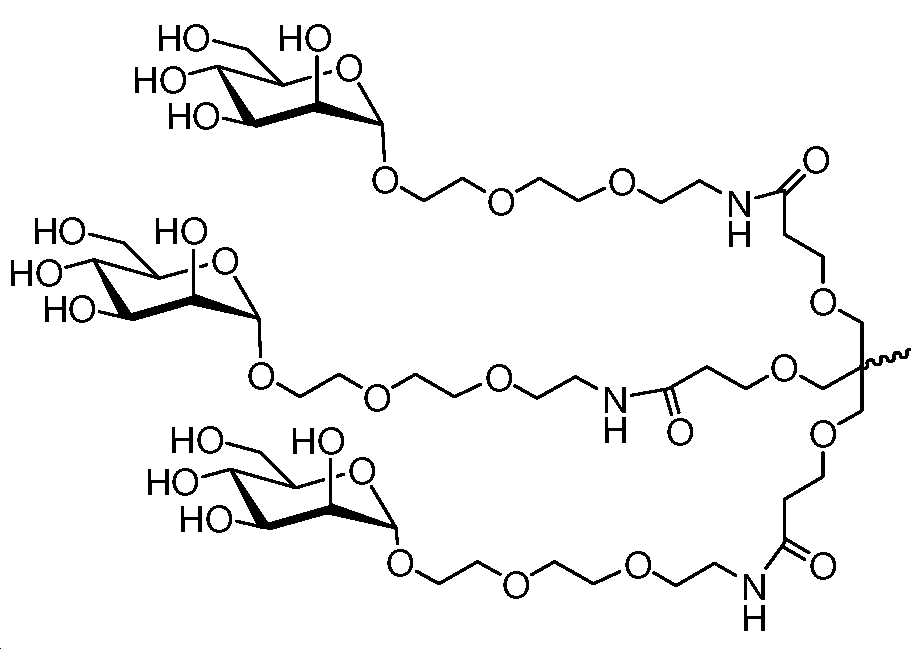
[화학식 IV][Chemical Formula IV]

[화학식 V][Chemical formula V]

[화학식 VI][Chemical Formula VI]
[화학식 VII][Chemical Formula VII]

[화학식 VIII][Chemical Formula VIII]

[화학식 IX][Chemical Formula IX]

[화학식 X][chemical formula X]

[화학식 XI][Chemical Formula XI]

[화학식 XII][Chemical Formula XII]

[화학식 XIII][Chemical Formula XIII]

[화학식 XIV][Chemical Formula XIV]
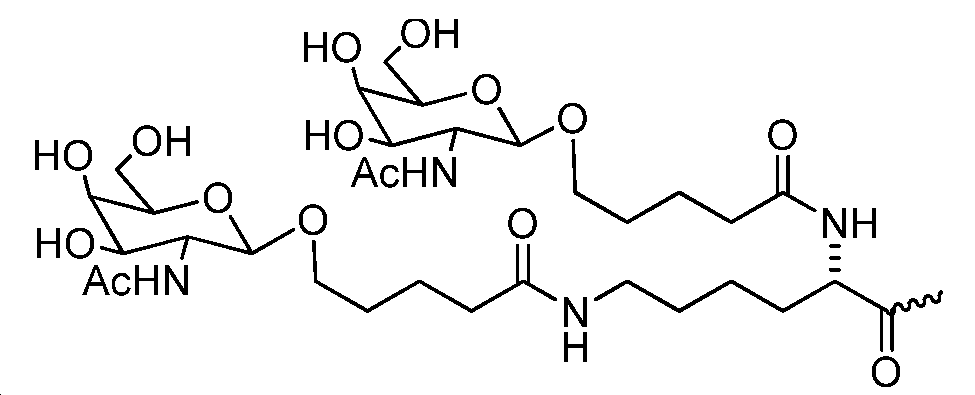
[화학식 XV][Chemical Formula XV]

[화학식 XVI][Chemical Formula XVI]

[화학식 XVII][Chemical Formula XVII]

[화학식 XVIII][Chemical Formula XVIII]

[화학식 XIX][Chemical Formula XIX]

[화학식 XX][chemical formula XX]

[화학식 XXI][Chemical Formula XXI]

[화학식 XXII][Chemical Formula XXII]

본원에 기재된 구현예에 사용하기 위한 다른 대표적인 탄수화물 컨쥬게이트는 다음 화학식을 포함하나 이에 제한되지 않는다:Other representative carbohydrate conjugates for use in the embodiments described herein include, but are not limited to, the following formulae:
[화학식 XXIII][Chemical Formula XXIII]

상기 식에서, X 또는 Y 중 하나가 올리고뉴클레오티드인 경우, 다른 것은 수소이다.In the above formula, if either X or Y is an oligonucleotide, the other is hydrogen.
본 발명의 소정 구현예에서, GalNAc 또는 GalNAc 유도체는 1가 링커를 통해 본 발명의 iRNA 작용제에 부착된다. 일부 구현예에서, GalNAc 또는 GalNAc 유도체는 2가 링커를 통해 본 발명의 iRNA 작용제에 부착된다. 본 발명의 다른 구현예에서, GalNAc 또는 GalNAc 유도체는 3가 링커를 통해 본 발명의 iRNA 작용제에 부착된다.In certain embodiments of the invention, the GalNAc or GalNAc derivative is attached to the iRNA agent of the invention via a monovalent linker. In some embodiments, the GalNAc or GalNAc derivative is attached to the iRNA agent of the invention via a divalent linker. In other embodiments of the invention, the GalNAc or GalNAc derivative is attached to the iRNA agent of the invention via a trivalent linker.
한 구현예에서, 본 발명의 이중 가닥 RNAi 작용제는 iRNA 작용제에 부착된 하나의 GalNAc 또는 GalNAc 유도체를 포함한다. 다른 구현예에서, 본 발명의 이중 가닥 RNAi 작용제는 복수의(예를 들어, 2, 3, 4, 5, 또는 6개의) GalNAc 또는 GalNAc 유도체를 포함하며, 각각 독립적으로 복수의 1가 링커를 통해 이중 가닥 RNAi 작용제의 복수의 뉴클레오티드에 부착된다. In one embodiment, the double stranded RNAi agent of the invention comprises a GalNAc or GalNAc derivative attached to an iRNA agent. In another embodiment, the double stranded RNAi agent of the invention comprises a plurality (e.g. , 2, 3, 4, 5, or 6) GalNAc or GalNAc derivatives, each independently attached to a plurality of nucleotides of the double stranded RNAi agent via a plurality of monovalent linkers.
일부 구현예에서, 예를 들어, 본 발명의 iRNA 작용제의 2 가닥은 한 가닥의 3'-말단 및 각각의 다른 가닥의 5'-말단 간 뉴클레오티드의 단속되지 않은 사슬에 의해 연결되어, 복수의 페어링되지 않은 뉴클레오티드를 포함하는 헤어핀 루프를 형성하는 하나의 더 큰 분자의 일부이며, 헤어핀 루프 내의 각각의 페어링되지 않은 뉴클레오티드는 독립적으로 1가 링커를 통해 부착된 GalNAc 또는 GalNAc 유도체를 포함할 수 있다.In some embodiments, for example, the two strands of an iRNA agent of the invention are part of a single larger molecule that is joined by an uninterrupted chain of nucleotides between the 3'-end of one strand and the 5'-end of each of the other strands to form a hairpin loop comprising a plurality of unpaired nucleotides, wherein each unpaired nucleotide within the hairpin loop can independently comprise a GalNAc or GalNAc derivative attached via a monovalent linker.
일부 구현예에서, 탄수화물 컨쥬게이트는 상술된 바와 같은 하나 이상의 추가적인 리간드, 예컨대 비제한적으로, PK 조정인자 및/또는 세포 투과 펩티드를 추가로 포함한다.In some embodiments, the carbohydrate conjugate further comprises one or more additional ligands as described above, including but not limited to, PK modulators and/or cell penetrating peptides.
본 발명에서 이용하기 적합한 추가적인 탄수화물 컨쥬게이트(및 링커)는 PCT 공개 번호 WO 2014/179620호 및 WO 2014/179627호에 기재된 것들을 포함하며, 그 각각의 전체 내용은 본원에 참조로 포함된다.Additional carbohydrate conjugates (and linkers) suitable for use in the present invention include those described in PCT Publication Nos. WO 2014/179620 and WO 2014/179627, the entire contents of each of which are incorporated herein by reference.
D. 링커D. Linker
일부 구현예에서, 본원에 기재된 컨쥬게이트 또는 리간드는 절단가능한 또는 절단가능하지 않은 다양한 링커를 사용하여 iRNA 올리고뉴클레오티드에 부착될 수 있다.In some embodiments, the conjugates or ligands described herein can be attached to iRNA oligonucleotides using a variety of linkers, either cleavable or non-cleavable.
용어 "링커" 또는 "연결기"는 화합물의 2개의 부분을 연결시키는, 예를 들어, 화합물의 2개 부분을 공유적으로 부착시키는 유기 모이어티를 의미한다. 링커는 통상적으로 직접 결합 또는 원자, 예를 들어, 산소 또는 황, 단위, 예를 들어, NR8, C(O), C(O)NH, SO, SO2, SO2NH 또는 원자의 사슬, 비제한적인 예로, 치환되거나 비치환된 알킬, 치환되거나 비치환된 알케닐, 치환되거나 비치환된 알키닐, 아릴알킬, 아릴알케닐, 아릴알키닐, 헤테로아릴알킬, 헤테로아릴알케닐, 헤테로아릴알키닐, 헤테로사이클릴알킬, 헤테로사이클릴알케닐, 헤테로사이클릴알키닐, 아릴, 헤테로아릴, 헤테로사이클릴, 사이클로알킬, 사이클로알케닐, 알킬아릴알킬, 알킬아릴알케닐, 알킬아릴알키닐, 알케닐아릴알킬, 알케닐아릴알케닐, 알케닐아릴알키닐, 알키닐아릴알킬, 알키닐아릴알케닐, 알키닐아릴알키닐, 알킬헤테로아릴알킬, 알킬헤테로아릴알케닐, 알킬헤테로아릴알키닐, 알케닐헤테로아릴알킬, 알케닐헤테로아릴알케닐, 알케닐헤테로아릴알키닐, 알키닐헤테로아릴알킬, 알키닐헤테로아릴알케닐, 알키닐헤테로아릴알키닐, 알킬헤테로사이클릴알킬, 알킬헤테로사이클릴알케닐, 알킬헤테로사이클릴알키닐, 알케닐헤테로사이클릴알킬, 알케닐헤테로사이클릴알케닐, 알케닐헤테로사이클릴알키닐, 알키닐헤테로사이클릴알킬, 알키닐헤테로사이클릴알케닐, 알키닐헤테로사이클릴알키닐, 알킬아릴, 알케닐아릴, 알키닐아릴, 알킬헤테로아릴, 알케닐헤테로아릴, 알키닐헤테로아릴을 포함하며, 상기 화합물에서 하나 이상의 메틸렌은 O, S, S(O), SO2, N(R8), C(O), 치환되거나 비치환된 아릴, 치환되거나 비치환된 헤테로아릴, 치환되거나 비치환된 헤테로사이클릭에 의해 단절되거나 종결될 수 있고, R8은 수소, 아실, 지방족 또는 치환된 지방족이다. 한 구현예에서, 링커는 약 1 내지 24개의 원자, 2 내지 24개, 3 내지 24개, 4 내지 24개, 5 내지 24개, 6 내지 24개, 6 내지 18개, 7 내지 18개, 8 내지 18개의 원자, 7 내지 17개, 8 내지 17개, 6 내지 16개, 7 내지 17개 또는 8 내지 16개의 원자이다.The term "linker" or "connecting group" means an organic moiety that connects two parts of a compound, for example, covalently attaches two parts of a compound. Linkers are typically direct bonds or chains of atoms, for example, oxygen or sulfur, units, for example, NR8, C(O), C(O)NH, SO, SO2 , SO2 NH or atoms, including but not limited to substituted or unsubstituted alkyl, substituted or unsubstituted alkenyl, substituted or unsubstituted alkynyl, arylalkyl, arylalkenyl, arylalkynyl, heteroarylalkyl, heteroarylalkenyl, heteroarylalkynyl, heterocyclylalkyl, heterocyclylalkenyl, heterocyclylalkynyl, aryl, heteroaryl, heterocyclyl, cycloalkyl, cycloalkenyl, alkylarylalkyl, alkylarylalkenyl, alkylarylalkynyl, alkenylarylalkyl, alkenylarylalkenyl, alkenylarylalkynyl, alkynylarylalkyl, alkynylarylalkenyl, Alkynylarylalkynyl, alkylheteroarylalkyl, alkylheteroarylalkenyl, alkylheteroarylalkynyl, alkenylheteroarylalkyl, alkenylheteroarylalkenyl, alkenylheteroarylalkynyl, alkynylheteroarylalkyl, alkynylheteroarylalkenyl, alkynylheteroarylalkynyl, alkylheterocyclylalkyl, alkylheterocyclylalkenyl, alkylheterocyclylalkynyl, alkenylheterocyclylalkyl, alkenylheterocyclylalkenyl, alkenylheterocyclylalkynyl, alkynylheterocyclylalkyl, alkynylheterocyclylalkenyl, alkynylheterocyclylalkynyl, alkylaryl, alkenylaryl, alkynylaryl, alkylheteroaryl, alkenylheteroaryl, An alkynylheteroaryl, wherein one or more methylenes in said compound may be interrupted or terminated by O, S, S(O), SO 2 , N(R 8 ), C(O), substituted or unsubstituted aryl, substituted or unsubstituted heteroaryl, substituted or unsubstituted heterocyclic, and R 8 is hydrogen, acyl, aliphatic or substituted aliphatic. In one embodiment, the linker is about 1 to 24 atoms, 2 to 24, 3 to 24, 4 to 24, 5 to 24, 6 to 24, 6 to 18, 7 to 18, 8 to 18 atoms, 7 to 17, 8 to 17, 6 to 16, 7 to 17 or 8 to 16 atoms.
절단가능한 연결기는 세포 외부에서 충분히 안정적이나, 표적 세포로의 진입시 절단되어 링커가 함께 고정시킨 2개의 부분을 방출시키는 것이다. 한 바람직한 구현예에서, 절단가능한 연결기는 대상체의 혈액 내, 또는 제2 참조 조건(예를 들어, 혈액 또는 혈청에서 발견되는 조건을 모방하거나 나타내도록 선택될 수 있음)하에서 보다 표적 세포 내 또는 제1 참조 조건(예를 들어, 세포내 조건을 모방하거나 나타내도록 선택될 수 있음)하에서 적어도 약 10배, 20배, 30배, 40배, 50배, 60배, 70배, 80배, 90배 또는 그 이상 또는 적어도 약 100배 더 신속히 절단된다.The cleavable linker is sufficiently stable outside the cell, but is cleaved upon entry into the target cell to release the two moieties that the linker holds together. In one preferred embodiment, the cleavable linker is cleaved at least about 10 times, 20 times, 30 times, 40 times, 50 times, 60 times, 70 times, 80 times, 90 times or more, or at least about 100 times more rapidly within the target cell or under a first reference condition (which may be chosen to mimic or represent intracellular conditions) than within the blood of the subject, or under a second reference condition (which may be chosen to mimic or represent conditions found in blood or serum, for example).
절단가능한 연결기는 절단 제제, 예를 들어, pH, 산화환원 전위 또는 분해성 분자의 존재에 민감하다. 일반적으로, 절단 제제는 혈청 또는 혈액 내에서보다 세포 내부에서 더욱 우세하거나, 더 높은 수준 또는 활성으로 발견된다. 이러한 분해성 제제의 예는 환원에 의해 산화환원 절단가능한 연결기를 분해시킬 수 있는, 세포 내에 존재하는, 예를 들어, 머캅탄과 같은 산화 또는 환원 효소 또는 환원제를 포함하는, 특정 기질에 대해 선택되거나 기질 특이성을 갖지 않는 산화환원 제제; 에스테라제; 산성 환경을 발생시킬 수 있는 엔도솜 또는 제제, 예를 들어, 5의 pH 또는 그 보다 낮은 pH를 발생시키는 엔도솜 또는 제제; 일반적인 산으로 작용함으로써 산 절단가능한 연결기를 가수분해시키거나 분해시킬 수 있는 효소인 펩티다제(기질 특이적일 수 있음), 및 포스파타제를 포함한다.The cleavable linker is sensitive to cleavage agents, such as pH, redox potential, or the presence of degradative molecules. In general, cleavage agents are found to be more prevalent, or at higher levels or activity, inside cells than in serum or blood. Examples of such degradative agents include redox agents that are present inside cells, such as oxidizing or reducing enzymes or reducing agents, such as mercaptans, that are selected for a particular substrate or have no substrate specificity, that can degrade the redox cleavable linker by reduction; esterases; endosomes or agents that can generate an acidic environment, such as endosomes or agents that generate a pH of 5 or lower; peptidases (which can be substrate specific), and phosphatases, which are enzymes that can hydrolyze or degrade the acid cleavable linker by acting as a general acid.
절단가능한 연결기, 예를 들어, 이황화결합은 pH에 민감할 수 있다. 인간 혈청의 pH는 7.4인 한편, 평균 세포내 pH는 약 7.1 내지 7.3의 범위로 약간 낮다. 엔도솜은 5.5 내지 6.0의 범위의 더욱 산성인 pH를 갖고, 리소솜은 약 5.0으로 더욱 더 산성인 pH를 갖는다. 일부 링커는 바람직한 pH에서 절단됨으로써, 세포 내부의 리간드로부터, 또는 세포의 요망되는 구획으로 양이온성 지질을 방출시키는 절단가능한 연결기를 가질 것이다.Cleavable linkers, such as disulfide bonds, can be pH sensitive. The pH of human serum is 7.4, while the average intracellular pH is slightly lower, in the range of about 7.1 to 7.3. Endosomes have a more acidic pH, in the range of 5.5 to 6.0, and lysosomes have an even more acidic pH, at about 5.0. Some linkers will have a cleavable linker that will cleave at the desired pH, thereby releasing the cationic lipid from the ligand inside the cell, or into the desired compartment of the cell.
링커는 특정 효소에 의해 절단될 수 있는 절단가능한 연결기를 포함할 수 있다. 링커로 통합된 절단가능한 연결기의 유형은 표적화되는 세포에 좌우될 수 있다. 예를 들어, 간 표적화 리간드는 에스테르기를 포함하는 링커를 통해 양이온성 지질에 연결될 수 있다. 간 세포에는 에스테라제가 풍부하고, 이에 따라, 링커는 에스테라제가 풍부하지 않은 세포 유형보다 간 세포에서 더욱 효과적으로 절단될 것이다. 다른 에스테라제가 풍부한 세포-유형은 폐, 신장 피질, 및 고환의 세포를 포함한다.The linker may include a cleavable linking group that is cleavable by a particular enzyme. The type of cleavable linking group incorporated into the linker may depend on the cell being targeted. For example, a liver targeting ligand may be linked to a cationic lipid via a linker that includes an ester group. Liver cells are rich in esterases, and therefore, the linker will be cleaved more efficiently in liver cells than in cell types that are not rich in esterases. Other esterase-rich cell types include cells of the lung, renal cortex, and testis.
펩티드 결합을 함유하는 링커는 펩티다제가 풍부한 세포 유형, 예를 들어, 간 세포 및 윤활막세포를 표적으로 하는 경우에 사용될 수 있다.Linkers containing peptide bonds can be used when targeting cell types rich in peptidases, such as hepatocytes and synovial cells.
일반적으로, 절단가능한 후보 연결기의 적합도는 후보 연결기를 절단시키는 분해성 제제(또는 조건)의 능력을 시험함으로써 평가될 수 있다. 또한, 혈액 내에서 또는 다른 비-표적 조직과 접촉시 절단에 저항하는 능력에 대해 절단가능한 후보 연결기를 시험하는 것이 또한 요망될 것이다. 따라서, 제1 조건과 제2 조건 사이의 절단에 대한 상대 감수성을 결정할 수 있으며, 제1 조건은 표적 세포 내에서의 절단을 나타내도록 선택되고, 제2 조건은 다른 조직 또는 생물학적 유체, 예를 들어, 혈액 또는 혈청에서의 절단을 나타내도록 선택된다. 평가는 세포 비함유 시스템, 세포, 세포 배양물, 기관 또는 조직 배양물, 또는 전체 동물에서 수행될 수 있다. 세포 비함유 또는 배양물 조건에서 최초 평가를 수행하고, 전체 동물에서 추가 평가에 의해 확인하는 것이 유용할 수 있다. 바람직한 구현예에서, 유용한 후보 화합물은 혈액 또는 혈청(또는 세포외 조건을 모방하도록 선택된 시험관내 조건하)에 비해 세포(또는 세포내 조건을 모방하도록 선택된 시험관내 조건하)에서 적어도 약 2, 4, 10, 20, 30, 40, 50, 60, 70, 80, 90 또는 약 100배 더 신속히 절단된다.In general, the suitability of a cleavable candidate linker can be assessed by testing the ability of a degradative agent (or condition) to cleave the candidate linker. It may also be desirable to test the cleavable candidate linker for its ability to resist cleavage in blood or upon contact with other non-target tissues. Thus, the relative susceptibility to cleavage between a first condition and a second condition can be determined, with the first condition being selected to exhibit cleavage within target cells and the second condition being selected to exhibit cleavage in other tissues or biological fluids, such as blood or serum. The assessment can be performed in a cell-free system, cells, cell culture, organ or tissue culture, or whole animals. It may be useful to perform an initial assessment in cell-free or culture conditions and confirm it by further assessment in whole animals. In preferred embodiments, the useful candidate compound is cleaved at least about 2, 4, 10, 20, 30, 40, 50, 60, 70, 80, 90, or about 100 times more rapidly in a cell (or under in vitro conditions selected to mimic intracellular conditions) than in blood or serum (or under in vitro conditions selected to mimic extracellular conditions).
i. 절단가능한 산화환원 연결기i. Cleavable redox coupler
한 구현예에서, 절단가능한 연결기는 환원 또는 산화 시에 절단되는 산화환원 절단가능한 연결기이다. 환원적 절단가능한 연결기의 예는 디설피드 연결기(-S-S-)이다. 절단가능한 후보 연결기가 적합한 "환원적 절단가능한 연결기"이거나, 예를 들어, 특정 iRNA 모이어티 또는 특정 표적화 작용제와 함께 사용하기에 적합한지 결정하기 위해, 본원에 기재된 방법을 참조할 수 있다. 예를 들어, 후보자는 세포, 예를 들어, 표적 세포에서 관찰되는 절단 속도를 모방하는 당 분야에 공지된 시약을 이용하여 디티오트레이톨(DTT), 또는 다른 환원제와의 인큐베이션에 의해 평가될 수 있다. 후보자는 또한 혈액 또는 혈청 조건을 모방하도록 선택되는 조건하에서 평가될 수 있다. 한 구현예에서, 후보 화합물은 혈액 내에서 많아야 약 10%까지 절단된다. 다른 구현예에서, 유용한 후보 화합물은 혈액(또는 세포외 조건을 모방하도록 선택된 시험관내 조건하)에 비해 세포(또는 세포내 조건을 모방하도록 선택된 시험관내 조건하)에서 적어도 약 2, 4, 10, 20, 30, 40, 50, 60, 70, 80, 90 또는 약 100배 더 신속히 분해된다. 후보 화합물의 절단 속도는 세포내 매질을 모방하도록 선택된 조건하에서 표준 효소 동역학 검정을 이용하여 결정될 수 있고, 세포외 매질을 모방하도록 선택된 조건과 비교될 수 있다.In one embodiment, the cleavable linking group is a redox cleavable linking group that is cleaved upon reduction or oxidation. An example of a reductively cleavable linking group is a disulfide linking group (-S-S-). To determine whether a cleavable candidate linking group is a suitable "reductively cleavable linking group" or is suitable for use with, for example, a particular iRNA moiety or a particular targeting agent, reference can be made to the methods described herein. For example, candidates can be evaluated by incubation with dithiothreitol (DTT), or other reducing agents, using reagents known in the art that mimic the cleavage rate observed in cells, such as target cells. Candidates can also be evaluated under conditions selected to mimic blood or serum conditions. In one embodiment, the candidate compound is cleaved in blood by at most about 10%. In other embodiments, a useful candidate compound is degraded at least about 2, 4, 10, 20, 30, 40, 50, 60, 70, 80, 90, or about 100 times more rapidly in a cell (or under in vitro conditions selected to mimic intracellular conditions) than in blood (or under in vitro conditions selected to mimic extracellular conditions). The rate of cleavage of a candidate compound can be determined using standard enzyme kinetic assays under conditions selected to mimic the intracellular medium, and compared to conditions selected to mimic the extracellular medium.
ii. 포스페이트-기반의 절단가능한 연결기ii. Phosphate-based cleavable connector
다른 구현예에서, 절단가능한 링커는 포스페이트-기반의 절단가능한 연결기를 포함한다. 포스페이트-기반의 절단가능한 연결기는 포스페이트기를 분해하거나 가수분해시키는 제제에 의해 절단된다. 세포 내에서 포스페이트기를 절단시키는 제제의 예는 세포 내의 포스파타제와 같은 효소이다. 포스페이트-기반 연결기의 예는 -O-P(O)(ORk)-O-, -O-P(S)(ORk)-O-, -O-P(S)(SRk)-O-, -S-P(O)(ORk)-O-, -O-P(O)(ORk)-S-, -S-P(O)(ORk)-S-, -O-P(S)(ORk)-S-, -S-P(S)(ORk)-O-, -O-P(O)(Rk)-O-, -O-P(S)(Rk)-O-, -S-P(O)(Rk)-O-, -S-P(S)(Rk)-O-, -S-P(O)(Rk)-S-, -O-P(S)( Rk)-S-이다. 바람직한 구현예는 -O-P(O)(OH)-O-, -O-P(S)(OH)-O-, -O-P(S)(SH)-O-, -S-P(O)(OH)-O-, -O-P(O)(OH)-S-, -S-P(O)(OH)-S-, -O-P(S)(OH)-S-, -S-P(S)(OH)-O-, -O-P(O)(H)-O-, -O-P(S)(H)-O-, -S-P(O)(H)-O-, -S-P(S)(H)-O-, -S-P(O)(H)-S-, -O-P(S)(H)-S-이다. 한 바람직한 구현예는 -O-P(O)(OH)-O-이다. 이들 후보자는 상기 기재된 것과 유사한 방법을 이용하여 평가될 수 있다.In another embodiment, the cleavable linker comprises a phosphate-based cleavable linking group. The phosphate-based cleavable linking group is cleaved by an agent that decomposes or hydrolyzes the phosphate group. An example of an agent that cleaves the phosphate group within a cell is an enzyme such as a phosphatase within the cell. Examples of phosphate-based linkers are -O-P(O)(ORk)-O-, -O-P(S)(ORk)-O-, -O-P(S)(SRk)-O-, -S-P(O)(ORk)-O-, -O-P(O)(ORk)-S-, -S-P(O)(ORk)-S-, -O-P(S)(ORk)-S-, -S-P(S)(ORk)-O-, -O-P(O)(Rk)-O-, -O-P(S)(Rk)-O-, -S-P(O)(Rk)-O-, -S-P(S)(Rk)-O-, -S-P(O)(Rk)-S-, -O-P(S)( Rk)-S-. Preferred embodiments are -O-P(O)(OH)-O-, -O-P(S)(OH)-O-, -O-P(S)(SH)-O-, -S-P(O)(OH)-O-, -O-P(O)(OH)-S-, -S-P(O)(OH)-S-, -O-P(S)(OH)-S-, -S-P(S)(OH)-O-, -O-P(O)(H)-O-, -O-P(S)(H)-O-, -S-P(O)(H)-S-, -O-P(S)(H)-S-. One preferred embodiment is -O-P(O)(OH)-O-. These candidates can be evaluated using methods similar to those described above.
iii. 산 절단가능한 연결기iii. Mountain cuttable connector
다른 구현예에서, 절단가능한 링커는 절단가능한 연결기를 포함한다. 산 절단가능한 연결기는 산성 조건하에서 절단되는 연결기이다. 바람직한 구현예에서, 산 절단가능한 연결기는 약 6.5의 pH 또는 이보다 낮은 pH(예를 들어, 약 6.0, 5.75, 5.5, 5.25, 5.0, 또는 이보다 낮은 pH)를 갖는 산성 환경 내에서, 또는 일반적인 산으로 작용할 수 있는 효소와 같은 제제에 의해 절단된다. 세포 내에서, 특이적인 낮은 pH 소기관, 예를 들어, 엔도솜 및 리소솜이 산 절단가능한 연결기에 대한 절단 환경을 제공할 수 있다. 산 분해성 연결기의 예는 하이드라존, 에스테르, 및 아미노산의 에스테르를 포함하나, 이에 제한되지는 않는다. 산 절단가능한 기는 일반식 -C=NN-, C(O)O, 또는 -OC(O)를 가질 수 있다. 에스테르(알콕시기)의 산소에 부착된 탄소가 아릴기, 치환된 알킬기, 또는 3차 알킬기, 예를 들어, 디메틸 펜틸 또는 t-부틸인 경우가 바람직한 구현예이다. 이들 후보자는 상기 기재된 것과 유사한 방법을 이용하여 평가될 수 있다.In another embodiment, the cleavable linker comprises a cleavable linking group. An acid cleavable linking group is a linking group that is cleaved under acidic conditions. In a preferred embodiment, the acid cleavable linking group is cleaved in an acidic environment having a pH of about 6.5 or lower (e.g., about 6.0, 5.75, 5.5, 5.25, 5.0, or lower), or by an agent, such as an enzyme, that can act as a general acid. Within a cell, specific low pH organelles, such as endosomes and lysosomes, can provide a cleavage environment for the acid cleavable linking group. Examples of acid cleavable linking groups include, but are not limited to, hydrazones, esters, and esters of amino acids. The acid cleavable group can have the general formula -C=NN-, C(O)O, or -OC(O). A preferred embodiment is one in which the carbon attached to the oxygen of the ester (alkoxy group) is an aryl group, a substituted alkyl group, or a tertiary alkyl group, for example, dimethyl pentyl or t-butyl. These candidates can be evaluated using methods similar to those described above.
iv. 에스테르-기반 연결기iv. Ester-based connector
다른 구현예에서, 절단가능한 링커는 에스테르-기반 절단가능한 연결기를 포함한다. 에스테르-기반 절단가능한 연결기는 세포 내의 에스테라제 및 아미다제와 같은 효소에 의해 절단된다. 에스테르-기반 절단가능한 연결기의 예는 알킬렌, 알케닐렌 및 알키닐렌기의 에스테르를 포함하나, 이에 제한되지는 않는다. 에스테르 절단가능한 연결기는 일반식 -C(O)O-, 또는 -OC(O)-를 갖는다. 이들 후보자는 상기 기재된 것과 유사한 방법을 이용하여 평가될 수 있다.In another embodiment, the cleavable linker comprises an ester-based cleavable linking group. Ester-based cleavable linking groups are cleaved by enzymes such as esterases and amidases within the cell. Examples of ester-based cleavable linking groups include, but are not limited to, esters of alkylene, alkenylene, and alkynylene groups. Ester cleavable linking groups have the general formula -C(O)O-, or -OC(O)-. These candidates can be evaluated using methods similar to those described above.
v. 펩티드-기반 절단가능한 기v. Peptide-based cleavable group
또 다른 구현예에서, 절단가능한 링커는 펩티드-기반 절단가능한 연결기를 포함한다. 펩티드-기반 절단가능한 연결기는 세포 내의 펩티다제 및 프로테아제와 같은 효소에 의해 절단된다. 펩티드-기반 절단가능한 연결기는 올리고펩티드(예를 들어, 디펩티드, 트리펩티드 등) 및 폴리펩티드를 생성시키기 위해 아미노산 사이에 형성되는 펩티드 결합이다. 펩티드-기반 절단가능한 기는 아미드기(-C(O)NH-)를 포함하지 않는다. 아미드기는 임의의 알킬렌, 알케닐렌 또는 알키넬렌 사이에 형성될 수 있다. 펩티드 결합은 펩티드 및 단백질을 생성시키기 위해 아미노산 사이에 형성되는 아미드 결합의 특별한 유형이다. 펩티드 기반 절단가능한 기는 일반적으로 펩티드 및 단백질을 발생시키는 아미노산 사이에 형성된 펩티드 결합(즉, 아미드 결합)으로 제한되고, 전체 아미드 작용기를 포함하지 않는다. 펩티드-기반 절단가능한 연결기는 일반식 -NHCHRAC(O)NHCHRBC(O)-를 가지며, 여기서 RA 및 RB는 2개의 인접한 아미노산의 R 기이다. 이들 후보자는 상기 기재된 것과 유사한 방법을 이용하여 평가될 수 있다.In another embodiment, the cleavable linker comprises a peptide-based cleavable linking group. Peptide-based cleavable linking groups are cleaved by enzymes such as peptidases and proteases within the cell. Peptide-based cleavable linking groups are peptide bonds formed between amino acids to form oligopeptides (e.g., dipeptides, tripeptides, etc.) and polypeptides. Peptide-based cleavable groups do not include an amide group (-C(O)NH-). The amide group can be formed between any alkylene, alkenylene, or alkynelene. Peptide bonds are a special type of amide bond formed between amino acids to form peptides and proteins. Peptide-based cleavable groups are generally limited to peptide bonds (i.e., amide bonds) formed between amino acids that form peptides and proteins, and do not include the entire amide functionality. Peptide-based cleavable linking groups have the general formula -NHCHRAC(O)NHCHRBC(O)-, where RA and RB are the R groups of two adjacent amino acids. These candidates may be evaluated using methods similar to those described above.
한 구현예에서, 본 발명의 iRNA는 링커를 통해 탄수화물에 컨쥬게이트된다. 본 발명의 조성물 및 방법의 링커를 갖는 iRNA 탄수화물 컨쥬게이트의 비제한적인 예에는 다음 화학식이 포함되나, 이에 제한되지는 않는다:In one embodiment, the iRNA of the present invention is conjugated to a carbohydrate via a linker. Non-limiting examples of iRNA carbohydrate conjugates having a linker of the compositions and methods of the present invention include, but are not limited to, the following formulae:
[화학식 XXIV][Chemical Formula XXIV]

[화학식 XXV][Chemical Formula XXV]

[화학식 XXVI][Chemical Formula XXVI]

[화학식 XXVII][Chemical Formula XXVII]

[화학식 XXVIII][Chemical Formula XXVIII]

[화학식 XXVIX][chemical formula XXVIX]

[화학식 XXX][chemical formula XXX]

[화학식 XXXI][Chemical Formula XXXI]
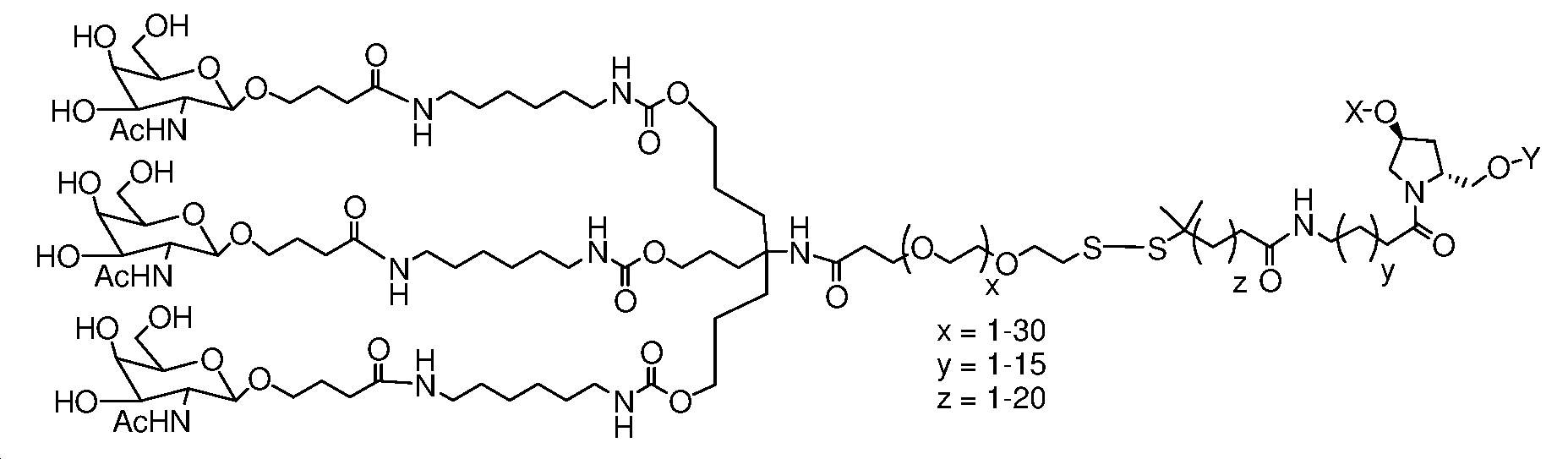
상기 식에서,In the above formula,
X 또는 Y 중 하나가 올리고뉴클레오티드인 경우, 다른 것은 수소이다.If either X or Y is an oligonucleotide, the other is hydrogen.
본 발명의 조성물 및 방법의 특정 실시형태에서, 리간드는 2가 또는 3가 분지형 링커를 통하여 부착된 하나 이상의 GalNAc(N-아세틸갈락토사민) 유도체이다.In certain embodiments of the compositions and methods of the present invention, the ligand is one or more GalNAc (N-acetylgalactosamine) derivatives attached via a divalent or trivalent branched linker.
한 구현예에서, 본 발명의 dsRNA는 화학식 XXXII 내지 XXXV 중 어느 하나에 나타낸 구조의 군으로부터 선택되는 2가 또는 3가 분지형 링커에 컨쥬게이트된다:In one embodiment, the dsRNA of the present invention is conjugated to a bivalent or trivalent branched linker selected from the group of structures represented by any one of formulae XXXII to XXXV:
[화학식 XXXII][Chemical Formula XXXII]
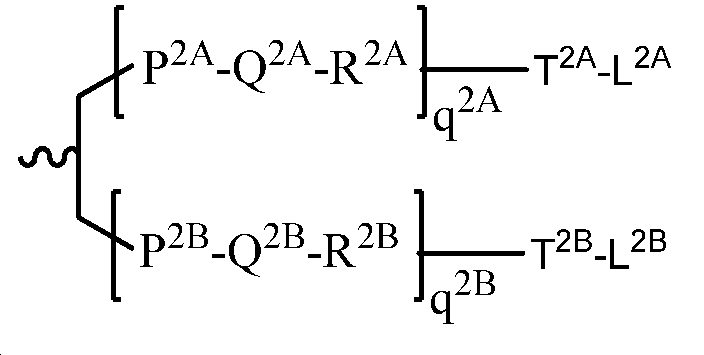
[화학식 XXXIII][Chemical Formula XXXIII]

[화학식 XXXIV][Chemical Formula XXXIV]

[화학식 XXXV][Chemical Formula XXXV]

상기 식에서,In the above formula,
q2A, q2B, q3A, q3B, q4A, q4B, q5A, q5B 및 q5C는 서로 독립적으로 0 내지 20을 나타내며, 여기서, 반복 단위는 동일하거나 상이할 수 있으며;q2A, q2B, q3A, q3B, q4A, q4B, q5A, q5B and q5C independently represent 0 to 20, wherein the repeating units can be the same or different;
P2A, P2B, P3A, P3B, P4A, P4B, P5A, P5B, P5C, T2A, T2B, T3A, T3B, T4A, T4B, T4A, T5B, T5C는 각각 서로 독립적으로, 부재, CO, NH, O, S, OC(O), NHC(O), CH2, CH2NH 또는 CH2O이고;P 2A , P 2B , P 3A , P 3B , P 4A , P 4B , P 5A , P 5B , P 5C , T 2A , T 2B , T 3A , T 3B , T 4A , T 4B , T 4A , T 5B , T 5C are each independently absent, CO, NH, O, S, OC(O), NHC(O), CH 2 , CH 2 NH or CH 2 O;
Q2A, Q2B, Q3A, Q3B, Q4A, Q4B, Q5A, Q5B, Q5C는 서로 독립적으로, 부재, 알킬렌, 치환된 알킬렌이며, 여기서, 하나 이상의 메틸렌은 O, S, S(O), SO2, N(RN), C(R')=C(R''), C=C 또는 C(O) 중 하나 이상에 의해 단절되거나, 종결될 수 있고;Q 2A , Q 2B , Q 3A , Q 3B , Q 4A , Q 4B , Q 5A , Q 5B , Q 5C are independently absent, alkylene, substituted alkylene, wherein one or more methylenes may be interrupted or terminated by one or more of O, S, S(O), SO 2 , N(R N ), C(R')=C(R''), C=C or C(O);
R2A, R2B, R3A, R3B, R4A, R4B, R5A, R5B, R5C는 각각 서로 독립적으로, 부재, NH, O, S, CH2, C(O)O, C(O)NH, NHCH(Ra)C(O), -C(O)-CH(Ra)-NH-, CO, CH=N-O, , , , , 또는 헤테로사이클릴이며;R 2A , R 2B , R 3A , R 3B , R 4A , R 4B , R 5A , R 5B , R 5C are each independently absent, NH, O, S, CH 2 , C(O)O, C(O)NH, NHCH(R a )C(O), -C(O)-CH(R a )-NH-, CO, CH=NO, , , , , or heterocyclyl;
L2A, L2B, L3A, L3B, L4A, L4B, L5A, L5B 및 L5C는 리간드; 즉, 각각 서로 독립적으로, 단당류(예를 들어, GalNAc), 이당류, 삼당류, 사당류, 올리고당류 또는 다당류를 나타내고;L 2A , L 2B , L 3A , L 3B , L 4A , L 4B , L 5A , L 5B and L 5C represent ligands; that is, each independently of the others represents a monosaccharide (e.g., GalNAc), a disaccharide, a trisaccharide, a tetrasaccharide, an oligosaccharide or a polysaccharide;
Ra는 H 또는 아미노산 측쇄이다. 3가 컨쥬게이팅 GalNAc 유도체, 예를 들어 화학식(XXXV)의 것들은 표적 유전자의 발현을 억제하기 위한 RNAi 작용제와 함께 사용하기에 특히 유용하다:R a is H or an amino acid side chain. Trivalent conjugated GalNAc derivatives, such as those of formula (XXXV), are particularly useful for use with RNAi agents to inhibit expression of target genes:
[화학식 XXXVI][Chemical Formula XXXVI]

상기 식에서,In the above formula,
L5A, L5B 및 L5C는 단당류, 예를 들어, GalNAc 유도체를 나타낸다.L 5A , L 5B and L 5C represent monosaccharides, e.g., GalNAc derivatives.
GalNAc 유도체를 컨쥬게이트시키는 적합한 2가 및 3가 분지형 링커 기의 예에는 화학식 II, VII, XI, X 및 XIII로서 상기에 언급된 구조가 포함되나 이에 한정되지 않는다.Examples of suitable divalent and trivalent branched linker groups for conjugating GalNAc derivatives include, but are not limited to, structures mentioned above as formulae II, VII, XI, X, and XIII.
RNA 컨쥬게이트의 제조를 교시하는 대표적 미국 특허는 미국 특허 번호 4,828,979호; 4,948,882호; 5,218,105호; 5,525,465호; 5,541,313호; 5,545,730호; 5,552,538호; 5,578,717호; 5,580,731호; 5,591,584호; 5,109,124호; 5,118,802호; 5,138,045호; 5,414,077호; 5,486,603호; 5,512,439호; 5,578,718호; 5,608,046호; 4,587,044호; 4,605,735호; 4,667,025호; 4,762,779호; 4,789,737호; 4,824,941호; 4,835,263호; 4,876,335호; 4,904,582호; 4,958,013호; 5,082,830호; 5,112,963호; 5,214,136호; 5,082,830호; 5,112,963호; 5,214,136호; 5,245,022호; 5,254,469호; 5,258,506호; 5,262,536호; 5,272,250호; 5,292,873호; 5,317,098호; 5,371,241호; 5,391,723호; 5,416,203호; 5,451,463호; 5,510,475호; 5,512,667호; 5,514,785호; 5,565,552호; 5,567,810호; 5,574,142호; 5,585,481호; 5,587,371호; 5,595,726호; 5,597,696호; 5,599,923호; 5,599,928호 및 5,688,941호; 6,294,664호; 6,320,017호; 6,576,752호; 6,783,931호; 6,900,297호; 7,037,646호; 8,106,022호를 포함하나, 이에 제한되지 않으며, 각가의 전문은 참조로서 본원에 포함된다.Representative United States patents teaching the preparation of RNA conjugates include U.S. Patent Nos. 4,828,979; 4,948,882; 5,218,105; 5,525,465; 5,541,313; 5,545,730; 5,552,538; 5,578,717; 5,580,731; 5,591,584; 5,109,124; 5,118,802; 5,138,045; 5,414,077; 5,486,603; 5,512,439; 5,578,718; 5,608,046; 4,587,044; 4,605,735; 4,667,025; 4,762,779; 4,789,737; 4,824,941; 4,835,263; 4,876,335; 4,904,582; 4,958,013; 5,082,830; 5,112,963; 5,214,136; 5,082,830; 5,112,963; 5,214,136; 5,245,022; 5,254,469; 5,258,506; 5,262,536; Nos. 5,272,250; 5,292,873; 5,317,098; 5,371,241; 5,391,723; 5,416,203; 5,451,463; 5,510,475; 5,512,667; 5,514,785; 5,565,552; 5,567,810; 5,574,142; 5,585,481; 5,587,371; 5,595,726; 5,597,696; 5,599,923; 5,599,928 and 5,688,941; including but not limited to: Nos. 6,294,664; 6,320,017; 6,576,752; 6,783,931; 6,900,297; 7,037,646; and 8,106,022, the entire contents of each of which are incorporated herein by reference.
제공된 화합물 내의 모든 위치가 균일하게 변형될 필요는 없고, 사실, 상기 언급된 변형 중 하나보다 많은 변형은 단일 화합물 내 또는 심지어 iRNA 내의 단일한 뉴클레오시드에 통합될 수 있다. 본 발명은 또한 키메라 화합물인 iRNA 화합물을 포함한다.It is not necessary for all positions within a given compound to be uniformly modified, and in fact, more than one of the modifications mentioned above may be incorporated into a single compound or even into a single nucleoside within an iRNA. The present invention also encompasses iRNA compounds that are chimeric compounds.
본 발명의 문맥에서 "키메라" iRNA 화합물 또는 "키메라"는 dsRNA 화합물의 경우에 뉴클레오티드와 같은 적어도 하나의 단량체 단위로 각각 구성된 2개 이상의 화학적으로 별개의 영역을 함유하는 iRNA 화합물, 바람직하게는 dsRNA이다. 이들 iRNA는 통상적으로, 뉴클레아제 분해에 대한 증가된 내성, 증가된 세포 흡수, 및/또는 표적 핵산에 대한 증가된 결합 친화성을 iRNA에 부여하도록 RNA가 변형된 적어도 하나의 영역을 함유한다. iRNA의 추가 영역은 RNA:DNA 또는 RNA:RNA 혼성물을 절단시킬 수 있는 효소에 대한 기질로 작용할 수 있다. 예를 들어, RNase H는 RNA:DNA 듀플렉스의 RNA 가닥을 절단시키는 세포 엔도뉴클레아제이다. 따라서, RNase H의 활성화는 RNA 표적의 절단을 발생시키고, 이에 의해 유전자 발현의 iRNA 억제의 효능을 크게 향상시킨다. 결과로서, 동일 표적 영역에 혼성화되는 포스포로티오에이트 데옥시 dsRNA에 비해 키메라 dsRNA가 사용되는 경우 보다 짧은 iRNA를 이용하여 동등한 결과가 종종 수득될 수 있다. RNA 표적의 절단은 통상적으로 겔 전기영동 및, 필요시, 당 분야에 공지된 관련된 핵산 혼성화 기술에 의해 검출될 수 있다.In the context of the present invention, a "chimeric" iRNA compound or "chimera" is an iRNA compound, preferably a dsRNA, that contains two or more chemically distinct regions, each composed of at least one monomeric unit, such as a nucleotide, in the case of a dsRNA compound. These iRNAs typically contain at least one region in which the RNA has been modified to impart increased resistance to nuclease degradation, increased cellular uptake, and/or increased binding affinity for a target nucleic acid to the iRNA. The additional region of the iRNA can act as a substrate for an enzyme that can cleave RNA:DNA or RNA:RNA hybrids. For example, RNase H is a cellular endonuclease that cleaves the RNA strand of an RNA:DNA duplex. Thus, activation of RNase H results in cleavage of the RNA target, thereby greatly enhancing the efficacy of iRNA inhibition of gene expression. As a result, comparable results can often be obtained using shorter iRNAs when chimeric dsRNAs are used, compared to phosphorothioate deoxy dsRNAs that hybridize to the same target region. Cleavage of the RNA target can typically be detected by gel electrophoresis and, if necessary, by related nucleic acid hybridization techniques known in the art.
특정 예에서, iRNA의 RNA는 비-리간드 기에 의해 변형될 수 있다. iRNA의 활성, 세포 분포 또는 세포 흡수를 향상시키기 위해 다수의 비-리간드 분자가 iRNA에 컨쥬게이션되었고, 상기 컨쥬게이션을 수행하기 위한 절차는 과학 문헌에서 이용 가능하다. 상기 비-리간드 모이어티는 지질 모이어티, 예를 들어, 콜레스테롤(문헌[Kubo, T. et al., Biochem. Biophys. Res. Comm., 2007, 365(1):54-61]; 문헌[Letsinger et al., Proc. Natl. Acad. Sci. USA, 1989, 86:6553]), 콜산(문헌[Manoharan et al., Bioorg. Med. Chem. Lett., 1994, 4:1053]), 티오에테르, 예를 들어, 헥실-S-트리틸티오(문헌[Manoharan et al., Ann. N.Y. Acad. Sci., 1992, 660:306]; 문헌[Manoharan et al., Bioorg. Med. Chem. Let., 1993, 3:2765]), 티오콜레스테롤(문헌[Oberhauser et al., Nucl. Acids Res., 1992, 20:533]), 지방족 사슬, 예를 들어, 도데칸디올 또는 운데실 잔기(문헌[Saison-Behmoaras et al., EMBO J., 1991, 10:111]; 문헌[Kabanov et al., FEBS Lett, 1990, 259:327]; 문헌[Svinarchuk et al., Biochimie, 1993, 75:49]), 인지질, 예를 들어, 디-헥사데실-rac-글리세롤 또는 트리에틸암모늄 1,2-디-0-헥사데실-rac-글리세로-3-H-포스포네이트(문헌[Manoharan et al., Tetrahedron Lett., 1995, 36:3651]; 문헌[Shea et al., Nucl. Acids Res., 1990, 18:3777]), 폴리아민 또는 폴리에틸렌 글리콜 사슬(문헌[Manoharan et al., Nucleosides & Nucleotides, 1995, 14:969]), 또는 아다만탄 아세트산(문헌[Manoharan et al., Tetrahedron Lett., 1995, 36:3651]), 팔미틸 모이어티(문헌[Mishra et al., Biochim. Biophys. Acta, 1995, 1264:229]), 또는 옥타데실아민 또는 헥실아미노-카르보닐-옥시콜레스테롤 모이어티(문헌[Crooke et al., J. Pharmacol. Exp. Ther., 1996, 277:923])를 포함하였다. 상기 RNA 컨쥬게이트의 제조를 교시하는 대표적 미국 특허가 상기에 나열되어 있다. 통상적 컨쥬게이션 프로토콜은 서열의 하나 이상의 위치에 아미노 링커를 갖는 RNA의 합성을 포함한다. 이후, 아미노기는 적절한 커플링 또는 활성화 시약을 이용하여 컨쥬게이션되는 분자와 반응된다. 컨쥬게이션 반응은 용액 상에서 고체 지지체에 여전히 고정된 RNA와 함께 수행될 수 있거나, RNA의 분해 후에 수행될 수 있다. HPLC에 의한 RNA 컨쥬게이트의 정제는 통상적으로 순수한 컨쥬게이트를 발생시킨다.In certain instances, the RNA of an iRNA may be modified by a non-ligand group. A number of non-ligand molecules have been conjugated to iRNA to enhance the activity, cellular distribution, or cellular uptake of the iRNA, and procedures for performing such conjugations are available in the scientific literature. The non-ligand moiety may be a lipid moiety, for example, cholesterol (Kubo, T. et al. , Biochem. Biophys. Res. Comm., 2007, 365(1):54-61; Letsinger et al. , Proc. Natl. Acad. Sci. USA, 1989, 86:6553), cholic acid (Manoharan et al. , Bioorg. Med. Chem. Lett., 1994, 4:1053), a thioether, for example, hexyl-S-tritylthio (Manoharan et al. , Ann. NY Acad. Sci., 1992, 660:306; Manoharan et al. , Bioorg. Med. Chem. Let., 1993, 3:2765]), thiocholesterol (Oberhauser et al. , Nucl. Acids Res., 1992, 20:533), aliphatic chains, for example, dodecanediol or undecyl residues (Saison-Behmoaras et al. , EMBO J., 1991, 10:111; Kabanov et al. , FEBS Lett, 1990, 259:327; Svinarchuk et al. , Biochimie, 1993, 75:49), phospholipids, for example, di-hexadecyl-rac-glycerol or triethylammonium 1,2-di-0-hexadecyl-rac-glycero-3-H-phosphonate (Manoharan et al. , Tetrahedron Lett., 1995, 36:3651]; Shea et al. , Nucl. Acids Res., 1990, 18:3777]), a polyamine or a polyethylene glycol chain (Manoharan et al. , Nucleosides & Nucleotides, 1995, 14:969], or adamantane acetic acid (Manoharan et al. , Tetrahedron Lett., 1995, 36:3651]), a palmityl moiety (Mishra et al. , Biochim. Biophys. Acta, 1995, 1264:229]), or octadecylamine or hexylamino-carbonyl-oxycholesterol moieties (Crooke et al. , J. Pharmacol. Exp. Ther., 1996, 277:923]). Representative U.S. patents teaching the preparation of such RNA conjugates are listed above. A typical conjugation protocol involves the synthesis of an RNA having an amino linker at one or more positions in the sequence. The amino group is then reacted with the molecule to be conjugated using a suitable coupling or activating reagent. The conjugation reaction can be performed in solution with the RNA still immobilized on the solid support, or can be performed following degradation of the RNA. Purification of the RNA conjugate by HPLC typically results in pure conjugate.
IV. 본 발명의 iRNA의 전달IV. Delivery of iRNA of the present invention
세포, 예를 들어, 인간 대상체(예를 들어, 지질 대사 장애를 갖는 대상체와 같이 본 발명의 iRNA의 전달을 필요로 하는 대상체)와 같은 대상체 내의 세포로의 본 발명의 iRNA의 전달은 다수의 다양한 방식으로 달성될 수 있다. 예를 들어, 전달은 시험관내 또는 생체내에서 세포를 본 발명의 iRNA와 접촉시킴으로써 수행될 수 있다. 또한, 생체내 전달은 iRNA, 예를 들어, dsRNA를 포함하는 조성물을 대상체에 투여함으로써 직접 수행될 수 있다. 대안적으로, iRNA를 인코딩하고 이의 발현을 유도하는 하나 이상의 벡터를 투여함으로써 생체내 전달은 간접적으로 수행될 수 있다. 이들 대안은 하기에 추가로 논의된다.Delivery of an iRNA of the invention to a cell within a subject, such as a human subject (e.g., a subject in need of delivery of an iRNA of the invention, such as a subject having a lipid metabolism disorder) can be accomplished in a number of different ways. For example, delivery can be accomplished by contacting the cell with an iRNA of the invention, either in vitro or in vivo. In addition, in vivo delivery can be accomplished directly by administering to the subject a composition comprising an iRNA, e.g., a dsRNA. Alternatively, in vivo delivery can be accomplished indirectly by administering one or more vectors encoding and directing expression of the iRNA. These alternatives are discussed further below.
일반적으로, 핵산 분자를 전달하는(시험관내 또는 생체내) 임의의 방법이 본 발명의 iRNA와의 사용을 위해 조정될 수 있다(예를 들어, 전체 내용이 참조로서 본원에 포함되는, 문헌[Akhtar S. and Julian RL., (1992) Trends Cell. Biol. 2(5):139-144] 및 WO94/02595호 참조). 생체내 전달을 위하여, iRNA 분자를 전달하기 위해 고려해야 할 요인에는 예를 들어, 전달된 분자의 생물학적 안정성, 비특이적 효과의 방지, 및 표적 조직 내의 전달된 분자의 축적이 포함된다. iRNA의 비특이적 효과는, 예를 들어, 조직으로의 직접적인 주사 또는 이식에 의한 또는 작용제를 국소 투여함에 의한 국소 투여에 의해 최소화될 수 있다. 치료 부위로의 국소 투여는 작용제의 국소 농도를 최대화시키고, 작용제에 의해 달리 손상될 수 있거나, 작용제를 분해시킬 수 있는 전신 조직으로의 작용제의 노출을 제한하고, iRNA 분자의 보다 적은 전체 용량이 투여되게 한다. 여러 연구에서 iRNA가 국소 투여되는 경우 유전자 생성물의 성공적인 넉다운이 밝혀졌다. 예를 들어, 사이노몰구스(cynomolgus) 원숭이에서의 유리체내 주사(문헌[Tolentino, MJ., et al., (2004) Retina 24:132-138]) 및 마우스에서의 망막하 주사(문헌[Reich, SJ. et al. (2003) Mol. Vis. 9:210-216])에 의한 VEGF dsRNA의 안구내 전달은 둘 모두가 연령-관련 황반변성의 실험 모델에서 신생혈관증식을 방지하는 것으로 밝혀졌다. 또한, 마우스에서의 dsRNA의 직접적 종양내 주사는 종양 부피를 감소시키고(문헌[Pille, J. et al. (2005) Mol. Ther. 11:267-274]), 종양을 갖는 마우스의 생존을 연장시킬 수 있다(문헌[Kim, WJ. et al., (2006) Mol. Ther. 14:343-350]; 문헌[Li, S. et al., (2007) Mol. Ther. 15:515-523]). RNA 간섭은 또한 직접 주사에 의한 CNS로의 국소 전달(문헌[Dorn, G. et al., (2004) Nucleic Acids 32:e49]; 문헌[Tan, PH. et al. (2005) Gene Ther. 12:59-66]; 문헌[Makimura, H. et al. (2002) BMC Neurosci. 3:18]; 문헌[Shishkina, GT., et al. (2004) Neuroscience 129:521-528]; 문헌[Thakker, ER., et al. (2004) Proc. Natl. Acad. Sci. U.S.A. 101:17270-17275]; 문헌[Akaneya,Y., et al. (2005) J. Neurophysiol. 93:594-602]) 및 비내 투여에 의한 폐로의 국소 전달(문헌[Howard, KA. et al., (2006) Mol. Ther. 14:476-484]; 문헌[Zhang, X. et al., (2004) J. Biol. Chem. 279:10677-10684]; 문헌[Bitko, V, et al., (2005) Nat. Med. 11:50-55])을 이용하여 성공적인 것으로 밝혀졌다. 질병의 치료를 위해 iRNA를 전신 투여하기 위해, RNA는 변형되거나 약물 전달 시스템을 이용하여 대안적으로 전달될 수 있고, 이러한 둘 모두의 방법은 생체내에서 엔도뉴클레아제 및 엑소뉴클레아제에 의한 dsRNA의 신속한 분해를 방지하는 작용을 한다. RNA 또는 약제학적 담체의 변형은 또한 표적 조직으로의 iRNA 조성물의 표적화 및 요망되지 않는 표적외 효과의 회피를 가능케 할 수 있다. iRNA 분자는 세포 흡수를 향상시키고 분해를 방지하기 위해 콜레스테롤과 같은 친유성 기로의 화학적 컨쥬게이션에 의해 변형될 수 있다. 예를 들어, 친유성 콜레스테롤 모이어티에 컨쥬게이트된 ApoB에 대해 유도된 iRNA가 마우스에 전신 주사되었고, 간 및 공장 둘 모두에서 apoB mRNA의 녹다운을 발생시켰다(문헌[Soutschek, J. et al., (2004) Nature 432:173-178]). 압타머로의 iRNA의 컨쥬게이션은 전립선암의 마우스 모델에서 종양 성장을 억제하고, 종양 회귀를 매개하는 것으로 밝혀졌다(문헌[McNamara, JO. et al., (2006) Nat. Biotechnol. 24: 1005-1015]). 한 대안적 구현예에서, iRNA는 약물 전달 시스템, 예를 들어, 나노입자, 덴드리머, 중합체, 리포솜, 또는 양이온성 전달 시스템을 이용하여 전달될 수 있다. 양성으로 하전된 양이온성 전달 시스템은 iRNA 분자(음성으로 하전됨)의 결합을 촉진시키고, 또한 음성으로 하전된 세포막에서의 상호작용을 향상시켜, 세포에 의한 iRNA의 효과적인 흡수를 가능케 한다. 양이온성 지질, 덴드리머, 또는 중합체는 iRNA에 결합될 수 있거나, 유도되어 iRNA를 둘러싸는 소포 또는 미셀(마우스lle)을 형성할 수 있다(예를 들어, 문헌[Kim SH. et al., (2008) Journal of Controlled Release 129(2):107-116] 참조). 소포 또는 미셀의 형성은 전신 투여되는 경우 iRNA의 분해를 추가로 방지한다. 양이온성-iRNA 복합체를 제조하고 투여하는 방법은 충분히 당업자의 능력 내이다(예를 들어, 전체내용이 참조로서 본원에 포함되는 문헌[Sorensen, DR., et al. (2003) J. Mol. Biol 327:761-766]; 문헌[Verma, UN. et al., (2003) Clin. Cancer Res. 9:1291-1300]; 문헌[Arnold, AS et al., (2007) J. Hypertens. 25:197-205] 참조). iRNA의 전신 전달에 유용한 약물 전달 시스템의 일부 비제한적인 예는 DOTAP(상기 문헌[Sorensen, DR., et al (2003)]; 상기 문헌[Verma, UN, et al., (2003)]), Oligofectamine, "고체 핵산 지질 입자"(문헌[Zimmermann, TS. et al., (2006) Nature 441:111-114]), 카디오리핀(문헌[Chien, PY. et al., (2005) Cancer Gene Ther. 12:321-328]; 문헌[Pal, A. et al., (2005) Int J. Oncol. 26:1087-1091]), 폴리에틸렌이민(문헌[Bonnet ME. et al., (2008) Pharm. Res. Aug 16 Epub ahead of print]; 문헌[Aigner, A. (2006) J. Biomed. Biotechnol. 71659]), Arg-Gly-Asp(RGD) 펩티드(문헌[Liu, S. (2006) Mol. Pharm. 3:472-487]), 및 폴리아미도아민(문헌[Tomalia, DA. et al., (2007) Biochem. Soc. Trans. 35:61-67]; 문헌[Yoo, H. et al., (1999) Pharm. Res. 16: 1799-1804])을 포함한다. 일부 구현예에서, iRNA는 전신 투여를 위해 사이클로덱스트린과 복합체를 형성한다. iRNA 및 사이클로덱스트린의 투여 방법 및 약제학적 조성물은 전체내용이 참조로서 본원에 포함되는 미국 특허 번호 7,427,605호에서 발견될 수 있다.In general, any method for delivering a nucleic acid molecule (either in vitro or in vivo) can be adapted for use with an iRNA of the present invention (see, e.g., Akhtar S. and Julian RL., (1992) Trends Cell. Biol. 2(5):139-144 and WO94/02595, which are herein incorporated by reference in their entireties). For in vivo delivery, factors to consider in delivering an iRNA molecule include, e.g., biological stability of the delivered molecule, prevention of nonspecific effects, and accumulation of the delivered molecule within the target tissue. Nonspecific effects of the iRNA can be minimized by local administration, e.g., by direct injection or implantation into the tissue or by topical administration of the agent. Local administration to the treatment site maximizes local concentration of the agent, limits exposure of the agent to systemic tissues that might otherwise be damaged by the agent or that might degrade the agent, and allows for a lower overall dose of the iRNA molecule to be administered. Several studies have shown successful knockdown of gene products when iRNA is administered locally. For example, intraocular delivery of VEGF dsRNA by intravitreal injection in cynomolgus monkeys (Tolentino, MJ., et al., (2004) Retina 24:132-138) and subretinal injection in mice (Reich, SJ. et al. (2003) Mol. Vis . 9:210-216) have both been shown to prevent neovascularization in experimental models of age-related macular degeneration. Furthermore, direct intratumoral injection of dsRNA in mice can reduce tumor volume (reviewed in [Pille, J. et al. (2005) Mol. Ther. 11:267-274]) and prolong survival of tumor-bearing mice (reviewed in [Kim, WJ. et al. (2006) Mol. Ther . 14:343-350]; [Li, S. et al. (2007) Mol. Ther . 15:515-523]). RNA interference has also been used for local delivery to the CNS by direct injection (Dorn, G. et al., (2004) Nucleic Acids 32:e49; Tan, PH. et al. (2005) Gene Ther . 12:59-66; Makimura, H. et al. (2002) BMC Neurosci . 3:18; Shishkina, GT., et al. (2004) Neuroscience 129:521-528; Thakker, ER., et al. (2004) Proc. Natl. Acad. Sci. USA . 101:17270-17275; Akaneya, Y., et al. (2005) J. Neurophysiol . 93:594-602) and intranasal administration. Local delivery to the lung by iRNA (Howard, KA. et al., (2006) Mol. Ther . 14:476-484; Zhang, X. et al., (2004) J. Biol. Chem . 279:10677-10684; Bitko, V, et al., (2005) Nat. Med. 11:50-55) has been shown to be successful. To administer iRNA systemically for the treatment of disease, the RNA may be modified or alternatively delivered using drug delivery systems, both of which act to prevent rapid degradation of the dsRNA by endonucleases and exonucleases in vivo. Modification of the RNA or pharmaceutical carrier may also allow targeting of the iRNA composition to the target tissue and avoidance of undesirable off-target effects. iRNA molecules can be modified by chemical conjugation to lipophilic groups, such as cholesterol, to enhance cellular uptake and prevent degradation. For example, iRNA directed against ApoB conjugated to a lipophilic cholesterol moiety was injected systemically into mice and resulted in knockdown of apoB mRNA in both the liver and jejunum (Soutschek, J. et al., (2004) Nature 432:173-178). Conjugation of iRNA to aptamers has been shown to inhibit tumor growth and mediate tumor regression in a mouse model of prostate cancer (McNamara, JO. et al., (2006) Nat. Biotechnol . 24: 1005-1015). In an alternative embodiment, the iRNA can be delivered using a drug delivery system, such as a nanoparticle, a dendrimer, a polymer, a liposome, or a cationic delivery system. Positively charged cationic delivery systems facilitate binding of iRNA molecules (negatively charged) and also enhance interactions at negatively charged cell membranes, allowing efficient uptake of iRNA by cells. Cationic lipids, dendrimers, or polymers can be bound to iRNA or induced to form vesicles or micelles (micelles) surrounding the iRNA (see, e.g., Kim SH. et al., (2008) Journal of Controlled Release 129(2):107-116). Formation of vesicles or micelles further prevents degradation of the iRNA when administered systemically. Methods for preparing and administering cationic-iRNA complexes are well within the capabilities of those skilled in the art (see, e.g., Sorensen, DR., et al. (2003) J. Mol. Biol 327:761-766; Verma, UN. et al., (2003) Clin. Cancer Res . 9:1291-1300; Arnold, AS et al., (2007) J. Hypertens . 25:197-205, which are herein incorporated by reference in their entireties). Some non-limiting examples of drug delivery systems useful for systemic delivery of iRNA include DOTAP (see Sorensen, DR., et al (2003) supra; Verma, UN, et al., (2003) supra), Oligofectamine, "solid nucleic acid lipid particles" (see Zimmermann, TS. et al., (2006) Nature 441:111-114), cardiolipin (see Chien, PY. et al., (2005) Cancer Gene Ther . 12:321-328; Pal, A. et al., (2005) Int J. Oncol . 26:1087-1091), polyethylenimine (see Bonnet ME. et al., (2008) Pharm. Res . Aug 16 Epub ahead of print; Aigner, A. (2006) J. Biomed. Biotechnol . 71659]), Arg-Gly-Asp (RGD) peptides (Liu, S. (2006) Mol. Pharm . 3:472-487), and polyamidoamines (Tomalia, D. A. et al., (2007) Biochem. Soc. Trans . 35:61-67; Yoo, H. et al., (1999) Pharm. Res . 16: 1799-1804). In some embodiments, the iRNA forms a complex with a cyclodextrin for systemic administration. Methods for administering iRNA and cyclodextrin and pharmaceutical compositions can be found in U.S. Pat. No. 7,427,605, which is incorporated herein by reference in its entirety.
A. 벡터에 의해 인코딩된 본 발명의 iRNA A. iRNA of the present invention encoded by a vector
ANGPTL3 유전자를 표적으로 하는 iRNA는 DNA 또는 RNA 벡터로 삽입된 전사 단위로부터 발현될 수 있다(예를 들어, 문헌[Couture, A, et al., TIG. (1996), 12:5-10]; PCT 공개 WO 00/22113호(Skillern, A., et al.), PCT 공개 WO 00/22114호(Conrad) 및 미국 특허 번호 6,054,299호(Conrad) 참조). 발현은 사용되는 특정 작제물(construct) 및 표적 조직 또는 세포 유형에 따라 일시적(약 몇시간 내지 몇주)이거나 지속적(몇주 내지 몇개월 또는 그 이상의 기간)일 수 있다. 이들 트랜스유전자(transgene)는 선형 작제물, 원형 플라스미드, 또는 바이러스 벡터로 도입될 수 있고, 이는 통합 벡터 또는 통합되지 않는 벡터일 수 있다. 트랜스유전자는 또한 염색체외 플라스미드로서 유전되는 것을 가능케 하도록 작제될 수 있다(문헌[Gassmann, et al., (1995) Proc. Natl. Acad. Sci. USA 92: 1292]).iRNAs targeting the ANGPTL3 gene can be expressed from transcription units inserted into DNA or RNA vectors (see, e.g., Couture, A, et al. , TIG. (1996), 12:5-10; PCT Publication No. WO 00/22113 (Skillern, A., et al. ), PCT Publication No. WO 00/22114 (Conrad) and U.S. Pat. No. 6,054,299 (Conrad)). Expression can be transient (on the order of hours to several weeks) or sustained (for several weeks to several months or longer) depending on the particular construct used and the target tissue or cell type. These transgenes can be introduced as linear constructs, circular plasmids, or viral vectors, which can be integrating or non-integrating vectors. Transgenes can also be constructed to allow them to be inherited as extrachromosomal plasmids (Gassmann, et al. , (1995) Proc. Natl. Acad. Sci . USA 92: 1292).
iRNA의 개별적 가닥 또는 가닥들은 발현 벡터 상의 프로모터로부터 전사될 수 있다. 2개의 별개의 가닥이, 예를 들어, dsRNA를 발생시키도록 발현되어야 하는 경우, 2개의 별개의 발현 벡터가 표적 세포로 공동 도입(예를 들어, 트랜스펙션(전달감염) 또는 감염에 의함)될 수 있다. 대안적으로, dsRNA의 각각의 개별적 가닥은 동일 발현 플라스미드에 위치되는 두 프로모터 모두에 의해 전사될 수 있다. 한 구현예에서, dsRNA는 링커 폴리뉴클레오티드 서열에 의해 연결된 역위된 반복 폴리뉴클레오티드로 발현되어, dsRNA는 스템 및 루프 구조를 갖는다.The individual strand or strands of the iRNA can be transcribed from promoters on the expression vector. If two separate strands are to be expressed, for example to generate a dsRNA, the two separate expression vectors can be co-introduced (e.g., by transfection or infection) into the target cell. Alternatively, each individual strand of the dsRNA can be transcribed by both promoters located on the same expression plasmid. In one embodiment, the dsRNA is expressed as an inverted repeat polynucleotide linked by a linker polynucleotide sequence, such that the dsRNA has a stem and loop structure.
iRNA 발현 벡터는 일반적으로 DNA 플라스미드 또는 바이러스 벡터이다. 진핵생물 세포와 상용성인 발현 벡터, 바람직하게는 척추동물 세포와 상용성인 발현 벡터가 본원에 기재된 바와 같은 iRNA의 발현을 위한 재조합 작제물을 생성시키는데 사용될 수 있다. 진핵생물 세포 발현 벡터는 당 분야에 널리 공지되어 있고, 이는 다수의 상업적 공급원으로부터 이용 가능하다. 통상적으로, 요망되는 핵산 세그먼트의 삽입을 위한 편리한 제한 부위를 함유하는 상기 벡터가 제공된다. iRNA 발현 벡터의 전달은 정맥내 또는 근내 투여, 환자로부터 체외이식된 표적 세포로의 투여 후 환자로의 재도입, 또는 요망되는 표적 세포로의 도입을 가능케 하는 임의의 다른 수단에 의한 전달과 같이 전신 전달일 수 있다.iRNA expression vectors are typically DNA plasmids or viral vectors. Expression vectors compatible with eukaryotic cells, preferably those compatible with vertebrate cells, can be used to produce recombinant constructs for expression of iRNAs as described herein. Eukaryotic cell expression vectors are well known in the art and are available from a number of commercial sources. Typically, such vectors are provided that contain convenient restriction sites for insertion of the desired nucleic acid segment. Delivery of the iRNA expression vector may be systemic, such as intravenous or intramuscular administration, administration to target cells explanted from a patient followed by reintroduction into the patient, or delivery by any other means that allows introduction into the desired target cells.
본원에 기재된 방법 및 조성물과 함께 이용될 수 있는 바이러스 벡터 시스템은 (a) 아데노바이러스 벡터; (b) 렌티바이러스 벡터, 몰로니 뮤린 백혈병 바이러스 등을 포함하나, 이에 제한되지는 않는 레트로바이러스 벡터; (c) 아데노-관련 바이러스 벡터; (d) 단순헤르페스 바이러스 벡터; (e) SV40 벡터; (f) 폴리오마 바이러스 벡터; (g) 유두종 바이러스 벡터; (h) 피코나바이러스 벡터; (i) 폭스바이러스 벡터, 예를 들어, 오르토폭스, 예를 들어, 우두 바이러스 벡터 또는 조류폭스, 예를 들어, 카나리아 발진병 또는 수두; 및 (j) 보조-의존성 또는 무기력 아데노바이러스를 포함하나, 이에 제한되지는 않는다. 복제-불능 바이러스가 또한 유리할 수 있다. 다양한 벡터가 세포의 게놈에 통합되거나 통합되지 않을 것이다. 작제물은 요망시 트랜스펙션을 위한 바이러스 서열을 포함할 수 있다. 대안적으로, 작제물은 에피솜 복제가 가능한 벡터, 예를 들어, EPV 및 EBV 벡터로 통합될 수 있다. iRNA의 재조합 발현을 위한 작제물은 표적 세포에서의 iRNA의 발현을 보장하기 위해 일반적으로 조절 성분, 예를 들어, 프로모터, 인핸서 등을 필요로 할 것이다. 벡터 및 작제물을 고려하는 다른 양태는 당업계에 공지되어 있다.Viral vector systems that may be used with the methods and compositions described herein include, but are not limited to, (a) adenovirus vectors; (b) retrovirus vectors, including but not limited to, lentivirus vectors, Moloney murine leukemia virus, and the like; (c) adeno-associated virus vectors; (d) herpes simplex virus vectors; (e) SV40 vectors; (f) polyoma virus vectors; (g) papilloma virus vectors; (h) picornavirus vectors; (i) poxvirus vectors, such as orthopoxes, such as vaccinia virus vectors or avipoxes, such as canary encephalitis or varicella; and (j) helper-dependent or emasculated adenoviruses. Replication-deficient viruses may also be advantageous. Various vectors will or will not integrate into the genome of the cell. The constructs may include viral sequences for transfection, if desired. Alternatively, the constructs may be incorporated into vectors capable of episomal replication, such as EPV and EBV vectors. Constructs for recombinant expression of iRNAs will generally require regulatory elements, such as promoters, enhancers, etc., to ensure expression of the iRNA in the target cell. Other aspects of considering vectors and constructs are known in the art.
V. 본 발명의 약제학적 조성물V. Pharmaceutical Composition of the Present Invention
본 발명은 또한 본 발명의 iRNA를 포함하는 약제학적 조성물 및 제형을 포함한다. 한 구현예에서, 본원에 기재된 바와 같은 iRNA, 및 약제학적으로 허용되는 담체를 함유하는 약제학적 조성물이 본원에 제공된다. iRNA를 함유하는 약제학적 조성물은 ANGPTL3 유전자의 발현 또는 활성과 연관된 질병 또는 장애, 예를 들어, 지질 대사 장애, 예를 들어, 유전 장애, 예컨대 선천성 고트리글리세라이드혈증, 선천성 부분 지방이상증 1형(FPLD1), 또는 유도된 또는 후천성 장애, 예컨대 질병, 장애 또는 질환(예를 들어, 신부전), 식이, 또는 소정 약물의 섭취 결과(예를 들어, AIDS 또는 HIV의 치료를 위해 이용되는 고활성 항-레트로바이러스 치료법(HAART)의 결과) 유도된 또는 후천성 장애의 치료를 위해 유용하다. The present invention also encompasses pharmaceutical compositions and formulations comprising an iRNA of the present invention. In one embodiment, provided herein is a pharmaceutical composition comprising an iRNA as described herein, and a pharmaceutically acceptable carrier. The pharmaceutical composition comprising the iRNA is useful for treating a disease or disorder associated with the expression or activity of an ANGPTL3 gene, e.g. , a lipid metabolism disorder, e.g., a genetic disorder such as congenital hypertriglyceridemia, congenital partial lipodystrophy type 1 (FPLD1), or an induced or acquired disorder, such as a disease, disorder or condition (e.g. , renal failure), diet, or intake of certain drugs (e.g. , as a result of highly active anti-retroviral therapy (HAART) used to treat AIDS or HIV).
이러한 약제학적 조성물은 전달 방식에 기초하여 제형화된다. 한 예는 비경구 전달을 통한 전신 투여를 위해, 예를 들어 정맥내(IV) 또는 피하 전달을 위해 제형화된 조성물이다. 다른 예는 간 내로의 직접 전달을 위해, 예를 들어, 간 내로의 주입에 의해, 예컨대 연속 펌프 주입에 의해 제형화된 조성물이다.These pharmaceutical compositions are formulated based on the mode of delivery. One example is a composition formulated for systemic administration via parenteral delivery, for example, intravenous (IV) or subcutaneous delivery. Another example is a composition formulated for direct delivery into the liver, for example, by intrahepatic infusion, for example, by continuous pump infusion.
본 발명의 약제학적 조성물은 ANGPTL3 유전자의 발현을 억제하기 충분한 투여량으로 투여될 수 있다. 일반적으로, 본 발명의 iRNA의 적합한 용량은 일 당 수신체의 체중 kg 당 약 0.001 mg 내지 약 200.0 mg 범위, 일반적으로 일 당 체중 kg 당 약 1 mg 내지 약 50 mg의 범위일 것이다. 전형적으로, 본 발명의 iRNA의 적합한 용량은 약 0.1 mg/kg 내지 약 5.0 mg/kg, 바람직하게는 약 0.3 mg/kg 내지 약 3.0 mg/kg의 범위일 것이다.The pharmaceutical composition of the present invention can be administered in a dosage sufficient to inhibit expression of the ANGPTL3 gene. Generally, a suitable dosage of an iRNA of the present invention will range from about 0.001 mg to about 200.0 mg per kg of body weight of the recipient per day, generally from about 1 mg to about 50 mg per kg of body weight per day. Typically, a suitable dosage of an iRNA of the present invention will range from about 0.1 mg/kg to about 5.0 mg/kg, preferably from about 0.3 mg/kg to about 3.0 mg/kg.
반복-투여 방식은 정기적 기준으로, 예컨대 2일마다 내지 1년마다 iRNA의 치료량의 투여를 포함할 수 있다. 소정 구현예에서, iRNA는 약 1개월마다 내지 약 1분기 마다(즉, 약 3개월 마다) 투여된다.Repeat-dosing regimens can involve administration of therapeutic doses of the iRNA on a regular basis, such as every two days to every year. In certain embodiments, the iRNA is administered about every month to about every quarter (i.e., about every three months).
초기 치료 방식 후, 치료는 덜 빈번한 기준으로 투여될 수 있다.After an initial course of treatment, treatments may be administered on a less frequent basis.
당업자는 질병 또는 장애의 중증도, 이전의 치료, 대상체의 전반적 건강 및/또는 연령, 및 존재하는 다른 질병을 포함하나, 이에 제한되지는 않는 특정 요인이 대상체를 효과적으로 치료하는데 필요한 투여량 및 시기에 영향을 미칠 수 있음을 인지할 것이다. 또한, 치료적 유효량의 조성물을 이용한 대상체의 치료는 단일 치료 또는 일련의 치료를 포함할 수 있다. 본 발명에 의해 포함되는 개별적 iRNA에 대한 유효 투여량 및 생체내 반감기의 측정은 통상적인 방법을 이용하거나, 본원 다른 곳에 기재된 바와 같은 적절한 동물 모델을 이용한 생체내 시험에 기초하여 이루어질 수 있다.Those skilled in the art will recognize that certain factors, including but not limited to the severity of the disease or disorder, previous treatments, the general health and/or age of the subject, and other diseases present, may affect the dosage and timing required to effectively treat the subject. Additionally, treatment of a subject with a therapeutically effective amount of a composition may comprise a single treatment or a series of treatments. Determination of effective dosages and in vivo half-lives for individual iRNAs encompassed by the present invention can be made using conventional methods or based on in vivo testing using appropriate animal models as described elsewhere herein.
마우스 유전학에서의 진보는 다양한 인간 질병, 예컨대 ANGPTL3의 발현 감소로 효과를 얻을 지질 대사 장애의 연구를 위한 여러 마우스 모델을 생성하였다. 이러한 모델은 iRNA의 생체내 평가를 위해서 뿐만 아니라 치료적 유효 용량의 결정을 위해 이용될 수 있다. 적합한 마우스 모델은 당업계에 공지되어 있으며, 예를 들어, 비만(ob) 유전자에 돌연변이를 함유하는 비만(ob/ob) 마우스(Wiegman et al., (2003) Diabetes, 52:1081-1089); LDL 수용체의 동종접합성 녹아웃을 함유하는 마우스(LDLR -/- 마우스; Ishibashi et al., (1993) J Clin Invest 92(2):883-893); 식이-유도 죽상동맥경화증 마우스 모델(Ishida et al., (1991) J. Lipid. Res., 32:559-568); 및 이종접합성 지단백질 리파제 녹아웃 마우스 모델(Weistock et al., (1995) J. Clin. Invest. 96(6):2555-2568)을 포함한다.Advances in mouse genetics have generated several mouse models for the study of a variety of human diseases, including lipid metabolism disorders that would benefit from reduced expression of ANGPTL3. These models can be used not only for the in vivo evaluation of iRNAs but also for determining therapeutically effective doses. Suitable mouse models are known in the art and include, for example, the obese (ob/ob) mouse containing a mutation in the obese (ob) gene (Wiegman et al., (2003) Diabetes , 52:1081-1089); the mouse containing a homozygous knockout of the LDL receptor (LDLR -/- mouse; Ishibashi et al., (1993) J Clin Invest 92(2):883-893); the mouse model of diet-induced atherosclerosis (Ishida et al., (1991) J. Lipid. Res. , 32:559-568); and a heterozygous lipoprotein lipase knockout mouse model (Weistock et al., (1995) J. Clin. Invest. 96(6):2555-2568).
본 발명의 약제학적 조성물은 국소 또는 전신 치료가 요망되는지의 여부 및 치료되는 영역에 따라 다수의 방식으로 투여될 수 있다. 투여는 국소(예를 들어, 경피 패치에 의함), 예를 들어, 분무기에 의한 흡입 또는 통기를 포함하는 분말 또는 에어로졸의 흡입 또는 통기에 의한 폐내; 기관내, 비내, 표피 및 경피, 경구 또는 비경구 투여일 수 있다. 비경구 투여는 정맥내, 동맥내, 피하, 복막내 또는 근내 주사 또는 주입; 예를 들어, 이식된 장치를 통한 피하; 또는, 예를 들어, 실질내, 수막강내 또는 뇌실내 투여에 의한 두개내 투여일 수 있다. The pharmaceutical compositions of the present invention may be administered in a number of ways, depending on whether local or systemic treatment is desired and the area to be treated. Administration may be topical (e.g., by a transdermal patch); intrapulmonary, for example, by inhalation or insufflation of a powder or aerosol, including by inhalation or insufflation by a nebulizer; intratracheal, intranasal, epidermal and transdermal, oral or parenteral. Parenteral administration may be by intravenous, intraarterial, subcutaneous, intraperitoneal or intramuscular injection or infusion; subcutaneously, for example, through an implanted device; or intracranial, for example, by intraparenchymal, intrathecal or intracerebroventricular administration.
iRNA는 간(예를 들어, 간의 간세포)과 같은 특정 조직을 표적으로 하는 방식으로 전달될 수 있다. iRNA can be delivered in a way that targets specific tissues, such as the liver (e.g., hepatocytes of the liver).
국소 투여를 위한 약제학적 조성물 및 제형은 경피 패치, 연고, 로션, 크림, 젤, 점적, 좌약, 스프레이, 액체 및 분말을 포함할 수 있다. 통상적인 약제학적 담체, 수성, 분말, 또는 유성 베이스(염기), 증점제 등이 필요하거나 요망될 수 있다. 코팅된 콘돔, 장갑 등이 또한 유용할 수 있다. 적합한 국소 제형은 본 발명에서 특정된 iRNA가 국소 전달제, 예를 들어, 지질, 리포솜, 지방산, 지방산 에스테르, 스테로이드, 킬레이트제 및 계면활성제와 혼합되어 있는 제형을 포함한다. 적합한 지질 및 리포솜은 중성(예를 들어, 디올레오일포스파티딜 DOPE 에탄올아민, 디미리스토일포스파티딜 콜린 DMPC, 디스테아로일포스파티딜 콜린), 음성(예를 들어, 디미리스토일포스파티딜 글리세롤 DMPG) 및 양이온성(예를 들어, 디올레오일테트라메틸아미노프로필 DOTAP 및 디올레오일포스파티딜 에탄올아민 DOTMA)을 포함한다. 본 발명에서 특정된 iRNA는 리포솜 내에서 피막화될 수 있거나, 리포솜, 특히 양이온성 리포솜에 대해 복합체를 형성할 수 있다. 대안적으로, iRNA는 지질, 특히, 양이온성 지질에 대해 복합체화될 수 있다. 적합한 지방산 및 에스테르는 아라키돈산, 올레산, 에이코산산, 라우르산, 카프릴산, 카프르산, 미리스트산, 팔미트산, 스테아르산, 리놀레산, 리놀렌산, 디카프레이트, 트리카프레이트, 모노올레인, 디라우린, 글리세릴 1-모노카프레이트, 1-도데실아자사이클로헵탄-2-온, 아실카르니틴, 아실콜린, 또는 C1-20 알킬 에스테르(예를 들어, 이소프로필미리스테이트 IPM), 모노글리세라이드, 디글리세라이드 또는 이들의 약제학적으로 허용되는 염을 포함하나, 이에 제한되지는 않는다. 국소 제형은 참조로서 본원에 포함되는 미국 특허 번호 6,747,014호에 상세히 기재되어 있다.Pharmaceutical compositions and formulations for topical administration may include transdermal patches, ointments, lotions, creams, gels, drops, suppositories, sprays, liquids and powders. Conventional pharmaceutical carriers, aqueous, powder, or oily bases (bases), thickeners, and the like may be needed or desired. Coated condoms, gloves, and the like may also be useful. Suitable topical formulations include those in which the iRNA specified in the invention is mixed with topical delivery agents, such as lipids, liposomes, fatty acids, fatty acid esters, steroids, chelating agents and surfactants. Suitable lipids and liposomes include neutral (e.g., dioleoylphosphatidyl DOPE ethanolamine, dimyristoylphosphatidyl choline DMPC, distearoylphosphatidyl choline), anionic (e.g., dimyristoylphosphatidyl glycerol DMPG), and cationic (e.g., dioleoyltetramethylaminopropyl DOTAP and dioleoylphosphatidyl ethanolamine DOTMA). The iRNAs specified in the present invention can be encapsulated within liposomes or can form complexes to liposomes, particularly cationic liposomes. Alternatively, the iRNAs can be complexed to lipids, particularly cationic lipids. Suitable fatty acids and esters include, but are not limited to, arachidonic acid, oleic acid, eicosanoic acid, lauric acid, caprylic acid, capric acid, myristic acid, palmitic acid, stearic acid, linoleic acid, linolenic acid, dicaprate, tricaprate, monoolein, dilaurin, glyceryl 1-monocaprate, 1-dodecylazacycloheptan-2-one, acylcarnitines, acylcholines, or C 1-20 alkyl esters (e.g., isopropylmyristate IPM), monoglycerides, diglycerides or pharmaceutically acceptable salts thereof. Topical formulations are described in detail in U.S. Patent No. 6,747,014, which is incorporated herein by reference.
경구 투여를 위한 조성물 및 제형은 분말 또는 과립, 미립자, 나노입자, 물 또는 비수성 매질 중 현탁액 또는 용액, 캡슐, 젤 캡슐, 샤세(sachet), 정제 또는 소형 정제(minitablet)를 포함한다. 증점제, 착향제, 희석제, 유화제, 분산 보조제 또는 결합체가 요망될 수 있다. 일부 구현예에서, 경구 제형은 본 발명에서 특정된 dsRNA가 하나 이상의 침투 향상제 계면활성제 및 킬레이트제와 함께 투여되는 것이다. 적합한 계면활성제는 지방산 및/또는 이의 에스테르 또는 염, 담즙산 및/또는 이의 염을 포함한다. 적합한 담즙산/염은 케노데옥시콜산(CDCA) 및 우르소데옥시케노데옥시콜산(UDCA), 콜산, 데하이드로콜산, 데옥시콜산, 글루콜산(glucholic acid), 글리콜산(glycholic acid), 글리코데옥시콜산, 타우로콜산, 타우로데옥시콜산, 소듐 타우로-24,25-디하이드로-푸시데이트 및 소듐 글리코디하이드로푸시데이트를 포함한다. 적합한 지방산은 아라키돈산, 운데칸산, 올레산, 라우르산, 카프릴산, 카프르산, 미리스트산, 팔미트산, 스테아르산, 리놀레산, 리놀렌산, 디카프레이트, 트리카프레이트, 모노올레인, 디라우린, 글리세릴 1-모노카프레이트, 1-도데실아자사이클로헵탄-2-온, 아실카르니틴, 아실콜린, 또는 모노글리세라이드, 디글리세라이드 또는 이들의 약제학적으로 허용되는 염(예를 들어, 소듐)을 포함한다. 일부 구현예에서, 침투 향상제의 조합물, 예를 들어, 담즙산/염과 조합된 지방산/염이 사용된다. 한 예시적 조합물은 라우르산, 카프르산 및 UDCA의 소듐 염이다. 추가 침투 향상제는 폴리옥시에틸렌-9-라우릴 에테르, 폴리옥시에틸렌-20-세틸 에테르를 포함한다. 본 발명에서 특정된 dsRNA는 분무되는 건조 입자를 포함하는 과립 형태로 경구 전달될 수 있거나, 복합체화되어 미립자 또는 나노입자를 형성할 수 있다. dsRNA 복합체화 제제는 폴리-아미노산; 폴리이민; 폴리아크릴레이트; 폴리알킬아크릴레이트, 폴리옥세탄, 폴리알킬시아노아크릴레이트; 양이온화된 젤라틴, 알부민, 전분, 아크릴레이트, 폴리에틸렌글리콜(PEG) 및 전분; 폴리알킬시아노아크릴레이트; DEAE-유도체화된 폴리이민, 폴룰란(pollulan), 셀룰로스 및 전분을 포함한다. 적합한 복합체화 제제는 키토산, N-트리메틸키토산, 폴리-L-라이신, 폴리히스티딘, 폴리오르니틴, 폴리스페르민, 프로타민, 폴리비닐피리딘, 폴리티오디에틸아미노메틸에틸렌 P(TDAE), 폴리아미노스티렌(예를 들어, p-아미노), 폴리(메틸시아노아크릴레이트), 폴리(에틸시아노아크릴레이트), 폴리(부틸시아노아크릴레이트), 폴리(이소부틸시아노아크릴레이트), 폴리(이소헥실시아노아크릴레이트), DEAE-메타크릴레이트, DEAE-헥실아크릴레이트, DEAE-아크릴아미드, DEAE-알부민 및 DEAE-덱스트란, 폴리메틸아크릴레이트, 폴리헥실아크릴레이트, 폴리(D,L-락트산), 폴리(DL-락틱-코-글리콜산(PLGA)), 알기네이트, 및 폴리에틸렌글리콜(PEG)을 포함한다. dsRNA에 대한 경구 제형 및 이의 제조는 각각이 참조로서 본원에 포함되는 미국 특허 6,887,906호, 미국 공개 번호 20030027780호, 및 미국 특허 번호 6,747,014호에 상세히 기재되어 있다.Compositions and formulations for oral administration include powders or granules, microparticles, nanoparticles, suspensions or solutions in water or non-aqueous media, capsules, gel capsules, sachets, tablets or minitablets. Thickeners, flavoring agents, diluents, emulsifiers, dispersing aids or binders may be desired. In some embodiments, the oral formulations are those in which the dsRNAs specified in the invention are administered together with one or more penetration enhancing surfactants and chelating agents. Suitable surfactants include fatty acids and/or esters or salts thereof, bile acids and/or salts thereof. Suitable bile acids/salts include chenodeoxycholic acid (CDCA) and ursodeoxychenodeoxycholic acid (UDCA), cholic acid, dehydrocholic acid, deoxycholic acid, glucholic acid, glycholic acid, glycodeoxycholic acid, taurocholic acid, taurodeoxycholic acid, sodium tauro-24,25-dehydro-fusidate and sodium glycodihydrofusidate. Suitable fatty acids include arachidonic acid, undecanoic acid, oleic acid, lauric acid, caprylic acid, capric acid, myristic acid, palmitic acid, stearic acid, linoleic acid, linolenic acid, dicaprate, tricaprate, monoolein, dilaurin, glyceryl 1-monocaprate, 1-dodecylazacycloheptan-2-one, acylcarnitines, acylcholines, or monoglycerides, diglycerides or pharmaceutically acceptable salts thereof (e.g., sodium). In some embodiments, a combination of penetration enhancers is used, e.g., fatty acids/salts in combination with bile acids/salts. One exemplary combination is the sodium salt of lauric acid, capric acid and UDCA. Additional penetration enhancers include polyoxyethylene-9-lauryl ether, polyoxyethylene-20-cetyl ether. The dsRNA specified in the present invention can be delivered orally in the form of granules comprising dry particles that are sprayed, or can be complexed to form microparticles or nanoparticles. dsRNA complexing agents include poly-amino acids; polyimines; polyacrylates; polyalkylacrylates, polyoxetanes, polyalkylcyanoacrylates; cationized gelatin, albumin, starches, acrylates, polyethylene glycol (PEG) and starches; polyalkylcyanoacrylates; DEAE-derivatized polyimines, pollulans, cellulose and starches. Suitable complexing agents include chitosan, N-trimethylchitosan, poly-L-lysine, polyhistidine, polyornithine, polyspermines, protamine, polyvinylpyridine, polythiodiethylaminomethylethylene P(TDAE), polyaminostyrene (e.g., p-amino), poly(methylcyanoacrylate), poly(ethylcyanoacrylate), poly(butylcyanoacrylate), poly(isobutylcyanoacrylate), poly(isohexylcyanoacrylate), DEAE-methacrylate, DEAE-hexylacrylate, DEAE-acrylamide, DEAE-albumin and DEAE-dextran, polymethylacrylate, polyhexylacrylate, poly(D,L-lactic acid), poly(DL-lactic-co-glycolic acid (PLGA)), alginate, and polyethylene glycol (PEG). Oral formulations for dsRNA and their preparation are described in detail in U.S. Patent No. 6,887,906, U.S. Publication No. 20030027780, and U.S. Patent No. 6,747,014, each of which is incorporated herein by reference.
비경구, 실질내(뇌로의 투여), 수막강내, 뇌실내 또는 간내 투여를 위한 조성물 및 제형은 완충제, 희석제 및 다른 적합한 첨가제, 비제한적인 예로, 침투 향상제, 담체 화합물 및 다른 약제학적으로 허용되는 담체 또는 부형제를 또한 함유할 수 있는 멸균 수용액을 포함할 수 있다.Compositions and formulations for parenteral, intrathecal (into the brain), intrathecal, intracerebroventricular or intrahepatic administration may include sterile aqueous solutions which may also contain buffers, diluents and other suitable additives, including but not limited to penetration enhancers, carrier compounds and other pharmaceutically acceptable carriers or excipients.
본 발명의 약제학적 조성물은, 비제한적인 예로, 용액, 에멀젼, 및 리포솜-함유 제형을 포함한다. 이들 조성물은 미리형성된 액체, 자가-유화 고체 및 자가-유화 반고체를 포함하나, 이에 제한되지는 않는 다양한 성분으로부터 생성될 수 있다. 간 장애, 예를 들어, 간 암종을 치료하는 경우 간을 표적으로 하는 제형이 특히 바람직하다.Pharmaceutical compositions of the present invention include, but are not limited to, solutions, emulsions, and liposome-containing formulations. These compositions can be prepared from a variety of ingredients, including but not limited to preformed liquids, self-emulsifying solids, and self-emulsifying semisolids. Formulations that target the liver are particularly preferred when treating liver disorders, such as liver carcinoma.
단위 투여 형태로 편리하게 제공될 수 있는 본 발명의 약제학적 제형은 약학 산업에서 널리 공지된 통상적인 기술에 따라 제조될 수 있다. 이러한 기술은 활성 성분과 약제학적 담체(들) 또는 부형제(들)를 회합시키는 단계를 포함한다. 일반적으로, 제형은 활성 성분과 액체 담체 또는 미세하게 나누어진 고체 담체 또는 둘 모두를 균일하고 충분하게 회합시킨 후, 필요시 제품을 성형시킴으로써 제조된다.The pharmaceutical formulations of the present invention, which can be conveniently presented in unit dosage form, can be prepared according to conventional techniques well known in the pharmaceutical industry. Such techniques include the step of bringing into association the active ingredient with the pharmaceutical carrier(s) or excipient(s). Generally, the formulations are prepared by uniformly and sufficiently bringing into association the active ingredient with a liquid carrier or a finely divided solid carrier or both, and then, if necessary, shaping the product.
본 발명의 조성물은 많은 가능한 투여 형태, 비제한적인 예로, 정제, 캡슐, 겔 캡슐, 액체 시럽, 연성 겔, 좌약, 및 관장제 중 임의의 투여 형태로 제형화될 수 있다. 본 발명의 조성물은 또한 수성, 비수성 또는 혼합된 매질의 현탁액으로 제형화될 수 있다. 수성 현탁액은, 예를 들어, 소듐 카르복시메틸셀룰로스, 소르비톨 및/또는 덱스트란을 포함하는 현탁액의 점도를 증가시키는 물질을 추가로 함유할 수 있다. 현탁액은 또한 안정화제를 함유할 수 있다.The compositions of the present invention may be formulated in any of a number of possible dosage forms, including but not limited to tablets, capsules, gel capsules, liquid syrups, soft gels, suppositories, and enemas. The compositions of the present invention may also be formulated as suspensions in aqueous, non-aqueous or mixed media. Aqueous suspensions may additionally contain substances which increase the viscosity of the suspension, including, for example, sodium carboxymethylcellulose, sorbitol and/or dextran. The suspensions may also contain stabilizers.
A. 추가 제형A. Additional Formulations
i. 에멀젼i. Emulsion
본 발명의 조성물은 에멀젼으로 제조되고 제형화될 수 있다. 에멀젼은 통상적으로 0.1 ㎛ 직경을 보통 초과하는 비말 형태의 또 다른 액체에 분산된 한 액체의 이종성 시스템이다(예를 들어, 문헌[Ansel's Pharmaceutical Dosage Forms and Drug Delivery Systems, Allen, LV., Popovich NG., and Ansel HC, 2004, Lippincott Williams & Wilkins(8th ed.), New York, NY]; 문헌[Idson, in Pharmaceutical Dosage Forms, Lieberman, Rieger and Banker(Eds.), 1988, Marcel Dekker, Inc., New York, N.Y., volume 1, p. 199]; 문헌[Rosoff, in Pharmaceutical Dosage Forms, Lieberman, Rieger and Banker(Eds.), 1988, Marcel Dekker, Inc., New York, N.Y., Volume 1, p. 245]; 문헌[Block in Pharmaceutical Dosage Forms, Lieberman, Rieger and Banker(Eds.), 1988, Marcel Dekker, Inc., New York, N.Y., volume 2, p. 335]; 문헌[Higuchi et al., in Remington's Pharmaceutical Sciences, Mack Publishing Co., Easton, Pa., 1985, p. 301] 참조). 에멀젼은 종종 서로 충분히 혼합되고 분산된 2개의 비혼화성 액체 상을 포함하는 2상 시스템이다. 일반적으로, 에멀젼은 유중수(w/o) 또는 수중유(o/w) 종류일 수 있다. 수성상이 벌크 유성상으로의 미세한 비말로 미세하게 나누어지고 분산되는 경우, 생성된 조성물은 유중수(w/o) 에멀젼으로 언급된다. 대안적으로, 유성상이 벌크 수성상으로의 미세한 비말로 미세하게 나누어지고 분산되는 경우, 생성된 조성물은 수중유(o/w) 에멀젼으로 언급된다. 에멀젼은 분산된 상에 더하여 추가 성분, 및 수성상, 유성상 중 용액으로 또는 별개의 상으로 자체로 제공될 수 있는 활성 약물을 함유할 수 있다. 약제학적 부형제, 예를 들어, 유화제, 안정화제, 염료, 및 항산화제가 또한 필요시 에멀젼에 제공될 수 있다. 약제학적 에멀젼은 또한, 예를 들어, 유중수중유(o/w/o) 및 수중유중수(w/o/w) 에멀젼의 경우에서와 같이 2개보다 많은 상으로 구성되는 다중 에멀젼일 수 있다. 상기 복합체 제형은 종종 간단한 2원 에멀젼이 제공하지 않는 특정한 장점을 제공한다. o/w 에멀젼의 개별적 오일 비말이 작은 물 비말을 둘러싸는 다중 에멀젼이 w/o/w 에멀젼을 구성한다. 마찬가지로, 유성 연속 상 내에서 안정화된 물의 소구체 내에서 둘러싸인 오일 비말의 시스템이 o/w/o 에멀젼을 제공한다.The composition of the present invention can be prepared and formulated as an emulsion. An emulsion is a heterogeneous system of one liquid dispersed in another liquid, typically in the form of droplets, usually exceeding 0.1 μm in diameter (see, e.g., Ansel's Pharmaceutical Dosage Forms and Drug Delivery Systems, Allen, LV., Popovich NG., and Ansel HC, 2004, Lippincott Williams & Wilkins (8th ed.), New York, NY; Idson, in Pharmaceutical Dosage Forms, Lieberman, Rieger and Banker (Eds.), 1988, Marcel Dekker, Inc., New York, NY, volume 1, p. 199; Rosoff, in Pharmaceutical Dosage Forms, Lieberman, Rieger and Banker (Eds.), 1988, Marcel Dekker, Inc., New York, NY, volume 1, p. 245; Block in Pharmaceutical Dosage Forms, Lieberman, Rieger and Banker (Eds.), 1988, Marcel Dekker, Inc., New York, NY, volume 2, p. 335]; see also Higuchi et al. , in Remington's Pharmaceutical Sciences, Mack Publishing Co., Easton, Pa., 1985, p. 301). Emulsions are two-phase systems, often comprising two immiscible liquid phases that are sufficiently mixed and dispersed in one another. Typically, emulsions may be of the water-in-oil (w/o) or oil-in-water (o/w) variety. When the aqueous phase is finely divided and dispersed into fine droplets into a bulk oily phase, the resulting composition is referred to as a water-in-oil (w/o) emulsion. Alternatively, when the oily phase is finely divided and dispersed into fine droplets into a bulk aqueous phase, the resulting composition is referred to as an oil-in-water (o/w) emulsion. Emulsions may contain additional components in addition to the dispersed phase, and the active drug which may be provided as a solution in the aqueous phase, the oily phase, or as a separate phase on its own. Pharmaceutical excipients, such as emulsifiers, stabilizers, dyes, and antioxidants, may also be provided in the emulsion, if desired. Pharmaceutical emulsions may also be multiple emulsions, comprising more than two phases, as in the case of, for example, oil-in-water-in-oil (o/w/o) and water-in-oil-in-water (w/o/w) emulsions. Such complex formulations often offer certain advantages over simple binary emulsions. A multiple emulsion in which individual oil droplets of an o/w emulsion surround smaller water droplets constitutes a w/o/w emulsion. Similarly, a system of oil droplets surrounded by globules of water stabilized within an oily continuous phase provides an o/w/o emulsion.
에멀젼은 열역학적 안정성이 거의 없거나 없는 것을 특징으로 한다. 종종, 에멀젼의 분산되거나 불연속적인 상이 외부 또는 연속 상으로 잘 분산되고, 유화제의 사용 또는 제형의 점도를 통해 상기 형태로 유지된다. 에멀젼의 상 중 어느 상이든 에멀젼-유형 연고 베이스 및 크림의 경우에서와 같이 반고체 또는 고체일 수 있다. 에멀젼을 안정화시키는 다른 수단은 에멀젼의 어느 상으로 통합될 수 있는 유화제의 사용을 수반한다. 유화제는 합성 계면활성제, 자연 발생 유화제, 흡수 베이스, 및 미세하게 분산된 고체의 4개의 부류로 넓게 분류될 수 있다(예를 들어, 문헌[Ansel's Pharmaceutical Dosage Forms and Drug Delivery Systems, Allen, LV., Popovich NG., and Ansel HC, 2004, Lippincott Williams & Wilkins(8th ed.), New York, NY]; 문헌[Idson, in Pharmaceutical Dosage Forms, Lieberman, Rieger and Banker(Eds.), 1988, Marcel Dekker, Inc., New York, N.Y., volume 1, p. 199] 참조).Emulsions are characterized by little or no thermodynamic stability. Often, the dispersed or discontinuous phase of the emulsion is well dispersed in the external or continuous phase and maintained in this form by the use of emulsifiers or by the viscosity of the formulation. Either phase of the emulsion may be semisolid or solid, as in the case of emulsion-type ointment bases and creams. Another means of stabilizing emulsions involves the use of emulsifiers which can be incorporated into either phase of the emulsion. Emulsifiers can be broadly classified into four classes: synthetic surfactants, naturally occurring emulsifiers, absorption bases, and finely dispersed solids (see, e.g., Ansel's Pharmaceutical Dosage Forms and Drug Delivery Systems, Allen, LV., Popovich NG., and Ansel HC, 2004, Lippincott Williams & Wilkins (8th ed.), New York, NY; Idson, in Pharmaceutical Dosage Forms, Lieberman, Rieger and Banker (Eds.), 1988, Marcel Dekker, Inc., New York, N.Y., volume 1, p. 199).
표면활성제로도 공지된 합성 계면활성제는 에멀젼의 제형에서 광범위하게 적용되며, 이는 문헌에 개관되어 있다(예를 들어, 문헌[Ansel's Pharmaceutical Dosage Forms and Drug Delivery Systems, Allen, LV., Popovich NG., and Ansel HC, 2004, Lippincott Williams & Wilkins(8th ed.), New York, NY]; 문헌[Rieger, in Pharmaceutical Dosage Forms, Lieberman, Rieger and Banker(Eds.), 1988, Marcel Dekker, Inc., New York, N.Y., volume 1, p. 285]; 문헌[Idson, in Pharmaceutical Dosage Forms, Lieberman, Rieger and Banker(Eds.), Marcel Dekker, Inc., New York, N.Y., 1988, volume 1, p. 199] 참조). 계면활성제는 통상적으로 양친매성이고, 친수성 및 소수성 부분을 포함한다. 계면활성제의 친수성 대 소수성 특성의 비는 친수성/친유성 균형(HLB)으로 명명되었으며, 이는 제형의 제조에서 계면활성제를 분류하고 선택하는데 있어서 가치있는 도구이다. 계면활성제는 친수성 기의 특성에 기초하여 비이온성, 음이온성, 양이온성 및 양쪽성으로 상이한 부류로 분류될 수 있다(예를 들어, 문헌[Ansel's Pharmaceutical Dosage Forms and Drug Delivery Systems, Allen, LV., Popovich NG., and Ansel HC, 2004, Lippincott Williams & Wilkins(8th ed.), New York, NY Rieger, in Pharmaceutical Dosage Forms, Lieberman, Rieger and Banker(Eds.), 1988, Marcel Dekker, Inc., New York, N.Y., volume 1, p. 285] 참조).Synthetic surfactants, also known as surface-active agents, have found wide application in the formulation of emulsions, which are reviewed in the literature (see, e.g., Ansel's Pharmaceutical Dosage Forms and Drug Delivery Systems, Allen, LV., Popovich NG., and Ansel HC, 2004, Lippincott Williams & Wilkins (8th ed.), New York, NY; Rieger, in Pharmaceutical Dosage Forms, Lieberman, Rieger and Banker (Eds.), 1988, Marcel Dekker, Inc., New York, N.Y., volume 1, p. 285; Idson, in Pharmaceutical Dosage Forms, Lieberman, Rieger and Banker (Eds.), Marcel Dekker, Inc., New York, N.Y., 1988, volume 1, p. 199). Surfactants are typically amphiphilic and contain hydrophilic and hydrophobic moieties. The ratio of the hydrophilic to hydrophobic properties of a surfactant is termed the hydrophile/lipophile balance (HLB) and is a valuable tool in classifying and selecting surfactants in the formulation of dosage forms. Surfactants can be classified into different classes based on the nature of the hydrophilic group: nonionic, anionic, cationic, and zwitterionic (see, e.g., Ansel's Pharmaceutical Dosage Forms and Drug Delivery Systems, Allen, LV., Popovich NG., and Ansel HC, 2004, Lippincott Williams & Wilkins (8th ed.), New York, NY Rieger, in Pharmaceutical Dosage Forms, Lieberman, Rieger and Banker (Eds.), 1988, Marcel Dekker, Inc., New York, N.Y., volume 1, p. 285).
에멀젼 제형에서 사용되는 자연 발생 유화제는 라놀린, 밀랍, 포스파티드, 레시틴 및 아카시아를 포함한다. 흡수 베이스는 무수 라놀린 및 친수성 페트로라텀(petrolatum)과 같이 이들이 이들의 반고체 경도를 유지하면서 w/o 에멀젼을 형성시키기 위해 물을 흡수할 수 있도록 하는 친수성 특성을 갖는다. 미세하게 나누어진 고체가 또한, 특히 계면활성제와 조합되고, 점성 제제 내에서 우수한 유화제로 사용되어 왔다. 이들은 극성 무기 고체, 예를 들어, 중금속 하이드록사이드, 비팽윤 점토, 예를 들어, 벤토나이트, 애타풀자이트(attapulgite), 헥토라이트, 카올린, 몬모릴로나이트, 콜로이드 알루미늄 실리케이트 및 콜로이드 마그네슘 알루미늄 실리케이트, 안료 및 비극성 고체, 예를 들어, 탄소 또는 글리세릴 트리스테아레이트를 포함한다.Naturally occurring emulsifiers used in emulsion formulations include lanolin, beeswax, phosphatides, lecithin and acacia. Absorption bases have hydrophilic properties such as anhydrous lanolin and hydrophilic petrolatum which enable them to absorb water to form w/o emulsions while maintaining their semisolid consistency. Finely divided solids have also been used as excellent emulsifiers in viscous formulations, particularly in combination with surfactants. These include polar inorganic solids such as heavy metal hydroxides, non-swelling clays such as bentonite, attapulgite, hectorite, kaolin, montmorillonite, colloidal aluminum silicate and colloidal magnesium aluminum silicate, pigments and non-polar solids such as carbon or glyceryl tristearate.
매우 다양한 비-유화 물질이 또한 에멀젼 제형에 포함되며, 이들은 에멀젼의 특성에 기여한다. 이들은 지방, 오일, 왁스, 지방산, 지방 알콜, 지방 에스테르, 보습제, 친수성 콜로이드, 보존제 및 항산화제를 포함한다(문헌[Block, in Pharmaceutical Dosage Forms, Lieberman, Rieger and Banker(Eds.), 1988, Marcel Dekker, Inc., New York, N.Y., volume 1, p. 335]; 문헌[Idson, in Pharmaceutical Dosage Forms, Lieberman, Rieger and Banker(Eds.), 1988, Marcel Dekker, Inc., New York, N.Y., volume 1, p. 199]).A wide variety of non-emulsifying substances are also included in emulsion formulations and contribute to the properties of the emulsion. These include fats, oils, waxes, fatty acids, fatty alcohols, fatty esters, humectants, hydrophilic colloids, preservatives and antioxidants (see Block, in Pharmaceutical Dosage Forms, Lieberman, Rieger and Banker (Eds.), 1988, Marcel Dekker, Inc., New York, N.Y., volume 1, p. 335; Idson, in Pharmaceutical Dosage Forms, Lieberman, Rieger and Banker (Eds.), 1988, Marcel Dekker, Inc., New York, N.Y., volume 1, p. 199).
친수성 콜로이드 또는 하이드로콜로이드는 자연 발생 검(gum) 및 합성 중합체, 예를 들어, 다당류(예를 들어, 아카시아, 아가, 알긴산, 카라기난(carrageenan), 구아 검, 카라야 검(karaya gum), 및 트래거캔쓰(tragacanth)), 셀룰로스 유도체(예를 들어, 카르복시메틸셀룰로스 및 카르복시프로필셀룰로스), 및 합성 중합체(예를 들어, 카르보머, 셀룰로스 에테르, 및 카르복시비닐 중합체)를 포함한다. 이들은 물 내에서 분산되거나 팽창하여, 분산된-상 비말 주위에 강한 계면 필름을 형성시키고, 외부 상의 점도를 증가시킴으로써 에멀젼을 안정화시키는 콜로이드 용액을 형성시킨다.Hydrophilic colloids, or hydrocolloids, include naturally occurring gums and synthetic polymers such as polysaccharides (e.g., acacia, agar, alginic acid, carrageenan, guar gum, karaya gum, and tragacanth), cellulose derivatives (e.g., carboxymethylcellulose and carboxypropylcellulose), and synthetic polymers (e.g., carbomers, cellulose ethers, and carboxyvinyl polymers). These disperse or swell in water to form colloidal solutions that stabilize emulsions by forming strong interfacial films around dispersed-phase droplets and increasing the viscosity of the external phase.
에멀젼은 종종 미생물의 성장을 용이하게 도울 수 있는 다수의 성분, 예를 들어, 탄수화물, 단백질, 스테롤 및 포스파티드를 함유하므로, 이들 제형은 종종 보존제를 포함한다. 에멀젼 제형에 포함되는 일반적으로 사용되는 보존제는 메틸 파라벤, 프로필 파라벤, 4차 암모늄 염, 벤즈알코늄 클로라이드, p-하이드록시벤조산의 에스테르, 및 붕산을 포함한다. 제형의 변폐를 방지하기 위해 항산화제가 또한 에멀젼 제형에 일반적으로 첨가된다. 사용되는 항산화제는 자유 라디칼 제거제, 예를 들어, 토코페롤, 알킬 갈레이트, 부틸화된 하이드록시아니솔, 부틸화된 하이드록시톨루엔, 또는 환원제, 예를 들어, 아스코르브산 및 소듐 메타비설피트, 및 항산화제 상승작용제, 예를 들어, 시트르산, 타르타르산, 및 레시틴일 수 있다.Since emulsions often contain a number of ingredients that can facilitate the growth of microorganisms, such as carbohydrates, proteins, sterols, and phosphatides, these formulations often include preservatives. Commonly used preservatives included in emulsion formulations include methyl paraben, propyl paraben, quaternary ammonium salts, benzalkonium chloride, esters of p-hydroxybenzoic acid, and boric acid. Antioxidants are also commonly added to emulsion formulations to prevent deterioration of the formulation. Antioxidants used can be free radical scavengers, such as tocopherols, alkyl gallates, butylated hydroxyanisole, butylated hydroxytoluene, or reducing agents, such as ascorbic acid and sodium metabisulfite, and antioxidant synergists, such as citric acid, tartaric acid, and lecithin.
피부, 경구 및 비경구 경로를 통한 에멀젼 제형의 적용 및 이들의 제조 방법은 문헌에 개관되어 있다(예를 들어, 문헌[Ansel's Pharmaceutical Dosage Forms and Drug Delivery Systems, Allen, LV., Popovich NG., and Ansel HC, 2004, Lippincott Williams & Wilkins(8th ed.), New York, NY]; 문헌[Idson, in Pharmaceutical Dosage Forms, Lieberman, Rieger and Banker(Eds.), 1988, Marcel Dekker, Inc., New York, N.Y., volume 1, p. 199] 참조). 제형화의 용이성, 뿐만 아니라 흡수로부터의 효능 및 생체이용률의 입장으로 인해, 경구 전달을 위한 에멀젼 제형이 매우 다양하게 사용되어 왔다(예를 들어, 문헌[Ansel's Pharmaceutical Dosage Forms and Drug Delivery Systems, Allen, LV., Popovich NG., and Ansel HC, 2004, Lippincott Williams & Wilkins(8th ed.), New York, NY]; 문헌[Rosoff, in Pharmaceutical Dosage Forms, Lieberman, Rieger and Banker(Eds.), 1988, Marcel Dekker, Inc., New York, N.Y., volume 1, p. 245]; 문헌[Idson, in Pharmaceutical Dosage Forms, Lieberman, Rieger and Banker(Eds.), 1988, Marcel Dekker, Inc., New York, N.Y., volume 1, p. 199] 참조). 광유 베이스 설사제, 지용성 비타민 및 고지방 영양 제제가 특히 o/w 에멀젼으로서 일반적으로 경구로 투여되는 물질이다.Application of emulsion formulations via the dermal, oral and parenteral routes and methods for their preparation are reviewed in the literature (see, e.g., Ansel's Pharmaceutical Dosage Forms and Drug Delivery Systems, Allen, LV., Popovich NG., and Ansel HC, 2004, Lippincott Williams & Wilkins (8th ed.), New York, NY; Idson, in Pharmaceutical Dosage Forms, Lieberman, Rieger and Banker (Eds.), 1988, Marcel Dekker, Inc., New York, N.Y., volume 1, p. 199). Because of their ease of formulation, as well as their ability to provide efficacy from absorption and bioavailability, emulsion formulations have been widely used for oral delivery (see, e.g., Ansel's Pharmaceutical Dosage Forms and Drug Delivery Systems, Allen, LV., Popovich NG., and Ansel HC, 2004, Lippincott Williams & Wilkins (8th ed.), New York, NY; Rosoff, in Pharmaceutical Dosage Forms, Lieberman, Rieger and Banker (Eds.), 1988, Marcel Dekker, Inc., New York, N.Y., volume 1, p. 245; Idson, in Pharmaceutical Dosage Forms, Lieberman, Rieger and Banker (Eds.), 1988, Marcel Dekker, Inc., New York, N.Y., volume 1, p. 199). Mineral oil-based laxatives, fat-soluble vitamins and high-fat nutritional preparations are among the substances commonly administered orally, particularly as o/w emulsions.
ii. 마이크로에멀젼ii. Microemulsion
본 발명의 한 구현예에서, iRNA 및 핵산의 조성물은 마이크로에멀젼으로 제형화된다. 마이크로에멀젼은 단일 광학적으로 등방성이고, 열역학적으로 안정적인 액체 용액인 물, 오일 및 양친매성의 시스템으로 정의될 수 있다(예를 들어, 문헌[Ansel's Pharmaceutical Dosage Forms and Drug Delivery Systems, Allen, LV., Popovich NG., and Ansel HC., 2004, Lippincott Williams & Wilkins(8th ed.), New York, NY]; 문헌[Rosoff, in Pharmaceutical Dosage Forms, Lieberman, Rieger and Banker(Eds.), 1988, Marcel Dekker, Inc., New York, N.Y., volume 1, p. 245] 참조). 통상적으로, 마이크로에멀젼은 먼저 계면활성제 수용액에 오일을 분산시킨 후, 충분한 양의 네번째 성분, 일반적으로 중간 사슬-길이 알콜을 첨가하여 투명한 시스템을 형성시킴으로써 제조되는 시스템이다. 따라서, 마이크로에멀젼은 또한 표면-활성 분자의 계면 필름에 의해 안정화되는 2개의 비혼화성 액체의 열역학적으로 안정적이고, 등방성의 투명한 분산액으로 기재되어 왔다(문헌[Leung and Shah, in: Controlled Release of Drugs: Polymers and Aggregate Systems, Rosoff, M., Ed., 1989, VCH Publishers, New York, pages 185-215]). 마이크로에멀젼은 일반적으로 오일, 물, 계면활성제, 보조계면활성제 및 전해질을 포함하는 3 내지 5개의 성분의 조합을 통해 제조된다. 마이크로에멀젼이 유중수(w/o) 또는 수중유(o/w) 유형인지의 여부는 사용되는 오일 및 계면활성제의 특성, 및 계면활성제 분자의 극성 헤드 및 탄화수소 꼬리의 구조 및 기하학적 패킹에 좌우된다(문헌[Schott, in Remington's Pharmaceutical Sciences, Mack Publishing Co., Easton, Pa., 1985, p. 271]).In one embodiment of the present invention, the composition of iRNA and nucleic acids is formulated as a microemulsion. A microemulsion can be defined as a system of water, oil and amphiphile which is a single optically isotropic, thermodynamically stable liquid solution (see, e.g., Ansel's Pharmaceutical Dosage Forms and Drug Delivery Systems, Allen, LV., Popovich NG., and Ansel HC., 2004, Lippincott Williams & Wilkins (8th ed.), New York, NY; Rosoff, in Pharmaceutical Dosage Forms, Lieberman, Rieger and Banker (Eds.), 1988, Marcel Dekker, Inc., New York, N.Y., volume 1, p. 245). Typically, microemulsions are systems prepared by first dispersing an oil in an aqueous surfactant solution and then adding a sufficient amount of a fourth component, typically a medium-chain-length alcohol, to form a clear system. Accordingly, microemulsions have also been described as thermodynamically stable, isotropic, transparent dispersions of two immiscible liquids that are stabilized by an interfacial film of surface-active molecules (Leung and Shah, in: Controlled Release of Drugs: Polymers and Aggregate Systems, Rosoff, M., Ed., 1989, VCH Publishers, New York, pages 185-215). Microemulsions are typically prepared by a combination of three to five components, including oil, water, surfactant, cosurfactant, and electrolyte. Whether a microemulsion is of the water-in-oil (w/o) or oil-in-water (o/w) type depends on the properties of the oil and surfactant used, and on the structure and geometric packing of the polar heads and hydrocarbon tails of the surfactant molecules (Schott, in Remington's Pharmaceutical Sciences, Mack Publishing Co., Easton, Pa., 1985, p. 271).
상태도(phase diagram)를 이용한 현상학적 방법이 광범위하게 연구되었고, 마이크로에멀젼을 제형화시키는 방법의 당업자에 대한 광범위한 지식을 발생시켰다(예를 들어, 문헌[Ansel's Pharmaceutical Dosage Forms and Drug Delivery Systems, Allen, LV., Popovich NG., and Ansel HC, 2004, Lippincott Williams & Wilkins(8th ed.), New York, NY]; 문헌[Rosoff, in Pharmaceutical Dosage Forms, Lieberman, Rieger and Banker(Eds.), 1988, Marcel Dekker, Inc., New York, N.Y., volume 1, p. 245]; 문헌[Block, in Pharmaceutical Dosage Forms, Lieberman, Rieger and Banker(Eds.), 1988, Marcel Dekker, Inc., New York, N.Y., volume 1, p. 335] 참조). 통상적인 에멀젼에 비해, 마이크로에멀젼은 자발적으로 형성되는 열역학적으로 안정적인 비말의 형성에서 수-불용성 약물을 용해화시키는 장점을 제공한다.Phenomenological methods using phase diagrams have been extensively studied and have generated extensive knowledge for those skilled in the art of formulating microemulsions (see, e.g., Ansel's Pharmaceutical Dosage Forms and Drug Delivery Systems, Allen, LV., Popovich NG., and Ansel HC, 2004, Lippincott Williams & Wilkins (8th ed.), New York, NY; Rosoff, in Pharmaceutical Dosage Forms, Lieberman, Rieger and Banker (Eds.), 1988, Marcel Dekker, Inc., New York, N.Y., volume 1, p. 245; Block, in Pharmaceutical Dosage Forms, Lieberman, Rieger and Banker (Eds.), 1988, Marcel Dekker, Inc., New York, N.Y., volume 1, p. 335). Compared to conventional emulsions, microemulsions offer the advantage of solubilizing water-insoluble drugs in the formation of thermodynamically stable droplets that form spontaneously.
마이크로에멀젼의 제조에서 사용되는 계면활성제는 단독이거나 보조계면활성제와 조합된 이온성 계면활성제, 비이온성 계면활성제, Brij 96, 폴리옥시에틸렌 올레일 에테르, 폴리글리세롤 지방산 에스테르, 테트라글리세롤 모노라우레이트(ML310), 테트라글리세롤 모노올레에이트(MO310), 헥사글리세롤 모노올레에이트(PO310), 헥사글리세롤 펜타올레에이트(PO500), 데카글리세롤 모노카프레이트(MCA750), 데카글리세롤 모노올레에이트(MO750), 데카글리세롤 세퀴올레에이트(SO750), 데카글리세롤 데카올레에이트(DAO750)를 포함하나, 이에 제한되지는 않는다. 보조계면활성제, 보통 단쇄 알콜, 예를 들어, 에탄올, 1-프로판올, 및 1-부탄올은 계면활성제 필름으로 침투하고, 그 결과로서 계면활성제 분자 사이에서 생성된 빈 공간으로 인해 무질서한 필름을 생성시킴으로써 계면 유동성을 증가시키는 작용을 한다. 그러나, 마이크로에멀젼은 보조계면활성제의 사용 없이 제조될 수 있고, 알콜을 함유하지 않는 자가-유화 마이크로에멀젼 시스템이 당 분야에 공지되어 있다. 수성상은 통상적으로 물, 약물의 수용액, 글리세롤, PEG300, PEG400, 폴리글리세롤, 프로필렌 글리콜, 및 에틸렌 글리콜의 유도체일 수 있으나, 이에 제한되지는 않는다. 오일상은 물질, 예를 들어, Captex 300, Captex 355, Capmul MCM, 지방산 에스테르, 중간 사슬(C8-C12) 모노, 디, 및 트리-글리세라이드, 폴리옥시에틸화된 글리세릴 지방산 에스테르, 지방 알콜, 폴리글리콜화된 글리세라이드, 포화 폴리글리콜화된 C8-C10 글리세라이드, 식물성 오일 및 실리콘 오일을 포함할 수 있으나, 이에 제한되지는 않는다.Surfactants used in the preparation of microemulsions include, but are not limited to, ionic surfactants, nonionic surfactants, Brij 96, polyoxyethylene oleyl ether, polyglycerol fatty acid esters, tetraglycerol monolaurate (ML310), tetraglycerol monooleate (MO310), hexaglycerol monooleate (PO310), hexaglycerol pentaoleate (PO500), decaglycerol monocaprate (MCA750), decaglycerol monooleate (MO750), decaglycerol sequioleate (SO750), decaglycerol decaoleate (DAO750), alone or in combination with cosurfactants. Co-surfactants, usually short-chain alcohols such as ethanol, 1-propanol, and 1-butanol, act to increase interfacial fluidity by penetrating into the surfactant film, thereby creating a disordered film due to the resulting voids between the surfactant molecules. However, microemulsions can be prepared without the use of co-surfactants, and self-emulsifying microemulsion systems that do not contain alcohol are known in the art. The aqueous phase can typically be, but is not limited to, water, an aqueous solution of the drug, glycerol, PEG300, PEG400, polyglycerol, propylene glycol, and derivatives of ethylene glycol. The oil phase may include, but is not limited to, substances such as Captex 300, Captex 355, Capmul MCM, fatty acid esters, medium chain (C8-C12) mono-, di-, and tri-glycerides, polyoxyethylated glyceryl fatty acid esters, fatty alcohols, polyglycolized glycerides, saturated polyglycolized C8-C10 glycerides, vegetable oils, and silicone oils.
마이크로에멀젼은 약물 용해화 및 약물의 향상된 흡수의 관점으로부터 특히 흥미롭다. 펩티드를 포함하는 약물의 경구 생체이용률을 향상시키기 위해 지질 기반 마이크로에멀젼(o/w 및 w/o 둘 모두)이 제안되었다(예를 들어, 미국 특허 번호 6,191,105호; 7,063,860호; 7,070,802호; 7,157,099호; 문헌[Constantinides et al., Pharmaceutical Research, 1994, 11, 1385-1390]; 문헌[Ritschel, Meth. Find. Exp. Clin. Pharmacol., 1993, 13, 205] 참조). 마이크로에멀젼은 개선된 약물 용해화, 효소 가수분해로부터 약물의 보호, 막 유동성 및 투과성에서의 계면활성제-유도 변화로 인한 약물 흡수의 가능한 향상, 제조의 용이성, 고체 투여 형태에 비한 경구 투여의 용이성, 개선된 임상 효능, 및 감소된 독성의 장점을 제공한다(예를 들어, 미국 특허 번호 6,191,105호; 7,063,860호; 7,070,802호; 7,157,099호; 문헌[Constantinides et al., Pharmaceutical Research, 1994, 11, 1385]; 문헌[Ho et al., J. Pharm. Sci., 1996, 85, 138-143] 참조). 종종, 마이크로에멀젼은, 이들의 성분이 주위 온도에서 함께 모이는 경우에 자발적으로 형성될 수 있다. 이는 열불안정성 약물, 펩티드 또는 iRNA를 제형화하는 경우에 특히 유리할 수 있다. 마이크로에멀젼은 미용 및 약제학적 적용 둘 모두에서 활성 성분의 경피 전달에서 효과적이다. 본 발명의 마이크로에멀젼 조성물 및 제형이 위장관으로부터의 iRNA 및 핵산의 증가된 전신 흡수를 촉진할 뿐만 아니라, iRNA 및 핵산의 국소 세포 흡수를 개선시킬 것이 예상된다.Microemulsions are particularly interesting from the standpoint of drug solubilization and enhanced absorption of drugs. Lipid-based microemulsions (both o/w and w/o) have been proposed to enhance the oral bioavailability of drugs, including peptides (see, e.g., U.S. Pat. Nos. 6,191,105; 7,063,860; 7,070,802; 7,157,099; Constantinides et al. , Pharmaceutical Research, 1994, 11, 1385-1390; Ritschel, Meth. Find. Exp. Clin. Pharmacol., 1993, 13, 205). Microemulsions offer the advantages of improved drug solubilization, protection of the drug from enzymatic hydrolysis, possible enhancement of drug absorption due to surfactant-induced changes in membrane fluidity and permeability, ease of preparation, ease of oral administration compared to solid dosage forms, improved clinical efficacy, and reduced toxicity (see, e.g., U.S. Pat. Nos. 6,191,105; 7,063,860; 7,070,802; 7,157,099; Constantinides et al. , Pharmaceutical Research, 1994, 11, 1385; Ho et al. , J. Pharm. Sci., 1996, 85, 138-143). Often, microemulsions can form spontaneously when their components come together at ambient temperature. This can be particularly advantageous when formulating thermolabile drugs, peptides, or iRNAs. Microemulsions are effective in the transdermal delivery of active ingredients in both cosmetic and pharmaceutical applications. It is expected that the microemulsion compositions and formulations of the present invention will not only promote increased systemic absorption of iRNAs and nucleic acids from the gastrointestinal tract, but also improve local cellular uptake of iRNAs and nucleic acids.
본 발명의 마이크로에멀젼은 또한 제형의 특성을 개선시키고, 본 발명의 iRNA 및 핵산의 흡수를 향상시키기 위해, 추가 성분 및 첨가제, 예를 들어, 소르비탄 모노스테아레이트(Grill 3), 라브라솔(Labrasol), 및 침투 향상제를 함유할 수 있다. 본 발명의 마이크로에멀젼에서 사용되는 침투 향상제는 5개의 광범위한 부류인 계면활성제, 지방산, 담즙산염, 킬레이트제, 및 비-킬레이트화 비-계면활성제 중 하나에 속하는 것으로 분류될 수 있다(문헌[Lee et al., Critical Reviews in Therapeutic Drug Carrier Systems, 1991, p. 92]). 상기 부류 각각은 하기에 논의된다.The microemulsions of the present invention may also contain additional ingredients and additives, such as sorbitan monostearate (Grill 3), Labrasol, and penetration enhancers, to improve the properties of the formulation and enhance the absorption of the iRNA and nucleic acids of the present invention. Penetration enhancers used in the microemulsions of the present invention can be classified into one of five broad classes: surfactants, fatty acids, bile salts, chelating agents, and non-chelating non-surfactants (Lee et al. , Critical Reviews in Therapeutic Drug Carrier Systems, 1991, p. 92). Each of these classes is discussed below.
iii. 미립자iii. Particulate matter
본 발명의 RNAi 작용제는 입자, 예를 들어, 미립자에 통합될 수 있다. 미립자는 분무-건조에 의해 생성될 수 있으나, 또한 동결건조, 증발, 유동층 건조, 진공 건조 또는 이들 기술의 조합을 포함하는 다른 방법에 의해 생성될 수도 있다.The RNAi agent of the present invention may be incorporated into a particle, for example, a microparticle. The microparticle may be produced by spray-drying, but may also be produced by other methods including lyophilization, evaporation, fluid bed drying, vacuum drying, or a combination of these techniques.
iv. 침투 향상제iv. Penetration enhancer
한 구현예에서, 본 발명은 동물의 피부로의 핵산, 특히 iRNA의 효과적인 전달을 달성하기 위해 다양한 침투 향상제를 이용한다. 대부분의 약물은 이온화된 형태 및 비이온화된 형태 둘 모두로 용액 중에 존재한다. 그러나, 보통 지질 용해성 또는 친지성 약물만이 세포막을 용이하게 가로지른다. 가로질러지는 막이 침투 향상제로 처리되는 경우 비-친지성 약물도 세포막을 가로지를 수 있는 것으로 밝혀졌다. 세포막을 가로지르는 비-친지성 약물의 확산을 돕는 것에 더하여, 침투 향상제는 또한 친지질성 약물의 침투성을 향상시킨다.In one embodiment, the present invention utilizes various penetration enhancers to achieve effective delivery of nucleic acids, particularly iRNAs, into the skin of animals. Most drugs exist in solution in both ionized and non-ionized forms. However, usually only lipid-soluble or lipophilic drugs readily cross cell membranes. It has been found that non-lipophilic drugs can also cross cell membranes when the membrane to be crossed is treated with a penetration enhancer. In addition to aiding the diffusion of non-lipophilic drugs across cell membranes, penetration enhancers also enhance the penetration of lipophilic drugs.
침투 향상제는 5개의 광범위한 부류, 즉, 계면활성제, 지방산, 담즙산염, 킬레이트제, 및 비-킬레이트화 비-계면활성제 중 하나에 속하는 것으로 분류될 수 있다(예를 들어, 문헌[Malmsten, M. Surfactants and polymers in drug delivery, Informa Health Care, New York, NY, 2002]; 문헌[Lee et al., Critical Reviews in Therapeutic Drug Carrier Systems, 1991, p.92] 참조). 침투 향상제의 상기 언급된 부류 각각은 하기에 매우 상세히 기재된다.Penetration enhancers can be classified into one of five broad classes: surfactants, fatty acids, bile salts, chelating agents, and non-chelating non-surfactants (see, e.g., Malmsten, M. Surfactants and polymers in drug delivery, Informa Health Care, New York, NY, 2002; Lee et al. , Critical Reviews in Therapeutic Drug Carrier Systems, 1991, p. 92). Each of the above-mentioned classes of penetration enhancers is described in greater detail below.
계면활성제(또는 "표면-활성제")는 수용액에 용해되는 경우, 점막을 통한 iRNA의 흡수가 향상되는 결과와 함께 용액의 표면 장력 또는 수용액과 또 다른 액체 사이의 계면 장력을 감소시키는 화학적 엔티티(entity)이다. 담즙산 염 및 지방산에 더하여, 상기 침투 향상제는, 예를 들어, 소듐 라우릴 설페이트, 폴리옥시에틸렌-9-라우릴 에테르 및 폴리옥시에틸렌-20-세틸 에테르(예를 들어, 문헌[Malmsten, M. Surfactants and polymers in drug delivery, Informa Health Care, New York, NY, 2002]; 문헌[Lee et al., Critical Reviews in Therapeutic Drug Carrier Systems, 1991, p.92] 참조); 및 퍼플루오계 에멀젼, 예를 들어, FC-43(문헌[Takahashi et al., J. Pharm. Pharmacol., 1988, 40, 252] 참조)을 포함한다.Surfactants (or "surface-active agents") are chemical entities that, when dissolved in an aqueous solution, reduce the surface tension of the solution or the interfacial tension between the aqueous solution and another liquid, with the result that absorption of iRNA through the mucosa is enhanced. In addition to bile salts and fatty acids, such penetration enhancers include, for example, sodium lauryl sulfate, polyoxyethylene-9-lauryl ether and polyoxyethylene-20-cetyl ether (see, e.g., Malmsten, M. Surfactants and polymers in drug delivery, Informa Health Care, New York, NY, 2002; Lee et al. , Critical Reviews in Therapeutic Drug Carrier Systems, 1991, p. 92); and perfluorinated emulsions, such as FC-43 (see Takahashi et al. , J. Pharm. Pharmacol., 1988, 40, 252).
침투 향상제로 작용하는 다양한 지방산 및 이들의 유도체는, 예를 들어, 올레산, 라우르산, 카프르산(n-데칸산), 미리스트산, 팔미트산, 스테아르산, 리놀레산, 리놀렌산, 디카프레이트, 트리카프레이트, 모노올레인(1-모노올레오일-rac-글리세롤), 디라우린, 카프릴산, 아라키돈산, 글리세롤 1-모노카프레이트, 1-도데실아자사이클로헵탄-2-온, 아실카르니틴, 아실콜린, 이들의 C1-20 알킬 에스테르(예를 들어, 메틸, 이소프로필 및 t-부틸), 및 이들의 모노- 및 디-글리세라이드(즉, 올레에이트, 라우레이트, 카프레이트, 미리스테이트, 팔미테이트, 스테아레이트, 리놀레에이트 등)을 포함한다(예를 들어, 문헌[Touitou, E., et al. Enhancement in Drug Delivery, CRC Press, Danvers, MA, 2006]; 문헌[Lee et al., Critical Reviews in Therapeutic Drug Carrier Systems, 1991, p.92]; 문헌[Muranishi, Critical Reviews in Therapeutic Drug Carrier Systems, 1990, 7, 1-33]; 문헌[El Hariri et al., J. Pharm. Pharmacol., 1992, 44, 651-654] 참조).Various fatty acids and their derivatives which act as penetration enhancers include, for example, oleic acid, lauric acid, capric acid (n-decanoic acid), myristic acid, palmitic acid, stearic acid, linoleic acid, linolenic acid, dicaprate, tricaprate, monoolein (1-monooleoyl-rac-glycerol), dilaurin, caprylic acid, arachidonic acid, glycerol 1-monocaprate, 1-dodecylazacycloheptan-2-one, acylcarnitines, acylcholines, their C 1-20 alkyl esters (e.g., methyl, isopropyl and t-butyl), and their mono- and di-glycerides (i.e., oleate, laurate, caprate, myristate, palmitate, stearate, linoleate, etc.) (see, for example, Touitou, E., et al. Enhancement in Drug Delivery, CRC Press, Danvers, MA, 2006]; Lee et al. , Critical Reviews in Therapeutic Drug Carrier Systems, 1991, p.92]; Muranishi, Critical Reviews in Therapeutic Drug Carrier Systems, 1990, 7, 1-33; El Hariri et al. , J. Pharm. Pharmacol., 1992, 44, 651-654].
담즙의 생리학적 역할은 지질 및 지용성 비타민의 분산 및 흡수의 촉진을 포함한다(예를 들어, 문헌[Malmsten, M. Surfactants and polymers in drug delivery, Informa Health Care, New York, NY, 2002]; 문헌[Brunton, Chapter 38 in: Goodman & Oilman's The Pharmacological Basis of Therapeutics, 9th Ed., Hardman et al. Eds., McGraw-Hill, New York, 1996, pp. 934-935] 참조). 다양한 자연 담즙산 염, 및 이들의 합성 유도체가 침투 향상제로 작용한다. 따라서, 용어 "담즙산 염"은 담즙의 자연 발생 성분 중 임의의 성분 뿐만 아니라 이들의 합성 유도체 중 임의의 유도체를 포함한다. 적합한 담즙산 염은, 예를 들어, 콜산(또는 이의 약제학적으로 허용되는 소듐 염, 소듐 콜레이트), 데하이드로콜산(소듐 데하이드로콜레이트), 데옥시콜산(소듐 데옥시콜레이트), 글루콜산(소듐 글루콜레이트), 글리콜산(소듐 글리코콜레이트), 글리코데옥시콜산(소듐 글리코데옥시콜레이트), 타우로콜산(소듐 타우로콜레이트), 타우로데옥시콜산(소듐 타우로데옥시콜레이트), 케노데옥시콜산(소듐 케노데옥시콜레이트), 우르소데옥시콜산(UDCA), 소듐 타우로-24,25-디하이드로-푸시데이트(STDHF), 소듐 글리코디하이드로푸시데이트 및 폴리옥시에틸렌-9-라우릴 에테르(POE)를 포함한다(예를 들어, 문헌[Malmsten, M. Surfactants and polymers in drug delivery, Informa Health Care, New York, NY, 2002]; 문헌[Lee et al., Critical Reviews in Therapeutic Drug Carrier Systems, 1991, page 92]; 문헌[Swinyard, Chapter 39 In: Remington's Pharmaceutical Sciences, 18th Ed., Gennaro, ed., Mack Publishing Co., Easton, Pa., 1990, pages 782-783]; 문헌[Muranishi, Critical Reviews in Therapeutic Drug Carrier Systems, 1990, 7, 1-33]; 문헌[Yamamoto et al., J. Pharm. Exp. Ther., 1992, 263, 25]; 문헌[Yamashita et al., J. Pharm. Sci., 1990, 79, 579-583] 참조).The physiological roles of bile include facilitating the dispersion and absorption of lipids and fat-soluble vitamins (see, e.g., Malmsten, M. Surfactants and polymers in drug delivery, Informa Health Care, New York, NY, 2002; Brunton, Chapter 38 in: Goodman &Oilman's The Pharmacological Basis of Therapeutics, 9th Ed., Hardman et al. Eds., McGraw-Hill, New York, 1996, pp. 934-935). Various natural bile salts, and their synthetic derivatives, act as penetration enhancers. Thus, the term "bile salt" includes any of the naturally occurring components of bile as well as any of their synthetic derivatives. Suitable bile acid salts include, for example, cholic acid (or its pharmaceutically acceptable sodium salt, sodium cholate), dehydrocholic acid (sodium dehydrocholate), deoxycholic acid (sodium deoxycholate), glucholic acid (sodium glucholate), glycolic acid (sodium glycocholate), glycodeoxycholic acid (sodium glycodeoxycholate), taurocholic acid (sodium taurocholate), taurodeoxycholic acid (sodium taurodeoxycholate), chenodeoxycholic acid (sodium chenodeoxycholate), ursodeoxycholic acid (UDCA), sodium tauro-24,25-dehydro-fusidate (STDHF), sodium glycodihydrofusidate and polyoxyethylene-9-lauryl ether (POE) (see, e.g., Malmsten, M. Surfactants and polymers in drug delivery, Informa Health Care, New York, NY, 2002]; Lee et al. , Critical Reviews in Therapeutic Drug Carrier Systems, 1991, page 92]; Swinyard, Chapter 39 In: Remington's Pharmaceutical Sciences, 18th Ed., Gennaro, ed., Mack Publishing Co., Easton, Pa., 1990, pages 782-783; Muranishi, Critical Reviews in Therapeutic Drug Carrier Systems, 1990, 7, 1-33; Yamamoto et al. , J. Pharm. Exp. Ther., 1992, 263, 25]; Yamashita et al. , J. Pharm. Sci., 1990, 79, 579-583].
본 발명과 관련하여 사용되는 킬레이트제는 점막을 통한 iRNA의 흡수가 향상되는 결과와 함께, 용액으로부터의 금속 이온과 함께 복합체를 형성함으로써 용액으로부터의 금속 이온을 제거하는 화합물로 정의될 수 있다. 본 발명에서 침투 향상제로서의 용도와 관련하여, 킬레이트제는 대부분의 특성규명된 DNA 뉴클레아제가 촉매작용을 위해 2가 금속 이온을 필요로 하고, 이에 따라 킬레이트제에 의해 억제됨에 따라 DNase 억제제로서 또한 작용하는 추가 장점을 갖는다(문헌[Jarrett, J. Chromatogr., 1993, 618, 315-339]). 적합한 킬레이트제는 디소듐 에틸렌디아민테트라아세테이트(EDTA), 시트르산, 살리실레이트(예를 들어, 소듐 살리실레이트, 5-메톡시살리실레이트 및 호모바닐레이트), 콜라겐의 N-아실 유도체, 라우레트-9 및 베타-디케톤의 N-아미노 아실 유도체(에나민)를 포함하나, 이에 제한되지는 않는다(예를 들어, 문헌[Katdare, A. et al., Excipient development for pharmaceutical, biotechnology, and drug delivery, CRC Press, Danvers, MA, 2006]; 문헌[Lee et al., Critical Reviews in Therapeutic Drug Carrier Systems, 1991, page 92]; 문헌[Muranishi, Critical Reviews in Therapeutic Drug Carrier Systems, 1990, 7, 1-33]; 문헌[Buur et al., J. Control Rel., 1990, 14, 43-51] 참조).Chelating agents used in connection with the present invention may be defined as compounds which remove metal ions from a solution by forming a complex with the metal ion from the solution, with the result that absorption of iRNA through the mucosa is enhanced. In connection with their use as penetration enhancers in the present invention, chelating agents have the additional advantage of also acting as DNase inhibitors, as most characterized DNA nucleases require divalent metal ions for catalysis and are therefore inhibited by chelating agents (Jarrett, J. Chromatogr., 1993, 618, 315-339). Suitable chelating agents include, but are not limited to, disodium ethylenediaminetetraacetate (EDTA), citric acid, salicylates (e.g., sodium salicylate, 5-methoxysalicylate, and homovanilate), N-acyl derivatives of collagen, laureth-9, and N-amino acyl derivatives of beta-diketones (enamines) (see, e.g., Katdare, A. et al. , Excipient development for pharmaceutical, biotechnology, and drug delivery, CRC Press, Danvers, MA, 2006; Lee et al. , Critical Reviews in Therapeutic Drug Carrier Systems, 1991, page 92; Muranishi, Critical Reviews in Therapeutic Drug Carrier Systems, 1990, 7, 1-33; Buur et al. , J. Control Rel., 1990, 14, (See [43-51]).
본원에서 사용되는 바와 같은, 비-킬레이트화 비-계면활성제 침투 향상제 화합물은 킬레이트제 또는 계면활성제로서 무의미한 활성을 나타내지만, 그럼에도 불구하고 소화관 점막(alimentary mucosa)을 통해 iRNA의 흡수를 향상시키는 화합물로 정의될 수 있다(예를 들어, 문헌[Muranishi, Critical Reviews in Therapeutic Drug Carrier Systems, 1990, 7, 1-33] 참조). 이러한 부류의 침투 향상제는, 예를 들어, 불포화 사이클릭 우레아, 1-알킬- 및 1-알케닐아자사이클로-알카논 유도체(문헌[Lee et al., Critical Reviews in Therapeutic Drug Carrier Systems, 1991, page 92]); 및 비-스테로이드 항-염증제, 예를 들어, 디클로페낙 소듐, 인도메타신 및 페닐부타존(문헌[Yamashita et al., J. Pharm. Pharmacol., 1987, 39, 621-626])을 포함한다.As used herein, non-chelating non-surfactant penetration enhancer compounds can be defined as compounds that exhibit insignificant activity as chelating agents or surfactants, but nonetheless enhance absorption of iRNA through the alimentary mucosa (see, e.g., Muranishi, Critical Reviews in Therapeutic Drug Carrier Systems, 1990, 7, 1-33). Penetration enhancers of this class include, for example, unsaturated cyclic ureas, 1-alkyl- and 1-alkenylazacyclo-alkanone derivatives (see, e.g., Lee et al. , Critical Reviews in Therapeutic Drug Carrier Systems, 1991, page 92); and non-steroidal anti-inflammatory agents, such as diclofenac sodium, indomethacin, and phenylbutazone (Yamashita et al. , J. Pharm. Pharmacol., 1987, 39, 621-626).
세포 수준에서 iRNA의 흡수를 향상시키는 작용제가 또한 본 발명의 약제학적 조성물 및 다른 조성물에 첨가될 수 있다. 예를 들어, 양이온성 지질, 예를 들어, 리포펙틴(미국 특허 번호 5,705,188호(Junichi et al.)), 양이온성 글리세롤 유도체, 및 다가양이온성 분자, 예를 들어, 폴리라이신(PCT 출원 WO 97/30731호(Lollo et al.))이 또한 dsRNA의 세포 흡수를 향상시키는 것으로 공지되어 있다. 시판되는 트랜스펙션 시약의 예는, 예를 들어, 특히 Lipofectamine™(Invitrogen; Carlsbad, CA), Lipofectamine 2000™(Invitrogen; Carlsbad, CA), 293fectin™(Invitrogen; Carlsbad, CA), Cellfectin™(Invitrogen; Carlsbad, CA), DMRIE-C™(Invitrogen; Carlsbad, CA), FreeStyle™ MAX(Invitrogen; Carlsbad, CA), Lipofectamine™ 2000 CD(Invitrogen; Carlsbad, CA), Lipofectamine™(Invitrogen; Carlsbad, CA), RNAiMAX(Invitrogen; Carlsbad, CA), Oligofectamine™(Invitrogen; Carlsbad, CA), Optifect™(Invitrogen; Carlsbad, CA), X-tremeGENE Q2 트랜스펙션 시약(Roche; Grenzacherstrasse, Switzerland), DOTAP 리포솜 트랜스펙션 시약(Grenzacherstrasse, Switzerland), DOSPER 리포솜 트랜스펙션 시약(Grenzacherstrasse, Switzerland), 또는 Fugene(Grenzacherstrasse, Switzerland), Transfectam® 시약(Promega; Madison, WI), TransFast™ 트랜스펙션 시약(Promega; Madison, WI), Tfx™-20 시약(Promega; Madison, WI), Tfx™-50 시약(Promega; Madison, WI), DreamFect™(OZ Biosciences; Marseille, France), EcoTransfect(OZ Biosciences; Marseille, France), TransPassa D1 트랜스펙션 시약(New England Biolabs; Ipswich, MA, USA), LyoVec™/LipoGen™(Invivogen; San Diego, CA, USA), PerFectin 트랜스펙션 시약(Genlantis; San Diego, CA, USA), NeuroPORTER 트랜스펙션 시약(Genlantis; San Diego, CA, USA), GenePORTER 트랜스펙션 시약(Genlantis; San Diego, CA, USA), GenePORTER 2 트랜스펙션 시약(Genlantis; San Diego, CA, USA), Cytofectin 트랜스펙션 시약(Genlantis; San Diego, CA, USA), BaculoPORTER 트랜스펙션 시약(Genlantis; San Diego, CA, USA), TroganPORTER™ 트랜스펙션 시약(Genlantis; San Diego, CA, USA), 리보Fect(Bioline; Taunton, MA, USA), PlasFect(Bioline; Taunton, MA, USA), UniFECTOR(B-Bridge International; Mountain View, CA, USA), SureFECTOR(B-Bridge International; Mountain View, CA, USA), 또는 HiFect™(B-Bridge International, Mountain View, CA, USA)을 포함한다.Agents that enhance the uptake of iRNA at the cellular level may also be added to the pharmaceutical compositions of the present invention and other compositions. For example, cationic lipids, such as lipofectin (U.S. Pat. No. 5,705,188 (Junichi et al. )), cationic glycerol derivatives, and polycationic molecules, such as polylysine (PCT Application WO 97/30731 (Lollo et al. )), are also known to enhance the cellular uptake of dsRNA. Examples of commercially available transfection reagents include, for example, Lipofectamine™ (Invitrogen; Carlsbad, CA), Lipofectamine 2000™ (Invitrogen; Carlsbad, CA), 293fectin™ (Invitrogen; Carlsbad, CA), Cellfectin™ (Invitrogen; Carlsbad, CA), DMRIE-C™ (Invitrogen; Carlsbad, CA), FreeStyle™ MAX (Invitrogen; Carlsbad, CA), Lipofectamine™ 2000 CD (Invitrogen; Carlsbad, CA), Lipofectamine™ (Invitrogen; Carlsbad, CA), RNAiMAX (Invitrogen; Carlsbad, CA), Oligofectamine™ (Invitrogen; Carlsbad, CA), Optifect™ (Invitrogen; Carlsbad, CA), X-tremeGENE Q2 transfection reagent (Roche; Grenzacherstrasse, Switzerland), DOTAP liposome transfection reagent. reagent (Grenzacherstrasse, Switzerland), DOSPER Liposomal Transfection Reagent (Grenzacherstrasse, Switzerland), or Fugene (Grenzacherstrasse, Switzerland), Transfectam® reagent (Promega; Madison, WI), TransFast™ transfection reagent (Promega; Madison, WI), Tfx™-20 reagent (Promega; Madison, WI), Tfx™-50 reagent (Promega; Madison, WI), DreamFect™ (OZ Biosciences; Marseille, France), EcoTransfect (OZ Biosciences; Marseille, France), TransPass a D1 transfection reagent (New England Biolabs; Ipswich, MA, USA), LyoVec™/LipoGen™ (Invivogen; San Diego, CA, USA), PerFectin transfection reagent (Genlantis; San Diego, CA, USA), NeuroPORTER transfection reagent (Genlantis; San Diego, CA, USA), GenePORTER transfection reagent (Genlantis; San Diego, CA, USA), GenePORTER 2 transfection reagent (Genlantis; San Diego, CA, USA), Cytofectin transfection reagent (Genlantis; San Diego, CA, USA), BaculoPORTER transfection reagent (Genlantis; San Diego, CA, USA), TroganPORTER™ transfection reagent (Genlantis; San Diego, CA, USA), RiboFect (Bioline; Taunton, MA, USA), PlasFect (Bioline; Taunton, MA, USA), UniFECTOR (B-Bridge International; Mountain View, CA, USA), SureFECTOR (B-Bridge International; Mountain View, CA, USA), or HiFect™ (B-Bridge International, Mountain View, CA, USA).
투여된 핵산의 침투를 향상시키기 위해 글리콜, 예를 들어, 에틸렌 글리콜 및 프로필렌 글리콜, 피롤, 예를 들어, 2-피롤, 아존, 및 테르펜, 예를 들어, 리모넨 및 멘톤을 포함하는 다른 제제가 사용될 수 있다.Other agents may be used to enhance the penetration of the administered nucleic acids, including glycols, such as ethylene glycol and propylene glycol, pyrroles, such as 2-pyrrole, azone, and terpenes, such as limonene and menthone.
v. 담체v. carrier
본 발명의 특정 조성물은 또한 제형 내에 담체 화합물을 포함한다. 본원에서 사용되는 "담체 화합물" 또는 "담체"는 비활성(즉, 그 자체로 생물학적 활성을 갖지 않음)이지만, 예를 들어, 생물학적 활성 핵산을 분해시키거나, 순환으로부터 이의 제거를 촉진시킴으로써 생물학적 활성을 갖는 핵산의 생체이용률를 감소시키는 생체내 방법에 의해 핵산으로 인지되는 핵산 또는 이의 유사체를 나타낼 수 있다. 핵산 및 담체 화합물(통상적으로, 담체 화합물은 과량)의 공동투여는 추정상 공통의 수용체에 대한 담체 화합물과 핵산 사이의 경쟁으로 인해 간, 신장 또는 다른 순환외 저장소에서 회수되는 핵산의 양의 실질적 감소를 발생시킬 수 있다. 예를 들어, 간 조직에서의 부분적인 포스포로티오에이트 dsRNA의 회수는, 폴리이노신산, 덱스트란 설페이트, 폴리시티드산(polycytidic acid) 또는 4-아세트아미도-4'이소티오시아노-스틸벤-2,2'-디설폰산과 함께 공동투여되는 경우에 감소될 수 있다(문헌[Miyao et al., DsRNA Res. Dev., 1995, 5, 115-121]; 문헌[Takakura et al., DsRNA & Nucl. Acid Drug Dev., 1996, 6, 177-183]).Certain compositions of the present invention also include a carrier compound within the formulation. As used herein, "carrier compound" or "carrier" can refer to a nucleic acid or an analog thereof that is inert (i.e., not biologically active in itself) but is recognized as a nucleic acid by in vivo methods that decrease the bioavailability of a biologically active nucleic acid, for example, by degrading the biologically active nucleic acid or promoting its removal from the circulation. Coadministration of a nucleic acid and a carrier compound (typically an excess of the carrier compound) can result in a substantial decrease in the amount of nucleic acid recovered from the liver, kidneys, or other extracirculatory depots, presumably due to competition between the carrier compound and the nucleic acid for common receptors. For example, recovery of partially phosphorothioate dsRNA from liver tissue can be reduced when co-administered with polyinosinic acid, dextran sulfate, polycytidic acid or 4-acetamido-4'isothiocyano-stilbene-2,2'-disulfonic acid (Miyao et al. , DsRNA Res. Dev., 1995, 5, 115-121; Takakura et al. , DsRNA & Nucl. Acid Drug Dev., 1996, 6, 177-183).
vi. 부형제vi. Siblings
담체 화합물과 대조적으로, "약제학적 담체" 또는 "부형제"는 동물에게 하나 이상의 핵산을 전달하기 위한 약제학적으로 허용되는 용매, 현탁제 또는 임의의 다른 약제학적으로 비활성인 비히클이다. 부형제는 액체이거나 고체일 수 있고, 핵산 및 제공된 약제학적 조성물의 다른 성분과 조합되는 경우에 요망되는 벌크, 경도 등을 제공하기 위해 의도하는 계획된 투여 방식에 따라 선택된다. 통상적인 약제학적 담체는 결합제(예를 들어, 전호화 옥수수 전분, 폴리비닐피롤리돈 또는 하이드록시프로필 메틸셀룰로스 등); 충전제(예를 들어, 락토스 및 다른 당, 미정질 셀룰로스, 펙틴, 젤라틴, 칼슘 설페이트, 에틸 셀룰로스, 폴리아크릴레이트 또는 칼슘 하이드로겐 포스페이트 등); 윤활제(예를 들어, 마그네슘 스테아레이트, 활석, 실리카, 콜로이드 이산화규소, 스테아르산, 금속 스테아레이트, 수소처리된 식물성 오일, 옥수수 전분, 폴리에틸렌 글리콜, 소듐 벤조에이트, 소듐 아세테이트 등); 붕해제(예를 들어, 전분, 소듐 전분 글리콜레이트 등); 및 습윤제(예를 들어, 소듐 라우릴 설페이트 등)를 포함하나, 이에 제한되지는 않는다.In contrast to a carrier compound, a "pharmaceutical carrier" or "excipient" is a pharmaceutically acceptable solvent, suspending agent, or any other pharmaceutically inert vehicle for delivering one or more nucleic acids to an animal. The excipient may be liquid or solid and is selected depending on the intended mode of administration to provide the desired bulk, consistency, etc., when combined with the nucleic acid and other ingredients of the provided pharmaceutical composition. Typical pharmaceutical carriers include binders (e.g., pregelatinized corn starch, polyvinylpyrrolidone, or hydroxypropyl methylcellulose, and the like); fillers (e.g., lactose and other sugars, microcrystalline cellulose, pectin, gelatin, calcium sulfate, ethyl cellulose, polyacrylates, or calcium hydrogen phosphate, and the like); lubricants (e.g., magnesium stearate, talc, silica, colloidal silicon dioxide, stearic acid, metallic stearates, hydrogenated vegetable oils, corn starch, polyethylene glycol, sodium benzoate, sodium acetate, etc.); disintegrants (e.g., starch, sodium starch glycolate, etc.); and humectants (e.g., sodium lauryl sulfate, etc.).
핵산과 유해하게 반응하지 않는 비-비경구 투여에 적합한 약제학적으로 허용되는 유기 또는 무기 부형제가 또한 본 발명의 조성물을 제형화하기 위해 사용될 수 있다. 적합한 약제학적으로 허용되는 담체는 물, 염 용액, 알콜, 폴리에틸렌 글리콜, 젤라틴, 락토스, 아밀로스, 마그네슘 스테아레이트, 활석, 규산, 점성 파라핀, 하이드록시메틸셀룰로스, 폴리비닐피롤리돈 등을 포함하나, 이에 제한되지는 않는다.Pharmaceutically acceptable organic or inorganic excipients suitable for non-parenteral administration which do not deleteriously react with nucleic acids may also be used to formulate the compositions of the present invention. Suitable pharmaceutically acceptable carriers include, but are not limited to, water, salt solutions, alcohols, polyethylene glycols, gelatin, lactose, amylose, magnesium stearate, talc, silicic acid, viscous paraffin, hydroxymethylcellulose, polyvinylpyrrolidone, and the like.
핵산의 국소 투여를 위한 제형은 멸균 및 비-멸균 수용액, 통상적인 용매, 예를 들어, 알콜 중 비-수성 용액, 또는 액체 또는 고체 오일 베이스 중 핵산의 용액을 포함할 수 있다. 용액은 또한 완충제, 희석제 및 다른 적합한 첨가제를 함유할 수 있다. 핵산과 유해하게 반응하지 않는 비-비경구 투여에 적합한 약제학적으로 허용되는 유기 또는 무기 부형제가 사용될 수 있다.Formulations for topical administration of nucleic acids may include sterile and non-sterile aqueous solutions, non-aqueous solutions in conventional solvents, for example, alcohol, or solutions of the nucleic acids in liquid or solid oil bases. The solutions may also contain buffers, diluents and other suitable additives. Pharmaceutically acceptable organic or inorganic excipients suitable for non-parenteral administration that do not deleteriously react with nucleic acids may be used.
적합한 약제학적으로 허용되는 부형제는 물, 염 용액, 알콜, 폴리에틸렌 글리콜, 젤라틴, 락토스, 아밀로스, 마그네슘 스테아레이트, 활석, 규산, 점성 파라핀, 하이드록시메틸셀룰로스, 폴리비닐피롤리돈 등을 포함하나, 이에 제한되지는 않는다.Suitable pharmaceutically acceptable excipients include, but are not limited to, water, salt solutions, alcohol, polyethylene glycol, gelatin, lactose, amylose, magnesium stearate, talc, silicic acid, viscous paraffin, hydroxymethylcellulose, polyvinylpyrrolidone, and the like.
vii. 기타 성분vii. Other ingredients
본 발명의 조성물은 당 분야에서 확립된 사용 수준으로 약제학적 조성물에서 통상적으로 발견되는 다른 보조 성분을 추가로 함유할 수 있다. 따라서, 예를 들어, 조성물은 추가의 상용성인 약제학적으로 활성인 물질, 예를 들어, 항소양제, 수렴제, 국소 마취제 또는 항염증제를 함유할 수 있거나, 본 발명의 조성물의 다양한 투여 형태를 물리적으로 제형화시키는데 유용한 추가 물질, 예를 들어, 염료, 착향제, 보존제, 항산화제, 유백제, 증점제 및 안정화제를 함유할 수 있다. 그러나, 상기 물질은 첨가되는 경우 본 발명의 조성물의 성분의 생물학적 활성을 과도하게 방해하지 않아야 한다. 상기 제형은 멸균될 수 있고, 요망시, 제형의 핵산(들)과 유해하게 상호작용하지 않는 보조제, 예를 들어, 윤활제, 보존제, 안정화제, 습윤제, 유화제, 삼투압에 영향을 미치는 염, 완충제, 착색제, 착향제 및/또는 방향성 물질 등과 혼합될 수 있다.The compositions of the present invention may further contain other adjuvants conventionally found in pharmaceutical compositions at levels established in the art. Thus, for example, the compositions may contain additional compatible pharmaceutically active substances, such as antipruritics, astringents, local anesthetics, or anti-inflammatory agents, or may contain additional substances useful for physically formulating the various dosage forms of the compositions of the present invention, such as dyes, flavoring agents, preservatives, antioxidants, opacifiers, thickeners, and stabilizers. However, such substances, when added, should not unduly interfere with the biological activity of the components of the compositions of the present invention. The formulations may be sterilized and, if desired, mixed with adjuvants that do not deleteriously interact with the nucleic acid(s) of the formulation, such as lubricants, preservatives, stabilizers, wetting agents, emulsifiers, salts affecting osmotic pressure, buffers, colorants, flavoring agents, and/or aromatic substances.
수성 현탁액은, 예를 들어, 소듐 카르복시메틸셀룰로스, 소르비톨 및/또는 덱스트란을 포함하는 현탁액의 점도를 증가시키는 물질을 함유할 수 있다. 현탁액은 또한 안정화제를 함유할 수 있다.The aqueous suspension may contain substances which increase the viscosity of the suspension, for example, sodium carboxymethylcellulose, sorbitol and/or dextran. The suspension may also contain stabilizers.
일부 구현예에서, 본 발명에서 특정된 약제학적 조성물은 (a) 하나 이상의 iRNA 화합물 및 (b) 비-RNAi 메커니즘에 의해 작용하며, 지질 대사 장애를 치료하는데 유용한 하나 이상의 제제를 포함한다. 상기 제제의 예는 항염증제, 지방증 방지제(anti-steatosis agent), 항바이러스제 및/또는 항섬유증제를 포함하나 이들에 한정되지 않는다. 또한, 간을 보호하기 위해 통상적으로 사용되는 다른 물질, 예를 들어, 실리마린(silymarin)도 또한 본원에 기재된 iRNA와 함께 사용될 수 있다. 간 질환을 치료하는데 유용한 다른 제제에는 텔비부딘(telbivudine), 엔테카비르(entecavir) 및 프로테아제 억제제, 예를 들어, 텔라프레비르(telaprevir) 및 예를 들어, 미국 특허 출원 공개 번호 2005/0148548호, 2004/0167116호 및 2003/0144217호(Tung et al.); 및 미국 특허 출원 공개 번호 2004/0127488호(Hale et al.)에 기재된 다른 것들이 포함된다.In some embodiments, a pharmaceutical composition specified in the present invention comprises (a) one or more iRNA compounds and (b) one or more agents that act by a non-RNAi mechanism and are useful for treating a lipid metabolism disorder. Examples of such agents include, but are not limited to, anti-inflammatory agents, anti-steatosis agents, antiviral agents, and/or antifibrotic agents. Additionally, other agents commonly used to protect the liver, such as silymarin, may also be used in combination with the iRNAs described herein . Other agents useful for treating liver diseases include telbivudine, entecavir, and protease inhibitors, such as telaprevir and those described in, for example, U.S. Patent Application Publication Nos. 2005/0148548 , 2004/0167116 , and 2003/0144217 (Tung et al. ); and others described in U.S. Patent Application Publication No. 2004/0127488 (Hale et al. ).
상기 화합물의 독성 및 치료 효능은, 예를 들어, LD50(집단의 50%에 치사성인 용량) 및 ED50(집단의 50%에서 치료적으로 효과적인 용량)을 결정하기 위해 세포 배양물 또는 실험 동물에서의 표준 약제학적 절차에 의해 결정될 수 있다. 독성 효과와 치료 효과 사이의 용량 비는 치료 지수이고, 이는 LD50/ED50 비로 표현될 수 있다. 높은 치료 지수를 나타내는 화합물이 바람직하다.The toxicity and therapeutic efficacy of the compounds can be determined by standard pharmaceutical procedures in cell cultures or experimental animals, for example, to determine the LD 50 (the dose lethal to 50% of the population) and the ED 50 (the dose therapeutically effective in 50% of the population). The dose ratio between toxic and therapeutic effects is the therapeutic index, which can be expressed as the ratio LD 50 /ED 50 . Compounds exhibiting high therapeutic indices are preferred.
세포 배양 검정 및 동물 연구로부터 수득된 데이터가 인간에서 사용하기 위한 일정한 범위의 투여량을 제형화시키는데 사용될 수 있다. 본원에 특정된 조성물의 투여량은 일반적으로 독성이 거의 없거나 없이 ED50을 포함하는 일정 범위의 순환 농도 내에 속한다. 투여량은 이용되는 투여 형태 및 이용되는 투여 경로에 따라 상기 범위 내에서 다양할 수 있다. 본 발명에서 특정된 방법에서 사용되는 임의의 화합물에 대해, 치료적 유효 용량은 세포 배양 검정으로부터 먼저 평가될 수 있다. 용량은 세포 배양물에서 결정되는 바와 같은 IC50(즉, 증상의 최대의 절반의 억제를 달성하는 시험 화합물의 농도)을 포함하는 화합물 또는, 적절한 경우, 표적 서열의 폴리펩티드 생성물의 순환 혈장 농도 범위를 달성(예를 들어, 폴리펩티드의 감소된 농도를 달성)시키도록 동물 모델에서 제형화될 수 있다. 상기 정보는 인간에서 유용한 용량을 더욱 정확히 결정하기 위해 이용될 수 있다. 혈장에서의 수준은, 예를 들어, 고성능 액체 크로마토그래피에 의해 측정될 수 있다.Data obtained from cell culture assays and animal studies can be used to formulate a range of dosages for use in humans. The dosage of the compositions specified herein generally falls within a range of circulating concentrations that include the ED 50 with little or no toxicity. The dosage can vary within this range depending on the dosage form employed and the route of administration utilized. For any compound used in the methods specified herein, a therapeutically effective dose can be initially estimated from cell culture assays. The dose can be formulated in animal models to achieve a range of circulating plasma concentrations of the compound or, if appropriate, a polypeptide product of the target sequence that includes the IC 50 (i.e., the concentration of the test compound that achieves half-maximal inhibition of symptoms) as determined in cell culture (e.g., to achieve a reduced concentration of the polypeptide). This information can be used to more accurately determine a useful dose in humans. Levels in plasma can be measured, for example, by high performance liquid chromatography.
투여에 더하여, 상기 논의된 바와 같이, 본 발명에 특정된 iRNA는 ANGPTL3 발현에 의해 매개되는 병리학적 과정의 치료에 효과적인 다른 공지된 제제와 병용 투여될 수 있다. 임의의 사건에서, 투여 의사는 당 분야에 공지되거나 본원에 기재된 표준 효능 측정을 이용하여 관찰된 결과에 기초하여 iRNA 투여의 양 및 시기를 조정할 수 있다.In addition to administration, as discussed above, the iRNAs specified in the present invention may be administered in combination with other known agents effective in the treatment of pathological processes mediated by ANGPTL3 expression. In any event, the administering physician may adjust the amount and timing of iRNA administration based on the results observed using standard efficacy measures known in the art or described herein.
VI. 본 발명의 방법VI. Method of the present invention
또한, 본 발명은 세포에서 ANGPTL3 발현을 감소시키고/거나 억제하기 위한 본 발명의 iRNA의 이용 방법 및/또는 본 발명의 iRNA를 함유하는 조성물을 제공한다. 방법에는 세포를 본 발명의 dsRNA와 접촉시키는 단계 및 ANGPTL3 유전자의 mRNA 전사물을 분해하기에 충분한 시간 동안 세포를 유지함으로써 세포에서 ANGPTL3 유전자의 발현을 억제하는 단계를 포함한다. 유전자 발현의 감소는 당업계에 공지된 임의의 방법에 의해 평가될 수 있다. 예를 들어, ANGPTL3의 발현 감소는 당업자에 일상적인 방법, 예를 들어, 노던 블롯, qRT-PCR을 이용하여 ANGPTL3의 mRNA 발현 수준을 결정함으로써; 당업자에 일상적인 방법, 예를 들어, 웨스턴 블로팅, 면역학적 기법을 이용하여 ANGPTL3의 단백질 수준을 결정함으로써 결정될 수 있다. ANGPTL3의 발현 감소는 또한 ANGPTL3의 생물학적 활성 감소, 예를 들어, 혈청 지질, 트리글리세라이드, 콜레스테롤 및/또는 자유 지방산 수준의 감소를 측정함으로써 간접적으로 평가될 수 있다.The invention also provides methods of using an iRNA of the invention and/or compositions containing an iRNA of the invention to reduce and/or inhibit expression of ANGPTL3 in a cell. The methods include contacting a cell with a dsRNA of the invention and maintaining the cell for a period of time sufficient to degrade mRNA transcripts of the ANGPTL3 gene, thereby inhibiting expression of the ANGPTL3 gene in the cell. The reduction in gene expression can be assessed by any method known in the art. For example, the reduction in expression of ANGPTL3 can be determined by determining the level of mRNA expression of ANGPTL3 using methods routine to those skilled in the art, such as Northern blot, qRT-PCR; by determining the level of protein of ANGPTL3 using methods routine to those skilled in the art, such as Western blotting, immunological techniques. The reduction in expression of ANGPTL3 can also be assessed indirectly by measuring a reduction in the biological activity of ANGPTL3, such as a reduction in serum lipid, triglyceride, cholesterol, and/or free fatty acid levels.
본 발명의 방법에서, 세포는 시험관내 또는 생체내에서 접촉될 수 있으며, 다시 말하면, 세포는 대상체 내에 존재할 수 있다.In the method of the present invention, the cells can be contacted in vitro or in vivo, that is, the cells can be present within the subject.
본 발명의 방법을 사용한 치료에 적합한 세포는 ANGPTL3 유전자를 발현하는 임의의 세포일 수 있다. 본 발명의 방법에 사용하기에 적합한 세포는 포유동물 세포, 예를 들어, 영장류 세포(예를 들어, 인간 세포 또는 비-인간 영장류 세포, 예를 들어, 원숭이 세포 또는 침팬지 세포), 비-영장류 세포(예를 들어, 소 세포, 돼지 세포, 낙타 세포, 라마 세포, 말 세포, 염소 세포, 토끼 세포, 양 세포, 햄스터, 기니피그 세포, 고양이 세포, 개 세포, 랫트 세포, 마우스 세포, 사자 세포, 호랑이 세포, 곰 세포 또는 물소 세포), 조류 세포(예를 들어, 오리 세포 또는 거위 세포) 또는 고래 세포일 수 있다. 한 구현예에서, 세포는 인간 세포, 예를 들어, 인간 간 세포이다.A cell suitable for treatment using the methods of the present invention can be any cell expressing the ANGPTL3 gene. A cell suitable for use in the methods of the present invention can be a mammalian cell, such as a primate cell (e.g., a human cell or a non-human primate cell, such as a monkey cell or a chimpanzee cell), a non-primate cell (e.g., a bovine cell, a pig cell, a camel cell, a llama cell, a horse cell, a goat cell, a rabbit cell, a sheep cell, a hamster, a guinea pig cell, a cat cell, a dog cell, a rat cell, a mouse cell, a lion cell, a tiger cell, a bear cell, or a buffalo cell), an avian cell (e.g., a duck cell or a goose cell), or a whale cell. In one embodiment, the cell is a human cell, such as a human liver cell.
ANGPTL3 발현은 세포에서 적어도 약 5, 6, 7, 8, 9, 10, 11, 12, 13, 14, 15, 16, 17, 18, 19, 20, 21, 22, 23, 24, 25, 26, 27, 28, 29, 30, 31, 32, 33, 34, 35, 36, 37, 38, 39, 40, 41, 42, 43, 45, 46, 47, 48, 49, 50, 51, 52, 53, 54, 55, 56, 57, 58, 59, 60, 61, 62, 63, 64, 65, 66, 67, 68, 69, 70, 71, 72, 73, 74, 75, 76, 77, 78, 79, 80, 81, 82, 83, 84, 85, 86, 87, 88, 89, 90, 91, 92, 93, 94, 95, 96, 97, 98, 99 또는 약 100% 억제될 수 있다. 바람직한 구현예에서, ANGPTL3 발현은 적어도 20% 억제된다. ANGPTL3 expression is at least about 5, 6, 7, 8, 9, 10, 11, 12, 13, 14, 15, 16, 17, 18, 19, 20, 21, 22, 23, 24, 25, 26, 27, 28, 29, 30, 31, 32, 33, 34, 35, 36, 37, 38, 39, 40, 41, 42, 43, 45, 46, 47, 48, 49, 50, 51, 52, 53, 54, 55, 56, 57, 58, 59, 60, 61, 62, 63, 64, 65, 66, 67, 68, 69, 70, 71, 72, 73, 74, 75, 76, 77, 78, 79, 80, 81, 82, 83, 84, 85, 86, 87, 88, 89, 90, 91, 92, 93, 94, 95, 96, 97, 98, 99 or about 100% inhibition. In a preferred embodiment, ANGPTL3 expression is inhibited by at least 20%.
본 발명의 생체내 방법은 iRNA를 함유하는 조성물을 대상체에게 투여하는 단계를 포함할 수 있으며, 여기서, iRNA는 치료할 포유동물의 ANGPTL3 유전자의 RNA 전사물의 적어도 일부와 상보적인 뉴클레오티드 서열을 포함한다. 치료할 유기체가 포유동물, 예를 들어, 인간인 경우, 조성물은 비제한적으로 경구, 복강내, 또는 두개내(예를 들어, 뇌실내, 실질내 및 수막강내), 정맥내, 근내, 피하, 경피, 기도(에어로졸), 비내, 직장내, 및 국소(협측 및 설하를 포함함) 투여를 포함하는 비경구 경로를 포함하는 당업계에 공지되어 있는 임의의 수단에 의해 투여될 수 있다. 소정 구현예에서, 조성물은 정맥내 주입 또는 주사에 의해 투여된다. 소정 구현예에서, 조성물은 피하 주사에 의해 투여된다.The in vivo methods of the present invention can comprise administering to a subject a composition comprising an iRNA, wherein the iRNA comprises a nucleotide sequence complementary to at least a portion of an RNA transcript of an ANGPTL3 gene of a mammal to be treated. When the organism to be treated is a mammal, e.g., a human, the composition can be administered by any means known in the art, including but not limited to parenteral routes, including but not limited to oral, intraperitoneal, or intracranial (e.g., intracerebroventricular, intraparenchymal, and intrathecal), intravenous, intramuscular, subcutaneous, transdermal, tracheal (aerosol), intranasal, rectal, and topical (including buccal and sublingual) administration. In certain embodiments, the composition is administered by intravenous infusion or injection. In certain embodiments, the composition is administered by subcutaneous injection.
일부 구현예에서, 투여는 데포(depot) 주사를 통해 이루어진다. 데포 주사는 연장된 기간에 걸쳐 일관적인 방식으로 iRNA를 방출할 수 있다. 따라서, 데포 주사는 요망되는 효과, 예를 들어, 요망되는 ANGPTL3의 억제 또는 치료 또는 예방 효과를 얻는데 필요한 투여의 빈도를 감소시킬 수 있다. 또한, 데포 주사는 보다 일관적인 혈청 농도를 제공할 수 있다. 데포 주사는 피하 주사 또는 근내 주사를 포함할 수 있다. 바람직한 구현예에서, 데포 주사는 피하 주사이다.In some embodiments, administration is via a depot injection. Depot injections can release the iRNA in a consistent manner over an extended period of time. Thus, depot injections can reduce the frequency of administration required to achieve a desired effect, e.g., a desired inhibitory or therapeutic or prophylactic effect of ANGPTL3. In addition, depot injections can provide more consistent serum concentrations. Depot injections can include subcutaneous injections or intramuscular injections. In a preferred embodiment, the depot injection is a subcutaneous injection.
일부 구현예에서, 투여는 펌프를 통해 이루어진다. 펌프는 외부 펌프 또는 외과 이식 펌프일 수 있다. 특정 구현예에서, 펌프는 피하 이식된 삼투 펌프이다. 다른 구현예에서, 펌프는 주입 펌프이다. 주입 펌프는 정맥내, 피하, 동맥 또는 경막외 주입을 위해 사용될 수 있다. 바람직한 구현예에서, 주입 펌프는 피하 주입 펌프이다. 다른 구현예에서, 펌프는 iRNA를 간에 전달하는 외과 이식 펌프이다.In some embodiments, the administration is via a pump. The pump may be an external pump or a surgically implanted pump. In certain embodiments, the pump is a subcutaneously implanted osmotic pump. In other embodiments, the pump is an infusion pump. Infusion pumps can be used for intravenous, subcutaneous, arterial, or epidural infusion. In a preferred embodiment, the infusion pump is a subcutaneous infusion pump. In other embodiments, the pump is a surgically implanted pump that delivers the iRNA to the liver.
투여 방식은 국소 또는 전신 치료가 요망되는지 여부에 기초하여, 그리고 치료할 영역에 기초하여 선택될 수 있다. 투여 경로 및 투여 부위는 표적화를 향상시키도록 선택될 수 있다.The route of administration can be chosen based on whether local or systemic treatment is desired and based on the area to be treated. The route of administration and site of administration can be chosen to enhance targeting.
한 양태에서, 본 발명은 또한 포유동물에서 ANGPTL3 유전자의 발현을 억제하는 방법을 제공한다. 방법은 포유동물의 세포에서 ANGPTL3 유전자를 표적화하는 dsRNA를 포함하는 조성물을 포유동물에 투여하는 단계, 및 ANGPTL3 유전자의 mRNA 전사물을 분해하기에 충분한 시간 동안 포유동물을 유지함으로써 세포에서 ANGPTL3 유전자의 발현을 억제하는 단계를 포함한다. 유전자 발현의 감소는 당업계에 공지된 임의의 방법 및 예를 들어, 본원에 기재된 qRT-PCR 방법에 의해 평가될 수 있다. 단백질 생성의 감소는 당업계에 공지된 임의의 방법 및 예를 들어, 본원에 기재된 ELISA 방법에 의해 평가될 수 있다. 한 구현예에서, 천자 간 생검 샘플은 ANGPTL3 유전자 및/또는 단백질 발현 감소의 모니터링을 위한 조직 물질로 작용한다.In one aspect, the invention also provides a method of inhibiting expression of an ANGPTL3 gene in a mammal. The method comprises administering to the mammal a composition comprising a dsRNA that targets an ANGPTL3 gene in a cell of the mammal, and maintaining the mammal for a time sufficient to degrade mRNA transcripts of the ANGPTL3 gene, thereby inhibiting expression of the ANGPTL3 gene in the cell. The reduction in gene expression can be assessed by any method known in the art, such as by the qRT-PCR methods described herein. The reduction in protein production can be assessed by any method known in the art, such as by the ELISA methods described herein. In one embodiment, a punctured liver biopsy sample serves as tissue material for monitoring the reduction in ANGPTL3 gene and/or protein expression.
본 발명은 이를 필요로 하는 대상체의 치료 방법을 추가로 제공한다. 본 발명의 치료 방법은 대상체, 예로 ANGPTL3 발현의 감소 및/또는 억제로 효과를 얻을 대상체에 ANGPTL3 유전자를 표적화하는 iRNA 또는 ANGPTL3 유전자를 표적화하는 iRNA를 포함하는 약제학적 조성물의 치료적 유효량으로 iRNA를 투여하는 단계를 포함한다.The present invention further provides a method of treating a subject in need thereof. The method of treatment comprises administering to a subject, for example, a subject that would benefit from reduction and/or inhibition of ANGPTL3 expression, a therapeutically effective amount of an iRNA targeting an ANGPTL3 gene or a pharmaceutical composition comprising an iRNA targeting an ANGPTL3 gene.
본 발명의 iRNA는 "자유 iRNA"로 투여될 수 있다. 자유 iRNA는 약제학적 조성물의 부재 하에 투여된다. 네이키드 iRNA는 적합한 완충 용액에 존재할 수 있다. 완충 용액은 아세테이트, 시트레이트, 프롤라민, 카보네이트, 또는 포스페이트, 또는 이의 임의의 조합을 포함할 수 있다. 한 구현예에서, 완충 용액은 인산염 완충 식염수(PBS)이다. iRNA 함유 완충 용액의 pH 및 삼투압은 이것이 대상체에 투여하기 적합하도록 조정될 수 있다.The iRNA of the present invention may be administered as a "free iRNA." The free iRNA is administered in the absence of a pharmaceutical composition. The naked iRNA may be present in a suitable buffer solution. The buffer solution may comprise acetate, citrate, prolamin, carbonate, or phosphate, or any combination thereof. In one embodiment, the buffer solution is phosphate buffered saline (PBS). The pH and osmolality of the iRNA-containing buffer solution may be adjusted so that it is suitable for administration to a subject.
대안적으로, 본 발명의 iRNA는 약제학적 조성물, 예컨대 dsRNA 리포좀 제형으로 투여될 수 있다.Alternatively, the iRNA of the present invention can be administered in a pharmaceutical composition, such as a dsRNA liposome formulation.
ANGPTL3 유전자 발현의 감소 및/또는 억제로 효과를 얻을 대상체는 지질 대사 장애, 예를 들어, 유전 지질 대사 장애 또는 후천성 지질 대사 장애를 갖는 대상체일 수 있다. 한 구현예에서, 지질 대사 장애를 갖는 대상체는 고지질혈증을 갖는다. 다른 구현예에서, 지질 대사 장애를 갖는 대상체는 고트리글리세라이드혈증을 갖는다. ANGPTL3 유전자 발현의 감소 및/또는 억제로 효과를 얻을 대상체의 치료는 치료적 처치(예를 들어, 대상체가 발진 황색종을 갖고 있음) 및 예방적 처치(예를 들어, 대상체가 발진 황색종을 갖고 있지 않거나 대상체가 발진 황색종의 발생 위험을 가질 수 있음)를 포함한다.A subject who would benefit from reduction and/or inhibition of ANGPTL3 gene expression can be a subject having a lipid metabolism disorder, e.g. , an inherited lipid metabolism disorder or an acquired lipid metabolism disorder. In one embodiment, the subject having the lipid metabolism disorder has hyperlipidemia. In another embodiment, the subject having the lipid metabolism disorder has hypertriglyceridemia. Treatment of a subject who would benefit from reduction and/or inhibition of ANGPTL3 gene expression includes therapeutic treatments (e.g. , wherein the subject has rash xanthoma) and prophylactic treatments (e.g. , wherein the subject does not have rash xanthoma or wherein the subject is at risk for developing rash xanthoma).
본 발명은, 예를 들어, 다른 약제 및/또는 다른 치료 방법, 예를 들어, 공지된 약제 및/또는 공지된 치료 방법, 예를 들어, 이러한 장애의 치료를 위해 현재 채택되는 방법과 조합되어, ANGPTL3 발현의 감소 및/또는 억제로 효과를 얻을 대상체, 예를 들어, 지질 대사 장애를 갖는 대상체를 치료하기 위한, iRNA 또는 이의 약제학적 조성물의 이용 방법을 추가로 제공한다. 예를 들어, 소정 구현예에서, ANGPTL3을 표적화하는 iRNA는, 예를 들어, 본원에서 다른 곳에 기재된 지질 대사 장애의 치료에 유용한 제제와 조합되어 투여된다. 예를 들어, ANGPTL3 발현 감소로 효과를 얻을 대상체, 예를 들어, 지질 대사 장애를 갖는 대상체의 치료에 적합한 추가 제제는 하나 이상의 혈청 지질을 저하하는 제제를 포함할 수 있다. 이러한 제제의 비제한적 예는 콜레스테롤 합성 억제제, 예컨대 HMG-CoA 환원효소 억제제, 예를 들어, 스타틴을 포함할 수 있다. 스타틴은 아토바스타틴(Lipitor), 플루바스타틴(Lescol), 로바스타틴(Mevacor), 로바스타틴 연장-방출(Altoprev), 피타바스타틴(Livalo), 프라바스타틴(Pravachol), 로수바스타틴(Crestor), 및 심바스타틴(Zocor)을 포함할 수 있다. 지질 대사 장애의 치료에 유용한 다른 제제는 담즙 격리제, 예컨대 콜레스티라민 및 다른 수지; VLDL 분비 억제제, 예컨대 니아신; 친지성 항산화제, 예컨대 Probucol; 아실-CoA 콜레스테롤 아실 전달효소 억제인자; 파르네소이드 X 수용체 길항제; 스테롤 조절 결합 단백질 절단 활성화 단백질(SCAP) 활성화제; 마이크로좀 트리글리세라이드 전달 단백질(MTP) 억제제; ApoE-관련 펩티드; 및 ANGPTL3에 대한 치료 항체를 포함할 수 있다. 추가 치료제는 또한 고밀도 지단백질(HDL)을 생성하는 제제, 예컨대 콜레스테릴 에스테르 전달 단백질(CETP) 억제제를 포함할 수 있다. 또한, 추가적 치료제는 또한 식이 보충제, 예를 들어, 어유를 포함할 수 있다. iRNA 및 추가 치료제는 동시에 및/또는 동일한 조합으로, 예를 들어 비경구로 투여될 수 있거나, 추가 치료제는 별도 조성물의 일부로 또는 별도 시간에 및/또는 당업계에 공지되거나 본원에 기재된 다른 방법에 의해 투여될 수 있다.The present invention further provides methods of using an iRNA or a pharmaceutical composition thereof to treat a subject that would benefit from reduction and/or inhibition of ANGPTL3 expression, e.g., a subject having a lipid metabolism disorder, e.g., in combination with other agents and/or other therapeutic methods, e.g., known agents and/or known therapeutic methods, e.g., methods currently employed for the treatment of such disorders. For example , in certain embodiments, an iRNA targeting ANGPTL3 is administered in combination with an agent useful for the treatment of a lipid metabolism disorder, e.g., as described elsewhere herein. For example, additional agents suitable for the treatment of a subject that would benefit from reduction in ANGPTL3 expression, e.g., a subject having a lipid metabolism disorder, can include one or more serum lipid lowering agents. Non-limiting examples of such agents can include cholesterol synthesis inhibitors, such as HMG-CoA reductase inhibitors, e.g., statins. Statins may include atorvastatin (Lipitor), fluvastatin (Lescol), lovastatin (Mevacor), lovastatin extended-release (Altoprev), pitavastatin (Livalo), pravastatin (Pravachol), rosuvastatin (Crestor), and simvastatin (Zocor). Other agents useful in the treatment of lipid metabolism disorders may include bile sequestrants such as cholestyramine and other resins; VLDL secretion inhibitors such as niacin; lipophilic antioxidants such as Probucol; acyl-CoA cholesterol acyl transferase inhibitors; farnesoid X receptor antagonists; sterol regulatory binding protein cleavage activating protein (SCAP) activators; microsomal triglyceride transfer protein (MTP) inhibitors; ApoE-related peptide; and therapeutic antibodies to ANGPTL3. The additional therapeutic agent may also include an agent that generates high-density lipoprotein (HDL), such as a cholesteryl ester transfer protein (CETP) inhibitor. In addition, the additional therapeutic agent may also include a dietary supplement, such as fish oil. The iRNA and the additional therapeutic agent may be administered simultaneously and/or in the same combination, e.g., parenterally, or the additional therapeutic agent may be administered as part of a separate composition or at a separate time and/or by other methods known in the art or described herein.
한 구현예에서, 방법은 본원에 특정된 조성물을 투여하여, 표적 ANGPTL3 유전자의 발현이 예를 들어, 약 1, 2, 3, 4, 5, 6, 7, 8, 12, 16, 18, 24시간, 28, 32, 또는 36시간 동안 감소되게 하는 것을 포함한다. 한 구현예에서, 표적 ANGPTL3 유전자의 발현은 연장된 기간, 예를 들어, 적어도 약 2, 3, 4일 또는 그 이상, 예를 들어, 약 1주, 2주, 3주 또는 약 4주 또는 그 이상 동안 감소된다.In one embodiment, the method comprises administering a composition as specified herein such that expression of a target ANGPTL3 gene is reduced for, for example, about 1, 2, 3, 4, 5, 6, 7, 8, 12, 16, 18, 24 hours, 28, 32, or 36 hours. In one embodiment, expression of the target ANGPTL3 gene is reduced for an extended period of time, for example, at least about 2, 3, 4 days or more, for example, about 1 week, 2 weeks, 3 weeks or about 4 weeks or more.
바람직하게는, 본원에 특정된 방법 및 조성물에 유용한 iRNA는 표적 ANGPTL3 유전자의 표적 RNA(일차 또는 가공형)를 특이적으로 표적으로 한다. iRNA를 사용하여 이들 유전자의 발현을 억제하기 위한 조성물 및 방법은 본원에 기재된 바와 같이 제조되고 수행될 수 있다.Preferably, the iRNA useful in the methods and compositions specified herein specifically targets a target RNA (primary or processed) of the target ANGPTL3 gene. Compositions and methods for inhibiting expression of these genes using iRNA can be prepared and performed as described herein.
본 발명의 방법에 따른 dsRNA의 투여는 지질 대사 장애가 있는 환자에서 이러한 질병 또는 장애의 중증도, 징후, 증상 및/또는 마커의 감소를 야기할 수 있다. 이러한 문맥에서 "감소"는 이러한 수준의 통계적으로 유의미한 감소를 의미한다. 감소는 예를 들어, 적어도 약 5%, 10%, 15%, 20%, 25%, 30%, 35%, 40%, 45%, 50%, 55%, 60%, 65%, 70%, 75%, 80%, 85%, 90%, 95% 또는 약 100%일 수 있다.Administration of dsRNA according to the methods of the present invention can result in a decrease in the severity, signs, symptoms and/or markers of a disease or disorder in a patient with a lipid metabolism disorder. In this context, "reduction" means a statistically significant decrease in such level. The decrease can be, for example, at least about 5%, 10%, 15%, 20%, 25%, 30%, 35%, 40%, 45%, 50%, 55%, 60%, 65%, 70%, 75%, 80%, 85%, 90%, 95% or about 100%.
질병의 치료 또는 예방의 효능은 예를 들어, 질병 진행, 질병의 차도, 증상 중증도, 통증 감소, 삶의 질, 치료 효과를 유지하는데 필요한 약제의 용량, 질병 마커 또는 치료 중이거나 예방을 위해 표적화된 주어진 질병에 적절한 임의의 기타 측정가능한 파라미터의 수준을 측정함으로써 평가될 수 있다. 이러한 파라미터 또는 파라미터의 임의의 조합을 측정함으로써 치료 또는 예방의 효능을 모니터링하는 것이 당업자의 능력 내에 있다. 예를 들어, 지질 대사 장애의 치료 효능은 예를 들어, 하나 이상의 혈청 지질 수준의 모니터링에 의해 평가될 수 있다. 이후의 판독치와 초기의 판독치의 비교는 임상의에게 치료가 효과적인지 여부의 지침을 제공한다. 이러한 파라미터 또는 파라미터의 임의의 조합 중 어느 하나를 측정함으로써 치료 또는 예방의 효능을 모니터링하는 것이 당업자의 능력 내에 있다. ANGPTL3을 표적으로 하는 iRNA 또는 그의 약제학적 조성물의 투여와 관련하여, 지질 대사 장애에 "대해 효과적인"은 임상적으로 적절한 방식의 투여가 적어도 통계적으로 유의미한 환자의 부분에 대하여 유리한 효과, 예를 들어, 증상의 개선, 치유, 질병의 감소, 삶의 연장, 삶의 질의 향상, 또는 지질 대사 장애 및 관련 원인을 치료하는 것에 친숙한 의사에 의해 일반적으로 긍정적인 것으로 인지되는 기타 효과를 야기하는 것을 나타낸다.The efficacy of treating or preventing a disease can be assessed, for example, by measuring the level of disease progression, disease remission, symptom severity, pain reduction, quality of life, the dose of a drug required to maintain therapeutic effect, a disease marker, or any other measurable parameter appropriate to the given disease being treated or targeted for prevention. It is within the ability of one skilled in the art to monitor the efficacy of a treatment or prevention by measuring any of these parameters or any combination of parameters. For example, the efficacy of treating a lipid metabolism disorder can be assessed, for example, by monitoring one or more serum lipid levels. Comparison of the subsequent readings with the initial readings provides the clinician with guidance as to whether the treatment is effective. It is within the ability of one skilled in the art to monitor the efficacy of a treatment or prevention by measuring any of these parameters or any combination of parameters. In relation to administration of an iRNA targeting ANGPTL3 or a pharmaceutical composition thereof, “effective against” a lipid metabolism disorder means that administration in a clinically relevant manner produces a beneficial effect on at least a statistically significant portion of patients, e.g., improvement of symptoms, cure, reduction of disease, prolongation of life, improvement in quality of life, or other effect generally perceived as positive by physicians familiar with the treatment of lipid metabolism disorders and related causes.
치료 또는 예방 효과는 병태의 하나 이상의 파라미터의 통계적으로 유의미한 개선이 존재하는 경우에 또는 다르게는 그들이 예상될 증상을 악화시키거나 발생시키지 못함에 의해 분명해진다. 일 예로서, 질병의 측정가능한 파라미터의 적어도 10%의 바람직한 변화, 바람직하게는 적어도 20%, 30%, 40%, 50% 또는 그 이상은 효과적인 치료를 나타낼 수 있다. 주어진 iRNA 약물 또는 그 약물의 제형에 대한 효능도 또한 당업계에 공지되어 있는 주어진 질병에 대한 실험 동물 모델을 사용하여 판단할 수 있다. 실험 동물 모델을 사용하는 경우, 통계적으로 유의미한 마커 또는 증상의 감소가 관찰되는 경우에 치료 효능이 입증된다.A therapeutic or prophylactic effect is evidenced by a statistically significant improvement in one or more parameters of the condition, or alternatively by a failure to worsen or cause symptoms that would otherwise be expected. As an example, a desirable change of at least 10%, preferably at least 20%, 30%, 40%, 50% or more, in a measurable parameter of the condition may be indicative of an effective treatment. The efficacy of a given iRNA drug or formulation of the drug may also be assessed using experimental animal models for a given condition that are well known in the art. When using an experimental animal model, therapeutic efficacy is evidenced when a statistically significant reduction in a marker or symptom is observed.
대안적으로, 효능은 임상 허용 질병 중증도 등급화 척도, 일 예로서, Child-Pugh 점수(때때로 Child-Turcotte-Pugh 점수)에 기초한 진단 분야의 당업자에 의해 결정시, 질병의 중증도의 감소에 의해 측정될 수 있다. 예를 들어, 적절한 척도를 사용하여 측정되는 질병의 중증도의 감소를 야기하는 임의의 긍정적인 변화는 본원에 기재된 바와 같은 iRNA 또는 iRNA 제형을 사용한 적당한 치료를 나타낸다.Alternatively, efficacy can be measured by a decrease in the severity of the disease, as determined by one skilled in the art based on a clinically accepted disease severity grading scale, such as the Child-Pugh score (sometimes called the Child-Turcotte-Pugh score). For example, any positive change resulting in a decrease in the severity of the disease as measured using an appropriate scale would be indicative of appropriate treatment with an iRNA or iRNA formulation as described herein.
대상체에는 dsRNA의 치료량, 예컨대 약 0.01 mg/kg 내지 약 50 mg/kg이 투여될 수 있다. 전형적으로, 본 발명의 iRNA의 적합한 용량은 약 0.1 mg/kg 내지 약 5.0 mg/kg, 바람직하게는 약 0.3 mg/kg 내지 약 3.0 mg/kg의 범위일 것이다.A therapeutic amount of dsRNA may be administered to a subject, for example, from about 0.01 mg/kg to about 50 mg/kg. Typically, a suitable dosage of an iRNA of the invention will range from about 0.1 mg/kg to about 5.0 mg/kg, preferably from about 0.3 mg/kg to about 3.0 mg/kg.
iRNA는 정기적 기준으로, 일정 시기에 걸쳐 정맥내 주입에 의해 투여될 수 있다. 소정 구현예에서, 초기 치료 방식 이후, 치료는 덜 빈번한 기준으로 투여될 수 있다. iRNA의 투여는, 예를 들어, 세포, 조직, 혈액, 소변 또는 환자의 다른 구획에서, ANGPTL3 수준을 적어도 약 5%, 6%, 7%, 8%, 9%, 10%, 11%, 12%, 13%, 14%, 15%, 16%, 17%, 18%, 19%, 20%, 21%, 22%, 23%, 24%, 25%, 26%, 27%, 28%, 29%, 30%, 31%, 32%, 33%, 34%, 35%, 36%, 37%, 38%, 39%, 40%, 41%, 42%, 43%, 44%, 45%, 46%, 47%, 48%, 39%, 50%, 51%, 52%, 53%, 54%, 55%, 56%, 57%, 58%, 59%, 60%, 61%, 62%, 63%, 64%, 65%, 66%, 67%, 68%, 69%, 70%, 71%, 72%, 73%, 74%, 75%, 76%, 77%, 78%, 79%, 80%, 81%, 82%, 83%, 84%, 85%, 86%, 87%, 88%, 89%, 90%, 91%, 92%, 93%, 94%, 95%, 96%, 97%, 98%, 또는 적어도 약 99% 이상 감소시킬 수 있다. 바람직한 구현예에서, iRNA의 투여는, 예를 들어, 세포, 조직, 혈액, 소변 또는 환자의 다른 구획에서, ANGPTL3 수준을 적어도 20% 감소시킬 수 있다. iRNA may be administered by intravenous infusion on a regular basis, over a period of time. In certain embodiments, after an initial course of treatment, treatment may be administered on a less frequent basis. Administration of an iRNA may, for example, increase ANGPTL3 levels in a cell, tissue, blood, urine or other compartment of a patient by at least about 5%, 6%, 7%, 8%, 9%, 10%, 11%, 12%, 13%, 14%, 15%, 16%, 17%, 18%, 19%, 20%, 21%, 22%, 23%, 24%, 25%, 26%, 27%, 28%, 29%, 30%, 31%, 32%, 33%, 34%, 35%, 36%, 37%, 38%, 39%, 40%, 41%, 42%, 43%, 44%, 45%, 46%, 47%, 48%, 39%, 50%, 51%, 52%, 53%, 54%, 55%, 56%, 57%, 58%, 59%, 60%, 61%, 62%, 63%, 64%, 65%, 66%, 67%, 68%, 69%, 70%, 71%, 72%, 73%, 74%, 75%, 76%, 77%, 78%, 79%, 80%, 81%, 82%, 83%, 84%, 85%, 86%, 87%, 88%, 89%, 90%, 91%, 92%, 93%, 94%, 95%, 96%, can reduce ANGPTL3 levels by at least 97%, 98%, or at least about 99%. In a preferred embodiment, administration of the iRNA can reduce ANGPTL3 levels, for example, in a cell, tissue, blood, urine or other compartment of the patient, by at least 20%.
iRNA의 전체 용량의 투여 전에, 환자에는 더 작은 용량, 예컨대 5% 주입 반응물을 투여하고, 부작용, 예를 들어, 알러지 반응에 대하여 모니터링할 수 있다. 다른 예에서, 환자를 원치않는 면역자극 효과, 예를 들어, 증가된 사이토카인(예를 들어, TNF-알파 또는 INF-알파) 수준에 대하여 모니터링할 수 있다.Prior to administration of the full dose of iRNA, the patient may be administered a smaller dose, such as 5% of the infusion reagent, and monitored for adverse effects, such as allergic reactions. In another example, the patient may be monitored for unwanted immunostimulatory effects, such as increased levels of cytokines (e.g., TNF-alpha or INF-alpha).
대안적으로, iRNA는 피하로, 즉 피하 주사에 의해 투여될 수 있다. 하나 이상의 주사를 이용하여 iRNA의 요망되는 일일 용량을 대상체에 전달할 수 있다. 주사는 일정 시기에 걸쳐 반복될 수 있다. 투여는 정기적 기준으로 반복될 수 있다. 소정 구현예에서, 초기 치료 방식 이후, 치료는 덜 빈번한 기준으로 투여될 수 있다. 반복-투여 방식은 정기적 기준으로, 예컨대 2일마다 또는 1년마다 iRNA의 치료량 투여를 포함할 수 있다. 소정 구현예에서, iRNA는 약 1달마다 내지 약 1분기마다(즉, 약 3달마다) 투여된다.Alternatively, the iRNA can be administered subcutaneously, i.e., by subcutaneous injection. One or more injections can be used to deliver the desired daily dose of the iRNA to the subject. The injections can be repeated over a period of time. The administration can be repeated on a regular basis. In certain embodiments, after the initial treatment regimen, the treatment can be administered on a less frequent basis. A repeat-dosing regimen can involve administering a therapeutic amount of the iRNA on a regular basis, such as every two days or every year. In certain embodiments, the iRNA is administered about once a month to about once a quarter (i.e., about every three months).
달리 정의되지 않는 한, 본원에서 사용되는 모든 기술 및 과학 용어는 본 발명이 속하는 분야의 당업자에 의해 통상적으로 이해되는 것과 동일한 의미를 갖는다. 본원에 기재된 것과 유사하거나 동등한 방법 및 재료가 본 발명에서 특정된 iRNA 및 방법의 실시 또는 시험에서 사용될 수 있으나, 적합한 방법 및 재료가 하기 기재된다. 본원에서 언급된 모든 간행물, 특허 출원, 특허, 및 다른 참조문헌은 전체내용이 참조로서 포함된다. 미스매치의 경우, 정의를 포함하는 본 명세서가 우선할 것이다. 또한, 재료, 방법, 및 예는 단지 예시이며, 이로 제한하고자 하는 것이 아니다.Unless otherwise defined, all technical and scientific terms used herein have the same meaning as commonly understood by one of ordinary skill in the art to which this invention belongs. Although methods and materials similar or equivalent to those described herein can be used in the practice or testing of the iRNAs and methods specified in the present invention, suitable methods and materials are described below. All publications, patent applications, patents, and other references mentioned herein are incorporated by reference in their entirety. In case of inconsistency, the present specification, including definitions, will control. In addition, the materials, methods, and examples are illustrative only and not intended to be limiting.
실시예Example
실시예 1. iRNA 설계, 합성, 선택 및 시험관내 평가Example 1. iRNA design, synthesis, selection, and in vitro evaluation
본 실시예는 ANGPTL3 iRNA 작용제의 설계, 합성, 선택 및 시험관내 평가 방법을 기재한다(또한, 그 전체 내용이 본원에 참조로 포함되는 PCT 공개, WO 2012/177784호를 참고한다).This example describes methods for designing, synthesizing, selecting, and in vitro evaluating ANGPTL3 iRNA agonists (see also PCT Publication No. WO 2012/177784, which is incorporated herein by reference in its entirety).
시약의 공급처Source of reagents
시약의 공급처가 본원에서 특정되지 않는 경우, 상기 시약은 분자 생물학에 적용하기 위한 품질/순도 표준의 분자 생물학용 시약의 임의의 공급처로부터 수득될 수 있다.If the source of a reagent is not specified herein, the reagent may be obtained from any source of molecular biology reagents of quality/purity standards for use in molecular biology.
인간 ANGPTL3, "안지오포이에틴-유사 3"(인간: NCBI refseqID NM_014995; NCBI GeneID: 27329)뿐만 아니라 독성학-종 ANGPTL3 오르소로그(게잡이 원숭이: XM_005543185; 마우스: NM_013913; 랫트, NM_001025065)를 표적화하는 siRNA 세트를 사제 R 및 파이선(Python) 스크립트를 이용하여 설계하였다. 인간 ANGPTL3 REFSEQ mRNA는 2951 염기 길이를 갖는다. siRNA 세트 설계에 대한 이론 및 방법은 다음과 같다: 다수의 척추동물 유전자를 표적화하는 20,000개 초과의 개별 siRNA 설계로부터 mRNA 녹다운의 직접 측정에서 유래되는 선형 모델로 위치 81부터 위치 2951까지(코딩 영역 및 3' UTR) 모든 가능한 19머 siRNA에 대한 예측 유효성을 결정하였다. 인간, 게잡이 원숭이 및 붉은털 원숭이 간 완벽한 또는 거의-완벽한 매치를 갖는 ANGPTL3 siRNA 하위세트를 설계하였다. 마우스 및 랫트 ANGPTL3 오르소로그와 완벽한 또는 거의-완벽한 매치를 갖는 추가 하위세트를 설계하였다. 각 가닥의 siRNA에 대해, 사제 파이선 스크립트를 brute force 검색에서 이용하여 표적 종 트랜스크립톰에서의 siRNA 및 모든 잠재적 정렬 간 미스매치의 수 및 위치를 측정하였다. 안티센스 올리고뉴클레오티드의 위치 2 내지 9로 본원에서 정의되는 씨드 영역뿐만 아니라 안티센스 올리고뉴클레오티드의 위치 10 내지 11로 본원에서 정의되는 siRNA의 절단 부위 내에서 매스매치에 추가 가중치를 주었다. 미스매치의 상대 가중치는 씨드 미스매치, 절단 부위, 및 안티센스 위치 19까지의 다른 위치에 대해 2.8;1.2:1이었다. 첫 번째 위치에서의 미스매치는 무시하였다. 각각의 가중치가 부여된 미스매치 값을 합산하여 각 가닥에 대한 특이성 스코어를 계산하였다. 인간 및 게잡이 원숭이에서 안티센스 스코어가 3.0 이상이고 예측 유효성이 ANPTL3 전사물의 70% 이상 녹다운인 siRNA가 선호되었다.A set of siRNAs targeting human ANGPTL3, “angiopoietin-like 3” (human: NCBI refseqID NM_014995; NCBI GeneID: 27329), as well as toxicological-species ANGPTL3 orthologs (cynomolgus macaque: XM_005543185; mouse: NM_013913; rat, NM_001025065) were designed using homebrew R and Python scripts. Human ANGPTL3 REFSEQ mRNA is 2951 nucleotides in length. The theory and methodology for the design of siRNA sets were as follows: Predictive validity for all possible 19-mer siRNAs from position 81 to position 2951 (coding region and 3' UTR) was determined by linear models derived from direct measurements of mRNA knockdown from >20,000 individual siRNA designs targeting multiple vertebrate genes. A subset of ANGPTL3 siRNAs with perfect or near-perfect matches between human, cynomolgus macaque, and rhesus macaque were designed. Additional subsets with perfect or near-perfect matches to mouse and rat ANGPTL3 orthologs were designed. For each strand of siRNA, a homebrew Python script was used to perform a brute force search to determine the number and locations of mismatches between the siRNA and all potential alignments in the target species transcriptome. Additional weighting was given to mismatches within the seed region, defined herein as positions 2 to 9 of the antisense oligonucleotide, as well as within the cleavage site of the siRNA, defined herein as positions 10 to 11 of the antisense oligonucleotide. The relative weighting of mismatches was 2.8;1.2:1 for seed mismatches, cleavage site, and other positions up to antisense position 19. Mismatches at the first position were ignored. A specificity score for each strand was calculated by summing the weighted mismatch values. Preference was given to siRNAs with an antisense score ≥ 3.0 and a predictive validity of ≥ 70% knockdown of ANPTL3 transcript in humans and cynomolgus macaques.
ANGPTL3 서열의 합성Synthesis of ANGPTL3 sequence
ANGPTL3 단일 가닥 및 듀플렉스의 합성Synthesis of ANGPTL3 single-stranded and duplexed
고체 지지체 매개 포스포르아미다이트 화학을 이용하여 Mermade 192 합성장치(BioAutomation) 상에서 1 umol 규모로 ANGPTL3 siRNA 서열을 합성하였다. 고체 지지체는 사제 GalNAc 리간드가 로딩된 제어된 포어 글래스(500°A) 또는 범용 고체 지지체(AM biochemical)였다. 보조 합성 시약, 2'-F 및 2'-O-메틸 RNA 및 데옥시 포스포르아미다이트는 Thermo-Fisher(Milwaukee, WI) 및 Hongene(China)에서 입수하였다. 2'F, 2'-O-메틸, RNA, DNA 및 다른 변형된 뉴클레오시드는 대응하는 포스포르아미다이트를 이용하여 서열에 도입하였다. GalNAc 변형된 CPG 지지체 상에서 3' GalNAc 컨쥬게이트된 단일 가닥의 합성을 수행하였다. 사제 CPG 범용 고체 지지체를 안티센스 단일 가닥의 합성을 위해 이용하였다. 5-에틸티오-1H-테트라졸(ETT)을 활성화제(아세트니트릴 중 0.6 M)로 채택하며 모든 포스포르아미다이트(아세토니트릴 중 100 mM)에 대한 커플링 시간은 5분이었다. 무수 아세토니트릴/피리딘(1:1 v/v) 중 Chemgenes(Wilmington, MA, USA)에서 입수한 3-((디메틸아미노-메틸리덴)아미노)-3H-1,2,4-디티아졸-3-티온(DDTT),의 50 mM 용액을 이용하여 포스포로티오에이트 결합을 생성하였다. 산화 시간은 3분이었다. 최종 DMT기를 제거하며("DMT 제거") 모든 서열을 합성하였다.ANGPTL3 siRNA sequences were synthesized at 1 μmol scale on a Mermade 192 synthesizer (BioAutomation) using solid support-mediated phosphoramidite chemistry. Solid supports were controlled pore glass (500°A) loaded with custom GalNAc ligands or universal solid supports (AM biochemical). Auxiliary synthetic reagents, 2'-F and 2'-O-methyl RNA, and deoxyphosphoramidites were obtained from Thermo-Fisher (Milwaukee, WI) and Hongene (China). 2'F, 2'-O-methyl, RNA, DNA, and other modified nucleosides were introduced into the sequence using the corresponding phosphoramidites. Synthesis of 3' GalNAc conjugated single strands was performed on GalNAc modified CPG supports. Custom CPG universal solid support was used for synthesis of antisense single strands. 5-Ethylthio-1H-tetrazole (ETT) was employed as the activator (0.6 M in acetonitrile) and the coupling time for all phosphoramidites (100 mM in acetonitrile) was 5 min. Phosphorothioate linkages were generated using a 50 mM solution of 3-((dimethylamino-methylidene)amino)-3H-1,2,4-dithiazole-3-thione (DDTT), obtained from Chemgenes (Wilmington, MA, USA) in anhydrous acetonitrile/pyridine (1:1 v/v). The oxidation time was 3 min. All sequences were synthesized with removal of the final DMT group (“DMT removal”).
고상 합성의 종료 시, 단일 가닥을 고체 지지체로부터 절단하고 20분 동안 60℃에서 200 ㎕ 수성 메틸아민 시약을 이용해서 밀봉된 96 깊은형 웰 플레이트에서 탈보호하였다. tert-부틸 디메틸 실릴(TBDMS)기로 보호된 2' 리보 잔기(2'-OH) 함유 서열에 대해, TEA.3HF(트리에틸아민 트리하이드로 플루오라이드) 시약을 이용해서 제2 단계 탈보호를 수행하였다. 메틸아민 탈보호 용액에, 200 uL의 디메틸 설폭사이드(DMSO) 및 300 ul TEA.3HF 시약을 첨가하고 용액을 60℃에서 추가 20분 동안 인큐베이션하였다. 절단 및 탈보호 단계 말기에, 합성 플레이트를 실온이 되도록 두고 1 mL의 아세토니트릴/에탄올 혼합물(9:1)의 첨가에 의해 침전시켰다. 플레이트를 2 hr 동안 -80℃까지 냉각하고 상청액을 멀티-채널 피펫의 도움을 받아 조심스럽게 경사분리하였다. 올리고뉴클레오티드 펠렛을 20 mM NaOAc 완충액 중 재현탁하고 A905 자동샘플 수집장치 및 Frac 950 분획 수집장치가 장착된 AKTA Purifier System 상에서 5 mL HiTrap 크기 배제 컬럼(GE Healthcare)을 이용하여 탈염하였다. 탈염된 샘플을 96웰 플레이트에 수집하였다. 각 서열로부터의 샘플을 LC-MS에 의해 분석하여 정체를 확인하고, 정량을 위해 UV(260 nm) 분석하고, 선택된 샘플 세트를 IEX 크로마토그래피 분석하여 순도를 결정하였다.At the end of the solid-phase synthesis, single strands were cleaved from the solid support and deprotected in a sealed 96-deep well plate using 200 μl aqueous methylamine reagent at 60 °C for 20 min. For sequences containing a 2' ribo moiety (2'-OH) protected with tert-butyl dimethyl silyl (TBDMS) group, a second step deprotection was performed using triethylamine trihydrofluoride (TEA.3HF) reagent. To the methylamine deprotection solution, 200 μL dimethyl sulfoxide (DMSO) and 300 μl TEA.3HF reagent were added and the solution was incubated at 60 °C for an additional 20 min. At the end of the cleavage and deprotection steps, the synthesis plate was allowed to come to room temperature and precipitated by the addition of 1 mL of an acetonitrile/ethanol mixture (9:1). The plate was cooled to -80 °C for 2 hr and the supernatant was carefully decanted with the help of a multi-channel pipette. The oligonucleotide pellet was resuspended in 20 mM NaOAc buffer and desalted using a 5 mL HiTrap size exclusion column (GE Healthcare) on an AKTA Purifier System equipped with an A905 automated sample collector and a Frac 950 fraction collector. The desalted samples were collected in 96-well plates. Samples from each sequence were analyzed by LC-MS to confirm identity, UV (260 nm) analysis for quantitation, and a selected set of samples were analyzed by IEX chromatography to determine purity.
ANGPTL3 단일 가닥의 어닐링을 Tecan 액체 취급 로봇 상에서 수행하였다. 센스 및 안티센스 단일 가닥 등몰 혼합물을 조합하고 96웰 플레이트에서 어닐링하였다. 상보적 단일 가닥의 조합 후, 96웰 플레이트를 단단히 밀봉하고 10분 동안 100℃에서 오븐에서 가열하고 2 내지 3시간의 기간에 걸쳐 천천히 실온까지 되도록 방치하였다. 각각의 듀플렉스의 농도를 1X PBS 중 10 uM까지 정상화한 후 시험관내 스크리닝 검정을 위해 제출하였다.Annealing of ANGPTL3 single strands was performed on a Tecan liquid handling robot. Equimolar mixtures of sense and antisense single strands were combined and annealed in 96-well plates. After combining the complementary single strands, the 96-well plates were tightly sealed and heated in an oven at 100°C for 10 minutes and allowed to slowly warm to room temperature over a period of 2–3 hours. The concentration of each duplex was normalized to 10 uM in 1X PBS and then submitted for in vitro screening assays.
[표 1][Table 1]
핵산 서열 표시에서 이용된 뉴클레오티드 단량체의 약어.Abbreviation for nucleotide monomer used in nucleic acid sequence notation.
이들 단량체는 올리고뉴클레오티드에 존재하는 경우, 5'-3'-포스포디에스테르 결합에 의해 상호 연결됨이 이해될 것이다.It will be understood that these monomers, when present in an oligonucleotide, are interconnected by 5'-3'-phosphodiester bonds.

실시예 2. 선도물질 선택 및 평가Example 2. Selection and evaluation of lead materials
다양한 시험관내 및 생체내 분석 결과(그 전체 내용이 본원에 참조로 포함되는 PCT 공개, WO 2012/177784호 참고)에 기초하여, AD-52981의 모체 서열(센스 서열: ACAUAUUUGAUCAGUCUUUUU(SEQ ID NO: 20); 안티센스 서열: AAAAAGACUGAUCAAAUAUGUUG)(SEQ ID NO: 21)을 변형 및 생체내 추가 평가를 위해 선택하였다.Based on the results of various in vitro and in vivo assays (see PCT publication WO 2012/177784, the entire contents of which are incorporated herein by reference), the parent sequence of AD-52981 (sense sequence: ACAUAUUUGAUCAGUCUUUUU (SEQ ID NO: 20); antisense sequence: AAAAAGACUGAUCAAAUAUGUUG) (SEQ ID NO: 21) was selected for modification and further evaluation in vivo.
따라서, AD-52981의 모체 서열을 이용하여, AD-57927(센스 서열: AfscsAfuAfuUfuGfAfUfcAfgUfcUfuUfuUfL96(SEQ ID NO: 70); 안티센스 서열: asAfsaAfaGfaCfuGfaucAfaAfuAfuGfususg)(SEQ ID NO: 71)을 상술된 바와 같이 합성하였다.Therefore, using the parent sequence of AD-52981, AD-57927 (sense sequence: AfscsAfuAfuUfuGfAfUfcAfgUfcUfuUfuUfL96 (SEQ ID NO: 70); antisense sequence: asAfsaAfaGfaCfuGfaucAfaAfuAfuGfususg) (SEQ ID NO: 71) was synthesized as described above.
단회 30, 10, 또는 3 mg/kg 용량의 AD-52981(센스 서열: AfcAfuAfuUfuGfAfUfcAfgUfcUfuUfuUfL96(SEQ ID NO: 72); 안티센스 서열: aAfaAfaGfaCfuGfaucAfaAfuAfuGfusUfsg)(SEQ ID NO: 73), AD-57927, 또는 PBS 대조군을 C57BL/6 암컷 마우스에 피하 투여하여 생체내 AD-57927의 효과를 평가하였다. 투여 72시간 후, 동물을 희생시키고 간 ANGPTL3 mRNA 수준을 결정하였다. 놀랍게도 그리고 도 1에 나타낸 바와 같이, AD-57927("최적화된 ANG-GalNAc")은 ANGPTL3 mRNA 수준을 모체 iRNA 작용제, AD-52981("ANG-GalNAc")에 비해 약 10배 더 감소시켰다.The in vivo effect of AD-57927 was evaluated by subcutaneously administering AD-52981 (sense sequence: AfcAfuAfuUfuGfAfUfcAfgUfcUfuUfuUfL96 (SEQ ID NO: 72); antisense sequence: aAfaAfaGfaCfuGfaucAfaAfuAfuGfusUfsg) (SEQ ID NO: 73), AD-57927, or PBS control at a single dose of 30, 10, or 3 mg/kg to C57BL/6 female mice. Seventy-two hours after dosing, the animals were sacrificed and liver ANGPTL3 mRNA levels were determined. Surprisingly, and as shown in Figure 1, AD-57927 (“optimized ANG-GalNAc”) reduced ANGPTL3 mRNA levels approximately 10-fold more than the parent iRNA agent, AD-52981 (“ANG-GalNAc”).
AD-57927이 ANGPTL3 단백질 발현을 억제하고 생체내 트리글리세라이드, LDL 콜레스테롤, 및 총 콜레스테롤 수준을 감소시키는 능력을 또한 다회-투여 방식을 이용하여 평가하였다. ob/ob 암컷 마우스에 1주차에 5일 동안 매일 3 mg/kg에 이어 2 내지 4주차에 매주 2회 3 mg/kg 용량의 AD-57927을 피하 투여하였다(qd x 5; qw x 6). 동물을 0일, 4일, 8일, 11일, 15일, 18일, 22일, 및 25일에 채혈하고, 29일에 희생시켰다. ANPTL3 단백질 수준을 ELISA에 의해 측정하였다. 트리글리세라이드, LDL 콜레스테롤, 및 총 콜레스테롤을 Olympus 혈청 분석장치를 이용하여 측정하였다. 도 2에 나타낸 바와 같이, AD-57927에 의한 ANGPTL3 단백질의 최대 녹다운은 99%였다. AD-57927에 의한 트리글리세라이드 저하의 최대 수준은 98%였고(도 3), AD-57927에 의한 최대 LDL 저하는 88%였고(도 4), AD-57927에 의한 최대 총 콜레스테롤 저하는 64%였다(도 5). 도 2 내지 도 5에 나타낸 모든 데이터는 투여 전 수준에 대비한 것이다.The ability of AD-57927 to inhibit ANGPTL3 protein expression and reduce triglyceride, LDL cholesterol, and total cholesterol levels in vivo was also evaluated using a multiple-dose regimen. ob/ob female mice were administered AD-57927 subcutaneously at a dose of 3 mg/kg daily for 5 days in week 1, then 3 mg/kg twice weekly from weeks 2 to 4 (qd x 5; qw x 6). Animals were bled on days 0, 4, 8, 11, 15, 18, 22, and 25, and sacrificed on day 29. ANPTL3 protein levels were measured by ELISA. Triglyceride, LDL cholesterol, and total cholesterol were measured using an Olympus serum analyzer. As shown in Figure 2 , maximal knockdown of ANGPTL3 protein by AD-57927 was 99%. The maximum level of triglyceride lowering by AD-57927 was 98% (Fig. 3), the maximum LDL lowering by AD-57927 was 88% (Fig. 4), and the maximum total cholesterol lowering by AD-57927 was 64% (Fig. 5). All data shown in Figs. 2 to 5 are relative to pre-administration levels.
요약하면, AD-57927은 ANGPTL3 mRNA 수준을 모체 서열에 비해 약 10배 더 감소시키는 것으로 나타났다. AD-57927은 ANGPTL3을 용량 반응성 방식으로 감소시키는 것으로 나타났으며(도 1 참고) AD-57927의 유효성은 다회-용량 투여 시 추가 개선되어 복합 고지질혈증의 ob/ob 마우스 모델에서 혈청 ANPTL3 단백질의 95% 초과 감소를 일으켰다. 또한, 3 mg/kg에서 AD-57927의 다회-용량 투여는 ANGPTL3 특이적 ELISA 검정에 의해 측정되는 순환 혈청 ANGPLT3 단백질을 제거했으며, 이는 고지질혈증의 ob/ob 마우스 모델에서 TG의 95% 초과 감소, LDL 콜레스테롤의 85% 초과 감소, 및 총 콜레스테롤의 60% 초과 감소를 일으켰다.In summary, AD-57927 was shown to reduce ANGPTL3 mRNA levels approximately 10-fold relative to the parent sequence. AD-57927 was shown to reduce ANGPTL3 in a dose-responsive manner (see Figure 1 ), and the efficacy of AD-57927 was further enhanced by multiple-dose administration, resulting in greater than 95% reduction in serum ANGPTL3 protein in an ob/ob mouse model of mixed hyperlipidemia. Furthermore, multiple-dose administration of AD-57927 at 3 mg/kg eliminated circulating serum ANGPLT3 protein as measured by an ANGPTL3-specific ELISA assay, resulting in greater than 95% reduction in TG, greater than 85% reduction in LDL cholesterol, and greater than 60% reduction in total cholesterol in an ob/ob mouse model of hyperlipidemia.
실시예 3. iRNA 설계, 합성, 선택, 및 시험관내 평가Example 3. iRNA design, synthesis, selection, and in vitro evaluation
본 실시예는 추가적인 ANGPTL3 iRNA 작용제의 설계, 합성, 선택 및 시험관내 평가 방법을 기재한다.This example describes methods for designing, synthesizing, selecting, and in vitro evaluating additional ANGPTL3 iRNA agonists.
시험관내 스크리닝:In vitro screening:
세포 배양 및 전달감염:Cell culture and transfection:
Hep3b 세포(ATCC, Manassas, VA)를 10% FBS(ATCC)가 보강된 Eagle's Minimum Essential 배지(Gibco) 중 5% CO2 분위기에서 37℃에서 거의 융합성으로 성장시킨 후 트립신 처리에 의해 플레이트로부터 방출시켰다. 384웰 플레이트의 개별 웰로 5 ㎕의 각각의 siRNA 듀플렉스에 웰 당 4.9 ㎕의 Opti-MEM + 0.1 ㎕의 Lipofectamine RNAiMax(Invitrogen, Carlsbad CA. cat # 13778-150)를 첨가하여 전달감염을 수행하였다. 이어서 혼합물을 20분 동안 실온에서 인큐베이션하였다. 이어서 5,000 Hep3b 세포를 함유하는 40 ㎕의 완전 성장 배지를 siRNA 혼합물에 첨가하였다. 세포를 24 hr 동안 인큐베이션한 후 RNA 정제하였다. 단회 투여 실험을 10 nM 및 0.1 nM 최종 듀플렉스 농도에서 수행하였다.Hep3b cells (ATCC, Manassas, VA) were grown to near confluence at 37°C in a 5% CO 2 atmosphere in Eagle's Minimum Essential medium (Gibco) supplemented with 10% FBS (ATCC) and then released from the plates by trypsinization. Transfections were performed by adding 4.9 μl of Opti-MEM + 0.1 μl of Lipofectamine RNAiMax (Invitrogen, Carlsbad CA. cat # 13778-150) per well to 5 μl of each siRNA duplex into individual wells of a 384-well plate. The mixture was then incubated for 20 min at room temperature. Forty μl of complete growth medium containing 5,000 Hep3b cells was then added to the siRNA mixture. Cells were incubated for 24 hr before RNA purification. Single dose experiments were performed at 10 nM and 0.1 nM final duplex concentrations.
DYNABEADS mRNA 단리 키트(Invitrogen, part #: 610-12)를 이용한 총 RNA 단리:Total RNA isolation using DYNABEADS mRNA Isolation Kit (Invitrogen, part #: 610-12):
웰 당 3 ㎕의 비드를 함유하는 75 ㎕의 용해/결합 완충액 중에 세포를 용해시키고 정전기적 진탕장치 상에서 10분 동안 혼합하였다. 세척 단계는 자기 플레이트 지지체를 이용하여 Biotek EL406 상에서 자동화되었다. 비드를(90 ㎕) 완충액 A 중에 1회, 완충액 B 중에 1회, 및 완충액 E 중에 2회 세척하고, 그 사이에 흡입 단계를 포함시켰다. 최종 흡입 후, 전체 10 ㎕ RT 혼합물을 후술된 바와 같이 각각의 웰에 첨가하였다.Cells were lysed in 75 μl of lysis/binding buffer containing 3 μl of beads per well and mixed on an electrostatic shaker for 10 min. Wash steps were automated on a Biotek EL406 using a magnetic plate support. Beads (90 μl) were washed once in Buffer A, once in Buffer B, and twice in Buffer E, with aspiration steps between. After final aspiration, the entire 10 μl RT mixture was added to each well as described below.
ABI High capacity cDNA 역전사 키트(Applied Biosystems, Foster City, CA, Cat #4368813)를 이용한 cDNA 합성:cDNA synthesis using ABI High capacity cDNA reverse transcription kit (Applied Biosystems, Foster City, CA, Cat #4368813):
반응 당 1 ㎕ 10X 완충액, 0.4 ㎕ 25X dNTP, 1 ㎕ 무작위 프라이머, 0.5 ㎕ 역전사효소, 0.5 ㎕ RNase 억제제 및 6.6 ㎕ H2O의 마스터 믹스를 웰 당 첨가하였다. 플레이트를 밀봉하고, 정전기적 진탕장치 상에서 10분 동안 진탕한 후 2시간 동안 37℃에서 인큐베이션하였다. 여기에 이어서, 플레이트를 8분 동안 80℃에서 진탕하였다.A master mix of 1 μl 10X buffer, 0.4 μl 25X dNTP, 1 μl random primer, 0.5 μl reverse transcriptase, 0.5 μl RNase inhibitor, and 6.6 μl H2O was added per well. The plate was sealed and shaken on an electrostatic shaker for 10 minutes and incubated at 37°C for 2 hours. The plate was then shaken at 80°C for 8 minutes.
실시간 PCR:Real-time PCR:
2 ㎕의 cDNA를 384웰 플레이트(Roche cat # 04887301001)에서 웰 당 0.5 ㎕의 인간 GAPDH TaqMan 탐침(4326317E), 0.5 ㎕의 인간 AngPTL3(Hs00205581_m1), 2 ㎕의 뉴클레아제-비함유수 및 5 ㎕의 Lightcycler 480 탐침 마스터 믹스(Roche Cat # 04887301001)를 함유하는 마스터 믹스에 첨가하였다. 실시간 PCR을 ΔΔCt(RQ) 검정을 이용하여 Lightcycler480 Real Time PCR 시스템(Roche)에서 수행하였다. 요약 표에서 달리 주지되지 않는 한, 각각의 듀플렉스를 적어도 2회 독립 전달감염에서 평가하였다.2 μl of cDNA was added to a master mix containing per well 0.5 μl human GAPDH TaqMan probe (4326317E), 0.5 μl human AngPTL3 (Hs00205581_m1), 2 μl nuclease-free water and 5 μl Lightcycler 480 Probe Master Mix (Roche Cat # 04887301001) in a 384-well plate (Roche Cat # 04887301001). Real-time PCR was performed on a Lightcycler480 Real Time PCR system (Roche) using the ΔΔCt(RQ) assay. Unless otherwise noted in the summary tables, each duplex was tested in at least two independent transfections.
상대 배율 변화를 계산하기 위해, ΔΔCt 방법을 이용하여 실시간 데이터를 분석하고 10 nM 비특이적 siRNA로 전달감염된 세포 또는 모의 전달감염된 세포로 수행한 검정에 대해 정상화하였다. To calculate relative fold changes, real-time data were analyzed using the ΔΔCt method and normalized to assays performed with cells transfected with 10 nM nonspecific siRNA or mock-transfected cells.
센스 서열 5'-ACAUAUUUGAUCAGUCUUUUU-3'(SEQ ID NO: 20) 및 안티센스 서열 5'-AAAAAGACUGAUCAAAUAUGUUG-3'(SEQ ID NO: 21)에 기초한 다양한 화학적 변형을 함유하는 일련의 ANGPLT3 iRNA를 평가하였다. 서열의 화학적 변형을 표 2A 및 2B에 나타낸다. 검정 결과를 표 3에 나타낸다.A series of ANGPLT3 iRNAs containing various chemical modifications based on the sense sequence 5'-ACAUAUUUGAUCAGUCUUUUU-3' (SEQ ID NO: 20) and the antisense sequence 5'-AAAAAGACUGAUCAAAUAUGUUG-3' (SEQ ID NO: 21) were evaluated. The chemical modifications of the sequence are shown in Tables 2A and 2B. The assay results are shown in Table 3.
ANGPTL3 유전자를 표적화하는 추가적인 iRNA 작용제를 상술된 바와 같이 합성하였다. 추가적인 변형된 ANGPTL3 센스 및 안티센스 가닥 서열의 상세 목록을 표 4A, 4B, 7A, 및 7B에 나타내며 변형되지 않은 ANGPTL3 센스 및 안티센스 가닥 서열의 상세 목록을 표 5 및 7C에 나타낸다.Additional iRNA agents targeting the ANGPTL3 gene were synthesized as described above. Detailed lists of additional modified ANGPTL3 sense and antisense strand sequences are presented in Tables 4A, 4B, 7A, and 7B, and detailed lists of unmodified ANGPTL3 sense and antisense strand sequences are presented in Tables 5 and 7C.
[표 2A] [Table 2A]
ANGPTL3 변형된 서열ANGPTL3 altered sequence


[표 2B][Table 2B]
ANGPTL3 변형된 서열ANGPTL3 altered sequence


[표 3][Table 3]
Hep3B 세포에서 AngPTL3 단회 투여 스크리닝.Single-dose screening of AngPTL3 in Hep3B cells.
데이터는 AD-1955 비-표적화 대조군 대비 유지되는 메시지의 백분율로 표현된다.Data are expressed as the percentage of messages maintained compared to the AD-1955 non-targeting control group.


[표 4A][Table 4A]
추가적인 변형된 ANGPTL3 RNAi 작용제.Additional modified ANGPTL3 RNAi agents.

[표 4B][Table 4B]
추가적인 변형된 ANGPTL3 RNAi 작용제.Additional modified ANGPTL3 RNAi agents.

[표 5][Table 5]
추가적인 변형되지 않은 ANGPTL3 RNAi 작용제.Additional unmodified ANGPTL3 RNAi agents.

실시예 4. 야생형 마우스에서 생체내 ANGPTL3 침묵화Example 4. In vivo ANGPTL3 silencing in wild-type mice
상술된 추가 작용제 하위세트의 생체내 유효성 및 기간을 야생형(C57BL/6) 마우스에서 평가하였다. 6주령 내지 8주령 암컷 마우스에 단회 3 mg/kg 용량의 작용제를 피하 투여하고 마우스 ANGPTL3 수준을 투여 전, 0일 및 투여 후 4일, 10일, 17일, 27일, 38일 및 52일에 동물의 혈청에서 결정하였다. 군 당 3마리 마우스를 이들 검정을 위해 이용하였다. ELISA 검정, R&D Systems 마우스 안지오포이에틴-유사 3 Quantikine ELISA 키트(카탈로그 번호 MANL30)를 이용하여 ANGPTL3 수준을 검정하였다.The in vivo efficacy and duration of the additional subset of agents described above were evaluated in wild-type (C57BL/6) mice. A single 3 mg/kg dose of the agents was administered subcutaneously to 6- to 8-week-old female mice, and mouse ANGPTL3 levels were determined in the serum of the animals prior to dosing, on day 0, and on days 4, 10, 17, 27, 38, and 52 post-dose. Three mice per group were used for these assays. ANGPTL3 levels were assayed using an ELISA assay, R&D Systems Mouse Angiopoietin-Like 3 Quantikine ELISA kit (catalog no. MANL30).
이들 검정 결과를 도 6a 및 도 6b에 제공한다. 도 6a에 나타낸 바와 같이, 모든 작용제는 ANGPTL3 발현을 강력하게 그리고 지속적으로 억제하며, 투여 약 4일 후 최저에 도달한다. 도 6b에 나타낸 바와 같이, 투여 10일 후 ANGPTL3 수준은 검정된 다른 작용제에 비해 AD-63174 및 AD-63175가 투여된 동물에서 최저이다.These assay results are presented in Figures 6a and 6b. As shown in Figure 6a, all agents potently and persistently inhibited ANGPTL3 expression, reaching a nadir after about 4 days of dosing. As shown in Figure 6b, after 10 days of dosing, ANGPTL3 levels were lowest in animals administered AD-63174 and AD-63175 compared to the other agents tested.
상술된 추가 작용제의 제2 하위세트를 또한 야생형(C57BL/6) 마우스에서 평가하였다. 6주령 내지 8주령 암컷 마우스에 단회 1 mg/kg 용량 또는 단회 3 mg/kg 용량의 작용제를 피하 투여하고 마우스 ANGPTL3 수준을 투여 전, 0일 및 투여 후 5일, 14일, 21일, 28일, 및 42일에 동물의 혈청에서 결정하였다. (AD-65695가 투여된 동물 군에 있어서, 평가된 다른 작용제에 대한 반응에 비해 상기 작용제에 대한 증가된 반응 기간으로 인해, 마우스 ANGPTL3 수준을 또한 투여 55일 후 AD-65695가 투여된 동물의 혈청에서 결정하였다). 군 당 3마리 마우스를 이들 검정을 위해 이용하였다. 상술된 바와 같이, ELISA 검정을 이용하여 ANGPTL3 수준을 검정하였다.A second subset of the additional agents described above were also evaluated in wild-type (C57BL/6) mice. Six- to eight-week-old female mice were administered subcutaneously a single 1 mg/kg dose or a single 3 mg/kg dose of the agents, and mouse ANGPTL3 levels were determined in the serum of the animals prior to dosing, on day 0, and on days 5, 14, 21, 28, and 42 post-dose. (In the group of animals administered AD-65695, due to the increased duration of response to this agent compared to the responses to the other agents evaluated, mouse ANGPTL3 levels were also determined in the serum of animals administered AD-65695 55 days post-dose.) Three mice per group were used for these assays. ANGPTL3 levels were assayed using an ELISA assay as described above.
이들 검정 결과가 도 7a 및 도 7b에 제공되며 모든 작용제가 ANGPTL3 발현을 강력하게 그리고 지속적으로 억제하며, 투여 약 5일 후 최저에 도달하고(도 7a) 검정된 다른 작용제에 비해, AD-65695가 투여된 동물이 1 mg/kg 및 3 mg/kg 용량에서 최저 ANGPTL3 수준을 가졌음을 나타낸다(도 7b).These assay results are presented in Figures 7a and 7b and show that all agents potently and persistently inhibited ANGPTL3 expression, reaching a nadir after approximately 5 days of dosing (Figure 7a) and that animals administered AD-65695 had the lowest ANGPTL3 levels at the 1 mg/kg and 3 mg/kg doses compared to the other agents tested (Figure 7b).
실시예 5. Example 5. Ob/ObOb/Ob 마우스에서 생체내 ANGPTL3 침묵화In vivo ANGPTL3 silencing in mice
상술된 추가 작용제 하위세트의 생체내 유효성 및 기간을 ob/ob 마우스에서 평가하였다. 6주령 내지 8주령 암컷 ob/ob 마우스에 단회 3 mg/kg 용량의 작용제를 피하 투여하고 마우스 ANGPTL3 수준을 투여 전, 0일 및 투여 후 5일, 13일, 24일, 및 38일에 동물의 혈청에서 결정하였다. 군 당 4마리 마우스를 이들 검정을 위해 이용하였다. 상술된 바와 같이 ELISA 검정을 이용하여 ANGPTL3 수준을 검정하였다.The in vivo efficacy and duration of the additional subset of agents described above were evaluated in ob/ob mice. A single 3 mg/kg dose of the agents was administered subcutaneously to 6- to 8-week-old female ob/ob mice, and mouse ANGPTL3 levels were determined in the serum of the animals prior to dosing, on day 0, and on days 5, 13, 24, and 38 post-dose. Four mice per group were used for these assays. ANGPTL3 levels were assayed using an ELISA assay as described above.
이들 검정 결과가 도 8a 및 도 8b에 제공되며 모든 작용제가 ANGPTL3 발현을 강력하게 그리고 지속적으로 억제하고, 투여 약 5일 후 최저에 도달하고(도 8a), 검정된 다른 작용제에 비해 AD-63175 또는 AD-65695가 투여된 동물이 3 mg/kg 용량에서 ANGPTL3 수준이 가장 높게 침묵됨을 나타낸다(도 8b).These assay results are presented in Figures 8a and 8b and show that all agents potently and persistently suppressed ANGPTL3 expression, reaching a nadir after approximately 5 days of dosing (Figure 8a), and that animals administered AD-63175 or AD-65695 had the highest ANGPTL3 levels silenced at the 3 mg/kg dose compared to the other agents tested (Figure 8b).
AD-65695의 용량 반응을 또한 단회 용량의 0.3 mg/kg, 1 mg/kg, 3 mg/kg, 또는 9 mg/kg을 동물에 피하 투여하여 ob/ob 마우스에서 검정하고 마우스 ANGPTL3 수준을 투여 전 및 투여 후 5일 및 13일에 동물의 혈청에서 결정하였다. 상술된 바와 같이 ELISA 검정을 이용하여 ANGPTL3 수준을 검정하고, 혈청 트리글리세라이드(TG), 저밀도 지단백질 콜레스테롤(LDLc), 고밀도 지단백질 콜레스테롤(HDLc) 및 총 콜레스테롤(TC) 수준을 또한 Olympus 분석장치를 이용하여 측정하였다.The dose response of AD-65695 was also assayed in ob/ob mice by subcutaneously administering a single dose of 0.3 mg/kg, 1 mg/kg, 3 mg/kg, or 9 mg/kg to the animals and mouse ANGPTL3 levels were determined in the serum of the animals before dosing and on days 5 and 13 after dosing. ANGPTL3 levels were assayed using an ELISA assay as described above, and serum triglyceride (TG), low-density lipoprotein cholesterol (LDLc), high-density lipoprotein cholesterol (HDLc), and total cholesterol (TC) levels were also measured using an Olympus analyzer.
도 9는 5일차에 0.3 mg/kg 용량의 AD-65695가 투여된 동물의 혈청에서 ANGPTL3 단백질이 58% 침묵화되며, 1 mg/kg 용량의 AD-65695가 투여된 동물의 혈청에서 ANGPTL3 단백질이 82% 침묵화되고, 3 mg/kg 용량의 AD-65695가 투여된 동물의 혈청에서 ANGPTL3 단백질이 98% 침묵화되고, 및 9 mg/kg 용량의 AD-65695가 투여된 동물의 혈청에서 ANGPTL3 단백질이 99% 침묵화됨을 나타낸다.Figure 9 shows that ANGPTL3 protein was silenced by 58% in the serum of animals administered 0.3 mg/kg dose of AD-65695 on day 5, ANGPTL3 protein was silenced by 82% in the serum of animals administered 1 mg/kg dose of AD-65695, ANGPTL3 protein was silenced by 98% in the serum of animals administered 3 mg/kg dose of AD-65695, and ANGPTL3 protein was silenced by 99% in the serum of animals administered 9 mg/kg dose of AD-65695.
도 10a에 PBS 대조군 또는 AD-65695의 투여 후 ob/ob 마우스에서 TG 수준을 나타내며; 도 10b에 PBS 대조군 또는 AD-65695의 투여 후 ob/ob 마우스에서 TC 수준을 나타내고; 도 10c에 PBS 대조군 또는 AD-65695의 투여 후 ob/ob 마우스에서 LDLc 수준을 나타내고; 도 10d에 PBS 대조군 또는 AD-65695의 투여 후 ob/ob 마우스에서 HDLc 대 TC의 비를 나타낸다. 데이터는 AD-65695의 투여가 평가된 모든 용량에서 대조군 대비 ob/ob 마우스에서 TG, LDLc, 및 TC를 저하시킴을 나타낸다(단회 3 mg/kg 용량의 AD_65695을 이용해서 혈청 LDLc 및 TG에서 80% 감소가 관찰되었음).FIG. 10A shows TG levels in ob/ob mice after administration of PBS control or AD-65695; FIG. 10B shows TC levels in ob/ob mice after administration of PBS control or AD-65695; FIG. 10C shows LDLc levels in ob/ob mice after administration of PBS control or AD-65695; and FIG. 10D shows the ratio of HDLc to TC in ob/ob mice after administration of PBS control or AD-65695. The data show that administration of AD-65695 lowered TG, LDLc, and TC in ob/ob mice compared to the control group at all doses evaluated (an 80% reduction in serum LDLc and TG was observed using a single 3 mg/kg dose of AD_65695).
실시예 6. AAV-TBG-ANGPTL3 마우스에서 생체내 ANGPTL3 침묵화Example 6. In vivo ANGPTL3 silencing in AAV-TBG-ANGPTL3 mice
인간 ANGPTL3 단백질 수준을 감소시키는 상술된 추가 작용제 하위세트의 단회 용량의 지속성을 결정하기 위해, 투여 전 -14일차에 야생형 마우스(C57BL/6)를 200 ㎕ 중 간-특이적 티록신-결합 글로불린(TBG) 프로모터에 의해 유도된 인간 ANGPTL3 유전자(코딩 영역)를 인코딩하는 아데노-연관 바이러스 8(AAV8) 벡터(AAV8-TBG-ANGPTL3) 1 x 10¹¹ 바이러스 입자의 정맥내 투여에 의해 감염시켰다. 0일차에, 마우스에 단회 3 mg/kg의 작용제를 투여하고 ANGPTL3 수준을 투여 전 및 투여 후 5일, 14일, 28일 및 42일에 동물의 혈청에서 결정하였다(도 11 참고). 혈청 샘플에서 마우스 ANGPTL3의 수준을 상술된 ELISA 검정을 이용하여 결정하고, 인간 및 게잡이 원숭이 ANGPTL3을 검출하지만 마우스 ANGPTL3과 교차 반응하지 않는 항체를 이용하는 ELISA 검정(R&D Systems 인간 안지오포이에틴-유사 3 Quantikine ELISA 키트)]에 의해 혈청 샘플에서 인간 ANGPTL3 수준을 결정하였다. 나이브 마우스(AAV에 노출되지 않은 마우스)로부터의 혈청이 이들 검정에 대한 음성 대조군으로 작용하였다. 투여된 두 작용제, AD-57927 및 AD-65695은 마우스, 랫트, 게잡이원숭이 및 인간(m/r/cy/h) ANGPTL3 mRNA와 교차 반응한다. 투여된 다른 두 작용제, AD-62865 및 AD-62866은 게잡이 원숭이 및 인간(cy/h) ANGPTL3 mRNA와만 교차 반응한다.To determine the persistence of a single dose of the additional subset of agents described above in reducing human ANGPTL3 protein levels, wild-type mice (C57BL/6) were infected intravenously with 1 x 10 11 virus particles of an adeno-associated virus 8 (AAV8) vector encoding the human ANGPTL3 gene (coding region) driven by the liver-specific thyroxine-binding globulin (TBG) promoter (AAV8-TBG-ANGPTL3) on days 14 and 14 prior to dosing. On day 0, mice were administered a single dose of 3 mg/kg of agent and ANGPTL3 levels were determined in the serum of the animals prior to dosing and on days 5, 14, 28, and 42 post-dose (see Figure 11 ). Levels of mouse ANGPTL3 in serum samples were determined using the ELISA assay described above, and human ANGPTL3 levels in serum samples were determined by an ELISA assay using antibodies that detect human and cynomolgus monkey ANGPTL3 but do not cross-react with mouse ANGPTL3 (R&D Systems Human Angiopoietin-like 3 Quantikine ELISA kit). Serum from naïve mice (mice not exposed to AAV) served as negative controls for these assays. The two agents administered, AD-57927 and AD-65695, were administered in vitro and in vivo in mice, rats, cynomolgus monkeys, and Cross-reacts with human (m/r/cy/h) ANGPTL3 mRNA. The other two agents administered, AD-62865 and AD-62866, were expressed in cynomolgus monkeys and Cross-reacts only with human (cy/h) ANGPTL3 mRNA.
작용제 또는 PBS 대조군의 투여 후 인간 ANGPTL3 단백질의 수준을 도 12a에 나타내고 작용제 또는 PBS 대조군의 투여 후 마우스 ANGPTL3의 수준을 도 12b에 나타내며, 예상되는 바와 같이, cy/h 작용제, AD-62865 및 AD-62866의 투여 후 마우스 ANGPTL3의 침묵화는 없었다. 결과는 인간 ANGPTL3의 최대 80% 녹다운이 작용제 투여 후 달성되며, ANGPTL3의 약 60% 녹다운이 적어도 4주 동안 지속되었음을 나타낸다. 데이터는 또한 교차 반응성 m/r/cy/h 작용제, AD-65695의 투여 후 마우스 ANGPTL3의 90% 초과 녹다운이 존재하며, 단회 3 mg/kg 용량의 AD-65695 투여 후 적어도 4주 동안 ANGPTL3의 약 75% 녹다운이 지속됨을 나타낸다. 또한, 데이터는 m/r/cy/h 작용제, AD-65695, 및 cy/h 작용제, AD-62865의 투여 후 필적하는 ANGPTL3 녹다운 유효성 및 기간이 존재하였음을 나타낸다.Levels of human ANGPTL3 protein after administration of agonist or PBS control are shown in Fig. 12a and levels of mouse ANGPTL3 after administration of agonist or PBS control are shown in Fig. 12b , and as expected, there was no silencing of mouse ANGPTL3 after administration of cy/h agonists, AD-62865 and AD-62866. The results indicate that up to 80% knockdown of human ANGPTL3 is achieved after agonist administration, and about 60% knockdown of ANGPTL3 is sustained for at least 4 weeks. The data also indicate that greater than 90% knockdown of mouse ANGPTL3 is present after administration of the cross-reactive m/r/cy/h agonist, AD-65695, and about 75% knockdown of ANGPTL3 is sustained for at least 4 weeks after a single 3 mg/kg dose of AD-65695. Additionally, the data show that there was comparable efficacy and duration of ANGPTL3 knockdown following administration of the m/r/cy/h agonist, AD-65695, and the cy/h agonist, AD-62865.
단회 용량 지속성 분석을 또한 AD-65695, AD-62865 및 AD-62866으로 수행하였다. 도 13에 나타낸 바와 같이, AAV8-TBG-ANGPTL3 감염된 마우스에 단회 0.3 mg/kg, 1 mg/kg, 또는 3 mg/kg 용량의 AD-65695를 투여하거나, AAV8-TBG-ANGPTL3 감염된 마우스에 단회 1 mg/kg 또는 3 mg/kg 용량의 AD-62865를 투여하거나, 또는 AAV8-TBG-ANGPTL3 감염된 마우스에 단회 0.3 mg/kg 용량의 AD-62866을 투여하였다. 혈청을 투여 전 및 투여 후 11일, 25일 및 39일에 동물로부터 수집하고 마우스 및 인간 ANGPTL3의 수준을 상술된 바와 같이 ELISA 검정에 의해 결정하였다.Single dose persistence analyses were also performed with AD-65695, AD-62865, and AD-62866. As shown in Figure 13, AAV8-TBG-ANGPTL3 infected mice were administered a single 0.3 mg/kg, 1 mg/kg, or 3 mg/kg dose of AD-65695, AAV8-TBG-ANGPTL3 infected mice were administered a single 1 mg/kg or 3 mg/kg dose of AD-62865, or AAV8-TBG-ANGPTL3 infected mice were administered a single 0.3 mg/kg dose of AD-62866. Serum was collected from the animals prior to dosing and on days 11, 25, and 39 post dosing, and the levels of mouse and human ANGPTL3 were determined by ELISA assays as described above.
이들 분석으로부터의 데이터를 도 14a, 도 14b, 도 15a, 및 도 15b에 나타낸다. 도 14a 및 도 14b는 작용제 투여 11일 후 인간 및 마우스 ANGPTL3 수준을 각각 제공한다. 도 15a 및 도 15b는 투여 전 및 투여 후 11일, 25일 및 39일에 단회 0.3 mg/kg, 1 mg/kg, 또는 3 mg/kg 용량의 AD-65695 투여 후 인간 및 마우스 ANGPTL3 수준을 각각 제공한다. 데이터는 AD-65695(m/r/cy/h 작용제)가 인간 ANGPTL3에 대해 3 mg/kg의 동물의 80%에서의 유효 용량(ED80) 및 1 mg/kg의 ED40을 가짐을 나타낸다. 데이터는 또한 AD-65695가 마우스 ANGPTL3에 대해 3 mg/kg의 ED90, 1 mg/kg의 ED70 및 0.3 mg/kg의 ED50을 가짐을 나타낸다. 또한, 데이터는 AD-62865(cy/h 작용제)가 인간 ANGPTL3에 대해 3 mg/kg의 ED80을 가짐을 나타낸다.Data from these analyses are presented in FIGS. 14A, 14B, 15A, and 15B. FIGS. 14A and 14B provide human and mouse ANGPTL3 levels 11 days after agonist administration, respectively. FIGS. 15A and 15B provide human and mouse ANGPTL3 levels following a single 0.3 mg/kg, 1 mg/kg, or 3 mg/kg dose of AD-65695, respectively, before and on days 11, 25, and 39 after dosing. The data demonstrate that AD-65695 (an m/r/cy/h agonist) has an effective dose in 80% of animals (ED 80 ) at 3 mg/kg and an ED 40 at 1 mg/kg for human ANGPTL3. The data also show that AD-65695 has an ED 90 of 3 mg/kg, an ED 70 of 1 mg/kg, and an ED 50 of 0.3 mg/kg for mouse ANGPTL3. Additionally, the data show that AD-62865 (a cy/h agonist) has an ED 80 of 3 mg/kg for human ANGPTL3.
이들이 유도되는 모체 서열에 비해 더 적은 2'-플루오로 변형된 뉴클레오티드를 갖는 추가 작용제(상기 표 4A 및 4B에 기재됨)의 유효성을 단회 1 mg/kg 용량의 작용제 투여에 의해 AAV8-TBG-ANGPTL3 감염된 마우스에서 검정하였다. 혈청을 투여-전 및 투여 9일 후 동물로부터 수집하고 마우스 및 인간 ANGPTL3 수준을 상술된 바와 같이 ELISA 검정에 의해 결정하였다. 모체 서열에 비해 더 적은 2'-플루오로 변형된 뉴클레오티드를 갖는 3 작용제, AD-66920, AD-66921, 및 AD-66922가 cy/h 특이적 작용제, AD-62865에 비해 개선된 인간 ANGPTL3 녹다운 기간을 가짐을 나타내는 아래 표 6 및 도 16에 이들 검정 결과를 제공한다.The efficacy of additional agents having fewer 2'-fluoro-modified nucleotides compared to the parental sequence from which they are derived (described in Tables 4A and 4B above) was assayed in AAV8-TBG-ANGPTL3 infected mice by a single 1 mg/kg dose of agent. Serum was collected from the animals pre-dose and 9 days post-dose and mouse and human ANGPTL3 levels were determined by ELISA assays as described above. The results of these assays are provided in Table 6 below and Figure 16 , which demonstrate that three agents having fewer 2'-fluoro-modified nucleotides compared to the parental sequence, AD-66920, AD-66921, and AD-66922, had improved human ANGPTL3 knockdown duration compared to the cy/h specific agent, AD-62865.
[표 6] [Table 6]
AAV-TBG-ANGPTL3AAV-TBG-ANGPTL3 마우스에서 생체내 ANGPTL3 침묵화In vivo ANGPTL3 silencing in mice

[표 7A] [Table 7A]
추가적인 변형된 ANGPTL3 RNAi 작용제.Additional modified ANGPTL3 RNAi agents.

[표 7B] [Table 7B]
추가적인 변형된 ANGPTL3 RNAi 작용제.Additional modified ANGPTL3 RNAi agents.

[표 7C] [Table 7C]
추가적인 변형되지 않은 ANGPTL3 RNAi 작용제.Additional unmodified ANGPTL3 RNAi agents.

실시예 7. AAV-TBG-ANGPTL3 마우스에서 생체내 ANGPTL3 침묵화Example 7. In vivo ANGPTL3 silencing in AAV-TBG-ANGPTL3 mice
표 7A, 7B, 및 7C에 기재된 추가 작용제의 제2 하위세트를 AAV8-TBG-ANGPTL3 감염된 마우스에서 검정하였다. 이들 서열의 센스 및 안티센스 가닥의 변형된 뉴클레오티드 서열을 표 8A 및 8B에 제공한다. 간략하게, 그리고 상술된 바와 같이, 투여 전 -14일차에 야생형 마우스(C57BL/6)를 1 x 10¹¹ 바이러스 입자의 정맥내 투여에 의해 감염시켰다. 0일차에, 마우스에 단회 1 mg/kg 또는 3 mg/kg 용량의 작용제를 투여하였다. 혈청을 투여 전 및 투여 후 14일 및 28일에 동물로부터 수집하고 마우스 및 인간 ANGPTL3 수준을 상술된 바와 같이 ELISA 검정에 의해 결정하였다.A second subset of additional agents, as described in Tables 7A, 7B, and 7C, were assayed in AAV8-TBG-ANGPTL3 infected mice. The modified nucleotide sequences of the sense and antisense strands of these sequences are provided in Tables 8A and 8B. Briefly, and as described above, wild-type mice (C57BL/6) were infected by intravenous administration of 1 x 10 11 virus particles on days -14 pre-dose. On day 0, mice were administered a single 1 mg/kg or 3 mg/kg dose of agent. Serum was collected from the animals pre-dose and on days 14 and 28 post-dose, and mouse and human ANGPTL3 levels were determined by ELISA assay as described above.
이들 검정 결과를 아래의 표 9 및 도 17a 및 도 17b에 제공한다. 결과는 작용제 AD-67173, AD-67174, AD-66922, AD-67007, 및 AD-66920이 개선된 인간 ANGPTL3 녹다운 기간을 가짐을 나타낸다.These assay results are provided in Table 9 below and Figures 17a and 17b. The results demonstrate that agents AD-67173, AD-67174, AD-66922, AD-67007, and AD-66920 have improved human ANGPTL3 knockdown duration.
[표 8A][Table 8A]

[표 8B][Table 8B]

[표 9][Table 9]

다른 실험에서, 표 7A, 7B, 및 7C에 기재된 추가 작용제의 추가 하위세트를 AAV8-TBG-ANGPTL3 감염된 마우스에서 검정하였다. 이들 서열의 센스 및 안티센스 가닥의 변형된 뉴클레오티드 서열을 표 10A 및 10B에 제공한다. 간략하게, 그리고 상술된 바와 같이, 투여 전 -14일차에, 야생형 마우스(C57BL/6)를 1 x 10¹¹ 바이러스 입자의 정맥내 투여에 의해 감염시켰다. 0일차에, 마우스에 단회 1 mg/kg 또는 3 mg/kg 용량의 작용제를 투여하였다. 혈청을 투여 전 및 투여 후 14일 및 28일에 동물로부터 수집하고 마우스 및 인간 ANGPTL3 수준을 상술된 바와 같이 ELISA 검정에 의해 결정하였다.In another experiment, an additional subset of the additional agents described in Tables 7A, 7B, and 7C were assayed in AAV8-TBG-ANGPTL3 infected mice. The modified nucleotide sequences of the sense and antisense strands of these sequences are provided in Tables 10A and 10B. Briefly, and as described above, wild-type mice (C57BL/6) were infected by intravenous administration of 1 x 10 11 virus particles on days -14 pre-dose. On day 0, mice were administered a single 1 mg/kg or 3 mg/kg dose of agent. Serum was collected from the animals pre-dose and on days 14 and 28 post-dose, and mouse and human ANGPTL3 levels were determined by ELISA assay as described above.
투여 14일 후 이들 검정의 결과를 아래의 표 11, 및 도 18a에 제공하며, 투여 28일 후 이들 검정의 결과를 아래의 표 12 및 도 18b에 제공한다. 결과는 작용제 AD-66921, AD-66916, 및 AD-67042가 개선된 인간 ANGPTL3 녹다운 기간을 가짐을 나타낸다.The results of these assays after 14 days of dosing are provided in Table 11 below and Figure 18a, and the results of these assays after 28 days of dosing are provided in Table 12 below and Figure 18b. The results demonstrate that agents AD-66921, AD-66916, and AD-67042 have improved human ANGPTL3 knockdown duration.
[표 10A][Table 10A]

[표 10B][Table 10B]

[표 11][Table 11]

[표 12][Table 12]

실시예 8. 비인간 영장류에서 생체내 ANGPTL3 침묵화Example 8. In vivo ANGPTL3 silencing in nonhuman primates
수컷 게잡이 원숭이(n=3/군)에 1일차에 단회 1 mg/kg 용량의 AD-65695 또는 AD-66920, 또는 단회 3 mg/kg 용량의 AD-66920을 피하 투여하였다. 공복 혈청을 투여 후 4일, 8일, 11일, 15일, 및 22일에 수집하고 ANGPLT3 단백질 수준 및 혈청 지질 수준을 측정하였다.Male cynomolgus monkeys (n=3/group) were administered subcutaneously a single 1 mg/kg dose of AD-65695 or AD-66920, or a single 3 mg/kg dose of AD-66920 on day 1. Fasting serum was collected on days 4, 8, 11, 15, and 22 post-administration, and ANGPLT3 protein levels and serum lipid levels were measured.
이들 검정 결과를 도 19a 및 도 19b에 제공하며 단회 3 mg/kg 용량의 AD-66920(h/cy) 투여 후 혈청 ANGPTL3 단백질의 최대 80% 녹다운 및 혈청 트리글리세라이드 수준의 약 50% 저하가 존재함을 나타낸다. 단회 1 mg/kg 용량의 AD-66920은 혈청 트리글리세라이드 수준에 온건한 효과를 가졌다. 놀랍게도, 단회 1 mg/kg 용량의 AD-65695의 투여가 단회 1 mg/kg 용량의 AD-66920과 유사한 수준까지 ANGPTL3 단백질 수준을 저하시켰지만, 단회 1 mg/kg 용량의 AD-65695는 AAV8-TBG-ANGPTL3 마우스 모델에서 단회 1 mg/kg 용량의 AD-66920에 비해 약 3배 덜 강력하였고 혈청 트리글리세라이드에 대해서는 효과를 갖지 않았다.These assay results are presented in Figures 19a and 19b and show that there was up to 80% knockdown of serum ANGPTL3 protein and approximately 50% reduction in serum triglyceride levels following a single 3 mg/kg dose of AD-66920 (h/cy). A single 1 mg/kg dose of AD-66920 had a modest effect on serum triglyceride levels. Surprisingly, although a single 1 mg/kg dose of AD-65695 reduced ANGPTL3 protein levels to levels similar to a single 1 mg/kg dose of AD-66920, a single 1 mg/kg dose of AD-65695 was approximately 3-fold less potent than a single 1 mg/kg dose of AD-66920 in the AAV8-TBG-ANGPTL3 mouse model and had no effect on serum triglycerides.
실시예 9. AAV-TBG-ANGPTL3 마우스에서 생체내 ANGPTL3 침묵화Example 9. In vivo ANGPTL3 silencing in AAV-TBG-ANGPTL3 mice
ANGPTL3을 표적화하는 추가 작용제 세트의 생체내 유효성을 AAV8-TBG-ANGPTL3 감염된 마우스에서 검정하였다. 이들 서열의 센스 및 안티센스 가닥의 변형된 뉴클레오티드 서열을 표 13A 및 13B에 제공한다. 간략하게 그리고 상술된 바와 같이, 투여 전 -21일차에 야생형 마우스(C57BL/6; n=3)를 1 x 10¹¹ 바이러스 입자의 정맥내 투여에 의해 감염시켰다. 0일차에, 마우스에 단회 1 mg/kg 용량의 작용제를 투여하였다. 혈청을 투여 전 및 투여 28일 후 동물로부터 수집하고 인간 ANGPTL3 수준을 상술된 바와 같이 ELISA 검정에 의해 결정하였다.The in vivo efficacy of an additional set of agents targeting ANGPTL3 was tested in AAV8-TBG-ANGPTL3 infected mice. The modified nucleotide sequences of the sense and antisense strands of these sequences are provided in Tables 13A and 13B. Briefly and as described above, wild-type mice (C57BL/6; n=3) were infected by intravenous administration of 1 x 10 11 virus particles on day -21 pre-dose. On day 0, mice were administered a single 1 mg/kg dose of agent. Serum was collected from animals pre-dose and 28 days post-dose and human ANGPTL3 levels were determined by ELISA assay as described above.
이들 검정 결과를 도 20에 제공하며 이들 작용제가 인간 ANGPTL3 단백질 수준을 효과적으로 녹다운함을 나타낸다.These assay results are presented in Figure 20 and demonstrate that these agents effectively knockdown human ANGPTL3 protein levels.
표 13A 및 13B에 기재된 ANGPTL3을 표적화하는 추가 작용제 세트를 AAV8-TBG-ANGPTL3 감염된 마우스에서 생체내 유효성에 대해 검정하였다. 상술된 바와 같이, 투여 전 -21일차 야생형 마우스(C57BL/6; n=3)를 1 x 10¹¹ 바이러스 입자의 정맥내 투여에 의해 감염시켰다. 0일차에, 마우스에 단회 1 mg/kg 용량의 작용제를 투여하였다. 혈청을 투여 전 및 투여 28일 후 동물로부터 수집하고 인간 및 마우스 ANGPTL3 수준을 상술된 바와 같이 ELISA 검정에 의해 결정하였다.An additional set of agents targeting ANGPTL3, as described in Tables 13A and 13B, were tested for in vivo efficacy in AAV8-TBG-ANGPTL3 infected mice. Wild-type mice (C57BL/6; n=3) were infected by intravenous administration of 1 x 10 11 virus particles on day -21 prior to dosing as described above. On day 0, mice were administered a single 1 mg/kg dose of agent. Serum was collected from animals prior to dosing and 28 days post dosing, and human and mouse ANGPTL3 levels were determined by ELISA assay as described above.
이들 검정 결과를 도 21a 및 도 21b에 제공하며 이들 작용제가 마우스 및 인간 ANGPTL3 단백질 수준을 효과적으로 녹다운함을 나타낸다.These assay results are presented in Figures 21a and 21b and demonstrate that these agents effectively knockdown mouse and human ANGPTL3 protein levels.
실시예 10. AAV-TBG-ANGPTL3Example 10. AAV-TBG-ANGPTL3 마우스에서 시험관내 ANGPTL3 침묵화 In vitro ANGPTL3 silencing in mice
ANGPTL3 유전자를 표적화하는 추가 iRNA 작용제를 상술된 바와 같이 합성하였다. 추가적인 변형되지 않은 ANGPTL3 센스 및 안티센스 가닥 서열의 상세 목록을 표 14에 나타내며, 이들 추가적인 작용제의 변형된 센스 및 안티센스 가닥 서열의 상세 목록을 표 13A, 13B, 15A 및 15B에 나타낸다.Additional iRNA agents targeting the ANGPTL3 gene were synthesized as described above. A detailed listing of additional unmodified ANGPTL3 sense and antisense strand sequences is provided in Table 14, and a detailed listing of the modified sense and antisense strand sequences of these additional agents are provided in Tables 13A, 13B, 15A, and 15B.
이들 추가 작용제를 10 nM 및 0.1 nM 최종 듀플렉스 농도에서 작용제의 단회 용량 전달감염에 의해 Hep3b 및 일차 게잡이 원숭이 간세포에서의 시험관내 검정에서 평가하였다(표 16 참고).These additional agents were evaluated in in vitro assays in Hep3b and primary cynomolgus monkey hepatocytes by single-dose transfection of the agents at final duplex concentrations of 10 nM and 0.1 nM (see Table 16).
Hep3b 세포를 배양하고 상술된 바와 같이 전달감염시켰다. 일차 게잡이원숭이 간세포에서의 자유 섭취 침묵화를 24시간 동안 ANGPTL3 작용제를 이용한 인큐베이션 후 평가하였다. 5 ㎕의 완전 성장 배지를 Lipofectamine RNAiMax 및 Optimem 함유 5 ㎕ 대신 치환한 것을 제외하고, 방법은 상술된 것과 유사하였다. 이들 검정 결과(표 16에 제공됨)는 여러 듀플렉스가 ANGPTL3 mRNA 발현을 강력하게 억제하였음을 예시한다.Hep3b cells were cultured and transfected as described above. Free-feeding silencing in primary cynomolgus monkey hepatocytes was assessed after 24 h of incubation with ANGPTL3 agonists. The method was similar to that described above, except that 5 μl of complete growth medium was substituted for 5 μl of Lipofectamine RNAiMax and Optimem. The results of these assays (provided in Table 16) illustrate that several duplexes potently inhibited ANGPTL3 mRNA expression.
[표 13A][Table 13A]
추가적인 변형된 ANGPTL3 RNAi 작용제.Additional modified ANGPTL3 RNAi agents.

[표 13B][Table 13B]
추가적인 변형된 ANGPTL3 RNAi 작용제.Additional modified ANGPTL3 RNAi agents.

[표 14][Table 14]
추가적인 변형되지 않은 ANGPTL3 RNAi 작용제.Additional unmodified ANGPTL3 RNAi agents.
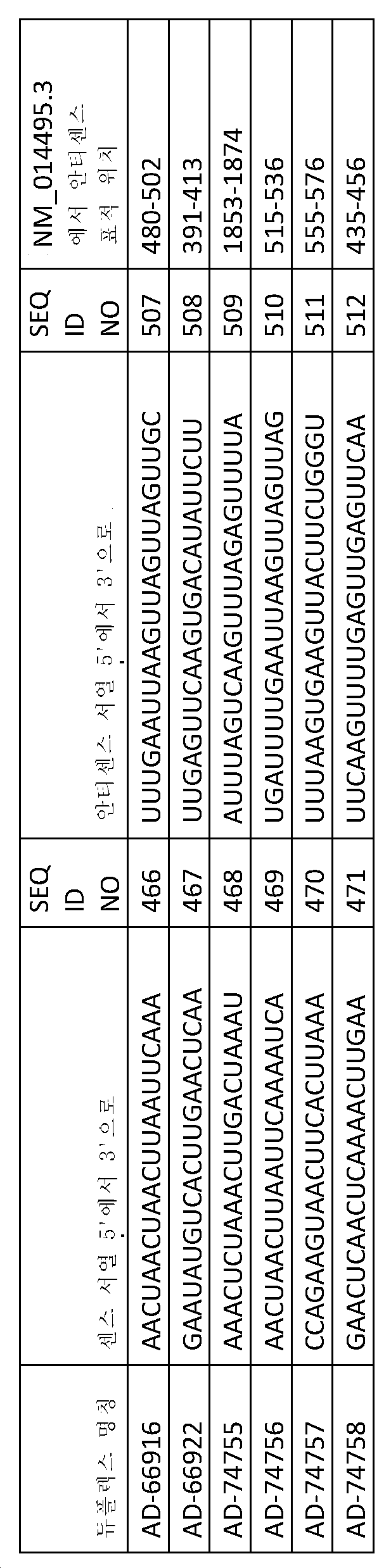


[표 15A][Table 15A]
추가적인 변형된 ANGPTL3 RNAi 작용제.Additional modified ANGPTL3 RNAi agents.


[표 15B][Table 15B]
추가적인 변형된 ANGPTL3 RNAi 작용제.Additional modified ANGPTL3 RNAi agents.


[표 16][Table 16]
Hep3B 세포 및 일차 게잡이 원숭이 간세포에서 AngPTL3 단회 투여 스크리닝.Single-dose screening of AngPTL3 in Hep3B cells and primary cynomolgus monkey hepatocytes.
데이터는 AD-1955 비-표적화 대조군 대비 잔여 메시지 백분율로 표현한다.Data are expressed as percentage of residual message relative to the AD-1955 non-targeting control.


SEQUENCE LISTING <110> ALNYLAM PHARMACEUTICALS, INC. <120> ANGIOPOIETIN-LIKE 3 (ANGPTL3) IRNA COMPOSITIONS AND METHODS OF USE THEREOF <130> 121301-03320 <150> US 62/146,604 <151> 2015-04-13 <150> US 62/261,361 <151> 2015-12-01 <160> 670 <170> KoPatentIn 3.0 <210> 1 <211> 2951 <212> DNA <213> Homo sapiens <400> 1 atatatagag ttaagaagtc taggtctgct tccagaagaa aacagttcca cgttgcttga 60 aattgaaaat caagataaaa atgttcacaa ttaagctcct tctttttatt gttcctctag 120 ttatttcctc cagaattgat caagacaatt catcatttga ttctctatct ccagagccaa 180 aatcaagatt tgctatgtta gacgatgtaa aaattttagc caatggcctc cttcagttgg 240 gacatggtct taaagacttt gtccataaga cgaagggcca aattaatgac atatttcaaa 300 aactcaacat atttgatcag tctttttatg atctatcgct gcaaaccagt gaaatcaaag 360 aagaagaaaa ggaactgaga agaactacat ataaactaca agtcaaaaat gaagaggtaa 420 agaatatgtc acttgaactc aactcaaaac ttgaaagcct cctagaagaa aaaattctac 480 ttcaacaaaa agtgaaatat ttagaagagc aactaactaa cttaattcaa aatcaacctg 540 aaactccaga acacccagaa gtaacttcac ttaaaacttt tgtagaaaaa caagataata 600 gcatcaaaga ccttctccag accgtggaag accaatataa acaattaaac caacagcata 660 gtcaaataaa agaaatagaa aatcagctca gaaggactag tattcaagaa cccacagaaa 720 tttctctatc ttccaagcca agagcaccaa gaactactcc ctttcttcag ttgaatgaaa 780 taagaaatgt aaaacatgat ggcattcctg ctgaatgtac caccatttat aacagaggtg 840 aacatacaag tggcatgtat gccatcagac ccagcaactc tcaagttttt catgtctact 900 gtgatgttat atcaggtagt ccatggacat taattcaaca tcgaatagat ggatcacaaa 960 acttcaatga aacgtgggag aactacaaat atggttttgg gaggcttgat ggagaatttt 1020 ggttgggcct agagaagata tactccatag tgaagcaatc taattatgtt ttacgaattg 1080 agttggaaga ctggaaagac aacaaacatt atattgaata ttctttttac ttgggaaatc 1140 acgaaaccaa ctatacgcta catctagttg cgattactgg caatgtcccc aatgcaatcc 1200 cggaaaacaa agatttggtg ttttctactt gggatcacaa agcaaaagga cacttcaact 1260 gtccagaggg ttattcagga ggctggtggt ggcatgatga gtgtggagaa aacaacctaa 1320 atggtaaata taacaaacca agagcaaaat ctaagccaga gaggagaaga ggattatctt 1380 ggaagtctca aaatggaagg ttatactcta taaaatcaac caaaatgttg atccatccaa 1440 cagattcaga aagctttgaa tgaactgagg caaatttaaa aggcaataat ttaaacatta 1500 acctcattcc aagttaatgt ggtctaataa tctggtatta aatccttaag agaaagcttg 1560 agaaatagat tttttttatc ttaaagtcac tgtctattta agattaaaca tacaatcaca 1620 taaccttaaa gaataccgtt tacatttctc aatcaaaatt cttataatac tatttgtttt 1680 aaattttgtg atgtgggaat caattttaga tggtcacaat ctagattata atcaataggt 1740 gaacttatta aataactttt ctaaataaaa aatttagaga cttttatttt aaaaggcatc 1800 atatgagcta atatcacaac tttcccagtt taaaaaacta gtactcttgt taaaactcta 1860 aacttgacta aatacagagg actggtaatt gtacagttct taaatgttgt agtattaatt 1920 tcaaaactaa aaatcgtcag cacagagtat gtgtaaaaat ctgtaataca aatttttaaa 1980 ctgatgcttc attttgctac aaaataattt ggagtaaatg tttgatatga tttatttatg 2040 aaacctaatg aagcagaatt aaatactgta ttaaaataag ttcgctgtct ttaaacaaat 2100 ggagatgact actaagtcac attgacttta acatgaggta tcactatacc ttatttgtta 2160 aaatatatac tgtatacatt ttatatattt taacacttaa tactatgaaa acaaataatt 2220 gtaaaggaat cttgtcagat tacagtaaga atgaacatat ttgtggcatc gagttaaagt 2280 ttatatttcc cctaaatatg ctgtgattct aatacattcg tgtaggtttt caagtagaaa 2340 taaacctcgt aacaagttac tgaacgttta aacagcctga caagcatgta tatatgttta 2400 aaattcaata aacaaagacc cagtccctaa attatagaaa tttaaattat tcttgcatgt 2460 ttatcgacat cacaacagat ccctaaatcc ctaaatccct aaagattaga tacaaatttt 2520 ttaccacagt atcacttgtc agaatttatt tttaaatatg attttttaaa actgccagta 2580 agaaatttta aattaaaccc atttgttaaa ggatatagtg cccaagttat atggtgacct 2640 acctttgtca atacttagca ttatgtattt caaattatcc aatatacatg tcatatatat 2700 ttttatatgt cacatatata aaagatatgt atgatctatg tgaatcctaa gtaaatattt 2760 tgttccagaa aagtacaaaa taataaaggt aaaaataatc tataattttc aggaccacag 2820 actaagctgt cgaaattaac gctgattttt ttagggccag aataccaaaa tggctcctct 2880 cttcccccaa aattggacaa tttcaaatgc aaaataattc attatttaat atatgagttg 2940 cttcctctat t 2951 <210> 2 <211> 2149 <212> DNA <213> Macaca mulatta <400> 2 atatatagag ttaagaagtc taggtctgct tccagaagaa cacagttcca cgttgcttga 60 aattgaaaat caggataaaa atgttcacaa ttaagctcct tctttttatt gttcctctag 120 ttatttcctc cagaattgac caagacaatt catcatttga ttctgtatct ccagagccaa 180 aatcaagatt tgctatgtta gacgatgtaa aaattttagc caatggcctc cttcagttgg 240 gacatggtct taaagacttt gtccataaga ctaagggcca aattaatgac atatttcaaa 300 aactcaacat atttgatcag tctttttatg atctatcact gcaaaccagt gaaatcaaag 360 aagaagaaaa ggaactgaga agaactacat ataaactaca agtcaaaaat gaagaggtaa 420 agaatatgtc acttgaactc aactcaaaac ttgaaagcct cctagaagaa aaaattctac 480 ttcaacaaaa agtgaaatat ttagaagagc aactaactaa cttaattcaa aatcaacctg 540 aaactccaga acatccagaa gtaacttcac ttaaaagttt tgtagaaaaa caagataata 600 gcatcaaaga ccttctccag actgtggaag aacaatataa gcaattaaac caacagcaca 660 gtcaaataaa agaaatagaa aatcagctca gaatgactaa tattcaagaa cccacagaaa 720 tttctctatc ttccaagcca agagcaccaa gaactactcc ctttcttcag ctgaatgaaa 780 taagaaatgt aaaacatgat ggcattcctg ctgattgtac caccatttac aatagaggtg 840 aacatataag tggcatgtat gccatcagac ccagcaactc tcaagttttt catgtctact 900 gtgatgttgt atcaggtaaa acctgtctaa ggagaataga tggatcacaa aacttcaatg 960 aaacgtggga gaactacaaa tatggtttcg ggaggcttga tggagaattc tggttgggcc 1020 tagagaagat atactccata gtgaagcaat ctaattacgt tttacgaatt gagttggaag 1080 actggaaaga caacaaacat tatattgaat attcttttta cttgggaaat cacgaaacca 1140 actatacgct acatgtagtt aagattactg gcaatgtccc caatgcaatc ccggaaaaca 1200 aagatttggt gttttctact tgggatcaca aagcaaaagg acacttcagc tgtccagaga 1260 gttattcagg aggctggtgg tggcatgatg agtgtggaga aaacaaccta aatggtaaat 1320 ataacaaacc aagaacaaaa tctaagccag agcggagaag aggattatcc tggaagtctc 1380 aaaatggaag gttatactct ataaaatcaa ccaaaatgtt gatccatcca acagattcag 1440 aaagctttga atgaactgag gcaaatttaa aaggcaataa attaaacatt aaactcattc 1500 caagttaatg tggtttaata atctggtatt aaatccttaa gagaaggctt gagaaataga 1560 tttttttatc ttaaagtcac tgtcaattta agattaaaca tacaatcaca taaccttaaa 1620 gaataccatt tacatttctc aatcaaaatt cctacaacac tatttgtttt atattttgtg 1680 atgtgggaat caattttaga tggtcgcaat ctaaattata atcaacaggt gaacttacta 1740 aataactttt ctaaataaaa aacttagaga ctttaatttt aaaagtcatc atatgagcta 1800 atatcacaat tttcccagtt taaaaaacta gttttcttgt taaaactcta aacttgacta 1860 aataaagagg actgataatt atacagttct taaatttgtt gtaatattaa tttcaaaact 1920 aaaaattgtc agcacagagt atgtgtaaaa atctgtaata taaattttta aactgatgcc 1980 tcattttgct acaaaataat ctggagtaaa tttttgatag gatttattta tgaaacctaa 2040 tgaagcagga ttaaatactg tattaaaata ggttcgctgt cttttaaaca aatggagatg 2100 atgattacta agtcacattg actttaatat gaggtatcac tatacctta 2149 <210> 3 <211> 1598 <212> DNA <213> Mus musculus <400> 3 caggagggag aagttccaaa ttgcttaaaa ttgaataatt gagacaaaaa atgcacacaa 60 ttaaattatt cctttttgtt gttcctttag taattgcatc cagagtggat ccagaccttt 120 catcatttga ttctgcacct tcagagccaa aatcaagatt tgctatgttg gatgatgtca 180 aaattttagc gaatggcctc ctgcagctgg gtcatggact taaagatttt gtccataaga 240 ctaagggaca aattaacgac atatttcaga agctcaacat atttgatcag tctttttatg 300 acctatcact tcgaaccaat gaaatcaaag aagaggaaaa ggagctaaga agaactacat 360 ctacactaca agttaaaaac gaggaggtga agaacatgtc agtagaactg aactcaaagc 420 ttgagagtct gctggaagag aagacagccc ttcaacacaa ggtcagggct ttggaggagc 480 agctaaccaa cttaattcta agcccagctg gggctcagga gcacccagaa gtaacatcac 540 tcaaaagttt tgtagaacag caagacaaca gcataagaga actcctccag agtgtggaag 600 aacagtataa acaattaagt caacagcaca tgcagataaa agaaatagaa aagcagctca 660 gaaagactgg tattcaagaa ccctcagaaa attctctttc ttctaaatca agagcaccaa 720 gaactactcc ccctcttcaa ctgaacgaaa cagaaaatac agaacaagat gaccttcctg 780 ccgactgctc tgccgtttat aacagaggcg aacatacaag tggcgtgtac actattaaac 840 caagaaactc ccaagggttt aatgtctact gtgataccca atcaggcagt ccatggacat 900 taattcaaca ccggaaagat ggctcacagg acttcaacga aacatgggaa aactacgaaa 960 agggctttgg gaggctcgat ggagaatttt ggttgggcct agagaagatc tatgctatag 1020 tccaacagtc taactacatt ttacgactcg agctacaaga ctggaaagac agcaagcact 1080 acgttgaata ctcctttcac ctgggcagtc acgaaaccaa ctacacgcta catgtggctg 1140 agattgctgg caatatccct ggggccctcc cagagcacac agacctgatg ttttctacat 1200 ggaatcacag agcaaaggga cagctctact gtccagaaag ttactcaggt ggctggtggt 1260 ggaatgacat atgtggagaa aacaacctaa atggaaaata caacaaaccc agaaccaaat 1320 ccagaccaga gagaagaaga gggatctact ggagacctca gagcagaaag ctctatgcta 1380 tcaaatcatc caaaatgatg ctccagccca ccacctaaga agcttcaact gaactgagac 1440 aaaataaaag atcaataaat taaatattaa agtcctcccg atcactgtag taatctggta 1500 ttaaaatttt aatggaaagc ttgagaattg aatttcaatt aggtttaaac tcattgttaa 1560 gatcagatat caccgaatca acgtaaacaa aatttatc 1598 <210> 4 <211> 1785 <212> DNA <213> Rattus norvegicus <400> 4 gacgttccaa attgcttgaa attgaataat tgaaacaaaa atgcacacaa ttaagctgct 60 cctttttgtt gttcctctag taatttcgtc cagagttgat ccagaccttt cgccatttga 120 ttctgtaccg tcagagccaa aatcaagatt tgctatgttg gatgatgtca aaattttagc 180 caatggcctc ctgcagctgg gtcatggtct taaagatttt gtccataaga caaagggaca 240 aattaatgac atatttcaga agctcaacat atttgatcag tgtttttatg acctatcact 300 tcaaaccaat gaaatcaaag aagaggaaaa ggagctaaga agaaccacat ctaaactaca 360 agttaaaaac gaagaggtga agaatatgtc acttgaactg aactcaaagc ttgaaagtct 420 actggaggag aagatggcgc tccaacacag agtcagggct ttggaggaac agctgaccag 480 cttggttcag aacccgcctg gggctcggga gcacccagag gtaacgtcac ttaaaagttt 540 tgtagaacag caagataaca gcataagaga actcctccag agtgtggaag aacaatataa 600 acaactaagt caacagcaca ttcagataaa agaaatagaa aatcagctca gaaagactgg 660 cattcaagaa cccactgaaa attctcttta ttctaaacca agagcaccaa gaactactcc 720 ccctcttcat ctgaaggaag caaaaaatat agaacaagat gatctgcctg ctgactgctc 780 tgccatttat aacagaggtg aacatacaag tggcgtgtat actattagac caagcagctc 840 tcaagtgttt aatgtctact gtgacaccca atcaggcact ccacggacat taattcaaca 900 ccggaaagat ggctctcaaa acttcaacca aacgtgggaa aactacgaaa agggttttgg 960 gaggcttgat ggtaaagtga tttccttgca tcactcactt atctgttgat ttaatagtat 1020 tagttgggtg tgttgacaca ggcctgagac catagcgctt ttgggcaagg ggggaggagg 1080 agcagcaggt gaattgaaag ttcaagacca gtctgggcca cacattgata ctccttctcg 1140 acattaagaa ttataaatta agcagcaatt ataaaatggg ctgtggaaat gtaacaataa 1200 gcaaaagcag accccagtct tcataaaact gattggtaaa tattatccat gatagcaact 1260 gcaatgatct cattgtactt atcactactg catgcctgca gtatgcttgt tgaaacttaa 1320 ttctatagtt catggttatc ataagtctta ttaaggaaca tagtatacgc cattggctct 1380 agtgaggggc catgctacaa atgagctgca aagatagcag tatagagctc tttcagtgat 1440 atcctaagca caacgtaaca caggtgaaat gggctggagg cacagttgtg gtggaacacg 1500 cggccagcag gacactggga ctgatcccca gcagcacaaa gaaagtgata ggaacacaga 1560 gcgagagtta gaagggacag ggtcaccgtc agagatacgg tgtctaactc ctgcaaccct 1620 acctgtaatt attccatatt ataaacatat actatataac tgtgggtctc tgcatgttct 1680 agaatatgaa ttctatttga ttgtaaaaca aaactataaa aataagtaaa aaaataaaaa 1740 ataaacagat acttaaaatc aaaaaaaaaa aaaaaaaaaa aaaaa 1785 <210> 5 <211> 2951 <212> DNA <213> Homo sapiens <400> 5 aatagaggaa gcaactcata tattaaataa tgaattattt tgcatttgaa attgtccaat 60 tttgggggaa gagaggagcc attttggtat tctggcccta aaaaaatcag cgttaatttc 120 gacagcttag tctgtggtcc tgaaaattat agattatttt tacctttatt attttgtact 180 tttctggaac aaaatattta cttaggattc acatagatca tacatatctt ttatatatgt 240 gacatataaa aatatatatg acatgtatat tggataattt gaaatacata atgctaagta 300 ttgacaaagg taggtcacca tataacttgg gcactatatc ctttaacaaa tgggtttaat 360 ttaaaatttc ttactggcag ttttaaaaaa tcatatttaa aaataaattc tgacaagtga 420 tactgtggta aaaaatttgt atctaatctt tagggattta gggatttagg gatctgttgt 480 gatgtcgata aacatgcaag aataatttaa atttctataa tttagggact gggtctttgt 540 ttattgaatt ttaaacatat atacatgctt gtcaggctgt ttaaacgttc agtaacttgt 600 tacgaggttt atttctactt gaaaacctac acgaatgtat tagaatcaca gcatatttag 660 gggaaatata aactttaact cgatgccaca aatatgttca ttcttactgt aatctgacaa 720 gattccttta caattatttg ttttcatagt attaagtgtt aaaatatata aaatgtatac 780 agtatatatt ttaacaaata aggtatagtg atacctcatg ttaaagtcaa tgtgacttag 840 tagtcatctc catttgttta aagacagcga acttatttta atacagtatt taattctgct 900 tcattaggtt tcataaataa atcatatcaa acatttactc caaattattt tgtagcaaaa 960 tgaagcatca gtttaaaaat ttgtattaca gatttttaca catactctgt gctgacgatt 1020 tttagttttg aaattaatac tacaacattt aagaactgta caattaccag tcctctgtat 1080 ttagtcaagt ttagagtttt aacaagagta ctagtttttt aaactgggaa agttgtgata 1140 ttagctcata tgatgccttt taaaataaaa gtctctaaat tttttattta gaaaagttat 1200 ttaataagtt cacctattga ttataatcta gattgtgacc atctaaaatt gattcccaca 1260 tcacaaaatt taaaacaaat agtattataa gaattttgat tgagaaatgt aaacggtatt 1320 ctttaaggtt atgtgattgt atgtttaatc ttaaatagac agtgacttta agataaaaaa 1380 aatctatttc tcaagctttc tcttaaggat ttaataccag attattagac cacattaact 1440 tggaatgagg ttaatgttta aattattgcc ttttaaattt gcctcagttc attcaaagct 1500 ttctgaatct gttggatgga tcaacatttt ggttgatttt atagagtata accttccatt 1560 ttgagacttc caagataatc ctcttctcct ctctggctta gattttgctc ttggtttgtt 1620 atatttacca tttaggttgt tttctccaca ctcatcatgc caccaccagc ctcctgaata 1680 accctctgga cagttgaagt gtccttttgc tttgtgatcc caagtagaaa acaccaaatc 1740 tttgttttcc gggattgcat tggggacatt gccagtaatc gcaactagat gtagcgtata 1800 gttggtttcg tgatttccca agtaaaaaga atattcaata taatgtttgt tgtctttcca 1860 gtcttccaac tcaattcgta aaacataatt agattgcttc actatggagt atatcttctc 1920 taggcccaac caaaattctc catcaagcct cccaaaacca tatttgtagt tctcccacgt 1980 ttcattgaag ttttgtgatc catctattcg atgttgaatt aatgtccatg gactacctga 2040 tataacatca cagtagacat gaaaaacttg agagttgctg ggtctgatgg catacatgcc 2100 acttgtatgt tcacctctgt tataaatggt ggtacattca gcaggaatgc catcatgttt 2160 tacatttctt atttcattca actgaagaaa gggagtagtt cttggtgctc ttggcttgga 2220 agatagagaa atttctgtgg gttcttgaat actagtcctt ctgagctgat tttctatttc 2280 ttttatttga ctatgctgtt ggtttaattg tttatattgg tcttccacgg tctggagaag 2340 gtctttgatg ctattatctt gtttttctac aaaagtttta agtgaagtta cttctgggtg 2400 ttctggagtt tcaggttgat tttgaattaa gttagttagt tgctcttcta aatatttcac 2460 tttttgttga agtagaattt tttcttctag gaggctttca agttttgagt tgagttcaag 2520 tgacatattc tttacctctt catttttgac ttgtagttta tatgtagttc ttctcagttc 2580 cttttcttct tctttgattt cactggtttg cagcgataga tcataaaaag actgatcaaa 2640 tatgttgagt ttttgaaata tgtcattaat ttggcccttc gtcttatgga caaagtcttt 2700 aagaccatgt cccaactgaa ggaggccatt ggctaaaatt tttacatcgt ctaacatagc 2760 aaatcttgat tttggctctg gagatagaga atcaaatgat gaattgtctt gatcaattct 2820 ggaggaaata actagaggaa caataaaaag aaggagctta attgtgaaca tttttatctt 2880 gattttcaat ttcaagcaac gtggaactgt tttcttctgg aagcagacct agacttctta 2940 actctatata t 2951 <210> 6 <211> 2149 <212> DNA <213> Macaca mulatta <400> 6 taaggtatag tgatacctca tattaaagtc aatgtgactt agtaatcatc atctccattt 60 gtttaaaaga cagcgaacct attttaatac agtatttaat cctgcttcat taggtttcat 120 aaataaatcc tatcaaaaat ttactccaga ttattttgta gcaaaatgag gcatcagttt 180 aaaaatttat attacagatt tttacacata ctctgtgctg acaattttta gttttgaaat 240 taatattaca acaaatttaa gaactgtata attatcagtc ctctttattt agtcaagttt 300 agagttttaa caagaaaact agttttttaa actgggaaaa ttgtgatatt agctcatatg 360 atgactttta aaattaaagt ctctaagttt tttatttaga aaagttattt agtaagttca 420 cctgttgatt ataatttaga ttgcgaccat ctaaaattga ttcccacatc acaaaatata 480 aaacaaatag tgttgtagga attttgattg agaaatgtaa atggtattct ttaaggttat 540 gtgattgtat gtttaatctt aaattgacag tgactttaag ataaaaaaat ctatttctca 600 agccttctct taaggattta ataccagatt attaaaccac attaacttgg aatgagttta 660 atgtttaatt tattgccttt taaatttgcc tcagttcatt caaagctttc tgaatctgtt 720 ggatggatca acattttggt tgattttata gagtataacc ttccattttg agacttccag 780 gataatcctc ttctccgctc tggcttagat tttgttcttg gtttgttata tttaccattt 840 aggttgtttt ctccacactc atcatgccac caccagcctc ctgaataact ctctggacag 900 ctgaagtgtc cttttgcttt gtgatcccaa gtagaaaaca ccaaatcttt gttttccggg 960 attgcattgg ggacattgcc agtaatctta actacatgta gcgtatagtt ggtttcgtga 1020 tttcccaagt aaaaagaata ttcaatataa tgtttgttgt ctttccagtc ttccaactca 1080 attcgtaaaa cgtaattaga ttgcttcact atggagtata tcttctctag gcccaaccag 1140 aattctccat caagcctccc gaaaccatat ttgtagttct cccacgtttc attgaagttt 1200 tgtgatccat ctattctcct tagacaggtt ttacctgata caacatcaca gtagacatga 1260 aaaacttgag agttgctggg tctgatggca tacatgccac ttatatgttc acctctattg 1320 taaatggtgg tacaatcagc aggaatgcca tcatgtttta catttcttat ttcattcagc 1380 tgaagaaagg gagtagttct tggtgctctt ggcttggaag atagagaaat ttctgtgggt 1440 tcttgaatat tagtcattct gagctgattt tctatttctt ttatttgact gtgctgttgg 1500 tttaattgct tatattgttc ttccacagtc tggagaaggt ctttgatgct attatcttgt 1560 ttttctacaa aacttttaag tgaagttact tctggatgtt ctggagtttc aggttgattt 1620 tgaattaagt tagttagttg ctcttctaaa tatttcactt tttgttgaag tagaattttt 1680 tcttctagga ggctttcaag ttttgagttg agttcaagtg acatattctt tacctcttca 1740 tttttgactt gtagtttata tgtagttctt ctcagttcct tttcttcttc tttgatttca 1800 ctggtttgca gtgatagatc ataaaaagac tgatcaaata tgttgagttt ttgaaatatg 1860 tcattaattt ggcccttagt cttatggaca aagtctttaa gaccatgtcc caactgaagg 1920 aggccattgg ctaaaatttt tacatcgtct aacatagcaa atcttgattt tggctctgga 1980 gatacagaat caaatgatga attgtcttgg tcaattctgg aggaaataac tagaggaaca 2040 ataaaaagaa ggagcttaat tgtgaacatt tttatcctga ttttcaattt caagcaacgt 2100 ggaactgtgt tcttctggaa gcagacctag acttcttaac tctatatat 2149 <210> 7 <211> 1598 <212> DNA <213> Mus musculus <400> 7 caggagggag aagttccaaa ttgcttaaaa ttgaataatt gagacaaaaa atgcacacaa 60 ttaaattatt cctttttgtt gttcctttag taattgcatc cagagtggat ccagaccttt 120 catcatttga ttctgcacct tcagagccaa aatcaagatt tgctatgttg gatgatgtca 180 aaattttagc gaatggcctc ctgcagctgg gtcatggact taaagatttt gtccataaga 240 ctaagggaca aattaacgac atatttcaga agctcaacat atttgatcag tctttttatg 300 acctatcact tcgaaccaat gaaatcaaag aagaggaaaa ggagctaaga agaactacat 360 ctacactaca agttaaaaac gaggaggtga agaacatgtc agtagaactg aactcaaagc 420 ttgagagtct gctggaagag aagacagccc ttcaacacaa ggtcagggct ttggaggagc 480 agctaaccaa cttaattcta agcccagctg gggctcagga gcacccagaa gtaacatcac 540 tcaaaagttt tgtagaacag caagacaaca gcataagaga actcctccag agtgtggaag 600 aacagtataa acaattaagt caacagcaca tgcagataaa agaaatagaa aagcagctca 660 gaaagactgg tattcaagaa ccctcagaaa attctctttc ttctaaatca agagcaccaa 720 gaactactcc ccctcttcaa ctgaacgaaa cagaaaatac agaacaagat gaccttcctg 780 ccgactgctc tgccgtttat aacagaggcg aacatacaag tggcgtgtac actattaaac 840 caagaaactc ccaagggttt aatgtctact gtgataccca atcaggcagt ccatggacat 900 taattcaaca ccggaaagat ggctcacagg acttcaacga aacatgggaa aactacgaaa 960 agggctttgg gaggctcgat ggagaatttt ggttgggcct agagaagatc tatgctatag 1020 tccaacagtc taactacatt ttacgactcg agctacaaga ctggaaagac agcaagcact 1080 acgttgaata ctcctttcac ctgggcagtc acgaaaccaa ctacacgcta catgtggctg 1140 agattgctgg caatatccct ggggccctcc cagagcacac agacctgatg ttttctacat 1200 ggaatcacag agcaaaggga cagctctact gtccagaaag ttactcaggt ggctggtggt 1260 ggaatgacat atgtggagaa aacaacctaa atggaaaata caacaaaccc agaaccaaat 1320 ccagaccaga gagaagaaga gggatctact ggagacctca gagcagaaag ctctatgcta 1380 tcaaatcatc caaaatgatg ctccagccca ccacctaaga agcttcaact gaactgagac 1440 aaaataaaag atcaataaat taaatattaa agtcctcccg atcactgtag taatctggta 1500 ttaaaatttt aatggaaagc ttgagaattg aatttcaatt aggtttaaac tcattgttaa 1560 gatcagatat caccgaatca acgtaaacaa aatttatc 1598 <210> 8 <211> 1785 <212> DNA <213> Rattus norvegicus <400> 8 tttttttttt tttttttttt tttttgattt taagtatctg tttatttttt atttttttac 60 ttatttttat agttttgttt tacaatcaaa tagaattcat attctagaac atgcagagac 120 ccacagttat atagtatatg tttataatat ggaataatta caggtagggt tgcaggagtt 180 agacaccgta tctctgacgg tgaccctgtc ccttctaact ctcgctctgt gttcctatca 240 ctttctttgt gctgctgggg atcagtccca gtgtcctgct ggccgcgtgt tccaccacaa 300 ctgtgcctcc agcccatttc acctgtgtta cgttgtgctt aggatatcac tgaaagagct 360 ctatactgct atctttgcag ctcatttgta gcatggcccc tcactagagc caatggcgta 420 tactatgttc cttaataaga cttatgataa ccatgaacta tagaattaag tttcaacaag 480 catactgcag gcatgcagta gtgataagta caatgagatc attgcagttg ctatcatgga 540 taatatttac caatcagttt tatgaagact ggggtctgct tttgcttatt gttacatttc 600 cacagcccat tttataattg ctgcttaatt tataattctt aatgtcgaga aggagtatca 660 atgtgtggcc cagactggtc ttgaactttc aattcacctg ctgctcctcc tccccccttg 720 cccaaaagcg ctatggtctc aggcctgtgt caacacaccc aactaatact attaaatcaa 780 cagataagtg agtgatgcaa ggaaatcact ttaccatcaa gcctcccaaa acccttttcg 840 tagttttccc acgtttggtt gaagttttga gagccatctt tccggtgttg aattaatgtc 900 cgtggagtgc ctgattgggt gtcacagtag acattaaaca cttgagagct gcttggtcta 960 atagtataca cgccacttgt atgttcacct ctgttataaa tggcagagca gtcagcaggc 1020 agatcatctt gttctatatt ttttgcttcc ttcagatgaa gagggggagt agttcttggt 1080 gctcttggtt tagaataaag agaattttca gtgggttctt gaatgccagt ctttctgagc 1140 tgattttcta tttcttttat ctgaatgtgc tgttgactta gttgtttata ttgttcttcc 1200 acactctgga ggagttctct tatgctgtta tcttgctgtt ctacaaaact tttaagtgac 1260 gttacctctg ggtgctcccg agccccaggc gggttctgaa ccaagctggt cagctgttcc 1320 tccaaagccc tgactctgtg ttggagcgcc atcttctcct ccagtagact ttcaagcttt 1380 gagttcagtt caagtgacat attcttcacc tcttcgtttt taacttgtag tttagatgtg 1440 gttcttctta gctccttttc ctcttctttg atttcattgg tttgaagtga taggtcataa 1500 aaacactgat caaatatgtt gagcttctga aatatgtcat taatttgtcc ctttgtctta 1560 tggacaaaat ctttaagacc atgacccagc tgcaggaggc cattggctaa aattttgaca 1620 tcatccaaca tagcaaatct tgattttggc tctgacggta cagaatcaaa tggcgaaagg 1680 tctggatcaa ctctggacga aattactaga ggaacaacaa aaaggagcag cttaattgtg 1740 tgcatttttg tttcaattat tcaatttcaa gcaatttgga acgtc 1785 <210> 9 <211> 2201 <212> DNA <213> Macaca fascicularis <400> 9 gggtagtata tagagttaag aagtctaggt ctgcttccag aagaacacag ttccacgctg 60 cttgaaattg aaaatcagga taaaaatgtt cacaattaag ctccttcttt ttattgttcc 120 tctagttatt tcctccagaa ttgaccaaga caattcatca tttgattctg tatctccaga 180 gccaaaatca agatttgcta tgttagacga tgtaaaaatt ttagccaatg gcctccttca 240 gttgggacat ggtcttaaag actttgtcca taagactaag ggccaaatta atgacatatt 300 tcaaaaactc aacatatttg atcagtcttt ttatgatcta tcactgcaaa ccagtgaaat 360 caaagaagaa gaaaaggaac tgagaagaac tacatataaa ctacaagtca aaaatgaaga 420 ggtaaagaat atgtcacttg aactcaactc aaaacttgaa agcctcctag aagaaaaaat 480 tctacttcaa caaaaagtga aatatttaga agagcaacta actaacttaa ttcaaaatca 540 acctgcaact ccagaacatc cagaagtaac ttcacttaaa agttttgtag aaaaacaaga 600 taatagcatc aaagaccttc tccagactgt ggaagaacaa tataagcaat taaaccaaca 660 gcatagtcaa ataaaagaaa tagaaaatca gctcagaatg actaatattc aagaacccac 720 agaaatttct ctatcttcca agccaagagc accaagaact actccctttc ttcagctgaa 780 tgaaataaga aatgtaaaac atgatggcat tcctgctgat tgtaccacca tttacaatag 840 aggtgaacat ataagtggca cgtatgccat cagacccagc aactctcaag tttttcatgt 900 ctactgtgat gttgtatcag gtagtccatg gacattaatt caacatcgaa tagatggatc 960 acaaaacttc aatgaaacgt gggagaacta caaatatggt ttcgggaggc ttgatggaga 1020 attctggttg ggcctagaga agatatactc catagtgaag caatctaatt acgttttacg 1080 aattgagttg gaagactgga aagacaacaa acattatatt gaatattctt tttacttggg 1140 aaatcacgaa accaactata cgctacatgt agttaagatt actggcaatg tccccaatgc 1200 aatcccggaa aacaaagatt tggtgttttc tacttgggat cacaaagcaa aaggacactt 1260 cagctgtcca gagagttatt caggaggctg gtggtggcat gatgagtgtg gagaaaacaa 1320 cctaaatggt aaatataaca aaccaagaac aaaatctaag ccagagcgga gaagaggatt 1380 atcctggaag tctcaaaatg gaaggttata ctctataaaa tcaaccaaaa tgttgatcca 1440 tccaacagat tcagaaagct ttgaatgaac tgaggcaaat ttaaaaggca ataaattaaa 1500 cattaaactc attccaagtt aatgtggttt aataatctgg tattaaatcc ttaagagaag 1560 gcttgagaaa tagatttttt tatcttaaag tcactgtcaa tttaagatta aacatacaat 1620 cacataacct taaagaatac catttacatt tctcaatcaa aattcttaca acactatttg 1680 ttttatattt tgtgatgtgg gaatcaattt tagatggtcg caatctaaat tataatcaac 1740 aggtgaactt actaaataac ttttctaaat aaaaaactta gagactttaa ttttaaaagt 1800 catcatatga gctaatgtca caattttccc agtttaaaaa actagttttc ttgttaaaac 1860 tctaaacttg actaaataaa gaggactgat aattatacag ttcttaaatt tgttgtaata 1920 ttaatttcaa aactaaaaat tgtcagcaca gagtatgtgt aaaaatctgt aatataaatt 1980 tttaaactga tgcctcattt tgctacaaaa taatctggag taaatttttg ataggattta 2040 tttatgaaac ctaatgaagc aggattaaat actgtattaa aataggttcg ctgtctttta 2100 aacaaatgga gatgatgatt actaagtcac attgacttta atatgaggta tcactatacc 2160 ttaacatatt tgttaaaacg tatactgtat acattttgtg t 2201 <210> 10 <211> 11 <212> PRT <213> Unknown <220> <221> source <223> /note="Description of Unknown: RFGF analogue sequence" <400> 10 Ala Ala Leu Leu Pro Val Leu Leu Ala Ala Pro 1 5 10 <210> 11 <211> 13 <212> PRT <213> Human immunodeficiency virus <400> 11 Gly Arg Lys Lys Arg Arg Gln Arg Arg Arg Pro Pro Gln 1 5 10 <210> 12 <211> 16 <212> PRT <213> Drosophila sp. <400> 12 Arg Gln Ile Lys Ile Trp Phe Gln Asn Arg Arg Met Lys Trp Lys Lys 1 5 10 15 <210> 13 <211> 16 <212> PRT <213> Unknown <220> <221> source <223> /note="Description of Unknown: RFGF sequence" <400> 13 Ala Ala Val Ala Leu Leu Pro Ala Val Leu Leu Ala Leu Leu Ala Pro 1 5 10 15 <210> 14 <211> 21 <212> RNA <213> Artificial Sequence <220> <221> source <223> /note="Description of Artificial Sequence: Synthetic oligonucleotide" <400> 14 gaauauguca cuugaacuca a 21 <210> 15 <211> 23 <212> DNA <213> Artificial Sequence <220> <221> source <223> /note="Description of Artificial Sequence: Synthetic oligonucleotide" <220> <221> source <223> /note="Description of Combined DNA/RNA Molecule: Synthetic oligonucleotide" <400> 15 utgaguucaa gtgacauauu cuu 23 <210> 16 <211> 21 <212> DNA <213> Artificial Sequence <220> <221> source <223> /note="Description of Artificial Sequence: Synthetic oligonucleotide" <220> <221> source <223> /note="Description of Combined DNA/RNA Molecule: Synthetic oligonucleotide" <400> 16 gaauatguga cuugaacuca a 21 <210> 17 <211> 23 <212> RNA <213> Artificial Sequence <220> <221> source <223> /note="Description of Artificial Sequence: Synthetic oligonucleotide" <400> 17 uugaguucaa gugacauauu cuu 23 <210> 18 <211> 21 <212> DNA <213> Artificial Sequence <220> <221> source <223> /note="Description of Artificial Sequence: Synthetic oligonucleotide" <220> <221> source <223> /note="Description of Combined DNA/RNA Molecule: Synthetic oligonucleotide" <400> 18 auuaagcugc uucuuutuau u 21 <210> 19 <211> 23 <212> RNA <213> Artificial Sequence <220> <221> source <223> /note="Description of Artificial Sequence: Synthetic oligonucleotide" <400> 19 aauaaaaaga aggagcuuaa uug 23 <210> 20 <211> 21 <212> RNA <213> Artificial Sequence <220> <221> source <223> /note="Description of Artificial Sequence: Synthetic oligonucleotide" <400> 20 acauauuuga ucagucuuuu u 21 <210> 21 <211> 23 <212> RNA <213> Artificial Sequence <220> <221> source <223> /note="Description of Artificial Sequence: Synthetic oligonucleotide" <400> 21 aaaaagacug aucaaauaug uug 23 <210> 22 <211> 21 <212> RNA <213> Artificial Sequence <220> <221> source <223> /note="Description of Artificial Sequence: Synthetic oligonucleotide" <400> 22 ugucacuuga acucaacuca a 21 <210> 23 <211> 23 <212> RNA <213> Artificial Sequence <220> <221> source <223> /note="Description of Artificial Sequence: Synthetic oligonucleotide" <400> 23 uugaguugag uucaagugac aua 23 <210> 24 <211> 21 <212> RNA <213> Artificial Sequence <220> <221> source <223> /note="Description of Artificial Sequence: Synthetic oligonucleotide" <400> 24 aacuaacuaa cuuaauucaa a 21 <210> 25 <211> 23 <212> RNA <213> Artificial Sequence <220> <221> source <223> /note="Description of Artificial Sequence: Synthetic oligonucleotide" <400> 25 uuugaauuaa guuaguuagu ugc 23 <210> 26 <211> 21 <212> RNA <213> Artificial Sequence <220> <221> source <223> /note="Description of Artificial Sequence: Synthetic oligonucleotide" <400> 26 ucacaauuaa gcuccuucuu u 21 <210> 27 <211> 23 <212> RNA <213> Artificial Sequence <220> <221> source <223> /note="Description of Artificial Sequence: Synthetic oligonucleotide" <400> 27 aaagaaggag cuuaauugug aac 23 <210> 28 <211> 21 <212> RNA <213> Artificial Sequence <220> <221> source <223> /note="Description of Artificial Sequence: Synthetic oligonucleotide" <400> 28 gagcaacuaa cuaacuuaau u 21 <210> 29 <211> 23 <212> RNA <213> Artificial Sequence <220> <221> source <223> /note="Description of Artificial Sequence: Synthetic oligonucleotide" <400> 29 aauuaaguua guuaguugcu cuu 23 <210> 30 <211> 21 <212> RNA <213> Artificial Sequence <220> <221> source <223> /note="Description of Artificial Sequence: Synthetic oligonucleotide" <400> 30 uuauuguucc ucuaguuauu u 21 <210> 31 <211> 23 <212> RNA <213> Artificial Sequence <220> <221> source <223> /note="Description of Artificial Sequence: Synthetic oligonucleotide" <400> 31 aaauaacuag aggaacaaua aaa 23 <210> 32 <211> 21 <212> RNA <213> Artificial Sequence <220> <221> source <223> /note="Description of Artificial Sequence: Synthetic oligonucleotide" <400> 32 auuaagcucc uucuuuuuau u 21 <210> 33 <211> 23 <212> RNA <213> Artificial Sequence <220> <221> source <223> /note="Description of Artificial Sequence: Synthetic oligonucleotide" <400> 33 aauaaaaaga aggagcuuaa uug 23 <210> 34 <211> 21 <212> RNA <213> Artificial Sequence <220> <221> source <223> /note="Description of Artificial Sequence: Synthetic oligonucleotide" <400> 34 gaauauguca cuugaacuca a 21 <210> 35 <211> 23 <212> RNA <213> Artificial Sequence <220> <221> source <223> /note="Description of Artificial Sequence: Synthetic oligonucleotide" <400> 35 uugaguucaa gugacauauu cuu 23 <210> 36 <211> 21 <212> RNA <213> Artificial Sequence <220> <221> source <223> /note="Description of Artificial Sequence: Synthetic oligonucleotide" <400> 36 caacauauuu gaucagucuu u 21 <210> 37 <211> 23 <212> RNA <213> Artificial Sequence <220> <221> source <223> /note="Description of Artificial Sequence: Synthetic oligonucleotide" <400> 37 aaagacugau caaauauguu gag 23 <210> 38 <211> 21 <212> RNA <213> Artificial Sequence <220> <221> source <223> /note="Description of Artificial Sequence: Synthetic oligonucleotide" <400> 38 cuccauagug aagcaaucua a 21 <210> 39 <211> 23 <212> RNA <213> Artificial Sequence <220> <221> source <223> /note="Description of Artificial Sequence: Synthetic oligonucleotide" <400> 39 uuagauugcu ucacuaugga gua 23 <210> 40 <211> 21 <212> RNA <213> Artificial Sequence <220> <221> source <223> /note="Description of Artificial Sequence: Synthetic oligonucleotide" <400> 40 acauauuuga ucagucuuuu u 21 <210> 41 <211> 23 <212> RNA <213> Artificial Sequence <220> <221> source <223> /note="Description of Artificial Sequence: Synthetic oligonucleotide" <400> 41 aaaaagacug aucaaauaug uug 23 <210> 42 <211> 21 <212> RNA <213> Artificial Sequence <220> <221> source <223> /note="Description of Artificial Sequence: Synthetic oligonucleotide" <400> 42 ugucacuuga acucaacuca a 21 <210> 43 <211> 23 <212> RNA <213> Artificial Sequence <220> <221> source <223> /note="Description of Artificial Sequence: Synthetic oligonucleotide" <400> 43 uugaguugag uucaagugac aua 23 <210> 44 <211> 21 <212> RNA <213> Artificial Sequence <220> <221> source <223> /note="Description of Artificial Sequence: Synthetic oligonucleotide" <400> 44 gaauauguca cuugaacuca a 21 <210> 45 <211> 23 <212> DNA <213> Artificial Sequence <220> <221> source <223> /note="Description of Artificial Sequence: Synthetic oligonucleotide" <220> <221> source <223> /note="Description of Combined DNA/RNA Molecule: Synthetic oligonucleotide" <400> 45 utgaguucaa gtgacauauu cuu 23 <210> 46 <211> 21 <212> DNA <213> Artificial Sequence <220> <221> source <223> /note="Description of Artificial Sequence: Synthetic oligonucleotide" <220> <221> source <223> /note="Description of Combined DNA/RNA Molecule: Synthetic oligonucleotide" <400> 46 gaauatguga cuugaacuca a 21 <210> 47 <211> 23 <212> RNA <213> Artificial Sequence <220> <221> source <223> /note="Description of Artificial Sequence: Synthetic oligonucleotide" <400> 47 uugaguucaa gugacauauu cuu 23 <210> 48 <211> 21 <212> DNA <213> Artificial Sequence <220> <221> source <223> /note="Description of Artificial Sequence: Synthetic oligonucleotide" <220> <221> source <223> /note="Description of Combined DNA/RNA Molecule: Synthetic oligonucleotide" <400> 48 auuaagcugc uucuuutuau u 21 <210> 49 <211> 23 <212> RNA <213> Artificial Sequence <220> <221> source <223> /note="Description of Artificial Sequence: Synthetic oligonucleotide" <400> 49 aauaaaaaga aggagcuuaa uug 23 <210> 50 <211> 21 <212> RNA <213> Artificial Sequence <220> <221> source <223> /note="Description of Artificial Sequence: Synthetic oligonucleotide" <400> 50 acauauuuga ucagucuuuu u 21 <210> 51 <211> 23 <212> RNA <213> Artificial Sequence <220> <221> source <223> /note="Description of Artificial Sequence: Synthetic oligonucleotide" <400> 51 aaaaagacug aucaaauaug uug 23 <210> 52 <211> 21 <212> RNA <213> Artificial Sequence <220> <221> source <223> /note="Description of Artificial Sequence: Synthetic oligonucleotide" <400> 52 ugucacuuga acucaacuca a 21 <210> 53 <211> 23 <212> RNA <213> Artificial Sequence <220> <221> source <223> /note="Description of Artificial Sequence: Synthetic oligonucleotide" <400> 53 uugaguugag uucaagugac aua 23 <210> 54 <211> 21 <212> RNA <213> Artificial Sequence <220> <221> source <223> /note="Description of Artificial Sequence: Synthetic oligonucleotide" <400> 54 aacuaacuaa cuuaauucaa a 21 <210> 55 <211> 23 <212> RNA <213> Artificial Sequence <220> <221> source <223> /note="Description of Artificial Sequence: Synthetic oligonucleotide" <400> 55 uuugaauuaa guuaguuagu ugc 23 <210> 56 <211> 21 <212> RNA <213> Artificial Sequence <220> <221> source <223> /note="Description of Artificial Sequence: Synthetic oligonucleotide" <400> 56 ucacaauuaa gcuccuucuu u 21 <210> 57 <211> 23 <212> RNA <213> Artificial Sequence <220> <221> source <223> /note="Description of Artificial Sequence: Synthetic oligonucleotide" <400> 57 aaagaaggag cuuaauugug aac 23 <210> 58 <211> 21 <212> RNA <213> Artificial Sequence <220> <221> source <223> /note="Description of Artificial Sequence: Synthetic oligonucleotide" <400> 58 gagcaacuaa cuaacuuaau u 21 <210> 59 <211> 23 <212> RNA <213> Artificial Sequence <220> <221> source <223> /note="Description of Artificial Sequence: Synthetic oligonucleotide" <400> 59 aauuaaguua guuaguugcu cuu 23 <210> 60 <211> 21 <212> RNA <213> Artificial Sequence <220> <221> source <223> /note="Description of Artificial Sequence: Synthetic oligonucleotide" <400> 60 uuauuguucc ucuaguuauu u 21 <210> 61 <211> 23 <212> RNA <213> Artificial Sequence <220> <221> source <223> /note="Description of Artificial Sequence: Synthetic oligonucleotide" <400> 61 aaauaacuag aggaacaaua aaa 23 <210> 62 <211> 21 <212> RNA <213> Artificial Sequence <220> <221> source <223> /note="Description of Artificial Sequence: Synthetic oligonucleotide" <400> 62 auuaagcucc uucuuuuuau u 21 <210> 63 <211> 23 <212> RNA <213> Artificial Sequence <220> <221> source <223> /note="Description of Artificial Sequence: Synthetic oligonucleotide" <400> 63 aauaaaaaga aggagcuuaa uug 23 <210> 64 <211> 21 <212> RNA <213> Artificial Sequence <220> <221> source <223> /note="Description of Artificial Sequence: Synthetic oligonucleotide" <400> 64 gaauauguca cuugaacuca a 21 <210> 65 <211> 23 <212> RNA <213> Artificial Sequence <220> <221> source <223> /note="Description of Artificial Sequence: Synthetic oligonucleotide" <400> 65 uugaguucaa gugacauauu cuu 23 <210> 66 <211> 21 <212> RNA <213> Artificial Sequence <220> <221> source <223> /note="Description of Artificial Sequence: Synthetic oligonucleotide" <400> 66 caacauauuu gaucagucuu u 21 <210> 67 <211> 23 <212> RNA <213> Artificial Sequence <220> <221> source <223> /note="Description of Artificial Sequence: Synthetic oligonucleotide" <400> 67 aaagacugau caaauauguu gag 23 <210> 68 <211> 21 <212> RNA <213> Artificial Sequence <220> <221> source <223> /note="Description of Artificial Sequence: Synthetic oligonucleotide" <400> 68 cuccauagug aagcaaucua a 21 <210> 69 <211> 23 <212> RNA <213> Artificial Sequence <220> <221> source <223> /note="Description of Artificial Sequence: Synthetic oligonucleotide" <400> 69 uuagauugcu ucacuaugga gua 23 <210> 70 <211> 21 <212> RNA <213> Artificial Sequence <220> <221> source <223> /note="Description of Artificial Sequence: Synthetic oligonucleotide" <400> 70 acauauuuga ucagucuuuu u 21 <210> 71 <211> 23 <212> RNA <213> Artificial Sequence <220> <221> source <223> /note="Description of Artificial Sequence: Synthetic oligonucleotide" <400> 71 aaaaagacug aucaaauaug uug 23 <210> 72 <211> 21 <212> RNA <213> Artificial Sequence <220> <221> source <223> /note="Description of Artificial Sequence: Synthetic oligonucleotide" <400> 72 acauauuuga ucagucuuuu u 21 <210> 73 <211> 23 <212> RNA <213> Artificial Sequence <220> <221> source <223> /note="Description of Artificial Sequence: Synthetic oligonucleotide" <400> 73 aaaaagacug aucaaauaug uug 23 <210> 74 <211> 21 <212> RNA <213> Artificial Sequence <220> <221> source <223> /note="Description of Artificial Sequence: Synthetic oligonucleotide" <400> 74 acauauuuga ucagucuuuu u 21 <210> 75 <211> 21 <212> RNA <213> Artificial Sequence <220> <221> source <223> /note="Description of Artificial Sequence: Synthetic oligonucleotide" <400> 75 acauauuuga ucagucuuuu u 21 <210> 76 <211> 21 <212> DNA <213> Artificial Sequence <220> <221> source <223> /note="Description of Artificial Sequence: Synthetic oligonucleotide" <220> <221> source <223> /note="Description of Combined DNA/RNA Molecule: Synthetic oligonucleotide" <400> 76 acauauuuga tcagucuuuu u 21 <210> 77 <211> 21 <212> RNA <213> Artificial Sequence <220> <221> source <223> /note="Description of Artificial Sequence: Synthetic oligonucleotide" <400> 77 acauauuuga ucagucuuuu u 21 <210> 78 <211> 21 <212> RNA <213> Artificial Sequence <220> <221> source <223> /note="Description of Artificial Sequence: Synthetic oligonucleotide" <400> 78 acauauuuga ucagucuuuu u 21 <210> 79 <211> 22 <212> RNA <213> Artificial Sequence <220> <221> source <223> /note="Description of Artificial Sequence: Synthetic oligonucleotide" <220> <221> modified_base <222> (1)..(1) <223> Inverted abasic DNA (2-hydroxymethyl- tetrahydrofurane-5-phosphate) <400> 79 nacauauuug aucagucuuu uu 22 <210> 80 <211> 21 <212> DNA <213> Artificial Sequence <220> <221> source <223> /note="Description of Artificial Sequence: Synthetic oligonucleotide" <220> <221> source <223> /note="Description of Combined DNA/RNA Molecule: Synthetic oligonucleotide" <400> 80 acauauuuga ucagucuutu u 21 <210> 81 <211> 21 <212> DNA <213> Artificial Sequence <220> <221> source <223> /note="Description of Artificial Sequence: Synthetic oligonucleotide" <220> <221> source <223> /note="Description of Combined DNA/RNA Molecule: Synthetic oligonucleotide" <400> 81 acauauuuga tcagucuuuu u 21 <210> 82 <211> 21 <212> RNA <213> Artificial Sequence <220> <221> source <223> /note="Description of Artificial Sequence: Synthetic oligonucleotide" <400> 82 acauauuuga ucagucuuuu u 21 <210> 83 <211> 21 <212> RNA <213> Artificial Sequence <220> <221> source <223> /note="Description of Artificial Sequence: Synthetic oligonucleotide" <400> 83 acauauuuga ucagucuuuu u 21 <210> 84 <211> 21 <212> RNA <213> Artificial Sequence <220> <221> source <223> /note="Description of Artificial Sequence: Synthetic oligonucleotide" <400> 84 acauauuuga ucagucuuuu u 21 <210> 85 <211> 21 <212> DNA <213> Artificial Sequence <220> <221> source <223> /note="Description of Artificial Sequence: Synthetic oligonucleotide" <220> <221> source <223> /note="Description of Combined DNA/RNA Molecule: Synthetic oligonucleotide" <400> 85 acauauuuga ucaguctuuu u 21 <210> 86 <211> 21 <212> DNA <213> Artificial Sequence <220> <221> source <223> /note="Description of Artificial Sequence: Synthetic oligonucleotide" <220> <221> source <223> /note="Description of Combined DNA/RNA Molecule: Synthetic oligonucleotide" <400> 86 acauauuuga tcaguctuuu u 21 <210> 87 <211> 21 <212> RNA <213> Artificial Sequence <220> <221> source <223> /note="Description of Artificial Sequence: Synthetic oligonucleotide" <400> 87 acauauuuga ucagucuuuu u 21 <210> 88 <211> 21 <212> DNA <213> Artificial Sequence <220> <221> source <223> /note="Description of Artificial Sequence: Synthetic oligonucleotide" <220> <221> source <223> /note="Description of Combined DNA/RNA Molecule: Synthetic oligonucleotide" <400> 88 acauauuuga ucagucuutu u 21 <210> 89 <211> 22 <212> RNA <213> Artificial Sequence <220> <221> source <223> /note="Description of Artificial Sequence: Synthetic oligonucleotide" <220> <221> modified_base <222> (1)..(1) <223> Inverted abasic DNA (2-hydroxymethyl- tetrahydrofurane-5-phosphate) <400> 89 nacauauuug aucagucuuu uu 22 <210> 90 <211> 21 <212> DNA <213> Artificial Sequence <220> <221> source <223> /note="Description of Artificial Sequence: Synthetic oligonucleotide" <220> <221> source <223> /note="Description of Combined DNA/RNA Molecule: Synthetic oligonucleotide" <400> 90 acauauuuga tcagucuuuu u 21 <210> 91 <211> 21 <212> RNA <213> Artificial Sequence <220> <221> source <223> /note="Description of Artificial Sequence: Synthetic oligonucleotide" <400> 91 acauauuuga ucagucuuuu u 21 <210> 92 <211> 21 <212> RNA <213> Artificial Sequence <220> <221> source <223> /note="Description of Artificial Sequence: Synthetic oligonucleotide" <400> 92 acauauuuga ucagucuuuu u 21 <210> 93 <211> 21 <212> DNA <213> Artificial Sequence <220> <221> source <223> /note="Description of Artificial Sequence: Synthetic oligonucleotide" <220> <221> source <223> /note="Description of Combined DNA/RNA Molecule: Synthetic oligonucleotide" <400> 93 acauauuuga ucaguctuuu u 21 <210> 94 <211> 19 <212> RNA <213> Artificial Sequence <220> <221> source <223> /note="Description of Artificial Sequence: Synthetic oligonucleotide" <400> 94 auauuugauc agucuuuuu 19 <210> 95 <211> 21 <212> RNA <213> Artificial Sequence <220> <221> source <223> /note="Description of Artificial Sequence: Synthetic oligonucleotide" <400> 95 acauauuuga ucagucuuuu u 21 <210> 96 <211> 21 <212> DNA <213> Artificial Sequence <220> <221> source <223> /note="Description of Artificial Sequence: Synthetic oligonucleotide" <220> <221> source <223> /note="Description of Combined DNA/RNA Molecule: Synthetic oligonucleotide" <400> 96 acauauuuga ucagucuutu u 21 <210> 97 <211> 21 <212> RNA <213> Artificial Sequence <220> <221> source <223> /note="Description of Artificial Sequence: Synthetic oligonucleotide" <400> 97 acauauuuga ucagucuuuu u 21 <210> 98 <211> 21 <212> RNA <213> Artificial Sequence <220> <221> source <223> /note="Description of Artificial Sequence: Synthetic oligonucleotide" <400> 98 acauauuuga ucagucuuuu u 21 <210> 99 <211> 21 <212> DNA <213> Artificial Sequence <220> <221> source <223> /note="Description of Artificial Sequence: Synthetic oligonucleotide" <220> <221> source <223> /note="Description of Combined DNA/RNA Molecule: Synthetic oligonucleotide" <400> 99 acauauuuga tcagucuuuu u 21 <210> 100 <211> 21 <212> RNA <213> Artificial Sequence <220> <221> source <223> /note="Description of Artificial Sequence: Synthetic oligonucleotide" <400> 100 acauauuuga ucagucuuuu u 21 <210> 101 <211> 21 <212> DNA <213> Artificial Sequence <220> <221> source <223> /note="Description of Artificial Sequence: Synthetic oligonucleotide" <220> <221> source <223> /note="Description of Combined DNA/RNA Molecule: Synthetic oligonucleotide" <400> 101 acauauuuga ucaguctuuu u 21 <210> 102 <211> 21 <212> RNA <213> Artificial Sequence <220> <221> source <223> /note="Description of Artificial Sequence: Synthetic oligonucleotide" <400> 102 acauauuuga ucagucuuuu u 21 <210> 103 <211> 21 <212> RNA <213> Artificial Sequence <220> <221> source <223> /note="Description of Artificial Sequence: Synthetic oligonucleotide" <400> 103 acauauuuga ucagucuuuu u 21 <210> 104 <211> 21 <212> DNA <213> Artificial Sequence <220> <221> source <223> /note="Description of Artificial Sequence: Synthetic oligonucleotide" <220> <221> source <223> /note="Description of Combined DNA/RNA Molecule: Synthetic oligonucleotide" <400> 104 acauauuuga ucagucuutu u 21 <210> 105 <211> 21 <212> RNA <213> Artificial Sequence <220> <221> source <223> /note="Description of Artificial Sequence: Synthetic oligonucleotide" <400> 105 acauauuuga ucagucuuuu u 21 <210> 106 <211> 21 <212> DNA <213> Artificial Sequence <220> <221> source <223> /note="Description of Artificial Sequence: Synthetic oligonucleotide" <220> <221> source <223> /note="Description of Combined DNA/RNA Molecule: Synthetic oligonucleotide" <400> 106 acauauuuga ucagucuuuu u 21 <210> 107 <211> 21 <212> RNA <213> Artificial Sequence <220> <221> source <223> /note="Description of Artificial Sequence: Synthetic oligonucleotide" <400> 107 acauauuuga ucagucuuuu u 21 <210> 108 <211> 21 <212> RNA <213> Artificial Sequence <220> <221> source <223> /note="Description of Artificial Sequence: Synthetic oligonucleotide" <400> 108 acauauuuga ucagucuuuu u 21 <210> 109 <211> 21 <212> DNA <213> Artificial Sequence <220> <221> source <223> /note="Description of Artificial Sequence: Synthetic oligonucleotide" <220> <221> source <223> /note="Description of Combined DNA/RNA Molecule: Synthetic oligonucleotide" <400> 109 acauauuuga ucaguctuuu u 21 <210> 110 <211> 21 <212> RNA <213> Artificial Sequence <220> <221> source <223> /note="Description of Artificial Sequence: Synthetic oligonucleotide" <400> 110 acauauuuga ucagucuuuu u 21 <210> 111 <211> 21 <212> RNA <213> Artificial Sequence <220> <221> source <223> /note="Description of Artificial Sequence: Synthetic oligonucleotide" <400> 111 acauauuuga ucagucuuuu u 21 <210> 112 <211> 21 <212> DNA <213> Artificial Sequence <220> <221> source <223> /note="Description of Artificial Sequence: Synthetic oligonucleotide" <220> <221> source <223> /note="Description of Combined DNA/RNA Molecule: Synthetic oligonucleotide" <400> 112 acauauuuga ucagucuuuu u 21 <210> 113 <211> 21 <212> RNA <213> Artificial Sequence <220> <221> source <223> /note="Description of Artificial Sequence: Synthetic oligonucleotide" <400> 113 acauauuuga ucagucuuuu u 21 <210> 114 <211> 21 <212> RNA <213> Artificial Sequence <220> <221> source <223> /note="Description of Artificial Sequence: Synthetic oligonucleotide" <400> 114 acauauuuga ucagucuuuu u 21 <210> 115 <211> 21 <212> DNA <213> Artificial Sequence <220> <221> source <223> /note="Description of Artificial Sequence: Synthetic oligonucleotide" <220> <221> source <223> /note="Description of Combined DNA/RNA Molecule: Synthetic oligonucleotide" <400> 115 acauauuuga ucagucuuuu u 21 <210> 116 <211> 21 <212> RNA <213> Artificial Sequence <220> <221> source <223> /note="Description of Artificial Sequence: Synthetic oligonucleotide" <400> 116 acauauuuga ucagucuuuu u 21 <210> 117 <211> 21 <212> RNA <213> Artificial Sequence <220> <221> source <223> /note="Description of Artificial Sequence: Synthetic oligonucleotide" <400> 117 acauauuuga ucagucuuuu u 21 <210> 118 <211> 21 <212> RNA <213> Artificial Sequence <220> <221> source <223> /note="Description of Artificial Sequence: Synthetic oligonucleotide" <400> 118 acauauuuga ucagucuuuu u 21 <210> 119 <211> 21 <212> RNA <213> Artificial Sequence <220> <221> source <223> /note="Description of Artificial Sequence: Synthetic oligonucleotide" <400> 119 acauauuuga ucagucuuuu u 21 <210> 120 <211> 21 <212> RNA <213> Artificial Sequence <220> <221> source <223> /note="Description of Artificial Sequence: Synthetic oligonucleotide" <400> 120 acauauuuga ucagucuuuu u 21 <210> 121 <211> 21 <212> RNA <213> Artificial Sequence <220> <221> source <223> /note="Description of Artificial Sequence: Synthetic oligonucleotide" <400> 121 acauauuuga ucagucuuuu u 21 <210> 122 <211> 21 <212> RNA <213> Artificial Sequence <220> <221> source <223> /note="Description of Artificial Sequence: Synthetic oligonucleotide" <400> 122 acauauuuga ucagucuuuu u 21 <210> 123 <211> 21 <212> RNA <213> Artificial Sequence <220> <221> source <223> /note="Description of Artificial Sequence: Synthetic oligonucleotide" <400> 123 acauauuuga ucagucuuuu u 21 <210> 124 <211> 21 <212> RNA <213> Artificial Sequence <220> <221> source <223> /note="Description of Artificial Sequence: Synthetic oligonucleotide" <400> 124 acauauuuga ucagucuuuu u 21 <210> 125 <211> 21 <212> RNA <213> Artificial Sequence <220> <221> source <223> /note="Description of Artificial Sequence: Synthetic oligonucleotide" <400> 125 acauauuuga ucagucuuuu u 21 <210> 126 <211> 21 <212> RNA <213> Artificial Sequence <220> <221> source <223> /note="Description of Artificial Sequence: Synthetic oligonucleotide" <400> 126 acauauuuga ucagucuuuu u 21 <210> 127 <211> 21 <212> DNA <213> Artificial Sequence <220> <221> source <223> /note="Description of Artificial Sequence: Synthetic oligonucleotide" <220> <221> source <223> /note="Description of Combined DNA/RNA Molecule: Synthetic oligonucleotide" <400> 127 acauauuuga tcaguctuuu u 21 <210> 128 <211> 21 <212> RNA <213> Artificial Sequence <220> <221> source <223> /note="Description of Artificial Sequence: Synthetic oligonucleotide" <400> 128 acauauuuga ucagucuuuu u 21 <210> 129 <211> 21 <212> RNA <213> Artificial Sequence <220> <221> source <223> /note="Description of Artificial Sequence: Synthetic oligonucleotide" <400> 129 acauauuuga ucagucuuuu u 21 <210> 130 <211> 21 <212> RNA <213> Artificial Sequence <220> <221> source <223> /note="Description of Artificial Sequence: Synthetic oligonucleotide" <400> 130 acauauuuga ucagucuuuu u 21 <210> 131 <211> 21 <212> DNA <213> Artificial Sequence <220> <221> source <223> /note="Description of Artificial Sequence: Synthetic oligonucleotide" <220> <221> source <223> /note="Description of Combined DNA/RNA Molecule: Synthetic oligonucleotide" <400> 131 acauauuuga tcagucauuu u 21 <210> 132 <211> 21 <212> RNA <213> Artificial Sequence <220> <221> source <223> /note="Description of Artificial Sequence: Synthetic oligonucleotide" <400> 132 acauauuuga ucagucuuuu u 21 <210> 133 <211> 21 <212> DNA <213> Artificial Sequence <220> <221> source <223> /note="Description of Artificial Sequence: Synthetic oligonucleotide" <220> <221> source <223> /note="Description of Combined DNA/RNA Molecule: Synthetic oligonucleotide" <400> 133 acauauuuga tcaguctuuu u 21 <210> 134 <211> 21 <212> RNA <213> Artificial Sequence <220> <221> source <223> /note="Description of Artificial Sequence: Synthetic oligonucleotide" <400> 134 acauauuuga ucagucuuuu u 21 <210> 135 <211> 21 <212> RNA <213> Artificial Sequence <220> <221> source <223> /note="Description of Artificial Sequence: Synthetic oligonucleotide" <400> 135 acauauuuga ucagucuuuu u 21 <210> 136 <211> 21 <212> DNA <213> Artificial Sequence <220> <221> source <223> /note="Description of Artificial Sequence: Synthetic oligonucleotide" <220> <221> source <223> /note="Description of Combined DNA/RNA Molecule: Synthetic oligonucleotide" <400> 136 acauauuuga tcagucauuu u 21 <210> 137 <211> 21 <212> RNA <213> Artificial Sequence <220> <221> source <223> /note="Description of Artificial Sequence: Synthetic oligonucleotide" <400> 137 acauauuuga ucagucuuuu u 21 <210> 138 <211> 21 <212> DNA <213> Artificial Sequence <220> <221> source <223> /note="Description of Artificial Sequence: Synthetic oligonucleotide" <220> <221> source <223> /note="Description of Combined DNA/RNA Molecule: Synthetic oligonucleotide" <400> 138 acauauuuga tcaguccuuu u 21 <210> 139 <211> 21 <212> RNA <213> Artificial Sequence <220> <221> source <223> /note="Description of Artificial Sequence: Synthetic oligonucleotide" <400> 139 acauauuuga ucagucuuuu u 21 <210> 140 <211> 21 <212> RNA <213> Artificial Sequence <220> <221> source <223> /note="Description of Artificial Sequence: Synthetic oligonucleotide" <400> 140 acauauuuga ucagucuuuu u 21 <210> 141 <211> 21 <212> RNA <213> Artificial Sequence <220> <221> source <223> /note="Description of Artificial Sequence: Synthetic oligonucleotide" <400> 141 acauauuuga ucagucuuuu u 21 <210> 142 <211> 21 <212> DNA <213> Artificial Sequence <220> <221> source <223> /note="Description of Artificial Sequence: Synthetic oligonucleotide" <220> <221> source <223> /note="Description of Combined DNA/RNA Molecule: Synthetic oligonucleotide" <400> 142 acauauuuga tcagucauuu u 21 <210> 143 <211> 21 <212> DNA <213> Artificial Sequence <220> <221> source <223> /note="Description of Artificial Sequence: Synthetic oligonucleotide" <220> <221> source <223> /note="Description of Combined DNA/RNA Molecule: Synthetic oligonucleotide" <400> 143 acauauuuua tcagucuuuu u 21 <210> 144 <211> 21 <212> DNA <213> Artificial Sequence <220> <221> source <223> /note="Description of Artificial Sequence: Synthetic oligonucleotide" <220> <221> source <223> /note="Description of Combined DNA/RNA Molecule: Synthetic oligonucleotide" <400> 144 acauauuuga tcagucguuu u 21 <210> 145 <211> 21 <212> RNA <213> Artificial Sequence <220> <221> source <223> /note="Description of Artificial Sequence: Synthetic oligonucleotide" <400> 145 acauauuuga ucagucuuuu u 21 <210> 146 <211> 21 <212> RNA <213> Artificial Sequence <220> <221> source <223> /note="Description of Artificial Sequence: Synthetic oligonucleotide" <400> 146 acauauuuga ucagucuuuu u 21 <210> 147 <211> 21 <212> RNA <213> Artificial Sequence <220> <221> source <223> /note="Description of Artificial Sequence: Synthetic oligonucleotide" <400> 147 acauauuuga ucagucuuuu u 21 <210> 148 <211> 21 <212> DNA <213> Artificial Sequence <220> <221> source <223> /note="Description of Artificial Sequence: Synthetic oligonucleotide" <220> <221> source <223> /note="Description of Combined DNA/RNA Molecule: Synthetic oligonucleotide" <400> 148 acauauuuga ucaguctuuu u 21 <210> 149 <211> 21 <212> DNA <213> Artificial Sequence <220> <221> source <223> /note="Description of Artificial Sequence: Synthetic oligonucleotide" <220> <221> source <223> /note="Description of Combined DNA/RNA Molecule: Synthetic oligonucleotide" <400> 149 acauauuuga tcagucuuuu u 21 <210> 150 <211> 21 <212> DNA <213> Artificial Sequence <220> <221> source <223> /note="Description of Artificial Sequence: Synthetic oligonucleotide" <220> <221> source <223> /note="Description of Combined DNA/RNA Molecule: Synthetic oligonucleotide" <400> 150 acauauuuga tcaguccuuu u 21 <210> 151 <211> 21 <212> RNA <213> Artificial Sequence <220> <221> source <223> /note="Description of Artificial Sequence: Synthetic oligonucleotide" <400> 151 acauauuuga ucagucuuuu u 21 <210> 152 <211> 21 <212> RNA <213> Artificial Sequence <220> <221> source <223> /note="Description of Artificial Sequence: Synthetic oligonucleotide" <400> 152 acauauuuga ucagucuuuu u 21 <210> 153 <211> 21 <212> DNA <213> Artificial Sequence <220> <221> source <223> /note="Description of Artificial Sequence: Synthetic oligonucleotide" <220> <221> source <223> /note="Description of Combined DNA/RNA Molecule: Synthetic oligonucleotide" <400> 153 acauauuuga tcaguctuuu u 21 <210> 154 <211> 21 <212> DNA <213> Artificial Sequence <220> <221> source <223> /note="Description of Artificial Sequence: Synthetic oligonucleotide" <220> <221> source <223> /note="Description of Combined DNA/RNA Molecule: Synthetic oligonucleotide" <400> 154 acauauuuga ucaguctuuu u 21 <210> 155 <211> 21 <212> DNA <213> Artificial Sequence <220> <221> source <223> /note="Description of Artificial Sequence: Synthetic oligonucleotide" <220> <221> source <223> /note="Description of Combined DNA/RNA Molecule: Synthetic oligonucleotide" <400> 155 acauauuuga tcagucauuu u 21 <210> 156 <211> 21 <212> RNA <213> Artificial Sequence <220> <221> source <223> /note="Description of Artificial Sequence: Synthetic oligonucleotide" <400> 156 acauauuuga ucagucuuuu u 21 <210> 157 <211> 21 <212> RNA <213> Artificial Sequence <220> <221> source <223> /note="Description of Artificial Sequence: Synthetic oligonucleotide" <400> 157 acauauuuga ucagucuuuu u 21 <210> 158 <211> 21 <212> DNA <213> Artificial Sequence <220> <221> source <223> /note="Description of Artificial Sequence: Synthetic oligonucleotide" <220> <221> source <223> /note="Description of Combined DNA/RNA Molecule: Synthetic oligonucleotide" <400> 158 acauauuuga tcaguctuuu u 21 <210> 159 <211> 21 <212> DNA <213> Artificial Sequence <220> <221> source <223> /note="Description of Artificial Sequence: Synthetic oligonucleotide" <220> <221> source <223> /note="Description of Combined DNA/RNA Molecule: Synthetic oligonucleotide" <400> 159 acauauuuga ucaguctuuu u 21 <210> 160 <211> 21 <212> DNA <213> Artificial Sequence <220> <221> source <223> /note="Description of Artificial Sequence: Synthetic oligonucleotide" <220> <221> source <223> /note="Description of Combined DNA/RNA Molecule: Synthetic oligonucleotide" <400> 160 acauauuuga tcagucutuu u 21 <210> 161 <211> 21 <212> RNA <213> Artificial Sequence <220> <221> source <223> /note="Description of Artificial Sequence: Synthetic oligonucleotide" <400> 161 acauauuuga ucagucuuuu u 21 <210> 162 <211> 21 <212> RNA <213> Artificial Sequence <220> <221> source <223> /note="Description of Artificial Sequence: Synthetic oligonucleotide" <400> 162 acauauuuga ucagucuuuu u 21 <210> 163 <211> 21 <212> RNA <213> Artificial Sequence <220> <221> source <223> /note="Description of Artificial Sequence: Synthetic oligonucleotide" <400> 163 acauauuuga ucagucuuuu u 21 <210> 164 <211> 21 <212> DNA <213> Artificial Sequence <220> <221> source <223> /note="Description of Artificial Sequence: Synthetic oligonucleotide" <220> <221> source <223> /note="Description of Combined DNA/RNA Molecule: Synthetic oligonucleotide" <400> 164 acauauuuga tcaguctuuu u 21 <210> 165 <211> 21 <212> DNA <213> Artificial Sequence <220> <221> source <223> /note="Description of Artificial Sequence: Synthetic oligonucleotide" <220> <221> source <223> /note="Description of Combined DNA/RNA Molecule: Synthetic oligonucleotide" <400> 165 acauauuuga ucaguctuuu u 21 <210> 166 <211> 21 <212> RNA <213> Artificial Sequence <220> <221> source <223> /note="Description of Artificial Sequence: Synthetic oligonucleotide" <400> 166 acauauuuga ucagucuuuu u 21 <210> 167 <211> 21 <212> RNA <213> Artificial Sequence <220> <221> source <223> /note="Description of Artificial Sequence: Synthetic oligonucleotide" <400> 167 acauauuuga ucagucuuuu u 21 <210> 168 <211> 21 <212> RNA <213> Artificial Sequence <220> <221> source <223> /note="Description of Artificial Sequence: Synthetic oligonucleotide" <400> 168 acauauuuga ucagucuuuu u 21 <210> 169 <211> 21 <212> DNA <213> Artificial Sequence <220> <221> source <223> /note="Description of Artificial Sequence: Synthetic oligonucleotide" <220> <221> source <223> /note="Description of Combined DNA/RNA Molecule: Synthetic oligonucleotide" <400> 169 acauauuuga tcaguctuuu u 21 <210> 170 <211> 23 <212> RNA <213> Artificial Sequence <220> <221> source <223> /note="Description of Artificial Sequence: Synthetic oligonucleotide" <400> 170 aaaaagacug aucaaauaug uug 23 <210> 171 <211> 23 <212> RNA <213> Artificial Sequence <220> <221> source <223> /note="Description of Artificial Sequence: Synthetic oligonucleotide" <400> 171 aaaaagacug aucaaauaug uug 23 <210> 172 <211> 23 <212> RNA <213> Artificial Sequence <220> <221> source <223> /note="Description of Artificial Sequence: Synthetic oligonucleotide" <400> 172 aaaaagacug aucaaauaug uug 23 <210> 173 <211> 23 <212> RNA <213> Artificial Sequence <220> <221> source <223> /note="Description of Artificial Sequence: Synthetic oligonucleotide" <400> 173 aaaaagacug aucaaauaug uug 23 <210> 174 <211> 23 <212> RNA <213> Artificial Sequence <220> <221> source <223> /note="Description of Artificial Sequence: Synthetic oligonucleotide" <400> 174 aaaaagacug aucaaauaug uug 23 <210> 175 <211> 23 <212> RNA <213> Artificial Sequence <220> <221> source <223> /note="Description of Artificial Sequence: Synthetic oligonucleotide" <400> 175 aaaaagacug aucaaauaug uug 23 <210> 176 <211> 23 <212> RNA <213> Artificial Sequence <220> <221> source <223> /note="Description of Artificial Sequence: Synthetic oligonucleotide" <400> 176 aaaaagacug aucaaauaug uug 23 <210> 177 <211> 23 <212> RNA <213> Artificial Sequence <220> <221> source <223> /note="Description of Artificial Sequence: Synthetic oligonucleotide" <400> 177 aaaaagacug aucaaauaug uug 23 <210> 178 <211> 23 <212> RNA <213> Artificial Sequence <220> <221> source <223> /note="Description of Artificial Sequence: Synthetic oligonucleotide" <400> 178 aaaaagacug aucaaauaug uug 23 <210> 179 <211> 23 <212> RNA <213> Artificial Sequence <220> <221> source <223> /note="Description of Artificial Sequence: Synthetic oligonucleotide" <400> 179 aaaaagacug aucaaauaug uug 23 <210> 180 <211> 23 <212> RNA <213> Artificial Sequence <220> <221> source <223> /note="Description of Artificial Sequence: Synthetic oligonucleotide" <400> 180 aaaaagacug aucaaauaug uug 23 <210> 181 <211> 23 <212> RNA <213> Artificial Sequence <220> <221> source <223> /note="Description of Artificial Sequence: Synthetic oligonucleotide" <400> 181 aaaaagacug aucaaauaug uug 23 <210> 182 <211> 23 <212> RNA <213> Artificial Sequence <220> <221> source <223> /note="Description of Artificial Sequence: Synthetic oligonucleotide" <400> 182 aaaaagacug aucaaauaug uug 23 <210> 183 <211> 23 <212> RNA <213> Artificial Sequence <220> <221> source <223> /note="Description of Artificial Sequence: Synthetic oligonucleotide" <400> 183 aaaaagacug aucaaauaug uug 23 <210> 184 <211> 23 <212> RNA <213> Artificial Sequence <220> <221> source <223> /note="Description of Artificial Sequence: Synthetic oligonucleotide" <400> 184 aaaaagacug aucaaauaug uug 23 <210> 185 <211> 23 <212> RNA <213> Artificial Sequence <220> <221> source <223> /note="Description of Artificial Sequence: Synthetic oligonucleotide" <400> 185 aaaaagacug aucaaauaug uug 23 <210> 186 <211> 23 <212> RNA <213> Artificial Sequence <220> <221> source <223> /note="Description of Artificial Sequence: Synthetic oligonucleotide" <400> 186 aaaaagacug aucaaauaug uug 23 <210> 187 <211> 23 <212> RNA <213> Artificial Sequence <220> <221> source <223> /note="Description of Artificial Sequence: Synthetic oligonucleotide" <400> 187 aaaaagacug aucaaauaug uug 23 <210> 188 <211> 23 <212> RNA <213> Artificial Sequence <220> <221> source <223> /note="Description of Artificial Sequence: Synthetic oligonucleotide" <400> 188 aaaaagacug aucaaauaug uug 23 <210> 189 <211> 23 <212> RNA <213> Artificial Sequence <220> <221> source <223> /note="Description of Artificial Sequence: Synthetic oligonucleotide" <400> 189 aaaaagacug aucaaauaug uug 23 <210> 190 <211> 21 <212> RNA <213> Artificial Sequence <220> <221> source <223> /note="Description of Artificial Sequence: Synthetic oligonucleotide" <400> 190 aaaaagacug aucaaauaug u 21 <210> 191 <211> 23 <212> RNA <213> Artificial Sequence <220> <221> source <223> /note="Description of Artificial Sequence: Synthetic oligonucleotide" <400> 191 aaaaagacug aucaaauaug uug 23 <210> 192 <211> 23 <212> RNA <213> Artificial Sequence <220> <221> source <223> /note="Description of Artificial Sequence: Synthetic oligonucleotide" <400> 192 aaaaagacug aucaaauaug uug 23 <210> 193 <211> 23 <212> RNA <213> Artificial Sequence <220> <221> source <223> /note="Description of Artificial Sequence: Synthetic oligonucleotide" <400> 193 aaaaagacug aucaaauaug uug 23 <210> 194 <211> 23 <212> RNA <213> Artificial Sequence <220> <221> source <223> /note="Description of Artificial Sequence: Synthetic oligonucleotide" <400> 194 aaaaagacug aucaaauaug uug 23 <210> 195 <211> 23 <212> RNA <213> Artificial Sequence <220> <221> source <223> /note="Description of Artificial Sequence: Synthetic oligonucleotide" <400> 195 aaaaagacug aucaaauaug uug 23 <210> 196 <211> 23 <212> RNA <213> Artificial Sequence <220> <221> source <223> /note="Description of Artificial Sequence: Synthetic oligonucleotide" <400> 196 aaaaagacug aucaaauaug uug 23 <210> 197 <211> 23 <212> RNA <213> Artificial Sequence <220> <221> source <223> /note="Description of Artificial Sequence: Synthetic oligonucleotide" <400> 197 aaaaagacug aucaaauaug uug 23 <210> 198 <211> 23 <212> RNA <213> Artificial Sequence <220> <221> source <223> /note="Description of Artificial Sequence: Synthetic oligonucleotide" <400> 198 aaaaagacug aucaaauaug uug 23 <210> 199 <211> 23 <212> RNA <213> Artificial Sequence <220> <221> source <223> /note="Description of Artificial Sequence: Synthetic oligonucleotide" <400> 199 aaaaagacug aucaaauaug uug 23 <210> 200 <211> 23 <212> RNA <213> Artificial Sequence <220> <221> source <223> /note="Description of Artificial Sequence: Synthetic oligonucleotide" <400> 200 aaaaagacug aucaaauaug uug 23 <210> 201 <211> 23 <212> RNA <213> Artificial Sequence <220> <221> source <223> /note="Description of Artificial Sequence: Synthetic oligonucleotide" <400> 201 aaaaagacug aucaaauaug uug 23 <210> 202 <211> 23 <212> RNA <213> Artificial Sequence <220> <221> source <223> /note="Description of Artificial Sequence: Synthetic oligonucleotide" <400> 202 aaaaagacug aucaaauaug uug 23 <210> 203 <211> 23 <212> RNA <213> Artificial Sequence <220> <221> source <223> /note="Description of Artificial Sequence: Synthetic oligonucleotide" <400> 203 aaaaagacug aucaaauaug uug 23 <210> 204 <211> 23 <212> RNA <213> Artificial Sequence <220> <221> source <223> /note="Description of Artificial Sequence: Synthetic oligonucleotide" <400> 204 aaaaagacug aucaaauaug uug 23 <210> 205 <211> 23 <212> RNA <213> Artificial Sequence <220> <221> source <223> /note="Description of Artificial Sequence: Synthetic oligonucleotide" <400> 205 aaaaagacug aucaaauaug uug 23 <210> 206 <211> 23 <212> RNA <213> Artificial Sequence <220> <221> source <223> /note="Description of Artificial Sequence: Synthetic oligonucleotide" <400> 206 aaaaagacug aucaaauaug uug 23 <210> 207 <211> 23 <212> RNA <213> Artificial Sequence <220> <221> source <223> /note="Description of Artificial Sequence: Synthetic oligonucleotide" <400> 207 aaaaagacug aucaaauaug uug 23 <210> 208 <211> 23 <212> RNA <213> Artificial Sequence <220> <221> source <223> /note="Description of Artificial Sequence: Synthetic oligonucleotide" <400> 208 aaaaagacug aucaaauaug uug 23 <210> 209 <211> 23 <212> RNA <213> Artificial Sequence <220> <221> source <223> /note="Description of Artificial Sequence: Synthetic oligonucleotide" <400> 209 aaaaagacug aucaaauaug uug 23 <210> 210 <211> 23 <212> RNA <213> Artificial Sequence <220> <221> source <223> /note="Description of Artificial Sequence: Synthetic oligonucleotide" <400> 210 aaaaagacug aucaaauaug uug 23 <210> 211 <211> 23 <212> RNA <213> Artificial Sequence <220> <221> source <223> /note="Description of Artificial Sequence: Synthetic oligonucleotide" <400> 211 aaaaagacug aucaaauaug uug 23 <210> 212 <211> 23 <212> RNA <213> Artificial Sequence <220> <221> source <223> /note="Description of Artificial Sequence: Synthetic oligonucleotide" <400> 212 aaaaagacug aucaaauaug uug 23 <210> 213 <211> 23 <212> RNA <213> Artificial Sequence <220> <221> source <223> /note="Description of Artificial Sequence: Synthetic oligonucleotide" <400> 213 aaaaagacug aucaaauaug uug 23 <210> 214 <211> 23 <212> RNA <213> Artificial Sequence <220> <221> source <223> /note="Description of Artificial Sequence: Synthetic oligonucleotide" <400> 214 aaaaagacug aucaaauaug uug 23 <210> 215 <211> 23 <212> RNA <213> Artificial Sequence <220> <221> source <223> /note="Description of Artificial Sequence: Synthetic oligonucleotide" <400> 215 aaaaagacug aucaaauaug uug 23 <210> 216 <211> 23 <212> RNA <213> Artificial Sequence <220> <221> source <223> /note="Description of Artificial Sequence: Synthetic oligonucleotide" <400> 216 aaaaagacug aucaaauaug uug 23 <210> 217 <211> 23 <212> RNA <213> Artificial Sequence <220> <221> source <223> /note="Description of Artificial Sequence: Synthetic oligonucleotide" <400> 217 aaaaagacug aucaaauaug uug 23 <210> 218 <211> 23 <212> RNA <213> Artificial Sequence <220> <221> source <223> /note="Description of Artificial Sequence: Synthetic oligonucleotide" <400> 218 aaaaagacug aucaaauaug uug 23 <210> 219 <211> 23 <212> RNA <213> Artificial Sequence <220> <221> source <223> /note="Description of Artificial Sequence: Synthetic oligonucleotide" <400> 219 aaaaagacug aucaaauaug uug 23 <210> 220 <211> 23 <212> RNA <213> Artificial Sequence <220> <221> source <223> /note="Description of Artificial Sequence: Synthetic oligonucleotide" <400> 220 aaaaagacug aucaaauaug uug 23 <210> 221 <211> 23 <212> RNA <213> Artificial Sequence <220> <221> source <223> /note="Description of Artificial Sequence: Synthetic oligonucleotide" <400> 221 aaaaagacug aucaaauaug uug 23 <210> 222 <211> 23 <212> RNA <213> Artificial Sequence <220> <221> source <223> /note="Description of Artificial Sequence: Synthetic oligonucleotide" <400> 222 aaaaagacug aucaaauaug uug 23 <210> 223 <211> 23 <212> RNA <213> Artificial Sequence <220> <221> source <223> /note="Description of Artificial Sequence: Synthetic oligonucleotide" <400> 223 aaaaagacug aucaaauaug uug 23 <210> 224 <211> 23 <212> RNA <213> Artificial Sequence <220> <221> source <223> /note="Description of Artificial Sequence: Synthetic oligonucleotide" <400> 224 aaaaagacug aucaaauaug uug 23 <210> 225 <211> 23 <212> DNA <213> Artificial Sequence <220> <221> source <223> /note="Description of Artificial Sequence: Synthetic oligonucleotide" <220> <221> source <223> /note="Description of Combined DNA/RNA Molecule: Synthetic oligonucleotide" <400> 225 aaaaagacug aucaaauaug uug 23 <210> 226 <211> 23 <212> RNA <213> Artificial Sequence <220> <221> source <223> /note="Description of Artificial Sequence: Synthetic oligonucleotide" <400> 226 aaaaagacug aucaaauaug uug 23 <210> 227 <211> 23 <212> DNA <213> Artificial Sequence <220> <221> source <223> /note="Description of Artificial Sequence: Synthetic oligonucleotide" <220> <221> source <223> /note="Description of Combined DNA/RNA Molecule: Synthetic oligonucleotide" <400> 227 aaaaagacug aucaaauaug uug 23 <210> 228 <211> 23 <212> RNA <213> Artificial Sequence <220> <221> source <223> /note="Description of Artificial Sequence: Synthetic oligonucleotide" <400> 228 aaaaagacug aucaaauaug uug 23 <210> 229 <211> 23 <212> RNA <213> Artificial Sequence <220> <221> source <223> /note="Description of Artificial Sequence: Synthetic oligonucleotide" <400> 229 aaaaagacug aucaaauaug uug 23 <210> 230 <211> 23 <212> DNA <213> Artificial Sequence <220> <221> source <223> /note="Description of Artificial Sequence: Synthetic oligonucleotide" <220> <221> source <223> /note="Description of Combined DNA/RNA Molecule: Synthetic oligonucleotide" <400> 230 aaaaagacug aucaaauaug uug 23 <210> 231 <211> 23 <212> RNA <213> Artificial Sequence <220> <221> source <223> /note="Description of Artificial Sequence: Synthetic oligonucleotide" <400> 231 aaaaagacug aucaaauaug uug 23 <210> 232 <211> 23 <212> DNA <213> Artificial Sequence <220> <221> source <223> /note="Description of Artificial Sequence: Synthetic oligonucleotide" <220> <221> source <223> /note="Description of Combined DNA/RNA Molecule: Synthetic oligonucleotide" <400> 232 aaaaagacug aucaaauaug uug 23 <210> 233 <211> 23 <212> RNA <213> Artificial Sequence <220> <221> source <223> /note="Description of Artificial Sequence: Synthetic oligonucleotide" <400> 233 aaaaagacug aucaaauaug uug 23 <210> 234 <211> 23 <212> RNA <213> Artificial Sequence <220> <221> source <223> /note="Description of Artificial Sequence: Synthetic oligonucleotide" <400> 234 aaaaagacug aucaaauaug uug 23 <210> 235 <211> 23 <212> RNA <213> Artificial Sequence <220> <221> source <223> /note="Description of Artificial Sequence: Synthetic oligonucleotide" <400> 235 aaaaagacug aucaaauaug uug 23 <210> 236 <211> 23 <212> DNA <213> Artificial Sequence <220> <221> source <223> /note="Description of Artificial Sequence: Synthetic oligonucleotide" <220> <221> source <223> /note="Description of Combined DNA/RNA Molecule: Synthetic oligonucleotide" <400> 236 aaaaagacug aucaaauaug uug 23 <210> 237 <211> 23 <212> RNA <213> Artificial Sequence <220> <221> source <223> /note="Description of Artificial Sequence: Synthetic oligonucleotide" <400> 237 aaaaagacug aucaaauaug uug 23 <210> 238 <211> 23 <212> DNA <213> Artificial Sequence <220> <221> source <223> /note="Description of Artificial Sequence: Synthetic oligonucleotide" <220> <221> source <223> /note="Description of Combined DNA/RNA Molecule: Synthetic oligonucleotide" <400> 238 aaaaagacug aucaaauaug uug 23 <210> 239 <211> 23 <212> RNA <213> Artificial Sequence <220> <221> source <223> /note="Description of Artificial Sequence: Synthetic oligonucleotide" <400> 239 aaaaagacug aucaaauaug uug 23 <210> 240 <211> 23 <212> RNA <213> Artificial Sequence <220> <221> source <223> /note="Description of Artificial Sequence: Synthetic oligonucleotide" <400> 240 aaaaagacug aucaaauaug uug 23 <210> 241 <211> 23 <212> DNA <213> Artificial Sequence <220> <221> source <223> /note="Description of Artificial Sequence: Synthetic oligonucleotide" <220> <221> source <223> /note="Description of Combined DNA/RNA Molecule: Synthetic oligonucleotide" <400> 241 aaaaagacug aucaaauaug uug 23 <210> 242 <211> 23 <212> DNA <213> Artificial Sequence <220> <221> source <223> /note="Description of Artificial Sequence: Synthetic oligonucleotide" <220> <221> source <223> /note="Description of Combined DNA/RNA Molecule: Synthetic oligonucleotide" <400> 242 aaaaagacug aucaaauaug uug 23 <210> 243 <211> 23 <212> RNA <213> Artificial Sequence <220> <221> source <223> /note="Description of Artificial Sequence: Synthetic oligonucleotide" <400> 243 aaaaagacug aucaaauaug uug 23 <210> 244 <211> 23 <212> DNA <213> Artificial Sequence <220> <221> source <223> /note="Description of Artificial Sequence: Synthetic oligonucleotide" <220> <221> source <223> /note="Description of Combined DNA/RNA Molecule: Synthetic oligonucleotide" <400> 244 aaaaagacug aucaaauaug uug 23 <210> 245 <211> 23 <212> RNA <213> Artificial Sequence <220> <221> source <223> /note="Description of Artificial Sequence: Synthetic oligonucleotide" <400> 245 aaaaagacug aucaaauaug uug 23 <210> 246 <211> 23 <212> RNA <213> Artificial Sequence <220> <221> source <223> /note="Description of Artificial Sequence: Synthetic oligonucleotide" <400> 246 aaaaagacug aucaaauaug uug 23 <210> 247 <211> 23 <212> DNA <213> Artificial Sequence <220> <221> source <223> /note="Description of Artificial Sequence: Synthetic oligonucleotide" <220> <221> source <223> /note="Description of Combined DNA/RNA Molecule: Synthetic oligonucleotide" <400> 247 aaaaagacug aucaaauaug uug 23 <210> 248 <211> 23 <212> DNA <213> Artificial Sequence <220> <221> source <223> /note="Description of Artificial Sequence: Synthetic oligonucleotide" <220> <221> source <223> /note="Description of Combined DNA/RNA Molecule: Synthetic oligonucleotide" <400> 248 aaaaagacug aucaaauaug uug 23 <210> 249 <211> 23 <212> DNA <213> Artificial Sequence <220> <221> source <223> /note="Description of Artificial Sequence: Synthetic oligonucleotide" <220> <221> source <223> /note="Description of Combined DNA/RNA Molecule: Synthetic oligonucleotide" <400> 249 aaaaagacug aucaaauaug uug 23 <210> 250 <211> 23 <212> DNA <213> Artificial Sequence <220> <221> source <223> /note="Description of Artificial Sequence: Synthetic oligonucleotide" <220> <221> source <223> /note="Description of Combined DNA/RNA Molecule: Synthetic oligonucleotide" <400> 250 aaaaagacug aucaaauaug uug 23 <210> 251 <211> 23 <212> RNA <213> Artificial Sequence <220> <221> source <223> /note="Description of Artificial Sequence: Synthetic oligonucleotide" <400> 251 aaaaagacug aucaaauaug uug 23 <210> 252 <211> 23 <212> DNA <213> Artificial Sequence <220> <221> source <223> /note="Description of Artificial Sequence: Synthetic oligonucleotide" <220> <221> source <223> /note="Description of Combined DNA/RNA Molecule: Synthetic oligonucleotide" <400> 252 aaaaagacug aucaaauaug uug 23 <210> 253 <211> 23 <212> DNA <213> Artificial Sequence <220> <221> source <223> /note="Description of Artificial Sequence: Synthetic oligonucleotide" <220> <221> source <223> /note="Description of Combined DNA/RNA Molecule: Synthetic oligonucleotide" <400> 253 aaaaagacug aucaaauaug uug 23 <210> 254 <211> 23 <212> DNA <213> Artificial Sequence <220> <221> source <223> /note="Description of Artificial Sequence: Synthetic oligonucleotide" <220> <221> source <223> /note="Description of Combined DNA/RNA Molecule: Synthetic oligonucleotide" <400> 254 aaaaagacug aucaaauaug uug 23 <210> 255 <211> 23 <212> DNA <213> Artificial Sequence <220> <221> source <223> /note="Description of Artificial Sequence: Synthetic oligonucleotide" <220> <221> source <223> /note="Description of Combined DNA/RNA Molecule: Synthetic oligonucleotide" <400> 255 aaaaagacug aucaaauaug uug 23 <210> 256 <211> 23 <212> RNA <213> Artificial Sequence <220> <221> source <223> /note="Description of Artificial Sequence: Synthetic oligonucleotide" <400> 256 aaaaagacug aucaaauaug uug 23 <210> 257 <211> 23 <212> RNA <213> Artificial Sequence <220> <221> source <223> /note="Description of Artificial Sequence: Synthetic oligonucleotide" <400> 257 aaaaagacug aucaaauaug uug 23 <210> 258 <211> 23 <212> DNA <213> Artificial Sequence <220> <221> source <223> /note="Description of Artificial Sequence: Synthetic oligonucleotide" <220> <221> source <223> /note="Description of Combined DNA/RNA Molecule: Synthetic oligonucleotide" <400> 258 aaaaagacug aucaaauaug uug 23 <210> 259 <211> 23 <212> DNA <213> Artificial Sequence <220> <221> source <223> /note="Description of Artificial Sequence: Synthetic oligonucleotide" <220> <221> source <223> /note="Description of Combined DNA/RNA Molecule: Synthetic oligonucleotide" <400> 259 aaaaagacug aucaaauaug uug 23 <210> 260 <211> 23 <212> DNA <213> Artificial Sequence <220> <221> source <223> /note="Description of Artificial Sequence: Synthetic oligonucleotide" <220> <221> source <223> /note="Description of Combined DNA/RNA Molecule: Synthetic oligonucleotide" <400> 260 aaaaagacug aucaaauaug uug 23 <210> 261 <211> 23 <212> RNA <213> Artificial Sequence <220> <221> source <223> /note="Description of Artificial Sequence: Synthetic oligonucleotide" <400> 261 aaaaagacug aucaaauaug uug 23 <210> 262 <211> 23 <212> RNA <213> Artificial Sequence <220> <221> source <223> /note="Description of Artificial Sequence: Synthetic oligonucleotide" <400> 262 aaaaagacug aucaaauaug uug 23 <210> 263 <211> 23 <212> DNA <213> Artificial Sequence <220> <221> source <223> /note="Description of Artificial Sequence: Synthetic oligonucleotide" <220> <221> source <223> /note="Description of Combined DNA/RNA Molecule: Synthetic oligonucleotide" <400> 263 aaaaagacug aucaaauaug uug 23 <210> 264 <211> 23 <212> DNA <213> Artificial Sequence <220> <221> source <223> /note="Description of Artificial Sequence: Synthetic oligonucleotide" <220> <221> source <223> /note="Description of Combined DNA/RNA Molecule: Synthetic oligonucleotide" <400> 264 aaaaagacug aucaaauaug uug 23 <210> 265 <211> 23 <212> DNA <213> Artificial Sequence <220> <221> source <223> /note="Description of Artificial Sequence: Synthetic oligonucleotide" <220> <221> source <223> /note="Description of Combined DNA/RNA Molecule: Synthetic oligonucleotide" <400> 265 aaaaagacug aucaaauaug uug 23 <210> 266 <211> 21 <212> RNA <213> Artificial Sequence <220> <221> source <223> /note="Description of Artificial Sequence: Synthetic oligonucleotide" <400> 266 ugucacuuga acucaacuca a 21 <210> 267 <211> 21 <212> RNA <213> Artificial Sequence <220> <221> source <223> /note="Description of Artificial Sequence: Synthetic oligonucleotide" <400> 267 aacuaacuaa cuuaauucaa a 21 <210> 268 <211> 21 <212> RNA <213> Artificial Sequence <220> <221> source <223> /note="Description of Artificial Sequence: Synthetic oligonucleotide" <400> 268 ucacaauuaa gcuccuucuu u 21 <210> 269 <211> 21 <212> RNA <213> Artificial Sequence <220> <221> source <223> /note="Description of Artificial Sequence: Synthetic oligonucleotide" <400> 269 gagcaacuaa cuaacuuaau u 21 <210> 270 <211> 21 <212> RNA <213> Artificial Sequence <220> <221> source <223> /note="Description of Artificial Sequence: Synthetic oligonucleotide" <400> 270 uuauuguucc ucuaguuauu u 21 <210> 271 <211> 21 <212> RNA <213> Artificial Sequence <220> <221> source <223> /note="Description of Artificial Sequence: Synthetic oligonucleotide" <400> 271 auuaagcucc uucuuuuuau u 21 <210> 272 <211> 21 <212> RNA <213> Artificial Sequence <220> <221> source <223> /note="Description of Artificial Sequence: Synthetic oligonucleotide" <400> 272 ugucacuuga acucaacuca a 21 <210> 273 <211> 21 <212> RNA <213> Artificial Sequence <220> <221> source <223> /note="Description of Artificial Sequence: Synthetic oligonucleotide" <400> 273 gaauauguca cuugaacuca a 21 <210> 274 <211> 21 <212> RNA <213> Artificial Sequence <220> <221> source <223> /note="Description of Artificial Sequence: Synthetic oligonucleotide" <400> 274 acauauuuga ucagucuuuu u 21 <210> 275 <211> 21 <212> RNA <213> Artificial Sequence <220> <221> source <223> /note="Description of Artificial Sequence: Synthetic oligonucleotide" <400> 275 caacauauuu gaucagucuu u 21 <210> 276 <211> 21 <212> RNA <213> Artificial Sequence <220> <221> source <223> /note="Description of Artificial Sequence: Synthetic oligonucleotide" <400> 276 cuccauagug aagcaaucua a 21 <210> 277 <211> 21 <212> RNA <213> Artificial Sequence <220> <221> source <223> /note="Description of Artificial Sequence: Synthetic oligonucleotide" <400> 277 acauauuuga ucagucuuuu u 21 <210> 278 <211> 23 <212> RNA <213> Artificial Sequence <220> <221> source <223> /note="Description of Artificial Sequence: Synthetic oligonucleotide" <400> 278 uugaguugag uucaagugac aua 23 <210> 279 <211> 23 <212> RNA <213> Artificial Sequence <220> <221> source <223> /note="Description of Artificial Sequence: Synthetic oligonucleotide" <400> 279 uuugaauuaa guuaguuagu ugc 23 <210> 280 <211> 23 <212> RNA <213> Artificial Sequence <220> <221> source <223> /note="Description of Artificial Sequence: Synthetic oligonucleotide" <400> 280 aaagaaggag cuuaauugug aac 23 <210> 281 <211> 23 <212> RNA <213> Artificial Sequence <220> <221> source <223> /note="Description of Artificial Sequence: Synthetic oligonucleotide" <400> 281 aauuaaguua guuaguugcu cuu 23 <210> 282 <211> 23 <212> RNA <213> Artificial Sequence <220> <221> source <223> /note="Description of Artificial Sequence: Synthetic oligonucleotide" <400> 282 aaauaacuag aggaacaaua aaa 23 <210> 283 <211> 23 <212> RNA <213> Artificial Sequence <220> <221> source <223> /note="Description of Artificial Sequence: Synthetic oligonucleotide" <400> 283 aauaaaaaga aggagcuuaa uug 23 <210> 284 <211> 23 <212> RNA <213> Artificial Sequence <220> <221> source <223> /note="Description of Artificial Sequence: Synthetic oligonucleotide" <400> 284 uugaguugag uucaagugac aua 23 <210> 285 <211> 23 <212> RNA <213> Artificial Sequence <220> <221> source <223> /note="Description of Artificial Sequence: Synthetic oligonucleotide" <400> 285 uugaguucaa gugacauauu cuu 23 <210> 286 <211> 23 <212> RNA <213> Artificial Sequence <220> <221> source <223> /note="Description of Artificial Sequence: Synthetic oligonucleotide" <400> 286 aaaaagacug aucaaauaug uug 23 <210> 287 <211> 23 <212> RNA <213> Artificial Sequence <220> <221> source <223> /note="Description of Artificial Sequence: Synthetic oligonucleotide" <400> 287 aaagacugau caaauauguu gag 23 <210> 288 <211> 23 <212> RNA <213> Artificial Sequence <220> <221> source <223> /note="Description of Artificial Sequence: Synthetic oligonucleotide" <400> 288 uuagauugcu ucacuaugga gua 23 <210> 289 <211> 23 <212> RNA <213> Artificial Sequence <220> <221> source <223> /note="Description of Artificial Sequence: Synthetic oligonucleotide" <400> 289 aaaaagacug aucaaauaug uug 23 <210> 290 <211> 21 <212> RNA <213> Artificial Sequence <220> <221> source <223> /note="Description of Artificial Sequence: Synthetic oligonucleotide" <400> 290 ugucacuuga acucaacuca a 21 <210> 291 <211> 21 <212> RNA <213> Artificial Sequence <220> <221> source <223> /note="Description of Artificial Sequence: Synthetic oligonucleotide" <400> 291 aacuaacuaa cuuaauucaa a 21 <210> 292 <211> 21 <212> RNA <213> Artificial Sequence <220> <221> source <223> /note="Description of Artificial Sequence: Synthetic oligonucleotide" <400> 292 ucacaauuaa gcuccuucuu u 21 <210> 293 <211> 21 <212> RNA <213> Artificial Sequence <220> <221> source <223> /note="Description of Artificial Sequence: Synthetic oligonucleotide" <400> 293 gagcaacuaa cuaacuuaau u 21 <210> 294 <211> 21 <212> RNA <213> Artificial Sequence <220> <221> source <223> /note="Description of Artificial Sequence: Synthetic oligonucleotide" <400> 294 uuauuguucc ucuaguuauu u 21 <210> 295 <211> 21 <212> RNA <213> Artificial Sequence <220> <221> source <223> /note="Description of Artificial Sequence: Synthetic oligonucleotide" <400> 295 auuaagcucc uucuuuuuau u 21 <210> 296 <211> 21 <212> RNA <213> Artificial Sequence <220> <221> source <223> /note="Description of Artificial Sequence: Synthetic oligonucleotide" <400> 296 ugucacuuga acucaacuca a 21 <210> 297 <211> 21 <212> RNA <213> Artificial Sequence <220> <221> source <223> /note="Description of Artificial Sequence: Synthetic oligonucleotide" <400> 297 gaauauguca cuugaacuca a 21 <210> 298 <211> 21 <212> RNA <213> Artificial Sequence <220> <221> source <223> /note="Description of Artificial Sequence: Synthetic oligonucleotide" <400> 298 acauauuuga ucagucuuuu u 21 <210> 299 <211> 21 <212> RNA <213> Artificial Sequence <220> <221> source <223> /note="Description of Artificial Sequence: Synthetic oligonucleotide" <400> 299 caacauauuu gaucagucuu u 21 <210> 300 <211> 21 <212> RNA <213> Artificial Sequence <220> <221> source <223> /note="Description of Artificial Sequence: Synthetic oligonucleotide" <400> 300 cuccauagug aagcaaucua a 21 <210> 301 <211> 21 <212> RNA <213> Artificial Sequence <220> <221> source <223> /note="Description of Artificial Sequence: Synthetic oligonucleotide" <400> 301 acauauuuga ucagucuuuu u 21 <210> 302 <211> 23 <212> RNA <213> Artificial Sequence <220> <221> source <223> /note="Description of Artificial Sequence: Synthetic oligonucleotide" <400> 302 uugaguugag uucaagugac aua 23 <210> 303 <211> 23 <212> RNA <213> Artificial Sequence <220> <221> source <223> /note="Description of Artificial Sequence: Synthetic oligonucleotide" <400> 303 uuugaauuaa guuaguuagu ugc 23 <210> 304 <211> 23 <212> RNA <213> Artificial Sequence <220> <221> source <223> /note="Description of Artificial Sequence: Synthetic oligonucleotide" <400> 304 aaagaaggag cuuaauugug aac 23 <210> 305 <211> 23 <212> RNA <213> Artificial Sequence <220> <221> source <223> /note="Description of Artificial Sequence: Synthetic oligonucleotide" <400> 305 aauuaaguua guuaguugcu cuu 23 <210> 306 <211> 23 <212> RNA <213> Artificial Sequence <220> <221> source <223> /note="Description of Artificial Sequence: Synthetic oligonucleotide" <400> 306 aaauaacuag aggaacaaua aaa 23 <210> 307 <211> 23 <212> RNA <213> Artificial Sequence <220> <221> source <223> /note="Description of Artificial Sequence: Synthetic oligonucleotide" <400> 307 aauaaaaaga aggagcuuaa uug 23 <210> 308 <211> 23 <212> RNA <213> Artificial Sequence <220> <221> source <223> /note="Description of Artificial Sequence: Synthetic oligonucleotide" <400> 308 uugaguugag uucaagugac aua 23 <210> 309 <211> 23 <212> RNA <213> Artificial Sequence <220> <221> source <223> /note="Description of Artificial Sequence: Synthetic oligonucleotide" <400> 309 uugaguucaa gugacauauu cuu 23 <210> 310 <211> 23 <212> RNA <213> Artificial Sequence <220> <221> source <223> /note="Description of Artificial Sequence: Synthetic oligonucleotide" <400> 310 aaaaagacug aucaaauaug uug 23 <210> 311 <211> 23 <212> RNA <213> Artificial Sequence <220> <221> source <223> /note="Description of Artificial Sequence: Synthetic oligonucleotide" <400> 311 aaagacugau caaauauguu gag 23 <210> 312 <211> 23 <212> RNA <213> Artificial Sequence <220> <221> source <223> /note="Description of Artificial Sequence: Synthetic oligonucleotide" <400> 312 uuagauugcu ucacuaugga gua 23 <210> 313 <211> 23 <212> RNA <213> Artificial Sequence <220> <221> source <223> /note="Description of Artificial Sequence: Synthetic oligonucleotide" <400> 313 aaaaagacug aucaaauaug uug 23 <210> 314 <211> 21 <212> DNA <213> Artificial Sequence <220> <221> source <223> /note="Description of Artificial Sequence: Synthetic oligonucleotide" <220> <221> source <223> /note="Description of Combined DNA/RNA Molecule: Synthetic oligonucleotide" <400> 314 gaauatguga cuugaacuca a 21 <210> 315 <211> 21 <212> DNA <213> Artificial Sequence <220> <221> source <223> /note="Description of Artificial Sequence: Synthetic oligonucleotide" <220> <221> source <223> /note="Description of Combined DNA/RNA Molecule: Synthetic oligonucleotide" <400> 315 gaauatguga cuugaacuca a 21 <210> 316 <211> 21 <212> RNA <213> Artificial Sequence <220> <221> source <223> /note="Description of Artificial Sequence: Synthetic oligonucleotide" <400> 316 gaauauguca cuugaacuca a 21 <210> 317 <211> 21 <212> DNA <213> Artificial Sequence <220> <221> source <223> /note="Description of Artificial Sequence: Synthetic oligonucleotide" <220> <221> source <223> /note="Description of Combined DNA/RNA Molecule: Synthetic oligonucleotide" <400> 317 gaauatguga cuugaacuca a 21 <210> 318 <211> 21 <212> RNA <213> Artificial Sequence <220> <221> source <223> /note="Description of Artificial Sequence: Synthetic oligonucleotide" <400> 318 gaauauguca cuugaacuca a 21 <210> 319 <211> 21 <212> DNA <213> Artificial Sequence <220> <221> source <223> /note="Description of Artificial Sequence: Synthetic oligonucleotide" <220> <221> source <223> /note="Description of Combined DNA/RNA Molecule: Synthetic oligonucleotide" <400> 319 auuaagcugc uucuuutuau u 21 <210> 320 <211> 21 <212> DNA <213> Artificial Sequence <220> <221> source <223> /note="Description of Artificial Sequence: Synthetic oligonucleotide" <220> <221> source <223> /note="Description of Combined DNA/RNA Molecule: Synthetic oligonucleotide" <400> 320 auuaagcugc uucuuutuau u 21 <210> 321 <211> 21 <212> RNA <213> Artificial Sequence <220> <221> source <223> /note="Description of Artificial Sequence: Synthetic oligonucleotide" <400> 321 auuaagcucc uucuuuuuau u 21 <210> 322 <211> 21 <212> RNA <213> Artificial Sequence <220> <221> source <223> /note="Description of Artificial Sequence: Synthetic oligonucleotide" <400> 322 auuaagcucc uucuuuuuau u 21 <210> 323 <211> 21 <212> DNA <213> Artificial Sequence <220> <221> source <223> /note="Description of Artificial Sequence: Synthetic oligonucleotide" <220> <221> source <223> /note="Description of Combined DNA/RNA Molecule: Synthetic oligonucleotide" <400> 323 acauatuuca ucaguctuuu u 21 <210> 324 <211> 21 <212> DNA <213> Artificial Sequence <220> <221> source <223> /note="Description of Artificial Sequence: Synthetic oligonucleotide" <220> <221> source <223> /note="Description of Combined DNA/RNA Molecule: Synthetic oligonucleotide" <400> 324 ugucacuuca acucaacuca a 21 <210> 325 <211> 21 <212> DNA <213> Artificial Sequence <220> <221> source <223> /note="Description of Artificial Sequence: Synthetic oligonucleotide" <220> <221> source <223> /note="Description of Combined DNA/RNA Molecule: Synthetic oligonucleotide" <400> 325 ugucacuuca acucaacuca a 21 <210> 326 <211> 21 <212> RNA <213> Artificial Sequence <220> <221> source <223> /note="Description of Artificial Sequence: Synthetic oligonucleotide" <400> 326 ugucacuuga acucaacuca a 21 <210> 327 <211> 21 <212> DNA <213> Artificial Sequence <220> <221> source <223> /note="Description of Artificial Sequence: Synthetic oligonucleotide" <220> <221> source <223> /note="Description of Combined DNA/RNA Molecule: Synthetic oligonucleotide" <400> 327 aacuaacuua cuuaautcaa a 21 <210> 328 <211> 21 <212> DNA <213> Artificial Sequence <220> <221> source <223> /note="Description of Artificial Sequence: Synthetic oligonucleotide" <220> <221> source <223> /note="Description of Combined DNA/RNA Molecule: Synthetic oligonucleotide" <400> 328 aacuaacuua cuuaautcaa a 21 <210> 329 <211> 21 <212> RNA <213> Artificial Sequence <220> <221> source <223> /note="Description of Artificial Sequence: Synthetic oligonucleotide" <400> 329 aacuaacuaa cuuaauucaa a 21 <210> 330 <211> 21 <212> RNA <213> Artificial Sequence <220> <221> source <223> /note="Description of Artificial Sequence: Synthetic oligonucleotide" <400> 330 cuccauagug aagcaaucua a 21 <210> 331 <211> 21 <212> DNA <213> Artificial Sequence <220> <221> source <223> /note="Description of Artificial Sequence: Synthetic oligonucleotide" <220> <221> source <223> /note="Description of Combined DNA/RNA Molecule: Synthetic oligonucleotide" <400> 331 cuccatagag aagcaatcua a 21 <210> 332 <211> 21 <212> RNA <213> Artificial Sequence <220> <221> source <223> /note="Description of Artificial Sequence: Synthetic oligonucleotide" <400> 332 acauauuuga ucagucuuuu u 21 <210> 333 <211> 21 <212> RNA <213> Artificial Sequence <220> <221> source <223> /note="Description of Artificial Sequence: Synthetic oligonucleotide" <400> 333 acauauuuga ucagucuuuu u 21 <210> 334 <211> 21 <212> DNA <213> Artificial Sequence <220> <221> source <223> /note="Description of Artificial Sequence: Synthetic oligonucleotide" <220> <221> source <223> /note="Description of Combined DNA/RNA Molecule: Synthetic oligonucleotide" <400> 334 acauatuuca ucaguctuuu u 21 <210> 335 <211> 23 <212> DNA <213> Artificial Sequence <220> <221> source <223> /note="Description of Artificial Sequence: Synthetic oligonucleotide" <220> <221> source <223> /note="Description of Combined DNA/RNA Molecule: Synthetic oligonucleotide" <400> 335 utgaguucaa gtgacauauu cuu 23 <210> 336 <211> 23 <212> DNA <213> Artificial Sequence <220> <221> source <223> /note="Description of Artificial Sequence: Synthetic oligonucleotide" <220> <221> source <223> /note="Description of Combined DNA/RNA Molecule: Synthetic oligonucleotide" <400> 336 uugaguucaa gtgacauauu cuu 23 <210> 337 <211> 23 <212> DNA <213> Artificial Sequence <220> <221> source <223> /note="Description of Artificial Sequence: Synthetic oligonucleotide" <220> <221> source <223> /note="Description of Combined DNA/RNA Molecule: Synthetic oligonucleotide" <400> 337 utgaguucaa gtgacauauu cuu 23 <210> 338 <211> 23 <212> RNA <213> Artificial Sequence <220> <221> source <223> /note="Description of Artificial Sequence: Synthetic oligonucleotide" <400> 338 uugaguucaa gugacauauu cuu 23 <210> 339 <211> 23 <212> RNA <213> Artificial Sequence <220> <221> source <223> /note="Description of Artificial Sequence: Synthetic oligonucleotide" <400> 339 uugaguucaa gugacauauu cuu 23 <210> 340 <211> 23 <212> DNA <213> Artificial Sequence <220> <221> source <223> /note="Description of Artificial Sequence: Synthetic oligonucleotide" <220> <221> source <223> /note="Description of Combined DNA/RNA Molecule: Synthetic oligonucleotide" <400> 340 aauaaaaaga aggagcuuaa uug 23 <210> 341 <211> 23 <212> RNA <213> Artificial Sequence <220> <221> source <223> /note="Description of Artificial Sequence: Synthetic oligonucleotide" <400> 341 aauaaaaaga aggagcuuaa uug 23 <210> 342 <211> 23 <212> DNA <213> Artificial Sequence <220> <221> source <223> /note="Description of Artificial Sequence: Synthetic oligonucleotide" <220> <221> source <223> /note="Description of Combined DNA/RNA Molecule: Synthetic oligonucleotide" <400> 342 aauaaaaaga aggagcuuaa uug 23 <210> 343 <211> 23 <212> RNA <213> Artificial Sequence <220> <221> source <223> /note="Description of Artificial Sequence: Synthetic oligonucleotide" <400> 343 aauaaaaaga aggagcuuaa uug 23 <210> 344 <211> 23 <212> DNA <213> Artificial Sequence <220> <221> source <223> /note="Description of Artificial Sequence: Synthetic oligonucleotide" <220> <221> source <223> /note="Description of Combined DNA/RNA Molecule: Synthetic oligonucleotide" <400> 344 aaaaagacug atcaaauaug uug 23 <210> 345 <211> 23 <212> DNA <213> Artificial Sequence <220> <221> source <223> /note="Description of Artificial Sequence: Synthetic oligonucleotide" <220> <221> source <223> /note="Description of Combined DNA/RNA Molecule: Synthetic oligonucleotide" <400> 345 utgaguugag utcaagugac aua 23 <210> 346 <211> 23 <212> DNA <213> Artificial Sequence <220> <221> source <223> /note="Description of Artificial Sequence: Synthetic oligonucleotide" <220> <221> source <223> /note="Description of Combined DNA/RNA Molecule: Synthetic oligonucleotide" <400> 346 uugaguugag utcaagugac aua 23 <210> 347 <211> 23 <212> RNA <213> Artificial Sequence <220> <221> source <223> /note="Description of Artificial Sequence: Synthetic oligonucleotide" <400> 347 uugaguugag uucaagugac aua 23 <210> 348 <211> 23 <212> DNA <213> Artificial Sequence <220> <221> source <223> /note="Description of Artificial Sequence: Synthetic oligonucleotide" <220> <221> source <223> /note="Description of Combined DNA/RNA Molecule: Synthetic oligonucleotide" <400> 348 utugaauuaa gtuaguuagu ugc 23 <210> 349 <211> 23 <212> DNA <213> Artificial Sequence <220> <221> source <223> /note="Description of Artificial Sequence: Synthetic oligonucleotide" <220> <221> source <223> /note="Description of Combined DNA/RNA Molecule: Synthetic oligonucleotide" <400> 349 utugaauuaa gtuaguuagu ugc 23 <210> 350 <211> 23 <212> RNA <213> Artificial Sequence <220> <221> source <223> /note="Description of Artificial Sequence: Synthetic oligonucleotide" <400> 350 uuugaauuaa guuaguuagu ugc 23 <210> 351 <211> 23 <212> RNA <213> Artificial Sequence <220> <221> source <223> /note="Description of Artificial Sequence: Synthetic oligonucleotide" <400> 351 uuagauugcu ucacuaugga gua 23 <210> 352 <211> 23 <212> DNA <213> Artificial Sequence <220> <221> source <223> /note="Description of Artificial Sequence: Synthetic oligonucleotide" <220> <221> source <223> /note="Description of Combined DNA/RNA Molecule: Synthetic oligonucleotide" <400> 352 utagauugcu ucacuaugga gua 23 <210> 353 <211> 23 <212> RNA <213> Artificial Sequence <220> <221> source <223> /note="Description of Artificial Sequence: Synthetic oligonucleotide" <400> 353 aaaaagacug aucaaauaug uug 23 <210> 354 <211> 23 <212> DNA <213> Artificial Sequence <220> <221> source <223> /note="Description of Artificial Sequence: Synthetic oligonucleotide" <220> <221> source <223> /note="Description of Combined DNA/RNA Molecule: Synthetic oligonucleotide" <400> 354 aaaaagacug atcaaauaug uug 23 <210> 355 <211> 23 <212> RNA <213> Artificial Sequence <220> <221> source <223> /note="Description of Artificial Sequence: Synthetic oligonucleotide" <400> 355 aaaaagacug aucaaauaug uug 23 <210> 356 <211> 21 <212> DNA <213> Artificial Sequence <220> <221> source <223> /note="Description of Artificial Sequence: Synthetic oligonucleotide" <220> <221> source <223> /note="Description of Combined DNA/RNA Molecule: Synthetic oligonucleotide" <400> 356 gaauatguga cuugaacuca a 21 <210> 357 <211> 21 <212> DNA <213> Artificial Sequence <220> <221> source <223> /note="Description of Artificial Sequence: Synthetic oligonucleotide" <220> <221> source <223> /note="Description of Combined DNA/RNA Molecule: Synthetic oligonucleotide" <400> 357 gaauatguga cuugaacuca a 21 <210> 358 <211> 21 <212> RNA <213> Artificial Sequence <220> <221> source <223> /note="Description of Artificial Sequence: Synthetic oligonucleotide" <400> 358 gaauauguca cuugaacuca a 21 <210> 359 <211> 21 <212> DNA <213> Artificial Sequence <220> <221> source <223> /note="Description of Artificial Sequence: Synthetic oligonucleotide" <220> <221> source <223> /note="Description of Combined DNA/RNA Molecule: Synthetic oligonucleotide" <400> 359 gaauatguga cuugaacuca a 21 <210> 360 <211> 21 <212> RNA <213> Artificial Sequence <220> <221> source <223> /note="Description of Artificial Sequence: Synthetic oligonucleotide" <400> 360 gaauauguca cuugaacuca a 21 <210> 361 <211> 21 <212> DNA <213> Artificial Sequence <220> <221> source <223> /note="Description of Artificial Sequence: Synthetic oligonucleotide" <220> <221> source <223> /note="Description of Combined DNA/RNA Molecule: Synthetic oligonucleotide" <400> 361 auuaagcugc uucuuutuau u 21 <210> 362 <211> 21 <212> DNA <213> Artificial Sequence <220> <221> source <223> /note="Description of Artificial Sequence: Synthetic oligonucleotide" <220> <221> source <223> /note="Description of Combined DNA/RNA Molecule: Synthetic oligonucleotide" <400> 362 auuaagcugc uucuuutuau u 21 <210> 363 <211> 21 <212> RNA <213> Artificial Sequence <220> <221> source <223> /note="Description of Artificial Sequence: Synthetic oligonucleotide" <400> 363 auuaagcucc uucuuuuuau u 21 <210> 364 <211> 21 <212> RNA <213> Artificial Sequence <220> <221> source <223> /note="Description of Artificial Sequence: Synthetic oligonucleotide" <400> 364 auuaagcucc uucuuuuuau u 21 <210> 365 <211> 21 <212> DNA <213> Artificial Sequence <220> <221> source <223> /note="Description of Artificial Sequence: Synthetic oligonucleotide" <220> <221> source <223> /note="Description of Combined DNA/RNA Molecule: Synthetic oligonucleotide" <400> 365 acauatuuca ucaguctuuu u 21 <210> 366 <211> 21 <212> RNA <213> Artificial Sequence <220> <221> source <223> /note="Description of Artificial Sequence: Synthetic oligonucleotide" <400> 366 ugucacuuca acucaacuca a 21 <210> 367 <211> 21 <212> RNA <213> Artificial Sequence <220> <221> source <223> /note="Description of Artificial Sequence: Synthetic oligonucleotide" <400> 367 ugucacuuca acucaacuca a 21 <210> 368 <211> 21 <212> RNA <213> Artificial Sequence <220> <221> source <223> /note="Description of Artificial Sequence: Synthetic oligonucleotide" <400> 368 ugucacuuga acucaacuca a 21 <210> 369 <211> 21 <212> DNA <213> Artificial Sequence <220> <221> source <223> /note="Description of Artificial Sequence: Synthetic oligonucleotide" <220> <221> source <223> /note="Description of Combined DNA/RNA Molecule: Synthetic oligonucleotide" <400> 369 aacuaacuua cuuaautcaa a 21 <210> 370 <211> 21 <212> DNA <213> Artificial Sequence <220> <221> source <223> /note="Description of Artificial Sequence: Synthetic oligonucleotide" <220> <221> source <223> /note="Description of Combined DNA/RNA Molecule: Synthetic oligonucleotide" <400> 370 aacuaacuua cuuaautcaa a 21 <210> 371 <211> 21 <212> RNA <213> Artificial Sequence <220> <221> source <223> /note="Description of Artificial Sequence: Synthetic oligonucleotide" <400> 371 aacuaacuaa cuuaauucaa a 21 <210> 372 <211> 21 <212> RNA <213> Artificial Sequence <220> <221> source <223> /note="Description of Artificial Sequence: Synthetic oligonucleotide" <400> 372 cuccauagug aagcaaucua a 21 <210> 373 <211> 21 <212> DNA <213> Artificial Sequence <220> <221> source <223> /note="Description of Artificial Sequence: Synthetic oligonucleotide" <220> <221> source <223> /note="Description of Combined DNA/RNA Molecule: Synthetic oligonucleotide" <400> 373 cuccatagag aagcaatcua a 21 <210> 374 <211> 21 <212> RNA <213> Artificial Sequence <220> <221> source <223> /note="Description of Artificial Sequence: Synthetic oligonucleotide" <400> 374 acauauuuga ucagucuuuu u 21 <210> 375 <211> 21 <212> RNA <213> Artificial Sequence <220> <221> source <223> /note="Description of Artificial Sequence: Synthetic oligonucleotide" <400> 375 acauauuuga ucagucuuuu u 21 <210> 376 <211> 21 <212> DNA <213> Artificial Sequence <220> <221> source <223> /note="Description of Artificial Sequence: Synthetic oligonucleotide" <220> <221> source <223> /note="Description of Combined DNA/RNA Molecule: Synthetic oligonucleotide" <400> 376 acauatuuca ucaguctuuu u 21 <210> 377 <211> 23 <212> DNA <213> Artificial Sequence <220> <221> source <223> /note="Description of Artificial Sequence: Synthetic oligonucleotide" <220> <221> source <223> /note="Description of Combined DNA/RNA Molecule: Synthetic oligonucleotide" <400> 377 utgaguucaa gtgacauauu cuu 23 <210> 378 <211> 23 <212> DNA <213> Artificial Sequence <220> <221> source <223> /note="Description of Artificial Sequence: Synthetic oligonucleotide" <220> <221> source <223> /note="Description of Combined DNA/RNA Molecule: Synthetic oligonucleotide" <400> 378 uugaguucaa gtgacauauu cuu 23 <210> 379 <211> 23 <212> DNA <213> Artificial Sequence <220> <221> source <223> /note="Description of Artificial Sequence: Synthetic oligonucleotide" <220> <221> source <223> /note="Description of Combined DNA/RNA Molecule: Synthetic oligonucleotide" <400> 379 utgaguucaa gtgacauauu cuu 23 <210> 380 <211> 23 <212> RNA <213> Artificial Sequence <220> <221> source <223> /note="Description of Artificial Sequence: Synthetic oligonucleotide" <400> 380 uugaguucaa gugacauauu cuu 23 <210> 381 <211> 23 <212> RNA <213> Artificial Sequence <220> <221> source <223> /note="Description of Artificial Sequence: Synthetic oligonucleotide" <400> 381 uugaguucaa gugacauauu cuu 23 <210> 382 <211> 23 <212> RNA <213> Artificial Sequence <220> <221> source <223> /note="Description of Artificial Sequence: Synthetic oligonucleotide" <400> 382 aauaaaaaga aggagcuuaa uug 23 <210> 383 <211> 23 <212> RNA <213> Artificial Sequence <220> <221> source <223> /note="Description of Artificial Sequence: Synthetic oligonucleotide" <400> 383 aauaaaaaga aggagcuuaa uug 23 <210> 384 <211> 23 <212> RNA <213> Artificial Sequence <220> <221> source <223> /note="Description of Artificial Sequence: Synthetic oligonucleotide" <400> 384 aauaaaaaga aggagcuuaa uug 23 <210> 385 <211> 23 <212> RNA <213> Artificial Sequence <220> <221> source <223> /note="Description of Artificial Sequence: Synthetic oligonucleotide" <400> 385 aauaaaaaga aggagcuuaa uug 23 <210> 386 <211> 23 <212> DNA <213> Artificial Sequence <220> <221> source <223> /note="Description of Artificial Sequence: Synthetic oligonucleotide" <220> <221> source <223> /note="Description of Combined DNA/RNA Molecule: Synthetic oligonucleotide" <400> 386 aaaaagacug atcaaauaug uug 23 <210> 387 <211> 23 <212> DNA <213> Artificial Sequence <220> <221> source <223> /note="Description of Artificial Sequence: Synthetic oligonucleotide" <220> <221> source <223> /note="Description of Combined DNA/RNA Molecule: Synthetic oligonucleotide" <400> 387 utgaguugag utcaagugac aua 23 <210> 388 <211> 23 <212> DNA <213> Artificial Sequence <220> <221> source <223> /note="Description of Artificial Sequence: Synthetic oligonucleotide" <220> <221> source <223> /note="Description of Combined DNA/RNA Molecule: Synthetic oligonucleotide" <400> 388 uugaguugag utcaagugac aua 23 <210> 389 <211> 23 <212> RNA <213> Artificial Sequence <220> <221> source <223> /note="Description of Artificial Sequence: Synthetic oligonucleotide" <400> 389 uugaguugag uucaagugac aua 23 <210> 390 <211> 23 <212> DNA <213> Artificial Sequence <220> <221> source <223> /note="Description of Artificial Sequence: Synthetic oligonucleotide" <220> <221> source <223> /note="Description of Combined DNA/RNA Molecule: Synthetic oligonucleotide" <400> 390 utugaauuaa gtuaguuagu ugc 23 <210> 391 <211> 23 <212> DNA <213> Artificial Sequence <220> <221> source <223> /note="Description of Artificial Sequence: Synthetic oligonucleotide" <220> <221> source <223> /note="Description of Combined DNA/RNA Molecule: Synthetic oligonucleotide" <400> 391 utugaauuaa gtuaguuagu ugc 23 <210> 392 <211> 23 <212> RNA <213> Artificial Sequence <220> <221> source <223> /note="Description of Artificial Sequence: Synthetic oligonucleotide" <400> 392 uuugaauuaa guuaguuagu ugc 23 <210> 393 <211> 23 <212> RNA <213> Artificial Sequence <220> <221> source <223> /note="Description of Artificial Sequence: Synthetic oligonucleotide" <400> 393 uuagauugcu ucacuaugga gua 23 <210> 394 <211> 23 <212> DNA <213> Artificial Sequence <220> <221> source <223> /note="Description of Artificial Sequence: Synthetic oligonucleotide" <220> <221> source <223> /note="Description of Combined DNA/RNA Molecule: Synthetic oligonucleotide" <400> 394 utagauugcu ucacuaugga gua 23 <210> 395 <211> 23 <212> RNA <213> Artificial Sequence <220> <221> source <223> /note="Description of Artificial Sequence: Synthetic oligonucleotide" <400> 395 aaaaagacug aucaaauaug uug 23 <210> 396 <211> 23 <212> DNA <213> Artificial Sequence <220> <221> source <223> /note="Description of Artificial Sequence: Synthetic oligonucleotide" <220> <221> source <223> /note="Description of Combined DNA/RNA Molecule: Synthetic oligonucleotide" <400> 396 aaaaagacug atcaaauaug uug 23 <210> 397 <211> 23 <212> RNA <213> Artificial Sequence <220> <221> source <223> /note="Description of Artificial Sequence: Synthetic oligonucleotide" <400> 397 aaaaagacug aucaaauaug uug 23 <210> 398 <211> 21 <212> DNA <213> Artificial Sequence <220> <221> source <223> /note="Description of Artificial Sequence: Synthetic oligonucleotide" <220> <221> source <223> /note="Description of Combined DNA/RNA Molecule: Synthetic oligonucleotide" <400> 398 gaauatguga cuugaacuca a 21 <210> 399 <211> 21 <212> DNA <213> Artificial Sequence <220> <221> source <223> /note="Description of Artificial Sequence: Synthetic oligonucleotide" <220> <221> source <223> /note="Description of Combined DNA/RNA Molecule: Synthetic oligonucleotide" <400> 399 gaauatguga cuugaacuca a 21 <210> 400 <211> 21 <212> RNA <213> Artificial Sequence <220> <221> source <223> /note="Description of Artificial Sequence: Synthetic oligonucleotide" <400> 400 gaauauguca cuugaacuca a 21 <210> 401 <211> 21 <212> DNA <213> Artificial Sequence <220> <221> source <223> /note="Description of Artificial Sequence: Synthetic oligonucleotide" <220> <221> source <223> /note="Description of Combined DNA/RNA Molecule: Synthetic oligonucleotide" <400> 401 gaauatguga cuugaacuca a 21 <210> 402 <211> 21 <212> RNA <213> Artificial Sequence <220> <221> source <223> /note="Description of Artificial Sequence: Synthetic oligonucleotide" <400> 402 gaauauguca cuugaacuca a 21 <210> 403 <211> 21 <212> DNA <213> Artificial Sequence <220> <221> source <223> /note="Description of Artificial Sequence: Synthetic oligonucleotide" <220> <221> source <223> /note="Description of Combined DNA/RNA Molecule: Synthetic oligonucleotide" <400> 403 auuaagcugc uucuuutuau u 21 <210> 404 <211> 21 <212> DNA <213> Artificial Sequence <220> <221> source <223> /note="Description of Artificial Sequence: Synthetic oligonucleotide" <220> <221> source <223> /note="Description of Combined DNA/RNA Molecule: Synthetic oligonucleotide" <400> 404 auuaagcugc uucuuutuau u 21 <210> 405 <211> 21 <212> RNA <213> Artificial Sequence <220> <221> source <223> /note="Description of Artificial Sequence: Synthetic oligonucleotide" <400> 405 auuaagcucc uucuuuuuau u 21 <210> 406 <211> 21 <212> RNA <213> Artificial Sequence <220> <221> source <223> /note="Description of Artificial Sequence: Synthetic oligonucleotide" <400> 406 auuaagcucc uucuuuuuau u 21 <210> 407 <211> 21 <212> DNA <213> Artificial Sequence <220> <221> source <223> /note="Description of Artificial Sequence: Synthetic oligonucleotide" <220> <221> source <223> /note="Description of Combined DNA/RNA Molecule: Synthetic oligonucleotide" <400> 407 acauatuuca ucaguctuuu u 21 <210> 408 <211> 23 <212> DNA <213> Artificial Sequence <220> <221> source <223> /note="Description of Artificial Sequence: Synthetic oligonucleotide" <220> <221> source <223> /note="Description of Combined DNA/RNA Molecule: Synthetic oligonucleotide" <400> 408 utgaguucaa gtgacauauu cuu 23 <210> 409 <211> 23 <212> DNA <213> Artificial Sequence <220> <221> source <223> /note="Description of Artificial Sequence: Synthetic oligonucleotide" <220> <221> source <223> /note="Description of Combined DNA/RNA Molecule: Synthetic oligonucleotide" <400> 409 uugaguucaa gtgacauauu cuu 23 <210> 410 <211> 23 <212> DNA <213> Artificial Sequence <220> <221> source <223> /note="Description of Artificial Sequence: Synthetic oligonucleotide" <220> <221> source <223> /note="Description of Combined DNA/RNA Molecule: Synthetic oligonucleotide" <400> 410 utgaguucaa gtgacauauu cuu 23 <210> 411 <211> 23 <212> RNA <213> Artificial Sequence <220> <221> source <223> /note="Description of Artificial Sequence: Synthetic oligonucleotide" <400> 411 uugaguucaa gugacauauu cuu 23 <210> 412 <211> 23 <212> RNA <213> Artificial Sequence <220> <221> source <223> /note="Description of Artificial Sequence: Synthetic oligonucleotide" <400> 412 uugaguucaa gugacauauu cuu 23 <210> 413 <211> 23 <212> DNA <213> Artificial Sequence <220> <221> source <223> /note="Description of Artificial Sequence: Synthetic oligonucleotide" <220> <221> source <223> /note="Description of Combined DNA/RNA Molecule: Synthetic oligonucleotide" <400> 413 aauaaaaaga aggagcuuaa uug 23 <210> 414 <211> 23 <212> RNA <213> Artificial Sequence <220> <221> source <223> /note="Description of Artificial Sequence: Synthetic oligonucleotide" <400> 414 aauaaaaaga aggagcuuaa uug 23 <210> 415 <211> 23 <212> DNA <213> Artificial Sequence <220> <221> source <223> /note="Description of Artificial Sequence: Synthetic oligonucleotide" <220> <221> source <223> /note="Description of Combined DNA/RNA Molecule: Synthetic oligonucleotide" <400> 415 aauaaaaaga aggagcuuaa uug 23 <210> 416 <211> 23 <212> RNA <213> Artificial Sequence <220> <221> source <223> /note="Description of Artificial Sequence: Synthetic oligonucleotide" <400> 416 aauaaaaaga aggagcuuaa uug 23 <210> 417 <211> 23 <212> DNA <213> Artificial Sequence <220> <221> source <223> /note="Description of Artificial Sequence: Synthetic oligonucleotide" <220> <221> source <223> /note="Description of Combined DNA/RNA Molecule: Synthetic oligonucleotide" <400> 417 aaaaagacug atcaaauaug uug 23 <210> 418 <211> 21 <212> DNA <213> Artificial Sequence <220> <221> source <223> /note="Description of Artificial Sequence: Synthetic oligonucleotide" <220> <221> source <223> /note="Description of Combined DNA/RNA Molecule: Synthetic oligonucleotide" <400> 418 ugucacuuca acucaacuca a 21 <210> 419 <211> 21 <212> DNA <213> Artificial Sequence <220> <221> source <223> /note="Description of Artificial Sequence: Synthetic oligonucleotide" <220> <221> source <223> /note="Description of Combined DNA/RNA Molecule: Synthetic oligonucleotide" <400> 419 ugucacuuca acucaacuca a 21 <210> 420 <211> 21 <212> RNA <213> Artificial Sequence <220> <221> source <223> /note="Description of Artificial Sequence: Synthetic oligonucleotide" <400> 420 ugucacuuga acucaacuca a 21 <210> 421 <211> 21 <212> DNA <213> Artificial Sequence <220> <221> source <223> /note="Description of Artificial Sequence: Synthetic oligonucleotide" <220> <221> source <223> /note="Description of Combined DNA/RNA Molecule: Synthetic oligonucleotide" <400> 421 aacuaacuua cuuaautcaa a 21 <210> 422 <211> 21 <212> DNA <213> Artificial Sequence <220> <221> source <223> /note="Description of Artificial Sequence: Synthetic oligonucleotide" <220> <221> source <223> /note="Description of Combined DNA/RNA Molecule: Synthetic oligonucleotide" <400> 422 aacuaacuua cuuaautcaa a 21 <210> 423 <211> 21 <212> RNA <213> Artificial Sequence <220> <221> source <223> /note="Description of Artificial Sequence: Synthetic oligonucleotide" <400> 423 aacuaacuaa cuuaauucaa a 21 <210> 424 <211> 21 <212> RNA <213> Artificial Sequence <220> <221> source <223> /note="Description of Artificial Sequence: Synthetic oligonucleotide" <400> 424 cuccauagug aagcaaucua a 21 <210> 425 <211> 21 <212> DNA <213> Artificial Sequence <220> <221> source <223> /note="Description of Artificial Sequence: Synthetic oligonucleotide" <220> <221> source <223> /note="Description of Combined DNA/RNA Molecule: Synthetic oligonucleotide" <400> 425 cuccatagag aagcaatcua a 21 <210> 426 <211> 21 <212> RNA <213> Artificial Sequence <220> <221> source <223> /note="Description of Artificial Sequence: Synthetic oligonucleotide" <400> 426 acauauuuga ucagucuuuu u 21 <210> 427 <211> 21 <212> RNA <213> Artificial Sequence <220> <221> source <223> /note="Description of Artificial Sequence: Synthetic oligonucleotide" <400> 427 acauauuuga ucagucuuuu u 21 <210> 428 <211> 21 <212> DNA <213> Artificial Sequence <220> <221> source <223> /note="Description of Artificial Sequence: Synthetic oligonucleotide" <220> <221> source <223> /note="Description of Combined DNA/RNA Molecule: Synthetic oligonucleotide" <400> 428 acauatuuca ucaguctuuu u 21 <210> 429 <211> 21 <212> DNA <213> Artificial Sequence <220> <221> source <223> /note="Description of Artificial Sequence: Synthetic oligonucleotide" <220> <221> source <223> /note="Description of Combined DNA/RNA Molecule: Synthetic oligonucleotide" <400> 429 acauatuuca ucaguctuuu u 21 <210> 430 <211> 23 <212> DNA <213> Artificial Sequence <220> <221> source <223> /note="Description of Artificial Sequence: Synthetic oligonucleotide" <220> <221> source <223> /note="Description of Combined DNA/RNA Molecule: Synthetic oligonucleotide" <400> 430 utgaguugag utcaagugac aua 23 <210> 431 <211> 23 <212> DNA <213> Artificial Sequence <220> <221> source <223> /note="Description of Artificial Sequence: Synthetic oligonucleotide" <220> <221> source <223> /note="Description of Combined DNA/RNA Molecule: Synthetic oligonucleotide" <400> 431 uugaguugag utcaagugac aua 23 <210> 432 <211> 23 <212> RNA <213> Artificial Sequence <220> <221> source <223> /note="Description of Artificial Sequence: Synthetic oligonucleotide" <400> 432 uugaguugag uucaagugac aua 23 <210> 433 <211> 23 <212> DNA <213> Artificial Sequence <220> <221> source <223> /note="Description of Artificial Sequence: Synthetic oligonucleotide" <220> <221> source <223> /note="Description of Combined DNA/RNA Molecule: Synthetic oligonucleotide" <400> 433 utugaauuaa gtuaguuagu ugc 23 <210> 434 <211> 23 <212> DNA <213> Artificial Sequence <220> <221> source <223> /note="Description of Artificial Sequence: Synthetic oligonucleotide" <220> <221> source <223> /note="Description of Combined DNA/RNA Molecule: Synthetic oligonucleotide" <400> 434 utugaauuaa gtuaguuagu ugc 23 <210> 435 <211> 23 <212> RNA <213> Artificial Sequence <220> <221> source <223> /note="Description of Artificial Sequence: Synthetic oligonucleotide" <400> 435 uuugaauuaa guuaguuagu ugc 23 <210> 436 <211> 23 <212> RNA <213> Artificial Sequence <220> <221> source <223> /note="Description of Artificial Sequence: Synthetic oligonucleotide" <400> 436 uuagauugcu ucacuaugga gua 23 <210> 437 <211> 23 <212> DNA <213> Artificial Sequence <220> <221> source <223> /note="Description of Artificial Sequence: Synthetic oligonucleotide" <220> <221> source <223> /note="Description of Combined DNA/RNA Molecule: Synthetic oligonucleotide" <400> 437 utagauugcu ucacuaugga gua 23 <210> 438 <211> 23 <212> RNA <213> Artificial Sequence <220> <221> source <223> /note="Description of Artificial Sequence: Synthetic oligonucleotide" <400> 438 aaaaagacug aucaaauaug uug 23 <210> 439 <211> 23 <212> DNA <213> Artificial Sequence <220> <221> source <223> /note="Description of Artificial Sequence: Synthetic oligonucleotide" <220> <221> source <223> /note="Description of Combined DNA/RNA Molecule: Synthetic oligonucleotide" <400> 439 aaaaagacug atcaaauaug uug 23 <210> 440 <211> 23 <212> RNA <213> Artificial Sequence <220> <221> source <223> /note="Description of Artificial Sequence: Synthetic oligonucleotide" <400> 440 aaaaagacug aucaaauaug uug 23 <210> 441 <211> 23 <212> DNA <213> Artificial Sequence <220> <221> source <223> /note="Description of Artificial Sequence: Synthetic oligonucleotide" <220> <221> source <223> /note="Description of Combined DNA/RNA Molecule: Synthetic oligonucleotide" <400> 441 aaaaagacug atcaaauaug uug 23 <210> 442 <211> 21 <212> RNA <213> Artificial Sequence <220> <221> source <223> /note="Description of Artificial Sequence: Synthetic oligonucleotide" <400> 442 auuaagcucc uucuuuuuau u 21 <210> 443 <211> 21 <212> RNA <213> Artificial Sequence <220> <221> source <223> /note="Description of Artificial Sequence: Synthetic oligonucleotide" <400> 443 auuaagcucc uucuuuuuau a 21 <210> 444 <211> 21 <212> RNA <213> Artificial Sequence <220> <221> source <223> /note="Description of Artificial Sequence: Synthetic oligonucleotide" <400> 444 auuaagcucc uucuuuuuau u 21 <210> 445 <211> 21 <212> RNA <213> Artificial Sequence <220> <221> source <223> /note="Description of Artificial Sequence: Synthetic oligonucleotide" <400> 445 auuaagcucc uucuuuuuau u 21 <210> 446 <211> 21 <212> DNA <213> Artificial Sequence <220> <221> source <223> /note="Description of Artificial Sequence: Synthetic oligonucleotide" <220> <221> source <223> /note="Description of Combined DNA/RNA Molecule: Synthetic oligonucleotide" <400> 446 auuaagcucc uucuuutuau u 21 <210> 447 <211> 21 <212> RNA <213> Artificial Sequence <220> <221> source <223> /note="Description of Artificial Sequence: Synthetic oligonucleotide" <400> 447 auuaagcucc uucuauauau u 21 <210> 448 <211> 21 <212> RNA <213> Artificial Sequence <220> <221> source <223> /note="Description of Artificial Sequence: Synthetic oligonucleotide" <400> 448 acauauuuga ucagucuuuu u 21 <210> 449 <211> 21 <212> RNA <213> Artificial Sequence <220> <221> source <223> /note="Description of Artificial Sequence: Synthetic oligonucleotide" <400> 449 acauauuuga ucagucuuuu a 21 <210> 450 <211> 21 <212> RNA <213> Artificial Sequence <220> <221> source <223> /note="Description of Artificial Sequence: Synthetic oligonucleotide" <400> 450 acauauuuga ucagucuuuu u 21 <210> 451 <211> 21 <212> RNA <213> Artificial Sequence <220> <221> source <223> /note="Description of Artificial Sequence: Synthetic oligonucleotide" <400> 451 acauauuuga ucagucuuuu u 21 <210> 452 <211> 21 <212> DNA <213> Artificial Sequence <220> <221> source <223> /note="Description of Artificial Sequence: Synthetic oligonucleotide" <220> <221> source <223> /note="Description of Combined DNA/RNA Molecule: Synthetic oligonucleotide" <400> 452 acauauuuga ucaguctuuu u 21 <210> 453 <211> 21 <212> RNA <213> Artificial Sequence <220> <221> source <223> /note="Description of Artificial Sequence: Synthetic oligonucleotide" <400> 453 acauauuuga ucagacauuu u 21 <210> 454 <211> 23 <212> RNA <213> Artificial Sequence <220> <221> source <223> /note="Description of Artificial Sequence: Synthetic oligonucleotide" <400> 454 aauaaaaaga aggagcuuaa uug 23 <210> 455 <211> 23 <212> DNA <213> Artificial Sequence <220> <221> source <223> /note="Description of Artificial Sequence: Synthetic oligonucleotide" <220> <221> source <223> /note="Description of Combined DNA/RNA Molecule: Synthetic oligonucleotide" <400> 455 tauaaaaaga aggagcuuaa uug 23 <210> 456 <211> 23 <212> RNA <213> Artificial Sequence <220> <221> source <223> /note="Description of Artificial Sequence: Synthetic oligonucleotide" <400> 456 aauaaaaaga aggagcuuaa uug 23 <210> 457 <211> 23 <212> DNA <213> Artificial Sequence <220> <221> source <223> /note="Description of Artificial Sequence: Synthetic oligonucleotide" <220> <221> source <223> /note="Description of Combined DNA/RNA Molecule: Synthetic oligonucleotide" <400> 457 aauaaaaaga aggagcuuaa uug 23 <210> 458 <211> 23 <212> RNA <213> Artificial Sequence <220> <221> source <223> /note="Description of Artificial Sequence: Synthetic oligonucleotide" <400> 458 aauaaaaaga aggagcuuaa uug 23 <210> 459 <211> 23 <212> RNA <213> Artificial Sequence <220> <221> source <223> /note="Description of Artificial Sequence: Synthetic oligonucleotide" <400> 459 aauaaaaaga aggagcuuaa uug 23 <210> 460 <211> 23 <212> RNA <213> Artificial Sequence <220> <221> source <223> /note="Description of Artificial Sequence: Synthetic oligonucleotide" <400> 460 aaaaagacug aucaaauaug uug 23 <210> 461 <211> 23 <212> DNA <213> Artificial Sequence <220> <221> source <223> /note="Description of Artificial Sequence: Synthetic oligonucleotide" <220> <221> source <223> /note="Description of Combined DNA/RNA Molecule: Synthetic oligonucleotide" <400> 461 taaaagacug aucaaauaug uug 23 <210> 462 <211> 23 <212> RNA <213> Artificial Sequence <220> <221> source <223> /note="Description of Artificial Sequence: Synthetic oligonucleotide" <400> 462 aaaaagacug aucaaauaug uug 23 <210> 463 <211> 23 <212> DNA <213> Artificial Sequence <220> <221> source <223> /note="Description of Artificial Sequence: Synthetic oligonucleotide" <220> <221> source <223> /note="Description of Combined DNA/RNA Molecule: Synthetic oligonucleotide" <400> 463 aaaaagacug atcaaauaug uug 23 <210> 464 <211> 23 <212> RNA <213> Artificial Sequence <220> <221> source <223> /note="Description of Artificial Sequence: Synthetic oligonucleotide" <400> 464 aaaaagacug aucaaauaug uug 23 <210> 465 <211> 23 <212> RNA <213> Artificial Sequence <220> <221> source <223> /note="Description of Artificial Sequence: Synthetic oligonucleotide" <400> 465 aaaaagacug aucaaauaug uug 23 <210> 466 <211> 21 <212> RNA <213> Artificial Sequence <220> <221> source <223> /note="Description of Artificial Sequence: Synthetic oligonucleotide" <400> 466 aacuaacuaa cuuaauucaa a 21 <210> 467 <211> 21 <212> RNA <213> Artificial Sequence <220> <221> source <223> /note="Description of Artificial Sequence: Synthetic oligonucleotide" <400> 467 gaauauguca cuugaacuca a 21 <210> 468 <211> 21 <212> RNA <213> Artificial Sequence <220> <221> source <223> /note="Description of Artificial Sequence: Synthetic oligonucleotide" <400> 468 aaacucuaaa cuugacuaaa u 21 <210> 469 <211> 21 <212> RNA <213> Artificial Sequence <220> <221> source <223> /note="Description of Artificial Sequence: Synthetic oligonucleotide" <400> 469 aacuaacuua auucaaaauc a 21 <210> 470 <211> 21 <212> RNA <213> Artificial Sequence <220> <221> source <223> /note="Description of Artificial Sequence: Synthetic oligonucleotide" <400> 470 ccagaaguaa cuucacuuaa a 21 <210> 471 <211> 21 <212> RNA <213> Artificial Sequence <220> <221> source <223> /note="Description of Artificial Sequence: Synthetic oligonucleotide" <400> 471 gaacucaacu caaaacuuga a 21 <210> 472 <211> 21 <212> RNA <213> Artificial Sequence <220> <221> source <223> /note="Description of Artificial Sequence: Synthetic oligonucleotide" <400> 472 caacucaaaa cuugaaagcc u 21 <210> 473 <211> 21 <212> RNA <213> Artificial Sequence <220> <221> source <223> /note="Description of Artificial Sequence: Synthetic oligonucleotide" <400> 473 uuccacguug cuugaaauug a 21 <210> 474 <211> 21 <212> RNA <213> Artificial Sequence <220> <221> source <223> /note="Description of Artificial Sequence: Synthetic oligonucleotide" <400> 474 guugcuugaa auugaaaauc a 21 <210> 475 <211> 21 <212> RNA <213> Artificial Sequence <220> <221> source <223> /note="Description of Artificial Sequence: Synthetic oligonucleotide" <400> 475 gaucacaaaa cuucaaugaa a 21 <210> 476 <211> 21 <212> RNA <213> Artificial Sequence <220> <221> source <223> /note="Description of Artificial Sequence: Synthetic oligonucleotide" <400> 476 ucaagauuug cuauguuaga a 21 <210> 477 <211> 21 <212> RNA <213> Artificial Sequence <220> <221> source <223> /note="Description of Artificial Sequence: Synthetic oligonucleotide" <400> 477 caaaaucaag auuugcuaug u 21 <210> 478 <211> 21 <212> RNA <213> Artificial Sequence <220> <221> source <223> /note="Description of Artificial Sequence: Synthetic oligonucleotide" <400> 478 gaacuacucc cuuucuucag u 21 <210> 479 <211> 21 <212> RNA <213> Artificial Sequence <220> <221> source <223> /note="Description of Artificial Sequence: Synthetic oligonucleotide" <400> 479 agaaauuucu cuaucuucca a 21 <210> 480 <211> 21 <212> RNA <213> Artificial Sequence <220> <221> source <223> /note="Description of Artificial Sequence: Synthetic oligonucleotide" <400> 480 ugaacugagg caaauuuaaa a 21 <210> 481 <211> 21 <212> RNA <213> Artificial Sequence <220> <221> source <223> /note="Description of Artificial Sequence: Synthetic oligonucleotide" <400> 481 cauccaacag auucagaaag a 21 <210> 482 <211> 21 <212> RNA <213> Artificial Sequence <220> <221> source <223> /note="Description of Artificial Sequence: Synthetic oligonucleotide" <400> 482 aaaaucaaga uuugcuaugu u 21 <210> 483 <211> 21 <212> RNA <213> Artificial Sequence <220> <221> source <223> /note="Description of Artificial Sequence: Synthetic oligonucleotide" <400> 483 agagcaaaau cuaagccaga a 21 <210> 484 <211> 21 <212> RNA <213> Artificial Sequence <220> <221> source <223> /note="Description of Artificial Sequence: Synthetic oligonucleotide" <400> 484 aucauaugag cuaauaucac a 21 <210> 485 <211> 21 <212> RNA <213> Artificial Sequence <220> <221> source <223> /note="Description of Artificial Sequence: Synthetic oligonucleotide" <400> 485 aauaaaccuc guaacaaguu a 21 <210> 486 <211> 21 <212> RNA <213> Artificial Sequence <220> <221> source <223> /note="Description of Artificial Sequence: Synthetic oligonucleotide" <400> 486 caacagcaua gucaaauaaa a 21 <210> 487 <211> 21 <212> RNA <213> Artificial Sequence <220> <221> source <223> /note="Description of Artificial Sequence: Synthetic oligonucleotide" <400> 487 aaaacaaccu aaaugguaaa u 21 <210> 488 <211> 21 <212> RNA <213> Artificial Sequence <220> <221> source <223> /note="Description of Artificial Sequence: Synthetic oligonucleotide" <400> 488 cacuuaaaac uuuuguagaa a 21 <210> 489 <211> 21 <212> RNA <213> Artificial Sequence <220> <221> source <223> /note="Description of Artificial Sequence: Synthetic oligonucleotide" <400> 489 auuaaaauaa guucgcuguc u 21 <210> 490 <211> 21 <212> RNA <213> Artificial Sequence <220> <221> source <223> /note="Description of Artificial Sequence: Synthetic oligonucleotide" <400> 490 caaaacuuca augaaacgug a 21 <210> 491 <211> 21 <212> RNA <213> Artificial Sequence <220> <221> source <223> /note="Description of Artificial Sequence: Synthetic oligonucleotide" <400> 491 agauggauca caaaacuuca a 21 <210> 492 <211> 21 <212> RNA <213> Artificial Sequence <220> <221> source <223> /note="Description of Artificial Sequence: Synthetic oligonucleotide" <400> 492 cacuuaauac uaugaaaaca a 21 <210> 493 <211> 21 <212> RNA <213> Artificial Sequence <220> <221> source <223> /note="Description of Artificial Sequence: Synthetic oligonucleotide" <400> 493 acuaagucac auugacuuua a 21 <210> 494 <211> 21 <212> RNA <213> Artificial Sequence <220> <221> source <223> /note="Description of Artificial Sequence: Synthetic oligonucleotide" <400> 494 uauuaaauaa cuuuucuaaa u 21 <210> 495 <211> 21 <212> RNA <213> Artificial Sequence <220> <221> source <223> /note="Description of Artificial Sequence: Synthetic oligonucleotide" <400> 495 acacuuaaua cuaugaaaac a 21 <210> 496 <211> 21 <212> RNA <213> Artificial Sequence <220> <221> source <223> /note="Description of Artificial Sequence: Synthetic oligonucleotide" <400> 496 uuuaugaaac cuaaugaagc a 21 <210> 497 <211> 21 <212> RNA <213> Artificial Sequence <220> <221> source <223> /note="Description of Artificial Sequence: Synthetic oligonucleotide" <400> 497 caaacauuau auugaauauu a 21 <210> 498 <211> 21 <212> RNA <213> Artificial Sequence <220> <221> source <223> /note="Description of Artificial Sequence: Synthetic oligonucleotide" <400> 498 aaaccaguga aaucaaagaa a 21 <210> 499 <211> 21 <212> RNA <213> Artificial Sequence <220> <221> source <223> /note="Description of Artificial Sequence: Synthetic oligonucleotide" <400> 499 gaguuaaagu uuauauuucc a 21 <210> 500 <211> 21 <212> RNA <213> Artificial Sequence <220> <221> source <223> /note="Description of Artificial Sequence: Synthetic oligonucleotide" <400> 500 ccaauauaaa caauuaaacc a 21 <210> 501 <211> 21 <212> RNA <213> Artificial Sequence <220> <221> source <223> /note="Description of Artificial Sequence: Synthetic oligonucleotide" <400> 501 guggagaaaa caaccuaaau a 21 <210> 502 <211> 21 <212> RNA <213> Artificial Sequence <220> <221> source <223> /note="Description of Artificial Sequence: Synthetic oligonucleotide" <400> 502 aacucaacuc aaaacuugaa a 21 <210> 503 <211> 21 <212> RNA <213> Artificial Sequence <220> <221> source <223> /note="Description of Artificial Sequence: Synthetic oligonucleotide" <400> 503 aauguucaca auuaagcucc u 21 <210> 504 <211> 21 <212> RNA <213> Artificial Sequence <220> <221> source <223> /note="Description of Artificial Sequence: Synthetic oligonucleotide" <400> 504 gcagaauuaa auacuguauu a 21 <210> 505 <211> 21 <212> RNA <213> Artificial Sequence <220> <221> source <223> /note="Description of Artificial Sequence: Synthetic oligonucleotide" <400> 505 ugaaugaaau aagaaaugua a 21 <210> 506 <211> 21 <212> RNA <213> Artificial Sequence <220> <221> source <223> /note="Description of Artificial Sequence: Synthetic oligonucleotide" <400> 506 uacauauaaa cuacaaguca a 21 <210> 507 <211> 23 <212> RNA <213> Artificial Sequence <220> <221> source <223> /note="Description of Artificial Sequence: Synthetic oligonucleotide" <400> 507 uuugaauuaa guuaguuagu ugc 23 <210> 508 <211> 23 <212> RNA <213> Artificial Sequence <220> <221> source <223> /note="Description of Artificial Sequence: Synthetic oligonucleotide" <400> 508 uugaguucaa gugacauauu cuu 23 <210> 509 <211> 23 <212> RNA <213> Artificial Sequence <220> <221> source <223> /note="Description of Artificial Sequence: Synthetic oligonucleotide" <400> 509 auuuagucaa guuuagaguu uua 23 <210> 510 <211> 23 <212> RNA <213> Artificial Sequence <220> <221> source <223> /note="Description of Artificial Sequence: Synthetic oligonucleotide" <400> 510 ugauuuugaa uuaaguuagu uag 23 <210> 511 <211> 23 <212> RNA <213> Artificial Sequence <220> <221> source <223> /note="Description of Artificial Sequence: Synthetic oligonucleotide" <400> 511 uuuaagugaa guuacuucug ggu 23 <210> 512 <211> 23 <212> RNA <213> Artificial Sequence <220> <221> source <223> /note="Description of Artificial Sequence: Synthetic oligonucleotide" <400> 512 uucaaguuuu gaguugaguu caa 23 <210> 513 <211> 23 <212> RNA <213> Artificial Sequence <220> <221> source <223> /note="Description of Artificial Sequence: Synthetic oligonucleotide" <400> 513 aggcuuucaa guuuugaguu gag 23 <210> 514 <211> 23 <212> RNA <213> Artificial Sequence <220> <221> source <223> /note="Description of Artificial Sequence: Synthetic oligonucleotide" <400> 514 ucaauuucaa gcaacgugga acu 23 <210> 515 <211> 23 <212> RNA <213> Artificial Sequence <220> <221> source <223> /note="Description of Artificial Sequence: Synthetic oligonucleotide" <400> 515 ugauuuucaa uuucaagcaa cgu 23 <210> 516 <211> 23 <212> RNA <213> Artificial Sequence <220> <221> source <223> /note="Description of Artificial Sequence: Synthetic oligonucleotide" <400> 516 uuucauugaa guuuugugau cca 23 <210> 517 <211> 23 <212> RNA <213> Artificial Sequence <220> <221> source <223> /note="Description of Artificial Sequence: Synthetic oligonucleotide" <400> 517 uucuaacaua gcaaaucuug auu 23 <210> 518 <211> 23 <212> RNA <213> Artificial Sequence <220> <221> source <223> /note="Description of Artificial Sequence: Synthetic oligonucleotide" <400> 518 acauagcaaa ucuugauuuu ggc 23 <210> 519 <211> 23 <212> RNA <213> Artificial Sequence <220> <221> source <223> /note="Description of Artificial Sequence: Synthetic oligonucleotide" <400> 519 acugaagaaa gggaguaguu cuu 23 <210> 520 <211> 23 <212> RNA <213> Artificial Sequence <220> <221> source <223> /note="Description of Artificial Sequence: Synthetic oligonucleotide" <400> 520 uuggaagaua gagaaauuuc ugu 23 <210> 521 <211> 23 <212> RNA <213> Artificial Sequence <220> <221> source <223> /note="Description of Artificial Sequence: Synthetic oligonucleotide" <400> 521 uuuuaaauuu gccucaguuc auu 23 <210> 522 <211> 23 <212> RNA <213> Artificial Sequence <220> <221> source <223> /note="Description of Artificial Sequence: Synthetic oligonucleotide" <400> 522 ucuuucugaa ucuguuggau gga 23 <210> 523 <211> 23 <212> RNA <213> Artificial Sequence <220> <221> source <223> /note="Description of Artificial Sequence: Synthetic oligonucleotide" <400> 523 aacauagcaa aucuugauuu ugg 23 <210> 524 <211> 23 <212> RNA <213> Artificial Sequence <220> <221> source <223> /note="Description of Artificial Sequence: Synthetic oligonucleotide" <400> 524 uucuggcuua gauuuugcuc uug 23 <210> 525 <211> 23 <212> RNA <213> Artificial Sequence <220> <221> source <223> /note="Description of Artificial Sequence: Synthetic oligonucleotide" <400> 525 ugugauauua gcucauauga ugc 23 <210> 526 <211> 23 <212> RNA <213> Artificial Sequence <220> <221> source <223> /note="Description of Artificial Sequence: Synthetic oligonucleotide" <400> 526 uaacuuguua cgagguuuau uuc 23 <210> 527 <211> 23 <212> RNA <213> Artificial Sequence <220> <221> source <223> /note="Description of Artificial Sequence: Synthetic oligonucleotide" <400> 527 uuuuauuuga cuaugcuguu ggu 23 <210> 528 <211> 23 <212> RNA <213> Artificial Sequence <220> <221> source <223> /note="Description of Artificial Sequence: Synthetic oligonucleotide" <400> 528 auuuaccauu uagguuguuu ucu 23 <210> 529 <211> 23 <212> RNA <213> Artificial Sequence <220> <221> source <223> /note="Description of Artificial Sequence: Synthetic oligonucleotide" <400> 529 uuucuacaaa aguuuuaagu gaa 23 <210> 530 <211> 23 <212> RNA <213> Artificial Sequence <220> <221> source <223> /note="Description of Artificial Sequence: Synthetic oligonucleotide" <400> 530 agacagcgaa cuuauuuuaa uac 23 <210> 531 <211> 23 <212> RNA <213> Artificial Sequence <220> <221> source <223> /note="Description of Artificial Sequence: Synthetic oligonucleotide" <400> 531 ucacguuuca uugaaguuuu gug 23 <210> 532 <211> 23 <212> RNA <213> Artificial Sequence <220> <221> source <223> /note="Description of Artificial Sequence: Synthetic oligonucleotide" <400> 532 uugaaguuuu gugauccauc uau 23 <210> 533 <211> 23 <212> RNA <213> Artificial Sequence <220> <221> source <223> /note="Description of Artificial Sequence: Synthetic oligonucleotide" <400> 533 uuguuuucau aguauuaagu guu 23 <210> 534 <211> 23 <212> RNA <213> Artificial Sequence <220> <221> source <223> /note="Description of Artificial Sequence: Synthetic oligonucleotide" <400> 534 uuaaagucaa ugugacuuag uag 23 <210> 535 <211> 23 <212> RNA <213> Artificial Sequence <220> <221> source <223> /note="Description of Artificial Sequence: Synthetic oligonucleotide" <400> 535 auuuagaaaa guuauuuaau aag 23 <210> 536 <211> 23 <212> RNA <213> Artificial Sequence <220> <221> source <223> /note="Description of Artificial Sequence: Synthetic oligonucleotide" <400> 536 uguuuucaua guauuaagug uua 23 <210> 537 <211> 23 <212> RNA <213> Artificial Sequence <220> <221> source <223> /note="Description of Artificial Sequence: Synthetic oligonucleotide" <400> 537 ugcuucauua gguuucauaa aua 23 <210> 538 <211> 23 <212> RNA <213> Artificial Sequence <220> <221> source <223> /note="Description of Artificial Sequence: Synthetic oligonucleotide" <400> 538 uaauauucaa uauaauguuu guu 23 <210> 539 <211> 23 <212> RNA <213> Artificial Sequence <220> <221> source <223> /note="Description of Artificial Sequence: Synthetic oligonucleotide" <400> 539 uuucuuugau uucacugguu ugc 23 <210> 540 <211> 23 <212> RNA <213> Artificial Sequence <220> <221> source <223> /note="Description of Artificial Sequence: Synthetic oligonucleotide" <400> 540 uggaaauaua aacuuuaacu cga 23 <210> 541 <211> 23 <212> RNA <213> Artificial Sequence <220> <221> source <223> /note="Description of Artificial Sequence: Synthetic oligonucleotide" <400> 541 ugguuuaauu guuuauauug guc 23 <210> 542 <211> 23 <212> RNA <213> Artificial Sequence <220> <221> source <223> /note="Description of Artificial Sequence: Synthetic oligonucleotide" <400> 542 uauuuagguu guuuucucca cac 23 <210> 543 <211> 23 <212> RNA <213> Artificial Sequence <220> <221> source <223> /note="Description of Artificial Sequence: Synthetic oligonucleotide" <400> 543 uuucaaguuu ugaguugagu uca 23 <210> 544 <211> 23 <212> RNA <213> Artificial Sequence <220> <221> source <223> /note="Description of Artificial Sequence: Synthetic oligonucleotide" <400> 544 aggagcuuaa uugugaacau uuu 23 <210> 545 <211> 23 <212> RNA <213> Artificial Sequence <220> <221> source <223> /note="Description of Artificial Sequence: Synthetic oligonucleotide" <400> 545 uaauacagua uuuaauucug cuu 23 <210> 546 <211> 23 <212> RNA <213> Artificial Sequence <220> <221> source <223> /note="Description of Artificial Sequence: Synthetic oligonucleotide" <400> 546 uuacauuucu uauuucauuc aac 23 <210> 547 <211> 23 <212> RNA <213> Artificial Sequence <220> <221> source <223> /note="Description of Artificial Sequence: Synthetic oligonucleotide" <400> 547 uugacuugua guuuauaugu agu 23 <210> 548 <211> 21 <212> RNA <213> Artificial Sequence <220> <221> source <223> /note="Description of Artificial Sequence: Synthetic oligonucleotide" <400> 548 aacuaacuaa cuuaauucaa a 21 <210> 549 <211> 21 <212> RNA <213> Artificial Sequence <220> <221> source <223> /note="Description of Artificial Sequence: Synthetic oligonucleotide" <400> 549 gaauauguca cuugaacuca a 21 <210> 550 <211> 21 <212> RNA <213> Artificial Sequence <220> <221> source <223> /note="Description of Artificial Sequence: Synthetic oligonucleotide" <400> 550 aaacucuaaa cuugacuaaa u 21 <210> 551 <211> 21 <212> RNA <213> Artificial Sequence <220> <221> source <223> /note="Description of Artificial Sequence: Synthetic oligonucleotide" <400> 551 aacuaacuua auucaaaauc a 21 <210> 552 <211> 21 <212> RNA <213> Artificial Sequence <220> <221> source <223> /note="Description of Artificial Sequence: Synthetic oligonucleotide" <400> 552 ccagaaguaa cuucacuuaa a 21 <210> 553 <211> 21 <212> RNA <213> Artificial Sequence <220> <221> source <223> /note="Description of Artificial Sequence: Synthetic oligonucleotide" <400> 553 gaacucaacu caaaacuuga a 21 <210> 554 <211> 21 <212> RNA <213> Artificial Sequence <220> <221> source <223> /note="Description of Artificial Sequence: Synthetic oligonucleotide" <400> 554 caacucaaaa cuugaaagcc u 21 <210> 555 <211> 21 <212> RNA <213> Artificial Sequence <220> <221> source <223> /note="Description of Artificial Sequence: Synthetic oligonucleotide" <400> 555 uuccacguug cuugaaauug a 21 <210> 556 <211> 21 <212> RNA <213> Artificial Sequence <220> <221> source <223> /note="Description of Artificial Sequence: Synthetic oligonucleotide" <400> 556 guugcuugaa auugaaaauc a 21 <210> 557 <211> 21 <212> RNA <213> Artificial Sequence <220> <221> source <223> /note="Description of Artificial Sequence: Synthetic oligonucleotide" <400> 557 gaucacaaaa cuucaaugaa a 21 <210> 558 <211> 21 <212> RNA <213> Artificial Sequence <220> <221> source <223> /note="Description of Artificial Sequence: Synthetic oligonucleotide" <400> 558 ucaagauuug cuauguuaga a 21 <210> 559 <211> 21 <212> RNA <213> Artificial Sequence <220> <221> source <223> /note="Description of Artificial Sequence: Synthetic oligonucleotide" <400> 559 caaaaucaag auuugcuaug u 21 <210> 560 <211> 21 <212> RNA <213> Artificial Sequence <220> <221> source <223> /note="Description of Artificial Sequence: Synthetic oligonucleotide" <400> 560 gaacuacucc cuuucuucag u 21 <210> 561 <211> 21 <212> RNA <213> Artificial Sequence <220> <221> source <223> /note="Description of Artificial Sequence: Synthetic oligonucleotide" <400> 561 agaaauuucu cuaucuucca a 21 <210> 562 <211> 21 <212> RNA <213> Artificial Sequence <220> <221> source <223> /note="Description of Artificial Sequence: Synthetic oligonucleotide" <400> 562 ugaacugagg caaauuuaaa a 21 <210> 563 <211> 21 <212> RNA <213> Artificial Sequence <220> <221> source <223> /note="Description of Artificial Sequence: Synthetic oligonucleotide" <400> 563 cauccaacag auucagaaag a 21 <210> 564 <211> 21 <212> RNA <213> Artificial Sequence <220> <221> source <223> /note="Description of Artificial Sequence: Synthetic oligonucleotide" <400> 564 aaaaucaaga uuugcuaugu u 21 <210> 565 <211> 21 <212> RNA <213> Artificial Sequence <220> <221> source <223> /note="Description of Artificial Sequence: Synthetic oligonucleotide" <400> 565 agagcaaaau cuaagccaga a 21 <210> 566 <211> 21 <212> RNA <213> Artificial Sequence <220> <221> source <223> /note="Description of Artificial Sequence: Synthetic oligonucleotide" <400> 566 aucauaugag cuaauaucac a 21 <210> 567 <211> 21 <212> RNA <213> Artificial Sequence <220> <221> source <223> /note="Description of Artificial Sequence: Synthetic oligonucleotide" <400> 567 aauaaaccuc guaacaaguu a 21 <210> 568 <211> 21 <212> RNA <213> Artificial Sequence <220> <221> source <223> /note="Description of Artificial Sequence: Synthetic oligonucleotide" <400> 568 caacagcaua gucaaauaaa a 21 <210> 569 <211> 21 <212> RNA <213> Artificial Sequence <220> <221> source <223> /note="Description of Artificial Sequence: Synthetic oligonucleotide" <400> 569 aaaacaaccu aaaugguaaa u 21 <210> 570 <211> 21 <212> RNA <213> Artificial Sequence <220> <221> source <223> /note="Description of Artificial Sequence: Synthetic oligonucleotide" <400> 570 cacuuaaaac uuuuguagaa a 21 <210> 571 <211> 21 <212> RNA <213> Artificial Sequence <220> <221> source <223> /note="Description of Artificial Sequence: Synthetic oligonucleotide" <400> 571 auuaaaauaa guucgcuguc u 21 <210> 572 <211> 21 <212> RNA <213> Artificial Sequence <220> <221> source <223> /note="Description of Artificial Sequence: Synthetic oligonucleotide" <400> 572 caaaacuuca augaaacgug a 21 <210> 573 <211> 21 <212> RNA <213> Artificial Sequence <220> <221> source <223> /note="Description of Artificial Sequence: Synthetic oligonucleotide" <400> 573 agauggauca caaaacuuca a 21 <210> 574 <211> 21 <212> RNA <213> Artificial Sequence <220> <221> source <223> /note="Description of Artificial Sequence: Synthetic oligonucleotide" <400> 574 cacuuaauac uaugaaaaca a 21 <210> 575 <211> 21 <212> RNA <213> Artificial Sequence <220> <221> source <223> /note="Description of Artificial Sequence: Synthetic oligonucleotide" <400> 575 acuaagucac auugacuuua a 21 <210> 576 <211> 21 <212> RNA <213> Artificial Sequence <220> <221> source <223> /note="Description of Artificial Sequence: Synthetic oligonucleotide" <400> 576 uauuaaauaa cuuuucuaaa u 21 <210> 577 <211> 21 <212> RNA <213> Artificial Sequence <220> <221> source <223> /note="Description of Artificial Sequence: Synthetic oligonucleotide" <400> 577 acacuuaaua cuaugaaaac a 21 <210> 578 <211> 21 <212> RNA <213> Artificial Sequence <220> <221> source <223> /note="Description of Artificial Sequence: Synthetic oligonucleotide" <400> 578 uuuaugaaac cuaaugaagc a 21 <210> 579 <211> 21 <212> RNA <213> Artificial Sequence <220> <221> source <223> /note="Description of Artificial Sequence: Synthetic oligonucleotide" <400> 579 caaacauuau auugaauauu a 21 <210> 580 <211> 21 <212> RNA <213> Artificial Sequence <220> <221> source <223> /note="Description of Artificial Sequence: Synthetic oligonucleotide" <400> 580 aaaccaguga aaucaaagaa a 21 <210> 581 <211> 21 <212> RNA <213> Artificial Sequence <220> <221> source <223> /note="Description of Artificial Sequence: Synthetic oligonucleotide" <400> 581 gaguuaaagu uuauauuucc a 21 <210> 582 <211> 21 <212> RNA <213> Artificial Sequence <220> <221> source <223> /note="Description of Artificial Sequence: Synthetic oligonucleotide" <400> 582 ccaauauaaa caauuaaacc a 21 <210> 583 <211> 21 <212> RNA <213> Artificial Sequence <220> <221> source <223> /note="Description of Artificial Sequence: Synthetic oligonucleotide" <400> 583 guggagaaaa caaccuaaau a 21 <210> 584 <211> 21 <212> RNA <213> Artificial Sequence <220> <221> source <223> /note="Description of Artificial Sequence: Synthetic oligonucleotide" <400> 584 aacucaacuc aaaacuugaa a 21 <210> 585 <211> 21 <212> RNA <213> Artificial Sequence <220> <221> source <223> /note="Description of Artificial Sequence: Synthetic oligonucleotide" <400> 585 aauguucaca auuaagcucc u 21 <210> 586 <211> 21 <212> RNA <213> Artificial Sequence <220> <221> source <223> /note="Description of Artificial Sequence: Synthetic oligonucleotide" <400> 586 gcagaauuaa auacuguauu a 21 <210> 587 <211> 21 <212> RNA <213> Artificial Sequence <220> <221> source <223> /note="Description of Artificial Sequence: Synthetic oligonucleotide" <400> 587 ugaaugaaau aagaaaugua a 21 <210> 588 <211> 21 <212> RNA <213> Artificial Sequence <220> <221> source <223> /note="Description of Artificial Sequence: Synthetic oligonucleotide" <400> 588 uacauauaaa cuacaaguca a 21 <210> 589 <211> 23 <212> RNA <213> Artificial Sequence <220> <221> source <223> /note="Description of Artificial Sequence: Synthetic oligonucleotide" <400> 589 uuugaauuaa guuaguuagu ugc 23 <210> 590 <211> 23 <212> RNA <213> Artificial Sequence <220> <221> source <223> /note="Description of Artificial Sequence: Synthetic oligonucleotide" <400> 590 uugaguucaa gugacauauu cuu 23 <210> 591 <211> 23 <212> RNA <213> Artificial Sequence <220> <221> source <223> /note="Description of Artificial Sequence: Synthetic oligonucleotide" <400> 591 auuuagucaa guuuagaguu uua 23 <210> 592 <211> 23 <212> RNA <213> Artificial Sequence <220> <221> source <223> /note="Description of Artificial Sequence: Synthetic oligonucleotide" <400> 592 ugauuuugaa uuaaguuagu uag 23 <210> 593 <211> 23 <212> RNA <213> Artificial Sequence <220> <221> source <223> /note="Description of Artificial Sequence: Synthetic oligonucleotide" <400> 593 uuuaagugaa guuacuucug ggu 23 <210> 594 <211> 23 <212> RNA <213> Artificial Sequence <220> <221> source <223> /note="Description of Artificial Sequence: Synthetic oligonucleotide" <400> 594 uucaaguuuu gaguugaguu caa 23 <210> 595 <211> 23 <212> RNA <213> Artificial Sequence <220> <221> source <223> /note="Description of Artificial Sequence: Synthetic oligonucleotide" <400> 595 aggcuuucaa guuuugaguu gag 23 <210> 596 <211> 23 <212> RNA <213> Artificial Sequence <220> <221> source <223> /note="Description of Artificial Sequence: Synthetic oligonucleotide" <400> 596 ucaauuucaa gcaacgugga acu 23 <210> 597 <211> 23 <212> RNA <213> Artificial Sequence <220> <221> source <223> /note="Description of Artificial Sequence: Synthetic oligonucleotide" <400> 597 ugauuuucaa uuucaagcaa cgu 23 <210> 598 <211> 23 <212> RNA <213> Artificial Sequence <220> <221> source <223> /note="Description of Artificial Sequence: Synthetic oligonucleotide" <400> 598 uuucauugaa guuuugugau cca 23 <210> 599 <211> 23 <212> RNA <213> Artificial Sequence <220> <221> source <223> /note="Description of Artificial Sequence: Synthetic oligonucleotide" <400> 599 uucuaacaua gcaaaucuug auu 23 <210> 600 <211> 23 <212> RNA <213> Artificial Sequence <220> <221> source <223> /note="Description of Artificial Sequence: Synthetic oligonucleotide" <400> 600 acauagcaaa ucuugauuuu ggc 23 <210> 601 <211> 23 <212> RNA <213> Artificial Sequence <220> <221> source <223> /note="Description of Artificial Sequence: Synthetic oligonucleotide" <400> 601 acugaagaaa gggaguaguu cuu 23 <210> 602 <211> 23 <212> RNA <213> Artificial Sequence <220> <221> source <223> /note="Description of Artificial Sequence: Synthetic oligonucleotide" <400> 602 uuggaagaua gagaaauuuc ugu 23 <210> 603 <211> 23 <212> RNA <213> Artificial Sequence <220> <221> source <223> /note="Description of Artificial Sequence: Synthetic oligonucleotide" <400> 603 uuuuaaauuu gccucaguuc auu 23 <210> 604 <211> 23 <212> RNA <213> Artificial Sequence <220> <221> source <223> /note="Description of Artificial Sequence: Synthetic oligonucleotide" <400> 604 ucuuucugaa ucuguuggau gga 23 <210> 605 <211> 23 <212> RNA <213> Artificial Sequence <220> <221> source <223> /note="Description of Artificial Sequence: Synthetic oligonucleotide" <400> 605 aacauagcaa aucuugauuu ugg 23 <210> 606 <211> 23 <212> RNA <213> Artificial Sequence <220> <221> source <223> /note="Description of Artificial Sequence: Synthetic oligonucleotide" <400> 606 uucuggcuua gauuuugcuc uug 23 <210> 607 <211> 23 <212> RNA <213> Artificial Sequence <220> <221> source <223> /note="Description of Artificial Sequence: Synthetic oligonucleotide" <400> 607 ugugauauua gcucauauga ugc 23 <210> 608 <211> 23 <212> RNA <213> Artificial Sequence <220> <221> source <223> /note="Description of Artificial Sequence: Synthetic oligonucleotide" <400> 608 uaacuuguua cgagguuuau uuc 23 <210> 609 <211> 23 <212> RNA <213> Artificial Sequence <220> <221> source <223> /note="Description of Artificial Sequence: Synthetic oligonucleotide" <400> 609 uuuuauuuga cuaugcuguu ggu 23 <210> 610 <211> 23 <212> RNA <213> Artificial Sequence <220> <221> source <223> /note="Description of Artificial Sequence: Synthetic oligonucleotide" <400> 610 auuuaccauu uagguuguuu ucu 23 <210> 611 <211> 23 <212> RNA <213> Artificial Sequence <220> <221> source <223> /note="Description of Artificial Sequence: Synthetic oligonucleotide" <400> 611 uuucuacaaa aguuuuaagu gaa 23 <210> 612 <211> 23 <212> RNA <213> Artificial Sequence <220> <221> source <223> /note="Description of Artificial Sequence: Synthetic oligonucleotide" <400> 612 agacagcgaa cuuauuuuaa uac 23 <210> 613 <211> 23 <212> RNA <213> Artificial Sequence <220> <221> source <223> /note="Description of Artificial Sequence: Synthetic oligonucleotide" <400> 613 ucacguuuca uugaaguuuu gug 23 <210> 614 <211> 23 <212> RNA <213> Artificial Sequence <220> <221> source <223> /note="Description of Artificial Sequence: Synthetic oligonucleotide" <400> 614 uugaaguuuu gugauccauc uau 23 <210> 615 <211> 23 <212> RNA <213> Artificial Sequence <220> <221> source <223> /note="Description of Artificial Sequence: Synthetic oligonucleotide" <400> 615 uuguuuucau aguauuaagu guu 23 <210> 616 <211> 23 <212> RNA <213> Artificial Sequence <220> <221> source <223> /note="Description of Artificial Sequence: Synthetic oligonucleotide" <400> 616 uuaaagucaa ugugacuuag uag 23 <210> 617 <211> 23 <212> RNA <213> Artificial Sequence <220> <221> source <223> /note="Description of Artificial Sequence: Synthetic oligonucleotide" <400> 617 auuuagaaaa guuauuuaau aag 23 <210> 618 <211> 23 <212> RNA <213> Artificial Sequence <220> <221> source <223> /note="Description of Artificial Sequence: Synthetic oligonucleotide" <400> 618 uguuuucaua guauuaagug uua 23 <210> 619 <211> 23 <212> RNA <213> Artificial Sequence <220> <221> source <223> /note="Description of Artificial Sequence: Synthetic oligonucleotide" <400> 619 ugcuucauua gguuucauaa aua 23 <210> 620 <211> 23 <212> RNA <213> Artificial Sequence <220> <221> source <223> /note="Description of Artificial Sequence: Synthetic oligonucleotide" <400> 620 uaauauucaa uauaauguuu guu 23 <210> 621 <211> 23 <212> RNA <213> Artificial Sequence <220> <221> source <223> /note="Description of Artificial Sequence: Synthetic oligonucleotide" <400> 621 uuucuuugau uucacugguu ugc 23 <210> 622 <211> 23 <212> RNA <213> Artificial Sequence <220> <221> source <223> /note="Description of Artificial Sequence: Synthetic oligonucleotide" <400> 622 uggaaauaua aacuuuaacu cga 23 <210> 623 <211> 23 <212> RNA <213> Artificial Sequence <220> <221> source <223> /note="Description of Artificial Sequence: Synthetic oligonucleotide" <400> 623 ugguuuaauu guuuauauug guc 23 <210> 624 <211> 23 <212> RNA <213> Artificial Sequence <220> <221> source <223> /note="Description of Artificial Sequence: Synthetic oligonucleotide" <400> 624 uauuuagguu guuuucucca cac 23 <210> 625 <211> 23 <212> RNA <213> Artificial Sequence <220> <221> source <223> /note="Description of Artificial Sequence: Synthetic oligonucleotide" <400> 625 uuucaaguuu ugaguugagu uca 23 <210> 626 <211> 23 <212> RNA <213> Artificial Sequence <220> <221> source <223> /note="Description of Artificial Sequence: Synthetic oligonucleotide" <400> 626 aggagcuuaa uugugaacau uuu 23 <210> 627 <211> 23 <212> RNA <213> Artificial Sequence <220> <221> source <223> /note="Description of Artificial Sequence: Synthetic oligonucleotide" <400> 627 uaauacagua uuuaauucug cuu 23 <210> 628 <211> 23 <212> RNA <213> Artificial Sequence <220> <221> source <223> /note="Description of Artificial Sequence: Synthetic oligonucleotide" <400> 628 uuacauuucu uauuucauuc aac 23 <210> 629 <211> 23 <212> RNA <213> Artificial Sequence <220> <221> source <223> /note="Description of Artificial Sequence: Synthetic oligonucleotide" <400> 629 uugacuugua guuuauaugu agu 23 <210> 630 <211> 23 <212> RNA <213> Artificial Sequence <220> <221> source <223> /note="Description of Artificial Sequence: Synthetic oligonucleotide" <400> 630 gcaacuaacu aacuuaauuc aaa 23 <210> 631 <211> 23 <212> RNA <213> Artificial Sequence <220> <221> source <223> /note="Description of Artificial Sequence: Synthetic oligonucleotide" <400> 631 aagaauaugu cacuugaacu caa 23 <210> 632 <211> 23 <212> RNA <213> Artificial Sequence <220> <221> source <223> /note="Description of Artificial Sequence: Synthetic oligonucleotide" <400> 632 uaaaacucua aacuugacua aau 23 <210> 633 <211> 23 <212> RNA <213> Artificial Sequence <220> <221> source <223> /note="Description of Artificial Sequence: Synthetic oligonucleotide" <400> 633 cuaacuaacu uaauucaaaa uca 23 <210> 634 <211> 23 <212> RNA <213> Artificial Sequence <220> <221> source <223> /note="Description of Artificial Sequence: Synthetic oligonucleotide" <400> 634 acccagaagu aacuucacuu aaa 23 <210> 635 <211> 23 <212> RNA <213> Artificial Sequence <220> <221> source <223> /note="Description of Artificial Sequence: Synthetic oligonucleotide" <400> 635 uugaacucaa cucaaaacuu gaa 23 <210> 636 <211> 23 <212> RNA <213> Artificial Sequence <220> <221> source <223> /note="Description of Artificial Sequence: Synthetic oligonucleotide" <400> 636 cucaacucaa aacuugaaag ccu 23 <210> 637 <211> 23 <212> RNA <213> Artificial Sequence <220> <221> source <223> /note="Description of Artificial Sequence: Synthetic oligonucleotide" <400> 637 aguuccacgu ugcuugaaau uga 23 <210> 638 <211> 23 <212> RNA <213> Artificial Sequence <220> <221> source <223> /note="Description of Artificial Sequence: Synthetic oligonucleotide" <400> 638 acguugcuug aaauugaaaa uca 23 <210> 639 <211> 23 <212> RNA <213> Artificial Sequence <220> <221> source <223> /note="Description of Artificial Sequence: Synthetic oligonucleotide" <400> 639 uggaucacaa aacuucaaug aaa 23 <210> 640 <211> 23 <212> RNA <213> Artificial Sequence <220> <221> source <223> /note="Description of Artificial Sequence: Synthetic oligonucleotide" <400> 640 aaucaagauu ugcuauguua gac 23 <210> 641 <211> 23 <212> RNA <213> Artificial Sequence <220> <221> source <223> /note="Description of Artificial Sequence: Synthetic oligonucleotide" <400> 641 gccaaaauca agauuugcua ugu 23 <210> 642 <211> 23 <212> RNA <213> Artificial Sequence <220> <221> source <223> /note="Description of Artificial Sequence: Synthetic oligonucleotide" <400> 642 aagaacuacu cccuuucuuc agu 23 <210> 643 <211> 23 <212> RNA <213> Artificial Sequence <220> <221> source <223> /note="Description of Artificial Sequence: Synthetic oligonucleotide" <400> 643 acagaaauuu cucuaucuuc caa 23 <210> 644 <211> 23 <212> RNA <213> Artificial Sequence <220> <221> source <223> /note="Description of Artificial Sequence: Synthetic oligonucleotide" <400> 644 aaugaacuga ggcaaauuua aaa 23 <210> 645 <211> 23 <212> RNA <213> Artificial Sequence <220> <221> source <223> /note="Description of Artificial Sequence: Synthetic oligonucleotide" <400> 645 uccauccaac agauucagaa agc 23 <210> 646 <211> 23 <212> RNA <213> Artificial Sequence <220> <221> source <223> /note="Description of Artificial Sequence: Synthetic oligonucleotide" <400> 646 ccaaaaucaa gauuugcuau guu 23 <210> 647 <211> 23 <212> RNA <213> Artificial Sequence <220> <221> source <223> /note="Description of Artificial Sequence: Synthetic oligonucleotide" <400> 647 caagagcaaa aucuaagcca gag 23 <210> 648 <211> 23 <212> RNA <213> Artificial Sequence <220> <221> source <223> /note="Description of Artificial Sequence: Synthetic oligonucleotide" <400> 648 gcaucauaug agcuaauauc aca 23 <210> 649 <211> 23 <212> RNA <213> Artificial Sequence <220> <221> source <223> /note="Description of Artificial Sequence: Synthetic oligonucleotide" <400> 649 gaaauaaacc ucguaacaag uua 23 <210> 650 <211> 23 <212> RNA <213> Artificial Sequence <220> <221> source <223> /note="Description of Artificial Sequence: Synthetic oligonucleotide" <400> 650 accaacagca uagucaaaua aaa 23 <210> 651 <211> 23 <212> RNA <213> Artificial Sequence <220> <221> source <223> /note="Description of Artificial Sequence: Synthetic oligonucleotide" <400> 651 agaaaacaac cuaaauggua aau 23 <210> 652 <211> 23 <212> RNA <213> Artificial Sequence <220> <221> source <223> /note="Description of Artificial Sequence: Synthetic oligonucleotide" <400> 652 uucacuuaaa acuuuuguag aaa 23 <210> 653 <211> 23 <212> RNA <213> Artificial Sequence <220> <221> source <223> /note="Description of Artificial Sequence: Synthetic oligonucleotide" <400> 653 guauuaaaau aaguucgcug ucu 23 <210> 654 <211> 23 <212> RNA <213> Artificial Sequence <220> <221> source <223> /note="Description of Artificial Sequence: Synthetic oligonucleotide" <400> 654 cacaaaacuu caaugaaacg ugg 23 <210> 655 <211> 23 <212> RNA <213> Artificial Sequence <220> <221> source <223> /note="Description of Artificial Sequence: Synthetic oligonucleotide" <400> 655 auagauggau cacaaaacuu caa 23 <210> 656 <211> 23 <212> RNA <213> Artificial Sequence <220> <221> source <223> /note="Description of Artificial Sequence: Synthetic oligonucleotide" <400> 656 aacacuuaau acuaugaaaa caa 23 <210> 657 <211> 23 <212> RNA <213> Artificial Sequence <220> <221> source <223> /note="Description of Artificial Sequence: Synthetic oligonucleotide" <400> 657 cuacuaaguc acauugacuu uaa 23 <210> 658 <211> 23 <212> RNA <213> Artificial Sequence <220> <221> source <223> /note="Description of Artificial Sequence: Synthetic oligonucleotide" <400> 658 cuuauuaaau aacuuuucua aau 23 <210> 659 <211> 23 <212> RNA <213> Artificial Sequence <220> <221> source <223> /note="Description of Artificial Sequence: Synthetic oligonucleotide" <400> 659 uaacacuuaa uacuaugaaa aca 23 <210> 660 <211> 23 <212> RNA <213> Artificial Sequence <220> <221> source <223> /note="Description of Artificial Sequence: Synthetic oligonucleotide" <400> 660 uauuuaugaa accuaaugaa gca 23 <210> 661 <211> 23 <212> RNA <213> Artificial Sequence <220> <221> source <223> /note="Description of Artificial Sequence: Synthetic oligonucleotide" <400> 661 aacaaacauu auauugaaua uuc 23 <210> 662 <211> 23 <212> RNA <213> Artificial Sequence <220> <221> source <223> /note="Description of Artificial Sequence: Synthetic oligonucleotide" <400> 662 gcaaaccagu gaaaucaaag aag 23 <210> 663 <211> 23 <212> RNA <213> Artificial Sequence <220> <221> source <223> /note="Description of Artificial Sequence: Synthetic oligonucleotide" <400> 663 ucgaguuaaa guuuauauuu ccc 23 <210> 664 <211> 23 <212> RNA <213> Artificial Sequence <220> <221> source <223> /note="Description of Artificial Sequence: Synthetic oligonucleotide" <400> 664 gaccaauaua aacaauuaaa cca 23 <210> 665 <211> 23 <212> RNA <213> Artificial Sequence <220> <221> source <223> /note="Description of Artificial Sequence: Synthetic oligonucleotide" <400> 665 guguggagaa aacaaccuaa aug 23 <210> 666 <211> 23 <212> RNA <213> Artificial Sequence <220> <221> source <223> /note="Description of Artificial Sequence: Synthetic oligonucleotide" <400> 666 ugaacucaac ucaaaacuug aaa 23 <210> 667 <211> 23 <212> RNA <213> Artificial Sequence <220> <221> source <223> /note="Description of Artificial Sequence: Synthetic oligonucleotide" <400> 667 aaaauguuca caauuaagcu ccu 23 <210> 668 <211> 23 <212> RNA <213> Artificial Sequence <220> <221> source <223> /note="Description of Artificial Sequence: Synthetic oligonucleotide" <400> 668 aagcagaauu aaauacugua uua 23 <210> 669 <211> 23 <212> RNA <213> Artificial Sequence <220> <221> source <223> /note="Description of Artificial Sequence: Synthetic oligonucleotide" <400> 669 guugaaugaa auaagaaaug uaa 23 <210> 670 <211> 23 <212> RNA <213> Artificial Sequence <220> <221> source <223> /note="Description of Artificial Sequence: Synthetic oligonucleotide" <400> 670 acuacauaua aacuacaagu caa 23 SEQUENCE LISTING <110> ALNYLAM PHARMACEUTICALS, INC. <120> ANGIOPOIETIN-LIKE 3 (ANGPTL3) IRNA COMPOSITIONS AND METHODS OF USE THEREOF <130> 121301-03320 <150> US 62/146,604 <151> 2015-04-13 <150> US 62/261,361 <151> 2015-12-01 <160> 670 <170> KoPatentIn 3.0 <210> 1 <211> 2951 <212> DNA <213> Homo sapiens <400> 1 atatatagag ttaagaagtc taggtctgct tccagaagaa aacagttcca cgttgcttga 60 aattgaaaat caagataaaa atgttcacaa ttaagctcct tctttttatt gttcctctag 120 ttatttcctc cagaattgat caagacaatt catcatttga ttctctatct ccagagccaa 180 aatcaagatt tgctatgtta gacgatgtaa aaattttagc caatggcctc cttcagttgg 240 gacatggtct taaagacttt gtccataaga cgaagggcca aattaatgac atatttcaaa 300 aactcaacat atttgatcag tctttttatg atctatcgct gcaaaccagt gaaatcaaag 360 aagaagaaaa ggaactgaga agaactacat ataaactaca agtcaaaaat gaagaggtaa 420 agaatatgtc acttgaactc aactcaaaac ttgaaagcct cctagaagaa aaaattctac 480 ttcaacaaaa agtgaaatat ttagaagagc aactaactaa cttaattcaa aatcaacctg 540 aaactccaga acaccgaa gtaacttcac ttaaaacttt tgtagaaaaa caagataata 600 gcatcaaaga ccttctccag accgtggaag accaatataa acaattaaac caacagcata 660 gtcaaataaa agaaatagaa aatcagctca gaaggactag tattcaagaa cccacagaaa 720 tttctctatc ttccaagcca agagcaccaa gaactactcc ctttcttcag ttgaatgaaa 780 taagaaatgt aaaacatgat ggcattcctg ctgaatgtac caccatttat aacagaggtg 840 aacatacaag tggcatgtat gccatcagac ccagcaactc tcaagttttt catgtctact 900 gtgatgttat atcaggtagt ccatggacat taattcaaca tcgaatagat ggatcacaaa 960 acttcaatga aacgtgggag aactacaaat atggttttgg gaggcttgat ggagaatttt 1020 ggttggggcct agagaagata tactccatag tgaagcaatc taattatgtt ttacgaattg 1080 agttggaaga ctggaaagac aacaaacatt atattgaata ttctttttac ttgggaaatc 1140 acgaaaccaa ctatacgcta catctagttg cgattactgg caatgtcccc aatgcaatcc 1200 cggaaaaacaa agatttggtg ttttctactt gggatcacaa agcaaaagga cacttcaact 1260 gtccagaggg ttattcagga ggctggtggt ggcatgatga gtgtggagaa aacaacctaa 1320 atggtaaata taacaaacca agagcaaaat ctaagccaga gaggagaaga ggattatctt 1380 ggaagtctca aaatggaagg ttatactcta taaaatcaac caaaatgttg atccatccaa 1440 cagattcaga aagctttgaa tgaactgagg caaatttaaa aggcaataat ttaaacatta 1500 acctcattcc aagttaatgt ggtctaataa tctggtatta aatccttaag agaaagcttg 1560 agaaatagat tttttttatc ttaaagtcac tgtctattta agattaaaca tacaatcaca 1620 taaccttaaa gaataccgtt tacatttctc aatcaaaatt cttataatac tatttgtttt 1680 aaattttgtg atgtgggaat caattttaga tggtcacaat ctagattata atcaataggt 1740 gaacttatta aataactttt ctaaataaaa aatttagaga cttttatattt aaaaggcatc 1800 atatgagcta atatcacaac tttcccagtt taaaaaacta gtactcttgt taaaactcta 1860 aacttgacta aatacagagg actggtaatt gtacagttct taaatgttgt agtattaatt 1920 tcaaaactaa aaatcgtcag cacagagtat gtgtaaaaat ctgtaataca aatttttaaa 1980 ctgatgcttc attttgctac aaaataattt ggagtaaatg tttgatatga tttatttatg 2040 aaacctaatg aagcagaatt aaatactgta ttaaaataag ttcgctgtct ttaaaacaaat 2100 ggagatgact actaagtcac attgacttta acatgaggta tcactatacc ttatttgtta 2160 aaatatatac tgtatacatt ttatatattt taacacttaa tactatgaaa acaaataatt 2220 gtaaaggaat cttgtcagat tacagtaaga atgaacatat ttgtggcatc gagttaaagt 2280 ttatatttcc cctaaatatg ctgtgattct aatacattcg tgtaggtttt caagtagaaa 2340 taaacctcgt aacaagttac tgaacgttta aacagcctga caagcatgta tatatgttta 2400 aaattcaata aacaaagacc cagtccctaa attatagaaa tttaaattat tcttgcatgt 2460 ttatcgacat cacaacagat ccctaaatcc ctaaatccct aaagattaga tacaaatttt 2520 ttaccacagt atcacttgtc agaatttatt tttaaatatg attttttaaa actgccagta 2580 agaaatttta aattaaaccc atttgttaaa ggatatagtg cccaagttat atggtgacct 2640 acctttgtca atacttagca ttatgtattt caaattatcc aatatacatg tcatatatat 2700 ttttatatgt cacatatata aaagatatgt atgatctatg tgaatcctaa gtaaatattt 2760 tgttccagaa aagtacaaaa taataaaggt aaaaataatc tataattttc aggaccacag 2820 actaagctgt cgaaattaac gctgattttt ttagggccag aataccaaaa tggctcctct 2880 cttcccccaa aattggacaa tttcaaatgc aaaataattc attatttaat atatgagttg 2940 cttcctctat t 2951 <210> 2 <211> 2149 <212> DNA <213> Macaca mulatta <400> 2 atatatagag ttaagaagtc taggtctgct tccagaagaa cacagttcca cgttgcttga 60 aattgaaaat caggataaaa atgttcacaa ttaagctcct tctttttatt gttcctctag 120 ttatttcctc cagaattgac caagacaatt catcatttga ttctgtatct ccagagccaa 180 aatcaagatt tgctatgtta gacgatgtaa aaattttagc caatggcctc cttcagttgg 240 gacatggtct taaagacttt gtccataaga ctaagggcca aattaatgac atatttcaaa 300 aactcaacat atttgatcag tctttttatg atctatcact gcaaaccagt gaaatcaaag 360 aagaagaaaa ggaactgaga agaactacat ataaactaca agtcaaaaat gaagaggtaa 420 agaatatgtc acttgaactc aactcaaaac ttgaaagcct cctagaagaa aaaattctac 480 ttcaacaaaa agtgaaatat ttagaagagc aactaactaa cttaattcaa aatcaacctg 540 aaactccaga acatccagaa gtaacttcac ttaaaagttt tgtagaaaaa caagataata 600 gcatcaaaga ccttctccag actgtggaag aacaatataa gcaattaaac caacagcaca 660 gtcaaataaa agaaatagaa aatcagctca gaatgactaa tattcaagaa cccacagaaa 720 tttctctatc ttccaagcca agagcaccaa gaactactcc ctttcttcag ctgaatgaaa 780 taagaaatgt aaaacatgat ggcattcctg ctgattgtac caccatttac aatagaggtg 840 aacatataag tggcatgtat gccatcagac ccagcaactc tcaagttttt catgtctact 900 gtgatgttgt atcaggtaaa acctgtctaa ggagaataga tggatcacaa aacttcaatg 960 aaacgtggga gaactacaaa tatggtttcg ggaggcttga tggagaattc tggttgggcc 1020 tagagagat atactccata gtgaagcaat ctaattacgt tttacgaatt gagttggaag 1080 actggaaaga caacaaaacat tatattgaat attcttttta cttgggaaat cacgaaacca 1140 actatacgct acatgtagtt aagattactg gcaatgtccc caatgcaatc ccggaaaaca 1200 aagatttggt gttttctact tgggatcaca aagcaaaagg acacttcagc tgtccagaga 1260 gttatcagg aggctggtgg tggcatgatg agtgtggaga aaaacaaccta aatggtaaat 1320 ataacaaacc aagaacaaaa tctaagccag agcggagaag aggattatcc tggaagtctc 1380 aaaatggaag gttatactct ataaaatcaa ccaaaatgtt gatccatcca acagattcag 1440 aaagctttga atgaactgag gcaaatttaa aaggcaataa attaaacatt aaactcattc 1500 caagttaatg tggtttaata atctggtatt aaatccttaa gagaaggctt gagaaataga 1560 tttttttatc ttaaagtcac tgtcaattta agattaaaca tacaatcaca taaccttaaa 1620 gaataccat tacatttctc aatcaaaatt cctacaacac tatttgtttt atattttgtg 1680 atgtgggaat caattttaga tggtcgcaat ctaaattata atcaacaggt gaacttacta 1740 aataactttt ctaaataaaa aacttagaga ctttaatttt aaaagtcatc atatgagcta 1800 atatcacaat tttcccagtt taaaaaacta gttttcttgt taaaactcta aacttgacta 1860 aataaagagg actgataatt atacagttct taaatttgtt gtaatattaa tttcaaaact 1920 aaaaattgtc agcacagagt atgtgtaaaa atctgtaata taaattttta aactgatgcc 1980 tcattttgct acaaaataat ctggagtaaa tttttgatag gattttattta tgaaaacttaa 2040 tgaagcagga ttaaatactg tattaaaata ggttcgctgt cttttaaaca aatggagatg 2100 atgattacta agtcacattg actttaatat gaggtatcac tatacctta 2149 <210> 3 <211> 1598 <212> DNA <213> Mus musculus <400> 3 caggagggag aagttccaaa ttgcttaaaa ttgaataatt gagacaaaaaa atgcacacaa 60 ttaaattatt cctttttgtt gttcctttag taattgcatc cagagtggat ccagaccttt 120 catcatttga ttctgcacct tcagagccaa aatcaagatt tgctatgttg gatgatgtca 180 aaattttagc gaatggcctc ctgcagctgg gtcatggact taaagatttt gtccataaga 240 ctaagggaca aattaacgac atatttcaga agctcaacat atttgatcag tctttttatg 300 acctatcact tcgaaccaat gaaatcaaag aagaggaaaa ggagctaaga agaactacat 360 ctacactaca agttaaaaac gaggaggtga agaacatgtc agtagaactg aactcaaagc 420 ttgagagtct gctggaagag aagacagccc ttcaacacaa ggtcagggct ttggaggagc 480 agctaaccaa cttaattcta agcccagctg gggctcagga gcacccagaa gtaacatcac 540 tcaaaagttt tgtagaacag caagacaaca gcataagaga actcctccag agtgtggaag 600 aacagtataa acaattaagt caacagcaca tgcagataaa agaaatagaa aagcagctca 660 gaaagactgg tattcaagaa ccctcagaaa attctctttc ttctaaatca agagcaccaa 720 gaactactcc ccctcttcaa ctgaacgaaa cagaaaatac agaacaagat gaccttcctg 780 ccgactgctc tgccgtttat aacagaggcg aacatacaag tggcgtgtac actattaaac 840 caagaaactc ccaagggttt aatgtctact gtgatacccca atcaggcagt ccatggacat 900 taattcaaca ccggaaagat ggctcacagg acttcaacga aacatgggaa aactacgaaa 960 agggctttgg gaggctcgat ggagaatttt ggttgggcct agagaagatc tatgctatag 1020 tccaacagtc taactacatt ttacgactcg agctacaaga ctggaaagac agcaagcact 1080 acgttgaata ctcctttcac ctgggcagtc acgaaaccaa ctacacgcta catgtggctg 1140 agattgctgg caatatccct ggggccctcc cagagcacac agacctgatg ttttctacat 1200 ggaatcacag agcaaaggga cagctctact gtccagaaag ttactcaggt ggctggtggt 1260 ggaatgacat atgtggagaa aacaacctaa atggaaaata caacaaaccc agaaccaaat 1320 ccagaccaga gagaagaaga gggatctact ggagacctca gagcagaaag ctctatgcta 1380 tcaaatcatc caaaatgatg ctccagccca ccacctaaga agcttcaact gaactgagac 1440 aaaataaaag atcaataaat taaatattaa agtcctcccg atcactgtag taatctggta 1500 ttaaaatttt aatggaaagc ttgagaattg aatttcaatt aggtttaaac tcattgttaa 1560 gatcagatat caccgaatca acgtaaaacaa aatttatc 1598 <210> 4 <211> 1785 <212> DNA <213> Rattus norvegicus <400> 4 gacgttccaa attgcttgaa attgaataat tgaaacaaaaa atgcacacaa ttaagctgct 60 cctttttgtt gttcctctag taatttcgtc cagagttgat ccagaccttt cgccatttga 120 ttctgtaccg tcagagccaa aatcaagatt tgctatgttg gatgatgtca aaattttagc 180 caatggcctc ctgcagctgg gtcatggtct taaagatttt gtccataaga caaagggaca 240 aattaatgac atatttcaga agctcaacat atttgatcag tgtttttatg acctatcact 300 tcaaaccaat gaaatcaaag aagaggaaaa ggagctaaga agaaccacat ctaaactaca 360 agttaaaaac gaagaggtga agaatatgtc acttgaactg aactcaaagc ttgaaagtct 420 actggaggag aagatggcgc tccaacacag agtcagggct ttggaggaac agctgaccag 480 cttggttcag aacccgcctg gggctcggga gcacccagag gtaacgtcac ttaaaagttt 540 tgtagaacag caagataaca gcataagaga actcctccag agtgtggaag aacaatataa 600 acaactaagt caacagcaca ttcagataaa agaaatagaa aatcagctca gaaagactgg 660 cattcaagaa cccactgaaa attctcttta ttctaaacca agagcaccaa gaactactcc 720 ccctcttcat ctgaaggaag caaaaaatat agaacaagat gatctgcctg ctgactgctc 780 tgccatttat aacagaggtg aacatacaag tggcgtgtat actattagac caagcagctc 840 tcaagtgttt aatgtctact gtgacaccca atcaggcact ccacggacat taattcaaca 900 ccggaaagat ggctctcaaa acttcaacca aacgtgggaa aactacgaaa agggttttgg 960 gaggcttgat ggtaaagtga tttccttgca tcactcactt atctgttgat ttaatagtat 1020 tagttgggtg tgttgacaca ggcctgagac catagcgctt ttgggcaagg ggggaggagg 1080 agcagcaggt gaattgaaag ttcaagacca gtctgggcca cacattgata ctccttctcg 1140 acattaagaa ttataaatta agcagcaatt ataaaaatggg ctgtggaaat gtaacaataa 1200 gcaaaagcag accccagtct tcataaaact gattggtaaa tattatccat gatagcaact 1260 gcaatgatct cattgtactt atcactactg catgcctgca gtatgcttgt tgaaacttaa 1320 ttctatagtt catggttatc ataagtctta ttaaggaaca tagtatacgc cattggctct 1380 agtgaggggc catgctacaa atgagctgca aagatagcag tatagagctc tttcagtgat 1440 atcctaagca caacgtaaca caggtgaaat gggctggagg cacagttgtg gtggaacacg 1500 cggccagcag gacactggga ctgatcccca gcagcacaaa gaaagtgata ggaacacaga 1560 gcgagagtta gaagggacag ggtcaccgtc agagatacgg tgtctaactc ctgcaaccct 1620 acctgtaatt attccatatt ataaacatat actatataac tgtgggtctc tgcatgttct 1680 agaatatgaa ttctatttga ttgtaaaaca aaactataaa aataagtaaa aaaataaaaa 1740 ataaacagat acttaaaatc aaaaaaaaaaa aaaaaaaaaaa aaaaa 1785 <210> 5 <211> 2951 <212> DNA <213> Homo sapiens <400> 5 aatagaggaa gcaactcata tattaaataa tgaattattt tgcatttgaa attgtccaat 60 tttgggggaa gagaggagcc attttggtat tctggcccta aaaaaatcag cgttaatttc 120 gacagcttag tctgtggtcc tgaaaattat agattattt tacctttat attttgtact 180 tttctggaac aaaatattta cttaggattc acatagatca tacatatctt ttatatatgt 240 gacatataaa aatatatatg acatgtatat tggataattt gaaatacata atgctaagta 300 ttgacaaagg taggtcacca tataacttgg gcactatatc ctttaacaaa tgggtttaat 360 ttaaaatttc ttactggcag ttttaaaaaaa tcatatttaa aaataaattc tgacaagtga 420 tactgtggta aaaaatttgt atctaatctt tagggattta gggatttagg gatctgttgt 480 gatgtcgata aacatgcaag aataatttaa atttctataa tttagggact gggtctttgt 540 ttaattgaatt ttaaacatat atacatgctt gtcaggctgt ttaaacgttc agtaacttgt 600 tacgaggttt atttctactt gaaaacctac acgaatgtat tagaatcaca gcatatttag 660 gggaaatata aactttaact cgatgccaca aatatgttca ttcttactgt aatctgacaa 720 gattccttta caattatttg ttttcatagt attaagtgtt aaaatatata aaatgtatac 780 agtatatatt ttaacaaata aggtatagtg atacctcatg ttaaagtcaa tgtgacttag 840 tagtcatctc catttgttta aagacagcga acttatttta atacagtatt taattctgct 900 tcatttaggtt tcataaataa atcatatcaa acatttactc caaattattt tgtagcaaaa 960 tgaagcatca gtttaaaaat ttgtattaca gatttttaca catactctgt gctgacgatt 1020 tttagttttg aaattaatac tacaacattt aagaactgta caattaccag tcctctgtat 1080 ttagtcaagt ttagagtttt aacaagagta ctagtttttt aaactgggaa agttgtgata 1140 ttagctcata tgatgccttt taaaataaaa gtctctaaat tttttattta gaaaagttat 1200 ttaataagtt cacctattga ttataatcta gattgtgacc atctaaaatt gattcccaca 1260 tcacaaaatt taaaacaaat agtattataa gaattttgat tgagaaatgt aaacggtatt 1320 ctttaaggtt atgtgattgt atgtttaatc ttaaatagac agtgacttta agataaaaaaa 1380 aatctatttc tcaagctttc tcttaaggat ttaataccag attattagac cacattaact 1440 tggaatgagg ttaatgttta aattattgcc ttttaaattt gcctcagttc attcaaagct 1500 ttctgaatct gttggatgga tcaacatttt ggttgatttt atagagtata accttccatt 1560 ttgagacttc caagataatc ctcttctcct ctctggctta gattttgctc ttggtttgtt 1620 atatttacca tttaggttgt tttctccaca ctcatcatgc caccaaccagc ctcctgaata 1680 accctctgga cagttgaagt gtccttttgc tttgtgatcc caagtagaaa acaccaaatc 1740 tttgttttcc gggattgcat tggggacatt gccagtaatc gcaactagat gtagcgtata 1800 gttggtttcg tgatttccca agtaaaaaga atattcaata taatgtttgt tgtctttcca 1860 gtcttccaac tcaattcgta aaacataatt agattgcttc actatggagt atatcttctc 1920 taggcccaac caaaattctc catcaagcct cccaaaacca tatttgtagt tctcccacgt 1980 ttcattgaag ttttgtgatc catctattcg atgttgaatt aatgtccatg gactacctga 2040 tataacatca cagtagacat gaaaaacttg agagttgctg ggtctgatgg catacatgcc 2100 acttgtatgt tcacctctgt tataaatggt ggtacattca gcaggaatgc catcatgttt 2160 tacatttctt atttcattca actgaagaaa gggagtagtt cttggtgctc ttggcttgga 2220 agatagagaa atttctgtgg gttcttgaat actagtcctt ctgagctgat tttctatttc 2280 ttttaatttga ctatgctgtt ggtttaattg tttatattgg tcttccacgg tctggagaag 2340 gtctttgatg ctattatctt gtttttctac aaaagtttta agtgaagtta cttctgggtg 2400 ttctggagtt tcaggttgat tttgaattaa gttagttagt tgctcttcta aatatttcac 2460 tttttgttga agtagaattt tttcttctag gaggctttca agttttgagt tgagttcaag 2520 tgacatattc tttacctctt catttttgac ttgtagttta tatgtagttc ttctcagttc 2580 cttttcttct tctttgattt cactggtttg cagcgataga tcataaaaag actgatcaaa 2640 tatgttgagt ttttgaaata tgtcattaat ttggcccttc gtcttatgga caaagtcttt 2700 aagaccatgt cccaactgaa ggaggccatt ggctaaaatt tttacatcgt ctaacatagc 2760 aaatcttgat tttggctctg gagatagaga atcaaatgat gaattgtctt gatcaattct 2820 ggaggaaata actagaggaa caataaaaag aaggagctta attgtgaaca tttttatctt 2880 gattttcaat ttcaagcaac gtggaactgt tttcttctgg aagcagacct agacttctta 2940 actctatata t 2951 <210> 6 <211> 2149 <212> DNA <213> Macaca mulatta <400> 6 taaggtatag tgatacctca tattaaagtc aatgtgactt agtaatcatc atctccattt 60 gtttaaaaga cagcgaacct attttaatac agtatttaat cctgcttcat taggtttcat 120 aaataaatcc tatcaaaaat ttactccaga ttattttgta gcaaaatgag gcatcagttt 180 aaaaattttat attacagatt tttacacata ctctgtgctg acaattttta gttttgaaat 240 taatattaca acaaatttaa gaactgtata attatcagtc ctctttattt agtcaagttt 300 agagttttaa caagaaaact agttttttaa actgggaaaa ttgtgatatt agctcatatg 360 atgactttta aaattaaagt ctctaagttt tttatttaga aaagttattt agtaagttca 420 cctgttgatt ataatttaga ttgcgaccat ctaaaattga ttcccacatc acaaaatata 480 aaacaaatag tgttgtagga attttgattg agaaatgtaa atggtattct ttaaggttat 540 gtgattgtat gtttaatctt aaattgacag tgactttaag ataaaaaaat ctatttctca 600 agccttctct taaggattta ataccagatt attaaaccac attaacttgg aatgagttta 660 atgtttaatt tattgccttt taaatttgcc tcagttcatt caaagctttc tgaatctgtt 720 ggatggatca acattttggt tgattttata gagtataacc ttccattttg agacttccag 780 gataatcctc ttctccgctc tggcttagat tttgttcttg gtttgttata tttaccattt 840 aggttgtttt ctccacactc atcatgccac caccagcctc ctgaataact ctctggacag 900 ctgaagtgtc cttttgcttt gtgatcccaa gtagaaaaca ccaaatcttt gttttccggg 960 attgcattgg ggacattgcc agtaatctta actacatgta gcgtatagtt ggtttcgtga 1020 tttcccaagt aaaaagaata ttcaatataa tgtttgttgt ctttccagtc ttccaactca 1080 attcgtaaaa cgtaattaga ttgcttcact atggagtata tcttctctag gcccaaccag 1140 aattctccat caagcctccc gaaaccatat ttgtagttct cccacgtttc attgaagttt 1200 tgtgatccat ctattctcct tagacaggtt ttacctgata caacatcaca gtagacatga 1260 aaaacttgag agttgctggg tctgatggca tacatgccac ttatatgttc acctctattg 1320 taaatggtgg tacaatcagc aggaatgcca tcatgtttta catttcttat ttcattcagc 1380 tgaagaaagg gagtagttct tggtgctctt ggcttggaag atagagaaat ttctgtgggt 1440 tcttgaatat tagtcattct gagctgattt tctatttctt ttatttgact gtgctgttgg 1500 tttaattgct tatattgttc ttccacagtc tggagaaggt ctttgatgct attatcttgt 1560 ttttctacaa aacttttaag tgaagttact tctggatgtt ctggagtttc aggttgattt 1620 tgaattaagt tagttagttg ctcttctaaa tatttcactt tttgttgaag tagaattttt 1680 tcttctagga ggctttcaag ttttgagttg agttcaagtg acatattctt tacctcttca 1740 tttttgactt gtagtttata tgtagttctt ctcagttcct tttcttcttc tttgatttca 1800 ctggtttgca gtgatagatc ataaaaagac tgatcaaata tgttgagttt ttgaaatatg 1860 tcattaattt ggcccttagt cttatggaca aagtctttaa gaccatgtcc caactgaagg 1920 aggccattgg ctaaaatttt tacatcgtct aacatagcaa atcttgattt tggctctgga 1980 gatacagaat caaatgatga attgtcttgg tcaattctgg aggaaataac tagaggaaca 2040 ataaaaagaa ggagcttaat tgtgaacatt tttatcctga ttttcaattt caagcaacgt 2100 ggaactgtgt tcttctggaa gcagacctag acttcttaac tctatatat 2149 <210> 7 <211> 1598 <212> DNA <213> Mus musculus <400> 7 caggagggag aagttccaaa ttgcttaaaa ttgaataatt gagacaaaaaa atgcacacaa 60 ttaaattatt cctttttgtt gttcctttag taattgcatc cagagtggat ccagaccttt 120 catcatttga ttctgcacct tcagagccaa aatcaagatt tgctatgttg gatgatgtca 180 aaattttagc gaatggcctc ctgcagctgg gtcatggact taaagatttt gtccataaga 240 ctaagggaca aattaacgac atatttcaga agctcaacat atttgatcag tctttttatg 300 acctatcact tcgaaccaat gaaatcaaag aagaggaaaa ggagctaaga agaactacat 360 ctacactaca agttaaaaac gaggaggtga agaacatgtc agtagaactg aactcaaagc 420 ttgagagtct gctggaagag aagacagccc ttcaacacaa ggtcagggct ttggaggagc 480 agctaaccaa cttaattcta agcccagctg gggctcagga gcacccagaa gtaacatcac 540 tcaaaagttt tgtagaacag caagacaaca gcataagaga actcctccag agtgtggaag 600 aacagtataa acaattaagt caacagcaca tgcagataaa agaaatagaa aagcagctca 660 gaaagactgg tattcaagaa ccctcagaaa attctctttc ttctaaatca agagcaccaa 720 gaactactcc ccctcttcaa ctgaacgaaa cagaaaatac agaacaagat gaccttcctg 780 ccgactgctc tgccgtttat aacagaggcg aacatacaag tggcgtgtac actattaaac 840 caagaaactc ccaagggttt aatgtctact gtgatacccca atcaggcagt ccatggacat 900 taattcaaca ccggaaagat ggctcacagg acttcaacga aacatgggaa aactacgaaa 960 agggctttgg gaggctcgat ggagaatttt ggttgggcct agagaagatc tatgctatag 1020 tccaacagtc taactacatt ttacgactcg agctacaaga ctggaaagac agcaagcact 1080 acgttgaata ctcctttcac ctgggcagtc acgaaaccaa ctacacgcta catgtggctg 1140 agattgctgg caatatccct ggggccctcc cagagcacac agacctgatg ttttctacat 1200 ggaatcacag agcaaaggga cagctctact gtccagaaag ttactcaggt ggctggtggt 1260 ggaatgacat atgtggagaa aacaacctaa atggaaaata caacaaaccc agaaccaaat 1320 ccagaccaga gagaagaaga gggatctact ggagacctca gagcagaaag ctctatgcta 1380 tcaaatcatc caaaatgatg ctccagccca ccacctaaga agcttcaact gaactgagac 1440 aaaataaaag atcaataaat taaatattaa agtcctcccg atcactgtag taatctggta 1500 ttaaaatttt aatggaaagc ttgagaattg aatttcaatt aggtttaaac tcattgttaa 1560 gatcagatat caccgaatca acgtaaaacaa aatttatc 1598 <210> 8 <211> 1785 <212> DNA <213> Rattus norvegicus <400> 8 tttttttttt tttttttttt tttttgattt taagtatctg tttattttt atttttttac 60 ttattttat agttttgttt tacaatcaaa tagaattcat attctagaac atgcagagac 120 ccacagttat atagtatatg tttataatat ggaataatta caggtagggt tgcaggagtt 180 agacaccgta tctctgacgg tgaccctgtc ccttctaact ctcgctctgt gttcctatca 240 ctttctttgt gctgctgggg atcagtccca gtgtcctgct ggccgcgtgt tccaccacaa 300 ctgtgcctcc agcccatttc acctgtgtta cgttgtgctt aggatatcac tgaaagagct 360 ctatactgct atctttgcag ctcatttgta gcatggcccc tcactagagc caatggcgta 420 tactatgttc cttaataaga cttatgataa ccatgaacta tagaattaag tttcaacaag 480 catactgcag gcatgcagta gtgataagta caatgagatc attgcagttg ctatcatgga 540 taatatttac caatcagttt tatgaagact ggggtctgct tttgcttatt gttacatttc 600 cacagcccat tttataattg ctgcttaatt tataattctt aatgtcgaga aggagtatca 660 atgtgtggcc cagactggtc ttgaactttc aattcacctg ctgctcctcc tccccccttg 720 cccaaaagcg ctatggtctc aggcctgtgt caacacaccc aactaatact attaaatcaa 780 cagataagtg agtgatgcaa ggaaatcact ttaccatcaa gcctcccaaa acccttttcg 840 tagttttccc acgtttggtt gaagttttga gagccatctt tccggtgttg aattaatgtc 900 cgtggagtgc ctgattgggt gtcacagtag acattaaaca cttgagagct gcttggtcta 960 atagtataca cgccacttgt atgttcacct ctgttataaa tggcagagca gtcagcaggc 1020 agatcatctt gttctatatt ttttgcttcc ttcagatgaa gagggggagt agttcttggt 1080 gctcttggtt tagaataaag agaattttca gtgggttctt gaatgccagt ctttctgagc 1140 tgattttcta tttcttttat ctgaatgtgc tgttgactta gttgtttata ttgttcttcc 1200 acactctgga ggagttctct tatgctgtta tcttgctgtt ctacaaaact tttaagtgac 1260 gttacctctg ggtgctcccg agccccaggc gggttctgaa ccaagctggt cagctgttcc 1320 tccaaagccc tgactctgtg ttggagcgcc atcttctcct ccagtagact ttcaagcttt 1380 gagttcagtt caagtgacat attcttcacc tcttcgtttt taacttgtag tttagatgtg 1440 gttcttctta gctccttttc ctcttctttg atttcattgg tttgaagtga taggtcataa 1500 aaacactgat caaatatgtt gagcttctga aatatgtcat taatttgtcc ctttgtctta 1560 tggacaaat ctttaagacc atgacccagc tgcaggaggc cattggctaa aattttgaca 1620 tcatccaaca tagcaaatct tgattttggc tctgacggta cagaatcaaa tggcgaaagg 1680 tctggatcaa ctctggacga aattactaga ggaacaacaa aaaggagcag cttaattgtg 1740 tgcatttttg tttcaattat tcaatttcaa gcaatttgga acgtc 1785 <210> 9 <211> 2201 <212> DNA <213> Macaca fascicularis <400> 9 gggtagtata tagagttaag aagtctaggt ctgcttccag aagaacacag ttccacgctg 60 cttgaaattg aaaatcagga taaaaatgtt cacaattaag ctccttcttt ttattgttcc 120 tctagttat tcctccagaa ttgaccaaga caattcatca tttgattctg tatctccaga 180 gccaaaatca agatttgcta tgttagacga tgtaaaaatt ttagccaatg gcctccttca 240 gttgggacat ggtcttaaag actttgtcca taagactaag ggccaaatta atgacatatt 300 tcaaaaactc aacatatttg atcagtcttt ttatgatcta tcactgcaaa ccagtgaaat 360 caaagaagaa gaaaaggaac tgagaagaac tacatataaa ctacaagtca aaaatgaaga 420 ggtaaagaat atgtcacttg aactcaactc aaaacttgaa agcctcctag aagaaaaaat 480 tctacttcaa caaaaagtga aatatttaga agagcaacta actaacttaa ttcaaaatca 540 acctgcaact ccagaacatc cagaagtaac ttcacttaaa agttttgtag aaaaacaaga 600 taatagcatc aaagaccttc tccagactgt ggaagaacaa tataagcaat taaaccaaca 660 gcatagtcaa ataaaagaaa tagaaaatca gctcagaatg actaatattc aagaacccac 720 agaaatttct ctatcttcca agccaagagc accaagaact actccctttc ttcagctgaa 780 tgaaataaga aatgtaaaac atgatggcat tcctgctgat tgtaccaca tttacaatag 840 aggtgaacat ataagtggca cgtatgccat cagacccagc aactctcaag tttttcatgt 900 ctactgtgat gttgtatcag gtagtccatg gacattaatt caacatcgaa tagatggatc 960 acaaaacttc aatgaaacgt gggagaacta caaatatggt ttcgggaggc ttgatggaga 1020 attctggttg ggcctagaga agatatactc catagtgaag caatctaatt acgttttacg 1080 aattgagttg gaagactgga aagacaacaa acattatatt gaatattctt tttacttggg 1140 aaatcacgaa accaactata cgctacatgt agttaagatt actggcaatg tccccaatgc 1200 aatcccggaa aacaaagatt tggtgttttc tacttgggat cacaaagcaa aaggacactt 1260 cagctgtcca gagagttatt caggaggctg gtggtggcat gatgagtgtg gagaaaaacaa 1320 cctaaatggt aaatataaca aaccaagaac aaaatctaag ccagagcgga gaagaggatt 1380 atcctggaag tctcaaaatg gaaggttata ctctataaaa tcaaccaaaa tgttgatcca 1440 tccaacagat tcagaaagct ttgaatgaac tgaggcaaat ttaaaaggca ataaattaaa 1500 cattaaactc attccaagtt aatgtggttt aataatctgg tattaaatcc ttaagagaag 1560 gcttgagaaa tagatttttt tatcttaaag tcactgtcaa tttaagatta aacatacaat 1620 cacataacct taaagaatac catttacatt tctcaatcaa aattcttaca acactatttg 1680 ttttatattt tgtgatgtgg gaatcaattt tagatggtcg caatctaaat tataatcaac 1740 aggtgaactt actaaataac ttttctaaat aaaaaactta gagactttaa ttttaaaagt 1800 catcatatga gctaatgtca caattttccc agtttaaaaa actagttttc ttgttaaaac 1860 tctaaacttg actaaataaa gaggactgat aattatacag ttcttaaatt tgttgtaata 1920 ttaatttcaa aactaaaaat tgtcagcaca gagtatgtgt aaaaatctgt aatataaatt 1980 tttaaactga tgcctcattt tgctacaaaa taatctggag taaatttttg ataggattta 2040 tttatgaaac ctaatgaagc aggattaaat actgtattaa aataggttcg ctgtctttta 2100 aacaaatgga gatgatgatt actaagtcac attgacttta atatgaggta tcactatacc 2160 ttaacatatt tgttaaaacg tatactgtat acattttgtg t 2201 <210> 10 <211> 11 <212> PRT <213> Unknown <220> <221> source <223> /note="Description of Unknown: RFGF analogue sequence" <400> 10 Ala Ala Leu Leu Pro Val Leu Leu Ala Ala Pro 1 5 10 <210> 11 <211> 13 <212> PRT <213> Human immunodeficiency virus <400> 11 Gly Arg Lys Lys Arg Arg Gln Arg Arg Arg Pro Pro Gln 1 5 10 <210> 12 <211> 16 <212> PRT <213> Drosophila sp. <400> 12 Arg Gln Ile Lys Ile Trp Phe Gln Asn Arg Arg Met Lys Trp Lys Lys 1 5 10 15 <210> 13 <211> 16 <212> PRT <213> Unknown <220> <221> source <223> /note="Description of Unknown: RFGF sequence" <400> 13 Ala Ala Val Ala Leu Leu Pro Ala Val Leu Leu Ala Leu Leu Ala Pro 1 5 10 15 <210> 14 <211> 21 <212> RNA <213> Artificial Sequence <220> <221> source <223> /note="Description of Artificial Sequence: Synthetic oligonucleotide" <400> 14 gaauauuguca cuugaacuca a 21 <210> 15 <211> 23 <212> DNA <213> Artificial Sequence <220> <221> source <223> /note="Description of Artificial Sequence: Synthetic oligonucleotide" <220> <221> source <223> /note="Description of Combined DNA/RNA Molecule: Synthetic oligonucleotide" <400> 15 utgaguucaa gtgacauauu cuu 23 <210> 16 <211> 21 <212> DNA <213> Artificial Sequence <220> <221> source <223> /note="Description of Artificial Sequence: Synthetic oligonucleotide" <220> <221> source <223> /note="Description of Combined DNA/RNA Molecule: Synthetic oligonucleotide" <400> 16 gaauatguga cuugaacuca a 21 <210> 17 <211> 23 <212> RNA <213> Artificial Sequence <220> <221> source <223> /note="Description of Artificial Sequence: Synthetic oligonucleotide" <400> 17 uugaguucaa gugacauauu cuu 23 <210> 18 <211> 21 <212> DNA <213> Artificial Sequence <220> <221> source <223> /note="Description of Artificial Sequence: Synthetic oligonucleotide" <220> <221> source <223> /note="Description of Combined DNA/RNA Molecule: Synthetic oligonucleotide" <400> 18 auuaagcugc uucuuutuau u 21 <210> 19 <211> 23 <212> RNA <213> Artificial Sequence <220> <221> source <223> /note="Description of Artificial Sequence: Synthetic oligonucleotide" <400> 19 aauaaaaaga aggagcuuaa uug 23 <210> 20 <211> 21 <212> RNA <213> Artificial Sequence <220> <221> source <223> /note="Description of Artificial Sequence: Synthetic oligonucleotide" <400> 20 acauauuuga ucagucuuuu u 21 <210> 21 <211> 23 <212> RNA <213> Artificial Sequence <220> <221> source <223> /note="Description of Artificial Sequence: Synthetic oligonucleotide" <400> 21 aaaaagacug aucaaauauug uug 23 <210> 22 <211> 21 <212> RNA <213> Artificial Sequence <220> <221> source <223> /note="Description of Artificial Sequence: Synthetic oligonucleotide" <400> 22 ugucacuuga acucaacuca a 21 <210> 23 <211> 23 <212> RNA <213> Artificial Sequence <220> <221> source <223> /note="Description of Artificial Sequence: Synthetic oligonucleotide" <400> 23 uugaguugag uucaaagugac aua 23 <210> 24 <211> 21 <212> RNA <213> Artificial Sequence <220> <221> source <223> /note="Description of Artificial Sequence: Synthetic oligonucleotide" <400> 24 aacuaacuaa cuuaauucaa a 21 <210> 25 <211> 23 <212> RNA <213> Artificial Sequence <220> <221> source <223> /note="Description of Artificial Sequence: Synthetic oligonucleotide" <400> 25 uuugaauuaa guuaguuagu ugc 23 <210> 26 <211> 21 <212> RNA <213> Artificial Sequence <220> <221> source <223> /note="Description of Artificial Sequence: Synthetic oligonucleotide" <400> 26 ucacaauuaa gcuccuucuu u 21 <210> 27 <211> 23 <212> RNA <213> Artificial Sequence <220> <221> source <223> /note="Description of Artificial Sequence: Synthetic oligonucleotide" <400> 27 aaagaaggag cuuaauugug aac 23 <210> 28 <211> 21 <212> RNA <213> Artificial Sequence <220> <221> source <223> /note="Description of Artificial Sequence: Synthetic oligonucleotide" <400> 28 gagcaacuaa cuaacuuaau u 21 <210> 29 <211> 23 <212> RNA <213> Artificial Sequence <220> <221> source <223> /note="Description of Artificial Sequence: Synthetic oligonucleotide" <400> 29 aauuaaguua guuaguugcu cuu 23 <210> 30 <211> 21 <212> RNA <213> Artificial Sequence <220> <221> source <223> /note="Description of Artificial Sequence: Synthetic oligonucleotide" <400>30 uuauuguucc ucuaguuauu u 21 <210> 31 <211> 23 <212> RNA <213> Artificial Sequence <220> <221> source <223> /note="Description of Artificial Sequence: Synthetic oligonucleotide" <400> 31 aaauaacuag aggaacaaua aaa 23 <210> 32 <211> 21 <212> RNA <213> Artificial Sequence <220> <221> source <223> /note="Description of Artificial Sequence: Synthetic oligonucleotide" <400> 32 auuaagcucc uucuuuuuau u 21 <210> 33 <211> 23 <212> RNA <213> Artificial Sequence <220> <221> source <223> /note="Description of Artificial Sequence: Synthetic oligonucleotide" <400> 33 aauaaaaaga aggagcuuaa uug 23 <210> 34 <211> 21 <212> RNA <213> Artificial Sequence <220> <221> source <223> /note="Description of Artificial Sequence: Synthetic oligonucleotide" <400> 34 gaauauuguca cuugaacuca a 21 <210> 35 <211> 23 <212> RNA <213> Artificial Sequence <220> <221> source <223> /note="Description of Artificial Sequence: Synthetic oligonucleotide" <400> 35 uugaguucaa gugacauauu cuu 23 <210> 36 <211> 21 <212> RNA <213> Artificial Sequence <220> <221> source <223> /note="Description of Artificial Sequence: Synthetic oligonucleotide" <400> 36 caacauauuu gaucagucuu u 21 <210> 37 <211> 23 <212> RNA <213> Artificial Sequence <220> <221> source <223> /note="Description of Artificial Sequence: Synthetic oligonucleotide" <400> 37 aaagacugau caaauauguu gag 23 <210> 38 <211> 21 <212> RNA <213> Artificial Sequence <220> <221> source <223> /note="Description of Artificial Sequence: Synthetic oligonucleotide" <400> 38 cuccauagug aagcaaucua a 21 <210> 39 <211> 23 <212> RNA <213> Artificial Sequence <220> <221> source <223> /note="Description of Artificial Sequence: Synthetic oligonucleotide" <400> 39 uuagauugcu ucacuaugga gua 23 <210> 40 <211> 21 <212> RNA <213> Artificial Sequence <220> <221> source <223> /note="Description of Artificial Sequence: Synthetic oligonucleotide" <400> 40 acauauuuga ucagucuuuu u 21 <210> 41 <211> 23 <212> RNA <213> Artificial Sequence <220> <221> source <223> /note="Description of Artificial Sequence: Synthetic oligonucleotide" <400> 41 aaaaagacug aucaaauauug uug 23 <210> 42 <211> 21 <212> RNA <213> Artificial Sequence <220> <221> source <223> /note="Description of Artificial Sequence: Synthetic oligonucleotide" <400> 42 ugucacuuga acucaacuca a 21 <210> 43 <211> 23 <212> RNA <213> Artificial Sequence <220> <221> source <223> /note="Description of Artificial Sequence: Synthetic oligonucleotide" <400> 43 uugaguugag uucaaagugac aua 23 <210> 44 <211> 21 <212> RNA <213> Artificial Sequence <220> <221> source <223> /note="Description of Artificial Sequence: Synthetic oligonucleotide" <400> 44 gaauauuguca cuugaacuca a 21 <210> 45 <211> 23 <212> DNA <213> Artificial Sequence <220> <221> source <223> /note="Description of Artificial Sequence: Synthetic oligonucleotide" <220> <221> source <223> /note="Description of Combined DNA/RNA Molecule: Synthetic oligonucleotide" <400> 45 utgaguucaa gtgacauauu cuu 23 <210> 46 <211> 21 <212> DNA <213> Artificial Sequence <220> <221> source <223> /note="Description of Artificial Sequence: Synthetic oligonucleotide" <220> <221> source <223> /note="Description of Combined DNA/RNA Molecule: Synthetic oligonucleotide" <400> 46 gaauatguga cuugaacuca a 21 <210> 47 <211> 23 <212> RNA <213> Artificial Sequence <220> <221> source <223> /note="Description of Artificial Sequence: Synthetic oligonucleotide" <400> 47 uugaguucaa gugacauauu cuu 23 <210> 48 <211> 21 <212> DNA <213> Artificial Sequence <220> <221> source <223> /note="Description of Artificial Sequence: Synthetic oligonucleotide" <220> <221> source <223> /note="Description of Combined DNA/RNA Molecule: Synthetic oligonucleotide" <400> 48 auuaagcugc uucuuutuau u 21 <210> 49 <211> 23 <212> RNA <213> Artificial Sequence <220> <221> source <223> /note="Description of Artificial Sequence: Synthetic oligonucleotide" <400> 49 aauaaaaaga aggagcuuaa uug 23 <210> 50 <211> 21 <212> RNA <213> Artificial Sequence <220> <221> source <223> /note="Description of Artificial Sequence: Synthetic oligonucleotide" <400> 50 acauauuuga ucagucuuuu u 21 <210> 51 <211> 23 <212> RNA <213> Artificial Sequence <220> <221> source <223> /note="Description of Artificial Sequence: Synthetic oligonucleotide" <400> 51 aaaaagacug aucaaauauug uug 23 <210> 52 <211> 21 <212> RNA <213> Artificial Sequence <220> <221> source <223> /note="Description of Artificial Sequence: Synthetic oligonucleotide" <400> 52 ugucacuuga acucaacuca a 21 <210> 53 <211> 23 <212> RNA <213> Artificial Sequence <220> <221> source <223> /note="Description of Artificial Sequence: Synthetic oligonucleotide" <400> 53 uugaguugag uucaaagugac aua 23 <210> 54 <211> 21 <212> RNA <213> Artificial Sequence <220> <221> source <223> /note="Description of Artificial Sequence: Synthetic oligonucleotide" <400> 54 aacuaacuaa cuuaauucaa a 21 <210> 55 <211> 23 <212> RNA <213> Artificial Sequence <220> <221> source <223> /note="Description of Artificial Sequence: Synthetic oligonucleotide" <400> 55 uuugaauuaa guuaguuagu ugc 23 <210> 56 <211> 21 <212> RNA <213> Artificial Sequence <220> <221> source <223> /note="Description of Artificial Sequence: Synthetic oligonucleotide" <400> 56 ucacaauuaa gcuccuucuu u 21 <210> 57 <211> 23 <212> RNA <213> Artificial Sequence <220> <221> source <223> /note="Description of Artificial Sequence: Synthetic oligonucleotide" <400> 57 aaagaaggag cuuaauugug aac 23 <210> 58 <211> 21 <212> RNA <213> Artificial Sequence <220> <221> source <223> /note="Description of Artificial Sequence: Synthetic oligonucleotide" <400> 58 gagcaacuaa cuaacuuaau u 21 <210> 59 <211> 23 <212> RNA <213> Artificial Sequence <220> <221> source <223> /note="Description of Artificial Sequence: Synthetic oligonucleotide" <400> 59 aauuaaguua guuaguugcu cuu 23 <210> 60 <211> 21 <212> RNA <213> Artificial Sequence <220> <221> source <223> /note="Description of Artificial Sequence: Synthetic oligonucleotide" <400>60 uuauuguucc ucuaguuauu u 21 <210> 61 <211> 23 <212> RNA <213> Artificial Sequence <220> <221> source <223> /note="Description of Artificial Sequence: Synthetic oligonucleotide" <400> 61 aaauaacuag aggaacaaua aaa 23 <210> 62 <211> 21 <212> RNA <213> Artificial Sequence <220> <221> source <223> /note="Description of Artificial Sequence: Synthetic oligonucleotide" <400>62 auuaagcucc uucuuuuuau u 21 <210> 63 <211> 23 <212> RNA <213> Artificial Sequence <220> <221> source <223> /note="Description of Artificial Sequence: Synthetic oligonucleotide" <400> 63 aauaaaaaga aggagcuuaa uug 23 <210> 64 <211> 21 <212> RNA <213> Artificial Sequence <220> <221> source <223> /note="Description of Artificial Sequence: Synthetic oligonucleotide" <400> 64 gaauauuguca cuugaacuca a 21 <210> 65 <211> 23 <212> RNA <213> Artificial Sequence <220> <221> source <223> /note="Description of Artificial Sequence: Synthetic oligonucleotide" <400>65 uugaguucaa gugacauauu cuu 23 <210> 66 <211> 21 <212> RNA <213> Artificial Sequence <220> <221> source <223> /note="Description of Artificial Sequence: Synthetic oligonucleotide" <400> 66 caacauauuu gaucagucuu u 21 <210> 67 <211> 23 <212> RNA <213> Artificial Sequence <220> <221> source <223> /note="Description of Artificial Sequence: Synthetic oligonucleotide" <400> 67 aaagacugau caaauauguu gag 23 <210> 68 <211> 21 <212> RNA <213> Artificial Sequence <220> <221> source <223> /note="Description of Artificial Sequence: Synthetic oligonucleotide" <400> 68 cuccauagug aagcaaucua a 21 <210> 69 <211> 23 <212> RNA <213> Artificial Sequence <220> <221> source <223> /note="Description of Artificial Sequence: Synthetic oligonucleotide" <400> 69 uuagauugcu ucacuaugga gua 23 <210> 70 <211> 21 <212> RNA <213> Artificial Sequence <220> <221> source <223> /note="Description of Artificial Sequence: Synthetic oligonucleotide" <400>70 acauauuuga ucagucuuuu u 21 <210> 71 <211> 23 <212> RNA <213> Artificial Sequence <220> <221> source <223> /note="Description of Artificial Sequence: Synthetic oligonucleotide" <400> 71 aaaaagacug aucaaauauug uug 23 <210> 72 <211> 21 <212> RNA <213> Artificial Sequence <220> <221> source <223> /note="Description of Artificial Sequence: Synthetic oligonucleotide" <400> 72 acauauuuga ucagucuuuu u 21 <210> 73 <211> 23 <212> RNA <213> Artificial Sequence <220> <221> source <223> /note="Description of Artificial Sequence: Synthetic oligonucleotide" <400> 73 aaaaagacug aucaaauauug uug 23 <210> 74 <211> 21 <212> RNA <213> Artificial Sequence <220> <221> source <223> /note="Description of Artificial Sequence: Synthetic oligonucleotide" <400> 74 acauauuuga ucagucuuuu u 21 <210> 75 <211> 21 <212> RNA <213> Artificial Sequence <220> <221> source <223> /note="Description of Artificial Sequence: Synthetic oligonucleotide" <400> 75 acauauuuga ucagucuuuu u 21 <210> 76 <211> 21 <212> DNA <213> Artificial Sequence <220> <221> source <223> /note="Description of Artificial Sequence: Synthetic oligonucleotide" <220> <221> source <223> /note="Description of Combined DNA/RNA Molecule: Synthetic oligonucleotide" <400> 76 acauauuuga tcagucuuuu u 21 <210> 77 <211> 21 <212> RNA <213> Artificial Sequence <220> <221> source <223> /note="Description of Artificial Sequence: Synthetic oligonucleotide" <400> 77 acauauuuga ucagucuuuu u 21 <210> 78 <211> 21 <212> RNA <213> Artificial Sequence <220> <221> source <223> /note="Description of Artificial Sequence: Synthetic oligonucleotide" <400> 78 acauauuuga ucagucuuuu u 21 <210> 79 <211> 22 <212> RNA <213> Artificial Sequence <220> <221> source <223> /note="Description of Artificial Sequence: Synthetic oligonucleotide" <220> <221> modified_base <222> (1)..(1) <223> Inverted abasic DNA (2-hydroxymethyl- tetrahydrofurane-5-phosphate) <400> 79 nacauauuug aucagucuuu uu 22 <210> 80 <211> 21 <212> DNA <213> Artificial Sequence <220> <221> source <223> /note="Description of Artificial Sequence: Synthetic oligonucleotide" <220> <221> source <223> /note="Description of Combined DNA/RNA Molecule: Synthetic oligonucleotide" <400>80 acauauuuga ucagucuutu u 21 <210> 81 <211> 21 <212> DNA <213> Artificial Sequence <220> <221> source <223> /note="Description of Artificial Sequence: Synthetic oligonucleotide" <220> <221> source <223> /note="Description of Combined DNA/RNA Molecule: Synthetic oligonucleotide" <400> 81 acauauuuga tcagucuuuu u 21 <210> 82 <211> 21 <212> RNA <213> Artificial Sequence <220> <221> source <223> /note="Description of Artificial Sequence: Synthetic oligonucleotide" <400> 82 acauauuuga ucagucuuuu u 21 <210> 83 <211> 21 <212> RNA <213> Artificial Sequence <220> <221> source <223> /note="Description of Artificial Sequence: Synthetic oligonucleotide" <400> 83 acauauuuga ucagucuuuu u 21 <210> 84 <211> 21 <212> RNA <213> Artificial Sequence <220> <221> source <223> /note="Description of Artificial Sequence: Synthetic oligonucleotide" <400> 84 acauauuuga ucagucuuuu u 21 <210> 85 <211> 21 <212> DNA <213> Artificial Sequence <220> <221> source <223> /note="Description of Artificial Sequence: Synthetic oligonucleotide" <220> <221> source <223> /note="Description of Combined DNA/RNA Molecule: Synthetic oligonucleotide" <400> 85 acauauuuga ucaguctuuu u 21 <210> 86 <211> 21 <212> DNA <213> Artificial Sequence <220> <221> source <223> /note="Description of Artificial Sequence: Synthetic oligonucleotide" <220> <221> source <223> /note="Description of Combined DNA/RNA Molecule: Synthetic oligonucleotide" <400> 86 acauauuuga tcaguctuuu u 21 <210> 87 <211> 21 <212> RNA <213> Artificial Sequence <220> <221> source <223> /note="Description of Artificial Sequence: Synthetic oligonucleotide" <400> 87 acauauuuga ucagucuuuu u 21 <210> 88 <211> 21 <212> DNA <213> Artificial Sequence <220> <221> source <223> /note="Description of Artificial Sequence: Synthetic oligonucleotide" <220> <221> source <223> /note="Description of Combined DNA/RNA Molecule: Synthetic oligonucleotide" <400> 88 acauauuuga ucagucuutu u 21 <210> 89 <211> 22 <212> RNA <213> Artificial Sequence <220> <221> source <223> /note="Description of Artificial Sequence: Synthetic oligonucleotide" <220> <221> modified_base <222> (1)..(1) <223> Inverted abasic DNA (2-hydroxymethyl- tetrahydrofurane-5-phosphate) <400> 89 nacauauuug aucagucuuu uu 22 <210> 90 <211> 21 <212> DNA <213> Artificial Sequence <220> <221> source <223> /note="Description of Artificial Sequence: Synthetic oligonucleotide" <220> <221> source <223> /note="Description of Combined DNA/RNA Molecule: Synthetic oligonucleotide" <400>90 acauauuuga tcagucuuuu u 21 <210> 91 <211> 21 <212> RNA <213> Artificial Sequence <220> <221> source <223> /note="Description of Artificial Sequence: Synthetic oligonucleotide" <400> 91 acauauuuga ucagucuuuu u 21 <210> 92 <211> 21 <212> RNA <213> Artificial Sequence <220> <221> source <223> /note="Description of Artificial Sequence: Synthetic oligonucleotide" <400> 92 acauauuuga ucagucuuuu u 21 <210> 93 <211> 21 <212> DNA <213> Artificial Sequence <220> <221> source <223> /note="Description of Artificial Sequence: Synthetic oligonucleotide" <220> <221> source <223> /note="Description of Combined DNA/RNA Molecule: Synthetic oligonucleotide" <400> 93 acauauuuga ucaguctuuu u 21 <210> 94 <211> 19 <212> RNA <213> Artificial Sequence <220> <221> source <223> /note="Description of Artificial Sequence: Synthetic oligonucleotide" <400> 94 auauuugauc agucuuuuu 19 <210> 95 <211> 21 <212> RNA <213> Artificial Sequence <220> <221> source <223> /note="Description of Artificial Sequence: Synthetic oligonucleotide" <400> 95 acauauuuga ucagucuuuu u 21 <210> 96 <211> 21 <212> DNA <213> Artificial Sequence <220> <221> source <223> /note="Description of Artificial Sequence: Synthetic oligonucleotide" <220> <221> source <223> /note="Description of Combined DNA/RNA Molecule: Synthetic oligonucleotide" <400> 96 acauauuuga ucagucuutu u 21 <210> 97 <211> 21 <212> RNA <213> Artificial Sequence <220> <221> source <223> /note="Description of Artificial Sequence: Synthetic oligonucleotide" <400> 97 acauauuuga ucagucuuuu u 21 <210> 98 <211> 21 <212> RNA <213> Artificial Sequence <220> <221> source <223> /note="Description of Artificial Sequence: Synthetic oligonucleotide" <400> 98 acauauuuga ucagucuuuu u 21 <210> 99 <211> 21 <212> DNA <213> Artificial Sequence <220> <221> source <223> /note="Description of Artificial Sequence: Synthetic oligonucleotide" <220> <221> source <223> /note="Description of Combined DNA/RNA Molecule: Synthetic oligonucleotide" <400> 99 acauauuuga tcagucuuuu u 21 <210> 100 <211> 21 <212> RNA <213> Artificial Sequence <220> <221> source <223> /note="Description of Artificial Sequence: Synthetic oligonucleotide" <400> 100 acauauuuga ucagucuuuu u 21 <210> 101 <211> 21 <212> DNA <213> Artificial Sequence <220> <221> source <223> /note="Description of Artificial Sequence: Synthetic oligonucleotide" <220> <221> source <223> /note="Description of Combined DNA/RNA Molecule: Synthetic oligonucleotide" <400> 101 acauauuuga ucaguctuuu u 21 <210> 102 <211> 21 <212> RNA <213> Artificial Sequence <220> <221> source <223> /note="Description of Artificial Sequence: Synthetic oligonucleotide" <400> 102 acauauuuga ucagucuuuu u 21 <210> 103 <211> 21 <212> RNA <213> Artificial Sequence <220> <221> source <223> /note="Description of Artificial Sequence: Synthetic oligonucleotide" <400> 103 acauauuuga ucagucuuuu u 21 <210> 104 <211> 21 <212> DNA <213> Artificial Sequence <220> <221> source <223> /note="Description of Artificial Sequence: Synthetic oligonucleotide" <220> <221> source <223> /note="Description of Combined DNA/RNA Molecule: Synthetic oligonucleotide" <400> 104 acauauuuga ucagucuutu u 21 <210> 105 <211> 21 <212> RNA <213> Artificial Sequence <220> <221> source <223> /note="Description of Artificial Sequence: Synthetic oligonucleotide" <400> 105 acauauuuga ucagucuuuu u 21 <210> 106 <211> 21 <212> DNA <213> Artificial Sequence <220> <221> source <223> /note="Description of Artificial Sequence: Synthetic oligonucleotide" <220> <221> source <223> /note="Description of Combined DNA/RNA Molecule: Synthetic oligonucleotide" <400> 106 acauauuuga ucagucuuuu u 21 <210> 107 <211> 21 <212> RNA <213> Artificial Sequence <220> <221> source <223> /note="Description of Artificial Sequence: Synthetic oligonucleotide" <400> 107 acauauuuga ucagucuuuu u 21 <210> 108 <211> 21 <212> RNA <213> Artificial Sequence <220> <221> source <223> /note="Description of Artificial Sequence: Synthetic oligonucleotide" <400> 108 acauauuuga ucagucuuuu u 21 <210> 109 <211> 21 <212> DNA <213> Artificial Sequence <220> <221> source <223> /note="Description of Artificial Sequence: Synthetic oligonucleotide" <220> <221> source <223> /note="Description of Combined DNA/RNA Molecule: Synthetic oligonucleotide" <400> 109 acauauuuga ucaguctuuu u 21 <210> 110 <211> 21 <212> RNA <213> Artificial Sequence <220> <221> source <223> /note="Description of Artificial Sequence: Synthetic oligonucleotide" <400> 110 acauauuuga ucagucuuuu u 21 <210> 111 <211> 21 <212> RNA <213> Artificial Sequence <220> <221> source <223> /note="Description of Artificial Sequence: Synthetic oligonucleotide" <400> 111 acauauuuga ucagucuuuu u 21 <210> 112 <211> 21 <212> DNA <213> Artificial Sequence <220> <221> source <223> /note="Description of Artificial Sequence: Synthetic oligonucleotide" <220> <221> source <223> /note="Description of Combined DNA/RNA Molecule: Synthetic oligonucleotide" <400> 112 acauauuuga ucagucuuuu u 21 <210> 113 <211> 21 <212> RNA <213> Artificial Sequence <220> <221> source <223> /note="Description of Artificial Sequence: Synthetic oligonucleotide" <400> 113 acauauuuga ucagucuuuu u 21 <210> 114 <211> 21 <212> RNA <213> Artificial Sequence <220> <221> source <223> /note="Description of Artificial Sequence: Synthetic oligonucleotide" <400> 114 acauauuuga ucagucuuuu u 21 <210> 115 <211> 21 <212> DNA <213> Artificial Sequence <220> <221> source <223> /note="Description of Artificial Sequence: Synthetic oligonucleotide" <220> <221> source <223> /note="Description of Combined DNA/RNA Molecule: Synthetic oligonucleotide" <400> 115 acauauuuga ucagucuuuu u 21 <210> 116 <211> 21 <212> RNA <213> Artificial Sequence <220> <221> source <223> /note="Description of Artificial Sequence: Synthetic oligonucleotide" <400> 116 acauauuuga ucagucuuuu u 21 <210> 117 <211> 21 <212> RNA <213> Artificial Sequence <220> <221> source <223> /note="Description of Artificial Sequence: Synthetic oligonucleotide" <400> 117 acauauuuga ucagucuuuu u 21 <210> 118 <211> 21 <212> RNA <213> Artificial Sequence <220> <221> source <223> /note="Description of Artificial Sequence: Synthetic oligonucleotide" <400> 118 acauauuuga ucagucuuuu u 21 <210> 119 <211> 21 <212> RNA <213> Artificial Sequence <220> <221> source <223> /note="Description of Artificial Sequence: Synthetic oligonucleotide" <400> 119 acauauuuga ucagucuuuu u 21 <210> 120 <211> 21 <212> RNA <213> Artificial Sequence <220> <221> source <223> /note="Description of Artificial Sequence: Synthetic oligonucleotide" <400> 120 acauauuuga ucagucuuuu u 21 <210> 121 <211> 21 <212> RNA <213> Artificial Sequence <220> <221> source <223> /note="Description of Artificial Sequence: Synthetic oligonucleotide" <400> 121 acauauuuga ucagucuuuu u 21 <210> 122 <211> 21 <212> RNA <213> Artificial Sequence <220> <221> source <223> /note="Description of Artificial Sequence: Synthetic oligonucleotide" <400> 122 acauauuuga ucagucuuuu u 21 <210> 123 <211> 21 <212> RNA <213> Artificial Sequence <220> <221> source <223> /note="Description of Artificial Sequence: Synthetic oligonucleotide" <400> 123 acauauuuga ucagucuuuu u 21 <210> 124 <211> 21 <212> RNA <213> Artificial Sequence <220> <221> source <223> /note="Description of Artificial Sequence: Synthetic oligonucleotide" <400> 124 acauauuuga ucagucuuuu u 21 <210> 125 <211> 21 <212> RNA <213> Artificial Sequence <220> <221> source <223> /note="Description of Artificial Sequence: Synthetic oligonucleotide" <400> 125 acauauuuga ucagucuuuu u 21 <210> 126 <211> 21 <212> RNA <213> Artificial Sequence <220> <221> source <223> /note="Description of Artificial Sequence: Synthetic oligonucleotide" <400> 126 acauauuuga ucagucuuuu u 21 <210> 127 <211> 21 <212> DNA <213> Artificial Sequence <220> <221> source <223> /note="Description of Artificial Sequence: Synthetic oligonucleotide" <220> <221> source <223> /note="Description of Combined DNA/RNA Molecule: Synthetic oligonucleotide" <400> 127 acauauuuga tcaguctuuu u 21 <210> 128 <211> 21 <212> RNA <213> Artificial Sequence <220> <221> source <223> /note="Description of Artificial Sequence: Synthetic oligonucleotide" <400> 128 acauauuuga ucagucuuuu u 21 <210> 129 <211> 21 <212> RNA <213> Artificial Sequence <220> <221> source <223> /note="Description of Artificial Sequence: Synthetic oligonucleotide" <400> 129 acauauuuga ucagucuuuu u 21 <210> 130 <211> 21 <212> RNA <213> Artificial Sequence <220> <221> source <223> /note="Description of Artificial Sequence: Synthetic oligonucleotide" <400> 130 acauauuuga ucagucuuuu u 21 <210> 131 <211> 21 <212> DNA <213> Artificial Sequence <220> <221> source <223> /note="Description of Artificial Sequence: Synthetic oligonucleotide" <220> <221> source <223> /note="Description of Combined DNA/RNA Molecule: Synthetic oligonucleotide" <400> 131 acauauuuga tcagucauuu u 21 <210> 132 <211> 21 <212> RNA <213> Artificial Sequence <220> <221> source <223> /note="Description of Artificial Sequence: Synthetic oligonucleotide" <400> 132 acauauuuga ucagucuuuu u 21 <210> 133 <211> 21 <212> DNA <213> Artificial Sequence <220> <221> source <223> /note="Description of Artificial Sequence: Synthetic oligonucleotide" <220> <221> source <223> /note="Description of Combined DNA/RNA Molecule: Synthetic oligonucleotide" <400> 133 acauauuuga tcaguctuuu u 21 <210> 134 <211> 21 <212> RNA <213> Artificial Sequence <220> <221> source <223> /note="Description of Artificial Sequence: Synthetic oligonucleotide" <400> 134 acauauuuga ucagucuuuu u 21 <210> 135 <211> 21 <212> RNA <213> Artificial Sequence <220> <221> source <223> /note="Description of Artificial Sequence: Synthetic oligonucleotide" <400> 135 acauauuuga ucagucuuuu u 21 <210> 136 <211> 21 <212> DNA <213> Artificial Sequence <220> <221> source <223> /note="Description of Artificial Sequence: Synthetic oligonucleotide" <220> <221> source <223> /note="Description of Combined DNA/RNA Molecule: Synthetic oligonucleotide" <400> 136 acauauuuga tcagucauuu u 21 <210> 137 <211> 21 <212> RNA <213> Artificial Sequence <220> <221> source <223> /note="Description of Artificial Sequence: Synthetic oligonucleotide" <400> 137 acauauuuga ucagucuuuu u 21 <210> 138 <211> 21 <212> DNA <213> Artificial Sequence <220> <221> source <223> /note="Description of Artificial Sequence: Synthetic oligonucleotide" <220> <221> source <223> /note="Description of Combined DNA/RNA Molecule: Synthetic oligonucleotide" <400> 138 acauauuuga tcaguccuuu u 21 <210> 139 <211> 21 <212> RNA <213> Artificial Sequence <220> <221> source <223> /note="Description of Artificial Sequence: Synthetic oligonucleotide" <400> 139 acauauuuga ucagucuuuu u 21 <210> 140 <211> 21 <212> RNA <213> Artificial Sequence <220> <221> source <223> /note="Description of Artificial Sequence: Synthetic oligonucleotide" <400> 140 acauauuuga ucagucuuuu u 21 <210> 141 <211> 21 <212> RNA <213> Artificial Sequence <220> <221> source <223> /note="Description of Artificial Sequence: Synthetic oligonucleotide" <400> 141 acauauuuga ucagucuuuu u 21 <210> 142 <211> 21 <212> DNA <213> Artificial Sequence <220> <221> source <223> /note="Description of Artificial Sequence: Synthetic oligonucleotide" <220> <221> source <223> /note="Description of Combined DNA/RNA Molecule: Synthetic oligonucleotide" <400> 142 acauauuuga tcagucauuu u 21 <210> 143 <211> 21 <212> DNA <213> Artificial Sequence <220> <221> source <223> /note="Description of Artificial Sequence: Synthetic oligonucleotide" <220> <221> source <223> /note="Description of Combined DNA/RNA Molecule: Synthetic oligonucleotide" <400> 143 acauauuuua tcagucuuuu u 21 <210> 144 <211> 21 <212> DNA <213> Artificial Sequence <220> <221> source <223> /note="Description of Artificial Sequence: Synthetic oligonucleotide" <220> <221> source <223> /note="Description of Combined DNA/RNA Molecule: Synthetic oligonucleotide" <400> 144 acauauuuga tcagucguuu u 21 <210> 145 <211> 21 <212> RNA <213> Artificial Sequence <220> <221> source <223> /note="Description of Artificial Sequence: Synthetic oligonucleotide" <400> 145 acauauuuga ucagucuuuu u 21 <210> 146 <211> 21 <212> RNA <213> Artificial Sequence <220> <221> source <223> /note="Description of Artificial Sequence: Synthetic oligonucleotide" <400> 146 acauauuuga ucagucuuuu u 21 <210> 147 <211> 21 <212> RNA <213> Artificial Sequence <220> <221> source <223> /note="Description of Artificial Sequence: Synthetic oligonucleotide" <400> 147 acauauuuga ucagucuuuu u 21 <210> 148 <211> 21 <212> DNA <213> Artificial Sequence <220> <221> source <223> /note="Description of Artificial Sequence: Synthetic oligonucleotide" <220> <221> source <223> /note="Description of Combined DNA/RNA Molecule: Synthetic oligonucleotide" <400> 148 acauauuuga ucaguctuuu u 21 <210> 149 <211> 21 <212> DNA <213> Artificial Sequence <220> <221> source <223> /note="Description of Artificial Sequence: Synthetic oligonucleotide" <220> <221> source <223> /note="Description of Combined DNA/RNA Molecule: Synthetic oligonucleotide" <400> 149 acauauuuga tcagucuuuu u 21 <210> 150 <211> 21 <212> DNA <213> Artificial Sequence <220> <221> source <223> /note="Description of Artificial Sequence: Synthetic oligonucleotide" <220> <221> source <223> /note="Description of Combined DNA/RNA Molecule: Synthetic oligonucleotide" <400> 150 acauauuuga tcaguccuuu u 21 <210> 151 <211> 21 <212> RNA <213> Artificial Sequence <220> <221> source <223> /note="Description of Artificial Sequence: Synthetic oligonucleotide" <400> 151 acauauuuga ucagucuuuu u 21 <210> 152 <211> 21 <212> RNA <213> Artificial Sequence <220> <221> source <223> /note="Description of Artificial Sequence: Synthetic oligonucleotide" <400> 152 acauauuuga ucagucuuuu u 21 <210> 153 <211> 21 <212> DNA <213> Artificial Sequence <220> <221> source <223> /note="Description of Artificial Sequence: Synthetic oligonucleotide" <220> <221> source <223> /note="Description of Combined DNA/RNA Molecule: Synthetic oligonucleotide" <400> 153 acauauuuga tcaguctuuu u 21 <210> 154 <211> 21 <212> DNA <213> Artificial Sequence <220> <221> source <223> /note="Description of Artificial Sequence: Synthetic oligonucleotide" <220> <221> source <223> /note="Description of Combined DNA/RNA Molecule: Synthetic oligonucleotide" <400> 154 acauauuuga ucaguctuuu u 21 <210> 155 <211> 21 <212> DNA <213> Artificial Sequence <220> <221> source <223> /note="Description of Artificial Sequence: Synthetic oligonucleotide" <220> <221> source <223> /note="Description of Combined DNA/RNA Molecule: Synthetic oligonucleotide" <400> 155 acauauuuga tcagucauuu u 21 <210> 156 <211> 21 <212> RNA <213> Artificial Sequence <220> <221> source <223> /note="Description of Artificial Sequence: Synthetic oligonucleotide" <400> 156 acauauuuga ucagucuuuu u 21 <210> 157 <211> 21 <212> RNA <213> Artificial Sequence <220> <221> source <223> /note="Description of Artificial Sequence: Synthetic oligonucleotide" <400> 157 acauauuuga ucagucuuuu u 21 <210> 158 <211> 21 <212> DNA <213> Artificial Sequence <220> <221> source <223> /note="Description of Artificial Sequence: Synthetic oligonucleotide" <220> <221> source <223> /note="Description of Combined DNA/RNA Molecule: Synthetic oligonucleotide" <400> 158 acauauuuga tcaguctuuu u 21 <210> 159 <211> 21 <212> DNA <213> Artificial Sequence <220> <221> source <223> /note="Description of Artificial Sequence: Synthetic oligonucleotide" <220> <221> source <223> /note="Description of Combined DNA/RNA Molecule: Synthetic oligonucleotide" <400> 159 acauauuuga ucaguctuuu u 21 <210> 160 <211> 21 <212> DNA <213> Artificial Sequence <220> <221> source <223> /note="Description of Artificial Sequence: Synthetic oligonucleotide" <220> <221> source <223> /note="Description of Combined DNA/RNA Molecule: Synthetic oligonucleotide" <400> 160 acauauuuga tcagucutuu u 21 <210> 161 <211> 21 <212> RNA <213> Artificial Sequence <220> <221> source <223> /note="Description of Artificial Sequence: Synthetic oligonucleotide" <400> 161 acauauuuga ucagucuuuu u 21 <210> 162 <211> 21 <212> RNA <213> Artificial Sequence <220> <221> source <223> /note="Description of Artificial Sequence: Synthetic oligonucleotide" <400> 162 acauauuuga ucagucuuuu u 21 <210> 163 <211> 21 <212> RNA <213> Artificial Sequence <220> <221> source <223> /note="Description of Artificial Sequence: Synthetic oligonucleotide" <400> 163 acauauuuga ucagucuuuu u 21 <210> 164 <211> 21 <212> DNA <213> Artificial Sequence <220> <221> source <223> /note="Description of Artificial Sequence: Synthetic oligonucleotide" <220> <221> source <223> /note="Description of Combined DNA/RNA Molecule: Synthetic oligonucleotide" <400> 164 acauauuuga tcaguctuuu u 21 <210> 165 <211> 21 <212> DNA <213> Artificial Sequence <220> <221> source <223> /note="Description of Artificial Sequence: Synthetic oligonucleotide" <220> <221> source <223> /note="Description of Combined DNA/RNA Molecule: Synthetic oligonucleotide" <400> 165 acauauuuga ucaguctuuu u 21 <210> 166 <211> 21 <212> RNA <213> Artificial Sequence <220> <221> source <223> /note="Description of Artificial Sequence: Synthetic oligonucleotide" <400> 166 acauauuuga ucagucuuuu u 21 <210> 167 <211> 21 <212> RNA <213> Artificial Sequence <220> <221> source <223> /note="Description of Artificial Sequence: Synthetic oligonucleotide" <400> 167 acauauuuga ucagucuuuu u 21 <210> 168 <211> 21 <212> RNA <213> Artificial Sequence <220> <221> source <223> /note="Description of Artificial Sequence: Synthetic oligonucleotide" <400> 168 acauauuuga ucagucuuuu u 21 <210> 169 <211> 21 <212> DNA <213> Artificial Sequence <220> <221> source <223> /note="Description of Artificial Sequence: Synthetic oligonucleotide" <220> <221> source <223> /note="Description of Combined DNA/RNA Molecule: Synthetic oligonucleotide" <400> 169 acauauuuga tcaguctuuu u 21 <210> 170 <211> 23 <212> RNA <213> Artificial Sequence <220> <221> source <223> /note="Description of Artificial Sequence: Synthetic oligonucleotide" <400> 170 aaaaagacug aucaaauauug uug 23 <210> 171 <211> 23 <212> RNA <213> Artificial Sequence <220> <221> source <223> /note="Description of Artificial Sequence: Synthetic oligonucleotide" <400> 171 aaaaagacug aucaaauauug uug 23 <210> 172 <211> 23 <212> RNA <213> Artificial Sequence <220> <221> source <223> /note="Description of Artificial Sequence: Synthetic oligonucleotide" <400> 172 aaaaagacug aucaaauauug uug 23 <210> 173 <211> 23 <212> RNA <213> Artificial Sequence <220> <221> source <223> /note="Description of Artificial Sequence: Synthetic oligonucleotide" <400> 173 aaaaagacug aucaaauauug uug 23 <210> 174 <211> 23 <212> RNA <213> Artificial Sequence <220> <221> source <223> /note="Description of Artificial Sequence: Synthetic oligonucleotide" <400> 174 aaaaagacug aucaaauauug uug 23 <210> 175 <211> 23 <212> RNA <213> Artificial Sequence <220> <221> source <223> /note="Description of Artificial Sequence: Synthetic oligonucleotide" <400> 175 aaaaagacug aucaaauauug uug 23 <210> 176 <211> 23 <212> RNA <213> Artificial Sequence <220> <221> source <223> /note="Description of Artificial Sequence: Synthetic oligonucleotide" <400> 176 aaaaagacug aucaaauauug uug 23 <210> 177 <211> 23 <212> RNA <213> Artificial Sequence <220> <221> source <223> /note="Description of Artificial Sequence: Synthetic oligonucleotide" <400> 177 aaaaagacug aucaaauauug uug 23 <210> 178 <211> 23 <212> RNA <213> Artificial Sequence <220> <221> source <223> /note="Description of Artificial Sequence: Synthetic oligonucleotide" <400> 178 aaaaagacug aucaaauauug uug 23 <210> 179 <211> 23 <212> RNA <213> Artificial Sequence <220> <221> source <223> /note="Description of Artificial Sequence: Synthetic oligonucleotide" <400> 179 aaaaagacug aucaaauauug uug 23 <210> 180 <211> 23 <212> RNA <213> Artificial Sequence <220> <221> source <223> /note="Description of Artificial Sequence: Synthetic oligonucleotide" <400> 180 aaaaagacug aucaaauauug uug 23 <210> 181 <211> 23 <212> RNA <213> Artificial Sequence <220> <221> source <223> /note="Description of Artificial Sequence: Synthetic oligonucleotide" <400> 181 aaaaagacug aucaaauauug uug 23 <210> 182 <211> 23 <212> RNA <213> Artificial Sequence <220> <221> source <223> /note="Description of Artificial Sequence: Synthetic oligonucleotide" <400> 182 aaaaagacug aucaaauauug uug 23 <210> 183 <211> 23 <212> RNA <213> Artificial Sequence <220> <221> source <223> /note="Description of Artificial Sequence: Synthetic oligonucleotide" <400> 183 aaaaagacug aucaaauauug uug 23 <210> 184 <211> 23 <212> RNA <213> Artificial Sequence <220> <221> source <223> /note="Description of Artificial Sequence: Synthetic oligonucleotide" <400> 184 aaaaagacug aucaaauauug uug 23 <210> 185 <211> 23 <212> RNA <213> Artificial Sequence <220> <221> source <223> /note="Description of Artificial Sequence: Synthetic oligonucleotide" <400> 185 aaaaagacug aucaaauauug uug 23 <210> 186 <211> 23 <212> RNA <213> Artificial Sequence <220> <221> source <223> /note="Description of Artificial Sequence: Synthetic oligonucleotide" <400> 186 aaaaagacug aucaaauauug uug 23 <210> 187 <211> 23 <212> RNA <213> Artificial Sequence <220> <221> source <223> /note="Description of Artificial Sequence: Synthetic oligonucleotide" <400> 187 aaaaagacug aucaaauauug uug 23 <210> 188 <211> 23 <212> RNA <213> Artificial Sequence <220> <221> source <223> /note="Description of Artificial Sequence: Synthetic oligonucleotide" <400> 188 aaaaagacug aucaaauauug uug 23 <210> 189 <211> 23 <212> RNA <213> Artificial Sequence <220> <221> source <223> /note="Description of Artificial Sequence: Synthetic oligonucleotide" <400> 189 aaaaagacug aucaaauauug uug 23 <210> 190 <211> 21 <212> RNA <213> Artificial Sequence <220> <221> source <223> /note="Description of Artificial Sequence: Synthetic oligonucleotide" <400> 190 aaaaagacug aucaaauauug u 21 <210> 191 <211> 23 <212> RNA <213> Artificial Sequence <220> <221> source <223> /note="Description of Artificial Sequence: Synthetic oligonucleotide" <400> 191 aaaaagacug aucaaauauug uug 23 <210> 192 <211> 23 <212> RNA <213> Artificial Sequence <220> <221> source <223> /note="Description of Artificial Sequence: Synthetic oligonucleotide" <400> 192 aaaaagacug aucaaauauug uug 23 <210> 193 <211> 23 <212> RNA <213> Artificial Sequence <220> <221> source <223> /note="Description of Artificial Sequence: Synthetic oligonucleotide" <400> 193 aaaaagacug aucaaauauug uug 23 <210> 194 <211> 23 <212> RNA <213> Artificial Sequence <220> <221> source <223> /note="Description of Artificial Sequence: Synthetic oligonucleotide" <400> 194 aaaaagacug aucaaauauug uug 23 <210> 195 <211> 23 <212> RNA <213> Artificial Sequence <220> <221> source <223> /note="Description of Artificial Sequence: Synthetic oligonucleotide" <400> 195 aaaaagacug aucaaauauug uug 23 <210> 196 <211> 23 <212> RNA <213> Artificial Sequence <220> <221> source <223> /note="Description of Artificial Sequence: Synthetic oligonucleotide" <400> 196 aaaaagacug aucaaauauug uug 23 <210> 197 <211> 23 <212> RNA <213> Artificial Sequence <220> <221> source <223> /note="Description of Artificial Sequence: Synthetic oligonucleotide" <400> 197 aaaaagacug aucaaauauug uug 23 <210> 198 <211> 23 <212> RNA <213> Artificial Sequence <220> <221> source <223> /note="Description of Artificial Sequence: Synthetic oligonucleotide" <400> 198 aaaaagacug aucaaauauug uug 23 <210> 199 <211> 23 <212> RNA <213> Artificial Sequence <220> <221> source <223> /note="Description of Artificial Sequence: Synthetic oligonucleotide" <400> 199 aaaaagacug aucaaauauug uug 23 <210> 200 <211> 23 <212> RNA <213> Artificial Sequence <220> <221> source <223> /note="Description of Artificial Sequence: Synthetic oligonucleotide" <400> 200 aaaaagacug aucaaauauug uug 23 <210> 201 <211> 23 <212> RNA <213> Artificial Sequence <220> <221> source <223> /note="Description of Artificial Sequence: Synthetic oligonucleotide" <400> 201 aaaaagacug aucaaauauug uug 23 <210> 202 <211> 23 <212> RNA <213> Artificial Sequence <220> <221> source <223> /note="Description of Artificial Sequence: Synthetic oligonucleotide" <400> 202 aaaaagacug aucaaauauug uug 23 <210> 203 <211> 23 <212> RNA <213> Artificial Sequence <220> <221> source <223> /note="Description of Artificial Sequence: Synthetic oligonucleotide" <400> 203 aaaaagacug aucaaauauug uug 23 <210> 204 <211> 23 <212> RNA <213> Artificial Sequence <220> <221> source <223> /note="Description of Artificial Sequence: Synthetic oligonucleotide" <400> 204 aaaaagacug aucaaauauug uug 23 <210> 205 <211> 23 <212> RNA <213> Artificial Sequence <220> <221> source <223> /note="Description of Artificial Sequence: Synthetic oligonucleotide" <400> 205 aaaaagacug aucaaauauug uug 23 <210> 206 <211> 23 <212> RNA <213> Artificial Sequence <220> <221> source <223> /note="Description of Artificial Sequence: Synthetic oligonucleotide" <400> 206 aaaaagacug aucaaauauug uug 23 <210> 207 <211> 23 <212> RNA <213> Artificial Sequence <220> <221> source <223> /note="Description of Artificial Sequence: Synthetic oligonucleotide" <400> 207 aaaaagacug aucaaauauug uug 23 <210> 208 <211> 23 <212> RNA <213> Artificial Sequence <220> <221> source <223> /note="Description of Artificial Sequence: Synthetic oligonucleotide" <400> 208 aaaaagacug aucaaauauug uug 23 <210> 209 <211> 23 <212> RNA <213> Artificial Sequence <220> <221> source <223> /note="Description of Artificial Sequence: Synthetic oligonucleotide" <400> 209 aaaaagacug aucaaauauug uug 23 <210> 210 <211> 23 <212> RNA <213> Artificial Sequence <220> <221> source <223> /note="Description of Artificial Sequence: Synthetic oligonucleotide" <400> 210 aaaaagacug aucaaauauug uug 23 <210> 211 <211> 23 <212> RNA <213> Artificial Sequence <220> <221> source <223> /note="Description of Artificial Sequence: Synthetic oligonucleotide" <400> 211 aaaaagacug aucaaauauug uug 23 <210> 212 <211> 23 <212> RNA <213> Artificial Sequence <220> <221> source <223> /note="Description of Artificial Sequence: Synthetic oligonucleotide" <400> 212 aaaaagacug aucaaauauug uug 23 <210> 213 <211> 23 <212> RNA <213> Artificial Sequence <220> <221> source <223> /note="Description of Artificial Sequence: Synthetic oligonucleotide" <400> 213 aaaaagacug aucaaauauug uug 23 <210> 214 <211> 23 <212> RNA <213> Artificial Sequence <220> <221> source <223> /note="Description of Artificial Sequence: Synthetic oligonucleotide" <400> 214 aaaaagacug aucaaauauug uug 23 <210> 215 <211> 23 <212> RNA <213> Artificial Sequence <220> <221> source <223> /note="Description of Artificial Sequence: Synthetic oligonucleotide" <400> 215 aaaaagacug aucaaauauug uug 23 <210> 216 <211> 23 <212> RNA <213> Artificial Sequence <220> <221> source <223> /note="Description of Artificial Sequence: Synthetic oligonucleotide" <400> 216 aaaaagacug aucaaauauug uug 23 <210> 217 <211> 23 <212> RNA <213> Artificial Sequence <220> <221> source <223> /note="Description of Artificial Sequence: Synthetic oligonucleotide" <400> 217 aaaaagacug aucaaauauug uug 23 <210> 218 <211> 23 <212> RNA <213> Artificial Sequence <220> <221> source <223> /note="Description of Artificial Sequence: Synthetic oligonucleotide" <400> 218 aaaaagacug aucaaauauug uug 23 <210> 219 <211> 23 <212> RNA <213> Artificial Sequence <220> <221> source <223> /note="Description of Artificial Sequence: Synthetic oligonucleotide" <400> 219 aaaaagacug aucaaauauug uug 23 <210> 220 <211> 23 <212> RNA <213> Artificial Sequence <220> <221> source <223> /note="Description of Artificial Sequence: Synthetic oligonucleotide" <400> 220 aaaaagacug aucaaauauug uug 23 <210> 221 <211> 23 <212> RNA <213> Artificial Sequence <220> <221> source <223> /note="Description of Artificial Sequence: Synthetic oligonucleotide" <400> 221 aaaaagacug aucaaauauug uug 23 <210> 222 <211> 23 <212> RNA <213> Artificial Sequence <220> <221> source <223> /note="Description of Artificial Sequence: Synthetic oligonucleotide" <400> 222 aaaaagacug aucaaauauug uug 23 <210> 223 <211> 23 <212> RNA <213> Artificial Sequence <220> <221> source <223> /note="Description of Artificial Sequence: Synthetic oligonucleotide" <400> 223 aaaaagacug aucaaauauug uug 23 <210> 224 <211> 23 <212> RNA <213> Artificial Sequence <220> <221> source <223> /note="Description of Artificial Sequence: Synthetic oligonucleotide" <400> 224 aaaaagacug aucaaauauug uug 23 <210> 225 <211> 23 <212> DNA <213> Artificial Sequence <220> <221> source <223> /note="Description of Artificial Sequence: Synthetic oligonucleotide" <220> <221> source <223> /note="Description of Combined DNA/RNA Molecule: Synthetic oligonucleotide" <400> 225 aaaaagacug aucaaauauug uug 23 <210> 226 <211> 23 <212> RNA <213> Artificial Sequence <220> <221> source <223> /note="Description of Artificial Sequence: Synthetic oligonucleotide" <400> 226 aaaaagacug aucaaauauug uug 23 <210> 227 <211> 23 <212> DNA <213> Artificial Sequence <220> <221> source <223> /note="Description of Artificial Sequence: Synthetic oligonucleotide" <220> <221> source <223> /note="Description of Combined DNA/RNA Molecule: Synthetic oligonucleotide" <400> 227 aaaaagacug aucaaauauug uug 23 <210> 228 <211> 23 <212> RNA <213> Artificial Sequence <220> <221> source <223> /note="Description of Artificial Sequence: Synthetic oligonucleotide" <400> 228 aaaaagacug aucaaauauug uug 23 <210> 229 <211> 23 <212> RNA <213> Artificial Sequence <220> <221> source <223> /note="Description of Artificial Sequence: Synthetic oligonucleotide" <400> 229 aaaaagacug aucaaauauug uug 23 <210> 230 <211> 23 <212> DNA <213> Artificial Sequence <220> <221> source <223> /note="Description of Artificial Sequence: Synthetic oligonucleotide" <220> <221> source <223> /note="Description of Combined DNA/RNA Molecule: Synthetic oligonucleotide" <400> 230 aaaaagacug aucaaauauug uug 23 <210> 231 <211> 23 <212> RNA <213> Artificial Sequence <220> <221> source <223> /note="Description of Artificial Sequence: Synthetic oligonucleotide" <400> 231 aaaaagacug aucaaauauug uug 23 <210> 232 <211> 23 <212> DNA <213> Artificial Sequence <220> <221> source <223> /note="Description of Artificial Sequence: Synthetic oligonucleotide" <220> <221> source <223> /note="Description of Combined DNA/RNA Molecule: Synthetic oligonucleotide" <400> 232 aaaaagacug aucaaauauug uug 23 <210> 233 <211> 23 <212> RNA <213> Artificial Sequence <220> <221> source <223> /note="Description of Artificial Sequence: Synthetic oligonucleotide" <400> 233 aaaaagacug aucaaauauug uug 23 <210> 234 <211> 23 <212> RNA <213> Artificial Sequence <220> <221> source <223> /note="Description of Artificial Sequence: Synthetic oligonucleotide" <400> 234 aaaaagacug aucaaauauug uug 23 <210> 235 <211> 23 <212> RNA <213> Artificial Sequence <220> <221> source <223> /note="Description of Artificial Sequence: Synthetic oligonucleotide" <400> 235 aaaaagacug aucaaauauug uug 23 <210> 236 <211> 23 <212> DNA <213> Artificial Sequence <220> <221> source <223> /note="Description of Artificial Sequence: Synthetic oligonucleotide" <220> <221> source <223> /note="Description of Combined DNA/RNA Molecule: Synthetic oligonucleotide" <400> 236 aaaaagacug aucaaauauug uug 23 <210> 237 <211> 23 <212> RNA <213> Artificial Sequence <220> <221> source <223> /note="Description of Artificial Sequence: Synthetic oligonucleotide" <400> 237 aaaaagacug aucaaauauug uug 23 <210> 238 <211> 23 <212> DNA <213> Artificial Sequence <220> <221> source <223> /note="Description of Artificial Sequence: Synthetic oligonucleotide" <220> <221> source <223> /note="Description of Combined DNA/RNA Molecule: Synthetic oligonucleotide" <400> 238 aaaaagacug aucaaauauug uug 23 <210> 239 <211> 23 <212> RNA <213> Artificial Sequence <220> <221> source <223> /note="Description of Artificial Sequence: Synthetic oligonucleotide" <400> 239 aaaaagacug aucaaauauug uug 23 <210> 240 <211> 23 <212> RNA <213> Artificial Sequence <220> <221> source <223> /note="Description of Artificial Sequence: Synthetic oligonucleotide" <400> 240 aaaaagacug aucaaauauug uug 23 <210> 241 <211> 23 <212> DNA <213> Artificial Sequence <220> <221> source <223> /note="Description of Artificial Sequence: Synthetic oligonucleotide" <220> <221> source <223> /note="Description of Combined DNA/RNA Molecule: Synthetic oligonucleotide" <400> 241 aaaaagacug aucaaauauug uug 23 <210> 242 <211> 23 <212> DNA <213> Artificial Sequence <220> <221> source <223> /note="Description of Artificial Sequence: Synthetic oligonucleotide" <220> <221> source <223> /note="Description of Combined DNA/RNA Molecule: Synthetic oligonucleotide" <400> 242 aaaaagacug aucaaauauug uug 23 <210> 243 <211> 23 <212> RNA <213> Artificial Sequence <220> <221> source <223> /note="Description of Artificial Sequence: Synthetic oligonucleotide" <400> 243 aaaaagacug aucaaauauug uug 23 <210> 244 <211> 23 <212> DNA <213> Artificial Sequence <220> <221> source <223> /note="Description of Artificial Sequence: Synthetic oligonucleotide" <220> <221> source <223> /note="Description of Combined DNA/RNA Molecule: Synthetic oligonucleotide" <400> 244 aaaaagacug aucaaauauug uug 23 <210> 245 <211> 23 <212> RNA <213> Artificial Sequence <220> <221> source <223> /note="Description of Artificial Sequence: Synthetic oligonucleotide" <400> 245 aaaaagacug aucaaauauug uug 23 <210> 246 <211> 23 <212> RNA <213> Artificial Sequence <220> <221> source <223> /note="Description of Artificial Sequence: Synthetic oligonucleotide" <400> 246 aaaaagacug aucaaauauug uug 23 <210> 247 <211> 23 <212> DNA <213> Artificial Sequence <220> <221> source <223> /note="Description of Artificial Sequence: Synthetic oligonucleotide" <220> <221> source <223> /note="Description of Combined DNA/RNA Molecule: Synthetic oligonucleotide" <400> 247 aaaaagacug aucaaauauug uug 23 <210> 248 <211> 23 <212> DNA <213> Artificial Sequence <220> <221> source <223> /note="Description of Artificial Sequence: Synthetic oligonucleotide" <220> <221> source <223> /note="Description of Combined DNA/RNA Molecule: Synthetic oligonucleotide" <400> 248 aaaaagacug aucaaauauug uug 23 <210> 249 <211> 23 <212> DNA <213> Artificial Sequence <220> <221> source <223> /note="Description of Artificial Sequence: Synthetic oligonucleotide" <220> <221> source <223> /note="Description of Combined DNA/RNA Molecule: Synthetic oligonucleotide" <400> 249 aaaaagacug aucaaauauug uug 23 <210> 250 <211> 23 <212> DNA <213> Artificial Sequence <220> <221> source <223> /note="Description of Artificial Sequence: Synthetic oligonucleotide" <220> <221> source <223> /note="Description of Combined DNA/RNA Molecule: Synthetic oligonucleotide" <400> 250 aaaaagacug aucaaauauug uug 23 <210> 251 <211> 23 <212> RNA <213> Artificial Sequence <220> <221> source <223> /note="Description of Artificial Sequence: Synthetic oligonucleotide" <400> 251 aaaaagacug aucaaauauug uug 23 <210> 252 <211> 23 <212> DNA <213> Artificial Sequence <220> <221> source <223> /note="Description of Artificial Sequence: Synthetic oligonucleotide" <220> <221> source <223> /note="Description of Combined DNA/RNA Molecule: Synthetic oligonucleotide" <400> 252 aaaaagacug aucaaauauug uug 23 <210> 253 <211> 23 <212> DNA <213> Artificial Sequence <220> <221> source <223> /note="Description of Artificial Sequence: Synthetic oligonucleotide" <220> <221> source <223> /note="Description of Combined DNA/RNA Molecule: Synthetic oligonucleotide" <400> 253 aaaaagacug aucaaauauug uug 23 <210> 254 <211> 23 <212> DNA <213> Artificial Sequence <220> <221> source <223> /note="Description of Artificial Sequence: Synthetic oligonucleotide" <220> <221> source <223> /note="Description of Combined DNA/RNA Molecule: Synthetic oligonucleotide" <400> 254 aaaaagacug aucaaauauug uug 23 <210> 255 <211> 23 <212> DNA <213> Artificial Sequence <220> <221> source <223> /note="Description of Artificial Sequence: Synthetic oligonucleotide" <220> <221> source <223> /note="Description of Combined DNA/RNA Molecule: Synthetic oligonucleotide" <400> 255 aaaaagacug aucaaauauug uug 23 <210> 256 <211> 23 <212> RNA <213> Artificial Sequence <220> <221> source <223> /note="Description of Artificial Sequence: Synthetic oligonucleotide" <400> 256 aaaaagacug aucaaauauug uug 23 <210> 257 <211> 23 <212> RNA <213> Artificial Sequence <220> <221> source <223> /note="Description of Artificial Sequence: Synthetic oligonucleotide" <400> 257 aaaaagacug aucaaauauug uug 23 <210> 258 <211> 23 <212> DNA <213> Artificial Sequence <220> <221> source <223> /note="Description of Artificial Sequence: Synthetic oligonucleotide" <220> <221> source <223> /note="Description of Combined DNA/RNA Molecule: Synthetic oligonucleotide" <400> 258 aaaaagacug aucaaauauug uug 23 <210> 259 <211> 23 <212> DNA <213> Artificial Sequence <220> <221> source <223> /note="Description of Artificial Sequence: Synthetic oligonucleotide" <220> <221> source <223> /note="Description of Combined DNA/RNA Molecule: Synthetic oligonucleotide" <400> 259 aaaaagacug aucaaauauug uug 23 <210> 260 <211> 23 <212> DNA <213> Artificial Sequence <220> <221> source <223> /note="Description of Artificial Sequence: Synthetic oligonucleotide" <220> <221> source <223> /note="Description of Combined DNA/RNA Molecule: Synthetic oligonucleotide" <400> 260 aaaaagacug aucaaauauug uug 23 <210> 261 <211> 23 <212> RNA <213> Artificial Sequence <220> <221> source <223> /note="Description of Artificial Sequence: Synthetic oligonucleotide" <400> 261 aaaaagacug aucaaauauug uug 23 <210> 262 <211> 23 <212> RNA <213> Artificial Sequence <220> <221> source <223> /note="Description of Artificial Sequence: Synthetic oligonucleotide" <400> 262 aaaaagacug aucaaauauug uug 23 <210> 263 <211> 23 <212> DNA <213> Artificial Sequence <220> <221> source <223> /note="Description of Artificial Sequence: Synthetic oligonucleotide" <220> <221> source <223> /note="Description of Combined DNA/RNA Molecule: Synthetic oligonucleotide" <400> 263 aaaaagacug aucaaauauug uug 23 <210> 264 <211> 23 <212> DNA <213> Artificial Sequence <220> <221> source <223> /note="Description of Artificial Sequence: Synthetic oligonucleotide" <220> <221> source <223> /note="Description of Combined DNA/RNA Molecule: Synthetic oligonucleotide" <400> 264 aaaaagacug aucaaauauug uug 23 <210> 265 <211> 23 <212> DNA <213> Artificial Sequence <220> <221> source <223> /note="Description of Artificial Sequence: Synthetic oligonucleotide" <220> <221> source <223> /note="Description of Combined DNA/RNA Molecule: Synthetic oligonucleotide" <400> 265 aaaaagacug aucaaauauug uug 23 <210> 266 <211> 21 <212> RNA <213> Artificial Sequence <220> <221> source <223> /note="Description of Artificial Sequence: Synthetic oligonucleotide" <400> 266 ugucacuuga acucaacuca a 21 <210> 267 <211> 21 <212> RNA <213> Artificial Sequence <220> <221> source <223> /note="Description of Artificial Sequence: Synthetic oligonucleotide" <400> 267 aacuaacuaa cuuaauucaa a 21 <210> 268 <211> 21 <212> RNA <213> Artificial Sequence <220> <221> source <223> /note="Description of Artificial Sequence: Synthetic oligonucleotide" <400> 268 ucacaauuaa gcuccuucuu u 21 <210> 269 <211> 21 <212> RNA <213> Artificial Sequence <220> <221> source <223> /note="Description of Artificial Sequence: Synthetic oligonucleotide" <400> 269 gagcaacuaa cuaacuuaau u 21 <210> 270 <211> 21 <212> RNA <213> Artificial Sequence <220> <221> source <223> /note="Description of Artificial Sequence: Synthetic oligonucleotide" <400> 270 uuauuguucc ucuaguuauu u 21 <210> 271 <211> 21 <212> RNA <213> Artificial Sequence <220> <221> source <223> /note="Description of Artificial Sequence: Synthetic oligonucleotide" <400> 271 auuaagcucc uucuuuuuau u 21 <210> 272 <211> 21 <212> RNA <213> Artificial Sequence <220> <221> source <223> /note="Description of Artificial Sequence: Synthetic oligonucleotide" <400> 272 ugucacuuga acucaacuca a 21 <210> 273 <211> 21 <212> RNA <213> Artificial Sequence <220> <221> source <223> /note="Description of Artificial Sequence: Synthetic oligonucleotide" <400> 273 gaauauuguca cuugaacuca a 21 <210> 274 <211> 21 <212> RNA <213> Artificial Sequence <220> <221> source <223> /note="Description of Artificial Sequence: Synthetic oligonucleotide" <400> 274 acauauuuga ucagucuuuu u 21 <210> 275 <211> 21 <212> RNA <213> Artificial Sequence <220> <221> source <223> /note="Description of Artificial Sequence: Synthetic oligonucleotide" <400> 275 caacauauuu gaucagucuu u 21 <210> 276 <211> 21 <212> RNA <213> Artificial Sequence <220> <221> source <223> /note="Description of Artificial Sequence: Synthetic oligonucleotide" <400> 276 cuccauagug aagcaaucua a 21 <210> 277 <211> 21 <212> RNA <213> Artificial Sequence <220> <221> source <223> /note="Description of Artificial Sequence: Synthetic oligonucleotide" <400> 277 acauauuuga ucagucuuuu u 21 <210> 278 <211> 23 <212> RNA <213> Artificial Sequence <220> <221> source <223> /note="Description of Artificial Sequence: Synthetic oligonucleotide" <400> 278 uugaguugag uucaaagugac aua 23 <210> 279 <211> 23 <212> RNA <213> Artificial Sequence <220> <221> source <223> /note="Description of Artificial Sequence: Synthetic oligonucleotide" <400> 279 uuugaauuaa guuaguuagu ugc 23 <210> 280 <211> 23 <212> RNA <213> Artificial Sequence <220> <221> source <223> /note="Description of Artificial Sequence: Synthetic oligonucleotide" <400> 280 aaagaaggag cuuaauugug aac 23 <210> 281 <211> 23 <212> RNA <213> Artificial Sequence <220> <221> source <223> /note="Description of Artificial Sequence: Synthetic oligonucleotide" <400> 281 aauuaaguua guuaguugcu cuu 23 <210> 282 <211> 23 <212> RNA <213> Artificial Sequence <220> <221> source <223> /note="Description of Artificial Sequence: Synthetic oligonucleotide" <400> 282 aaauaacuag aggaacaaua aaa 23 <210> 283 <211> 23 <212> RNA <213> Artificial Sequence <220> <221> source <223> /note="Description of Artificial Sequence: Synthetic oligonucleotide" <400> 283 aauaaaaaga aggagcuuaa uug 23 <210> 284 <211> 23 <212> RNA <213> Artificial Sequence <220> <221> source <223> /note="Description of Artificial Sequence: Synthetic oligonucleotide" <400> 284 uugaguugag uucaaagugac aua 23 <210> 285 <211> 23 <212> RNA <213> Artificial Sequence <220> <221> source <223> /note="Description of Artificial Sequence: Synthetic oligonucleotide" <400> 285 uugaguucaa gugacauauu cuu 23 <210> 286 <211> 23 <212> RNA <213> Artificial Sequence <220> <221> source <223> /note="Description of Artificial Sequence: Synthetic oligonucleotide" <400> 286 aaaaagacug aucaaauauug uug 23 <210> 287 <211> 23 <212> RNA <213> Artificial Sequence <220> <221> source <223> /note="Description of Artificial Sequence: Synthetic oligonucleotide" <400> 287 aaagacugau caaauauguu gag 23 <210> 288 <211> 23 <212> RNA <213> Artificial Sequence <220> <221> source <223> /note="Description of Artificial Sequence: Synthetic oligonucleotide" <400> 288 uuagauugcu ucacuaugga gua 23 <210> 289 <211> 23 <212> RNA <213> Artificial Sequence <220> <221> source <223> /note="Description of Artificial Sequence: Synthetic oligonucleotide" <400> 289 aaaaagacug aucaaauauug uug 23 <210> 290 <211> 21 <212> RNA <213> Artificial Sequence <220> <221> source <223> /note="Description of Artificial Sequence: Synthetic oligonucleotide" <400> 290 ugucacuuga acucaacuca a 21 <210> 291 <211> 21 <212> RNA <213> Artificial Sequence <220> <221> source <223> /note="Description of Artificial Sequence: Synthetic oligonucleotide" <400> 291 aacuaacuaa cuuaauucaa a 21 <210> 292 <211> 21 <212> RNA <213> Artificial Sequence <220> <221> source <223> /note="Description of Artificial Sequence: Synthetic oligonucleotide" <400> 292 ucacaauuaa gcuccuucuu u 21 <210> 293 <211> 21 <212> RNA <213> Artificial Sequence <220> <221> source <223> /note="Description of Artificial Sequence: Synthetic oligonucleotide" <400> 293 gagcaacuaa cuaacuuaau u 21 <210> 294 <211> 21 <212> RNA <213> Artificial Sequence <220> <221> source <223> /note="Description of Artificial Sequence: Synthetic oligonucleotide" <400> 294 uuauuguucc ucuaguuauu u 21 <210> 295 <211> 21 <212> RNA <213> Artificial Sequence <220> <221> source <223> /note="Description of Artificial Sequence: Synthetic oligonucleotide" <400> 295 auuaagcucc uucuuuuuau u 21 <210> 296 <211> 21 <212> RNA <213> Artificial Sequence <220> <221> source <223> /note="Description of Artificial Sequence: Synthetic oligonucleotide" <400> 296 ugucacuuga acucaacuca a 21 <210> 297 <211> 21 <212> RNA <213> Artificial Sequence <220> <221> source <223> /note="Description of Artificial Sequence: Synthetic oligonucleotide" <400> 297 gaauauuguca cuugaacuca a 21 <210> 298 <211> 21 <212> RNA <213> Artificial Sequence <220> <221> source <223> /note="Description of Artificial Sequence: Synthetic oligonucleotide" <400> 298 acauauuuga ucagucuuuu u 21 <210> 299 <211> 21 <212> RNA <213> Artificial Sequence <220> <221> source <223> /note="Description of Artificial Sequence: Synthetic oligonucleotide" <400> 299 caacauauuu gaucagucuu u 21 <210> 300 <211> 21 <212> RNA <213> Artificial Sequence <220> <221> source <223> /note="Description of Artificial Sequence: Synthetic oligonucleotide" <400> 300 cuccauagug aagcaaucua a 21 <210> 301 <211> 21 <212> RNA <213> Artificial Sequence <220> <221> source <223> /note="Description of Artificial Sequence: Synthetic oligonucleotide" <400> 301 acauauuuga ucagucuuuu u 21 <210> 302 <211> 23 <212> RNA <213> Artificial Sequence <220> <221> source <223> /note="Description of Artificial Sequence: Synthetic oligonucleotide" <400> 302 uugaguugag uucaaagugac aua 23 <210> 303 <211> 23 <212> RNA <213> Artificial Sequence <220> <221> source <223> /note="Description of Artificial Sequence: Synthetic oligonucleotide" <400> 303 uuugaauuaa guuaguuagu ugc 23 <210> 304 <211> 23 <212> RNA <213> Artificial Sequence <220> <221> source <223> /note="Description of Artificial Sequence: Synthetic oligonucleotide" <400> 304 aaagaaggag cuuaauugug aac 23 <210> 305 <211> 23 <212> RNA <213> Artificial Sequence <220> <221> source <223> /note="Description of Artificial Sequence: Synthetic oligonucleotide" <400> 305 aauuaaguua guuaguugcu cuu 23 <210> 306 <211> 23 <212> RNA <213> Artificial Sequence <220> <221> source <223> /note="Description of Artificial Sequence: Synthetic oligonucleotide" <400> 306 aaauaacuag aggaacaaua aaa 23 <210> 307 <211> 23 <212> RNA <213> Artificial Sequence <220> <221> source <223> /note="Description of Artificial Sequence: Synthetic oligonucleotide" <400> 307 aauaaaaaga aggagcuuaa uug 23 <210> 308 <211> 23 <212> RNA <213> Artificial Sequence <220> <221> source <223> /note="Description of Artificial Sequence: Synthetic oligonucleotide" <400> 308 uugaguugag uucaaagugac aua 23 <210> 309 <211> 23 <212> RNA <213> Artificial Sequence <220> <221> source <223> /note="Description of Artificial Sequence: Synthetic oligonucleotide" <400> 309 uugaguucaa gugacauauu cuu 23 <210> 310 <211> 23 <212> RNA <213> Artificial Sequence <220> <221> source <223> /note="Description of Artificial Sequence: Synthetic oligonucleotide" <400> 310 aaaaagacug aucaaauauug uug 23 <210> 311 <211> 23 <212> RNA <213> Artificial Sequence <220> <221> source <223> /note="Description of Artificial Sequence: Synthetic oligonucleotide" <400> 311 aaagacugau caaauauguu gag 23 <210> 312 <211> 23 <212> RNA <213> Artificial Sequence <220> <221> source <223> /note="Description of Artificial Sequence: Synthetic oligonucleotide" <400> 312 uuagauugcu ucacuaugga gua 23 <210> 313 <211> 23 <212> RNA <213> Artificial Sequence <220> <221> source <223> /note="Description of Artificial Sequence: Synthetic oligonucleotide" <400> 313 aaaaagacug aucaaauauug uug 23 <210> 314 <211> 21 <212> DNA <213> Artificial Sequence <220> <221> source <223> /note="Description of Artificial Sequence: Synthetic oligonucleotide" <220> <221> source <223> /note="Description of Combined DNA/RNA Molecule: Synthetic oligonucleotide" <400> 314 gaauatguga cuugaacuca a 21 <210> 315 <211> 21 <212> DNA <213> Artificial Sequence <220> <221> source <223> /note="Description of Artificial Sequence: Synthetic oligonucleotide" <220> <221> source <223> /note="Description of Combined DNA/RNA Molecule: Synthetic oligonucleotide" <400> 315 gaauatguga cuugaacuca a 21 <210> 316 <211> 21 <212> RNA <213> Artificial Sequence <220> <221> source <223> /note="Description of Artificial Sequence: Synthetic oligonucleotide" <400> 316 gaauauuguca cuugaacuca a 21 <210> 317 <211> 21 <212> DNA <213> Artificial Sequence <220> <221> source <223> /note="Description of Artificial Sequence: Synthetic oligonucleotide" <220> <221> source <223> /note="Description of Combined DNA/RNA Molecule: Synthetic oligonucleotide" <400> 317 gaauatguga cuugaacuca a 21 <210> 318 <211> 21 <212> RNA <213> Artificial Sequence <220> <221> source <223> /note="Description of Artificial Sequence: Synthetic oligonucleotide" <400> 318 gaauauuguca cuugaacuca a 21 <210> 319 <211> 21 <212> DNA <213> Artificial Sequence <220> <221> source <223> /note="Description of Artificial Sequence: Synthetic oligonucleotide" <220> <221> source <223> /note="Description of Combined DNA/RNA Molecule: Synthetic oligonucleotide" <400> 319 auuaagcugc uucuuutuau u 21 <210> 320 <211> 21 <212> DNA <213> Artificial Sequence <220> <221> source <223> /note="Description of Artificial Sequence: Synthetic oligonucleotide" <220> <221> source <223> /note="Description of Combined DNA/RNA Molecule: Synthetic oligonucleotide" <400> 320 auuaagcugc uucuuutuau u 21 <210> 321 <211> 21 <212> RNA <213> Artificial Sequence <220> <221> source <223> /note="Description of Artificial Sequence: Synthetic oligonucleotide" <400> 321 auuaagcucc uucuuuuuau u 21 <210> 322 <211> 21 <212> RNA <213> Artificial Sequence <220> <221> source <223> /note="Description of Artificial Sequence: Synthetic oligonucleotide" <400> 322 auuaagcucc uucuuuuuau u 21 <210> 323 <211> 21 <212> DNA <213> Artificial Sequence <220> <221> source <223> /note="Description of Artificial Sequence: Synthetic oligonucleotide" <220> <221> source <223> /note="Description of Combined DNA/RNA Molecule: Synthetic oligonucleotide" <400> 323 acauatuuca ucaguctuuu u 21 <210> 324 <211> 21 <212> DNA <213> Artificial Sequence <220> <221> source <223> /note="Description of Artificial Sequence: Synthetic oligonucleotide" <220> <221> source <223> /note="Description of Combined DNA/RNA Molecule: Synthetic oligonucleotide" <400> 324 ugucacuuca acucaacuca a 21 <210> 325 <211> 21 <212> DNA <213> Artificial Sequence <220> <221> source <223> /note="Description of Artificial Sequence: Synthetic oligonucleotide" <220> <221> source <223> /note="Description of Combined DNA/RNA Molecule: Synthetic oligonucleotide" <400> 325 ugucacuuca acucaacuca a 21 <210> 326 <211> 21 <212> RNA <213> Artificial Sequence <220> <221> source <223> /note="Description of Artificial Sequence: Synthetic oligonucleotide" <400> 326 ugucacuuga acucaacuca a 21 <210> 327 <211> 21 <212> DNA <213> Artificial Sequence <220> <221> source <223> /note="Description of Artificial Sequence: Synthetic oligonucleotide" <220> <221> source <223> /note="Description of Combined DNA/RNA Molecule: Synthetic oligonucleotide" <400> 327 aacuacuua cuuaautcaa a 21 <210> 328 <211> 21 <212> DNA <213> Artificial Sequence <220> <221> source <223> /note="Description of Artificial Sequence: Synthetic oligonucleotide" <220> <221> source <223> /note="Description of Combined DNA/RNA Molecule: Synthetic oligonucleotide" <400> 328 aacuacuua cuuaautcaa a 21 <210> 329 <211> 21 <212> RNA <213> Artificial Sequence <220> <221> source <223> /note="Description of Artificial Sequence: Synthetic oligonucleotide" <400> 329 aacuaacuaa cuuaauucaa a 21 <210> 330 <211> 21 <212> RNA <213> Artificial Sequence <220> <221> source <223> /note="Description of Artificial Sequence: Synthetic oligonucleotide" <400> 330 cuccauagug aagcaaucua a 21 <210> 331 <211> 21 <212> DNA <213> Artificial Sequence <220> <221> source <223> /note="Description of Artificial Sequence: Synthetic oligonucleotide" <220> <221> source <223> /note="Description of Combined DNA/RNA Molecule: Synthetic oligonucleotide" <400> 331 cuccatagag aagcaatcua a 21 <210> 332 <211> 21 <212> RNA <213> Artificial Sequence <220> <221> source <223> /note="Description of Artificial Sequence: Synthetic oligonucleotide" <400> 332 acauauuuga ucagucuuuu u 21 <210> 333 <211> 21 <212> RNA <213> Artificial Sequence <220> <221> source <223> /note="Description of Artificial Sequence: Synthetic oligonucleotide" <400> 333 acauauuuga ucagucuuuu u 21 <210> 334 <211> 21 <212> DNA <213> Artificial Sequence <220> <221> source <223> /note="Description of Artificial Sequence: Synthetic oligonucleotide" <220> <221> source <223> /note="Description of Combined DNA/RNA Molecule: Synthetic oligonucleotide" <400> 334 acauatuuca ucaguctuuu u 21 <210> 335 <211> 23 <212> DNA <213> Artificial Sequence <220> <221> source <223> /note="Description of Artificial Sequence: Synthetic oligonucleotide" <220> <221> source <223> /note="Description of Combined DNA/RNA Molecule: Synthetic oligonucleotide" <400> 335 utgaguucaa gtgacauauu cuu 23 <210> 336 <211> 23 <212> DNA <213> Artificial Sequence <220> <221> source <223> /note="Description of Artificial Sequence: Synthetic oligonucleotide" <220> <221> source <223> /note="Description of Combined DNA/RNA Molecule: Synthetic oligonucleotide" <400> 336 uugaguucaa gtgacauauu cuu 23 <210> 337 <211> 23 <212> DNA <213> Artificial Sequence <220> <221> source <223> /note="Description of Artificial Sequence: Synthetic oligonucleotide" <220> <221> source <223> /note="Description of Combined DNA/RNA Molecule: Synthetic oligonucleotide" <400> 337 utgaguucaa gtgacauauu cuu 23 <210> 338 <211> 23 <212> RNA <213> Artificial Sequence <220> <221> source <223> /note="Description of Artificial Sequence: Synthetic oligonucleotide" <400> 338 uugaguucaa gugacauauu cuu 23 <210> 339 <211> 23 <212> RNA <213> Artificial Sequence <220> <221> source <223> /note="Description of Artificial Sequence: Synthetic oligonucleotide" <400> 339 uugaguucaa gugacauauu cuu 23 <210> 340 <211> 23 <212> DNA <213> Artificial Sequence <220> <221> source <223> /note="Description of Artificial Sequence: Synthetic oligonucleotide" <220> <221> source <223> /note="Description of Combined DNA/RNA Molecule: Synthetic oligonucleotide" <400> 340 aauaaaaaga aggagcuuaa uug 23 <210> 341 <211> 23 <212> RNA <213> Artificial Sequence <220> <221> source <223> /note="Description of Artificial Sequence: Synthetic oligonucleotide" <400> 341 aauaaaaaga aggagcuuaa uug 23 <210> 342 <211> 23 <212> DNA <213> Artificial Sequence <220> <221> source <223> /note="Description of Artificial Sequence: Synthetic oligonucleotide" <220> <221> source <223> /note="Description of Combined DNA/RNA Molecule: Synthetic oligonucleotide" <400> 342 aauaaaaaga aggagcuuaa uug 23 <210> 343 <211> 23 <212> RNA <213> Artificial Sequence <220> <221> source <223> /note="Description of Artificial Sequence: Synthetic oligonucleotide" <400> 343 aauaaaaaga aggagcuuaa uug 23 <210> 344 <211> 23 <212> DNA <213> Artificial Sequence <220> <221> source <223> /note="Description of Artificial Sequence: Synthetic oligonucleotide" <220> <221> source <223> /note="Description of Combined DNA/RNA Molecule: Synthetic oligonucleotide" <400> 344 aaaaagacug atcaaauaug uug 23 <210> 345 <211> 23 <212> DNA <213> Artificial Sequence <220> <221> source <223> /note="Description of Artificial Sequence: Synthetic oligonucleotide" <220> <221> source <223> /note="Description of Combined DNA/RNA Molecule: Synthetic oligonucleotide" <400> 345 utgaguugag utcaagugac aua 23 <210> 346 <211> 23 <212> DNA <213> Artificial Sequence <220> <221> source <223> /note="Description of Artificial Sequence: Synthetic oligonucleotide" <220> <221> source <223> /note="Description of Combined DNA/RNA Molecule: Synthetic oligonucleotide" <400> 346 uugaguugag utcaagugac aua 23 <210> 347 <211> 23 <212> RNA <213> Artificial Sequence <220> <221> source <223> /note="Description of Artificial Sequence: Synthetic oligonucleotide" <400> 347 uugaguugag uucaaagugac aua 23 <210> 348 <211> 23 <212> DNA <213> Artificial Sequence <220> <221> source <223> /note="Description of Artificial Sequence: Synthetic oligonucleotide" <220> <221> source <223> /note="Description of Combined DNA/RNA Molecule: Synthetic oligonucleotide" <400> 348 utugaauuaa gtuaguuagu ugc 23 <210> 349 <211> 23 <212> DNA <213> Artificial Sequence <220> <221> source <223> /note="Description of Artificial Sequence: Synthetic oligonucleotide" <220> <221> source <223> /note="Description of Combined DNA/RNA Molecule: Synthetic oligonucleotide" <400> 349 utugaauuaa gtuaguuagu ugc 23 <210> 350 <211> 23 <212> RNA <213> Artificial Sequence <220> <221> source <223> /note="Description of Artificial Sequence: Synthetic oligonucleotide" <400> 350 uuugaauuaa guuaguuagu ugc 23 <210> 351 <211> 23 <212> RNA <213> Artificial Sequence <220> <221> source <223> /note="Description of Artificial Sequence: Synthetic oligonucleotide" <400> 351 uuagauugcu ucacuaugga gua 23 <210> 352 <211> 23 <212> DNA <213> Artificial Sequence <220> <221> source <223> /note="Description of Artificial Sequence: Synthetic oligonucleotide" <220> <221> source <223> /note="Description of Combined DNA/RNA Molecule: Synthetic oligonucleotide" <400> 352 utagauugcu ucacuaugga gua 23 <210> 353 <211> 23 <212> RNA <213> Artificial Sequence <220> <221> source <223> /note="Description of Artificial Sequence: Synthetic oligonucleotide" <400> 353 aaaaagacug aucaaauauug uug 23 <210> 354 <211> 23 <212> DNA <213> Artificial Sequence <220> <221> source <223> /note="Description of Artificial Sequence: Synthetic oligonucleotide" <220> <221> source <223> /note="Description of Combined DNA/RNA Molecule: Synthetic oligonucleotide" <400> 354 aaaaagacug atcaaauaug uug 23 <210> 355 <211> 23 <212> RNA <213> Artificial Sequence <220> <221> source <223> /note="Description of Artificial Sequence: Synthetic oligonucleotide" <400> 355 aaaaagacug aucaaauauug uug 23 <210> 356 <211> 21 <212> DNA <213> Artificial Sequence <220> <221> source <223> /note="Description of Artificial Sequence: Synthetic oligonucleotide" <220> <221> source <223> /note="Description of Combined DNA/RNA Molecule: Synthetic oligonucleotide" <400> 356 gaauatguga cuugaacuca a 21 <210> 357 <211> 21 <212> DNA <213> Artificial Sequence <220> <221> source <223> /note="Description of Artificial Sequence: Synthetic oligonucleotide" <220> <221> source <223> /note="Description of Combined DNA/RNA Molecule: Synthetic oligonucleotide" <400> 357 gaauatguga cuugaacuca a 21 <210> 358 <211> 21 <212> RNA <213> Artificial Sequence <220> <221> source <223> /note="Description of Artificial Sequence: Synthetic oligonucleotide" <400> 358 gaauauuguca cuugaacuca a 21 <210> 359 <211> 21 <212> DNA <213> Artificial Sequence <220> <221> source <223> /note="Description of Artificial Sequence: Synthetic oligonucleotide" <220> <221> source <223> /note="Description of Combined DNA/RNA Molecule: Synthetic oligonucleotide" <400> 359 gaauatguga cuugaacuca a 21 <210> 360 <211> 21 <212> RNA <213> Artificial Sequence <220> <221> source <223> /note="Description of Artificial Sequence: Synthetic oligonucleotide" <400> 360 gaauauuguca cuugaacuca a 21 <210> 361 <211> 21 <212> DNA <213> Artificial Sequence <220> <221> source <223> /note="Description of Artificial Sequence: Synthetic oligonucleotide" <220> <221> source <223> /note="Description of Combined DNA/RNA Molecule: Synthetic oligonucleotide" <400> 361 auuaagcugc uucuuutuau u 21 <210> 362 <211> 21 <212> DNA <213> Artificial Sequence <220> <221> source <223> /note="Description of Artificial Sequence: Synthetic oligonucleotide" <220> <221> source <223> /note="Description of Combined DNA/RNA Molecule: Synthetic oligonucleotide" <400> 362 auuaagcugc uucuuutuau u 21 <210> 363 <211> 21 <212> RNA <213> Artificial Sequence <220> <221> source <223> /note="Description of Artificial Sequence: Synthetic oligonucleotide" <400> 363 auuaagcucc uucuuuuuau u 21 <210> 364 <211> 21 <212> RNA <213> Artificial Sequence <220> <221> source <223> /note="Description of Artificial Sequence: Synthetic oligonucleotide" <400> 364 auuaagcucc uucuuuuuau u 21 <210> 365 <211> 21 <212> DNA <213> Artificial Sequence <220> <221> source <223> /note="Description of Artificial Sequence: Synthetic oligonucleotide" <220> <221> source <223> /note="Description of Combined DNA/RNA Molecule: Synthetic oligonucleotide" <400> 365 acauatuuca ucaguctuuu u 21 <210> 366 <211> 21 <212> RNA <213> Artificial Sequence <220> <221> source <223> /note="Description of Artificial Sequence: Synthetic oligonucleotide" <400> 366 ugucacuuca acucaacuca a 21 <210> 367 <211> 21 <212> RNA <213> Artificial Sequence <220> <221> source <223> /note="Description of Artificial Sequence: Synthetic oligonucleotide" <400> 367 ugucacuuca acucaacuca a 21 <210> 368 <211> 21 <212> RNA <213> Artificial Sequence <220> <221> source <223> /note="Description of Artificial Sequence: Synthetic oligonucleotide" <400> 368 ugucacuuga acucaacuca a 21 <210> 369 <211> 21 <212> DNA <213> Artificial Sequence <220> <221> source <223> /note="Description of Artificial Sequence: Synthetic oligonucleotide" <220> <221> source <223> /note="Description of Combined DNA/RNA Molecule: Synthetic oligonucleotide" <400> 369 aacuacuua cuuaautcaa a 21 <210> 370 <211> 21 <212> DNA <213> Artificial Sequence <220> <221> source <223> /note="Description of Artificial Sequence: Synthetic oligonucleotide" <220> <221> source <223> /note="Description of Combined DNA/RNA Molecule: Synthetic oligonucleotide" <400> 370 aacuacuua cuuaautcaa a 21 <210> 371 <211> 21 <212> RNA <213> Artificial Sequence <220> <221> source <223> /note="Description of Artificial Sequence: Synthetic oligonucleotide" <400> 371 aacuaacuaa cuuaauucaa a 21 <210> 372 <211> 21 <212> RNA <213> Artificial Sequence <220> <221> source <223> /note="Description of Artificial Sequence: Synthetic oligonucleotide" <400> 372 cuccauagug aagcaaucua a 21 <210> 373 <211> 21 <212> DNA <213> Artificial Sequence <220> <221> source <223> /note="Description of Artificial Sequence: Synthetic oligonucleotide" <220> <221> source <223> /note="Description of Combined DNA/RNA Molecule: Synthetic oligonucleotide" <400> 373 cuccatagag aagcaatcua a 21 <210> 374 <211> 21 <212> RNA <213> Artificial Sequence <220> <221> source <223> /note="Description of Artificial Sequence: Synthetic oligonucleotide" <400> 374 acauauuuga ucagucuuuu u 21 <210> 375 <211> 21 <212> RNA <213> Artificial Sequence <220> <221> source <223> /note="Description of Artificial Sequence: Synthetic oligonucleotide" <400> 375 acauauuuga ucagucuuuu u 21 <210> 376 <211> 21 <212> DNA <213> Artificial Sequence <220> <221> source <223> /note="Description of Artificial Sequence: Synthetic oligonucleotide" <220> <221> source <223> /note="Description of Combined DNA/RNA Molecule: Synthetic oligonucleotide" <400> 376 acauatuuca ucaguctuuu u 21 <210> 377 <211> 23 <212> DNA <213> Artificial Sequence <220> <221> source <223> /note="Description of Artificial Sequence: Synthetic oligonucleotide" <220> <221> source <223> /note="Description of Combined DNA/RNA Molecule: Synthetic oligonucleotide" <400> 377 utgaguucaa gtgacauauu cuu 23 <210> 378 <211> 23 <212> DNA <213> Artificial Sequence <220> <221> source <223> /note="Description of Artificial Sequence: Synthetic oligonucleotide" <220> <221> source <223> /note="Description of Combined DNA/RNA Molecule: Synthetic oligonucleotide" <400> 378 uugaguucaa gtgacauauu cuu 23 <210> 379 <211> 23 <212> DNA <213> Artificial Sequence <220> <221> source <223> /note="Description of Artificial Sequence: Synthetic oligonucleotide" <220> <221> source <223> /note="Description of Combined DNA/RNA Molecule: Synthetic oligonucleotide" <400> 379 utgaguucaa gtgacauauu cuu 23 <210> 380 <211> 23 <212> RNA <213> Artificial Sequence <220> <221> source <223> /note="Description of Artificial Sequence: Synthetic oligonucleotide" <400> 380 uugaguucaa gugacauauu cuu 23 <210> 381 <211> 23 <212> RNA <213> Artificial Sequence <220> <221> source <223> /note="Description of Artificial Sequence: Synthetic oligonucleotide" <400> 381 uugaguucaa gugacauauu cuu 23 <210> 382 <211> 23 <212> RNA <213> Artificial Sequence <220> <221> source <223> /note="Description of Artificial Sequence: Synthetic oligonucleotide" <400> 382 aauaaaaaga aggagcuuaa uug 23 <210> 383 <211> 23 <212> RNA <213> Artificial Sequence <220> <221> source <223> /note="Description of Artificial Sequence: Synthetic oligonucleotide" <400> 383 aauaaaaaga aggagcuuaa uug 23 <210> 384 <211> 23 <212> RNA <213> Artificial Sequence <220> <221> source <223> /note="Description of Artificial Sequence: Synthetic oligonucleotide" <400> 384 aauaaaaaga aggagcuuaa uug 23 <210> 385 <211> 23 <212> RNA <213> Artificial Sequence <220> <221> source <223> /note="Description of Artificial Sequence: Synthetic oligonucleotide" <400> 385 aauaaaaaga aggagcuuaa uug 23 <210> 386 <211> 23 <212> DNA <213> Artificial Sequence <220> <221> source <223> /note="Description of Artificial Sequence: Synthetic oligonucleotide" <220> <221> source <223> /note="Description of Combined DNA/RNA Molecule: Synthetic oligonucleotide" <400> 386 aaaaagacug atcaaauaug uug 23 <210> 387 <211> 23 <212> DNA <213> Artificial Sequence <220> <221> source <223> /note="Description of Artificial Sequence: Synthetic oligonucleotide" <220> <221> source <223> /note="Description of Combined DNA/RNA Molecule: Synthetic oligonucleotide" <400> 387 utgaguugag utcaagugac aua 23 <210> 388 <211> 23 <212> DNA <213> Artificial Sequence <220> <221> source <223> /note="Description of Artificial Sequence: Synthetic oligonucleotide" <220> <221> source <223> /note="Description of Combined DNA/RNA Molecule: Synthetic oligonucleotide" <400> 388 uugaguugag utcaagugac aua 23 <210> 389 <211> 23 <212> RNA <213> Artificial Sequence <220> <221> source <223> /note="Description of Artificial Sequence: Synthetic oligonucleotide" <400> 389 uugaguugag uucaaagugac aua 23 <210> 390 <211> 23 <212> DNA <213> Artificial Sequence <220> <221> source <223> /note="Description of Artificial Sequence: Synthetic oligonucleotide" <220> <221> source <223> /note="Description of Combined DNA/RNA Molecule: Synthetic oligonucleotide" <400> 390 utugaauuaa gtuaguuagu ugc 23 <210> 391 <211> 23 <212> DNA <213> Artificial Sequence <220> <221> source <223> /note="Description of Artificial Sequence: Synthetic oligonucleotide" <220> <221> source <223> /note="Description of Combined DNA/RNA Molecule: Synthetic oligonucleotide" <400> 391 utugaauuaa gtuaguuagu ugc 23 <210> 392 <211> 23 <212> RNA <213> Artificial Sequence <220> <221> source <223> /note="Description of Artificial Sequence: Synthetic oligonucleotide" <400> 392 uuugaauuaa guuaguuagu ugc 23 <210> 393 <211> 23 <212> RNA <213> Artificial Sequence <220> <221> source <223> /note="Description of Artificial Sequence: Synthetic oligonucleotide" <400> 393 uuagauugcu ucacuaugga gua 23 <210> 394 <211> 23 <212> DNA <213> Artificial Sequence <220> <221> source <223> /note="Description of Artificial Sequence: Synthetic oligonucleotide" <220> <221> source <223> /note="Description of Combined DNA/RNA Molecule: Synthetic oligonucleotide" <400> 394 utagauugcu ucacuaugga gua 23 <210> 395 <211> 23 <212> RNA <213> Artificial Sequence <220> <221> source <223> /note="Description of Artificial Sequence: Synthetic oligonucleotide" <400> 395 aaaaagacug aucaaauauug uug 23 <210> 396 <211> 23 <212> DNA <213> Artificial Sequence <220> <221> source <223> /note="Description of Artificial Sequence: Synthetic oligonucleotide" <220> <221> source <223> /note="Description of Combined DNA/RNA Molecule: Synthetic oligonucleotide" <400> 396 aaaaagacug atcaaauaug uug 23 <210> 397 <211> 23 <212> RNA <213> Artificial Sequence <220> <221> source <223> /note="Description of Artificial Sequence: Synthetic oligonucleotide" <400> 397 aaaaagacug aucaaauauug uug 23 <210> 398 <211> 21 <212> DNA <213> Artificial Sequence <220> <221> source <223> /note="Description of Artificial Sequence: Synthetic oligonucleotide" <220> <221> source <223> /note="Description of Combined DNA/RNA Molecule: Synthetic oligonucleotide" <400> 398 gaauatguga cuugaacuca a 21 <210> 399 <211> 21 <212> DNA <213> Artificial Sequence <220> <221> source <223> /note="Description of Artificial Sequence: Synthetic oligonucleotide" <220> <221> source <223> /note="Description of Combined DNA/RNA Molecule: Synthetic oligonucleotide" <400> 399 gaauatguga cuugaacuca a 21 <210> 400 <211> 21 <212> RNA <213> Artificial Sequence <220> <221> source <223> /note="Description of Artificial Sequence: Synthetic oligonucleotide" <400> 400 gaauauuguca cuugaacuca a 21 <210> 401 <211> 21 <212> DNA <213> Artificial Sequence <220> <221> source <223> /note="Description of Artificial Sequence: Synthetic oligonucleotide" <220> <221> source <223> /note="Description of Combined DNA/RNA Molecule: Synthetic oligonucleotide" <400> 401 gaauatguga cuugaacuca a 21 <210> 402 <211> 21 <212> RNA <213> Artificial Sequence <220> <221> source <223> /note="Description of Artificial Sequence: Synthetic oligonucleotide" <400> 402 gaauauuguca cuugaacuca a 21 <210> 403 <211> 21 <212> DNA <213> Artificial Sequence <220> <221> source <223> /note="Description of Artificial Sequence: Synthetic oligonucleotide" <220> <221> source <223> /note="Description of Combined DNA/RNA Molecule: Synthetic oligonucleotide" <400> 403 auuaagcugc uucuuutuau u 21 <210> 404 <211> 21 <212> DNA <213> Artificial Sequence <220> <221> source <223> /note="Description of Artificial Sequence: Synthetic oligonucleotide" <220> <221> source <223> /note="Description of Combined DNA/RNA Molecule: Synthetic oligonucleotide" <400> 404 auuaagcugc uucuuutuau u 21 <210> 405 <211> 21 <212> RNA <213> Artificial Sequence <220> <221> source <223> /note="Description of Artificial Sequence: Synthetic oligonucleotide" <400> 405 auuaagcucc uucuuuuuau u 21 <210> 406 <211> 21 <212> RNA <213> Artificial Sequence <220> <221> source <223> /note="Description of Artificial Sequence: Synthetic oligonucleotide" <400> 406 auuaagcucc uucuuuuuau u 21 <210> 407 <211> 21 <212> DNA <213> Artificial Sequence <220> <221> source <223> /note="Description of Artificial Sequence: Synthetic oligonucleotide" <220> <221> source <223> /note="Description of Combined DNA/RNA Molecule: Synthetic oligonucleotide" <400> 407 acauatuuca ucaguctuuu u 21 <210> 408 <211> 23 <212> DNA <213> Artificial Sequence <220> <221> source <223> /note="Description of Artificial Sequence: Synthetic oligonucleotide" <220> <221> source <223> /note="Description of Combined DNA/RNA Molecule: Synthetic oligonucleotide" <400> 408 utgaguucaa gtgacauauu cuu 23 <210> 409 <211> 23 <212> DNA <213> Artificial Sequence <220> <221> source <223> /note="Description of Artificial Sequence: Synthetic oligonucleotide" <220> <221> source <223> /note="Description of Combined DNA/RNA Molecule: Synthetic oligonucleotide" <400> 409 uugaguucaa gtgacauauu cuu 23 <210> 410 <211> 23 <212> DNA <213> Artificial Sequence <220> <221> source <223> /note="Description of Artificial Sequence: Synthetic oligonucleotide" <220> <221> source <223> /note="Description of Combined DNA/RNA Molecule: Synthetic oligonucleotide" <400> 410 utgaguucaa gtgacauauu cuu 23 <210> 411 <211> 23 <212> RNA <213> Artificial Sequence <220> <221> source <223> /note="Description of Artificial Sequence: Synthetic oligonucleotide" <400> 411 uugaguucaa gugacauauu cuu 23 <210> 412 <211> 23 <212> RNA <213> Artificial Sequence <220> <221> source <223> /note="Description of Artificial Sequence: Synthetic oligonucleotide" <400> 412 uugaguucaa gugacauauu cuu 23 <210> 413 <211> 23 <212> DNA <213> Artificial Sequence <220> <221> source <223> /note="Description of Artificial Sequence: Synthetic oligonucleotide" <220> <221> source <223> /note="Description of Combined DNA/RNA Molecule: Synthetic oligonucleotide" <400> 413 aauaaaaaga aggagcuuaa uug 23 <210> 414 <211> 23 <212> RNA <213> Artificial Sequence <220> <221> source <223> /note="Description of Artificial Sequence: Synthetic oligonucleotide" <400> 414 aauaaaaaga aggagcuuaa uug 23 <210> 415 <211> 23 <212> DNA <213> Artificial Sequence <220> <221> source <223> /note="Description of Artificial Sequence: Synthetic oligonucleotide" <220> <221> source <223> /note="Description of Combined DNA/RNA Molecule: Synthetic oligonucleotide" <400> 415 aauaaaaaga aggagcuuaa uug 23 <210> 416 <211> 23 <212> RNA <213> Artificial Sequence <220> <221> source <223> /note="Description of Artificial Sequence: Synthetic oligonucleotide" <400> 416 aauaaaaaga aggagcuuaa uug 23 <210> 417 <211> 23 <212> DNA <213> Artificial Sequence <220> <221> source <223> /note="Description of Artificial Sequence: Synthetic oligonucleotide" <220> <221> source <223> /note="Description of Combined DNA/RNA Molecule: Synthetic oligonucleotide" <400> 417 aaaaagacug atcaaauaug uug 23 <210> 418 <211> 21 <212> DNA <213> Artificial Sequence <220> <221> source <223> /note="Description of Artificial Sequence: Synthetic oligonucleotide" <220> <221> source <223> /note="Description of Combined DNA/RNA Molecule: Synthetic oligonucleotide" <400> 418 ugucacuuca acucaacuca a 21 <210> 419 <211> 21 <212> DNA <213> Artificial Sequence <220> <221> source <223> /note="Description of Artificial Sequence: Synthetic oligonucleotide" <220> <221> source <223> /note="Description of Combined DNA/RNA Molecule: Synthetic oligonucleotide" <400> 419 ugucacuuca acucaacuca a 21 <210> 420 <211> 21 <212> RNA <213> Artificial Sequence <220> <221> source <223> /note="Description of Artificial Sequence: Synthetic oligonucleotide" <400> 420 ugucacuuga acucaacuca a 21 <210> 421 <211> 21 <212> DNA <213> Artificial Sequence <220> <221> source <223> /note="Description of Artificial Sequence: Synthetic oligonucleotide" <220> <221> source <223> /note="Description of Combined DNA/RNA Molecule: Synthetic oligonucleotide" <400> 421 aacuacuua cuuaautcaa a 21 <210> 422 <211> 21 <212> DNA <213> Artificial Sequence <220> <221> source <223> /note="Description of Artificial Sequence: Synthetic oligonucleotide" <220> <221> source <223> /note="Description of Combined DNA/RNA Molecule: Synthetic oligonucleotide" <400> 422 aacuacuua cuuaautcaa a 21 <210> 423 <211> 21 <212> RNA <213> Artificial Sequence <220> <221> source <223> /note="Description of Artificial Sequence: Synthetic oligonucleotide" <400> 423 aacuaacuaa cuuaauucaa a 21 <210> 424 <211> 21 <212> RNA <213> Artificial Sequence <220> <221> source <223> /note="Description of Artificial Sequence: Synthetic oligonucleotide" <400> 424 cuccauagug aagcaaucua a 21 <210> 425 <211> 21 <212> DNA <213> Artificial Sequence <220> <221> source <223> /note="Description of Artificial Sequence: Synthetic oligonucleotide" <220> <221> source <223> /note="Description of Combined DNA/RNA Molecule: Synthetic oligonucleotide" <400> 425 cuccatagag aagcaatcua a 21 <210> 426 <211> 21 <212> RNA <213> Artificial Sequence <220> <221> source <223> /note="Description of Artificial Sequence: Synthetic oligonucleotide" <400> 426 acauauuuga ucagucuuuu u 21 <210> 427 <211> 21 <212> RNA <213> Artificial Sequence <220> <221> source <223> /note="Description of Artificial Sequence: Synthetic oligonucleotide" <400> 427 acauauuuga ucagucuuuu u 21 <210> 428 <211> 21 <212> DNA <213> Artificial Sequence <220> <221> source <223> /note="Description of Artificial Sequence: Synthetic oligonucleotide" <220> <221> source <223> /note="Description of Combined DNA/RNA Molecule: Synthetic oligonucleotide" <400> 428 acauatuuca ucaguctuuu u 21 <210> 429 <211> 21 <212> DNA <213> Artificial Sequence <220> <221> source <223> /note="Description of Artificial Sequence: Synthetic oligonucleotide" <220> <221> source <223> /note="Description of Combined DNA/RNA Molecule: Synthetic oligonucleotide" <400> 429 acauatuuca ucaguctuuu u 21 <210> 430 <211> 23 <212> DNA <213> Artificial Sequence <220> <221> source <223> /note="Description of Artificial Sequence: Synthetic oligonucleotide" <220> <221> source <223> /note="Description of Combined DNA/RNA Molecule: Synthetic oligonucleotide" <400> 430 utgaguugag utcaagugac aua 23 <210> 431 <211> 23 <212> DNA <213> Artificial Sequence <220> <221> source <223> /note="Description of Artificial Sequence: Synthetic oligonucleotide" <220> <221> source <223> /note="Description of Combined DNA/RNA Molecule: Synthetic oligonucleotide" <400> 431 uugaguugag utcaagugac aua 23 <210> 432 <211> 23 <212> RNA <213> Artificial Sequence <220> <221> source <223> /note="Description of Artificial Sequence: Synthetic oligonucleotide" <400> 432 uugaguugag uucaaagugac aua 23 <210> 433 <211> 23 <212> DNA <213> Artificial Sequence <220> <221> source <223> /note="Description of Artificial Sequence: Synthetic oligonucleotide" <220> <221> source <223> /note="Description of Combined DNA/RNA Molecule: Synthetic oligonucleotide" <400> 433 utugaauuaa gtuaguuagu ugc 23 <210> 434 <211> 23 <212> DNA <213> Artificial Sequence <220> <221> source <223> /note="Description of Artificial Sequence: Synthetic oligonucleotide" <220> <221> source <223> /note="Description of Combined DNA/RNA Molecule: Synthetic oligonucleotide" <400> 434 utugaauuaa gtuaguuagu ugc 23 <210> 435 <211> 23 <212> RNA <213> Artificial Sequence <220> <221> source <223> /note="Description of Artificial Sequence: Synthetic oligonucleotide" <400> 435 uuugaauuaa guuaguuagu ugc 23 <210> 436 <211> 23 <212> RNA <213> Artificial Sequence <220> <221> source <223> /note="Description of Artificial Sequence: Synthetic oligonucleotide" <400> 436 uuagauugcu ucacuaugga gua 23 <210> 437 <211> 23 <212> DNA <213> Artificial Sequence <220> <221> source <223> /note="Description of Artificial Sequence: Synthetic oligonucleotide" <220> <221> source <223> /note="Description of Combined DNA/RNA Molecule: Synthetic oligonucleotide" <400> 437 utagauugcu ucacuaugga gua 23 <210> 438 <211> 23 <212> RNA <213> Artificial Sequence <220> <221> source <223> /note="Description of Artificial Sequence: Synthetic oligonucleotide" <400> 438 aaaaagacug aucaaauauug uug 23 <210> 439 <211> 23 <212> DNA <213> Artificial Sequence <220> <221> source <223> /note="Description of Artificial Sequence: Synthetic oligonucleotide" <220> <221> source <223> /note="Description of Combined DNA/RNA Molecule: Synthetic oligonucleotide" <400> 439 aaaaagacug atcaaauaug uug 23 <210> 440 <211> 23 <212> RNA <213> Artificial Sequence <220> <221> source <223> /note="Description of Artificial Sequence: Synthetic oligonucleotide" <400> 440 aaaaagacug aucaaauauug uug 23 <210> 441 <211> 23 <212> DNA <213> Artificial Sequence <220> <221> source <223> /note="Description of Artificial Sequence: Synthetic oligonucleotide" <220> <221> source <223> /note="Description of Combined DNA/RNA Molecule: Synthetic oligonucleotide" <400> 441 aaaaagacug atcaaauaug uug 23 <210> 442 <211> 21 <212> RNA <213> Artificial Sequence <220> <221> source <223> /note="Description of Artificial Sequence: Synthetic oligonucleotide" <400> 442 auuaagcucc uucuuuuuau u 21 <210> 443 <211> 21 <212> RNA <213> Artificial Sequence <220> <221> source <223> /note="Description of Artificial Sequence: Synthetic oligonucleotide" <400> 443 auuaagcucc uucuuuuuau a 21 <210> 444 <211> 21 <212> RNA <213> Artificial Sequence <220> <221> source <223> /note="Description of Artificial Sequence: Synthetic oligonucleotide" <400> 444 auuaagcucc uucuuuuuau u 21 <210> 445 <211> 21 <212> RNA <213> Artificial Sequence <220> <221> source <223> /note="Description of Artificial Sequence: Synthetic oligonucleotide" <400> 445 auuaagcucc uucuuuuuau u 21 <210> 446 <211> 21 <212> DNA <213> Artificial Sequence <220> <221> source <223> /note="Description of Artificial Sequence: Synthetic oligonucleotide" <220> <221> source <223> /note="Description of Combined DNA/RNA Molecule: Synthetic oligonucleotide" <400> 446 auuaagcucc uucuuutuau u 21 <210> 447 <211> 21 <212> RNA <213> Artificial Sequence <220> <221> source <223> /note="Description of Artificial Sequence: Synthetic oligonucleotide" <400> 447 auuaagcucc uucuauauau u 21 <210> 448 <211> 21 <212> RNA <213> Artificial Sequence <220> <221> source <223> /note="Description of Artificial Sequence: Synthetic oligonucleotide" <400> 448 acauauuuga ucagucuuuu u 21 <210> 449 <211> 21 <212> RNA <213> Artificial Sequence <220> <221> source <223> /note="Description of Artificial Sequence: Synthetic oligonucleotide" <400> 449 acauauuuga ucagucuuuu a 21 <210> 450 <211> 21 <212> RNA <213> Artificial Sequence <220> <221> source <223> /note="Description of Artificial Sequence: Synthetic oligonucleotide" <400> 450 acauauuuga ucagucuuuu u 21 <210> 451 <211> 21 <212> RNA <213> Artificial Sequence <220> <221> source <223> /note="Description of Artificial Sequence: Synthetic oligonucleotide" <400> 451 acauauuuga ucagucuuuu u 21 <210> 452 <211> 21 <212> DNA <213> Artificial Sequence <220> <221> source <223> /note="Description of Artificial Sequence: Synthetic oligonucleotide" <220> <221> source <223> /note="Description of Combined DNA/RNA Molecule: Synthetic oligonucleotide" <400> 452 acauauuuga ucaguctuuu u 21 <210> 453 <211> 21 <212> RNA <213> Artificial Sequence <220> <221> source <223> /note="Description of Artificial Sequence: Synthetic oligonucleotide" <400> 453 acauauuuga ucagacauuu u 21 <210> 454 <211> 23 <212> RNA <213> Artificial Sequence <220> <221> source <223> /note="Description of Artificial Sequence: Synthetic oligonucleotide" <400> 454 aauaaaaaga aggagcuuaa uug 23 <210> 455 <211> 23 <212> DNA <213> Artificial Sequence <220> <221> source <223> /note="Description of Artificial Sequence: Synthetic oligonucleotide" <220> <221> source <223> /note="Description of Combined DNA/RNA Molecule: Synthetic oligonucleotide" <400> 455 tauaaaaaaga aggagcuuaa uug 23 <210> 456 <211> 23 <212> RNA <213> Artificial Sequence <220> <221> source <223> /note="Description of Artificial Sequence: Synthetic oligonucleotide" <400> 456 aauaaaaaga aggagcuuaa uug 23 <210> 457 <211> 23 <212> DNA <213> Artificial Sequence <220> <221> source <223> /note="Description of Artificial Sequence: Synthetic oligonucleotide" <220> <221> source <223> /note="Description of Combined DNA/RNA Molecule: Synthetic oligonucleotide" <400> 457 aauaaaaaga aggagcuuaa uug 23 <210> 458 <211> 23 <212> RNA <213> Artificial Sequence <220> <221> source <223> /note="Description of Artificial Sequence: Synthetic oligonucleotide" <400> 458 aauaaaaaga aggagcuuaa uug 23 <210> 459 <211> 23 <212> RNA <213> Artificial Sequence <220> <221> source <223> /note="Description of Artificial Sequence: Synthetic oligonucleotide" <400> 459 aauaaaaaga aggagcuuaa uug 23 <210> 460 <211> 23 <212> RNA <213> Artificial Sequence <220> <221> source <223> /note="Description of Artificial Sequence: Synthetic oligonucleotide" <400> 460 aaaaagacug aucaaauauug uug 23 <210> 461 <211> 23 <212> DNA <213> Artificial Sequence <220> <221> source <223> /note="Description of Artificial Sequence: Synthetic oligonucleotide" <220> <221> source <223> /note="Description of Combined DNA/RNA Molecule: Synthetic oligonucleotide" <400> 461 taaaagacug aucaaauauug uug 23 <210> 462 <211> 23 <212> RNA <213> Artificial Sequence <220> <221> source <223> /note="Description of Artificial Sequence: Synthetic oligonucleotide" <400> 462 aaaaagacug aucaaauauug uug 23 <210> 463 <211> 23 <212> DNA <213> Artificial Sequence <220> <221> source <223> /note="Description of Artificial Sequence: Synthetic oligonucleotide" <220> <221> source <223> /note="Description of Combined DNA/RNA Molecule: Synthetic oligonucleotide" <400> 463 aaaaagacug atcaaauaug uug 23 <210> 464 <211> 23 <212> RNA <213> Artificial Sequence <220> <221> source <223> /note="Description of Artificial Sequence: Synthetic oligonucleotide" <400> 464 aaaaagacug aucaaauauug uug 23 <210> 465 <211> 23 <212> RNA <213> Artificial Sequence <220> <221> source <223> /note="Description of Artificial Sequence: Synthetic oligonucleotide" <400> 465 aaaaagacug aucaaauauug uug 23 <210> 466 <211> 21 <212> RNA <213> Artificial Sequence <220> <221> source <223> /note="Description of Artificial Sequence: Synthetic oligonucleotide" <400> 466 aacuaacuaa cuuaauucaa a 21 <210> 467 <211> 21 <212> RNA <213> Artificial Sequence <220> <221> source <223> /note="Description of Artificial Sequence: Synthetic oligonucleotide" <400> 467 gaauauuguca cuugaacuca a 21 <210> 468 <211> 21 <212> RNA <213> Artificial Sequence <220> <221> source <223> /note="Description of Artificial Sequence: Synthetic oligonucleotide" <400> 468 aaaacucuaaa cuugacuaaaa u 21 <210> 469 <211> 21 <212> RNA <213> Artificial Sequence <220> <221> source <223> /note="Description of Artificial Sequence: Synthetic oligonucleotide" <400> 469 aacuaacuua auucaaaauc a 21 <210> 470 <211> 21 <212> RNA <213> Artificial Sequence <220> <221> source <223> /note="Description of Artificial Sequence: Synthetic oligonucleotide" <400> 470 ccagaaguaa cuucacuuaa a 21 <210> 471 <211> 21 <212> RNA <213> Artificial Sequence <220> <221> source <223> /note="Description of Artificial Sequence: Synthetic oligonucleotide" <400> 471 gaacucaacu caaaacuuga a 21 <210> 472 <211> 21 <212> RNA <213> Artificial Sequence <220> <221> source <223> /note="Description of Artificial Sequence: Synthetic oligonucleotide" <400> 472 caacucaaaa cuugaaagcc u 21 <210> 473 <211> 21 <212> RNA <213> Artificial Sequence <220> <221> source <223> /note="Description of Artificial Sequence: Synthetic oligonucleotide" <400> 473 uuccacguug cuugaaauug a 21 <210> 474 <211> 21 <212> RNA <213> Artificial Sequence <220> <221> source <223> /note="Description of Artificial Sequence: Synthetic oligonucleotide" <400> 474 guugcuugaa auugaaaauc a 21 <210> 475 <211> 21 <212> RNA <213> Artificial Sequence <220> <221> source <223> /note="Description of Artificial Sequence: Synthetic oligonucleotide" <400> 475 gaucaaaaa cuucaaugaa a 21 <210> 476 <211> 21 <212> RNA <213> Artificial Sequence <220> <221> source <223> /note="Description of Artificial Sequence: Synthetic oligonucleotide" <400> 476 ucaagauuug cuauguuaga a 21 <210> 477 <211> 21 <212> RNA <213> Artificial Sequence <220> <221> source <223> /note="Description of Artificial Sequence: Synthetic oligonucleotide" <400> 477 caaaaucaag auuugcuaug u 21 <210> 478 <211> 21 <212> RNA <213> Artificial Sequence <220> <221> source <223> /note="Description of Artificial Sequence: Synthetic oligonucleotide" <400> 478 gaacuacucc cuuucuucag u 21 <210> 479 <211> 21 <212> RNA <213> Artificial Sequence <220> <221> source <223> /note="Description of Artificial Sequence: Synthetic oligonucleotide" <400> 479 agaaauuucu cuaucuucca a 21 <210> 480 <211> 21 <212> RNA <213> Artificial Sequence <220> <221> source <223> /note="Description of Artificial Sequence: Synthetic oligonucleotide" <400> 480 ugaacugagg caaauuuaaa a 21 <210> 481 <211> 21 <212> RNA <213> Artificial Sequence <220> <221> source <223> /note="Description of Artificial Sequence: Synthetic oligonucleotide" <400> 481 cauccaacag aucagaaag a 21 <210> 482 <211> 21 <212> RNA <213> Artificial Sequence <220> <221> source <223> /note="Description of Artificial Sequence: Synthetic oligonucleotide" <400> 482 aaaaucaaga uuugcuaugu u 21 <210> 483 <211> 21 <212> RNA <213> Artificial Sequence <220> <221> source <223> /note="Description of Artificial Sequence: Synthetic oligonucleotide" <400> 483 agagcaaaau cuaagccaga a 21 <210> 484 <211> 21 <212> RNA <213> Artificial Sequence <220> <221> source <223> /note="Description of Artificial Sequence: Synthetic oligonucleotide" <400> 484 aucauauugag cuaaauucac a 21 <210> 485 <211> 21 <212> RNA <213> Artificial Sequence <220> <221> source <223> /note="Description of Artificial Sequence: Synthetic oligonucleotide" <400> 485 auaaaaccuc guaacaaguu a 21 <210> 486 <211> 21 <212> RNA <213> Artificial Sequence <220> <221> source <223> /note="Description of Artificial Sequence: Synthetic oligonucleotide" <400> 486 caacagcaua gucaaauaaa a 21 <210> 487 <211> 21 <212> RNA <213> Artificial Sequence <220> <221> source <223> /note="Description of Artificial Sequence: Synthetic oligonucleotide" <400> 487 aaaacaaccu aaaugguaaa u 21 <210> 488 <211> 21 <212> RNA <213> Artificial Sequence <220> <221> source <223> /note="Description of Artificial Sequence: Synthetic oligonucleotide" <400> 488 cacuuaaaac uuuuguagaa a 21 <210> 489 <211> 21 <212> RNA <213> Artificial Sequence <220> <221> source <223> /note="Description of Artificial Sequence: Synthetic oligonucleotide" <400> 489 auuaaaauaa guucgcuguc u 21 <210> 490 <211> 21 <212> RNA <213> Artificial Sequence <220> <221> source <223> /note="Description of Artificial Sequence: Synthetic oligonucleotide" <400> 490 caaaacuuca augaaacgug a 21 <210> 491 <211> 21 <212> RNA <213> Artificial Sequence <220> <221> source <223> /note="Description of Artificial Sequence: Synthetic oligonucleotide" <400> 491 agauggauca caaaacuuca a 21 <210> 492 <211> 21 <212> RNA <213> Artificial Sequence <220> <221> source <223> /note="Description of Artificial Sequence: Synthetic oligonucleotide" <400> 492 cacuuaauac uaugaaaaca a 21 <210> 493 <211> 21 <212> RNA <213> Artificial Sequence <220> <221> source <223> /note="Description of Artificial Sequence: Synthetic oligonucleotide" <400> 493 acuaagucac auugacuuua a 21 <210> 494 <211> 21 <212> RNA <213> Artificial Sequence <220> <221> source <223> /note="Description of Artificial Sequence: Synthetic oligonucleotide" <400> 494 uauuaaaauaa cuuuucuaaa u 21 <210> 495 <211> 21 <212> RNA <213> Artificial Sequence <220> <221> source <223> /note="Description of Artificial Sequence: Synthetic oligonucleotide" <400> 495 acacuuaaua cuaugaaaac a 21 <210> 496 <211> 21 <212> RNA <213> Artificial Sequence <220> <221> source <223> /note="Description of Artificial Sequence: Synthetic oligonucleotide" <400> 496 uuuaugaaac cuaaugaagc a 21 <210> 497 <211> 21 <212> RNA <213> Artificial Sequence <220> <221> source <223> /note="Description of Artificial Sequence: Synthetic oligonucleotide" <400> 497 caaacauuau auugaauauu a 21 <210> 498 <211> 21 <212> RNA <213> Artificial Sequence <220> <221> source <223> /note="Description of Artificial Sequence: Synthetic oligonucleotide" <400> 498 aaaccaguga aaucaaagaa a 21 <210> 499 <211> 21 <212> RNA <213> Artificial Sequence <220> <221> source <223> /note="Description of Artificial Sequence: Synthetic oligonucleotide" <400> 499 gaguuaaagu uuauauuucc a 21 <210> 500 <211> 21 <212> RNA <213> Artificial Sequence <220> <221> source <223> /note="Description of Artificial Sequence: Synthetic oligonucleotide" <400> 500 ccaauauaaa caauuaaacc a 21 <210> 501 <211> 21 <212> RNA <213> Artificial Sequence <220> <221> source <223> /note="Description of Artificial Sequence: Synthetic oligonucleotide" <400> 501 guggagaaaa caaccuaaau a 21 <210> 502 <211> 21 <212> RNA <213> Artificial Sequence <220> <221> source <223> /note="Description of Artificial Sequence: Synthetic oligonucleotide" <400> 502 aacucacacuc aaaacuugaa a 21 <210> 503 <211> 21 <212> RNA <213> Artificial Sequence <220> <221> source <223> /note="Description of Artificial Sequence: Synthetic oligonucleotide" <400> 503 aauguucaca auuaagcucc u 21 <210> 504 <211> 21 <212> RNA <213> Artificial Sequence <220> <221> source <223> /note="Description of Artificial Sequence: Synthetic oligonucleotide" <400> 504 gcagaauuaa auacuguauu a 21 <210> 505 <211> 21 <212> RNA <213> Artificial Sequence <220> <221> source <223> /note="Description of Artificial Sequence: Synthetic oligonucleotide" <400> 505 ugaaugaaau aagaaaugua a 21 <210> 506 <211> 21 <212> RNA <213> Artificial Sequence <220> <221> source <223> /note="Description of Artificial Sequence: Synthetic oligonucleotide" <400> 506 uacauauaaa cuacaaguca a 21 <210> 507 <211> 23 <212> RNA <213> Artificial Sequence <220> <221> source <223> /note="Description of Artificial Sequence: Synthetic oligonucleotide" <400> 507 uuugaauuaa guuaguuagu ugc 23 <210> 508 <211> 23 <212> RNA <213> Artificial Sequence <220> <221> source <223> /note="Description of Artificial Sequence: Synthetic oligonucleotide" <400> 508 uugaguucaa gugacauauu cuu 23 <210> 509 <211> 23 <212> RNA <213> Artificial Sequence <220> <221> source <223> /note="Description of Artificial Sequence: Synthetic oligonucleotide" <400> 509 auuuagucaa guuuagaguu uua 23 <210> 510 <211> 23 <212> RNA <213> Artificial Sequence <220> <221> source <223> /note="Description of Artificial Sequence: Synthetic oligonucleotide" <400> 510 ugauuuugaa uuaaguuagu uag 23 <210> 511 <211> 23 <212> RNA <213> Artificial Sequence <220> <221> source <223> /note="Description of Artificial Sequence: Synthetic oligonucleotide" <400> 511 uuuaagugaa guuacuucug ggu 23 <210> 512 <211> 23 <212> RNA <213> Artificial Sequence <220> <221> source <223> /note="Description of Artificial Sequence: Synthetic oligonucleotide" <400> 512 uucaaguuuu gaguugaguu caa 23 <210> 513 <211> 23 <212> RNA <213> Artificial Sequence <220> <221> source <223> /note="Description of Artificial Sequence: Synthetic oligonucleotide" <400> 513 aggcuuucaa guuuugaguu gag 23 <210> 514 <211> 23 <212> RNA <213> Artificial Sequence <220> <221> source <223> /note="Description of Artificial Sequence: Synthetic oligonucleotide" <400> 514 ucaauuucaa gcaacgugga acu 23 <210> 515 <211> 23 <212> RNA <213> Artificial Sequence <220> <221> source <223> /note="Description of Artificial Sequence: Synthetic oligonucleotide" <400> 515 ugauuuucaa uuucaagcaa cgu 23 <210> 516 <211> 23 <212> RNA <213> Artificial Sequence <220> <221> source <223> /note="Description of Artificial Sequence: Synthetic oligonucleotide" <400> 516 uuucauugaa guuuugugau cca 23 <210> 517 <211> 23 <212> RNA <213> Artificial Sequence <220> <221> source <223> /note="Description of Artificial Sequence: Synthetic oligonucleotide" <400> 517 uucuaacaua gcaaaucuug auu 23 <210> 518 <211> 23 <212> RNA <213> Artificial Sequence <220> <221> source <223> /note="Description of Artificial Sequence: Synthetic oligonucleotide" <400> 518 acauagcaaa ucuugauuuu ggc 23 <210> 519 <211> 23 <212> RNA <213> Artificial Sequence <220> <221> source <223> /note="Description of Artificial Sequence: Synthetic oligonucleotide" <400> 519 acugaagaaa gggaguaguu cuu 23 <210> 520 <211> 23 <212> RNA <213> Artificial Sequence <220> <221> source <223> /note="Description of Artificial Sequence: Synthetic oligonucleotide" <400> 520 uuggaagaua gagaaauuuc ugu 23 <210> 521 <211> 23 <212> RNA <213> Artificial Sequence <220> <221> source <223> /note="Description of Artificial Sequence: Synthetic oligonucleotide" <400> 521 uuuuaaauuu gccucaguuc auu 23 <210> 522 <211> 23 <212> RNA <213> Artificial Sequence <220> <221> source <223> /note="Description of Artificial Sequence: Synthetic oligonucleotide" <400> 522 ucuuucugaa ucuguuggau gga 23 <210> 523 <211> 23 <212> RNA <213> Artificial Sequence <220> <221> source <223> /note="Description of Artificial Sequence: Synthetic oligonucleotide" <400> 523 aacauagcaa aucuugauuu ugg 23 <210> 524 <211> 23 <212> RNA <213> Artificial Sequence <220> <221> source <223> /note="Description of Artificial Sequence: Synthetic oligonucleotide" <400> 524 uucuggcuua gauuuugcuc uug 23 <210> 525 <211> 23 <212> RNA <213> Artificial Sequence <220> <221> source <223> /note="Description of Artificial Sequence: Synthetic oligonucleotide" <400> 525 ugugaauaua gcucauauga ugc 23 <210> 526 <211> 23 <212> RNA <213> Artificial Sequence <220> <221> source <223> /note="Description of Artificial Sequence: Synthetic oligonucleotide" <400> 526 uaacuuguua cgagguuuau uuc 23 <210> 527 <211> 23 <212> RNA <213> Artificial Sequence <220> <221> source <223> /note="Description of Artificial Sequence: Synthetic oligonucleotide" <400> 527 uuuuauuuga cuaugcuguu ggu 23 <210> 528 <211> 23 <212> RNA <213> Artificial Sequence <220> <221> source <223> /note="Description of Artificial Sequence: Synthetic oligonucleotide" <400> 528 auuuaccauu uagguuguuu ucu 23 <210> 529 <211> 23 <212> RNA <213> Artificial Sequence <220> <221> source <223> /note="Description of Artificial Sequence: Synthetic oligonucleotide" <400> 529 uuucuacaaa aguuuuaagu gaa 23 <210> 530 <211> 23 <212> RNA <213> Artificial Sequence <220> <221> source <223> /note="Description of Artificial Sequence: Synthetic oligonucleotide" <400> 530 agacagcgaa cuuauuuuaa uac 23 <210> 531 <211> 23 <212> RNA <213> Artificial Sequence <220> <221> source <223> /note="Description of Artificial Sequence: Synthetic oligonucleotide" <400> 531 ucacguuuca uugaaguuuu gug 23 <210> 532 <211> 23 <212> RNA <213> Artificial Sequence <220> <221> source <223> /note="Description of Artificial Sequence: Synthetic oligonucleotide" <400> 532 uugaaguuuu gugauccauc uau 23 <210> 533 <211> 23 <212> RNA <213> Artificial Sequence <220> <221> source <223> /note="Description of Artificial Sequence: Synthetic oligonucleotide" <400> 533 uuguuuucau aguauuaagu guu 23 <210> 534 <211> 23 <212> RNA <213> Artificial Sequence <220> <221> source <223> /note="Description of Artificial Sequence: Synthetic oligonucleotide" <400> 534 uuaaagucaa ugugacuuag uag 23 <210> 535 <211> 23 <212> RNA <213> Artificial Sequence <220> <221> source <223> /note="Description of Artificial Sequence: Synthetic oligonucleotide" <400> 535 auuuagaaaa guuauuuaau aag 23 <210> 536 <211> 23 <212> RNA <213> Artificial Sequence <220> <221> source <223> /note="Description of Artificial Sequence: Synthetic oligonucleotide" <400> 536 uguuuucaua guauuaagug uua 23 <210> 537 <211> 23 <212> RNA <213> Artificial Sequence <220> <221> source <223> /note="Description of Artificial Sequence: Synthetic oligonucleotide" <400> 537 ugcuucauua gguuucauaa aua 23 <210> 538 <211> 23 <212> RNA <213> Artificial Sequence <220> <221> source <223> /note="Description of Artificial Sequence: Synthetic oligonucleotide" <400> 538 uaauauucaa uauaauguuu guu 23 <210> 539 <211> 23 <212> RNA <213> Artificial Sequence <220> <221> source <223> /note="Description of Artificial Sequence: Synthetic oligonucleotide" <400> 539 uuucuuugau uucacugguu ugc 23 <210> 540 <211> 23 <212> RNA <213> Artificial Sequence <220> <221> source <223> /note="Description of Artificial Sequence: Synthetic oligonucleotide" <400> 540 uggaaauaua aacuuuaacu cga 23 <210> 541 <211> 23 <212> RNA <213> Artificial Sequence <220> <221> source <223> /note="Description of Artificial Sequence: Synthetic oligonucleotide" <400> 541 uggguuuaauu guuuauauug guc 23 <210> 542 <211> 23 <212> RNA <213> Artificial Sequence <220> <221> source <223> /note="Description of Artificial Sequence: Synthetic oligonucleotide" <400> 542 uauuuagguu guuuucucca cac 23 <210> 543 <211> 23 <212> RNA <213> Artificial Sequence <220> <221> source <223> /note="Description of Artificial Sequence: Synthetic oligonucleotide" <400> 543 uuucaaguuu ugaguugagu uca 23 <210> 544 <211> 23 <212> RNA <213> Artificial Sequence <220> <221> source <223> /note="Description of Artificial Sequence: Synthetic oligonucleotide" <400> 544 aggagcuuaa uugugaacau uuu 23 <210> 545 <211> 23 <212> RNA <213> Artificial Sequence <220> <221> source <223> /note="Description of Artificial Sequence: Synthetic oligonucleotide" <400> 545 uaauacagua uuuaauucug cuu 23 <210> 546 <211> 23 <212> RNA <213> Artificial Sequence <220> <221> source <223> /note="Description of Artificial Sequence: Synthetic oligonucleotide" <400> 546 uuacauuucu uauuucauuc aac 23 <210> 547 <211> 23 <212> RNA <213> Artificial Sequence <220> <221> source <223> /note="Description of Artificial Sequence: Synthetic oligonucleotide" <400> 547 uugacuugua guuuauaugu agu 23 <210> 548 <211> 21 <212> RNA <213> Artificial Sequence <220> <221> source <223> /note="Description of Artificial Sequence: Synthetic oligonucleotide" <400> 548 aacuaacuaa cuuaauucaa a 21 <210> 549 <211> 21 <212> RNA <213> Artificial Sequence <220> <221> source <223> /note="Description of Artificial Sequence: Synthetic oligonucleotide" <400> 549 gaauauuguca cuugaacuca a 21 <210> 550 <211> 21 <212> RNA <213> Artificial Sequence <220> <221> source <223> /note="Description of Artificial Sequence: Synthetic oligonucleotide" <400>550 aaaacucuaaa cuugacuaaaa u 21 <210> 551 <211> 21 <212> RNA <213> Artificial Sequence <220> <221> source <223> /note="Description of Artificial Sequence: Synthetic oligonucleotide" <400> 551 aacuaacuua auucaaaauc a 21 <210> 552 <211> 21 <212> RNA <213> Artificial Sequence <220> <221> source <223> /note="Description of Artificial Sequence: Synthetic oligonucleotide" <400> 552 ccagaaguaa cuucacuuaa a 21 <210> 553 <211> 21 <212> RNA <213> Artificial Sequence <220> <221> source <223> /note="Description of Artificial Sequence: Synthetic oligonucleotide" <400> 553 gaacucaacu caaaacuuga a 21 <210> 554 <211> 21 <212> RNA <213> Artificial Sequence <220> <221> source <223> /note="Description of Artificial Sequence: Synthetic oligonucleotide" <400> 554 caacucaaaa cuugaaagcc u 21 <210> 555 <211> 21 <212> RNA <213> Artificial Sequence <220> <221> source <223> /note="Description of Artificial Sequence: Synthetic oligonucleotide" <400> 555 uuccacguug cuugaaauug a 21 <210> 556 <211> 21 <212> RNA <213> Artificial Sequence <220> <221> source <223> /note="Description of Artificial Sequence: Synthetic oligonucleotide" <400> 556 guugcuugaa auugaaaauc a 21 <210> 557 <211> 21 <212> RNA <213> Artificial Sequence <220> <221> source <223> /note="Description of Artificial Sequence: Synthetic oligonucleotide" <400> 557 gaucaaaaa cuucaaugaa a 21 <210> 558 <211> 21 <212> RNA <213> Artificial Sequence <220> <221> source <223> /note="Description of Artificial Sequence: Synthetic oligonucleotide" <400> 558 ucaagauuug cuauguuaga a 21 <210> 559 <211> 21 <212> RNA <213> Artificial Sequence <220> <221> source <223> /note="Description of Artificial Sequence: Synthetic oligonucleotide" <400> 559 caaaaucaag auuugcuaug u 21 <210> 560 <211> 21 <212> RNA <213> Artificial Sequence <220> <221> source <223> /note="Description of Artificial Sequence: Synthetic oligonucleotide" <400> 560 gaacuacucc cuuucuucag u 21 <210> 561 <211> 21 <212> RNA <213> Artificial Sequence <220> <221> source <223> /note="Description of Artificial Sequence: Synthetic oligonucleotide" <400> 561 agaaauuucu cuaucuucca a 21 <210> 562 <211> 21 <212> RNA <213> Artificial Sequence <220> <221> source <223> /note="Description of Artificial Sequence: Synthetic oligonucleotide" <400> 562 ugaacugagg caaauuuaaa a 21 <210> 563 <211> 21 <212> RNA <213> Artificial Sequence <220> <221> source <223> /note="Description of Artificial Sequence: Synthetic oligonucleotide" <400> 563 cauccaacag aucagaaag a 21 <210> 564 <211> 21 <212> RNA <213> Artificial Sequence <220> <221> source <223> /note="Description of Artificial Sequence: Synthetic oligonucleotide" <400> 564 aaaaucaaga uuugcuaugu u 21 <210> 565 <211> 21 <212> RNA <213> Artificial Sequence <220> <221> source <223> /note="Description of Artificial Sequence: Synthetic oligonucleotide" <400> 565 agagcaaaau cuaagccaga a 21 <210> 566 <211> 21 <212> RNA <213> Artificial Sequence <220> <221> source <223> /note="Description of Artificial Sequence: Synthetic oligonucleotide" <400> 566 aucauauugag cuaaauucac a 21 <210> 567 <211> 21 <212> RNA <213> Artificial Sequence <220> <221> source <223> /note="Description of Artificial Sequence: Synthetic oligonucleotide" <400> 567 auaaaaccuc guaacaaguu a 21 <210> 568 <211> 21 <212> RNA <213> Artificial Sequence <220> <221> source <223> /note="Description of Artificial Sequence: Synthetic oligonucleotide" <400> 568 caacagcaua gucaaauaaa a 21 <210> 569 <211> 21 <212> RNA <213> Artificial Sequence <220> <221> source <223> /note="Description of Artificial Sequence: Synthetic oligonucleotide" <400> 569 aaaacaaccu aaaugguaaa u 21 <210> 570 <211> 21 <212> RNA <213> Artificial Sequence <220> <221> source <223> /note="Description of Artificial Sequence: Synthetic oligonucleotide" <400> 570 cacuuaaaac uuuuguagaa a 21 <210> 571 <211> 21 <212> RNA <213> Artificial Sequence <220> <221> source <223> /note="Description of Artificial Sequence: Synthetic oligonucleotide" <400> 571 auuaaaauaa guucgcuguc u 21 <210> 572 <211> 21 <212> RNA <213> Artificial Sequence <220> <221> source <223> /note="Description of Artificial Sequence: Synthetic oligonucleotide" <400> 572 caaaacuuca augaaacgug a 21 <210> 573 <211> 21 <212> RNA <213> Artificial Sequence <220> <221> source <223> /note="Description of Artificial Sequence: Synthetic oligonucleotide" <400> 573 agauggauca caaaacuuca a 21 <210> 574 <211> 21 <212> RNA <213> Artificial Sequence <220> <221> source <223> /note="Description of Artificial Sequence: Synthetic oligonucleotide" <400> 574 cacuuaauac uaugaaaaca a 21 <210> 575 <211> 21 <212> RNA <213> Artificial Sequence <220> <221> source <223> /note="Description of Artificial Sequence: Synthetic oligonucleotide" <400> 575 acuaagucac auugacuuua a 21 <210> 576 <211> 21 <212> RNA <213> Artificial Sequence <220> <221> source <223> /note="Description of Artificial Sequence: Synthetic oligonucleotide" <400> 576 uauuaaaauaa cuuuucuaaa u 21 <210> 577 <211> 21 <212> RNA <213> Artificial Sequence <220> <221> source <223> /note="Description of Artificial Sequence: Synthetic oligonucleotide" <400> 577 acacuuaaua cuaugaaaac a 21 <210> 578 <211> 21 <212> RNA <213> Artificial Sequence <220> <221> source <223> /note="Description of Artificial Sequence: Synthetic oligonucleotide" <400> 578 uuuaugaaac cuaaugaagc a 21 <210> 579 <211> 21 <212> RNA <213> Artificial Sequence <220> <221> source <223> /note="Description of Artificial Sequence: Synthetic oligonucleotide" <400> 579 caaacauuau auugaauauu a 21 <210> 580 <211> 21 <212> RNA <213> Artificial Sequence <220> <221> source <223> /note="Description of Artificial Sequence: Synthetic oligonucleotide" <400>580 aaaccaguga aaucaaagaa a 21 <210> 581 <211> 21 <212> RNA <213> Artificial Sequence <220> <221> source <223> /note="Description of Artificial Sequence: Synthetic oligonucleotide" <400> 581 gaguuaaagu uuauauuucc a 21 <210> 582 <211> 21 <212> RNA <213> Artificial Sequence <220> <221> source <223> /note="Description of Artificial Sequence: Synthetic oligonucleotide" <400> 582 ccaauauaaa caauuaaacc a 21 <210> 583 <211> 21 <212> RNA <213> Artificial Sequence <220> <221> source <223> /note="Description of Artificial Sequence: Synthetic oligonucleotide" <400> 583 guggagaaaa caaccuaaau a 21 <210> 584 <211> 21 <212> RNA <213> Artificial Sequence <220> <221> source <223> /note="Description of Artificial Sequence: Synthetic oligonucleotide" <400> 584 aacucacacuc aaaacuugaa a 21 <210> 585 <211> 21 <212> RNA <213> Artificial Sequence <220> <221> source <223> /note="Description of Artificial Sequence: Synthetic oligonucleotide" <400> 585 aauguucaca auuaagcucc u 21 <210> 586 <211> 21 <212> RNA <213> Artificial Sequence <220> <221> source <223> /note="Description of Artificial Sequence: Synthetic oligonucleotide" <400> 586 gcagaauuaa auacuguauu a 21 <210> 587 <211> 21 <212> RNA <213> Artificial Sequence <220> <221> source <223> /note="Description of Artificial Sequence: Synthetic oligonucleotide" <400> 587 ugaaugaaau aagaaaugua a 21 <210> 588 <211> 21 <212> RNA <213> Artificial Sequence <220> <221> source <223> /note="Description of Artificial Sequence: Synthetic oligonucleotide" <400> 588 uacauauaaa cuacaaguca a 21 <210> 589 <211> 23 <212> RNA <213> Artificial Sequence <220> <221> source <223> /note="Description of Artificial Sequence: Synthetic oligonucleotide" <400> 589 uuugaauuaa guuaguuagu ugc 23 <210> 590 <211> 23 <212> RNA <213> Artificial Sequence <220> <221> source <223> /note="Description of Artificial Sequence: Synthetic oligonucleotide" <400> 590 uugaguucaa gugacauauu cuu 23 <210> 591 <211> 23 <212> RNA <213> Artificial Sequence <220> <221> source <223> /note="Description of Artificial Sequence: Synthetic oligonucleotide" <400> 591 auuuagucaa guuuagaguu uua 23 <210> 592 <211> 23 <212> RNA <213> Artificial Sequence <220> <221> source <223> /note="Description of Artificial Sequence: Synthetic oligonucleotide" <400> 592 ugauuuugaa uuaaguuagu uag 23 <210> 593 <211> 23 <212> RNA <213> Artificial Sequence <220> <221> source <223> /note="Description of Artificial Sequence: Synthetic oligonucleotide" <400> 593 uuuaagugaa guuacuucug ggu 23 <210> 594 <211> 23 <212> RNA <213> Artificial Sequence <220> <221> source <223> /note="Description of Artificial Sequence: Synthetic oligonucleotide" <400> 594 uucaaguuuu gaguugaguu caa 23 <210> 595 <211> 23 <212> RNA <213> Artificial Sequence <220> <221> source <223> /note="Description of Artificial Sequence: Synthetic oligonucleotide" <400> 595 aggcuuucaa guuuugaguu gag 23 <210> 596 <211> 23 <212> RNA <213> Artificial Sequence <220> <221> source <223> /note="Description of Artificial Sequence: Synthetic oligonucleotide" <400> 596 ucaauuucaa gcaacgugga acu 23 <210> 597 <211> 23 <212> RNA <213> Artificial Sequence <220> <221> source <223> /note="Description of Artificial Sequence: Synthetic oligonucleotide" <400> 597 ugauuuucaa uuucaagcaa cgu 23 <210> 598 <211> 23 <212> RNA <213> Artificial Sequence <220> <221> source <223> /note="Description of Artificial Sequence: Synthetic oligonucleotide" <400> 598 uuucauugaa guuuugugau cca 23 <210> 599 <211> 23 <212> RNA <213> Artificial Sequence <220> <221> source <223> /note="Description of Artificial Sequence: Synthetic oligonucleotide" <400> 599 uucuaacaua gcaaaucuug auu 23 <210> 600 <211> 23 <212> RNA <213> Artificial Sequence <220> <221> source <223> /note="Description of Artificial Sequence: Synthetic oligonucleotide" <400>600 acauagcaaa ucuugauuuu ggc 23 <210> 601 <211> 23 <212> RNA <213> Artificial Sequence <220> <221> source <223> /note="Description of Artificial Sequence: Synthetic oligonucleotide" <400> 601 acugaagaaa gggaguaguu cuu 23 <210> 602 <211> 23 <212> RNA <213> Artificial Sequence <220> <221> source <223> /note="Description of Artificial Sequence: Synthetic oligonucleotide" <400>602 uuggaagaua gagaaauuuc ugu 23 <210> 603 <211> 23 <212> RNA <213> Artificial Sequence <220> <221> source <223> /note="Description of Artificial Sequence: Synthetic oligonucleotide" <400> 603 uuuuaaauuu gccucaguuc auu 23 <210> 604 <211> 23 <212> RNA <213> Artificial Sequence <220> <221> source <223> /note="Description of Artificial Sequence: Synthetic oligonucleotide" <400> 604 ucuuucugaa ucuguuggau gga 23 <210> 605 <211> 23 <212> RNA <213> Artificial Sequence <220> <221> source <223> /note="Description of Artificial Sequence: Synthetic oligonucleotide" <400> 605 aacauagcaa aucuugauuu ugg 23 <210> 606 <211> 23 <212> RNA <213> Artificial Sequence <220> <221> source <223> /note="Description of Artificial Sequence: Synthetic oligonucleotide" <400> 606 uucuggcuua gauuuugcuc uug 23 <210> 607 <211> 23 <212> RNA <213> Artificial Sequence <220> <221> source <223> /note="Description of Artificial Sequence: Synthetic oligonucleotide" <400> 607 ugugaauaua gcucauauga ugc 23 <210> 608 <211> 23 <212> RNA <213> Artificial Sequence <220> <221> source <223> /note="Description of Artificial Sequence: Synthetic oligonucleotide" <400> 608 uaacuuguua cgagguuuau uuc 23 <210> 609 <211> 23 <212> RNA <213> Artificial Sequence <220> <221> source <223> /note="Description of Artificial Sequence: Synthetic oligonucleotide" <400> 609 uuuuauuuga cuaugcuguu ggu 23 <210> 610 <211> 23 <212> RNA <213> Artificial Sequence <220> <221> source <223> /note="Description of Artificial Sequence: Synthetic oligonucleotide" <400>610 auuuaccauu uagguuguuu ucu 23 <210> 611 <211> 23 <212> RNA <213> Artificial Sequence <220> <221> source <223> /note="Description of Artificial Sequence: Synthetic oligonucleotide" <400> 611 uuucuacaaa aguuuuaagu gaa 23 <210> 612 <211> 23 <212> RNA <213> Artificial Sequence <220> <221> source <223> /note="Description of Artificial Sequence: Synthetic oligonucleotide" <400> 612 agacagcgaa cuuauuuuaa uac 23 <210> 613 <211> 23 <212> RNA <213> Artificial Sequence <220> <221> source <223> /note="Description of Artificial Sequence: Synthetic oligonucleotide" <400> 613 ucacguuuca uugaaguuuu gug 23 <210> 614 <211> 23 <212> RNA <213> Artificial Sequence <220> <221> source <223> /note="Description of Artificial Sequence: Synthetic oligonucleotide" <400> 614 uugaaguuuu gugauccauc uau 23 <210> 615 <211> 23 <212> RNA <213> Artificial Sequence <220> <221> source <223> /note="Description of Artificial Sequence: Synthetic oligonucleotide" <400> 615 uuguuuucau aguauuaagu guu 23 <210> 616 <211> 23 <212> RNA <213> Artificial Sequence <220> <221> source <223> /note="Description of Artificial Sequence: Synthetic oligonucleotide" <400> 616 uuaaagucaa ugugacuuag uag 23 <210> 617 <211> 23 <212> RNA <213> Artificial Sequence <220> <221> source <223> /note="Description of Artificial Sequence: Synthetic oligonucleotide" <400> 617 auuuagaaaa guuauuuaau aag 23 <210> 618 <211> 23 <212> RNA <213> Artificial Sequence <220> <221> source <223> /note="Description of Artificial Sequence: Synthetic oligonucleotide" <400> 618 uguuuucaua guauuaagug uua 23 <210> 619 <211> 23 <212> RNA <213> Artificial Sequence <220> <221> source <223> /note="Description of Artificial Sequence: Synthetic oligonucleotide" <400> 619 ugcuucauua gguuucauaa aua 23 <210> 620 <211> 23 <212> RNA <213> Artificial Sequence <220> <221> source <223> /note="Description of Artificial Sequence: Synthetic oligonucleotide" <400>620 uaauauucaa uauaauguuu guu 23 <210> 621 <211> 23 <212> RNA <213> Artificial Sequence <220> <221> source <223> /note="Description of Artificial Sequence: Synthetic oligonucleotide" <400> 621 uuucuuugau uucacugguu ugc 23 <210> 622 <211> 23 <212> RNA <213> Artificial Sequence <220> <221> source <223> /note="Description of Artificial Sequence: Synthetic oligonucleotide" <400> 622 uggaaauaua aacuuuaacu cga 23 <210> 623 <211> 23 <212> RNA <213> Artificial Sequence <220> <221> source <223> /note="Description of Artificial Sequence: Synthetic oligonucleotide" <400> 623 uggguuuaauu guuuauauug guc 23 <210> 624 <211> 23 <212> RNA <213> Artificial Sequence <220> <221> source <223> /note="Description of Artificial Sequence: Synthetic oligonucleotide" <400> 624 uauuuagguu guuuucucca cac 23 <210> 625 <211> 23 <212> RNA <213> Artificial Sequence <220> <221> source <223> /note="Description of Artificial Sequence: Synthetic oligonucleotide" <400> 625 uuucaaguuu ugaguugagu uca 23 <210> 626 <211> 23 <212> RNA <213> Artificial Sequence <220> <221> source <223> /note="Description of Artificial Sequence: Synthetic oligonucleotide" <400> 626 aggagcuuaa uugugaacau uuu 23 <210> 627 <211> 23 <212> RNA <213> Artificial Sequence <220> <221> source <223> /note="Description of Artificial Sequence: Synthetic oligonucleotide" <400> 627 uaauacagua uuuaauucug cuu 23 <210> 628 <211> 23 <212> RNA <213> Artificial Sequence <220> <221> source <223> /note="Description of Artificial Sequence: Synthetic oligonucleotide" <400> 628 uuacauuucu uauuucauuc aac 23 <210> 629 <211> 23 <212> RNA <213> Artificial Sequence <220> <221> source <223> /note="Description of Artificial Sequence: Synthetic oligonucleotide" <400> 629 uugacuugua guuuauaugu agu 23 <210> 630 <211> 23 <212> RNA <213> Artificial Sequence <220> <221> source <223> /note="Description of Artificial Sequence: Synthetic oligonucleotide" <400>630 gcaacuaacu aacuuaauuc aaa 23 <210> 631 <211> 23 <212> RNA <213> Artificial Sequence <220> <221> source <223> /note="Description of Artificial Sequence: Synthetic oligonucleotide" <400> 631 aagaauaugu cacuugaacu caa 23 <210> 632 <211> 23 <212> RNA <213> Artificial Sequence <220> <221> source <223> /note="Description of Artificial Sequence: Synthetic oligonucleotide" <400> 632 uaaaacucua aacuugacua aau 23 <210> 633 <211> 23 <212> RNA <213> Artificial Sequence <220> <221> source <223> /note="Description of Artificial Sequence: Synthetic oligonucleotide" <400> 633 cuaacuaacu uaauucaaaa uca 23 <210> 634 <211> 23 <212> RNA <213> Artificial Sequence <220> <221> source <223> /note="Description of Artificial Sequence: Synthetic oligonucleotide" <400> 634 acccagaagu aacuucacuu aaa 23 <210> 635 <211> 23 <212> RNA <213> Artificial Sequence <220> <221> source <223> /note="Description of Artificial Sequence: Synthetic oligonucleotide" <400> 635 uugaacucaa cucaaaacuu gaa 23 <210> 636 <211> 23 <212> RNA <213> Artificial Sequence <220> <221> source <223> /note="Description of Artificial Sequence: Synthetic oligonucleotide" <400> 636 cucaacucaa aacuugaaag ccu 23 <210> 637 <211> 23 <212> RNA <213> Artificial Sequence <220> <221> source <223> /note="Description of Artificial Sequence: Synthetic oligonucleotide" <400> 637 aguuccacgu ugcuugaaau uga 23 <210> 638 <211> 23 <212> RNA <213> Artificial Sequence <220> <221> source <223> /note="Description of Artificial Sequence: Synthetic oligonucleotide" <400> 638 acguugcuug aaauugaaaa uca 23 <210> 639 <211> 23 <212> RNA <213> Artificial Sequence <220> <221> source <223> /note="Description of Artificial Sequence: Synthetic oligonucleotide" <400> 639 uggaucacaa aacuucaaug aaa 23 <210> 640 <211> 23 <212> RNA <213> Artificial Sequence <220> <221> source <223> /note="Description of Artificial Sequence: Synthetic oligonucleotide" <400>640 aaucaagauu ugcuauguua gac 23 <210> 641 <211> 23 <212> RNA <213> Artificial Sequence <220> <221> source <223> /note="Description of Artificial Sequence: Synthetic oligonucleotide" <400> 641 gccaaaauca agauuugcua ugu 23 <210> 642 <211> 23 <212> RNA <213> Artificial Sequence <220> <221> source <223> /note="Description of Artificial Sequence: Synthetic oligonucleotide" <400> 642 aagaacuacu cccuuucuuc agu 23 <210> 643 <211> 23 <212> RNA <213> Artificial Sequence <220> <221> source <223> /note="Description of Artificial Sequence: Synthetic oligonucleotide" <400> 643 acagaaauuu cucuaucuuc caa 23 <210> 644 <211> 23 <212> RNA <213> Artificial Sequence <220> <221> source <223> /note="Description of Artificial Sequence: Synthetic oligonucleotide" <400> 644 aaugaacuga ggcaaauuua aaa 23 <210> 645 <211> 23 <212> RNA <213> Artificial Sequence <220> <221> source <223> /note="Description of Artificial Sequence: Synthetic oligonucleotide" <400> 645 uccauccaac agauucagaa agc 23 <210> 646 <211> 23 <212> RNA <213> Artificial Sequence <220> <221> source <223> /note="Description of Artificial Sequence: Synthetic oligonucleotide" <400> 646 ccaaaaaucaa gauuugcuau guu 23 <210> 647 <211> 23 <212> RNA <213> Artificial Sequence <220> <221> source <223> /note="Description of Artificial Sequence: Synthetic oligonucleotide" <400> 647 caagagcaaa aucuaagcca gag 23 <210> 648 <211> 23 <212> RNA <213> Artificial Sequence <220> <221> source <223> /note="Description of Artificial Sequence: Synthetic oligonucleotide" <400> 648 gcaucauauug agcuaauauc aca 23 <210> 649 <211> 23 <212> RNA <213> Artificial Sequence <220> <221> source <223> /note="Description of Artificial Sequence: Synthetic oligonucleotide" <400> 649 gaaauaaacc ucguaacaag uua 23 <210> 650 <211> 23 <212> RNA <213> Artificial Sequence <220> <221> source <223> /note="Description of Artificial Sequence: Synthetic oligonucleotide" <400>650 accaacagca uagucaaaua aaa 23 <210> 651 <211> 23 <212> RNA <213> Artificial Sequence <220> <221> source <223> /note="Description of Artificial Sequence: Synthetic oligonucleotide" <400> 651 agaaaacaac cuaaauggua aau 23 <210> 652 <211> 23 <212> RNA <213> Artificial Sequence <220> <221> source <223> /note="Description of Artificial Sequence: Synthetic oligonucleotide" <400> 652 uuacuuaaa acuuuuguag aaa 23 <210> 653 <211> 23 <212> RNA <213> Artificial Sequence <220> <221> source <223> /note="Description of Artificial Sequence: Synthetic oligonucleotide" <400> 653 guauuaaaau aaguucgcug ucu 23 <210> 654 <211> 23 <212> RNA <213> Artificial Sequence <220> <221> source <223> /note="Description of Artificial Sequence: Synthetic oligonucleotide" <400> 654 cacaaaacuu caaugaaacg ugg 23 <210> 655 <211> 23 <212> RNA <213> Artificial Sequence <220> <221> source <223> /note="Description of Artificial Sequence: Synthetic oligonucleotide" <400>655 auagauggau cacaaaacuu caa 23 <210> 656 <211> 23 <212> RNA <213> Artificial Sequence <220> <221> source <223> /note="Description of Artificial Sequence: Synthetic oligonucleotide" <400> 656 aacacuuaau acuaugaaaa caa 23 <210> 657 <211> 23 <212> RNA <213> Artificial Sequence <220> <221> source <223> /note="Description of Artificial Sequence: Synthetic oligonucleotide" <400> 657 cuacuaaguc acauugacuu uaa 23 <210> 658 <211> 23 <212> RNA <213> Artificial Sequence <220> <221> source <223> /note="Description of Artificial Sequence: Synthetic oligonucleotide" <400> 658 cuuauuaaau aacuuuucua aau 23 <210> 659 <211> 23 <212> RNA <213> Artificial Sequence <220> <221> source <223> /note="Description of Artificial Sequence: Synthetic oligonucleotide" <400> 659 uaacacuuaa uacuuaugaaa aca 23 <210> 660 <211> 23 <212> RNA <213> Artificial Sequence <220> <221> source <223> /note="Description of Artificial Sequence: Synthetic oligonucleotide" <400>660 uauuuaugaa accuaaugaa gca 23 <210> 661 <211> 23 <212> RNA <213> Artificial Sequence <220> <221> source <223> /note="Description of Artificial Sequence: Synthetic oligonucleotide" <400> 661 aacaaacauu auauugaaua uuc 23 <210> 662 <211> 23 <212> RNA <213> Artificial Sequence <220> <221> source <223> /note="Description of Artificial Sequence: Synthetic oligonucleotide" <400> 662 gcaaaccagu gaaaucaaag aag 23 <210> 663 <211> 23 <212> RNA <213> Artificial Sequence <220> <221> source <223> /note="Description of Artificial Sequence: Synthetic oligonucleotide" <400> 663 ucgaguuaaa guuuauauuu ccc 23 <210> 664 <211> 23 <212> RNA <213> Artificial Sequence <220> <221> source <223> /note="Description of Artificial Sequence: Synthetic oligonucleotide" <400> 664 gaccaauaua aacaauuaaa cca 23 <210> 665 <211> 23 <212> RNA <213> Artificial Sequence <220> <221> source <223> /note="Description of Artificial Sequence: Synthetic oligonucleotide" <400> 665 gugguggagaa aacaaccuaa Aug 23 <210> 666 <211> 23 <212> RNA <213> Artificial Sequence <220> <221> source <223> /note="Description of Artificial Sequence: Synthetic oligonucleotide" <400> 666 ugaacucaac ucaaaacuug aaa 23 <210> 667 <211> 23 <212> RNA <213> Artificial Sequence <220> <221> source <223> /note="Description of Artificial Sequence: Synthetic oligonucleotide" <400> 667 aaaauguuca caauuaagcu ccu 23 <210> 668 <211> 23 <212> RNA <213> Artificial Sequence <220> <221> source <223> /note="Description of Artificial Sequence: Synthetic oligonucleotide" <400> 668 aagcagaauu aaauacugua uua 23 <210> 669 <211> 23 <212> RNA <213> Artificial Sequence <220> <221> source <223> /note="Description of Artificial Sequence: Synthetic oligonucleotide" <400> 669 guugaaugaa auaagaaaug uaa 23 <210> 670 <211> 23 <212> RNA <213> Artificial Sequence <220> <221> source <223> /note="Description of Artificial Sequence: Synthetic oligonucleotide" <400>670 acuacauaua aacuacaagu caa 23
Claims (65)
5' - GAAUAUGUCACUUGAACUCAA - 3'(SEQ ID NO: 14)
5' - UTGAGUUCAAGTGACAUAUUCUU - 3'(SEQ ID NO: 15),
5' - GAAUATGUGACUUGAACUCAA - 3'(SEQ ID NO: 16)
5' - UUGAGUUCAAGUGACAUAUUCUU - 3'(SEQ ID NO: 17),
5' - AUUAAGCUGCUUCUUUTUAUU - 3'(SEQ ID NO: 18)
5' - AAUAAAAAGAAGGAGCUUAAUUG - 3'(SEQ ID NO: 19),
5' - ACAUAUUUGAUCAGUCUUUUU - 3'(SEQ ID NO: 20)
5' - AAAAAGACUGAUCAAAUAUGUUG - 3'(SEQ ID NO: 21),
5' - UGUCACUUGAACUCAACUCAA - 3'(SEQ ID NO: 22)
5' - UUGAGUUGAGUUCAAGUGACAUA - 3'(SEQ ID NO: 23),
5' - AACUAACUAACUUAAUUCAAA - 3'(SEQ ID NO: 24)
5' - UUUGAAUUAAGUUAGUUAGUUGC - 3'(SEQ ID NO: 25),
5' - UCACAAUUAAGCUCCUUCUUU - 3'(SEQ ID NO: 26)
5' - AAAGAAGGAGCUUAAUUGUGAAC - 3'(SEQ ID NO: 27),
5' - GAGCAACUAACUAACUUAAUU - 3'(SEQ ID NO: 28)
5' - AAUUAAGUUAGUUAGUUGCUCUU - 3'(SEQ ID NO: 29),
5' - UUAUUGUUCCUCUAGUUAUUU- 3'(SEQ ID NO: 30)
5' - AAAUAACUAGAGGAACAAUAAAA - 3'(SEQ ID NO: 31),
5' - AUUAAGCUCCUUCUUUUUAUU - 3'(SEQ ID NO: 32)
5' - AAUAAAAAGAAGGAGCUUAAUUG - 3'(SEQ ID NO: 33),
5' - GAAUAUGUCACUUGAACUCAA - 3'(SEQ ID NO: 34)
5' - UUGAGUUCAAGUGACAUAUUCUU - 3'(SEQ ID NO: 35),
5' - CAACAUAUUUGAUCAGUCUUU - 3'(SEQ ID NO: 36)
5' - AAAGACUGAUCAAAUAUGUUGAG - 3'(SEQ ID NO: 37), 및
5' - CUCCAUAGUGAAGCAAUCUAA - 3'(SEQ ID NO: 38)
5' - UUAGAUUGCUUCACUAUGGAGUA - 3'(SEQ ID NO: 39). In the first aspect, a dsRNA comprising a nucleotide sequence selected from the group consisting of the sense and antisense strands:
5'-GAAUAUGUCACUUGAACUCAA-3'(SEQ ID NO: 14)
5'-UTGAGUUCAAGTGACAAUAUUCUU-3'(SEQ ID NO: 15),
5'-GAAUATGUGACUUGAACUCAA-3'(SEQ ID NO: 16)
5'-UUGAGUUCAAGUGACAUAUUCUU-3'(SEQ ID NO: 17),
5'-AUUAAGCUGCUUCUUUTUAUU-3'(SEQ ID NO: 18)
5'-AAUAAAAAGAAGGAGCUUAAUUG-3'(SEQ ID NO: 19),
5'-ACAUAUUUGAUCAGUCUUUUU-3'(SEQ ID NO: 20)
5' - AAAAAGACUGAUCAAAUAUGUUG - 3' (SEQ ID NO: 21),
5'-UGUCACUUGAACUCAACUCAA-3'(SEQ ID NO: 22)
5'-UUGAGUUGAGUUCAAGUGACAUA-3'(SEQ ID NO: 23),
5'-AACUAACUAACUUAAUUCAAA-3'(SEQ ID NO: 24)
5'-UUUGAAUUAAGUUAGUUAGUUGC-3'(SEQ ID NO: 25),
5' - UCACAUUAAGCUCCUUCUUU - 3' (SEQ ID NO: 26)
5'-AAAGAAGGAGCUUAAUUGUGAAC-3'(SEQ ID NO: 27),
5'-GAGCAACUAACUAACUUAAUU-3'(SEQ ID NO: 28)
5' - AAUUAAGUUAGUUAGUUGCUCUU - 3' (SEQ ID NO: 29),
5'-UUAUUGUUCCUCUAGUUAUUU-3'(SEQ ID NO: 30)
5'-AAAUAACUAGAGGAACAAUAAAA-3'(SEQ ID NO: 31),
5' - AUUAAGCUCCUUCUUUUUAUU - 3' (SEQ ID NO: 32)
5'-AAUAAAAAGAAGGAGCUUAAUUG-3'(SEQ ID NO: 33),
5'-GAAUAUGUCACUUGAACUCAA-3'(SEQ ID NO: 34)
5'-UUGAGUUCAAGUGACAAUAUUCUU-3'(SEQ ID NO: 35),
5'-CAACAUAUUUGAUCAGUCUUU-3'(SEQ ID NO: 36)
5' - AAAGACUGAUCAAAUAUGUUGAG - 3' (SEQ ID NO: 37), and
5'-CUCCAUAGUGAAGCAAUCUAA-3'(SEQ ID NO: 38)
5'-UUAGAUUGCUUCACUAUGGAGUA-3'(SEQ ID NO: 39).
5' - ascsauauUfuGfAfUfcagucuuuuu -- 3'(SEQ ID NO: 40)
5' - asAfsaaaGfacugaucAfaAfuaugususg-- 3'(SEQ ID NO: 41);
5' - usgsucacUfuGfAfAfcucaacucaaL96 -- 3'(SEQ ID NO: 42)
5' - usUfsgagUfuGfAfguucAfaGfugacasusa -- 3'(SEQ ID NO: 3);
5' - gsasauauGfuCfAfCfuugaacucaa -3'(SEQ ID NO: 44)
5' - usdTsgaguucaagdTgdAcauauucsusu -- 3'(SEQ ID NO: 45);
5' - gsasauadTgudGacuugaa(Cgn)ucaa -- 3'(SEQ ID NO: 46)
5' - usUfsgagUfuCfAfagugAfcAfuauucsusu -- 3'(SEQ ID NO: 47);
5' - asusuaadGcudGcuucuuu(Tgn)uauu -- 3'(SEQ ID NO: 48)
5' - asAfsuaaAfaagaaggAfgCfuuaaususg -- 3'(SEQ ID NO: 49);
5' - AfscsAfuAfuUfuGfAfUfcAfgUfcUfuUfuUf -3' (SEQ ID NO: 50)
5' - asAfsaAfaGfaCfuGfaucAfaAfuAfuGfususg - 3'(SEQ ID NO: 51);
5' - UfsgsUfcAfcUfuGfAfAfcUfcAfaCfuCfaAf -3'(SEQ ID NO: 52
5' - usUfsgAfgUfuGfaGfuucAfaGfuGfaCfasusa - 3'(SEQ ID NO: 53);
5' - asascuaaCfuAfAfCfuuaauucaaa -3'(SEQ ID NO: 54)
5' - usUfsugaAfuUfAfaguuAfgUfuaguusgsc - 3'(SEQ ID NO: 55);
5' - uscsacaaUfuAfAfGfcuccuucuuu -3'(SEQ ID NO: 56)
5' - asAfsagaAfgGfAfgcuuAfaUfugugasasc - 3'(SEQ ID NO: 57);
5' - gsasgcaaCfuAfAfCfuaacuuaauu -3'(SEQ ID NO: 58)
5' - asAfsuuaAfgUfUfaguuaGfuUfgcucsusu - 3'(SEQ ID NO: 59);
5' - ususauugUfuCfCfUfcuaguuauuu -3'(SEQ ID NO: 60)
5' - asAfsauaAfcUfAfgaggAfaCfaauaasasa - 3'(SEQ ID NO: 61);
5' - asusuaagCfuCfCfUfucuuuuuauu -3'(SEQ ID NO: 62)
5' - asAfsuaaAfaAfGfaaggAfgCfuuaaususg - 3'(SEQ ID NO: 53);
5' - gsasauauGfuCfAfCfuugaacucaa -3'(SEQ ID NO: 64)
5' - usUfsgagUfuCfAfagugAfcAfuauucsusu - 3'(SEQ ID NO: 65);
5' - csasacauAfuUfUfGfaucagucuuu -3'(SEQ ID NO: 66)
5' - asAfsagaCfuGfAfucaaAfuAfuguugsasg - 3'(SEQ ID NO: 67); 및
5' - csusccauAfgUfGfAfagcaaucuaa -3'(SEQ ID NO: 68)
5' - usUfsagaUfuGfCfuucaCfuAfuggagsusa - 3'(SEQ ID NO: 69).In claim 1 or 2, a dsRNA comprising a nucleotide sequence selected from the group consisting of the sense and antisense strands:
5' - ascsauauUfuGfAfUfcagucuuuuu -- 3' (SEQ ID NO: 40)
5' - asAfsaaaGfacugaucAfaAfuaugususg-- 3' (SEQ ID NO: 41);
5' - usgsucacUfuGfAfAfcucaacucaaL96 -- 3' (SEQ ID NO: 42)
5' - usUfsgagUfuGfAfguucAfaGfugacasusa -- 3' (SEQ ID NO: 3);
5' - gsasauauGfuCfAfCfuugaacucaa -3' (SEQ ID NO: 44)
5'-usdTsgaguucaagdTgdAcauauucsusu -- 3'(SEQ ID NO: 45);
5' - gsasauadTgudGacuugaa(Cgn)ucaa -- 3'(SEQ ID NO: 46)
5' - usUfsgagUfuCfAfagugAfcAfuauucsusu -- 3' (SEQ ID NO: 47);
5'-asusuaadGcudGcuucuuu(Tgn)uauu -- 3'(SEQ ID NO: 48)
5' - asAfsuaaAfaagaaggAfgCfuuaaususg -- 3' (SEQ ID NO: 49);
5' - AfscsAfuAfuUfuGfAfUfcAfgUfcUfuUfuUf -3' (SEQ ID NO: 50)
5' - asAfsaAfaGfaCfuGfaucAfaAfuAfuGfususg - 3' (SEQ ID NO: 51);
5'-UfsgsUfcAfcUfuGfAfAfcUfcAfaCfuCfaAf-3'(SEQ ID NO: 52
5' - usUfsgAfgUfuGfaGfuucAfaGfuGfaCfasusa - 3' (SEQ ID NO: 53);
5'-asascuaaCfuAfAfCfuuaauucaaa-3'(SEQ ID NO: 54)
5'-usUfsugaAfuUfAfaguuAfgUfuaguusgsc-3'(SEQ ID NO: 55);
5'-uscsacaaUfuAfAfGfcuccuucuuu-3'(SEQ ID NO: 56)
5'-asAfsagaAfgGfAfgcuuAfaUfugugasasc-3'(SEQ ID NO: 57);
5'-gsasgcaaCfuAfAfCfuaacuuaauu-3'(SEQ ID NO: 58)
5'-asAfsuuaAfgUfUfaguuaGfuUfgcucsusu-3'(SEQ ID NO: 59);
5'-ususauugUfuCfCfUfcuaguuauuu-3'(SEQ ID NO: 60)
5'-asAfsauaAfcUfAfgaggAfaCfaauaasasa-3'(SEQ ID NO: 61);
5'-asusuaagCfuCfCfUfucuuuuuauu-3'(SEQ ID NO: 62)
5'-asAfsuaaAfaAfGfaaggAfgCfuuaaususg-3'(SEQ ID NO: 53);
5' - gsasauauGfuCfAfCfuugaacucaa -3' (SEQ ID NO: 64)
5'-usUfsgagUfuCfAfagugAfcAfuauucsusu-3'(SEQ ID NO: 65);
5'-csasacauAfuUfUfGfaucagucuuu-3'(SEQ ID NO: 66)
5' - asAfsagaCfuGfAfucaaAfuAfuguugsasg - 3' (SEQ ID NO: 67); and
5'-csusccauAfgUfGfAfagcaaucuaa-3'(SEQ ID NO: 68)
5'-usUfsagaUfuGfCfuucaCfuAfuggagsusa-3'(SEQ ID NO: 69).
인 dsRNA.In the 21st paragraph, the ligand
human dsRNA.
In the 20th paragraph, the dsRNA is a dsRNA conjugated to a ligand as shown in the following schematic diagram:
[화학식 IIIe]
센스: 5' - Na -Y Y Y - Nb - 3'
안티센스: 3' - np'-Na'- Y'Y'Y'- Nb'- 5'
상기 식에서,
np'은 2 뉴클레오티드 오버행이고 np' 내의 각각의 뉴클레오티드는 포스포로티오에이트 결합을 통해 인접 뉴클레오티드에 결합하고;
각각의 Na, Nb, Na' 및 Nb'은 독립적으로 변형되거나 변형되지 않거나 이의 조합인 0개 내지 25개 뉴클레오티드를 포함하는 올리고뉴클레오티드 서열을 나타내고, 각각의 서열은 적어도 2개의 상이하게 변형된 뉴클레오티드를 포함하고;
YYY 및 Y'Y'Y'은 각각 독립적으로 3개의 연속 뉴클레오티드 상에 3개의 동일한 변형을 갖는 하나의 모티프를 나타내고,
센스 가닥은 4개 이하의 2'-플루오로 변형을 포함하고;
안티센스 가닥은 6개 이하의 2'-플루오로 변형을 포함하고;
센스 가닥 및 안티센스 가닥은 각각 독립적으로 5'-말단에 2개의 포스포로티오에이트 결합을 포함하고;
센스 가닥은 적어도 하나의 리간드에 컨쥬게이트된 dsRNA.A double-stranded ribonucleic acid (dsRNA) for inhibiting the expression of angiopoietin-like 3 (ANGPTL3) in a cell, wherein the dsRNA comprises a sense strand complementary to an antisense strand, wherein the antisense strand comprises a region complementary to SEQ ID NO:2, each strand being about 14 to about 30 nucleotides in length, wherein the double-stranded RNAi agent is a dsRNA represented by Chemical Formula IIIe:
[Chemical Formula IIIe]
Sense: 5' - N a -YYY - N b - 3'
Antisense: 3' - n p '-N a '- Y'Y'Y'- N b '- 5'
In the above formula,
n p ' is a two-nucleotide overhang, and each nucleotide within n p ' binds to an adjacent nucleotide via a phosphorothioate linkage;
Each of N a , N b , N a ' and N b ' independently represents an oligonucleotide sequence comprising 0 to 25 nucleotides that are modified or unmodified or a combination thereof, each sequence comprising at least two differently modified nucleotides;
YYY and Y'Y'Y' each independently represent one motif having three identical modifications on three consecutive nucleotides,
The sense strand contains no more than four 2'-fluoro modifications;
The antisense strand contains no more than six 2'-fluoro modifications;
The sense strand and the antisense strand each independently contain two phosphorothioate linkages at the 5'-terminus;
The sense strand is a dsRNA conjugated to at least one ligand.
인 dsRNA.In clause 24, the ligand
human dsRNA.
(상기 식에서, X는 O 또는 S임).In claim 47, the RNAi agent is a dsRNA conjugated to a ligand as shown in the schematic below:
(In the above formula, X is O or S).
5' - ascsauauUfuGfAfUfcagucuuuuu -- 3'(SEQ ID NO: 40)
5' - asAfsaaaGfacugaucAfaAfuaugususg-- 3'(SEQ ID NO: 41);
5' - usgsucacUfuGfAfAfcucaacucaaL96 -- 3'(SEQ ID NO: 42)
5' - usUfsgagUfuGfAfguucAfaGfugacasusa -- 3'(SEQ ID NO: 43);
5' - gsasauauGfuCfAfCfuugaacucaa -3'(SEQ ID NO: 44)
5' - usdTsgaguucaagdTgdAcauauucsusu -- 3'(SEQ ID NO: 45);
5' - gsasauadTgudGacuugaa(Cgn)ucaa -- 3'(SEQ ID NO: 46)
5' - usUfsgagUfuCfAfagugAfcAfuauucsusu -- 3'(SEQ ID NO: 47);
5' - asusuaadGcudGcuucuuu(Tgn)uauu -- 3'(SEQ ID NO: 48)
5' - asAfsuaaAfaagaaggAfgCfuuaaususg -- 3'(SEQ ID NO: 49);
5' - AfscsAfuAfuUfuGfAfUfcAfgUfcUfuUfuUf -3' (SEQ ID NO: 50)
5' - asAfsaAfaGfaCfuGfaucAfaAfuAfuGfususg - 3'(SEQ ID NO: 51);
5' - UfsgsUfcAfcUfuGfAfAfcUfcAfaCfuCfaAf -3' (SEQ ID NO: 52)
5' - usUfsgAfgUfuGfaGfuucAfaGfuGfaCfasusa - 3'(SEQ ID NO: 53);
5' - asascuaaCfuAfAfCfuuaauucaaa -3'(SEQ ID NO: 54)
5' - usUfsugaAfuUfAfaguuAfgUfuaguusgsc - 3'(SEQ ID NO: 55);
5' - uscsacaaUfuAfAfGfcuccuucuuu -3'(SEQ ID NO: 56)
5' - asAfsagaAfgGfAfgcuuAfaUfugugasasc - 3'(SEQ ID NO: 57);
5' - gsasgcaaCfuAfAfCfuaacuuaauu -3'(SEQ ID NO: 58)
5' - asAfsuuaAfgUfUfaguuaGfuUfgcucsusu - 3'(SEQ ID NO: 59);
5' - ususauugUfuCfCfUfcuaguuauuu -3'(SEQ ID NO: 60)
5' - asAfsauaAfcUfAfgaggAfaCfaauaasasa - 3'(SEQ ID NO: 61);
5' - asusuaagCfuCfCfUfucuuuuuauu -3'(SEQ ID NO: 62)
5' - asAfsuaaAfaAfGfaaggAfgCfuuaaususg - 3'(SEQ ID NO: 63);
5' - gsasauauGfuCfAfCfuugaacucaa -3'(SEQ ID NO: 64)
5' - usUfsgagUfuCfAfagugAfcAfuauucsusu - 3'(SEQ ID NO: 65);
5' - csasacauAfuUfUfGfaucagucuuu -3'(SEQ ID NO: 66)
5' - asAfsagaCfuGfAfucaaAfuAfuguugsasg - 3'(SEQ ID NO: 67); 및
5' - csusccauAfgUfGfAfagcaaucuaa -3'(SEQ ID NO: 68)
5' - usUfsagaUfuGfCfuucaCfuAfuggagsusa - 3'(SEQ ID NO: 69),
(상기 식에서, A, C, G, 및 U는 리보스 A, C, G, 또는 U이며; a, c, g, 및 u는 2'-O-메틸(2'-OMe) A, C, G, 또는 U이고; Af, Cf, Gf, 및 Uf는 2'-플루오로 A, C, G, 또는 U이고; s는 포스포로티오에이트 결합임).In claim 24, a dsRNA comprising a nucleotide sequence selected from the group consisting of the following:
5' - ascsauauUfuGfAfUfcagucuuuuu -- 3' (SEQ ID NO: 40)
5' - asAfsaaaGfacugaucAfaAfuaugususg-- 3' (SEQ ID NO: 41);
5' - usgsucacUfuGfAfAfcucaacucaaL96 -- 3' (SEQ ID NO: 42)
5' - usUfsgagUfuGfAfguucAfaGfugacasusa -- 3' (SEQ ID NO: 43);
5' - gsasauauGfuCfAfCfuugaacucaa -3' (SEQ ID NO: 44)
5'-usdTsgaguucaagdTgdAcauauucsusu -- 3'(SEQ ID NO: 45);
5' - gsasauadTgudGacuugaa(Cgn)ucaa -- 3'(SEQ ID NO: 46)
5' - usUfsgagUfuCfAfagugAfcAfuauucsusu -- 3' (SEQ ID NO: 47);
5'-asusuaadGcudGcuucuuu(Tgn)uauu -- 3'(SEQ ID NO: 48)
5' - asAfsuaaAfaagaaggAfgCfuuaaususg -- 3' (SEQ ID NO: 49);
5' - AfscsAfuAfuUfuGfAfUfcAfgUfcUfuUfuUf -3' (SEQ ID NO: 50)
5' - asAfsaAfaGfaCfuGfaucAfaAfuAfuGfususg - 3' (SEQ ID NO: 51);
5'-UfsgsUfcAfcUfuGfAfAfcUfcAfaCfuCfaAf-3' (SEQ ID NO: 52)
5' - usUfsgAfgUfuGfaGfuucAfaGfuGfaCfasusa - 3' (SEQ ID NO: 53);
5'-asascuaaCfuAfAfCfuuaauucaaa-3'(SEQ ID NO: 54)
5'-usUfsugaAfuUfAfaguuAfgUfuaguusgsc-3'(SEQ ID NO: 55);
5'-uscsacaaUfuAfAfGfcuccuucuuu-3'(SEQ ID NO: 56)
5'-asAfsagaAfgGfAfgcuuAfaUfugugasasc-3'(SEQ ID NO: 57);
5'-gsasgcaaCfuAfAfCfuaacuuaauu-3'(SEQ ID NO: 58)
5'-asAfsuuaAfgUfUfaguuaGfuUfgcucsusu-3'(SEQ ID NO: 59);
5'-ususauugUfuCfCfUfcuaguuauuu-3'(SEQ ID NO: 60)
5'-asAfsauaAfcUfAfgaggAfaCfaauaasasa-3'(SEQ ID NO: 61);
5'-asusuaagCfuCfCfUfucuuuuuauu-3'(SEQ ID NO: 62)
5'-asAfsuaaAfaAfGfaaggAfgCfuuaaususg-3'(SEQ ID NO: 63);
5' - gsasauauGfuCfAfCfuugaacucaa -3' (SEQ ID NO: 64)
5'-usUfsgagUfuCfAfagugAfcAfuauucsusu-3'(SEQ ID NO: 65);
5'-csasacauAfuUfUfGfaucagucuuu-3'(SEQ ID NO: 66)
5' - asAfsagaCfuGfAfucaaAfuAfuguugsasg - 3' (SEQ ID NO: 67); and
5'-csusccauAfgUfGfAfagcaaucuaa-3'(SEQ ID NO: 68)
5'-usUfsagaUfuGfCfuucaCfuAfuggagsusa-3'(SEQ ID NO: 69),
(wherein A, C, G, and U are ribose A, C, G, or U; a, c, g, and u are 2'-O-methyl (2'-OMe) A, C, G, or U; Af, Cf, Gf, and Uf are 2'-fluoro A, C, G, or U; and s is a phosphorothioate linkage).
(a) 세포를 제1항 내지 제50항 중 어느 한 항의 dsRNA와 접촉시키는 단계; 및
(b) ANGPTL3 유전자의 mRNA 전사물을 분해하기에 충분한 시간 동안 단계 (a)에서 생성된 세포를 유지함으로써 세포에서 ANGPTL3 유전자의 발현을 억제하는 단계를 포함하는 방법.A method for inhibiting ANGPTL3 expression in cells,
(a) contacting a cell with the dsRNA of any one of claims 1 to 50; and
(b) a method comprising the step of inhibiting expression of an ANGPTL3 gene in a cell by maintaining the cell produced in step (a) for a time sufficient to degrade mRNA transcripts of the ANGPTL3 gene.
Applications Claiming Priority (6)
| Application Number | Priority Date | Filing Date | Title |
|---|---|---|---|
| US201562146604P | 2015-04-13 | 2015-04-13 | |
| US62/146,604 | 2015-04-13 | ||
| US201562261361P | 2015-12-01 | 2015-12-01 | |
| US62/261,361 | 2015-12-01 | ||
| KR1020177032320A KR102749152B1 (en) | 2015-04-13 | 2016-04-13 | Angiopoietin-like 3 (ANGPTL3) IRNA composition and method of use thereof |
| PCT/US2016/027271 WO2016168286A1 (en) | 2015-04-13 | 2016-04-13 | Angiopoietin-like 3 (angptl3) irna compositions and methods of use thereof |
Related Parent Applications (1)
| Application Number | Title | Priority Date | Filing Date |
|---|---|---|---|
| KR1020177032320A Division KR102749152B1 (en) | 2015-04-13 | 2016-04-13 | Angiopoietin-like 3 (ANGPTL3) IRNA composition and method of use thereof |
Publications (1)
| Publication Number | Publication Date |
|---|---|
| KR20250005546A true KR20250005546A (en) | 2025-01-09 |
Family
ID=55806850
Family Applications (2)
| Application Number | Title | Priority Date | Filing Date |
|---|---|---|---|
| KR1020247042979A Pending KR20250005546A (en) | 2015-04-13 | 2016-04-13 | Angiopoietin-like 3 (angptl3) irna compositions and methods of use thereof |
| KR1020177032320A Active KR102749152B1 (en) | 2015-04-13 | 2016-04-13 | Angiopoietin-like 3 (ANGPTL3) IRNA composition and method of use thereof |
Family Applications After (1)
| Application Number | Title | Priority Date | Filing Date |
|---|---|---|---|
| KR1020177032320A Active KR102749152B1 (en) | 2015-04-13 | 2016-04-13 | Angiopoietin-like 3 (ANGPTL3) IRNA composition and method of use thereof |
Country Status (13)
| Country | Link |
|---|---|
| US (4) | US10570393B2 (en) |
| EP (1) | EP3283631A1 (en) |
| JP (3) | JP6975641B2 (en) |
| KR (2) | KR20250005546A (en) |
| CN (2) | CN115927335A (en) |
| AU (2) | AU2016247922B2 (en) |
| BR (1) | BR112017021053A2 (en) |
| CA (1) | CA2982450A1 (en) |
| EA (1) | EA201792263A1 (en) |
| IL (3) | IL254786B (en) |
| MX (2) | MX392757B (en) |
| TW (3) | TWI723986B (en) |
| WO (1) | WO2016168286A1 (en) |
Families Citing this family (37)
| Publication number | Priority date | Publication date | Assignee | Title |
|---|---|---|---|---|
| CN120555426A (en) | 2011-06-21 | 2025-08-29 | 阿尔尼拉姆医药品有限公司 | Angiopoietin-like 3 (ANGPTL3) iRNA compositions and methods of use thereof |
| KR20250005546A (en) | 2015-04-13 | 2025-01-09 | 알닐람 파마슈티칼스 인코포레이티드 | Angiopoietin-like 3 (angptl3) irna compositions and methods of use thereof |
| US10995335B2 (en) * | 2017-09-14 | 2021-05-04 | Arrowhead Pharmaceuticals, Inc. | RNAi agents and compositions for inhibiting expression of angiopoietin-like 3 (ANGPTL3), and methods of use |
| US11414661B2 (en) | 2017-12-01 | 2022-08-16 | Suzhou Ribo Life Science Co., Ltd. | Nucleic acid, composition and conjugate containing nucleic acid, preparation method therefor and use thereof |
| WO2019105419A1 (en) | 2017-12-01 | 2019-06-06 | 苏州瑞博生物技术有限公司 | Nucleic acid, composition and conjugate containing same, preparation method, and use |
| EP3718572B1 (en) | 2017-12-01 | 2024-07-31 | Suzhou Ribo Life Science Co., Ltd. | Nucleic acid, composition and conjugate containing nucleic acid, preparation method and use |
| CA3083968C (en) * | 2017-12-01 | 2024-04-23 | Suzhou Ribo Life Science Co., Ltd. | Double-stranded oligonucleotide, composition and conjugate comprising double-stranded oligonucleotide, preparation method thereof and use thereof |
| EP3719125B1 (en) | 2017-12-01 | 2025-01-08 | Suzhou Ribo Life Science Co., Ltd. | Nucleic acid, composition and conjugate containing same, and preparation method and use |
| KR102617947B1 (en) | 2017-12-29 | 2023-12-27 | 쑤저우 리보 라이프 사이언스 컴퍼니, 리미티드 | Conjugates and their preparation and uses |
| TWI851574B (en) * | 2018-05-14 | 2024-08-11 | 美商阿尼拉製藥公司 | ANGIOTENSINOGEN (AGT) iRNA COMPOSITIONS AND METHODS OF USE THEREOF |
| CN111655849B (en) | 2018-08-21 | 2024-05-10 | 苏州瑞博生物技术股份有限公司 | Nucleic acid, pharmaceutical composition and conjugate containing the nucleic acid and use thereof |
| CN111655297A (en) | 2018-09-30 | 2020-09-11 | 苏州瑞博生物技术有限公司 | siRNA conjugate and preparation method and application thereof |
| EP3877524A4 (en) * | 2018-11-09 | 2023-10-11 | Alnylam Pharmaceuticals Inc. | MODIFIED DOUBLE STRANDED OLIGONUCLEOTIDES |
| WO2020099482A2 (en) * | 2018-11-13 | 2020-05-22 | Lipigon Pharmaceuticals Ab | Angptl 3 oligonucleotides influencing the regulation of the fatty acid metabolism |
| JP7507495B2 (en) | 2018-12-28 | 2024-06-28 | スーチョウ リボ ライフ サイエンス カンパニー、リミテッド | Nucleic acids, compositions and complexes containing the same, and methods of preparation and use |
| EP3974532A4 (en) | 2019-05-22 | 2024-01-24 | Suzhou Ribo Life Science Co., Ltd. | Nucleic acid, pharmaceutical composition, conjugate, preparation method, and use |
| EP3974530A4 (en) | 2019-05-22 | 2023-07-12 | Suzhou Ribo Life Science Co., Ltd. | Nucleic acid, pharmaceutical composition, conjugate, preparation method, and use |
| JP2023514000A (en) * | 2019-12-09 | 2023-04-05 | エンピリコ インク. | Oligonucleotides for the treatment of angiopoietin-like 4 (ANGPTL4)-related diseases |
| WO2021178725A1 (en) | 2020-03-04 | 2021-09-10 | Verve Therapeutics, Inc. | Compositions and methods for targeted rna delivery |
| CA3174872A1 (en) * | 2020-04-07 | 2021-10-14 | Sander Jan Hendrik Van Deventer | Gene constructs for silencing angiopoietin-like 3 (angptl3) and uses thereof |
| CN120384079A (en) * | 2020-09-30 | 2025-07-29 | 亿腾医药(苏州)有限公司 | Angiopoietin-like 3 siRNA and its use |
| US20230383294A1 (en) * | 2020-10-16 | 2023-11-30 | Sanofi | Novel rna compositions and methods for inhibiting angptl3 |
| CN114685585B (en) * | 2020-12-31 | 2024-06-04 | 苏州瑞博生物技术股份有限公司 | Nucleotide sequence, double-stranded oligonucleotide, pharmaceutical composition and conjugate, preparation method and application |
| IL305442A (en) * | 2021-03-04 | 2023-10-01 | Alnylam Pharmaceuticals Inc | Angiopoietin-like3 (angptl3) irna compositions and method of use thereof |
| AU2022242899A1 (en) * | 2021-03-24 | 2023-11-09 | Atalanta Therapeutics, Inc. | Double-stranded sirna having patterned chemical modifications |
| US20250136978A1 (en) * | 2021-09-17 | 2025-05-01 | Alnylam Pharmaceuticals, Inc. | iRNA Compositions and Methods for Silencing ANGPTL4 |
| TWI877520B (en) * | 2021-09-23 | 2025-03-21 | 大陸商上海舶望製藥有限公司 | Compositions and methods for inhibiting expression of angiopoietin-like 3 (angptl3) protein |
| US20230159930A1 (en) * | 2021-11-19 | 2023-05-25 | Sanegene Bio Usa Inc. | Double stranded rna targeting angiopoietin-like 3 (angptl-3) and methods of use thereof |
| CA3241896A1 (en) | 2021-12-22 | 2023-06-29 | Regeneron Pharmaceuticals, Inc. | Treatment of kidney diseases with angiopoietin like 3 (angptl3) inhibitors |
| WO2023134705A1 (en) * | 2022-01-11 | 2023-07-20 | 上海金中锘美生物医药科技有限公司 | Rna interference agent for inhibiting angptl3 expression, and use thereof |
| CN116987696A (en) * | 2022-08-04 | 2023-11-03 | 北京福元医药股份有限公司 | Double-stranded ribonucleic acid for inhibiting ANGPTL3 gene expression, and modification, conjugate and application thereof |
| CN119585431A (en) * | 2022-08-08 | 2025-03-07 | 大睿生物医药科技(上海)有限公司 | siRNA molecules that regulate ANGPTL3 gene activity |
| KR20250099703A (en) | 2022-11-10 | 2025-07-02 | 리제너론 파마슈티칼스 인코포레이티드 | Treatment of renal disease using a combination of angiopoietin-like 3 (ANGPTL3) inhibitors and solute carrier family 5 member 2 (SLC5A2) inhibitors |
| WO2024227059A2 (en) * | 2023-04-27 | 2024-10-31 | Aligos Therapeutics, Inc. | Short interfering nucleic acid (sina) molecules targeting angptl 3 and angptl 8 and methods of using the same |
| WO2025073276A1 (en) * | 2023-10-07 | 2025-04-10 | 齐鲁制药有限公司 | Irna composition and use method thereof |
| WO2025169133A1 (en) | 2024-02-09 | 2025-08-14 | Astrazeneca Ab | Double-stranded rnai agents and compositions for reducing expression of angiopoietin-like 3 (angptl3) and methods of use thereof |
| TW202540430A (en) * | 2024-03-25 | 2025-10-16 | 大陸商上海舶望製藥有限公司 | Method for treating dyslipidemia with angiopoietin-like 3 (angptl3)-targeted rnai agents |
Family Cites Families (52)
| Publication number | Priority date | Publication date | Assignee | Title |
|---|---|---|---|---|
| US5783701A (en) | 1992-09-08 | 1998-07-21 | Vertex Pharmaceuticals, Incorporated | Sulfonamide inhibitors of aspartyl protease |
| EP0685457B1 (en) | 1993-02-19 | 1999-12-15 | Nippon Shinyaku Company, Limited | Glycerol derivative, device and pharmaceutical composition |
| US6191105B1 (en) | 1993-05-10 | 2001-02-20 | Protein Delivery, Inc. | Hydrophilic and lipophilic balanced microemulsion formulations of free-form and/or conjugation-stabilized therapeutic agents such as insulin |
| US6054299A (en) | 1994-04-29 | 2000-04-25 | Conrad; Charles A. | Stem-loop cloning vector and method |
| WO2000022114A1 (en) | 1998-10-09 | 2000-04-20 | Ingene, Inc. | PRODUCTION OF ssDNA $i(IN VIVO) |
| US5858401A (en) | 1996-01-22 | 1999-01-12 | Sidmak Laboratories, Inc. | Pharmaceutical composition for cyclosporines |
| US5994316A (en) | 1996-02-21 | 1999-11-30 | The Immune Response Corporation | Method of preparing polynucleotide-carrier complexes for delivery to cells |
| NZ503765A (en) | 1997-09-12 | 2002-04-26 | Exiqon As | Bi-cyclic and tri-cyclic nucleotide analogues |
| US6436989B1 (en) | 1997-12-24 | 2002-08-20 | Vertex Pharmaceuticals, Incorporated | Prodrugs of aspartyl protease inhibitors |
| HUP0101598A3 (en) | 1997-12-24 | 2002-08-28 | Vertex Pharmaceuticals Inc Cam | Prodrugs of aspartyl protease inhibitors and medicaments containing them |
| EP1117776A1 (en) | 1998-10-09 | 2001-07-25 | Ingene, Inc. | ENZYMATIC SYNTHESIS OF ssDNA |
| TNSN00027A1 (en) | 1999-02-12 | 2005-11-10 | Vertex Pharma | ASPARTYLE PROTEASE INHIBITORS |
| IT1318539B1 (en) | 2000-05-26 | 2003-08-27 | Italfarmaco Spa | PROLONGED RELEASE PHARMACEUTICAL COMPOSITIONS FOR THE PARENTERAL ADMINISTRATION OF BIOLOGICALLY HYDROPHILE SUBSTANCES |
| IL155991A0 (en) | 2000-12-01 | 2003-12-23 | Max Planck Gesellschaft | Rna interference mediating small rna molecules |
| AU2002323151A1 (en) | 2001-08-13 | 2003-03-03 | University Of Pittsburgh | Application of lipid vehicles and use for drug delivery |
| EP2305813A3 (en) | 2002-11-14 | 2012-03-28 | Dharmacon, Inc. | Fuctional and hyperfunctional sirna |
| TWI335352B (en) | 2005-03-31 | 2011-01-01 | Calando Pharmaceuticals Inc | Inhibitors of ribonucleotide reductase subunit 2 and uses thereof |
| MX2009006082A (en) | 2006-12-08 | 2009-08-18 | Lexicon Pharmaceuticals Inc | Monoclonal antibodies against angptl3. |
| JP5635412B2 (en) | 2007-12-04 | 2014-12-03 | アルニラム ファーマスーティカルズ インコーポレイテッドAlnylam Pharmaceuticals, Inc. | Targeted lipid |
| MX2010008394A (en) | 2008-01-31 | 2010-11-12 | Alnylam Pharmaceuticals Inc | Optimized methods for delivery of dsrna targeting the pcsk9 gene. |
| EP3584320A1 (en) | 2008-09-25 | 2019-12-25 | Alnylam Pharmaceuticals, Inc. | Lipid formulated compositions and methods for inhibiting expression of serum amyloid a gene |
| CA3222620A1 (en) | 2008-10-20 | 2010-04-29 | Alnylam Pharmaceuticals, Inc. | Compositions and methods for inhibiting expression of transthyretin |
| AU2009324534B2 (en) | 2008-12-10 | 2015-07-30 | Alnylam Pharmaceuticals, Inc. | GNAQ targeted dsRNA compositions and methods for inhibiting expression |
| US20120017784A1 (en) * | 2009-01-20 | 2012-01-26 | James Butcher | Method of providing a printed date |
| CA2764609C (en) | 2009-06-10 | 2018-10-02 | Alnylam Pharmaceuticals, Inc. | Improved cationic lipid of formula i |
| CN102458366B (en) | 2009-06-15 | 2015-02-11 | 阿尔尼拉姆医药品有限公司 | Lipid-formulated DSRNA targeting the PCSK9 gene |
| WO2011005861A1 (en) | 2009-07-07 | 2011-01-13 | Alnylam Pharmaceuticals, Inc. | Oligonucleotide end caps |
| WO2011085271A2 (en) * | 2010-01-08 | 2011-07-14 | Isis Pharmaceuticals, Inc. | Modulation of angiopoietin-like 3 expression |
| PT2623613T (en) * | 2010-09-21 | 2016-10-11 | Population Genetics Tech Ltd | Increasing confidence of allele calls with molecular counting |
| CN120555426A (en) | 2011-06-21 | 2025-08-29 | 阿尔尼拉姆医药品有限公司 | Angiopoietin-like 3 (ANGPTL3) iRNA compositions and methods of use thereof |
| LT3366775T (en) * | 2011-11-18 | 2022-08-10 | Alnylam Pharmaceuticals, Inc. | Modified rnai agents |
| US20150299696A1 (en) * | 2012-05-02 | 2015-10-22 | Sirna Therapeutics, Inc. | SHORT INTERFERING NUCLEIC ACID (siNA) COMPOSITIONS |
| EP2880162B1 (en) | 2012-08-03 | 2017-07-05 | Alnylam Pharmaceuticals, Inc. | Modified rnai agents |
| EP4253395A3 (en) | 2012-08-06 | 2023-11-29 | Alnylam Pharmaceuticals, Inc. | Processes for the preparation of carbohydrate conjugated rna agents |
| AR096203A1 (en) * | 2013-05-06 | 2015-12-16 | Alnylam Pharmaceuticals Inc | DOSAGES AND METHODS FOR MANAGING NUCLEIC ACID MOLECULES FORMULATED IN LIPIDS |
| US20170037409A1 (en) | 2013-12-24 | 2017-02-09 | Ionis Pharmaceuticals, Inc. | Modulation of angiopoietin-like 3 expression |
| AU2015252895B2 (en) * | 2014-05-01 | 2021-07-15 | Ionis Pharmaceuticals, Inc. | Compositions and methods for modulating angiopoietin-like 3 expression |
| IL316808A (en) | 2014-08-20 | 2025-01-01 | Alnylam Pharmaceuticals Inc | Modified double-stranded rna agents and uses thereof |
| WO2016154127A2 (en) * | 2015-03-20 | 2016-09-29 | Protiva Biotherapeutics, Inc. | Compositions and methods for treating hypertriglyceridemia |
| KR20250005546A (en) | 2015-04-13 | 2025-01-09 | 알닐람 파마슈티칼스 인코포레이티드 | Angiopoietin-like 3 (angptl3) irna compositions and methods of use thereof |
| US10995335B2 (en) | 2017-09-14 | 2021-05-04 | Arrowhead Pharmaceuticals, Inc. | RNAi agents and compositions for inhibiting expression of angiopoietin-like 3 (ANGPTL3), and methods of use |
| US11414661B2 (en) | 2017-12-01 | 2022-08-16 | Suzhou Ribo Life Science Co., Ltd. | Nucleic acid, composition and conjugate containing nucleic acid, preparation method therefor and use thereof |
| AR113490A1 (en) | 2017-12-12 | 2020-05-06 | Amgen Inc | RNAi CONSTRUCTIONS TO INHIBIT THE EXPRESSION OF PNPLA3 AND METHODS OF USE OF THE SAME |
| CN113166761B (en) | 2018-12-10 | 2025-09-09 | 美国安进公司 | RNAI constructs for inhibiting PNPLA expression |
| CN114728017B (en) | 2019-10-14 | 2025-10-28 | 阿斯利康(瑞典)有限公司 | Regulators of PNPLA3 expression |
| WO2021188795A1 (en) | 2020-03-18 | 2021-09-23 | Dicerna Pharmaceuticals, Inc. | Compositions and methods for inhibiting angptl3 expression |
| AU2021346205A1 (en) | 2020-09-17 | 2023-05-18 | Astrazeneca Ab | Pharmaceutical compositions comprising an antisense oligonucleotide for oral administration |
| IL305442A (en) | 2021-03-04 | 2023-10-01 | Alnylam Pharmaceuticals Inc | Angiopoietin-like3 (angptl3) irna compositions and method of use thereof |
| AU2022298603A1 (en) | 2021-06-21 | 2024-02-01 | Shanghai Junshi Biosciences Co., Ltd. | Sirna inhibiting angptl3 gene expression, and use thereof |
| KR20250054795A (en) | 2022-08-22 | 2025-04-23 | 애로우헤드 파마슈티컬스 인코포레이티드 | Treatment of ANGPTL3-related diseases and disorders |
| WO2024164008A1 (en) | 2023-02-03 | 2024-08-08 | Sirnaomics, Inc. | Products and compositions |
| US20250051771A1 (en) | 2023-07-24 | 2025-02-13 | Astrazeneca Ab | Multivalent cargo-carrying complexes and uses thereof |
-
2016
- 2016-04-13 KR KR1020247042979A patent/KR20250005546A/en active Pending
- 2016-04-13 BR BR112017021053-3A patent/BR112017021053A2/en not_active Application Discontinuation
- 2016-04-13 EA EA201792263A patent/EA201792263A1/en unknown
- 2016-04-13 TW TW105111464A patent/TWI723986B/en active
- 2016-04-13 IL IL254786A patent/IL254786B/en unknown
- 2016-04-13 WO PCT/US2016/027271 patent/WO2016168286A1/en not_active Ceased
- 2016-04-13 EP EP16718146.0A patent/EP3283631A1/en active Pending
- 2016-04-13 AU AU2016247922A patent/AU2016247922B2/en active Active
- 2016-04-13 JP JP2017553347A patent/JP6975641B2/en active Active
- 2016-04-13 TW TW110107949A patent/TWI862799B/en active
- 2016-04-13 KR KR1020177032320A patent/KR102749152B1/en active Active
- 2016-04-13 CN CN202211369371.8A patent/CN115927335A/en active Pending
- 2016-04-13 CN CN201680034444.4A patent/CN107743522B/en active Active
- 2016-04-13 TW TW113139390A patent/TW202507005A/en unknown
- 2016-04-13 MX MX2017013102A patent/MX392757B/en unknown
- 2016-04-13 CA CA2982450A patent/CA2982450A1/en active Pending
-
2017
- 2017-10-11 MX MX2022006507A patent/MX2022006507A/en unknown
- 2017-10-12 US US15/782,091 patent/US10570393B2/en active Active
-
2019
- 2019-12-12 US US16/712,152 patent/US11198872B2/en active Active
-
2021
- 2021-09-10 JP JP2021147698A patent/JP2022002518A/en active Pending
- 2021-11-03 US US17/517,733 patent/US20220119815A1/en not_active Abandoned
-
2022
- 2022-06-29 AU AU2022204634A patent/AU2022204634B2/en active Active
- 2022-07-27 IL IL295159A patent/IL295159B1/en unknown
-
2023
- 2023-06-20 US US18/337,495 patent/US12492401B2/en active Active
- 2023-09-29 JP JP2023169168A patent/JP2024009838A/en active Pending
-
2025
- 2025-12-07 IL IL325194A patent/IL325194A/en unknown
Also Published As
Similar Documents
| Publication | Publication Date | Title |
|---|---|---|
| US12492401B2 (en) | Angiopoietin-like 3 (ANGPTL3) iRNA compositions and methods of use thereof | |
| JP7475323B2 (en) | Sterol regulatory element binding protein (SREBP) chaperone (SCAP) iRNA compositions and methods of use thereof | |
| JP7403485B2 (en) | Patatin-like phospholipase domain-containing 3 (PNPLA3) iRNA composition and method of use thereof | |
| JP7028764B2 (en) | Programmed cell death 1 Ligand 1 (PD-L1) iRNA composition and its usage | |
| KR102232287B1 (en) | Angiopoietin-like 3(angptl3) irna compostions and methods of use thereof | |
| JP2023506181A (en) | Human chromosome 9 open reading frame 72 (C9ORF72) iRNA agent compositions and methods of use thereof | |
| KR20240045300A (en) | Factor XII (F12) iRNA compositions and methods of using the same | |
| EP4127134A1 (en) | Alpha-2a adrenergic receptor (adra2a) irna agent compositions and methods of use thereof | |
| WO2021257568A1 (en) | ANAPLASTIC LYMPHOMA KINASE (ALK) iRNA AGENT COMPOSITIONS AND METHODS OF USE THEREOF | |
| EA040963B1 (en) | COMPOSITIONS BASED ON IRNA AGAINST ANGIOPOETIN-LIKE PROTEIN 3 (ANGPTL3) AND METHODS OF THEIR APPLICATION |
Legal Events
| Date | Code | Title | Description |
|---|---|---|---|
| A107 | Divisional application of patent | ||
| PA0104 | Divisional application for international application |
St.27 status event code: A-0-1-A10-A18-div-PA0104 St.27 status event code: A-0-1-A10-A16-div-PA0104 |
|
| PG1501 | Laying open of application |
St.27 status event code: A-1-1-Q10-Q12-nap-PG1501 |
|
| A201 | Request for examination | ||
| E13-X000 | Pre-grant limitation requested |
St.27 status event code: A-2-3-E10-E13-lim-X000 |
|
| P11-X000 | Amendment of application requested |
St.27 status event code: A-2-2-P10-P11-nap-X000 |
|
| T11-X000 | Administrative time limit extension requested |
St.27 status event code: U-3-3-T10-T11-oth-X000 |
|
| T11-X000 | Administrative time limit extension requested |
St.27 status event code: U-3-3-T10-T11-oth-X000 |
|
| T11-X000 | Administrative time limit extension requested |
St.27 status event code: U-3-3-T10-T11-oth-X000 |
|
| T11-X000 | Administrative time limit extension requested |
St.27 status event code: U-3-3-T10-T11-oth-X000 |
|
| T11 | Administrative time limit extension requested |
Free format text: ST27 STATUS EVENT CODE: U-3-3-T10-T11-OTH-X000 (AS PROVIDED BY THE NATIONAL OFFICE) |
|
| T11-X000 | Administrative time limit extension requested |
St.27 status event code: U-3-3-T10-T11-oth-X000 |
|
| T11 | Administrative time limit extension requested |
Free format text: ST27 STATUS EVENT CODE: U-3-3-T10-T11-OTH-X000 (AS PROVIDED BY THE NATIONAL OFFICE) |
|
| T11-X000 | Administrative time limit extension requested |
St.27 status event code: U-3-3-T10-T11-oth-X000 |
|
| T11 | Administrative time limit extension requested |
Free format text: ST27 STATUS EVENT CODE: U-3-3-T10-T11-OTH-X000 (AS PROVIDED BY THE NATIONAL OFFICE) |
|
| T11-X000 | Administrative time limit extension requested |
St.27 status event code: U-3-3-T10-T11-oth-X000 |
|
| T11 | Administrative time limit extension requested |
Free format text: ST27 STATUS EVENT CODE: U-3-3-T10-T11-OTH-X000 (AS PROVIDED BY THE NATIONAL OFFICE) |
|
| T11-X000 | Administrative time limit extension requested |
St.27 status event code: U-3-3-T10-T11-oth-X000 |
|
| T11 | Administrative time limit extension requested |
Free format text: ST27 STATUS EVENT CODE: U-3-3-T10-T11-OTH-X000 (AS PROVIDED BY THE NATIONAL OFFICE) |
|
| T11-X000 | Administrative time limit extension requested |
St.27 status event code: U-3-3-T10-T11-oth-X000 |
|
| T11 | Administrative time limit extension requested |
Free format text: ST27 STATUS EVENT CODE: U-3-3-T10-T11-OTH-X000 (AS PROVIDED BY THE NATIONAL OFFICE) |
|
| T11-X000 | Administrative time limit extension requested |
St.27 status event code: U-3-3-T10-T11-oth-X000 |
|
| R18 | Changes to party contact information recorded |
Free format text: ST27 STATUS EVENT CODE: A-3-3-R10-R18-OTH-X000 (AS PROVIDED BY THE NATIONAL OFFICE) |
|
| R18-X000 | Changes to party contact information recorded |
St.27 status event code: A-3-3-R10-R18-oth-X000 |
|
| T11 | Administrative time limit extension requested |
Free format text: ST27 STATUS EVENT CODE: U-3-3-T10-T11-OTH-X000 (AS PROVIDED BY THE NATIONAL OFFICE) |
|
| T11-X000 | Administrative time limit extension requested |
St.27 status event code: U-3-3-T10-T11-oth-X000 |