KR20230072757A - Wearable electronic device and operating method of wearable electronic device - Google Patents
Wearable electronic device and operating method of wearable electronic device Download PDFInfo
- Publication number
- KR20230072757A KR20230072757A KR1020210159308A KR20210159308A KR20230072757A KR 20230072757 A KR20230072757 A KR 20230072757A KR 1020210159308 A KR1020210159308 A KR 1020210159308A KR 20210159308 A KR20210159308 A KR 20210159308A KR 20230072757 A KR20230072757 A KR 20230072757A
- Authority
- KR
- South Korea
- Prior art keywords
- region
- interest
- gesture
- electronic device
- wearable electronic
- Prior art date
- Legal status (The legal status is an assumption and is not a legal conclusion. Google has not performed a legal analysis and makes no representation as to the accuracy of the status listed.)
- Pending
Links
Images

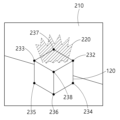


Classifications
-
- G—PHYSICS
- G06—COMPUTING OR CALCULATING; COUNTING
- G06F—ELECTRIC DIGITAL DATA PROCESSING
- G06F3/00—Input arrangements for transferring data to be processed into a form capable of being handled by the computer; Output arrangements for transferring data from processing unit to output unit, e.g. interface arrangements
- G06F3/01—Input arrangements or combined input and output arrangements for interaction between user and computer
- G06F3/011—Arrangements for interaction with the human body, e.g. for user immersion in virtual reality
-
- G—PHYSICS
- G06—COMPUTING OR CALCULATING; COUNTING
- G06V—IMAGE OR VIDEO RECOGNITION OR UNDERSTANDING
- G06V10/00—Arrangements for image or video recognition or understanding
- G06V10/20—Image preprocessing
- G06V10/25—Determination of region of interest [ROI] or a volume of interest [VOI]
-
- G—PHYSICS
- G02—OPTICS
- G02B—OPTICAL ELEMENTS, SYSTEMS OR APPARATUS
- G02B27/00—Optical systems or apparatus not provided for by any of the groups G02B1/00 - G02B26/00, G02B30/00
- G02B27/01—Head-up displays
- G02B27/017—Head mounted
-
- G—PHYSICS
- G06—COMPUTING OR CALCULATING; COUNTING
- G06F—ELECTRIC DIGITAL DATA PROCESSING
- G06F1/00—Details not covered by groups G06F3/00 - G06F13/00 and G06F21/00
- G06F1/16—Constructional details or arrangements
- G06F1/1613—Constructional details or arrangements for portable computers
- G06F1/163—Wearable computers, e.g. on a belt
-
- G—PHYSICS
- G06—COMPUTING OR CALCULATING; COUNTING
- G06F—ELECTRIC DIGITAL DATA PROCESSING
- G06F3/00—Input arrangements for transferring data to be processed into a form capable of being handled by the computer; Output arrangements for transferring data from processing unit to output unit, e.g. interface arrangements
- G06F3/002—Specific input/output arrangements not covered by G06F3/01 - G06F3/16
- G06F3/005—Input arrangements through a video camera
-
- G—PHYSICS
- G06—COMPUTING OR CALCULATING; COUNTING
- G06F—ELECTRIC DIGITAL DATA PROCESSING
- G06F3/00—Input arrangements for transferring data to be processed into a form capable of being handled by the computer; Output arrangements for transferring data from processing unit to output unit, e.g. interface arrangements
- G06F3/01—Input arrangements or combined input and output arrangements for interaction between user and computer
- G06F3/017—Gesture based interaction, e.g. based on a set of recognized hand gestures
-
- G—PHYSICS
- G06—COMPUTING OR CALCULATING; COUNTING
- G06V—IMAGE OR VIDEO RECOGNITION OR UNDERSTANDING
- G06V20/00—Scenes; Scene-specific elements
- G06V20/20—Scenes; Scene-specific elements in augmented reality scenes
-
- G—PHYSICS
- G06—COMPUTING OR CALCULATING; COUNTING
- G06V—IMAGE OR VIDEO RECOGNITION OR UNDERSTANDING
- G06V40/00—Recognition of biometric, human-related or animal-related patterns in image or video data
- G06V40/10—Human or animal bodies, e.g. vehicle occupants or pedestrians; Body parts, e.g. hands
- G06V40/107—Static hand or arm
- G06V40/113—Recognition of static hand signs
-
- G—PHYSICS
- G06—COMPUTING OR CALCULATING; COUNTING
- G06V—IMAGE OR VIDEO RECOGNITION OR UNDERSTANDING
- G06V40/00—Recognition of biometric, human-related or animal-related patterns in image or video data
- G06V40/20—Movements or behaviour, e.g. gesture recognition
- G06V40/28—Recognition of hand or arm movements, e.g. recognition of deaf sign language
-
- H—ELECTRICITY
- H04—ELECTRIC COMMUNICATION TECHNIQUE
- H04N—PICTORIAL COMMUNICATION, e.g. TELEVISION
- H04N13/00—Stereoscopic video systems; Multi-view video systems; Details thereof
- H04N13/10—Processing, recording or transmission of stereoscopic or multi-view image signals
- H04N13/106—Processing image signals
-
- H—ELECTRICITY
- H04—ELECTRIC COMMUNICATION TECHNIQUE
- H04N—PICTORIAL COMMUNICATION, e.g. TELEVISION
- H04N13/00—Stereoscopic video systems; Multi-view video systems; Details thereof
- H04N13/30—Image reproducers
- H04N13/332—Displays for viewing with the aid of special glasses or head-mounted displays [HMD]
- H04N13/344—Displays for viewing with the aid of special glasses or head-mounted displays [HMD] with head-mounted left-right displays
-
- G—PHYSICS
- G02—OPTICS
- G02B—OPTICAL ELEMENTS, SYSTEMS OR APPARATUS
- G02B27/00—Optical systems or apparatus not provided for by any of the groups G02B1/00 - G02B26/00, G02B30/00
- G02B27/01—Head-up displays
- G02B27/0179—Display position adjusting means not related to the information to be displayed
- G02B2027/0187—Display position adjusting means not related to the information to be displayed slaved to motion of at least a part of the body of the user, e.g. head, eye
-
- G—PHYSICS
- G06—COMPUTING OR CALCULATING; COUNTING
- G06F—ELECTRIC DIGITAL DATA PROCESSING
- G06F2203/00—Indexing scheme relating to G06F3/00 - G06F3/048
- G06F2203/038—Indexing scheme relating to G06F3/038
- G06F2203/0381—Multimodal input, i.e. interface arrangements enabling the user to issue commands by simultaneous use of input devices of different nature, e.g. voice plus gesture on digitizer
Landscapes
- Engineering & Computer Science (AREA)
- Theoretical Computer Science (AREA)
- Physics & Mathematics (AREA)
- General Physics & Mathematics (AREA)
- General Engineering & Computer Science (AREA)
- Human Computer Interaction (AREA)
- Multimedia (AREA)
- Health & Medical Sciences (AREA)
- Computer Vision & Pattern Recognition (AREA)
- General Health & Medical Sciences (AREA)
- Psychiatry (AREA)
- Social Psychology (AREA)
- Signal Processing (AREA)
- Computer Hardware Design (AREA)
- Optics & Photonics (AREA)
- User Interface Of Digital Computer (AREA)
Abstract
Description
아래의 개시는 웨어러블 전자 장치 및 웨어러블 전자 장치의 동작 방법에 관한 것이다.The disclosure below relates to a wearable electronic device and a method of operating the wearable electronic device.
가상 현실(virtual reality; VR), 증강 현실(augmented reality; AR) 또는 혼합 현실(mixed reality; MR)을 구현할 수 있는 전자 기기들이 제공된다. 이러한 전자 기기들은 현실 세계의 환경 위에 가상의 객체나 정보를 결합하여 보여줄 수 있으며, 예를 들어, 유비쿼터스(ubiquitous) 환경이나 사물 인터넷(internet of things; IoT) 환경에서 다양하게 활용될 수 있다. 전자 기기들은 외부 전경과 가상 영상의 결합을 통해 다양한 정보를 사용자에게 보다 실감나게 전달할 수 있다.Electronic devices capable of implementing virtual reality (VR), augmented reality (AR), or mixed reality (MR) are provided. These electronic devices can combine and display virtual objects or information on a real world environment, and can be variously utilized, for example, in a ubiquitous environment or an Internet of Things (IoT) environment. Electronic devices can deliver various information to users more realistically through a combination of external foreground and virtual images.
전자 기기들은 예를 들어, 눈 추적 및/또는 시선 추적 결과를 바탕으로 사용자의 의도를 식별하거나, 또는 사용자와 상호 작용할 수 있으나, 눈 및/또는 시선 추적 결과에 의해 사용자의 정확한 의도를 파악하기 어렵고, 사용자의 다양한 의도 전달이 어려울 수 있다.Electronic devices may identify the user's intention or interact with the user based on the results of eye tracking and/or gaze tracking, but it is difficult to accurately determine the user's intention based on the results of eye tracking and/or gaze tracking. However, it may be difficult to convey the user's various intentions.
일 실시예에 따르면, 웨어러블 전자 장치의 동작 방법은 상기 카메라의 뷰에 대응하는 영상 프레임 내에서 사용자의 뷰에 대응하는 관심 영역을 설정하기 위한 상기 사용자의 손의 제1 제스쳐를 인식하는 단계, 상기 제1 제스쳐의 인식 여부를 기초로, 상기 관심 영역을 투사하기 위한 가상 디스플레이를 생성하는 단계, 상기 영상 프레임으로부터 상기 관심 영역을 추출하는 단계, 상기 관심 영역의 크기 조절을 위한 상기 손의 제2 제스쳐를 인식하는 단계, 및 상기 제2 제스쳐의 인식 여부를 기초로, 상기 관심 영역의 크기를 조절하여 상기 가상 디스플레이에 투사하는 단계를 포함한다. According to an embodiment, a method of operating a wearable electronic device includes recognizing a first gesture of the user's hand for setting a region of interest corresponding to the user's view in an image frame corresponding to the view of the camera; Generating a virtual display for projecting the region of interest based on whether the first gesture is recognized, extracting the region of interest from the image frame, and performing a second gesture of the hand to adjust the size of the region of interest. Recognizing and projecting the size of the ROI on the virtual display by adjusting the size of the ROI based on whether the second gesture is recognized.
상기 관심 영역을 추출하는 단계는 상기 영상 프레임에서 상기 사용자의 손 관절들의 위치들을 추정하는 단계, 및 상기 추정된 손 관절들의 위치들을 기초로, 상기 관심 영역을 추출하는 단계를 포함할 수 있다. The extracting of the region of interest may include estimating positions of the user's hand joints in the image frame, and extracting the region of interest based on the estimated positions of the hand joints.
상기 사용자의 손 관절들의 위치 들을 추정하는 단계는 상기 제1 제스쳐의 유형 별로, 상기 영상 프레임으로부터 상기 사용자의 손 관절들의 위치를 추정하는 단계를 포함할 수 있다. Estimating the locations of the user's hand joints may include estimating the locations of the user's hand joints from the image frame for each type of the first gesture.
상기 관심 영역을 추정하는 단계는 상기 제1 제스쳐의 유형 별로 추정된 손 관절들의 위치를 이용하여 상기 관심 영역을 설정하는 단계를 포함할 수 있다. Estimating the region of interest may include setting the region of interest using positions of hand joints estimated for each type of the first gesture.
상기 손 관절들의 위치들을 추정하는 단계는 상기 손 관절들의 위치들 간의 회귀 분석(regression)을 기초로, 상기 손의 회전 각도를 추정하는 단계, 및 상기 추정한 회전 각도를 보정하여 새로운 손 관절들의 위치를 산출하는 단계를 포함하고, 상기 관심 영역을 추출하는 단계는 상기 새로운 손 관절들의 위치들을 기초로, 상기 관심 영역을 추출하는 단계를 포함할 수 있다. Estimating the positions of the hand joints may include estimating a rotation angle of the hand based on a regression analysis between the positions of the hand joints, and correcting the estimated rotation angle to new positions of the hand joints. and calculating the region of interest, and the extracting of the region of interest may include extracting the region of interest based on the positions of the new joints of the hand.
상기 관심 영역을 추출하는 단계는 상기 추정된 손 관절들의 위치들 간의 가중합을 기초로, 상기 관심 영역의 중심점 및 상기 관심 영역의 각 변의 길이를 산출하는 단계, 및 상기 관심 영역의 중심점 및 상기 관심 영역의 각 변의 길이를 기초로, 상기 관심 영역을 추출하는 단계를 포함할 수 있다. The extracting of the region of interest may include calculating a center point of the region of interest and a length of each side of the region of interest based on a weighted sum of positions of the estimated hand joints, and calculating the center point of the region of interest and the length of each side of the region of interest. The method may include extracting the region of interest based on the lengths of each side of the region.
상기 관심 영역을 추출하는 단계는 미리 학습된 신경망을 이용하여 상기 사용자의 손의 포즈를 추정하는 단계, 상기 추정된 손의 포즈로부터 상기 사용자의 손 관절들의 위치를 추정하는 단계, 및 상기 추정된 손 관절들의 위치로부터 상기 관심 영역의 중심 위치, 및 상기 관심 영역의 각 변의 길이를 산출하는 단계를 포함할 수 있다. The step of extracting the region of interest includes estimating a pose of the user's hand using a pre-learned neural network, estimating positions of joints of the user's hand from the estimated hand pose, and the estimated hand The method may include calculating a central location of the ROI and a length of each side of the ROI from positions of the joints.
상기 가상 디스플레이는 상기 제1 제스쳐 및 상기 제2 제스쳐 중 어느 하나의 제스쳐가 유지되는지 여부에 따라 표시될 수 있다. The virtual display may be displayed according to whether any one of the first gesture and the second gesture is maintained.
상기 가상 디스플레이를 생성하는 단계는 상기 카메라의 뷰 위치와 무관하게 상기 가상 디스플레이를 생성하는 단계를 포함할 수 있다.Generating the virtual display may include generating the virtual display regardless of a view position of the camera.
상기 제1 제스쳐를 인식하는 단계는 상기 영상 프레임 내에서 상기 제1 제스쳐가 인식되지 않는 경우, 상기 영상 프레임의 이전 영상 프레임에서 상기 제1 제스쳐를 인식하는 단계를 포함할 수 있다. Recognizing the first gesture may include recognizing the first gesture in an image frame previous to the image frame when the first gesture is not recognized in the image frame.
상기 가상 디스플레이에 투사하는 단계는 상기 제2 제스쳐가 인식된 경우, 상기 관심 영역 내 중심부를 고정 배율로 확대하는 단계, 및 상기 확대된 중심부를 상기 가상 디스플레이에 투사하는 단계를 포함할 수 있다. The projecting on the virtual display may include enlarging a central portion of the ROI at a fixed magnification when the second gesture is recognized, and projecting the enlarged central portion on the virtual display.
상기 가상 디스플레이에 투사하는 단계는 상기 제1 제스쳐에서 양 손의 검지 손가락들 간의 제1 거리와 상기 제2 제스쳐에서 상기 양 손의 검지 손가락들 간의 제2 거리에 기초한 가변 비율에 의해 상기 관심 영역의 크기를 조절하는 단계, 및 상기 조절된 크기의 관심 영역을 상기 가상 디스플레이에 투사하는 단계를 포함할 수 있다. The projecting on the virtual display may include a variable ratio based on a first distance between the index fingers of both hands in the first gesture and a second distance between the index fingers of both hands in the second gesture. The method may include adjusting a size and projecting a region of interest of the adjusted size on the virtual display.
상기 웨어러블 전자 장치의 동작 방법은 상기 제2 제스쳐가 인식되지 않는 경우, 상기 관심 영역을 상기 가상 디스플레이에 투사하는 단계를 더 포함할 수 있다. The method of operating the wearable electronic device may further include projecting the region of interest on the virtual display when the second gesture is not recognized.
상기 웨어러블 전자 장치는 VR 글래스(virtual reality glass)를 포함하는 스마트 글래스(smart glass), AR(Augmented Reality) 기기, VR(Virtual Reality) 기기, 및 MR(Mixed Reality) 기기를 포함하는 헤드 마운티드 디스플레이(head mounted display, HMD), 및 아이 마운티드 디스플레이(eye mounted display) 중 적어도 하나를 포함할 수 있다. The wearable electronic device may include a smart glass including virtual reality glass, an augmented reality (AR) device, a virtual reality (VR) device, and a head-mounted display including a mixed reality (MR) device ( It may include at least one of a head mounted display (HMD) and an eye mounted display.
일 실시예에 따르면, 웨어러블 전자 장치는 영상 프레임을 획득하는 카메라, 및 상기 카메라의 뷰에 대응하는 영상 프레임 내에서 사용자의 뷰에 대응하는 관심 영역을 설정하기 위한 상기 사용자의 손의 제1 제스쳐를 인식하고, 상기 제1 제스쳐의 인식 여부를 기초로, 상기 관심 영역을 투사하기 위한 가상 디스플레이를 생성하고, 상기 영상 프레임으로부터 상기 관심 영역을 추출하고, 상기 관심 영역의 크기 조절을 위한 상기 손의 제2 제스쳐를 인식하며, 상기 제2 제스쳐의 인식 여부를 기초로, 상기 관심 영역의 크기를 조절하여 상기 가상 디스플레이에 투사하는 프로세서를 포함한다. According to an embodiment, the wearable electronic device receives a camera for obtaining an image frame, and a first gesture of the user's hand for setting a region of interest corresponding to the user's view in the image frame corresponding to the view of the camera. Recognizes the first gesture, creates a virtual display for projecting the region of interest based on whether the first gesture is recognized, extracts the region of interest from the image frame, and controls the size of the region of interest to adjust the size of the region of interest. and a processor recognizing two gestures and projecting the size of the ROI on the virtual display by adjusting the size of the ROI based on whether the second gesture is recognized.
상기 프로세서는 상기 영상 프레임에서 상기 사용자의 손 관절들의 위치 들을 추정하고, 상기 추정된 손 관절들의 위치들을 기초로, 상기 관심 영역을 추출할 수 있다. The processor may estimate positions of the user's hand joints in the image frame and extract the region of interest based on the estimated positions of the hand joints.
상기 프로세서는 상기 제1 제스쳐의 유형 별로, 상기 영상 프레임으로부터 상기 사용자의 손 관절들의 위치를 추정하고, 상기 제1 제스쳐의 유형 별로 추정된 손 관절들의 위치를 이용하여 상기 관심 영역을 설정할 수 있다. The processor may estimate positions of the user's hand joints from the image frame for each type of the first gesture, and set the region of interest using the positions of the estimated hand joints for each type of the first gesture.
상기 프로세서는 상기 손 관절들의 위치들 간의 회귀 분석(regression)을 기초로, 상기 손의 회전 각도를 추정하고, 상기 추정한 회전 각도를 보정하여 새로운 손 관절의 위치를 산출하며, 상기 새로운 손 관절들의 위치들을 기초로, 상기 관심 영역을 추출할 수 있다.The processor estimates a rotation angle of the hand based on regression analysis between positions of the hand joints, corrects the estimated rotation angle, calculates a new hand joint position, and calculates a new hand joint position. Based on the locations, the region of interest may be extracted.
상기 프로세서는 상기 추정된 손 관절들의 위치들 간의 가중합을 기초로, 상기 관심 영역의 중심점 및 상기 관심 영역의 각 변의 길이를 산출하고, 상기 관심 영역의 중심점 및 상기 관심 영역의 각 변의 길이를 기초로, 상기 관심 영역을 추출할 수 있다.The processor calculates the center point of the ROI and lengths of each side of the ROI based on the weighted sum of the estimated positions of the hand joints, and calculates the center point of the ROI and the lengths of each side of the ROI based on the , the region of interest can be extracted.
도 1 및 도 2는 일 실시예에 따른 웨어러블 전자 장치의 개요(overview)를 설명하기 위한 도면들이다.
도 3은 일 실시예에 따른 웨어러블 전자 장치의 동작 개요를 설명하기 위한 도면이다.
도 4는 일 실시예에 따른 웨어러블 전자 장치의 동작 방법을 나타낸 흐름도이다.
도 5는 실시예들에 따른 제1 제스쳐 및 제2 제스쳐의 예시들을 도시한 도면이다.
도 6 은 일 실시예에 따른 관심 영역을 추출하는 방법을 설명하기 위한 도면이다.
도 7은 일 실시예에 따라 손의 회전 각도를 추정하는 방법을 설명하기 위한 도면이다.
도 8및 도 9는 다른 실시예들에 따라 손의 회전 각도를 산출하는 방법을 설명하기 위한 도면이다.
도 10은 다른 실시예에 따라 관심 영역을 추정하는 방법을 설명하기 위한 도면이다.
도 11은 일 실시예에 따른 가변 비율에 의해 관심 영역의 크기를 조절하는 방법을 설명하기 위한 도면이다.
도 12는 다른 실시예에 따른 웨어러블 전자 장치의 동작 방법을 나타낸 흐름도이다.
도 13은 일 실시예에 따라 제1 제스쳐의 인식 여부를 판단하는 방법을 나타낸 흐름도이다.
도 14는 일 실시예에 따른 웨어러블 전자 장치의 블록도이다.
도 15은 다른 실시예에 따른 웨어러블 전자 장치의 블록도이다.1 and 2 are diagrams for describing an overview of a wearable electronic device according to an exemplary embodiment.
3 is a diagram for explaining an operation outline of a wearable electronic device according to an exemplary embodiment.
4 is a flowchart illustrating a method of operating a wearable electronic device according to an exemplary embodiment.
5 is a diagram illustrating examples of a first gesture and a second gesture according to embodiments.
6 is a diagram for explaining a method of extracting a region of interest according to an exemplary embodiment.
7 is a diagram for explaining a method of estimating a rotation angle of a hand according to an exemplary embodiment.
8 and 9 are views for explaining a method of calculating a rotation angle of a hand according to other embodiments.
10 is a diagram for explaining a method of estimating a region of interest according to another embodiment.
11 is a diagram for explaining a method of adjusting the size of a region of interest by a variable ratio according to an exemplary embodiment.
12 is a flowchart illustrating a method of operating a wearable electronic device according to another embodiment.
13 is a flowchart illustrating a method of determining whether a first gesture is recognized according to an embodiment.
14 is a block diagram of a wearable electronic device according to an exemplary embodiment.
15 is a block diagram of a wearable electronic device according to another embodiment.
실시예들에 대한 특정한 구조적 또는 기능적 설명들은 단지 예시를 위한 목적으로 개시된 것으로서, 다양한 형태로 변경되어 구현될 수 있다. 따라서, 실제 구현되는 형태는 개시된 특정 실시예로만 한정되는 것이 아니며, 본 명세서의 범위는 실시예들로 설명한 기술적 사상에 포함되는 변경, 균등물, 또는 대체물을 포함한다.Specific structural or functional descriptions of the embodiments are disclosed for illustrative purposes only, and may be changed and implemented in various forms. Therefore, the form actually implemented is not limited only to the specific embodiments disclosed, and the scope of the present specification includes changes, equivalents, or substitutes included in the technical idea described in the embodiments.
제1 또는 제2 등의 용어를 다양한 구성요소들을 설명하는데 사용될 수 있지만, 이런 용어들은 하나의 구성요소를 다른 구성요소로부터 구별하는 목적으로만 해석되어야 한다. 예를 들어, 제1 구성요소는 제2 구성요소로 명명될 수 있고, 유사하게 제2 구성요소는 제1 구성요소로도 명명될 수 있다.Although terms such as first or second may be used to describe various components, such terms should only be construed for the purpose of distinguishing one component from another. For example, a first element may be termed a second element, and similarly, a second element may be termed a first element.
어떤 구성요소가 다른 구성요소에 "연결되어" 있다고 언급된 때에는, 그 다른 구성요소에 직접적으로 연결되어 있거나 또는 접속되어 있을 수도 있지만, 중간에 다른 구성요소가 존재할 수도 있다고 이해되어야 할 것이다.It should be understood that when an element is referred to as being “connected” to another element, it may be directly connected or connected to the other element, but other elements may exist in the middle.
단수의 표현은 문맥상 명백하게 다르게 뜻하지 않는 한, 복수의 표현을 포함한다. 본 명세서에서, "포함하다" 또는 "가지다" 등의 용어는 설명된 특징, 숫자, 동작, 동작, 구성요소, 부분품 또는 이들을 조합한 것이 존재함으로 지정하려는 것이지, 하나 또는 그 이상의 다른 특징들이나 숫자, 동작, 동작, 구성요소, 부분품 또는 이들을 조합한 것들의 존재 또는 부가 가능성을 미리 배제하지 않는 것으로 이해되어야 한다.Singular expressions include plural expressions unless the context clearly dictates otherwise. In this specification, terms such as "comprise" or "have" are intended to designate that the described feature, number, operation, operation, component, part, or combination thereof exists, but one or more other features or numbers, It should be understood that the presence or addition of an operation, operation, component, part, or combination thereof is not precluded.
다르게 정의되지 않는 한, 기술적이거나 과학적인 용어를 포함해서 여기서 사용되는 모든 용어들은 해당 기술 분야에서 통상의 지식을 가진 자에 의해 일반적으로 이해되는 것과 동일한 의미를 가진다. 일반적으로 사용되는 사전에 정의되어 있는 것과 같은 용어들은 관련 기술의 문맥상 가지는 의미와 일치하는 의미를 갖는 것으로 해석되어야 하며, 본 명세서에서 명백하게 정의하지 않는 한, 이상적이거나 과도하게 형식적인 의미로 해석되지 않는다.Unless defined otherwise, all terms used herein, including technical or scientific terms, have the same meaning as commonly understood by one of ordinary skill in the art. Terms such as those defined in commonly used dictionaries should be interpreted as having a meaning consistent with the meaning in the context of the related art, and unless explicitly defined in this specification, it should not be interpreted in an ideal or excessively formal meaning. don't
이하, 실시예들을 첨부된 도면들을 참조하여 상세하게 설명한다. 첨부 도면을 참조하여 설명함에 있어, 도면 부호에 관계없이 동일한 구성 요소는 동일한 참조 부호를 부여하고, 이에 대한 중복되는 설명은 생략하기로 한다.Hereinafter, embodiments will be described in detail with reference to the accompanying drawings. In the description with reference to the accompanying drawings, the same reference numerals are given to the same components regardless of reference numerals, and overlapping descriptions thereof will be omitted.
도 1 및 도 2는 일 실시예에 따른 웨어러블 전자 장치의 개요(overview)를 설명하기 위한 도면들이다.1 and 2 are diagrams for describing an overview of a wearable electronic device according to an exemplary embodiment.
도 1을 참조하면, 일 실시예에 따른 웨어러블 전자 장치(110)는 사용자(100)에게 가상 현실 서비스, 증강 현실 서비스, 및 혼합 현실 서비스 중 적어도 하나를 제공하는 장치일 수 있다. 증강 현실 서비스는 사용자(100)가 보는 현실 세계의 이미지에 가상의 이미지 또는 가상의 컨텐츠를 겹쳐 보여줄 수 있다. 웨어러블 전자 장치(110)는 디스플레이(115)를 통해 현실 세계의 실제 객체(120)와 함께 현실 세계의 실제 객체(120)와 관련된 컨텐츠를 포함하는 가상의 이미지(예: 도 2의 가상 객체(220))를 사용자(100)에게 제공할 수 있다. 이때, 가상의 이미지는 디스플레이(115)를 통해 현실화되는 가상 디스플레이 상에 표시될 수 있다. Referring to FIG. 1 , a wearable
사용자(100)에게 보여지는 가상의 이미지는 2D 이미지일 수도 있고, 또는 3D이미지일 수 있다. 또한, 가상의 이미지는 움직임이 없는 정적 이미지일 수도 있고, 또는 애니메이션과 같이 움직임을 갖는 동적인 이미지일 수도 있다. 웨어러블 전자 장치(110)는 사용자(100)에게 착용될 수 있는 웨어러블 장치일 수 있다. 웨어러블 전자 장치(110)는 예를 들어 스마트 글래스(smart glass), VR 헤드셋(headset), 또는 AR 헤드셋을 포함하는 헤드 마운티드 디스플레이(Head Mounted Display; HMD), 아이 마운티드 디스플레이(Eye Mounted Display; EMD) 및 페이스 마운티드 디스플레이(Face Mounted Display; FMD)와 같은 전자 장치일 수 있으며, 반드시 이에 한정되지는 않는다. The virtual image shown to the
도 2를 참조하면, 웨어러블 전자 장치(110)의 디스플레이(115)를 통해 제공되는 컨텐츠(210)의 일례가 도시되어 있다. 이하, 설명의 편의를 위하여 웨어러블 전자 장치(110)에 의해 제공되는 가상 컨텐츠가 증강 현실을 위한 영상 컨텐츠(210)인 경우를 일 예로 들어 설명하지만, 이는 가상 현실 및/또는 혼합 현실을 위한 컨텐츠의 제공을 배제하는 것은 아니다. Referring to FIG. 2 , an example of
웨어러블 전자 장치(110)는 사용자(100)가 바라보는 현실 세계의 실제 객체(120)에 가상 정보를 포함하는 가상 객체(220)를 정합하여 영상 컨텐츠(210)를 형성할 수 있다. 영상 컨텐츠(210)는 예를 들어 현실 세계의 실제 객체(120)로부터 실감나는 가상 객체를 복제하는 것일수도 있고, 또는 현실 세계의 실제 객체(120) 위에 가상의 컴퓨터 그래픽 효과를 구현하는 것일 수도 있다. 가상의 컴퓨터 그래픽 효과는 예를 들어, 실제의 기계 장치 위에 사용자 설명서와 같은 부가 정보 또는 사용자 설명서를 설명해 주는 가상의 캐릭터와 같은 부가 컨텐츠를 가상의 이미지로 구현한 것일 수도 있고, 또는 사용자가 바라보는 관심 영역을 확대, 및/또는 축소 가공한 컨텐츠를 가상의 이미지로 구현한 것일 수 있으며, 반드시 이에 한정되지는 않는다. The wearable
예를 들어, 사용자(100)가 머리 또는 시선을 움직이는 경우, 사용자(100)가 실제 객체(120)를 바라보는 시선 방향이 달라질 수 있다. 웨어러블 전자 장치(110)는 시선 방향의 변화에 따라 가상 객체(220)를 세밀하게 조정함으로써 사용자(100)에게 고정밀의 영상 컨텐츠(210)를 제공할 수 있다. 웨어러블 전자 장치(110)는 시선 방향의 변화를 정밀하게 측정함으로써 실제 객체(120)와 가상 객체(220)를 자연스럽게 정합할 수 있다. 웨어러블 전자 장치(110)는 사용자(100)가 실제 객체(120)를 바라보는 장면에서 가상 객체(220)를 실제 객체(120)에 대비되는 정확한 위치에 표현함으로써 실감나는 영상 컨텐츠(210)를 구현할 수 있다. For example, when the
웨어러블 전자 장치(110)는 후술하는 손의 포즈 추정을 자체적으로 수행할 수도 있고, 또는 별도의 포즈 추정 장치를 통해 추정된 손의 포즈에 대한 정보를 전달받을 수도 있다. 이 경우, 포즈 추정 장치는 웨어러블 전자 장치(110)의 위치 측정(localization)을 수행할 수 있다. 위치 측정 결과는 사용자(100)의 머리 움직임이나 사용자(100)가 바라보는 방향, 또는 손의 포즈를 추정하는데 이용될 수 있다. The wearable
포즈 추정 장치에 의해 추정되는 손의 포즈는 손의 위치(position) 및 자세(orientation)에 대한 좌표 정보를 포함할 수 있다. 손의 포즈는 예를 들어, 6 자유도(degrees of freedom; DoF)로서 표현될 수 있으며, 반드시 이에 한정되지는 않는다. The hand pose estimated by the pose estimating device may include coordinate information about the hand's position and orientation. The pose of the hand may be expressed as, for example, 6 degrees of freedom (DoF), but is not necessarily limited thereto.
또한, 포즈 추정 장치에 의해 추정되는 웨어러블 전자 장치(110)의 포즈는 웨어러블 전자 장치(110)를 착용한 사용자(100)의 포즈 또는 웨어러블 전자 장치(110)에 포함된 이미지 센서(예: 카메라)의 포즈에 대응될 수 있다.In addition, the pose of the wearable
포즈 추정 장치는 카메라 또는 이미지 센서에 의해 획득된 영상 정보와 모션 센서에 의해 획득된 움직임 정보(예: 관성 센서의 데이터)를 이용하여 웨어러블 전자 장치(110) 및/또는 사용자의 적어도 신체 일부의 포즈(예: 손의 포즈)를 결정할 수 있다. 포즈 추정 장치는 영상 정보와 움직임 정보를 함께 이용함으로써 웨어러블 전자 장치(110) 및/또는 사용자의 적어도 신체 일부의 포즈를 정확하고 효과적으로 추정할 수 있다. 카메라와 같은 이미지 센서 및 모션 센서는 웨어러블 전자 장치(110)에 포함될 수 있다. 이미지 센서는 웨어러블 전자 장치(110)의 주변 영역 중 적어도 일부 영역(예, 사용자(100)의 전방 영역)을 촬영하여 영상 정보를 획득한다. 모션 센서는 웨어러블 전자 장치(110) 또는 사용자(100)의 움직임을 측정할 수 있다. 모션 센서는 예를 들어, 가속도 센서와 자이로(gyro) 센서를 포함하는 관성 센서(inertial measurement unit; IMU)를 포함할 수 있으며, 반드시 이에 한정되지는 않는다.The pose estimating device determines the pose of the wearable
포즈 추정 장치는 웨어러블 전자 장치(110)의 이전 시간의 위치에서부터 현재 시간의 위치까지의 움직임의 변화를 반영하여 영상 내의 객체들의 위치를 추정할 수 있다. The pose estimating device may estimate the positions of objects in the image by reflecting a change in motion of the wearable
도 3은 일 실시예에 따른 웨어러블 전자 장치의 동작 개요를 설명하기 위한 도면이다. 도 3을 참조하면, 일 실시예에 따른 웨어러블 전자 장치(330)를 착용한 사용자(310)가 양 손을 이용하여 제1제스쳐를 수행한 경우에 웨어러블 전자 장치(330)의 전면부에 설치된 카메라의 뷰(Field Of View; FOV)에 대응하는 영상 프레임(350), 사용자(310)의 뷰에 대응하는 관심 영역(Region of Interest; ROI)(370) 및 관심 영역이 투사되는 가상 디스플레이(390)가 도시된다.3 is a diagram for explaining an operation outline of a wearable electronic device according to an exemplary embodiment. Referring to FIG. 3 , when a
카메라 기술의 발달로 사람의 시력보다 우수한 해상도를 가진 영상들을 실시간으로 획득하는 것이 가능해진 환경에서 헤드 마운디트 디스프레이(HMD), 아이 마운티드 디스플레이(EMD) 또는 안경 형태의 웨어러블 전자 장치(330)는 사용자(310)의 눈 앞에 위치한 렌즈 형태의 디스플레이를 통해 화면을 표시할 수 있다. 웨어러블 전자 장치(330)는 웨어러블 전자 장치(330)를 착용한 사용자(310)의 눈이 초점을 맞추기 편한 위치에 가상 디스플레이(390)를 배치하고, 전면부 카메라에서 촬영된 영상을 활용하여 사용자가 관심 있게 보고 싶은 영역, 다시 말해 관심 영역(370)을 그대로 또는 확대하여 가상 디스플레이(390)에 투사함으로써 사용자(310)의 본래 시력 이상의 시각 정보 처리 능력을 제공할 수 있다.In an environment where it is possible to acquire images with resolution superior to human vision in real time with the development of camera technology, a head mounted display (HMD), an eye mounted display (EMD), or a wearable
여기서, 가상 디스플레이(390)는 웨어러블 전자 장치(330)의 디스플레이 장치에 의해 화면 상에 표시되는 (가상) 스크린에 해당할 수 있다. 웨어러블 전자 장치(330)는 예를 들어, 직사각형 형태의 평면 스크린을 양안 영상에 각각 투사하되, 적절한 디스패리티(disparity), 다시 말해 양안 영상 간 시점 차이를 부여하여 스크린이 사용자가 느끼기 편안한 위치(예를 들어, 1m)에 위치하는 것처럼 보이도록 할 수 있다. 웨어러블 전자 장치(330)는 촬영한 영상 또는 확대된 영상을 직사각형 형태의 평면 스크린에 투영하여 사용자가 마치 자신의 눈 앞 1m 앞에 있는 가상 스크린에서 영상을 보는 것처럼 느끼도록 할 수 있다. 웨어러블 전자 장치(330)는 예를 들어, 하나 이상의 전면부 카메라를 포함하고, 컴퓨터 비전 기술을 통해 손의 특정 제스쳐를 인식하여 사용자(310)의 관심 영역(370)을 가상 디스플레이(390)에 투사함으로써 사용자의 시력을 보조할 수 있다. Here, the
예를 들어, 도 3에 도시된 것과 같이 사용자가 눈 앞에서 양 손에 의해 직사각형 형태를 표현하는 특정 제스쳐('제1 제스쳐')를 취할 수 있다. 여기서, 특정 제스쳐는 예를 들어, 직사각형 형태를 표현하는 제스쳐 또는 사진기 프레임 형태를 표현하는 제스쳐 등과 같이 사용자의 의도를 용이하게 파악할 수 있는 직관적인 제스쳐에 해당할 수 있다. For example, as shown in FIG. 3 , the user may make a specific gesture ('first gesture') of expressing a rectangular shape with both hands in front of his/her eyes. Here, the specific gesture may correspond to an intuitive gesture that can easily grasp the user's intention, such as a gesture expressing a rectangular shape or a gesture expressing a camera frame shape.
웨어러블 전자 장치(330)는 전면 카메라에서 획득한 영상 프레임(350) 내에서 손의 특정 제스쳐에 의해 지정되는 관심 영역(370)을 설정 및 추출할 수 있다. 이후, 관심 영역(370)을 확장하는 제스쳐('제2 제스쳐')가 인식되면, 웨어러블 전자 장치(330)는 추출한 관심 영역(370)을 확대하여 가상 디스플레이(390)에 투사함으로써 확대된 관심 영역(370)과 카메라를 통해 촬영된 영상을 함께 사용자에게 제공할 수 있다. The wearable
일 실시예에서는 직관적으로 직사각형 형태를 나타낼 수 있는 제스처 및/또는 확대하는 동작을 나타내는 제스처를 인식하여 마우스, 또는 컨트롤러와 같은 입력 장치가 없이도 빠르게 관심 영역(370)을 설정, 추출 및/또는 확대하여 가상 디스플레이(390)로 투사할 수 있다. In an embodiment, a gesture representing a rectangular shape and/or a gesture indicating an enlargement operation are intuitively recognized, and a region of
웨어러블 전자 장치(330)는 예를 들어, VR 글래스(virtual reality glass)를 포함하는 스마트 글래스(smart glass), AR(Augmented Reality) 기기, VR(Virtual Reality) 기기, 및 MR(Mixed Reality) 기기를 포함하는 헤드 마운티드 디스플레이(HMD), 아이 마운티드 디스플레이(EMD), 및 페이스 마운티드 디스플레이(FMD) 중 적어도 하나를 포함할 수 있다. The wearable
웨어러블 전자 장치(330)는 외안경 또는 쌍안경 형태의 디스플레이를 통해 사용자에게 원하는 정보를 제공할 수 있다. 웨어러블 전자 장치(330)는 장치 정면부를 촬영하도록 탑재된 카메라를 이용하여 주변 환경의 사진이나 영상 자료를 실시간으로 획득할 수 있다. 웨어러블 전자 장치(330)는 예를 들어, 블루투스, 와이파이(Wi-Fi) 등과 같은 무선 통신 기술을 지원하며, 인터넷 연결을 통해 실시간으로 정보를 검색하고 공유할 수 있다. 또한, 웨어러블 전자 장치(330)는 GPS(Global Positioning System)를 통한 위치 추적 기능을 제공하여 위치 정보 기반의 다양한 애플리케이션(앱)이 구동되도록 할 수 있다. 웨어러블 전자 장치(330)는 사용자와의 의사 소통을 위한 인터페이스로 예를 들어, 터치 버튼, 음성 인식을 통한 자연어 명령 처리, 이외에도 탑재된 카메라에 의해 캡쳐되는 사용자의 제스쳐를 이용할 수 있으며, 반드시 이에 한정되지는 않는다. The wearable
도 4는 일 실시예에 따른 웨어러블 전자 장치의 동작 방법을 나타낸 흐름도이다. 이하 실시예에서 각 동작들은 순차적으로 수행될 수도 있으나, 반드시 순차적으로 수행되는 것은 아니다. 예를 들어, 각 동작들의 순서가 변경될 수도 있으며, 적어도 두 동작들이 병렬적으로 수행될 수도 있다.4 is a flowchart illustrating a method of operating a wearable electronic device according to an exemplary embodiment. In the following embodiments, each operation may be performed sequentially, but not necessarily sequentially. For example, the order of each operation may be changed, or at least two operations may be performed in parallel.
도 4를 참조하면, 일 실시예에 따른 웨어러블 전자 장치는 단계(410) 내지 단계(450)을 통해 관심 영역의 크기를 조절하여 가상 디스플레이에 투사할 수 있다. Referring to FIG. 4 , the wearable electronic device according to an embodiment may adjust the size of a region of interest through
단계(410)에서, 웨어러블 전자 장치는 카메라의 뷰에 대응하는 영상 프레임 내에서 사용자의 뷰에 대응하는 관심 영역을 설정하기 위한 사용자의 손의 제1 제스쳐를 인식한다. 제1 제스쳐는 예를 들어, 직사각형 형태를 표현하는 제스쳐이거나, 또는 사진기 프레임 형태를 표현하는 제스쳐와 같이 관심 영역의 설정을 의도함을 직관적으로 파악할 수 있는 미리 정해진 다양한 형태의 제스쳐들일 수 있으며, 반드시 이에 한정되지는 않는다. 웨어러블 전자 장치는 예를 들어, 제1 제스쳐가 사각형 형태 또는 사각형에 가까운 형태가 되는지에 의해 제1 제스쳐를 인식할 수 있다. 또한, 웨어러블 전자 장치는 기울어진 영상에 대응하여 제1 제스쳐를 취하는 손의 각도가 기울어진 경우에도 기울어진 사각형 형태에 의해서 제1 제스쳐를 인식할 수도 있다. In
예를 들어, 영상 프레임 내에서 제1 제스쳐가 인식되지 않는 경우, 웨어러블 전자 장치는 영상 프레임의 이전 영상 프레임에서 제1 제스쳐를 인식할 수 있다. For example, when the first gesture is not recognized in the image frame, the wearable electronic device may recognize the first gesture in the previous image frame of the image frame.
단계(420)에서, 웨어러블 전자 장치는 단계(410)에서의 제1 제스쳐의 인식 여부를 기초로, 관심 영역을 투사하기 위한 가상 디스플레이를 생성한다. 웨어러블 전자 장치는 카메라의 뷰 위치와 무관하게 가상 디스플레이를 생성할 수 있다. 가상 디스플레이는 제1 제스쳐 및 제2 제스쳐 중 어느 하나의 제스쳐가 유지되는지 여부에 따라 표시될 수 있다. 예를 들어, 제1 제스쳐 또는 제2 제스쳐가 유지되는 동안에는 화면에 가상 디스플레이가 표시되고, 제1 제스쳐 또는 제2 제스쳐가 사라진 경우에는 화면에서 가상 디스플레이가 표시되지 않을 수 있다. 제1 제스쳐 및 제2 제스쳐의 다양한 예시들은 아래의 도 5를 참조하여 보다 구체적으로 설명한다. In
단계(430)에서, 웨어러블 전자 장치는 영상 프레임으로부터 관심 영역을 추출한다. 웨어러블 전자 장치는 예를 들어, 영상 프레임에서 사용자의 손 관절들의 위치들을 추정하고, 추정된 손 관절들의 위치들을 기초로 관심 영역을 추출할 수 있다. 이때, 손 관절들의 위치들은 예를 들어, 2차원 위치일 수도 있고, 또는 3차원 위치일 수도 있다. In
웨어러블 전자 장치는 예를 들어, 제1 제스쳐의 유형 별로, 영상 프레임으로부터 사용자의 손 관절들의 위치를 추정할 수 있다. 아래의 도 5에 도시된 것과 같이, 제스쳐(제1 제스쳐)의 유형 별로 사용자의 양 손 또는 어느 한 손이 취할 수 있는 형태가 미리 결정될 수 있다. 웨어러블 전자 장치는 이와 같이 유형 별로 취해지는 제1 제스쳐의 대략적인 형태를 고려하여 영상 프레임으로부터 사용자의 손 관절들의 위치를 추정할 수 있다. The wearable electronic device may estimate the positions of the user's hand joints from the image frame for each type of first gesture, for example. As shown in FIG. 5 below, a form that both hands or any one hand of the user can take may be predetermined for each type of gesture (first gesture). The wearable electronic device may estimate the positions of the user's hand joints from the image frame in consideration of the approximate shape of the first gesture taken for each type.
웨어러블 전자 장치는 제1 제스쳐의 유형 별로 추정된 손 관절들의 위치를 이용하여 영상 프레임에서 관심 영역을 설정하여 추출할 수 있다. 웨어러블 전자 장치는 예를 들어, 추정된 손 관절들의 위치들 간의 가중합을 기초로, 관심 영역의 중심점 및 관심 영역의 각 변의 길이를 산출할 수 있다. 웨어러블 전자 장치는 관심 영역의 중심점의 위치 및 관심 영역의 각 변의 길이를 기초로 관심 영역의 위치를 설정하고, 해당 위치에서 관심 영역을 추출할 수 있다. 여기서, '관심 영역을 추출한다'는 의미는 영상 프레임에서 관심 영역에 해당하는 영역의 영상을 복사하거나, 또는 관심 영역에 해당하는 영역의 영상 정보를 추출하는 것을 모두 포괄하는 의미로 이해될 수 있다. 웨어러블 전자 장치가 관심 영역을 추출하는 방법은 아래의 도 6을 참조하여 보다 구체적으로 설명한다.The wearable electronic device may set and extract a region of interest in the image frame using the positions of hand joints estimated for each type of first gesture. The wearable electronic device may calculate the center point of the region of interest and the length of each side of the region of interest based on a weighted sum of estimated positions of the hand joints. The wearable electronic device may set the location of the ROI based on the location of the center point of the ROI and the lengths of each side of the ROI, and may extract the ROI from the corresponding location. Here, the meaning of 'extracting the region of interest' can be understood as encompassing all operations of copying an image of a region corresponding to the region of interest from an image frame or extracting image information of the region corresponding to the region of interest. . A method of extracting a region of interest by a wearable electronic device will be described in more detail with reference to FIG. 6 below.
웨어러블 전자 장치는 예를 들어, 손 관절들의 위치들 간의 회귀 분석(regression)을 기초로, 손의 회전 각도를 추정할 수 있다. 웨어러블 전자 장치는 추정한 회전 각도를 보정(예를 들어, 역회전)하여 새로운 손 관절들의 위치를 산출할 수 있다. 이 경우, 웨어러블 전자 장치는 새로운 손 관절들의 위치들을 기초로 관심 영역을 추출할 수 있다. 웨어러블 전자 장치는 새로운 손 관절들의 위치들의 가중합을 이용하여 관심 영역을 추출할 수 있다. 실시예에 따라서, 웨어러블 전자 장치는 손 관절들의 위치들을 이용하여 손의 회전 각도를 산출할 수도 있다.The wearable electronic device may estimate the rotation angle of the hand based on, for example, regression analysis between positions of the hand joints. The wearable electronic device may calculate new positions of the hand joints by correcting (eg, reverse rotation) the estimated rotation angle. In this case, the wearable electronic device may extract a region of interest based on positions of new hand joints. The wearable electronic device may extract a region of interest using a weighted sum of positions of new hand joints. According to embodiments, the wearable electronic device may calculate the rotation angle of the hand using positions of the hand joints.
웨어러블 전자 장치가 손의 회전 각도를 추정하는 방법은 아래의 도 7을 참조하고, 손의 회전 각도를 산출하는 방법은 아래의 도 8 내지 도 9를 참조하여 보다 구체적으로 설명한다. A method of estimating the rotation angle of the hand by the wearable electronic device will be described in detail with reference to FIG. 7 below and a method of calculating the rotation angle of the hand with reference to FIGS. 8 to 9 below.
실시예에 따라서, 웨어러블 전자 장치는 미리 학습된 신경망을 이용하여 관심 영역을 추출할 수도 있다. 웨어러블 전자 장치가 신경망에 의해 관심 영역을 추출하는 방법은 아래의 도 10을 참조하여 보다 구체적으로 설명한다. According to embodiments, the wearable electronic device may extract a region of interest using a pretrained neural network. A method of extracting a region of interest by a wearable electronic device using a neural network will be described in more detail with reference to FIG. 10 below.
단계(440)에서, 웨어러블 전자 장치는 단계(430)에서 추출한 관심 영역의 크기 조절을 위한 손의 제2 제스쳐를 인식한다. 제2 제스쳐는 예를 들어, 제1 제스쳐의 형태를 확장하는 형태의 제스쳐일 수 있으며, 반드시 이에 한정되지는 않는다. In
제2 제스쳐가 인식되지 않는 경우, 웨어러블 전자 장치는 단계(430)에서 추출한 관심 영역을 크기 조정하지 않고 그대로 가상 디스플레이에 투사할 수 있다. If the second gesture is not recognized, the wearable electronic device may project the region of interest extracted in
단계(450)에서, 웨어러블 전자 장치는 단계(440)에서의 제2 제스쳐의 인식 여부를 기초로, 관심 영역의 크기를 조절하여 가상 디스플레이에 투사한다. 웨어러블 전자 장치는 제2 제스쳐가 인식된 경우, 관심 영역을 확대하고, 확대한 관심 영역을 가상 디스플레이에 투사할 수 있다. 이때, 초점 거리는 사용자에 의해 지정된 (가상 디스플레이의) 위치에 기초하여 결정될 수 있다. 웨어러블 전자 장치는 제2 제스쳐가 인식된 경우, 관심 영역 내 중심부를 고정 배율로 확대하고, 확대된 중심부를 가상 디스플레이에 투사할 수 있다. In
실시예에 따라서, 웨어러블 전자 장치는 관심 영역의 크기를 가변 비율에 의해 조절(예를 들어, 확대)하여 가상 디스플레이에 투사할 수도 있다. 웨어러블 전자 장치가 관심 영역의 크기를 가변 비율에 의해 조절하는 방법은 아래의 도 11을 참조하여 보다 구체적으로 설명한다. Depending on the embodiment, the wearable electronic device may adjust (eg, enlarge) the size of the region of interest by a variable ratio and project it on the virtual display. A method for the wearable electronic device to adjust the size of the region of interest by a variable ratio will be described in more detail with reference to FIG. 11 below.
도 5는 실시예들에 따른 제1 제스쳐 및 제2 제스쳐의 예시들을 도시한 도면이다. 도 5를 참조하면, 일 실시예에 따른 제1 제스쳐의 예시들을 나타낸 도면들(510,530,550) 및 제2 제스쳐의 예시들을 나타낸 도면들(520,540,560)이 도시된다. 5 is a diagram illustrating examples of a first gesture and a second gesture according to embodiments. Referring to FIG. 5 ,
도 5에 도시된 제스쳐들 중 제1 유형의 제스쳐는 예를 들어, 도면들(510,520)에 도시된 것과 같이 양 손의 엄지 손가락들을 서로 마주치고, 검지 손가락들을 세워 사각형의 형태를 표현하는 제스쳐일 수 있다. 제2 유형의 제스쳐는 예를 들어, 도면들(530,540)에 도시된 것과 같이 왼손의 엄지 손가락과 오른손의 검지 손가락이 마주치고, 왼손의 검지 손가락과 오른손의 엄지 손가락을 마주치도록 하여 사각형의 형태를 표현하는 제스쳐일 수 있다. 또한, 제3 유형의 제스쳐는 예를 들어, 도면들(550,560)에 도시된 것과 같이 왼손 또는 오른손과 같이 어느 한쪽 손의 엄지 손가락과 검지 손가락을 일정 거리만큼 벌려 사각형의 형태를 표현하는 제스쳐일 수 있다. 각 유형들에서 제2 제스쳐는 제1 제스쳐에 의해 그 동작의 크기가 클 수 있다. Among the gestures shown in FIG. 5, the first type of gesture is, for example, as shown in the
실시예에 따라서, 웨어러블 전자 장치는 제2 제스쳐에 의해 관심 영역의 크기를 축소시킬 수도 있다. 이 경우, 제2 제스쳐에 의해 표현되는 사각형 형태의 크기는 제1 제스쳐에 의해 표현되는 사각형 형태의 크기보다 작을 수 있다. According to embodiments, the wearable electronic device may reduce the size of the region of interest by the second gesture. In this case, the size of the rectangle represented by the second gesture may be smaller than the size of the rectangle represented by the first gesture.
도 6은 일 실시예에 따른 관심 영역을 추출하는 방법을 설명하기 위한 도면이다. 도 6을 참조하면, 일 실시예에 따른 웨어러블 전자 장치의 전면부 카메라로 촬영된 영상 프레임(605)에서 제1 유형의 제1 제스쳐를 취한 왼손(L)(610)과 오른손(R)(620) 각각의 엄지 손가락의 3개의 관절들(


웨어러블 전자 장치는 전면부 카메라에서 촬영된 영상 프레임(605)에서 왼손(L)(610)과 오른손(R)(620)에 의해 취해지는 제1 제스쳐에 의해 특정될 수 있는 관심 영역(630)을 추출할 수 있다. 관심 영역(630)은 예를 들어, 제1 제스쳐에 의해 직사각형 형태로 추출될 수 있다. The wearable electronic device selects a region of
웨어러블 전자 장치는 양 손 관절들(
관심 영역(630)의 위치 및 각 변의 크기는 제1 제스쳐를 인식할 때 사용된 엄지 손가락의 관절들(


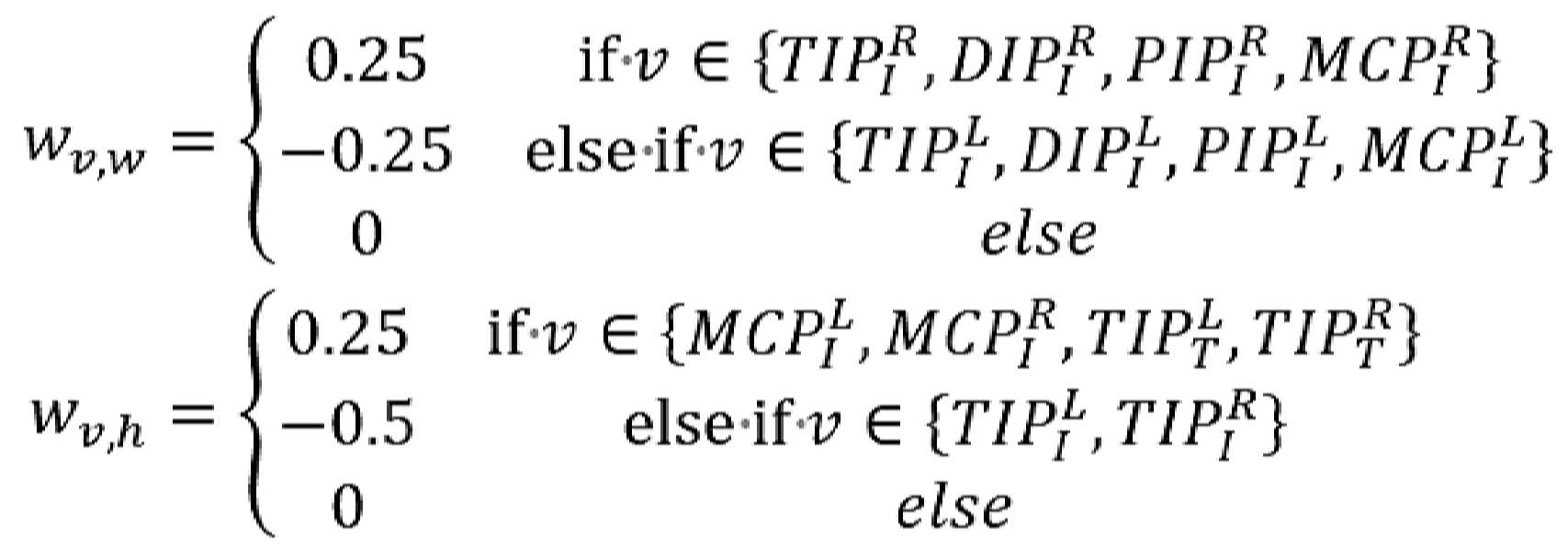
웨어러블 전자 장치는 관심 영역(630)의 중심점(c)의 위치 

여기서, 손의 관절들을 나타낸 집합 S는 


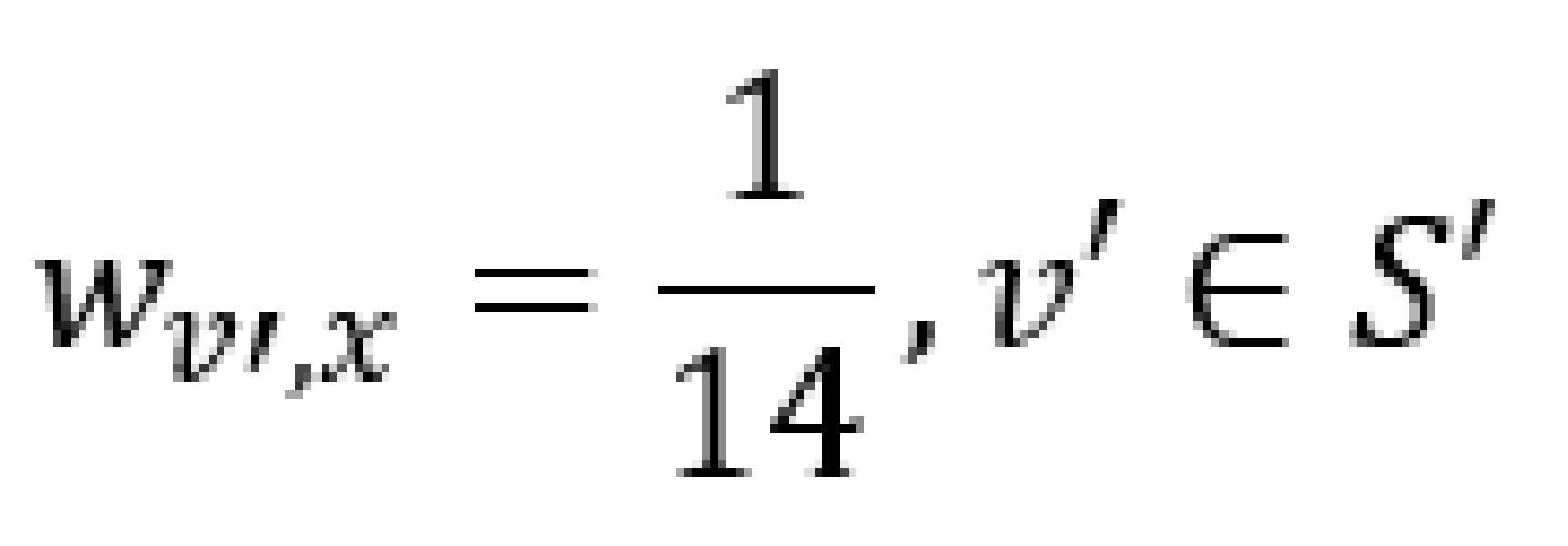
x 축에 대한 가중치(



웨어러블 전자 장치는 관심 영역(630)의 높이(


여기서, 폭(


예를 들어, 웨어러블 전자 장치가 현재의 영상 프레임(605)에서 제1제스쳐를 인식할 수 없는 경우, 엄지 손가락의 관절들(


영상 프레임(605) 내에서 관심 영역(630)의 네 변의 위치가 정해지면, 웨어러블 전자 장치는 관심 영역(630)의 중심점 및 관심 영역(630)의 각 변의 길이를 기초로, 관심 영역을 추출할 수 있다. 웨어러블 전자 장치는 관심 영역에 대한 정보를 버퍼에 저장할 수 있다. When the locations of the four sides of the
한편, 현재의 영상 프레임(605)에서 제2 제스쳐를 수행하고 있다고 판단되면, 웨어러블 전자 장치는 관심 영역(630)을 보간(interpolation) 등의 방법을 통해 확대한 후 중앙 부분을 잘라내어(crop) 버퍼에 저장할 수 있다. Meanwhile, if it is determined that the second gesture is being performed in the
예를 들어, 사용자가 도 5에 도시된 도면(510,530)과 같은 제1 제스쳐를 취한 상황에서 양 손을 화살표 방향으로 벌려 양 손 간의 공간을 넓히는 동작, 다시 말해 제2 제스쳐를 수행할 수 있다. For example, in a situation in which the user makes a first gesture as shown in the
제2 제스쳐가 수행되었다고 판단한 경우, 웨어러블 전자 장치는 관심 영역(630)을 고정 배율(예를 들어, 1.5배 또는 2배)로 확대하여 버퍼에 저장할 수 있다. 웨어러블 전자 장치는 제2 제스쳐가 수행되었다고 판단한 이후에 입력되는 영상 프레임(들)의 관심 영역을, 이전 영상 프레임에서 적용된 고정 배율만큼 자동적으로 확대 처리할 수 있다. 예를 들어, 사용자가 제2 제스쳐를 여러 번 수행할 경우, 웨어러블 전자 장치는 해당 영상 프레임을 추가적으로 더 확대한 후, 확대한 영상의 중앙 부분을 잘라내어 버퍼에 저장할 수 있다. If it is determined that the second gesture has been performed, the wearable electronic device may enlarge the region of
웨어러블 전자 장치는 버퍼에 저장된 관심 영역의 영상들을 가상 디스플레이에 투사하여 사용자가 디스플레이를 통해 관심 영역의 영상들을 볼 수 있게 할 수 있다. 전술한 과정이 모두 완료되는 경우, 웨어러블 전자 장치는 현재 영상 프레임(605)에서의 제스쳐 인식 여부, 관심 영역(630)의 위치 및 크기, 및 현재 배율 등의 정보를 저장할 수 있다. 웨어러블 전자 장치는 전면부 카메라로부터 획득한 새로운 영상 프레임의 영상을 버퍼에 저장하고, 전술한 과정을 반복 수행할 수 있다. The wearable electronic device may project the images of the region of interest stored in the buffer onto the virtual display so that the user can view the images of the region of interest through the display. When all of the above processes are completed, the wearable electronic device may store information such as whether the gesture is recognized in the
도 7은 일 실시예에 따라 손의 회전 각도를 추정하는 방법을 설명하기 위한 도면이다. 일 실시예에 따른 웨어러블 전자 장치는 영상 프레임이 기울어진 상태로 촬영됨에 따라 사용자의 제스쳐 또한 기울어진 형태로 취해진 경우에도 제스쳐를 취하는 손이 기울어진 각도를 추정하여 관심 영역의 중심점 및 각 변의 길이를 연산함으로써 관심 영역을 추출할 수 있다. 7 is a diagram for explaining a method of estimating a rotation angle of a hand according to an exemplary embodiment. The wearable electronic device according to an embodiment estimates a tilted angle of a hand making a gesture even when a user's gesture is tilted as an image frame is captured in an tilted state, and determines the center point of a region of interest and the length of each side. A region of interest can be extracted by calculating.
도 7a를 참조하면, 객체들이 일정 각도로 기울어진 상태로 촬영된 영상 프레임(705)에 대하여 사용자가 양 손(710,720)의 각도를 기울여 제스쳐(예를 들어, 제1 제스쳐)를 취한 상황이 도시된다.Referring to FIG. 7A , a situation in which a user makes a gesture (eg, a first gesture) by tilting both
일 실시예에 따른 웨어러블 전자 장치는 손 관절들의 위치들 간 회귀 분석(regression)을 기초로, 예를 들어, 아래의 수학식 4와 같이 수직한 중심축(730)을 기준으로 손이 회전한 각도(
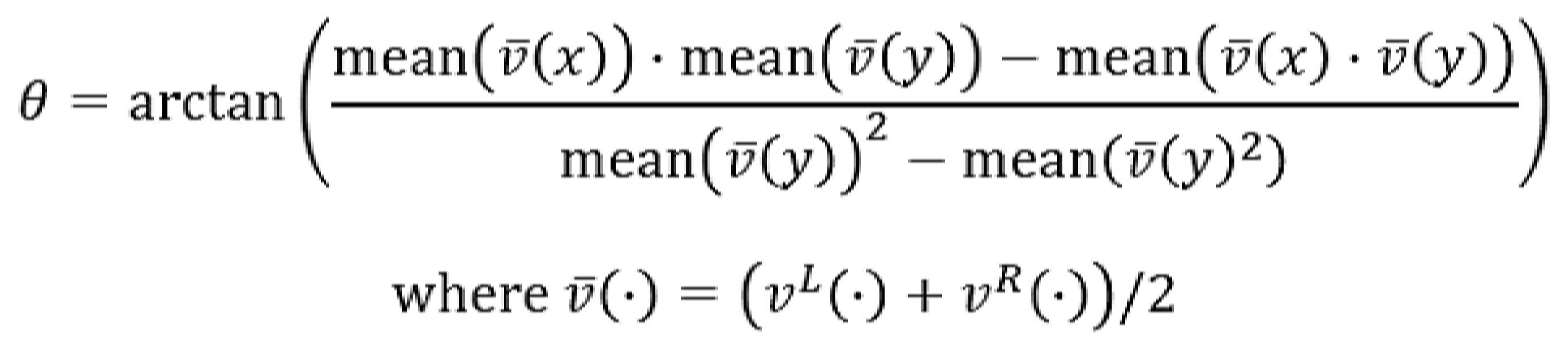
여기서, 


도 7b를 참조하면, 도 7a에 도시된 영상 프레임(705)에서 추정된 각도(
웨어러블 전자 장치는 도 7a를 통해 추정한 각도(


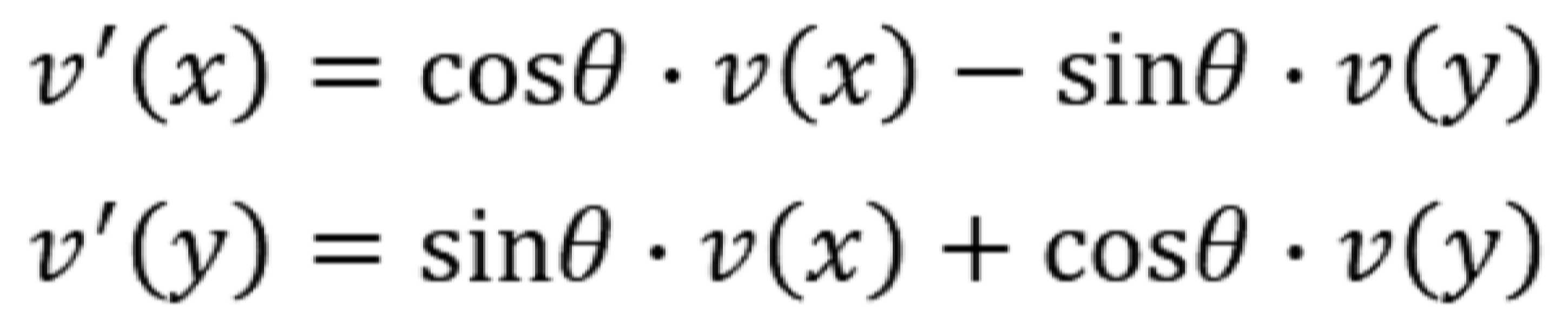
여기서, 

웨어러블 전자 장치는 예를 들어, 아래의 수학식 6과 같이 역회전된 손 관절들의 위치 좌표들(


여기서,




또한, 관심 영역(750)의 폭(


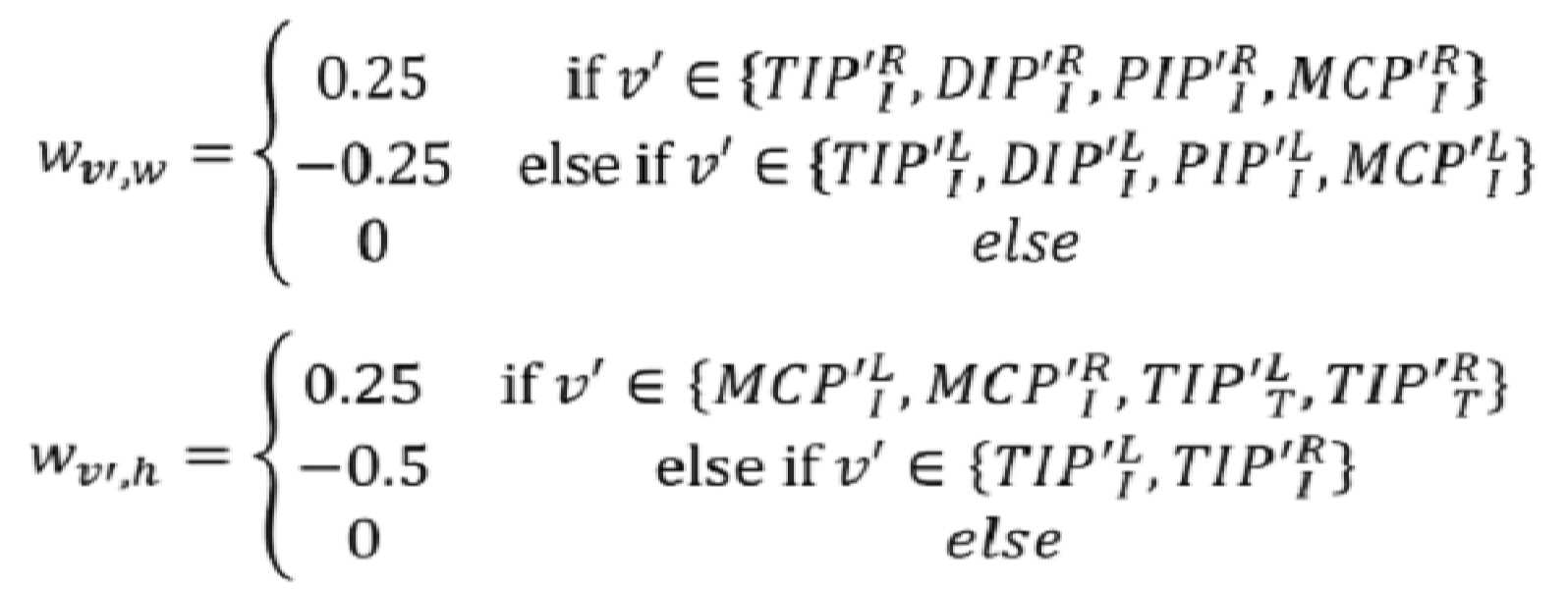
도 7c를 참조하면, 도 7b에 도시된 역회전한 영상(740)을 각도(
일 실시예에 따른 웨어러블 전자 장치는 영상(740)의 중심점(c')의 위치를 기준으로 영상(740)을 각도(
이를 기초로, 웨어러블 전자 장치는 예를 들어, 아래의 수학식 8과 같이 영상(760)에서의 관심 영역(770)의 중심점(c)의 위치 

여기서, c'는 도 7b의 영상 프레임(740)와 같이 역회전된 영상에서 관심 영역(750)의 중심점(c')의 위치에 해당할 수 있다. Here, c' may correspond to the position of the center point c' of the
도 8은 일 실시예에 따라 손의 회전 각도를 산출하는 방법을 설명하기 위한 도면이다. 도 8을 참조하면, 일 실시예에 따른 웨어러블 전자 장치의 전면부 카메라에 의해 촬영된 영상 프레임(805)에 대하여 사용자가 왼손(810) 및 오른손(820)에 의해 제2 유형의 제스쳐(예를 들어, 제1 제스쳐)가 취해진 상황이 도시된다.8 is a diagram for explaining a method of calculating a rotation angle of a hand according to an exemplary embodiment. Referring to FIG. 8 , a second type of gesture (eg, For example, a situation in which a first gesture) is taken is shown.
사용자가 도 7에 도시된 것과 다른 형태의 손 모양으로 관심 영역(830)을 지정하는 제스쳐를 취한 경우, 웨어러블 전자 장치는 도 7에서와 다른 가중치를 사용하여 관심 영역(830)의 중심점(c)의 위치와 관심 영역(830)의 높이(

웨어러블 전자 장치는 도 7을 통해 전술한 것과 같은 영상의 역회전 및 재회전 과정이 없이, 예를 들어, 아래의 수학식 9를 통해 직접적으로 관심 영역(830)의 중심점(c)의 위치 좌표를 산출할 수 있다. The wearable electronic device directly obtains the location coordinates of the center point c of the region of

이때, S는
웨어러블 전자 장치는 양 손(810,820)의 손가락 관절들의 x축 및 y 축 좌표의 평균값을 관심 영역(830)의 중심점(c)의 위치 좌표로 산출할 수 있다. The wearable electronic device may calculate the average value of the x-axis and y-axis coordinates of the finger joints of both
웨어러블 전자 장치는 예를 들어, 아래의 수학식 10을 통해 관심 영역(830)의 높이(


여기서, 계수 
또한, 웨어러블 전자 장치는 예를 들어, 아래의 수학식 11을 통해 수직한 중심축을 기준으로 손이 회전한 각도(

여기서, 

도 9는 다른 실시예에 따라 손의 회전 각도를 산출하는 방법을 설명하기 위한 도면이다. 도 9를 참조하면, 일 실시예에 따른 웨어러블 전자 장치의 전면부 카메라에 의해 촬영된 영상 프레임(905)에 대하여 사용자가 왼손(910)에 의해 제3 유형의 제스쳐(예를 들어, 제1 제스쳐)를 취한 상황이 도시된다.9 is a diagram for explaining a method of calculating a rotation angle of a hand according to another embodiment. Referring to FIG. 9 , a user makes a third type gesture (eg, a first gesture) by a
사용자가 도 8에 도시된 것과 다른 손 모양으로 관심 영역(930)을 지정하는 제스쳐를 취한 경우, 웨어러블 전자 장치는 도 8에서와 다른 가중치를 사용하여 관심 영역(930)의 중심점(c)의 위치와 관심 영역(930)의 높이(

웨어러블 전자 장치는 예를 들어, 아래의 수학식 12를 통해 직접적으로 관심 영역(930)의 중심점(c)의 위치 좌표를 산출할 수 있다.The wearable electronic device may directly calculate the location coordinates of the center point c of the

여기서, 


웨어러블 전자 장치는 양 손 또는 어느 한 손의 엄지 손가락의 끝 관절(


웨어러블 전자 장치는 예를 들어, 아래의 수학식 13을 통해 관심 영역(930)의 높이(

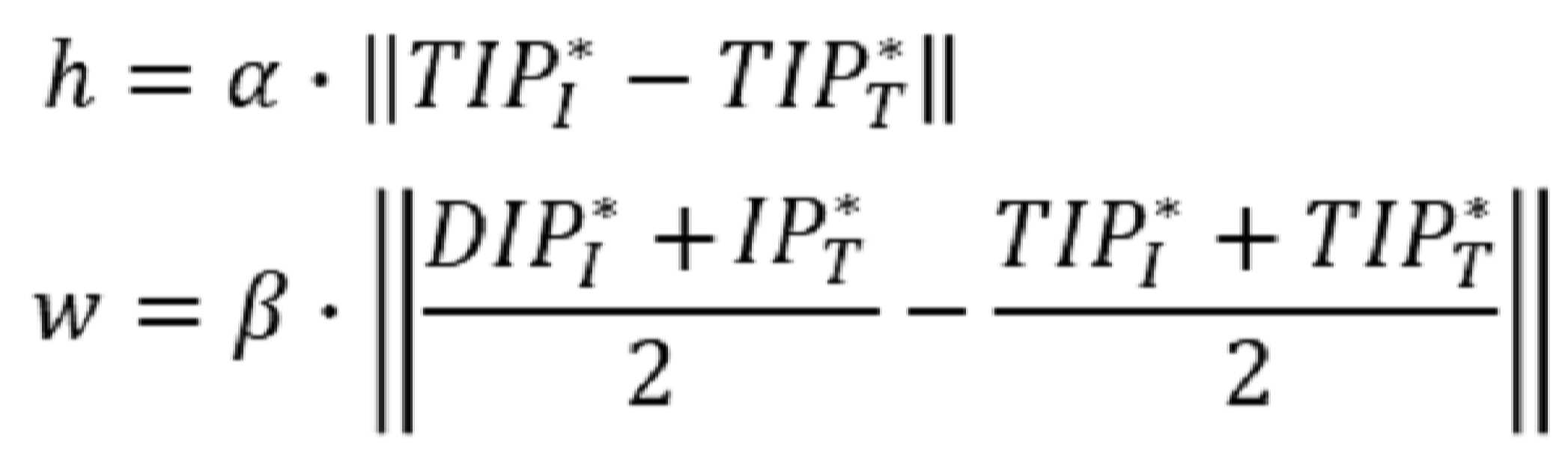
여기서, 계수 
웨어러블 전자 장치는 양 손 또는 어느 한 손(예: 왼손(L))의 검지 손가락의 끝 관절(


또한, 웨어러블 전자 장치는 예를 들어, 아래의 수학식 14를 통해 수직한 중심축을 기준으로 손이 회전한 각도(

여기서, 

도 10은 다른 실시예에 따라 관심 영역을 추정하는 방법을 설명하기 위한 도면이다. 도 10을 참조하면, 일 실시예에 따라 웨어러블 전자 장치의 전면부 카메라에 의해 촬영된 영상(1005)에 대하여 사용자가 왼손(1010) 및 오른손(1020)에 의해 제1 유형의 제스쳐(예를 들어, 제1 제스쳐)를 취한 상황이 도시된다. 10 is a diagram for explaining a method of estimating a region of interest according to another embodiment. Referring to FIG. 10 , according to an embodiment, a user makes a first type gesture (for example, , the first gesture) is shown.
웨어러블 전자 장치는 미리 학습된 신경망(예: 심층 신경망(Deep Neural Network; DNN))(1030)을 이용하여 영상(1005)으로부터 양 손(1010,1020)의 포즈를 추정함으로써 관심 영역(1040)을 추정할 수 있다. The wearable electronic device determines the region of
웨어러블 전자 장치는 신경망(1030)에 의해 영상(1005)으로부터 양 손(1010,1020)의 포즈를 추정하고, 추정된 양 손의 포즈로부터 사용자의 손 관절들의 위치를 추정할 수 있다. 웨어러블 전자 장치는 추정된 손 관절들의 위치로부터 관심 영역의 중심 위치, 및 관심 영역의 각 변의 길이를 산출할 수 있다. The wearable electronic device can estimate the poses of both
신경망(1030)이 영상(1005)으로부터 양 손(1010,1020)의 포즈를 추정하는 데에는 예를 들어, 확률 그래프 모델에 기반한 신뢰 전파(Belief Propagation) 알고리즘 또는 은닉 마르코프 모델(Hidden Markov Model)과 같은 알려진 다양한 포즈 추정 알고리즘들이 사용될 수 있으며, 반드시 이에 한정되지는 않는다. For the
도 11은 일 실시예에 따른 가변 비율에 의해 관심 영역의 크기를 조절하는 방법을 설명하기 위한 도면이다. 도 11을 참조하면, 일 실시예에 따라 제1 유형의 제1 제스쳐를 취한 양 손(1110)의 위치 및 제1 제스쳐를 확장한 제2 제스쳐를 취한 양 손(1120)의 위치가 도시된다. 웨어러블 전자 장치는 확대하려는 대상(예: 관심 영역)을 점으로 선택하는 것이 아니라, 넓이를 가진 면적으로 선택할 수 있다. 11 is a diagram for explaining a method of adjusting the size of a region of interest by a variable ratio according to an exemplary embodiment. Referring to FIG. 11 , positions of both
양 손(1110)에 의해 취해진 제1 제스쳐에서 양 검지 손가락 간의 거리를 제1 거리(

웨어러블 전자 장치는 제1 제스쳐에서 양 손의 검지 손가락들 간의 제1 거리와 제2 제스쳐에서 양 손의 검지 손가락들 간의 제2 거리에 기초한 가변 비율에 의해 관심 영역의 크기를 조절할 수 있다. 보다 구체적으로, 웨어러블 전자 장치는 제1 제스쳐를 취한 양 손(1110)의 검지 손가락들의 양 끝(1113,1115) 간의 제1 거리(



웨어러블 전자 장치는 조절된 크기의 관심 영역을 가상 디스플레이에 투사할 수 있다. The wearable electronic device may project an area of interest having an adjusted size onto the virtual display.
도 12는 다른 실시예에 따른 웨어러블 전자 장치의 동작 방법을 나타낸 흐름도이다. 이하 실시예에서 각 동작들은 순차적으로 수행될 수도 있으나, 반드시 순차적으로 수행되는 것은 아니다. 예를 들어, 각 동작들의 순서가 변경될 수도 있으며, 적어도 두 동작들이 병렬적으로 수행될 수도 있다.12 is a flowchart illustrating a method of operating a wearable electronic device according to another embodiment. In the following embodiments, each operation may be performed sequentially, but not necessarily sequentially. For example, the order of each operation may be changed, or at least two operations may be performed in parallel.
도 12를 참조하면, 일 실시예에 따른 웨어러블 전자 장치는 단계(1210) 내지 단계(1280)을 통해 가상 디스플레이에 관심 영역을 투사할 수 있다. Referring to FIG. 12 , the wearable electronic device according to an embodiment may project a region of interest on a virtual display through
단계(1210)에서, 웨어러블 전자 장치는 버퍼에 전면부 카메라에서 획득한 영상 및 이전 프레임에서의 제스쳐 판단 정보 및 관심 영역 정보 등의 데이터를 추가할 수 있다.In
단계(1220)에서, 웨어러블 전자 장치는 단계(1210)에서 버퍼에 추가한 데이터를 바탕으로 제1 제스쳐 수행 여부를 판단할 수 있다. 이때, 제1 제스쳐에 대한 수행 여부를 판단하기 위해, 웨어러블 전자 장치는 현재 프레임에서 전면부 카메라에 촬영된 사용자의 손이 제1 제스쳐를 수행했는지 여부를 판단할 수 있다. 웨어러블 전자 장치가 제1 제스쳐의 수행 여부를 판단하는 방법은 아래의 도 13을 참조하여 보다 구체적으로 설명한다. In
단계(1220)에서 현재 프레임으로부터 지정된 시간(예를 들어, 2초) 동안 연속해서 제1 제스쳐를 인식하지 못했다면, 웨어러블 전자 장치는 제1 제스쳐를 수행하지 않았다고 판단할 수 있다. 단계(1220)에서 제1 제스쳐를 수행하지 않았다고 판단된 경우, 단계(1230)에서 웨어러블 전자 장치는 가상 디스플레이가 존재하는지를 판단하여 가상 디스플레이가 존재하는 경우 동작을 종료할 수 있다. 이후, 웨어러블 전자 장치는 단계(1210)에서 다음 프레임의 데이터를 버퍼에 저장할 수 있다. In
이와 달리, 단계(1220)에서 제1 제스쳐를 수행했다고 판단되는 경우, 단계(1240)에서 웨어러블 전자 장치는 가상 디스플레이를 생성 또는 유지할 수 있다. 웨어러블 전자 장치는 예를 들어, 사용자의 시선 앞 1m에 가상 디스플레이를 생성할 수 있다. 웨어러블 전자 장치가 가상 디스플레이를 생성하는 위치는 사용자 설정에 따라 가변적일 수 있다. 이전 단계에서 가상 디스플레이가 이미 생성된 경우, 단계(1240)에서 웨어러블 전자 장치는 가상 디스플레이를 그대로 유지할 수 있다. In contrast, if it is determined in
단계(1250)에서, 웨어러블 전자 장치는 카메라에 의해 촬영된 영상 프레임에서 관심 영역을 추출할 수 있다. In
단계(1260)에서, 웨어러블 전자 장치는 제2 제스쳐의 수행 여부를 판단할 수 있다. 단계(1260)에서 제2 제스쳐가 수행되었다고 판단되면, 단계(1270)에서 웨어러블 전자 장치는 관심 영역 내 중앙부를 고정 배율로 확대할 수 있다. In
이와 달리, 단계(1260)에서 제2 제스쳐가 수행되지 않았다고 판단되면, 단계(1280)에서 웨어러블 전자 장치는 가상 디스플레이에 단계(1250)에서 추출한 관심 영역을 투사할 수 있다. In contrast, if it is determined in
도 13은 일 실시예에 따라 제1 제스쳐의 인식 여부를 판단하는 방법을 나타낸 흐름도이다. 이하 실시예에서 각 동작들은 순차적으로 수행될 수도 있으나, 반드시 순차적으로 수행되는 것은 아니다. 예를 들어, 각 동작들의 순서가 변경될 수도 있으며, 적어도 두 동작들이 병렬적으로 수행될 수도 있다.13 is a flowchart illustrating a method of determining whether a first gesture is recognized according to an embodiment. In the following embodiments, each operation may be performed sequentially, but not necessarily sequentially. For example, the order of each operation may be changed, or at least two operations may be performed in parallel.
도 13을 참조하면, 일 실시예에 따른 웨어러블 전자 장치는 단계(1310) 내지 단계(1360)을 통해 제1 제스쳐의 인식 여부를 판단할 수 있다. Referring to FIG. 13 , the wearable electronic device according to an embodiment may determine whether the first gesture is recognized through
단계(1310)에서, 웨어러블 전자 장치는 현재 프레임에서 제1 제스쳐의 인식 여부, 다시 말해 현재 프레임에서 제1 제스쳐가 인식되는지 여부를 판단할 수 있다. 단계(1310)에서 제1 제스쳐를 인식하지 못했더라도 이전 프레임들 중 제1 제스쳐를 인식했다는 판단 정보가 있다면 제1 제스쳐를 유지하고 있다고 판단하고 다음 단계를 수행할 수 있다. In
단계(1310)에서 제1 제스쳐가 인식되지 않는다고 판단된 경우, 단계(1320)에서 웨어러블 전자 장치는 현재 프레임의 이전 시간 구간에 해당하는 이전 프레임에서 제1 제스쳐의 인식 여부를 검색할 수 있다. If it is determined in
단계(1320)에서 제1 제스쳐가 인식되지 않는 경우, 단계(1330)에서 웨어러블 전자 장치는 이미 생성된 가상 디스플레이가 존재하는지를 판단하여 가상 디스플레이의 존재 시에 동작을 종료할 수 있다. If the first gesture is not recognized in
단계(1320)에서 제1 제스쳐가 인식된 경우, 단계(1340)에서 웨어러블 전자 장치는 가상 디스플레이를 생성하고, 단계(1350)에서 제1 제스쳐 또는 제2 제스쳐가 유지되는지 여부를 판단할 수 있다. When the first gesture is recognized in
단계(1350)에서 제1 제스쳐 또는 제2 제스쳐가 유지된다고 판단된 경우, 단계(1340)에서 웨어러블 전자 장치는 가상 디스플레이를 유지할 수 있다. 단계(1350)에서 제1 제스쳐 또는 제2 제스쳐가 유지되지 않는다고 판단된 경우, 단계(1360)에서 웨어러블 전자 장치는 가상 디스플레이를 종료할 수 있다.When it is determined in
단계(1310)에서 제1 제스쳐가 인식되다고 판단된 경우, 단계(1340)에서, 웨어러블 전자 장치는 가상 디스플레이를 생성한 후, 단계(1350)에서 제1 제스쳐 또는 제2 제스쳐가 유지되는지 여부를 판단할 수 있다. 단계(1350)에서 제1 제스쳐 또는 제2 제스쳐가 유지되지 않는다고 판단된 경우, 단계(1360)에서 웨어러블 전자 장치는 가상 디스플레이를 종료할 수 있다.When it is determined in
도 14는 일 실시예에 따른 웨어러블 전자 장치의 블록도이다. 도 14을 참조하면, 일 실시예에 따른 웨어러블 전자 장치(1400)는 데이터 수신부(1410), 제1 제스쳐 인식부(1420), 가상 디스플레이 생성부(1430), 관심 영역 추출부(1440), 투사부(1450), 제2 제스쳐 인식부(1460), 및 영상 조정부(1470)를 포함할 수 있다. 14 is a block diagram of a wearable electronic device according to an exemplary embodiment. Referring to FIG. 14 , a wearable
데이터 수신부(1410)는 관심 영역의 추출에 필요한 센서 데이터를 실시간으로 수신할 수 있다. 데이터 수신부(1410)는 예를 들어, 웨어러블 전자 장치의 전면 카메라(미도시)에서 실시간으로 출력되는 비디오 프레임 및/또는 사용자의 손의 제스쳐를 인식하기 위한 추가적인 센서 출력을 수신할 수 있다. The
제1 제스쳐 인식부(1420)는 사용자가 관심 영역의 추출을 시작하기 위한 손의 제1 제스쳐를 수행하였는지 여부를 판단할 수 있다. 사용자가 제1 제스쳐를 수행했다고 판단되면, 가상 디스플레이 생성부(1430)는 관심 영역을 투사하기 위한 가상 디스플레이를 생성할 수 있다. 이때, 생성되는 가상 디스플레이의 위치는 예를 들어, 사용자가 설정한 위치일 수도 있고, 제1 제스쳐를 수행하고 있는 손에 인접한 위치, 또는 웨어러블 전자 장치에 인접한 위치일 수 있으며, 반드시 이에 한정되지는 않는다. The first
가상 디스플레이 생성부(1430)에 의해 가상 디스플레이가 생성되면, 관심 영역 추출부(1440)는 전면부 카메라에 촬영된 영상 프레임 내에 손의 제1 제스쳐에 의해 지정된 직사각형 영역(관심 영역)의 영상 정보를 복사 또는 추출할 수 있다. When a virtual display is generated by the
투사부(1450)는 관심 영역 추출부(1440)에 의해 복사 또는 추출된 관심 영역의 영상 정보를 가상 디스플레이에 투사할 수 있다. 이때, 관심 영역 추출부(1440)는 3차원 혹은 2차원의 손 관절들의 위치를 추정한 정보를 활용하여 관심 영역을 추출할 수 있다. 관심 영역 추출부(1440)는 예를 들어, 추정된 손 관절들 중 엄지 손가락과 검지 손가락의 관절들의 위치 좌표의 가중합을 통해 관심 영역에 해당하는 직사각형의 크기 및 위치 등을 결정할 수 있다. The
사용자가 관심 영역을 좀더 확대하여 시력 보조를 하기 위해서 예를 들어, 도 5에 도시된 제2 제스쳐들(520,540,560)과 같이 제1 제스쳐를 확장시키는 액션, 다시 말해 제2 제스쳐를 취할 수 있다. 이 경우, 제2 제스쳐 인식부(1460)는 사용자의 제2 제스쳐의 수행 여부를 판단할 수 있다. 제2 제스쳐 인식부(1460)에 의해 제2 제스쳐가 수행하였다고 판단된 경우, 영상 조정부(1470)는 관심 영역 추출부(1440)에 의해 추출된 관심 영역의 크기를 조정(예: 확대)하여 가상 디스플레이에 투사할 수 있다. 영상 조정부(1470)는 예를 들어, 보간(interpolation) 방법 또는 업스케일링(upscaling) 방법에 의해 관심 영역의 크기를 조정할 수 있다.The user may take an action of expanding the first gesture, that is, a second gesture, such as the
예를 들어, 사용자가 객체를 육안으로 확인하기 어렵거나, 더 자세히 살펴보고 싶거나, 혹은 선천척/후천적 이유로 시력이 감퇴되어 망막에 상이 정확히 맺히지 않는 경우가 발생할 수 있다. 이러한 경우, 사용자는 웨어러블 전자 장치(1400)를 착용하고, 웨어러블 전자 장치(1400)의 전면부 카메라에서 획득한 영상 정보를 가상 디스플레이에 투사하여 봄으로써 시력을 보완할 수 있다.For example, it may be difficult for a user to visually confirm an object, or a user may want to take a closer look, or an image may not be accurately formed on the retina due to congenital/acquired reasons for reduced visual acuity. In this case, the user wears the wearable
도 15는 다른 실시예에 따른 웨어러블 전자 장치의 블록도이다. 도 15를 참조하면, 일 실시예에 따른 웨어러블 전자 장치(1500)는 적어도 하나의 센서(1510), 프로세서(1530), 디스플레이(1550), 메모리(1570) 및 통신 인터페이스(1590)를 포함할 수 있다. 또한, 도면에 도시되지 않았으나 웨어러블 전자 장치(1500)는 통신 인터페이스를 더 포함할 수 있다. 15 is a block diagram of a wearable electronic device according to another embodiment. Referring to FIG. 15 , a wearable
적어도 하나의 센서(1510), 프로세서(1530), 디스플레이(1550) 및 메모리(1570)는 통신 버스(1505) 또는 적어도 하나의 센서(1510), 프로세서(1530), 디스플레이(1550) 및 메모리(1570) 각각에게 할당된 IP(Internet Protocol)를 통해 서로 통신할 수 있다. At least one
적어도 하나의 센서(1510)는 예를 들어, 카메라 혹은 이미지 센서와 사용자의 손의 포즈를 추정하기 위한 모션 센서를 포함할 수 있으며, 반드시 이에 한정되지는 않는다. 카메라는 웨어러블 전자 장치(1500)의 전면부에 배치되어 카메라의뷰에 대응하는 영상 프레임을 획득한다. The at least one
프로세서(1530)는 카메라의 뷰에 대응하는 영상 프레임 내에서 사용자의 뷰에 대응하는 관심 영역을 설정하기 위한 사용자의 손의 제1 제스쳐를 인식한다. 프로세서(1530)는 제1 제스쳐의 인식 여부를 기초로, 관심 영역을 투사하기 위한 가상 디스플레이를 생성한다. 프로세서(1530)는 영상 프레임으로부터 관심 영역을 추출한다. 프로세서(1530)는 관심 영역의 크기 조절을 위한 손의 제2 제스쳐를 인식한다. 프로세서(1530)는 제2 제스쳐의 인식 여부를 기초로, 관심 영역의 크기를 조절하여 가상 디스플레이에 투사한다. The
디스플레이(1550)는 프로세서(1530)에 의해 가상 디스플레이에 관심 영역이 투사된 영상을 영상 컨텐츠를 표시할 수 있다. The
메모리(1570)는 프로세서(1530)의 처리 과정에서 생성되는 다양한 정보를 저장할 수 있다. 이 밖에도, 메모리(1570)는 각종 데이터와 프로그램 등을 저장할 수 있다. 메모리(1570)는 휘발성 메모리 또는 비휘발성 메모리를 포함할 수 있다. 메모리(1570)는 하드 디스크 등과 같은 대용량 저장 매체를 구비하여 각종 데이터를 저장할 수 있다.The
통신 인터페이스(1590)는 관심 영역의 추출에 필요한 센서 데이터를 실시간으로 수신할 수 있다. 통신 인터페이스(1590)는 예를 들어, 웨어러블 전자 장치의 전면 카메라(미도시)에서 실시간으로 출력되는 비디오 프레임 및/또는 사용자의 손의 제스쳐를 인식하기 위한 추가적인 센서 출력을 수신할 수 있다. The
또한, 프로세서(1530)는 메모리(1570)에 포함된 실행가능한 명령어들을 실행할 수 있다. 프로세서(1530)는 프로그램을 실행하고, 웨어러블 전자 장치(1000)를 제어할 수 있다. 프로세서(1530)에 의하여 실행되는 프로그램 코드는 메모리(1570)에 저장될 수 있다. 또한, 프로세서(1530)는 도 1 내지 도 14를 통해 전술한 적어도 하나의 방법 또는 적어도 하나의 방법에 대응되는 기법을 수행할 수 있다. 프로세서(1530)는 목적하는 동작들(desired operations)을 실행시키기 위한 물리적인 구조를 갖는 회로를 가지는 하드웨어로 구현된 웨어러블 전자 장치일 수 있다. 예를 들어, 목적하는 동작들은 프로그램에 포함된 코드(code) 또는 인스트럭션들(instructions)을 포함할 수 있다. 예를 들어, 하드웨어로 구현된 웨어러블 전자 장치(1000)는 마이크로프로세서(microprocessor), 중앙 처리 장치(Central Processing Unit; CPU), 그래픽 처리 장치(Graphic Processing Unit; GPU), 프로세서 코어(processor core), 멀티-코어 프로세서(multi-core processor), 멀티프로세서(multiprocessor), ASIC(Application-Specific Integrated Circuit), FPGA(Field Programmable Gate Array), NPU(Neural Processing Unit) 등을 포함할 수 있다.Also, the
이상에서 설명된 실시예들은 하드웨어 구성요소, 소프트웨어 구성요소, 및/또는 하드웨어 구성요소 및 소프트웨어 구성요소의 조합으로 구현될 수 있다. 예를 들어, 실시예들에서 설명된 장치, 방법 및 구성요소는, 예를 들어, 프로세서, 콘트롤러, ALU(arithmetic logic unit), 디지털 신호 프로세서(digital signal processor), 마이크로컴퓨터, FPGA(field programmable gate array), PLU(programmable logic unit), 마이크로프로세서, 또는 명령(instruction)을 실행하고 응답할 수 있는 다른 어떠한 장치와 같이, 범용 컴퓨터 또는 특수 목적 컴퓨터를 이용하여 구현될 수 있다. 처리 장치는 운영 체제(OS) 및 상기 운영 체제 상에서 수행되는 소프트웨어 애플리케이션을 수행할 수 있다. 또한, 처리 장치는 소프트웨어의 실행에 응답하여, 데이터를 접근, 저장, 조작, 처리 및 생성할 수도 있다. 이해의 편의를 위하여, 처리 장치는 하나가 사용되는 것으로 설명된 경우도 있지만, 해당 기술분야에서 통상의 지식을 가진 자는, 처리 장치가 복수 개의 처리 요소(processing element) 및/또는 복수 유형의 처리 요소를 포함할 수 있음을 알 수 있다. 예를 들어, 처리 장치는 복수 개의 프로세서 또는 하나의 프로세서 및 하나의 컨트롤러를 포함할 수 있다. 또한, 병렬 프로세서(parallel processor)와 같은, 다른 처리 구성(processing configuration)도 가능하다.The embodiments described above may be implemented as hardware components, software components, and/or a combination of hardware components and software components. For example, the devices, methods and components described in the embodiments may include, for example, a processor, a controller, an arithmetic logic unit (ALU), a digital signal processor, a microcomputer, a field programmable gate (FPGA). array), programmable logic units (PLUs), microprocessors, or any other device capable of executing and responding to instructions. The processing device may execute an operating system (OS) and software applications running on the operating system. A processing device may also access, store, manipulate, process, and generate data in response to execution of software. For convenience of understanding, there are cases in which one processing device is used, but those skilled in the art will understand that the processing device includes a plurality of processing elements and/or a plurality of types of processing elements. It can be seen that it can include. For example, a processing device may include a plurality of processors or a processor and a controller. Other processing configurations are also possible, such as parallel processors.
소프트웨어는 컴퓨터 프로그램(computer program), 코드(code), 명령(instruction), 또는 이들 중 하나 이상의 조합을 포함할 수 있으며, 원하는 대로 동작하도록 처리 장치를 구성하거나 독립적으로 또는 결합적으로(collectively) 처리 장치를 명령할 수 있다. 소프트웨어 및/또는 데이터는, 처리 장치에 의하여 해석되거나 처리 장치에 명령 또는 데이터를 제공하기 위하여, 어떤 유형의 기계, 구성요소(component), 물리적 장치, 가상 장치(virtual equipment), 컴퓨터 저장 매체 또는 장치, 또는 전송되는 신호 파(signal wave)에 영구적으로, 또는 일시적으로 구체화(embody)될 수 있다. 소프트웨어는 네트워크로 연결된 컴퓨터 시스템 상에 분산되어서, 분산된 방법으로 저장되거나 실행될 수도 있다. 소프트웨어 및 데이터는 컴퓨터 판독 가능 기록 매체에 저장될 수 있다.Software may include a computer program, code, instructions, or a combination of one or more of the foregoing, which configures a processing device to operate as desired or processes independently or collectively. You can command the device. Software and/or data may be any tangible machine, component, physical device, virtual equipment, computer storage medium or device, intended to be interpreted by or provide instructions or data to a processing device. , or may be permanently or temporarily embodied in a transmitted signal wave. Software may be distributed on networked computer systems and stored or executed in a distributed manner. Software and data may be stored on computer readable media.
실시예에 따른 방법은 다양한 컴퓨터 수단을 통하여 수행될 수 있는 프로그램 명령 형태로 구현되어 컴퓨터 판독 가능 매체에 기록될 수 있다. 컴퓨터 판독 가능 매체는 프로그램 명령, 데이터 파일, 데이터 구조 등을 단독으로 또는 조합하여 포함할 수 있으며 매체에 기록되는 프로그램 명령은 실시예를 위하여 특별히 설계되고 구성된 것들이거나 컴퓨터 소프트웨어 당업자에게 공지되어 사용 가능한 것일 수도 있다. 컴퓨터 판독 가능 기록 매체의 예에는 하드 디스크, 플로피 디스크 및 자기 테이프와 같은 자기 매체(magnetic media), CD-ROM, DVD와 같은 광기록 매체(optical media), 플롭티컬 디스크(floptical disk)와 같은 자기-광 매체(magneto-optical media), 및 롬(ROM), 램(RAM), 플래시 메모리 등과 같은 프로그램 명령을 저장하고 수행하도록 특별히 구성된 하드웨어 장치가 포함된다. 프로그램 명령의 예에는 컴파일러에 의해 만들어지는 것과 같은 기계어 코드뿐만 아니라 인터프리터 등을 사용해서 컴퓨터에 의해서 실행될 수 있는 고급 언어 코드를 포함한다. The method according to the embodiment may be implemented in the form of program instructions that can be executed through various computer means and recorded on a computer readable medium. The computer readable medium may include program instructions, data files, data structures, etc. alone or in combination, and the program instructions recorded on the medium may be specially designed and configured for the embodiment or may be known and usable to those skilled in the art of computer software. may be Examples of computer-readable recording media include magnetic media such as hard disks, floppy disks and magnetic tapes, optical media such as CD-ROMs and DVDs, and magnetic media such as floptical disks. - includes hardware devices specially configured to store and execute program instructions, such as magneto-optical media, and ROM, RAM, flash memory, and the like. Examples of program instructions include high-level language codes that can be executed by a computer using an interpreter, as well as machine language codes such as those produced by a compiler.
위에서 설명한 하드웨어 장치는 실시예의 동작을 수행하기 위해 하나 또는 복수의 소프트웨어 모듈로서 작동하도록 구성될 수 있으며, 그 역도 마찬가지이다.The hardware device described above may be configured to operate as one or a plurality of software modules to perform the operations of the embodiments, and vice versa.
이상과 같이 실시예들이 비록 한정된 도면에 의해 설명되었으나, 해당 기술분야에서 통상의 지식을 가진 자라면 이를 기초로 다양한 기술적 수정 및 변형을 적용할 수 있다. 예를 들어, 설명된 기술들이 설명된 방법과 다른 순서로 수행되거나, 및/또는 설명된 시스템, 구조, 장치, 회로 등의 구성요소들이 설명된 방법과 다른 형태로 결합 또는 조합되거나, 다른 구성요소 또는 균등물에 의하여 대치되거나 치환되더라도 적절한 결과가 달성될 수 있다. 그러므로, 다른 구현들, 다른 실시예들 및 특허청구범위와 균등한 것들도 후술하는 특허청구범위의 범위에 속한다.As described above, although the embodiments have been described with limited drawings, those skilled in the art can apply various technical modifications and variations based on this. For example, the described techniques may be performed in an order different from the method described, and/or components of the described system, structure, device, circuit, etc. may be combined or combined in a different form than the method described, or other components may be used. Or even if it is replaced or substituted by equivalents, appropriate results can be achieved. Therefore, other implementations, other embodiments, and equivalents of the claims are within the scope of the following claims.
Claims (20)
상기 카메라의 뷰에 대응하는 영상 프레임 내에서 사용자의 뷰에 대응하는 관심 영역을 설정하기 위한 상기 사용자의 손의 제1 제스쳐를 인식하는 단계;
상기 제1 제스쳐의 인식 여부를 기초로, 상기 관심 영역을 투사하기 위한 가상 디스플레이를 생성하는 단계;
상기 영상 프레임으로부터 상기 관심 영역을 추출하는 단계;
상기 관심 영역의 크기 조절을 위한 상기 손의 제2 제스쳐를 인식하는 단계; 및
상기 제2 제스쳐의 인식 여부를 기초로, 상기 관심 영역의 크기를 조절하여 상기 가상 디스플레이에 투사하는 단계
를 포함하는, 웨어러블 전자 장치의 동작 방법.A method of operating a wearable electronic device including a camera,
Recognizing a first gesture of the user's hand for setting a region of interest corresponding to the user's view in an image frame corresponding to the camera's view;
generating a virtual display for projecting the region of interest based on whether the first gesture is recognized;
extracting the region of interest from the image frame;
recognizing a second gesture of the hand for adjusting the size of the region of interest; and
Projecting the size of the region of interest on the virtual display by adjusting the size of the region of interest based on whether the second gesture is recognized.
Including, a method of operating a wearable electronic device.
상기 관심 영역을 추출하는 단계는
상기 영상 프레임에서 상기 사용자의 손 관절들의 위치들을 추정하는 단계; 및
상기 추정된 손 관절들의 위치들을 기초로, 상기 관심 영역을 추출하는 단계
를 포함하는, 웨어러블 전자 장치의 동작 방법.According to claim 1,
Extracting the region of interest
estimating positions of the user's hand joints in the image frame; and
Extracting the ROI based on the estimated positions of the hand joints
Including, a method of operating a wearable electronic device.
상기 사용자의 손 관절들의 위치들을 추정하는 단계는
상기 제1 제스쳐의 유형 별로, 상기 영상 프레임으로부터 상기 사용자의 손 관절들의 위치를 추정하는 단계
를 포함하는, 웨어러블 전자 장치의 동작 방법.According to claim 2,
Estimating the positions of the user's hand joints
Estimating positions of the user's hand joints from the image frame for each type of the first gesture.
Including, a method of operating a wearable electronic device.
상기 관심 영역을 추정하는 단계는
상기 제1 제스쳐의 유형 별로 추정된 손 관절들의 위치를 이용하여 상기 관심 영역을 설정하는 단계
를 포함하는, 웨어러블 전자 장치의 동작 방법.According to claim 3,
Estimating the region of interest
Setting the region of interest using positions of hand joints estimated for each type of the first gesture
Including, a method of operating a wearable electronic device.
상기 손 관절들의 위치들을 추정하는 단계는
상기 손 관절들의 위치들 간의 회귀 분석(regression)을 기초로, 상기 손의 회전 각도를 추정하는 단계; 및
상기 추정한 손의 회전 각도를 보정하여 새로운 손 관절들의 위치를 산출하는 단계
를 포함하고,
상기 관심 영역을 추출하는 단계는
상기 새로운 손 관절들의 위치들을 기초로, 상기 관심 영역을 추출하는 단계
를 포함하는, 웨어러블 전자 장치의 동작 방법.According to claim 2,
Estimating the positions of the hand joints
estimating a rotation angle of the hand based on a regression between positions of the hand joints; and
Calculating the positions of new hand joints by correcting the estimated rotation angle of the hand
including,
Extracting the region of interest
Extracting the region of interest based on the positions of the new joints of the hand
Including, a method of operating a wearable electronic device.
상기 관심 영역을 추출하는 단계는
상기 추정된 손 관절들의 위치들 간의 가중합을 기초로, 상기 관심 영역의 중심점 및 상기 관심 영역의 각 변의 길이를 산출하는 단계; 및
상기 관심 영역의 중심점 및 상기 관심 영역의 각 변의 길이를 기초로, 상기 관심 영역을 추출하는 단계
를 포함하는, 웨어러블 전자 장치의 동작 방법.According to claim 2,
Extracting the region of interest
calculating a center point of the ROI and a length of each side of the ROI based on a weighted sum of positions of the estimated hand joints; and
extracting the region of interest based on the center point of the region of interest and the lengths of each side of the region of interest;
Including, a method of operating a wearable electronic device.
상기 관심 영역을 추출하는 단계는
미리 학습된 신경망을 이용하여 상기 사용자의 손의 포즈를 추정하는 단계;
상기 추정된 손의 포즈로부터 상기 사용자의 손 관절들의 위치를 추정하는 단계; 및
상기 추정된 손 관절들의 위치로부터 상기 관심 영역의 중심 위치, 및 상기 관심 영역의 각 변의 길이를 산출하는 단계
를 포함하는, 웨어러블 전자 장치의 동작 방법.According to claim 1,
Extracting the region of interest
estimating a pose of the user's hand using a pre-learned neural network;
estimating positions of the user's hand joints from the estimated hand pose; and
Calculating the location of the center of the region of interest and the length of each side of the region of interest from the estimated positions of the hand joints
Including, a method of operating a wearable electronic device.
상기 가상 디스플레이는
상기 제1 제스쳐 및 상기 제2 제스쳐 중 어느 하나의 제스쳐가 유지되는지 여부에 따라 표시되는, 웨어러블 전자 장치의 동작 방법.According to claim 1,
The virtual display
A method of operating a wearable electronic device that is displayed according to whether any one of the first gesture and the second gesture is maintained.
상기 가상 디스플레이를 생성하는 단계는
상기 카메라의 뷰 위치와 무관하게 상기 가상 디스플레이를 생성하는 단계
를 포함하는, 웨어러블 전자 장치의 동작 방법.According to claim 1,
Creating the virtual display
Generating the virtual display regardless of the view position of the camera
Including, a method of operating a wearable electronic device.
상기 제1 제스쳐를 인식하는 단계는
상기 영상 프레임 내에서 상기 제1 제스쳐가 인식되지 않는 경우, 상기 영상 프레임의 이전 영상 프레임에서 상기 제1 제스쳐를 인식하는 단계
을 포함하는, 웨어러블 전자 장치의 동작 방법.According to claim 1,
Recognizing the first gesture
recognizing the first gesture in an image frame previous to the image frame when the first gesture is not recognized in the image frame;
Including, a method of operating a wearable electronic device.
상기 가상 디스플레이에 투사하는 단계는
상기 제2 제스쳐가 인식된 경우, 상기 관심 영역 내 중심부를 고정 배율로 확대하는 단계; 및
상기 확대된 중심부를 상기 가상 디스플레이에 투사하는 단계
를 포함하는, 웨어러블 전자 장치의 동작 방법.According to claim 1,
The step of projecting on the virtual display is
enlarging a central portion of the ROI at a fixed magnification when the second gesture is recognized; and
projecting the enlarged central portion on the virtual display;
Including, a method of operating a wearable electronic device.
상기 가상 디스플레이에 투사하는 단계는
상기 제1 제스쳐에서 양 손의 검지 손가락들 간의 제1 거리와 상기 제2 제스쳐에서 상기 양 손의 검지 손가락들 간의 제2 거리에 기초한 가변 비율에 의해 상기 관심 영역의 크기를 조절하는 단계; 및
상기 조절된 크기의 관심 영역을 상기 가상 디스플레이에 투사하는 단계
를 포함하는, 웨어러블 전자 장치의 동작 방법.According to claim 1,
The step of projecting on the virtual display is
adjusting the size of the region of interest by a variable ratio based on a first distance between index fingers of both hands in the first gesture and a second distance between index fingers of both hands in the second gesture; and
projecting the region of interest having the adjusted size on the virtual display;
Including, a method of operating a wearable electronic device.
상기 제2 제스쳐가 인식되지 않는 경우, 상기 관심 영역을 상기 가상 디스플레이에 투사하는 단계
를 더 포함하는, 웨어러블 전자 장치의 동작 방법.According to claim 1,
projecting the region of interest on the virtual display when the second gesture is not recognized;
Further comprising a method of operating a wearable electronic device.
상기 웨어러블 전자 장치는
VR 글래스(virtual reality glass)를 포함하는 스마트 글래스(smart glass), AR(Augmented Reality) 기기, VR(Virtual Reality) 기기, 및 MR(Mixed Reality) 기기를 포함하는 헤드 마운티드 디스플레이(head mounted display; HMD), 및 아이 마운티드 디스플레이(eye mounted display) 중 적어도 하나를 포함하는, 웨어러블 전자 장치의 동작 방법.According to claim 1,
The wearable electronic device
Head mounted displays (HMDs) including smart glasses including virtual reality glass, augmented reality (AR) devices, virtual reality (VR) devices, and mixed reality (MR) devices ), and an eye-mounted display (eye mounted display) including at least one, operating method of a wearable electronic device.
상기 카메라의 뷰에 대응하는 영상 프레임 내에서 사용자의 뷰에 대응하는 관심 영역을 설정하기 위한 상기 사용자의 손의 제1 제스쳐를 인식하고, 상기 제1 제스쳐의 인식 여부를 기초로, 상기 관심 영역을 투사하기 위한 가상 디스플레이를 생성하고, 상기 영상 프레임으로부터 상기 관심 영역을 추출하고, 상기 관심 영역의 크기 조절을 위한 상기 손의 제2 제스쳐를 인식하며, 상기 제2 제스쳐의 인식 여부를 기초로, 상기 관심 영역의 크기를 조절하여 상기 가상 디스플레이에 투사하는 프로세서
를 포함하는, 웨어러블 전자 장치.a camera that acquires an image frame; and
Recognizes a first gesture of the user's hand for setting a region of interest corresponding to the user's view in an image frame corresponding to the view of the camera, and determines the region of interest based on whether or not the first gesture is recognized. Creating a virtual display for projection, extracting the region of interest from the image frame, recognizing a second gesture of the hand for resizing the region of interest, and based on whether the second gesture is recognized, A processor that adjusts the size of the region of interest and projects it on the virtual display
Including, a wearable electronic device.
상기 프로세서는
상기 영상 프레임에서 상기 사용자의 손 관절들의 위치들을 추정하고, 상기 추정된 손 관절들의 위치들을 기초로, 상기 관심 영역을 추출하는,
웨어러블 전자 장치.According to claim 16,
The processor
estimating positions of the user's hand joints in the image frame and extracting the region of interest based on the estimated positions of the hand joints;
wearable electronic devices.
상기 프로세서는
상기 제1 제스쳐의 유형 별로, 상기 영상 프레임으로부터 상기 사용자의 손 관절들의 위치를 추정하고, 상기 제1 제스쳐의 유형 별로 추정된 손 관절들의 위치를 이용하여 상기 관심 영역을 설정하는,
웨어러블 전자 장치.According to claim 17,
The processor
Estimating positions of the user's hand joints from the image frame for each type of the first gesture, and setting the region of interest using the positions of the estimated hand joints for each type of the first gesture.
wearable electronic device.
상기 프로세서는
상기 손 관절들의 위치들 간의 회귀 분석을 기초로, 상기 손의 회전 각도를 추정하고, 상기 추정한 손의 회전 각도를 보정하여 새로운 손 관절의 위치를 산출하며, 상기 새로운 손 관절들의 위치들을 기초로, 상기 관심 영역을 추출하는, 웨어러블 전자 장치.According to claim 17,
The processor
Based on the regression analysis between the positions of the hand joints, the rotation angle of the hand is estimated, the estimated rotation angle of the hand is corrected to calculate the new hand joint position, and based on the positions of the new hand joints , A wearable electronic device for extracting the region of interest.
상기 프로세서는
상기 추정된 손 관절들의 위치들 간의 가중합을 기초로, 상기 관심 영역의 중심점 및 상기 관심 영역의 각 변의 길이를 산출하고, 상기 관심 영역의 중심점 및 상기 관심 영역의 각 변의 길이를 기초로, 상기 관심 영역을 추출하는, 웨어러블 전자 장치.According to claim 17,
The processor
Based on the weighted sum of the positions of the estimated hand joints, the center point of the ROI and the length of each side of the ROI are calculated, and based on the center point of the ROI and the length of each side of the ROI, the A wearable electronic device for extracting a region of interest.
Priority Applications (2)
| Application Number | Priority Date | Filing Date | Title |
|---|---|---|---|
| KR1020210159308A KR20230072757A (en) | 2021-11-18 | 2021-11-18 | Wearable electronic device and operating method of wearable electronic device |
| US17/735,630 US12288370B2 (en) | 2021-11-18 | 2022-05-03 | Wearable electronic device and method of operating the wearable electronic device |
Applications Claiming Priority (1)
| Application Number | Priority Date | Filing Date | Title |
|---|---|---|---|
| KR1020210159308A KR20230072757A (en) | 2021-11-18 | 2021-11-18 | Wearable electronic device and operating method of wearable electronic device |
Publications (1)
| Publication Number | Publication Date |
|---|---|
| KR20230072757A true KR20230072757A (en) | 2023-05-25 |
Family
ID=86323891
Family Applications (1)
| Application Number | Title | Priority Date | Filing Date |
|---|---|---|---|
| KR1020210159308A Pending KR20230072757A (en) | 2021-11-18 | 2021-11-18 | Wearable electronic device and operating method of wearable electronic device |
Country Status (2)
| Country | Link |
|---|---|
| US (1) | US12288370B2 (en) |
| KR (1) | KR20230072757A (en) |
Families Citing this family (12)
| Publication number | Priority date | Publication date | Assignee | Title |
|---|---|---|---|---|
| US12340615B2 (en) * | 2021-12-07 | 2025-06-24 | Htc Corporation | Method of tracking input sign for extended reality and system using the same |
| US11792506B2 (en) | 2022-02-09 | 2023-10-17 | Motorola Mobility Llc | Electronic devices and corresponding methods for defining an image orientation of captured images |
| CN119769100A (en) | 2022-08-24 | 2025-04-04 | 三星电子株式会社 | Wearable electronic device for controlling camera module and operation method thereof |
| US11948266B1 (en) * | 2022-09-09 | 2024-04-02 | Snap Inc. | Virtual object manipulation with gestures in a messaging system |
| US12374055B2 (en) | 2022-09-09 | 2025-07-29 | Snap Inc. | Trigger gesture for selection of augmented reality content in messaging systems |
| US11995780B2 (en) | 2022-09-09 | 2024-05-28 | Snap Inc. | Shooting interaction using augmented reality content in a messaging system |
| US12456263B2 (en) | 2022-09-09 | 2025-10-28 | Snap Inc. | Cursor functionality for augmented reality content in messaging systems |
| US12380925B2 (en) | 2022-09-09 | 2025-08-05 | Snap Inc. | Auto trimming for augmented reality content in messaging systems |
| WO2024059182A1 (en) * | 2022-09-15 | 2024-03-21 | Snap Inc. | Finger gesture recognition via acoustic-optic sensor fusion |
| JP2025004939A (en) * | 2023-06-27 | 2025-01-16 | キヤノン株式会社 | Information processing device, information processing method, and program |
| CN119597139A (en) * | 2023-09-08 | 2025-03-11 | 北京字跳网络技术有限公司 | Menu triggering method, device, equipment, storage medium and program product |
| US20250224864A1 (en) * | 2024-01-08 | 2025-07-10 | Htc Corporation | Method for providing virtual plane, host, and computer readable storage medium |
Family Cites Families (37)
| Publication number | Priority date | Publication date | Assignee | Title |
|---|---|---|---|---|
| KR101516513B1 (en) | 2011-06-21 | 2015-05-04 | 엠파이어 테크놀로지 디벨롭먼트 엘엘씨 | Gesture based user interface for augmented reality |
| KR101320922B1 (en) * | 2012-06-15 | 2013-10-21 | 한국항공대학교산학협력단 | Method for movement tracking and controlling avatar using weighted search windows |
| US10133342B2 (en) * | 2013-02-14 | 2018-11-20 | Qualcomm Incorporated | Human-body-gesture-based region and volume selection for HMD |
| KR101933921B1 (en) * | 2013-06-03 | 2018-12-31 | 삼성전자주식회사 | Method and apparatus for estimating pose |
| US9286717B2 (en) * | 2013-07-30 | 2016-03-15 | Hewlett-Packard Development Company, L.P. | 3D modeling motion parameters |
| KR102147430B1 (en) * | 2013-10-07 | 2020-08-24 | 한국전자통신연구원 | virtual multi-touch interaction apparatus and method |
| US10620700B2 (en) | 2014-05-09 | 2020-04-14 | Google Llc | Systems and methods for biomechanically-based eye signals for interacting with real and virtual objects |
| US9551873B2 (en) | 2014-05-30 | 2017-01-24 | Sony Interactive Entertainment America Llc | Head mounted device (HMD) system having interface with mobile computing device for rendering virtual reality content |
| KR102303115B1 (en) | 2014-06-05 | 2021-09-16 | 삼성전자 주식회사 | Method For Providing Augmented Reality Information And Wearable Device Using The Same |
| KR101515847B1 (en) * | 2014-08-06 | 2015-05-04 | 스타십벤딩머신 주식회사 | Device and method for correcting motion data collected by nui device |
| WO2016064435A1 (en) | 2014-10-24 | 2016-04-28 | Usens, Inc. | System and method for immersive and interactive multimedia generation |
| US9823764B2 (en) * | 2014-12-03 | 2017-11-21 | Microsoft Technology Licensing, Llc | Pointer projection for natural user input |
| WO2017024142A1 (en) | 2015-08-04 | 2017-02-09 | Google Inc. | Input via context sensitive collisions of hands with objects in virtual reality |
| US10101803B2 (en) | 2015-08-26 | 2018-10-16 | Google Llc | Dynamic switching and merging of head, gesture and touch input in virtual reality |
| CN110275619B (en) | 2015-08-31 | 2024-08-23 | 北京三星通信技术研究有限公司 | Method for displaying real object in head mounted display and head mounted display thereof |
| US10607413B1 (en) * | 2015-09-08 | 2020-03-31 | Ultrahaptics IP Two Limited | Systems and methods of rerendering image hands to create a realistic grab experience in virtual reality/augmented reality environments |
| US11714880B1 (en) * | 2016-02-17 | 2023-08-01 | Ultrahaptics IP Two Limited | Hand pose estimation for machine learning based gesture recognition |
| US20170347084A1 (en) * | 2016-05-27 | 2017-11-30 | Intel Corporation | Virtual reality panoramic video system using scalable video coding layers |
| US10147243B2 (en) | 2016-12-05 | 2018-12-04 | Google Llc | Generating virtual notation surfaces with gestures in an augmented and/or virtual reality environment |
| US10362296B2 (en) * | 2017-08-17 | 2019-07-23 | Microsoft Technology Licensing, Llc | Localized depth map generation |
| DK180470B1 (en) | 2017-08-31 | 2021-05-06 | Apple Inc | Systems, procedures, and graphical user interfaces for interacting with augmented and virtual reality environments |
| US10739861B2 (en) * | 2018-01-10 | 2020-08-11 | Facebook Technologies, Llc | Long distance interaction with artificial reality objects using a near eye display interface |
| EP3797345A4 (en) * | 2018-05-22 | 2022-03-09 | Magic Leap, Inc. | TRANSMODAL INPUT FUSION FOR PORTABLE SYSTEM |
| US10642369B2 (en) * | 2018-06-14 | 2020-05-05 | Dell Products, L.P. | Distinguishing between one-handed and two-handed gesture sequences in virtual, augmented, and mixed reality (xR) applications |
| US10635895B2 (en) * | 2018-06-27 | 2020-04-28 | Facebook Technologies, Llc | Gesture-based casting and manipulation of virtual content in artificial-reality environments |
| WO2020039507A1 (en) * | 2018-08-21 | 2020-02-27 | 株式会社ソニー・インタラクティブエンタテインメント | Controller device |
| US10796482B2 (en) * | 2018-12-05 | 2020-10-06 | Snap Inc. | 3D hand shape and pose estimation |
| US10936055B2 (en) * | 2019-01-24 | 2021-03-02 | Dell Products, L.P. | Encoding content for virtual, augmented, and mixed reality (xR) applications in connectivity-constrained environments |
| US11340756B2 (en) * | 2019-09-27 | 2022-05-24 | Apple Inc. | Devices, methods, and graphical user interfaces for interacting with three-dimensional environments |
| CN112767300B (en) * | 2019-10-18 | 2024-07-09 | 宏达国际电子股份有限公司 | Method for automatically generating hand annotation data and method for calculating bone length |
| KR102732415B1 (en) * | 2020-02-07 | 2024-11-22 | 삼성전자주식회사 | Electronic apparatus and operaintg method thereof |
| US11983326B2 (en) * | 2020-02-26 | 2024-05-14 | Magic Leap, Inc. | Hand gesture input for wearable system |
| US11340707B2 (en) * | 2020-05-29 | 2022-05-24 | Microsoft Technology Licensing, Llc | Hand gesture-based emojis |
| KR102305403B1 (en) * | 2020-09-02 | 2021-09-29 | 주식회사 피앤씨솔루션 | Method of detection gesture of wearable augmented reality device using depth map and wearable augmented reality device capable of detecting gesture using depth map |
| US11249556B1 (en) * | 2020-11-30 | 2022-02-15 | Microsoft Technology Licensing, Llc | Single-handed microgesture inputs |
| EP4288950A4 (en) * | 2021-02-08 | 2024-12-25 | Sightful Computers Ltd | User interactions in extended reality |
| EP4320502A1 (en) * | 2021-04-08 | 2024-02-14 | Snap, Inc. | Bimanual interactions between mapped hand regions for controlling virtual and graphical elements |
-
2021
- 2021-11-18 KR KR1020210159308A patent/KR20230072757A/en active Pending
-
2022
- 2022-05-03 US US17/735,630 patent/US12288370B2/en active Active
Also Published As
| Publication number | Publication date |
|---|---|
| US20230154134A1 (en) | 2023-05-18 |
| US12288370B2 (en) | 2025-04-29 |
Similar Documents
| Publication | Publication Date | Title |
|---|---|---|
| KR20230072757A (en) | Wearable electronic device and operating method of wearable electronic device | |
| JP7283506B2 (en) | Information processing device, information processing method, and information processing program | |
| JP6747504B2 (en) | Information processing apparatus, information processing method, and program | |
| JP6356157B2 (en) | Human gesture based region and volume selection for HMD | |
| US10082879B2 (en) | Head mounted display device and control method | |
| US11275434B2 (en) | Information processing apparatus, information processing method, and storage medium | |
| WO2019142560A1 (en) | Information processing device for guiding gaze | |
| KR20170031733A (en) | Technologies for adjusting a perspective of a captured image for display | |
| CN110895433B (en) | Method and apparatus for user interaction in augmented reality | |
| JP7782933B2 (en) | Pose determination method and device for augmented reality providing device | |
| US20240242307A1 (en) | Information processing apparatus, information processing method, and recording medium | |
| CN111833403A (en) | Method and apparatus for spatial positioning | |
| US20220300120A1 (en) | Information processing apparatus, and control method | |
| TWI779332B (en) | Augmented reality system and display method for anchor virtual object thereof | |
| WO2016051431A1 (en) | Input/output device, input/output program, and input/output method | |
| JP2018128739A (en) | Image processing apparatus, image processing method, computer program, and storage medium | |
| CN115428031A (en) | Information processing apparatus, information processing method, and information processing program | |
| JP7118383B1 (en) | Display system, display method, and display program | |
| JP2017091190A (en) | Image processor, image processing method, and program | |
| US12061737B2 (en) | Image processing apparatus, image processing method, and storage device | |
| JP7467748B1 (en) | Display control device, display system and program | |
| JP2015184838A (en) | Image processing device, method, and program | |
| JP7748309B2 (en) | AR display device and program | |
| JP2020095671A (en) | Recognition device and recognition method |
Legal Events
| Date | Code | Title | Description |
|---|---|---|---|
| PA0109 | Patent application |
St.27 status event code: A-0-1-A10-A12-nap-PA0109 |
|
| P22-X000 | Classification modified |
St.27 status event code: A-2-2-P10-P22-nap-X000 |
|
| P22-X000 | Classification modified |
St.27 status event code: A-2-2-P10-P22-nap-X000 |
|
| PG1501 | Laying open of application |
St.27 status event code: A-1-1-Q10-Q12-nap-PG1501 |
|
| PA0201 | Request for examination |
St.27 status event code: A-1-2-D10-D11-exm-PA0201 |
|
| D21 | Rejection of application intended |
Free format text: ST27 STATUS EVENT CODE: A-1-2-D10-D21-EXM-PE0902 (AS PROVIDED BY THE NATIONAL OFFICE) |
|
| PE0902 | Notice of grounds for rejection |
St.27 status event code: A-1-2-D10-D21-exm-PE0902 |
|
| P11-X000 | Amendment of application requested |
St.27 status event code: A-2-2-P10-P11-nap-X000 |