KR20220034199A - Wet-Packed Soft Hydrogel Ocular Prosthesis - Google Patents
Wet-Packed Soft Hydrogel Ocular Prosthesis Download PDFInfo
- Publication number
- KR20220034199A KR20220034199A KR1020227004556A KR20227004556A KR20220034199A KR 20220034199 A KR20220034199 A KR 20220034199A KR 1020227004556 A KR1020227004556 A KR 1020227004556A KR 20227004556 A KR20227004556 A KR 20227004556A KR 20220034199 A KR20220034199 A KR 20220034199A
- Authority
- KR
- South Korea
- Prior art keywords
- meth
- acid
- hydrogel
- arylborono
- ocular insert
- Prior art date
- Legal status (The legal status is an assumption and is not a legal conclusion. Google has not performed a legal analysis and makes no representation as to the accuracy of the status listed.)
- Withdrawn
Links
Classifications
-
- A—HUMAN NECESSITIES
- A61—MEDICAL OR VETERINARY SCIENCE; HYGIENE
- A61K—PREPARATIONS FOR MEDICAL, DENTAL OR TOILETRY PURPOSES
- A61K9/00—Medicinal preparations characterised by special physical form
- A61K9/06—Ointments; Bases therefor; Other semi-solid forms, e.g. creams, sticks, gels
-
- A—HUMAN NECESSITIES
- A61—MEDICAL OR VETERINARY SCIENCE; HYGIENE
- A61F—FILTERS IMPLANTABLE INTO BLOOD VESSELS; PROSTHESES; DEVICES PROVIDING PATENCY TO, OR PREVENTING COLLAPSING OF, TUBULAR STRUCTURES OF THE BODY, e.g. STENTS; ORTHOPAEDIC, NURSING OR CONTRACEPTIVE DEVICES; FOMENTATION; TREATMENT OR PROTECTION OF EYES OR EARS; BANDAGES, DRESSINGS OR ABSORBENT PADS; FIRST-AID KITS
- A61F9/00—Methods or devices for treatment of the eyes; Devices for putting in contact-lenses; Devices to correct squinting; Apparatus to guide the blind; Protective devices for the eyes, carried on the body or in the hand
- A61F9/0008—Introducing ophthalmic products into the ocular cavity or retaining products therein
-
- A—HUMAN NECESSITIES
- A61—MEDICAL OR VETERINARY SCIENCE; HYGIENE
- A61K—PREPARATIONS FOR MEDICAL, DENTAL OR TOILETRY PURPOSES
- A61K31/00—Medicinal preparations containing organic active ingredients
- A61K31/70—Carbohydrates; Sugars; Derivatives thereof
- A61K31/715—Polysaccharides, i.e. having more than five saccharide radicals attached to each other by glycosidic linkages; Derivatives thereof, e.g. ethers, esters
- A61K31/736—Glucomannans or galactomannans, e.g. locust bean gum, guar gum
-
- A—HUMAN NECESSITIES
- A61—MEDICAL OR VETERINARY SCIENCE; HYGIENE
- A61K—PREPARATIONS FOR MEDICAL, DENTAL OR TOILETRY PURPOSES
- A61K45/00—Medicinal preparations containing active ingredients not provided for in groups A61K31/00 - A61K41/00
- A61K45/06—Mixtures of active ingredients without chemical characterisation, e.g. antiphlogistics and cardiaca
-
- A—HUMAN NECESSITIES
- A61—MEDICAL OR VETERINARY SCIENCE; HYGIENE
- A61K—PREPARATIONS FOR MEDICAL, DENTAL OR TOILETRY PURPOSES
- A61K47/00—Medicinal preparations characterised by the non-active ingredients used, e.g. carriers or inert additives; Targeting or modifying agents chemically bound to the active ingredient
- A61K47/30—Macromolecular organic or inorganic compounds, e.g. inorganic polyphosphates
- A61K47/32—Macromolecular compounds obtained by reactions only involving carbon-to-carbon unsaturated bonds, e.g. carbomers, poly(meth)acrylates, or polyvinyl pyrrolidone
-
- A—HUMAN NECESSITIES
- A61—MEDICAL OR VETERINARY SCIENCE; HYGIENE
- A61K—PREPARATIONS FOR MEDICAL, DENTAL OR TOILETRY PURPOSES
- A61K47/00—Medicinal preparations characterised by the non-active ingredients used, e.g. carriers or inert additives; Targeting or modifying agents chemically bound to the active ingredient
- A61K47/30—Macromolecular organic or inorganic compounds, e.g. inorganic polyphosphates
- A61K47/34—Macromolecular compounds obtained otherwise than by reactions only involving carbon-to-carbon unsaturated bonds, e.g. polyesters, polyamino acids, polysiloxanes, polyphosphazines, copolymers of polyalkylene glycol or poloxamers
-
- A—HUMAN NECESSITIES
- A61—MEDICAL OR VETERINARY SCIENCE; HYGIENE
- A61K—PREPARATIONS FOR MEDICAL, DENTAL OR TOILETRY PURPOSES
- A61K47/00—Medicinal preparations characterised by the non-active ingredients used, e.g. carriers or inert additives; Targeting or modifying agents chemically bound to the active ingredient
- A61K47/30—Macromolecular organic or inorganic compounds, e.g. inorganic polyphosphates
- A61K47/36—Polysaccharides; Derivatives thereof, e.g. gums, starch, alginate, dextrin, hyaluronic acid, chitosan, inulin, agar or pectin
-
- A—HUMAN NECESSITIES
- A61—MEDICAL OR VETERINARY SCIENCE; HYGIENE
- A61K—PREPARATIONS FOR MEDICAL, DENTAL OR TOILETRY PURPOSES
- A61K9/00—Medicinal preparations characterised by special physical form
- A61K9/0012—Galenical forms characterised by the site of application
- A61K9/0048—Eye, e.g. artificial tears
- A61K9/0051—Ocular inserts, ocular implants
-
- A—HUMAN NECESSITIES
- A61—MEDICAL OR VETERINARY SCIENCE; HYGIENE
- A61P—SPECIFIC THERAPEUTIC ACTIVITY OF CHEMICAL COMPOUNDS OR MEDICINAL PREPARATIONS
- A61P27/00—Drugs for disorders of the senses
- A61P27/02—Ophthalmic agents
- A61P27/04—Artificial tears; Irrigation solutions
Landscapes
- Health & Medical Sciences (AREA)
- Chemical & Material Sciences (AREA)
- Life Sciences & Earth Sciences (AREA)
- Public Health (AREA)
- Animal Behavior & Ethology (AREA)
- General Health & Medical Sciences (AREA)
- Veterinary Medicine (AREA)
- Pharmacology & Pharmacy (AREA)
- Medicinal Chemistry (AREA)
- Epidemiology (AREA)
- Inorganic Chemistry (AREA)
- Ophthalmology & Optometry (AREA)
- Engineering & Computer Science (AREA)
- Chemical Kinetics & Catalysis (AREA)
- Bioinformatics & Cheminformatics (AREA)
- General Chemical & Material Sciences (AREA)
- Nuclear Medicine, Radiotherapy & Molecular Imaging (AREA)
- Organic Chemistry (AREA)
- Proteomics, Peptides & Aminoacids (AREA)
- Molecular Biology (AREA)
- Biomedical Technology (AREA)
- Heart & Thoracic Surgery (AREA)
- Vascular Medicine (AREA)
- Medicinal Preparation (AREA)
- Pharmaceuticals Containing Other Organic And Inorganic Compounds (AREA)
- Materials For Medical Uses (AREA)
- Addition Polymer Or Copolymer, Post-Treatments, Or Chemical Modifications (AREA)
- Medicines That Contain Protein Lipid Enzymes And Other Medicines (AREA)
Abstract
본 발명은 일반적으로 완전히 수화된 상태에서 적어도 하나의 하이드로겔 물질로 구성되고 착용감이 편안할 수 있는 소프트 하이드로겔 안구 삽입물(soft hydrogel ocular insert)에 관한 것이다. 하이드로겔 물질은 적어도 하나의 아릴보로노-함유 친수성 공중합체 및 적어도 하나의 점막접착성 중합체로부터 유래된 중합체 사슬 및 이들 점막접착성 중합체 사슬과 아릴보로노-함유 친수성 공중합체 사슬을 가교시켜 3차원 중합체 네트워크를 형성하기 위한 사이클릭 보론 에스테르 가교물을 포함한다. 이들 사이클릭 보론 에스테르 가교물은 환자의 눈의 눈물 내에서 서서히 가수분해될 수 있고, 그 결과 3차원 중합체 네트워크의 붕해(용해)를 초래하여, 제어되는 방식으로 하이드로겔 안구 삽입물에 함침되는 점막접착성 중합체 및 선택적으로 약물을 제공한다.FIELD OF THE INVENTION The present invention relates generally to soft hydrogel ocular inserts that, in a fully hydrated state, are composed of at least one hydrogel material and can be comfortable to wear. The hydrogel material is prepared by crosslinking polymer chains derived from at least one arylborono-containing hydrophilic copolymer and at least one mucoadhesive polymer and these mucoadhesive polymer chains with the arylborono-containing hydrophilic copolymer chains. and cyclic boron ester crosslinks to form a three-dimensional polymer network. These cyclic boron ester crosslinks can slowly hydrolyze in the tears of the patient's eye, resulting in disintegration (dissolution) of the three-dimensional polymer network, mucoadhesives impregnated into the hydrogel ocular insert in a controlled manner. sex polymers and optionally drugs.
Description
본 개시내용은 일반적으로 중합체 안구 삽입 기술(polymeric ocular insert technology)에 관한 것이고, 보다 구체적으로는 용이한 사용을 위해 습식-패킹될 수 있고, 국소 점적 투여형과 비교하여 장기간의 지속기간 동안 윤활제 및 약물을 눈(전안부 및 후안부를 포함하지만, 이에 한정되지 않음)에 방출하도록 제어 가능한 방식으로 눈에 용해될 수 있는 소프트 하이드로겔 안구 삽입물(soft hydrogel ocular insert)에 관한 것이다.The present disclosure relates generally to polymeric ocular insert technology, and more specifically to polymeric ocular insert technology, which can be wet-packed for ease of use, provides a lubricant and A soft hydrogel ocular insert capable of dissolving in the eye in a controllable manner to release a drug into the eye (including but not limited to the anterior segment and the posterior segment).
최근 몇 년 동안, 다양한 눈 장애를 치료하기 위한 투여형으로서 유용한 안구 삽입물을 개발하기 위해 매우 다양한 연구가 수행되었다(문헌[Bonferoni, et al., Eur. J. Pharm. Biopharm. 57: 465-472 (2004); Friedrich, et al., J. Ocul. Pharmacol. Ther. 12: 5-18(1996); LaMotte, et al., J. Am. Optom. Assoc. 56: 298-302 (1985); Gelatt et al., Am J Vet Res 40: 702-704 (1979); Mahe, et al., Br J Clin Pharmacol 59: 200-226 (2005); Baeyens, et al., J Control Release 85: 163-168 (2002); Sultana et al., Acta Pharma 55: 305-314 (2005); Baeyens et al., J Control Release 52: 215-220 (1998); Dicolo et al., Int J Pharm 215: 101-111 (2001); Gurtler et al., Pharm Res 12: 1791-1795 (1995); Hosaka et al., Biomaterials 4: 243-248 (1983); Gurtler and Gurny, Drug Dev Ind Pharm 21: 1-18 (1995); Pescina, et al., Drug Dev Ind Pharm; 7:1-8 (2017); Karthikeyan, MB et al., Asian J. Pharmacol; 192-200 (2008); Luchs, J, et al., Cornea, 29:1417-1427 (2010); Koffler B, et al., Eye Contact Lens; 36:170-176 (2010); McDonald M, et al., Trans Am Ophthalmol. Soc., 107:214- 221 (2009); Wander A, and Koffler B, Ocul Surf. 7(3):154-62 (2009)]; 및 문헌 내에 인용된 참고문헌을 참조함). 안구 삽입물은 일반적으로 약물을 함유하는 중합체 비히클로 구성되고, 안과적 적용을 위해 디자인된 크기와 형상을 가지며, 주로 국소 요법에 사용된다. 이들 삽입물은 전형적으로 하부 결막 원개(lower fornix conjunctiva) 내에 배치되고, 보다 덜 빈번하게 상부 결막 원개(upper fornix conjunctiva) 내 또는 각막 상에 배치된다. 안구 삽입물은 눈 장애를 효과적으로 치료하기 위한 장기적인 약물 방출 시스템일 수 있다.In recent years, a wide variety of studies have been conducted to develop ocular implants useful as dosage forms for treating various eye disorders (Bonferoni, et al., Eur. J. Pharm. Biopharm. 57: 465-472). (2004); Friedrich, et al., J. Ocul. Pharmacol. Ther. 12: 5-18 (1996); LaMotte, et al., J. Am. Optom. Assoc. 56: 298-302 (1985); Gelatt et al., Am J Vet Res 40: 702-704 (1979); Mahe, et al., Br J Clin Pharmacol 59: 200-226 (2005); Baeyens, et al., J Control Release 85: 163- 168 (2002); Sultana et al., Acta Pharma 55: 305-314 (2005); Baeyens et al., J Control Release 52: 215-220 (1998); Dicolo et al., Int J Pharm 215: 101- 111 (2001); Gurtler et al., Pharm Res 12: 1791-1795 (1995); Hosaka et al., Biomaterials 4: 243-248 (1983); Gurtler and Gurny, Drug Dev Ind Pharm 21: 1-18 ( 1995); Pescina, et al., Drug Dev Ind Pharm; 7:1-8 (2017); Karthikeyan, MB et al., Asian J. Pharmacol; 192-200 (2008); Luchs, J, et al., Cornea , 29:1417-1427 (2010); Koffler B, et al., Eye Contact Lens ; 36:170-176 (2010); McDonald M, et al., Trans Am Ophthalmol. Soc. , 107:214-221 (2009); Wander A, and Koffler B, Ocul Surf . 7(3):154-62 (2009)]; and references cited therein). Ocular implants generally consist of a polymeric vehicle containing a drug, have a size and shape designed for ophthalmic applications, and are used primarily in topical therapy. These inserts are typically placed within the lower fornix conjunctiva, and less frequently within the upper fornix conjunctiva or on the cornea. The ocular implant may be a long-term drug release system for effectively treating eye disorders.
장기간, 일반적으로 수 시간 또는 수 일 내지 아마도 수 개월에 걸쳐 약물을 전달하기 위한 안구 삽입물을 구성하려는 많은 시도가 있었다(미국 특허 제3961628호, 제4281654호, 제4402695호, 제4910015호, 제5556633호, 제5607696호, 제5609885호 및 제5707643호; 및 미국 특허 출원 공개공보 제2004/0247681호, 제2006/0166879호, 제2008/0171072호, 제20012/0136322호, 제2012/0213840호, 제2012/0215184호, 제2013/0090612호, 제2015/0133878호, 제2016/0243219호, 제2016/0296532호, 제2017/0056242호, 제2017/0165112호, 제20170281408호, 제2018/0161390호, 제2018/0318239호, 제2019/0046434호, 제2019/0105198호 및 제2019/0142842호). 안구 삽입물은 두 가지의 일반적인 부류, 즉 비-침식성과 침식성으로 나눌 수 있다.Numerous attempts have been made to construct ocular inserts for delivering drugs over long periods of time, typically hours or days to perhaps months (U.S. Pat. Nos. 3961628, 4281654, 4402695, 4910015, 5556633). Nos., 5607696, 5609885 and 5707643, and US Patent Application Publication Nos. 2004/0247681, 2006/0166879, 2008/0171072, 20012/0136322, 2012/0213840; No. 2012/0215184, No. 2013/0090612, No. 2015/0133878, No. 2016/0243219, No. 2016/0296532, No. 2017/0056242, No. 2017/0165112, No. 20170281408, No. 2018/0161390 Nos. 2018/0318239, 2019/0046434, 2019/0105198 and 2019/0142842). Ocular implants can be divided into two general classes: non-erodible and erodible.
비-침식성 안구 삽입물은 일반적으로, 분해될 수 없거나 수용성이 아닌 매트릭스 중합체로 제조된다. 이는, 예를 들어 반투과성 막으로 둘러싸인 약물(액체, 고체 또는 패스티(pasty))의 중앙 저장소로 구성된 저장소 시스템; 비-팽윤성 매트릭스 시스템(그 안에 분산되거나 용해된 액체 또는 고체 약물을 포함하는 고형 물질(solid mass)로 이루어짐); 또는 하이드로겔 시스템(그 안에 분산되거나 용해된 약물을 갖는 수-팽윤성 중합체 물질로 제조됨) 등을 포함하는 몇몇 형태를 취할 수 있다. 비-침식성 안구 삽입물의 경우, 약물 방출 동력학은 주로 눈의 생리학적 조건보다는 중합체와 약물 간의 상호작용에 좌우되므로, 이들 상호작용을 조작함으로써 동력학이 용이하게 변경될 수 있다. 그러나 비-침식성 안구 삽입물의 단점은 이들이 사용 후 제거되어야 한다는 점이다.Non-erodible ocular implants are generally made of a matrix polymer that is neither degradable nor water soluble. These include, for example, a reservoir system consisting of a central reservoir of drug (liquid, solid or pasty) surrounded by a semipermeable membrane; non-swellable matrix systems (consisting of a solid mass comprising a liquid or solid drug dispersed or dissolved therein); or a hydrogel system (made of a water-swellable polymeric material having a drug dispersed or dissolved therein) and the like. For non-erodible ocular implants, drug release kinetics depend primarily on the interactions between the polymer and the drug rather than on the physiological conditions of the eye, so the kinetics can be readily altered by manipulating these interactions. However, a disadvantage of non-erodible ocular inserts is that they must be removed after use.
침식성 안구 삽입물은 일반적으로 눈물 내의 가수분해 또는 효소에 의해 분해되거나 단순히 수용성(눈물에 의해 용해 가능함)인 매트릭스 중합체로 제조된다. 침식성 안구 삽입물의 명백한 이점은 기능적 기간 후에 제거할 필요가 없다는 점이다. 그러나 분해 속도는 누액(tear fluid)의 생성 및 제거 속도 또는 효소의 농도에 따라 달라지며, 이들은 환자마다 상이하다. 결과적으로, 침식성 안구 삽입물은 불용성 삽입물보다 약물 방출의 동력학의 변화에 더 민감하다.Erosive ocular implants are generally made of matrix polymers that are either hydrolyzed or enzymatically degraded in the tears or are simply water-soluble (dissolvable by tears). An obvious advantage of erodible ocular implants is that they do not need to be removed after a functional period. However, the rate of degradation depends on the rate of production and removal of tear fluid or the concentration of enzymes, which differ from patient to patient. Consequently, erodible ocular implants are more sensitive to changes in the kinetics of drug release than insoluble implants.
LACRISERT® 삽입물은 시판되고 있는 침식성 안구 삽입물이며, 안구 건조증을 치료하는 데 사용된다. LACRISERT® 삽입물은, 직경이 1.27 mm이고, 길이가 3.5 mm인 멸균된 반투명한 고형 봉상물이며, 하이드록시프로필 셀룰로스로 제조된다. 투여를 위해, 이는 환자 또는 개업의가 안검판(tarsus) 기저 아래에 있는 눈의 하부 막힌 관(inferior cul-de-sac) 내로 배치된다. 일단 삽입되면, 하이드록시프로필 셀룰로스는 몇 시간 내지 하루의 기간에 걸쳐 눈에서 서서히 용해된다. 안구 건조증 치료의 경우, 하이드록시프로필 셀룰로스는 안구 건조증과 연관된 증상을 완화시키기 위해 눈물 점도를 증가시켜 눈물 체류를 돕는다. 그러나 이들 유형의 삽입물을 사용하는 데에도 어려움이 있다. 예를 들어, LACRISERT® 삽입물은 단단하고 비탄성이기 때문에 서서히 용해되는 경향이 있고, 심지어 15 내지 20시간 후에도 눈에 남아 있을 수 있다. 봉상물은 단단하고 비탄성이며 봉형 디자인으로 인한 에지를 갖고, 흐릿한 시야, 이물감 및/또는 불편함, 안구 자극 또는 충혈, 과민증, 광선공포증, 눈꺼풀 부종 및 속눈썹 상의 점성 물질의 케이킹(caking) 또는 건조를 포함하는, LACRISERT® 삽입물의 사용과 연관된 부작용이 있다.The LACRISERT® implant is a commercially available erodible ocular implant and is used to treat dry eye syndrome. LACRISERT® inserts are sterile, translucent solid rods with a diameter of 1.27 mm and a length of 3.5 mm, and are made of hydroxypropyl cellulose. For administration, it is placed into the inferior cul-de-sac of the eye by the patient or practitioner under the base of the tarsus. Once inserted, hydroxypropyl cellulose slowly dissolves in the eye over a period of several hours to a day. For the treatment of dry eye, hydroxypropyl cellulose aids in tear retention by increasing tear viscosity to relieve symptoms associated with dry eye. However, there are also difficulties with the use of these types of inserts. For example, because LACRISERT® implants are hard and inelastic, they tend to dissolve slowly and can remain in the eye even after 15 to 20 hours. Rods are hard, inelastic and have edges due to rod-shaped design, blurred vision, foreign body sensation and/or discomfort, eye irritation or redness, hypersensitivity, photophobia, eyelid edema and caking or drying of viscous material on eyelashes There are side effects associated with the use of LACRISERT® inserts, including
약물 전달 임플란트의 엄청난 잠재적 이점에도 불구하고, 안구 삽입물은 눈의 앞쪽에 약물을 적용하는 데 널리 사용되지 않았고, 여전히 점안액이 지배적으로 사용되고 있다.Despite the enormous potential benefits of drug delivery implants, ophthalmic implants have not been widely used to apply drugs to the anterior part of the eye, and eye drops are still predominantly used.
따라서 용이한 사용을 위해 습식-패킹될 수 있고, 눈에서 장기간 동안 약물의 방출을 제어할 수 있는 소프트 안구 삽입물이 여전히 필요하다.There is therefore still a need for soft ocular inserts that can be wet-packed for ease of use and that can control the release of drugs in the eye for extended periods of time.
일 양태에서, 본 발명은 하이드로겔 물질을 포함하는 소프트 하이드로겔 안구 삽입물을 제공하고, 여기서 하이드로겔 물질은 각각 아릴보로노 기를 갖는 아릴보로노-함유 반복 단위를 포함하는 적어도 하나의 아릴보로노-함유 친수성 공중합체와 각각 1,2-디올 모이어티, 1,3-디올 모이어티, α-하이드록시카복실산 모이어티 및 β-하이드록시카복실산 모이어티로 이루어진 군으로부터 선택된 모이어티를 갖는 반복 단위를 포함하는 적어도 하나의 점막접착성 중합체의 가교 생성물인 가교된 중합체 물질이고, 상기 적어도 하나의 아릴보로노-함유 친수성 공중합체 및 상기 적어도 하나의 점막접착성 중합체는 상기 적어도 하나의 아릴보로노-함유 친수성 공중합체의 아릴보로노 기 중 하나와 상기 적어도 하나의 점막접착성 중합체의 하나의 1,2-디올, 1,3-디올, α-하이드록시카복실산 또는 β-하이드록시카복실산 모이어티 간에 각각 형성된 가교를 통해 가교된 중합체 물질에서 가교된다.In one aspect, the present invention provides a soft hydrogel ocular insert comprising a hydrogel material, wherein the hydrogel material comprises at least one arylborono-containing repeating unit each having an arylborono group. a rhono-containing hydrophilic copolymer and repeats each having a moiety selected from the group consisting of a 1,2-diol moiety, a 1,3-diol moiety, an α-hydroxycarboxylic acid moiety and a β-hydroxycarboxylic acid moiety a crosslinked polymeric material that is a crosslinked product of at least one mucoadhesive polymer comprising units, wherein said at least one arylborono-containing hydrophilic copolymer and said at least one mucoadhesive polymer comprise said at least one arylbo One 1,2-diol, 1,3-diol, α-hydroxycarboxylic acid or β-hydroxycarboxylic acid of said at least one mucoadhesive polymer and one of the arylborono groups of the rhono-containing hydrophilic copolymer It is crosslinked in the crosslinked polymeric material via crosslinks respectively formed between the moieties.
또 다른 양태에서, 본 발명은, 하이드로겔 안구 삽입물의 형태이거나 하이드로겔 안구 삽입물의 형태로 기계 가공되는 하이드로겔을 형성하기 위해 몰드에서 반응성 조성물을 경화시키는 단계를 포함하는, 본 발명의 소프트 하이드로겔 안구 삽입물(위에 기재된 바와 같음)을 제조하는 방법을 제공하고, 여기서 반응성 조성물은 둘 모두 수계 용매에 용해된 것인 상기 적어도 하나의 아릴보로노-함유 친수성 공중합체 및 상기 적어도 하나의 점막접착성 중합체를 포함한다.In another aspect, the present invention provides a soft hydrogel of the present invention comprising curing the reactive composition in a mold to form a hydrogel in the form of a hydrogel ocular insert or machined into the form of a hydrogel ocular insert. A method of making an ocular insert (as described above) is provided, wherein said at least one arylborono-containing hydrophilic copolymer and said at least one mucoadhesive copolymer are provided, wherein the reactive composition is both dissolved in an aqueous solvent. polymers.
추가의 양태에서, 본 발명은 하이드로겔 안구 삽입물을 눈에 투여하는 단계를 포함하는, 대상체의 눈의 질병 또는 장애를 치료하기 위한 본 발명의 소프트 하이드로겔 안구 삽입물(위에 기재된 바와 같음)을 사용하는 방법을 제공한다.In a further aspect, the present invention provides use of a soft hydrogel ocular insert (as described above) of the present invention for treating a disease or disorder of the eye in a subject comprising administering to the eye the hydrogel ocular insert. provide a way
달리 정의되지 않는 한, 본 명세서에서 사용되는 모든 기술적 및 과학적 용어는 본 발명이 속하는 기술 분야에서 당업자가 통상적으로 이해하는 것과 동일한 의미를 갖는다. 일반적으로, 본 명세서에서 사용된 명명법 및 실험실 절차는 당업계에서 널리 공지되어 있고 통상적으로 이용된다. 당업계 및 다양한 일반 참고 문헌에 제공된 것과 같은 종래의 방법이 이들 절차에 이용된다. 용어가 단수 형태로 제공되는 경우, 본 발명자들은 해당 용어의 복수 형태도 고려한다. 본 명세서에 사용된 명명법 및 하기에 기재된 실험실 절차는 당업계에 널리 공지되어 있고 통상적으로 이용되는 것이다.Unless defined otherwise, all technical and scientific terms used herein have the same meaning as commonly understood by one of ordinary skill in the art to which this invention belongs. In general, the nomenclature and laboratory procedures used herein are well known and commonly employed in the art. Conventional methods such as those provided in the art and in various general references are used for these procedures. Where a term is provided in the singular, we also contemplate the plural form of the term. The nomenclature used herein and the laboratory procedures described below are those well known and commonly used in the art.
본 명세서에 사용된 바와 같은 "약"은 "약"으로 지칭되는 숫자가, 인용된 수의 1 내지 10%를 해당 인용된 수에 더하거나 그로부터 빼는 것을 포함하는 것을 의미한다."About" as used herein means that the number referred to as "about" includes adding or subtracting from 1 to 10% of the recited number to or from the recited number.
"선택적" 또는 "선택적으로"는 이후에 기재된 이벤트 또는 상황이 발생할 수 있거나 발생할 수 없다는 것을 의미하고, 본 설명은 해당 이벤트 또는 상황이 발생하는 경우 및 발생하지 않는 경우를 포함하는 것을 의미한다."Optional" or "optionally" means that the hereinafter described event or circumstance may or cannot occur, and this description is meant to include instances where the event or circumstance occurs and instances where it does not.
본 출원에서 사용된 바와 같은 용어 "안구 삽입물"은, 환자에 의해 사용되고 선택적으로 약물이 함침될 때 눈의 막힌 관 또는 결막낭 내에 배치되는 멸균된 얇은 고형 또는 반고형(겔) 물품을 지칭한다.The term “ophthalmic implant” as used herein refers to a sterile thin solid or semi-solid (gel) article used by a patient and optionally placed within an obstructed tube or conjunctival sac of the eye when impregnated with a drug.
본 출원에서 사용된 바와 같은 용어 "하이드로겔 안구 삽입물"은 본질적으로 하나 이상의 하이드로겔 물질로 제조된 안구 삽입물을 지칭한다.The term “hydrogel ocular insert” as used herein refers to an ocular insert made essentially of one or more hydrogel materials.
본 출원에서 사용된 바와 같은 용어 "하이드로겔" 또는 "하이드로겔 물질"은, pH가 7.4를 초과하는 수용액에서 불용성이지만, 이 수용액에서 완전히 수화되었을 때 3차원 중합체 네트워크(즉, 중합체 매트릭스)에서 적어도 10 중량%의 물을 보유할 수 있는 가교된 중합체 물질을 지칭한다.The term "hydrogel" or "hydrogel material" as used in this application means that it is insoluble in an aqueous solution having a pH greater than 7.4, but at least in a three-dimensional polymer network (i.e., polymer matrix) when fully hydrated in this aqueous solution. Refers to a crosslinked polymeric material capable of holding 10% by weight of water.
"비닐계 공중합체"는 적어도 2개의 상이한 비닐 단량체의 공중합체를 지칭한다."Vinyl-based copolymer" refers to a copolymer of at least two different vinyl monomers.
"비닐 단량체"는 하나의 단독 에틸렌성 불포화 기를 갖는 화합물을 지칭한다."Vinyl monomer" refers to a compound having one single ethylenically unsaturated group.
용매 중의 화합물 또는 물질과 관련하여 용어 "가용성"은 화합물 또는 물질이 용매 중에 용해되어 실온(즉, 약 20℃ 내지 약 30℃)에서 적어도 약 0.1 중량%의 농도로 용액을 제공할 수 있음을 의미한다.The term “soluble” with respect to a compound or substance in a solvent means that the compound or substance can be dissolved in the solvent to provide a solution at a concentration of at least about 0.1% by weight at room temperature (i.e., from about 20°C to about 30°C) do.
용매 중의 화합물 또는 물질과 관련하여 용어 "불용성"은 화합물 또는 물질이 용매 중에 용해되어 실온(위에서 정의된 바와 같음)에서 0.005 중량% 미만의 농도로 용액을 제공할 수 있음을 의미한다.The term “insoluble” with respect to a compound or substance in a solvent means that the compound or substance is capable of dissolving in the solvent to provide a solution at room temperature (as defined above) at a concentration of less than 0.005% by weight.
용어 "에틸렌성 불포화 기"는 본 명세서에서 넓은 의미로 사용되고, 적어도 하나의 >C=C< 기를 함유하는 임의의 기를 포괄하도록 하고자 한다. 예시적인 에틸렌성 불포화 기는 (메트)아크릴로일(


용어 "(메트)아크릴아미드"는 메타크릴아미드 및/또는 아크릴아미드를 지칭한다.The term “(meth)acrylamide” refers to methacrylamide and/or acrylamide.
용어 "(메트)아크릴레이트"는 메타크릴레이트 및/또는 아크릴레이트를 지칭한다.The term “(meth)acrylate” refers to methacrylates and/or acrylates.
본 명세서에 사용된 바와 같은 "친수성 비닐 단량체"는, 수용성이거나 적어도 10 중량%의 물을 흡수할 수 있는 단독중합체를 형성하기 위해 중합될 수 있는 비닐 단량체를 지칭한다."Hydrophilic vinyl monomer" as used herein refers to a vinyl monomer that is water soluble or that can polymerize to form a homopolymer capable of absorbing at least 10% by weight of water.
"소수성 비닐 단량체"는, 물에 불용성이고 10 중량% 미만의 물을 흡수할 수 있는 단독중합체를 형성하기 위해 중합될 수 있는 비닐 단량체를 지칭한다.“Hydrophobic vinyl monomer” refers to a vinyl monomer that is insoluble in water and can polymerize to form a homopolymer capable of absorbing less than 10% by weight of water.
"아크릴 단량체"는 하나의 단독 (메트)아크릴로일 기를 갖는 비닐 단량체를 지칭한다.“Acrylic monomer” refers to a vinyl monomer having one single (meth)acryloyl group.
본 출원에서 사용된 바와 같은 용어 "비닐 가교제(vinylic crosslinker)"는 적어도 2개의 에틸렌성 불포화 기를 갖는 화합물을 지칭한다. "비닐 가교제(vinylic crosslinking agent)"는 약 700 달톤 이하의 분자량을 갖는 비닐 가교제(vinylic crosslinker)를 지칭한다.As used herein, the term “vinylic crosslinker” refers to a compound having at least two ethylenically unsaturated groups. "vinylic crosslinking agent" refers to a vinyl crosslinker having a molecular weight of about 700 Daltons or less.
본 출원에서 사용된 바와 같은 용어 "중합체"는 하나 이상의 단량체 또는 거대 단량체 또는 예비중합체를 중합/가교시켜 형성된 물질을 의미한다.As used herein, the term “polymer” refers to a material formed by polymerizing/crosslinking one or more monomers or macromonomers or prepolymers.
본 출원에서 사용된 바와 같은 중합체 물질(단량체 또는 거대 단량체 물질을 포함함)의 "분자량"이라는 용어는 달리 구체적으로 언급되지 않거나 시험 조건을 달리 나타내지 않는 한 중량-평균 분자량을 지칭한다.The term "molecular weight" of a polymeric material (including monomeric or macromonomer materials) as used in this application refers to the weight-average molecular weight unless specifically stated otherwise or otherwise indicated under test conditions.
용어 "알킬"은 선형 또는 분지형 알칸 화합물로부터 수소 원자를 제거하여 수득한 1가 라디칼을 지칭한다. 알킬 기(라디칼)는 유기 화합물에서 하나의 다른 기와 하나의 결합을 형성한다.The term “alkyl” refers to a monovalent radical obtained by removal of a hydrogen atom from a linear or branched alkane compound. An alkyl group (radical) forms a bond with one other group in organic compounds.
용어 "알킬렌 2가 라디칼" 또는 "알킬렌 디라디칼" 또는 "알킬 디라디칼"은 알킬로부터 하나의 수소 원자를 제거하여 수득한 2가 라디칼을 상호교환적으로 지칭한다. 알킬렌 2가 기는 유기 화합물에서 다른 기와 2개의 결합을 형성한다.The terms “alkylene divalent radical” or “alkylene diradical” or “alkyl diradical” refer interchangeably to a divalent radical obtained by the removal of one hydrogen atom from an alkyl. An alkylene divalent group forms two bonds with another group in organic compounds.
용어 "알킬 트리라디칼"은 알킬로부터 2개의 수소 원자를 제거하여 수득한 3가 라디칼을 지칭한다. 알킬 트리라디칼은 유기 화합물에서 다른 기와 3개의 결합을 형성한다.The term "alkyl triradical" refers to a trivalent radical obtained by the removal of two hydrogen atoms from an alkyl. Alkyl triradicals form three bonds with other groups in organic compounds.
용어 "알콕시" 또는 "알콕실"은 선형 또는 분지형 알킬 알코올의 하이드록실 기로부터 수소 원자를 제거하여 수득한 1가 라디칼을 지칭한다. 알콕시 기(라디칼)는 유기 화합물에서 하나의 다른 기와 하나의 결합을 형성한다.The term “alkoxy” or “alkoxyl” refers to a monovalent radical obtained by removal of a hydrogen atom from the hydroxyl group of a linear or branched alkyl alcohol. An alkoxy group (radical) forms one bond with one other group in organic compounds.
본 출원에서, 알킬 디라디칼 또는 알킬 라디칼과 관련하여 용어 "치환된"은 알킬 디라디칼 또는 알킬 라디칼이 알킬 디라디칼 또는 알킬 라디칼의 하나의 수소 원자를 대체하고, 하이드록시(-OH), 카복시(-COOH), -NH2, 설프하이드릴(-SH), C1-C4 알킬, C1-C4 알콕시, C1-C4 알킬티오(알킬 설파이드), C1-C4 아실아미노, C1-C4 알킬아미노, 디-C1-C4 알킬아미노, 할로겐 원자(Br 또는 Cl), 및 이들의 조합으로 이루어진 군으로부터 선택된 적어도 하나의 치환기를 포함하는 것을 의미한다.In the present application, the term "substituted" with respect to an alkyl diradical or alkyl radical means that the alkyl diradical or alkyl radical replaces one hydrogen atom of the alkyl diradical or alkyl radical, and hydroxy (-OH), carboxy ( -COOH), -NH 2 , sulfhydryl (-SH), C 1 -C 4 alkyl, C 1 -C 4 alkoxy, C 1 -C 4 alkylthio(alkyl sulfide), C 1 -C 4 acylamino, is meant to include at least one substituent selected from the group consisting of C 1 -C 4 alkylamino, di-C 1 -C 4 alkylamino, a halogen atom (Br or Cl), and combinations thereof.
본 출원에서, "아릴보로노-함유 비닐 단량체"는 하나의 결합을 통해 이의 단독 에틸렌성 불포화 기에 연결된 하나의 단독 아릴보로노 기를 포함하는 비닐 단량체를 지칭한다.In the present application, "arylborono-containing vinyl monomer" refers to a vinyl monomer comprising one single arylborono group linked to its sole ethylenically unsaturated group through a single bond.
본 출원에서, "아릴보로노" 기는 
본 출원에서 사용된 바와 같은 용어 "포스포릴콜린"은 
"개시제"는 자유 라디칼 가교/중합 반응을 개시할 수 있는 화학 물질을 지칭한다."Initiator" refers to a chemical substance capable of initiating a free radical crosslinking/polymerization reaction.
콘택트 렌즈 또는 물질과 관련하여 용어 "모듈러스" 또는 "탄성 모듈러스"는 콘택트 렌즈 또는 물질의 강성의 척도인 인장 모듈러스 또는 영 모듈러스를 의미한다. 모듈러스는 ANSI Z80.20 표준에 따른 방법을 이용하여 측정될 수 있다. 실리콘 하이드로겔 물질 또는 콘택트 렌즈의 탄성 모듈러스를 결정하는 방법은 당업자에게 널리 공지되어 있다. 예를 들어, 모든 상업적 콘택트 렌즈는 탄성 모듈러스의 보고된 값을 갖는다.The term “modulus” or “elastic modulus” in the context of a contact lens or material means tensile modulus or Young's modulus, which is a measure of the stiffness of a contact lens or material. The modulus can be measured using a method according to the ANSI Z80.20 standard. Methods for determining the elastic modulus of silicone hydrogel materials or contact lenses are well known to those skilled in the art. For example, all commercial contact lenses have a reported value of modulus of elasticity.
"점막접착성 중합체"는 당업자에게 공지된 바와 같이 상피 표면(예를 들어, 위장관, 폐, 눈 등)에 부착되는 점액 또는 점막에 결합할 수 있는 중합체를 지칭한다. 점막접착성 중합체가 문헌에 널리 기재되어 있음을 주목해야 한다. 예를 들어, Dharmendra 등의 "Mucoadhesive Drug Delivery System: A Review"라는 제목의 기사(Int. J. Pharm. Biol. Arch. 2012, 3(6):1287-1291) 및 Roy 등이 발행한 "Polymers in Mucoadhesive Drug-Delivery Systes: A Brief Note"라는 제목의 기사(Designed Monomers and Polymers 2009, 12(6):483-495)를 참조한다.A “mucoadhesive polymer” refers to a polymer capable of binding to mucus or mucous membranes that adhere to epithelial surfaces (eg, gastrointestinal tract, lung, eye, etc.) as known to those skilled in the art. It should be noted that mucoadhesive polymers are widely described in the literature. For example, the article titled "Mucoadhesive Drug Delivery System: A Review" by Dharmendra et al. (Int. J. Pharm. Biol. Arch. 2012, 3(6):1287-1291) and "Polymers" published by Roy et al. in Mucoadhesive Drug-Delivery Systes: A Brief Note" (Designed Monomers and Polymers 2009, 12(6):483-495).
본 출원에서, "6-원 아세탈 고리"는 


본 출원에서, "갈락토만난 중합체"는 구아 또는 화학적으로 개질된 구아를 지칭한다. "화학적으로 개질된 구아"는 구아와 반응성 화합물의 반응 생성물을 지칭한다. 화학적으로 개질된 구아의 예에는 하이드록시에틸 구아, 하이드록시프로필 구아(HP-구아), 메틸 구아, 에틸 구아, 프로필 구아, 카복시메틸 구아, 카복시메틸하이드록시프로필 구아, 하이드록시프로필트리모늄 클로라이드 구아 등이 비제한적으로 포함된다.In this application, "galactomannan polymer" refers to guar or chemically modified guar. "Chemically modified guar" refers to the reaction product of guar with a reactive compound. Examples of chemically modified guar include hydroxyethyl guar, hydroxypropyl guar (HP-guar), methyl guar, ethyl guar, propyl guar, carboxymethyl guar, carboxymethylhydroxypropyl guar, hydroxypropyltrimonium chloride guar and the like are included without limitation.
일반적으로, 본 발명은 습식-패킹된 하이드로겔 안구 삽입물을 제조하기에 적합한 하이드로겔 물질에 관한 것이다. 본 발명의 이러한 하이드로겔 물질은 적어도 하나의 아릴보로노-함유 친수성 중합체 및 적어도 하나의 점막접착성 중합체로부터 유래된 중합체 사슬 및 중합체 사슬을 가교시켜 3차원 중합체 네트워크를 형성하는 사이클릭 보론 에스테르 가교물을 포함한다. 이들 사이클릭 보론 에스테르 가교물의 가수분해 안정성은 이들 사이클릭 보론 에스테르 가교물을 형성하는 아릴보로노 기의 pKa 및 안구 삽입물이 함침되는 매질(예를 들어, 수성 패키징 용액 또는 눈물)의 pH에 좌우된다. 안구 삽입물이 함침되는 매질(예를 들어, 수성 패키징 용액 또는 눈물)의 pH가 이들 사이클릭 보론 에스테르 가교물을 형성하는 아릴보로노 기의 pKa보다 낮은 경우, 사이클릭 보론 에스테르 가교물은 가수분해에 민감하다. 이들 사이클릭 보론 에스테르 가교물은 (pH가 중성인) 눈물에 의해 가수분해되고 선택적으로 제어 가능한 방식으로 눈물 내의 글루코스에 의해 파괴될 수 있고, 이에 의해 제어된 방식으로 안구 삽입물에 함침되는 점막접착성 중합체 및 선택적으로 약물을 제공할 수 있다.In general, the present invention relates to hydrogel materials suitable for making wet-packed hydrogel ocular inserts. This hydrogel material of the present invention is a cyclic boron ester crosslinked polymer chain derived from at least one arylborono-containing hydrophilic polymer and at least one mucoadhesive polymer and the polymer chain crosslinked to form a three-dimensional polymer network. contains water. The hydrolytic stability of these cyclic boron ester crosslinks depends on the pKa of the arylborono groups forming these cyclic boron ester crosslinks and the pH of the medium (eg, aqueous packaging solution or tears) into which the ocular insert is impregnated. do. If the pH of the medium into which the ocular insert is impregnated (eg, aqueous packaging solution or tears) is lower than the pKa of the arylborono groups forming these cyclic boron ester crosslinks, the cyclic boron ester crosslinks are hydrolyzed. sensitive to These cyclic boron ester crosslinks can be hydrolyzed by tears (neutral in pH) and optionally broken down by glucose in the tears in a controllable manner, thereby making them mucoadhesive to be impregnated into the ocular insert in a controlled manner. A polymer and optionally a drug may be provided.
본 발명은 이러한 하이드로겔 안구 삽입물이 각각 특정 pKa를 갖는 아릴보로노 기를 갖는 아릴보로노-함유 반복 단위를 포함하는 아릴보로노-함유 친수성 공중합체 및 각각 1,2-디올 모이어티, 1,3-디올 모이어티, α-하이드록시카복실산 모이어티 및 β-하이드록시카복실산 모이어티(반응식 I에 나타냄)로 이루어진 군으로부터 선택된 모이어티를 갖는 반복 단위를 포함하는 점막접착성 중합체로부터 제조될 수 있다는 발견에 부분적으로 기반한다. 형성된 사이클릭 보론 에스테르 결합(즉, 가교물)의 가수분해 안정성은 원하는 pKa에 기반하여 아릴보로노-함유 친수성 공중합체의 아릴보로노 기를 선택함으로써 오토클레이브 조건 하에서 안과적으로 적합한 pH(예를 들어, 약 7.5 내지 약 9.0)를 갖는 패키징 용액에서 안정화되도록 조정될 수 있고, 이에 의해 하이드로겔 안구 삽입물은 환자에게 편안한 착용감을 제공하기 위해 수성 패키징 용액에서 완전히 수화된 상태로 안정적이며 부드럽다. 누액의 중성 pH 부근에서 1,2-디올, 1,3-디올, α-하이드록시카복실산 또는 β-하이드록시카복실산의 모이어티에 대하여 원하는 친화도(즉, 가교물의 가수분해 안정성)를 갖도록 각각 아릴보로노 기를 갖는 반복 단위의 함량을 변화(즉, 사이클릭 보론 에스테르 가교물의 밀도를 변화)시키고/시키거나 원하는 pKa를 갖는 아릴보로노 기를 선택적으로 혼입함으로써, 눈에서 안구 삽입물의 가수분해 속도를 제어할 수 있는 것으로 추가로 발견되었다.The present invention relates to an arylborono-containing hydrophilic copolymer comprising repeating units containing arylborono, each having an arylborono group having a specific pKa, and each 1,2-diol moiety, to be prepared from a mucoadhesive polymer comprising repeating units having a moiety selected from the group consisting of 1,3-diol moieties, α-hydroxycarboxylic acid moieties and β-hydroxycarboxylic acid moieties (as shown in Scheme I). It is based in part on the finding that The hydrolytic stability of the formed cyclic boron ester linkages (i.e., crosslinked products) can be determined by selecting the arylborono groups of the arylborono-containing hydrophilic copolymers based on the desired pKa at an ophthalmically suitable pH (e.g., for example, from about 7.5 to about 9.0), whereby the hydrogel ocular insert is stable and soft in a fully hydrated state in an aqueous packaging solution to provide a comfortable fit to the patient. In the vicinity of the neutral pH of the tear fluid, each aryl group has a desired affinity for the moiety of 1,2-diol, 1,3-diol, α-hydroxycarboxylic acid or β-hydroxycarboxylic acid (ie, hydrolytic stability of the crosslinked product). The rate of hydrolysis of the ocular insert in the eye can be reduced by varying the content of repeating units having rhono groups (i.e. changing the density of cyclic boron ester crosslinks) and/or selectively incorporating arylborono groups with the desired pKa. It was further found to be controllable.
[반응식 I][Scheme I]


일 양태에서, 본 발명은 하이드로겔 물질을 포함하는 하이드로겔 안구 삽입물을 제공하고, 여기서 하이드로겔 물질은 각각 아릴보로노 기를 갖는 아릴보로노-함유 반복 단위를 포함하는 적어도 하나의 아릴보로노-함유 친수성 공중합체와 각각 1,2-디올 모이어티, 1,3-디올 모이어티, α-하이드록시카복실산 모이어티 및 β-하이드록시카복실산 모이어티로 이루어진 군으로부터 선택된 모이어티를 갖는 반복 단위를 포함하는 적어도 하나의 점막접착성 중합체의 가교 생성물인 가교된 중합체 물질이고, 상기 적어도 하나의 아릴보로노-함유 친수성 공중합체 및 상기 적어도 하나의 점막접착성 중합체는 상기 적어도 하나의 아릴보로노-함유 친수성 공중합체의 아릴보로노 기 중 하나와 상기 적어도 하나의 점막접착성 중합체의 하나의 1,2-디올, 1,3-디올, α-하이드록시카복실산 또는 β-하이드록시카복실산 모이어티 간에 각각 형성된 가교를 통해 가교된 중합체 물질에서 가교된다.In one aspect, the present invention provides a hydrogel ocular insert comprising a hydrogel material, wherein the hydrogel material comprises at least one arylborono-containing repeating unit each having an arylborono group. A furnace-containing hydrophilic copolymer and a repeating unit each having a moiety selected from the group consisting of a 1,2-diol moiety, a 1,3-diol moiety, an α-hydroxycarboxylic acid moiety and a β-hydroxycarboxylic acid moiety A crosslinked polymeric material that is a crosslinked product of at least one mucoadhesive polymer comprising one of the arylborono groups of the furnace-containing hydrophilic copolymer and one 1,2-diol, 1,3-diol, α-hydroxycarboxylic acid or β-hydroxycarboxylic acid moiety of said at least one mucoadhesive polymer It is crosslinked in the crosslinked polymeric material via crosslinks respectively formed between the tees.
본 발명에 따라, 아릴보로노-함유 친수성 공중합체는 물에 용해될 수 있는 한 선형 또는 분지형 중합체일 수 있다. 이는 아릴보로노-개질된 친수성 중합체 또는 바람직하게는 아릴보로노-함유 비닐 단량체와 적어도 하나의 친수성 비닐 단량체의 아릴보로노-함유 비닐계 공중합체일 수 있다.According to the present invention, the arylborono-containing hydrophilic copolymer may be a linear or branched polymer as long as it is soluble in water. It may be an arylborono-modified hydrophilic polymer or preferably an arylborono-containing vinylic copolymer of an arylborono-containing vinyl monomer and at least one hydrophilic vinyl monomer.
"아릴보로노-개질된 친수성 공중합체"는 제1 반응성 작용기를 갖는 페닐보론산 화합물과 임의의 공지된 커플링 반응 메커니즘에 따라 공유 연결을 형성하기 위한 커플링제의 존재 또는 부재 하에 하나의 제1 반응성 작용기와 반응할 수 있는 제2 반응성 작용기를 각각 갖는 반복 단위를 갖는 사전 형성된 친수성 중합체를 반응시켜 수득된 공중합체를 지칭하고, 여기서 서로 독립적인 제1 및 제2 반응성 작용기는 하이드록실 기(-OH), 카복실 기(-COOH), 산 할라이드 기, -NH2, C1-C4 알킬아미노 기, 에폭시 기, 알데하이드 기, 이소시아나토 기, 아즐락톤 기, 아지디린 기 및 티올 기로 이루어진 군으로부터 선택된다."Arylborono-modified hydrophilic copolymer" refers to a phenylboronic acid compound having a first reactive functional group with one agent in the presence or absence of a coupling agent to form a covalent linkage according to any known coupling reaction mechanism. Refers to a copolymer obtained by reacting a preformed hydrophilic polymer having repeat units each having a second reactive functional group capable of reacting with one reactive functional group, wherein first and second reactive functional groups independent of each other are hydroxyl groups ( -OH), carboxyl group (-COOH), acid halide group, -NH 2 , C 1 -C 4 alkylamino group, epoxy group, aldehyde group, isocyanato group, azlactone group, azidiline group and thiol group selected from the group consisting of
당업자는 당업자에게 널리 공지된 다양한 반응 조건(예를 들어 산화-환원 조건, 탈수 축합 조건, 첨가 조건, 치환(substitution 또는 displacement) 조건, 딜스-알더 반응 조건, 양이온성 가교 조건, 개환(ring-opening) 조건, 에폭시 경화 조건 및 이들의 조합 등) 하에서 공유 결합 또는 연결을 형성하기 위해, 커플링제의 존재 또는 부재 하의 2개의 반응성 작용기 사이의 커플링 반응을 잘 알고 있다.A person skilled in the art can use various reaction conditions well known to those skilled in the art (eg, oxidation-reduction conditions, dehydration condensation conditions, addition conditions, substitution or displacement) conditions, Diels-Alder reaction conditions, cationic crosslinking conditions, ring-opening (ring-opening) conditions. ) conditions, epoxy curing conditions and combinations thereof, etc.), the coupling reaction between two reactive functional groups in the presence or absence of a coupling agent is well known to form a covalent bond or linkage.
바람직하게는 아미노 기(-NHRo(여기서 Ro는 H 또는 C1-C4 알킬임)), 하이드록실 기, 카복실 기, 산 할라이드 기(-COX, X= Cl, Br 또는 I), 산 무수물 기, 알데하이드 기, 아즐락톤 기, 이소시아네이트 기, 에폭시 기, 아지리딘 기 및 티올 기로 이루어진 군으로부터 선택된 한 쌍의 매칭 공동-반응성 작용기 간의 다양한 반응 조건 하에서 커플링 반응의 비제한적 예가 예시적인 목적을 위해 아래에 제공된다. 아미노 기는 아세탈 기(예를 들어, 알데하이드 또는 아세틸 기)와 반응하여 추가로 환원될 수 있는 시프 염기를 형성하고; 아미노 기 -NHRo는 산 클로라이드 또는 브로마이드 기와 반응하거나 산 무수물 기와 반응하여 아미드 연결(-CO-NRo-)을 형성하고; 아미노 기 -NHRo는 N-하이드록시숙신이미드 에스테르 기와 반응하여 아미드 연결을 형성하고; 아미노 기 -NHRo는 커플링제 - 카보디이미드(예를 들어, 1-에틸-3-(3-디메틸아미노프로필) 카보디이미드(EDC), N,N'-디사이클로헥실카보디이미드(DCC), 1-사이클로헥실-3-(2-모르폴리노에틸)카보디이미드, 디이소프로필 카보디이미드 또는 이들의 혼합물) 및 N-하이드록시숙신이미드의 존재 하에 카복실산 기와 반응하여 아미드 연결을 형성하고; 아미노 기 -NHRo는 아즐락톤 기와 반응(개환)하여 알킬렌-디아미도 연결(-C(O)NH-알킬렌-C(O)NRo-(Ro는 위에서 정의한 바와 같음))을 형성하고; 아미노 기 -NHRo는 이소시아네이트 기와 반응하여 우레아 연결(-NRo-C(O)-NH-(Ro는 위에서 정의한 바와 같음))을 형성하고; 아미노 기 -NHRo는 에폭시 또는 아지리딘 기와 반응하여 아민 결합(-C-NRo-(Ro는 위에서 정의한 바와 같음))을 형성하고; 하이드록실은 이소시아네이트와 반응하여 우레탄 연결을 형성하고; 하이드록실은 에폭시 또는 아지리딘과 반응하여 에테르 연결(-O-)을 형성하고; 하이드록실은 산 클로라이드 또는 브로마이드 기와 반응하거나 산 무수물 기와 반응하여 에스테르 연결을 형성하고; 하이드록실 기는 촉매의 존재 하에 아즐락톤 기와 반응하여 아미도알킬렌-카복시 연결(-C(O)NH-알킬렌-C(O)-O-)을 형성하고; 카복실 기는 에폭시 기와 반응하여 에스테르 결합을 형성하고; 티올 기(-SH)는 이소시아네이트와 반응하여 티오카바메이트 연결(-N-C(O)-S-)을 형성하고; 티올 기는 에폭시 또는 아지리딘과 반응하여 티오에테르 연결(-S-)을 형성하고; 티올 기는 산 클로라이드 또는 브로마이드 기와 반응하거나 산 무수물 기와 반응하여 티오에스테르 연결을 형성하고; 티올 기는 촉매의 존재 하에 아즐락톤 기와 반응하여 연결(-C(O)NH-C(3R4R)-(CH2)p-C(O)-S-)을 형성하고; 티올 기는 티오에테르 연결(-S-)을 형성하기 위해 티올-엔 반응 조건 하에서 티올-엔 반응에 기반하여 비닐 기와 반응한다.preferably an amino group (-NHR o where R o is H or C 1 -C 4 alkyl), a hydroxyl group, a carboxyl group, an acid halide group (-COX, X=Cl, Br or I), an acid Non-limiting examples of coupling reactions under various reaction conditions between a pair of matching co-reactive functional groups selected from the group consisting of anhydride groups, aldehyde groups, azlactone groups, isocyanate groups, epoxy groups, aziridine groups and thiol groups are provided for illustrative purposes. provided below for an amino group reacts with an acetal group (eg, an aldehyde or acetyl group) to form a cif base that can be further reduced; the amino group -NHR o reacts with an acid chloride or bromide group or reacts with an acid anhydride group to form an amide linkage (-CO-NR o -); the amino group -NHR o reacts with an N-hydroxysuccinimide ester group to form an amide linkage; The amino group -NHR o is a coupling agent - carbodiimide (eg 1-ethyl-3-(3-dimethylaminopropyl) carbodiimide (EDC), N,N'-dicyclohexylcarbodiimide (DCC) ), 1-cyclohexyl-3-(2-morpholinoethyl)carbodiimide, diisopropyl carbodiimide or mixtures thereof) and N-hydroxysuccinimide to react with a carboxylic acid group to form an amide linkage form; The amino group -NHR o reacts (ring-opening) with an azlactone group to form an alkylene-diamido linkage (-C(O)NH-alkylene-C(O)NR o -(R o is as defined above)) and; the amino group -NHR o reacts with an isocyanate group to form a urea linkage (-NR o -C(O)-NH- (R o is as defined above)); the amino group -NHR o reacts with an epoxy or aziridine group to form an amine bond (-C-NR o -(R o is as defined above)); hydroxyls react with isocyanates to form urethane linkages; hydroxyls react with epoxy or aziridine to form ether linkages (-O-); hydroxyls react with acid chloride or bromide groups or with acid anhydride groups to form ester linkages; The hydroxyl group reacts with the azlactone group in the presence of a catalyst to form an amidoalkylene-carboxy linkage (-C(O)NH-alkylene-C(O)-O-); The carboxyl group reacts with the epoxy group to form an ester linkage; A thiol group (-SH) reacts with an isocyanate to form a thiocarbamate linkage (-NC(O)-S-); A thiol group reacts with an epoxy or aziridine to form a thioether linkage (-S-); A thiol group reacts with an acid chloride or bromide group or reacts with an acid anhydride group to form a thioester linkage; A thiol group reacts with an azlactone group in the presence of a catalyst to form a linkage (—C(O)NH—C( 3 R 4 R)-(CH 2 ) p —C(O)—S—); A thiol group reacts with a vinyl group based on a thiol-ene reaction under thiol-ene reaction conditions to form a thioether linkage (-S-).
또한, 2개의 반응성 작용기를 갖는 커플링제가 커플링 반응에 사용될 수 있는 것으로 이해된다. 2개의 반응성 작용기를 갖는 커플링제는 디이소시아네이트, 디-산 할라이드, 디-카복실산 화합물, 디-산 할라이드 화합물, 디-아즐락톤 화합물, 디-에폭시 화합물, 디아민 또는 디올일 수 있다. 당업자는 하나 이상의 에틸렌성 불포화 기로 종결된 폴리실록산을 제조하기 위한 커플링 반응(예를 들어, 본 출원에서 위에 기재된 임의의 것) 및 이의 조건을 선택하는 것을 잘 알고 있다. 예를 들어, 디이소시아네이트, 디-산 할라이드, 디-카복실산, 디-아즐락톤 또는 디-에폭시 화합물이 2개의 하이드록실, 2개의 아미노 기, 2개의 카복실 기, 2개의 에폭시 기 또는 이들의 조합의 커플링에 사용될 수 있고; 디아민 또는 디하이드록실 화합물이 2개의 이소시아네이트, 에폭시, 아지리딘, 카복실산, 산 할라이드 또는 아즐락톤 기 또는 이들의 조합의 커플링에 사용될 수 있다.It is also understood that coupling agents having two reactive functional groups may be used in the coupling reaction. The coupling agent having two reactive functional groups may be a diisocyanate, a di-acid halide, a di-carboxylic acid compound, a di-acid halide compound, a di-azlactone compound, a di-epoxy compound, a diamine or a diol. Those of ordinary skill in the art are well aware of selecting the coupling reaction (eg, any of those described above in this application) and its conditions to prepare the polysiloxane terminated with one or more ethylenically unsaturated groups. For example, a diisocyanate, di-acid halide, di-carboxylic acid, di-azlactone or di-epoxy compound may contain two hydroxyl groups, two amino groups, two carboxyl groups, two epoxy groups, or combinations thereof. can be used for coupling; A diamine or dihydroxyl compound may be used for the coupling of two isocyanate, epoxy, aziridine, carboxylic acid, acid halide or azlactone groups or combinations thereof.
임의의 페닐보론산 화합물은, 이들이 각각 하이드록실 기(-OH), 카복실 기(-COOH), 산 할라이드 기, -NH2, C1-C4 알킬아미노 기, 에폭시 기, 알데하이드 기, 이소시아나토 기, 아즐락톤 기, 아지디린 기 및 티올 기로 이루어진 군으로부터 선택된 반응성 작용기를 갖는 한, 아릴보로노-개질된 친수성 중합체의 제조에 사용될 수 있다. 이러한 페닐보론산 화합물은 상업적 공급원(예를 들어, Sigma-Aldrich, Tokyo Chemical Industry Co., Ltd. 등)으로부터 수득될 수 있거나 공지된 방법에 따라 제조될 수 있다(예를 들어, 문헌[Boronic Acids: Preparation and Applications in Organic Synthesis, Medicine and Materials, 2nd Edition, Edited by Dennis G. Hall, Published by Wiley-VCH Verlag GmbH & Co. KGaA (2011)]참조).Any phenylboronic acid compound may be selected from the group consisting of a hydroxyl group (-OH), a carboxyl group (-COOH), an acid halide group, -NH 2 , a C 1 -C 4 alkylamino group, an epoxy group, an aldehyde group, an isocia group, respectively. As long as it has a reactive functional group selected from the group consisting of a nato group, an azlactone group, an azidiline group and a thiol group, it can be used in the preparation of the arylborono-modified hydrophilic polymer. Such phenylboronic acid compounds may be obtained from commercial sources (eg, Sigma-Aldrich, Tokyo Chemical Industry Co., Ltd., etc.) or may be prepared according to known methods (eg, Boronic Acids : Preparation and Applications in Organic Synthesis, Medicine and Materials, 2nd Edition, Edited by Dennis G. Hall, Published by Wiley-VCH Verlag GmbH & Co. KGaA (2011)]).
임의의 사전 형성된 친수성 중합체는, 이들이 각각 하이드록실 기(-OH), 카복실 기(-COOH), 산 할라이드 기, -NH2, C1-C4 알킬아미노 기, 에폭시 기, 알데하이드 기, 이소시아나토 기, 아즐락톤 기, 아지디린 기 및 티올 기로 이루어진 군으로부터 선택된 반응성 작용기를 각각 갖는 반복 단량체 단위를 포함하는 한, 아릴보로노-개질된 친수성 중합체의 제조에 사용될 수 있다. 바람직하게는, 친수성 중합체는 C2-C4-하이드록시알킬 (메트)아크릴레이트, C2-C4-하이드록시알킬 (메트)아크릴아미드, 알릴알코올, 알릴아민, 비닐아민, 아미노-C2-C4-하이드록시알킬 (메트)아크릴레이트, 아미노-C2-C4-하이드록시알킬 (메트)아크릴아미드, C1-C3 알킬아미노-C2-C4 알킬 (메트)아크릴레이트, C1-C3 알킬아미노-C2-C4 알킬 (메트)아크릴아미드, 글리세롤 (메트)아크릴레이트, N-(2,3-디하이드록시프로필) (메트)아크릴아미드, N,N-비스(2-하이드록시에틸) (메트)아크릴아미드, N-트리스(하이드록시메틸)메틸 (메트)아크릴아미드, (메트)아크릴산 할라이드(클로라이드, 브로마이드 또는 요오다이드), (메트)아크릴산 무수물, 말레산 무수물, , 아크릴산 및 C1-C4 알킬아크릴산(예를 들어, 메타크릴 에틸아크릴산, 프로필아크릴산, 부틸아크릴산), 2-아크릴아미도글리콜산, 3-아크릴아미도프로피온산, 4-아크릴아미도부탄산, 5-아크릴아미도펜탄산, 3-아크릴로일옥시프로판산, 4-아크릴로일옥시부탄산, 5-아크릴로일옥시펜탄산, 에폭시-함유 비닐 단량체(예를 들어, 글리시딜 (메트)아크릴아미드, 하이드록실에틸 (메트)아크릴아미드 글리시딜 에테르, 3-하이드록시프로필 (메트)아크릴아미드 글리시딜 에테르, 4-하이드록시부틸 (메트)아크릴아미드 글리시딜 에테르, 글리시딜 (메트)아크릴레이트, 하이드록실에틸 (메트)아크릴레이트 글리시딜 에테르, 3-하이드록시프로필 (메트)아크릴레이트 글리시딜 에테르, 4-하이드록시부틸 (메트)아크릴레이트 글리시딜 에테르), C2-C6 이소시아나토알킬 (메트)아크릴레이트, 아지리딘-함유 비닐 단량체(예를 들어, 3-(1-아지리디닐) 프로필 (메트)아크릴레이트, 4-(1-아지리디닐) 부틸 (메트)아크릴레이트, 6-(1-아지리디닐) 헥실 (메트)아크릴레이트 및 8-(1-아지리디닐) 옥틸 (메트)아크릴레이트), 아즐락톤-함유 비닐 단량체(예를 들어, 2-비닐-4,4-디메틸-1,3-옥사졸린-5-온, 2-이소프로페닐-4,4-디메틸-1,3-옥사졸린-5-온, 2-비닐-4-메틸-4-에틸-1,3-옥사졸린-5-온, 2-이소프로페닐-4-메틸-4-부틸-1,3-옥사졸린-5-온, 2-비닐-4,4-디부틸-1,3-옥사졸린-5-온, 2-이소프로페닐-4-메틸-4-도데실-1,3-옥사졸린-5-온, 2-이소프로페닐-4,4-디페닐-1,3-옥사졸린-5-온, 2-이소프로페닐-4,4-펜타메틸렌-1,3-옥사졸린-5-온, 2-이소프로페닐-4,4-테트라메틸렌-1,3-옥사졸린-5-온, 2-비닐-4,4-디에틸-1,3-옥사졸린-5-온, 2-비닐-4-메틸-4-노닐-1,3-옥사졸린-5-온, 2-이소프로페닐-4-메틸-4-페닐-1,3-옥사졸린-5-온, 2-이소프로페닐-4-메틸-4-벤질-1,3-옥사졸린-5-온, 2-비닐-4,4-펜타메틸렌-1,3-옥사졸린-5-온 및 2-비닐-4,4-디메틸-1,3-옥사졸린-6-온), 알데하이드 또는 C1-C4 알킬카보닐 기(예를 들어, 아크롤레인, 메타크롤레인, 크로톤알데하이드, 아크롤레인 디메틸 아세탈, 아크롤레인 디에틸 아세탈, 메타크롤레인 디메틸 아세탈, 메타크롤레인 디에틸 아세탈, 메틸 비닐 케톤, 3-메틸-3-부텐-2-온, 3-펜텐-2-온, 에틸 비닐 케톤, 프로필 비닐 케톤, 이소프로필 비닐 케톤, 비닐 부틸 케톤, tert-부틸 비닐 케톤, 이소-부틸 비닐 케톤, 메틸 알릴 케톤)를 갖는 비닐 단량체로 이루어진 군으로부터 선택된 비닐 단량체의 단독중합체 또는 공중합체이다.Any pre-formed hydrophilic polymer can be any of a hydroxyl group (-OH), a carboxyl group (-COOH), an acid halide group, -NH 2 , a C 1 -C 4 alkylamino group, an epoxy group, an aldehyde group, an isocia group, respectively. As long as it comprises a repeating monomer unit each having a reactive functional group selected from the group consisting of a nato group, an azlactone group, an azidiline group and a thiol group, it can be used in the preparation of the arylborono-modified hydrophilic polymer. Preferably, the hydrophilic polymer is C 2 -C 4 -hydroxyalkyl (meth)acrylate, C 2 -C 4 -hydroxyalkyl (meth)acrylamide, allyl alcohol, allylamine, vinylamine, amino-C 2 -C 4 -hydroxyalkyl (meth)acrylate, amino-C 2 -C 4 -hydroxyalkyl (meth)acrylamide, C 1 -C 3 alkylamino-C 2 -C 4 alkyl (meth)acrylate, C 1 -C 3 alkylamino-C 2 -C 4 alkyl (meth)acrylamide, glycerol (meth)acrylate, N -(2,3-dihydroxypropyl) (meth)acrylamide, N,N -bis (2-hydroxyethyl) (meth)acrylamide, N-tris(hydroxymethyl)methyl (meth)acrylamide, (meth)acrylic acid halide (chloride, bromide or iodide), (meth)acrylic acid anhydride, maleic acid anhydride, acrylic acid and C 1 -C 4 alkylacrylic acid (eg, methacrylic ethylacrylic acid, propylacrylic acid, butylacrylic acid), 2-acrylamidoglycolic acid, 3-acrylamidopropionic acid, 4-acrylamido Butanoic acid, 5-acrylamidopentanoic acid, 3-acryloyloxypropanoic acid, 4-acryloyloxybutanoic acid, 5-acryloyloxypentanoic acid, epoxy-containing vinyl monomers (eg, glycidyl (meth)acrylamide, hydroxylethyl (meth)acrylamide glycidyl ether, 3-hydroxypropyl (meth)acrylamide glycidyl ether, 4-hydroxybutyl (meth)acrylamide glycidyl ether, glycidyl ether Cydyl (meth)acrylate, hydroxylethyl (meth)acrylate glycidyl ether, 3-hydroxypropyl (meth)acrylate glycidyl ether, 4-hydroxybutyl (meth)acrylate glycidyl ether ), C 2 -C 6 isocyanatoalkyl (meth)acrylate, aziridine-containing vinyl monomer (eg, 3-(1-aziridinyl) propyl (meth)acrylate, 4-(1-azi Ridinyl) butyl (meth) acrylate, 6-(1-aziridinyl) hexyl (meth) acrylate and 8-(1-aziridinyl) octyl (meth) acrylate), azlactone-containing vinyl monomers ( For example, 2-b Nyl-4,4-dimethyl-1,3-oxazolin-5-one, 2-isopropenyl-4,4-dimethyl-1,3-oxazolin-5-one, 2-vinyl-4-methyl- 4-Ethyl-1,3-oxazolin-5-one, 2-isopropenyl-4-methyl-4-butyl-1,3-oxazolin-5-one, 2-vinyl-4,4-dibutyl -1,3-oxazolin-5-one, 2-isopropenyl-4-methyl-4-dodecyl-1,3-oxazolin-5-one, 2-isopropenyl-4,4-diphenyl -1,3-oxazolin-5-one, 2-isopropenyl-4,4-pentamethylene-1,3-oxazolin-5-one, 2-isopropenyl-4,4-tetramethylene-1 ,3-oxazolin-5-one, 2-vinyl-4,4-diethyl-1,3-oxazolin-5-one, 2-vinyl-4-methyl-4-nonyl-1,3-oxazoline -5-one, 2-isopropenyl-4-methyl-4-phenyl-1,3-oxazolin-5-one, 2-isopropenyl-4-methyl-4-benzyl-1,3-oxazoline -5-one, 2-vinyl-4,4-pentamethylene-1,3-oxazolin-5-one and 2-vinyl-4,4-dimethyl-1,3-oxazolin-6-one), aldehyde or a C 1 -C 4 alkylcarbonyl group (eg, acrolein, methacrolein, crotonaldehyde, acrolein dimethyl acetal, acrolein diethyl acetal, methacrolein dimethyl acetal, methacrolein diethyl acetal, methyl vinyl ketone, 3-methyl-3-buten-2-one, 3-penten-2-one, ethyl vinyl ketone, propyl vinyl ketone, isopropyl vinyl ketone, vinyl butyl ketone, tert-butyl vinyl ketone, iso-butyl vinyl ketone, methyl allyl ketone).
아릴보로노-함유 비닐 단량체와 적어도 하나의 친수성 비닐 단량체의 아릴보로노-함유 비닐계 공중합체는 (a) 적어도 하나의 아릴보로노-함유 비닐 단량체 및 (b) 적어도 하나의 친수성 비닐 단량체를 포함하는 중합 가능한 조성물의 공중합 생성물이다. 본 발명의 바람직한 구현예에 따르면, 아릴보로노-함유 비닐 단량체는 하기 화학식 II로 표시된다:An arylborono-containing vinylic copolymer of an arylborono-containing vinyl monomer and at least one hydrophilic vinyl monomer comprises (a) at least one arylborono-containing vinyl monomer and (b) at least one hydrophilic vinyl It is a copolymerization product of a polymerizable composition comprising monomers. According to a preferred embodiment of the present invention, the arylborono-containing vinyl monomer is represented by the following formula (II):
[화학식 II][Formula II]

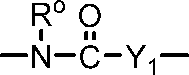
(상기 식에서: R1은 1가 라디칼(바람직하게는 H, NO2, F, Cl, Br, CF3, CH2OH 또는 CH2NRoRo'이고, 여기서 Ro 및 Ro'는 서로 독립적으로 H 또는 C1-C4 알킬임)이고; Q는 




화학식 II의 바람직한 아릴보로노-함유 비닐 단량체의 예에는 비제한적으로 3-비닐페닐보론산, 4-비닐페닐보론산(pKa 약 8.8), 3-(메트)아크릴아미도페닐보론산(pKa 약 8.2), 4-(메트)아크릴아미도페닐보론산, 4-(1,6-디옥소-2,5-디아자-7-옥사밀)페닐보론산(pKa 약 7.8), 2-디메틸아미노메틸-5-비닐페닐보론산(pKa 7.8 미만), 4-(N-알릴설파모일)페닐보론산 (pKa 약 7.4), 4-(3-부테닐설포닐)페닐보론산(pKa 약 7.1), 3-(메트)아크릴아미도-5-니트로페닐-보론산, 4-(메트)아크릴아미도-5-니트로페닐보론산, 4-(메트)아크릴아미도-3-니트로페닐보론산, 3-[(메트)아크릴아미도-C2-C5-알킬아미노카보닐]-5-니트로페닐-보론산, 3-[(메트)아크릴로일옥시-C2-C5-알킬아미노카보닐]-5-니트로페닐보론산, 3-(메트)아크릴아미도-6-하이드록시메틸페닐보론산, 3-(메트)아크릴아미도-6-디메틸아미노메틸페닐보론산, 4-(메트)아크릴아미도-6-하이드록시메틸페닐-보론산, 4-(메트)아크릴아미도-6-디메틸아미노메틸페닐-보론산, 아미노-함유 페닐보론산 유도체와 (메트)아크릴산 할라이드의 반응 생성물, 카보디이미드(예를 들어, 1-에틸-3-(3-디메틸아미노프로필) 카보디이미드(EDC), N,N'-디사이클로헥실카보디이미드(DCC), 1-사이클로헥실-3-(2-모르폴리노에틸)카보디이미드, 디이소프로필 카보디이미드 또는 이들의 혼합물) 및 N-하이드록시숙신이미드의 존재 하의 아미노-함유 페닐보론산 유도체와 카복시-함유 비닐 단량체의 반응 생성물, 카보디이미드(예를 들어, 1-에틸-3-(3-디메틸아미노프로필) 카보디이미드(EDC), N,N'-디사이클로헥실카보디이미드(DCC), 1-사이클로헥실-3-(2-모르폴리노에틸)카보디이미드, 디이소프로필 카보디이미드 또는 이들의 혼합물) 및 N-하이드록시숙신이미드의 존재 하의 카복시-함유 페닐보론산 유도체와 아미노-함유 비닐 단량체의 반응 생성물 및 이들의 조합이 포함된다.Examples of preferred arylborono-containing vinyl monomers of Formula II include, but are not limited to, 3-vinylphenylboronic acid, 4-vinylphenylboronic acid (pKa about 8.8), 3-(meth)acrylamidophenylboronic acid (pKa about 8.2), 4-(meth)acrylamidophenylboronic acid, 4-(1,6-dioxo-2,5-diaza-7-oxamyl)phenylboronic acid (pKa about 7.8), 2-dimethyl Aminomethyl-5-vinylphenylboronic acid (pKa less than 7.8), 4-(N-allylsulfamoyl)phenylboronic acid (pKa about 7.4), 4-(3-butenylsulfonyl)phenylboronic acid (pKa about 7.1) , 3-(meth)acrylamido-5-nitrophenyl-boronic acid, 4-(meth)acrylamido-5-nitrophenylboronic acid, 4-(meth)acrylamido-3-nitrophenylboronic acid, 3-[(meth)acrylamido-C 2 -C 5 -alkylaminocarbonyl]-5-nitrophenyl-boronic acid, 3-[(meth)acryloyloxy-C 2 -C 5 -alkylaminocarbo nyl]-5-nitrophenylboronic acid, 3-(meth)acrylamido-6-hydroxymethylphenylboronic acid, 3-(meth)acrylamido-6-dimethylaminomethylphenylboronic acid, 4-(meth)acryl Amido-6-hydroxymethylphenyl-boronic acid, 4-(meth)acrylamido-6-dimethylaminomethylphenyl-boronic acid, reaction product of amino-containing phenylboronic acid derivative with (meth)acrylic acid halide, carbodiimide (eg 1-ethyl-3-(3-dimethylaminopropyl) carbodiimide (EDC), N,N′-dicyclohexylcarbodiimide (DCC), 1-cyclohexyl-3-(2- Reaction product of an amino-containing phenylboronic acid derivative with a carboxy-containing vinyl monomer in the presence of morpholinoethyl)carbodiimide, diisopropyl carbodiimide or mixtures thereof) and N-hydroxysuccinimide, carbodiimide Mide (eg 1-ethyl-3-(3-dimethylaminopropyl) carbodiimide (EDC), N,N'-dicyclohexylcarbodiimide (DCC), 1-cyclohexyl-3-(2) Reaction products of carboxy-containing phenylboronic acid derivatives with amino-containing vinyl monomers in the presence of -morpholinoethyl)carbodiimide, diisopropyl carbodiimide or mixtures thereof) and N-hydroxysuccinimide, and these combinations of are included.
바람직한 카르복실-함유 페닐보론산 유도체의 예에는 비제한적으로 3-카복시페닐보론산, 4-카복시페닐보론산, 3-보로노페닐아세트산, 4-보로노페닐아세트산, 2-(4-보로노페닐)-2-메틸-프로판산, 3-(4-보로노페닐)프로판산, 3-(3-보로노페닐)프로판산, 5-(3-보로노페닐)펜탄산, 5-(4-보로노페닐)펜탄산, 4-(2-카복시에틸)-3-니트로페닐보론산, 3-카복시-5-니트로페닐보론산, 4-카복시-3-클로로페닐-보론산, 3-카복시-4-플루오로페닐보닉산, 3-(3-카복시프로피오닐아미노)페닐-보론산, 3-아미노-3-(4-보로노페닐)프로판산 및 이들의 조합이 포함된다.Examples of preferred carboxyl-containing phenylboronic acid derivatives include, but are not limited to, 3-carboxyphenylboronic acid, 4-carboxyphenylboronic acid, 3-boronophenylacetic acid, 4-boronophenylacetic acid, 2-(4-borono Phenyl)-2-methyl-propanoic acid, 3-(4-boronophenyl)propanoic acid, 3-(3-boronophenyl)propanoic acid, 5-(3-boronophenyl)pentanoic acid, 5-(4 -Boronophenyl)pentanoic acid, 4-(2-carboxyethyl)-3-nitrophenylboronic acid, 3-carboxy-5-nitrophenylboronic acid, 4-carboxy-3-chlorophenyl-boronic acid, 3-carboxy -4-fluorophenyl bonic acid, 3-(3-carboxypropionylamino)phenyl-boronic acid, 3-amino-3-(4-boronophenyl)propanoic acid, and combinations thereof.
바람직한 아미노-함유 페닐보론산 유도체의 예에는 비제한적으로 3-아미노페닐보론산, 4-아미노페닐보론산, 4-아미노-3-니트로페닐보론산, 3-아미노-6-하이드록시메틸페닐보론산, 3-아미노-6-(디메틸아미노메틸)페닐보론산, 4-아미노-2-하이드록시메틸페닐보론산, 4-아미노-2-(디메틸아미노메틸)페닐보론산, 3-아미노-4-플루오로페닐보론산, 4-(아미노메틸)-5-니트로페닐보론산, 3-(아미노메틸)-페닐보론산, 3-아미노-5-니트로페닐보론산, 3-아미노-3-(4-보로노페닐)프로판산 및 이들의 조합이 포함된다.Examples of preferred amino-containing phenylboronic acid derivatives include, but are not limited to, 3-aminophenylboronic acid, 4-aminophenylboronic acid, 4-amino-3-nitrophenylboronic acid, 3-amino-6-hydroxymethylphenylboronic acid , 3-Amino-6-(dimethylaminomethyl)phenylboronic acid, 4-amino-2-hydroxymethylphenylboronic acid, 4-amino-2-(dimethylaminomethyl)phenylboronic acid, 3-amino-4-fluoro Rophenylboronic acid, 4-(aminomethyl)-5-nitrophenylboronic acid, 3-(aminomethyl)-phenylboronic acid, 3-amino-5-nitrophenylboronic acid, 3-amino-3-(4- boronophenyl)propanoic acid and combinations thereof.
바람직한 아세탈-함유 페닐보론산 유도체의 예에는 비제한적으로 2-아세톡시페닐보론산, 3-아세톡시페닐보론산, 4-아세톡시페닐보론산, 2-포르밀페닐보론산, 3-포르밀페닐보론산, 4-포르밀페닐보론산, 5-포르밀-2-메톡시페닐보론산, 3-플루오로-4-포르밀페닐보론산, 4-플루오로-3-포르밀페닐보론산 및 이들의 조합이 포함된다.Examples of preferred acetal-containing phenylboronic acid derivatives include, but are not limited to, 2-acetoxyphenylboronic acid, 3-acetoxyphenylboronic acid, 4-acetoxyphenylboronic acid, 2-formylphenylboronic acid, 3-formyl Phenylboronic acid, 4-formylphenylboronic acid, 5-formyl-2-methoxyphenylboronic acid, 3-fluoro-4-formylphenylboronic acid, 4-fluoro-3-formylphenylboronic acid and combinations thereof.
바람직한 브로마이드-함유 페닐보론산 유도체의 예에는 비제한적으로 2-(브로모메틸)-페닐보론산, 3-(브로모메틸)-페닐보론산, 4-(브로모메틸)-페닐보론산 및 이들의 조합이 포함된다.Examples of preferred bromide-containing phenylboronic acid derivatives include, but are not limited to, 2-(bromomethyl)-phenylboronic acid, 3-(bromomethyl)-phenylboronic acid, 4-(bromomethyl)-phenylboronic acid and Combinations of these are included.
바람직한 하이드록시-함유 페닐보론산 유도체의 예에는 비제한적으로 3-클로로-4-하이드록시페닐보론산, 3-플루오로-5-하이드록시페닐보론산, 2-하이드록시페닐보론산, 3-하이드록시페닐보론산, 4-하이드록시페닐보론산, 2-(하이드록시메틸)페닐보론산, 3-(하이드록시메틸)페닐보론산, 4-(하이드록시메틸)페닐보론산, 3-(하이드록시메틸)-4-메톡시페닐보론산 및 이들의 조합이 포함된다.Examples of preferred hydroxy-containing phenylboronic acid derivatives include, but are not limited to, 3-chloro-4-hydroxyphenylboronic acid, 3-fluoro-5-hydroxyphenylboronic acid, 2-hydroxyphenylboronic acid, 3- Hydroxyphenylboronic acid, 4-hydroxyphenylboronic acid, 2-(hydroxymethyl)phenylboronic acid, 3-(hydroxymethyl)phenylboronic acid, 4-(hydroxymethyl)phenylboronic acid, 3-( hydroxymethyl)-4-methoxyphenylboronic acid and combinations thereof.
바람직한 티올-함유 페닐보론산 유도체의 예에는 비제한적으로 3-머캅토페닐보론산, 4-머캅토페닐보론산 및 이들의 조합이 포함된다.Examples of preferred thiol-containing phenylboronic acid derivatives include, but are not limited to, 3-mercaptophenylboronic acid, 4-mercaptophenylboronic acid, and combinations thereof.
바람직한 카복시-함유 비닐 단량체의 예에는 비제한적으로 2-아크릴아미도글리콜산, 3-아크릴아미도프로피온산, 4-아크릴아미도부탄산, 5-아크릴아미도펜탄산, 3-아크릴로일옥시프로판산, 4-아크릴로일옥시부탄산, 5-아크릴로일옥시펜탄산 및 이들의 조합이 포함된다.Examples of preferred carboxy-containing vinyl monomers include, but are not limited to, 2-acrylamidoglycolic acid, 3-acrylamidopropionic acid, 4-acrylamidobutanoic acid, 5-acrylamidopentanoic acid, 3-acryloyloxypropane acid, 4-acryloyloxybutanoic acid, 5-acryloyloxypentanoic acid, and combinations thereof.
바람직한 아미노-함유 비닐 단량체의 예에는 비제한적으로 아미노-C2-C4 알킬 (메트)아크릴레이트, C1-C3 알킬아미노-C2-C4 알킬 (메트)아크릴레이트, 아미노-C2-C4 알킬 (메트)아크릴아미드, C1-C3 알킬아미노-C2-C4 알킬 (메트)아크릴아미드, 비닐아민, 알릴아민 및 이들의 조합이 포함된다.Examples of preferred amino-containing vinyl monomers include, but are not limited to, amino-C 2 -C 4 alkyl (meth)acrylate, C 1 -C 3 alkylamino-C 2 -C 4 alkyl (meth)acrylate, amino-C 2 -C 4 alkyl (meth)acrylamide, C 1 -C 3 alkylamino-C 2 -C 4 alkyl (meth)acrylamide, vinylamine, allylamine, and combinations thereof.
임의의 적합한 친수성 비닐 단량체가 친수성 중합체 및 아릴보로노-함유 비닐 단량체와 적어도 하나의 친수성 비닐 단량체의 공중합체의 제조에 사용될 수 있다. 적합한 친수성 비닐 단량체의 예에는 비제한적으로 카복실-함유 비닐 단량체, 1차 아민-함유 비닐 단량체, 2차 아민-함유 비닐 단량체, 비-반응성 친수성 비닐 단량체, 포스포릴콜린-함유 비닐 단량체 및 이들의 조합이 포함된다.Any suitable hydrophilic vinyl monomer may be used in the preparation of the hydrophilic polymer and copolymer of the arylborono-containing vinyl monomer with at least one hydrophilic vinyl monomer. Examples of suitable hydrophilic vinyl monomers include, but are not limited to, carboxyl-containing vinyl monomers, primary amine-containing vinyl monomers, secondary amine-containing vinyl monomers, non-reactive hydrophilic vinyl monomers, phosphorylcholine-containing vinyl monomers, and combinations thereof. This is included.
바람직한 친수성 비닐 단량체의 예에는 알킬 (메트)아크릴아미드(아래에 기재된 바와 같음), 하이드록실-함유 아크릴 단량체(아래에 기재된 바와 같음), 아미노-함유 아크릴 단량체(아래에 기재된 바와 같음), 카복실-함유 아크릴 단량체(아래에 기재된 바와 같음), N-비닐 아미드 단량체(아래에 기재된 바와 같음), 메틸렌-함유 피롤리돈 단량체(즉, 각각 3- 또는 5-위치에서 피롤리돈 고리에 연결된 메틸렌 기를 갖는 피롤리돈 유도체)(아래에 기재된 바와 같음), C1-C4 알콕시에톡시 기를 갖는 아크릴 단량체(아래에 기재된 바와 같음), 비닐 에테르 단량체(아래에 기재된 바와 같음), 알릴 에테르 단량체(아래에 기재된 바와 같음), 포스포릴콜린-함유 비닐 단량체(아래에 기재된 바와 같음), N-2-하이드록시에틸 비닐 카바메이트, N-카복시비닐-β-알라닌(VINAL), N-카복시비닐-α-알라닌 및 이들의 조합이 있다.Examples of preferred hydrophilic vinyl monomers include alkyl (meth)acrylamide (as described below), hydroxyl-containing acrylic monomers (as described below), amino-containing acrylic monomers (as described below), carboxyl- containing acrylic monomers (as described below), N-vinyl amide monomers (as described below), methylene-containing pyrrolidone monomers (i.e., a methylene group linked to the pyrrolidone ring at the 3- or 5-position, respectively) pyrrolidone derivatives having a pyrrolidone derivative) (as described below), an acrylic monomer having a C 1 -C 4 alkoxyethoxy group (as described below), a vinyl ether monomer (as described below), an allyl ether monomer (as described below) as described in), phosphorylcholine-containing vinyl monomer (as described below), N-2-hydroxyethyl vinyl carbamate, N-carboxyvinyl-β-alanine (VINAL), N-carboxyvinyl-α -alanine and combinations thereof.
알킬 (메트)아크릴아미드의 예에는 비제한적으로 (메트)아크릴아미드, N,N-디메틸 (메트)아크릴아미드, N-에틸 (메트)아크릴아미드, N,N-디에틸 (메트)아크릴아미드, N-프로필 (메트)아크릴아미드, N-이소프로필 (메트)아크릴아미드, N-3-메톡시프로필 (메트)아크릴아미드 및 이들의 조합이 포함된다.Examples of alkyl (meth)acrylamides include, but are not limited to, (meth)acrylamide, N,N-dimethyl (meth)acrylamide, N-ethyl (meth)acrylamide, N,N-diethyl (meth)acrylamide, N-propyl (meth)acrylamide, N-isopropyl (meth)acrylamide, N-3-methoxypropyl (meth)acrylamide, and combinations thereof.
하이드록실-함유 아크릴 단량체의 예에는 비제한적으로 N-2-하이드록실에틸 (메트)아크릴아미드, N,N-비스(하이드록시에틸) (메트)아크릴아미드, N-3-하이드록시프로필 (메트)아크릴아미드, N-2-하이드록시프로필 (메트)아크릴아미드, 2-하이드록시에틸 (메트)아크릴레이트, 3-하이드록시프로필 (메트)아크릴레이트, 2-하이드록시프로필 (메트)아크릴레이트, 디(에틸렌 글리콜) (메트)아크릴레이트, 트리(에틸렌 글리콜) (메트)아크릴레이트, 테트라(에틸렌 글리콜) (메트)아크릴레이트, 수 평균 분자량이 최대 1500인 폴리(에틸렌 글리콜) (메트)아크릴레이트, 수 평균 분자량이 최대 1500인 폴리(에틸렌 글리콜)에틸 (메트)아크릴아미드 및 이들의 조합이 포함된다.Examples of hydroxyl-containing acrylic monomers include, but are not limited to, N-2-hydroxylethyl (meth)acrylamide, N,N-bis(hydroxyethyl) (meth)acrylamide, N-3-hydroxypropyl (meth) ) acrylamide, N-2-hydroxypropyl (meth)acrylamide, 2-hydroxyethyl (meth)acrylate, 3-hydroxypropyl (meth)acrylate, 2-hydroxypropyl (meth)acrylate, Di(ethylene glycol) (meth)acrylate, tri(ethylene glycol) (meth)acrylate, tetra(ethylene glycol) (meth)acrylate, poly(ethylene glycol) (meth)acrylate with number average molecular weights up to 1500 , poly(ethylene glycol)ethyl (meth)acrylamide having a number average molecular weight of up to 1500, and combinations thereof.
아미노-함유 아크릴 단량체의 예에는 비제한적으로 N-2-아미노에틸 (메트)아크릴아미드, N-2-메틸아미노에틸 (메트)아크릴아미드, N-2-에틸아미노에틸 (메트)아크릴아미드, N-2-디메틸아미노에틸 (메트)아크릴아미드, N-3-아미노프로필 (메트)아크릴아미드, N-3-메틸아미노프로필 (메트)아크릴아미드, N-3-디메틸아미노프로필 (메트)아크릴아미드, 2-아미노에틸 (메트)아크릴레이트, 2-메틸아미노에틸 (메트)아크릴레이트, 2-에틸아미노에틸 (메트)아크릴레이트, 3-아미노프로필 (메트)아크릴레이트, 3-메틸아미노프로필 (메트)아크릴레이트, 3-에틸아미노프로필 (메트)아크릴레이트, 3-아미노-2-하이드록시프로필 (메트)아크릴레이트, 트리메틸암모늄 2-하이드록시 프로필 (메트)아크릴레이트 하이드로클로라이드, 디메틸아미노에틸 (메트)아크릴레이트 및 이들의 조합이 포함된다.Examples of amino-containing acrylic monomers include, but are not limited to, N-2-aminoethyl (meth)acrylamide, N-2-methylaminoethyl (meth)acrylamide, N-2-ethylaminoethyl (meth)acrylamide, N -2-dimethylaminoethyl (meth)acrylamide, N-3-aminopropyl (meth)acrylamide, N-3-methylaminopropyl (meth)acrylamide, N-3-dimethylaminopropyl (meth)acrylamide, 2-Aminoethyl (meth)acrylate, 2-methylaminoethyl (meth)acrylate, 2-ethylaminoethyl (meth)acrylate, 3-aminopropyl (meth)acrylate, 3-methylaminopropyl (meth) Acrylate, 3-ethylaminopropyl (meth)acrylate, 3-amino-2-hydroxypropyl (meth)acrylate, trimethylammonium 2-hydroxypropyl (meth)acrylate hydrochloride, dimethylaminoethyl (meth) acrylates and combinations thereof.
카복실-함유 아크릴 단량체의 예에는 비제한적으로 2-(메트)아크릴아미도글리콜산, (메트)아크릴산, 에틸아크릴산, 프로필아크릴산, 3-(메트)아크릴아미도프로피온산, 4-(메트)아크릴아미도부탄산, 5-(메트)아크릴아미도-펜탄산, 3-(메트)아크릴로일옥시프로판산, 4-(메트)아크릴로일옥시부탄산, 5-(메트)아크릴로일옥시펜탄산 및 이들의 조합이 포함된다.Examples of carboxyl-containing acrylic monomers include, but are not limited to, 2-(meth)acrylamidoglycolic acid, (meth)acrylic acid, ethylacrylic acid, propylacrylic acid, 3-(meth)acrylamidopropionic acid, 4-(meth)acrylamynic acid Dobutanoic acid, 5-(meth)acrylamido-pentanoic acid, 3-(meth)acryloyloxypropanoic acid, 4-(meth)acryloyloxybutanoic acid, 5-(meth)acryloyloxypentanoic acid and combinations thereof.
바람직한 N-비닐 아미드 단량체의 예에는 비제한적으로 N-비닐피롤리돈(일명, N-비닐-2 - 피롤리돈), N-비닐-3-메틸-2-피롤리돈, N-비닐-4-메틸-2-피롤리돈, N-비닐-5-메틸-2-피롤리돈, N-비닐-6-메틸-2-피롤리돈, N-비닐-3-에틸-2-피롤리돈, N-비닐-4,5-디메틸-2-피롤리돈, N-비닐-5,5-디메틸-2-피롤리돈, N-비닐-3,3,5-트리메틸-2-피롤리돈, N-비닐 피페리돈(일명, N-비닐-2-피페리돈), N-비닐-3-메틸-2-피페리돈, N-비닐-4-메틸-2-피페리돈, N-비닐-5-메틸-2-피페리돈, N-비닐-6-메틸-2-피페리돈, N-비닐-6-에틸-2-피페리돈, N-비닐-3,5-디메틸-2-피페리돈, N-비닐-4,4-디메틸-2-피페리돈, N-비닐 카프로락탐(일명, N-비닐-2-카프로락탐), N-비닐-3-메틸-2-카프로락탐, N-비닐-4-메틸-2-카프로락탐, N-비닐-7-메틸-2-카프로락탐, N-비닐-7-에틸-2-카프로락탐, N-비닐-3,5-디메틸-2-카프로락탐, N-비닐-4,6-디메틸-2-카프로락탐, N-비닐-3,5,7-트리메틸-2-카프로락탐, N-비닐-N-메틸 아세트아미드, N-비닐 포름아미드, N-비닐 아세트아미드, N-비닐 이소프로필아미드, N-비닐-N-에틸 아세트아미드, N-비닐-N-에틸 포름아미드 및 이들의 혼합물이 포함된다. 바람직하게는, N-비닐 아미드 단량체는 N-비닐피롤리돈, N-비닐-N-메틸 아세트아미드 또는 이들의 조합이다.Examples of preferred N-vinyl amide monomers include, but are not limited to, N-vinylpyrrolidone (aka N-vinyl-2 - pyrrolidone), N-vinyl-3-methyl-2-pyrrolidone, N-vinyl- 4-Methyl-2-pyrrolidone, N-vinyl-5-methyl-2-pyrrolidone, N-vinyl-6-methyl-2-pyrrolidone, N-vinyl-3-ethyl-2-pyrrolidone Don, N-vinyl-4,5-dimethyl-2-pyrrolidone, N-vinyl-5,5-dimethyl-2-pyrrolidone, N-vinyl-3,3,5-trimethyl-2-pyrrolidone Don, N-vinyl piperidone (aka, N-vinyl-2-piperidone), N-vinyl-3-methyl-2-piperidone, N-vinyl-4-methyl-2-piperidone, N-vinyl- 5-methyl-2-piperidone, N-vinyl-6-methyl-2-piperidone, N-vinyl-6-ethyl-2-piperidone, N-vinyl-3,5-dimethyl-2-piperidone, N-vinyl-4,4-dimethyl-2-piperidone, N-vinyl caprolactam (aka, N-vinyl-2-caprolactam), N-vinyl-3-methyl-2-caprolactam, N-vinyl- 4-methyl-2-caprolactam, N-vinyl-7-methyl-2-caprolactam, N-vinyl-7-ethyl-2-caprolactam, N-vinyl-3,5-dimethyl-2-caprolactam, N-vinyl-4,6-dimethyl-2-caprolactam, N-vinyl-3,5,7-trimethyl-2-caprolactam, N-vinyl-N-methyl acetamide, N-vinyl formamide, N- vinyl acetamide, N-vinyl isopropylamide, N-vinyl-N-ethyl acetamide, N-vinyl-N-ethyl formamide and mixtures thereof. Preferably, the N-vinyl amide monomer is N-vinylpyrrolidone, N-vinyl-N-methyl acetamide or a combination thereof.
바람직한 메틸렌-함유(=CH2) 피롤리돈 단량체의 예에는 비제한적으로 1-메틸-3-메틸렌-2-피롤리돈, 1-에틸-3-메틸렌-2-피롤리돈, 1-메틸-5-메틸렌-2-피롤리돈, 1-에틸-5-메틸렌-2-피롤리돈, 5-메틸-3-메틸렌-2-피롤리돈, 5-에틸-3-메틸렌-2-피롤리돈, 1-n-프로필-3-메틸렌-2-피롤리돈, 1-n-프로필-5-메틸렌-2-피롤리돈, 1-이소프로필-3-메틸렌-2-피롤리돈, 1-이소프로필-5-메틸렌-2-피롤리돈, 1-n-부틸-3-메틸렌-2-피롤리돈, 1-tert-부틸-3-메틸렌-2-피롤리돈 및 이들의 조합이 포함된다.Examples of preferred methylene-containing (=CH 2 ) pyrrolidone monomers include, but are not limited to, 1-methyl-3-methylene-2-pyrrolidone, 1-ethyl-3-methylene-2-pyrrolidone, 1-methyl -5-methylene-2-pyrrolidone, 1-ethyl-5-methylene-2-pyrrolidone, 5-methyl-3-methylene-2-pyrrolidone, 5-ethyl-3-methylene-2-pyr Rollidone, 1-n-propyl-3-methylene-2-pyrrolidone, 1-n-propyl-5-methylene-2-pyrrolidone, 1-isopropyl-3-methylene-2-pyrrolidone, 1-Isopropyl-5-methylene-2-pyrrolidone, 1-n-butyl-3-methylene-2-pyrrolidone, 1-tert-butyl-3-methylene-2-pyrrolidone and combinations thereof This is included.
C1-C4 알콕시에톡시 기를 갖는 바람직한 아크릴 단량체의 예에는 비제한적으로 에틸렌 글리콜 메틸 에테르 (메트)아크릴레이트, 디(에틸렌 글리콜) 메틸 에테르 (메트)아크릴레이트, 트리(에틸렌 글리콜) 메틸 에테르 (메트)아크릴레이트, 테트라(에틸렌 글리콜) 메틸 에테르 (메트)아크릴레이트, 중량 평균 분자량이 최대 1500인 C1-C4-알콕시 폴리(에틸렌 글리콜) (메트)아크릴레이트, 수 평균 분자량이 최대 1500인 메톡시-폴리(에틸렌 글리콜)에틸 (메트)아크릴아미드 및 이들의 조합이 포함된다.Examples of preferred acrylic monomers having a C 1 -C 4 alkoxyethoxy group include, but are not limited to, ethylene glycol methyl ether (meth)acrylate, di(ethylene glycol) methyl ether (meth)acrylate, tri(ethylene glycol) methyl ether ( Meth)acrylate, tetra(ethylene glycol) methyl ether (meth)acrylate, C 1 -C 4 -alkoxy poly(ethylene glycol) (meth)acrylate with weight average molecular weight up to 1500, number average molecular weight up to 1500 methoxy-poly(ethylene glycol)ethyl (meth)acrylamide and combinations thereof.
바람직한 비닐 에테르 단량체의 예에는 비제한적으로 에틸렌 글리콜 모노비닐 에테르, 디(에틸렌 글리콜) 모노비닐 에테르, 트리(에틸렌 글리콜) 모노비닐 에테르, 테트라(에틸렌 글리콜) 모노비닐 에테르, 폴리(에틸렌 글리콜) 모노비닐 에테르, 에틸렌 글리콜 메틸 비닐 에테르, 디(에틸렌 글리콜) 메틸 비닐 에테르, 트리(에틸렌 글리콜) 메틸 비닐 에테르, 테트라(에틸렌 글리콜) 메틸 비닐 에테르, 폴리(에틸렌 글리콜) 메틸 비닐 에테르 및 이들의 조합이 포함된다.Examples of preferred vinyl ether monomers include, but are not limited to, ethylene glycol monovinyl ether, di(ethylene glycol) monovinyl ether, tri(ethylene glycol) monovinyl ether, tetra(ethylene glycol) monovinyl ether, poly(ethylene glycol) monovinyl. ethers, ethylene glycol methyl vinyl ether, di(ethylene glycol) methyl vinyl ether, tri(ethylene glycol) methyl vinyl ether, tetra(ethylene glycol) methyl vinyl ether, poly(ethylene glycol) methyl vinyl ether, and combinations thereof. .
바람직한 알릴 에테르 단량체의 예에는 비제한적으로 알릴 알코올, 에틸렌 글리콜 모노알릴 에테르, 디(에틸렌 글리콜) 모노알릴 에테르, 트리(에틸렌 글리콜) 모노알릴 에테르, 테트라(에틸렌 글리콜) 모노알릴 에테르, 폴리(에틸렌 글리콜) 모노알릴 에테르, 에틸렌 글리콜 메틸 알릴 에테르, 디(에틸렌 글리콜) 메틸 알릴 에테르, 트리(에틸렌 글리콜) 메틸 알릴 에테르, 테트라(에틸렌 글리콜) 메틸 알릴 에테르, 폴리(에틸렌 글리콜) 메틸 알릴 에테르 및 이들의 조합이 포함된다.Examples of preferred allyl ether monomers include, but are not limited to, allyl alcohol, ethylene glycol monoallyl ether, di(ethylene glycol) monoallyl ether, tri(ethylene glycol) monoallyl ether, tetra(ethylene glycol) monoallyl ether, poly(ethylene glycol) ) monoallyl ether, ethylene glycol methyl allyl ether, di(ethylene glycol) methyl allyl ether, tri(ethylene glycol) methyl allyl ether, tetra(ethylene glycol) methyl allyl ether, poly(ethylene glycol) methyl allyl ether, and combinations thereof This is included.
바람직한 포스포릴콜린-함유 비닐 단량체의 예에는 비제한적으로 (메트)아크릴로일옥시에틸 포스포릴콜린(일명, MPC 또는 2-((메트)아크릴로일옥시)에틸-2'-(트리메틸암모니오)에틸포스페이트), (메트)아크릴로일옥시프로필 포스포릴콜린(일명, 3-((메트)아크릴로일옥시)프로필-2'-(트리메틸암모니오)에틸포스페이트), 4-((메트)아크릴로일옥시)부틸-2'-(트리메틸암모니오)에틸포스페이트, 2-[(메트)아크릴로일아미노]-에틸-2'-(트리메틸암모니오)-에틸포스페이트, 3-[(메트)아크릴로일아미노]프로필-2'-(트리메틸-암모니오)에틸포스페이트, 4-[(메트)아크릴로일아미노]부틸-2'-(트리메틸암모니오)에틸-포스페이트, 5-((메트)아크릴로일옥시)펜틸-2'-(트리메틸암모니오)에틸 포스페이트, 6-((메트)아크릴로일옥시)헥실-2'-(트리메틸암모니오)-에틸포스페이트, 2-((메트)아크릴로일옥시)에틸-2'-(트리에틸암모니오)에틸포스페이트, 2-((메트)아크릴로일옥시)에틸-2'-(트리프로필암모니오)에틸-포스페이트, 2-((메트)아크릴로일옥시)에틸-2'-(트리부틸암모니오)에틸 포스페이트, 2-((메트)아크릴로일옥시)프로필-2'-(트리메틸암모니오)-에틸포스페이트, 2-((메트)아크릴로일옥시)-부틸-2'-(트리메틸암모니오)에틸포스페이트, 2-((메트)아크릴로일옥시)펜틸-2'-(트리메틸암모니오)에틸포스페이트, 2-((메트)아크릴로일옥시)헥실-2'-(트리메틸암모니오)에틸 포스페이트, 2-(비닐옥시)에틸-2'-(트리메틸암모니오)에틸포스페이트, 2-(알릴옥시)에틸-2'-(트리메틸암모니오)에틸포스페이트, 2-(비닐옥시카보닐)에틸-2'-(트리메틸암모니오)에틸 포스페이트, 2-(알릴옥시카보닐)에틸-2'-(트리메틸암모니오)-에틸포스페이트, 2-(비닐카보닐아미노)에틸-2'-(트리메틸암모니오)에틸포스페이트, 2-(알릴옥시카보닐아미노)-에틸-2'-(트리메틸암모니오)에틸 포스페이트, 2-(부테노일옥시)에틸-2'-(트리메틸암모니오)-에틸포스페이트 및 이들의 조합이 포함된다.Examples of preferred phosphorylcholine-containing vinyl monomers include, but are not limited to, (meth)acryloyloxyethyl phosphorylcholine (aka MPC or 2-((meth)acryloyloxy)ethyl-2′-(trimethylammonio) ) ethyl phosphate), (meth) acryloyloxypropyl phosphorylcholine (aka, 3-((meth)acryloyloxy)propyl-2'-(trimethylammonio)ethyl phosphate), 4-((meth) Acryloyloxy) butyl-2'-(trimethylammonio)ethyl phosphate, 2-[(meth)acryloylamino]-ethyl-2'-(trimethylammonio)-ethylphosphate, 3-[(meth) Acryloylamino]propyl-2'-(trimethyl-ammonio)ethylphosphate, 4-[(meth)acryloylamino]butyl-2'-(trimethylammonio)ethyl-phosphate, 5-((meth) Acryloyloxy) pentyl-2'-(trimethylammonio)ethyl phosphate, 6-((meth)acryloyloxy)hexyl-2'-(trimethylammonio)-ethylphosphate, 2-((meth)acryl Royloxy)ethyl-2'-(triethylammonio)ethylphosphate, 2-((meth)acryloyloxy)ethyl-2'-(tripropylammonio)ethyl-phosphate, 2-((meth) Acryloyloxy)ethyl-2'-(tributylammonio)ethyl phosphate, 2-((meth)acryloyloxy)propyl-2'-(trimethylammonio)-ethylphosphate, 2-((meth) Acryloyloxy)-butyl-2'-(trimethylammonio)ethyl phosphate, 2-((meth)acryloyloxy)pentyl-2'-(trimethylammonio)ethylphosphate, 2-((meth)acryl Royloxy) hexyl-2'-(trimethylammonio)ethyl phosphate, 2-(vinyloxy)ethyl-2'-(trimethylammonio)ethylphosphate, 2-(allyloxy)ethyl-2'-(trimethylammonium o) ethyl phosphate, 2-(vinyloxycarbonyl)ethyl-2'-(trimethylammonio)ethyl phosphate, 2-(allyloxycarbonyl)ethyl-2'-(trimethylammonio)-ethylphosphate, 2- (vinylcarbonylamino)ethyl-2'-(trimethylammonio)ethyl phosphate, 2-(allyloxycarbonylamino)-ethyl-2'-(trimethylammonio)ethyl phosphate, 2-(butenoyloxy)ethyl -2'-(trimethylammonio)-ethylphosphate and combinations thereof.
3 내지 16개의 탄소 원자를 갖는 바람직한 아크릴 단량체의 예에는 비제한적으로 C1-C12 알킬 (메트)아크릴레이트, 하이드록시-치환된 C2-C12 알킬 (메트)아크릴레이트, 카복시-치환된 C2-C12 알킬 (메트)아크릴레이트, NH2-치환된 C2-C12 알킬 (메트)아크릴레이트, 메틸아미노-치환된 C2-C12 알킬 (메트)아크릴레이트, 디메틸아미노-치환된 C2-C12 알킬 (메트)아크릴레이트, 에틸아미노-치환된 C2-C10 알킬 (메트)아크릴레이트, 디에틸아미노-치환된 C2-C8 알킬 (메트)아크릴레이트, C2-C12 알킬 (메트)아크릴아미드, 하이드록시-치환된 C2-C12 알킬 (메트)아크릴아미드, 카복시-치환된 C2-C12 알킬 (메트)아크릴아이드, NH2-치환된 C2-C12 알킬 (메트)아크릴아미드, 메틸아미노-치환된 C2-C12 알킬 (메트)아크릴아미드, 디메틸아미노-치환된 C2-C12 알킬 (메트)아크릴아미드, 에틸아미노-치환된 C2-C10 알킬 (메트)아크릴아미드, 디에틸아미노-치환된 C2-C8 알킬 (메트)아크릴아미드, 에틸렌 글리콜 (메트)아크릴레이트, 디(에틸렌 글리콜) (메트)아크릴레이트, 트리(에틸렌 글리콜) (메트)아크릴레이트, 테트라(에틸렌 글리콜) (메트)아크릴레이트, 에틸렌 글리콜 메틸 에테르 (메트)아크릴레이트, 디(에틸렌 글리콜) 메틸 에테르 (메트)아크릴레이트, 트리(에틸렌 글리콜) 메틸 에테르 (메트)아크릴레이트, 테트라(에틸렌 글리콜) 메틸 에테르 (메트)아크릴레이트 및 이들의 조합이 포함된다.Examples of preferred acrylic monomers having 3 to 16 carbon atoms include, but are not limited to, C 1 -C 12 alkyl (meth)acrylates, hydroxy-substituted C 2 -C 12 alkyl (meth)acrylates, carboxy-substituted C 2 -C 12 alkyl (meth)acrylate, NH 2 -substituted C 2 -C 12 alkyl (meth)acrylate, methylamino-substituted C 2 -C 12 alkyl (meth)acrylate, dimethylamino-substituted C 2 -C 12 alkyl (meth)acrylate, ethylamino-substituted C 2 -C 10 alkyl (meth)acrylate, diethylamino-substituted C 2 -C 8 alkyl (meth)acrylate, C 2 -C 12 alkyl (meth)acrylamide, hydroxy-substituted C 2 -C 12 alkyl (meth)acrylamide, carboxy-substituted C 2 -C 12 alkyl (meth)acrylamide, NH 2 -substituted C 2 -C 12 alkyl (meth)acrylamide, methylamino-substituted C 2 -C 12 alkyl (meth)acrylamide, dimethylamino-substituted C 2 -C 12 alkyl (meth)acrylamide, ethylamino-substituted C 2 -C 10 alkyl (meth)acrylamide, diethylamino-substituted C 2 -C 8 alkyl (meth)acrylamide, ethylene glycol (meth)acrylate, di(ethylene glycol) (meth)acrylate, tri( Ethylene glycol) (meth)acrylate, tetra(ethylene glycol) (meth)acrylate, ethylene glycol methyl ether (meth)acrylate, di(ethylene glycol) methyl ether (meth)acrylate, tri(ethylene glycol) methyl ether (meth)acrylate, tetra(ethylene glycol) methyl ether (meth)acrylate, and combinations thereof.
바람직한 구현예에서, 아릴보로노-함유 친수성 공중합체는 (a) 약 0.1 몰% 내지 약 25 몰%(바람직하게는 약 1 몰% 내지 약 20 몰%, 보다 바람직하게는 약 2 몰% 내지 약 20 몰%, 보다 더 바람직하게는 약 3 몰% 내지 약 18 몰%)의, 각각 아릴보로노 기를 갖는 아릴보로노-함유 반복 단위 및 (b) 약 75 몰% 내지 약 99.9 몰%(바람직하게는 약 80 몰% 내지 약 99 몰%, 보다 바람직하게는 약 80 몰% 내지 약 98 몰%, 보다 더 바람직하게는 약 82 몰% 내지 약 97 몰%)의 적어도 하나의 친수성 비닐 단량체의 반복 단위를 포함한다(단, 성분 (a) 및 (b)와 위에서 열거되지 않은 다른 성분의 몰 백분율의 합은 100%임). 바람직한 구현예에서, 아릴보로노 기는 약 6.8 내지 9.2, 바람직하게는 약 7.0 내지 약 9.0, 보다 바람직하게는 약 7.2 내지 약 8.8, 보다 더 바람직하게는 약 7.4 내지 약 8.6의 pKa를 갖는다.In a preferred embodiment, the arylborono-containing hydrophilic copolymer comprises (a) from about 0.1 mol% to about 25 mol% (preferably from about 1 mol% to about 20 mol%, more preferably from about 2 mol% to about 20 mole %, even more preferably about 3 mole % to about 18 mole %) of arylborono-containing repeat units each having an arylborono group and (b) about 75 mole % to about 99.9 mole % (preferably from about 80 mol% to about 99 mol%, more preferably from about 80 mol% to about 98 mol%, even more preferably from about 82 mol% to about 97 mol%) of at least one hydrophilic vinyl monomer (provided that the sum of the molar percentages of components (a) and (b) and other components not listed above is 100%). In a preferred embodiment, the arylborono group has a pKa of from about 6.8 to 9.2, preferably from about 7.0 to about 9.0, more preferably from about 7.2 to about 8.8, even more preferably from about 7.4 to about 8.6.
또 다른 바람직한 구현예에서, 친수성 공중합체는 (a) 약 0.1 몰% 내지 약 25 몰%(바람직하게는 약 1 몰% 내지 약 20 몰%, 보다 바람직하게는 약 2 몰% 내지 약 18 몰%)의, 각각 아릴보로노 기를 갖는 아릴보로노-함유 반복 단위, (b) 약 55 몰% 내지 약 98.9 몰%(바람직하게는 약 60 몰% 내지 약 97 몰%, 보다 바람직하게는 약 70 몰% 내지 약 95 몰%)의 적어도 하나의 포스포릴콜린-함유 비닐 단량체의 반복 단위 및 (c) 약 1 몰% 내지 약 20 몰%(바람직하게는 약 2 몰% 내지 약 20 몰%, 보다 바람직하게는 약 3 몰% 내지 약 15 몰%)의, 3 내지 16개(바람직하게는 3 내지 14개, 보다 바람직하게는 3 내지 12개, 보다 더 바람직하게는 3 내지 10개)의 탄소 원자를 갖는 적어도 하나의 아크릴 단량체의 아크릴 단량체 단위를 포함한다(단, 성분 (a), (b) 및 (c)와 위에서 열거되지 않은 다른 성분의 몰 백분율의 합은 100%임). 바람직한 구현예에서, 아릴보로노 기는 약 6.8 내지 9.2, 바람직하게는 약 7.0 내지 약 9.0, 보다 바람직하게는 약 7.2 내지 약 8.8, 보다 더 바람직하게는 약 7.4 내지 약 8.6의 pKa를 갖는다.In another preferred embodiment, the hydrophilic copolymer comprises (a) from about 0.1 mol% to about 25 mol% (preferably from about 1 mol% to about 20 mol%, more preferably from about 2 mol% to about 18 mol% ), arylborono-containing repeating units each having an arylborono group, (b) from about 55 mol% to about 98.9 mol% (preferably from about 60 mol% to about 97 mol%, more preferably from about 70 mole % to about 95 mole %) repeat units of at least one phosphorylcholine-containing vinyl monomer, and (c) about 1 mole % to about 20 mole % (preferably about 2 mole % to about 20 mole %; more preferably from about 3 mol % to about 15 mol %) of 3 to 16 carbons (preferably 3 to 14 carbons, more preferably 3 to 12 carbons, even more preferably 3 to 10 carbons) acrylic monomer units of at least one acrylic monomer having an atom, with the proviso that the sum of the molar percentages of components (a), (b) and (c) and other components not listed above is 100%. In a preferred embodiment, the arylborono group has a pKa of from about 6.8 to 9.2, preferably from about 7.0 to about 9.0, more preferably from about 7.2 to about 8.8, even more preferably from about 7.4 to about 8.6.
본 발명에 따라, 아릴보로노-함유 친수성 공중합체의 각 유형의 반복 단위(즉, 단량체 단위)의 몰 백분율은 사전 형성된 친수성 중합체 또는 아릴보로노-함유 비닐계 공중합체를 형성하기 위한 중합 가능한 조성물에서 이 유형의 반복 단위가 유도되는 비닐 단량체의 몰 백분율을 기준으로 결정될 수 있다.According to the present invention, the molar percentage of each type of repeating unit (i.e., monomeric unit) of the arylborono-containing hydrophilic copolymer is polymerized to form a preformed hydrophilic polymer or an arylborono-containing vinylic copolymer. It can be determined based on the molar percentage of vinyl monomer from which repeat units of this type are derived in a possible composition.
본 발명에 따라, 본 발명의 아릴보로노-함유 친수성 공중합체는 약 5,000 달톤 내지 500,000 달톤, 바람직하게는 약 5,000 달톤 내지 약 400,000 달톤, 보다 바람직하게는 약 5,000 달톤 내지 약 250,000 달톤의 수 평균 분자량을 갖는다.According to the present invention, the arylborono-containing hydrophilic copolymer of the present invention has a number average of from about 5,000 Daltons to 500,000 Daltons, preferably from about 5,000 Daltons to about 400,000 Daltons, more preferably from about 5,000 Daltons to about 250,000 Daltons. has a molecular weight.
본 발명에 따라, 임의의 선형 또는 분지형 점막접착성 중합체는, 1,2-디올 모이어티, 1,3-디올 모이어티, α-하이드록시카복실산 모이어티, β-하이드록시카복실산 모이어티 및 이들의 조합으로 이루어진 군으로부터 선택된 반응성 모이어티를 갖는 한, 본 발명에 사용될 수 있다.According to the present invention, any linear or branched mucoadhesive polymer comprises a 1,2-diol moiety, a 1,3-diol moiety, an α-hydroxycarboxylic acid moiety, a β-hydroxycarboxylic acid moiety and these It can be used in the present invention as long as it has a reactive moiety selected from the group consisting of a combination of
바람직한 점막접착성 중합체의 예에는 비제한적으로 덱스트란, 만난, 히알루론산, 갈락토만난 중합체, 폴리비닐 알코올 및 이들의 조합이 포함된다.Examples of preferred mucoadhesive polymers include, but are not limited to, dextran, mannan, hyaluronic acid, galactomannan polymers, polyvinyl alcohol, and combinations thereof.
본 출원에서 사용된 바와 같은 갈락토만난 중합체는 갈락토만난(예를 들어, 구아) 및/또는 화학적으로 개질된 갈락토만난을 지칭한다.A galactomannan polymer as used herein refers to a galactomannan (eg, guar) and/or a chemically modified galactomannan.
당업자에게 공지된 바와 같은 갈락토만난은 갈락토스 측 기를 갖는 만노스 백본(보다 구체적으로, 알파-D-갈락토스에 연결된 이의 6-위치(즉, 1-6-연결된 알파-D-갈락토피라노스)로부터 분지점을 갖는 (1-4)-연결된 베타-D-만노피라노스 백본)으로 이루어진 다당류이다. 갈락토만난 내의 D-만노스에 대한 D-갈락토스의 비는 변할 수 있지만, 일반적으로 약 1:2 내지 1:4일 것이다. D-갈락토스:D-만노스 비가 약 1:2인 갈락토만난이 가장 바람직하다. 바람직한 갈락토만난은 구아이다.Galactomannans as known to those skilled in the art are derived from a mannose backbone having a galactose side group (more specifically, its 6-position linked to alpha-D-galactose (i.e., 1-6-linked alpha-D-galactopyranose) It is a polysaccharide consisting of (1-4)-linked beta-D-mannopyranose backbones) with branching points. The ratio of D-galactose to D-mannose in the galactomannan can vary, but will generally be about 1:2 to 1:4. Most preferred is a galactomannan having a D-galactose:D-mannose ratio of about 1:2. A preferred galactomannan is guar.
갈락토만난은 다수의 공급원으로부터 수득될 수 있다. 이러한 공급원은 아래에 추가로 기재되는 바와 같이, 구아 검, 로커스트 콩 검 및 타라 검을 포함한다.Galactomannan can be obtained from a number of sources. Such sources include guar gum, locust bean gum and tara gum, as further described below.
구아 검은 시야모피시스 테트라고놀로버스(Cyamopisis tetragonolobus) (L.) 타우브(Taub)의 분쇄된 배유이다. 수용성 분획(85%)은 (1-6) 연결에 의해 부착된 α-D-갈락토피라노실 단위와 함께 (1-4)-β-D 만노피라노실 단위의 선형 사슬로 이루어진 "구아란"(220,000의 분자량)으로 불린다. 구아란에서 D-만노스에 대한 D-갈락토스의 비는 약 1:2이다. 상기 검은 수세기 동안 아시아에서 재배되어 왔고, 이의 증점 특성으로 인해 주로 식품 및 개인 위생 용품(personal care product)에 사용된다. 이는 전분의 5 내지 8배의 증점력을 가지고 있다. 구아 검은 예를 들어, Rhone-Polulenc(Cranbury, N.J.), Hercules, Inc.(Wilmington, Del.) 및 TIC Gum, Inc.(Belcamp, Md.)로부터 수득될 수 있다.Guar gum is the ground endosperm of Cyamopisis tetragonolobus ( L. ) Taub . The water-soluble fraction (85%) is "Guarane" consisting of a linear chain of (1-4)-β-D mannopyranosyl units with α-D-galactopyranosyl units attached by (1-6) linkages. (molecular weight of 220,000). The ratio of D-galactose to D-mannose in guarane is about 1:2. The gum has been cultivated in Asia for centuries and is mainly used in food and personal care products because of its thickening properties. It has a thickening power of 5 to 8 times that of starch. Guar gum can be obtained, for example, from Rhone-Polulenc (Cranbury, NJ), Hercules, Inc. (Wilmington, Del.) and TIC Gum, Inc. (Belcamp, Md.).
로커스트 콩 검 또는 캐롭 콩 검(carob bean gum)은 캐롭 나무(세라토니아 실리쿠아(ceratonia siliqua))의 종자의 정제된 배유이다. 이 유형의 검의 경우 만노스에 대한 갈락토스의 비는 약 1:4이다. 캐롭 나무의 재배는 오래되었고, 당업계에 널리 공지되어 있다. 이러한 유형의 검은 시판되고 있으며, TIC Gum, Inc.(Bekamp, Md.) 및 Rhone-Polulenc(Cranbury, N.J.)로부터 수득될 수 있다.Locust bean gum or carob bean gum is the refined endosperm of the seeds of the carob tree ( ceratonia siliqua ). For this type of sword, the ratio of galactose to mannose is about 1:4. Cultivation of carob trees is old and well known in the art. Gums of this type are commercially available and may be obtained from TIC Gum, Inc. (Bekamp, Md.) and Rhone-Polulenc (Cranbury, NJ).
타라 검은 타라 나무의 정제된 종자 검으로부터 유도된다. 만노스에 대한 갈락토스의 비는 약 1:3이다. 타라 검은 미국에서 상업적으로 생산되지 않지만, 이 검은 미국 이외의 다양한 공급원으로부터 수득될 수 있다.Tara gum is derived from the refined seed gum of the tara tree. The ratio of galactose to mannose is about 1:3. Although tara gum is not commercially produced in the United States, it can be obtained from a variety of sources outside the United States.
화학적으로 개질된 갈락토만난은 하이드록실 기의 수소 원자의 일부(전부는 아님)가 유기 기로 치환된 갈락토만난의 유도체이다. 바람직한 화학적으로 개질된 글락토만난의 예에는 비제한적으로 하이드록시에틸-치환된 갈락토만난(예를 들어, 하이드록시에틸 구아), 하이드록시프로필 갈락토만난(예를 들어, 하이드록시프로필 구아), C1-C3 알킬 갈락토만난(예를 들어, 메틸 구아, 에틸 구아, 프로필 구아), 카복시메틸 갈락토만난(예를 들어, 카복시메틸 구아), 카복시메틸하이드록시프로필 갈락토만난(예를 들어, 카복시메틸하이드록시프로필 구아), 하이드록시프로필트리모늄 클로라이드 갈락토만난(예를 들어, 하이드록시프로필트리모늄 클로라이드 구아) 및 이들의 조합이 포함된다. 바람직한 화학적으로 개질된 글락토만난은 하이드록시프로필 구아이다.Chemically modified galactomannans are derivatives of galactomannans in which some (but not all) of the hydrogen atoms of the hydroxyl groups have been replaced with organic groups. Examples of preferred chemically modified galactomannans include, but are not limited to, hydroxyethyl-substituted galactomannans (eg, hydroxyethyl guar), hydroxypropyl galactomannans (eg, hydroxypropyl guar). , C 1 -C 3 alkyl galactomannan (eg methyl guar, ethyl guar, propyl guar), carboxymethyl galactomannan (eg carboxymethyl guar), carboxymethylhydroxypropyl galactomannan (eg carboxymethylhydroxypropyl guar), hydroxypropyltrimonium chloride galactomannan (eg, hydroxypropyltrimonium chloride guar), and combinations thereof. A preferred chemically modified glactomannan is hydroxypropyl guar.
하이드록시에틸 구아, 하이드록시프로필 구아, 메틸 구아, 에틸 구아, 프로필 구아, 카복시메틸 구아, 카복시메틸하이드록시프로필 구아 및 하이드록시프로필트리모늄 클로라이드 구아는 널리 공지되어 있고 시판되고 있다. 예를 들어, 다양한 치환도의 개질된 갈락토만난은 Rhone-Poulenc(Cranbury, N.J.)에서 시판되고 있다.Hydroxyethyl guar, hydroxypropyl guar, methyl guar, ethyl guar, propyl guar, carboxymethyl guar, carboxymethylhydroxypropyl guar and hydroxypropyltrimonium chloride guar are well known and commercially available. For example, modified galactomannans of various degrees of substitution are commercially available from Rhone-Poulenc (Cranbury, N.J.).
일부 구현예에서, 하나 이상의 점막접착성 중합체는 안구 삽입물의 건조 중량을 기준으로 약 50% 내지 약 99% w/w, 약 60% 내지 약 99% w/w, 약 70% 내지 약 98% w/w 또는 약 80% 내지 약 98% w/w의 양으로 존재한다. 특정 구현예에서, 점막접착성 중합체는 안구 삽입물의 건조 중량을 기준으로 약 75%, 약 80%, 약 85%, 약 90% 또는 약 95% w/w의 양으로 존재한다. 안구 삽입물의 전체 건조 중량 또는 질량은 약 1 내지 약 10 mg 또는 약 2 내지 약 8 mg의 범위일 수 있고, 특정 구현예에서, 약 2.5 내지 약 5 mg일 수 있다.In some embodiments, the one or more mucoadhesive polymers are from about 50% to about 99% w/w, from about 60% to about 99% w/w, from about 70% to about 98% w/w by dry weight of the ocular insert. /w or from about 80% to about 98% w/w. In certain embodiments, the mucoadhesive polymer is present in an amount of about 75%, about 80%, about 85%, about 90%, or about 95% w/w by dry weight of the ocular insert. The total dry weight or mass of the ocular insert may range from about 1 to about 10 mg or from about 2 to about 8 mg, and in certain embodiments, from about 2.5 to about 5 mg.
일부 구현예에서, 안구 삽입물은 완전히 수화된 후 중량(w/w)을 기준으로 약 10% 내지 약 70%(바람직하게는 약 20% 내지 약 65%, 보다 바람직하게는 약 25% 내지 약 60%, 보다 더 바람직하게는 약 30% 내지 약 55%)의 수분 함량을 가질 수 있다.In some embodiments, the ocular insert after fully hydrated is from about 10% to about 70% by weight (w/w) (preferably from about 20% to about 65%, more preferably from about 25% to about 60%) by weight (w/w). %, even more preferably from about 30% to about 55%).
안구 삽입물은 눈에 투여하기에 적합한 임의의 크기 또는 형상을 가질 수 있다. 예시적인 형상은 임의의 하나의 치수의 최대 크기가 5 내지 6 mm인 필름, 봉상물, 구체, 타원형, 링, 정사각형, 직사각형, 삼각형 또는 불규칙한 형상을 포함한다.The ocular insert may have any size or shape suitable for administration to the eye. Exemplary shapes include films, rods, spheres, ovals, rings, squares, rectangles, triangles, or irregular shapes with a maximum size of 5 to 6 mm in any one dimension.
일부 구현예에서, 안구 삽입물의 두께는 약 50 내지 400 μm, 약 60 내지 300 μm 또는 약 60 내지 250 μm이다.In some embodiments, the thickness of the ocular insert is between about 50 and 400 μm, between about 60 and 300 μm, or between about 60 and 250 μm.
특정 구현예에서, 안구 삽입물의 두께는 약 60 내지 250 μm이고, 수분 함량은 20 내지 55% w/w이다.In certain embodiments, the thickness of the ocular insert is between about 60 and 250 μm and the water content is between 20 and 55% w/w.
일부 구현예에서, 본 발명의 안구 삽입물은 적어도 3시간, 바람직하게는 적어도 4시간, 보다 바람직하게는 약 4 내지 24시간의 눈에서의 용해 시간(on-eye dissolution time)을 가질 수 있다. 눈에서의 용해 시간은 당업자에게 공지된 인공 누액(ATF)에서 안구 삽입물의 용해 시간을 결정함으로써 결정될 수 있다. 본 발명의 안구 삽입물의 용해 시간은 안구 삽입물을 형성하는 데 사용되는 아릴보로노-함유 친수성 공중합체의 아릴보로노 기의 원하는 pKa(즉, 사이클릭 보론 에스테르 가교물의 가수분해 안정성) 및 아릴보로노-함유 친수성 공중합체의 아릴보로노-함유 반복 단위의 함량(즉, 사이클릭 보론 에스테르 가교물의 밀도)을 선택하여 미세 조정될 수 있다.In some embodiments, the ocular inserts of the present invention may have an on-eye dissolution time of at least 3 hours, preferably at least 4 hours, more preferably about 4 to 24 hours. The dissolution time in the eye can be determined by determining the dissolution time of the ocular insert in artificial tear fluid (ATF) known to those skilled in the art. The dissolution time of the ocular insert of the present invention is determined by the desired pKa of the arylborono group of the arylborono-containing hydrophilic copolymer used to form the ocular insert (i.e., the hydrolytic stability of the cyclic boron ester crosslinked product) and the aryl The content of the arylborono-containing repeating units of the borono-containing hydrophilic copolymer (ie, the density of the cyclic boron ester crosslinked product) can be selected to be fine-tuned.
일부 구현예에서, 안구 삽입물은 다층 구조를 갖고, 2개의 제2 하이드로겔 층들 사이에 샌드위치된 제1 하이드로겔 층을 포함하고, 여기서 제1 하이드로겔 층은 제1 가교의 제1 가교 밀도를 갖고, 제2 하이드로겔 층은 제2 가교의 제2 가교 밀도를 가지며, 제1 가교 밀도는 제2 가교 밀도보다 더 높고/높거나 제1 가교는 제2 가교보다 더 안정하다(즉, 눈의 눈물 내에서 제2 가교보다 더 서서히 가수분해됨). 이러한 층상 구조로, 본 발명의 안구 삽입물은 각 층에 대해 잘 제어된 붕해 동력학을 가질 수 있고, 즉, 외부 하이드로겔 층이 먼저 붕해(용해)될 수 있는 반면, 내부 층은 나중에 붕해(용해)될 수 있다. 이러한 안구 삽입물은 원하는 전체 용해 프로파일을 달성하기 위해 선택된 층의 특성을 조정하도록 더 많은 유연성을 제공할 수 있다.In some embodiments, the ocular insert has a multilayer structure and comprises a first hydrogel layer sandwiched between two second hydrogel layers, wherein the first hydrogel layer has a first crosslink density of first crosslinks and , the second hydrogel layer has a second crosslink density of second crosslinks, the first crosslink density is higher than the second crosslink density and/or the first crosslinks are more stable than the second crosslinks (i.e., tear of the eye) hydrolyzed more slowly than the second cross-link in With such a layered structure, the ocular insert of the present invention can have well-controlled disintegration kinetics for each layer, i.e., the outer hydrogel layer can disintegrate (dissolve) first, while the inner layer disintegrates later (disintegration). can be Such an ocular insert may provide more flexibility to adjust the properties of the selected layer to achieve the desired overall dissolution profile.
본 개시내용의 일부 구현예에서, 안구 삽입물은 추가적인 약제학적 활성제를 포함하지 않는다. 안구 삽입물을 구성하는 점막접착성 중합체는 안구 삽입물의 하이드로겔 바디를 서서히 붕해시키기 때문에 눈에서 서서히 방출되고, 이에 의해 안구 건조증과 관련된 증상을 완화시킬 수 있다.In some embodiments of the present disclosure, the ocular insert does not include an additional pharmaceutically active agent. The mucoadhesive polymer constituting the ocular implant is slowly released from the eye because the hydrogel body of the ocular implant slowly disintegrates, thereby alleviating the symptoms associated with dry eye syndrome.
다른 구현예에서, 중합체 눈 삽입물은 하나 이상의 추가적인 약제학적 활성제를 포함할 수 있다. 일부 구현예에서, 하나 이상의 약제학적 활성제는 안구 윤활제, 항-충혈 완화제, 예컨대, 브리모니딘 타르트레이트, 테트라하이드로졸린, 나파졸린, 냉각제, 예컨대, 멘톨, 안구 통증 및 염증을 완화시키기 위한 스테로이드 및 비스테로이드성 항염증제, 항생제, 항-히스타민, 예컨대, 올로파타딘, 감염성 결막염에 대한 항-바이러스제, 항생제 및 항-박테리아제, 근시 치료를 위한 항-무스카린제, 예컨대, 아트로핀 및 이의 유도체 및 녹내장 약물 전달, 예컨대, 프로스타글란딘 및 프로스타글란딘 유사체, 예컨대, 트라보프로스트 및 이들의 치료학적으로 적합한 조합의 군으로부터 선택될 수 있다.In other embodiments, the polymeric ocular insert may include one or more additional pharmaceutically active agents. In some embodiments, the one or more pharmaceutically active agents are ocular lubricants, anti-decongestants such as brimonidine tartrate, tetrahydrozoline, naphazoline, coolants such as menthol, steroids to relieve ocular pain and inflammation, and Non-steroidal anti-inflammatory agents, antibiotics, anti-histamines such as olopatadine, anti-viral agents for infectious conjunctivitis, antibiotic and anti-bacterial agents, anti-muscarinic agents for the treatment of myopia such as atropine and its derivatives and glaucoma drug delivery such as prostaglandins and prostaglandin analogs such as travoprost and therapeutically suitable combinations thereof.
일부 구현예에서, 본 발명의 안구 삽입물은, 밀봉되고 멸균된 패키지 내의 패키징 수용액에 보관된다.In some embodiments, an ocular insert of the present invention is stored in an aqueous packaging solution in a sealed and sterile package.
패키징 수용액의 pH는 약 7.5 내지 약 9.0이다. 패키징 수용액은 패키징 수용액의 pH를 원하는 범위로 유지하기에 충분한 양으로 완충제를 함유한다. 임의의 공지된, 생리학적으로 적합한 완충제가 사용될 수 있다. 바람직하게는, 완충제는 포스페이트 완충액이다. 패키징 수용액 중 각각의 완충제의 양은 바람직하게는 0.001% 내지 2%, 바람직하게는 0.01% 내지 1%이고; 가장 바람직하게는 약 0.05 중량% 내지 약 0.30 중량%이다.The pH of the aqueous packaging solution is from about 7.5 to about 9.0. The aqueous packaging solution contains a buffer in an amount sufficient to maintain the pH of the aqueous packaging solution in a desired range. Any known, physiologically compatible buffer may be used. Preferably, the buffer is a phosphate buffer. The amount of each buffer in the packaging aqueous solution is preferably 0.001% to 2%, preferably 0.01% to 1%; most preferably from about 0.05% to about 0.30% by weight.
패키징 수용액의 장성(tonicity)은 약 200 내지 약 450 밀리오스몰(mOsm), 바람직하게는 약 250 내지 약 350 mOsm이다. 패키징 수용액의 장성은 장성에 영향을 미치는 유기 또는 무기 물질을 첨가함으로써 조정될 수 있다. 적합한 안구적으로 허용 가능한 등장화제는 염화나트륨, 염화칼륨 및 이들의 혼합물을 포함하지만, 이에 한정되지 않는다.The tonicity of the aqueous packaging solution is from about 200 to about 450 milliosmoles (mOsm), preferably from about 250 to about 350 mOsm. The tonicity of the packaging aqueous solution can be adjusted by adding organic or inorganic substances that affect the tonicity. Suitable ophthalmically acceptable isotonic agents include, but are not limited to, sodium chloride, potassium chloride, and mixtures thereof.
안구 삽입물을 오토클레이빙하고 보관하기 위한 패키지(또는 용기)는 당업자에게 널리 공지되어 있다. 임의의 패키지가 본 발명에서 사용될 수 있다.Packages (or containers) for autoclaving and storing ocular inserts are well known to those skilled in the art. Any package may be used in the present invention.
바람직한 구현예에서, 패키징 수용액은 당업자에게 공지된 적어도 하나의 완충제 및 하나 이상의 다른 성분을 함유한다. 다른 성분의 예에는 비제한적으로 등장화제, 계면활성제, 항박테리아제, 보존제 및 윤활제(예를 들어, 셀룰로스 유도체, 폴리비닐 알코올, 폴리비닐피롤리돈)가 포함된다.In a preferred embodiment, the aqueous packaging solution contains at least one buffer and one or more other ingredients known to those skilled in the art. Examples of other ingredients include, but are not limited to, isotonic agents, surfactants, antibacterial agents, preservatives, and lubricants (eg, cellulose derivatives, polyvinyl alcohol, polyvinylpyrrolidone).
본 개시내용의 구현예에 따른 안구 삽입물은, 하이드로겔을 형성하기 위해 반응성 조성물을 경화시킴으로써 제조될 수 있고, 여기서 수계 반응성 조성물은 둘 모두 용매(물, 유기 용매 또는 이들의 혼합물)에 용해된 것인 적어도 하나의 아릴보로노-함유 친수성 공중합체(위에 기재된 바와 같음)와 적어도 하나의 점막접착성 중합체(위에 기재된 바와 같음)를 포함한다.An ocular insert according to embodiments of the present disclosure can be prepared by curing a reactive composition to form a hydrogel, wherein the water-based reactive composition is both dissolved in a solvent (water, organic solvent, or mixtures thereof). at least one arylborono-containing hydrophilic copolymer (as described above) and at least one mucoadhesive polymer (as described above).
경화는 적어도 하나의 아릴보로노-함유 친수성 공중합체의 하나의 제1 용액을 몰드에서 적어도 하나의 점막접착성 친수성 중합체의 하나의 제2 용액과 혼합하여 상기 적어도 하나의 아릴보로노-함유 친수성 공중합체 및 상기 적어도 하나의 점막접착성 중합체가 아릴보로노-함유 친수성 공중합체의 하나의 아릴보로노 기와 점막접착성 중합체의 하나의 1,2-디올, 1,3-디올, α-하이드록시카복실산 또는 β-하이드록시카복실산 모이어티 간에 각각 형성된 가교를 통해 가교되는 pH를 갖는 반응성 조성물을 수득함으로써 수행될 수 있다.Curing may be accomplished by mixing one first solution of at least one arylborono-containing hydrophilic copolymer with a second solution of at least one mucoadhesive hydrophilic polymer in a mold to achieve said at least one arylborono-containing hydrophilic copolymer. The hydrophilic copolymer and said at least one mucoadhesive polymer comprise one arylborono group of the arylborono-containing hydrophilic copolymer and one 1,2-diol, 1,3-diol, α of the mucoadhesive polymer by obtaining a reactive composition having a pH that is crosslinked through crosslinking respectively formed between the -hydroxycarboxylic acid or β-hydroxycarboxylic acid moieties.
대안적으로, 경화는 몰드에서 적어도 하나의 아릴보로노-함유 친수성 공중합체와 적어도 하나의 점막접착성 친수성 중합체의 혼합물을 함유하는 용액의 pH를 상기 적어도 하나의 아릴보로노-함유 친수성 공중합체 및 상기 적어도 하나의 점막접착성 중합체가 아릴보로노-함유 친수성 공중합체의 하나의 아릴보로노 기와 점막접착성 중합체의 하나의 1,2-디올, 1,3-디올, α-하이드록시카복실산 또는 β-하이드록시카복실산 모이어티 간에 각각 형성된 가교를 통해 가교되는 pH로 증가시킴으로써 수행될 수 있다. 바람직하게는, pH의 증가는 약 10.0 이상의 pH를 갖는 염기 용액을 첨가함으로써 수행된다.Alternatively, curing can be accomplished by adjusting the pH of a solution containing a mixture of at least one arylborono-containing hydrophilic copolymer and at least one mucoadhesive hydrophilic polymer with said at least one arylborono-containing hydrophilic copolymer in a mold. The coalescence and said at least one mucoadhesive polymer comprise one arylborono group of the arylborono-containing hydrophilic copolymer and one 1,2-diol, 1,3-diol, α-hydro of the mucoadhesive polymer increasing the pH at which the crosslinks are crosslinked via crosslinks respectively formed between the hydroxycarboxylic acid or β-hydroxycarboxylic acid moieties. Preferably, the increase in pH is accomplished by adding a base solution having a pH of at least about 10.0.
당업자에게 공지된 임의의 몰드가 본 발명에 사용될 수 있다. 바람직한 몰드의 예에는 비제한적으로 필름 또는 박판 캐스팅 또는 봉상물 캐스팅을 위한 플랫 몰드(flat mold), 안구 삽입물의 최종 3차원 형상을 갖는 반응성 사출 몰드(reactive injection mold)가 포함된다. 캐스트 성형 필름, 시트 또는 봉상물은 안구 삽입물의 최종 3차원 형상을 형성하도록 기계 가공될 수 있다.Any mold known to one of ordinary skill in the art may be used in the present invention. Examples of preferred molds include, but are not limited to, flat molds for film or sheet casting or rod casting, reactive injection molds having the final three-dimensional shape of the ocular insert. The cast molded film, sheet or rod can be machined to form the final three-dimensional shape of the ocular insert.
본 발명에 따라, 형성된 하이드로겔 안구 삽입물을 추출하여 비반응성 성분을 제거하고 물 또는 수용액으로 수화시켜 임의의 유기 용매를 대체하고 물로 평형화시킬 수 있다. 바람직하게는, 수용액은, 하이드로겔을 안정화시키고 하이드로겔을 완전히 수화시키기 위한 pH를 갖는다. 형성된 안구 삽입물은 또한 당업자에게 공지된 임의의 기법에 따라 멸균될 수 있다.According to the present invention, the formed hydrogel ocular implant can be extracted to remove non-reactive components and hydrated with water or aqueous solution to displace any organic solvent and equilibrate with water. Preferably, the aqueous solution has a pH to stabilize the hydrogel and completely hydrate the hydrogel. The formed ocular insert may also be sterilized according to any technique known to those skilled in the art.
또 다른 양태에서, 본 발명은 다음의 단계를 포함하는, 대상체의 눈의 질병 또는 장애를 치료하기 위한 하이드로겔 안구 삽입물을 제조하는 방법을 제공한다: (1) 안구 삽입물의 형태이거나 안구 삽입물의 형태로 기계 가공되는 하이드로겔을 형성하기 위해 반응성 조성물을 경화시키는 단계로서, 반응성 조성물은 둘 모두 용매에 용해된 것인 상기 적어도 하나의 아릴보로노-함유 친수성 공중합체 및 상기 적어도 하나의 점막접착성 중합체를 포함하고, 상기 적어도 하나의 아릴보로노-함유 친수성 공중합체는 각각 아릴보로노 기를 갖는 반복 단위를 포함하고, 상기 적어도 하나의 점막접착성 중합체는 각각 1,2-디올 모이어티, 1,3-디올 모이어티, α-하이드록시카복실산 모이어티 및 β-하이드록시카복실산 모이어티로 이루어진 군으로부터 선택된 모이어티를 갖는 반복 단위를 포함하고, 하이드로겔은 상기 적어도 하나의 아릴보로노-함유 친수성 공중합체와 상기 적어도 하나의 점막접착성 중합체의 가교 생성물이고, 아릴보로노-함유 친수성 공중합체의 하나의 아릴보로노 기와 점막접착성 중합체의 하나의 1,2-디올, 1,3-디올, α-하이드록시카복실산 또는 β-하이드록시카복실산 모이어티 간에 각각 형성된 가교를 포함하는, 단계; (2) 하이드로겔을 안정화시키고 하이드로겔을 완전히 수화시키기 위한 pH를 갖는 수용액과 하이드로겔을 접촉시키는 단계; 및 (3) 하이드로겔을 멸균시키는 단계.In another aspect, the present invention provides a method of manufacturing a hydrogel ocular insert for treating a disease or disorder of the eye in a subject, comprising the steps of: (1) in the form of an ocular insert or in the form of an ocular insert curing the reactive composition to form a hydrogel that is machined into the at least one arylborono-containing hydrophilic copolymer and the at least one mucoadhesive copolymer, wherein the reactive composition is both dissolved in a solvent. wherein said at least one arylborono-containing hydrophilic copolymer each comprises repeating units having an arylborono group, said at least one mucoadhesive polymer each comprising a 1,2-diol moiety; a repeating unit having a moiety selected from the group consisting of a 1,3-diol moiety, an α-hydroxycarboxylic acid moiety and a β-hydroxycarboxylic acid moiety, wherein the hydrogel comprises said at least one arylborono- one arylborono group of an arylborono-containing hydrophilic copolymer and one 1,2-diol of a mucoadhesive polymer, 1, a crosslinking formed between the 3-diol, α-hydroxycarboxylic acid or β-hydroxycarboxylic acid moieties, respectively; (2) contacting the hydrogel with an aqueous solution having a pH to stabilize the hydrogel and completely hydrate the hydrogel; and (3) sterilizing the hydrogel.
일부 구현예에서, 본 발명의 방법은 패키지 내의 수용액에 침지된 하이드로겔 안구 삽입물을 밀봉하고 밀봉된 패키지를 약 115℃ 내지 약 125℃의 온도에서 약 20 내지 90분 동안 오토클레이빙하는 단계를 추가로 포함한다.In some embodiments, the methods of the present invention further include sealing the hydrogel ocular insert immersed in an aqueous solution within the package and autoclaving the sealed package at a temperature of about 115° C. to about 125° C. for about 20 to 90 minutes. include as
추가의 양태에서, 본 발명은 하이드로겔 안구 삽입물을 눈에 투여하는 단계를 포함하는, 대상체의 눈의 질병 또는 장애를 치료하기 위한 본 발명의 하이드로겔 안구 삽입물(위에 기재된 바와 같음)을 사용하는 방법을 제공한다.In a further aspect, the invention provides a method of using a hydrogel ocular insert (as described above) of the invention for treating a disease or disorder of the eye in a subject comprising administering to the eye the hydrogel ocular insert. provides
본 발명의 다양한 구현예가 특정 용어, 장치 및 방법을 사용하여 설명되었지만, 이러한 설명은 단지 예시의 목적을 위한 것이다. 사용된 단어는 제한하는 단어가 아니라 설명하는 단어이다. 하기 청구범위에 기재된 본 발명의 사상 또는 범위를 벗어나지 않으면서 당업자에 의해 변경 및 변형이 이루어질 수 있음을 이해해야 한다. 또한, 다양한 구현예의 양태는 전체 또는 부분적으로 상호교환될 수 있거나, 하기에 예시된 바와 같이 임의의 방식으로 조합되고/되거나 함께 사용될 수 있음을 이해해야 한다:While various embodiments of the invention have been described using specific terminology, devices, and methods, this description is for purposes of illustration only. The words used are descriptive, not limiting. It should be understood that changes and modifications may be made by those skilled in the art without departing from the spirit or scope of the invention as set forth in the following claims. It is also to be understood that aspects of the various embodiments may be interchanged in whole or in part, or may be combined and/or used together in any manner, as exemplified below:
1. 하이드로겔 물질을 포함하는 하이드로겔 안구 삽입물로서,1. A hydrogel ocular insert comprising a hydrogel material, comprising:
하이드로겔 물질은 각각 아릴보로노 기를 갖는 아릴보로노-함유 반복 단위를 포함하는 적어도 하나의 아릴보로노-함유 친수성 공중합체와 각각 1,2-디올 모이어티, 1,3-디올 모이어티, α-하이드록시카복실산 모이어티 및 β-하이드록시카복실산 모이어티로 이루어진 군으로부터 선택된 모이어티를 갖는 반복 단위를 포함하는 적어도 하나의 점막접착성 중합체의 가교 생성물인 가교된 중합체 물질이고,The hydrogel material comprises at least one arylborono-containing hydrophilic copolymer comprising arylborono-containing repeat units each having an arylborono group and a 1,2-diol moiety, a 1,3-diol moiety, respectively a crosslinked polymeric material that is a crosslinked product of at least one mucoadhesive polymer comprising repeat units having a moiety selected from the group consisting of t, an α-hydroxycarboxylic acid moiety and a β-hydroxycarboxylic acid moiety,
상기 적어도 하나의 아릴보로노-함유 친수성 공중합체 및 상기 적어도 하나의 점막접착성 중합체는 상기 적어도 하나의 아릴보로노-함유 친수성 공중합체의 아릴보로노 기 중 하나와 상기 적어도 하나의 점막접착성 중합체의 하나의 1,2-디올, 1,3-디올, α-하이드록시카복실산 또는 β-하이드록시카복실산 모이어티 간에 각각 형성된 가교를 통해 가교된 중합체 물질에서 가교되는, 하이드로겔 안구 삽입물.The at least one arylborono-containing hydrophilic copolymer and the at least one mucoadhesive polymer comprise one of the arylborono groups of the at least one arylborono-containing hydrophilic copolymer and the at least one mucosa A hydrogel ocular insert that is crosslinked in the crosslinked polymeric material via crosslinking respectively formed between one 1,2-diol, 1,3-diol, α-hydroxycarboxylic acid or β-hydroxycarboxylic acid moiety of the adhesive polymer.
2. 구현예 1에 있어서, 상기 적어도 하나의 아릴보로노-함유 친수성 공중합체는 아릴보로노-개질된 친수성 중합체를 포함하는, 하이드로겔 안구 삽입물.2. The hydrogel ocular insert of embodiment 1, wherein the at least one arylborono-containing hydrophilic copolymer comprises an arylborono-modified hydrophilic polymer.
3. 구현예 2에 있어서, 아릴보로노-개질된 친수성 중합체는 페닐보론산 화합물과 사전 형성된 친수성 중합체의 커플링 반응 생성물이고, 페닐보론산 화합물은 제1 반응성 작용기를 갖고, 사전 형성된 친수성 중합체는 공유 연결을 형성하기 위해 커플링제의 존재 또는 부재 하에 제1 반응성 작용기와 공반응성(coreactive)인 제2 반응성 작용기를 각각 갖는 반복 단량체 단위를 포함하고, 제1 및 제2 반응성 작용기는 서로 독립적으로 하이드록실 기(-OH), 카복실 기(-COOH), 산 할라이드 기, -NH2, C1-C4 알킬아미노 기, 에폭시 기, 알데하이드 기, 이소시아나토 기, 아즐락톤 기, 아지디린 기 및 티올 기로 이루어진 군으로부터 선택되는, 하이드로겔 안구 삽입물.3. The arylborono-modified hydrophilic polymer of embodiment 2 is a coupling reaction product of a phenylboronic acid compound and a preformed hydrophilic polymer, wherein the phenylboronic acid compound has a first reactive functional group, and the preformed hydrophilic polymer comprises repeating monomer units each having a second reactive functional group that is coreactive with a first reactive functional group in the presence or absence of a coupling agent to form a covalent linkage, wherein the first and second reactive functional groups are independently of each other hydroxyl group (-OH), carboxyl group (-COOH), acid halide group, -NH 2 , C 1 -C 4 alkylamino group, epoxy group, aldehyde group, isocyanato group, azlactone group, azidiline A hydrogel ocular insert selected from the group consisting of a group and a thiol group.
4. 구현예 3에 있어서, 사전 형성된 친수성 중합체는 C2-C4-하이드록시알킬 (메트)아크릴레이트, C2-C4-하이드록시알킬 (메트)아크릴아미드, 알릴알코올, 알릴아민, 비닐아민, 아미노-C2-C4-하이드록시알킬 (메트)아크릴레이트, 아미노-C2-C4-하이드록시알킬 (메트)아크릴아미드, C1-C3 알킬아미노-C2-C4 알킬 (메트)아크릴레이트, C1-C3 알킬아미노-C2-C4 알킬 (메트)아크릴아미드, 글리세롤 (메트)아크릴레이트, N-(2,3-디하이드록시프로필) (메트)아크릴아미드, N,N-비스(2-하이드록시에틸) (메트)아크릴아미드, N-트리스(하이드록시메틸)메틸 (메트)아크릴아미드, (메트)아크릴산 할라이드(클로라이드, 브로마이드 또는 요오다이드), (메트)아크릴산 무수물, 말레산 무수물, , 아크릴산 및 C1-C4 알킬아크릴산(예를 들어, 메타크릴 에틸아크릴산, 프로필아크릴산, 부틸아크릴산), 2-아크릴아미도글리콜산, 3-아크릴아미도프로피온산, 4-아크릴아미도부탄산, 5-아크릴아미도펜탄산, 3-아크릴로일옥시프로판산, 4-아크릴로일옥시부탄산, 5-아크릴로일옥시펜탄산, 에폭시-함유 비닐 단량체(예를 들어, 글리시딜 (메트)아크릴아미드, 하이드록실에틸 (메트)아크릴아미드 글리시딜 에테르, 3-하이드록시프로필 (메트)아크릴아미드 글리시딜 에테르, 4-하이드록시부틸 (메트)아크릴아미드 글리시딜 에테르, 글리시딜 (메트)아크릴레이트, 하이드록실에틸 (메트)아크릴레이트 글리시딜 에테르, 3-하이드록시프로필 (메트)아크릴레이트 글리시딜 에테르, 4-하이드록시부틸 (메트)아크릴레이트 글리시딜 에테르), C2-C6 이소시아나토알킬 (메트)아크릴레이트, 아지리딘-함유 비닐 단량체(예를 들어, 3-(1-아지리디닐) 프로필 (메트)아크릴레이트, 4-(1-아지리디닐) 부틸 (메트)아크릴레이트, 6-(1-아지리디닐) 헥실 (메트)아크릴레이트 및 8-(1-아지리디닐) 옥틸 (메트)아크릴레이트), 아즐락톤-함유 비닐 단량체(예를 들어, 2-비닐-4,4-디메틸-1,3-옥사졸린-5-온, 2-이소프로페닐-4,4-디메틸-1,3-옥사졸린-5-온, 2-비닐-4-메틸-4-에틸-1,3-옥사졸린-5-온, 2-이소프로페닐-4-메틸-4-부틸-1,3-옥사졸린-5-온, 2-비닐-4,4-디부틸-1,3-옥사졸린-5-온, 2-이소프로페닐-4-메틸-4-도데실-1,3-옥사졸린-5-온, 2-이소프로페닐-4,4-디페닐-1,3-옥사졸린-5-온, 2-이소프로페닐-4,4-펜타메틸렌-1,3-옥사졸린-5-온, 2-이소프로페닐-4,4-테트라메틸렌-1,3-옥사졸린-5-온, 2-비닐-4,4-디에틸-1,3-옥사졸린-5-온, 2-비닐-4-메틸-4-노닐-1,3-옥사졸린-5-온, 2-이소프로페닐-4-메틸-4-페닐-1,3-옥사졸린-5-온, 2-이소프로페닐-4-메틸-4-벤질-1,3-옥사졸린-5-온, 2-비닐-4,4-펜타메틸렌-1,3-옥사졸린-5-온 및 2-비닐-4,4-디메틸-1,3-옥사졸린-6-온), 알데하이드 또는 C1-C4 알킬카보닐 기(예를 들어, 아크롤레인, 메타크롤레인, 크로톤알데하이드, 아크롤레인 디메틸 아세탈, 아크롤레인 디에틸 아세탈, 메타크롤레인 디메틸 아세탈, 메타크롤레인 디에틸 아세탈, 메틸 비닐 케톤, 3-메틸-3-부텐-2-온, 3-펜텐-2-온, 에틸 비닐 케톤, 프로필 비닐 케톤, 이소프로필 비닐 케톤, 비닐 부틸 케톤, tert-부틸 비닐 케톤, 이소-부틸 비닐 케톤, 메틸 알릴 케톤)를 갖는 비닐 단량체로 이루어진 군으로부터 선택된 비닐 단량체의 단독중합체 또는 공중합체인, 하이드로겔 안구 삽입물.4. The preformed hydrophilic polymer of embodiment 3 is C 2 -C 4 -hydroxyalkyl (meth)acrylate, C 2 -C 4 -hydroxyalkyl (meth)acrylamide, allyl alcohol, allylamine, vinyl Amine, amino-C 2 -C 4 -hydroxyalkyl (meth)acrylate, amino-C 2 -C 4 -hydroxyalkyl (meth)acrylamide, C 1 -C 3 alkylamino-C 2 -C 4 alkyl (meth)acrylate, C 1 -C 3 alkylamino-C 2 -C 4 alkyl (meth)acrylamide, glycerol (meth)acrylate, N -(2,3-dihydroxypropyl) (meth)acrylamide , N,N -bis(2-hydroxyethyl) (meth)acrylamide, N-tris(hydroxymethyl)methyl (meth)acrylamide, (meth)acrylic acid halide (chloride, bromide or iodide), ( meth)acrylic anhydride, maleic anhydride, acrylic acid and C 1 -C 4 alkylacrylic acid (eg, methacrylic ethylacrylic acid, propylacrylic acid, butylacrylic acid), 2-acrylamidoglycolic acid, 3-acrylamidopropionic acid , 4-acrylamidobutanoic acid, 5-acrylamidopentanoic acid, 3-acryloyloxypropanoic acid, 4-acryloyloxybutanoic acid, 5-acryloyloxypentanoic acid, epoxy-containing vinyl monomers such as For example, glycidyl (meth)acrylamide, hydroxylethyl (meth)acrylamide glycidyl ether, 3-hydroxypropyl (meth)acrylamide glycidyl ether, 4-hydroxybutyl (meth)acrylamide Glycidyl ether, glycidyl (meth)acrylate, hydroxylethyl (meth)acrylate glycidyl ether, 3-hydroxypropyl (meth)acrylate glycidyl ether, 4-hydroxybutyl (meth) acrylate glycidyl ether), C 2 -C 6 isocyanatoalkyl (meth)acrylate, aziridine-containing vinyl monomer (eg, 3-(1-aziridinyl) propyl (meth)acrylate, 4-(1-aziridinyl) butyl (meth)acrylate, 6-(1-aziridinyl) hexyl (meth)acrylate and 8-(1-aziridinyl) octyl (meth)acrylate), azle Lactone-Containing Vinyl monomers (eg, 2-vinyl-4,4-dimethyl-1,3-oxazolin-5-one, 2-isopropenyl-4,4-dimethyl-1,3-oxazolin-5-one, 2-vinyl-4-methyl-4-ethyl-1,3-oxazolin-5-one, 2-isopropenyl-4-methyl-4-butyl-1,3-oxazolin-5-one, 2- Vinyl-4,4-dibutyl-1,3-oxazolin-5-one, 2-isopropenyl-4-methyl-4-dodecyl-1,3-oxazolin-5-one, 2-isopro Phenyl-4,4-diphenyl-1,3-oxazolin-5-one, 2-isopropenyl-4,4-pentamethylene-1,3-oxazolin-5-one, 2-isopropenyl- 4,4-tetramethylene-1,3-oxazolin-5-one, 2-vinyl-4,4-diethyl-1,3-oxazolin-5-one, 2-vinyl-4-methyl-4- Nonyl-1,3-oxazolin-5-one, 2-isopropenyl-4-methyl-4-phenyl-1,3-oxazolin-5-one, 2-isopropenyl-4-methyl-4- Benzyl-1,3-oxazolin-5-one, 2-vinyl-4,4-pentamethylene-1,3-oxazolin-5-one and 2-vinyl-4,4-dimethyl-1,3-oxa zolin-6-one), an aldehyde or a C 1 -C 4 alkylcarbonyl group (eg acrolein, methacrolein, crotonaldehyde, acrolein dimethyl acetal, acrolein diethyl acetal, methacrolein dimethyl acetal, methacrolein Diethyl acetal, methyl vinyl ketone, 3-methyl-3-buten-2-one, 3-penten-2-one, ethyl vinyl ketone, propyl vinyl ketone, isopropyl vinyl ketone, vinyl butyl ketone, tert-butyl vinyl ketone , iso-butyl vinyl ketone, methyl allyl ketone) is a homopolymer or copolymer of a vinyl monomer selected from the group consisting of vinyl monomers).
5. 구현예 1 내지 4 중 어느 하나에 있어서, 상기 적어도 하나의 아릴보로노-함유 친수성 공중합체는 (a) 적어도 하나의 아릴보로노-함유 비닐 단량체의 아릴보로노-함유 반복 단위 및 (b) 적어도 하나의 친수성 비닐 단량체의 친수성 반복 단위를 포함하는 아릴보로노-함유 비닐계 공중합체를 포함하는, 하이드로겔 안구 삽입물.5. The at least one arylborono-containing hydrophilic copolymer of any one of embodiments 1 to 4, wherein (a) an arylborono-containing repeat unit of at least one arylborono-containing vinyl monomer and (b) an arylborono-containing vinylic copolymer comprising hydrophilic repeat units of at least one hydrophilic vinyl monomer.
6. 구현예 5에 있어서, 상기 적어도 하나의 아릴보로노-함유 비닐 단량체는 하기 화학식 II로 표시되는, 하이드로겔 안구 삽입물:6. The hydrogel ocular insert of embodiment 5, wherein the at least one arylborono-containing vinyl monomer is represented by the formula (II):
[화학식 II][Formula II]

(상기 식에서: R1은 1가 라디칼이고; Q는 


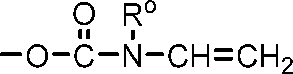


7. 구현예 6에 있어서, 화학식 II에서 R1은 H, NO2, F, Cl, Br, CF3, CH2OH 또는 CH2NRoRo'(여기서 Ro 및 Ro'는 서로 독립적으로 H 또는 C1-C4 알킬임)인, 하이드로겔 안구 삽입물.7. according to embodiment 6, in formula II R 1 is H, NO 2 , F, Cl, Br, CF 3 , CH 2 OH or CH 2 NR o R o ', wherein R o and R o ' are independent of each other to H or C 1 -C 4 alkyl), which is a hydrogel ocular implant.
8. 구현예 5 내지 7 중 어느 하나에 있어서, 상기 적어도 하나의 아릴보로노-함유 비닐 단량체는 3-비닐페닐보론산, 4-비닐페닐보론산, 3-(메트)아크릴아미도페닐보론산, 4-(메트)아크릴아미도페닐보론산, 3-(메트)아크릴아미도-5-니트로페닐보론산, 4-(메트)아크릴아미도-5-니트로페닐보론산, 4-(메트)아크릴아미도-3-니트로페닐보론산, 3-[(메트)아크릴아미도-C2-C5-알킬아미노카보닐]-5-니트로페닐보론산, 3-[(메트)아크릴로일옥시-C2-C5-알킬아미노카보닐]-5-니트로페닐보론산, 3-(메트)아크릴아미도-6-하이드록시메틸페닐보론산, 3-(메트)아크릴아미도-6-디메틸아미노메틸페닐보론산, 4-(메트)아크릴아미도-6-하이드록시메틸페닐보론산, 4-(메트)아크릴아미도-6-디메틸아미노메틸페닐보론산, 4-(1,6-디옥소-2,5-디아자-7-옥사밀)페닐보론산, 4-(N-알릴설파모일)페닐보론산, 4-(3-부테닐설포닐)페닐보론산 및 이들의 조합으로 이루어진 군으로부터 선택되는, 하이드로겔 안구 삽입물.8. The method of any one of embodiments 5-7, wherein the at least one arylborono-containing vinyl monomer is 3-vinylphenylboronic acid, 4-vinylphenylboronic acid, 3-(meth)acrylamidophenylboron Acid, 4-(meth)acrylamidophenylboronic acid, 3-(meth)acrylamido-5-nitrophenylboronic acid, 4-(meth)acrylamido-5-nitrophenylboronic acid, 4-(meth)acrylamido-5-nitrophenylboronic acid ) acrylamido-3-nitrophenylboronic acid, 3-[(meth)acrylamido-C 2 -C 5 -alkylaminocarbonyl]-5-nitrophenylboronic acid, 3-[(meth)acryloyl oxide Cy-C 2 -C 5 -Alkylaminocarbonyl]-5-nitrophenylboronic acid, 3-(meth)acrylamido-6-hydroxymethylphenylboronic acid, 3-(meth)acrylamido-6-dimethyl Aminomethylphenylboronic acid, 4-(meth)acrylamido-6-hydroxymethylphenylboronic acid, 4-(meth)acrylamido-6-dimethylaminomethylphenylboronic acid, 4-(1,6-dioxo-2) ,5-diaza-7-oxamyl)phenylboronic acid, 4-(N-allylsulfamoyl)phenylboronic acid, 4-(3-butenylsulfonyl)phenylboronic acid, and combinations thereof , hydrogel ocular implants.
9. 구현예 5 내지 7 중 어느 하나에 있어서, 상기 적어도 하나의 아릴보로노-함유 비닐 단량체는 아미노-함유 페닐보론산 유도체와 (메트)아크릴산 할라이드의 반응 생성물, 카보디이미드 및 N-하이드록시숙신이미드의 존재 하의 아미노-함유 페닐보론산 유도체와 카복시-함유 비닐 단량체의 반응 생성물, 카보디이미드 및 N-하이드록시숙신이미드의 존재 하의 카복시-함유 페닐보론산 유도체와 아미노-함유 비닐 단량체의 반응 생성물 및 이들의 조합으로 이루어진 군으로부터 선택되는, 하이드로겔 안구 삽입물.9. The method according to any one of embodiments 5 to 7, wherein the at least one arylborono-containing vinyl monomer is a reaction product of an amino-containing phenylboronic acid derivative with a (meth)acrylic acid halide, a carbodiimide and an N-hydride Reaction product of an amino-containing phenylboronic acid derivative with a carboxy-containing vinyl monomer in the presence of hydroxysuccinimide, a carboxy-containing phenylboronic acid derivative with an amino-containing vinyl in the presence of carbodiimide and N-hydroxysuccinimide A hydrogel ocular insert selected from the group consisting of reaction products of monomers and combinations thereof.
10. 구현예 9에 있어서, 카복시-함유 페닐보론산 유도체는 3-카복시페닐보론산, 4-카복시페닐보론산, 3-보로노페닐아세트산, 4-보로노페닐아세트산, 2-(4-보로노페닐)-2-메틸프로판산, 3-(4-보로노페닐)프로판산, 3-(3-보로노페닐)프로판산, 5-(3-보로노페닐)펜탄산, 5-(4-보로노페닐)펜탄산, 4-(2-카복시에틸)-3-니트로페닐보론산, 3-카복시-5-니트로페닐보론산, 4-카복시-3-클로로페닐보론산, 3-카복시-4-플루오로페닐보닉산, 3-(3-카복시프로피오닐아미노)페닐보론산, 3-아미노-3-(4-보로노페닐)프로판산 및 이들의 조합으로 이루어진 군으로부터 선택되고,10. The carboxy-containing phenylboronic acid derivative of embodiment 9 is 3-carboxyphenylboronic acid, 4-carboxyphenylboronic acid, 3-boronophenylacetic acid, 4-boronophenylacetic acid, 2-(4-boro Nophenyl)-2-methylpropanoic acid, 3-(4-boronophenyl)propanoic acid, 3-(3-boronophenyl)propanoic acid, 5-(3-boronophenyl)pentanoic acid, 5-(4 -Boronophenyl)pentanoic acid, 4-(2-carboxyethyl)-3-nitrophenylboronic acid, 3-carboxy-5-nitrophenylboronic acid, 4-carboxy-3-chlorophenylboronic acid, 3-carboxy- 4-fluorophenyl bonic acid, 3-(3-carboxypropionylamino)phenylboronic acid, 3-amino-3-(4-boronophenyl)propanoic acid, and combinations thereof;
아미노-함유 페닐보론산 유도체는 3-아미노페닐보론산, 4-아미노페닐보론산, 4-아미노-3-니트로페닐보론산, 3-아미노-6-하이드록시메틸페닐보론산, 3-아미노-6-(디메틸아미노메틸)페닐보론산, 4-아미노-2-하이드록시메틸페닐보론산, 4-아미노-2-(디메틸아미노메틸)페닐보론산, 3-아미노-4-플루오로페닐보론산, 4-(아미노메틸)-5-니트로페닐보론산, 3-(아미노메틸)-페닐보론산, 3-아미노-5-니트로페닐보론산, 3-아미노-3-(4-보로노페닐)프로판산 및 이들의 조합으로 이루어진 군으로부터 선택되고,Amino-containing phenylboronic acid derivatives include 3-aminophenylboronic acid, 4-aminophenylboronic acid, 4-amino-3-nitrophenylboronic acid, 3-amino-6-hydroxymethylphenylboronic acid, 3-amino-6 -(dimethylaminomethyl)phenylboronic acid, 4-amino-2-hydroxymethylphenylboronic acid, 4-amino-2-(dimethylaminomethyl)phenylboronic acid, 3-amino-4-fluorophenylboronic acid, 4 -(Aminomethyl)-5-nitrophenylboronic acid, 3-(aminomethyl)-phenylboronic acid, 3-amino-5-nitrophenylboronic acid, 3-amino-3-(4-boronophenyl)propanoic acid and combinations thereof,
카복실-함유 비닐 단량체는 2-아크릴아미도글리콜산, 3-아크릴아미도프로피온산, 4-아크릴아미도부탄산, 5-아크릴아미도펜탄산, 3-아크릴로일옥시프로판산, 4-아크릴로일옥시부탄산, 5-아크릴로일옥시펜탄산 및 이들의 조합으로 이루어진 군으로부터 선택되고,Carboxyl-containing vinyl monomers are 2-acrylamidoglycolic acid, 3-acrylamidopropionic acid, 4-acrylamidobutanoic acid, 5-acrylamidopentanoic acid, 3-acryloyloxypropanoic acid, 4-acrylo selected from the group consisting of yloxybutanoic acid, 5-acryloyloxypentanoic acid, and combinations thereof;
아미노-함유 비닐 단량체는 아미노-C2-C4 알킬 (메트)아크릴레이트, C1-C3 알킬아미노-C2-C4 알킬 (메트)아크릴레이트, 아미노-C2-C4 알킬 (메트)아크릴아미드, C1-C3 알킬아미노-C2-C4 알킬 (메트)아크릴아미드, 비닐아민, 알릴아민 및 이들의 조합으로 이루어진 군으로부터 선택되는, 하이드로겔 안구 삽입물.The amino-containing vinyl monomer is amino-C 2 -C 4 alkyl (meth)acrylate, C 1 -C 3 alkylamino-C 2 -C 4 alkyl (meth)acrylate, amino-C 2 -C 4 alkyl (meth) ) A hydrogel ocular implant selected from the group consisting of acrylamide, C 1 -C 3 alkylamino-C 2 -C 4 alkyl (meth)acrylamide, vinylamine, allylamine, and combinations thereof.
11. 구현예 5 내지 10 중 어느 하나에 있어서, 상기 적어도 하나의 친수성 비닐 단량체는 포스포릴콜린-함유 비닐 단량체를 포함하는, 하이드로겔 안구 삽입물.11. The hydrogel ocular insert of any one of embodiments 5-10, wherein the at least one hydrophilic vinyl monomer comprises a phosphorylcholine-containing vinyl monomer.
12. 구현예 5 내지 11 중 어느 하나에 있어서, 상기 적어도 하나의 친수성 비닐 단량체는 (메트)아크릴아미드, N,N-디메틸 (메트)아크릴아미드, N-에틸 (메트)아크릴아미드, N,N-디에틸 (메트)아크릴아미드, N-프로필 (메트)아크릴아미드, N-이소프로필 (메트)아크릴아미드, N-3-메톡시프로필 (메트)아크릴아미드 및 이들의 조합으로 이루어진 군으로부터 선택된 비닐 단량체를 포함하는, 하이드로겔 안구 삽입물.12. The method according to any one of embodiments 5 to 11, wherein the at least one hydrophilic vinyl monomer is (meth)acrylamide, N,N-dimethyl (meth)acrylamide, N-ethyl (meth)acrylamide, N,N -vinyl selected from the group consisting of diethyl (meth)acrylamide, N-propyl (meth)acrylamide, N-isopropyl (meth)acrylamide, N-3-methoxypropyl (meth)acrylamide and combinations thereof A hydrogel ocular insert comprising a monomer.
13. 구현예 5 내지 12 중 어느 하나에 있어서, 상기 적어도 하나의 친수성 비닐 단량체는 N-2-하이드록실에틸 (메트)아크릴아미드, N,N-비스(하이드록시에틸) (메트)아크릴아미드, N-3-하이드록시프로필 (메트)아크릴아미드, N-2-하이드록시프로필 (메트)아크릴아미드, 2-하이드록시에틸 (메트)아크릴레이트, 3-하이드록시프로필 (메트)아크릴레이트, 2-하이드록시프로필 (메트)아크릴레이트, 디(에틸렌 글리콜) (메트)아크릴레이트, 트리(에틸렌 글리콜) (메트)아크릴레이트, 테트라(에틸렌 글리콜) (메트)아크릴레이트, 수 평균 분자량이 최대 1500인 폴리(에틸렌 글리콜) (메트)아크릴레이트, 수 평균 분자량이 최대 1500인 폴리(에틸렌 글리콜)에틸 (메트)아크릴아미드 및 이들의 조합으로 이루어진 군으로부터 선택된 비닐 단량체를 포함하는, 하이드로겔 안구 삽입물.13. The method according to any one of embodiments 5 to 12, wherein the at least one hydrophilic vinyl monomer is N-2-hydroxylethyl (meth)acrylamide, N,N-bis(hydroxyethyl) (meth)acrylamide, N-3-hydroxypropyl (meth)acrylamide, N-2-hydroxypropyl (meth)acrylamide, 2-hydroxyethyl (meth)acrylate, 3-hydroxypropyl (meth)acrylate, 2- Hydroxypropyl (meth)acrylate, di(ethylene glycol) (meth)acrylate, tri(ethylene glycol) (meth)acrylate, tetra(ethylene glycol) (meth)acrylate, poly with number average molecular weight up to 1500 A hydrogel ocular implant comprising a vinyl monomer selected from the group consisting of (ethylene glycol) (meth)acrylate, poly(ethylene glycol)ethyl (meth)acrylamide having a number average molecular weight of up to 1500, and combinations thereof.
14. 구현예 5 내지 13 중 어느 하나에 있어서, 상기 적어도 하나의 친수성 비닐 단량체는 N-2-아미노에틸 (메트)아크릴아미드, N-2-메틸아미노에틸 (메트)아크릴아미드, N-2-에틸아미노에틸 (메트)아크릴아미드, N-2-디메틸아미노에틸 (메트)아크릴아미드, N-3-아미노프로필 (메트)아크릴아미드, N-3-메틸아미노프로필 (메트)아크릴아미드, N-3-디메틸아미노프로필 (메트)아크릴아미드, 2-아미노에틸 (메트)아크릴레이트, 2-메틸아미노에틸 (메트)아크릴레이트, 2-에틸아미노에틸 (메트)아크릴레이트, 3-아미노프로필 (메트)아크릴레이트, 3-메틸아미노프로필 (메트)아크릴레이트, 3-에틸아미노프로필 (메트)아크릴레이트, 3-아미노-2-하이드록시프로필 (메트)아크릴레이트, 트리메틸암모늄 2-하이드록시 프로필 (메트)아크릴레이트 하이드로클로라이드, 디메틸아미노에틸 (메트)아크릴레이트 및 이들의 조합으로 이루어진 군으로부터 선택된 비닐 단량체를 포함하는, 하이드로겔 안구 삽입물.14. The method of any one of embodiments 5-13, wherein the at least one hydrophilic vinyl monomer is N-2-aminoethyl (meth)acrylamide, N-2-methylaminoethyl (meth)acrylamide, N-2- Ethylaminoethyl (meth)acrylamide, N-2-dimethylaminoethyl (meth)acrylamide, N-3-aminopropyl (meth)acrylamide, N-3-methylaminopropyl (meth)acrylamide, N-3 -Dimethylaminopropyl (meth)acrylamide, 2-aminoethyl (meth)acrylate, 2-methylaminoethyl (meth)acrylate, 2-ethylaminoethyl (meth)acrylate, 3-aminopropyl (meth)acryl rate, 3-methylaminopropyl (meth)acrylate, 3-ethylaminopropyl (meth)acrylate, 3-amino-2-hydroxypropyl (meth)acrylate, trimethylammonium 2-hydroxy propyl (meth)acrylic A hydrogel ocular implant comprising a vinyl monomer selected from the group consisting of late hydrochloride, dimethylaminoethyl (meth)acrylate, and combinations thereof.
15. 구현예 5 내지 14 중 어느 하나에 있어서, 상기 적어도 하나의 친수성 비닐 단량체는 2-(메트)아크릴아미도글리콜산, (메트)아크릴산, 에틸아크릴산, 프로필아크릴산, 3-(메트)아크릴아미도프로피온산, 4-(메트)아크릴아미도부탄산, 5-(메트)아크릴아미도펜탄산, 3-(메트)아크릴로일옥시프로판산, 4-(메트)아크릴로일옥시부탄산, 5-(메트)아크릴로일옥시펜탄산 및 이들의 조합으로 이루어진 군으로부터 선택된 비닐 단량체를 포함하는, 하이드로겔 안구 삽입물.15. The method according to any one of embodiments 5 to 14, wherein the at least one hydrophilic vinyl monomer is 2-(meth)acrylamidoglycolic acid, (meth)acrylic acid, ethylacrylic acid, propylacrylic acid, 3-(meth)acrylamido Dopropionic acid, 4-(meth)acrylamidobutanoic acid, 5-(meth)acrylamidopentanoic acid, 3-(meth)acryloyloxypropanoic acid, 4-(meth)acryloyloxybutanoic acid, 5- A hydrogel ocular implant comprising a vinyl monomer selected from the group consisting of (meth)acryloyloxypentanoic acid and combinations thereof.
16. 구현예 5 내지 15 중 어느 하나에 있어서, 상기 적어도 하나의 친수성 비닐 단량체는 N-비닐피롤리돈(일명, N-비닐-2 - 피롤리돈), N-비닐-3-메틸-2-피롤리돈, N-비닐-4-메틸-2-피롤리돈, N-비닐-5-메틸-2-피롤리돈, N-비닐-6-메틸-2-피롤리돈, N-비닐-3-에틸-2-피롤리돈, N-비닐-4,5-디메틸-2-피롤리돈, N-비닐-5,5-디메틸-2-피롤리돈, N-비닐-3,3,5-트리메틸-2-피롤리돈, N-비닐 피페리돈(일명, N-비닐-2-피페리돈), N-비닐-3-메틸-2-피페리돈, N-비닐-4-메틸-2-피페리돈, N-비닐-5-메틸-2-피페리돈, N-비닐-6-메틸-2-피페리돈, N-비닐-6-에틸-2-피페리돈, N-비닐-3,5-디메틸-2-피페리돈, N-비닐-4,4-디메틸-2-피페리돈, N-비닐 카프로락탐(일명, N-비닐-2-카프로락탐), N-비닐-3-메틸-2-카프로락탐, N-비닐-4-메틸-2-카프로락탐, N-비닐-7-메틸-2-카프로락탐, N-비닐-7-에틸-2-카프로락탐, N-비닐-3,5-디메틸-2-카프로락탐, N-비닐-4,6-디메틸-2-카프로락탐, N-비닐-3,5,7-트리메틸-2-카프로락탐, N-비닐-N-메틸 아세트아미드, N-비닐 포름아미드, N-비닐 아세트아미드, N-비닐 이소프로필아미드, N-비닐-N-에틸 아세트아미드, N-비닐-N-에틸포름아미드 및 이들의 혼합물로 이루어진 군으로부터 선택된 비닐 단량체를 포함하는, 하이드로겔 안구 삽입물. 바람직하게는, N-비닐 아미드 단량체는 N-비닐피롤리돈, N-비닐-N-메틸 아세트아미드 또는 이들의 조합이다.16. The method according to any one of embodiments 5 to 15, wherein the at least one hydrophilic vinyl monomer is N-vinylpyrrolidone (aka N-vinyl-2 - pyrrolidone), N-vinyl-3-methyl-2 -Pyrrolidone, N-vinyl-4-methyl-2-pyrrolidone, N-vinyl-5-methyl-2-pyrrolidone, N-vinyl-6-methyl-2-pyrrolidone, N-vinyl -3-Ethyl-2-pyrrolidone, N-vinyl-4,5-dimethyl-2-pyrrolidone, N-vinyl-5,5-dimethyl-2-pyrrolidone, N-vinyl-3,3 ,5-trimethyl-2-pyrrolidone, N-vinyl piperidone (aka, N-vinyl-2-piperidone), N-vinyl-3-methyl-2-piperidone, N-vinyl-4-methyl- 2-piperidone, N-vinyl-5-methyl-2-piperidone, N-vinyl-6-methyl-2-piperidone, N-vinyl-6-ethyl-2-piperidone, N-vinyl-3, 5-Dimethyl-2-piperidone, N-vinyl-4,4-dimethyl-2-piperidone, N-vinyl caprolactam (aka, N-vinyl-2-caprolactam), N-vinyl-3-methyl- 2-caprolactam, N-vinyl-4-methyl-2-caprolactam, N-vinyl-7-methyl-2-caprolactam, N-vinyl-7-ethyl-2-caprolactam, N-vinyl-3, 5-Dimethyl-2-caprolactam, N-vinyl-4,6-dimethyl-2-caprolactam, N-vinyl-3,5,7-trimethyl-2-caprolactam, N-vinyl-N-methyl acetamide a vinyl monomer selected from the group consisting of , N-vinyl formamide, N-vinyl acetamide, N-vinyl isopropylamide, N-vinyl-N-ethyl acetamide, N-vinyl-N-ethylformamide and mixtures thereof. Including, hydrogel ocular insert. Preferably, the N-vinyl amide monomer is N-vinylpyrrolidone, N-vinyl-N-methyl acetamide or a combination thereof.
17. 구현예 5 내지 16 중 어느 하나에 있어서, 상기 적어도 하나의 친수성 비닐 단량체는 1-메틸-3-메틸렌-2-피롤리돈, 1-에틸-3-메틸렌-2-피롤리돈, 1-메틸-5-메틸렌-2-피롤리돈, 1-에틸-5-메틸렌-2-피롤리돈, 5-메틸-3-메틸렌-2-피롤리돈, 5-에틸-3-메틸렌-2-피롤리돈, 1-n-프로필-3-메틸렌-2-피롤리돈, 1-n-프로필-5-메틸렌-2-피롤리돈, 1-이소프로필-3-메틸렌-2-피롤리돈, 1-이소프로필-5-메틸렌-2-피롤리돈, 1-n-부틸-3-메틸렌-2-피롤리돈, 1-tert-부틸-3-메틸렌-2-피롤리돈 및 이들의 조합으로 이루어진 군으로부터 선택된 비닐 단량체를 포함하는, 하이드로겔 안구 삽입물.17. The method according to any one of embodiments 5 to 16, wherein the at least one hydrophilic vinyl monomer is 1-methyl-3-methylene-2-pyrrolidone, 1-ethyl-3-methylene-2-pyrrolidone, 1 -Methyl-5-methylene-2-pyrrolidone, 1-ethyl-5-methylene-2-pyrrolidone, 5-methyl-3-methylene-2-pyrrolidone, 5-ethyl-3-methylene-2 -pyrrolidone, 1-n-propyl-3-methylene-2-pyrrolidone, 1-n-propyl-5-methylene-2-pyrrolidone, 1-isopropyl-3-methylene-2-pyrrolidone Don, 1-isopropyl-5-methylene-2-pyrrolidone, 1-n-butyl-3-methylene-2-pyrrolidone, 1-tert-butyl-3-methylene-2-pyrrolidone and these A hydrogel ocular insert comprising a vinyl monomer selected from the group consisting of a combination of
18. 구현예 5 내지 17 중 어느 하나에 있어서, 상기 적어도 하나의 친수성 비닐 단량체는 에틸렌 글리콜 메틸 에테르 (메트)아크릴레이트, 디(에틸렌 글리콜) 메틸 에테르 (메트)아크릴레이트, 트리(에틸렌 글리콜) 메틸 에테르 (메트)아크릴레이트, 테트라(에틸렌 글리콜) 메틸 에테르 (메트)아크릴레이트, 중량 평균 분자량이 최대 1500인 C1-C4-알콕시 폴리(에틸렌 글리콜)(메트)아크릴레이트, 수 평균 분자량이 최대 1500인 메톡시-폴리(에틸렌 글리콜)에틸 (메트)아크릴아미드 및 이들의 조합으로 이루어진 군으로부터 선택된 비닐 단량체를 포함하는, 하이드로겔 안구 삽입물.18. The method of any one of embodiments 5-17, wherein the at least one hydrophilic vinyl monomer is ethylene glycol methyl ether (meth)acrylate, di(ethylene glycol) methyl ether (meth)acrylate, tri(ethylene glycol) methyl Ether (meth)acrylate, tetra(ethylene glycol) methyl ether (meth)acrylate, C 1 -C 4 -alkoxy poly(ethylene glycol) (meth)acrylate with weight average molecular weight up to 1500, number average molecular weight up to A hydrogel ocular implant comprising a vinyl monomer selected from the group consisting of 1500 methoxy-poly(ethylene glycol)ethyl (meth)acrylamide and combinations thereof.
19. 구현예 5 내지 18 중 어느 하나에 있어서, 상기 적어도 하나의 친수성 비닐 단량체는 에틸렌 글리콜 모노비닐 에테르, 디(에틸렌 글리콜) 모노비닐 에테르, 트리(에틸렌 글리콜) 모노비닐 에테르, 테트라(에틸렌 글리콜) 모노비닐 에테르, 폴리(에틸렌 글리콜) 모노비닐 에테르, 에틸렌 글리콜 메틸 비닐 에테르, 디(에틸렌 글리콜) 메틸 비닐 에테르, 트리(에틸렌 글리콜) 메틸 비닐 에테르, 테트라(에틸렌 글리콜) 메틸 비닐 에테르, 폴리(에틸렌 글리콜) 메틸 비닐 에테르 및 이들의 조합으로 이루어진 군으로부터 선택된 비닐 단량체를 포함하는, 하이드로겔 안구 삽입물.19. The method of any one of embodiments 5-18, wherein the at least one hydrophilic vinyl monomer is ethylene glycol monovinyl ether, di(ethylene glycol) monovinyl ether, tri(ethylene glycol) monovinyl ether, tetra(ethylene glycol) monovinyl ether, poly(ethylene glycol) monovinyl ether, ethylene glycol methyl vinyl ether, di(ethylene glycol) methyl vinyl ether, tri(ethylene glycol) methyl vinyl ether, tetra(ethylene glycol) methyl vinyl ether, poly(ethylene glycol) ) a hydrogel ocular insert comprising a vinyl monomer selected from the group consisting of methyl vinyl ether and combinations thereof.
20. 구현예 5 내지 19 중 어느 하나에 있어서, 상기 적어도 하나의 친수성 비닐 단량체는 알릴 알코올, 에틸렌 글리콜 모노알릴 에테르, 디(에틸렌 글리콜) 모노알릴 에테르, 트리(에틸렌 글리콜) 모노알릴 에테르, 테트라(에틸렌 글리콜) 모노알릴 에테르, 폴리(에틸렌 글리콜) 모노알릴 에테르, 에틸렌 글리콜 메틸 알릴 에테르, 디(에틸렌 글리콜) 메틸 알릴 에테르, 트리(에틸렌 글리콜) 메틸 알릴 에테르, 테트라(에틸렌 글리콜) 메틸 알릴 에테르, 폴리(에틸렌 글리콜) 메틸 알릴 에테르 및 이들의 조합으로 이루어진 군으로부터 선택된 비닐 단량체를 포함하는, 하이드로겔 안구 삽입물.20. The method of any one of embodiments 5-19, wherein the at least one hydrophilic vinyl monomer is allyl alcohol, ethylene glycol monoallyl ether, di(ethylene glycol) monoallyl ether, tri(ethylene glycol) monoallyl ether, tetra( Ethylene glycol) monoallyl ether, poly(ethylene glycol) monoallyl ether, ethylene glycol methyl allyl ether, di(ethylene glycol) methyl allyl ether, tri(ethylene glycol) methyl allyl ether, tetra(ethylene glycol) methyl allyl ether, poly A hydrogel ocular insert comprising a vinyl monomer selected from the group consisting of (ethylene glycol) methyl allyl ether and combinations thereof.
21. 구현예 1 내지 11 중 어느 하나에 있어서, 상기 적어도 하나의 아릴보로노-함유 친수성 공중합체는 (a) 약 0.1 몰% 내지 약 25 몰%의 아릴보로노-함유 반복 단위, (b) 약 55 몰% 내지 약 98.9 몰%의 적어도 하나의 포스포릴콜린-함유 비닐 단량체의 반복 단위 및 (c) 약 1 몰% 내지 약 20 몰%의 3 내지 16개의 탄소 원자를 갖는 적어도 하나의 아크릴 단량체의 아크릴 단량체 단위를 포함하는(단, 성분 (a), (b) 및 (c)와 위에서 열거되지 않은 다른 성분의 몰 백분율의 합은 100%임), 하이드로겔 안구 삽입물.21. The composition of any one of embodiments 1-11, wherein the at least one arylborono-containing hydrophilic copolymer comprises (a) from about 0.1 mol% to about 25 mol% of an arylborono-containing repeat unit, ( b) from about 55 mole % to about 98.9 mole % of at least one phosphorylcholine-containing vinyl monomer repeat unit and (c) from about 1 mole % to about 20 mole % of at least one having from 3 to 16 carbon atoms. A hydrogel ocular insert comprising acrylic monomer units of an acrylic monomer, with the proviso that the sum of the molar percentages of components (a), (b) and (c) and other components not enumerated above is 100%.
22. 구현예 1 내지 11 중 어느 하나에 있어서, 상기 적어도 하나의 아릴보로노-함유 친수성 공중합체는 (a) 약 1 몰% 내지 약 20 몰%의 아릴보로노-함유 반복 단위, (b) 약 60 몰% 내지 약 97 몰%의 적어도 하나의 포스포릴콜린-함유 비닐 단량체의 반복 단위 및 (c) 약 2 몰% 내지 약 20 몰%의 3 내지 16개의 탄소 원자를 갖는 적어도 하나의 아크릴 단량체의 아크릴 단량체 단위를 포함하는(단, 성분 (a), (b) 및 (c)와 위에서 열거되지 않은 다른 성분의 몰 백분율의 합은 100%임), 하이드로겔 안구 삽입물.22. The composition of any one of embodiments 1-11, wherein the at least one arylborono-containing hydrophilic copolymer comprises (a) from about 1 mole % to about 20 mole % arylborono-containing repeat units, ( b) from about 60 mole % to about 97 mole % of at least one repeating unit of phosphorylcholine-containing vinyl monomer and (c) from about 2 mole % to about 20 mole % of at least one having from 3 to 16 carbon atoms A hydrogel ocular insert comprising acrylic monomer units of an acrylic monomer, with the proviso that the sum of the molar percentages of components (a), (b) and (c) and other components not enumerated above is 100%.
23. 구현예 1 내지 11 중 어느 하나에 있어서, 상기 적어도 하나의 아릴보로노-함유 친수성 공중합체는 (a) 약 2 몰% 내지 약 18 몰%의 아릴보로노-함유 반복 단위, (b) 약 70 몰% 내지 약 95 몰%의 적어도 하나의 포스포릴콜린-함유 비닐 단량체의 반복 단위 및 (c) 약 3 몰% 내지 약 15 몰%의 3 내지 16개의 탄소 원자를 갖는 적어도 하나의 아크릴 단량체의 아크릴 단량체 단위를 포함하는(단, 성분 (a), (b) 및 (c)와 위에서 열거되지 않은 다른 성분의 몰 백분율의 합은 100%임), 하이드로겔 안구 삽입물.23. The composition of any one of embodiments 1-11, wherein the at least one arylborono-containing hydrophilic copolymer comprises (a) from about 2 mole % to about 18 mole % arylborono-containing repeat units, ( b) from about 70 mole % to about 95 mole % of at least one repeating unit of phosphorylcholine-containing vinyl monomer and (c) from about 3 mole % to about 15 mole % of at least one having 3 to 16 carbon atoms A hydrogel ocular insert comprising acrylic monomer units of an acrylic monomer, with the proviso that the sum of the molar percentages of components (a), (b) and (c) and other components not enumerated above is 100%.
24. 구현예 21 내지 23 중 어느 하나에 있어서, 상기 적어도 하나의 아크릴 단량체는 3 내지 14개의 탄소 원자를 갖는, 하이드로겔 안구 삽입물.24. The hydrogel ocular insert of any one of embodiments 21-23, wherein the at least one acrylic monomer has 3 to 14 carbon atoms.
25. 구현예 21 내지 23 중 어느 하나에 있어서, 상기 적어도 하나의 아크릴 단량체는 3 내지 12개의 탄소 원자를 갖는, 하이드로겔 안구 삽입물.25. The hydrogel ocular insert of any of embodiments 21-23, wherein the at least one acrylic monomer has 3 to 12 carbon atoms.
26. 구현예 21 내지 23 중 어느 하나에 있어서, 상기 적어도 하나의 아크릴 단량체는 3 내지 10개의 탄소 원자를 갖는, 하이드로겔 안구 삽입물.26. The hydrogel ocular insert of any of embodiments 21-23, wherein the at least one acrylic monomer has 3 to 10 carbon atoms.
27. 구현예 21 내지 23 중 어느 하나에 있어서, 상기 적어도 하나의 아크릴 단량체는 C1-C12 알킬 (메트)아크릴레이트, 하이드록시-치환된 C2-C12 알킬 (메트)아크릴레이트, 카복시-치환된 C2-C12 알킬 (메트)아크릴레이트, NH2-치환된 C2-C12 알킬 (메트)아크릴레이트, 메틸아미노-치환된 C2-C12 알킬 (메트)아크릴레이트, 디메틸아미노-치환된 C2-C12 알킬 (메트)아크릴레이트, 에틸아미노-치환된 C2-C10 알킬 (메트)아크릴레이트, 디에틸아미노-치환된 C2-C8 알킬 (메트)아크릴레이트, C2-C12 알킬 (메트)아크릴아미드, 하이드록시-치환된 C2-C12 알킬 (메트)아크릴아미드, 카복시-치환된 C2-C12 알킬 (메트)아크릴아이드, NH2-치환된 C2-C12 알킬 (메트)아크릴아미드, 메틸아미노-치환된 C2-C12 알킬 (메트)아크릴아미드, 디메틸아미노-치환된 C2-C12 알킬 (메트)아크릴아미드, 에틸아미노-치환된 C2-C10 알킬 (메트)아크릴아미드, 디에틸아미노-치환된 C2-C8 알킬 (메트)아크릴아미드, 에틸렌 글리콜 (메트)아크릴레이트, 디(에틸렌 글리콜) (메트)아크릴레이트, 트리(에틸렌 글리콜) (메트)아크릴레이트, 테트라(에틸렌 글리콜) (메트)아크릴레이트, 에틸렌 글리콜 메틸 에테르 (메트)아크릴레이트, 디(에틸렌 글리콜) 메틸 에테르 (메트)아크릴레이트, 트리(에틸렌 글리콜) 메틸 에테르 (메트)아크릴레이트, 테트라(에틸렌 글리콜) 메틸 에테르 (메트)아크릴레이트 및 이들의 조합으로 이루어진 군으로부터 선택되는, 하이드로겔 안구 삽입물.27. The method of any one of embodiments 21-23, wherein the at least one acrylic monomer is C 1 -C 12 alkyl (meth)acrylate, hydroxy-substituted C 2 -C 12 alkyl (meth)acrylate, carboxy -substituted C 2 -C 12 alkyl (meth)acrylate, NH 2 -substituted C 2 -C 12 alkyl (meth)acrylate, methylamino-substituted C 2 -C 12 alkyl (meth)acrylate, dimethyl Amino-substituted C 2 -C 12 alkyl (meth)acrylate, ethylamino-substituted C 2 -C 10 alkyl (meth)acrylate, diethylamino-substituted C 2 -C 8 alkyl (meth)acrylate , C 2 -C 12 alkyl (meth)acrylamide, hydroxy-substituted C 2 -C 12 alkyl (meth)acrylamide, carboxy-substituted C 2 -C 12 alkyl (meth)acrylamide, NH 2 -substituted C 2 -C 12 alkyl (meth)acrylamide, methylamino-substituted C 2 -C 12 alkyl (meth)acrylamide, dimethylamino-substituted C 2 -C 12 alkyl (meth)acrylamide, ethylamino- substituted C 2 -C 10 alkyl (meth)acrylamide, diethylamino-substituted C 2 -C 8 alkyl (meth)acrylamide, ethylene glycol (meth)acrylate, di(ethylene glycol) (meth)acrylate , tri(ethylene glycol) (meth)acrylate, tetra(ethylene glycol) (meth)acrylate, ethylene glycol methyl ether (meth)acrylate, di(ethylene glycol) methyl ether (meth)acrylate, tri(ethylene glycol) ) methyl ether (meth)acrylate, tetra(ethylene glycol) methyl ether (meth)acrylate, and combinations thereof.
28. 구현예 21 내지 23 중 어느 하나에 있어서, 상기 적어도 하나의 아크릴 단량체는 n-부틸 (메트)아크릴레이트 및/또는 디(에틸렌 글리콜) 메틸 에테르 (메트)아크릴레이트인, 하이드로겔 안구 삽입물.28. The hydrogel ocular insert according to any one of embodiments 21 to 23, wherein the at least one acrylic monomer is n-butyl (meth)acrylate and/or di(ethylene glycol) methyl ether (meth)acrylate.
29. 구현예 11 및 21 내지 28 중 어느 하나에 있어서, 포스포릴콜린-함유 비닐 단량체는 (메트)아크릴로일옥시에틸 포스포릴콜린, (메트)아크릴로일옥시프로필 포스포릴콜린, 4-((메트)아크릴로일옥시)부틸-2'-(트리메틸암모니오)에틸포스페이트, 2-[(메트)아크릴로일아미노]에틸-2'-(트리메틸암모니오)-에틸포스페이트, 3-[(메트)아크릴로일아미노]프로필-2'-(트리메틸암모니오)에틸포스페이트, 4-[(메트)아크릴로일아미노]부틸-2'-(트리메틸암모니오)에틸포스페이트, 5-((메트)아크릴로일옥시)펜틸-2'-(트리메틸암모니오)에틸 포스페이트, 6-((메트)아크릴로일옥시)헥실-2'-(트리메틸암모니오)-에틸포스페이트, 2-((메트)아크릴로일옥시)에틸-2'-(트리에틸암모니오)에틸포스페이트, 2-((메트)아크릴로일옥시)에틸-2'-(트리프로필암모니오)에틸포스페이트, 2-((메트)아크릴로일옥시)에틸-2'-(트리부틸암모니오)에틸 포스페이트, 2-((메트)아크릴로일옥시)프로필-2'-(트리메틸암모니오)-에틸포스페이트, 2-((메트)아크릴로일옥시)부틸-2'-(트리메틸암모니오)에틸포스페이트, 2-((메트)아크릴로일옥시)펜틸-2'-(트리메틸암모니오)에틸포스페이트, 2-((메트)아크릴로일옥시)헥실-2'-(트리메틸암모니오)에틸 포스페이트, 2-(비닐옥시)에틸-2'-(트리메틸암모니오)에틸포스페이트, 2-(알릴옥시)에틸-2'-(트리메틸암모니오)에틸포스페이트, 2-(비닐옥시카보닐)에틸-2'-(트리메틸암모니오)에틸 포스페이트, 2-(알릴옥시카보닐)에틸-2'-(트리메틸암모니오)-에틸포스페이트, 2-(비닐카보닐아미노)에틸-2'-(트리메틸암모니오)에틸포스페이트, 2-(알릴옥시카보닐아미노)에틸-2'-(트리메틸암모니오)에틸 포스페이트, 2-(부테노일옥시)에틸-2'-(트리메틸암모니오)에틸포스페이트 및 이들의 조합으로 이루어진 군으로부터 선택되는, 하이드로겔 안구 삽입물.29. The method according to any one of embodiments 11 and 21 to 28, wherein the phosphorylcholine-containing vinyl monomer is (meth)acryloyloxyethyl phosphorylcholine, (meth)acryloyloxypropyl phosphorylcholine, 4-( (meth)acryloyloxy)butyl-2'-(trimethylammonio)ethyl phosphate, 2-[(meth)acryloylamino]ethyl-2'-(trimethylammonio)-ethylphosphate, 3-[( Meth)acryloylamino]propyl-2'-(trimethylammonio)ethyl phosphate, 4-[(meth)acryloylamino]butyl-2'-(trimethylammonio)ethyl phosphate, 5-((meth) Acryloyloxy) pentyl-2'-(trimethylammonio)ethyl phosphate, 6-((meth)acryloyloxy)hexyl-2'-(trimethylammonio)-ethylphosphate, 2-((meth)acryl Royloxy) ethyl-2'-(triethylammonio)ethyl phosphate, 2-((meth)acryloyloxy)ethyl-2'-(tripropylammonio)ethyl phosphate, 2-((meth)acryl Royloxy)ethyl-2'-(tributylammonio)ethyl phosphate, 2-((meth)acryloyloxy)propyl-2'-(trimethylammonio)-ethylphosphate, 2-((meth)acryl Royloxy) butyl-2'-(trimethylammonio)ethyl phosphate, 2-((meth)acryloyloxy)pentyl-2'-(trimethylammonio)ethyl phosphate, 2-((meth)acryloyl oxide C)Hexyl-2'-(trimethylammonio)ethyl phosphate, 2-(vinyloxy)ethyl-2'-(trimethylammonio)ethylphosphate, 2-(allyloxy)ethyl-2'-(trimethylammonio) Ethylphosphate, 2-(vinyloxycarbonyl)ethyl-2'-(trimethylammonio)ethyl phosphate, 2-(allyloxycarbonyl)ethyl-2'-(trimethylammonio)-ethylphosphate, 2-(vinyl Carbonylamino)ethyl-2'-(trimethylammonio)ethyl phosphate, 2-(allyloxycarbonylamino)ethyl-2'-(trimethylammonio)ethyl phosphate, 2-(butenoyloxy)ethyl-2' -(trimethylammonio)ethylphosphate and combinations thereof, a hydrogel ocular implant.
30. 구현예 1 내지 20 중 어느 하나에 있어서, 아릴보로노-함유 친수성 공중합체는 (a) 약 0.1 몰% 내지 약 25 몰%의 아릴보로노-함유 반복 단위 및 (b) 약 75 몰% 내지 약 99.9 몰%의 적어도 하나의 친수성 비닐 단량체의 반복 단위를 포함하는(단, 성분 (a) 및 (b)와 위에서 열거되지 않은 다른 성분의 몰 백분율의 합은 100%임), 하이드로겔 안구 삽입물.30. The arylborono-containing hydrophilic copolymer of any one of embodiments 1-20, wherein the arylborono-containing hydrophilic copolymer comprises (a) from about 0.1 mole % to about 25 mole % arylborono-containing repeat units and (b) about 75 mole % from about 99.9 mole % to about 99.9 mole % of repeating units of at least one hydrophilic vinyl monomer, with the proviso that the sum of the mole percentages of components (a) and (b) and other components not enumerated above is 100%; Gel ocular implants.
31. 구현예 1 내지 20 중 어느 하나에 있어서, 아릴보로노-함유 친수성 공중합체는 (a) 약 0.1 몰% 내지 약 25 몰%의 아릴보로노-함유 반복 단위 및 (b) 약 80 몰% 내지 약 99 몰%의 상기 적어도 하나의 친수성 비닐 단량체의 반복 단위를 포함하는(단, 성분 (a) 및 (b)와 위에서 열거되지 않은 다른 성분의 몰 백분율의 합은 100%임), 하이드로겔 안구 삽입물.31. The arylborono-containing hydrophilic copolymer of any one of embodiments 1-20, wherein the arylborono-containing hydrophilic copolymer comprises (a) from about 0.1 mole % to about 25 mole % of an arylborono-containing repeat unit and (b) about 80 from about 99 mole % to about 99 mole % of repeating units of said at least one hydrophilic vinyl monomer with the proviso that the sum of mole percentages of components (a) and (b) and other components not enumerated above is 100%; Hydrogel ocular implant.
32. 구현예 1 내지 20 중 어느 하나에 있어서, 아릴보로노-함유 친수성 공중합체는 (a) 약 0.1 몰% 내지 약 25 몰%의 아릴보로노-함유 반복 단위 및 (b) 약 80 몰% 내지 약 98 몰%의 적어도 하나의 친수성 비닐 단량체의 반복 단위를 포함하는(단, 성분 (a) 및 (b)와 위에서 열거되지 않은 다른 성분의 몰 백분율의 합은 100%임), 하이드로겔 안구 삽입물.32. The arylborono-containing hydrophilic copolymer of any one of embodiments 1-20, wherein the arylborono-containing hydrophilic copolymer comprises (a) from about 0.1 mole % to about 25 mole % arylborono-containing repeat units and (b) about 80 from about 98 mole % to about 98 mole % of repeating units of at least one hydrophilic vinyl monomer with the proviso that the sum of the mole percentages of components (a) and (b) and other components not enumerated above is 100%; Gel ocular implants.
33. 구현예 1 내지 20 중 어느 하나에 있어서, 아릴보로노-함유 친수성 공중합체는 (a) 약 0.1 몰% 내지 약 25 몰%의 아릴보로노-함유 반복 단위 및 (b) 약 82 몰% 내지 약 97 몰%의 적어도 하나의 친수성 비닐 단량체의 반복 단위를 포함하는(단, 성분 (a) 및 (b)와 위에서 열거되지 않은 다른 성분의 몰 백분율의 합은 100%임), 하이드로겔 안구 삽입물.33. The composition of any one of embodiments 1-20, wherein the arylborono-containing hydrophilic copolymer comprises (a) from about 0.1 mole % to about 25 mole % arylborono-containing repeat units and (b) about 82 mole % from about 97 mole % to about 97 mole % of repeating units of at least one hydrophilic vinyl monomer, provided that the sum of the mole percentages of components (a) and (b) and other components not enumerated above is 100%; Gel ocular implants.
34. 구현예 1 내지 33 중 어느 하나에 있어서, 서로 독립적인 아릴보로노 기는 약 6.8 내지 9.2의 pKa를 갖는, 하이드로겔 안구 삽입물.34. The hydrogel ocular insert of any one of embodiments 1-33, wherein the arylborono groups independent of each other have a pKa of about 6.8 to 9.2.
35. 구현예 1 내지 33 중 어느 하나에 있어서, 서로 독립적인 아릴보로노 기는 약 7.0 내지 약 9.0의 pKa를 갖는, 하이드로겔 안구 삽입물.35. The hydrogel ocular implant of any one of embodiments 1-33, wherein the arylborono groups independent of each other have a pKa of from about 7.0 to about 9.0.
36. 구현예 1 내지 33 중 어느 하나에 있어서, 서로 독립적인 아릴보로노 기는 약 7.2 내지 약 8.8의 pKa를 갖는, 하이드로겔 안구 삽입물.36. The hydrogel ocular insert of any one of embodiments 1-33, wherein the arylborono groups independent of each other have a pKa of from about 7.2 to about 8.8.
37. 구현예 1 내지 33 중 어느 하나에 있어서, 서로 독립적인 아릴보로노 기는 약 7.4 내지 약 8.6의 pKa를 갖는, 하이드로겔 안구 삽입물.37. The hydrogel ocular insert of any one of embodiments 1-33, wherein the arylborono groups independent of each other have a pKa of from about 7.4 to about 8.6.
38. 구현예 1 내지 37 중 어느 하나에 있어서, 상기 적어도 하나의 아릴보로노-함유 친수성 공중합체는 약 5,000 달톤 내지 500,000 달톤의 수 평균 분자량을 갖는, 하이드로겔 안구 삽입물.38. The hydrogel ocular insert of any one of embodiments 1-37, wherein the at least one arylborono-containing hydrophilic copolymer has a number average molecular weight of about 5,000 Daltons to 500,000 Daltons.
39. 구현예 1 내지 37 중 어느 하나에 있어서, 상기 적어도 하나의 아릴보로노-함유 친수성 공중합체는 약 5,000 달톤 내지 약 400,000 달톤의 수 평균 분자량을 갖는, 하이드로겔 안구 삽입물.39. The hydrogel ocular insert of any one of embodiments 1-37, wherein the at least one arylborono-containing hydrophilic copolymer has a number average molecular weight of from about 5,000 Daltons to about 400,000 Daltons.
40. 구현예 1 내지 37 중 어느 하나에 있어서, 상기 적어도 하나의 아릴보로노-함유 친수성 공중합체는 약 5,000 달톤 내지 약 250,000 달톤의 수 평균 분자량을 갖는, 하이드로겔 안구 삽입물.40. The hydrogel ocular insert of any one of embodiments 1-37, wherein the at least one arylborono-containing hydrophilic copolymer has a number average molecular weight of from about 5,000 Daltons to about 250,000 Daltons.
41. 구현예 1 내지 40 중 어느 하나에 있어서, 상기 적어도 하나의 점막접착성 중합체는 갈락토만난 중합체를 포함하는, 하이드로겔 안구 삽입물.41. The hydrogel ocular insert of any one of embodiments 1-40, wherein the at least one mucoadhesive polymer comprises a galactomannan polymer.
42. 구현예 41에 있어서, 갈락토만난 중합체는 갈락토만난인, 하이드로겔 안구 삽입물.42. The hydrogel ocular insert of embodiment 41, wherein the galactomannan polymer is galactomannan.
43. 구현예 42에 있어서, 갈락토만난은 약 1:2 내지 1:4의 D-만노스에 대한 D-갈락토스의 비를 갖는, 하이드로겔 안구 삽입물.43. The hydrogel ocular insert of embodiment 42, wherein the galactomannan has a ratio of D-galactose to D-mannose of about 1:2 to 1:4.
44. 구현예 41 내지 43 중 어느 하나에 있어서, 갈락토만난은 구아인, 하이드로겔 안구 삽입물.44. The hydrogel ocular insert of any one of embodiments 41-43, wherein the galactomannan is guanine.
45. 구현예 1 내지 44 중 어느 하나에 있어서, 상기 적어도 하나의 점막접착성 중합체는 화학적으로 개질된 갈락토만난을 포함하는, 하이드로겔 안구 삽입물.45. The hydrogel ocular insert of any one of embodiments 1-44, wherein the at least one mucoadhesive polymer comprises a chemically modified galactomannan.
46. 구현예 45에 있어서, 화학적으로 개질된 갈락토만난은 하이드록시에틸 구아, 하이드록시프로필 구아, 메틸 구아, 에틸 구아, 프로필 구아, 카복시메틸 구아, 카복시메틸하이드록시프로필 구아, 하이드록시프로필트리모늄 클로라이드 구아 및 이들의 조합으로 이루어진 군으로부터 선택되는, 하이드로겔 안구 삽입물.46. The chemically modified galactomannan of embodiment 45, wherein the chemically modified galactomannan is hydroxyethyl guar, hydroxypropyl guar, methyl guar, ethyl guar, propyl guar, carboxymethyl guar, carboxymethylhydroxypropyl guar, hydroxypropyltri A hydrogel ocular insert selected from the group consisting of monium chloride guar and combinations thereof.
47. 구현예 45에 있어서, 화학적으로 개질된 갈락토만난은 하이드록시프로필 구아인, 하이드로겔 안구 삽입물.47. The hydrogel ocular insert of embodiment 45, wherein the chemically modified galactomannan is hydroxypropyl guanine.
48. 구현예 1 내지 47 중 어느 하나에 있어서, 상기 적어도 하나의 점막접착성 중합체는 덱스트란을 포함하는, 하이드로겔 안구 삽입물.48. The hydrogel ocular insert of any one of embodiments 1-47, wherein the at least one mucoadhesive polymer comprises dextran.
49. 구현예 1 내지 48 중 어느 하나에 있어서, 상기 적어도 하나의 점막접착성 중합체는 만난을 포함하는, 하이드로겔 안구 삽입물.49. The hydrogel ocular insert of any one of embodiments 1 to 48, wherein the at least one mucoadhesive polymer comprises mannan.
50. 구현예 1 내지 49 중 어느 하나에 있어서, 상기 적어도 하나의 점막접착성 중합체는 히알루론산을 포함하는, 하이드로겔 안구 삽입물.50. The hydrogel ocular insert of any one of embodiments 1-49, wherein the at least one mucoadhesive polymer comprises hyaluronic acid.
51. 구현예 1 내지 50 중 어느 하나에 있어서, 상기 적어도 하나의 점막접착성 중합체는 폴리비닐 알코올을 포함하는, 하이드로겔 안구 삽입물.51. The hydrogel ocular insert of any one of embodiments 1-50, wherein the at least one mucoadhesive polymer comprises polyvinyl alcohol.
52. 구현예 1 내지 51 중 어느 하나에 있어서, 상기 적어도 하나의 점막접착성 중합체는 하이드로겔 안구 삽입물의 건조 중량에 대해 약 50 중량% 내지 약 99 중량%의 양으로 존재하는, 하이드로겔 안구 삽입물.52. The hydrogel ocular insert of any one of embodiments 1-51, wherein the at least one mucoadhesive polymer is present in an amount of from about 50% to about 99% by weight relative to the dry weight of the hydrogel ocular insert. .
53. 구현예 1 내지 51 중 어느 하나에 있어서, 상기 적어도 하나의 점막접착성 중합체는 하이드로겔 안구 삽입물의 건조 중량에 대해 약 60 중량% 내지 약 99 중량 중량%의 양으로 존재하는, 하이드로겔 안구 삽입물.53. The hydrogel eye of any one of embodiments 1-51, wherein the at least one mucoadhesive polymer is present in an amount of from about 60% to about 99% by weight relative to the dry weight of the hydrogel ocular insert. insertion.
54. 구현예 1 내지 51 중 어느 하나에 있어서, 상기 적어도 하나의 점막접착성 중합체는 하이드로겔 안구 삽입물의 건조 중량에 대해 약 70 중량% 내지 약 98 중량%의 양으로 존재하는, 하이드로겔 안구 삽입물.54. The hydrogel ocular insert of any one of embodiments 1-51, wherein the at least one mucoadhesive polymer is present in an amount of from about 70% to about 98% by weight relative to the dry weight of the hydrogel ocular insert. .
55. 구현예 1 내지 51 중 어느 하나에 있어서, 상기 적어도 하나의 점막접착성 중합체는 하이드로겔 안구 삽입물의 건조 중량에 대해 약 80 중량% 내지 약 98 중량%의 양으로 존재하는, 하이드로겔 안구 삽입물.55. The hydrogel ocular insert of any one of embodiments 1-51, wherein the at least one mucoadhesive polymer is present in an amount of from about 80% to about 98% by weight relative to the dry weight of the hydrogel ocular insert. .
56. 구현예 1 내지 55 중 어느 하나에 있어서, 하이드로겔 안구 삽입물은 pH 약 7.5 내지 9.5의 수용액에서 가수분해적으로 안정하고, 완전히 수화되었을 때, (실온, 약 22℃ 내지 28℃에서) 약 10 중량% 내지 약 70 중량%의 평형 수분 함량을 갖는, 하이드로겔 안구 삽입물.56. The hydrogel ocular insert of any one of embodiments 1-55, wherein the hydrogel ocular insert is hydrolytically stable in an aqueous solution having a pH of about 7.5 to 9.5, and when fully hydrated (at room temperature, at about 22°C to 28°C) about A hydrogel ocular insert having an equilibrium water content of from 10% to about 70% by weight.
57. 구현예 1 내지 55 중 어느 하나에 있어서, 하이드로겔 안구 삽입물은 pH 약 7.5 내지 9.5의 수용액에서 가수분해적으로 안정하고, 완전히 수화되었을 때, (실온, 약 22℃ 내지 28℃에서) 약 20 중량% 내지 약 65 중량%의 평형 수분 함량을 갖는, 하이드로겔 안구 삽입물.57. The hydrogel ocular insert of any one of embodiments 1-55, wherein the hydrogel ocular insert is hydrolytically stable in an aqueous solution having a pH of about 7.5 to 9.5, and when fully hydrated (at room temperature, about 22° C. to 28° C.) about A hydrogel ocular insert having an equilibrium moisture content of from 20% to about 65% by weight.
58. 구현예 1 내지 55 중 어느 하나에 있어서, 하이드로겔 안구 삽입물은 pH 약 7.5 내지 9.5의 수용액에서 가수분해적으로 안정하고, 완전히 수화되었을 때, (실온, 약 22℃ 내지 28℃에서) 약 25 중량% 내지 약 60 중량%의 평형 수분 함량을 갖는, 하이드로겔 안구 삽입물.58. The hydrogel ocular insert of any one of embodiments 1-55, wherein the hydrogel ocular insert is hydrolytically stable in an aqueous solution of pH about 7.5 to 9.5, and when fully hydrated (at room temperature, about 22° C. to 28° C.) about A hydrogel ocular insert having an equilibrium moisture content of from 25% to about 60% by weight.
59. 구현예 1 내지 55 중 어느 하나에 있어서, 하이드로겔 안구 삽입물은 pH 약 7.5 내지 9.5의 수용액에서 가수분해적으로 안정하고, 완전히 수화되었을 때, (실온, 약 22℃ 내지 28℃에서) 약 30 중량% 내지 약 55 중량%의 평형 수분 함량을 갖는, 하이드로겔 안구 삽입물.59. The hydrogel ocular insert of any one of embodiments 1-55, wherein the hydrogel ocular insert is hydrolytically stable in an aqueous solution having a pH of about 7.5 to 9.5, and when fully hydrated (at room temperature, at about 22°C to 28°C) about A hydrogel ocular insert having an equilibrium moisture content of from 30% to about 55% by weight.
60. 구현예 1 내지 59 중 어느 하나에 있어서, 하이드로겔 안구 삽입물은 임의의 하나의 치수의 최대 크기가 5 내지 6 mm인 형상을 갖는, 하이드로겔 안구 삽입물.60. The hydrogel ocular insert of any one of embodiments 1-59, wherein the hydrogel ocular insert has a shape with a maximum size of 5-6 mm in any one dimension.
61. 구현예 60에 있어서, 하이드로겔 안구 삽입물의 형상은 봉상물, 구체, 타원형, 링, 정사각형, 직사각형, 삼각형 또는 불규칙한 형상인, 하이드로겔 안구 삽입물.61. The hydrogel ocular insert of embodiment 60, wherein the shape of the hydrogel ocular insert is a rod, sphere, oval, ring, square, rectangular, triangular or irregular shape.
62. 구현예 1 내지 61 중 어느 하나에 있어서, 하이드로겔 안구 삽입물의 두께는 약 50 내지 약 400 μm인, 하이드로겔 안구 삽입물.62. The hydrogel ocular insert of any one of embodiments 1-61, wherein the hydrogel ocular insert has a thickness of about 50 to about 400 μm.
63. 구현예 1 내지 61 중 어느 하나에 있어서, 하이드로겔 안구 삽입물의 두께는 약 60 내지 약 300 μm인, 하이드로겔 안구 삽입물.63. The hydrogel ocular insert of any one of embodiments 1-61, wherein the hydrogel ocular insert has a thickness of about 60 to about 300 μm.
64. 구현예 1 내지 61 중 어느 하나에 있어서, 하이드로겔 안구 삽입물의 두께는 약 60 내지 약 250 μm인, 하이드로겔 안구 삽입물.64. The hydrogel ocular insert of any one of embodiments 1-61, wherein the hydrogel ocular insert has a thickness of about 60 to about 250 μm.
65. 구현예 1 내지 64 중 어느 하나에 있어서, 하이드로겔 안구 삽입물의 눈에서의 용해 시간은 적어도 3시간인, 하이드로겔 안구 삽입물.65. The hydrogel ocular insert of any one of embodiments 1-64, wherein the dissolution time in the eye of the hydrogel ocular insert is at least 3 hours.
66. 구현예 1 내지 64 중 어느 하나에 있어서, 하이드로겔 안구 삽입물의 눈에서의 용해 시간은 적어도 4시간인, 하이드로겔 안구 삽입물.66. The hydrogel ocular insert of any one of embodiments 1-64, wherein the dissolution time in the eye of the hydrogel ocular insert is at least 4 hours.
67. 구현예 1 내지 64 중 어느 하나에 있어서, 하이드로겔 안구 삽입물의 눈에서의 용해 시간은 약 4 내지 24시간인, 하이드로겔 안구 삽입물.67. The hydrogel ocular insert of any one of embodiments 1-64, wherein the dissolution time in the eye of the hydrogel ocular insert is about 4 to 24 hours.
68. 구현예 1 내지 67 중 어느 하나에 있어서, 하이드로겔 안구 삽입물은 층상 구조를 갖고, 2개의 제2 하이드로겔 층들 사이에 샌드위치된 제1 하이드로겔 층을 포함하고, 제1 하이드로겔 층은 제1 가교의 제1 가교 밀도를 갖고, 제2 하이드로겔 층은 제2 가교의 제2 가교 밀도를 가지며, 제1 가교 밀도는 제2 가교 밀도보다 더 높고/높거나 제1 가교는 제2 가교보다 더 안정한(즉, 눈의 눈물 내에서 제2 가교보다 더 서서히 가수분해됨), 하이드로겔 안구 삽입물.68. The hydrogel ocular insert of any one of embodiments 1 to 67, wherein the hydrogel ocular insert has a layered structure and comprises a first hydrogel layer sandwiched between two second hydrogel layers, the first hydrogel layer comprising a first has a first crosslink density of 1 crosslinks, the second hydrogel layer has a second crosslink density of second crosslinks, the first crosslink density is higher than the second crosslink density and/or the first crosslinks are higher than the second crosslinks density A more stable (ie, hydrolyzed more slowly than the second bridge within the tear of the eye), a hydrogel ocular implant.
69. 구현예 1 내지 68 중 어느 하나에 있어서, 하이드로겔 안구 삽입물은 하나 이상의 추가의 약제학적 활성제를 포함하는, 하이드로겔 안구 삽입물.69. The hydrogel ocular insert of any one of embodiments 1-68, wherein the hydrogel ocular insert comprises one or more additional pharmaceutically active agents.
70. 구현예 69에 있어서, 상기 하나 이상의 추가의 약제학적 활성제는 안구 윤활제, 항-충혈 완화제(예컨대, 브리모니딘 타르트레이트, 테트라하이드로졸린, 나파졸린), 냉각제(예컨대, 멘톨), 안구 통증 및 염증을 완화시키기 위한 스테로이드 및 비스테로이드성 항염증제, 항생제, 항-히스타민(예컨대, 올로파타딘), 감염성 결막염에 대한 항-바이러스제, 항생제 및 항-박테리아제, 근시 치료를 위한 항-무스카린제(예컨대, 아트로핀 및 이의 유도체) 및 녹내장 약물 전달(예컨대, 프로스타글란딘 및 프로스타글란딘 유사체, 예컨대, 트라보프로스트) 및 이들의 치료학적으로 적합한 조합으로 이루어진 군으로부터 선택되는, 하이드로겔 안구 삽입물.70. The method of embodiment 69, wherein the one or more additional pharmaceutically active agents are ocular lubricants, anti-decongestants (eg brimonidine tartrate, tetrahydrozoline, naphazoline), coolants (eg menthol), ocular pain and steroid and non-steroidal anti-inflammatory agents to relieve inflammation, antibiotics, anti-histamines (eg, olopatadine), anti-viral agents, antibiotics and anti-bacterial agents for infectious conjunctivitis, anti-muscarinic agents for the treatment of myopia (eg, atropine and its derivatives) and glaucoma drug delivery (eg, prostaglandins and prostaglandin analogs such as travoprost) and therapeutically suitable combinations thereof.
71. 구현예 1 내지 70 중 어느 하나에 있어서, 하이드로겔 안구 삽입물은, 밀봉되고 멸균된 패키지 내의 패키징 수용액에 보관되는, 하이드로겔 안구 삽입물.71. The hydrogel ocular insert of any one of embodiments 1-70, wherein the hydrogel ocular insert is stored in an aqueous packaging solution in a sealed and sterile package.
72. 구현예 71에 있어서, 패키징 수용액은 약 7.5 내지 약 9.0의 pH 및 약 200 내지 약 450 밀리오스몰(mOsm)의 장성을 갖는, 하이드로겔 안구 삽입물.72. The hydrogel ocular insert of embodiment 71, wherein the aqueous packaging solution has a pH of about 7.5 to about 9.0 and a tonicity of about 200 to about 450 milliosmoles (mOsm).
73. 구현예 71 또는 72에 있어서, 패키징 수용액은 계면활성제, 항박테리아제, 보존제, 윤활제(예를 들어, 셀룰로스 유도체, 폴리비닐 알코올, 폴리비닐피롤리돈) 또는 이들의 조합을 포함하는, 하이드로겔 안구 삽입물.73. The hydrogel of embodiment 71 or 72, wherein the aqueous packaging solution comprises a surfactant, an antibacterial agent, a preservative, a lubricant (eg, a cellulose derivative, polyvinyl alcohol, polyvinylpyrrolidone) or a combination thereof. Gel ocular implants.
74. 구현예 1 내지 73 중 어느 하나의 하이드로겔 안구 삽입물을 제조하는 방법으로서, 안구 삽입물의 형태이거나 안구 삽입물의 형태로 기계 가공되는 하이드로겔을 형성하기 위해 반응성 조성물을 경화시키는 단계를 포함하고, 반응성 조성물은 둘 모두 용매에 용해된 것인 상기 적어도 하나의 아릴보로노-함유 친수성 공중합체 및 상기 적어도 하나의 점막접착성 중합체를 포함하는, 방법.74. A method of making the hydrogel ocular insert of any one of embodiments 1 to 73, comprising curing the reactive composition to form a hydrogel in the form of an ocular insert or machined into the form of an ocular insert, wherein the reactive composition comprises said at least one arylborono-containing hydrophilic copolymer and said at least one mucoadhesive polymer, both dissolved in a solvent.
75. 구현예 74에 있어서, 용매는 물, 또는 물과, 물과 혼화성인 하나 이상의 유기 용매의 혼합물인, 방법.75. The method of embodiment 74, wherein the solvent is water or a mixture of water and one or more organic solvents that are miscible with water.
76. 구현예 74에 있어서, 용매는 유기 용매 또는 2개 이상의 유기 용매의 혼합물인, 방법.76. The method of embodiment 74, wherein the solvent is an organic solvent or a mixture of two or more organic solvents.
77. 구현예 74 내지 76 중 어느 하나에 있어서, 경화시키는 단계는 상기 적어도 하나의 아릴보로노-함유 친수성 공중합체의 하나의 제1 용액을 몰드에서 상기 적어도 하나의 점막접착성 친수성 중합체의 하나의 제2 용액과 혼합하여 상기 적어도 하나의 아릴보로노-함유 친수성 공중합체 및 상기 적어도 하나의 점막접착성 중합체가 아릴보로노-함유 친수성 공중합체의 하나의 아릴보로노 기와 점막접착성 중합체의 하나의 1,2-디올, 1,3-디올, α-하이드록시카복실산 또는 β-하이드록시카복실산 모이어티 간에 각각 형성된 가교를 통해 가교되는 pH를 갖는 반응성 조성물을 수득함으로써 수행되는, 방법.77. The method of any one of embodiments 74-76, wherein curing comprises pouring the first solution of the at least one arylborono-containing hydrophilic copolymer into a mold with the one of the at least one mucoadhesive hydrophilic polymer. wherein said at least one arylborono-containing hydrophilic copolymer and said at least one mucoadhesive polymer are mucoadhesive with one arylborono group of the arylborono-containing hydrophilic copolymer by mixing with a second solution of and obtaining a reactive composition having a pH that is crosslinked via crosslinking respectively formed between one 1,2-diol, 1,3-diol, α-hydroxycarboxylic acid or β-hydroxycarboxylic acid moiety of a polymer.
78. 구현예 74 내지 76 중 어느 하나에 있어서, 경화시키는 단계는 몰드에서 상기 적어도 하나의 아릴보로노-함유 친수성 공중합체와 상기 적어도 하나의 점막접착성 친수성 중합체의 혼합물을 함유하는 제3 용액의 pH를 상기 적어도 하나의 아릴보로노-함유 친수성 공중합체 및 상기 적어도 하나의 점막접착성 중합체가 아릴보로노-함유 친수성 공중합체의 하나의 아릴보로노 기와 점막접착성 중합체의 하나의 1,2-디올, 1,3-디올, α-하이드록시카복실산 또는 β-하이드록시카복실산 모이어티 간에 각각 형성된 가교를 통해 가교되는 pH로 증가시킴으로써 수행되는, 방법.78. The third solution of any one of embodiments 74-76, wherein the curing step contains a mixture of the at least one arylborono-containing hydrophilic copolymer and the at least one mucoadhesive hydrophilic polymer in a mold. wherein the pH of the at least one arylborono-containing hydrophilic copolymer and the at least one mucoadhesive polymer is of one arylborono group of the arylborono-containing hydrophilic copolymer and one of the mucoadhesive polymer increasing the pH to be crosslinked via crosslinking respectively formed between 1,2-diol, 1,3-diol, α-hydroxycarboxylic acid or β-hydroxycarboxylic acid moieties.
79. 구현예 78에 있어서, pH의 증가는 약 10.0 이상의 pH를 갖는 염기 용액을 첨가함으로써 수행되는, 방법.79. The method of embodiment 78, wherein increasing the pH is performed by adding a base solution having a pH of about 10.0 or greater.
80. 구현예 74 내지 79 중 어느 하나에 있어서, 경화시키는 단계는 반응성 사출 성형 기법에 따라 수행되는, 방법.80. The method of any one of embodiments 74-79, wherein the curing step is performed according to a reactive injection molding technique.
81. 구현예 74 내지 80 중 어느 하나에 있어서, 하이드로겔을 안정화시키고 하이드로겔을 완전히 수화시키기 위한 pH를 갖는 수용액과 하이드로겔을 접촉시키는 단계; 및 하이드로겔을 멸균시키는 단계를 추가로 포함하는, 방법.81. The method of any one of embodiments 74-80, comprising contacting the hydrogel with an aqueous solution having a pH to stabilize the hydrogel and fully hydrate the hydrogel; and sterilizing the hydrogel.
82. 구현예 74 내지 81 중 어느 하나에 있어서, 하이드로겔 삽입물을 패키지 내의 패키징 수용액 내에 배치하는 단계; 패키지를 밀봉하는 단계; 및 밀봉된 패키지를 그 안의 패키징 수용액에 침지된 하이드로겔 안구 삽입물로 멸균시키는 단계를 추가로 포함하는, 방법.82. The method of any one of embodiments 74-81, further comprising: placing the hydrogel insert in an aqueous packaging solution within a package; sealing the package; and sterilizing the sealed package with a hydrogel ocular insert immersed in the aqueous packaging solution therein.
83. 대상체의 눈의 질병 또는 장애를 치료하기 위한 구현예 1 내지 73 중 어느 하나의 하이드로겔 안구 삽입물을 사용하는 방법으로서, 하이드로겔 안구 삽입물을 눈에 투여하는 단계를 포함하는, 방법.83. A method of using the hydrogel ocular insert of any one of embodiments 1 to 73 for treating a disease or disorder of the eye in a subject, comprising administering the hydrogel ocular insert to the eye.
본 개시내용은 당업자가 본 발명을 실시하는 것을 가능하게 할 것이다. 본 명세서에 기재된 다양한 구현예에 대한 다양한 수정, 변형 및 조합이 이루어질 수 있다. 독자가 특정 구현예 및 이의 이점을 더 잘 이해할 수 있도록 하기 위해, 하기 실시예를 참조하는 것이 제안된다. 본 명세서 및 실시예는 예시적인 것으로 간주되도록 의도된다.The present disclosure will enable any person skilled in the art to practice the present invention. Various modifications, variations, and combinations of the various embodiments described herein can be made. To enable the reader to better understand particular embodiments and their advantages, reference is made to the following examples. This specification and examples are intended to be considered illustrative.
화학 물질chemical substance
다음 약어가 하기 실시예에서 사용된다: NVP는 N-비닐피롤리돈을 나타내고; VPBA는 4-비닐페닐보론산을 나타내고; PVA는 폴리비닐알코올을 나타내고; PVP는 폴리비닐피롤리돈을 나타내고; HA는 히알루론산을 나타내고; HP-구아는 하이드록시프로필 구아를 나타내고; MPC는 2-메트아크릴로일옥시에틸 포스포릴콜린을 나타내고; PBS는, 25℃에서 pH가 7.2±0.2이고, 약 0.044 wt.%의 NaH2PO4·H2O, 약 0.388 wt.%의 Na2HPO4·2H2O, 및 약 0.79 wt.%의 NaCl을 함유하는 포스페이트 완충 식염수를 나타내고; wt.%는 중량 퍼센트를 나타내고; TAA는 tert-아밀 알코올을 나타내고; PrOH는 1-프로판올을 나타내고; IPA는 이소프로판올을 나타내고; PEG200MA는 수 평균 분자량(Mn)이 200 달톤인 폴리에틸렌 글리콜 모노메타크릴레이트를 나타내고; PEG300MA는 수 평균 분자량(Mn)이 300 달톤인 폴리에틸렌 글리콜 모노메타크릴레이트를 나타내고; PEG950MA는 수 평균 분자량(Mn)이 950 달톤인 폴리에틸렌 글리콜 모노메타크릴레이트를 나타내고; DMA는 N,N-디메틸아크릴아미드를 나타내고; BMA는 n-부틸 메타크릴레이트를 나타내고; AAPH는 2,2'-아조비스-(2-아미디노프로판 디하이드로클로라이드를 나타내고; DI 수는 탈이온수를 나타내고; βME는 β-머캅토에탄올을 나타내고; HPMC는 하이드록시프로필 메틸셀룰로스를 나타내고; PEG400은 수 평균 분자량이 400 달톤인 폴리에틸렌 글리콜을 나타내고; VAZO 64는 2,2'-디메틸-2,2'아조디프로피오노니트릴을 나타낸다.The following abbreviations are used in the following examples: NVP stands for N-vinylpyrrolidone; VPBA represents 4-vinylphenylboronic acid; PVA represents polyvinyl alcohol; PVP stands for polyvinylpyrrolidone; HA stands for hyaluronic acid; HP-Guar stands for hydroxypropyl guar; MPC represents 2-methacryloyloxyethyl phosphorylcholine; PBS has a pH of 7.2±0.2 at 25° C., about 0.044 wt.% NaH 2 PO 4 .H 2 O, about 0.388 wt.% Na 2 HPO 4 .2H 2 O, and about 0.79 wt.% phosphate buffered saline containing NaCl; wt.% represents weight percent; TAA represents tert-amyl alcohol; PrOH represents 1-propanol; IPA stands for isopropanol; PEG 200 MA represents polyethylene glycol monomethacrylate having a number average molecular weight (Mn) of 200 daltons; PEG 300 MA represents polyethylene glycol monomethacrylate having a number average molecular weight (Mn) of 300 daltons; PEG 950 MA represents polyethylene glycol monomethacrylate having a number average molecular weight (Mn) of 950 daltons; DMA stands for N,N-dimethylacrylamide; BMA stands for n-butyl methacrylate; AAPH stands for 2,2'-azobis-(2-amidinopropane dihydrochloride; DI water stands for deionized water; βME stands for β-mercaptoethanol; HPMC stands for hydroxypropyl methylcellulose; PEG400 stands for polyethylene glycol having a number average molecular weight of 400 Daltons; VAZO 64 stands for 2,2'-dimethyl-2,2'azodipropiononitrile.
실시예 1Example 1
본 실시예는 (a) 아릴보로노-함유 비닐 단량체(VPBA) 및 (b) 친수성 비닐 단량체(NVP 또는 PEG200MA)를 포함하는 중합 가능한 조성물을 공중합하여 아릴보로노-함유 친수성 공중합체를 제조하는 방법을 설명한다. 생성된 아릴보로노-함유 친수성 공중합체의 분자량은 VPB 공중합체의 분자량을 결정하기 위한 풀루란(Pullulan) 표준(Ready Cal-Kit Pullulan high(180 - 1.22M MP): Part No. PSS-Pulkitrih)을 사용하여 GPC/RI 방법에 의해 결정된다(GPC 컬럼: Waters Ultra-Hydrogel Linear 300X7.8mm 컬럼; 오븐 온도: 30℃; RI-검출기: 실온; 용리액: 0.2 M 질산나트륨 및 0.02 w/w% 아지드화나트륨의 수용액; 유량: 0.5 mL/분; 샘플 농도: 3 g/L; 주입량: 100 μl).This example is an arylborono-containing hydrophilic copolymer by copolymerizing a polymerizable composition comprising (a) an arylborono-containing vinyl monomer (VPBA) and (b) a hydrophilic vinyl monomer (NVP or PEG 200 MA). A method of manufacturing will be described. The molecular weight of the resulting arylborono-containing hydrophilic copolymer was determined by the Pullulan standard for determining the molecular weight of the VPB copolymer (Ready Cal-Kit Pullulan high (180 - 1.22M MP): Part No. PSS-Pulkitrih). ) using the GPC/RI method (GPC column: Waters Ultra-Hydrogel Linear 300X7.8 mm column; oven temperature: 30°C; RI-detector: room temperature; eluent: 0.2 M sodium nitrate and 0.02 w/w% aqueous solution of sodium azide; flow rate: 0.5 mL/min; sample concentration: 3 g/L; injection volume: 100 μl).
NVP-VPBA 공중합체의 합성Synthesis of NVP-VPBA copolymer
100 ml 환저 플라스크에, 1-페닐비닐보론산 0.32 g, NVP 4.47 g 및 0.047 g의 Vazo 64를 첨가한다. 질소 유입구는 플라스크뿐만 아니라 물 응축기에 연결되어 있다. 플라스크를 자기 교반으로 오일 배쓰에 넣고, 75℃에서 5시간 동안 가열한다. 반응 혼합물을 실온까지 냉각시킨 후, 이를 20 ml의 유리 바이알로 옮긴다. 밤새 바늘을 통해 질소를 액체에 불어넣고 호박색(amber color)의 매우 끈적한 액체를 수득한다. 수득된 생성물의 수용액(2 중량%)은 완전히 투명하다. 수성 상 GPC 시험은 367 K Da의 수 평균 분자량과 2.6의 다분산도를 나타낸다.To a 100 ml round bottom flask, 0.32 g of 1-phenylvinylboronic acid, 4.47 g of NVP and 0.047 g of Vazo 64 are added. The nitrogen inlet is connected to the flask as well as to the water condenser. The flask is placed in an oil bath with magnetic stirring and heated at 75° C. for 5 hours. After the reaction mixture is cooled to room temperature, it is transferred to a 20 ml glass vial. Blow nitrogen into the liquid through a needle overnight and a very sticky liquid of amber color is obtained. The aqueous solution (2% by weight) of the product obtained is completely transparent. The aqueous phase GPC test shows a number average molecular weight of 367 K Da and a polydispersity of 2.6.
이원 공중합체 - 폴리(PEGBinary Copolymer - Poly(PEG) 200200 MA-co-VPBA)의 합성MA-co-VPBA) synthesis
약 1.133 g의 VPBA를 25.0 g의 PrOH에 용해시켜 VPBA 용액을 수득하고, 이를 5 μm 나일론 필터가 장착된 주사기를 통해 N2 유입구, 오버헤드 교반기, 열전대, 응축기 및 버블러가 장착된 500 mL 반응기에 도입한다. 약 18.88 g의 PEG200MA를 20.0 g의 DI 수에 용해시키고, 반응기에 부어 넣고, 추가의 2 X 20.0 g의 DI 수로 헹군다. 약 00693 g의 AAPH를 5.0 g의 DI 수에 용해시키고, 반응기에 부어 넣고, 추가의 2 X 5.0 g의 DI 수로 헹군 후, 15.0 g의 DI 수 및 65.0 g의 PrOH로 헹군다. 약 3.65 mL의 머캅토에탄올(βME) 용액(100 mL의 DI 수 중 0.274 g의 βME)을 마이크로피펫으로 첨가한다.About 1.133 g of VPBA was dissolved in 25.0 g of PrOH to obtain a VPBA solution, which was passed through a syringe equipped with a 5 μm nylon filter into a 500 mL reactor equipped with an N 2 inlet, overhead stirrer, thermocouple, condenser and bubbler. be introduced into About 18.88 g of PEG 200 MA is dissolved in 20.0 g of DI water, poured into the reactor and rinsed with an additional 2×20.0 g of DI water. About 00693 g AAPH is dissolved in 5.0 g DI water, poured into the reactor, rinsed with an additional 2 X 5.0 g DI water, followed by 15.0 g DI water and 65.0 g PrOH. Add about 3.65 mL of mercaptoethanol (βME) solution (0.274 g of βME in 100 mL of DI water) with a micropipette.
반응 용액을 150 rpm으로 교반하면서 20℃에서 30분 동안 질소(200 mL/분)로 퍼징한다. 질소 흐름을 블랭킷(blanket)으로 감소시키고, 공중합 용액을 다음 스케줄에 따라 가열한다: 61℃까지 도달하는 데 2시간 소요; 61℃에서 약 8시간 동안 유지; 및 20℃까지 냉각시키는 데 2시간 소요.The reaction solution is purged with nitrogen (200 mL/min) at 20° C. for 30 minutes while stirring at 150 rpm. The nitrogen flow is reduced to a blanket and the copolymerization solution is heated according to the following schedule: 2 hours to reach 61° C.; hold at 61° C. for about 8 hours; and 2 hours to cool to 20°C.
실시예 2Example 2
본 실시예는 (a) 아릴보로노-함유 비닐 단량체(VPBA) 및 (b) 2개의 친수성 비닐 단량체(MPC 또는 PEG200MA)를 포함하는 중합 가능한 조성물을 공중합하여 아릴보로노-함유 친수성 공중합체를 제조하는 방법을 설명한다. 생성된 아릴보로노-함유 친수성 공중합체의 분자량은 실시예 1에 기재된 바와 같은 GPC/RI 방법에 의해 결정된다.This example copolymerizes a polymerizable composition comprising (a) an arylborono-containing vinyl monomer (VPBA) and (b) two hydrophilic vinyl monomers (MPC or PEG 200 MA) to obtain an arylborono-containing hydrophilic property. A method for preparing the copolymer is described. The molecular weight of the resulting arylborono-containing hydrophilic copolymer was determined by the GPC/RI method as described in Example 1.
삼원중합체 - 폴리(PEGTerpolymer - Poly(PEG) 200200 MA-co-MPC-co-VPBA) 삼원중합체의 합성MA-co-MPC-co-VPBA) terpolymer synthesis
약 1.011 g의 VPBA를 25.0 g의 PrOH에 용해시켜 VPBA 용액을 수득하고, 이를 5 μm 나일론 필터가 장착된 주사기를 통해 N2 유입구, 오버헤드 교반기, 열전대, 응축기 및 버블러가 장착된 500 mL 반응기에 도입한다. 약 12.278 g의 PEG200MA를 20.0 g의 DI 수에 용해시키고, 반응기에 부어 넣고, 추가의 15.0 g의 DI 수로 헹군다. 약 6.714 g의 MPC를 20.0 g의 DI 수에 용해시키고, 반응기에 부어 넣고, 추가의 15.0 g의 DI 수로 헹군다. 약 00693 g의 AAPH를 5.0 g의 탈이온수에 용해시키고, 반응기에 부어 넣고, 추가의 2 X 5.0 g의 탈이온수로 헹군 후, 5.0 g의 탈이온수 및 65.0 g의 n-프로판올로 헹군다. 약 3.65 mL의 머캅토에탄올(βME) 용액(100 mL의 DI 수 중 0.274 g의 βME)을 마이크로피펫으로 첨가한다.About 1.011 g of VPBA was dissolved in 25.0 g of PrOH to obtain a VPBA solution, which was passed through a syringe equipped with a 5 μm nylon filter into a 500 mL reactor equipped with an N 2 inlet, overhead stirrer, thermocouple, condenser and bubbler. be introduced into About 12.278 g of PEG 200 MA is dissolved in 20.0 g of DI water, poured into the reactor and rinsed with an additional 15.0 g of DI water. About 6.714 g of MPC is dissolved in 20.0 g of DI water, poured into the reactor and rinsed with an additional 15.0 g of DI water. About 00693 g of AAPH is dissolved in 5.0 g of deionized water, poured into the reactor, rinsed with an additional 2 X 5.0 g of deionized water, followed by a rinse with 5.0 g of deionized water and 65.0 g of n-propanol. Add about 3.65 mL of mercaptoethanol (βME) solution (0.274 g of βME in 100 mL of DI water) with a micropipette.
반응 용액을 150 rpm으로 교반하면서 20℃에서 30분 동안 질소(200 mL/분)로 퍼징한다. 질소 흐름을 블랭킷으로 감소시키고, 공중합 용액을 다음 스케줄에 따라 가열한다: 61℃까지 도달하는 데 2시간 소요; 61℃에서 약 8시간 동안 유지; 및 20℃까지 냉각시키는 데 2시간 소요.The reaction solution is purged with nitrogen (200 mL/min) at 20° C. for 30 minutes while stirring at 150 rpm. Reduce the nitrogen flow to a blanket and heat the copolymerization solution according to the following schedule: 2 hours to reach 61° C.; hold at 61° C. for about 8 hours; and 2 hours to cool to 20°C.
다양한 공중합체(이원 또는 삼원)를 표 1에 나타낸 바와 같이, 비닐 단량체의 양 및 유형이 상이하다는 점을 제외하고는, 상기 기재된 절차에 따라 제조한다.Various copolymers (binary or ternary) were prepared according to the procedure described above, except that the amounts and types of vinyl monomers were different, as shown in Table 1.
[표 1][Table 1]

* 공중합체에서 보론산(BA) 기의 농도(밀리당량)는 적정(titration)에 의해 결정됨* The concentration (milliequivalent) of boronic acid (BA) groups in the copolymer is determined by titration
실시예 3Example 3
본 실시예는 (a) 아릴보로노-함유 비닐 단량체(VPBA), (b) 1개 또는 2개의 친수성 비닐 단량체 및 (c) 선택적으로 소수성 비닐 단량체를 포함하는 중합 가능한 조성물을 공중합하여 아릴보로노-함유 친수성 공중합체를 제조하는 방법을 설명한다. 생성된 아릴보로노-함유 친수성 공중합체의 분자량은 실시예 1에 기재된 바와 같은 GPC/RI 방법에 의해 결정된다.This example comprises copolymerizing a polymerizable composition comprising (a) an arylborono-containing vinyl monomer (VPBA), (b) one or two hydrophilic vinyl monomers, and (c) optionally a hydrophobic vinyl monomer to form an arylborono A method for preparing a rhono-containing hydrophilic copolymer is described. The molecular weight of the resulting arylborono-containing hydrophilic copolymer was determined by the GPC/RI method as described in Example 1.
이원 및 삼원 공중합체의 합성Synthesis of binary and terpolymers
폴리(MPCpoly (MPC) 0.90.9 -co-VPBA-co-VPBA 0.10.1 ))
20 ml의 바이알에 2.66 g(9 mmol)의 MPC 및 0.148 g(1 mmol)의 VPBA 및 10 ml의 에탄올을 첨가하고, vazo 64 1.64 mg(0.01 mmol)을 첨가한다. 질소 가스를 5분 동안 용액 내로 부드럽게 버블링시켜 산소를 제거하고, 이어서 바이알을 밀봉한다. 중합을 60℃에서 6시간 동안 수행한다. 바이알을 냉각시킨 후, 내용물을 디에틸 에테르와 클로로포름(부피 기준 8/2)의 다량의 혼합물에 부어 넣어, 임의의 잔류 단량체를 제거하고, 중합체를 침전시킨다. 침전물을 유리-필터를 사용하여 여과하고, 진공 중에서 건조시킨다.To a vial of 20 ml are added 2.66 g (9 mmol) of MPC and 0.148 g (1 mmol) of VPBA and 10 ml of ethanol, and 1.64 mg (0.01 mmol) of vazo 64 are added. Oxygen is removed by gently bubbling nitrogen gas into the solution for 5 minutes, then sealing the vial. Polymerization is carried out at 60° C. for 6 hours. After cooling the vial, the contents are poured into a large mixture of diethyl ether and chloroform (8/2 by volume) to remove any residual monomer and precipitate the polymer. The precipitate is filtered using a glass-filter and dried in vacuo.
폴리(MPCpoly (MPC) 0.40.4 -co-NVP-co-NVP 0.50.5 -co-VPBA-co-VPBA 0.10.1 ))
20 ml의 바이알에 1.18 g(4 mmol)의 MPC, 0.556 g(5 mmol)의 NVP 및 0.148 g(1 mmol)의 VPBA 및 10 ml의 에탄올을 첨가하고, vazo64 1.64 mg(0.01 mmol)을 첨가한다. 질소 가스를 5분 동안 용액 내로 부드럽게 버블링시켜 산소를 제거하고, 이어서 바이알을 밀봉한다. 중합을 60℃에서 6시간 동안 수행한다. 바이알을 냉각시킨 후, 내용물을 디에틸 에테르와 클로로포름(부피 기준 8/2)의 다량의 혼합물에 부어 넣어, 임의의 잔류 단량체를 제거하고, 중합체를 침전시킨다. 침전물을 유리-필터를 사용하여 여과하고, 진공 중에서 건조시킨다.To a vial of 20 ml are added 1.18 g (4 mmol) of MPC, 0.556 g (5 mmol) of NVP and 0.148 g (1 mmol) of VPBA and 10 ml of ethanol, and 1.64 mg (0.01 mmol) of vazo64 are added. . Oxygen is removed by gently bubbling nitrogen gas into the solution for 5 minutes, then sealing the vial. Polymerization is carried out at 60° C. for 6 hours. After cooling the vial, the contents are poured into a large mixture of diethyl ether and chloroform (8/2 by volume) to remove any residual monomer and precipitate the polymer. The precipitate is filtered using a glass-filter and dried in vacuo.
폴리(MPCpoly (MPC) 0.60.6 -co-BMA-co-BMA 0.30.3 -co-VPBA-co-VPBA 0.10.1 ))
20 ml의 바이알에 1.77 g(6 mmol)의 MPC, 0.426 g(3 mmol)의 BMA 및 0.148 g(1 mmol)의 VPBA 및 10 ml의 에탄올을 첨가하고, vazo64 1.64 mg(0.01 mmol)을 첨가한다. 질소 가스를 5분 동안 용액 내로 부드럽게 버블링시켜 산소를 제거하고, 이어서 바이알을 밀봉한다. 중합을 60℃에서 6시간 동안 수행한다. 바이알을 냉각시킨 후, 내용물을 디에틸 에테르와 클로로포름(부피 기준 8/2)의 다량의 혼합물에 부어 넣어, 임의의 잔류 단량체를 제거하고, 중합체를 침전시킨다. 침전물을 유리-필터를 사용하여 여과하고, 진공 중에서 건조시킨다. 수득된 공중합체는 150 KDa의 중량 평균 분자량(Mw)을 갖는 것으로 결정된다.To a vial of 20 ml are added 1.77 g (6 mmol) of MPC, 0.426 g (3 mmol) of BMA and 0.148 g (1 mmol) of VPBA and 10 ml of ethanol, and 1.64 mg (0.01 mmol) of vazo64 are added. . Oxygen is removed by gently bubbling nitrogen gas into the solution for 5 minutes, then sealing the vial. Polymerization is carried out at 60° C. for 6 hours. After cooling the vial, the contents are poured into a large mixture of diethyl ether and chloroform (8/2 by volume) to remove any residual monomer and precipitate the polymer. The precipitate is filtered using a glass-filter and dried in vacuo. The obtained copolymer was determined to have a weight average molecular weight (Mw) of 150 KDa.
폴리(MPCpoly (MPC) 0.80.8 -co-BMA-co-BMA 0.10.1 -co-VPBA-co-VPBA 0.10.1 ))
20 ml의 바이알에 2.36 g(8 mmol)의 MPC, 0.142 g(1 mmol)의 BMA 및 0.148 g(1 mmol)의 VPBA 및 10 ml의 에탄올을 첨가하고, vazo64 1.64 mg(0.01 mmol)을 첨가한다. 질소 가스를 5분 동안 용액 내로 부드럽게 버블링시켜 산소를 제거하고, 이어서 바이알을 밀봉한다. 중합을 60℃에서 6시간 동안 수행했다. 바이알을 냉각시킨 후, 내용물을 디에틸 에테르와 클로로포름(부피 기준 8/2)의 다량의 혼합물에 부어 넣어, 임의의 잔류 단량체를 제거하고, 중합체를 침전시킨다. 침전물을 유리-필터를 사용하여 여과하고, 진공 중에서 건조시킨다. 수득된 공중합체는 GPC/RI 방법에 의해 160 KDa의 중량 평균 분자량(Mw)을 갖는 것으로 결정된다.To a vial of 20 ml are added 2.36 g (8 mmol) MPC, 0.142 g (1 mmol) BMA and 0.148 g (1 mmol) VPBA and 10 ml ethanol, and 1.64 mg (0.01 mmol) of vazo64 is added. . Oxygen is removed by gently bubbling nitrogen gas into the solution for 5 minutes, then sealing the vial. Polymerization was carried out at 60° C. for 6 hours. After cooling the vial, the contents are poured into a large mixture of diethyl ether and chloroform (8/2 by volume) to remove any residual monomer and precipitate the polymer. The precipitate is filtered using a glass-filter and dried in vacuo. The obtained copolymer was determined to have a weight average molecular weight (Mw) of 160 KDa by the GPC/RI method.
폴리(MPCpoly (MPC) 0.80.8 -co-BMA-co-BMA 0.10.1 -co-VPBA-co-VPBA 0.10.1 ))
40 ml의 바이알에 4.72 g(16 mmol)의 MPC, 0.285 g(2 mmol)의 BMA 및 0.296 g(2 mmol)의 VPBA 및 20 ml의 에탄올을 첨가하고, vazo64 3.2 mg(0.02 mmol)을 첨가한다. 질소 가스를 5분 동안 용액 내로 부드럽게 버블링시켜 산소를 제거하고, 이어서 바이알을 밀봉한다. 중합을 60℃에서 6시간 동안 수행한다. 바이알을 냉각시킨 후, 내용물을 디에틸 에테르와 클로로포름(부피 기준 8/2)의 다량의 혼합물에 부어 넣어, 임의의 잔류 단량체를 제거하고, 중합체를 침전시킨다. 침전물을 유리-필터를 사용하여 여과하고, 진공 중에서 건조시킨다. 수득된 공중합체는 286 KDa의 중량 평균 분자량(Mw)을 갖는 것으로 결정된다.To a 40 ml vial are added 4.72 g (16 mmol) of MPC, 0.285 g (2 mmol) of BMA and 0.296 g (2 mmol) of VPBA and 20 ml of ethanol, and 3.2 mg (0.02 mmol) of vazo64 is added. . Oxygen is removed by gently bubbling nitrogen gas into the solution for 5 minutes, then sealing the vial. Polymerization is carried out at 60° C. for 6 hours. After cooling the vial, the contents are poured into a large mixture of diethyl ether and chloroform (8/2 by volume) to remove any residual monomer and precipitate the polymer. The precipitate is filtered using a glass-filter and dried in vacuo. The obtained copolymer was determined to have a weight average molecular weight (Mw) of 286 KDa.
폴리(MPCpoly (MPC) 0.80.8 -co-BMA-co-BMA 0.10.1 -co-VPBA-co-VPBA 0.10.1 ))
40 ml의 바이알에 4.72 g(16 mmol)의 MPC, 0.285 g(2 mmol)의 BMA 및 0.296 g(2 mmol)의 VPBA 및 20 ml의 에탄올을 첨가하고, vazo64 1.3 mg(0.01 mmol)을 첨가한다. 질소 가스를 5분 동안 용액 내로 부드럽게 버블링시켜 산소를 제거하고, 이어서 바이알을 밀봉한다. 중합을 60℃에서 6시간 동안 수행한다. 바이알을 냉각시킨 후, 내용물을 디에틸 에테르와 클로로포름(부피 기준 8/2)의 다량의 혼합물에 부어 넣어, 임의의 잔류 단량체를 제거하고, 중합체를 침전시킨다. 침전물을 유리-필터를 사용하여 여과하고, 진공 중에서 건조시킨다. 수득된 공중합체는 386 KDa의 중량 평균 분자량(Mw)을 갖는 것으로 결정된다.In a 40 ml vial were added 4.72 g (16 mmol) of MPC, 0.285 g (2 mmol) of BMA and 0.296 g (2 mmol) of VPBA and 20 ml of ethanol, and 1.3 mg (0.01 mmol) of vazo64 was added. do. Oxygen is removed by gently bubbling nitrogen gas into the solution for 5 minutes, then sealing the vial. Polymerization is carried out at 60° C. for 6 hours. After cooling the vial, the contents are poured into a large mixture of diethyl ether and chloroform (8/2 by volume) to remove any residual monomer and precipitate the polymer. The precipitate is filtered using a glass-filter and dried in vacuo. The obtained copolymer was determined to have a weight average molecular weight (Mw) of 386 KDa.
폴리(MPCpoly (MPC) 0.80.8 -co-BMA-co-BMA 0.10.1 -co-VPBA-co-VPBA 0.10.1 ))
40 ml의 바이알에 4.72 g(16 mmol)의 MPC, 0.285 g(2 mmol)의 BMA 및 0.296 g(2 mmol)의 VPBA 및 10 ml의 에탄올을 첨가하고, vazo64 3.2 mg(0.02 mmol)을 첨가한다. 질소 가스를 5분 동안 용액 내로 부드럽게 버블링시켜 산소를 제거하고, 이어서 바이알을 밀봉한다. 중합을 60℃에서 6시간 동안 수행한다. 바이알을 냉각시킨 후, 내용물을 디에틸 에테르와 클로로포름(부피 기준 8/2)의 다량의 혼합물에 부어 넣어, 임의의 잔류 단량체를 제거하고, 중합체를 침전시킨다. 침전물을 유리-필터를 사용하여 여과하고, 진공 중에서 건조시킨다. 수득된 공중합체는 688 KDa의 중량 평균 분자량(Mw)을 갖는 것으로 결정된다.In a 40 ml vial are added 4.72 g (16 mmol) of MPC, 0.285 g (2 mmol) of BMA and 0.296 g (2 mmol) of VPBA and 10 ml of ethanol, and 3.2 mg (0.02 mmol) of vazo64 is added. . Oxygen is removed by gently bubbling nitrogen gas into the solution for 5 minutes, then sealing the vial. Polymerization is carried out at 60° C. for 6 hours. After cooling the vial, the contents are poured into a large mixture of diethyl ether and chloroform (8/2 by volume) to remove any residual monomer and precipitate the polymer. The precipitate is filtered using a glass-filter and dried in vacuo. The obtained copolymer was determined to have a weight average molecular weight (Mw) of 688 KDa.
실시예 4Example 4
본 실시예는 (a) 아릴보로노-함유 비닐 단량체(VPBA), (b) 1개 또는 2개의 친수성 비닐 단량체 및 (c) 선택적으로 소수성 비닐 단량체를 포함하는 중합 가능한 조성물을 공중합하여 아릴보로노-함유 친수성 공중합체를 제조하는 방법을 설명한다. 생성된 아릴보로노-함유 친수성 공중합체의 분자량은 실시예 1에 기재된 바와 같은 GPC/RI 방법에 의해 결정된다.This example comprises copolymerizing a polymerizable composition comprising (a) an arylborono-containing vinyl monomer (VPBA), (b) one or two hydrophilic vinyl monomers, and (c) optionally a hydrophobic vinyl monomer to form an arylborono A method for preparing a rhono-containing hydrophilic copolymer is described. The molecular weight of the resulting arylborono-containing hydrophilic copolymer was determined by the GPC/RI method as described in Example 1.
이원 및 삼원 공중합체의 합성Synthesis of binary and terpolymers
2-메타크릴로일옥시에틸 포스포릴콜린(MPC)(Mw=295.27), 4-비닐 페닐 보론산(VPBA, Mw=147.97) 및 선택적으로 제3의 단량체(n-부틸 메타크릴레이트(BMA, Mw=142.20) 또는 디(에틸렌 글리콜) 메틸 에테르 메타크릴레이트(DGMEMA, Mw=188.22), 에탄올 및 DI 수를 표 2에 나타낸 양으로 1 L 자켓식 반응기에 첨가한다. 250 mL/분의 질소 유량으로 30분 동안 용액을 탈기시킨다. Vazo-56을 20 내지 30 g의 DI 수로 용해시킨다. 추가 깔때기에서 약 50 mL/분의 질소 유량으로 30분 동안 개시제 용액을 탈기시킨다. 반응기 내의 용액을 49℃까지 가열한다. 개시제 용액을 첨가하고, 용액 온도를 16시간 동안 유지한다.2-methacryloyloxyethyl phosphorylcholine (MPC) (Mw=295.27), 4-vinylphenyl boronic acid (VPBA, Mw=147.97) and optionally a third monomer (n-butyl methacrylate (BMA, Mw=142.20) or di(ethylene glycol) methyl ether methacrylate (DGMEMA, Mw=188.22), ethanol and DI water are added to a 1 L jacketed reactor in the amounts shown in Table 2. Nitrogen flow rate of 250 mL/min Degas the solution for 30 min. Dissolve Vazo-56 with 20-30 g of DI water. In the addition funnel, degas the initiator solution at a nitrogen flow rate of about 50 mL/min for 30 min. The solution in the reactor is at 49 ° C. The initiator solution is added and the solution temperature is maintained for 16 hours.
정제:refine:
반응 후 용액을 DI 수를 사용하여 약 10%의 고체로 희석한다. 합성 단계로부터의 용액을 코스-프릿 필터(course-fritted filter)를 통해 여과한다. 분자량 컷오프(cutoff)가 30 kDa인 폴리에테르 설폰 막을 사용하여 한외여과에 의한 정제를 위해 7.5 내지 5.0%의 고체로 용액을 희석한다. 8 내지 10 베드 부피(bed volume)의 물을 사용하여 잔류 단량체 및 용매를 제거한다.After the reaction, the solution is diluted to about 10% solids with DI water. The solution from the synthesis step is filtered through a course-fritted filter. The solution is diluted to 7.5-5.0% solids for purification by ultrafiltration using a polyether sulfone membrane with a molecular weight cutoff of 30 kDa. Residual monomers and solvents are removed using 8 to 10 bed volumes of water.
중합체 특징화:Polymer Characterization:
공중합체의 보론산 함량은 만니톨의 존재 하에 산 염기 적정을 수행함으로써 결정된다. 결과는 표 2에 제공된다.The boronic acid content of the copolymer is determined by performing acid-base titration in the presence of mannitol. The results are provided in Table 2.
공중합체의 중량 평균 분자량은 RI 검출기 및 PEG 표준을 갖는 GPC를 사용하여 결정된다. 결과는 표 2에 제공된다.The weight average molecular weight of the copolymer is determined using GPC with RI detector and PEG standard. The results are provided in Table 2.
[표 2][Table 2]

실시예 5Example 5
본 실시예는 (a) 아릴보로노-함유 비닐 단량체(VPBA), (b) 1개 또는 2개의 친수성 비닐 단량체 및 (c) 선택적으로 소수성 비닐 단량체를 포함하는 중합 가능한 조성물을 공중합하여 아릴보로노-함유 친수성 공중합체를 제조하는 방법을 설명한다. 생성된 아릴보로노-함유 친수성 공중합체의 분자량은 실시예 1에 기재된 바와 같은 GPC/RI 방법에 의해 결정된다.This example comprises copolymerizing a polymerizable composition comprising (a) an arylborono-containing vinyl monomer (VPBA), (b) one or two hydrophilic vinyl monomers, and (c) optionally a hydrophobic vinyl monomer to form an arylborono A method for preparing a rhono-containing hydrophilic copolymer is described. The molecular weight of the resulting arylborono-containing hydrophilic copolymer was determined by the GPC/RI method as described in Example 1.
이원 및 삼원 공중합체binary and terpolymer
중합 반응을 52℃에서 수행한 것을 제외하고는 실시예 4에 기재된 절차에 따라, 표 3에 나타낸 반응성 조성물로부터 이원 및 삼원 공중합체를 합성한다. 생성된 공중합체를 정제하고, 실시예 4에 기재된 절차에 따라 특징화한다. 결과는 표 3에 제공된다.Binary and terpolymers were synthesized from the reactive compositions shown in Table 3 according to the procedure described in Example 4, except that the polymerization reaction was carried out at 52°C. The resulting copolymer is purified and characterized according to the procedure described in Example 4. The results are provided in Table 3.
[표 3][Table 3]

실시예 6Example 6
실시예 3에서 제조된 폴리(MPC0.8-co-BMA0.1-co-VPBA0.1)(Mw 160 Kda)을 본 실시예에서 사용한다.Poly(MPC 0.8 -co-BMA 0.1 -co-VPBA 0.1 ) (Mw 160 Kda) prepared in Example 3 was used in this Example.
5 mg/ml의 총 고체 함량을 갖는 안구 삽입물 제조용 조성물(제형 A 내지 E)은 히알루론산(HA), 하이드록시프로필 구아(HP-구아) 및 폴리비닐피롤리돈(PVP, 40 K)을 탈이온(DI) 수에 용해시키고(실온에서 16시간 동안 교반함) 일정량의 VPBA 공중합체(즉, "폴리(MPC0.8-co-BMA0.1-co-VPBA0.1)")의 수용액을 첨가함으로써(10분 동안 교반함), 표 4에 나타낸 조성을 갖도록 제조된다.Compositions for preparing ocular inserts (formulations A to E) having a total solids content of 5 mg/ml are free from hyaluronic acid (HA), hydroxypropyl guar (HP-guar) and polyvinylpyrrolidone (PVP, 40 K). By dissolving in ionic (DI) water (stirring at room temperature for 16 hours) and adding an aqueous solution of an amount of VPBA copolymer (i.e., “poly(MPC 0.8 -co-BMA 0.1 -co-VPBA 0.1 )”) (10 min), prepared to have the composition shown in Table 4.
5 mg/ml의 총 고체 함량을 갖는 안구 삽입물 제조용 조성물(제형 F)은 45 중량부(weight unit part)의 HA, 45 중량부의 HP-구아 및 10 중량부의 PVP(40 K)를 탈이온(DI) 수에 용해시키고(실온에서 16시간 동안 교반함) 2 중량부의 CaCl2를 첨가함으로써 제조된다.A composition for preparing an ophthalmic implant (formulation F) having a total solids content of 5 mg/ml was prepared by deionizing (DI) 45 weight unit parts of HA, 45 parts of HP-Guar and 10 parts of PVP (40 K) by weight. ) in water (stirring at room temperature for 16 hours) and adding 2 parts by weight of CaCl 2 .
이어서 제조된 조성물을 각각 유리 접시에 붓고, 70℃에서 오븐에서 기류와 함께 약 20시간 동안 건조시켜 필름을 형성한다. 모든 필름은 투명 내지 반투명이고 40 내지 50 μm의 두께를 가지며, 6 mm의 웨이퍼 형태로 안구 삽입물에 펀칭된다. 수득된 안구 삽입물은 다음의 상이한 두 가지 액체 매질 중에서 용해 시간 동안 시험된다: DI 수(pH 약 4, DI 수 중의 HA/HP-구아 용액과 같음) 또는 37℃에서 수조에서 포스페이트 완충 식염수(PBS, pH 약 7.2). 제형 A 내지 E로부터 제조된 안구 삽입물에 대한 용해 시험의 결과는 표 4에 제공된다. 제형 F로부터 제조된 안구 삽입물의 경우, DI 수(pH 약 4, DI 수 중의 HA/HP-구아 용액과 같음) 중에서 95 내지 100분 또는 PBS(pH 약 7.2) 중에서 약 4시간의 용해 시간을 갖는다.Then, each of the prepared compositions is poured into a glass dish, and dried in an oven at 70° C. with airflow for about 20 hours to form a film. All films are transparent to translucent, have a thickness of 40-50 μm, and are punched into the ocular insert in the form of a wafer of 6 mm. The obtained ocular inserts are tested for dissolution times in two different liquid media: DI water (pH about 4, equivalent to HA/HP-Guar solution in DI water) or phosphate buffered saline (PBS, pH about 7.2). The results of the dissolution tests for the ocular inserts prepared from Formulations A-E are provided in Table 4. For the ocular insert prepared from Formulation F, it has a dissolution time of 95-100 minutes in DI water (pH about 4, equivalent to HA/HP-guar solution in DI water) or about 4 hours in PBS, pH about 7.2 .
[표 4][Table 4]

DI 수(pH 약 4) 중의 안구 삽입물의 용해 시간은 아릴보로노-함유 친수성 공중합체가 있거나 없는 모든 제형으로부터 제조된 안구 삽입물의 경우 50 내지 65분으로 매우 유사하고, 이는 3차원 중합체 네트워크를 형성하기 위해 사이클릭 보론 에스테르 가교물(하나의 페닐보론산 기와 하나의 1,2- 또는 2,3-디올 간에 각각 형성됨)을 통해 이들 점막접착성 중합체 사슬을 가교시키기 위한 가교제로서 기능하는 것으로 밝혀졌다. 또한, PBS(pH 약 7.2) 중의 안구 삽입물의 용해 시간이 2 내지 6시간으로 훨씬 더 긴 것으로 밝혀졌다. 인공 누액(pH 약 7.2) 중의 안구 삽입물의 용해 시간이 PBS(pH 약 7.2) 중에서 발견되는 것과 유사하다는 것이 추가로 밝혀졌다. 제형 A(대조군)로부터 제조된 안구 삽입물과 비교하여, PBS(pH 약 7.2) 중의 안구 삽입물의 용해 시간은 현저히 증가하고, 아릴보로노-함유 친수성 공중합체의 농도가 안구 삽입물을 제조하기 위한 제형에서 0.5 중량부에서 5.0 중량부로 증가했을 때 3.2시간 내지 4.5시간에서 5시간 내지 6시간으로 증가한다.The dissolution times of the ocular inserts in DI water (pH ca. 4) were very similar, 50-65 min for ocular inserts prepared from all formulations with and without arylborono-containing hydrophilic copolymers, indicating a three-dimensional polymer network. It has been found to function as a crosslinking agent to crosslink these mucoadhesive polymer chains via cyclic boron ester crosslinks (formed between one phenylboronic acid group and one 1,2- or 2,3-diol, respectively) to form lost. In addition, the dissolution time of the ocular insert in PBS (pH about 7.2) was found to be much longer, from 2 to 6 hours. It was further found that the dissolution times of the ocular inserts in artificial tear fluid (pH about 7.2) were similar to those found in PBS (pH about 7.2). Compared with the ocular insert prepared from Formulation A (control), the dissolution time of the ocular insert in PBS (pH about 7.2) was significantly increased, and the concentration of the arylborono-containing hydrophilic copolymer was increased in the formulation for preparing the ocular insert. When increasing from 0.5 parts by weight to 5.0 parts by weight, it increases from 3.2 hours to 4.5 hours to 5 hours to 6 hours.
4-비닐페닐보론산의 pka가 약 8.8인 것을 고려하면(Vancoillie & Hoogenboom, Polym. Chem. 2016, 7: 5484-5495), 사이클릭 보론 에스테르 가교물은 pH 약 4에서(즉, DI 수에서) 매우 빨리 가수분해될 것이고, 그에 따라 안구 삽입물을 구성하는 중합체 사슬이 비-공유 결합(예를 들어, 수소 결합 등)에 의해 실질적으로 완전히 함께 유지되어 있는 반면, pH 약 7.2에서(즉, PBS에서) 사이클릭 보론 에스테르 가교물은 훨씬 느린 속도로 가수분해될 것이고, 그에 따라 안구 삽입물을 구성하는 중합체 사슬이 공유 결합(사이클릭 보론 에스테르 가교물) 및 비-공유 결합(예를 들어, 수소 결합 등)에 의해 함께 유지되어 있는 것으로 여겨진다.Considering that the pka of 4-vinylphenylboronic acid is about 8.8 (Vancoillie & Hoogenboom, Polym. Chem. 2016, 7: 5484-5495), the cyclic boron ester crosslinked product is at a pH of about 4 (i.e. in DI water). ) will be hydrolyzed very quickly, so that at a pH of about 7.2 (i.e., PBS In) cyclic boron ester crosslinks will hydrolyze at a much slower rate, so that the polymer chains constituting the ocular insert are bound to covalent bonds (cyclic boron ester crosslinks) and non-covalent bonds (e.g. hydrogen bonds). etc.) are believed to be held together.
상이한 실험에서, 제형 E로부터 제조된 안구 삽입물을 pH가 약 10으로 증가한 PBS 중에 넣었다. 이들 안구 삽입물은 완전히 수화되고 PBS(pH 10) 중에서 안정적으로 유지되는 것으로 밝혀졌다.In a different experiment, the ocular insert prepared from formulation E was placed in PBS with an increased pH to about 10. It was found that these ocular inserts were fully hydrated and remained stable in PBS (pH 10).
본 출원에서 본원의 위에 인용된 모든 간행물, 특허 및 특허 출원 간행물은 이들의 전문이 본 명세서에 참조로 포함된다.All publications, patents and patent application publications cited above in this application are hereby incorporated by reference in their entirety.
Claims (23)
하이드로겔 물질은 각각 아릴보로노 기를 갖는 아릴보로노-함유 반복 단위를 포함하는 적어도 하나의 아릴보로노-함유 친수성 공중합체와 각각 1,2-디올 모이어티, 1,3-디올 모이어티, α-하이드록시카복실산 모이어티 및 β-하이드록시카복실산 모이어티로 이루어진 군으로부터 선택된 모이어티를 갖는 반복 단위를 포함하는 적어도 하나의 점막접착성 중합체의 가교 생성물인 가교된 중합체 물질이고,
상기 적어도 하나의 아릴보로노-함유 친수성 공중합체 및 상기 적어도 하나의 점막접착성 중합체는 상기 적어도 하나의 아릴보로노-함유 친수성 공중합체의 아릴보로노 기 중 하나와 상기 적어도 하나의 점막접착성 중합체의 하나의 1,2-디올, 1,3-디올, α-하이드록시카복실산 또는 β-하이드록시카복실산 모이어티 간에 각각 형성된 가교를 통해 가교된 중합체 물질에서 가교되는, 하이드로겔 안구 삽입물.A hydrogel ocular insert comprising a hydrogel material, comprising:
The hydrogel material comprises at least one arylborono-containing hydrophilic copolymer comprising arylborono-containing repeat units each having an arylborono group and a 1,2-diol moiety, a 1,3-diol moiety, respectively a crosslinked polymeric material that is a crosslinked product of at least one mucoadhesive polymer comprising repeat units having a moiety selected from the group consisting of t, an α-hydroxycarboxylic acid moiety and a β-hydroxycarboxylic acid moiety,
The at least one arylborono-containing hydrophilic copolymer and the at least one mucoadhesive polymer comprise one of the arylborono groups of the at least one arylborono-containing hydrophilic copolymer and the at least one mucosa A hydrogel ocular insert that is crosslinked in the crosslinked polymeric material via crosslinking respectively formed between one 1,2-diol, 1,3-diol, α-hydroxycarboxylic acid or β-hydroxycarboxylic acid moiety of the adhesive polymer.
[화학식 II]

(상기 식에서: R1은 1가 라디칼(바람직하게는 R1은 H, NO2, F, Cl, Br, CF3, CH2OH, 또는 CH2NRoRo')이고; Q는

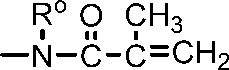


[Formula II]
(wherein: R 1 is a monovalent radical (preferably R 1 is H, NO 2 , F, Cl, Br, CF 3 , CH 2 OH, or CH 2 NR o R o ′); Q is
아미노-함유 페닐보론산 유도체는 3-아미노페닐보론산, 4-아미노페닐보론산, 4-아미노-3-니트로페닐보론산, 3-아미노-6-하이드록시메틸페닐보론산, 3-아미노-6-(디메틸아미노메틸)페닐보론산, 4-아미노-2-하이드록시메틸페닐보론산, 4-아미노-2-(디메틸아미노메틸)페닐보론산, 3-아미노-4-플루오로페닐-보론산, 4-(아미노메틸)-5-니트로페닐보론산, 3-(아미노메틸)-페닐-보론산, 3-아미노-5-니트로페닐보론산, 3-아미노-3-(4-보로노페닐)프로판산 및 이들의 조합으로 이루어진 군으로부터 선택되고,
카복실-함유 비닐 단량체는 2-아크릴아미도글리콜산, 3-아크릴아미도프로피온산, 4-아크릴아미도부탄산, 5-아크릴아미도펜탄산, 3-아크릴로일옥시프로판산, 4-아크릴로일옥시부탄산, 5-아크릴로일옥시펜탄산 및 이들의 조합으로 이루어진 군으로부터 선택되고,
아미노-함유 비닐 단량체는 아미노-C2-C4 알킬 (메트)아크릴레이트, C1-C3 알킬아미노-C2-C4 알킬 (메트)아크릴레이트, 아미노-C2-C4 알킬 (메트)아크릴아미드, C1-C3 알킬아미노-C2-C4 알킬 (메트)아크릴아미드, 비닐아민, 알릴아민 및 이들의 조합으로 이루어진 군으로부터 선택되는, 하이드로겔 안구 삽입물.4. The method of claim 2 or 3, wherein the at least one arylborono-containing vinyl monomer is 3-vinylphenylboronic acid, 4-vinylphenylboronic acid, 3-(meth)acrylamidophenylboronic acid, 4 -(meth)acrylamidophenylboronic acid, 3-(meth)acrylamido-5-nitrophenylboronic acid, 4-(meth)acrylamido-5-nitrophenylboronic acid, 4-(meth)acrylamido do-3-nitrophenyl-boronic acid, 3-[(meth)acrylamido-C 2 -C 5 -alkylaminocarbonyl]-5-nitrophenylboronic acid, 3-[(meth)acryloyloxy- C 2 -C 5 -Alkylaminocarbonyl]-5-nitrophenylboronic acid, 3-(meth)acrylamido-6-hydroxymethylphenylboronic acid, 3-(meth)acrylamido-6-dimethylaminomethylphenyl Boronic acid, 4-(meth)acrylamido-6-hydroxymethylphenyl-boronic acid, 4-(meth)acrylamido-6-dimethylaminomethylphenyl-boronic acid, 4-(1,6-dioxo-2 ,5-diaza-7-oxamyl)phenylboronic acid, 4-(N-allylsulfamoyl)phenylboronic acid, 4-(3-butenylsulfonyl)phenylboronic acid, an amino-containing phenylboronic acid derivative ( Reaction product of meth)acrylic acid halide, reaction product of amino-containing phenylboronic acid derivative with carboxy-containing vinyl monomer in the presence of carbodiimide and N-hydroxysuccinimide, carbodiimide and N-hydroxysuccinimide selected from the group consisting of a reaction product of a carboxy-containing phenylboronic acid derivative with an amino-containing vinyl monomer and combinations thereof in the presence of, wherein the carboxy-containing phenylboronic acid derivative is 3-carboxyphenylboronic acid, 4-carboxyphenylboronic acid Acid, 3-boronophenylacetic acid, 4-boronophenylacetic acid, 2-(4-boronophenyl)-2-methylpropanoic acid, 3-(4-boronophenyl)propanoic acid, 3-(3-boro Nophenyl) propanoic acid, 5-(3-boronophenyl)-pentanoic acid, 5-(4-boronophenyl)pentanoic acid, 4-(2-carboxyethyl)-3-nitrophenyl-boronic acid, 3- Carboxy-5-nitrophenylboronic acid, 4-carboxy-3-chlorophenylboronic acid, 3-carboxy-4-fluorophenylboronic acid, 3-(3-carboxypropionylamino)phenylboronic acid, 3-amino- 3-(4-boronophenyl)propanoic acid and combinations thereof,
Amino-containing phenylboronic acid derivatives include 3-aminophenylboronic acid, 4-aminophenylboronic acid, 4-amino-3-nitrophenylboronic acid, 3-amino-6-hydroxymethylphenylboronic acid, 3-amino-6 -(dimethylaminomethyl)phenylboronic acid, 4-amino-2-hydroxymethylphenylboronic acid, 4-amino-2-(dimethylaminomethyl)phenylboronic acid, 3-amino-4-fluorophenyl-boronic acid, 4-(Aminomethyl)-5-nitrophenylboronic acid, 3-(aminomethyl)-phenyl-boronic acid, 3-amino-5-nitrophenylboronic acid, 3-amino-3-(4-boronophenyl) selected from the group consisting of propanoic acid and combinations thereof,
Carboxyl-containing vinyl monomers are 2-acrylamidoglycolic acid, 3-acrylamidopropionic acid, 4-acrylamidobutanoic acid, 5-acrylamidopentanoic acid, 3-acryloyloxypropanoic acid, 4-acrylo selected from the group consisting of yloxybutanoic acid, 5-acryloyloxypentanoic acid, and combinations thereof;
The amino-containing vinyl monomer is amino-C 2 -C 4 alkyl (meth)acrylate, C 1 -C 3 alkylamino-C 2 -C 4 alkyl (meth)acrylate, amino-C 2 -C 4 alkyl (meth) ) A hydrogel ocular implant selected from the group consisting of acrylamide, C 1 -C 3 alkylamino-C 2 -C 4 alkyl (meth)acrylamide, vinylamine, allylamine, and combinations thereof.
Applications Claiming Priority (3)
| Application Number | Priority Date | Filing Date | Title |
|---|---|---|---|
| US201962901967P | 2019-09-18 | 2019-09-18 | |
| US62/901,967 | 2019-09-18 | ||
| PCT/IB2020/058689 WO2021053586A1 (en) | 2019-09-18 | 2020-09-17 | Wet-packed soft hydrogel ocular inserts |
Publications (1)
| Publication Number | Publication Date |
|---|---|
| KR20220034199A true KR20220034199A (en) | 2022-03-17 |
Family
ID=72659825
Family Applications (1)
| Application Number | Title | Priority Date | Filing Date |
|---|---|---|---|
| KR1020227004556A Withdrawn KR20220034199A (en) | 2019-09-18 | 2020-09-17 | Wet-Packed Soft Hydrogel Ocular Prosthesis |
Country Status (11)
| Country | Link |
|---|---|
| US (1) | US11931454B2 (en) |
| EP (1) | EP4017478A1 (en) |
| JP (1) | JP7419499B2 (en) |
| KR (1) | KR20220034199A (en) |
| CN (1) | CN114727954A (en) |
| AU (1) | AU2020347951B2 (en) |
| BR (1) | BR112022002467A2 (en) |
| CA (1) | CA3153384C (en) |
| MX (1) | MX2022003324A (en) |
| TW (1) | TWI812881B (en) |
| WO (1) | WO2021053586A1 (en) |
Families Citing this family (6)
| Publication number | Priority date | Publication date | Assignee | Title |
|---|---|---|---|---|
| WO2022224469A1 (en) * | 2021-04-19 | 2022-10-27 | 住友ゴム工業株式会社 | Phenylboronic acid compound, modified polymer, polymer composition, and tire |
| KR102765351B1 (en) * | 2021-12-15 | 2025-02-07 | 포항공과대학교 산학협력단 | Bioavailable hydrogel composition and preparation method thereof |
| CN114891239B (en) * | 2022-03-23 | 2024-06-14 | 武汉理工大学 | A boron-nitrogen internal coordination borate hydrogel and preparation method thereof |
| EP4599224A1 (en) * | 2022-12-27 | 2025-08-13 | Life Technologies Corporation | Rapid gelling aqueous mounting media |
| CN116444819B (en) * | 2023-03-17 | 2025-12-02 | 华南理工大学 | A photocurable hyaluronic acid-based composite hydrogel, its preparation and application |
| WO2025186703A1 (en) | 2024-03-04 | 2025-09-12 | Alcon Inc. | Carbamoylphenylboronic acid-containing acrylic monomers and uses thereof |
Family Cites Families (42)
| Publication number | Priority date | Publication date | Assignee | Title |
|---|---|---|---|---|
| US3961628A (en) | 1974-04-10 | 1976-06-08 | Alza Corporation | Ocular drug dispensing system |
| US4402695A (en) | 1980-01-21 | 1983-09-06 | Alza Corporation | Device for delivering agent in vagina |
| US4281654A (en) | 1980-04-07 | 1981-08-04 | Alza Corporation | Drug delivery system for controlled ocular therapy |
| US5229128A (en) | 1986-06-11 | 1993-07-20 | Haddad Heskel M | Drug delivery ophthalmic insert and method of preparing same |
| US4910015A (en) | 1987-10-19 | 1990-03-20 | Massachusetts Institute Of Technology | Surface-active polysiloxanes and drug releasing materials thereof |
| US5609885A (en) | 1992-09-15 | 1997-03-11 | Alza Corporation | Osmotic membrane and delivery device |
| US5707643A (en) | 1993-02-26 | 1998-01-13 | Santen Pharmaceutical Co., Ltd. | Biodegradable scleral plug |
| US5607696A (en) | 1995-02-10 | 1997-03-04 | Alza Corporation | Osmotic membrane and delivery device |
| ES2206965T3 (en) | 1997-07-29 | 2004-05-16 | Alcon Laboratories, Inc. | OPHTHALMIC COMPOSITIONS CONTAINING GALACTOMANANA AND BORATE POLYMERS. |
| WO2003013477A1 (en) | 2001-08-07 | 2003-02-20 | Vista Scientific Llc | Drug release system for controlled therapy |
| US20060166879A1 (en) | 2002-12-20 | 2006-07-27 | Chakshu Research Inc | Treatment of conditions associated with the presence of macromolecular aggregates, particularly ophthalmic disorders |
| US20050129770A1 (en) | 2003-12-11 | 2005-06-16 | Alcon, Inc. | Ophthalmic compositions containing a PVA/borate gelling system |
| AU2004305539B2 (en) | 2003-12-11 | 2010-09-02 | Alcon, Inc. | Ophthalmic compositions containing a polysaccharide/borate gelling system |
| US9804295B2 (en) * | 2005-05-05 | 2017-10-31 | Novartis Ag | Ophthalmic devices for sustained delivery of active compounds |
| PT1973564T (en) | 2005-12-22 | 2017-01-24 | Glaxosmithkline Biologicals Sa | Vaccine comprising streptococcus pneumoniae capsular polysaccharide conjugates |
| US20080171072A1 (en) | 2006-08-11 | 2008-07-17 | Frank Burczynski | Ocular inserts containing apomorphine |
| US20090131303A1 (en) | 2007-11-16 | 2009-05-21 | Bor-Shyue Hong | Methods and compositions for treating dry eye |
| JPWO2009066746A1 (en) | 2007-11-22 | 2011-04-07 | 国立大学法人 東京大学 | Tissue adhesion prevention material and joint contracture prevention material |
| US7837934B2 (en) * | 2008-01-09 | 2010-11-23 | Bausch & Lomb Incorporated | Packaging solutions |
| CA2722508C (en) | 2008-04-26 | 2016-08-16 | Alcon Research Ltd. | Polymeric artificial tear system |
| JP2009296909A (en) | 2008-06-11 | 2009-12-24 | Sumitomo Bakelite Co Ltd | Method for dissolving three-dimensional cross-linked body |
| US8534031B2 (en) | 2008-12-30 | 2013-09-17 | Bausch & Lomb Incorporated | Packaging solutions |
| US20100168851A1 (en) | 2008-12-30 | 2010-07-01 | David Paul Vanderbilt | Surface Modified Biomedical Devices |
| CN104887388B (en) | 2009-06-03 | 2018-01-09 | 弗赛特影像5股份有限公司 | Anterior segment drug conveys |
| TWI490260B (en) * | 2009-09-22 | 2015-07-01 | Coopervision Int Holding Co Lp | Wettable hydrogel materials for use in ophthalmic applications and methods |
| WO2012112636A1 (en) | 2011-02-18 | 2012-08-23 | Valeant International (Barbados) Srl | Cylindrical ocular inserts |
| US20120213840A1 (en) | 2011-02-18 | 2012-08-23 | Valeant International (Barbados) Srl | Ocular strips |
| CA2848397C (en) | 2011-09-14 | 2022-04-26 | Forsight Vision5, Inc. | Ocular insert apparatus and methods |
| BR112014029270A2 (en) * | 2012-05-25 | 2017-06-27 | Johnson & Johnson Vision Care | contact lenses comprising water-soluble n- (2-hydroxy alkyl) (meth) acrylamide polymers or copolymers |
| US9597227B2 (en) | 2013-03-15 | 2017-03-21 | Abbott Medical Optics Inc. | Trans-sclera portal for delivery of therapeutic agents |
| JP5671183B1 (en) | 2014-08-28 | 2015-02-18 | 株式会社ユニバーサルビュー | Eyelid interior tools |
| WO2016154317A2 (en) | 2015-03-23 | 2016-09-29 | Massachusetts Institute Of Technology | Polymers, hydrogels, and uses thereof |
| WO2016168141A1 (en) | 2015-04-13 | 2016-10-20 | Forsight Vision5, Inc. | Ocular insert composition of semi-crystalline or crystalline pharmaceutically active agent |
| CA2981822C (en) | 2015-05-01 | 2023-04-11 | Allysta Pharmaceuticals, Inc. | Adiponectin peptidomimetics for treating ocular disorders |
| JP6194127B2 (en) | 2015-08-10 | 2017-09-06 | 株式会社メニコン | Glucose detector and glucose detection method |
| US10611908B2 (en) | 2015-09-01 | 2020-04-07 | Mcmaster University | Micelles for mucoadhesive drug delivery |
| JP6703408B2 (en) * | 2016-01-30 | 2020-06-03 | 国立大学法人 筑波大学 | Composition for treating dry eye containing polyion complex as active ingredient |
| PT109154B (en) | 2016-02-12 | 2019-11-05 | Univ De Coimbra | NON-INVASIVE EYE INSERT TECHNOLOGY FOR CONTROLLED DRUG RELEASE |
| WO2018204721A1 (en) | 2017-05-05 | 2018-11-08 | Nino Sorgente | Methods and compositions for improving eye health |
| CN110831991B (en) * | 2017-07-18 | 2022-05-24 | 爱尔康公司 | Copolymers based on poly (meth) acrylamide containing phosphorylcholine |
| EP3746820B1 (en) * | 2018-01-30 | 2022-02-16 | Alcon Inc. | Contact lenses with a lubricious coating thereon |
| US11061169B2 (en) | 2018-11-15 | 2021-07-13 | Alcon Inc. | Contact lens with phosphorylcholine-modified polyvinylalcohols therein |
-
2020
- 2020-09-17 KR KR1020227004556A patent/KR20220034199A/en not_active Withdrawn
- 2020-09-17 CN CN202080064286.3A patent/CN114727954A/en active Pending
- 2020-09-17 AU AU2020347951A patent/AU2020347951B2/en not_active Ceased
- 2020-09-17 MX MX2022003324A patent/MX2022003324A/en unknown
- 2020-09-17 EP EP20781083.9A patent/EP4017478A1/en not_active Withdrawn
- 2020-09-17 CA CA3153384A patent/CA3153384C/en active Active
- 2020-09-17 US US17/024,268 patent/US11931454B2/en active Active
- 2020-09-17 WO PCT/IB2020/058689 patent/WO2021053586A1/en not_active Ceased
- 2020-09-17 JP JP2022512726A patent/JP7419499B2/en active Active
- 2020-09-17 BR BR112022002467A patent/BR112022002467A2/en not_active Application Discontinuation
- 2020-09-18 TW TW109132230A patent/TWI812881B/en not_active IP Right Cessation
Also Published As
| Publication number | Publication date |
|---|---|
| JP2022545693A (en) | 2022-10-28 |
| TW202114636A (en) | 2021-04-16 |
| JP7419499B2 (en) | 2024-01-22 |
| WO2021053586A1 (en) | 2021-03-25 |
| US20210077385A1 (en) | 2021-03-18 |
| TWI812881B (en) | 2023-08-21 |
| CN114727954A (en) | 2022-07-08 |
| AU2020347951A1 (en) | 2022-05-05 |
| AU2020347951B2 (en) | 2023-11-02 |
| CA3153384C (en) | 2024-02-13 |
| CA3153384A1 (en) | 2021-03-25 |
| EP4017478A1 (en) | 2022-06-29 |
| US11931454B2 (en) | 2024-03-19 |
| MX2022003324A (en) | 2022-04-18 |
| BR112022002467A2 (en) | 2022-07-19 |
Similar Documents
| Publication | Publication Date | Title |
|---|---|---|
| US11931454B2 (en) | Wet-packed soft hydrogel ocular inserts | |
| TWI554776B (en) | Medical device with uniform charge density and method for manufacturing same | |
| TW201636026A (en) | Ophthalmic agent and use of copolymers comprised therein | |
| TW201026752A (en) | Ionic silicone hydrogels having improved hydrolytic stability | |
| JP4309974B2 (en) | Ophthalmic formulation | |
| WO2004090613A1 (en) | Ophthalmic lenses capable of sustained drug release and preservative solutions therefor | |
| WO1999026637A1 (en) | Ophthalmic preparation and ophthalmic composition | |
| JP2021020856A (en) | Eye drops | |
| WO2023190365A1 (en) | Copolymer and contact lens treatment solution | |
| KR101311134B1 (en) | Medical device for controlled release of drug | |
| JP4124610B2 (en) | Drug sustained-release contact lenses | |
| TWI875050B (en) | Contact lens containing pharmaceutical composition and manufacturing method thereof | |
| TW202440691A (en) | Copolymer and ophthalmic composition using the same | |
| US12392931B2 (en) | Method for producing wettable silicone hydrogel contact lenses | |
| WO2025206088A1 (en) | Copolymer, and eye composition in which same is used | |
| TWI796497B (en) | Ophthalmic device containing anionic reagent | |
| US20250276007A1 (en) | Carbamoylphenylboronic acid-containing acrylic monomers and uses thereof | |
| JP7099077B2 (en) | Contact lens solution | |
| TW202600567A (en) | Carbamoylphenylboronic acid-containing acrylic monomers and uses thereof | |
| JPWO1999026637A1 (en) | Ophthalmic agent and ophthalmic composition | |
| Kamali et al. | Advances in chemistry and composition of soft materials for drug releasing contact lenses | |
| HK1233910B (en) | Medical device including anionic drug |
Legal Events
| Date | Code | Title | Description |
|---|---|---|---|
| PA0105 | International application |
St.27 status event code: A-0-1-A10-A15-nap-PA0105 |
|
| PA0201 | Request for examination |
St.27 status event code: A-1-2-D10-D11-exm-PA0201 |
|
| PG1501 | Laying open of application |
St.27 status event code: A-1-1-Q10-Q12-nap-PG1501 |
|
| PC1202 | Submission of document of withdrawal before decision of registration |
St.27 status event code: N-1-6-B10-B11-nap-PC1202 |