KR20220007672A - Object feature visualization apparatus and methods - Google Patents
Object feature visualization apparatus and methods Download PDFInfo
- Publication number
- KR20220007672A KR20220007672A KR1020217040629A KR20217040629A KR20220007672A KR 20220007672 A KR20220007672 A KR 20220007672A KR 1020217040629 A KR1020217040629 A KR 1020217040629A KR 20217040629 A KR20217040629 A KR 20217040629A KR 20220007672 A KR20220007672 A KR 20220007672A
- Authority
- KR
- South Korea
- Prior art keywords
- video
- feature
- data
- mapped
- computing device
- Prior art date
- Legal status (The legal status is an assumption and is not a legal conclusion. Google has not performed a legal analysis and makes no representation as to the accuracy of the status listed.)
- Ceased
Links
Images


Classifications
-
- G—PHYSICS
- G06—COMPUTING OR CALCULATING; COUNTING
- G06T—IMAGE DATA PROCESSING OR GENERATION, IN GENERAL
- G06T11/00—2D [Two Dimensional] image generation
- G06T11/40—Filling a planar surface by adding surface attributes, e.g. colour or texture
-
- G—PHYSICS
- G03—PHOTOGRAPHY; CINEMATOGRAPHY; ANALOGOUS TECHNIQUES USING WAVES OTHER THAN OPTICAL WAVES; ELECTROGRAPHY; HOLOGRAPHY
- G03B—APPARATUS OR ARRANGEMENTS FOR TAKING PHOTOGRAPHS OR FOR PROJECTING OR VIEWING THEM; APPARATUS OR ARRANGEMENTS EMPLOYING ANALOGOUS TECHNIQUES USING WAVES OTHER THAN OPTICAL WAVES; ACCESSORIES THEREFOR
- G03B21/00—Projectors or projection-type viewers; Accessories therefor
- G03B21/14—Details
-
- G—PHYSICS
- G06—COMPUTING OR CALCULATING; COUNTING
- G06F—ELECTRIC DIGITAL DATA PROCESSING
- G06F3/00—Input arrangements for transferring data to be processed into a form capable of being handled by the computer; Output arrangements for transferring data from processing unit to output unit, e.g. interface arrangements
-
- G—PHYSICS
- G06—COMPUTING OR CALCULATING; COUNTING
- G06F—ELECTRIC DIGITAL DATA PROCESSING
- G06F3/00—Input arrangements for transferring data to be processed into a form capable of being handled by the computer; Output arrangements for transferring data from processing unit to output unit, e.g. interface arrangements
- G06F3/01—Input arrangements or combined input and output arrangements for interaction between user and computer
- G06F3/011—Arrangements for interaction with the human body, e.g. for user immersion in virtual reality
-
- G—PHYSICS
- G06—COMPUTING OR CALCULATING; COUNTING
- G06Q—INFORMATION AND COMMUNICATION TECHNOLOGY [ICT] SPECIALLY ADAPTED FOR ADMINISTRATIVE, COMMERCIAL, FINANCIAL, MANAGERIAL OR SUPERVISORY PURPOSES; SYSTEMS OR METHODS SPECIALLY ADAPTED FOR ADMINISTRATIVE, COMMERCIAL, FINANCIAL, MANAGERIAL OR SUPERVISORY PURPOSES, NOT OTHERWISE PROVIDED FOR
- G06Q30/00—Commerce
-
- G—PHYSICS
- G06—COMPUTING OR CALCULATING; COUNTING
- G06Q—INFORMATION AND COMMUNICATION TECHNOLOGY [ICT] SPECIALLY ADAPTED FOR ADMINISTRATIVE, COMMERCIAL, FINANCIAL, MANAGERIAL OR SUPERVISORY PURPOSES; SYSTEMS OR METHODS SPECIALLY ADAPTED FOR ADMINISTRATIVE, COMMERCIAL, FINANCIAL, MANAGERIAL OR SUPERVISORY PURPOSES, NOT OTHERWISE PROVIDED FOR
- G06Q30/00—Commerce
- G06Q30/02—Marketing; Price estimation or determination; Fundraising
- G06Q30/0241—Advertisements
-
- G—PHYSICS
- G06—COMPUTING OR CALCULATING; COUNTING
- G06Q—INFORMATION AND COMMUNICATION TECHNOLOGY [ICT] SPECIALLY ADAPTED FOR ADMINISTRATIVE, COMMERCIAL, FINANCIAL, MANAGERIAL OR SUPERVISORY PURPOSES; SYSTEMS OR METHODS SPECIALLY ADAPTED FOR ADMINISTRATIVE, COMMERCIAL, FINANCIAL, MANAGERIAL OR SUPERVISORY PURPOSES, NOT OTHERWISE PROVIDED FOR
- G06Q30/00—Commerce
- G06Q30/06—Buying, selling or leasing transactions
- G06Q30/0601—Electronic shopping [e-shopping]
- G06Q30/0641—Electronic shopping [e-shopping] utilising user interfaces specially adapted for shopping
- G06Q30/0643—Electronic shopping [e-shopping] utilising user interfaces specially adapted for shopping graphically representing goods, e.g. 3D product representation
-
- G—PHYSICS
- G06—COMPUTING OR CALCULATING; COUNTING
- G06T—IMAGE DATA PROCESSING OR GENERATION, IN GENERAL
- G06T11/00—2D [Two Dimensional] image generation
-
- G—PHYSICS
- G06—COMPUTING OR CALCULATING; COUNTING
- G06T—IMAGE DATA PROCESSING OR GENERATION, IN GENERAL
- G06T15/00—3D [Three Dimensional] image rendering
-
- G—PHYSICS
- G06—COMPUTING OR CALCULATING; COUNTING
- G06T—IMAGE DATA PROCESSING OR GENERATION, IN GENERAL
- G06T15/00—3D [Three Dimensional] image rendering
- G06T15/04—Texture mapping
-
- G—PHYSICS
- G06—COMPUTING OR CALCULATING; COUNTING
- G06T—IMAGE DATA PROCESSING OR GENERATION, IN GENERAL
- G06T7/00—Image analysis
- G06T7/70—Determining position or orientation of objects or cameras
- G06T7/73—Determining position or orientation of objects or cameras using feature-based methods
-
- H—ELECTRICITY
- H04—ELECTRIC COMMUNICATION TECHNIQUE
- H04N—PICTORIAL COMMUNICATION, e.g. TELEVISION
- H04N9/00—Details of colour television systems
- H04N9/12—Picture reproducers
- H04N9/31—Projection devices for colour picture display, e.g. using electronic spatial light modulators [ESLM]
- H04N9/3141—Constructional details thereof
- H04N9/3147—Multi-projection systems
-
- H—ELECTRICITY
- H04—ELECTRIC COMMUNICATION TECHNIQUE
- H04N—PICTORIAL COMMUNICATION, e.g. TELEVISION
- H04N9/00—Details of colour television systems
- H04N9/12—Picture reproducers
- H04N9/31—Projection devices for colour picture display, e.g. using electronic spatial light modulators [ESLM]
- H04N9/3179—Video signal processing therefor
-
- H—ELECTRICITY
- H04—ELECTRIC COMMUNICATION TECHNIQUE
- H04N—PICTORIAL COMMUNICATION, e.g. TELEVISION
- H04N9/00—Details of colour television systems
- H04N9/12—Picture reproducers
- H04N9/31—Projection devices for colour picture display, e.g. using electronic spatial light modulators [ESLM]
- H04N9/3179—Video signal processing therefor
- H04N9/3185—Geometric adjustment, e.g. keystone or convergence
-
- H—ELECTRICITY
- H04—ELECTRIC COMMUNICATION TECHNIQUE
- H04N—PICTORIAL COMMUNICATION, e.g. TELEVISION
- H04N9/00—Details of colour television systems
- H04N9/12—Picture reproducers
- H04N9/31—Projection devices for colour picture display, e.g. using electronic spatial light modulators [ESLM]
- H04N9/3191—Testing thereof
- H04N9/3194—Testing thereof including sensor feedback
Landscapes
- Engineering & Computer Science (AREA)
- Theoretical Computer Science (AREA)
- Physics & Mathematics (AREA)
- General Physics & Mathematics (AREA)
- Business, Economics & Management (AREA)
- Signal Processing (AREA)
- Multimedia (AREA)
- Accounting & Taxation (AREA)
- Finance (AREA)
- Strategic Management (AREA)
- Development Economics (AREA)
- General Engineering & Computer Science (AREA)
- Economics (AREA)
- Marketing (AREA)
- General Business, Economics & Management (AREA)
- Human Computer Interaction (AREA)
- Computer Graphics (AREA)
- Entrepreneurship & Innovation (AREA)
- Game Theory and Decision Science (AREA)
- Computer Vision & Pattern Recognition (AREA)
- Geometry (AREA)
- Controls And Circuits For Display Device (AREA)
- User Interface Of Digital Computer (AREA)
- Management, Administration, Business Operations System, And Electronic Commerce (AREA)
Abstract
객체 특징부 시각화 시스템이 개시된다. 시스템은 물리적 객체들 상에 투사할 비디오-맵핑된 이미지들을 생성하는 컴퓨팅 디바이스를 포함할 수 있다. 비디오-맵핑된 이미지들은 객체들 상에 투사될 특징부들을 포함할 수 있다. 물리적 객체 상으로의 비디오-맵핑된 이미지의 투사는 객체 상에서 특징부의 시각화를 허용한다. 일부 예들에서, 컴퓨팅 디바이스는 특정 객체에 대한 특징부 선택을 수신하고, 물리적 객체 상에 비디오-맵핑된 이미지를 투사하기 위해 프로젝터에 제공할 선택된 특징부로 비디오-맵핑된 이미지를 생성한다. 일부 예들에서, 사용자는 사용자 인터페이스를 통해 룸 디스플레이의 하나 이상의 객체에 대한 하나 이상의 특징부를 선택할 수 있다. 이어서, 시스템은 선택된 특징부들을 갖는 비디오-맵핑된 이미지들을 물리적 객체들 상에 투사한다. 시스템은 사용자가 특징부 선택들을 저장하고, 선택된 특징부들을 갖는 객체들에 관한 추가 정보를 구매하거나 요청하도록 허용할 수 있다.An object feature visualization system is disclosed. The system may include a computing device that generates video-mapped images for projection onto physical objects. Video-mapped images may include features to be projected onto objects. Projection of a video-mapped image onto a physical object allows visualization of features on the object. In some examples, the computing device receives a feature selection for a particular object and generates a video-mapped image with the selected feature to provide to a projector to project the video-mapped image onto the physical object. In some examples, a user may select one or more features for one or more objects of a room display via a user interface. The system then projects the video-mapped images with the selected features onto the physical objects. The system may allow a user to save feature selections and to purchase or request additional information regarding objects having selected features.

Description
본 출원은, 2019년 9월 4일에 출원되고 발명의 명칭이 "OBJECT FEATURE VISUALIZATION APPARATUS AND METHODS"인 미국 가특허 출원 제62/895,769호의 이익을 주장하며, 이로써 상기 출원은 그 전체가 참조로 통합된다.This application claims the benefit of U.S. Provisional Patent Application No. 62/895,769, filed September 4, 2019 and entitled "OBJECT FEATURE VISUALIZATION APPARATUS AND METHODS," which application is hereby incorporated by reference in its entirety. do.
본 개시내용은 일반적으로 내부 및 외부 설계를 위한 시스템들에 관한 것으로, 더 구체적으로는 내부 및 외부 설계를 위한 객체들의 디지털 디스플레이에 관한 것이다.BACKGROUND This disclosure relates generally to systems for interior and exterior design, and more particularly to digital display of objects for interior and exterior design.
직물들, 바닥재(flooring), 페인트들, 가정용품들, 또는 임의의 다른 설계 재료들과 같은 설계 재료들의 제조자들 및 공급자들은 종종, 광고 목적들을 위해 그들의 재료들의 이미지들을 디스플레이한다. 예를 들어, 설계 재료들은 잠재적인 클라이언트들, 이를 테면 설계자들(예를 들어, 내부 또는 외부 설계자들)뿐만 아니라 최종 사용자들(예를 들어, 주택 소유자들, 사업체들 등)에게 광고될 수 있다. 재료들의 이미지들은, 예를 들어 산업 잡지들과 같은 잡지들, 쇼룸들, 또는 컨퍼런스들에서 디스플레이될 수 있다. 재료들의 이미지들은 또한 제조자 또는 공급자의 웹사이트와 같은 웹사이트 상에 디스플레이될 수 있다. 일부 예들에서, 설계 재료들을 포함하는 비디오들이 디스플레이될 수 있다. 예를 들어, 설계 재료의 제조자 또는 공급자는 그들의 설계 재료들의 홍보 비디오를 쇼룸에서 잠재적인 클라이언트들에게 디스플레이할 수 있다.Manufacturers and suppliers of design materials, such as fabrics, flooring, paints, household items, or any other design materials, often display images of their materials for advertising purposes. For example, design materials may be advertised to potential clients, such as designers (eg, interior or exterior designers), as well as end users (eg, homeowners, businesses, etc.) . Images of materials may be displayed, for example, in magazines such as industry magazines, showrooms, or conferences. Images of materials may also be displayed on a website, such as a manufacturer's or supplier's website. In some examples, videos containing design materials may be displayed. For example, a manufacturer or supplier of design materials may display a promotional video of their design materials to potential clients in a showroom.
일부 예들에서, 컴퓨팅 디바이스는 적어도 하나의 프로세서를 포함한다. 적어도 하나의 프로세서는 적어도 하나의 객체에 대한 적어도 하나의 특징부(feature)의 선택을 식별한 제1 데이터를 수신하도록 구성된다. 제1 데이터를 수신한 것에 응답하여, 적어도 하나의 프로세서는 적어도 하나의 특징부로 적어도 하나의 객체를 특성화(characterize)한 비디오-맵핑된 이미지를 획득하도록 구성된다. 적어도 하나의 프로세서는 또한 비디오-맵핑된 이미지를 적어도 하나의 투사 디바이스에 제공하도록 구성되고, 투사 디바이스는 비디오-맵핑된 이미지를 적어도 하나의 객체 상에 투사하도록 구성된다.In some examples, the computing device includes at least one processor. The at least one processor is configured to receive first data identifying a selection of at least one feature for the at least one object. In response to receiving the first data, the at least one processor is configured to obtain a video-mapped image characterizing the at least one object with the at least one feature. The at least one processor is also configured to provide the video-mapped image to the at least one projection device, the projection device configured to project the video-mapped image onto the at least one object.
일부 예들에서, 시스템은 룸 디스플레이(room display), 룸 디스플레이 상에 이미지들을 투사하도록 구성된 투사 디바이스, 및 투사 디바이스에 통신가능하게(communicatively) 결합된 컴퓨팅 디바이스를 포함한다. 컴퓨팅 디바이스는 적어도 하나의 객체를 포함하는 장면(scene)의 이미지를 디스플레이하도록 구성된다. 컴퓨팅 디바이스는 또한, 적어도 하나의 객체의 선택을 식별한 제1 데이터를 수신하고, 수신된 제1 데이터에 응답하여, 적어도 하나의 객체에 대한 복수의 특징부 카테고리들을 디스플레이를 위해 제공하도록 구성된다. 컴퓨팅 디바이스는 또한 복수의 특징부 카테고리들 중 제1 특징부 카테고리의 선택을 식별한 제2 데이터를 수신하도록 구성된다. 수신된 제2 데이터에 응답하여, 컴퓨팅 디바이스는 제1 특징부 카테고리에 대응하는 복수의 특징부들을 디스플레이를 위해 제공하도록 구성된다. 추가로, 컴퓨팅 디바이스는 제1 특징부 카테고리에 대응하는 복수의 특징부들 중 제1 특징부의 선택을 식별한 제3 데이터를 수신하고, 수신된 제3 데이터에 응답하여, 제1 특징부로 적어도 하나의 객체를 특성화한 비디오-맵핑된 이미지를 획득하도록 구성된다. 컴퓨팅 디바이스는 또한 획득된 비디오-맵핑된 이미지를 투사 디바이스에 제공하도록 구성된다.In some examples, the system includes a room display, a projection device configured to project images on the room display, and a computing device communicatively coupled to the projection device. The computing device is configured to display an image of a scene including at least one object. The computing device is also configured to receive first data identifying a selection of the at least one object, and in response to the received first data, provide for display a plurality of feature categories for the at least one object. The computing device is also configured to receive second data identifying a selection of a first feature category of the plurality of feature categories. In response to the received second data, the computing device is configured to provide for display a plurality of features corresponding to the first feature category. Additionally, the computing device receives third data identifying a selection of a first feature among the plurality of features corresponding to the first feature category, and in response to the received third data, selects at least one as the first feature and obtain a video-mapped image characterizing the object. The computing device is also configured to provide the acquired video-mapped image to the projection device.
일부 예들에서, 방법은, 적어도 하나의 객체에 대한 적어도 하나의 특징부의 선택을 식별한 제1 데이터를 수신하는 단계를 포함한다. 방법은 또한 제1 데이터를 수신한 것에 응답하여, 적어도 하나의 특징부로 적어도 하나의 객체를 특성화한 비디오-맵핑된 이미지를 획득하는 단계를 포함한다. 추가로, 방법은 비디오-맵핑된 이미지를 적어도 하나의 투사 디바이스에 제공하는 단계를 포함하고, 투사 디바이스는 비디오-맵핑된 이미지를 적어도 하나의 객체 상에 투사하도록 구성된다.In some examples, the method includes receiving first data identifying a selection of at least one feature for at least one object. The method also includes, in response to receiving the first data, obtaining a video-mapped image characterizing the at least one object with the at least one feature. Further, the method includes providing the video-mapped image to the at least one projection device, the projection device being configured to project the video-mapped image onto the at least one object.
일부 예들에서, 방법은 적어도 하나의 객체를 포함하는 장면의 이미지를 디스플레이하는 단계를 포함한다. 방법은 또한 적어도 하나의 객체의 선택을 식별한 제1 데이터를 수신하는 단계, 및 수신된 제1 데이터에 응답하여, 적어도 하나의 객체에 대한 복수의 특징부 카테고리들을 디스플레이를 위해 제공하는 단계를 포함한다. 방법은 복수의 특징부 카테고리들 중 제1 특징부 카테고리의 선택을 식별한 제2 데이터를 수신하는 단계를 추가로 포함한다. 수신된 제2 데이터에 응답하여, 방법은 제1 특징부 카테고리에 대응하는 복수의 특징부들을 디스플레이를 위해 제공하는 단계를 포함한다. 추가로, 방법은 제1 특징부 카테고리에 대응하는 복수의 특징부들 중 제1 특징부의 선택을 식별한 제3 데이터를 수신하는 단계, 및 수신된 제3 데이터에 응답하여, 제1 특징부로 적어도 하나의 객체를 특성화한 비디오-맵핑된 이미지를 획득하는 단계를 포함한다. 방법은 또한 획득된 비디오-맵핑된 이미지를 투사 디바이스에 제공하는 단계를 포함한다.In some examples, the method includes displaying an image of the scene including the at least one object. The method also includes receiving first data identifying a selection of the at least one object, and in response to the received first data, providing a plurality of feature categories for the at least one object for display do. The method further includes receiving second data identifying a selection of a first feature category from among the plurality of feature categories. In response to the received second data, the method includes providing for display a plurality of features corresponding to the first feature category. Further, the method includes receiving third data identifying a selection of a first feature among a plurality of features corresponding to the first feature category, and in response to the received third data, at least one of the first features obtaining a video-mapped image characterizing the object of The method also includes providing the obtained video-mapped image to the projection device.
일부 예들에서, 비일시적인 머신-판독가능 저장 매체는, 적어도 하나의 프로세서에 의해 실행될 때, 적어도 하나의 프로세서로 하여금, 적어도 하나의 객체에 대한 적어도 하나의 특징부의 선택을 식별한 제1 데이터를 수신하는 것을 포함하는 동작들을 수행하게 하는 명령어들을 저장한다. 동작들 또한 제1 데이터를 수신한 것에 응답하여, 적어도 하나의 특징부로 적어도 하나의 객체를 특성화한 비디오-맵핑된 이미지를 획득하는 것을 포함한다. 추가로, 동작들은 비디오-맵핑된 이미지를 적어도 하나의 투사 디바이스에 제공하는 것을 포함하고, 투사 디바이스는 비디오-맵핑된 이미지를 적어도 하나의 객체 상에 투사하도록 구성된다.In some examples, the non-transitory machine-readable storage medium, when executed by the at least one processor, causes the at least one processor to receive first data identifying a selection of the at least one feature for the at least one object. stores instructions to perform operations including The operations also include, in response to receiving the first data, obtaining a video-mapped image characterizing the at least one object with the at least one feature. Further, the operations include providing the video-mapped image to the at least one projection device, the projection device configured to project the video-mapped image onto the at least one object.
일부 예들에서, 비일시적인 머신-판독가능 저장 매체는, 적어도 하나의 프로세서에 의해 실행될 때, 적어도 하나의 프로세서로 하여금, 적어도 하나의 객체의 선택을 식별한 제1 데이터를 수신하는 것 및 수신된 제1 데이터에 응답하여, 적어도 하나의 객체에 대한 복수의 특징부 카테고리들을 디스플레이를 위해 제공하는 것을 포함하는 동작들을 수행하게 하는 명령어들을 저장한다. 동작들은 복수의 특징부 카테고리들 중 제1 특징부 카테고리의 선택을 식별한 제2 데이터를 수신하는 것을 추가로 포함한다. 수신된 제2 데이터에 응답하여, 동작들은 제1 특징부 카테고리에 대응하는 복수의 특징부들을 디스플레이를 위해 제공하는 것을 포함한다. 추가로, 동작들은 제1 특징부 카테고리에 대응하는 복수의 특징부들 중 제1 특징부의 선택을 식별한 제3 데이터를 수신하는 것, 및 수신된 제3 데이터에 응답하여, 제1 특징부로 적어도 하나의 객체를 특성화한 비디오-맵핑된 이미지를 획득하는 것을 포함한다. 동작들은 또한 획득된 비디오-맵핑된 이미지를 투사 디바이스에 제공하는 단계를 포함한다.In some examples, the non-transitory machine-readable storage medium, when executed by the at least one processor, causes the at least one processor to: receive first data identifying a selection of the at least one object; 1 store instructions to cause performing operations including providing for display a plurality of feature categories for the at least one object in response to the 1 data. The operations further include receiving second data identifying a selection of a first feature category of the plurality of feature categories. In response to the received second data, the operations include providing for display a plurality of features corresponding to the first feature category. Further, the operations include receiving third data identifying a selection of a first feature among a plurality of features corresponding to the first feature category, and in response to the received third data, at least one of the first features and obtaining a video-mapped image characterizing the object of The operations also include providing the obtained video-mapped image to the projection device.
본 개시내용들의 특징들 및 이점들은 예시적인 실시예들의 다음의 상세한 설명들에서 더 완전히 개시되거나 또는 그에 의해 명백해질 것이다. 예시적인 실시예들의 상세한 설명들은 첨부 도면들과 함께 고려되어야 하며, 여기서 유사한 번호들은 유사한 부분들을 지칭하고, 추가로:
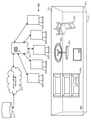
도 1은 일부 실시예들에 따른 객체 특징부 시각화 시스템을 예시한다.
도 2는 일부 실시예들에 따른, 도 1의 객체 특징부 시각화 시스템의 객체 특징부 시각화 컴퓨팅 디바이스의 예를 예시한다.
도 3a는 일부 실시예들에 따른, 도 1의 객체 특징부 시각화 시스템의 예시적인 부분들을 예시한다.
도 3b는 일부 실시예들에 따른, 도 2의 객체 특징부 시각화 컴퓨팅 디바이스에 의해 제공될 수 있는 예시적인 사용자 인터페이스를 예시한다.
도 4a는 일부 실시예들에 따른 룸 디스플레이 내의 객체들의 예를 예시한다.
도 4b는 일부 실시예들에 따른, 도 4a의 룸 디스플레이 내의 객체들 중 적어도 일부의 예시적인 객체 특징부 시각화들을 예시한다.
도 5a는 일부 실시예들에 따른 룸 디스플레이 내의 객체들의 예를 예시한다.
도 5b는 일부 실시예들에 따른, 도 5a의 룸 디스플레이 내의 객체들 중 적어도 일부의 예시적인 객체 특징부 시각화들을 예시한다.
도 6은 일부 실시예들에 따른, 도 1의 객체 특징부 시각화 시스템에 의해 수행될 수 있는 예시적인 방법을 예시한다.
도 7은 일부 실시예들에 따른, 도 1의 객체 특징부 시각화 시스템에 의해 수행될 수 있는 다른 예시적인 방법을 예시한다.
도 8은 일부 실시예들에 따른, 도 1의 객체 특징부 시각화 시스템에 의해 수행될 수 있는 또 다른 예시적인 방법을 예시한다.Features and advantages of the present disclosures will be more fully disclosed in, or will become apparent from, the following detailed description of exemplary embodiments. The detailed description of exemplary embodiments should be considered in conjunction with the accompanying drawings, in which like numbers refer to like parts, and further:
1 illustrates an object feature visualization system in accordance with some embodiments.
FIG. 2 illustrates an example of an object feature visualization computing device of the object feature visualization system of FIG. 1 , in accordance with some embodiments.
3A illustrates example portions of the object feature visualization system of FIG. 1 , in accordance with some embodiments.
3B illustrates an example user interface that may be provided by the object feature visualization computing device of FIG. 2 , in accordance with some embodiments.
4A illustrates an example of objects in a room display in accordance with some embodiments.
4B illustrates example object feature visualizations of at least some of the objects in the room display of FIG. 4A , in accordance with some embodiments.
5A illustrates an example of objects in a room display in accordance with some embodiments.
5B illustrates example object feature visualizations of at least some of the objects in the room display of FIG. 5A , in accordance with some embodiments.
6 illustrates an example method that may be performed by the object feature visualization system of FIG. 1 , in accordance with some embodiments.
7 illustrates another example method that may be performed by the object feature visualization system of FIG. 1 , in accordance with some embodiments.
8 illustrates another example method that may be performed by the object feature visualization system of FIG. 1 , in accordance with some embodiments.
바람직한 실시예들의 설명은, 이러한 개시내용들의 전체 기록된 설명의 일부로 간주되어야 하는 첨부된 도면들과 관련하여 읽히도록 의도된다. 그러나, 본 개시내용은 개시된 특정 형태들로 제한되도록 의도되지 않는다는 것이 이해되어야 한다. 오히려, 본 개시내용은 이러한 예시적인 실시예들의 사상 및 범위 내에 있는 모든 수정들, 등가물들 및 대안들을 커버한다.The description of the preferred embodiments is intended to be read in conjunction with the accompanying drawings, which are to be considered as part of the entire written description of these disclosures. It should be understood, however, that the present disclosure is not intended to be limited to the specific forms disclosed. Rather, this disclosure covers all modifications, equivalents and alternatives falling within the spirit and scope of these exemplary embodiments.
이 설명에서, "수평", "수직", "위", "아래", "최상부", "최하부"와 같은 상대적인 용어들뿐만 아니라 이들의 파생어들(예를 들어, "수평으로", "하향으로", "상향으로" 등)은, 논의중인 도면 그림에서 그렇게 설명되거나 도시된 배향을 지칭하는 것으로 해석되어야 한다. 이러한 상대적인 용어들은 설명의 편의를 위한 것이며, 일반적으로 특정 배향을 요구하도록 의도되지 않는다. "내향" 대 "외향", "종방향" 대 "측방향" 등을 포함하는 용어들은, 서로에 대해 또는 신장 축, 또는 회전 축 또는 회전 중심에 대해 적절하게 해석되어야 한다. "결합하다", "결합된", "동작가능하게 결합된", "동작가능하게 연결된" 등의 용어들은, 디바이스들 또는 컴포넌트들을 기계적으로, 전기적으로, 유선으로, 무선으로, 또는 다른 방식으로 함께 연결하는 것을 지칭하는 것으로 광범위하게 이해되어야 하며, 연결은 관련 디바이스들 또는 컴포넌트들이 그 관계에 의해 의도된 바와 같이 서로 동작(예를 들어, 통신)할 수 있게 한다.In this description, relative terms such as "horizontal", "vertical", "above", "below", "top", "bottom", as well as derivatives thereof (e.g., "horizontally", "down "towards", "upwardly", etc.) should be construed to refer to the orientation so described or depicted in the drawing figures under discussion. These relative terms are for convenience of description and are generally not intended to require a specific orientation. Terms including "inward" versus "outward", "longitudinal" versus "lateral" and the like should be interpreted as appropriate relative to each other or to an axis of extension, or an axis of rotation or center of rotation. Terms such as “couple”, “coupled”, “operably coupled”, “operably coupled” and the like refer to devices or components mechanically, electrically, wired, wirelessly, or otherwise It should be broadly understood to refer to connecting together, which enables related devices or components to operate (eg, communicate) with each other as intended by the relationship.
도면들을 참조하면, 도 1은 객체 특징부 시각화 컴퓨팅 디바이스(102), 복수의 프로젝터들(104A, 104B, 104C, 104D, 104E) 및 데이터베이스(116)를 포함하는 객체 특징부 시각화 시스템(100)의 블록도를 도시한다. 각각의 프로젝터는, 예를 들어, 디지털 광 프로세싱(digital light processing, DLP) 프로젝터, 액정 디스플레이(LCD) 프로젝터, 또는 임의의 다른 적절한 이미지 투사 디바이스일 수 있다. 이 예에서는 5개의 프로젝터들(104)이 도시되지만, 다른 예들에서는 객체 특징부 시각화 시스템(100)에 의해 상이한 수의 프로젝터들이 이용될 수 있다. 객체 특징부 시각화 컴퓨팅 디바이스(102)는 통신 네트워크(118)를 통해 데이터베이스(116)에 통신가능하게 결합될 수 있다. 통신 네트워크(118)는 WiFi® 네트워크, 셀룰러 네트워크, 예를 들어, 3GPP® 네트워크, Bluetooth® 네트워크, 위성 네트워크, 무선 로컬 영역 네트워크(local area network, LAN), 라디오 주파수(RF) 통신 프로토콜들을 활용하는 네트워크, 근거리 통신(Near Field Communication, NFC) 네트워크, 다수의 무선 LAN들을 연결하는 무선 대도시 영역 네트워크(MAN), 무선 영역 네트워크(WAN) 또는 임의의 다른 적절한 네트워크일 수 있다. 통신 네트워크(118)는 예를 들어, 인터넷에 대한 액세스를 제공할 수 있다. 객체 특징부 시각화 컴퓨팅 디바이스(102)는 통신 네트워크(118)로 데이터를 송신하고 통신 네트워크(118)로부터 데이터를 수신할 수 있다.Referring to the drawings, FIG. 1 illustrates an object
객체 특징부 시각화 컴퓨팅 디바이스(102)는 또한, 이를 테면, 유선 또는 무선 네트워크를 통해 프로젝터들(104)에 통신가능하게 결합될 수 있다. 표시되지 않지만, 일부 예들에서, 객체 특징부 시각화 컴퓨팅 디바이스(102)는 통신 네트워크(118)를 통해 프로젝터들(104)에 통신가능하게 결합된다.The object feature
객체 특징부 시각화 컴퓨팅 디바이스(102)는 정보를 프로세싱 및 처리하기 위한 하드웨어 또는 하드웨어 및 소프트웨어를 포함할 수 있다. 예를 들어, 객체 특징부 시각화 컴퓨팅 디바이스(102)는 하나 이상의 프로세서, 하나 이상의 필드 프로그래밍가능 게이트 어레이(field-programmable gate array, FPGA), 하나 이상의 주문형 집적 회로(application-specific integrated circuit, ASIC), 하나 이상의 상태 머신, 디지털 회로부, 또는 임의의 다른 적절한 회로부를 포함할 수 있다. 일부 예들에서, 객체 특징부 시각화 컴퓨팅 디바이스(102)는, 예를 들어, 웹 서버, 애플리케이션 서버, 클라우드-기반 서버, 워크스테이션, 랩톱, 태블릿, 모바일 디바이스, 이를 테면 셀룰러 폰, 또는 임의의 다른 적절한 컴퓨팅 디바이스일 수 있다.Object feature
도 2는 객체 특징부 시각화 컴퓨팅 디바이스(102)의 더 많은 세부 사항들을 예시한다. 도 2에 예시된 바와 같이, 객체 특징부 시각화 컴퓨팅 디바이스(102)는 하나 이상의 프로세서(201), 작동 메모리(202), 하나 이상의 입력/출력 디바이스(203), 명령어 메모리(207), 트랜시버(204), 하나 이상의 통신 포트(207) 및 디스플레이(206)를 포함할 수 있고, 이들 모두는 하나 이상의 데이터 버스(208)에 동작가능하게 결합된다. 데이터 버스들(208)은 다양한 디바이스들 사이의 통신을 가능하게 한다. 데이터 버스들(208)은 유선 또는 무선 통신 채널들을 포함할 수 있다.2 illustrates more details of the object feature
프로세서(들)(201)는 하나 이상의 코어를 각각 갖는 하나 이상의 별개의 프로세서를 포함할 수 있다. 별개의 프로세서들 각각은 동일한 또는 상이한 구조를 가질 수 있다. 프로세서들(201)은 하나 이상의 중앙 프로세싱 유닛(CPU), 하나 이상의 그래픽 프로세싱 유닛(GPU), 주문형 집적 회로(ASIC), 디지털 신호 프로세서(DSP) 등을 포함할 수 있다.The processor(s) 201 may include one or more distinct processors each having one or more cores. Each of the separate processors may have the same or different architecture.
프로세서들(201)은 기능 또는 동작을 구현하는 명령어 메모리(207)에 저장된 코드를 실행함으로써 특정 기능 또는 동작을 수행하도록 구성될 수 있다. 예를 들어, 프로세서들(201)은 본 명세서에 개시된 임의의 기능, 방법 또는 동작 중 하나 이상을 수행하도록 구성될 수 있다.
명령어 메모리(207)는 프로세서들(201)에 의해 액세스(예를 들어, 판독) 및 실행될 수 있는 명령어들을 저장할 수 있다. 예를 들어, 명령어 메모리(207)는 ROM(read-only memory), EEPROM(electrically erasable programmable read-only memory), 플래시 메모리, 착탈식 디스크, CD-ROM, 임의의 비휘발성 메모리, 또는 임의의 다른 적절한 메모리와 같은 비일시적 컴퓨터-판독가능 저장 매체일 수 있다.The
프로세서들(201)은 작동 메모리(202)에 데이터를 저장하고 그로부터 데이터를 판독할 수 있다. 예를 들어, 프로세서들(201)은 작동 메모리(202)에 대한 작동 명령어 세트, 이를 테면 명령어 메모리(207)로부터 로딩된 명령어들을 저장할 수 있다. 프로세서들(201)은 또한, 객체 특징부 시각화 컴퓨팅 디바이스(102)의 동작 동안 생성된 동적 데이터를 저장하기 위해 작동 메모리(202)를 사용할 수 있다. 작동 메모리(202)는 RAM(random access memory), 이를 테면 SRAM(static random access memory) 또는 DRAM(dynamic random access memory) 또는 임의의 다른 적절한 메모리일 수 있다.
입력-출력 디바이스들(203)은 데이터 입력 또는 출력을 허용하는 임의의 적절한 디바이스를 포함할 수 있다. 예를 들어, 입력-출력 디바이스들(203)은 키보드, 터치 패드, 마우스, 스타일러스, 터치스크린, 물리적 버튼, 스피커, 마이크로폰, 또는 임의의 다른 적절한 입력 또는 출력 디바이스 중 하나 이상을 포함할 수 있다.Input-
통신 포트(들)(207)는, 예를 들어, 범용 비동기 수신기/송신기(universal asynchronous receiver/transmitter, UART) 연결부, 범용 직렬 버스(USB) 연결부, 또는 임의의 다른 적절한 통신 포트 또는 연결부와 같은 직렬 포트를 포함할 수 있다. 일부 예들에서, 통신 포트(들)(207)는 명령어 메모리(207)에서 실행가능한 명령어들의 프로그래밍을 허용한다. 일부 예들에서, 통신 포트(들)(207)는 객체 특징부 시각화 컴퓨팅 디바이스(102)에 의해 재료 디스플레이들에 대해 저장된 재료 데이터와 같은 데이터의 전송(예를 들어, 업로드 또는 다운로드)을 허용한다.Communication port(s) 207 may be connected to a serial, such as, for example, a universal asynchronous receiver/transmitter (UART) connection, a universal serial bus (USB) connection, or any other suitable communication port or connection. It may include ports. In some examples, communication port(s) 207 allow programming of executable instructions in
디스플레이(206)는 사용자 인터페이스(205)를 디스플레이할 수 있다. 사용자 인터페이스들(205)은 객체 특징부 시각화 컴퓨팅 디바이스(102)와의 사용자 상호작용을 가능하게 할 수 있다. 예를 들어, 사용자 인터페이스(205)는 재료 데이터뿐만 아니라 재료들의 이미지들의 뷰잉 및 조작을 허용하는 애플리케이션에 대한 사용자 인터페이스일 수 있다. 일부 예들에서, 사용자는 입력-출력 디바이스들(203)을 관여시킴으로써 사용자 인터페이스(205)와 상호작용할 수 있다.
트랜시버(204)는 도 1의 통신 네트워크(118)와 같은 네트워크와의 통신을 가능하게 하는 임의의 적절한 통신 유닛일 수 있다. 일부 예들에서, 트랜시버(204)는 객체 특징부 시각화 컴퓨팅 디바이스(102)가 동작할 통신 네트워크(118)의 유형에 기초하여 선택된다. 예를 들어, 도 1의 통신 네트워크(118)가 WiFi® 네트워크이면, 트랜시버(204)는 WiFi® 네트워크와의 통신들을 허용하도록 구성된다. 프로세서(들)(201)는 트랜시버(204)를 통해 도 1의 통신 네트워크(118)와 같은 네트워크로부터 데이터를 수신하거나 네트워크에 데이터를 전송하도록 동작가능하다.The
도 1을 다시 참조하면, 객체 특징부 시각화 시스템(100)은 실제 객체들 상에 이미지들을 비디오-맵핑(예를 들어, 3D 투사 맵핑)함으로써, 객체들(예를 들어, 바닥재들, 벽들, 가구, 고정물들, 아이템들)이 상이한 객체 특징부들로 어떻게 보일 수 있는지를 시뮬레이션할 수 있다. 특징부들은, 예를 들어, 재료들(예를 들어, 카펫, 타일, 나무), 직물들, 컬러들, 패턴들, 설계 요소들, 또는 임의의 다른 객체 특징부들을 포함할 수 있다. 일부 예들에서, 객체 특징부 시각화 시스템(100)은 물리적 룸 디스플레이에서 물리적 객체의 가상 선택을 가능하게 한다. 객체 특징부 시각화 시스템(100)은 또한 선택된 객체에 대한 특정 특징부의 선택을 허용할 수 있다. 객체 특징부 시각화 시스템(100)은 객체에 대해 선택된 특징부에 기초하여 이미지를 생성하고, 생성된 이미지를 물리적 객체 상에 비디오-맵핑할 수 있다. 예를 들어, 객체 특징부 시각화 시스템(100)은 상이한 컬러들, 재료들, 마감들 또는 패턴들을 미니-룸 디스플레이의 가구, 벽 및 바닥 상에 실시간으로 투사할 수 있다. 이점으로서, 객체 특징부 시각화 시스템(100)은, 사람이 비디오-맵 투사들을 통해 변화하는 특징부들을 통합하는 룸의 객체들로 룸이 어떻게 보일지를 관찰하고 시각화할 수 있게 할 수 있다. 예를 들어, 투사되는 객체들은 텍스처들(예를 들어, 카펫 대 타일, 직물 대 가죽, 상이한 컬러들), 음영 또는 섀도우잉(shadowing), 및 상이한 조명에서의 마감들(예를 들어, 일광 대 야간 또는 저녁 광)을 정확하게 묘사할 수 있다. 추가적으로, 투사되는 객체들은 하나 이상의 객체에 대한 특징부들의 다양한 조합들을 묘사할 수 있다. 예를 들어, 객체 특징부 시각화 시스템(100)은 선택된 특징부를 가구 상에 그리고 다른 선택된 특징부를 벽 상에 투사하고, 다른 선택된 특징부를 룸 디스플레이의 바닥 상에 투사할 수 있다. 다른 예에서, 객체 특징부 시각화 시스템(100)은 선택된 객체에 대한 하나 초과의 특징부, 이를 테면, 주방 캐비닛들에 대한 제1 컬러, 재료, 마감 또는 패턴 및 조리대에 대한 제2 컬러, 재료, 마감 또는 패턴의 선택을 허용할 수 있다. 다양한 특징부들은 사용자에 의해 실시간으로 선택 및 변경될 수 있다. 따라서, 객체 특징부 시각화 시스템(100)은 객체들이 다양한 투사된 특징부들로 어떻게 보이는지를 검토함으로써 사람이 내부 설계 선택할 수 있게 허용할 수 있다.Referring back to FIG. 1 , the object
일부 예들에서, 객체 특징부 시각화 컴퓨팅 디바이스(102)는 하나 이상의 프로젝터(104A, 104B, 104C 등)로 하여금 룸 디스플레이(150)의 하나 이상의 객체 상에 하나 이상의 비디오-맵핑된 이미지를 투사하게 할 수 있다. 예를 들어, 룸 디스플레이(150)는 다양한 객체들, 이를 테면, 후방 벽(171), 측벽(175), 바닥(173), 사진 프레임(152), 의자(154), 테이블(156), 깔개(158), 선반(160), 및 꽃병(162)을 포함할 수 있다. 예시된 목적들은 단지 예시적이며, 본 개시내용들을 결코 제한하지 않는다.In some examples, object feature
일부 예들에서, 프로젝터들(104A, 104B, 104C 등)은 룸 디스플레이(150)의 일부로 이미지를 지향시키도록 미리 구성(예를 들어, 배향 및 위치)된다. 예를 들어, 프로젝터(104A)는 비디오-맵핑된 이미지를 측벽(175) 및 의자(154) 중 하나 이상 상에 투사하도록 미리 구성될 수 있다. 유사하게, 프로젝터(104B)는 비디오-맵핑된 이미지를 깔개(158), 테이블(156) 및 후방 벽(171)의 부분들 중 하나 이상 상에 투사하도록 미리 구성될 수 있고; 프로젝터(104C)는 비디오-맵핑된 이미지를 바닥(173)의 부분들 및 후방 벽(171)의 부분들 중 하나 이상 상에 투사하도록 미리 구성될 수 있고; 프로젝터(104D)는 비디오-맵핑된 이미지를 선반(160) 및 꽃병(162) 중 하나 이상 상에 투사하도록 미리 구성될 수 있고; 프로젝터(104E)는 비디오-맵핑된 이미지를 후방 벽(171) 및 바닥(173)의 부분들 중 하나 이상 상에 투사하도록 미리 구성될 수 있다. 일부 예들에서, 객체 특징부 시각화 컴퓨팅 디바이스(102)는 각각의 프로젝터(104)의 투사 방향을 제어할 수 있다. 예를 들어, 객체 특징부 시각화 컴퓨팅 디바이스(102)는 프로젝터들(104) 각각에 메시지들을 전송하여 그들의 대응하는 이미지 투사들의 방향 및/또는 줌을 제어하도록 동작가능할 수 있다.In some examples,
객체 특징부 시각화 컴퓨팅 디바이스(102)는 예를 들어, 각각의 객체에 대한 하나 이상의 특징부의 선택에 기초하여 프로젝터들(104A, 104B, 104C 등) 각각에 비디오-맵핑된 이미지들을 제공할 수 있다. 예로서, 객체 특징부 시각화 컴퓨팅 디바이스(102)는 의자(154)에 대한 컬러, 이를 테면 백색의 선택을 수신할 수 있다. 응답으로, 객체 특징부 시각화 컴퓨팅 디바이스(102)는 의자(154) 상에 투사될 프로젝터(104A)에 백색 의자 이미지를 포함하는 비디오-맵핑된 이미지를 제공할 수 있다.Object feature
도 3a는 장면 내의 객체들, 이를 테면 룸 디스플레이(150)의 객체들을 결정할 수 있는, 도 1의 객체 특징부 시각화 시스템(100)의 예시적인 부분들을 예시한다. 이 예에서, 객체 특징부 시각화 컴퓨팅 디바이스(102)는 통신 네트워크(118)를 통해 복수의 카메라들에 통신가능하게 결합된다. 구체적으로, 객체 특징부 시각화 컴퓨팅 디바이스(102)는 카메라(302A), 카메라(302B) 및 카메라(302C)에 통신가능하게 결합된다. 카메라들(302A, 302B, 302C) 각각은 장면, 비디오 카메라들 또는 임의의 다른 적절한 카메라들의 풀-컬러 이미지들을 캡처하도록 구성된 풀-컬러 카메라일 수 있다. 이 예에서는 3개의 카메라들(302A, 302B, 302C)이 예시되지만, 다른 예들은 더 적은 또는 더 많은 카메라들(302)을 포함할 수 있다. 카메라들(302) 각각은 룸 디스플레이(150)의 적어도 일부를 캡처하도록 구성될 수 있다. 예를 들어, 카메라(302A)는 룸 디스플레이(150)의 좌측 부분을 캡처하도록 구성될 수 있고, 카메라(302B)는 룸 디스플레이(150)의 중간 부분을 캡처하도록 구성될 수 있고, 카메라(302C)는 룸 디스플레이(150)의 우측 부분을 캡처하도록 구성될 수 있다. 일부 예들에서, 카메라들(302) 각각의 시야는 (도 3a에서 파선들로 표시된 바와 같이) 적어도 부분적으로 서로 중첩될 수 있다. 일부 예들에서, 카메라들 각각의 시야는 서로 중첩되지 않는다.3A illustrates example portions of the object
일부 예들에서, 객체 위치 데이터(310)는 데이터베이스(116)에 미리 저장될 수 있다. 예를 들어, 룸 디스플레이(150) 내의 각각의 객체의 위치는 미리 결정되어 데이터베이스(116)에 저장될 수 있다. 예를 들어, 객체 위치 데이터(310)는 복수의 객체들, 이를 테면, 측벽(175), 후방 벽(171), 의자(154) 및 테이블(156) 각각의 위치(예를 들어, 윤곽)를 식별할 수 있다.In some examples, object
일부 예들에서, 미리 결정된 객체 위치 데이터(310)를 활용하는 것보다는 또는 그에 추가하여, 카메라들(302)은 이미지들을 캡처하고 이미지들 내의 객체들을 식별하기 위해 실시간으로 활용될 수 있다. 예를 들어, 객체 특징부 시각화 컴퓨팅 디바이스(102)는 카메라들(302) 중 하나 이상으로부터 하나 이상의 이미지를 수신하고, 이미지들에서 객체들을 식별할 수 있다. 객체들을 검출하기 위해, 객체 특징부 시각화 컴퓨팅 디바이스(102)는 임의의 적합한 객체 검출 기법 또는 프로세스를 이용할 수 있다. 예를 들어, 객체 특징부 시각화 컴퓨팅 디바이스(102)는 하나 이상의 머신-러닝 기반 접근법, 이를 테면, HOG(histogram of oriented gradients)에 기초하여 특징부들을 식별하고, 이미지들에서 객체들을 식별하기 위해 객체들을 결정하기 위한 분류자(classifier)를 포함하는 접근법을 이용할 수 있다. 일부 예들에서, 객체 특징부 시각화 컴퓨팅 디바이스(102)는 이미지들에서 객체들을 식별하기 위해 하나 이상의 딥-러닝 기반 접근법, 이를 테면 CNN(convolutional neural network)에 기반한 접근법을 이용할 수 있다. 이용된 기법 또는 프로세스에 기초하여, 객체 특징부 시각화 컴퓨팅 디바이스(102)는 카메라(302)에 의해 제공된 이미지 내의 각각의 객체의 위치를 식별한 데이터를 생성할 수 있다. 예를 들어, 객체 특징부 시각화 컴퓨팅 디바이스(102)는 특정 카메라(302)로부터의 이미지 내에 객체를 포함하거나 윤곽을 그리는 좌표들을 식별한 좌표 데이터를 생성할 수 있다. 일부 예들에서, 객체 특징부 시각화 컴퓨팅 디바이스(102)는 이미지에서 객체를 포함하거나 윤곽을 그리는 픽셀 위치들을 식별한 픽셀 데이터를 생성한다.In some examples, rather than or in addition to utilizing the predetermined
하나 이상의 카메라(302)로부터의 검출된 객체들에 기초하여, 객체 특징부 시각화 컴퓨팅 디바이스(102)는 룸 디스플레이(150)에서 각각의 검출된 객체의 위치를 식별하고 특성화한 객체 위치 데이터(310)를 생성한다. 예를 들어, 객체 특징부 시각화 컴퓨팅 디바이스(102)는 객체를 갖는 이미지를 캡처한 카메라의 시야(예를 들어, 룸 디스플레이(150)의 어느 부분이 또는 얼마나 많은 부분이 카메라(302) 캡처인지), 캡처된 이미지 내의 객체의 위치를 식별한 데이터, 및 룸 디스플레이(150)의 치수들(예를 들어, 3D 치수들, 이를 테면 총 높이, 총 길이, 및 총 폭)에 기초하여 룸 디스플레이(150)의 각각의 객체의 위치를 결정할 수 있다. 객체 특징부 시각화 컴퓨팅 디바이스(102)는 객체 위치 데이터(310)를 데이터베이스(116)에 저장할 수 있다.Based on the detected objects from the one or more cameras 302 , the object feature
각각의 미리 결정된 또는 검출된 객체에 대한 객체 위치 데이터(310)에 기초하여, 객체 특징부 시각화 컴퓨팅 디바이스(102)는 비디오-맵핑된 이미지를 생성하고, 대응하는 프로젝터(104)로 하여금 비디오-맵핑된 이미지를 객체 상에 투사하게 할 수 있다. 예를 들어, 특정 객체에 대한 객체 위치 데이터(310)에 기초하여, 객체 특징부 시각화 컴퓨팅 디바이스(102)는 특정 프로젝터(104)에 의해 투사될 때 객체 위치 데이터(310)에 의해 식별된 물리적 객체에만 투사할 비디오-맵핑된 이미지를 생성할 수 있다. 생성된 비디오-맵핑된 이미지는 선택된 특징부(예를 들어, 상이한 컬러, 상이한 재료, 상이한 패턴 등)를 갖는 객체의 오버레이를 포함할 수 있다.Based on the
예를 들어, 데이터베이스(116)에 저장된 객체 특징부 선택 데이터(312)는 룸 디스플레이(150) 내의 복수의 객체들 각각에 대한 특징부들을 식별할 수 있다. 객체 특징부 선택 데이터(312)는, 예를 들어 객체 특징부 시각화 컴퓨팅 디바이스(102)에 의해 미리 구성되고 데이터베이스(116)에 저장될 수 있다. 도 3b와 관련하여 아래에서 설명되는 바와 같이, 사용자는 특정 객체에 대한 객체 특징부 선택 데이터(312)에 의해 식별 및 특성화되는 특징부를 선택할 수 있다. 선택된 특징부에 기초하여, 객체 특징부 시각화 컴퓨팅 디바이스(102)는 선택된 특징부를 포함하는 특정 객체 상에 투사할 비디오-맵핑된 이미지를 생성할 수 있다(예를 들어, 벽 객체, 이를 테면, 후방 벽(171)에 대해 선택된 컬러). 그 다음, 객체 특징부 시각화 컴퓨팅 디바이스(102)는 특정 객체 상에 투사하도록 구성된 것과 같은 프로젝터(104)(예를 들어, 후방 벽(171)의 부분들 상에 투사하기 위한 프로젝터(104C))가 특정 객체 상에 비디오-맵핑된 이미지를 투사하게 할 수 있다. 일부 예들에서, 하나 초과의 프로젝터(104)가 객체 상에 이미지들을 투사하도록 구성되면(예를 들어, 후방 벽(171) 상에 투사하는 프로젝터들(104B, 104C, 104E)), 객체 특징부 시각화 컴퓨팅 디바이스(102)는 각각의 프로젝터(104)에 대한 비디오-맵핑된 이미지를 생성하고, 생성된 비디오-맵핑된 이미지들 각각은 특징부를 포함한다.For example, object feature selection data 312 stored in
일부 예들에서, 객체 특징부 시각화 컴퓨팅 디바이스(102)는 특정 프로젝터(104)에 의해 투사될 때 복수의 객체들 상에 투사할 비디오-맵핑된 이미지를 생성할 수 있다. 예를 들어, 비디오-맵핑된 이미지는 각각의 객체에 대해 선택된 특징부들, 이를 테면 각각의 객체에 대한 컬러 또는 재료를 포함할 수 있다. 일부 예들에서, 객체 특징부 시각화 컴퓨팅 디바이스(102)는 객체 상에 속하지 않는 영역들(예를 들어, 객체들 사이의 영역들)에 투사할 비디오-맵핑된 이미지의 부분들로부터 모든 밝기 및 컬러(예를 들어, 휘도 및 색차)를 제거한다.In some examples, the object feature
도 3b는 예를 들어, 객체 특징부 시각화 컴퓨팅 디바이스(102)의 디스플레이(206)(도 2에 예시된 바와 같음) 상에 디스플레이될 수 있는 예시적인 사용자 인터페이스(205)를 예시한다. 예를 들어, 디스플레이(206)는 터치스크린일 수 있고, 여기서 사용자 인터페이스(205)는 터치스크린 상에 디스플레이되고 사용자 터치에 기초한 사용자 입력을 허용한다. 일부 예들에서, 사용자 입력은 하나 이상의 입력/출력 디바이스(203)에 의해 제공될 수 있다. 도 3b에 예시된 바와 같이, 사용자 인터페이스(205)는 객체 선택 창(object selection pane)(352), 특징부 선택 창(354) 및 사용자 커맨드 창(355)을 포함할 수 있다.3B illustrates an
객체 선택 창(352)은 룸 디스플레이(150)의 하나 이상의 객체를 디스플레이할 수 있다. 일부 예들에서, 객체 선택 창(352)은 객체들의 선택가능한 리스트(예를 들어, 미리 구성된 객체들, 또는 객체 위치 데이터(310)에 의해 식별된 바와 같이, 카메라들(302)로부터 수신된 이미지들에서 검출된 객체 특징부 시각화 컴퓨팅 디바이스(102)의 객체들)를 디스플레이한다. 디스플레이된 객체의 적어도 일부를 관여시킴으로써(예를 들어, 터치함으로써), 사용자는 객체를 선택할 수 있다.The
일부 예들에서, 객체 선택 창(352)은 룸 디스플레이(350)의 이미지를 디스플레이한다. 예를 들어, 객체 특징부 시각화 컴퓨팅 디바이스(102)는 카메라들(302)로부터 수신된 이미지들에 기초하여 이미지를 렌더링하고, 렌더링된 이미지를 객체 선택 창(352)에 디스플레이할 수 있다. 일부 예들에서, 룸 디스플레이(350)의 이미지가 미리 결정되고, 디스플레이를 위해 데이터베이스(116)에 저장된다. 룸 디스플레이(350)의 디스플레이된 이미지는, 예를 들어, 사용자가 디스플레이되는 바와 같은 객체의 적어도 일부를 관여시킴으로써(예를 들어, 터치함으로써) 이미지에 디스플레이된 하나 이상의 객체를 선택할 수 있게 허용할 수 있다.In some examples, the
이 예에서, 사용자가 객체를 선택할 때, 특징부 선택 창(354)은 사용자가 선택할 수 있는 각각의 특징부 카테고리에 대한 하나 이상의 가능한 특징부 및 하나 이상의 특징부 카테고리로 자동으로 업데이트된다. 예를 들어, 객체 선택 창(352)에서 선택된 객체에 기초하여, 특징부 선택 창(354)은 재료들(356), 컬러들(358) 및 패턴들(360)을 포함하는 특징부 카테고리들을 디스플레이할 수 있다. 디스플레이된 특징부 카테고리들은 객체의 타입 및 그 타입의 객체에 대한 가능한 특징부들에 기초할 수 있다. 또한, 각각의 특징부 카테고리는 그 특징부 카테고리에 대응하는 하나 이상의 특징부를 포함할 수 있고, 여기서 사용자는 객체에 대한 각각의 카테고리에 대한 특징부를 선택할 수 있다. 각각의 객체에 대한 각각의 특징부 카테고리 및 대응하는 특징부들은, 예를 들어, 데이터베이스(116)에 저장될 수 있는 객체 특징부 선택 데이터(312)에 의해 식별 및 특성화될 수 있다.In this example, when the user selects an object, the
예를 들어, 사용자가 룸 디스플레이(350)의 테이블(156)을 선택하기 위해 객체 선택 창(352)을 사용한다고 가정한다. 이어서, 특징부 선택 창(354)은 재료들(356), 컬러들(358), 및 패턴들(360)을 포함하는 특징부 카테고리들을 자동으로 업데이트 및 디스플레이할 수 있다. 이어서, 사용자는 재료들(356) 아래의 재료(예를 들어, 나무 또는 플라스틱), 컬러들(358) 아래의 컬러(예를 들어, 백색 또는 흑색), 및 패턴들(360) 아래의 패턴(예를 들어, 꽃들 또는 바다 테마)을 선택할 수 있다. 사용자는 또한 특정 특징부 카테고리 하에서 특징부를 선택하지 않는 것으로 결정할 수 있다. 그 이벤트에서, 객체 특징부 시각화 컴퓨팅 디바이스(102)는 선택된 특징부들만을 갖는 객체 상에 투사할 비디오-맵핑된 이미지를 생성할 것이다.For example, assume that the user uses the
사용자 커맨드 패널(355)은 선택 저장 아이콘(357)을 포함할 수 있다. 선택 저장 아이콘(357)은, 사용자에 의해 관여되면(예를 들어, 터치되면), 객체 특징부 시각화 컴퓨팅 디바이스(102)로 하여금 사용자에 대해 선택된 객체에 대한 선택된 특징부들을 저장하게 한다. 선택된 특징부들은, 예를 들어 데이터베이스(116)에 저장될 수 있고, 사용자에 대한 계정과 연관될 수 있다.The
일부 예들에서, 사용자 커맨드 패널(355)은 카트에 선택 추가 아이콘(359)을 포함할 수 있다. 카트에 선택 추가 아이콘(359)은 선택된 특징부들을 갖는 객체를 온라인 쇼핑 카트에 추가함으로써 선택된 특징부들을 갖는 선택된 객체의 구매를 용이하게 한다.In some examples, the
일부 예들에서, 온라인 쇼핑 카트는 사용자가 온라인 쇼핑 카트에 추가로 위치된 그러한 아이템들에 대해 구매 주문을 할 수 있게 허용할 수 있다. 일부 예들에서, 구매 주문을 직접 하기보다는, 구매 주문의 배치는 객체 특징부 시각화 컴퓨팅 디바이스(102)로 하여금 온라인 카트 내의 각각의 객체의 각각의 제조자에게 통신물을 송신하게 한다. 통신은 전자 메일(이메일), 단문 메시지 서비스(SMS) 메시지, 또는 임의의 다른 적절한 통신일 수 있다. 통신은 사용자, 객체, 및 객체의 선택된 특징부들을 식별할 수 있다. 이어서, 통신은 제조자, 소매상인, 및/또는 이들의 대표자들 중 하나가 선택된 특징부들을 갖는 객체의 판매 또는 그에 관한 추가적인 정보를 위해 사용자에게 접촉하게 허용할 수 있다. 일부 예들에서, 제조자, 소매상인 및/또는 다른 대표적인 연락처 정보를 갖는 통신이 사용자에게 송신된다.In some examples, an online shopping cart may allow a user to place a purchase order for those items additionally located in the online shopping cart. In some examples, rather than placing the purchase order directly, placing the purchase order causes the object feature
도 4a는 룸 디스플레이(402)의 전방에 물리적으로 서있는 사람의 관점으로부터의 룸 디스플레이(402)를 예시한다. 룸 디스플레이(402)는 객체 특징부 시각화 컴퓨팅 디바이스(102)에 의해 임의의 비디오-맵핑된 이미지들을 객체들 중 임의의 객체 상에 투사하기 전에 룸 내의 복수의 객체들을 포함한다. 예를 들어, 룸 디스플레이(402)는 다른 객체들 중에서도 의자(404), 제1 의자 베개(406), 제2 의자 베개(408), 선반(410), 바닥(412) 및 벽들(414)을 포함한다. 의자(404), 제1 의자 베개(406) 및 제2 의자 베개(408)는 제1 컬러(420)로 제1 패턴(418)을 갖는 제1 재료(416)를 포함한다. 일부 실시예들에서, 제1 재료(416), 제1 패턴(418) 및 제1 컬러(420)는 비디오-맵핑된 이미지들의 최적의 투사를 허용하도록 선택될 수 있다. 예를 들어, 제1 패턴(418) 및 제1 컬러(420)는 평범한 백색일 수 있는 한편, 제1 재료(416)는 최적의 디스플레이 속성들로부터 선택될 수 있다.4A illustrates the
도 4b는 도 4a의 동일한 룸 디스플레이(402)를 예시하지만, 객체 특징부 시각화 컴퓨팅 디바이스(102)에 의한 비디오-맵핑된 이미지들이 의자(404), 제1 의자 베개(406) 및 제2 의자 베개(408) 상으로 투사된다. 예를 들어, 객체 특징부 시각화 컴퓨팅 디바이스(102)는 룸 디스플레이(402) 내의 객체들(의자(404), 제1 의자 베개(406) 및 제2 의자 베개(408)을 포함함)을 사용자 인터페이스(205)와 같은 사용자 인터페이스 상에 디스플레이할 수 있다. 사용자는 의자(404)를 선택할 수 있고, 사용자 인터페이스는 의자(404)에 대한 특징부들의 카테고리들을 디스플레이할 수 있다. 예를 들어, 특징부 카테고리들은 재료들(예를 들어, 재료들(356)), 패턴들(예를 들어, 패턴들(360)), 및 컬러들(예를 들어, 컬러들(358))을 포함할 수 있다. 재료 카테고리는 제1 재료(416) 및 제2 재료(456)에 대한 선택들을 포함할 수 있다. 패턴 카테고리는 제1 패턴(418) 및 제2 패턴(458)에 대한 선택들을 포함할 수 있다. 컬러 카테고리는 제1 컬러(420) 및 제2 컬러(460)에 대한 선택들을 포함할 수 있다. 사용자는 특징부 카테고리들 중 하나 이상에 대한 특징부를 선택할 수 있다.4B illustrates the
이 예에서, 사용자는 의자(404)에 대해 제2 재료(456), 제2 패턴(458), 및 제2 컬러(460)를 선택한다. 응답으로, 객체 특징부 시각화 컴퓨팅 디바이스(102)는 제2 재료(456), 제2 패턴(458) 및 제2 컬러(460)를 포함하는 의자(404)에 대한 객체 위치 데이터에 기초하여 비디오-맵핑된 이미지를 생성한다. 객체 특징부 시각화 컴퓨팅 디바이스(102)는, 프로젝터들(104) 중 하나와 같이, 의자(404) 상에 이미지들을 투사하도록 구성된 프로젝터에 생성된 비디오-맵핑된 이미지를 제공할 수 있다. 예를 들어, 프로젝터(104)가 비디오-맵핑된 이미지를 의자(404)에 투사할 때, 의자(404)는 도 4b에 예시된 바와 같이, 제1 재료(416), 제1 패턴(418) 및 제1 컬러(420)보다는 제2 재료(456), 제2 패턴(458) 및 제2 컬러(460)를 갖는 것으로, 물리적으로 룸 디스플레이(402)를 관찰하는 외부 사람에게 나타날 것이다.In this example, the user selects a
유사하게, 사용자는 제1 의자 베개(406)를 선택할 수 있고, 사용자 인터페이스는 제1 의자 베개(406)에 대한 특징부들의 카테고리들을 디스플레이할 수 있으며, 여기서 각각의 카테고리는 제1 의자 베개(406)에 대한 선택가능한 특징부들을 포함한다. 이 예에서, 사용자는 제1 의자 베개(406)에 대해 제2 재료(456), 제2 패턴(458), 및 제2 컬러(460)를 선택한다. 응답으로, 객체 특징부 시각화 컴퓨팅 디바이스(102)는 제2 재료(456), 제2 패턴(458) 및 제2 컬러(460)를 포함하는 제1 의자 베개(406)에 대한 객체 위치 데이터에 기초하여 비디오-맵핑된 이미지를 생성한다. 객체 특징부 시각화 컴퓨팅 디바이스(102)는, 프로젝터들(104) 중 하나와 같이, 제1 의자 베개(406) 상에 이미지들을 투사하도록 구성된 프로젝터에 생성된 비디오-맵핑된 이미지를 제공할 수 있다.Similarly, the user may select a
사용자는 또한, 제2 의자 베개(408)를 선택할 수 있고, 사용자 인터페이스는 제2 의자 베개(408)에 대한 특징부들의 카테고리들을 디스플레이할 수 있으며, 여기서 각각의 카테고리는 제2 의자 베개(408)에 대한 선택가능한 특징부들을 포함한다. 이 예에서, 사용자는 제2 의자 베개(408)에 대해 제2 재료(456), 제2 패턴(458), 및 제2 컬러(460)를 선택한다. 응답으로, 객체 특징부 시각화 컴퓨팅 디바이스(102)는 제2 재료(456), 제2 패턴(458) 및 제2 컬러(460)를 포함하는 제2 의자 베개(408)에 대한 객체 위치 데이터에 기초하여 비디오-맵핑된 이미지를 생성한다. 객체 특징부 시각화 컴퓨팅 디바이스(102)는, 프로젝터들(104) 중 하나와 같이, 제2 의자 베개(408) 상에 이미지들을 투사하도록 구성된 프로젝터에 생성된 비디오-맵핑된 이미지를 제공할 수 있다.The user may also select a
도 5a는 룸 디스플레이(502)의 전방에 물리적으로 서있는 사람의 관점으로부터의 룸 디스플레이(502)를 예시한다. 룸 디스플레이(502)는 객체 특징부 시각화 컴퓨팅 디바이스(102)에 의해 임의의 비디오-맵핑된 이미지들을 객체들 중 임의의 객체 상에 투사하기 전에 룸 내의 복수의 객체들을 포함한다. 예를 들어, 룸 디스플레이(502)는 다른 객체들 중에서도 샤워 타일(504), 벽 타일(506), 화장대(508) 및 프레임(510)을 포함한다. 벽 타일(506)은 제1 컬러(520)로 제1 패턴(518)을 갖는 제1 재료(516)를 포함한다. 일부 실시예들에서, 제1 재료(516), 제1 패턴(518) 및 제1 컬러(520)는 비디오-맵핑된 이미지들의 최적의 투사를 허용하도록 선택될 수 있다. 예를 들어, 제1 패턴(518) 및 제1 컬러(520)는 평범한 백색일 수 있고, 제1 재료(516)는 최적의 디스플레이 속성들에 대해 선택될 수 있다.5A illustrates the
도 5b는 도 5a의 동일한 룸 디스플레이(502)를 예시하지만, 객체 특징부 시각화 컴퓨팅 디바이스(102)에 의한 비디오-맵핑된 이미지는 벽 타일(506) 상에 투사된다. 예를 들어, 객체 특징부 시각화 컴퓨팅 디바이스(102)는 룸 디스플레이(502) 내의 객체들(벽 타일(506)을 포함함)을 사용자 인터페이스(205)와 같은 사용자 인터페이스 상에 디스플레이할 수 있다. 사용자는 벽 타일(506)을 선택할 수 있고, 사용자 인터페이스는 벽 타일(506)에 대한 특징부들의 카테고리들을 디스플레이할 수 있다. 예를 들어, 특징부 카테고리들은 재료들(예를 들어, 재료들(356)), 패턴들(예를 들어, 패턴들(360)), 및 컬러들(예를 들어, 컬러들(358))을 포함할 수 있다. 재료 카테고리는 제1 재료(516) 및 제2 재료(556)에 대한 선택들을 포함할 수 있다. 패턴 카테고리는 제1 패턴(518) 및 제2 패턴(558)에 대한 선택들을 포함할 수 있다. 컬러 카테고리는 제1 컬러(520) 및 제2 컬러(560)에 대한 선택들을 포함할 수 있다. 사용자는 특징부 카테고리들 중 하나 이상에 대한 특징부를 선택할 수 있다.5B illustrates the
이 예에서, 사용자는 벽 타일(506)에 대해 제2 컬러(560)의 컬러 카테고리 특징부를 선택한다. 사용자는 재료 카테고리 특징부 또는 패턴 카테고리 특징부를 선택하지 않는다. 응답으로, 객체 특징부 시각화 컴퓨팅 디바이스(102)는 제2 컬러(560)를 포함하는 벽 타일(506)에 대한 객체 위치 데이터에 기초하여 비디오-맵핑된 이미지들을 생성한다. 객체 특징부 시각화 컴퓨팅 디바이스(102)는, 복수의 프로젝터들(104)과 같이, 벽 타일(506) 상에 이미지들을 투사하도록 구성된 복수의 프로젝터들에 생성된 비디오-맵핑된 이미지들을 제공할 수 있다. 예를 들어, 객체 특징부 시각화 컴퓨팅 디바이스(102)는 후방 벽(570) 상에 이미지를 투사할 수 있는 제1 프로젝터에 대한 비디오-맵핑된 이미지를 생성하고, 측벽(580) 상에 이미지를 투사할 수 있는 제2 프로젝터에 대한 다른 비디오-맵핑된 이미지를 생성할 수 있다. 제1 프로젝터 및 제2 프로젝터가 벽 타일(506)의 개개의 부분들 상에 비디오-맵핑된 이미지들을 투사할 때, 벽 타일(506)은 도 5b에 예시된 바와 같이, 제1 컬러(520)보다는 제2 컬러(560)를 갖는 것으로 룸 디스플레이(502)를 물리적으로 관찰하는 외부인에게 보일 것이다.In this example, the user selects a color category feature of the second color 560 for the
일부 예들에서, 재료들에 대한 특징부 카테고리들은 재료의 타입(예를 들어, 직물, 페인트, 라미네이트, 세라믹, 나무, 피혁, 돌, 수지, 필름, 유리, 콘크리트, 비닐, 고무, 코르크, 펄 및 조개, 종이 등), 애플리케이션(예를 들어, 벽지, 실내 장식, 바닥재, 카펫, 장식, 실내, 실외, 상업용, 주거용 등), 다른 특징부들(예를 들어, 오염 방지, 방수, 재활용된 내용물, 낮은 VOC들 등)에 의해 및/또는 브랜드 이름 또는 제조자에 의해 포함할 수 있다. 특징부 카테고리들은 또한 컬러 카테고리들(예를 들어, 회색들, 청색들, 적색들 등) 또는 패턴 카테고리들(예를 들어, 스트라이프들, 동물 프린트들 등)을 포함할 수 있다. 특징부 카테고리들은 또한, 테마들(예를 들어, 빅토리안(Victorian), 아르 데코(Art Deco), 러스틱(Rustic), 코스탈(Coastal) 등)을 포함할 수 있다.In some examples, the feature categories for materials are the type of material (eg, textile, paint, laminate, ceramic, wood, leather, stone, resin, film, glass, concrete, vinyl, rubber, cork, pearl and shellfish, paper, etc.), application (eg, wallpaper, upholstery, flooring, carpet, decoration, indoor, outdoor, commercial, residential, etc.), other features (eg, antifouling, waterproof, recycled content, low VOCs, etc.) and/or by brand name or manufacturer. Feature categories may also include color categories (eg, grays, blues, reds, etc.) or pattern categories (eg, stripes, animal prints, etc.). Feature categories may also include themes (eg, Victorian, Art Deco, Rustic, Coastal, etc.).
도 6은 예를 들어, 도 1의 객체 특징부 시각화 컴퓨팅 디바이스(102)에 의해 수행될 수 있는 예시적인 방법(600)의 흐름도를 예시한다. 단계(602)에서 시작하여, 이미지 데이터가 적어도 하나의 카메라로부터 수신된다. 예를 들어, 객체 특징부 시각화 컴퓨팅 디바이스(102)는 하나 이상의 카메라(302)로부터 이미지 데이터를 수신할 수 있다. 단계(604)에서, 수신된 이미지 데이터 내의 적어도 하나의 객체가 결정된다. 예를 들어, 객체 특징부 시각화 컴퓨팅 디바이스(102)는 카메라들(302)로부터 수신된 이미지 데이터에서 적어도 하나의 객체를 식별하기 위해 하나 이상의 머신-러닝 또는 딥-러닝 기반 프로세스를 실행할 수 있다. 단계(606)로 진행하여, 적어도 하나의 객체의 적어도 하나의 특징부에 대한 선택이 수신된다. 예로서, 객체 특징부 시각화 컴퓨팅 디바이스(102)는 도 3b와 관련하여 위에서 설명된 바와 같이, 사용자가 객체에 대한 하나 이상의 특징부를 선택할 수 있게 하는 사용자 인터페이스(205)를 디스플레이(206) 상에 디스플레이할 수 있다.6 illustrates a flow diagram of an
단계(608)에서, 선택된 적어도 하나의 특징부로 적어도 하나의 객체를 특성화한 비디오-맵핑된 이미지가 생성된다. 예를 들어, 객체 특징부 시각화 컴퓨팅 디바이스(102)는, 물리적 객체 상에 투사될 때, 투사된 비디오-맵핑된 이미지가 선택된 특징부들에 따라 물리적 객체의 외관을 변경하도록, 선택된 특징부들에 기초하여 비디오-맵핑된 이미지를 생성할 수 있다. 단계(610)로 진행하여, 적어도 하나의 투사 디바이스는 생성된 비디오-맵핑된 데이터를 적어도 하나의 객체 상에 투사하도록 지시받는다. 예로서, 객체 특징부 시각화 컴퓨팅 디바이스(102)는 룸 디스플레이(150)에 위치된 의자(154)와 같은 대응하는 물리적 객체 상에 이미지들을 투사하도록 구성된 프로젝터(104)에 생성된 비디오-맵핑된 이미지를 제공할 수 있다. 일부 예들에서, 객체 특징부 시각화 컴퓨팅 디바이스(102)는 프로젝터(104)가 대응하는 물리적 객체 상에 비디오-맵핑된 이미지를 투사하도록, 프로젝터의 이미지 투사의 방향 및 줌을 조정하도록 프로젝터를 제어할 수 있다.At 608 , a video-mapped image is generated characterizing the at least one object with the selected at least one feature. For example, the object feature
도 7은 예를 들어, 도 1의 객체 특징부 시각화 컴퓨팅 디바이스(102)에 의해 수행될 수 있는 다른 예시적인 방법(700)의 흐름도를 예시한다. 702에서 시작하여, 적어도 하나의 객체를 포함하는 장면의 이미지가 디스플레이된다. 예를 들어, 객체 특징부 시각화 컴퓨팅 디바이스(102)는 도 3b와 관련하여 위에서 설명된 바와 같이, 룸 디스플레이(150)에 객체들을 디스플레이하는 객체 선택 창(352)을 포함하는 사용자 인터페이스(205)를 디스플레이(206) 상에 디스플레이할 수 있다.7 illustrates a flow diagram of another
단계(704)에서, 적어도 하나의 객체의 선택이 수신된다. 예로서, 객체 특징부 시각화 컴퓨팅 디바이스(102)는 도 3b와 관련하여 위에서 설명된 바와 같이, 사용자가 객체를 선택할 수 있게 하는 객체 선택 창(352)을 포함하는 사용자 인터페이스(205)를 디스플레이(206) 상에 디스플레이할 수 있다. 단계(706)에서, 적어도 하나의 객체에 대한 복수의 특징부 카테고리들이 디스플레이된다. 예로서, 객체 특징부 시각화 컴퓨팅 디바이스(102)는 도 3b와 관련하여 위에서 설명된 바와 같이, 사용자가 객체에 대한 하나 이상의 특징부를 선택할 수 있게 하는 특징부 선택 창(354)을 포함하는 사용자 인터페이스(205)를 디스플레이(206) 상에 디스플레이할 수 있다.At 704 , a selection of at least one object is received. As an example, object feature
단계(708)에서, 디스플레이된 복수의 특징부 카테고리들 중 특징부 카테고리의 선택이 수신된다. 예를 들어, 사용자는 특징부 선택 창(354)에 디스플레이된 복수의 특징부 카테고리들 중 하나를 관여시킬 수 있고, 응답으로, 객체 특징부 시각화 컴퓨팅 디바이스(102)는 선택된 특징부 카테고리를 수신한다. 단계(710)에서, 선택된 특징부 카테고리에 대한 복수의 특징부들이 디스플레이된다. 예를 들어, 특징부 선택 창(354)은, 사용자가 특징부 카테고리를 선택할 때 특징부 카테고리에 대한 특징부들을 디스플레이하는 드롭-다운 메뉴를 포함할 수 있다. 단계(712)에서, 선택된 특징부 카테고리에 대한 디스플레이된 복수의 특징부들 중 특징부의 선택이 수신된다. 예를 들어, 사용자는 드롭-다운 메뉴에서 특징부들 중 하나를 선택할 수 있고, 응답으로, 객체 특징부 시각화 컴퓨팅 디바이스(102)는 선택된 특징부를 수신한다.At
단계(714)로 진행하여, 비디오-맵핑된 이미지가 위치에 기초하여 획득된다. 비디오-맵핑된 이미지는 선택된 특징부로 적어도 하나의 객체를 특성화한 이미지 데이터를 포함한다. 예를 들어, 객체 특징부 시각화 컴퓨팅 디바이스(102)는 선택된 객체 및 선택된 특징부들에 대응하는 미리 결정된 객체 비디오-이미지 데이터(315)를 획득할 수 있다. 미리 결정된 객체 비디오-이미지 데이터(315)는 예를 들어, 이전에 생성되어 데이터베이스(116)에 저장되었을 수 있다. 단계(716)에서, 적어도 하나의 투사 디바이스는 획득된 비디오-맵핑된 이미지를 적어도 하나의 객체 상에 투사하도록 지시받는다. 예를 들어, 객체 특징부 시각화 컴퓨팅 디바이스(102)는 룸 디스플레이(150)에 위치된 후방 벽(171)과 같은 대응하는 물리적 객체 상에 이미지들을 투사하도록 구성된 프로젝터(104)에 획득된 비디오-맵핑된 이미지를 제공할 수 있다. 일부 예들에서, 객체 특징부 시각화 컴퓨팅 디바이스(102)는 프로젝터(104)가 대응하는 물리적 객체 상에 비디오-맵핑된 이미지를 투사하도록, 프로젝터의 이미지 투사의 방향 및/또는 줌을 조정하도록 프로젝터를 제어할 수 있다.Proceeding to step 714 , a video-mapped image is obtained based on the location. The video-mapped image includes image data characterizing at least one object with selected features. For example, the object feature
도 8은 예를 들어, 도 1의 객체 특징부 시각화 컴퓨팅 디바이스(102)에 의해 수행될 수 있는 다른 예시적인 방법(800)의 흐름도를 예시한다. 단계(802)에서 시작하여, 객체 특징부 시각화 컴퓨팅 디바이스(102)는 사용자가 (예를 들어, 온라인 쇼핑 카트를 통해) 주문했다는 표시를 수신한다. 사용자는 사용자 인터페이스(205)의 카트에 선택 추가 아이콘(359)을 사용하여 온라인 쇼핑 카트에 배치된 객체들에 대해 주문했을 수 있다. 단계(804)에서, 표시에 응답하여, 객체 특징부 시각화 컴퓨팅 디바이스(102)는 온라인 카트 내의 각각의 객체와 연관된 제조자를 결정한다. 예를 들어, 객체 특징부 시각화 컴퓨팅 디바이스(102)는 데이터베이스(116)에 저장된 객체 데이터에 기초하여 각각의 제조를 결정할 수 있다. 객체 데이터는, 제조자의 식별 및 일부 예들에서, 각각의 객체에 대해 이용가능한 특징부들을 포함하는, 각각의 객체에 관한 정보를 포함할 수 있다. 단계(806)에서, 객체 특징부 시각화 컴퓨팅 디바이스(102)는 온라인 카트 내의 각각의 객체의 각각의 제조자에게 통신물을 송신한다. 통신은 이메일, SMS 메시지, 또는 임의의 다른 적절한 통신일 수 있다. 각각의 통신은 사용자, 각각의 대응하는 객체, 및 각각의 객체에 대한 임의의 선택된 특징부들을 식별할 수 있다. 통신은, 각각의 제조자가 선택된 특징부들을 갖는 각각의 객체의 판매 또는 그에 관한 추가 정보를 위해 사용자에게 접촉하게 허용할 수 있다.8 illustrates a flow diagram of another
일부 예들에서, 컴퓨팅 디바이스, 이를 테면, 객체 특징부 시각화 컴퓨팅 디바이스(102)는, 적어도 하나의 객체에 대한 적어도 하나의 특징부의 선택을 식별한 제1 데이터를 수신하고, 제1 데이터를 수신한 것에 응답하여, 적어도 하나의 특징부로 적어도 하나의 객체를 특성화한 비디오-맵핑된 이미지를 획득하도록 구성된 적어도 하나의 프로세서를 포함한다. 적어도 하나의 프로세서는 또한 비디오-맵핑된 이미지를 적어도 하나의 투사 디바이스에 제공하도록 구성되고, 투사 디바이스는 비디오-맵핑된 이미지를 적어도 하나의 객체 상에 투사하도록 구성된다.In some examples, a computing device, such as object feature
일부 예들에서, 적어도 하나의 프로세서는 또한, 적어도 하나의 카메라로부터 이미지 데이터를 수신하고, 수신된 이미지 데이터에 하나 이상의 머신-러닝 또는 딥-러닝 기반 프로세스를 적용하는 것에 기초하여, 수신된 이미지 데이터에서 적어도 하나의 객체를 결정하도록 구성된다. 일부 예들에서, 컴퓨팅 디바이스는, 특징부들을 식별하기 위해 수신된 이미지 데이터에 HOG(histogram of oriented gradients)를 적용하는 것, 및 적어도 하나의 객체를 결정하기 위해 식별된 특징부들에 분류자를 적용하는 것에 기초하여 수신된 이미지 데이터에서 적어도 하나의 객체를 결정한다.In some examples, the at least one processor is further configured to, based on receiving image data from the at least one camera, and applying one or more machine-learning or deep-learning based processes to the received image data, in the received image data. and determine at least one object. In some examples, the computing device includes applying a histogram of oriented gradients (HOG) to the received image data to identify features, and applying a classifier to the identified features to determine at least one object. Determine at least one object in the received image data based on the.
일부 예들에서, 적어도 하나의 프로세서는, 수신된 이미지 데이터 내의 각각의 객체의 위치를 식별한 위치 데이터를 생성함으로써 수신된 이미지 데이터에서 적어도 하나의 객체를 결정하도록 구성된다.In some examples, the at least one processor is configured to determine the at least one object in the received image data by generating location data identifying a location of each object within the received image data.
일부 예들에서, 적어도 하나의 프로세서는 위치 데이터에 기초하여 비디오-맵핑된 이미지를 생성함으로써 적어도 하나의 투사 디바이스에 비디오-맵핑된 이미지를 제공하도록 구성된다. 컴퓨팅 디바이스는 또한 데이터베이스(116)와 같은 데이터베이스에 비디오-맵핑된 이미지를 저장하도록 구성된다.In some examples, the at least one processor is configured to provide the video-mapped image to the at least one projection device by generating the video-mapped image based on the location data. The computing device is also configured to store the video-mapped image in a database, such as
일부 예들에서, 적어도 하나의 프로세서는, 복수의 객체들을 식별한 객체 선택 데이터를 디스플레이를 위해 제공하고, 각각의 객체는 룸 디스플레이 내의 물리적 객체에 대응하도록 구성되고, 복수의 객체들은 적어도 하나의 객체를 포함한다. 일부 예들에서, 적어도 하나의 프로세서는 또한, 적어도 하나의 객체의 선택을 식별한 제2 데이터를 수신하도록 구성되고, 수신된 제2 데이터에 응답하여, 적어도 하나의 프로세서는 적어도 하나의 객체에 대한 복수의 특징부들을 식별한 특징부 선택 데이터를 디스플레이를 위해 제공하도록 구성되고, 복수의 특징부들은 적어도 하나의 특징부를 포함한다.In some examples, the at least one processor provides for display object selection data identifying a plurality of objects, each object configured to correspond to a physical object in the room display, the plurality of objects identifying the at least one object. include In some examples, the at least one processor is further configured to receive second data identifying a selection of the at least one object, and in response to the received second data, the at least one processor is configured to: and provide for display feature selection data identifying features of the plurality of features including at least one feature.
일부 예들에서, 적어도 하나의 프로세서는 또한, 적어도 하나의 특징부의 선택을 식별한 제3 데이터를 수신하도록 구성되고, 적어도 하나의 특징부로 적어도 하나의 객체를 특성화한 비디오-맵핑된 이미지를 획득하는 것은, 제3 데이터에 기초하여 적어도 하나의 객체를 특성화한 복수의 비디오-맵핑된 이미지들로부터 비디오-맵핑된 이미지를 선택하는 것을 포함한다.In some examples, the at least one processor is further configured to receive third data identifying selection of the at least one feature, wherein obtaining a video-mapped image characterizing the at least one object with the at least one feature comprises: , selecting the video-mapped image from the plurality of video-mapped images characterizing the at least one object based on the third data.
일부 예들에서, 시스템은 룸 디스플레이, 룸 디스플레이에 이미지들을 투사하도록 구성된 투사 디바이스, 및 적어도 하나의 투사 디바이스에 통신가능하게 결합된 컴퓨팅 디바이스를 포함한다. 컴퓨팅 디바이스는 적어도 하나의 객체를 포함하는 장면의 이미지를 디스플레이하도록 구성된다. 컴퓨팅 디바이스는 또한 적어도 하나의 객체의 선택을 식별한 제1 데이터를 수신하고, 수신된 제1 데이터에 응답하여, 적어도 하나의 객체에 대한 복수의 특징부 카테고리들을 디스플레이를 위해 제공하도록 구성된다. 컴퓨팅 디바이스는 또한, 복수의 특징부 카테고리들 중 제1 특징부 카테고리의 선택을 식별한 제2 데이터를 수신하고, 수신된 제2 데이터에 응답하여, 제1 특징부 카테고리에 대응하는 복수의 특징부들을 디스플레이를 위해 제공하도록 구성된다. 컴퓨팅 디바이스는 또한 제1 특징부 카테고리에 대응하는 복수의 특징부들 중 제1 특징부의 선택을 식별한 제3 데이터를 수신하고, 수신된 제3 데이터에 응답하여, 제1 특징부로 적어도 하나의 객체를 특성화한 비디오-맵핑된 이미지를 획득하도록 구성된다. 컴퓨팅 디바이스는 또한, 획득된 비디오-맵핑된 이미지를 투사 디바이스에 제공하도록 구성된다.In some examples, the system includes a room display, a projection device configured to project images onto the room display, and a computing device communicatively coupled to the at least one projection device. The computing device is configured to display an image of a scene including the at least one object. The computing device is also configured to receive first data identifying a selection of the at least one object and, in response to the received first data, provide for display a plurality of feature categories for the at least one object. The computing device also receives second data identifying a selection of a first feature category from among the plurality of feature categories, and in response to the received second data, selects a plurality of features corresponding to the first feature category. is configured to provide for display. The computing device also receives third data identifying a selection of the first feature among the plurality of features corresponding to the first feature category, and in response to the received third data, assigns the at least one object to the first feature and acquire a characterized video-mapped image. The computing device is also configured to provide the acquired video-mapped image to the projection device.
일부 예들에서, 컴퓨팅 디바이스는 제3 데이터에 기초하여 데이터베이스에 저장된 복수의 비디오-맵핑된 이미지들로부터 비디오-맵핑된 이미지를 선택하도록 구성되고, 복수의 비디오-맵핑된 이미지들 각각은 변화하는 특징부로 상기 적어도 하나의 객체를 특성화한다.In some examples, the computing device is configured to select a video-mapped image from a plurality of video-mapped images stored in the database based on the third data, each of the plurality of video-mapped images with a changing feature. Characterize the at least one object.
일부 예들에서, 컴퓨팅 디바이스는, 투사 디바이스가 비디오-맵핑된 이미지를 적어도 하나의 객체 상에 투사하도록 투사 디바이스의 방향을 조정하도록 구성된다.In some examples, the computing device is configured to adjust the orientation of the projection device such that the projection device projects a video-mapped image onto the at least one object.
일부 예들에서, 적어도 하나의 객체는 벽들, 바닥재, 고정물들, 가구, 장식, 또는 다른 내부 설계 요소들을 포함한다. 일부 예들에서, 적어도 하나의 객체에 대한 적어도 하나의 특징부는, 재료들의 유형, 컬러들, 마감들 또는 패턴들 중 적어도 하나로부터 선택된다.In some examples, the at least one object includes walls, flooring, fixtures, furniture, decoration, or other interior design elements. In some examples, the at least one feature for the at least one object is selected from at least one of a type of materials, colors, finishes or patterns.
일부 예들에서, 컴퓨팅 디바이스는, 투사 디바이스로부터 이미지 데이터를 수신하고, 수신된 이미지 데이터에 하나 이상의 머신-러닝 또는 딥-러닝 기반 프로세스를 적용하는 것에 기초하여, 수신된 이미지 데이터에서 적어도 하나의 객체를 결정하도록 구성된다.In some examples, the computing device is configured to receive the image data from the projection device, and based on applying one or more machine-learning or deep-learning based processes to the received image data, at least one object in the received image data. is made to decide.
일부 예들에서, 수신된 이미지 데이터에서 적어도 하나의 객체를 결정하는 것은 특징부들을 식별하기 위해 수신된 이미지 데이터에 HOG(histogram of oriented gradients)를 적용하는 것, 및 적어도 하나의 객체를 결정하기 위해 식별된 특징부들에 분류자를 적용하는 것을 포함한다.In some examples, determining the at least one object in the received image data includes applying a histogram of oriented gradients (HOG) to the received image data to identify features, and identifying to determine the at least one object. and applying a classifier to the specified features.
일부 예들에서, 수신된 이미지 데이터에서 적어도 하나의 객체를 결정하는 것은, 수신된 이미지 데이터 내의 각각의 객체의 위치를 식별한 위치 데이터를 생성하는 것을 포함한다. 일부 예들에서, 적어도 하나의 투사 디바이스에 비디오-맵핑된 이미지를 제공하는 것은 위치 데이터에 기초하여 비디오-맵핑된 이미지를 생성하는 것을 포함한다. 일부 예들에서, 컴퓨팅 디바이스는 데이터베이스에 비디오-맵핑된 이미지를 저장한다.In some examples, determining the at least one object in the received image data includes generating location data identifying a location of each object in the received image data. In some examples, providing the video-mapped image to the at least one projection device includes generating the video-mapped image based on the location data. In some examples, the computing device stores the video-mapped image in a database.
일부 예들에서, 방법은, 적어도 하나의 객체에 대한 적어도 하나의 특징부의 선택을 식별한 제1 데이터를 수신하는 단계, 및 제1 데이터를 수신한 것에 응답하여, 적어도 하나의 특징부로 적어도 하나의 객체를 특성화한 비디오-맵핑된 이미지를 획득하는 단계를 포함한다. 방법은 또한, 비디오-맵핑된 이미지를 적어도 하나의 투사 디바이스에 제공하는 단계를 포함하고, 투사 디바이스는 비디오-맵핑된 이미지를 적어도 하나의 객체 상에 투사하도록 구성된다.In some examples, the method includes receiving first data identifying a selection of the at least one feature for the at least one object, and in response to receiving the first data, the at least one object with the at least one feature and acquiring a video-mapped image characterizing The method also includes providing the video-mapped image to the at least one projection device, the projection device being configured to project the video-mapped image onto the at least one object.
일부 예들에서, 방법은, 적어도 하나의 카메라로부터 이미지 데이터를 수신하는 단계, 및 수신된 이미지 데이터에 하나 이상의 머신-러닝 또는 딥-러닝 기반 프로세스를 적용하는 것에 기초하여, 수신된 이미지 데이터에서 적어도 하나의 객체를 결정하는 단계를 포함한다.In some examples, the method includes receiving image data from at least one camera, and applying one or more machine-learning or deep-learning based processes to the received image data, based on the at least one in the received image data. determining the object of
일부 예들에서, 방법은, 하나 이상의 머신-러닝 또는 딥-러닝 기반 프로세스를 적용하는 단계가 특징부들을 식별하기 위해 수신된 이미지 데이터에 HOG(histogram of oriented gradients)를 적용하는 것, 및 적어도 하나의 객체를 결정하기 위해 식별된 특징부들에 분류자를 적용하는 것을 포함하는 것을 포함한다.In some examples, the method comprises applying a histogram of oriented gradients (HOG) to the received image data to identify features, wherein applying one or more machine-learning or deep-learning based processes comprises, and at least one and applying a classifier to the identified features to determine an object.
일부 예들에서, 수신된 이미지 데이터에서 적어도 하나의 객체를 결정하는 것은, 수신된 이미지 데이터 내의 각각의 객체의 위치를 식별한 위치 데이터를 생성하는 것을 포함한다.In some examples, determining the at least one object in the received image data includes generating location data identifying a location of each object in the received image data.
일부 예들에서, 적어도 하나의 투사 디바이스에 비디오-맵핑된 이미지를 제공하는 것은 위치 데이터에 기초하여 비디오-맵핑된 이미지를 생성하는 것을 포함한다. 일부 예들에서, 방법은 데이터베이스에 비디오-맵핑된 이미지를 저장하는 단계를 포함한다.In some examples, providing the video-mapped image to the at least one projection device includes generating the video-mapped image based on the location data. In some examples, the method includes storing the video-mapped image in a database.
위에서 설명된 방법들이 예시된 흐름도들을 참조하지만, 방법들과 연관된 동작들을 수행하는 많은 다른 방식들이 사용될 수 있다는 것이 인식될 것이다. 예를 들어, 일부 동작들의 순서는 변경될 수 있고, 설명된 동작들 중 일부는 선택적일 수 있다.Although the methods described above refer to illustrated flowcharts, it will be appreciated that many other ways of performing operations associated with the methods may be used. For example, the order of some operations may be changed, and some of the described operations may be optional.
또한, 본원에 설명된 방법들 및 시스템들은 컴퓨터-구현 프로세스들 및 그러한 프로세스들을 실시하기 위한 장치의 형태로 적어도 부분적으로 구현될 수 있다. 개시된 방법들은 또한, 컴퓨터 프로그램 코드로 인코딩된 유형적인 비일시적 머신-판독가능 저장 매체들의 형태로 적어도 부분적으로 구현될 수 있다. 예를 들어, 방법들의 단계들은 하드웨어, 프로세서(예를 들어, 소프트웨어)에 의해 실행되는 실행가능 명령어들, 또는 이 둘의 조합으로 구현될 수 있다. 매체들은, 예를 들어, RAM들, ROM들, CD-ROM들, DVD-ROM들, BD-ROM들, 하드 디스크 드라이브들, 플래시 메모리들, 또는 임의의 다른 비일시적 머신-판독가능 저장 매체를 포함할 수 있다. 컴퓨터 프로그램 코드가 컴퓨터에 로딩되어 컴퓨터에 의해 실행될 때, 컴퓨터는 방법을 실시하기 위한 장치가 된다. 방법들은 또한, 컴퓨터가 방법들을 실시하기 위한 특수 목적 컴퓨터가 되도록, 컴퓨터 프로그램 코드가 로딩되거나 실행되는 컴퓨터의 형태로 적어도 부분적으로 구현될 수 있다. 범용 프로세서 상에서 구현될 때, 컴퓨터 프로그램 코드 세그먼트들은 특정 로직 회로들을 생성하도록 프로세서를 구성한다. 방법들은 대안적으로, 방법들을 수행하기 위한 주문형 집적 회로들에서 적어도 부분적으로 구현될 수 있다.Moreover, the methods and systems described herein may be implemented at least in part in the form of computer-implemented processes and apparatus for practicing such processes. The disclosed methods may also be implemented, at least in part, in the form of tangible, non-transitory machine-readable storage media encoded with computer program code. For example, the steps of the methods may be implemented in hardware, executable instructions executed by a processor (eg, software), or a combination of the two. The media may include, for example, RAMs, ROMs, CD-ROMs, DVD-ROMs, BD-ROMs, hard disk drives, flash memories, or any other non-transitory machine-readable storage medium. may include When the computer program code is loaded into a computer and executed by the computer, the computer becomes an apparatus for implementing the method. The methods may also be embodied, at least in part, in the form of a computer on which computer program code is loaded or executed, such that the computer becomes a special purpose computer for carrying out the methods. When implemented on a general purpose processor, computer program code segments configure the processor to create specific logic circuits. The methods may alternatively be implemented, at least in part, in application specific integrated circuits for performing the methods.
전술한 내용은 이러한 개시내용들의 실시예들을 예시, 설명 및 기술할 목적으로 제공된다. 이러한 실시예들에 대한 수정들 및 적응들은 당해 기술 분야에서 통상의 지식을 가진 자들에게 명백할 것이며, 이러한 개시내용들의 범위 또는 사상을 벗어나지 않으면서 이루어질 수 있다.The foregoing has been presented for the purpose of illustrating, describing, and describing embodiments of these disclosures. Modifications and adaptations to these embodiments will be apparent to those skilled in the art, and may be made without departing from the scope or spirit of these disclosures.
Claims (20)
적어도 하나의 객체에 대한 적어도 하나의 특징부(feature)의 선택을 식별한 제1 데이터를 수신하도록;
상기 제1 데이터를 수신한 것에 응답하여, 상기 적어도 하나의 특징부로 상기 적어도 하나의 객체를 특성화(characterize)한 비디오-맵핑된 이미지를 획득하도록; 그리고
상기 비디오-맵핑된 이미지를 적어도 하나의 투사 디바이스 - 상기 투사 디바이스는 상기 비디오-맵핑된 이미지를 상기 적어도 하나의 객체 상에 투사하도록 구성됨 - 에 제공하도록 구성되는 것인, 적어도 하나의 프로세서를 포함하는 컴퓨팅 디바이스.A computing device comprising at least one processor, the at least one processor comprising:
to receive first data identifying a selection of at least one feature for at least one object;
in response to receiving the first data, obtain a video-mapped image characterizing the at least one object with the at least one feature; and
at least one processor, configured to provide the video-mapped image to at least one projection device, wherein the projection device is configured to project the video-mapped image onto the at least one object. computing device.
적어도 하나의 카메라로부터 이미지 데이터를 수신하도록; 그리고
상기 수신된 이미지 데이터에 하나 이상의 머신-러닝 또는 딥-러닝 기반 프로세스를 적용하는 것에 기초하여, 상기 수신된 이미지 데이터에서 상기 적어도 하나의 객체를 결정하도록 구성되는 것인, 컴퓨팅 디바이스.The method of claim 1 , wherein the at least one processor further comprises:
to receive image data from at least one camera; and
and determine the at least one object in the received image data based on applying one or more machine-learning or deep-learning based processes to the received image data.
상기 위치 데이터에 기초하여 상기 비디오-맵핑된 이미지를 생성하는 것; 및
상기 비디오-맵핑된 이미지를 데이터베이스에 저장하는 것을 포함하는 것인, 컴퓨팅 디바이스.5. The method of claim 4, wherein providing the video-mapped image to at least one projection device comprises:
generating the video-mapped image based on the location data; and
and storing the video-mapped image in a database.
복수의 객체들 - 각각의 객체는 룸 디스플레이(room display) 내의 물리적 객체에 대응하고, 상기 복수의 객체들은 상기 적어도 하나의 객체를 포함함 - 을 식별한 객체 선택 데이터를 디스플레이를 위해 제공하도록;
상기 적어도 하나의 객체의 선택을 식별한 제2 데이터를 수신하도록; 그리고
상기 수신된 제2 데이터에 응답하여, 상기 적어도 하나의 객체에 대한 복수의 특징부들 - 상기 복수의 특징부들은 상기 적어도 하나의 특징부를 포함함 - 을 식별한 특징부 선택 데이터를 디스플레이를 위해 제공하도록 구성되는 것인, 컴퓨팅 디바이스.The method of claim 1 , wherein the at least one processor further comprises:
provide for display object selection data identifying a plurality of objects, each object corresponding to a physical object in a room display, the plurality of objects including the at least one object;
receive second data identifying a selection of the at least one object; and
responsive to the received second data, provide for display feature selection data identifying a plurality of features for the at least one object, the plurality of features including the at least one feature and a computing device configured to
룸 디스플레이;
상기 룸 디스플레이에 이미지들을 투사하도록 구성된 투사 디바이스; 및
적어도 하나의 투사 디바이스에 통신가능하게(communicatively) 결합된 컴퓨팅 디바이스를 포함하고, 상기 컴퓨팅 디바이스는,
적어도 하나의 객체를 포함하는 장면(scene)의 이미지를 디스플레이하도록;
상기 적어도 하나의 객체의 선택을 식별한 제1 데이터를 수신하도록;
상기 수신된 제1 데이터에 응답하여, 상기 적어도 하나의 객체에 대한 복수의 특징부 카테고리들을 디스플레이를 위해 제공하도록;
상기 복수의 특징부 카테고리들 중 제1 특징부 카테고리의 선택을 식별한 제2 데이터를 수신하도록;
상기 수신된 제2 데이터에 응답하여, 상기 제1 특징부 카테고리에 대응하는 복수의 특징부들을 디스플레이를 위해 제공하도록;
상기 제1 특징부 카테고리에 대응하는 복수의 특징부들 중 제1 특징부의 선택을 식별한 제3 데이터를 수신하도록;
상기 수신된 제3 데이터에 응답하여, 상기 제1 특징부로 상기 적어도 하나의 객체를 특성화한 비디오-맵핑된 이미지를 획득하도록; 그리고
상기 획득된 비디오-맵핑된 이미지를 상기 투사 디바이스에 제공하도록 구성되는 것인, 시스템.As a system,
room display;
a projection device configured to project images onto the room display; and
A computing device communicatively coupled to at least one projection device, the computing device comprising:
display an image of a scene including at least one object;
receive first data identifying a selection of the at least one object;
in response to the received first data, provide for display a plurality of feature categories for the at least one object;
receive second data identifying a selection of a first feature category of the plurality of feature categories;
in response to the received second data, provide for display a plurality of features corresponding to the first feature category;
receive third data identifying a selection of a first feature among a plurality of features corresponding to the first feature category;
in response to the received third data, obtain a video-mapped image characterizing the at least one object with the first feature; and
and provide the obtained video-mapped image to the projection device.
상기 투사 디바이스로부터 이미지 데이터를 수신하도록; 그리고
상기 수신된 이미지 데이터에 하나 이상의 머신-러닝 또는 딥-러닝 기반 프로세스를 적용하는 것에 기초하여, 상기 수신된 이미지 데이터에서 상기 적어도 하나의 객체를 결정하도록 구성되는 것인, 시스템.The method of claim 8 , wherein the computing device further comprises:
to receive image data from the projection device; and
and determine the at least one object in the received image data based on applying one or more machine-learning or deep-learning based processes to the received image data.
상기 수신된 이미지 데이터에서 상기 적어도 하나의 객체를 결정하는 것은, 상기 수신된 이미지 데이터 내의 각각의 객체의 위치를 식별한 위치 데이터를 생성하는 것을 포함하고;
상기 비디오-맵핑된 이미지를 적어도 하나의 투사 디바이스에 제공하는 것이,
상기 위치 데이터에 기초하여 상기 비디오-맵핑된 이미지를 생성하는 것; 및
상기 비디오-맵핑된 이미지를 데이터베이스에 저장하는 것을 포함하는 것인, 시스템.14. The method of claim 13,
determining the at least one object in the received image data includes generating position data identifying a position of each object in the received image data;
providing the video-mapped image to at least one projection device,
generating the video-mapped image based on the location data; and
and storing the video-mapped image in a database.
적어도 하나의 객체에 대한 적어도 하나의 특징부의 선택을 식별한 제1 데이터를 수신하는 단계;
상기 제1 데이터를 수신한 것에 응답하여, 상기 적어도 하나의 특징부로 상기 적어도 하나의 객체를 특성화한 비디오-맵핑된 이미지를 획득하는 단계; 및
상기 비디오-맵핑된 이미지를 적어도 하나의 투사 디바이스 - 상기 투사 디바이스는 상기 비디오-맵핑된 이미지를 상기 적어도 하나의 객체 상에 투사하도록 구성됨 - 에 제공하는 단계를 포함하는, 방법.As a method,
receiving first data identifying a selection of at least one feature for at least one object;
in response to receiving the first data, obtaining a video-mapped image characterizing the at least one object with the at least one feature; and
providing the video-mapped image to at least one projection device, the projection device configured to project the video-mapped image onto the at least one object.
적어도 하나의 카메라로부터 이미지 데이터를 수신하는 단계; 및
상기 수신된 이미지 데이터에 하나 이상의 머신-러닝 또는 딥-러닝 기반 프로세스를 적용하는 것에 기초하여, 상기 수신된 이미지 데이터에서 상기 적어도 하나의 객체를 결정하는 단계를 포함하는, 방법.17. The method of claim 16,
receiving image data from at least one camera; and
determining the at least one object in the received image data based on applying one or more machine-learning or deep-learning based processes to the received image data.
상기 위치 데이터에 기초하여 상기 비디오-맵핑된 이미지를 생성하는 단계; 및
상기 비디오-맵핑된 이미지를 데이터베이스에 저장하는 단계를 포함하는 것인, 방법.20. The method of claim 19, wherein providing the video-mapped image to at least one projection device comprises:
generating the video-mapped image based on the location data; and
and storing the video-mapped image in a database.
Applications Claiming Priority (3)
| Application Number | Priority Date | Filing Date | Title |
|---|---|---|---|
| US201962895769P | 2019-09-04 | 2019-09-04 | |
| US62/895,769 | 2019-09-04 | ||
| PCT/US2020/049101 WO2021046153A1 (en) | 2019-09-04 | 2020-09-03 | Object feature visualization apparatus and methods |
Publications (1)
| Publication Number | Publication Date |
|---|---|
| KR20220007672A true KR20220007672A (en) | 2022-01-18 |
Family
ID=74682216
Family Applications (1)
| Application Number | Title | Priority Date | Filing Date |
|---|---|---|---|
| KR1020217040629A Ceased KR20220007672A (en) | 2019-09-04 | 2020-09-03 | Object feature visualization apparatus and methods |
Country Status (5)
| Country | Link |
|---|---|
| US (4) | US11683459B2 (en) |
| EP (1) | EP3983848A4 (en) |
| JP (1) | JP2022544679A (en) |
| KR (1) | KR20220007672A (en) |
| WO (1) | WO2021046153A1 (en) |
Families Citing this family (5)
| Publication number | Priority date | Publication date | Assignee | Title |
|---|---|---|---|---|
| KR20220007672A (en) | 2019-09-04 | 2022-01-18 | 머티리얼 테크놀로지스 코포레이션 | Object feature visualization apparatus and methods |
| US11503256B2 (en) * | 2019-09-04 | 2022-11-15 | Material Technologies Corporation | Object feature visualization apparatus and methods |
| US11789350B2 (en) * | 2020-05-11 | 2023-10-17 | Anthony Goolab | Celestial body image projection system |
| JP7287408B2 (en) * | 2021-02-18 | 2023-06-06 | セイコーエプソン株式会社 | Display method, information processing device, and program |
| US20240420406A1 (en) * | 2023-06-16 | 2024-12-19 | Material Technologies Corporation | Multi-perspective material visualization system |
Family Cites Families (65)
| Publication number | Priority date | Publication date | Assignee | Title |
|---|---|---|---|---|
| US1322290A (en) | 1919-11-18 | Collapsible box | ||
| US1856634A (en) | 1930-03-13 | 1932-05-03 | Jeannette S Hartig | Confection container |
| US1922354A (en) | 1931-11-30 | 1933-08-15 | Package Box Company | Box construction |
| US2728450A (en) | 1952-11-26 | 1955-12-27 | Thomas B Haire | Transparent jacket for mailing magazines |
| US2822973A (en) | 1953-05-27 | 1958-02-11 | St Joe Paper Company | Box lid attachment clip |
| US2771237A (en) | 1955-05-17 | 1956-11-20 | Stanley J Philipson | Carton with tie means |
| US3301621A (en) | 1965-10-14 | 1967-01-31 | James H Stephenson | Transparent container for books, magazines and the like |
| US3991902A (en) | 1975-05-29 | 1976-11-16 | Ford Jr Edward B | Latch for pan covers |
| US4067493A (en) | 1976-08-30 | 1978-01-10 | A & G Manufacturers, Inc. | Carton handle and top retainer |
| US4290524A (en) | 1979-12-19 | 1981-09-22 | Charles Azar | Video magazine and package therefor |
| US4369882A (en) | 1981-06-19 | 1983-01-25 | Modular Magazine Sampling Systems, Inc. | Container for product samples |
| US4669610A (en) | 1986-01-13 | 1987-06-02 | Conair Corporation | Package assembly |
| US4711348A (en) | 1986-04-24 | 1987-12-08 | Allen Schluger | Container for product samples |
| US4838425A (en) | 1987-12-17 | 1989-06-13 | Warner-Lambert Company | Tamper indicator for a blister package |
| US5022522A (en) | 1990-04-06 | 1991-06-11 | Kennedy Kimberly C | Book and sound recording holder |
| US5209349A (en) | 1990-08-07 | 1993-05-11 | Richard M. Applebaum | Device and method for distribution of consumer samples with publications |
| US5716075A (en) | 1995-11-07 | 1998-02-10 | Evert, Jr.; John R. | Binding product holder |
| US5762191A (en) | 1997-03-06 | 1998-06-09 | Rafael Etzion | Packaging structure for decorative bow |
| US6112900A (en) | 1998-07-01 | 2000-09-05 | Ocusoft, Inc. | Care kit for contact lens wearers |
| FR2824535B1 (en) | 2001-05-09 | 2003-09-26 | Oreal | PACKAGE FOR GROUP PRESENTATION OF AT LEAST TWO ARTICLES |
| JP2003157290A (en) * | 2001-11-20 | 2003-05-30 | Burein:Kk | Processing method and processing system for image simulation, image simulation processing program, and recording medium |
| US20040089579A1 (en) | 2002-11-12 | 2004-05-13 | Berliner Todd D. | Product packaging and display system and method having engaging means for structural display support |
| US7230629B2 (en) | 2003-11-06 | 2007-06-12 | Behr Process Corporation | Data-driven color coordinator |
| US7264123B2 (en) | 2004-05-10 | 2007-09-04 | Thomas Reed | Container and method of containing |
| US20070051651A1 (en) | 2005-09-08 | 2007-03-08 | Avc Corporation | Environmental packaging advantage |
| US7604354B1 (en) * | 2006-05-10 | 2009-10-20 | Ligon Thomas R | Three-dimensional projection apparatus using coaxial optical alignment |
| US7621402B2 (en) | 2006-12-29 | 2009-11-24 | Sandow Media, Llc | Print media display package with combined merchandise display |
| US9086785B2 (en) * | 2007-06-08 | 2015-07-21 | Apple Inc. | Visualization object receptacle |
| EP2174301A4 (en) | 2007-06-29 | 2011-11-16 | Three Pixels Wide Pty Ltd | Method and system for generating a 3d model from images |
| US20090299960A1 (en) | 2007-12-21 | 2009-12-03 | Lineberger William B | Methods, systems, and computer program products for automatically modifying a virtual environment based on user profile information |
| US10872322B2 (en) | 2008-03-21 | 2020-12-22 | Dressbot, Inc. | System and method for collaborative shopping, business and entertainment |
| WO2010021527A2 (en) | 2008-08-22 | 2010-02-25 | Jung Tae Woo | System and method for indexing object in image |
| FR2942407B1 (en) | 2009-02-23 | 2011-08-05 | Oreal | PHOTOMAQUILLING METHOD AND PHOTOMAQUILING COMPOSITION |
| US8292733B2 (en) * | 2009-08-31 | 2012-10-23 | Disney Enterprises, Inc. | Entertainment system providing dynamically augmented game surfaces for interactive fun and learning |
| DE102010007037A1 (en) | 2010-02-07 | 2011-08-11 | Fritz Egger Gmbh & Co. Og | Arrangement and method for visualizing decors in a virtual space |
| US8295555B2 (en) | 2010-05-14 | 2012-10-23 | Automated Vision, Llc | Systems and methods for processing of coverings such as leather hides and fabrics for furniture and other products |
| JP5839785B2 (en) * | 2010-07-06 | 2016-01-06 | キヤノン株式会社 | Projection system, projection apparatus, and imaging apparatus |
| US8228315B1 (en) | 2011-07-12 | 2012-07-24 | Google Inc. | Methods and systems for a virtual input device |
| CN202206470U (en) * | 2011-08-02 | 2012-04-25 | 杭州恒胜电子科技有限公司 | Image fusion controller |
| US8840250B1 (en) * | 2012-01-11 | 2014-09-23 | Rawles Llc | Projection screen qualification and selection |
| US9483853B2 (en) | 2012-05-23 | 2016-11-01 | Glasses.Com Inc. | Systems and methods to display rendered images |
| US9817305B2 (en) | 2012-07-12 | 2017-11-14 | Cj Cgv Co., Ltd. | Image correction system and method for multi-projection |
| US9352888B2 (en) | 2012-09-07 | 2016-05-31 | William Mitchell Scott | Shipping container with grips and locking ports |
| US9365337B2 (en) | 2014-02-14 | 2016-06-14 | Bridget Fullan | Reusable gift packaging |
| US9690370B2 (en) * | 2014-05-05 | 2017-06-27 | Immersion Corporation | Systems and methods for viewport-based augmented reality haptic effects |
| US9959681B2 (en) | 2014-07-09 | 2018-05-01 | Ji-yeon Jeong | Augmented reality contents generation and play system and method using the same |
| CN206583415U (en) | 2014-07-29 | 2017-10-24 | 苹果公司 | Determine the system, surface analysis equipment and system of the uniformity of reflecting surface |
| MX2017002286A (en) | 2014-08-26 | 2017-05-01 | Nochar Inc | Shipping container having a flame retardant layer and a thermal blocking layer. |
| US10094650B2 (en) * | 2015-07-16 | 2018-10-09 | Hand Held Products, Inc. | Dimensioning and imaging items |
| US11062383B2 (en) * | 2016-05-10 | 2021-07-13 | Lowe's Companies, Inc. | Systems and methods for displaying a simulated room and portions thereof |
| US10685492B2 (en) * | 2016-12-22 | 2020-06-16 | Choi Enterprise, LLC | Switchable virtual reality and augmented/mixed reality display device, and light field methods |
| JP2018185414A (en) * | 2017-04-26 | 2018-11-22 | セイコーエプソン株式会社 | Projector and projector control method |
| US10084996B1 (en) | 2017-06-30 | 2018-09-25 | Intel Corporation | Methods and apparatus for controlled shadow casting to increase the perceptual quality of projected content |
| JP2019053450A (en) | 2017-09-13 | 2019-04-04 | 長屋土地開発株式会社 | Interior material order reception system |
| WO2019067738A1 (en) | 2017-09-27 | 2019-04-04 | Material Technologies, Llc | Material storage and transport system |
| US11314399B2 (en) | 2017-10-21 | 2022-04-26 | Eyecam, Inc. | Adaptive graphic user interfacing system |
| GB201719862D0 (en) | 2017-11-29 | 2018-01-10 | Yellow Line Parking Ltd | Hierarchical image interpretation system |
| JP6465197B2 (en) * | 2017-12-12 | 2019-02-06 | ソニー株式会社 | Information processing apparatus, information processing method, and program |
| KR102754032B1 (en) | 2018-01-14 | 2025-01-14 | 라이트 필드 랩 인코포레이티드 | System and method for rendering data in a 3D environment |
| US10475250B1 (en) | 2018-08-30 | 2019-11-12 | Houzz, Inc. | Virtual item simulation using detected surfaces |
| EP3847336A1 (en) * | 2018-09-04 | 2021-07-14 | Lutron Technology Company LLC | Control of motorized window treatments and lighting color |
| US11503256B2 (en) | 2019-09-04 | 2022-11-15 | Material Technologies Corporation | Object feature visualization apparatus and methods |
| KR20220007672A (en) | 2019-09-04 | 2022-01-18 | 머티리얼 테크놀로지스 코포레이션 | Object feature visualization apparatus and methods |
| KR102832208B1 (en) | 2020-07-23 | 2025-07-10 | 현대모비스 주식회사 | Bus bar unit for motor |
| EP4226607A1 (en) * | 2020-10-09 | 2023-08-16 | Material Technologies Corporation | Object feature visualization apparatus and methods |
-
2020
- 2020-09-03 KR KR1020217040629A patent/KR20220007672A/en not_active Ceased
- 2020-09-03 US US17/010,971 patent/US11683459B2/en active Active
- 2020-09-03 JP JP2022509602A patent/JP2022544679A/en active Pending
- 2020-09-03 WO PCT/US2020/049101 patent/WO2021046153A1/en not_active Ceased
- 2020-09-03 EP EP20861354.7A patent/EP3983848A4/en not_active Withdrawn
-
2021
- 2021-08-31 US US17/463,223 patent/US11622096B2/en active Active
-
2023
- 2023-02-23 US US18/113,394 patent/US12020353B2/en active Active
- 2023-05-08 US US18/144,666 patent/US20230276037A1/en not_active Abandoned
Also Published As
| Publication number | Publication date |
|---|---|
| JP2022544679A (en) | 2022-10-20 |
| EP3983848A1 (en) | 2022-04-20 |
| WO2021046153A1 (en) | 2021-03-11 |
| US11622096B2 (en) | 2023-04-04 |
| US20230199160A1 (en) | 2023-06-22 |
| US11683459B2 (en) | 2023-06-20 |
| EP3983848A4 (en) | 2022-05-11 |
| US20210400245A1 (en) | 2021-12-23 |
| US12020353B2 (en) | 2024-06-25 |
| US20210067752A1 (en) | 2021-03-04 |
| US20230276037A1 (en) | 2023-08-31 |
Similar Documents
| Publication | Publication Date | Title |
|---|---|---|
| US11681751B2 (en) | Object feature visualization apparatus and methods | |
| US12020353B2 (en) | Object feature visualization apparatus and methods | |
| US12073618B2 (en) | Enhanced product visualization technology with web-based augmented reality user interface features | |
| US12412357B2 (en) | System and method of providing a customizable virtual environment | |
| US9965800B1 (en) | Display of an electronic representation of a physical object in a virtual environment | |
| US10803630B2 (en) | Image processing system, method, and program | |
| US20170076508A1 (en) | Association of objects in a three-dimensional model with time-related metadata | |
| JP6589444B2 (en) | Building material image processing system, method, and program | |
| US20250285393A1 (en) | Augmented reality decorating system | |
| WO2022076123A1 (en) | Object feature visualization apparatus and methods | |
| US20250391119A1 (en) | Blended physical and virtual realities | |
| US20240029148A1 (en) | Systems and methods for visualizing products in a user's space | |
| US10553011B2 (en) | Image processing system, method, and program |
Legal Events
| Date | Code | Title | Description |
|---|---|---|---|
| PA0105 | International application |
Patent event date: 20211210 Patent event code: PA01051R01D Comment text: International Patent Application |
|
| PA0201 | Request for examination | ||
| PG1501 | Laying open of application | ||
| E902 | Notification of reason for refusal | ||
| PE0902 | Notice of grounds for rejection |
Comment text: Notification of reason for refusal Patent event date: 20230530 Patent event code: PE09021S01D |
|
| E601 | Decision to refuse application | ||
| PE0601 | Decision on rejection of patent |
Patent event date: 20230804 Comment text: Decision to Refuse Application Patent event code: PE06012S01D Patent event date: 20230530 Comment text: Notification of reason for refusal Patent event code: PE06011S01I |