KR20210075038A - Distributed block storage system, method, apparatus, device and medium - Google Patents
Distributed block storage system, method, apparatus, device and medium Download PDFInfo
- Publication number
- KR20210075038A KR20210075038A KR1020210071274A KR20210071274A KR20210075038A KR 20210075038 A KR20210075038 A KR 20210075038A KR 1020210071274 A KR1020210071274 A KR 1020210071274A KR 20210071274 A KR20210071274 A KR 20210071274A KR 20210075038 A KR20210075038 A KR 20210075038A
- Authority
- KR
- South Korea
- Prior art keywords
- magnetic disk
- data
- read
- end magnetic
- storage
- Prior art date
- Legal status (The legal status is an assumption and is not a legal conclusion. Google has not performed a legal analysis and makes no representation as to the accuracy of the status listed.)
- Withdrawn
Links
Images





Classifications
-
- G—PHYSICS
- G06—COMPUTING OR CALCULATING; COUNTING
- G06F—ELECTRIC DIGITAL DATA PROCESSING
- G06F3/00—Input arrangements for transferring data to be processed into a form capable of being handled by the computer; Output arrangements for transferring data from processing unit to output unit, e.g. interface arrangements
- G06F3/06—Digital input from, or digital output to, record carriers, e.g. RAID, emulated record carriers or networked record carriers
- G06F3/0601—Interfaces specially adapted for storage systems
- G06F3/0628—Interfaces specially adapted for storage systems making use of a particular technique
- G06F3/0655—Vertical data movement, i.e. input-output transfer; data movement between one or more hosts and one or more storage devices
- G06F3/0659—Command handling arrangements, e.g. command buffers, queues, command scheduling
-
- G—PHYSICS
- G06—COMPUTING OR CALCULATING; COUNTING
- G06F—ELECTRIC DIGITAL DATA PROCESSING
- G06F16/00—Information retrieval; Database structures therefor; File system structures therefor
- G06F16/20—Information retrieval; Database structures therefor; File system structures therefor of structured data, e.g. relational data
- G06F16/27—Replication, distribution or synchronisation of data between databases or within a distributed database system; Distributed database system architectures therefor
-
- G—PHYSICS
- G06—COMPUTING OR CALCULATING; COUNTING
- G06F—ELECTRIC DIGITAL DATA PROCESSING
- G06F12/00—Accessing, addressing or allocating within memory systems or architectures
- G06F12/02—Addressing or allocation; Relocation
- G06F12/08—Addressing or allocation; Relocation in hierarchically structured memory systems, e.g. virtual memory systems
- G06F12/0802—Addressing of a memory level in which the access to the desired data or data block requires associative addressing means, e.g. caches
- G06F12/0804—Addressing of a memory level in which the access to the desired data or data block requires associative addressing means, e.g. caches with main memory updating
-
- G—PHYSICS
- G06—COMPUTING OR CALCULATING; COUNTING
- G06F—ELECTRIC DIGITAL DATA PROCESSING
- G06F12/00—Accessing, addressing or allocating within memory systems or architectures
- G06F12/02—Addressing or allocation; Relocation
- G06F12/08—Addressing or allocation; Relocation in hierarchically structured memory systems, e.g. virtual memory systems
- G06F12/0802—Addressing of a memory level in which the access to the desired data or data block requires associative addressing means, e.g. caches
- G06F12/0866—Addressing of a memory level in which the access to the desired data or data block requires associative addressing means, e.g. caches for peripheral storage systems, e.g. disk cache
-
- G—PHYSICS
- G06—COMPUTING OR CALCULATING; COUNTING
- G06F—ELECTRIC DIGITAL DATA PROCESSING
- G06F12/00—Accessing, addressing or allocating within memory systems or architectures
- G06F12/02—Addressing or allocation; Relocation
- G06F12/08—Addressing or allocation; Relocation in hierarchically structured memory systems, e.g. virtual memory systems
- G06F12/0802—Addressing of a memory level in which the access to the desired data or data block requires associative addressing means, e.g. caches
- G06F12/0866—Addressing of a memory level in which the access to the desired data or data block requires associative addressing means, e.g. caches for peripheral storage systems, e.g. disk cache
- G06F12/0868—Data transfer between cache memory and other subsystems, e.g. storage devices or host systems
-
- G—PHYSICS
- G06—COMPUTING OR CALCULATING; COUNTING
- G06F—ELECTRIC DIGITAL DATA PROCESSING
- G06F16/00—Information retrieval; Database structures therefor; File system structures therefor
- G06F16/10—File systems; File servers
- G06F16/18—File system types
- G06F16/182—Distributed file systems
- G06F16/1834—Distributed file systems implemented based on peer-to-peer networks, e.g. gnutella
-
- G—PHYSICS
- G06—COMPUTING OR CALCULATING; COUNTING
- G06F—ELECTRIC DIGITAL DATA PROCESSING
- G06F16/00—Information retrieval; Database structures therefor; File system structures therefor
- G06F16/10—File systems; File servers
- G06F16/18—File system types
- G06F16/185—Hierarchical storage management [HSM] systems, e.g. file migration or policies thereof
-
- G—PHYSICS
- G06—COMPUTING OR CALCULATING; COUNTING
- G06F—ELECTRIC DIGITAL DATA PROCESSING
- G06F3/00—Input arrangements for transferring data to be processed into a form capable of being handled by the computer; Output arrangements for transferring data from processing unit to output unit, e.g. interface arrangements
- G06F3/06—Digital input from, or digital output to, record carriers, e.g. RAID, emulated record carriers or networked record carriers
- G06F3/0601—Interfaces specially adapted for storage systems
- G06F3/0602—Interfaces specially adapted for storage systems specifically adapted to achieve a particular effect
- G06F3/0604—Improving or facilitating administration, e.g. storage management
-
- G—PHYSICS
- G06—COMPUTING OR CALCULATING; COUNTING
- G06F—ELECTRIC DIGITAL DATA PROCESSING
- G06F3/00—Input arrangements for transferring data to be processed into a form capable of being handled by the computer; Output arrangements for transferring data from processing unit to output unit, e.g. interface arrangements
- G06F3/06—Digital input from, or digital output to, record carriers, e.g. RAID, emulated record carriers or networked record carriers
- G06F3/0601—Interfaces specially adapted for storage systems
- G06F3/0602—Interfaces specially adapted for storage systems specifically adapted to achieve a particular effect
- G06F3/061—Improving I/O performance
-
- G—PHYSICS
- G06—COMPUTING OR CALCULATING; COUNTING
- G06F—ELECTRIC DIGITAL DATA PROCESSING
- G06F3/00—Input arrangements for transferring data to be processed into a form capable of being handled by the computer; Output arrangements for transferring data from processing unit to output unit, e.g. interface arrangements
- G06F3/06—Digital input from, or digital output to, record carriers, e.g. RAID, emulated record carriers or networked record carriers
- G06F3/0601—Interfaces specially adapted for storage systems
- G06F3/0628—Interfaces specially adapted for storage systems making use of a particular technique
- G06F3/0629—Configuration or reconfiguration of storage systems
- G06F3/0631—Configuration or reconfiguration of storage systems by allocating resources to storage systems
-
- G—PHYSICS
- G06—COMPUTING OR CALCULATING; COUNTING
- G06F—ELECTRIC DIGITAL DATA PROCESSING
- G06F3/00—Input arrangements for transferring data to be processed into a form capable of being handled by the computer; Output arrangements for transferring data from processing unit to output unit, e.g. interface arrangements
- G06F3/06—Digital input from, or digital output to, record carriers, e.g. RAID, emulated record carriers or networked record carriers
- G06F3/0601—Interfaces specially adapted for storage systems
- G06F3/0628—Interfaces specially adapted for storage systems making use of a particular technique
- G06F3/0638—Organizing or formatting or addressing of data
- G06F3/064—Management of blocks
-
- G—PHYSICS
- G06—COMPUTING OR CALCULATING; COUNTING
- G06F—ELECTRIC DIGITAL DATA PROCESSING
- G06F3/00—Input arrangements for transferring data to be processed into a form capable of being handled by the computer; Output arrangements for transferring data from processing unit to output unit, e.g. interface arrangements
- G06F3/06—Digital input from, or digital output to, record carriers, e.g. RAID, emulated record carriers or networked record carriers
- G06F3/0601—Interfaces specially adapted for storage systems
- G06F3/0628—Interfaces specially adapted for storage systems making use of a particular technique
- G06F3/0646—Horizontal data movement in storage systems, i.e. moving data in between storage devices or systems
-
- G—PHYSICS
- G06—COMPUTING OR CALCULATING; COUNTING
- G06F—ELECTRIC DIGITAL DATA PROCESSING
- G06F3/00—Input arrangements for transferring data to be processed into a form capable of being handled by the computer; Output arrangements for transferring data from processing unit to output unit, e.g. interface arrangements
- G06F3/06—Digital input from, or digital output to, record carriers, e.g. RAID, emulated record carriers or networked record carriers
- G06F3/0601—Interfaces specially adapted for storage systems
- G06F3/0628—Interfaces specially adapted for storage systems making use of a particular technique
- G06F3/0646—Horizontal data movement in storage systems, i.e. moving data in between storage devices or systems
- G06F3/0647—Migration mechanisms
-
- G—PHYSICS
- G06—COMPUTING OR CALCULATING; COUNTING
- G06F—ELECTRIC DIGITAL DATA PROCESSING
- G06F3/00—Input arrangements for transferring data to be processed into a form capable of being handled by the computer; Output arrangements for transferring data from processing unit to output unit, e.g. interface arrangements
- G06F3/06—Digital input from, or digital output to, record carriers, e.g. RAID, emulated record carriers or networked record carriers
- G06F3/0601—Interfaces specially adapted for storage systems
- G06F3/0628—Interfaces specially adapted for storage systems making use of a particular technique
- G06F3/0646—Horizontal data movement in storage systems, i.e. moving data in between storage devices or systems
- G06F3/0647—Migration mechanisms
- G06F3/0649—Lifecycle management
-
- G—PHYSICS
- G06—COMPUTING OR CALCULATING; COUNTING
- G06F—ELECTRIC DIGITAL DATA PROCESSING
- G06F3/00—Input arrangements for transferring data to be processed into a form capable of being handled by the computer; Output arrangements for transferring data from processing unit to output unit, e.g. interface arrangements
- G06F3/06—Digital input from, or digital output to, record carriers, e.g. RAID, emulated record carriers or networked record carriers
- G06F3/0601—Interfaces specially adapted for storage systems
- G06F3/0628—Interfaces specially adapted for storage systems making use of a particular technique
- G06F3/0646—Horizontal data movement in storage systems, i.e. moving data in between storage devices or systems
- G06F3/065—Replication mechanisms
-
- G—PHYSICS
- G06—COMPUTING OR CALCULATING; COUNTING
- G06F—ELECTRIC DIGITAL DATA PROCESSING
- G06F3/00—Input arrangements for transferring data to be processed into a form capable of being handled by the computer; Output arrangements for transferring data from processing unit to output unit, e.g. interface arrangements
- G06F3/06—Digital input from, or digital output to, record carriers, e.g. RAID, emulated record carriers or networked record carriers
- G06F3/0601—Interfaces specially adapted for storage systems
- G06F3/0628—Interfaces specially adapted for storage systems making use of a particular technique
- G06F3/0655—Vertical data movement, i.e. input-output transfer; data movement between one or more hosts and one or more storage devices
-
- G—PHYSICS
- G06—COMPUTING OR CALCULATING; COUNTING
- G06F—ELECTRIC DIGITAL DATA PROCESSING
- G06F3/00—Input arrangements for transferring data to be processed into a form capable of being handled by the computer; Output arrangements for transferring data from processing unit to output unit, e.g. interface arrangements
- G06F3/06—Digital input from, or digital output to, record carriers, e.g. RAID, emulated record carriers or networked record carriers
- G06F3/0601—Interfaces specially adapted for storage systems
- G06F3/0668—Interfaces specially adapted for storage systems adopting a particular infrastructure
- G06F3/067—Distributed or networked storage systems, e.g. storage area networks [SAN], network attached storage [NAS]
-
- G—PHYSICS
- G06—COMPUTING OR CALCULATING; COUNTING
- G06F—ELECTRIC DIGITAL DATA PROCESSING
- G06F3/00—Input arrangements for transferring data to be processed into a form capable of being handled by the computer; Output arrangements for transferring data from processing unit to output unit, e.g. interface arrangements
- G06F3/06—Digital input from, or digital output to, record carriers, e.g. RAID, emulated record carriers or networked record carriers
- G06F3/0601—Interfaces specially adapted for storage systems
- G06F3/0668—Interfaces specially adapted for storage systems adopting a particular infrastructure
- G06F3/0671—In-line storage system
- G06F3/0683—Plurality of storage devices
- G06F3/0685—Hybrid storage combining heterogeneous device types, e.g. hierarchical storage, hybrid arrays
-
- G—PHYSICS
- G06—COMPUTING OR CALCULATING; COUNTING
- G06F—ELECTRIC DIGITAL DATA PROCESSING
- G06F2212/00—Indexing scheme relating to accessing, addressing or allocation within memory systems or architectures
- G06F2212/10—Providing a specific technical effect
- G06F2212/1032—Reliability improvement, data loss prevention, degraded operation etc
-
- G—PHYSICS
- G06—COMPUTING OR CALCULATING; COUNTING
- G06F—ELECTRIC DIGITAL DATA PROCESSING
- G06F2212/00—Indexing scheme relating to accessing, addressing or allocation within memory systems or architectures
- G06F2212/22—Employing cache memory using specific memory technology
- G06F2212/222—Non-volatile memory
Landscapes
- Engineering & Computer Science (AREA)
- Theoretical Computer Science (AREA)
- Physics & Mathematics (AREA)
- General Engineering & Computer Science (AREA)
- General Physics & Mathematics (AREA)
- Human Computer Interaction (AREA)
- Databases & Information Systems (AREA)
- Data Mining & Analysis (AREA)
- Computing Systems (AREA)
- Information Retrieval, Db Structures And Fs Structures Therefor (AREA)
Abstract
본 발명은 분산형 블록 저장 시스템, 방법, 장치, 장비와 매체를 공개하며, 데이터 저장 기술분야에 관한 것으로, 구체적으로, 클라우드 저장, 클라우드 컴퓨팅 등 분야에 관한 것이다. 분산형 블록 저장 시스템은 프론트엔드 저장 노드와 백엔드 저장 노드를 포함하며, 프론트엔드 저장 노드는 적어도 하나의 프론트엔드 자기디스크를 포함하고, 백엔드 저장 노드는 적어도 하나의 백엔드 자기디스크를 포함하며, 프론트엔드 자기디스크의 읽기 쓰기 성능은 백엔드 자기디스크의 읽기 쓰기 성능보다 높으며, 방법은 클라이언트단이 전송한 읽기 쓰기 요청에 따라, 프론트엔드 자기디스크에 대해 조작 데이터의 읽기 쓰기 조작을 수행하는 단계; 사전 설정된 전송 조건을 만족 시, 프론트엔드 자기디스크와 백엔드 자기디스크 사이에서, 조작 데이터의 전송 처리를 실행하는 단계를 포함한다. 본 발명은 분산형 블록 저장 시스템의 읽기 쓰기 성능을 향상시킬 수 있다.The present invention discloses a distributed block storage system, method, apparatus, equipment and medium, and relates to the field of data storage technology, and specifically, to the field of cloud storage, cloud computing, and the like. The distributed block storage system includes a front-end storage node and a back-end storage node, the front-end storage node includes at least one front-end magnetic disk, the back-end storage node includes at least one back-end magnetic disk, and the front-end storage node includes a front-end storage node. The read/write performance of the magnetic disk is higher than the read/write performance of the back-end magnetic disk, and the method includes: performing read/write operations of operation data on the front-end magnetic disk according to a read/write request transmitted from a client end; and executing transfer processing of operation data between the front-end magnetic disk and the back-end magnetic disk when a preset transfer condition is satisfied. The present invention can improve the read/write performance of a distributed block storage system.
Description
본 발명은 데이터 저장 기술분야에 관한 것으로서, 구체적으로는 클라우드 컴퓨팅, 클라우드 스토리지 등 기술 분야에 관한 것이며, 특히 분산형 블록 저장시스템, 방법, 장치, 장비와 매체에 관한 것이다.The present invention relates to the field of data storage technology, and more particularly, to technology fields such as cloud computing and cloud storage, and in particular to a distributed block storage system, method, apparatus, equipment and medium.
클라우드 컴퓨팅(cloud computing)이란 네트워크를 통해 탄력적으로 확장 가능한 공유 물리적 또는 가상 리소스 풀에 접속하고, 필요에 따라 온디멘드, 셀프 서비스 방식으로 리소스를 배치 및 관리하는 기술 체계로서, 리소스는 서버, 운영체계, 네트워크, 소프트웨어, 애플리케이션 및 저장장치 등을 포함할 수 있다. 클라우드 컴퓨팅 기술을 통해, 인공지능, 블록체인 등 기술 응용, 모델 훈련에 강력한 데이터 처리 능력을 제공할 수 있다. Cloud computing is a technology system that accesses an elastically scalable shared physical or virtual resource pool through a network and deploys and manages resources in an on-demand, self-service manner as needed. , networks, software, applications and storage devices, and the like. Cloud computing technology can provide powerful data processing capabilities for application of technologies such as artificial intelligence and blockchain, and model training.
분산형 블록 저장은 데이터 저장 기술의 하나로서, 데이터를 여러 기기의 자기디스크에 분산 저장한다. 관련 기술 중, 분산형 블록 저장 시스템은 고성능 자기디스크와 저성능 자기디스크를 포함하며, 고성능 자기디스크에는 핫 데이터가 저장되고, 저성능 자기디스크에는 콜드 데이터가 저장된다.Distributed block storage is a type of data storage technology that distributes and stores data on magnetic disks of multiple devices. Among related technologies, a distributed block storage system includes a high-performance magnetic disk and a low-performance magnetic disk, in which hot data is stored in a high-performance magnetic disk, and cold data is stored in a low-performance magnetic disk.
본 발명은 분산형 블록 저장시스템, 방법, 장치, 장비와 매체를 제공한다.The present invention provides a distributed block storage system, method, apparatus, equipment and medium.
본 발명의 일 측면에 따라 분산형 블록 저장 시스템의 읽기 쓰기 방법을 제공함에 있어서, 분산형 블록 저장 시스템은 프론트엔드 저장 노드와 백엔드 저장 노드를 포함하며, 프론트엔드 저장 노드는 적어도 하나의 프론트엔드 자기디스크를 포함하고, 백엔드 저장 노드는 적어도 하나의 백엔드 자기디스크를 포함하며, 프론트엔드 자기디스크의 읽기 쓰기 성능은 백엔드 자기디스크의 읽기 쓰기 성능보다 높으며, 방법은 클라이언트단이 전송한 읽기 쓰기 요청에 따라, 프론트엔드 자기디스크에 대해 조작 데이터의 읽기 쓰기 조작을 수행하는 단계; 사전 설정된 전송 조건을 만족 시, 프론트엔드 자기디스크와 백엔드 자기디스크 사이에서, 조작 데이터의 전송 처리를 실행하는 단계를 포함한다. In providing a read/write method of a distributed block storage system according to an aspect of the present invention, the distributed block storage system includes a front-end storage node and a back-end storage node, wherein the front-end storage node includes at least one front-end self disk, and the back-end storage node includes at least one back-end magnetic disk, and the read/write performance of the front-end magnetic disk is higher than the read/write performance of the back-end magnetic disk. , performing a read/write operation of operation data on the front-end magnetic disk; and executing transfer processing of operation data between the front-end magnetic disk and the back-end magnetic disk when a preset transfer condition is satisfied.
본 발명의 또 다른 측면에 따라 분산형 블록 저장 시스템의 읽기 쓰기 장치를 제공함에 있어서, 분산형 블록 저장 시스템은 프론트엔드 저장 노드와 백엔드 저장 노드를 포함하며, 프론트엔드 저장 노드는 적어도 하나의 프론트엔드 자기디스크를 포함하고, 백엔드 저장 노드는 적어도 하나의 백엔드 자기디스크를 포함하며, 프론트엔드 자기디스크의 읽기 쓰기 성능은 백엔드 자기디스크의 읽기 쓰기 성능보다 높으며, 장치는 클라이언트단이 전송한 읽기 쓰기 요청에 따라, 프론트엔드 자기디스크에 대해 조작 데이터의 읽기 쓰기 조작을 수행하기 위한 응답 유닛; 사전 설정된 전송 조건을 만족 시, 프론트엔드 자기디스크와 백엔드 자기디스크 사이에서, 조작 데이터의 전송 처리를 실행하기 위한 전송 유닛을 포함한다.In providing a read/write device for a distributed block storage system according to another aspect of the present invention, the distributed block storage system includes a front-end storage node and a back-end storage node, wherein the front-end storage node includes at least one front-end storage node. A magnetic disk is included, and the back-end storage node includes at least one back-end magnetic disk. The read/write performance of the front-end magnetic disk is higher than the read/write performance of the back-end magnetic disk, and the device responds to the read/write request sent by the client. Accordingly, a response unit for performing a read/write operation of operation data on the front-end magnetic disk; and a transfer unit for executing transfer processing of operation data between the front-end magnetic disk and the back-end magnetic disk when a preset transfer condition is satisfied.
본 발명의 또 다른 측면에 따르면, 적어도 하나의 프론트엔드 자기디스크; 및, 프론트엔드 자기디스크에 대해 조작을 수행하는 상기 어느 하나의 측면의 어느 한 항에 따른 장치를 포함하는 프론트엔드 저장 노드를 제공한다.According to another aspect of the present invention, at least one front-end magnetic disk; and an apparatus according to any one of the above aspects for performing an operation on a front-end magnetic disk.
본 발명의 또 다른 측면에 따르면, 상기 어느 하나의 측면의 어느 한 항에 따른 프론트엔드 저장 노드를 포함하는 분산형 블록 저장 시스템을 제공한다.According to another aspect of the present invention, there is provided a distributed block storage system including the front-end storage node according to any one of the above aspects.
본 발명의 또 다른 측면에 따르면, 적어도 하나의 프로세서; 및 적어도 하나의 프로세서와 통신 연결되는 메모리를 포함하는 전자장치를 제공하며; 여기서, 메모리는 적어도 하나의 프로세서에 의해 실행될 수 있는 명령이 저장되고, 명령은 적어도 하나의 프로세서가 상기 어느 한 측면의 어느 한 항에 따른 방법을 실행할 수 있도록 적어도 하나의 프로세서에 의해 실행된다. According to another aspect of the present invention, at least one processor; and a memory communicatively coupled to the at least one processor; Here, the memory stores instructions executable by the at least one processor, and the instructions are executed by the at least one processor to enable the at least one processor to execute the method according to any one of the preceding aspects.
본 발명의 또 다른 측면에 따르면, 컴퓨터 명령이 저장된 비일시적 컴퓨터 가독 저장 매체를 제공하며, 여기서, 컴퓨터 명령은 컴퓨터가 상기 어느 하나의 측면의 어느 한 항에 따른 방법을 실행하도록 하기 위한 것이다. According to another aspect of the present invention, there is provided a non-transitory computer-readable storage medium having computer instructions stored thereon, wherein the computer instructions are for causing a computer to execute the method according to any one of the preceding aspects.
본 발명의 또 다른 측면에 따르면, 컴퓨터 가독 저장매체에 저장되는 컴퓨터 프로그램을 제공하며, 컴퓨터 프로그램은 명령을 포함하고, 여기서, 명령은 적어도 하나의 프로세서에 의해 실행 시, 상기 어느 하나의 측면의 어느 한 항에 따른 방법을 구현한다.According to another aspect of the present invention, there is provided a computer program stored in a computer-readable storage medium, wherein the computer program includes instructions, wherein the instructions, when executed by at least one processor, Implement the method according to one clause.
본 발명의 기술방안에 따르면, 분산형 블록 저장 시스템의 읽기 쓰기 성능을 향상시킬 수 있다.According to the technical solution of the present invention, it is possible to improve the read/write performance of the distributed block storage system.
이 부분에 기술된 내용은 본 발명의 실시예의 핵심적이거나 또는 중요한 특징을 표시하기 위한 것이 아니며, 본 발명의 범위를 제한하기 위한 것도 아님을 이해하여야 한다. 본 발명의 기타 특징은 아래의 명세서를 통해 쉽게 이해될 수 있을 것이다.It should be understood that the content described in this section is not intended to indicate key or critical features of the embodiments of the present invention, nor is it intended to limit the scope of the present invention. Other features of the present invention will be readily understood through the following specification.
첨부 도면은 본 방안을 더욱 잘 이해하도록 하기 위한 것으로서, 본 발명을 제한하지 않는다. 여기서,
도 1은 본 발명의 제1 실시예에 따른 설명도이다.
도 2는 본 발명의 제2 실시예에 따른 설명도이다.
도 3은 본 발명의 제3 실시예에 따른 설명도이다.
도 4는 본 발명의 제4 실시예에 따른 설명도이다.
도 5는 본 발명의 제5 실시예에 따른 설명도이다.
도 6은 본 발명의 제6 실시예에 따른 설명도이다.
도 7은 본 발명의 제7 실시예에 따른 설명도이다.
도 8은 본 발명의 제8 실시예에 따른 설명도이다.
도 9는 본 발명의 제9 실시예에 따른 설명도이다.
도 10은 본 발명의 제10 실시예에 따른 설명도이다.
도 11은 본 발명의 실시예의 위한 분산형 블록 저장 시스템의 읽기 쓰기 방법 중 어느 하나의 방법을 구현하기 위한 전자장치의 설명도이다.The accompanying drawings are provided to better understand the present invention, and do not limit the present invention. here,
1 is an explanatory diagram according to a first embodiment of the present invention.
2 is an explanatory diagram according to a second embodiment of the present invention.
3 is an explanatory diagram according to a third embodiment of the present invention.
4 is an explanatory diagram according to a fourth embodiment of the present invention.
5 is an explanatory diagram according to a fifth embodiment of the present invention.
6 is an explanatory diagram according to a sixth embodiment of the present invention.
7 is an explanatory diagram according to a seventh embodiment of the present invention.
8 is an explanatory diagram according to an eighth embodiment of the present invention.
9 is an explanatory diagram according to a ninth embodiment of the present invention.
10 is an explanatory diagram according to a tenth embodiment of the present invention.
11 is an explanatory diagram of an electronic device for implementing any one of the read/write methods of the distributed block storage system according to an embodiment of the present invention.
이하 첨부도면을 결합하여 본 발명의 시범적인 실시예에 대해 설명한다. 여기서 본 발명의 실시예를 포함하는 각종 세부 내용은 이해를 돕기 위한 것으로서, 시범적인 것으로만 이해하여야 한다. 따라서, 당업자라면 여기에 기재된 실시예에 대해 본 발명의 범위를 벗어나지 않고 각종 변경과 수정을 가할 수 있음을 인식해야 한다. 마찬가지로, 명확성과 간략함을 위해, 아래의 기술에서는 공지의 기능과 구조에 대한 설명을 생략하였다.Hereinafter, an exemplary embodiment of the present invention will be described in conjunction with the accompanying drawings. Here, various details including embodiments of the present invention are provided to aid understanding, and should be understood only as examples. Accordingly, it should be recognized by those skilled in the art that various changes and modifications may be made to the embodiments described herein without departing from the scope of the present invention. Likewise, for clarity and brevity, descriptions of well-known functions and structures are omitted in the following description.
관련 기술에서 분산형 블록 저장 시스템은 고성능 자기디스크에 핫 데이터가 저장되고, 저성능 자기디스크에 콜드 데이터가 저장된다. 이러한 방식은 어느 정도의 문제가 있을 수 있으며, 예컨대 클라이언트단이 콜드 데이터를 읽거나 써야 할 때, 저성능 자기디스크에 대해 읽기 쓰기 조작을 수행 해야 하는데, 이때 분산형 블록 저장 시스템의 읽기 쓰기 성능은 저성능 자기디스크의 읽기 쓰기 성능이며, 저성능 자기디스크는 읽기 쓰기 성능이 나쁜 편이므로, 콜드 데이터에 대한 분산형 블록 저장 시스템의 읽기 쓰기 성능 역시 떨어진다.In the related art, in a distributed block storage system, hot data is stored on a high-performance magnetic disk and cold data is stored on a low-performance magnetic disk. This method may have some problems. For example, when the client end needs to read or write cold data, a read/write operation must be performed on a low-performance magnetic disk. At this time, the read/write performance of the distributed block storage system is not The read/write performance of the low-performance magnetic disk is poor, and the read/write performance of the low-performance magnetic disk is poor.
분산형 블록 저장 시스템의 읽기 쓰기 성능을 향상시키기 위하여, 본 발명은 다음과 같은 일부 실시예를 제공한다.In order to improve the read/write performance of the distributed block storage system, the present invention provides some embodiments as follows.
도 1은 본 발명의 제1 실시예에 따른 설명도이다. 본 실시예는 분산형 블록 저장 시스템을 제공한다. 도 1에 도시된 바와 같이, 상기 시스템(100)은 적어도 하나의 프론트엔드 저장 노드그룹(101)과 적어도 하나의 백엔드 저장 노드그룹(102)을 포함하며; 적어도 하나의 프론트엔드 저장 노드그룹 중의 각 프론트엔드 저장 노드그룹(101)은 적어도 하나의 프론트엔드 저장 노드(1011)를 포함하고, 적어도 하나의 백엔드 저장 노드그룹 중의 각 백엔드 저장 노드그룹(102)은 적어도 하나의 백엔드 저장 노드(1021)를 포함하며, 적어도 하나의 프론트엔드 저장 노드 중의 각각의 프론트엔드 저장 노드(1011)는 적어도 하나의 프론트엔드 자기디스크를 포함하고, 적어도 하나의 백엔드 저장 노드 중의 각각의 백엔드 저장 노드(1021)는 적어도 하나의 백엔드 자기디스크를 포함하며; 프론트엔드 자기디스크의 읽기 쓰기 성능은 백엔드 자기디스크의 읽기 쓰기 성능보다 높다. 여기서, 적어도 하나의 프론트엔드 저장 노드그룹(101)의 집합은 프론드엔드 풀(pool)이라 칭할 수 있고, 적어도 하나의 백엔드 저장 노드그룹(102)의 집합은 백엔드 풀이라 칭할 수 있다.1 is an explanatory diagram according to a first embodiment of the present invention. This embodiment provides a distributed block storage system. 1, the
본 발명의 실시예에서, 저장 노드그룹(프론트엔드 저장 노드그룹과 백엔드 저장 노드그룹)은 동일한 데이터에 대응하여 구분한 것으로서, 각 저장 노드그룹에 하나의 저장 노드만 포함되는 상황을 배제하지 않는다. 즉, 각각의 프론트엔드 저장 노드그룹은 하나의 프론트엔드 저장 노드를 포함하고, 각각의 백엔드 저장 노드그룹은 하나의 백엔드 저장 노드를 포함하는 것일 수 있다. 그러나, 일반적으로, 데이터 백업 재해복구를 구현하기 위하여 동일한 데이터는 여러 복사본으로 백업될 수 있다. 예를 들어 동일한 데이터에 3개의 복사본이 대응되어, 각각의 복사본이 하나의 저장 노드에 저장되며, 따라서, 이 3개의 복사본이 소재하는 3개의 저장 노드가 하나의 저장 노드그룹을 구성하며, 동일한 데이터에 대응되는 다수(예를 들어 3개)의 복사본의 집합을 하나의 복제그룹(Replicate Group, RG)으로 칭할 수 있다.In an embodiment of the present invention, storage node groups (front-end storage node group and back-end storage node group) are divided corresponding to the same data, and a situation in which only one storage node is included in each storage node group is not excluded. That is, each front-end storage node group may include one front-end storage node, and each back-end storage node group may include one back-end storage node. However, in general, the same data may be backed up in multiple copies to implement data backup disaster recovery. For example, three copies of the same data are mapped, and each copy is stored in one storage node, so the three storage nodes in which these three copies are located constitute one storage node group, and the same data A set of multiple copies (eg, three) corresponding to may be referred to as one replica group (RG).
도 1은 각각의 프론트엔드 저장 노드그룹(101)은 3개의 프론트엔드 저장 노드(1011)를 포함하고, 각각의 백엔드 저장 노드그룹(102)은 3개의 백엔드 저장 노드(1021)를 포함하는 예, 및, 프론트엔드 자기디스크는 고체 하드디스크(Solid State Disk 또는 Solid State Drive, SSD)이고, 백엔드 자기디스크는 직렬(Serial Advanced Technology Attachment, SATA) 하드디스크인 예를 든 것이다.1 shows an example in which each front-
분산형 블록 저장 시스템은 다수의 저장 노드를 포함하고, 저장 노드는 예를 들어 서버이다. 클라이언트단은 사전 설정된 할당 정책에 따라, 읽기 쓰기 요청을 위해 분산형 블록 저장 시스템에서 하나의 저장 노드를 할당한 다음, 할당된 저장 노드로 읽기 쓰기 요청을 전송할 수 있다.A distributed block storage system includes a number of storage nodes, the storage nodes being, for example, servers. The client end may allocate one storage node in the distributed block storage system for a read/write request according to a preset allocation policy, and then transmit a read/write request to the allocated storage node.
본 실시예에서, 클라이언트단은 읽기 쓰기 요청을 위해 저장 노드를 할당 시, 프론트엔드 저장 노드에 할당하며, 즉, 하나의 프론트엔드 저장 노드를 할당을 위한 저장 노드로 선택하고, 이후 읽기 쓰기 요청을 상기 선택된 프론트엔드 저장 노드로 전송하며, 클라이언트단은 로드 밸런싱(load balancing) 정책에 따라 다수의 프론트엔드 저장 노드에서 상기 선택을 수행할 수 있다.In this embodiment, when allocating a storage node for a read/write request, the client end allocates it to the front-end storage node, that is, selects one front-end storage node as a storage node for allocation, and then performs the read/write request. The data is transmitted to the selected front-end storage node, and the client end may perform the selection in a plurality of front-end storage nodes according to a load balancing policy.
이와 대응되게, 관련 기술에서는 클라이언트단이 데이터의 핫한 정도에 따라 저장 노드를 할당한다. 예를 들어, 핫 데이터는 SSD를 포함한 저장 노드에 할당하고, 콜드 데이터는 SATA를 포함한 저장 노드에 할당한다. 따라서, 관련 기술에서는, 클라이언트단이 전송한 읽기 쓰기 요청을 수신하는 저장 노드가 SSD를 포함한 저장 노드일 수도 있고, SATA를 포함한 저장 노드일 수도 있으며, 이는 본 실시예 중의 프론트엔드 저장 노드가 모두 SSD를 포함한 저장 노드인 점과 다르다.Correspondingly, in the related art, the client end allocates the storage node according to the degree of hotness of the data. For example, hot data is allocated to a storage node including an SSD, and cold data is allocated to a storage node including SATA. Accordingly, in the related art, the storage node receiving the read/write request transmitted from the client end may be a storage node including an SSD or a storage node including a SATA, which means that all of the front-end storage nodes in this embodiment are SSDs. It is different from that it is a storage node including .
도 1에 도시된 바와 같이, 각각의 프론트엔드 저장 노드그룹에 3개의 프론트엔드 저장 노드가 포함되는 경우를 예로 들고, 또한, 도 2를 참조하면, 프론트엔드 저장 노드 그룹(200) 중의 3개의 프론트엔드 저장 노드는 각각 하나의 메인 저장 노드(201)와 2개의 슬레이브 저장 노드(202)로 칭할 수 있으며, 메인 저장 노드는 클라이언트단과 상호 작용하는 저장 노드로서, 즉, 클라이언트단이 전송한 읽기 쓰기 요청을 수신하는 프론트엔드 저장 노드를 메인 저장 노드로 칭한다. 도 2는 또한 쓰기 방향의 데이터 진행 방향을 나타낸 것으로서, 즉 읽기 쓰기 요청이 구체적으로 쓰기 요청인 경우, 메인 저장 노드(201)는 또한 쓰기 요청에 휴대된 기록할 데이터를 동시에 2개의 슬레이브 저장 노드(202)로 전송한다.As shown in FIG. 1 , a case in which three front-end storage nodes are included in each front-end storage node group is taken as an example. Also, referring to FIG. 2 , three front-end storage nodes in the front-end
백엔드 저장 노드그룹에 포함된 3개의 백엔드 저장 노드 역시 하나의 메인 저장 노드와 2개의 슬레이브 저장 노드로 나뉠 수 있으며, 백엔드 저장 노드 중의 메인 저장 노드는 프론트엔드 저장 노드의 읽기 쓰기 요청을 수신하는 저장 노드를 가리키고, 나머지 동작은 프론트엔드 저장 노드 중의 메인 저장 노드와 슬레이브 저장 노드의 조작 원리와 기본적으로 일치한다는 점을 이해할 수 있을 것이다.The three backend storage nodes included in the backend storage node group can also be divided into one main storage node and two slave storage nodes, and the main storage node among the backend storage nodes is a storage node that receives read/write requests from the frontend storage node. It can be understood that the remaining operations basically coincide with the operation principle of the main storage node and the slave storage node among the front-end storage nodes.
본 실시예에서, 메인 저장 노드와 슬레이브 저장 노드의 설정을 통해, 데이터 재해복구 백업을 구현할 수 있다.In this embodiment, data disaster recovery backup can be implemented through the settings of the main storage node and the slave storage node.
도 3은 본 발명의 제3 실시예의 설명도이다. 본 실시예는 분산형 블록 저장 시스템의 읽기 쓰기 방법을 제공한다. 분산형 블록 저장 시스템은 프론트엔드 저장 노드와 백엔드 저장 노드를 포함하며, 프론트엔드 저장 노드는 적어도 하나의 프론트엔드 자기디스크를 포함하고, 백엔드 저장 노드는 적어도 하나의 백엔드 자기디스크를 포함하며, 프론트엔드 자기디스크의 읽기 쓰기 성능은 백엔드 자기디스크의 읽기 쓰기 성능보다 높고, 방법은 이하 단계를 포함한다:Fig. 3 is an explanatory diagram of a third embodiment of the present invention. This embodiment provides a read/write method of a distributed block storage system. The distributed block storage system includes a front-end storage node and a back-end storage node, the front-end storage node includes at least one front-end magnetic disk, the back-end storage node includes at least one back-end magnetic disk, and the front-end storage node includes a front-end storage node. The read/write performance of the magnetic disk is higher than that of the back-end magnetic disk, and the method includes the following steps:
301: 클라이언트단이 전송한 읽기 쓰기 요청에 따라, 프론트엔드 자기디스크에 대해 조작 데이터의 읽기 쓰기 조작을 수행하는 단계.301: A step of performing a read/write operation of the operation data on the front-end magnetic disk according to the read/write request transmitted from the client end.
302: 사전 설정된 전송 조건을 만족 시, 프론트엔드 자기디스크와 백엔드 자기디스크 사이에서, 조작 데이터의 전송 처리를 실행하는 단계.302: executing, between the front-end magnetic disk and the back-end magnetic disk, operation data transfer processing when a preset transfer condition is satisfied.
일반적으로, 비용을 절감하기 위하여, 분산형 블록 저장 시스템은 계층적 저장(hierarchical storage) 방식을 채택할 수 있으며, 즉 분산형 블록 저장 시스템은 일 부분의 고성능 자기디스크 및 일 부분의 저성능 자기디스크를 포함한다. 관련 기술 중 핫 데이터는 고성능 자기디스크에 저장되고, 콜드 데이터는 저성능 자기디스크에 저장되며, 콜드 데이터를 조작 시 성능이 떨어진다. 반면 본 실시예에서는 클라이언트단의 읽기 쓰기 요청에 따라 조작하는 것은 프론드엔드 자기디스크로서, 즉 콜드 데이터와 핫 데이터를 구분하지 않고, 프론트엔드 저장 노드를 이용하여 클라이언트단의 읽기 쓰기 요청에 응답하고, 프론트엔드 저장 노드는 읽기 쓰기 요청에 따라 프론트엔드 자기디스크에 대해 조작을 수행하며, 프론트엔드 자기디스크는 고성능 자기디스크이므로, 읽기 쓰기 성능이 향상될 수 있다.In general, in order to reduce cost, the distributed block storage system may adopt a hierarchical storage method, that is, the distributed block storage system includes a part of high-performance magnetic disk and part of low-performance magnetic disk. includes Among related technologies, hot data is stored in a high-performance magnetic disk, cold data is stored in a low-performance magnetic disk, and when cold data is manipulated, the performance is poor. On the other hand, in this embodiment, the operation according to the read/write request from the client is a front-end magnetic disk, that is, it does not distinguish between cold data and hot data, and responds to the read/write request from the client using the front-end storage node. , the front-end storage node performs operations on the front-end magnetic disk in response to a read/write request, and since the front-end magnetic disk is a high-performance magnetic disk, read/write performance can be improved.
본 실시예에서, 클라이언트단이 전송한 읽기 쓰기 요청에 따라, 프론트엔드 자기디스크에 대해 읽기 쓰기 조작을 수행하는 방식을 통해, 프론트엔드 자기디스크는 읽기쓰기 성능이 비교 적 높은 자기디스크이므로, 분산형 블록 저장 시스템의 읽기 쓰기 성능이 향상될 수 있다.In this embodiment, the front-end magnetic disk is a magnetic disk with relatively high read/write performance through a method of performing read/write operations on the front-end magnetic disk according to the read/write request sent by the client end, so that the distributed type The read/write performance of the block storage system may be improved.
일부 실시예에서, 전송 조건은 마이그레이션 조건과 캐시 조건을 포함하며, 사전 설정된 전송 조건을 만족 시, 프론트엔드 자기디스크와 백엔드 자기디스크 사이에서, 조작 데이터의 전송 처리를 실행하는 단계는, 마이그레이션 조건을 만족 시, 프론트엔드 자기디스크 상의 조작 데이터를 백엔드 자기디스크로 마이그레이션하는 단계; 및/또는 캐시 조건을 만족 시, 백엔드 자기디스크 상의 조작 데이터를 프론트엔드 자기디스크로 캐시하는 단계를 포함한다.In some embodiments, the transfer condition includes a migration condition and a cache condition, and when the preset transfer condition is satisfied, executing the transfer processing of the operation data between the front-end magnetic disk and the back-end magnetic disk includes: when satisfied, migrating operation data on the front-end magnetic disk to the back-end magnetic disk; and/or when the cache condition is satisfied, caching the manipulation data on the back-end magnetic disk to the front-end magnetic disk.
여기서, 마이그레이션은 플러시(flush)라고도 칭할 수 있으며, 데이터가 백엔드 자기디스크로 마이그레이션된 후, 프론트엔드 자기디스크의 해당 저장 공간이 새로운 데이터를 저장하는데 사용되도록 회수될 수 있음을 의미한다. 캐시는 미리 읽기라고도 칭할 수 있으며, 백엔드 자기디스크 상의 데이터가 변경되지 않도록 유지하면서, 프론트엔드 자기디스크에 동일한 데이터를 백업하는 것을 가리킨다.Here, migration may also be referred to as a flush, meaning that after data is migrated to the back-end magnetic disk, the corresponding storage space of the front-end magnetic disk may be recovered to be used to store new data. The cache may also be referred to as read-ahead, and refers to backing up the same data to the front-end magnetic disk while keeping the data on the back-end magnetic disk unchanged.
본 실시예에서, 마이그레이션 조건을 만족 시, 프론트엔드 자기디스크 상의 데이터를 백엔드 자기디스크로 마이그레이션함으로써, 프론트엔드 자기디스크 상의 데이터 점유율을 낮출 수 있으며, 프론트엔드 자기디스크의 읽기 쓰기 성능이 백엔드 자기디스크의 읽기 쓰기 성능보다 높기 때문에, 일반적으로 프론트엔드 자기디스크의 원가 역시 백엔드 자기디스크의 원가에 비해 높으므로, 따라서, 프론트엔드 자기디스크 상의 데이터 점유율을 낮춤으로써, 비용을 절감하거나; 및/또는, 캐시 조건을 만족 시, 백엔드 자기디스크 상의 데이터를 프론트엔드 자기디스크에 캐싱시켜, 직접 데이터를 프론트엔드 자기디스크로부터 클라이언트단에 제공함으로써, 읽기 성능을 향상시킬 수 있다. In this embodiment, by migrating data on the front-end magnetic disk to the back-end magnetic disk when the migration conditions are satisfied, the data share on the front-end magnetic disk can be lowered, and the read/write performance of the front-end magnetic disk is lower than that of the back-end magnetic disk. Since the read/write performance is higher than that of the front-end magnetic disk, the cost of the front-end magnetic disk is also higher than that of the back-end magnetic disk, thus reducing the data share on the front-end magnetic disk, thereby reducing the cost; And/or, when a cache condition is satisfied, data on the back-end magnetic disk is cached on the front-end magnetic disk, and data is directly provided from the front-end magnetic disk to the client end, thereby improving read performance.
본 발명의 실시예의 읽기 쓰기 방법은 구체적으로 프론트엔드 저장 노드에 응용할 수 있으며, 또한, 도 2에 도시된 프론트엔드 저장 노드는 메인 저장 노드와 슬레이브 저장 노드를 포함하는 상황으로서, 상기 읽기 쓰기 방법은 구체적으로 메인 저장 노드에 응용될 수 있다. 즉, 메인 저장 노드는 클라이언트단이 전송한 읽기 쓰기 요청을 수신하여, 상기 읽기 쓰기 요청에 따라 메인 저장 노드 중의 SSD에 대해 읽기 쓰기 조작을 수행한다. 또한, 읽기 쓰기 요청 중의 쓰기 요청에 대응하여, 메인 저장 노드는 또한 쓰기 요청 중에 휴대된 기록할 데이터를 슬레이브 저장 노드로 동시에 전송할 수 있으며, 슬레이브 저장 노드는 기록할 데이터를 수신한 후, 상기 기록할 데이터를 슬레이브 저장 노드 자체에 포함된 SSD에 저장한다. 슬레이브 저장 노드의 데이터 쓰기 과정과 메인 저장 노드의 데이터 쓰기 과정은 기본적으로 일치한다. 읽기 쓰기 요청 중의 읽기 요청의 경우, 메인 저장 노드와 슬레이브 저장 노드가 동일한 데이터를 저장하는 노드이므로, 읽기 요청에 대해서는 메인 저장 노드가 직접 클라이언트단으로 독취할 데이터를 회송하거나 또는 독취에 실패한 정보를 회송할 수 있으며, 메인 저장 노드가 읽기 요청을 슬레이브 저장 노드로 더 전송할 필요가 없다. The read/write method of the embodiment of the present invention can be specifically applied to a front-end storage node, and the front-end storage node shown in FIG. 2 includes a main storage node and a slave storage node, and the read/write method is Specifically, it can be applied to the main storage node. That is, the main storage node receives the read/write request transmitted from the client, and performs a read/write operation on the SSD in the main storage node according to the read/write request. In addition, in response to the write request during the read/write request, the main storage node may also simultaneously transmit the data to be written, carried during the write request, to the slave storage node, and the slave storage node receives the data to be written and then writes the data to be written. It stores data on the SSD contained in the slave storage node itself. The data writing process of the slave storage node and the data writing process of the main storage node are basically identical. In the case of a read request during a read/write request, since the main storage node and the slave storage node store the same data, for a read request, the main storage node directly returns the data to be read to the client or information that has failed to read is returned. and there is no need for the main storage node to send more read requests to the slave storage node.
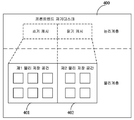
일부 실시예에서, 도 4를 참조하면, 프론트엔드 자기디스크(예컨대 SSD)는 논리적으로 각각 쓰기 캐시와 읽기 캐시로 칭하는 2개의 논리 영역으로 나뉠 수 있고, 이와 상응하게, 물리적으로, 프론트엔드 자기디스크(400)는 제1 물리 저장 공간(401)과 제2 물리 저장 공간(402)을 포함할 수 있다. 제1 물리 저장 공간(401)은 적어도 하나의 물리 블록을 포함하고, 제2 물리 저장 공간(402)은 적어도 하나의 물리 블록을 포함하며, 제1 물리 저장 공간(401)은 상기 쓰기 캐시에 대응되고, 제2 물리 저장 공간(402)은 상기 읽기 캐시에 대응된다.In some embodiments, referring to FIG. 4 , the front-end magnetic disk (eg, SSD) may be logically divided into two logical regions, respectively referred to as write cache and read cache, and correspondingly, physically, the front-end
도 4에서는 제1 물리 저장 공간(401)과 제2 물리 저장 공간(402)에 교집합이 존재하지 않는 것을 예로 들었으나, 일부 실시예에서, 이 2개의 물리 저장 공간은 교집합이 존재할 수 있음을 이해할 수 있을 것이다. 예를 들어, 제1 물리 저장 공간은 물리 블록 A, 물리 블록 B와 물리 블록 C를 포함하고, 제2 물리 저장 공간은 물리 블록 C와 물리 블록 D를 포함할 수 있다.4 , it is exemplified that the first
일반적으로, 쓰기 요청량이 읽기 요청량보다 클 수 있으므로, 일부 실시예에서, 실제 수요를 더욱 확실하게 만족시키기 위하여, 제1 물리 저장 공간의 용량의 합은 제2 물리 저장 공간의 용량의 합보다 크다.In general, since the write request amount may be greater than the read request amount, in some embodiments, in order to more reliably meet the actual demand, the sum of the capacities of the first physical storage space is greater than the sum of the capacities of the second physical storage space. .
일부 실시예에서, 프론트엔드 자기디스크 상의 조작 데이터를 백엔드 자기디스크로 마이그레이션하는 단계는, 프론트엔드 자기디스크의 제1 물리 저장 공간 내의 조작 데이터를 백엔드 자기디스크로 마이그레이션하는 단계를 포함하고; 및/또는, 백엔드 자기디스크 상의 조작 데이터를 프론트엔드 자기디스크에 캐싱하는 단계는, 백엔드 자기디스크 상의 조작 데이터를 프론트엔드 자기디스크의 제2 물리 저장 공간 내에 캐싱하는 단계를 포함한다.In some embodiments, the migrating operation data on the front-end magnetic disk to the back-end magnetic disk includes migrating operation data in a first physical storage space of the front-end magnetic disk to the back-end magnetic disk; and/or, the caching of the manipulation data on the back-end magnetic disk to the front-end magnetic disk includes caching the manipulation data on the back-end magnetic disk in a second physical storage space of the front-end magnetic disk.
데이터를 SSD로부터 SATA로 마이그레이션하는 것을 백업 애플리케이션이라고 칭할 수 있고, 데이터를 SATA로부터 SSD로 캐싱하는 것을 캐시 애플리케이션이라 칭할 수 있다. 본 실시예 중 마이그레이션에 대응되는 데이터와 캐시에 대응되는 데이터가 각각 제1 물리 저장 공간과 제2 물리 저장 공간에 저장되고, 2개의 물리 저장 공간이 다르기 때문에, 백업 애플리케이션과 캐시 애플리케이션이 호환될 수 있다. 이와 대응되게, 관련 기술에서는 콜드 데이터를 SATA로부터 SSD로 마이그레이션하거나, 또는 핫 데이터를 SSD로부터 SATA로 마이그레이션하는 과정에서, 백업 애플리케이션과 캐시 애플리케이션 중의 하나만 구현할 수 있으며, 백업 애플리케이션과 캐시 애플리케이션은 호환될 수 없다.Migrating data from SSD to SATA may be referred to as a backup application, and caching data from SATA to SSD may be referred to as a cache application. In this embodiment, data corresponding to migration and data corresponding to cache are stored in the first physical storage space and the second physical storage space, respectively, and since the two physical storage spaces are different, the backup application and the cache application may be compatible have. Correspondingly, in the related technology, in the process of migrating cold data from SATA to SSD or migrating hot data from SSD to SATA, only one of a backup application and a cache application may be implemented, and the backup application and the cache application may be compatible. none.
본 실시예에서, SSD에서 제1 물리 저장 공간과 제2 물리 저장 공간으로 구분하고, 이 2개의 물리 저장 공간을 각각 마이그레이션된 데이터와 캐싱된 데이터에 대응시키는 방식을 통해, 백업 애플리케이션과 캐시 애플리케이션의 호환을 구현할 수 있다. In this embodiment, by dividing the first physical storage space and the second physical storage space in the SSD, and matching these two physical storage spaces to migrated data and cached data, respectively, the backup application and the cache application compatibility can be implemented.
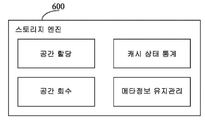
프론트엔드 저장 노드는 미리 설치된 관리툴, 예를 들어 스토리지 엔진(예컨대 rocksdb)을 통해 데이터 관리를 수행할 수 있다. 예를 들어, 도 5를 참조하면, 프론트엔드 저장 노드(500)는 하드웨어 계층의 SSD(501)와 소프트웨어 계층의 스토리지 엔진(502)을 포함할 수 있다.The front-end storage node may perform data management through a pre-installed management tool, for example, a storage engine (eg, rocksdb). For example, referring to FIG. 5 , the front-
도 6을 참조하면, 스토리지 엔진이 수행하는 데이터 관리는 공간 할당, 공간 회수, 캐시 상태 통계, 메타정보 유지관리 등을 포함할 수 있다.Referring to FIG. 6 , data management performed by the storage engine may include space allocation, space reclamation, cache state statistics, meta information maintenance, and the like.
공간 할당: 데이터를 위해 물리 저장 공간을 할당한다. 예를 들어, SSD는 다수의 물리 스토리지 엔진을 포함하며, 스토리지 엔진은 사전 설정된 할당 정책에 따라 물리 블록을 데이터에 할당하여 사용할 수 있다. 물리 블록의 할당 상황에 따라, 물리 블록의 상태는 할당되지 않음, 사전 할당됨 및 매핑됨으로 구분할 수 있다. 또한, SSD가 논리 계층에서 읽기 캐시와 쓰기 캐시로 나뉜 경우, 상기 할당되지 않음과 사전 할당됨은 더 나아가 읽기 캐시 할당되지 않음, 쓰기 캐시 할당되지 않음, 읽기 캐시 사전 할당됨, 쓰기 캐시 사전 할당됨으로 구분될 수 있고, 매핑됨은 더 나아가 읽기 캐시 매핑, 쓰기 캐시 매핑, 읽기 쓰기 캐시 매핑으로 구분될 수 있다. 여기서, 할당되지 않음은 즉 할당을 하지 않은 것이고, 사전 할당됨은 현재 데이터에 대해 물리 불록을 할당 시 현재 데이터의 다음 데이터를 위해 물리 블록을 미리 할당할 수 있음을 의미한다. 예를 들어 현재 데이터에게 물리 불록 A를 할당 시, 다음 데이터를 위해 물리 블록 B를 동시에 할당할 수 있다. 매핑됨이란 할당되었을 뿐만 아니라 읽기 캐시 및/또는 쓰기 캐시와 매핑관계를 더 구축하였음을 의미한다. 예를 들어, 도 4를 참조하면, SSD는 논리 계층에서 읽기 캐시와 쓰기 캐시로 구분할 수 있으며, 각기 다른 물리 블록은 다른 캐시와 관계를 구축할 수 있다. 예를 들어 쓰기 캐시에 대응되는 물리 블록은 물리 블록 A, 물리 블록 B와 물리 블록 C를 포함하고, 읽기 캐시에 대응되는 물리 블록은 물리 블록 C와 물리 블록 D를 포함할 수 있으며, 즉 물리 블록 A와 물리 블록 B의 상태는 이미 매핑됨이면서 쓰기 캐시 매핑이고; 물리 블록 C의 상태는 이미 매핑됨이면서 읽기 쓰기 캐시 매핑이며; 물리 블록 D의 상태는 이미 매핑됨이면서 읽기 캐시 매핑이다. 상기 공간 할당 상황, 예를 들어 각 물리 블록의 상태는 스토리지 엔진에 지속될 수 있으며, 이에 따라 스토리지 엔진에 대응되는 프로세스를 다시 시작한 후 복구할 수 있다.Space Allocation: Allocates physical storage space for data. For example, an SSD includes a plurality of physical storage engines, and the storage engine may allocate and use physical blocks to data according to a preset allocation policy. According to the allocation status of the physical block, the state of the physical block may be classified into unassigned, pre-allocated, and mapped. In addition, when the SSD is divided into read cache and write cache in the logical layer, the unassigned and preallocated are further divided into read cache unassigned, write cache unassigned, read cache preallocated, and write cache preallocated. can be, and mapped can be further divided into read cache mapping, write cache mapping, and read write cache mapping. Here, unassigned means no allocation, and pre-allocated means that when a physical block is allocated with respect to current data, a physical block may be pre-allocated for data next to the current data. For example, when the physical block A is allocated to the current data, the physical block B may be simultaneously allocated for the next data. Mapped means that it is not only allocated, but has further established a mapping relationship with the read cache and/or the write cache. For example, referring to FIG. 4 , an SSD may be divided into a read cache and a write cache in a logical layer, and different physical blocks may establish relationships with other caches. For example, a physical block corresponding to a write cache may include a physical block A, a physical block B, and a physical block C, and a physical block corresponding to the read cache may include a physical block C and a physical block D, that is, a physical block. The states of A and physical block B are already mapped and write cache mapping; The state of physical block C is already mapped and read write cache mapped; The state of physical block D is already mapped and read cache mapped. The space allocation situation, for example, the state of each physical block may be persisted in the storage engine, and thus may be recovered after restarting a process corresponding to the storage engine.
공간 회수: 데이터가 이미 사용한 물리 공간을 회수하며, 주로 SSD의 공간을 회수하는 것을 말하며, SSD의 점유율이 감소되어, 비용이 절감된다. 예를 들어 회수 가능한 공간은 쓰기 캐시 사전 할당에 대응되는 물리 블록; 읽기 캐시 사전 할당에 대응되는 물리 블록; 쓰기 캐시에 대응되는 물리 블록 중의 데이터가 SATA로 플러싱된 후, 상기 데이터가 원래 사용한 물리 블록; 읽기 캐시에 대응되는 물리 블록 중의 미리 읽기 데이터보다 더 핫한 데이터가 나타난 경우, 상기 미리 읽기 데이터에 대응되는 물리 블록을 포함한다. Space reclamation: Reclaiming the physical space already used by data, mainly refers to reclaiming the space of the SSD. The occupancy of the SSD is reduced, thereby reducing the cost. For example, the reclaimable space may include a physical block corresponding to a write cache pre-allocation; a physical block corresponding to the read cache pre-allocation; a physical block originally used by the data after data in the physical block corresponding to the write cache is flushed to SATA; When data hotter than read-ahead data among physical blocks corresponding to the read cache appears, the physical block corresponding to the read-ahead data is included.
캐시 상태 통계: 읽기 캐시의 상태와 쓰기 캐시의 상태에 대해 각각 통계를 수행하며, 읽기 캐시에 대하여, 예를 들어 읽기 캐시 중에 저장된 데이터의 단위 시간 길이 또는 특정 시간 길이 내에서의 방문량을 집계하여, 저장된 데이터의 핫한 정도를 확정하고; 쓰기 캐시에 대하여, 예를 들어 단위 시간 길이 또는 특정 시간 길이 내에서의 쓰기 요청 데이터량을 통계내어, 쓰기 조작의 핫한 정도를 통계낸다. Cache state statistics: Perform statistics on the state of the read cache and the state of the write cache, respectively, and for the read cache, for example, by counting the amount of visits within a unit time length or a specific time length of data stored during the read cache, determining the hotness of the stored data; With respect to the write cache, for example, the amount of write request data within a unit time length or within a specific time length is statistic, and the hot degree of a write operation is statistic.
메타정보 유지관리: 메타정보란 데이터 관리 시 채택하는 기본 데이터 정보를 말하며, 예를 들어 상기 공간 할당 후 구축된 매핑 관계, 데이터를 물리 블록에 기록한 후의 저장 정보, 프론트엔드 저장 노드와 백엔드 저장 노드의 매핑 관계 등이며, 메타정보는 스토리지 엔진에 저장될 수 있고, 각 복제그룹은 하나의 동일한 스토리지 엔진의 구현예에 대응된다.Meta-information maintenance: Meta-information refers to basic data information adopted for data management, for example, mapping relationships established after space allocation, storage information after data is recorded in a physical block, front-end storage nodes and back-end storage nodes mapping relationship, etc., meta information may be stored in a storage engine, and each replication group corresponds to an implementation example of one and the same storage engine.
스토리지 엔진을 기반으로, 프론트엔드 저장 노드는 다음과 같은 읽기 쓰기 조작을 실행할 수 있다:Based on the storage engine, the front-end storage node can execute the following read/write operations:
일부 실시예에서, 클라이언트단이 전송한 읽기 쓰기 요청에 따라, 프론트엔드 자기디스크에 대해 조작 데이터의 읽기 쓰기 조작을 수행하는 단계는, 읽기 쓰기 요청이 쓰기 요청일 때, 조작 데이터는 기록할 데이터이며, 쓰기 요청에 기록할 데이터를 휴대하고, 기록할 데이터를 파일화하여, 파일을 적어도 하나의 파일유닛으로 구분하는 단계, 및 적어도 하나의 파일 유닛 중의 각 파일 유닛이 매핑되는 물리 유닛을 확정하고, 물리 유닛은 프론트엔드 자기디스크에 위치하며, 각 파일유닛을 프론트엔드 자기디스크의 매핑된 물리 유닛에 저장하는 단계; 및/또는, 읽기 쓰기 요청이 읽기 요청인 경우, 조작 데이터는 독취할 데이터이며, 읽기 요청에 독취할 데이터의 식별자를 휴대하여, 식별자에 따라 독취할 데이터의 프론트엔드 자기디스크 상의 저장 정보를 획득하며, 저장 정보에 따라 프론트엔드 자기디스크에서 독취할 데이터를 획득하고, 독취할 데이터를 클라이언트단으로 전송하는 단계를 포함한다.In some embodiments, performing a read/write operation of the operation data on the front-end magnetic disk according to the read/write request sent by the client end includes, when the read/write request is a write request, the operation data is data to be recorded, , carrying the data to be recorded in the write request, converting the data to be recorded into a file, dividing the file into at least one file unit, and determining a physical unit to which each file unit of the at least one file unit is mapped, the physical unit is located in the front-end magnetic disk, and storing each file unit in the mapped physical unit of the front-end magnetic disk; and/or, when the read/write request is a read request, the manipulation data is data to be read, carrying an identifier of the data to be read in the read request, and obtaining storage information on the front-end magnetic disk of the data to be read according to the identifier, , acquiring data to be read from the front-end magnetic disk according to the storage information, and transmitting the data to be read to the client end.
쓰기 요청에 대하여:Regarding write requests:
제1 물리 저장 공간(401)은 프론트엔드 저장 노드가 수신한 쓰기 요청에 휴대된 기록할 데이터를 저장하기 위한 것이며, 예를 들어, 메인 저장 노드의 경우, 메인 저장 노드는 클라이언트단이 전송한 쓰기 요청에 휴대된 기록할 데이터를 메인 저장 노드의 SSD의 쓰기 캐시에 대응되는 물리 블록에 저장하고; 슬레이브 저장 노드의 경우, 슬레이브 저장 노드가 메인 저장 노드의 기록할 데이터를 포함하는 동기적인 쓰기 요청을 수신한 후, 슬레이브 저장 노드가 상기 기록할 데이터를 슬레이브 저장 노드의 SSD의 쓰기 캐시에 대응되는 물리 블록에 저장한다. The first
스토리지 엔진은 가상 파일 시스템의 형식에 따라 데이터를 관리할 수 있다. 도 7을 참조하면, 가상 파일 시스템(700)은 파일(file)층, 파일 유닛(inode)층과 물리(disk) 유닛층으로 구분할 수 있다. 파일층과 파일유닛층은 논리 계층에 위치하고, 물리유닛층은 물리 계층에 위치한다. 도 7에는 하나의 파일의 관련 내용만 도시하였으나, 가상 파일 시스템은 다수의 파일을 포함할 수도 있음을 이해할 수 있을 것이다. 또한, 데이터 저장 시에는 데이터를 파일로 처리하는 것이며, SSD 중의 데이터는 일정 조건 하에서 SATA로 플러싱될 수 있다. 따라서, SSD 중의 각 데이터는 희소하다고 칭할 수 있다. 이와 상응하게, 상기 가상 파일 시스템은 희소 가상 파일 시스템이라 칭할 수 있다.The storage engine may manage data according to the format of the virtual file system. Referring to FIG. 7 , the
도 7을 결합해보면, 프론트엔드 저장 노드(메인 저장 노드와 슬레이브 저장 노드 포함)가 데이터(즉 상기 기록할 데이터)를 수신한 후, 데이터를 파일화하여, 파일을 적어도 하나의 파일유닛으로 나눈 다음, 각 파일유닛을 대응되는 물리유닛에 매핑할 수 있다. 필요에 따라, 파일유닛과 물리유닛의 입도를 설정할 수 있음을 이해할 수 있을 것이며, 예를 들어 파일유닛은 파일블록(file block)또는 파일 슬라이스(file slice)일 수 있고, 물리유닛은 물리 블록(block) 또는 물리 세그먼트(segment)일 수 있다. 여기서, 파일 슬라이스의 입도는 파일 블록의 입도보다 작고, 물리 세그먼트의 입도는 물리 블록의 입도보다 작으며, 파일 블록은 물리 블록에 대응되고, 파일 슬라이스는 물리 세그먼트에 대응된다. 본 실시예에서, 도 7을 참조하면, 파일유닛은 파일 블록이고, 물리유닛은 물리 블록인 경우를 예로 든 것이다.Combining Fig. 7, after the front-end storage node (including the main storage node and the slave storage node) receives data (that is, the data to be recorded), it files the data, and divides the file into at least one file unit. , each file unit can be mapped to a corresponding physical unit. It will be understood that the granularity of a file unit and a physical unit can be set as needed. For example, a file unit may be a file block or a file slice, and a physical unit may be a physical block ( block) or a physical segment. Here, the granularity of the file slice is smaller than the granularity of the file block, the granularity of the physical segment is smaller than the granularity of the physical block, the file block corresponds to the physical block, and the file slice corresponds to the physical segment. In the present embodiment, referring to FIG. 7 , a case where a file unit is a file block and a physical unit is a physical block is taken as an example.
파일을 파일블록으로 구분 시, 프론트엔드 저장 노드는 스토리지 엔진에 미리 저장된 할당 정책에 따라 구분할 수 있다. 예를 들어, 도 7을 참조하면, 하나의 기록할 데이터에 대응하여, 상기 데이터를 파일화한 후, 제1 파일블록과 제2 파일블록으로 구분한다. 파일블록과 물리블록의 매핑 관계는 쓰기 과정에 의거하여 생성 및 업데이트할 수 있다. 예를 들어, 프론트엔드 저장 노드는 매핑관계가 구축되지 않은 하나의 파일블록에 대응되며, 스토리지 엔진에 기록된 메타정보를 통해, 점용되지 않은 물리블록을 확정하고, 사전 설정된 할당 정책에 따라 점용되지 않은 물리블록에서 하나의 물리 블록을 선택한 후, 상기 파일블록과 상기 물리블록의 매핑관계를 구축하거나, 또는 이미 매핑 관계가 구축된 파일블록의 경우, 이미 존재하는 매핑 관계에 따라 파일 블록에 대응되는 물리 블록을 확정할 수 있고, 매핑 관계 역시 스토리지 엔진에 저장될 수 있다. 예를 들어, 도 7을 참조하면, 제1 파일블록을 제1 물리블록에 대응시키고, 제2 파일블록을 제3 물리블록에 대응시킨 후, 제1 파일블록을 제1 물리블록에 저장하고, 제2 파일블록을 제3 물리블록에 저장한다.When dividing files into file blocks, the front-end storage nodes can be classified according to the allocation policy pre-stored in the storage engine. For example, referring to FIG. 7 , corresponding to one piece of data to be recorded, the data is converted into a file, and then the data is divided into a first file block and a second file block. The mapping relationship between the file block and the physical block can be created and updated based on the write process. For example, a front-end storage node corresponds to a single file block for which a mapping relationship is not established, and through meta information recorded in the storage engine, an unoccupied physical block is determined, and not occupied according to a preset allocation policy. After selecting one physical block from a non-existing physical block, a mapping relationship between the file block and the physical block is established, or in the case of a file block for which a mapping relationship has already been established, a file block corresponding to the file block according to an existing mapping relationship is established. A physical block may be determined, and a mapping relationship may also be stored in the storage engine. For example, referring to FIG. 7 , after a first file block corresponds to a first physical block and a second file block corresponds to a third physical block, the first file block is stored in the first physical block, The second file block is stored in the third physical block.
물론, 만약 SSD를 쓰기 캐시에 대응되는 물리블록과 읽기 캐시에 대응되는 물리블록으로 구분하는 경우, 상기 쓰기 요청에 대응되는 제1 물리블록, 제2 물리블록과 제3 물리블록 등은 쓰기 캐시에 대응되는 물리블록이며, 다시 말해 제1 물리 저장 공간 내의 물리블록이다.Of course, if the SSD is divided into a physical block corresponding to a write cache and a physical block corresponding to a read cache, the first physical block, the second physical block, and the third physical block corresponding to the write request are stored in the write cache. A corresponding physical block, that is, a physical block in the first physical storage space.
읽기 요청에 대하여:Regarding read requests:
제2 물리 저장 공간(402)은 SATA로부터 캐싱된 데이터를 저장하기 위한 것으로서, 상기 데이터는 미리 읽기 데이터라고 칭할 수 있으며, 미리 읽기 데이터에 클라이언트단이 전송한 읽기 요청에 휴대된 독취할 데이터의 식별자에 대응되는 데이터가 포함된 경우, 프론트엔드 저장 노드가 대응되는 데이터를 클라이언트단으로 전송하기에 용이하다.The second
데이터를 독취 시, 프론트엔드 저장 노드는 스토리지 엔진을 기반으로 데이터 읽기 과정을 실행할 수도 있다. 예를 들어, 스토리지 엔진은 저장된 미리 읽기 데이터의 메타정보를 기록하며, 메타정보는 예컨대 데이터 식별자 및 대응되는 저장 정보로서, 수신된 읽기 요청에 휴대된 독취할 데이터의 식별자가 저장된 데이터의 식별자 내에 포함된 경우, 대응되는 저장 정보에 따라, 읽기 캐시에 대응되는 물리블록으로부터 대응되는 데이터를 독취하여 클라이언트단으로 전송할 수 있다. 미리 읽기 데이터는 먼저 백엔드 저장 노드로부터 프론트엔드 저장 노드로 캐싱된 것이며, 미리 읽기 과정은 후속되는 내용을 참조할 수 있다.When reading data, the front-end storage node may execute a data reading process based on the storage engine. For example, the storage engine records meta information of the stored read-ahead data, and the meta information is, for example, a data identifier and corresponding storage information. The identifier of the data to be read carried in the received read request is included in the identifier of the stored data. In this case, the corresponding data may be read from the physical block corresponding to the read cache and transmitted to the client according to the corresponding storage information. The read-ahead data is first cached from the back-end storage node to the front-end storage node, and the read-ahead process may refer to subsequent contents.
앞에서는 프론트엔드 저장 노드가 각각 클라이언트단이 전송한 쓰기 요청과 읽기 요청을 처리하는 과정에 대해 설명하였으며, 상기 과정을 통해 데이터를 SSD에 기록하거나 및/또는 SSD로부터 데이터를 독취하여 클라이언트단으로 전송할 수 있다.In the above, the process of the front-end storage node processing the write request and the read request transmitted from the client end, respectively, has been described, and through the above process, data is written to the SSD and/or data is read from the SSD and transmitted to the client end. can
또한, 상기 과정을 통해, 쓰기 데이터에 대하여, SSD의 쓰기 성능을 제공할 수 있고, SSD에 독취할 데이터가 저장된 경우, 직접 SSD로부터 데이터를 독취하여 클라이언트단으로 회송함으로써, SSD의 읽기 성능을 제공할 수 있다. 따라서, 분산형 블록 저장 시스템의 읽기 쓰기 성능이 향상될 수 있다.In addition, through the above process, it is possible to provide the write performance of the SSD for write data, and when data to be read is stored in the SSD, the data to be read is directly read from the SSD and sent back to the client, thereby providing the read performance of the SSD can do. Accordingly, the read/write performance of the distributed block storage system may be improved.
프론트엔드 저장 노드는 클라이언트단과 상호 작용하여, 클라이언트단이 전송한 읽기 쓰기 요청에 따라, 프론트엔드 자기디스크에 대해 읽기 쓰기 조작을 수행할 뿐만 아니라, 다른 한편으로는 일정 조건하에서 백엔드 저장 노드와도 상호 작용한다. 즉, 프론트엔드 저장 노드는 사전 설정된 전송 조건을 만족시키는 경우, 프론트엔드 자기디스크와 백엔드 자기디스크 사이에서, 데이터 전송 처리를 실행한다. The front-end storage node interacts with the client end, and according to the read/write request sent by the client end, not only reads and writes to the front-end magnetic disk, but also interacts with the back-end storage node under certain conditions. works That is, the front-end storage node executes data transfer processing between the front-end magnetic disk and the back-end magnetic disk when a preset transfer condition is satisfied.
상기한 바와 같이, 일부 실시예에서, 전송 조건은, 마이그레이션 조건과 캐시 조건을 포함하며, 사전 설정된 전송 조건을 만족 시, 프론트엔드 자기디스크와 백엔드 자기디스크 사이에서, 데이터 전송 처리를 실행하는 단계는, 마이그레이션 조건을 만족 시, 프론트엔드 자기디스크 상의 데이터를 백엔드 자기디스크로 마이그레이션시키는 단계; 및/또는, 캐시 조건을 만족 시, 백엔드 자기디스크상의 데이터를 프론트엔드 자기디스크로 캐싱하는 단계를 포함한다.As described above, in some embodiments, the transfer condition includes a migration condition and a cache condition, and when a preset transfer condition is satisfied, executing the data transfer process between the front-end magnetic disk and the back-end magnetic disk includes: , migrating the data on the front-end magnetic disk to the back-end magnetic disk when the migration condition is satisfied; and/or caching the data on the back-end magnetic disk to the front-end magnetic disk when the cache condition is satisfied.
설명을 간단히 하기 위하여, 마이그레이션 조건을 만족 시, 프론트엔드 자기디스크 상의 데이터를 백엔드 자기디스크로 마이그레이션하는 상기 과정을 플러시라고 칭할 수 있고, 캐시 조건을 만족 시, 백엔드 자기디스크 상의 데이터를 프론트엔드 자기디스크에 캐싱하는 상기 과정은 미리 읽기라고 칭할 수 있다.For simplicity, the process of migrating data on the front-end magnetic disk to the back-end magnetic disk when the migration condition is satisfied may be referred to as a flush, and when the cache condition is satisfied, the data on the back-end magnetic disk is transferred to the front-end magnetic disk. The above process of caching in . may be referred to as read-ahead.
플러시에 대하여:About flush:
플러시란 SSD 중의 데이터를 SATA로 마이그레이션하는 것을 의미하며, 프론트엔드 저장 노드의 스토리지 엔진에 프론트엔드 저장 노드와 백엔드 저장 노드의 매핑 관계를 저장할 수 있다. 상기 매핑 관계는 할당 정책에 따라 확정하거나 또는 설정된 고정 매핑 관계일 수 있다. 따라서, 상기 매핑 관계에 따라, SSD 중의 데이터를 어떤 백엔드 저장 노드그룹으로 플러시할지 확정할 수 있으며, 이후 상기 SSD를 포함하는 프론트엔드 저장 노드가 플러시 데이터를 대응되는 백엔드 저장 노드그룹 중의 메인 저장 노드로 전송하고, 메인 저장 노드는 다시 동기적으로 대응되는 슬레이브 저장 노드로 전송한다. 예를 들어, 프론트엔드 저장 노드 A 중의 SSD 상의 데이터를 플러싱해야 하고, 매핑관계가 존재하는 것이 백엔드 저장 노드 B라면, 백엔드 저장 노드 B가 데이터를 수신한 후, 프론트엔드 저장 노드의 처리 방식을 참고하여 데이터를 SATA에 기록할 수 있다.Flush means migrating data in the SSD to SATA, and the mapping relationship between the front-end storage node and the back-end storage node can be stored in the storage engine of the front-end storage node. The mapping relationship may be a fixed mapping relationship determined or set according to an allocation policy. Therefore, according to the mapping relationship, it is possible to determine to which backend storage node group data in the SSD is to be flushed, and then the front-end storage node including the SSD transfers the flushed data to the main storage node in the corresponding backend storage node group. and the main storage node synchronously transmits it back to the corresponding slave storage node. For example, if the data on the SSD in the front-end storage node A needs to be flushed and the mapping relationship exists in the back-end storage node B, after the back-end storage node B receives the data, refer to the processing method of the front-end storage node. data can be written to SATA.
본 실시예에서, 플러시 조건은 다음 항 중의 적어도 한 항을 포함할 수 있다:In this embodiment, the flush condition may include at least one of the following terms:
(1) 주기적 플러시 시점: 상응하게, 주기적 플러시 시점에 도달 시 플러시를 실행한다.(1) Periodic flush time point: Correspondingly, the flush is executed when the periodic flush time point is reached.
(2) 더티 데이터와 SSD 총 용량의 비율: 더티 데이터란 SSD에 이미 기록된 데이터를 의미하며, 즉 SSD의 쓰기 캐시에 대응되는 물리블록에 이미 저장된 데이터이다. 이와 상응하게, 이미 기록된 데이터와 SSD 총 용량의 비율이 사전 설정된 비율보다 크거나 같을 경우, 플러시를 실행하며; 여기서, 쓰기 캐시에 대응되는 물리블록 중의 데이터가 이미 가득 찬 경우가 상기 상황의 극단적인 상황에 속한다.(2) Ratio of Dirty Data to SSD Total Capacity: Dirty data means data already written to the SSD, that is, data already stored in a physical block corresponding to the write cache of the SSD. Correspondingly, when the ratio of the already written data to the SSD total capacity is greater than or equal to the preset ratio, the flush is executed; Here, the case where the data in the physical block corresponding to the write cache is already full belongs to the extreme situation of the above situation.
(3) 더티 데이터가 차지하는 공간의 크기: 상응하게, 이미 기록된 데이터의 총량이 사전 설정 데이터량보다 크거나 같을 경우, 플러시를 실행한다.(3) Size of space occupied by dirty data: Correspondingly, when the total amount of data already recorded is greater than or equal to the preset data amount, flush is executed.
(4) 더티 데이터 캐시 시간 길이: 상응하게, 이미 기록된 데이터의 기록 시간 길이가 사전 설정 시간 길이보다 크거나 같을 경우, 플러시를 실행한다.(4) Dirty data cache time length: Correspondingly, when the write time length of the already written data is greater than or equal to the preset time length, flush is executed.
(5) 더티 데이터와 미리 읽기 데이터의 비율: 미리 읽기 데이터란 읽기 캐시에 대응되는 물리블록에 저장된 데이터를 의미하며; 상응하게, 상기 비율이 사전 설정값보다 큰 경우, 플러시를 실행한다.(5) Ratio of dirty data and read-ahead data: read-ahead data means data stored in a physical block corresponding to a read cache; Correspondingly, if the ratio is greater than the preset value, a flush is executed.
플러싱된 데이터가 쓰기 캐시에 대응되는 물리블록 중의 데이터를 지칭하는 것임을 이해할 수 있을 것이다.It may be understood that the flushed data refers to data in a physical block corresponding to the write cache.
상기 어느 하나의 플러시 조건을 만족 시, 플러시 조작을 실행한다.When any one of the above flush conditions is satisfied, a flush operation is executed.
여기서, (1) 주기적 플러시 시점에 도달한 경우, 사전 설정량만큼의 데이터를 플러시할 수 있다. Here, (1) when the periodic flush time point is reached, a preset amount of data may be flushed.
(2)~(4)의 조건에 도달한 경우, 플러시 조건이 충족되지 않을 때까지 플러시를 실행하며, 예를 들어 더티 데이터와 SSD 총 용량의 비율에 대해, 상기 비율이 사전 설정 비율보다 작아질 때까지 플러시를 실행한다.When the conditions of (2) to (4) are reached, the flush is executed until the flush condition is not met, for example, for the ratio of dirty data to SSD total capacity, the ratio will become smaller than the preset ratio. flush until
일부 실시예에서, 프론트엔드 자기디스크 상의 조작 데이터를 백엔드 자기디스크로 마이그레이션하는 단계는, 조작 데이터가 프론트엔드 자기디스크 상의 다수의 물리블록을 점용한 경우, 다수의 물리블록 중 각 물리블록의 우선등급 순서에 따라, 순차적으로 각 물리블록 상의 조작 데이터를 백엔드 자기디스크로 마이그레이션하는 단계를 포함한다.In some embodiments, the step of migrating the manipulation data on the front-end magnetic disk to the back-end magnetic disk may include: when the manipulation data occupies a plurality of physical blocks on the front-end magnetic disk, the priority level of each physical block among the plurality of physical blocks and sequentially migrating the manipulation data on each physical block to the back-end magnetic disk according to the sequence.
예를 들어, 조작 데이터가 다수의 물리블록을 점용한다면, 물리블록의 우선등급에 따라 플러시 조건이 충족되지 않을 때까지 플러싱할 수 있다. 예를 들어 물리블록 A의 우선등급이 물리블록 B의 우선등급보다 높다면, 즉 먼저 물리블록 A 중의 데이터를 플러싱하고, 물리블록 A 중의 데이터를 플러싱한 후, 예컨대 상기 비율이 사전 설정 비율보다 작아지면, 즉 플러싱을 중지하고, 그렇지 않을 경우 물리블록 B 중의 데이터를 계속 플러싱한다.For example, if the manipulation data occupies a plurality of physical blocks, flushing may be performed until a flush condition is not satisfied according to the priority level of the physical blocks. For example, if the priority level of the physical block A is higher than the priority level of the physical block B, that is, first flush the data in the physical block A, and after flushing the data in the physical block A, for example, the ratio is smaller than the preset ratio. Stop flushing from the ground, that is, otherwise, data in the physical block B is continuously flushed.
본 실시예에서, 각 물리블록(block)의 우선등급은 다음과 같은 순서일 수 있다:In this embodiment, the priority level of each physical block may be in the following order:
스냅샷(snapshot) 중인 block> 쓰기 캐시 데이터량이 많은 block > 쓰기 캐시 데이터량이 적은 block.Blocks taking a snapshot > Blocks with a large amount of write cache data > Blocks with a small amount of write cache data.
본 실시예에서, 물리블록의 우선등급에 따라 데이터 플러싱을 실시함으로써, 플러싱 효과를 향상시킬 수 있다.In this embodiment, the flushing effect can be improved by performing data flushing according to the priority level of the physical block.
상기 실시예에서, 다수의 물리블록에 대해 우선등급에 따라 플러싱한다. 일부 실시예에서, 단일한 물리블록의 경우, 순서대로 플러싱한다. 즉, 단일한 block 데이터의 플러싱의 경우, 최대한 오프셋(offset), 길이(length)의 순서로 플러싱하여, 랜덤 읽기 쓰기(io) 조작을 감소시키고, 백엔드 SATA에 순서대로 기록한다. 즉, 일부 실시예에서, 순차적으로 각 물리블록 상의 조작 데이터를 백엔드 자기디스크로 마이그레이션시키는 단계는, 각 물리블록 중 각각의 단일한 물리블록에 대응하여, 단일한 물리블록에 저장된 조작 데이터의 저장 순서에 따라, 순서대로 단일한 물리블록 상의 조작 데이터를 백엔드 자기디스크로 마이그레이션하는 단계를 포함한다.In the above embodiment, a plurality of physical blocks are flushed according to priority. In some embodiments, for a single physical block, flush in order. That is, in the case of flushing single block data, the flushing is performed in the order of offset and length as much as possible to reduce random read/write (io) operations and sequentially write to the backend SATA. That is, in some embodiments, the step of sequentially migrating the manipulation data on each physical block to the back-end magnetic disk may include, corresponding to each single physical block among each physical block, the storage order of the manipulation data stored in the single physical block. and migrating operation data on a single physical block to a back-end magnetic disk in an orderly manner.
본 실시예에서, 단일한 물리블록에 대응하여 순서대로 플러싱을 실행함으로써, 랜덤 읽기 쓰기 조작을 감소시켜, 백엔드 저장 노드에 대한 스트레스를 낮출 수 있다.In the present embodiment, by sequentially performing flushing corresponding to a single physical block, random read/write operations can be reduced, thereby reducing stress on the backend storage node.
또한, 플러싱 시, 다음과 같은 약간의 처리를 더 실시할 수 있다. 예를 들어 동일한 복제그룹의 동시 발생 플러시 총량이 설정 총량보다 크지 않도록 제어하고; 플러싱 속도가 설정 속도를 초과하지 않도록 설정하며; 로컬 SSD 및/또는 플러싱할 SATA의 자기디스크 스트레스(예를 들어 ioutil로 특성화되는 압력)가 설정값보다 클 경우, 플러싱을 정지하는 등의 처리를 더 실시할 수 있다. In addition, at the time of flushing, the following slight processing may be further performed. For example, control so that the total amount of concurrent flushes in the same replication group is not greater than the set total amount; set the flushing rate not to exceed the set rate; When the magnetic disk stress of the local SSD and/or the SATA to be flushed (for example, the pressure characterized by ioutil) is greater than the set value, a process such as stopping the flushing may be further performed.
본 실시예에서, 상기 각종 플러싱 조건을 통해, 프론트엔드 저장 노드의 점유율을 감소시켜, 스토리지 엔진이 의거하는 가상 파일 시스템을 희소 가상 파일 시스템으로 구현하고, 나아가 분산형 블록 저장 시스템의 원가를 절감할 수 있다.In this embodiment, by reducing the occupancy of the front-end storage node through the various flushing conditions, the virtual file system based on the storage engine is implemented as a sparse virtual file system, and furthermore, the cost of the distributed block storage system is reduced. can
미리 읽기에 대하여:About reading ahead:
미리 읽기란 SATA 중의 데이터를 SSD로 캐싱하는 것을 의미하며, 예를 들어 SSD의 읽기 캐시에 대응되는 물리블록에 저장하는 것을 말한다. Read-ahead refers to caching data from SATA to SSD, and for example, to storing data in a physical block corresponding to the read cache of SSD.
미리 읽기 조건은 예를 들어, 단위 시간 또는 설정 시간 내에, 동일한 데이터에 대한 읽기 요청 수량이 설정값보다 크면, 미리 읽기를 실행한다. 예를 들어, 초기 시, SSD의 읽기 캐시에 대응되는 물리블록은 비어 있으며, 어느 한 시각에 상기 SSD가 소재하는 프론트엔드 저장 노드가 클라이언트단이 전송한 제1 데이터에 대한 읽기 요청을 수신하였다면, 현재 읽기 캐시에 대응되는 물리블록이 비어 있기 때문에, 프론트엔드 저장 노드는 클라이언트단으로 읽기 실패 정보를 피드백하고, 매우 짧은 시간(상기 시간은 설정 가능하다)이 지나, 상기 프론트엔드 저장 노드가 또 다시 제1 데이터에 대한 읽기 요청을 수신하였다면, 상기 프론트엔드 저장 노드는 백엔드 저장 노드로부터 상기 제1 데이터를 독취하여, SSD의 읽기 캐시에 대응되는 물리블록에 저장한다. 여기서, 프론트엔드 저장 노드의 스토리지 엔진에 데이터의 메타정보를 기록할 수 있으며, 상기 메타정보에 따라 상기 백엔드 저장 노드를 알 수 있고, 이에 따라 대응되는 백엔드 저장 노드로 미리 읽기할 데이터의 식별자를 포함하는 미리 읽기 요청을 전송할 수 있으며, 백엔드 저장 노드는 프론트엔드 저장 노드가 전송한 미리 읽기 요청을 수신한 후, 자신의 SATA로부터 대응되는 데이터를 획득하여 프론트엔드 저장 노드로 회송한다. 프론트엔드 저장 노드는 한편으로는 읽기 캐시를 수행하고, 다른 한편으로는 데이터를 클라이언트단으로 회송한다.In the read-ahead condition, for example, if the number of read requests for the same data within a unit time or a set time is greater than a set value, read-ahead is executed. For example, in the initial stage, if the physical block corresponding to the read cache of the SSD is empty, and the front-end storage node in which the SSD is located at a certain time receives a read request for the first data transmitted from the client end, Since the physical block corresponding to the current read cache is empty, the front-end storage node feeds back read failure information to the client end, and after a very short time (the time can be set), the front-end storage node starts again When the read request for the first data is received, the front-end storage node reads the first data from the back-end storage node and stores it in a physical block corresponding to the read cache of the SSD. Here, meta-information of data can be recorded in the storage engine of the front-end storage node, and the back-end storage node can be known according to the meta-information. Accordingly, the corresponding back-end storage node includes an identifier of data to be read in advance. can transmit a read-ahead request, and the back-end storage node, after receiving the read-ahead request sent by the front-end storage node, acquires corresponding data from its SATA and sends it back to the front-end storage node. The front-end storage node performs read caching on the one hand and returns data to the client end on the other hand.
본 실시예에서, 미리 읽기 조건이 충족된 경우에만 미리 읽기를 수행함으로써, 매 번 백엔드로 미리 읽기하여 초래되는 읽기 쓰기 스트레스 문제를 피할 수 있으며, 읽기 쓰기 성능 저하를 피할 수 있다.In the present embodiment, by performing read-ahead only when the read-ahead condition is satisfied, it is possible to avoid a read-write stress problem caused by read-ahead to the backend every time and to avoid deterioration in read-write performance.
또한, 읽기 캐시에 대응되는 물리블록에 저장된 데이터는 상황에 따라 도태될 수 있으며, 이에 따라 도태된 데이터에 대응되는 물리블록을 회수하여 후속되는 데이터 미리 읽기에 사용할 수 있다. 본 실시예에서, 최근 최소 사용(Least Recently Used, LRU)에 따라 도태시킬 수 있다. 예를 들어, 도태 시점을 설정하여 상기 시점에 도달 후, 상기 시점 전의 사전 설정된 시간 내의 각 읽기 캐시에 대응되는 물리블록 중의 데이터 방문 빈도를 통계낼 수 있으며, 방문 빈도가 가장 낮은 데이터가 우선적으로 도태된다. 또한, 상기 시점에 따라 도태를 트리거하는 이외에, SSD 자기디스크의 공간이 부족할 때에도 도태를 트리거할 수 있다. 예를 들어, 쓰기 캐시에 대응되는 물리블록에 이미 저장된 데이터의 데이터량과 읽기 캐시에 대응되는 물리블록에 이미 저장된 데이터량을 더한 총량이 설정값보다 크거나, 또는 상기 총량과 SSD 자기디스크의 총 용량의 비율이 설정값보다 크면, 읽기 캐시에 대응되는 물리블록 중의 데이터의 도태를 트리거할 수 있으며, 도태 시 상기 트리거 시점 이전의 설정 시간의 방문 빈도에 따라, 방문 빈도가 낮은 데이터를 우선적으로 도태시킬 수도 있다.In addition, data stored in the physical block corresponding to the read cache may be culled according to circumstances, and accordingly, the physical block corresponding to the culled data may be retrieved and used for subsequent data pre-reading. In this embodiment, selection may be made according to Least Recently Used (LRU). For example, the frequency of data visits in the physical block corresponding to each read cache within a preset time before the time point can be statistically determined, and the data with the lowest frequency of visits is selected preferentially after the selection time is set and the time point is reached. do. Also, in addition to triggering the selection according to the above time point, the selection may be triggered even when the space of the SSD magnetic disk is insufficient. For example, the total amount obtained by adding the amount of data already stored in the physical block corresponding to the write cache and the amount of data already stored in the physical block corresponding to the read cache is greater than the set value, or the total amount and the total amount of the SSD magnetic disk If the ratio of capacity is greater than the set value, it is possible to trigger the selection of data in the physical block corresponding to the read cache. During selection, data with a low frequency of visits is preferentially selected according to the visit frequency of the set time before the trigger time. may do it
상기 실시예의 관련 내용을 결합하여, 도 8을 참조하면, 클라이언트단이 전송한 쓰기 요청의 경우, 프론트엔드 저장 노드는 쓰기 요청에 휴대된 데이터를 프론트엔드 저장 노드 중의 SSD(801)의 쓰기 캐시에 대응되는 물리블록에 기록할 수 있으며, 또한 플러시 조건을 만족 시, 쓰기 캐시에 대응되는 물리블록 상의 데이터를 SATA(802)로 플러싱할 수 있다. 또한, 프론트엔드 저장 노드가 사전 설정된 미리 읽기 조건을 만족 시, 백엔드 저장 노드의 SATA로부터 데이터를 독취하여 SSD의 읽기 캐시에 대응되는 물리블록에 저장함으로써, 클라이언트단이 상기 데이터를 독취 시, 상기 데이터를 클라이언트단으로 회송할 수 있다. 비록 도 8에서 쓰기와 플러시는 SSD 중의 동일한 물리블록을 지시하고 있으나, 단 상기 방식에 한정되지 않고, 쓰기는 물리블록 A에 기록하고, 플러싱 대상 물리블록은 물리블록 B일 수도 있다.In combination with the related contents of the above embodiment, referring to FIG. 8 , in the case of a write request transmitted from the client end, the front-end storage node stores the data carried in the write request to the write cache of the
본 실시예에서, 클라이언트단이 전송한 읽기 쓰기 요청에 따라, 프론트엔드 자기디스크에 대해 읽기 쓰기 조작을 수행하며, 프론트엔드 자기디스크는 읽기 쓰기 성능이 비교적 높은 자기디스크이므로, 분산형 블록 저장 시스템의 읽기 쓰기 성능이 향상될 수 있다. 마이그레이션 조건을 만족 시, 프론트엔드 자기디스크 상의 데이터를 백엔드 자기디스크로 마이그레이션함으로써, 프론트엔드 자기디스크 상의 데이터 점유율을 낮출 수 있으며, 프론트엔드 자기디스크의 읽기 쓰기 성능이 백엔드 자기디스크의 읽기 쓰기 성능보다 높으므로, 일반적으로 프론트엔드 자기디스크의 원가 역시 백엔드 자기디스크의 원가보다 높다. 따라서, 프론트엔드 자기디스크 상의 데이터 점유율을 감소시킴으로써 원가를 절감할 수 있으며; 및/또는, 캐시 조건을 만족 시, 백엔드 자기디스크 상의 데이터를 프론트엔드 자기디스크로 캐싱함으로써, 직접 데이터를 프론트엔드 자기디스크로부터 클라이언트단으로 제공할 수 있어 읽기 성능이 향상된다. SSD에서 제1 물리 저장 공간과 제2 물리 저장 공간으로 구분하여, 이 2개의 물리 저장 공간이 각각 마이그레이션 데이터와 캐시 데이터에 대응되므로, 백업 애플리케이션과 캐시 애플리케이션의 호환을 구현할 수 있다.In this embodiment, read/write operations are performed on the front-end magnetic disk according to the read/write request sent by the client end, and the front-end magnetic disk is a magnetic disk with relatively high read/write performance, so Read/write performance may be improved. By migrating the data on the front-end magnetic disk to the back-end magnetic disk when the migration conditions are satisfied, the data share on the front-end magnetic disk can be lowered, and the read/write performance of the front-end magnetic disk is higher than that of the back-end magnetic disk. Therefore, in general, the cost of the front-end magnetic disk is also higher than that of the back-end magnetic disk. Therefore, it is possible to reduce the cost by reducing the data occupancy on the front-end magnetic disk; And/or, when a cache condition is satisfied, data on the back-end magnetic disk is cached to the front-end magnetic disk, so that data can be directly provided from the front-end magnetic disk to the client end, thereby improving read performance. The SSD is divided into a first physical storage space and a second physical storage space, and since these two physical storage spaces correspond to migration data and cache data, respectively, compatibility of a backup application and a cache application can be implemented.
위에서는 상기 분산형 블록 저장 시스템 및 그의 읽기 쓰기 방법을 설명하였다. 본 발명의 실시예는 대응되는 읽기 쓰기 장치 및 프론트엔드 저장 노드를 더 제공할 수 있다.Above, the distributed block storage system and its read/write method have been described. An embodiment of the present invention may further provide a corresponding read/write device and a front-end storage node.
도 9는 본 발명의 제9 실시예의 설명도로서, 본 실시예는 분산형 블록 저장 시스템의 읽기 쓰기 장치를 제공한다. 분산형 블록 저장 시스템은 프론트엔드 저장 노드와 백엔드 저장 노드를 포함하며, 프론트엔드 저장 노드는 적어도 하나의 프론트엔드 자기디스크를 포함하고, 백엔드 저장 노드는 적어도 하나의 백엔드 자기디스크를 포함하며, 프론트엔드 자기디스크의 읽기 쓰기 성능은 백엔드 자기디스크의 읽기 쓰기 성능보다 높다. 도 9에 도시된 바와 같이, 장치(900)는, 응답 유닛(901)과 전송 유닛(902)을 포함한다. 응답 유닛(901)은 클라이언트단이 전송한 읽기 쓰기 요청에 따라, 프론트엔드 자기디스크에 대해 조작 데이터의 읽기 쓰기 조작을 수행하기 위한 것이고; 전송 유닛(902)은 사전 설정된 전송 조건을 만족 시, 프론트엔드 자기디스크와 백엔드 자기디스크 사이에서, 조작 데이터의 전송 처리를 실행하기 위한 것이다.9 is an explanatory diagram of a ninth embodiment of the present invention, which provides a read/write device of a distributed block storage system. The distributed block storage system includes a front-end storage node and a back-end storage node, the front-end storage node includes at least one front-end magnetic disk, the back-end storage node includes at least one back-end magnetic disk, and the front-end storage node includes a front-end storage node. The read/write performance of the magnetic disk is higher than the read/write performance of the back-end magnetic disk. As shown in FIG. 9 , the
일부 실시예에서, 전송 조건은 마이그레이션 조건과 캐시 조건을 포함하며, 전송 유닛(902)은 마이그레이션 모듈, 및/또는, 캐시 모듈을 포함하고; 마이그레이션 모듈은 마이그레이션 조건을 만족 시, 프론트엔드 자기디스크 상의 조작 데이터를 백엔드 자기디스크로 마이그레이션하기 위한 것이고; 캐시 모듈은 캐시 조건을 만족 시, 백엔드 자기디스크 상의 조작 데이터를 프론트엔드 자기디스크로 캐싱하기 위한 것이다.In some embodiments, the transfer condition includes a migration condition and a cache condition, and the
일부 실시예에서, 마이그레이션 모듈은 구체적으로, 조작 데이터가 프론트엔드 자기디스크의 다수의 물리블록을 점용 시, 다수의 물리블록 중 각 물리블록의 우선등급 순서에 따라, 순차적으로 각 물리블록 상의 조작 데이터를 백엔드 자기디스크로 마이그레이션하기 위한 것이다.In some embodiments, the migration module is specifically configured to: When the manipulation data occupies a plurality of physical blocks of the front-end magnetic disk, according to the priority order of each physical block among the plurality of physical blocks, the manipulation data on each physical block sequentially to migrate to a back-end magnetic disk.
일부 실시예에서, 마이그레이션 모듈은 더 구체적으로, 각 물리블록 중의 각 단일한 물리블록에 대응하여, 단일한 물리블록에 저장된 조작 데이터의 저장 순서에 따라, 순서대로 단일한 물리블록 상의 조작 데이터를 백엔드 자기디스크로 마이그레이션하기 위한 것이다. In some embodiments, the migration module more specifically, according to the storage order of the operation data stored in the single physical block, corresponding to each single physical block in each physical block, backend the operation data on the single physical block in order This is to migrate to a magnetic disk.
일부 실시예에서, 프론트엔드 자기디스크는 제1 물리 저장 공간과 제2 물리 저장 공간을 포함하며; 마이그레이션 모듈은 구체적으로, 프론트엔드 자기디스크의 제1 물리 저장 공간 내의 조작 데이터를 백엔드 자기디스크로 마이그레이션하기 위한 것이고; 및/또는 캐시 모듈은 구체적으로, 백엔드 자기디스크 상의 조작 데이터를 프론트엔드 자기디스크의 제2 물리 저장 공간 내로 캐싱하기 위한 것이다.In some embodiments, the front-end magnetic disk includes a first physical storage space and a second physical storage space; The migration module is specifically for migrating operation data in the first physical storage space of the front-end magnetic disk to the back-end magnetic disk; and/or the cache module is specifically for caching the manipulation data on the back-end magnetic disk into the second physical storage space of the front-end magnetic disk.
일부 실시예에서, 응답 유닛(901)은 구체적으로, 읽기 쓰기 요청이 쓰기 요청일 경우, 조작 데이터는 기록할 데이터이며, 쓰기 요청에 기록할 데이터를 휴대하여, 기록할 데이터를 파일화하고, 파일을 적어도 하나의 파일유닛으로 구분하여, 적어도 하나의 파일유닛 중의 각 파일유닛이 매핑된 물리유닛을 확정하고, 물리유닛은 프론트엔드 자기디스크에 위치하며, 각각의 파일유닛을 프론트엔드 자기디스크의 매핑된 물리유닛에 저장하기 위한 것이거나; 및/또는, 읽기 쓰기 요청이 읽기 요청일 경우, 조작 데이터는 독취할 데이터이며, 읽기 요청에 독취할 데이터의 식별자를 휴대하여, 식별자에 따라 독취할 데이터의 프론트엔드 자기디스크 상에서의 저장 정보를 획득하고, 저장 정보에 따라 프론트엔드 자기디스크 상에서 독취할 데이터를 획득하여, 독취할 데이터를 클라이언트단으로 전송하기 위한 것이다.In some embodiments, the
본 실시예에서, 클라이언트단이 전송한 읽기 쓰기 요청에 따라, 프론트엔드 자기디스크에 대해 읽기 쓰기 조작을 수행하며, 프론트엔드 자기디스크는 읽기 쓰기 성능이 비교적 높은 자기디스크이므로, 분산형 블록 저장 시스템의 읽기 쓰기 성능이 향상될 수 있다. 마이그레이션 조건을 만족 시, 분산형 블록 저장 시스템의 읽기 쓰기 성능이 향상될 수 있다. 마이그레이션 조건을 만족 시, 프론트엔드 자기디스크 상의 데이터를 백엔드 자기디스크로 마이그레이션함으로써, 프론트엔드 자기디스크 상의 데이터 점유율을 낮출 수 있으며, 프론트엔드 자기디스크의 읽기 쓰기 성능이 백엔드 자기디스크의 읽기 쓰기 성능보다 높으므로, 일반적으로 프론트엔드 자기디스크의 원가 역시 백엔드 자기디스크의 원가보다 높다. 따라서, 프론트엔드 자기디스크 상의 데이터 점유율을 감소시킴으로써 원가를 절감할 수 있으며; 및/또는, 캐시 조건을 만족 시, 백엔드 자기디스크 상의 데이터를 프론트엔드 자기디스크로 캐싱함으로써, 직접 데이터를 프론트엔드 자기디스크로부터 클라이언트단으로 제공할 수 있어 읽기 성능이 향상된다. SSD에서 제1 물리 저장 공간과 제2 물리 저장 공간으로 구분하여, 이 2개의 물리 저장 공간이 각각 마이그레이션 데이터와 캐시 데이터에 대응되므로, 백업 애플리케이션과 캐시 애플리케이션의 호환을 구현할 수 있다.In this embodiment, read/write operations are performed on the front-end magnetic disk according to the read/write request sent by the client end, and the front-end magnetic disk is a magnetic disk with relatively high read/write performance, so Read/write performance may be improved. When the migration condition is satisfied, the read/write performance of the distributed block storage system can be improved. By migrating the data on the front-end magnetic disk to the back-end magnetic disk when the migration conditions are satisfied, the data share on the front-end magnetic disk can be lowered, and the read/write performance of the front-end magnetic disk is higher than that of the back-end magnetic disk. Therefore, in general, the cost of the front-end magnetic disk is also higher than that of the back-end magnetic disk. Therefore, it is possible to reduce the cost by reducing the data occupancy on the front-end magnetic disk; And/or, when a cache condition is satisfied, data on the back-end magnetic disk is cached to the front-end magnetic disk, so that data can be directly provided from the front-end magnetic disk to the client end, thereby improving read performance. The SSD is divided into a first physical storage space and a second physical storage space, and since these two physical storage spaces correspond to migration data and cache data, respectively, compatibility of a backup application and a cache application can be implemented.
도 10은 본 발명의 제10 실시예의 설명도이다. 본 실시예는 프론트엔드 저장 노드를 제공하며, 상기 프론트엔드 저장 노드(1000)는 적어도 하나의 프론트엔드 자기디스크(1001)와 읽기 쓰기 장치(1002)를 포함한다. 상기 읽기 쓰기 장치(1002)는 프론트엔드 자기디스크(1001)에 대해 읽기 쓰기 조작을 수행하기 위한 것이다. 읽기 쓰기 장치(1002)는 도 9에 도시된 바와 같을 수 있다.Fig. 10 is an explanatory diagram of a tenth embodiment of the present invention. This embodiment provides a front-end storage node, wherein the front-
또한, 본 발명은 분산형 블록 저장 시스템을 더 제공하며, 상기 분산형 블록 저장 시스템은 도 10에 도시된 프론트엔드 저장 노드를 포함한다.In addition, the present invention further provides a distributed block storage system, wherein the distributed block storage system includes a front-end storage node shown in FIG. 10 .
일부 실시예에서, 프론트엔드 저장 노드는 프론트엔드 저장 노드그룹에 위치하며, 시스템은 적어도 하나의 프론트엔드 저장 노드그룹을 포함하고, 적어도 하나의 프론트엔드 저장 노드그룹 중의 각 그룹의 프론트엔드 저장 노드그룹은 적어도 하나의 프론트엔드 저장 노드를 포함하며; 시스템은 또한 적어도 하나의 백엔드 저장 노드그룹을 더 포함하고, 적어도 하나의 백엔드 저장 노드그룹 중의 각 그룹의 백엔드 저장 노드그룹은 적어도 하나의 백엔드 저장 노드를 포함한다.In some embodiments, the front-end storage node is located in a front-end storage nodegroup, the system comprising at least one front-end storage nodegroup, and a front-end storage nodegroup in each group of the at least one front-end storage nodegroup. includes at least one front-end storage node; The system further includes at least one backend storage nodegroup, wherein each group of the at least one backend storage nodegroup includes at least one backend storage nodegroup.
일부 실시예에서, 각 그룹의 프론트엔드 저장 노드그룹은 다수의 프론트엔드 저장 노드를 포함하고, 다수의 프론트엔드 저장 노드는 메인 저장 노드와 적어도 하나의 슬레이브 저장 노드를 포함하며; 프론트엔드 저장 노드가 메인 저장 노드인 경우, 메인 저장 노드는 또한, 클라이언트단이 전송한 읽기 쓰기 요청을 수신하고; 및, 읽기 쓰기 요청이 쓰기 요청일 경우, 쓰기 요청에 휴대된 기록할 데이터를 동시에 슬레이브 저장 노드로 전송하기 위한 것이다. In some embodiments, the front-end storage nodegroup of each group includes a plurality of front-end storage nodes, and the plurality of front-end storage nodes includes a main storage node and at least one slave storage node; When the front-end storage node is the main storage node, the main storage node also receives the read/write request sent by the client end; and, when the read/write request is a write request, the data to be written carried in the write request is simultaneously transmitted to the slave storage node.
일부 실시예에서, 프론트엔드 자기디스크는 SSD이고; 및/또는, 백엔드 자기디스크는 SATA이다.In some embodiments, the front-end magnetic disk is an SSD; and/or, the back-end magnetic disk is SATA.
본 실시예에서, 클라이언트단이 전송한 읽기 쓰기 요청에 따라, 프론트엔드 자기디스크에 대해 읽기 쓰기 조작을 수행하며, 프론트엔드 자기디스크는 읽기 쓰기 성능이 비교적 높은 자기디스크이므로, 분산형 블록 저장 시스템의 읽기 쓰기 성능이 향상될 수 있다. 마이그레이션 조건을 만족 시, 분산형 블록 저장 시스템의 읽기 쓰기 성능이 향상될 수 있다. 마이그레이션 조건을 만족 시, 프론트엔드 자기디스크 상의 데이터를 백엔드 자기디스크로 마이그레이션함으로써, 프론트엔드 자기디스크 상의 데이터 점유율을 낮출 수 있으며, 프론트엔드 자기디스크의 읽기 쓰기 성능이 백엔드 자기디스크의 읽기 쓰기 성능보다 높으므로, 일반적으로 프론트엔드 자기디스크의 원가 역시 백엔드 자기디스크의 원가보다 높다. 따라서, 프론트엔드 자기디스크 상의 데이터 점유율을 감소시킴으로써 원가를 절감할 수 있으며; 및/또는, 캐시 조건을 만족 시, 백엔드 자기디스크 상의 데이터를 프론트엔드 자기디스크로 캐싱함으로써, 직접 데이터를 프론트엔드 자기디스크로부터 클라이언트단으로 제공할 수 있어 읽기 성능이 향상된다. SSD에서 제1 물리 저장 공간과 제2 물리 저장 공간으로 구분하여, 이 2개의 물리 저장 공간이 각각 마이그레이션 데이터와 캐시 데이터에 대응되므로, 백업 애플리케이션과 캐시 애플리케이션의 호환을 구현할 수 있다.In this embodiment, read/write operations are performed on the front-end magnetic disk according to the read/write request sent by the client end, and the front-end magnetic disk is a magnetic disk with relatively high read/write performance, so Read/write performance may be improved. When the migration condition is satisfied, the read/write performance of the distributed block storage system can be improved. By migrating the data on the front-end magnetic disk to the back-end magnetic disk when the migration conditions are satisfied, the data share on the front-end magnetic disk can be lowered, and the read/write performance of the front-end magnetic disk is higher than that of the back-end magnetic disk. Therefore, in general, the cost of the front-end magnetic disk is also higher than that of the back-end magnetic disk. Therefore, it is possible to reduce the cost by reducing the data occupancy on the front-end magnetic disk; And/or, when a cache condition is satisfied, data on the back-end magnetic disk is cached to the front-end magnetic disk, so that data can be directly provided from the front-end magnetic disk to the client end, thereby improving read performance. The SSD is divided into a first physical storage space and a second physical storage space, and since these two physical storage spaces correspond to migration data and cache data, respectively, compatibility of a backup application and a cache application can be implemented.
본 발명의 상이한 실시예에서 동일하거나 또는 상응하는 내용은 상호 참고할 수 있으며, 실시예에서 상세히 설명하지 않은 내용은 다른 실시예의 관련 내용을 참고할 수 있음을 이해할 수 있을 것이다.It will be understood that the same or corresponding contents in different embodiments of the present invention may be mutually referenced, and contents not described in detail in the embodiments may refer to related contents of other embodiments.
본 발명의 실시예에 따르면, 본 발명은 전자장치, 가독 저장매체와 컴퓨터 프로그램을 더 제공한다.According to an embodiment of the present invention, the present invention further provides an electronic device, a readable storage medium and a computer program.
도 11은 본 발명의 실시예를 실시할 수 있는 예시의 전자장치(1100)의 개략적인 블록도이다. 전자장치는 각종 형식의 디지털 컴퓨터, 예를 들어 랩탑 컴퓨터, 데스크탑 컴퓨터, 워크스테이션, 서버, 블레이드 서버, 대형 컴퓨터, 및 기타 적합한 컴퓨터를 나타내기 위한 것이다. 전자장치는 또한 각종 형식의 이동장치, 예를 들어 개인 디지털 조수, 셀 폰, 스마트 폰, 웨어러블 장치 및 다른 유사한 컴퓨팅 장치를 나타낼 수도 있다. 본문의 부재, 이들의 연결과 관계, 및 이들의 기능은 단지 예시로만 사용될 뿐이며, 또한 본문에 기재된 및/또는 요구되는 본 발명의 구현을 제한하려는 의도가 있는 것이 아니다. 11 is a schematic block diagram of an exemplary
도 11에 도시된 바와 같이, 전자장치(1110)는 리드 온리 메모리(ROM)(1102)에 저장된 컴퓨터 프로그램 또는 저장유닛(1008)으로부터 랜덤 액세스 메모리(RAM)(1103)로 로드된 컴퓨터 프로그램에 따라 각종 적당한 동작과 처리를 실행할 수 있는 컴퓨팅 유닛(1101)을 포함한다. RAM(1103)에는 또한 장치(1100)의 조작에 필요한 각종 프로그램과 데이터가 더 저장될 수 있다. 컴퓨팅 유닛(1101), ROM(1102) 및 RAM(1103)은 버스(1104)를 통해 서로 연결된다. 입/출력(I/O) 인터페이스(1105) 역시 버스(1104)에 연결된다.11 , the electronic device 1110 is configured according to a computer program stored in a read only memory (ROM) 1102 or a computer program loaded from the storage unit 1008 into a random access memory (RAM) 1103 . and a
전자장치(1100) 중의 다수의 부재는 키보드, 마우스 등과 같은 입력유닛(1106); 각종 유형의 디스플레이, 스피커 등과 같은 출력유닛(1107); 자기디스크, 광디스크 등과 같은 저장유닛(1108); 및 넷카드, 모뎀, 무선통신 송수신기 등과 같은 통신유닛(1109)을 포함하는 I/O 인터페이스(1105)에 연결되며, 통신유닛(1109)은 전자장치(1100)가 인터넷과 같은 컴퓨터 네트워크 및/또는 각종 통신 네트워크를 통해 기타 장치와 정보/데이트를 교환하도록 허용한다.A plurality of members of the
컴퓨팅 유닛(1101)은 각종 처리 및 계산 능력을 갖춘 범용 및/또는 전용 처리 어셈블리일 수 있다. 컴퓨팅 유닛(1101)의 일부 구현예는 중앙처리장치(CPU), 그래픽처리장치(GPU), 각종 전용 인공지능(AI) 컴퓨팅 칩, 각종 머신 러닝 모델 알고리즘을 실행하는 컴퓨팅 유닛, 디지털 신호 프로세서(DSP), 및 임의의 적당한 프로세서, 컨트롤러, 마이크로컨트롤러 등을 포함하나 이에 한정되지 않는다. 컴퓨팅 유닛(1101)은 본문에 기재된 각 방법과 처리를 실행하며, 예를 들어 분산형 블록 저장 시스템의 읽기 쓰기 방법을 실행한다. 예를 들어, 일부 실시예에서, 분산형 블록 저장 시스템의 읽기 쓰기 방법은 컴퓨터 소프트웨어 프로그램으로 구현될 수 있으며, 저장유닛(1108)과 같이 머신 가독 매체에 유형으로 포함될 수 있다. 일부 실시예에서, 컴퓨터 프로그램의 일부 또는 전부는 ROM(1102) 및/또는 통신유닛(1109)을 통해 장치(1100)에 로딩 및/또는 설치될 수 있다. 컴퓨터 프로그램이 RAM(1103)에 로딩되어 컴퓨팅 유닛(1101)에 의해 실행될 때, 본문에 기재된 분산형 블록 저장 시스템의 읽기 쓰기 방법 중의 하나 또는 다수의 단계를 실행할 수 있다. 또한, 기타 실시예에서, 컴퓨팅 유닛(1101)은 다른 어떠한 적당한 방식을 통해(예를 들어 펌웨어에 의해) 분산형 블록 저장 시스템의 읽기 쓰기 방법을 실행하도록 설정될 수 있다.The
본문에서 상기와 같이 기재된 시스템과 기술의 각종 실시방식은 디지털 전자회로 시스템, 집적회로 시스템, 필드 프로그래머블 게이트 어레이(FPGA), 전용 집적 회로(ASIC), 전용 표준 제품(ASSP), 시스템 온 칩 시스템(SOC), 복잡한 프로그래머블 논리 장치(CPLD) 컴퓨터 하드웨어, 펌웨어, 소프트웨어, 및/또는 이들의 조합 중에서 구현될 수 있다. 이러한 각종 실시방식은 하나 또는 다수의 컴퓨터 프로그램에서 실시되며, 상기 하나 또는 다수의 컴퓨터 프로그램은 적어도 하나의 프로그래머블 프로세서를 포함하는 프로그래머블 시스템에서 실행 및/또는 해석될 수 있고, 상기 프로그래머블 프로세서는 전용 또는 범용 프로그래머블 프로세서일 수 있으며, 저장 시스템, 적어도 하나의 입력장치, 및 적어도 하나의 출력장치로부터 데이터와 명령을 수신하고, 데이터와 명령을 상기 저장 시스템, 상기 적어도 하나의 입력장치, 및 상기 적어도 하나의 출력장치로 전송할 수 있다.Various implementations of the systems and technologies described above in the text include digital electronic circuit systems, integrated circuit systems, field programmable gate arrays (FPGAs), dedicated integrated circuits (ASICs), dedicated standard products (ASSPs), system-on-chip systems ( SOC), complex programmable logic device (CPLD) computer hardware, firmware, software, and/or combinations thereof. These various embodiments are implemented in one or more computer programs, wherein the one or more computer programs may be executed and/or interpreted in a programmable system including at least one programmable processor, wherein the programmable processor is dedicated or general-purpose. may be a programmable processor, receiving data and instructions from a storage system, at least one input device, and at least one output device, and sending data and instructions to the storage system, at least one input device, and at least one output device. can be sent to the device.
본 발명의 방법을 실시하기 위한 프로그램 코드는 하나 또는 다수의 프로그램 언어의 어떠한 조합을 이용하여 작성될 수 있다. 이러한 프로그램 코드는 범용 컴퓨터, 전용 컴퓨터 또는 기타 프로그래머블 데이터 처리 장치의 프로세서 또는 컨트롤러에게 제공되어, 프로그램 코드가 프로세서 또는 컨트롤러에 의해 실행될 때 흐름도 및/또는 블록도에 규정된 기능/조작이 실시되도록 할 수 있다. 프로그램 코드는 완전히 기기에서 실행되거나, 부분적으로 기기에서 실행되며, 독립된 소프트웨어 패키지로서 부분적으로는 기기상에서 실행되고 부분적으로는 원격 기기에서 실행되거나 또는 전적으로 원격 기기 또는 서버에서 실행될 수 있다.The program code for implementing the method of the present invention may be written using any combination of one or more programming languages. Such program code may be provided to a processor or controller of a general-purpose computer, dedicated computer, or other programmable data processing device, so that when the program code is executed by the processor or controller, the functions/operations specified in the flowcharts and/or block diagrams are performed. have. The program code may run entirely on the device, partially on the device, as a standalone software package, partially on the device and partly on the remote device, or entirely on the remote device or server.
본 발명의 상하 본문에서, 머신 가독 매체는 유형의 매체일 수 있으며, 명령 실행 시스템, 장치 또는 장비가 사용하거나 또는 명령 실행 시스템, 장치 또는 장비와 결합하여 사용하기 위한 프로그램을 포함하거나 또는 저장할 수 있다. 머신 가독 매체는 머신 가독 신호 매체 또는 머신 가독 저장 매체일 수 있다. 머신 가독 매체는 전자, 자성, 광학, 전자기, 적외선, 또는 반도체 시스템, 장치 또는 장비, 또는 상기 내용의 임의의 적합한 조합을 포함할 수 있으나 이에 한정되지 않는다. 머신 가독 저장 매체의 더욱 구체적인 예시는 하나 또는 다수의 선에 기초한 전기적인 연결, 휴대용 컴퓨터 디스크, 하드디스크, 랜덤 액세스 메모리(RAM), 리드 온리 메모리(ROM), 소거 가능 프로그래머블 리드 온리 메모리(EPROM 또는 플래시 메모리), 광섬유, 컴팩트 디스크 리드 온리 메모리(CD-ROM), 광학 저장 장치, 자기 저장장치, 또는 상기 내용의 임의의 적합한 조합을 포함할 수 있다. In the context of the present invention, a machine-readable medium may be a tangible medium, and may contain or store a program for use by or in combination with an instruction execution system, apparatus or equipment. . The machine-readable medium may be a machine-readable signal medium or a machine-readable storage medium. Machine-readable media may include, but are not limited to, electronic, magnetic, optical, electromagnetic, infrared, or semiconductor systems, devices or equipment, or any suitable combination of the above. More specific examples of machine-readable storage media include one or more wire-based electrical connections, portable computer disks, hard disks, random access memory (RAM), read only memory (ROM), erasable programmable read only memory (EPROM or EPROM). flash memory), optical fiber, compact disk read only memory (CD-ROM), optical storage, magnetic storage, or any suitable combination of the above.
사용자와의 상호작용을 제공하기 위하여, 컴퓨터에서 여기에 기재된 시스템과 기술을 실시할 수 있으며, 상기 컴퓨터는 사용자에게 정보를 표시하기 위한 디스플레이 장치(예를 들어 CRT(음극선관) 또는 LCD(액정디스플레이) 모니터); 및 키보드와 포인팅 장치(예를 들어, 마우스 또는 트레이스볼)를 구비하여, 사용자가 상기 키보드와 상기 포인팅 장치를 통해 입력을 컴퓨터에 제공할 수 있다. 다른 종류의 장치는 또한 사용자와의 상호작용을 제공하기 위한 것일 수도 있다. 예를 들어 사용자에게 제공되는 피드백은 임의의 형식의 센싱 피드백(예를 들어, 시각적 피드백, 청각적 피드백, 또는 촉각적 피드백)일 수 있으며; 또한 임의의 형식(소리 입력, 음성 입력 또는 촉각 입력 포함)으로 사용자로부터의 입력을 수신할 수 있다. To provide for interaction with a user, a computer may implement the systems and techniques described herein, the computer comprising a display device (eg, a cathode ray tube (CRT) or liquid crystal display (LCD) for displaying information to the user). ) monitor); and a keyboard and a pointing device (eg, a mouse or a trace ball), so that a user can provide an input to the computer through the keyboard and the pointing device. Other types of devices may also be for providing interaction with a user. For example, the feedback provided to the user may be any form of sensing feedback (eg, visual feedback, auditory feedback, or tactile feedback); It can also receive input from the user in any format (including sound input, voice input, or tactile input).
여기에 기재된 시스템과 기술은 백엔드 부재를 포함하는 컴퓨팅 시스템(예를 들어 데이터 서버), 또는 미들웨어를 포함하는 컴퓨팅 시스템(예를 들어 응용 서버), 또는 프론트엔드 부재를 포함하는 컴퓨팅 시스템(예를 들어, 그래픽 사용자 인터페이스 또는 네트워크 브라우저를 구비한 사용자 컴퓨터, 사용자는 상기 그래픽 사용자 인터페이스 또는 상기 네트워크 브라우저를 통해 여기에 기재된 시스템과 기술의 실시방식과 상호작용할 수 있다), 또는 이러한 백엔드 부재, 미들웨어 부재, 또는 프론트엔드 부재의 임의의 조합을 포함하는 컴퓨팅 시스템에서 실시될 수 있다. 임의의 형식 또는 매체의 디지털 데이터 통신(예를 들어, 통신 네트워크)을 통해 시스템의 부재가 서로 연결될 수 있으며, 통신 네트워크의 예시는 로컬 영역 네트워크(LAN), 광역 네트워크(WAN)와 인터넷을 포함한다.The systems and techniques described herein include a computing system (eg, a data server) that includes a backend member, or a computing system that includes middleware (eg, an application server), or a computing system that includes a frontend member (eg, a , a user computer having a graphical user interface or network browser, a user may interact with the implementations of the systems and techniques described herein via the graphical user interface or network browser), or no such backend, no middleware, or It may be implemented in computing systems including any combination of front-end members. The members of the system may be interconnected through digital data communication (eg, a communication network) in any form or medium, examples of which include a local area network (LAN), a wide area network (WAN), and the Internet. .
컴퓨터 시스템은 클라이언트단과 서버를 포함할 수 있다. 클라이언트단과 서버는 일반적으로 서로 멀리 떨어져 있으며, 또한 통상적으로 통신 네트워크를 통해 상호 작용한다. 상응하는 컴퓨터에서 실행되며 서로 클라이언트단-서버 관계를 갖는 컴퓨터 프로그램을 통해 클라이언트단과 서버의 관계가 생성된다. 서버는 클라우드 서버일 수 있으며, 클라우드 컴퓨팅 서버 또는 클라우드 호스트로도 칭하며, 클라우드 컴퓨팅 서비스 체계 중의 하나의 호스트 제품으로서, 종래의 물리 호스트와 VPS 서버("Virtual Private Server", 또는 "VPS"로 약칭함)에 존재하는 관리의 어려움이 크고, 업무의 확장성이 약한 결함을 해결하였다. 서버는 분산형 시스템의 서버일 수도 있고, 또흔 블록체인을 결합한 서버일 수도 있다.The computer system may include a client end and a server. The client end and the server are generally remote from each other and also interact typically through a communication network. A relationship between the client and the server is created through a computer program running on the corresponding computer and having a client-server relationship with each other. The server may be a cloud server, also referred to as a cloud computing server or a cloud host, as a host product of one of the cloud computing service systems, and a conventional physical host and VPS server (“Virtual Private Server” or “VPS” for short) ), which has a large management difficulty and weak business scalability, has been resolved. A server may be a server of a distributed system, or it may be a server combined with a blockchain.
위에서 설명한 각종 형식의 흐름을 사용하여, 단계를 재배열, 추가 또는 삭제할 수 있다는 점을 이해하여야 한다. 예를 들어 본 발명에 기재된 각 단계는 병행 실행될 수도 있고, 순서대로 또는 각기 다른 순서로 실행될 수도 있으며, 본 발명에 공개된 기술방안이 희망하는 결과를 구현할 수 있기만 하면 되므로, 본문은 이에 대해 제한을 두지 않는다.It should be understood that steps may be rearranged, added, or deleted using the various types of flow described above. For example, each step described in the present invention may be executed in parallel, sequentially or in a different order, as long as the technical solution disclosed in the present invention can implement the desired result, the text does not limit this do not leave
상기 구체적인 실시방식은 본 발명의 보호범위를 제한하는 것이 아니다. 당업자는 설계 요구와 기타 요소에 따라, 각종 수정, 조합, 서브조합과 교체를 실시할 수 있음을 알아야 한다. 본 발명의 정신과 원칙 내에서 실시되는 임의의 수정, 등가의 교체 및 개선 등은 모두 본 발명의 보호범위 내에 포함되어야 한다.The above specific implementation method does not limit the protection scope of the present invention. It should be understood by those skilled in the art that various modifications, combinations, subcombinations and substitutions may be made according to design requirements and other factors. Any modifications, equivalent replacements and improvements implemented within the spirit and principle of the present invention shall all fall within the protection scope of the present invention.
Claims (20)
상기 분산형 블록 저장 시스템은 프론트엔드 저장 노드와 백엔드 저장 노드를 포함하며, 상기 프론트엔드 저장 노드는 적어도 하나의 프론트엔드 자기디스크를 포함하고, 상기 백엔드 저장 노드는 적어도 하나의 백엔드 자기디스크를 포함하며, 상기 프론트엔드 자기디스크의 읽기 쓰기 성능은 상기 백엔드 자기디스크의 읽기 쓰기 성능보다 높고, 상기 방법은
클라이언트단이 송신한 읽기 쓰기 요청에 따라, 상기 프론트엔드 자기디스크에 대해 조작 데이터(operation data)의 읽기 쓰기 조작(operation)을 수행하는 단계;
사전 설정된 전송 조건을 만족 시, 상기 프론트엔드 자기디스크와 상기 백엔드 자기디스크 사이에서, 상기 조작 데이터의 전송 처리를 실행하는 단계를 포함하는, 분산형 블록 저장 시스템의 읽기 쓰기 방법.A read/write method of a distributed block storage system, comprising:
The distributed block storage system includes a front-end storage node and a back-end storage node, wherein the front-end storage node includes at least one front-end magnetic disk, and the back-end storage node includes at least one back-end magnetic disk; , the read/write performance of the front-end magnetic disk is higher than the read/write performance of the back-end magnetic disk, the method comprising:
performing a read/write operation of operation data on the front-end magnetic disk according to a read/write request transmitted from a client end;
and executing a transfer process of the manipulation data between the front-end magnetic disk and the back-end magnetic disk when a preset transfer condition is satisfied.
상기 전송 조건은 마이그레이션 조건과 캐시 조건을 포함하며, 상기 사전 설정된 전송 조건을 만족 시, 상기 프론트엔드 자기디스크와 상기 백엔드 자기디스크 사이에서,
마이그레이션 조건을 만족 시, 상기 프론트엔드 자기디스크 상의 조작 데이터를 상기 백엔드 자기디스크로 마이그레이션하는 단계; 및/또는,
상기 캐시 조건을 만족 시, 상기 백엔드 자기디스크 상의 상기 조작 데이터를 상기 프론트엔드 자기디스크로 캐시하는 단계;를 포함하는 상기 조작 데이터의 전송 처리를 실행하는, 방법.According to claim 1,
The transfer condition includes a migration condition and a cache condition, and when the preset transfer condition is satisfied, between the front-end magnetic disk and the back-end magnetic disk,
migrating the manipulation data on the front-end magnetic disk to the back-end magnetic disk when a migration condition is satisfied; and/or;
and caching the manipulation data on the back-end magnetic disk to the front-end magnetic disk when the cache condition is satisfied.
상기 프론트엔드 자기디스크 상의 상기 조작 데이터를 상기 백엔드 자기디스크로 마이그레이션하는 단계는,
상기 조작 데이터가 상기 프론트엔드 자기디스크 상의 다수의 물리블록을 점용한 경우, 다수의 물리블록 중 각 물리블록의 우선등급 순서에 따라, 순차적으로 상기 각 물리블록 상의 조작 데이터를 상기 백엔드 자기디스크로 마이그레이션하는 단계를 포함하는, 방법.3. The method of claim 2,
Migrating the manipulation data on the front-end magnetic disk to the back-end magnetic disk comprises:
When the operation data occupies a plurality of physical blocks on the front-end magnetic disk, the operation data on each physical block is sequentially migrated to the back-end magnetic disk according to the priority order of each physical block among the plurality of physical blocks A method comprising the step of
상기 순차적으로 상기 각 물리블록 상의 조작 데이터를 상기 백엔드 자기디스크로 마이그레이션시키는 단계는,
상기 각 물리블록 중 각각의 단일한 물리블록에 대해, 상기 단일한 물리블록에 저장된 상기 조작 데이터의 저장 순서에 따라, 순서대로 상기 단일한 물리블록 상의 상기 조작 데이터를 상기 백엔드 자기디스크로 마이그레이션하는 단계를 포함하는, 방법.4. The method of claim 3,
The sequentially migrating the manipulation data on each physical block to the back-end magnetic disk comprises:
Migrating the manipulation data on the single physical block to the back-end magnetic disk in order for each single physical block among the physical blocks according to the storage order of the manipulation data stored in the single physical block A method comprising
상기 프론트엔드 자기디스크는 제1 물리 저장 공간과 제2 물리 저장 공간을 포함하며;
상기 프론트엔드 자기디스크 상의 상기 조작 데이터를 상기 백엔드 자기디스크로 마이그레이션하는 단계는, 상기 프론트엔드 자기디스크의 상기 제1 물리 저장 공간 내의 상기 조작 데이터를 상기 백엔드 자기디스크로 마이그레이션하는 단계를 포함하고; 및/또는,
상기 백엔드 자기디스크 상의 상기 조작 데이터를 상기 프론트엔드 자기디스크에 캐싱하는 단계는, 상기 백엔드 자기디스크 상의 상기 조작 데이터를 상기 프론트엔드 자기디스크의 상기 제2 물리 저장 공간 내에 캐싱하는 단계;를 포함하는, 방법.3. The method of claim 2,
the front-end magnetic disk includes a first physical storage space and a second physical storage space;
migrating the manipulation data on the front-end magnetic disk to the back-end magnetic disk includes migrating the manipulation data in the first physical storage space of the front-end magnetic disk to the back-end magnetic disk; and/or;
The caching of the manipulation data on the back-end magnetic disk to the front-end magnetic disk includes: caching the manipulation data on the back-end magnetic disk in the second physical storage space of the front-end magnetic disk; Way.
상기 클라이언트단이 전송한 읽기 쓰기 요청에 따라, 상기 프론트엔드 자기디스크에 대해 조작 데이터의 읽기 쓰기 조작을 수행하는 단계는,
상기 읽기 쓰기 요청이 쓰기 요청일 때, 상기 조작 데이터는 기록할 데이터이며, 상기 쓰기 요청에 상기 기록할 데이터를 휴대하여, 상기 기록할 데이터를 파일화하여, 파일을 적어도 하나의 파일유닛으로 구분하는 단계, 및 상기 적어도 하나의 파일 유닛 중의 각 파일 유닛이 매핑되는 물리 유닛을 확정하고, 상기 물리 유닛은 상기 프론트엔드 자기디스크에 위치하며, 상기 각 파일유닛을 상기 프론트엔드 자기디스크의 상기 매핑된 물리 유닛에 저장하는 단계; 및/또는,
상기 읽기 쓰기 요청이 읽기 요청인 경우, 상기 조작 데이터는 독취할 데이터이며, 상기 읽기 요청에 상기 독취할 데이터의 식별자를 휴대하여, 상기 식별자에 따라 상기 독취할 데이터의 상기 프론트엔드 자기디스크 상의 저장 정보를 획득하며, 상기 저장 정보에 따라 상기 프론트엔드 자기디스크에서 상기 독취할 데이터를 획득하고, 상기 독취할 데이터를 상기 클라이언트단으로 전송하는 단계;를 포함하는, 방법.6. The method according to any one of claims 1 to 5,
The step of performing a read/write operation of the manipulation data on the front-end magnetic disk according to the read/write request transmitted by the client end,
When the read/write request is a write request, the manipulation data is data to be written, carrying the data to be written to the write request, converting the data to be written into a file, and dividing the file into at least one file unit determining a physical unit to which each file unit of the at least one file unit is mapped, the physical unit is located on the front-end magnetic disk, and each file unit is assigned to the mapped physical unit of the front-end magnetic disk storing in the unit; and/or;
When the read/write request is a read request, the manipulation data is data to be read, and an identifier of the data to be read is carried in the read request, and storage information of the data to be read according to the identifier is stored on the front-end magnetic disk. and acquiring the data to be read from the front-end magnetic disk according to the storage information, and transmitting the data to be read to the client end.
상기 분산형 블록 저장 시스템은 프론트엔드 저장 노드와 백엔드 저장 노드를 포함하며, 상기 프론트엔드 저장 노드는 적어도 하나의 프론트엔드 자기디스크를 포함하고, 상기 백엔드 저장 노드는 적어도 하나의 백엔드 자기디스크를 포함하며, 상기 프론트엔드 자기디스크의 읽기 쓰기 성능은 상기 백엔드 자기디스크의 읽기 쓰기 성능보다 높고, 상기 장치는
클라이언트단이 송신한 읽기 쓰기 요청에 따라, 상기 프론트엔드 자기디스크에 대해 조작 데이터의 읽기 쓰기 조작을 수행하기 위한 응답 유닛;
사전 설정된 전송 조건을 만족 시, 상기 프론트엔드 자기디스크와 상기 백엔드 자기디스크 사이에서, 상기 조작 데이터의 전송 처리를 실행하기 위한 전송 유닛;을 포함하는, 분산형 블록 저장 시스템의 읽기 쓰기 장치.A read/write device for a distributed block storage system, comprising:
The distributed block storage system includes a front-end storage node and a back-end storage node, wherein the front-end storage node includes at least one front-end magnetic disk, and the back-end storage node includes at least one back-end magnetic disk; , the read/write performance of the front-end magnetic disk is higher than that of the back-end magnetic disk, and the device
a response unit configured to perform a read/write operation of operation data on the front-end magnetic disk according to a read/write request sent by the client end;
and a transfer unit configured to execute transfer processing of the manipulation data between the front-end magnetic disk and the back-end magnetic disk when a preset transfer condition is satisfied.
상기 전송 조건은 마이그레이션 조건과 캐시 조건을 포함하며, 상기 전송 유닛은
상기 마이그레이션 조건을 만족 시, 상기 프론트엔드 자기디스크 상의 상기 조작 데이터를 상기 백엔드 자기디스크로 마이그레이션하기 위한 마이그레이션 모듈; 및/또는,
상기 캐시 조건을 만족 시, 상기 백엔드 자기디스크 상의 상기 조작 데이터를 상기 프론트엔드 자기디스크로 캐싱하기 위한 캐시 모듈;을 포함하는, 장치.8. The method of claim 7,
The transfer condition includes a migration condition and a cache condition, and the transfer unit
a migration module configured to migrate the manipulation data on the front-end magnetic disk to the back-end magnetic disk when the migration condition is satisfied; and/or;
and a cache module configured to cache the manipulation data on the back-end magnetic disk to the front-end magnetic disk when the cache condition is satisfied.
상기 마이그레이션 모듈은 구체적으로,
상기 조작 데이터가 상기 프론트엔드 자기디스크의 다수의 물리블록을 점용 시, 상기 다수의 물리블록 중 각 물리블록의 우선등급 순서에 따라, 순차적으로 상기 각 물리블록 상의 조작 데이터를 상기 백엔드 자기디스크로 마이그레이션하기 위한 것인, 장치.9. The method of claim 8,
The migration module is specifically,
When the operation data occupies a plurality of physical blocks of the front-end magnetic disk, the operation data on each physical block is sequentially migrated to the back-end magnetic disk according to the priority order of each physical block among the plurality of physical blocks device to do.
상기 마이그레이션 모듈은 더 구체적으로,
상기 각 물리블록 중의 각 단일한 물리블록에 대해, 상기 단일한 물리블록에 저장된 상기 조작 데이터의 저장 순서에 따라, 순서대로 상기 단일한 물리블록 상의 조작 데이터를 상기 백엔드 자기디스크로 마이그레이션하기 위한 것인, 장치.10. The method of claim 9,
The migration module is more specifically,
For each single physical block of each physical block, according to the storage order of the operation data stored in the single physical block, in order to migrate the operation data on the single physical block to the back-end magnetic disk. , Device.
상기 프론트엔드 자기디스크는 제1 물리 저장 공간과 제2 물리 저장 공간을 포함하며;
상기 마이그레이션 모듈은 구체적으로, 상기 프론트엔드 자기디스크의 상기 제1 물리 저장 공간 내의 상기 조작 데이터를 상기 백엔드 자기디스크로 마이그레이션하기 위한 것이고; 및/또는,
상기 캐시 모듈은 구체적으로, 상기 백엔드 자기디스크 상의 상기 조작 데이터를 상기 프론트엔드 자기디스크의 상기 제2 물리 저장 공간 내로 캐싱하기 위한 것인, 장치.9. The method of claim 8,
the front-end magnetic disk includes a first physical storage space and a second physical storage space;
the migration module is specifically configured to migrate the manipulation data in the first physical storage space of the front-end magnetic disk to the back-end magnetic disk; and/or;
and the cache module is specifically for caching the manipulation data on the back-end magnetic disk into the second physical storage space of the front-end magnetic disk.
상기 응답 유닛은 구체적으로,
상기 읽기 쓰기 요청이 쓰기 요청일 경우, 상기 조작 데이터는 기록할 데이터이며, 상기 쓰기 요청에 상기 기록할 데이터를 휴대하여, 상기 기록할 데이터를 파일화하고, 상기 파일을 적어도 하나의 파일유닛으로 구분하여, 상기 적어도 하나의 파일유닛 중의 각 파일유닛이 매핑된 물리유닛을 확정하고, 상기 물리유닛은 상기 프론트엔드 자기디스크에 위치하며, 상기 파일유닛 각각을 상기 프론트엔드 자기디스크의 상기 매핑된 물리유닛에 저장하기 위한 것이거나; 및/또는,
상기 읽기 쓰기 요청이 읽기 요청일 경우, 상기 조작 데이터는 독취할 데이터이며, 상기 읽기 요청에 상기 독취할 데이터의 식별자를 휴대하여, 상기 식별자에 따라 상기 독취할 데이터의 상기 프론트엔드 자기디스크 상에서의 저장 정보를 획득하고, 상기 저장 정보에 따라 상기 프론트엔드 자기디스크 상에서 상기 독취할 데이터를 획득하여, 상기 독취할 데이터를 상기 클라이언트단으로 전송하기 위한 것인, 장치.12. The method according to any one of claims 7 to 11,
The response unit is specifically,
When the read/write request is a write request, the manipulation data is data to be written, carrying the data to be written to the write request, making the data to be written into a file, and dividing the file into at least one file unit to determine a physical unit to which each file unit of the at least one file unit is mapped, the physical unit is located on the front-end magnetic disk, and each of the file units is assigned to the mapped physical unit of the front-end magnetic disk to be stored on; and/or;
When the read/write request is a read request, the manipulation data is data to be read, an identifier of the data to be read is carried in the read request, and the data to be read is stored on the front-end magnetic disk according to the identifier and acquiring information, acquiring the data to be read on the front-end magnetic disk according to the stored information, and transmitting the data to be read to the client end.
적어도 하나의 프론트엔드 자기디스크; 및,
상기 프론트엔드 자기디스크에 대해 읽기 쓰기 조작을 수행하는 제7항 내지 제11항 중의 어느 한 항에 따른 장치를 포함하는 프론트엔드 저장 노드.In the front-end storage node,
at least one front-end magnetic disk; and;
12. A front-end storage node comprising an apparatus according to any one of claims 7 to 11 for performing a read/write operation on the front-end magnetic disk.
제13항에 따른 프론트엔드 저장 노드를 포함하는, 분산형 블록 저장 시스템.A distributed block storage system comprising:
A distributed block storage system comprising a frontend storage node according to claim 13 .
상기 프론트엔드 저장 노드는 프론트엔드 저장 노드그룹에 위치하며, 상기 시스템은 적어도 하나의 프론트엔드 저장 노드그룹을 포함하고, 상기 적어도 하나의 프론트엔드 저장 노드그룹 중의 각 그룹의 프론트엔드 저장 노드그룹은 적어도 하나의 상기 프론트엔드 저장 노드를 포함하며;
상기 시스템은 또한
적어도 하나의 백엔드 저장 노드그룹을 더 포함하고, 상기 적어도 하나의 백엔드 저장 노드그룹 중의 각 그룹의 백엔드 저장 노드그룹은 적어도 하나의 상기 백엔드 저장 노드를 포함하는, 시스템.15. The method of claim 14,
The front-end storage node is located in a front-end storage nodegroup, and the system includes at least one front-end storage nodegroup, wherein each group of front-end storage nodegroups in the at least one front-end storage nodegroup comprises at least one front-end storage nodegroup. one said front-end storage node;
The system is also
The system further comprising at least one backend storage nodegroup, wherein each group of backend storage nodegroups of the at least one backend storage nodegroup comprises at least one said backend storage node.
상기 각 그룹의 프론트엔드 저장 노드그룹은 다수의 프론트엔드 저장 노드를 포함하고, 상기 다수의 프론트엔드 저장 노드는 메인 저장 노드와 적어도 하나의 슬레이브 저장 노드를 포함하며;
상기 프론트엔드 저장 노드가 상기 메인 저장 노드인 경우, 상기 메인 저장 노드는 또한, 상기 클라이언트단이 전송한 읽기 쓰기 요청을 수신하고; 및, 상기 읽기 쓰기 요청이 쓰기 요청일 경우, 상기 쓰기 요청에 휴대된 기록할 데이터를 동시에 슬레이브 저장 노드로 전송하기 위한 것인, 시스템.16. The method of claim 15,
the front-end storage node group of each group includes a plurality of front-end storage nodes, wherein the plurality of front-end storage nodes include a main storage node and at least one slave storage node;
When the front-end storage node is the main storage node, the main storage node also receives the read/write request sent by the client end; and, when the read/write request is a write request, simultaneously transmit data to be written in the write request to a slave storage node.
상기 프론트엔드 자기디스크는 고체 하드디스크 SSD이고; 및/또는,
상기 백엔드 자기디스크는 직렬 SATA 하드디스크인, 시스템.17. The method according to any one of claims 14 to 16,
the front-end magnetic disk is a solid-state hard disk SSD; and/or;
wherein the back-end magnetic disk is a serial SATA hard disk.
적어도 하나의 프로세서; 및
상기 적어도 하나의 프로세서와 통신 연결되는 메모리를 포함하며; 여기서,
상기 메모리는 적어도 하나의 프로세서에 의해 실행될 수 있는 명령이 저장되고, 상기 명령은 상기 적어도 하나의 프로세서에 의해 실행되어, 상기 적어도 하나의 프로세서가 제1항 내지 제5항 중의 어느 한 항에 따른 방법을 실행할 수 있도록 한, 전자장치.In an electronic device,
at least one processor; and
a memory communicatively coupled with the at least one processor; here,
The memory stores instructions executable by at least one processor, wherein the instructions are executed by the at least one processor so that the at least one processor causes the method according to any one of claims 1 to 5. An electronic device that allows you to run
상기 컴퓨터 명령은 상기 컴퓨터가 제1항 내지 제5항 중의 어느 한 항에 따른 방법을 실행하도록 하기 위한 것인, 컴퓨터 가독 저장 매체.A non-transitory computer-readable storage medium having computer instructions stored thereon, comprising:
The computer instructions are for causing the computer to execute the method according to any one of claims 1 to 5.
상기 컴퓨터 프로그램은 명령을 포함하며, 상기 명령은 적어도 하나의 프로세서에 의해 실행 시 제1항 내지 제5항 중의 어느 한 항에 따른 방법을 구현하는, 컴퓨터 프로그램.In a computer program stored in a computer-readable storage medium,
The computer program comprises instructions, which, when executed by at least one processor, implement the method according to any one of claims 1 to 5.
Applications Claiming Priority (2)
| Application Number | Priority Date | Filing Date | Title |
|---|---|---|---|
| CN202011562809.5A CN112631520B (en) | 2020-12-25 | 2020-12-25 | Distributed block storage systems, methods, devices, equipment and media |
| CN202011562809.5 | 2020-12-25 |
Publications (1)
| Publication Number | Publication Date |
|---|---|
| KR20210075038A true KR20210075038A (en) | 2021-06-22 |
Family
ID=75324879
Family Applications (1)
| Application Number | Title | Priority Date | Filing Date |
|---|---|---|---|
| KR1020210071274A Withdrawn KR20210075038A (en) | 2020-12-25 | 2021-06-02 | Distributed block storage system, method, apparatus, device and medium |
Country Status (5)
| Country | Link |
|---|---|
| US (1) | US20220083281A1 (en) |
| EP (1) | EP3865992A3 (en) |
| JP (1) | JP2021144748A (en) |
| KR (1) | KR20210075038A (en) |
| CN (1) | CN112631520B (en) |
Families Citing this family (9)
| Publication number | Priority date | Publication date | Assignee | Title |
|---|---|---|---|---|
| US20220229569A1 (en) * | 2021-01-20 | 2022-07-21 | Samsung Electronics Co., Ltd. | Systems, methods, and apparatus for storage query planning |
| CN113138718A (en) * | 2021-04-27 | 2021-07-20 | 北京百度网讯科技有限公司 | Storage method, apparatus, system, and medium for distributed block storage system |
| CN113138722B (en) * | 2021-04-30 | 2024-01-12 | 北京百度网讯科技有限公司 | Replicated snapshot methods, systems and media for distributed block storage systems |
| CN113703675B (en) * | 2021-07-30 | 2023-12-22 | 济南浪潮数据技术有限公司 | Method and device for realizing hierarchical storage at client |
| CN114968098A (en) * | 2022-05-16 | 2022-08-30 | 新浪网技术(中国)有限公司 | Data storage method of CEPH cluster and corresponding cluster |
| CN115167777B (en) * | 2022-07-27 | 2025-07-04 | 苏州浪潮智能科技有限公司 | Distributed storage system optimization method, device, equipment and readable storage medium |
| CN118643025A (en) * | 2024-06-27 | 2024-09-13 | 杭州趣链科技有限公司 | File migration method, device, equipment and storage medium |
| CN119902717B (en) * | 2025-01-17 | 2025-12-09 | 苏州元脑智能科技有限公司 | Data processing method, device, equipment and computer readable storage medium |
| CN120256205B (en) * | 2025-05-29 | 2025-08-29 | 苏州元脑智能科技有限公司 | Data backup device, method, equipment and storage medium |
Family Cites Families (20)
| Publication number | Priority date | Publication date | Assignee | Title |
|---|---|---|---|---|
| US7085883B1 (en) * | 2002-10-30 | 2006-08-01 | Intransa, Inc. | Method and apparatus for migrating volumes and virtual disks |
| WO2005081942A2 (en) * | 2004-02-20 | 2005-09-09 | George Sullivan | Hierarchical storage management |
| JP4386932B2 (en) * | 2007-08-17 | 2009-12-16 | 富士通株式会社 | Storage management program, storage management device, and storage management method |
| KR20120032253A (en) * | 2010-09-28 | 2012-04-05 | 삼성전자주식회사 | Method of testing data storage devices and gender therefor |
| CN102467408B (en) * | 2010-11-12 | 2014-03-19 | 阿里巴巴集团控股有限公司 | Method and device for accessing data of virtual machine |
| CN102307221A (en) * | 2011-03-25 | 2012-01-04 | 国云科技股份有限公司 | Cloud storage system and implementation method thereof |
| US20130238851A1 (en) * | 2012-03-07 | 2013-09-12 | Netapp, Inc. | Hybrid storage aggregate block tracking |
| US9323682B1 (en) * | 2013-04-05 | 2016-04-26 | Emc Corporation | Non-intrusive automated storage tiering using information of front end storage activities |
| US9870434B1 (en) * | 2014-06-20 | 2018-01-16 | EMC IP Holding Company LLC | Techniques for filtering workload and performance data |
| US10740287B2 (en) * | 2015-01-05 | 2020-08-11 | Iguazio Systems Ltd. | System and method of managing service oriented data |
| US9720601B2 (en) * | 2015-02-11 | 2017-08-01 | Netapp, Inc. | Load balancing technique for a storage array |
| WO2017126105A1 (en) * | 2016-01-22 | 2017-07-27 | 株式会社エーピーコミュニケーションズ | Download system, communication device, download method, and computer program |
| CN107506314B (en) * | 2016-06-14 | 2021-05-28 | 伊姆西Ip控股有限责任公司 | Method and apparatus for managing a storage system |
| US10572391B2 (en) * | 2018-02-09 | 2020-02-25 | Western Digital Technologies, Inc. | Methods and apparatus for implementing a logical to physical address mapping in a solid state drive |
| JP6730344B2 (en) * | 2018-03-02 | 2020-07-29 | Necプラットフォームズ株式会社 | Cache device and method of controlling cache device |
| CN109376100A (en) * | 2018-11-05 | 2019-02-22 | 浪潮电子信息产业股份有限公司 | A cache writing method, apparatus, device and readable storage medium |
| US10534758B1 (en) * | 2018-12-20 | 2020-01-14 | Qumulo, Inc. | File system cache tiers |
| JP7323769B2 (en) * | 2019-04-15 | 2023-08-09 | 富士通株式会社 | Storage devices, storage systems and programs |
| US10860259B1 (en) * | 2019-07-17 | 2020-12-08 | Tyson York Winarski | Multi-tiered storage system for blockchain |
| CN111857589B (en) * | 2020-07-16 | 2023-04-18 | 苏州浪潮智能科技有限公司 | SSD cache down-flushing speed control method and system in distributed storage system |
-
2020
- 2020-12-25 CN CN202011562809.5A patent/CN112631520B/en active Active
-
2021
- 2021-06-02 KR KR1020210071274A patent/KR20210075038A/en not_active Withdrawn
- 2021-06-09 JP JP2021096829A patent/JP2021144748A/en active Pending
- 2021-06-09 EP EP21178521.7A patent/EP3865992A3/en not_active Withdrawn
- 2021-11-30 US US17/538,822 patent/US20220083281A1/en not_active Abandoned
Also Published As
| Publication number | Publication date |
|---|---|
| JP2021144748A (en) | 2021-09-24 |
| CN112631520A (en) | 2021-04-09 |
| EP3865992A2 (en) | 2021-08-18 |
| EP3865992A3 (en) | 2021-12-29 |
| US20220083281A1 (en) | 2022-03-17 |
| CN112631520B (en) | 2023-09-22 |
Similar Documents
| Publication | Publication Date | Title |
|---|---|---|
| KR20210075038A (en) | Distributed block storage system, method, apparatus, device and medium | |
| US11875060B2 (en) | Replication techniques using a replication log | |
| DE112013004250B4 (en) | Apparatus, method and computer program product for adaptive persistence | |
| US11409454B1 (en) | Container ownership protocol for independent node flushing | |
| US9971692B2 (en) | Supporting concurrent operations at fine granularity in a caching framework | |
| US11921695B2 (en) | Techniques for recording metadata changes | |
| US10095595B2 (en) | Instant recovery in a multi-grained caching framework | |
| US9916249B2 (en) | Space allocation in a multi-grained writeback cache | |
| CN107209714A (en) | The control method of distributed memory system and distributed memory system | |
| US11340829B1 (en) | Techniques for log space management involving storing a plurality of page descriptor (PDESC) page block (PB) pairs in the log | |
| US11620062B1 (en) | Resource allocation techniques using a metadata log | |
| US10628311B2 (en) | Reducing defragmentation in a multi-grained writeback cache | |
| US11782842B1 (en) | Techniques for reclaiming dirty cache pages | |
| US11886427B1 (en) | Techniques for efficient journal space handling and recovery processing with multiple logs | |
| US11803314B2 (en) | Techniques for performing metadata updates | |
| CN115993932A (en) | Data processing method, device, storage medium and electronic device | |
| US9817757B2 (en) | Scalable metadata management in a multi-grained caching framework | |
| US10114566B1 (en) | Systems, devices and methods using a solid state device as a caching medium with a read-modify-write offload algorithm to assist snapshots | |
| US9864688B1 (en) | Discarding cached data before cache flush | |
| US12117938B1 (en) | Bypass destaging of decrement reference count operations with delta log based architecture | |
| US11853574B1 (en) | Container flush ownership assignment | |
| US12045517B1 (en) | Storage allocation techniques for large writes based on reserving one or more additional chunks of a block | |
| US20250264993A1 (en) | Techniques for log ordering to optimize write latency in systems assigning logical address ownership | |
| US12393516B2 (en) | Efficient deduplication in a metadata delta log architecture | |
| US20250377980A1 (en) | Selecting candidates for demotion from a first asynchonous replication technique to a second asynchronous replication technique |
Legal Events
| Date | Code | Title | Description |
|---|---|---|---|
| PA0109 | Patent application |
Patent event code: PA01091R01D Comment text: Patent Application Patent event date: 20210602 |
|
| PA0201 | Request for examination | ||
| PG1501 | Laying open of application | ||
| E902 | Notification of reason for refusal | ||
| PE0902 | Notice of grounds for rejection |
Comment text: Notification of reason for refusal Patent event date: 20231120 Patent event code: PE09021S01D |
|
| PC1202 | Submission of document of withdrawal before decision of registration |
Comment text: [Withdrawal of Procedure relating to Patent, etc.] Withdrawal (Abandonment) Patent event code: PC12021R01D Patent event date: 20240115 |
|
| WITB | Written withdrawal of application |