KR20210038785A - Organic electroluminescence device and compound for organic electroluminescence device - Google Patents
Organic electroluminescence device and compound for organic electroluminescence device Download PDFInfo
- Publication number
- KR20210038785A KR20210038785A KR1020190121047A KR20190121047A KR20210038785A KR 20210038785 A KR20210038785 A KR 20210038785A KR 1020190121047 A KR1020190121047 A KR 1020190121047A KR 20190121047 A KR20190121047 A KR 20190121047A KR 20210038785 A KR20210038785 A KR 20210038785A
- Authority
- KR
- South Korea
- Prior art keywords
- group
- formula
- substituted
- unsubstituted
- carbon atoms
- Prior art date
- Legal status (The legal status is an assumption and is not a legal conclusion. Google has not performed a legal analysis and makes no representation as to the accuracy of the status listed.)
- Ceased
Links
Images


Classifications
-
- C—CHEMISTRY; METALLURGY
- C07—ORGANIC CHEMISTRY
- C07D—HETEROCYCLIC COMPOUNDS
- C07D498/00—Heterocyclic compounds containing in the condensed system at least one hetero ring having nitrogen and oxygen atoms as the only ring hetero atoms
- C07D498/02—Heterocyclic compounds containing in the condensed system at least one hetero ring having nitrogen and oxygen atoms as the only ring hetero atoms in which the condensed system contains two hetero rings
- C07D498/04—Ortho-condensed systems
-
- H—ELECTRICITY
- H10—SEMICONDUCTOR DEVICES; ELECTRIC SOLID-STATE DEVICES NOT OTHERWISE PROVIDED FOR
- H10K—ORGANIC ELECTRIC SOLID-STATE DEVICES
- H10K85/00—Organic materials used in the body or electrodes of devices covered by this subclass
- H10K85/60—Organic compounds having low molecular weight
- H10K85/649—Aromatic compounds comprising a hetero atom
- H10K85/657—Polycyclic condensed heteroaromatic hydrocarbons
-
- C—CHEMISTRY; METALLURGY
- C07—ORGANIC CHEMISTRY
- C07D—HETEROCYCLIC COMPOUNDS
- C07D498/00—Heterocyclic compounds containing in the condensed system at least one hetero ring having nitrogen and oxygen atoms as the only ring hetero atoms
- C07D498/12—Heterocyclic compounds containing in the condensed system at least one hetero ring having nitrogen and oxygen atoms as the only ring hetero atoms in which the condensed system contains three hetero rings
- C07D498/14—Ortho-condensed systems
-
- C—CHEMISTRY; METALLURGY
- C07—ORGANIC CHEMISTRY
- C07D—HETEROCYCLIC COMPOUNDS
- C07D519/00—Heterocyclic compounds containing more than one system of two or more relevant hetero rings condensed among themselves or condensed with a common carbocyclic ring system not provided for in groups C07D453/00 or C07D455/00
-
- C—CHEMISTRY; METALLURGY
- C07—ORGANIC CHEMISTRY
- C07F—ACYCLIC, CARBOCYCLIC OR HETEROCYCLIC COMPOUNDS CONTAINING ELEMENTS OTHER THAN CARBON, HYDROGEN, HALOGEN, OXYGEN, NITROGEN, SULFUR, SELENIUM OR TELLURIUM
- C07F5/00—Compounds containing elements of Groups 3 or 13 of the Periodic Table
- C07F5/02—Boron compounds
-
- C—CHEMISTRY; METALLURGY
- C07—ORGANIC CHEMISTRY
- C07F—ACYCLIC, CARBOCYCLIC OR HETEROCYCLIC COMPOUNDS CONTAINING ELEMENTS OTHER THAN CARBON, HYDROGEN, HALOGEN, OXYGEN, NITROGEN, SULFUR, SELENIUM OR TELLURIUM
- C07F5/00—Compounds containing elements of Groups 3 or 13 of the Periodic Table
- C07F5/02—Boron compounds
- C07F5/027—Organoboranes and organoborohydrides
-
- C—CHEMISTRY; METALLURGY
- C09—DYES; PAINTS; POLISHES; NATURAL RESINS; ADHESIVES; COMPOSITIONS NOT OTHERWISE PROVIDED FOR; APPLICATIONS OF MATERIALS NOT OTHERWISE PROVIDED FOR
- C09K—MATERIALS FOR MISCELLANEOUS APPLICATIONS, NOT PROVIDED FOR ELSEWHERE
- C09K11/00—Luminescent, e.g. electroluminescent, chemiluminescent materials
- C09K11/06—Luminescent, e.g. electroluminescent, chemiluminescent materials containing organic luminescent materials
-
- H01L51/0071—
-
- H01L51/008—
-
- H01L51/5012—
-
- H—ELECTRICITY
- H10—SEMICONDUCTOR DEVICES; ELECTRIC SOLID-STATE DEVICES NOT OTHERWISE PROVIDED FOR
- H10K—ORGANIC ELECTRIC SOLID-STATE DEVICES
- H10K50/00—Organic light-emitting devices
- H10K50/10—OLEDs or polymer light-emitting diodes [PLED]
- H10K50/11—OLEDs or polymer light-emitting diodes [PLED] characterised by the electroluminescent [EL] layers
- H10K50/12—OLEDs or polymer light-emitting diodes [PLED] characterised by the electroluminescent [EL] layers comprising dopants
-
- H—ELECTRICITY
- H10—SEMICONDUCTOR DEVICES; ELECTRIC SOLID-STATE DEVICES NOT OTHERWISE PROVIDED FOR
- H10K—ORGANIC ELECTRIC SOLID-STATE DEVICES
- H10K85/00—Organic materials used in the body or electrodes of devices covered by this subclass
- H10K85/30—Coordination compounds
- H10K85/321—Metal complexes comprising a group IIIA element, e.g. Tris (8-hydroxyquinoline) gallium [Gaq3]
- H10K85/324—Metal complexes comprising a group IIIA element, e.g. Tris (8-hydroxyquinoline) gallium [Gaq3] comprising aluminium, e.g. Alq3
-
- H—ELECTRICITY
- H10—SEMICONDUCTOR DEVICES; ELECTRIC SOLID-STATE DEVICES NOT OTHERWISE PROVIDED FOR
- H10K—ORGANIC ELECTRIC SOLID-STATE DEVICES
- H10K85/00—Organic materials used in the body or electrodes of devices covered by this subclass
- H10K85/60—Organic compounds having low molecular weight
- H10K85/615—Polycyclic condensed aromatic hydrocarbons, e.g. anthracene
-
- H—ELECTRICITY
- H10—SEMICONDUCTOR DEVICES; ELECTRIC SOLID-STATE DEVICES NOT OTHERWISE PROVIDED FOR
- H10K—ORGANIC ELECTRIC SOLID-STATE DEVICES
- H10K85/00—Organic materials used in the body or electrodes of devices covered by this subclass
- H10K85/60—Organic compounds having low molecular weight
- H10K85/615—Polycyclic condensed aromatic hydrocarbons, e.g. anthracene
- H10K85/622—Polycyclic condensed aromatic hydrocarbons, e.g. anthracene containing four rings, e.g. pyrene
-
- H—ELECTRICITY
- H10—SEMICONDUCTOR DEVICES; ELECTRIC SOLID-STATE DEVICES NOT OTHERWISE PROVIDED FOR
- H10K—ORGANIC ELECTRIC SOLID-STATE DEVICES
- H10K85/00—Organic materials used in the body or electrodes of devices covered by this subclass
- H10K85/60—Organic compounds having low molecular weight
- H10K85/631—Amine compounds having at least two aryl rest on at least one amine-nitrogen atom, e.g. triphenylamine
- H10K85/636—Amine compounds having at least two aryl rest on at least one amine-nitrogen atom, e.g. triphenylamine comprising heteroaromatic hydrocarbons as substituents on the nitrogen atom
-
- H—ELECTRICITY
- H10—SEMICONDUCTOR DEVICES; ELECTRIC SOLID-STATE DEVICES NOT OTHERWISE PROVIDED FOR
- H10K—ORGANIC ELECTRIC SOLID-STATE DEVICES
- H10K85/00—Organic materials used in the body or electrodes of devices covered by this subclass
- H10K85/60—Organic compounds having low molecular weight
- H10K85/649—Aromatic compounds comprising a hetero atom
- H10K85/654—Aromatic compounds comprising a hetero atom comprising only nitrogen as heteroatom
-
- H—ELECTRICITY
- H10—SEMICONDUCTOR DEVICES; ELECTRIC SOLID-STATE DEVICES NOT OTHERWISE PROVIDED FOR
- H10K—ORGANIC ELECTRIC SOLID-STATE DEVICES
- H10K85/00—Organic materials used in the body or electrodes of devices covered by this subclass
- H10K85/60—Organic compounds having low molecular weight
- H10K85/649—Aromatic compounds comprising a hetero atom
- H10K85/656—Aromatic compounds comprising a hetero atom comprising two or more different heteroatoms per ring
-
- H—ELECTRICITY
- H10—SEMICONDUCTOR DEVICES; ELECTRIC SOLID-STATE DEVICES NOT OTHERWISE PROVIDED FOR
- H10K—ORGANIC ELECTRIC SOLID-STATE DEVICES
- H10K85/00—Organic materials used in the body or electrodes of devices covered by this subclass
- H10K85/60—Organic compounds having low molecular weight
- H10K85/649—Aromatic compounds comprising a hetero atom
- H10K85/657—Polycyclic condensed heteroaromatic hydrocarbons
- H10K85/6572—Polycyclic condensed heteroaromatic hydrocarbons comprising only nitrogen in the heteroaromatic polycondensed ring system, e.g. phenanthroline or carbazole
-
- H—ELECTRICITY
- H10—SEMICONDUCTOR DEVICES; ELECTRIC SOLID-STATE DEVICES NOT OTHERWISE PROVIDED FOR
- H10K—ORGANIC ELECTRIC SOLID-STATE DEVICES
- H10K85/00—Organic materials used in the body or electrodes of devices covered by this subclass
- H10K85/60—Organic compounds having low molecular weight
- H10K85/649—Aromatic compounds comprising a hetero atom
- H10K85/657—Polycyclic condensed heteroaromatic hydrocarbons
- H10K85/6574—Polycyclic condensed heteroaromatic hydrocarbons comprising only oxygen in the heteroaromatic polycondensed ring system, e.g. cumarine dyes
-
- H—ELECTRICITY
- H10—SEMICONDUCTOR DEVICES; ELECTRIC SOLID-STATE DEVICES NOT OTHERWISE PROVIDED FOR
- H10K—ORGANIC ELECTRIC SOLID-STATE DEVICES
- H10K85/00—Organic materials used in the body or electrodes of devices covered by this subclass
- H10K85/60—Organic compounds having low molecular weight
- H10K85/649—Aromatic compounds comprising a hetero atom
- H10K85/657—Polycyclic condensed heteroaromatic hydrocarbons
- H10K85/6576—Polycyclic condensed heteroaromatic hydrocarbons comprising only sulfur in the heteroaromatic polycondensed ring system, e.g. benzothiophene
-
- H—ELECTRICITY
- H10—SEMICONDUCTOR DEVICES; ELECTRIC SOLID-STATE DEVICES NOT OTHERWISE PROVIDED FOR
- H10K—ORGANIC ELECTRIC SOLID-STATE DEVICES
- H10K85/00—Organic materials used in the body or electrodes of devices covered by this subclass
- H10K85/60—Organic compounds having low molecular weight
- H10K85/658—Organoboranes
-
- C—CHEMISTRY; METALLURGY
- C09—DYES; PAINTS; POLISHES; NATURAL RESINS; ADHESIVES; COMPOSITIONS NOT OTHERWISE PROVIDED FOR; APPLICATIONS OF MATERIALS NOT OTHERWISE PROVIDED FOR
- C09K—MATERIALS FOR MISCELLANEOUS APPLICATIONS, NOT PROVIDED FOR ELSEWHERE
- C09K2211/00—Chemical nature of organic luminescent or tenebrescent compounds
- C09K2211/10—Non-macromolecular compounds
- C09K2211/1003—Carbocyclic compounds
- C09K2211/1007—Non-condensed systems
-
- C—CHEMISTRY; METALLURGY
- C09—DYES; PAINTS; POLISHES; NATURAL RESINS; ADHESIVES; COMPOSITIONS NOT OTHERWISE PROVIDED FOR; APPLICATIONS OF MATERIALS NOT OTHERWISE PROVIDED FOR
- C09K—MATERIALS FOR MISCELLANEOUS APPLICATIONS, NOT PROVIDED FOR ELSEWHERE
- C09K2211/00—Chemical nature of organic luminescent or tenebrescent compounds
- C09K2211/10—Non-macromolecular compounds
- C09K2211/1003—Carbocyclic compounds
- C09K2211/1011—Condensed systems
-
- C—CHEMISTRY; METALLURGY
- C09—DYES; PAINTS; POLISHES; NATURAL RESINS; ADHESIVES; COMPOSITIONS NOT OTHERWISE PROVIDED FOR; APPLICATIONS OF MATERIALS NOT OTHERWISE PROVIDED FOR
- C09K—MATERIALS FOR MISCELLANEOUS APPLICATIONS, NOT PROVIDED FOR ELSEWHERE
- C09K2211/00—Chemical nature of organic luminescent or tenebrescent compounds
- C09K2211/10—Non-macromolecular compounds
- C09K2211/1018—Heterocyclic compounds
- C09K2211/1025—Heterocyclic compounds characterised by ligands
-
- C—CHEMISTRY; METALLURGY
- C09—DYES; PAINTS; POLISHES; NATURAL RESINS; ADHESIVES; COMPOSITIONS NOT OTHERWISE PROVIDED FOR; APPLICATIONS OF MATERIALS NOT OTHERWISE PROVIDED FOR
- C09K—MATERIALS FOR MISCELLANEOUS APPLICATIONS, NOT PROVIDED FOR ELSEWHERE
- C09K2211/00—Chemical nature of organic luminescent or tenebrescent compounds
- C09K2211/10—Non-macromolecular compounds
- C09K2211/1018—Heterocyclic compounds
- C09K2211/1025—Heterocyclic compounds characterised by ligands
- C09K2211/1029—Heterocyclic compounds characterised by ligands containing one nitrogen atom as the heteroatom
-
- C—CHEMISTRY; METALLURGY
- C09—DYES; PAINTS; POLISHES; NATURAL RESINS; ADHESIVES; COMPOSITIONS NOT OTHERWISE PROVIDED FOR; APPLICATIONS OF MATERIALS NOT OTHERWISE PROVIDED FOR
- C09K—MATERIALS FOR MISCELLANEOUS APPLICATIONS, NOT PROVIDED FOR ELSEWHERE
- C09K2211/00—Chemical nature of organic luminescent or tenebrescent compounds
- C09K2211/10—Non-macromolecular compounds
- C09K2211/1018—Heterocyclic compounds
- C09K2211/1025—Heterocyclic compounds characterised by ligands
- C09K2211/1029—Heterocyclic compounds characterised by ligands containing one nitrogen atom as the heteroatom
- C09K2211/1033—Heterocyclic compounds characterised by ligands containing one nitrogen atom as the heteroatom with oxygen
-
- C—CHEMISTRY; METALLURGY
- C09—DYES; PAINTS; POLISHES; NATURAL RESINS; ADHESIVES; COMPOSITIONS NOT OTHERWISE PROVIDED FOR; APPLICATIONS OF MATERIALS NOT OTHERWISE PROVIDED FOR
- C09K—MATERIALS FOR MISCELLANEOUS APPLICATIONS, NOT PROVIDED FOR ELSEWHERE
- C09K2211/00—Chemical nature of organic luminescent or tenebrescent compounds
- C09K2211/10—Non-macromolecular compounds
- C09K2211/1018—Heterocyclic compounds
- C09K2211/1025—Heterocyclic compounds characterised by ligands
- C09K2211/1029—Heterocyclic compounds characterised by ligands containing one nitrogen atom as the heteroatom
- C09K2211/1037—Heterocyclic compounds characterised by ligands containing one nitrogen atom as the heteroatom with sulfur
-
- C—CHEMISTRY; METALLURGY
- C09—DYES; PAINTS; POLISHES; NATURAL RESINS; ADHESIVES; COMPOSITIONS NOT OTHERWISE PROVIDED FOR; APPLICATIONS OF MATERIALS NOT OTHERWISE PROVIDED FOR
- C09K—MATERIALS FOR MISCELLANEOUS APPLICATIONS, NOT PROVIDED FOR ELSEWHERE
- C09K2211/00—Chemical nature of organic luminescent or tenebrescent compounds
- C09K2211/10—Non-macromolecular compounds
- C09K2211/1018—Heterocyclic compounds
- C09K2211/1025—Heterocyclic compounds characterised by ligands
- C09K2211/1096—Heterocyclic compounds characterised by ligands containing other heteroatoms
-
- H—ELECTRICITY
- H10—SEMICONDUCTOR DEVICES; ELECTRIC SOLID-STATE DEVICES NOT OTHERWISE PROVIDED FOR
- H10K—ORGANIC ELECTRIC SOLID-STATE DEVICES
- H10K2101/00—Properties of the organic materials covered by group H10K85/00
- H10K2101/20—Delayed fluorescence emission
Landscapes
- Chemical & Material Sciences (AREA)
- Engineering & Computer Science (AREA)
- Materials Engineering (AREA)
- Physics & Mathematics (AREA)
- Spectroscopy & Molecular Physics (AREA)
- Organic Chemistry (AREA)
- Optics & Photonics (AREA)
- Inorganic Chemistry (AREA)
- Electroluminescent Light Sources (AREA)
- Nitrogen And Oxygen Or Sulfur-Condensed Heterocyclic Ring Systems (AREA)
Abstract
일 실시예의 유기 전계 발광 소자는 제1 전극, 제2 전극, 및 제1 전극과 제2 전극 사이에 배치된 발광층을 포함하고, 발광층은 하기 화학식 1로 표시되는 화합물을 포함하여 양호한 발광 효율 특성 및 장수명 특성을 나타낼 수 있다.
[화학식 1]
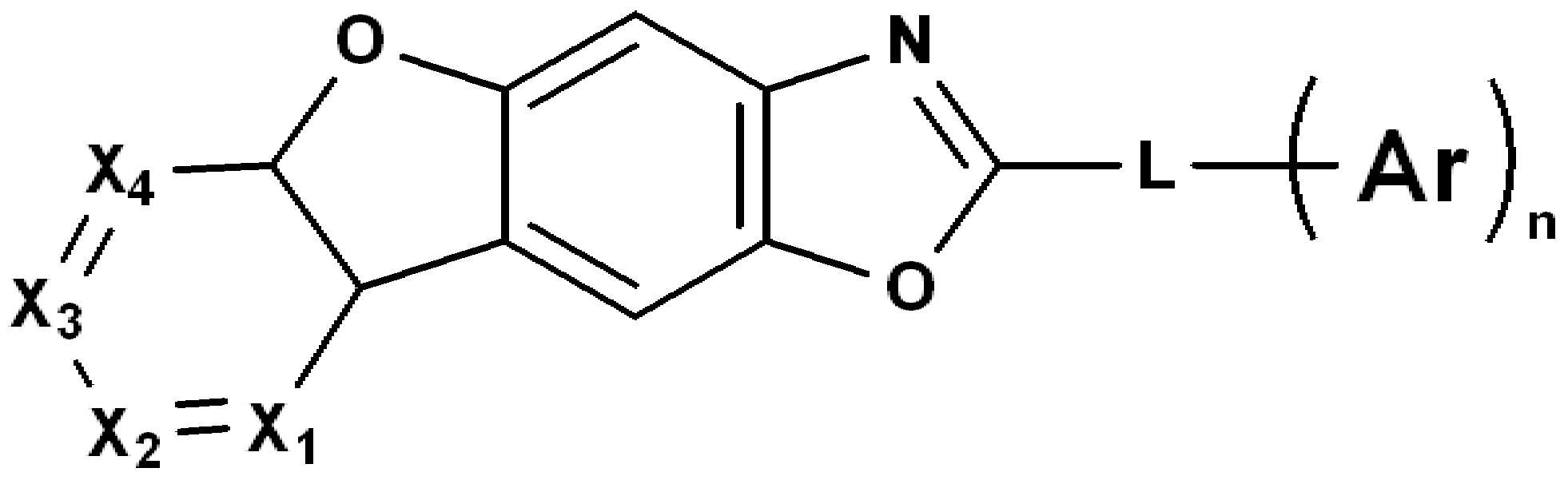
[Formula 1]
Description
본 발명은 유기 전계 발광 소자 및 이에 사용되는 화합물에 관한 것이며, 보다 상세하게는 발광 재료로 사용되는 화합물 및 이를 포함하는 유기 전계 발광 소자에 관한 것이다.The present invention relates to an organic electroluminescent device and a compound used therein, and more particularly, to a compound used as a light emitting material and an organic electroluminescent device including the same.
최근, 영상 표시 장치로서, 유기 전계 발광 표시 장치(Organic Electroluminescence Display)의 개발이 왕성하게 이루어져 왔다. 유기 전계 발광 표시 장치는 액정 표시 장치 등과는 다르고, 제1 전극 및 제2 전극으로부터 주입된 정공 및 전자를 발광층에 있어서 재결합시킴으로써, 발광층에 있어서 유기 화합물을 포함하는 발광 재료를 발광시켜서 표시를 실현하는 소위 자발광형의 표시 장치이다.Recently, as an image display device, an organic electroluminescence display has been actively developed. An organic electroluminescent display device is different from a liquid crystal display device, and realizes display by recombining holes and electrons injected from the first electrode and the second electrode in the emission layer to emit light in a light emitting material containing an organic compound in the emission layer. It is a so-called self-luminous display device.
유기 전계 발광 소자를 표시 장치에 응용함에 있어서는, 유기 전계 발광 소자의 저 구동 전압화, 고 발광 효율화 및 장수명화가 요구되고 있으며, 이를 안정적으로 구현할 수 있는 유기 전계 발광 소자용 재료 개발이 지속적으로 요구되고 있다.In the application of an organic electroluminescent device to a display device, low driving voltage, high luminous efficiency and long life of the organic electroluminescent device are required, and development of a material for an organic electroluminescent device capable of stably realizing this is continuously required. have.
특히, 최근에는 고효율 유기 전계 발광 소자를 구현하기 위해 삼중항 상태의 에너지를 이용하는 인광 발광이나, 삼중항 여기자의 충돌에 의해 일중항 여기자가 생성되는 현상(Triplet-triplet annihilation, TTA)를 이용한 지연 형광 발광에 대한 기술이 개발되고 있으며, 지연 형광 현상을 이용한 열 활성 지연 형광(Thermally Activated Delayed Fluorescence, TADF) 재료에 대한 개발이 진행되고 있다.In particular, recently, in order to implement a high-efficiency organic electroluminescent device, delayed fluorescence using phosphorescent light emission using triplet state energy or a phenomenon in which singlet excitons are generated by the collision of triplet excitons (Triplet-triplet annihilation, TTA). Technology for light emission is being developed, and development of a thermally activated delayed fluorescence (TADF) material using a delayed fluorescence phenomenon is in progress.
본 발명의 목적은 우수한 발광 효율 및 장수명 특성을 나타내는 유기 전계 발광 소자를 제공하는 것이다.An object of the present invention is to provide an organic electroluminescent device exhibiting excellent luminous efficiency and long life characteristics.
본 발명의 다른 목적은 고효율 및 장수명 특성을 갖는 유기 전계 발광 소자용 재료인 화합물을 제공하는 것이다.Another object of the present invention is to provide a compound which is a material for an organic electroluminescent device having high efficiency and long life characteristics.
일 실시예는 하기 화학식 1로 표시되는 화합물을 제공한다.An embodiment provides a compound represented by the following formula (1).
[화학식 1][Formula 1]

상기 화학식 1에서, X1 내지 X4는 각각 독립적으로 N 또는 CRa이고, L은 치환 또는 비치환된 고리형성 탄소수 6 이상 30 이하의 아릴렌기, 또는 치환 또는 비치환된 고리형성 탄소수 2 이상 30 이하의 헤테로아릴렌기이며, n은 1 또는 2 이다. Ar은 치환 또는 비치환된 고리형성 탄소수 6 이상 30 이하의 탄화수소고리기, 또는 치환 또는 비치환된 고리형성 탄소수 2 이상 30 이하의 헤테로고리기이며, Ra는 수소 원자, 중수소 원자, 할로겐 원자, 시아노기, 치환 또는 비치환된 실릴기, 치환 또는 비치환된 아민기, 치환 또는 비치환된 탄소수 1 이상 20 이하의 알킬기, 치환 또는 비치환된 고리형성 탄소수 6 이상 30 이하의 아릴기, 또는 치환 또는 비치환된 고리형성 탄소수 2 이상 30 이하의 헤테로아릴기이거나, 또는 인접하는 기와 서로 결합하여 고리를 형성한다.In Formula 1, X 1 to X 4 are each independently N or CR a , and L is an arylene group having 6 or more and 30 or less substituted or unsubstituted cyclic carbon atoms, or 2 or more and 30 substituted or unsubstituted cyclic carbon atoms. It is the following heteroarylene group, and n is 1 or 2. Ar is a substituted or unsubstituted hydrocarbon ring group having 6 to 30 ring carbon atoms, or a substituted or unsubstituted heterocyclic group having 2 to 30 ring carbon atoms, and R a is a hydrogen atom, a deuterium atom, a halogen atom, Cyano group, substituted or unsubstituted silyl group, substituted or unsubstituted amine group, substituted or unsubstituted alkyl group having 1 to 20 carbon atoms, substituted or unsubstituted aryl group having 6 to 30 carbon atoms, or substituted Or an unsubstituted heteroaryl group having 2 or more and 30 or less cyclic carbon atoms, or combine with adjacent groups to form a ring.
상기 화학식 1은 하기 화학식 1-1 또는 화학식 1-2로 표시될 수 있다.Formula 1 may be represented by the following Formula 1-1 or Formula 1-2.
[화학식 1-1][Formula 1-1]
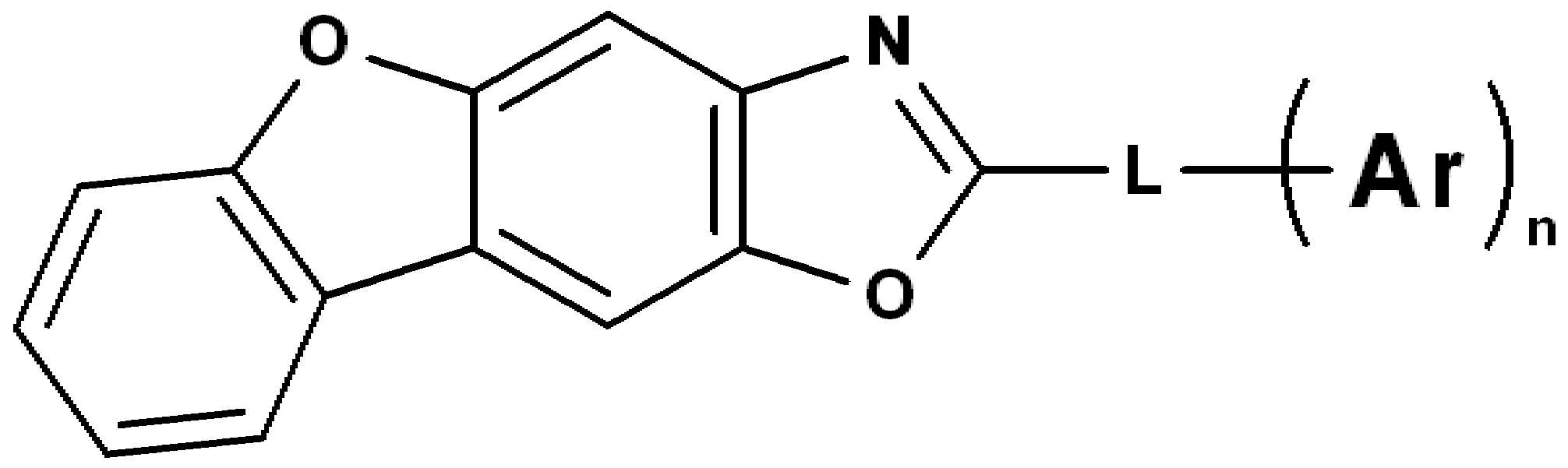
[화학식 1-2][Formula 1-2]
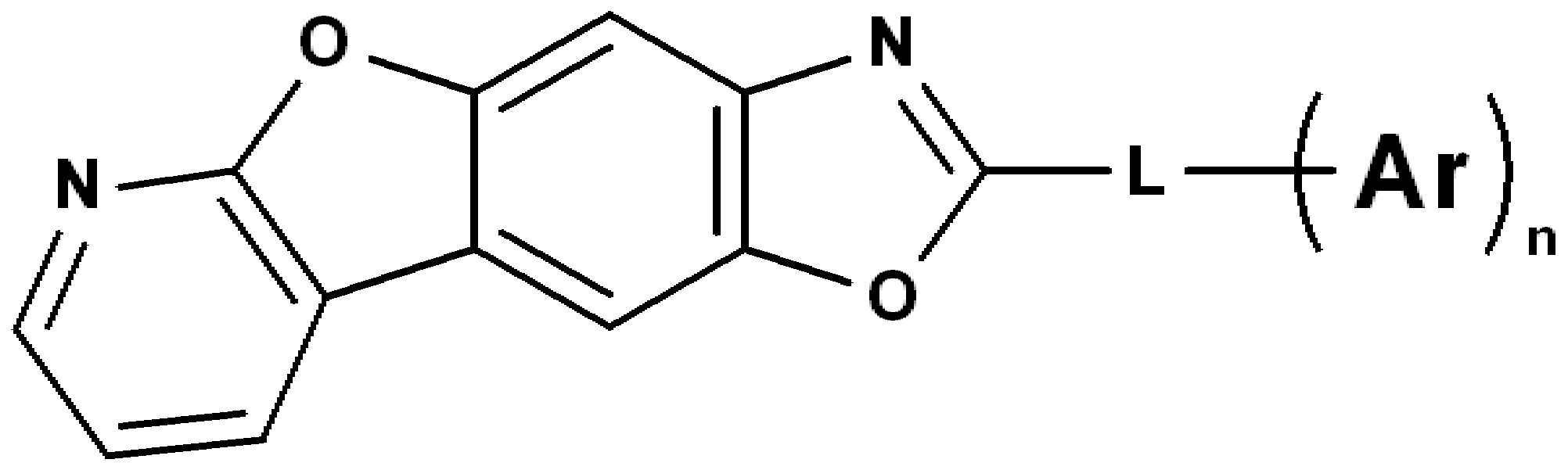
상기 화학식 1-1 및 화학식 1-2에 있어서, L, n, 및 Ar은 상기 화학식 1 에서 정의한 바와 동일하다.In Formulas 1-1 and 1-2, L, n, and Ar are the same as defined in Formula 1.
Ar은 비치환된 고리형성 탄소수 6 이상 20 이하의 아릴기, 또는 고리형성 원자로 N, O, 및 B 중 적어도 하나를 포함하는 치환 또는 비치환된 고리형성 탄소수 2 이상 20 이하의 헤테로아릴기일 수 있다.Ar may be an unsubstituted aryl group having 6 to 20 ring carbon atoms, or a substituted or unsubstituted heteroaryl group having 2 to 20 ring carbon atoms including at least one of N, O, and B as a ring atom. .
Ar은 하기 화학식 2로 표시될 수 있다.Ar may be represented by the following formula (2).
[화학식 2][Formula 2]

상기 화학식 2에서, Y는 N 또는 B이고, Z는 직접결합(direct linkage), O, S, NRd, 또는 CReRf이며, b와 c는 각각 독립적으로 0 이상 4 이하의 정수이다. Rb 내지 Rf는 각각 독립적으로, 수소 원자, 중수소 원자, 할로겐 원자, 시아노기, 치환 또는 비치환된 실릴기, 치환 또는 비치환된 아민기, 치환 또는 비치환된 탄소수 1 이상 20 이하의 알킬기, 치환 또는 비치환된 고리형성 탄소수 6 이상 30 이하의 아릴기, 또는 치환 또는 비치환된 고리형성 탄소수 2 이상 30 이하의 헤테로아릴기이거나, 또는 인접하는 기와 서로 결합하여 고리를 형성한다.In Formula 2, Y is N or B, Z is a direct linkage, O, S, NR d , or CR e R f , and b and c are each independently an integer of 0 or more and 4 or less. R b to R f are each independently a hydrogen atom, a deuterium atom, a halogen atom, a cyano group, a substituted or unsubstituted silyl group, a substituted or unsubstituted amine group, a substituted or unsubstituted alkyl group having 1 to 20 carbon atoms , A substituted or unsubstituted aryl group having 6 or more and 30 or less ring carbon atoms, or a substituted or unsubstituted heteroaryl group having 2 or more and 30 or less ring carbon atoms, or combine with an adjacent group to form a ring.
상기 화학식 2는 하기 화학식 2-1 또는 화학식 2-2로 표시될 수 있다.Formula 2 may be represented by the following Formula 2-1 or Formula 2-2.
[화학식 2-1][Formula 2-1]

[화학식 2-2][Formula 2-2]

상기 화학식 2-1 및 화학식 2-2에서, Z, Rb, Rc, b, 및 c는 상기 화학식 2에서 정의한 바와 동일하다.In Formulas 2-1 and 2-2, Z, R b , R c , b, and c are the same as defined in Formula 2.
상기 화학식 2-2는 하기 화학식 2-2A 내지 화학식 2-2E 중 어느 하나로 표시될 수 있다.Formula 2-2 may be represented by any one of Formulas 2-2A to 2-2E below.
[화학식 2-2A][Formula 2-2A]
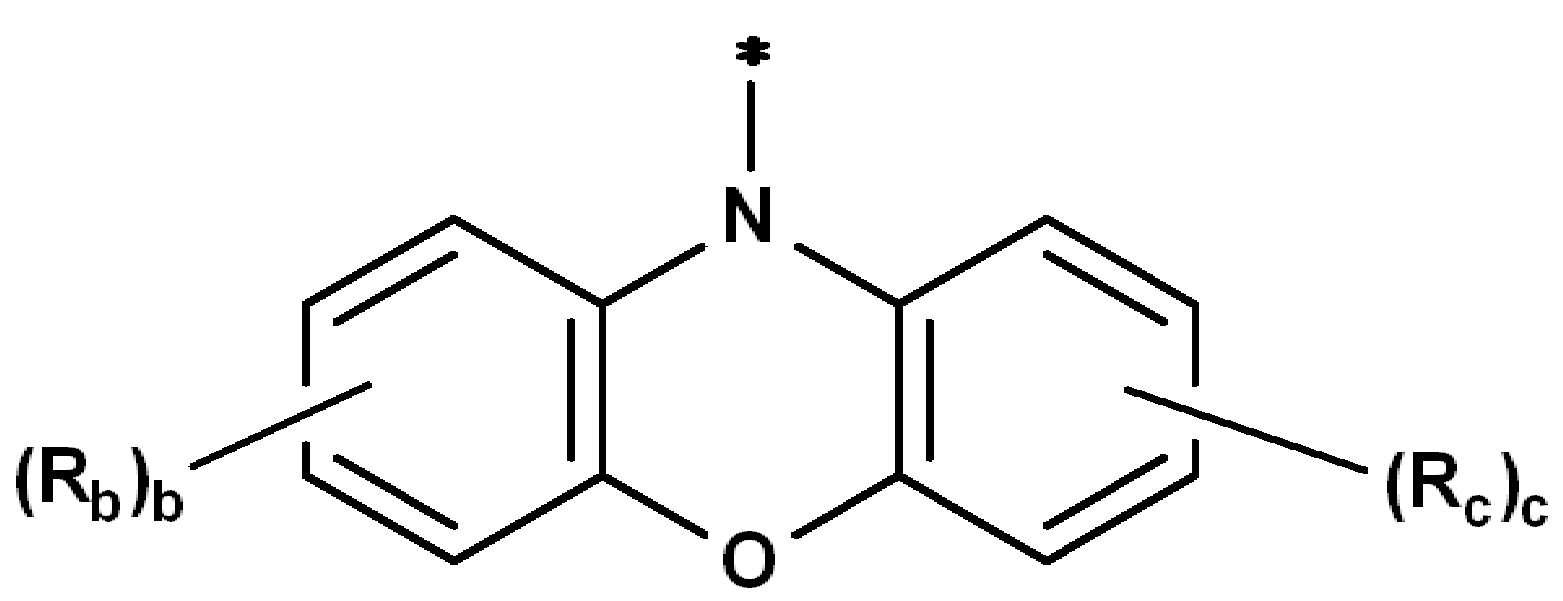
[화학식 2-2B][Formula 2-2B]

[화학식 2-2C][Formula 2-2C]

[화학식 2-2D][Formula 2-2D]

[화학식 2-2E][Formula 2-2E]
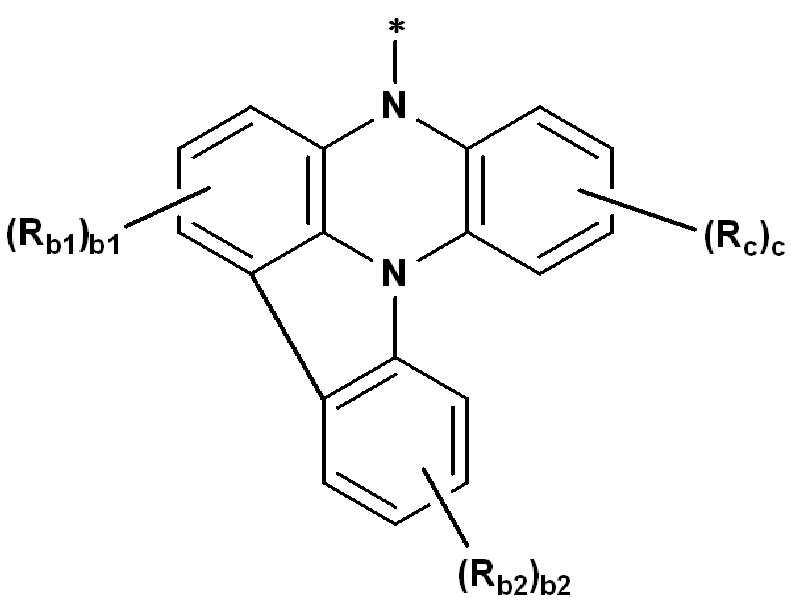
상기 화학식 2-2E에서, b1은 0 이상 3 이하의 정수이고, b2는 0 이상 4 이하의 정수이며, Rb1 및 Rb2는 각각 독립적으로, 수소 원자, 중수소 원자, 할로겐 원자, 시아노기, 치환 또는 비치환된 실릴기, 치환 또는 비치환된 아민기, 치환 또는 비치환된 탄소수 1 이상 20 이하의 알킬기, 치환 또는 비치환된 고리형성 탄소수 6 이상 30 이하의 아릴기, 또는 치환 또는 비치환된 고리형성 탄소수 2 이상 30 이하의 헤테로아릴기이거나, 또는 인접하는 기와 서로 결합하여 고리를 형성한다. 상기 화학식 2-2A 내지 화학식 2-2E에서, Rb, Rc, b, 및 c는 상기 화학식 2에서 정의한 바와 동일하다.In Formula 2-2E, b1 is an integer of 0 or more and 3 or less, b2 is an integer of 0 or more and 4 or less, and R b1 and R b2 are each independently a hydrogen atom, a deuterium atom, a halogen atom, a cyano group, and a substituted Or an unsubstituted silyl group, a substituted or unsubstituted amine group, a substituted or unsubstituted alkyl group having 1 to 20 carbon atoms, a substituted or unsubstituted aryl group having 6 to 30 carbon atoms, or a substituted or unsubstituted It is a heteroaryl group having 2 or more and 30 or less cyclic carbon atoms, or combines with an adjacent group to form a ring. In Formulas 2-2A to 2-2E, R b , R c , b, and c are the same as defined in Formula 2.
상기 화학식 1로 표시되는 화합물은 중심 파장 500nm 이상 550nm 이하의 녹색광을 방출하는 녹색 도펀트일 수 있다.The compound represented by Formula 1 may be a green dopant that emits green light having a center wavelength of 500 nm or more and 550 nm or less.
상기 화학식 1로 표시되는 화합물은 중심 파장 420nm 이상 470nm 이하의 청색광을 방출하는 청색 도펀트일 수 있다.The compound represented by Formula 1 may be a blue dopant that emits blue light having a center wavelength of 420 nm or more and 470 nm or less.
상기 화학식 1로 표시되는 화합물은 최저 여기 일중항 에너지 준위(S1) 및 최저 여기 삼중항 에너지 준위(T1) 차이의 절대 값(ΔEST)이 0.2eV 이하일 수 있다. The compound represented by Formula 1 may have an absolute value (ΔE ST ) of a difference between the lowest excitation singlet energy level (S1) and the lowest excitation triplet energy level (T1) of 0.2 eV or less.
다른 실시예는 제1 전극; 상기 제1 전극 상에 배치된 제2 전극; 및 상기 제1 전극과 상기 제2 전극 사이에 배치되고, 상술한 일 실시예의 화합물을 포함하는 발광층; 을 포함하는 유기 전계 발광 소자를 제공한다.Another embodiment includes a first electrode; A second electrode disposed on the first electrode; And a light emitting layer disposed between the first electrode and the second electrode and including the compound of the above-described exemplary embodiment. It provides an organic electroluminescent device comprising a.
상기 발광층은 호스트 및 도펀트를 포함하고, 상기 호스트는 상기 일 실시예의화합물을 포함하는 것일 수 있다.The emission layer may include a host and a dopant, and the host may include the compound of the embodiment.
상기 발광층은 지연 형광을 방출하고, 상기 화합물은 지연 형광 도펀트일 수 있다.The emission layer emits delayed fluorescence, and the compound may be a delayed fluorescence dopant.
상기 발광층은 중심 파장이 500nm 이상 550nm 이하의 광, 또는 중심 파장이 420nm 이상 470nm 이하의 광을 방출하는 것일 수 있다.The emission layer may emit light having a center wavelength of 500 nm or more and 550 nm or less, or light having a center wavelength of 420 nm or more and 470 nm or less.
일 실시예의 유기 전계 발광 소자는 녹색 파장 영역 또는 청색 파장 영역에서 고효율 및 장수명의 개선된 소자 특성을 나타낼 수 있다.The organic electroluminescent device of an embodiment may exhibit improved device characteristics with high efficiency and long life in a green wavelength region or a blue wavelength region.
일 실시예의 화합물은 유기 전계 발광 소자의 발광층에 포함되어 유기 전계 발광 소자의 수명 특성을 개선하고 고효율화에 기여할 수 있다.The compound of the exemplary embodiment may be included in the emission layer of the organic electroluminescent device to improve lifespan characteristics of the organic electroluminescent device and contribute to high efficiency.
도 1은 본 발명의 일 실시예에 따른 유기 전계 발광 소자를 개략적으로 나타낸 단면도이다.
도 2는 본 발명의 일 실시예에 따른 유기 전계 발광 소자를 개략적으로 나타낸 단면도이다.
도 3은 본 발명의 일 실시예에 따른 유기 전계 발광 소자를 개략적으로 나타낸 단면도이다.
도 4는 본 발명의 일 실시예에 따른 유기 전계 발광 소자를 개략적으로 나타낸 단면도이다.1 is a schematic cross-sectional view of an organic electroluminescent device according to an embodiment of the present invention.
2 is a schematic cross-sectional view of an organic electroluminescent device according to an embodiment of the present invention.
3 is a schematic cross-sectional view of an organic electroluminescent device according to an embodiment of the present invention.
4 is a schematic cross-sectional view of an organic electroluminescent device according to an embodiment of the present invention.
본 발명은 다양한 변경을 가할 수 있고 여러 가지 형태를 가질 수 있는 바, 특정 실시예들을 도면에 예시하고 본문에 상세하게 설명하고자 한다. 그러나, 이는 본 발명을 특정한 개시 형태에 대해 한정하려는 것이 아니며, 본 발명의 사상 및 기술 범위에 포함되는 모든 변경, 균등물 내지 대체물을 포함하는 것으로 이해되어야 한다.In the present invention, various modifications may be made and various forms may be applied, and specific embodiments will be illustrated in the drawings and described in detail in the text. However, this is not intended to limit the present invention to a specific form disclosed, it should be understood to include all changes, equivalents, and substitutes included in the spirit and scope of the present invention.
본 명세서에서, 어떤 구성요소(또는 영역, 층, 부분 등)가 다른 구성요소 "상에 있다", "연결 된다", 또는 "결합된다"고 언급되는 경우에 그것은 다른 구성요소 상에 직접 배치/연결/결합될 수 있거나 또는 그들 사이에 제3의 구성요소가 배치될 수도 있다는 것을 의미한다. In the present specification, when a component (or region, layer, part, etc.) is referred to as “on”, “connected”, or “coupled” to another component, it is placed directly on the other component/ It means that it may be connected/coupled or a third component may be disposed between them.
동일한 도면부호는 동일한 구성요소를 지칭한다. 또한, 도면들에 있어서, 구성요소들의 두께, 비율, 및 치수는 기술적 내용의 효과적인 설명을 위해 과장된 것이다.The same reference numerals refer to the same elements. In addition, in the drawings, thicknesses, ratios, and dimensions of components are exaggerated for effective description of technical content.
"및/또는"은 연관된 구성들이 정의할 수 있는 하나 이상의 조합을 모두 포함한다. "And/or" includes all combinations of one or more that the associated configurations may be defined.
제1, 제2 등의 용어는 다양한 구성요소들을 설명하는데 사용될 수 있지만, 상기 구성요소들은 상기 용어들에 의해 한정되어서는 안 된다. 상기 용어들은 하나의 구성요소를 다른 구성요소로부터 구별하는 목적으로만 사용된다. 예를 들어, 본 발명의 권리 범위를 벗어나지 않으면서 제1 구성요소는 제2 구성요소로 명명될 수 있고, 유사하게 제2 구성요소도 제1 구성요소로 명명될 수 있다. 단수의 표현은 문맥상 명백하게 다르게 뜻하지 않는 한, 복수의 표현을 포함한다.Terms such as first and second may be used to describe various elements, but the elements should not be limited by the terms. The above terms are used only for the purpose of distinguishing one component from another component. For example, without departing from the scope of the present invention, a first element may be referred to as a second element, and similarly, a second element may be referred to as a first element. Singular expressions include plural expressions unless the context clearly indicates otherwise.
또한, "아래에", "하측에", "위에", "상측에" 등의 용어는 도면에 도시된 구성들의 연관관계를 설명하기 위해 사용된다. 상기 용어들은 상대적인 개념으로, 도면에 표시된 방향을 기준으로 설명된다.In addition, terms such as “below”, “lower”, “above”, and “upper” are used to describe the relationship between the components shown in the drawings. The terms are relative concepts and are described based on the directions indicated in the drawings.
다르게 정의되지 않는 한, 본 명세서에서 사용된 모든 용어 (기술 용어 및 과학 용어 포함)는 본 발명이 속하는 기술 분야의 당업자에 의해 일반적으로 이해되는 것과 동일한 의미를 갖는다. 또한, 일반적으로 사용되는 사전에서 정의된 용어와 같은 용어는 관련 기술의 맥락에서 의미와 일치하는 의미를 갖는 것으로 해석되어야 하고, 이상적인 또는 지나치게 형식적인 의미로 해석되지 않는 한, 명시적으로 여기에서 정의된다.Unless otherwise defined, all terms (including technical and scientific terms) used herein have the same meaning as commonly understood by one of ordinary skill in the art to which this invention belongs. In addition, terms such as terms defined in commonly used dictionaries should be interpreted as having a meaning consistent with the meaning in the context of the related technology, and unless interpreted as an ideal or excessively formal meaning, explicitly defined herein. do.
"포함하다" 또는 "가지다" 등의 용어는 명세서 상에 기재된 특징, 숫자, 단계, 동작, 구성요소, 부품 또는 이들을 조합한 것이 존재함을 지정하려는 것이지, 하나 또는 그 이상의 다른 특징들이나 숫자, 단계, 동작, 구성요소, 부분품 또는 이들을 조합한 것들의 존재 또는 부가 가능성을 미리 배제하지 않는 것으로 이해되어야 한다. Terms such as "comprise" or "have" are intended to designate the presence of features, numbers, steps, actions, components, parts, or combinations thereof described in the specification, but one or more other features, numbers, or steps. It is to be understood that it does not preclude the possibility of addition or presence of, operations, components, parts, or combinations thereof.
이하, 도면들을 참조하여 본 발명의 일 실시예에 따른 유기 전계 발광 소자 및 이에 포함된 일 실시예의 화합물에 대하여 설명한다.Hereinafter, an organic electroluminescent device according to an embodiment of the present invention and a compound of an embodiment included therein will be described with reference to the drawings.
도 1 내지 도 4는 본 발명의 일 실시예에 따른 유기 전계 발광 소자를 개략적으로 나타낸 단면도이다. 도 1 내지 도 4를 참조하면, 일 실시예의 유기 전계 발광 소자(10)에서 제1 전극(EL1)과 제2 전극(EL2)은 서로 마주하고 배치되며, 제1 전극(EL1)과 제2 전극(EL2) 사이에는 발광층(EML)이 배치될 수 있다.1 to 4 are cross-sectional views schematically illustrating an organic electroluminescent device according to an embodiment of the present invention. 1 to 4, in the
또한, 일 실시예의 유기 전계 발광 소자(10)는 제1 전극(EL1)과 제2 전극(EL2) 사이에 발광층(EML) 이외에 복수의 기능층들을 더 포함한다. 복수의 기능층들은 정공 수송 영역(HTR) 및 전자 수송 영역(ETR)을 포함할 수 있다. 즉, 일 실시예에 따른 유기 전계 발광 소자(10)는 순차적으로 적층된 제1 전극(EL1), 정공 수송 영역(HTR), 발광층(EML), 전자 수송 영역(ETR), 및 제2 전극(EL2)을 포함할 수 있다. 또한 일 실시예의 유기 전계 발광 소자(10)는 제2 전극(EL2) 상에 배치된 캡핑층(CPL)을 포함할 수 있다.In addition, the
일 실시예의 유기 전계 발광 소자(10)는 제1 전극(EL1)과 제2 전극(EL2) 사이에 배치된 발광층(EML)에 후술하는 일 실시예의 화합물을 포함할 수 있다. 하지만, 실시예가 이에 한정되는 것은 아니며 일 실시예의 유기 전계 발광 소자(10)는 발광층(EML) 이외에 제1 전극(EL1)과 제2 전극(EL2) 사이에 배치된 복수의 기능층들인 정공 수송 영역(HTR) 또는 전자 수송 영역(ETR)에 후술하는 일 실시예에 따른 화합물을 포함할 수 있다.The
한편, 도 2는 도 1과 비교하여, 정공 수송 영역(HTR)이 정공 주입층(HIL) 및 정공 수송층(HTL)을 포함하고, 전자 수송 영역(ETR)이 전자 주입층(EIL) 및 전자 수송층(ETL)을 포함하는 일 실시예의 유기 전계 발광 소자(10)의 단면도를 나타낸 것이다. 또한, 도 3은 도 1과 비교하여 정공 수송 영역(HTR)이 정공 주입층(HIL), 정공 수송층(HTL), 및 전자 저지층(EBL)을 포함하고, 전자 수송 영역(ETR)이 전자 주입층(EIL), 전자 수송층(ETL), 및 정공 저지층(HBL)을 포함하는 일 실시예의 유기 전계 발광 소자(10)의 단면도를 나타낸 것이다. 도 4는 도 2와 비교하여 제2 전극(EL2) 상에 배치된 캡핑층(CPL)을 포함하는 일 실시예의 유기 전계 발광 소자(10)의 단면도를 나타낸 것이다.Meanwhile, FIG. 2 shows that, compared to FIG. 1, a hole transport region HTR includes a hole injection layer HIL and a hole transport layer HTL, and an electron transport region ETR is an electron injection layer EIL and an electron transport layer. A cross-sectional view of the
제1 전극(EL1)은 도전성을 갖는다. 제1 전극(EL1)은 금속 합금 또는 도전성 화합물로 형성될 수 있다. 제1 전극(EL1)은 애노드(anode)일 수 있다. 또한, 제1 전극(EL1)은 화소 전극일 수 있다. 제1 전극(EL1)은 투과형 전극, 반투과형 전극 또는 반사형 전극일 수 있다. 제1 전극(EL1)이 투과형 전극인 경우, 제1 전극(EL1)은 투명 금속 산화물, 예를 들어, ITO(indium tin oxide), IZO(indium zinc oxide), ZnO(zinc oxide), ITZO(indium tin zinc oxide) 등을 포함할 수 있다. 제1 전극(EL1)이 반투과형 전극 또는 반사형 전극인 경우, 제1 전극(EL1)은 Ag, Mg, Cu, Al, Pt, Pd, Au, Ni, Nd, Ir, Cr, Li, Ca, LiF/Ca, LiF/Al, Mo, Ti 또는 이들의 화합물이나 혼합물(예를 들어, Ag와 Mg의 혼합물)을 포함할 수 있다. 또는 상기 물질로 형성된 반사막이나 반투과막 및 ITO(indium tin oxide), IZO(indium zinc oxide), ZnO(zinc oxide), ITZO(indium tin zinc oxide) 등으로 형성된 투명 도전막을 포함하는 복수의 층 구조일 수 있다. 예를 들어, 제1 전극(EL1)은 ITO/Ag/ITO의 3층 구조를 가질 수 있으나, 이에 한정되는 것은 아니다. 제1 전극(EL1)의 두께는 약 1000Å 내지 약 10000Å, 예를 들어, 약 1000Å 내지 약 3000Å일 수 있다.The first electrode EL1 has conductivity. The first electrode EL1 may be formed of a metal alloy or a conductive compound. The first electrode EL1 may be an anode. Also, the first electrode EL1 may be a pixel electrode. The first electrode EL1 may be a transmissive electrode, a transflective electrode, or a reflective electrode. When the first electrode EL1 is a transmissive electrode, the first electrode EL1 is a transparent metal oxide, for example, indium tin oxide (ITO), indium zinc oxide (IZO), zinc oxide (ZnO), indium zinc oxide (ITZO). tin zinc oxide). When the first electrode EL1 is a transflective electrode or a reflective electrode, the first electrode EL1 is Ag, Mg, Cu, Al, Pt, Pd, Au, Ni, Nd, Ir, Cr, Li, Ca, LiF/Ca, LiF/Al, Mo, Ti, or a compound or mixture thereof (eg, a mixture of Ag and Mg) may be included. Alternatively, a plurality of layer structures including a reflective film or a semi-transmissive film formed of the material and a transparent conductive film formed of indium tin oxide (ITO), indium zinc oxide (IZO), zinc oxide (ZnO), indium tin zinc oxide (ITZO), etc. Can be For example, the first electrode EL1 may have a three-layer structure of ITO/Ag/ITO, but is not limited thereto. The thickness of the first electrode EL1 may be about 1000 Å to about 10000 Å, for example, about 1000 Å to about 3000 Å.
정공 수송 영역(HTR)은 제1 전극(EL1) 상에 제공된다. 정공 수송 영역(HTR)은 정공 주입층(HIL), 정공 수송층(HTL), 정공 버퍼층(미도시), 및 전자 저지층(EBL) 중 적어도 하나를 포함할 수 있다. 정공 수송 영역(HTR)의 두께는 예를 들어, 약 50Å 내지 약 15,000Å인 것일 수 있다.The hole transport region HTR is provided on the first electrode EL1. The hole transport region HTR may include at least one of a hole injection layer HIL, a hole transport layer HTL, a hole buffer layer (not shown), and an electron blocking layer EBL. The thickness of the hole transport region HTR may be, for example, about 50 Å to about 15,000 Å.
정공 수송 영역(HTR)은 단일 물질로 이루어진 단일층, 복수의 서로 다른 물질로 이루어진 단일층 또는 복수의 서로 다른 물질로 이루어진 복수의 층을 갖는 다층 구조를 가질 수 있다.The hole transport region HTR may have a single layer made of a single material, a single layer made of a plurality of different materials, or a multilayer structure having a plurality of layers made of a plurality of different materials.
예를 들어, 정공 수송 영역(HTR)은 정공 주입층(HIL) 또는 정공 수송층(HTL)의 단일층의 구조를 가질 수도 있고, 정공 주입 물질 및 정공 수송 물질로 이루어진 단일층 구조를 가질 수도 있다. 또한, 정공 수송 영역(HTR)은, 복수의 서로 다른 물질로 이루어진 단일층의 구조를 갖거나, 제1 전극(EL1)로부터 차례로 적층된 정공 주입층(HIL)/정공 수송층(HTL), 정공 주입층(HIL)/정공 수송층(HTL)/정공 버퍼층(미도시), 정공 주입층(HIL)/정공 버퍼층(미도시), 정공 수송층(HTL)/정공 버퍼층 또는 정공 주입층(HIL)/정공 수송층(HTL)/전자 저지층(EBL)의 구조를 가질 수 있으나, 실시예가 이에 한정되는 것은 아니다.For example, the hole transport region HTR may have a single layer structure of a hole injection layer HIL or a hole transport layer HTL, or may have a single layer structure made of a hole injection material and a hole transport material. In addition, the hole transport region HTR has a single layer structure made of a plurality of different materials, or a hole injection layer (HIL)/hole transport layer (HTL) sequentially stacked from the first electrode EL1, and hole injection. Layer (HIL)/hole transport layer (HTL)/hole buffer layer (not shown), hole injection layer (HIL)/hole buffer layer (not shown), hole transport layer (HTL)/hole buffer layer or hole injection layer (HIL)/hole transport layer It may have a structure of (HTL)/electron blocking layer (EBL), but embodiments are not limited thereto.
정공 수송 영역(HTR)은, 진공 증착법, 스핀 코팅법, 캐스트법, LB법(Langmuir-Blodgett), 잉크젯 프린팅법, 레이저 프린팅법, 레이저 열전사법(Laser Induced Thermal Imaging, LITI) 등과 같은 다양한 방법을 이용하여 형성될 수 있다.The hole transport area (HTR) uses various methods such as vacuum evaporation, spin coating, casting, LB method (Langmuir-Blodgett), inkjet printing, laser printing, and laser induced thermal imaging (LITI). It can be formed by using.
정공 주입층(HIL)은 예를 들어, 구리프탈로시아닌(copper phthalocyanine) 등의 프탈로시아닌(phthalocyanine) 화합물; DNTPD(N,N'-diphenyl-N,N'-bis-[4-(phenyl-m-tolyl-amino)-phenyl]-biphenyl-4,4'-diamine), m-MTDATA(4,4',4"-[tris(3-methylphenyl)phenylamino] triphenylamine), TDATA(4,4'4"-Tris(N,N-diphenylamino)triphenylamine), 2-TNATA(4,4',4"-tris{N,-(2-naphthyl)-N-phenylamino}-triphenylamine), PEDOT/PSS(Poly(3,4-ethylenedioxythiophene)/Poly(4-styrenesulfonate)), PANI/DBSA(Polyaniline/Dodecylbenzenesulfonic acid), PANI/CSA(Polyaniline/Camphor sulfonicacid), PANI/PSS(Polyaniline/Poly(4-styrenesulfonate)), NPB(N,N'-di(naphthalene-l-yl)-N,N'-diphenyl-benzidine), 트리페닐아민을 포함하는 폴리에테르케톤(TPAPEK), 4-Isopropyl-4'-methyldiphenyliodonium [Tetrakis(pentafluorophenyl)borate], HAT-CN(dipyrazino[2,3-f: 2',3'-h] quinoxaline-2,3,6,7,10,11-hexacarbonitrile) 등을 포함할 수도 있다.The hole injection layer (HIL) includes, for example, a phthalocyanine compound such as copper phthalocyanine; DNTPD(N,N'-diphenyl-N,N'-bis-[4-(phenyl-m-tolyl-amino)-phenyl]-biphenyl-4,4'-diamine), m-MTDATA(4,4' ,4"-[tris(3-methylphenyl)phenylamino] triphenylamine), TDATA(4,4'4"-Tris(N,N-diphenylamino)triphenylamine), 2-TNATA(4,4',4"-tris{ N,-(2-naphthyl)-N-phenylamino}-triphenylamine), PEDOT/PSS(Poly(3,4-ethylenedioxythiophene)/Poly(4-styrenesulfonate)), PANI/DBSA(Polyaniline/Dodecylbenzenesulfonic acid), PANI/ Polyaniline/Camphor sulfonic acid (CSA), PANI/PSS (Polyaniline/Poly(4-styrenesulfonate)), NPB(N,N'-di(naphthalene-l-yl)-N,N'-diphenyl-benzidine), triphenyl Polyether ketone containing amine (TPAPEK), 4-Isopropyl-4'-methyldiphenyliodonium [Tetrakis(pentafluorophenyl)borate], HAT-CN(dipyrazino[2,3-f: 2',3'-h] quinoxaline-2 ,3,6,7,10,11-hexacarbonitrile) may be included.
정공 수송층(HTL)은 예를 들어, N-페닐카바졸, 폴리비닐카바졸 등의 카바졸계 유도체, 플루오렌(fluorene)계 유도체, TPD(N,N'-bis(3-methylphenyl)-N,N'-diphenyl-[1,1-biphenyl]-4,4'-diamine), TCTA(4,4',4"-tris(N-carbazolyl)triphenylamine) 등과 같은 트리페닐아민계 유도체, NPB(N,N'-di(naphthalene-l-yl)-N,N'-diphenyl-benzidine), TAPC(4,4′-Cyclohexylidene bis[N,N-bis(4-methylphenyl)benzenamine]), HMTPD(4,4'-Bis[N,N'-(3-tolyl)amino]-3,3'-dimethylbiphenyl), mCP(1,3-Bis(N-carbazolyl)benzene) 등을 더 포함할 수도 있다.The hole transport layer (HTL) is, for example, carbazole derivatives such as N-phenylcarbazole and polyvinylcarbazole, fluorene derivatives, TPD(N,N'-bis(3-methylphenyl)-N, Triphenylamine derivatives such as N'-diphenyl-[1,1-biphenyl]-4,4'-diamine), TCTA(4,4',4"-tris(N-carbazolyl)triphenylamine), NPB(N ,N'-di(naphthalene-l-yl)-N,N'-diphenyl-benzidine), TAPC(4,4'-Cyclohexylidene bis[N,N-bis(4-methylphenyl)benzenamine]), HMTPD(4 ,4'-Bis[N,N'-(3-tolyl)amino]-3,3'-dimethylbiphenyl), mCP(1,3-Bis(N-carbazolyl)benzene), etc. may be further included.
정공 수송 영역(HTR)의 두께는 약 50Å 내지 약 10000Å, 예를 들어, 약 100Å 내지 약 5000Å일 수 있다. 정공 주입층(HIL)의 두께는, 예를 들어, 약 30Å 내지 약 1000Å이고, 정공 수송층(HTL)의 두께는 약 30Å 내지 약 1000Å 일 수 있다. 예를 들어, 전자 저지층(EBL)의 두께는 약 10Å 내지 약 1000Å일 수 있다. 정공 수송 영역(HTR), 정공 주입층(HIL), 정공 수송층(HTL) 및 전자 저지층(EBL)의 두께가 전술한 바와 같은 범위를 만족할 경우, 실질적인 구동 전압 상승 없이 만족스러운 정도의 정공 수송 특성을 얻을 수 있다.The hole transport region HTR may have a thickness of about 50 Å to about 10000 Å, for example, about 100 Å to about 5000 Å. The thickness of the hole injection layer HIL may be, for example, about 30 Å to about 1000 Å, and the thickness of the hole transport layer HTL may be about 30 Å to about 1000 Å. For example, the electron blocking layer EBL may have a thickness of about 10 Å to about 1000 Å. When the thickness of the hole transport region (HTR), the hole injection layer (HIL), the hole transport layer (HTL), and the electron blocking layer (EBL) satisfies the above-described range, satisfactory hole transport characteristics without a substantial increase in driving voltage Can be obtained.
정공 수송 영역(HTR)은 앞서 언급한 물질 외에, 도전성 향상을 위하여 전하 생성 물질을 더 포함할 수 있다. 전하 생성 물질은 정공 수송 영역(HTR) 내에 균일하게 또는 불균일하게 분산되어 있을 수 있다. 전하 생성 물질은 예를 들어, p-도펀트(dopant)일 수 있다. p-도펀트는 퀴논(quinone) 유도체, 금속 산화물 및 시아노(cyano)기 함유 화합물 중 하나일 수 있으나, 이에 한정되는 것은 아니다. 예를 들어, p-도펀트의 비제한적인 예로는, TCNQ(Tetracyanoquinodimethane) 및 F4-TCNQ(2,3,5,6-tetrafluoro-7,7',8,8'-tetracyanoquinodimethane) 등과 같은 퀴논 유도체, 텅스텐 산화물 및 몰리브덴 산화물 등과 같은 금속 산화물 등을 들 수 있으나, 이에 한정되는 것은 아니다.In addition to the aforementioned materials, the hole transport region HTR may further include a charge generating material to improve conductivity. The charge generating material may be uniformly or non-uniformly dispersed in the hole transport region HTR. The charge generating material may be, for example, a p-dopant. The p-dopant may be one of a quinone derivative, a metal oxide, and a cyano group-containing compound, but is not limited thereto. For example, non-limiting examples of p-dopants include quinone derivatives such as TCNQ (Tetracyanoquinodimethane) and F4-TCNQ (2,3,5,6-tetrafluoro-7,7',8,8'-tetracyanoquinodimethane), and the like, And metal oxides such as tungsten oxide and molybdenum oxide, but are not limited thereto.
전술한 바와 같이, 정공 수송 영역(HTR)은 정공 주입층(HIL) 및 정공 수송층(HTL) 외에, 정공 버퍼층(미도시) 및 전자 저지층(EBL) 중 적어도 하나를 더 포함할 수 있다. 정공 버퍼층(미도시)은 발광층(EML)에서 방출되는 광의 파장에 따른 공진 거리를 보상하여 광 방출 효율을 증가시킬 수 있다. 정공 버퍼층(미도시)에 포함되는 물질로는 정공 수송 영역(HTR)에 포함될 수 있는 물질을 사용할 수 있다. 전자 저지층(EBL)은 전자 수송 영역(ETR)으로부터 정공 수송 영역(HTR)으로의 전자 주입을 방지하는 역할을 하는 층이다.As described above, the hole transport region HTR may further include at least one of a hole buffer layer (not shown) and an electron blocking layer EBL in addition to the hole injection layer HIL and the hole transport layer HTL. The hole buffer layer (not shown) may increase light emission efficiency by compensating for a resonance distance according to a wavelength of light emitted from the emission layer EML. As a material included in the hole buffer layer (not shown), a material capable of being included in the hole transport region HTR may be used. The electron blocking layer EBL serves to prevent injection of electrons from the electron transport region ETR to the hole transport region HTR.
발광층(EML)은 정공 수송 영역(HTR) 상에 제공된다. 발광층(EML)은 예를 들어 약 100Å 내지 약 1000Å 또는, 약 100Å 내지 약 400Å의 두께를 갖는 것일 수 있다. 발광층(EML)은 단일 물질로 이루어진 단일층, 복수의 서로 다른 물질로 이루어진 단일층 또는 복수의 서로 다른 물질로 이루어진 복수의 층을 갖는 다층 구조를 가질 수 있다.The emission layer EML is provided on the hole transport region HTR. The emission layer EML may have a thickness of, for example, about 100 Å to about 1000 Å or about 100 Å to about 400 Å. The emission layer EML may have a single layer made of a single material, a single layer made of a plurality of different materials, or a multilayer structure having a plurality of layers made of a plurality of different materials.
일 실시예의 유기 전계 발광 소자(10)에서 발광층(EML)은 일 실시예의 화합물을 포함하는 것일 수 있다. In the
한편, 본 명세서에서 "치환 또는 비치환된"은 중수소 원자, 할로겐 원자, 시아노기, 니트로기, 아미노기, 실릴기, 옥시기, 티오기, 설피닐기, 설포닐기, 카보닐기, 붕소기, 포스핀 옥사이드기, 포스핀 설파이드기, 알킬기, 알케닐기, 알콕시기, 탄화수소 고리기, 아릴기 및 헤테로고리기로 이루어진 군에서 선택되는 1개 이상의 치환기로 치환 또는 비치환된 것을 의미할 수 있다. 또한, 상기 예시된 치환기 각각은 치환 또는 비치환된 것일 수 있다. 예를 들어, 비페닐기는 아릴기로 해석될 수도 있고, 페닐기로 치환된 페닐기로 해석될 수도 있다.Meanwhile, in the present specification, "substituted or unsubstituted" refers to a deuterium atom, a halogen atom, a cyano group, a nitro group, an amino group, a silyl group, an oxy group, a thio group, a sulfinyl group, a sulfonyl group, a carbonyl group, a boron group, a phosphine It may mean unsubstituted or substituted with one or more substituents selected from the group consisting of an oxide group, a phosphine sulfide group, an alkyl group, an alkenyl group, an alkoxy group, a hydrocarbon ring group, an aryl group, and a heterocyclic group. In addition, each of the substituents exemplified above may be substituted or unsubstituted. For example, the biphenyl group may be interpreted as an aryl group, or may be interpreted as a phenyl group substituted with a phenyl group.
본 명세서에서, "인접하는 기와 서로 결합하여 고리를 형성"한다는 인접하는 기와 서로 결합하여 치환 또는 비치환된 탄화수소 고리, 또는 치환 또는 비치환된 헤테로고리를 형성하는 것을 의미할 수 있다. 탄화수소 고리는 지방족 탄화수소 고리 및 방향족 탄화수소 고리를 포함한다. 헤테로고리는 지방족 헤테로고리 및 방향족 헤테로고리를 포함한다. 인접하는 기와 서로 결합하여 형성된 고리는 단환 또는 다환일 수 있다. 또한, 서로 결합하여 형성된 고리는 다른 고리와 연결되어 스피로 구조를 형성하는 것일 수도 있다.In the present specification, "bonding with an adjacent group to form a ring" may mean forming a substituted or unsubstituted hydrocarbon ring or a substituted or unsubstituted hetero ring by bonding with an adjacent group. Hydrocarbon rings include aliphatic hydrocarbon rings and aromatic hydrocarbon rings. Heterocycles include aliphatic heterocycles and aromatic heterocycles. The ring formed by bonding with adjacent groups to each other may be monocyclic or polycyclic. In addition, a ring formed by bonding to each other may be connected to another ring to form a spiro structure.
본 명세서에서, "인접하는 기"는 해당 치환기가 치환된 원자와 직접 연결된 원자에 치환된 치환기, 해당 치환기가 치환된 원자에 치환된 다른 치환기 또는 해당 치환기와 입체구조적으로 가장 인접한 치환기를 의미할 수 있다. 예컨대, 1,2-디메틸벤젠(1,2-dimethylbenzene)에서 2개의 메틸기는 서로 "인접하는 기"로 해석될 수 있고, 1,1-디에틸시클로펜테인(1,1-diethylcyclopentene)에서 2개의 에틸기는 서로 "인접하는 기"로 해석될 수 있다.In the present specification, "adjacent group" may mean a substituent substituted on an atom directly connected to the atom where the corresponding substituent is substituted, another substituent substituted on the atom where the corresponding substituent is substituted, or a substituent that is three-dimensionally adjacent to the substituent. have. For example, in 1,2-dimethylbenzene, two methyl groups can be interpreted as "adjacent groups", and in 1,1-diethylcyclopentene, 2 The two ethyl groups can be interpreted as "adjacent groups" to each other.
본 명세서에서, 할로겐 원자의 예로는 불소 원자, 염소 원자, 브롬 원자 또는 요오드 원자가 있다.In the present specification, examples of the halogen atom include a fluorine atom, a chlorine atom, a bromine atom, or an iodine atom.
본 명세서에서, 알킬기는 직쇄, 분지쇄 또는 고리형일 수 있다. 알킬기의 탄소수는 1 이상 50 이하, 1 이상 30 이하, 1 이상 20 이하, 1 이상 10 이하 또는 1 이상 6 이하이다. 알킬기의 예로는 메틸기, 에틸기, n-프로필기, 이소프로필기, n-부틸기, s-부틸기, t-부틸기, i-부틸기, 2- 에틸부틸기, 3, 3-디메틸부틸기, n-펜틸기, i-펜틸기, 네오펜틸기, t-펜틸기, 시클로펜틸기, 1-메틸펜틸기, 3-메틸펜틸기, 2-에틸펜틸기, 4-메틸-2-펜틸기, n-헥실기, 1-메틸헥실기, 2-에틸헥실기, 2-부틸헥실기, 시클로헥실기, 4-메틸시클로헥실기, 4-t-부틸시클로헥실기, n-헵틸기, 1-메틸헵틸기, 2,2-디메틸헵틸기, 2-에틸헵틸기, 2-부틸헵틸기, n-옥틸기, t-옥틸기, 2-에틸옥틸기, 2-부틸옥틸기, 2-헥실옥틸기, 3,7-디메틸옥틸기, 시클로옥틸기, n-노닐기, n-데실기, 아다만틸기, 2-에틸데실기, 2-부틸데실기, 2-헥실데실기, 2-옥틸데실기, n-운데실기, n-도데실기, 2-에틸도데실기, 2-부틸도데실기, 2-헥실도데실기, 2-옥틸도데실기, n-트리데실기, n-테트라데실기, n-펜타데실기, n-헥사데실기, 2-에틸헥사데실기, 2-부틸헥사데실기, 2-헥실헥사데실기, 2-옥틸헥사데실기, n-헵타데실기, n-옥타데실기, n-노나데실기, n-이코실기, 2-에틸이코실기, 2-부틸이코실기, 2-헥실이코실기, 2-옥틸이코실기, n-헨이코실기, n-도코실기, n-트리코실기, n-테트라코실기, n-펜타코실기, n-헥사코실기, n-헵타코실기, n-옥타코실기, n-노나코실기, 및 n-트리아콘틸기 등을 들 수 있지만, 이들에 한정되지 않는다.In the present specification, the alkyl group may be linear, branched or cyclic. The number of carbon atoms in the alkyl group is 1 or more and 50 or less, 1 or more and 30 or less, 1 or more and 20 or less, 1 or more and 10 or less, or 1 or more and 6 or less. Examples of the alkyl group include methyl group, ethyl group, n-propyl group, isopropyl group, n-butyl group, s-butyl group, t-butyl group, i-butyl group, 2-ethylbutyl group, 3, 3-dimethylbutyl group , n-pentyl group, i-pentyl group, neopentyl group, t-pentyl group, cyclopentyl group, 1-methylpentyl group, 3-methylpentyl group, 2-ethylpentyl group, 4-methyl-2-pentyl group , n-hexyl group, 1-methylhexyl group, 2-ethylhexyl group, 2-butylhexyl group, cyclohexyl group, 4-methylcyclohexyl group, 4-t-butylcyclohexyl group, n-heptyl group, 1 -Methylheptyl group, 2,2-dimethylheptyl group, 2-ethylheptyl group, 2-butylheptyl group, n-octyl group, t-octyl group, 2-ethyloctyl group, 2-butyloctyl group, 2-hexyl Siloctyl group, 3,7-dimethyloctyl group, cyclooctyl group, n-nonyl group, n-decyl group, adamantyl group, 2-ethyldecyl group, 2-butyldecyl group, 2-hexyldecyl group, 2-oxy Tyldecyl group, n-undecyl group, n-dodecyl group, 2-ethyldodecyl group, 2-butyldodecyl group, 2-hexyldodecyl group, 2-octyldodecyl group, n-tridecyl group, n-tetradecyl group, n -Pentadecyl group, n-hexadecyl group, 2-ethylhexadecyl group, 2-butylhexadecyl group, 2-hexylhexadecyl group, 2-octylhexadecyl group, n-heptadecyl group, n-octadecyl group , n-nonadecyl group, n-icosyl group, 2-ethyl icosyl group, 2-butyl icosyl group, 2-hexyl icosyl group, 2-octyl icosyl group, n-henicosyl group, n-docosyl group, n-trico A group, n-tetracosyl group, n-pentacosyl group, n-hexacosyl group, n-heptacosyl group, n-octacosyl group, n-nonacosyl group, and n-triacontyl group, etc. are mentioned, It is not limited to these.
본 명세서에서, 탄화수소 고리는 고리 형성 탄소수 5 이상 60 이하, 5 이상 30 이하, 또는 5 이상 20 이하의 지방족 탄화수소 고리 또는 방향족 탄화수소 고리일 수 있다. 탄화수소 고리기는 지방족 탄화수소 고리로부터 유도된 임의의 작용기 또는 치환기, 또는 방향족 탄화수소 고리로부터 유도된 임의의 작용기 또는 치환기일 수 있다. 탄화수소 고리기의 고리 형성 탄소수 5 이상 60 이하, 5 이상 30 이하, 또는 5 이상 20이하일 수 있다. In the present specification, the hydrocarbon ring may be an aliphatic hydrocarbon ring or an aromatic hydrocarbon ring having 5 or more and 60 or less, 5 or more and 30 or less, or 5 or more and 20 or less ring carbon atoms. The hydrocarbon ring group may be any functional group or substituent derived from an aliphatic hydrocarbon ring, or any functional group or substituent derived from an aromatic hydrocarbon ring. The number of carbon atoms forming the ring of the hydrocarbon cyclic group may be 5 or more and 60 or less, 5 or more and 30 or less, or 5 or more and 20 or less.
본 명세서에서, 아릴기는 방향족 탄화수소 고리로부터 유도된 임의의 작용기 또는 치환기를 의미한다. 아릴기는 단환식 아릴기 또는 다환식 아릴기일 수 있다. 아릴기의 고리 형성 탄소수는 6 이상 30 이하, 6 이상 20 이하, 또는 6 이상 15 이하일 수 있다. 아릴기의 예로는 페닐기, 나프틸기, 플루오레닐기, 안트라세닐기, 페난트릴기, 바이페닐기, 터페닐기, 쿼터페닐기, 퀸크페닐기, 섹시페닐기, 트리페닐에닐기, 피레닐기, 벤조 플루오란테닐기, 크리세닐기 등을 예시할 수 있지만, 이들에 한정되지 않는다.In the present specification, an aryl group means any functional group or substituent derived from an aromatic hydrocarbon ring. The aryl group may be a monocyclic aryl group or a polycyclic aryl group. The number of ring carbon atoms in the aryl group may be 6 or more and 30 or less, 6 or more and 20 or less, or 6 or more and 15 or less. Examples of aryl groups include phenyl group, naphthyl group, fluorenyl group, anthracenyl group, phenanthryl group, biphenyl group, terphenyl group, quarterphenyl group, quincphenyl group, sexyphenyl group, triphenylenyl group, pyrenyl group, benzofluoranthenyl group , Chrysenyl group, etc. can be illustrated, but the present invention is not limited thereto.
본 명세서에서, 헤테로고리기는 헤테로 원자로 B, O, N, P, Si 및 S 중 1개 이상을 포함하는 고리로부터 유도된 임의의 작용기 또는 치환기를 의미한다. 헤테로고리기는 지방족 헤테로고리기 및 방향족 헤테로고리기를 포함한다. 방향족 헤테로고리기는 헤테로아릴기일 수 있다. 지방족 헤테로고리 및 방향족 헤테로고리는 단환 또는 다환일 수 있다.In the present specification, a heterocyclic group refers to any functional group or substituent derived from a ring including at least one of B, O, N, P, Si and S as a hetero atom. The heterocyclic group includes an aliphatic heterocyclic group and an aromatic heterocyclic group. The aromatic heterocyclic group may be a heteroaryl group. Aliphatic heterocycles and aromatic heterocycles may be monocyclic or polycyclic.
본 명세서에서, 헤테로고리는 헤테로 원자로 B, O, N, P, Si 및 S 중 1개 이상을 포함하는 것일 수 있다. 헤테로고리가 헤테로 원자를 2개 이상 포함할 경우, 2개 이상의 헤테로 원자는 서로 동일할 수도 있고, 상이할 수도 있다. 헤테로고리는 단환식 헤테로고리 또는 다환식 헤테로고리일 수 있으며, 헤테로아릴을 포함하는 개념이다. 헤테로고리의 고리 형성 탄소수는 2 이상 30 이하, 2 이상 20 이하, 또는 2 이상 10 이하일 수 있다.In the present specification, the heterocycle may include one or more of B, O, N, P, Si, and S as a hetero atom. When the heterocycle contains two or more hetero atoms, the two or more hetero atoms may be the same as or different from each other. The heterocycle may be a monocyclic heterocycle or a polycyclic heterocycle, and is a concept including heteroaryl. The number of ring carbon atoms in the heterocycle may be 2 or more and 30 or less, 2 or more and 20 or less, or 2 or more and 10 or less.
본 명세서에서, 지방족 헤테로고리기는 헤테로 원자로 B, O, N, P, Si 및 S 중 1개 이상을 포함하는 것일 수 있다. 지방족 헤테로고리기는 고리 형성 탄소수는 2 이상 30 이하, 2 이상 20 이하, 또는 2 이상 10 이하일 수 있다. 지방족 헤테로고리기의 예로는 옥시란기, 티이란기, 피롤리딘기, 피페리딘기, 테트라하이드로퓨란기, 테트라하이드로티오펜기, 티안기, 테트라하이드로피란기, 1,4-디옥산기, 등이 있으나 이들에 한정되지 않는다.In the present specification, the aliphatic heterocyclic group may include one or more of B, O, N, P, Si, and S as a hetero atom. The aliphatic heterocyclic group may have a ring-forming carbon number of 2 or more and 30 or less, 2 or more and 20 or less, or 2 or more and 10 or less. Examples of the aliphatic heterocyclic group include an oxirane group, a thiirane group, a pyrrolidine group, a piperidine group, a tetrahydrofuran group, a tetrahydrothiophene group, a thiane group, a tetrahydropyran group, a 1,4-dioxane group, And the like, but are not limited thereto.
본 명세서에서, 헤테로아릴기는 헤테로 원자로 B, O, N, P, Si 및 S 중 1개 이상을 포함하는 것일 수 있다. 헤테로아릴기가 헤테로 원자를 2개 이상 포함할 경우, 2개 이상의 헤테로 원자는 서로 동일할 수도 있고, 상이할 수도 있다. 헤테로아릴기는 단환식 헤테로고리기 또는 다환식 헤테로고리기일 수 있다. 헤테로아릴기의 고리 형성 탄소수는 2 이상 30 이하, 2 이상 20 이하, 또는 2 이상 10 이하일 수 있다. 헤테로아릴기의 예로는 티오펜기, 퓨란기, 피롤기, 이미다졸기, 트리아졸기, 피리딘기, 비피리딘기, 피리미딘기, 트리아진기, 트리아졸기, 아크리딜기, 피리다진기, 피라지닐기, 퀴놀린기, 퀴나졸린기, 퀴녹살린기, 페녹사진기, 프탈라진기, 피리도 피리미딘기, 피리도 피라진기, 피라지노 피라진기, 이소퀴놀린기, 인돌기, 카바졸기, N-아릴카바졸기, N-헤테로아릴카바졸기, N-알킬카바졸기, 벤조옥사졸기, 벤조이미다졸기, 벤조티아졸기, 벤조카바졸기, 벤조티오펜기, 디벤조티오펜기, 티에노티오펜기, 벤조퓨란기, 페난트롤린기, 티아졸기, 이소옥사졸기, 옥사졸기, 옥사디아졸기, 티아디아졸기, 페노티아진기, 디벤조실롤기 및 디벤조퓨란기 등이 있으나, 이들에 한정되지 않는다.In the present specification, the heteroaryl group may include one or more of B, O, N, P, Si, and S as a hetero atom. When the heteroaryl group contains two or more hetero atoms, the two or more hetero atoms may be the same as or different from each other. The heteroaryl group may be a monocyclic heterocyclic group or a polycyclic heterocyclic group. The number of ring carbon atoms in the heteroaryl group may be 2 or more and 30 or less, 2 or more and 20 or less, or 2 or more and 10 or less. Examples of the heteroaryl group include thiophene group, furan group, pyrrole group, imidazole group, triazole group, pyridine group, bipyridine group, pyrimidine group, triazine group, triazole group, acridyl group, pyridazine group, pyrazinyl Group, quinoline group, quinazoline group, quinoxaline group, phenoxazine group, phthalazine group, pyrido pyrimidine group, pyrido pyrazine group, pyrazino pyrazine group, isoquinoline group, indole group, carbazole group, N-aryl carba Sol group, N-heteroaryl carbazole group, N-alkyl carbazole group, benzoxazole group, benzoimidazole group, benzothiazole group, benzocarbazole group, benzothiophene group, dibenzothiophene group, thienothiophene group, benzofuran Group, a phenanthroline group, a thiazole group, an isoxazole group, an oxazole group, an oxadiazole group, a thiadiazole group, a phenothiazine group, a dibenzosilol group and a dibenzofuran group, but are not limited thereto.
본 명세서에서, 아민기의 탄소수는 특별히 한정되지 않으나, 1 이상 30 이하일 수 있다. 아민기는 알킬 아민기 및 아릴 아민기를 포함할 수 있다. 아민기의 예로는 메틸아민기, 디메틸아민기, 페닐아민기, 디페닐아민기, 나프틸아민기, 9-메틸-안트라세닐아민기, 트리페닐아민기 등이 있으나, 이들에 한정되지 않는다. 예를 들어, 알킬 아민기 중 알킬기는 전술한 알킬기의 예시와 같고, 아릴 아민기 중의 아릴기는 전술한 아릴기의 예시와 같다.In the present specification, the number of carbon atoms of the amine group is not particularly limited, but may be 1 or more and 30 or less. The amine group may include an alkyl amine group and an aryl amine group. Examples of the amine group include, but are not limited to, a methylamine group, a dimethylamine group, a phenylamine group, a diphenylamine group, a naphthylamine group, a 9-methyl-anthracenylamine group, and a triphenylamine group. For example, the alkyl group of the alkyl amine group is the same as the example of the alkyl group described above, and the aryl group of the aryl amine group is the same as the example of the aryl group described above.
본 명세서에서, 직접 결합(direct linkage)은 단일 결합을 의미하는 것일 수 있다.In the present specification, direct linkage may mean a single bond.
한편, 본 명세서에서 "
일 실시예의 유기 전계 발광 소자(10)의 발광층(EML)은 하기 화학식 1로 표시되는 일 실시예의 화합물을 포함할 수 있다.The emission layer EML of the
[화학식 1][Formula 1]
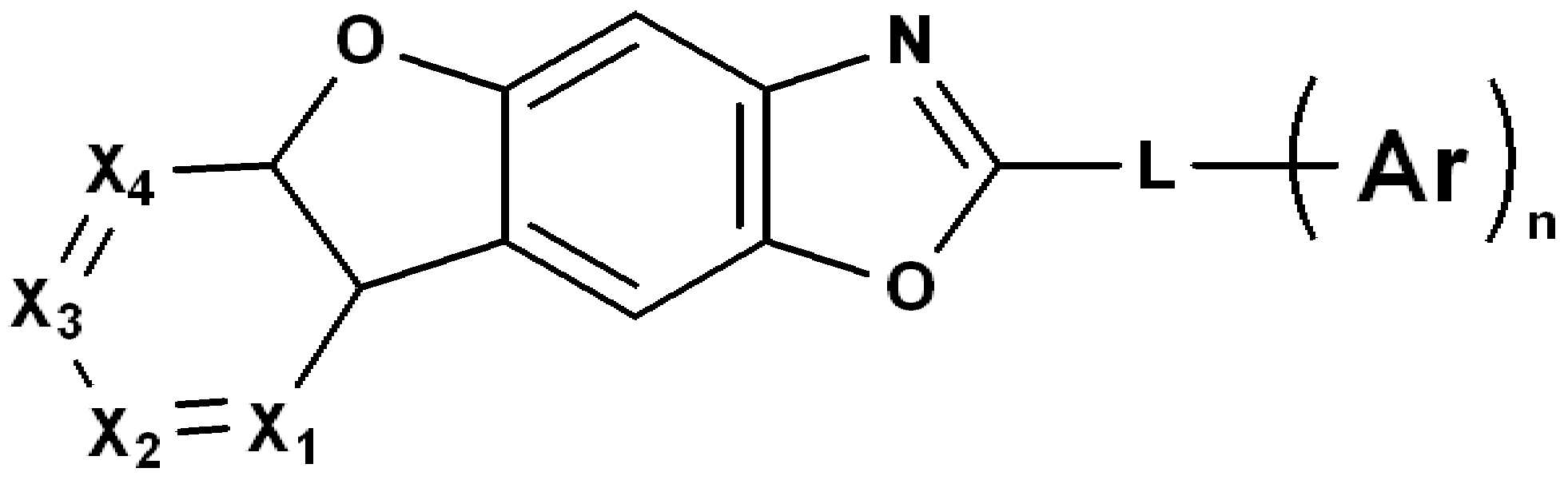
화학식 1에서, X1 내지 X4는 각각 독립적으로 N 또는 CRa이다. 예를 들어, X1 내지 X4는 모두 CRa이거나, 또는 X1 내지 X4 중 선택되는 어느 하나가 N이고 나머지는 CRa일 수 있다.In Formula 1, X 1 to X 4 are each independently N or CR a . For example, all of X 1 to X 4 may be CR a , or any one selected from X 1 to X 4 may be N and the rest may be CR a.
즉, 화학식 1로 표시되는 일 실시예의 화합물은 벤조퓨란(benzofuran), 또는 Aza-type의 벤조퓨란이 벤조옥사졸(benzoxazole)에 축합된 형태의 축합환을 포함하는 것일 수 있다.That is, the compound of the exemplary embodiment represented by Formula 1 may include a condensed ring in a form in which benzofuran or Aza-type benzofuran is condensed with benzoxazole.
X1 내지 X4가 CRa인 경우, 복수 개의 Ra는 각각 독립적으로, 수소 원자, 중수소 원자, 할로겐 원자, 시아노기, 치환 또는 비치환된 실릴기, 치환 또는 비치환된 아민기, 치환 또는 비치환된 탄소수 1 이상 20 이하의 알킬기, 치환 또는 비치환된 고리형성 탄소수 6 이상 30 이하의 아릴기, 또는 치환 또는 비치환된 고리형성 탄소수 2 이상 30 이하의 헤테로아릴기이거나, 또는 인접하는 기와 서로 결합하여 고리를 형성하는 것일 수 있다. 예를 들어, CRa에서 Ra는 수소 원자, 치환 또는 비치환된 고리형성 탄소수 6 이상 20 이하의 아릴기, 또는 치환 또는 비치환된 고리형성 탄소수 2 이상 20 이하의 헤테로아릴기 등일 수 있으나, 실시예가 이에 한정되는 것은 아니다.When X 1 to X 4 are CR a , a plurality of R a are each independently a hydrogen atom, a deuterium atom, a halogen atom, a cyano group, a substituted or unsubstituted silyl group, a substituted or unsubstituted amine group, a substituted or An unsubstituted C1 or more and 20 or less alkyl group, a substituted or unsubstituted cyclic C6 or more and 30 or less aryl group, or a substituted or unsubstituted cyclic C2 or more and 30 or less heteroaryl group, or an adjacent group It may be bonded to each other to form a ring. For example, in CR a , R a may be a hydrogen atom, a substituted or unsubstituted aryl group having 6 or more and 20 or less ring carbon atoms, or a substituted or unsubstituted heteroaryl group having 2 or more and 20 or less ring carbon atoms. The embodiment is not limited thereto.
또한, 화학식 1로 표시되는 일 실시예의 화합물에서 X1 내지 X4 중 적어도 하나는 N일 수 있다. 예를 들어, X1 내지 X4 중 어느 하나는 N이고 나머지는 CRa일 수 있다. 이때, 복수 개의 Ra는 각각 독립적으로 수소 원자, 중수소 원자, 할로겐 원자, 시아노기, 치환 또는 비치환된 실릴기, 치환 또는 비치환된 아민기, 치환 또는 비치환된 탄소수 1 이상 20 이하의 알킬기, 치환 또는 비치환된 고리형성 탄소수 6 이상 30 이하의 아릴기, 또는 치환 또는 비치환된 고리형성 탄소수 2 이상 30 이하의 헤테로아릴기이거나, 또는 인접하는 기와 서로 결합하여 고리를 형성하는 것일 수 있다. In addition, in the compound of an exemplary embodiment represented by Formula 1, at least one of X 1 to X 4 may be N. For example, any one of X 1 to X 4 may be N and the rest may be CR a. At this time, a plurality of R a is each independently a hydrogen atom, a deuterium atom, a halogen atom, a cyano group, a substituted or unsubstituted silyl group, a substituted or unsubstituted amine group, a substituted or unsubstituted alkyl group having 1 to 20 carbon atoms , A substituted or unsubstituted aryl group having 6 or more and 30 or less ring carbon atoms, or a substituted or unsubstituted heteroaryl group having 2 or more and 30 or less ring carbon atoms, or may be bonded to an adjacent group to form a ring. .
즉, X1 내지 X4 중 선택되는 복수 개가 CRa로 표시되는 경우 복수 개의 Ra 들은 동일하거나 적어도 하나가 서로 상이한 것일 수 있다. 한편, 복수 개의 Ra들 중 서로 이웃하는 Ra들은 서로 결합하여 탄화수소 고리 또는 헤테로고리 등을 형성할 수 있다. In other words, the plurality of R a are the same or at least one may be different from each other, if the dog is selected plurality of X 1 to X 4 is represented by a CR. On the other hand, we R a adjacent to each other of the plurality of R a may form a hydrocarbon ring or a hetero ring, and the like bonded to each other.
화학식 1에서, L은 치환 또는 비치환된 고리형성 탄소수 6 이상 30 이하의 아릴렌기, 또는 치환 또는 비치환된 고리형성 탄소수 2 이상 30 이하의 헤테로아릴렌기일 수 있다.In Formula 1, L may be a substituted or unsubstituted arylene group having 6 to 30 ring carbon atoms, or a substituted or unsubstituted heteroarylene group having 2 to 30 ring carbon atoms.
L은 치환 또는 비치환된 페닐렌기, 또는 치환 또는 비치환된 피리딜렌기일 수 있다. 예를 들어, 화학식 1에서, L은 하기 L-1 또는 L-2로 표시될 수 있다. L may be a substituted or unsubstituted phenylene group, or a substituted or unsubstituted pyridylene group. For example, in Formula 1, L may be represented by the following L-1 or L-2.
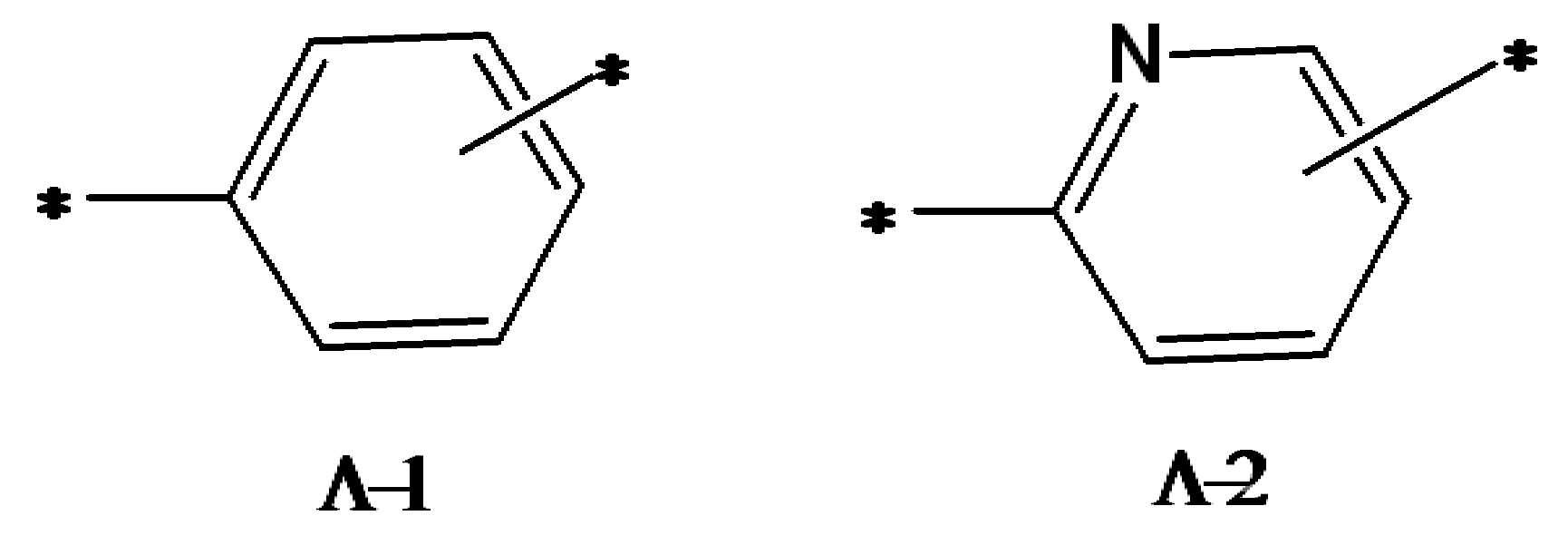
화학식 1로 표시되는 일 실시예의 화합물에서 Ar은 치환 또는 비치환된 고리형성 탄소수 6 이상 30 이하의 탄화수소고리기, 또는 치환 또는 비치환된 고리형성 탄소수 2 이상 30 이하의 헤테로고리기이다. 예를 들어, Ar은 치환 또는 비치환된 고리형성 탄소수 6 이상 20 이하의 아릴기, 또는 치환 또는 비치환된 고리형성 탄소수 2 이상 20 이하의 헤테로아릴기일 수 있다. Ar은 비치환된 고리형성 탄소수 6 이상 20 이하의 아릴기이거나, 고리형성 원자로 N, O, 및 B 중 적어도 하나를 포함하는 치환 또는 비치환된 고리형성 탄소수 2 이상 20 이하의 헤테로아릴기일 수 있다.In an exemplary compound represented by Formula 1, Ar is a substituted or unsubstituted hydrocarbon ring group having 6 to 30 ring carbon atoms, or a substituted or unsubstituted heterocyclic group having 2 to 30 ring carbon atoms. For example, Ar may be a substituted or unsubstituted aryl group having 6 to 20 ring carbon atoms, or a substituted or unsubstituted heteroaryl group having 2 to 20 ring carbon atoms. Ar may be an unsubstituted aryl group having 6 to 20 ring carbon atoms, or a substituted or unsubstituted heteroaryl group having 2 or more and 20 or less ring carbon atoms including at least one of N, O, and B as a ring atom. .
화학식 1에서, n은 1 또는 2 일 수 있다. 즉, 화학식 1로 표시되는 일 실시예의 화합물에서 링커인 L에 결합된 Ar은 하나 또는 두 개일 수 있다. 한편, n이 2인 경우 링커에 결합된 두 개의 Ar들은 동일하거나 또는 서로 상이한 것일 수 있다.In Formula 1, n may be 1 or 2. That is, in the compound of the exemplary embodiment represented by Chemical Formula 1, one or two Ar bonded to L, which is a linker, may be present. Meanwhile, when n is 2, the two Ars bonded to the linker may be the same or different from each other.
일 실시예에 따른 화합물은 벤조퓨란(benzofuran), 또는 Aza-type의 벤조퓨란이 벤조옥사졸(benzoxazole)에 축합된 형태의 축합환 부분과 "Ar"로 표시되는 탄화수소 고리 또는 헤테로고리가 링커로 서로 연결된 구조를 갖는 것일 수 있다. The compound according to an embodiment includes a condensed ring moiety in which benzofuran or Aza-type benzofuran is condensed with benzoxazole and a hydrocarbon ring or heterocycle represented by "Ar" as a linker. It may have a structure connected to each other.
벤조퓨란(benzofuran) 또는 Aza-type의 벤조퓨란이 벤조옥사졸(benzoxazole)에 축합된 축합환 부분은 전자 수용부(electron acceptor)일 수 있다. 또한, 일 실시예에서 화합물은 D(electron donor)-A(electron acceptor) type의 구조를 갖는 것일 수 있다. 이때, 화학식 1로 표시되는 화합물에서 "Ar" 부분은 전자 공여부(electron donor)가 될 수 있다. 한편, 화학식 1로 표시되는 화합물에서 n이 2인 경우 일 실시예에 따른 화합물은 하나의 전자 수용부와 두 개의 전자 공여부들을 포함하는 것일 수 있다.The condensed ring portion in which benzofuran or Aza-type benzofuran is condensed with benzoxazole may be an electron acceptor. In addition, in an embodiment, the compound may have a structure of an electron donor (D)-A (electron acceptor) type. In this case, in the compound represented by Formula 1, the "Ar" part may be an electron donor. Meanwhile, when n is 2 in the compound represented by Formula 1, the compound according to an embodiment may include one electron accepting portion and two electron donating portions.
예를 들어, Ar이 치환 또는 비치환된 아릴기인 경우 Ar은 치환 또는 비치환된 페닐기, 치환 또는 비치환된 나프틸기, 치환 또는 비치환된 비페닐기, 또는 트리페닐렌기 등일 수 있다. 하지만, 실시예가 이에 한정되는 것은 아니다.For example, when Ar is a substituted or unsubstituted aryl group, Ar may be a substituted or unsubstituted phenyl group, a substituted or unsubstituted naphthyl group, a substituted or unsubstituted biphenyl group, or a triphenylene group. However, the embodiment is not limited thereto.
또한, Ar이 치환 또는 비치환된 헤테로아릴기인 경우 Ar은 치환 또는 비치환된 카바졸기, 또는 치환 또는 비치환된 디벤조퓨라닐기 등일 수 있다. 하지만, 실시예가 이에 한정되는 것은 아니다.In addition, when Ar is a substituted or unsubstituted heteroaryl group, Ar may be a substituted or unsubstituted carbazole group, or a substituted or unsubstituted dibenzofuranyl group. However, the embodiment is not limited thereto.
한편, Ar은 하기 화학식 2로 표시되는 것일 수 있다.Meanwhile, Ar may be represented by the following Chemical Formula 2.
[화학식 2][Formula 2]

상기 화학식 2에서, Y는 N 또는 B이고, Z는 직접결합(direct linkage), O, S, NRd, 또는 CReRf일 수 있다. 화학식 2에서, b 및 c는 각각 독립적으로 0 이상 4 이하의 정수일 수 있다. In Formula 2, Y is N or B, and Z may be a direct linkage, O, S, NR d , or CR e R f . In Formula 2, b and c may each independently be an integer of 0 or more and 4 or less.
또한, 화학식 2에서, Rb 내지 Rf는 각각 독립적으로, 수소 원자, 중수소 원자, 할로겐 원자, 시아노기, 치환 또는 비치환된 실릴기, 치환 또는 비치환된 아민기, 치환 또는 비치환된 탄소수 1 이상 20 이하의 알킬기, 치환 또는 비치환된 고리형성 탄소수 6 이상 30 이하의 아릴기, 또는 치환 또는 비치환된 고리형성 탄소수 2 이상 30 이하의 헤테로아릴기이거나, 또는 인접하는 기와 서로 결합하여 고리를 형성하는 것일 수 있다.In addition, in Formula 2, R b to R f are each independently a hydrogen atom, a deuterium atom, a halogen atom, a cyano group, a substituted or unsubstituted silyl group, a substituted or unsubstituted amine group, a substituted or unsubstituted carbon number. 1 or more and 20 or less alkyl group, a substituted or unsubstituted aryl group having 6 or more and 30 or less carbon atoms, or a substituted or unsubstituted heteroaryl group having 2 or more and 30 or less ring carbon atoms, or is bonded to an adjacent group to form a ring It may be to form.
b가 2 이상의 정수인 경우, 복수 개의 Rb는 모두 동일하거나 적어도 하나가 서로 상이한 것일 수 있다. 또한, c가 2 이상인 정수인 경우에 있어서도 및 복수 개의 Rc는 모두 동일하거나 적어도 하나가 서로 상이한 것일 수 있다.When b is an integer of 2 or more, all of the plurality of R b may be the same or at least one may be different from each other. In addition, even when c is an integer of 2 or more, and a plurality of R c may be the same or at least one may be different from each other.
한편, Rb 내지 Rf 가 인접하는 기와 서로 결합하여 고리를 형성할 경우 Rb 내지 Rf 중 이웃하는 치환기들이 서로 결합하여 탄화수소 고리 또는 헤테로고리를 형성할 수 있다. 또한, 인접하는 치환기들이 서로 결합하여 형성된 고리는 Ar의 탄화수소 고리 또는 헤테로고리와 축합될 수도 있다.On the other hand, when R b to R f are bonded to each other to form a ring, neighboring substituents among R b to R f may be bonded to each other to form a hydrocarbon ring or a hetero ring. In addition, a ring formed by bonding of adjacent substituents to each other may be condensed with a hydrocarbon ring or a hetero ring of Ar.
화학식 2로 표시되는 Ar은 하기 화학식 2-1 또는 화학식 2-2로 표시될 수 있다.Ar represented by Formula 2 may be represented by the following Formula 2-1 or Formula 2-2.
[화학식 2-1][Formula 2-1]

[화학식 2-2][Formula 2-2]

상기 화학식 2-1 및 화학식 2-2에서, Z, Rb, Rc, b, 및 c에 대하여는 상술한 화학식 2에서 설명한 내용과 동일한 내용이 적용될 수 있다.In Formulas 2-1 and 2-2, the same contents as those described in Formula 2 may be applied to Z, R b , R c, b, and c.
한편, 화학식 2-2는 하기 화학식 2-2A 내지 화학식 2-2E 중 어느 하나로 표시되는 것일 수 있다.Meanwhile, Formula 2-2 may be represented by any one of Formulas 2-2A to 2-2E below.
[화학식 2-2A][Formula 2-2A]

[화학식 2-2B][Formula 2-2B]

[화학식 2-2C][Formula 2-2C]

[화학식 2-2D][Formula 2-2D]

[화학식 2-2E][Formula 2-2E]
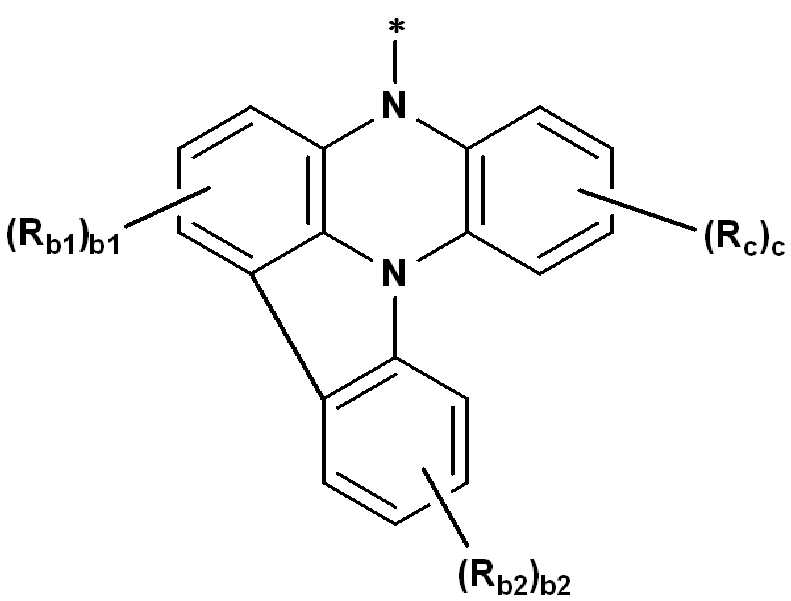
화학식 2-E에서, b1은 0 이상 3 이하의 정수이고, b2는 0 이상 4 이하의 정수일 수 있다. 또한, Rb1 및 Rb2는 각각 독립적으로, 수소 원자, 중수소 원자, 할로겐 원자, 시아노기, 치환 또는 비치환된 실릴기, 치환 또는 비치환된 아민기, 치환 또는 비치환된 탄소수 1 이상 20 이하의 알킬기, 치환 또는 비치환된 고리형성 탄소수 6 이상 30 이하의 아릴기, 또는 치환 또는 비치환된 고리형성 탄소수 2 이상 30 이하의 헤테로아릴기이거나, 또는 인접하는 기와 서로 결합하여 고리를 형성하는 것일 수 있다.In Formula 2-E, b1 may be an integer of 0 or more and 3 or less, and b2 may be an integer of 0 or more and 4 or less. In addition, R b1 and R b2 are each independently a hydrogen atom, a deuterium atom, a halogen atom, a cyano group, a substituted or unsubstituted silyl group, a substituted or unsubstituted amine group, a substituted or unsubstituted C 1 or more and 20 or less Alkyl group of, a substituted or unsubstituted aryl group having 6 to 30 carbon atoms, or a substituted or unsubstituted heteroaryl group having 2 to 30 carbon atoms, or to form a ring by bonding with adjacent groups I can.
또한, 화학식 2-2A 내지 화학식 2-2E에서, Rb, Rc, b, 및 c에 대하여는 상술한 화학식 2에서 설명한 내용과 동일한 내용이 적용될 수 있다.In addition, in Formulas 2-2A to 2-2E, the same contents as those described in Formula 2 may be applied to R b , R c, b, and c.
한편, 화학식 1은 하기 화학식 1-1 또는 화학식 1-2로 표시될 수 있다.Meanwhile, Formula 1 may be represented by Formula 1-1 or Formula 1-2 below.
[화학식 1-1][Formula 1-1]

[화학식 1-2][Formula 1-2]
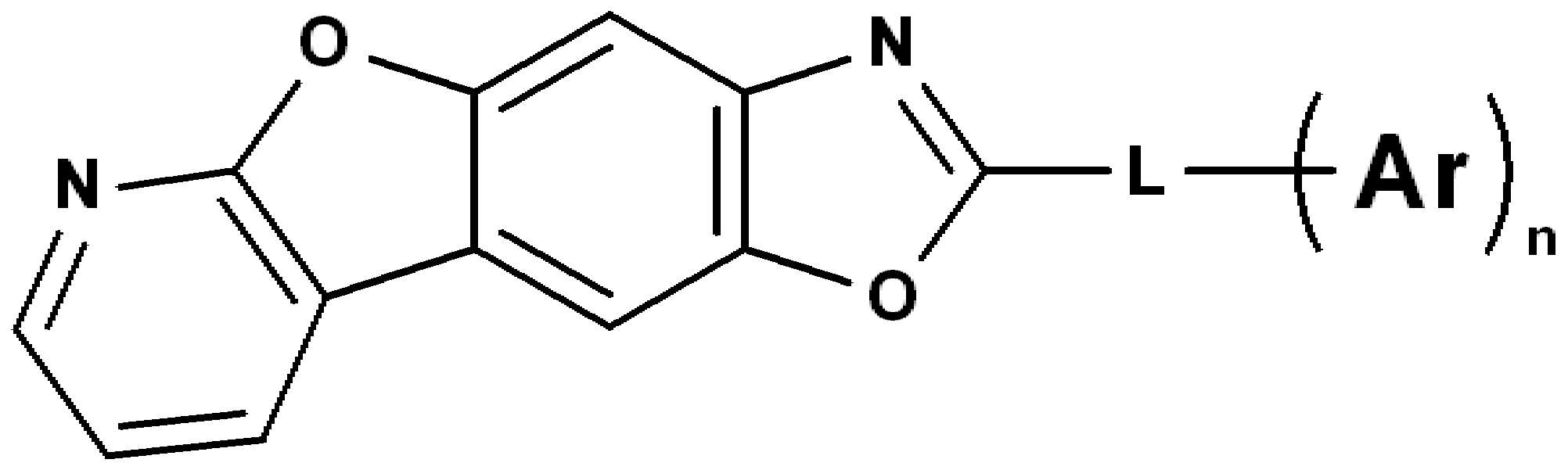
상기 화학식 1-1 및 화학식 1-2에 있어서, L, n, 및 Ar은 상술한 화학식 1 에서 설명한 내용과 동일한 내용이 적용될 수 있다.In Formulas 1-1 and 1-2, L, n, and Ar may be the same as those described in Formula 1 above.
화학식 1로 표시되는 일 실시예의 화합물에서, 예를 들어, "Ar"이 상기 화학식 2-2로 표시되는 경우 일 실시예의 화합물은 D-A type의 지연 형광 발광 재료일 수 있다. 일 실시예에 따른 화합물은 벤조퓨란(benzofuran) 또는 Aza-type의 벤조퓨란이 벤조옥사졸(benzoxazole)에 축합된 축합환 부분은 전자 수용부로 하고, 화학식 2-2로 표시되는 부분은 전자 공여부로 하는 D-A type 열활성 지연 형광(Thermally Activated Delayed Fluorescence, TADF) 발광 재료일 수 있다.In the compound of an embodiment represented by Formula 1, for example, when "Ar" is represented by Formula 2-2, the compound of an embodiment may be a D-A type delayed fluorescent light emitting material. In the compound according to an embodiment, the condensed ring portion in which benzofuran or Aza-type benzofuran is condensed with benzoxazole is an electron accepting portion, and the portion represented by Formula 2-2 is an electron donating portion. It may be a DA type thermally activated delayed fluorescence (TADF) light emitting material.
일 실시예의 화합물은 하기 화합물군 1에 표시된 화합물들 중 어느 하나일 수 있다. 일 실시예의 유기 전계 발광 소자(10)는 화합물군 1에 표시된 화합물들 중 적어도 하나의 화합물을 발광층(EML)에 포함할 수 있다.The compound of an embodiment may be any one of the compounds shown in the following compound group 1. The
[화합물군 1][Compound group 1]

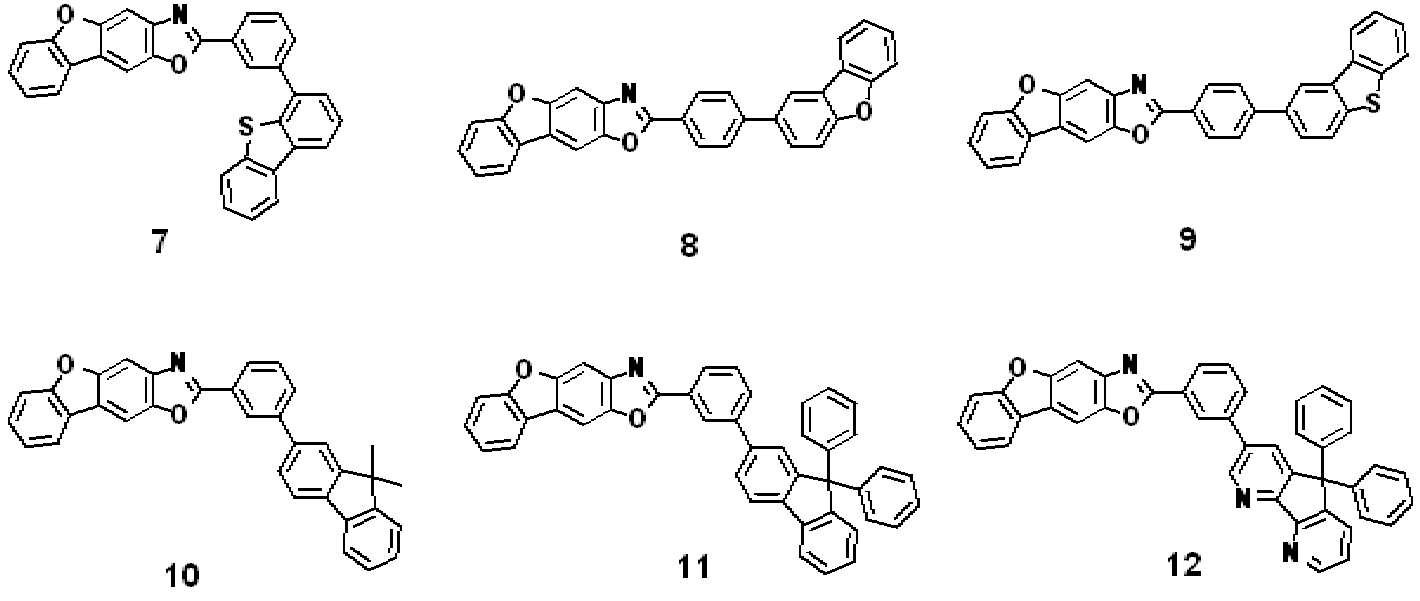


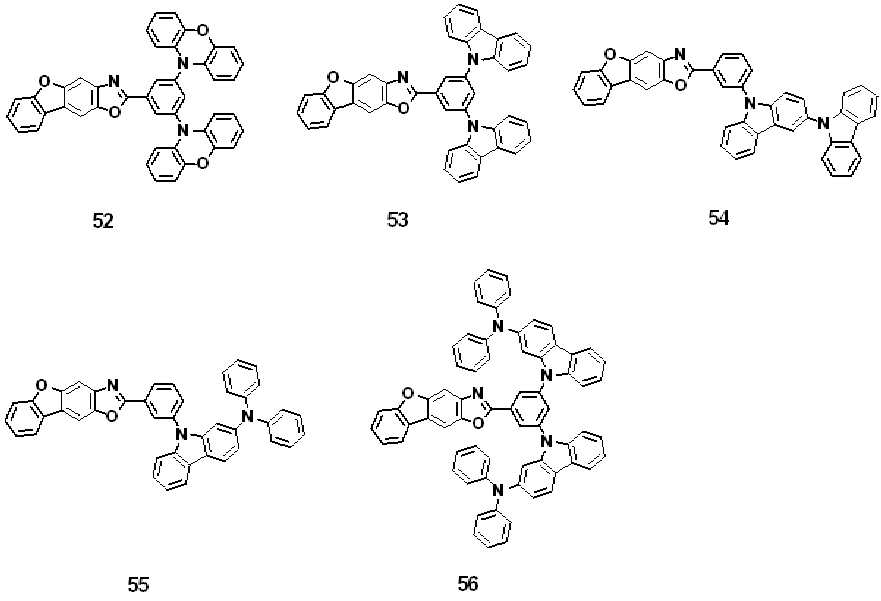
일 실시예에 따른 화합물은 420nm 이상의 파장 영역에서 발광 중심 파장(λmax)을 갖는 발광 재료일 수 있다. 예를 들어, 화학식 1로 표시되는 일 실시예의 화합물은 420nm 이상 470nm 이하의 파장 영역에서 발광 중심 파장을 갖는 발광 재료이거나, 또는 500nm 이상 550nm 이하의 파장 영역에서 발광 중심 파장을 갖는 발광 재료일 수 있다. 화학식 1로 표시되는 일 실시예의 화합물은 청색 도펀트이거나, 또는 녹색 도펀트일 수 있다.The compound according to an embodiment may be a light-emitting material having an emission center wavelength λ max in a wavelength region of 420 nm or more. For example, the compound of an exemplary embodiment represented by Formula 1 may be a light-emitting material having a light emission center wavelength in a wavelength range of 420 nm or more and 470 nm or less, or a light-emitting material having a light emission center wavelength in a wavelength range of 500 nm or more and 550 nm or less. . The compound of an exemplary embodiment represented by Formula 1 may be a blue dopant or a green dopant.
일 실시예의 유기 전계 발광 소자(10)에서, 발광층(EML)은 호스트 및 도펀트를 포함하며 상술한 일 실시예의 화합물을 도펀트로 포함할 수 있다. 예를 들어, 일 실시예의 유기 전계 발광 소자(10)에서 발광층(EML)은 상술한 일 실시예의 화합물을 지연 형광 발광용 도펀트로 포함할 수 있다. In the
화학식 1로 표시되는 일 실시예의 화합물은 최저 여기 일중항 에너지 준위(S1) 및 최저 여기 삼중항 에너지 준위(T1) 차이의 절대 값(ΔEST)이 0.2eV 이하인 것으로 열활성 지연 형광 도펀트로 사용될 수 있다. 따라서, 일 실시예의 유기 전계 발광 소자(10)는 발광층(EML)에 상술한 화합물들 중 적어도 하나를 열활성 지연 형광(TADF) 도펀트로 포함하며, 발광층(EML)은 지연 형광 발광하는 것일 수 있다. 예를 들어, 발광층(EML)은 열활성 지연 형광을 발광하는 것일 수 있다. The compound of an embodiment represented by Formula 1 has an absolute value (ΔE ST ) of 0.2 eV or less between the lowest excitation singlet energy level (S1) and the lowest triplet excitation energy level (T1), and can be used as a thermally active delayed fluorescent dopant. have. Accordingly, the
일 실시예의 화합물은 벤조옥사졸에 벤조퓨란 또는 Aza-type의 벤조퓨란이 축합된 축합환을 전자 수용부로 포함하는 신규한 화합물 구조를 가지며 열활성 지연 형광 발광 재료로 사용될 수 있다. 일 실시예의 화합물은 유기 전계 발광 소자의 발광층 재료로 사용되어 유기 전계 발광 소자의 발광 효율을 개선하고, 수명을 증가시킬 수 있다. 특히, 일 실시예에 따른 화합물은 청색 또는 녹색 파장 영역의 광을 방출하는 발광 재료로 사용되며, 우수한 발광 효율을 나타낼 수 있다.The compound of an embodiment has a novel compound structure including a condensed ring in which benzofuran or Aza-type benzofuran is condensed with benzoxazole as an electron accepting part, and may be used as a thermally activated delayed fluorescent light emitting material. The compound of the exemplary embodiment may be used as a material for an emission layer of an organic electroluminescent device, thereby improving luminous efficiency of the organic electroluminescent device and increasing its lifespan. In particular, the compound according to an embodiment is used as a light emitting material that emits light in a blue or green wavelength region, and may exhibit excellent luminous efficiency.
일 실시예에서 발광층(EML)은 지연 형광 발광층이고, 발광층(EML)은 공지의 호스트 재료 및 상술한 일 실시예의 화합물을 포함하는 것일 수 있다. 예를 들어, 일 실시예에서 발광층(EML)은 일 실시예의 화합물을 도펀트 재료로 포함하고, 호스트 재료로 Alq3(tris(8-hydroxyquinolino)aluminum), CBP(4,4'-bis(N-carbazolyl)-1,1'-biphenyl), PVK(poly(n-vinylcabazole), ADN(9,10-di(naphthalene-2-yl)anthracene), TCTA(4,4',4''-Tris(carbazol-9-yl)-triphenylamine), TPBi(1,3,5-tris(1-phenyl-1H-benzo[d]imidazole-2-yl)benzene), TBADN(3-tert-butyl-9,10-di(naphth-2-yl)anthracene), DSA(distyrylarylene), CDBP(4,4'-bis(9-carbazolyl)-2,2'-dimethyl-biphenyl), MADN(2-Methyl-9,10-bis(naphthalen-2-yl)anthracene), DPEPO (bis[2-(diphenylphosphino)phenyl] ether oxide), CP1 (Hexaphenyl cyclotriphosphazene), UGH2 (1,4-Bis(triphenylsilyl)benzene), DPSiO3 (Hexaphenylcyclotrisiloxane), DPSiO4 (Octaphenylcyclotetra siloxane), 또는 PPF (2,8-Bis(diphenylphosphoryl)dibenzofuran), mCBP(3,3'-bis(N-carbazolyl)-1,1'-biphenyl), mCP(1,3-Bis(N-carbazolyl)benzene) 등을 포함할 수 있다. 하지만, 실시예가 이에 한정되는 것은 아니며, 제시된 호스트 재료 이외에 공지의 지연 형광 발광 호스트 재료가 더 포함될 수 있다. In one embodiment, the emission layer EML may be a delayed fluorescence emission layer, and the emission layer EML may include a known host material and the compound of the above-described exemplary embodiment. For example, in one embodiment, the emission layer (EML) includes the compound of one embodiment as a dopant material, and as a host material, Alq 3 (tris(8-hydroxyquinolino)aluminum), CBP(4,4'-bis(N- carbazolyl)-1,1'-biphenyl), PVK(poly(n-vinylcabazole)), ADN(9,10-di(naphthalene-2-yl)anthracene), TCTA(4,4',4''-Tris( carbazol-9-yl)-triphenylamine), TPBi(1,3,5-tris(1-phenyl-1H-benzo[d]imidazole-2-yl)benzene), TBADN(3-tert-butyl-9,10 -di(naphth-2-yl)anthracene), DSA(distyrylarylene), CDBP(4,4'-bis(9-carbazolyl)-2,2'-dimethyl-biphenyl), MADN(2-Methyl-9,10 -bis(naphthalen-2-yl)anthracene), DPEPO (bis[2-(diphenylphosphino)phenyl] ether oxide), CP1 (Hexaphenyl cyclotriphosphazene), UGH2 (1,4-Bis(triphenylsilyl)benzene), DPSiO 3 (Hexaphenylcyclotrisiloxane) ), DPSiO 4 (Octaphenylcyclotetra siloxane), or PPF (2,8-Bis(diphenylphosphoryl)dibenzofuran), mCBP(3,3'-bis(N-carbazolyl)-1,1'-biphenyl), mCP(1,3 -Bis(N-carbazolyl)benzene), etc. However, embodiments are not limited thereto, and a known delayed fluorescent light emitting host material may be further included in addition to the host material provided.
하지만, 실시예가 이에 한정되는 것은 아니며 일 실시예의 화합물은 발광층(EML)의 호스트 재료로 사용될 수 있다. 일 실시예의 화합물이 호스트 재료로 사용되는 경우 발광층(EML)에는 일 실시예의 화합물 이외에 공지의 도펀트 재료가 같이 사용될 수 있다. However, the embodiment is not limited thereto, and the compound of the embodiment may be used as a host material for the emission layer EML. When the compound of one embodiment is used as a host material, a known dopant material in addition to the compound of one embodiment may be used for the emission layer (EML).
일 실시예의 유기 전계 발광 소자(10)에서 발광층(EML)은 공지의 도펀트 재료로 스티릴 유도체(예를 들어, 1, 4-bis[2-(3-N-ethylcarbazoryl)vinyl]benzene(BCzVB), 4-(di-p-tolylamino)-4'-[(di-p-tolylamino)styryl]stilbene(DPAVB), N-(4-((E)-2-(6-((E)-4-(diphenylamino)styryl)naphthalen-2-yl)vinyl)phenyl)-N-phenylbenzenamine(N-BDAVBi), 페릴렌 및 그 유도체(예를 들어, 2, 5, 8, 11-Tetra-t-butylperylene(TBP)), 피렌 및 그 유도체(예를 들어, 1, 1-dipyrene, 1, 4-dipyrenylbenzene, 1, 4-Bis(N, N-Diphenylamino)pyrene), 4-CzIPN(1,2,3,5-Tetrakis(carbazol-9-yl)-4,6-dicyanobenzene) 등을 포함할 수 있다.In the
발광층(EML)이 청색광을 발광할 때, 발광층(EML)은 예를 들어, 스피로-DPVBi(spiro-DPVBi), 스피로-6P(spiro-6P), DSB(distyryl-benzene), DSA(distyryl-arylene), PFO(Polyfluorene)계 고분자 및 PPV(poly(p-phenylene vinylene)계 고분자로 이루어진 군에서 선택된 어느 하나를 포함하는 형광 물질을 더 포함할 수 있다. 발광층(EML)이 청색을 발광할 때, 예를 들어 발광층(EML)은 일 실시예의 화합물을 호스트 재료로 포함하고, 공지의 도펀트 재료로 (4,6-F2ppy)2Irpic와 같은 금속 착화합물(metal complex) 또는 유기 금속 착체(organometallic complex), 페릴렌(perlene) 및 그 유도체 등을 포함할 수 있다.When the emission layer EML emits blue light, the emission layer EML is, for example, spiro-DPVBi (spiro-DPVBi), spiro-6P, distyryl-benzene (DSB), distyryl-arylene (DSA). ), a fluorescent material including any one selected from the group consisting of a polyfluorene (PFO) polymer and a poly(p-phenylene vinylene) polymer (PPV). When the emission layer EML emits blue light, For example, the emission layer (EML) includes the compound of one embodiment as a host material, and is a known dopant material such as a metal complex such as (4,6-F2ppy)2Irpic, an organometallic complex, or It may include perlene and derivatives thereof.
발광층(EML)이 녹색광을 발광할 때, 발광층(EML)은 예를 들어, Alq3(tris(8-hydroxyquinolino)aluminum)을 포함하는 형광 물질을 더 포함할 수 있다. 발광층(EML)이 녹색을 발광할 때, 예를 들어 발광층(EML)은 일 실시예의 화합물을 호스트 재료로 포함하고, 공지의 도펀트 재료로 Ir(ppy)3(fac-tris(2-phenylpyridine)iridium)와 같은 금속 착화합물(metal complex) 또는 유기 금속 착체(organometallic complex), 쿠마린(coumarin) 및 그 유도체 등을 포함할 수 있다.When the emission layer EML emits green light, the emission layer EML may further include a fluorescent material including, for example, Alq3 (tris(8-hydroxyquinolino)aluminum). When the emission layer (EML) emits green light, for example, the emission layer (EML) includes the compound of an embodiment as a host material, and Ir(ppy) 3 (fac-tris(2-phenylpyridine)iridium) as a known dopant material. ), such as a metal complex or an organometallic complex, coumarin, and derivatives thereof.
한편, 도면에 도시되지는 않았으나 일 실시예의 유기 전계 발광 소자(10)는 복수의 발광층들을 포함하는 것일 수 있다. 복수의 발광층들은 순차적으로 적층되어 제공되는 것일 수 있으며, 예를 들어 복수의 발광층들을 포함하는 유기 전계 발광 소자(10)는 백색광을 방출하는 것일 수 있다. 복수의 발광층들을 포함하는 유기 전계 발광 소자는 탠덤(Tandem) 구조의 유기 전계 발광 소자일 수 있다. 유기 전계 발광 소자(10)가 복수의 발광층들을 포함하는 경우 적어도 하나의 발광층(EML)은 상술한 일 실시예에 따른 화합물을 포함할 수 있다.Meanwhile, although not shown in the drawings, the
도 1 내지 도 4에 도시된 일 실시예의 유기 전계 발광 소자(10)에서, 전자 수송 영역(ETR)은 발광층(EML) 상에 제공된다. 전자 수송 영역(ETR)은, 정공 저지층(HBL), 전자 수송층(ETL) 및 전자 주입층(EIL) 중 적어도 하나를 포함할 수 있으나, 실시예가 이에 한정되는 것은 아니다.In the
전자 수송 영역(ETR)은 단일 물질로 이루어진 단일층, 복수의 서로 다른 물질로 이루어진 단일층, 또는 복수의 서로 다른 물질로 이루어진 복수의 층을 갖는 다층 구조를 가질 수 있다. The electron transport region ETR may have a single layer made of a single material, a single layer made of a plurality of different materials, or a multilayer structure having a plurality of layers made of a plurality of different materials.
예를 들어, 전자 수송 영역(ETR)은 전자 주입층(EIL) 또는 전자 수송층(ETL)의 단일층의 구조를 가질 수도 있고, 전자 주입 물질과 전자 수송 물질로 이루어진 단일층 구조를 가질 수도 있다. 또한, 전자 수송 영역(ETR)은, 복수의 서로 다른 물질로 이루어진 단일층의 구조를 갖거나, 발광층(EML)으로부터 차례로 적층된 전자 수송층(ETL)/전자 주입층(EIL), 정공 저지층(HBL)/전자 수송층(ETL)/전자 주입층(EIL) 구조를 가질 수 있으나, 이에 한정되는 것은 아니다. 전자 수송 영역(ETR)의 두께는 예를 들어, 약 300Å 내지 약 1500Å인 것일 수 있다.For example, the electron transport region ETR may have a single layer structure of an electron injection layer EIL or an electron transport layer ETL, or may have a single layer structure made of an electron injection material and an electron transport material. In addition, the electron transport region ETR has a single layer structure made of a plurality of different materials, or an electron transport layer (ETL)/electron injection layer (EIL) and a hole blocking layer (EIL) sequentially stacked from the light emitting layer EML. HBL)/electron transport layer (ETL)/electron injection layer (EIL) structure, but is not limited thereto. The thickness of the electron transport region ETR may be, for example, about 300 Å to about 1500 Å.
전자 수송 영역(ETR)은, 진공 증착법, 스핀 코팅법, 캐스트법, LB법(Langmuir-Blodgett), 잉크젯 프린팅법, 레이저 프린팅법, 레이저 열전사법(Laser Induced Thermal Imaging, LITI) 등과 같은 다양한 방법을 이용하여 형성될 수 있다.The electron transport area (ETR) is a vacuum evaporation method, spin coating method, cast method, LB method (Langmuir-Blodgett), inkjet printing method, laser printing method, laser induced thermal imaging (LITI), and various methods. It can be formed by using.
전자 수송 영역(ETR)이 전자 수송층(ETL)을 포함할 경우, 전자 수송 영역(ETR)은 안트라센계 화합물을 포함하는 것일 수 있다. 다만, 이에 한정되는 것은 아니며, 전자 수송 영역은 예를 들어, Alq3(Tris(8-hydroxyquinolinato)aluminum), 1,3,5-tri[(3-pyridyl)-phen-3-yl]benzene, 2,4,6-tris(3'-(pyridin-3-yl)biphenyl-3-yl)-1,3,5-triazine, 2-(4-(N-phenylbenzoimidazol-1-yl)phenyl)-9,10-dinaphthylanthracene, TPBi(1,3,5-Tri(1-phenyl-1H-benzo[d]imidazol-2-yl)benzene), BCP(2,9-Dimethyl-4,7-diphenyl-1,10-phenanthroline), Bphen(4,7-Diphenyl-1,10-phenanthroline), TAZ(3-(4-Biphenylyl)-4-phenyl-5-tert-butylphenyl-1,2,4-triazole), NTAZ(4-(Naphthalen-1-yl)-3,5-diphenyl-4H-1,2,4-triazole), tBu-PBD(2-(4-Biphenylyl)-5-(4-tert-butylphenyl)-1,3,4-oxadiazole), BAlq(Bis(2-methyl-8-quinolinolato-N1,O8)-(1,1'-Biphenyl-4-olato)aluminum), Bebq2(berylliumbis(benzoquinolin-10-olate), ADN(9,10-di(naphthalene-2-yl)anthracene), BmPyPhB(1,3-Bis[3,5-di(pyridin-3-yl)phenyl]benzene) 및 이들의 혼합물을 포함하는 것일 수 있다. 전자 수송층(ETL)들의 두께는 약 100Å 내지 약 1000Å, 예를 들어 약 150Å 내지 약 500Å일 수 있다. 전자 수송층(ETL)들의 두께가 전술한 바와 같은 범위를 만족할 경우, 실질적인 구동 전압 상승 없이 만족스러운 정도의 전자 수송 특성을 얻을 수 있다.When the electron transport region ETR includes the electron transport layer ETL, the electron transport region ETR may include an anthracene compound. However, the present invention is not limited thereto, and the electron transport region is, for example, Alq 3 (Tris(8-hydroxyquinolinato)aluminum), 1,3,5-tri[(3-pyridyl)-phen-3-yl]benzene, 2,4,6-tris(3'-(pyridin-3-yl)biphenyl-3-yl)-1,3,5-triazine, 2-(4-(N-phenylbenzoimidazol-1-yl)phenyl)- 9,10-dinaphthylanthracene, TPBi(1,3,5-Tri(1-phenyl-1H-benzo[d]imidazol-2-yl)benzene), BCP(2,9-Dimethyl-4,7-diphenyl-1 ,10-phenanthroline), Bphen(4,7-Diphenyl-1,10-phenanthroline), TAZ(3-(4-Biphenylyl)-4-phenyl-5-tert-butylphenyl-1,2,4-triazole), NTAZ(4-(Naphthalen-1-yl)-3,5-diphenyl-4H-1,2,4-triazole), tBu-PBD(2-(4-Biphenylyl)-5-(4-tert-butylphenyl) -1,3,4-oxadiazole), BAlq(Bis(2-methyl-8-quinolinolato-N1,O8)-(1,1'-Biphenyl-4-olato)aluminum), Bebq 2 (berylliumbis(benzoquinolin-10) -olate), ADN(9,10-di(naphthalene-2-yl)anthracene), BmPyPhB(1,3-Bis[3,5-di(pyridin-3-yl)phenyl]benzene) and mixtures thereof The thickness of the electron transport layers ETL may be about 100 Å to about 1000 Å, for example, about 150 Å to about 500 Å. It is possible to obtain satisfactory electron transport characteristics without increasing the driving voltage.
전자 수송 영역(ETR)이 전자 주입층(EIL)을 포함할 경우, 전자 수송 영역(ETR)은 LiF, NaCl, CsF, RbCl, RbI와 같은 할로겐화 금속, Yb와 같은 란타넘족 금속, Li2O, BaO 와 같은 금속 산화물, 또는 LiQ(Lithium quinolate) 등이 사용될 수 있으나 이에 한정되는 것은 아니다. 전자 주입층(EIL)은 또한 전자 수송 물질과 절연성의 유기 금속염(organo metal salt)이 혼합된 물질로 이루어질 수 있다. 유기 금속염은 에너지 밴드 갭(energy band gap)이 대략 4eV 이상의 물질이 될 수 있다. 구체적으로 예를 들어, 유기 금속염은 금속 아세테이트(metal acetate), 금속 벤조에이트(metal benzoate), 금속 아세토아세테이트(metal acetoacetate), 금속 아세틸아세토네이트(metal acetylacetonate) 또는 금속 스테아레이트(stearate)를 포함할 수 있다. 전자 주입층(EIL)들의 두께는 약 1Å 내지 약 100Å, 약 3Å 내지 약 90Å일 수 있다. 전자 주입층(EIL)들의 두께가 전술한 바와 같은 범위를 만족할 경우, 실질적인 구동 전압 상승 없이 만족스러운 정도의 전자 주입 특성을 얻을 수 있다.When the electron transport region (ETR) includes the electron injection layer (EIL), the electron transport region (ETR) is a halogenated metal such as LiF, NaCl, CsF, RbCl, and RbI, a lanthanum group metal such as Yb, Li 2 O, A metal oxide such as BaO or LiQ (Lithium quinolate) may be used, but is not limited thereto. The electron injection layer EIL may also be formed of a material in which an electron transport material and an insulating organo metal salt are mixed. The organometallic salt may be a material having an energy band gap of approximately 4 eV or more. Specifically, for example, the organometallic salt may include metal acetate, metal benzoate, metal acetoacetate, metal acetylacetonate, or metal stearate. I can. The electron injection layers EIL may have a thickness of about 1 Å to about 100 Å, and about 3 Å to about 90 Å. When the thickness of the electron injection layers EIL satisfies the above-described range, satisfactory electron injection characteristics can be obtained without a substantial increase in driving voltage.
전자 수송 영역(ETR)은 앞서 언급한 바와 같이, 정공 저지층(HBL)을 포함할 수 있다. 정공 저지층(HBL)은 예를 들어, BCP(2,9-dimethyl-4,7-diphenyl-1,10-phenanthroline) 및 Bphen(4,7-diphenyl-1,10-phenanthroline) 중 적어도 하나를 포함할 수 있으나, 이에 한정되는 것은 아니다.As mentioned above, the electron transport region ETR may include a hole blocking layer HBL. Hole blocking layer (HBL), for example, at least one of BCP (2,9-dimethyl-4,7-diphenyl-1,10-phenanthroline) and Bphen (4,7-diphenyl-1,10-phenanthroline) It may include, but is not limited thereto.
제2 전극(EL2)은 전자 수송 영역(ETR) 상에 제공된다. 제2 전극(EL2)은 공통 전극 또는 캐소드(cathode)일 수 있다. 제2 전극(EL2)은 투과형 전극, 반투과형 전극 또는 반사형 전극일 수 있다. 제2 전극(EL2)이 투과형 전극인 경우, 제2 전극(EL2)은 투명 금속 산화물, 예를 들어, ITO(indium tin oxide), IZO(indium zinc oxide), ZnO(zinc oxide), ITZO(indium tin zinc oxide) 등으로 이루어질 수 있다.The second electrode EL2 is provided on the electron transport region ETR. The second electrode EL2 may be a common electrode or a cathode. The second electrode EL2 may be a transmissive electrode, a transflective electrode, or a reflective electrode. When the second electrode EL2 is a transmissive electrode, the second electrode EL2 is a transparent metal oxide, for example, indium tin oxide (ITO), indium zinc oxide (IZO), zinc oxide (ZnO), indium zinc oxide (ITZO). tin zinc oxide).
제2 전극(EL2)이 반투과형 전극 또는 반사형 전극인 경우, 제2 전극(EL2)은 Ag, Mg, Cu, Al, Pt, Pd, Au, Ni, Nd, Ir, Cr, Li, Ca, LiF/Ca, LiF/Al, Mo, Ti 또는 이들을 포함하는 화합물이나 혼합물(예를 들어, Ag와 Mg의 혼합물)을 포함할 수 있다. 또는 상기 물질로 형성된 반사막이나 반투과막 및 ITO(indium tin oxide), IZO(indium zinc oxide), ZnO(zinc oxide), ITZO(indium tin zinc oxide) 등으로 형성된 투명 도전막을 포함하는 복수의 층 구조일 수 있다.When the second electrode EL2 is a transflective electrode or a reflective electrode, the second electrode EL2 is Ag, Mg, Cu, Al, Pt, Pd, Au, Ni, Nd, Ir, Cr, Li, Ca, LiF/Ca, LiF/Al, Mo, Ti, or a compound or mixture containing them (eg, a mixture of Ag and Mg) may be included. Alternatively, a plurality of layer structures including a reflective film or a semi-transmissive film formed of the material and a transparent conductive film formed of indium tin oxide (ITO), indium zinc oxide (IZO), zinc oxide (ZnO), indium tin zinc oxide (ITZO), etc. Can be
도시하지는 않았으나, 제2 전극(EL2)은 보조 전극과 연결될 수 있다. 제2 전극(EL2)이 보조 전극과 연결되면, 제2 전극(EL2)의 저항을 감소 시킬 수 있다.Although not shown, the second electrode EL2 may be connected to the auxiliary electrode. When the second electrode EL2 is connected to the auxiliary electrode, the resistance of the second electrode EL2 may be reduced.
한편, 일 실시예의 유기 전계 발광 소자(10)의 제2 전극(EL2) 상에는 캡핑층(CPL)이 더 배치될 수 있다. 캡핑층(CPL)은 예를 들어, α-NPD, NPB, TPD, m-MTDATA, Alq3, CuPc, TPD15(N4,N4,N4',N4'-tetra (biphenyl-4-yl) biphenyl-4,4'-diamine), TCTA(4,4',4"- Tris (carbazol-9-yl) triphenylamine), N, N'-bis (naphthalen-1-yl) 등을 포함하는 것일 수 있다.Meanwhile, a capping layer CPL may be further disposed on the second electrode EL2 of the
본 발명의 일 실시예에 따른 유기 전계 발광 소자(10)는 상술한 일 실시예의 화합물을 제1 전극(EL1) 및 제2 전극(EL2) 사이에 배치된 발광층(EML)에 포함하여 개선된 발광 효율을 나타낼 수 있다. 일 실시예에 따른 화합물은 열활성 지연 형광 도펀트일 수 있으며, 발광층(EML)은 일 실시예의 화합물을 포함하여 열활성 지연 형광 발광함으로써 양호한 발광 효율 특성을 나타낼 수 있다. 특히, 일 실시예에 따른 화합물은 발광층(EML)의 도펀트 재료로 사용되며, 녹색 발광 영역 또는 청색 발광 영역에서도 우수한 발광 효율 및 장수명 특성을 갖는 유기 전계 발광 소자를 구현할 수 있다.The
또한, 일 실시예에 따른 화합물은 발광층(EML)의 호스트 재료로 포함될 수 있으며, 공지의 형광 도펀트 재료 또는 공지의 인광 도펀트 재료와 같이 사용되어 유기 전계 발광 소자의 발광 효율 및 수명을 개선할 수 있다. In addition, the compound according to an exemplary embodiment may be included as a host material of the emission layer (EML), and may be used together with a known fluorescent dopant material or a known phosphorescent dopant material to improve luminous efficiency and lifespan of an organic electroluminescent device. .
한편, 상술한 일 실시예의 화합물은 발광층(EML) 이외의 유기층에서 유기 전계 발광 소자(10)용 재료로 포함될 수 있다. 예를 들어, 본 발명의 일 실시예에 따른 유기 전계 발광 소자(10)는 상술한 화합물을 제1 전극(EL1) 및 제2 전극(EL2) 사이에 배치된 적어도 하나의 기능층 또는 제2 전극(EL2) 상에 배치된 캡핑층(CPL)에 포함할 수도 있다. Meanwhile, the compound of the above-described exemplary embodiment may be included as a material for the
상술한 일 실시예의 화합물은 벤조옥사졸에 벤조퓨란 또는 Aza-type의 벤조퓨란이 축합된 축합환을 전자 수용부로 포함하는 신규한 화합물 구조를 가지며 발광층 재료로 사용되어 유기 전계 발광 소자의 고효율 특성에 기여할 수 있다. 또한, 일 실시예의 화합물을 발광층에 포함한 일 실시예의 유기 전계 발광 소자는 녹색 발광 파장 영역 또는 청색 발광 파장 영역에서 고효율 특성을 나타낼 수 있다. The compound of the above-described embodiment has a novel compound structure including a condensed ring in which benzofuran or Aza-type benzofuran is condensed with benzoxazole as an electron accepting part, and is used as a light emitting layer material to provide high efficiency characteristics of an organic electroluminescent device. You can contribute. In addition, the organic electroluminescent device of one embodiment including the compound of one embodiment in the emission layer may exhibit high efficiency characteristics in a green emission wavelength region or a blue emission wavelength region.
이하에서는, 실시예 및 비교예를 참조하면서, 본 발명의 일 실시 형태에 따른 화합물 및 일 실시예의 유기 전계 발광 소자에 대해서 구체적으로 설명한다. 또한, 이하에 나타내는 실시예는 본 발명의 이해를 돕기 위한 일 예시이며, 본 발명의 범위가 이에 한정되는 것은 아니다.Hereinafter, a compound according to an exemplary embodiment of the present invention and an organic electroluminescent device according to an exemplary embodiment will be described in detail with reference to Examples and Comparative Examples. In addition, the examples shown below are examples for aiding understanding of the present invention, and the scope of the present invention is not limited thereto.
[실시예][Example]
1. 일 실시예의 화합물의 합성One. Synthesis of the compound of one embodiment
먼저, 본 실시 형태에 따른 화합물의 합성 방법에 대해서, 화합물 1, 3, 5, 30, 34, 52, 55 및 56의 합성 방법을 예시하여 구체적으로 설명한다. 또한, 이하에 설명하는 화합물의 합성법은 일 실시예로서, 본 발명의 실시형태에 따른 화합물의 합성법이 하기의 실시예에 한정되지 않는다.First, a method for synthesizing a compound according to the present embodiment will be described in detail by exemplifying a method for synthesizing compounds 1, 3, 5, 30, 34, 52, 55 and 56. In addition, a method for synthesizing a compound described below is an example, and a method for synthesizing a compound according to an embodiment of the present invention is not limited to the following examples.
(1) 화합물 5의 합성(One) Synthesis of compound 5
일 실시예에 따른 화합물 5는 예를 들어 하기 반응식 1의 단계에 의해 합성될 수 있다. Compound 5 according to an embodiment may be synthesized, for example, by the steps of Scheme 1 below.
[반응식 1][Scheme 1]

<중간체 1의 합성><Synthesis of Intermediate 1>
1구 3000mL 플라스크에 2-메톡시다이벤조퓨란-3-아민(2-methoxydibenzo[b,d]furan-3-amine) 30.0g(140.7 mmol)과 디클로로메탄 703 mL를 넣고 0 ℃로 냉각하였다. 보론트리브로마이드(Boron tribromide) 105.7 g(422.08mmol)을 디클로로메탄 422mL에 묽혀 보론트리브로마이드(Boron tribromide, 1.0 M DCM solution)을 0℃에서 천천히 첨가하였다. 0℃에서 1시간 교반 후 상온에서 4시간 교반하였다. 반응이 종결된 후 0℃로 냉각한 후 증류수 300 mL를 천천히 첨가하였다. K2CO3 80.0g(578.0 mmol)를 증류수 289mL에 녹여 0℃에서 천천히 첨가하여 pH를 7 내지 8로 맞춘 후 0℃에서 하루 동안 교반하였다. 석출된 고체를 증류수로 세척하여 여과한 후 진공오븐에서 하루 동안 건조하였다. 회색 고체의 화합물(중간체 1) 31.5g(Crude)을 얻었다. (추가 정제 없이 다음 반응을 진행하였다)In a 1-neck 3000 mL flask, 30.0 g (140.7 mmol) of 2-methoxydibenzo[b,d]furan-3-amine and 703 mL of dichloromethane were added and cooled to 0°C. 105.7 g (422.08 mmol) of boron tribromide was diluted in 422 mL of dichloromethane, and boron tribromide (1.0 M DCM solution) was slowly added at 0°C. After stirring at 0°C for 1 hour, the mixture was stirred at room temperature for 4 hours. After the reaction was completed, the mixture was cooled to 0° C. and 300 mL of distilled water was slowly added. K 2 CO 3 80.0 g (578.0 mmol) was dissolved in 289 mL of distilled water and slowly added at 0°C to adjust the pH to 7 to 8, followed by stirring at 0°C for a day. The precipitated solid was washed with distilled water, filtered, and dried in a vacuum oven for one day. 31.5 g (Crude) of a gray solid compound (Intermediate 1) was obtained. (The next reaction proceeded without further purification)
<중간체 2의 합성><Synthesis of Intermediate 2>
1구 1000mL 플라스크에 중간체 1 12.8g(64.3 mmol), 3-브로모벤즈알데하이드(3-BromoBenzaldehyde) 14.3 g(77.1 mmol) 및 에탄올 321 mL을 혼합한 다음 상온에서 3시간 동안 교반하였다. 반응이 종결된 후 석출된 고체를 에탄올을 사용하여 세척하며 여과하였다. 노란색 고체의 화합물(중간체 2) 19.0 g(수율: 80.7%)을 얻었다.In a 1-neck 1000mL flask, 12.8g (64.3 mmol) of Intermediate 1, 14.3 g (77.1 mmol) of 3-BromoBenzaldehyde, and 321 mL of ethanol were mixed, and then stirred at room temperature for 3 hours. After the reaction was completed, the precipitated solid was washed with ethanol and filtered. 19.0 g (yield: 80.7%) of a yellow solid compound (Intermediate 2) was obtained.
<중간체 3의 합성><Synthesis of Intermediate 3>
1구 1000mL 플라스크에 중간체 2 19.0g(51.8 mmol)과 디클로로메탄 517 mL를 첨가하여 상온에서 교반하였다. 2,3-디클로로-5,6-디시아노-1,4-벤조퀴논((2,3-Dichloro-5,6-dicyano-p-benzoquinone, DDQ) 14.1g(62.1 mmol)을 천천히 첨가 후 상온에서 하루 동안 교반하였다. 반응이 종결된 후 뜨거운 클로로포름을 사용하여 셀라이트 패드에 통과시킨 후 감압 증류를 이용하여 용매를 제거하였다. 얻어진 화합물을 클로로포름과 메탄올을 사용하여 슬러리(slurry)화한 후 메탄올로 여과하였다. 베이지색 고체의 화합물(중간체 3) 17.6g(수율: 93.36%)을 얻었다.To a 1-neck 1000 mL flask, 19.0 g (51.8 mmol) of Intermediate 2 and 517 mL of dichloromethane were added, followed by stirring at room temperature. 2,3-Dichloro-5,6-dicyano-1,4-benzoquinone ((2,3-Dichloro-5,6-dicyano-p-benzoquinone, DDQ) 14.1g (62.1 mmol) was slowly added and then room temperature After the reaction was completed, the reaction mixture was passed through a Celite pad using hot chloroform, and the solvent was removed by distillation under reduced pressure. Filtration was carried out, obtaining 17.6 g (yield: 93.36%) of a beige solid compound (Intermediate 3).
<화합물5의 합성><Synthesis of compound 5>
1구 250mL 플라스크에 중간체 3 1.6g(4.5 mmol), 9H-카바졸 (9H-carbazol) 1.5 g(9.0 mmol), Pd(dba)2 0.3 g(0.5 mmol), P(t-Bu)3 0.26 g(0.5 mmol, 50wt% 톨루엔 용액), NaOtBu 1.5 g(15.8 mmol) 및 Xylene 45 mL를 하루 동안 환류 및 교반하였다. 상온에서 식힌 후, 셀라이트 여과를 통해 불순물을 제거하였다. 용매를 완전히 제거한 후 실리카겔 컬럼 크로마토그래피(MC:HEX=1:8→1:1)로 정제하였다. 이렇게 얻어진 고체를 (Acetone:MeOH=2:1)로 고체화시킨 후 여과하여 황토색 고체의 화합물 5를 1.44 g(수율: 71%) 얻었다. FAB-MS 측정에 의해 측정된 화합물 5의 분자량 측정값은 MS[M+H]+ = 451이었다.In a one neck 250 mL flask, 1.6 g (4.5 mmol) of intermediate 3, 1.5 g (9.0 mmol) of 9H-carbazole (9H-carbazol), 0.3 g (0.5 mmol) of Pd(dba) 2 , 0.26 of P(t-Bu) 3 g (0.5 mmol, 50wt% toluene solution), NaOtBu 1.5 g (15.8 mmol) and Xylene 45 mL were refluxed and stirred for a day. After cooling at room temperature, impurities were removed through Celite filtration. After completely removing the solvent, it was purified by silica gel column chromatography (MC:HEX=1:8→1:1). The obtained solid was solidified with (Acetone:MeOH=2:1) and then filtered to obtain 1.44 g (yield: 71%) of compound 5 as an ocher solid. The molecular weight measurement value of Compound 5 measured by FAB-MS measurement was MS[M+H] + = 451.
(2) 화합물 30의 합성(2) Synthesis of compound 30
일 실시예에 따른 화합물 30은 예를 들어 하기 반응식 2의 단계에 의해 합성될 수 있다. Compound 30 according to an embodiment may be synthesized, for example, by the steps of Scheme 2 below.
[반응식 2][Scheme 2]

<중간체 4의 합성><Synthesis of Intermediate 4>
1구 1000mL 플라스크에 중간체 1 12.8 g(64.3 mmol), 4-브로모벤즈알데하이드(4-BromoBenzaldehyde) 14.3 g(77.1 mmol) 및 에탄올 321mL과 혼합한 다음 상온에서 3시간 동안 교반하였다. 반응이 종결된 후 석출된 고체를 에탄올를 사용하여 세척하며 여과하였다. 노란색 고체의 화합물(중간체 4) 18.5g(수율: 79.1%)을 얻었다.In a 1-neck 1000 mL flask, intermediate 1 12.8 g (64.3 mmol), 4-BromoBenzaldehyde 14.3 g (77.1 mmol), and 321 mL of ethanol were mixed and stirred at room temperature for 3 hours. After the reaction was completed, the precipitated solid was washed with ethanol and filtered. 18.5 g (yield: 79.1%) of a yellow solid compound (Intermediate 4) was obtained.
<중간체 5의 합성><Synthesis of Intermediate 5>
1구 1000mL 플라스크에 중간체 4 18.5 g(50.8 mmol)과 디클로로메탄 517 mL를 첨가하여 상온에서 교반하였다. 2,3-디클로로-5,6-디시아노-1,4-벤조퀴논((2,3-Dichloro-5,6-dicyano-p-benzoquinone, DDQ) 14.1g(62.1 mmol)을 천천히 첨가 후 상온에서 하루 종일 교반하였다. 반응이 종결된 후 뜨거운 클로로포름을 사용하여 셀라이트 패드에 통과시킨 후 감압 증류를 이용하여 용매를 제거하였다. 얻어진 화합물을 클로로포름과 메탄올을 사용하여 슬러리화한 후 메탄올로 여과하였다. 베이지색 고체의 화합물(중간체 5) 16.8 g(수율: 91.1%)을 얻었다.To a 1-neck 1000 mL flask, 18.5 g (50.8 mmol) of Intermediate 4 and 517 mL of dichloromethane were added, followed by stirring at room temperature. 2,3-Dichloro-5,6-dicyano-1,4-benzoquinone ((2,3-Dichloro-5,6-dicyano-p-benzoquinone, DDQ) 14.1g (62.1 mmol) was slowly added and then room temperature After the reaction was completed, the solvent was removed by distillation under reduced pressure after passing through a Celite pad using hot chloroform After the reaction was completed, the obtained compound was slurried using chloroform and methanol, and then filtered with methanol. To obtain a beige solid compound (Intermediate 5) 16.8 g (yield: 91.1%).
<화합물 30의 합성><Synthesis of compound 30>
1구 250mL 플라스크에 중간체 5 1.6g(4.5 mmol), 9,9-디메틸-9,10-디하이드로아크리딘(9,9-dimethyl-9,10-dihydroacridine) 1.9g(9.1 mmol), Pd(dba)2 0.3 g(0.5 mmol), P(t-Bu)3 0.26g(0.5mmol, 50wt% 톨루엔 용액), NaOtBu 1.5 g(15.8 mmol) 및 Xylene 45 mL를 하루 동안 환류 및 교반하였다. 상온에서 식힌 후, 셀라이트 여과를 통해 불순물을 제거하였다. 용매를 완전히 제거한 후 실리카겔 컬럼 크로마토그래피(MC:HEX=1:8→1:1)로 정제하였다. 이렇게 얻어진 생성물을 (Acetone:MeOH=2:1)로 고체화시킨 후 여과하여 황토색 고체의 화합물 30을 1.66 g(수율: 75%) 얻었다. FAB-MS 측정에 의해 측정된 화합물 30의 분자량 측정값은 MS[M+H]+ = 493 이었다.In a one neck 250 mL flask, 1.6 g (4.5 mmol) of intermediate 5, 9,9-dimethyl-9,10-dihydroacridine (9,9-dimethyl-9,10-dihydroacridine) 1.9 g (9.1 mmol), Pd (dba) 2 0.3 g (0.5 mmol), P(t-Bu) 3 0.26 g (0.5 mmol, 50 wt% toluene solution), NaOtBu 1.5 g (15.8 mmol) and Xylene 45 mL were refluxed and stirred for a day. After cooling at room temperature, impurities were removed through Celite filtration. After completely removing the solvent, it was purified by silica gel column chromatography (MC:HEX=1:8→1:1). The obtained product was solidified with (Acetone:MeOH=2:1) and then filtered to obtain 1.66 g (yield: 75%) of compound 30 as an ocher solid. The molecular weight measurement value of Compound 30 measured by FAB-MS was MS[M+H] + = 493.
(3) 화합물 34의 합성(3) Synthesis of compound 34
일 실시예에 따른 화합물 34는 예를 들어 하기 반응식 3의 단계에 의해 합성될 수 있다. Compound 34 according to an embodiment may be synthesized, for example, by the steps of Scheme 3 below.
[반응식 3][Scheme 3]

1구 250mL 플라스크에 중간체 3 1.6g(4.5 mmol), 10H-페녹사진(10H-phenoxazine) 1.65g(9.0 mmol), Pd(dba)2 0.3g(0.5 mmol), P(t-Bu)3 0.26g(0.5 mmol, 50wt% 톨루엔 용액), NaOtBu 1.5g(15.8 mmol) 및 Xylene 45 mL를 하루 동안 환류 및 교반하였다. 이후 상온에서 식힌 후, 셀라이트 여과를 통해 불순물을 제거하였다. 용매를 완전히 제거한 후 실리카겔 컬럼 크로마토그래피(MC:HEX=1:8→1:1)로 정제하였다. 이렇게 얻어진 생성물을 (Acetone:MeOH=2:1)로 고체화시킨 후 여과하여 황토색 고체의 화합물 34를 1.51 g(수율: 72%) 얻었다. FAB-MS 측정에 의해 측정된 화합물 34의 분자량 측정값은 MS[M+H]+ = 467이었다.In a 1-neck 250mL flask, intermediate 3 1.6g (4.5 mmol), 10H-phenoxazine (10H-phenoxazine) 1.65g (9.0 mmol), Pd (dba) 2 0.3g (0.5 mmol), P (t-Bu) 3 0.26 g (0.5 mmol, 50wt% toluene solution), NaOtBu 1.5g (15.8 mmol) and Xylene 45 mL were refluxed and stirred for a day. After cooling at room temperature, impurities were removed through Celite filtration. After completely removing the solvent, it was purified by silica gel column chromatography (MC:HEX=1:8→1:1). The obtained product was solidified with (Acetone:MeOH=2:1) and then filtered to obtain 1.51 g (yield: 72%) of compound 34 as an ocher solid. The molecular weight measurement value of Compound 34 measured by FAB-MS was MS[M+H] + = 467.
(4) 화합물 52의 합성(4) Synthesis of compound 52
일 실시예에 따른 화합물 52는 예를 들어 하기 반응식 4의 단계에 의해 합성될 수 있다. Compound 52 according to an embodiment may be synthesized, for example, by the steps of Scheme 4 below.
[반응식 4][Scheme 4]

<중간체 6의 합성><Synthesis of Intermediate 6>
1구 2000mL 플라스크에 중간체 1 31.5g(158.1 mmol), 3,5-디브로모벤즈알데하이드(3,5-DibromoBenzaldehyde) 62.5g(237.2 mmol) 및 에탄올 1054mL을 혼합한 다음 90℃에서 4시간 동안 교반하였다. 반응이 종결된 후 상온으로 냉각하였다. 석출된 고체를 에탄올를 사용하여 세척하며 여과하였다. 갈색 고체의 화합물(중간체 6) 42.1 g(수율: 60.0%)을 얻었다. In a 1-neck 2000mL flask, 31.5g (158.1 mmol) of Intermediate 1, 62.5g (237.2 mmol) of 3,5-DibromoBenzaldehyde and 1054 mL of ethanol were mixed and then stirred at 90° C. for 4 hours. I did. After the reaction was completed, it was cooled to room temperature. The precipitated solid was washed with ethanol and filtered. A brown solid compound (Intermediate 6) 42.1 g (yield: 60.0%) was obtained.
<중간체 7의 합성><Synthesis of Intermediate 7>
1구 2000mL 플라스크에 중간체 6 42.05g(94.4 mmol)과 디클로로메탄 765 mL를 첨가하여 상온에서 교반하였다. 2,3-디클로로-5,6-디시아노-1,4-벤조퀴논(2,3-Dichloro-5,6-dicyano-p-benzoquinone, DDQ) 31.3g(137.78 mmol)을 천천히 첨가 후 40℃에서 3시간 동안 교반하였다. 반응이 종결된 후 뜨거운 클로로포름을 사용하여 셀라이트 패드에 통과시킨 후 감압 증류를 이용해 용매를 제거하였다. 얻어진 화합물을 클로로포름 50mL와 메탄올 500mL 을 사용하여 슬러리화하여 베이지색 고체의 화합물(중간체 7) 33.4g(수율: 79.8%)을 얻었다.To a 1-neck 2000 mL flask, 42.05 g (94.4 mmol) of Intermediate 6 and 765 mL of dichloromethane were added, followed by stirring at room temperature. 2,3-Dichloro-5,6-dicyano-1,4-benzoquinone (2,3-Dichloro-5,6-dicyano-p-benzoquinone, DDQ) 31.3g (137.78 mmol) was slowly added and then 40℃ The mixture was stirred for 3 hours. After the reaction was completed, hot chloroform was passed through a pad of Celite, and the solvent was removed by distillation under reduced pressure. The obtained compound was slurried using 50 mL of chloroform and 500 mL of methanol to obtain 33.4 g (yield: 79.8%) of a beige solid compound (Intermediate 7).
<화합물 52의 합성><Synthesis of Compound 52>
1구 250mL 플라스크에 중간체 7 3.0g(6.8 mmol), 페녹사진(Phenoxazine) 2.5g(13.9 mmol), Pd(dba)2 0.4g(0.68 mmol), S-phos 0.4g(1.0 mmol), NaOtBu 2.0g(20.3 mmol) 및 Xylene 45 mL를 30분 동안 환류 및 교반하였다. 이후 상온으로 냉각한 후, 메탄올을 첨가해 고체화하였다. 여과한 후 고체를 클로로포름에 끓여서 녹인 후 실리카겔 컬럼 크로마토그래피(CHCl3:HEX=1:4→2:1)로 정제하였다. 클로로포름에 끓여서 충분히 식힌 생성물에 아세톤을 소량 넣어 고체화하고 여과하여 노란색 고체의 화합물 52 1.9 g(수율: 44.2%)을 얻었다. FAB-MS 측정에 의해 측정된 화합물 30의 분자량 측정값은 MS[M+H]+ = 648이었다.In a 1-neck 250mL flask, Intermediate 7 3.0g (6.8 mmol), Phenoxazine 2.5g (13.9 mmol), Pd (dba) 2 0.4g (0.68 mmol), S-phos 0.4g (1.0 mmol), NaOtBu 2.0 g (20.3 mmol) and 45 mL of Xylene were refluxed and stirred for 30 minutes. After cooling to room temperature, methanol was added to solidify. After filtering, the solid was dissolved by boiling in chloroform, and purified by silica gel column chromatography (CHCl3:HEX=1:4→2:1). A small amount of acetone was added to the product boiled in chloroform and sufficiently cooled to solidify, followed by filtration to obtain 1.9 g (yield: 44.2%) of a yellow solid compound 52. The molecular weight measurement value of Compound 30 measured by FAB-MS was MS[M+H] + = 648.
(5) 화합물 55의 합성(5) Synthesis of compound 55
일 실시예에 따른 화합물 55는 예를 들어 하기 반응식 5의 단계에 의해 합성될 수 있다. Compound 55 according to an embodiment may be synthesized, for example, by the steps of Scheme 5 below.
[반응식 5][Scheme 5]

1구 250mL 플라스크에 중간체 3 1.6g(4.5 mmol), N,N-디페닐-9H-카바졸-2-아민(N,N-Diphenyl-9H-carbazol-2-amine) 3.0g(9.0 mmol), Pd(dba)2 0.3 g(0.5 mmol), P(t-Bu)3 0.26g(0.5 mmol, 50wt% 톨루엔 용액), NaOtBu 1.5 g(15.8 mmol) 및 Xylene 45 mL를 하루 종일 환류 및 교반하였다. 상온에서 식힌 후, 셀라이트 여과를 통해 불순물을 제거하였다. 용매를 완전히 제거한 후 실리카겔 컬럼 크로마토그래피(MC:HEX=1:8→1:1)로 정제하였다. 이렇게 얻어진 생성물을 (Acetone:MeOH=2:1)로 고체화시킨 후 여과하여 황토색 고체의 화합물 55를 2.0 g(수율: 71.2%)을 얻었다. FAB-MS 측정에 의해 측정된 화합물 55의 분자량 측정값은 MS[M+H]+ = 618 이었다.In a one neck 250 mL flask, 1.6 g (4.5 mmol) of intermediate 3, 3.0 g (9.0 mmol) of N,N-diphenyl-9H-carbazol-2-amine (N,N-Diphenyl-9H-carbazol-2-amine) , Pd(dba) 2 0.3 g (0.5 mmol), P(t-Bu) 3 0.26 g (0.5 mmol, 50wt% toluene solution), NaOtBu 1.5 g (15.8 mmol) and Xylene 45 mL were refluxed and stirred all day. . After cooling at room temperature, impurities were removed through Celite filtration. After completely removing the solvent, it was purified by silica gel column chromatography (MC:HEX=1:8→1:1). The obtained product was solidified with (Acetone:MeOH=2:1) and then filtered to obtain 2.0 g (yield: 71.2%) of compound 55 as an ocher solid. The molecular weight measurement value of Compound 55 measured by FAB-MS measurement was MS[M+H] + = 618.
(6) 화합물 56의 합성(6) Synthesis of compound 56
일 실시예에 따른 화합물 56은 예를 들어 하기 반응식 6의 단계에 의해 합성될 수 있다. Compound 56 according to an embodiment may be synthesized, for example, by the steps of Scheme 6 below.
[반응식 6][Scheme 6]

1구 250 mL 플라스크에 중간체 7 2.0 g(4.5 mmol), N,N-디페닐-9H-카바졸-2-아민(N,N-Diphenyl-9H-carbazol-2-amine) 3.0g(9.0 mmol), Pd(dba)2 0.3 g(0.5 mmol), P(t-Bu)3 0.26g(0.5 mmol, 50wt% 톨루엔 용액), NaOtBu 1.5 g(15.8 mmol) 및 Xylene 45 mL를 하루 동안 환류 및 교반하였다. 상온에서 식힌 후, 셀라이트 여과를 통해 불순물을 제거하였다. 용매를 완전히 제거한 후 실리카겔 컬럼 크로마토그래피(MC:HEX=1:8→1:1)로 정제하였다. 이렇게 얻어진 생성물을 (Acetone:MeOH=2:1)로 고체화시킨 후 여과하여 황토색 고체의 화합물 56을 2.6 g(수율: 61.5%) 얻었다. FAB-MS 측정에 의해 측정된 화합물 56의 분자량 측정값은 MS[M+H]+ = 950 이었다.In a 1-neck 250 mL flask, 2.0 g (4.5 mmol) of intermediate 7, 3.0 g (9.0 mmol) of N,N-diphenyl-9H-carbazol-2-amine (N,N-Diphenyl-9H-carbazol-2-amine) ), Pd(dba) 2 0.3 g (0.5 mmol), P(t-Bu) 3 0.26 g (0.5 mmol, 50 wt% toluene solution), NaOtBu 1.5 g (15.8 mmol) and Xylene 45 mL were refluxed and stirred for a day. I did. After cooling at room temperature, impurities were removed through Celite filtration. After completely removing the solvent, it was purified by silica gel column chromatography (MC:HEX=1:8→1:1). The obtained product was solidified with (Acetone:MeOH=2:1) and then filtered to obtain 2.6 g (yield: 61.5%) of compound 56 as an ocher solid. The molecular weight measurement value of Compound 56 measured by FAB-MS measurement was MS[M+H] + = 950.
(7) 화합물 1의 합성(7) Synthesis of compound 1
일 실시예에 따른 화합물 1은 예를 들어 하기 반응식 7의 단계에 의해 합성될 수 있다. Compound 1 according to an embodiment may be synthesized, for example, by the steps of Scheme 7 below.
[반응식 7][Scheme 7]

1구 250mL 플라스크에 중간체 3 1.6g(4.5 mmol), 1-나프탈레닐보론산(naphthalen-1-ylboronic acid) 1.0g(6.0 mmol) 및 Toluene 100mL를 딘-스탁 장치(Dean-Stark apparatus)를 이용하여 하루 동안 환류 교반하였다. 다음으로, 냉각한 후 용매를 완전히 제거하고 실리카겔 컬럼 크로마토그래피(MC:HEX=1:4)로 정제하여 흰색 고체의 화합물 1을 1.70 g(수율: 92.0%) 얻었다. FAB-MS 측정에 의해 측정된 화합물 1의 분자량 측정값은 MS[M+H]+ = 412 이었다.In a 250 mL flask with a neck, 1.6 g (4.5 mmol) of intermediate 3, 1.0 g (6.0 mmol) of 1-naphthalen-1-ylboronic acid, and 100 mL of Toluene were added to a Dean-Stark apparatus. The mixture was stirred under reflux for one day. Next, after cooling, the solvent was completely removed and purified by silica gel column chromatography (MC:HEX=1:4) to obtain 1.70 g (yield: 92.0%) of compound 1 as a white solid. The molecular weight measurement value of Compound 1 measured by FAB-MS measurement was MS[M+H] + = 412.
(8) 화합물 3의 합성(8) Synthesis of compound 3
일 실시예에 따른 화합물 3은 예를 들어 하기 반응식 8의 단계에 의해 합성될 수 있다. Compound 3 according to an embodiment may be synthesized, for example, by the steps of Scheme 8.
[반응식 8][Scheme 8]

1구 250mL 플라스크에 중간체 3 1.6g(4.5 mmol), 2-트리페닐레닐보론산(naphthalen-1-ylboronic acid) 1.6g(6.0 mmol) 및 Toluene 100mL를 혼합하여 딘-스탁 장치를 이용하여 하루 동안 환류 교반하였다. 다음으로, 냉각한 후 용매를 완전히 제거하고 실리카겔 컬럼 크로마토그래피(MC:HEX=1:4)로 정제하여 흰색 고체의 화합물 3을 1.91 g(수율: 88.3%) 얻었다. FAB-MS 측정에 의해 측정된 화합물 3의 분자량 측정값은 MS[M+H]+ = 512 이었다.Mix 1.6 g (4.5 mmol) of Intermediate 3, 1.6 g (6.0 mmol) of 2-triphenylenylboronic acid, and 100 mL of Toluene in a one neck 250 mL flask and use a Dean-Stark apparatus for a day. Stir at reflux. Next, after cooling, the solvent was completely removed and purified by silica gel column chromatography (MC:HEX=1:4) to obtain 1.91 g (yield: 88.3%) of compound 3 as a white solid. The molecular weight measurement value of Compound 3 measured by FAB-MS measurement was MS[M+H] + = 512.
2. 화합물의 평가 2. Compound evaluation
일 실시예의 화합물의 형광 발광 특성을 평가하였다. 일 실시예의 화합물과 함께 비교예 화합물들의 발광 특성 평가를 같이 진행하였다. 평가에 사용된 화합물은 아래에 나타내었다.The fluorescence emission characteristics of the compound of Example were evaluated. The luminescence characteristics of the compounds of the comparative example were evaluated together with the compound of the example. The compounds used in the evaluation are shown below.
(발광 특성 평가에 사용된 화합물)(Compound used for luminescence property evaluation)


표 1에서는 일 실시예의 화합물들과 비교예 화합물들에 대하여 △EST 값과 발광 파장을 평가하여 나타내었다. 표 1의 특성 평가 결과를 표 1에 나타내었다. EST는 최저 일중항 여기 에너지 준위(S1 level)와 최저 삼중항 여기 에너지 준위(T1 level)의 차이에 해당하며 Gaussian 계산(basis set B3LYP/6-31G*)법을 이용하여 계산되었다. 또한 실시예 화합물들 및 비교예 화합물들의 발광 파장은 발광 스펙트럼을 이용하여 확인하였다. In Table 1, ΔE ST values and emission wavelengths were evaluated and shown for the compounds of the example and the compounds of the comparative example. Table 1 shows the results of the characteristic evaluation in Table 1. E ST corresponds to the difference between the lowest singlet excitation energy level (S1 level) and the lowest triplet excitation energy level (T1 level), and was calculated using the Gaussian calculation (basis set B3LYP/6-31G*). In addition, the emission wavelengths of the Example compounds and Comparative Example compounds were confirmed using the emission spectrum.
표 1의 결과를 참조하면, 일 실시예의 화합물들은 청색광 또는 녹색광을 방출하는 발광 재료로 사용될 수 있다. 또한, 화합물 30, 34, 52, 55, 56 등은 0.02 eV 이하의 작은 △EST 값을 갖는 것으로서 지연 형광 발광 재료로 사용될 수 있을 것으로 생각된다.Referring to the results of Table 1, the compounds of an embodiment may be used as light emitting materials that emit blue light or green light. In addition, compounds 30, 34, 52, 55, 56, etc., have small ΔE ST values of 0.02 eV or less, and are considered to be used as delayed fluorescent light emitting materials.
3. 유기 전계 발광 소자의 제작과 평가3. Fabrication and evaluation of organic electroluminescent devices
3-1. 일 실시예의 화합물을 포함하는 유기 전계 발광 소자의 실시예 A3-1. Example A of an organic electroluminescent device comprising the compound of one embodiment
일 실시예의 화합물을 발광층의 호스트 재료로 포함하는 일 실시예의 유기 전계 발광 소자를 아래의 방법으로 제조하였다. The organic electroluminescent device of an example, including the compound of an example, as a host material for the emission layer, was manufactured by the following method.
(유기 전계 발광 소자의 제작)(Production of organic electroluminescent device)
ITO가 패터닝된 유리 기판을 초순수로 세척하고 초음파로 세정한 후 30 분 동안 UV를 조사하고 이후 오존 처리를 실시하였다. 그 후, 1200Å 두께로 HT1을 증착하고, HT2를 100Å 두께로 증착하여 정공 수송 영역을 형성하였다.The glass substrate patterned with ITO was washed with ultrapure water, washed with ultrasonic waves, and irradiated with UV for 30 minutes, followed by ozone treatment. Thereafter, HT1 was deposited to a thickness of 1200 Å, and HT2 was deposited to a thickness of 100 Å to form a hole transport region.
다음으로, 발광층 형성시 일 실시예의 화합물 또는 비교예 화합물과 4CzIPN를 80:20의 비율로 공증착하여 두께 400Å의 층을 형성하였다. 즉, 공증착하여 형성된 발광층은 실시예에서는 각각 실시예 화합물들을 4CzIPN와 혼합하여 증착하였고, 비교예에서는 비교예 화합물들을 4CzIPN와 혼합하여 증착하였다.Next, when forming the light emitting layer, a layer having a thickness of 400 Å was formed by co-depositing the compound of Example or the compound of Comparative Example and 4CzIPN at a ratio of 80:20. That is, the light emitting layer formed by co-deposition was deposited by mixing the Example compounds with 4CzIPN in Example, and the Comparative Example compounds were mixed with 4CzIPN in Comparative Example and deposited.
이후 발광층 상에 ET와 Liq를 5:5로 혼합 증착하여 두께 300Å의 층을 형성하고, Liq로 두께 10Å의 층을 형성하여 전자 수송 영역을 형성하였다. 다음으로, Mg:Ag(10:1)으로 두께 100Å의 제2 전극을 형성하였다. Thereafter, ET and Liq were mixed and deposited at 5:5 on the emission layer to form a 300Å-thick layer, and a 10Å-thick layer was formed with Liq to form an electron transport region. Next, a second electrode having a thickness of 100 Å was formed from Mg:Ag (10:1).
실시예에서, 정공 수송 영역, 발광층, 전자 수송 영역, 및 제2 전극은 진공 증착 장치를 이용하여 형성하였다.유기 전계 발광 소자의 제작에 사용된 정공 수송 영역 재료, 전자 수송 영역의 재료, 및 도펀트 재료는 아래에 나타내었다.In Examples, the hole transport region, the light emitting layer, the electron transport region, and the second electrode were formed using a vacuum evaporation apparatus. A hole transport region material used in fabrication of an organic electroluminescent device, an electron transport region material, and a dopant Materials are shown below.

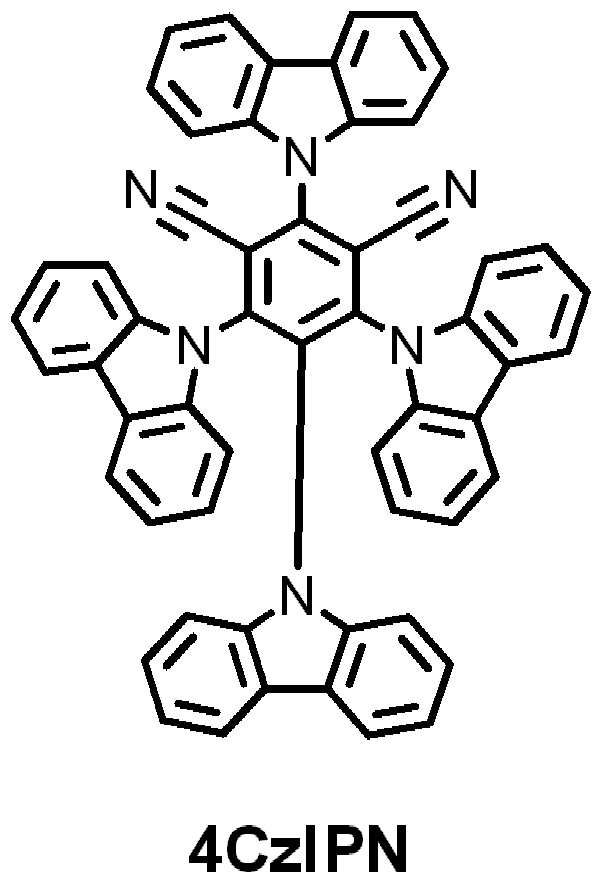
(유기 전계 발광 소자의 특성 평가)(Evaluation of characteristics of organic electroluminescent devices)
표 2에서는 제작된 유기 전계 발광 소자의 효율, 수명, 및 발광색을 비교하여 나타내었다. 표 2에 나타낸 실시예 및 비교예에 대한 특성 평가 결과에서는 효율은 전류 밀도 10mA/㎠에 대한 전류 효율 값을 나타낸 것이다. 또한, 유기 전계 발광 소자의 특성 평가에 있어서, 실시예들의 효율 및 수명은 비교예 1-1의 효율과 수명을 100%로할 때, 상대적인 값으로 비교하여 나타내었다.In Table 2, the efficiency, lifetime, and emission color of the fabricated organic electroluminescent device are compared and shown. In the characteristic evaluation results for the Examples and Comparative Examples shown in Table 2, the efficiency represents a current efficiency value for a current density of 10 mA/cm 2. In addition, in the evaluation of the characteristics of the organic electroluminescent device, the efficiency and lifetime of the examples were compared with relative values when the efficiency and lifetime of Comparative Example 1-1 were 100%.
실시예 1-1 및 실시예 1-2에서는 발광층의 호스트 재료로 각각 화합물 1과 화합물 3을 사용하였다. 비교예 1-1에서는 발광층의 호스트 재료로 공지의 호스트 재료인 mCBP를 사용하였다.In Examples 1-1 and 1-2, Compound 1 and Compound 3 were used as host materials for the light emitting layer, respectively. In Comparative Example 1-1, a known host material, mCBP, was used as the host material for the light emitting layer.
표 2의 결과를 참조하면, 실시예 1-1과 실시예 1-2 및 비교예 1-1은 모두 녹색 파장 영역의 광을 방출하는 것을 확인할 수 있다. 실시예 1-1의 경우 비교예 1-1과 비교하여 효율이 다소 감소하였으나 개선된 수명 특성을 나타내는 것을 알 수 있다. 또한, 실시예 1-2의 경우에는 비교예 1-1과 비교하여 효율 및 수명 특성이 모두 개선된 것을 알 수 있다.Referring to the results of Table 2, it can be seen that Example 1-1, Example 1-2, and Comparative Example 1-1 all emit light in a green wavelength region. In the case of Example 1-1, compared to Comparative Example 1-1, the efficiency slightly decreased, but it can be seen that the improved lifespan characteristics were exhibited. In addition, in the case of Example 1-2, it can be seen that both efficiency and life characteristics are improved compared to Comparative Example 1-1.
따라서, 일 실시예에 따른 화합물은 녹색 파장 영역의 광을 방출하는 발광층의 호스트 재료로 사용될 수 있으며, 종래의 호스트 재료 사용 경우에 비하여 우수한 수명 특성을 나타내는 것을 알 수 있다.Accordingly, it can be seen that the compound according to an exemplary embodiment can be used as a host material for a light emitting layer that emits light in a green wavelength region, and exhibits superior lifetime characteristics compared to the case of using a conventional host material.
3-2. 일 실시예의 화합물을 포함하는 유기 전계 발광 소자의 실시예 B3-2. Example B of an organic electroluminescent device containing the compound of one embodiment
일 실시예의 화합물을 발광층의 도펀트 재료로 포함하는 일 실시예의 유기 전계 발광 소자를 아래의 방법으로 제조하였다. The organic electroluminescent device of an example, including the compound of the example, as a dopant material for the emission layer, was manufactured by the following method.
(유기 전계 발광 소자의 제작)(Production of organic electroluminescent device)
ITO가 패터닝된 유리 기판을 초순수로 세척하고 초음파로 세정한 후 30 분 동안 UV를 조사하고 이후 오존 처리를 실시하였다. 그 후, 1200Å 두께로 HT1을 증착하고, HT2를 100Å 두께로 증착하여 정공 수송 영역을 형성하였다.The glass substrate patterned with ITO was washed with ultrapure water, washed with ultrasonic waves, and irradiated with UV for 30 minutes, followed by ozone treatment. Thereafter, HT1 was deposited to a thickness of 1200 Å, and HT2 was deposited to a thickness of 100 Å to form a hole transport region.
다음으로, 발광층 형성시 일 실시예의 화합물 또는 비교예 화합물과 mCBP를 20:80의 비율로 공증착하여 두께 400Å의 층을 형성하였다. 즉, 공증착하여 형성된 발광층은 실시예에서는 본 발명의 화합물들을 mCBP와 혼합하여 증착하였고, 비교예에서는 비교예 화합물을 mCBP와 혼합하여 증착하였다.Next, when forming the light emitting layer, a layer having a thickness of 400Å was formed by co-depositing the compound of Example or the compound of Comparative Example and mCBP in a ratio of 20:80. That is, the light-emitting layer formed by co-deposition was deposited by mixing the compounds of the present invention with mCBP in Example, and was deposited by mixing the Comparative Example compound with mCBP in Comparative Example.
이후 발광층 상에 ET와 Liq를 5:5로 혼합 증착하여 두께 300Å의 층을 형성하고, Liq로 두께 10Å의 층을 형성하여 전자 수송 영역을 형성하였다. 다음으로, Mg:Ag(10:1)으로 두께 100Å의 제2 전극을 형성하였다. Thereafter, ET and Liq were mixed and deposited at 5:5 on the emission layer to form a 300Å-thick layer, and a 10Å-thick layer was formed with Liq to form an electron transport region. Next, a second electrode having a thickness of 100 Å was formed from Mg:Ag (10:1).
실시예에서, 정공 수송 영역, 발광층, 전자 수송 영역, 및 제2 전극은 진공 증착 장치를 이용하여 형성하였다.In Examples, the hole transport region, the light emitting layer, the electron transport region, and the second electrode were formed using a vacuum evaporation apparatus.
(유기 전계 발광 소자의 특성 평가)(Evaluation of characteristics of organic electroluminescent devices)
표 3에서는 제작된 유기 전계 발광 소자의 효율, 수명, 및 발광색을 비교하여 나타내었다. 표 3에 나타낸 실시예 및 비교예에 대한 특성 평가 결과에서는 효율은 전류 밀도 10mA/㎠에 대한 전류 효율 값을 나타낸 것이다. 또한, 유기 전계 발광 소자의 특성 평가에 있어서, 실시예들의 효율 및 수명은 비교예 2-1 또는 비교예 3-1의 효율과 수명을 100%로 할 때, 상대적인 값으로 비교하여 나타내었다.In Table 3, the efficiency, lifetime, and emission color of the fabricated organic electroluminescent device are compared and shown. In the characteristic evaluation results for the Examples and Comparative Examples shown in Table 3, the efficiency represents a current efficiency value for a current density of 10 mA/cm 2. In addition, in the evaluation of the characteristics of the organic electroluminescent device, the efficiency and lifetime of the examples were compared with relative values when the efficiency and lifetime of Comparative Example 2-1 or 3-1 were 100%.
아래 표 3에 나타낸 평가에서, 실시예 2-1, 실시예 2-2, 및 비교예 2-1은 청색 파장 영역의 광을 방출하는 유기 전계 발광 소자에 대한 평가 결과를 나타낸 것이고, 실시예 3-1 내지 실시예 3-4 및 비교예 3-1은 녹색 파장 영역의 광을 방출하는 유기 전계 발광 소자에 대한 평가 결과를 나타낸 것이다. 실시예 2-1, 실시예 2-2, 및 비교예 2-1과 실시예 3-1 내지 실시예 3-4 및 비교예 3-1에서는 발광층의 호스트 재료로 공지의 호스트 재료인 mCBP를 사용하였다.In the evaluation shown in Table 3 below, Example 2-1, Example 2-2, and Comparative Example 2-1 show evaluation results for an organic electroluminescent device emitting light in a blue wavelength region, and Example 3 -1 to Examples 3-4 and Comparative Example 3-1 show evaluation results for organic electroluminescent devices that emit light in a green wavelength region. In Example 2-1, Example 2-2, and Comparative Example 2-1, Examples 3-1 to 3-4, and Comparative Example 3-1, a known host material, mCBP, was used as a host material for the light emitting layer. I did.
표 3의 결과를 참조하면, 실시예들은 청색광 또는 녹색광을 방출하는 유기 전계 발광 소자들로 일 실시예에 따른 화합물들은 청색광을 방출하는 청색 도펀트 또는 녹색광을 방출하는 녹색 도펀트로 사용될 수 있음을 확인할 수 있다.Referring to the results of Table 3, it can be seen that the examples are organic electroluminescent devices emitting blue light or green light, and the compounds according to the embodiment can be used as a blue dopant emitting blue light or a green dopant emitting green light. have.
또한, 표 3의 결과를 참조하면, 실시예 2-1 및 실시예 2-2는 비교예 2-1과 비교하여 개선된 효율 특성 및 수명 특성을 나타내며, 실시예 3-1 내지 실시예 3-4는 비교예 3-1과 비교하여 개선된 효율 특성 및 우수한 수명 특성을 나타내는 것을 알 수 있다.In addition, referring to the results of Table 3, Example 2-1 and Example 2-2 show improved efficiency characteristics and life characteristics compared to Comparative Example 2-1, Examples 3-1 to Example 3- It can be seen that 4 shows improved efficiency characteristics and excellent life characteristics compared to Comparative Example 3-1.
따라서, 표 3의 평가 결과를 참조하면, 일 실시예에 따른 화합물들은 유기 전계 발광 소자의 발광층 도펀트 재료로 사용되어 청색광 또는 녹색광을 방출하는 것을 확인할 수 있다. 또한, 일 실시예의 화합물은 비교예 화합물들과 비교하여 벤조퓨란이 벤조옥사졸에 축합된 구조를 포함하여, 발광층 도펀트 재료로 사용될 경우 유기 전계 발광 소자의 효율 및 수명 특성을 개선하는 효과가 있음을 알 수 있다. Accordingly, referring to the evaluation results in Table 3, it can be seen that the compounds according to the exemplary embodiment are used as dopant materials for the emission layer of the organic electroluminescent device to emit blue light or green light. In addition, the compound of one embodiment includes a structure in which benzofuran is condensed with benzoxazole compared to the comparative compounds, and when used as a dopant material for an emission layer, it has the effect of improving the efficiency and lifetime characteristics of the organic electroluminescent device. Able to know.
일 실시예의 화합물은 벤조퓨란 또는 Aza-type의 벤조퓨란과 벤조옥사졸이 축합된 축합환을 전자 수용부로 포함하는 신규한 화합물 구조를 가지며 발광층 재료로 사용되어 유기 전계 발광 소자의 고효율 및 장수명 특성에 기여할 수 있다. 또한, 일 실시예의 화합물을 발광층에 포함한 일 실시예의 유기 전계 발광 소자는 녹색 발광 파장 영역 또는 청색 발광 파장 영역에서 양호한 효율 특성과 우수한 수명 특성을 나타낼 수 있다.The compound of one embodiment has a novel compound structure including a condensed ring in which benzofuran or Aza-type benzofuran and benzoxazole is condensed as an electron accepting part, and is used as a light emitting layer material to improve the high efficiency and long life characteristics of an organic electroluminescent device. You can contribute. In addition, the organic electroluminescent device of one embodiment including the compound of one embodiment in the emission layer may exhibit good efficiency characteristics and excellent lifetime characteristics in a green emission wavelength region or a blue emission wavelength region.
이상에서는 본 발명의 바람직한 실시예를 참조하여 설명하였지만, 해당 기술 분야의 숙련된 당업자 또는 해당 기술 분야에 통상의 지식을 갖는 자라면, 후술될 특허청구범위에 기재된 본 발명의 사상 및 기술 영역으로부터 벗어나지 않는 범위 내에서 본 발명을 다양하게 수정 및 변경시킬 수 있음을 이해할 수 있을 것이다.Although the above has been described with reference to the preferred embodiments of the present invention, those skilled in the art or those of ordinary skill in the relevant technical field will not depart from the spirit and scope of the present invention described in the claims to be described later. It will be appreciated that various modifications and changes can be made to the present invention within the scope of the invention.
따라서, 본 발명의 기술적 범위는 명세서의 상세한 설명에 기재된 내용으로 한정되는 것이 아니라 특허청구범위에 의해 정하여져야만 할 것이다.Therefore, the technical scope of the present invention should not be limited to the contents described in the detailed description of the specification, but should be determined by the claims.
10 : 유기 전계 발광 소자 EL1 : 제1 전극
EL2 : 제2 전극 HTR : 정공 수송 영역
EML : 발광층 ETR : 전자 수송 영역10: organic electroluminescent element EL1: first electrode
EL2: second electrode HTR: hole transport region
EML: light emitting layer ETR: electron transport region
Claims (20)
상기 제1 전극 상에 배치된 제2 전극; 및
상기 제1 전극과 상기 제2 전극 사이에 배치되고, 하기 화학식 1로 표시되는 화합물을 포함하는 발광층; 을 포함하는 유기 전계 발광 소자:
[화학식 1]

상기 화학식 1에서,
X1 내지 X4는 각각 독립적으로 N 또는 CRa이고,
L은 치환 또는 비치환된 고리형성 탄소수 6 이상 30 이하의 아릴렌기, 또는 치환 또는 비치환된 고리형성 탄소수 2 이상 30 이하의 헤테로아릴렌기이며,
n은 1 또는 2 이고,
Ar은 치환 또는 비치환된 고리형성 탄소수 6 이상 30 이하의 탄화수소고리기, 또는 치환 또는 비치환된 고리형성 탄소수 2 이상 30 이하의 헤테로고리기이며,
Ra는 수소 원자, 중수소 원자, 할로겐 원자, 시아노기, 치환 또는 비치환된 실릴기, 치환 또는 비치환된 아민기, 치환 또는 비치환된 탄소수 1 이상 20 이하의 알킬기, 치환 또는 비치환된 고리형성 탄소수 6 이상 30 이하의 아릴기, 또는 치환 또는 비치환된 고리형성 탄소수 2 이상 30 이하의 헤테로아릴기이거나, 또는 인접하는 기와 서로 결합하여 고리를 형성한다.A first electrode;
A second electrode disposed on the first electrode; And
A light emitting layer disposed between the first electrode and the second electrode and including a compound represented by the following formula (1); Organic electroluminescent device comprising:
[Formula 1]
In Formula 1,
X 1 to X 4 are each independently N or CR a ,
L is a substituted or unsubstituted arylene group having 6 or more and 30 or less cyclic carbon atoms, or a substituted or unsubstituted heteroarylene group having 2 or more and 30 or less cyclic carbon atoms,
n is 1 or 2,
Ar is a substituted or unsubstituted hydrocarbon ring group having 6 or more and 30 or less cyclic carbon atoms, or a substituted or unsubstituted heterocyclic group having 2 or more and 30 or less cyclic carbon atoms,
R a is a hydrogen atom, a deuterium atom, a halogen atom, a cyano group, a substituted or unsubstituted silyl group, a substituted or unsubstituted amine group, a substituted or unsubstituted alkyl group having 1 to 20 carbon atoms, a substituted or unsubstituted ring It is an aryl group having 6 or more and 30 or less carbon atoms formed, or a substituted or unsubstituted heteroaryl group having 2 or more and 30 or less ring carbon atoms, or is bonded to an adjacent group to form a ring.
L은 치환 또는 비치환된 페닐렌기, 또는 치환 또는 비치환된 피리딜렌기인 유기 전계 발광 소자.The method of claim 1,
L is a substituted or unsubstituted phenylene group, or a substituted or unsubstituted pyridylene group, an organic electroluminescent device.
Ar은 치환 또는 비치환된 고리형성 탄소수 6 이상 20 이하의 아릴기, 또는 고리형성 원자로 N, O, 및 B 중 적어도 하나를 포함하는 치환 또는 비치환된 고리형성 탄소수 2 이상 20 이하의 헤테로아릴기인 유기 전계 발광 소자.The method of claim 1,
Ar is a substituted or unsubstituted aryl group having 6 to 20 ring carbon atoms, or a substituted or unsubstituted heteroaryl group having 2 to 20 ring carbon atoms including at least one of N, O, and B as a ring atom. Organic electroluminescent device.
Ar은 하기 화학식 2로 표시되는 유기 전계 발광 소자:
[화학식 2]
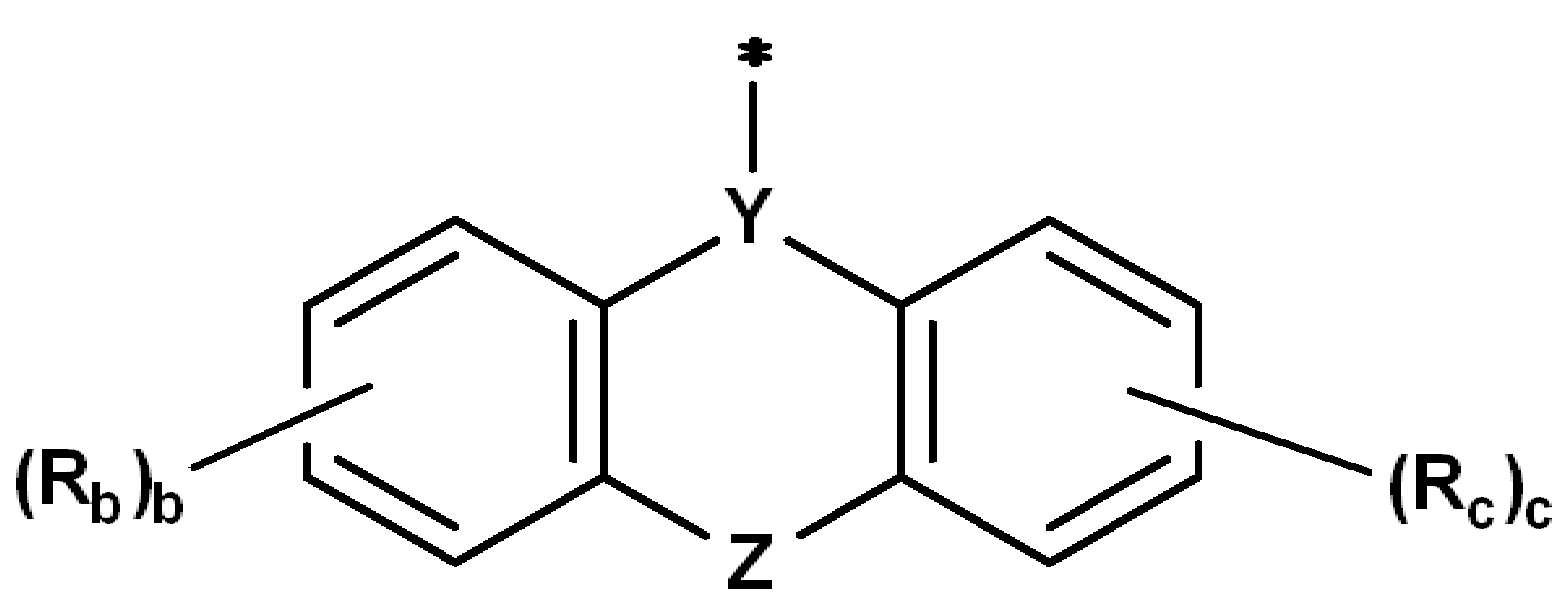
상기 화학식 2에서,
Y는 N 또는 B이고,
Z는 직접결합(direct linkage), O, S, NRd, 또는 CReRf이며,
b와 c는 각각 독립적으로 0 이상 4 이하의 정수이고,
Rb 내지 Rf는 각각 독립적으로, 수소 원자, 중수소 원자, 할로겐 원자, 시아노기, 치환 또는 비치환된 실릴기, 치환 또는 비치환된 아민기, 치환 또는 비치환된 탄소수 1 이상 20 이하의 알킬기, 치환 또는 비치환된 고리형성 탄소수 6 이상 30 이하의 아릴기, 또는 치환 또는 비치환된 고리형성 탄소수 2 이상 30 이하의 헤테로아릴기이거나, 또는 인접하는 기와 서로 결합하여 고리를 형성한다.The method of claim 1,
Ar is an organic electroluminescent device represented by the following formula (2):
[Formula 2]
In Chemical Formula 2,
Y is N or B,
Z is direct linkage, O, S, NR d , or CR e R f ,
b and c are each independently an integer of 0 or more and 4 or less,
R b to R f are each independently a hydrogen atom, a deuterium atom, a halogen atom, a cyano group, a substituted or unsubstituted silyl group, a substituted or unsubstituted amine group, a substituted or unsubstituted alkyl group having 1 to 20 carbon atoms , A substituted or unsubstituted aryl group having 6 or more and 30 or less ring carbon atoms, or a substituted or unsubstituted heteroaryl group having 2 or more and 30 or less ring carbon atoms, or combine with an adjacent group to form a ring.
상기 화학식 2는 하기 화학식 2-1 또는 화학식 2-2로 표시되는 유기 전계 발광 소자:
[화학식 2-1]

[화학식 2-2]
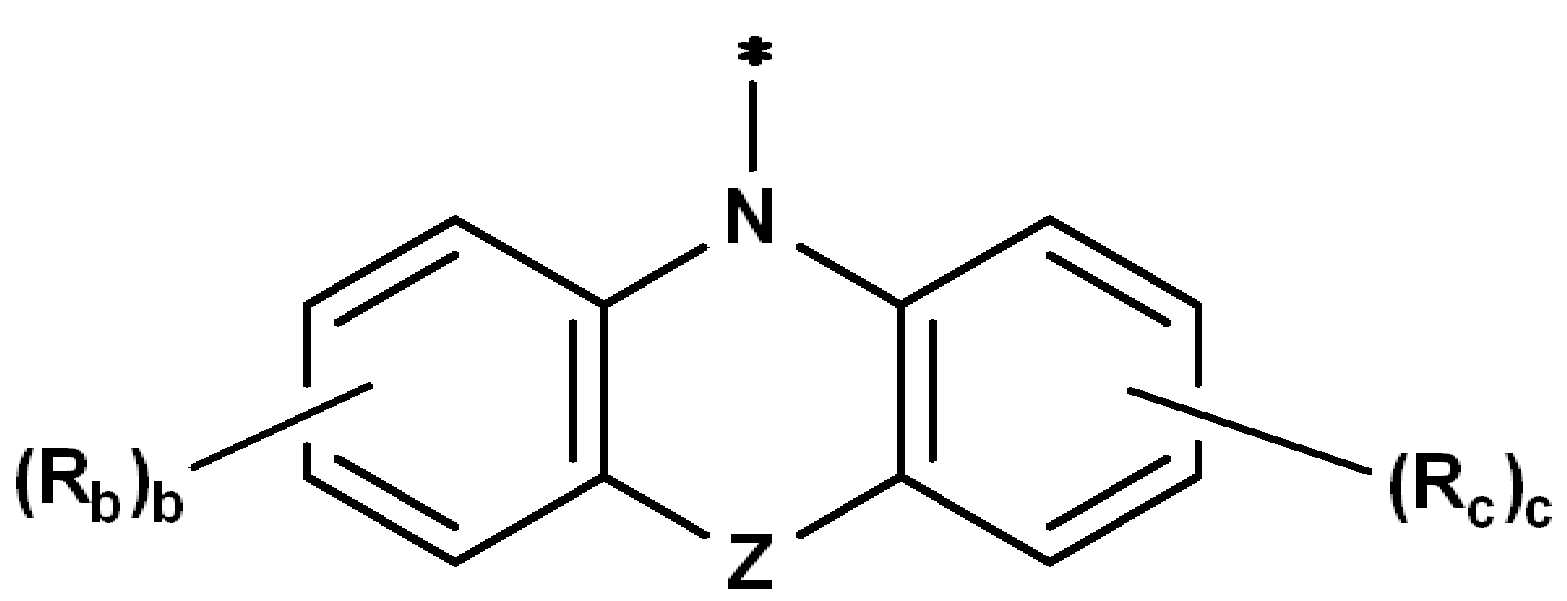
상기 화학식 2-1 및 화학식 2-2에서, Z, Rb, Rc, b, 및 c는 상기 화학식 2에서 정의한 바와 동일하다.The method of claim 4,
Formula 2 is an organic electroluminescent device represented by Formula 2-1 or Formula 2-2:
[Formula 2-1]
[Formula 2-2]
In Formulas 2-1 and 2-2, Z, R b , R c , b, and c are the same as defined in Formula 2.
상기 화학식 2-2는 하기 화학식 2-2A 내지 화학식 2-2E 중 어느 하나로 표시되는 유기 전계 발광 소자:
[화학식 2-2A]

[화학식 2-2B]

[화학식 2-2C]
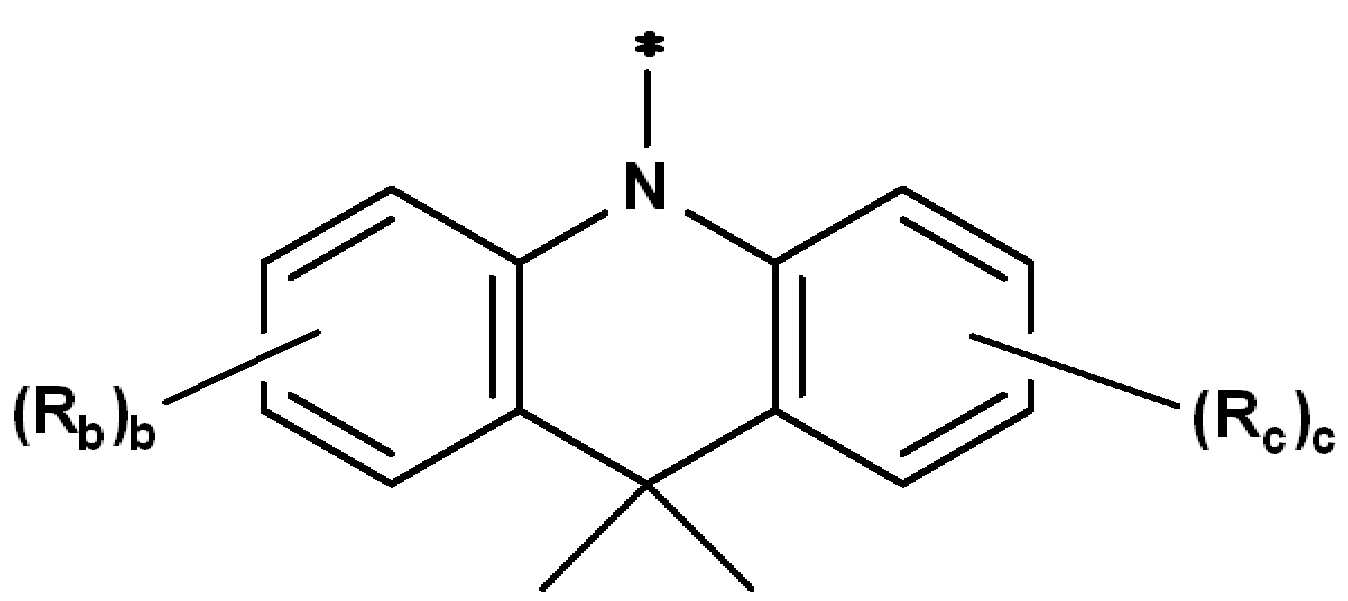
[화학식 2-2D]

[화학식 2-2E]
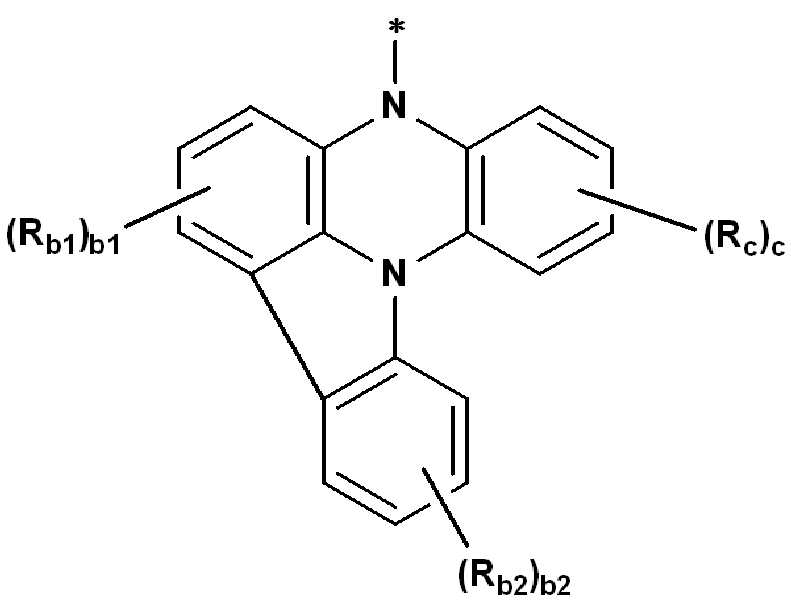
상기 화학식 2-2E에서,
b1은 0 이상 3 이하의 정수이고, b2는 0 이상 4 이하의 정수이며,
Rb1 및 Rb2는 각각 독립적으로, 수소 원자, 중수소 원자, 할로겐 원자, 시아노기, 치환 또는 비치환된 실릴기, 치환 또는 비치환된 아민기, 치환 또는 비치환된 탄소수 1 이상 20 이하의 알킬기, 치환 또는 비치환된 고리형성 탄소수 6 이상 30 이하의 아릴기, 또는 치환 또는 비치환된 고리형성 탄소수 2 이상 30 이하의 헤테로아릴기이거나, 또는 인접하는 기와 서로 결합하여 고리를 형성하고,
상기 화학식 2-2A 내지 화학식 2-2E에서, Rb, Rc, b, 및 c는 상기 화학식 2에서 정의한 바와 동일하다.The method of claim 5,
Formula 2-2 is an organic electroluminescent device represented by any one of the following Formulas 2-2A to 2-2E:
[Formula 2-2A]
[Formula 2-2B]
[Formula 2-2C]
[Formula 2-2D]
[Formula 2-2E]
In Formula 2-2E,
b1 is an integer of 0 or more and 3 or less, b2 is an integer of 0 or more and 4 or less,
R b1 and R b2 are each independently a hydrogen atom, a deuterium atom, a halogen atom, a cyano group, a substituted or unsubstituted silyl group, a substituted or unsubstituted amine group, a substituted or unsubstituted alkyl group having 1 to 20 carbon atoms , A substituted or unsubstituted aryl group having 6 or more and 30 or less ring carbon atoms, or a substituted or unsubstituted heteroaryl group having 2 or more and 30 or less ring carbon atoms, or combine with an adjacent group to form a ring,
In Formulas 2-2A to 2-2E, R b , R c , b, and c are the same as defined in Formula 2.
상기 발광층은 호스트 및 도펀트를 포함하고,
상기 호스트는 상기 화합물을 포함하는 유기 전계 발광 소자.The method of claim 1,
The emission layer includes a host and a dopant,
The host is an organic electroluminescent device comprising the compound.
상기 발광층은 지연 형광을 방출하고,
상기 화합물은 지연 형광 도펀트인 유기 전계 발광 소자.The method of claim 1,
The light emitting layer emits delayed fluorescence,
The compound is an organic electroluminescent device that is a delayed fluorescent dopant.
상기 발광층은 중심 파장이 500nm 이상 550nm 이하의 광, 또는 중심 파장이 420nm 이상 470nm 이하의 광을 방출하는 유기 전계 발광 소자.The method of claim 1,
The emission layer is an organic electroluminescent device that emits light having a center wavelength of 500 nm or more and 550 nm or less, or light having a center wavelength of 420 nm or more and 470 nm or less.
상기 발광층은 하기 화합물군 1의 화합물들 중 적어도 하나를 포함하는 유기 전계 발광 소자:
[화합물군 1]
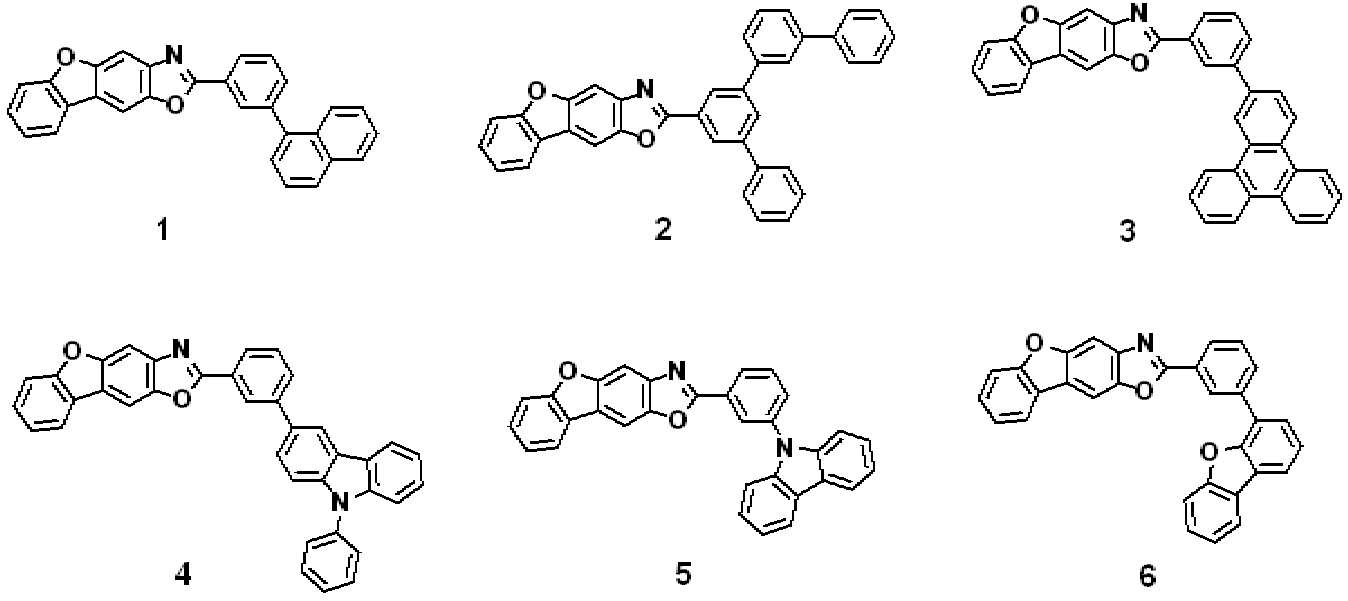
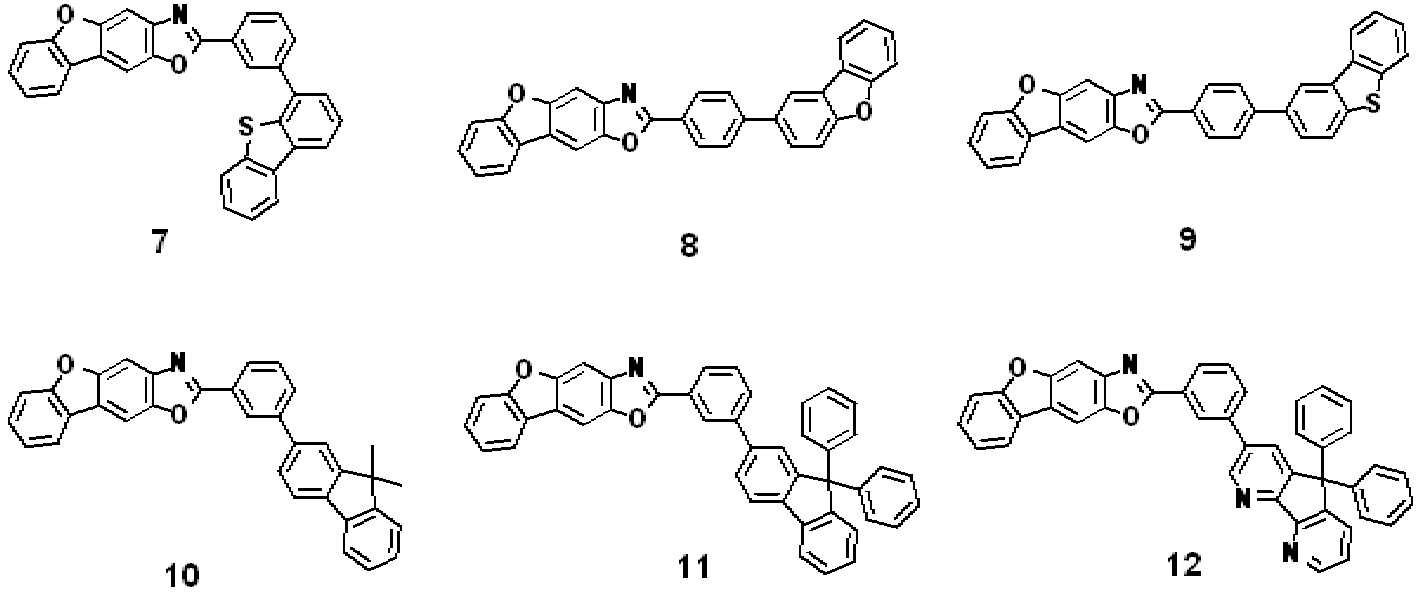
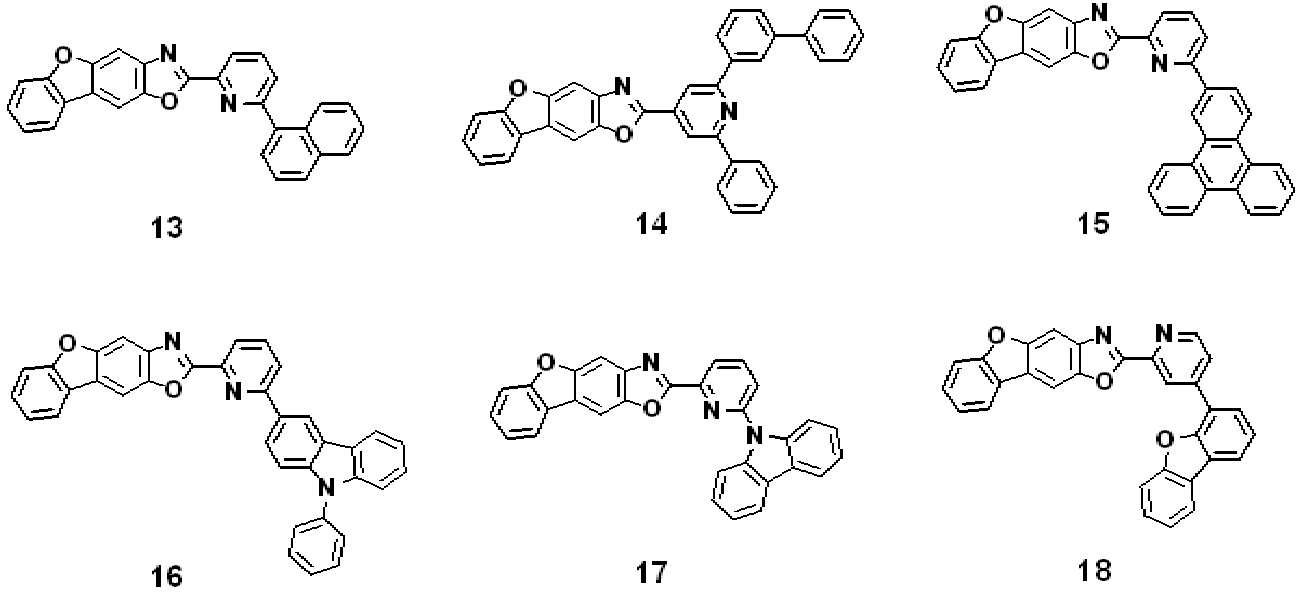


The emission layer is an organic electroluminescent device comprising at least one of the compounds of the following compound group 1:
[Compound group 1]
[화학식 1]

상기 화학식 1에서,
X1 내지 X4는 각각 독립적으로 N 또는 CRa이고,
L은 치환 또는 비치환된 고리형성 탄소수 6 이상 30 이하의 아릴렌기, 또는 치환 또는 비치환된 고리형성 탄소수 2 이상 30 이하의 헤테로아릴렌기이며,
n은 1 또는 2 이고,
Ar은 치환 또는 비치환된 고리형성 탄소수 6 이상 30 이하의 탄화수소고리기, 또는 치환 또는 비치환된 고리형성 탄소수 2 이상 30 이하의 헤테로고리기이며,
Ra는 수소 원자, 중수소 원자, 할로겐 원자, 시아노기, 치환 또는 비치환된 실릴기, 치환 또는 비치환된 아민기, 치환 또는 비치환된 탄소수 1 이상 20 이하의 알킬기, 치환 또는 비치환된 고리형성 탄소수 6 이상 30 이하의 아릴기, 또는 치환 또는 비치환된 고리형성 탄소수 2 이상 30 이하의 헤테로아릴기이거나, 또는 인접하는 기와 서로 결합하여 고리를 형성한다.Compound represented by the following formula (1):
[Formula 1]
In Formula 1,
X 1 to X 4 are each independently N or CR a ,
L is a substituted or unsubstituted arylene group having 6 or more and 30 or less cyclic carbon atoms, or a substituted or unsubstituted heteroarylene group having 2 or more and 30 or less cyclic carbon atoms,
n is 1 or 2,
Ar is a substituted or unsubstituted hydrocarbon ring group having 6 or more and 30 or less cyclic carbon atoms, or a substituted or unsubstituted heterocyclic group having 2 or more and 30 or less cyclic carbon atoms,
R a is a hydrogen atom, a deuterium atom, a halogen atom, a cyano group, a substituted or unsubstituted silyl group, a substituted or unsubstituted amine group, a substituted or unsubstituted alkyl group having 1 to 20 carbon atoms, a substituted or unsubstituted ring It is an aryl group having 6 or more and 30 or less carbon atoms formed, or a substituted or unsubstituted heteroaryl group having 2 or more and 30 or less ring carbon atoms, or is bonded to an adjacent group to form a ring.
상기 화학식 1은 하기 화학식 1-1 또는 화학식 1-2로 표시되는 화합물:
[화학식 1-1]

[화학식 1-2]

상기 화학식 1-1 및 화학식 1-2에 있어서, L, n, 및 Ar은 상기 화학식 1 에서 정의한 바와 동일하다.The method of claim 11,
Formula 1 is a compound represented by the following Formula 1-1 or Formula 1-2:
[Formula 1-1]
[Formula 1-2]
In Formulas 1-1 and 1-2, L, n, and Ar are the same as defined in Formula 1.
Ar은 비치환된 고리형성 탄소수 6 이상 20 이하의 아릴기, 또는 고리형성 원자로 N, O, 및 B 중 적어도 하나를 포함하는 치환 또는 비치환된 고리형성 탄소수 2 이상 20 이하의 헤테로아릴기인 화합물.The method of claim 11,
Ar is an unsubstituted aryl group having 6 to 20 ring carbon atoms, or a substituted or unsubstituted heteroaryl group having 2 to 20 ring carbon atoms including at least one of N, O, and B as a ring atom.
Ar은 하기 화학식 2로 표시되는 화합물:
[화학식 2]
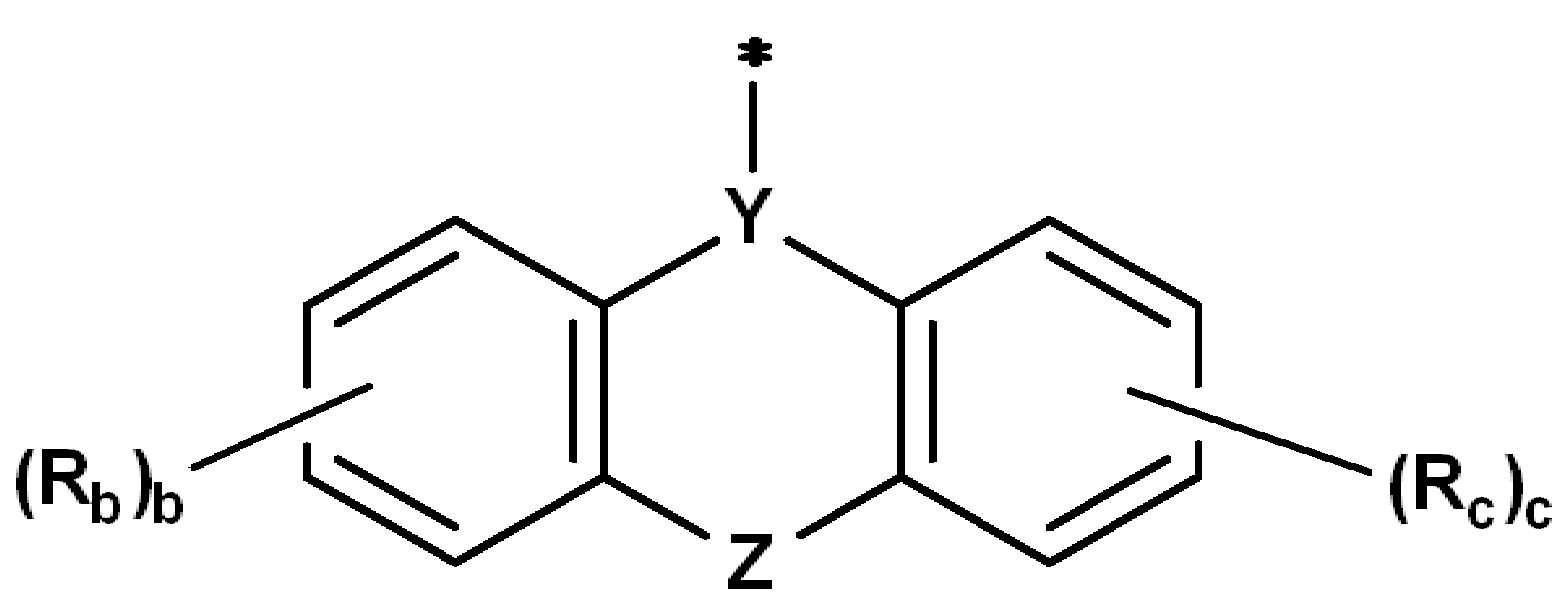
상기 화학식 2에서,
Y는 N 또는 B이고,
Z는 직접결합(direct linkage), O, S, NRd, 또는 CReRf이며,
b와 c는 각각 독립적으로 0 이상 4 이하의 정수이고,
Rb 내지 Rf는 각각 독립적으로, 수소 원자, 중수소 원자, 할로겐 원자, 시아노기, 치환 또는 비치환된 실릴기, 치환 또는 비치환된 아민기, 치환 또는 비치환된 탄소수 1 이상 20 이하의 알킬기, 치환 또는 비치환된 고리형성 탄소수 6 이상 30 이하의 아릴기, 또는 치환 또는 비치환된 고리형성 탄소수 2 이상 30 이하의 헤테로아릴기이거나, 또는 인접하는 기와 서로 결합하여 고리를 형성한다.The method of claim 11,
Ar is a compound represented by the following formula (2):
[Formula 2]
In Chemical Formula 2,
Y is N or B,
Z is direct linkage, O, S, NR d , or CR e R f ,
b and c are each independently an integer of 0 or more and 4 or less,
R b to R f are each independently a hydrogen atom, a deuterium atom, a halogen atom, a cyano group, a substituted or unsubstituted silyl group, a substituted or unsubstituted amine group, a substituted or unsubstituted alkyl group having 1 to 20 carbon atoms , A substituted or unsubstituted aryl group having 6 or more and 30 or less ring carbon atoms, or a substituted or unsubstituted heteroaryl group having 2 or more and 30 or less ring carbon atoms, or combine with an adjacent group to form a ring.
상기 화학식 2는 하기 화학식 2-1 또는 화학식 2-2로 표시되는 화합물:
[화학식 2-1]

[화학식 2-2]

상기 화학식 2-1 및 화학식 2-2에서, Z, Rb, Rc, b, 및 c는 상기 화학식 2에서 정의한 바와 동일하다.The method of claim 14,
Formula 2 is a compound represented by the following Formula 2-1 or Formula 2-2:
[Formula 2-1]
[Formula 2-2]
In Formulas 2-1 and 2-2, Z, R b , R c , b, and c are the same as defined in Formula 2.
상기 화학식 2-2는 하기 화학식 2-2A 내지 화학식 2-2E 중 어느 하나로 표시되는 화합물:
[화학식 2-2A]

[화학식 2-2B]
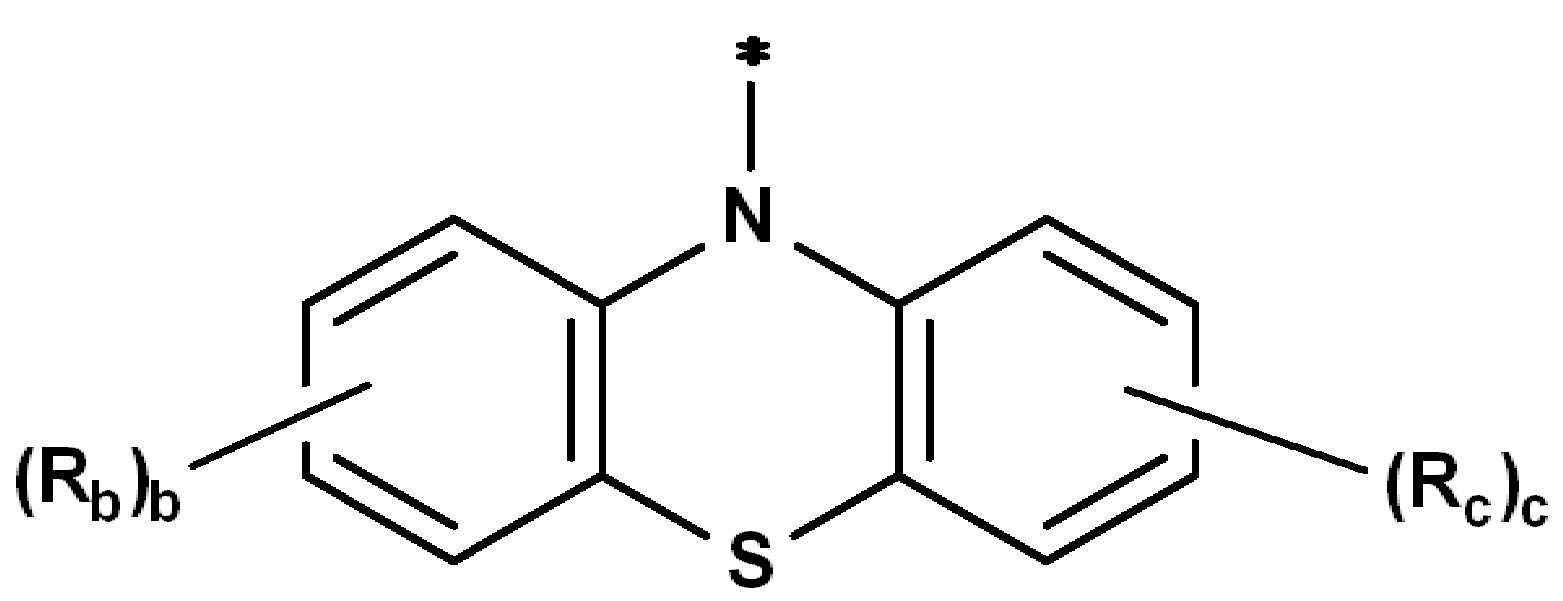
[화학식 2-2C]
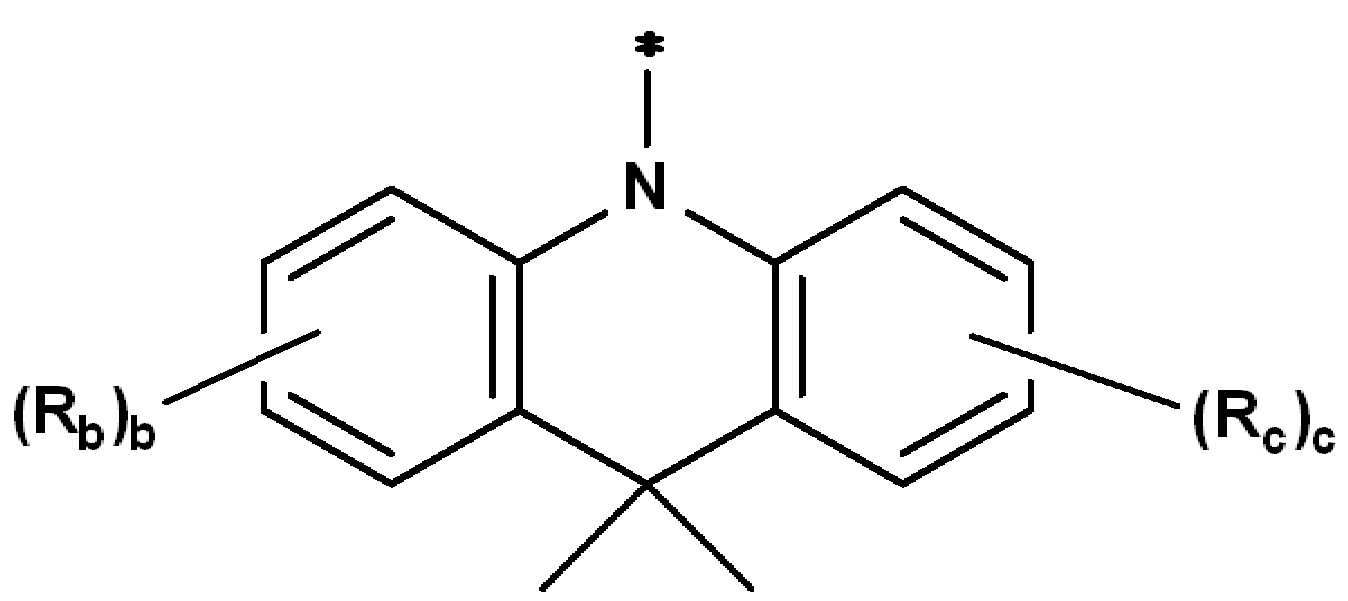
[화학식 2-2D]
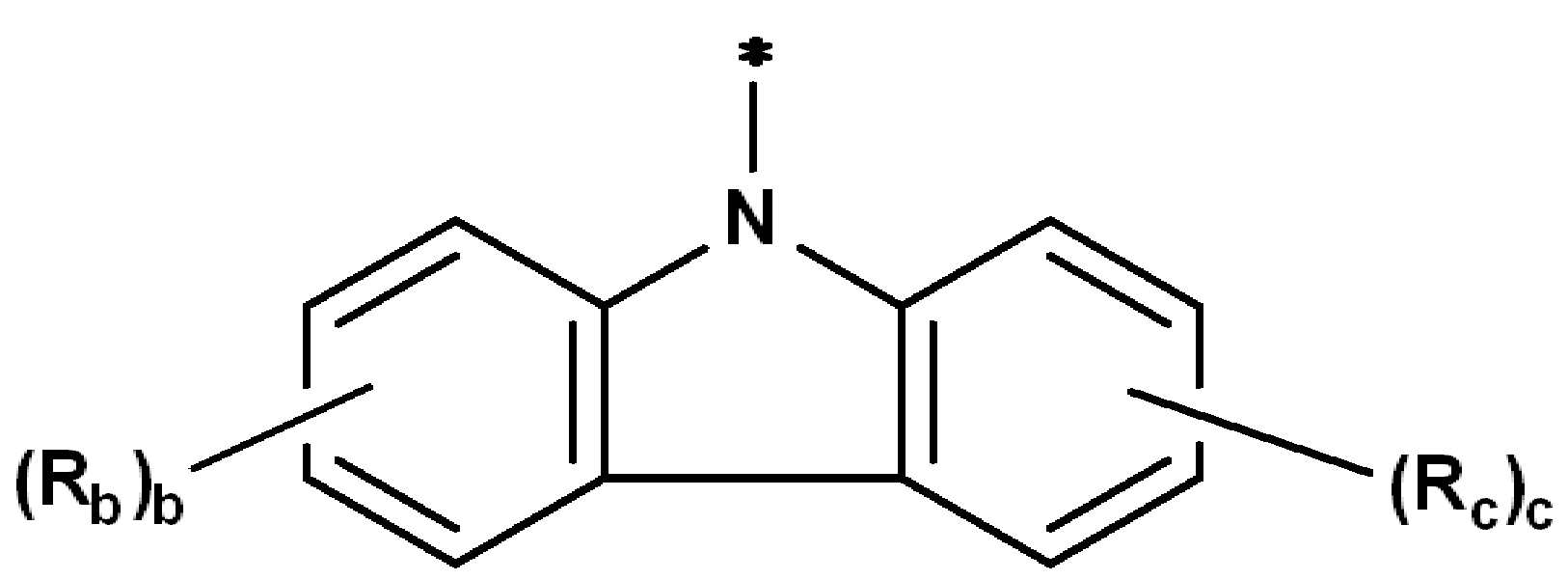
[화학식 2-2E]
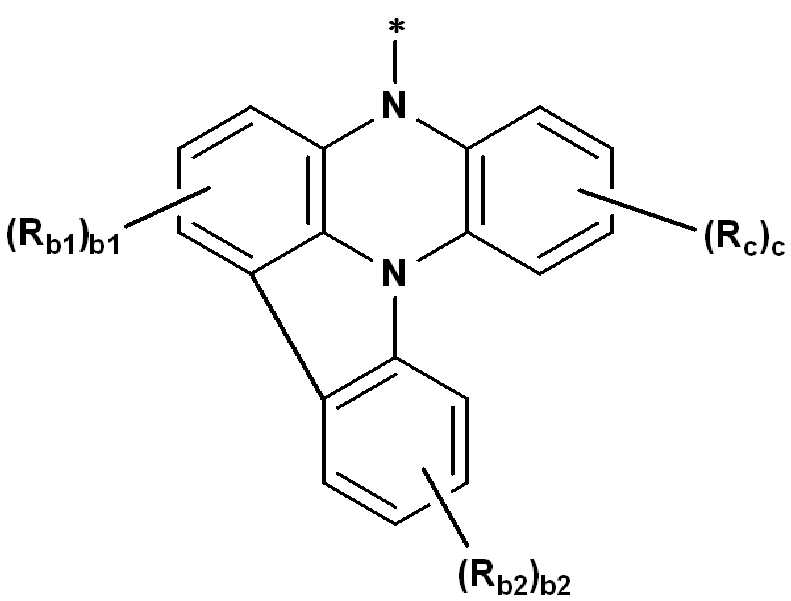
상기 화학식 2-2E에서,
b1은 0 이상 3 이하의 정수이고, b2는 0 이상 4 이하의 정수이며,
Rb1 및 Rb2는 각각 독립적으로, 수소 원자, 중수소 원자, 할로겐 원자, 시아노기, 치환 또는 비치환된 실릴기, 치환 또는 비치환된 아민기, 치환 또는 비치환된 탄소수 1 이상 20 이하의 알킬기, 치환 또는 비치환된 고리형성 탄소수 6 이상 30 이하의 아릴기, 또는 치환 또는 비치환된 고리형성 탄소수 2 이상 30 이하의 헤테로아릴기이거나, 또는 인접하는 기와 서로 결합하여 고리를 형성하고,
상기 화학식 2-2A 내지 화학식 2-2E에서, Rb, Rc, b, 및 c는 상기 화학식 2에서 정의한 바와 동일하다.The method of claim 15,
Formula 2-2 is a compound represented by any one of the following Formulas 2-2A to 2-2E:
[Formula 2-2A]
[Formula 2-2B]
[Formula 2-2C]
[Formula 2-2D]
[Formula 2-2E]
In Formula 2-2E,
b1 is an integer of 0 or more and 3 or less, b2 is an integer of 0 or more and 4 or less,
R b1 and R b2 are each independently a hydrogen atom, a deuterium atom, a halogen atom, a cyano group, a substituted or unsubstituted silyl group, a substituted or unsubstituted amine group, a substituted or unsubstituted alkyl group having 1 to 20 carbon atoms , A substituted or unsubstituted aryl group having 6 or more and 30 or less ring carbon atoms, or a substituted or unsubstituted heteroaryl group having 2 or more and 30 or less ring carbon atoms, or combine with an adjacent group to form a ring,
In Formulas 2-2A to 2-2E, R b , R c , b, and c are the same as defined in Formula 2.
상기 화학식 1로 표시되는 화합물은 중심 파장 500nm 이상 550nm 이하의 녹색광을 방출하는 녹색 도펀트인 화합물.The method of claim 11,
The compound represented by Formula 1 is a green dopant that emits green light having a center wavelength of 500 nm or more and 550 nm or less.
상기 화학식 1로 표시되는 화합물은 중심 파장 420nm 이상 470nm 이하의 청색광을 방출하는 청색 도펀트인 화합물.The method of claim 11,
The compound represented by Formula 1 is a blue dopant that emits blue light having a center wavelength of 420 nm or more and 470 nm or less.
상기 화학식 1로 표시되는 화합물은 최저 여기 일중항 에너지 준위(S1) 및 최저 여기 삼중항 에너지 준위(T1) 차이의 절대 값(ΔEST)이 0.2eV 이하인 화합물.The method of claim 11,
The compound represented by Chemical Formula 1 has an absolute value (ΔE ST ) of 0.2 eV or less of the difference between the lowest excitation singlet energy level (S1) and the lowest triplet excitation energy level (T1).
상기 화학식 1로 표시되는 화합물은 하기 화합물군 1의 화합물들 중 어느 하나로 표시되는 화합물:
[화합물군 1]


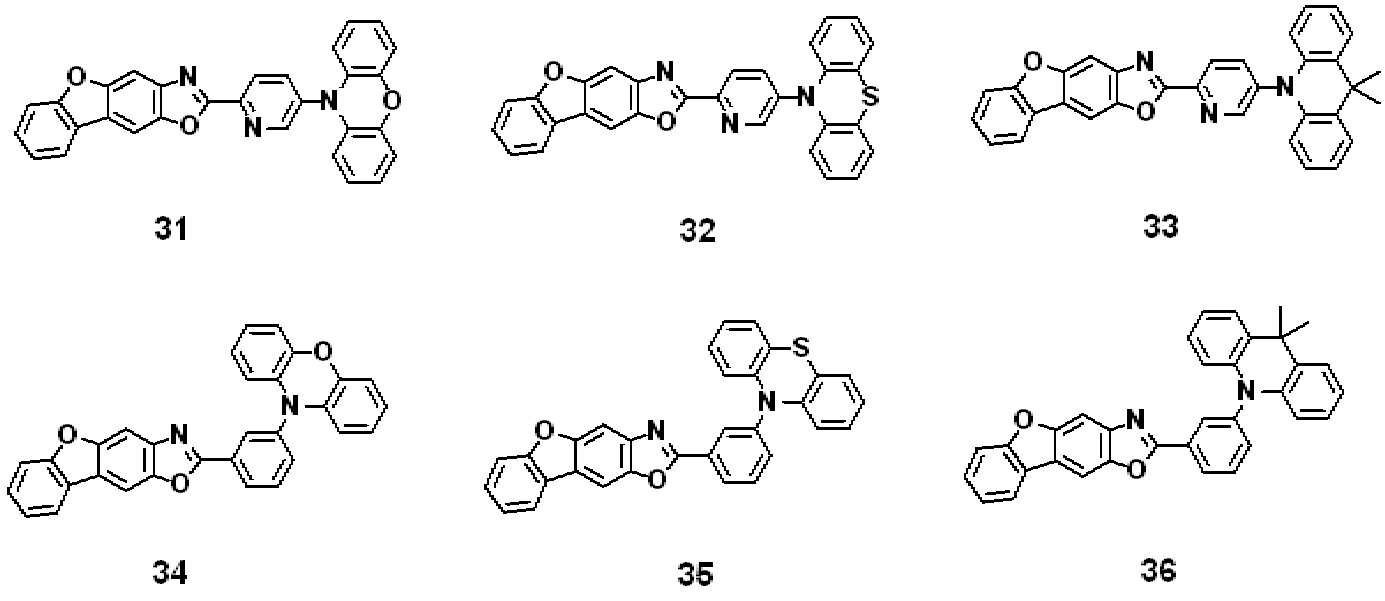


The compound represented by Formula 1 is a compound represented by any one of the compounds of the following compound group 1:
[Compound group 1]
Priority Applications (5)
| Application Number | Priority Date | Filing Date | Title |
|---|---|---|---|
| KR1020190121047A KR20210038785A (en) | 2019-09-30 | 2019-09-30 | Organic electroluminescence device and compound for organic electroluminescence device |
| US17/028,938 US11877512B2 (en) | 2019-09-30 | 2020-09-22 | Organic electroluminescence device and compound for organic electroluminescence device |
| JP2020159886A JP7671937B2 (en) | 2019-09-30 | 2020-09-24 | Organic electroluminescent device and compound for organic electroluminescent device |
| CN202011023404.4A CN112582560B (en) | 2019-09-30 | 2020-09-25 | Organic electroluminescent devices and compounds for organic electroluminescent devices |
| KR1020250153333A KR20250164667A (en) | 2019-09-30 | 2025-10-22 | Organic electroluminescence device and compound for organic electroluminescence device |
Applications Claiming Priority (1)
| Application Number | Priority Date | Filing Date | Title |
|---|---|---|---|
| KR1020190121047A KR20210038785A (en) | 2019-09-30 | 2019-09-30 | Organic electroluminescence device and compound for organic electroluminescence device |
Related Child Applications (1)
| Application Number | Title | Priority Date | Filing Date |
|---|---|---|---|
| KR1020250153333A Division KR20250164667A (en) | 2019-09-30 | 2025-10-22 | Organic electroluminescence device and compound for organic electroluminescence device |
Publications (1)
| Publication Number | Publication Date |
|---|---|
| KR20210038785A true KR20210038785A (en) | 2021-04-08 |
Family
ID=75119619
Family Applications (2)
| Application Number | Title | Priority Date | Filing Date |
|---|---|---|---|
| KR1020190121047A Ceased KR20210038785A (en) | 2019-09-30 | 2019-09-30 | Organic electroluminescence device and compound for organic electroluminescence device |
| KR1020250153333A Pending KR20250164667A (en) | 2019-09-30 | 2025-10-22 | Organic electroluminescence device and compound for organic electroluminescence device |
Family Applications After (1)
| Application Number | Title | Priority Date | Filing Date |
|---|---|---|---|
| KR1020250153333A Pending KR20250164667A (en) | 2019-09-30 | 2025-10-22 | Organic electroluminescence device and compound for organic electroluminescence device |
Country Status (3)
| Country | Link |
|---|---|
| US (1) | US11877512B2 (en) |
| JP (1) | JP7671937B2 (en) |
| KR (2) | KR20210038785A (en) |
Cited By (4)
| Publication number | Priority date | Publication date | Assignee | Title |
|---|---|---|---|---|
| WO2023177217A1 (en) * | 2022-03-18 | 2023-09-21 | 에스에프씨 주식회사 | Novel heterocyclic compound and organic light-emitting diode comprising same |
| US11980091B2 (en) | 2019-09-30 | 2024-05-07 | Samsung Display Co., Ltd. | Organic electroluminescence device and compound for organic electroluminescence device |
| KR20240121153A (en) | 2023-02-01 | 2024-08-08 | 듀폰스페셜티머터리얼스코리아 유한회사 | Organic electroluminescent compound, organic electroluminescent material, and organic electroluminescent device comprising the same |
| US12421255B2 (en) | 2019-09-30 | 2025-09-23 | Samsung Display Co., Ltd. | Luminescence device and polycyclic compound for luminescence device |
Families Citing this family (1)
| Publication number | Priority date | Publication date | Assignee | Title |
|---|---|---|---|---|
| KR102633613B1 (en) * | 2018-02-12 | 2024-02-07 | 삼성디스플레이 주식회사 | Organic electroluminescence device and heterocyclic compound for organic electroluminescence device |
Family Cites Families (14)
| Publication number | Priority date | Publication date | Assignee | Title |
|---|---|---|---|---|
| US5587112A (en) * | 1994-09-02 | 1996-12-24 | Philadelphia College Of Pharmacy And Science | Benzazole compounds with ESIPT fluorescence |
| KR101117621B1 (en) | 2007-10-17 | 2012-03-07 | 제일모직주식회사 | Novel compound and organic photoelectric device including the same |
| KR101297158B1 (en) | 2010-02-22 | 2013-08-21 | 제일모직주식회사 | Compound for organic photoelectric device and organic photoelectric device including the same |
| KR101982746B1 (en) * | 2012-06-27 | 2019-05-28 | 덕산네오룩스 주식회사 | Compound for organic electronic element, organic electronic element using the same, and a electronic device thereof |
| KR20150050570A (en) | 2012-08-30 | 2015-05-08 | 고쿠리쓰다이가쿠호진 규슈다이가쿠 | Light emitting material, compound and organic light emitting element using light emitting material |
| KR102173856B1 (en) * | 2012-11-30 | 2020-11-04 | 메르크 파텐트 게엠베하 | Electronic device |
| KR102167463B1 (en) | 2013-02-18 | 2020-10-19 | 고쿠리쓰다이가쿠호진 규슈다이가쿠 | Compound, light-emitting material and organic light-emitting element |
| EP2977374A1 (en) * | 2014-07-21 | 2016-01-27 | Université de Strasbourg | Molecules presenting dual emission properties |
| KR20170016701A (en) * | 2015-08-04 | 2017-02-14 | 주식회사 두산 | Organic light-emitting compound and organic electroluminescent device using the same |
| CN109790132B (en) * | 2016-07-07 | 2024-03-05 | 保土谷化学工业株式会社 | Compounds with benzoxazole ring structure and organic electroluminescent elements |
| KR20200100972A (en) * | 2019-02-19 | 2020-08-27 | (주)피엔에이치테크 | An electroluminescent compound and an electroluminescent device comprising the same |
| KR102853364B1 (en) | 2019-09-30 | 2025-09-03 | 삼성디스플레이 주식회사 | Organic electroluminescence device and compound for organic electroluminescence device |
| KR102810402B1 (en) | 2019-09-30 | 2025-05-23 | 삼성디스플레이 주식회사 | Organic electroluminescence device and polycyclic compound for organic electroluminescence device |
| KR102803900B1 (en) | 2019-09-30 | 2025-05-12 | 삼성디스플레이 주식회사 | Luminescence device and polycyclic compound for luminescence device |
-
2019
- 2019-09-30 KR KR1020190121047A patent/KR20210038785A/en not_active Ceased
-
2020
- 2020-09-22 US US17/028,938 patent/US11877512B2/en active Active
- 2020-09-24 JP JP2020159886A patent/JP7671937B2/en active Active
-
2025
- 2025-10-22 KR KR1020250153333A patent/KR20250164667A/en active Pending
Cited By (4)
| Publication number | Priority date | Publication date | Assignee | Title |
|---|---|---|---|---|
| US11980091B2 (en) | 2019-09-30 | 2024-05-07 | Samsung Display Co., Ltd. | Organic electroluminescence device and compound for organic electroluminescence device |
| US12421255B2 (en) | 2019-09-30 | 2025-09-23 | Samsung Display Co., Ltd. | Luminescence device and polycyclic compound for luminescence device |
| WO2023177217A1 (en) * | 2022-03-18 | 2023-09-21 | 에스에프씨 주식회사 | Novel heterocyclic compound and organic light-emitting diode comprising same |
| KR20240121153A (en) | 2023-02-01 | 2024-08-08 | 듀폰스페셜티머터리얼스코리아 유한회사 | Organic electroluminescent compound, organic electroluminescent material, and organic electroluminescent device comprising the same |
Also Published As
| Publication number | Publication date |
|---|---|
| US11877512B2 (en) | 2024-01-16 |
| JP7671937B2 (en) | 2025-05-07 |
| JP2021054811A (en) | 2021-04-08 |
| KR20250164667A (en) | 2025-11-25 |
| CN112582560A (en) | 2021-03-30 |
| US20210098708A1 (en) | 2021-04-01 |
Similar Documents
| Publication | Publication Date | Title |
|---|---|---|
| KR102713389B1 (en) | Organic electroluminescence device and polycyclic compound for organic electroluminescence device | |
| KR102822247B1 (en) | Organic electroluminescence device and polycyclic compound for organic electroluminescence device | |
| KR20210006554A (en) | Organic electroluminescence device and fused polycyclic compound for organic electroluminescence device | |
| KR102853364B1 (en) | Organic electroluminescence device and compound for organic electroluminescence device | |
| JP7671937B2 (en) | Organic electroluminescent device and compound for organic electroluminescent device | |
| KR20210148462A (en) | Organic electroluminescence device and polycyclic compound for organic electroluminescence device | |
| KR20210118293A (en) | Organic electroluminescence device and condensed cyclic compound for organic electroluminescence device | |
| KR102786579B1 (en) | Organic electroluminescence device and polycyclic compound for organic electroluminescence device | |
| KR102816264B1 (en) | Organic electroluminescence device and compound for organic electroluminescence device | |
| KR20210070453A (en) | Organic electroluminescence device and condensed polycyclic compound for organic electroluminescence device | |
| KR20210038788A (en) | Luminescence device and polycyclic compound for luminescence device | |
| KR20210043054A (en) | Organic electroluminescence device and polycyclic compound for organic electroluminescence device | |
| KR102840233B1 (en) | Organic electroluminescence device and nitrogen-containing compound for organic electroluminescence device | |
| KR102806909B1 (en) | Organic electroluminescence device and polycyclic compound for organic electroluminescence device | |
| KR102880247B1 (en) | Organic electroluminescence device and polycyclic compound for organic electroluminescence device | |
| KR102811397B1 (en) | Organic electroluminescence device and polycyclic compound for organic electroluminescence device | |
| KR102779449B1 (en) | Organic electroluminescence device and compound for organic electroluminescence device | |
| KR102732482B1 (en) | Organic electroluminescence device and polycyclic compound for organic electroluminescence device | |
| KR102623053B1 (en) | Organic electroluminescence device and polycyclic compound for organic electroluminescence device | |
| KR20210106047A (en) | Organic electroluminescence device and polycyclic compound for organic electroluminescence device | |
| KR20210103633A (en) | ORGANIC ELECTROLUMINESCENCE DEVICE AND NITROGEN-CONTAiNING COMPOUND FOR ORGANIC ELECTROLUMINESCENCE DEVICE | |
| KR20210106614A (en) | Organic electroluminescence device and diamine compound for organic electroluminescence device | |
| KR20210057263A (en) | Organic electroluminescence device and polycyclic compound for organic electroluminescence device | |
| KR102904115B1 (en) | Organic electroluminescence device and polycyclic compound for organic electroluminescence device | |
| KR102701149B1 (en) | Organic electroluminescence device and fused polycyclic compound for organic electroluminescence device |
Legal Events
| Date | Code | Title | Description |
|---|---|---|---|
| PA0109 | Patent application |
St.27 status event code: A-0-1-A10-A12-nap-PA0109 |
|
| P11-X000 | Amendment of application requested |
St.27 status event code: A-2-2-P10-P11-nap-X000 |
|
| P13-X000 | Application amended |
St.27 status event code: A-2-2-P10-P13-nap-X000 |
|
| PG1501 | Laying open of application |
St.27 status event code: A-1-1-Q10-Q12-nap-PG1501 |
|
| A201 | Request for examination | ||
| PA0201 | Request for examination |
St.27 status event code: A-1-2-D10-D11-exm-PA0201 |
|
| P22-X000 | Classification modified |
St.27 status event code: A-2-2-P10-P22-nap-X000 |
|
| P22-X000 | Classification modified |
St.27 status event code: A-2-2-P10-P22-nap-X000 |
|
| P22-X000 | Classification modified |
St.27 status event code: A-2-2-P10-P22-nap-X000 |
|
| E902 | Notification of reason for refusal | ||
| PE0902 | Notice of grounds for rejection |
St.27 status event code: A-1-2-D10-D21-exm-PE0902 |
|
| E13-X000 | Pre-grant limitation requested |
St.27 status event code: A-2-3-E10-E13-lim-X000 |
|
| P11-X000 | Amendment of application requested |
St.27 status event code: A-2-2-P10-P11-nap-X000 |
|
| P13-X000 | Application amended |
St.27 status event code: A-2-2-P10-P13-nap-X000 |
|
| E601 | Decision to refuse application | ||
| PE0601 | Decision on rejection of patent |
St.27 status event code: N-2-6-B10-B15-exm-PE0601 |
|
| E12 | Pre-grant re-examination requested |
Free format text: ST27 STATUS EVENT CODE: A-2-3-E10-E12-REX-PX0901 (AS PROVIDED BY THE NATIONAL OFFICE) |
|
| E13 | Pre-grant limitation requested |
Free format text: ST27 STATUS EVENT CODE: A-2-3-E10-E13-LIM-X000 (AS PROVIDED BY THE NATIONAL OFFICE) |
|
| E13-X000 | Pre-grant limitation requested |
St.27 status event code: A-2-3-E10-E13-lim-X000 |
|
| P11 | Amendment of application requested |
Free format text: ST27 STATUS EVENT CODE: A-2-2-P10-P11-NAP-X000 (AS PROVIDED BY THE NATIONAL OFFICE) |
|
| P11-X000 | Amendment of application requested |
St.27 status event code: A-2-2-P10-P11-nap-X000 |
|
| P13 | Application amended |
Free format text: ST27 STATUS EVENT CODE: A-2-2-P10-P13-NAP-X000 (AS PROVIDED BY THE NATIONAL OFFICE) |
|
| P13-X000 | Application amended |
St.27 status event code: A-2-2-P10-P13-nap-X000 |
|
| PX0901 | Re-examination |
St.27 status event code: A-2-3-E10-E12-rex-PX0901 |
|
| B17 | Application discontinued following pre-grant review |
Free format text: ST27 STATUS EVENT CODE: N-2-6-B10-B17-REX-PX0601 (AS PROVIDED BY THE NATIONAL OFFICE) |
|
| PX0601 | Decision of rejection after re-examination |
St.27 status event code: N-2-6-B10-B17-rex-PX0601 |
|
| P22-X000 | Classification modified |
St.27 status event code: A-2-2-P10-P22-nap-X000 |
|
| A16 | Divisional, continuation or continuation in part application filed |
Free format text: ST27 STATUS EVENT CODE: A-0-1-A10-A16-DIV-PA0107 (AS PROVIDED BY THE NATIONAL OFFICE) |
|
| PA0107 | Divisional application |
St.27 status event code: A-0-1-A10-A16-div-PA0107 |