KR20210005644A - Method for estimating blood pressure and arterial stiffness based on light volumetric variability recording (PPG) signal - Google Patents
Method for estimating blood pressure and arterial stiffness based on light volumetric variability recording (PPG) signal Download PDFInfo
- Publication number
- KR20210005644A KR20210005644A KR1020207033166A KR20207033166A KR20210005644A KR 20210005644 A KR20210005644 A KR 20210005644A KR 1020207033166 A KR1020207033166 A KR 1020207033166A KR 20207033166 A KR20207033166 A KR 20207033166A KR 20210005644 A KR20210005644 A KR 20210005644A
- Authority
- KR
- South Korea
- Prior art keywords
- ppg
- age
- index
- height
- signal
- Prior art date
- Legal status (The legal status is an assumption and is not a legal conclusion. Google has not performed a legal analysis and makes no representation as to the accuracy of the status listed.)
- Withdrawn
Links
- 238000000034 method Methods 0.000 title claims abstract description 77
- 230000036772 blood pressure Effects 0.000 title claims abstract description 73
- 230000002526 effect on cardiovascular system Effects 0.000 claims abstract description 71
- 230000002792 vascular Effects 0.000 claims description 38
- 238000012417 linear regression Methods 0.000 claims description 36
- 210000000707 wrist Anatomy 0.000 claims description 31
- 230000003205 diastolic effect Effects 0.000 claims description 26
- 230000003416 augmentation Effects 0.000 claims description 16
- 239000008280 blood Substances 0.000 claims description 11
- 230000036541 health Effects 0.000 claims description 10
- 238000005070 sampling Methods 0.000 claims description 8
- 238000012806 monitoring device Methods 0.000 claims description 5
- 238000012545 processing Methods 0.000 claims description 5
- 230000000007 visual effect Effects 0.000 claims description 4
- RYGMFSIKBFXOCR-UHFFFAOYSA-N Copper Chemical compound [Cu] RYGMFSIKBFXOCR-UHFFFAOYSA-N 0.000 claims description 3
- 229910052802 copper Inorganic materials 0.000 claims description 3
- 239000010949 copper Substances 0.000 claims description 3
- 238000005259 measurement Methods 0.000 description 48
- 238000004458 analytical method Methods 0.000 description 19
- 210000002683 foot Anatomy 0.000 description 15
- 206010020772 Hypertension Diseases 0.000 description 11
- 210000004204 blood vessel Anatomy 0.000 description 11
- 210000003491 skin Anatomy 0.000 description 11
- 238000011156 evaluation Methods 0.000 description 10
- 230000003287 optical effect Effects 0.000 description 10
- 238000005516 engineering process Methods 0.000 description 9
- 238000012544 monitoring process Methods 0.000 description 9
- 210000001367 artery Anatomy 0.000 description 8
- 238000007781 pre-processing Methods 0.000 description 8
- 210000004369 blood Anatomy 0.000 description 7
- 230000036996 cardiovascular health Effects 0.000 description 7
- 230000008901 benefit Effects 0.000 description 5
- 230000000747 cardiac effect Effects 0.000 description 5
- 230000035487 diastolic blood pressure Effects 0.000 description 5
- 230000000737 periodic effect Effects 0.000 description 5
- 239000000523 sample Substances 0.000 description 5
- 230000017531 blood circulation Effects 0.000 description 4
- 230000008859 change Effects 0.000 description 4
- 230000000694 effects Effects 0.000 description 4
- 230000031700 light absorption Effects 0.000 description 4
- 238000011160 research Methods 0.000 description 4
- 230000035488 systolic blood pressure Effects 0.000 description 4
- 210000000709 aorta Anatomy 0.000 description 3
- 238000013459 approach Methods 0.000 description 3
- 210000002565 arteriole Anatomy 0.000 description 3
- 201000010099 disease Diseases 0.000 description 3
- 208000037265 diseases, disorders, signs and symptoms Diseases 0.000 description 3
- 238000000605 extraction Methods 0.000 description 3
- 238000012552 review Methods 0.000 description 3
- 230000002123 temporal effect Effects 0.000 description 3
- 210000001519 tissue Anatomy 0.000 description 3
- 208000024172 Cardiovascular disease Diseases 0.000 description 2
- 230000004872 arterial blood pressure Effects 0.000 description 2
- QVGXLLKOCUKJST-UHFFFAOYSA-N atomic oxygen Chemical compound [O] QVGXLLKOCUKJST-UHFFFAOYSA-N 0.000 description 2
- 238000009530 blood pressure measurement Methods 0.000 description 2
- 210000002302 brachial artery Anatomy 0.000 description 2
- 210000001715 carotid artery Anatomy 0.000 description 2
- 238000001514 detection method Methods 0.000 description 2
- 239000003814 drug Substances 0.000 description 2
- 210000000624 ear auricle Anatomy 0.000 description 2
- 238000002565 electrocardiography Methods 0.000 description 2
- 238000002474 experimental method Methods 0.000 description 2
- 230000006870 function Effects 0.000 description 2
- 238000001727 in vivo Methods 0.000 description 2
- 239000000203 mixture Substances 0.000 description 2
- 230000000877 morphologic effect Effects 0.000 description 2
- 238000010606 normalization Methods 0.000 description 2
- 229910052760 oxygen Inorganic materials 0.000 description 2
- 239000001301 oxygen Substances 0.000 description 2
- 230000002093 peripheral effect Effects 0.000 description 2
- 230000008569 process Effects 0.000 description 2
- 238000002106 pulse oximetry Methods 0.000 description 2
- 210000002321 radial artery Anatomy 0.000 description 2
- 230000029058 respiratory gaseous exchange Effects 0.000 description 2
- 230000003068 static effect Effects 0.000 description 2
- 206010002329 Aneurysm Diseases 0.000 description 1
- 208000037260 Atherosclerotic Plaque Diseases 0.000 description 1
- 238000012935 Averaging Methods 0.000 description 1
- 102000008186 Collagen Human genes 0.000 description 1
- 108010035532 Collagen Proteins 0.000 description 1
- 102000016942 Elastin Human genes 0.000 description 1
- 108010014258 Elastin Proteins 0.000 description 1
- 208000034826 Genetic Predisposition to Disease Diseases 0.000 description 1
- 241000282412 Homo Species 0.000 description 1
- 238000003646 Spearman's rank correlation coefficient Methods 0.000 description 1
- 230000002159 abnormal effect Effects 0.000 description 1
- 230000001133 acceleration Effects 0.000 description 1
- 230000032683 aging Effects 0.000 description 1
- 210000001765 aortic valve Anatomy 0.000 description 1
- 208000037849 arterial hypertension Diseases 0.000 description 1
- 230000001174 ascending effect Effects 0.000 description 1
- 230000003190 augmentative effect Effects 0.000 description 1
- 230000003542 behavioural effect Effects 0.000 description 1
- 210000000988 bone and bone Anatomy 0.000 description 1
- 238000004364 calculation method Methods 0.000 description 1
- 230000009084 cardiovascular function Effects 0.000 description 1
- 210000000748 cardiovascular system Anatomy 0.000 description 1
- 208000020832 chronic kidney disease Diseases 0.000 description 1
- 229920001436 collagen Polymers 0.000 description 1
- 230000001419 dependent effect Effects 0.000 description 1
- 230000001627 detrimental effect Effects 0.000 description 1
- 206010012601 diabetes mellitus Diseases 0.000 description 1
- 238000003745 diagnosis Methods 0.000 description 1
- 238000010586 diagram Methods 0.000 description 1
- 229940079593 drug Drugs 0.000 description 1
- 229920002549 elastin Polymers 0.000 description 1
- 208000028208 end stage renal disease Diseases 0.000 description 1
- 201000000523 end stage renal failure Diseases 0.000 description 1
- 210000002615 epidermis Anatomy 0.000 description 1
- 239000000284 extract Substances 0.000 description 1
- 210000001105 femoral artery Anatomy 0.000 description 1
- 238000001914 filtration Methods 0.000 description 1
- 210000001061 forehead Anatomy 0.000 description 1
- 230000001631 hypertensive effect Effects 0.000 description 1
- 238000007918 intramuscular administration Methods 0.000 description 1
- 238000001990 intravenous administration Methods 0.000 description 1
- 238000012886 linear function Methods 0.000 description 1
- 230000007774 longterm Effects 0.000 description 1
- 210000004072 lung Anatomy 0.000 description 1
- 238000004519 manufacturing process Methods 0.000 description 1
- 238000000691 measurement method Methods 0.000 description 1
- 210000000056 organ Anatomy 0.000 description 1
- 210000005259 peripheral blood Anatomy 0.000 description 1
- 239000011886 peripheral blood Substances 0.000 description 1
- 230000036581 peripheral resistance Effects 0.000 description 1
- 230000002085 persistent effect Effects 0.000 description 1
- 238000013186 photoplethysmography Methods 0.000 description 1
- 238000003825 pressing Methods 0.000 description 1
- 230000005180 public health Effects 0.000 description 1
- 230000035485 pulse pressure Effects 0.000 description 1
- 230000011514 reflex Effects 0.000 description 1
- 230000034225 regulation of ventricular cardiomyocyte membrane depolarization Effects 0.000 description 1
- 238000012216 screening Methods 0.000 description 1
- 230000011218 segmentation Effects 0.000 description 1
- 238000000926 separation method Methods 0.000 description 1
- 230000008326 skin blood flow Effects 0.000 description 1
- 208000023516 stroke disease Diseases 0.000 description 1
- 238000001356 surgical procedure Methods 0.000 description 1
- 230000001360 synchronised effect Effects 0.000 description 1
- 210000001994 temporal artery Anatomy 0.000 description 1
- 210000003371 toe Anatomy 0.000 description 1
- 210000000689 upper leg Anatomy 0.000 description 1
- 210000003462 vein Anatomy 0.000 description 1
- 238000012795 verification Methods 0.000 description 1
Images


Classifications
-
- A—HUMAN NECESSITIES
- A61—MEDICAL OR VETERINARY SCIENCE; HYGIENE
- A61B—DIAGNOSIS; SURGERY; IDENTIFICATION
- A61B5/00—Measuring for diagnostic purposes; Identification of persons
- A61B5/02—Detecting, measuring or recording for evaluating the cardiovascular system, e.g. pulse, heart rate, blood pressure or blood flow
- A61B5/021—Measuring pressure in heart or blood vessels
- A61B5/02108—Measuring pressure in heart or blood vessels from analysis of pulse wave characteristics
-
- A—HUMAN NECESSITIES
- A61—MEDICAL OR VETERINARY SCIENCE; HYGIENE
- A61B—DIAGNOSIS; SURGERY; IDENTIFICATION
- A61B5/00—Measuring for diagnostic purposes; Identification of persons
- A61B5/72—Signal processing specially adapted for physiological signals or for diagnostic purposes
- A61B5/7271—Specific aspects of physiological measurement analysis
- A61B5/7278—Artificial waveform generation or derivation, e.g. synthesizing signals from measured signals
-
- A—HUMAN NECESSITIES
- A61—MEDICAL OR VETERINARY SCIENCE; HYGIENE
- A61B—DIAGNOSIS; SURGERY; IDENTIFICATION
- A61B5/00—Measuring for diagnostic purposes; Identification of persons
- A61B5/02—Detecting, measuring or recording for evaluating the cardiovascular system, e.g. pulse, heart rate, blood pressure or blood flow
- A61B5/02007—Evaluating blood vessel condition, e.g. elasticity, compliance
-
- A—HUMAN NECESSITIES
- A61—MEDICAL OR VETERINARY SCIENCE; HYGIENE
- A61B—DIAGNOSIS; SURGERY; IDENTIFICATION
- A61B5/00—Measuring for diagnostic purposes; Identification of persons
- A61B5/02—Detecting, measuring or recording for evaluating the cardiovascular system, e.g. pulse, heart rate, blood pressure or blood flow
- A61B5/021—Measuring pressure in heart or blood vessels
- A61B5/02108—Measuring pressure in heart or blood vessels from analysis of pulse wave characteristics
- A61B5/02116—Measuring pressure in heart or blood vessels from analysis of pulse wave characteristics of pulse wave amplitude
-
- A—HUMAN NECESSITIES
- A61—MEDICAL OR VETERINARY SCIENCE; HYGIENE
- A61B—DIAGNOSIS; SURGERY; IDENTIFICATION
- A61B5/00—Measuring for diagnostic purposes; Identification of persons
- A61B5/02—Detecting, measuring or recording for evaluating the cardiovascular system, e.g. pulse, heart rate, blood pressure or blood flow
- A61B5/021—Measuring pressure in heart or blood vessels
- A61B5/02108—Measuring pressure in heart or blood vessels from analysis of pulse wave characteristics
- A61B5/02125—Measuring pressure in heart or blood vessels from analysis of pulse wave characteristics of pulse wave propagation time
-
- A—HUMAN NECESSITIES
- A61—MEDICAL OR VETERINARY SCIENCE; HYGIENE
- A61B—DIAGNOSIS; SURGERY; IDENTIFICATION
- A61B5/00—Measuring for diagnostic purposes; Identification of persons
- A61B5/02—Detecting, measuring or recording for evaluating the cardiovascular system, e.g. pulse, heart rate, blood pressure or blood flow
- A61B5/024—Measuring pulse rate or heart rate
- A61B5/02405—Determining heart rate variability
-
- A—HUMAN NECESSITIES
- A61—MEDICAL OR VETERINARY SCIENCE; HYGIENE
- A61B—DIAGNOSIS; SURGERY; IDENTIFICATION
- A61B5/00—Measuring for diagnostic purposes; Identification of persons
- A61B5/02—Detecting, measuring or recording for evaluating the cardiovascular system, e.g. pulse, heart rate, blood pressure or blood flow
- A61B5/024—Measuring pulse rate or heart rate
- A61B5/02416—Measuring pulse rate or heart rate using photoplethysmograph signals, e.g. generated by infrared radiation
-
- A—HUMAN NECESSITIES
- A61—MEDICAL OR VETERINARY SCIENCE; HYGIENE
- A61B—DIAGNOSIS; SURGERY; IDENTIFICATION
- A61B5/00—Measuring for diagnostic purposes; Identification of persons
- A61B5/02—Detecting, measuring or recording for evaluating the cardiovascular system, e.g. pulse, heart rate, blood pressure or blood flow
- A61B5/026—Measuring blood flow
- A61B5/0285—Measuring or recording phase velocity of blood waves
-
- A—HUMAN NECESSITIES
- A61—MEDICAL OR VETERINARY SCIENCE; HYGIENE
- A61B—DIAGNOSIS; SURGERY; IDENTIFICATION
- A61B5/00—Measuring for diagnostic purposes; Identification of persons
- A61B5/68—Arrangements of detecting, measuring or recording means, e.g. sensors, in relation to patient
- A61B5/6801—Arrangements of detecting, measuring or recording means, e.g. sensors, in relation to patient specially adapted to be attached to or worn on the body surface
- A61B5/6802—Sensor mounted on worn items
- A61B5/681—Wristwatch-type devices
-
- A—HUMAN NECESSITIES
- A61—MEDICAL OR VETERINARY SCIENCE; HYGIENE
- A61B—DIAGNOSIS; SURGERY; IDENTIFICATION
- A61B5/00—Measuring for diagnostic purposes; Identification of persons
- A61B5/72—Signal processing specially adapted for physiological signals or for diagnostic purposes
- A61B5/7235—Details of waveform analysis
- A61B5/7239—Details of waveform analysis using differentiation including higher order derivatives
-
- A—HUMAN NECESSITIES
- A61—MEDICAL OR VETERINARY SCIENCE; HYGIENE
- A61B—DIAGNOSIS; SURGERY; IDENTIFICATION
- A61B5/00—Measuring for diagnostic purposes; Identification of persons
- A61B5/72—Signal processing specially adapted for physiological signals or for diagnostic purposes
- A61B5/7271—Specific aspects of physiological measurement analysis
- A61B5/7275—Determining trends in physiological measurement data; Predicting development of a medical condition based on physiological measurements, e.g. determining a risk factor
-
- A—HUMAN NECESSITIES
- A61—MEDICAL OR VETERINARY SCIENCE; HYGIENE
- A61B—DIAGNOSIS; SURGERY; IDENTIFICATION
- A61B5/00—Measuring for diagnostic purposes; Identification of persons
- A61B5/74—Details of notification to user or communication with user or patient; User input means
- A61B5/7405—Details of notification to user or communication with user or patient; User input means using sound
-
- A—HUMAN NECESSITIES
- A61—MEDICAL OR VETERINARY SCIENCE; HYGIENE
- A61B—DIAGNOSIS; SURGERY; IDENTIFICATION
- A61B5/00—Measuring for diagnostic purposes; Identification of persons
- A61B5/74—Details of notification to user or communication with user or patient; User input means
- A61B5/742—Details of notification to user or communication with user or patient; User input means using visual displays
-
- A—HUMAN NECESSITIES
- A61—MEDICAL OR VETERINARY SCIENCE; HYGIENE
- A61B—DIAGNOSIS; SURGERY; IDENTIFICATION
- A61B5/00—Measuring for diagnostic purposes; Identification of persons
- A61B5/74—Details of notification to user or communication with user or patient; User input means
- A61B5/746—Alarms related to a physiological condition, e.g. details of setting alarm thresholds or avoiding false alarms
-
- G—PHYSICS
- G16—INFORMATION AND COMMUNICATION TECHNOLOGY [ICT] SPECIALLY ADAPTED FOR SPECIFIC APPLICATION FIELDS
- G16H—HEALTHCARE INFORMATICS, i.e. INFORMATION AND COMMUNICATION TECHNOLOGY [ICT] SPECIALLY ADAPTED FOR THE HANDLING OR PROCESSING OF MEDICAL OR HEALTHCARE DATA
- G16H10/00—ICT specially adapted for the handling or processing of patient-related medical or healthcare data
- G16H10/60—ICT specially adapted for the handling or processing of patient-related medical or healthcare data for patient-specific data, e.g. for electronic patient records
-
- G—PHYSICS
- G16—INFORMATION AND COMMUNICATION TECHNOLOGY [ICT] SPECIALLY ADAPTED FOR SPECIFIC APPLICATION FIELDS
- G16H—HEALTHCARE INFORMATICS, i.e. INFORMATION AND COMMUNICATION TECHNOLOGY [ICT] SPECIALLY ADAPTED FOR THE HANDLING OR PROCESSING OF MEDICAL OR HEALTHCARE DATA
- G16H50/00—ICT specially adapted for medical diagnosis, medical simulation or medical data mining; ICT specially adapted for detecting, monitoring or modelling epidemics or pandemics
- G16H50/30—ICT specially adapted for medical diagnosis, medical simulation or medical data mining; ICT specially adapted for detecting, monitoring or modelling epidemics or pandemics for calculating health indices; for individual health risk assessment
-
- A—HUMAN NECESSITIES
- A61—MEDICAL OR VETERINARY SCIENCE; HYGIENE
- A61B—DIAGNOSIS; SURGERY; IDENTIFICATION
- A61B5/00—Measuring for diagnostic purposes; Identification of persons
- A61B5/103—Measuring devices for testing the shape, pattern, colour, size or movement of the body or parts thereof, for diagnostic purposes
- A61B5/107—Measuring physical dimensions, e.g. size of the entire body or parts thereof
- A61B5/1072—Measuring physical dimensions, e.g. size of the entire body or parts thereof measuring distances on the body, e.g. measuring length, height or thickness
-
- A—HUMAN NECESSITIES
- A61—MEDICAL OR VETERINARY SCIENCE; HYGIENE
- A61B—DIAGNOSIS; SURGERY; IDENTIFICATION
- A61B5/00—Measuring for diagnostic purposes; Identification of persons
- A61B5/72—Signal processing specially adapted for physiological signals or for diagnostic purposes
- A61B5/7203—Signal processing specially adapted for physiological signals or for diagnostic purposes for noise prevention, reduction or removal
Landscapes
- Health & Medical Sciences (AREA)
- Life Sciences & Earth Sciences (AREA)
- Engineering & Computer Science (AREA)
- Cardiology (AREA)
- Medical Informatics (AREA)
- Public Health (AREA)
- General Health & Medical Sciences (AREA)
- Biomedical Technology (AREA)
- Pathology (AREA)
- Physics & Mathematics (AREA)
- Molecular Biology (AREA)
- Veterinary Medicine (AREA)
- Animal Behavior & Ethology (AREA)
- Surgery (AREA)
- Biophysics (AREA)
- Heart & Thoracic Surgery (AREA)
- Physiology (AREA)
- Vascular Medicine (AREA)
- Signal Processing (AREA)
- Artificial Intelligence (AREA)
- Computer Vision & Pattern Recognition (AREA)
- Psychiatry (AREA)
- Epidemiology (AREA)
- Primary Health Care (AREA)
- Hematology (AREA)
- Data Mining & Analysis (AREA)
- Databases & Information Systems (AREA)
- Measuring Pulse, Heart Rate, Blood Pressure Or Blood Flow (AREA)
- Dentistry (AREA)
- Oral & Maxillofacial Surgery (AREA)
Abstract
본 발명은 광체적변동기록 (PPG) 시그널에 기반하여 혈압 및 동맥 경직도를 추정하는 방법에 관한 것이다. 심혈관 파라미터들을 추정함으로써 사람의 심혈관 상태를 분석하기 위해 PPG 시그널에 기반하여 새로운 알고리즘을 개발 및 검증하였다. 본 발명에 의해 PPG 시그널에 기반하여 대상체에서 1종 이상의 심혈관 파라미터를 측정하는 방법이 제공된다.The present invention relates to a method of estimating blood pressure and arterial stiffness based on a light volumetric variability recording (PPG) signal. A new algorithm was developed and verified based on the PPG signal to analyze human cardiovascular status by estimating cardiovascular parameters. The present invention provides a method of measuring one or more cardiovascular parameters in a subject based on a PPG signal.

Description
본 발명은 광체적변동기록 (PPG: photoplethysmographic) 시그널에 기반하여 혈압 및 동맥 경직도를 추정하는 방법에 관한 것이다. 심혈관 파라미터들을 추정함으로써 사람의 심혈관 상태를 분석하기 위해 PPG 시그널에 기반하여 새로운 알고리즘을 개발 및 검증하였다. 본 발명에 의해 PPG 시그널에 기반하여 대상체에서 1종 이상의 심혈관 파라미터를 측정하는 방법이 제공된다.The present invention relates to a method of estimating blood pressure and arterial stiffness based on a photoplethysmographic (PPG) signal. A new algorithm was developed and verified based on the PPG signal to analyze human cardiovascular status by estimating cardiovascular parameters. The present invention provides a method of measuring one or more cardiovascular parameters in a subject based on a PPG signal.
광체적변동기록 (PPG) 센서는 다수의 상이한 디바이스에서 찾아볼 수 있다. 그것들은 손목형 피트니스 트래커와 같은 소비재 뿐만 아니라 의료 전문가가 사용하는 디바이스에도 내장되어 있다. 센서는 대체로 혈액 내의 산소 포화도 또는 맥박수를 추정하는데 사용된다.Optical volumetric variance recording (PPG) sensors can be found in a number of different devices. They are built into consumer goods such as wrist fitness trackers as well as devices used by healthcare professionals. Sensors are usually used to estimate the oxygen saturation or pulse rate in the blood.
체적변동기록계는 기관의 체적의 변화를 측정하는 기구이며, 기본적으로 광학 센서이다. 용어 광체적변동기록법이란 통상, 혈류로 인한 동맥 및 세동맥의 체적 변화를 측정하는 것을 지칭한다. 상이한 종류들의 PPG 센서가 있다. 일부는 손가락 끝에 배치되고, 일부는 손목 및 기타 부위 예컨대 귓불에도 가능하다. 센서 자체는 피부 상으로 광을 방출하는 발광 다이오드 (LED) 및 포토다이오드로 구성된다. 상기 다이오드는 통상 LED 옆에 배치되어, 반사되는 광을 검출한다 (유형 B). 손가락 센서의 경우, 포토다이오드가 손가락의 반대쪽 끝에 배치되어, 손가락을 통해 이동하는 광을 측정할 수도 있다 (유형 A). 도 1.1은 상이한 유형들을 제시한다.The volume fluctuation recorder is a device that measures the change in the volume of an organ, and is basically an optical sensor. The term optical volumetric variability generally refers to measuring changes in the volume of arteries and arterioles due to blood flow. There are different types of PPG sensors. Some are placed on the tip of the finger, and some are also possible on the wrist and other areas such as the earlobe. The sensor itself consists of a light emitting diode (LED) and a photodiode that emit light onto the skin. The diode is usually placed next to the LED to detect the reflected light (Type B). In the case of a finger sensor, a photodiode may be placed at the opposite end of the finger to measure the light traveling through the finger (Type A). Figure 1.1 presents different types.
PPG 센서 배치는 모션 아티팩트에 대한 견고성, 및 시그널 품질에 영향을 미칠 수 있다. 광 파장, 구성, 및 연속 분석은 측정 부위에 좌우된다 (Castaneda et al., International journal of biosensor & bioelectronics, vol. 4, n. 4, pp. 195-202, 2018). 광 파장이 관련 프로젝트 이슈이다 (광 검출기 시스템에도 영향을 미침). 일반적으로, PPG 디바이스는 적색 또는 근-IR 파장에서 작동한다. 광학적 피처들 덕분에 그와 같은 종류의 광원은 탁월한 심부 조직 (예: 근육내) 혈류 측정치들을 제공한다. 최근, 점점 더 많은 시판 센서에 녹색 광원이 구비되어 있다: 이는 표층 수단에 적합하고 (예: 세동맥), 더 큰 시그널 변조를 제공하며 (Tamura et al., Electronics, vol. 3, pp. 282-302, 2014), IR 소스보다 더 우수한 시그널-대-노이즈 비를 갖는다 (Jing et al., 38th Annual International Conference of the IEEE Engineering in medicine and biology society, 2016).PPG sensor placement can affect signal quality and robustness to motion artifacts. Optical wavelength, composition, and continuous analysis depend on the measurement site (Castaneda et al., International journal of biosensor & bioelectronics, vol. 4, n. 4, pp. 195-202, 2018). Light wavelength is a related project issue (it also affects photo detector systems). Typically, PPG devices operate at red or near-IR wavelengths. Thanks to its optical features, light sources of this kind provide excellent deep tissue (eg intramuscular) blood flow measurements. Recently, more and more commercial sensors are equipped with green light sources: they are suitable for superficial means (e.g. arterioles) and provide greater signal modulation (Tamura et al., Electronics, vol. 3, pp. 282- 302, 2014), and has a better signal-to-noise ratio than IR sources (Jing et al., 38th Annual International Conference of the IEEE Engineering in medicine and biology society, 2016).
PPG 파형PPG waveform
광이 전파되는 상이한 층들에 기반하여 PPG 파형은 2개의 부분을 포함한다: 각 심박동에 의한 혈액량 (혈관 내)의 심장 동기 변화에 기인한 펄스형 (AC) 생리학적 파형, 이는 서서히 변화하는 (DC) 구성요소 상에 중첩됨. DC 또는 정적 시그널은 예를 들면 표피, 골 및 비-펄스형 혈액과 같은 신체 조직의 정적 요소에 의해 결정됨.Based on the different layers through which the light propagates, the PPG waveform contains two parts: a pulsed (AC) physiological waveform due to a change in cardiac synchronization of the blood volume (in the blood vessel) by each heartbeat, which is a slowly changing (DC ) Overlaid on component. DC or static signals are determined by static elements of body tissues, for example epidermis, bone and non-pulsed blood.
심장 사이클 내의 광체적변동기록 시그널은 정형화된 파형을 갖는다. 상행파형 단계 및 하행파형 단계의 두 단계가 검출될 수 있다. 전자는 주로 심장 사이클의 수축기 사건에 기인하고, 후자는 말초 혈관에 의한 압력파의 반사 및 이완기 사건에 부분적으로 기인한다.The photovoltaic recording signal in the cardiac cycle has a standardized waveform. Two steps of an uplink waveform step and a downlink waveform step can be detected. The former is mainly due to systolic events of the cardiac cycle, and the latter is due in part to the reflex and diastolic events of pressure waves by peripheral blood vessels.
랜드마크 포인트들은 도 1.2에 제시된 바와 같은 PPG 파형 내에서 검출될 수 있다. 수축기 풋은 심장 사이클 동안 PPG 파동의 최소값으로서 정의된다. 수축기 피크는 최대 포인트이다. 두 포인트 모두 상행파형 단계에 속한다. 이완기 피크는 제2의 최대값이다. 중복 절흔은 수축기 피크와 이완기 피크 사이의 약간의 음의 굴곡부이며; 이 절흔이 존재하는지 존재하지 않는지의 여부는 여러 요인 (예: 연령 또는 측정 부위)에 좌우된다. 중복 절흔 및 이완기 피크는 둘 다 하행파형 단계에 속한다.Landmark points can be detected within the PPG waveform as shown in FIG. 1.2. Systolic foot is defined as the minimum value of the PPG wave during the cardiac cycle. The systolic peak is the maximum point. Both points belong to the ascending waveform stage. The diastolic peak is the second maximum. The overlapping notch is a slight negative bend between the systolic and diastolic peaks; Whether this notch is present or not depends on several factors (eg age or site of measurement). Both the overlapping notch and the diastolic peak belong to the descending waveform stage.
센서 배치Sensor placement
PPG 센서 배치는 모션 아티팩트에 대한 견고성 및 시그널 품질에 영향을 미칠 수 있다. 광 파장, 구성, 및 연속 분석은 측정 부위에 좌우된다. 가장 보편적인 측정 부위는 손가락 끝이다: 이는 중환자실에서 산소 포화도에 대한 정보를 얻기 위해 사용됨 (보편적으로, "맥박 산소측정기"라 불리움). 다른 측정 부위에 비해 큰 시그널 진폭을 얻을 수 있는 덕분에, 상기 측정치는 PPG 시그널에 대한 최적 표준으로 간주될 수 있다. 그러나, 이 부위의 가장 큰 단점은 그와 같은 종류의 센서가 일상 활동을 방해하므로 전반적 센싱에 부적합하다는 것이다.PPG sensor placement can affect signal quality and robustness to motion artifacts. Light wavelength, composition, and continuous analysis depend on the measurement site. The most common measurement site is the fingertip: it is used to obtain information about oxygen saturation in intensive care units (commonly referred to as “pulse oximetry”). Thanks to the ability to obtain a large signal amplitude compared to other measurement sites, this measurement can be considered an optimal standard for the PPG signal. However, the biggest drawback of this area is that it is unsuitable for overall sensing because such a kind of sensor interferes with daily activities.
최근, 많은 연구 그룹이 손목 PPG 측정에 중점을 두고 있다. 유감스럽게도,이 부위에서는 모션 아티팩트 때문에 높은 성능을 얻을 수 없어, 높은 신뢰성을 달성하는 것이 여전히 불가능하다. 상이한 측정 부위들 (예를 들어, 손가락 끝, 손목, 귓불, 이마 및 발가락)을 비교하는 PPG 시그널의 차이에 대한 연구가 몇몇 있다. 최근의 연구 (Rajala et al., Physiological measurement, vol. 39, p. 13 pp, 2018)에서는 손목 및 손가락 끝으로부터 기록된 PPG 시그널들을 비교하였다. 결과는 손목 PPG 파동이 손가락 끝 파동과 형상 및 진폭 둘 다에서 상이한 것으로 제시한다. 그럼에도 불구하고, 저자들은 혈압에 대한 유용한 정보를 제공할 수 있는 몇몇 심혈관 파라미터 추정치에 손목 PPG 시그널이 사용될 수 있다고 단언하였다. 또 다른 최근의 논문 (Han and Shin, World Congress on Medical Physics and Biomedical Engineering, 2018)에는 손가락 끝을 최적 표준으로서 간주하여 PPG 시그널을 기록하기 위한 최적의 파장 및 손목 상의 최상의 측정 위치를 평가하는 연구가 개시되어 있다. 그 결과, 등쪽 요골 동맥 및 녹색 광원이 최상의 측정 위치 및 파장으로서 밝혀졌다.Recently, many research groups have focused on measuring wrist PPG. Unfortunately, high performance cannot be obtained in this area due to motion artifacts, so it is still impossible to achieve high reliability. There are several studies on the difference in PPG signal comparing different measurement sites (eg fingertip, wrist, earlobe, forehead and toe). In a recent study (Rajala et al., Physiological measurement, vol. 39, p. 13 pp, 2018), PPG signals recorded from the wrist and fingertips were compared. The results suggest that wrist PPG waves differ from fingertip waves in both shape and amplitude. Nevertheless, the authors affirm that wrist PPG signals can be used to estimate some cardiovascular parameters that can provide useful information about blood pressure. Another recent paper (Han and Shin, World Congress on Medical Physics and Biomedical Engineering, 2018) considers the fingertip as an optimal standard, a study evaluating the optimal wavelength for recording the PPG signal and the best measurement location on the wrist. It is disclosed. As a result, the dorsal radial artery and a green light source were found to be the best measurement locations and wavelengths.
체적변동기록 측정은 심혈관계에 대한 정보를 얻는 것을 가능케 하는 여러 파라미터 및 지표를 제공할 수 있다. 광체적변동기록 시스템의 높은 휴대성에 의해 새로운 파라미터들에 대한 지속적인 연구가 주도되어 왔다: 종종 벌키한 기구를 수반하는 전통적인 측정 기술을, 셋업이 용이하고 지속적 모니터링을 가능케 하는 이와 같은 종류의 기구로 대체할 수 있었음.Volumetric measurements can provide several parameters and indicators that make it possible to obtain information about the cardiovascular system. The high portability of the optical volumetric fluctuation recording system has led to ongoing research on new parameters: replacing traditional measurement techniques, often involving bulky instruments, with instruments of this kind that are easy to set up and allow continuous monitoring. I could.
심혈관 파라미터와 동맥 경직도 사이의 관계Relationship between cardiovascular parameters and arterial stiffness
나이가 들면서 혈관은 통상 젊은 사람의 혈관에 비해 더 경직된다. 이 현상은 주로, 혈관벽 내의 엘라스틴이 열화되고, 유연성이 떨어지는 콜라겐으로 대체되기 때문에 발생한다. 경직도의 증가로 인해 혈액이 혈관을 통해 더 빠르게 이동하므로, 동맥 경직도는 펄스파 속도 PWV와 큰 상관관계를 갖는다. 사람의 동맥 경직도가 그의 연령에 대한 정상 값보다 더 높으면, 이는 고혈압 (즉, 수축기 및 이완기 혈압의 증가)의 결정요인이다. 상기 언급된 바와 같이, 고혈압은 점점 더 큰 문제가 되므로, 동맥 경직도 또한 관심의 대상이다. 고혈압이 발생하기 전에 동맥 경직도의 증가를 감지할 수 있기 때문에, 이로 인해 조기에 치료 또는 행동 변화를 시작하는 것이 가능하여 고혈압을 피할 가능성이 있다. 또한, 죽상경화판 및 동맥류는 혈관벽 특성의 변화 및 그에 따른 경직을 수반함은 널리 알려져 있다 (M. McGarry et al., "In vivo repeatability of the pulse wave inverse problem in human carotid arteries", J. of biomechanics, vol. 64, pp. 136-144, 2017). 또한 이 경우, 정확한 동맥 경직도 측정치, 특히 그의 편차는 연관된 질환들의 진단 및 모니터링을 개선시킬 것이다. 다양한 심혈관 파라미터를 분석하여, 사람의 심혈관 건강에 대한 정보를 획득할 수 있다.With age, blood vessels usually become more rigid than those of younger people. This phenomenon occurs mainly because the elastin in the blood vessel wall is deteriorated and is replaced by collagen, which is less flexible. Arterial stiffness has a large correlation with the pulse wave velocity PWV, as blood travels faster through blood vessels due to the increase in stiffness. If a person's arterial stiffness is higher than the normal value for his age, it is a determinant of hypertension (ie, increased systolic and diastolic blood pressure). As mentioned above, as hypertension becomes an increasingly large problem, arterial stiffness is also of interest. Since an increase in arterial stiffness can be detected before hypertension occurs, this makes it possible to initiate treatment or behavioral changes at an early stage, potentially avoiding hypertension. In addition, it is widely known that atherosclerotic plaques and aneurysms accompany changes in vascular wall characteristics and thus stiffness (M. McGarry et al., "In vivo repeatability of the pulse wave inverse problem in human carotid arteries", J. of biomechanics, vol. 64, pp. 136-144, 2017). Also in this case, an accurate measure of arterial stiffness, in particular its deviation, will improve diagnosis and monitoring of associated diseases. By analyzing various cardiovascular parameters, information on cardiovascular health of a person can be obtained.
증강 지수 (AIx: Augmentation index)는 통상 압력 펄스파로부터 얻어지는 심혈관 파라미터이며, 팽창가능한 커프를 사용하는 디바이스로 대형 동맥에서 측정될 수 있다. 반면, PPG 센서는 압력을 측정할 수 없으며, 매우 작은 동맥 및 세동맥의 체적 변화만을 검출한다. 이는 동맥 경직도에 대한 간접적인 척도를 제공하고, 추가로 말초 순환계에 의한 압력파 반사에 대한 정보를 제공한다. 증강 지수 측정치는, PPG 파형을 분석하여 동맥 경직도에 대한 정보를 얻을 수 있다는 가정 하에, 혈압 펄스파 분석으로부터 PPG 시그널로 전환되었다. 동맥 경직도와 마찬가지로 증강 지수는 나이가 들면서 증가하며, 향후 심혈관 질환을 앓을 위험을 추정하는데 사용될 수 있다. Augmentation index (AIx) is a cardiovascular parameter usually obtained from a pressure pulse wave , and can be measured in large arteries with a device using an inflatable cuff. On the other hand, the PPG sensor cannot measure pressure and detects only very small changes in the volume of arteries and arterioles. This provides an indirect measure of arterial stiffness, and additionally provides information on pressure wave reflection by the peripheral circulatory system. The enhancement index measurement was converted to a PPG signal from blood pressure pulse wave analysis under the assumption that information on arterial stiffness can be obtained by analyzing the PPG waveform. Like arterial stiffness, the enhancement index increases with age and can be used to estimate the risk of developing cardiovascular disease in the future.
혈관 연령 지수 (AgIx: Vascular age index)는 건강한 집단에 대한 일부 정상 임계치와 비교한 동맥의 연령 상태에 대한 정보를 제공하는 심혈관 파라미터이다. 이는 팽창가능한 커프를 사용하는 디바이스로 결정될 수 있다. 문헌에서 AgIx는 PPG 펄스파형의 2차 도함수로부터 제공되어 있다. 혈관 연령은 주로, 유전적 소인과 생활 방식에 의해 영향을 받는다. 이 파라미터의 추정치는 혈관 트리를 통한 압력파 속도에 기반한다. 건강한 대상체에서 이는 실제 연령보다 더 낮아야 한다. 고혈압 대상체에서 이는 실제 연령보다 유의하게 더 높다 (Lozinsky, Arterial Hypertension, vol. 19, n. 4, pp. 174-178, 2015). Vascular age index (AgIx) is a cardiovascular parameter that provides information about the age state of arteries compared to some normal thresholds for a healthy population. This can be determined with a device using an inflatable cuff. In the literature, AgIx is provided from the second derivative of the PPG pulse waveform. Blood vessel age is primarily influenced by genetic predisposition and lifestyle. The estimate of this parameter is based on the velocity of the pressure wave through the vein tree. In healthy subjects it should be lower than the actual age. In hypertensive subjects it is significantly higher than actual age (Lozinsky, Arterial Hypertension, vol. 19, n. 4, pp. 174-178, 2015).
펄스파 속도 (PWV: Pulse wave velocity)는 사람의 동맥을 통해 이동하는 혈액의 속도를 설명하며, 동맥 경직도에 대한 척도로서 사용된다. PWV는 심혈관 트리를 통해 압력파가 전파되는 속도로서 정의된다. PWV 평가는 동맥계의 탄성 특성에 대한 정보를 제공한다. PWV를 측정하는 가장 정밀한 디바이스는 경동맥-대퇴동맥 측정을 수행한다. 이와 같은 측정을 위해, 목에 위치한 경동맥에 1개의 토노미터를 배치하고, 허벅지의 대퇴동맥에 제2 토노미터를 배치한다. 이들 토노미터는 동맥의 압력 펄스파를 측정한다. 시그널들 사이의 시차 및 토노미터들 사이의 거리로부터 PWV를 계산할 수 있다. PWV를 추정하는 보다 편리한 방식은 알려진 거리에 있는 2개의 PPG 센서 또는 1개의 PPG 센서 및 심전도 (ECG)를 사용하고 시그널들 사이의 시차로부터 PWV를 계산하는 것이다. 평가하기가 보다 어렵지만, 펄스 전달 시간 (PTT: pulse transit time)은 모니터링을 위한 더 나은 수단을 제공한다. 이 파라미터를 통해 대동맥 PWV를 추정하는 것이 가능하다 (대동맥은 문헌에서 PWV를 측정하는 참조 포인트임). PWV는 또한 단지 1개의 혈압 커프만으로 측정될 수 있다. 이 기술은 실험 셋업에서 참조 디바이스로서 사용된 이.에.엠. 게엠베하(I.E.M. GmbH)의 임상 디바이스인 "모빌-오-그래프(Mobil-O-Graph) PWA"에 의해 사용된다. Pulse wave velocity (PWV) describes the velocity of blood moving through a human artery, and is used as a measure of arterial stiffness. PWV is defined as the rate at which pressure waves propagate through the cardiovascular tree. The PWV assessment provides information on the elastic properties of the arterial system. The most precise device to measure PWV performs carotid-femoral artery measurements. For this measurement, one tonometer is placed in the carotid artery located in the neck, and a second tonometer is placed in the femoral artery of the thigh. These tonometers measure arterial pressure pulse waves. PWV can be calculated from the parallax between signals and the distance between tonometers. A more convenient way of estimating PWV is to use two PPG sensors or one PPG sensor and an electrocardiogram (ECG) at a known distance and calculate the PWV from the parallax between the signals. Although more difficult to evaluate, the pulse transit time (PTT) provides a better means for monitoring. Through this parameter it is possible to estimate the aortic PWV (aorta is the reference point for measuring PWV in the literature). PWV can also be measured with only one blood pressure cuff. This technique was used as a reference device in the experimental setup. It is used by the clinical device "Mobil-O-Graph PWA" from IEM GmbH.
혈압 (BP: Blood pressure)은 대형 동맥을 통해 이동하는 혈액이 그 벽 상으로 가하는 압력을 가리킨다. 고혈압은 다수의 질환 (예컨대, 뇌졸중 및 말기 신장병) 및 전체 사망률에 대한 주요 위험 요인이다. 2025년까지 전세계적으로 고혈압인 사람들의 수가 15억6천만명으로 늘어날 것으로 예상된다. 조기에 상태를 감지하고 적절히 치료한다면 질환의 위험을 유의하게 감소시킬 수 있다. 따라서, 비정상적인 변화를 감지하기 위해 정기적으로 BP를 측정하는 것이 중요하다. 이 외에도, 생활 방식의 변화가 종종 BP를 감소시킬 수 있으며, 조기에 고혈압 기운을 감지하는 경우 고혈압을 예방할 수 있다. 현재, BP를 측정하는 여러 상이한 접근법이 존재한다. 가장 보편적인 디바이스는, 상완 동맥 상으로 압력을 가하며 환자의 팔에 배치되는 팽창가능한 커프이다. 이를 통해 정확한 측정이 가능하지만, 일부 환자에게는 불편하다고 인식되어, 디바이스의 구입 또는 의사 방문이 요구된다. 기타 접근법은 동맥 내부에 배치되는 정맥내 캐뉼라와 같은 침습형이다. 이들은 단지 임상적 맥락에서만, 예를 들어 수술 동안에 사용된다. PPG 시그널은 편안하게, 지속적으로, 또한 저비용으로 얻을 수 있다. BP에 대한 정보의 추출은 중요한 목적에 기여할 수 있다: 집에서 얻기가 쉽기 때문에, 사람에게 조기에 경고를 줄 수 있고 의학적 조언을 구하도록 권장할 수 있다. Blood pressure (BP) refers to the pressure exerted on the walls of blood moving through a large artery. High blood pressure is a major risk factor for many diseases (such as stroke and end-stage kidney disease) and overall mortality. By 2025, the number of people with hypertension worldwide is expected to increase to 1.56 billion. Early detection of the condition and appropriate treatment can significantly reduce the risk of disease. Therefore, it is important to measure BP regularly to detect abnormal changes. In addition, lifestyle changes can often reduce BP, and early detection of hypertension can prevent high blood pressure. Currently, there are several different approaches to measuring BP. The most common device is an inflatable cuff that is placed on the patient's arm, applying pressure onto the brachial artery. Although accurate measurement is possible through this, it is recognized that it is inconvenient to some patients, and a purchase of a device or a doctor visit is required. Other approaches are invasive, such as an intravenous cannula placed inside an artery. They are used only in a clinical context, for example during surgery. PPG signals can be obtained comfortably, continuously and at low cost. The extraction of information about BP can serve an important purpose: because it is easy to obtain at home, it can give an early warning to a person and encourage them to seek medical advice.
심박수 변이도 (HRV: heart rate variability)는 심박동들 사이의 시간 간격의 변동을 설명하고 통상 ECG로부터 계산되는데, 이는 ECG로부터의 RR 간격이 필요하기 때문이다. 그럼에도 불구하고, HRV 분석의 경우 원칙적으로, 심박동의 정확한 식별을 허용하는 임의의 시그널이 사용될 수 있다. 이러한 이유로, PPG 기술은 HRV 분석의 수행에 대한 유효한 대안인 것으로 보인다 (Pinheiro et al., IEEE Explore Digital Library, 2016). 대개, HRV는 수축기 풋들의 위치를 결정하는 것에 기반하여 PPG 시그널로부터 결정된다. Heart rate variability (HRV) describes the variation in the time interval between heartbeats and is usually calculated from the ECG, because the RR interval from the ECG is required. Nevertheless, for HRV analysis, in principle, any signal that allows accurate identification of the heartbeat can be used. For this reason, PPG technology appears to be a valid alternative to performing HRV analysis (Pinheiro et al., IEEE Explore Digital Library, 2016). Usually, HRV is determined from the PPG signal based on determining the location of the systolic foots.
기타 PPG 파라미터Other PPG parameters
상기한 파라미터들에 추가로, PPG 시그널 및 그의 도함수의 다양한 모폴로지 특징들이 또한 연구된 바 있다.In addition to the above parameters, various morphological features of the PPG signal and its derivative have also been studied.
펄스 면적은 PPG 곡선 하 면적으로서 정의된다. 최근의 연구에서 (Usman et al., Acta Scientiarum Technology, vol. 36, n. 1, pp. 123-128, 2013), 2가지 상이한 수준의 당뇨병과 관련하여 이 파라미터의 유의한 차이가 발견되었다. 결론적으로 저자들은 펄스 면적이 동맥 경직도의 결정에 유용한 파라미터로서 사용될 수 있다고 단언하였다. 왕(Wang) 등 (Annual International Conferente of the IEEE Engineering in Medicine and Biology Society, 2009)의 작업에서, 상기 면적은 중복 절흔에서 2개의 하위-면적 A1 및 A2로 나뉜다. 이들 두 척도에 기반하여, 변곡점 비는 두 면적들 사이의 비로서 정의되었으며, 이는 이 비가 총 말초 저항의 지표로서 사용될 수 있음을 입증한다. Pulse area is defined as the area under the PPG curve. In a recent study (Usman et al., Acta Scientiarum Technology, vol. 36, n. 1, pp. 123-128, 2013), significant differences in this parameter were found with respect to two different levels of diabetes. In conclusion, the authors asserted that the pulse area could be used as a useful parameter in determining arterial stiffness. In the work of Wang et al. (Annual International Conferente of the IEEE Engineering in Medicine and Biology Society, 2009), the area is divided into two sub-areas A1 and A2 in the overlapping notch. Based on these two measures, the inflection point ratio was defined as the ratio between the two areas, demonstrating that this ratio can be used as an indicator of total peripheral resistance.
수축기 피크와 이완기 피크 사이의 시간 △ T 는 혈관의 탄성과 연관된 것으로 보인다. 밀라소(Millasseau) 등 (Clinical Science, vol. 103, n. 4, pp. 371-377, 2002)은 이 시간 간격을 사용하여, 대상체의 신장과 수축기 및 이완기 피크들 사이의 시간 간격 사이의 비로서 정의되는 새로운 지수 대형 동맥 경직도 지수 (SI: Stiffness Index)를 얻었으며, 이는 나이가 들면서 감소함을 발견하였다. The time between peak systolic and diastolic peak △ T appears to be associated with the blood vessel elasticity. Millasseau et al (Clinical Science, vol. 103, n. 4, pp. 371-377, 2002) used this time interval to determine the ratio between the elongation of a subject and the time interval between systolic and diastolic peaks. A new index defined as Stiffness Index (SI) was obtained, which was found to decrease with age.
PPG 시그널 시간 트렌드에 대한 또 다른 척도는 파고 시간 (CT: Crest Time)이다. 측정하기 쉬운 CT는 PPG 파동의 수축기 피크와 수축기 풋 사이에서 경과된 시간이다. 이는, 일반 임상 관행에서 사용되는 저렴하고 효과적인 심혈관 질환 (CVD) 스크리닝 기술에 유효한 파라미터 (PPG 시그널에서 유래된 다른 측정치들과 함께)로서 평가된 바 있다 (Alty et al., IEEE Transactions on biomedical engineering, vol. 54, n. 12, pp. 2268-2275, 2007).Another measure of the PPG signal time trend is Crest Time (CT) . The CT, which is easy to measure, is the time elapsed between the systolic peak and systolic foot of the PPG wave. This has been evaluated as an effective parameter (along with other measurements derived from PPG signal) for inexpensive and effective cardiovascular disease (CVD) screening techniques used in general clinical practice (Alty et al., IEEE Transactions on biomedical engineering, vol. 54, n. 12, pp. 2268-2275, 2007).
CT 및 SI는, 상대적 제로-크로스 사이의 시간 간격을 측정하는 속도 광체적변동기록 (VPG: Velocity Photoplethysmograph)이라고도 알려진 PPG 시그널의 1차 도함수를 사용하여 보다 신뢰성있는 방식으로 추정될 수 있다 (도 1.3 참조).CT and SI can be estimated in a more reliable manner using the first derivative of the PPG signal , also known as Velocity Photoplethysmograph (VPG) , which measures the time interval between relative zero-cross (Fig. 1.3. Reference).
도 1.4에는 PGG 시그널에 대한 연구로부터 얻을 수 있는 상기 기재된 파라미터들의 그래픽 요약이 제시되어 있다.In Figure 1.4 is presented a graphical summary of the parameters described above that can be obtained from studies on the PGG signal.
예컨대 혈압의 측정 및 모니터링을 위한 시스템 및 방법을 제공하는 WO 2015/066445 A1에는 팽창가능한 커프에 대한 대안으로서의 혈압의 측정을 위한 상이한 시스템들이 기재되어 있다. 시스템은 착용가능 디바이스, 및 착용가능 디바이스에 커플링된 토노미터 디바이스를 포함한다. 토노미터 디바이스는 사용자의 천측두 동맥 (STA: superficial temporal artery)을 압축하도록 구성된다. 토노미터 디바이스에 인접한 착용가능 디바이스에 센서 패드가 부착된다. 지속적이고 눈에 띄지 않는 혈압 모니터링을 위해 센서 패드 내에 혈압 센서가 통합된다.For example, in WO 2015/066445 A1, which provides a system and method for measuring and monitoring blood pressure, different systems for the measurement of blood pressure as an alternative to an inflatable cuff are described. The system includes a wearable device and a tonometer device coupled to the wearable device. The tonometer device is configured to compress the user's superficial temporal artery (STA). A sensor pad is attached to the wearable device adjacent to the tonometer device. A blood pressure sensor is integrated within the sensor pad for continuous and inconspicuous blood pressure monitoring.
WO 2015/193917 A2에는 대상체의 커프리스 혈압 (BP) 측정을 위한 방법 및 시스템이 개시되어 있다. 방법은 1개 이상의 센서에 의해 대상체의 동맥벽의 국소 펄스파 속도 (PWV) 및/또는 혈액 펄스파형을 측정하는 것을 포함한다. 추가로 방법은 초음파 트랜스듀서에 의해 대상체의 동맥벽의 심장 사이클에 걸쳐 동맥 치수의 변화를 측정하는 것을 포함한다. 동맥 치수에는 동맥 팽창 및 이완기말 직경이 포함된다. 아울러 방법은, 제어기 유닛에 의해, 동맥 치수의 변화 및 국소 PWV에 기반하여 대상체의 BP를 측정하는 것을 포함한다.WO 2015/193917 A2 discloses a method and system for measuring cuff blood pressure (BP) of a subject. The method includes measuring the local pulse wave velocity (PWV) and/or blood pulse waveform of the arterial wall of the subject by one or more sensors. Additionally, the method includes measuring a change in arterial dimensions over the cardiac cycle of the arterial wall of the subject by means of an ultrasonic transducer. Arterial dimensions include arterial dilatation and end-diastolic diameter. In addition, the method includes measuring, by a controller unit, the BP of the subject based on the change in arterial dimension and the local PWV.
추가로, 1종 이상의 심혈관 파라미터를 측정하기 위한 상이한 접근법들이 제안된 바 있다. US 201600089081 A1에는 펄스 전달 시간 및 펄스파 속도를 포함한 사람의 심혈관 활력 징후를 측정하기 위해 비-간섭적 방식을 일반적으로 제공하는 착용가능 센싱 밴드가 기재되어 있다. 밴드는, 사용자의 신체의 제1 부분과 접촉하는 1개 이상의 1차 심전도기록 (ECG: electrocardiography) 전극, 1개 이상의 2차 ECG 전극, 및 1개 이상의 펄스 압력파 도달 (PPWA: pulse pressure wave arrival) 센서를 갖는 스트랩을 포함한다. 1차 및 2차 ECG 전극은 2차 ECG 전극이 사용자의 신체의 제2 부분과 전기적으로 접촉할 때마다 ECG 시그널을 감지하고, PPWA 센서는 사용자 심장에서부터 사용자 신체의 제1 부분까지의 펄스 압력파의 도달을 센싱한다. ECG 시그널 및 PPWA 센서(들) 판독치들은 사용자의 펄스파 속도 (PWV) 또는 펄스 전달 시간 (PTT) 중 적어도 1종을 산정하는데 사용된다.Additionally, different approaches have been proposed for measuring one or more cardiovascular parameters. US 201600089081 A1 describes a wearable sensing band that generally provides a non-intrusive way to measure cardiovascular vital signs in humans, including pulse delivery time and pulse wave velocity. The band includes at least one primary electrocardiography (ECG) electrode, at least one secondary ECG electrode, and at least one pulse pressure wave arrival (PPWA) in contact with a first part of the user's body. ) Includes a strap with a sensor. The primary and secondary ECG electrodes detect the ECG signal whenever the secondary ECG electrode makes electrical contact with the second part of the user's body, and the PPWA sensor detects the pulsed pressure wave from the user's heart to the first part of the user's body. Senses the arrival of The ECG signal and PPWA sensor(s) readings are used to estimate at least one of the user's pulse wave velocity (PWV) or pulse delivery time (PTT).
심혈관 파라미터들을 분석하기 위한 PPT의 용도는, 광체적변동기록 측정 장치, 광체적변동기록 측정 방법, 및 바이오시그널 측정용 장치를 제안하는 US 2015/0148663 A1과 같은 최신 기술에서 기재된 바 있다. 광체적변동기록 측정 장치는 프로브, 프로브의 한쪽 말단에 배치되고 비-전기 광원을 포함하는 광 방출기, 측정 부분을 조명하도록 구성된 광 방출기, 및 조명된 측정 부분에 의해 반사 또는 투과된 광을 검출하도록 구성되고 프로브의 다른쪽 말단에 배치된 광 수신기를 포함한다.The use of PPT for analyzing cardiovascular parameters has been described in state-of-the-art technology such as US 2015/0148663 A1, which proposes a device for measuring optical volume fluctuations, a method for measuring light volume fluctuations, and a device for measuring biosignals. The optical volumetric variability measurement device is configured to detect a probe, a light emitter disposed at one end of the probe and comprising a non-electrical light source, a light emitter configured to illuminate the measurement portion, and light reflected or transmitted by the illuminated measurement portion. And an optical receiver configured and disposed at the other end of the probe.
WO 2014/022906 A1에는 침습적 기술 또는 계속되는 대규모 외부 스캐닝 절차가 필요 없이, 광학 (PPG) 소스에 동기화된 심전도기록 (ECG) 소스를 사용하여 심혈관 건강을 지속적으로 모니터링하는 시스템이 제공되어 있다. 시스템은 제1 세트의 정보를 생성하며 피부와 접촉하는 전극을 갖는 ECG 시그널 소스, 및 제2 세트의 정보를 생성하며 PPG 시그널 소스로서 작용하는 카메라를 갖는 모바일 디바이스를 포함한다. 심박동 폐 압력파의 시간 차동을 계산할 수 있는 제1 및 제2 세트의 정보를 수신 및 프로세싱하도록 구성된 모바일 디바이스의 프로세서와 함께, 동맥 경직도와 같은 심혈관 건강 마커와 관련된 지속적인 데이터가 결정될 수 있다. ECG 소스의 변형은 흉부 스트랩, 모바일 디바이스용 플러그-인 어댑터, 또는 모바일 디바이스에 내장된 전극들을 포함할 수 있다.WO 2014/022906 A1 provides a system for continuously monitoring cardiovascular health using an electrocardiogram (ECG) source synchronized to an optical (PPG) source without the need for invasive techniques or ongoing large-scale external scanning procedures. The system includes a mobile device having an ECG signal source generating a first set of information and having electrodes in contact with the skin, and a camera generating a second set of information and acting as a PPG signal source. Persistent data related to cardiovascular health markers such as arterial stiffness may be determined, with a processor of the mobile device configured to receive and process the first and second sets of information capable of calculating the time differential of the heartbeat lung pressure wave. Variations of the ECG source may include a chest strap, a plug-in adapter for a mobile device, or electrodes embedded in the mobile device.
US 2013/324859 A1에는 PPG를 사용하여 비-침습적으로 동맥 경직도를 진단하기 위한 정보를 제공하는 방법이 개시되어 있다. 동맥 경직도를 평가하기 위한 발명의 방법은 사용자 정보 입력 단계, 특징적 포인트 추출 단계, 및 동맥 경직도 평가 단계를 포함한다. 특히, 동맥 경직도 평가 단계에는 baPWV (상완-발목 펄스파 속도) 값을 사용하여 다중 선형 회귀 분석을 수행한 결과가 포함되어 있다. PPG 2차 도함수의 도움으로 PPG 세그먼트화가 수행되며, 손상된 PPG 펄스를 제거하기 위해 PPG 펄스들이 분류되어야 한다. 2차 도함수 파형의 특징적 포인트들로부터 직접 추가의 심혈관 피처, 예컨대 증강 지수 및 혈관 연령 지수가 추정된다. 또한, 2차 도함수는 일부 피봇 포인트들의 PPG 시그널에서의 위치를 찾는데 사용된다.US 2013/324859 A1 discloses a method of providing information for diagnosing arterial stiffness non-invasively using PPG. The method of the invention for evaluating arterial stiffness includes inputting user information, extracting characteristic points, and evaluating arterial stiffness. In particular, the step of evaluating arterial stiffness includes the results of performing multiple linear regression analysis using baPWV (brachial-ankle pulse wave velocity) values. PPG segmentation is performed with the help of the PPG second derivative, and the PPG pulses must be classified to remove the damaged PPG pulse. Additional cardiovascular features such as enhancement index and vascular age index are estimated directly from the characteristic points of the second derivative waveform. Also, the second derivative is used to find the position of some pivot points in the PPG signal.
US 2017/0238818 A1에는, 전자 디바이스에 포함된 1개의 PPG 센서에 의해 사용자의 피부를 조명하고, 피부에 의한 조명 흡수율에 기반하여 PPG 시그널을 측정하는 것을 포함하는, 혈압을 측정하는 방법이 기재되어 있다. 방법은 또한, PPG 시그널로부터 복수의 파라미터를 추출하는 것을 포함하며, 여기서 파라미터들은 PPG 피처, 심박수 변이도 (HRV) 피처, 및 비-선형 피처를 포함할 수 있다.US 2017/0238818 A1 describes a method of measuring blood pressure, comprising illuminating the user's skin by one PPG sensor included in an electronic device and measuring a PPG signal based on the light absorption rate by the skin. have. The method also includes extracting a plurality of parameters from the PPG signal, wherein the parameters may include a PPG feature, a heart rate variability (HRV) feature, and a non-linear feature.
문헌 [Elgendi, Current Cardiology Reviews, 2012, 8, 14-25]에는 적외선 광을 사용하여 피부 혈류를 추정하기 위한 PPG의 용도가 기재되어 있다. 최근의 연구는 PPG 파형 시그널 내에 개재되어 있는 잠재적 정보를 강조하며, 맥박 산소측정 및 심박수 계산을 넘어 그의 가능한 응용분야를 추가로 주목할 만하다. 특히, PPG 파형 및 그의 도함수의 특징은 혈관 경직도 및 노화 지수의 평가를 위한 기준으로서의 역할을 할 수 있다.Elgendi, Current Cardiology Reviews, 2012, 8, 14-25 describes the use of PPG to estimate skin blood flow using infrared light. Recent research highlights the potential information embedded in the PPG waveform signal, and its possible applications beyond pulse oximetry and heart rate calculation are further noteworthy. In particular, the characteristics of the PPG waveform and its derivative can serve as a criterion for evaluation of vascular stiffness and aging index.
유럽 특허 출원 EP 3061392 A1에는, 소정의 신장, 연령 및 성별을 갖는 인간 대상체의 심박동에 해당되는 펄스파 데이터를 제공하기 위한 수단을 포함하는, 혈압을 결정하는 방법이 개시되어 있다. 대상체의 혈압은 동일한 PPG 펄스 내의 2개의 피크들 사이의 시차, 신장, 연령 및 성별에 기반하여 결정된다.European patent application EP 3061392 A1 discloses a method for determining blood pressure, comprising means for providing pulse wave data corresponding to the heartbeat of a human subject having a predetermined height, age and sex. The subject's blood pressure is determined based on the parallax between the two peaks within the same PPG pulse, height, age and sex.
그러나, 모든 이러한 해결책은 다른 센서를 필요로 하며, 콤팩트 손목 착용형 디바이스에서 구현되도록 적합화된 것은 아니다. 게다가, 모든 이러한 방법들이 측정된 대상체의 개별 생리학적 파라미터들을 포함하는 것은 아니며, 측정값들에만 의존한다.However, not all of these solutions require different sensors and are not adapted to be implemented in compact wrist worn devices. In addition, not all of these methods include the individual physiological parameters of the subject being measured, but depend only on the measurements.
따라서, 종래 기술에서부터 진전하여, PPG 시그널에 기반하여 혈압 및 동맥 경직도를 추정하고 관심 개별 생리학적 파라미터, 예컨대 신장, 연령 및 기타 추정된 파라미터 (예: 심박수)에 기반하여 상이한 심혈관 파라미터들을 계산하기 위한 최적화된 알고리즘을 제공하는 방법이 요구되고 있다. 가능한 한 많은 파라미터들을 통합하는 다기능 해결책을 제공하는 것이 바람직하다. 제안된 해결책은 다양한 심혈관 파라미터의 모니터링과 관련된 부가적인 기능이 포함될 수 있는 손목-밴드 또는 스마트-워치와 같은 콤팩트 시스템으로 통합되어야 한다.Thus, advancing from the prior art, for estimating blood pressure and arterial stiffness based on the PPG signal and calculating different cardiovascular parameters based on individual physiological parameters of interest, such as height, age and other estimated parameters (e.g. heart rate). There is a need for a method of providing an optimized algorithm. It is desirable to provide a multifunctional solution that integrates as many parameters as possible. The proposed solution should be integrated into a compact system such as a wrist-band or smart-watch, which may contain additional functions related to monitoring of various cardiovascular parameters.
상기 과제는 하기 단계에 의해 소정의 연령 및 신장을 갖는 대상체에서 1종 이상의 심혈관 파라미터를 추정함으로써 대상체에서의 1종 이상의 심혈관 파라미터를 측정하는 방법을 제공함으로써 해결된다:This task is solved by providing a method of measuring one or more cardiovascular parameters in a subject by estimating one or more cardiovascular parameters in a subject of a given age and height by the following steps:
- 대상체의 연령 (p연령) 및 신장 (p신장)을 결정하는 단계,-Determining the age (p age ) and height (p height ) of the subject,
- 대상체에서의 2개의 상이한 위치에서 적어도 2개의 PPG 센서로 적어도 2개의 광체적변동기록 (PPG) 시그널을 측정하는 단계,-Measuring at least two light volume variation recording (PPG) signals with at least two PPG sensors at two different locations on the subject,
- PPG 시그널을 PPG 펄스로 분리하며, 이 경우 펄스의 시작 포인트 및 종료 포인트가 PPG 시그널의 수축기 풋에 상응하는 것인 단계,-Separating the PPG signal into PPG pulses, in which case the start point and end point of the pulse correspond to the systolic foot of the PPG signal,
- 대상체의 심박수 (pHR)를 결정하고, 중앙값 심박수를 계산하는 단계,-Determining the subject's heart rate (p HR ) and calculating the median heart rate,
- 수축기 Asys 및 이완기 Adia 피크 진폭 및 이들의 시간 ts 및 td를 결정하는 단계,-Determining systolic A sys and diastolic A dia peak amplitudes and their times t s and t d ,
- PPG 펄스의 2차 도함수를 계산하고, PPG 펄스의 2차 도함수로부터 특징적 포인트 a, b, c, d 및 e를 결정하며, 여기서-Compute the second derivative of the PPG pulse, and determine the characteristic points a, b, c, d and e from the second derivative of the PPG pulse, where
a 및 e는 각각 2차 도함수에서 제1 및 제2의 가장 현저한 최대값이고, a and e are the first and second most significant maximums in the second derivative, respectively,
c는 포인트 a와 e 사이에서 가장 현저한 피크이고, c is the most pronounced peak between points a and e,
b는 2차 도함수에서 가장 현저한 최소값이고, b is the most significant minimum in the second derivative,
d는 포인트 c와 e 사이에서 가장 현저한 최소값인 d is the most pronounced minimum between points c and e
단계,step,
- 하기를 결정하는 단계:-The steps to determine:
a) 특징적 포인트 a, b, c, d 및 e, 대상체의 연령 (p연령), 신장 (p신장) 및 중앙값 심박수에 기반한 선형 회귀를 사용한 혈관 연령 지수 AgIx,a) vascular age index AgIx using linear regression based on characteristic points a, b, c, d and e, subject's age (p age ), height (p height ) and median heart rate,
b) 2개의 PPG 펄스들 사이의 시차 (PTT), 대상체의 연령 (p연령), 신장 (p신장) 및 중앙값 심박수 추정치에 기반한 선형 회귀를 사용한 펄스파 속도 PWV,b) the pulse wave velocity PWV using linear regression based on the parallax (PTT) between the two PPG pulses, the subject's age (p age ), height (p height ) and median heart rate estimates,
c) 2개의 PPG 펄스들 사이의 시차 (PTT) 및 중앙값 심박수에 기반한 선형 회귀를 사용한 혈압 BPdia 및 BPsys, 및c) blood pressure BP dia and BP sys using linear regression based on parallax (PTT) and median heart rate between two PPG pulses, and
d) 임의로, 수축기 Asys 및 이완기 Adia 피크 진폭에 기반하며 75 심박동으로 정규화되고 (AIx@75) 정규화된 증강 지수 AIx에 기반한 선형 회귀를 사용한 증강 지수 AIx.d) Optionally, augmentation exponent AIx using linear regression based on systolic A sys and diastolic A dia peak amplitudes and normalized to 75 heart beats (AIx@75) and based on normalized augmentation exponent AIx.
바람직한 구성에서, 방법은 PPG 시그널의 파고 시간 (CT), 경직도 지수 (SI) 및 펄스 면적 (PA)을 결정하는 것을 추가로 포함하며, 여기서 심혈관 파라미터들은 하기 방정식들로 추정되고:In a preferred configuration, the method further comprises determining the crest time (CT), stiffness index (SI) and pulse area (PA) of the PPG signal, wherein the cardiovascular parameters are estimated by the following equations:
a) 혈관 연령 지수 AgIx:a) Vascular Age Index AgIx:
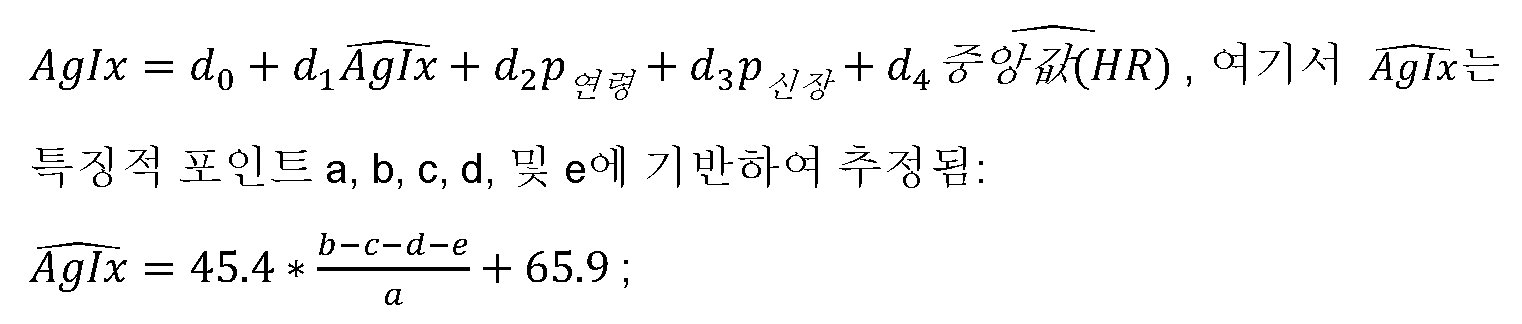
b) 펄스파 속도 PWV:b) Pulse wave velocity PWV:

c) 혈압 BPdia 및 BPsys:c) blood pressure BP dia and BP sys :

d) 정규화된 증강 지수 AIx@75:d) Normalized Augmentation Index AIx@75:

여기서, p연령은 대상체의 연령이고, p신장은 대상체의 신장이고, 중앙값(HR)은 중앙값 심박수이고, PTT는 PPG 펄스들 사이의 시차이고, Asys 및 Adia는 각각 수축기 및 이완기 피크의 크기이고, CT는 파고 시간이고, ST는 경직도 지수이고, PA는 PPG 시그널의 펄스 면적이고, d0 내지 d4, g0 내지 g4, l0d 내지 lkd, k0s 내지 k2s, 및 b0 내지 b1은 각 선형 회귀 방정식의 계수를 나타낸다.Here, p age is the age of the subject, p height is the height of the subject, the median HR is the median heart rate, PTT is the parallax between PPG pulses, and A sys and A dia are the magnitudes of the systolic and diastolic peaks, respectively. , CT is the crest time, ST is the stiffness index, PA is the pulse area of the PPG signal, d 0 to d 4 , g 0 to g 4 , l 0d to l kd , k 0s to k 2s , and b 0 To b 1 represent the coefficients of each linear regression equation.
바람직한 구성에서, 심혈관 파라미터는 적어도 60 PPG 펄스, 바람직하게는 적어도 100 PPG 펄스, 보다 바람직하게는 적어도 120 PPG 펄스에 기반하여 추정된다. 60 펄스에 대한 추정은 대략 1분의 측정 시간에 상응한다 (1분당 60 펄스). 따라서, 바람직한 구성이란, 적어도 1분 (60 PPG 펄스), 바람직하게는 적어도 1.7분 (100 PPG 펄스), 보다 바람직하게는 적어도 2분 (120 PPG 펄스)의 측정 시간을 지칭한다. 측정된 시간 내에 조정된 모든 PPG 펄스에 의해 얻어진 결과들을 조합함으로써, 보다 신뢰성있는 추정이 가능하다. 이러한 방식으로, 손상된 PPG 펄스가 있는 경우, 측정된 시간에 걸쳐 시그널들이 조정되면 그 효과가 완화될 수 있다. PPG 펄스들을 규정된 시간에 걸쳐 측정하면, 최신 기술 (예: US 2013/324859 A1 등)에서 필요한 것처럼 단일 PPG 펄스들을 분류할 필요가 없다는 이점을 가지며, 이는 보다 효율적인 알고리즘을 제공한다.In a preferred configuration, the cardiovascular parameters are estimated based on at least 60 PPG pulses, preferably at least 100 PPG pulses, more preferably at least 120 PPG pulses. The estimate for 60 pulses corresponds to a measurement time of approximately 1 minute (60 pulses per minute). Thus, a preferred configuration refers to a measurement time of at least 1 minute (60 PPG pulses), preferably at least 1.7 minutes (100 PPG pulses), more preferably at least 2 minutes (120 PPG pulses). By combining the results obtained by all the PPG pulses adjusted within the measured time, a more reliable estimation is possible. In this way, if there is a damaged PPG pulse, the effect can be mitigated if the signals are adjusted over the measured time. Measuring PPG pulses over a defined time period has the advantage of not having to classify single PPG pulses as required by state-of-the-art technology (eg US 2013/324859 A1, etc.), which provides a more efficient algorithm.
본 발명에 따른 방법을 통해 PPG 시그널에 기반하여 혈압 및 동맥 경직도를 추정하는 것이 가능하다. 본 발명에 의해, PPG 시그널 및 그의 시간 도함수에서의 추정에 필요한 특징적 포인트들 (피처들)을 찾는 새로운 방법이 제안된다. 현재까지 이를 달성하는 알고리즘이 없다. 특징적 포인트들을 찾기 위해, PPG 파형에 대한 모델이 또한 제안된다. 피처들의 추출 후, 추출된 피처들을 관심 생리학적 파라미터와 관련시키는 새로운 모델들이 제공된다. 문헌에서의 기존 방법들과 달리, 본 발명에 따른 제안된 모델을 통해, 신장, 연령 및 기타 추정 파라미터 (예: 심박수)와 같은 파라미터들을 통합하는 것이 가능하다. 요컨대, 특정 해부학적 데이터를 포함한 고급 알고리즘에 기반하여, 여러 심혈관 파라미터들의 평가가 달성된다. 혈류, 혈압, 동맥 경직도, 혈관 탄성, 혈관 연령과 같은 보충 파라미터들의 평가를 통해 종합적인 일반 건강 평가가 가능하다. 이와 같은 개별 심혈관 건강 평가는 오해의 위험을 줄이고, 보다 정밀한 건강 평가로 이어진다. PPG 센서 기술을 사용하는 새로운 파라미터들의 측정을 통해, 피트니스 트래커 또는 스마트 워치와 같은 모바일 디바이스에 의한 새로운 건강 생산이 가능하다.Through the method according to the present invention, it is possible to estimate blood pressure and arterial stiffness based on the PPG signal. By the present invention, a new method for finding characteristic points (features) necessary for estimation in the PPG signal and its temporal derivative is proposed. To date, there are no algorithms to achieve this. In order to find the characteristic points, a model for the PPG waveform is also proposed. After extraction of features, new models are provided that relate the extracted features to the physiological parameter of interest. Unlike existing methods in the literature, through the proposed model according to the present invention, it is possible to integrate parameters such as height, age and other estimated parameters (eg heart rate). In short, based on advanced algorithms including specific anatomical data, evaluation of several cardiovascular parameters is achieved. Comprehensive general health assessment is possible through evaluation of supplementary parameters such as blood flow, blood pressure, arterial stiffness, vascular elasticity, and vascular age. Individual cardiovascular health assessments like this reduce the risk of misunderstandings and lead to a more rigorous health assessment. Through measurement of new parameters using PPG sensor technology, new health production by mobile devices such as fitness trackers or smart watches is possible.
심혈관 파라미터 펄스파 속도 및 혈압의 결정을 위해, 본 발명이 대상체에서의 2개의 상이한 위치에서 2개 이상의 PPG 센서를 사용하는 것이 중요하다. 종래 기술에 기재된 방법들과 비교할 때 제2 PPG 센서의 도입은 펄스 전달 시간 (PTT)을 측정할 수 있다 (추정하는 대신)는 이점을 가지며, 이로 인해 심혈관 파라미터들에 대한 추정치들이 개선된다. 적어도 2개의 PPG 센서를 사용함으로써 심혈관 파라미터들에 대한 보다 신뢰성있는 측정이 가능하다.For the determination of the cardiovascular parameter pulse wave velocity and blood pressure, it is important that the present invention uses two or more PPG sensors at two different locations in a subject. Compared to the methods described in the prior art, the introduction of a second PPG sensor has the advantage of being able to measure (instead of estimating) the pulse delivery time (PTT), which results in improved estimates for cardiovascular parameters. By using at least two PPG sensors, more reliable measurements of cardiovascular parameters are possible.
하나의 대안적 실시양태에서, 하나의 PPG 센서는 대상체의 손목에 위치하고, 또 다른 PPG 센서는 대상체의 손가락 끝에 위치한다 (이는 휴대폰과 같은 모바일 디바이스에 포함될 수 있음). 또 다른 대안적 실시양태에서, 하나의 PPG 센서는 대상체의 손목에 위치하고, 또 다른 PPG 센서는 제1 PPG 센서와 규정된 거리를 두고 대상체의 손목에 위치한다. 2개의 PPG 센서가 대상체의 손목에서 2개의 PPG 센서 사이에 5 cm 이하, 바람직하게는 2개의 PPG 센서 사이에 4 cm 이하의 거리를 두고 위치하는 것이 특히 바람직하다. 이를 통해, 대상체의 손목에 착용될 수 있는 1개의 디바이스 내에 두 PPG 센서 모두를 포함시키는 것이 가능하다.In one alternative embodiment, one PPG sensor is located on the subject's wrist and another PPG sensor is located on the subject's fingertip (which may be included in a mobile device such as a cell phone). In another alternative embodiment, one PPG sensor is located on the subject's wrist and another PPG sensor is located on the subject's wrist at a defined distance from the first PPG sensor. It is particularly preferred that the two PPG sensors are located at a distance of 5 cm or less between the two PPG sensors on the subject's wrist, preferably 4 cm or less between the two PPG sensors. Through this, it is possible to include both PPG sensors in one device that can be worn on the wrist of the object.
심혈관 파라미터들의 결정을 위한 알고리즘의 평가Evaluation of algorithms for determination of cardiovascular parameters
PPG 시그널의 프리프로세싱PPG signal preprocessing
프리프로세싱 단계는 PPG 시그널로부터 올바른 파라미터 추정을 위해 중요한 이슈이다. 이를 통해, PPG 파동 윤곽을 강화시켜 그의 피봇 포인트들을 보다 용이하게 검출하는 것이 가능하다.The preprocessing step is an important issue for correct parameter estimation from the PPG signal. Through this, it is possible to enhance the PPG wave contour and detect its pivot points more easily.
따라서, 본 발명의 유리한 구성에서, PPG 센서로부터의 원시 PPG 시그널을 하기 중 1종 이상에 의해 프로세싱한다:Thus, in an advantageous configuration of the present invention, the raw PPG signal from the PPG sensor is processed by one or more of the following:
- 시그널의 정규화,-Normalization of signals,
- 호흡으로 인해 PPG 시그널에서 항상 존재하는 드리프트를 제거하기 위한 이동 평균 필터,-Moving average filter to remove the drift that is always present in the PPG signal due to respiration,
- 제로-위상 및 컷오프 주파수 = 20 Hz를 갖는 IV차 체비셰프 저역-통과 필터.-Order IV Chebyshev low-pass filter with zero-phase and cutoff frequency = 20 Hz.
PPG 시그널의 펄스로의 분리Separation of PPG signals into pulses
PPG 시그널에서의 각 개별 PPG 파형을 분석하기 위해 그리고 모션 아티팩트의 효과를 줄이기 위해, PPG 시그널을 전체적으로가 아닌 섹션별로 조사한다. 본 발명에 따르면 시그널은 개별 펄스들로 분할되는데, 그 이유는 PPG 시그널로부터 추출된 모든 피처가 하나의 펄스파로부터 도출될 수 있기 때문이다. 수축기 풋은 PPG 펄스의 가장 현저한 피처이므로, PPG 시그널에서 가장 신뢰성있게 발견될 수 있다. 따라서, 이 수축기 풋에서 PPG 시그널에서의 최소값을 찾아 PPG 시그널을 PPG 펄스들로 절단하였다. 이 전략을 통해, 각 펄스를 개별적으로 분석하는 것이 가능하다. 몇몇 펄스가 올바르게 인식되지 않는 경우에는, 최종 파라미터 값들이 모든 개별 펄스 결과치들의 중앙값에 의해 계산되기 때문에 측정에 대한 최종 결과치들에 대한 변조 효과가 없다.In order to analyze each individual PPG waveform in the PPG signal and to reduce the effect of motion artifacts, the PPG signal is examined by sections rather than as a whole. According to the present invention, the signal is divided into individual pulses, because all features extracted from the PPG signal can be derived from one pulse wave. The systolic foot is the most prominent feature of the PPG pulse, so it can be most reliably found in the PPG signal. Therefore, the PPG signal was cut into PPG pulses by finding the minimum value in the PPG signal in this systolic foot. With this strategy, it is possible to analyze each pulse individually. If some pulses are not recognized correctly, there is no modulating effect on the final results for the measurement as the final parameter values are calculated by the median of all individual pulse results.
상이한 심혈관 파라미터들을 결정하기 위해, PPG 파형을 분석해야 하고, PPG 파형으로부터 상이한 피처들을 추출한다.In order to determine the different cardiovascular parameters, the PPG waveform has to be analyzed, and different features are extracted from the PPG waveform.
파라미터 추정치Parameter estimate
1. 증강 지수 (AIx1. Augmentation Index (AIx PPGPPG ):):
증강 지수 (AIx)에 의해 동맥 경직도에 대한 간접적인 척도가 제공될 수 있다. 이는 말초 순환계에 의한 압력파 반사에 대한 정보를 제공한다. 증강 지수 측정치는, PPG 파형을 분석하여 동맥 경직도에 대한 정보를 얻을 수 있다는 가정 하에 혈압 펄스파 분석으로부터 PPG 시그널로 전환되었다.An indirect measure of arterial stiffness can be provided by the enhancement index (AIx). This provides information on the reflection of pressure waves by the peripheral circulatory system. The enhancement index measurement value was converted to a PPG signal from blood pressure pulse wave analysis under the assumption that information on arterial stiffness can be obtained by analyzing the PPG waveform.
PPG 펄스파는 압력 펄스파가 아니다. 따라서, 상기 기재된 바와 같은 증강 지수는 PPG 시그널로부터 직접 얻을 수 있다. 일반적으로, 증강 지수는 PPG 모폴로지 특성 덕분에 추정될 수 있다. 문헌에 따르면 증강 지수는 하기 식에 의해 계산된다:The PPG pulse wave is not a pressure pulse wave. Thus, the enhancement index as described above can be obtained directly from the PPG signal. In general, the enhancement index can be estimated thanks to the PPG morphology properties. According to the literature the enhancement index is calculated by the following formula:

여기서 y는 이완기 피크 진폭이고, x는 수축기 피크 진폭이다 (도 1.2에 제시된 바와 같음).Where y is the diastolic peak amplitude and x is the systolic peak amplitude (as shown in Figure 1.2).
AIx는 수축기에서부터 이완기 피크까지의 PPG 시그널의 증강을 설명한다.AIx describes the enhancement of the PPG signal from systolic to the diastolic peak.
PPG 펄스파로부터, 수축기 Asys 및 이완기 Adia 피크 진폭 (각각 식 1.2 내의 x 및 y에 상응함) 뿐만 아니라 이들의 시간 ts 및 td를 추정한다. PPG 파형에서의 Adia의 결정은 파형에서 육안으로 확인되는 이완기 피크가 없고 반사파가 매우 작은 경우 매우 어려울 수 있다 (도 1.2 참조). 여전히 양쪽 피크 위치 모두를 추정할 수 있도록, 2개의 파동의 형태를 모델링하는 2가지 상이한 방법을 개발하였다.From the PPG pulsed wave, estimate systolic A sys and diastolic A dia peak amplitudes (corresponding to x and y in equation 1.2, respectively) as well as their times t s and t d . Determination of A dia in the PPG waveform can be very difficult when there is no diastolic peak visible to the naked eye in the waveform and the reflected wave is very small (see Fig. 1.2). Two different methods have been developed to model the shape of the two waves so that both peak positions can still be estimated.
제1 방법에서, PPG 파형은 지수 함수를 통한 2개의 펄스파의 합으로서 모델링된다.In the first method, the PPG waveform is modeled as the sum of two pulsed waves through an exponential function.

모델을 PPG 파형에 피팅하고 ts 및 td의 추정치를 수신하여 각각 Asys 및 Adia를 찾기 위해 비선형 회귀를 적용한다.Fit the model to the PPG waveform, receive estimates of t s and t d and apply nonlinear regression to find A sys and A dia , respectively.
제2 방법은 PPG 파형의 최대값이 수축기 피크라는 사실을 이용한다. 수축기 피크에서 알려진 위치를 갖는 제1 파동만을 모델링함으로써, PPG 시그널로부터 그의 지수 모델을 차감하고 나머지 반사파를 산출하며,The second method takes advantage of the fact that the maximum value of the PPG waveform is the systolic peak. By modeling only the first wave with a known position at the systolic peak, its exponential model is subtracted from the PPG signal and the remaining reflected wave is calculated,

여기서 최대값 max ydia(t) = Adia이고, td는 상응하는 이완기 시간 지수 추정치이다 (도 1.5 참조).Where max y dia (t) = A dia and t d is the corresponding diastolic time exponent estimate (see Fig. 1.5).
보다 신뢰성있는 것으로 보이는 파라미터는 75 심박동으로 정규화된 증강 지수 (AIx@75)이다. 사실상, 이 파라미터는 심박동에 좌우되는 것으로 보인다. 이는 윌킨슨(Wilkinson) 등 (American Journal of Hypertension, vol. 15, pp. 24-30, 2002)의 작업에서 처음으로 소개된 바 있다. 혈압 파동으로부터 추정된 AIx는, PPG 파동으로부터 추정된 동일한 파라미터와 비교해서 상이한 값을 갖는 것으로 밝혀졌다. 따라서, AIx 및 AIx@75는 참조값들과 선형 회귀에서 사용되었다. 동일한 방법을 적용하여 AIx 및 AIx@75 둘 다를 계산하였다.A parameter that appears to be more reliable is the augmentation index normalized to 75 heart beats (AIx@75). In fact, this parameter appears to be heart rate dependent. This was first introduced in the work of Wilkinson et al. (American Journal of Hypertension, vol. 15, pp. 24-30, 2002). The AIx estimated from the blood pressure wave was found to have different values compared to the same parameter estimated from the PPG wave. Thus, AIx and AIx@75 were used in reference values and linear regression. Both AIx and AIx@75 were calculated by applying the same method.
정규화된 지수 값 AIx@75가 얻어졌으며, 이를 선형 회귀 모델에서 사용하였다:Normalized exponential values AIx@75 were obtained and used in the linear regression model:

시그널의 도함수로부터 피처 추출Feature extraction from signal derivative
인접 샘플들 사이의 차이로 계산되는 시그널의 도함수로부터 다른 피처들을 얻는다. 도함수를 취하여 도입된 고주파 노이즈를 제거하기 위해 이동 평균 필터를 적용하였다. 신뢰성있게 특징적 포인트 a 내지 e를 찾기 위해, 2개의 가장 현저한 최대값을 찾는 알고리즘을 개발하여 이들을 각각 a 및 e로 마킹하였다. 이어서, 포인트 c는 포인트 a와 e 사이에서 가장 현저한 피크이다. 아울러, 포인트 b는 2차 도함수에서의 가장 현저한 최소값이고, 포인트 d는 포인트 c와 e 사이에서 가장 현저한 최소값이다 (도 1.6 참조).Different features are obtained from the derivative of the signal, which is calculated as the difference between adjacent samples. A moving average filter was applied to remove the introduced high-frequency noise by taking the derivative. In order to reliably find the characteristic points a to e, an algorithm to find the two most significant maximums was developed and marked as a and e, respectively. Subsequently, point c is the most prominent peak between points a and e. In addition, point b is the most significant minimum value in the second derivative, and point d is the most significant minimum value between points c and e (see Fig. 1.6).
따라서, 본 발명의 바람직한 실시양태에서, 특징적 포인트 a, b, c, d 및 e는 PPG 펄스의 2차 도함수로부터 자동적으로 도출되며, 여기서 a 및 e는 각각 2차 도함수에서의 제1 및 제2의 가장 현저한 최대값이고, c는 포인트 a와 e 사이에서 가장 현저한 피크이고, b는 2차 도함수에서의 가장 현저한 최소값이며, d는 포인트 c와 e 사이에서 가장 현저한 최소값이다.Thus, in a preferred embodiment of the invention, the characteristic points a, b, c, d and e are automatically derived from the second derivative of the PPG pulse, where a and e are respectively the first and second derivatives in the second derivative. Is the most significant maximum value of, c is the most significant peak between points a and e, b is the most significant minimum value in the second derivative, and d is the most significant minimum between points c and e.
2. 혈관 연령 지수 (AgIx PPG ): 2. Vascular Age Index (AgIx PPG ) :
PPG 파형과 관련하여 혈관 연령 지수 추정치는, 가속화 광체적변동기록 (APG: Acceleration Photoplethysmography)이라고도 알려진 PPG 시그널의 2차 도함수에 대한 분석을 통해 얻을 수 있다. 이는 PPG 파동처럼 여러 랜드마크 포인트들을 특징으로 하며; 이 포인트들의 추정을 사용하여, 혈관 연령 지수를 포함한 심혈관 기능에 대한 정보를 제공하는 지표를 얻는다. 최신 문헌은 하기에 의해 특징적 포인트들의 비를 계산한다:In relation to the PPG waveform, an estimate of the blood vessel age index can be obtained through an analysis of the second derivative of the PPG signal, also known as Acceleration Photoplethysmography (APG). It features several landmark points like PPG waves; Using the estimate of these points, an indicator that provides information about cardiovascular function, including the vascular age index, is obtained. The latest literature calculates the ratio of characteristic points by:

지수는 사람의 심혈관 연령을 설명한다. 이는 그의 혈관이 평균보다 더 느리게 노화하면 그 사람의 실제 연령보다 더 낮아야 하고, 그렇지 않으면 실제 연령보다 더 높아야 한다.The index describes a person's cardiovascular age. It should be lower than the person's actual age if his blood vessels age slower than average, otherwise it should be higher than his actual age.
APG로부터 가장 많이 사용되는 파라미터가 혈관 연령 지수임에도 불구하고, APG 파동 추정치로부터 시작하여 기타 측정치들, 예를 들어 b, c, d 또는 e 파동과 a 파동 사이의 비가 여러 연구에서 조사된 바 있다 (Elgendi, Current Cardiology Reviews, vol. 8, pp. 14-25, 2012). 이들 비는 대상체 연령에 따라 변하는 것으로 밝혀졌다. 혈관 연령 지수 대안으로서, c 및 d 파동이 육안으로 확인되지 않는 경우에는 또 다른 연구에서 제안된 바와 같이 (b-e)/a 비를 사용할 수 있었다 (Baek et al., 6th International Special Topic Conference on Information Technology Applications in Biomedicine, 2007).Although the most used parameter from APG is the vascular age index, starting from APG wave estimates and other measurements, such as the ratio between wave b, c, d or wave e and wave a, have been investigated in several studies ( Elgendi, Current Cardiology Reviews, vol. 8, pp. 14-25, 2012). These ratios were found to vary with the age of the subject. As an alternative to the vascular age index, when the c and d waves were not visually confirmed, the (be)/a ratio could be used as suggested in another study (Baek et al., 6th International Special Topic Conference on Information Technology). Applications in Biomedicine, 2007).
혈관 연령 지수에 추가로, 이러한 지수를 또한 추정하였다:In addition to the vascular age index, this index was also estimated:

AgIx를 보다 신뢰성있게 추정하기 위해, 특징적 포인트 a, b, c, d 및 e를 기반으로 하여 추정된 혈관 연령 지수 

여기서 di는 계수이고, p연령은 사람의 연령이고, p신장은 사람의 신장이고, 
펄스파 속도 (PWV): Pulse Wave Velocity (PWV) :
PWV는, 파동 상응 포인트들 사이의 시간 간격, 및 압력파가 전파되는 동일선 상의 2개의 상이한 측정 부위들 사이의 거리 사이의 비로서 실험적으로 측정된다.PWV is experimentally measured as the ratio between the time interval between the wave-corresponding points and the distance between two different measurement sites on the same line through which the pressure wave propagates.
펄스파 속도는 PPG 시그널에 의해서도 추정될 수 있다. 이 경우, PWV는 2가지 상이한 기구 셋업으로 얻을 수 있다:The pulse wave velocity can also be estimated by the PPG signal. In this case, PWV can be obtained with two different instrument setups:
- ECG + PPG 센서: 펄스 도달 시간 (PAT: Pulse Arrival Time)을 ECG R 피크와 PPG 랜드마크 포인트 (수축기 풋, 최대 기울기 또는 수축기 피크) 사이의 시간 간격으로서 평가해야 함;-ECG + PPG sensor: Pulse Arrival Time (PAT) should be evaluated as the time interval between the ECG R peak and the PPG landmark point (systolic foot, maximum slope or systolic peak);
- 2개의 PPG 센서: 하나가 다른 하나의 하류에 위치하며, 이 경우 펄스 전달 시간 (PTT)을 2개의 측정 부위들 사이의 시간 간격으로서 평가해야 함 [21].-Two PPG sensors: one located downstream of the other, in which case the pulse delivery time (PTT) should be evaluated as the time interval between the two measurement sites [21].
측정된 시간 간격을 구별 및 특정해야 한다: PAT는 PTT와 전구혈기 (PEP: Pre-Ejection Period)의 합과 동일함 (심실 탈분극의 시작과 대동맥 밸브가 개방되는 순간 사이의 시간 간격임). PEP는 측정 또는 예측하기가 어렵고 압력에 대한 선형 함수가 아니기 때문에, PAT가 PTT보다 덜 정확한 지표인 것으로 드러났다. PTT는 평가하기가 더 어렵지만, 모니터링에 더 우수한 측정치를 제공한다. 이 파라미터를 통해 대동맥 PWV를 추정하는 것이 가능하다 (대동맥은 문헌에서 PWV를 측정하기 위한 참조 포인트임). 현대 압력 측정 시스템은 또한, 간접적인 방법으로 대동맥 PWV를 계산한다.The measured time intervals should be distinguished and specified: PAT equals the sum of PTT and Pre-Ejection Period (PEP) (the time interval between the onset of ventricular depolarization and the moment the aortic valve opens). Since PEP is difficult to measure or predict and is not a linear function of pressure, it turns out that PAT is a less accurate indicator than PTT. PTT is more difficult to evaluate, but provides a better measure for monitoring. With this parameter it is possible to estimate the aortic PWV (aorta is the reference point for measuring PWV in the literature). Modern pressure measurement systems also calculate the aortic PWV in an indirect way.
PWV 추정치를 얻기 위해, 2개의 상이한 측정 시스템으로부터의 PPG 시그널 수축기 풋들을 식별한다. 수축기 풋들이 기록되는 순시치들 사이의 차이 덕분에, 기구에 따라 (첫번째 경우 ECG 및 PPG, 두번째에서 2개의 PPG 시그널), 펄스 도달 시간 및 펄스 전달 시간을 아는 것이 가능하다. 이 측정치를 사용하여, PAT 또는 PTT와 최적 표준 기구로부터 측정된 펄스파 속도 (중앙 PWV라 지칭됨, 즉, 대동맥에서) 사이의 상관관계를 평가할 것이다. 이러한 이유로, 펄스 전달 시간 값, 연령, 신장, 중앙값 심박수 값, 및 PPG 시그널의 3가지 전형적 파라미터 (즉, 파고 시간, 경직도 지수 및 펄스 면적)을 사용하여 선형 회귀가 생성되었다.To obtain a PWV estimate, we identify the PPG signal systolic puts from two different measurement systems. Due to the difference between the instantaneous values at which the systolic foot is recorded, it is possible to know the pulse arrival time and the pulse delivery time, depending on the instrument (ECG and PPG in the first case, two PPG signals in the second). This measurement will be used to evaluate the correlation between the PAT or PTT and the pulse wave velocity (referred to as central PWV, ie in the aorta) measured from the optimal standard instrument. For this reason, a linear regression was generated using the pulse delivery time value, age, height, median heart rate value, and three typical parameters of the PPG signal (i.e., crest time, stiffness index, and pulse area).
PWV는, 2개의 별도로 배치된 PPG 센서에서 측정된 2개의 PPG 시그널의 펄스들 사이의 시차 (여기서 PTT)에 의해 추정된다. 따라서, 시그널의 수축기 풋들 사이의 시차를 검사한다. PWV를 추정하기 위한 선형 회귀 모델에 중앙값 시차가 사용된다. 부가적인 생리학적 및 개인 데이터를 선형 회귀 모델에 추가로 포함시켰다:The PWV is estimated by the parallax (here PTT) between the pulses of the two PPG signals measured by two separate PPG sensors. Thus, check the parallax between the systolic feet of the signal. The median parallax is used in the linear regression model to estimate PWV. Additional physiological and personal data were further included in the linear regression model:

여기서 gi은 계수이고, PTT는 PPG 펄스들 사이의 시차이고, p연령은 사람의 연령이고, p신장은 사람의 신장이고, 
2개의 PPG 시그널을 측정하고 2개의 상응하는 PPG 펄스들 사이의 시차를 고려하는 것이 바람직하다. 일 실시양태에서, 하나의 PPG 센서는 사용자의 손목에 위치할 수 있고, 제2 센서는 사용자의 손가락에 위치할 수 있다. 그러나, 유리한 구성에서, 2개의 PPG 센서가 양쪽 센서들 사이에 특정 거리를 두고 사용자의 손목에 위치할 수 있다. 이를 통해, 스마트 워치 또는 피트니스 트래커와 같은 손목 착용형 디바이스에서의 구현이 가능하다.It is desirable to measure two PPG signals and take into account the parallax between the two corresponding PPG pulses. In one embodiment, one PPG sensor may be located on the user's wrist and the second sensor may be located on the user's finger. However, in an advantageous configuration, two PPG sensors can be placed on the user's wrist with a certain distance between both sensors. Through this, it can be implemented in a wrist-worn device such as a smart watch or a fitness tracker.
혈압 (BP): Blood pressure (BP) :
PPG 시그널로부터의 혈압 추정은 그렇게 사소한 과제가 아니다. 이전의 연구에는, PPG 펄스의 추출된 수축기 및 이완기 시간을 사용하는 간단한 선형 회귀 모델에 의해 BP를 추정하는 것이 제안되어 있다:Blood pressure estimation from PPG signals is not such a trivial task. In previous work, it has been proposed to estimate BP by a simple linear regression model using the extracted systolic and diastolic times of the PPG pulse:

여기서 aSBP, bSBP, aDBP 및 bDBP는 참조값에 기반하여 추정해야 하는 계수들이다.Here, a SBP , b SBP , a DBP and b DBP are coefficients to be estimated based on a reference value.
본 발명의 경우, 펄스 전달 시간에 대해 작업하고 이들 값의 선형 회귀를 최적 표준 기구로 얻은 혈압 추정치들로 평가하여, 동맥 혈압 (수축기 및 이완기)을 추정하는 전략을 개발하였다. 아울러, 선형 회귀 추정치에서 중앙값 심박수, 파고 시간, 경직도 지수 및 펄스 면적 및 생리학적 파라미터, 예컨대 연령 및 신장과 같은 기타 파라미터들을 사용하였다.In the case of the present invention, a strategy for estimating arterial blood pressure (systolic and diastolic) was developed by working on pulse delivery times and evaluating the linear regression of these values with blood pressure estimates obtained with an optimal standard instrument. In addition, median heart rate, crest time, stiffness index, and pulse area and physiological parameters, such as age and height, were used in the linear regression estimates.
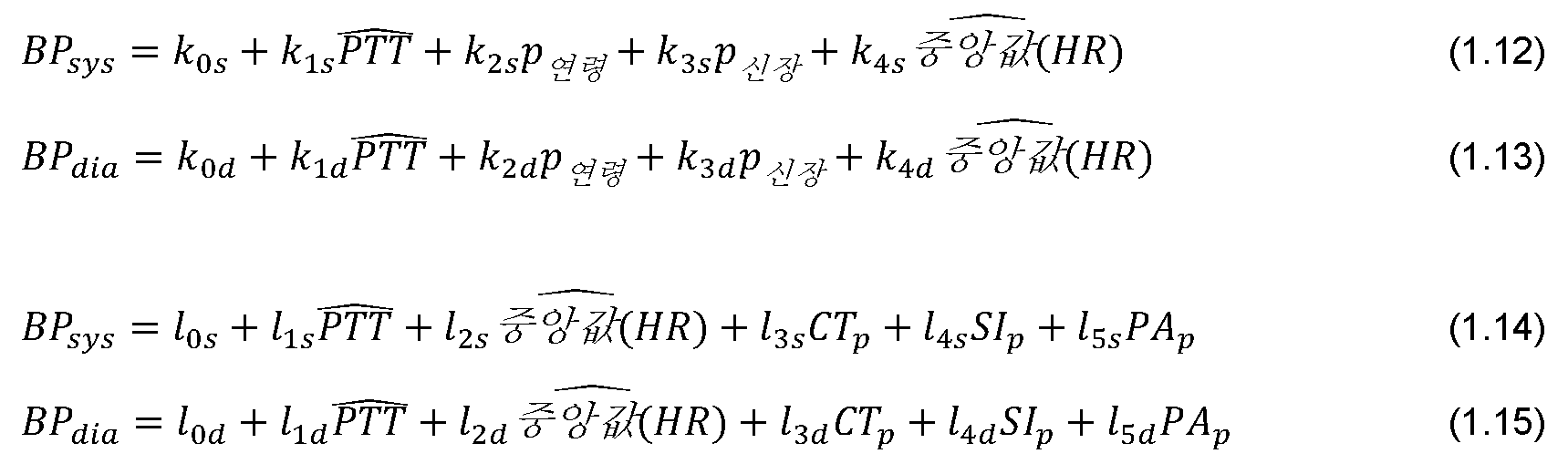
여기서 k0s 내지 k2s, k0d 내지 k2d, l0d 내지 l5d, l0s 내지 l5s는 계수이고, 

심박수 변이도 (HRV): Heart Rate Variability (HRV) :
심박수 변이도 (HRV)는 심박동들 사이의 시간 간격의 변동을 설명한다. 각각의 심박동에 대한 박동간 간격 (IBI) 값은 2개의 연속하는 PPG 파동 (수축기 풋, 최대 기울기 또는 수축기 피크)의 2개의 상응하는 랜드마크 포인트들 사이의 시간 간격으로서 추정된다. 도 1.7에서, 예를 들면, IBI는 2개의 연속하는 수축기 풋들 사이의 시간 간격으로서 측정된다.Heart rate variability (HRV) describes the variation in time intervals between heart beats. The Interbeat Interval (IBI) value for each heartbeat is estimated as the time interval between two corresponding landmark points of two consecutive PPG waves (systolic foot, maximum slope or systolic peak). In Figure 1.7, for example, IBI is measured as the time interval between two consecutive systolic feet.
IBI가 측정되면, HRV 파라미터를 추정하는 것이 가능하다. 종래, HRV 분석은 시간 도메인 및 주파수 도메인에서 수행된다. 또한, 이들 파라미터 중 일부는 기록이 충분히 장기간 이루어진 경우에만 추정될 수 있다. 짧은 기록 (즉, 적어도 2분)의 경우, 얻을 수 있는 가능한 지수들 중 일부는 하기와 같다 (Shaffer and Ginsberg, Frontiers in Public Health, vol. 5, n. 258, p. 17 pp, 2017):Once IBI is measured, it is possible to estimate HRV parameters. Conventionally, HRV analysis is performed in the time domain and frequency domain. Further, some of these parameters can only be estimated if the recording has been made for a sufficiently long time. For short recordings (i.e. at least 2 minutes), some of the possible indices that can be obtained are as follows (Shaffer and Ginsberg, Frontiers in Public Health, vol. 5, n. 258, p. 17 pp, 2017):
1. 정상 동박동의 IBI에 대한 표준 편차 (SDNN).1. Standard deviation (SDNN) for the IBI of a normal copper beat.
2. 서로 50 ms 초과만큼 상이한 인접 간격들의 수 (NN50 및 pNN50).2. Number of adjacent intervals that differ by more than 50 ms from each other (NN50 and pNN50).
3. 정상 심박동들 사이의 연속 차이의 평균 제곱근 (RMSSD), 이는 먼저 심박동들 사이의 각각의 연속 시차를 계산한 다음, 값들 각각을 제곱하고 결과를 평균화한 후 합계에 대한 제곱근으로 얻어짐.3. Root mean square (RMSSD) of the continuous difference between normal heartbeats, which is obtained as the square root of the sum after first calculating each successive lag between heartbeats, then squaring each of the values and averaging the results.
4. LF/HF 비, 저주파 전력 (0.04 - 0.15 Hz)과 고주파 전력 (0.15 - 0.4 Hz) 사이의 비.4. LF/HF ratio, the ratio between low frequency power (0.04-0.15 Hz) and high frequency power (0.15-0.4 Hz).
5. 푸앵카레 플롯, 이는 모든 IBI 간격을 이전 간격에 대해 플롯팅하여 산포도를 생성함으로써 얻어짐; 푸앵카레 플롯은 타원을 플롯팅된 포인트들에 피팅함으로써 분석할 수도 있음. 피팅 단계 후, 2개의 비-선형 측정치를 얻을 수 있음:5. Poincaré plot, obtained by plotting all IBI intervals against previous intervals to generate a scatter plot; The Poincaré plot can also be analyzed by fitting an ellipse to the plotted points. After the fitting step, two non-linear measurements can be obtained:
5.a. SD1: x축으로부터의 각 포인트의 거리에 대한 표준 편차는 타원의 폭을 특정하며; 이는 단기 HRV를 반영함. 5.a. SD1: The standard deviation for the distance of each point from the x axis specifies the width of the ellipse; This reflects short-term HRV.
5.b. SD2: y = x + 평균 (IBI 간격)으로부터의 각 포인트에 대한 표준 편차는 타원의 길이를 특정하며; 이는 단기 및 장기 HRV에 대한 척도임. 5.b. SD2: y = x + standard deviation for each point from the mean (IBI interval) specifies the length of the ellipse; This is a measure for short and long term HRV.
6. 샘플 엔트로피, 이는 시계열의 규칙성 및 복잡성의 척도임.6. Sample entropy, which is a measure of the regularity and complexity of the time series.
점점 더 많은 수의 착용가능 디바이스가, PPG 기술을 사용하여 정확하고 경제적이며 용이하게 측정가능한 HRV 지수들을 제공한다고 주장하고 있다. 여러 연구가, ECG 시그널에 의해 제공되는 최적 표준과 비교한 PPG 측정치들로 보고된 HRV 지수에 대한 신뢰성에 중점을 두고 있다. 특히, 최근의 검토에서 (Georgiou et al., Folia Medica, vol. 60, n. 1, pp. 7-20, 2018), 드러난 결과는 PPG 기술이 HRV 측정에 대한 유효한 대안일 수 있다는 것이지만, 여전히 비정지 조건 하의 보다 심층적인 연구를 수행할 필요가 있다.An increasing number of wearable devices are claiming to provide accurate, economical and easily measurable HRV indices using PPG technology. Several studies have focused on the reliability of the HRV index reported as PPG measurements compared to the optimal standard provided by the ECG signal. In particular, in a recent review (Georgiou et al., Folia Medica, vol. 60, n. 1, pp. 7-20, 2018), the findings revealed that PPG technology may be a valid alternative to HRV measurement, but still It is necessary to carry out more in-depth studies under non-stop conditions.
본 발명에 따르면, 2개 이상의 PPG 센서로 2개 이상의 PPG 시그널을 측정하고 고급 알고리즘을 사용하여 혈관 연령 지수 AgIx, 혈압 BPdia 및 BPsys, 펄스파 속도 PWV 및 증강 지수 AIx를 결정함으로써 1종 이상의 심혈관 파라미터가 계산된다.According to the present invention, by measuring two or more PPG signals with two or more PPG sensors and using an advanced algorithm to determine the blood vessel age index AgIx, blood pressure BP dia and BP sys , pulse wave velocity PWV and enhancement index AIx, Cardiovascular parameters are calculated.
한 구성에서, 1종의 심혈관 파라미터만 측정된다 (증강 지수 AIx가 결정되거나, 또는 혈관 연령 지수 AgIx만이 또는 혈압만이 결정되거나, 또는 펄스파 속도 PWV만이 결정됨).In one configuration, only one cardiovascular parameter is measured (either the enhancement index AIx is determined, or only the vascular age index AgIx or only the blood pressure is determined, or only the pulse wave velocity PWV is determined).
추가의 구성에서, 2종의 심혈관 파라미터가 측정된다 (증강 지수 AIx 및 혈관 연령 지수 AgIx가 결정됨). 추가의 별법에서, 부가적으로 혈압이 결정되거나 펄스파 속도 PWV 또는 이들 둘 다가 결정된다.In a further configuration, two cardiovascular parameters are measured (augmentation index AIx and vascular age index AgIx are determined). In a further alternative, additionally the blood pressure is determined or the pulse wave velocity PWV or both are determined.
추가의 구성에서, 증강 지수 AIx 및 및 혈압이 결정된다. 추가의 별법에서, 부가적으로 혈관 연령 지수 AgIx가 결정되거나 펄스파 속도 PWV 또는 이들 둘 다가 결정된다.In a further configuration, the enhancement index AIx and and blood pressure are determined. In a further alternative, additionally the vascular age index AgIx is determined or the pulse wave velocity PWV or both are determined.
추가의 구성에서, 증강 지수 AIx 및 펄스파 속도 PWV가 결정된다. 추가의 별법에서, 부가적으로 혈관 연령 지수 AgIx가 결정되거나 혈압 또는 이들 둘 다가 결정된다.In a further configuration, the enhancement index AIx and the pulse wave velocity PWV are determined. In a further alternative, additionally the vascular age index AgIx is determined or blood pressure or both are determined.
추가의 구성에서, 혈관 연령 지수 AgIx 및 혈압이 결정된다. 추가의 별법에서, 부가적으로 혈관 연령 지수 AgIx가 결정되거나 증강 지수 AIx 또는 이들 둘 다가 결정된다.In a further configuration, the vascular age index AgIx and blood pressure are determined. In a further alternative, additionally the vascular age index AgIx is determined or the enhancement index AIx or both are determined.
추가의 구성에서, 혈관 연령 지수 AgIx 및 펄스파 속도 PWV가 결정된다. 추가의 별법에서, 부가적으로 혈압이 결정되거나 증강 지수 Aix 또는 이들 둘 다가 결정된다.In a further configuration, the vascular age index AgIx and the pulse wave velocity PWV are determined. In a further alternative, additionally blood pressure is determined or an enhancement index Aix or both are determined.
추가의 구성에서, 혈압 및 펄스파 속도 PWV가 결정된다. 추가의 별법에서, 부가적으로 증강 지수 Aix가 결정되거나 혈관 연령 지수 AgIx 또는 이들 둘 다가 결정된다.In a further configuration, the blood pressure and pulse wave velocity PWV are determined. In a further alternative, additionally the enhancement index Aix is determined or the vascular age index AgIx or both are determined.
바람직한 구성에서, 심혈관 파라미터 증강 지수 AIx, 혈관 연령 지수 AgIx, 혈압 및 펄스파 속도 PWV가 결정된다.In a preferred configuration, cardiovascular parameter enhancement index AIx, vascular age index AgIx, blood pressure and pulse wave velocity PWV are determined.
특히 바람직한 구성에서, 심혈관 파라미터 증강 지수 AIx, 혈관 연령 지수 AgIx, 혈압 및 펄스파 속도 PWV가 결정된다.In a particularly preferred configuration, cardiovascular parameter enhancement index AIx, vascular age index AgIx, blood pressure and pulse wave velocity PWV are determined.
대안적 구성에서, 1, 2, 3 또는 4종의 심혈관 파라미터에 부가적으로, 하기 중 1종 이상을 계산함으로써 심박수 변이도 HRV가 결정된다:In an alternative configuration, in addition to 1, 2, 3 or 4 cardiovascular parameters, the heart rate variability HRV is determined by calculating one or more of the following:
- 최소 및 최대 박동간 간격 (IBI)-Minimum and maximum beat-to-beat interval (IBI)
- 중앙값 및 평균 IBI-Median and mean IBI
- 최소 및 최대 심박수-Minimum and maximum heart rate
- 중앙값 및 평균 심박수-Median and average heart rate
- 정상 동박동의 IBI에 대한 표준 편차 (SDNN)-Standard deviation for IBI of normal copper beat (SDNN)
- 서로 50 ms 초과만큼 상이한 인접 간격들의 수 (NN50 및 pNN50)-Number of adjacent intervals that differ by more than 50 ms from each other (NN50 and pNN50)
- 정상 심박동들 사이의 연속 차이에 대한 평균 제곱근 (RMSSD)-Root mean square (RMSSD) of successive differences between normal heartbeats
- LF/HF 비, 저주파 전력 (0.04 - 0.15 Hz)과 고주파 전력 (0.15 - 0.4 Hz) 사이의 비-LF/HF ratio, ratio between low frequency power (0.04-0.15 Hz) and high frequency power (0.15-0.4 Hz)
- SD1: 모든 IBI 간격을 이전 간격에 대해 플롯팅함으로써 얻은 푸앵카레 플롯 내 x축으로부터의 각 포인트의 거리에 대한 표준 편차-SD1: standard deviation of the distance of each point from the x-axis in the Poincaré plot obtained by plotting all IBI intervals against the previous interval
- SD2: 모든 IBI 간격을 이전 간격에 대해 플롯팅함으로써 얻은 푸앵카레 플롯 내 y = x + 평균 (IBI 간격)으로부터의 각 포인트에 대한 표준 편차-SD2: y = x + standard deviation for each point from the mean (IBI interval) in the Poincare plot obtained by plotting all IBI intervals against the previous interval
- 샘플 엔트로피.-Sample entropy.
본 발명은 많은 상이한 인체 건강 모니터링 디바이스, 예컨대 손목형 피트니스 트래커, 스마트 워치, 또는 의료 전문가가 사용하는 특수 디바이스 내에 포함되는 PGG 센서를 사용하여 적용될 수 있다. 본 발명에 따른 방법을 통해, 여러 심혈관 파라미터를 분석함으로써 간단한 손목 착용형 디바이스의 도움으로 사람의 심혈관 상태에 대한 상세한 분석이 가능하다.The present invention can be applied using a PGG sensor included in many different human health monitoring devices, such as wrist fitness trackers, smart watches, or special devices used by medical professionals. Through the method according to the present invention, a detailed analysis of the cardiovascular state of a person is possible with the help of a simple wrist-worn device by analyzing various cardiovascular parameters.
따라서, 본 발명의 유리한 구성에서, 1종 이상의 계산된 파라미터는 적어도 1개의 PPG 센서를 포함하는 인체 건강 모니터링 디바이스 상에 디스플레이된다.Thus, in an advantageous configuration of the invention, one or more calculated parameters are displayed on a human health monitoring device comprising at least one PPG sensor.
대안적 구성에서, 1종 이상의 계산된 파라미터는, 적어도 2개의 PPG 센서를 포함하는 인체 건강 모니터링 디바이스 상에 디스플레이되어, 2개의 PPG 시그널들 사이의 시차를 분석함으로써 1종 이상의 심혈관 파라미터를 평가하는 것이 가능하다.In an alternative configuration, the one or more calculated parameters are displayed on a human health monitoring device comprising at least two PPG sensors to evaluate the one or more cardiovascular parameters by analyzing the parallax between the two PPG signals. It is possible.
본 발명의 또 다른 바람직한 실시양태에서, 계산된 파라미터와 함께 음향 또는 시각 시그널이 출력된다.In another preferred embodiment of the invention, an acoustic or visual signal is output together with the calculated parameters.
본 발명의 또 다른 대안적 실시양태에서, 1개 이상의 계산된 파라미터는 적어도 2개의 PPG 센서를 함유하는 인체 건강 모니터링 디바이스 상에 디스플레이된다.In another alternative embodiment of the invention, one or more calculated parameters are displayed on a human health monitoring device containing at least two PPG sensors.
본 발명의 대안적 실시양태에서, 계산된 심혈관 파라미터는 사전저장된 심혈관 지수 파라미터와 비교되며, 계산된 심혈관 파라미터가 사전저장된 심혈관 지수 파라미터와 X% 초과만큼 상이한 경우 음향 또는 시각 시그널이 출력되며, 이 경우 X는 5, 10, 20, 30, 40, 50, 60, 70, 80, 90, 100의 값들로부터 선택된다.In an alternative embodiment of the present invention, the calculated cardiovascular parameter is compared to a pre-stored cardiovascular index parameter, and an acoustic or visual signal is output if the calculated cardiovascular parameter is different from the pre-stored cardiovascular index parameter by more than X%, in which case X is selected from values of 5, 10, 20, 30, 40, 50, 60, 70, 80, 90, 100.
본 발명의 또 다른 측면은 하기 파라미터들 중 1종 이상을 결정하기 위한 손목 착용형 디바이스로서:Another aspect of the invention is a wrist worn device for determining one or more of the following parameters:
- 혈관 연령 지수 AgIx,-Vascular age index AgIx,
- 펄스파 속도 PWV,-Pulse wave velocity PWV,
- 혈압 BPdia 및 BPsys, -Blood pressure BP dia and BP sys ,
- 증강 지수 AIx,-Augmented Index AIx,
여기서 디바이스는Where the device is
- 팔의 등쪽 부분을 대향하고 5 cm 이하의 거리를 둔 2개의 PPG 센서-Two PPG sensors facing the dorsal part of the arm and a distance of less than 5 cm
를 포함하며,Including,
- 여기서 PPG 센서는 적어도 1개의 녹색 광원을 포함하고, 바람직하게는 512 Hz의 샘플링 주파수를 포함하는 것인-Where the PPG sensor comprises at least one green light source, preferably a sampling frequency of 512 Hz.
손목 착용형 디바이스에 관한 것이다.It relates to a wrist wearable device.
바람직한 실시양태에서, 디바이스는 하기 중 1종 이상을 계산하도록 적합화된 시그널 프로세싱 수단을 추가로 포함한다:In a preferred embodiment, the device further comprises signal processing means adapted to calculate one or more of the following:
- 특징적 포인트 a, b, c, d 및 e, 대상체의 연령 (p연령), 신장 (p신장) 및 중앙값 심박수에 기반한 선형 회귀를 사용한 혈관 연령 지수 AgIx,-Vascular age index AgIx using linear regression based on characteristic points a, b, c, d and e, subject's age (p age ), height (p height ) and median heart rate,
- 2개의 PPG 펄스들 사이의 시차 (PTT), 대상체의 연령 (p연령), 신장 (p신장) 및 중앙값 심박수 추정치에 기반한 선형 회귀를 사용한 펄스파 속도 PWV,-Pulse wave velocity PWV using linear regression based on parallax (PTT) between two PPG pulses, subject's age (p age ), height (p height ) and median heart rate estimates,
- 2개의 PPG 펄스들 사이의 시차 (PTT) 및 중앙값 심박수에 기반한 선형 회귀를 사용한 혈압 BPdia 및 BPsys, 및 -Blood pressure BP dia and BP sys using linear regression based on parallax (PTT) and median heart rate between two PPG pulses, and
- 임의로, 수축기 Asys 및 이완기 Adia 피크 진폭에 기반하며 75 심박동으로 정규화되고 (AIx@75) 정규화된 증강 지수 AIx에 기반한 선형 회귀를 사용한 증강 지수 AIx.-Optionally, the augmentation exponent AIx using linear regression based on the systolic A sys and diastolic A dia peak amplitudes, normalized to 75 heart beats (AIx@75) and based on the normalized augmentation index AIx.
손목 착용형 디바이스는 피트니스 트래커 또는 스마트 워치일 수 있다.The wrist worn device may be a fitness tracker or a smart watch.
실시예Example
실험 셋업Experiment setup
본 발명에 대한 실험을 위해 2가지 상이한 기구 셋업을 사용하였다.Two different instrument setups were used for experiments on the present invention.
GTEC 셋업GTEC setup
지.테크 메디칼 엔지니어링 게엠베하(G.TEC medical engineering GmbH, 오스트리아)로부터의 휴대용 바이오시그널 획득 및 분석 시스템인 g.MOBIlab을 포함하는 폴리그래프 셋업을 사용하였다 (≪gMOBIlab Instructions For Use≫ [온라인]. 입수: http://www.gtec.at/Download/Product-Manuals-Handbooks/g.MOBIlab/gMOBIlabInstructionsForUse).A polygraph setup including g.MOBIlab, a portable biosignal acquisition and analysis system from G.TEC medical engineering GmbH (Austria) was used (≪gMOBIlab Instructions For Use≫ [online]. Obtained: http://www.gtec.at/Download/Product-Manuals-Handbooks/g.MOBIlab/gMOBIlabInstructionsForUse).
GTEC 셋업에서는, 2개의 PPG 센서가 커넥터 박스를 통해 g.MOBIlab에 연결되어 있다. ECG용 전극들은 그 대신 그에 직접 연결된다. g.MOBIlab은 블루투스 연결을 통해 시그널들을 기록 및 디스플레이하는 소프트웨어와 통신할 수 있다. 시그널들이 기록되면, 이는 사용자가 특정한 폴더 내에 저장된다.In the GTEC setup, two PPG sensors are connected to g.MOBIlab via a connector box. Electrodes for ECG are instead connected directly to them. g.MOBIlab can communicate with software that records and displays signals over a Bluetooth connection. When signals are recorded, they are stored in a user-specific folder.
이와 같은 기구 셋업으로 획득되는 관련 정보는 하기와 같다:The relevant information obtained with this instrument setup is as follows:
o ECG 시그널 [mV]o ECG signal [mV]
o 손가락 센서로부터의 PPG 시그널 [a.u.]o PPG signal from finger sensor [a.u.]
o 로브 센서로부터의 PPG 시그널 [a.u.]o PPG signal from lobe sensor [a.u.]
o 유닉스 시간1에서의 기록 초기 시간 [ms]o Recording initial time in Unix time1 [ms]
기타 관련 정보는 하기와 같다:Other relevant information is as follows:
o 샘플링 주파수: 256 Hz (사용자 지정불가능)o Sampling frequency: 256 Hz (not customizable)
o PPG 센서o PPG sensor
· IR 광원 · IR light source
· 1개의 광검출기 · 1 photodetector
본 기구 설정 덕분에, 2개의 PPG 센서로부터의 시그널이 심전도 시그널과 함께 메인 스테이션 (g.MOBIlab)을 통해 동시에 기록된다. 이로써, 2개의 PPG 센서들 사이에 및 PPG 센서들과 ECG 시그널 사이에 둘 다 완벽한 동기화가 가능하다. 따라서, 이와 같은 피처를 통해, PPG 시그널의 시간적 특성과 관련된 심혈관 파라미터들을 정확하게 도출하는 것이 가능하다. 그러나, 2가지 문제가 발생한다:Thanks to this instrument setup, signals from two PPG sensors are recorded simultaneously via the main station (g.MOBIlab) along with the ECG signal. This allows perfect synchronization both between the two PPG sensors and between the PPG sensors and the ECG signal. Therefore, through such a feature, it is possible to accurately derive cardiovascular parameters related to temporal characteristics of the PPG signal. However, two problems arise:
i. 2개의 센서에 적외선 광원이 구비됨. 이전 챕터에 기록된 바와 같이, 그와 같은 광원은 손목 상에서의 획득에 가장 적합한 것은 아니어서, 기록된 시그널의 품질이 불량하며; 그럼에도 불구하고 여전히 수축기 풋들을 식별하는 것이 가능함,i. Two sensors are equipped with infrared light sources. As recorded in the previous chapter, such a light source is not best suited for acquisition on the wrist, so the quality of the recorded signal is poor; Nevertheless, it is still possible to identify systolic feet,
ii. 이전에 보고된 바와 같이 (O'Rourke et al., American Journal of Hypertension, vol. 15, pp. 426-444, 2002), 상완 및 요골 동맥 사이의 펄스파 속도는 약 800 cm/s 내지 1160 cm/s의 범위임. 어쨌든, 이들 참조값은 40세의 대상체에 대한 것이므로 하한값이 800 cm/s보다 더 작을 수 있음을 고려해야 함. 펄스파 속도가 1050 cm/s보다 더 높은 경우에는, 샘플링 주파수가 256 Hz이어서 샘플링 기간이 0.0039초이기 때문에 GTEC 시스템이 그를 감지할 수 없음. 사실상, 센서들이 서로 4 cm 이격되어 있는 경우, 이 방식으로 펄스가 4 cm 이동하는데 0.0039초가 소요되기 때문에, 감지될 수 있는 최대 속도는 1050 cm/s임. 1050 cm/s보다 더 높은 속도로 시그널을 기록하기 위해서는 더 짧은 샘플링 기간이 필요할 것임.ii. As previously reported (O'Rourke et al., American Journal of Hypertension, vol. 15, pp. 426-444, 2002), the pulse wave velocity between the brachial and radial arteries is about 800 cm/s to 1160 cm. It is in the range of /s. In any case, since these reference values are for 40-year-old subjects, it should be taken into account that the lower limit may be less than 800 cm/s. If the pulse wave velocity is higher than 1050 cm/s, the GTEC system cannot detect it because the sampling frequency is 256 Hz and the sampling period is 0.0039 seconds. In fact, if the sensors are 4 cm apart from each other, since it takes 0.0039 seconds for the pulse to travel 4 cm in this way, the maximum speed that can be detected is 1050 cm/s. A shorter sampling period will be required to record signals at rates higher than 1050 cm/s.
E4 셋업E4 setup
엠파티카(Empatica) E4 손목 밴드 (엠파티카 인크.(Empatica Inc., 미국))를 사용하였다 (≪E4 wristband user's manual≫ [온라인]. 입수: https://empatica.app.box.com/v/E4-User-Manual).Empatica E4 wristband (Empatica Inc. (Empatica Inc., USA)) was used (≪E4 wristband user's manual≫ [online].Acquisition: https://empatica.app.box.com/v) /E4-User-Manual).
획득 시그널 모드로는 스트리밍 모드를 선택하였다. 스트리밍 모드에서는, E4 손목 밴드를 손목 상에 착용하면, E4가 지원하는 유일한 연결 유형인 "블루기가 블루투스 스마트 동글(Bluegiga Bluetooth Smart Dongle)" 모듈을 통해 블루투스 연결이 확립된다. 이어서, 데이터는 E4 스트리밍 서버로 전송되며, 서버는 또한 TCP 연결을 통해 데이터 스트리밍을 전송한다. 그런 다음, 데이터는 특정 폴더에 저장된다. 본 기구 셋업으로 획득되는 관련 정보는 PPG 시그널 [a.u.], 및 유닉스 시간에서의 각 값에 대한 기록 순간 [ms]이다.Streaming mode was selected as the acquisition signal mode. In streaming mode, when the E4 wristband is worn on the wrist, a Bluetooth connection is established through the "Bluegiga Bluetooth Smart Dongle" module, the only connection type supported by the E4. The data is then sent to the E4 streaming server, which also sends the data streaming over the TCP connection. Then, the data is stored in a specific folder. The relevant information obtained with this instrument setup is the PPG signal [a.u.], and the recording moment [ms] for each value in Unix time.
부가적인 관련 정보는 하기와 같다:Additional relevant information is as follows:
o 샘플링 주파수: 64 Hz (사용자 지정불가능)o Sampling frequency: 64 Hz (not customizable)
o PPG 센서o PPG sensor
· 4개의 광원 (녹색 2개 및 적색 2개) · 4 light sources (2 green and 2 red)
· 2개의 광검출기 · 2 photodetectors
· 모션 아티팩트를 제거하기 위한 내부 알고리즘. · Internal algorithm to remove motion artifacts.
스트리밍 모드에서는 기술적 한계가 감지되었으며, 이를 통해 또한 2개의 센서들 사이의 완벽한 동기화가 가능하지 않다. 다중 연결 (즉, 블루투스 및 TCP)에 의해 도입된 지연은 결정적이지 않으므로, 시그널 분석 단계에 도달하면 삭제되어야 하는 오프셋으로서 처리될 수 없다. 반면에, E4 손목 밴드에 의해 도입되는 이점은 높은 시그널 품질을 초래하며, 이는 하기의 여러 요인들 덕분에 도달될 수 있다:In streaming mode, a technical limitation has been detected, which also prevents perfect synchronization between the two sensors. The delay introduced by multiple connections (i.e. Bluetooth and TCP) is not deterministic and cannot be treated as an offset that should be deleted once the signal analysis phase is reached. On the other hand, the advantage introduced by the E4 wristband results in a high signal quality, which can be reached thanks to several factors:
i. 4개의 광원 및 2개의 광 검출기: E4 시스템은 상이한 파장의 2개의 광 검출기 (녹색 및 적색)에 의해 획득되는 시그널을 조합하여, 주위 조명에 덜 민감한 시그널이 얻어짐.i. Four light sources and two light detectors: The E4 system combines the signals acquired by two light detectors (green and red) of different wavelengths, resulting in a signal less sensitive to ambient lighting.
ii. 내부 알고리즘: 각각의 E4 손목 밴드는 엠파티카의 내부 알고리즘을 가지며, 이는 시그널에 대한 초기 프리프로세싱을 수행함. 한편으로는 이것이 본 기술의 유리한 피처에 해당될 수 있으나, 그 반대로, 정량화하기 어려운 지연의 추가 원인일 수 있음.ii. Internal Algorithm: Each E4 wristband has Empatica's internal algorithm, which performs initial preprocessing of the signal. On the one hand, this may be an advantageous feature of the present technology, but on the contrary, it may be an additional cause of delay that is difficult to quantify.
본 연구를 위해 2가지 시스템 (GTEC 및 E4)을 조합하였다. 이는, 수득하고자 하는 파라미터들 중 3종 (즉, 증강 지수, 혈관 연령 지수, 및 심박수 변이도)은 PPG 파동의 모폴로지 특징에 좌우되고, 나머지 2종의 측정치들 (즉, 펄스파 속도 및 혈압)은 2개의 상이한 센서로부터의 2개의 PPG 파동들 사이의 시간적 거리에 좌우되기 때문에 가능하다. 따라서, E4 손목 밴드의 고품질, 및 GTEC 시스템으로부터의 동기화와 같은 그들 각각으로부터의 최상의 특성을 활용하여 양쪽 시스템 모두를 동시에 사용하기로 결정하였다.Two systems (GTEC and E4) were combined for this study. This means that three of the parameters to be obtained (i.e., enhancement index, blood vessel age index, and heart rate variability) depend on the morphological characteristics of the PPG wave, and the other two measurements (i.e., pulse wave velocity and blood pressure) are This is possible because it depends on the temporal distance between two PPG waves from two different sensors. Thus, it was decided to use both systems simultaneously, taking advantage of the high quality of the E4 wristbands, and the best properties from each of them, such as synchronization from the GTEC system.
생체내 연구In vivo research
PPG 시그널을 사용하여 심혈관 파라미터 추정치들에 대한 평가를 수행하기 위해, 이전 챕터에서 논의된 기구 셋업으로 실험 연구를 수행하였다. 평가는 20명의 건강한 대상체에 대해 수행되었으며, 이들의 연령, 키 및 체중에 대한 데이터는 표 1에 기록되어 있다.In order to perform evaluation of cardiovascular parameter estimates using the PPG signal, an experimental study was performed with the instrument setup discussed in the previous chapter. Assessments were performed on 20 healthy subjects, and their age, height and weight data are reported in Table 1.
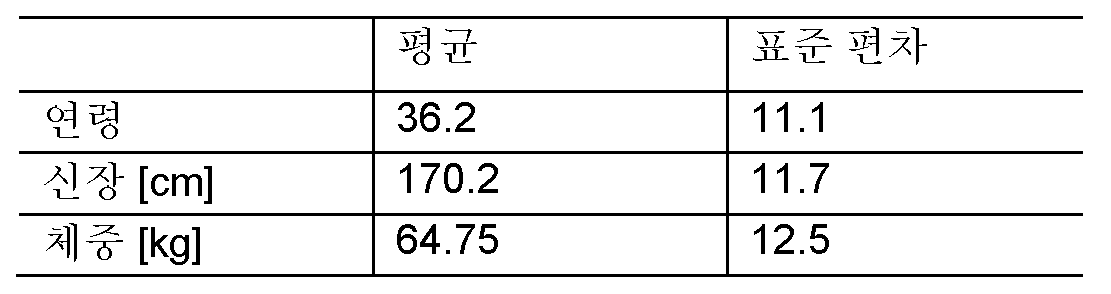
표 1: 분석된 집단의 기술 통계Table 1: Descriptive statistics of the analyzed population
실험 셋업은 하기와 같다:The experimental setup is as follows:
o 2개의 엠파티카 E4 손목 밴드,
o 하기가 구비된 GTEC 폴리그래프:o GTEC polygraph equipped with:
o g.MOBIlab,o g.MOBIlab,
o IR 광원을 갖는 2개의 PPG 센서,
o ECG 케이블.o ECG cable.
본 기구 셋업으로 얻은 측정치들을 검증하기 위해, 이.에.엠. 게엠베하의 임상 디바이스인 모빌-오-그래프(Mobil-O-Graph) PWA 24h라는 최적 표준 기구를 사용하였다 (≪Mobil-O-Graph 24h PWA user's manual≫ [온라인]. 입수: www.iem.de/_attic/website/UserManual_NG_HMS-CS_24h-PWA_EN.pdf). 이 디바이스는 커프를 대상체의 상완에 적용하여 혈압용 표준 측정 디바이스와 유사하게 작동한다. 이를 통해, 압력파에 대한 펄스파 분석을 수행하여 각 지수에 대한 올바른 값들을 얻는 것이 가능하다.To verify the measurements obtained with this instrument setup, E.E.M. An optimal standard instrument called Mobil-O-Graph PWA 24h, a clinical device of GMBeha, was used (≪Mobil-O-Graph 24h PWA user's manual≫ [online]. Obtained: www.iem.de /_attic/website/UserManual_NG_HMS-CS_24h-PWA_EN.pdf). The device works similarly to a standard blood pressure measurement device by applying the cuff to the subject's upper arm. Through this, it is possible to obtain correct values for each index by performing pulse wave analysis on the pressure wave.
실험 프로토콜을 20명의 대상체에 적용하였다. 이는 하기 단계들로 구성된다:The experimental protocol was applied to 20 subjects. It consists of the following steps:
1. 5분의 휴식,1. 5 minutes of rest,
2. 센서 배치:2. Sensor placement:
a. 2개의 E4 손목 밴드가 손목의 등쪽 부분 상에서 서로 4 cm 이격되어 있음, a. Two E4 wristbands 4 cm apart from each other on the dorsal part of the wrist,
b. 2개의 GTEC PPG 센서가 E4 스트랩과 팔의 배쪽 부분 사이에서 서로 4 cm 이격되어 있음, b. Two GTEC PPG sensors spaced 4 cm from each other between the E4 strap and the ventral part of the arm.
3. E4 손목 밴드 블루투스 연결,3. E4 wristband bluetooth connection,
4. GTEC 시스템 블루투스 연결,4. GTEC system Bluetooth connection;
5. 2:30분 획득,5. Acquire 2:30 minutes,
6. 센서 제거,6. Remove the sensor,
7. 모빌-오-그래프 혈압 커프의 배치,7. Mobil-O-Graph blood pressure cuff placement,
8. 모빌-오-그래프 블루투스 연결,8. Mobil-O-Graph Bluetooth connection,
9. "삼중 펄스파 분석" 모드로 혈압 시그널 획득.9. Acquisition of blood pressure signal in "triple pulse wave analysis" mode.
PPG 시그널에 대한 프리프로세싱Preprocessing of PPG signals
프리프로세싱 단계는 PPG 시그널로부터의 올바른 파라미터 추정에 있어서 중요한 이슈이다. 이를 통해, PPG 파동 윤곽을 강화시켜 그의 피봇 포인트들을 보다 용이하게 검출하는 것이 가능하다. 변형이 전혀 없는 측정되는 PPG 시그널은 통상, 도 2.1에 디스플레이된 바와 같이 50 Hz의 주파수에서 육안으로 확인되는 전력선 간섭을 함유한다. 이 간섭을 제거하기 위해 50 Hz의 노치 필터가 사용된다. 전력선 간섭 및 고주파 노이즈가 제거된 PPG 시그널이 도 2.2에 디스플레이되어 있다.The preprocessing step is an important issue in estimating correct parameters from the PPG signal. Through this, it is possible to enhance the PPG wave contour and detect its pivot points more easily. The measured PPG signal without any distortion typically contains power line interference, which is visible to the naked eye at a frequency of 50 Hz, as displayed in Figure 2.1. A 50 Hz notch filter is used to eliminate this interference. A PPG signal from which power line interference and high frequency noise are removed is displayed in FIG. 2.2.
조합된 프리프로세싱 알고리즘을 선택하였으며 [34] [35], 이는 세 단계로 구성된다:The combined preprocessing algorithm was chosen [34] [35], which consists of three steps:
i. 시그널 정규화:i. Signal normalization:

ii. 호흡으로 인해 PPG 시그널에서 항상 존재하는 드리프트를 제거하기 위한 이동 평균 필터,ii. Moving average filter to remove the ever-present drift in the PPG signal due to respiration,
iii. 제로-위상 및 컷오프 주파수 = 20 Hz를 갖는 IV차 체비셰프 저역-통과 필터.iii. Order IV Chebyshev low-pass filter with zero-phase and cutoff frequency = 20 Hz.
20 Hz에서의 단계 필터링, 필터를 통해, 부가적인 정보를 제공하지 않는 시그널의 불규칙성을 제거하는 것이 가능하며; 이들 빠른 요동은 수축기 피크 및 이완기 피크의 올바른 위치에 대한 추정에 해로울 위험이 있다 (도 2.3에 제시되어 있음).Step filtering at 20 Hz, through the filter, it is possible to remove irregularities in the signal that do not provide additional information; These rapid fluctuations risk being detrimental to the estimation of the correct location of the systolic and diastolic peaks (shown in Figure 2.3).
평가 메트릭Evaluation metric
상기와 같은 알고리즘의 추정치들을 임상적으로 승인된 참조 디바이스의 측정치들과 비교함으로써, 제안된 알고리즘의 정확성 및 신뢰성을 검증하였다. 이.에.엠. 게엠베하로부터의 모빌-오-그래프에 의해 얻은 이들 측정치들은 참조값으로서의 역할을 하며, 사실상의 값과 상이할 수 있는데, 그 이유는 디바이스 또한 고유 측정 오차를 가져 그 측정 값들이 요동하기 때문이다. 참조 디바이스의 고유 측정 오차의 영향을 줄이기 위해, 참조 디바이스로 3개의 연속하는 측정치들을 취하고, 각각의 심혈관 파라미터에 대한 3개의 값들의 중앙값을 계산하였다.The accuracy and reliability of the proposed algorithm were verified by comparing the estimates of the above algorithm with the measurements of a clinically approved reference device. E.E.M. These measurements obtained by Mobil-O-Graph from GMbeha serve as reference values, and may differ from the actual values, because the device also has intrinsic measurement errors and the measurements fluctuate. In order to reduce the influence of the intrinsic measurement error of the reference device, three consecutive measurements were taken with the reference device, and the median of the three values for each cardiovascular parameter was calculated.
시그널들을 매트랩(Matlab)으로 프로세싱하였다. 성능 평가를 위한 알고리즘은 3개의 주요 단계를 수반한다:The signals were processed with Matlab. The algorithm for evaluating performance involves three main steps:
1. PPG 시그널들로부터의 파라미터 추정,1. Parameter estimation from PPG signals,
2. 추정된 파라미터들에 대한 선형 회귀 분석,2. Linear regression analysis of estimated parameters,
3. 추정된 파라미터들과 최적 표준 측정치들 사이의 일치에 대한 평가 (하기 표).3. Evaluation of the agreement between the estimated parameters and the best standard measurements (table below).
PPG 시그널로부터의 파라미터 추정치들에 대한 성능은 5가지 지표에 기반하여 평가하였다. 검증을 위해, 5가지 상이한 메트릭, 평균 오차, 표준 편차 (STD), 평균 절대 오차 (MAE), 평균 제곱 오차 (MSE) 및 평균 제곱근 오차 (RMSE)를 계산하였으며, 이 경우 yest(i)는, 모든 참가자에 대한 총 측정 수인 길이 N = 242를 갖는 관심의 대상인 추정된 심혈관 파라미터이고, yref(i)는 그의 심혈관 파라미터 의 참조값이다:The performance of parameter estimates from the PPG signal was evaluated based on five indicators. For verification, five different metrics, mean error, standard deviation (STD), absolute mean error (MAE), mean square error (MSE) and root mean square error (RMSE) were calculated, in this case y est (i) is , Is the estimated cardiovascular parameter of interest with length N = 242, which is the total number of measurements for all participants, y ref (i) is the reference value of his cardiovascular parameter:
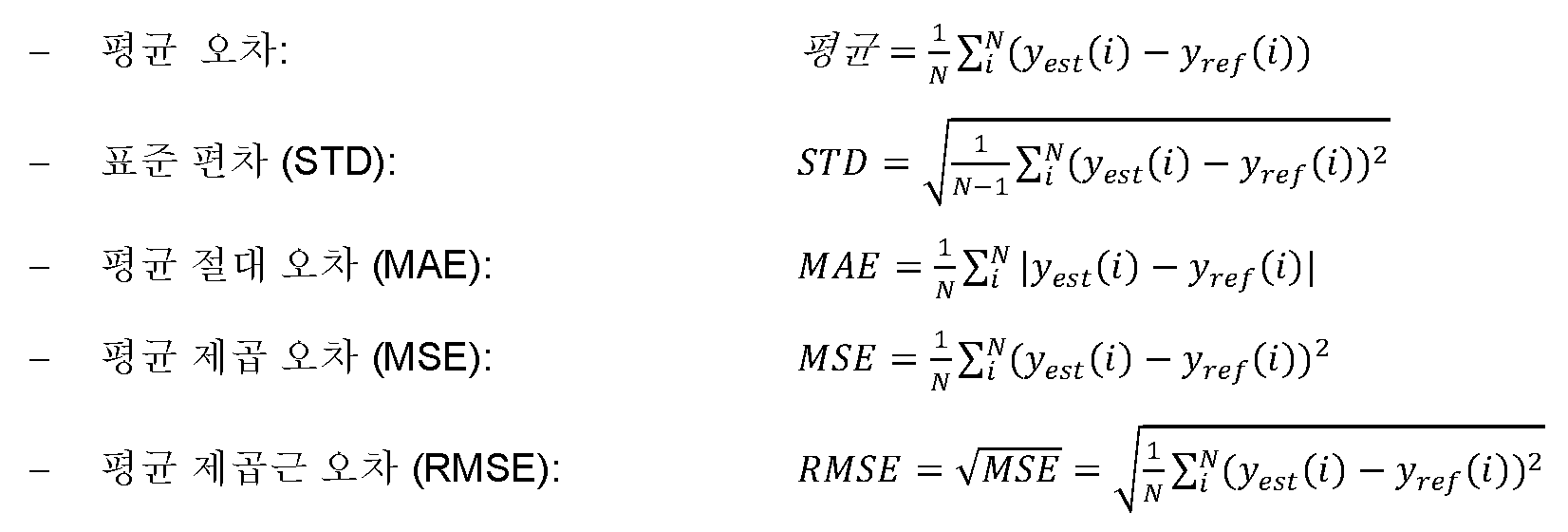
방법 및 최상의 센서 위치가 결정되면, 비모수적 스피어만 순위 상관 계수 ρ를 그의 p-값과 함께 평가한다.Once the method and best sensor location is determined, the nonparametric Spearman rank correlation coefficient ρ is evaluated along with its p-value.
심혈관 파라미터들을 추정하기 위한 선형 회귀 계수의 추정Estimation of linear regression coefficients to estimate cardiovascular parameters
1. 증강 지수 AIx1. Augmented Index AIx
앞에서 기재된 방법들을 사용하여 증강 지수 추정치를 얻었다:Enhancement index estimates were obtained using the methods described previously:
· 방법 1.1: AIx = y/x, 두 지수의 합에 의함Method 1.1: AIx = y/x, by sum of two exponents
· 방법 1.2: AIx = (x-y)/x, 두 지수의 합에 의함Method 1.2: AIx = (x-y)/x, by sum of two exponents
· 방법 2.1: AIx = y/x, 단일 지수의 모델링에 의함Method 2.1: AIx = y/x, by modeling of a single exponent
· 방법 2.2: AIx = (x-y)/x, 단일 지수의 모델링에 의함Method 2.2: AIx = (x-y)/x, by modeling of a single exponent
평균 오차는 작지만 (기본적으로 0임), 표준 편차가 상대적으로 높아서 이러한 종류의 측정치는 신뢰성있는 파라미터로 규정될 수 없었다. 이러한 이유로, 정규화된 지수 AIx@75의 성능을 평가하기로 결정하였다. 표 2.1 및 2.2는, 각각 근위 및 원위 센서들에 의해 기록된 PPG 시그널로부터 얻은 결과를 제시한다.The mean error is small (basically zero), but the standard deviation is relatively high, so this kind of measurement could not be defined as a reliable parameter. For this reason, it was decided to evaluate the performance of the normalized index AIx@75. Tables 2.1 and 2.2 present the results obtained from the PPG signal recorded by the proximal and distal sensors, respectively.

표 2.1: 근위 E4 센서로부터의 증강 지수 @ 75에 대한 결과Table 2.1: Results for Augmentation Index @ 75 from Proximal E4 Sensor
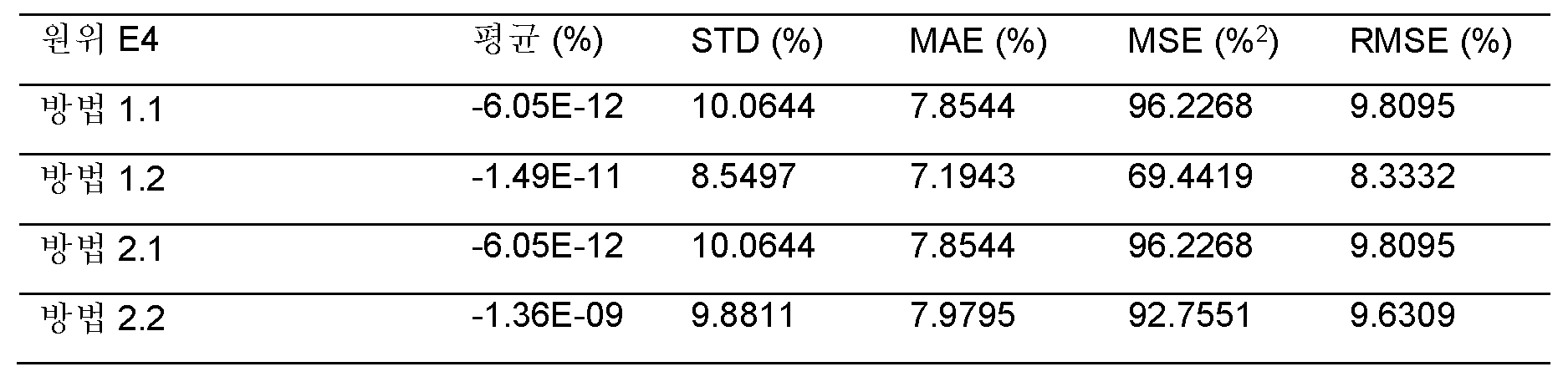
표 2.2: 근위 E4 센서로부터의 증강 지수 @ 75에 대한 결과Table 2.2: Results for Augmentation Index @ 75 from Proximal E4 Sensor
지표들은 모두 AIx에 대해 얻은 것들보다 유의하게 더 낮다. 최상의 결과는 원위 센서로부터의 PPG 시그널을 사용하는 방법 1.2 덕분에 달성된다. 도 3.1은 참조값, 스피어만 상관 계수 및 그의 p-값과 관련하여 본 방법에 의해 얻은 값들을 제시한다.All of the indicators are significantly lower than those obtained for AIx. The best results are achieved thanks to Method 1.2 using the PPG signal from the distal sensor. 3.1 presents the values obtained by the present method with respect to the reference value, the Spearman correlation coefficient and its p-value.
2. 혈관 연령 지수 AgIx2. Vascular Age Index AgIx PPGPPG
혈관 연령 지수를 추정하기 위한 3가지 상이한 방법을 평가하였다:Three different methods for estimating the vascular age index were evaluated:
- 방법 1: 최대 및 최소 피크를 찾아 APG 진폭파를 얻음. 이어서, 식 (1.6)을 사용하여 혈관 연령 지수를 추정함;-Method 1: Find the maximum and minimum peaks to obtain an APG amplitude wave. Then, the vascular age index is estimated using equation (1.6);
- 방법 2: 문헌 [16] [36]에서 찾을 수 있는 추가의 방법을 구현하였음. 이 경우에도 식 (1.6)을 사용하였음;-Method 2: Implemented an additional method found in [16] [36]. Equation (1.6) was also used in this case;
- 방법 3: 방법 2에서와 같이 APG 랜드마크 포인트들을 검출하였으나, 식 (1.7)을 통해 얻은 진폭비와 최적 표준 기구로부터의 혈관 연령 지수를 비교하였음.-Method 3: As in
표 3.1 및 3.2은 근위 및 원위 센서들에 대해 얻은 값들을 제시한다. 혈관 연령 지수가 나이 (y)로 제공되어 있으며, 그의 추정 오차도 마찬가지이다.Tables 3.1 and 3.2 present the values obtained for the proximal and distal sensors. The blood vessel age index is given as age (y), and so is its estimation error.

표 3.1: 근위 E4 센서로부터의 혈관 연령 지수에 대한 결과Table 3.1: Results for Vascular Age Index from Proximal E4 Sensor

표 3.2: 원위 E4 센서로부터의 혈관 연령 지수에 대한 결과Table 3.2: Results for vascular age index from distal E4 sensor
2개의 PPG 기록 부위들 사이에 특별한 차이가 없다. APG 진폭파로부터 추정된 혈관 연령 지수가 매우 정확한 결과를 제공하는 것으로 보이지 않는다. 이러한 이유로, 선형 회귀 내에 연령, 신장 및 중앙값 심박수인 기타 회귀자를 도입하기로 결정하였다 (식 (1.8) 참조). 결과는 표 3.3 및 3.4에 제시되어 있다.There is no particular difference between the two PPG recording sites. The vascular age index estimated from the APG amplitude wave does not appear to provide very accurate results. For this reason, it was decided to introduce age, height and median heart rate other regressors within the linear regression (see equation (1.8)). Results are presented in Tables 3.3 and 3.4.
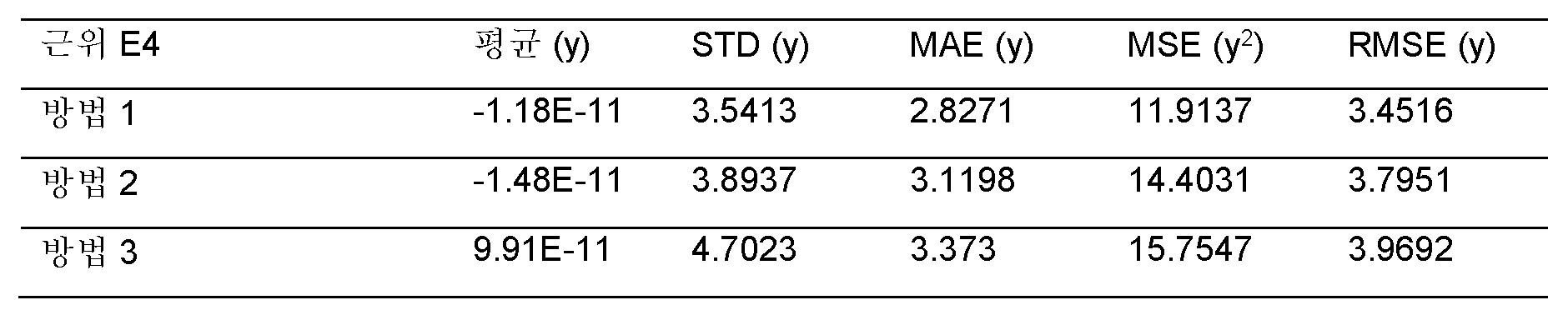
표 3.3: 근위 E4 센서로부터의 메타데이터를 사용한 혈관 연령 지수에 대한 결과Table 3.3: Results for Vascular Age Index Using Metadata from Proximal E4 Sensor

표 3.4: 원위 E4 센서로부터의 메타데이터를 사용한 혈관 연령 지수에 대한 결과Table 3.4: Results for vascular age index using metadata from distal E4 sensor
선형 회귀 추정치 내에 추가의 대상체 정보를 통합함으로써 성능이 상당히 개선된다. 표준 편차 값들이 허용가능하다. 최상의 방법은 근위 PPG 센서의 시그널에 사용된 방법 1이다. 도 3.2는 표준값들과 비교된 이 방법에 의해 얻은 값들을 제시하며, 스피어만 상관 계수 및 그의 p-값이 또한 제시되어 있다.By incorporating additional object information within the linear regression estimate, performance is significantly improved. Standard deviation values are acceptable. The best method is
3. 펄스파 속도 PWV3. Pulse wave speed PWV
GTEC 시스템만을 사용하여 펄스파 속도 추정치들을 얻었다. 3가지 상이한 셋업에 기반한 결과들을 평가하였다:Pulse wave velocity estimates were obtained using only the GTEC system. Results based on three different setups were evaluated:
- 근위 GTEC 센서로부터의 ECG R 피크와 연속하는 PPG 수축기 풋 사이의 펄스 도달 시간,-Pulse arrival time between the ECG R peak from the proximal GTEC sensor and the continuous PPG systolic foot,
- 원위 GTEC 센서로부터의 ECG R 피크와 연속하는 PPG 수축기 풋 사이의 펄스 도달 시간,-Pulse arrival time between the ECG R peak from the distal GTEC sensor and the continuous PPG systolic foot,
- 각각 근위 및 원위 GTEC 센서에 의해 기록된 2개의 PPG 파동의 수축기 풋들 사이의 펄스 전달 시간.-Pulse delivery time between systolic feet of two PPG waves recorded by the proximal and distal GTEC sensors, respectively.
아울러, 선형 회귀가 사용되었다. 본 발명자들은 6개의 모델의 성능을 시험하였다:In addition, linear regression was used. We tested the performance of six models:
- 모델 1: PAT 또는 PTT 단독,-Model 1: PAT or PTT alone,
- 모델 2: PAT 또는 PTT + 연령,-Model 2: PAT or PTT + age,
- 모델 3: PAT 또는 PTT + 연령 + 신장,-Model 3: PAT or PTT + age + height,
- 모델 4: PAT 또는 PTT + 연령 + 신장 + 중앙값(HR), 식 (1.9),-Model 4: PAT or PTT + age + height + median (HR), equation (1.9),
- 모델 5: PTT + 파고 시간 + 경직도 지수 + 펄스 면적 (PPG 근위 센서로부터),-Model 5: PTT + crest time + stiffness index + pulse area (from PPG proximal sensor),
- 모델 6: PTT + 파고 시간 + 경직도 지수 + 펄스 면적 (PPG 원위 센서로부터).-Model 6: PTT + crest time + stiffness index + pulse area (from PPG distal sensor).
이어서, PAT 및 PTT로부터 얻은 PWV에 대한 결과들을 비교하였다.Then, the results for PWV obtained from PAT and PTT were compared.
표 4.1, 4.2 및 4.3은 3가지 상이한 기구 셋업을 사용한 추정된 PWV 값들을 제시한다.Tables 4.1, 4.2 and 4.3 present estimated PWV values using three different instrument setups.
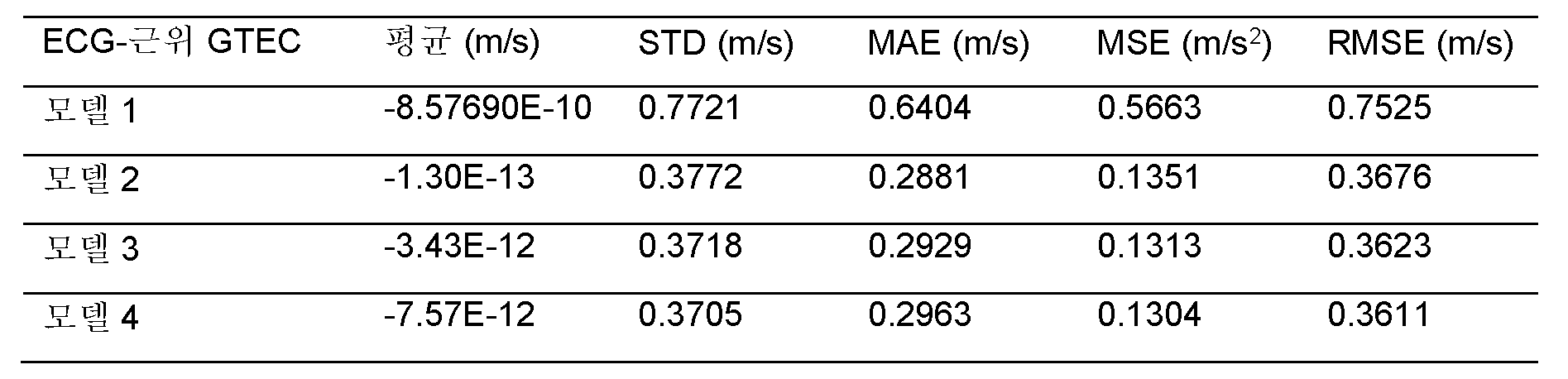
표 4.1: ECG - 근위 GTEC 센서로부터의 펄스파 속도에 대한 결과Table 4.1: ECG-Results for pulse wave velocity from proximal GTEC sensor
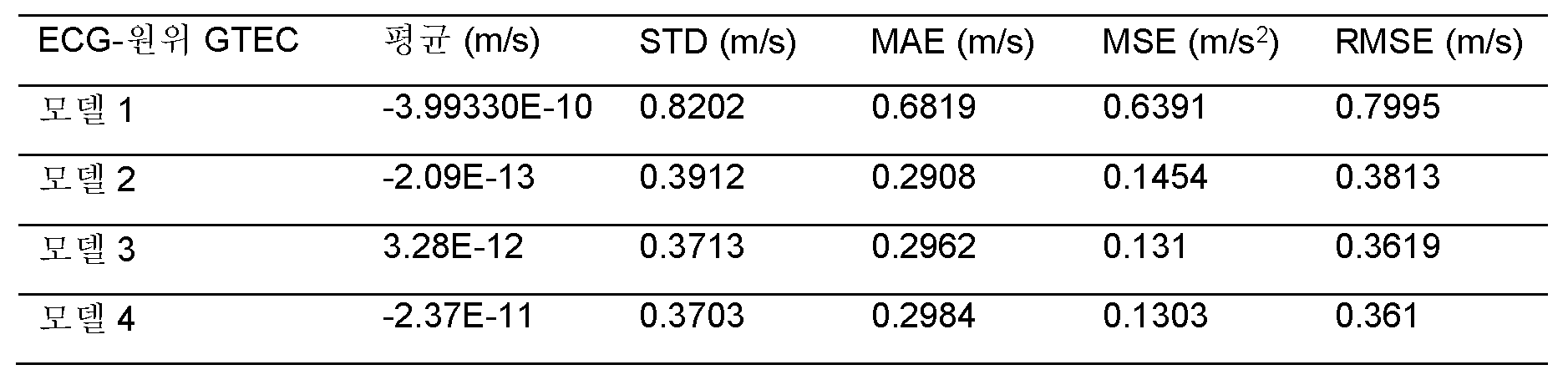
표 4.2: ECG - 원위 GTEC 센서로부터의 펄스파 속도에 대한 결과Table 4.2: ECG-Results for pulse wave velocity from distal GTEC sensor

표 4.3: 근위 - 원위 GTEC 센서들로부터의 펄스파 속도에 대한 결과Table 4.3: Results for pulse wave velocity from proximal-distal GTEC sensors
첫 번째 의의가 있는 결과는, PTT (표 4.3, 모델 1 내지 모델 4)로부터 얻은 PWV 추정치들이 PAT (표 4.1 및 4.2)로부터 얻은 것들보다 더 낮다는 것이다.The first significant result is that the PWV estimates obtained from PTT (Table 4.3,
둘째, 평가 중인 대상체의 다른 개인 데이터가 선형 회귀 모델 내에 포함되면 보다 우수한 결과가 달성될 수 있다. 연령, 신장 및 심박수 중앙값을 포함하는 모델이 사실상 최상의 결과를 제시한다.Second, better results can be achieved if other personal data of the subject under evaluation are included in the linear regression model. Models that include age, height and median heart rate actually give the best results.
PPG 시그널 모폴로지의 파라미터를 사용한다고 해서 주목할 만한 결과로 이어지지는 않는다. 분명히, PWV 추정치는 이들 PPG 피처에 의해 영향을 받지 않는다.Using the parameters of the PPG signal morphology does not lead to notable results. Obviously, the PWV estimate is not affected by these PPG features.
따라서, 최상의 방법은 (1.9)로 제시된 식인 방법 4이다. 도 4.3은 최적 표준 측정치들과 비교된 PWV 추정치들, 스피어만 상관 계수, 및 그의 p-값을 제시한다.Therefore, the best method is Method 4, the equation presented in (1.9). 4.3 presents PWV estimates, Spearman correlation coefficient, and its p-value compared to the best standard measurements.
4. 혈압4. Blood pressure
하기의 선형 회귀에 의해 혈압 추정치들을 얻었다:Blood pressure estimates were obtained by the following linear regression:
- 방법 1: PTT-Method 1: PTT
- 방법 2: PTT + 연령 + 신장 + 중앙값(HR), 식 (1.12) 및 (1.13),-Method 2: PTT + age + height + median (HR), equations (1.12) and (1.13),
- 방법 3: PTT + 파고 시간 + 경직도 지수 + 근위 센서로부터의 펄스 면적, 식 (1.14) 및 (1.15),-Method 3: PTT + crest time + stiffness index + pulse area from proximal sensor, equations (1.14) and (1.15),
- 방법 4: PTT + 파고 시간 + 경직도 지수 + 원위 센서로부터의 펄스 면적.-Method 4: PTT + crest time + stiffness index + pulse area from distal sensor.
수축기 및 이완기 혈압에 대한 결과는 각각 표 5.1 및 5.2에 별도로 제시되어 있다. 혈압은 mmHg 단위로 제공되어 있으며, 그의 추정 오차도 마찬가지이다.Results for systolic and diastolic blood pressure are presented separately in Tables 5.1 and 5.2, respectively. Blood pressure is provided in mmHg, and its estimation error is the same.
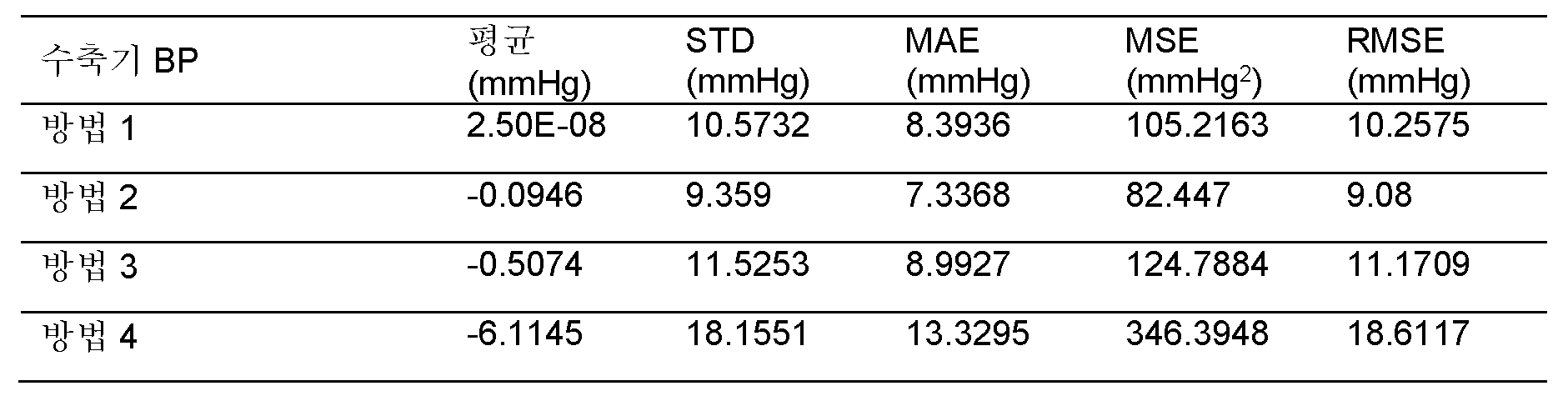
표 5.1: 수축기 혈압에 대한 결과Table 5.1: Results for systolic blood pressure

표 5.2: 이완기 혈압에 대한 결과Table 5.2: Results for diastolic blood pressure
방법 2로부터 양호한 추정치들이 얻어졌는데, 그 이유는 오차 표준 편차가 수축기 및 이완기 혈압 추정치 둘 다에 대해 다른 방법들보다 더 작기 때문이다.Good estimates were obtained from
오차를 더 줄이기 위해, CT, SI 및 PA를 사용한 선형 회귀 모델을 또한 시험하였다. 이 경우, 수축기 BP의 오차 표준 편차가 다른 방법들로 얻은 것보다 더 큰 반면, 이완기 혈압 추정치들은 다른 방법들보다 약간 더 작은 오차 표준 편차를 제시한다 (표 4.14 및 4.15).To further reduce the error, a linear regression model using CT, SI and PA was also tested. In this case, while the standard deviation of error for systolic BP is larger than that obtained with other methods, the diastolic blood pressure estimates give slightly smaller standard deviations of error than the other methods (Tables 4.14 and 4.15).
수축기 BP와 관련하여, 최상의 방법은 방법 2인 것으로 보인다. 이완기 BP의 경우, 방법 3이 바람직할 수 있다. 도 3.4 및 3.5에는, 추정된 수축기 BP 및 이완기 BP가 스피어만 상관 계수 및 그의 p-값과 함께 제시되어 있다.With regard to systolic BP, the best method appears to be
5. 심박수 변이도 HRV5. Heart rate variability HRV
표 5 및 6은 최적 표준과 비교된 근위 및 원위 PPG 시그널들을 통해 얻은 심박수 변이도 (HRV) 분석에 대한 결과를 제시한다. 표 6.1 및 6.2에 제시된 바와 같이 HRV를 추정하기 위해 16종의 파라미터를 고려하였다:Tables 5 and 6 present the results for heart rate variability (HRV) analysis obtained through proximal and distal PPG signals compared to the optimal standard. 16 parameters were considered to estimate HRV as presented in Tables 6.1 and 6.2:

표 6.1: 근위 E4 센서로부터의 HRV에 대한 결과Table 6.1: Results for HRV from proximal E4 sensor
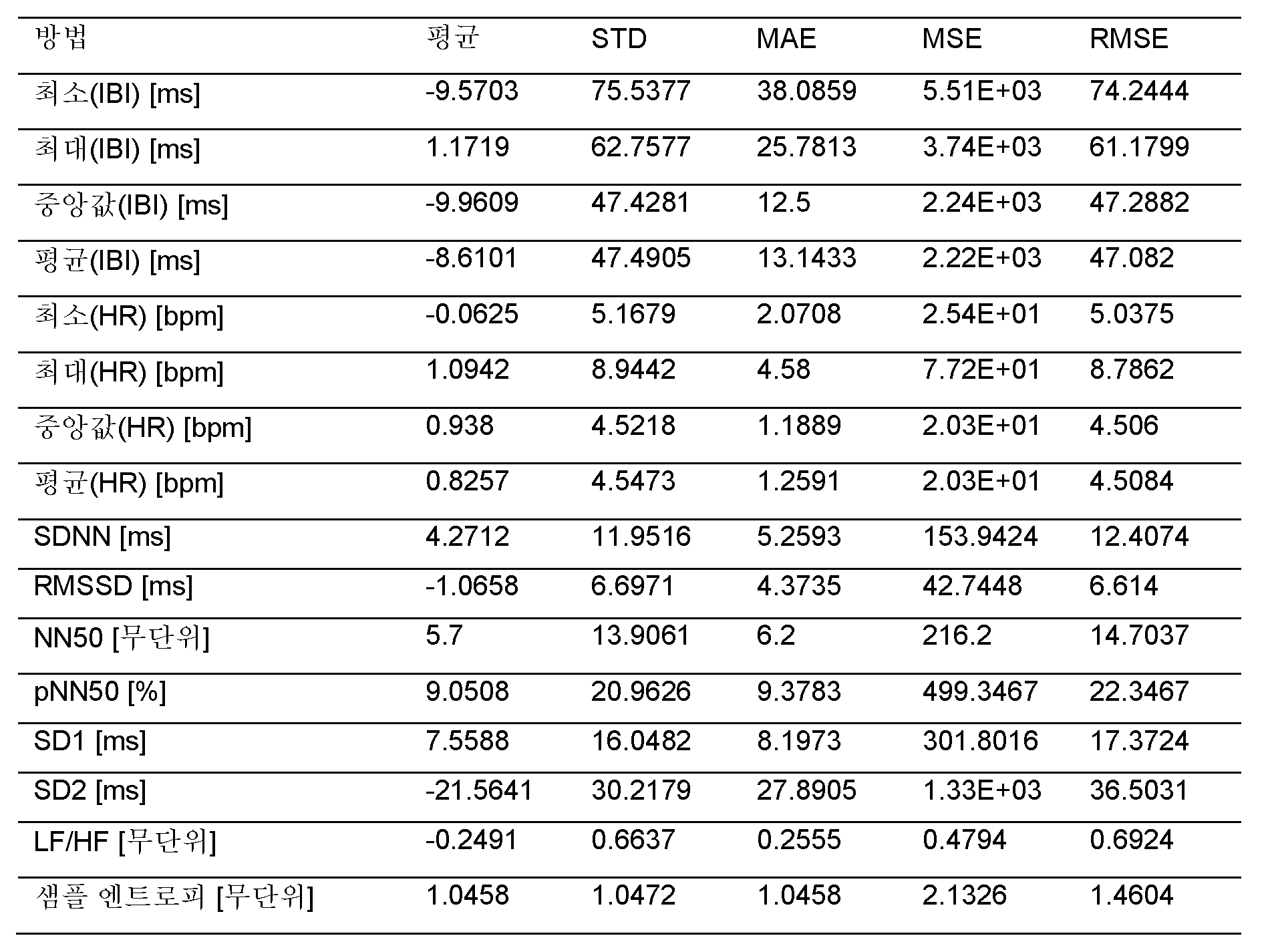
표 6.2: 원위 E4 센서로부터의 HRV에 대한 결과Table 6.2: Results for HRV from distal E4 sensor
전반적으로, 근위 PPG 센서로부터의 추정치들이 원위 센서로부터 얻어진 것들보다 더 정확하다. 이는 손목 밴드의 보다 올바른 위치설정 및 손목 상에서의 더 큰 그립 때문일 수 있다.Overall, the estimates from the proximal PPG sensor are more accurate than those obtained from the distal sensor. This could be due to more correct positioning of the wristband and greater grip on the wrist.
그의 오차 표준 편차는 상대적으로 크지만, RMSSD는 PPG 센서를 착용한 대상체의 심혈관 건강을 다루는 향후 알고리즘에 가치있는 옵션으로서 간주될 수 있다.Although its standard deviation of error is relatively large, RMSSD may be considered a valuable option for future algorithms dealing with cardiovascular health of subjects wearing PPG sensors.
심혈관 파라미터 추정에 대한 분석으로부터, 참조치로부터의 적당한 편차로 추정될 수 있는 다수의 심혈관 파라미터가 존재하는 것으로 제시된다. 결론적으로, 간단하고 저렴한 PPG 시그널은, 현재 가장 보편적인 추출된 피처인 맥박수를 훨씬 뛰어 넘는 사람의 심혈관 건강에 대한 유용한 정보를 함유한다. 본 발명에 따른 신규한 알고리즘은 2개의 PPG 센서가 손목에 위치한 경우에도 표준값으로부터 단지 약간의 편차만으로 심혈관 파라미터들을 추정할 수 있다. 이로써, 2개의 PPG 센서를 1개의 손목 착용형 디바이스 내에 포함시켜 대상체의 심혈관 상태에 대한 상세한 분석을 제공할 가능성이 처음으로 제의된다. 그와 같은 심혈관 파라미터들의 영구적 모니터링을 위해 피트니스 트래커 또는 스마트 워치 내로 2개의 PPG 센서가 포함될 수 있다.From the analysis of cardiovascular parameter estimation, it is suggested that there are a number of cardiovascular parameters that can be estimated with a reasonable deviation from the reference value. In conclusion, the simple and inexpensive PPG signal contains useful information about human cardiovascular health, well beyond the pulse rate, which is currently the most common extracted feature. The novel algorithm according to the present invention can estimate cardiovascular parameters with only a slight deviation from the standard value even when two PPG sensors are located on the wrist. Thereby, for the first time, the possibility of including two PPG sensors in one wrist worn device to provide a detailed analysis of the cardiovascular condition of a subject is proposed. Two PPG sensors can be incorporated into a fitness tracker or smart watch for permanent monitoring of such cardiovascular parameters.
도 4는 예시적으로, 심혈관 파라미터들, 즉, 혈관 연령 지수 AgIx, 혈압 BPdia 및 BPsys, 펄스파 속도 PWV, 증강 지수 AIx 및 심박수 변이도 HRV의 결정을 위한 시스템(100)을 제시한다. 시스템(100)은 손목 착용형 디바이스, 예컨대 피트니스 트래커 또는 스마트 워치로 구현될 수 있고, 2개의 PPG 센서(101), 프로세서(102), 메모리(103), 사전저장된 데이터와의 비교(104), 및 사용자 인터페이스(105)를 포함한다. 데이터베이스(103)는 모든 심혈관 파라미터들에 대한 참조 데이터를 함유하며, 상이한 조직 데이터베이스로부터 얻어진 그리고 시스템(100)의 측정된 데이터로부터 얻어진 생리학적 데이터로부터 도출될 수 있다. 또 다른 실시양태에서, 데이터베이스는 유선 또는 무선 연결을 통해 시스템에 외부적으로 커플링될 수 있다.4 shows a
PPG 센서(101)는, 사용자의 피부를 조명하고 피부에 의한 조명 흡수에 기반한 2개의 PPG 시그널을 측정하도록 구성된다. PPG 센서(101)는, 예를 들어, 적어도 1개의 주기적 광원 (예: 발광 다이오드 (LED) 또는 그와 관련된 임의의 다른 주기적 광원), 및 사용자 피부로부터 반사된 적어도 1개의 주기적 광원에 의해 방출된 주기적 광을 수신하도록 구성된 광 검출기를 포함할 수 있다. 바람직한 실시양태에서, PPG 센서는 적어도 1개의 녹색 광원을 포함하고, 바람직하게는 512 Hz의 샘플링 주파수를 포함한다.The
2개의 PPG 센서(101)는 프로세서(102)에 커플링될 수 있다. 또 다른 실시양태에서, PPG 센서(101)는, 프로세서(102) 및 기타 회로/하드웨어 요소들을 갖는 하우징 내에 포함될 수 있다. 양쪽 PPG 센서(101) 둘 다가 하우징 내에 포함되고 팔의 등쪽 부분을 대향하여 5 cm 이하의 거리를 두고 위치하는 것이 바람직하다.Two
프로세서(102) (예를 들어, 하드웨어 유닛, 장치, 중앙 프로세싱 유닛 (CPU: Central Processing Unit), 그래픽 프로세싱 유닛 (GPU: Graphics Processing Unit))는 PPG 센서(101)로부터 수신된 주기적 광을 수신 및 프로세싱하도록 구성될 수 있다. 프로세싱은 이전에 논의된 바와 같은 제1 경우에서의 데이터의 프리-프로세싱, 및 본 발명에 따른 알고리즘의 도움에 의한 심혈관 파라미터들의 추정을 포함한다. 이어서, 추정된 심혈관 파라미터들은 사전저장된 데이터(104)와 비교되고 사용자 인터페이스(105)로 프로세싱되어 사용자를 위해 디스플레이된다. 사용자는 추가로 추정된 파라미터들로 피드백을 제공할 수 있다.The processor 102 (e.g., a hardware unit, a device, a central processing unit (CPU), a graphics processing unit (GPU)) receives the periodic light received from the
도 5는, 2개의 별도의 PPG 센서로부터의 2개의 PPG 시그널에 기반하여 예시적 실시양태에 따라 대상체에서 1종 이상의 심혈관 파라미터를 추정하는 방법을 예시하는 흐름도이다. 도 5를 참조하면, 작동 시, 전자 디바이스가 사용자의 피부를 조명하고, 피부에 의한 조명 흡수에 기반하여 2개의 PPG 센서로부터의 PPG 시그널을 측정한다. 예를 들어, 전자 디바이스에서, 도 4에 예시된 바와 같이 2개의 PPG 센서(101)는, 사용자의 피부를 조명하고 피부에 의한 조명 흡수에 기반하여 PPG 시그널을 측정하도록 구성된다.5 is a flow diagram illustrating a method of estimating one or more cardiovascular parameters in a subject according to an exemplary embodiment based on two PPG signals from two separate PPG sensors. Referring to FIG. 5, during operation, an electronic device illuminates a user's skin, and measures PPG signals from two PPG sensors based on absorption of light by the skin. For example, in an electronic device, as illustrated in FIG. 4, two
작동 시 전자 디바이스(100)는, 시그널에 대한 프리프로세싱 후에 PPG 피처, HRV 피처, APG 피처 및 펄스 전달 시간 (PTT)을 포함한 양쪽 PPG 시그널로부터의 복수의 파라미터를 추출한다. 2개의 PPG 시그널 분석에 기반하여, 심혈관 파라미터들을 상기 기재된 바와 같이 추정할 수 있다. 전자 디바이스(100)는 추출된 복수의 파라미터에 기반하여 심혈관 파라미터들, 이 경우 PWV 및 BP를 추정한다. 추정된 파라미터들은 사전저장된 심혈관 파라미터들(104)과 비교된다. 결과는 사용자 인터페이스(105) 내에 디스플레이되어 사용자에게 피드백을 제공한다.In operation, the
1종 이상의 심혈관 파라미터를 추정하기 위한 시스템 및 방법의 도움으로 사용자는 심혈관 파라미터와 같은 생리학적 파라미터를 지속적으로 모니터링 및 평가할 수 있다. 특정한 해부학적 데이터를 포함한 고급 알고리즘에 기반하여, 여러 심혈관 파라미터에 대한 평가를 달성한다. 혈류, 혈압, 동맥 경직도, 혈관 탄성, 혈관 연령과 같은 부가적인 파라미터들에 대한 평가를 통해 종합적인 일반 건강 평가가 가능하다. 이와 같은 개별 심혈관 건강 평가는 오해의 위험을 줄이고, 사용자를 위한 보다 정밀한 건강 평가로 이어진다.With the aid of systems and methods for estimating one or more cardiovascular parameters, users can continuously monitor and evaluate physiological parameters, such as cardiovascular parameters. Based on advanced algorithms including specific anatomical data, evaluation of several cardiovascular parameters is achieved. Comprehensive general health evaluation is possible by evaluating additional parameters such as blood flow, blood pressure, arterial stiffness, vascular elasticity, and vascular age. Individual cardiovascular health assessments such as this reduce the risk of misunderstandings and lead to more precise health assessments for users.
Claims (12)
- 대상체의 연령 (p연령) 및 신장 (p신장)을 결정하는 단계,
- 대상체에서의 2개의 상이한 위치에서 적어도 2개의 PPG 센서로 적어도 2개의 광체적변동기록 (PPG) 시그널을 측정하는 단계,
- PPG 시그널을 PPG 펄스들로 분리하며, 이 경우 펄스의 시작 포인트 및 종료 포인트가 PPG 시그널의 수축기 풋에 상응하는 것인 단계,
- 대상체의 심박수 (pHR)를 결정하고, 중앙값 심박수를 계산하는 단계,
- 수축기 Asys 및 이완기 Adia 피크 진폭 및 이들의 시간 ts 및 td를 결정하는 단계,
- PPG 펄스의 2차 도함수를 계산하고, PPG 펄스의 2차 도함수로부터 특징적 포인트 a, b, c, d 및 e를 결정하며, 여기서
a 및 e는 각각 2차 도함수에서 제1 및 제2의 가장 현저한 최대값이고,
c는 포인트 a와 e 사이에서 가장 현저한 피크이고,
b는 2차 도함수에서 가장 현저한 최소값이고,
d는 포인트 c와 e 사이에서 가장 현저한 최소값인
단계,
- 하기를 결정하는 단계:
a) 특징적 포인트 a, b, c, d 및 e, 대상체의 연령 (p연령), 신장 (p신장) 및 중앙값 심박수에 기반한 선형 회귀를 사용한 혈관 연령 지수 AgIx,
b) 2개의 PPG 펄스들 사이의 시차 (PTT), 대상체의 연령 (p연령), 신장 (p신장) 및 중앙값 심박수 추정치에 기반한 선형 회귀를 사용한 펄스파 속도 PWV,
c) 2개의 PPG 펄스들 사이의 시차 (PTT) 및 중앙값 심박수에 기반한 선형 회귀를 사용한 혈압 BPdia 및 BPsys, 및
d) 임의로, 수축기 Asys 및 이완기 Adia 피크 진폭에 기반하며 75 심박동으로 정규화되고 (AIx@75) 정규화된 증강 지수 AIx에 기반한 선형 회귀를 사용한 증강 지수 AIx, 및
- 계산된 파라미터들을 출력하는 단계.A method of estimating one or more cardiovascular parameters in a subject of a given age and height by the following steps:
-Determining the age (p age ) and height (p height ) of the subject,
-Measuring at least two light volume variation recording (PPG) signals with at least two PPG sensors at two different locations on the subject,
-Separating the PPG signal into PPG pulses, in which case the start point and end point of the pulse correspond to the systolic foot of the PPG signal,
-Determining the subject's heart rate (p HR ) and calculating the median heart rate,
-Determining systolic A sys and diastolic A dia peak amplitudes and their times t s and t d ,
-Compute the second derivative of the PPG pulse, and determine the characteristic points a, b, c, d and e from the second derivative of the PPG pulse, where
a and e are the first and second most significant maximums in the second derivative, respectively,
c is the most pronounced peak between points a and e,
b is the most significant minimum in the second derivative,
d is the most pronounced minimum between points c and e
step,
-The steps to determine:
a) vascular age index AgIx using linear regression based on characteristic points a, b, c, d and e, subject's age (p age ), height (p height ) and median heart rate,
b) the pulse wave velocity PWV using linear regression based on the parallax (PTT) between the two PPG pulses, the subject's age (p age ), height (p height ) and median heart rate estimates,
c) blood pressure BP dia and BP sys using linear regression based on parallax (PTT) and median heart rate between two PPG pulses, and
d) Optionally, the augmentation index AIx using linear regression based on the systolic A sys and the diastolic A dia peak amplitude, normalized to 75 heart beats (AIx@75) and based on the normalized augmentation index AIx, and
-Outputting the calculated parameters.
여기서 심혈관 파라미터들은 하기 방정식으로 추정되고:
a) 혈관 연령 지수 AgIx:

b) 펄스파 속도 PWV:

c) 혈압 BPdia 및 BPsys:

d) 정규화된 증강 지수 AIx@75:

여기서, p연령은 대상체의 연령이고, p신장은 대상체의 신장이고, 중앙값(HR)은 중앙값 심박수이고, PTT는 PPG 펄스들 사이의 시차이고, Asys 및 Adia는 각각 수축기 및 이완기 피크의 크기이고, CT는 파고 시간이고, ST는 경직도 지수이고, PA는 PPG 시그널의 펄스 면적이고, x는 이완기 피크 진폭이고, y는 수축기 피크 진폭이고, d0 내지 d4, g0 내지 g4, l0d 내지 l5d, k0s 내지 k4s, 및 b0 내지 b1은 각 선형 회귀 방정식의 계수를 나타내는 것인
방법.The method of claim 1, further comprising determining a crest time (CT), a stiffness index (SI), and a pulse area (PA) of the PPG signal,
Here the cardiovascular parameters are estimated by the following equation:
a) Vascular Age Index AgIx:
b) Pulse wave velocity PWV:
c) blood pressure BP dia and BP sys :
d) Normalized Augmentation Index AIx@75:
Here, p age is the age of the subject, p height is the height of the subject, the median HR is the median heart rate, PTT is the parallax between PPG pulses, and A sys and A dia are the magnitudes of the systolic and diastolic peaks, respectively. , CT is the crest time, ST is the stiffness index, PA is the pulse area of the PPG signal, x is the diastolic peak amplitude, y is the systolic peak amplitude, d 0 to d 4 , g 0 to g 4 , l 0d to l 5d , k 0s to k 4s , and b 0 to b 1 represent the coefficients of each linear regression equation
Way.
- 최소 및 최대 박동간 간격 (IBI)
- 중앙값 및 평균 IBI
- 최소 및 최대 심박수
- 중앙값 및 평균 심박수
- 정상 동박동의 IBI에 대한 표준 편차 (SDNN)
- 서로 50 ms 초과만큼 차이가 나는 인접 간격들의 수 (NN50 및 pNN50)
- 정상 심박동들 사이의 연속 차이의 평균 제곱근 (RMSSD)
- LF/HF 비, 저주파 전력 (0.04 - 0.15 Hz)과 고주파 전력 (0.15 - 0.4 Hz) 사이의 비
- SD1: 모든 IBI 간격을 이전 간격에 대해 플롯팅함으로써 얻은 푸앵카레 플롯 내 x축으로부터의 각 포인트의 거리에 대한 표준 편차
- SD2: 모든 IBI 간격을 이전 간격에 대해 플롯팅함으로써 얻은 푸앵카레 플롯 내 y = x + 평균 (IBI 간격)으로부터의 각 포인트에 대한 표준 편차
- 샘플 엔트로피.The method according to any one of claims 1 to 4, wherein the heart rate variability HRV is additionally determined by calculating one or more of the following:
-Minimum and maximum beat-to-beat interval (IBI)
-Median and mean IBI
-Minimum and maximum heart rate
-Median and average heart rate
-Standard deviation for IBI of normal copper beat (SDNN)
-Number of adjacent intervals that differ by more than 50 ms from each other (NN50 and pNN50)
-Root mean square (RMSSD) of consecutive differences between normal heartbeats
-LF/HF ratio, ratio between low frequency power (0.04-0.15 Hz) and high frequency power (0.15-0.4 Hz)
-SD1: standard deviation for the distance of each point from the x-axis in the Poincaré plot obtained by plotting all IBI intervals against the previous interval
-SD2: y = x + standard deviation for each point from the mean (IBI interval) in the Poincare plot obtained by plotting all IBI intervals against the previous interval
-Sample entropy.
a 및 e는 각각 2차 도함수에서 제1 및 제2의 가장 현저한 최대값이고,
c는 포인트 a와 e 사이에서 가장 현저한 피크이고,
b는 2차 도함수에서 가장 현저한 최소값이고,
d는 포인트 c와 e 사이에서 가장 현저한 최소값인
방법.The method according to any one of claims 1 to 5, wherein the characteristic points a, b, c, d and e are automatically derived from the second derivative of the PPG pulse, wherein
a and e are the first and second most significant maximums in the second derivative, respectively,
c is the most pronounced peak between points a and e,
b is the most significant minimum in the second derivative,
d is the most pronounced minimum between points c and e
Way.
- PPG 파형을 지수 함수를 통한 2개의 펄스파의 합으로서 모델링하고, 비선형 회귀를 적용하여 모델을 PPG 파형에 피팅하고 ts 및 td의 추정치들을 수신하여 Asys 및 Adia를 각각 찾아냄, 또는
- 수축기 피크 Asys에서 알려진 위치를 갖는 제1 파동을 모델링하고, PPG 시그널로부터 그의 지수 모델을 차감하여 나머지 반사파를 산출함.The method according to any one of claims 1 to 6, wherein the systolic A sys and diastolic A dia peak amplitudes and their times t s and t d are determined by one of the following methods:
-Model the PPG waveform as the sum of two pulsed waves through an exponential function, fit the model to the PPG waveform by applying nonlinear regression and receive estimates of t s and t d to find A sys and A dia respectively, or
-Model the first wave with a known position in the systolic peak A sys , and subtract its exponential model from the PPG signal to calculate the remaining reflected wave.
- 혈관 연령 지수 AgIx,
- 펄스파 속도 PWV,
- 혈압 BPdia 및 BPsys,
- 증강 지수 AIx,
여기서 디바이스는
- 팔의 등쪽 부분을 대향하고 5 cm 이하의 거리를 둔 2개의 PPG 센서
를 포함하며,
- 여기서 PPG 센서는 적어도 1개의 녹색 광원을 포함하고, 바람직하게는 512 Hz의 샘플링 주파수를 포함하는 것인
손목 착용형 디바이스.As a wrist worn device for determining one or more of the following parameters:
-Vascular age index AgIx,
-Pulse wave velocity PWV ,
-Blood pressure BP dia and BP sys ,
-Augmented Index AIx,
Where the device is
-Two PPG sensors facing the dorsal part of the arm and a distance of less than 5 cm
Including,
-Where the PPG sensor comprises at least one green light source, preferably a sampling frequency of 512 Hz.
Wrist wearable device.
- 특징적 포인트 a, b, c, d 및 e, 대상체의 연령 (p연령), 신장 (p신장) 및 중앙값 심박수에 기반한 선형 회귀를 사용한 혈관 연령 지수 AgIx,
- 2개의 PPG 펄스들 사이의 시차 (PTT), 대상체의 연령 (p연령), 신장 (p신장) 및 중앙값 심박수 추정치에 기반한 선형 회귀를 사용한 펄스파 속도 PWV,
- 2개의 PPG 펄스들 사이의 시차 (PTT) 및 중앙값 심박수에 기반한 선형 회귀를 사용한 혈압 BPdia 및 BPsys, 및
- 임의로, 수축기 Asys 및 이완기 Adia 피크 진폭에 기반하며 75 심박동으로 정규화되고 (AIx@75) 정규화된 증강 지수 AIx에 기반한 선형 회귀를 사용한 증강 지수 AIx.The wrist worn device of claim 11, further comprising signal processing means adapted to calculate one or more of the following:
-Vascular age index AgIx using linear regression based on characteristic points a, b, c, d and e, subject's age (p age ), height (p height ) and median heart rate,
-Pulse wave velocity PWV using linear regression based on parallax (PTT) between two PPG pulses, subject's age (p age ), height (p height ) and median heart rate estimates,
-Blood pressure BP dia and BP sys using linear regression based on parallax (PTT) and median heart rate between two PPG pulses, and
-Optionally, the augmentation exponent AIx using linear regression based on the systolic A sys and diastolic A dia peak amplitudes, normalized to 75 heart beats (AIx@75) and based on the normalized augmentation index AIx.
Applications Claiming Priority (3)
| Application Number | Priority Date | Filing Date | Title |
|---|---|---|---|
| EP18168758 | 2018-04-23 | ||
| EP18168758.3 | 2018-04-23 | ||
| PCT/EP2019/060146 WO2019206818A1 (en) | 2018-04-23 | 2019-04-18 | Methods to estimate the blood pressure and the arterial stiffness based on photoplethysmographic (ppg) signals |
Publications (1)
| Publication Number | Publication Date |
|---|---|
| KR20210005644A true KR20210005644A (en) | 2021-01-14 |
Family
ID=62046748
Family Applications (1)
| Application Number | Title | Priority Date | Filing Date |
|---|---|---|---|
| KR1020207033166A Withdrawn KR20210005644A (en) | 2018-04-23 | 2019-04-18 | Method for estimating blood pressure and arterial stiffness based on light volumetric variability recording (PPG) signal |
Country Status (11)
| Country | Link |
|---|---|
| US (2) | US20210244302A1 (en) |
| EP (2) | EP3784121A1 (en) |
| JP (1) | JP2021519621A (en) |
| KR (1) | KR20210005644A (en) |
| CN (1) | CN112040846A (en) |
| AU (1) | AU2019260099A1 (en) |
| BR (1) | BR112020021760A2 (en) |
| CA (1) | CA3097663A1 (en) |
| MX (1) | MX2020011160A (en) |
| RU (1) | RU2020134568A (en) |
| WO (2) | WO2019206813A1 (en) |
Cited By (2)
| Publication number | Priority date | Publication date | Assignee | Title |
|---|---|---|---|---|
| KR20250007346A (en) * | 2023-07-05 | 2025-01-14 | 조선대학교산학협력단 | Blood pressure estimation method using cascade forest regression model |
| WO2025048045A1 (en) * | 2023-08-28 | 2025-03-06 | 주식회사 그레비티 | Sensor strip storage-type apparatus for measuring urine glucose levels and vascular elasticity |
Families Citing this family (34)
| Publication number | Priority date | Publication date | Assignee | Title |
|---|---|---|---|---|
| EP3770921A1 (en) * | 2019-07-22 | 2021-01-27 | Tata Consultancy Services Limited | Method and system for pressure autoregulation based synthesizing of photoplethysmogram signal |
| AU2020368639B2 (en) * | 2019-10-17 | 2026-01-29 | Boehringer Ingelheim Vetmedica Gmbh | Method and examination apparatus for medical examination of an animal |
| WO2021249850A1 (en) * | 2020-06-09 | 2021-12-16 | Evonik Operations Gmbh | Wearable device |
| US12082948B2 (en) | 2020-06-17 | 2024-09-10 | Samsung Electronics Co., Ltd. | Apparatus and method for generating blood pressure estimation model, and apparatus for estimating blood pressure |
| US12507901B2 (en) | 2020-07-14 | 2025-12-30 | Apple Inc. | Integrated flexible sensor for blood pressure measurements |
| CN114424933B (en) * | 2020-10-29 | 2024-04-23 | 华为技术有限公司 | PWV detection method and device based on portable electronic device |
| CN114431847B (en) * | 2020-11-06 | 2024-10-11 | 爱奥乐医疗器械(深圳)有限公司 | Arteriosclerosis detection method, device, system and storage medium |
| EP4014837A1 (en) * | 2020-12-15 | 2022-06-22 | Koninklijke Philips N.V. | Method, apparatus and computer program product for analysing a pulse wave signal |
| US20240049970A1 (en) * | 2020-12-30 | 2024-02-15 | Suntech Medical, Inc. | Systems, methods and apparatus for generating blood pressure estimations using real-time photoplethysmography data |
| CN112842311B (en) * | 2021-01-29 | 2022-12-02 | 清华大学深圳国际研究生院 | Wearable heart rate real-time detection system |
| US12251204B2 (en) | 2021-02-03 | 2025-03-18 | Apple Inc. | Blood pressure monitoring system including a liquid filled sensor |
| CN112957022A (en) * | 2021-03-24 | 2021-06-15 | 南京邮电大学 | Fast self-adaptive acquisition device and acquisition method for PPG (photoplethysmography) signals |
| CN113040738B (en) * | 2021-03-29 | 2023-03-24 | 南京邮电大学 | Blood pressure detecting device |
| CN114027810B (en) * | 2021-03-31 | 2024-03-26 | 北京超思电子技术有限责任公司 | Blood pressure calculation model generation method containing arteriosclerosis classification and blood pressure measurement system |
| US20220361761A1 (en) * | 2021-04-26 | 2022-11-17 | Stichting Imec Nederland | Method, a device, and a system for estimating a measure of cardiovascular health of a subject |
| US20220400959A1 (en) * | 2021-06-22 | 2022-12-22 | Apple Inc. | Non-invasive blood pressure measurement techniques based on wave shape change during an external pressure cycle |
| CN113520350B (en) * | 2021-07-27 | 2024-05-17 | 香港心脑血管健康工程研究中心有限公司 | Processing method and device for acquiring relevant characteristic parameters and index information of blood pressure chart signals |
| CN113397519B (en) * | 2021-08-05 | 2024-05-28 | 季华实验室 | Device for detecting cardiovascular health status |
| CN113712524B (en) * | 2021-09-14 | 2023-08-01 | 北京大学人民医院 | A data processing device, system and kit for assisting assessment of cardiovascular risk |
| KR102595839B1 (en) * | 2021-09-15 | 2023-10-30 | 주식회사 스카이랩스 | Smart ring detecting bio-signal |
| CN113951846B (en) * | 2021-12-17 | 2022-04-12 | 北京麦邦光电仪器有限公司 | Pulse wave signal processing method and device and readable storage medium |
| CN113925472B (en) * | 2021-12-17 | 2022-04-12 | 北京麦邦光电仪器有限公司 | Method and device for acquiring quantitative index of arterial pressure wave conduction velocity |
| CN114176532B (en) * | 2021-12-31 | 2023-06-23 | 北京大学人民医院 | A clinical verification method and application system for measuring cfPWV parameters |
| CN114145725B (en) * | 2022-02-08 | 2022-05-06 | 广东工业大学 | A PPG sampling rate estimation method based on non-invasive continuous blood pressure measurement |
| KR102910722B1 (en) | 2022-02-21 | 2026-01-12 | 삼성전자주식회사 | Apparatus and method for estimating bio-information |
| CN114743671B (en) * | 2022-02-28 | 2024-09-13 | 浙江大学 | A model device for assessing the risk of early arteriosclerosis |
| CN115067906A (en) * | 2022-05-18 | 2022-09-20 | 南京邮电大学 | Neighborhood rough set attribute reduction identity recognition method and device based on PPG signal |
| US12343125B2 (en) * | 2022-08-08 | 2025-07-01 | Oura Health Oy | Cardiovascular health metric determination from wearable-based physiological data |
| CN115969342A (en) * | 2022-12-23 | 2023-04-18 | 安徽中科医疗器械有限公司 | Sphygmomanometer with arterial elasticity and microcirculation evaluation function |
| WO2025065316A1 (en) * | 2023-09-27 | 2025-04-03 | 南方科技大学 | Non-contact blood pressure monitoring apparatus, method and system for enhancing robustness by using spatial redundancy |
| CN117137465B (en) * | 2023-11-01 | 2024-04-16 | 深圳市奋达智能技术有限公司 | Blood flow dynamic parameter measurement method and related equipment thereof |
| CN119235281B (en) * | 2024-01-17 | 2025-09-12 | 荣耀终端股份有限公司 | Method and device for detecting blood pressure |
| CN119112129A (en) * | 2024-09-14 | 2024-12-13 | 四川大学 | Integrated flexible patch and method for measuring dynamic blood pressure |
| CN119732674B (en) * | 2025-03-06 | 2025-07-11 | 杭州汇萃智能科技有限公司 | Height measurement method, system and readable storage medium based on industrial camera |
Family Cites Families (13)
| Publication number | Priority date | Publication date | Assignee | Title |
|---|---|---|---|---|
| WO2005069740A2 (en) * | 2004-01-27 | 2005-08-04 | Cardiometer Ltd. | Method and system for cardiovascular system diagnosis |
| KR101298838B1 (en) | 2010-11-29 | 2013-08-23 | (주)더힘스 | Information providing method for arterial stiffness diagnosis |
| EP2674773A1 (en) | 2012-06-12 | 2013-12-18 | Koninklijke Philips N.V. | Oscillation applicator for MR rheology |
| US20150182132A1 (en) | 2012-08-10 | 2015-07-02 | Cnv Systems Ltd. | Mobile device system for measurement of cardiovascular health |
| US20150245777A1 (en) * | 2012-10-19 | 2015-09-03 | Basis Science, Inc. | Detection of emotional states |
| US11850066B2 (en) | 2013-10-31 | 2023-12-26 | The General Hospital Corporation | System for measuring and monitoring blood pressure |
| KR20170008197A (en) * | 2014-05-22 | 2017-01-23 | 삼성전자주식회사 | Electrocardiogram watch clasp related applications |
| WO2015193917A2 (en) | 2014-06-20 | 2015-12-23 | Healthcare Technology Innovation Centre | Method and system for cuff-less blood pressure (bp) measurement of a subject |
| US9848825B2 (en) | 2014-09-29 | 2017-12-26 | Microsoft Technology Licensing, Llc | Wearable sensing band |
| EP3061391B1 (en) * | 2015-02-27 | 2020-05-13 | Preventicus GmbH | Apparatus and method for determining blood pressure |
| WO2017142240A1 (en) | 2016-02-18 | 2017-08-24 | Samsung Electronics Co., Ltd. | Method and electronic device for cuff-less blood pressure(bp) measurement |
| US20170238819A1 (en) * | 2016-02-18 | 2017-08-24 | Garmin Switzerland Gmbh | System and method to determine blood pressure |
| CN109480805B (en) * | 2017-09-13 | 2023-08-15 | 三星电子株式会社 | Bioinformatics measuring device and bioinformatics measuring method |
-
2019
- 2019-04-18 US US17/045,715 patent/US20210244302A1/en not_active Abandoned
- 2019-04-18 RU RU2020134568A patent/RU2020134568A/en unknown
- 2019-04-18 EP EP19717937.7A patent/EP3784121A1/en not_active Withdrawn
- 2019-04-18 MX MX2020011160A patent/MX2020011160A/en unknown
- 2019-04-18 BR BR112020021760-3A patent/BR112020021760A2/en not_active Application Discontinuation
- 2019-04-18 WO PCT/EP2019/060121 patent/WO2019206813A1/en not_active Ceased
- 2019-04-18 US US17/045,910 patent/US20210030372A1/en not_active Abandoned
- 2019-04-18 KR KR1020207033166A patent/KR20210005644A/en not_active Withdrawn
- 2019-04-18 AU AU2019260099A patent/AU2019260099A1/en not_active Abandoned
- 2019-04-18 JP JP2020547035A patent/JP2021519621A/en not_active Withdrawn
- 2019-04-18 WO PCT/EP2019/060146 patent/WO2019206818A1/en not_active Ceased
- 2019-04-18 CN CN201980027701.5A patent/CN112040846A/en active Pending
- 2019-04-18 EP EP19718374.2A patent/EP3784122A1/en not_active Withdrawn
- 2019-04-18 CA CA3097663A patent/CA3097663A1/en active Pending
Cited By (2)
| Publication number | Priority date | Publication date | Assignee | Title |
|---|---|---|---|---|
| KR20250007346A (en) * | 2023-07-05 | 2025-01-14 | 조선대학교산학협력단 | Blood pressure estimation method using cascade forest regression model |
| WO2025048045A1 (en) * | 2023-08-28 | 2025-03-06 | 주식회사 그레비티 | Sensor strip storage-type apparatus for measuring urine glucose levels and vascular elasticity |
Also Published As
| Publication number | Publication date |
|---|---|
| RU2020134568A (en) | 2022-04-21 |
| EP3784121A1 (en) | 2021-03-03 |
| BR112020021760A2 (en) | 2021-01-26 |
| CA3097663A1 (en) | 2019-10-31 |
| JP2021519621A (en) | 2021-08-12 |
| MX2020011160A (en) | 2020-11-12 |
| US20210244302A1 (en) | 2021-08-12 |
| AU2019260099A1 (en) | 2020-11-19 |
| WO2019206818A1 (en) | 2019-10-31 |
| WO2019206813A1 (en) | 2019-10-31 |
| CN112040846A (en) | 2020-12-04 |
| EP3784122A1 (en) | 2021-03-03 |
| US20210030372A1 (en) | 2021-02-04 |
Similar Documents
| Publication | Publication Date | Title |
|---|---|---|
| KR20210005644A (en) | Method for estimating blood pressure and arterial stiffness based on light volumetric variability recording (PPG) signal | |
| CN101264011B (en) | Method and apparatus for cufflessly and non-invasively measuring wrist blood pressure | |
| KR100855043B1 (en) | Non-invasive continuous blood pressure, arterial elasticity measurement method | |
| KR20180029072A (en) | Biological data processing | |
| CN105708431A (en) | Real-time blood pressure measuring device and measuring method | |
| KR20120057813A (en) | Heart rate measurement method using optical pulse wave | |
| Taha et al. | A review on non-invasive hypertension monitoring system by using photoplethysmography method | |
| KR100855042B1 (en) | Non-invasive continuous blood pressure, arterial elasticity measuring device | |
| Rao et al. | A comparative analysis of reflective and transmissive PPG sensor in pulse acquisition system | |
| KR100877212B1 (en) | Non-invasive continuous blood pressure, arterial elasticity measuring device | |
| Hayirlioglu et al. | PhysioPatch: A multimodal and adaptable wearable patch for cardiovascular and cardiopulmonary assessment | |
| KR100877207B1 (en) | Non-invasive continuous blood pressure, arterial elasticity measuring device | |
| Tanaka et al. | Accuracy assessment of a noninvasive device for monitoring beat-by-beat blood pressure in the radial artery using the volume-compensation method | |
| KR102153625B1 (en) | Non-pressure wrist-type blood pressure measuring device and blood pressure estimation method using the same | |
| WO2021249850A1 (en) | Wearable device | |
| Alqudah et al. | Multiple time and spectral analysis techniques for comparing the PhotoPlethysmography to PiezoelectricPlethysmography with electrocardiography | |
| Nagy et al. | Sensor fusion for the accurate non-invasive measurement of blood pressure | |
| JP2000225097A (en) | Portable blood pressure monitor | |
| JP2022167320A (en) | Pulse wave analysis device, pulse wave analysis method, and pulse wave analysis program | |
| Sharma et al. | Cuff-less blood pressure measurement from wearable optical biosignal | |
| Vu et al. | Proposing a Method to Measure NIBP Parameters using PPG Signal and Analyzing the Morphology of Oscillometric | |
| Devaki et al. | On the Development of a Wearable Multi-Spectral Photoplethysmographic Device for Heart Rate Detection | |
| Slabov | Development and investigation of long-term, unobtrusive blood pressure monitoring system | |
| Paksin et al. | Modeling Blood Pressure Through Non-Invasive Vascular Contraction Signals | |
| Das et al. | Real time Blood Pressure Detection System using YOLOv3 method |
Legal Events
| Date | Code | Title | Description |
|---|---|---|---|
| PA0105 | International application |
Patent event date: 20201118 Patent event code: PA01051R01D Comment text: International Patent Application |
|
| PG1501 | Laying open of application | ||
| PC1203 | Withdrawal of no request for examination |