KR20190130080A - Method offor signaling image information, and method offor decoding image information using same - Google Patents
Method offor signaling image information, and method offor decoding image information using same Download PDFInfo
- Publication number
- KR20190130080A KR20190130080A KR1020197033743A KR20197033743A KR20190130080A KR 20190130080 A KR20190130080 A KR 20190130080A KR 1020197033743 A KR1020197033743 A KR 1020197033743A KR 20197033743 A KR20197033743 A KR 20197033743A KR 20190130080 A KR20190130080 A KR 20190130080A
- Authority
- KR
- South Korea
- Prior art keywords
- mode
- prediction
- information
- merge
- current block
- Prior art date
- Legal status (The legal status is an assumption and is not a legal conclusion. Google has not performed a legal analysis and makes no representation as to the accuracy of the status listed.)
- Granted
Links
Images


Classifications
-
- H—ELECTRICITY
- H04—ELECTRIC COMMUNICATION TECHNIQUE
- H04N—PICTORIAL COMMUNICATION, e.g. TELEVISION
- H04N19/00—Methods or arrangements for coding, decoding, compressing or decompressing digital video signals
- H04N19/10—Methods or arrangements for coding, decoding, compressing or decompressing digital video signals using adaptive coding
- H04N19/102—Methods or arrangements for coding, decoding, compressing or decompressing digital video signals using adaptive coding characterised by the element, parameter or selection affected or controlled by the adaptive coding
- H04N19/103—Selection of coding mode or of prediction mode
- H04N19/109—Selection of coding mode or of prediction mode among a plurality of temporal predictive coding modes
-
- H—ELECTRICITY
- H04—ELECTRIC COMMUNICATION TECHNIQUE
- H04N—PICTORIAL COMMUNICATION, e.g. TELEVISION
- H04N19/00—Methods or arrangements for coding, decoding, compressing or decompressing digital video signals
- H04N19/10—Methods or arrangements for coding, decoding, compressing or decompressing digital video signals using adaptive coding
- H04N19/102—Methods or arrangements for coding, decoding, compressing or decompressing digital video signals using adaptive coding characterised by the element, parameter or selection affected or controlled by the adaptive coding
- H04N19/132—Sampling, masking or truncation of coding units, e.g. adaptive resampling, frame skipping, frame interpolation or high-frequency transform coefficient masking
-
- H—ELECTRICITY
- H04—ELECTRIC COMMUNICATION TECHNIQUE
- H04N—PICTORIAL COMMUNICATION, e.g. TELEVISION
- H04N19/00—Methods or arrangements for coding, decoding, compressing or decompressing digital video signals
- H04N19/10—Methods or arrangements for coding, decoding, compressing or decompressing digital video signals using adaptive coding
- H04N19/102—Methods or arrangements for coding, decoding, compressing or decompressing digital video signals using adaptive coding characterised by the element, parameter or selection affected or controlled by the adaptive coding
- H04N19/13—Adaptive entropy coding, e.g. adaptive variable length coding [AVLC] or context adaptive binary arithmetic coding [CABAC]
-
- H—ELECTRICITY
- H04—ELECTRIC COMMUNICATION TECHNIQUE
- H04N—PICTORIAL COMMUNICATION, e.g. TELEVISION
- H04N19/00—Methods or arrangements for coding, decoding, compressing or decompressing digital video signals
- H04N19/10—Methods or arrangements for coding, decoding, compressing or decompressing digital video signals using adaptive coding
- H04N19/102—Methods or arrangements for coding, decoding, compressing or decompressing digital video signals using adaptive coding characterised by the element, parameter or selection affected or controlled by the adaptive coding
- H04N19/103—Selection of coding mode or of prediction mode
- H04N19/107—Selection of coding mode or of prediction mode between spatial and temporal predictive coding, e.g. picture refresh
-
- H—ELECTRICITY
- H04—ELECTRIC COMMUNICATION TECHNIQUE
- H04N—PICTORIAL COMMUNICATION, e.g. TELEVISION
- H04N19/00—Methods or arrangements for coding, decoding, compressing or decompressing digital video signals
- H04N19/10—Methods or arrangements for coding, decoding, compressing or decompressing digital video signals using adaptive coding
- H04N19/102—Methods or arrangements for coding, decoding, compressing or decompressing digital video signals using adaptive coding characterised by the element, parameter or selection affected or controlled by the adaptive coding
- H04N19/119—Adaptive subdivision aspects, e.g. subdivision of a picture into rectangular or non-rectangular coding blocks
-
- H—ELECTRICITY
- H04—ELECTRIC COMMUNICATION TECHNIQUE
- H04N—PICTORIAL COMMUNICATION, e.g. TELEVISION
- H04N19/00—Methods or arrangements for coding, decoding, compressing or decompressing digital video signals
- H04N19/10—Methods or arrangements for coding, decoding, compressing or decompressing digital video signals using adaptive coding
- H04N19/102—Methods or arrangements for coding, decoding, compressing or decompressing digital video signals using adaptive coding characterised by the element, parameter or selection affected or controlled by the adaptive coding
- H04N19/12—Selection from among a plurality of transforms or standards, e.g. selection between discrete cosine transform [DCT] and sub-band transform or selection between H.263 and H.264
- H04N19/122—Selection of transform size, e.g. 8x8 or 2x4x8 DCT; Selection of sub-band transforms of varying structure or type
-
- H—ELECTRICITY
- H04—ELECTRIC COMMUNICATION TECHNIQUE
- H04N—PICTORIAL COMMUNICATION, e.g. TELEVISION
- H04N19/00—Methods or arrangements for coding, decoding, compressing or decompressing digital video signals
- H04N19/10—Methods or arrangements for coding, decoding, compressing or decompressing digital video signals using adaptive coding
- H04N19/102—Methods or arrangements for coding, decoding, compressing or decompressing digital video signals using adaptive coding characterised by the element, parameter or selection affected or controlled by the adaptive coding
- H04N19/124—Quantisation
-
- H—ELECTRICITY
- H04—ELECTRIC COMMUNICATION TECHNIQUE
- H04N—PICTORIAL COMMUNICATION, e.g. TELEVISION
- H04N19/00—Methods or arrangements for coding, decoding, compressing or decompressing digital video signals
- H04N19/10—Methods or arrangements for coding, decoding, compressing or decompressing digital video signals using adaptive coding
- H04N19/134—Methods or arrangements for coding, decoding, compressing or decompressing digital video signals using adaptive coding characterised by the element, parameter or criterion affecting or controlling the adaptive coding
- H04N19/157—Assigned coding mode, i.e. the coding mode being predefined or preselected to be further used for selection of another element or parameter
- H04N19/159—Prediction type, e.g. intra-frame, inter-frame or bidirectional frame prediction
-
- H—ELECTRICITY
- H04—ELECTRIC COMMUNICATION TECHNIQUE
- H04N—PICTORIAL COMMUNICATION, e.g. TELEVISION
- H04N19/00—Methods or arrangements for coding, decoding, compressing or decompressing digital video signals
- H04N19/10—Methods or arrangements for coding, decoding, compressing or decompressing digital video signals using adaptive coding
- H04N19/169—Methods or arrangements for coding, decoding, compressing or decompressing digital video signals using adaptive coding characterised by the coding unit, i.e. the structural portion or semantic portion of the video signal being the object or the subject of the adaptive coding
- H04N19/17—Methods or arrangements for coding, decoding, compressing or decompressing digital video signals using adaptive coding characterised by the coding unit, i.e. the structural portion or semantic portion of the video signal being the object or the subject of the adaptive coding the unit being an image region, e.g. an object
- H04N19/176—Methods or arrangements for coding, decoding, compressing or decompressing digital video signals using adaptive coding characterised by the coding unit, i.e. the structural portion or semantic portion of the video signal being the object or the subject of the adaptive coding the unit being an image region, e.g. an object the region being a block, e.g. a macroblock
-
- H—ELECTRICITY
- H04—ELECTRIC COMMUNICATION TECHNIQUE
- H04N—PICTORIAL COMMUNICATION, e.g. TELEVISION
- H04N19/00—Methods or arrangements for coding, decoding, compressing or decompressing digital video signals
- H04N19/46—Embedding additional information in the video signal during the compression process
-
- H—ELECTRICITY
- H04—ELECTRIC COMMUNICATION TECHNIQUE
- H04N—PICTORIAL COMMUNICATION, e.g. TELEVISION
- H04N19/00—Methods or arrangements for coding, decoding, compressing or decompressing digital video signals
- H04N19/50—Methods or arrangements for coding, decoding, compressing or decompressing digital video signals using predictive coding
- H04N19/503—Methods or arrangements for coding, decoding, compressing or decompressing digital video signals using predictive coding involving temporal prediction
-
- H—ELECTRICITY
- H04—ELECTRIC COMMUNICATION TECHNIQUE
- H04N—PICTORIAL COMMUNICATION, e.g. TELEVISION
- H04N19/00—Methods or arrangements for coding, decoding, compressing or decompressing digital video signals
- H04N19/50—Methods or arrangements for coding, decoding, compressing or decompressing digital video signals using predictive coding
- H04N19/503—Methods or arrangements for coding, decoding, compressing or decompressing digital video signals using predictive coding involving temporal prediction
- H04N19/51—Motion estimation or motion compensation
- H04N19/513—Processing of motion vectors
-
- H—ELECTRICITY
- H04—ELECTRIC COMMUNICATION TECHNIQUE
- H04N—PICTORIAL COMMUNICATION, e.g. TELEVISION
- H04N19/00—Methods or arrangements for coding, decoding, compressing or decompressing digital video signals
- H04N19/50—Methods or arrangements for coding, decoding, compressing or decompressing digital video signals using predictive coding
- H04N19/503—Methods or arrangements for coding, decoding, compressing or decompressing digital video signals using predictive coding involving temporal prediction
- H04N19/51—Motion estimation or motion compensation
- H04N19/513—Processing of motion vectors
- H04N19/517—Processing of motion vectors by encoding
- H04N19/52—Processing of motion vectors by encoding by predictive encoding
-
- H—ELECTRICITY
- H04—ELECTRIC COMMUNICATION TECHNIQUE
- H04N—PICTORIAL COMMUNICATION, e.g. TELEVISION
- H04N19/00—Methods or arrangements for coding, decoding, compressing or decompressing digital video signals
- H04N19/60—Methods or arrangements for coding, decoding, compressing or decompressing digital video signals using transform coding
- H04N19/61—Methods or arrangements for coding, decoding, compressing or decompressing digital video signals using transform coding in combination with predictive coding
-
- H—ELECTRICITY
- H04—ELECTRIC COMMUNICATION TECHNIQUE
- H04N—PICTORIAL COMMUNICATION, e.g. TELEVISION
- H04N19/00—Methods or arrangements for coding, decoding, compressing or decompressing digital video signals
- H04N19/60—Methods or arrangements for coding, decoding, compressing or decompressing digital video signals using transform coding
- H04N19/63—Methods or arrangements for coding, decoding, compressing or decompressing digital video signals using transform coding using sub-band based transform, e.g. wavelets
- H04N19/64—Methods or arrangements for coding, decoding, compressing or decompressing digital video signals using transform coding using sub-band based transform, e.g. wavelets characterised by ordering of coefficients or of bits for transmission
-
- H—ELECTRICITY
- H04—ELECTRIC COMMUNICATION TECHNIQUE
- H04N—PICTORIAL COMMUNICATION, e.g. TELEVISION
- H04N19/00—Methods or arrangements for coding, decoding, compressing or decompressing digital video signals
- H04N19/70—Methods or arrangements for coding, decoding, compressing or decompressing digital video signals characterised by syntax aspects related to video coding, e.g. related to compression standards
-
- H—ELECTRICITY
- H04—ELECTRIC COMMUNICATION TECHNIQUE
- H04N—PICTORIAL COMMUNICATION, e.g. TELEVISION
- H04N19/00—Methods or arrangements for coding, decoding, compressing or decompressing digital video signals
- H04N19/80—Details of filtering operations specially adapted for video compression, e.g. for pixel interpolation
- H04N19/82—Details of filtering operations specially adapted for video compression, e.g. for pixel interpolation involving filtering within a prediction loop
-
- H—ELECTRICITY
- H04—ELECTRIC COMMUNICATION TECHNIQUE
- H04N—PICTORIAL COMMUNICATION, e.g. TELEVISION
- H04N19/00—Methods or arrangements for coding, decoding, compressing or decompressing digital video signals
- H04N19/90—Methods or arrangements for coding, decoding, compressing or decompressing digital video signals using coding techniques not provided for in groups H04N19/10-H04N19/85, e.g. fractals
- H04N19/91—Entropy coding, e.g. variable length coding [VLC] or arithmetic coding
Landscapes
- Engineering & Computer Science (AREA)
- Multimedia (AREA)
- Signal Processing (AREA)
- Physics & Mathematics (AREA)
- Discrete Mathematics (AREA)
- General Physics & Mathematics (AREA)
- Compression Or Coding Systems Of Tv Signals (AREA)
- Compression, Expansion, Code Conversion, And Decoders (AREA)
- Signal Processing For Digital Recording And Reproducing (AREA)
Abstract
본 발명의 일 실시예에 따른 디코딩 장치에 의하여 수행되는 인터 예측 방법은, 스킵 플래그, 머지 플래그, 예측 모드 정보 및 파티션 타입 정보를 포함하는 영상 정보를 수신하는 단계, 스킵 모드가 적용되는지 여부를 나타내는 상기 스킵 플래그를 체크하는 단계, 상기 스킵 플래그의 값이 0인 경우, 인터 예측 또는 인트라 예측이 사용되는지 여부를 나타내는 상기 예측 모드 정보 및 현재 블록을 도출하기 위한 파티션 타입을 나타내는 상기 파티션 타입 정보를 체크하는 단계, 상기 스킵 플래그의 값이 0이고 상기 인터 예측이 사용되는 경우, 머지 모드가 상기 현재 블록에 적용되는지 여부를 나타내는 상기 머지 플래그를 체크하는 단계 및 상기 머지 플래그의 값을 기반으로 상기 현재 블록에 대한 상기 인터 예측을 수행하는 단계를 포함하되, 상기 스킵 플래그에 대한 체크는 상기 머지 플래그에 대한 체크 이전에 수행되고, 상기 파티션 타입 정보에 대한 체크 및 상기 예측 모드 정보에 대한 체크는 상기 머지 플래그에 대한 체크 이전에 수행되고, 상기 파티션 타입 정보는 상기 파티션 타입을 나타내기 위한 바이너리 코드를 포함하고, 2NХ2N 파티션 타입에 대한 바이너리 코드는 "1", 2NХN 파티션 타입에 대한 바이너리 코드는 "01", NХ2N 파티션 타입에 대한 바이너리 코드는 "001"인 것을 특징으로 한다.An inter prediction method performed by a decoding apparatus according to an embodiment of the present invention may include receiving image information including a skip flag, a merge flag, prediction mode information, and partition type information, and indicating whether a skip mode is applied. Checking the skip flag; when the value of the skip flag is 0, checking the prediction mode information indicating whether inter prediction or intra prediction is used and the partition type information indicating a partition type for deriving a current block. Checking the merge flag indicating whether a merge mode is applied to the current block when the skip flag value is 0 and the inter prediction is used, and the current block based on the merge flag value. Performing the inter prediction on the switch; The check for the keep flag is performed before the check for the merge flag, the check for the partition type information and the check for the prediction mode information is performed before the check for the merge flag, and the partition type information is A binary code for indicating a partition type, wherein the binary code for the 2NХ2N partition type is "1", the binary code for the 2NХN partition type is "01", and the binary code for the NХ2N partition type is "001". It is done.
Description
본 발명은 영상 정보 압축 기술에 관한 것으로서, 더 구체적으로는 예측 모드(prediction mode)에 관한 정보의 시그널링 방법과 이를 이용한 영상 정보의 복호화 방법에 관한 것이다.The present invention relates to image information compression technology, and more particularly, to a signaling method of information about a prediction mode and a decoding method of image information using the same.
최근, 고해상도, 고품질의 영상에 대한 요구가 다양한 응용 분야에서 증가하고 있다. 하지만, 영상의 고해상도, 고품질이 될수록 해당 영상에 관한 정보량도 함께 증가한다. 따라서 기존의 유무선 광대역 회선과 같은 매체를 이용하여 영상 정보를 전송하거나 기존의 저장 매체를 이용해 영상 정보를 저장하는 경우, 정보의 전송 비용과 저장 비용이 증가하게 된다.Recently, the demand for high resolution and high quality images is increasing in various application fields. However, as the resolution and quality of an image become higher, the amount of information on the image also increases. Therefore, when image information is transmitted using a medium such as a conventional wired / wireless broadband line or when image information is stored using an existing storage medium, information transmission cost and storage cost increase.
고해상도, 고품질 영상의 정보를 효과적으로 전송하거나 저장하고, 재생하기 위해 고효율의 영상 압축 기술을 이용할 수 있다.High-efficiency image compression technology can be used to effectively transmit, store, and reproduce high-resolution, high-quality video information.
영상 압축의 효율을 높이기 위해, 화면 간 예측과 화면 내 예측을 이용할 수 있다. 화면 간 예측(inter prediction) 방법에서는 다른 픽처의 정보를 참조하여 현재 픽처(picture)의 화소값을 예측하며, 화면 내 예측 방법(intra prediction)에서는 동일한 픽처 내에서 화소 간 연관 관계를 이용하여 화소값을 예측한다.In order to increase the efficiency of image compression, inter prediction and intra prediction may be used. In the inter prediction method, the pixel value of the current picture is predicted by referring to information of another picture, and in the intra prediction method, the pixel value is used by using the correlation between pixels in the same picture. To predict.
한편, 엔트로피 코딩의 방법으로서 CABAC(Context-based Adaptive Binary Arithmetic Coding)을 적용하는 방법과 CAVLC(Context-based Adaptive Variable Length Coding)를 적용하는 방법이 있다.Meanwhile, as a method of entropy coding, there are a method of applying CABAC (Context-based Adaptive Binary Arithmetic Coding) and a method of applying CAVLC (Context-based Adaptive Variable Length Coding).
CABAC은 콘택스트에 따라서 각 신택스 엘리먼트(element)에 대한 확률 모델을 선택하고, 내부적인 통계를 통해 확률 모델의 확률을 변경하며, 산술 코딩을 이용해서 압축을 수행한다. 엔트로피 코딩 모드로서 CAVLC가 사용되는 경우에는, 각 신택스 엘리먼트에 대해 소정의 VLC(Variable Length Coding) 테이블을 이용하여 부호화를 수행한다.CABAC selects a probability model for each syntax element according to the context, changes the probability of the probability model through internal statistics, and performs compression using arithmetic coding. When CAVLC is used as the entropy coding mode, encoding is performed for each syntax element using a predetermined Variable Length Coding (VLC) table.
본 발명은 전송 오버헤드를 줄일 수 있는 시그널링 방법 및 장치를 제공하는 것을 목적으로한다.An object of the present invention is to provide a signaling method and apparatus that can reduce transmission overhead.
본 발명은 현재 블록에 적용되는 예측 타입에 관한 정보를 조인트 코딩을 통해 시그널링하는 방법 및 장치를 제공하는 것을 목적으로 한다.An object of the present invention is to provide a method and apparatus for signaling information about a prediction type applied to a current block through joint coding.
본 발명은 또한, 예측 타입별 발생 빈도를 고려하여 시그널링 순서를 정하는 방법 및 장치를 제공하는 것을 목적으로 한다.Another object of the present invention is to provide a method and apparatus for determining a signaling order in consideration of occurrence frequency for each prediction type.
본 발명은 또한, 예측 타입별 발생 빈도를 고려하여 예측 타입에 대한 코드워드를 할당하는 방법 및 장치를 제공하는 것을 목적으로 한다.Another object of the present invention is to provide a method and apparatus for allocating a codeword for a prediction type in consideration of the occurrence frequency for each prediction type.
본 발명은 또한, 예측 타입별 발생 빈도를 고려하여 예측 타입에 대한 코드워드를 어댑테이션(adaptation)하는 방법 및 장치를 제공하는 것을 목적으로 한다.Another object of the present invention is to provide a method and apparatus for adapting a codeword for a prediction type in consideration of the occurrence frequency for each prediction type.
본 발명은 또한, 압축 효율을 증가시키고 예측 효과를 높이기 위해 MPM(Most Probable Mode)를 효과적으로 선택하는 방법 및 장치를 제공하는 것을 목적으로 한다.The present invention also aims to provide a method and apparatus for effectively selecting the Most Probable Mode (MPM) in order to increase the compression efficiency and increase the prediction effect.
(1) 본 발명의 일 실시형태는 영상 정보의 시그널링 방법으로서, 현재 블록에 대한 예측을 수행하는 단계 및 상기 현재 블록에 적용한 예측 타입의 정보를 시그널링 하는 단계를 포함하며, 상기 시그널링 단계에서는, 상기 예측 타입의 정보를 구성하는 정보 요소들을 조인트 코딩하여 시그널링할 수 있다.(1) An embodiment of the present invention is a signaling method of video information, comprising: performing prediction on a current block and signaling information of a prediction type applied to the current block, wherein the signaling step includes: Information elements constituting the information of the prediction type may be jointly coded for signaling.
(2) (1)에서, 상기 정보 요소들은 예측 모드에 관한 정보 및 파티션 사이즈에 관한 정보를 포함할 수 있다.(2) In (1), the information elements may include information about prediction mode and information about partition size.
(3) (2)에서, 상기 정보 요소들은 블록의 분할 여부에 관한 정보 및 슬라이스 타입에 관한 정보 중 적어도 하나를 더 포함할 수 있다.(3) In (2), the information elements may further include at least one of information on whether a block is divided and information on a slice type.
(4) (1)에서, 상기 조인트 코딩을 통해서, 선택 비율이 높은 예측 타입에 짧은 코드워드를 할당할 수 있다.(4) In (1), through the joint coding, a short codeword can be allocated to a prediction type having a high selection ratio.
(5) (1)에서, 상기 현재 블록에 적용 가능한 예측 타입 중 소정의 예측 타입의 적용 여부는 각각 플래그를 이용하여 별도로 시그널링할 수 있다.(5) In (1), whether a predetermined prediction type is applied among the prediction types applicable to the current block can be separately signaled using a flag.
(6) (5)에서, 상기 소정의 예측 타입은 스킵 모드일 수 있다.(6) In (5), the predetermined prediction type may be a skip mode.
(7) (5)에서, 상기 소정의 예측 타입은 스킵 모드 및 머지 모드일 수 있으며, 상기 현재 블록에 대한 스킵 모드의 적용 여부는 우선적으로 시그널링하고, 상기 현재 블록에 인터 예측 모드가 적용되는 것이 시그널링 되는 경우에 상기 현재 블록에 대한 머지 모드의 적용 여부를 시그널링하도록 할 수 있다.(7) In (5), the predetermined prediction type may be a skip mode and a merge mode, and whether a skip mode is applied to the current block is preferentially signaled, and an inter prediction mode is applied to the current block. If signaled, it may be signaled whether a merge mode is applied to the current block.
(8) (5)에서, 상기 조인트 코딩을 통해서, 선택 비율이 높은 예측 타입에 짧은 코드워드를 할당할 수 있다.(8) In (5), through the joint coding, a short codeword can be allocated to a prediction type having a high selection ratio.
(9) 본 발명의 다른 실시 형태는 영상 정보의 복호화 방법으로서, 정보를 수신하는 단계, 상기 수신한 정보를 기반으로 현재 블록에 대한 예측을 수행하는 단계 및 수행된 예측을 기반으로 현재 블록을 복원하는 단계를 포함하며, 상기 수신된 정보에는 상기 현재 블록에 적용된 예측 타입을 구성하는 정보 요소들이 조인트 코딩되어 있을 수 있다.(9) Another embodiment of the present invention is a method of decoding image information, the method comprising: receiving information, performing a prediction on a current block based on the received information, and restoring a current block based on the performed prediction And information elements constituting a prediction type applied to the current block may be joint coded in the received information.
(10) (9)에서, 상기 정보 요소들은 예측 모드에 관한 정보 및 파티션 사이즈에 관한 정보를 포함할 수 있다.(10) In (9), the information elements may include information about prediction mode and information about partition size.
(11) (10)에서, 상기 정보 요소들은 블록의 분할 여부에 관한 정보 및 슬라이스 타입에 관한 정보 중 적어도 하나를 더 포함할 수 있다.(11) In (10), the information elements may further include at least one of information on whether a block is divided and information on a slice type.
(12) (9)에서, 상기 조인트 코딩에 의해, 상기 예측 타입 중 발생 비율이 높은 예측 타입에는 짧은 코드워드가 할당되어 있을 수 있다.(12) In (9), by the joint coding, a short codeword may be assigned to a prediction type having a high occurrence rate among the prediction types.
(13) (9)에서, 상기 현재 블록에 적용 가능한 예측 타입 중 소정의 예측 타입의 적용 여부는 각각 플래그를 이용한 별도의 정보로 수신될 수 있다.(13) In (9), whether a predetermined prediction type is applied among the prediction types applicable to the current block may be received as separate information using flags, respectively.
(14) (13)에서, 상기 소정의 예측 타입은 스킵 모드 및 머지 모드일 수 있으며, 상기 스킵 모드의 적용 여부는 우선적으로 수신되고, 상기 현재 블록에 인터 예측 모드가 적용되는 것이 수신된 경우에 상기 현재 블록에 대한 머지 모드의 적용 여부가 수신되도록 할 수 있다.(14) In (13), the predetermined prediction type may be a skip mode and a merge mode, and whether to apply the skip mode is preferentially received and when it is received that the inter prediction mode is applied to the current block. Whether or not the merge mode is applied to the current block may be received.
본 발명에 의하면, 예측에 관한 정보를 시그널링하는 경우에 오버헤드를 줄일 수 있다.According to the present invention, overhead can be reduced when signaling information about prediction.
본 발명에 의하면, 현재 블록에 적용되는 예측 타입에 관한 정보를 조인트 코딩함으로써, 시그널링의 오버헤드를 줄일 수 있다.According to the present invention, the overhead of signaling can be reduced by joint coding information on the prediction type applied to the current block.
본 발명에 의하면, 예측 타입별 발생 빈도를 고려하여 시그널링 순서를 정하거나, 코드워드를 할당함으로써, 전송 효율을 높일 수 있다.According to the present invention, the transmission efficiency can be improved by determining the signaling order or assigning a codeword in consideration of the occurrence frequency for each prediction type.
본 발명에 의하면, 예측 타입별 발생 빈도를 고려하여 예측 타입에 대한 코드워드를 어댑테이션(adaptation)함으로써, 전송 오버헤드를 줄이고 전송 비트량을 감소시킬 수 있다.According to the present invention, by adapting a codeword for a prediction type in consideration of the occurrence frequency for each prediction type, it is possible to reduce the transmission overhead and reduce the transmission bit amount.
본 발명에 의하면, MPM(Most Probable Mode)를 효과적으로 선택함으로써, 압축 효율을 증가시키고 예측 효과를 높일 수 있다.According to the present invention, by effectively selecting the Most Probable Mode (MPM), the compression efficiency can be increased and the prediction effect can be enhanced.
도 1은 본 발명의 일 실시예에 따른 영상 부호화 장치(부호화기)를 개략적으로 도시한 블록도이다.
도 2는 본 발명의 일 실시예에 따른 영상 복호화기를 개략적으로 나타낸 블록도이다.
도 3은 부호화 유닛 단위에서 머지가 수행되는 경우에 예측에 관한 정보를 시그널링하는 방법의 일 예를 개략적으로 도시한 것이다.
도 4는 각 예측 타입의 발생 빈도를 개략적으로 나타낸 도면이다.
도 5는 본 발명이 적용되는 시스템에서 부호화기가 시그널링하는 방법의 일 예를 개략적으로 설명하는 도면이다.
도 6은 본 발명이 적용되는 시스템에서 부호화기가 시그널링하는 방법의 다른 예를 개략적으로 설명하는 도면이다.
도 7과 도 8은 본 발명이 적용되는 시스템에서 부호화기가 시그널링하는 방법의 다른 예를 개략적으로 설명하는 도면이다.
도 9는 예측 유닛 단위에서도 머지가 수행되는 경우에 예측에 관한 정보를 시그널링하는 방법의 일 예를 개략적으로 도시한 것이다.
도 10은 예측 유닛 단위로 머지 모드를 적용하는 경우에 각 예측 타입의 발생 빈도를 개략적으로 나타낸 도면이다.
도 11은 본 발명이 적용되는 시스템에서 부호화기가 시그널링하는 방법의 일 예를 개략적으로 설명하는 도면이다.
도 12는 본 발명이 적용되는 시스템에서 부호화기가 시그널링하는 방법의 다른 예를 개략적으로 설명하는 도면이다.
도 13은 본 발명이 적용되는 시스템에서 부호화기가 시그널링하는 방법의 다른 예를 개략적으로 설명하는 도면이다.
도 14는 복호화 과정의 일 예를 개략적으로 나타낸 것이다.
도 15는 복호화 과정 중 예측 모드 복호화 과정을 설명하는 도면이다.
도 16은 예측 모드와 파티션 정보 등을 조인트 코딩을 통해 시그널링하는 방법의 일 예를 개략적으로 설명하는 도면이다.
도 17은 분할 모드에 할당되는 코드워드가 길어져서 비트의 낭비가 발생하는 경우의 예를 개략적으로 설명하는 도면이다.
도 18은 본 발명이 적용되는 시스템에서 분할 모드를 초기화의 대상으로 하고, 최대 부호화 유닛을 초기화 단위로 하는 어댑테이션 초기화의 예를 개략적으로 설명하는 도면이다.
도 19는 코드워드 어댑테이션의 방법을 개략적을 설명하는 도면이다.
도 20은 본 발명이 적용되는 시스템에서 어댑테이션을 위한 주변 참조 블록의 예를 개략적으로 설명하는 도면이다.
도 21은 본 발명이 적용되는 시스템에서 어댑테이션을 변경하는 방법에 대한 실시예를 개략적으로 설명하는 도면이다.
도 22는 현재 블록에 대한 인트라 예측 방법의 일 예를 개략적으로 설명하는 도면이다.
도 23은 본 발명이 적용되는 시스템에서 MPM 후보 중 일부가 유효한 경우에 MPM을 결정하는 방법의 일 예를 개략적으로 설명하는 도면이다.
도 24는 본 발명이 적용되는 시스템에서 MPM 후보의 확장을 개략적으로 설명하는 도면이다.
도 25는 본 발명이 적용되는 시스템에서 부호화기의 동작을 개략적으로 설명하는 순서도이다.
도 26은 본 발명이 적용되는 시스템에서 복호화기의 동작을 개략적으로 설명하는 도면이다.1 is a block diagram schematically illustrating an image encoding apparatus (encoder) according to an embodiment of the present invention.
2 is a block diagram schematically illustrating an image decoder according to an embodiment of the present invention.
FIG. 3 schematically illustrates an example of a method for signaling information about prediction when merge is performed in a coding unit unit.
4 is a diagram schematically showing the frequency of occurrence of each prediction type.
5 is a diagram schematically illustrating an example of a method for signaling by an encoder in a system to which the present invention is applied.
6 is a diagram schematically illustrating another example of a method for signaling by an encoder in a system to which the present invention is applied.
7 and 8 are diagrams schematically illustrating another example of a method for signaling by an encoder in a system to which the present invention is applied.
FIG. 9 schematically illustrates an example of a method of signaling information about prediction when merge is performed even in a prediction unit unit.
FIG. 10 is a diagram schematically illustrating a frequency of occurrence of each prediction type when the merge mode is applied in units of prediction units.
FIG. 11 is a diagram schematically illustrating an example of a method for signaling by an encoder in a system to which the present invention is applied.
12 is a diagram schematically illustrating another example of a method for signaling by an encoder in a system to which the present invention is applied.
FIG. 13 is a diagram schematically illustrating another example of a method for signaling by an encoder in a system to which the present invention is applied.
14 schematically illustrates an example of a decoding process.
15 is a diagram illustrating a prediction mode decoding process of a decoding process.
FIG. 16 is a diagram schematically illustrating an example of a method of signaling a prediction mode and partition information through joint coding.
FIG. 17 is a diagram schematically illustrating an example in which a waste of bits occurs because a codeword assigned to a split mode is long.
18 is a diagram schematically illustrating an example of adaptation initialization in which a split mode is an initialization target and a maximum coding unit is an initialization unit in a system to which the present invention is applied.
19 is a diagram schematically illustrating a method of codeword adaptation.
20 is a diagram schematically illustrating an example of a peripheral reference block for adaptation in a system to which the present invention is applied.
21 is a view schematically illustrating an embodiment of a method of changing adaptation in a system to which the present invention is applied.
22 is a diagram schematically illustrating an example of an intra prediction method for a current block.
FIG. 23 is a diagram schematically illustrating an example of a method of determining an MPM when some of the MPM candidates are valid in a system to which the present invention is applied.
24 is a diagram schematically illustrating extension of an MPM candidate in a system to which the present invention is applied.
25 is a flowchart schematically illustrating an operation of an encoder in a system to which the present invention is applied.
26 is a diagram schematically illustrating an operation of a decoder in a system to which the present invention is applied.
본 발명은 다양한 변경을 가할 수 있고 여러 가지 실시예를 가질 수 있는 바, 특정 실시예들을 도면에 예시하고 상세하게 설명하고자 한다. 그러나, 이는 본 발명을 특정한 실시 형태에 대해 한정하려는 것이 아니다. 본 명세서에서 사용하는 용어는 단지 특정한 실시예를 설명하기 위해 사용된 것으로, 본 발명의 기술적 사상을 한정하려는 의도로 사용되는 것은 아니다. 단수의 표현은 문맥상 명백하게 다르게 뜻하지 않는 한, 복수의 표현을 포함한다. 본 명세서에서, "포함하다" 또는 "가지다" 등의 용어는 명세서상에 기재된 특징, 숫자, 단계, 동작, 구성 요소, 부품 또는 이들을 조합한 것이 존재함을 지정하려는 것이지, 하나 또는 그 이상의 다른 특징들이나 숫자, 단계, 동작, 구성 요소, 부품 또는 이들을 조합한 것들의 존재 또는 부가 가능성을 미리 배제하지 않는 것으로 이해되어야 한다.As the present invention allows for various changes and numerous embodiments, particular embodiments will be illustrated in the drawings and described in detail in the written description. However, this is not intended to limit the invention to the specific embodiments. The terminology used herein is for the purpose of describing particular example embodiments only and is not intended to be limiting of the spirit of the present invention. Singular expressions include plural expressions unless the context clearly indicates otherwise. In this specification, terms such as "comprise" or "have" are intended to indicate that there is a feature, number, step, action, component, part, or combination thereof described on the specification, and one or more other features. It is to be understood that the present invention does not exclude the possibility of the presence or the addition of numbers, steps, operations, components, components, or a combination thereof.
한편, 본 발명에서 설명되는 도면상의 각 구성들은 영상 부호화/복호화 장치에서 서로 다른 특징적인 기능들에 관한 설명의 편의를 위해 독립적으로 도시된 것으로서, 각 구성들이 서로 별개의 하드웨어나 별개의 소프트웨어로 구현된다는 것을 의미하지는 않는다. 예컨대, 각 구성 중 두 개 이상의 구성이 합쳐져 하나의 구성을 이룰 수도 있고, 하나의 구성이 복수의 구성으로 나뉘어질 수도 있다. 각 구성이 통합 및/또는 분리된 실시예도 본 발명의 본질에서 벗어나지 않는 한 본 발명의 권리범위에 포함된다.On the other hand, each of the components in the drawings described in the present invention are shown independently for the convenience of the description of the different characteristic functions in the image encoding / decoding apparatus, each component is implemented by separate hardware or separate software It does not mean to be. For example, two or more of each configuration may be combined to form one configuration, or one configuration may be divided into a plurality of configurations. Embodiments in which each configuration is integrated and / or separated are also included in the scope of the present invention without departing from the spirit of the present invention.
이하, 첨부한 도면들을 참조하여, 본 발명의 바람직한 실시예를 보다 상세하게 설명하고자 한다. 이하, 도면상의 동일한 구성 요소에 대해서는 동일한 참조부호를 사용하고 동일한 구성 요소에 대해서 중복된 설명은 생략한다.Hereinafter, with reference to the accompanying drawings, it will be described in detail a preferred embodiment of the present invention. Hereinafter, the same reference numerals are used for the same components in the drawings, and redundant description of the same components is omitted.
도 1은 본 발명의 일 실시예에 따른 영상 부호화 장치(부호화기)를 개략적으로 도시한 블록도이다. 도 1을 참조하면, 영상 부호화 장치(100)는 픽처 분할부(105), 예측부(110), 변환부(115), 양자화부(120), 재정렬부(125), 엔트로피 부호화부(130), 역양자화부(135), 역변환부(140), 필터부(145) 및 메모리(150)를 구비한다.1 is a block diagram schematically illustrating an image encoding apparatus (encoder) according to an embodiment of the present invention. Referring to FIG. 1, the
픽처 분할부(105)는 입력된 픽처를 적어도 하나의 처리 단위로 분할할 수 있다. 이때, 처리 단위는 예측 유닛(Prediction Unit, 이하 ‘PU’라 함)일 수도 있고, 변환 유닛(Transform Unit, 이하 ‘TU’라 함)일 수도 있으며, 코딩 유닛(Coding Unit, 이하 ‘CU’라 함)일 수도 있다.The picture dividing unit 105 may divide the input picture into at least one processing unit. In this case, the processing unit may be a prediction unit (hereinafter referred to as a PU), a transform unit (hereinafter referred to as a TU), or a coding unit (hereinafter referred to as "CU"). May be used).
예측부(110)는 후술하는 바와 같이, 화면 간 예측을 수행하는 화면 간 예측부와 화면 내 예측을 수행하는 화면 내 예측부를 포함한다. 예측부(110)는, 픽처 분할부(105)에서 픽처의 처리 단위에 대하여 예측을 수행하여 예측 블록을 생성한다. 예측부(110)에서 픽처의 처리 단위는 CU일 수도 있고, TU일 수도 있고, PU일 수도 있다. 또한, 해당 처리 단위에 대하여 실시되는 예측이 화면 간 예측인지 화면 내 예측인지를 결정하고, 각 예측 방법의 구체적인 내용(예컨대, 예측 모드 등)를 정할 수 있다. 이때, 예측이 수행되는 처리 단위와 예측 방법 및 구체적인 내용이 정해지는 처리 단위는 다를 수 있다. 예컨대, 예측의 방법과 예측 모드 등은 PU 단위로 결정되고, 예측의 수행은 TU 단위로 수행될 수도 있다.The
화면 간 예측을 통해서는 현재 픽처의 이전 픽처 및/또는 이후 픽처 중 적어도 하나의 픽처의 정보를 기초로 예측을 수행하여 예측 블록을 생성할 수 있다. 또한, 화면 내 예측을 통해서는 현재 픽처 내의 화소 정보를 기초로 예측을 수행하여 예측 블록을 생성할 수 있다.Through inter prediction, a prediction block may be generated by performing prediction based on information of at least one picture of a previous picture and / or a subsequent picture of the current picture. In addition, through intra prediction, a prediction block may be generated by performing prediction based on pixel information in a current picture.
화면 간 예측에서는 PU에 대하여, 참조 픽처를 선택하고 PU와 동일한 크기의 참조 블록을 정수 화소 샘플 단위로 선택할 수 있다. 이어서, 현재 PU와의 레지듀얼(residual) 신호가 최소화되며 움직임 벡터 크기 역시 최소가 되는 예측 블록을 생성한다. 화면 내 예측의 방법으로서, 스킵(skip) 모드, 머지(merge) 모드, MVP(Motion Vector Predtiction) 등을 이용할 수 있다. 예측 블록은 1/2 화소 샘플 단위와 1/4 화소 샘플 단위와 같이 정수 이하 샘플 단위로 생성될 수도 있다. 이때, 움직임 벡터 역시 정수 화소 이하의 단위로 표현될 수 있다. 예컨대 휘도 화소에 대해서는 1/4 화소 단위로, 색차 화소에 대해서는 1/8 화소 단위로 표현될 수 있다.In inter prediction, a reference picture may be selected for a PU and a reference block having the same size as that of the PU may be selected in integer pixel samples. Subsequently, a residual block with the current PU is minimized and a prediction block with a minimum motion vector size is generated. As a method of intra prediction, a skip mode, a merge mode, a motion vector prediction (MVP), and the like can be used. The prediction block may be generated in sub-integer sample units such as 1/2 pixel sample unit and 1/4 pixel sample unit. In this case, the motion vector may also be expressed in units of integer pixels or less. For example, the luminance pixel may be expressed in units of 1/4 pixels, and the chrominance pixel may be expressed in units of 1/8 pixels.
화면 간 예측을 통해 선택된 참조 픽처의 인덱스, 움직임 벡터(ex. Motion Vector Predictor), 레지듀얼 신호 등의 정보는 엔트로피 부호화되어 복호화기에 전달된다.Information such as an index of a reference picture, a motion vector (ex. Motion Vector Predictor), and a residual signal selected through inter prediction is entropy coded and transmitted to a decoder.
화면 내 예측을 수행하는 경우에는, PU 단위로 예측 모드가 정해져서 PU 단위로 예측이 수행될 수 있다. 또한, PU 단위로 예측 모드가 정해지고 TU 단위로 화면 내 예측이 수행될 수도 있다.In the case of performing intra prediction, a prediction mode may be determined in units of PUs, and prediction may be performed in units of PUs. In addition, a prediction mode may be determined in units of PUs, and intra prediction may be performed in units of TUs.
화면 내 예측에서 예측 모드는 33개의 방향성 예측 모드와 적어도 2개 이상의 비방향성 모드를 가질 수 있다. 비방향성 모드는 DC 예측 모드 및 플레너 모드(Planar 모드)을 포함할 수 있다.In intra prediction, a prediction mode may have 33 directional prediction modes and at least two non-directional modes. The non-directional mode may include a DC prediction mode and a planner mode (Planar mode).
화면 내 예측에서는 예측 모드에 따라 참조 화소에 AIS(Adaptive Intra Smoothing) 필터를 적용한 후 예측 블록을 생성할 수 있다. 참조 화소에 적용되는 AIS 필터의 종류는 상이할 수 있다. 또한, 화면 내 예측에서는 현재 블록의 예측 모드에 따라 참조 화소를 1/8 화소 단위로 보간하여 예측을 수행할 수 있다.In intra prediction, a prediction block may be generated after applying an adaptive intra smoothing (AIS) filter to a reference pixel according to a prediction mode. The type of AIS filter applied to the reference pixel may be different. In the intra prediction, the prediction may be performed by interpolating the reference pixel in units of 1/8 pixels according to the prediction mode of the current block.
PU는 다양한 사이즈/형태를 가질 수 있으며, 예컨대 화면 간 예측의 경우에 PU는 2N×2N, 2N×N, N×2N, 또는 N×N 등의 크기를 가질 수 있다. 화면 내 예측의 경우에 PU는 2N×2N 또는 N×N (N은 정수) 등의 크기를 가질 수 있다. 이때, N×N 크기의 PU는 특정한 경우에만 적용하도록 설정할 수 있다. 예컨대 최소 크기 코딩 유닛에 대해서만 NxN의 PU를 이용하도록 정하거나 화면 내 예측에 대해서만 이용하도록 정할 수도 있다. 또한, 상술한 크기의 PU 외에, N×mN, mN×N, 2N×mN 또는 mN×2N (m<1) 등의 크기를 가지는 PU를 더 정의하여 사용할 수도 있다.The PU may have various sizes / shapes, for example, the PU may have a size of 2N × 2N, 2N × N, N × 2N, or N × N in case of inter-picture prediction. In the case of intra prediction, the PU may have a size of 2N × 2N or N × N (where N is an integer). In this case, the N × N size PU may be set to apply only in a specific case. For example, the NxN PU may be used only for the minimum size coding unit, or only for intra prediction. In addition to the above-described PUs, a PU having a size of N × mN, mN × N, 2N × mN, or mN × 2N (m <1) may be further defined and used.
생성된 예측 블록과 원본 블록 사이의 레지듀얼 값(레지듀얼 블록 또는 레지듀얼 신호)은 변환부(115)로 입력된다. 또한, 예측을 위해 사용한 예측 모드 정보, 움직임 벡터 정보 등은 레지듀얼 값과 함께 엔트로피 부호화부(130)에서 부호화되어 복호화기에 전달된다.The residual value (the residual block or the residual signal) between the generated prediction block and the original block is input to the
변환부(115)는 변환 단위로 레지듀얼 블록에 대한 변환을 수행하고 변환 계수를 생성한다. 변환부(115)에서의 변환 단위는 TU일 수 있으며, 쿼드 트리(quad tree) 구조를 가질 수 있다. 이때, 변환 단위의 크기는 소정의 최대 및 최소 크기의 범위 내에서 정해질 수 있다. 변환부(115)는 레지듀얼 블록을 DCT(Discrete Cosine Transform) 및/또는 DST(Discrete Sine Transform)를 이용하여 변환할 수 있다.The
양자화부(120)는 변환부(115)에서 변환된 레지듀얼 값들을 양자화하여 양자화 계수를 생성할 수 있다. 양자화부(120)에서 산출된 값은 역양자화부(135)와 재정렬부(125)에 제공된다.The
재정렬부(125)는 양자화부(120)로부터 제공된 양자화 계수를 재정렬한다. 양자화 계수를 재정렬함으로써 엔트로피 부호화부(130)에서의 부호화의 효율을 높일 수 있다. 재정렬부(125)는 계수 스캐닝(Coefficient Scanning) 방법을 통해 2차원 블록 형태의 양자화 계수들을 1차원의 벡터 형태로 재정렬할 수 있다. 재정렬부(125)에서는 양자화부에서 전송된 계수들의 확률적인 통계를 기반으로 계수 스캔닝의 순서를 변경함으로써 엔트로피 부호화부(130)에서의 엔트로피 부호화 효율을 높일 수도 있다.The
엔트로피 부호화부(130)는 재정렬부(125)에 의해 재정렬된 양자화 계수들에 대한 엔트로피 부호화를 수행할 수 있다. 엔트로피 부호화에는 예를 들어, 지수 골롬(Exponential Golomb), CAVLC(Context-Adaptive Variable Length Coding), CABAC(Context-Adaptive Binary Arithmetic Coding)과 같은 부호화 방법을 사용할 수 있다. 엔트로피 부호화부(130)는 재정렬부(125) 및 예측부(110)로부터 전달받은 CU의 양자화 계수 정보 및 블록 타입 정보, 예측 모드 정보, 분할 단위 정보, PU 정보 및 전송 단위 정보, 움직임 벡터 정보, 참조 픽처 정보, 블록의 보간 정보, 필터링 정보 등 다양한 정보를 부호화할 수 있다.The
또한, 엔트로피 부호화부(130)는 필요한 경우에, 전송하는 파라미터 셋 또는 신택스에 일정한 변경을 가할 수도 있다.In addition, if necessary, the
역양자화부(135)는 양자화부(120)에서 양자화된 값들을 역양자화하고, 역변환부(140)는 역양자화부(135)에서 역양자화된 값들을 역변환한다. 역양자화부(135) 및 역변환부(140)에서 생성된 레지듀얼 값은 예측부(110)에서 예측된 예측 블록과 합쳐져 복원 블록(Reconstructed Block)이 생성될 수 있다.The
필터부(145)는 디블록킹 필터, ALF(Adaptive Loop Filter), SAO(Sample Adaptive Offset)를 복원된 픽처에 적용할 수 있다.The
디블록킹 필터는 복원된 픽처에서 블록 간의 경계에 생긴 블록 왜곡을 제거할 수 있다. ALF(Adaptive Loop Filter)는 디블록킹 필터를 통해 블록이 필터링된 후 복원된 영상과 원래의 영상을 비교한 값을 기초로 필터링을 수행할 수 있다. ALF는 고효율을 적용하는 경우에만 수행될 수도 있다. SAO는 디블록킹 필터가 적용된 레지듀얼 블록에 대하여, 화소 단위로 원본 영상과의 오프셋 차이를 복원하며, 밴드 오프셋(Band Offset), 에지 오프셋(Edge Offset) 등의 형태로 적용된다.The deblocking filter may remove block distortion generated at the boundary between blocks in the reconstructed picture. The adaptive loop filter (ALF) may perform filtering based on a value obtained by comparing the reconstructed image with the original image after the block is filtered through the deblocking filter. ALF may be performed only when high efficiency is applied. The SAO restores the offset difference from the original image on a pixel-by-pixel basis for the residual block to which the deblocking filter is applied, and is applied in the form of a band offset and an edge offset.
한편, 화면 간 예측에 사용되는 복원 블록에 대해서 필터부(145)는 필터링을 적용하지 않을 수 있다.Meanwhile, the
메모리(150)는 필터부(145)를 통해 산출된 복원 블록 또는 픽처를 저장할 수 있다. 메모리(150)에 저장된 복원 블록 또는 픽처는 화면 간 예측을 수행하는 예측부(110)에 제공될 수 있다.The
도 2는 본 발명의 일 실시예에 따른 영상 복호화기를 개략적으로 나타낸 블록도이다. 도 2를 참조하면, 영상 복호화기(200)는 엔트로피 복호화부(210), 재정렬부(215), 역양자화부(220), 역변환부(225), 예측부(230), 필터부(235) 메모리(240)를 포함할 수 있다.2 is a block diagram schematically illustrating an image decoder according to an embodiment of the present invention. 2, the
영상 부호화기에서 영상 비트 스트림이 입력된 경우, 입력된 비트 스트림은 영상 부호화기에서 영상 정보가 처리된 절차에 따라서 복호화될 수 있다.When an image bit stream is input from the image encoder, the input bit stream may be decoded according to a procedure in which image information is processed by the image encoder.
예컨대, 영상 부호화기에서 엔트로피 부호화를 수행하기 위해 CAVLC 등의 가변 길이 부호화(Variable Length Coding: VLC, 이하 ‘VLC’ 라 함)가 사용된 경우에, 엔트로피 복호화부(210)도 부호화기에서 사용한 VLC 테이블과 동일한 VLC 테이블로 구현하여 엔트로피 복호화를 수행할 수 있다. 또한, 영상 부호화기에서 엔트로피 부호화를 수행하기 위해 CABAC을 이용한 경우에, 엔트로피 복호화부(210)는 이에 대응하여 CABAC을 이용한 엔트로피 복호화를 수행할 수 있다.For example, when variable length coding (VLC, hereinafter called 'VLC') is used to perform entropy encoding in an image encoder, the
엔트로피 복호화부(210)에서 복호화된 정보 중 예측 블록을 생성하기 위한 정보는 예측부(230)로 제공되고 엔트로피 복호화부에서 엔트로피 복호화가 수행된 레지듀얼 값은 재정렬부(215)로 입력될 수 있다.Information for generating the prediction block among the information decoded by the
재정렬부(215)는 엔트로피 복호화부(210)에서 엔트로피 복호화된 비트 스트림을 영상 부호화기에서 재정렬한 방법을 기초로 재정렬할 수 있다. 재정렬부(215)는 1차원 벡터 형태로 표현된 계수들을 다시 2차원의 블록 형태의 계수로 복원하여 재정렬할 수 있다. 재정렬부(215)는 부호화기에서 수행된 계수 스캐닝에 관련된 정보를 제공받고 해당 부호화부에서 수행된 스캐닝 순서에 기초하여 역으로 스캐닝하는 방법을 통해 재정렬을 수행할 수 있다.The
역양자화부(220)는 부호화기에서 제공된 양자화 파라미터와 재정렬된 블록의 계수값을 기초로 역양자화를 수행할 수 있다.The
역변환부(225)는 영상 부호화기에서 수행된 양자화 결과에 대해, 부호화기의 변환부가 수행한 DCT 및 DST에 대해 역DCT 및/또는 역DST를 수행할 수 있다. 역변환은 부호화기에서 결정된 전송 단위 또는 영상의 분할 단위를 기초로 수행될 수 있다. 부호화기의 변환부에서 DCT 및/또는 DST는 예측 방법, 현재 블록의 크기 및 예측 방향 등 복수의 정보에 따라 선택적으로 수행될 수 있고, 복호화기의 역변환부(225)는 부호화기의 변환부에서 수행된 변환 정보를 기초로 역변환을 수행할 수 있다.The
예측부(230)는 엔트로피 복호화부(210)에서 제공된 예측 블록 생성 관련 정보와 메모리(240)에서 제공된 이전에 복호화된 블록 및/또는 픽처 정보를 기초로 예측 블록을 생성할 수 있다. 복원 블록은 예측부(230)에서 생성된 예측 블록과 역변환부(225)에서 제공된 레지듀얼 블록을 이용해 생성될 수 있다. 현재 PU에 대한 예측 모드가 인트라 예측(intra prediction) 모드(화면 내 예측 모드)인 경우에, 현재 픽처 내의 화소 정보를 기초로 예측 블록을 생성하는 화면 내 예측을 수행할 수 있다.The
현재 PU에 대한 예측 모드가 인터 예측(inter prediction) 모드(화면 간 예측 모드)인 경우에, 현재 픽처의 이전 픽처 또는 이후 픽처 중 적어도 하나의 픽처에 포함된 정보를 기초로 현재 PU에 대한 화면 간 예측을 수행할 수 있다. 이때, 영상 부호화기에서 제공된 현재 PU의 화면 간 예측에 필요한 움직임 정보, 예컨대 움직임 벡터, 참조 픽처 인덱스 등에 관한 정보는 부호화기로부터 수신한 스킵 플래그, 머지 플래그 등을 확인하고 이에 대응하여 유도될 수 있다.If the prediction mode for the current PU is an inter prediction mode (inter prediction mode), the inter-screen for the current PU based on information included in at least one of a previous picture or a subsequent picture of the current picture. You can make predictions. In this case, motion information required for inter-prediction prediction of the current PU provided by the image encoder, for example, a motion vector, a reference picture index, and the like, may be derived in response to a skip flag, a merge flag, and the like received from the encoder.
복원된 블록 및/또는 픽처는 필터부(235)로 제공될 수 있다. 필터부(235)는 복원된 블록 및/또는 픽처에 디블록킹 필터링, SAO(Sample Adaptive Offset) 및/또는 적응적 루프 필터링 등을 적용한다.The reconstructed block and / or picture may be provided to the
메모리(240)는 복원된 픽처 또는 블록을 저장하여 참조 픽처 또는 참조 블록으로 사용할 수 있도록 할 수 있고 또한 복원된 픽처를 출력부로 제공할 수 있다.The
한편, 부호화기에서 예측이 수행되면, 예측에 관한 정보, 예컨대 예측 모드와 파티션에 관한 정보 등이 복호화기에 시그널링된다. 예측에 관한 정보의 시그널링은 다양한 방법으로 수행될 수 있다. 예컨대, 예측에 관한 정보가 시그널링될 때, 현재 블록의 예측에 현재 블록에 인접한 주변 블록(이하, ‘현재 블록에 인접한 주변 블록’을 설명의 편의를 위해 ‘주변(neighbor) 블록’이라 함)의 움직임 정보를 현재 블록의 움직임 정보로 사용하는 모드에 관한 정보가 먼저 시그널링되도록 할 수 있다.On the other hand, when prediction is performed in the encoder, information about prediction, for example, information about a prediction mode and a partition, is signaled to the decoder. Signaling of the information about the prediction may be performed in various ways. For example, when information about a prediction is signaled, the neighboring block adjacent to the current block (hereinafter, 'a neighboring block adjacent to the current block' is referred to as a 'neighbor block' for convenience of description) in the prediction of the current block. Information about a mode using the motion information as the motion information of the current block may be signaled first.
주변 블록의 움직임 정보를 현재 블록의 움직임 정보로서 이용하는 방법으로 스킵 모드, 다이렉트 모드, 머지 모드를 이용하는 방법이 있다. 세 모드 모두 주변 블록의 움직임 정보를 현재 블록의 움직임로 이용하기 때문에, 움직임 정보를 직접적으로 전송하지는 않는다. 다만, 스킵 모드에서는 레지듀얼 정보를 전송하지 않는 반면에 다이렉트 모드와 머지 모드에서는 레지듀얼 정보를 전송할 수 있다. 이때, 스킵 모드와 머지 모드에서는 어떤 주변 블록의 움직임 정보를 현재 블록의 움직임 정보로서 이용할 것인지를 지시하는 정보를 전송할 수 있다.As a method of using motion information of a neighboring block as motion information of a current block, there is a method of using a skip mode, a direct mode, and a merge mode. Since all three modes use the motion information of the neighboring block as the motion of the current block, the motion information is not directly transmitted. However, in the skip mode, the residual information may not be transmitted, whereas in the direct mode and the merge mode, the residual information may be transmitted. In this case, in the skip mode and the merge mode, information indicating which motion block information is used as the motion information of the current block may be transmitted.
현재 블록의 예측에 주변 블록의 정보를 이용하는 또 다른 방법으로서, (머지) 스킵 모드와 머지 모드를 이용하는 방법을 고려할 수도 있다. (머지) 스킵 모드에서는 현재 블록 주변의 후보 블록들 중에서 소정의 블록을 선택하고, 선택된 블록의 움직임 정보를 현재 블록의 움직임 정보로 이용하되, 레지듀얼 신호도 전송하지 않는다. 스킵 모드에서는, (머지) 스킵 모드의 경우와 마찬가지로, 현재 블록 주변의 후보 블록들 중에서 소정의 블록을 선택하고, 선택된 블록의 움직임 정보를 현재 블록의 움직임 정보로 이용하되, 레지듀얼 정보를 전송한다. 이때, 레지듀얼 정보는 선택된 블록의 움직임 정보가 지시하는 참조 블록을 기반으로 생성된 예측 블록과 현재 블록의 화소값 차이에 관한 정보일 수 있다. (머지) 스킵 모드 또는 머지 모드를 적용하는 경우에는 현재 블록이 어떤 후보 블록의 움직임 정보를 이용하는지를 지시하는 정보를 전송할 수 있다.As another method of using information of neighboring blocks for prediction of the current block, a method of using (merge) skip mode and merge mode may be considered. In the (merge) skip mode, a predetermined block is selected from candidate blocks around the current block, and motion information of the selected block is used as motion information of the current block, but no residual signal is transmitted. In the skip mode, as in the case of the (merge) skip mode, a predetermined block is selected from candidate blocks around the current block, and the motion information of the selected block is used as the motion information of the current block, but the residual information is transmitted. . In this case, the residual information may be information about a pixel value difference between the prediction block generated based on the reference block indicated by the motion information of the selected block and the current block. When the (merge) skip mode or the merge mode is applied, information indicating which candidate block the motion block uses the current block may be transmitted.
주변 블록의 움직임 정보를 현재 블록의 움직임 정보로 사용하지 않는 경우에도, 현재 블록의 움직임 정보를 주변 블록의 움직임 정보를 이용해서 예측할 수 있다. 예컨대, 부호화기는 현재 블록의 움직임 벡터와 주변 블록의 움직임 벡터의 차이를 나타내는 움직임 벡터 차이 정보를 복호화기에 시그널링하고, 복호화기는 주변 블록의 움직임 정보와 상기 움직임 벡터 차이 정보를 기반으로 현재 블록의 움직임 정보를 예측하도록 할 수 있다.Even when the motion information of the neighboring block is not used as the motion information of the current block, the motion information of the current block can be predicted using the motion information of the neighboring block. For example, the encoder signals motion vector difference information indicating a difference between the motion vector of the current block and the motion vector of the neighboring block to the decoder, and the decoder determines the motion information of the current block based on the motion information of the neighboring block and the motion vector difference information. Can be predicted.
스킵 모드, 다이렉트 모드, 머지 모드를 이용할 때, 상기 세 모드에 해당하지 않으면, 부호화기는 현재 블록의 예측 모드와 함께 파티션 정보를 복호화기에 시그널링한다. 머지 모드에 있어서, 부호화 유닛 단위에서 머지 모드가 수행되는 경우라면 부호화기는 현재 블록의 예측 모드와 파티션 정보를 복호화기에 시그널링하지 않지만, 예측 유닛 단위에서 머지 모드가 수행되는 경우라면 부호화기는 현재 블록의 예측 모드와 파티션 정보를 복호화기에 전송한다.When using the skip mode, the direct mode, or the merge mode, if the three modes do not correspond, the encoder signals the partition information to the decoder together with the prediction mode of the current block. In the merge mode, the encoder does not signal the prediction mode and partition information of the current block to the decoder if the merge mode is performed in the coding unit unit, but if the merge mode is performed in the prediction unit unit, the encoder predicts the current block. Send mode and partition information to the decoder.
(머지) 스킵 모드와 머지 모드를 이용하는 경우에도, 스킵 모드, 다이렉트 모드, 머지 모드를 이용하는 경우와 동일하게 처리될 수 있다. 예컨대, (머지) 스킵 모드와 머지 모드에 해당하지 않으면, 부호화기는 현재 블록의 예측 모드와 함께 파티션 정보를 복호화기에 시그널링하도록 할 수 있다. 머지 모드에 있어서도, 부호화 유닛 단위에서 머지 모드가 수행되는 경우라면 부호화기는 현재 블록의 예측 모드와 파티션 정보를 복호화기에 시그널링하지 않지만, 예측 유닛 단위에서 머지 모드가 수행되는 경우라면 부호화기는 현재 블록의 예측 모드와 파티션 정보를 복호화기에 시그널링 하도록 할 수 있다.Even in the case of using the (merge) skip mode and the merge mode, the same processing as in the case of using the skip mode, the direct mode, or the merge mode can be performed. For example, if not corresponding to the (merge) skip mode and the merge mode, the encoder may cause the decoder to signal partition information together with the prediction mode of the current block. Even in the merge mode, the encoder does not signal the prediction mode and the partition information of the current block to the decoder if the merge mode is performed in the coding unit unit, but if the merge mode is performed in the prediction unit unit, the encoder predicts the current block. Mode and partition information can be signaled to the decoder.
따라서, 부호화 유닛 단위에서 주변 블록의 움직임 정보를 현재 블록의 움직임 정보로 이용하는 경우가 아니라면, 부호화기가 현재 블록에 대한 예측 모드와 파티션 정보를 복호화기에 시그널링 하도록 할 수 있다.Accordingly, unless the motion information of the neighboring block is used as the motion information of the current block in the coding unit, the encoder may cause the decoder to signal the prediction mode and the partition information for the current block.
도 3은 부호화 유닛 단위에서 머지 모드가 수행되는 경우에 예측에 관한 정보를 시그널링하는 방법의 일 예를 개략적으로 도시한 것이다. 도 3에서는 주변 블록의 움직임 정보를 현재 블록의 움직임 정보로 사용하는 모드로서, {스킵 모드, 다이렉트 모드, 머지 모드}를 사용하는 경우를 예로서 설명하고 있다.3 schematically illustrates an example of a method of signaling information about prediction when a merge mode is performed in a coding unit unit. In FIG. 3, a case of using {skip mode, direct mode, merge mode} as a mode using motion information of a neighboring block as motion information of a current block is described as an example.
도 3을 참조하면, 현재 블록에 스킵 모드가 적용되는지는 skip_flag에 의해 지시될 수 있고, 머지 모드가 적용되는지는 merge_flag에 의해 지시될 수 있다. 또한, 현재 블록에 다이렉트 모드가 적용되는지는 direct_mode_signaling 과 같은 정보를 통해서 지시될 수 있다. 스킵 모드, 머지 모드, 다이렉트 모드 이외의 예측 모드가 적용되는 경우에는 pred_mode_partition_signaling과 같은 정보를 통해서 예측 모드와 파티션 정보가 지시되도록 할 수 있다.Referring to FIG. 3, whether skip mode is applied to the current block may be indicated by skip_flag, and whether merge mode is applied may be indicated by merge_flag. In addition, whether the direct mode is applied to the current block may be indicated through information such as direct_mode_signaling. When prediction modes other than skip mode, merge mode, and direct mode are applied, the prediction mode and partition information may be indicated through information such as pred_mode_partition_signaling.
도 3의 예에서는 먼저 스킵 플래그(skip_flag)에 의해 현재 블록의 예측 모드가 스킵 모드인지가 결정된다. 예컨대, skip-flag의 값이 1이면, 현재 블록에 스킵 모드가 적용되는 것으로 결정할 수 있다. skip_flag의 값이 0이면, 머지 플래그(merge_flag)를 통해서 현재 블록의 예측 모드가 머지 모드인지가 결정된다. 예컨대, merge_flag의 값이 1이면, 현재 블록에 머지 모드가 적용되는 것으로 결정할 수 있다. Merge_flag의 값이 0이면, 다이렉트 모드인지를 지시하는 시그널링(direct_mode_signaling)을 통해서 현재 블록의 예측 모드가 다이렉트 모드인지가 결정될 수 있다. 예컨대, direct_mode_signaling의 값이 1이면, 현재 블록에 다이렉트 모드가 적용되는 것으로 결정할 수 있다. direct_mode_signaling의 값이 0이면, 현재 블록의 예측 모드와 파티션을 지시하는 정보(pred_mode_partition_signaling)를 통해서 현재 블록의 예측 모드와 파티션이 결정될 수 있다. 이때, 현재 블록의 예측 모드와 파티션에 관한 정보(예컨대, 파티션 사이즈)는 한번에 조인트 부호화(joint coding)되어 시그널링 될 수 있다.In the example of FIG. 3, first, a skip flag skip_flag determines whether a prediction mode of a current block is a skip mode. For example, when the value of the skip-flag is 1, it may be determined that the skip mode is applied to the current block. If the value of skip_flag is 0, it is determined through the merge flag merge_flag whether the prediction mode of the current block is the merge mode. For example, when the value of merge_flag is 1, it may be determined that merge mode is applied to the current block. If the value of Merge_flag is 0, it may be determined whether the prediction mode of the current block is the direct mode through signaling (direct_mode_signaling) indicating whether the direct mode. For example, if the value of direct_mode_signaling is 1, it may be determined that the direct mode is applied to the current block. If the value of direct_mode_signaling is 0, the prediction mode and the partition of the current block may be determined through the information (pred_mode_partition_signaling) indicating the prediction mode and the partition of the current block. In this case, the information about the prediction mode and the partition (for example, the partition size) of the current block may be jointly coded and signaled at one time.
예측 모드와 파티션 사이즈 등과 같은 예측에 관한 정보, 즉 예측 타입은 상술한 바와 같이 조인트 코딩되어 시그널링될 수 있다. 예측 모드는 인트라 모드와 인터 모드를 포함할 수 있다. 파티션 사이즈는 인트라 예측 모드에 대하여, 2Nx2N, NxN (N은 샘플의 개수) 등이 있을 수 있고, 인터 예측 모드에 대하여는, 2Nx2N, 2NxN, Nx2N, NxN, 2NxnU, 2NxnD, nLx2N, nRx2N (여기서, 0<n<1이며, U, D, L, R은 샘플의 개수를 나타내는 정수) 등이 있을 수 있다.Information about prediction, such as prediction mode and partition size, that is, prediction type may be jointly coded and signaled as described above. The prediction mode may include an intra mode and an inter mode. The partition size may be 2Nx2N, NxN (N is the number of samples), etc. for the intra prediction mode, and 2Nx2N, 2NxN, Nx2N, NxN, 2NxnU, 2NxnD, nLx2N, nRx2N (where 0 is 0) for the inter prediction mode. <n <1, and U, D, L, and R are integers representing the number of samples.
따라서, pred_mode_partition_signaling로 나타낼 수 있는 예측 타입(prediction type)은 인트라 예측 모드로서 {2Nx2N, NxN} 중 어느 하나의 파티션을 가지는지 또는 인터 예측 모드로서 {2Nx2N, 2NxN, Nx2N, NxN, 2NxnU, 2NxnD, nLx2N, nRx2N} 중 어느 하나의 파티션을 가지는지를 지시할 수 있다.Therefore, the prediction type that can be represented as pred_mode_partition_signaling is any one of {2Nx2N, NxN} partitions as intra prediction mode or {2Nx2N, 2NxN, Nx2N, NxN, 2NxnU, 2NxnD, nLx2N as inter prediction mode. , nRx2N} can be indicated.
한편, 예측 모드와 파티션에 관한 정보를 포함하는 예측 타입에 관한 정보는 그 외 다른 정보의 시그널링을 전후하여 전송될 수 있다.Meanwhile, information about a prediction type including information about a prediction mode and a partition may be transmitted before and after signaling other information.
예컨대, 예측 타입에 관한 정보는 현재 블록의 슬라이스 타입(slice_type)이 시그널링된 후에 시그널링될 수 있다. 현재 블록의 예측 모드가 인트라 모드인 경우에, 슬라이스 타입 정보는 I 슬라이스를 지시할 수 있고, 현재 블록의 예측 모드가 인터인 경우에, 슬라이스 타입 정보는 B 혹은 P 슬라이스를 지시할 수 있다. 여기서, I 슬라이스는 인트라 예측만을 이용하여 복호화되는 슬라이스를 의미하며, B 슬라이스는 많아야(at most) 2 개의 움직임 벡터와 참조 인덱스를 이용하는 인터 예측 혹은 인트라 예측을 이용하여 복호화되는 슬라이스를 의미한다. P 슬라이스는 많아야 하나의 움직임 벡터와 참조 인덱스를 이용하는 인터 예측 혹은 인트라 예측을 이용하여 복호화되는 슬라이스를 의미한다.For example, the information about the prediction type may be signaled after the slice type (slice_type) of the current block is signaled. When the prediction mode of the current block is an intra mode, the slice type information may indicate an I slice, and when the prediction mode of the current block is an inter, the slice type information may indicate a B or P slice. Here, the I slice refers to a slice decoded using only intra prediction, and the B slice refers to a slice decoded using inter prediction or intra prediction using two motion vectors and a reference index at most. The P slice refers to a slice decoded using inter prediction or intra prediction using at least one motion vector and a reference index.
또한, 예측 타입에 관한 정보는 현재 블록의 분할 여부(IntraSplitFlag)가 시그널링된 뒤에 시그널링 될 수도 있다. 예컨대, 예측 타입에 관한 정보가 부호화 유닛에 관한 파라미터로서 전송되는 경우라면, 분할되지 않았다는 정보(IntraSplitFlag=0)를 전송하거나 분할되었다는 정보(IntraSplitFlag=1)를 전송하고, 그 뒤에 예측 타입에 관한 정보를 전송할 수도 있다.In addition, the information about the prediction type may be signaled after whether the current block is split (IntraSplitFlag). For example, when information about a prediction type is transmitted as a parameter about a coding unit, information that is not split (IntraSplitFlag = 0) is transmitted or information that is split (IntraSplitFlag = 1) is transmitted, followed by information about the prediction type. Can also be transmitted.
따라서, 예측 모드 혹은 파티션 사이즈 중 적어도 하나가 동일한 예측 타입에 대하여 동일한 인덱스 혹은 코드워드가 할당되더라도, 미리 전송된 슬라이스 타입 및/또는 분할 정보에 기반해서 어떤 예측 타입이 지시되는지를 특정할 수도 있다. 예컨대, 2Nx2N 인트라 모드와 2Nx2N 인터 모드에 동일한 인덱스 혹은 코드워드가 할당되더라도, 인트라 모드의 경우에는 슬라이스 타입이 I 슬라이스인 것이 미리 시그널링 되고 인터 모드의 경우에는 슬라이스 타입이 P 또는 B 슬라이스인 것이 미리 시그널링되므로, 복호화기는 2Nx2N 인트라 모드가 지시된 것인지 혹은 2Nx2N 인터 모드가 지시된 것인지를 판별할 수 있다.Therefore, even if at least one of the prediction mode or the partition size is assigned the same index or codeword for the same prediction type, it may be able to specify which prediction type is indicated based on the slice type and / or partition information previously transmitted. For example, even if the same index or codeword is allocated to the 2Nx2N intra mode and the 2Nx2N inter mode, in the intra mode, the slice type is I signaled in advance, and in the inter mode, the slice type is the P or B slice in advance. Therefore, the decoder can determine whether 2Nx2N intra mode is indicated or 2Nx2N inter mode is indicated.
한편, 상술한 바와 같이, {스킵 모드, 다이렉트 모드, 머지 모드} 혹은 {(머지) 스킵 모드, 머지 모드} 등과 같이 주변 블록의 움직임 정보를 현재 블록의 움직임 정보로 사용하는 예측 모드에 관한 정보를 다른 예측 타입에 관한 정보와 조인트 코딩을 하지 않고 별도로 시그널링할 수 있다.Meanwhile, as described above, information about a prediction mode using motion information of a neighboring block as motion information of a current block, such as {skip mode, direct mode, merge mode} or {(merge) skip mode, merge mode}, etc. Signaling may be performed separately without performing joint coding and information on other prediction types.
더 나아가, 주변 블록의 움직임 정보를 현재 블록의 움직임 정보로 이용하는 모드 중 머지 모드의 경우에는, 발생 빈도를 고려하여 발생 빈도가 높은 머지에 대해서는 머지 여부에 관한 정보를 다른 정보들과 조인트 코딩하고, 발생 빈도가 낮은 머지에 대해서는 다른 정보와 조인트 코딩하지 않고 별도로 시그널링하도록 할 수도 있다. 예컨대, 부호화 유닛 단위로 머지하는 경우(CU 머지)에만, 머지 여부에 관한 정보를 인트라/인터 예측 여부 및 파티션 정보 등과 조인트 코딩하여 시그널링하고, 예측 유닛 단위로 머지하는 경우(PU 머지)에는, 머지 여부에 관한 정보를 인트라/인터 예측 여부 및 파티션 정보 등과 조인트 코딩하지 않고 별도로 전송되도록 할 수도 있다. 이하, 부호화 유닛 단위로 머지하는 경우와 예측 유닛 단위로도 머지하는 경우를 나누어 설명한다.Furthermore, in the merge mode among the modes in which the motion information of the neighboring block is used as the motion information of the current block, the merge information is jointly coded with other information for the merge having a high occurrence frequency in consideration of the occurrence frequency. Merge with low occurrence frequency may be separately signaled without joint coding with other information. For example, only when merging in units of coding units (CU merge), information about whether the merge is jointly coded by intra / inter prediction or partition information and signaled, and merged in units of prediction units (PU merge) The information on whether or not may be transmitted separately without joint coding such as intra / inter prediction and partition information. Hereinafter, the case of merging in units of coding units and the case of merging in units of prediction units will be described separately.
표 1은 도 3에 도시된 예에 따라서 현재 블록의 예측 모드와 파티션 정보를 조인트 부호화하는 일 예를 나타낸 것이다. 표 1에서는, 상술한 예측 타입 중 설명의 편의를 위하여 인터 예측 모드가 {2Nx2N, 2NxN, Nx2N, NxN}의 파티션을 가지는 경우를 예로서 설명하고 있다.Table 1 shows an example of joint coding the prediction mode and the partition information of the current block according to the example shown in FIG. In Table 1, the case where the inter prediction mode has a partition of {2Nx2N, 2NxN, Nx2N, NxN} is described as an example for convenience of description among the above-described prediction types.
<표 1>TABLE 1

표 1을 참조하면, 부호화기는 조인트 코딩에 의한 코드워드를 통해서 현재 블록에 어떤 예측 모드가 적용되며, 현재 블록의 파티션 사이즈가 어떠한지를 지시할 수 있다.Referring to Table 1, an encoder may indicate which prediction mode is applied to a current block and a partition size of the current block through a codeword by joint coding.
한편, 도 3 및 표 1과 같이 소정의 모드에 관한 정보를 먼저 시그널링하고, 이어서 예측 모드와 파티션 사이즈에 관한 정보를 시그널링하는 경우에, 각 예측 타입별 발생 빈도를 고려하여 코드워드를 할당하도록 할 수 있다.Meanwhile, as shown in FIG. 3 and Table 1, when information about a predetermined mode is first signaled and then information about a prediction mode and a partition size is signaled, codewords may be allocated in consideration of the occurrence frequency of each prediction type. Can be.
도 4는 각 예측 타입의 발생 빈도를 개략적으로 나타낸 도면이다. 도 4에서는, 각각의 환경, 즉 RAHE(Random Access High Efficiency), LDHE(Low Delay High Efficiency), RALC(Random Access Low Complexity), LDLC(Low Delay Low Complexity)의 경우에 스킵 모드, 머지 모드, 다이렉트 모드, 인트라 모드의 각 파티션 사이즈, 인터 모드의 각 파티션 사이즈에 대한 분포를 나타내고 있다.4 is a diagram schematically showing the frequency of occurrence of each prediction type. In FIG. 4, skip mode, merge mode, and direct in the case of each environment, that is, random access high efficiency (RAHE), low delay high efficiency (LDHE), random access low complexity (RALC), and low delay low complexity (LDLC) The distribution of each partition size of the mode, the intra mode, and each partition size of the inter mode is shown.
도 4를 참조하면, 스킵과 머지 모드의 빈도 분포가 두드러지며, 다이렉트 모드의 경우는 2Nx2N 인터 모드보다 발생 빈도가 적다. 따라서, 이 경우에는 도 3에 도시된 시그널링의 순서에서 다이렉트 모드가 적용되는지 여부를 나타내는 정보를 시그널링하는 것보다 2Nx2N 인터 모드가 적용되는지 여부를 나타내는 정보를 먼저 시그널링하는 것이 더 효율적일 수 있다.Referring to FIG. 4, the frequency distribution of the skip and merge modes is prominent, and in the direct mode, the frequency of occurrence is less than that of the 2N × 2N inter mode. Therefore, in this case, it may be more efficient to signal information indicating whether 2N × 2N inter mode is applied than to signal information indicating whether direct mode is applied in the signaling sequence shown in FIG. 3.
도 4의 예에서는 주변 블록의 움직임 정보를 현재 블록의 움직임 정보로 이용하는 예측 모드로서 {스킵 모드, 다이렉트 모드, 머지 모드}를 사용하고, 파티션 사이즈 중 2Nx2N, 2NxN, Nx2N, NxN의 발생 빈도를 측정하였으나, {(머지) 스킵 모드, 머지 모드}를 사용하는 경우 및/또는 모든 파티션 사이즈를 사용하는 경우에도 동일하게, 각 예측 모드 및 파티션 사이즈의 발생 빈도를 고려할 수 있으며, 이를 기반으로 시그널링의 순서를 조정할 수 있다.In the example of FIG. 4, {skip mode, direct mode, merge mode} is used as the prediction mode using the motion information of the neighboring block as the motion information of the current block, and the occurrence frequency of 2Nx2N, 2NxN, Nx2N, and NxN is measured. However, in case of using {(merge) skip mode, merge mode} and / or using all partition sizes, the frequency of occurrence of each prediction mode and partition size may be considered, and the order of signaling based on this may be considered. Can be adjusted.
도 5는 본 발명이 적용되는 시스템에서 부호화기가 시그널링하는 방법의 일 예를 개략적으로 설명하는 도면이다. 도 5에서는 주변 블록의 움직임 정보를 현재 블록의 움직임 정보로 이용하는 예측 모드로서 {스킵 모드, 다이렉트 모드, 머지 모드}를 사용하며, 도 3과 마찬가지로, 머지 모드가 부호화 유닛 단위에서 적용되는 경우를 예로서 설명한다. 따라서, 부호화 유닛보다 작은 파티션 사이즈별로 머지 모드의 적용 여부가 시그널링 되지는 않는다.5 is a diagram schematically illustrating an example of a method for signaling by an encoder in a system to which the present invention is applied. In FIG. 5, {skip mode, direct mode, merge mode} is used as a prediction mode using motion information of a neighboring block as motion information of a current block. Like FIG. 3, a merge mode is applied in units of coding units. It demonstrates as follows. Therefore, whether merge mode is applied or not for each partition size smaller than the coding unit is not signaled.
도 4를 참조하면, 다이렉트 모드보다 더 높은 선택 비율(발생 빈도)를 가지는 예측 모드/파티션 사이즈가 존재할 수 있다. 따라서, 선택 비율이 높은 다른 예측 모드(예측 모드/파티션 사이즈)의 적용 여부가 먼저 판단되도록 시그널링 하는 것이 전송 오버헤드 측면에서 유리할 수 있다.Referring to FIG. 4, there may be a prediction mode / partition size having a higher selection rate (frequency of occurrence) than the direct mode. Therefore, it may be advantageous in terms of transmission overhead to signal the first decision whether to apply another prediction mode (prediction mode / partition size) having a high selection ratio.
예컨대, 다이렉트 모드보다 더 높은 발생 빈도를 가지는 예측 모드/파티션 사이즈를 모드 A라고 할 때, 다이렉트 모드의 적용 여부에 관한 정보보다 모드 A의 적용 여부에 관한 정보를 먼저 전송하도록 수 있다.For example, when a prediction mode / partition size having a higher frequency of occurrence than the direct mode is called mode A, information on whether mode A is applied may be transmitted first than information on whether direct mode is applied.
도 5의 예에서는 부호화기가 모드 A의 적용 여부에 관한 정보를 다이렉트 모드의 적용 여부에 관한 정보보다 먼저 시그널링한다. 구체적으로, 부호화기는 현재 블록에 스킵 모드가 적용되는지 여부를 나타내는 정보(skip_flag)를 먼저 시그널링하고, 스킵 모드가 적용되지 않는 경우에는 머지 모드가 적용되는지 여부를 나타내는 정보(merge_flag)를 시그널링하며, 머지 모드가 적용되지 않는 경우에는 모드 A가 적용되는지 여부를 나타내는 정보(modeA_flag)를 시그널링한다.In the example of FIG. 5, the encoder signals information on whether mode A is applied before information on whether direct mode is applied. Specifically, the encoder first signals information (skip_flag) indicating whether the skip mode is applied to the current block. If the skip mode is not applied, the encoder signals information (merge_flag) indicating whether the merge mode is applied. When the mode is not applied, information (modeA_flag) indicating whether mode A is applied is signaled.
모드 A가 적용되지 않는 경우에, 부호화기는 다이렉트 모드와 함께 나머지 예측 모드/파티션 사이즈 중 어느 것이 현재 블록에 적용되는지를 지시하는 정보를 시그널링한다. 즉, 부호화기는 스킵 모드, 머지 모드, 모드 A 외에 어떤 예측 타입이 현재 블록에 적용되는지를 지시하는 정보(pred_mode_partition_signaling)를 시그널링한다.If mode A is not applied, the encoder signals the direct mode along with information indicating which of the remaining prediction modes / partition sizes is applied to the current block. That is, the encoder signals information (pred_mode_partition_signaling) indicating which prediction type is applied to the current block in addition to the skip mode, the merge mode, and the mode A.
표 2는 도 5의 예에 따라서 예측 타입 정보에 코드워드를 할당한 조인트 코딩 테이블의 일 예이다. 표 2에서는, 설명의 편의를 위하여 인터 예측 모드가 {2Nx2N, 2NxN, Nx2N, NxN}의 파티션을 가지며 머지 모드가 부호화 유닛 단위에서 적용되는 경우를 예로서 설명한다.Table 2 is an example of a joint coding table in which a codeword is allocated to prediction type information according to the example of FIG. 5. In Table 2, for convenience of description, the case where the inter prediction mode has a partition of {2Nx2N, 2NxN, Nx2N, NxN} and the merge mode is applied in units of coding units will be described as an example.
<표 2>TABLE 2

표 2의 예에서는, 설명의 편의를 위해, 모드 A가 2Nx2N 인터 모드라고 가정한다. 따라서, 2Nx2N 인터 모드는 조인트 코딩 테이블을 이용하지 않고 먼저 시그널링되며, 다이렉트 모드의 적용 여부는 다른 예측 타입들과 함께 조인트 코딩 테이블을 이용하여 시그널링된다.In the example of Table 2, for convenience of explanation, it is assumed that mode A is a 2Nx2N inter mode. Accordingly, the 2N × 2N inter mode is signaled first without using the joint coding table, and whether direct mode is applied is signaled using the joint coding table along with other prediction types.
이때, 도 5의 예와 같이 예측 타입의 발생 빈도를 고려하여 전송 순서를 변경하는 것과 별개로, 예측 타입의 발생 빈도를 고려하여 예측 타입에 코드워드를 할당하도록 할 수도 있다.In this case, as in the example of FIG. 5, in addition to changing the transmission order in consideration of the occurrence frequency of the prediction type, a codeword may be allocated to the prediction type in consideration of the occurrence frequency of the prediction type.
표 3은 예측 타입별 발생 빈도를 고려하여 코드워드를 할당한 조인트 코딩 테이블의 한 예를 나타낸 것이다. 표 3에서는, 상술한 예측 타입 중 설명의 편의를 위하여 인터 예측 모드가 {2Nx2N, 2NxN, Nx2N, NxN}의 파티션을 가지며 머지 모드가 부호화 유닛 단위에서 적용되는 경우를 예로서 설명한다.Table 3 shows an example of a joint coding table in which codewords are allocated in consideration of the occurrence frequency of each prediction type. In Table 3, an example in which the inter prediction mode has a partition of {2Nx2N, 2NxN, Nx2N, NxN} and the merge mode is applied in units of coding units will be described as an example.
<표 3>TABLE 3

표 3의 예에서는 설명의 편의를 위해 2NxN 보다 Nx2N의 발생 빈도가 더 높다고 가정한다. 표 1의 경우와 비교할 때, 표 3의 경우에는 예측 타입의 발생 빈도를 고려하여 2NxN 인터 모드와 Nx2N 인터 모드에 할당되는 코드워드를 변경한다. 구체적으로, 2NxN 인터 모드의 발생 빈도가 Nx2N 인터 모드의 발생 빈도보다 낮다고 가정할 때, 더 많은 발생 빈도를 보이는 Nx2N 인터 모드의 경우에는 더 짧은 코드워드(01)를 할당하고, 발생 빈도가 더 낮은 2NxN 인터 모드의 경우에는 더 긴 코드워드(001)을 할당한다.In the example of Table 3, it is assumed that the frequency of occurrence of Nx2N is higher than 2NxN for convenience of explanation. In comparison with the case of Table 1, in Table 3, the codewords allocated to the 2NxN inter mode and the Nx2N inter mode are changed in consideration of the frequency of occurrence of the prediction type. Specifically, assuming that the occurrence frequency of the 2NxN inter mode is lower than the occurrence frequency of the Nx2N inter mode, in the case of the Nx2N inter mode showing more occurrence frequency, a shorter codeword (01) is assigned and the occurrence frequency is lower. In the case of the 2N × N inter mode, a
이때, 예측 타입의 발생 빈도를 시그널링 순서와 코드워드 할당에 모두 반영할 수도 있다.In this case, the occurrence frequency of the prediction type may be reflected in both signaling order and codeword assignment.
표 4는 예측 타입 발생 빈도를 고려하여 시그널링 순서를 조정하고 코드워드를 할당한 경우에 대한 조인트 코딩 테이블의 일 예이다. 표 4에서는, 상술한 예측 타입 중 설명의 편의를 위하여 인터 예측 모드가 {2Nx2N, 2NxN, Nx2N, NxN}의 파티션을 가지며 머지 모드가 부호화 유닛 단위에서 적용되는 경우를 예로서 설명한다.Table 4 is an example of a joint coding table for a case where a signaling order is adjusted and a codeword is allocated in consideration of a prediction type occurrence frequency. In Table 4, an example in which the inter prediction mode has a partition of {2Nx2N, 2NxN, Nx2N, NxN} and the merge mode is applied in units of coding units will be described as an example.
<표 4>TABLE 4

표 4의 예에서는 설명의 편의를 위해, 다이렉트 모드보다 2Nx2N 인터 모드의 발생 빈도가 더 높고, 2NxN 보다 Nx2N의 발생 빈도가 더 높다고 가정한다. 따라서, 2Nx2N 인터 모드의 적용 여부는 다이렉트 모드의 적용 여부보다 먼저 별도의 시그널링을 통해 전달된다. 다이렉트 모드의 적용 여부는 다른 예측 타입과 함께 표 4의 조인트 코딩 테이블을 이용하여 시그널링 되며, 이때, 2NxN 인터 모드보다 더 높은 발생 빈도를 가지는 Nx2N 인터 모드에 2NxN 인터 모드의 코드워드(001)보다 더 작은 코드워드(01)가 할당된다.In the example of Table 4, for convenience of description, it is assumed that the frequency of occurrence of 2Nx2N inter mode is higher than that of direct mode, and the frequency of occurrence of Nx2N is higher than that of 2NxN. Therefore, whether 2Nx2N inter mode is applied or not is transmitted through separate signaling prior to whether direct mode is applied. Whether direct mode is applied or not is signaled using the joint coding table of Table 4 together with other prediction types, in which the Nx2N inter mode has a higher frequency of occurrence than the 2NxN inter mode than the
한편, 주변 블록의 움직임 정보를 현재 블록의 움직임 정보로 이용하는 예측 모드 중 소정의 예측 모드에 대해서는 그 적용 여부를 먼저 별도로 시그널링하고, 그 외의 예측 타입의 적용 여부에 관한 정보는 조인트 코딩을 통해서 시그널링 되도록 할 수도 있다. 따라서, 스킵 모드의 적용 여부를 별도로 시그널링하고 머지 모드와 다이렉트 모드의 적용 여부를 다른 예측 타입의 적용 여부와 함께 조인트 코딩을 통해서 시그널링 할 수 있다. 혹은 머지 모드의 적용 여부를 별도로 시그널링하고 스킵 모드와 다이렉트 모드의 적용 여부를 다른 예측 타입의 적용 여부와 함께 조인트 코딩을 통해서 시그널링 할 수도 있다. 마찬가지로, 다이렉트 모드의 적용 여부를 별도로 시그널링하고 스킵 모드와 머지 모드의 적용 여부를 다른 예측 타입의 적용 여부와 함께 조인트 코딩을 통해서 시그널링 할 수도 있다.Meanwhile, whether a prediction mode is applied to a predetermined prediction mode among the prediction modes using the motion information of the neighboring block as the motion information of the current block is separately signaled, and information on whether the other prediction type is applied is signaled through joint coding. You may. Accordingly, whether skip mode is applied or not may be signaled separately, and whether merge mode and direct mode are applied may be signaled through joint coding along with whether other prediction types are applied. Alternatively, whether merge mode is applied may be separately signaled and whether skip mode and direct mode are applied may be signaled through joint coding along with whether other prediction types are applied. Similarly, whether direct mode is applied or not may be signaled separately, and whether skip mode and merge mode are applied may be signaled through joint coding along with whether other prediction types are applied.
또한, 스킵 모드와 머지 모드의 적용 여부를 별도로 시그널링하고 다이렉트 모드의 적용 여부를 다른 예측 타입의 적용 여부와 함께 조인트 코딩을 통해서 시그널링 할 수 있다. 스킵 모드와 다이렉트 모드의 적용 여부를 별도로 시그널링하고 머지 모드의 적용 여부를 다른 예측 타입의 적용 여부와 함께 조인트 코딩을 통해서 시그널링 할 수 있다. 혹은 머지 모드와 다이렉트 모드의 적용 여부를 별도로 시그널링하고 스킵 모드의 적용 여부를 다른 예측 타입의 적용 여부와 함께 조인트 코딩을 통해서 시그널링 할 수 있다.In addition, whether skip mode and merge mode are applied may be signaled separately, and whether direct mode is applied or not may be signaled through joint coding along with whether other prediction types are applied. Whether skip mode and direct mode are applied may be signaled separately, and whether merge mode is applied or not may be signaled through joint coding along with whether other prediction types are applied. Alternatively, whether merge mode and direct mode are applied may be signaled separately, and whether skip mode is applied may be signaled through joint coding along with whether other prediction types are applied.
{스킵 모드, 다이렉트 모드, 머지 모드} 대신 {스킵 머지 모드, 머지 모드}를 사용하는 경우에도, 스킵 머지 모드의 적용 여부를 별도로 시그널링하고 머지 모드의 적용 여부를 다른 예측 타입의 적용 여부와 함께 조인트 코딩을 통해서 시그널링 할 수 있다. 혹은 머지 모드의 적용 여부를 별도로 시그널링하고 (머지) 스킵 모드의 적용 여부를 다른 예측 타입의 적용 여부와 함께 조인트 코딩을 통해서 시그널링 할 수 있다.Even when {Skip Merge Mode, Merge Mode} is used instead of {Skip Mode, Direct Mode, Merge Mode}, whether the skip merge mode is applied is signaled separately and whether the merge mode is applied together with whether other prediction types are applied Signaling can be done through coding. Alternatively, whether merge mode is applied may be separately signaled and whether (merge) skip mode is applied may be signaled through joint coding along with whether other prediction types are applied.
표 5는 주변 블록의 움직임 정보를 현재 블록의 움직임 정보로 사용하는 예측 모드들 중 소정의 예측 모드의 적용 여부와 다른 예측 타입의 적용 여부를 시그널링하는데 이용되는 조인트 코딩 테이블의 일 예를 나타낸 것이다. 표 5에서는 {스킵 모드, 다이렉트 모드, 머지 모드}를 사용하는 경우로서, 다이렉트 모드의 적용 여부가 다른 예측 타입들의 적용 여부와 함께 조인트 코딩을 통해서 시그널링 되는 예를 설명한다. 표 5에서도, 상술한 예측 타입 중 설명의 편의를 위하여 인터 예측 모드가 {2Nx2N, 2NxN, Nx2N, NxN}의 파티션을 가지며 머지 모드가 부호화 유닛 단위에서 적용되는 경우를 예로서 설명한다.Table 5 shows an example of a joint coding table used for signaling whether or not a predetermined prediction mode is applied among prediction modes using motion information of a neighboring block as motion information of a current block. Table 5 describes an example in which {skip mode, direct mode, merge mode} is used, and whether direct mode is applied or not is signaled through joint coding along with whether other prediction types are applied. Also in Table 5, an example in which the inter prediction mode has a partition of {2Nx2N, 2NxN, Nx2N, NxN} and the merge mode is applied in units of coding units will be described as an example.
<표 5>TABLE 5

표 5에 따르면, 부호화기는 현재 블록에 적용된 예측 타입을 대응하는 코드워드를 전송함으로써 현재 블록에 대한 예측 타입을 지시할 수 있다.According to Table 5, the encoder may indicate the prediction type for the current block by transmitting a codeword corresponding to the prediction type applied to the current block.
이때, 부호화기는 각 예측 타입의 발생 빈도에 따라서 코드워드를 할당할 수도 있다.In this case, the encoder may allocate a codeword according to the frequency of occurrence of each prediction type.
표 6은 2Nx2N 인터 모드가 다이렉트 모드보다 발생 빈도가 높다고 가정할 때, 발생 빈도를 고려하여 코드워드를 할당하는 조인트 코딩 테이블의 일 예이다.Table 6 is an example of a joint coding table for allocating codewords in consideration of the occurrence frequency, assuming that the 2N × 2N inter mode is more frequently generated than the direct mode.
<표 6>TABLE 6

표 6을 참조하면, 발생 빈도가 더 높은 2Nx2N 인터 모드에 다이렉트 모드의 코드워드(01)보다 더 작은 코드워드(1)가 할당된다.Referring to Table 6, the
표 7은 인터 모드 중 2NxN 인터 모드의 발생 빈도가 Nx2N 인터 모드의 발생 빈도보다 낮다고 가정할 때, 발생 빈도를 고려하여 코드워드를 할당하는 예를 나타낸 것이다.Table 7 shows an example of allocating codewords in consideration of the frequency of occurrence, assuming that the frequency of occurrence of 2NxN inter mode is lower than that of Nx2N inter mode.
<표 7>TABLE 7
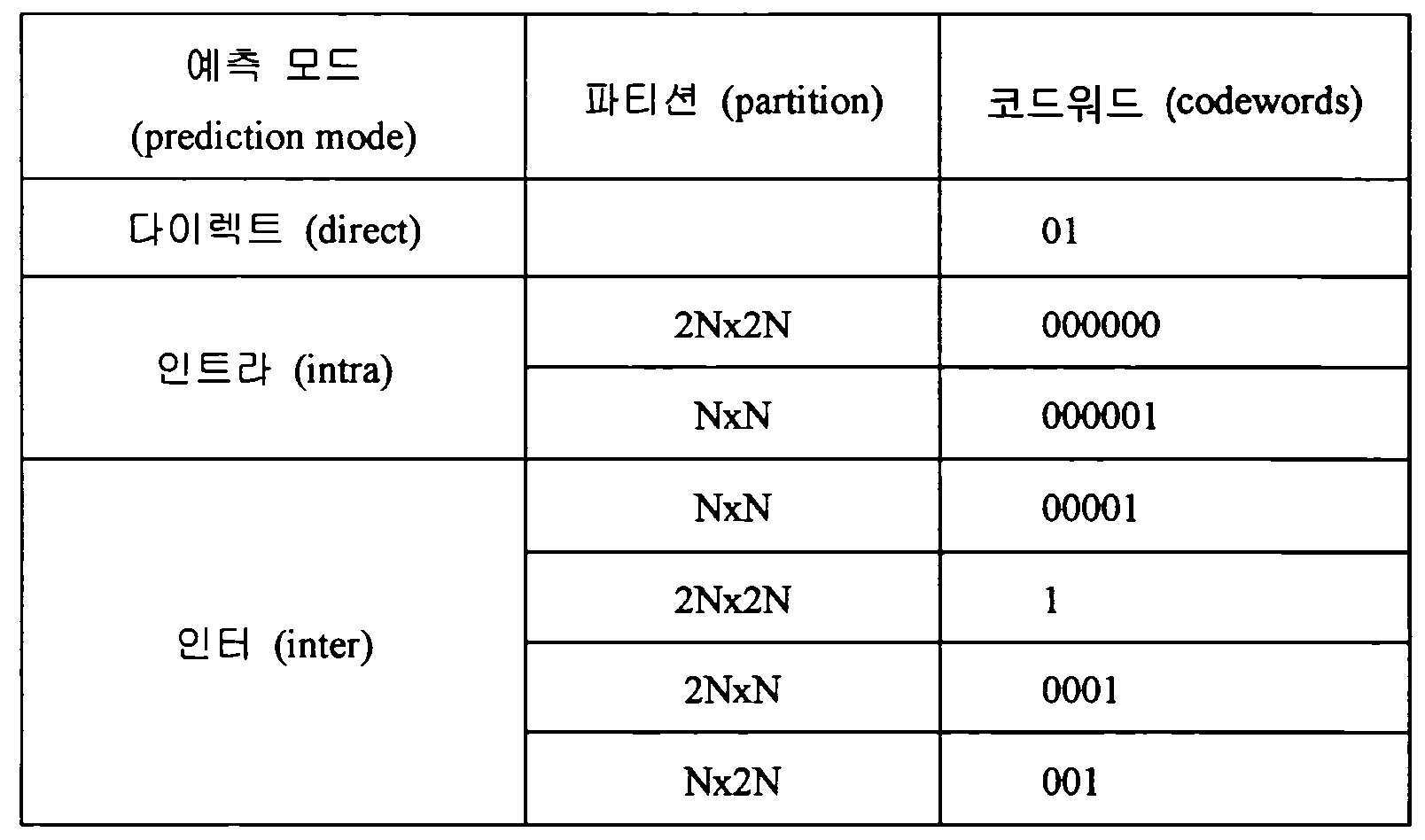
표 7을 참조하면, 발생 빈도가 더 높은 2Nx2N 인터 모드에 다이렉트 모드의 코드워드(01)보다 더 작은 코드워드(1)가 할당되며, Nx2N 인터 모드에는 2NxN 인터 모드에 대한 코드워드(0001)보다 더 작은 코드워드(001)가 할당된다.Referring to Table 7, a codeword (1) smaller than the codeword (01) of the direct mode is allocated to the 2Nx2N inter mode with a higher frequency, and the codeword (0001) for the 2NxN inter mode is assigned to the Nx2N inter mode. A
도 6은 본 발명이 적용되는 시스템에서 부호화기가 시그널링하는 방법의 다른 예를 개략적으로 설명하는 도면이다. 도 6에서는 주변 블록의 움직임 정보를 현재 블록의 움직임 정보로 이용하는 예측 모드로서 다이렉트 모드가 적용되지 않는 경우, 즉 {(머지) 스킵 모드, 머지 모드}를 사용하며 머지 모드가 부호화 유닛 단위에서 적용되는 경우를 예로서 설명한다. 따라서, 부호화 유닛보다 작은 파티션 사이즈별로 머지 모드의 적용 여부가 시그널링 되지는 않는다.6 is a diagram schematically illustrating another example of a method for signaling by an encoder in a system to which the present invention is applied. In FIG. 6, when a direct mode is not applied as a prediction mode using motion information of a neighboring block as motion information of a current block, that is, {(merge) skip mode, merge mode} is used, and a merge mode is applied in a coding unit unit. The case will be described by way of example. Therefore, whether merge mode is applied or not for each partition size smaller than the coding unit is not signaled.
도 6의 실시예를 도 3 또는 도 5의 경우와 비교하면, 주변 블록의 움직임 정보를 현재 블록의 움직임 정보로 사용하는 예측 모드의 적용 여부에 관한 정보의 수가 하나 줄어들게 된다. 즉, 도 3 또는 도 5의 경우에서, 다이렉트 모드가 없는 경우와 같다고 할 수 있다. 도 3 또는 도 5의 경우에서 다이렉트 모드를 제거한다면, 이후에 시그널링 되는 인터/인트라 모드들에 대한 시그널링 오버헤드가 감소하게 된다고 볼 수 있다. 따라서, 도 6의 경우와 같이 (머지) 스킵 모드와 머지 모드를 사용하는 경우에는 도 3 또는 도 5의 경우와 비교할 때, 시그널링 오버헤드를 줄일 수 있다.6 is compared with the case of FIG. 3 or 5, the number of information on whether to apply a prediction mode using motion information of a neighboring block as motion information of a current block is reduced by one. That is, in the case of FIG. 3 or FIG. 5, it can be said that it is the same as there is no direct mode. If the direct mode is removed in the case of FIG. 3 or 5, it can be seen that signaling overhead for inter / intra modes signaled later is reduced. Accordingly, when the (merge) skip mode and the merge mode are used as in the case of FIG. 6, the signaling overhead can be reduced as compared with the case of FIG. 3 or 5.
{(머지) 스킵 모드, 머지 모드}를 사용하는 경우에도, {스킵 모드, 다이렉트 모드, 머지 모드}를 사용하는 경우와 동일한 방식으로 예측 타입을 시그널링 할 수 있다. 예컨대, 도 6의 예에서도, (머지) 스킵 모드와 머지 모드 이외의 예측 타입 중에서 선택 비율(발생 빈도)이 높은 예측 모드 혹은 예측 타입을 모드 A라고 하면, 모드 A의 적용 여부에 관한 정보(modeA_flag)의 시그널링을 다른 예측 타입(2Nx2N 인터 모드, …, NxN 인트라 모드)의 적용 여부에 관한 정보보다 먼저 시그널링할 수 있다. 그리고, 모드 A의 적용이 없는 경우에는 다른 예측 타입 (2Nx2N 인터 모드, …, NxN 인트라 모드)의 적용 여부를 조인트 코딩을 통해서 시그널링 할 수 있다.Even when using {(merge) skip mode, merge mode}, the prediction type may be signaled in the same manner as when using {skip mode, direct mode, merge mode}. For example, even in the example of FIG. 6, when a prediction mode or a prediction type having a high selection ratio (occurrence frequency) among prediction types other than (merge) skip mode and merge mode is mode A, information on whether mode A is applied (modeA_flag ) May be signaled before information on whether other prediction types (2N × 2N inter mode,…, N × N intra mode) are applied. If there is no application of mode A, whether or not another prediction type (2Nx2N inter mode, ..., NxN intra mode) is applied may be signaled through joint coding.
표 8은 도 6의 예에 따라서 예측 타입 정보에 코드워드를 할당한 조인트 코딩 테이블의 일 예이다. 표 8에서는, 설명의 편의를 위하여 인터 예측 모드가 {2Nx2N, 2NxN, Nx2N, NxN}의 파티션을 가지며 머지 모드가 부호화 유닛 단위에서 적용되는 경우를 예로서 설명한다.Table 8 is an example of a joint coding table in which a codeword is assigned to prediction type information according to the example of FIG. 6. In Table 8, a case where the inter prediction mode has a partition of {2Nx2N, 2NxN, Nx2N, NxN} and the merge mode is applied in units of coding units will be described as an example.
<표 8>TABLE 8

표 8의 예에서는 설명의 편의를 위해서, 2Nx2N, 2NxN, Nx2N, NxN의 파티션 사이즈를 가지는 인터 예측 모드 중에서 가장 발생 빈도가 높은 예측 타입, 즉 모드 A가 2Nx2N 인터 모드라고 가정한다. 따라서, 2Nx2N 인터 모드의 적용 여부는 별도의 시그널링을 통해서 미리 전송된다.In the example of Table 8, for the convenience of description, it is assumed that the most frequently occurring prediction type, that is, the mode A is the 2Nx2N inter mode, among the inter prediction modes having partition sizes of 2Nx2N, 2NxN, Nx2N, and NxN. Therefore, whether 2Nx2N inter mode is applied or not is transmitted in advance through separate signaling.
이때, 도 6의 예와 같이 예측 타입의 발생 빈도를 고려하여 전송 순서를 정하는 것과 별개로, 발생 빈도(선택 비율)를 고려하여 예측 타입에 코드워드를 할당하도록 할 수도 있다.In this case, as shown in the example of FIG. 6, in addition to determining the transmission order in consideration of the occurrence frequency of the prediction type, a codeword may be allocated to the prediction type in consideration of the occurrence frequency (selection ratio).
표 9는, {(머지) 스킵 모드, 머지 모드}를 사용하는 경우로서, 예측 타입 발생 빈도를 고려하여 코드워드를 할당한 경우에 대한 조인트 코딩 테이블의 일 예이다. 표 9에서는, 설명의 편의를 위하여 인터 예측 모드가 {2Nx2N, 2NxN, Nx2N, NxN}의 파티션을 가지며 머지 모드가 부호화 유닛 단위에서 적용되는 경우를 예로서 설명한다.Table 9 shows an example of a joint coding table for a case where {(merge) skip mode, merge mode} is used and codewords are allocated in consideration of prediction type occurrence frequency. In Table 9, a case where the inter prediction mode has a partition of {2Nx2N, 2NxN, Nx2N, NxN} and the merge mode is applied in units of coding units will be described as an example.
<표 9>TABLE 9
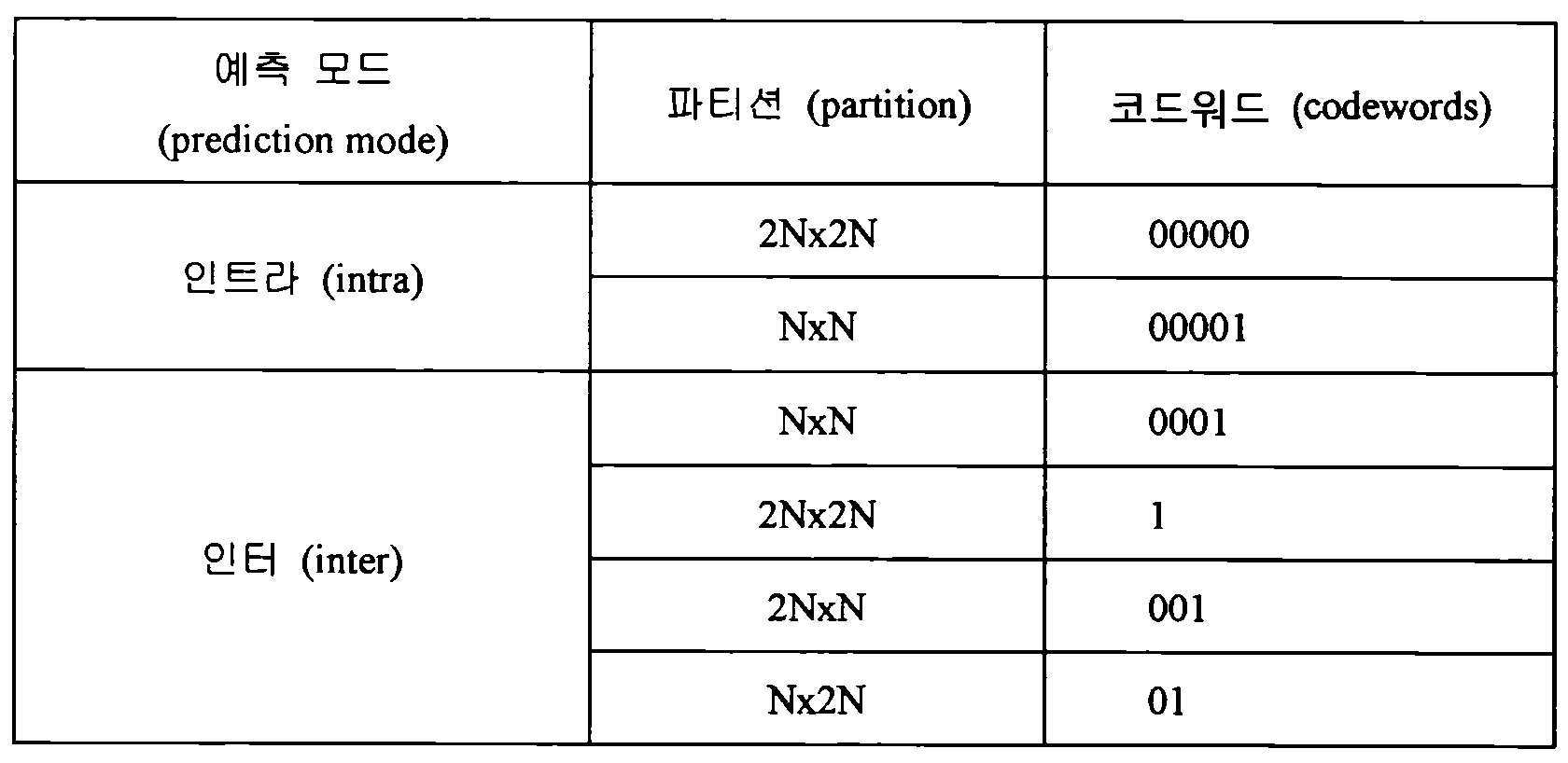
표 9에서는, Nx2N 인터 모드의 발생 빈도가 2NxN 인터 모드의 발생 빈도보다 높은 경우를 가정하여, Nx2N 인터 모드에 더 짧은 코드워드를 할당하고 있다.In Table 9, a shorter codeword is assigned to the Nx2N inter mode, assuming that the occurrence frequency of the Nx2N inter mode is higher than that of the 2NxN inter mode.
또한, {(머지) 스킵 모드, 머지 모드}를 사용하는 경우에도, 예측 타입의 발생 빈도를 시그널링 순서와 코드워드 할당에 모두 반영할 수 있다.In addition, even when {(merge) skip mode and merge mode} are used, the frequency of occurrence of the prediction type may be reflected in both the signaling order and the codeword assignment.
표 10은 {(머지) 스킵 모드, 머지 모드}를 사용하는 경우로서, 예측 타입 발생 빈도를 고려하여 시그널링 순서를 조정하고 코드워드를 할당한 경우에 대한 조인트 코딩 테이블의 일 예이다. 표 10에서는, 상술한 예측 타입 중 설명의 편의를 위하여 인터 예측 모드가 {2Nx2N, 2NxN, Nx2N, NxN}의 파티션을 가지며 머지 모드가 부호화 유닛 단위에서 적용되는 경우를 예로서 설명한다.Table 10 shows a case of using {(merge) skip mode, merge mode}, which is an example of a joint coding table for a case where a signaling order is adjusted and codewords are allocated in consideration of a prediction type occurrence frequency. In Table 10, a case where the inter prediction mode has a partition of {2Nx2N, 2NxN, Nx2N, NxN} and the merge mode is applied in units of coding units will be described as an example.
<표 10>TABLE 10

표 10의 예에서는 설명의 편의를 위해, 2Nx2N 인터 모드의 발생 빈도가 2Nx2N, 2NxN, Nx2N, NxN 인터 모드들 중에서 가장 높으며, 2NxN 인터 모드는 Nx2N 인터 모드보다 발생 빈도가 높다고 가정한다. 따라서, (머지) 스킵 모드, 머지 모드, 2Nx2N 인터 모드의 적용 여부는 먼저 별도의 시그널링을 통해 전달된다. 다른 예측 타입들의 적용 여부는 표 10의 조인트 코딩 테이블을 이용하여 시그널링 되며, 이때, 2NxN 인터 모드보다 더 높은 발생 빈도를 가지는 Nx2N 인터 모드에 2NxN 인터 모드의 코드워드(01)보다 더 작은 코드워드(1)가 할당된다.In the example of Table 10, for convenience of description, it is assumed that the occurrence frequency of the 2Nx2N inter mode is the highest among 2Nx2N, 2NxN, Nx2N, and NxN inter modes, and the 2NxN inter mode has a higher occurrence frequency than the Nx2N inter mode. Accordingly, whether to apply the (merge) skip mode, the merge mode, or the 2N × 2N inter mode is first transmitted through separate signaling. Whether other prediction types are applied is signaled using the joint coding table of Table 10, where a codeword smaller than the codeword (01) of the 2NxN inter mode to the Nx2N inter mode having a higher frequency of occurrence than the 2NxN inter mode is used. 1) is assigned.
한편, 주변 블록의 움직임 정보를 현재 블록의 움직임 정보로 이용하는 예측 모드들로서, {스킵 모드, 다이렉트 모드, 머지 모드}를 사용하는 경우에 다이렉트 모드와 머지 모드를 통합하여 이용할 수도 있다. 다이렉트 모드와 머지 모드는 움직임 정보를 주변 블록으로부터 유도한 뒤, 스킵 모드와 달리 레지듀얼 정보를 전송한다는 점에서 서로 유사하다. 다이렉트 모드와 머지 모드를 통합하는 경우에는 다이렉트 모드와 머지 모드를 통합한 모드(이하, 설명의 편의를 위해 ‘통합 모드’라 함)의 적용 여부에 관한 정보를 시그널링한 후에 시그널링 되는, 인터/인트라 모드의 적용 여부에 관한 정보의 시그널링 오버헤드를 줄일 수 있게 된다. 통합 모드를 적용하는 경우에도, 시그널링 순서의 조정, 코드워드의 할당 조정 등을 앞서 설명한 바와 동일하게 수행할 수 있다.Meanwhile, when {skip mode, direct mode, merge mode} is used as prediction modes using the motion information of the neighboring block as the motion information of the current block, the direct mode and the merge mode may be integrated. The direct mode and the merge mode are similar to each other in that motion information is derived from a neighboring block and then residual information is transmitted unlike the skip mode. In the case of integrating the direct mode and the merge mode, the inter / intra signaled after signaling information on whether the mode in which the direct mode and the merge mode are integrated (hereinafter referred to as the 'integrated mode' for convenience of explanation) is signaled. It is possible to reduce signaling overhead of information on whether the mode is applied. Even when applying the unified mode, adjustment of signaling order, allocation of codewords, and the like may be performed as described above.
도 7과 도 8은 본 발명이 적용되는 시스템에서 부호화기가 시그널링하는 방법의 다른 예를 개략적으로 설명하는 도면이다. 도 7과 도 8에서는 통합 모드를 사용하되, 머지 모드는 부호화 유닛 단위에서 적용되는 경우를 예로서 설명한다. 따라서, 부호화 유닛보다 작은 파티션 사이즈별로 머지 모드의 적용 여부가 시그널링 되지는 않는다.7 and 8 are diagrams schematically illustrating another example of a method for signaling by an encoder in a system to which the present invention is applied. In FIG. 7 and FIG. 8, an integrated mode is used, but a merge mode will be described as an example in which a unit is applied in a coding unit. Therefore, whether merge mode is applied or not for each partition size smaller than the coding unit is not signaled.
도 7의 예에서는 스킵 모드의 적용 여부를 시그널링 한 후에, 스킵 모드를 적용하지 않는 경우에는 나머지 예측 타입들 중에서 가장 발생 빈도가 높은 예측 타입을 적용 여부를 우선적으로 시그널링 한다.In the example of FIG. 7, after signaling whether the skip mode is applied or not, if skip mode is not applied, whether the prediction type having the highest frequency of occurrence among the remaining prediction types is applied is preferentially signaled.
도 7에서는 모드 A가 스킵 모드를 제외한 나머지 예측 타입들 중에서 가장 높은 발생 빈도를 가지는 예측 타입이라고 가정한 경우를 예시하고 있다. 따라서, 부호화기는 스킵 모드를 적용하지 않는 경우에는 모드 A의 적용 여부를 시그널링 하며, 모드 A를 적용하지 않는 경우에는 나머지 예측 타입(예측 모드/파티션 사이즈 포함) 중 어떤 예측 타입이 적용될 것인지를 조인트 코딩을 이용하여 시그널링(pred_mode_partition_signaling)한다.FIG. 7 illustrates a case where it is assumed that mode A is the prediction type having the highest occurrence frequency among the remaining prediction types except for the skip mode. Therefore, the encoder signals whether mode A is applied when skip mode is not applied, and when the mode A is not applied, joint coding indicates which prediction type among remaining prediction types (including prediction mode / partition size) is to be applied. Signaling is performed using (pred_mode_partition_signaling).
표 11은 도 7의 예에 따른 조인트 코딩 테이블이다.Table 11 is a joint coding table according to the example of FIG.
<표 11>TABLE 11

도 7과 표 11의 예에서는, 스킵 모드의 적용 여부가 시그널링된 후, 스킵 모드가 적용되지 않는 경우에는, 가장 높은 발생 빈도를 가지는 예측 타입으로서 통합 모드의 적용 여부를 시그널링 한다. 통합 모드가 적용되지 않는 경우에는, 표 11과 같이, 나머지 예측 타입들의 예측 모드와 파티션 등에 관한 정보를 조인트 코딩한 결과를 이용하여 어떤 예측 타입이 적용되는지를 시그널링한다. 한편, 도7과 표 11의 예에서는 스킵 모드를 제외하고 가장 높은 발생 빈도를 가지는 예측 타입이 통합 모드인 경우를 예시했지만, 이는 설명의 편의를 위한 예시로서 본 발명은 이에 한정되지 않는다. 예컨대, 2Nx2N 인터 모드의 발생 빈도가 통합 모드보다 더 높은 경우에는 2Nx2N 인터 모드를 모드 A로 결정하고, 2Nx2N 인터 모드의 적용 여부를 별도로 미리 시그널링한 후, 통합 모드의 적용 여부를 다른 예측 타입들의 적용 타입들과 함께 조인트 코딩을 이용하여 시그널링하도록 할 수도 있다.In the example of FIG. 7 and Table 11, if skip mode is signaled and if skip mode is not applied, whether the integrated mode is applied as a prediction type having the highest frequency of occurrence is signaled. When the unified mode is not applied, as shown in Table 11, it is signaled which prediction type is applied using the result of joint coding information on the prediction mode and partition of the remaining prediction types. 7 and Table 11 exemplify a case in which the prediction type having the highest frequency of occurrence except the skip mode is an integrated mode, but this is an example for convenience of description and the present invention is not limited thereto. For example, if the occurrence frequency of the 2Nx2N inter mode is higher than that of the unified mode, the 2Nx2N inter mode is determined as the mode A, separately signaled whether the 2Nx2N inter mode is applied, and whether the unified mode is applied or not is applied to other prediction types. Signaling may also be made using joint coding with the types.
도 8에서는 도 7과 달리, 스킵 모드가 적용되지 않는 경우에, 통합 모드의 적용 여부를 별도로 미리 시그널링(merge_direct_flag) 하며, 통합 모드가 적용되지 않는 경우에, 다른 예측 타입들 중 가장 발생 빈도가 높은 예측 타입(모드 A)의 적용 여부를 별도로 미리 시그널링(modeA_flag) 하는 방법을 예시하고 있다. 모드 A가 적용되지 않는 경우에는 도 7과 같이 다른 예측 모드들 중에서 어떤 예측 모드가 적용되는지를 조인트 코딩을 이용하여 시그널링(pred_mode_partition_signaling)한다.In FIG. 8, unlike the case of FIG. 7, when the skip mode is not applied, whether or not the merge mode is applied is separately signaled (merge_direct_flag) in advance, and when the merge mode is not applied, the most frequent occurrence among other prediction types is performed. A method of separately signaling (modeA_flag) whether or not the prediction type (mode A) is applied is illustrated. When mode A is not applied, pred_mode_partition_signaling is signaled using joint coding to determine which prediction mode is applied among other prediction modes as shown in FIG. 7.
표 12는 도 8의 예에 따른 조인트 코딩 테이블이다.Table 12 is a joint coding table according to the example of FIG. 8.
<표 12>TABLE 12

표 12의 예에서는 설명의 편의를 위해, 2Nx2N 인터 모드가 모드 A라고 가정한다. 따라서, 2Nx2N 인터 모드의 적용 여부는 별도로 미리 시그널링 될 수 있다.In the example of Table 12, for convenience of explanation, it is assumed that the 2Nx2N inter mode is mode A. Therefore, whether to apply the 2Nx2N inter mode may be separately signaled in advance.
한편, 앞서 설명한 바와 같이, 시그널링 순서를 조정하는 것과는 별도로 조인트 코딩을 수행하는 경우에, 예측 타입별 발생 빈도(선택 비율)에 고려하여 코드워드를 할당할 수 있다.Meanwhile, as described above, when joint coding is performed separately from adjusting the signaling order, a codeword may be allocated in consideration of occurrence frequency (selection ratio) for each prediction type.
표 13은 통합 모드를 사용하는 경우로서, 예측 타입의 발생 빈도를 고려하여 코드워드를 할당한 경우에 대한 조인트 코딩 테이블의 일 예이다. 표 13에서는, 상술한 예측 타입 중 설명의 편의를 위하여 인터 예측 모드가 {2Nx2N, 2NxN, Nx2N, NxN}의 파티션을 가지며 머지 모드가 부호화 유닛 단위에서 적용되는 경우를 예로서 설명한다.Table 13 shows an example of a joint coding table for a case of using a unified mode and assigning a codeword in consideration of a frequency of occurrence of a prediction type. In Table 13, an example in which the inter prediction mode has a partition of {2Nx2N, 2NxN, Nx2N, NxN} and the merge mode is applied in units of coding units will be described as an example.
<표 13>TABLE 13

표 13에서는 Nx2N 인터 모드의 발생 빈도가 2NxN 인터 모드의 발생 빈도보다 높은 경우를 예로서 설명한다. 따라서, 표 13의 예에서는 Nx2N 인터 모드에 대하여 2NxN 인터 모드에 할당된 코드워드(001)보다 더 짧은 코드워드(01)를 할당하고 있다.In Table 13, the case where the occurrence frequency of the Nx2N inter mode is higher than the occurrence frequency of the 2NxN inter mode will be described as an example. Therefore, in the example of Table 13, the
더 나아가, 예측 타입별 발생 빈도를 고려하여, 도 8과 같이 시그널링의 순서를 조성하고, 표 13과 같이 코드워드를 할당할 수도 있다.Furthermore, in consideration of the occurrence frequency for each prediction type, an order of signaling may be formed as shown in FIG. 8 and codewords may be allocated as shown in Table 13.
표 14는 통합 모드를 사용하는 경우로서, 예측 타입의 발생 빈도를 고려하여 시그널링의 순서를 조정하고 코드워드를 할당하는 경우에 대한 조인트 코딩 테이블의 일 예이다. 표 14에서는, 상술한 예측 타입 중 설명의 편의를 위하여 인터 예측 모드가 {2Nx2N, 2NxN, Nx2N, NxN}의 파티션을 가지며 머지 모드가 부호화 유닛 단위에서 적용되는 경우를 예로서 설명한다.Table 14 shows an example of a joint coding table for a case of using the unified mode and adjusting the order of signaling and allocating codewords in consideration of a frequency of occurrence of a prediction type. In Table 14, an example in which the inter prediction mode has a partition of {2Nx2N, 2NxN, Nx2N, NxN} and the merge mode is applied in units of coding units will be described as an example.
<표 14>TABLE 14

표 14의 예에서는 설명의 편의를 위해, 도 8의 모드 A에 해당하는 예측 모드가 2Nx2N 인터 모드이며, Nx2N 인터 모드의 발생 빈도가 2NxN 인터 모드의 발생 빈도보다 높다고 가정한다. 따라서, 통합 모드의 적용 여부에 대한 시그널링 후에, 통합 모드가 적용되지 않는 경우에, 2Nx2N 인터 모드의 적용 여부는 별도의 시그널링을 통해서 시그널링된다. 또한, Nx2N 인터 모드에는 2NxN 인터 모드에 할당된 코드워드(01)보다 더 짧은 코드워드(1)가 할당된다.In the example of Table 14, for convenience of explanation, it is assumed that the prediction mode corresponding to the mode A of FIG. 8 is the 2Nx2N inter mode, and the occurrence frequency of the Nx2N inter mode is higher than that of the 2NxN inter mode. Therefore, after signaling whether to apply the unified mode, if the unified mode is not applied, whether to apply the 2N × 2N inter mode is signaled through separate signaling. In addition, the
또한, 통합 모드를 사용하는 경우에도, 스킵 모드 이외의 예측 타입들에 대해서는 어떤 예측 타입이 적용되는지를 조인트 코딩을 통해서 한번에 시그널링(pred_mode_partition_signaling)할 수도 있다. 즉, 통합 모드를 포함하는 각 예측 타입 각각에 대하여 코드워드를 할당하고, 적용되는 예측 타입에 대응하는 코드워드를 시그널링하도록 할 수 있다.In addition, even when using the unified mode, it is possible to signal (pred_mode_partition_signaling) at once through joint coding which prediction type is applied to prediction types other than the skip mode. That is, a codeword may be allocated to each prediction type including the unified mode, and the codeword corresponding to the applied prediction type may be signaled.
표 15는 통합 모드를 사용하는 경우로서, 스킵 모드 이외의 예측 타입 각각에 대하여 코드워드를 할당하여 현재 블록에 적용되는 예측 타입(예측 모드, 파티션 사이즈 등)의 정보를 전송하는데 이용되는 조인트 코딩 테이블의 일 예를 개략적으로 나타낸 것이다.Table 15 shows a joint coding table used to transmit information of prediction types (prediction mode, partition size, etc.) applied to the current block by allocating codewords for each prediction type other than the skip mode when using the integrated mode. An example of the schematic is shown.
<표 15>TABLE 15

표 15에서는, 설명의 편의를 위하여 인터 예측 모드가 {2Nx2N, 2NxN, Nx2N, NxN}의 파티션을 가지며 머지 모드가 부호화 유닛 단위에서 적용되는 경우를 예로서 설명하고 있다. 표 15를 참조하면, 부호화기는 각 예측 모드, 즉 통합 모드(머지/다이렉트 모드), 2Nx2N, NxN 인트라 모드, 2Nx2N, 2NxN, Nx2N, NxN 인터 모드 각각에 코드워드를 할당하고, 현재 블록에 적용되는 예측 타입의 코드워드를 전송할 수 있다.In Table 15, for convenience of description, the case where the inter prediction mode has a partition of {2Nx2N, 2NxN, Nx2N, NxN} and the merge mode is applied in units of coding units will be described as an example. Referring to Table 15, the encoder allocates a codeword to each prediction mode, i.e., integrated mode (merge / direct mode), 2Nx2N, NxN intra mode, 2Nx2N, 2NxN, Nx2N, and NxN inter mode, respectively, and is applied to the current block. The codeword of the prediction type may be transmitted.
이때, 부호화기는 예측 타입별 발생 빈도(선택 비율)을 고려하여 코드워드를 할당할 수도 있다.In this case, the encoder may allocate the codeword in consideration of the occurrence frequency (selection ratio) for each prediction type.
표 16은 표 15의 예에서 예측 타입별 발생 빈도를 고려하여 코드워드를 할당하는 일 예를 나타낸 것이다.Table 16 shows an example of allocating codewords in consideration of the occurrence frequency of each prediction type in the example of Table 15.
<표 16>TABLE 16

표 16의 예에서는 설명의 편의를 위해서, Nx2N 인터 모드의 발생 빈도가 2NxN 인터모드의 발생 빈도보다 높다고 가정한다. 따라서, 표 16의 예에서는 표 15의 예와 비교할 때, Nx2N 인터 모드에 대해서 2NxN 인터 모드에 대한 코드워드(0001)보다 더 짧은 코드워드(001)를 할당하고 있다.In the example of Table 16, for convenience of explanation, it is assumed that the frequency of occurrence of the Nx2N inter mode is higher than the frequency of occurrence of the 2NxN inter mode. Therefore, in the example of Table 16, compared to the example of Table 15, the
지금까지는 설명의 편의를 위해서, 인터 모드에 대하여 {2Nx2N, 2NxN, Nx2N, NxN}의 파티션만이 적용되는 경우를 예로서 설명하였으나, 인터 모드에 대한 전체 파티션을 고려하여, 현재 블록에 대한 예측 타입을 시그널링할 수도 있다.So far, for convenience of explanation, the case where only partitions of {2Nx2N, 2NxN, Nx2N, NxN} are applied to the inter mode has been described as an example. However, in consideration of the entire partition for the inter mode, the prediction type for the current block is described. May be signaled.
표 17은 2Nx2N, 2NxN, Nx2N, NxN, 2NxnU, 2NxnD, nLx2N, nRx2N의 파티션을 모두 고려하는 경우에 현재 블록에 대한 예측 블록의 시그널링에 이용될 수 있는 조인트 코딩 테이블의 일 예를 나타낸 것이다.Table 17 shows an example of a joint coding table that can be used for signaling of a prediction block for a current block when all partitions of 2Nx2N, 2NxN, Nx2N, NxN, 2NxnU, 2NxnD, nLx2N, and nRx2N are considered.
<표 17>TABLE 17
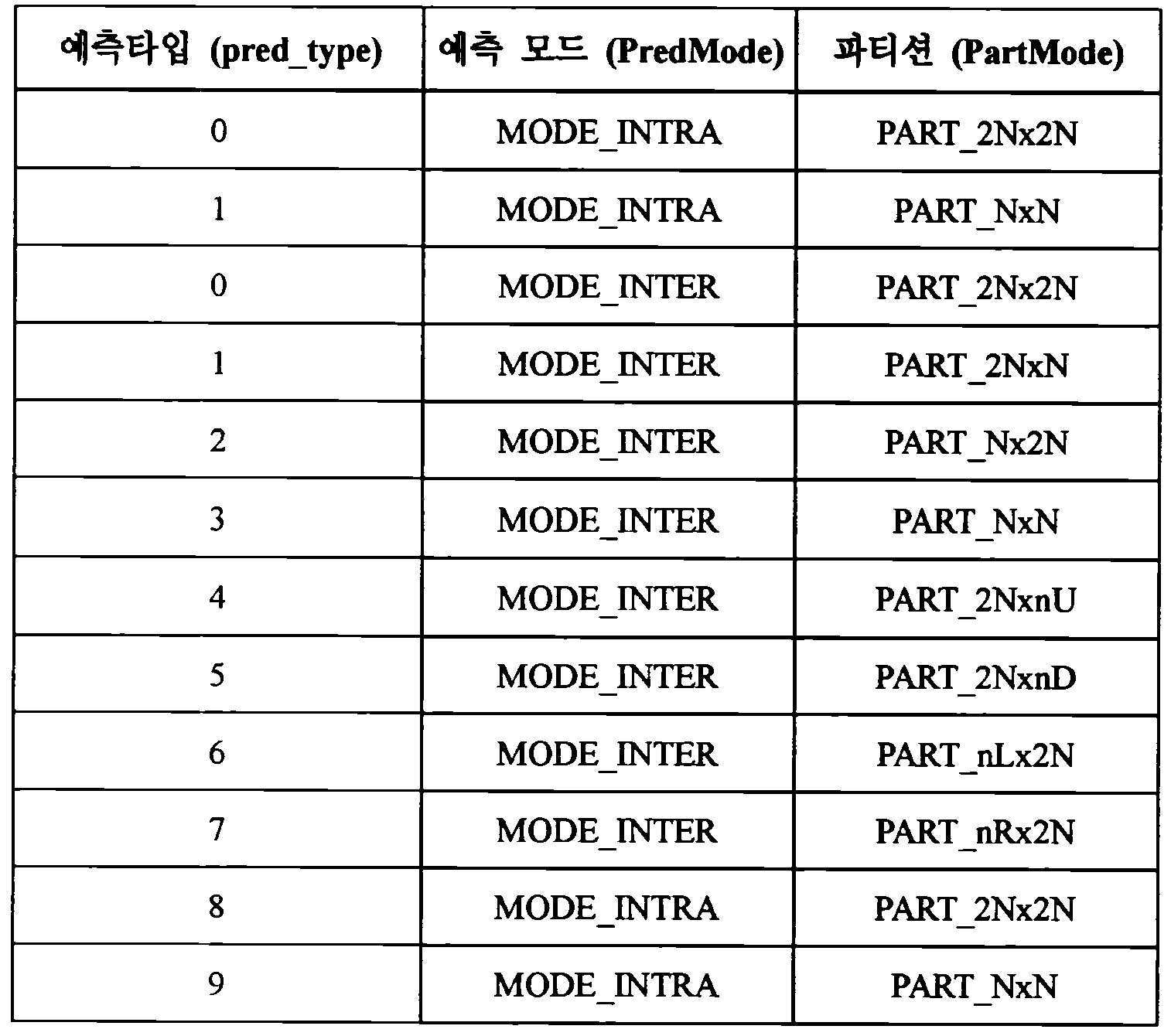
표 17을 참조하면, 인트라 모드의 각 파티션 사이즈와 인터 모드의 각 파티션 사이즈를 예측 타입을 통해서 지시할 수 있다. 따라서, 예측 모드와 파티션 사이즈를 조인트 코딩하여 현재 블록에 대한 예측 타입을 한번에 시그널링 할 수 있다. 이때, 상술한 바와 같이, 예측 타입별로 발생 빈도를 고려하여 코드워드를 할당할 수도 있다.Referring to Table 17, each partition size of intra mode and each partition size of inter mode may be indicated through a prediction type. Therefore, by joint coding the prediction mode and the partition size, the prediction type for the current block can be signaled at once. In this case, as described above, the codeword may be allocated in consideration of the occurrence frequency for each prediction type.
한편, 표 17의 예에서 주변 블록의 움직임 정보를 현재 블록의 움직임 정보로서 그대로 이용하는 예측 모드의 경우, 예컨대, {스킵 모드, 다이렉트 모드, 머지 모드} 혹은 {(머지) 스킵 모드, 머지 모드}의 경우에는 해당 모드의 적용 여부를 다른 조건에 의해 추정하거나(infer), 미리 별도의 시그널링을 통해 적용 여부를 전송할 수도 있다. 또한, 표 17의 예에서, 머지 모드가 상술한 다른 예들과 같이 부호화 유닛 단위에서 적용되는 경우를 가정한 것으로서, 각 파티션 별로 다시 머지 모드의 적용 여부를 시그널링하지는 않는다.Meanwhile, in the example of Table 17, in the prediction mode using the motion information of the neighboring block as the motion information of the current block, for example, {skip mode, direct mode, merge mode} or {(merge) skip mode, merge mode} In this case, whether to apply the corresponding mode may be estimated based on other conditions, or may be transmitted in advance through separate signaling. In addition, in the example of Table 17, it is assumed that the merge mode is applied in the coding unit unit as in the other examples described above, and it does not signal whether the merge mode is applied again for each partition.
아울러, 각 예측 타입의 시그널링에 앞서 상술한 바와 같은 추가 정보, 예컨대 슬라이스 타입 혹은 분할 여부에 관한 정보가 시그널링될 수도 있다. 이 경우에, 이들 추가 정보를 기반으로 예측 타입이 구별되도록 할 수도 있다. 예를 들어, I 슬라이스의 경우에 예측 타입이 0의 값을 가지면 2Nx2N 인트라 모드를 지시하고, B 혹은 P 슬라이스의 경우에 예측 타입이 0의 값을 가지면, 2Nx2N 인터 모드를 지시하는 것으로 할 수도 있다.In addition, additional information as described above, for example, information about a slice type or splitting, may be signaled before signaling of each prediction type. In this case, prediction types may be distinguished based on these additional information. For example, in the case of an I slice, if the prediction type has a value of 0, 2Nx2N intra mode may be indicated. In the case of a B or P slice, the prediction type may have a value of 0, may indicate 2Nx2N inter mode. .
또한, 서로 다른 예측 모드/파티션을 가지는 예측 타입에 대하여 서로 다른 코드워드를 할당함으로써, 각 예측 타입을 구별할 수도 있다.In addition, each prediction type may be distinguished by assigning different codewords to prediction types having different prediction modes / partitions.
한편, 지금까지는 머지 모드가 부호화 유닛 단위에서 적용되는 경우를 설명하였으나, 머지 모드는 예측 유닛 단위에서 적용될 수도 있다. 예컨대, 지금까지 설명한 각 예의 경우에 있어서, 인터 예측 모드의 각 파티션에 대하여 머지 모드가 적용되는지를 시그널링함으로써, 예측 유닛 단위로도 머지 모드가 수행되는 경우에 대하여 상술한 본 발명의 내용을 그대로 적용할 수 있다.Meanwhile, the case where the merge mode is applied in the coding unit unit has been described so far, but the merge mode may be applied in the prediction unit unit. For example, in the case of each example described so far, by signaling whether merge mode is applied to each partition of the inter prediction mode, the above-described content of the present invention is applied as it is to the case where merge mode is performed in units of prediction units. can do.
이하, 예측 유닛 단위로도 머지 모드가 수행되는 경우에 본 발명의 적용 방법을 구체적으로 설명한다.Hereinafter, the application method of the present invention will be described in detail when the merge mode is performed even in the prediction unit.
도 9는 예측 유닛 단위에서도 머지 모드가 수행되는 경우에 예측에 관한 정보를 시그널링하는 방법의 일 예를 개략적으로 도시한 것이다. 도 9에서는 주변 블록의 움직임 정보를 현재 블록의 움직임 정보로 사용하는 모드로서, {스킵 모드, 다이렉트 모드, 머지 모드}를 사용하는 경우를 예로서 설명하고 있다.FIG. 9 schematically illustrates an example of a method of signaling information about prediction when a merge mode is performed even in a prediction unit unit. In FIG. 9, a case in which {skip mode, direct mode, merge mode} is used as a mode using motion information of a neighboring block as motion information of a current block is described as an example.
도 9의 예에서는 도 3의 예와 달리, 스킵 모드와 다이렉트 모드가 적용되지 않는경우에, 현재 블록에 어떤 인터 예측 모드와 파티션이 적용되는지를 지시하고, 해당 파티션이 머지되는지를 시그널링한다. 스킵 모드와 다이렉트 모드의 적용 여부는 별도로 미리 시그널링하며, 스킵 모드와 다이렉트 모드가 적용되지 않는 경우에 어떤 예측 모드/파티션이 적용될 것인지는 예측 모드의 구분과 파티션 사이즈에 관한 정보를 조인트 코딩하여 시그널링한다. 인터 예측의 파티션별로 머지 모드를 적용할 것인지는 머지 모드를 통해서 지시되며, 이때 머지 모드가 적용되지 않는 경우에 수행되는 인터 예측 모드를 설명의 편의를 위해 정상 인터 모드(normal inter mode)라고 한다.In the example of FIG. 9, unlike the example of FIG. 3, when the skip mode and the direct mode are not applied, it indicates which inter prediction mode and partition are applied to the current block and signals whether the corresponding partition is merged. Whether the skip mode and the direct mode are applied is signaled separately, and when the skip mode and the direct mode are not applied, which prediction mode / partition is to be applied is jointly signaled by information about the division of the prediction mode and the partition size. Whether to apply the merge mode for each partition of the inter prediction is indicated through the merge mode, wherein the inter prediction mode performed when the merge mode is not applied is referred to as a normal inter mode for convenience of description.
표 18은 도 9에 도시된 예에 따라서 현재 블록의 예측 모드와 파티션 정보를 조인트 부호화하는 일 예를 나타낸 것이다. 표 18에서는, 설명의 편의를 위하여 인터 예측 모드가 {2Nx2N, 2NxN, Nx2N, NxN}의 파티션을 가지는 경우를 예로서 설명하고 있다.Table 18 shows an example of joint encoding the prediction mode and the partition information of the current block according to the example shown in FIG. In Table 18, a case where the inter prediction mode has a partition of {2Nx2N, 2NxN, Nx2N, NxN} is described as an example for convenience of description.
<표 18>TABLE 18

표 18을 참조하면, 부호화기는 현재 블록에 적용되는 예측 타입을 코드워드를 시그널링함으로써 복호화기에 지시할 수 있다.Referring to Table 18, the encoder may indicate to the decoder by signaling a codeword the prediction type applied to the current block.
한편, 도 9 및 표 18과 같이 소정의 모드에 관한 정보를 먼저 시그널링하고, 이어서 예측 모드와 파티션 사이즈에 관한 정보를 시그널링하는 경우에, 각 예측 타입별 발생 빈도를 고려하여 코드워드를 할당하도록 할 수 있다.Meanwhile, as shown in FIG. 9 and Table 18, when information on a predetermined mode is first signaled and then information about a prediction mode and a partition size is signaled, codewords may be allocated in consideration of the occurrence frequency of each prediction type. Can be.
도 10은 예측 유닛 단위로 머지 모드를 적용하는 경우에 각 예측 타입의 발생 빈도를 개략적으로 나타낸 도면이다. 도 10에서는, RAHE, LDHE, RALC, LDLC의 경우에 스킵 모드, 머지 모드, 다이렉트 모드, 인트라 모드의 각 파티션 사이즈, 인터 모드의 각 파티션 사이즈에 대한 분포를 나타내고 있다.FIG. 10 is a diagram schematically illustrating a frequency of occurrence of each prediction type when the merge mode is applied in units of prediction units. In FIG. 10, distribution of each partition size of skip mode, merge mode, direct mode, intra mode, and each partition size of inter mode is shown in the case of RAHE, LDHE, RALC, and LDLC.
도 10을 참조하면, 스킵 모드의 빈도 분포가 두드러지며, 다이렉트 모드의 경우는 2Nx2N 인터 모드보다 발생 빈도가 적다. 따라서, 이 경우에는 도 9에 도시된 시그널링의 순서에서 다이렉트 모드가 적용되는지 여부를 나타내는 정보를 시그널링하는 것보다 2Nx2N 인터 모드가 적용되는지 여부를 나타내는 정보를 먼저 시그널링하는 것이 더 효율적일 수 있다.Referring to FIG. 10, the frequency distribution of the skip mode is prominent, and in the direct mode, the frequency of occurrence is less than that of the 2N × 2N inter mode. Accordingly, in this case, it may be more efficient to signal information indicating whether the 2N × 2N inter mode is applied than to signal information indicating whether the direct mode is applied in the signaling sequence shown in FIG. 9.
도 10의 예에서는 {스킵 모드, 다이렉트 모드, 머지 모드}를 사용하고, 파티션 사이즈 중 2Nx2N, 2NxN, Nx2N, NxN의 발생 빈도를 측정하였으나, {(머지) 스킵 모드, 머지 모드}를 사용하는 경우 및/또는 모든 파티션 사이즈를 사용하는 경우에도 동일하게, 각 예측 모드 및 파티션 사이즈의 발생 빈도를 고려할 수 있으며, 이를 기반으로 시그널링의 순서를 조정할 수 있다.In the example of FIG. 10, {skip mode, direct mode, merge mode} is used, and the frequency of occurrence of 2Nx2N, 2NxN, Nx2N, and NxN among the partition sizes is measured, whereas {(merge) skip mode, merge mode} is used. And / or the same, even when using all the partition size, it is possible to consider the frequency of occurrence of each prediction mode and partition size, it is possible to adjust the order of signaling based on this.
도 11은 본 발명이 적용되는 시스템에서 부호화기가 시그널링하는 방법의 일 예를 개략적으로 설명하는 도면이다. 도 11에서는 주변 블록의 움직임 정보를 현재 블록의 움직임 정보로 이용하는 예측 모드로서 {스킵 모드, 다이렉트 모드, 머지 모드}를 사용한다.FIG. 11 is a diagram schematically illustrating an example of a method for signaling by an encoder in a system to which the present invention is applied. In FIG. 11, {skip mode, direct mode, merge mode} is used as a prediction mode using motion information of a neighboring block as motion information of a current block.
도 10을 참조하면, 다이렉트 모드보다 더 높은 선택 비율(발생 빈도)를 가지는 예측 모드/파티션 사이즈가 존재할 수 있다. 따라서, 선택 비율이 높은 다른 예측 모드(예측 모드/파티션 사이즈)의 적용 여부가 먼저 판단되도록 시그널링 하는 것이 전송 오버헤드 측면에서 유리할 수 있다.Referring to FIG. 10, there may be a prediction mode / partition size having a higher selection rate (frequency of occurrence) than the direct mode. Therefore, it may be advantageous in terms of transmission overhead to signal the first decision whether to apply another prediction mode (prediction mode / partition size) having a high selection ratio.
예컨대, 다이렉트 모드보다 더 높은 발생 빈도를 가지는 예측 모드/파티션 사이즈를 모드 A라고 하면, 다이렉트 모드의 적용 여부에 관한 정보보다 모드 A의 적용 여부에 관한 정보를 먼저 전송하도록 수 있다.For example, if the prediction mode / partition size having a higher frequency of occurrence than the direct mode is mode A, information on whether mode A is applied may be transmitted first than information on whether direct mode is applied.
따라서, 도 11의 예에서는 부호화기가 모드 A의 적용 여부에 관한 정보를 다이렉트 모드의 적용 여부에 관한 정보보다 먼저 시그널링한다. 구체적으로, 부호화기는 현재 블록에 스킵 모드가 적용되는지 여부를 나타내는 정보(skip_flag)를 먼저 시그널링하고, 스킵 모드가 적용되지 않는 경우에는 모드 A가 적용되는지 여부를 나타내는 정보(modeA_flag)를 시그널링한다.Therefore, in the example of FIG. 11, the encoder signals information on whether mode A is applied or not before information on whether direct mode is applied. In detail, the encoder first signals information skip_flag indicating whether the skip mode is applied to the current block, and signals information modeA_flag indicating whether mode A is applied when the skip mode is not applied.
모드 A가 적용되지 않는 경우에, 부호화기는 다이렉트 모드와 함께 나머지 예측 모드/파티션 사이즈 중 어느 것이 현재 블록에 적용되는지를 지시하는 정보를 지시하는 정보(pred_mode_partition_signaling)를 시그널링한다.If mode A is not applied, the encoder signals the direct mode along with information indicating pred_mode_partition_signaling indicating which of the remaining prediction modes / partition sizes is applied to the current block.
표 19는 도 11의 예에 따라서 예측 타입 정보에 코드워드를 할당한 조인트 코딩 테이블의 일 예이다. 표 19에서는, 설명의 편의를 위하여 인터 예측 모드가 {2Nx2N, 2NxN, Nx2N, NxN}의 파티션을 가지는 경우를 예로서 설명한다.Table 19 is an example of a joint coding table in which a codeword is allocated to prediction type information according to the example of FIG. 11. In Table 19, a case where the inter prediction mode has a partition of {2Nx2N, 2NxN, Nx2N, NxN} will be described as an example for convenience of description.
<표 19>TABLE 19

표 19의 예에서는, 설명의 편의를 위해, 모드 A가 2Nx2N 인터 모드라고 가정한다. 따라서, 2Nx2N 인터 모드는 조인트 코딩 테이블을 이용하지 않고 먼저 시그널링되며, 다이렉트 모드의 적용 여부는 다른 예측 타입들과 함께 조인트 코딩 테이블을 이용하여 시그널링된다.In the example of Table 19, for convenience of explanation, it is assumed that mode A is a 2Nx2N inter mode. Accordingly, the 2N × 2N inter mode is signaled first without using the joint coding table, and whether direct mode is applied is signaled using the joint coding table along with other prediction types.
한편, 도 11의 예와 같이 예측 타입의 발생 빈도를 고려하여 전송 순서를 변경하는 것과 별개로, 예측 타입의 발생 빈도를 고려하여 예측 타입에 코드워드를 할당하도록 할 수도 있다.On the other hand, as shown in the example of FIG. 11, in addition to changing the transmission order in consideration of the occurrence frequency of the prediction type, a codeword may be allocated to the prediction type in consideration of the occurrence frequency of the prediction type.
표 20은 예측 타입별 발생 빈도를 고려하여 코드워드를 할당한 조인트 코딩 테이블을 나타낸다. 표 20에서는 설명의 편의를 위하여 인터 예측 모드가 {2Nx2N, 2NxN, Nx2N, NxN}의 파티션을 가진다고 가정한 경우를 예로서 설명한다.Table 20 shows a joint coding table in which codewords are allocated in consideration of occurrence frequencies of prediction types. In Table 20, a case where it is assumed that the inter prediction mode has a partition of {2Nx2N, 2NxN, Nx2N, NxN} will be described as an example.
<표 20>TABLE 20

표 20의 예에서는 설명의 편의를 위해 2NxN 보다 Nx2N의 발생 빈도가 더 높다고 가정한다. 표 20의 경우에는 예측 타입의 발생 빈도를 고려하여 2NxN 인터 모드와 Nx2N 인터 모드에 할당되는 코드워드를 변경한다. 구체적으로, 2NxN 인터 모드의 발생 빈도가 Nx2N 인터 모드의 발생 빈도보다 낮다고 가정할 때, 더 많은 발생 빈도를 보이는 Nx2N 인터 모드의 경우에는 더 짧은 코드워드(01)를 할당하고, 발생 빈도가 더 낮은 2NxN 인터 모드의 경우에는 더 긴 코드워드(001)을 할당할 수 있다.In the example of Table 20, it is assumed that the occurrence frequency of Nx2N is higher than 2NxN for convenience of explanation. In Table 20, the codewords allocated to the 2NxN inter mode and the Nx2N inter mode are changed in consideration of the frequency of occurrence of the prediction type. Specifically, assuming that the occurrence frequency of the 2NxN inter mode is lower than the occurrence frequency of the Nx2N inter mode, in the case of the Nx2N inter mode showing more occurrence frequency, a shorter codeword (01) is assigned and the occurrence frequency is lower. In the case of the 2N × N inter mode, a
이때, 예측 타입의 발생 빈도를 시그널링 순서와 코드워드 할당에 모두 반영할 수도 있다.In this case, the occurrence frequency of the prediction type may be reflected in both signaling order and codeword assignment.
표 21은 예측 타입 발생 빈도를 고려하여 시그널링 순서를 조정하고 코드워드를 할당한 경우에 대한 조인트 코딩 테이블의 일 예이다. 표 21에서는, 설명의 편의를 위하여 인터 예측 모드에서 {2Nx2N, 2NxN, Nx2N, NxN}의 파티션을 가지는 경우를 예로서 설명한다.Table 21 is an example of a joint coding table for a case where a signaling order is adjusted and a codeword is allocated in consideration of a prediction type occurrence frequency. In Table 21, a case of having a partition of {2Nx2N, 2NxN, Nx2N, NxN} in the inter prediction mode will be described as an example for convenience of description.
<표 21>TABLE 21

표 21의 예에서는 설명의 편의를 위해, 다이렉트 모드보다 2Nx2N 인터 모드의 발생 빈도가 더 높고, 2NxN 보다 Nx2N의 발생 빈도가 더 높다고 가정한다. 따라서, 2Nx2N 인터 모드의 적용 여부는 다이렉트 모드의 적용 여부보다 먼저 별도의 시그널링을 통해 전달된다. 다이렉트 모드의 적용 여부는 다른 예측 타입과 함께 표 21의 조인트 코딩 테이블을 이용하여 시그널링 되며, 이때, 2NxN 인터 모드보다 더 높은 발생 빈도를 가지는 Nx2N 인터 모드에 2NxN 인터 모드의 코드워드(001)보다 더 작은 코드워드(01)가 할당된다.In the example of Table 21, for convenience of explanation, it is assumed that the occurrence frequency of the 2Nx2N inter mode is higher than that of the direct mode, and the occurrence frequency of Nx2N is higher than that of 2NxN. Therefore, whether 2Nx2N inter mode is applied or not is transmitted through separate signaling prior to whether direct mode is applied. Whether direct mode is applied or not is signaled using the joint coding table of Table 21 together with other prediction types, in which the Nx2N inter mode has a higher frequency of occurrence than the 2NxN inter mode than the
한편, 앞서 설명한 바와 같이, 예측 유닛 단위로 머지 모드를 수행하는 경우에도 주변 블록의 움직임 정보를 현재 블록의 움직임 정보로 이용하는 예측 모드 중 소정의 예측 모드에 대해서는 그 적용 여부를 먼저 별도로 시그널링하고, 그 외의 예측 타입의 적용 여부에 관한 정보는 조인트 코딩을 통해서 시그널링 되도록 할 수 있다. 예컨대, {스킵 모드, 다이렉트 모드, 머지 모드} 혹은 {(머지) 스킵 모드, 머지 모드} 중 스킵 모드의 적용 여부를 별도로 미리 시그널링하고, 다이렉트 모드 혹은 머지 모드의 적용 여부는 나머지 예측 타입의 적용 여부와 함께 조인트 코딩을 이용해서 시그널링 하도록 할 수 있다.Meanwhile, as described above, even when the merge mode is performed in units of prediction units, whether a predetermined prediction mode is used among the prediction modes using the motion information of the neighboring block as the motion information of the current block is separately signaled first, and Information on whether the other prediction type is applied may be signaled through joint coding. For example, whether skip mode is applied in advance of {skip mode, direct mode, merge mode} or {(merge) skip mode, merge mode} is separately signaled in advance, and whether direct mode or merge mode is applied is applied to the remaining prediction types. In addition, it can be signaled using joint coding.
표 22는 {스킵 모드, 다이렉트 모드, 머지 모드}를 사용하는 경우로서, 다이렉트 모드의 적용 여부가 다른 예측 타입들의 적용 여부와 함께 조인트 코딩을 통해서 시그널링 되는 예를 설명한다. 구체적으로, 다이렉트 모드와 인터 모드/인트라 모드에 대한 예측 타입 중 어느 하나의 적용 여부를 플래그를 통해서 먼저 시그널링하는 것이 아니라, 다이렉트 모드를 포함한 예측 타입에 할당된 코드워드를 통해서 한번에 구분하여 시그널링한다. 표 21에서도, 설명의 편의를 위하여 인터 예측 모드에서 {2Nx2N, 2NxN, Nx2N, NxN}의 파티션을 가지는 경우를 예로서 설명한다.Table 22 illustrates a case where {skip mode, direct mode, merge mode} is used, and whether direct mode is applied or not is signaled through joint coding along with whether other prediction types are applied. Specifically, whether to apply one of the prediction types to the direct mode and the inter mode / intra mode is signaled first through the codewords assigned to the prediction type including the direct mode, instead of signaling the flag first. Also in Table 21, a case of having a partition of {2Nx2N, 2NxN, Nx2N, NxN} in the inter prediction mode will be described as an example for convenience of description.
<표 22>TABLE 22
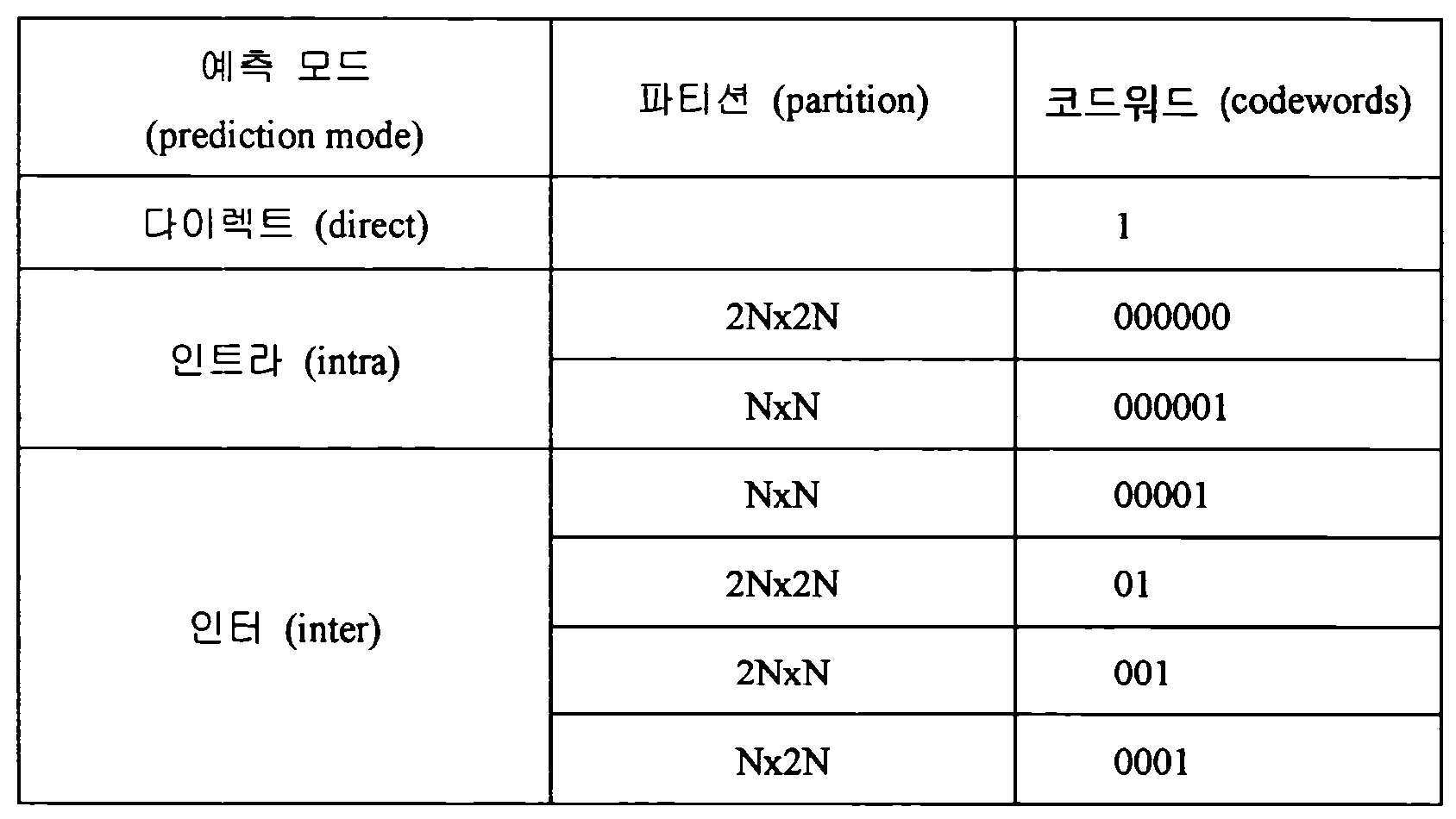
표 22에 따르면, 부호화기는 현재 블록에 적용된 예측 타입에 대응하는 코드워드를 전송함으로써 현재 블록에 대한 예측 타입을 지시할 수 있다.According to Table 22, the encoder may indicate the prediction type for the current block by transmitting a codeword corresponding to the prediction type applied to the current block.
이때, 부호화기는 각 예측 타입의 발생 빈도에 따라서 코드워드를 할당할 수도 있다.In this case, the encoder may allocate a codeword according to the frequency of occurrence of each prediction type.
표 23은 2Nx2N 인터 모드가 다이렉트 모드보다 발생 빈도가 높다고 가정할 때, 발생 빈도를 고려하여 코드워드를 할당하는 조인트 코딩 테이블의 일 예이다.Table 23 is an example of a joint coding table for allocating codewords in consideration of the occurrence frequency, assuming that the 2N × 2N inter mode is more frequently generated than the direct mode.
<표 23>TABLE 23

표 23을 참조하면, 발생 빈도가 더 높은 2Nx2N 인터 모드에 다이렉트 모드의 코드워드(01)보다 더 작은 코드워드(1)가 할당된다.Referring to Table 23, the
또한, 표 24는 인터 모드 중 2NxN 인터 모드의 발생 빈도가 Nx2N 인터 모드의 발생 빈도보다 낮다고 가정할 때, 발생 빈도를 고려하여 코드워드를 할당하는 예를 나타낸 것이다.In addition, Table 24 shows an example of allocating codewords in consideration of the occurrence frequency, assuming that the occurrence frequency of the 2NxN inter mode is lower than that of the Nx2N inter mode.
<표 24>TABLE 24

표 24을 참조하면, 발생 빈도가 더 높은 2Nx2N 인터 모드에 다이렉트 모드의 코드워드(01)보다 더 작은 코드워드(1)가 할당되며, Nx2N 인터 모드에는 2NxN 인터 모드에 대한 코드워드(0001)보다 더 작은 코드워드(001)가 할당된다.Referring to Table 24, a
상술한 도 11과 표 19 내지 표 24의 예에서, 머지 모드가 예측 유닛 단위로 적용될 수 있으므로, 모드 A가 적용되는 것으로 시그널링한 후에 현재 블록에 머지 모드가 적용되는지를 시그널링(merge_flag)할 수도 있다. 표 19 내지 표 24를 통해서 다이렉트 모드가 아닌 인터 예측 모드가 지시된 경우에도 현재 블록에 머지 모드가 적용되는지를 시그널링할 수도 있다. 또한, 특정한 머지 모드의 선택 비율이 높은 경우에는 모드 A 자체를 머지 모드로 설정할 수도 있다.In the example of FIG. 11 and Tables 19 to 24, the merge mode may be applied in units of prediction units, and thus may signal (merge_flag) whether the merge mode is applied to the current block after signaling that mode A is applied. . Even if the inter prediction mode other than the direct mode is indicated through Tables 19 to 24, it may be signaled whether the merge mode is applied to the current block. In addition, when the selection ratio of a particular merge mode is high, mode A itself may be set as a merge mode.
도 12는 본 발명이 적용되는 시스템에서 부호화기가 시그널링하는 방법의 다른 예를 개략적으로 설명하는 도면이다. 도 12에서는 주변 블록의 움직임 정보를 현재 블록의 움직임 정보로 이용하는 예측 모드로서 다이렉트 모드가 적용되지 않는 경우, 즉 {(머지) 스킵 모드, 머지 모드}를 사용하며 머지 모드가 예측 유닛 단위에서 적용되는 경우를 예로서 설명한다.12 is a diagram schematically illustrating another example of a method for signaling by an encoder in a system to which the present invention is applied. In FIG. 12, when a direct mode is not applied as a prediction mode using motion information of a neighboring block as motion information of a current block, that is, {(merge) skip mode and merge mode} are used, and a merge mode is applied in a prediction unit unit. The case will be described by way of example.
도 12의 실시예를 도 9 또는 도 11의 경우와 비교하면, 주변 블록의 움직임 정보를 현재 블록의 움직임 정보로 사용하는 예측 모드의 적용 여부에 관한 정보의 수가 하나 줄어들게 된다. 이렇게 도 9 또는 도 10의 경우에서 다이렉트 모드를 제거한다면, 이후에 인터/인트라 모드들에 대한 정보를 시그널링할 때 오버헤드를 감소할 수 있다.When the embodiment of FIG. 12 is compared with the case of FIG. 9 or 11, the number of information on whether to apply a prediction mode using motion information of a neighboring block as motion information of the current block is reduced by one. Thus, if the direct mode is removed in the case of FIG. 9 or FIG. 10, overhead may be reduced when signaling information about inter / intra modes later.
{(머지) 스킵 모드, 머지 모드}를 사용하는 경우에도, {스킵 모드, 다이렉트 모드, 머지 모드}를 사용하는 경우와 동일한 방식으로 예측 타입을 시그널링 할 수 있다. 예컨대, 도 12의 예에서도, (머지) 스킵 모드 이외의 예측 타입 중에서 선택 비율(발생 빈도)이 높은 예측 모드 혹은 예측 타입을 모드 A라고 하면, 모드 A의 적용 여부에 관한 정보(modeA_flag)의 시그널링을 다른 예측 타입(2Nx2N 인터 모드, …, NxN 인트라 모드)의 적용 여부에 관한 정보보다 먼저 시그널링할 수 있다. 그리고, 모드 A의 적용이 없는 경우에는 다른 예측 타입 (2Nx2N 인터 모드, …, NxN 인트라 모드)의 적용 여부를 조인트 코딩을 통해서 시그널링 할 수 있다.Even when using {(merge) skip mode, merge mode}, the prediction type may be signaled in the same manner as when using {skip mode, direct mode, merge mode}. For example, even in the example of FIG. 12, when a prediction mode or a prediction type having a high selection ratio (occurrence frequency) among prediction types other than the (merge) skip mode is mode A, signaling of information (modeA_flag) on whether mode A is applied May be signaled before information on whether other prediction types (2N × 2N inter mode,…, N × N intra mode) are applied. If there is no application of mode A, whether or not another prediction type (2Nx2N inter mode, ..., NxN intra mode) is applied may be signaled through joint coding.
표 25는 도 12의 예에 따라서 예측 타입 정보에 코드워드를 할당한 조인트 코딩 테이블의 일 예이다. 표 25에서는, 설명의 편의를 위하여 인터 예측 모드가 {2Nx2N, 2NxN, Nx2N, NxN}의 파티션을 가지는 경우를 예로서 설명한다.Table 25 is an example of a joint coding table in which a codeword is allocated to prediction type information according to the example of FIG. 12. In Table 25, a case where the inter prediction mode has a partition of {2Nx2N, 2NxN, Nx2N, NxN} will be described as an example for convenience of description.
<표 25>TABLE 25

표 25의 예에서는 설명의 편의를 위해서, 2Nx2N, 2NxN, Nx2N, NxN의 파티션 사이즈를 가지는 인터 예측 모드 중에서 가장 발생 빈도가 높은 예측 타입, 즉 모드 A가 2Nx2N 인터 모드라고 가정한다. 따라서, 2Nx2N 인터 모드의 적용 여부는 별도의 시그널링을 통해서 미리 전송된다.In the example of Table 25, for convenience of description, it is assumed that a prediction type having the highest frequency among inter prediction modes having partition sizes of 2Nx2N, 2NxN, Nx2N, and NxN, that is, mode A is 2Nx2N inter mode. Therefore, whether 2Nx2N inter mode is applied or not is transmitted in advance through separate signaling.
이때, 도 12의 예와 같이 예측 타입의 발생 빈도를 고려하여 전송 순서를 정하는 것과 별개로, 발생 빈도(선택 비율)를 고려하여 예측 타입에 코드워드를 할당하도록 할 수도 있다.In this case, as shown in the example of FIG. 12, the codeword may be allocated to the prediction type in consideration of the occurrence frequency (selection ratio), in addition to determining the transmission order in consideration of the occurrence frequency of the prediction type.
표 26은 {(머지) 스킵 모드, 머지 모드}를 사용하는 경우로서, 예측 타입 발생 빈도를 고려하여 코드워드를 할당한 경우에 대한 조인트 코딩 테이블의 일 예이다. 표 26에서는 설명의 편의를 위하여 인터 예측 모드가 {2Nx2N, 2NxN, Nx2N, NxN}의 파티션을 가지는 경우를 예로서 설명한다.Table 26 shows a case of using {(merge) skip mode and merge mode}, which is an example of a joint coding table for a case where codewords are allocated in consideration of a prediction type occurrence frequency. In Table 26, a case where the inter prediction mode has a partition of {2Nx2N, 2NxN, Nx2N, NxN} will be described as an example for convenience of description.
<표 26>TABLE 26

표 26에서는, Nx2N 인터 모드의 발생 빈도가 2NxN 인터 모드의 발생 빈도보다 높다고 가정한다. 따라서, Nx2N 인터 모드에 2NxN 인터 모드에 대한 코드워드(001)보다 더 짧은 코드워드(01)를 할당하고 있다.In Table 26, it is assumed that the occurrence frequency of the Nx2N inter mode is higher than the occurrence frequency of the 2NxN inter mode. Therefore, the
또한, {(머지) 스킵 모드, 머지 모드}를 사용하는 경우에도, 예측 타입의 발생 빈도를 시그널링 순서와 코드워드 할당에 모두 반영할 수 있다.In addition, even when {(merge) skip mode and merge mode} are used, the frequency of occurrence of the prediction type may be reflected in both the signaling order and the codeword assignment.
표 27은 {(머지) 스킵 모드, 머지 모드}를 사용하는 경우로서, 예측 타입 발생 빈도를 고려하여 시그널링 순서를 조정하고 코드워드를 할당한 경우에 대한 조인트 코딩 테이블의 일 예이다. 표 27에서는, 설명의 편의를 위하여 인터 예측 모드가 {2Nx2N, 2NxN, Nx2N, NxN}의 파티션을 가지는 경우를 예로서 설명한다.Table 27 is a case of using {(merge) skip mode, merge mode}, which is an example of a joint coding table for a case where a signaling order is adjusted and codewords are allocated in consideration of prediction type occurrence frequency. In Table 27, a case where the inter prediction mode has a partition of {2Nx2N, 2NxN, Nx2N, NxN} will be described as an example for convenience of description.
<표 27>TABLE 27

표 27의 예에서는 설명의 편의를 위해, 2Nx2N 인터 모드의 발생 빈도가 2Nx2N, 2NxN, Nx2N, NxN 인터 모드들 중에서 가장 높으며, 2NxN 인터 모드는 Nx2N 인터 모드보다 발생 빈도가 높다고 가정한다. 따라서, (머지) 스킵 모드, 머지 모드, 2Nx2N 인터 모드의 적용 여부는 별도의 시그널링을 통해 전달될 수 있다. 다른 예측 타입들의 적용 여부는 표 27의 조인트 코딩 테이블을 이용하여 시그널링 되며, 이때, 2NxN 인터 모드보다 더 높은 발생 빈도를 가지는 Nx2N 인터 모드에 2NxN 인터 모드의 코드워드(01)보다 더 작은 코드워드(1)가 할당된다.In the example of Table 27, for convenience of description, it is assumed that the occurrence frequency of the 2Nx2N inter mode is the highest among 2Nx2N, 2NxN, Nx2N, and NxN inter modes, and the 2NxN inter mode is more frequent than the Nx2N inter mode. Therefore, whether to apply the (merge) skip mode, the merge mode, or the 2N × 2N inter mode may be delivered through separate signaling. Whether other prediction types are applied is signaled using the joint coding table of Table 27, where a codeword smaller than the codeword (01) of the 2NxN inter mode to the Nx2N inter mode having a higher frequency of occurrence than the 2NxN inter mode is used. 1) is assigned.
상술한 도 12와 표 25 내지 표 27의 예에서, 머지 모드가 예측 유닛 단위로 적용될 수 있으므로, 현재 블록에 머지 모드가 적용되는지를 별도로 시그널링(merge_flag)할 수도 있다. 예컨대, 표 25 내지 표 27을 통해서 현재 블록에 어떤 인터 예측 모드/파티션이 적용되는지가 시그널링 된 경우에 현재 블록에 머지 모드가 적용되는지가 시그널링될 수도 있다. 또한, 특정한 머지 모드의 선택 비율이 높은 경우에는 모드 A 자체를 머지 모드로 설정할 수도 있다.In the example of FIG. 12 and Tables 25 to 27, since the merge mode may be applied in units of prediction units, it may be separately signaled (merge_flag) whether the merge mode is applied to the current block. For example, when it is signaled which inter prediction mode / partition is applied to the current block through Tables 25 to 27, it may be signaled whether the merge mode is applied to the current block. In addition, when the selection ratio of a particular merge mode is high, mode A itself may be set as a merge mode.
한편, 예측 유닛 단위로 머지 모드가 적용되는 경우에도, {스킵 모드, 다이렉트 모드, 머지 모드}를 사용하는 경우에 다이렉트 모드와 머지 모드를 통합하여 앞서 설명한 바와 같은 통합 모드를 이용할 수 있다. 다이렉트 모드와 머지 모드는 움직임 정보를 주변 블록으로부터 유도한 뒤, 스킵 모드와 달리 레지듀얼 정보를 전송한다는 점에서 서로 유사하다. 통합 모드를 이용하면, 스킵 모드와 통합 모드 외 인터/인트라 모드의 적용 여부에 관한 정보의 시그널링 오버헤드를 줄일 수 있게 된다. 통합 모드를 적용하는 경우에도, 시그널링 순서의 조정, 코드워드의 할당 조정 등을 앞서 설명한 바와 동일하게 수행할 수 있다.Meanwhile, even when the merge mode is applied in units of prediction units, when using {skip mode, direct mode, merge mode}, the integrated mode as described above may be used by integrating the direct mode and the merge mode. The direct mode and the merge mode are similar to each other in that motion information is derived from a neighboring block and then residual information is transmitted unlike the skip mode. Using the integrated mode, it is possible to reduce the signaling overhead of information about whether to apply the skip mode and the inter / intra mode other than the integrated mode. Even when applying the unified mode, adjustment of signaling order, allocation of codewords, and the like may be performed as described above.
도 13은 본 발명이 적용되는 시스템에서 부호화기가 시그널링하는 방법의 다른 예를 개략적으로 설명하는 도면이다. 도 13에서는 통합 모드를 사용하되, 머지 모드는 예측 유닛 단위에서 적용되는 경우를 예로서 설명한다.FIG. 13 is a diagram schematically illustrating another example of a method for signaling by an encoder in a system to which the present invention is applied. In FIG. 13, an integrated mode is used, but a merge mode is described as an example in which a prediction unit is applied.
도 13의 예에서는 스킵 모드의 적용 여부를 시그널링 한 후에, 스킵 모드를 적용하지 않는 경우에는 나머지 예측 타입들 중에서 가장 발생 빈도가 높은 예측 타입을 적용 여부를 우선적으로 시그널링 한다. 즉, 도 13에서는 모드 A가 스킵 모드를 제외한 나머지 예측 타입들 중에서 가장 높은 발생 빈도를 가지는 예측 타입이라고 가정한다. 이때, 모드 A는 통합 모드일 수도 있다.In the example of FIG. 13, after signaling whether the skip mode is applied or not, if skip mode is not applied, whether a prediction type having the highest frequency of occurrence among the remaining prediction types is applied is preferentially signaled. That is, in FIG. 13, it is assumed that mode A is the prediction type having the highest occurrence frequency among the remaining prediction types except for the skip mode. In this case, the mode A may be an integrated mode.
따라서, 부호화기는 스킵 모드를 적용하지 않는 경우에는 모드 A의 적용 여부를 시그널링 하며, 모드 A를 적용하지 않는 경우에는 나머지 예측 타입 중 어떤 예측 타입이 적용될 것인지를 조인트 코딩을 이용하여 시그널링(pred_mode_partition_signaling)한다.Therefore, when the skip mode is not applied, the encoder signals whether mode A is applied. When the mode A is not applied, the encoder signals (pred_mode_partition_signaling) which prediction type of the remaining prediction types is to be applied. .
표 28은 도 13의 예에 따른 조인트 코딩 테이블이다.Table 28 is a joint coding table according to the example of FIG.
<표 28>TABLE 28

도 7과 표 11의 예에서는 스킵 모드를 제외하고 가장 높은 발생 빈도를 가지는 예측 타입이 통합 모드인 경우를 예시했지만, 이는 설명의 편의를 위한 예시로서 본 발명은 이에 한정되지 않는다. 예컨대, 2Nx2N 인터 모드의 발생 빈도가 통합 모드보다 더 높은 경우에는 2Nx2N 인터 모드를 모드 A로 결정하고, 2Nx2N 인터 모드의 적용 여부를 별도로 미리 시그널링한 후, 통합 모드의 적용 여부를 다른 예측 타입들의 적용 타입들과 함께 조인트 코딩을 이용하여 시그널링하도록 할 수도 있다.In the example of FIG. 7 and Table 11, the case in which the prediction type having the highest frequency of occurrence except the skip mode is the integrated mode is illustrated. However, the present invention is not limited thereto. For example, if the occurrence frequency of the 2Nx2N inter mode is higher than that of the unified mode, the 2Nx2N inter mode is determined as the mode A, separately signaled whether the 2Nx2N inter mode is applied, and whether the unified mode is applied or not is applied to other prediction types. Signaling may also be made using joint coding with the types.
한편, 통합 모드를 이용하는 경우에도, 시그널링 순서를 조정하는 것과는 별도로예측 타입별 발생 빈도(선택 비율)에 고려하여 코드워드를 할당할 수 있다.On the other hand, even when using the unified mode, the codeword can be allocated in consideration of the occurrence frequency (selection ratio) for each prediction type separately from adjusting the signaling order.
표 29는 통합 모드를 사용하는 경우로서, 예측 타입의 발생 빈도를 고려하여 코드워드를 할당한 경우에 대한 조인트 코딩 테이블의 일 예이다. 표 29에서는, 설명의 편의를 위하여 인터 예측 모드에서 {2Nx2N, 2NxN, Nx2N, NxN}의 파티션을 가지는 경우를 예로서 설명한다.Table 29 shows an example of a joint coding table for a case of using a unified mode and assigning a codeword in consideration of a frequency of occurrence of a prediction type. In Table 29, a case of having a partition of {2Nx2N, 2NxN, Nx2N, NxN} in the inter prediction mode is described as an example for convenience of description.
<표 29>TABLE 29
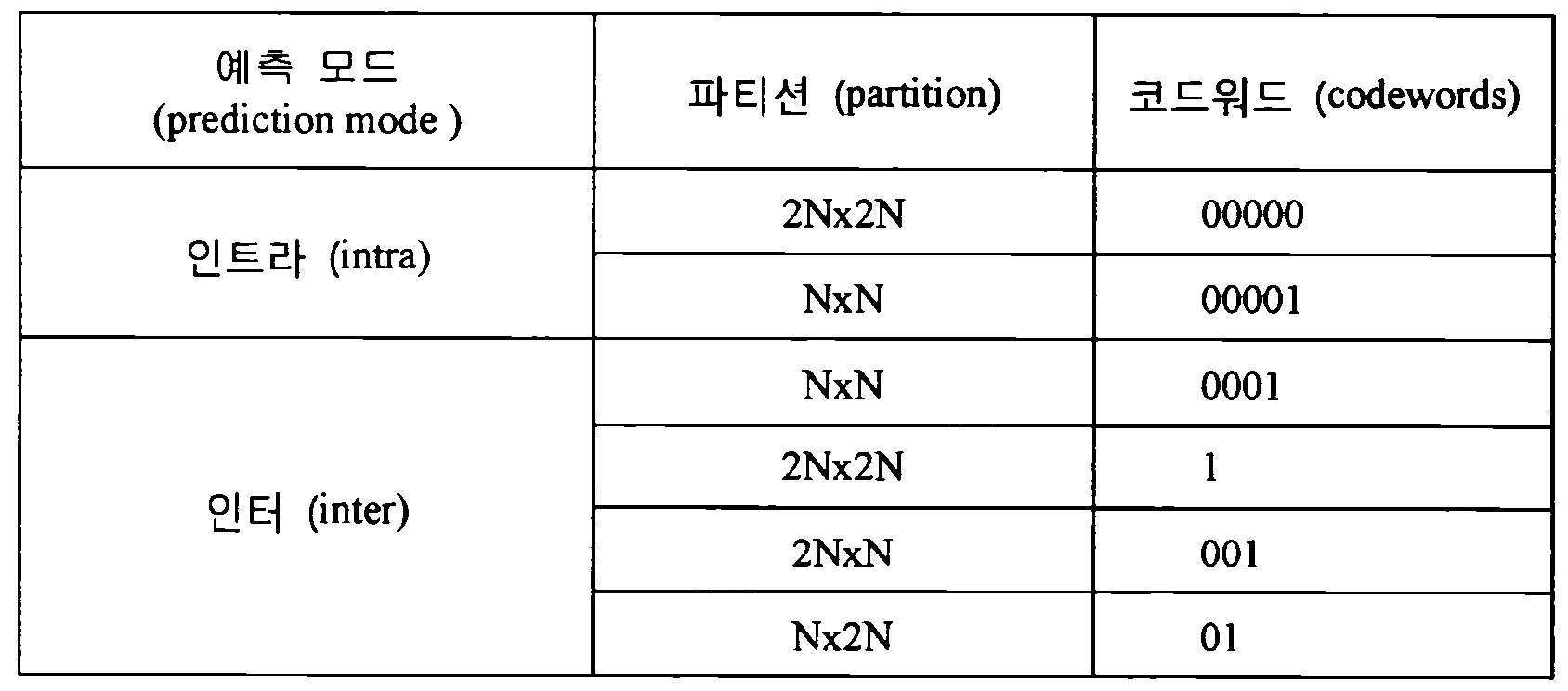
표 29에서는 Nx2N 인터 모드의 발생 빈도가 2NxN 인터 모드의 발생 빈도보다 높은 경우를 예로서 설명한다. 따라서, 표 29의 예에서는 Nx2N 인터 모드에 대하여 2NxN 인터 모드에 할당된 코드워드(001)보다 더 짧은 코드워드(01)를 할당하고 있다.In Table 29, the case where the occurrence frequency of the Nx2N inter mode is higher than the occurrence frequency of the 2NxN inter mode will be described as an example. Therefore, in the example of Table 29, the
통합 모드를 적용하는 경우에도, 통합 모드를 포함하는 각 예측 타입 각각에 대하여 코드워드를 할당하고, 적용되는 예측 타입에 대응하는 코드워드를 시그널링하도록 할 수 있다.Even when applying the unified mode, a codeword may be allocated to each prediction type including the unified mode, and a codeword corresponding to the applied prediction type may be signaled.
표 30은 통합 모드를 사용하는 경우로서, 스킵 모드 이외의 예측 타입 각각에 대하여 코드워드를 할당하여 현재 블록에 적용되는 예측 타입(예측 모드, 파티션 사이즈 등)의 정보를 전송하는데 이용되는 조인트 코딩 테이블의 일 예를 개략적으로 나타낸 것이다.Table 30 shows a joint coding table used to transmit information on prediction types (prediction mode, partition size, etc.) applied to the current block by allocating codewords for each prediction type other than the skip mode when using the integrated mode. An example of the schematic is shown.
<표 30>TABLE 30

표 30에서는, 설명의 편의를 위하여 인터 예측 모드에서 {2Nx2N, 2NxN, Nx2N, NxN}의 파티션을 가지는 경우를 예로서 설명하고 있다. 표 30을 참조하면, 부호화기는 각 예측 모드, 즉 통합 모드(머지/다이렉트 모드), 2Nx2N, NxN 인트라 모드, 2Nx2N, 2NxN, Nx2N, NxN 인터 모드 각각에 코드워드를 할당하고, 현재 블록에 적용되는 예측 타입의 코드워드를 전송할 수 있다.In Table 30, a case of having a partition of {2Nx2N, 2NxN, Nx2N, NxN} in the inter prediction mode is described as an example for convenience of description. Referring to Table 30, the encoder allocates a codeword to each prediction mode, i.e., integrated mode (merge / direct mode), 2Nx2N, NxN intra mode, 2Nx2N, 2NxN, Nx2N, and NxN inter mode, respectively, and is applied to the current block. The codeword of the prediction type may be transmitted.
이때, 부호화기는 예측 타입별 발생 빈도(선택 비율)을 고려하여 코드워드를 할당할 수도 있다. 표 31은 표 30의 예에서 예측 타입별 발생 빈도를 고려하여 코드워드를 할당하는 일 예를 나타낸 것이다.In this case, the encoder may allocate the codeword in consideration of the occurrence frequency (selection ratio) for each prediction type. Table 31 shows an example of allocating codewords in consideration of the occurrence frequency of each prediction type in the example of Table 30.
<표 31>TABLE 31

표 31의 예에서는 설명의 편의를 위해서, Nx2N 인터 모드의 발생 빈도가 2NxN 인터모드의 발생 빈도보다 높다고 가정한다. 따라서, 표 31의 예에서는 표 30의 예와 비교할 때, Nx2N 인터 모드에 대해서 2NxN 인터 모드에 대한 코드워드(0001)보다 더 짧은 코드워드(001)를 할당하고 있다.In the example of Table 31, for convenience of explanation, it is assumed that the frequency of occurrence of the Nx2N inter mode is higher than the frequency of occurrence of the 2NxN inter mode. Therefore, in the example of Table 31, the
한편, 표 28 내지 표 31의 경우에는 예측 유닛 단위로 머지 모드가 적용된다. 따라서, 시그널링 순서를 조정하는 경우(표 28, 표 31)나 머지 모드를 포함하는 통합 모드를 다른 예측 타입과 동등하게 고려하는 경우(표 30)의 경우에는 스킵 모드, 통합 모드 외에 인터 예측 모드/파티션 사이즈가 현재 블록에 적용되는 경우에 별도로 머지 모드의 적용 여부가 시그널링 되지 않아도 된다. 반면에, 시그널링 순서의 조정없이 발생 빈도를 고려하여 코드워드 할당을 하는 경우인 표 29를 통해서 예측 정보가 시그널링 되는 경우에는, 인터 예측 모드/파티션 사이즈 중 어느 하나가 현재 블록에 적용되는 것으로 시그널링된 후에, 현재 블록에 머지 모드가 적용되는지에 관한 정보(merge_flag)가 뒤이어 시그널링될 수 있다.Meanwhile, in Tables 28 to 31, the merge mode is applied in units of prediction units. Therefore, in case of adjusting the signaling order (Tables 28 and 31) or in case of considering the integrated mode including the merge mode equally with other prediction types (Table 30), the inter prediction mode / When the partition size is applied to the current block, whether merge mode is separately applied does not need to be signaled. On the other hand, when prediction information is signaled through Table 29, which is a case where codeword allocation is performed in consideration of the frequency of occurrence without adjusting the signaling order, it is signaled that any one of the inter prediction modes / partition sizes is applied to the current block. Later, information (merge_flag) regarding whether merge mode is applied to the current block may be signaled subsequently.
지금까지는 설명의 편의를 위해서, 인터 모드에 대하여 {2Nx2N, 2NxN, Nx2N, NxN}의 파티션만이 적용되는 경우를 예로서 설명하였으나, 인터 모드에 대한 전체 파티션을 고려하여, 현재 블록에 대한 예측 타입을 시그널링할 수도 있다.So far, for convenience of explanation, the case where only partitions of {2Nx2N, 2NxN, Nx2N, NxN} are applied to the inter mode has been described as an example. However, in consideration of the entire partition for the inter mode, the prediction type for the current block is described. May be signaled.
표 32는 2Nx2N, 2NxN, Nx2N, NxN, 2NxnU, 2NxnD, nLx2N, nRx2N의 파티션을 모두 고려하는 경우에 현재 블록에 대한 예측 블록의 시그널링에 이용될 수 있는 조인트 코딩 테이블의 일 예를 나타낸 것이다.Table 32 shows an example of a joint coding table that can be used for signaling of a prediction block for a current block when all partitions of 2Nx2N, 2NxN, Nx2N, NxN, 2NxnU, 2NxnD, nLx2N, and nRx2N are considered.
<표 32>TABLE 32

표 32를 참조하면, 인트라 모드의 각 파티션 사이즈와 인터 모드의 각 파티션 사이즈를 예측 타입을 통해서 지시할 수 있다. 따라서, 예측 모드와 파티션 사이즈를 조인트 코딩하여 현재 블록에 대한 예측 타입을 한번에 시그널링 할 수 있다. 이때, 상술한 바와 같이, 예측 타입별로 발생 빈도를 고려하여 코드워드를 할당할 수도 있다.Referring to Table 32, each partition size of the intra mode and each partition size of the inter mode may be indicated through the prediction type. Therefore, by joint coding the prediction mode and the partition size, the prediction type for the current block can be signaled at once. In this case, as described above, the codeword may be allocated in consideration of the occurrence frequency for each prediction type.
한편, 표 32의 예에서 주변 블록의 움직임 정보를 현재 블록의 움직임 정보로서 그대로 이용하는 예측 모드의 경우, 예컨대, {스킵 모드, 다이렉트 모드, 머지 모드} 혹은 {(머지) 스킵 모드, 머지 모드}의 경우에는 해당 모드의 적용 여부를 다른 조건에 의해 추정하거나(infer), 미리 별도의 시그널링을 통해 적용 여부를 전송할 수도 있다. 또한, 표 32는 머지 모드가 상술한 다른 예들과 같이 예측 유닛 단위에서 적용되는 경우를 가정한 것으로서, 각 파티션 별로 다시 머지 모드의 적용 여부가 시그널링 될 수 있다.Meanwhile, in the example of Table 32, in the prediction mode using the motion information of the neighboring block as the motion information of the current block, for example, {skip mode, direct mode, merge mode} or {(merge) skip mode, merge mode} In this case, whether to apply the corresponding mode may be estimated based on other conditions, or may be transmitted in advance through separate signaling. In addition, Table 32 assumes that the merge mode is applied in the prediction unit unit as in the above-described other examples, and it may be signaled whether the merge mode is applied again for each partition.
따라서, 표 17의 경우와 표 32의 경우를 함께 적용하여, 부호화 유닛 단위에서 머지 여부를 별도의 시그널링으로 전송할 수도 있고, 부호화 유닛 단위에서 머지 모드가 적용되지 않는 경우에는, 표 32와 같이 현재 블록에 대한 예측 타입을 시그널링 하면서, 혹은 시그널링 한 후에 파티션(예측 유닛) 단위로 머지 모드의 적용 여부(merge_flag)를 시그널링할 수 있다.Therefore, by applying the case of Table 17 and the case of Table 32 together, whether or not merge may be transmitted by separate signaling in a coding unit unit, and if the merge mode is not applied in the coding unit unit, the current block as shown in Table 32 Signaling a prediction type for or after signaling, whether merge mode (merge_flag) may be applied in units of partitions (prediction units) may be signaled.
각 예측 타입의 시그널링에 앞서 상술한 바와 같은 추가 정보, 예컨대 슬라이스 타입 혹은 분할 여부에 관한 정보가 시그널링될 수도 있다. 이 경우에, 이들 추가 정보를 기반으로 예측 타입이 구별되도록 할 수도 있다. 예를 들어, I 슬라이스의 경우에 예측 타입이 0의 값을 가지면 2Nx2N 인트라 모드를 지시하고, B 혹은 P 슬라이스의 경우에 예측 타입이 0의 값을 가지면, 2Nx2N 인터 모드를 지시하는 것으로 할 수도 있다.Prior to signaling of each prediction type, additional information as described above, for example, information on whether a slice type or division may be signaled may be signaled. In this case, prediction types may be distinguished based on these additional information. For example, in the case of an I slice, if the prediction type has a value of 0, 2Nx2N intra mode may be indicated. In case of a B or P slice, the prediction type may have a value of 0, may indicate 2Nx2N inter mode. .
또한, 서로 다른 예측 모드/파티션을 가지는 예측 타입에 대하여 서로 다른 코드워드를 할당함으로써, 각 예측 타입을 구별할 수도 있다.In addition, each prediction type may be distinguished by assigning different codewords to prediction types having different prediction modes / partitions.
상술한 바와 같이, 인터 슬라이스에서 예측 모드에 대한 시그널링 스킴(scheme) 방법을 수정하여 전송 효율을 높일 수 있다. 예컨대, 인터 슬라이스에 대한 예측 모드와 파티션 타입을 유너리 타입(unary-type)의 코드워드로 조인트 코딩할 수 있다. 이때, 상술한 바와 같이, 예측 모드, 파티션 (사이즈)과 같이 예측에 관한 정보를 예측 타입이라고 할 수 있다. 예측 타입은 예측 모드, 파티션 (사이즈) 외에도, 분할 여부와 슬라이스 타입 등에 관한 정보를 더 포함할 수도 있다.As described above, the transmission scheme may be improved by modifying a signaling scheme method for the prediction mode in the inter slice. For example, the prediction mode and the partition type for the inter slice may be joint coded by a binary type codeword. In this case, as described above, the information about the prediction, such as the prediction mode and the partition (size), may be referred to as a prediction type. In addition to the prediction mode and the partition (size), the prediction type may further include information on whether to split and a slice type.
각 예측 모드의 포션(portion) 즉, 발생 빈도(선택 빈도)에 따라서 예측 타입을 나타내는 코드워드를 재정렬(rearrange)할 수도 있다.The codewords indicating the prediction type may be rearranged according to a portion of each prediction mode, that is, a frequency of occurrence (selection frequency).
예측 모드와 파티션 타입(파티션 사이즈)는 소정의 신택스 요소(syntax element)를 통해서 전송될 수 있다. 예컨대, 상술한 바와 같이, 스킵 모드의 적용 여부는 스킵 플래그(skip_flag)를 통해서 시그널링 될 수 있다. 또한, 머지 모드의 적용 여부는 머지 플래그(merge_flag)를 통해서 시그널링 될 수 있으며, 다이렉트 모드의 적용 여부는 다이렉트 모드 플래그(direct_flag)를 통해서 시그널링 될 수 있고, 다이렉트 모드와 머지 모드의 통합 모드의 적용 여부는 통합 모드 플래그(merge_direct_flag)를 통해서 적용 여부가 시그널링 될 수 있다.The prediction mode and partition type (partition size) may be transmitted through a predetermined syntax element. For example, as described above, whether the skip mode is applied may be signaled through a skip flag skip_flag. In addition, whether the merge mode is applied may be signaled through the merge flag (merge_flag), whether the direct mode may be signaled through the direct mode flag (direct_flag), and whether the integrated mode of the direct mode and the merge mode is applied or not. Whether to apply may be signaled through the merge mode flag merge_direct_flag.
한편, 별도의 플래그 등으로 시그널링 되는 예측 모드들이 현재 블록에 적용되지 않는 경우에는, 현재 블록의 예측 모드와 파티션 사이즈 등을 별도로 시그널링 할 수 있다.On the other hand, when prediction modes signaled by separate flags are not applied to the current block, the prediction mode and partition size of the current block may be separately signaled.
표 33은 부호화 유닛 레벨(부호화 유닛 파라미터 셋)에서 예측 모드와 파티션 타입(파티션 사이즈)를 시그널링하는 예를 개략적으로 나타낸 것이다.Table 33 schematically shows an example of signaling a prediction mode and a partition type (partition size) at a coding unit level (coding unit parameter set).
<표 33>TABLE 33
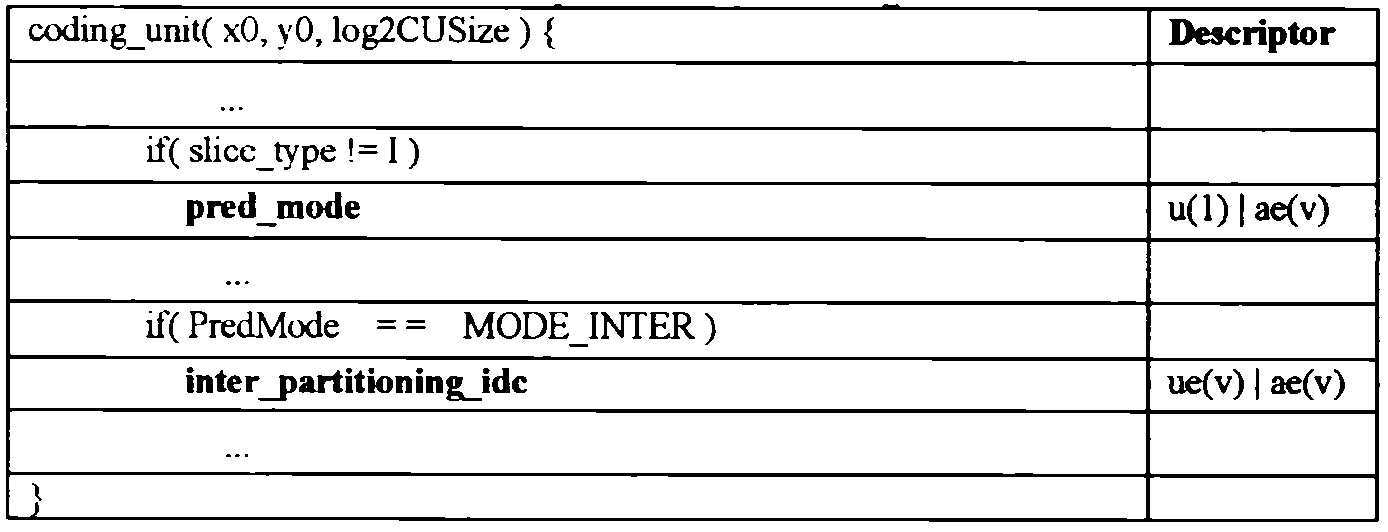
표 33의 예에서는 예측 모드, 파티션 정보 등을 조인트 코딩하고 대응하는 코드워드를 전송하는 방식으로 시그널링 될 수 있다. 이때 표 33의 예처럼, 예측 모드와 파티션 타입(사이즈)를 별개의 신택스 요소를 이용하여 시그널링할 수 있다. 표 33에서 예측 모드는 pred_mode에 의해 지시되며, 인터 모드의 파티션 사이즈는 inter_partitioning_idc에 의해 지시될 수 있다.In the example of Table 33, the prediction mode, the partition information, etc. may be signaled by joint coding and transmitting a corresponding codeword. In this case, as in the example of Table 33, the prediction mode and the partition type (size) may be signaled using separate syntax elements. In Table 33, the prediction mode is indicated by pred_mode, and the partition size of the inter mode can be indicated by inter_partitioning_idc.
한편, 앞서 설명에 이용한 바와 같이, 예측 모드와 파티션 정보를 포함하는 시그널링이라는 의미에서 pred_mode_partition_signaling 라고 명명할 수도 있고, 예측 모드와 파티션 모드 등의 정보를 포함하는 정보를 예측 타입이라 명한 것처럼, 시그널링되는 신택스 요소를 단순히 pred_type라고 명할 수도 있다. pred_mode_partition_signaling 이나 pred_type의 경우에는 관련된 정보(예측 모드, 파티션 사이즈 등)가 조인트 코딩에 의해 하나의 코드워드로 특정되어 시그널링 될 수 있다.Meanwhile, as described above, pred_mode_partition_signaling may be referred to in the sense of signaling including prediction mode and partition information, and the signaling signaled as information including information such as prediction mode and partition mode is called a prediction type. You can also simply call the element pred_type. In the case of pred_mode_partition_signaling or pred_type, related information (prediction mode, partition size, etc.) may be signaled by specifying one codeword by joint coding.
표 34는 상술한 코드워드의 일 예를 개략적으로 나타낸 것이다.Table 34 schematically shows an example of the above-described codeword.
<표 34>TABLE 34

각각의 예측 모드에 대한 시그널링 방법으로 도 3에 도시된 시그널링 순서를 이용하는 경우에는, 상술한 바와 같이 스킵 모드, 머지 모드, 다이렉트 모드의 적용 여부가 순서대로 시그널링 되고, 이들 예측 모드가 적용되지 않는 경우에 나머지 예측 타입 중에서 어떤 예측 타입이 적용되는지가 조인트 코딩을 이용하여 시그널링된다. 이에 관해서는 도 3에 관해서 이미 설명한 바와 같다.In the case of using the signaling sequence shown in FIG. 3 as a signaling method for each prediction mode, whether skip mode, merge mode, or direct mode is applied is signaled in order as described above, and when these prediction modes are not applied. Which prediction type is applied from among the remaining prediction types is signaled using joint coding. This has already been described with reference to FIG. 3.
한편, 표 34를 고려하면, 각 예측 모드에 대한 코드워드는 서로 다른 길이를 가지는데, 소스 코딩 이론에 의하면 각 코드워드의 길이는 발생 확률의 로그 값의 절대값에 대략적으로 비례한다. 따라서, 부호화 효율을 높이려면, 가장 빈번한 심볼이 가장 짧은 코드워드를 사용하는 것이 좋다.On the other hand, considering Table 34, the codewords for each prediction mode have different lengths. According to the source coding theory, the length of each codeword is approximately proportional to the absolute value of the log value of occurrence probability. Therefore, to increase the coding efficiency, it is better to use the shortest codeword for the most frequent symbols.
따라서, 표 34의 코드워드를 예측 타입에 따른 발생 빈도를 고려하여 재정렬함으로써, 부호화/복호화의 복잡도 증가 없이 부호화 효율을 높일 수 있다.Accordingly, by rearranging the codewords in Table 34 in consideration of the frequency of occurrence according to the prediction type, the coding efficiency can be increased without increasing the complexity of encoding / decoding.
예측 타입(예측 모드)별 발생 확률을 측정한 예로서, 도 4를 앞서 설명한 바가 있다. 도 4의 예에 대해서는 앞서 설명한 바와 같이, 전체 예측 타입을 발생 횟수에 있어서 2Nx2N 인터 모드가 다이렉트 모드보다 포션(portion)이 크고, Nx2N 인터 모드가 2NxN 인터 모드보다 포션이 크다. 따라서, 발생 빈도, 즉 포션에 따라서 2Nx2N 인터 모드와 다이렉트 모드에 대한 코드워드를 서로 맞바꾸고(switching), Nx2N 인터 모드와 2NxN 인터 모드에 대한 코드워드를 서로 맞바꿀 수 있다.As an example of measuring the probability of occurrence for each prediction type (prediction mode), FIG. 4 has been described above. In the example of FIG. 4, as described above, in the number of occurrences of all prediction types, the 2Nx2N inter mode has a larger portion than the direct mode, and the Nx2N inter mode has a larger portion than the 2NxN inter mode. Therefore, the codewords for the 2Nx2N inter mode and the direct mode may be switched with each other according to the frequency of occurrence, that is, the portion, and the codewords for the Nx2N inter mode and the 2NxN inter mode may be exchanged with each other.
표 35는 표 34에서 각 예측 타입에 대한 코드워드를 상술한 바와 같이 재정렬한 것이다.Table 35 rearranges the codewords for each prediction type in Table 34 as described above.
<표 35>TABLE 35

표 34와 표 35에서는 별도로 시그널링할 예측 타입에 대해서 0의 코드워드를 할당하여 우선적으로 구분해 낸다. 그 뒤 나머지 예측 타입들에 대하여 재차 코드워드를 할당하여 한번에 어떤 예측 타입이 적용되는지를 지시하고 있다. 이에 관해 설명한 내용은 도 5 내지 도 8에서 설명한 내용과 크게 다르지 않다.In Table 34 and Table 35, a codeword of 0 is assigned to a prediction type to be signaled separately and distinguished first. Then, codewords are allocated to the remaining prediction types again to indicate which prediction type is applied at a time. Descriptions regarding this are not significantly different from those described with reference to FIGS. 5 to 8.
도 3의 예는 상술한 바와 같이 부호화 유닛 단위로 머지 모드가 적용되는 예이다. 예측 유닛 단위로 머지 모드가 적용되는 예로서, 앞서 설명한 도 9가 있다. 도 9의 예에서는 앞서 설명한 바와 같이, 인터 모드의 파티션 별로 머지 모드 적용 여부가 시그널링 될 수 있다.3 illustrates an example in which the merge mode is applied in units of coding units as described above. As an example of applying the merge mode in units of prediction units, FIG. 9 is described above. In the example of FIG. 9, as described above, whether the merge mode is applied to each partition of the inter mode may be signaled.
도 10은 예측 유닛 단위로 머지 모드가 적용되는 경우에, 각 예측 타입의 포션(발생 빈도)를 나타낸 것이었다. 이렇게 예측 유닛 단위로 머지 모드가 적용되는 경우에도, 발생 빈도를 고려하여 예측 타입별 시그널링 순서를 조정하거나 코드워드를 할당할 수 있으며, 이에 관해서는 도 11 내지 도 13 등에서 이미 설명한 바와 같다.10 illustrates potions (frequency) of each prediction type when merge mode is applied in units of prediction units. Even when the merge mode is applied in units of prediction units, the signaling order for each prediction type may be adjusted or a codeword may be allocated in consideration of the frequency of occurrence, as described above with reference to FIGS. 11 to 13.
한편, 도 14는 복호화 과정의 일 예를 개략적으로 나타낸 것이다. 도 14를 참조하면, 예측 데이터는 예측 모드 복호화 과정과 MC(Motion Compensation) 프레딕터(predictor) 생성 과정을 거치게 된다. 계수 데이터(coefficient data)는 계수 데이터 복호화 과정과 레지듀얼 데이터 생성 과정을 거치게 된다. 이어서 최종적으로 복호화된 이미지가 생성된다.Meanwhile, FIG. 14 schematically illustrates an example of a decoding process. Referring to FIG. 14, the prediction data is subjected to a prediction mode decoding process and a MC (Motion Compensation) predictor generation process. Coefficient data is subjected to a coefficient data decoding process and a residual data generation process. The final decoded image is then generated.
도 15는 도 14에 도시된 예측 모드 복호화 과정을 설명하는 도면이다. 도 15에서는 주변 블록의 움직임 정보를 현재 블록의 움직임 정보로 이용하는 예측 모드로서 {(머지) 스킵 모드, 머지 모드}를 적용하는 경우를 예로서 설명하고 있다.FIG. 15 is a diagram illustrating a prediction mode decoding process illustrated in FIG. 14. In FIG. 15, a case in which {(merge) skip mode and merge mode} is applied as a prediction mode using motion information of a neighboring block as motion information of a current block is described as an example.
인터 슬라이스에서 예측과 관련하여 모드에 관한 정보로서 시그널링 되는 것은 분할 여부에 관한 정보, 스킵 모드 적용 여부에 관한 정보, 머지 모드 적용 여부에 관한 정보, 인터 모드/인트라 모드의 예측 타입 중 어느 것이 적용되는지에 관한 정보 등이 있을 수 있다. 인터 모드/인트라 모드의 예측 타입 중 어느 것이 적용되는지에 관한 정보는 인터 모드의 경우에 파티션 사이즈에 따라서 4 가지(2Nx2N, NxN, 2NxN, Nx2N)로 나뉠 수 있고, 인트라 모드의 경우에는 파티션 사이즈에 따라서 2 가지(2Nx2N, NxN)로 나뉠 수 있다. 물론 인터 모드의 경우에는 앞서 설명한 바와 같이, 2NxnU, 2NxnD, nLx2N, nRx2N의 파티션 사이즈를 더 가질 수 있다.Signaling as mode information in relation to the prediction in the inter slice includes information on whether to split, information on whether skip mode is applied, information on whether merge mode is applied, and prediction type of inter mode / intra mode. Information may be included. Information about which prediction type of inter mode / intra mode is applied can be divided into four types (2Nx2N, NxN, 2NxN, Nx2N) according to partition size in inter mode, and in partition mode in intra mode. Therefore, it can be divided into two (2Nx2N, NxN). Of course, in the case of the inter mode, as described above, it may further have a partition size of 2NxnU, 2NxnD, nLx2N, nRx2N.
예측 모드 복호화 과정에서, 복호화기는 스플릿 플래그(split_flag)가 지시하는 바에 따라서 부호화 유닛을 분할하며, 이어서, 스킵 플래그에 따라서 스킵 모드를 적용한다. 스킵 모드가 적용되지 않는 경우에는 예측 타입을 지시하는 정보(예컨대, mode_and_partition)에 기반해서 현재 블록에 적용할 예측 타입을 결정한다. 이때, 인터 예측 모드가 적용된다면, 머지 플래그를 통해서 예측 유닛 단위로 머지 모드의 적용 여부를 결정할 수 있다. 또한, NxN 파티션 사이즈의 경우는 인터 모드인지 인트라 모드인지에 상관없이 현재 부호화 유닛의 사이즈가 최소(minimum)인 경우에만 존재하도록 할 수 있다.In the prediction mode decoding process, the decoder divides a coding unit according to the split flag (flat_flag), and then applies a skip mode according to the skip flag. When the skip mode is not applied, the prediction type to be applied to the current block is determined based on information indicating the prediction type (eg, mode_and_partition). In this case, if the inter prediction mode is applied, it may be determined whether the merge mode is applied on a prediction unit basis through the merge flag. In addition, the NxN partition size may be present only when the size of the current coding unit is minimum regardless of whether the mode is inter mode or intra mode.
이때, 압축 효율을 높이기 위해서, 예측 모드와 파티션에 관한 정보를 포함하는 모든 예측 타입을 대하여 조인트 코딩을 이용하여 시그널링할 수 있다.In this case, in order to increase compression efficiency, all prediction types including information about a prediction mode and a partition may be signaled using joint coding.
도 16은 예측 모드와 파티션 정보 등을 조인트 코딩을 통해 시그널링하는 방법의 일 예를 개략적으로 설명하는 도면이다. 도 16을 참조하면, 표 36은 도 15의 예에 따른 조인트 코딩 테이블의 일 예로서, 조인트 코딩시 할당되는 초기 코드워드를 나타낸 것이다.FIG. 16 is a diagram schematically illustrating an example of a method of signaling a prediction mode and partition information through joint coding. Referring to FIG. 16, Table 36 shows an initial codeword allocated at the time of joint coding as an example of the joint coding table according to the example of FIG. 15.
<표 36>TABLE 36

표 36의 테이블을 초기 상태(initial state)로 해서, 매 시그널링마다 해당 블록에 적용되는 것으로 선택된 모드(예측 타입)를 표 36의 테이블에서 바로 위에 있는 모드와 스위칭(switching 혹은 adaptation)함으로써, 특정 모드(예측 타입)에 대한 선택 비율이 증가하면, 이를 반영하여 선택 비율이 증가하는 모드에 더 짧은 코드워드가 할당되도록 할 수 있다. 자주 선택되는 모드에 짧은 코드워드가 할당됨으로써, 압축 효율을 높일 수 있다.By using the table of Table 36 as an initial state, by switching or adapting the mode (prediction type) selected to be applied to the corresponding block every signaling with the mode directly above the table of Table 36, If the selection ratio for the (prediction type) increases, a shorter codeword may be allocated to the mode in which the selection ratio increases. By assigning short codewords to frequently selected modes, compression efficiency can be increased.
이런 어댑테이션(adaptation)은 각 블록의 깊이(depth)별로 독립적으로 이루어질 수 있다. 다시 말하면, 부호화 유닛의 사이즈에 따라서 독립적으로 어댑테이션이 수행될 수 있다.Such adaptation may be independently performed for each depth of each block. In other words, adaptation may be performed independently according to the size of the coding unit.
이때, 조인트 코딩의 범위를 변경하여 압축 효과를 더 높일 수 있다. 앞서 설명한 내용에서 조인트 코딩의 대상은 분할(split) 여부, 스킵 모드 적용 여부, 2Nx2N 머지 모드 적용 여부, 2Nx2N 인터 모드 적용 여부, 2NxN 인터 모드 적용 여부, Nx2N 인터 모드 적용 여부, NxN 인터 모드 적용 여부, 2Nx2N 인트라 모드 적용 여부, NxN 인트라 모드 적용 여부 등이다. 이외에, 2NxN 머지 모드 적용 여부, Nx2N 머지 모드 적용 여부, NxN 머지 모드 적용 여부 등도 조인트 코딩의 대상이 될 수 있다.In this case, the compression effect may be further enhanced by changing the range of joint coding. In the above description, the target of joint coding is split, skip mode, 2Nx2N merge mode, 2Nx2N inter mode, 2NxN inter mode, Nx2N inter mode, NxN inter mode, Whether to apply 2Nx2N intra mode or whether to apply NxN intra mode. In addition, whether 2NxN merge mode is applied, whether Nx2N merge mode is applied, or whether NxN merge mode is applied may be a target of joint coding.
도 16에 따른 시그널링 방법은 조인트 코딩 후 코드워드 어댑테이션(혹은 스위칭)을 통해서 압축 효율을 높이고 있다. 하지만, 조인트 코딩을 하지 않을 때는 고정적으로 적은 정보량만으로 시그널링되던 요소(element)에 대하여 어댑테이션 과정에서 코드워드가 스위칭 됨으로써 더 많은 정보량을 전송해야 하는 경우가 생길 수 있다. 예컨대, 분할 여부에 관한 정보(split_flag)의 경우에는, 조인트 코딩을 하지 않는 경우에는 가장 앞 단에서 시그널링됨으로써, 1 비트의 정보량으로 처리할 수 있었고, 조인트 코딩을 하더라도, 표 36과 같이 초기(initial) 값은 가장 작은 정보량(가장 짧은 코드워드)를 사용할 수 있다. 하지만, 코딩 과정에서 스킵 모드 혹은 2Nx2N 머지 모드 등이 연속적으로 많이 선택되게 되면, 분할 여부를 지시하는 정보(설명의 편의를 위해, 분할 모드를 지시하는 정보라 함)의 위치는 뒤로 밀려서 더 긴 코드워드가 할당되는 위치에 놓이게 된다. 따라서, 나중에 분할 모드가 선택되면 비트의 낭비가 발생할 수 있다.The signaling method according to FIG. 16 increases compression efficiency through codeword adaptation (or switching) after joint coding. However, when the joint coding is not performed, it may be necessary to transmit a larger amount of information because the codeword is switched during the adaptation process for an element that was fixedly signaled with only a small amount of information. For example, in the case of split_flag, whether or not splitting is performed, the signal is signaled at the front end when the joint coding is not performed, so that it can be processed as an information amount of 1 bit. ) Value can use the smallest amount of information (shortest codeword). However, if a large number of skip modes or 2Nx2N merge modes are continuously selected in the coding process, the position of information indicating whether to split (for information convenience, referred to as information indicating split mode) is pushed back to make longer codes. It is placed at the position where the word is assigned. Therefore, if a split mode is selected later, a waste of bits may occur.
도 17은 이와 같이 분할 모드에 할당되는 코드워드가 길어져서 비트의 낭비가 발생하는 경우의 예를 개략적으로 설명하는 도면이다. 도 17을 참조하면, 초기에 분할(split) 모드에는 1의 코드워드가 할당되지만, 스킵 모드가 선택되면 스킵 모드의 위치와 분할 모드의 위치가 스위칭된다. 다시 2Nx2N 머지 모드가 선택되면, 분할 모드의 위치는 2Nx2N 머지 모드의 위치와 스위칭 된다. 이때, 현재 블록에 대하여 분할 모드가 선택되게 되면, 분할 모드의 위치에 할당된 코드워드는 ‘001’이므로, 분할 모드의 적용 여부를 지시하는 분할 플래그(split_flag)가 3 비트의 크기로 시그널링 되게 된다.FIG. 17 is a diagram schematically illustrating an example of a case where a bit of waste occurs due to a long codeword assigned to a split mode. Referring to FIG. 17, a codeword of 1 is initially assigned to a split mode, but when a skip mode is selected, the position of the skip mode and the position of the split mode are switched. When the 2N × 2N merge mode is selected again, the position of the split mode is switched with the position of the 2N × 2N merge mode. At this time, when the split mode is selected for the current block, since the codeword assigned to the split mode position is '001', a split flag (split_flag) indicating whether to apply the split mode is signaled with a size of 3 bits. .
따라서, 조인트 코딩을 적용하는 모드의 범위를 수정하여 압축 효율을 높이는 방법을 고려할 수 있다.Therefore, a method of improving compression efficiency by modifying a range of modes in which joint coding is applied may be considered.
조인트 코딩의 범위를 변경Change the scope of joint coding
조인트 코딩의 범위를 변경하는 다양한 방법으로서, 아래와 같은 방법을 고려할 수 있다.As various methods of changing the range of joint coding, the following method can be considered.
(1) 분할 여부는 플래그를 이용하여 시그널링 하고, 나머지 모드들에 대해서는 상술한 바와 같이 조인트 코딩을 이용하도록 할 수 있다.(1) Whether to split may be signaled using a flag, and for the remaining modes, joint coding may be used as described above.
(2) 분할 여부는 플래그를 이용하여 시그널링 하고, 나머지 모드들에 대해서는 정보 혹은 모드를 추가하여 조인트 코딩을 적용하도록 할 수 있다.(2) Whether or not to split may be signaled using a flag, and joint coding may be applied by adding information or mode to the remaining modes.
(3) 분할 모드와 스킵 모드에 대해서 조인트 코딩을 적용하고, 나머지 모드들에 대해서는 분할 모드와 스킵 모드와는 별도로 조인트 코딩을 적용하도록 할 수 있다.(3) Joint coding may be applied to the split mode and the skip mode, and joint coding may be applied to the remaining modes separately from the split mode and the skip mode.
(4) 분할 모드, 스킵 모드, 머지 모드에 대해서 조인트 코딩을 적용하고, 너머지 모드들에 대해서는 분할 모드, 스킵 모드, 머지 모드와는 별도로 조인트 코딩을 적용하도록 할 수 있다. 이때, 조인트 코딩되는 머지 모드는 머지 플래그(merge_flag)일 수도 있고, 2Nx2N 머지 모드와 같이 특정한 모드일 수도 있다. 또한, 머지 플래그가 조인트 코딩의 대상이 되는 경우, 나중에 인터 모드가 선택되면 머지 플래그를 머지 모드의 적용 여부를 판단하는데 이용하고, 인트라 모드가 선택되면 머지 플래그에서 MPM(Most Probable Mode) 플래그(mpm_flag)를 추정하여 mpm 값의 적용 여부 판단에 이용할 수 있다.(4) Joint coding may be applied to the split mode, the skip mode, and the merge mode, and joint coding may be applied to the remaining modes separately from the split mode, the skip mode, and the merge mode. In this case, the merge mode to be joint coded may be a merge flag (merge_flag), or may be a specific mode such as a 2N × 2N merge mode. In addition, when the merge flag is the target of the joint coding, if the inter mode is selected later, the merge flag is used to determine whether the merge mode is applied, and when the intra mode is selected, the MOST flag (mpm_flag) in the merge flag is selected. ) Can be used to determine whether the mpm value is applied.
한편, 조인트 코딩 범위의 변경을 적응적으로 적용할 수도 있다. 예컨대, 대상 범위를 변경하여 조인트 코딩을 적용하는 상술한 방법들을 깊이(depth)/블록(block)/슬라이스(slice)/프레임(frame)/GOP(Group of Picture) 등의 단위에 대해 적응적으로 적용할 수 있다. 조인트 코딩 범위의 변경을 적응적으로 적용하는 방법의 예로서, 아래와 같은 방법들을 고려할 수 있다.On the other hand, a change in the joint coding range may be adaptively applied. For example, the above-described methods of applying joint coding by changing the target range are adaptively applied to units such as depth / block / slice / frame / GOP (group of picture), and the like. Applicable As an example of a method of adaptively applying a change in the joint coding range, the following methods may be considered.
(1) 조인트 코딩의 각 적용 단위별로 추가적인 정보를 시그널링하도록 할 수 있다.(1) Additional information may be signaled for each application unit of joint coding.
(2) 주변 정보를 이용하여 적용 여부를 결정하도록 할 수 있다.(2) It may be determined whether to apply by using the surrounding information.
(3) 통계적 수치를 바탕으로 적용 여부를 결정한다. 예컨대, 이전의 슬라이스/프레임의 정보를 현재 슬라이스/프라임에 적용하도록 할 수 있다. 또한, 복수의 이전 슬라이스/프레임에 대한 누적 통계 정보를 현재 슬라이스/프레임에 적용하도록 할 수 있다. 동일 슬라이서/프레임에서 현재 블록 전까지 복호화된 블록들 중 일부 혹은 전부의 누적 통계 정보를 현재 슬라이스/프레임에 적용하도록 할 수 있다.(3) Determine whether to apply based on statistical figures. For example, information of a previous slice / frame may be applied to the current slice / prime. In addition, cumulative statistical information on a plurality of previous slices / frames may be applied to the current slices / frames. Cumulative statistical information of some or all of the blocks decoded before the current block in the same slicer / frame may be applied to the current slice / frame.
(4) 부호화 유닛 사이즈가 최소인 경우(CU size=minimum)와 그렇지 않은 경우에 대해서 서로 다른 조인트 코딩 범위를 적용하도록 할 수 있다.(4) Different joint coding ranges may be applied when the coding unit size is minimum (CU size = minimum) and when it is not.
또한, 각 조인트 코딩에 대해서 코드워드를 변경할 수도 있다. 예컨대, 특정 조인트 코딩의 대상들에 대한 코드워드를 깊이/블록/슬라이스/프레임/GOP 등의 단위에 대해 적응적으로 변경하도록 할 수 있다. 또한, 적응적인 적용을 위해 각 적용 단위별로 추가적인 정보를 시그널링하거나, 주변 정보를 이용하여 적용 여부를 결정하거나, 통계적 수치를 바탕으로 적용 여부를 결정하는 등의 방법을 사용할 수도 있다.It is also possible to change the codeword for each joint coding. For example, a codeword for objects of a specific joint coding may be adaptively changed for a unit such as depth / block / slice / frame / GOP. In addition, for adaptive application, methods such as signaling additional information for each application unit, determining whether to apply using surrounding information, or determining whether to apply based on statistical values may be used.
이때, 통계적 수치를 바탕으로 적용 여부를 결정하는 방법으로서 상술한 바와 같이, 이전의 슬라이스/프레임의 정보를 현재 슬라이스/프라임에 적용하거나, 복수의 이전 슬라이스/프레임에 대한 누적 통계 정보를 현재 슬라이스/프레임에 적용하거나, 동일 슬라이서/프레임에서 현재 블록 전까지 복호화된 블록들 중 일부 혹은 전부의 누적 통계 정보를 현재 슬라이스/프레임에 적용하는 방법을 사용할 수 있다.In this case, as a method of determining whether to apply based on the statistical value, as described above, the information of the previous slice / frame is applied to the current slice / prime, or the cumulative statistical information of the plurality of previous slices / frames is applied to the current slice / prime. The method may be applied to a frame or to apply cumulative statistical information of some or all of the blocks decoded before the current block in the same slicer / frame to the current slice / frame.
또한, 각 조인트 코딩에 대하여 코드워드를 변경하는 경우에도, 부호화 유닛 사이즈가 최소인 경우와 그렇지 않은 경우에 서로 다른 어댑테이션을 적용할 수 있다.In addition, even when the codeword is changed for each joint coding, different adaptation can be applied when the coding unit size is minimum or not.
조인트 코딩 대상에 대한 어댑테이션의 초기화Initialization of adaptation to joint coding target
상술한 조인트 코딩의 범위를 변경하는 방법의 대안으로, 조인트 코딩과 그 대상에 대한 어댑테이션을 진행하다가 특정 단위별로 어댑테이션을 중지하고 초기화하는 방법을 고려할 수 있다.As an alternative to the method of changing the above-described range of joint coding, it may be considered to stop and initialize the adaptation for a specific unit while performing the adaptation to the joint coding and the object thereof.
이때, 조인트 코딩의 요소(element)들 중 어느 하나를 초기화의 대상으로 할 수도 있고, 조인트 코딩의 요소들 전부를 초기화의 대상으로 할 수도 있으며, 조인트 코딩의 요소 중 복수의 일부 요소만을 초기화의 대상으로 할 수도 있다.In this case, any one of the elements of the joint coding may be the object of initialization, all of the elements of the joint coding may be the object of initialization, and only some of the plurality of elements of the joint coding are the object of initialization. You can also do
또한, 초기화의 단위는 부호화 유닛일 수도 있고, 최대 부호화 유닛(LCU: Largest Coding Unit)일 수도 있다. 또한, 슬라이스, 프레임, GOP 등을 초기화의 단위로 이용할 수도 있다.In addition, the unit of initialization may be a coding unit or may be a largest coding unit (LCU). Also, a slice, a frame, a GOP, or the like may be used as a unit of initialization.
어댑테이션 초기화의 한 예로서, 초기화의 대상이 되는 조인트 코딩 요소를 분할 모드(split mode)로 하고, 초기화의 단위를 최대 부호화 유닛으로 하는 경우를 생각할 수 있다.As an example of adaptation initialization, the case where the joint coding element which is the object of initialization is set to the split mode, and the unit of initialization is made into the largest coding unit can be considered.
이때, 최대 부호화 유닛(LCU: Largest Coding Unit)은 부호화 단위 중 가장 큰 사이즈(maximum size)로서, 최대 부호화 유닛의 깊이(depth)를 0으로 설정할 수 있다. 최대 부호화 유닛이 4 등분될 때마다 깊이가 증가하게 되며, 최대 부호화 유닛 내에서 여러 개의 서브 부호화 유닛(sub-CU)로 리커시브(recursive)하게, 즉 서브 부호화 유닛이 다시 여러 개의 서브 부호화 유닛으로 나뉘는 방식을 통해 소정의 깊이까지 나뉘어 갈 수 있다.In this case, the largest coding unit (LCU) may be the largest size among the coding units, and may set the depth of the maximum coding unit to zero. Each time the maximum coding unit is divided into four, the depth increases, and recursively into multiple sub-coding units (sub-CU) within the maximum coding unit, that is, the sub-coding unit is converted back into several sub-coding units. By dividing, it can be divided up to a predetermined depth.
도 18은 본 발명이 적용되는 시스템에서 분할 모드를 초기화의 대상으로 하고, 최대 부호화 유닛을 초기화 단위로 하는 어댑테이션 초기화의 예를 개략적으로 설명하는 도면이다. 도 18을 참조하면, 초기 상태에서 어댑테이션이 계속하여 진행된다. 예컨대, 첫 번째 대상 블록에 대하여, 스킵 모드가 선택되면, 분할 모드는 스킵 모드와 스위칭 될 수 있다. 이어서, 다음 대상 블록에 대해서 2Nx2N 머지 모드가 선택되면, 분할 모드는 다시 2Nx2N 머지 모드와 스위칭 될 수 있다. 다시, 다음 대상 블록에 대해서 2Nx2N 인터 모드가 선택되면, 분할 모드는 2Nx2N 인터 모드와 스위칭된다. 이렇게 예측 모드가 선택되는 블록을 이동하다가 최대 부호화 유닛의 경계를 지나게 되면, 분할 모드를 초기화 한다. 따라서, 분할 모드의 위치는 제일 처음의 위치인 코드워드 ‘1’에 대응하는 위치로 이동하고, 다른 모드들의 위치가 하나씩 아래로 조정된다.18 is a diagram schematically illustrating an example of adaptation initialization in which a split mode is an initialization target and a maximum coding unit is an initialization unit in a system to which the present invention is applied. Referring to FIG. 18, the adaptation continues in the initial state. For example, for the first target block, if the skip mode is selected, the split mode may be switched with the skip mode. Subsequently, if the 2N × 2N merge mode is selected for the next target block, the split mode may be switched back to the 2N × 2N merge mode. Again, if the 2N × 2N inter mode is selected for the next target block, the split mode is switched to the 2N × 2N inter mode. When the block in which the prediction mode is selected is moved while crossing the boundary of the largest coding unit, the split mode is initialized. Therefore, the position of the split mode is moved to the position corresponding to the codeword '1' which is the first position, and the positions of the other modes are adjusted one by one.
어댑테이션 방법의 변경Change of adaptation method
현재는 래스터 스캔 오더(raster scan order)에 의해 예측 모드에 대한 매 시그널링마다 코드워드의 어댑테이션을 수행하고 있다. 이를 수정하여 압축 효과를 높일 수 있다.Currently, codewords are adapted for every signaling for the prediction mode by a raster scan order. You can modify this to increase the compression effect.
도 19는 코드워드 어댑테이션의 방법을 개략적을 설명하는 도면이다. 도 19(a)에서는 현재의 방식처럼 래스터 스캔 오더에 따라 코드워드를 어댑테이션하는 방법을 개략적으로 나타내고 있다. 도 19(a)의 예에서는, 어댑테이션 결과가 누적되어 그 다음 블록의 부호화에 영향을 미친다.19 is a diagram schematically illustrating a method of codeword adaptation. 19 (a) schematically illustrates a method of adapting codewords according to a raster scan order as in the current method. In the example of Fig. 19A, the adaptation result is accumulated, which affects the coding of the next block.
하지만, 경우에 따라서는 계속 누적되어온 경향보다도, 주변 블록의 경향을 참조함으로써 현재 블록의 부호화 성능을 더 높일 수 있다. 본 발명이 적용되는 시스템에서는 도 19(b)에서와 같이, 블록 D의 부호화에 블록 C까지 누적된 경향보다 주변의 블록인 블록 A나 블록 C의 경향을 참조할 수 있다. 블록 D가 주변 블록인 블록 A나 블록 C와 유사한 특성을 가질 확률이 높기 때문이다.However, in some cases, the encoding performance of the current block can be further improved by referring to the tendency of neighboring blocks rather than the tendency that has accumulated continuously. In the system to which the present invention is applied, as shown in FIG. 19 (b), the tendency of the block A or the block C, which is the neighboring block, may be referred to rather than the tendency accumulated up to the block C in the encoding of the block D. This is because block D has a high probability of having characteristics similar to block A or block C, which is a neighboring block.
따라서, 아래와 같이 어댑테이션 방법을 변경할 수 있다.Therefore, the adaptation method can be changed as follows.
(1) 어댑테이션의 결과는 누적하되, 주변 블록을 참조하여 어댑테이션 여부와 방법을 결정하도록 할 수 있다.(1) The result of the adaptation is accumulated, but the neighboring block may be referred to to determine whether or not to adapt.
(2) 어댑테이션 결과를 누적하지 않고, 주변 블록을 참조하여 어댑테이션 여부와 방법을 결정하도록 할 수 있다.(2) Instead of accumulating the adaptation results, the neighboring block may be referred to to determine whether or not to adapt the adaptation.
(3) 모드에 따라서 서로 다른 기준을 가지고 어댑테이션을 수행하도록 할 수 있다. 예컨대, 분할 모드에 대해서는 결과를 누적하며 어댑테이션을 수행하고, 다른 모드에 대해서는 주변 블록을 참조하여 어댑테이션을 수행하도록 할 수 있다.(3) Depending on the mode, the adaptation can be performed with different criteria. For example, the adaptation may be performed while accumulating the result in the split mode, and the adaptation may be performed by referring to the neighboring blocks for the other modes.
(4) 주변 블록과 현재 블록의 크기, 모드의 종류에 대한 동일성을 기준으로 어댑테이션을 수행할 수 있다. 이때, 모드의 종류가 동일한 주변 블록의 수에 따라서 어댑테이션의 정도를 변경하도록 할 수도 있다.(4) The adaptation may be performed based on the identity of the neighboring block, the size of the current block, and the type of the mode. In this case, the degree of adaptation may be changed according to the number of neighboring blocks having the same type of mode.
도 20은 본 발명이 적용되는 시스템에서 어댑테이션을 위한 주변 참조 블록의 예를 개략적으로 설명하는 도면이다. 어댑테이션을 위해 참조하는 주변의 블록은 도 20의 예와 같이 설정할 수 있다.20 is a diagram schematically illustrating an example of a peripheral reference block for adaptation in a system to which the present invention is applied. Peripheral blocks referenced for adaptation may be set as shown in the example of FIG. 20.
예컨대, 도 7(a)와 같이, 최대 부호화 유닛(LCU: Largest Coding Unit) 단위로 주변 블록을 선택적으로 참조하게 할 수 있다. 또한, 도 7(b)와 같이, 부호화 유닛(CU) 단위로 주변 블록을 선택적으로 참조하게 할 수도 있다. 이때, 주변 블록은 공간적 주변 블록(A, B, C, D 등)뿐만 아니라, 시간적 주변 블록(Col LCU, Col CU)를 포함할 수 있다.For example, as shown in FIG. 7A, neighboring blocks may be selectively referred to in units of a largest coding unit (LCU). In addition, as illustrated in FIG. 7B, neighboring blocks may be selectively referred to in units of coding units (CUs). In this case, the neighboring block may include not only spatial neighboring blocks (A, B, C, D, etc.) but also temporal neighboring blocks (Col LCU, Col CU).
또한, 부호화 유닛에서 더 분할된 파티션 단위로 주변 파티션을 참조하도록 할 수 있다.In addition, the coding unit may refer to the neighboring partition in units of more divided partitions.
최대 부호화 유닛(LCU)이나 부호화 유닛(CU)은 서로 다른 종류의 복수의 파티션을 포함할 수 있다. 따라서, 주변 블록을 참조할 때, 동일한 종류의 부호화 유닛 사이즈나 파티션을 가지는 경우만 참조하도록 하거나, 동일한 종류의 부호화 유닛 사이즈나 파티션을 가지는지 여부와는 무관하게 참조하도록 할 수 있다.The maximum coding unit (LCU) or the coding unit (CU) may include a plurality of partitions of different types. Therefore, when referring to the neighboring block, it is possible to refer only to the case of having the same type of coding unit size or partition, or to refer whether or not to have the same type of coding unit size or partition.
아울러, 주변 블록을 참조할 때는, 참조 블록의 위치에 따라서 우선 순위나 가중치를 둘 수 있다. 예를 들어, 도 20의 경우에, 현재 최대 부호화 유닛 혹은 현재 부호화 유닛은 블록 A를 먼저 참조하고, 블록 A가 이용될 수 없는(not available) 경우에 블록 B를 참조하는 식으로 주변 블록을 참조하도록 할 수 있다.In addition, when referring to neighboring blocks, priority or weight may be given according to the position of the reference block. For example, in the case of FIG. 20, the current maximum coding unit or the current coding unit refers to the block A first, and references the neighboring block in a manner that refers to the block B when the block A is not available. You can do that.
도 21은 본 발명이 적용되는 시스템에서 어댑테이션을 변경하는 방법에 대한 실시예를 개략적으로 설명하는 도면이다.21 is a view schematically illustrating an embodiment of a method of changing adaptation in a system to which the present invention is applied.
도 21(a)는 최대 부호화 유닛 단위로 어댑테디션을 적용하는 실시예를 개략적으로 나타낸 것이다. 따라서, 도 21(a)의 예에서는, 최대 부호화 유닛 A와 B에 속하는 각 예측 파티션(prediction partition)에 대해서 초기 코드워드를 어댑테이션할 수 있다. 이때, 어댑테이션된 코드워드 매핑 테이블(조인트 코딩 테이블)은 현재 최대 부호화 유닛(LCU)에 속하는 각 예측 파티션을 부호화하는데 이용될 수 있다.FIG. 21A schematically illustrates an embodiment in which adaptation is applied in units of a largest coding unit. Therefore, in the example of FIG. 21A, an initial codeword can be adapted to each prediction partition belonging to the largest coding units A and B. FIG. In this case, the adapted codeword mapping table (joint coding table) may be used to encode each prediction partition belonging to the current largest coding unit (LCU).
도 21(b) 역시 최대 부호화 유닛 단위로 어댑테이션을 적용하는 실시예를 개략적으로 나타낸 것이다. 도 21(b)의 예에서는, 최대 부호화 유닛 A와 B에 속한 각 예측 파티션에 대하여 초기 코드워드를 어댑테이션하되, 부호화 유닛 사이즈에 따라서 독립적으로 어댑테이션을 수행한다. 따라서, 부호화 유닛 사이즈에 따라서 복수의 코드워드 매핑 테이블을 사용한다.21 (b) also schematically illustrates an embodiment in which adaptation is applied in units of a largest coding unit. In the example of FIG. 21 (b), an initial codeword is adapted to each prediction partition belonging to the largest coding units A and B, but the adaptation is performed independently according to the coding unit size. Therefore, a plurality of codeword mapping tables are used in accordance with the coding unit size.
도 21(b)의 예에서는 어댑테이션된 코드워드를 현재 최대 부호화 유닛에 속한 각 예측 파티션을 부호화하는데 사용하되, 어댑테이션을 수행할 때 부호화 유닛 사이즈에 따라서 독립적으로 생성한 복수의 코드워드 매핑 테이블을 사용한다. 따라서, 현재 최대 부호화 유닛에 속하는 부호하 유닛을 코드워드 매핑 테이블을 이용하여 부호화하는 경우에는, 부호화 유닛 사이즈별로 정해진 코드워드 매핑 테이블을 이용할 수 있다. 예컨대, 도 21(b)의 예에서, a 영역에 대해서는 동일한 사이즈를 가지는 c 영역에서 어댑테이션된 코드워드 매핑 테이블을 이용할 수 있고, b 영역에 대해서는 동일한 사이즈를 가지는 d 영역에서 어댑테이션된 코드워드 매핑 테이블을 이용할 수 있다.In the example of FIG. 21 (b), the adapted codeword is used to encode each prediction partition belonging to the current largest coding unit, but when a adaptation is performed, a plurality of codeword mapping tables independently generated according to the coding unit size are used. do. Therefore, when the coded unit belonging to the current largest coding unit is encoded using the codeword mapping table, a codeword mapping table determined for each coding unit size can be used. For example, in the example of FIG. 21B, a codeword mapping table adapted to a region c having the same size for the region a may be used, and a codeword mapping table adapted to the region d having the same size for the region b. Can be used.
한편, 지금까지는 인터 예측 모드를 위주로 시그널링하는 방법에 대하여 설명하였으나, 상술한 조인트 코딩 테이블 등에서도 볼 수 있듯이, 예측이 수행되는 경우에 인트라 모드에 대해서도 시그널링이 수행된다.In the meantime, the method for signaling mainly based on the inter prediction mode has been described, but as can be seen in the joint coding table and the like described above, the signaling is performed in the intra mode when the prediction is performed.
도 22는 현재 블록에 대한 인트라 예측 방법의 일 예를 개략적으로 설명하는 도면이다. 도 22를 참조하면, 현재 블록(2210)에 대한 인트라 예측을 위해, 좌측 블록(2220)과 상측 블록(2230)의 인트라 모드를 확인할 수 있다. 이때, 현재 블록의 MPM(Most Probable Mode)를 좌측 블록(2220)의 모드와 우측 블록(2230)의 모드 중 더 작은 모드로 결정할 수 있다(MPM=min(상측 인트라 모드, 좌측 인트라 모드)).22 is a diagram schematically illustrating an example of an intra prediction method for a current block. Referring to FIG. 22, for intra prediction on the
이어서, 부호화기는 현재 블록의 인트라 모드가 MPM인지를 나타내는 플래그를 시그널링할 수 있다. 만약 플래그가 설정되면 현재 블록의 인트라 모드는 MPM이 된다. 현재 블록의 인트라 모드가 MPM이 아닌 경우에는, 현재 블록의 인트라 모드를 나타내는 모드 B의 정보를 시그널링할 수 있다.The encoder may then signal a flag indicating whether the intra mode of the current block is MPM. If the flag is set then the intra mode of the current block is MPM. When the intra mode of the current block is not the MPM, information of mode B indicating the intra mode of the current block may be signaled.
만약 모드 B < MPM 이면, 모드 B를 그대로 현재 블록에 대한 인트라 모드로 사용한다. 만약 모드 B ≥ MPM 이면, 모드 B+1의 모드를 현재 블록에 대한 인트라 모드로 사용한다. 왜냐하면, 현재 블록의 인트라 모드가 MPM인 경우는 앞서 이미 시그널링되었으므로, 이 경우에는 고려하지 않아도 되기 때문이다.If mode B <MPM, mode B is used as an intra mode for the current block. If mode B ≥ MPM, use the mode of mode B + 1 as the intra mode for the current block. This is because the case in which the intra mode of the current block is MPM has already been signaled before, and thus it does not need to be considered in this case.
또한, MPM 후보 중에 유효하지 않은(not valid) 후보가 포함되어 있다면, 해당 경우에 대해서는 MPM을 DC 예측 모드로 추정(infer)할 수 있다. 하지만, 이 경우에 단순히 MPM을 DC 예측 모드로 추정하지 않고, 압축 효율을 높일 수 있도록 MPM을 결정하는 방법을 고려할 수 있다.In addition, if not valid candidates are included among the MPM candidates, the MPM may be inferred into the DC prediction mode in this case. However, in this case, instead of simply estimating the MPM to the DC prediction mode, a method of determining the MPM to increase the compression efficiency may be considered.
MPM 후보 중 일부는 유효 한(valid) 경우에 대한 MPM 결정MPM Determination for Some of the MPM Candidates Valid
상술한 바와 같이, 현재는 MPM 후보(예컨대, 상측 블록, 좌측 블록 등) 중에 유효 하지 않은 후보가 포함된 경우에는 MPM을 DC 모드로 결정한다. 하지만, 경우에 따라서는, MPM 후보 중 일부가 유효하면, 유효한 후보의 인트라 예측 모드를 현재 블록의 MPM으로 이용할 수 있다.As described above, when an invalid candidate is currently included in an MPM candidate (eg, an upper block, a left block, etc.), the MPM is determined as the DC mode. In some cases, however, if some of the MPM candidates are valid, the intra prediction mode of the valid candidates may be used as the MPM of the current block.
도 23은 본 발명이 적용되는 시스템에서 MPM 후보 중 일부가 유효한 경우에 MPM을 결정하는 방법의 일 예를 개략적으로 설명하는 도면이다. 도 23의 예에서는, 현재 블록이 프레임(2310) 경계에 위치하는 경우를 설명하고 있다.FIG. 23 is a diagram schematically illustrating an example of a method of determining an MPM when some of the MPM candidates are valid in a system to which the present invention is applied. In the example of FIG. 23, the case where the current block is located at the boundary of the
도 23의 예에서, 현재 블록이 A(2320)라고 가정하면, 현재 블록(2320)의 상측 블록(2330)은 유효하지 않지만, 좌측 블록(2340)은 유효하다. 따라서, 현재 블록(2320)의 MPM을 좌측 블록(2340)의 모드로 설정할 수 있다.In the example of FIG. 23, assuming that the current block is A 2320,
도 23의 예에서, 현재 블록이 B(2350)이라고 가정하면, 현재 블록(2350)의 좌측 블록(2370)은 유효하지 않지만, 상측 블록(2360)은 유효하다. 따라서, 현재 블록(2350)의 MPM을 상측 블록(2360)의 모드로 설정할 수 있다.In the example of FIG. 23, assuming that the current block is
MPM 결정 방법의 변경Change in MPM Decision Method
상술한 바와 같이, 현재는 MPM = min(좌측 블록의 인트라 모드, 상측 블록의 인트라 모드)로서 결정하고 있다. 하지만, 후보들 중에서 최소 모드(minimum mode)를 MPM으로 설정하는 것은 시그널링 오버헤드 측면에서는 효과가 있으나, 현재 블록의 인트라 예측 모드를 정확하게 반영하기 어렵다.As described above, it is currently determined as MPM = min (intra mode of the left block, intra mode of the upper block). However, setting the minimum mode to MPM among candidates is effective in terms of signaling overhead, but it is difficult to accurately reflect the intra prediction mode of the current block.
따라서, 현재 블록의 MPM을 상측 블록의 인트라 모드와 좌측 블록의 인트라 모드의 평균으로 설정하는 방법을 고려할 수 있다. MPM이 정수의 값으로 도출되어 인트라 예측 모드에 대응하여야 하므로, 상측 블록의 인트라 모드와 좌측 블록의 인트라 모드의 평균이 정수가 아닌 경우에는 라운딩(rounding)을 적용하여 소수점 이하의 값을 올림하거나 버림할 수도 있다.Therefore, a method of setting the MPM of the current block as an average of the intra mode of the upper block and the intra mode of the left block may be considered. Since the MPM is derived as an integer value and corresponds to the intra prediction mode, if the average of the intra mode of the upper block and the intra mode of the left block is not an integer, rounding is applied to round or round the value below the decimal point. You may.
예컨대, 상측 블록의 인트라 모드가 4이고 좌측 블록의 인트라 모드가 8인 경우를 가정하면, 현재 블록의 MPM은 (4+8)/2로서 모드 6이 된다.For example, assuming that the intra mode of the upper block is 4 and the intra mode of the left block is 8, the MPM of the current block becomes mode 6 as (4 + 8) / 2.
또한, 상측 블록의 인트라 모드가 3이고, 좌측 블록의 인트라 모드가 6인 경우를 가정하면, 현재 블록의 MPM은 (3+6)/2로서 4.5가 되는데, 라운딩으로 올림을 취하여 현재 블록의 MPM을 모드 5로 할 수도 있고, 라운딩으로 내림을 취하여 현재 블록의 MPM을 모드 4로 할 수도 있다.In addition, assuming that the intra mode of the upper block is 3 and the intra mode of the left block is 6, the MPM of the current block becomes (3 + 6) / 2 as 4.5, which is rounded up to the MPM of the current block. May be set to mode 5, or the MPM of the current block may be set to mode 4 by rounding down.
이와 같은 MPM 결정 방법의 변경은 블록, 슬라이스 혹은 프레임 단위로 적응적인 적용이 가능하다.Such a change of the MPM determination method may be adaptively applied in units of blocks, slices, or frames.
MPM 후보의 확장Extension of MPM Candidates
설명한 바와 같이, 현재는 MPM 후보로서 상측 블록의 인트라 예측 모드와 좌측 블록의 인트라 예측 모드를 이용하고 있다. 이에 대하여, MPM 후보를 더 확장함으로써, 예측의 정확도를 높일 수 있다.As described, the intra prediction mode of the upper block and the intra prediction mode of the left block are currently used as MPM candidates. On the other hand, by further extending the MPM candidate, the accuracy of prediction can be increased.
도 24는 본 발명이 적용되는 시스템에서 MPM 후보의 확장을 개략적으로 설명하는 도면이다. 도 24를 참조하면, 현재 블록(2400)에 대한 MPM 부호를 좌상측(left-above) 블록의 인트라 예측 모드, 우상측(right-above) 블록의 인트라 예측 모드, 좌하측(left-below) 블록의 인트라 예측 모드, 상측 블록(above)의 인트라 예측 모드, 좌측 블록(left)의 인트라 예측 모드, 시간적 주변 블록(col)의 인트라 예측 모드로 확장할 수 있다.24 is a diagram schematically illustrating extension of an MPM candidate in a system to which the present invention is applied. Referring to FIG. 24, the MPM code for the
여기서, 시간적 주변 블록은 현재 프레임 또는 슬라이스보다 시간적으로 이전에 부호화된 프레임 또는 슬라이스에서 현재 블록과 동일한 위치에 있는 블록을 나타낸다.Here, the temporal neighboring block indicates a block at the same position as the current block in a frame or slice encoded in time before the current frame or slice.
이런 MPM 후보 블록의 확장은 블록, 슬라이스 혹은 프레임 단위로 적응적인 적용이 가능하다.The extension of the MPM candidate block can be adaptively applied in units of blocks, slices, or frames.
MPM 후보의 확장 및 MPM 결정 방법의 변경Expansion of MPM Candidates and Changes in MPM Decision Methods
앞서 설명한 바와 같이, MPM 후보가 확장되면, MPM을 결정하는 방법 역시 다양하게확장하는 것을 고려할 수 있다. 예컨대, MPM 결정 방법으로서, 아래와 같은 방법들 중 적어도 하나를 이용하는 것을 고려할 수 있다.As described above, when the MPM candidate is expanded, the method of determining the MPM may be considered to be variously expanded. For example, as the MPM determination method, it may be considered to use at least one of the following methods.
(1) MPM = mim(MPM 후보들). 본 방법에 따르면, MPM 후보들 중에서 최소 모드를 현재 블록의 MPM으로 선택할 수 있다.(1) MPM = mim (MPM candidates). According to the method, the minimum mode may be selected as the MPM of the current block among the MPM candidates.
(2) MPM = average(MPM 후보들). 본 방법에 따르면, MPM 후보들의 평균을 현재 블록의 MPM으로 선택할 수 있다. 이 경우, MPM 후보들의 평균이 정수가 아닌 경우에는 상술한 바와 같이 라운딩을 적용할 수 있다.(2) MPM = average (MPM candidates). According to the method, it is possible to select the average of the MPM candidates as the MPM of the current block. In this case, when the average of the MPM candidates is not an integer, rounding may be applied as described above.
(3) MPM = median(MPM 후보들). 본 발명에 따르면, MPM 후보들의 미디안을 현재 블록의 MPM으로 선택할 수 있다.(3) MPM = median (MPM candidates). According to the present invention, the median of the MPM candidates can be selected as the MPM of the current block.
(4) MPM = 최빈값(MPM 후보들). 본 발명에 따르면, MPM 후보들 중에서 가장 빈번하게 선택되거나 발생되는 후보를 현재 블록의 MPM으로 할 수 있다.(4) MPM = mode (MPM candidates). According to the present invention, the most frequently selected or generated candidate among the MPM candidates may be the MPM of the current block.
이렇게 확장된 MPM 후보들을 기반으로 MPM 결정 방법을 변경하는 것은 블록, 슬라이스 혹은 프레임 단위로 적응적인 적용이 가능하다.Changing the MPM determination method based on the extended MPM candidates can be adaptively applied on a block, slice, or frame basis.
도 25는 본 발명이 적용되는 시스템에서 부호화기의 동작을 개략적으로 설명하는 순서도이다.25 is a flowchart schematically illustrating an operation of an encoder in a system to which the present invention is applied.
도 25를 참조하면, 부호화기는 현재 블록에 대한 예측을 수행한다(S2510). 부호화기는 현재 블록에 대하여 인트라 예측 혹은 인터 예측을 적용할 수 있다. 예측은 현재 블록의 파티션 사이즈, 슬라이스 타입 등을 고려하여 수행될 수 있다.Referring to FIG. 25, the encoder performs prediction on the current block (S2510). The encoder may apply intra prediction or inter prediction to the current block. The prediction may be performed in consideration of the partition size, slice type, etc. of the current block.
이어서, 부호화기는 현재 블록의 예측 결과를 엔트로피 부호화한다(S2520). 엔트로피 부호화에는 상술한 바와 같이, CABAC, CAVLC 등의 방법을 이용할 수 있으며, 각 예측 모드 혹은 예측 타입의 발생 빈도를 고려하여 코드워드를 할당할 수도 있다.Subsequently, the encoder entropy encodes the prediction result of the current block (S2520). As described above, entropy encoding may use a method such as CABAC or CAVLC. Codewords may be allocated in consideration of the occurrence frequency of each prediction mode or prediction type.
부호화기는 엔트로피 부호화된 정보를 시그널링한다(S2520). 예측 모드에 관한 정보를 시그널링하는 방법으로서, 특정 예측 모드/예측 타입의 적용 여부를 별도의 정보, 예컨대 플래그를 이용하여 시그널링하는 방법이 이용될 수도 있고, 예측 타입에 포함되는 각 요소(element)를 한번에 조인트 코딩한 뒤, 여러 예측 모드 중에서 어떤 예측 모드가 적용되는지를 시그널링할 수도 있다.The encoder signals entropy encoded information (S2520). As a method of signaling information about a prediction mode, a method of signaling whether a specific prediction mode / prediction type is applied using separate information, for example, a flag may be used, and each element included in the prediction type may be used. After joint coding at once, one may signal which prediction mode is applied among several prediction modes.
예측 타입/예측 모드의 발생 빈도를 고려하여 코드워드를 할당하는 방법 및 예측에 관한 정보를 시그널링하는 방법의 구체적인 내용은 상술한 바와 같다.Details of a method of allocating codewords in consideration of the occurrence frequency of the prediction type / prediction mode and a method of signaling information about prediction are as described above.
도 26은 본 발명이 적용되는 시스템에서 복호화기의 동작을 개략적으로 설명하는 도면이다.26 is a diagram schematically illustrating an operation of a decoder in a system to which the present invention is applied.
도 26을 참조하면, 복호화기는 부호화기로부터 정보를 수신한다(S2610). 부호화기로부터 수신하는 정보는 비트스트림에 포함되어 전달될 수 있으며, 현재 블록의 예측에 관한 정보를 포함한다.Referring to FIG. 26, the decoder receives information from an encoder (S2610). Information received from the encoder may be included in the bitstream and transmitted, and may include information about prediction of the current block.
이어서, 복호화기는 엔트로피 복호화를 수행하여 필요한 정보를 추출할 수 있다(S2620). 복호화기는 추출한 코드워드를 기반으로, 현재 블록에 어떤 예측 타입/예측 모드가 적용되었는지를 결정할 수 있다. 추출된 코드워드는 상술한 바와 같이, 예측 타입/예측 모드의 발생 빈도를 고려하여 할당되어 있을 수 있다. 전송된 정보의 시그널링 순서 역시 예측 모드/예측 타입의 발생 빈도를 고려하여 정해져 있을 수 있다. 또한, 예측 모드/예측 타입에 관한 정보는 예측 모드/예측 타입의 정보를 구성하는 각 요소들(elements)을 조인트 코딩하여 코드워드를 할당하고, 그 중 현재 블록에 적용된 예측 모드/예측 타입에 대응하는 코드워드가 전송된 것일 수도 있다. 구체적인 내용은 상술한 바와 같다.Subsequently, the decoder may perform entropy decoding to extract necessary information (S2620). The decoder may determine which prediction type / prediction mode is applied to the current block based on the extracted codeword. As described above, the extracted codeword may be allocated in consideration of the occurrence frequency of the prediction type / prediction mode. The signaling order of the transmitted information may also be determined in consideration of the occurrence frequency of the prediction mode / prediction type. Also, the information about the prediction mode / prediction type is jointly coded with each element constituting the information of the prediction mode / prediction type to allocate a codeword, among which corresponds to the prediction mode / prediction type applied to the current block. The codeword may be transmitted. Details are as described above.
복호화기는 현재 블록에 대한 예측을 수행한다(S2630). 복호화기는 이전 단계에서 현재 블록에 적용된 것으로 결정된 예측 모드/예측 타입에 따라서 예측을 수행한다.The decoder performs prediction on the current block (S2630). The decoder performs prediction according to the prediction mode / prediction type determined in the previous step to be applied to the current block.
복호화기는 예측된 결과를 기반으로 현재 블록의 영상을 복원한다(S2640).The decoder reconstructs the image of the current block based on the predicted result (S2640).
상술한 예시적인 시스템에서, 방법들은 일련의 단계 또는 블록으로써 순서도를 기초로 설명되고 있지만, 본 발명은 단계들의 순서에 한정되는 것은 아니며, 어떤 단계는 상술한 바와 다른 단계와 다른 순서로 또는 동시에 발생할 수 있다. 또한, 상술한 실시예들은 다양한 양태의 예시들을 포함한다. 따라서, 본 발명은 이하의 특허청구범위 내에 속하는 모든 다른 교체, 수정 및 변경을 포함한다고 할 것이다.In the exemplary system described above, the methods are described based on a flowchart as a series of steps or blocks, but the invention is not limited to the order of steps, and certain steps may occur in a different order or concurrently with other steps than those described above. Can be. In addition, the above-described embodiments include examples of various aspects. Accordingly, the invention is intended to embrace all other replacements, modifications and variations that fall within the scope of the following claims.
지금까지 본 발명에 관한 설명에서 일 구성 요소가 타 구성 요소에 "연결되어"있다거나 "접속되어"있다고 언급된 때에는, 상기 일 다른 구성 요소가 상기 타 구성 요소에 직접적으로 연결되어 있거나 또는 접속되어 있을 수도 있지만, 상기 두 구성 요소 사이에 다른 구성 요소가 존재할 수도 있다고 이해되어야 한다. 반면에, 일 구성 요소가 타 구성 요소에 "직접 연결되어"있다거나 "직접 접속되어"있다고 언급된 때에는, 두 구성 요소 사이에 다른 구성요소가 존재하지 않는 것으로 이해되어야 한다.So far in the description of the present invention, when one component is referred to as being "connected" or "connected" to another component, the one other component is directly connected to or connected to the other component. It may be, but it should be understood that other components may exist between the two components. On the other hand, when one component is referred to as being "directly connected" or "directly connected" to another component, it should be understood that no other component exists between the two components.
Claims (10)
스킵 모드가 적용되는지 여부를 나타내는 스킵 플래그를 생성하는 단계;
상기 스킵 플래그의 값이 0이라는 결정을 기반으로, 인터 예측이 수행되는지 또는 인트라 예측이 수행되는지 여부를 나타내는 예측 모드 정보 및 현재 블록을 도출하기 위한 파티션 타입을 나타내는 파티션 타입 정보를 생성하는 단계;
상기 스킵 플래그의 값이 0이고 상기 인터 예측이 수행된다는 결정을 기반으로, 머지 모드가 상기 현재 블록에 적용되는지 여부를 나타내는 머지 플래그를 생성하는 단계; 및
상기 스킵 플래그, 상기 예측 모드 정보, 상기 파티션 타입 정보 및 상기 머지 플래그를 포함하는 영상 정보를 인코딩하는 단계를 포함하되,
상기 스킵 플래그에 대한 체크는 상기 머지 플래그에 대한 체크 이전에 수행되도록 구성되고,
상기 파티션 타입 정보에 대한 체크 및 상기 예측 모드 정보에 대한 체크는 상기 머지 플래그에 대한 체크 이전에 수행되도록 구성되는 것을 특징으로 하는, 영상 인코딩 방법.An image encoding method performed by an encoding device,
Generating a skip flag indicating whether a skip mode is applied;
Generating partition mode information indicating a partition type for deriving a current block and prediction mode information indicating whether inter prediction or intra prediction is performed based on the determination that the value of the skip flag is 0;
Generating a merge flag indicating whether a merge mode is applied to the current block based on a determination that the value of the skip flag is 0 and the inter prediction is performed; And
Encoding image information including the skip flag, the prediction mode information, the partition type information, and the merge flag,
The check for the skip flag is configured to be performed before the check for the merge flag,
And the check for the partition type information and the check for the prediction mode information are configured to be performed before the check for the merge flag.
NХN 파티션 타입은 상기 현재 블록을 포함하는 현재 코딩 유닛의 사이즈가 최소 코딩 유닛의 사이즈와 동일하다는 결정을 기반으로 가용하고,
상기 NХN 파티션 타입에 대한 바이너리 코드는 "0001"인 것을 특징으로 하는, 영상 인코딩 방법.The method of claim 1,
The NХN partition type is available based on the determination that the size of the current coding unit containing the current block is the same as the size of the minimum coding unit,
The binary code for the NХN partition type is characterized in that "0001".
상기 머지 플래그의 값이 0을 나타낸다는 결정을 기반으로, 상기 현재 블록의 움직임 벡터와 움직임 벡터 예측자(motion vector predictor) 간의 차이를 나타내는 움직임 벡터 디퍼런스(motion vector difference)가 도출되는 것을 특징으로 하는, 영상 인코딩 방법.The method of claim 1,
Based on the determination that the value of the merge flag indicates 0, a motion vector difference representing a difference between a motion vector and a motion vector predictor of the current block is derived. Video encoding method.
상기 파티션 타입 정보는 상기 파티션 타입을 나타내기 위한 바이너리 코드를 포함하고,
2NХ2N 파티션 타입에 대한 바이너리 코드는 "1", 2NХN 파티션 타입에 대한 바이너리 코드는 "01", NХ2N 파티션 타입에 대한 바이너리 코드는 "001"인 것을 특징으로 하는, 영상 인코딩 방법.The method of claim 1,
The partition type information includes a binary code for indicating the partition type,
The binary code for the 2NХ2N partition type is "1", the binary code for the 2NХN partition type is "01", and the binary code for the NХ2N partition type is "001".
상기 디블록킹 필터링 방법은,
스킵 플래그, 머지 플래그, 예측 모드 정보 및 파티션 타입 정보를 포함하는 영상 정보를 수신하는 단계;
스킵 모드가 적용되는지 여부를 나타내는 상기 스킵 플래그를 체크하는 단계;
상기 스킵 플래그의 값이 0이라는 결정을 기반으로, 인터 예측 또는 인트라 예측이 수행되는지 여부를 나타내는 상기 예측 모드 정보 및 현재 블록을 도출하기 위한 파티션 타입을 나타내는 상기 파티션 타입 정보를 체크하는 단계;
상기 스킵 플래그의 값이 0이고 상기 인터 예측이 수행된다는 결정을 기반으로, 머지 모드가 상기 현재 블록에 적용되는지 여부를 나타내는 상기 머지 플래그를 체크하는 단계; 및
상기 머지 플래그의 값을 기반으로 상기 현재 블록에 대한 상기 인터 예측을 수행하는 단계를 포함하되,
상기 스킵 플래그에 대한 체크는 상기 머지 플래그에 대한 체크 이전에 수행되고,
상기 파티션 타입 정보에 대한 체크 및 상기 예측 모드 정보에 대한 체크는 상기 머지 플래그에 대한 체크 이전에 수행되는 것을 특징으로 하는, 디지털 저장 매체.A decoder readable digital storage medium storing information on instructions, wherein the information on the instructions causes the decoding device to perform a deblocking filtering method. Cause,
The deblocking filtering method,
Receiving image information including a skip flag, a merge flag, prediction mode information, and partition type information;
Checking the skip flag indicating whether a skip mode is applied;
Checking the prediction mode information indicating whether inter prediction or intra prediction is performed and the partition type information indicating a partition type for deriving a current block based on the determination that the value of the skip flag is 0;
Checking the merge flag indicating whether a merge mode is applied to the current block based on a determination that the value of the skip flag is 0 and the inter prediction is performed; And
Performing the inter prediction on the current block based on the value of the merge flag,
The check for the skip flag is performed before the check for the merge flag,
The check for the partition type information and the check for the prediction mode information is performed prior to the check for the merge flag.
NХN 파티션 타입은 상기 현재 블록을 포함하는 현재 코딩 유닛의 사이즈가 최소 코딩 유닛의 사이즈와 동일하다는 결정을 기반으로 가용하고,
상기 NХN 파티션 타입에 대한 바이너리 코드는 "0001"인 것을 특징으로 하는, 디지털 저장 매체.The method of claim 5,
The NХN partition type is available based on the determination that the size of the current coding unit containing the current block is the same as the size of the minimum coding unit,
And the binary code for the NХN partition type is "0001".
상기 머지 모드가 적용된다는 결정을 기반으로 상기 현재 블록의 주변 블록들 중 한 블록의 움직임 정보가 상기 현재 블록의 움직임 정보로 이용되고,
상기 현재 블록의 주변 블록들은 상기 현재 블록의 공간적 주변 블록 및 상기 현재 블록의 시간적 주변 블록을 포함하는 것을 특징으로 하는, 디지털 저장 매체.The method of claim 5,
Based on the determination that the merge mode is applied, motion information of one block among neighboring blocks of the current block is used as motion information of the current block,
And peripheral blocks of the current block include spatial neighboring blocks of the current block and temporal neighboring blocks of the current block.
상기 머지 플래그의 값이 0을 나타낸다는 결정을 기반으로, 상기 현재 블록의 움직임 벡터는 주변 블록의 움직임 벡터 및 추가적인 움직임 벡터 디퍼런스의 합으로 도출되고,
상기 추가적인 움직임 벡터 디퍼런스는 인코딩 장치로부터 시그널링되는 것을 특징으로 하는, 디지털 저장 매체.The method of claim 5,
Based on the determination that the value of the merge flag indicates 0, the motion vector of the current block is derived as the sum of the motion vector of the neighboring block and the additional motion vector difference,
And the additional motion vector difference is signaled from an encoding device.
상기 파티션 타입 정보는 상기 파티션 타입을 나타내기 위한 바이너리 코드를 포함하고,
2NХ2N 파티션 타입에 대한 바이너리 코드는 "1", 2NХN 파티션 타입에 대한 바이너리 코드는 "01", NХ2N 파티션 타입에 대한 바이너리 코드는 "001"인 것을 특징으로 하는, 디지털 저장 매체.The method of claim 5,
The partition type information includes a binary code for indicating the partition type,
The binary code for the 2NХ2N partition type is "1", the binary code for the 2NХN partition type is "01", and the binary code for the NХ2N partition type is "001".
상기 파티션 타입 정보는 상기 파티션 타입을 나타내기 위한 바이너리 코드를 포함하고,
2NХ2N 파티션 타입에 대한 바이너리 코드는 "1", 2NХN 파티션 타입에 대한 바이너리 코드는 "01", NХ2N 파티션 타입에 대한 바이너리 코드는 "001"인 것을 특징으로 하는, 디지털 저장 매체.The method of claim 5,
The partition type information includes a binary code for indicating the partition type,
The binary code for the 2NХ2N partition type is "1", the binary code for the 2NХN partition type is "01", and the binary code for the NХ2N partition type is "001".
Priority Applications (1)
| Application Number | Priority Date | Filing Date | Title |
|---|---|---|---|
| KR1020207023364A KR102257335B1 (en) | 2010-11-25 | 2011-11-23 | Method offor signaling image information, and method offor decoding image information using same |
Applications Claiming Priority (11)
| Application Number | Priority Date | Filing Date | Title |
|---|---|---|---|
| US41726510P | 2010-11-25 | 2010-11-25 | |
| US61/417,265 | 2010-11-25 | ||
| US41887610P | 2010-12-02 | 2010-12-02 | |
| US61/418,876 | 2010-12-02 | ||
| US42119310P | 2010-12-08 | 2010-12-08 | |
| US61/421,193 | 2010-12-08 | ||
| US201161432601P | 2011-01-14 | 2011-01-14 | |
| US61/432,601 | 2011-01-14 | ||
| US201161441655P | 2011-02-11 | 2011-02-11 | |
| US61/441,655 | 2011-02-11 | ||
| PCT/KR2011/008949 WO2012070857A2 (en) | 2010-11-25 | 2011-11-23 | Method offor signaling image information, and method offor decoding image information using same |
Related Parent Applications (1)
| Application Number | Title | Priority Date | Filing Date |
|---|---|---|---|
| KR1020197014309A Division KR102047507B1 (en) | 2010-11-25 | 2011-11-23 | Method offor signaling image information, and method offor decoding image information using same |
Related Child Applications (1)
| Application Number | Title | Priority Date | Filing Date |
|---|---|---|---|
| KR1020207023364A Division KR102257335B1 (en) | 2010-11-25 | 2011-11-23 | Method offor signaling image information, and method offor decoding image information using same |
Publications (2)
| Publication Number | Publication Date |
|---|---|
| KR20190130080A true KR20190130080A (en) | 2019-11-20 |
| KR102146117B1 KR102146117B1 (en) | 2020-08-20 |
Family
ID=46146295
Family Applications (10)
| Application Number | Title | Priority Date | Filing Date |
|---|---|---|---|
| KR1020227005976A Active KR102483459B1 (en) | 2010-11-25 | 2011-11-23 | Method offor signaling image information, and method offor decoding image information using same |
| KR1020217015403A Active KR102367972B1 (en) | 2010-11-25 | 2011-11-23 | Method offor signaling image information, and method offor decoding image information using same |
| KR1020177027224A Active KR101872178B1 (en) | 2010-11-25 | 2011-11-23 | Method offor signaling image information, and method offor decoding image information using same |
| KR1020147006402A Active KR101478959B1 (en) | 2010-11-25 | 2011-11-23 | Method offor signaling image information, and method offor decoding image information using same |
| KR1020187017567A Active KR101981711B1 (en) | 2010-11-25 | 2011-11-23 | Method offor signaling image information, and method offor decoding image information using same |
| KR1020197033743A Active KR102146117B1 (en) | 2010-11-25 | 2011-11-23 | Method offor signaling image information, and method offor decoding image information using same |
| KR1020137002967A Active KR101505755B1 (en) | 2010-11-25 | 2011-11-23 | Method offor signaling image information, and method offor decoding image information using same |
| KR1020207023364A Active KR102257335B1 (en) | 2010-11-25 | 2011-11-23 | Method offor signaling image information, and method offor decoding image information using same |
| KR1020147017420A Active KR101783824B1 (en) | 2010-11-25 | 2011-11-23 | Method offor signaling image information, and method offor decoding image information using same |
| KR1020197014309A Active KR102047507B1 (en) | 2010-11-25 | 2011-11-23 | Method offor signaling image information, and method offor decoding image information using same |
Family Applications Before (5)
| Application Number | Title | Priority Date | Filing Date |
|---|---|---|---|
| KR1020227005976A Active KR102483459B1 (en) | 2010-11-25 | 2011-11-23 | Method offor signaling image information, and method offor decoding image information using same |
| KR1020217015403A Active KR102367972B1 (en) | 2010-11-25 | 2011-11-23 | Method offor signaling image information, and method offor decoding image information using same |
| KR1020177027224A Active KR101872178B1 (en) | 2010-11-25 | 2011-11-23 | Method offor signaling image information, and method offor decoding image information using same |
| KR1020147006402A Active KR101478959B1 (en) | 2010-11-25 | 2011-11-23 | Method offor signaling image information, and method offor decoding image information using same |
| KR1020187017567A Active KR101981711B1 (en) | 2010-11-25 | 2011-11-23 | Method offor signaling image information, and method offor decoding image information using same |
Family Applications After (4)
| Application Number | Title | Priority Date | Filing Date |
|---|---|---|---|
| KR1020137002967A Active KR101505755B1 (en) | 2010-11-25 | 2011-11-23 | Method offor signaling image information, and method offor decoding image information using same |
| KR1020207023364A Active KR102257335B1 (en) | 2010-11-25 | 2011-11-23 | Method offor signaling image information, and method offor decoding image information using same |
| KR1020147017420A Active KR101783824B1 (en) | 2010-11-25 | 2011-11-23 | Method offor signaling image information, and method offor decoding image information using same |
| KR1020197014309A Active KR102047507B1 (en) | 2010-11-25 | 2011-11-23 | Method offor signaling image information, and method offor decoding image information using same |
Country Status (15)
| Country | Link |
|---|---|
| US (4) | US9661324B2 (en) |
| EP (6) | EP3923579B1 (en) |
| JP (9) | JP6006226B2 (en) |
| KR (10) | KR102483459B1 (en) |
| CN (5) | CN107801037B (en) |
| DK (1) | DK2645715T3 (en) |
| ES (5) | ES2765023T3 (en) |
| FI (2) | FI3923579T3 (en) |
| HR (2) | HRP20230292T1 (en) |
| HU (4) | HUE061514T2 (en) |
| MX (1) | MX2013005754A (en) |
| PL (5) | PL4156684T3 (en) |
| PT (2) | PT3595303T (en) |
| SI (3) | SI3923579T1 (en) |
| WO (1) | WO2012070857A2 (en) |
Families Citing this family (53)
| Publication number | Priority date | Publication date | Assignee | Title |
|---|---|---|---|---|
| KR100792568B1 (en) * | 2006-08-21 | 2008-01-09 | 현대자동차주식회사 | Automotive Multi-purpose Cradle |
| US9794556B2 (en) | 2010-02-17 | 2017-10-17 | Electronics And Telecommunications Research Institute | Method and device for simplifying encoding and decoding of ultra-high definition images |
| ES2879366T3 (en) | 2010-09-02 | 2021-11-22 | Lg Electronics Inc | Video encoding and decoding method |
| JP6258704B2 (en) | 2010-11-04 | 2018-01-10 | ジーイー ビデオ コンプレッション エルエルシー | Image coding and decoding supporting block integration and skip mode |
| US11284081B2 (en) | 2010-11-25 | 2022-03-22 | Lg Electronics Inc. | Method for signaling image information, and method for decoding image information using same |
| FI3923579T3 (en) | 2010-11-25 | 2023-03-22 | Lg Electronics Inc | Method for signaling image information and method for decoding image information using same |
| KR101824241B1 (en) * | 2011-01-11 | 2018-03-14 | 에스케이 텔레콤주식회사 | Intra Additional Information Encoding/Decoding Apparatus and Method |
| JP5982734B2 (en) * | 2011-03-11 | 2016-08-31 | ソニー株式会社 | Image processing apparatus and method |
| US9654785B2 (en) | 2011-06-09 | 2017-05-16 | Qualcomm Incorporated | Enhanced intra-prediction mode signaling for video coding using neighboring mode |
| US10536701B2 (en) | 2011-07-01 | 2020-01-14 | Qualcomm Incorporated | Video coding using adaptive motion vector resolution |
| US20130016769A1 (en) | 2011-07-17 | 2013-01-17 | Qualcomm Incorporated | Signaling picture size in video coding |
| ES2962504T3 (en) | 2011-09-22 | 2024-03-19 | Lg Electronics Inc | Inter prediction method carried out by a decoding apparatus, image encoding method carried out by an encoding apparatus and data transmission method for images |
| RU2628315C2 (en) | 2012-06-08 | 2017-08-15 | Сан Пэтент Траст | Image encoding method, image decoding method, image coding device, decoding device and image decoding device and image encoding |
| CN104902272B (en) | 2012-06-11 | 2017-09-01 | 三星电子株式会社 | Video decoding apparatus |
| ES2834105T3 (en) | 2012-06-27 | 2021-06-16 | Sun Patent Trust | Image encoding process, image decoding process, image encoding device, image decoding device, and image encoding and decoding apparatus |
| CN102984521B (en) * | 2012-12-12 | 2015-04-08 | 四川大学 | High-efficiency video coding inter-frame mode judging method based on temporal relativity |
| US10542286B2 (en) | 2012-12-19 | 2020-01-21 | ARRIS Enterprise LLC | Multi-layer video encoder/decoder with base layer intra mode used for enhancement layer intra mode prediction |
| CN110365976B (en) * | 2013-11-14 | 2023-03-24 | 寰发股份有限公司 | Video coding method using intra picture block based copy prediction |
| KR102457810B1 (en) * | 2014-03-19 | 2022-10-21 | 삼성전자주식회사 | Method for performing filtering at partition boundary of block related to 3d image |
| US9924183B2 (en) * | 2014-03-20 | 2018-03-20 | Nanjing Yuyan Information Technology Ltd. | Fast HEVC transcoding |
| KR20160004946A (en) * | 2014-07-03 | 2016-01-13 | 주식회사 케이티 | A method and an apparatus for processing a multi-view video signal |
| WO2016178485A1 (en) * | 2015-05-05 | 2016-11-10 | 엘지전자 주식회사 | Method and device for processing coding unit in image coding system |
| CN104902271B (en) * | 2015-05-15 | 2017-12-29 | 腾讯科技(北京)有限公司 | Predicting mode selecting method and device |
| US11463689B2 (en) | 2015-06-18 | 2022-10-04 | Qualcomm Incorporated | Intra prediction and intra mode coding |
| US10841593B2 (en) * | 2015-06-18 | 2020-11-17 | Qualcomm Incorporated | Intra prediction and intra mode coding |
| WO2017131475A1 (en) * | 2016-01-27 | 2017-08-03 | 한국전자통신연구원 | Method and device for encoding and decoding video by using prediction |
| US11722677B2 (en) * | 2016-05-06 | 2023-08-08 | Interdigital Madison Patent Holdings, Sas | Method and system for decoder-side intra mode derivation for block-based video coding |
| US10547854B2 (en) * | 2016-05-13 | 2020-01-28 | Qualcomm Incorporated | Neighbor based signaling of intra prediction modes |
| US10506228B2 (en) | 2016-10-04 | 2019-12-10 | Qualcomm Incorporated | Variable number of intra modes for video coding |
| KR20190053238A (en) * | 2016-10-06 | 2019-05-17 | 엘지전자 주식회사 | Image processing method based on inter prediction mode and apparatus therefor |
| KR20180045530A (en) | 2016-10-26 | 2018-05-04 | 디지털인사이트 주식회사 | Video coding method and apparatus using arbitrary block partition |
| WO2018128222A1 (en) * | 2017-01-03 | 2018-07-12 | 엘지전자 주식회사 | Method and apparatus for image decoding in image coding system |
| CN117395394A (en) * | 2017-03-22 | 2024-01-12 | 韩国电子通信研究院 | Prediction method and device using reference block |
| WO2018181252A1 (en) * | 2017-03-28 | 2018-10-04 | Panasonic Intellectual Property Corporation Of America | Encoding apparatus, decoding apparatus, encoding method, and decoding method |
| KR20240095362A (en) * | 2017-06-26 | 2024-06-25 | 파나소닉 인텔렉츄얼 프로퍼티 코포레이션 오브 아메리카 | Encoding device, decoding device, encoding method and decoding method |
| CN111386705B (en) * | 2017-11-09 | 2024-08-06 | 三星电子株式会社 | Apparatus and method for encoding motion information, and decoding apparatus and method |
| US10805629B2 (en) * | 2018-02-17 | 2020-10-13 | Google Llc | Video compression through motion warping using learning-based motion segmentation |
| US11303929B2 (en) | 2018-04-02 | 2022-04-12 | Lg Electronics Inc. | Image coding method using lookup table for intra prediction mode and apparatus therefor |
| US11277644B2 (en) | 2018-07-02 | 2022-03-15 | Qualcomm Incorporated | Combining mode dependent intra smoothing (MDIS) with intra interpolation filter switching |
| US11303885B2 (en) | 2018-10-25 | 2022-04-12 | Qualcomm Incorporated | Wide-angle intra prediction smoothing and interpolation |
| EP3893505A4 (en) * | 2018-12-27 | 2022-05-11 | Huawei Technologies Co., Ltd. | METHOD AND DEVICE FOR DETERMINING A PREDICTION MODE, CODING DEVICE AND DECODED DEVICE |
| CN111385572B (en) | 2018-12-27 | 2023-06-02 | 华为技术有限公司 | Method and device for determining prediction mode, encoding device and decoding device |
| WO2020139060A1 (en) | 2018-12-28 | 2020-07-02 | 김기백 | Intra prediction-based video encoding/decoding method and device |
| KR20210156844A (en) * | 2019-06-13 | 2021-12-27 | 엘지전자 주식회사 | Inter prediction in video or image coding systems |
| CN114097240A (en) * | 2019-06-13 | 2022-02-25 | Lg电子株式会社 | Bidirectional prediction based image/video coding method and device |
| CN114270824B (en) * | 2019-06-19 | 2025-05-30 | Lg电子株式会社 | Method and apparatus for coding an image based on inter-frame prediction |
| CN120416462A (en) * | 2019-06-19 | 2025-08-01 | Lg 电子株式会社 | Image compilation method and device based on motion prediction |
| CN113365076B (en) * | 2019-06-21 | 2022-03-08 | 杭州海康威视数字技术股份有限公司 | Method and device for decoding and encoding prediction mode |
| KR20240136447A (en) * | 2019-06-23 | 2024-09-13 | 엘지전자 주식회사 | Method and apparatus for removing redundent syntax in merge data syntax |
| ES3040713T3 (en) * | 2019-06-23 | 2025-11-04 | Lg Electronics Inc | Signaling method and device for merge data syntax in video/image coding system |
| EP4422178B1 (en) * | 2019-06-23 | 2025-10-08 | LG Electronics Inc. | Method and device for syntax signaling in video/image coding system |
| CN119946277A (en) * | 2019-12-31 | 2025-05-06 | Lg电子株式会社 | Image decoding method, image encoding method and bit stream sending method |
| EP4460000A4 (en) * | 2021-12-28 | 2025-12-17 | Kt Corp | METHOD FOR ENCODING/DECODING VIDEO SIGNAL AND RECORDING MEDIUM ON WHICH A BINARY STREAM IS STORED |
Citations (1)
| Publication number | Priority date | Publication date | Assignee | Title |
|---|---|---|---|---|
| US20100172417A1 (en) * | 2001-07-24 | 2010-07-08 | Sasken Communication Technologies Limited | Motion estimation technique for digital video encoding applications |
Family Cites Families (32)
| Publication number | Priority date | Publication date | Assignee | Title |
|---|---|---|---|---|
| PT651574E (en) * | 1993-03-24 | 2002-02-28 | Sony Corp | METHOD AND APPARATUS FOR CODING / DECODING A MOTION VECTOR AND PROCESS FOR CODING / DECODING AN IMAGE SIGNAL |
| DE19735607A1 (en) | 1997-08-15 | 1999-02-18 | Bosch Gmbh Robert | Process for the preparation of a data stream for the object-based coding of moving images |
| KR100533437B1 (en) * | 1998-08-26 | 2005-12-06 | 소니 가부시끼 가이샤 | Video data processing apparatus, video data encoding apparatus, and methods thereof |
| JP3936335B2 (en) * | 2001-11-30 | 2007-06-27 | 株式会社エヌ・ティ・ティ・ドコモ | Moving picture encoding apparatus, moving picture decoding apparatus, moving picture encoding method, moving picture decoding method, program, and computer-readable recording medium storing program |
| EP1830577A1 (en) * | 2002-01-18 | 2007-09-05 | Kabushiki Kaisha Toshiba | Video decoding method and apparatus |
| JP2004048522A (en) * | 2002-07-15 | 2004-02-12 | Hitachi Ltd | Moving image encoding method and decoding method |
| US7724827B2 (en) * | 2003-09-07 | 2010-05-25 | Microsoft Corporation | Multi-layer run level encoding and decoding |
| KR20060027779A (en) * | 2004-09-23 | 2006-03-28 | 엘지전자 주식회사 | Method and apparatus for encoding and decoding video signal using temporal and spatial correlation of video block |
| JP4763549B2 (en) * | 2006-08-18 | 2011-08-31 | 富士通セミコンダクター株式会社 | Inter-frame prediction processing apparatus, image encoding apparatus, and image decoding apparatus |
| SG140508A1 (en) * | 2006-08-31 | 2008-03-28 | St Microelectronics Asia | Multimode filter for de-blocking and de-ringing |
| EP2090113A4 (en) * | 2006-11-07 | 2014-08-20 | Samsung Electronics Co Ltd | METHOD AND APPARATUS FOR VIDEO ENCODING AND DECODING BASED ON MOTION ESTIMATION |
| US8311120B2 (en) * | 2006-12-22 | 2012-11-13 | Qualcomm Incorporated | Coding mode selection using information of other coding modes |
| JP5025286B2 (en) * | 2007-02-28 | 2012-09-12 | シャープ株式会社 | Encoding device and decoding device |
| KR101366241B1 (en) * | 2007-03-28 | 2014-02-21 | 삼성전자주식회사 | Method and apparatus for video encoding and decoding |
| BRPI0809512A2 (en) * | 2007-04-12 | 2016-03-15 | Thomson Licensing | context-dependent merge method and apparatus for direct jump modes for video encoding and decoding |
| US8488672B2 (en) | 2007-04-17 | 2013-07-16 | Qualcomm Incorporated | Mode uniformity signaling for intra-coding |
| US8938009B2 (en) * | 2007-10-12 | 2015-01-20 | Qualcomm Incorporated | Layered encoded bitstream structure |
| ES2519766T3 (en) | 2007-12-20 | 2014-11-07 | Optis Wireless Technology, Llc | Control channel signaling using a common signaling field for the transport format and the redundancy version |
| JP4990927B2 (en) * | 2008-03-28 | 2012-08-01 | 三星電子株式会社 | Method and apparatus for encoding / decoding motion vector information |
| KR101279573B1 (en) * | 2008-10-31 | 2013-06-27 | 에스케이텔레콤 주식회사 | Motion Vector Encoding/Decoding Method and Apparatus and Video Encoding/Decoding Method and Apparatus |
| EP2237557A1 (en) | 2009-04-03 | 2010-10-06 | Panasonic Corporation | Coding for filter coefficients |
| US9100655B2 (en) * | 2010-04-13 | 2015-08-04 | Panasonic Intellectual Property Corporation Of America | Motion compensation method, image decoding method, image coding method, motion compensation apparatus, program, and integrated circuit |
| US9094658B2 (en) * | 2010-05-10 | 2015-07-28 | Mediatek Inc. | Method and apparatus of adaptive loop filtering |
| KR101484281B1 (en) * | 2010-07-09 | 2015-01-21 | 삼성전자주식회사 | Method and apparatus for video encoding using block merging, method and apparatus for video decoding using block merging |
| EP2924995B1 (en) * | 2010-07-09 | 2018-09-12 | Samsung Electronics Co., Ltd | Method for decoding video by using block merging |
| US8885704B2 (en) | 2010-10-01 | 2014-11-11 | Qualcomm Incorporated | Coding prediction modes in video coding |
| US8526495B2 (en) * | 2010-11-22 | 2013-09-03 | Mediatek Singapore Pte. Ltd. | Apparatus and method of constrained partition size for high efficiency video coding |
| FI3923579T3 (en) | 2010-11-25 | 2023-03-22 | Lg Electronics Inc | Method for signaling image information and method for decoding image information using same |
| US9532066B2 (en) * | 2011-01-21 | 2016-12-27 | Qualcomm Incorporated | Motion vector prediction |
| TW201246943A (en) * | 2011-01-26 | 2012-11-16 | Panasonic Corp | Video image encoding method, video image encoding device, video image decoding method, video image decoding device, and video image encoding and decoding device |
| US20120195366A1 (en) * | 2011-02-01 | 2012-08-02 | Mediatek Singapore Pte. Ltd. | Method and Apparatus of Adaptive Inter Mode Coding Using Variable Length Codes |
| EP2678659B1 (en) | 2011-02-25 | 2019-11-27 | Ingenieurs Bureau Esquisse B.V. | Device for determining of shearing stress or viscosity |
-
2011
- 2011-11-23 FI FIEP21188381.4T patent/FI3923579T3/en active
- 2011-11-23 SI SI201132084T patent/SI3923579T1/en unknown
- 2011-11-23 PL PL22208097.0T patent/PL4156684T3/en unknown
- 2011-11-23 ES ES11843220T patent/ES2765023T3/en active Active
- 2011-11-23 SI SI201132105T patent/SI4156684T1/en unknown
- 2011-11-23 HU HUE21188381A patent/HUE061514T2/en unknown
- 2011-11-23 HR HRP20230292TT patent/HRP20230292T1/en unknown
- 2011-11-23 KR KR1020227005976A patent/KR102483459B1/en active Active
- 2011-11-23 KR KR1020217015403A patent/KR102367972B1/en active Active
- 2011-11-23 KR KR1020177027224A patent/KR101872178B1/en active Active
- 2011-11-23 EP EP21188381.4A patent/EP3923579B1/en active Active
- 2011-11-23 JP JP2013540890A patent/JP6006226B2/en active Active
- 2011-11-23 EP EP22208097.0A patent/EP4156684B1/en active Active
- 2011-11-23 PL PL21188381.4T patent/PL3923579T3/en unknown
- 2011-11-23 HR HRP20240572TT patent/HRP20240572T1/en unknown
- 2011-11-23 MX MX2013005754A patent/MX2013005754A/en active IP Right Grant
- 2011-11-23 PT PT191914944T patent/PT3595303T/en unknown
- 2011-11-23 HU HUE19191494A patent/HUE056945T2/en unknown
- 2011-11-23 SI SI201132016T patent/SI3595303T1/en unknown
- 2011-11-23 PL PL19191494T patent/PL3595303T3/en unknown
- 2011-11-23 CN CN201710630334.0A patent/CN107801037B/en active Active
- 2011-11-23 EP EP24202701.9A patent/EP4462789A3/en active Pending
- 2011-11-23 EP EP19191494.4A patent/EP3595303B1/en active Active
- 2011-11-23 PL PL23217279.1T patent/PL4319166T3/en unknown
- 2011-11-23 KR KR1020147006402A patent/KR101478959B1/en active Active
- 2011-11-23 PT PT118432202T patent/PT2645715T/en unknown
- 2011-11-23 EP EP23217279.1A patent/EP4319166B1/en active Active
- 2011-11-23 WO PCT/KR2011/008949 patent/WO2012070857A2/en not_active Ceased
- 2011-11-23 KR KR1020187017567A patent/KR101981711B1/en active Active
- 2011-11-23 FI FIEP22208097.0T patent/FI4156684T3/en active
- 2011-11-23 ES ES22208097T patent/ES2976907T3/en active Active
- 2011-11-23 DK DK11843220.2T patent/DK2645715T3/en active
- 2011-11-23 KR KR1020197033743A patent/KR102146117B1/en active Active
- 2011-11-23 KR KR1020137002967A patent/KR101505755B1/en active Active
- 2011-11-23 ES ES21188381T patent/ES2939601T3/en active Active
- 2011-11-23 CN CN201710631087.6A patent/CN107801023B/en active Active
- 2011-11-23 KR KR1020207023364A patent/KR102257335B1/en active Active
- 2011-11-23 CN CN201710630321.3A patent/CN107801036B/en active Active
- 2011-11-23 CN CN201180056699.8A patent/CN103229507B/en active Active
- 2011-11-23 KR KR1020147017420A patent/KR101783824B1/en active Active
- 2011-11-23 ES ES23217279T patent/ES3000759T3/en active Active
- 2011-11-23 CN CN201710629719.5A patent/CN107801035B/en active Active
- 2011-11-23 KR KR1020197014309A patent/KR102047507B1/en active Active
- 2011-11-23 HU HUE22208097A patent/HUE066434T2/en unknown
- 2011-11-23 ES ES19191494T patent/ES2898947T3/en active Active
- 2011-11-23 PL PL11843220T patent/PL2645715T3/en unknown
- 2011-11-23 EP EP11843220.2A patent/EP2645715B1/en active Active
- 2011-11-23 HU HUE23217279A patent/HUE069353T2/en unknown
-
2013
- 2013-01-30 US US13/753,850 patent/US9661324B2/en active Active
-
2016
- 2016-09-07 JP JP2016174706A patent/JP6200049B2/en active Active
-
2017
- 2017-05-22 US US15/601,573 patent/US10080021B2/en active Active
- 2017-08-23 JP JP2017160294A patent/JP6429960B2/en active Active
-
2018
- 2018-09-17 US US16/133,204 patent/US10687063B2/en active Active
- 2018-10-30 JP JP2018204210A patent/JP7156906B2/en active Active
-
2020
- 2020-05-22 US US16/882,045 patent/US10972736B2/en active Active
-
2021
- 2021-01-29 JP JP2021013700A patent/JP7177193B2/en active Active
-
2022
- 2022-11-10 JP JP2022180245A patent/JP7548980B2/en active Active
-
2024
- 2024-08-29 JP JP2024147435A patent/JP7708947B2/en active Active
-
2025
- 2025-02-21 JP JP2025026809A patent/JP7755094B2/en active Active
- 2025-02-21 JP JP2025026769A patent/JP7755764B2/en active Active
Patent Citations (1)
| Publication number | Priority date | Publication date | Assignee | Title |
|---|---|---|---|---|
| US20100172417A1 (en) * | 2001-07-24 | 2010-07-08 | Sasken Communication Technologies Limited | Motion estimation technique for digital video encoding applications |
Non-Patent Citations (1)
| Title |
|---|
| T. Wiegand et al., "WD1: Working Draft 1 of High Efficiency Video Coding", JCTVC-3rd meeting, 15, Oct., 2010, JCTVC-C403.* * |
Also Published As
Similar Documents
| Publication | Publication Date | Title |
|---|---|---|
| JP7708947B2 (en) | Video information signaling method and video information decoding method using the video information signaling method |
Legal Events
| Date | Code | Title | Description |
|---|---|---|---|
| A107 | Divisional application of patent | ||
| A201 | Request for examination | ||
| PA0104 | Divisional application for international application |
St.27 status event code: A-0-1-A10-A18-div-PA0104 St.27 status event code: A-0-1-A10-A16-div-PA0104 |
|
| PA0201 | Request for examination |
St.27 status event code: A-1-2-D10-D11-exm-PA0201 |
|
| PG1501 | Laying open of application |
St.27 status event code: A-1-1-Q10-Q12-nap-PG1501 |
|
| E902 | Notification of reason for refusal | ||
| PE0902 | Notice of grounds for rejection |
St.27 status event code: A-1-2-D10-D21-exm-PE0902 |
|
| E13-X000 | Pre-grant limitation requested |
St.27 status event code: A-2-3-E10-E13-lim-X000 |
|
| P11-X000 | Amendment of application requested |
St.27 status event code: A-2-2-P10-P11-nap-X000 |
|
| P13-X000 | Application amended |
St.27 status event code: A-2-2-P10-P13-nap-X000 |
|
| E701 | Decision to grant or registration of patent right | ||
| PE0701 | Decision of registration |
St.27 status event code: A-1-2-D10-D22-exm-PE0701 |
|
| PN2301 | Change of applicant |
St.27 status event code: A-3-3-R10-R13-asn-PN2301 St.27 status event code: A-3-3-R10-R11-asn-PN2301 |
|
| GRNT | Written decision to grant | ||
| PA0104 | Divisional application for international application |
St.27 status event code: A-0-1-A10-A18-div-PA0104 St.27 status event code: A-0-1-A10-A16-div-PA0104 |
|
| PR0701 | Registration of establishment |
St.27 status event code: A-2-4-F10-F11-exm-PR0701 |
|
| PR1002 | Payment of registration fee |
St.27 status event code: A-2-2-U10-U12-oth-PR1002 Fee payment year number: 1 |
|
| PG1601 | Publication of registration |
St.27 status event code: A-4-4-Q10-Q13-nap-PG1601 |
|
| PR1001 | Payment of annual fee |
St.27 status event code: A-4-4-U10-U11-oth-PR1001 Fee payment year number: 4 |
|
| PR1001 | Payment of annual fee |
St.27 status event code: A-4-4-U10-U11-oth-PR1001 Fee payment year number: 5 |
|
| PR1001 | Payment of annual fee |
St.27 status event code: A-4-4-U10-U11-oth-PR1001 Fee payment year number: 6 |
|
| U11 | Full renewal or maintenance fee paid |
Free format text: ST27 STATUS EVENT CODE: A-4-4-U10-U11-OTH-PR1001 (AS PROVIDED BY THE NATIONAL OFFICE) Year of fee payment: 6 |