KR20190085976A - Liver prodrugs of mitochondrial proton ionophores - Google Patents
Liver prodrugs of mitochondrial proton ionophores Download PDFInfo
- Publication number
- KR20190085976A KR20190085976A KR1020197017268A KR20197017268A KR20190085976A KR 20190085976 A KR20190085976 A KR 20190085976A KR 1020197017268 A KR1020197017268 A KR 1020197017268A KR 20197017268 A KR20197017268 A KR 20197017268A KR 20190085976 A KR20190085976 A KR 20190085976A
- Authority
- KR
- South Korea
- Prior art keywords
- mmol
- compound
- formula
- mixture
- stirred
- Prior art date
- Legal status (The legal status is an assumption and is not a legal conclusion. Google has not performed a legal analysis and makes no representation as to the accuracy of the status listed.)
- Withdrawn
Links
- 230000002438 mitochondrial effect Effects 0.000 title claims abstract description 32
- 210000004185 liver Anatomy 0.000 title abstract description 22
- 239000000651 prodrug Substances 0.000 title abstract description 18
- 229940002612 prodrug Drugs 0.000 title abstract description 18
- 239000000623 proton ionophore Substances 0.000 title abstract description 4
- 150000001875 compounds Chemical class 0.000 claims abstract description 132
- 208000008338 non-alcoholic fatty liver disease Diseases 0.000 claims abstract description 62
- 206010053219 non-alcoholic steatohepatitis Diseases 0.000 claims abstract description 27
- 238000011282 treatment Methods 0.000 claims abstract description 25
- 201000010099 disease Diseases 0.000 claims abstract description 15
- 208000037265 diseases, disorders, signs and symptoms Diseases 0.000 claims abstract description 15
- 239000003814 drug Substances 0.000 claims abstract description 12
- 239000000203 mixture Substances 0.000 claims description 145
- WKEDVNSFRWHDNR-UHFFFAOYSA-N salicylanilide Chemical compound OC1=CC=CC=C1C(=O)NC1=CC=CC=C1 WKEDVNSFRWHDNR-UHFFFAOYSA-N 0.000 claims description 37
- 229910052739 hydrogen Inorganic materials 0.000 claims description 36
- 229950000975 salicylanilide Drugs 0.000 claims description 36
- 229910004013 NO 2 Inorganic materials 0.000 claims description 26
- 150000003839 salts Chemical class 0.000 claims description 23
- 238000000034 method Methods 0.000 claims description 22
- 229910052801 chlorine Inorganic materials 0.000 claims description 15
- 229910052794 bromium Inorganic materials 0.000 claims description 9
- 239000008194 pharmaceutical composition Substances 0.000 claims description 9
- 125000001997 phenyl group Chemical group [H]C1=C([H])C([H])=C(*)C([H])=C1[H] 0.000 claims description 9
- 229910052760 oxygen Inorganic materials 0.000 claims description 8
- 229910052799 carbon Inorganic materials 0.000 claims description 4
- 239000000546 pharmaceutical excipient Substances 0.000 claims description 4
- 230000002265 prevention Effects 0.000 claims description 4
- 238000011321 prophylaxis Methods 0.000 claims description 2
- 230000008685 targeting Effects 0.000 abstract description 5
- YMWUJEATGCHHMB-UHFFFAOYSA-N Dichloromethane Chemical compound ClCCl YMWUJEATGCHHMB-UHFFFAOYSA-N 0.000 description 153
- ZMANZCXQSJIPKH-UHFFFAOYSA-N Triethylamine Chemical compound CCN(CC)CC ZMANZCXQSJIPKH-UHFFFAOYSA-N 0.000 description 91
- -1 amino acid ester Chemical class 0.000 description 83
- 239000002904 solvent Substances 0.000 description 81
- XLYOFNOQVPJJNP-UHFFFAOYSA-N water Substances O XLYOFNOQVPJJNP-UHFFFAOYSA-N 0.000 description 73
- IAZDPXIOMUYVGZ-UHFFFAOYSA-N Dimethylsulphoxide Chemical compound CS(C)=O IAZDPXIOMUYVGZ-UHFFFAOYSA-N 0.000 description 60
- 239000011734 sodium Substances 0.000 description 52
- 239000000243 solution Substances 0.000 description 52
- 239000012230 colorless oil Substances 0.000 description 51
- XEKOWRVHYACXOJ-UHFFFAOYSA-N Ethyl acetate Chemical compound CCOC(C)=O XEKOWRVHYACXOJ-UHFFFAOYSA-N 0.000 description 50
- WYURNTSHIVDZCO-UHFFFAOYSA-N Tetrahydrofuran Chemical compound C1CCOC1 WYURNTSHIVDZCO-UHFFFAOYSA-N 0.000 description 46
- WVDDGKGOMKODPV-UHFFFAOYSA-N Benzyl alcohol Chemical compound OCC1=CC=CC=C1 WVDDGKGOMKODPV-UHFFFAOYSA-N 0.000 description 45
- 239000011541 reaction mixture Substances 0.000 description 44
- 238000010898 silica gel chromatography Methods 0.000 description 44
- 239000012044 organic layer Substances 0.000 description 43
- UFBJCMHMOXMLKC-UHFFFAOYSA-N 2,4-dinitrophenol Chemical compound OC1=CC=C([N+]([O-])=O)C=C1[N+]([O-])=O UFBJCMHMOXMLKC-UHFFFAOYSA-N 0.000 description 29
- RTZKZFJDLAIYFH-UHFFFAOYSA-N Diethyl ether Chemical compound CCOCC RTZKZFJDLAIYFH-UHFFFAOYSA-N 0.000 description 26
- 235000019439 ethyl acetate Nutrition 0.000 description 25
- 230000000694 effects Effects 0.000 description 22
- SHFJWMWCIHQNCP-UHFFFAOYSA-M hydron;tetrabutylazanium;sulfate Chemical compound OS([O-])(=O)=O.CCCC[N+](CCCC)(CCCC)CCCC SHFJWMWCIHQNCP-UHFFFAOYSA-M 0.000 description 22
- 238000006243 chemical reaction Methods 0.000 description 21
- 230000002829 reductive effect Effects 0.000 description 20
- 238000000746 purification Methods 0.000 description 19
- XHXFXVLFKHQFAL-UHFFFAOYSA-N phosphoryl trichloride Chemical compound ClP(Cl)(Cl)=O XHXFXVLFKHQFAL-UHFFFAOYSA-N 0.000 description 18
- 239000004480 active ingredient Substances 0.000 description 17
- 239000012298 atmosphere Substances 0.000 description 17
- 235000019445 benzyl alcohol Nutrition 0.000 description 17
- 229960004217 benzyl alcohol Drugs 0.000 description 17
- 210000003494 hepatocyte Anatomy 0.000 description 17
- 239000003921 oil Substances 0.000 description 17
- UFHFLCQGNIYNRP-UHFFFAOYSA-N Hydrogen Chemical compound [H][H] UFHFLCQGNIYNRP-UHFFFAOYSA-N 0.000 description 16
- 210000004027 cell Anatomy 0.000 description 16
- 230000003544 deproteinization Effects 0.000 description 16
- 239000001257 hydrogen Substances 0.000 description 16
- 125000001449 isopropyl group Chemical group [H]C([H])([H])C([H])(*)C([H])([H])[H] 0.000 description 15
- 235000019198 oils Nutrition 0.000 description 15
- LFQSCWFLJHTTHZ-UHFFFAOYSA-N Ethanol Chemical compound CCO LFQSCWFLJHTTHZ-UHFFFAOYSA-N 0.000 description 14
- 238000004458 analytical method Methods 0.000 description 14
- 238000003556 assay Methods 0.000 description 13
- 239000007787 solid Substances 0.000 description 13
- 238000009472 formulation Methods 0.000 description 12
- 239000013642 negative control Substances 0.000 description 12
- 239000003208 petroleum Substances 0.000 description 12
- 230000035699 permeability Effects 0.000 description 11
- 125000000217 alkyl group Chemical group 0.000 description 10
- 125000003118 aryl group Chemical group 0.000 description 10
- 210000004369 blood Anatomy 0.000 description 10
- 239000008280 blood Substances 0.000 description 10
- 239000007788 liquid Substances 0.000 description 10
- IJGRMHOSHXDMSA-UHFFFAOYSA-N nitrogen Substances N#N IJGRMHOSHXDMSA-UHFFFAOYSA-N 0.000 description 10
- 125000000999 tert-butyl group Chemical group [H]C([H])([H])C(*)(C([H])([H])[H])C([H])([H])[H] 0.000 description 10
- 238000012360 testing method Methods 0.000 description 10
- PEDCQBHIVMGVHV-UHFFFAOYSA-N Glycerine Chemical compound OCC(O)CO PEDCQBHIVMGVHV-UHFFFAOYSA-N 0.000 description 9
- OKKJLVBELUTLKV-UHFFFAOYSA-N Methanol Chemical compound OC OKKJLVBELUTLKV-UHFFFAOYSA-N 0.000 description 9
- DNIAPMSPPWPWGF-UHFFFAOYSA-N Propylene glycol Chemical compound CC(O)CO DNIAPMSPPWPWGF-UHFFFAOYSA-N 0.000 description 9
- 239000000706 filtrate Substances 0.000 description 9
- 230000004060 metabolic process Effects 0.000 description 9
- YAQKNCSWDMGPOY-JEDNCBNOSA-N propan-2-yl (2s)-2-aminopropanoate;hydrochloride Chemical compound Cl.CC(C)OC(=O)[C@H](C)N YAQKNCSWDMGPOY-JEDNCBNOSA-N 0.000 description 9
- 230000029058 respiratory gaseous exchange Effects 0.000 description 9
- VEXZGXHMUGYJMC-UHFFFAOYSA-N Hydrochloric acid Chemical compound Cl VEXZGXHMUGYJMC-UHFFFAOYSA-N 0.000 description 8
- RWRDLPDLKQPQOW-UHFFFAOYSA-N Pyrrolidine Chemical compound C1CCNC1 RWRDLPDLKQPQOW-UHFFFAOYSA-N 0.000 description 8
- 230000015572 biosynthetic process Effects 0.000 description 8
- 229940079593 drug Drugs 0.000 description 8
- 210000003205 muscle Anatomy 0.000 description 8
- 239000000725 suspension Substances 0.000 description 8
- 238000003786 synthesis reaction Methods 0.000 description 8
- JOXIMZWYDAKGHI-UHFFFAOYSA-N toluene-4-sulfonic acid Chemical compound CC1=CC=C(S(O)(=O)=O)C=C1 JOXIMZWYDAKGHI-UHFFFAOYSA-N 0.000 description 8
- 231100000419 toxicity Toxicity 0.000 description 8
- 230000001988 toxicity Effects 0.000 description 8
- 125000003545 alkoxy group Chemical group 0.000 description 7
- 239000003795 chemical substances by application Substances 0.000 description 7
- 125000000524 functional group Chemical group 0.000 description 7
- BTJIUGUIPKRLHP-UHFFFAOYSA-N 4-nitrophenol Chemical compound OC1=CC=C([N+]([O-])=O)C=C1 BTJIUGUIPKRLHP-UHFFFAOYSA-N 0.000 description 6
- WEVYAHXRMPXWCK-UHFFFAOYSA-N Acetonitrile Chemical compound CC#N WEVYAHXRMPXWCK-UHFFFAOYSA-N 0.000 description 6
- ISWSIDIOOBJBQZ-UHFFFAOYSA-N Phenol Chemical compound OC1=CC=CC=C1 ISWSIDIOOBJBQZ-UHFFFAOYSA-N 0.000 description 6
- YXFVVABEGXRONW-UHFFFAOYSA-N Toluene Chemical compound CC1=CC=CC=C1 YXFVVABEGXRONW-UHFFFAOYSA-N 0.000 description 6
- 230000008901 benefit Effects 0.000 description 6
- 125000004432 carbon atom Chemical group C* 0.000 description 6
- 229940125833 compound 23 Drugs 0.000 description 6
- 239000006071 cream Substances 0.000 description 6
- 239000000839 emulsion Substances 0.000 description 6
- 230000002440 hepatic effect Effects 0.000 description 6
- 230000010224 hepatic metabolism Effects 0.000 description 6
- FBKDEECWCACPLH-UHFFFAOYSA-N methyl 2-oxo-1,3-dihydroindole-4-carboxylate Chemical compound COC(=O)C1=CC=CC2=C1CC(=O)N2 FBKDEECWCACPLH-UHFFFAOYSA-N 0.000 description 6
- 229910052757 nitrogen Inorganic materials 0.000 description 6
- SMQUZDBALVYZAC-UHFFFAOYSA-N salicylaldehyde Chemical compound OC1=CC=CC=C1C=O SMQUZDBALVYZAC-UHFFFAOYSA-N 0.000 description 6
- 239000003981 vehicle Substances 0.000 description 6
- KCBAMQOKOLXLOX-BSZYMOERSA-N CC1=C(SC=N1)C2=CC=C(C=C2)[C@H](C)NC(=O)[C@@H]3C[C@H](CN3C(=O)[C@H](C(C)(C)C)NC(=O)CCCCCCCCCCNCCCONC(=O)C4=C(C(=C(C=C4)F)F)NC5=C(C=C(C=C5)I)F)O Chemical compound CC1=C(SC=N1)C2=CC=C(C=C2)[C@H](C)NC(=O)[C@@H]3C[C@H](CN3C(=O)[C@H](C(C)(C)C)NC(=O)CCCCCCCCCCNCCCONC(=O)C4=C(C(=C(C=C4)F)F)NC5=C(C=C(C=C5)I)F)O KCBAMQOKOLXLOX-BSZYMOERSA-N 0.000 description 5
- 102000004190 Enzymes Human genes 0.000 description 5
- 108090000790 Enzymes Proteins 0.000 description 5
- 239000004698 Polyethylene Substances 0.000 description 5
- XTHPWXDJESJLNJ-UHFFFAOYSA-M chlorosulfate Chemical compound [O-]S(Cl)(=O)=O XTHPWXDJESJLNJ-UHFFFAOYSA-M 0.000 description 5
- 229940126543 compound 14 Drugs 0.000 description 5
- 235000010979 hydroxypropyl methyl cellulose Nutrition 0.000 description 5
- 229920003088 hydroxypropyl methyl cellulose Polymers 0.000 description 5
- 238000000338 in vitro Methods 0.000 description 5
- 239000003112 inhibitor Substances 0.000 description 5
- 210000003470 mitochondria Anatomy 0.000 description 5
- 239000002674 ointment Substances 0.000 description 5
- 210000000056 organ Anatomy 0.000 description 5
- RLOWWWKZYUNIDI-UHFFFAOYSA-N phosphinic chloride Chemical compound ClP=O RLOWWWKZYUNIDI-UHFFFAOYSA-N 0.000 description 5
- 239000000843 powder Substances 0.000 description 5
- 125000006239 protecting group Chemical group 0.000 description 5
- 239000000523 sample Substances 0.000 description 5
- 239000011550 stock solution Substances 0.000 description 5
- 239000000758 substrate Substances 0.000 description 5
- 239000006228 supernatant Substances 0.000 description 5
- 239000003826 tablet Substances 0.000 description 5
- SZUVGFMDDVSKSI-WIFOCOSTSA-N (1s,2s,3s,5r)-1-(carboxymethyl)-3,5-bis[(4-phenoxyphenyl)methyl-propylcarbamoyl]cyclopentane-1,2-dicarboxylic acid Chemical compound O=C([C@@H]1[C@@H]([C@](CC(O)=O)([C@H](C(=O)N(CCC)CC=2C=CC(OC=3C=CC=CC=3)=CC=2)C1)C(O)=O)C(O)=O)N(CCC)CC(C=C1)=CC=C1OC1=CC=CC=C1 SZUVGFMDDVSKSI-WIFOCOSTSA-N 0.000 description 4
- GUBGYTABKSRVRQ-XLOQQCSPSA-N Alpha-Lactose Chemical compound O[C@@H]1[C@@H](O)[C@@H](O)[C@@H](CO)O[C@H]1O[C@@H]1[C@@H](CO)O[C@H](O)[C@H](O)[C@H]1O GUBGYTABKSRVRQ-XLOQQCSPSA-N 0.000 description 4
- PAYRUJLWNCNPSJ-UHFFFAOYSA-N Aniline Chemical compound NC1=CC=CC=C1 PAYRUJLWNCNPSJ-UHFFFAOYSA-N 0.000 description 4
- VTYYLEPIZMXCLO-UHFFFAOYSA-L Calcium carbonate Chemical compound [Ca+2].[O-]C([O-])=O VTYYLEPIZMXCLO-UHFFFAOYSA-L 0.000 description 4
- 102000015782 Electron Transport Complex III Human genes 0.000 description 4
- 108010024882 Electron Transport Complex III Proteins 0.000 description 4
- KRHYYFGTRYWZRS-UHFFFAOYSA-M Fluoride anion Chemical compound [F-] KRHYYFGTRYWZRS-UHFFFAOYSA-M 0.000 description 4
- CZMRCDWAGMRECN-UGDNZRGBSA-N Sucrose Chemical compound O[C@H]1[C@H](O)[C@@H](CO)O[C@@]1(CO)O[C@@H]1[C@H](O)[C@@H](O)[C@H](O)[C@@H](CO)O1 CZMRCDWAGMRECN-UGDNZRGBSA-N 0.000 description 4
- 229930006000 Sucrose Natural products 0.000 description 4
- 239000013543 active substance Substances 0.000 description 4
- 229940024606 amino acid Drugs 0.000 description 4
- 239000000872 buffer Substances 0.000 description 4
- 125000002915 carbonyl group Chemical group [*:2]C([*:1])=O 0.000 description 4
- 239000000969 carrier Substances 0.000 description 4
- PJBIHXWYDMFGCV-UHFFFAOYSA-N chloro(chlorosulfonyloxy)methane Chemical compound ClCOS(Cl)(=O)=O PJBIHXWYDMFGCV-UHFFFAOYSA-N 0.000 description 4
- 125000004218 chloromethyl group Chemical group [H]C([H])(Cl)* 0.000 description 4
- 125000000753 cycloalkyl group Chemical group 0.000 description 4
- 238000001914 filtration Methods 0.000 description 4
- 235000011187 glycerol Nutrition 0.000 description 4
- 125000001072 heteroaryl group Chemical group 0.000 description 4
- 238000004128 high performance liquid chromatography Methods 0.000 description 4
- 239000001866 hydroxypropyl methyl cellulose Substances 0.000 description 4
- UFVKGYZPFZQRLF-UHFFFAOYSA-N hydroxypropyl methyl cellulose Chemical compound OC1C(O)C(OC)OC(CO)C1OC1C(O)C(O)C(OC2C(C(O)C(OC3C(C(O)C(O)C(CO)O3)O)C(CO)O2)O)C(CO)O1 UFVKGYZPFZQRLF-UHFFFAOYSA-N 0.000 description 4
- 238000004895 liquid chromatography mass spectrometry Methods 0.000 description 4
- 239000003755 preservative agent Substances 0.000 description 4
- 125000000714 pyrimidinyl group Chemical group 0.000 description 4
- 230000000241 respiratory effect Effects 0.000 description 4
- 239000000126 substance Substances 0.000 description 4
- 125000001424 substituent group Chemical group 0.000 description 4
- 239000005720 sucrose Substances 0.000 description 4
- 229910052717 sulfur Chemical group 0.000 description 4
- 239000004094 surface-active agent Substances 0.000 description 4
- 125000001544 thienyl group Chemical group 0.000 description 4
- WNXJIVFYUVYPPR-UHFFFAOYSA-N 1,3-dioxolane Chemical compound C1COCO1 WNXJIVFYUVYPPR-UHFFFAOYSA-N 0.000 description 3
- OKTJSMMVPCPJKN-UHFFFAOYSA-N Carbon Chemical group [C] OKTJSMMVPCPJKN-UHFFFAOYSA-N 0.000 description 3
- VZCYOOQTPOCHFL-OWOJBTEDSA-N Fumaric acid Chemical compound OC(=O)\C=C\C(O)=O VZCYOOQTPOCHFL-OWOJBTEDSA-N 0.000 description 3
- 108010010803 Gelatin Proteins 0.000 description 3
- GUBGYTABKSRVRQ-QKKXKWKRSA-N Lactose Natural products OC[C@H]1O[C@@H](O[C@H]2[C@H](O)[C@@H](O)C(O)O[C@@H]2CO)[C@H](O)[C@@H](O)[C@H]1O GUBGYTABKSRVRQ-QKKXKWKRSA-N 0.000 description 3
- 235000010643 Leucaena leucocephala Nutrition 0.000 description 3
- 240000007472 Leucaena leucocephala Species 0.000 description 3
- 241000699670 Mus sp. Species 0.000 description 3
- WHNWPMSKXPGLAX-UHFFFAOYSA-N N-Vinyl-2-pyrrolidone Chemical compound C=CN1CCCC1=O WHNWPMSKXPGLAX-UHFFFAOYSA-N 0.000 description 3
- MUBZPKHOEPUJKR-UHFFFAOYSA-N Oxalic acid Chemical compound OC(=O)C(O)=O MUBZPKHOEPUJKR-UHFFFAOYSA-N 0.000 description 3
- 239000004642 Polyimide Substances 0.000 description 3
- 241000700159 Rattus Species 0.000 description 3
- HEMHJVSKTPXQMS-UHFFFAOYSA-M Sodium hydroxide Chemical compound [OH-].[Na+] HEMHJVSKTPXQMS-UHFFFAOYSA-M 0.000 description 3
- 229920002472 Starch Polymers 0.000 description 3
- NINIDFKCEFEMDL-UHFFFAOYSA-N Sulfur Chemical group [S] NINIDFKCEFEMDL-UHFFFAOYSA-N 0.000 description 3
- 239000002253 acid Substances 0.000 description 3
- QVGXLLKOCUKJST-UHFFFAOYSA-N atomic oxygen Chemical group [O] QVGXLLKOCUKJST-UHFFFAOYSA-N 0.000 description 3
- 125000001797 benzyl group Chemical group [H]C1=C([H])C([H])=C(C([H])=C1[H])C([H])([H])* 0.000 description 3
- 239000012267 brine Substances 0.000 description 3
- 238000013270 controlled release Methods 0.000 description 3
- 125000000392 cycloalkenyl group Chemical group 0.000 description 3
- 238000011161 development Methods 0.000 description 3
- 230000018109 developmental process Effects 0.000 description 3
- 239000003085 diluting agent Substances 0.000 description 3
- 239000002270 dispersing agent Substances 0.000 description 3
- 239000002552 dosage form Substances 0.000 description 3
- 239000000796 flavoring agent Substances 0.000 description 3
- 125000002541 furyl group Chemical group 0.000 description 3
- 239000008273 gelatin Substances 0.000 description 3
- 229920000159 gelatin Polymers 0.000 description 3
- 235000019322 gelatine Nutrition 0.000 description 3
- 235000011852 gelatine desserts Nutrition 0.000 description 3
- 125000005842 heteroatom Chemical group 0.000 description 3
- 125000000623 heterocyclic group Chemical group 0.000 description 3
- 125000002887 hydroxy group Chemical group [H]O* 0.000 description 3
- 238000001727 in vivo Methods 0.000 description 3
- 239000004615 ingredient Substances 0.000 description 3
- 229960001375 lactose Drugs 0.000 description 3
- 239000008101 lactose Substances 0.000 description 3
- 238000005259 measurement Methods 0.000 description 3
- 230000028161 membrane depolarization Effects 0.000 description 3
- 150000007522 mineralic acids Chemical class 0.000 description 3
- 230000027829 mitochondrial depolarization Effects 0.000 description 3
- 230000000269 nucleophilic effect Effects 0.000 description 3
- 150000007524 organic acids Chemical class 0.000 description 3
- OOFGXDQWDNJDIS-UHFFFAOYSA-N oxathiolane Chemical compound C1COSC1 OOFGXDQWDNJDIS-UHFFFAOYSA-N 0.000 description 3
- 239000001301 oxygen Chemical group 0.000 description 3
- 230000036470 plasma concentration Effects 0.000 description 3
- 229920001223 polyethylene glycol Polymers 0.000 description 3
- 229920001721 polyimide Polymers 0.000 description 3
- 229920005862 polyol Polymers 0.000 description 3
- 150000003077 polyols Chemical class 0.000 description 3
- 229920000036 polyvinylpyrrolidone Polymers 0.000 description 3
- 235000013855 polyvinylpyrrolidone Nutrition 0.000 description 3
- 238000002953 preparative HPLC Methods 0.000 description 3
- 238000012746 preparative thin layer chromatography Methods 0.000 description 3
- 239000000047 product Substances 0.000 description 3
- 125000002098 pyridazinyl group Chemical group 0.000 description 3
- 230000009467 reduction Effects 0.000 description 3
- HPALAKNZSZLMCH-UHFFFAOYSA-M sodium;chloride;hydrate Chemical compound O.[Na+].[Cl-] HPALAKNZSZLMCH-UHFFFAOYSA-M 0.000 description 3
- 229940032147 starch Drugs 0.000 description 3
- 239000008107 starch Substances 0.000 description 3
- 235000019698 starch Nutrition 0.000 description 3
- 125000000547 substituted alkyl group Chemical group 0.000 description 3
- 239000011593 sulfur Chemical group 0.000 description 3
- VZCYOOQTPOCHFL-UHFFFAOYSA-N trans-butenedioic acid Natural products OC(=O)C=CC(O)=O VZCYOOQTPOCHFL-UHFFFAOYSA-N 0.000 description 3
- 230000004580 weight loss Effects 0.000 description 3
- MNULEGDCPYONBU-WMBHJXFZSA-N (1r,4s,5e,5'r,6'r,7e,10s,11r,12s,14r,15s,16s,18r,19s,20r,21e,25s,26r,27s,29s)-4-ethyl-11,12,15,19-tetrahydroxy-6'-[(2s)-2-hydroxypropyl]-5',10,12,14,16,18,20,26,29-nonamethylspiro[24,28-dioxabicyclo[23.3.1]nonacosa-5,7,21-triene-27,2'-oxane]-13,17,23-trio Polymers O([C@@H]1CC[C@@H](/C=C/C=C/C[C@H](C)[C@@H](O)[C@](C)(O)C(=O)[C@H](C)[C@@H](O)[C@H](C)C(=O)[C@H](C)[C@@H](O)[C@H](C)/C=C/C(=O)O[C@H]([C@H]2C)[C@H]1C)CC)[C@]12CC[C@@H](C)[C@@H](C[C@H](C)O)O1 MNULEGDCPYONBU-WMBHJXFZSA-N 0.000 description 2
- MNULEGDCPYONBU-DJRUDOHVSA-N (1s,4r,5z,5'r,6'r,7e,10s,11r,12s,14r,15s,18r,19r,20s,21e,26r,27s)-4-ethyl-11,12,15,19-tetrahydroxy-6'-(2-hydroxypropyl)-5',10,12,14,16,18,20,26,29-nonamethylspiro[24,28-dioxabicyclo[23.3.1]nonacosa-5,7,21-triene-27,2'-oxane]-13,17,23-trione Polymers O([C@H]1CC[C@H](\C=C/C=C/C[C@H](C)[C@@H](O)[C@](C)(O)C(=O)[C@H](C)[C@@H](O)C(C)C(=O)[C@H](C)[C@H](O)[C@@H](C)/C=C/C(=O)OC([C@H]2C)C1C)CC)[C@]12CC[C@@H](C)[C@@H](CC(C)O)O1 MNULEGDCPYONBU-DJRUDOHVSA-N 0.000 description 2
- QFLWZFQWSBQYPS-AWRAUJHKSA-N (3S)-3-[[(2S)-2-[[(2S)-2-[5-[(3aS,6aR)-2-oxo-1,3,3a,4,6,6a-hexahydrothieno[3,4-d]imidazol-4-yl]pentanoylamino]-3-methylbutanoyl]amino]-3-(4-hydroxyphenyl)propanoyl]amino]-4-[1-bis(4-chlorophenoxy)phosphorylbutylamino]-4-oxobutanoic acid Chemical compound CCCC(NC(=O)[C@H](CC(O)=O)NC(=O)[C@H](Cc1ccc(O)cc1)NC(=O)[C@@H](NC(=O)CCCCC1SC[C@@H]2NC(=O)N[C@H]12)C(C)C)P(=O)(Oc1ccc(Cl)cc1)Oc1ccc(Cl)cc1 QFLWZFQWSBQYPS-AWRAUJHKSA-N 0.000 description 2
- MNULEGDCPYONBU-YNZHUHFTSA-N (4Z,18Z,20Z)-22-ethyl-7,11,14,15-tetrahydroxy-6'-(2-hydroxypropyl)-5',6,8,10,12,14,16,28,29-nonamethylspiro[2,26-dioxabicyclo[23.3.1]nonacosa-4,18,20-triene-27,2'-oxane]-3,9,13-trione Polymers CC1C(C2C)OC(=O)\C=C/C(C)C(O)C(C)C(=O)C(C)C(O)C(C)C(=O)C(C)(O)C(O)C(C)C\C=C/C=C\C(CC)CCC2OC21CCC(C)C(CC(C)O)O2 MNULEGDCPYONBU-YNZHUHFTSA-N 0.000 description 2
- MNULEGDCPYONBU-VVXVDZGXSA-N (5e,5'r,7e,10s,11r,12s,14s,15r,16r,18r,19s,20r,21e,26r,29s)-4-ethyl-11,12,15,19-tetrahydroxy-6'-[(2s)-2-hydroxypropyl]-5',10,12,14,16,18,20,26,29-nonamethylspiro[24,28-dioxabicyclo[23.3.1]nonacosa-5,7,21-triene-27,2'-oxane]-13,17,23-trione Polymers C([C@H](C)[C@@H](O)[C@](C)(O)C(=O)[C@@H](C)[C@H](O)[C@@H](C)C(=O)[C@H](C)[C@@H](O)[C@H](C)/C=C/C(=O)OC([C@H]1C)[C@H]2C)\C=C\C=C\C(CC)CCC2OC21CC[C@@H](C)C(C[C@H](C)O)O2 MNULEGDCPYONBU-VVXVDZGXSA-N 0.000 description 2
- CDWHXRZPZCYMLC-UHFFFAOYSA-N 2-hydroxybenzoyl fluoride Chemical compound OC1=CC=CC=C1C(F)=O CDWHXRZPZCYMLC-UHFFFAOYSA-N 0.000 description 2
- 125000000389 2-pyrrolyl group Chemical group [H]N1C([*])=C([H])C([H])=C1[H] 0.000 description 2
- MGADZUXDNSDTHW-UHFFFAOYSA-N 2H-pyran Chemical compound C1OC=CC=C1 MGADZUXDNSDTHW-UHFFFAOYSA-N 0.000 description 2
- MNULEGDCPYONBU-UHFFFAOYSA-N 4-ethyl-11,12,15,19-tetrahydroxy-6'-(2-hydroxypropyl)-5',10,12,14,16,18,20,26,29-nonamethylspiro[24,28-dioxabicyclo[23.3.1]nonacosa-5,7,21-triene-27,2'-oxane]-13,17,23-trione Polymers CC1C(C2C)OC(=O)C=CC(C)C(O)C(C)C(=O)C(C)C(O)C(C)C(=O)C(C)(O)C(O)C(C)CC=CC=CC(CC)CCC2OC21CCC(C)C(CC(C)O)O2 MNULEGDCPYONBU-UHFFFAOYSA-N 0.000 description 2
- UIFFUZWRFRDZJC-UHFFFAOYSA-N Antimycin A1 Natural products CC1OC(=O)C(CCCCCC)C(OC(=O)CC(C)C)C(C)OC(=O)C1NC(=O)C1=CC=CC(NC=O)=C1O UIFFUZWRFRDZJC-UHFFFAOYSA-N 0.000 description 2
- NQWZLRAORXLWDN-UHFFFAOYSA-N Antimycin-A Natural products CCCCCCC(=O)OC1C(C)OC(=O)C(NC(=O)c2ccc(NC=O)cc2O)C(C)OC(=O)C1CCCC NQWZLRAORXLWDN-UHFFFAOYSA-N 0.000 description 2
- XKRFYHLGVUSROY-UHFFFAOYSA-N Argon Chemical compound [Ar] XKRFYHLGVUSROY-UHFFFAOYSA-N 0.000 description 2
- 125000000882 C2-C6 alkenyl group Chemical group 0.000 description 2
- 208000002177 Cataract Diseases 0.000 description 2
- DHMQDGOQFOQNFH-UHFFFAOYSA-N Glycine Chemical compound NCC(O)=O DHMQDGOQFOQNFH-UHFFFAOYSA-N 0.000 description 2
- 229920002153 Hydroxypropyl cellulose Polymers 0.000 description 2
- HEFNNWSXXWATRW-UHFFFAOYSA-N Ibuprofen Chemical compound CC(C)CC1=CC=C(C(C)C(O)=O)C=C1 HEFNNWSXXWATRW-UHFFFAOYSA-N 0.000 description 2
- COLNVLDHVKWLRT-QMMMGPOBSA-N L-phenylalanine Chemical compound OC(=O)[C@@H](N)CC1=CC=CC=C1 COLNVLDHVKWLRT-QMMMGPOBSA-N 0.000 description 2
- 229910019142 PO4 Inorganic materials 0.000 description 2
- GLUUGHFHXGJENI-UHFFFAOYSA-N Piperazine Chemical compound C1CNCCN1 GLUUGHFHXGJENI-UHFFFAOYSA-N 0.000 description 2
- 239000002202 Polyethylene glycol Substances 0.000 description 2
- PXIPVTKHYLBLMZ-UHFFFAOYSA-N Sodium azide Chemical compound [Na+].[N-]=[N+]=[N-] PXIPVTKHYLBLMZ-UHFFFAOYSA-N 0.000 description 2
- YTPLMLYBLZKORZ-UHFFFAOYSA-N Thiophene Chemical compound C=1C=CSC=1 YTPLMLYBLZKORZ-UHFFFAOYSA-N 0.000 description 2
- DTQVDTLACAAQTR-UHFFFAOYSA-N Trifluoroacetic acid Chemical compound OC(=O)C(F)(F)F DTQVDTLACAAQTR-UHFFFAOYSA-N 0.000 description 2
- LNUFLCYMSVYYNW-ZPJMAFJPSA-N [(2r,3r,4s,5r,6r)-2-[(2r,3r,4s,5r,6r)-6-[(2r,3r,4s,5r,6r)-6-[(2r,3r,4s,5r,6r)-6-[[(3s,5s,8r,9s,10s,13r,14s,17r)-10,13-dimethyl-17-[(2r)-6-methylheptan-2-yl]-2,3,4,5,6,7,8,9,11,12,14,15,16,17-tetradecahydro-1h-cyclopenta[a]phenanthren-3-yl]oxy]-4,5-disulfo Chemical compound O([C@@H]1[C@@H](COS(O)(=O)=O)O[C@@H]([C@@H]([C@H]1OS(O)(=O)=O)OS(O)(=O)=O)O[C@@H]1[C@@H](COS(O)(=O)=O)O[C@@H]([C@@H]([C@H]1OS(O)(=O)=O)OS(O)(=O)=O)O[C@@H]1[C@@H](COS(O)(=O)=O)O[C@H]([C@@H]([C@H]1OS(O)(=O)=O)OS(O)(=O)=O)O[C@@H]1C[C@@H]2CC[C@H]3[C@@H]4CC[C@@H]([C@]4(CC[C@@H]3[C@@]2(C)CC1)C)[C@H](C)CCCC(C)C)[C@H]1O[C@H](COS(O)(=O)=O)[C@@H](OS(O)(=O)=O)[C@H](OS(O)(=O)=O)[C@H]1OS(O)(=O)=O LNUFLCYMSVYYNW-ZPJMAFJPSA-N 0.000 description 2
- 230000009471 action Effects 0.000 description 2
- 239000008186 active pharmaceutical agent Substances 0.000 description 2
- 125000004442 acylamino group Chemical group 0.000 description 2
- 150000001298 alcohols Chemical class 0.000 description 2
- 125000003342 alkenyl group Chemical group 0.000 description 2
- 150000001413 amino acids Chemical class 0.000 description 2
- 230000000507 anthelmentic effect Effects 0.000 description 2
- UIFFUZWRFRDZJC-SBOOETFBSA-N antimycin A Chemical compound C[C@H]1OC(=O)[C@H](CCCCCC)[C@@H](OC(=O)CC(C)C)[C@H](C)OC(=O)[C@H]1NC(=O)C1=CC=CC(NC=O)=C1O UIFFUZWRFRDZJC-SBOOETFBSA-N 0.000 description 2
- PVEVXUMVNWSNIG-UHFFFAOYSA-N antimycin A3 Natural products CC1OC(=O)C(CCCC)C(OC(=O)CC(C)C)C(C)OC(=O)C1NC(=O)C1=CC=CC(NC=O)=C1O PVEVXUMVNWSNIG-UHFFFAOYSA-N 0.000 description 2
- 125000003785 benzimidazolyl group Chemical group N1=C(NC2=C1C=CC=C2)* 0.000 description 2
- 125000001164 benzothiazolyl group Chemical group S1C(=NC2=C1C=CC=C2)* 0.000 description 2
- 239000011230 binding agent Substances 0.000 description 2
- 210000004556 brain Anatomy 0.000 description 2
- 229910000019 calcium carbonate Inorganic materials 0.000 description 2
- 239000002775 capsule Substances 0.000 description 2
- 125000003917 carbamoyl group Chemical group [H]N([H])C(*)=O 0.000 description 2
- 125000002837 carbocyclic group Chemical group 0.000 description 2
- 125000003178 carboxy group Chemical group [H]OC(*)=O 0.000 description 2
- 239000003054 catalyst Substances 0.000 description 2
- 230000003833 cell viability Effects 0.000 description 2
- 230000001413 cellular effect Effects 0.000 description 2
- 125000001309 chloro group Chemical group Cl* 0.000 description 2
- 208000019425 cirrhosis of liver Diseases 0.000 description 2
- 239000003086 colorant Substances 0.000 description 2
- 229940125773 compound 10 Drugs 0.000 description 2
- 238000007906 compression Methods 0.000 description 2
- 230000006835 compression Effects 0.000 description 2
- 235000010947 crosslinked sodium carboxy methyl cellulose Nutrition 0.000 description 2
- 125000004122 cyclic group Chemical group 0.000 description 2
- 125000001162 cycloheptenyl group Chemical group C1(=CCCCCC1)* 0.000 description 2
- 238000010511 deprotection reaction Methods 0.000 description 2
- 206010012601 diabetes mellitus Diseases 0.000 description 2
- HTFFABIIOAKIBH-UHFFFAOYSA-N diazinane Chemical compound C1CCNNC1 HTFFABIIOAKIBH-UHFFFAOYSA-N 0.000 description 2
- 238000010790 dilution Methods 0.000 description 2
- 239000012895 dilution Substances 0.000 description 2
- ZUOUZKKEUPVFJK-UHFFFAOYSA-N diphenyl Chemical compound C1=CC=CC=C1C1=CC=CC=C1 ZUOUZKKEUPVFJK-UHFFFAOYSA-N 0.000 description 2
- 239000007884 disintegrant Substances 0.000 description 2
- 239000006185 dispersion Substances 0.000 description 2
- 229940000406 drug candidate Drugs 0.000 description 2
- 229940088679 drug related substance Drugs 0.000 description 2
- 150000002148 esters Chemical class 0.000 description 2
- JCXLZWMDXJFOOI-WCCKRBBISA-N ethyl (2s)-2-aminopropanoate;hydrochloride Chemical compound Cl.CCOC(=O)[C@H](C)N JCXLZWMDXJFOOI-WCCKRBBISA-N 0.000 description 2
- 238000011156 evaluation Methods 0.000 description 2
- 239000012530 fluid Substances 0.000 description 2
- 235000013355 food flavoring agent Nutrition 0.000 description 2
- 238000007429 general method Methods 0.000 description 2
- 239000008187 granular material Substances 0.000 description 2
- 125000005843 halogen group Chemical group 0.000 description 2
- 230000036541 health Effects 0.000 description 2
- XMBWDFGMSWQBCA-UHFFFAOYSA-N hydrogen iodide Chemical compound I XMBWDFGMSWQBCA-UHFFFAOYSA-N 0.000 description 2
- 238000007327 hydrogenolysis reaction Methods 0.000 description 2
- 239000001863 hydroxypropyl cellulose Substances 0.000 description 2
- 235000010977 hydroxypropyl cellulose Nutrition 0.000 description 2
- 125000001041 indolyl group Chemical group 0.000 description 2
- 238000002347 injection Methods 0.000 description 2
- 239000007924 injection Substances 0.000 description 2
- 239000010422 internal standard material Substances 0.000 description 2
- 239000006210 lotion Substances 0.000 description 2
- 239000000314 lubricant Substances 0.000 description 2
- HQKMJHAJHXVSDF-UHFFFAOYSA-L magnesium stearate Chemical compound [Mg+2].CCCCCCCCCCCCCCCCCC([O-])=O.CCCCCCCCCCCCCCCCCC([O-])=O HQKMJHAJHXVSDF-UHFFFAOYSA-L 0.000 description 2
- 229940049920 malate Drugs 0.000 description 2
- BJEPYKJPYRNKOW-UHFFFAOYSA-N malic acid Chemical compound OC(=O)C(O)CC(O)=O BJEPYKJPYRNKOW-UHFFFAOYSA-N 0.000 description 2
- 230000007246 mechanism Effects 0.000 description 2
- 239000002609 medium Substances 0.000 description 2
- 230000002503 metabolic effect Effects 0.000 description 2
- IYUKFAFDFHZKPI-DFWYDOINSA-N methyl (2s)-2-aminopropanoate;hydrochloride Chemical compound Cl.COC(=O)[C@H](C)N IYUKFAFDFHZKPI-DFWYDOINSA-N 0.000 description 2
- 210000001589 microsome Anatomy 0.000 description 2
- 230000006686 mitochondrial oxygen consumption Effects 0.000 description 2
- 230000006540 mitochondrial respiration Effects 0.000 description 2
- 238000002156 mixing Methods 0.000 description 2
- 150000004682 monohydrates Chemical class 0.000 description 2
- 238000000465 moulding Methods 0.000 description 2
- 125000004123 n-propyl group Chemical group [H]C([H])([H])C([H])([H])C([H])([H])* 0.000 description 2
- KPSSIOMAKSHJJG-UHFFFAOYSA-N neopentyl alcohol Chemical compound CC(C)(C)CO KPSSIOMAKSHJJG-UHFFFAOYSA-N 0.000 description 2
- 125000000449 nitro group Chemical group [O-][N+](*)=O 0.000 description 2
- QJGQUHMNIGDVPM-UHFFFAOYSA-N nitrogen group Chemical group [N] QJGQUHMNIGDVPM-UHFFFAOYSA-N 0.000 description 2
- 229930191479 oligomycin Natural products 0.000 description 2
- MNULEGDCPYONBU-AWJDAWNUSA-N oligomycin A Polymers O([C@H]1CC[C@H](/C=C/C=C/C[C@@H](C)[C@H](O)[C@@](C)(O)C(=O)[C@@H](C)[C@H](O)[C@@H](C)C(=O)[C@@H](C)[C@H](O)[C@@H](C)/C=C/C(=O)O[C@@H]([C@@H]2C)[C@@H]1C)CC)[C@@]12CC[C@H](C)[C@H](C[C@@H](C)O)O1 MNULEGDCPYONBU-AWJDAWNUSA-N 0.000 description 2
- 230000010627 oxidative phosphorylation Effects 0.000 description 2
- 125000004430 oxygen atom Chemical group O* 0.000 description 2
- 239000006072 paste Substances 0.000 description 2
- 230000035515 penetration Effects 0.000 description 2
- NBIIXXVUZAFLBC-UHFFFAOYSA-K phosphate Chemical compound [O-]P([O-])([O-])=O NBIIXXVUZAFLBC-UHFFFAOYSA-K 0.000 description 2
- 239000010452 phosphate Substances 0.000 description 2
- 239000013641 positive control Substances 0.000 description 2
- 230000003389 potentiating effect Effects 0.000 description 2
- 229940069328 povidone Drugs 0.000 description 2
- 238000002360 preparation method Methods 0.000 description 2
- 102000004169 proteins and genes Human genes 0.000 description 2
- 108090000623 proteins and genes Proteins 0.000 description 2
- USPWKWBDZOARPV-UHFFFAOYSA-N pyrazolidine Chemical compound C1CNNC1 USPWKWBDZOARPV-UHFFFAOYSA-N 0.000 description 2
- 125000001567 quinoxalinyl group Chemical group N1=C(C=NC2=CC=CC=C12)* 0.000 description 2
- 238000010992 reflux Methods 0.000 description 2
- 229940080817 rotenone Drugs 0.000 description 2
- JUVIOZPCNVVQFO-UHFFFAOYSA-N rotenone Natural products O1C2=C3CC(C(C)=C)OC3=CC=C2C(=O)C2C1COC1=C2C=C(OC)C(OC)=C1 JUVIOZPCNVVQFO-UHFFFAOYSA-N 0.000 description 2
- YGSDEFSMJLZEOE-UHFFFAOYSA-N salicylic acid Chemical compound OC(=O)C1=CC=CC=C1O YGSDEFSMJLZEOE-UHFFFAOYSA-N 0.000 description 2
- WVYADZUPLLSGPU-UHFFFAOYSA-N salsalate Chemical compound OC(=O)C1=CC=CC=C1OC(=O)C1=CC=CC=C1O WVYADZUPLLSGPU-UHFFFAOYSA-N 0.000 description 2
- 229920006395 saturated elastomer Polymers 0.000 description 2
- 239000008109 sodium starch glycolate Substances 0.000 description 2
- 229940079832 sodium starch glycolate Drugs 0.000 description 2
- 229920003109 sodium starch glycolate Polymers 0.000 description 2
- KDYFGRWQOYBRFD-UHFFFAOYSA-L succinate(2-) Chemical compound [O-]C(=O)CCC([O-])=O KDYFGRWQOYBRFD-UHFFFAOYSA-L 0.000 description 2
- XOAAWQZATWQOTB-UHFFFAOYSA-N taurine Chemical compound NCCS(O)(=O)=O XOAAWQZATWQOTB-UHFFFAOYSA-N 0.000 description 2
- FPGGTKZVZWFYPV-UHFFFAOYSA-M tetrabutylammonium fluoride Chemical compound [F-].CCCC[N+](CCCC)(CCCC)CCCC FPGGTKZVZWFYPV-UHFFFAOYSA-M 0.000 description 2
- 125000004001 thioalkyl group Chemical group 0.000 description 2
- 210000001519 tissue Anatomy 0.000 description 2
- 238000011200 topical administration Methods 0.000 description 2
- 238000012546 transfer Methods 0.000 description 2
- 208000001072 type 2 diabetes mellitus Diseases 0.000 description 2
- 235000015112 vegetable and seed oil Nutrition 0.000 description 2
- 239000008158 vegetable oil Substances 0.000 description 2
- GHYOCDFICYLMRF-UTIIJYGPSA-N (2S,3R)-N-[(2S)-3-(cyclopenten-1-yl)-1-[(2R)-2-methyloxiran-2-yl]-1-oxopropan-2-yl]-3-hydroxy-3-(4-methoxyphenyl)-2-[[(2S)-2-[(2-morpholin-4-ylacetyl)amino]propanoyl]amino]propanamide Chemical compound C1(=CCCC1)C[C@@H](C(=O)[C@@]1(OC1)C)NC([C@H]([C@@H](C1=CC=C(C=C1)OC)O)NC([C@H](C)NC(CN1CCOCC1)=O)=O)=O GHYOCDFICYLMRF-UTIIJYGPSA-N 0.000 description 1
- AXKGIPZJYUNAIW-UHFFFAOYSA-N (4-aminophenyl)methanol Chemical compound NC1=CC=C(CO)C=C1 AXKGIPZJYUNAIW-UHFFFAOYSA-N 0.000 description 1
- ALSTYHKOOCGGFT-KTKRTIGZSA-N (9Z)-octadecen-1-ol Chemical compound CCCCCCCC\C=C/CCCCCCCCO ALSTYHKOOCGGFT-KTKRTIGZSA-N 0.000 description 1
- 125000004454 (C1-C6) alkoxycarbonyl group Chemical group 0.000 description 1
- 125000004890 (C1-C6) alkylamino group Chemical group 0.000 description 1
- 125000005913 (C3-C6) cycloalkyl group Chemical group 0.000 description 1
- 125000004502 1,2,3-oxadiazolyl group Chemical group 0.000 description 1
- 125000004511 1,2,3-thiadiazolyl group Chemical group 0.000 description 1
- 125000004529 1,2,3-triazinyl group Chemical group N1=NN=C(C=C1)* 0.000 description 1
- 125000001607 1,2,3-triazol-1-yl group Chemical group [*]N1N=NC([H])=C1[H] 0.000 description 1
- 125000004514 1,2,4-thiadiazolyl group Chemical group 0.000 description 1
- 125000004530 1,2,4-triazinyl group Chemical group N1=NC(=NC=C1)* 0.000 description 1
- 125000004506 1,2,5-oxadiazolyl group Chemical group 0.000 description 1
- 125000001781 1,3,4-oxadiazolyl group Chemical group 0.000 description 1
- 125000004520 1,3,4-thiadiazolyl group Chemical group 0.000 description 1
- 125000003363 1,3,5-triazinyl group Chemical group N1=C(N=CN=C1)* 0.000 description 1
- OGYGFUAIIOPWQD-UHFFFAOYSA-N 1,3-thiazolidine Chemical compound C1CSCN1 OGYGFUAIIOPWQD-UHFFFAOYSA-N 0.000 description 1
- UNILWMWFPHPYOR-KXEYIPSPSA-M 1-[6-[2-[3-[3-[3-[2-[2-[3-[[2-[2-[[(2r)-1-[[2-[[(2r)-1-[3-[2-[2-[3-[[2-(2-amino-2-oxoethoxy)acetyl]amino]propoxy]ethoxy]ethoxy]propylamino]-3-hydroxy-1-oxopropan-2-yl]amino]-2-oxoethyl]amino]-3-[(2r)-2,3-di(hexadecanoyloxy)propyl]sulfanyl-1-oxopropan-2-yl Chemical compound O=C1C(SCCC(=O)NCCCOCCOCCOCCCNC(=O)COCC(=O)N[C@@H](CSC[C@@H](COC(=O)CCCCCCCCCCCCCCC)OC(=O)CCCCCCCCCCCCCCC)C(=O)NCC(=O)N[C@H](CO)C(=O)NCCCOCCOCCOCCCNC(=O)COCC(N)=O)CC(=O)N1CCNC(=O)CCCCCN\1C2=CC=C(S([O-])(=O)=O)C=C2CC/1=C/C=C/C=C/C1=[N+](CC)C2=CC=C(S([O-])(=O)=O)C=C2C1 UNILWMWFPHPYOR-KXEYIPSPSA-M 0.000 description 1
- OKMWKBLSFKFYGZ-UHFFFAOYSA-N 1-behenoylglycerol Chemical compound CCCCCCCCCCCCCCCCCCCCCC(=O)OCC(O)CO OKMWKBLSFKFYGZ-UHFFFAOYSA-N 0.000 description 1
- YZBOZNXACBQJHI-UHFFFAOYSA-N 1-dichlorophosphoryloxyethane Chemical compound CCOP(Cl)(Cl)=O YZBOZNXACBQJHI-UHFFFAOYSA-N 0.000 description 1
- 125000001637 1-naphthyl group Chemical group [H]C1=C([H])C([H])=C2C(*)=C([H])C([H])=C([H])C2=C1[H] 0.000 description 1
- 125000006017 1-propenyl group Chemical group 0.000 description 1
- YBYIRNPNPLQARY-UHFFFAOYSA-N 1H-indene Natural products C1=CC=C2CC=CC2=C1 YBYIRNPNPLQARY-UHFFFAOYSA-N 0.000 description 1
- MHKBMNACOMRIAW-UHFFFAOYSA-N 2,3-dinitrophenol Chemical class OC1=CC=CC([N+]([O-])=O)=C1[N+]([O-])=O MHKBMNACOMRIAW-UHFFFAOYSA-N 0.000 description 1
- BNSRVFGXRITOQK-UHFFFAOYSA-N 2-(1,2-dichloroethyl)-4-methyl-1,3-dioxolane Chemical compound CC1COC(C(Cl)CCl)O1 BNSRVFGXRITOQK-UHFFFAOYSA-N 0.000 description 1
- LBLYYCQCTBFVLH-UHFFFAOYSA-N 2-Methylbenzenesulfonic acid Chemical compound CC1=CC=CC=C1S(O)(=O)=O LBLYYCQCTBFVLH-UHFFFAOYSA-N 0.000 description 1
- JKMHFZQWWAIEOD-UHFFFAOYSA-N 2-[4-(2-hydroxyethyl)piperazin-1-yl]ethanesulfonic acid Chemical compound OCC[NH+]1CCN(CCS([O-])(=O)=O)CC1 JKMHFZQWWAIEOD-UHFFFAOYSA-N 0.000 description 1
- TVTJUIAKQFIXCE-HUKYDQBMSA-N 2-amino-9-[(2R,3S,4S,5R)-4-fluoro-3-hydroxy-5-(hydroxymethyl)oxolan-2-yl]-7-prop-2-ynyl-1H-purine-6,8-dione Chemical compound NC=1NC(C=2N(C(N(C=2N=1)[C@@H]1O[C@@H]([C@H]([C@H]1O)F)CO)=O)CC#C)=O TVTJUIAKQFIXCE-HUKYDQBMSA-N 0.000 description 1
- 125000004174 2-benzimidazolyl group Chemical group [H]N1C(*)=NC2=C([H])C([H])=C([H])C([H])=C12 0.000 description 1
- 125000002941 2-furyl group Chemical group O1C([*])=C([H])C([H])=C1[H] 0.000 description 1
- 125000001622 2-naphthyl group Chemical group [H]C1=C([H])C([H])=C2C([H])=C(*)C([H])=C([H])C2=C1[H] 0.000 description 1
- 125000003903 2-propenyl group Chemical group [H]C([*])([H])C([H])=C([H])[H] 0.000 description 1
- 125000004105 2-pyridyl group Chemical group N1=C([*])C([H])=C([H])C([H])=C1[H] 0.000 description 1
- QBWKPGNFQQJGFY-QLFBSQMISA-N 3-[(1r)-1-[(2r,6s)-2,6-dimethylmorpholin-4-yl]ethyl]-n-[6-methyl-3-(1h-pyrazol-4-yl)imidazo[1,2-a]pyrazin-8-yl]-1,2-thiazol-5-amine Chemical compound N1([C@H](C)C2=NSC(NC=3C4=NC=C(N4C=C(C)N=3)C3=CNN=C3)=C2)C[C@H](C)O[C@H](C)C1 QBWKPGNFQQJGFY-QLFBSQMISA-N 0.000 description 1
- ALKYHXVLJMQRLQ-UHFFFAOYSA-M 3-carboxynaphthalen-2-olate Chemical compound C1=CC=C2C=C(C([O-])=O)C(O)=CC2=C1 ALKYHXVLJMQRLQ-UHFFFAOYSA-M 0.000 description 1
- 125000003349 3-pyridyl group Chemical group N1=C([H])C([*])=C([H])C([H])=C1[H] 0.000 description 1
- JVVRCYWZTJLJSG-UHFFFAOYSA-N 4-dimethylaminophenol Chemical compound CN(C)C1=CC=C(O)C=C1 JVVRCYWZTJLJSG-UHFFFAOYSA-N 0.000 description 1
- 229960000549 4-dimethylaminophenol Drugs 0.000 description 1
- VHYFNPMBLIVWCW-UHFFFAOYSA-N 4-dimethylaminopyridine Substances CN(C)C1=CC=NC=C1 VHYFNPMBLIVWCW-UHFFFAOYSA-N 0.000 description 1
- 125000000339 4-pyridyl group Chemical group N1=C([H])C([H])=C([*])C([H])=C1[H] 0.000 description 1
- KDDQRKBRJSGMQE-UHFFFAOYSA-N 4-thiazolyl Chemical group [C]1=CSC=N1 KDDQRKBRJSGMQE-UHFFFAOYSA-N 0.000 description 1
- 125000004539 5-benzimidazolyl group Chemical group N1=CNC2=C1C=CC(=C2)* 0.000 description 1
- FUFZNHHSSMCXCZ-UHFFFAOYSA-N 5-piperidin-4-yl-3-[3-(trifluoromethyl)phenyl]-1,2,4-oxadiazole Chemical compound FC(F)(F)C1=CC=CC(C=2N=C(ON=2)C2CCNCC2)=C1 FUFZNHHSSMCXCZ-UHFFFAOYSA-N 0.000 description 1
- QTBSBXVTEAMEQO-UHFFFAOYSA-M Acetate Chemical compound CC([O-])=O QTBSBXVTEAMEQO-UHFFFAOYSA-M 0.000 description 1
- WSVLPVUVIUVCRA-KPKNDVKVSA-N Alpha-lactose monohydrate Chemical compound O.O[C@@H]1[C@@H](O)[C@@H](O)[C@@H](CO)O[C@H]1O[C@@H]1[C@@H](CO)O[C@H](O)[C@H](O)[C@H]1O WSVLPVUVIUVCRA-KPKNDVKVSA-N 0.000 description 1
- 241000416162 Astragalus gummifer Species 0.000 description 1
- 241000894006 Bacteria Species 0.000 description 1
- BVKZGUZCCUSVTD-UHFFFAOYSA-M Bicarbonate Chemical compound OC([O-])=O BVKZGUZCCUSVTD-UHFFFAOYSA-M 0.000 description 1
- NLZUEZXRPGMBCV-UHFFFAOYSA-N Butylhydroxytoluene Chemical compound CC1=CC(C(C)(C)C)=C(O)C(C(C)(C)C)=C1 NLZUEZXRPGMBCV-UHFFFAOYSA-N 0.000 description 1
- 125000006374 C2-C10 alkenyl group Chemical group 0.000 description 1
- OYPRJOBELJOOCE-UHFFFAOYSA-N Calcium Chemical compound [Ca] OYPRJOBELJOOCE-UHFFFAOYSA-N 0.000 description 1
- 206010057573 Chronic hepatic failure Diseases 0.000 description 1
- 229940126657 Compound 17 Drugs 0.000 description 1
- 229920002785 Croscarmellose sodium Polymers 0.000 description 1
- FEWJPZIEWOKRBE-JCYAYHJZSA-N Dextrotartaric acid Chemical compound OC(=O)[C@H](O)[C@@H](O)C(O)=O FEWJPZIEWOKRBE-JCYAYHJZSA-N 0.000 description 1
- 208000010334 End Stage Liver Disease Diseases 0.000 description 1
- LYCAIKOWRPUZTN-UHFFFAOYSA-N Ethylene glycol Chemical compound OCCO LYCAIKOWRPUZTN-UHFFFAOYSA-N 0.000 description 1
- IAYPIBMASNFSPL-UHFFFAOYSA-N Ethylene oxide Chemical compound C1CO1 IAYPIBMASNFSPL-UHFFFAOYSA-N 0.000 description 1
- PIICEJLVQHRZGT-UHFFFAOYSA-N Ethylenediamine Chemical compound NCCN PIICEJLVQHRZGT-UHFFFAOYSA-N 0.000 description 1
- BDAGIHXWWSANSR-UHFFFAOYSA-M Formate Chemical compound [O-]C=O BDAGIHXWWSANSR-UHFFFAOYSA-M 0.000 description 1
- 241000233866 Fungi Species 0.000 description 1
- WQZGKKKJIJFFOK-GASJEMHNSA-N Glucose Natural products OC[C@H]1OC(O)[C@H](O)[C@@H](O)[C@@H]1O WQZGKKKJIJFFOK-GASJEMHNSA-N 0.000 description 1
- 239000004471 Glycine Substances 0.000 description 1
- AEMRFAOFKBGASW-UHFFFAOYSA-M Glycolate Chemical compound OCC([O-])=O AEMRFAOFKBGASW-UHFFFAOYSA-M 0.000 description 1
- 239000007995 HEPES buffer Substances 0.000 description 1
- 239000004705 High-molecular-weight polyethylene Substances 0.000 description 1
- CPELXLSAUQHCOX-UHFFFAOYSA-N Hydrogen bromide Chemical compound Br CPELXLSAUQHCOX-UHFFFAOYSA-N 0.000 description 1
- 206010020843 Hyperthermia Diseases 0.000 description 1
- DGAQECJNVWCQMB-PUAWFVPOSA-M Ilexoside XXIX Chemical compound C[C@@H]1CC[C@@]2(CC[C@@]3(C(=CC[C@H]4[C@]3(CC[C@@H]5[C@@]4(CC[C@@H](C5(C)C)OS(=O)(=O)[O-])C)C)[C@@H]2[C@]1(C)O)C)C(=O)O[C@H]6[C@@H]([C@H]([C@@H]([C@H](O6)CO)O)O)O.[Na+] DGAQECJNVWCQMB-PUAWFVPOSA-M 0.000 description 1
- WRYCSMQKUKOKBP-UHFFFAOYSA-N Imidazolidine Chemical compound C1CNCN1 WRYCSMQKUKOKBP-UHFFFAOYSA-N 0.000 description 1
- 206010022489 Insulin Resistance Diseases 0.000 description 1
- KFZMGEQAYNKOFK-UHFFFAOYSA-N Isopropanol Chemical compound CC(C)O KFZMGEQAYNKOFK-UHFFFAOYSA-N 0.000 description 1
- QAQJMLQRFWZOBN-LAUBAEHRSA-N L-ascorbyl-6-palmitate Chemical compound CCCCCCCCCCCCCCCC(=O)OC[C@H](O)[C@H]1OC(=O)C(O)=C1O QAQJMLQRFWZOBN-LAUBAEHRSA-N 0.000 description 1
- 239000011786 L-ascorbyl-6-palmitate Substances 0.000 description 1
- WHUUTDBJXJRKMK-VKHMYHEASA-N L-glutamic acid Chemical compound OC(=O)[C@@H](N)CCC(O)=O WHUUTDBJXJRKMK-VKHMYHEASA-N 0.000 description 1
- JVTAAEKCZFNVCJ-UHFFFAOYSA-M Lactate Chemical compound CC(O)C([O-])=O JVTAAEKCZFNVCJ-UHFFFAOYSA-M 0.000 description 1
- 241000186660 Lactobacillus Species 0.000 description 1
- WHXSMMKQMYFTQS-UHFFFAOYSA-N Lithium Chemical compound [Li] WHXSMMKQMYFTQS-UHFFFAOYSA-N 0.000 description 1
- FYYHWMGAXLPEAU-UHFFFAOYSA-N Magnesium Chemical compound [Mg] FYYHWMGAXLPEAU-UHFFFAOYSA-N 0.000 description 1
- 240000003183 Manihot esculenta Species 0.000 description 1
- 235000016735 Manihot esculenta subsp esculenta Nutrition 0.000 description 1
- 241001465754 Metazoa Species 0.000 description 1
- AFVFQIVMOAPDHO-UHFFFAOYSA-N Methanesulfonic acid Chemical class CS(O)(=O)=O AFVFQIVMOAPDHO-UHFFFAOYSA-N 0.000 description 1
- 229920000168 Microcrystalline cellulose Polymers 0.000 description 1
- 102000015494 Mitochondrial Uncoupling Proteins Human genes 0.000 description 1
- 108010050258 Mitochondrial Uncoupling Proteins Proteins 0.000 description 1
- 241000699666 Mus <mouse, genus> Species 0.000 description 1
- FXHOOIRPVKKKFG-UHFFFAOYSA-N N,N-Dimethylacetamide Chemical compound CN(C)C(C)=O FXHOOIRPVKKKFG-UHFFFAOYSA-N 0.000 description 1
- 238000005481 NMR spectroscopy Methods 0.000 description 1
- 229910002651 NO3 Inorganic materials 0.000 description 1
- NHNBFGGVMKEFGY-UHFFFAOYSA-N Nitrate Chemical compound [O-][N+]([O-])=O NHNBFGGVMKEFGY-UHFFFAOYSA-N 0.000 description 1
- 235000019482 Palm oil Nutrition 0.000 description 1
- ZLMJMSJWJFRBEC-UHFFFAOYSA-N Potassium Chemical compound [K] ZLMJMSJWJFRBEC-UHFFFAOYSA-N 0.000 description 1
- XBDQKXXYIPTUBI-UHFFFAOYSA-M Propionate Chemical compound CCC([O-])=O XBDQKXXYIPTUBI-UHFFFAOYSA-M 0.000 description 1
- LCTONWCANYUPML-UHFFFAOYSA-M Pyruvate Chemical compound CC(=O)C([O-])=O LCTONWCANYUPML-UHFFFAOYSA-M 0.000 description 1
- 125000000066 S-methyl group Chemical group [H]C([H])([H])S* 0.000 description 1
- 235000019485 Safflower oil Nutrition 0.000 description 1
- 206010040844 Skin exfoliation Diseases 0.000 description 1
- UIIMBOGNXHQVGW-DEQYMQKBSA-M Sodium bicarbonate-14C Chemical compound [Na+].O[14C]([O-])=O UIIMBOGNXHQVGW-DEQYMQKBSA-M 0.000 description 1
- 244000061456 Solanum tuberosum Species 0.000 description 1
- 235000002595 Solanum tuberosum Nutrition 0.000 description 1
- 235000021355 Stearic acid Nutrition 0.000 description 1
- QAOWNCQODCNURD-UHFFFAOYSA-L Sulfate Chemical compound [O-]S([O-])(=O)=O QAOWNCQODCNURD-UHFFFAOYSA-L 0.000 description 1
- 229920002253 Tannate Polymers 0.000 description 1
- DHXVGJBLRPWPCS-UHFFFAOYSA-N Tetrahydropyran Chemical compound C1CCOCC1 DHXVGJBLRPWPCS-UHFFFAOYSA-N 0.000 description 1
- 229920001615 Tragacanth Polymers 0.000 description 1
- 240000008042 Zea mays Species 0.000 description 1
- 235000005824 Zea mays ssp. parviglumis Nutrition 0.000 description 1
- 235000002017 Zea mays subsp mays Nutrition 0.000 description 1
- HCHKCACWOHOZIP-UHFFFAOYSA-N Zinc Chemical compound [Zn] HCHKCACWOHOZIP-UHFFFAOYSA-N 0.000 description 1
- GOEMGAFJFRBGGG-UHFFFAOYSA-N acebutolol Chemical compound CCCC(=O)NC1=CC=C(OCC(O)CNC(C)C)C(C(C)=O)=C1 GOEMGAFJFRBGGG-UHFFFAOYSA-N 0.000 description 1
- 229960002122 acebutolol Drugs 0.000 description 1
- DHKHKXVYLBGOIT-UHFFFAOYSA-N acetaldehyde Diethyl Acetal Natural products CCOC(C)OCC DHKHKXVYLBGOIT-UHFFFAOYSA-N 0.000 description 1
- 125000002777 acetyl group Chemical group [H]C([H])([H])C(*)=O 0.000 description 1
- 150000007513 acids Chemical class 0.000 description 1
- 230000003213 activating effect Effects 0.000 description 1
- 230000009056 active transport Effects 0.000 description 1
- 230000001154 acute effect Effects 0.000 description 1
- 230000007059 acute toxicity Effects 0.000 description 1
- 231100000403 acute toxicity Toxicity 0.000 description 1
- 125000002252 acyl group Chemical group 0.000 description 1
- 125000005073 adamantyl group Chemical group C12(CC3CC(CC(C1)C3)C2)* 0.000 description 1
- 239000000654 additive Substances 0.000 description 1
- 210000003486 adipose tissue brown Anatomy 0.000 description 1
- 239000000443 aerosol Substances 0.000 description 1
- 125000004453 alkoxycarbonyl group Chemical group 0.000 description 1
- 229910052782 aluminium Inorganic materials 0.000 description 1
- XAGFODPZIPBFFR-UHFFFAOYSA-N aluminium Chemical compound [Al] XAGFODPZIPBFFR-UHFFFAOYSA-N 0.000 description 1
- 239000003708 ampul Substances 0.000 description 1
- 229960004977 anhydrous lactose Drugs 0.000 description 1
- 125000002178 anthracenyl group Chemical group C1(=CC=CC2=CC3=CC=CC=C3C=C12)* 0.000 description 1
- 230000000843 anti-fungal effect Effects 0.000 description 1
- 229940121375 antifungal agent Drugs 0.000 description 1
- 239000007864 aqueous solution Substances 0.000 description 1
- 239000007900 aqueous suspension Substances 0.000 description 1
- 229910052786 argon Inorganic materials 0.000 description 1
- 125000005239 aroylamino group Chemical group 0.000 description 1
- 125000001769 aryl amino group Chemical group 0.000 description 1
- 235000010385 ascorbyl palmitate Nutrition 0.000 description 1
- 125000003828 azulenyl group Chemical group 0.000 description 1
- JUHORIMYRDESRB-UHFFFAOYSA-N benzathine Chemical compound C=1C=CC=CC=1CNCCNCC1=CC=CC=C1 JUHORIMYRDESRB-UHFFFAOYSA-N 0.000 description 1
- 150000008107 benzenesulfonic acids Chemical class 0.000 description 1
- 125000000499 benzofuranyl group Chemical group O1C(=CC2=C1C=CC=C2)* 0.000 description 1
- 150000001558 benzoic acid derivatives Chemical class 0.000 description 1
- 125000004196 benzothienyl group Chemical group S1C(=CC2=C1C=CC=C2)* 0.000 description 1
- 125000004541 benzoxazolyl group Chemical group O1C(=NC2=C1C=CC=C2)* 0.000 description 1
- 125000003236 benzoyl group Chemical group [H]C1=C([H])C([H])=C(C([H])=C1[H])C(*)=O 0.000 description 1
- 125000000440 benzylamino group Chemical group [H]N(*)C([H])([H])C1=C([H])C([H])=C([H])C([H])=C1[H] 0.000 description 1
- VIQRCOQXIHFJND-UHFFFAOYSA-N bicyclo[2.2.2]oct-2-ene Chemical compound C1CC2CCC1C=C2 VIQRCOQXIHFJND-UHFFFAOYSA-N 0.000 description 1
- 238000003353 bioavailability assay Methods 0.000 description 1
- 235000010290 biphenyl Nutrition 0.000 description 1
- 239000004305 biphenyl Substances 0.000 description 1
- 125000002529 biphenylenyl group Chemical group C1(=CC=CC=2C3=CC=CC=C3C12)* 0.000 description 1
- 210000001772 blood platelet Anatomy 0.000 description 1
- 230000037396 body weight Effects 0.000 description 1
- 210000001185 bone marrow Anatomy 0.000 description 1
- 125000001246 bromo group Chemical group Br* 0.000 description 1
- 125000000484 butyl group Chemical group [H]C([*])([H])C([H])([H])C([H])([H])C([H])([H])[H] 0.000 description 1
- MXOSTENCGSDMRE-UHFFFAOYSA-N butyl-chloro-dimethylsilane Chemical compound CCCC[Si](C)(C)Cl MXOSTENCGSDMRE-UHFFFAOYSA-N 0.000 description 1
- 125000004063 butyryl group Chemical group O=C([*])C([H])([H])C([H])([H])C([H])([H])[H] 0.000 description 1
- 229910052791 calcium Inorganic materials 0.000 description 1
- 239000011575 calcium Substances 0.000 description 1
- 229960003563 calcium carbonate Drugs 0.000 description 1
- FUFJGUQYACFECW-UHFFFAOYSA-L calcium hydrogenphosphate Chemical compound [Ca+2].OP([O-])([O-])=O FUFJGUQYACFECW-UHFFFAOYSA-L 0.000 description 1
- 238000011088 calibration curve Methods 0.000 description 1
- 125000000609 carbazolyl group Chemical group C1(=CC=CC=2C3=CC=CC=C3NC12)* 0.000 description 1
- 125000006297 carbonyl amino group Chemical group [H]N([*:2])C([*:1])=O 0.000 description 1
- 235000012730 carminic acid Nutrition 0.000 description 1
- 210000000170 cell membrane Anatomy 0.000 description 1
- 239000013553 cell monolayer Substances 0.000 description 1
- 229920002678 cellulose Polymers 0.000 description 1
- 239000001913 cellulose Substances 0.000 description 1
- 235000010980 cellulose Nutrition 0.000 description 1
- 210000003169 central nervous system Anatomy 0.000 description 1
- 238000005119 centrifugation Methods 0.000 description 1
- 239000003153 chemical reaction reagent Substances 0.000 description 1
- KQDDQXNVESLJNO-UHFFFAOYSA-N chloromethanesulfonyl chloride Chemical compound ClCS(Cl)(=O)=O KQDDQXNVESLJNO-UHFFFAOYSA-N 0.000 description 1
- QIVODBNSJXHGIX-UHFFFAOYSA-N chloromethyl hydrogen sulfate Chemical compound OS(=O)(=O)OCCl QIVODBNSJXHGIX-UHFFFAOYSA-N 0.000 description 1
- VDANGULDQQJODZ-UHFFFAOYSA-N chloroprocaine Chemical compound CCN(CC)CCOC(=O)C1=CC=C(N)C=C1Cl VDANGULDQQJODZ-UHFFFAOYSA-N 0.000 description 1
- 229960002023 chloroprocaine Drugs 0.000 description 1
- KNVLCWQKYHCADB-UHFFFAOYSA-N chlorosulfonyloxymethane Chemical compound COS(Cl)(=O)=O KNVLCWQKYHCADB-UHFFFAOYSA-N 0.000 description 1
- OEYIOHPDSNJKLS-UHFFFAOYSA-N choline Chemical compound C[N+](C)(C)CCO OEYIOHPDSNJKLS-UHFFFAOYSA-N 0.000 description 1
- 229960001231 choline Drugs 0.000 description 1
- 208000011444 chronic liver failure Diseases 0.000 description 1
- 230000007665 chronic toxicity Effects 0.000 description 1
- 231100000160 chronic toxicity Toxicity 0.000 description 1
- 238000003776 cleavage reaction Methods 0.000 description 1
- 239000003240 coconut oil Substances 0.000 description 1
- 235000019864 coconut oil Nutrition 0.000 description 1
- 238000004440 column chromatography Methods 0.000 description 1
- 229940125904 compound 1 Drugs 0.000 description 1
- 229940125797 compound 12 Drugs 0.000 description 1
- 229940125758 compound 15 Drugs 0.000 description 1
- 229940126142 compound 16 Drugs 0.000 description 1
- 229940125782 compound 2 Drugs 0.000 description 1
- 229940125810 compound 20 Drugs 0.000 description 1
- 229940126086 compound 21 Drugs 0.000 description 1
- 229940126208 compound 22 Drugs 0.000 description 1
- 229940125961 compound 24 Drugs 0.000 description 1
- 229940125846 compound 25 Drugs 0.000 description 1
- 229940125851 compound 27 Drugs 0.000 description 1
- 229940126214 compound 3 Drugs 0.000 description 1
- 229940125898 compound 5 Drugs 0.000 description 1
- 239000007891 compressed tablet Substances 0.000 description 1
- 238000007796 conventional method Methods 0.000 description 1
- 235000005822 corn Nutrition 0.000 description 1
- 229960000913 crospovidone Drugs 0.000 description 1
- 239000001767 crosslinked sodium carboxy methyl cellulose Substances 0.000 description 1
- 125000001995 cyclobutyl group Chemical group [H]C1([H])C([H])([H])C([H])(*)C1([H])[H] 0.000 description 1
- 125000000582 cycloheptyl group Chemical group [H]C1([H])C([H])([H])C([H])([H])C([H])([H])C([H])(*)C([H])([H])C1([H])[H] 0.000 description 1
- 125000000113 cyclohexyl group Chemical group [H]C1([H])C([H])([H])C([H])([H])C([H])(*)C([H])([H])C1([H])[H] 0.000 description 1
- 125000002933 cyclohexyloxy group Chemical group C1(CCCCC1)O* 0.000 description 1
- 125000000522 cyclooctenyl group Chemical group C1(=CCCCCCC1)* 0.000 description 1
- 125000000640 cyclooctyl group Chemical group [H]C1([H])C([H])([H])C([H])([H])C([H])([H])C([H])(*)C([H])([H])C([H])([H])C1([H])[H] 0.000 description 1
- 125000002433 cyclopentenyl group Chemical group C1(=CCCC1)* 0.000 description 1
- 125000001511 cyclopentyl group Chemical group [H]C1([H])C([H])([H])C([H])([H])C([H])(*)C1([H])[H] 0.000 description 1
- 125000001559 cyclopropyl group Chemical group [H]C1([H])C([H])([H])C1([H])* 0.000 description 1
- 230000003013 cytotoxicity Effects 0.000 description 1
- 231100000135 cytotoxicity Toxicity 0.000 description 1
- 238000001804 debridement Methods 0.000 description 1
- 125000003074 decanoyl group Chemical group [H]C([H])([H])C([H])([H])C([H])([H])C([H])([H])C([H])([H])C([H])([H])C([H])([H])C([H])([H])C([H])([H])C(*)=O 0.000 description 1
- 230000003247 decreasing effect Effects 0.000 description 1
- 125000002704 decyl group Chemical group [H]C([H])([H])C([H])([H])C([H])([H])C([H])([H])C([H])([H])C([H])([H])C([H])([H])C([H])([H])C([H])([H])C([H])([H])* 0.000 description 1
- 230000003111 delayed effect Effects 0.000 description 1
- 230000002939 deleterious effect Effects 0.000 description 1
- 230000001419 dependent effect Effects 0.000 description 1
- 230000002999 depolarising effect Effects 0.000 description 1
- 230000005595 deprotonation Effects 0.000 description 1
- 238000010537 deprotonation reaction Methods 0.000 description 1
- 230000035618 desquamation Effects 0.000 description 1
- 235000019700 dicalcium phosphate Nutrition 0.000 description 1
- 229940095079 dicalcium phosphate anhydrous Drugs 0.000 description 1
- TXFOLHZMICYNRM-UHFFFAOYSA-N dichlorophosphoryloxybenzene Chemical compound ClP(Cl)(=O)OC1=CC=CC=C1 TXFOLHZMICYNRM-UHFFFAOYSA-N 0.000 description 1
- ZBCBWPMODOFKDW-UHFFFAOYSA-N diethanolamine Chemical compound OCCNCCO ZBCBWPMODOFKDW-UHFFFAOYSA-N 0.000 description 1
- 229940043237 diethanolamine Drugs 0.000 description 1
- 239000012470 diluted sample Substances 0.000 description 1
- 239000002612 dispersion medium Substances 0.000 description 1
- 238000009826 distribution Methods 0.000 description 1
- 239000003651 drinking water Substances 0.000 description 1
- 235000020188 drinking water Nutrition 0.000 description 1
- 238000010410 dusting Methods 0.000 description 1
- 239000000975 dye Substances 0.000 description 1
- 239000003974 emollient agent Substances 0.000 description 1
- 239000003995 emulsifying agent Substances 0.000 description 1
- 210000002615 epidermis Anatomy 0.000 description 1
- 125000001495 ethyl group Chemical group [H]C([H])([H])C([H])([H])* 0.000 description 1
- DEFVIWRASFVYLL-UHFFFAOYSA-N ethylene glycol bis(2-aminoethyl)tetraacetic acid Chemical compound OC(=O)CN(CC(O)=O)CCOCCOCCN(CC(O)=O)CC(O)=O DEFVIWRASFVYLL-UHFFFAOYSA-N 0.000 description 1
- 229940012017 ethylenediamine Drugs 0.000 description 1
- 238000002474 experimental method Methods 0.000 description 1
- 239000000194 fatty acid Substances 0.000 description 1
- 239000000945 filler Substances 0.000 description 1
- 235000019634 flavors Nutrition 0.000 description 1
- 125000003983 fluorenyl group Chemical group C1(=CC=CC=2C3=CC=CC=C3CC12)* 0.000 description 1
- 125000001153 fluoro group Chemical group F* 0.000 description 1
- 235000003599 food sweetener Nutrition 0.000 description 1
- 125000002485 formyl group Chemical group [H]C(*)=O 0.000 description 1
- 239000001530 fumaric acid Substances 0.000 description 1
- 230000000855 fungicidal effect Effects 0.000 description 1
- 239000000417 fungicide Substances 0.000 description 1
- 239000007789 gas Substances 0.000 description 1
- 239000000499 gel Substances 0.000 description 1
- 239000007903 gelatin capsule Substances 0.000 description 1
- 239000011521 glass Substances 0.000 description 1
- 239000008103 glucose Substances 0.000 description 1
- 229930195712 glutamate Natural products 0.000 description 1
- 229940049654 glyceryl behenate Drugs 0.000 description 1
- 229960002449 glycine Drugs 0.000 description 1
- 238000005469 granulation Methods 0.000 description 1
- 230000003179 granulation Effects 0.000 description 1
- 125000000268 heptanoyl group Chemical group O=C([*])C([H])([H])C([H])([H])C([H])([H])C([H])([H])C([H])([H])C([H])([H])[H] 0.000 description 1
- 125000003187 heptyl group Chemical group [H]C([*])([H])C([H])([H])C([H])([H])C([H])([H])C([H])([H])C([H])([H])C([H])([H])[H] 0.000 description 1
- 125000000592 heterocycloalkyl group Chemical group 0.000 description 1
- 239000002638 heterogeneous catalyst Substances 0.000 description 1
- 125000003104 hexanoyl group Chemical group O=C([*])C([H])([H])C([H])([H])C([H])([H])C([H])([H])C([H])([H])[H] 0.000 description 1
- 125000004051 hexyl group Chemical group [H]C([H])([H])C([H])([H])C([H])([H])C([H])([H])C([H])([H])C([H])([H])* 0.000 description 1
- 125000003707 hexyloxy group Chemical group [H]C([H])([H])C([H])([H])C([H])([H])C([H])([H])C([H])([H])C([H])([H])O* 0.000 description 1
- 208000021760 high fever Diseases 0.000 description 1
- 150000002430 hydrocarbons Chemical group 0.000 description 1
- 125000001183 hydrocarbyl group Chemical group 0.000 description 1
- 125000004435 hydrogen atom Chemical group [H]* 0.000 description 1
- 238000005984 hydrogenation reaction Methods 0.000 description 1
- 239000008309 hydrophilic cream Substances 0.000 description 1
- 230000036031 hyperthermia Effects 0.000 description 1
- 239000005457 ice water Substances 0.000 description 1
- 125000002883 imidazolyl group Chemical group 0.000 description 1
- 238000011534 incubation Methods 0.000 description 1
- 125000003454 indenyl group Chemical group C1(C=CC2=CC=CC=C12)* 0.000 description 1
- 125000003387 indolinyl group Chemical group N1(CCC2=CC=CC=C12)* 0.000 description 1
- 239000003701 inert diluent Substances 0.000 description 1
- 238000001802 infusion Methods 0.000 description 1
- 230000005764 inhibitory process Effects 0.000 description 1
- 239000000543 intermediate Substances 0.000 description 1
- 230000031891 intestinal absorption Effects 0.000 description 1
- 238000001990 intravenous administration Methods 0.000 description 1
- 125000002346 iodo group Chemical group I* 0.000 description 1
- 125000000959 isobutyl group Chemical group [H]C([H])([H])C([H])(C([H])([H])[H])C([H])([H])* 0.000 description 1
- 125000004491 isohexyl group Chemical group C(CCC(C)C)* 0.000 description 1
- 125000000904 isoindolyl group Chemical group C=1(NC=C2C=CC=CC12)* 0.000 description 1
- 125000001972 isopentyl group Chemical group [H]C([H])([H])C([H])(C([H])([H])[H])C([H])([H])C([H])([H])* 0.000 description 1
- 125000000555 isopropenyl group Chemical group [H]\C([H])=C(\*)C([H])([H])[H] 0.000 description 1
- 125000002183 isoquinolinyl group Chemical group C1(=NC=CC2=CC=CC=C12)* 0.000 description 1
- 125000005956 isoquinolyl group Chemical group 0.000 description 1
- 125000001786 isothiazolyl group Chemical group 0.000 description 1
- 125000000842 isoxazolyl group Chemical group 0.000 description 1
- ZLVXBBHTMQJRSX-VMGNSXQWSA-N jdtic Chemical compound C1([C@]2(C)CCN(C[C@@H]2C)C[C@H](C(C)C)NC(=O)[C@@H]2NCC3=CC(O)=CC=C3C2)=CC=CC(O)=C1 ZLVXBBHTMQJRSX-VMGNSXQWSA-N 0.000 description 1
- 210000003734 kidney Anatomy 0.000 description 1
- 229940039696 lactobacillus Drugs 0.000 description 1
- 229960001021 lactose monohydrate Drugs 0.000 description 1
- 231100001231 less toxic Toxicity 0.000 description 1
- 230000000670 limiting effect Effects 0.000 description 1
- 229910052744 lithium Inorganic materials 0.000 description 1
- 210000005229 liver cell Anatomy 0.000 description 1
- 208000019423 liver disease Diseases 0.000 description 1
- 210000002311 liver mitochondria Anatomy 0.000 description 1
- 210000005228 liver tissue Anatomy 0.000 description 1
- 239000003589 local anesthetic agent Substances 0.000 description 1
- 239000007937 lozenge Substances 0.000 description 1
- DLBFLQKQABVKGT-UHFFFAOYSA-L lucifer yellow dye Chemical compound [Li+].[Li+].[O-]S(=O)(=O)C1=CC(C(N(C(=O)NN)C2=O)=O)=C3C2=CC(S([O-])(=O)=O)=CC3=C1N DLBFLQKQABVKGT-UHFFFAOYSA-L 0.000 description 1
- 239000008176 lyophilized powder Substances 0.000 description 1
- 229960003511 macrogol Drugs 0.000 description 1
- 229910052749 magnesium Inorganic materials 0.000 description 1
- 239000011777 magnesium Substances 0.000 description 1
- 235000019359 magnesium stearate Nutrition 0.000 description 1
- VZCYOOQTPOCHFL-UPHRSURJSA-N maleic acid Chemical compound OC(=O)\C=C/C(O)=O VZCYOOQTPOCHFL-UPHRSURJSA-N 0.000 description 1
- 238000004519 manufacturing process Methods 0.000 description 1
- 239000003550 marker Substances 0.000 description 1
- 238000004949 mass spectrometry Methods 0.000 description 1
- 239000000463 material Substances 0.000 description 1
- 229940057917 medium chain triglycerides Drugs 0.000 description 1
- 239000012528 membrane Substances 0.000 description 1
- 239000002207 metabolite Substances 0.000 description 1
- 125000002496 methyl group Chemical group [H]C([H])([H])* 0.000 description 1
- 244000005700 microbiome Species 0.000 description 1
- 229940016286 microcrystalline cellulose Drugs 0.000 description 1
- 235000019813 microcrystalline cellulose Nutrition 0.000 description 1
- 239000008108 microcrystalline cellulose Substances 0.000 description 1
- 210000001700 mitochondrial membrane Anatomy 0.000 description 1
- 239000007932 molded tablet Substances 0.000 description 1
- 238000012544 monitoring process Methods 0.000 description 1
- 125000004370 n-butenyl group Chemical group [H]\C([H])=C(/[H])C([H])([H])C([H])([H])* 0.000 description 1
- 125000000740 n-pentyl group Chemical group [H]C([H])([H])C([H])([H])C([H])([H])C([H])([H])C([H])([H])* 0.000 description 1
- KVBGVZZKJNLNJU-UHFFFAOYSA-N naphthalene-2-sulfonic acid Chemical class C1=CC=CC2=CC(S(=O)(=O)O)=CC=C21 KVBGVZZKJNLNJU-UHFFFAOYSA-N 0.000 description 1
- 125000001624 naphthyl group Chemical group 0.000 description 1
- 125000004593 naphthyridinyl group Chemical group N1=C(C=CC2=CC=CN=C12)* 0.000 description 1
- 125000001971 neopentyl group Chemical group [H]C([*])([H])C(C([H])([H])[H])(C([H])([H])[H])C([H])([H])[H] 0.000 description 1
- RJMUSRYZPJIFPJ-UHFFFAOYSA-N niclosamide Chemical compound OC1=CC=C(Cl)C=C1C(=O)NC1=CC=C([N+]([O-])=O)C=C1Cl RJMUSRYZPJIFPJ-UHFFFAOYSA-N 0.000 description 1
- 229960001920 niclosamide Drugs 0.000 description 1
- 125000001402 nonanoyl group Chemical group O=C([*])C([H])([H])C([H])([H])C([H])([H])C([H])([H])C([H])([H])C([H])([H])C([H])([H])C([H])([H])[H] 0.000 description 1
- 231100000252 nontoxic Toxicity 0.000 description 1
- 230000003000 nontoxic effect Effects 0.000 description 1
- 125000001400 nonyl group Chemical group [H]C([*])([H])C([H])([H])C([H])([H])C([H])([H])C([H])([H])C([H])([H])C([H])([H])C([H])([H])C([H])([H])[H] 0.000 description 1
- 125000003518 norbornenyl group Chemical group C12(C=CC(CC1)C2)* 0.000 description 1
- 125000002868 norbornyl group Chemical group C12(CCC(CC1)C2)* 0.000 description 1
- 238000010899 nucleation Methods 0.000 description 1
- 238000010534 nucleophilic substitution reaction Methods 0.000 description 1
- QIQXTHQIDYTFRH-UHFFFAOYSA-N octadecanoic acid Chemical compound CCCCCCCCCCCCCCCCCC(O)=O QIQXTHQIDYTFRH-UHFFFAOYSA-N 0.000 description 1
- OQCDKBAXFALNLD-UHFFFAOYSA-N octadecanoic acid Natural products CCCCCCCC(C)CCCCCCCCC(O)=O OQCDKBAXFALNLD-UHFFFAOYSA-N 0.000 description 1
- 125000002801 octanoyl group Chemical group C(CCCCCCC)(=O)* 0.000 description 1
- 125000002347 octyl group Chemical group [H]C([*])([H])C([H])([H])C([H])([H])C([H])([H])C([H])([H])C([H])([H])C([H])([H])C([H])([H])[H] 0.000 description 1
- 239000003883 ointment base Substances 0.000 description 1
- 229940055577 oleyl alcohol Drugs 0.000 description 1
- XMLQWXUVTXCDDL-UHFFFAOYSA-N oleyl alcohol Natural products CCCCCCC=CCCCCCCCCCCO XMLQWXUVTXCDDL-UHFFFAOYSA-N 0.000 description 1
- 235000005985 organic acids Nutrition 0.000 description 1
- 235000006408 oxalic acid Nutrition 0.000 description 1
- 125000000160 oxazolidinyl group Chemical group 0.000 description 1
- 125000002971 oxazolyl group Chemical group 0.000 description 1
- JYWIYHUXVMAGLG-UHFFFAOYSA-N oxyclozanide Chemical compound OC1=C(Cl)C=C(Cl)C=C1NC(=O)C1=C(O)C(Cl)=CC(Cl)=C1Cl JYWIYHUXVMAGLG-UHFFFAOYSA-N 0.000 description 1
- 229950003126 oxyclozanide Drugs 0.000 description 1
- 230000036284 oxygen consumption Effects 0.000 description 1
- 239000003002 pH adjusting agent Substances 0.000 description 1
- 239000002540 palm oil Substances 0.000 description 1
- FJKROLUGYXJWQN-UHFFFAOYSA-N papa-hydroxy-benzoic acid Natural products OC(=O)C1=CC=C(O)C=C1 FJKROLUGYXJWQN-UHFFFAOYSA-N 0.000 description 1
- 238000007911 parenteral administration Methods 0.000 description 1
- 239000002245 particle Substances 0.000 description 1
- 235000010603 pastilles Nutrition 0.000 description 1
- 230000008506 pathogenesis Effects 0.000 description 1
- 230000037361 pathway Effects 0.000 description 1
- 239000008188 pellet Substances 0.000 description 1
- VLTRZXGMWDSKGL-UHFFFAOYSA-M perchlorate Inorganic materials [O-]Cl(=O)(=O)=O VLTRZXGMWDSKGL-UHFFFAOYSA-M 0.000 description 1
- VLTRZXGMWDSKGL-UHFFFAOYSA-N perchloric acid Chemical compound OCl(=O)(=O)=O VLTRZXGMWDSKGL-UHFFFAOYSA-N 0.000 description 1
- 230000000144 pharmacologic effect Effects 0.000 description 1
- 125000001792 phenanthrenyl group Chemical group C1(=CC=CC=2C3=CC=CC=C3C=CC12)* 0.000 description 1
- 150000002989 phenols Chemical class 0.000 description 1
- 229960005190 phenylalanine Drugs 0.000 description 1
- 239000008363 phosphate buffer Substances 0.000 description 1
- WTJKGGKOPKCXLL-RRHRGVEJSA-N phosphatidylcholine Chemical compound CCCCCCCCCCCCCCCC(=O)OC[C@H](COP([O-])(=O)OCC[N+](C)(C)C)OC(=O)CCCCCCCC=CCCCCCCCC WTJKGGKOPKCXLL-RRHRGVEJSA-N 0.000 description 1
- 230000026731 phosphorylation Effects 0.000 description 1
- 238000006366 phosphorylation reaction Methods 0.000 description 1
- PFWWZGINJSDVGU-UHFFFAOYSA-N piperidine Chemical compound C1CCNCC1.C1CCNCC1 PFWWZGINJSDVGU-UHFFFAOYSA-N 0.000 description 1
- 239000000244 polyoxyethylene sorbitan monooleate Substances 0.000 description 1
- 235000010482 polyoxyethylene sorbitan monooleate Nutrition 0.000 description 1
- 229940068968 polysorbate 80 Drugs 0.000 description 1
- 229920000053 polysorbate 80 Polymers 0.000 description 1
- 235000013809 polyvinylpolypyrrolidone Nutrition 0.000 description 1
- 229920000523 polyvinylpolypyrrolidone Polymers 0.000 description 1
- 239000001267 polyvinylpyrrolidone Substances 0.000 description 1
- 229910052700 potassium Inorganic materials 0.000 description 1
- 239000011591 potassium Substances 0.000 description 1
- 239000002244 precipitate Substances 0.000 description 1
- 230000002335 preservative effect Effects 0.000 description 1
- 125000002924 primary amino group Chemical group [H]N([H])* 0.000 description 1
- MFDFERRIHVXMIY-UHFFFAOYSA-N procaine Chemical class CCN(CC)CCOC(=O)C1=CC=C(N)C=C1 MFDFERRIHVXMIY-UHFFFAOYSA-N 0.000 description 1
- 230000000750 progressive effect Effects 0.000 description 1
- 230000002035 prolonged effect Effects 0.000 description 1
- VVWRJUBEIPHGQF-MDZDMXLPSA-N propan-2-yl (ne)-n-propan-2-yloxycarbonyliminocarbamate Chemical compound CC(C)OC(=O)\N=N\C(=O)OC(C)C VVWRJUBEIPHGQF-MDZDMXLPSA-N 0.000 description 1
- 125000001501 propionyl group Chemical group O=C([*])C([H])([H])C([H])([H])[H] 0.000 description 1
- AQHHHDLHHXJYJD-UHFFFAOYSA-N propranolol Chemical compound C1=CC=C2C(OCC(O)CNC(C)C)=CC=CC2=C1 AQHHHDLHHXJYJD-UHFFFAOYSA-N 0.000 description 1
- 125000001436 propyl group Chemical group [H]C([*])([H])C([H])([H])C([H])([H])[H] 0.000 description 1
- 125000004309 pyranyl group Chemical group O1C(C=CC=C1)* 0.000 description 1
- 125000003373 pyrazinyl group Chemical group 0.000 description 1
- 125000002755 pyrazolinyl group Chemical group 0.000 description 1
- 125000002206 pyridazin-3-yl group Chemical group [H]C1=C([H])C([H])=C(*)N=N1 0.000 description 1
- 125000004940 pyridazin-4-yl group Chemical group N1=NC=C(C=C1)* 0.000 description 1
- 125000004941 pyridazin-5-yl group Chemical group N1=NC=CC(=C1)* 0.000 description 1
- 125000004076 pyridyl group Chemical group 0.000 description 1
- 125000000246 pyrimidin-2-yl group Chemical group [H]C1=NC(*)=NC([H])=C1[H] 0.000 description 1
- 125000004527 pyrimidin-4-yl group Chemical group N1=CN=C(C=C1)* 0.000 description 1
- 125000004528 pyrimidin-5-yl group Chemical group N1=CN=CC(=C1)* 0.000 description 1
- 125000004943 pyrimidin-6-yl group Chemical group N1=CN=CC=C1* 0.000 description 1
- 125000001422 pyrrolinyl group Chemical group 0.000 description 1
- 125000000168 pyrrolyl group Chemical group 0.000 description 1
- 125000001453 quaternary ammonium group Chemical group 0.000 description 1
- 125000002294 quinazolinyl group Chemical group N1=C(N=CC2=CC=CC=C12)* 0.000 description 1
- 125000002943 quinolinyl group Chemical group N1=C(C=CC2=CC=CC=C12)* 0.000 description 1
- NEMNPWINWMHUMR-UHFFFAOYSA-N rafoxanide Chemical group OC1=C(I)C=C(I)C=C1C(=O)NC(C=C1Cl)=CC=C1OC1=CC=C(Cl)C=C1 NEMNPWINWMHUMR-UHFFFAOYSA-N 0.000 description 1
- 229950002980 rafoxanide Drugs 0.000 description 1
- 238000011160 research Methods 0.000 description 1
- 230000000284 resting effect Effects 0.000 description 1
- 230000002441 reversible effect Effects 0.000 description 1
- 239000003813 safflower oil Substances 0.000 description 1
- 235000005713 safflower oil Nutrition 0.000 description 1
- YGSDEFSMJLZEOE-UHFFFAOYSA-M salicylate Chemical compound OC1=CC=CC=C1C([O-])=O YGSDEFSMJLZEOE-UHFFFAOYSA-M 0.000 description 1
- 229960001860 salicylate Drugs 0.000 description 1
- 229960004889 salicylic acid Drugs 0.000 description 1
- 229960000953 salsalate Drugs 0.000 description 1
- 238000005070 sampling Methods 0.000 description 1
- 238000009738 saturating Methods 0.000 description 1
- 230000007017 scission Effects 0.000 description 1
- DCKVNWZUADLDEH-UHFFFAOYSA-N sec-butyl acetate Chemical group CCC(C)OC(C)=O DCKVNWZUADLDEH-UHFFFAOYSA-N 0.000 description 1
- 238000007493 shaping process Methods 0.000 description 1
- 150000004760 silicates Chemical class 0.000 description 1
- 239000002356 single layer Substances 0.000 description 1
- 210000003491 skin Anatomy 0.000 description 1
- 229910052708 sodium Inorganic materials 0.000 description 1
- 239000001509 sodium citrate Substances 0.000 description 1
- NLJMYIDDQXHKNR-UHFFFAOYSA-K sodium citrate Chemical compound O.O.[Na+].[Na+].[Na+].[O-]C(=O)CC(O)(CC([O-])=O)C([O-])=O NLJMYIDDQXHKNR-UHFFFAOYSA-K 0.000 description 1
- 229960001790 sodium citrate Drugs 0.000 description 1
- 239000008247 solid mixture Substances 0.000 description 1
- 239000003549 soybean oil Substances 0.000 description 1
- 235000012424 soybean oil Nutrition 0.000 description 1
- 238000012421 spiking Methods 0.000 description 1
- 239000007921 spray Substances 0.000 description 1
- 239000003381 stabilizer Substances 0.000 description 1
- 230000005477 standard model Effects 0.000 description 1
- 239000007858 starting material Substances 0.000 description 1
- 239000008117 stearic acid Substances 0.000 description 1
- 230000001954 sterilising effect Effects 0.000 description 1
- 238000004659 sterilization and disinfection Methods 0.000 description 1
- 238000003860 storage Methods 0.000 description 1
- 238000006467 substitution reaction Methods 0.000 description 1
- 125000000446 sulfanediyl group Chemical group *S* 0.000 description 1
- 150000003457 sulfones Chemical class 0.000 description 1
- 150000003462 sulfoxides Chemical class 0.000 description 1
- 125000004434 sulfur atom Chemical group 0.000 description 1
- 239000000375 suspending agent Substances 0.000 description 1
- 239000003765 sweetening agent Substances 0.000 description 1
- 239000012622 synthetic inhibitor Substances 0.000 description 1
- 230000001839 systemic circulation Effects 0.000 description 1
- 239000000454 talc Substances 0.000 description 1
- 229910052623 talc Inorganic materials 0.000 description 1
- 229940095064 tartrate Drugs 0.000 description 1
- 229960003080 taurine Drugs 0.000 description 1
- AUIVQIHTTVPKFS-FJXQXJEOSA-N tert-butyl (2s)-2-amino-3-methylbutanoate;hydrochloride Chemical compound Cl.CC(C)[C@H](N)C(=O)OC(C)(C)C AUIVQIHTTVPKFS-FJXQXJEOSA-N 0.000 description 1
- YLQBMQCUIZJEEH-UHFFFAOYSA-N tetrahydrofuran Natural products C=1C=COC=1 YLQBMQCUIZJEEH-UHFFFAOYSA-N 0.000 description 1
- 125000003831 tetrazolyl group Chemical group 0.000 description 1
- 231100001274 therapeutic index Toxicity 0.000 description 1
- 125000004525 thiadiazinyl group Chemical group S1NN=C(C=C1)* 0.000 description 1
- 125000001113 thiadiazolyl group Chemical group 0.000 description 1
- 125000005306 thianaphthenyl group Chemical group 0.000 description 1
- 125000000335 thiazolyl group Chemical group 0.000 description 1
- 238000004809 thin layer chromatography Methods 0.000 description 1
- BRNULMACUQOKMR-UHFFFAOYSA-N thiomorpholine Chemical compound C1CSCCN1 BRNULMACUQOKMR-UHFFFAOYSA-N 0.000 description 1
- 229930192474 thiophene Natural products 0.000 description 1
- 229940100611 topical cream Drugs 0.000 description 1
- 230000000699 topical effect Effects 0.000 description 1
- 229940100615 topical ointment Drugs 0.000 description 1
- 231100000583 toxicological profile Toxicity 0.000 description 1
- 235000010487 tragacanth Nutrition 0.000 description 1
- 239000000196 tragacanth Substances 0.000 description 1
- 229940116362 tragacanth Drugs 0.000 description 1
- 230000032258 transport Effects 0.000 description 1
- 125000001425 triazolyl group Chemical group 0.000 description 1
- 229910021642 ultra pure water Inorganic materials 0.000 description 1
- 239000012498 ultrapure water Substances 0.000 description 1
- 239000004061 uncoupling agent Substances 0.000 description 1
- 238000009827 uniform distribution Methods 0.000 description 1
- 229930195735 unsaturated hydrocarbon Natural products 0.000 description 1
- 125000003774 valeryl group Chemical group O=C([*])C([H])([H])C([H])([H])C([H])([H])C([H])([H])[H] 0.000 description 1
- 125000000391 vinyl group Chemical group [H]C([*])=C([H])[H] 0.000 description 1
- 229920002554 vinyl polymer Polymers 0.000 description 1
- 238000005406 washing Methods 0.000 description 1
- 239000000080 wetting agent Substances 0.000 description 1
- 239000011701 zinc Substances 0.000 description 1
- 229910052725 zinc Inorganic materials 0.000 description 1
Images


Classifications
-
- C—CHEMISTRY; METALLURGY
- C07—ORGANIC CHEMISTRY
- C07F—ACYCLIC, CARBOCYCLIC OR HETEROCYCLIC COMPOUNDS CONTAINING ELEMENTS OTHER THAN CARBON, HYDROGEN, HALOGEN, OXYGEN, NITROGEN, SULFUR, SELENIUM OR TELLURIUM
- C07F9/00—Compounds containing elements of Groups 5 or 15 of the Periodic Table
- C07F9/02—Phosphorus compounds
- C07F9/06—Phosphorus compounds without P—C bonds
- C07F9/22—Amides of acids of phosphorus
- C07F9/24—Esteramides
- C07F9/2454—Esteramides the amide moiety containing a substituent or a structure which is considered as characteristic
- C07F9/2458—Esteramides the amide moiety containing a substituent or a structure which is considered as characteristic of aliphatic amines
-
- A—HUMAN NECESSITIES
- A61—MEDICAL OR VETERINARY SCIENCE; HYGIENE
- A61K—PREPARATIONS FOR MEDICAL, DENTAL OR TOILETRY PURPOSES
- A61K31/00—Medicinal preparations containing organic active ingredients
- A61K31/16—Amides, e.g. hydroxamic acids
- A61K31/165—Amides, e.g. hydroxamic acids having aromatic rings, e.g. colchicine, atenolol, progabide
- A61K31/167—Amides, e.g. hydroxamic acids having aromatic rings, e.g. colchicine, atenolol, progabide having the nitrogen of a carboxamide group directly attached to the aromatic ring, e.g. lidocaine, paracetamol
-
- A—HUMAN NECESSITIES
- A61—MEDICAL OR VETERINARY SCIENCE; HYGIENE
- A61K—PREPARATIONS FOR MEDICAL, DENTAL OR TOILETRY PURPOSES
- A61K31/00—Medicinal preparations containing organic active ingredients
- A61K31/66—Phosphorus compounds
- A61K31/664—Amides of phosphorus acids
-
- A—HUMAN NECESSITIES
- A61—MEDICAL OR VETERINARY SCIENCE; HYGIENE
- A61P—SPECIFIC THERAPEUTIC ACTIVITY OF CHEMICAL COMPOUNDS OR MEDICINAL PREPARATIONS
- A61P1/00—Drugs for disorders of the alimentary tract or the digestive system
- A61P1/16—Drugs for disorders of the alimentary tract or the digestive system for liver or gallbladder disorders, e.g. hepatoprotective agents, cholagogues, litholytics
-
- C—CHEMISTRY; METALLURGY
- C07—ORGANIC CHEMISTRY
- C07F—ACYCLIC, CARBOCYCLIC OR HETEROCYCLIC COMPOUNDS CONTAINING ELEMENTS OTHER THAN CARBON, HYDROGEN, HALOGEN, OXYGEN, NITROGEN, SULFUR, SELENIUM OR TELLURIUM
- C07F9/00—Compounds containing elements of Groups 5 or 15 of the Periodic Table
- C07F9/02—Phosphorus compounds
- C07F9/06—Phosphorus compounds without P—C bonds
- C07F9/22—Amides of acids of phosphorus
- C07F9/24—Esteramides
-
- C—CHEMISTRY; METALLURGY
- C07—ORGANIC CHEMISTRY
- C07F—ACYCLIC, CARBOCYCLIC OR HETEROCYCLIC COMPOUNDS CONTAINING ELEMENTS OTHER THAN CARBON, HYDROGEN, HALOGEN, OXYGEN, NITROGEN, SULFUR, SELENIUM OR TELLURIUM
- C07F9/00—Compounds containing elements of Groups 5 or 15 of the Periodic Table
- C07F9/02—Phosphorus compounds
- C07F9/06—Phosphorus compounds without P—C bonds
- C07F9/22—Amides of acids of phosphorus
- C07F9/24—Esteramides
- C07F9/2404—Esteramides the ester moiety containing a substituent or a structure which is considered as characteristic
- C07F9/242—Esteramides the ester moiety containing a substituent or a structure which is considered as characteristic of hydroxyaryl compounds
-
- C—CHEMISTRY; METALLURGY
- C07—ORGANIC CHEMISTRY
- C07F—ACYCLIC, CARBOCYCLIC OR HETEROCYCLIC COMPOUNDS CONTAINING ELEMENTS OTHER THAN CARBON, HYDROGEN, HALOGEN, OXYGEN, NITROGEN, SULFUR, SELENIUM OR TELLURIUM
- C07F9/00—Compounds containing elements of Groups 5 or 15 of the Periodic Table
- C07F9/02—Phosphorus compounds
- C07F9/06—Phosphorus compounds without P—C bonds
- C07F9/22—Amides of acids of phosphorus
- C07F9/24—Esteramides
- C07F9/2404—Esteramides the ester moiety containing a substituent or a structure which is considered as characteristic
- C07F9/2433—Compounds containing the structure N-P(=X)n-X-acyl, N-P(=X)n-X-heteroatom, N-P(=X)n-X-CN (X = O, S, Se; n = 0, 1)
- C07F9/2441—Compounds containing the structure N-P(=X)n-X-acyl, N-P(=X)n-X-heteroatom, N-P(=X)n-X-CN (X = O, S, Se; n = 0, 1) containing the structure N-P(=X)n-X-C(=X) (X = O, S, Se; n = 0, 1)
-
- C—CHEMISTRY; METALLURGY
- C07—ORGANIC CHEMISTRY
- C07F—ACYCLIC, CARBOCYCLIC OR HETEROCYCLIC COMPOUNDS CONTAINING ELEMENTS OTHER THAN CARBON, HYDROGEN, HALOGEN, OXYGEN, NITROGEN, SULFUR, SELENIUM OR TELLURIUM
- C07F9/00—Compounds containing elements of Groups 5 or 15 of the Periodic Table
- C07F9/02—Phosphorus compounds
- C07F9/06—Phosphorus compounds without P—C bonds
- C07F9/22—Amides of acids of phosphorus
- C07F9/24—Esteramides
- C07F9/2454—Esteramides the amide moiety containing a substituent or a structure which is considered as characteristic
- C07F9/247—Esteramides the amide moiety containing a substituent or a structure which is considered as characteristic of aromatic amines (N-C aromatic linkage)
-
- C—CHEMISTRY; METALLURGY
- C07—ORGANIC CHEMISTRY
- C07F—ACYCLIC, CARBOCYCLIC OR HETEROCYCLIC COMPOUNDS CONTAINING ELEMENTS OTHER THAN CARBON, HYDROGEN, HALOGEN, OXYGEN, NITROGEN, SULFUR, SELENIUM OR TELLURIUM
- C07F9/00—Compounds containing elements of Groups 5 or 15 of the Periodic Table
- C07F9/02—Phosphorus compounds
- C07F9/06—Phosphorus compounds without P—C bonds
- C07F9/22—Amides of acids of phosphorus
- C07F9/24—Esteramides
- C07F9/2454—Esteramides the amide moiety containing a substituent or a structure which is considered as characteristic
- C07F9/2479—Compounds containing the structure P(=X)n-N-acyl, P(=X)n-N-heteroatom, P(=X)n-N-CN (X = O, S, Se; n = 0, 1)
- C07F9/2487—Compounds containing the structure P(=X)n-N-acyl, P(=X)n-N-heteroatom, P(=X)n-N-CN (X = O, S, Se; n = 0, 1) containing the structure P(=X)n-N-C(=X) (X = O, S, Se; n = 0, 1)
Landscapes
- Chemical & Material Sciences (AREA)
- Health & Medical Sciences (AREA)
- Organic Chemistry (AREA)
- Life Sciences & Earth Sciences (AREA)
- General Health & Medical Sciences (AREA)
- Biochemistry (AREA)
- Molecular Biology (AREA)
- Animal Behavior & Ethology (AREA)
- Veterinary Medicine (AREA)
- Public Health (AREA)
- Pharmacology & Pharmacy (AREA)
- Medicinal Chemistry (AREA)
- Crystallography & Structural Chemistry (AREA)
- General Chemical & Material Sciences (AREA)
- Nuclear Medicine, Radiotherapy & Molecular Imaging (AREA)
- Chemical Kinetics & Catalysis (AREA)
- Gastroenterology & Hepatology (AREA)
- Bioinformatics & Cheminformatics (AREA)
- Engineering & Computer Science (AREA)
- Epidemiology (AREA)
- Pain & Pain Management (AREA)
- Pharmaceuticals Containing Other Organic And Inorganic Compounds (AREA)
- Acyclic And Carbocyclic Compounds In Medicinal Compositions (AREA)
Abstract
본 발명은 미토콘드리아 프로톤 이오노포어의 신규한 간 타겟화 프로드러그를 제공한다. 이들 화합물은 NASH 및 NAFLD와 같은 질병의 치료에의 용도를 포함하여 의학에서 유용성을 갖는다.The present invention provides novel liver targeting prodrugs of mitochondrial proton ionophores. These compounds have utility in medicine, including their use in the treatment of diseases such as NASH and NAFLD.
Description
본 발명은 미토콘드리아 프로톤 이오노포어(ionophores, protonophores)의 신규한 간-대사 프로드러그를 제공한다. 이들 화합물은 비알코올성 지방간염(Non-alcoholic steatohepatitis, NASH) 및/비알코올성 지방간(Non-alcoholic fatty liver disease, NAFLD)의 치료 가능성이 있는 경미한 미토콘드리아 탈공역(uncoupling)을 유발할 수 있는 온화한 탈공역제(uncoupling agents)를 방출하기 위해 간에서 비활성 비-탈공역형(non-uncoupling form)으로부터 절단된다(cleaved). 본 발명은 또한 특히 비알코올성 지방간(NAFLD) 및 비알코올성 지방간염(NASH)의 치료에서의 약학에서의 그의 용도에 관한 것이다. 본 발명은 또한 특히 비알코올성 지방간(NAFLD) 및 비알코올성 지방간염(NASH)의 치료에서의 살리 실아닐라이드(salicylanilide)의 약학적 용도에 관한 것이다.The present invention provides novel liver-metabolic prodrugs of mitochondrial protonophores (protonophores). These compounds are mild depolarizing agents that can cause mild mitochondrial desquamation (uncoupling) with the potential for treatment of nonalcoholic steatohepatitis (NASH) and / or non-alcoholic fatty liver disease (NAFLD) is cleaved from the inactive non-uncoupling form in the liver to release uncoupling agents. The present invention is also particularly directed to its use in pharmacy in the treatment of nonalcoholic fatty liver disease (NAFLD) and nonalcoholic fatty liver disease (NASH). The present invention also relates to the pharmaceutical use of salicylanilide, particularly in the treatment of nonalcoholic fatty liver disease (NAFLD) and nonalcoholic fatty liver disease (NASH).
비알코올성 지방간(NAFLD)은 세계 인구의 30%까지 영향을 미치며 비알코올성 지방간염(NASH) 발병에 중요한 단계이다. 그러나 약리학적 약물로 NAFLD의 발병률을 감소시키려는 시도는 제한된 성공을 거두었다.Nonalcoholic fatty liver disease (NAFLD) affects up to 30% of the world's population and is an important step in the pathogenesis of nonalcoholic steatohepatitis (NASH). However, attempts to reduce the incidence of NAFLD as a pharmacological drug have achieved limited success.
비알코올성 지방간(NAFLD)은 간 클리닉에 소개하는 가장 흔한 원인이며, 진행성 형태인 비알코올성 지방간염(NASH)은 간경화 및 말기 간 질환으로 이어질 수 있다. 디니트로페놀(DNP)과 같은 미토콘드리아 프로토노포어(protonophores)는 전임상 모델에서 체중 감소를 촉진시키고 NAFLD와 NASH의 마커에 영향을 주는 것으로 오랫동안 알려져 왔다. 그러나 그 잠재력에도 불구하고 독성으로 인해 개발이 제한되어왔다. 본 발명의 목적은 NAFLD와 NASH의 잠재적인 치료로서 생체외 탈공역 활성과 적합성을 위한 간 타겟화 프로토노포어의 새로운 부류를 연구하기 위한 것이었다.Nonalcoholic fatty liver disease (NAFLD) is the most common cause of liver disease, and progressive forms of nonalcoholic fatty liver disease (NASH) can lead to liver cirrhosis and end-stage liver disease. Mitochondrial protonophores such as dinitrophenol (DNP) have long been known to promote weight loss in preclinical models and to affect markers of NAFLD and NASH. Despite its potential, however, development has been limited due to toxicity. It is an object of the present invention to study a new class of liver-targeted proteonophores for in vitro depolarization activity and compatibility as potential treatments for NAFLD and NASH.
2,4-디니트로페놀(2,4-dinitrophenol, DNP)와 같은 미토콘드리아 프로톤 이오노포어(mitochondrial proton ionophores) 또는 언커플러(uncouplers)는 체중 감소를 촉진하는 것으로 오랫동안 알려져 왔다. 그러나 안전 문제로 인해 FDA가 금지 한 첫번째 약제 중 하나가 되었다. 근육 조직의 탈공역을 통해 고열로 인한 주요 급성 독성으로 인하여(Simkins, 1937 J Am Med Assoc. 108: 2110-2117), 20-50 mg/kg 체중의 급성 투여는 치명적일 수 있다(Hsaio et al., 2005 Clin Toxicol (Phila). 43(4): 281-285). 만성 독성에는 백내장, 골수, CNS 및 CVS 부작용이 포함될 수 있다(미국 보건 복지부 공중 보건 서비스, (1995). "Toxicological Profile for Dinitrophenols". 독성 물질 및 질병 등록기구) (Bushke 1947, American Journal of Ophthalmology Volume 30, Issue 11, November 1947, Pages 1356-1368).Mitochondrial proton ionophores, such as 2,4-dinitrophenol (DNP), or uncouplers have long been known to promote weight loss. However, due to safety concerns, it became one of the first drugs that the FDA prohibited. Acute dosing of 20-50 mg / kg body weight may be fatal (Simins, 1937 J Am Med Assoc. 108: 2110-2117) due to major acute toxicity due to hyperthermia through de-synaptic muscle tissue (Hsaio et al. , 2005 Clin Toxicol (Phila), 43 (4): 281-285). Chronic toxicity can include cataracts, bone marrow, CNS, and CVS side effects (US Department of Health and Human Services, 1995). Toxicological Profile for Dinitrophenols (Bushke 1947, American Journal of Ophthalmology Volume 30, Issue 11, November 1947, Pages 1356-1368).
음용수 중의 DNP (Goldgof et al., 2014 J Biol Chem. 2014 Jul 11; 289 (28): 19341-19350)와 DNP의 조절된 방출 제형 모두 NAFLD 및 관련 질병의 치료에 잠재적 가능성이 있는 것으로 나타났다. 매일 투여하여 쥐의 NAFLD, 인슐린 저항성, T2D, NASH 및 간 섬유화를 검출 가능한 독성 없이 반전시켰다(Perry et al., 2015 Science. 2015 Mar 13; 347(6227): 1253-1256). 그러나 이 치료법은 DNP의 혈장농도를 1-5uM 범위로 유지하고 독성을 피하기 위해 매우 신중한 모니터링과 용량 조절이 필요하였다.Both controlled release formulations of DNP in drinking water (Goldgof et al., 2014 J Biol Chem. 2014 Jul 11; 289 (28): 19341-19350) and DNP have potential for treatment of NAFLD and related diseases. Daily administration reversed NAFLD, insulin resistance, T2D, NASH and liver fibrosis in mice without detectable toxicity (Perry et al., 2015 Science. 2015 Mar 13; 347 (6227): 1253-1256). However, this treatment required very careful monitoring and dose adjustment to maintain the plasma concentration of DNP in the 1-5 uM range and avoid toxicity.
다른 언커플러는 UCP1과 독립적으로 갈색 지방 조직 호흡을 자극하는 것으로 보이는 살살레이트(salsalate)와 같은 가능성을 보였다(Smith et al., 2016, Diabetes 2016 Nov; 65(11): 3352-3361).Other uncouplers showed the possibility of salsalate, which seems to stimulate brown fat tissue respiration independent of UCP1 (Smith et al., 2016, Diabetes 2016 Nov; 65 (11): 3352-3361).
DNP의 단순 에테르 프로드러그도 기재되어 있다(WO2015/031598).Simple ether prodrugs of DNP have also been described (WO2015 / 031598).
2-하이드록시-N-페닐벤즈아마이드(2-hydroxy-N-phenylbenzamide)라고도 알려진 살리실아닐라이드(salicylanilide)는 국소 항진균제 및 살균제로 사용된다(US 2,485,339). 대체 살리실아닐라이드는 탈공역활성을 갖는 것으로 밝혀졌다(Terada 1990, Environ Health Perspect, 1990 Jul; 87: 213-218의 S13 참조). 그러나 대부분의 치료 개발(특히 항구충제(antihelminthics))은 항구충(antihelminthic) 약물로 개발된 (S13, 니클로사민(niclosamine), 옥시클로자니드(oxyclozanide) 및 라포사니드(rafoxanide)와 같은) 치환된 살리실아닐라이드에 대한 것이었다(Swan Jl S.Afr.vet.Ass. (1999) 70(2): 61-70).Salicylanilide, also known as 2-hydroxy-N-phenylbenzamide, is used as topical antifungal and fungicide (US 2,485,339). Alternative salicylanilides have been found to have a de-conjugation activity (see Sada, Terada 1990, Environ Health Perspect, 1990 Jul; 87: 213-218). However, most treatment developments, especially antihelminthics, have been associated with the development of antihelminthic drugs (such as S13, niclosamine, oxyclozanide and rafoxanide) Substituted salicyl anilide (Swan Jl S.Afr.vet.Ass. (1999) 70 (2): 61-70).
본 발명자들은 효과적인 포로토노포어의 간 타겟 방출이 간에서 현저하게 많이 증가하는 대사효소에 의해 절단(cleavage) 메커니즘이 유발되는 곳에서 포스페이트 프로드러그 화학을 통해 일어날 수 있다는 것을 발견하였다. 프로토노포어 부분(protonophore moiety) 및 탈공역 활성을 간으로 타겟화하는 것이 유리하며, 이는 (고열과 같은) 독성을 유도할 수 있는, 다른 기관에서의 활성에 비하여 간대사, NAFLD 또는 NASH에 긍정적인 효과를 유도한다.The present inventors have found that effective hepatic target-release liver target release can occur via phosphate prodrug chemistry where a cleavage mechanism is caused by a metabolic enzyme that increases significantly in the liver. It is advantageous to target the protonophore moiety and de-conjugation activity to the liver, which is positive for liver metabolism, NAFLD or NASH, as compared to activity in other organs, which can lead to toxicity (such as high fever) .
본 발명자들은 또한 살리실아닐라이드가 적절한 성질을 지닌 강력하고 독성이 낮은 프로토노포어이며 NASH 및/또는 NAFLD, 당뇨병 및/또는 체중감소의 치료에 상당한 가능성이 있음을 발견하였다. 특히, 높은 투과율, 구강 생체이용률을 가지고 있으며 경구 투여 후 자연적으로 간 타겟화된다. 이러한 성질은 특히 타겟 장기에의 노출에 집중시키고 다른 기관에 대한 독성을 감소시키는 것과 관련하여 NAFLD 또는 NASH를 치료하는 약제에 대해 유리하다. 따라서, 본 발명의 화합물 중 일부에서, 살리실아닐라이드 구조는 그 구조의 일부이다.The present inventors have also found that salicyl anilide is a potent, less toxic protonophore with the proper properties and has considerable potential for the treatment of NASH and / or NAFLD, diabetes and / or weight loss. In particular, it has high permeability and oral bioavailability and is naturally targeted after oral administration. This property is particularly advantageous for agents that treat NAFLD or NASH in connection with focusing on exposure to target organs and reducing toxicity to other organs. Thus, in some of the compounds of the present invention, the salicyl anilide structure is part of its structure.
또한, 비-니트로(non-nitro) 함유 프로토노포어 부분은 백내장의 발병 감소와 같은 독성의 감소를 유도할 수 있기 때문에 유리할 수 있다.In addition, non-nitro containing protonophore moieties may be advantageous because they can lead to a reduction in toxicity, such as decreased incidence of cataracts.
따라서, NAFLD 및/또는 NASH를 치료하기 위한 개선된 특성을 갖는 프로톤 이오노포어의 간 타겟화된 프로드러그의 제공이 필요하다.Therefore, there is a need to provide liver-targeted prodrugs of proton ionophores with improved properties for treating NAFLD and / or NASH.
본 발명은 프로토노포어의 간 타겟화 프로드러그를 기술한다. 이들은 복용된 상태에서 탈공역 활성(uncoupling activity)이 없거나 제한되어 있지만, 마이크로 솜에서 발견되는 것과 같은 간 효소에 의해 절단되어(cleaved) 활성 언커플러(uncoupler)를 생성한다.The present invention describes liver targeting prodrugs of protonophore. They are cleaved by liver enzymes such as those found in microsomes, while having no or limited uncoupling activity in the dosed state, producing active uncouplers.
본 발명은 화학식 I의 화합물 또는 이의 약학적으로 허용가능한 염을 제공한다.The present invention provides a compound of formula (I) or a pharmaceutically acceptable salt thereof.
화학식 (I)(I)

상기 식에서 X 및 X'는 독립적으로 NH 또는 O일 수 있고;Wherein X and X 'can independently be NH or O;
Y는 존재하지 않거나, -CR3R4O-, -C(=O)O-, 또는 
Y'는 존재하지 않거나, -CR3R4O-, -C(=O)O-, 또는 
Z는 화학식 (II)이며,Z is a formula (II)
Z'는 CHR2'(C=O)OR1', Me, Et, iPr, Ph 또는 화학식 (II)이고,Z 'is CHR 2 ' (C = O) OR 1 ', Me, Et, iPr, Ph or Formula (II)
R1 및 R1'는 독립적으로 Me, Et, iPr, nPr, tBu, iBu, sBu 또는 CH2CMe3이며,R 1 and R 1 'are independently Me, Et, iPr, nPr, tBu, iBu, sBu or CH 2 CMe 3 ,
R2 및 R2'는 독립적으로 H, Me, Et, iPr, Ph, Bn이고,R 2 and R 2 'are independently H, Me, Et, iPr, Ph, Bn,
R3은 H, Me, Et이며,R 3 is H, Me, Et,
R4는 H, Me, Et이고,R < 4 > is H, Me, Et,
화학식 (II)(II)

상기 식에서In the above formula
R5는 H, NO2 또는 
R6은 H, NO2, Cl, Br 또는 I이며,R 6 is H, NO 2 , Cl, Br or I,
R7은 H, Me, Et, iPr, tBu, sBu, iBu, Cl, Br 또는 I이고,R 7 is H, Me, Et, iPr, tBu, sBu, iBu, Cl, Br or I,
R8은 H, NO2, Cl, Br, C(CN)H(C6H4)-p-Cl이며,R 8 is H, NO 2 , Cl, Br, C (CN) H (C 6 H 4 )
R9는 H, Cl, OH 또는 CH3이고,R 9 is H, Cl, OH or CH 3 ,
R10은 H 또는 Cl이며,R < 10 > is H or Cl,
R5 및 R6은 동시에 H일 수 없고;R 5 and R 6 can not be simultaneously H;
R6이 Cl일 때, R5는 H 또는 NO2일 수 없으며;When R 6 is Cl, R 5 can not be H or NO 2 ;
Z'가 CHR2'(C=O)OR1', Me, Et, iPr일 때, Y'는 존재하지 않아야 하고;When Z 'is CHR 2 ' (C = O) OR 1 ', Me, Et, iPr, then Y' must not be present;
Z'가 CHR2'(C=O)OR1'일 때, X'는 NH이어야 하며;When Z 'is CHR 2 ' (C = O) OR 1 ', X' must be NH;
Z'가 Me, Et 또는 iPr일 때, X'는 O이어야 하고;When Z 'is Me, Et or iPr, X' must be O;
Z가 화학식 II이고 R6이 NO2일 때, Y는 존재하지 않을 수 없으며;When Z is a group of formula II and R < 6 > is NO 2 , Y must be absent;
Z'가 화학식 II이고 R6이 NO2일 때, Y'는 존재하지 않을 수 없고;When Z 'is Formula II and R 6 is NO 2 , Y' can not be present;
Z가 화학식 II이고 R6이 NO2이고 Z'가 CHR2'(C=O)OR1'일 때, R2 및 R2'는 H 또는 Me일 수 없다.R 2 and R 2 ' can not be H or Me when Z is Formula II, R 6 is NO 2 and Z' is CHR 2 '(C═O) OR 1 '.
본 발명의 화합물의 한 가지 이점은 간 대사 후 방출된 형태에 비해 투여된 상태에서 감소된 탈공역 활성이다.One advantage of the compounds of the present invention is reduced de-conjugation activity in the administered state compared to the form released after hepatic metabolism.
본 발명의 화합물의 또 다른 이점은 개선된 내약성(tolerability)이다.Another advantage of the compounds of the present invention is improved tolerability.
다른 이점으로는 간 대사 증가 및 혈장 또는 근육 대사 감소를 포함한다.Other benefits include increased liver metabolism and reduced plasma or muscle metabolism.
도 1은 공지의 강력한 언커플러 DNP와 화합물 1 및 2의 자유 미토콘드리아 탈공역을 비교한 결과를 나타낸 도면이다.
도 2는 공지의 강력한 언커플러 MNP와 화합물 4의 자유 미토콘드리아 탈공역을 비교한 결과를 나타낸 도면이다.
도 3은 온전한 HepG2 간세포에서 미토콘드리아 탈공역 검사에서 살리실아닐라이드와 DNP의 결과를 나타낸 도면이다.
도 4A는 DMSO 음성 대조군 및 DNP 양성 대조군과 비교하는 분리된 미토콘드리아 탈공역 분석에서의 화합물 11의 결과를 나타낸 도면이다.
도 4B는 DMSO 음성 대조군 및 MNP 양성 대조군과 비교하는 분리된 미토콘드리아 탈공역 분석에서의 화합물 9의 결과를 나타낸 도면이다.
도 5A는 DMSO 음성 대조군 및 니클로사마이드(Niclosamide) 대조군과 비교하는 분리된 미토콘드리아 탈공역 분석에서의 화합물 6의 결과를 나타낸 도면이다.
도 5B는 DMSO 음성 대조군 및 니클로사마이드 대조군과 비교하는 분리된 미토콘드리아 탈공역 분석에서의 화합물 18의 결과를 나타낸 도면이다.
도 6A는 DMSO 음성 대조군 및 살리실아닐라이드 대조군과 비교하는 분리된 미토콘드리아 탈공역 분석에서의 화합물 23의 결과를 나타낸 도면이다.
도 6B는 DMSO 음성 대조군 및 살리실아닐라이드 대조군과 비교하는 분리된 미토콘드리아 탈공역 분석에서의 화합물 14의 결과를 나타낸 도면이다.
도 7은 DMSO 음성 대조군 및 DNP와 비교하는 온전한 HepG2 간세포, 혈소판의 미토콘드리아 탈공역 분석에서의 화합물 11의 결과를 나타낸 도면이다.
도 8은 DMSO 음성 대조군 및 MNP와 비교하는 온전한 HepG2 간세포, 혈소판의 미토콘드리아 탈공역 분석에서의 화합물 9의 결과를 나타낸 도면이다.
도 9는 DMSO 음성 대조군 및 니클로사마이드와 비교하는 온전한 HepG2 간세포, 혈소판의 미토콘드리아 탈공역 분석에서의 화합물 6의 결과를 나타낸 도면이다.
도 10은 DMSO 음성 대조군 및 니클로사마이드와 비교하는 온전한 HepG2 간세포, 혈소판의 미토콘드리아 탈공역 분석에서의 화합물 18의 결과를 나타낸 도면이다.
도 11은 DMSO 음성 대조군 및 살리실아닐라이드와 비교하는 온전한 HepG2 간세포, 혈소판의 미토콘드리아 탈공역 분석에서의 화합물 23의 결과를 나타낸 도면이다.
도 12는 DMSO 음성 대조군 및 살리실아닐라이드와 비교하는 온전한 HepG2 간세포, 혈소판의 미토콘드리아 탈공역 분석에서의 화합물 14의 결과를 나타낸 도면이다. FIG. 1 is a graph showing the results of comparing the free mitochondria depletion region of the known strong uncocoupler DNP with the
2 is a graph showing the results of comparing the free mitochondria depletion region of the known strong uncoupler MNP and the
FIG. 3 is a graph showing the results of salicyl anilide and DNP in mitochondrial de-airspace test in intact HepG2 hepatocytes.
Figure 4A shows the results of Compound 11 in a separate mitochondrial deproteinization assay compared to a DMSO negative control and a DNP positive control.
Figure 4B shows the results of Compound 9 in an isolated mitochondrial deproteinization assay compared to a DMSO negative control and an MNP positive control.
Figure 5A shows the results of Compound 6 in a separate mitochondrial deproteinization assay compared to a DMSO negative control and a Niclosamide control.
Figure 5B shows the results of Compound 18 in a separate mitochondrial deproteinization assay compared to a DMSO negative control and a nickelosamide control.
6A shows the results of Compound 23 in a separate mitochondrial deproteinization assay compared to a DMSO negative control and a salicylanilide control.
Figure 6B shows the results of Compound 14 in a separate mitochondrial deproteinization assay compared to a DMSO negative control and a salicylanilide control.
Figure 7 shows the results of compound 11 in the mitochondrial deproteinization assay of platelets, intact HepG2 hepatocytes compared to the DMSO negative control and DNP.
Figure 8 shows the results of compound 9 in the mitochondrial deproteinization assay of platelets, intact HepG2 hepatocytes compared to DMSO negative control and MNP.
Figure 9 shows the results of Compound 6 in the mitochondrial deproteinization assay of platelets, whole HepG2 hepatocytes compared to DMSO negative control and nickelosamide.
Figure 10 shows the results of compound 18 in the mitochondrial deproteinization assay of platelets, intact HepG2 hepatocytes compared to the DMSO negative control and nickelosamide.
11 is a graph showing the results of Compound 23 in the mitochondrial depolarization analysis of whole hepG2 hepatocyte, platelet, compared with the DMSO negative control and salicyl anilide.
Figure 12 shows the results of compound 14 in the mitochondrial deprotonation assay of whole HepG2 hepatocyte, platelet, compared to DMSO negative control and salicyl anilide.
본 발명은 프로토노포어의 간 타겟화 프로드러그를 기술한다. 이들은 복용된 상태에서 탈공역 활성(uncoupling activity)이 없거나 제한되어 있지만, 마이크로 솜에서 발견되는 것과 같은 간 효소에 의해 절단되어 활성 언커플러를 생성한다.The present invention describes liver targeting prodrugs of protonophore. They are active in the absence of, or limited, uncoupling activity, but are cleaved by liver enzymes such as those found in microsomes to produce active uncouplers.
따라서 본 발명의 화합물의 한 가지 이점은 간 대사 후 방출된 형태에 비해 투여된 상태에서 감소된 탈공역 활성이다.Thus, one advantage of the compounds of the present invention is reduced de-conjugation activity when administered compared to the form released after hepatic metabolism.
본 발명의 화합물의 또 다른 이점은 개선된 내약성(tolerability)이다.Another advantage of the compounds of the present invention is improved tolerability.
다른 이점으로는 간 대사 증가 및 혈장 또는 근육 대사 감소를 포함한다.Other benefits include increased liver metabolism and reduced plasma or muscle metabolism.
본 발명은 화학식 I의 프로드러그 또는 이의 약학적으로 허용가능한 염을 제공한다.The present invention provides a prodrug of formula I, or a pharmaceutically acceptable salt thereof.
화학식 (I)(I)

상기 식에서 X 및 X'는 독립적으로 NH 또는 O일 수 있고;Wherein X and X 'can independently be NH or O;
Y는 존재하지 않거나, -CR3R4O-, -C(=O)O-, 또는 
Y'는 존재하지 않거나, -CR3R4O-, -C(=O)O-, 또는 
Z는 화학식 (II)이며,Z is a formula (II)
Z'는 CHR2'(C=O)OR1', Me, Et, iPr, Ph 또는 화학식 (II)이고,Z 'is CHR 2 ' (C = O) OR 1 ', Me, Et, iPr, Ph or Formula (II)
R1 및 R1'는 독립적으로 Me, Et, iPr, nPr, tBu, iBu, sBu 또는 CH2CMe3이며,R 1 and R 1 'are independently Me, Et, iPr, nPr, tBu, iBu, sBu or CH 2 CMe 3 ,
R2 및 R2'는 독립적으로 H, Me, Et, iPr, Ph, Bn이고,R 2 and R 2 'are independently H, Me, Et, iPr, Ph, Bn,
R3은 H, Me, Et이며,R 3 is H, Me, Et,
R4는 H, Me, Et이고,R < 4 > is H, Me, Et,
화학식 (II)(II)

상기 식에서In the above formula
R5는 H, NO2 또는 
R6은 H, NO2, Cl, Br 또는 I이며,R 6 is H, NO 2 , Cl, Br or I,
R7은 H, Me, Et, iPr, tBu, sBu, iBu, Cl, Br 또는 I이고,R 7 is H, Me, Et, iPr, tBu, sBu, iBu, Cl, Br or I,
R8은 H, NO2, Cl, Br, C(CN)H(C6H4)-p-Cl이며,R 8 is H, NO 2 , Cl, Br, C (CN) H (C 6 H 4 )
R9는 H, Cl, OH 또는 CH3이고,R 9 is H, Cl, OH or CH 3 ,
R10은 H 또는 Cl이며,R < 10 > is H or Cl,
R5 및 R6은 동시에 H일 수 없고;R 5 and R 6 can not be simultaneously H;
R6이 Cl일 때, R5는 H 또는 NO2일 수 없으며;When R 6 is Cl, R 5 can not be H or NO 2 ;
Z'가 CHR2'(C=O)OR1', Me, Et, iPr일 때, Y'는 존재하지 않아야 하고;When Z 'is CHR 2 ' (C = O) OR 1 ', Me, Et, iPr, then Y' must not be present;
Z'가 CHR2'(C=O)OR1'일 때, X'는 NH이어야 하며;When Z 'is CHR 2 ' (C = O) OR 1 ', X' must be NH;
Z'가 Me, Et 또는 iPr일 때, X'는 O이어야 하고;When Z 'is Me, Et or iPr, X' must be O;
Z가 화학식 II이고 R6이 NO2일 때, Y는 존재하지 않을 수 없으며;When Z is a group of formula II and R < 6 > is NO 2 , Y must be absent;
Z'가 화학식 II이고 R6이 NO2일 때, Y'는 존재하지 않을 수 없고;When Z 'is Formula II and R 6 is NO 2 , Y' can not be present;
Z가 화학식 II이고 R6이 NO2이고 Z'가 CHR2'(C=O)OR1'일 때, R2 및 R2'는 H 또는 Me일 수 없다.R 2 and R 2 ' can not be H or Me when Z is Formula II, R 6 is NO 2 and Z' is CHR 2 '(C═O) OR 1 '.
일 실시예에서 상기 Z 및/또는 Z'는 화학식 (II)이고, R5는 
바람직한 실시예에서 상기 Z 및/또는 Z'는 화학식 (II)이고, R5는 
바람직한 실시예에서 상기 Z 및/또는 Z'는 화학식 (II), R5는 
일 실시예에서 상기 Z'는 CHR2'(C=O)OR1'이고, Z는 화학식 (II)이며, R5는 
일 실시예에서 상기 Z'는 CHR2'(C=O)OR1'이고, R1 및 R1'는 iPr이며, R2 및 R2'는 Me 또는 Bn이고, Z는 화학식 (II)이며, R5는 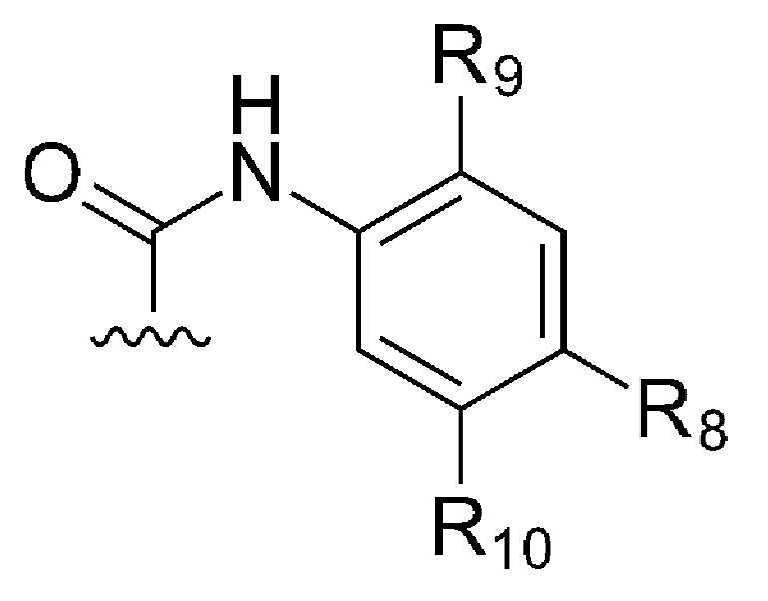
일 실시예에서 상기 Z'는 CHR2'(C=O)OR1'이고, R1 및 R1'는 CH2tBu이며, R2 및 R2'는 Me 또는 Bn이고, Z는 화학식 (II)이며, R5는 
일 실시예에서 상기 Z'는 CHR2'(C=O)OR1'이고, R1 및 R1'은 iPr이며, R2 및 R2'는 Me 또는 Bn이고, Z는 화학식 (II)이며, R5는 
일 실시예에서 상기 Z'는 CHR2'(C=O)OR1'이고, R1 및 R1'은 CH2tBu이며, R2 및 R2'는 Me 또는 Bn이고, Z는 화학식 (II)이며, R5는 
적절한 실시예는 

상기 화합물은 하기에서 선택될 수 있다:The compound may be selected from the following:


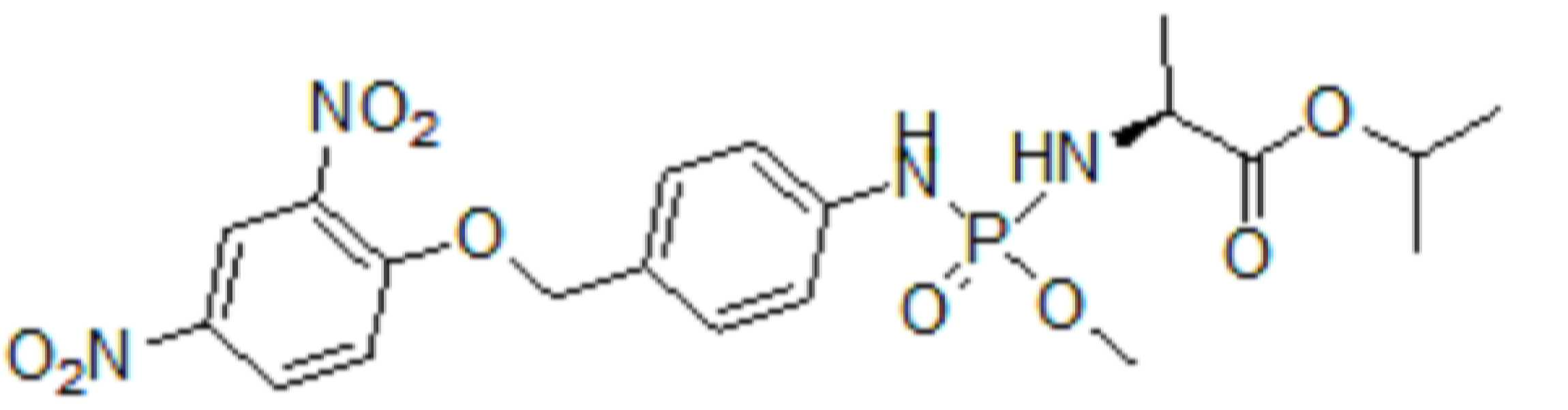


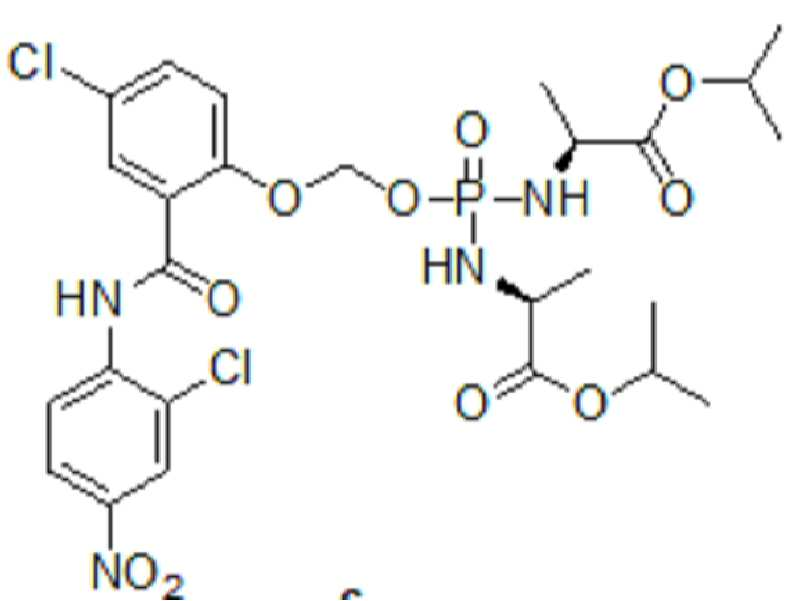


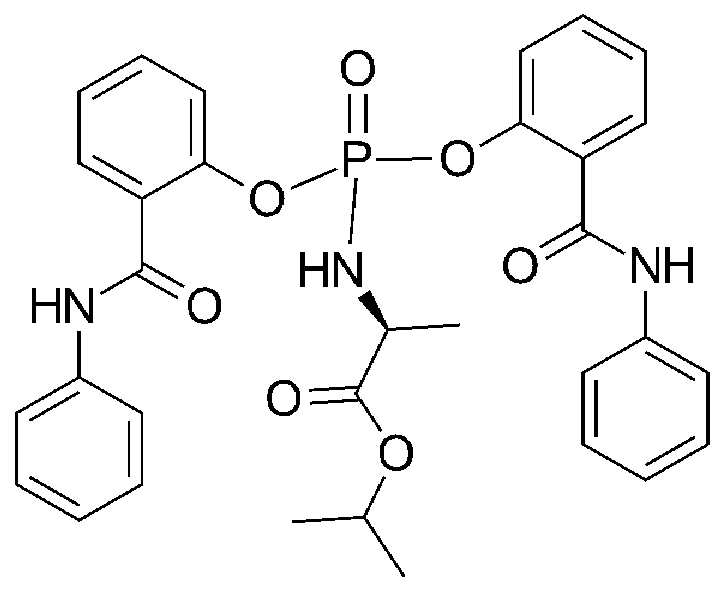


또는 하기에서 선택될 수 있다.Or may be selected from the following.


본 발명에 따른 화합물은 질병 또는 질환을 치료하기 위해 의학에서 사용될 수 있거나 의학 연구에서 사용될 수 있다. 상기 화합물은 NAFLD 또는 NASH와 같은, 간 타겟화 미토콘드리아 탈공역(uncoupling)이 유용할 수 있는 질환 또는 질병의 예방 또는 치료에 사용될 수 있다.The compounds according to the present invention may be used in medicine or in medical research to treat diseases or diseases. The compounds may be used for the prevention or treatment of diseases or diseases in which liver-targeted mitochondrial uncoupling, such as NAFLD or NASH, may be useful.
본 발명은 또한 NAFLD 또는 NASH와 같은, 간 타겟화 미토콘드리아 탈공역이 유용한 질환 또는 질병의 예방 또는 치료에 살리실아닐라이드의 사용방법을 제공한다.The present invention also provides methods of using salicyl anilide for the prophylaxis or treatment of diseases or diseases useful for liver-targeted mitochondrial deproteinization, such as NAFLD or NASH.
본원에 개시된 화합물 중 일부가 이미 공지되어 있는 경우에는 그에 대해서는 권리를 포기한다(disclaimed); 따라서, 본 발명은 신규한 것으로 제공된 화합물에 관한 것이다. 본 발명은 의약, 특히 NASH 또는 NAFLD의 치료에 사용하기 위한 본원에 개시된 화합물에 관한 것이다. 화합물의 다른 용도는 본원의 설명으로부터 나타난다.Where some of the compounds disclosed herein are already known, they are disclaimed; Accordingly, the present invention relates to compounds provided as novel. The present invention relates to compounds disclosed herein for use in the treatment of medicaments, particularly NASH or NAFLD. Other uses of the compounds come from the description herein.
개시된 본 발명의 화합물이 치료적으로 효과적일 수 있는 징후는 비알코올성 지방간(NAFLD) 및 비알코올성 지방간염(NASH)을 포함한다.Indications that the disclosed compounds of the invention may be therapeutically effective include nonalcoholic fatty liver (NAFLD) and nonalcoholic fatty liver disease (NASH).
본 발명에 의해 제공되는 환자에서 질병을 치료하는 방법은 치료를 필요로 하는 환자에게 본 발명의 하나 이상의 화합물의 적절한 용량을 투여하는 것을 포함한다.A method of treating a disease in a patient provided by the present invention comprises administering to the patient in need thereof an appropriate dose of one or more compounds of the invention.
본 발명의 화합물의 적절한 용량은 예를 들어, 사용되는 화합물의 효능, 치료될 환자의 체중 및/또는 상태, 치료될 질병의 중증도, 부작용의 발생률 및/또는 중증도, 투여 방식 및 처방 의사의 판단을 포함하는 여러 인자에 근거하여 결정될 수 있다. 적절한 투여량 범위는 당업자에게 공지된 방법에 의해 결정될 수 있다.Suitable dosages of the compounds of the present invention will vary depending upon, for example, the efficacy of the compound employed, the weight and / or condition of the patient to be treated, the severity of the disease to be treated, the incidence and / or severity of side effects, And can be determined based on various factors including. Suitable dosage ranges may be determined by methods known to those skilled in the art.
또한, WO2015/031598에 기재된 바와 같은 DNP 또는 DNP의 다른 프로드러그와 비교하여, 상기 화합물은 개선된 내약성, 증가된 치료 지수, 간 탈공역 대 여분의 간 탈공역의 증가된 비율 및 간 프로드러그 대사 대 여분의 간 프로드러그 대사의 증가된 비율을 포함하여 이들 및 관련 질병의 치료에 대해 개선된 특성을 나타내는 것으로 고려된다.In addition, compared to other prodrugs of DNP or DNP as described in WO2015 / 031598, the compounds have improved tolerability, increased therapeutic index, increased ratio of hepatic enzymes to extra hepatic enzymes, and hepatic prodrug metabolism Are considered to exhibit improved properties for the treatment of these and related diseases, including an increased proportion of extreme hepatic prodrug metabolism.
따라서, 본 발명의 화합물의 유리한 특성은 하기 중 하나 또는 그 이상을 포함할 수 있다:Thus, advantageous properties of the compounds of the present invention may include one or more of the following:
- 프로토노포어 잔기(moiety)의 상대적 간 노출 증가- Increased relative liver exposure of the protonoformic moiety
- 프로토노포어 잔기의 근육 노출 감소- Reduction of muscle exposure to protonophores
- 모화합물(parent compound)의 프로토노포어 활성 감소- decrease of protonophore activity of the parent compound
- 환자간(inter-patient) 변동 감소- Reduced inter-patient variation
- 부작용 감소- Reduced side effects
- 치료지수 증가- Increased treatment index
- 최대 탈공역 효과 감소- Reduced de-conjugation effect
- 신장 및 뇌 노출 감소- Reduced kidney and brain exposure
일반 화학 방법General chemical method
당업자는 본 발명의 화합물이 공지된 방식으로 다양한 방법으로 제조될 수 있음을 인식할 것이다. 하기 경로는 당업자에게 명백할 화학식 (I)의 화합물의 합성에 사용될 수 있는 몇몇 방법의 예시일 뿐이다.Those skilled in the art will recognize that the compounds of the present invention can be prepared in a variety of ways in a known manner. The following pathways are merely illustrative of some methods that may be used in the synthesis of compounds of formula (I) which will be apparent to those skilled in the art.
X'가 O, Y'는 결합(bond)이고 Z'는 알킬인 
연결 A는 

이는 아세토니트릴과 같은 비친핵성 용매 중 K2CO3와 같은 염기의 존재하에, 및 C-Cl 결합을 활성화시키는 요오드화물의 존재하에 수행될 수 있다.This may be carried out in the presence of a base such as K 2 CO 3 in a non-nucleophilic solvent such as acetonitrile, and in the presence of iodide to activate the C-Cl bond.
ZOCH2Cl과 같은 화합물은 예를 들어, (DNP 또는 살리실아닐라이드와 같은) 페놀을 클로로메탄설포닐 클로라이드와 반응시킴으로써 제조될 수 있다. 적합하게는, 반응은 염기(NaHCO3) 및 상 이동제(nBu4NHSO4)를 갖는 2상 시스템(예: DCM 및 물)에서 수행될 수 있다.Compounds such as ZOCH 2 Cl can be prepared, for example, by reacting a phenol (such as DNP or salicyl anilide) with chloromethane sulfonyl chloride. Suitably, the reaction is a base (NaHCO 3) and a transfer agent (nBu 4 NHSO 4) the two-phase system with: can be carried out (for example, DCM, and water).

X'가 NH, Y'가 결합 및 Z'가 CHR2'(C=O)OR1'인 
기재된 바와 같은 연결 A는 

X'가 O, Y'가 결합, Z'가 알킬 및 Y가 PhCH2O인 


보호기는 벤질 및 tert-부틸을 포함하나 이에 한정되지 않는다. 카보닐의 다른 보호기 및 그 제거방법은 'Greene's Protective Groups in Organic Synthesis' (Wuts and Greene, Wiley, 2006)에 자세히 나와 있다. 보호기는 벤질 에스테르에 대한 이종 촉매의 존재하에 수소화 및 tert-부틸 에스테르에 대해 유기 또는 무기산, 바람직하게는 트리플루오로아세트산 또는 희석 HCl로 처리하는 것을 포함하는 당업자에게 공지된 방법에 의해 제거될 수 있다.Protecting groups include, but are not limited to, benzyl and tert-butyl. Other protecting groups for carbonyls and their removal methods are described in detail in Greene's Protective Groups in Organic Synthesis (Wuts and Greene, Wiley, 2006). The protecting group can be removed by hydrogenation in the presence of a heterogeneous catalyst for the benzyl ester and by treatment with tertiary butyl ester with an organic or inorganic acid, preferably trifluoroacetic acid or dilute HCl, .
혼합물이 형성되는 경우, 본 발명의 화합물은 분리될 필요가 있을 수 있다. 화합물을 분리하는 하나의 방법은 칼럼 크로마토그래피이다.When a mixture is formed, the compounds of the present invention may need to be isolated. One method of separating the compounds is column chromatography.
본 발명의 화합물을 포함하는 약제학적 조성물Pharmaceutical compositions comprising the compounds of the present invention
본 발명은 또한 하나 또는 그 이상의 약학적으로 허용가능한 희석제 또는 담체와 함께 본 발명의 화합물을 포함하는 약제학적 조성물을 제공한다.The present invention also provides a pharmaceutical composition comprising a compound of the invention together with one or more pharmaceutically acceptable diluents or carriers.
본 발명의 화합물 또는 그 제형은 임의의 통상적인 경로, 예를 들어, 경구로, 비경구로, 국소로, 구강, 설하, 경피, 질, 직장, 비강, 안구와 같은 점막을 통해 또는 의료 장치(예를 들어, 스텐트)를 통해 흡입 또는 주사(피하 또는 근육 내)에 의해 투여될 수 있다. 치료는 일정기간 동안 단일 투여 또는 복수 투여로 구성될 수 있다.The compounds of the invention or their formulations may be administered via any conventional route, for example, orally, parenterally, topically, buccally, sublingually, transdermally, vaginally, rectally, nasally, For example, via a stent) or by injection (subcutaneously or intramuscularly). Treatment may consist of single or multiple doses over a period of time.
치료는 1일 1회, 1일 2회, 1일 3회, 1일 4회 등의 투여에 의한 것일 수 있다. 치료는 또한 주입(드롭)에 의한 정맥내 투여와 같은 연속 투여에 의한 것일 수 있다.Treatment may be by administration once a day, twice a day, three times a day, four times a day, and the like. Treatment may also be by continuous administration, such as intravenous administration by infusion (drop).
본 발명의 화합물은 단독으로 투여될 수 있지만, 하나 또는 그 이상의 허용가능한 담체와 함께 약제학적 제형으로 제공하는 것이 바람직하다. 담체(들)는 본 발명의 화합물과 양립할 수 있고 수용자에게 해롭지 않다는 의미에서 "허용가능(acceptable)" 해야 한다. 적합한 담체의 예가 하기에 보다 상세히 기재되어 있다.The compounds of the present invention may be administered alone, but are preferably provided in a pharmaceutical formulation together with one or more acceptable carriers. The carrier (s) should be "acceptable" in the sense of being compatible with the compounds of the invention and not deleterious to the recipient. Examples of suitable carriers are described in more detail below.
제형은 단위 투약 형태로 편리하게 제공될 수 있고, 약학 분야에 잘 공지된 임의의 방법에 의해 제조될 수 있다. 이러한 방법은 활성성분(본 발명의 화합물)을 하나 또는 그 이상의 보조성분을 구성하는 담체와 결합시키는 단계를 포함한다. 일반적으로, 제형은 활성성분을 액체 담체 또는 미세하게 분할된 고체 담체 또는 둘 모두와 균일하고 친밀하게 결합시킨 후, 필요하다면 생성물을 성형함으로써 제조된다.The formulations may conveniently be presented in unit dosage form and may be prepared by any of the methods well known in the art of pharmacy. Such methods comprise the step of bringing into association the active ingredient (the compound of the invention) with a carrier which constitutes one or more accessory ingredients. In general, formulations are prepared by uniformly and intimately bringing into association the active ingredient with a liquid carrier or a finely divided solid carrier, or both, and then, if necessary, shaping the product.
본 발명의 화합물은 활성성분을 선택적으로 비독성 유기 또는 무기산 또는 염기, 부가염의 형태로 포함하는 약제학적 제형의 형태로, 약학적으로 허용가능한 투여 형태로 경구 또는 임의의 비경구 경로로 통상 투여될 것이다. 치료될 질환 및 환자뿐만 아니라 투여 경로에 따라, 조성물은 다양한 투여량 및/또는 빈도로 투여될 수 있다.The compounds of the present invention may be administered orally or by any parenteral route in a pharmaceutically acceptable dosage form in the form of a pharmaceutical formulation comprising the active ingredient in the form of a non-toxic organic or inorganic acid or base, will be. Depending on the route of administration as well as the disease to be treated and the patient, the composition may be administered at various doses and / or frequency.
약학적 조성물은 제조 및 저장조건하에서 안정해야 한다. 따라서 바람직하게는 박테리아 및 진균과 같은 미생물의 오염 작용에 대하여 보존되어야 한다. 담체는 예를 들어 물, 에탄올, 폴리올(예를 들면, 글리세롤, 프로필렌 글리콜 및 액체 폴리에틸렌 글리콜), 식물성 오일 및 이들의 적합한 혼합물을 포함하는 용매 또는 분산 매질일 수 있거나, 예를 들면, 고체 투여 형태의 제조를 위한 고체 물질일 수 있다.The pharmaceutical composition must be stable under the conditions of manufacture and storage. And therefore should preferably be preserved against the contaminating action of microorganisms such as bacteria and fungi. The carrier may be, for example, a solvent or dispersion medium comprising water, ethanol, a polyol (for example, glycerol, propylene glycol and liquid polyethylene glycol), vegetable oils and suitable mixtures thereof, Lt; RTI ID = 0.0 >
예를 들어, 본 발명의 화합물은 또한 즉시, 지연 또는 제어 방출 용도를 위해 정제, 캡슐, 질좌제, 엘릭시르제(elixirs), 용액 또는 현탁액의 형태로 경구, 구강 또는 설하로 투여될 수 있고, 향미료 또는 착색제를 함유할 수 있다.For example, the compounds of the present invention may also be administered orally, buccally or sublingually in the form of tablets, capsules, tylosaccharides, elixirs, solutions or suspensions for immediate, delayed or controlled release use, May contain a colorant.
경구 투여에 적합한 본 발명에 따른 제형은 각각 소정량의 활성성분을 함유하는 캡슐, 캐세츠(cachets) 또는 정제와 같은 별개의 단위로; 분말 또는 과립으로; 수성 액체 또는 비수성 액체 중의 용액 또는 현탁액으로서; 또는 수중유 액체 에멀젼 또는 유중수 액체 에멀젼으로서 제공될 수 있다. 활성성분은 또한 볼루스(bolus), 연약(electuary) 또는 페이스트로 제공될 수 있다.Formulations according to the present invention suitable for oral administration may be presented as discrete units such as capsules, cachets or tablets each containing a predetermined amount of the active ingredient; As a powder or granules; As a solution or suspension in an aqueous liquid or a non-aqueous liquid; Or as an oil-in-water liquid emulsion or a water-in-oil liquid emulsion. The active ingredient may also be provided as a bolus, an electuary, or a paste.
경구 투여에 적합한 본 발명의 화합물의 용액, 에멀젼 또는 현탁액은 물, 알코올, 폴리올 등을 포함하는 하나 또는 그 이상의 용매뿐만 아니라, pH 조절제, 안정화제, 계면활성제, 용해제, 분산제, 방부제, 향미제 등과 같은 하나 또는 그 이상의 부형제를 함유할 수 있다. 특정 예는 부형제, 예를 들면, N,N-디메틸아세트아미드, 분산제, 예를 들면, 폴리솔베이트 80, 계면활성제 및 가용화제, 예를 들면, 폴리에틸렌글리콜, Phosal 50 PG (포스파티딜콜린, 대두-지방산, 에탄올, 모노/디글리세라이드, 프로필렌글리콜 및 아스코르빌 팔미테이트로 구성됨)을 포함한다. 본 발명에 따른 제형은 또한 에멀젼의 형태일 수 있으며, 여기서, 화학식 (I)에 따른 화합물은 수성 오일 에멀젼 중에 존재할 수 있다. 오일은 오일유사 물질, 예를 들면, 대두유 또는 홍화유, 중쇄 트리글리세라이드(MCT-오일), 예를 들면, 코코넛유, 야자유 등 또는 이들의 조합물일 수 있다.Solutions, emulsions or suspensions of the compounds of the present invention suitable for oral administration may be formulated with one or more solvents, including water, alcohols, polyols and the like, as well as pH adjusting agents, stabilizers, surfactants, solubilizers, dispersants, preservatives, And may contain one or more excipients such as the same. Specific examples include excipients such as N, N-dimethylacetamide, dispersants such as polysorbate 80, surfactants and solubilizing agents such as polyethylene glycol,
이러한 정제는 미정질 셀룰로오스, 락토스(예를 들면, 락토오스 일수화물 또는 무수 락토오스), 시트르산 나트륨, 탄산칼슘, 이염기성 인산칼슘 및 글리신, 부틸화 하이드록시톨루엔(E321), 크로스포비돈(crospovidone), 하이프로멜로스(hypromellose)와 같은 부형제, 전분(바람직하게는 옥수수, 감자 또는 타피오카 전분), 나트륨전분 글리콜레이트, 크로스카멜로스 나트륨 및 특정 복합 실리케이트 와 같은 붕해제, 및 폴리비닐피롤리돈, 하이드록시프로필메틸셀룰로스(HPMC), 하이드록시프로필셀룰로스(HPC), 매크로골 8000, 수크로즈, 젤라틴 및 아카시아와 같은 과립화 결합제(granulation binders)를 함유할 수 있다. 또한, 마그네슘 스테아 레이트, 스테아르산, 글리세릴 베헤네이트(glyceryl behenate) 및 탈크와 같은 윤활제가 포함될 수 있다.Such tablets may contain microcrystalline cellulose, lactose (e.g., lactose monohydrate or anhydrous lactose), sodium citrate, calcium carbonate, dibasic calcium phosphate and glycine, butylated hydroxytoluene (E321), crospovidone, Disintegrants such as starch (preferably corn, potato or tapioca starch), sodium starch glycolate, sodium croscarmellose and certain complex silicates, and disintegrants such as polyvinylpyrrolidone, hydroxypropylmethylcellulose, hydroxypropylmethylcellulose, And may contain granulation binders such as propylmethylcellulose (HPMC), hydroxypropylcellulose (HPC), macrogol 8000, sucrose, gelatin and acacia. In addition, lubricants such as magnesium stearate, stearic acid, glyceryl behenate and talc may be included.
정제는 압축 또는 성형에 의해, 선택적으로 하나 또는 그 이상의 보조성분과 함께 제조될 수 있다. 압축된 정제는 분말 또는 과립과 같은 자유-유동 형태의 활성성분을 선택적으로 바인더(예를 들면, 포비돈, 젤라틴, 하이드록시프로필메틸 셀룰로스), 윤활제, 불활성 희석제, 방부제, 붕해제(예를 들면, 나트륨 전분 글리콜레이트, 가교결합된 포비돈, 가교결합된 나트륨 카르복시메틸셀룰로스), 표면 활성제 또는 분산제와 함께 혼합하여 적절한 기계에서 압축함으로써 제조될 수 있다. 성형 정제는 적절한 기계에서 불활성 액체 희석제로 습윤화된 분말 화합물의 혼합물을 성형함으로써 제조될 수 있다. 정제는 선택적으로 코팅되거나 채점될 수 있으며(scored), 예를 들어, 그 안에서 하이드록시프로필메틸셀룰로스를 다양한 비율로 사용하여 목적하는 방출 프로파일을 제공하는 활성성분의 느리거나 제어된 방출을 제공하도록 제형화될 수 있다.Tablets may be prepared by compression or molding, optionally with one or more accessory ingredients. Compressed tablets may contain the active ingredient in a free-flowing form such as a powder or granules, optionally in the form of a binder (for example, povidone, gelatin, hydroxypropyl methylcellulose), a lubricant, an inert diluent, a preservative, Sodium starch glycolate, cross-linked povidone, cross-linked sodium carboxymethyl cellulose), surface active agents or dispersing agents, and compression in a suitable machine. Molded tablets may be prepared by molding a mixture of powdered compounds wetted with an inert liquid diluent in a suitable machine. Tablets may optionally be coated or scored and may be formulated to provide slow or controlled release of the active ingredient, for example, using hydroxypropylmethylcellulose in varying proportions to provide the desired release profile .
유사한 유형의 고체 조성물은 또한 젤라틴 캡슐 내의 충전제로서 사용될 수 있다. 이와 관련하여 바람직한 부형제는 락토오스, 전분, 셀룰로스, 유당 또는 고 분자량 폴리에틸렌 글리콜을 포함한다. 수성 현탁액 및/또는 엘릭시르제의 경우, 본 발명의 화합물이 각종 감미제 또는 향료, 착색제 또는 염료와, 그리고 유화제 및/또는 현탁제 및 물, 에탄올, 프로필렌 글리콜 및 글리세린 및 그 조합물과 같은 희석제와 배합될 수 있다.Solid compositions of a similar type may also be used as fillers in gelatin capsules. Preferred excipients in this regard include lactose, starch, cellulose, lactose or high molecular weight polyethylene glycols. In the case of aqueous suspensions and / or elixirs, the compounds of the present invention may be combined with various sweetening or flavoring agents, colorants or dyes and with diluents such as emulsifiers and / or suspending agents and water, ethanol, propylene glycol and glycerin and combinations thereof .
구강 내 국소투여에 적합한 제형은 향미제 기초의 활성성분, 일반적으로 수크로스 및 아카시아 또는 트라가칸트 고무를 포함하는 로젠즈(lozenges); 젤라틴 및 글리세린 또는 수크로스 및 아카시아와 같은 비활성 기준으로 활성성분을 포함하는 향정(pastilles); 및 적합한 액체 담체 중의 활성성분을 포함하는 구강 세정제를 포함한다.Formulations suitable for topical administration in the mouth include lozenges comprising a flavorant-based active ingredient, generally sucrose and acacia or tragacanth; Pastilles comprising the active ingredient on an inert basis such as gelatin and glycerin or sucrose and acacia; And an oral cleanser comprising the active ingredient in a suitable liquid carrier.
국소 투여에 적합한 약학 조성물은 연고, 크림, 에멀젼, 현탁제, 로션, 분말, 용액, 페이스트, 겔, 함침 드레싱, 스프레이, 에어로졸 또는 오일, 경피 장치, 더스팅 파우더(dusting powders) 등과 같이 제형화될 수 있다. 이러한 조성물은 활성제를 함유하는 통상적인 방법을 통해 제조될 수 있다. 따라서, 이들은 또한 보존제, 약물 침투를 보조하는 용매, 크림 또는 연고에서의 피부 연화제 및 로션용 에탄올 또는 올레일 알코올과 같은 상용의 통상적인 담체 및 첨가제를 포함할 수 있다. 이러한 담체는 조성물의 약 1% 내지 약 98%로 존재할 수 있다. 더 일반적으로 그들은 조성물의 약 80%까지를 형성할 것이다. 단지 예시로서, 크림 또는 연고는 목적하는 일관성을 갖는 크림 또는 연고를 제조하기에 충분한 양으로 약 5~10 중량%의 상기 화합물을 함유하는 충분한 양의 친수성 물질 및 물을 혼합함으로써 제조된다.Pharmaceutical compositions suitable for topical administration may be formulated as ointments, creams, emulsions, suspensions, lotions, powders, solutions, pastes, gels, impregnated dressings, sprays, aerosols or oils, transdermal devices, dusting powders, . Such compositions can be prepared via conventional methods containing active agents. Thus, they may also contain preservatives, solvents that aid drug penetration, emollients in creams or ointments, and customary carriers and additives such as ethanol or oleyl alcohol for lotions. Such a carrier may be present from about 1% to about 98% of the composition. More generally they will form up to about 80% of the composition. By way of example only, the cream or ointment is prepared by mixing a sufficient amount of a hydrophilic substance and water containing from about 5 to 10% by weight of the compound in an amount sufficient to produce a cream or ointment having the desired consistency.
경피 투여에 적합한 약학적 조성물은 장기간 동안 수용자의 표피와의 긴밀한 접촉을 유지하도록 의도된 별개의 패치로서 제공될 수 있다. 예를 들어, 상기 활성제는 이온도입법(iontophoresis)에 의해 상기 패치로부터 전달될 수 있다.Pharmaceutical compositions suitable for transdermal administration may be presented as discrete patches intended to maintain intimate contact with the epidermis of the recipient for a prolonged period of time. For example, the active agent may be delivered from the patch by iontophoresis.
외부 조직, 예를 들어 입 및 피부에의 적용에 있어서, 조성물은 바람직하게는 국소연고 또는 크림으로서 적용된다. 연고로 제형화될 때, 활성제는 파라핀계 또는 수혼화성 연고 기재 중 하나와 함께 사용될 수 있다.For application to external tissues such as mouth and skin, the composition is preferably applied as a topical ointment or cream. When formulated in ointments, the active agent may be used with either a paraffinic or a water miscible ointment base.
선택적으로 활성제는 수중유 크림베이스 또는 유중수 베이스를 갖는 크림으로 제형화될 수 있다.Alternatively, the active agent may be formulated as a cream having an oil-in-water cream base or a water-based base.
비경구 투여를 위해, 활성성분 및 한정되지 않는 예시로 물, 알코올, 폴리올, 글리세린 및 식물성 오일, 바람직하게는 물과 같은, 살균 비히클을 사용하여 유체 단위 투여 형태가 제조된다. 활성성분은 사용된 비히클 및 농도에 따라 콜로이드상이거나 현탁되거나 비히클에 용해될 수 있다. 용액을 제조할 때, 활성성분을 주사용 물에 용해시키고 필터 멸균한 다음 적합한 바이알 또는 앰풀에 충전하고 밀봉할 수 있다.For parenteral administration, fluid unit dosage forms are prepared using a sterile vehicle, such as water, alcohols, polyols, glycerin and vegetable oils, preferably water, as the active ingredient and by way of non-limiting example. The active ingredient may be colloidal, suspended or dissolved in the vehicle, depending on the vehicle and concentration used. When preparing the solution, the active ingredient may be dissolved in the injectable water and sterilized by filtration and then filled into a suitable vial or ampoule and sealed.
유리하게는, 국소 마취제, 방부제 및 완충제와 같은 제제가 비히클 중에 용해될 수 있다. 안정성을 향상시키기 위해, 조성물은 바이알에 충전된 후 동결될 수 있고 물은 진공하에 제거될 수 있다. 동결건조된 분말을 바이알에 밀봉하고, 사용하기 전에 액체를 재구성하기 위해 수반되는 주사용 물의 바이알이 공급될 수 있다.Advantageously, formulations such as topical anesthetics, preservatives and buffers can be dissolved in the vehicle. To improve stability, the composition can be frozen after being filled in vials and water can be removed under vacuum. The lyophilized powder may be sealed in the vial and a vial of the injectable water may be supplied to accompany the reconstitution of the liquid prior to use.
주사가능한 사용에 적합한 본 발명의 약학적 조성물은 멸균 수용액 또는 분산액을 포함한다. 또한, 조성물은 그러한 멸균 주사가능한 용액 또는 분산액의 즉석 제조를 위한 멸균 분말의 형태일 수 있다. 모든 경우에 최종 주사가능한 형태는 멸균되어야 하고 주사 용이성을 위해 효과적으로 유체여야 한다.Pharmaceutical compositions of the present invention suitable for injectable use include sterile aqueous solutions or dispersions. The composition may also be in the form of sterile powders for the instant preparation of such sterile injectable solutions or dispersions. In all cases, the final injectable form must be sterile and effectively fluid for ease of injection.
비경구적 현탁액은 활성성분이 용해되는 대신에 비히클 중에 현탁되고 여과에 의해 멸균을 수행할 수 없다는 점을 제외하고는 용액과 실질적으로 동일한 방식으로 제조된다. 활성성분은 멸균된 비히클 중에 현탁되기 전에 에틸렌 옥사이드에 노출시킴으로써 멸균될 수 있다. 유리하게는, 계면활성제 또는 습윤제가 활성성분의 균일한 분포를 용이하게 하기 위해 조성물에 포함된다.The parenteral suspension is prepared in substantially the same manner as the solution, except that the active ingredient is suspended in the vehicle instead of being dissolved and sterilization can not be performed by filtration. The active ingredient may be sterilized by exposure to ethylene oxide prior to suspension in the sterilized vehicle. Advantageously, a surfactant or wetting agent is included in the composition to facilitate uniform distribution of the active ingredient.
특히 상기 언급된 성분 이외에, 본 발명의 제형은 해당 제형의 유형을 고려하여 당해 기술 분야에서 통상적인 다른 제제를 포함할 수 있으며, 예를 들어, 경구 투여에 적합한 제형은 향미제를 포함할 수 있음을 이해해야 한다. 당업자는 적합한 제형을 선택하는 방법 및 이를 제조하는 방법을 알 것이다(예를 들어, Remington's Pharmaceutical Sciences 18 Ed. 또는 그 이상을 참조). 당업자는 또한 적합한 투여 경로 및 투여량을 선택하는 방법을 알 것이다.In particular, in addition to the above-mentioned ingredients, the formulations of the present invention may include other agents conventional in the art, taking into account the type of formulation concerned, for example, formulations suitable for oral administration may include flavoring agents . Those skilled in the art will know how to choose the appropriate formulation and how to make it (see, for example, Remington's Pharmaceutical Sciences 18 Ed. Or above). Those skilled in the art will also know how to choose the appropriate route of administration and dosage.
조성물은 투여 방법에 따라 0.1중량% 이상, 5-60중량% 이상, 또는 10-30중량% 이상의 본 발명의 화합물을 함유할 수 있다.The composition may contain at least 0.1% by weight, at least 5-60% by weight, or at least 10-30% by weight of the compound of the present invention, depending on the method of administration.
본 발명의 화합물의 개별 투여량의 최적의 양 및 간격은 치료되는 상태의 성질 및 범위, 투여 형태, 경로 및 부위, 및 치료할 특정 대상의 나이 및 상태에 의해 결정될 것이고, 의사가 궁극적으로 사용할 적절한 용량을 결정할 것이라는 것을 당업자는 인식할 것이다. 이 복용량은 적절한만큼 반복될 수 있다. 부작용이 발생하면 정상적인 임상 수행에 따라 투여량 및/또는 빈도를 변경하거나 줄일 수 있다.The optimal amount and spacing of individual doses of the compounds of the present invention will be determined by the nature and extent of the condition being treated, the mode of administration, route and site of administration, and the age and condition of the particular subject to be treated, ≪ / RTI > This dose can be repeated as appropriate. If side effects occur, the dosage and / or frequency can be altered or reduced according to normal clinical practice.
문맥상 달리 요구하지 않는 한, 여기에 언급된 모든 % 값은 %w/w이다.Unless otherwise required by context, all% values mentioned here are% w / w.
이러한 약물 물질과 임의의 본 발명의 화합물의 임의의 조합은 본 발명의 범위 내에 있다. 따라서, 본원의 개시에 기초하여, 당업자는 본 발명의 요지가 여기 기재된 부작용을 회피하거나 감소시키기 위한 본 발명의 화합물의 가치 있는 성질의 발견임을 이해할 것이다. 따라서, 본원에 기재된 부작용을 갖거나 잠재적으로 가질 수 있는 임의의 약물 물질과 조합하여 세포에 들어가서 대사산물 및 가능한 다른 활성성분을 전달할 수 있는 본 발명의 화합물의 잠재적 용도는 본 개시 내용으로부터 명백하다.Any combination of such a drug substance and any of the compounds of the present invention is within the scope of the present invention. Thus, on the basis of the disclosure herein, one of ordinary skill in the art will understand that the subject matter of the present invention is the discovery of the valuable properties of the compounds of the present invention in order to circumvent or reduce the side effects described herein. Thus, the potential use of compounds of the present invention to enter cells and deliver metabolites and possibly other active ingredients in combination with any drug substance that may or may have the side effects described herein is evident from the present disclosure.
정의Justice
관사 "하나의(a 및 an)"은 본 명세서에서 물품의 하나 또는 하나 이상 (즉, 적어도 하나의)을 지칭하기 위해 사용된다. 예로서, "유사체(an analogue)"는 하나의 유사체 또는 하나 또는 그 이상의 유사체를 의미한다.The articles " a and an " are used herein to refer to one or more than one (i.e., at least one) of the articles. By way of example, " an analogue " means one analog or one or more analogs.
본원에서 사용된 용어 "본 발명의 화합물"은 화학식 (I)의 화합물 또는 살리실아닐라이드를 지칭한다.The term "compound of the present invention" as used herein refers to a compound of formula (I) or salicyl anilide.
본원에서 사용된 바와 같이, 용어 "살리실아닐라이드(salicylanilide)"는 화학식 (II)의 구조를 갖는 화합물을 지칭한다:As used herein, the term " salicylanilide "refers to a compound having the structure of formula (II): <

본원에서 사용된 바와 같이, 용어 "생체이용률(bioavailability)"은 약물 또는 다른 물질이 투여 후 생물학적 활성 부위에서 흡수되거나 이용가능하게 되는 정도 또는 비율을 지칭한다. 이 성질은 화합물의 용해도, 장내 흡수율, 단백질 결합 및 대사 등을 포함하는 다수의 인자에 의존한다. 당업자에게 익숙한 다양한 생체이용률 시험이 기재되어 있다(Trepanier et al, 1998, Gallant-Haidner et al, 2000 참조).As used herein, the term "bioavailability" refers to the degree or rate at which a drug or other substance is absorbed or made available at a biologically active site after administration. This property depends on a number of factors including the solubility of the compound, intestinal absorption, protein binding and metabolism, and the like. Various bioavailability assays known to those skilled in the art have been described (see Trepanier et al, 1998, Gallant-Haidner et al, 2000).
본 발명의 화합물의 약학적으로 허용가능한 염은 약학적으로 허용 가능한 무기 또는 유기산 또는 염기뿐만 아니라 4차 암모늄산 부가염으로부터 형성된 통상적인 염을 포함한다. 적절한 산염의 보다 특정한 실시예로는 염산염, 브롬화수소산염, 황산염, 인산염, 질산염, 과염소산염, 푸마르산염, 아세트산염, 프로피온산염, 숙신산염, 글리콜산염, 포름산염, 락트산염, 말레산염, 타르타르산염, 시트르산염, 파모인산염, 말론산염, 하이드록시말레산염, 페닐아세트산염, 글루탐산염, 벤조산염, 살리실산염, 푸마르산염, 톨루엔술폰산염, 메탄술폰산염, 나프탈렌-2-술폰산염, 벤젠술폰산염, 하이드록시나프토산염, 요오드화수소산염, 말산염, 스테로익산염, 탄닌산염 등을 들 수 있다. 옥살산과 같은 다른 산은 약제학적으로 허용되는 것은 아니지만 본 발명의 화합물 및 그의 약학적으로 허용되는 염을 얻기 위한 중간체로서 유용한 염의 제조에 유용할 수 있다. 적절한 염기염의 보다 특정한 실시예로는 나트륨, 리튬, 칼륨, 마그네슘, 알루미늄, 칼슘, 아연, N,N'-디벤질에틸렌디아민, 클로로프로카인, 콜린, 디에탄올아민, 에틸렌디아민, N- 메틸글루카민 및 프로카인염을 포함한다.Pharmaceutically acceptable salts of the compounds of this invention include the customary salts formed from pharmaceutically acceptable inorganic or organic acids or bases as well as quaternary ammonium acid addition salts. More particular examples of suitable acid salts include hydrochloride, hydrobromide, sulfate, phosphate, nitrate, perchlorate, fumarate, acetate, propionate, succinate, glycolate, formate, lactate, maleate, tartrate A salt of a benzoic acid salt, a salt of a salicylic acid, a salt of a fumaric acid, a salt of a toluenesulfonic acid, a methanesulfonic acid salt, a naphthalene-2-sulfonic acid salt, a benzenesulfonic acid salt, Hydroxy naphthoate, hydroiodide, malate, stearoate, tannate and the like. Other acids, such as oxalic acid, are not pharmaceutically acceptable, but may be useful in the preparation of salts useful as intermediates to obtain the compounds of the invention and their pharmaceutically acceptable salts. More particular examples of suitable base salts include sodium, lithium, potassium, magnesium, aluminum, calcium, zinc, N, N'-dibenzylethylenediamine, chloroprocaine, choline, diethanolamine, ethylenediamine, Carmine and procaine salts.
본원에서 사용된 용어 "알킬"은 sp3 탄소원자만으로 구성된 임의의 직쇄 또는 분지쇄를 의미하며, 예를 들어, 직쇄 알킬에 대한 -CnH2n+1 (n은 1 내지 10의 범위일 수 있다.), 예를 들어, 메틸, 에틸, 프로필, 이소프로필, n-부틸, 이소부틸, sec-부틸, tert-부틸, n-펜틸, 네오펜틸, 이소펜틸, 헥실, 이소헥실, 헵틸, 옥틸, 노닐 또는 데실과 같이 수소 원자로 완전히 포화된다. 본원에서 사용된 알킬은 추가로 치환될 수 있다.The term "alkyl" as used herein means any straight or branched chain consisting only of sp 3 carbon atoms, for example -C n H 2n + 1 for straight chain alkyl, where n can range from 1 to 10 Butyl, isobutyl, n-pentyl, neopentyl, isopentyl, hexyl, isohexyl, heptyl, octyl (for example, methyl, ethyl, propyl, isopropyl, , ≪ / RTI > nonyl or decyl. The alkyl used herein may be further substituted.
본원에서 사용된 용어 "사이클로알킬"은 예를 들어, 사이클로프로필, 사이클로부틸, 사이클로펜틸, 사이클로헥실, 사이클로헵틸 또는 사이클로옥틸, 바이사이클[3.2.1]옥틸, 스피로[4,5]데실, 노르페닐, 노르보닐, 노르카프릴, 아다만틸 등과 같은 일반식 -CnH2n-1(여기서, n은 3 내지 10이다)을 갖는 사이클릭/링 구조의 탄소사슬을 지칭한다. 본원에서 사용된 사이클로알킬은 추가로 치환될 수 있다.The term "cycloalkyl" as used herein includes, for example, cyclopropyl, cyclobutyl, cyclopentyl, cyclohexyl, cycloheptyl or cyclooctyl, bicyclo [3.2.1] octyl, spiro [4,5] decyl, Refers to a carbon chain of a cyclic / ring structure having the general formula -C n H 2n-1 , wherein n is 3 to 10, such as phenyl, norbornyl, norcafuryl, adamantyl and the like. The cycloalkyl as used herein may be further substituted.
본원에서 사용된 용어 "알케닐"은 탄소 및 수소원자로 구성된 직쇄 또는 분지 쇄를 의미하며, 여기서 2 내지 10개의 탄소원자 및 적어도 하나의 이중 결합을 가지는 C2-10 알케닐 불포화 탄화수소 사슬과 같이, 적어도 2개의 탄소원자는 이중결합에 의해 연결되어 있다. C2-6 알케닐기는 비닐, 1-프로페닐, 알릴, 이소-프로페닐, n-부테닐, n-펜테닐, n-헥세닐 등을 포함하나 이에 한정되지 않는다. 본원에서 사용된 알케닐은 추가로 치환될 수 있다.As used herein, the term "alkenyl" means a straight chain or branched chain consisting of carbon and hydrogen atoms, such as a C 2-10 alkenyl unsaturated hydrocarbon chain having 2 to 10 carbon atoms and at least one double bond, At least two carbon atoms are connected by a double bond. The C 2-6 alkenyl group includes but is not limited to vinyl, 1-propenyl, allyl, iso-propenyl, n-butenyl, n-pentenyl, n-hexenyl and the like. The alkenyl used herein may be further substituted.
본원에서 사용된 용어 "사이클로알케닐"은 일반식 -CnH2n-1 (여기서 n은 3 내지 10이다)을 갖는 사이클릭/링 구조의 탄소사슬을 의미하고, 여기서 적어도 2개의 탄소원자는 이중결합, 예를 들면, 사이클로프로페닐, 사이클로부테닐, 사이클로펜테닐, 사이클로헥세닐, 사이클로헵테닐, 사이클로옥테닐, 노보네닐(norbornenyl) 또는 비시클로[2.2.2]옥트2에닐(bicclo[2.2.2]oct2enyl)과 같이 이중결합에 의해 연결되어 있다. 본원에서 사용된 시클로알케닐은 추가로 치환될 수 있다.The term "cycloalkenyl" as used herein means a carbon chain of a cyclic / ring structure having the formula -C n H 2n-1 wherein n is from 3 to 10, wherein at least two carbon atoms are double Cycloheptenyl, cyclopentenyl, cycloheptenyl, cyclooctenyl, norbornenyl, or bicyclo [2.2.2]
본원에서 사용된 용어 "C1-10 알콕시"는 단독으로 또는 조합하여 사용되는 -O-C1-10 알킬기를 지칭하고, 여기서 C1-10 알킬은 상기에 정의된 바와 같다. 선형 알콕시기의 예는 메톡시, 에톡시, 프로폭시, 부톡시, 펜톡시 및 헥속시이다. 분지 쇄 알콕시의 예는 이소-프로폭시, sec-부톡시, tert-부톡시, 이소-펜톡시 및 이소-헥속시이다. 사이클릭알콕시의 예는 사이클로프로필옥시, 사이클로부틸옥시, 사이클로펜틸옥시 및 사이클로헥실옥시이다.As used herein, the term "C 1 - 10 alkoxy" -OC 1 are used alone or in combination - it refers to a 10-alkyl group, wherein the C 1 - 10 alkyl is as defined above. Examples of linear alkoxy groups are methoxy, ethoxy, propoxy, butoxy, pentoxy and hexoxy. Examples of branched chain alkoxy are iso-propoxy, sec-butoxy, tert-butoxy, iso-pentoxy and iso-hexoxy. Examples of cyclic alkoxy are cyclopropyloxy, cyclobutyloxy, cyclopentyloxy and cyclohexyloxy.
본원에서 사용된 용어 "C3-7 헤테로사이클로알킬"은 사이클에서 독립적으로 질소, 산소 및 황으로부터 선택된 하나 또는 그 이상의 헤테로원자를 함유하는 사이클릭 탄화수소와 같은 완전히 포화된 헤테로사이클을 나타낸다. 헤테로사이클의 예로는 피롤리딘(1-피롤리딘, 2-피롤리딘, 3-피롤리딘, 4-피롤리딘, 5-피롤리딘), 피라졸리딘(1-피라졸리딘, 2-피라졸리딘, 3-피라졸리딘, 4-피라졸리딘, 5-피라졸리딘), 이미다졸리딘(1-이미다졸리딘, 2-이미다졸리딘, 3-이미다졸리딘, 4-이미다졸리딘, 5-이미다졸리딘), 티아졸리딘 (2-티아졸리딘, 3-티아졸리딘, 4-티아졸리딘, 5-티아졸리딘), 피페리딘(1-피페리딘, 2-피페리딘, 3-피페리딘, 4-피페리딘, 5-피페리딘, 6-피페리딘), 피페라진(1-피페라진, 2-피페라진, 3-피페라진, 4-피페라진, 5-피페라진, 6-피페라진), 모르폴린(2-모르폴린, 3-모르폴린, 4-모르폴린, 5-모르폴린, 6-모르폴린), 티오모르폴린(2-티오모르폴린, 3-티오모르폴린, 4-티오모르폴린, 5-티오모르폴린, 6-티오모르폴린), 1,2-옥사티올란(3-(1,2-옥사티올란), 4-(1,2-옥사티올란), 5-(1,2-옥사티올란)), 1,3-디옥솔란(2-(1,3-디옥솔란), 3-(1,3-디옥솔란), 4-(1,3-디옥솔란)), 테트라하이드로피란(2-테트라하이드로피란, 3-테트라하이드로피란, 4-테트라하이드로피란, 5-테트라하이드로피란, 6-테트라하이드로피란), 헥사하이드로피라디진(1-(헥사하이드로피라디진), 2-(헥사하이드로피라디진), 3-(헥사하이드로피라디진), 4-(헥사하이드로피라디진), 5-(헥사하이드로피라디진), 6-(헥사하이드로피라디진))을 포함하나, 이에 한정되는 것은 아니다.As used herein, the term - represents a "C 3 7 heterocycloalkyl" is a fully saturated heterocycle such as a cyclic hydrocarbon containing one or more heteroatoms independently selected from nitrogen, oxygen and sulfur in the cycle. Examples of the heterocycle include pyrrolidine (1-pyrrolidine, 2-pyrrolidine, 3-pyrrolidine, 4-pyrrolidine, 5-pyrrolidine), pyrazolidine (1-pyrazolidine, Pyrazolidine, 5-pyrazolidine), imidazolidine (1-imidazolidine, 2-imidazolidine, 3-imidazolidine , 5-imidazolidine), thiazolidine (2-thiazolidine, 3-thiazolidine, 4-thiazolidine, 5-thiazolidine), piperidine Piperidine, 2-piperidine, 3-piperidine, 4-piperidine, 5-piperidine, 6-piperidine), piperazine 3-morpholine, 4-morpholine, 5-morpholine, 6-morpholine), thiophene (3-thiomorpholin, 4-thiomorpholine, 5-thiomorpholine, 6-thiomorpholine), 1,2-oxathiolane (3- ), 4- (1,2-oxathiolane), 5- (1,2-oxathiolane)) , 1,3-dioxolane (2- (1,3-dioxolane), 3- (1,3-dioxolane), 4- (1,3-dioxolane), tetrahydropyran (2-tetrahydro Tetrahydrofuran, pyran, pyran, 3-tetrahydropyran, 4-tetrahydropyran, 5-tetrahydropyran, 6-tetrahydropyran), hexahydropyridazine (1- (hexahydropyridazine) (Hexahydropyramine), 3- (hexahydropyramidine), 4- (hexahydropyramidine), 5- (hexahydropyramidin), 6- It is not.
본원에서 사용된 용어 "C1-10알킬-C3-10사이클로알킬"은 기재된 탄소원자수를 갖는 상기 정의된 알킬기를 통해 결합된(attached) 상기 정의된 것과 같은 사이클로알킬기를 의미한다.The term "C 1-10 alkyl-C 3-10 cycloalkyl" as used herein means a cycloalkyl group as defined above attached via an alkyl group as defined above having the number of carbon atoms described.
본원에서 사용된 용어 "아릴"은 카보사이클릭 방향족 고리 시스템을 포함하는 것으로 의도된다. 아릴은 또한 하기 열거된 카보사이클릭 시스템의 부분적으로 수소화된 유도체를 포함하는 것으로 의도된다.The term "aryl ", as used herein, is intended to include a carbocyclic aromatic ring system. Aryl is also intended to include partially hydrogenated derivatives of the following listed carbocyclic systems.
본원에서 사용된 용어 "헤테로아릴"은 푸릴, 티에닐, 피롤릴과 같은 질소, 산소 및 황 중에서 선택된 하나 또는 그 이상의 헤테로원자를 함유하는 헤테로사이클릭 불포화 고리계를 포함하며, 또한, 하기 열거된 헤테로사이클릭계의 부분적으로 수소화된 유도체도 포함하는 것으로 의도된다.The term "heteroaryl" as used herein includes heterocyclic unsaturated ring systems containing one or more heteroatoms selected from nitrogen, oxygen and sulfur, such as furyl, thienyl, pyrrolyl, It is also intended to include partially hydrogenated derivatives of heterocyclic systems.
본원에서 사용된 용어 "아릴" 및 "헤테로아릴"은 선택적으로 비치환되거나 일-, 이- 또는 삼치환 될 수 있는 아릴, 또는 선택적으로 비치환되거나 일-, 이- 또는 삼치환될 수 있는 헤테로아릴을 의미한다. "아릴" 및 "헤테로아릴"의 예는 페닐, 바이페닐, 인데닐, 나프틸(1-나프틸, 2-나프틸), N-하이드록시테트라졸릴, N-하이드록시트리아졸릴, N-하이드록시이미다졸릴, 안트라세닐(1-안트라세닐, 2-안트라세닐, 3-안트라세닐), 페난트레닐, 플루오레닐, 펜탈레닐, 아줄레닐, 바이페닐레닐, 티오페닐(1-티에닐, 2-티에닐), 푸릴(1-푸릴, 2-푸릴), 푸라닐, 티오페닐, 이속사졸릴, 이소티아졸릴, 1,2,3-트리아졸릴, 1,2,4-트리아졸릴, 피라닐, 피리다지닐, 피라지닐, 1,2,3-트리아지닐, 1,2,4-트리아지닐, 1,3,5-트리아지닐, 1,2,3-옥사디아졸릴, 1,2,4-옥사디아졸릴, 1,2,5-옥사디아졸릴, 1,3,4-옥사디아졸릴, 1,2,3-티아디아졸릴, 1,2,4-티아디아졸릴, 1,2,5-티아디아졸릴, 1,3,4-티아디아졸릴, 테트라졸릴, 티아디아지닐, 인돌릴, 이소인돌릴, 벤조푸라닐, 벤조티오페닐(티아나프테닐), 인돌릴, 옥사디아졸릴, 이속사졸릴, 퀴나졸리닐, 플루오레닐, 크산테닐, 이소인다닐, 벤즈하이드릴, 아크리디닐, 벤즈이속사졸릴, 푸리닐, 퀴나졸리닐, 퀴놀리지닐, 퀴놀리닐, 이소퀴놀리닐, 퀴녹살리닐, 나프티리디닐, 프테리디닐, 아제피닐, 디아제피닐, 피롤릴(2-피롤릴), 피라졸릴(3-피라졸릴), 5-티오펜-2-일-2H-피라졸-3-일(5-thiophene-2-yl-2H-pyrazol-3-yl), 이미다졸릴(1-이미다졸릴, 2-이미다졸릴, 4-이미다졸릴, 5-이미다졸릴), 트리아졸릴(1,2,3-트리아졸-1-일, 1,2,3-트리아졸-2-일, 1,2,3-트리아졸-4-일, 1,2,4-트리아졸-3-일), 옥사졸릴(2-옥사졸릴, 4-옥사졸릴, 5-옥사졸릴), 티아졸릴(2-티아졸릴, 4-티아졸릴, 5-티아졸릴), 피리딜(2-피리딜, 3-피리딜, 4-피리딜), 피리미디닐(2-피리미디닐, 4-피리미디닐, 5-피리미디닐, 6-피리미디닐), 피라지닐, 피리다지닐(3-피리다지닐, 4-피리다지닐, 5-피리다지닐), 이소퀴놀릴(1-이소퀴놀릴, 3-이소퀴놀릴, 4-이소퀴놀릴, 5-이소퀴놀릴, 6-이소퀴놀릴, 7-이소퀴놀릴, 8-이소퀴놀릴), 퀴놀릴(2-퀴놀릴, 3-퀴놀릴, 4-퀴놀릴, 5-퀴놀릴, 6-퀴놀릴, 7-퀴놀릴, 8-퀴놀릴), 벤조[b]푸라닐(2-벤조[b]푸라닐, 3-벤조[b]푸라닐, 4-벤조[b]푸라닐, 5-벤조[b]푸라닐, 6-벤조[b]푸라닐, 7-벤조[b]푸라닐), 2,3-디하이드로-벤조[b]푸라닐(2-(2,3-디하이드로-벤조[b]푸라닐), 3-(2,3-디하이드로-벤조[b]푸라닐), 4-(2,3-디하이드로-벤조[b]푸라닐), 5-(2,3-디하이드로-벤조[b]푸라닐), 6-(2,3-디하이드로-벤조[b]푸라닐), 7-(2,3-디하이드로-벤조[b]푸라닐)), 벤조[b]티오페닐(2-벤조[b]티오페닐, 3-벤조[b]티오페닐, 4-벤조[b]티오페닐, 5-벤조[b]티오페닐, 6-벤조[b]티오페닐, 7-벤조[b]티오페닐), 2,3-디하이드로-벤조[b]티오페닐(2-(2,3-디하이드로-벤조[b]티오페닐), 3-(2,3-디하이드로-벤조[b]티오페닐), 4-(2,3-디하이드로-벤조[b]티오페닐), 5-(2,3-디하이드로-벤조[b]티오페닐), 6-(2,3-디하이드로-벤조[b]티오페닐), 7-(2,3-디하이드로-벤조[b]티오페닐)), 인돌릴(1-인돌릴, 2-인돌릴, 3-인돌릴, 4-인돌릴, 5-인돌릴, 6-인돌릴, 7-인돌릴), 인다졸릴(1-인다졸릴, 2-인다졸릴, 3-인다졸릴, 4-인다졸릴, 5-인다졸릴, 6-인다졸릴, 7-인다졸릴), 벤즈이미다졸릴(1-벤즈이미다졸릴, 2-벤즈이미다졸릴, 4-벤즈이미다졸릴, 5-벤즈이미다졸릴, 6-벤즈이미다졸릴, 7-벤즈이미다졸릴, 8-벤즈이미다졸릴), 벤즈옥사졸릴(1-벤즈옥사졸릴, 2-벤즈옥사졸릴), 벤조티아졸릴(1-벤조티아졸릴, 2-벤조티아졸릴, 4-벤조티아졸릴, 5-벤조티아졸릴, 6-벤조티아졸릴, 7-벤조티아졸릴), 카르바졸릴(1-카르바졸릴, 2-카르바졸릴, 3-카르바졸릴, 4-카르바졸릴)을 포함하나, 이에 한정되는 것은 아니다. 부분적으로 수소화된 유도체의 비제한적인 예는 1,2,3,4-테트라하이드로나프틸, 1,4-디하이드로나프틸, 피롤리닐, 피라졸리닐, 인돌리닐, 옥사졸리디닐, 옥사졸리닐, 옥사제피닐 등이다.The terms "aryl" and "heteroaryl ", as used herein, refer to aryl which may be optionally unsubstituted or mono-, di- or trisubstituted, or heteroaryl which may be unsubstituted or mono-, ≪ / RTI > Examples of "aryl" and "heteroaryl" are phenyl, biphenyl, indenyl, naphthyl (1-naphthyl, 2-naphthyl), N-hydroxytetrazolyl, N-hydroxytriazolyl, Anthracenyl, 2-anthracenyl, 3-anthracenyl) phenanthrenyl, fluorenyl, pentalenyl, azulenyl, biphenylenyl, thiophenyl (1-thienyl 2-thienyl), furyl (1-furyl, 2-furyl), furanyl, thiophenyl, isoxazolyl, isothiazolyl, Pyranyl, pyridazinyl, pyrazinyl, 1,2,3-triazinyl, 1,2,4-triazinyl, 1,3,5-triazinyl, 1,2,3-oxadiazolyl, , 4-oxadiazolyl, 1,2,5-oxadiazolyl, 1,3,4-oxadiazolyl, 1,2,3-thiadiazolyl, 1,2,4-thiadiazolyl, 1,2 , Thiadiazolyl, 1,3,4-thiadiazolyl, tetrazolyl, thiadiazinyl, indolyl, isoindolyl, benzofuranyl, benzothiophenyl (thianaphthenyl), indolyl, Quinazolinyl, quinolinyl, quinolizinyl, quinolizinyl, quinolizinyl, isoquinolinyl, quinolizinyl, quinolizinyl, quinolizinyl, quinolizinyl, (2-pyrrolyl), pyrazolyl (3-pyrazolyl), 5-thiophen-2 (2-pyrrolyl), pyrimidinyl, pyrimidinyl, pyrimidinyl, quinoxalinyl, quinoxalinyl, naphthyridinyl, 5-thiophene-2-yl-2H-pyrazol-3-yl), imidazolyl (1-imidazolyl, 2-imidazolyl, , 5-imidazolyl), triazolyl (1,2,3-triazol-1-yl, 1,2,3-triazol- 3-yl), oxazolyl (2-oxazolyl, 4-oxazolyl, 5-oxazolyl), thiazolyl (2-thiazolyl, 4-thiazolyl, ), Pyridyl (2-pyridyl, 3-pyridyl, 4-pyridyl), pyrimidinyl (2- pyrimidinyl, 4- pyrimidinyl, 5-pyrimidinyl, 6-pyrimidinyl) Pyridazinyl, pyridazinyl (3-pyridazinyl, 4-pyridazinyl, 5- Pyridazinyl), isoquinolyl (1-isoquinolyl, 3-isoquinolyl, 4-isoquinolyl, 5-isoquinolyl, 6-isoquinolyl, ), Benzo [b] furanyl (2-quinolyl, 4-quinolyl, Benzo [b] furanyl, 3-benzo [b] furanyl, 4-benzo [b] furanyl, (2,3-dihydro-benzo [b] furanyl), 2,3- dihydro-benzo [b] furanyl (2,3-dihydro-benzo [b] furanyl), 5- (2,3-dihydro-benzo [b] furanyl) b] thiophenyl (3-benzo [b] thiophenyl, 3-benzo [b] thiophenyl Benzo [b] thiophenyl, 5-benzo [b] thiophenyl, 6-benzo [b] thiophenyl, Phenyl (2- (2,3-dihydro-benzo [b] thiophenyl), 3- (2,3-di (2,3-dihydro-benzo [b] thiophenyl), 4- (2,3-dihydro-benzo [b] thiophenyl) (3-dihydro-benzo [b] thiophenyl), 7- (2,3-dihydro-benzo [b] thiophenyl), indolyl Indazolyl, 2-indazolyl, 3-indazolyl, 4-indazolyl, 5-indazolyl, Benzimidazolyl, 2-benzimidazolyl, 4-benzimidazolyl, 5-benzimidazolyl, 6-benzimidazolyl, , Benzimidazolyl, 8-benzimidazolyl), benzoxazolyl (1-benzoxazolyl, 2-benzoxazolyl), benzothiazolyl (1-benzothiazolyl, Benzothiazolyl, 7-benzothiazolyl), carbazolyl (1-carbazolyl, 2-carbazolyl, 3-carbazolyl, 4- Zolyol), but are not limited thereto No. Non-limiting examples of partially hydrogenated derivatives include 1,2,3,4-tetrahydronaphthyl, 1,4-dihydronaphthyl, pyrrolinyl, pyrazolinyl, indolinyl, oxazolidinyl, oxazoli ≪ / RTI > oxazepinyl, and the like.
본원에서 사용된 용어 "아실"은 카보닐기 -C(=O) R을 의미하고, 여기서 R기는 상기 정의된 작용기들 중 임의의 것이다. 구체적인 예는 포르밀, 아세틸, 프로피오닐, 부티릴, 펜타노일, 헥사노일, 헵타노일, 옥타노일, 노나노일, 데카노일, 벤조일 등이다.The term "acyl" as used herein means a carbonyl group -C (= O) R wherein the R group is any of the functional groups defined above. Specific examples include formyl, acetyl, propionyl, butyryl, pentanoyl, hexanoyl, heptanoyl, octanoyl, nonanoyl, decanoyl, benzoyl and the like.
임의의 작용기에 적용된 "선택적으로 치환된"은 바람직하다면 상기 작용기가 동일하거나 상이할 수 있는 하나 또는 그 이상의 치환체로 치환될 수 있음을 의미한다. '선택적으로 치환된 알킬'은 '알킬' 및 '치환된 알킬'을 모두 포함한다."Optionally substituted" as applied to any functional group means, if desired, that the functional group may be substituted with one or more substituents which may be the same or different. 'Selectively substituted alkyl' includes both 'alkyl' and 'substituted alkyl'.
"치환된" 및 "선택적으로 치환된" 잔기에 대한 적합한 치환체의 예로는 할로(플루오로, 클로로, 브로모 또는 요오드), C1-6 알킬, C3-6 사이클로알킬, C3-6 사이클로알케닐, 하이드록시, C1-6 알콕시, 시아노, 아미노, 니트로, C1-6 알킬아미노, C2-6 알케닐아미노, 디-C1-6 알킬아미노, C1-6 아실아미노, 디-C1-6 아실아미노, C1-6 아릴, C1-6 아릴아미노, C1-6 아로일아미노, 벤질아미노, C1-6 아릴아미도, 카복시, C1-6 알콕시카보닐 또는 (C1-6 아릴)(C1-10 알콕시)카보닐, 카바모일, 모노-C1-6 카바모일, 디-C1-6 카바모일 또는 상기에서 하이드로카르빌 잔기가 할로, 시아노, 하이드록시, C1-2 알콕시, 아미노, 니트로, 카바모일, 카복시 또는 C1-2 알콕시카보닐로 자체 치환된 것을 포함한다. 하이드록시 및 알콕시와 같은 산소원자를 함유하는 작용기에서, 산소원자는 황으로 치환되어 티오(SH) 및 티오-알킬(S-알킬)과 같은 작용기를 형성할 수 있다. 따라서, 선택적인 치환기는 S-메틸과 같은 작용기를 포함한다. 티오-알킬기에서, 황원자는 추가로 산화되어 술폭시드(sulfoxide) 또는 술폰(sulfone)을 생성할 수 있으며, 따라서 선택적인 치환기는 S(O)-알킬 및 S(O)2-알킬과 같은 작용기를 포함한다.Examples of suitable substituents for "substituted" and "optionally substituted" moieties include halo (fluoro, chloro, bromo or iodo), C 1-6 alkyl, C 3-6 cycloalkyl, C 3-6 cyclo alkenyl, hydroxy, C 1-6 alkoxy, cyano, amino, nitro, C 1-6 alkylamino, C 2-6 alkenyl, amino, di -C 1-6 alkylamino, C 1-6 acylamino, Di-C 1-6 acylamino, C 1-6 aryl, C 1-6 arylamino, C 1-6 aroylamino, benzylamino, C 1-6 arylamido, carboxy, C 1-6 alkoxycarbonyl or (C 1-6 aryl) (C 1-10 alkoxy) carbonyl, carbamoyl, mono- -C 1-6 carbamoyl, di -C 1-6 cover the hydrocarbyl moiety or together in the halo, cyano , Hydroxy, C 1-2 alkoxy, amino, nitro, carbamoyl, carboxy or C 1-2 alkoxycarbonyl. In functional groups containing oxygen atoms such as hydroxy and alkoxy, the oxygen atom may be substituted with sulfur to form functional groups such as thio (SH) and thio-alkyl (S-alkyl). Thus, the optional substituents include functional groups such as S-methyl. In the thio-alkyl group, the sulfur atom may be further oxidized to produce sulfoxide or sulfone, and thus the optional substituent may be a functional group such as S (O) -alkyl and S (O) 2 -alkyl .
치환은 이중결합의 형태를 취할 수 있으며, 헤테로원자를 포함할 수 있다. 따라서, CH2 대신에 카보닐(C=O)을 갖는 알킬기는 치환된 알킬기로 간주될 수 있다.Substitution can take the form of a double bond and can include a heteroatom. Therefore, an alkyl group having carbonyl (C = O) instead of CH 2 can be regarded as a substituted alkyl group.
따라서, 치환된 기는 예를 들어 CFH2, CF2H, CF3, CH2NH2, CH2OH, CH2CN, CH2SCH3, CH2OCH3, OMe, OEt, Me, Et, -OCH2O-, CO2Me, C(O)Me, i-Pr, SCF3, SO2Me, NMe2, CONH2, CONMe2 등을 포함한다. 아릴기의 경우, 치환은 아릴 고리 내의 인접한 탄소원자로부터의 고리 형태, 예를 들어 O-CH2-O와 같은 사이클릭 아세탈일 수 있다.Thus, the substituted group may be, for example, CFH 2 , CF 2 H, CF 3 , CH 2 NH 2 , CH 2 OH, CH 2 CN, CH 2 SCH 3 , CH 2 OCH 3 , OMe, OEt, OCH 2 O-, CO 2 Me, C (O) Me, i- Pr, SCF 3 , SO 2 Me, NMe 2 , CONH 2 , CONMe 2 and the like. In the case of aryl, substituted may be a cyclic acetal such as a ring shape, for example, O-CH 2 -O from adjacent carbon atoms in the aryl ring.
실험Experiment
미토콘드리아 탈공역 활성에 대한 광범위한 일련의 프로토노포어 화학 등급을 평가하여 낮은 세포 독성과 함께 탈공역 효능을 조사하였다. 간 타겟화 프로드러그가 생성되어 전임상 모델에서 테스트되었다.A wide range of protonophore chemical grades for mitochondrial depolarization activity were evaluated to investigate the de-conjugation efficacy with low cytotoxicity. Liver targeting prodrugs were generated and tested in preclinical models.
미토콘드리아 탈공역 활성의 평가는 프로토노포어의 많은 부류를 밝혔으며, DNP보다 독성이 현저히 낮았지만 개선된 탈공역 효능을 보여주었다. 이어서, 프로토노포어를 간 타겟화하기 위한 화학과 함께 일련의 프로드러그가 생성되었다. 프로드러그는 페이로드(payload) 프로토노포어와 유사하게 낮은 마이크로몰 효능을 갖는 간 세포에서 탈공역된 미토콘드리아 호흡을 유도하였지만, 분리된 간 미토콘드리아에는 영향을 미치지 않았다. 호흡 자극의 치료 범위가 넓어졌고 유도된 최대 호흡량이 페이로드(payload) 프로토노포어와 비교하여 절반 미만이었다. 본 발명의 화합물은 NASH의 다수의 전임상 마커(preclinical marker) 및 내약성에 대한 영향에 대해 선택되고 조사될 것이다.Evaluation of mitochondrial deproteinization activity revealed many classes of protonophore and showed markedly lower toxicity than DNP, but showed improved de-conjugation efficacy. A series of prodrugs were then generated with chemistry to target the protonophore. Prodrugs induced depolarized mitochondrial respiration in liver cells with low micromolar potency, similar to payload protonophores, but did not affect isolated liver mitochondria. The treatment range of respiratory stimuli was widened and the maximum induced volume was less than half compared with the payload protonophore. The compounds of the present invention will be selected and examined for their impact on a number of preclinical markers and tolerance of NASH.
본 발명의 화합물의 전임상 평가는 그것이 DNP와 같은 역사적인(historical) 미토콘드리아 탈공역과 관련되는 오프-타겟의 문제없이 간-타겟화된 경미한(mild) 미토콘드리아 탈공역을 유발할 수 있음을 시사한다. 전임상 평가는 그것이 NAFLD와 NASH의 치료법으로서의 가능성이 있음을 시사한다.Preclinical evaluation of the compounds of the present invention suggests that it may induce liver-targeted mild mitochondrial deproteinization without off-target problems associated with historical mitochondrial depletion regions such as DNP. Preclinical assessment suggests that it is possible as a treatment for NAFLD and NASH.
일반 생물학 방법General biology method
생체이용률의 측정Measurement of bioavailability
본 분야의 당업자는 당업자에게 공지된 생체내(in vivo) 및 시험관내(in vitro) 방법을 사용하여 본 발명의 화합물의 약동학 및 생체이용률을 결정할 수 있을 것이며, 공지된 방법은 하기에 기술된 것들 및 Gallant-Haidner et al, 2000 및 Trepanier et al, 1998 및 그 참고문헌을 포함하나 이에 한정되지 않는다. 이것은 근육 및 다른 기관과 비교하여 간에서의 프로토노포어 잔기의 상대적 노출을 결정하는데 사용될 수 있다. 화합물의 생체이용률은 다수의 인자(예를 들면, 수용해도, 세포막 투과성, 단백질 결합 및 대사 및 안정성의 정도)에 의해 결정되며, 이들 각각은 본원의 실시예에 기재된 시험관내 시험에 의해 결정될 수 있으며, 본 분야의 당업자는 이들 인자 중 하나 또는 그 이상의 개선이 화합물의 생체이용률을 개선시킬 것이라는 것을 이해할 것이다. 대안적으로, 본 발명의 화합물의 생체이용률은 하기에 보다 상세히 기술되거나 또는 본원의 실시예에 기재된 바와 같은 생체내 방법을 사용하여 측정될 수 있다.Those skilled in the art will be able to determine the pharmacokinetics and bioavailability of the compounds of the present invention using in vivo and in vitro methods known to those skilled in the art, And Gallant-Haidner et al , 2000 and Trepanier et al , 1998 and references therein. This can be used to determine relative exposure of the protonoformic residues in the liver in comparison to muscle and other organs. The bioavailability of a compound is determined by a number of factors (e. G., Water solubility, cell membrane permeability, protein binding and metabolism and degree of stability), each of which can be determined by in vitro tests described in the Examples herein , Those skilled in the art will appreciate that one or more of these factors will improve the bioavailability of the compound. Alternatively, the bioavailability of the compounds of the present invention may be determined using in vivo methods as described in more detail below or in the Examples herein.
생체내 생체이용률을 측정하기 위해 화합물을 시험 동물(예를 들면, 마우스 또는 래트)에 복강내(i.p.) 또는 정맥내 (i.v.) 및 구강(p.o.) 투여하고 정기적인 간격으로 혈액 샘플을 채취하여 시간에 따라 약물의 혈장 농도가 어떻게 변하는지를 검사한다. 시간에 따른 혈장 농도의 시간 경과(time course)는 표준 모델을 사용하여 화합물의 절대 생체이용률을 백분율로 계산하는데 사용될 수 있다. 일반적인 프로토콜의 예가 하기에 기재되어 있다.To measure bioavailability in vivo, compounds are administered intraperitoneally (ip) or intravenously (iv) and oral (po) to test animals (e.g., mice or rats) and blood samples taken at regular intervals, To determine how the plasma concentration of the drug changes. The time course of plasma concentration over time can be used to calculate the absolute bioavailability of a compound as a percentage using a standard model. Examples of common protocols are described below.
예를 들어, 마우스 또는 래트에게 1 또는 3 mg/kg의 본 발명의 화합물을 i.v.으로 또는 1, 5 또는 10 mg/kg의 본 발명의 화합물을 p.o.로 투여한다. 혈액 샘플을 5분, 15분, 1시간, 4시간 및 24시간 간격으로 취하고, 샘플 중의 본 발명의 화합물의 농도를 LCMS-MS를 통해 결정한다. 혈장 또는 전혈 농도의 시간 경과는 혈장 또는 혈액 농도-시간 곡선(AUC - 이는 전신 순환계에 도달하는 변하지 않은 약물의 총량에 정비례한다.), 최대(피크) 혈장 또는 혈액 약물 농도, 최대 혈장 또는 혈액 약물 농도가 발생하는 시간(피크 시간)과 같은 주요 매개 변수를 유도하는 데에 사용될 수 있고, 생체이용률의 정확한 측정에 사용되는 추가 인자에는 화합물의 말단 반감기, 전체 체내 제거율(clearance), 정상-상태 분포부피 및 F%가 포함된다. 그런 다음, 이들 파라미터를 비-구획적 방법 또는 구획적 방법에 의해 분석하여 백분율 생체이용률을 계산한다. 이러한 유형의 방법의 예로서, Gallant-Haidner et al, 2000 및 Trepanier et al, 1998 및 그 참고 문헌을 참조할 수 있다.For example, a mouse or rat is administered 1 or 3 mg / kg of a compound of the invention as iv or 1, 5 or 10 mg / kg of a compound of the invention as po. Blood samples are taken at 5 min, 15 min, 1 h, 4 h and 24 h intervals and the concentration of the compounds of the invention in the sample is determined via LCMS-MS. The time course of plasma or whole blood concentration depends on the plasma or blood concentration-time curve (AUC - which is directly proportional to the total amount of unchanged drug reaching the systemic circulation), maximum (peak) plasma or blood drug concentration, (Peak time) at which the concentration occurs, and additional factors that may be used to accurately measure bioavailability include the terminal half-life of the compound, the total clearance of the compound, the steady-state distribution Volume and F%. The percent bioavailability is then calculated by analyzing these parameters by non-compartmental or by compartmental methods. As an example of this type of method, see Gallant-Haidner et al , 2000 and Trepanier et al , 1998 and references therein.
효능 측정Efficacy measurement
본 발명의 화합물의 효능은 하기 기술된 하나 또는 그 이상의 방법을 사용하여 시험할 수 있다:The efficacy of the compounds of the present invention can be tested using one or more of the following methods:
1. 미토콘드리아 탈공역 평가를 위한 분석1. Analysis for mitochondrial de-airspace assessment
분리된 미토콘드리아에서 탈공역 가능성을 평가하기 위한 분석Analysis to assess the potential for de-conjugation in isolated mitochondria
프로드러그 대사가 없는 미토콘드리아 탈공역의 효능은 다음과 같이 테스트 될 수 있다:The efficacy of mitochondrial deproteinization without prodrug metabolism can be tested as follows:
분리된 래트 간 미토콘드리아는 Hansson et al (Hansson et al (Brain Res. 2003 Jan 17;960(1-2):99-111.)에 따라 준비된다. 호흡은 37℃의 일정한 온도에서 교반기 속도 750 rpm의 2 ml 유리 챔버에서 고해상도 옥시그래프(oxygraph)(Oxygraph-2k Oroboros Instruments, Innsbruck, Austria)를 이용하여 측정한다. 210 - 50 μM O2 범위의 산소 농도에서 샘플링 속도가 2s로 설정된 데이터랩(DatLab) 소프트웨어(Oroboros Instruments, Innsbruck, Austria)를 사용하여 데이터를 기록한다. 필요한 경우, 간단한 공기 평형을 위해 챔버 스톱퍼를 부분적으로 높임으로써 재산화(reoxygenation)가 수행된다. 기구 백그라운드 산소 플럭스는 별도의 실험 세트에서 측정되고 제조업체의 지시에 따라 다음 실험에서 자동으로 수정된다. 분리된 미토콘드리아의 호흡을 측정하기 위해, 시료를 수크로오스 110 mM, HEPES 20 mM, 타우린 20 mM, K-락토비온에이트 60 mM, MgCl2 3 mM, KH2PO4 10 mM, EGTA 0.5 mM, BSA 1 g/l, pH 7.1를 함유하는 미토콘드리아 호흡 매질(MiR05)에서 현탁화시킨다. 기질(말산염(5 mM), 글루타민산염(5 mM), 피루베이트(5 mM) 및 숙신산염(10 mM))의 존재 하에서 안정화된 호흡에 도달한 후, ADP (1 mM)를 보충하여 상태 3 호흡을 유도한 다음 올리고마이신(1 ㎍/ml, ATP-신타제 억제제)은 상태 4O를 야기한다. 상태 4O는 ATP-신타제의 저해 및 포화 기질 농도 및 ADP의 존재로 인해 미토콘드리아 막을 가로질러 양성자의 역 플럭스(back-flux)에 의존하는 호흡 상태이다. 약물 후보물질 및 공지의 프로토노포어의 각각의 페이로드(payload) 고정된 농도에서 탈공역된 호흡을 유도한다. 그런 다음 모든 호흡기 수치가 교정되는 잔류 비-미토콘드리아 산소 소비량을 제공하는 ETS를 억제하기 위해 로테논(Rotenone)(2 μM, 복합체 I[CI] 억제제), 안티마이신-A(1 μg/ml, 복합체 III[CIII] 억제제) 및 나트륨 아자이드(10 mM)를 첨가한다.The isolated rat rat mitochondria are prepared according to Hansson et al (Brain Res 2003 Jan 17; 960 (1-2): 99-111) .The respiration is carried out at a constant temperature of 37 ° C at a stirrer speed of 750 rpm (Oxygraph-2k Oroboros Instruments, Innsbruck, Austria) in a 2 ml glass chamber at a sampling rate of 2 s at an oxygen concentration ranging from 210 to 50 μM O 2 . Record the data using software (Oroboros Instruments, Innsbruck, Austria). If necessary, reoxygenation is performed by partially raising the chamber stopper for simple air balancing. In order to measure the respiration of the isolated mitochondria, the samples were diluted with sucrose 110 mM, HEPES 20 mM, taurine 20 mM, K- Lactobacillus rain Eight 60 mM, MgCl 2 3 mM,
2. 온전한 간세포와 혈소판에서 미토콘드리아 탈공역을 평가하기 위한 분석2. Analysis for evaluating mitochondrial de-airspace in whole hepatocytes and platelets
HepG2 세포와 혈소판의 호흡 측정을 위해 세포를 고해상도 옥시그래프(Oxygraph-2k Oroboros Instruments, Innsbruck, Austria)에서 37℃의 미토콘드리아 호흡 매질 MiR05에서 현탁시킨다. 처음에 샘플은 일상의 호흡 상태에서 안정화되도록 놓여지고, 이는 내생 기질의 산화적 인산화(OXPHOS)에 대한 휴지 세포 에너지 요구(resting cellular energy demands)를 드러낸다. ADP 인산화와 무관하게 호흡의 기여도를 평가하기 위해 올리고마이신(oligomycin, 1 μg/ml, ATP-신타아제 억제제)을 순차적으로 첨가하여 누출 호흡 상태(LEAK respiration state)(산소 소비가 미토콘드리아 막을 통과하는 프로톤의 역-플럭스(back-flux)에 좌우되는 호흡 상태)를 유도한다. 약물 후보 물질과 공지의 프로토노포어는 내인성 기질 공급에서 ETS (전자 전달 시스템)의 최대한의 탈공역된 호흡/최대 속도를 유도하기 위해 조심스럽게 적정되고 탈공역된 호흡이 감소하거나 적어도 더 이상 증가하지 않는 것으로 관찰될 때까지 계속된다. ETS를 억제하기 위해 로테논(2 μM, 복합체 I[CI] 억제제)과 안티마이신-A(1 μg/ml, 복합체 III[CIII] 억제제)를 첨가하여 나머지 비-미토콘드리아 산소 소비량을 제공하고, 이에 대해 모든 값이 수정되었다.For respiration measurements of HepG2 cells and platelets, cells are suspended in a high resolution Oxygraph (Oxygraph-2k Oroboros Instruments, Innsbruck, Austria) at 37 ° C in the mitochondrial respiratory medium MiR05. Initially, the sample is placed in a normal respiratory state to stabilize, revealing resting cellular energy demands for oxidative phosphorylation (OXPHOS) of the endogenous substrate. To evaluate the contribution of respiration independent of ADP phosphorylation, oligomycin (1 μg / ml, ATP-Synthetic Inhibitor) was added sequentially to assess the LEAK respiration state (oxygen consumption is the proton Which is dependent on the back-flux of the gas. Drug candidates and known protonophore are carefully titrated to derive the maximum de-conjugated respiration / maximum rate of the ETS (electron transport system) in the endogenous substrate supply and the de-conjugated respiration is reduced or at least no longer increased Until it is observed that it is not. To inhibit ETS, rotenone (2 μM, complex I [CI] inhibitor) and antimycin-A (1 μg / ml, complex III [CIII] inhibitor) were added to provide the remaining non-mitochondrial oxygen consumption All values have been modified for.
프로드러그 대사를 통한 미토콘드리아 탈공역의 효능을 다음과 같이 테스트한다:The efficacy of mitochondrial deproteinization through prodrug metabolism is tested as follows:
a) HepG2 세포(간 세포 신진대사와의 탈공역을 시뮬레이션하기 위해)a) HepG2 cells (to simulate the de-conjugation with hepatocyte metabolism)
b) 혈소판(혈액에서 탈공역을 시뮬레이션하기 위해)b) Platelets (to simulate de-airspace in the blood)
간세포 안정성 분석Hepatocyte stability analysis
미리 액체질소에 저장했던 동결보존된 간세포를 2분±15초 동안 37±1℃의 교반하는 수욕조에 놓는다. 그 다음, 간세포를 예열된 Krebs-Henseleit 중탄산염(KHB) 완충액(탄산칼슘 및 중탄산나트륨이 없는 2000mg/L 포도당, Sigma)의 10X 부피에 가하고 부드럽게 혼합하고 500rpm에서 3분간 원심분리한다. 원심분리 후, 상층액을 조심스럽게 제거하고, 세포 펠렛을 재현탁시키기 위해 10X 부피의 예열된 KHB 완충액을 첨가한다. 이것을 부드럽게 혼합하고 500 rpm으로 3분간 원심분리한다. 그 다음, 상등액을 제거하고 폐기한다. 세포 생존력과 수율은 세포 수에 의해 결정되며, 이들 값은 적절한 시딩(seeding) 밀도(생존 가능한 세포 밀도 = 2×10⁶ 세포/mL)로 인간 간세포 현탁액을 생성시키는데 사용된다. 2X 투약 용액은 예열된 KHB(1% DMSO) (200 μM 스파이킹 용액(spiking solution): 980 μL의 DMSO 2X 투약 용액 중의 기질 스톡용액(10 mM) 20 μL: 990 μL의 KHB (희석 후 2 μM) 중의 200 μM 스파이킹 용액 10 μL)에서 제조된다.The cryopreserved hepatocytes previously stored in liquid nitrogen are placed in a 37 ° C ± 1 ° C stirred water bath for 2 minutes ± 15 seconds. The hepatocytes are then added to a 10X volume of preheated Krebs-Henseleit bicarbonate (KHB) buffer (2000 mg / L glucose without calcium carbonate and sodium bicarbonate, Sigma), gently mixed and centrifuged at 500 rpm for 3 minutes. After centrifugation, the supernatant is carefully removed and 10X volume of preheated KHB buffer is added to resuspend the cell pellet. This is gently mixed and centrifuged at 500 rpm for 3 minutes. The supernatant is then removed and discarded. Cell viability and yield are determined by the number of cells and these values are used to generate human hepatocyte suspensions with an appropriate seeding density (viable cell density = 2 x 10⁶ cells / mL). 2X dosing solution was prepared by mixing 20 μL of substrate stock solution (10 mM) in 980 μL of DMSO 2X dosing solution with preheated KHB (1% DMSO) (200 μM spiking solution): 990 μL KHB ) ≪ / RTI >
예열된 2X 투여 용액 50 μL를 웰에 첨가하고 예열된 간세포 용액(2×10⁶ cells/mL) 50 μL를 첨가하고 타이밍을 시작한다. 그 후에 플레이트를 37℃에서 배양한다. 부드럽게 혼합된 배양시간(0, 15, 30, 60 및 120분)이 완료된 후에 내부 표준물질(internal standard)을 포함하는 아세토니트릴을 100 ㎕씩 각 웰에 첨가하고, 50 μL의 예열된 간세포 용액을 첨가하였다(2×10⁶ cells/mL). 배양이 끝나면 세포 생존력이 결정된다. 샘플을 4℃에서 4000 rpm으로 15분간 원심분리하고, 상등액을 초순수로 2배 희석하고 LC-MS/MS로 화합물 레벨을 분석한다.Add 50 μL of preheated 2X dosing solution to the wells and add 50 μL of preheated hepatocyte solution (2 × 10 6 cells / mL) and start timing. The plate is then incubated at 37 [deg.] C. After the gentle incubation times (0, 15, 30, 60 and 120 minutes) were completed, 100 μl of acetonitrile containing an internal standard was added to each well and 50 μl of preheated hepatocyte solution (2 x 10 < 6 > cells / mL). Cell viability is determined when the culture is finished. Samples are centrifuged at 4000 rpm for 15 minutes at 4 ° C, the supernatant is diluted 2-fold with ultrapure water and the compound levels are analyzed by LC-MS / MS.
시험 화합물은 10mM 농도의 DMSO에서 스톡 용액으로서 제조된다. 스톡 용액을 최종 DMSO 농도가 1%인 100μM의 표적 농도로 1.5mL 에펜도르프 튜브에서 PBS, pH 7.4로 이중으로(in duplicate) 희석한다(예를 들면, 396μL 100mM 인산염 완충액에 4μL의 10mM DMSO 스톡 용액). 샘플 튜브를 실온에서 4시간 동안 부드럽게 흔든다. 샘플을 원심분리(10분, 15000rpm)하여 용해되지 않은 입자를 침전시킨다. 상등액을 새로운 튜브로 옮기고 PBS로 희석한다(개별 테스트 아티클을 위한 희석 인자는 적용 분석 장비에 대한 화합물의 신호 수준에 의해 확인된다). 희석된 샘플을 동일한 부피(1:1)의 MeOH와 혼합한다. 최종적으로 샘플을 LC-MS/MS 분석을 위한 내부 표준물질을 함유하는 동일한 부피(1:1)의 ACN과 혼합한다. 겉보기 투과계수(Apparent permeability coefficient, Papp) 및 단일 층을 가로지르는 화합물의 유출비(efflux ratio)는 다음과 같이 계산된다:Test compounds are prepared as stock solutions in DMSO at a concentration of 10 mM. Stock solution is diluted in duplicate with PBS, pH 7.4 in a 1.5 mL Eppendorf tube at a target concentration of 100 μM with a final DMSO concentration of 1% (for example, 4 μL of 10 mM DMSO stock solution in 396
투과계수(Papp)는 다음 식으로부터 계산된다:The permeability coefficient (P app ) is calculated from the following equation:

여기서 dQ/dt는 시간(nmol/s)의 함수로서 기저 (A-B) 또는 정점 (B-A) 구획에 있는 화합물의 양이다. C0는 공여체 (정점 또는 기저) 구획(T=0의 평균)의 초기 농도(nmol/mL)이고, A는 트랜스웰(transwell)의 면적(cm2)이다.Where dQ / dt is the amount of compound in the base (AB) or vertex (BA) segment as a function of time (nmol / s). C 0 is the initial concentration (nmol / mL) of the donor (apex or basal) compartment (T = 0 average) and A is the area of the transwell (cm 2 ).
유출비는 다음과 같이 계산된다:The effluent ratio is calculated as follows:

수용성 분석Soluble analysis
수용성은 다음과 같이 테스트할 수 있다: 화합물의 10mM 스톡 용액을 실온에서 100% DMSO에서 제조한다. 0.01ml의 삼중(triplicate) 분취량(aliquot)은 호박색 바이알에서 0.1M PBS, pH 7.3 용액 또는 100% DMSO 중 하나로 0.5mL로 구성된다. 생성된 0.2 mM 용액을 실온에서 IKA® vibrax VXR 교반기상에서 6시간 동안 교반시킨 후, 생성된 용액 또는 현탁액을 2 mL 에펜도르프 튜브로 옮기고 13200 rpm에서 30분 동안 원심분리한다. 상등액의 분취량을 상기한 바와 같이 LCMS 방법으로 분석한다.Water solubility can be tested as follows: A 10 mM stock solution of the compound is prepared in 100% DMSO at room temperature. A 0.01 ml aliquot consists of 0.5 ml of either 0.1 M PBS, pH 7.3 solution or 100% DMSO in an amber vial. The resulting 0.2 mM solution is stirred for 6 hours on an IKA vibrax VXR agitator at room temperature and the resulting solution or suspension is transferred to a 2 mL Eppendorf tube and centrifuged at 13200 rpm for 30 minutes. Aliquots of supernatant are analyzed by LCMS method as described above.
또는 pH 7.4, PBS에서의 용해도는 다음과 같이 테스트할 수 있다: 시험 화합물 및 대조 화합물을 40μM, 16μM, 4μM, 1.6μM, 0.4μM, 0.16μM, 0.04μM 및 0.002μM로 H2O 중의 50% MeOH로 희석하여 보정곡선(calibration curve)을 생성한다. 그리고 나서 표준점을 MeOH:PBS 1:1에서 1:20으로 추가로 희석한다. 1:20 희석 후 최종 농도는 2000nM, 800nM, 200nM, 80nM, 20nM, 8nM, 2nM 및 1nM이다. 그런 다음 표준(standards)은 ACN 함유 내부 표준물질과 동일한 부피(1:1)로 혼합한다. 샘플을 원심분리(5분, 12000rpm)한 다음 LC/MS로 분석한다.Or pH 7.4, the solubility in PBS can be tested as follows: the test compound and the control compound were dissolved in 50% H 2 O in H 2 O in 40 μM, 16 μM, 4 μM, 1.6 μM, 0.4 μM, 0.16 μM, 0.04 μM and 0.002 μM, Dilute with MeOH to generate calibration curve. The standard point is then further diluted 1: 20 in MeOH: PBS 1: 1. The final concentrations after 1:20 dilution are 2000 nM, 800 nM, 200 nM, 80 nM, 20 nM, 8 nM, 2 nM and 1 nM. The standards are then mixed in the same volume (1: 1) as the internal standard material containing ACN. Samples are centrifuged (5 min, 12000 rpm) and analyzed by LC / MS.
세포 투과성 분석Cell permeability analysis
Caco-2 투과성 분석Caco-2 permeability analysis
세포 투과성은 다음과 같이 테스트할 수 있다: 시험 화합물을 DMSO에서 10mM로 용해시킨 다음 완충액에서 추가로 희석하여 최종 10μM 투여 농도를 생성한다. 형광 마커 루시퍼 옐로우(lucifer yellow)는 또한 막 완전성을 모니터링하기 위해 포함되어 있다. 이어서 시험 화합물을 Caco-2 세포 단층의 정점 (A) 표면에 적용하고 기저외측 (B) 구획으로의 화합물 침투를 측정한다. 이것은 활동적인 수송(유출)을 조사하기 위해 역방향(기저외측(basolateral)에서 정점(apical))으로 수행된다. LC-MS/MS는 시험 및 표준 대조 화합물(예: 프로파놀롤(Propanolol) 및 아세부톨롤(Acebutolol))의 수준을 정량화하는 데 사용된다.Cell permeability can be tested as follows: the test compound is dissolved in 10 mM in DMSO and then further diluted in buffer to produce a final 10 μM dose concentration. The fluorescent marker lucifer yellow is also included to monitor membrane integrity. The test compound is then applied to the apex (A) surface of the Caco-2 cell monolayer and the compound penetration into the basolateral (B) compartment is measured. This is done in the reverse direction (basolateral to apical) to investigate active transport (runoff). LC-MS / MS is used to quantify the levels of test and standard control compounds (eg Propanolol and Acebutolol).
물질matter
달리 명시하지 않는 한, 하기 실시예에서 사용된 모든 시약은 상업적 출처로부터 얻어진다.Unless otherwise indicated, all reagents used in the following examples are obtained from commercial sources.
실시예Example
본 발명의 화합물은 NMR 분광학 및 질량 분광법의 조합에 의해 특성화되었다. 실시예는 하기 화합물을 예시하지만, 본 발명은 이에 제한되지 않는다.The compounds of the present invention were characterized by a combination of NMR spectroscopy and mass spectrometry. Examples illustrate the following compounds, but the present invention is not limited thereto.
여기서, 화학식 IV는 

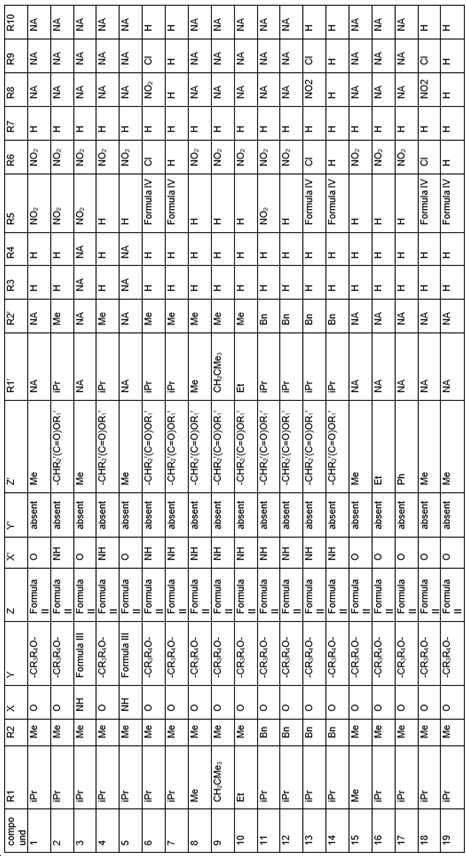

실시예 1 - 화합물 1Example 1 -

0℃ 질소하에서 벤질알코올(2.18 g, 20.1 mmol) 및 트리에틸아민(TEA, 2.04 g, 20.1 mmol)의 혼합물에 DCM(60 ml) 중의 메틸 포스포로디클로리데이트(3.0 g, 20.1 mmol) 용액을 적가하였다. 첨가 후, 반응물을 실온에서 30분 동안 교반한 후 0℃로 재냉각시켰다. L-알라닌 이소프로필 에스테르 하이드로클로라이드(3.71 g, 22.2 mmol)을 반응물에 첨가한 후, TEA (6.12 g, 60.4 mmol)를 적가하였다. 반응 혼합물을 실온에서 2시간 동안 교반한 후, 물로 켄칭시켰다. 생성된 혼합물을 DCM으로 2회 추출한 다음, 합한 유기층을 Na2SO4상에서 건조시키고, 여과하고, 용매를 진공에서 제거하였다. 잔여물을 실리카겔 칼럼 크로마토그래피로 정제하여 IT-001을 무색 오일로 수득하였다. THF (30 mL) 중 IT-001 및 Pd(OH)2/C (100 mg)의 혼합물을 실온에서 수소 대기(풍선)하에 2시간 동안 교반하였다. 반응 혼합물을 여과한 다음, 용매를 진공하에 제거하여 IT-002를 무색의 오일로 수득하였다. DCM (80 mL) 및 물 (80 mL)중의 2,4- 디니트로페놀(4.0 g, 21.7 mmol), 테트라부틸암모늄 수소설페이트(738 mg, 2.17 mmol) 및 NaHCO3 (9.2 g, 109 mmol)의 혼합물에 클로로메틸 클로로설페이트(7.2 g, 43.4 mmol)을 0℃에서 첨가하였다. 첨가 후, 혼합물을 실온에서 밤새 교반하였다. 혼합물을 물로 희석시키고 DCM으로 2회 추출하였다. 합한 유기층을 Na2SO4상에서 건조시키고, 여과한 다음, 용매를 진공하에 제거하여 IT-003을 황색 오일로 수득하고, 이를 정제없이 다음 단계에서 사용하였다. CH3CN (80 mL) 중의 IT-002 (5.0 g, 22.2 mmol), IT-003 (4.2 g, 18.1 mmol), K2CO3 (3.75 g, 27.2 mmol) 및 NaI (543 mg, 3.62 mmol)를 실온에서 밤새 교반하였다. 혼합물을 여과하고 CH3CN으로 세척하였다. 용매를 진공하에 제거하고, 잔여물을 실리카겔 컬럼 크로마토그래피 및 이어서 예비-HPLC (preparative-HPLC, CH3CN/H2O)에 의해 정제하여 표제 화합물을 연황색인 고체로 수득하였다.To a mixture of benzyl alcohol (2.18 g, 20.1 mmol) and triethylamine (TEA, 2.04 g, 20.1 mmol) under nitrogen at 0 ° C was added a solution of methylphosphorodichloridate (3.0 g, 20.1 mmol) in DCM Was added dropwise. After the addition, the reaction was stirred at room temperature for 30 minutes and then re-cooled to 0 < 0 > C. After adding L-alanine isopropyl ester hydrochloride (3.71 g, 22.2 mmol) to the reaction, TEA (6.12 g, 60.4 mmol) was added dropwise. The reaction mixture was stirred at room temperature for 2 hours and then quenched with water. Twice extracted, and then the combined organic layer and the resulting mixture with DCM, dried over Na 2 SO 4, filtered, and the solvents were removed in vacuo. The residue was purified by silica gel column chromatography to give IT-001 as a colorless oil. A mixture of IT-001 and Pd (OH) 2 / C (100 mg) in THF (30 mL) was stirred at room temperature under a hydrogen atmosphere (balloon) for 2 hours. The reaction mixture was filtered and the solvent was removed in vacuo to give IT-002 as a colorless oil. In DCM (80 mL) and water (80 mL) 2,4- dinitrophenol (4.0 g, 21.7 mmol), tetrabutylammonium hydrogen sulfate (738 mg, 2.17 mmol) and NaHCO 3 (9.2 g, 109 mmol ) in To the mixture was added chloromethyl chlorosulfate (7.2 g, 43.4 mmol) at 0 < 0 > C. After the addition, the mixture was stirred at room temperature overnight. The mixture was diluted with water and extracted twice with DCM. The combined organic layers were dried over Na 2 SO 4, filtered, and then, the solvent was removed in vacuo to give the IT-003 as a yellow oil, which was used in the next step without purification. IT-002 (5.0 g, 22.2 mmol), IT-003 (4.2 g, 18.1 mmol),
실시예 2 - 화합물 2Example 2 -
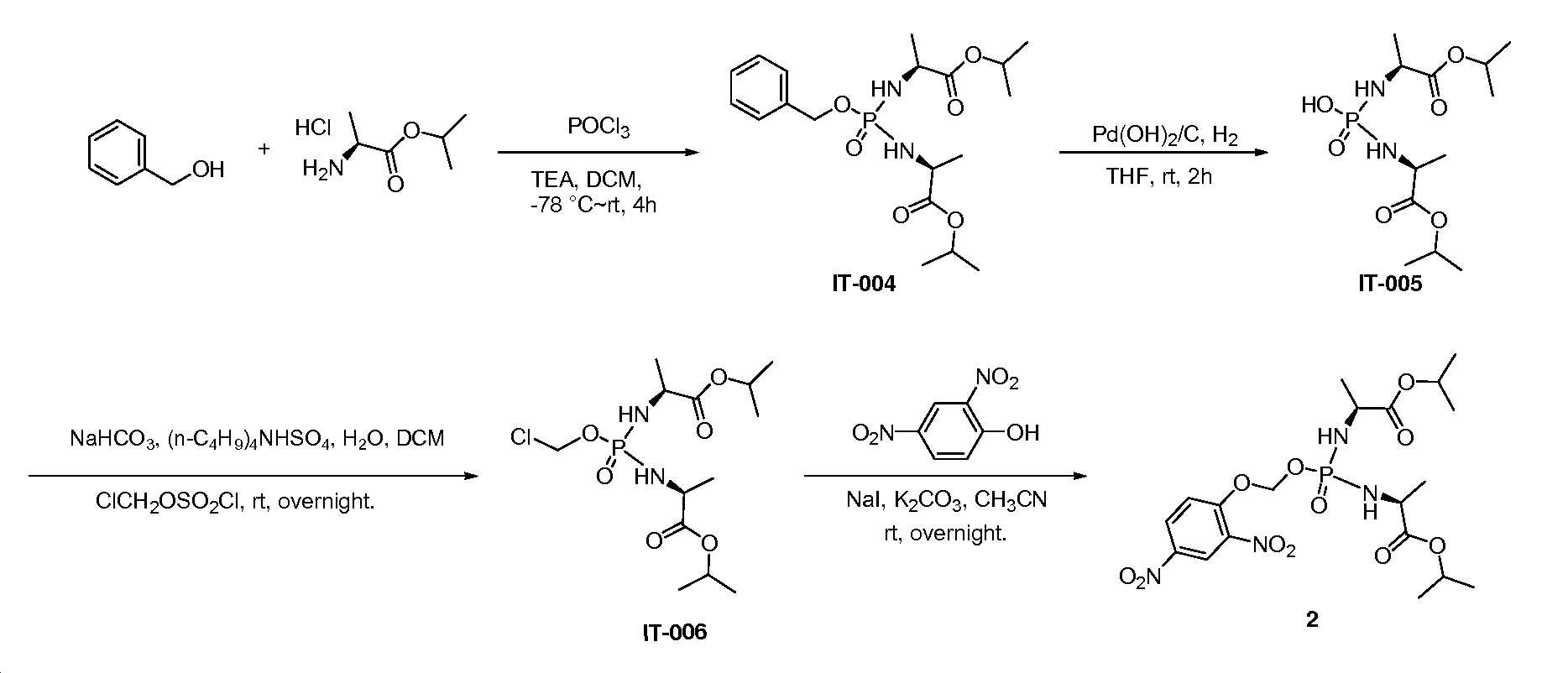
-78℃ Ar 하에서 DCM (150 mL) 중의 포스포릴 트리클로라이드(6.0 g, 39.1 mmol)의 용액에 벤질알코올(3.39 g, 31.3 mmol) 및 TEA (3.96 g, 39.1 mmol)의 혼합물을 적가하였다. 혼합물을 -78℃에서 30분 동안 교반하였다. L-알라닌 이소프로필 에스테르 하이드로클로라이드(16.4 g, 97.8 mmol)를 첨가한 후, TEA (19.8 g, 196 mmol)를 반응 혼합물에 적가하였다. 첨가 후, 혼합물을 실온으로 가온하고 4시간 동안 교반하였다. 반응 혼합물을 물로 켄칭시키고 DCM으로 2회 추출하였다. 합한 유기층을 건조시키고(Na2SO4), 여과시킨 후 용매를 진공에서 제거하였다. 잔여물을 실리카겔 컬럼 크로마토그래피(EtOAc/석유 에테르)로 정제하여 IT-004을 무색 오일로 수득하였다. THF (100 mL) 중의 IT-004 (5.0 g, 12.1 mmol) 및 Pd(OH)2/C (1.0 g)의 혼합물을 실온에서 수소 대기(풍선)하에 2시간 동안 교반하였다. 반응 혼합물을 여과하고 감압하에 증발시켜 IT-005를 수득하고, 이를 정제하지 않고 다음 단계에 사용하였다. 클로로메틸 클로로설페이트(4.0 g, 24 mmol)를 DCM (60 mL) 및 물 (60 mL) 중의 IT-005 (3.9 g, 12 mmol), 테트라부틸암모늄 수소 설페이트(407 mg, 1.2 mmol) 및 NaHCO3 (6.0 g, 72 mmol)의 혼합물에 실온에서 첨가하고 밤새 교반하였다. 혼합물을 DCM으로 3회 추출하였다. 합한 유기층을 Na2SO4상에서 건조시키고, 여과시킨 다음, 용매를 진공하에 제거하여 IT-006을 연황색 오일로 수득하고, 이를 정제하지 않고 다음 단계에서 사용하였다. CH3CN (27 mL) 중 IT-006 (1.8 g, 4.83 mmol), 2,4- 디니트로페놀(1.33 g, 7.24 mmol), K2CO3 (1.34 g, 9.66 mmol) 및 NaI (145 mg, 0.97 mmol)의 혼합물을 밤새 실온에서 교반하였다. 혼합물을 여과하고 CH3CN으로 세척하였다. 용매를 진공하에 제거하고, 잔여물을 실리카겔 컬럼 크로마토그래피 및 이어서 예비-HPLC (CH3CN/H2O)에 의해 정제하여 표제 화합물을 무색의 오일로 수득하였다.A mixture of benzyl alcohol (3.39 g, 31.3 mmol) and TEA (3.96 g, 39.1 mmol) was added dropwise to a solution of phosphoryl trichloride (6.0 g, 39.1 mmol) in DCM (150 mL) under Ar at -78 캜. The mixture was stirred at -78 < 0 > C for 30 minutes. After addition of L-alanine isopropyl ester hydrochloride (16.4 g, 97.8 mmol), TEA (19.8 g, 196 mmol) was added dropwise to the reaction mixture. After the addition, the mixture was warmed to room temperature and stirred for 4 hours. The reaction mixture was quenched with water and extracted twice with DCM. The combined organic layers were dried (Na 2 SO 4 ), filtered and the solvent removed in vacuo. The residue was purified by silica gel column chromatography (EtOAc / petroleum ether) to give IT-004 as a colorless oil. A mixture of IT-004 (5.0 g, 12.1 mmol) and Pd (OH) 2 / C (1.0 g) in THF (100 mL) was stirred at room temperature under hydrogen atmosphere (balloon) for 2 hours. The reaction mixture was filtered and evaporated under reduced pressure to give IT-005 which was used in the next step without purification. Chloromethyl-chloro sulphate (4.0 g, 24 mmol) the IT-005 (3.9 g, 12 mmol), tetrabutylammonium hydrogen sulfate (407 mg, 1.2 mmol) and NaHCO 3 in DCM (60 mL) and water (60 mL) (6.0 g, 72 mmol) at room temperature and stirred overnight. The mixture was extracted three times with DCM. The combined organic layers were dried over Na 2 SO 4 , filtered and the solvent removed in vacuo to give IT-006 as a light yellow oil which was used in the next step without purification. CH 3 CN (27 mL) of the IT-006 (1.8 g, 4.83 mmol), 2,4- di-nitrophenol (1.33 g, 7.24 mmol),
실시예 3 - 화합물 3Example 3 - Compound 3

(4-아미노페닐)메탄올(1.5g, 12.2 mmol), DMAP (491mg, 4.02 mmol) 및 TEA (1.48g, 14.6 mmol)의 DMF (15mL) 중의 용액에 tert-부틸디메틸실릴 클로라이드(2.02g, 13.4 mmol)를 실온에서 첨가하고 밤새 교반하였다. 혼합물을 물로 희석시키고 EtOAc로 2회 추출하였다. 합한 유기층을 염수로 세척하고, 건조시키고(Na2SO4), 여과시킨 다음, 용매를 진공하에 제거하였다. 잔여물을 실리카겔 컬럼 크로마토그래피(EtOAc/석유 에테르)로 정제하여 연황색 오일의 IT-007을 수득하였다. DCM (20 mL) 중 메틸포스포로디클로리데이트(1.44 g, 9.7 mmol)의 용액에 DCM (5 mL) 중의 IT-007 (2.3 g, 9.7 mmol) 및 TEA (982 mg, 9.7 mmol) 용액을 -78℃ Ar 하에서 적가하였다. L-알라닌 이소 프로필 에스테르 하이드로클로라이드(1.63 g, 9.7 mmol)을 첨가하기 전에 혼합물을 -78℃에서 30분 동안 교반하였다. 이어서, TEA (2.45 g, 24.3 mmol)를 반응 혼합물에 적가하였다. 첨가 후, 혼합물을 실온으로 가온하고 밤새 교반하였다. 반응물을 물로 켄칭하고 DCM으로 2회 추출하였다. 합한 유기층을 건조시키고(Na2SO4), 여과한 후 용매를 진공에서 제거하였다. 잔여물을 실리카겔 컬럼 크로마토그래피(EtOAc/석유 에테르)로 정제하여 IT-008을 무색의 오일로 수득하였다. THF (10 mL) 중의 IT-008 (970 mg, 2.18 mmol) 용액에 TBAF (THF 중의 1 M, 6.5 mL, 6.5 mmol)를 첨가하였다. 반응물을 40℃로 가열하고 밤새 교반한 다음, 용매를 진공하에 제거하였다. 잔여물을 실리카겔 컬럼 크로마토그래피(EtOAc/석유 에테르)로 정제하여 IT-009을 무색의 오일로 수득하였다. THF (5 mL) 중 IT-009 (100 mg, 0.303 mmol), 2,4-디니트로페놀(111 mg, 0.606 mmol) 및 Ph3P (159 mg, 0.606 mmol)의 용액에 DIAD (245 mg, 1.21 mmol)를 0℃에서 첨가하였다. 첨가 후, 혼합물을 실온에서 2시간 동안 교반하였다. 용매를 진공하에 제거하고, 잔여물을 예비-TLC (EtOAc)로 직접 정제하여 표제 화합물을 연황색 고체로 수득하였다.Butyldimethylsilyl chloride (2.02 g, 13.4 mmol) was added to a DMF (15 mL) solution of (4-aminophenyl) methanol (1.5 g, 12.2 mmol), DMAP (491 mg, 4.02 mmol) mmol) at room temperature and stirred overnight. The mixture was diluted with water and extracted twice with EtOAc. The combined organic layers were washed with brine, dried (Na 2 SO 4), filtered, and the solvent was removed in vacuo. The residue was purified by silica gel column chromatography (EtOAc / petroleum ether) to give IT-007 as a light yellow oil. To a solution of methylphosphorodichloridate (1.44 g, 9.7 mmol) in DCM (20 mL) was added a solution of IT-007 (2.3 g, 9.7 mmol) and TEA (982 mg, 9.7 mmol) in DCM Was added dropwise at -78 < 0 > C Ar. The mixture was stirred at -78 <0> C for 30 min before the addition of L-alanine isopropyl ester hydrochloride (1.63 g, 9.7 mmol). TEA (2.45 g, 24.3 mmol) was then added dropwise to the reaction mixture. After the addition, the mixture was warmed to room temperature and stirred overnight. The reaction was quenched with water and extracted twice with DCM. The combined organic layers were dried (Na 2 SO 4 ), filtered and the solvent removed in vacuo. The residue was purified by silica gel column chromatography (EtOAc / petroleum ether) to give IT-008 as a colorless oil. To a solution of IT-008 (970 mg, 2.18 mmol) in THF (10 mL) was added TBAF (1 M in THF, 6.5 mL, 6.5 mmol). The reaction was heated to 40 < 0 > C and stirred overnight, then the solvent was removed in vacuo. The residue was purified by silica gel column chromatography (EtOAc / petroleum ether) to give IT-009 as a colorless oil. To a solution of IT-009 (100 mg, 0.303 mmol), 2,4-dinitrophenol (111 mg, 0.606 mmol) and Ph 3 P (159 mg, 0.606 mmol) in THF (5 mL) 1.21 mmol) at 0 < 0 > C. After the addition, the mixture was stirred at room temperature for 2 hours. The solvent was removed in vacuo and the residue purified directly by preparative-TLC (EtOAc) to give the title compound as a light yellow solid.
실시예 4 - 화합물 4Example 4 -

CH3CN (27 mL) 중의 IT-006 (실시예 2, 1.8 g, 4.83 mmol), 4-니트로페놀 (1.01 g, 7.24 mmol), K2CO3 (1.34 g, 9.66 mmol) 및 NaI (145 mg, 0.97 mmol)의 혼합물을 밤새 실온에서 교반하였다. 혼합물을 여과하고 CH3CN으로 세척하였다. 용매를 진공하에 제거하고, 잔여물을 실리카겔 컬럼 크로마토그래피에 이어서 예비-TLC로 정제하여 표제 화합물을 백색 고체로 수득하였다.CH 3 CN (27 mL) of the IT-006 (Example 2, 1.8 g, 4.83 mmol) , 4- nitrophenol (1.01 g, 7.24 mmol),
실시예 5 - 화합물 5Example 5 - Compound 5
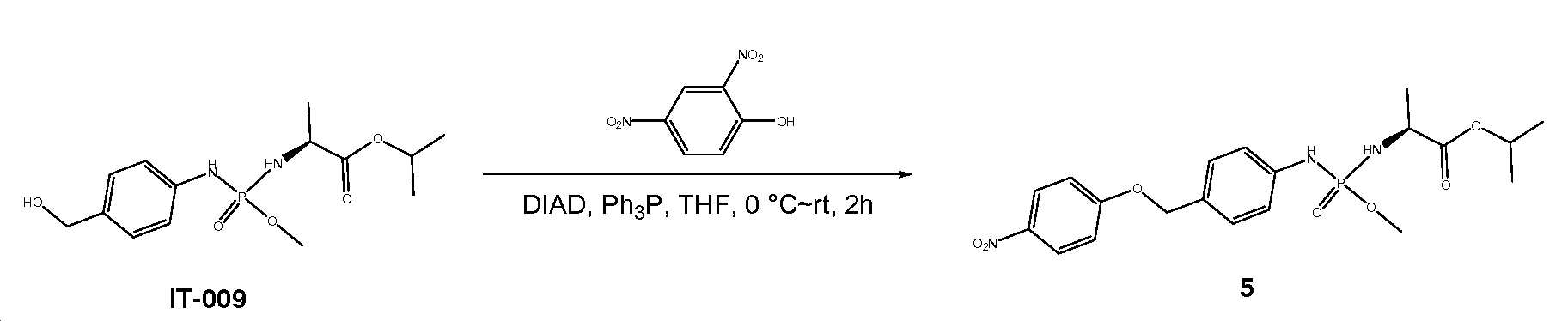
0℃에서 THF (30 mL) 중의 IT-009 (실시예 3, 1.6g, 4.84 mmol), 4-니트로페놀(1.01g, 7.27 mmol) 및 Ph3P (2.54g, 9.68 mmol)의 용액에 DIAD (3.91g, 19.4 mmol)를 첨가하였다. 첨가 후, 혼합물을 실온에서 2시간 동안 교반하였다. 용매를 진공하에 제거하고, 잔여물을 실리카겔 컬럼 크로마토그래피, 예비-HPLC (CH3CN/H2O) 및 예비-TLC에 의해 정제하여 표제 화합물을 연황색 고체로 수득하였다.To a solution of IT-009 (Example 3, 1.6 g, 4.84 mmol), 4-nitrophenol (1.01 g, 7.27 mmol) and Ph 3 P (2.54 g, 9.68 mmol) in THF (30 mL) (3.91 g, 19.4 mmol). After the addition, the mixture was stirred at room temperature for 2 hours. The solvent was removed in vacuo and the obtained residue by silica gel column chromatography to give preliminary -HPLC (CH 3 CN / H 2 O) and purified by preparative -TLC the title compound a yellow solid.
실시예 6 - 화합물 6Example 6 - Synthesis of Compound 6

CH3CN (20 mL) 중의 IT-006 (실시예 2, 600 mg, 1.61 mmol), 니클로사마이드(790 mg, 2.41 mmol), K2CO3 (445 mg, 3.22 mmol) 및 NaI (48 mg, 0.32 mmol)의 혼합물을 밤새 실온에서 교반하였다. 혼합물을 여과하고 CH3CN으로 세척하였다. 용매를 진공하에 제거하고, 잔여물을 예비-HPLC (CH3CN/H2O) 및 이어서 예비-TLC로 정제하여 표제 화합물을 백색 고체로 수득하였다.CH 3 IT-006 of the CN (20 mL) (Example 2, 600 mg, 1.61 mmol) , Niklas Rosa polyimide (790 mg, 2.41 mmol),
실시예 7 - 화합물 7Example 7 - Synthesis of Compound 7

CH3CN (7 mL) 중의 IT-006 (실시예 2, 370 mg, 0.993 mmol), 살리실아닐라이드(317 mg, 1.49 mmol), K2CO3 (206 mg, 1.49 mmol) 및 NaI (30 mg, 0.2 mmol)의 혼합물을 밤새 실온에서 교반하였다. 혼합물을 여과하고 CH3CN으로 세척하였다. 용매를 제거하고, 잔여물을 실리카겔 컬럼 크로마토그래피 및 이어서 예비-HPLC (CH3CN/H2O)에 의해 정제하여 표제 화합물을 황색 오일로 수득하였다.CH 3 IT-006 of the CN (7 mL) (Example 2, 370 mg, 0.993 mmol) , salicylaldehyde not fluoride (317 mg, 1.49 mmol),
실시예 8 - 화합물 8Example 8 - Compound 8

벤질알코올(3.5 g, 32.4 mmol) 및 TEA (3.3 g, 32.4 mmol)의 혼합물을 DCM (150 mL) 중의 포스포릴 트리클로라이드(5.0 g, 32.4 mmol)의 용액에 -78℃ Ar 하에서 적가하였다. 혼합물을 -78℃에서 30분 동안 교반하였다. L-알라닌 메틸 에스테르 하이드로클로라이드(11.3 g, 80.9 mmol)를 첨가한 후, TEA (16.4 g, 162 mmol)를 반응 혼합물에 적가하였다. 첨가 후, 혼합물을 실온으로 가온하고 4시간 동안 교반하였다. 반응 혼합물을 물로 켄칭시키고 DCM으로 2회 추출하였다. 합한 유기층을 건조시키고(Na2SO4), 여과하고 용매를 진공에서 제거하였다. 잔여물을 실리카겔 컬럼 크로마토그래피(EtOAc/석유 에테르)로 정제하여 IT-010을 무색의 오일로 수득하였다. THF (30 mL) 중 IT-010 (1.0 g, 2.8 mmol) 및 Pd(OH)2/C (200 mg)의 혼합물을 실온에서 수소 대기(풍선)하에 2시간 동안 교반하였다. 반응 혼합물을 여과하고 감압하에 증발시켜 IT-011을 무색의 오일로 수득하고 이를 정제하지 않고 다음 단계에 사용하였다. CH3CN (2 mL) 중의 IT-011 (112 mg, 0.42 mmol), IT-012 (실시예 20, 118 mg, 0.63 mmol), K2CO3 (116 mg, 0.84 mmol) 및 NaI (13 mg, 0.084 mmol)의 혼합물을 밤새 실온에서 교반하였다. 혼합물을 여과하고 CH3CN으로 세척하였다. 용매를 진공하에 제거하고, 잔여물을 실리카겔 컬럼 크로마토그래피로 정제하여 표제 화합물을 백색 고체로 수득하였다.A mixture of benzyl alcohol (3.5 g, 32.4 mmol) and TEA (3.3 g, 32.4 mmol) was added dropwise to a solution of phosphoryl trichloride (5.0 g, 32.4 mmol) in DCM (150 mL) at -78 ° C. The mixture was stirred at -78 < 0 > C for 30 minutes. After addition of L-alanine methyl ester hydrochloride (11.3 g, 80.9 mmol), TEA (16.4 g, 162 mmol) was added dropwise to the reaction mixture. After the addition, the mixture was warmed to room temperature and stirred for 4 hours. The reaction mixture was quenched with water and extracted twice with DCM. The combined organic layers were dried (Na 2 SO 4 ), filtered and the solvent removed in vacuo. The residue was purified by silica gel column chromatography (EtOAc / petroleum ether) to give IT-010 as a colorless oil. A mixture of IT-010 (1.0 g, 2.8 mmol) and Pd (OH) 2 / C (200 mg) in THF (30 mL) was stirred at room temperature under a hydrogen atmosphere (balloon) for 2 hours. The reaction mixture was filtered and evaporated under reduced pressure to give IT-011 as a colorless oil which was used in the next step without purification. CH 3 CN (2 mL) IT -011 (112 mg, 0.42 mmol), IT-012 ( Example 20, 118 mg, 0.63 mmol) ,
실시예 9 - 화합물 9Example 9 - Compound 9

벤질알코올(571 mg, 5.28 mmol) 및 TEA (594 mg, 5.87 mmol)의 혼합물을 DCM (30 mL) 중의 포스포릴 트리클로라이드(900 mg, 5.87 mmol)의 용액에 -78 ℃ Ar하에서 적가하였다. 혼합물을 -78℃에서 30분 동안 교반하였다. 그리고 나서, DCM (3 mL) 중의 IT-012 (실시예 20, 2430 mg, 15.3 mmol) 및 TEA (2376 mg, 23.5 mmol)의 용액을 반응 혼합물에 적가하였다. 첨가 후, 혼합물을 실온으로 가온하고 4시간 동안 교반하였다. 반응 혼합물을 물로 켄칭시키고 DCM으로 2회 추출하였다. 합한 유기층을 건조시키고(Na2SO4), 여과시킨 후 용매를 진공에서 제거하였다. 잔여물을 실리카겔 컬럼 크로마토그래피(EtOAc/석유 에테르)로 정제하여 IT-013을 무색의 오일로 수득하였다. THF (30 mL) 중의 IT-013 (1.0 g, 2.13 mmol) 및 Pd(OH)2/C (200 mg)의 혼합물을 실온에서 수소 대기(풍선)하에 2시간 동안 교반하였다. 반응 혼합물을 여과하고 감압하에 증발시켜 IT-014를 무색 오일로 수득하고, 이를 정제하지 않고 다음 단계에 사용하였다. 5℃에서 DCM (16 mL) 및 물(16 mL) 중의 IT-014 (810 mg, 2.13 mmol), 테트라부틸암모늄 수소 설페이트(72 mg, 0.21 mmol) 및 NaHCO3 (716 mg, 8.53 mmol)의 혼합물에 클로로메틸 클로로설페이트(528 mg, 3.20 mmol)을 첨가하였다. 첨가 후, 혼합물을 실온에서 밤새 교반하였다. 혼합물을 DCM으로 희석하고 수성 Na2CO3, 물, 0.5N HCl, 물로 세척하였다. 유기층을 Na2SO4상에서 건조시키고, 여과시킨 다음, 용매를 진공에서 제거하여 IT-015를 무색 오일로 수득하고, 이를 정제하지 않고 다음 단계에서 사용하였다. CH3CN (3 mL) 중의 IT-015 (200 mg, 0.47 mmol), 4-니트로페놀(97 mg, 0.70 mmol), K2CO3 (97 mg, 0.70 mmol) 및 NaI (14 mg, 0.09 mmol)의 혼합물을 실온에서 밤새 교반하였다. 혼합물을 물로 희석시키고 EtOAc로 2회 추출하였다. 합한 유기층을 Na2SO4상에서 건조시키고, 여과시킨 다음 용매를 진공하에 제거하였다. 잔여물을 실리카겔 컬럼 크로마토그래피로 정제하여 표제 화합물을 무색 오일로 얻었다.A mixture of benzyl alcohol (571 mg, 5.28 mmol) and TEA (594 mg, 5.87 mmol) was added dropwise to a solution of phosphoryl trichloride (900 mg, 5.87 mmol) in DCM (30 mL) at -78 ° C. The mixture was stirred at -78 < 0 > C for 30 minutes. A solution of IT-012 (Example 20, 2430 mg, 15.3 mmol) and TEA (2376 mg, 23.5 mmol) in DCM (3 mL) was then added dropwise to the reaction mixture. After the addition, the mixture was warmed to room temperature and stirred for 4 hours. The reaction mixture was quenched with water and extracted twice with DCM. The combined organic layers were dried (Na 2 SO 4 ), filtered and the solvent removed in vacuo. The residue was purified by silica gel column chromatography (EtOAc / petroleum ether) to give IT-013 as a colorless oil. A mixture of IT-013 (1.0 g, 2.13 mmol) and Pd (OH) 2 / C (200 mg) in THF (30 mL) was stirred at room temperature under a hydrogen atmosphere (balloon) for 2 hours. The reaction mixture was filtered and evaporated under reduced pressure to give IT-014 as a colorless oil which was used in the next step without purification. A mixture of DCM (16 mL) and water (16 mL) of the IT-014 (810 mg, 2.13 mmol), tetrabutylammonium hydrogen sulfate (72 mg, 0.21 mmol) and NaHCO 3 (716 mg, 8.53 mmol ) in 5 ℃ Was added chloromethyl chlorosulfate (528 mg, 3.20 mmol). After the addition, the mixture was stirred at room temperature overnight. The mixture was diluted with DCM and washed with aqueous Na 2 CO 3 , water, 0.5 N HCl, water. The organic layer was dried over Na 2 SO 4, filtered and then was, the solvent was removed in vacuo to give the IT-015 as a colorless oil, which was used without purification in the next step. CH 3 CN (3 mL) of the IT-015 (200 mg, 0.47 mmol), 4- nitrophenol (97 mg, 0.70 mmol),
실시예 10 - 화합물 10Example 10 -

DCM (90 mL) 중의 포스포릴 트리클로라이드(3.0 g, 19.6 mmol)의 용액에 벤질알코올(1.9 g, 17.6 mmol) 및 TEA (1.98 g, 19.6 mmol)의 혼합물을 -78℃ Ar하에서 적가하였다. 혼합물을 -78℃에서 30분 동안 교반하였다. L-알라닌 에틸 에스테르 하이드로클로라이드(7.51 g, 48.9 mmol)를 첨가한 후, TEA (11.9 g, 117 mmol)를 반응 혼합물에 적가하였다. 첨가 후, 혼합물을 실온으로 가온하고 4시간 동안 교반하였다. 반응 혼합물을 물로 켄칭시키고 DCM으로 2회 추출하였다. 합한 유기층을 건조시키고(Na2SO4), 여과시킨 후 용매를 진공에서 제거하였다. 잔여물을 실리카겔 컬럼 크로마토그래피(EtOAc/석유 에테르)로 정제하여 IT-016을 무색의 오일로 수득하였다. THF (8 ml) 중의 IT-016 (200 mg, 0.518 mmol) 및 Pd(OH)2/C (40 mg)의 혼합물을 실온에서 수소 대기(풍선)하에 2시간 동안 교반하였다. 반응 혼합물을 여과하고 용매를 진공하에 제거하여 IT-017을 무색의 오일로 수득하고 이를 정제하지 않고 다음 단계에 사용하였다. CH3CN (2 ml) 중의 IT-017 (154 mg, 0.52 mmol), IT-012 (실시예 20, 146 mg, 0.78 mmol), K2CO3 (143 mg, 1.04 mmol) 및 NaI (15 mg, 0.10 mmol)의 용액을 밤새 실온에서 교반하였다. 혼합물을 여과하고 CH3CN으로 세척하였다. 용매를 진공하에 제거하고, 잔여물을 실리카겔 컬럼 크로마토그래피로 정제하여 표제 화합물을 황백색(off-white) 고체로 수득하였다.To a solution of the phosphoryl trichloride (3.0 g, 19.6 mmol) in DCM (90 mL) was added dropwise a mixture of benzyl alcohol (1.9 g, 17.6 mmol) and TEA (1.98 g, 19.6 mmol) at -78 ° C. The mixture was stirred at -78 < 0 > C for 30 minutes. After addition of L-alanine ethyl ester hydrochloride (7.51 g, 48.9 mmol), TEA (11.9 g, 117 mmol) was added dropwise to the reaction mixture. After the addition, the mixture was warmed to room temperature and stirred for 4 hours. The reaction mixture was quenched with water and extracted twice with DCM. The combined organic layers were dried (Na 2 SO 4 ), filtered and the solvent removed in vacuo. The residue was purified by silica gel column chromatography (EtOAc / petroleum ether) to give IT-016 as a colorless oil. A mixture of IT-016 (200 mg, 0.518 mmol) and Pd (OH) 2 / C (40 mg) in THF (8 ml) was stirred at room temperature under hydrogen atmosphere (balloon) for 2 hours. The reaction mixture was filtered and the solvent was removed in vacuo to give IT-017 as a colorless oil that was used in the next step without purification. CH 3 CN (2 ml) IT -017 (154 mg, 0.52 mmol), IT-012 ( Example 20, 146 mg, 0.78 mmol) ,
실시예 11 - 화합물 11] Example 11 - Compound 11 ]

L-페닐알라닌(10 g, 60.6 mmol)을 i-PrOH (100 mL)에 용해시킨 후 농축 H2SO4 (10 mL)를 천천히 첨가하였다. 용매를 진공하에 제거하기 전에 혼합물을 밤새 환류시켰다. 잔여물에 얼음물을 첨가한 다음, 용액을 수성 NaOH로 염기화시켰다. 생성된 혼합물을 DCM으로 2회 추출하였다. 합한 유기층을 건조시키고(Na2SO4), 여과시킨 후 용매를 진공하에 제거하여 IT-018을 무색의 오일로 수득하였고, 이를 정제하지 않고 다음에 사용할 수 있다. 벤질알코올(1.27 g, 11.7 mmol) 및 TEA (1.32 g, 13.0 mmol)의 혼합물을 DCM (60 mL) 중의 포스포릴 트리클로라이드(2.0 g, 13.0 mmol)의 용액에 -78℃ Ar하에서 적가하였다. 혼합물을 -78℃에서 30분 동안 교반하였다. 이어서, DCM (5 mL) 중의 IT-018 (6.76 g, 32.6 mmol) 및 TEA (5.28 g, 52.2 mmol)의 용액을 반응 혼합물에 적가하였다. 첨가 후, 혼합물을 실온으로 가온하고 4시간 동안 교반하였다. 반응 혼합물을 물로 켄칭시키고 DCM으로 2회 추출하였다. 합한 유기층을 건조시키고(Na2SO4), 여과시킨 후 용매를 진공에서 제거하였다. 잔여물을 실리카겔 컬럼 크로마토그래피(EtOAc/석유 에테르)로 정제하여 IT-019를 무색의 오일로 수득하였다. THF (60 mL) 중의 IT-019 (2.1 g, 3.71 mmol) 및 Pd(OH)2/C (400 mg)의 혼합물을 실온에서 수소 대기(풍선)하에 2시간 동안 교반하였다. 반응 혼합물을 여과한 다음, 용매를 진공하에 제거하여 IT-020을 무색 오일로 수득하고, 이를 정제하지 않고 다음 단계에 사용하였다. 5℃에서 DCM (30 mL) 및 물 (30 mL) 중의 IT-020 (1.78 g, 3.74 mmol), 테트라부틸암모늄 수소 설페이트(127 mg, 0.37 mmol) 및 NaHCO3 (1.26 g, 15.0 mmol)의 혼합물에 클로로메틸 클로로설페이트(926 mg, 5.61 mmol)을 첨가하였다. 첨가 후, 혼합물을 실온에서 밤새 교반하였다. 혼합물을 DCM으로 희석시키고 수성 Na2CO3, 물, 0.5N HCl, 물로 세척하였다. 유기층을 Na2SO4상에서 건조시키고, 여과시킨 다음, 용매를 진공하에 제거하여 IT-021을 무색의 오일로 수득하고, 이를 정제하지 않고 다음 단계에서 사용하였다. CH3CN (6 mL) 중의 IT-021 (600 mg, 1.15 mmol), 2,4-디니트로페놀(316 mg, 1.72 mmol), K2CO3 (237 mg, 1.72 mmol) 및 NaI (34 mg, 0.23 mmol)의 혼합물을 밤새 실온에서 교반하였다. 혼합물을 물로 희석시키고 EtOAc로 2회 추출하였다. 합한 유기층을 Na2SO4상에서 건조시키고, 여과시킨 다음 용매를 진공하에 제거하였다. 잔여물을 실리카겔 칼럼 크로마토그래피로 정제하여 표제 화합물을 황색 오일로 수득하였다.L-phenylalanine (10 g, 60.6 mmol) was dissolved in i-PrOH (100 mL) and concentrated H 2 SO 4 (10 mL) was slowly added. The mixture was refluxed overnight before removing the solvent under vacuum. Ice water was added to the residue and the solution was then basified with aqueous NaOH. The resulting mixture was extracted twice with DCM. The combined organic layers were dried (Na 2 SO 4 ), filtered and the solvent removed in vacuo to give IT-018 as a colorless oil which can be used without further purification. A mixture of benzyl alcohol (1.27 g, 11.7 mmol) and TEA (1.32 g, 13.0 mmol) was added dropwise to a solution of phosphoryl trichloride (2.0 g, 13.0 mmol) in DCM (60 mL) at -78 <0> C. The mixture was stirred at -78 < 0 > C for 30 minutes. A solution of IT-018 (6.76 g, 32.6 mmol) and TEA (5.28 g, 52.2 mmol) in DCM (5 mL) was then added dropwise to the reaction mixture. After the addition, the mixture was warmed to room temperature and stirred for 4 hours. The reaction mixture was quenched with water and extracted twice with DCM. The combined organic layers were dried (Na 2 SO 4 ), filtered and the solvent removed in vacuo. The residue was purified by silica gel column chromatography (EtOAc / petroleum ether) to give IT-019 as a colorless oil. A mixture of IT-019 (2.1 g, 3.71 mmol) and Pd (OH) 2 / C (400 mg) in THF (60 mL) was stirred at room temperature under a hydrogen atmosphere (balloon) for 2 hours. The reaction mixture was filtered and the solvent was removed in vacuo to give IT-020 as a colorless oil which was used in the next step without purification. A mixture of from 5 ℃ DCM (30 mL) and water (30 mL) of the IT-020 (1.78 g, 3.74 mmol), tetrabutylammonium hydrogen sulfate (127 mg, 0.37 mmol) and NaHCO 3 (1.26 g, 15.0 mmol ) Chloromethylchlorosulfate (926 mg, 5.61 mmol) was added. After the addition, the mixture was stirred at room temperature overnight. The mixture was diluted with DCM and washed with aqueous Na 2 CO 3, water, 0.5N HCl, water. The organic layer was dried over Na 2 SO 4 , filtered and the solvent removed in vacuo to give IT-021 as a colorless oil which was used in the next step without purification. CH 3 CN (6 mL) IT -021 (600 mg, 1.15 mmol), 2,4- di-nitrophenol (316 mg, 1.72 mmol) in, K 2 CO 3 (237 mg , 1.72 mmol) and NaI (34 mg , 0.23 mmol) was stirred at room temperature overnight. The mixture was diluted with water and extracted twice with EtOAc. The combined organic layers were dried over Na 2 SO 4, filtered, and then the solvent was removed in vacuo. The residue was purified by silica gel column chromatography to give the title compound as a yellow oil.
실시예 12 - 화합물 12Example 12 - Synthesis of Compound 12

CH3CN (6 mL) 중의 IT-021 (실시예 11 참조, 320 mg, 0.61 mmol), 4-니트로페놀(127 mg, 0.92 mmol), K2CO3 (126 mg, 0.92 mmol) 및 NaI (18 mg, 0.12 mmol)의 혼합물을 밤새 실온에서 교반하였다. 혼합물을 물로 희석시키고 EtOAc로 2회 추출하였다. 합한 유기층을 Na2SO4상에서 건조시키고, 여과시킨 다음 용매를 진공하에 제거하였다. 잔여물을 실리카겔 컬럼 크로마토그래피로 정제하여 표제 화합물을 무색 오일로 수득하였다.CH 3 CN (6 mL) of the IT-021 (see Example 11, 320 mg, 0.61 mmol) , 4- nitrophenol (127 mg, 0.92 mmol),
실시예 13 - 화합물 13Example 13 - Synthesis of Compound 13

CH3CN (6 mL) 중의 IT-021 (실시예 11 참조, 320 mg, 0.61 mmol), 니클로사마이드(301 mg, 0.92 mmol), K2CO3 (126 mg, 0.92 mmol) 및 NaI (18 mg, 0.12 mmol)의 혼합물을 밤새 실온에서 교반하였다. 혼합물을 여과시킨 후, 용매를 진공하에 제거하였다. 잔여물을 예비-HPLC (CH3CN/H2O)로 정제하고, 조(crude) 생성물을 EtOH로 세정하여 순수한 표제 화합물을 황백색 고체로 수득하였다. IT-021 (Example 11, see, 320 mg, 0.61 mmol), Niklas Rosa polyimide (301 mg, 0.92 mmol),
실시예 14 - 화합물 14Example 14 - Compound 14

CH3CN (6 mL) 중의 IT-021 (실시예 11 참조, 320 mg, 0.61 mmol), 살리실아닐라이드(196 mg, 0.92 mmol), K2CO3 (126 mg, 0.92 mmol) 및 NaI (18 mg, 0.12 mmol)의 혼합물을 밤새 실온에서 교반하였다. 혼합물을 물로 희석시키고 EtOAc로 2회 추출하였다. 합한 유기층을 Na2SO4상에서 건조시키고, 여과시킨 다음 용매를 진공하에 제거하였다. 잔여물을 실리카겔 컬럼 크로마토그래피로 정제하여 표제 화합물을 황색 오일로 수득하였다.CH 3 CN (6 mL) of the IT-021 (Example 11, see, 320 mg, 0.61 mmol), salicylaldehyde not fluoride (196 mg, 0.92 mmol),
실시예 15 - 화합물 15Example 15 - Compound 15

벤질알코올(1.31 g, 12.1 mmol) 및 TEA (1.36 g, 13.4 mmol)의 혼합물을 0℃ 질소하에 메틸 포스포로디클로리데이트(2.0 g, 13.4 mmol)의 DCM (40 mL) 용액에 적가하였다. 첨가 후, 반응물을 실온에서 30분 동안 교반한 후 0℃로 재냉각시켰다. L-알라닌 메틸 에스테르 하이드로클로라이드(2.25 g, 16.1 mmol)를 반응물에 첨가한 후, TEA (4.08 g, 40.3 mmol)를 적가하였다. 반응 혼합물을 실온에서 밤새 교반한 후 물로 켄칭시켰다. 생성된 혼합물을 DCM으로 2회 추출하였다. 합한 유기층을 Na2SO4상에서 건조시키고, 여과시킨 다음 용매를 진공하에 제거하였다. 잔여물을 실리카겔 컬럼 크로마토그래피로 정제하여 IT-022를 무색 오일로 수득하였다. THF (6 mL) 중의 IT-022 (200 mg, 0.7 mmol) 및 Pd(OH)2/C (40 mg)의 혼합물을 실온에서 수소 대기(풍선)하에 2시간 동안 교반하였다. 반응 혼합물을 여과하고 용매를 진공에서 제거하여 IT-023을 무색의 오일로 수득하였다. CH3CN (2 ml) 중의 IT-023 (69 mg, 0.35 mmol), IT-012 (실시예 20, 98 mg, 0.52 mmol), K2CO3 (96 mg, 0.7 mmol) 및 NaI (10.5 mg, 0.07 mmol)의 혼합물을 밤새 실온에서 교반하였다. 혼합물을 여과하고 CH3CN으로 세척하였다. 용매를 여과액으로부터 진공하에 제거하고, 잔여물을 실리카겔 컬럼 크로마토그래피로 정제하여 표제 화합물을 무색 오일로 수득하였다.A mixture of benzyl alcohol (1.31 g, 12.1 mmol) and TEA (1.36 g, 13.4 mmol) was added dropwise to a DCM (40 mL) solution of methylphosphorodichloridate (2.0 g, 13.4 mmol) under nitrogen at 0 ° C. After the addition, the reaction was stirred at room temperature for 30 minutes and then re-cooled to 0 < 0 > C. After adding L-alanine methyl ester hydrochloride (2.25 g, 16.1 mmol) to the reaction, TEA (4.08 g, 40.3 mmol) was added dropwise. The reaction mixture was stirred at room temperature overnight and then quenched with water. The resulting mixture was extracted twice with DCM. The combined organic layers were dried over Na 2 SO 4, filtered, and then the solvent was removed in vacuo. The residue was purified by silica gel column chromatography to give IT-022 as a colorless oil. A mixture of IT-022 (200 mg, 0.7 mmol) and Pd (OH) 2 / C (40 mg) in THF (6 mL) was stirred at room temperature under a hydrogen atmosphere (balloon) for 2 hours. The reaction mixture was filtered and the solvent was removed in vacuo to give IT-023 as a colorless oil. CH 3 CN (2 ml) IT -023 (69 mg, 0.35 mmol), IT-012 ( Example 20, 98 mg, 0.52 mmol) ,
실시예 16 - 화합물 16Example 16 - Compound 16

DCM (50 mL) 중의 에틸 포스포로디클로리데이트(3.0 g, 18.4 mmol)의 용액에 벤질알코올(1.6 g, 14.7 mmol) 및 TEA (2.24 g, 22.1 mmol)의 혼합물을 0℃ 질소하에 적가하였다. 첨가 후, 반응물을 실온에서 30분 동안 교반한 후 0℃로 재냉각시켰다. L-알라닌 이소프로필 에스테르 하이드로클로라이드(3.7 g, 22.1 mmol)를 반응물에 첨가한 후, TEA (5.59 g, 55.2 mmol)를 적가하였다. 반응 혼합물을 실온에서 밤새 교반한 후에 물로 켄칭시켰다. 생성된 혼합물을 DCM으로 2회 추출하였다. 합한 유기층을 Na2SO4상에서 건조시키고, 여과시킨 다음 용매를 진공하에 제거하였다. 잔여물을 실리카겔 컬럼 크로마토그래피로 정제하여 IT-024를 무색 오일로 수득하였다. THF (20 mL) 중의 IT-024 (500 mg, 1.52 mmol) 및 Pd(OH)2/C (100 mg)의 혼합물을 실온에서 수소 대기(풍선)하에 2시간 동안 교반하였다. 반응 혼합물을 여과한 후, 여과액으로부터 용매를 제거하여 IT-025를 무색의 오일로 수득하였다. DCM (10 mL) 및 물(10 mL) 중의 IT-025 (363 mg, 1.52 mmol), 테트라부틸암모늄 수소 설페이트(52 mg, 0.152 mmol) 및 NaHCO3 (510 mg, 6.07 mmol)의 혼합물에 클로로메틸 클로로설페이트(376 mg, 2.28 mmol)를 0℃에서 첨가하였다. 첨가 후, 혼합물을 실온에서 밤새 교반하였다. 혼합물을 DCM으로 2회 추출하였다. 합한 유기층을 Na2SO4상에서 건조시키고, 여과한 다음, 용매를 진공하에 제거하여 IT-026을 무색의 오일로 수득하고, 이를 정제하지 않고 다음 단계에서 사용하였다. CH3CN (5 mL) 중의 IT-026, 4-니트로페놀(211 mg, 1.52 mmol), K2CO3 (315 mg, 2.28 mmol) 및 NaI (46 mg, 0.3 mmol)의 혼합물을 실온에서 밤새 교반하였다. 혼합물을 물로 희석시키고 EtOAc로 2회 추출하였다. 합한 유기층을 Na2SO4상에서 건조시키고, 여과시킨 다음 용매를 진공하에 제거하였다. 잔여물을 실리카겔 컬럼 크로마토그래피로 정제하여 표제 화합물을 연황색 오일로 수득하였다.To a solution of ethylphosphorodichloridate (3.0 g, 18.4 mmol) in DCM (50 mL) was added dropwise a mixture of benzyl alcohol (1.6 g, 14.7 mmol) and TEA (2.24 g, 22.1 mmol) . After the addition, the reaction was stirred at room temperature for 30 minutes and then re-cooled to 0 < 0 > C. After adding L-alanine isopropyl ester hydrochloride (3.7 g, 22.1 mmol) to the reaction, TEA (5.59 g, 55.2 mmol) was added dropwise. The reaction mixture was stirred at room temperature overnight and then quenched with water. The resulting mixture was extracted twice with DCM. The combined organic layers were dried over Na 2 SO 4, filtered, and then the solvent was removed in vacuo. The residue was purified by silica gel column chromatography to give IT-024 as a colorless oil. A mixture of IT-024 (500 mg, 1.52 mmol) and Pd (OH) 2 / C (100 mg) in THF (20 mL) was stirred at room temperature under a hydrogen atmosphere (balloon) for 2 hours. After filtering the reaction mixture, the solvent was removed from the filtrate to give IT-025 as a colorless oil. Chloromethyl To a mixture of DCM (10 mL) and water (10 mL) of the IT-025 (363 mg, 1.52 mmol), tetrabutylammonium hydrogen sulfate (52 mg, 0.152 mmol) and NaHCO 3 (510 mg, 6.07 mmol ) Chlorosulfate (376 mg, 2.28 mmol) was added at 0 < 0 > C. After the addition, the mixture was stirred at room temperature overnight. The mixture was extracted twice with DCM. The combined organic layers were dried over Na 2 SO 4 , filtered and the solvent removed in vacuo to give IT-026 as a colorless oil which was used in the next step without purification. A mixture of IT-026 , 4-nitrophenol (211 mg, 1.52 mmol), K 2 CO 3 (315 mg, 2.28 mmol) and NaI (46 mg, 0.3 mmol) in CH 3 CN (5 mL) Lt; / RTI > The mixture was diluted with water and extracted twice with EtOAc. The combined organic layers were dried over Na 2 SO 4, filtered, and then the solvent was removed in vacuo. The residue was purified by silica gel column chromatography to give the title compound as a pale yellow oil.
실시예 17 - 화합물 17Example 17 - Compound 17

질소 하에서 0℃에서 DCM (50 ml) 중의 페닐 포스포로디클로리데이트(3.0 g, 14.2 mmol)의 용액에 벤질알코올(1.23 g, 11.4 mmol) 및 TEA (1.73 g, 17.1 mmol)의 혼합물을 적가하였다. 첨가 후, 반응물을 실온에서 30분 동안 교반한 후 0℃로 재냉각시켰다. L-알라닌 이소프로필 에스테르 하이드로클로라이드(2.9 g, 17.1 mmol)를 반응물에 첨가한 후, TEA (4.32 g, 42.7 mmol)를 적가하였다. 반응 혼합물을 실온에서 밤새 교반한 후, 물로 켄칭시켰다. 생성된 혼합물을 DCM으로 2회 추출하였다. 합한 유기층을 Na2SO4상에서 건조시키고, 여과하고, 용매를 진공에서 제거하였다. 잔여물을 실리카겔 칼럼 크로마토그래피로 정제하여 IT-027을 무색 오일로 수득하였다. THF (20 mL) 중의 IT-027 (1.0 g, 2.65 mmol) 및 Pd(OH)2/C (200 mg)의 혼합물을 실온에서 수소 대기(풍선)하에 2시간 동안 교반하였다. 반응 혼합물을 여과한 다음, 용매를 진공하에 제거하여 IT-028을 무색의 오일로 수득하였다. CH3CN (8 mL) 중의 IT-028 (381 mg, 1.33 mmol), IT-012 (실시예 20 참조, 1245 mg, 6.64 mmol), K2CO3 (368 mg, 2.66 mmol) 및 NaI (41 mg, 0.27 mmol)의 혼합물을 실온에서 밤새 교반하였다. 혼합물을 물로 희석하고 EtOAc로 2회 추출하였다. 합한 유기층을 Na2SO4상에서 건조시키고, 여과시킨 다음, 용매를 진공하에 제거하였다. 잔여물을 실리카겔 컬럼 크로마토그래피로 정제하여 표제 화합물을 무색 오일로 수득하였다.A mixture of benzyl alcohol (1.23 g, 11.4 mmol) and TEA (1.73 g, 17.1 mmol) was added dropwise to a solution of phenylphosphorodichloridate (3.0 g, 14.2 mmol) in DCM (50 ml) Respectively. After the addition, the reaction was stirred at room temperature for 30 minutes and then re-cooled to 0 < 0 > C. After adding L-alanine isopropyl ester hydrochloride (2.9 g, 17.1 mmol) to the reaction, TEA (4.32 g, 42.7 mmol) was added dropwise. The reaction mixture was stirred at room temperature overnight and then quenched with water. The resulting mixture was extracted twice with DCM. The combined organic layers were dried over Na 2 SO 4, filtered, and the solvents were removed in vacuo. The residue was purified by silica gel column chromatography to give IT-027 as a colorless oil. A mixture of IT-027 (1.0 g, 2.65 mmol) and Pd (OH) 2 / C (200 mg) in THF (20 mL) was stirred at room temperature under a hydrogen atmosphere (balloon) for 2 hours. The reaction mixture was filtered and the solvent was removed in vacuo to give IT-028 as a colorless oil. CH 3 CN (8 mL) of the IT-028 (381 mg, 1.33 mmol), IT-012 ( Example 20 Reference, 1245 mg, 6.64 mmol),
실시예 18 - 화합물 18Example 18 - Compound 18

DCM (60 ml) 중의 메틸 포스포로디클로리데이트(3.0 g, 20.1 mmol)의 용액에 벤질알코올(2.18 g, 20.1 mmol) 및 TEA (2.04 g, 20.1 mmol)의 혼합물을 0℃ 질소하에 적가하였다. 첨가 후, 반응물을 실온에서 30분 동안 교반한 후 0℃로 재냉각시켰다. L-알라닌 이소프로필 에스테르 하이드로클로라이드(3.71 g, 22.2 mmol)를 반응물에 첨가한 후, TEA (6.12 g, 60.4 mmol)를 적가하였다. 반응 혼합물을 실온에서 2시간 동안 교반한 후, 물로 켄칭시켰다. 생성된 혼합물을 DCM으로 2회 추출한 다음, 합한 유기층을 Na2SO4상에서 건조시키고, 여과하고, 용매를 진공에서 제거하였다. 잔여물을 실리카겔 칼럼 크로마토그래피로 정제하여 IT-029를 무색 오일로 수득하였다. THF (30 mL) 중의 IT-029 (1.0 g, 3.17 mmol) 및 Pd(OH)2/C (100 mg)의 혼합물을 실온에서 수소 대기(풍선)하에 2시간 동안 교반하였다. 반응 혼합물을 여과한 다음, 용매를 진공하에 제거하여 IT-030을 무색의 오일로 수득하였다. DCM (20 mL) 및 물 (20 mL) 중의 IT-030 (715 mg, 3.2 mmol), 테트라부틸암모늄 수소 설페이트(109 mg, 0.32 mmol) 및 NaHCO3 (3023 mg, 38.1 mmol)의 혼합물에 클로로메틸 클로로설페이트(3146 mg, 19.1 mmol)를 실온에서 첨가하였다. 혼합물을 실온에서 밤새 교반한 후, DCM으로 3회 추출하였다. 합한 유기층을 Na2SO4상에서 건조시키고, 여과시킨 다음, 용매를 진공하에 제거하여 IT-031을 연황색 오일로 수득하고, 이를 정제하지 않고 다음 단계에서 사용하였다. CH3CN (15 mL) 중의 IT-031 (240 mg, 0.88 mmol), 니클로사마이드(430 mg, 1.31 mmol), K2CO3 (363 mg, 2.63 mmol) 및 NaI (66 mg, 0.44 mmol)의 혼합물을 40℃에서 5시간 동안 교반하였다. 혼합물을 냉각시키고 여과시켰다. 용매를 여과액으로부터 진공하에 제거하고, 잔여물을 실리카겔 컬럼 크로마토그래피로 정제하여 표제 화합물을 회색 고체로 수득하였다.To a solution of methylphosphorodichloridate (3.0 g, 20.1 mmol) in DCM (60 ml) was added dropwise a mixture of benzyl alcohol (2.18 g, 20.1 mmol) and TEA (2.04 g, 20.1 mmol) . After the addition, the reaction was stirred at room temperature for 30 minutes and then re-cooled to 0 < 0 > C. After adding L-alanine isopropyl ester hydrochloride (3.71 g, 22.2 mmol) to the reaction, TEA (6.12 g, 60.4 mmol) was added dropwise. The reaction mixture was stirred at room temperature for 2 hours and then quenched with water. Twice extracted, and then the combined organic layer and the resulting mixture with DCM, dried over Na 2 SO 4, filtered, and the solvents were removed in vacuo. The residue was purified by silica gel column chromatography to give IT-029 as a colorless oil. A mixture of IT-029 (1.0 g, 3.17 mmol) and Pd (OH) 2 / C (100 mg) in THF (30 mL) was stirred at room temperature under a hydrogen atmosphere (balloon) for 2 hours. The reaction mixture was filtered and the solvent was removed in vacuo to give IT-030 as a colorless oil. Chloromethyl To a mixture of DCM (20 mL) and water (20 mL) of the IT-030 (715 mg, 3.2 mmol), tetrabutylammonium hydrogen sulfate (109 mg, 0.32 mmol) and NaHCO 3 (3023 mg, 38.1 mmol ) Chlorosulfate (3146 mg, 19.1 mmol) was added at room temperature. The mixture was stirred at room temperature overnight and then extracted three times with DCM. The combined organic layers were dried over Na 2 SO 4 , filtered and the solvent removed in vacuo to give IT-031 as a light yellow oil which was used in the next step without purification. CH 3 CN (15 mL) IT -031 (240 mg, 0.88 mmol), Niklas Rosa polyimide (430 mg, 1.31 mmol),
실시예 19 - 화합물 19Example 19 - Compound 19

CH3CN (9 mL) 중의 IT-031 (실시예 18, 300 mg, 1.09 mmol), 살리실아닐라이드(350 mg, 1.64 mmol), K2CO3 (453 mg, 3.28 mmol) 및 NaI (82 mg, 0.55 mmol)의 혼합물을 밤새 실온에서 교반하였다. 혼합물을 여과하고 EtOAc로 세척하였다. 용매를 여과액으로부터 진공하에 제거하고, 잔여물을 실리카겔 컬럼 크로마토그래피로 정제하여 표제 화합물을 연황색 고체로 수득하였다. CH 3 CN (9 mL) IT -031 ( Example 18, 300 mg, 1.09 mmol) , salicylaldehyde not fluoride (350 mg, 1.64 mmol),
실시예 20 - 화합물 20Example 20 - Compound 20

DCM (90 mL) 및 물 (90 mL) 중의 4-니트로페놀(3.0 g, 21.6 mmol), 테트라부틸암모늄 수소 설페이트(732 mg, 2.16 mmol) 및 NaHCO3 (18.1 g, 216 mmol)의 혼합물에 클로로메틸 클로로설페이트(10.7 g, 64.7 mmol)를 실온에서 첨가하였다. 혼합물을 40℃에서 밤새 교반하였다. 혼합물을 냉각시키고, 물로 희석시키고, DCM으로 2회 추출하였다. 합한 유기층을 Na2SO4상에서 건조시키고, 여과하고 용매를 진공에서 제거하였다. 잔여물을 실리카겔 칼럼 크로마토그래피로 정제하여 IT-012를 무색 오일로 수득하였다. 톨루엔(1000 mL) 중의 L-알라닌(60.0g, 0.673mol), 2,2-디메틸프로판-1-올(59.4g, 0.673mol) 및 p-톨루엔술폰산(p-TSA) 일수화물(140.9g, 0.741mol)의 혼합물을 딘-스타크 장치(Dean-Stark apparatus)를 사용하여 밤새 환류 가열하였다. 반응 혼합물을 냉각시키고 침전물을 여과 수집하여 생성물(80 g)을 p-톨루엔설포네이트 염으로 수득하였다. p-톨루엔설포네이트 염(40 g)을 물에 용해시키고 수성 Na2CO3에 의해 pH = 9-10으로 염기화시켰다. 생성된 용액을 DCM으로 3회 추출하였다. 합한 유기층을 염수로 세척하고, Na2SO4상에서 건조시키고, 용매를 진공하에 제거하여 유리(free) IT-032를 무색 오일로 수득하였다. 메틸 포스포로디클로리데이트(2.1 g, 13.9 mmol)의 DCM (30 ml) 용액에 벤질알코올(1.5 g, 13.9 mmol) 및 TEA (1.4 g, 13.9 mmol)의 혼합물을 0℃ 질소하에 적가하였다. 첨가 후, 반응물을 실온에서 30분 동안 교반한 후 0℃로 재냉각시켰다. DCM (10 mL) 중의 IT-032 (2.4 g, 15.3 mmol) 및 TEA (2.1 g, 20.8 mmol)의 용액을 반응물에 적가하였다. 반응 혼합물을 실온에서 4시간 동안 교반한 다음 물로 켄칭시켰다. 생성된 혼합물을 DCM으로 2회 추출하였다. 합한 유기층을 Na2SO4상에서 건조시키고, 여과하고 용매를 진공에서 제거하였다. 잔여물을 실리카겔 칼럼 크로마토그래피로 정제하여 IT-033을 무색 오일로 수득하였다. THF (5 mL) 중의 IT-033 (100 mg, 0.29 mmol) 및 Pd(OH)2/C (20 mg)의 혼합물을 실온에서 수소 대기(풍선)하에 2시간 동안 교반하였다. 반응 혼합물을 여과한 다음, 여과액으로부터 용매를 진공하에 제거하여 IT-034를 무색의 오일로 수득하였다. CH3CN (2 mL) 중의 IT-034 (74 mg, 0.29 mmol), IT-012 (82 mg, 0.44 mmol), K2CO3 (81 mg, 0.58 mmol) 및 NaI (13 mg, 0.088 mmol)의 혼합물을 실온에서 밤새 교반하였다. 혼합물을 여과하고 CH3CN으로 세척하였다. 여과액으로부터 용매를 진공하에 제거하고, 잔여물을 실리카겔 컬럼 크로마토그래피로 정제하여 표제 화합물을 연황색 오일로 수득하였다.Chloro To a mixture of DCM (90 mL) and water (90 mL) solution of 4-nitrophenol (3.0 g, 21.6 mmol), tetrabutylammonium hydrogen sulfate (732 mg, 2.16 mmol) and NaHCO 3 (18.1 g, 216 mmol ) Methylchlorosulfate (10.7 g, 64.7 mmol) was added at room temperature. The mixture was stirred overnight at 40 < 0 > C. The mixture was cooled, diluted with water and extracted twice with DCM. The combined organic layers were dried over Na 2 SO 4 and was filtered and the solvent removed in vacuo. The residue was purified by silica gel column chromatography to give IT-012 as a colorless oil. (60.0 g, 0.673 mol), 2,2-dimethylpropan-1-ol (59.4 g, 0.673 mol) and p-toluenesulfonic acid (p- TSA) monohydrate (140.9 g, 0.673 mol) in toluene (1000 mL) 0.741 mol) was heated to reflux overnight using a Dean-Stark apparatus. The reaction mixture was cooled and the precipitate was collected by filtration to give the product (80 g) as p-toluenesulfonate salt. The p- toluene sulfonate salt (40 g) was dissolved in water and was basified to pH = 9-10 with aqueous Na 2 CO 3. The resulting solution was extracted three times with DCM. The combined organic layers were washed with brine, dried over Na 2 SO 4, to give the free (free) IT-032 The solvent was removed in vacuo to afford a colorless oil. A mixture of benzyl alcohol (1.5 g, 13.9 mmol) and TEA (1.4 g, 13.9 mmol) was added dropwise to a solution of methylphosphorodichloridate (2.1 g, 13.9 mmol) in DCM (30 ml) under nitrogen at 0 ° C. After the addition, the reaction was stirred at room temperature for 30 minutes and then re-cooled to 0 < 0 > C. A solution of IT-O32 (2.4 g, 15.3 mmol) and TEA (2.1 g, 20.8 mmol) in DCM (10 mL) was added dropwise to the reaction. The reaction mixture was stirred at room temperature for 4 hours and then quenched with water. The resulting mixture was extracted twice with DCM. The combined organic layers were dried over Na 2 SO 4 and was filtered and the solvent removed in vacuo. The residue was purified by silica gel column chromatography to give IT-033 as a colorless oil. A mixture of IT-O33 (100 mg, 0.29 mmol) and Pd (OH) 2 / C (20 mg) in THF (5 mL) was stirred at room temperature under a hydrogen atmosphere (balloon) for 2 hours. The reaction mixture was filtered and the solvent was removed in vacuo from the filtrate to give IT-034 as a colorless oil. CH 3 CN (2 mL) IT -034 (74 mg, 0.29 mmol), IT-012 (82 mg, 0.44 mmol),
실시예 21 - 화합물 21Example 21 - Compound 21

질소하에 0℃에서 메틸 포스포로디클로리데이트(2.1 g, 13.9 mmol)의 DCM (30 ml) 용액에 벤질알코올(1.5 g, 13.9 mmol) 및 TEA (1.4 g, 13.9 mmol)의 혼합물을 적가하였다. 첨가 후, 반응물을 실온에서 30분 동안 교반한 다음 0℃로 재냉각시켰다. 에틸 L-알라니네이트 하이드로클로라이드(Ethyl L-alaninate hydrochloride, 2.35 g, 15.3 mmol)를 반응물에 첨가한 후, TEA (4.2 g, 41.7 mmol)를 적가하였다. 반응 혼합물을 실온에서 4시간 동안 교반한 다음 물로 켄칭시켰다. 생성된 혼합물을 DCM으로 2회 추출하였다. 합한 유기층을 Na2SO4상에서 건조시키고, 여과하고 용매를 진공에서 제거하였다. 잔여물을 실리카겔 칼럼 크로마토그래피로 정제하여 IT-035를 무색의 오일로 수득하였다. THF (8 mL) 중의 IT-035 (200 mg, 0.66 mmol) 및 Pd(OH)2/C (40 mg)의 혼합물을 실온에서 수소 대기(풍선)하에 2시간 동안 교반하였다. 반응 혼합물을 여과한 다음, 여과액으로부터 용매를 진공하에 제거하여 IT-036을 무색의 오일로 수득하였다. CH3CN (3 ml) 중의 IT-036 (141 mg, 0.67 mmol), IT-012 (실시예 20, 188 mg, 1.0 mmol), K2CO3 (185 mg, 1.3 mmol) 및 NaI (30 mg, 0.2 mmol)의 혼합물을 밤새 실온에서 교반하였다. 혼합물을 여과하고 CH3CN으로 세척하였다. 여과액으로부터 용매를 진공하에 제거하고, 잔여물을 실리카겔 컬럼 크로마토그래피로 정제하여 표제 화합물을 연황색 오일로 수득하였다.A mixture of benzyl alcohol (1.5 g, 13.9 mmol) and TEA (1.4 g, 13.9 mmol) was added dropwise to a DCM (30 ml) solution of methyl phosphorodichloridate (2.1 g, 13.9 mmol) . After the addition, the reaction was stirred at room temperature for 30 minutes and then re-cooled to 0 < 0 > C. Ethyl L-alaninate hydrochloride (2.35 g, 15.3 mmol) was added to the reaction followed by the dropwise addition of TEA (4.2 g, 41.7 mmol). The reaction mixture was stirred at room temperature for 4 hours and then quenched with water. The resulting mixture was extracted twice with DCM. The combined organic layers were dried over Na 2 SO 4 and was filtered and the solvent removed in vacuo. The residue was purified by silica gel column chromatography to give IT-035 as a colorless oil. A mixture of IT-035 (200 mg, 0.66 mmol) and Pd (OH) 2 / C (40 mg) in THF (8 mL) was stirred at room temperature under a hydrogen atmosphere (balloon) for 2 hours. The reaction mixture was filtered and the solvent was removed in vacuo from the filtrate to give IT-036 as a colorless oil. CH 3 CN (3 ml) IT -036 (141 mg, 0.67 mmol), IT-012 ( Example 20, 188 mg, 1.0 mmol) ,
실시예 22 - 화합물 22Example 22 - Compound 22

건조 DCM (100 ml) 중의 POCl3 (2.85 g, 18.8 mmol) 및 살리실아닐라이드 (4.0 g, 18.8 mmol)의 용액에 TEA (1.9 g, 18.8 mmol)를 -78℃ 아르곤 분위기하에서 적가하였다. 혼합물을 -78℃에서 30분 동안 교반하였다. L-알라닌 이소프로필 에스테르 하이드로클로라이드(7.9 g, 46.9 mmol)를 반응물에 첨가한 후, TEA (11.4 g, 112.7 mmol)를 -78℃에서 적가하였다. 반응 혼합물을 실온에서 3시간 동안 교반한 후, 물로 켄칭시켰다. 생성된 혼합물을 DCM으로 2회 추출하였다. 합한 유기층을 Na2SO4상에서 건조시키고, 여과시킨 다음 용매를 진공하에 제거하였다. 잔여물을 실리카겔 컬럼 크로마토그래피(EtOAc/석유 에테르 = 1/3 내지 1/2)로 2회 정제하여 표제 화합물을 연황색 오일로 수득하였다.To a solution of POCl 3 (2.85 g, 18.8 mmol) and salicyl anilide (4.0 g, 18.8 mmol) in dry DCM (100 ml) was added TEA (1.9 g, 18.8 mmol) dropwise under an atmosphere of argon at -78 ° C. The mixture was stirred at -78 < 0 > C for 30 minutes. After adding L-alanine isopropyl ester hydrochloride (7.9 g, 46.9 mmol) to the reaction, TEA (11.4 g, 112.7 mmol) was added dropwise at -78 < 0 > C. The reaction mixture was stirred at room temperature for 3 hours and then quenched with water. The resulting mixture was extracted twice with DCM. The combined organic layers were dried over Na 2 SO 4, filtered, and then the solvent was removed in vacuo. The residue was purified twice by silica gel column chromatography (EtOAc / petroleum ether = 1/3 to 1/2) to give the title compound as a pale yellow oil.
실시예 23 - 화합물 23Example 23 - Compound 23
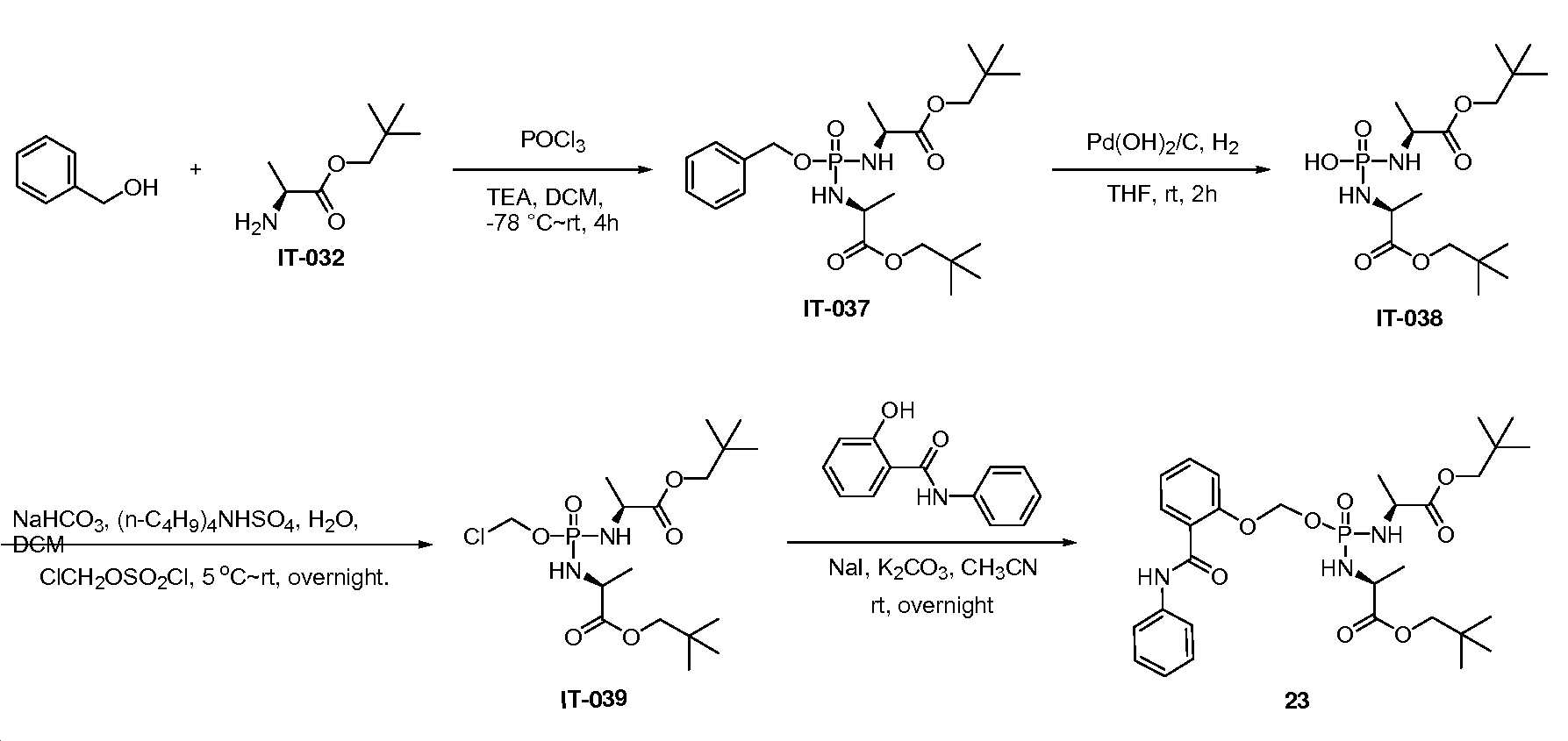
불활성 조건 및 -78℃에서 포스포릴 트리클로라이드(900 mg, 5.87 mmol)의 DCM (30 mL) 용액에 페닐메탄올(571 mg, 5.28 mmol) 및 TEA (594 mg, 5.87 mmol)의 혼합물을 적가하였다. 혼합물을 동일한 온도에서 30분 동안 교반한 후, DCM (3 mL) 중의 IT-032 (실시예 20, 2430 mg, 15.3 mmol) 및 TEA (2376 mg, 23.5 mmol)의 용액을 적가하였다. 이어서, 혼합물을 실온으로 가온하고 4시간 더 교반하였다. 반응 혼합물을 물로 켄칭시키고 DCM으로 2회 추출하였다. 합한 유기층을 Na2SO4상에서 건조시키고, 여과시킨 다음 용매를 진공하에 제거하였다. 잔여물을 실리카겔 컬럼 크로마토그래피(EtOAc/석유 에테르)로 정제하여 IT-037을 무색의 오일로 수득하였다. THF (30 mL) 중의 IT-037 (1.0 g, 2.13 mmol) 및 Pd(OH)2/C (200 mg)의 혼합물을 실온에서 수소 대기(풍선)하에 2시간 동안 교반하였다. 반응 혼합물을 여과하고 용매를 감압 하에서 증발시켜 IT-038을 무색의 오일로 수득하고 이를 정제하지 않고 다음 단계에 사용하였다. DCM (16 mL) 및 물 (16 mL) 중의 IT-038 (810 mg, 2.13 mmol), 테트라부틸암모늄 수소 설페이트(72 mg, 0.21 mmol) 및 NaHCO3 (716 mg, 8.53 mmol)의 혼합물에 클로로메틸 클로로설페이트 (528 mg, 3.20 mmol)를 5℃에서 첨가하였다. 첨가 후, 혼합물을 실온에서 밤새 교반하였다. 이어서, 혼합물을 DCM으로 희석하고, 포화 수성 Na2CO3 용액, 물, 이어서 0.5 N HCl 및 물로 연속적으로 세척하였다. 유기층을 Na2SO4상에서 건조시키고, 여과시킨 다음, 용매를 진공하에 제거하여 IT-039를 무색 오일로 수득하고, 이를 정제하지 않고 다음 단계에서 사용하였다. CH3CN (10 mL) 중의 IT-039 (400 mg, 0.93 mmol), 2-하이드록시-N-페닐벤즈아마이드(298 mg, 1.40 mmol), K2CO3 (193 mg, 1.40 mmol) 및 NaI (28 mg, 0.18 mmol)의 혼합물을 밤새 실온에서 교반하였다. 혼합물을 물로 희석시키고 EtOAc로 2회 추출하였다. 합한 유기층을 Na2SO4상에서 건조시키고, 여과시킨 다음 용매를 진공하에 제거하였다. 잔여물을 실리카겔 컬럼 크로마토그래피로 정제하여 화합물 23을 무색 오일로 수득하였다.A mixture of phenyl methanol (571 mg, 5.28 mmol) and TEA (594 mg, 5.87 mmol) was added dropwise to a solution of phosphoryl trichloride (900 mg, 5.87 mmol) in DCM (30 mL) at- The mixture was stirred at the same temperature for 30 minutes before a solution of IT-O32 (Example 20, 2430 mg, 15.3 mmol) and TEA (2376 mg, 23.5 mmol) in DCM (3 mL) was added dropwise. The mixture was then warmed to room temperature and stirred for an additional 4 hours. The reaction mixture was quenched with water and extracted twice with DCM. The combined organic layers were dried over Na 2 SO 4, filtered, and then the solvent was removed in vacuo. The residue was purified by silica gel column chromatography (EtOAc / petroleum ether) to give IT-037 as a colorless oil. A mixture of IT-037 (1.0 g, 2.13 mmol) and Pd (OH) 2 / C (200 mg) in THF (30 mL) was stirred at room temperature under a hydrogen atmosphere (balloon) for 2 hours. The reaction mixture was filtered and the solvent was evaporated under reduced pressure to give IT-038 as a colorless oil which was used in the next step without purification. Chloromethyl-in a mixture of DCM (16 mL), and water (16 mL) of the IT-038 (810 mg, 2.13 mmol), tetrabutylammonium hydrogen sulfate (72 mg, 0.21 mmol) and NaHCO 3 (716 mg, 8.53 mmol ) Chlorosulfate (528 mg, 3.20 mmol) was added at 5 < 0 > C. After the addition, the mixture was stirred at room temperature overnight. The mixture is then diluted with DCM and washed with saturated aqueous Na 2 CO 3 solution, water, then 0.5 N HCl and water, successively. The organic layer was dried over Na 2 SO 4 , filtered and the solvent removed in vacuo to give IT-039 as a colorless oil which was used in the next step without purification. CH 3 CN (10 mL) of the IT-039 (400 mg, 0.93 mmol), 2- hydroxy -N- phenyl-benzamide (298 mg, 1.40 mmol),
실시예 24 - 화합물 24Example 24 - Compound 24

불활성 조건 및 -78℃에서 건조 DCM (30 ml) 중에 POCl3 (912 mg, 6 mmol) 및 L-알라닌 이소프로필 에스테르 하이드로클로라이드(1 g, 6 mmol)의 용액에 TEA (1.2 g, 12 mmol)를 첨가하였다. 혼합물을 -78℃에서 1시간 동안 교반하였다. 살리 실아닐라이드(2.6 g, 12 mmol)를 첨가한 다음, TEA (1.2 g, 12 mmol)를 -78℃에서 적가하였다. 생성된 혼합물을 실온에서 3시간 더 교반한 후 물로 켄칭시켰다. 용매를 진공하에 제거하고 잔여물을 prep-HPLC로 정제하여 화합물 24를 백색 고체로 수득하였다.TEA (1.2 g, 12 mmol) was added to a solution of POCl 3 (912 mg, 6 mmol) and L -alanine isopropyl ester hydrochloride (1 g, 6 mmol) in dry DCM (30 ml) Was added. The mixture was stirred at -78 < 0 > C for 1 hour. Salicyl anilide (2.6 g, 12 mmol) was added followed by TEA (1.2 g, 12 mmol) dropwise at -78 < 0 > C. The resulting mixture was further stirred at room temperature for 3 hours and then quenched with water. The solvent was removed in vacuo and the residue was purified by prep-HPLC to afford 24 as a white solid.
실시예 25 - 화합물 25Example 25 - Synthesis of

불활성 조건 및 -78℃에서 포스포릴 트리클로라이드(1.0 g, 6.51 mmol)의 DCM (30 mL) 용액에 페닐메탄올(633 mg, 5.86 mmol) 및 TEA (658 mg, 6.51 mmol)의 혼합물을 적가하였다. 혼합물을 -78℃에서 30분 동안 교반하였다. 이어서, (S)-이소프로필 2-아미노프로파노에이트 하이드로클로라이드(2.73 g, 16.28 mmol) 및 TEA (3.4 g, 33.85 mmol)의 용액을 반응 혼합물에 별도로 적가하였다. 첨가 후, 혼합물을 실온으로 가온하고 4시간 동안 교반하였다. 반응 혼합물을 물로 켄칭시키고 DCM으로 2회 추출하였다. 합한 유기층을 Na2SO4상에서 건조시키고, 여과시킨 다음 용매를 진공하에 제거하였다. 잔여물을 실리카겔 칼럼 크로마토그래피(EA/PE = 1/2)로 정제하여 무색 오일로 25-2를 얻었다. THF (30 mL) 중의 25-2 (1.85 g, 4.47 mmol) 및 Pd(OH)2/C (600 mg)의 혼합물을 실온에서 수소 대기(풍선)하에 2시간 동안 교반하였다. 반응 혼합물을 여과하고 용매를 감압하에 증발시켜 무색의 오일로 25-3을 수득하고 이를 정제하지 않고 다음 단계에 사용하였다. DCM (20 mL) 및 물 (20 mL) 중의 25-3 (1.53 g, 4.7 mmol), 테트라부틸암모늄 수소 설페이트(160 mg, 0.47 mmol) 및 NaHCO3 (1.6 g, 18.8 mmol)의 혼합물에 클로로메틸 클로로설페이트(1.16 g, 7.05 mmol)를 5℃에서 첨가하였다. 첨가 후, 혼합물을 실온에서 밤새 교반하였다. 혼합물을 DCM으로 희석하고 수성 Na2CO3, 물, 0.5N HCl, 물로 세척하였다. 유기층을 Na2SO4상에서 건조시키고, 여과하고, 감압하에 농축시켜 무색의 오일로 25-4를 수득하고, 이를 정제하지 않고 다음 단계에서 사용하였다. CH3CN (10 mL) 중의 25-4 (900 mg, 2.42 mmol), 2-하이드록시-N-페닐벤즈아마이드(773 mg, 3.63 mmol), K2CO3 (501 mg, 1.5 mmol) 및 NaI (72 mg, 0.48 mmol)의 혼합물을 밤새 실온에서 교반하였다. 혼합물을 물로 희석시키고 EtOAc로 2회 추출하였다. 합한 유기층을 Na2SO4상에서 건조시키고, 여과하고 농축시켰다. 잔여물을 실리카겔 칼럼 크로마토그래피(EA/PE = 1/2)로 정제하여 무색 오일로 25를 수득하였다.A mixture of phenyl methanol (633 mg, 5.86 mmol) and TEA (658 mg, 6.51 mmol) was added dropwise to a DCM (30 mL) solution of phosphoryl trichloride (1.0 g, 6.51 mmol) at -78 ° C. The mixture was stirred at -78 < 0 > C for 30 minutes. A solution of (S) -isopropyl 2-aminopropanoate hydrochloride (2.73 g, 16.28 mmol) and TEA (3.4 g, 33.85 mmol) was then added dropwise to the reaction mixture separately. After the addition, the mixture was warmed to room temperature and stirred for 4 hours. The reaction mixture was quenched with water and extracted twice with DCM. The combined organic layers were dried over Na 2 SO 4, filtered, and then the solvent was removed in vacuo. The residue was purified by silica gel column chromatography (EA / PE = 1/2) to give 25-2 as a colorless oil. A mixture of 25-2 (1.85 g, 4.47 mmol) and Pd (OH) 2 / C (600 mg) in THF (30 mL) was stirred at room temperature under a hydrogen atmosphere (balloon) for 2 hours. The reaction mixture was filtered and the solvent was evaporated under reduced pressure to give 25-3 as a colorless oil which was used in the next step without purification. Chloromethyl To a mixture of DCM (20 mL) and water (20 mL) 25-3 (1.53 g , 4.7 mmol), tetrabutylammonium hydrogen sulfate (160 mg, 0.47 mmol) and NaHCO 3 (1.6 g, 18.8 mmol ) in Chlorosulfate (1.16 g, 7.05 mmol) was added at 5 < 0 > C. After the addition, the mixture was stirred at room temperature overnight. The mixture was diluted with DCM and washed with aqueous Na 2 CO 3 , water, 0.5 N HCl, water. The organic layer was dried over Na 2 SO 4 , filtered and concentrated under reduced pressure to give 25-4 as a colorless oil which was used in the next step without purification. CH 3 CN (10 mL) of 25-4 (900 mg, 2.42 mmol) , 2- hydroxy -N- phenyl-benzamide (773 mg, 3.63 mmol),
실시예 26 - 화합물 26Example 26 - Compound 26

불활성 조건 및 -78℃에서 포스포릴 트리클로라이드(1.0 g, 6.51 mmol)의 DCM (30 mL) 용액에 페닐메탄올(633 mg, 5.86 mmol) 및 TEA (658 mg, 6.51 mmol)의 혼합물을 적가하였다. 혼합물을 -78℃에서 30분 동안 교반하였다. 이어서, (S)-tert-부틸 2-아미노-3-메틸부타노에이트 하이드로클로라이드(3.0 g, 14.3 mmol) 및 TEA (3.02 g, 29.9 mmol)의 용액을 반응 혼합물에 개별적으로 적가하였다. 첨가 후, 혼합물을 실온으로 가온하고 4시간 동안 교반하였다. 반응 혼합물을 물로 켄칭시키고 DCM으로 2회 추출하였다. 합한 유기층을 건조시키고(Na2SO4), 여과시킨 후 용매를 진공에서 제거하였다. 잔여물을 실리카겔 칼럼 크로마토그래피(EA/PE = 1/2)로 정제하여 무색 오일로 26-2를 얻었다. THF (30 mL) 중의 26-2 (2.1 g, 4.2 mmol) 및 Pd(OH)2/C (500 mg)의 혼합물을 실온에서 수소 대기(풍선)하에 2시간 동안 교반하였다. 반응 혼합물을 여과하고 감압 하에서 증발시켜서 26-3을 수득하였다(무색 오일로서 수득하였고, 이를 정제하지 않고 다음 단계에 사용함). 클로로메틸 클로로설 페이트를 DCM (30 mL) 및 물 (30 mL) 중의 26-3 (2.46 g, 6.02 mmol), 테트라부틸암모늄 수소 설페이트(204 mg, 0.6 mmol) 및 NaHCO3 (2.02 g, 24.08 mmol)의 혼합물에 5℃에서 첨가하였다. 첨가 후, 혼합물을 실온에서 밤새 교반시켰다. 혼합물을 DCM으로 희석시키고, 수성 Na2CO3, 물, 0.5N HCl, 물로 세척하였다. 유기층을 Na2SO4상에서 건조시키고, 여과하고, 감압하에 농축시켜 무색의 오일로 26-4를 수득하고, 이를 정제하지 않고 다음 단계에서 사용하였다. CH3CN (20 mL) 중의 26-4 (2.1 g, 4.73 mmol), 2-하이드록시-N-페닐벤즈아마이드(1.51 g, 7.1 mmol), K2CO3 (980 mg, 7.1 mmol) 및 NaI (142 mg, 0.95 mmol)의 혼합물을 실온에서 밤새 교반하였다. 혼합물을 물로 희석하고 EtOAc로 2회 추출하였다. 합한 유기층을 Na2SO4상에서 건조시키고, 여과하고 농축시켰다. 잔여물을 실리카겔 칼럼 크로마토그래피(EA/PE = 1/2)로 정제하여 26을 무색 오일로 수득하였다.A mixture of phenyl methanol (633 mg, 5.86 mmol) and TEA (658 mg, 6.51 mmol) was added dropwise to a DCM (30 mL) solution of phosphoryl trichloride (1.0 g, 6.51 mmol) at -78 ° C. The mixture was stirred at -78 < 0 > C for 30 minutes. A solution of (S) -tert-butyl 2-amino-3-methylbutanoate hydrochloride (3.0 g, 14.3 mmol) and TEA (3.02 g, 29.9 mmol) was then added dropwise to the reaction mixture. After the addition, the mixture was warmed to room temperature and stirred for 4 hours. The reaction mixture was quenched with water and extracted twice with DCM. The combined organic layers were dried (Na 2 SO 4 ), filtered and the solvent removed in vacuo. The residue was purified by silica gel column chromatography (EA / PE = 1/2) to give 26-2 as a colorless oil. A mixture of 26-2 (2.1 g, 4.2 mmol) and Pd (OH) 2 / C (500 mg) in THF (30 mL) was stirred at room temperature under a hydrogen atmosphere (balloon) for 2 hours. The reaction mixture was filtered and evaporated under reduced pressure to give 26-3 (obtained as a colorless oil which was used in the next step without purification). Chloro, methyl sulfate chlorosulfonic DCM (30 mL) and water (30 mL) 26 -3 (2.46 g, 6.02 mmol), tetrabutylammonium hydrogen sulfate (204 mg, 0.6 mmol) and NaHCO 3 (2.02 g, 24.08 mmol of ) At 5 < 0 > C. After the addition, the mixture was stirred at room temperature overnight. The mixture was diluted with DCM and washed with aqueous Na 2 CO 3 , water, 0.5 N HCl, water. The organic layer was dried over Na 2 SO 4 , filtered and concentrated under reduced pressure to give 26-4 as a colorless oil which was used in the next step without purification. CH 3 CN (20 mL) of 26 -4 (2.1 g, 4.73 mmol ), 2- hydroxy -N- phenyl-benzamide (1.51 g, 7.1 mmol),
실시예 27 - 화합물 27Example 27 - Synthesis of Compound 27

톨루엔(50mL) 중의 27-0 (3.3 g, 20 mmol), 2,2-디메틸프로판-1-올(3.5 g, 40 mmol) 및 p-톨루엔술폰산(PTSA) 일수화물(4.1 g, 24 mmol)의 혼합물을 딘-스탁 트랩(Dean-Stark trap)으로 가열하고 밤새 환류 온도에서 유지하였다. 반응 혼합물을 냉각시킨 다음, 용매를 진공하에 제거하였다. 잔여물을 DCM에 용해시키고 포화 수성 Na2CO3에 의해 pH 9-10으로 염기화시켰다. 생성된 용액을 DCM으로 3회 추출하였다. 합한 유기층을 염수로 세척하고, Na2SO4상에서 건조시킨 다음, 용매를 진공하에 제거하였다. 잔여물을 실리카겔 컬럼 크로마토그래피(EtOAc/석유 에테르 = 1/10 내지 1/1)로 정제하여 27-1을 황색 오일로 얻었다. Ar하에서 -78℃에서 포스포릴 트리클로라이드(600mg, 3.91mmol)의 DCM (15mL) 용액에 페닐메탄올(380mg, 3.52mmol) 및 TEA (395mg, 3.91mmol)의 혼합물을 적가하고, 30분 동안 교반하였다. 별도로, 27-1 (2.2 g, 9.38 mmol)의 DCM (5 mL) 용액 및 이어서 DCM (5 mL) 중의 TEA (1.42 g, 14.01 mmol)를 -78℃에서 반응 혼합물에 적가하였다. 첨가 후, 혼합물을 실온으로 가온하고 4시간 동안 교반하였다. 반응 혼합물을 물로 켄칭시키고 DCM으로 2회 추출하였다. 합한 유기층을 건조시키고(Na2SO4), 여과시킨 후 용매를 진공에서 제거하였다. 잔여물을 실리카겔 칼럼 크로마토그래피(EtOAc/석유 에테르 = 1/10~1/1)로 정제하여, 27-2를 무색 오일로 얻었다. THF (20 mL) 중의 27-2 (1.3 g, 2.09 mmol) 및 Pd(OH)2/C (300 mg)의 혼합물을 실온에서 수소 대기(풍선)하에 2시간 동안 교반하였다. 반응 혼합물을 여과하고 여과액을 진공에서 제거하여 27-3을 무색의 오일로 수득하였다. DCM (10 mL) 및 물(10 mL) 중 27-3 (938 mg, 1.76 mmol), 테트라부틸암모늄 수소 설페이트(60 mg, 0.18 mmol) 및 NaHCO3 (591 mg, 7.04 mmol)의 혼합물에 클로로메틸 클로로설페이트(436 mg, 2.64 mmol)를 5℃에서 첨가하였다. 첨가 후, 혼합물을 실온에서 밤새 교반하였다. 혼합물을 DCM으로 희석하고 수성 Na2CO3, 물, 0.5N HCl, 물로 세척하였다. 유기층을 Na2SO4상에서 건조시키고, 여과한 다음, 용매를 진공하에 제거하여 27-4를 무색 오일로 수득하고, 이를 정제하지 않고 다음 단계에서 사용하였다. CH3CN (8 mL) 중의 27-4 (432 mg, 0.74 mmol), 2-하이드록시-N-페닐벤즈아마이드(238 mg, 1.11 mmol), K2CO3 (153 mg, 1.11 mmol) 및 NaI (22 mg, 0.15 mmol)의 혼합물을 밤새 실온에서 교반하였다. 혼합물을 물로 희석시키고 EtOAc로 2회 추출하였다. 합한 유기층을 Na2SO4상에서 건조시키고, 여과시킨 다음 용매를 진공하에 제거하였다. 잔여물을 실리카겔 칼럼 크로마토그래피(EA/PE = 1/10 내지 1/1)로 정제하여 27을 백색 고체로 수득하였다. 27-0 (3.3 g, 20 mmol) , 2,2- dimethyl-propan-1-ol (3.5 g, 40 mmol) and p- toluenesulfonic acid (PTSA) monohydrate (4.1 g, 24 mmol) in toluene (50mL) Was heated with a Dean-Stark trap and kept at reflux overnight. The reaction mixture was allowed to cool and then the solvent was removed in vacuo. The residue was dissolved in DCM and was basified to pH 9-10 by addition of a saturated aqueous Na 2 CO 3. The resulting solution was extracted three times with DCM. The combined organic layers were washed with brine, dried over Na 2 SO 4 and then the solvent was removed in vacuo. The residue was purified by silica gel column chromatography (EtOAc / petroleum ether = 1/10 to 1/1) to give 27-1 as a yellow oil. (380 mg, 3.52 mmol) and TEA (395 mg, 3.91 mmol) in a DCM (15 mL) solution of phosphoryl trichloride (600 mg, 3.91 mmol) at -78 째 C under Ar was stirred for 30 minutes . Separately, a solution of 27-1 (2.2 g, 9.38 mmol) in DCM (5 mL) and then TEA (1.42 g, 14.01 mmol) in DCM (5 mL) was added dropwise to the reaction mixture at -78 < After the addition, the mixture was warmed to room temperature and stirred for 4 hours. The reaction mixture was quenched with water and extracted twice with DCM. The combined organic layers were dried (Na 2 SO 4 ), filtered and the solvent removed in vacuo. The residue was purified by silica gel column chromatography (EtOAc / petroleum ether = 1/10 to 1/1) to give 27-2 as a colorless oil. A mixture of 27-2 (1.3 g, 2.09 mmol) and Pd (OH) 2 / C (300 mg) in THF (20 mL) was stirred at room temperature under a hydrogen atmosphere (balloon) for 2 hours. The reaction mixture was filtered and the filtrate was removed in vacuo to give 27-3 as a colorless oil. Chloromethyl To a mixture of 27-3 (938 mg, 1.76 mmol) , tetrabutylammonium hydrogen sulfate (60 mg, 0.18 mmol) and NaHCO 3 (591 mg, 7.04 mmol ) in DCM (10 mL) and water (10 mL) Chlorosulfate (436 mg, 2.64 mmol) was added at 5 < 0 > C. After the addition, the mixture was stirred at room temperature overnight. The mixture was diluted with DCM and washed with aqueous Na 2 CO 3 , water, 0.5 N HCl, water. The organic layer was dried over Na 2 SO 4 , filtered and the solvent removed in vacuo to give 27-4 as a colorless oil which was used in the next step without purification. CH 3 CN (8 mL) of 27-4 (432 mg, 0.74 mmol) , 2- hydroxy -N- phenyl-benzamide (238 mg, 1.11 mmol),
실시예 28 - 프로드러그 탈공역의 분석Example 28 - Analysis of prodrug deprotection zone
본 발명의 화합물의 선택물을 유리(free) 미토콘드리아 탈공역에 대해 시험하고 공지된 강력한 언커플러 DNP 및 MNP와 비교하였다. 그 결과를 도 1, 도 2, 도 4, 도 5, 도 6, 도 7, 도 8, 도 9, 도 10, 도 11 및 도 12에 나타낸다.Selection of compounds of the present invention was tested against free mitochondrial deprotection and compared to the known strong uncoupler DNP and MNP. The results are shown in Figs. 1, 2, 4, 5, 6, 7, 8, 9, 10, 11 and 12.
데이터로부터 알 수 있는 바와 같이, DNP, MNP 및 니클로사마이드가 강력한 탈공역을 나타내는 반면, 화합물 1, 2, 4, 6, 9, 11, 14, 18 및 23은 이 분석에서 감소되거나, 거의 또는 전혀 탈공역을 나타내지 않는다. 이것은 상당한 탈공역 효과를 위해 (간 대사와 같은) 신진 대사가 필요하여 간 타겟팅을 개선할 수 있다는 것을 보여준다.As can be seen from the data, compounds 1, 2, 4, 6, 9, 11, 14, 18 and 23 are reduced, nearly or substantially free of DNP, MNP and nickelosamides , It does not show any de-airspace. This shows that for significant de-conjugation effects, metabolic (such as liver metabolism) is needed and liver targeting can be improved.
실시예 29 - 살리실아닐라이드의 탈공역 활성의 분석Example 29 - Analysis of de-conjugation activity of salicyl anilide
살리실아닐라이드와 DNP는 온전한 HepG2 간세포에서 미토콘드리아 탈공역 분석으로 비교하였다. 결과는 도 3에 나타내었다. 이 데이터로부터 볼 수 있듯이, 살리실아닐라이드는 DNP에 비해 더 강력하고, 최대 탈공역 효과는 더 적다.Salicylanilide and DNP were compared by mitochondrial depolarization analysis in intact HepG2 hepatocytes. The results are shown in FIG. As can be seen from this data, salicylanilide is more potent than DNP and has the maximum de-conjugation effect.
실시예 30 - 상대적 간 노출 대 간외 장기의 분석Example 30 - Analysis of relative liver exposures vs. extrahepatic organs
간 탈공역 대 간 외 탈공역의 증가된 비율을 갖는 것이 유리하기 때문에, 3 mg/kg 살리실아닐라이드 또는 10 mg/kg 화합물 14 또는 10 mg/kg 화합물 23(살리실아닐라이드를 방출)을 CD-1 마우스에 경구 투여하고, 투여 전과 후에 혈액, 근육 및 간 샘플에서 살리실아닐라이드의 수준을 측정하였다(일반적인 방법 참조). 간 대 간외(extra-hepatic) 살리실아닐라이드의 비율을 평가하여 높은 비율이 바람직한 것으로 나타났는데, 이는 오프-타겟 탈공역(off-target uncoupling) 및 독성 감소로 이어질 것으로 예상되기 때문이다.Since it is advantageous to have an increased ratio of liver debridement to hepatic de-airspace, 3 mg / kg salicyl anilide or 10 mg /
(ng/g)Salicyl anilide in the liver one hour later
(ng / g)
(ng/g)Salicyl anilide in muscle after 1 hour
(ng / g)
(ng/g)Salicyl anilide in blood after 1 hour
(ng / g)
위의 데이터에서 알 수 있듯이, 살리실아닐라이드, 화합물 14와 23 모두 간 외 노출에 대한 간의 바람직한 비율을 가지고 있다.As can be seen from the above data, salicyl anilide, compounds 14 and 23 all have a desirable ratio of liver to liver exposure.
실시예 31- 간외 탈공역 대 간 탈공역의 시험관 내 비교Example 31-In-vitro comparison of extracellular < RTI ID = 0.0 >
간외 조직과 비교하여 간 조직에서 탈공역 수준이 증가하는 것이 유리하다. 이것을 시험하기 위해 화합물을 HepG2 세포(간) 대 혈소판(간외)에서 시험관내 탈공역 분석법(일반적인 방법으로 온전한 간세포 및 혈소판에서 미토콘드리아 탈공역을 평가하기 위한 분석법 참조)에서 테스트하였다.Compared to extrahepatic tissues, it is advantageous to increase the level of de-conjugation in liver tissues. To test this, the compounds were tested in HepG2 cells (liver) versus platelets (extrahepatic) in vitro depolarization assay (see assay for evaluating mitochondrial deproteinization in intact hepatocytes and platelets in a general manner).
데이터는 도 7, 8, 9, 10, 11 및 12에 나타내었다. 제시된 데이터로부터 알 수 있는 바와 같이, HepG2 세포의 저농도에서 높은 최대 탈공역에 의해 나타낸 바와 같이, 화합물 6, 9, 11, 14, 18 및 23은 혈소판과 비교하여 HepG2 세포에서 선택적인 탈공역을 나타낸다. The data is shown in Figures 7, 8, 9, 10, 11 and 12. As can be seen from the data presented, compounds 6, 9, 11, 14, 18 and 23 exhibit selective de-conjugation in HepG2 cells as compared to platelets , as shown by the highest maximum de-conjugation at low concentrations of HepG2 cells .
HepG2 세포에서 시험했을 때, 높은 투여량에서 부작용과 사망을 유발하는 것으로 알려진 DNP보다 낮은 수준으로 프로토노포어의 탈공역의 최대 수준을 제한하는 것이 유리할 수 있다.When tested in HepG2 cells, it may be advantageous to limit the maximum level of depolarization of the protonophore to levels lower than DNP, which is known to cause side effects and death at high doses.
실시예 32 - 살리실아닐라이드 대 다른 탈공역제의 투과성 비교Example 32 - Comparison of permeability of salicyl anilide versus other de-conjugating agent
증가된 수준의 경구 생체이용률 및 세포 투과성을 갖는 것이 유리하다. 이 가능성은 caco-2 투과성 분석으로 측정할 수 있다(일반적인 방법 참조). 데이터는 아래 표에 나타나있다.It is advantageous to have increased levels of oral bioavailability and cellular permeability. This possibility can be measured by caco-2 permeability analysis (see general method). The data is shown in the table below.
(Papp, 1x10⁻⁶ cm s-1)Caco-2 AB
(Papp, 1 * 10 < -6 > cm <
(Papp, 1x10⁻⁶ cm s-1)Caco-2 BA
(Papp, 1 * 10 < -6 > cm <
데이터에서 알 수 있듯이 살리실아닐라이드는 공지의 구강적으로 생체이용가능한 탈공역제인 DNP에 비해 증가된 투과율과 감소된 유출률을 나타낸다.As can be seen from the data, salicyl anilide exhibits increased permeability and reduced efflux compared to DNP, a known orally bioavailable deacquity agent.
본 명세서 및 청구범위가 일부를 구성하는 본 출원은 후속 출원과 관련하여 우선권의 기초로서 사용될 수 있다. 그러한 후속 출원의 청구항은 본 명세서에 기재된 임의의 특징 또는 특징의 조합에 관한 것일 수 있다. 그들은 물, 조성물, 방법 또는 용도 청구항의 형태를 취할 수 있으며 다음과 같은 청구항을 예로 들어 제한 없이 포함할 수 있다:This application, which is a part of this specification and claims, may be used as a basis for priority in connection with a subsequent application. The claims of such subsequent applications may relate to any feature or combination of features described herein. They may take the form of water, compositions, methods or uses claims and may include, without limitation, the following claims, for example:
특허 및 특허출원을 포함하여 이 출원에서 언급된 모든 참고 문헌은 가능한 한 최대한 참고 자료로 여기에서 참고한다.All references cited in this application, including patents and patent applications, are hereby incorporated by reference as < Desc /
Claims (16)
화학식 (I)

상기 식에서 X 및 X'는 독립적으로 NH 또는 O일 수 있고;
Y는 존재하지 않거나, -CR3R4O-, -C(=O)O-, 또는

Y'는 존재하지 않거나, -CR3R4O-, -C(=O)O-, 또는

Z는 화학식 (II)이며,
Z'는 CHR2'(C=O)OR1', Me, Et, iPr, Ph 또는 화학식 (II)이고,
R1 및 R1'는 독립적으로 Me, Et, iPr, nPr, tBu, iBu, sBu 또는 CH2CMe3이며,
R2 및 R2'는 독립적으로 H, Me, Et, iPr, Ph, Bn이고,
R3은 H, Me, Et이며,
R4는 H, Me, Et이고,
화학식 (II)

상기 식에서
R5는 H, NO2 또는
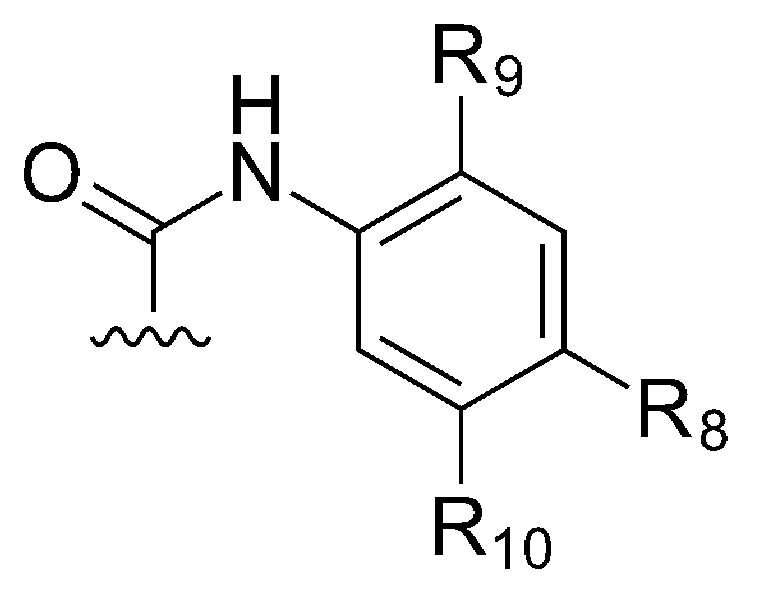
R6은 H, NO2, Cl, Br 또는 I이며,
R7은 H, Me, Et, iPr, tBu, sBu, iBu, Cl, Br 또는 I이고,
R8은 H, NO2, Cl, Br, C(CN)H(C6H4)-p-Cl이며,
R9는 H, Cl, OH 또는 CH3이고,
R10은 H 또는 Cl이며,
R5 및 R6은 동시에 H일 수 없고;
R6이 Cl일 때, R5는 H 또는 NO2일 수 없으며;
Z'가 CHR2'(C=O)OR1', Me, Et, iPr일 때, Y'는 존재하지 않아야 하고;
Z'가 CHR2'(C=O)OR1'일 때, X'는 NH이어야 하며;
Z'가 Me, Et 또는 iPr일 때, X'는 O이어야 하고;
Z가 화학식 II이고 R6이 NO2일 때, Y는 존재하지 않을 수 없으며;
Z'가 화학식 II이고 R6이 NO2일 때, Y'는 존재하지 않을 수 없고;
Z가 화학식 II이고 R6이 NO2이고 Z'가 CHR2'(C=O)OR1'일 때, R2 및 R2'는 H 또는 Me일 수 없다.
A compound of formula (I) or a pharmaceutically acceptable salt thereof.
(I)
Wherein X and X 'can independently be NH or O;
Y is absent, -CR 3 R 4 O-, -C (= O) O-, or
Y 'is absent, -CR 3 R 4 O-, -C (= O) O-, or
Z is a formula (II)
Z 'is CHR 2 ' (C = O) OR 1 ', Me, Et, iPr, Ph or Formula (II)
R 1 and R 1 'are independently Me, Et, iPr, nPr, tBu, iBu, sBu or CH 2 CMe 3 ,
R 2 and R 2 'are independently H, Me, Et, iPr, Ph, Bn,
R 3 is H, Me, Et,
R < 4 > is H, Me, Et,
(II)
In the above formula
R 5 is H, NO 2 or
R 6 is H, NO 2 , Cl, Br or I,
R 7 is H, Me, Et, iPr, tBu, sBu, iBu, Cl, Br or I,
R 8 is H, NO 2 , Cl, Br, C (CN) H (C 6 H 4 )
R 9 is H, Cl, OH or CH 3 ,
R < 10 > is H or Cl,
R 5 and R 6 can not be simultaneously H;
When R 6 is Cl, R 5 can not be H or NO 2 ;
When Z 'is CHR 2 ' (C = O) OR 1 ', Me, Et, iPr, then Y' must not be present;
When Z 'is CHR 2 ' (C = O) OR 1 ', X' must be NH;
When Z 'is Me, Et or iPr, X' must be O;
When Z is a group of formula II and R < 6 > is NO 2 , Y must be absent;
When Z 'is Formula II and R 6 is NO 2 , Y' can not be present;
R 2 and R 2 ' can not be H or Me when Z is Formula II, R 6 is NO 2 and Z' is CHR 2 '(C═O) OR 1 '.

2. The method of claim 1, wherein Z and / or Z 'is the general formula (II), R 5 is

According to claim 1 or 2, wherein Z and / or Z 'has the formula (II), R 5 is

3. A method according to claim 1 or 2, wherein Z and / or Z 'has the formula (II), R 5 is
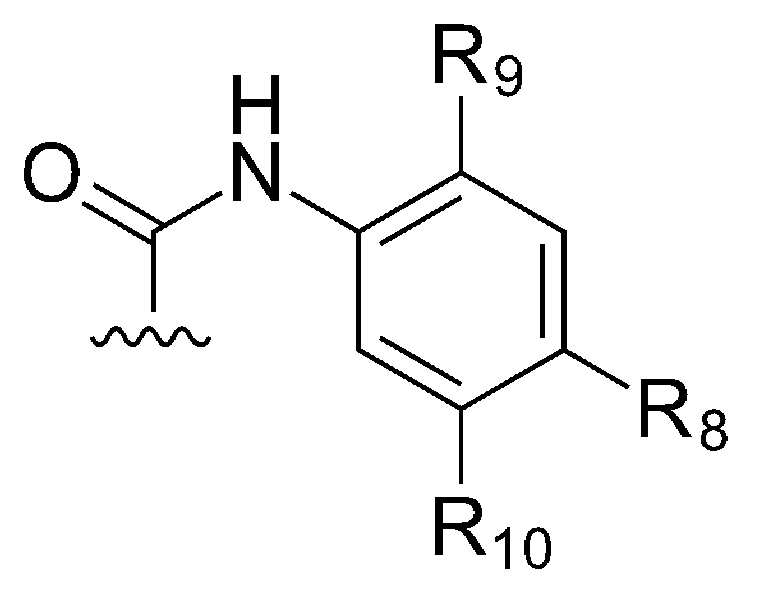
3. A method according to claim 1 or 2, wherein Z 'is CHR 2' (C = O) OR 1 ', Z is the formula (II), R 5 is
R1 및 R1'는 iPr이며,
R2 및 R2'는 Me 또는 Bn이고,
Z는 화학식 (II)이며,
R5는

R6, R7, R8, R9 및 R10은 모두 H인 것을 특징으로 하는 화학식 I의 화합물 또는 이의 약학적으로 허용가능한 염.
6. A compound according to any one of claims 1, 2 and 5, wherein Z 'is CHR 2 ' (C = O) OR 1 '
R 1 and R 1 'are iPr,
R 2 and R 2 'are Me or Bn,
Z is a formula (II)
R 5 is
R 6 , R 7 , R 8 , R 9 and R 10 are both H.
R1 및 R1'은 iPr이며,
R2 및 R2'는 Me 또는 Bn이고,
Z는 화학식 (II)이며,
R5는

R6은 Cl, R7은 H 또는 tBu, R8는 Cl 및 R9는 NO2, 및 R10은 H인 것을 특징으로 하는 화학식 I의 화합물 또는 이의 약학적으로 허용가능한 염.
6. A compound according to any one of claims 1, 2 and 5, wherein Z 'is CHR 2 ' (C = O) OR 1 '
R 1 and R 1 'are iPr,
R 2 and R 2 'are Me or Bn,
Z is a formula (II)
R 5 is
R 6 is Cl, R 7 is H or tBu, R 8 is Cl and R 9 is NO 2 , and R 10 is H.
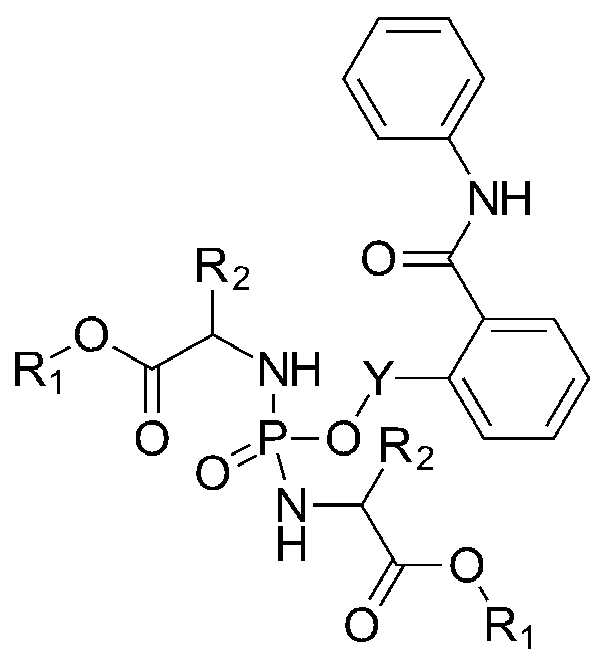

4. Compounds of formula I according to any one of claims 1 to 3, or a pharmaceutically acceptable salt thereof, wherein R < 1 >


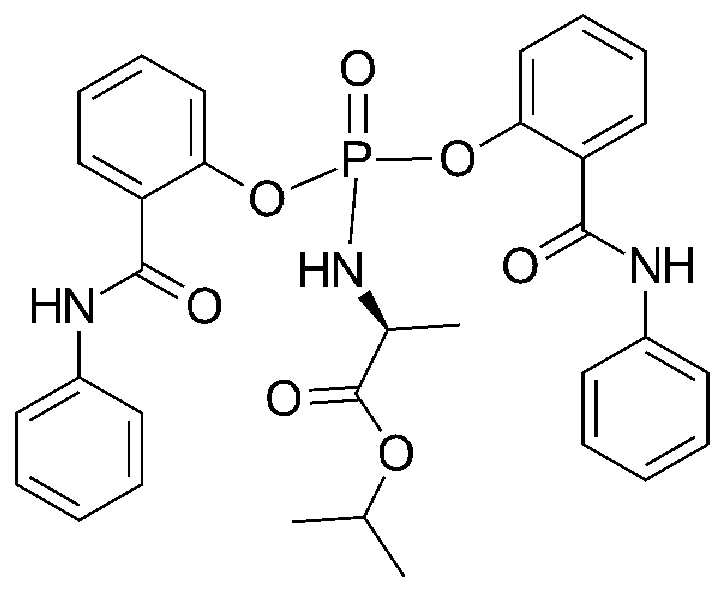


4. A compound of formula I as claimed in claim 1 or 2, wherein said compound is selected from the following:


2. A compound of formula I according to claim 1, or a pharmaceutically acceptable salt thereof, wherein R < 1 >
11. A compound of formula I according to any one of claims 1 to 10, or a pharmaceutically acceptable salt thereof, which is used for medicinal purposes.
11. A compound of formula I according to any one of claims 1 to 10, or a pharmaceutically acceptable salt thereof, which is used for the study of medicine.
11. The use according to any one of claims 1 to 10, wherein liver-targeted mitochondrial uncoupling, such as prevention or treatment of non-alcoholic fatty liver disease (NAFLD) or non-alcoholic steatohepatitis (NASH) A compound of formula (I) or a pharmaceutically acceptable salt thereof, which is used for the prophylaxis or treatment of diseases.
Salicylanilide for use in the prevention or treatment of diseases or diseases in which liver-targeted mitochondrial de-airway regions such as the prevention or treatment of non-alcoholic fatty liver disease (NAFLD) or non-alcoholic steatohepatitis (NASH) are useful.
10. A pharmaceutical composition comprising a compound as defined in any one of claims 1 to 10 together with one pharmaceutically acceptable excipient.
Applications Claiming Priority (3)
| Application Number | Priority Date | Filing Date | Title |
|---|---|---|---|
| DKPA201670919 | 2016-11-18 | ||
| DKPA201670919 | 2016-11-18 | ||
| PCT/EP2017/079548 WO2018091633A1 (en) | 2016-11-18 | 2017-11-17 | Liver prodrugs of mitochondrial proton ionophores |
Publications (1)
| Publication Number | Publication Date |
|---|---|
| KR20190085976A true KR20190085976A (en) | 2019-07-19 |
Family
ID=57460295
Family Applications (1)
| Application Number | Title | Priority Date | Filing Date |
|---|---|---|---|
| KR1020197017268A Withdrawn KR20190085976A (en) | 2016-11-18 | 2017-11-17 | Liver prodrugs of mitochondrial proton ionophores |
Country Status (11)
| Country | Link |
|---|---|
| US (1) | US20190276481A1 (en) |
| EP (1) | EP3541824A1 (en) |
| JP (1) | JP2020500853A (en) |
| KR (1) | KR20190085976A (en) |
| CN (1) | CN110198947A (en) |
| AU (1) | AU2017361855A1 (en) |
| BR (1) | BR112019009988A2 (en) |
| CA (1) | CA3043437A1 (en) |
| MA (1) | MA46839A (en) |
| MX (1) | MX2019005675A (en) |
| WO (1) | WO2018091633A1 (en) |
Families Citing this family (4)
| Publication number | Priority date | Publication date | Assignee | Title |
|---|---|---|---|---|
| CN108610292B (en) * | 2018-06-12 | 2020-11-10 | 清华大学 | A class of 3,5-disubstituted hydantoin compounds and their preparation method and application |
| MX2021003724A (en) * | 2018-09-29 | 2021-05-14 | Jiangsu Yahong Meditech Co Ltd | Nitroxoline prodrug and use thereof. |
| CN111646936A (en) * | 2020-06-22 | 2020-09-11 | 江苏亚虹医药科技有限公司 | Process for producing aromatic ether compound |
| CN117069655B (en) * | 2023-08-21 | 2025-11-18 | 山西大学 | Fluorescent probes for mitochondrial detection of hydrogen sulfide and viscosity/polarity and their applications |
Family Cites Families (9)
| Publication number | Priority date | Publication date | Assignee | Title |
|---|---|---|---|---|
| NL59151C (en) | 1945-08-22 | |||
| TWI576352B (en) * | 2009-05-20 | 2017-04-01 | 基利法瑪席特有限責任公司 | Nucleoside phosphoramidates |
| MX2012011171A (en) * | 2010-03-31 | 2013-02-01 | Gilead Pharmasset Llc | Nucleoside phosphoramidates. |
| WO2012012465A1 (en) * | 2010-07-19 | 2012-01-26 | Clarke, Michael, O'neil Hanrahan | Methods for the preparation of diasteromerically pure phosphoramidate prodrugs |
| US20130143835A1 (en) * | 2011-12-05 | 2013-06-06 | Medivir Ab | HCV Polymerase Inhibitors |
| WO2015031598A2 (en) | 2013-08-30 | 2015-03-05 | Yale University | Therapeutic dnp derivatives and methods using same |
| US9828409B2 (en) * | 2014-03-19 | 2017-11-28 | Minghong Zhong | Bridged-cyclo-ProTides as prodrugs of therapeutic nucleosides and nucleotides |
| DK3186244T3 (en) * | 2014-08-25 | 2020-07-13 | Medivir Ab | DIOXOLANALOGS OF URIDINE FOR THE CANCER OF CANCER |
| TWI698444B (en) * | 2014-10-29 | 2020-07-11 | 美商基利科學股份有限公司 | Methods for the preparation of ribosides |
-
2017
- 2017-11-17 KR KR1020197017268A patent/KR20190085976A/en not_active Withdrawn
- 2017-11-17 EP EP17808820.9A patent/EP3541824A1/en not_active Withdrawn
- 2017-11-17 CN CN201780083873.5A patent/CN110198947A/en active Pending
- 2017-11-17 US US16/348,585 patent/US20190276481A1/en not_active Abandoned
- 2017-11-17 MX MX2019005675A patent/MX2019005675A/en unknown
- 2017-11-17 CA CA3043437A patent/CA3043437A1/en not_active Abandoned
- 2017-11-17 BR BR112019009988A patent/BR112019009988A2/en not_active Application Discontinuation
- 2017-11-17 WO PCT/EP2017/079548 patent/WO2018091633A1/en not_active Ceased
- 2017-11-17 JP JP2019526513A patent/JP2020500853A/en active Pending
- 2017-11-17 AU AU2017361855A patent/AU2017361855A1/en not_active Abandoned
- 2017-11-17 MA MA046839A patent/MA46839A/en unknown
Also Published As
| Publication number | Publication date |
|---|---|
| CN110198947A (en) | 2019-09-03 |
| MX2019005675A (en) | 2019-08-14 |
| EP3541824A1 (en) | 2019-09-25 |
| US20190276481A1 (en) | 2019-09-12 |
| MA46839A (en) | 2021-03-24 |
| AU2017361855A1 (en) | 2019-05-30 |
| BR112019009988A2 (en) | 2019-08-27 |
| CA3043437A1 (en) | 2018-05-24 |
| JP2020500853A (en) | 2020-01-16 |
| WO2018091633A1 (en) | 2018-05-24 |
Similar Documents
| Publication | Publication Date | Title |
|---|---|---|
| US12268723B2 (en) | Peptidomimetics for the treatment of coronavirus and picorna virus infections | |
| EP2521711B1 (en) | Quaternary ammonium salt prodrugs | |
| KR102322543B1 (en) | Novel cell-permeable succinate compounds | |
| WO2018091634A1 (en) | Use of sanglifehrin macrocyclic analogues as anticancer compounds | |
| US20110166194A1 (en) | Asenapine Prodrugs | |
| KR20190085976A (en) | Liver prodrugs of mitochondrial proton ionophores | |
| JP2016034960A (en) | Methods, compounds, and compositions for delivering 1,3-propanedisulfonic acid | |
| PT2069303E (en) | Antiviral protease inhibitors | |
| US10307389B2 (en) | Succinate prodrugs for use in the treatment of lactic acidosis or drug-induced side-effects due to Complex I-related impairment of mitochondrial oxidative phosphorylation | |
| WO2017172930A1 (en) | Pbd conjugates for treating diseases | |
| KR20060127906A (en) | 4'-substituted carver and avacavir derivatives and related compounds having HIV and HCV antiviral activity | |
| WO2017060420A1 (en) | Protected fumaric acid-based metabolites for the treatment of autoimmune diseases | |
| JP2025505975A (en) | Nicotinate and Nicotinamide Riboside-Based Compounds and Their Derivatives | |
| US20240245717A1 (en) | Antiviral compounds, compositions, and uses thereof | |
| AU2023319145A1 (en) | Inhibitors and uses therefor | |
| JPH04505920A (en) | therapeutic nucleosides | |
| AU2024308469A1 (en) | Compounds and uses therefor | |
| CN115298159A (en) | Treatment of disorders associated with oxidative stress and compounds therefor | |
| WO2020028552A1 (en) | Methods of activating microglial cells | |
| HK1176348A (en) | Quaternary ammonium salt prodrugs | |
| HK1176348B (en) | Quaternary ammonium salt prodrugs |
Legal Events
| Date | Code | Title | Description |
|---|---|---|---|
| PA0105 | International application |
Patent event date: 20190617 Patent event code: PA01051R01D Comment text: International Patent Application |
|
| PG1501 | Laying open of application | ||
| PC1203 | Withdrawal of no request for examination |