KR20160145051A - System and method for coding in block prediction mode for display stream compression (dsc) - Google Patents
System and method for coding in block prediction mode for display stream compression (dsc) Download PDFInfo
- Publication number
- KR20160145051A KR20160145051A KR1020167030359A KR20167030359A KR20160145051A KR 20160145051 A KR20160145051 A KR 20160145051A KR 1020167030359 A KR1020167030359 A KR 1020167030359A KR 20167030359 A KR20167030359 A KR 20167030359A KR 20160145051 A KR20160145051 A KR 20160145051A
- Authority
- KR
- South Korea
- Prior art keywords
- block
- current
- current block
- candidate
- residual
- Prior art date
- Legal status (The legal status is an assumption and is not a legal conclusion. Google has not performed a legal analysis and makes no representation as to the accuracy of the status listed.)
- Withdrawn
Links
- 238000000034 method Methods 0.000 title claims abstract description 105
- 230000006835 compression Effects 0.000 title abstract description 24
- 238000007906 compression Methods 0.000 title abstract description 24
- 239000013598 vector Substances 0.000 claims abstract description 65
- 230000011664 signaling Effects 0.000 claims abstract description 18
- 238000005192 partition Methods 0.000 claims description 28
- 238000004891 communication Methods 0.000 claims description 16
- 238000000638 solvent extraction Methods 0.000 claims description 8
- 230000001052 transient effect Effects 0.000 claims 1
- 239000000872 buffer Substances 0.000 description 30
- 238000010586 diagram Methods 0.000 description 12
- 238000013139 quantization Methods 0.000 description 12
- 230000008901 benefit Effects 0.000 description 5
- 230000005540 biological transmission Effects 0.000 description 5
- 230000000007 visual effect Effects 0.000 description 5
- 238000013500 data storage Methods 0.000 description 4
- 238000013461 design Methods 0.000 description 4
- 230000006870 function Effects 0.000 description 4
- 238000012545 processing Methods 0.000 description 4
- 230000007704 transition Effects 0.000 description 4
- 238000013459 approach Methods 0.000 description 3
- 230000007246 mechanism Effects 0.000 description 3
- 230000008569 process Effects 0.000 description 3
- 238000003491 array Methods 0.000 description 2
- 238000006243 chemical reaction Methods 0.000 description 2
- 238000005516 engineering process Methods 0.000 description 2
- 230000003287 optical effect Effects 0.000 description 2
- 239000002245 particle Substances 0.000 description 2
- 238000007792 addition Methods 0.000 description 1
- 230000001413 cellular effect Effects 0.000 description 1
- 238000004590 computer program Methods 0.000 description 1
- 239000000470 constituent Substances 0.000 description 1
- 230000001934 delay Effects 0.000 description 1
- 238000011161 development Methods 0.000 description 1
- 230000000694 effects Effects 0.000 description 1
- 239000011521 glass Substances 0.000 description 1
- 239000004973 liquid crystal related substance Substances 0.000 description 1
- 230000008520 organization Effects 0.000 description 1
- 239000005022 packaging material Substances 0.000 description 1
- 230000000644 propagated effect Effects 0.000 description 1
- 238000001228 spectrum Methods 0.000 description 1
- 238000006467 substitution reaction Methods 0.000 description 1
- 230000001360 synchronised effect Effects 0.000 description 1
- 230000002123 temporal effect Effects 0.000 description 1
Images




Classifications
-
- H—ELECTRICITY
- H04—ELECTRIC COMMUNICATION TECHNIQUE
- H04N—PICTORIAL COMMUNICATION, e.g. TELEVISION
- H04N19/00—Methods or arrangements for coding, decoding, compressing or decompressing digital video signals
- H04N19/10—Methods or arrangements for coding, decoding, compressing or decompressing digital video signals using adaptive coding
- H04N19/102—Methods or arrangements for coding, decoding, compressing or decompressing digital video signals using adaptive coding characterised by the element, parameter or selection affected or controlled by the adaptive coding
- H04N19/124—Quantisation
-
- H—ELECTRICITY
- H04—ELECTRIC COMMUNICATION TECHNIQUE
- H04N—PICTORIAL COMMUNICATION, e.g. TELEVISION
- H04N19/00—Methods or arrangements for coding, decoding, compressing or decompressing digital video signals
- H04N19/50—Methods or arrangements for coding, decoding, compressing or decompressing digital video signals using predictive coding
- H04N19/503—Methods or arrangements for coding, decoding, compressing or decompressing digital video signals using predictive coding involving temporal prediction
- H04N19/51—Motion estimation or motion compensation
- H04N19/55—Motion estimation with spatial constraints, e.g. at image or region borders
-
- H—ELECTRICITY
- H04—ELECTRIC COMMUNICATION TECHNIQUE
- H04N—PICTORIAL COMMUNICATION, e.g. TELEVISION
- H04N19/00—Methods or arrangements for coding, decoding, compressing or decompressing digital video signals
- H04N19/10—Methods or arrangements for coding, decoding, compressing or decompressing digital video signals using adaptive coding
- H04N19/169—Methods or arrangements for coding, decoding, compressing or decompressing digital video signals using adaptive coding characterised by the coding unit, i.e. the structural portion or semantic portion of the video signal being the object or the subject of the adaptive coding
- H04N19/17—Methods or arrangements for coding, decoding, compressing or decompressing digital video signals using adaptive coding characterised by the coding unit, i.e. the structural portion or semantic portion of the video signal being the object or the subject of the adaptive coding the unit being an image region, e.g. an object
- H04N19/174—Methods or arrangements for coding, decoding, compressing or decompressing digital video signals using adaptive coding characterised by the coding unit, i.e. the structural portion or semantic portion of the video signal being the object or the subject of the adaptive coding the unit being an image region, e.g. an object the region being a slice, e.g. a line of blocks or a group of blocks
-
- H—ELECTRICITY
- H04—ELECTRIC COMMUNICATION TECHNIQUE
- H04N—PICTORIAL COMMUNICATION, e.g. TELEVISION
- H04N19/00—Methods or arrangements for coding, decoding, compressing or decompressing digital video signals
- H04N19/10—Methods or arrangements for coding, decoding, compressing or decompressing digital video signals using adaptive coding
- H04N19/169—Methods or arrangements for coding, decoding, compressing or decompressing digital video signals using adaptive coding characterised by the coding unit, i.e. the structural portion or semantic portion of the video signal being the object or the subject of the adaptive coding
- H04N19/17—Methods or arrangements for coding, decoding, compressing or decompressing digital video signals using adaptive coding characterised by the coding unit, i.e. the structural portion or semantic portion of the video signal being the object or the subject of the adaptive coding the unit being an image region, e.g. an object
- H04N19/176—Methods or arrangements for coding, decoding, compressing or decompressing digital video signals using adaptive coding characterised by the coding unit, i.e. the structural portion or semantic portion of the video signal being the object or the subject of the adaptive coding the unit being an image region, e.g. an object the region being a block, e.g. a macroblock
-
- H—ELECTRICITY
- H04—ELECTRIC COMMUNICATION TECHNIQUE
- H04N—PICTORIAL COMMUNICATION, e.g. TELEVISION
- H04N19/00—Methods or arrangements for coding, decoding, compressing or decompressing digital video signals
- H04N19/50—Methods or arrangements for coding, decoding, compressing or decompressing digital video signals using predictive coding
-
- H—ELECTRICITY
- H04—ELECTRIC COMMUNICATION TECHNIQUE
- H04N—PICTORIAL COMMUNICATION, e.g. TELEVISION
- H04N19/00—Methods or arrangements for coding, decoding, compressing or decompressing digital video signals
- H04N19/50—Methods or arrangements for coding, decoding, compressing or decompressing digital video signals using predictive coding
- H04N19/503—Methods or arrangements for coding, decoding, compressing or decompressing digital video signals using predictive coding involving temporal prediction
- H04N19/51—Motion estimation or motion compensation
- H04N19/57—Motion estimation characterised by a search window with variable size or shape
-
- H—ELECTRICITY
- H04—ELECTRIC COMMUNICATION TECHNIQUE
- H04N—PICTORIAL COMMUNICATION, e.g. TELEVISION
- H04N19/00—Methods or arrangements for coding, decoding, compressing or decompressing digital video signals
- H04N19/50—Methods or arrangements for coding, decoding, compressing or decompressing digital video signals using predictive coding
- H04N19/593—Methods or arrangements for coding, decoding, compressing or decompressing digital video signals using predictive coding involving spatial prediction techniques
-
- H—ELECTRICITY
- H04—ELECTRIC COMMUNICATION TECHNIQUE
- H04N—PICTORIAL COMMUNICATION, e.g. TELEVISION
- H04N19/00—Methods or arrangements for coding, decoding, compressing or decompressing digital video signals
- H04N19/60—Methods or arrangements for coding, decoding, compressing or decompressing digital video signals using transform coding
- H04N19/61—Methods or arrangements for coding, decoding, compressing or decompressing digital video signals using transform coding in combination with predictive coding
Landscapes
- Engineering & Computer Science (AREA)
- Multimedia (AREA)
- Signal Processing (AREA)
- Compression Or Coding Systems Of Tv Signals (AREA)
Abstract
디스플레이 스트림 압축 (DSC) 을 위한 블록 예측 모드에서 비디오 데이터의 블록을 코딩하기 위한 시스템 및 방법이 개시된다. 하나의 양태에서, 방법은 현재 슬라이스에서 현재 블록을 예측하기 위하여 이용되어야 할 후보 블록을 결정하는 것을 포함한다. 후보 블록은 하나 이상의 블록 예측 파라미터들에 의해 정의된 위치들의 범위 내에 있을 수도 있다. 방법은 후보 블록 및 현재 블록에 기초하여, 현재 블록에 대한 후보 블록의 위치를 식별하는 예측 벡터를 결정하는 것과, 현재 블록에 대한 후보 블록의 위치를 식별하는 예측 벡터를 시그널링하는 것을 통해 블록 예측 모드에서 현재 블록을 적어도 부분적으로 코딩하는 것을 더 포함한다.A system and method for coding a block of video data in a block prediction mode for display stream compression (DSC) is disclosed. In one aspect, the method includes determining a candidate block to be used to predict the current block in the current slice. The candidate block may be within a range of positions defined by one or more block predictive parameters. The method includes determining a prediction vector that identifies a location of a candidate block for a current block based on a candidate block and a current block, and signaling a prediction vector identifying a location of a candidate block for the current block, Lt; RTI ID = 0.0 > block < / RTI >
Description
이 개시물은 비디오 코딩 및 압축, 특히, 디스플레이 스트림 압축 (display stream compression; DSC) 과 같이, 디스플레이 링크들 상에서의 송신을 위한 비디오 압축에 관한 것이다.This disclosure is directed to video compression for transmission on display links, such as video coding and compression, and in particular, display stream compression (DSC).
디지털 비디오 기능들은, 디지털 텔레비전들, 개인 정보 단말 (personal digital assistant; PDA) 들, 랩톱 컴퓨터들, 데스크톱 모니터들, 디지털 카메라들, 디지털 레코딩 디바이스들, 디지털 미디어 플레이어들, 비디오 게임용 디바이스들, 비디오 게임 콘솔들, 셀룰러 또는 위성 라디오 전화들, 화상 원격회의 디바이스들 등등을 포함하는 광범위한 디스플레이들 내로 편입될 수 있다. 디스플레이 링크들은 디스플레이들을 적합한 소스 디바이스들에 접속하기 위하여 이용된다. 디스플레이 링크들의 대역폭 요건들은 디스플레이들의 해상도에 비례하고, 이에 따라, 고해상도 디스플레이들은 큰 대역폭 디스플레이 링크들을 요구한다. 일부 디스플레이 링크들은 고해상도 디스플레이들을 지원하기 위한 대역폭을 가지지 않는다. 비디오 압축은 더 낮은 대역폭의 디스플레이 링크들이 디지털 비디오를 고해상도 디스플레이들에 제공하기 위하여 이용될 수 있도록, 대역폭 요건들을 감소시키기 위하여 이용될 수 있다.The digital video functions may be used in various applications such as digital televisions, personal digital assistants (PDAs), laptop computers, desktop monitors, digital cameras, digital recording devices, digital media players, video game devices, Gaming consoles, cellular or satellite radio telephones, video teleconferencing devices, and the like. The display links are used to connect the displays to suitable source devices. The bandwidth requirements of the display links are proportional to the resolution of the displays, and therefore high resolution displays require large bandwidth display links. Some display links do not have the bandwidth to support high resolution displays. Video compression can be used to reduce bandwidth requirements so that lower bandwidth display links can be used to provide digital video to high resolution displays.
다른 사람들은 픽셀 데이터에 관한 이미지 압축을 사용하도록 노력하였다. 그러나, 이러한 방식들은 때때로 시각적으로 무손실이 아니거나, 기존의 디스플레이 디바이스들에서 구현하기가 어려울 수 있고 고가일 수 있다.Others have tried to use image compression on pixel data. However, these schemes are sometimes visually lossless, or may be difficult to implement in existing display devices and may be expensive.
비디오 전자 표준 협회 (Video Electronics Standards Association; VESA) 는 디스플레이 스트림 압축 (display stream compression; DSC) 을 디스플레이 링크 비디오 압축을 위한 표준으로서 개발하였다. DSC 와 같은 디스플레이 링크 비디오 압축 기법은 무엇보다도, 시각적으로 무손실인 픽처 품질 (즉, 사용자들이 압축이 활성인 것으로 말할 수 없도록 하는 품질의 레벨을 가지는 픽처들) 을 제공해야 한다. 디스플레이 링크 비디오 압축 기법은 또한, 기존의 하드웨어로 실시간으로 구현하기가 용이하고 덜 고가인 방식을 제공해야 한다.The Video Electronics Standards Association (VESA) has developed display stream compression (DSC) as a standard for display link video compression. Display link video compression techniques such as DSC must provide, among other things, visually lossless picture quality (i.e., pictures with a level of quality that prevents users from saying compression is active). Display link video compression techniques should also provide a way that is easy to implement and less expensive in real time with existing hardware.
이 개시물의 시스템들, 방법들, 및 디바이스들은 각각 몇몇 혁신적인 양태들을 가지며, 그 단 하나가 본원에서 개시된 바람직한 속성들을 전적으로 담당하지는 않는다.The systems, methods, and devices of this disclosure each have several innovative aspects, only one of which is not entirely responsible for the desired attributes disclosed herein.
하나의 양태에서, 블록 예측 모드에서 비디오 데이터를 코딩하기 위한 방법은, 현재 슬라이스에서 현재 블록을 예측하기 위하여 이용되어야 할 후보 블록을 결정하는 단계로서, 후보 블록은 하나 이상의 블록 예측 파라미터들에 의해 정의된 위치들의 범위 내에 있고, 후보 블록은 비디오 인코딩 디바이스의 메모리 내에 저장되는, 상기 후보 블록을 결정하는 단계; 후보 블록 및 현재 블록에 기초하여, 현재 블록에 대한 후보 블록의 위치를 식별하는 예측 벡터를 결정하는 단계; 및 현재 블록에 대한 후보 블록의 위치를 식별하는 예측 벡터를 시그널링하는 것을 통해 블록 예측 모드에서 현재 블록을 적어도 부분적으로 코딩하는 단계를 포함한다.In one aspect, a method for coding video data in a block prediction mode includes determining a candidate block to be used to predict a current block in a current slice, wherein the candidate block is defined by one or more block prediction parameters Wherein the candidate block is within the range of the candidate locations and the candidate block is stored in the memory of the video encoding device; Determining a prediction vector that identifies a location of a candidate block for a current block, based on the candidate block and the current block; And at least partially coding a current block in a block prediction mode through signaling a prediction vector identifying a location of a candidate block for the current block.
또 다른 양태에서, 블록 예측 모드에서 비트스트림에서의 비디오 데이터를 코딩하도록 구성된 장치는 메모리와, 메모리와 통신하는 프로세서를 포함한다. 메모리는 비디오 데이터를 저장하도록 구성된다. 프로세서는, 현재 슬라이스에서 현재 블록을 예측하기 위하여 이용되어야 할 후보 블록을 결정하는 것으로서, 후보 블록은 메모리 내에 저장되고 하나 이상의 블록 예측 파라미터들에 의해 정의된 위치들의 범위 내에 있는, 상기 후보 블록을 결정하고; 후보 블록 및 현재 블록에 기초하여, 현재 블록에 대한 후보 블록의 위치를 식별하는 예측 벡터를 결정하고; 그리고 현재 블록에 대한 후보 블록의 위치를 식별하는 예측 벡터를 시그널링하는 것을 통해 블록 예측 모드에서 현재 블록을 적어도 부분적으로 코딩하도록 구성된다.In another aspect, an apparatus configured to code video data in a bitstream in a block prediction mode includes a memory and a processor in communication with the memory. The memory is configured to store video data. The processor determines a candidate block to be used to predict the current block in the current slice, the candidate block being determined within the range of positions stored in memory and defined by one or more block predictive parameters, and; Determine a prediction vector that identifies a location of a candidate block for a current block, based on the candidate block and the current block; And to at least partially code the current block in the block prediction mode through signaling a prediction vector identifying the location of the candidate block for the current block.
또 다른 양태에서, 비-일시적 컴퓨터 판독가능 매체는, 실행될 경우, 장치로 하여금, 현재 슬라이스에서 현재 블록을 예측하기 위하여 이용되어야 할 후보 블록을 결정하게 하는 것으로서, 후보 블록은 하나 이상의 블록 예측 파라미터들에 의해 정의된 위치들의 범위 내에 있는, 상기 후보 블록을 결정하게 하고; 후보 블록 및 현재 블록에 기초하여, 현재 블록에 대한 후보 블록의 위치를 식별하는 예측 벡터를 결정하게 하고; 그리고 현재 블록에 대한 후보 블록의 위치를 식별하는 예측 벡터를 시그널링하는 것을 통해 블록 예측 모드에서 현재 블록을 적어도 부분적으로 코딩하게 하는 코드를 포함한다.In another aspect, a non-transitory computer readable medium, when executed, causes the device to determine a candidate block to be used to predict a current block in a current slice, wherein the candidate block includes one or more block predictive parameters Determine a candidate block within a range of positions defined by the candidate block; Determine a prediction vector that identifies a location of a candidate block for a current block, based on the candidate block and the current block; And code to at least partially code the current block in the block prediction mode by signaling a prediction vector identifying the location of the candidate block for the current block.
또 다른 양태에서, 블록 예측 모드에서 비트스트림에서의 비디오 데이터를 코딩하도록 구성된 비디오 코딩 디바이스는, 현재 슬라이스에서 현재 블록을 예측하기 위하여 이용되어야 할 후보 블록을 결정하기 위한 수단으로서, 후보 블록은 하나 이상의 블록 예측 파라미터들에 의해 정의된 위치들의 범위 내에 있는, 상기 후보 블록을 결정하기 위한 수단; 후보 블록 및 현재 블록에 기초하여, 현재 블록에 대한 후보 블록의 위치를 식별하는 예측 벡터를 결정하기 위한 수단; 및 현재 블록에 대한 후보 블록의 위치를 식별하는 예측 벡터를 시그널링하는 것을 통해 블록 예측 모드에서 현재 블록을 적어도 부분적으로 코딩하기 위한 수단을 포함한다.In another aspect, a video coding device configured to code video data in a bitstream in a block prediction mode includes means for determining a candidate block to be used to predict a current block in a current slice, Means for determining the candidate block within a range of positions defined by the block predictive parameters; Means for determining a prediction vector that identifies a location of a candidate block for a current block, based on the candidate block and the current block; And means for at least partially coding a current block in a block prediction mode through signaling a prediction vector identifying a location of a candidate block for the current block.
도 1a 는 이 개시물에서 설명된 양태들에 따라 기법들을 사용할 수도 있는 일 예의 비디오 인코딩 및 디코딩 시스템을 예시하는 블록도이다.
도 1b 는 이 개시물에서 설명된 양태들에 따라 기법들을 수행할 수도 있는 또 다른 예의 비디오 인코딩 및 디코딩 시스템을 예시하는 블록도이다.
도 2a 는 이 개시물에서 설명된 양태들에 따라 기법들을 구현할 수도 있는 비디오 인코더의 예를 예시하는 블록도이다.
도 2b 는 이 개시물에서 설명된 양태들에 따라 기법들을 구현할 수도 있는 비디오 디코더의 예를 예시하는 블록도이다.
도 3 은 이 개시물에서 설명된 양태들에 따라 1-D 블록에 대한 비-최초 라인 (non-first line) 을 위한 검색 공간을 예시하는 블록도이다.
도 4 는 이 개시물에서 설명된 양태들에 따라 2-D 블록에 대한 비-최초 라인을 위한 검색 공간을 예시하는 블록도이다.
도 5 는 이 개시물에서 설명된 양태들에 따라 1-D 블록에 대한 최초 라인을 위한 검색 공간을 예시하는 블록도이다.
도 6 은 이 개시물에서 설명된 양태들에 따라 2-D 블록에 대한 최로 라인을 위한 검색 공간을 예시하는 블록도이다.
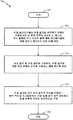
도 7은 이 개시물에서 설명된 양태들에 따라 블록 예측 모드에서 비디오 데이터의 블록을 예측하기 위한 방법을 예시하는 플로우차트이다.
도 8 은 이 개시물에서 설명된 양태들에 따라 파티션들을 가지는 블록을 예시하는 블록도이다.
도 9 는 블록 예측 모드가 디스에이블되는 일 예의 이미지 컨텐츠이다.
도 10 은 이 개시물에서 설명된 양태들에 따라 블록 예측 모드가 인에이블되는 일 예의 이미지 컨텐츠이다. 1A is a block diagram illustrating an example video encoding and decoding system that may use techniques in accordance with aspects described in this disclosure.
1B is a block diagram illustrating another example video encoding and decoding system that may perform techniques in accordance with aspects described in this disclosure.
2A is a block diagram illustrating an example of a video encoder that may implement techniques in accordance with aspects described in this disclosure.
Figure 2B is a block diagram illustrating an example of a video decoder that may implement techniques in accordance with aspects described in this disclosure.
Figure 3 is a block diagram illustrating a search space for a non-first line for a 1-D block in accordance with aspects described in this disclosure.
4 is a block diagram illustrating a search space for a non-first line for a 2-D block in accordance with aspects described in this disclosure.
5 is a block diagram illustrating a search space for a first line for a 1-D block in accordance with aspects described in this disclosure.
6 is a block diagram illustrating a search space for a best-of-line for a 2-D block in accordance with aspects described in this disclosure.
7 is a flow chart illustrating a method for predicting a block of video data in a block prediction mode in accordance with aspects described in this disclosure.
8 is a block diagram illustrating a block having partitions in accordance with aspects described in this disclosure.
Figure 9 is an example of image content in which the block prediction mode is disabled.
10 is an example image content in which the block prediction mode is enabled in accordance with aspects described in this disclosure.
일반적으로, 이 개시물은 DSC 와 같은 비디오 압축 기법들을 개선시키는 방법들에 관한 것이다. 더욱 구체적으로, 본 개시물은 블록 예측 모드에서 비디오 데이터의 블록을 코딩하기 위한 시스템들 및 방법들에 관한 것이다.In general, this disclosure relates to methods for improving video compression techniques such as DSC. More particularly, this disclosure relates to systems and methods for coding blocks of video data in a block prediction mode.
어떤 실시형태들은 DSC 표준의 맥락에서 본원에서 설명되지만, 당해 분야의 당업자는 본원에서 개시된 시스템들 및 방법들이 임의의 적당한 비디오 코딩 표준에 적용가능할 수도 있다는 것을 인식할 것이다. 예를 들어, 본원에서 개시된 실시형태들은 다음의 표준들 중의 하나 이상에 적용가능할 수도 있다: 국제 전기통신 연합 (International Telecommunication Union; ITU) 전기통신 표준화 섹터 (Telecommunication Standardization Sector) (ITU-T) H.261, 표준화를 위한 국제 기구 (International Organization for Standardization; ISO) / 국제 전기기술 위원회 (International Electrotechnical Commission; IEC) (ISO/IEC) 동화상 전문가 그룹-1 (Moving Picture Experts Group-1; MPEG-1) 비주얼 (Visual), ITU-T H.262 또는 ISO/IEC MPEG-2 비주얼, ITU-T H.263, ISO/IEC MPEG-4 비주얼, (또한, ISO/IEC MPEG-4 AVC 로서 알려진) ITU-T H.264, 및 이러한 표준들에 대한 임의의 확장들. 또한, 이 개시물에서 설명된 기법들은 미래에 개발된 표준들의 일부가 될 수도 있다. 다시 말해서, 이 개시물에서 설명된 기법들은 이전에 개발된 비디오 코딩 표준들, 현재 개발 중인 비디오 코딩 표준들, 및 당면할 비디오 코딩 표준들에 적용가능할 수도 있다.Although certain embodiments are described herein in the context of the DSC standard, those skilled in the art will recognize that the systems and methods disclosed herein may be applicable to any suitable video coding standard. For example, the embodiments disclosed herein may be applicable to one or more of the following standards: International Telecommunication Union (ITU) Telecommunication Standardization Sector (ITU-T) H. 261, International Organization for Standardization (ISO) / International Electrotechnical Commission (ISO / IEC) Moving Picture Experts Group-1 (MPEG-1) Visual ITU-T H.262 or ISO / IEC MPEG-2 Visual, ITU-T H.263, ISO / IEC MPEG-4 Visual (also known as ISO / IEC MPEG-4 AVC) H.264, and any extensions to these standards. In addition, the techniques described in this disclosure may be part of future developed standards. In other words, the techniques described in this disclosure may be applicable to previously developed video coding standards, video coding standards currently under development, and video coding standards to be met.
DSC 표준은 비디오 데이터의 각각의 블록이 인코더에 의해 인코딩될 수도 있고, 유사하게, 디코더에 의해 디코딩될 수도 있는 다수의 코딩 모드들을 포함한다. 일부 구현예들에서, 인코더 및/또는 디코더는 이전에 코딩된 블록에 기초하여 코딩되어야 할 현재 블록을 예측할 수도 있다.The DSC standard includes a plurality of coding modes in which each block of video data may be encoded by an encoder and similarly may be decoded by a decoder. In some implementations, the encoder and / or decoder may predict the current block to be coded based on the previously coded block.
그러나, 기존의 코딩 모드들 (예컨대, 변환 코딩, 차동 펄스-코드 변조 (differential pulse-code modulation) 등) 은 비디오 데이터에서의 고도로 복잡한 영역들을 압축하는 만족스러운 방법을 제공하지는 않는다. 종종, 이 타입의 데이터 (즉, 고도로 압축된 비디오 데이터) 에 대하여, 코딩되어야 할 현재 블록 (또는 현재 블록의 구성 서브-블록들) 은 코더 (예컨대, 인코더 또는 디코더) 에 의해 조우 (encounter) 되었던 이전 블록들과 컨텐츠에 있어서 유사하다. 그러나, 기존의 인트라 예측 (intra prediction) 은 너무 제한되어, 이러한 현재 블록의 만족스러운 예측 (예컨대, 충분히 작은 잔차 (residual) 를 산출할 예측) 을 제공하지 못할 수도 있다. 이에 따라, 비디오 데이터의 코딩 블록들의 개선된 방법이 희망된다.However, existing coding modes (e.g., transform coding, differential pulse-code modulation, etc.) do not provide a satisfactory way to compress highly complex regions in video data. Often, for this type of data (i.e., highly compressed video data), the current block to be coded (or the constituent sub-blocks of the current block) is encapsulated by a coder (e.g., encoder or decoder) It is similar in content to previous blocks. However, existing intra prediction may be too limited to provide a satisfactory prediction of this current block (e.g., a prediction that will yield sufficiently small residuals). Thus, an improved method of coding blocks of video data is desired.
본 개시물에서는, 블록 예측 모드에서 블록을 코딩하는 개선된 방법이 설명된다. 예를 들어, 현재 블록을 예측하기 위하여 이용되어야 할 후보 블록을 검색할 때, 검색 범위는 인코더가 검색 코스트 (search cost) 를 최소화하면서 양호한 정합일 수도 있는 잠재적인 후보들을 액세스하도록 정의될 수도 있다. 또 다른 예에서, 방법은 각각의 블록 (또는 각각의 파티션) 에 대한 예측을 명시적으로 시그널링하는 것을 포함할 수도 있다. 인코더 측 상에서 더 많은 동작들 (예컨대, 컴퓨팅 자원들 또는 프로세싱 파워를 소비할 수도 있는, 현재 블록을 예측하기 위하여 이용되어야 할 후보 블록을 검색하는 것, 현재 블록에 대한 후보 블록의 위치를 식별하는 벡터를 계산하는 것 등) 을 수행함으로써, 방법은 디코더 복잡도를 감소시킬 수도 있다.In the present disclosure, an improved method of coding a block in a block prediction mode is described. For example, when searching for a candidate block that should be used to predict the current block, the search range may be defined such that the encoder accesses potential candidates that may be a good match while minimizing the search cost. In another example, the method may include explicitly signaling a prediction for each block (or each partition). Searching for candidate blocks that should be used to predict the current block, which may consume more operations (e.g., computing resources or processing power) on the encoder side, searching for a vector that identifies the location of the candidate block for the current block , Etc.), the method may reduce decoder complexity.
비디오 코딩 표준들Video coding standards
비디오 이미지, TV 이미지, 스틸 이미지 (still image), 또는 비디오 레코더 또는 컴퓨터에 의해 생성된 이미지와 같은 디지털 이미지는 수평 및 수직 라인들로 배열된 픽셀들 또는 샘플들을 포함할 수도 있다. 단일 이미지에서의 픽셀들의 수는 전형적으로 수만 개이다. 각각의 픽셀은 전형적으로 휘도 (luminance) 및 색차 (chrominance) 정보를 포함한다. 압축이 없다면, 이미지 인코더로부터 이미지 디코더로 전달되어야 할 정보의 순수한 분량은 실시간 이미지 송신을 비실용적으로 할 것이다. 송신되어야 할 정보의 양을 감소시키기 위하여, JPEG, MPEG, 및 H.263 표준들과 같은 다수의 상이한 압축 방법들이 개발되었다.A digital image such as a video image, a TV image, a still image, or an image generated by a video recorder or a computer may include pixels or samples arranged in horizontal and vertical lines. The number of pixels in a single image is typically tens of thousands. Each pixel typically includes luminance and chrominance information. Without compression, the net amount of information that must be passed from the image encoder to the image decoder will make real-time image transmission impractical. In order to reduce the amount of information to be transmitted, a number of different compression methods have been developed, such as the JPEG, MPEG, and H.263 standards.
비디오 코딩 표준들은 ITU-T H.261, ISO/IEC MPEG-1 비주얼, ITU-T H.262 또는 ISO/IEC MPEG-2 비주얼, ITU-T H.263, ISO/IEC MPEG-4 비주얼, (또한, ISO/IEC MPEG-4 AVC 로서 알려진) ITU-T H.264, 및 이러한 표준들의 확장들을 포함하는 HEVC 를 포함한다.Video coding standards are based on ITU-T H.261, ISO / IEC MPEG-1 Visual, ITU-T H.262 or ISO / IEC MPEG-2 Visual, ITU-T H.263, ISO / IEC MPEG- ITU-T H.264 (also known as ISO / IEC MPEG-4 AVC), and HEVC including extensions of these standards.
게다가, 비디오 코딩 표준, 즉, DSC 는 VESA 에 의해 개발되었다. DSC 표준은 디스플레이 링크들을 통한 송신을 위하여 비디오를 압축할 수 있는 비디오 압축 표준이다. 디스플레이들의 해상도가 증가함에 따라, 디스플레이들을 구동하기 위하여 요구된 비디오 데이터의 대역폭이 대응하여 증가한다. 일부 디스플레이 링크들은 비디오 데이터의 전부를 이러한 해상도들을 위한 디스플레이로 송신하기 위한 대역폭을 가지지 않을 수도 있다. 따라서, DSC 표준은 디스플레이 링크들 상에서의 상호동작가능한, 시각적 무손실 압축을 위한 압축 표준을 특정한다.In addition, the video coding standard, DSC, was developed by VESA. The DSC standard is a video compression standard capable of compressing video for transmission over display links. As the resolution of displays increases, the bandwidth of video data required to drive displays increases correspondingly. Some display links may not have the bandwidth to transmit all of the video data to the display for these resolutions. Thus, the DSC standard specifies a compression standard for visually lossless compression that is interoperable on display links.
DSC 표준은 H.264 및 HEVC 와 같은 다른 비디오 코딩 표준들과는 상이하다. DSC 는 인트라-프레임 (intra-frame) 압축을 포함하지만, 인터-프레임 (inter-frame) 압축을 포함하지 않으며, 이것은 시간적 정보가 비디오 데이터를 코딩할 시에 DSC 표준에 의해 이용되지 않을 수도 있다는 것을 의미한다. 대조적으로, 다른 비디오 코딩 표준들은 그 비디오 코딩 기법들에서 인터-프레임 압축을 채용할 수도 있다.The DSC standard differs from other video coding standards such as H.264 and HEVC. The DSC includes intra-frame compression, but does not include inter-frame compression, which means that temporal information may not be used by the DSC standard when coding video data it means. In contrast, other video coding standards may employ inter-frame compression in their video coding techniques.
비디오 코딩 시스템Video coding system
신규한 시스템들, 장치들, 및 방법들의 다양한 양태들은 동반된 도면들을 참조하여 이하에서 더욱 완전하게 설명된다. 그러나, 이 개시물은 많은 상이한 형태들로 구체화될 수도 있고, 이 개시물의 전반에 걸쳐 제시된 임의의 특정 구조 또는 기능으로 제한된 것으로서 해석되지 않아야 한다. 오히려, 이 양태들은, 이 개시물이 철저하고 완전할 것이며, 개시물의 범위를 당해 분야의 당업자들에게 완전히 전달하도록 제공된다. 본원에서의 교시사항들에 기초하여, 당해 분야의 당업자는 개시물의 범위가, 본 개시물의 임의의 다른 양태에 독립적으로 또는 이와 조합하여 구현되든지 간에, 본원에서 개시된 신규한 시스템들, 장치들, 및 방법들의 임의의 양태를 커버 (cover) 하도록 의도되는 것을 인식해야 한다. 예를 들어, 본원에서 기재된 임의의 수의 양태들을 이용하여 장치가 구현될 수도 있거나 방법이 실시될 수도 있다. 게다가, 본 개시물의 범위는 본원에서 기재된 본 개시물의 다양한 양태들에 추가하여, 또는 이 다양한 양태들 이외에, 다른 구조, 기능성, 또는 구조 및 기능성을 이용하여 실시되는 이러한 장치 또는 방법을 커버하도록 의도된다. 본원에서 개시된 임의의 양태는 청구항의 하나 이상의 구성요소들에 의해 구체화될 수도 있다는 것을 이해해야 한다.Various aspects of the novel systems, devices, and methods are described more fully hereinafter with reference to the accompanying drawings. This disclosure, however, may be embodied in many different forms and should not be construed as limited to any specific structure or function presented throughout the disclosure. Rather, these aspects are provided so that this disclosure will be thorough and complete, and will fully convey the scope of the disclosure to those skilled in the art. Based on the teachings herein, those skilled in the art will appreciate that the scope of the disclosure is not limited to the novel systems, devices, and / or components disclosed herein, whether implemented in any other aspect of the disclosure, It is to be understood that it is intended to cover any aspect of the methods. For example, an apparatus may be implemented or a method practiced using any number of aspects set forth herein. In addition, the scope of this disclosure is intended to cover such apparatus or methods as practiced with other structures, functionality, or structure and functionality, in addition to, or in addition to the various aspects of the present disclosure described herein . It is to be understood that any aspect of the disclosure herein may be embodied by one or more elements of the claims.
특정한 양태들이 본원에서 설명되지만, 이 양태들의 많은 변형들 및 치환들은 개시물의 범위 내에 속한다. 바람직한 양태들의 일부 이득들 및 장점들이 언급되지만, 개시물의 범위는 특정한 이득들, 용도들, 또는 목적들에 제한되도록 의도된 것이 아니다. 오히려, 개시물의 양태들은 상이한 무선 기술들, 시스템 구성들, 네트워크들, 및 송신 프로토콜들에 폭넓게 적용가능하도록 의도되며, 이들의 일부는 바람직한 양태들의 도면들 및 다음의 설명에서 예로서 예시되어 있다. 상세한 설명 및 도면들은 제한하는 것이 아니라 개시물의 예시에 불과하고, 개시물의 범위는 첨부된 청구항들 및 그 등가물들에 의해 정의된다.While specific embodiments are described herein, many variations and substitutions of these embodiments fall within the scope of the disclosure. While some benefits and advantages of the preferred embodiments are mentioned, the scope of the disclosure is not intended to be limited to the specific benefits, uses, or purposes. Rather, aspects of the disclosure are intended to be broadly applicable to different wireless technologies, system configurations, networks, and transmission protocols, some of which are illustrated by way of example in the drawings of the preferred aspects and the following description as examples. The description and drawings are not intended to be limiting, but merely as exemplifications of the disclosure, and the scope of the disclosure is defined by the appended claims and their equivalents.
첨부된 도면들은 예들을 예시한다. 첨부된 도면들에서 참조 번호들에 의해 표시된 구성요소들은 다음의 설명에서 유사한 참조 번호들에 의해 표시된 구성요소들에 대응한다. 이 개시물에서, 서수 단어들 (예컨대, "제 1", "제 2", "제 3" 및 등등) 로 시작하는 명칭들을 가지는 구성요소들은 구성요소들이 특정한 순서를 가지는 것을 반드시 암시하지는 않는다. 오히려, 이러한 서수 단어들은 동일하거나 유사한 타입의 상이한 구성요소들을 지칭하기 위하여 이용되는 것에 불과하다.The accompanying drawings illustrate examples. The components indicated by the reference numerals in the accompanying drawings correspond to the components indicated by like reference numerals in the following description. In this disclosure, components having names beginning with ordinal words (e.g., "first", "second", "third", etc.) do not necessarily imply that the components have a particular order. Rather, these ordinal words are merely used to refer to the different elements of the same or similar type.
도 1a 는 이 개시물에서 설명된 양태들에 따라 기법들을 사용할 수도 있는 일 예의 비디오 코딩 시스템 (10) 을 예시하는 블록도이다. 본원에서 이용되고 설명된 바와 같이, 용어 "비디오 코더" 또는 "코더" 는 일반적으로 비디오 인코더들 및 비디오 디코더들의 양자를 지칭한다. 이 개시물에서, 용어들 "비디오 코딩" 또는 "코딩" 은 일반적으로 비디오 인코딩 및 비디오 디코딩을 지칭할 수도 있다. 비디오 인코더들 및 비디오 디코더들에 추가하여, 본 출원에서 설명된 양태들은 트랜스코더 (transcoder) 들 (예컨대, 비트스트림을 디코딩할 수 있고 또 다른 비트스트림을 재-인코딩 (re-encode) 할 수 있는 디바이스들) 및 미들박스 (middlebox) 들 (예컨대, 비트스트림을 수정할 수 있고, 변환할 수 있고, 및/또는 그렇지 않을 경우에 조작할 수 있는 디바이스들) 과 같은 다른 관련된 디바이스들로 확장될 수도 있다. 1A is a block diagram illustrating an example
도 1a 에서 도시된 바와 같이, 비디오 코딩 시스템 (10) 은 목적지 디바이스 (14) 에 의해 더 이후의 시간에 디코딩되어야 할 인코딩된 비디오 데이터를 생성하는 소스 디바이스 (12) 를 포함한다. 도 1a 의 예에서, 소스 디바이스 (12) 및 목적지 디바이스 (14) 는 별도의 디바이스들을 구성한다. 그러나, 소스 디바이스 (12) 및 목적지 디바이스 (14) 는 도 1b 의 예에서 도시된 바와 같이, 동일한 디바이스 상에 있을 수도 있거나 동일한 디바이스의 일부일 수도 있다는 것에 주목한다.As shown in FIG . 1A , the
도 1a 를 다시 한번 참조하면, 소스 디바이스 (12) 및 목적지 디바이스 (14) 는 각각, 데스크톱 컴퓨터들, 노트북 (예컨대, 랩톱) 컴퓨터들, 태블릿 컴퓨터들, 셋톱 박스 (set-top box) 들, 소위 "스마트" 폰들과 같은 전화 핸드셋들, 소위 "스마트" 패드들, 텔레비전들, 카메라들, 디스플레이 디바이스들, 디지털 미디어 플레이어들, 비디오 게임용 콘솔들, 비디오 스트리밍 디바이스 등등을 포함하는 광범위한 디바이스들 중의 임의의 것을 포함할 수도 있다. 다양한 실시형태들에서, 소스 디바이스 (12) 및 목적지 디바이스 (14) 는 무선 통신을 위해 구비될 수도 있다. 1A , the source device 12 and the destination device 14 may each be a desktop computer, a laptop (e.g., laptop) computer, a tablet computer, a set-top box, Any of a wide variety of devices including telephony handsets such as "smart" pawns, so-called "smart" pads, televisions, cameras, display devices, digital media players, video game consoles, video streaming devices, ≪ / RTI > In various embodiments, source device 12 and destination device 14 may be provided for wireless communication.
목적지 디바이스 (14) 는 링크 (16) 를 통해, 디코딩되어야 할 인코딩된 비디오 데이터를 수신할 수도 있다. 링크 (16) 는 인코딩된 비디오 데이터를 소스 디바이스 (12) 로부터 목적지 디바이스 (14) 로 이동시킬 수 있는 임의의 타입의 매체 또는 디바이스를 포함할 수도 있다. 도 1a 의 예에서, 링크 (16) 는 소스 디바이스 (12) 가 인코딩된 비디오 데이터를 실시간으로 목적지 디바이스 (14) 로 송신하는 것을 가능하게 하기 위한 통신 매체를 포함할 수도 있다. 인코딩된 비디오 데이터는 무선 통신 프로토콜과 같은 통신 표준에 따라 변조될 수도 있고, 목적지 디바이스 (14) 로 송신될 수도 있다. 통신 매체는 라디오 주파수 (radio frequency; RF) 스펙트럼 또는 하나 이상의 물리적 송신 라인들과 같은 임의의 무선 또는 유선 통신 매체를 포함할 수도 있다. 통신 매체는 로컬 영역 네트워크, 광역 네트워크, 또는 인터넷과 같은 글로벌 네트워크와 같은 패킷-기반 네트워크의 일부를 형성할 수도 있다. 통신 매체는 라우터들, 스위치들, 기지국들, 또는 소스 디바이스 (12) 로부터 목적지 디바이스 (14) 로의 통신을 용이하게 하기 위해 유용할 수도 있는 임의의 다른 장비를 포함할 수도 있다.The destination device 14 may also receive the encoded video data to be decoded, via the
도 1a 의 예에서, 소스 디바이스 (12) 는 비디오 소스 (18), 비디오 인코더 (20), 및 출력 인터페이스 (22) 를 포함한다. 일부의 경우들에는, 출력 인터페이스 (22) 가 변조기/복조기 (모뎀) 및/또는 송신기를 포함할 수도 있다. 소스 디바이스 (12) 에서, 비디오 소스 (18) 는 비디오 캡처 디바이스, 예컨대, 비디오 카메라, 이전에 캡처된 비디오를 포함하는 비디오 아카이브 (video archive), 비디오 컨텐츠 제공자로부터 비디오를 수신하기 위한 비디오 공급 인터페이스, 및/또는 소스 비디오로서 컴퓨터 그래픽 데이터를 생성하기 위한 컴퓨터 그래픽 시스템과 같은 소스, 또는 이러한 소스들의 조합을 포함할 수도 있다. 하나의 예로서, 비디오 소스 (18) 가 비디오 카메라일 경우, 소스 디바이스 (12) 및 목적지 디바이스 (14) 는 도 1b 의 예에서 예시된 바와 같이, 소위 "카메라 폰들" 또는 "비디오 폰들" 을 형성할 수도 있다. 그러나, 이 개시물에서 설명된 기법들은 일반적으로 비디오 코딩에 적용가능할 수도 있고, 무선 및/또는 유선 애플리케이션들에 적용될 수도 있다. In the example of FIG. 1A , the source device 12 includes a
캡처된 (captured), 프리-캡처된 (pre-captured), 또는 컴퓨터-생성된 비디오는 비디오 인코더 (20) 에 의해 인코딩될 수도 있다. 인코딩된 비디오 데이터는 소스 디바이스 (12) 의 출력 인터페이스 (22) 를 통해 목적지 디바이스 (14) 로 송신될 수도 있다. 인코딩된 비디오 데이터는 또한 (또는 대안적으로), 디코딩 및/또는 재생을 위하여, 목적지 디바이스 (14) 또는 다른 디바이스들에 의한 더 이후의 액세스를 위해 저장 디바이스 (31) 상으로 저장될 수도 있다. 도 1a 및 도 1b 에서 예시된 비디오 인코더 (20) 는 도 2a 에서 예시된 비디오 인코더 (20), 또는 본원에서 설명된 임의의 다른 비디오 인코더를 포함할 수도 있다.The captured, pre-captured, or computer-generated video may be encoded by
도 1a 의 예에서, 목적지 디바이스 (14) 는 입력 인터페이스 (28), 비디오 디코더 (30), 및 디스플레이 디바이스 (32) 를 포함한다. 일부 경우들에는, 입력 인터페이스 (28) 가 수신기 및/또는 모뎀을 포함할 수도 있다. 목적지 디바이스 (14) 의 입력 인터페이스 (28) 는 링크 (16) 를 통해, 및/또는 저장 디바이스 (31) 로부터 인코딩된 비디오 데이터를 수신할 수도 있다. 링크 (16) 를 통해 통신되거나 저장 디바이스 (31) 상에서 제공된 인코딩된 비디오 데이터는 비디오 데이터를 디코딩할 시에, 비디오 디코더 (30) 와 같은 비디오 디코더에 의한 이용을 위하여 비디오 인코더 (20) 에 의해 생성된 다양한 신택스 엘리먼트들을 포함할 수도 있다. 이러한 신택스 엘리먼트들은 통신 매체 상에서 송신되거나, 저장 매체 상에 저장되거나, 파일 서버에 저장된 인코딩된 비디오 데이터와 함께 포함될 수도 있다. 도 1a 및 도 1b 에서 예시된 비디오 디코더 (30) 는 도 2b 에서 예시된 비디오 디코더 (30), 또는 본원에서 설명된 임의의 다른 비디오 디코더를 포함할 수도 있다. In the example of FIG. 1A , the destination device 14 includes an
디스플레이 디바이스 (32) 는 목적지 디바이스 (14) 와 통합될 수도 있거나, 목적지 디바이스 (14) 의 외부에 있을 수도 있다. 일부 예들에서, 목적지 디바이스 (14) 는 통합된 디스플레이 디바이스를 포함할 수도 있고, 또한, 외부의 디스플레이 디바이스와 인터페이스하도록 구성될 수도 있다. 다른 예들에서, 목적지 디바이스 (14) 는 디스플레이 디바이스일 수도 있다. 일반적으로, 디스플레이 디바이스 (32) 는 디코딩된 비디오 데이터를 사용자에게 디스플레이하고, 액정 디스플레이 (liquid crystal display; LCD), 플라즈마 디스플레이, 유기 발광 다이오드 (organic light emitting diode; OLED) 디스플레이, 또는 또 다른 타입의 디스플레이 디바이스와 같은 다양한 디스플레이 디바이스들 중의 임의의 것을 포함할 수도 있다.The
관련된 양태들에서, 도 1b 는 일 예의 비디오 코딩 시스템 (10') 을 도시하고, 여기서, 소스 디바이스 (12) 및 목적지 디바이스 (14) 는 디바이스 (11) 상에 있거나, 디바이스 (11) 의 일부이다. 디바이스 (11) 는 "스마트" 폰 등등과 같은 전화 핸드셋일 수도 있다. 디바이스 (11) 는 소스 디바이스 (12) 및 목적지 디바이스 (14) 와 동작가능하게 통신하는 (선택적으로 존재하는) 프로세서/제어기 디바이스 (13) 를 포함할 수도 있다. 도 1b 의 비디오 코딩 시스템 (10') 및 그 컴포넌트들은 그 외에는, 도 1a 의 비디오 코딩 시스템 (10) 및 그 컴포넌트들과 유사하다. 1B illustrates an example video coding system 10'wherein the source device 12 and the destination device 14 are on the
비디오 인코더 (20) 및 비디오 디코더 (30) 는 DSC 와 같은 비디오 압축 표준에 따라 동작할 수도 있다. 대안적으로, 비디오 인코더 (20) 및 비디오 디코더 (30) 는 MPEG-4, Part 10, AVC, HEVC, 또는 이러한 표준들의 확장들로서 대안적으로 지칭된 ITU-T H.264 표준과 같은 다른 독점적 또는 산업 표준들에 따라 동작할 수도 있다. 그러나, 이 개시물의 기법들은 임의의 특정한 코딩 표준으로 제한되지는 않는다. 비디오 압축 표준들의 다른 예들은 MPEG-2 및 ITU-T H.263 을 포함한다.
도 1a 및 도 1b 의 예들에서 도시되지 않았지만, 비디오 인코더 (20) 및 비디오 디코더 (30) 는 각각 오디오 인코더 및 디코더와 통합될 수도 있고, 공통의 데이터 스트림 또는 별도의 데이터 스트림들에서 오디오 및 비디오 양자의 인코딩을 처리하기 위한 적합한 MUX-DEMUX 유닛들, 또는 다른 하드웨어 및 소프트웨어를 포함할 수도 있다. 적용가능한 경우, 일부 예들에서, MUX-DEMUX 유닛들은 ITU H.223 멀티플렉서 프로토콜, 또는 사용자 데이터그램 프로토콜 (user datagram protocol; UDP) 과 같은 다른 프로토콜들을 준수할 수도 있다.Although not shown in the examples of FIGS . 1A and 1B , the
비디오 인코더 (20) 및 비디오 디코더 (30) 는 각각, 하나 이상의 마이크로프로세서들, 디지털 신호 프로세서 (digital signal processor; DSP) 들, 애플리케이션 특정 집적 회로 (application specific integrated circuit; ASIC) 들, 필드 프로그래밍가능 게이트 어레이 (field programmable gate array; FPGA) 들, 개별 로직, 소프트웨어, 하드웨어, 펌웨어, 또는 그 임의의 조합들과 같은 다양한 적당한 인코더 회로부 중의 임의의 것으로서 구현될 수도 있다. 기법들이 소프트웨어로 부분적으로 구현될 때, 디바이스는 소프트웨어를 위한 명령들을 적당한 비-일시적 컴퓨터-판독가능 매체 내에 저장할 수도 있고, 이 개시물의 기법들을 수행하기 위하여 하나 이상의 프로세서들을 이용하여 명령들을 하드웨어로 실행할 수도 있다. 비디오 인코더 (20) 및 비디오 디코더 (30) 의 각각은 하나 이상의 인코더들 또는 디코더들 내에 포함될 수도 있고, 그 어느 하나는 조합된 인코더/디코더의 일부로서 개개의 디바이스 내에 통합될 수도 있다.
비디오 코딩 프로세스Video coding process
위에서 간단히 언급된 바와 같이, 비디오 인코더 (20) 는 비디오 데이터를 인코딩한다. 비디오 데이터는 하나 이상의 픽처들을 포함할 수도 있다. 픽처들의 각각은 비디오의 일부를 형성하는 스틸 이미지이다. 일부 사례들에서, 픽처는 비디오 "프레임" 으로서 지칭될 수도 있다. 비디오 인코더 (20) 가 비디오 데이터를 인코딩할 때, 비디오 인코더 (20) 는 비트스트림을 생성할 수도 있다. 비트스트림은 비디오 데이터의 코딩된 표현을 형성하는 비트들의 시퀀스를 포함할 수도 있다. 비트스트림은 코딩된 픽처들 및 연관된 데이터를 포함할 수도 있다. 코딩된 픽처는 픽처의 코딩된 표현이다.As mentioned briefly above,
비트스트림을 생성하기 위하여, 비디오 인코더 (20) 는 비디오 데이터에서의 각각의 픽처에 대해 인코딩 동작들을 수행할 수도 있다. 비디오 인코더 (20) 가 픽처들에 대해 인코딩 동작들을 수행할 때, 비디오 인코더 (20) 는 일련의 코딩된 픽처들 및 연관된 데이터를 생성할 수도 있다. 연관된 데이터는 양자화 파라미터 (quantization parameter; QP) 와 같은 코딩 파라미터들의 세트를 포함할 수도 있다. 코딩된 픽처를 생성하기 위하여, 비디오 인코더 (20) 는 픽처를 동일한 크기의 비디오 블록들로 파티셔닝할 수도 있다. 비디오 블록은 샘플들의 2 차원 어레이일 수도 있다. 코딩 파라미터들은 비디오 데이터의 매 블록에 대한 코딩 옵션 (예컨대, 코딩 모드) 을 정의할 수도 있다. 코딩 옵션은 희망하는 레이트-왜곡 성능을 달성하기 위하여 선택될 수도 있다.To generate the bitstream, the
일부 예들에서, 비디오 인코더 (20) 는 픽처를 복수의 슬라이스들로 파티셔닝할 수도 있다. 슬라이스들의 각각은 이미지 또는 프레임에서의 영역들의 나머지로부터의 정보 없이 독립적으로 디코딩될 수 있는 이미지 (예컨대, 프레임) 에서의 공간적으로 별개의 영역을 포함할 수도 있다. 각각의 이미지 또는 비디오 프레임은 단일 슬라이스에서 인코딩될 수도 있거나, 그것은 몇몇 슬라이스들에서 인코딩될 수도 있다. DSC 에서, 각각의 슬라이스를 인코딩하기 위하여 할당된 타겟 비트들은 실질적으로 일정할 수도 있다. 픽처에 대해 인코딩 동작을 수행하는 것의 일부로서, 비디오 인코더 (20) 는 픽처의 각각의 슬라이스에 대해 인코딩 동작들을 수행할 수도 있다. 비디오 인코더 (20) 가 슬라이스에 대해 인코딩 동작을 수행할 때, 비디오 인코더 (20) 는 슬라이스와 연관된 인코딩된 데이터를 생성할 수도 있다. 슬라이스와 연관된 인코딩된 데이터는 "코딩된 슬라이스" 로서 지칭될 수도 있다.In some instances, the
DSCDSC 비디오 인코더 Video encoder
도 2a 는 이 개시물에서 설명된 양태들에 따라 기법들을 구현할 수도 있는 비디오 인코더 (20) 의 예를 예시하는 블록도이다. 비디오 인코더 (20) 는 이 개시물의 기법들 중의 일부 또는 전부를 수행하도록 구성될 수도 있다. 일부 예들에서, 이 개시물에서 설명된 기법들은 비디오 인코더 (20) 의 다양한 컴포넌트들 사이에서 공유될 수도 있다. 일부 예들에서, 추가적으로 또는 대안적으로, 프로세서 (도시되지 않음) 는 이 개시물에서 설명된 기법들 중의 일부 또는 전부를 수행하도록 구성될 수도 있다. 2A is a block diagram illustrating an example of a
설명의 목적들을 위하여, 이 개시물은 DSC 코딩의 맥락에서 비디오 인코더 (20) 를 설명한다. 그러나, 이 개시물의 기법들은 다른 코딩 표준들 또는 방법들에 적용가능할 수도 있다.For purposes of explanation, this disclosure describes a
도 2a 의 예에서, 비디오 인코더 (20) 는 복수의 기능적 컴포넌트들을 포함한다. 비디오 인코더 (20) 의 기능적 컴포넌트들은 컬러-공간 변환기 (105), 버퍼 (110), 평탄성 검출기 (115), 레이트 제어기 (120), 예측기, 양자화기, 및 재구성기 컴포넌트 (125), 라인 버퍼 (130), 인덱싱된 컬러 히스토리 (indexed color history; 135), 엔트로피 인코더 (140), 서브스트림 멀티플렉서 (145), 및 레이트 버퍼 (150) 를 포함한다. 다른 예들에서, 비디오 인코더 (20) 는 더 많거나, 더 적거나, 또는 상이한 기능적 컴포넌트들을 포함할 수도 있다. In the example of FIG. 2A ,
컬러-공간 변환기 (105) 는 입력 컬러-공간을, 코딩 구현에서 이용된 컬러-공간으로 변환할 수도 있다. 예를 들어, 하나의 예시적인 실시형태에서, 입력 비디오 데이터의 컬러-공간은 적색, 녹색, 및 청색 (RGB) 컬러-공간에 있고, 코딩은 휘도 Y, 색차 녹색 Cg, 및 색차 황색 Co (YCgCo) 컬러-공간에서 구현된다. 컬러-공간 변환은 비디오 데이터에 대한 시프트 (shift) 들 및 추가들을 포함하는 방법 (들) 에 의해 수행될 수도 있다. 다른 컬러-공간들에서의 입력 비디오 데이터가 프로세싱될 수도 있고 다른 컬러-공간들로의 변환들이 또한 수행될 수도 있다는 것에 주목한다.The color-
관련된 양태들에서, 비디오 인코더 (20) 는 버퍼 (110), 라인 버퍼 (130), 및/또는 레이트 버퍼 (150) 를 포함할 수도 있다. 예를 들어, 버퍼 (110) 는 비디오 인코더 (20) 의 다른 부분들에 의한 그 이용 이전에 컬러-공간 변환된 비디오 데이터를 유지할 수도 있다. 또 다른 예에서, 비디오 데이터는 RGB 컬러-공간에서 저장될 수도 있고, 컬러-공간 변환된 데이터는 더 많은 비트들을 요구할 수도 있으므로, 컬러-공간 변환은 필요한 대로 수행될 수도 있다.In related aspects, the
레이트 버퍼 (150) 는, 레이트 제어기 (120) 와 관련하여 이하에서 더욱 상세하게 설명될 비디오 인코더 (20) 에서의 레이트 제어 메커니즘의 일부로서 기능할 수도 있다. 각각의 블록을 인코딩하는 것에 소비된 비트들은 블록의 본질에 기초하여 고도로 실질적으로 변동될 수 있다. 레이트 버퍼 (150) 는 압축된 비디오에서 레이트 변동들을 평활화 (smooth) 할 수 있다. 일부 실시형태들에서는, 비트들이 고정 비트 레이트에서 버퍼로부터 추출되는 고정 비트 레이트 (constant bit rate; CBR) 버퍼 모델이 채용된다. CBR 버퍼 모델에서는, 비디오 인코더 (20) 가 너무 많은 비트들을 비트스트림에 추가할 경우, 레이트 버퍼 (150) 가 오버플로우 (overflow) 할 수도 있다. 다른 한편으로, 비디오 인코더 (20) 는 레이트 버퍼 (150) 의 언더플로우 (underflow) 를 방지하기 위하여 충분한 비트들을 추가해야 한다.The
비디오 디코더 측 상에서는, 비트들이 고정 비트 레이트에서 비디오 디코더 (30) 의 레이트 버퍼 (155) (이하에서 더욱 상세하게 설명되는 도 2b 참조) 에 추가될 수도 있고, 비디오 디코더 (30) 는 각각의 블록에 대한 가변적인 수들의 비트들을 제거할 수도 있다. 적절한 디코딩을 보장하기 위하여, 비디오 디코더 (30) 의 레이트 버퍼 (155) 는 압축된 비트 스트림의 디코딩 동안에 "언더플로우" 또는 "오버플로우" 하지 않아야 한다.On the video decoder side, the bits may be added to the rate buffer 155 (see FIG. 2B , described in more detail below) of the
일부 실시형태들에서, 버퍼 충만도 (buffer fullness; BF) 는, 버퍼에서 현재 비트들의 수를 나타내는 BufferCurrentSize 와, 레이트 버퍼 (150) 의 크기, 즉, 임의의 시간 포인트에서 레이트 버퍼 (150) 내에 저장될 수 있는 비트들의 최대 수를 나타내는 BufferMaxSize 의 값들에 기초하여 정의될 수 있다. BF 는 다음과 같이 계산될 수도 있다:In some embodiments, the buffer fullness (BF) may be determined based on the BufferCurrentSize representing the number of current bits in the buffer and the size of the
BF = ((BufferCurrentSize * 100) / BufferMaxSize)BF = ((BufferCurrentSize * 100) / BufferMaxSize)
평탄성 검출기 (115) 는 비디오 데이터에서의 복잡한 (즉, 비-평탄한 (non-flat)) 구역들로부터 비디오 데이터에서의 평탄한 (즉, 간단하거나 균일한) 구역들로의 변경들을 검출할 수 있다. 용어들 "복잡한" 및 "평탄한" 은 비디오 인코더 (20) 가 비디오 데이터의 개개의 영역들을 인코딩하기 위한 어려움을 일반적으로 지칭하기 위하여 본원에서 이용될 것이다. 이에 따라, 본원에서 이용된 바와 같은 용어 복잡은 비디오 데이터의 영역을, 비디오 인코더 (20) 가 인코딩하기가 복잡한 것으로서 일반적으로 설명하고, 예를 들어, 텍스처링된 비디오 데이터 (textured video data), 높은 공간적 주파수, 및/또는 인코딩하기가 복잡한 다른 특징들을 포함할 수도 있다. 본원에서 이용된 바와 같은 용어 평탄은 비디오 데이터의 영역을, 비디오 인코더 (20) 가 인코딩하기가 간단한 것으로서 일반적으로 설명하고, 예를 들어, 비디오 데이터에서의 평활한 경도 (smooth gradient), 낮은 공간적 주파수, 및/또는 인코딩하기가 간단한 다른 특징들을 포함할 수도 있다. 복잡한 그리고 평탄한 영역들 사이의 전이 (transition) 들은 인코딩된 비디오 데이터에서 양자화 아티팩트 (quantization artifact) 들을 감소시키기 위하여 비디오 인코더 (20) 에 의해 이용될 수도 있다. 구체적으로, 레이트 제어기 (120) 및 예측기, 양자화기, 및 재구성기 컴포넌트 (125) 는 복잡한 영역으로부터 평탄한 영역들로의 전이들이 식별될 때에 이러한 양자화 아티팩트들을 감소시킬 수 있다.The
레이트 제어기 (120) 는 코딩 파라미터들, 예컨대, QP 의 세트를 결정한다. 레이트 버퍼 (150) 가 오버플로우하거나 언더플로우하지 않는다는 것을 보장하는 타겟 비트레이트에 대한 픽처 품질을 최대화하기 위하여, QP 는 레이트 버퍼 (150) 의 버퍼 충만도 및 비디오 데이터의 이미지 활성에 기초하여 레이트 제어기 (120) 에 의해 조절될 수도 있다. 레이트 제어기 (120) 는 또한, 최적의 레이트-왜곡 성능을 달성하기 위하여, 비디오 데이터의 각각의 블록에 대한 특정한 코딩 옵션 (예컨대, 특정한 모드) 을 선택한다. 레이트 제어기 (120) 는 그것이 비트-레이트 제약을 충족시키도록, 즉, 전체적인 실제의 코딩 레이트가 타겟 비트 레이트 내에서 적합하도록, 재구성된 이미지들의 왜곡을 최소화한다.
예측기, 양자화기, 및 재구성기 컴포넌트 (125) 는 비디오 인코더 (20) 의 적어도 3 개의 인코딩 동작들을 수행할 수도 있다. 예측기, 양자화기, 및 재구성기 컴포넌트 (125) 는 다수의 상이한 모드들에서 예측을 수행할 수도 있다. 하나의 예의 예측 모드는 중간-적응적 예측 (median-adaptive prediction) 의 수정된 버전이다. 중간-적응적 예측은 무손실 JPEG 표준 (lossless JPEG standard; JPEG-LS) 에 의해 구현될 수도 있다. 예측기, 양자화기, 및 재구성기 컴포넌트 (125) 에 의해 수행될 수도 있는 중간-적응적 예측의 수정된 버전은 3 개의 연속 샘플 값들의 병렬 예측을 허용할 수도 있다. 또 다른 예의 예측 모드는 블록 예측이다. 블록 예측에서는, 샘플들이 좌측의 이전에 재구성된 픽셀들로부터 예측된다. 비디오 인코더 (20) 및 비디오 디코더 (30) 양자는 블록 예측 사용량들을 결정하기 위하여 재구성된 픽셀들에 대해 동일한 검색을 수행할 수 있고, 이에 따라, 어떤 비트들도 블록 예측 모드에서 전송될 필요가 없다. 샘플들이 컴포넌트 범위의 중점을 이용하여 예측되는 중점 예측 모드 (midpoint prediction mode) 가 또한 구현될 수도 있다. 중점 예측 모드는 심지어 최악-경우의 샘플에서의 압축된 비디오에 대하여 요구된 비트들의 수의 경계결정을 가능하게 할 수도 있다. 도 7 을 참조하여 추가로 논의된 바와 같이, 예측기, 양자화기, 및 재구성기 컴포넌트 (125) 는 도 7 에서 예시된 방법들을 수행함으로써 비디오 데이터의 블록 (또는 임의의 다른 예측의 유닛) 을 예측 (예컨대, 인코딩 또는 디코딩) 하도록 구성될 수도 있다.The predictor, quantizer, and reconstructor component 125 may perform at least three encoding operations of the
예측기, 양자화기, 및 재구성기 컴포넌트 (125) 는 또한 양자화를 수행한다. 예를 들어, 양자화는 시프터 (shifter) 를 이용하여 구현될 수도 있는 2-제곱 (power-of-2) 양자화기를 통해 수행될 수도 있다. 다른 양자화 기법들이 2-제곱 양자화기 대신에 구현될 수도 있다는 것에 주목한다. 예측기, 양자화기, 및 재구성기 컴포넌트 (125) 에 의해 수행된 양자화는 레이트 제어기 (120) 에 의해 결정된 QP 에 기초할 수도 있다. 최종적으로, 예측기, 양자화기, 및 재구성기 컴포넌트 (125) 는 또한, 역 양자화된 잔차를 예측된 값에 추가하는 것과, 결과가 샘플 값들의 유효한 범위의 외부에 속하지 않는다는 것을 보장하는 것을 포함하는 재구성을 수행한다.The predictor, quantizer, and reconstructor component 125 also perform quantization. For example, the quantization may be performed through a power-of-2 quantizer, which may be implemented using a shifter. It should be noted that other quantization techniques may be implemented instead of the 2-squared quantizer. The quantization performed by the predictor, quantizer, and reconstructor component 125 may be based on the QP determined by the
예측기, 양자화기, 재구성기 컴포넌트 (125) 에 의해 수행된 예측, 양자화, 및 재구성에 대한 상기 설명된 예의 접근법들은 예시적인 것에 불과하고 다른 접근법들이 구현될 수도 있다는 것에 주목한다. 또한, 예측기, 양자화기, 및 재구성기 컴포넌트 (125) 는 예측, 양자화, 및/또는 재구성을 수행하기 위한 하위컴포넌트 (들) 를 포함할 수도 있다는 것에 주목한다. 또한, 예측, 양자화, 및/또는 재구성은 예측기, 양자화기, 및 재구성기 컴포넌트 (125) 대신에 몇몇 별도의 인코더 컴포넌트들에 의해 수행될 수도 있다는 것에 주목한다.It is noted that the above described example approaches to prediction, quantization, and reconstruction performed by the predictor, quantizer, and reconstructor component 125 are exemplary only and other approaches may be implemented. It is also noted that the predictor, quantizer, and reconstructor component 125 may include subcomponent (s) for performing prediction, quantization, and / or reconstruction. Note also that prediction, quantization, and / or reconstruction may be performed by some separate encoder components instead of predictor, quantizer, and reconstructor component 125.
라인 버퍼 (130) 는 예측기, 양자화기, 및 재구성기 컴포넌트 (125) 로부터의 출력을 유지하여, 예측기, 양자화기, 및 재구성기 컴포넌트 (125) 및 인덱싱된 컬러 히스토리 (135) 는 버퍼링된 비디오 데이터를 이용할 수 있다. 인덱싱된 컬러 히스토리 (135) 는 최근에 이용된 픽셀 값들을 저장한다. 이 최근에 이용된 픽셀 값들은 전용 신택스를 통해 비디오 인코더 (20) 에 의해 직접적으로 참조될 수 있다.The
엔트로피 인코더 (140) 는 인덱싱된 컬러 히스토리 (135) 와, 평탄성 검출기 (115) 에 의해 식별된 평탄성 전이들에 기초하여, 예측기, 양자화기, 및 재구성기 컴포넌트 (125) 로부터 수신된 예측 잔차들 및 임의의 다른 데이터 (예컨대, 예측기, 양자화기, 및 재구성기 컴포넌트 (125) 에 의해 식별된 인덱스들) 를 인코딩한다. 일부 예들에서, 엔트로피 인코더 (140) 는 서브스트림 인코더에 대하여 이 클록 당 3 개의 샘플들을 인코딩할 수도 있다. 서브스트림 멀티플렉서 (145) 는 무헤더 패킷 (headless packet) 멀티플렉싱 방식에 기초하여 비트스트림을 멀티플렉싱할 수도 있다. 이것은 비디오 디코더 (30) 가 이 3 개의 엔트로피 디코더들을 병렬로 실행하도록 하여, 이 클록 당 3 개의 픽셀들의 디코딩을 용이하게 한다. 서브스트림 멀티플렉서 (145) 는 패킷 순서를 최적화할 수도 있어서, 패킷들은 비디오 디코더 (30) 에 의해 효율적으로 디코딩될 수 있다. 클록 당 2-제곱 픽셀들 (예컨대, 2 픽셀들/클록 또는 4 픽셀들/클록) 의 디코딩을 용이하게 할 수도 있는 엔트로피 코딩에 대한 상이한 접근법들이 구현될 수도 있다는 것에 주목한다.The
DSCDSC 비디오 디코더 Video decoder
도 2b 는 이 개시물에서 설명된 양태들에 따라 기법들을 구현할 수도 있는 비디오 디코더 (30) 의 예를 예시하는 블록도이다. 비디오 디코더 (30) 는 이 개시물의 기법들 중의 일부 또는 전부를 수행하도록 구성될 수도 있다. 일부 예들에서, 이 개시물에서 설명된 기법들은 비디오 인코더 (30) 의 다양한 컴포넌트들 사이에서 공유될 수도 있다. 일부 예들에서, 추가적으로 또는 대안적으로, 프로세서 (도시되지 않음) 는 이 개시물에서 설명된 기법들 중의 일부 또는 전부를 수행하도록 구성될 수도 있다. 2B is a block diagram illustrating an example of a
설명의 목적들을 위하여, 이 개시물은 DSC 코딩의 맥락에서 비디오 디코더 (30) 를 설명한다. 그러나, 이 개시물의 기법들은 다른 코딩 표준들 또는 방법들에 적용가능할 수도 있다.For purposes of explanation, this disclosure describes a
도 2b 의 예에서, 비디오 디코더 (30) 는 복수의 기능적 컴포넌트들을 포함한다. 비디오 디코더 (30) 의 기능적 컴포넌트들은 레이트 버퍼 (155), 서브스트림 디멀티플렉서 (160), 엔트로피 디코더 (165), 레이트 제어기 (170), 예측기, 양자화기, 및 재구성기 컴포넌트 (175), 인덱싱된 컬러 히스토리 (180), 라인 버퍼 (185), 및 컬러-공간 변환기 (190) 를 포함한다. 비디오 디코더 (30) 의 예시된 컴포넌트들은 도 2a 에서의 비디오 인코더 (20) 와 관련하여 위에서 설명된 대응하는 컴포넌트들과 유사하다. 이와 같이, 비디오 디코더 (30) 의 컴포넌트들의 각각은 위에서 설명된 바와 같은 비디오 인코더 (20) 의 대응하는 컴포넌트들과 유사한 방식으로 동작할 수도 있다. In the example of FIG. 2B ,
DSC 에서의DSC's 슬라이스들 Slices
위에서 언급된 바와 같이, 슬라이스는 일반적으로, 이미지 또는 프레임에서의 영역들의 나머지로부터의 정보 없이 독립적으로 디코딩될 수 있는 이미지 또는 프레임에서의 공간적으로 별개의 영역을 지칭한다. 각각의 이미지 또는 비디오 프레임은 단일 슬라이스에서 인코딩될 수도 있거나, 그것은 몇몇 슬라이스들에서 인코딩될 수도 있다. DSC 에서, 각각의 슬라이스를 인코딩하기 위하여 할당된 타겟 비트들은 실질적으로 일정할 수도 있다.As mentioned above, a slice generally refers to a spatially discrete region in an image or frame that can be decoded independently without information from the rest of the regions in the image or frame. Each image or video frame may be encoded in a single slice, or it may be encoded in several slices. In the DSC, the target bits allocated to encode each slice may be substantially constant.
블록 예측 Block prediction 모드mode
비디오 데이터의 단일 블록은 다수의 픽셀들을 포함할 수도 있고, 비디오 데이터의 각각의 블록은 블록이 코딩될 수 있는 다수의 잠재적인 코딩 모드들을 가진다. 이러한 코딩 모드들 중의 하나는 블록 예측 모드이다. 블록 예측 모드에서, 코더는 (예컨대, 현재 블록이 현재 슬라이스의 최초 라인에 있지 않을 경우에) 이전에 재구성된 라인에서 후보 블록을, 또는 코딩되어야 할 현재 블록에 (예컨대, 픽셀 값들에 있어서) 근접한 (예컨대, 현재 블록이 현재 슬라이스의 최초 라인에 있을 경우에) 동일한 라인에서 이전에 재구성된 블록들을 구하는 것을 시도한다. 일부 실시형태들에서, 픽셀 값들 사이의 근접성은 절대 차이들의 합 (Sum of Absolute Differences; SAD) 메트릭에 의해 결정된다. 코더는 (예컨대, 인코더 및 디코더의 양자에 알려진 미리 결정된 값일 수도 있는) 검색 범위에 의해 정의된 이전에 재구성된 블록들의 임의의 부분에서 후보 블록을 구하는 것을 시도할 수도 있다. 검색 범위는 인코더가 검색 코스트를 최소화하면서 양호한 정합을 구하기 위하여 검색 범위 내에서 잠재적인 후보들을 가지도록 정의된다. 블록 예측 모드의 코딩 효율은, 양호한 후보 (즉, 코딩되어야 할 현재 블록에 픽셀 값들에 있어서 근접한 것으로 결정되는 검색 범위 내의 후보) 가 탐색될 경우, 후보 블록과 현재 블록 사이의 (잔차로서 알려진) 차이가 작을 것이라는 사실로부터 비롯된다. 작은 잔차는 현재 블록의 실제적인 픽셀 값들을 시그널링하기 위하여 필요한 비트들의 수에 비해 시그널링하기 위하여 더 적은 비트들의 수를 취할 것이며, 이것에 의해, 더 낮은 레이트-왜곡 코스트로 귀착될 것이고, 레이트-제어 메커니즘에 의해 선택되는 가능성을 증가시킬 것이다. 블록 예측 모드를 인에이블하는 것으로부터의 성능 증대는 도 9 및 도 10 을 참조하여 이하에서 설명된 바와 같이, 어떤 타입들의 그래픽 컨텐츠에 대해서는 극도로 중요하다.A single block of video data may comprise a plurality of pixels and each block of video data has a number of potential coding modes through which the block may be coded. One of these coding modes is a block prediction mode. In the block prediction mode, the coder may determine whether the candidate block in the previously reconstructed line (e.g., in the case where the current block is not in the first line of the current slice) (E.g., if the current block is on the first line of the current slice) on the same line. In some embodiments, the proximity between pixel values is determined by a Sum of Absolute Differences (SAD) metric. The coder may attempt to obtain a candidate block in any portion of previously reconstructed blocks defined by the search range (e.g., which may be a predetermined value known to both the encoder and the decoder). The search range is defined such that the encoder has potential candidates within the search range to obtain a good match while minimizing the search cost. The coding efficiency of the block prediction mode is determined such that the difference (known as the residual) between the candidate block and the current block, when a good candidate (i.e., a candidate in the search range determined to be close to the pixel values in the current block to be coded) Of the population will be small. The small residual will take on a smaller number of bits to signal than the number of bits needed to signal the actual pixel values of the current block, thereby resulting in a lower rate-distortion cost, Will increase the likelihood of being selected by the mechanism. The increase in performance from enabling the block prediction mode is extremely important for some types of graphics content, as described below with reference to Figures 9 and 10. [
블록 예측 Block prediction 모드에서의Mode 파라미터들 Parameters
블록 예측 모드는 특정된 검색 범위가 주어질 경우, 인코딩되어야 할 현재 블록으로부터의 최소 왜곡을 제공하는 후보 블록을 생성하도록 설계된다. 일부 실시형태들에서, 최소 왜곡은 SAD 를 이용하여 정의된다. 본 개시물의 일부 구현예들에서, 블록 예측 방법은 3 개의 파라미터들: 검색 범위 (search range; SR), 스큐 (skew)(α), 및 파티션 크기 (β) 에 의해 정의된다. 이 3 개의 파라미터들은 블록 예측 모드의 성능에 영향을 주고, 구현 동안에 튜닝될 (즉, 수정되거나 재구성됨) 수도 있다. 이 파라미터들은 인코더 및 디코더의 양자에 알려질 수도 있다.The block prediction mode is designed to generate a candidate block that, when given a specified search range, provides a minimum distortion from the current block to be encoded. In some embodiments, the minimum distortion is defined using SAD. In some implementations of the disclosure, the block prediction method is defined by three parameters: a search range (SR), a skew (?), And a partition size (?). These three parameters affect the performance of the block prediction mode and may be tuned (i.e., modified or reconstructed) during implementation. These parameters may be known both in the encoder and in the decoder.
블록 예측 Block prediction 모드에서의Mode 검색 공간 Search space
본 개시물의 일부 실시형태들에서, 검색 공간 (예컨대, 인코더가 후보 블록을 구하기 위하여 검색할 수도 있는 픽셀들의 공간적 위치들) 은 현재 블록의 특성들에 기초하여 상이할 수도 있다. 검색 공간은 모든 이전에 재구성된 블록들/픽셀들을 망라할 수도 있지만, 인코더 및/또는 디코더는 예를 들어, 연속 복잡도를 감소시키기 위하여, 후보 블록에 대한 검색을 검색 공간 내의 특정된 부분 (예컨대, 비트스트림에서 미리 정의되거나, 또는 시그널링되는 하나 이상의 파라미터들에 의해 정의된 "검색 범위") 으로 제한할 수도 있다. 블록 예측 검색 공간의 예들은 도 3 내지 도 6 에서 예시되어 있다. 도 3 및 도 4 는 현재 슬라이스의 최초 라인에 있지 않은 현재 블록 (예컨대, 현재 블록들 (308 및 408)) 을 수반하는 경우들을 예시한다. 도 5 및 도 6 은 현재 슬라이스의 최초 라인에 있는 현재 블록 (예컨대, 현재 블록들 (506 및 606)) 을 수반하는 경우들을 예시한다. 슬라이스에서의 최초 라인은 수직인 이웃들을 가지지 않으므로, 이 2 개의 경우들은 별도로 처리된다. 그러므로, 현재 라인으로부터의 재구성된 픽셀들은 검색 범위 (예컨대, 검색 범위들 (508 및 608)) 로서 레버리지로 활용될 수 있다. 본 개시물에서, 현재 슬라이스에서의 최초 라인은 FLS 로서 지칭될 수도 있고, 현재 슬라이스에서의 임의의 다른 라인은 NFLS 로서 지칭될 수도 있다.In some embodiments of the present disclosure, the search space (e.g., the spatial locations of pixels that the encoder may search to obtain a candidate block) may be different based on the properties of the current block. Although the search space may encompass all previously reconstructed blocks / pixels, the encoder and / or decoder may perform a search for a candidate block in a specified portion of the search space (e.g., Quot; search range "defined by one or more parameters that are predefined or signaled in the bitstream). Examples of the block predictive search space are shown in FIGS . 6 . Figures 3 and 4 illustrate cases involving a current block (e.g.,
또한, 본원에서 설명된 블록 예측 기법들은 단일 라인 버퍼 (즉, 1-D 블록 크기) 를 이용한 코덱, 또는 다수 라인 버퍼들 (즉, 2-D 블록 크기) 을 이용한 코덱의 어느 하나에서 구현될 수도 있다. 1-D 경우에 대한 검색 공간의 예들은 도 3 및 도 5 에서 도시되어 있고, 2-D 경우에 대한 검색 공간의 예들은 도 4 및 도 6 에서 도시되어 있다. 2-D 의 경우, 검색 범위는 이전 재구성된 라인 (예컨대, 이전 라인 (402)), 또는 2-D 블록에서의 라인들과 동일한 라인들로부터의 재구성된 블록들 (예컨대, 현재 블록 (606) 의 바로 좌측에 있는, 현재 라인 (602) 에서의 이전 (604)) 로부터의 픽섹들을 포함할 수도 있다. 2-D 블록은 수평으로 또는 수직으로 중의 어느 하나로, 또는 양자로 파티셔닝될 수도 있다. 블록 파티션들을 수반하는 경우에는, 블록 예측 벡터가 각각의 블록 파티션에 대하여 특정될 수도 있다.The block prediction techniques described herein may also be implemented in either a codec using a single line buffer (i.e., a 1-D block size), or a codec using multiple line buffers (i.e., a 2-D block size) have. Examples of the search space of an example of a search space for the 1-D case are also shown in Figure 3 and the case 5 and, 2-D are shown in FIG. 4 and FIG. In the case of 2-D, the search range may be any of the reconstructed blocks (e.g., current block 606) from the same lines as the previous reconstructed line (e.g., previous line 402) (604) in the current line (602), just to the left of the current line (602). The 2-D block may be partitioned either horizontally or vertically, or both. In the case of involving block partitions, a block prediction vector may be specified for each block partition.
블록 예측 Block prediction 모드의Mode 일 예의 Example 구현예들Implementations
본 개시물의 일부 실시형태들에서는, SAD 이외의 왜곡 메트릭, 예컨대, 제곱된 차이들의 합 (sum of squared differences; SSD) 이 이용될 수도 있다. 대안적으로 또는 추가적으로, 왜곡은 가중화에 의해 수정될 수도 있다. 예를 들어, YCoCg 컬러 공간이 이용되고 있을 경우, 코스트는 다음과 같이 계산될 수도 있다:In some embodiments of the disclosure, distortion metrics other than SAD may be used, such as a sum of squared differences (SSD). Alternatively or additionally, the distortion may be corrected by weighting. For example, if a YCoCg color space is being used, the cost may be calculated as:

본원에서 설명된 블록 예측 기법들은 RGB 또는 YCoCg 컬러 공간의 어느 하나에서 수행될 수도 있다. 게다가, 대안적인 구현예는 양자의 컬러 공간들을 이용할 수도 있고, 1-비트 플래그를 디코더로 시그널링할 수도 있어서, 2 개의 컬러 공간들 중의 어느 것이 선택되는지 (예컨대, 레이트 및 왜곡의 측면에서 최저 코스트를 가지는 어느 것인든지의 컬러 공간) 를 표시할 수도 있다.The block prediction techniques described herein may be performed in either the RGB or YCoCg color space. In addition, alternative implementations may use both color spaces and may signal a 1-bit flag to the decoder to determine which of the two color spaces is selected (e.g., the lowest cost in terms of rate and distortion) The color space of whichever is there).
FLS 에 관한 본 개시물의 일부 실시형태들에서, 직접적인 이전에 재구성된 블록 또는 블록들은 파이프라이닝 및 타이밍 제약들로 인해 검색 범위로부터 배제될 수도 있다. 예를 들어, 하드웨어 구현예에 따라서는, 코더가 현재 블록이 코더에 의해 프로세싱될 때까지 직접적인 이전에 재구성된 블록의 프로세싱을 완료하지 않았을 수도 있어서 (예컨대, 코더가 현재 블록의 프로세싱을 시작할 때, 이전 블록에 대한 재구성된 픽셀들이 알려지지 않을 수도 있음), 지연들 또는 실패들로 귀착될 수도 있다. 이러한 구현예에서는, (예컨대, 직접적인 이전에 재구성된 블록 또는 블록들을 배제함으로써) 이전에 재구성된 블록들의 이용을, 재구성된 픽셀 값들이 알려져 있는 그 블록들로 한정함으로써, 위에서 예시된 파이프라이닝 우려들이 해결될 수도 있다. NFLS 에 관한 본 개시물의 일부 실시형태들에서, 현재 블록 좌측의 검색 범위는 이전에 재구성된 라인이 아니라, 동일한 라인으로부터의 것일 수도 있다. 이러한 실시형태들의 일부에서는, 하나 이상의 이전에 재구성된 블록들이 파이프라이닝 및 타이밍 제약들로 인해 검색 범위로부터 배제될 수도 있다.In some embodiments of the present disclosure with respect to FLS, a directly previously reconstructed block or blocks may be excluded from the search range due to pipelining and timing constraints. For example, depending on the hardware implementation, the coder may not have completed processing the previously reconstructed block directly until the current block is processed by the coder (e.g., when the coder begins processing the current block, The reconstructed pixels for the previous block may not be known), resulting in delays or failures. In such an implementation, by restricting the use of previously reconstructed blocks (e.g., by excluding direct previously reconstructed blocks or blocks) to those blocks whose reconstructed pixel values are known, the pipelining concerns exemplified above It may be resolved. In some embodiments of the present disclosure with respect to NFLS, the search range to the left of the current block may be from the same line, rather than the previously reconstructed line. In some of these embodiments, one or more previously reconstructed blocks may be excluded from the search range due to pipelining and timing constraints.
NFLS 의NFLS 일 예의 Example 구현예Example
도 3 에서 도시된 바와 같이, 블록 예측 방법은 현재 블록 (308) 에 대한 후보를 구하기 위하여 검색 공간에서 (그리고 도 4 의 검색 공간 (400) 에서와 유사하게) 검색 범위 (310) (SR) 를 통해 검색할 수도 있다. 인코딩되어야 할 현재 블록 (308) 의 최초 픽셀의 x-좌표 위치가 j 일 경우, 검색 공간 내의 모든 후보 블록들의 시작 위치들 k 의 세트는 다음과 같이 주어질 수도 있다:As shown in Figure 3, the block prediction method in the search area to obtain a candidate for the current block 308 (and FIG. Similar to the

이 예에서, 파라미터 α 는 인코딩되어야 할 현재 블록에 관련하여 검색 범위 (310) 의 x-좌표 위치를 스큐잉 (skewing) 한다. α 의 더 높은 값은 검색 범위 (310) 를 우측으로 시프트시키고, α 의 더 낮은 값은 검색 범위 (310) 를 좌측으로 시프트시킨다. 예를 들어, (i) 32 의 SR 및 15 의 α 는 이전 라인 (302) 의 중심에서 검색 범위 (310) 를 배치할 수도 있고, (ii) 32 의 SR 및 0 의 α 는 이전 라인 (302) 의 좌측 상에 검색 범위 (310) 를 배치할 수도 있고, (iii) 32 의 SR 및 31 의 α 는 이전 라인 (302) 의 우측 상에 검색 범위 (310) 를 배치할 수도 있다.In this example, the parameter a skews the x-coordinate position of the
본 개시물의 일부 구현예들에서, 검색 범위 내에 있지만 슬라이스 경계의 외부에 있는 픽셀은 그 픽셀에 대한 동적 범위의 절반으로 설정될 수도 있다. 예를 들어, 컨텐츠가 RGB888 일 경우, 128 의 디폴트 값은 R, G, 및 B 에 대하여 이용될 수도 있다. 컨텐츠가 YCoCg 공간에 있을 경우, 128 의 디폴트 값은 Y 에 대하여 이용될 수도 있고, 0 의 디폴트 값은 Co 및 Cg 에 대하여 이용될 수도 있다 (예컨대, Co 및 Cg 는 0 주위에 중심을 두는 9-비트 값들임).In some implementations of the present disclosure, a pixel within the search range but outside the slice boundary may be set to half the dynamic range for that pixel. For example, if the content is RGB 888, a default value of 128 may be used for R, G, and B. If the content is in YCoCg space, a default value of 128 may be used for Y, and a default value of 0 may be used for Co and Cg (e.g., Co and Cg are 9- Bit values).
FLS 의FLS 일 예의 Example 구현예Example
도 5 에서 도시된 바와 같이, 검색 범위는 FLS 경우에 대하여 상이할 수도 있다. 이것은 수직인 이웃들이 이용가능하지 않거나, 이러한 수직인 이웃들이 현재 프레임의 외부에 있거나, 또는 이러한 수직인 이웃들이 상이한 슬라이스 내에 포함되기 때문이다. FLS 경우에 관한 본 개시물의 일부 실시형태들에서, 현재 라인에서의 픽셀들은 블록 예측을 위하여 이용될 수도 있다. 하나의 실시형태에서, 현재 블록의 좌측의 현재 라인에서의 임의의 픽셀은 검색 범위의 일부로서 고려될 수도 있다. 또 다른 실시형태에서, 하나 이상의 이전에 코딩된 블록들 (예컨대, 현재 블록의 바로 좌측에 있는 이전 블록 (504)) 은 파이프라이닝 및 타이밍 제약들로 인해 검색 범위로부터 배제될 수도 있다.As shown in FIG . 5 , the search range may be different for the FLS case. This is because vertical neighbors are not available, or these vertical neighbors are outside the current frame, or such vertical neighbors are included in different slices. In some embodiments of the disclosure of the FLS case, pixels in the current line may be used for block prediction. In one embodiment, any pixel in the current line to the left of the current block may be considered as part of the search range. In yet another embodiment, one or more previously coded blocks (e.g., the
FLS 의 일부 구현예들에서, 슬라이스의 최초 라인에서의 최초 몇몇 블록들에 대한 이용가능한 범위는 다른 블록들에 대하여 전형적으로 예상되는 검색 범위보다 더 작을 수도 있다. 이것은 후보 블록들에 대한 유효한 위치가 라인의 초반에서 시작하고 현재 블록 전에 종료되기 때문이다. FLS 에서의 최초 몇몇 블록들에 대하여, 이 유효한 범위는 희망하는 범위 (예컨대, 32 개 또는 64 개의 위치들) 보다 더 작을 수도 있다. 이에 따라, 이 블록들에 대하여, 검색 범위는 후보 블록의 각각의 블록 파티션이 검색 범위 내에 완전히 포함되도록 조절될 필요가 있을 수도 있다. NFLS 에 대하여, 검색 범위는 검색 위치들의 총 수가 정의된 검색 범위 (예컨대, 32 개 또는 64 개의 픽셀 위치들) 와 동일하도록, 좌측 또는 우측으로 시프트될 수도 있다. j 는 현재 블록에서의 최초 픽셀이므로, 현재 블록에서의 최종 픽셀은 j + blkWidth - 1 일 것이다. 이 이유로, 검색 범위는 좌측으로 시프팅된 (blkWidth - 1) 픽셀들일 필요가 있을 수도 있다.In some implementations of the FLS, the available range for the first few blocks in the first line of the slice may be less than the typically expected search range for other blocks. This is because the valid position for the candidate blocks begins at the beginning of the line and ends before the current block. For some initial blocks in the FLS, this valid range may be smaller than the desired range (e.g., 32 or 64 positions). Thus, for these blocks, the search range may need to be adjusted such that each block partition of the candidate block is fully contained within the search range. For NFLS, the search range may be shifted left or right such that the total number of search locations equals the defined search range (e.g., 32 or 64 pixel positions). Since j is the first pixel in the current block, the last pixel in the current block will be j + blkWidth - 1. For this reason, the search range may need to be left shifted ( blkWidth - 1) pixels.
FLS 의 일부 구현예들에서, 인코딩되어야 할 현재 블록의 최초 픽셀의 x-좌표 위치가 j 로서 지칭될 경우, 검색 범위 내의 모든 후보 블록들의 시작 위치들의 세트는 다음과 같이 주어진다:In some implementations of the FLS, when the x-coordinate position of the first pixel of the current block to be encoded is referred to as j , the set of starting positions of all candidate blocks in the search range is given by:
(i) 가장 최근의 이전에 재구성된 블록이 검색 범위의 일부, 예컨대, 

(ii) n 개의 가장 최근의 이전에 재구성된 블록들이 검색 범위로부터 배제되어야 할 경우:(ii) if n most recent previously reconstructed blocks should be excluded from the search range:

여기서, 
블록 예측 Block prediction 모드에서In mode 코딩하기 위한 일 예의 One example for coding 플로우차트Flow chart
도 7 을 참조하면, 블록 예측 모드에서 비디오 데이터의 블록을 코딩하기 위한 일 예의 절차가 설명될 것이다. 도 7 에서 예시된 단계들은 비디오 인코더 (예컨대, 도 2a 에서의 비디오 인코더 (20)), 비디오 디코더 (예컨대, 도 2b 에서의 비디오 디코더 (30)), 또는 그 컴포넌트 (들) 에 의해 수행될 수도 있다. 편의를 위하여, 방법 (700) 은 비디오 인코더 (20), 비디오 디코더 (30), 또는 또 다른 컴포넌트일 수도 있는 비디오 코더 (또한 간단하게 코더로서 지칭됨) 에 의해 수행된 것으로서 설명된다.Referring to FIG. 7 , an exemplary procedure for coding a block of video data in a block prediction mode will be described. The steps illustrated in Figure 7 may be performed by a video encoder (e.g.,
방법 (700) 은 블록 (701) 에서 시작된다. 블록 (705) 에서, 코더는 현재 슬라이스에서 현재 블록을 예측하기 위하여 이용되어야 할 후보 블록을 결정한다. 후보 블록은 하나 이상의 블록 예측 파라미터들에 의해 정의된 위치들의 범위 내에 있을 수도 있다. 예를 들어, 블록 예측 파라미터들은 (i) 위치들의 범위의 크기를 정의하는 검색 범위 파라미터, (ii) 현재 블록에 대한 위치들의 범위의 상대적 위치를 정의하는 스큐 파라미터, 및 (iii) 현재 블록에서의 각각의 파티션의 크기를 정의하는 파티션 크기 파라미터를 포함할 수도 있다. 본 개시물의 일부 실시형태들에서, 검색 범위 파라미터, 스큐 파라미터, 및 파티션 크기 파라미터의 각각은 시간적으로가 아니라 공간적으로, 후보 블록의 위치들을 정의한다.The
블록 (710) 에서, 코더는 후보 블록 및 현재 블록에 기초하여 예측 벡터를 결정한다. 예측 벡터는 현재 블록에 대한 후보 블록의 위치를 식별할 수도 있다. 예측 벡터는 하나 이상의 좌표 값들 (예컨대, 1-D 공간에서 오프셋을 표시하는 좌표 값) 을 포함할 수도 있다. 블록 (715) 에서, 코더는 예측 벡터를 시그널링하는 것을 통해 블록 예측 모드에서 현재의 블록을 적어도 부분적으로 코딩한다. 일부 실시형태들에서, 코더는 또한, 후보 블록과 현재 블록 사이의 잔차를 시그널링할 수도 있다. 비트 절감은 현재 블록의 실제적인 픽셀 값들을 시그널링해야 하는 대신에, 후보 블록의 위치를 식별하는 예측 벡터와, 현재 블록과 후보 블록 사이의 차이를 나타내는 잔차를 시그널링함으로써 달성될 수도 있다. 방법 (700) 은 블록 (720) 에서 종료된다.At
방법 (700) 에서, 도 7 에서 도시된 블록들 중의 하나 이상은 제거 (예컨대, 수행되지 않음) 될 수도 있고, 및/또는 방법이 수행되는 순서는 전환될 수도 있다. 일부 실시형태들에서는, 추가적인 블록들이 방법 (700) 에 추가될 수도 있다. 본 개시물의 실시형태들은 도 7 에서 도시된 예로, 또는 도 7 에서 도시된 예에 의하여 제한되지 않고, 다른 변형들이 이 개시물의 사상으로부터 이탈하지 않으면서 구현될 수도 있다.In
후보 블록을 구한 후After finding the candidate block
최상의 후보 블록이 결정된 후, 후보 블록의 픽셀 값들은 현재 블록의 픽셀 값들로부터 감산되어, 잔차로 귀착된다. 잔차는 블록 예측 모드와 연관된 사전-선택된 QP 에 기초하여 양자화될 수도 있다. 양자화된 잔차는 (고정-길이 또는 가변-길이의 어느 하나일 수 있는) 코드북을 이용하여 인코딩될 수도 있고, 고정-길이 코드 또는 가변-길이 코드를 이용하여 시그널링될 수도 있다. 선택된 코드북은 코딩 효율 및 하드웨어 복잡도 요건들에 기초할 수도 있다. 예를 들어, 선택된 코드북은 Exp-Golomb 코드북일 수도 있다. 본 개시물의 일부 실시형태들에서는, 기존의 DSC 구현예들의 델타 크기 유닛 가변 길이 코딩 (delta size unit variable length coding; DSU-VLC) 과 유사한 엔트로피 코딩 방식이 이용될 수도 있다. 일부 실시형태들에서, 잔차는 위에서 설명된 양자화 전에 (예컨대, 직접 코사인 변환, 하다마르 변환 (Hadamard transform), 또는 다른 알려진 변환들을 이용하여) 변환될 수도 있다.After the best candidate block is determined, the pixel values of the candidate block are subtracted from the pixel values of the current block, resulting in the residual. The residual may be quantized based on the pre-selected QP associated with the block prediction mode. The quantized residual may be encoded using a codebook (which may be either fixed-length or variable-length) and may be signaled using a fixed-length code or a variable-length code. The selected codebook may be based on coding efficiency and hardware complexity requirements. For example, the selected codebook may be an Exp-Golomb codebook. In some embodiments of the disclosure, an entropy coding scheme similar to delta size unit variable length coding (DSU-VLC) of existing DSC implementations may be used. In some embodiments, the residuals may be transformed prior to quantization as described above (e.g., using direct cosine transform, Hadamard transform, or other known transforms).
본 개시물의 일부 실시형태들에서, 현재 블록의 잔차에서의 샘플들은 다수의 그룹들로 파티셔닝될 수도 있다 (예컨대, 16 개의 샘플들을 포함하는 블록에 대하여 그룹 당 4 개의 샘플들). 블록에서의 모든 계수들이 제로일 경우, 블록의 잔차는 스킵 모드 (skip mode) 를 이용하여 코딩되고, 즉, 블록 당 (컴포넌트 당) 1-비트 플래그는 블록에서의 현재 컴포넌트가 스킵 모드를 이용하여 코딩되는지 아닌지를 표시하기 위하여 시그널링된다. 적어도 하나의 비-제로 (non-zero) 값이 블록 내에 포함될 경우, 각각의 그룹은 그룹이 하나의 비-제로 값을 가질 경우에만, DSU-VLC 를 이용하여 코딩될 수도 있다. 그룹 (예컨대, 잔차에서의 16 개의 샘플들 중의 4 개의 샘플들) 이 임의의 비-제로 값들을 포함하지 않을 경우, 그룹은 스킵 모드를 이용하여 코딩되고, 즉, 그룹 당 1-비트 플래그는 그룹이 스킵 모드를 이용하여 코딩되는지 아닌지를 표시하기 위하여 시그널링된다. 더욱 구체적으로, 각각의 그룹에 대하여, 검색은 그룹에서의 모든 값들이 제로인지 여부를 결정하기 위하여 수행될 수도 있다. 그룹에서의 모든 값들이 제로일 경우, '1' 의 값이 디코더로 시그널링될 수도 있고; 그렇지 않을 경우 (적어도 하나의 값이 비-제로일 경우), '0' 의 값은 디코더로 시그널링될 수도 있고, DSU-VLC 코딩의 코딩이 뒤따른다. 대안적인 예에서, '0' 의 값은 그룹에서의 모든 값들이 제로일 경우에 시그널링될 수도 있고, '1' 의 값은 그룹이 적어도 하나의 비-제로 값을 포함할 경우에 시그널링될 수도 있다.In some embodiments of the present disclosure, the samples in the residual of the current block may be partitioned into multiple groups (e.g., four samples per group for a block containing 16 samples). If all the coefficients in the block are zero, the residual of the block is coded using skip mode, that is, a 1-bit per block (per component) flag indicates that the current component in the block uses the skip mode Is signaled to indicate whether it is coded or not. When at least one non-zero value is included in a block, each group may be coded using a DSU-VLC only if the group has one non-zero value. If the group (e.g., four of the 16 samples in the residual) does not contain any non-zero values, then the group is coded using the skip mode, i. E. Is signaled to indicate whether it is coded using skip mode or not. More specifically, for each group, a search may be performed to determine whether all values in the group are zero. If all values in the group are zero, a value of '1' may be signaled to the decoder; Otherwise (if at least one value is nonzero), a value of '0' may be signaled to the decoder and followed by coding of DSU-VLC coding. In an alternative example, a value of '0' may be signaled if all values in the group are zero, and a value of '1' may be signaled if the group contains at least one non-zero value .
본 개시물의 일부 실시형태들에서, 최상의 후보 블록은 최상의 오프셋을 포함하는 고정-길이 코드를 송신함으로써 디코더로 명시적으로 시그널링된다. 오프셋은 "벡터" 로서 지칭될 수도 있다. 벡터를 디코더로 명시적으로 시그널링하는 장점은, 디코더가 블록 검색 자체를 수행할 필요가 없을 것이라는 것이다. 오히려, 디코더는 벡터를 명시적으로 수신할 것이고, 현재 블록의 픽셀 값들을 결정하기 위하여 후보 블록을 디코딩된, 역-양자화된 잔차 값들에 추가할 것이다.In some embodiments of the disclosure, the best candidate block is explicitly signaled to the decoder by transmitting a fixed-length code that includes the best offset. The offset may be referred to as a "vector ". The advantage of explicitly signaling the vector to the decoder is that the decoder will not need to perform the block search itself. Rather, the decoder will explicitly receive the vector and add the candidate block to the decoded, de-quantized residual values to determine the pixel values of the current block.
블록 block 파티셔닝Partitioning
본 개시물의 일부 실시형태들에서, 코딩되어야 할 현재 블록은 파티셔닝될 수도 있어서, 다수의 후보 블록들 및 블록 당 다수의 벡터들로 귀착될 수도 있다. 이러한 실시형태들의 일부에서는, 벡터 (들) 가 고정-길이 코드를 이용하여 명시적으로 시그널링될 수도 있다. 예를 들어, 이 고정-길이 코드의 길이는log2(SR) 일 수도 있다. 또 다른 실시형태에서, 벡터 (들) 는 지수-골룸 (Exponential-Golomb) 또는 골룸-라이스 (Golomb-Rice) 코드 계열들로부터의 코드와 같은 가변-길이 코드를 이용하여 명시적으로 시그널링될 수도 있다. 이 코드북은 벡터 (들) 와 연관된 통계적 분포에 기초하여 선택될 수 있다. 또 다른 실시형태에서, 벡터 (들) 는 이전-코딩된 벡터 (들) 에 기초하여 예측될 수도 있고, 벡터 (들) 의 잔차는 일부 고정-길이 또는 가변-길이 코드를 이용하여 코딩될 수도 있다. 또 다른 실시형태에서, 벡터 (들) 는 이전-코딩된 벡터 (들) 에 기초하여 예측될 수도 있고, 1-비트 플래그는 2 개의 벡터들이 동일한지 여부를 시그널링하기 위하여 이용될 수도 있다. 이 플래그는 SameFlag 로서 지칭될 수도 있다. SameFlag = 1 일 경우, 벡터 값 자체는 디코더로 시그널링될 필요가 없다. SameFlag = 0 일 경우, 벡터는 (예컨대, 고정-길이 또는 가변-길이 코드의 어느 하나를 이용하여) 명시적으로 시그널링될 것이다. 일 예의 블록 파티셔닝 방식은 도 8 에서 예시되어 있다.In some embodiments of the disclosure, the current block to be coded may be partitioned, resulting in multiple candidate blocks and multiple vectors per block. In some of these embodiments, the vector (s) may be explicitly signaled using a fixed-length code. For example, the length of this fixed-length code may be log 2 ( SR ). In another embodiment, the vector (s) may be explicitly signaled using a variable-length code, such as code from Exponential-Golomb or Golomb-Rice code sequences . This codebook can be selected based on the statistical distribution associated with the vector (s). In another embodiment, the vector (s) may be predicted based on the pre-coded vector (s), and the residual of the vector (s) may be coded using some fixed-length or variable-length code . In another embodiment, the vector (s) may be predicted based on the pre-coded vector (s), and the 1-bit flag may be used to signal whether the two vectors are the same. This flag may also be referred to as SameFlag . If SameFlag = 1, the vector value itself need not be signaled to the decoder. If SameFlag = 0, the vector will be explicitly signaled (e.g., using either fixed-length or variable-length code). An example block partitioning scheme is illustrated in Fig.
도 8 에서 도시된 바와 같이, 현재 블록 (802) 은 단일 파티션을 포함한다. 현재 블록 (802) 에 대하여 시그널링된 정보는 모드 헤더, 벡터 SameFlag, 벡터 A, 및 페이로드를 포함한다. 현재 블록 (804) 은 2 개의 파티션들, 파티션 A 및 파티션 B 를 포함한다. 현재 블록 (804) 에 대하여 시그널링된 정보는 모드 헤더, 벡터 SameFlag, 벡터 A, 벡터 SameFlag, 벡터 B, 및 페이로드를 포함한다. 위에서 설명된 바와 같이, 위에서 열거된 하나 이상의 항목들은 시그널링되지 않을 수도 있다. 예를 들어, 벡터 SameFlag 가 1 과 동일할 경우, 다음의 벡터는 시그널링될 필요가 없다.As shown in FIG . 8 , the
파티션 크기 β 는 별도의 서브-블록들로의 현재 블록의 파티셔닝을 결정할 수도 있다. 이러한 경우, 별도의 블록 파티션은 각각의 서브-블록에 대하여 수행될 수도 있다. 예를 들어, 블록 크기가 N = 16 이고 파티션 크기 β = 8 일 경우, 검색은 16 / 8 = 2 개의 파티션들의 각각에 대하여 수행될 것이다. 또 다른 예에서, β = N 일 경우, 블록 파티셔닝은 디스에이블된다. β < N 일 경우, 각각의 벡터는 디코더로 명시적으로 시그널링될 수도 있다. (예컨대, 현재 벡터들을 정의하기 위하여 이전에 시그널링된 벡터들을 이용한) 벡터 예측이 채용되지 않을 경우, 각각의 벡터는 고정-길이 또는 가변-길이 코드를 이용하여 시그널링될 것이다. 벡터 예측이 채용될 경우, 최초 벡터는 (예컨대, 메모리 내에 저장된) 이전에 코딩된 벡터로부터 예측될 수도 있고, n > 0 에 대하여, 벡터 n 은 벡터 n - 1 로부터 예측된다.The partition size [beta] may determine the partitioning of the current block into separate sub-blocks. In this case, a separate block partition may be performed for each sub-block. For example, if the block size is N = 16 and the partition size beta = 8, the search will be performed for each of the 16/8 = 2 partitions. In another example, if beta = N , block partitioning is disabled. If β < N , each vector may be explicitly signaled to the decoder. If vector prediction (e.g., using previously signaled vectors to define current vectors) is not employed, each vector will be signaled using a fixed-length or variable-length code. When vector prediction is employed, the initial vector may be predicted from a previously coded vector (e.g., stored in memory), and for n > 0, vector n is predicted from vector n - 1.
장점들Benefits
본 개시물에서 설명된 하나 이상의 블록 예측 모드 기법들은 비대칭적 설계를 이용하여 구현될 수도 있다. 비대칭적 설계는 더욱 고가의 절차들이 인코더 측 상에서 수행되도록 하여, 디코더의 복잡도를 감소시킨다. 예를 들어, 벡터 (들) 는 디코더로 명시적으로 시그널링되므로, 인코더는 디코더에 비해 작업의 대부분을 행한다. 이것은 인코더가 종종 시스템 온 칩 (System on a Chip; SoC) 설계의 일부이어서, 최첨단 프로세스 노드 (예컨대, 20 nm 이하) 상에서 높은 주파수에서 실행될 때에 바람직하다. 한편, 디코더는 제한된 클록 속도 및 훨씬 더 큰 프로세스 크기 (예컨대, 65 nm 이상) 를 갖는 디스플레이 구동기 집적 회로 (Display Driver Integrated Circuit; DDIC) 칩-온-글래스 (chip-on-glass; COG) 해결책 상에서 구현될 가능성이 있다.The one or more block prediction mode schemes described in this disclosure may be implemented using asymmetric designs. Asymmetric design allows more expensive procedures to be performed on the encoder side, reducing the complexity of the decoder. For example, since the vector (s) are explicitly signaled to the decoder, the encoder does most of the work relative to the decoder. This is desirable when the encoder is often part of a System on a Chip (SoC) design and is to be implemented at high frequencies on state-of-the-art process nodes (e.g., 20 nm or less). On the other hand, decoders can be implemented on display driver integrated circuit (DDIC) chip-on-glass (COG) solutions with limited clock speeds and much larger process sizes It is likely to be implemented.
추가적으로, 본 개시물의 하나 이상의 실시형태들에 따르면, 컨텐츠 전이들을 갖는 블록들이 2 개의 별도의 벡터들에 의해 최적으로 구해질 수도 있으므로, 블록 파티셔닝은 개선된 코딩 효율을 허용한다.Additionally, in accordance with one or more embodiments of the present disclosure, block partitioning allows improved coding efficiency because blocks with content transitions may be optimally derived by two separate vectors.
또한, 본 개시물의 하나 이상의 실시형태들에 따르면, 각각의 벡터는 이전 벡터로부터 효과적으로 예측된다. 현재 라인과 이전 라인에서의 블록들과의 사이의 공간적 상관을 활용하는 것은 벡터 (들) 를 디코더로 시그널링할 때에 비트-절감을 가져온다.Further, according to one or more embodiments of the disclosure, each vector is effectively predicted from the previous vector. Utilizing the spatial correlation between the current line and the blocks in the previous line leads to bit-saving in signaling the vector (s) to the decoder.
본 개시물의 일부 구현예들에서, 본원에서 설명된 블록 예측 모드 기법들은 양자화 단계를 제거함으로써, 그리고 예측 잔차들을 인코딩하기 위하여 이용된 코드북의 통계를 잠재적으로 변경함으로써 수학적으로 무손실인 코덱에서 이용될 수도 있다. 또한, 본원에서 설명된 블록 예측 모드 기법들은 단일 라인 버퍼 (즉, 1-D 블록 크기) 또는 다수 라인 버퍼들 (즉, 2-D 블록 크기) 을 이용하는 코덱에서 이용될 수도 있다. 추가적으로, 슬라이스 조건에서의 최초 라인에 대한 현재 라인에서의 검색은 수직인 이웃들이 예측을 위하여 이용가능하지 않더라도 최초 라인에 대한 품질을 개선시킨다.In some implementations of the disclosure, the block prediction mode techniques described herein may be used in a mathematically lossless codec by eliminating the quantization step and potentially altering the statistics of the codebook used to encode the prediction residuals have. In addition, the block prediction mode techniques described herein may be used in codecs that utilize a single line buffer (i.e., 1-D block size) or multiple line buffers (i.e., 2-D block size). Additionally, the search on the current line for the first line in the slice condition improves the quality for the first line even if vertical neighbors are not available for prediction.
성능Performance
본 개시물의 하나 이상의 실시형태들의 성능은 블록 예측 모드를 이용하지 않고 코딩하기가 어려울 수도 있는 컨텐츠를 검사함으로써 최상으로 입증될 수 있다. 도 9 및 도 10 은 각각 블록 예측 모드로, 그리고 블록 예측 모드 없이 코딩되는 일 예의 이미지 컨텐츠를 예시한다. 도시된 모든 예들은 고정된 레이트 4:1 압축을 이용한다. 객관적 품질은 이미지 품질에 대한 보편적인 객관적 메트릭인 피크 신호 대 잡음 비율 (Peak Signal to Noise Ratio; PSNR) 을 이용하여 측정된다.The performance of one or more embodiments of the present disclosure can best be demonstrated by examining content that may be difficult to code without using a block prediction mode. Figures 9 and 10 illustrate one example of image content that is coded in a block prediction mode and without a block prediction mode, respectively. All examples shown use fixed rate 4: 1 compression. Objective quality is measured using the Peak Signal to Noise Ratio (PSNR), a universal objective metric of image quality.
본원에서 설명된 코덱의 레이트 제어 메커니즘은 레이트와 왜곡 사이의 절충에 기초하여 각각의 블록에 대한 최상의 코딩 모드를 선택하도록 설계될 수도 있다. 그러므로, 블록 예측 모드가 도 10 에서 예시된 컨텐츠에서의 대부분의 블록들에 대하여 선택된다는 사실은, 블록 예측 모드가 이 타입의 컨텐츠에 대하여 우수한 코딩 효율을 제공한다는 표시이다.The rate control mechanism of the codecs described herein may be designed to select the best coding mode for each block based on a trade-off between rate and distortion. Thus, the fact that the block prediction mode is selected for most of the blocks in the content illustrated in FIG. 10 is an indication that the block prediction mode provides good coding efficiency for this type of content.
블록 예측 모드가 디스에이블되었던 도 9 에서 도시된 이미지 컨텐츠 (900) 는 36.30 dB 의 PSNR 을 가진다. 이미지 컨텐츠 (900) 는 좌측으로부터 우측으로, 재구성된 이미지, 블록-당 모드 선택 맵, 및 재구성된 이미지의 줌-인 영역 (zoommed-in region) 을 포함한다. 블록 예측 모드가 인에이블되었던 도 10 에서 도시된 이미지 컨텐츠 (1000) 는 45.60 dB 의 PSNR 을 가진다. 이미지 컨텐츠 (1000) 는 좌측으로부터 우측으로, 재구성된 이미지, 블록-당 모드 선택 맵 (여기서, 블록 예측 블록들은 마젠타색으로 도시됨), 및 재구성된 이미지의 줌-인 영역을 포함한다.The
다른 고려사항들Other considerations
본원에서 개시된 정보 및 신호들은 다양한 상이한 기술들 및 기법들 중의 임의의 것을 이용하여 표현될 수도 있다. 예를 들어, 상기 설명의 전반에 걸쳐 참조될 수도 있는 데이터, 명령들, 커맨드 (command) 들, 정보, 신호들, 비트들, 심볼들, 및 칩들은 전압들, 전류들, 전자기파들, 자기장들 또는 입자들, 광학 필드들 또는 입자들, 또는 그 임의의 조합에 의해 표현될 수도 있다.The information and signals disclosed herein may be represented using any of a variety of different technologies and techniques. For example, data, instructions, commands, information, signals, bits, symbols, and chips that may be referenced throughout the above description may include voltages, currents, electromagnetic waves, Or particles, optical fields or particles, or any combination thereof.
본원에서 개시된 실시형태들과 관련하여 설명된 다양한 예시적인 논리적 블록들 및 알고리즘 단계들은 전자 하드웨어, 컴퓨터 소프트웨어, 또는 양자의 조합들로서 구현될 수도 있다. 하드웨어 및 소프트웨어의 이 교환가능성을 명확하게 예시하기 위하여, 다양한 예시적인 컴포넌트들, 블록들, 및 단계들은 일반적으로 그 기능성의 측면에서 위에서 설명되었다. 이러한 기능성이 하드웨어 또는 소프트웨어로서 구현되는지 여부는 특정한 애플리케이션과, 전체 시스템에 부과된 설계 제약들에 종속된다. 당업자들은 각각의 특별한 애플리케이션을 위한 다양한 방법들로 설명된 기능성을 구현할 수도 있지만, 이러한 구현 판단들은 본 개시물의 범위로부터의 이탈을 야기시키는 것으로 해석되지 않아야 한다.The various illustrative logical blocks and algorithm steps described in connection with the embodiments disclosed herein may be implemented as electronic hardware, computer software, or combinations of both. In order to clearly illustrate this interchangeability of hardware and software, various illustrative components, blocks, and steps have been described above generally in terms of their functionality. Whether such functionality is implemented as hardware or software depends upon the particular application and design constraints imposed on the overall system. Skilled artisans may implement the described functionality in varying ways for each particular application, but such implementation decisions should not be interpreted as causing a departure from the scope of the present disclosure.
본원에서 설명된 기능들은 하드웨어, 소프트웨어, 펌웨어, 또는 그 임의의 조합으로 구현될 수도 있다. 이러한 기법들은 범용 컴퓨터들, 무선 통신 디바이스 핸드셋들, 또는 무선 통신 디바이스 핸드셋들 및 다른 디바이스들에서의 애플리케이션을 포함하는 다수의 용도들을 가지는 집적 회로 디바이스들과 같은 다양한 디바이스들 중의 임의의 것에서 구현될 수도 있다. 디바이스들 또는 컴포넌트들로서 설명된 임의의 특징들은 집적된 로직 디바이스에서 함께, 또는 개별적이지만 상호 동작가능한 로직 디바이스들로서 별도로 구현될 수도 있다. 소프트웨어로 구현될 경우, 기법들은, 실행될 때, 위에서 설명된 방법들 중의 하나 이상을 수행하는 명령들을 포함하는 프로그램 코드를 포함하는 컴퓨터-판독가능 데이터 저장 매체에 의해 적어도 부분적으로 실현될 수도 있다. 컴퓨터-판독가능 데이터 저장 매체는 패키징 재료들을 포함할 수도 있는 컴퓨터 프로그램 제품의 일부를 형성할 수도 있다. 컴퓨터-판독가능 매체는 동기식 랜덤 액세스 메모리 (synchronous dynamic random access memory; SDRAM) 와 같은 랜덤 액세스 메모리 (random access memory; RAM), 판독-전용 메모리 (read-only memory; ROM), 비-휘발성 랜덤 액세스 메모리 (non-volatile random access memory; NVRAM), 전기적 소거가능 프로그래밍가능 판독-전용 메모리 (electrically erasable programmable read-only memory; EEPROM), 플래시 메모리 (FLASH memory), 자기 또는 광학 데이터 저장 매체들 등과 같은 메모리 또는 데이터 저장 매체들을 포함할 수도 있다. 추가적으로 또는 대안적으로, 기법들은 전파된 신호들 또는 파 (wave) 들과 같이, 명령들 또는 데이터 구조들의 형태로 프로그램 코드를 반송하거나 통신하며 컴퓨터에 의해 액세스, 판독, 및/또는 실행될 수 있는 컴퓨터-판독가능 통신 매체에 의해 적어도 부분적으로 실현될 수도 있다.The functions described herein may be implemented in hardware, software, firmware, or any combination thereof. These techniques may be implemented in any of a variety of devices, such as general purpose computers, wireless communication device handsets, or integrated circuit devices having multiple uses including applications in wireless communication device handsets and other devices. have. Any of the features described as devices or components may be implemented separately in the integrated logic device, or separately as separate but interoperable logic devices. When implemented in software, the techniques, when executed, may be realized, at least in part, by a computer-readable data storage medium comprising program code including instructions for performing one or more of the methods described above. The computer-readable data storage medium may form part of a computer program product that may include packaging materials. The computer-readable medium may include random access memory (RAM) such as synchronous dynamic random access memory (SDRAM), read-only memory (ROM), non-volatile random access memory Memory such as non-volatile random access memory (NVRAM), electrically erasable programmable read-only memory (EEPROM), FLASH memory, magnetic or optical data storage media, Or data storage media. Additionally or alternatively, techniques may be implemented in a computer that can carry or communicate program code in the form of instructions or data structures, such as propagated signals or waves, and that can be accessed, read, and / or executed by a computer - at least partially by a readable communication medium.
프로그램 코드는, 하나 이상의 디지털 신호 프로세서 (digital signal processor; DSP) 들, 범용 마이크로프로세서들, 애플리케이션 특정 집적 회로 (application specific integrated circuit; ASIC) 들, 필드 프로그래밍가능한 로직 어레이 (field programmable logic array; FPGA) 들, 또는 다른 등가의 집적 또는 개별 로직 회로부와 같은 하나 이상의 프로세서들을 포함할 수도 있는 프로세서에 의해 실행될 수도 있다. 이러한 프로세서는 이 개시물에서 설명된 기법들 중의 임의의 것을 수행하도록 구성될 수도 있다. 범용 프로세서는 마이크로프로세서일 수도 있지만, 대안적으로, 프로세서는 임의의 기존의 프로세서, 제어기, 마이크로제어기, 또는 상태 머신일 수도 있다. 프로세서는 또한, 컴퓨팅 디바이스들의 조합, 예컨대, DSP 및 마이크로프로세서, 복수의 마이크로프로세서들, DSP 코어와 함께 하나 이상의 마이크로프로세서들, 또는 임의의 다른 이러한 구성의 조합으로서 구현될 수도 있다. 따라서, 본원에서 이용된 바와 같은 용어 "프로세서" 는 상기한 구조, 상기 구조의 임의의 조합, 또는 본원에서 설명된 기법들의 구현을 위해 적당한 임의의 다른 구조 또는 장치 중의 임의의 것을 지칭할 수도 있다. 게다가, 일부의 양태들에서, 본원에서 설명된 기능성은, 인코딩 및 디코딩을 위해 구성되거나, 조합된 비디오 인코더-디코더 (combined video encoder-decoder; CODEC) 내에 편입된 전용 소프트웨어 또는 하드웨어 내에서 제공될 수도 있다. 또한, 기법들은 하나 이상의 회로들 또는 로직 엘리먼트들에서 완전히 구현될 수 있다.The program code may include one or more digital signal processors (DSPs), general purpose microprocessors, application specific integrated circuits (ASICs), field programmable logic arrays (FPGAs) , Or any other equivalent integrated or discrete logic circuitry. Such a processor may be configured to perform any of the techniques described in this disclosure. A general purpose processor may be a microprocessor, but, in the alternative, the processor may be any conventional processor, controller, microcontroller, or state machine. A processor may also be implemented as a combination of computing devices, e.g., a DSP and a microprocessor, a plurality of microprocessors, one or more microprocessors in conjunction with a DSP core, or any other such combination of configurations. Thus, the term "processor" as used herein may refer to any of the above structures, any combination of such structures, or any other structure or device suitable for implementation of the techniques described herein. In addition, in some aspects, the functionality described herein may be provided within dedicated software or hardware incorporated into a combined video encoder-decoder (CODEC) configured or combined for encoding and decoding have. Techniques may also be fully implemented in one or more circuits or logic elements.
이 개시물의 기법들은 무선 핸드셋 (wireless handset), 집적 회로 (integrated circuit; IC) 또는 IC 들의 세트 (예를 들어, 칩세트) 를 포함하는 광범위한 디바이스들 또는 장치들에서 구현될 수도 있다. 다양한 컴포넌트들 또는 유닛들은 개시된 기법들을 수행하도록 구성된 디바이스들의 기능적 양태들을 강조하기 위하여 이 개시물에서 설명되어 있지만, 상이한 하드웨어 유닛들에 의한 실현을 반드시 요구하지는 않는다. 오히려, 위에서 설명된 바와 같이, 다양한 유닛들은 코덱 하드웨어 유닛 내에 조합될 수도 있거나, 적당한 소프트웨어 및/또는 펌웨어와 함께, 위에서 설명된 바와 같은 하나 이상의 프로세서들을 포함하는 상호동작하는 하드웨어 유닛들의 집합에 의해 제공될 수도 있다.The techniques of this disclosure may be implemented in a wide variety of devices or devices including a wireless handset, an integrated circuit (IC) or a set of ICs (e.g., a chipset). The various components or units are described in this disclosure to emphasize the functional aspects of the devices configured to perform the disclosed techniques, but do not necessarily require realization by different hardware units. Rather, as described above, the various units may be combined in a codec hardware unit, or provided with a set of interoperable hardware units including one or more processors as described above, along with appropriate software and / or firmware .
상기한 것은 다양한 상이한 실시형태들과 관련하여 설명되었지만, 하나의 실시형태로부터의 특징들 또는 구성요소들은 이 개시물의 교시사항들로부터 이탈하지 않으면서 다른 실시형태들과 조합될 수도 있다. 그러나, 개개의 실시형태들 사이의 특징들의 조합들은 반드시 그것으로 제한되지는 않는다. 개시물의 다양한 실시형태들이 설명되었다. 이러한, 그리고 다른 양태들은 다음의 청구항들의 범위 내에 있다.Although the foregoing has been described in connection with various different embodiments, features or elements from one embodiment may be combined with other embodiments without departing from the teachings of the disclosure. However, combinations of features between the individual embodiments are not necessarily limited thereto. Various embodiments of the disclosure have been described. These and other aspects are within the scope of the following claims.
Claims (30)
현재 슬라이스에서 현재 블록을 예측하기 위하여 이용되어야 할 후보 블록을 결정하는 단계로서, 상기 후보 블록은 하나 이상의 블록 예측 파라미터들에 의해 정의된 위치들의 범위 내에 있고, 상기 후보 블록은 비디오 인코딩 디바이스의 메모리 내에 저장되는, 상기 후보 블록을 결정하는 단계;
상기 후보 블록 및 상기 현재 블록에 기초하여, 상기 현재 블록에 대한 상기 후보 블록의 위치를 식별하는 예측 벡터를 결정하는 단계; 및
상기 현재 블록에 대한 상기 후보 블록의 상기 위치를 식별하는 상기 예측 벡터를 시그널링하는 것을 통해 블록 예측 모드에서 상기 현재 블록을 적어도 부분적으로 코딩하는 단계를 포함하는, 블록 예측 모드에서 비디오 데이터를 코딩하기 위한 방법.CLAIMS 1. A method for coding video data in a block prediction mode,
Determining a candidate block to be used for predicting a current block in a current slice, the candidate block being within a range of positions defined by one or more block predictive parameters, the candidate block being in the memory of the video encoding device Determining the candidate block to be stored;
Determining a prediction vector that identifies a position of the candidate block with respect to the current block, based on the candidate block and the current block; And
And at least partially coding the current block in a block prediction mode by signaling the prediction vector identifying the location of the candidate block for the current block. Way.
상기 하나 이상의 블록 예측 파라미터들은 (i) 상기 위치들의 범위의 크기를 정의하는 검색 범위 파라미터, (ii) 상기 현재 블록에 대한 상기 위치들의 범위의 상대적 위치를 정의하는 스큐 파라미터, 및 (iii) 상기 현재 블록에서의 각각의 파티션의 크기를 정의하는 파티션 크기 파라미터를 포함하는, 블록 예측 모드에서 비디오 데이터를 코딩하기 위한 방법.The method according to claim 1,
Wherein the one or more block predictive parameters comprises: (i) a search range parameter defining a magnitude of the range of positions; (ii) a skew parameter defining a relative position of the range of positions with respect to the current block; and (iii) And a partition size parameter that defines the size of each partition in the block.
상기 현재 블록은 상기 현재 슬라이스에서 임의의 선행하는 라인들을 가지지 않는 현재 라인에 있는, 블록 예측 모드에서 비디오 데이터를 코딩하기 위한 방법.The method according to claim 1,
Wherein the current block is at a current line that does not have any preceding lines in the current slice.
상기 현재 블록은 상기 현재 슬라이스에서 적어도 하나의 선행하는 라인을 가지는 현재 라인에 있는, 블록 예측 모드에서 비디오 데이터를 코딩하기 위한 방법.The method according to claim 1,
Wherein the current block is at a current line with at least one preceding line in the current slice.
상기 현재 블록은 상기 현재 슬라이스에서 하나를 초과하는 라인에 걸쳐 이어지는, 블록 예측 모드에서 비디오 데이터를 코딩하기 위한 방법.The method according to claim 1,
And wherein the current block is followed by more than one line in the current slice.
상기 현재 블록은 상기 현재 슬라이스에서 단일 라인에 걸쳐 이어지는, 블록 예측 모드에서 비디오 데이터를 코딩하기 위한 방법.The method according to claim 1,
Wherein the current block follows a single line in the current slice.
상기 후보 블록 및 상기 현재 블록에 기초하여 잔차를 결정하는 단계로서, 상기 잔차는 상기 후보 블록과 상기 현재 블록 사이의 차이를 나타내는, 상기 잔차를 결정하는 단계; 및
상기 예측 벡터와 함께 상기 잔차를 시그널링하는 단계를 더 포함하는, 블록 예측 모드에서 비디오 데이터를 코딩하기 위한 방법.The method according to claim 1,
Determining a residual based on the candidate block and the current block, the residual indicating a difference between the candidate block and the current block; And
And signaling the residual along with the prediction vector. ≪ Desc / Clms Page number 21 >
상기 잔차는 고정-길이 코드 또는 가변-길이 코드 중의 하나를 이용하여 시그널링되는, 블록 예측 모드에서 비디오 데이터를 코딩하기 위한 방법.8. The method of claim 7,
Wherein the residual is signaled using one of a fixed-length code or a variable-length code.
상기 잔차의 상기 시그널링은,
상기 잔차를 복수의 그룹들로 파티셔닝하는 단계로서, 상기 잔차는 상기 복수의 그룹들 중의 하나와 각각 연관되는 복수의 잔차 값들을 포함하는, 상기 잔차를 복수의 그룹들로 파티셔닝하는 단계;
각각의 그룹에 대하여, 상기 그룹이 비-제로인 적어도 하나의 잔차 값을 포함하는 것으로 결정하는 단계; 및
각각의 그룹에 대하여, 상기 그룹이 비-제로인 적어도 하나의 잔차 값을 포함한다는 결정에 기초하여, 델타 크기 유닛 가변 길이 코딩을 이용하여 상기 그룹과 연관된 상기 잔차 값들을 시그널링하는 단계를 포함하는, 블록 예측 모드에서 비디오 데이터를 코딩하기 위한 방법.8. The method of claim 7,
Wherein the signaling of the residual comprises:
Partitioning the residual into a plurality of groups, the residual comprising a plurality of residual values each associated with one of the plurality of groups; dividing the residual into a plurality of groups;
Determining, for each group, that the group comprises at least one residual value that is non-zero; And
For each group, signaling the residual values associated with the group using delta-size unit variable-length coding, based on a determination that the group includes at least one residual value that is non-zero. A method for coding video data in a prediction mode.
상기 잔차는 직접 코사인 변환 (direct cosine transform) 또는 하다마르 변환 (Hadamard transform) 중의 하나를 이용하여 변환되는, 블록 예측 모드에서 비디오 데이터를 코딩하기 위한 방법.8. The method of claim 7,
Wherein the residual is transformed using one of a direct cosine transform or a Hadamard transform. ≪ Desc / Clms Page number 19 >
상기 후보 블록의 적어도 부분은 상기 하나 이상의 블록 예측 파라미터들에 의해 정의된 상기 위치들의 범위 외부에 있고, 상기 범위의 외부에 있는 상기 후보 블록의 상기 부분은 디폴트 값을 이용하여 결정되는, 블록 예측 모드에서 비디오 데이터를 코딩하기 위한 방법.The method according to claim 1,
Wherein at least a portion of the candidate block is outside the range of positions defined by the one or more block prediction parameters and the portion of the candidate block outside the range is determined using a default value, Lt; / RTI >
블록 예측 모드에서 상기 현재 블록을 예측하는 단계는, 상기 현재 블록을 복수의 서브-블록들로 파티셔닝하는 단계, 및 블록 예측 모드에서 각각의 서브-블록을 예측하는 단계를 포함하는, 블록 예측 모드에서 비디오 데이터를 코딩하기 위한 방법.The method according to claim 1,
Wherein the step of predicting the current block in the block prediction mode comprises the steps of partitioning the current block into a plurality of sub-blocks, and predicting each sub-block in a block prediction mode. A method for coding video data.
상기 비디오 데이터를 저장하도록 구성된 메모리; 및
상기 메모리와 통신하는 프로세서를 포함하고,
상기 프로세서는:
현재 슬라이스에서 현재 블록을 예측하기 위하여 이용되어야 할 후보 블록을 결정하는 것으로서, 상기 후보 블록은 하나 이상의 블록 예측 파라미터들에 의해 정의된 위치들의 범위 내에 있는, 상기 후보 블록을 결정하고;
상기 후보 블록 및 상기 현재 블록에 기초하여, 상기 현재 블록에 대한 상기 후보 블록의 위치를 식별하는 예측 벡터를 결정하고; 그리고
상기 현재 블록에 대한 상기 후보 블록의 상기 위치를 식별하는 상기 예측 벡터를 시그널링하는 것을 통해 블록 예측 모드에서 상기 현재 블록을 적어도 부분적으로 코딩하도록 구성되는, 블록 예측 모드에서 비디오 데이터를 코딩하기 위한 장치.An apparatus for coding video data in a block prediction mode,
A memory configured to store the video data; And
And a processor in communication with the memory,
The processor comprising:
Determining a candidate block to be used to predict a current block in a current slice, the candidate block being within a range of positions defined by one or more block predictive parameters;
Determine a prediction vector that identifies a position of the candidate block with respect to the current block, based on the candidate block and the current block; And
And at least partially code the current block in a block prediction mode by signaling the prediction vector identifying the location of the candidate block for the current block.
상기 하나 이상의 블록 예측 파라미터들은 (i) 상기 위치들의 범위의 크기를 정의하는 검색 범위 파라미터, (ii) 상기 현재 블록에 대한 상기 위치들의 범위의 상대적 위치를 정의하는 스큐 파라미터, 및 (iii) 상기 현재 블록에서의 각각의 파티션의 크기를 정의하는 파티션 크기 파라미터를 포함하는, 블록 예측 모드에서 비디오 데이터를 코딩하기 위한 장치.14. The method of claim 13,
Wherein the one or more block predictive parameters comprises: (i) a search range parameter defining a magnitude of the range of positions; (ii) a skew parameter defining a relative position of the range of positions with respect to the current block; and (iii) And a partition size parameter defining a size of each partition in the block.
상기 현재 블록은 상기 현재 슬라이스에서 임의의 선행하는 라인들을 가지지 않는 현재 라인에 있는, 블록 예측 모드에서 비디오 데이터를 코딩하기 위한 장치.14. The method of claim 13,
Wherein the current block is at a current line that does not have any preceding lines in the current slice.
상기 현재 블록은 상기 현재 슬라이스에서 적어도 하나의 선행하는 라인을 가지는 현재 라인에 있는, 블록 예측 모드에서 비디오 데이터를 코딩하기 위한 장치.14. The method of claim 13,
Wherein the current block is at a current line having at least one preceding line in the current slice.
상기 현재 블록은 상기 현재 슬라이스에서 하나를 초과하는 라인에 걸쳐 이어지는, 블록 예측 모드에서 비디오 데이터를 코딩하기 위한 장치.14. The method of claim 13,
And wherein the current block continues over more than one line in the current slice.
상기 현재 블록은 상기 현재 슬라이스에서 단일 라인에 걸쳐 이어지는, 블록 예측 모드에서 비디오 데이터를 코딩하기 위한 장치.14. The method of claim 13,
And wherein the current block follows a single line in the current slice.
상기 프로세서는 또한,
상기 후보 블록 및 상기 현재 블록에 기초하여 잔차를 결정하는 것으로서, 상기 잔차는 상기 후보 블록과 상기 현재 블록 사이의 차이를 나타내는, 상기 잔차를 결정하고; 그리고
상기 예측 벡터와 함께 상기 잔차를 시그널링하도록 구성되는, 블록 예측 모드에서 비디오 데이터를 코딩하기 위한 장치.14. The method of claim 13,
The processor may further comprise:
Determining a residual based on the candidate block and the current block, the residual indicating a difference between the candidate block and the current block; And
And to signal the residual along with the prediction vector.
상기 잔차는 고정-길이 코드 또는 가변-길이 코드 중의 하나를 이용하여 시그널링되는, 블록 예측 모드에서 비디오 데이터를 코딩하기 위한 장치.20. The method of claim 19,
Wherein the residual is signaled using one of a fixed-length code or a variable-length code.
상기 프로세서는 또한,
상기 잔차를 복수의 그룹들로 파티셔닝하는 것으로서, 상기 잔차는 상기 복수의 그룹들 중의 하나와 각각 연관되는 복수의 잔차 값들을 포함하는, 상기 잔차를 복수의 그룹들로 파티셔닝하고;
각각의 그룹에 대하여, 상기 그룹이 비-제로인 적어도 하나의 잔차 값을 포함하는 것으로 결정하고; 그리고
각각의 그룹에 대하여, 상기 그룹이 비-제로인 적어도 하나의 잔차 값을 포함한다는 결정에 기초하여, 델타 크기 유닛 가변 길이 코딩을 이용하여 상기 그룹과 연관된 상기 잔차 값들을 시그널링하도록 구성되는, 블록 예측 모드에서 비디오 데이터를 코딩하기 위한 장치.20. The method of claim 19,
The processor may further comprise:
Partitioning the residual into a plurality of groups, the residual comprising a plurality of residual values each associated with one of the plurality of groups;
For each group, determining that the group comprises at least one residual value that is non-zero; And
And for each group, signaling the residual values associated with the group using delta-sized unit variable-length coding based on a determination that the group includes at least one residual value that is non-zero. Lt; / RTI >
상기 잔차는 직접 코사인 변환 또는 하다마르 변환 중의 하나를 이용하여 변환되는, 블록 예측 모드에서 비디오 데이터를 코딩하기 위한 장치.20. The method of claim 19,
Wherein the residual is transformed using one of a direct cosine transform or a Hadamard transform.
상기 후보 블록의 적어도 부분은 상기 하나 이상의 블록 예측 파라미터들에 의해 정의된 상기 위치들의 범위 외부에 있고, 상기 범위의 외부에 있는 상기 후보 블록의 상기 부분은 디폴트 값을 이용하여 결정되는, 블록 예측 모드에서 비디오 데이터를 코딩하기 위한 장치.14. The method of claim 13,
Wherein at least a portion of the candidate block is outside the range of positions defined by the one or more block prediction parameters and the portion of the candidate block outside the range is determined using a default value, Lt; / RTI >
상기 프로세서는 또한, 상기 현재 블록을 복수의 서브-블록들로 파티셔닝하고 블록 예측 모드에서 각각의 서브-블록을 예측하도록 구성되는, 블록 예측 모드에서 비디오 데이터를 코딩하기 위한 장치.14. The method of claim 13,
The processor is further configured to partition the current block into a plurality of sub-blocks and to predict each sub-block in a block prediction mode.
상기 코드는, 실행될 경우, 장치로 하여금,
현재 슬라이스에서 현재 블록을 예측하기 위하여 이용되어야 할 후보 블록을 결정하게 하는 것으로서, 상기 후보 블록은 하나 이상의 블록 예측 파라미터들에 의해 정의된 위치들의 범위 내에 있는, 상기 후보 블록을 결정하게 하고;
상기 후보 블록 및 상기 현재 블록에 기초하여, 상기 현재 블록에 대한 상기 후보 블록의 위치를 식별하는 예측 벡터를 결정하게 하고; 그리고
상기 현재 블록에 대한 상기 후보 블록의 상기 위치를 식별하는 상기 예측 벡터를 시그널링하는 것을 통해 블록 예측 모드에서 상기 현재 블록을 적어도 부분적으로 코딩하게 하는, 비-일시적 컴퓨터 판독가능 매체.A non-transient computer readable medium comprising code,
The code, when executed,
Determining a candidate block to be used to predict a current block in a current slice, the candidate block determining the candidate block that is within a range of positions defined by one or more block prediction parameters;
Determine a prediction vector that identifies a location of the candidate block for the current block, based on the candidate block and the current block; And
And at least partially code the current block in a block prediction mode by signaling the prediction vector identifying the location of the candidate block for the current block.
상기 하나 이상의 블록 예측 파라미터들은 (i) 상기 위치들의 범위의 크기를 정의하는 검색 범위 파라미터, (ii) 상기 현재 블록에 대한 상기 위치들의 범위의 상대적 위치를 정의하는 스큐 파라미터, 및 (iii) 상기 현재 블록에서의 각각의 파티션의 크기를 정의하는 파티션 크기 파라미터를 포함하는, 비-일시적 컴퓨터 판독가능 매체.26. The method of claim 25,
Wherein the one or more block predictive parameters comprises: (i) a search range parameter defining a magnitude of the range of positions; (ii) a skew parameter defining a relative position of the range of positions with respect to the current block; and (iii) And a partition size parameter defining a size of each partition in the block.
상기 현재 블록은 상기 현재 슬라이스에서 임의의 선행하는 라인들을 가지지 않는 현재 라인에 있는, 비-일시적 컴퓨터 판독가능 매체.26. The method of claim 25,
Wherein the current block is at a current line that does not have any preceding lines in the current slice.
현재 슬라이스에서 현재 블록을 예측하기 위하여 이용되어야 할 후보 블록을 결정하기 위한 수단으로서, 상기 후보 블록은 하나 이상의 블록 예측 파라미터들에 의해 정의된 위치들의 범위 내에 있는, 상기 후보 블록을 결정하기 위한 수단;
상기 후보 블록 및 상기 현재 블록에 기초하여, 상기 현재 블록에 대한 상기 후보 블록의 위치를 식별하는 예측 벡터를 결정하기 위한 수단; 및
상기 현재 블록에 대한 상기 후보 블록의 상기 위치를 식별하는 상기 예측 벡터를 시그널링하는 것을 통해 블록 예측 모드에서 상기 현재 블록을 적어도 부분적으로 코딩하기 위한 수단을 포함하는, 비디오 코딩 디바이스.A video coding device configured to code video data in a bitstream in a block prediction mode,
Means for determining a candidate block to be used for predicting a current block in a current slice, the candidate block being within a range of positions defined by one or more block predictive parameters;
Means for determining a prediction vector that identifies a location of the candidate block for the current block, based on the candidate block and the current block; And
And means for at least partially coding the current block in a block prediction mode by signaling the prediction vector identifying the location of the candidate block for the current block.
상기 하나 이상의 블록 예측 파라미터들은 (i) 상기 위치들의 범위의 크기를 정의하는 검색 범위 파라미터, (ii) 상기 현재 블록에 대한 상기 위치들의 범위의 상대적 위치를 정의하는 스큐 파라미터, 및 (iii) 상기 현재 블록에서의 각각의 파티션의 크기를 정의하는 파티션 크기 파라미터를 포함하는, 비디오 코딩 디바이스.29. The method of claim 28,
Wherein the one or more block predictive parameters comprises: (i) a search range parameter defining a magnitude of the range of positions; (ii) a skew parameter defining a relative position of the range of positions with respect to the current block; and (iii) And a partition size parameter defining a size of each partition in the block.
상기 현재 블록은 상기 현재 슬라이스에서 임의의 선행하는 라인들을 가지지 않는 현재 라인에 있는, 비디오 코딩 디바이스.29. The method of claim 28,
Wherein the current block is at a current line that does not have any preceding lines in the current slice.
Applications Claiming Priority (9)
| Application Number | Priority Date | Filing Date | Title |
|---|---|---|---|
| US201461982216P | 2014-04-21 | 2014-04-21 | |
| US61/982,216 | 2014-04-21 | ||
| US201462034730P | 2014-08-07 | 2014-08-07 | |
| US62/034,730 | 2014-08-07 | ||
| US201462093390P | 2014-12-17 | 2014-12-17 | |
| US62/093,390 | 2014-12-17 | ||
| US14/691,378 | 2015-04-20 | ||
| US14/691,378 US10631005B2 (en) | 2014-04-21 | 2015-04-20 | System and method for coding in block prediction mode for display stream compression (DSC) |
| PCT/US2015/026870 WO2015164371A1 (en) | 2014-04-21 | 2015-04-21 | System and method for coding in block prediction mode for display stream compression (dsc) |
Publications (1)
| Publication Number | Publication Date |
|---|---|
| KR20160145051A true KR20160145051A (en) | 2016-12-19 |
Family
ID=54323098
Family Applications (1)
| Application Number | Title | Priority Date | Filing Date |
|---|---|---|---|
| KR1020167030359A Withdrawn KR20160145051A (en) | 2014-04-21 | 2015-04-21 | System and method for coding in block prediction mode for display stream compression (dsc) |
Country Status (7)
| Country | Link |
|---|---|
| US (1) | US10631005B2 (en) |
| EP (1) | EP3135035A1 (en) |
| JP (1) | JP2017516392A (en) |
| KR (1) | KR20160145051A (en) |
| CN (1) | CN106256127B (en) |
| BR (1) | BR112016024471A2 (en) |
| WO (1) | WO2015164371A1 (en) |
Families Citing this family (12)
| Publication number | Priority date | Publication date | Assignee | Title |
|---|---|---|---|---|
| TWI538480B (en) * | 2014-05-27 | 2016-06-11 | 敦泰電子股份有限公司 | Image compression system for dynamically adjusting compression parameters by content sensitive detection in video signal |
| KR102332136B1 (en) * | 2015-02-24 | 2021-11-29 | 삼성전자 주식회사 | Method and apparatus for controlling display of electronic device having a plurality of processors |
| US10574988B2 (en) * | 2015-11-19 | 2020-02-25 | Qualcomm Incorporated | System and methods for reducing slice boundary visual artifacts in display stream compression (DSC) |
| US10368073B2 (en) * | 2015-12-07 | 2019-07-30 | Qualcomm Incorporated | Multi-region search range for block prediction mode for display stream compression (DSC) |
| US10448024B2 (en) | 2016-01-11 | 2019-10-15 | Qualcomm Incorporated | System and methods for calculating distortion in display stream compression (DSC) |
| US10575000B2 (en) | 2016-04-20 | 2020-02-25 | Mediatek Inc. | Method and apparatus for image compression using block prediction mode |
| KR102601732B1 (en) * | 2016-05-31 | 2023-11-14 | 삼성디스플레이 주식회사 | Method for image encoding and method for image decoding |
| US10855989B2 (en) * | 2016-06-09 | 2020-12-01 | Qualcomm Incorporated | Substream multiplexing for display stream compression |
| CN108965877A (en) * | 2018-07-04 | 2018-12-07 | 武汉精测电子集团股份有限公司 | The device and method of video real-time display is realized based on DSC compression algorithm |
| WO2021141462A1 (en) * | 2020-01-10 | 2021-07-15 | 성균관대학교산학협력단 | Image encoding/decoding method and apparatus using bdpcm, and recording medium storing bitstream |
| US12334004B2 (en) | 2023-01-05 | 2025-06-17 | Meta Platforms Technologies, Llc | Display stream compression (DCS) with built-in high pass filter |
| CN116506628B (en) * | 2023-06-27 | 2023-10-24 | 苇创微电子(上海)有限公司 | A pixel block-based coding predictor method, coding system and coding device |
Family Cites Families (9)
| Publication number | Priority date | Publication date | Assignee | Title |
|---|---|---|---|---|
| WO2003026315A1 (en) | 2001-09-14 | 2003-03-27 | Ntt Docomo, Inc. | Coding method, decoding method, coding apparatus, decoding apparatus, image processing system, coding program, and decoding program |
| US20050286777A1 (en) | 2004-06-27 | 2005-12-29 | Roger Kumar | Encoding and decoding images |
| US7865030B2 (en) * | 2006-09-13 | 2011-01-04 | Broadcom Corporation | Method and system for motion compensated temporal filtering using both FIR and IIR filtering |
| US8817878B2 (en) * | 2007-11-07 | 2014-08-26 | Broadcom Corporation | Method and system for motion estimation around a fixed reference vector using a pivot-pixel approach |
| JP5012647B2 (en) * | 2008-04-30 | 2012-08-29 | ソニー株式会社 | Image processing apparatus and method, and program |
| JP2010016454A (en) | 2008-07-01 | 2010-01-21 | Sony Corp | Image encoding apparatus and method, image decoding apparatus and method, and program |
| US9131239B2 (en) | 2011-06-20 | 2015-09-08 | Qualcomm Incorporated | Unified merge mode and adaptive motion vector prediction mode candidates selection |
| JP2011254536A (en) | 2011-08-15 | 2011-12-15 | Mitsubishi Electric Corp | Moving image decoding method |
| US9451250B2 (en) * | 2012-10-03 | 2016-09-20 | Broadcom Corporation | Bounded rate compression with rate control for slices |
-
2015
- 2015-04-20 US US14/691,378 patent/US10631005B2/en active Active
- 2015-04-21 CN CN201580019997.8A patent/CN106256127B/en not_active Expired - Fee Related
- 2015-04-21 WO PCT/US2015/026870 patent/WO2015164371A1/en not_active Ceased
- 2015-04-21 BR BR112016024471A patent/BR112016024471A2/en not_active IP Right Cessation
- 2015-04-21 EP EP15724114.2A patent/EP3135035A1/en not_active Withdrawn
- 2015-04-21 KR KR1020167030359A patent/KR20160145051A/en not_active Withdrawn
- 2015-04-21 JP JP2016563428A patent/JP2017516392A/en active Pending
Also Published As
| Publication number | Publication date |
|---|---|
| CN106256127B (en) | 2019-07-23 |
| US10631005B2 (en) | 2020-04-21 |
| EP3135035A1 (en) | 2017-03-01 |
| WO2015164371A1 (en) | 2015-10-29 |
| US20150304675A1 (en) | 2015-10-22 |
| BR112016024471A2 (en) | 2017-08-15 |
| JP2017516392A (en) | 2017-06-15 |
| CN106256127A (en) | 2016-12-21 |
Similar Documents
| Publication | Publication Date | Title |
|---|---|---|
| US10631005B2 (en) | System and method for coding in block prediction mode for display stream compression (DSC) | |
| KR102229045B1 (en) | Entropy coding techniques for display stream compression (dsc) | |
| EP3284253B1 (en) | Rate-constrained fallback mode for display stream compression | |
| US20170085886A1 (en) | Variable partition size for block prediction mode for display stream compression (dsc) | |
| US9848193B2 (en) | System and method for selecting quantization parameter (QP) in display stream compression (DSC) | |
| US9930346B2 (en) | System and method for flatness detection for display stream compression (DSC) | |
| US9866853B2 (en) | System and method for lagrangian parameter calculation for display stream compression (DSC) | |
| JP2019522413A (en) | Substream multiplexing for display stream compression | |
| JP2018515016A (en) | Complex region detection for display stream compression | |
| KR102175662B1 (en) | Systems and methods for calculating distortion in display stream compression (DSC) | |
| KR20170041721A (en) | System and method for determining buffer fullness for display stream compression | |
| US9843816B2 (en) | System and method for coding in pattern mode for display stream compression (DSC) |
Legal Events
| Date | Code | Title | Description |
|---|---|---|---|
| PA0105 | International application |
Patent event date: 20161028 Patent event code: PA01051R01D Comment text: International Patent Application |
|
| PG1501 | Laying open of application | ||
| PC1203 | Withdrawal of no request for examination |