KR20160006781A - Multi-tier push hybrid service control architecture for large scale conferencing over information centric network, icn - Google Patents
Multi-tier push hybrid service control architecture for large scale conferencing over information centric network, icn Download PDFInfo
- Publication number
- KR20160006781A KR20160006781A KR1020157035169A KR20157035169A KR20160006781A KR 20160006781 A KR20160006781 A KR 20160006781A KR 1020157035169 A KR1020157035169 A KR 1020157035169A KR 20157035169 A KR20157035169 A KR 20157035169A KR 20160006781 A KR20160006781 A KR 20160006781A
- Authority
- KR
- South Korea
- Prior art keywords
- message
- service proxy
- conference
- service
- proxy
- Prior art date
- Legal status (The legal status is an assumption and is not a legal conclusion. Google has not performed a legal analysis and makes no representation as to the accuracy of the status listed.)
- Ceased
Links
- 238000000034 method Methods 0.000 claims description 115
- 238000011084 recovery Methods 0.000 claims description 46
- 230000004044 response Effects 0.000 claims description 24
- 230000006855 networking Effects 0.000 claims description 17
- 238000004590 computer program Methods 0.000 claims description 8
- 230000001360 synchronised effect Effects 0.000 claims description 7
- 230000000977 initiatory effect Effects 0.000 claims description 3
- 238000010586 diagram Methods 0.000 description 27
- 230000007246 mechanism Effects 0.000 description 22
- 230000008569 process Effects 0.000 description 19
- 238000004891 communication Methods 0.000 description 13
- 230000011664 signaling Effects 0.000 description 10
- 238000013461 design Methods 0.000 description 7
- 238000003860 storage Methods 0.000 description 7
- 230000002452 interceptive effect Effects 0.000 description 5
- 230000006870 function Effects 0.000 description 4
- 230000007774 longterm Effects 0.000 description 4
- GWEVSGVZZGPLCZ-UHFFFAOYSA-N Titan oxide Chemical compound O=[Ti]=O GWEVSGVZZGPLCZ-UHFFFAOYSA-N 0.000 description 3
- 230000005540 biological transmission Effects 0.000 description 3
- 238000007726 management method Methods 0.000 description 3
- 238000013500 data storage Methods 0.000 description 2
- 238000005516 engineering process Methods 0.000 description 2
- 238000002347 injection Methods 0.000 description 2
- 239000007924 injection Substances 0.000 description 2
- 238000005304 joining Methods 0.000 description 2
- 238000012986 modification Methods 0.000 description 2
- 230000004048 modification Effects 0.000 description 2
- 238000005457 optimization Methods 0.000 description 2
- 230000009131 signaling function Effects 0.000 description 2
- 238000006467 substitution reaction Methods 0.000 description 2
- 230000001052 transient effect Effects 0.000 description 2
- 239000008186 active pharmaceutical agent Substances 0.000 description 1
- 239000000872 buffer Substances 0.000 description 1
- 238000005352 clarification Methods 0.000 description 1
- 238000012790 confirmation Methods 0.000 description 1
- 230000002950 deficient Effects 0.000 description 1
- 238000011161 development Methods 0.000 description 1
- 230000009977 dual effect Effects 0.000 description 1
- 239000000835 fiber Substances 0.000 description 1
- 238000004519 manufacturing process Methods 0.000 description 1
- 238000005192 partition Methods 0.000 description 1
- 238000011176 pooling Methods 0.000 description 1
- 238000010926 purge Methods 0.000 description 1
- 230000003252 repetitive effect Effects 0.000 description 1
- 230000010076 replication Effects 0.000 description 1
- 238000011160 research Methods 0.000 description 1
- 238000000926 separation method Methods 0.000 description 1
- 239000000243 solution Substances 0.000 description 1
- 238000009987 spinning Methods 0.000 description 1
- 238000012360 testing method Methods 0.000 description 1
- 238000012546 transfer Methods 0.000 description 1
- 230000007704 transition Effects 0.000 description 1
- 238000011144 upstream manufacturing Methods 0.000 description 1
Images




Classifications
-
- H—ELECTRICITY
- H04—ELECTRIC COMMUNICATION TECHNIQUE
- H04L—TRANSMISSION OF DIGITAL INFORMATION, e.g. TELEGRAPHIC COMMUNICATION
- H04L12/00—Data switching networks
- H04L12/02—Details
- H04L12/16—Arrangements for providing special services to substations
- H04L12/18—Arrangements for providing special services to substations for broadcast or conference, e.g. multicast
- H04L12/1813—Arrangements for providing special services to substations for broadcast or conference, e.g. multicast for computer conferences, e.g. chat rooms
- H04L12/1831—Tracking arrangements for later retrieval, e.g. recording contents, participants activities or behavior, network status
-
- H—ELECTRICITY
- H04—ELECTRIC COMMUNICATION TECHNIQUE
- H04L—TRANSMISSION OF DIGITAL INFORMATION, e.g. TELEGRAPHIC COMMUNICATION
- H04L65/00—Network arrangements, protocols or services for supporting real-time applications in data packet communication
- H04L65/40—Support for services or applications
- H04L65/403—Arrangements for multi-party communication, e.g. for conferences
-
- H04L67/26—
-
- H—ELECTRICITY
- H04—ELECTRIC COMMUNICATION TECHNIQUE
- H04L—TRANSMISSION OF DIGITAL INFORMATION, e.g. TELEGRAPHIC COMMUNICATION
- H04L67/00—Network arrangements or protocols for supporting network services or applications
- H04L67/2866—Architectures; Arrangements
- H04L67/30—Profiles
- H04L67/306—User profiles
Landscapes
- Engineering & Computer Science (AREA)
- Computer Networks & Wireless Communication (AREA)
- Signal Processing (AREA)
- Multimedia (AREA)
- General Engineering & Computer Science (AREA)
- Telephonic Communication Services (AREA)
- Data Exchanges In Wide-Area Networks (AREA)
- Two-Way Televisions, Distribution Of Moving Picture Or The Like (AREA)
- Information Transfer Between Computers (AREA)
- Computer And Data Communications (AREA)
Abstract
네트워크 요소(NE)는, 컨퍼런스를 위한 다이제스트 로그(digest log)를 저장하도록 구성된 메모리와, 네트워크 요소(NE)에 연계된 복수의 참가자 중 제1 참가자로부터, 제1 참가자의 서명 프로파일을 포함하는 제1 메시지를 수신하도록 구성된 수신기와, 수신기 및 메모리에 연결되고, 제1 메시지에 따라 다이제스트 로그의 제1 업데이트를 수행함으로써 컨퍼런스의 상태를 추적하도록 구성된 프로세서와, 프로세서에 연결되고, 제1 업데이트를 지시하기 위해 제2 메시지를 상기 컨퍼런스를 서빙하는 복수의 서비스 프록시 중 제1 서비스 프록시에 발송하도록 구성된 송신기를 포함한다.The network element (NE) comprises: a memory configured to store a digest log for the conference; a memory configured to store, from a first one of a plurality of participants associated with the network element (NE) A processor coupled to the receiver and the memory and configured to track the status of the conference by performing a first update of the digest log in accordance with the first message; To a first one of a plurality of service proxies serving the conference.

Description
관련 출원에 대한 상호 참조Cross-reference to related application
본 출원은 Guoqiang Wang 등을 발명자로 하여 "Multitier "Push" Service Control for Virtual Whiteboard Conference Over Large Scale ICN Architecture"라는 명칭으로 2013년 5월 17일자로 출원된 미국 가특허 출원 번호 61/824,656와, Asit Chakraborti 등을 발명자로 하여 "Multitier "Push" Service Control for Virtual Whiteboard Conference Over Large Scale ICN Architecture"라는 명칭으로 2014년 4월 25일자로 출원된 미국 가특허 출원 번호 61/984,505를 우선권으로 주장하며, 이들 특허 출원은 그 전체 내용이 원용에 의해 본 명세서에 통합되는 것으로 한다.This application is related to U.S. Provisional Patent Application No. 61 / 824,656, filed on May 17, 2013 entitled " Multitier "Push Service Control for Virtual Whiteboard Conference Over Large Scale ICN Architecture, by Guoqiang Wang, U.S. Patent Application No. 61 / 984,505, filed on April 25, 2014, entitled " Multitier "Push" Service Control for Virtual Whiteboard Conference Over Large Scale ICN Architecture ", with Chakraborti et al. The entirety of the patent application is hereby incorporated by reference.
연방 후원 연구 또는 개발에 관한 현황Status of Federal Support Research or Development
- 해당 없음- Not applicable
마이크로피시 어펜딕스에 대한 참조Reference to Microfiche Attendics
- 해당 없음- Not applicable
본 발명은 ICN을 통한 대규모 컨퍼런싱을 위한 멀티-티어 푸시 하이브리드 서비스 제어 아키텍처에 관한 것이다.The present invention relates to a multi-tier push hybrid service control architecture for large-scale conferencing via ICN.
버추얼 컨퍼런싱(virtual conferencing)은 컨퍼런스 이벤트 및/또는 데이터를 지리학적으로 분산된 네트워킹 사이트에 위치된 복수의 참가자와 동시에 공유하거나 및/또는 교환할 수 있도록 하는 서비스를 지칭할 수 있다. 이 서비스는 참가자가 실시간으로 상호작용(interact)하도록 할 수 있고, P2P(point-to-point) 통신(예컨대, 하나의 발송자 대 하나의 수신자), P2MP(point-to-multipoint) 통신(예컨대, 하나의 발송자 대 복수의 수신자), 및/또는 MP2MP(multipoint-to-multipoint) 통신(예컨대, 복수의 발송자 대 복수의 수신자)을 지원할 수 있다. 버추얼 컨퍼런싱의 몇몇 예는 참가자가 인터넷을 통해 오디오, 비디오 및/또는 데이터를 교환할 수 있는 대화방, E-컨퍼런스 및 버추얼 화이트 보드(virtual white board, VWB) 서비스를 포함할 수 있다. 버추얼 컨퍼런싱에서의 몇몇 기술적인 과제는 실시간 성능(예컨대, 다자 간의 실시간 데이터 교환), 확장성(scalability)(예컨대, 천명 내지 만명(10K)의 참가자와의), 및 상호작용식 통신(예컨대, 참가자 간의 MP2MP, 가입자와 퍼블리셔(publisher)로서의 동시 이중 역할을 갖는 참가자) 지원을 포함할 수 있다.Virtual conferencing can refer to a service that allows conference events and / or data to be shared and / or exchanged concurrently with multiple participants located in a geographically dispersed networking site. This service can allow participants to interact in real time, and can be used for point-to-point communications (e.g., one sender to one recipient), point-to-multipoint communications (e.g., One dispatcher to multiple recipients), and / or multipoint-to-multipoint (MP2MP) communication (e.g., multiple dispatchers to multiple recipients). Some examples of virtual conferencing may include chat rooms, E-conferences and virtual white board (VWB) services where participants can exchange audio, video and / or data over the Internet. Some technical challenges in virtual conferencing include real-time performance (e.g., multi-party real-time data exchange), scalability (e.g., with thousands or 10,000 participants), and interactive communication A participant with a concurrent dual role as a subscriber and a publisher) support.
일실시예에서, 본 발명은 네트워크 요소(NE)를 제공하며, 상기 네트워크 요소(NE)는, 컨퍼런스를 위한 다이제스트 로그(digest log)를 저장하도록 구성된 메모리와, 네트워크 요소(NE)에 연계된 복수의 참가자 중 제1 참가자로부터, 상기 제1 참가자의 서명 프로파일을 포함하는 제1 메시지를 수신하도록 구성된 수신기와, 상기 수신기 및 상기 메모리에 연결되고, 상기 제1 메시지에 따라 상기 다이제스트 로그의 제1 업데이트를 수행함으로써 컨퍼런스의 상태를 추적하도록 구성된 프로세서와, 상기 프로세서에 연결되고, 상기 제1 업데이트를 지시하기 위해 제2 메시지를 상기 컨퍼런스를 서빙하는 복수의 서비스 프록시 중 제1 서비스 프록시에 발송하도록 구성된 송신기를 포함한다.In one embodiment, the invention provides a network element (NE), said network element (NE) comprising: a memory configured to store a digest log for a conference; and a plurality A receiver coupled to the receiver and to the memory and configured to receive a first message comprising a signature profile of the first participant from a first one of the participants of the digest log, A processor coupled to the processor and configured to forward a second message to a first one of a plurality of service proxies serving the conference to instruct the first update, .
일실시예에서, 본 발명은 정보 중심 네트워킹(ICN) 네트워크에서 로컬 서비스 프록시에서의 컨퍼런스를 위한 서비스 제어의 동기화 방법을 제공하며, 상기 동기화 방법은, 상기 로컬 서비스 프록시에 연계된 복수의 참가자 중 제1 참가자로부터 제1 메시지를 수신하는 단계로서, 상기 제1 메시지가 상기 제1 참가자의 서명 프로파일을 포함하고, 상기 제1 메시지가 ICN 컨텐츠 명칭 기반 라우팅 체계를 채용함으로써 수신되는, 수신하는 단계와, 상기 제1 메시지에 따라 다이제스트 로그에 대한 제1 업데이트를 수행함으로써 컨퍼런스의 상태를 추적하는 단계와, 상기 컨퍼런스를 서빙하는 복수의 원격 서비스 프록시 중 제1 원격 서비스 프록시에 대해 제1 업데이트를 지시하기 위해 제2 메시지를 발송하는 단계를 포함한다.In one embodiment, the present invention provides a method of synchronizing service control for a conference at a local service proxy in an information-centric networking (ICN) network, said synchronizing method comprising the steps of: Receiving a first message from a first participant, the first message comprising a signature profile of the first participant, the first message being received by employing an ICN content name-based routing scheme; Tracking the status of the conference by performing a first update to the digest log in accordance with the first message; and instructing a first update to the first remote service proxy of the plurality of remote service proxies serving the conference And sending a second message.
또 다른 실시예에서, 본 발명은, 정보 중심 네트워킹(ICN) 네트워크에서 컨퍼런스를 서빙하는 로컬 서비스 프록시에 의해 사용하기 위한 컴퓨터 프로그램 제품으로서, 상기 컴퓨터 프로그램 제품은 비일시적 컴퓨터 판독 가능 매체(non-transitory computer readable medium) 상에 저장된 컴퓨터 실행 가능 명령을 포함하여, 상기 명령이 프로세서에 의해 실행될 시에 상기 로컬 서비스 프록시로 하여금, 상기 로컬 서비스 프록시에 연계된 복수의 참가자 중 제1 참가자로부터 제1 메시지를 수신하도록 하며, 여기서 상기 제1 메시지가 상기 제1 참가자의 서명 프로파일을 포함하고, 상기 제1 메시지가 ICN 컨텐츠 명칭 기반 라우팅 체계를 통해 수신되며; 상기 제1 메시지에 따라 다이제스트 로그의 제1 업데이트를 수행함으로써 컨퍼런스의 상태를 추적하도록 하며, 여기서 상기 제1 업데이트를 수행하는 것은 상기 다이제스트 로그에 제1 참가자의 서명 프로파일을 기록하는 것을 포함하며; 상기 컨퍼런스를 서빙하는 복수의 원격 서비스 프록시 중 제1 원격 서비스 프록시에 대해 제1 업데이트를 지시하기 위해 제2 메시지를 발송하도록 한다.In yet another embodiment, the present invention is a computer program product for use by a local service proxy serving a conference in an information-centric networking (ICN) network, the computer program product comprising a non-transitory computer readable medium, wherein the instructions, when executed by the processor, cause the local service proxy to send a first message from a first one of a plurality of participants associated with the local service proxy Wherein the first message comprises a signature profile of the first participant and the first message is received via an ICN content name-based routing scheme; And track the status of the conference by performing a first update of the digest log in accordance with the first message, wherein performing the first update comprises recording the signature profile of the first participant in the digest log; To forward a second message to indicate a first update to a first one of a plurality of remote service proxies serving the conference.
이들 특징 및 기타 특징은 첨부 도면 및 청구항들과 관련하여 이루어진 이하의 상세한 설명으로부터 보다 명확하게 이해될 것이다.These and other features will be more clearly understood from the following detailed description taken in conjunction with the accompanying drawings and the claims.
본 발명의 보다 완전한 이해를 위해, 이하에서는 동일한 도면 부호가 동일한 부분을 나타내고 있는 첨부 도면 및 상세한 설명에 관련하여 이루어진 이하의 간략한 설명이 참조된다.
도 1은 멀티-티어 하이브리드 컨퍼런스 서비스 네트워크의 실시예의 개략도이다.
도 2는 멀티-티어 하이브리드 컨퍼런스 서비스 네트워크에서의 노드로서 동작할 수 있는 네트워크 요소(NE)의 실시예의 개략도이다.
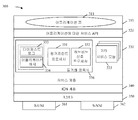
도 3은 정보 중심 네트워킹(Information Centric Networking, ICN)-인에이블드 서비스 프록시의 아키텍처 뷰의 실시예의 개략도이다.
도 4는 ICN-인에이블드 사용자 장비(UE)의 아키텍처 뷰의 실시예의 개략도이다.
도 5는 멀티-티어 하이브리드 컨퍼런스 서비스 네트워크의 계층 뷰의 실시예의 개략도이다.
도 6은 서비스 프록시에서의 다이제스트 트리(digest tree)의 실시예의 개략도이다.
도 7은 컨퍼런스 정보의 실시예의 개략도이다.
도 8은 서비스 프록시에서의 다이제스트 트리 로그의 실시예의 개략도이다.
도 9는 서비스 클라이언트에서의 다이제스트 히스토리 로그의 실시예의 테이블이다.
도 10은 컨퍼런스 부트스트랩 방법의 실시예의 프로토콜 다이아그램이다.
도 11은 컨퍼런스 동기화 방법의 실시예의 프로토콜 다이아그램이다.
도 12는 컨퍼런스 동기화 방법의 또 다른 실시예의 프로토콜 다이아그램이다.
도 13은 컨퍼런스 리커버리 방법의 실시예의 흐름도이다.
도 14는 컨퍼런스 리커버리 방법의 또 다른 실시예의 흐름도이다.
도 15는 ICN 프로토콜 인터레스트 패킷(protocol interest packet)의 실시예의 개략도이다.
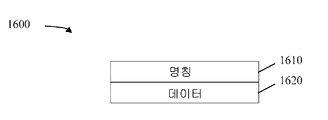
도 16은 ICN 프로토콜 데이터 패킷의 실시예의 개략도이다.BRIEF DESCRIPTION OF THE DRAWINGS For a more complete understanding of the present invention, reference is made to the following brief description, taken in conjunction with the accompanying drawings, in which: FIG.
1 is a schematic diagram of an embodiment of a multi-tier hybrid conference service network.
2 is a schematic diagram of an embodiment of a network element (NE) capable of operating as a node in a multi-tier hybrid conference service network.
3 is a schematic diagram of an embodiment of an architectural view of an Information Centric Networking (ICN) -enabled service proxy.
4 is a schematic diagram of an embodiment of an architectural view of an ICN-enabled user equipment (UE).
5 is a schematic diagram of an embodiment of a hierarchical view of a multi-tier hybrid conference service network.
Figure 6 is a schematic diagram of an embodiment of a digest tree in a service proxy.
7 is a schematic diagram of an embodiment of conference information.
8 is a schematic diagram of an embodiment of a digest tree log in a service proxy;
Figure 9 is a table of embodiments of a digest history log at a service client.
10 is a protocol diagram of an embodiment of a conference bootstrap method.
11 is a protocol diagram of an embodiment of a conference synchronization method.
12 is a protocol diagram of another embodiment of a conference synchronization method.
13 is a flowchart of an embodiment of a conference recovery method.
14 is a flowchart of another embodiment of the conference recovery method.
15 is a schematic diagram of an embodiment of an ICN protocol protocol interest packet.
16 is a schematic diagram of an embodiment of an ICN protocol data packet.
하나 이상의 실시예의 예시적 구현이 아래에 제공되지만, 개시된 시스템 및/또는 방법은 현재 공지되어 있거나 존재하고 있는지에 상관 없이 어떠한 수의 기술을 이용하여서도 구현될 수 있다는 것을 이해하여야 한다. 본 발명은 본 명세서에서 예시되고 설명된 일례의 설계 및 구현을 포함한 아래에 예시된 예시적 구현, 도면 및 기술로 어떠한 방식으로도 제한되지 않아야 하고, 첨부된 청구항들의 범위 및 그 등가 구성의 전체적인 범위 내에서 수정될 수 있다.While an exemplary implementation of one or more embodiments is provided below, it should be understood that the disclosed system and / or method may be implemented using any number of techniques, whether currently known or existing. It is intended that the invention not be limited in any way by the exemplary implementations, drawings, and techniques illustrated herein, including the design and implementation of the example illustrated and described herein, and that the scope of the appended claims and their overall scope Lt; / RTI >
컨퍼런스 어플리케이션 및/또는 시스템은 분산 네트워킹 환경에서 위치된 멀티 파티(multiple party) 간의 실시간 정보 및/또는 미디어 데이터 교환을 지원할 수 있다. 몇몇 컨퍼런스 어플리케이션 및/또는 시스템은 호스트-투-호스트 인터넷 프로토콜(IP) 통신 모델을 통해 구현될 수 있으며, 광역 네트워크(WAN) 링크를 통한 미팅 트래픽(meeting traffic)을 복제할 수 있다. 예컨대, 서버-중심 모델(server-centric model)에서, 중앙 서버는 컨터런스를 제어 및 관리할 수 있고, 참가자(예컨대, 미팅 가입자)로부터의 데이터를 처리하고, 그리고나서 데이터를 역으로 참가자에게 재분배할 수 있다. 서버-중심 모델은 제어 관리에 대해서는 단순할 수도 있지만, 컨퍼런스 데이터의 복제 및/또는 재분배는 서버에서 높은 데이터 트래픽 집중을 야기할 수도 있다. 예컨대, 서버-중심 모델에서의 데이터 트래픽은 N2의 오더(O(N2))에 있을 수 있으며, 여기서 N은 참가자의 수를 나타낼 수 있다. 그러므로, 서버-중심 모델은 대규모 컨퍼런스(예컨대, 1000명 내지 10K 명의 참가자를 갖는)에 적합하지 않을 수 있다.The conference application and / or system may support the exchange of real-time information and / or media data between multiple parties located in a distributed networking environment. Some conference applications and / or systems may be implemented through a host-to-host Internet Protocol (IP) communication model and may replicate meeting traffic over a wide area network (WAN) link. For example, in a server-centric model, a central server can control and manage contingencies, process data from a participant (e.g., a meeting subscriber), and then redistribute the data back to the participants can do. The server-centric model may be simple for control management, but replication and / or redistribution of conference data may result in high data traffic concentration at the server. For example, data traffic in a server-centric model may be in an order of N 2 (O (N 2 )), where N may represent the number of participants. Therefore, the server-centric model may not be suitable for large conferences (e.g., having 1000 to 10K participants).
몇몇 컨퍼런스 서비스 기술은 서버-중심 모델에서의 높은 데이터 트래픽을 감소시키기 위해 컨텐츠 딜리버리 네트워킹(Content Delivery Networking, CDN) 모델 및/또는 P2P 컨텐츠 분산 네트워킹 모델(예컨대, 멀티-서버 아키텍처)을 채용할 수도 있다. 그러나, CDN 모델 및/또는 P2P 컨텐츠 분산 네트워킹 모델은 오버-더-탑(over-the-top, OTT) 솔루션이어도 되며, 여기서 컨텐츠(예컨대, 오디오, 비디오 및/또는 데이터)는 네트워크 조작자가 컨텐츠의 제어 및/또는 분배에 수반되지 않고(예컨대, 컨텐츠 제공자가 네트워크 조작자와 독립적으로 동작함) 인터넷을 통해 소스로부터 최종 사용자에게 전달될 수 있다. 이와 같이, 네트워킹 최적화 및/또는 크로스-레이어 최적화(cross-layer optimization)가 CDN 모델 및/또는 P2P 컨텐츠 분산 네트워킹 모델에서 용이하게 수행될 수 없으며, 그러므로 효율적이지 않은 대역폭 이용을 초래할 수도 있다. 이에 부가하여, CDN 모델 및/또는 P2P 컨텐츠 분산 네트워킹 모델은 MP2MP 통신을 지원할 수 없고, 실시간 상호작용식 통신에 적합하지 않을 수도 있다.Some conference service technologies may employ a Content Delivery Networking (CDN) model and / or a P2P content distributed networking model (e.g., a multi-server architecture) to reduce high data traffic in a server-centric model . However, the CDN model and / or the P2P content distributed networking model may also be an over-the-top (OTT) solution where the content (e.g., audio, video and / or data) (E. G., The content provider operates independently of the network operator) from the source to the end user over the Internet. ≪ / RTI > As such, networking optimization and / or cross-layer optimization can not be easily performed in the CDN model and / or the P2P content distributed networking model, and therefore may lead to inefficient bandwidth utilization. In addition, the CDN model and / or the P2P content distributed networking model can not support MP2MP communication and may not be suitable for real-time interactive communication.
크로노스(Chronos)와 같은 몇몇 다른 컨퍼런스 서비스 기술은 네임 데이터 네트워킹(Name Data Networking, NDN) 모델을 채용하여, 공유 가능하고 분산된 인-네트 스토리지 및 명칭 기반 라우팅 메카니즘(sharable and distributed in-net storage and name-based routing mechanism)과 같은 NDN 특징을 레버리징(leveraging)함으로써 대역폭 이용을 향상시키고 트래픽 부하를 감소시킬 수 있다. NDN은 소비자에 의해 요청될 때에 네트워크를 통해 데이터가 흐르게 하는 수신자가 추진한, 데이터 중심 통신 프로토콜(receiver driven, data centric communication protocol)일 수 있다. NDN에서의 데이터 액세스 모델은 풀-베이스드 모델(pull-based model)로서 지칭될 수 있다. 그러나, 컨퍼런스 이벤트 및/또는 업데이트는 컨퍼런스 참가자가 컨퍼런스 동안 언제든 미팅 업데이트(meeting update)를 게시(publish)할 수 있음에 따라 비결정적인 것(nondeterministic)일 수 있다. 풀-베이스드 모델에서의 비결정적 컨퍼런스 이벤트를 액세스하기 위해, 참가자는 컨퍼런스 이벤트를 능동적으로 질의(query)할 수 있다. 예컨대, 크로노스에서의 모든 참가자는 다른 참가자로부터 미팅 업데이트를 요청하기 위해 질의를 주기적으로 브로드캐스트할 수 있다. 그러므로, 크로노스에서의 제어 시그널링 오버헤드(control signaling overhead)가 현저하게 될 수 있다. 이에 부가하여, 크로노스에서의 데이터 평면(data plane)과 제어 평면(control plane)은 동시적인 데이터 업데이트 및/또는 복구를 위한 복잡한 지원을 초래할 수 있다. 그러므로, 크로노스는 실시간 상호작용식 대규모 컨퍼런스를 지원하는데 적합하지 않을 수 있다.Several other conference service technologies, such as Chronos, employ a Name Data Networking (NDN) model to provide a shared and distributed in-network storage and name-based routing mechanism leveraging NDN features such as name-based routing mechanisms to improve bandwidth utilization and reduce traffic load. The NDN may be a receiver driven, data centric communication protocol initiated by a recipient that causes data to flow through the network when requested by the consumer. The data access model in the NDN can be referred to as a pull-based model. However, a conference event and / or update may be nondeterministic as the conference participant may publish a meeting update at any time during the conference. To access non-deterministic conference events in the full-bodied model, a participant can actively query conference events. For example, all participants in the kronos may periodically broadcast a query to request a meeting update from another participant. Therefore, the control signaling overhead in the kronos can become significant. In addition, the data plane and control plane in the Khronos can result in complex support for simultaneous data updating and / or recovery. Therefore, Kronos may not be suitable for supporting large-scale, real-time interactive conferences.
ICN 아키텍처는 정보 전달에 초점을 맞추는 네트워크 아키텍처의 타입이다. ICN 아키텍처는 또한 컨텐츠-어웨어, 컨텐츠-중심, 또는 데이터 지향 네트워킹 아키텍처로서도 알려져 있을 수 있다. ICN 모델은 IP 통신 프로토콜을 호스트-투-호스트 모델로부터 인포메이션-오브젝트-투-오브젝트 모델(information-object-to-object model)로 시프트할 수도 있다. IP 호스트-투-호스트 모델은 스토리지 위치(예컨대, 호스트 IP 어드레스)에 의해 데이터를 어드레스하고 식별할 수 있는 반면, 인포메이션-오브젝트-투-오브젝트 모델은 컨텐츠-베이스드인 논-로케이션 베이스드 어드레싱 방식(non-location based addressing scheme)을 채용할 수 있다. 정보 오브젝트는 ICN 통신 모델에서의 엔티티를 위한 제1 클래스 업스트랙션(first class abstraction)일 수 있다. 정보 오브젝트의 몇몇 예는 컨텐츠, 데이터 스트림, 서비스, 사용자 엔티티, 및/또는 디바이스를 포함할 수 있다. ICN 아키텍처에서, 정보 오브젝트는 정보 오브젝트를 어드레스하기 위해 사용될 수 있는 비-위치 기반 명칭(non-location based name)이 할당되어, 정보 오브젝트를 위치로부터 디커플링할 수 있다. 정보 오브젝트에의 라우팅 및 정보 오브젝트로부터의 라우팅은 할당된 명칭을 기반으로 할 수 있다. ICN 아키텍처는 인-네트워킹 캐싱(in-network caching)을 제공할 수 있으며, 여기에서는 임의의 네트워크 디바이스 또는 요소가 임시 컨텐츠 서버(temporary content server)로서 서빙할 수 있고, 이것은 컨텐츠 트랜스퍼의 성능을 향상시킬 수 있다. ICN에서의 위치 및 명칭 기반 라우팅으로부터의 정보 오브젝트의 디커플링은 이동성(mobility)이 효율적으로 핸들링될 수 있도록 할 수 있다. ICN 아키텍처는 또한 데이터 컨텐츠를 운송하는 통신 채널을 안전하게 하는 대신 데이터 컨텐츠에 보안 크레덴셜(security credential)을 첨부함으로써 보안을 제공할 수도 있다. 이와 같이, 컨퍼런스 어플리케이션은 실시간 상호작용식 대규모 컨퍼런스를 지원하기 위해 명칭 기반 라우팅, 보안, 멀티캐스팅, 및/또는 다중-경로 라우팅과 같은 ICN 피처(ICN feature)를 레버러지할 수 있다.The ICN architecture is a type of network architecture that focuses on information delivery. The ICN architecture may also be known as content-aware, content-centric, or data-oriented networking architecture. The ICN model may shift the IP communication protocol from the host-to-host model to an information-object-to-object model. The IP host-to-host model can address and identify data by storage location (e.g., host IP address), while the information-object-to-object model provides content- a non-location based addressing scheme may be employed. The information object may be a first class abstraction for an entity in the ICN communication model. Some examples of information objects may include content, data streams, services, user entities, and / or devices. In an ICN architecture, an information object may be assigned a non-location based name that can be used to address the information object to decouple the information object from the location. Routing to and from the information object may be based on the assigned name. The ICN architecture can provide in-network caching where any network device or element can serve as a temporary content server, which can improve the performance of the content transfer . Decoupling of information objects from location and name-based routing in the ICN can enable mobility to be handled efficiently. The ICN architecture may also provide security by attaching a security credential to the data content instead of securing the communication channel carrying the data content. As such, conferencing applications can leverage ICN features such as name-based routing, security, multicasting, and / or multi-path routing to support large-scale, interactive conferences.
본 명세서에는 컨퍼런스 업데이트를 동기화하기 위한 푸시 및 풀 메카니즘의 조합을 채용할 수 있는 하이브리드 컨퍼런스 서비스 제어 아키텍처가 개시되어 있다. 하이브리드 컨퍼런스 서비스 제어 아키텍처는 복수의 컨퍼런스 참가자에게 서빙하는 복수의 분산 서비스 프록시를 포함할 수 있다. 각각의 서비스 프록시는 서비스 프록시에 연계되는 참가자의 그룹을 서빙할 수 있다. 서비스 프록시는 컨퍼런스 업데이트를 동일한 컨퍼런스를 서빙하는 원격 서비스 프록시와 동기화하고 통합(consolidate)하며, 통합된 컨퍼런스 업데이트를 연계된 참가자에게 배포할 수 있다. 컨퍼런스 참가자는 참가자의 핑거프린트(FP)를 포함할 수 있으며, 이러한 핑거프린트는 참가자의 서명 및/또는 크레덴셜을 포함할 수 있거나, 및/또는 FP에 연계된 시퀀스 번호를 업데이트할 수 있다. 참가자와 서비스 프록시 간의 제어 흐름의 동기화는 푸시 메카니즘을 채용할 수도 있다. 그러나, 서비스 프록시들 간의 제어 흐름의 동기화는 푸시 및/또는 풀 메카니즘을 채용할 수 있다. 일실시예에서, 각각의 서비스 프록시 및 각각의 참가자는 컨퍼런스 업데이트를 추적하기 위해 다이제스트 로그(digest log)를 유지할 수 있다. 각각의 다이제스트 로그는 참가자의 FP의 히스토리와 컨퍼런스의 현재의 로컬라이즈드 뷰(current localized view)(예컨대, 다이제스트 트리의 형태의)의 스냅샷을 포함할 수 있다. 예컨대, 각각의 서비스 프록시는 연계된 참가자(예컨대, 로컬 다이제스트 트리)의 스냅샷 뷰 및 컨퍼런스를 서빙하는 다른 원격 서비스 프록시를 갖는 프록시 다이제스트 트리와 프록시 다이제스트 트리에 대응하는 FP 업데이트의 히스토리를 포함할 수 있다. 그러므로, 동기화가 서비스 프록시와 연계된 참가자 간의 자식-부모 관계에 따라 동작할 수 있다. 개시된 하이브리드 컨퍼런스 서비스 제어 아키텍처는 네이티브 ICN 인-네트워크 스토리지 및 명칭 기반 라우팅을 레버러지할 수 있다. 개시된 하이브리드 컨퍼런스 서비스 제어 아키텍처는 제어 평면과 데이터 평면 분리를 제공할 수 있다. 개시된 하이브리드 컨퍼런스 서비스 제어 아키텍처는 네트워크 인터럽트로부터의 고속 복구와 컨퍼런스 업데이트의 효율적인 동기화를 제공할 수 있다. 개시된 하이브리드 컨퍼런스 서비스 제어 아키텍처는 실시간 상호작용식 대규모 컨퍼런스를 지원하는 적합할 수 있다.A hybrid conference service control architecture is disclosed herein that can employ a combination of push and pull mechanisms to synchronize conference updates. The hybrid conference service control architecture may include a plurality of distributed service proxies serving a plurality of conference participants. Each service proxy can serve a group of participants associated with the service proxy. The service proxy can synchronize and consolidate conference updates with remote service proxies that serve the same conferences, and distribute unified conference updates to the associated participants. The conference participant may include a participant's fingerprint (FP), which may include the participant's signature and / or credential, and / or update the sequence number associated with the FP. The synchronization of the control flow between the participant and the service proxy may employ a push mechanism. However, synchronization of the control flow between service proxies may employ a push and / or pull mechanism. In one embodiment, each service proxy and each participant may maintain a digest log to track conference updates. Each digest log may contain a snapshot of the participant's FP's history and the current localized view of the conference (e.g., in the form of a digest tree). For example, each service proxy may include a proxy digest tree with a snapshot view of the associated participant (e.g., a local digest tree) and another remote service proxy serving the conference, and a history of FP updates corresponding to the proxy digest tree have. Thus, synchronization can operate according to the child-parent relationship between the participants associated with the service proxy. The disclosed hybrid conference service control architecture can leverage native ICN in-network storage and name-based routing. The disclosed hybrid conference service control architecture can provide control plane and data plane separation. The disclosed hybrid conference service control architecture can provide fast recovery from network interrupts and efficient synchronization of conference updates. The disclosed hybrid conference service control architecture may be suitable to support large-scale, interactive conferences.
도 1은 멀티-티어 하이브리드 컨퍼런스 서비스 네트워크(100)의 실시예의 개략도이다. 네트워크(100)는 복수의 컨퍼런스 서비스 라우터(SR)(120) 및 복수의 UE(130)를 포함할 수 있다. 복수의 SR(120)은 하나 이상의 네트워크(170)에 위치될 수 있다. 예컨대, 네트워크(170)는 폭넓게 흩어져 분산된 서비스 및/또는 임의의 다른 네트워크를 제공하기 위해 에지 컴퓨팅을 채용하는 에지 클라우드 네트워크(170)이어도 된다. 각각의 UE(130)는 링크(142)(예컨대, 무선 및/또는 유선 링크)를 통해 네트워크(180)에 연결될 수도 있다. 실시예에서, 네트워크(180)는 임의의 레이어 투(L2) 액세스 네트워크(예컨대, 무선 액세스 네트워크, 유선 액세스 네트워크 등)이어도 되며, 여기에서 L2는 OSI(Open System Interconnection) 모델에서의 데이터 링크 계층일 수 있다. 네트워크(170, 180)는 링크(141)를 통해 인터넷 네트워크(150)를 경유하여 상호접속될 수 있다. 인터넷 네트워크(150)는 하나 이상의 상호접속된 근거리 네트워크(LAN), 도시권 네트워크(metropolitan area network, MAN), 광역 네트워크(WAN) 등으로 형성될 수 있다. 실시예에서, 인터넷 네트워크(150)는 ISP(Internet Service Provider) 네트워크를 포함할 수 있다. 링크(141)는 광섬유 링크, 전기 링크와 같은 물리적 접속 및/또는 논리적 접속을 포함할 수 있다. 각각의 네트워크(150, 170 및/또는 180)는 당업자에 의해 이해될 바와 같이 패킷을 라우팅하고 통신하는데 적합한 라우터, 게이트웨이, 스위치, 에지 라우터, 에지 게이트웨이 및/또는 임의의 네트워크 디바이스일 수 있는 복수의 NE(140)를 포함할 수 있다. 네트워크(150, 170 및/또는 180)는 교호적으로 구성될 수 있으며, SR(120)과 UE(130)가 동일한 기능을 달성하기 위해 당업자에 의해 결정된 바와 같이 네트워크(100)에 교호적으로 위치될 수 있다.1 is a schematic diagram of an embodiment of a multi-tier hybrid
SR(120)은 대규모 컨퍼런스(예컨대, 1000명 내지 10000명의 참가자들과의 대화방, E-컨퍼런스 서비스, 버추얼 화이트 보드(VWB) 서비스 등)를 위한 제어 및/또는 시그널링을 서로 간에 및 복수의 컨퍼런스 참가자와 동기화하도록 구성될 수 있는 라우터, 버추얼 머신(VM), 및/또는 임의의 네트워크 디바이스일 수 있으며, 여기서 이러한 참가자는 UE(130)를 통해 컨퍼런스에 참가할 수 있다. 예컨대, 각각의 SR(120)은 컨퍼런스 프록시로서 동작할 수 있으며, 서비스 프록시로서 지칭될 수 있다. 실시예에서, SR(120)은 하나 이상의 VM을 호스팅할 수 있으며, 여기서 각각의 VM은 상이한 컨퍼런스를 위한 서비스 프록시로서 동작할 수 있다. 각각의 SR(120)은 컨퍼런스 참가자의 상이한 그룹을 서빙할 수 있다는 것에 유의하여야 한다.
각각의 UE(130)는 하나 이상의 대규모 컨퍼런스에 참여하도록 구성된 모바일 디바이스, 데스크탑, 모바일 디바이스, 셀폰(cellphone) 및/또는 임의의 네트워크 디바이스와 같은 최종 사용자 디바이스일 수 있다. 예컨대, 컨퍼런스 참가자는 UE(130) 상에서 컨퍼런스 어플리케이션을 실행함으로써 컨퍼런스에 참여할 수 있다. 컨퍼런스 참가자는 FP 및 컨퍼런스 명칭을 제공함으로써 특정 컨퍼런스에 참여하도록 요청할 수 있다. 컨퍼런스 참가자는 또한 컨퍼런스를 위한 데이터를 구독하거나 및/또는 발행할 수 있다. 네트워크(100)에서, 각각의 UE(130)는 서비스 클라이언트로서 지칭될 수 있으며, 컨퍼런스 제어 및/또는 시그널링을 서비스 프록시와 동기화할 수 있다.Each
실시예에서, 네트워크(100)는 대규모 컨퍼런스 어플리케이션을 지원하기 위해 ICN 명칭 기반 라우팅, 보안, 멀티캐스팅, 및/또는 다중-경로 라우팅을 채용할 수 있는 ICN-인에이블드 네트워크일 수 있다. 네트워크(100)는 데이터 평면과는 별도로 제어 평면을 포함할 수 있다. 예컨대, 네트워크(100)는 제어 평면에서의 컨퍼런스 제어 및 시그널링을 위한 투-티어(예컨대, 프록시-클라이언트) 아키텍처를 채용할 수 있다. 투-티어 아키텍처는 프로시 계층 및 클라이언트 계층을 포함할 수 있다. 프록시 계층은 복수의 SR(120)에 위치된 복수의 서비스 프록시를 포함할 수 있으며, 클라이언트 계층은 복수의 UE(130)에 위치된 복수의 서비스 클라이언트를 포함할 수 있다.In an embodiment, the
실시예에서, 제어 경로(191, 192)는 특히 컨퍼런스 제어 및 시그널링을 교환하기 위한 논리 경로일 수 있다. SR(120)에 위치된 서비스 프록시는 컨퍼런스 제어 및 시그널링을 제어 경로(191)를 통해 컨퍼런스를 서빙하는 다른 SR(120)에 위치된 원격 서비스 프록시와 교환할 수 있다. 이에 부가하여, 각각의 서비스 프록시는 컨퍼런스 제어 및 시그널링을 제어 경로(192)를 통해 UE(130)에 위치된 연관된 서비스 클라이언트와 교환할 수 있다. 서비스 프록시는 제어 평면 기능에 참여할 수 있지만, 데이터 평면 기능에 참여할 수 없다는 것에 유의하여야 한다. 이와 같이, 서비스 클라이언트들 간의 데이터 통신(예컨대, 오디오, 비디오, 리치 텍스트 교환(rich text exchange)이 컨퍼런스 제어로부터 독립될 수 있다.In an embodiment, the
실시예에서, 푸시 메카니즘은 서비스 프록시들 간의 뿐만 아니라 서비스 프록시와 서비스 클라이언트 간의 컨퍼런스에서 제어(예컨대, FP, 다른 서명된 정보, 이벤트 등)를 동기화하기 위해 채용될 수 있다. 푸시 메카니즘은 관심이 있는 수신자가 정보 소스로부터 정보를 풀링할 수 있는 ICN 프로토콜 풀 메카니즘에 반대되는 것으로서 관심이 있는 수신자로부터의 요청 없이 정보의 발송자 개시 전송를 지칭할 수 있다. 예컨대, 서비스 클라이언트는 FP 업데이트를 개시하고 FP 업데이트를 서비스 클라이언트에게 서빙하는 서비스 프록시에 푸시할 수 있다. FP 업데이트를 수신하는 때에, 서비스 프록시는 모든 수신된 FP 업데이트를 제1 프록시 업데이트에 병합하고, 제1 프록시 업데이트를 동일한 컨퍼런스를 서빙하는 다른 원격 서비스 프록시에 푸시할 수 있다. 서비스 프록시는 또한 다른 원격 서비스 프록시 중의 하나로부터 제2 프록시 업데이트를 수신할 수 있고, 제2 프록시 업데이트를 서비스 프록시에 의해 서빙된 참가자에게 푸시할 수 있다. 푸시 메카니즘은 실시간 또는 거의 실시간 통신을 가능하게 할 수 있으며, 이것은 컨퍼런스 서비스를 위한 성능 계수(performance factor)일 수 있다.In an embodiment, the push mechanism may be employed to synchronize control (e.g., FP, other signed information, events, etc.) at a conference between service proxies as well as between service proxies and service clients. The push mechanism may refer to a sender initiated transmission of information without a request from the interested recipient as opposed to an ICN protocol pull mechanism in which the interested recipient may pool information from the information source. For example, the service client may initiate the FP update and push the FP update to the service proxy serving the service client. Upon receiving the FP update, the service proxy may merge all received FP updates into the first proxy update and push the first proxy update to another remote service proxy serving the same conference. The service proxy can also receive a second proxy update from one of the other remote service proxies and push the second proxy update to the participant served by the service proxy. The push mechanism may enable real-time or near real-time communication, which may be a performance factor for the conference service.
또 다른 실시예에서, 서비스 클라이언트 및 서비스 프록시는 위에서 설명한 바와 같이 실질적으로 유사한 푸시 메카니즘을 채용함으로써 컨퍼런스 제어를 동기화할 수 있다. 그러나, 서비스 프록시들 간의 동기화는 풀 메카니즘을 채용할 수 있다. 예컨대, 제1 서비스 프록시는 중요한 동기화 인터레스트(outstanding synchronizing(sync) interest)를 제2 서비스 프록시에 발송할 수 있으며, 여기서 동기화 인터레스트는 제1 서비스 프록시에서의 가장 최근의 글로벌 컨퍼런스 뷰를 포함할 수 있다. 제2 프록시가 제2 프록시에 의해 서빙된 클라이언트로부터 FP 업데이트를 수신하는 때에, 제2 프록시는 FP 업데이트를 합병할 수 있고, 제2 프록시에서의 글로벌 컨퍼런스 뷰를 업데이트할 수 있다. 제2 프록시는 동기화 인터레스트에서 지시된 제1 서비스 프록시의 글로벌 컨퍼런스 뷰가 유효 기간이 지났다는 것을 검출할 수 있고, 그러므로 가장 나중에 업데이트된 글로벌 컨퍼런스 뷰를 지시하는 제1 서비스 프록시에 동기화 응답을 발송할 수 있다. 서비스 클라이언트가 업데이트된 FP를 수신한 후, 서비스 클라이언트는 명칭 기반 라우팅과의 네이티브 ICN 인-네트워크 스토리지를 통해 데이터를 페치(fetch)할 수 있다는 것에 유의하여야 한다. 몇몇 실시예에서, 컨퍼런스 데이터(예컨대, 오디오, 비디오, 및/또는 데이터)가 ICN 프로토콜에서 풀링 모델을 채용함으로써 참가자 간에 교환될 수 있다.In another embodiment, the service client and the service proxy may synchronize the conference control by employing a substantially similar push mechanism as described above. However, synchronization between service proxies may employ a full mechanism. For example, the first service proxy may send an outstanding synchronizing (sync) interest to the second service proxy, where the synchronization interpreter may include the most recent global conference view at the first service proxy have. When the second proxy receives the FP update from the client served by the second proxy, the second proxy can merge the FP update and update the global conference view at the second proxy. The second proxy may detect that the global conference view of the first service proxy indicated in the synchronization inter- est is out of validity and therefore send the synchronization response to the first service proxy indicating the last updated global conference view . It should be noted that after the service client receives the updated FP, the service client may fetch data through the native ICN in-network storage with name-based routing. In some embodiments, conference data (e.g., audio, video, and / or data) may be exchanged between participants by employing a pooling model in the ICN protocol.
도 2는 본 명세서에 개시된 임의의 체계를 구현함으로써 서비스 프록시(예컨대, SR(120)에 위치된) 및/또는 서비스 클라이언트(예컨대, UE(130)에 위치된)로서 동작할 수 있는 NE(200)의 실시예의 개략도이다. NE(200)는 단일 노드에서 구현될 수 있거나, 또는 NE(200)의 기능이 복수의 노드에서 구현될 수 있다. 당업자는 NE라는 용어가 NE(200)가 단지 예인 넓은 범위의 디바이스를 포괄한다는 것을 인지할 것이다. NE(200)는 논의를 명료하게 하기 위해 포함되었지만, 본 발명의 어플리케이션을 특정 NE 실시예 또는 NE 실시예의 부류로 제한하려는 것은 아니다. 본 발명에서 설명된 피처/방법의 적어도 몇몇은 NE(200)와 같은 네트워크 장치 또는 콤포넌트에에서 구현될 수 있다. 예컨대, 본 발명에서의 피처/방법은 하드웨어, 펌웨어 및/또는 하드웨어 상에서 실행되도록 설치된 소프트웨어를 이용하여 구현될 수 있다. 도 2에 도시된 바와 같이, NE(200)는 송신기, 수신기 또는 이들의 조합일 수 있는 송수신기(Tx/Rx)(210)를 포함할 수 있다. Tx/Rx(210)는 다른 노드로부 프레임을 송신하거나 및/또는 수신하기 위한 복수의 다운스트림 포트(220)에 연결될 수 있으며, Tx/Rx(210)는 각각 다른 노드로부터 프레임을 송신하거나 및/또는 수신하기 위한 복수의 업스트림 포트(250)에 연결될 수 있다. 프로세서(230)는 프레임을 처리하거나 및/또는 프레임을 어느 노드로 보낼지를 결정하기 위해 Tx/Rx(210)에 연결될 수 있다. 프로세서(230)는 하나 이상의 멀티-코어 프로세서 및/또는 메모리 디바이스(232)를 포함할 수 있으며, 이들은 데이터 스토어, 버퍼 등으로서 기능할 수 있다. 프로세서(230)는 범용 프로세서로서 구현될 수 있거나, 또는 하나 이상의 ASIC(application specific integrated circuit) 및/또는 디지털 신호 처리기(DSP)의 일부일 수도 있다. 프로세서(230)는 컨퍼런스 부트스트랩 방법(1000), 컨퍼런스 동기화 방법(1100 및/또는 1200), 컨퍼런스 복구 방법(1300 및/또는 1400), 및/또는 여기에서 논의된 임의의 다른 MP2MP 관련 통신 기능을 구현할 수 있는 컨퍼런스 서비스 제어 관리 모듈(233)을 포함할 수 있다. 다른 실시예에서, 컨퍼런스 서비스 제어 관리 모듈(233)은 프로세서(230)에 의해 실행될 수 있는 메모리 디바이스(232)에 저장된 명령(예컨대, 컴퓨터 프로그램 제품)으로서 구현될 수 있다. 메모리 디바이스(232)는 예컨대 랜덤 액세스 메모리(RAM)와 같은 컨텐츠를 일시적으로 저장하기 위한 캐시를 포함할 수 있다. 이에 부가하여, 메모리 디바이스(232)는 예컨대 판독 전용 메모리(ROM)과 같은 컨텐츠를 비교적 길게 저장하기 위한 장기적 스토리지를 포함할 수 있다. 예컨대, 캐시 및 장기적 스토리지는 동적 랜덤 액세스 메모리(DRAM), 솔리드-스테이트 드라이브(SSD), 하드 디스크 또는 이들의 조합을 포함할 수 있다.2 is a block diagram of an exemplary embodiment of an
실행 가능 명령을 프로그래밍하거나 및/또는 NE(200) 상으로 로딩함으로써, 프로세서(230) 및/또는 메모리 디바이스(232) 중의 적어도 하나가 변경되어, NE(200)를 부분적으로는 본 발명에 의해 교시된 신규 기능을 갖는 멀티-코어 포워딩 아키텍처와 같은 특정한 기기 또는 장치로 변환한다. 실행 가능한 소프트웨어를 컴퓨터 내에 로딩함으로써 구현될 수 있는 기능은 널리 알려진 설계 규칙에 의한 하드웨어 구현으로 전환될 수 있다는 것은 건기 공학 및 소프트웨어 공학 분야에서는 기본적인 것이다. 개념을 소프트웨어로 구현할지 하드웨어로 구현할지의 결정은 통상적으로 소프트웨어 영역으로부터 하드웨어 영역으로 바꾸는데 수반된 어떠한 문제보다는 발생될 유닛의 수와 설계의 안전성의 고려에 달려있다. 일반적으로, 여전히 빈번한 변경에 놓이게 되는 설계는 소프트웨어로 구현되는 것이 바람직할 것이며, 그 이유는 하드웨어 구현을 리-스피닝(re-spinning)하는 것이 소프트웨어 설계를 리-스피닝하는 것보다 더 비용이 많이 들기 때문이다. 일반적으로, 대량으로 발생될 안정한 설계는 예컨대 ASIC과 같이 하드웨어로 구현되는 것이 바람직할 것이며, 그 이유는 대량 생산을 위해서는 하드웨어 구현이 소프트웨어 구현보다 덜 비싸기 때문일 것이다. 간혹, 설계는 소프트웨어 폼으로 개발되고 테스트괸 후에 널리 공지된 설계 규칙에 의해 소프트웨어의 명령을 하드웨어에 내장하는 ASIC에서 등가의 하드웨어 구현으로 변환한다. 새로운 ASIC에 의해 제어된 기기가 특정 기기 또는 장치인 것과 동일한 양상으로, 마찬가지로, 실행 가능한 명령으로 프로그래밍되거나 및/또는 로딩되는 컴퓨터는 특정한 기기 또는 장치로서 보여질 수 있다.At least one of the
도 3은 멀티-티어 하이브리드 컨퍼런스 서비스 네트워크(예컨대, 네트워크 100)에서 SR(예컨대, SR 120)에 위치될 수 있는 ICN-인에이블드 서비스 프록시(300)의 아키텍처 뷰의 실시예의 개략도이다. 서비스 프록시(300)는 어플리케이션 계층(310), 어플리케이션 계층에 대한 서비스 어플리케이션 프로그래밍 인터페이스(API), 서비스 계층(330), ICN 계층(340), L2/레이어 쓰리(L3) 계층(350), 서비스 사용자-대-네트워크 인터페이스(S-UNI) 계층(361), 및 서비스 네트워크-투-네트워크 인터페이스(S-NNI) 계층(362)을 포함할 수 있다.3 is a schematic diagram of an embodiment of an architectural view of an ICN-enabled
어플리케이션 계층(310)은 채트, VWB 및/또는 기타 어플리케이션과 같은 복수의 어플리케이션을 포함할 수 있는 어플리케이션 풀(311)을 포함할 수 있다. 어플리케이션 계층(320)에 대한 서비스 API는 어플리케이션 계층(310)과 서비스 계층(330) 간의 인터페이싱을 위한 API의 세트를 포함할 수 있다. API는 잘 정의된 함수 호출 및/또는 입력 파라미터, 출력 파라미터, 및/또는 리턴 파라미터를 포함하는 프리미티브(primitive)일 수 있다.The
서비스 계층(330)은 동기화 프록시(336) 및 기타 서비스 모듈(335)을 포함할 수 있다. 예컨대, 동기화 프록시(336)는 복수의 다른 동기화 프록시와 함께 컨퍼런스(예컨대, 채트, VWB 등)를 서빙할 수 있으며, 컨퍼런스 참가자 및/또는 서비스 클라이언트(예컨대, UE 130에 위치된)를 위한 제어 프록시로서 동작할 수 있다. 다른 서비스 모듈(335)은 다른 서비스를 관리하거나 및/또는 제어할 수 있다. ICN 계층(340)은 ICN 프로토콜 계층 모듈을 포함할 수 있으며, 이 모듈은 컨텐츠 스토어(CS)(예컨대, 인터레스트 및/또는 데이터를 캐싱하기 위한), 포워딩 정보 베이스(FIB)(예컨대, 명칭 기반 라우팅 룩업), 및/또는 펜딩 인터레스트 테이블(PIT)(예컨대, 포워딩된 인터레스트의 레코드)을 포함할 수 있다. L2/L3 계층(350)은 네트워킹 프로토콜 스택 모듈을 포함할 수 있으며, 이 모듈은 데이터를 포함하거나 및/또는 네트워크 송신을 위한 인코딩 및/또는 디코딩을 어드레스할 수 있다. L2 계층 및 L3 계층은 OSI 모델에서의 네트워크 계층 및 데이터 링크 계층으로서 지칭될 수 있다. S-UNI 계층(361)은 네트워크에 위치된 하나 이상의 컨퍼런스 참가자(예컨대, UE 130에 위치된)와 인터페이스할 수 있다(예컨대, 네트워크와 사용자 간의 시그널링 기능). S-NNI 계층(361)은 네트워크에 위치된 하나 이상의 SR(예컨대, SR 120에 위치된)과 인터페이스할 수 있다(예컨대, 네트워크들 간의 시그널링 기능).The
동기화 프록시(336)는 컨퍼런스 참가자의 FP를 동기화하기 위해 다른 원격 서비스 프록시와 통신할 수 있다. 동기화 프록시(336)는 FP 프로세서(331), 허트비트 신호 프로세서(332), 다이제스트 로그(333), 및 어플리케이션 캐시(334)를 포함할 수 있다. FP 프로세서(331)는 서비스 클라이언트 및/또는 원격 서비스 프록시로부터 FP 업데이트(예컨대, 참가자의 FP)를 수신할 수 있다. FP 프로세서(331)는 또한 FP 업데이트를 서비스 클라이언트 및/또는 원격 서비스 프록시에 발송할 수 있다. FP 프로세서(331)는 아래에 더욱 전체적으로 설명되는 바와 같이 서비스 클라이언트 및/또는 원격 서비스 프록시로부터 수신된 FP 업데이트를 추적하고 유지할 수 있다. FP 업데이트는 ICN 계층(340), L2/L3 계층(350), 및/또는 S-NNI 계층(360)을 통해 통지 메시지 및/또는 동기화 메시지의 형태로 발송되거나 및/또는 수신될 수 있다. 통지 메시지 및/또는 동기화 메시지는 ICN 인터레스트 패킷 및/또는 ICN 데이터 패킷을 포함할 수 있다는 것에 유의하여야 하며, 이들 패킷은 ICN 프로토콜을 따라 핸들링(예컨대, FIB에 따라 포워딩되거나 및/또는 CS에 캐싱)될 수 있다.The
허트비트 신호 프로세서(332)는 서비스 프록시(300)에 부착된 서비스 클라이언트 및/또는 원격 서비스 프록시의 활성(liveliness)(예컨대, 기능 및 접속성 상태)을 모니터링하고 교환할 수 있다. 예컨대, 허트비트 신호 프로세서(332)는 허트비트 지시 신호(예컨대, 주기적으로 및/또는 이벤트 추진된)를 발생하여 원격 서비스 프록시 및/또는 부착된 서비스 클라이언트에게 발송할 수 있다. 허트비트 신호 프로세서(332)는 또한 원격 서비스 프록시 및 부착된 서비스 클라이언트로부터 허트비트 지시 신호를 들을(listen) 수 있다. 몇몇 실시예에서, 허트비트 신호 프로세서(332)는 허트비트 지시 신호의 수신을 확인하기 위해 허트비트 응답 신호를 발송할 수 있다. 허트비트 신호 프로세서(332)가 사전 결정된 타임아웃 간격을 초과하는 지속시간에 걸쳐 원격 서비스 프록시 및/또는 부착된 서비스 클라이언트로부터 허트비트 지시 신호 및/또는 허트비트 응답 신호를 놓쳤다는(missing) 것을 검출하는 때에, 허트비트 신호 프로세서(332)는 네트워크 장애 신호를 어플리케이션 계층(310)에 발송하여, 결함성 서비스 클라이언트(faulty service client) 및/또는 결함성 원격 서비스 프록시를 서빙하는 어플리케이션에게 네트워크 장애를 통지할 수 있다. 허트비트 신호는 ICN 계층(340), L2/L3 계층(350) 및 S-NNI 계층(360)을 통해 허트비트 메시지의 형태로 발송되거나 및/또는 수신될 수 있다. 어트비트 메시지가 ICN 인터레스트 패킷 및/또는 ICN 데이터 패킷을 포함할 수 있다는 것에 유의하여야 하며, 이들은 ICN 프로토콜(예컨대, FIB에 따라 포워딩되고 CS에 캐시된)에 따라 핸들링될 수 있다.The
다이제스트 로그(333)는 최근의 FP 업데이트를 기록하는 캐시 또는 임의의 일시적인 데이터 스토리지이어도 된다. 다이제스트 로그(333)는 지정된 시간에서 부착된 참가자(예컨대, FP를 포함하는) 전부와 원격 프록시(예컨대, 몇몇 다이제스트 정보) 전부를 포함한 컨퍼런스 서비스의 로컬 뷰의 스냅샷을 저장할 수 있으며, 여기서 로컬 뷰가 보다 전체적으로 아래에 설명된 바와 같이 다이제스트 트리의 형태로 표현될 수 있다. 다이제스트 로그(333)는 또한 다이제스트 트리에 대응하는 FP 업데이트의 히스토리를 저장할 수 있으며, 여기에서 각각의 엔트리는 아래에 보다 전체적으로 설명되는 바와 같이 <global root digest>:<global digest tree>:<local digest tree>(<글로벌 루트 다이제스트>:<글로벌 다이제스트 트리>:<로컬 다이제스트 트리>)의 형태로 될 수 있다. 어플리케이션 캐시(334)는 송신 중인 FP를 저장하는 일시적인 데이터 스토리지일 수 있다(예컨대, 송신 상태가 확인될 수 없음). FP 프로세서(331)는 FP 업데이트를 저장하고 추적하기 위한 다이제스트 로그(333) 및/또는 어플리케이션 캐시(334)를 관리할 수 있다. 실시예에서, FP 프로세서(331) 및 허트비트 신호 프로세서(332)는 하나 이상의 컨퍼런스(예컨대, 채트 및 VWB)를 서빙할 수 있다. 이러한 실시예에서, FP 프로세서(331)는 상이한 컨퍼런스를 위한 상이한 다이제스트 로그(333) 및/또는 상이한 어플리케이션 캐시(334)를 채용할 수 있다.The digest
도 4는 ICN-인에이블드 사용자 장비(UE)(400)(예컨대, UE 130)의 아키텍처 뷰의 실시예의 개략도이며, 이것은 멀티-티어 하이브리드 컨퍼런스 서비스 네트워크(예컨대, 네트워크 100)에 위치될 수 있다. UE(400)는 서비스 프록시(300)에서와 같이 실질적으로 유사한 아키텍처를 포함할 수 있다. 예컨대, UE(400)는 어플리케이션 계층(410), 어플리케이션 풀(411), 어플리케이션 계층에 대한 서비스 API(420), 서비스 계층(430), 다른 서비스 모듈(435), ICN 계층(440), 및 L2/L3 계층(450)을 포함할 수 있으며, 이들은 어플리케이션 계층(310), 어플리케이션 풀(311), 어플리케이션 계층에 대한 서비스 API(320), 서비스 계층(330), 다른 서비스 모듈(335), ICN 계층(340), 및 L2/L3 계층(350)과 실질적으로 유사할 수 있다. 그러나, 서비스 계층(430)은 서비스 프록시(300)에서와 같이 동기화 프록시(336) 대신에 동기화 클라이언트(436)를 포함할 수 있다. 이에 부가하여, 서비스 클라이언트(400)는 서비스 프록시(300)에서와 같이 S-UNI 계층(361) 및 S-NNI 계층(362) 대신에 S-UNI 제어 계층(461) 및 S-UNI 데이터 계층(462)을 포함할 수 있다. S-UNI 데이터 계층(462)은 컨퍼런스 데이터(예컨대, 비디오, 오디오, 리치 텍스트)를 네트워크에서의 하나 이상의 컨퍼런스 참가자(예컨대 UE(130)에 위치된)와 교환할 수 있다. S-UNI 제어 계층(461)은 제어 시그널링을 네트워크와 교환하기 위해 서비스 프록시와 인터페이스할 수 있다.4 is a schematic diagram of an embodiment of an architectural view of an ICN-enabled user equipment (UE) 400 (e.g., UE 130), which may be located in a multi-tier hybrid conference service network . The
동기화 클라이언트(436)는 컨퍼런스에 참가하도록 구성된 서비스 클라이언트일 수 있다. 동기화 클라이언트(436)는 ICN 계층(440), L2/L3 계층(450), 및 S-UNI 제어 계층(461)을 통해 서비스 프록시와 통신할 수 있다. 동기화 클라이언트(436)는 FP 프로세서(431), 허트비트 신호 프로세서(432), 다이제스트 로그(433) 및 어플리케이션 캐시(434)를 포함할 수 있다.The
FP 프로세서(431)는 FP 프로세서(331)와 실질적으로 유사할 수 있다. 그러나, FP 프로세서(431)는 FP 업데이트(예컨대, 컨퍼런스에 가입(join), 컨퍼런스를 탈퇴(leave), 컨퍼런스에 재가입)를 서비스 프록시에 발송할 수 있고, 서비스 프록시로부터 다른 참가자의 FP 업데이트를 수신할 수 있다.The
허트비트 신호 프로세서(432)는 허트비트 프로세서(332)와 실질적으로 유사할 수 있다. 그러나, 허트비트 신호 프로세서(432)는 활성(예컨대, 기능적 상태) 지시를 모니터링하고 서비스 프록시와 교환할 수 있으며, 서비스 프록시에서의 네트워크 장애를 검출하고 어플리케이션 계층(410)을 통시하기 위한 실질적으로 유사한 기구를 채용할 수 있다.The bit
다이제스트 로그(433)는 다이제스트 로그(333)와 실질적으로 유사할 수 있지만, 아래에 보다 전체적으로 설명된 바와 같이 연계된 서비스 프록시로부터 수신된 가장 최근의 글로벌 루트 다이제스트 및 글로벌 루트 다이제스트에 대응하는 FP 업데이트의 히스토리(예컨대, <global root digest>:<user FP>)를 갖는 다이제스트 트리를 저장할 수 있다. 어플리케이션 캐시(434)는 어플리케이션 캐시(334)와 실질적으로 유사할 수 있다. 실시예에서, FP 프로세서(431) 및 허트비트 신호 프로세서(432)는 하나 이상의 컨퍼런스(예컨대, 채트 및 VWB)를 서빙할 수 있다. 이러한 실시예에서, FP 프로세서(431)는 상이한 컨퍼런스를 위한 상이한 다이제스트 로그(433) 및/또는 상이한 어플리케이션 캐시(434)를 채용할 수 있다.The digest
도 5는 예컨대 네트워크(100)에서 구현된 바와 같은 멀티-티어 하이브리드 컨퍼런스 서비스 네트워크(500)의 계층 뷰의 실시예의 개략도이다. 네트워크(500)는 제1 레벨에 있는 복수의 서비스 프록시(521, 522, 523)(예컨대, 서비스 프록시 300 및/또는 SR 120) 및 제2 레벨에 있는 복수의 서비스 클라이언트(531, 532, 533)(예컨대, 서비스 클라이언트 400 및/또는 UE 130)를 포함할 수 있다. 각각의 서비스 클라이언트(531, 532 및/또는 533)는 서비스 프록시(521, 522, 523) 중의 하나와 연관될 수 있다. 예컨대, 서비스 클라이언트(531, 532, 533)는 각각 서비스 프록시(521, 522, 523)와 통신하도록 구성될 수 있다. 서비스 프록시(521, 522, 523)는 상호 연결(inter-connect)될 수 있으며, 컨퍼런스 업데이트를 서로 및 대응하는 서비스 클라이언트(531, 532, 533)와 각각 교환하도록 구성될 수 있다. 예컨대, 서비스 프록시(521)(예컨대, 로컬 서비스 프록시)는 클라이언트(531)로부터 컨퍼런스 업데이트를 수신할 수 있고, 원격 서비스 프록시(522, 523)를 업데이트할 수 있으며, 이들 원격 서비스 프록시는 각각 연계된 클라이언트(532, 533)를 추가로 업데이트할 수 있다. 서비스 프록시(521, 522, 523) 및/또는 서비스 클라이언트(531, 532, 533)는 또한 본 발명에서는 컨퍼런스 콤포넌트로서 지칭될 수도 있다는 것에 유의하여야 한다.5 is a schematic diagram of an embodiment of a hierarchical view of a multi-tier hybrid
도 6은 컨퍼런스 정상 상태(conference steady state) 동안 서비스 프록시(예컨대, 서비스 프록시 300, 521-523, 및/또는 SR 120)에서의 다이제스트 트리(600)의 실시예 개략도이다. 다이제스트 트리(600)는 동기화 프록시(예컨대, 동기화 프록시 336)에서의 FP 프로세서(예컨대, FP 프로세서 331)에 의해 발생될 수 있다. 다이제스트 트리(600)는 프록시 다이제스트 로그(예컨대, 다이제스트 로그 333)에 저장될 수 있으며, 서비스 프록시 P1에서의 컨퍼런스의 로컬라이즈드 뷰(예컨대, 특정한 시각에서의)의 스냅샷을 표현할 수 있다. 다이제스트 트리(600)는 글로벌 루트 다이제스트 G 1 으로서 지칭될 수 있고 글로벌 루트 다이제스트 G 1 에서 글로벌 상태 dg 1 (t)를 지시할 수 있는 노드(610)(예컨대, 


서비스 프록시 P1은 컨퍼런스 및/또는 부착된 서비스 클라이언트에서의 원격 서비스 프록시로부터 수신된 업데이트를 추적함으로써 각각의 노드(610, 620, 630)에서의 상태를 추적하고 업데이트할 수 있다. 서비스 프록시 P1이 서비스 클라이언트 m으로부터 FP 업데이트(예컨대, 
시각 t에서의 서비스 프록시 P1에서의 로컬 상태 dp 1 (t) 및 글로벌 상태 dg 1 (t)는 아래에 나타낸 바와 같이 계산될 수 있다:The local state dp 1 ( t ) and the global state dg 1 ( t ) at the service proxy P1 at time t can be computed as shown below:

여기서, 

실시예에서, 서비스 프록시 P1에 연결하는 서비스 클라이언트는 서비스 프록시 P1으로부터 수신된 업데이트를 추적하기 위해 다이제스트 로그(예컨대, 다이제스트 로그 433)를 유지할 수 있다. 예컨대, 서비스 클라이언트는 수신된 FP 업데이트를 기록하기 위해 다이제스트 로그의 다이제스트 로그 히스토리에서 엔트리를 발생할 수 있고(예컨대, 
각각의 다이제스트 트리는 지정된 시간에서의 컨퍼런스의 로컬라이즈드 뷰의 스냅샷을 표현할 수 있다. 각각의 다이제스트 트리는 특정한 시각에서의 상이한 트리 구조를 포함할 수 있다. 도 7 내지 도 9는 컨퍼런스 동안 서비스 프록시에서의 및 서비스 클라이언트에서의 다이제스트 로그의 실시예를 예시하고 있다. 도 7은 컨퍼런스(700) 정보의 실시예의 개략도이다. 컨퍼런스(700)는 컨퍼런스(700)를 관리하는 2개의 서비스 프록시 P1 및 P2(예컨대, 서비스 프록시 300 및/또는 SR 120)와, 3개의 컨퍼런스 참가자 U1, U2 및 U3(예컨대, 서비스 클라이언트 400 및/또는 UE 130)를 포함할 수 있다. 예컨대, 참가자 U1은 시각 t1에서 서비스 프록시 P1을 통해 컨퍼런스(700)에 가입할 수 있고, 참가자 U3은 시각 t2에서 서비스 프록시 P2를 통해 컨퍼런스(700)에 가입할 수 있으며, 참가자 U2는 시각 t3에서 서비스 프록시 P1을 통해 컨퍼런스(700)에 가입할 수 있다.Each digest tree can represent a snapshot of the localized view of the conference at a specified time. Each digest tree may contain a different tree structure at a particular time. Figures 7-9 illustrate an embodiment of a digest log at a service proxy and at a service client during a conference. 7 is a schematic diagram of an embodiment of
도 8은 컨퍼런스(700) 동안의 서비스 프록시(예컨대, 서비스 프록시 300 및/또는 SR 120)에서의 다이제스트 트리 로그(800)의 실시예의 개략도이다. 예컨대, 다이제스트 트리 로그(800)는 서비스 프록시 P1에서의 다이제스트 트리 로그를 표현할 수 있다. 다이제스트 트리 로그(800)는 컨퍼런스(700) 동안 4개의 상이한 시각에서의 다이제스트 트리(810, 820, 830, 840)를 예시할 수 있다. 다이제스트 트리 810은 서비스 프록시 P1에서의 컨퍼런스의 개시 시각 t0에서의 컨퍼런스 뷰를 예시할 수 있다. 다이제스트 트리 820은 참가자 U1이 서비스 프록시 P1을 통해 컨퍼런스에 가입할 때에 시각 t1에서의 컨퍼런스 뷰를 예시할 수 있다. 다이제스트 트리 830은 참가자 U3가 서비스 프록시 P2를 통해 컨퍼런스에 가입하는 때의 시각 t2에서의 컨퍼런스 뷰를 예시할 수 있다. 다이제스트 트리 840은 참가자 U2가 서비스 프록시 P1을 통해 컨퍼런스에 가입하는 때의 시각 t3에서의 컨퍼런스 뷰를 예시할 수 있다. 각각의 다이제스트 트리(810, 820, 830, 840)는 위에 설명된 다이제스트 트리(600)에서와 같이 실질적으로 유사한 구조를 포함할 수 있다. 다이제스트 트리 로그 800에서 나타낸 바와 같이, 참가자가 서비스 프록시를 통해 컨퍼런스에 가입할 때, 

도 9는 컨퍼런스(700) 동안의 서비스 클라이언트(예컨대, 서비스 클라이언트 400 및/또는 UE 130)에서의 다이제스트 히스토리 로그(900)의 실시예의 테이블이다. 예컨대, 다이제스트 히스토리 로그(900)는 서비스 프록시 P1에 부착된 서비스 클라이언트 U1에 의해 기록될 수 있다. 다이제스트 히스토리 로그(900)는 글로벌 루트 다이제스트 및 서비스 클라이언트 FP를 표현할 수 있고, 다이제스트 트리 로그(800)에서 설명된 것과 같이 실질적으로 유사한 표기법을 채용할 수 있다. 다이제스트 히스토리 로그(900)는 서비스 프록시 P1으로부터 FP 업데이트를 수신한 후에 발생될 수 있는 엔트리(910, 920, 930, 940)로서 예시될 수 있다. 예컨대, 엔트리 910은 컨퍼런스(700)의 개시에 대응할 수 있다. 엔트리 920은 서비스 클라이언트 U1이 서비스 클라이언트 U1의 가입을 지시하는 서비스 프록시 P1으로부터 FP 업데이트를 수신할 때에 발생될 수 있다. 엔트리 930은 서비스 클라이언트 U1이 서비스 클라이언트 U3의 가입을 지시하는 서비스 프록시 P1으로부터 FP 업데이트를 수신하는 때에 발생될 수 있다(예컨대, 서비스 프록시 P2를 통해). 엔트리 940은 서비스 클라이언트 U1이 서비스 클라이언트 U2의 가입을 지시하는 서비스 프록시 P1으로부터 FP 업데이트를 수신하는 때에 발생될 수 있다(예컨대, 서비스 프록시 P1을 통해).FIG. 9 is a table of embodiments of the digest history log 900 at a service client (e.g.,
도 10은 멀티-티어 하이브리드 컨퍼런스 서비스 네트워크(예컨대, 네트워크 100)에서의 컨퍼런스 부트스트랩 방법(1000)의 실시예의 프로토콜 다이아그램이다. 이 방법(1000)은 서비스 프록시(P1, P2, P3)(예컨대, 서비스 프록시 300 및/또는 SR 120)와 참가자 U1(예컨대, 서비스 클라이언트 400 및/또는 UE 130) 간에 구현될 수 있다. 이 방법(1000)은 위에서 설명한 바와 같이 실질적으로 유사한 표기법을 채용함으로써 글로벌 루트 다이제스트 및 프록시 로컬 다이제스트 루트를 표현할 수 있다. 그러나, 이 방법(1000)은 명료화를 위해 U m - FP k 의 표기법을 채용함으로써 서비스 클라이언트의 FP를 표현할 수 있으며, 여기서 U m 은 서비스 클라이언트 m을 표현할 수 있고, FP k 는 서비스 클라이언트에 의해 발행된 FP를 표현할 수 있다. 이 방법(1000)은 컨퍼런스를 가입하는 제1 참가자 U1으로 개시할 수 있다. 예컨대, 단계 1010에서, 참가자 U1은 컨퍼런스 세션을 요청하기 위해 접속 요청 메시지를 서비스 프록시 P1에 발송할 수 있다. 단계 1020에서, 서비스 프록시 P1은 컨퍼런스 구축을 완료하기 위해 접속 답장 메시지를 참가자 U1에게 발송함으로써 응답할 수 있다.10 is a protocol diagram of an embodiment of a
단계 1030에서, 참가자 U1이 가입 업데이트 메시지를 서비스 프록시 P1에 발송할 수 있으며(예컨대, 푸시를 통해), 여기서 가입 업데이트 메시지는 참가자 U1의 서명 프로파일(예컨대, U 1 - FP 0)을 포함할 수 있다. 단계 1031에서, 가입 업데이트 메시지를 수신한 후, 서비스 프록시 P1은 수신된 가입 업데이트 메시지에 따라 서비스 프록시 P1에서 프록시 다이제스트 로그(예컨대, 다이제스트 로그 333)에서 FP 히스토리 및 다이제스트 트리를 업데이트할 수 있다. 예컨대, FP 히스토리는 이하의 엔트리를 포함할 수 있다:In
마지막 엔트리: 
현재 엔트리: 
여기서, 글로벌 상태 dg 1 및 서비스 프록시 P1에서의 로컬 상태 dp 1 은 각각 1씩 증분될 수 있다.Here, the global state dg 1 and the local state dp 1 at the
단계 1040에서, 서비스 프록시 P1은 참가자 U1에게 제1 다이제스트 업데이트 메시지(예컨대, 


도 11은 컨퍼런스 동기화 방법(1100)의 실시예의 프로토콜 다이아그램이다. 이 방법(1100)은 통지 프로세스 동안 서비스 프록시 P1 및 P2(예컨대, 서비스 프록시 400 및/또는 SR 120)와 참가자 U1 및 U3(예컨대, 서비스 클라이언트 400 및/또는 UE 130) 간에 구현될 수 있으며, 여기서 참가자 U1은 서비스 프록시 P1에 접속될 수 있고, 참가자 U3은 서비스 프록시 P2에 접속될 수 있다. 통지 프로세스는 가입, 로그 오프, 재가입 및/또는 다른 컨퍼런스 제어 통지를 포함할 수 있다. 이 방법(1100)은 위에서 설명한 방법(1000)과 실질적으로 유사한 표기법을 채용함으로써 글로벌 루트 다이제스트, 프록시 로컬 다이제스트 루트, 및 서비스 클라이언트의 FP를 표현할 수 있다. 이 방법(1100)은 컨퍼런스가 정상 상태인 때에 개시할 수 있다. 예컨대, 서비스 프록시 P1 및 서비스 프록시 P2는 동일한 글로벌 상태 n(예컨대, G 1,n , G 2,n )을 포함할 수 있으며, 서비스 프록시 P1은 로컬 상태 m(예컨대, P 1,m )을 포함할 수 있고, 서비스 프록시 P2는 로컬 상태 k(예컨대, P 2,k )를 포함할 수 있다. 이 방법(1100)은 예컨대 참가자 U3로부터 새로운 통지 메시지(예컨대, 가입, 탈퇴, 재가입, 및/또는 기타 제어 업데이트 메시지)의 주입 시에 상태를 동기화하는데 적합할 수 있다.FIG. 11 is a protocol diagram of an embodiment of the
단계 1110에서, 참가자 U3는 통지 메시지를 서비스 프록시 P2에 발송할 수 있으며(예컨대, 푸시를 통해), 여기서 통지 메시지는 참가자 U3의 서명 프로파일(예컨대, U 3 - FP j )을 포함할 수 있다. 단계 1111에서, 통지 메시지에 응답하여, 서비스 프록시 P2는 통지 메시지에 따라 서비스 프록시 P2에서의 프록시 다이제스트 로그(예컨대, 다이제스트 로그 333)에서의 FP 히스토리 및 다이제스트 트리를 업데이트할 수 있다. 예컨대, FP 히스토리는 이하의 엔트리를 포함할 수 있다:In
마지막 엔트리: 
현재 엔트리: 
여기서, 서비스 프록시 P2에서의 로컬 상태 dp 2 및 글로벌 상태 dg 2 는 각각 1씩 증분될 수 있다.Here, the local state dp 2 and the global state dg 2 at the service proxy P 2 can be incremented by 1, respectively.
단계 1120에서, 서비스 프록시 P2에서 프록시 다이제스트 로그를 업데이트한 후, 서비스 프록시 P2는 제1 다이제스트 업데이트 메시지(예컨대, 

단계 1131에서, 통지 메시지에 응답하여, 서비스 프록시 P1은 수신된 통지 메시지에 따라 서비스 프록시 P1에서의 프록시 다이제스트 로그(예컨대, 다이제스트 로그 333)에서의 FP 히스토리 및 다이제스트 트리를 업데이트할 수 있다. 예컨대, FP 히스토리는 아래에 나타낸 바와 같이 이하의 엔트리를 포함할 수 있다:In
마지막 엔트리: 
현재 엔트리: 
여기서, 서비스 프록시 P1에서의 글로벌 상태 dg 1 은 1씩 증분될 수 있으며, 서비스 프록시 P2의 로컬 상태 dp 2 는 수신된 FP 업데이트에 따라 업데이트될 수 있다. 단계 1140에서, 서비스 프록시 P1에서의 프록시 다이제스트 로그를 업데이트한 후, 서비스 프록시 P1은 제2 다이제스트 업데이트 메시지(예컨대, 
도 12는 컨퍼런스 동기화 방법(1200)의 또 다른 실시예의 프로토콜 다이아그램이다. 이 방법(1200)은 통지 프로세스 동안 서비스 프록시 P1 및 P2(예컨대, 서비스 프록시 300 및/또는 SR 120)와 참가자 U1 및 U3(예컨대, 서비스 클라이언트 400 및/또는 UE 130) 간에 구현될 수 있으며, 여기서 참가자 U1은 서비스 프록시 P1에 접속될 수 있고, 참가자 U3은 서비스 프록시 P2에 접속될 수 있다. 통지 프로세스는 가입, 로그 오프, 재가입 및/또는 다른 컨퍼런스 제어 통지를 포함할 수 있다. 이 방법(1200)은 위에서 설명한 방법(1100)과 실질적으로 유사한 표기법을 채용함으로써 글로벌 루트 다이제스트, 프록시 로컬 다이제스트 루트, 및 서비스 클라이언트의 FP를 표현할 수 있다. 이 방법(1200)은 참가자와 서비스 프록시 간에 동일한 푸시 메카니즘을 채용할 수 있지만, 서비스 프록시들 간에 풀 메카니즘을 채용할 수도 있다. 이 방법(1200)은 컨퍼런스가 정상 상태에 있는 때에 개시할 수 있다. 예컨대, 서비스 프록시 P1 및 서비스 프록시 P2는 동일한 글로벌 상태 n(예컨대, G 1,n , G 2,n )을 포함할 수 있으며, 서비스 프록시 P1은 로컬 상태 m(예컨대, P 1,m )을 포함할 수 있고, 서비스 프록시 P2는 로컬 상태 k(예컨대, P 2,k )를 포함할 수 있다. 이 방법(1200)은 예컨대 참가자 U3로부터 새로운 통지 메시지(예컨대, 가입, 탈퇴, 재가입, 및/또는 기타 제어 업데이트 메시지)의 주입 시에 상태를 동기화하는데 적합할 수 있다.12 is a protocol diagram of another embodiment of the
단계 1210에서, 서비스 프록시 P1은 동기화 인터레스트 메시지(예컨대, 풀 프로세스를 개시하기 위한 인터레스트 패킷)를 서비스 프록시 P2에 발송할 수 있다. 동기화 인터레스트 메시지는 서비스 프록시 P1에서의 현재의 글로벌 상태(예컨대, G 1,n )를 지시할 수 있다. 동기화 인터레스트 메시지는 다음 컨퍼런스 업데이트를 위한 중요한 인터레스트(outstanding interest)로서 작용할 수 있다.In
단계 1220에서, 참가자 U3는 통지 메시지를 서비스 프록시 P2에 발송할 수 있으며(예컨대, 푸시를 통해), 여기서 통지 메시지는 참가자 U3의 서명 프로파일(예컨대, U 3 - FP j )을 포함할 수 있다. 단계 1221에서, 통지 메시지에 응답하여, 서비스 프록시 P2는 통지 메시지에 따라 서비스 프록시 P2에서의 프록시 다이제스트 로그(예컨대, 다이제스트 로그 433)에서의 FP 히스토리 및 다이제스트 트리를 업데이트할 수 있다. 예컨대, FP 히스토리는 이하의 엔트리를 포함할 수 있다:In
마지막 엔트리: 
현재 엔트리: 
여기서, 서비스 프록시 P2에서의 로컬 상태 dp 2 및 글로벌 상태 dg 2 는 각각 1씩 증분될 수 있다.Here, the local state dp 2 and the global state dg 2 at the service proxy P 2 can be incremented by 1, respectively.
단계 1230에서, 서비스 프록시 P2에서 프록시 다이제스트 로그를 업데이트한 후, 서비스 프록시 P2는 제1 다이제스트 업데이트 메시지(예컨대, 

단계 1241에서, 통지 메시지에 응답하여, 서비스 프록시 P1은 수신된 통지 메시지에 따라 서비스 프록시 P1에서의 프록시 다이제스트 로그(예컨대, 다이제스트 로그 333)에서의 FP 히스토리 및 다이제스트 트리를 업데이트할 수 있다. 예컨대, FP 히스토리는 아래에 나타낸 바와 같이 이하의 엔트리를 포함할 수 있다:In
마지막 엔트리: 
현재 엔트리: 
여기서, 서비스 프록시 P1에서의 글로벌 상태 dg 1 은 1씩 증분될 수 있다. 단계 1250에서, 서비스 프록시 P1에서의 프록시 다이제스트 로그를 업데이트한 후, 서비스 프록시 P1은 제2 다이제스트 업데이트 메시지(예컨대, 
도 13은 컨퍼런스 리커버리 방법(1300)의 실시예의 흐름도이다. 이 방법(1300)은 서비스 프록시(예컨대, 서비스 프록시 300 및/또는 SR 120) 및/또는 서비스 클라이언트(예컨대, 서비스 클라이언트 400 및/또는 UE 130)에서 구현될 수 있다. 이 방법(1300)은 푸시 메카니즘(예컨대, 방법 1100)이 컨퍼런스 제어 동기화를 위해 채용되는 때에 일시적 네트워크 인터럽션으로부터 컨퍼런스 업데이트를 복구하는데 적합할 수 있다. 이 방법(1300)은 서비스 프록시 및/또는 서비스 클라이언트가 예컨대 네트워크 장애, 링크 충돌(link congestion), 및/또는 기타 네트워크 결함 상태로 인한 일시적인 네트워크 인터럽션(예컨대, 수 분 미만)으로부터 복구할 때에 개시할 수 있다. 단계 1310에서, 이 방법(1300)은 접속된 컴포넌트로부터 통지 메시지를 대기할 수 있다. 예컨대, 서비스 클라이언트를 위한 접속된 컴포넌트는 서비스 프록시일 수 있으며, 서비스 프록시를 위한 접속된 컴포넌트는 서비스 클라이언트 및/또는 서비스 프록시일 수 있다.13 is a flow chart of an embodiment of the
통지 메시지를 수신하는 때에, 이 방법(1300)은 단계 1320으로 진행할 수 있다. 단계 1320에서, 이 방법(1300)은 접속된 컴포넌트로부터 놓친 업데이트(예컨대, 일시적 인터럽션 동안 발생된)가 있는지를 판정할 수 있다. 예컨대, 이 방법(1300)은 통시 메시지에서 지시된 접속된 컴포넌트의 최종 상태를 다이제스트 로그(예컨대, 다이제스트 로그 333 및/또는 433)에서의 가장 최근에 기록된 상태와 비교할 수 있다. 놓친 업데이트가 없다면(예컨대, 수신된 최종 상태 및가장 최근에 기록된 상태가 동일함), 이 방법(1300)은 단계 1330으로 진행할 수 있다. 단계 1330에서, 이 방법(1300)은 다이제스트 로그를 업데이트할 수 있고, 단계 1310으로 복귀할 수 있다.Upon receiving the notification message, the
하나 이상의 놓친 업데이트가 있다면(예컨대, 수신된 최종 상태와 가장 최근에 기록된 상태가 상이하면), 이 방법(1300)은 단계 1340으로 진행할 수 있다. 단계 1340에서, 이 방법(1300)은 예컨대 가장 최근에 기록된 상태 및 수신된 현재 상태(예컨대, 놓친 업데이트의 갭)를 지시하는 복구 요청 메시지를 접속된 컴포넌트에 발송할 수 있다. 단계 1350에서, 이 방법(1300)은 복구 데이터 메시지를 대기할 수 있다. 복구 데이터 메시지를 수신하는 때에, 이 방법(1300)은 다이제스트 로그를 업데이트하기 위해 단계 1330으로 이어질 수 있다. 이 방법(1300)은 컨퍼런스의 지속시간 동안 반복될 수 있다.If there is more than one missed update (e.g., the last state received is different from the last recorded state), the
도 14는 서비스 프록시(예컨대, 서비스 프록시 400 및/또는 SR 120)에서 구현될 수 있는 컨퍼런스 리커버리 방법(1400)의 또 다른 실시예의 흐름도이다. 이 방법(1400)은 서비스 프록시가 컨퍼런스 업데이트를 원격 서비스 프록시와 동기화하기 위해 풀 메카니즘(예컨대, 방법 1200)을 채용할 때에 일시적인 네트워크 인터럽션으로부터 컨퍼런스 업데이트를 복구하는데 적합하다. 이 방법(1400)은 서비스 프록시가 링크 장애, 링크 충돌, 및/또는 네트워크에서의 기타 결함성 상태로 인해 일시적인 네트워크 인터럽션(예컨대, 수 분 미만)으로부터 복구할 때에 개시할 수 있다. 복구 후, 서비스 프록시는 일시적인 네트워크 인터럽션 동안 발생한 하나 이상의 컨퍼런스 업데이트(예컨대, 보다 진전된 글로벌 상태)를 놓칠 수도 있다. 단계 1410에서, 이 방법(1400)은 사전에 정해진 대기 기간(예컨대, 랜덤화된 시간 기간)으로 타이머를 개시할 수 있다. 단계 1420에서, 이 방법(1400)은 타이머가 만료되었는지를(예컨대, 대기 기간의 종료에 도달하였는지를) 판정할 수 있다.14 is a flow diagram of another embodiment of a
타이머가 만료되지 않았으면, 이 방법(1400)은 다이제스트 업데이트 메시지가 단계 1440에서 수신되었는지를 체크할 수 있다. 이 방법(1400)이 다이제스트 업데이트 메시지를 수신하지 못하면, 이 방법(1400)은 단계 1420으로 복귀하고, 타이머의 만료를 대기하는 것을 지속할 수 있다. 이 방법(1400)이 다이제스트 업데이트 메시지를 수신하면, 이 방법(1400)은 단계 1450으로 진행할 수 있다. 단계 1450에서, 이 방법(1400)은 수신된 다이제스트 업데이트 메시지에 따라 다이제스트 로그(예컨대, 다이제스트 로그 333)를 업데이트할 수 있다. 예컨대, 다이제스트 업데이트 메시지는 일시적인 네트워크 인터럽션 동안 발생한 컨퍼런스 업데이트를 포함할 수 있다.If the timer has not expired, the
단계 1420에서 타이머가 만료하면, 이 방법(1400)은 단계 1430으로 진행할 수 있다. 단계 1430에서, 이 방법(1400)은 컨퍼런스 업데이트 복구를 요청하기 위해 복구 동기화 메시지를 발송할 수 있다. 단계 1431에서, 이 방법(1400)은 복구 업데이트 메시지를 대기할 수 있다. 이 방법(1400)이 복구 업데이트 메시지를 수신하면, 이 방법(1400)은 다이제스트 로그를 업데이트하기 위해 단계 1450으로 진행할 수 있다. 실시예에서, 복구 업데이트 메시지는 일시적인 네트워크 인터럽트 동안 발생한 컨퍼런스 업데이트의 일부 또는 전부를 포함할 수 있다. 컨퍼런스가 이 방법(1400)의 종료 시에 정상 상태(예컨대, 모든 서비스 프록시가 동일한 글로벌 상태를 포함함)로 복귀할 수 있다는 것에 유의하여야 한다. 부가하여, 이 방법(1400)은 복구 프로세스 동안 또 다른 네트워크 인터럽션이 발생하는 때에 반복될 수 있고, 타이머에 대해 상이한 대기 기간(예컨대, 익스포넨셜 백-오프(exponential back-off)를 갖는)을 채용할 수 있다.If the timer expires at
몇몇 실시예에서, 로컬 서비스 프록시는 제2 원격 서비스 프록시와의 네트워크 접속을 유지하면서 제1 원격 서비스 프록시로부터 놓친 허트비트 메시지(예컨대, 로컬 서비스 프록시와 제1 원격 서비스 프록시 간의 장기간 네트워크 접속성 장애로 인해)를 검출할 수 있다는 것에 유의하여야 한다. 이러한 실시예에서, 네트워크 분할(network partition)이 발생할 수 있다. 그러나, 로컬 서비스 프록시는 제1 원격 서비스 프록시에서의 컨퍼런스 업데이트를 제2 원격 서비스 프록시로부터 복구하도록 요청하기 위해 방법 1300 및/또는 1400을 채용할 수 있다.In some embodiments, the local service proxy maintains a network connection with the second remote service proxy and sends a hust bit message missed from the first remote service proxy (e.g., a long-term network connectivity failure between the local service proxy and the first remote service proxy Due to the presence of the < / RTI > In this embodiment, a network partition may occur. However, the local service proxy may employ
실시예에서, 서비스 클라이언트(예컨대, 서비스 클라이언트 400 및/또는 UE 130) 및/또는 서비스 프록시(예컨대, 서비스 프록시 300 및/또는 SR 120)는 예컨대 방법 1100 및/또는 1200을 통해 대응하는 컴포넌트로부터 통지 메시지를 수신한 후 컨퍼런스 업데이트(예컨대, FP 업데이트 및/또는 상태)를 동기화할 수 있다. 통지의 몇몇 예는 가입 통지, 로그 오프 통지, 재가입 통지, 및/또는 임의의 다른 타입의 통지를 포함할 수 있다. 가입 통지 프로세스는 제1 시간 동안 컨퍼런스를 가입하는 서비스 클라이언트에 의해 시작될 수 있고, 로그인 서버에서의 로그인 자동화, 네트워크에의 로그인 메시지의 발행, 및/또는 로그인 통지의 발송과 같은 단계를 포함할 수 있다. 서비스 클라이언트가 가입 메시지(예컨대, 서비스 클라이언트의 FP를 포함하는)를 서비스 프록시에 발송하는 때에, 서비스 프록시는 서비스 클라이언트의 FP를 캐시하고, 서비스 프록시의 로컬 다이제스트 트리(예커대, 다이제스트 트리 600)를 업데이트하고, 서비스 프록시의 루트 다이제스트를 재계산하고, 가입 통지를 다른 원격 서비스 프록시에 푸시할 수 있다.In an embodiment, a service client (e.g.,
로그 오프 통지 프로세스가 컨퍼런스를 의도적으로 떠나는(예컨대, 로그 오프 메시지를 발송하는) 서비스 클라이언트에 의해 개시될 수 있고, 로그인 서버에서의 로그 오프 자동화, 네트워크에의 로그 오프 메시지의 발행, 및/또는 로그 오프 통지의 발송과 같은 단계를 포함할 수 있따. 서비스 클라이언트가 서비스 프록시에게 로그 오프 메시지를 발송하는 때에, 서비스 프록시는 서비스 프록시의 다이제스트 트리에서 대응하는 리프 노드를 삭제하고, 서비스 프록시의 루트 다이제스트를 재계산하고, 다른 원격 서비스 프록시에 로그 오프 통지를 푸시할 수 있다. 컨퍼런스 세션은 로그 프로세스 후에 닫힐 수 있으며, 예컨대 서비스 클라이언트가 클로즈 요청 메시지(close request message)를 서비스 프록시에 발송할 수 있고, 서비스 프록시가 클로즈 대답 메시지로 응답할 수 있다.The logoff notification process may be initiated by a service client that intentionally leaves the conference (e.g., dispatching a logoff message), and may be used to automate logoff at the login server, issue a logoff message to the network, and / Such as dispatching an off-notification. When the service client sends a logoff message to the service proxy, the service proxy deletes the corresponding leaf node in the digest tree of the service proxy, recalculates the root proxy of the service proxy, and sends a logoff notification to the other remote service proxy Can be pushed. The conference session may be closed after the log process, for example, the service client may send a close request message to the service proxy, and the service proxy may respond with a close response message.
재가입 통지 프로세스는 컨퍼런스를 의도적으로 떠나고(예컨대, 로그 오프 통지) 그리고나서 후속하여 컨퍼런스를 재가입하는 서비스 클라이언트에 의해 시작될 수 있다. 서비스 프록시가 서비스 클라이언트로부터 로그 오프 통지를 수신한 후, 서비스 프록시는 사전 결정된 기간의 시간(예컨대, 재가입 타임아웃 간격) 동안 떠나는 서비스 클라이언트의 몇몇 정보(예컨대, FP 업데이트 및/또는 상태)를 보관할 수 있다. 서비스 클라이언트가 재가입 타임아웃 간격 내에서 컨퍼런스를 재가입하는 때에, 서비스 프록시는 로그 오프 프로세스 직전에 서비스 클라이언트의 마지막 상태를 재개할 수 있다. 그러나, 서비스 클라이언트가 재가입 타임아웃 간격 후에 컨퍼런스를 가입하는 때에, 가입 프로세스는 처음 때의 가입 프로세스와 실질적으로 유사할 수 있다.The re-notification notification process may be initiated by a service client that intentionally leaves the conference (e.g., logoff notification) and subsequently re-enters the conference. After the service proxy receives the logoff notification from the service client, the service proxy can keep some information (e.g., FP update and / or status) of the service client leaving for a predetermined period of time (e.g., a re-entry timeout interval) have. When the service client re-enters the conference within the re-entry timeout interval, the service proxy can resume the last state of the service client just before the logoff process. However, when a service client subscribes to a conference after a re-entry timeout interval, the subscription process may be substantially similar to the subscription process at the beginning.
복구 프로세스는 네트워크(예컨대, 네트워크 100)가 일시적인 인터럽션 및/또는 접속단절을 겪은 후에 발생할 수 있다. 예컨대, 컨퍼런스 컴포넌트(예컨대, 동기화 프록시 336 및/또는 동기화 클라이언트 436)는 인터럽션 동안 허트비트 신호를 발송하는 것을 지속할 수 있지만, 접속된 컴포넌트로부터 허트비트 신호를 수신할 수 없다. 인터럽션의 지속시간이 사전 결정된 타임아웃 간격(예컨대, 접속단절 타임아웃 간격) 내에 있는 때에, 각각의 컨퍼런스 컴포넌트는 다이제스트 로그 상태(예컨대, 다이제스트 로그 333 및/또는 433)를 유지할 수 있고, 인터럽션으로부터 복구한 후에 마지막 상태(예컨대, 인터럽션 이전의)로 지속할 수 있다. 복구 후, 각각의 컴포넌트는 접속된 컴포넌트로부터 놓친 업데이트(예컨대, 인터럽션 동안 발생된)를 검출할 수 있으며, 접속된 컴포넌트로부터 다이제스트 로그 히스토리를 요청할 수 있다(예컨대, 방법 1300 및/또는 1400을 통해).The recovery process may occur after the network (e.g., network 100) has undergone temporary interruption and / or disconnection. For example, a conference component (e.g.,
그러나, 네트워크가 장기간 네트워크 장애(예컨대, 접속단절 타임아웃 간격)를 체험하는 때에, 접속단절 프로세스는 서비스 프록시 및/또는 서비스 클라이언트에서 수행될 수 있다. 예컨대, 네트워크 디스럽션(network disruption)이 서비스 프록시와 서비스 클라이언트 간에 발생하는 때에, 서비스 프록시는 장애를 검출할 수 있고, 통지 프로세스의 로그 오프에서와 같이 실질적으로 유사한 메카니즘을 채용함으로써 서비스 클라이언트를 접속단절할 수 있다. 네트워크 디스럽션이 서비스 프록시에서 발생하는 때에, 다른 원격 서비스 프록시가 네트워크 장애를 검출할 수 있으며, 각각의 서비스 프록시는 예컨대 결함성 서비스 프록시에 대응하는 노드를 삭하고 글로벌 상태를 다시 계산함으로써 서비스 프록시의 다이제스트 로그를 업데이트할 수 있다.However, when the network experiences a long-term network failure (e.g., a disconnect timeout interval), the disconnection process may be performed at the service proxy and / or the service client. For example, when a network disruption occurs between a service proxy and a service client, the service proxy can detect the failure and connect the service client by employing a substantially similar mechanism as in the logoff of the notification process It can be disconnected. When a network disruption occurs in a service proxy, other remote service proxies may detect a network failure, and each service proxy may, for example, delete a node corresponding to a faulty service proxy and re- Can be updated.
멀티-티어 하이브리그 컨퍼런스 서비스 네트워크(예컨대, 네트워크 100)의 실시예에서, 제어 평면(예컨대, 제어 경로 191 및 192)에서 서비스 프록시 및/또는 서비스 클라이언트 간에 교환된 컨퍼런스 제어 및/또는 시그널링은 세션 구축 및/또는 클로즈 메시지, 서비스-관련 동기화 메시지, 허트비트 메시지, 및/또는 복구 메시지를 포함할 수 있다. 예컨대, 세션 구축 및/또는 클로즈 메시지, 서비스 관련 메시지, 및/또는 복구 메시지는 동기화 프록시(동기화 프록시 336) 및/또는 동기화 클라이언트(예컨대, 동기화 클라이언트 436)에서의 FP 프로세서(FP 프로세서 331 및/또는 431)에 의해 개시되거나 및/또는 발생될 수 있다. 메시지는 ICN 프로토콜에 따라 구조된 인터레스트 패킷 및/또는 데이터 패킷의 형태로 될 수 있다. 예컨대, 인터레스트 패킷은 통지 메시지를 발송하기 위해 채용될 수 있고, 푸시 메카니즘을 채용할 수 있다. 몇몇 인터레스트 패킷은 데이터 패킷(예컨대, 응답 메시지)이 후속될 수 있다.In an embodiment of a multi-tier hybrid conference service network (e.g., network 100), conference control and / or signaling exchanged between service proxies and / or service clients in a control plane (e.g.,
도 15는 ICN 프로토콜 인터레스트 패킷(protocol interest packet)(1500)의 실시예의 개략도이다. 패킷(1500)은 명칭 필드(1510) 및 논스 필드(nonce field)(1520)를 포함할 수 있다. 명칭 필드(1510)는 정보 오브젝트를 식별하는 명칭 기반 식별자일 수 있다. 논스 필드(1520)는 보안, 인증 및/또는 암호화를 위해 채용되는 수치값일 수 있다. 예컨대, 논스 필드(1520)는 난수를 포함할 수 있다. 패킷(1500)은 푸시 메카니즘 및/또는 풀 메카니즘을 통해 발송될 수 있다.FIG. 15 is a schematic diagram of an embodiment of an ICN protocol
실시예에서, 세션 구축 및/또는 클로즈 메시지, 서비스 관련 통지 메시지, 허트비트 메시지, 및/또는 복구 메시지와 같은 컨퍼런스 서비스 제어 메시지는 ICN 프로토콜 인터레스트 패킷(1500)으로서 발송될 수 있다. 각각의 패킷(1500)에서의 명칭 필드(1510)는 라우팅 프리픽스(예컨대, <Routing-Prefix>)로 개시할 수 있으며, 이것은 명칭 기반(name-based)일 수 있고, 인터레스트 패킷(1510)의 수신을 식별할 수 있다. 이하는 라우팅 프리픽스의 예를 나열한다:In an embodiment, a conference service control message such as a session establishment and / or close message, a service related notification message, a hello bit message, and / or a recovery message may be dispatched as an ICN

표 1 - 라우팅 프리픽스에 대한 명칭Table 1 - Names for Routing Prefixes
ProxyIDR은 SR(예컨대, SR 120이 하나 이상의 동기화 프록시를 호스팅할 수 있음)에 위치된 동기화 프록시(예컨대, 동기화 프록시 336)를 식별하는 원격 동기화 프록시 ID이어도 된다. ISP는 컨퍼런스 참가자(예컨대, UE 130)에게 인터넷 서비스를 제공하는 ISP의 명칭일 수 있다. DeviceID는 컨퍼런스 참가자(예컨대, UE 130에 위치된 동기화 클라이언트 436)를 식별하는 UE ID 또는 동기화 클라이언트 ID일 수 있다.ProxyIDR may be a remote synchronization proxy ID that identifies a synchronization proxy (e.g., synchronization proxy 336) located in the SR (e.g., where the
세션 구축 및/또는 클로즈 프로세스에서, 동기화 클라이언트는 각각 컨퍼런스에 접속하거나 및/또는 접속단절하도록 요청하는 동기화 프록시에게 세션 구축 및/또는 클로즈 메시지를 발송할 수 있다. 예컨대, 세션 구축 및/또는 클로즈 메시지를 위한 인터레스트 패킷은 아래에 나타낸 바와 같이 명칭 필드(1510)를 포함할 수 있다:In the session establishment and / or closing process, the synchronization client may send a session establishment and / or close message to the synchronization proxy, each requesting to connect to and / or disconnect from the conference. For example, an intercept packet for session establishment and / or close message may include a
<Routing-Prefix>:<ServiceID>:<ClientID>:<Msg-Type><Routing-Prefix>: <ServiceID>: <ClientID>: <Msg-Type>
여기서, 라우팅 프리픽스(Routing-Prefix)는 위의 표 1에 나타낸 바와 같이 동기화 프록시에 대한 라우팅 프리픽스일 수 있다. 서비스 ID(ServiceID), 클라이언트 ID(ClientID), 및 메시지 타입(Msg-Type)은 아래에 나타낸 바와 같이 정보를 지시할 수 있다:Here, the routing prefix may be a routing prefix for the synchronization proxy, as shown in Table 1 above. The Service ID, the Client ID, and the Message Type Msg-Type may indicate information as shown below:

표 2 - 세션 구축 및/또는 클로즈 메시지(동기화 클라이언트로부터 동기화 프록시로)를 위한 명칭 식별자의 설명Table 2 - Description of the naming identifier for session establishment and / or close messages (from the synchronization client to the synchronization proxy)
통지 프로세스에서, 동기화 클라이언트는 컨퍼런스에 가입, 탈퇴, 및/또는 재가입을 요청하는 통지 메시지 및/또는 기타 통지 정보를 동기화 프록시에게 발송할 수 있다. 예컨대, 동기화 클라이언트로부터 동기화 프록시로의 통지 메시지를 위한 인터레스트 패킷은 아래에 나타낸 바와 같이 명칭 필드(1510)를 포함할 수 있다:In the notification process, the synchronization client may send notification messages and / or other notification information to the synchronization proxy requesting joining, leaving, and / or re-entering the conference. For example, an interlace packet for a notification message from a synchronization client to a synchronization proxy may include a
<Routing-Prefix>:<ServiceID>:<Msg-Type>:<dr>:<User-FP><Routing-Prefix>: <ServiceID>: <Msg-Type>: <dr>: <User-FP>
여기서, 라우팅 프리픽스(Routing-Prefix)는 위의 표 1에 나타낸 바와 같이 동기화 프록시를 위한 라우팅 프리픽스일 수 있다. 서비스 ID(ServiceID), 클라이언트 ID(ClientID), 및 메시지 타입(Msg-Type)은 아래에 나타낸 바와 같이 정보를 지시할 수 있다:Here, the routing prefix may be a routing prefix for the synchronization proxy, as shown in Table 1 above. The Service ID, the Client ID, and the Message Type Msg-Type may indicate information as shown below:

표 3 - 통지 메시지를 위한 명칭 식별자의 설명(동기화 클라이언트로부터 동기화 프록시로)Table 3 - Description of Name Identifier for Notification Message (from Sync Client to Sync Proxy)
사용자-FP는 서비스 클라이언트(예컨대, 서비스 클라이언트 400)에서의 어플리케이션 툴(예컨대, 어플리케이션 툴 411)에 위치된 어플리케이션(예컨대, 채트 어플리케이션)에 의해 UE(예컨대, UE 130)에서 발생될 수 있다. 이하에는 사용자-FP의 예가 나타내어져 있다:The user-FP may be generated at the UE (e.g., UE 130) by an application (e.g., a chat application) located in an application tool (e.g., application tool 411) at a service client (e.g., service client 400). An example of a user-FP is shown below:
<ISP>:<SR-ID>:<ServiceID>:<Service-AccountID>:<msg-Seq><Service-ID>: <Service-AccountID>: <msg-Seq>
여기서, ISP, SR-ID, ServiceID는 위에 설명된 바와 같은 것일 수 있으며, Service-AccountID는 ISP 네트워크에서의 UE 계정 ID에 대응할 수 있으며, msg-Seq는 참가자의 서명 정보, 크레덴셜 정보, 보안 파라미터, 및/또는 연계하고 있는 업데이트 시퀀스 번호를 포함할 수 있다. 예컨대, 업데이트 시퀀스 번호는 사용자-FP 컨텐츠를 식별하기 위해 채용될 수 있다.The Service-AccountID may correspond to the UE account ID in the ISP network, and msg-Seq may correspond to the signature information of the participant, the credential information, the security parameter , And / or an associated update sequence number. For example, the update sequence number may be employed to identify the user-FP content.
동기화 클라이언트로부터 수신된 통지에 응답하여, 로컬 동기화 프록시는 동기화 클라이언트의 가입, 탈퇴 및/또는 재가입, 및/또는 기타 동기화 클라이언트의 발행된 정보에 대해 원격 동기화 프록시를 업데이트하기 위해 원격 동기화 프록시에게 통지 메시지를 발송할 수 있다. 예컨대, 로컬 동기화 프록시로부터 원격 동기화 프록시로의 통지 메시지를 위한 인터레스트 패킷은 아래에 나타낸 바와 같이 명칭 필드(1510)를 포함할 수 있다:In response to the notification received from the synchronization client, the local synchronization proxy sends a notification message to the remote synchronization proxy to update the remote synchronization proxy with respect to the subscription, withdrawal and / or re-entry of the synchronization client, and / . For example, an interlace packet for a notification message from a local synchronization proxy to a remote synchronization proxy may include a
<Routing-Prefix>:<ServiceID>:<Msg-Type>:<ProxyID>:<dp_pre>:<dp_curr>:<Routing-Prefix>: <ServiceID>: <Msg-Type>: <ProxyID>: <dp_pre>: <dp_curr>
<User-FP><User-FP>
여기서, 라우팅 프리픽스(Routing-Prefix)는 위의 표 1에 나타낸 바와 같이 원격 동기화 프록시를 위한 라우팅 프리픽스일 수 있다. ServiceID, Msg-Type, ProxyID, dp_pre, dp_curr, 및 User-FP는 아래에 나타낸 바와 같이 정보를 지시할 수 있다:Here, the routing prefix may be a routing prefix for the remote synchronization proxy, as shown in Table 1 above. ServiceID, Msg-Type, ProxyID, dp_pre, dp_curr, and User-FP can indicate information as shown below:

표 4 - 통지 메시지(로컬 동기화 프록시 to 원격 동기화 프록시)에 대한 명칭 식별자의 설명Table 4 - Description of Name Identifier for Notification Message (Local Sync Proxy to Remote Sync Proxy)
원격 동기화 프록시로부터 수신된 통지에 응답하여, 로컬 동기화 프록시는 원격 동기화 프록시에 부착된 동기화 클라이언트의 가입, 탈퇴 및/또는 재가입에 대해 동기화 클라이언트를 업데이트하기 위해 동기화 클라이언트(예컨대, 유니캐스트)에 통지 메시지를 발송할 수 있다. 예컨대, 로컬 동기화 프록시로부터 부착된 동기화 클라이언트로의 통지 메시지를 위한 인터레스트 패킷은 아래에 나타낸 바와 같이 명칭 필드(1510)를 포함할 수 있다:In response to the notification received from the remote synchronization proxy, the local synchronization proxy sends a notification message (e. G., Unicast) to the synchronization client (e. G., Unicast) to update the synchronization client for the join, . For example, an interlace packet for a notification message from a local synchronization proxy to an attached synchronization client may include a
<Routing-Prefix>:<ServiceID>:<Flag>:<dg_pre><dg_curr>:<User-FP><Routing-Prefix>: <ServiceID>: <Flag>: <dg_pre> <dg_curr>: <User-FP>
여기서, 라우팅 프리픽스(Routing-Prefix)는 위의 표 1에 나타낸 바와 같이 동기화 클라이언트를 위한 라우팅 프리픽스일 수 있다. ServiceID, Flag, dr_pre, dr_curr, 및 User-FP는 아래에 나타낸 바와 같이 정보를 포함할 수 있다:Here, the routing prefix may be a routing prefix for the synchronization client, as shown in Table 1 above. ServiceID, Flag, dr_pre, dr_curr, and User-FP may contain information as shown below:

표 5 - 통지 메시지(동기화 프록시로부터 동기화 클라이언트로의)를 위한 명칭 식별자의 설명Table 5 - Description of the naming identifier for the notification message (from the synchronization proxy to the synchronization client)
동기화 프로세스(예컨대, 풀 메카니즘)에서, 로컬 서비스 프록시는 로컬 서비스 프록시가 원격 동기화 프록시로부터 다음 컨퍼런스 업데이트를 수신할 수 있도록 중요한 요청으로서 동기화 인터레스트 패킷을 발송할 수 있다. 예컨대, 동기화 인터레스트 메시지를 위한 인터레스트 패킷은 아래에 나타낸 바와 같이 명칭 필드(1510)를 포함할 수 있다:In a synchronization process (e. G., A full mechanism), the local service proxy can dispatch a synchronizedinterest packet as an important request so that the local service proxy can receive the next conference update from the remote synchronization proxy. For example, an interlaced packet for a synchronized interleaved message may include a
<ServiceID>:<dg_curr><ServiceID>: <dg_curr>
여기서, ServiceID 및 dg_curr은 아래에 나타낸 바와 같이 정보를 지시할 수 있다:Here, ServiceID and dg_curr can indicate information as shown below:

표 6 - 통지 메시지(동기화 프록시로부터 동기화 클라이언트로의)를 위한 명칭 식별자의 설명Table 6 - Description of the naming identifier for the notification message (from the synchronization proxy to the synchronization client)
허트비트 메시지는 활성(예컨대, 기능적 지표 및/또는 접속성)을 지시하기 위해 동기화 프록시 및/또는 동기화 클라이언트에 의해 발송될 수 있다. 예컨대, 로컬 동기화 프록시는 접속된 동기화 클라이언트와 마찬가지로 원격 동기화 프록시에게 허트비트 메시지를 발송할 수 있으며, 동기화 클라이언트는 허트비트 메시지를 접속된 동기화 프록시에게 발송할 수 있다. 예컨대, 허트비트 메시지를 위한 인터레스트 패킷은 아래에 나타낸 바와 같이 명칭 필드(1510)를 포함할 수 있다:The hello bit message may be sent by the synchronization proxy and / or the synchronization client to indicate an active (e.g., functional indicator and / or connectivity). For example, the local synchronization proxy can send a hello bit message to the remote synchronization proxy like a connected synchronization client, and the synchronization client can send a hello bit message to the connected synchronization proxy. For example, an intercept packet for a hello bit message may include a
<Routing-Prefix>:<OriginatorID>:<Flag>:<Sequence_no><Routing-Prefix>: <OriginatorID>: <Flag>: <Sequence_no>
여기서, 라우팅 프리픽스(Routing-Prefix)는 위의 표 1에 나타낸 바와 같이 의도된 수신인에 좌우되어 달라질 수 있다. 오리지네이터 ID(OriginiatorID), 플래그(Flag) 및 시퀀스_번호(sequence_no)는 아래에 나타낸 바와 같이 정보를 지시할 수 있다:Here, the routing prefix may vary depending on the intended recipient as shown in Table 1 above. Originator ID, Flag, and sequence_no may point to the information as shown below:

표 7 - 허트비트 메시지를 위한 명칭 식별자의 설명Table 7 - Description of Name Identifiers for Hertbit Messages
허트비트 메시지는 주기적으로 및/또는 사전 결정된 이벤트에 의해 추진되어(driven) 발송될 수 있다. 몇몇 실시예에서, 허트비트 메시지의 수신인은 확인응답 메시지(confirmation message)(예컨대, 아래에 보다 전체적으로 논의된 바와 같이 데이터 패킷으로서).The helper bit message may be sent periodically and / or driven by a predetermined event. In some embodiments, the recipient of the hello bit message is a confirmation message (e.g., as a data packet as discussed more fully below).
복구 프로세스는 동기화 클라이언트 및/또는 동기화 프록시에서의 일시적인 네트워크 인터럽션에 후속한 네트워크 복구를 지칭할 수 있다. 인터럽션 동안, 동기화 클라이언트 및/또는 동기화 프록시는 대응하는 접속된 컴포넌트로부터 업데이트(예컨대, 통지 메시지)를 놓칠수도 있다. 복구 후, 동기화 클라이언트 및/또는 동기화 프록시는 대응하는 접속된 컴포넌트로부터 수신된 통지 메시지를 수신할 때에 놓친 메시지를 검출할 수 있다. 예컨대, 로컬 서비스 프록시가 원격 서비스 프록시와의 컨퍼런스 업데이트 동기화를 위해 푸시 메카니즘을 채용할 때에, 로컬 서비스 프록시는, 원격 동기화 프록시로부터 수신된 통지 메시지에서의 dp_pre가 원격 서비스 프록시에 연계된 마지막 엔트리에서의 로그된 로컬 상태와 동일한(예컨대, 갭이 없는)지를 판정함으로써 원격 동기화 프록시로부터 놓친 통지를 검출할 수 있다. 동기화 클라이언트는 동기화 프록시로부터 수신된 통지 메시지에서의 dp_pre가 동기화 클라이언트에서의 로그된 마지막 글로벌 상태와 동일한(예컨대, 갭이 없는)지를 판정함으로써 동기화 프록시로부터 놓친 통지를 검출할 수 있다. 예컨대, 복구 메시지를 위한 인터레스트 패킷은 아래에 나타낸 바와 같이 명칭 필드(1510)를 포함할 수 있다:The recovery process may refer to network recovery following a temporary network interruption in the synchronization client and / or the synchronization proxy. During an interruption, the synchronization client and / or the synchronization proxy may miss updates (e.g., notification messages) from corresponding connected components. After recovery, the synchronization client and / or synchronization proxy may detect a missed message upon receiving a notification message received from the corresponding connected component. For example, when a local service proxy employs a push mechanism for synchronizing conference updates with a remote service proxy, the local service proxy may determine that dp_pre in the notification message received from the remote synchronization proxy is not in the last entry associated with the remote service proxy May detect missed notifications from the remote synchronization proxy by determining whether the logged state is the same as the logged local state (e.g., without gaps). The synchronization client may detect missed notifications from the synchronization proxy by determining if dp_pre in the notification message received from the synchronization proxy is the same as the last logged global state at the synchronization client (e.g., without gaps). For example, an interlace packet for a recovery message may include a
<Routing-Prefix>:<ServiceID>:<Msg-Type>:<digest_last>:<digest_new><Routing-Prefix>: <ServiceID>: <Msg-Type>: <digest_last>: <digest_new>
여기서, 라우팅 프리픽스(Routing-Prefix)는 위의 표 1에 나타낸 바와 같이 의도된 수신인에 좌우되어 달라질 수 있다. ServiceID, Msg-Type, digest_last, 및 digest_new는 아래에 나타낸 바와 같이 정보를 포함할 수 있다:Here, the routing prefix may vary depending on the intended recipient as shown in Table 1 above. ServiceID, Msg-Type, digest_last, and digest_new may contain information as shown below:

표 8 - 복구 메시지를 위한 명칭 식별자의 설명Table 8 - Descriptions of Name Identifiers for Recovery Messages
digest_last 및 digest_new는 발송자 및/또는 수신인에 좌우되어 달라질 수 있다는 것에 유의하여야 한다. 예컨대, 동기화 클라이언트가 동기화 프록시로부터 다이제스트 로그 히스토리를 요청하는 때에, digest_last 및 digest_new는 글로벌 상태 dg를 지칭할 수 있다. 동기화 프록시가 원격 동기화 프록시로부터 다이제스트 로그 히스토리를 요청하는 때에, digest_last 및 digest_new는 원격 동기화 프록시의 로컬 상태 dp n 을 지칭할 수 있다. digest_last 및 digest_new는 놓친 다이제스트 로그 히스토리를 지시할 수 있다.It should be noted that digest_last and digest_new may vary depending on the sender and / or recipient. For example, when a synchronization client requests a digest log history from a synchronization proxy, digest_last and digest_new may refer to the global state dg. When the synchronization proxy requests the digest log history from the remote synchronization proxy, digest_last and digest_new may refer to the local state dp n of the remote synchronization proxy. digest_last and digest_new can indicate the missed digest log history.
도 16은 ICN 프로토콜 데이터 패킷(1600)의 실시예의 개략도이다. 패킷(1600)은 명칭 필드(1610) 및 데이터 필드(1620)를 포함할 수 있다. 명칭 필드(1610)는 명칭 필드(1610)와 실질적으로 유사할 수도 있다. 데이터 필드(1620)는 메시지 시퀀스의 컨텐츠를 포함할 수 있고, 메시지 타입에 좌우되어 달라질 수 있으며, 예컨대 몇몇 메시지는 추가의 서명 프로파일 및/또는 크레덴셜 정보를 포함할 수 있다.16 is a schematic diagram of an embodiment of an ICN
실시예에서, 세션 구축 및/또는 클로즈 응답 메시지, 및/또는 복구 데이터 메시지와 같은 컨퍼런스 서비스 제어 메시지는 ICN 프로토콜 데이터 패킷(1600)으로서 발송될 수 있다. 세션 구축 및/또는 클로즈 프로세스에서, 동기화 프록시는 세션 구축 응답 및/또는 세션 클로즈 응답을 발송함으로써 동기화 클라이언트에 응답할 수 있다. 예컨대, 세션 구축 및/또는 세션 응답 메시지를 위한 데이터 패킷은 위에서 설명한 세션 구축 및/또는 클로즈 인터레스트에서의 명칭 필드와 실질적으로 유사한 명칭 필드(1610)를 포함할 수 있다. 세션 구축 및/또는 클로즈 응답을 위한 데이터 패킷에서의 데이터 필드(1620)는 동기화 프록시에서의 글로벌 상태(예컨대, dg) 및/또는 요청된 세션 구축 및/또는 클로즈에 대한 액크노리지먼트(acknowledgement)를 포함할 수 있다.In an embodiment, a conference service control message, such as a session establishment and / or close response message, and / or a recovery data message, may be dispatched as an ICN
복구 프로세스에서, 동기화 프록시는 다이제스트 로그 히스토리를 발송함으로써 접속된 컴포넌트의 복구 요청 메시지에 응답할 수 있다. 다이제스트 로그의 깊이(예컨대, 로그 엔트리의 수)는 위에 설명된 바와 같이 복구 인터레스트 패킷에서 지시된 digest_last 및 digest_new 및/또는 응답 컴포넌트에 의해 유지된 바와 같은 캐시에서의 깊이에 의해 결정될 수 있다. 예컨대, 복구 응답 메시지를 위한 데이터 패킷은 위에서 설명된 복구 인터레스트에서의 명칭 필드와 실질적으로 유사한 명칭 필드(1610)를 포함할 수 있다. 데이터 필드(1620)는 명칭 필드(1610)에서 지시된 digest_last 및 digest_new 사이에 업데이트되는 FP의 히스토리를 포함할 수 있다.In the recovery process, the synchronization proxy can respond to the recovery request message of the connected component by sending a digest log history. The depth of the digest log (e.g., the number of log entries) may be determined by the depths in the cache as maintained by the digest_last and digest_new and / or response components indicated in the recovery interpreter packet, as described above. For example, the data packet for the recovery response message may include a
동기화 프로세스에서, 동기화 프록시는 동기화 데이터 응답 메시지(예컨대, 동기화 인터레스트 메시지에서의 글로벌 상태 dg_curr이 유효 기간이 지났다)를 발송함으로써 원격 동기화 프록시로부터 중요한 동기화 인터레스트 메시지에 응답할 수 있다. 동기화 프록시는 업데이트된 글로벌 상태(예컨대, dg_new) 및 dg_curr로부터 dg_new로의 글로벌 상태 전이에 대응하는 FP를 포함하는 동기화 데이터 응답 메시지를 발송할 수 있다.In the synchronization process, the synchronization proxy may respond to an important synchronization inbound message from the remote synchronization proxy by sending a synchronization data response message (e.g., the global status dg_curr in the synchronization inbound message has expired). The synchronization proxy may dispatch a synchronization data response message that includes the FP corresponding to the updated global state (e.g., dg_new) and the global state transition from dg_curr to dg_new.
하나 이상의 실시예가 개시되어 있으며, 당업자에 의해 이루어지는 실시예 및/또는 실시예의 특징의 변형, 조합 및/또는 수정은 본 발명의 범위 내에 있다. 실시예의 특징을 조합, 통합 및/또는 생략하는 것으로 발생하는 대안의 실시예 또한 본 발명의 범위 내에 있다. 숫자 범위 또는 제한이 명백하게 서술되는 곳에서, 이러한 표현 범위 또는 제한은 명백하게 언급된 범위 또는 제한 내에 들어 있는 유사한 크기의 반복적인 범위 또는 제한을 포함하는 것으로 이해되어야 한다(예컨대, 약 1에서부터 약 10까지는 2, 3, 4 등을 포함하며, 0.10보다 크다는 것은 0.11, 0.12, 0.13 등을 포함한다). 예컨대, 낮은쪽 한계치 Rl 및 높은쪽 한계치 Ru를 갖는 수치 범위가 개시되는 때마다, 그 범위 내에 있는 임의의 수는 구체적으로 설명되는 것이다. 특히, 범위 내에서 뒤따르는 수는 구체적으로 설명된 것이다: R=Rl+k*(Ru-Rl), 여기서 k는 1퍼센트 증분을 갖는 1퍼센트에서부터 100퍼센트 범위의 변수이다. 즉, k는 1퍼센트, 2퍼센트, 3퍼센트, 4퍼센트, 7 퍼센트,..., 70퍼센트, 71퍼센트, 72퍼센트,..., 95퍼센트, 96퍼센트, 97퍼센트, 98퍼센트, 99퍼센트 또는 100퍼센트이다. 더욱이, 위에서 정해진 바와 같이 2개의 R 숫자에 의해 정해지는 수치 범위 또한 구체적으로 설명된 것이다. 다른 언급이 없다면, "약"이라는 표현은 후속 숫자의 ±10%를 의미한다. 청구항의 임의의 구성요소에 대한 "필요한 경우"라는 표현의 사용은 구성요소가 요구된다는 것을 의미하거나, 또는 이와달리 구성요소가 요구되지 않는다는 것을 의미하는 것으로, 청구항의 범위 내에서 양자택일적일 수 있다. 구비하는, 포함하는 및 갖는 등과 같은 포괄적 표현의 사용은 구성되는, 본질적으로 포함하는, 및 실질적으로 이루어지는 등과 같은 더 좁은 표현에 대한 지원을 제공하는 것으로 이해되어야 한다. 이에 따라, 보호 범위는 위에서 설명한 설명에 의해 제한되지 않지만 이하의 청구항에 의해 정해지며, 그 범위는 청구항의 발명의 대상의 모든 등가물을 포함한다. 각각의 및 모든 청구항은 명세서에 추가의 개시내용으로서 통합되며, 청구항은 본 발명의 실시예이다. 본 발명에서의 참고문헌의 논의는 그것이 종래 기술이라는 허용이 아니며, 특히 본 출원의 우선권 일자 후의 공개 일자를 갖는 임의의 참고문헌이 그러하다. 본 발명에서 인용된 모든 특허, 특허 출원 및 공개문헌의 개시내용은 개시내용에 대해 일례의, 절차적인 또는 기타 세부 내용 보충물을 ㅈ공하는 범위까지로 원용에 의해 통합된다.One or more embodiments are disclosed, and variations, combinations and / or modifications of the features of the embodiments and / or examples made by those skilled in the art are within the scope of the invention. Alternative embodiments that arise from combining, integrating, and / or omitting features of the embodiments are also within the scope of the present invention. Where numerical ranges or limitations are explicitly stated, such numerical ranges or limitations should be understood to include repetitive ranges or limitations of similar magnitudes within the explicitly stated ranges or limits (e.g., from about 1 to about 10 2, 3, 4, etc., and greater than 0.10 includes 0.11, 0.12, 0.13, etc.). For example, each time that the numerical ranges disclosed having a lower limit and higher limit R l R u, any number within that range will be described in detail. Specifically, the numbers that follow in the range are specifically described: R = R 1 + k * (R u -R 1 ), where k is a variable ranging from 1 percent to 100 percent with a 1 percent increment. That is, k is 1 percent, 2 percent, 3 percent, 4 percent, 7 percent, ..., 70 percent, 71 percent, 72 percent, ..., 95 percent, 96 percent, 97 percent, 98 percent, Or 100 percent. Moreover, the numerical range defined by the two R numbers as specified above is also specifically described. Unless otherwise stated, the expression "about" means < / RTI > Use of the expression "if necessary" for any element of the claims means that the element is required, or alternatively means that the element is not required, and may be alternative within the scope of the claims . The use of a generic term such as "comprising", "including", "having", "having", and the like is to be understood as providing support for a narrower representation such as being composed, essentially comprising, and substantially consisting of. Accordingly, the scope of protection is not limited by the foregoing description, but is defined by the following claims, the scope of which encompasses all equivalents of the subject matter of the claims. Each and every claim is incorporated into the disclosure as further disclosure, and the claims are embodiments of the invention. The discussion of the references in the present invention is not an admission that it is a prior art, in particular any reference having an open date after the priority date of the present application. The disclosures of all patents, patent applications and publications cited in the present invention are incorporated by reference to the extent such that they would illustrate, by way of example, procedural or other specific details, the disclosure.
본 발명에서 여러 실시예가 제공되어 있지만, 개시된 시스템 및 방법은 본 발명의 사상 또는 범위에서 벗어나지 않고서도 다수의 다른 구체적인 형태로 구현될 수 있는 것으로 이해되어야 한다. 제공된 예는 제한이 아닌 예시로서 간주될 것이며, 그 의도는 여기에서 제공된 세부내용으로 한정되지 않는다. 예컨대, 다양한 구성요소 또는 컴포넌트가 다른 시스템에 조합되거나 통합될 수 있거나, 또는 어떠한 특징이 생략되거나 실시될 수 있다.While various embodiments are provided in the present invention, it should be understood that the disclosed systems and methods may be embodied in many different specific forms without departing from the spirit or scope of the invention. The examples provided are to be regarded as illustrative rather than limiting, and the intent is not to be limited to the details provided herein. For example, various components or components may be combined or integrated into different systems, or some feature may be omitted or implemented.
부가하여, 별개의 것 또는 분리된 것으로서 다양한 실시예에서 설명되고 예시된 기술, 시스템, 서브시스템 및 방법은 본 발명의 범위에서 벗어나지 않고서도 다른 시스템, 모듈, 기술 또는 방법과 조합되거나 통합될 수 있다. 서로 연결되거나 직접 연결되거나 또는 통신하는 것으로 도시되고 논의된 다른 항목들은 전기적으로, 기계적으로 또는 그와 다른 방시으로 몇몇 인터페이스, 디바이스 또는 중간 컴포넌트를 통해 간접적으로 연결되거나 통신할 수 있다. 변경, 치환 및 교환의 다른 예는 본 발명에서 개시된 사상 및 범위에서 벗어나지 않고서도 당업자에 의해 상정 가능하다.In addition, the techniques, systems, subsystems and methods described and illustrated in the various embodiments as separate or separate may be combined or integrated with other systems, modules, techniques or methods without departing from the scope of the present invention . Other items shown and discussed as being connected, directly connected, or communicating can be indirectly connected or communicated through some interface, device, or intermediate component electrically, mechanically, or otherwise. Modifications, substitutions, and other examples of substitutions are contemplated by those skilled in the art without departing from the spirit and scope of the invention disclosed herein.
Claims (20)
컨퍼런스를 위한 다이제스트 로그(digest log)를 저장하도록 구성된 메모리;
네트워크 요소(NE)에 연계된 복수의 참가자 중 제1 참가자로부터, 상기 제1 참가자의 서명 프로파일을 포함하는 제1 메시지를 수신하도록 구성된 수신기;
상기 수신기 및 상기 메모리에 연결되고, 상기 제1 메시지에 따라 상기 다이제스트 로그의 제1 업데이트를 수행함으로써 컨퍼런스의 상태를 추적하도록 구성된 프로세서; 및
상기 프로세서에 연결되고, 상기 제1 업데이트를 지시하기 위해 제2 메시지를 상기 컨퍼런스를 서빙하는 복수의 서비스 프록시 중 제1 서비스 프록시에 발송하도록 구성된 송신기
를 포함하는, 네트워크 요소.In the network element NE,
A memory configured to store a digest log for a conference;
A receiver configured to receive, from a first one of a plurality of participants associated with a network element (NE), a first message comprising a signature profile of the first participant;
A processor coupled to the receiver and the memory and configured to track the status of the conference by performing a first update of the digest log in accordance with the first message; And
A transmitter coupled to the processor and configured to send a second message to a first one of a plurality of service proxies serving the conference to direct the first update,
. ≪ / RTI >
상기 제1 업데이트를 수행하는 것은,
상기 다이제스트 로그에서의 현재 엔트리를 발생하는 것;
상기 다이제스트 로그의 마지막 엔트리에서의 로컬 상태(local state)를 증분함으로써 상기 현재 엔트리에 대한 로컬 상태를 계산하는 것; 및
상기 현재 엔트리에 제1 참가자의 서명 프로파일을 기록하는 것
을 포함하며, 상기 제2 메시지는,
상기 현재 엔트리에서의 로컬 상태와,
상기 마지막 엔트리에서의 로컬 상태와,
상기 제1 참가자의 서명 프로파일
을 포함하는, 네트워크 요소.The method according to claim 1,
Performing the first update comprises:
Generating a current entry in the digest log;
Computing a local state for the current entry by incrementing a local state in a last entry of the digest log; And
Recording the signature profile of the first participant in the current entry
Wherein the second message comprises:
A local state in the current entry,
A local state in the last entry,
The signature profile of the first participant
≪ / RTI >
상기 수신기는 또한 상기 제1 서비스 프록시로부터 제3 메시지를 수신하도록 구성되며, 상기 제3 메시지는 상기 제1 서비스 프록시에 연계된 제2 참가자의 서명 프로파일을 포함하며, 상기 프로세서는 또한 상기 제3 메시지에 따라 상기 다이제스트 로그의 제2 업데이트를 수행하도록 구성되며, 상기 송신기는 또한 상기 제1 참가자에 대해 상기 제2 업데이트를 지시하기 위해 제4 메시지를 발송하도록 구성되는, 네트워크 요소.The method according to claim 1,
Wherein the receiver is further configured to receive a third message from the first service proxy and the third message comprises a signature profile of a second participant associated with the first service proxy, Wherein the sender is further configured to send a fourth message to direct the second update to the first participant.
상기 제3 메시지는 상기 제1 서비스 프록시의 현재 로컬 상태 및 상기 제1 서비스 프록시의 마지막 로컬 상태를 더 포함하며, 상기 제2 업데이트를 수행하는 것은,
상기 다이제스트 로그에서의 상기 제1 서비스 프록시에 연계된 현재 엔트리를 발생하는 것;
상기 현재 엔트리에 상기 현재 로컬 상태를 기록하는 것; 및
상기 다이제스트 로그의 마지막 엔트리에서의 글로벌 상태를 증분함으로써 상기 현재 엔트리에서의 글로벌 상태를 계산하는 것
을 포함하며, 상기 제4 메시지는,
상기 현재 엔트리의 글로벌 상태와,
상기 마지막 엔트리의 글로벌 상태와,
제2 참가자의 서명 프로파일
을 포함하는, 네트워크 요소.The method of claim 3,
Wherein the third message further comprises a current local state of the first service proxy and a last local state of the first service proxy,
Generating a current entry associated with the first service proxy in the digest log;
Recording the current local state in the current entry; And
Computing the global state in the current entry by incrementing the global state in the last entry of the digest log
Wherein the fourth message comprises:
A global state of the current entry,
The global state of the last entry,
Signature profile of the second participant
≪ / RTI >
상기 프로세서는 또한 상기 제3 메시지에서 지시된 마지막 로컬 상태가 상기 제1 서비스 프록시에 연계된 마지막 엔트리에서의 현재 로컬 상태와 상이한 때에 상기 제1 서비스 프록시로부터의 하나 이상의 업데이트를 상기 NE가 놓쳤는지를 판정하도록 구성되며, 상기 송신기는 또한 놓친 업데이트(missed update)를 요청하기 위해 상기 제1 서비스 프록시에 복구 요청 메시지를 송신하도록 구성되며, 상기 수신기는 또한 상기 제1 서비스 프록시로부터 상기 놓친 업데이트 중 적어도 하나를 포함하는 복구 데이터 메시지를 수신하도록 구성되는, 네트워크 요소.5. The method of claim 4,
The processor also determines if the NE missed one or more updates from the first service proxy when the last local state indicated in the third message is different from the current local state in the last entry associated with the first service proxy Wherein the transmitter is further configured to send a recovery request message to the first service proxy to request a missed update, and the receiver is further configured to send at least one of the missed updates from the first service proxy Wherein the network element is configured to receive a recovery data message comprising:
상기 수신기는 또한 제1 상태와 제2 상태 사이의 다이제스트 로그를 위한 요청을 포함하는 복구 요청 메시지를 수신하도록 구성되며, 상기 프로세서는 또한 상기 제1 상태와 상기 제2 상태 사이의 상태를 포함하는 다이제스트 로그의 일부분을 추출하도록 구성되며, 상기 송신기는 또한 상기 다이제스트 로그의 추출된 부분을 포함하는 복구 데이터 메시지를 송신하도록 구성되는, 네트워크 요소.The method according to claim 1,
Wherein the receiver is further configured to receive a recovery request message that includes a request for a digest log between a first state and a second state, the processor is further configured to receive a digest log including a state between the first state and the second state, Wherein the transmitter is further configured to send a recovery data message comprising an extracted portion of the digest log.
상기 다이제스트 로그는,
지정된 시간에서의 상기 서비스 프록시 및 상기 서비스 프록시에 대응하는 로컬 상태의 레코드;
상기 지정된 시간에서의 상기 참가자 및 상기 참가자에 대응하는 서명 프로파일의 레코드; 및
상기 지정된 시간에서의 컨퍼런스의 글로벌 상태
를 포함하는, 네트워크 요소.The method according to claim 1,
The digest log includes:
A record of the local proxy corresponding to the service proxy and the service proxy at a specified time;
A record of the signature profile corresponding to the participant and the participant at the designated time; And
The global state of the conference at the specified time
. ≪ / RTI >
상기 프로세서는 또한,
상기 NE와 상기 제1 서비스 프록시 간의 네트워크 접속성 상태를 지시하는 허트비트 메시지(heartbeat message)를 수신하고,
상기 허트비트 메시지가 타임아웃 윈도우 동안 제1 서비스 프록시로부터 수신되지 않는 때에 복구 요청 메시지를 발생하도록 구성되며,
상기 송신기는 또한 상기 복구 요청 메시지를 복수의 서비스 프록시 중 제2 서비스 프록시에 발송하도록 구성되는, 네트워크 요소.The method according to claim 1,
The processor may further comprise:
Receive a heartbeat message indicating a network connectivity state between the NE and the first service proxy,
And to generate a recovery request message when the hertbit message is not received from the first service proxy during a timeout window,
Wherein the sender is further configured to send the recovery request message to a second one of the plurality of service proxies.
상기 NE는 컨퍼런스를 위한 정보 중심 네트워킹(Information Centric Networking, ICN)-인에이블드 서비스 프록시이며, 상기 제1 메시지와 상기 제2 메시지는 ICN-프로토콜 패킷이며, 상기 제1 메시지 및 상기 제2 메시지는 각각 라우터블 명칭-기반 식별자(routable name-based identifier)를 포함하며, 상기 제1 메시지는 컨퍼런스 가입 요청, 컨퍼런스 탈퇴, 컨퍼런스 재가입 요청, 또는 이들의 조합을 더 포함하는, 네트워크 요소.The method according to claim 1,
Wherein the NE is an Information Centric Networking (ICN) -enabled service proxy for a conference, wherein the first message and the second message are ICN-protocol packets, the first message and the second message Each comprising a routable name-based identifier, the first message further comprising a conference join request, a conference withdrawal, a conference re-join request, or a combination thereof.
상기 로컬 서비스 프록시에 연계된 복수의 참가자 중 제1 참가자로부터 제1 메시지를 수신하는 단계로서, 상기 제1 메시지가 상기 제1 참가자의 서명 프로파일을 포함하고, 상기 제1 메시지가 ICN 컨텐츠 명칭 기반 라우팅 체계를 채용함으로써 수신되는, 수신하는 단계;
상기 제1 메시지에 따라 다이제스트 로그에 대한 제1 업데이트를 수행함으로써 컨퍼런스의 상태를 추적하는 단계; 및
상기 컨퍼런스를 서빙하는 복수의 원격 서비스 프록시 중 제1 원격 서비스 프록시에 대해 제1 업데이트를 지시하기 위해 제2 메시지를 발송하는 단계
를 포함하는, 동기화하는 방법.A method of synchronizing service control for a conference in a local service proxy in an information center networking (ICN) network,
Receiving a first message from a first one of a plurality of participants associated with the local service proxy, the first message including a signature profile of the first participant, the first message including an ICN content name-based routing Receiving, receiving by employing a system;
Tracking the status of the conference by performing a first update to the digest log according to the first message; And
Sending a second message to direct a first update to a first one of a plurality of remote service proxies serving the conference
/ RTI >
상기 제1 업데이트를 수행하는 것은,
상기 다이제스트 로그에서의 현재 엔트리를 발생하는 것;
상기 다이제스트 로그의 마지막 엔트리에서의 글로벌 상태를 증분함으로써 상기 현재 엔트리에 대한 글로벌 상태를 계산하는 것; 및
상기 현재 엔트리에 제1 참가자의 서명 프로파일을 기록하는 것
을 포함하는, 동기화하는 방법.11. The method of claim 10,
Performing the first update comprises:
Generating a current entry in the digest log;
Computing a global state for the current entry by incrementing the global state at the last entry in the digest log; And
Recording the signature profile of the first participant in the current entry
/ RTI >
상기 제1 원격 서비스 프록시의 글로벌 상태를 포함하는 동기화(sync) 인터레스트 메시지(synchronization interest message)를 수신하는 단계; 및
상기 현재 엔트리에서의 글로벌 상태가 수신된 동기화 인터레스트 메시지에서의 제1 원격 서비스 프록시의 글로벌 상태보다 더 최근의 것인 때에 상기 제2 메시지의 발송을 개시하는 단계를 더 포함하며,
상기 제2 메시지는 다이제스트 로그의 현재 엔트리에서의 글로벌 상태 및 제1 참가자의 서명 프로파일을 포함하는, 동기화하는 방법.12. The method of claim 11,
Receiving a synchronization interest message including a global state of the first remote service proxy; And
Further comprising the step of initiating dispatch of the second message when the global state in the current entry is more recent than the global state of the first remote service proxy in the received synchronized interleaved message,
Wherein the second message includes a global state at the current entry of the digest log and a signature profile of the first participant.
상기 제1 원격 서비스 프록시로부터, 상기 제1 원격 서비스 프록시에 연계된 제2 참가자의 서명 프로파일 및 상기 제1 원격 서비스 프록시의 글로벌 상태를 포함하는 제3 메시지를 수신하는 단계;
상기 제3 메시지에 따라 상기 다이제스트 로그에 대해 제2 업데이트를 수행하는 단계; 및
상기 제1 참가자에 대해 상기 제2 업데이트를 지시하기 위해 제4 메시지를 푸시하는 단계
를 더 포함하는, 동기화하는 방법.11. The method of claim 10,
Receiving, from the first remote service proxy, a third message including a signature profile of a second participant associated with the first remote service proxy and a global status of the first remote service proxy;
Performing a second update on the digest log in accordance with the third message; And
Pushing a fourth message to direct the second update to the first participant
≪ / RTI >
상기 제2 업데이트를 수행하는 단계는,
상기 다이제스트 로그에서 상기 제1 원격 서비스 프록시에 연계된 현재 엔트리를 생성하는 단계; 및
상기 제3 메시지의 글로벌 상태를 현재 엔트리에 기록하는 단계
를 포함하며, 상기 제4 메시지는,
상기 제3 메시지에서 수신된 글로벌 상태와,
상기 다이제스트 로그의 마지막 엔트리에서의 글로벌 상태와,
제2 참가자의 서명 프로파일을 포함하며,
상기 동기화 방법은, 다음 컨퍼런스 업데이트에 대한 인터레스트를 지시하기 위해 동기화(sync) 인터레스트 메시지를 발송하는 단계를 더 포함하며,
상기 동기화 인터레스트 메시지는 상기 다이제스트 로그의 현재 엔트리에서의 글로벌 상태를 포함하는, 동기화하는 방법.14. The method of claim 13,
Wherein performing the second update comprises:
Generating a current entry associated with the first remote service proxy in the digest log; And
Recording the global status of the third message in the current entry
Wherein the fourth message comprises:
The global state received in the third message,
A global state in the last entry of the digest log,
The second participant's signature profile,
The synchronization method further comprising forwarding a sync interleaved message to indicate an interlace for a next conference update,
Wherein the synchronization event message includes a global state in a current entry of the digest log.
상기 제1 참가자로부터 복구 요청 메시지를 수신하는 단계로서, 상기 복구 요청 메시지가 제1 글로벌 상태와 제2 글로벌 상태 간의 다이제스트 로그를 위한 요청을 포함하는, 수신하는 단계;
상기 복구 요청 메시지를 수신하는 것에 응답하여, 상기 제1 글로벌 상태와 상기 제2 글로벌 상태 간의 상태를 포함하는 다이제스트 로그의 부분을 추출하는 단계; 및
상기 다이제스트 로그의 추출된 부분을 포함하는 복구 데이터 메시지를 상기 제1 참가자에게 송신하는 단계
를 더 포함하는, 동기화하는 방법.11. The method of claim 10,
Receiving a recovery request message from the first participant, the recovery request message comprising a request for a digest log between a first global state and a second global state;
In response to receiving the recovery request message, extracting a portion of a digest log that includes a state between the first global state and the second global state; And
Transmitting a recovery data message including the extracted portion of the digest log to the first participant
≪ / RTI >
상기 로컬 서비스 프록시가 상기 제1 원격 서비스 프록시로부터 하나 이상의 업데이트를 놓쳤을 때에 대기 기간을 갖는 타이머를 개시하는 단계;
상기 타이머가 상기 대기 기간에 도달하고, 상기 대기 기간 동안 컨퍼런스 업데이트가 수신되지 않은 때에, 복구 요청 메시지를 발송하는 단계; 및
놓친 업데이트 중 적어도 하나를 포함하는 복구 데이터 메시지를 수신하는 단계
를 더 포함하는, 동기화하는 방법.11. The method of claim 10,
Initiating a timer with a waiting period when the local service proxy misses one or more updates from the first remote service proxy;
Sending a recovery request message when the timer reaches the waiting period and no conference update has been received during the waiting period; And
Receiving a recovery data message comprising at least one of the missed updates
≪ / RTI >
상기 로컬 서비스 프록시와 상기 제1 참가자 간의 네트워크 접속성 상태를 지시하는 허트비트 메시지를 수신하는 단계;
타임아웃 윈도우 동안 상기 제1 참가자로부터 허트비트 메시지가 수신되지 않은 때에, 상기 다이제스트 로그로부터 상기 제1 참가자를 제거함으로써 상기 다이제스트 로그에 대해 제3 업데이트를 수행하는 단계; 및
상기 제1 원격 서비스 프록시에 대해 상기 제3 업데이트를 지시하는 제3 메시지를 발송하는 단계
를 더 포함하는, 동기화하는 방법.11. The method of claim 10,
Receiving a hello bit message indicating a network connectivity state between the local service proxy and the first participant;
Performing a third update on the digest log by removing the first participant from the digest log when a hello bit message is not received from the first participant during a timeout window; And
Sending a third message to the first remote service proxy indicating the third update
≪ / RTI >
상기 로컬 서비스 프록시에 연계된 복수의 참가자 중 제1 참가자로부터 제1 메시지를 수신하도록 하며, 여기서 상기 제1 메시지가 상기 제1 참가자의 서명 프로파일을 포함하고, 상기 제1 메시지가 ICN 컨텐츠 명칭 기반 라우팅 체계를 통해 수신되며,
상기 제1 메시지에 따라 다이제스트 로그의 제1 업데이트를 수행함으로써 컨퍼런스의 상태를 추적하도록 하며, 여기서 상기 제1 업데이트를 수행하는 것은 상기 다이제스트 로그에 제1 참가자의 서명 프로파일을 기록하는 것을 포함하며,
상기 컨퍼런스를 서빙하는 복수의 원격 서비스 프록시 중 제1 원격 서비스 프록시에 대해 제1 업데이트를 지시하기 위해 제2 메시지를 발송하도록 하는,
컴퓨터 프로그램 제품.CLAIMS 1. A computer program product for use by a local service proxy serving a conference in an information-centric networking (ICN) network, the computer program product comprising computer executable instructions stored on a non-transitory computer readable medium, Instructions that, when executed by the processor, cause the local service proxy to:
The method comprising: receiving a first message from a first one of a plurality of participants associated with the local service proxy, wherein the first message includes a signature profile of the first participant; System,
And performing a first update of the digest log in accordance with the first message, wherein performing the first update comprises recording the signature profile of the first participant in the digest log,
To forward a second message to indicate a first update to a first one of a plurality of remote service proxies serving the conference,
Computer program products.
상기 명령은 또한 상기 프로세서로 하여금,
제1 원격 서비스 프록시로부터, 상기 제1 원격 서비스 프록시에 연계된 제2 참가자의 서명 프로파일을 포함하는 제3 메시지를 수신하도록 하며,
상기 제3 메시지에 따라 상기 다이제스트 로그의 제2 업데이트를 수행하도록 하며,
상기 제1 참가자에 대해 상기 제2 업데이트를 지시하기 위해 제4 메시지를 발송하도록 하는,
컴퓨터 프로그램 제품.19. The method of claim 18,
The instructions may also cause the processor to:
From a first remote service proxy, a third message comprising a signature profile of a second participant associated with the first remote service proxy,
To perform a second update of the digest log in accordance with the third message,
To forward the fourth message to instruct the first participant to the second update,
Computer program products.
상기 제1 업데이트를 수행하는 것은 또한,
상기 다이제스트 로그에서의 글로벌 상태를 증분하는 것과,
상기 다이제스트 로그에서의 상기 로컬 서비스 프록시의 로컬 상태를 증분하는 것을 포함하며,
상기 제3 메시지는 상기 제1 원격 서비스 프록시의 로컬 상태를 더 포함하며,
상기 제2 업데이트를 수행하는 것은,
상기 다이제스트 로그에서의 글로벌 상태를 증분하는 것과,
상기 다이제스트 로그에서의 상기 제3 메시지의 로컬 상태를 기록함으로써 상기 제1 원격 서비스 프록시의 로컬 상태를 추적하는 것을 포함하며,
상기 다이제스트 로그는,
지정된 시간에서의 상기 원격 서비스 프록시 및 상기 원격 서비스 프록시에 대응하는 로컬 상태의 레코드;
지정된 시간에서의 참가자 및 상기 참가자에 대응하는 서명 프로파일의 레코드; 및
지정된 시간에서의 글로벌 상태
를 포함하는, 컴퓨터 프로그램 제품.20. The method of claim 19,
Performing the first update further comprises:
Incrementing the global state in the digest log,
Incrementing the local state of the local service proxy in the digest log,
Wherein the third message further comprises a local state of the first remote service proxy,
Performing the second update comprises:
Incrementing the global state in the digest log,
And tracking the local state of the first remote service proxy by recording a local state of the third message in the digest log,
The digest log includes:
A record of the local state corresponding to the remote service proxy and the remote service proxy at a specified time;
A record of a signature profile corresponding to a participant and the participant at a specified time; And
Global state at specified time
And a computer program product.
Applications Claiming Priority (5)
| Application Number | Priority Date | Filing Date | Title |
|---|---|---|---|
| US201361824656P | 2013-05-17 | 2013-05-17 | |
| US61/824,656 | 2013-05-17 | ||
| US201461984505P | 2014-04-25 | 2014-04-25 | |
| US61/984,505 | 2014-04-25 | ||
| PCT/US2014/038478 WO2014186757A2 (en) | 2013-05-17 | 2014-05-16 | Multi-tier push hybrid service control architecture for large scale conferencing over icn |
Publications (1)
| Publication Number | Publication Date |
|---|---|
| KR20160006781A true KR20160006781A (en) | 2016-01-19 |
Family
ID=50979893
Family Applications (1)
| Application Number | Title | Priority Date | Filing Date |
|---|---|---|---|
| KR1020157035169A Ceased KR20160006781A (en) | 2013-05-17 | 2014-05-16 | Multi-tier push hybrid service control architecture for large scale conferencing over information centric network, icn |
Country Status (6)
| Country | Link |
|---|---|
| US (2) | US20140344379A1 (en) |
| EP (1) | EP2984785A2 (en) |
| JP (1) | JP2016527589A (en) |
| KR (1) | KR20160006781A (en) |
| CN (1) | CN105359457A (en) |
| WO (2) | WO2014186760A2 (en) |
Cited By (1)
| Publication number | Priority date | Publication date | Assignee | Title |
|---|---|---|---|---|
| KR20240053973A (en) | 2022-10-18 | 2024-04-25 | 한국기술교육대학교 산학협력단 | Virtual conversation platforms and methods |
Families Citing this family (21)
| Publication number | Priority date | Publication date | Assignee | Title |
|---|---|---|---|---|
| CN104660677A (en) * | 2015-01-16 | 2015-05-27 | 北京邮电大学 | Tree CDN-P2P fusion network framework based on grid structure and method thereof |
| CN107124324B (en) * | 2016-02-25 | 2020-09-01 | 阿里巴巴集团控股有限公司 | Heartbeat protocol method and equipment based on lease |
| US11051355B2 (en) * | 2016-03-01 | 2021-06-29 | Telefonaktiebolaget Lm Ericsson (Publ) | Correlation of user equipment identity to information centric networking request |
| US9621853B1 (en) | 2016-06-28 | 2017-04-11 | At&T Intellectual Property I, L.P. | Service orchestration to support a cloud-based, multi-party video conferencing service in a virtual overlay network environment |
| US10749995B2 (en) | 2016-10-07 | 2020-08-18 | Cisco Technology, Inc. | System and method to facilitate integration of information-centric networking into internet protocol networks |
| US10764188B2 (en) | 2017-02-22 | 2020-09-01 | Cisco Technology, Inc. | System and method to facilitate robust traffic load balancing and remote adaptive active queue management in an information-centric networking environment |
| US10798633B2 (en) | 2017-02-23 | 2020-10-06 | Cisco Technology, Inc. | Heterogeneous access gateway for an information-centric networking environment |
| US10805825B2 (en) | 2017-02-23 | 2020-10-13 | Cisco Technology, Inc. | System and method to facilitate cross-layer optimization of video over WiFi in an information-centric networking environment |
| TWI650636B (en) * | 2017-11-23 | 2019-02-11 | 財團法人資訊工業策進會 | Detection system and detection method |
| CN108174232A (en) * | 2018-01-05 | 2018-06-15 | 白山市松睿科技有限公司 | A kind of Transmission system and method for the network data based on CDN |
| CN110162413B (en) * | 2018-02-12 | 2021-06-04 | 华为技术有限公司 | Event-driven method and device |
| US11132353B2 (en) * | 2018-04-10 | 2021-09-28 | Intel Corporation | Network component, network switch, central office, base station, data storage, method and apparatus for managing data, computer program, machine readable storage, and machine readable medium |
| CN109040787B (en) * | 2018-09-05 | 2020-10-09 | 湖南华诺科技有限公司 | Method for content distribution network of distributed autonomous set top box |
| US11470176B2 (en) * | 2019-01-29 | 2022-10-11 | Cisco Technology, Inc. | Efficient and flexible load-balancing for clusters of caches under latency constraint |
| US10986184B1 (en) | 2019-03-05 | 2021-04-20 | Edjx, Inc. | Systems and methods for it management of distributed computing resources on a peer-to-peer network |
| CN110233744B (en) * | 2019-06-12 | 2021-06-01 | 广东佳米科技有限公司 | Conference state display method, conference state updating method and device |
| CN110493885B (en) * | 2019-08-21 | 2020-12-08 | 北京理工大学 | A Named Data Network Continuous Data Push Method for Data Fragmentation |
| KR102696539B1 (en) * | 2019-08-21 | 2024-08-21 | 현대자동차주식회사 | Client electronic device, vehicle and controlling method for the same |
| CN113630428B (en) * | 2020-05-08 | 2022-09-02 | 中国电信股份有限公司 | Acquisition method and acquisition system for service data |
| US11863592B2 (en) | 2021-05-14 | 2024-01-02 | Cisco Technology, Inc. | Active speaker tracking using a global naming scheme |
| US12495319B2 (en) | 2022-10-13 | 2025-12-09 | T-Mobile Usa, Inc. | Evaluating operation of a monitoring system associated with a wireless telecommunication network |
Family Cites Families (18)
| Publication number | Priority date | Publication date | Assignee | Title |
|---|---|---|---|---|
| US6477545B1 (en) * | 1998-10-28 | 2002-11-05 | Starfish Software, Inc. | System and methods for robust synchronization of datasets |
| US20040205175A1 (en) * | 2003-03-11 | 2004-10-14 | Kammerer Stephen J. | Communications system for monitoring user interactivity |
| GB0322877D0 (en) | 2003-09-30 | 2003-10-29 | British Telecomm | Search system and method |
| US8670760B2 (en) * | 2008-01-24 | 2014-03-11 | Kodiak Networks, Inc. | Converged mobile-web communications solution |
| JP4828999B2 (en) * | 2006-04-27 | 2011-11-30 | 京セラ株式会社 | Mobile station and server |
| US8842818B2 (en) * | 2006-06-30 | 2014-09-23 | Avaya Inc. | IP telephony architecture including information storage and retrieval system to track fluency |
| US9425973B2 (en) * | 2006-12-26 | 2016-08-23 | International Business Machines Corporation | Resource-based synchronization between endpoints in a web-based real time collaboration |
| JP5228369B2 (en) | 2007-04-27 | 2013-07-03 | 日本電気株式会社 | COMMUNICATION SYSTEM, COMMUNICATION METHOD, AND COMMUNICATION PROGRAM |
| WO2010030702A1 (en) | 2008-09-09 | 2010-03-18 | Citrix Systems, Inc. | Establishing a conference call by means of an url |
| US8755372B2 (en) | 2009-04-27 | 2014-06-17 | Five9, Inc. | Secure customer service proxy portal |
| WO2011027475A1 (en) * | 2009-09-07 | 2011-03-10 | 株式会社東芝 | Teleconference device |
| CN102118263B (en) * | 2010-01-06 | 2015-05-20 | 中兴通讯股份有限公司 | Method and system for distribution of configuration information |
| JP5998383B2 (en) * | 2010-07-28 | 2016-09-28 | 株式会社リコー | Transmission management system, transmission system, transmission management method, and program |
| US20120142324A1 (en) * | 2010-12-03 | 2012-06-07 | Qualcomm Incorporated | System and method for providing conference information |
| JP5850224B2 (en) * | 2011-02-28 | 2016-02-03 | 株式会社リコー | Management system and program |
| KR20130093748A (en) * | 2011-12-27 | 2013-08-23 | 한국전자통신연구원 | System for supporting information-centric networking service based on p2p and method thereof |
| JP5880293B2 (en) * | 2012-06-01 | 2016-03-08 | 株式会社リコー | Communication system, call management server, location information server, and communication terminal |
| US8955048B2 (en) * | 2012-11-27 | 2015-02-10 | Ricoh Company, Ltd. | Conference data management |
-
2014
- 2014-05-16 KR KR1020157035169A patent/KR20160006781A/en not_active Ceased
- 2014-05-16 US US14/280,336 patent/US20140344379A1/en not_active Abandoned
- 2014-05-16 WO PCT/US2014/038483 patent/WO2014186760A2/en not_active Ceased
- 2014-05-16 US US14/280,325 patent/US10171523B2/en active Active
- 2014-05-16 CN CN201480026041.6A patent/CN105359457A/en not_active Withdrawn
- 2014-05-16 WO PCT/US2014/038478 patent/WO2014186757A2/en not_active Ceased
- 2014-05-16 EP EP14731877.8A patent/EP2984785A2/en not_active Withdrawn
- 2014-05-16 JP JP2016514145A patent/JP2016527589A/en not_active Ceased
Cited By (1)
| Publication number | Priority date | Publication date | Assignee | Title |
|---|---|---|---|---|
| KR20240053973A (en) | 2022-10-18 | 2024-04-25 | 한국기술교육대학교 산학협력단 | Virtual conversation platforms and methods |
Also Published As
| Publication number | Publication date |
|---|---|
| WO2014186760A2 (en) | 2014-11-20 |
| WO2014186757A2 (en) | 2014-11-20 |
| US20140344378A1 (en) | 2014-11-20 |
| EP2984785A2 (en) | 2016-02-17 |
| JP2016527589A (en) | 2016-09-08 |
| CN105359457A (en) | 2016-02-24 |
| WO2014186757A3 (en) | 2015-01-15 |
| WO2014186760A3 (en) | 2015-01-15 |
| US10171523B2 (en) | 2019-01-01 |
| US20140344379A1 (en) | 2014-11-20 |
Similar Documents
| Publication | Publication Date | Title |
|---|---|---|
| KR20160006781A (en) | Multi-tier push hybrid service control architecture for large scale conferencing over information centric network, icn | |
| Zhu et al. | Chronos: Serverless multi-user chat over NDN | |
| JP4799008B2 (en) | Method for transmitting a multipoint stream in a local area network and connection device for implementing the method | |
| KR20140030307A (en) | A generalized dual-mode data forwarding plane for information-centric network | |
| JP2015122640A (en) | Relay system and switch device | |
| CN103166849B (en) | The method of the interconnected network routing convergence of IPSec VPN and routing device | |
| CN106878310A (en) | A kind of method of real-time streaming data distribution under name data network | |
| Moll et al. | SoK: The evolution of distributed dataset synchronization solutions in NDN | |
| US20140019549A1 (en) | Control System for Conferencing Applications in Named-Data Networks | |
| CN101335681B (en) | Method for acquiring thru resource, peer-to-peer network node and peer-to-peer network | |
| WO2023083136A1 (en) | Live broadcasting method, system, bier controller, router, device, and readable medium | |
| CN115052006B (en) | Data synchronization method and system based on leader node | |
| Malhotra et al. | UDP based chat application | |
| Azgin et al. | Scalable multicast for content delivery in information centric networks | |
| Akiyama et al. | SAPS: Software Defined Network Aware Pub/Sub--A Design of the Hybrid Architecture Utilizing Distributed and Centralized Multicast | |
| JP5574383B2 (en) | Reception status estimation method, reception side multi-point distribution device, and program | |
| JP5713499B2 (en) | Multi-point distribution method and multi-point distribution system | |
| JP2005094608A (en) | Ip multicast transfer device and ip multicast communication information management device | |
| Yang et al. | GroupSync: scalable distributed dataset synchronization for named data networking | |
| Luk et al. | Peer-to-peer real-time group communication over content-centric network | |
| Yu et al. | SRM at 30: Lessons from Early Data-Centric Networking and Their Impact on Named Data Networking | |
| An et al. | Audio-video conference systems research based on p2p and multicast | |
| CN102255812B (en) | Multicast source suppression method and routing equipment | |
| Kim et al. | Reliable data delivery for relay-based overlay multicast | |
| Tang et al. | Experiences on peer to peer based live video steaming |
Legal Events
| Date | Code | Title | Description |
|---|---|---|---|
| A201 | Request for examination | ||
| PA0105 | International application |
Patent event date: 20151210 Patent event code: PA01051R01D Comment text: International Patent Application |
|
| PA0201 | Request for examination |
Patent event code: PA02012R01D Patent event date: 20151210 Comment text: Request for Examination of Application |
|
| PG1501 | Laying open of application | ||
| E902 | Notification of reason for refusal | ||
| PE0902 | Notice of grounds for rejection |
Comment text: Notification of reason for refusal Patent event date: 20170920 Patent event code: PE09021S01D |
|
| E601 | Decision to refuse application | ||
| PE0601 | Decision on rejection of patent |
Patent event date: 20180219 Comment text: Decision to Refuse Application Patent event code: PE06012S01D Patent event date: 20170920 Comment text: Notification of reason for refusal Patent event code: PE06011S01I |