KR20150096523A - Integrated process for the production of methanol and methyl acetate - Google Patents
Integrated process for the production of methanol and methyl acetate Download PDFInfo
- Publication number
- KR20150096523A KR20150096523A KR1020157019683A KR20157019683A KR20150096523A KR 20150096523 A KR20150096523 A KR 20150096523A KR 1020157019683 A KR1020157019683 A KR 1020157019683A KR 20157019683 A KR20157019683 A KR 20157019683A KR 20150096523 A KR20150096523 A KR 20150096523A
- Authority
- KR
- South Korea
- Prior art keywords
- methanol
- syngas
- synthesis
- methyl acetate
- recovered
- Prior art date
- Legal status (The legal status is an assumption and is not a legal conclusion. Google has not performed a legal analysis and makes no representation as to the accuracy of the status listed.)
- Withdrawn
Links
- OKKJLVBELUTLKV-UHFFFAOYSA-N Methanol Chemical compound OC OKKJLVBELUTLKV-UHFFFAOYSA-N 0.000 title claims abstract description 1059
- KXKVLQRXCPHEJC-UHFFFAOYSA-N acetic acid trimethyl ester Natural products COC(C)=O KXKVLQRXCPHEJC-UHFFFAOYSA-N 0.000 title claims abstract description 136
- XBDQKXXYIPTUBI-UHFFFAOYSA-M Propionate Chemical compound CCC([O-])=O XBDQKXXYIPTUBI-UHFFFAOYSA-M 0.000 title claims abstract description 135
- 238000000034 method Methods 0.000 title claims abstract description 107
- 238000004519 manufacturing process Methods 0.000 title claims abstract description 34
- 238000003786 synthesis reaction Methods 0.000 claims abstract description 355
- 230000015572 biosynthetic process Effects 0.000 claims abstract description 348
- LCGLNKUTAGEVQW-UHFFFAOYSA-N Dimethyl ether Chemical compound COC LCGLNKUTAGEVQW-UHFFFAOYSA-N 0.000 claims abstract description 218
- 238000005810 carbonylation reaction Methods 0.000 claims description 234
- 239000007789 gas Substances 0.000 claims description 200
- QTBSBXVTEAMEQO-UHFFFAOYSA-N Acetic acid Chemical compound CC(O)=O QTBSBXVTEAMEQO-UHFFFAOYSA-N 0.000 claims description 114
- 239000003054 catalyst Substances 0.000 claims description 95
- CURLTUGMZLYLDI-UHFFFAOYSA-N Carbon dioxide Chemical compound O=C=O CURLTUGMZLYLDI-UHFFFAOYSA-N 0.000 claims description 92
- 230000006315 carbonylation Effects 0.000 claims description 89
- 239000000047 product Substances 0.000 claims description 85
- 239000007795 chemical reaction product Substances 0.000 claims description 80
- 238000005201 scrubbing Methods 0.000 claims description 78
- 239000007788 liquid Substances 0.000 claims description 73
- 229910052739 hydrogen Inorganic materials 0.000 claims description 61
- 239000001257 hydrogen Substances 0.000 claims description 59
- UFHFLCQGNIYNRP-UHFFFAOYSA-N Hydrogen Chemical compound [H][H] UFHFLCQGNIYNRP-UHFFFAOYSA-N 0.000 claims description 52
- 229910002092 carbon dioxide Inorganic materials 0.000 claims description 46
- 239000001569 carbon dioxide Substances 0.000 claims description 46
- HNPSIPDUKPIQMN-UHFFFAOYSA-N dioxosilane;oxo(oxoalumanyloxy)alumane Chemical group O=[Si]=O.O=[Al]O[Al]=O HNPSIPDUKPIQMN-UHFFFAOYSA-N 0.000 claims description 44
- 239000002904 solvent Substances 0.000 claims description 43
- 239000010457 zeolite Substances 0.000 claims description 42
- XLYOFNOQVPJJNP-UHFFFAOYSA-N water Substances O XLYOFNOQVPJJNP-UHFFFAOYSA-N 0.000 claims description 40
- 229910021536 Zeolite Inorganic materials 0.000 claims description 36
- 238000006243 chemical reaction Methods 0.000 claims description 26
- 229910052680 mordenite Inorganic materials 0.000 claims description 19
- RYGMFSIKBFXOCR-UHFFFAOYSA-N Copper Chemical compound [Cu] RYGMFSIKBFXOCR-UHFFFAOYSA-N 0.000 claims description 12
- 229910052802 copper Inorganic materials 0.000 claims description 12
- 239000010949 copper Substances 0.000 claims description 12
- 238000010926 purge Methods 0.000 claims description 12
- 238000011282 treatment Methods 0.000 claims description 8
- 229910000323 aluminium silicate Inorganic materials 0.000 claims description 7
- 230000010354 integration Effects 0.000 claims description 5
- 239000012808 vapor phase Substances 0.000 claims description 5
- DQYBDCGIPTYXML-UHFFFAOYSA-N ethoxyethane;hydrate Chemical compound O.CCOCC DQYBDCGIPTYXML-UHFFFAOYSA-N 0.000 claims description 4
- 230000007062 hydrolysis Effects 0.000 claims description 4
- 238000006460 hydrolysis reaction Methods 0.000 claims description 4
- 238000010924 continuous production Methods 0.000 claims description 3
- 230000003134 recirculating effect Effects 0.000 claims description 2
- 239000003643 water by type Substances 0.000 claims description 2
- 229910002091 carbon monoxide Inorganic materials 0.000 description 59
- UGFAIRIUMAVXCW-UHFFFAOYSA-N Carbon monoxide Chemical compound [O+]#[C-] UGFAIRIUMAVXCW-UHFFFAOYSA-N 0.000 description 53
- 239000000203 mixture Substances 0.000 description 33
- 238000000926 separation method Methods 0.000 description 28
- VNWKTOKETHGBQD-UHFFFAOYSA-N methane Chemical compound C VNWKTOKETHGBQD-UHFFFAOYSA-N 0.000 description 14
- WFDIJRYMOXRFFG-UHFFFAOYSA-N Acetic anhydride Chemical compound CC(=O)OC(C)=O WFDIJRYMOXRFFG-UHFFFAOYSA-N 0.000 description 12
- PNEYBMLMFCGWSK-UHFFFAOYSA-N aluminium oxide Inorganic materials [O-2].[O-2].[O-2].[Al+3].[Al+3] PNEYBMLMFCGWSK-UHFFFAOYSA-N 0.000 description 12
- VYPSYNLAJGMNEJ-UHFFFAOYSA-N Silicium dioxide Chemical compound O=[Si]=O VYPSYNLAJGMNEJ-UHFFFAOYSA-N 0.000 description 11
- 230000036961 partial effect Effects 0.000 description 9
- 238000004821 distillation Methods 0.000 description 8
- 239000000463 material Substances 0.000 description 8
- 239000011230 binding agent Substances 0.000 description 7
- 229930195733 hydrocarbon Natural products 0.000 description 7
- 229910052751 metal Inorganic materials 0.000 description 7
- 239000002184 metal Substances 0.000 description 7
- 239000004215 Carbon black (E152) Substances 0.000 description 6
- LFQSCWFLJHTTHZ-UHFFFAOYSA-N Ethanol Chemical compound CCO LFQSCWFLJHTTHZ-UHFFFAOYSA-N 0.000 description 6
- 230000003197 catalytic effect Effects 0.000 description 6
- 150000002430 hydrocarbons Chemical class 0.000 description 6
- 150000002431 hydrogen Chemical class 0.000 description 6
- 230000003647 oxidation Effects 0.000 description 6
- 238000007254 oxidation reaction Methods 0.000 description 6
- GYHNNYVSQQEPJS-UHFFFAOYSA-N Gallium Chemical compound [Ga] GYHNNYVSQQEPJS-UHFFFAOYSA-N 0.000 description 5
- 229910052799 carbon Inorganic materials 0.000 description 5
- 229910052733 gallium Inorganic materials 0.000 description 5
- 150000002739 metals Chemical class 0.000 description 5
- 239000000377 silicon dioxide Substances 0.000 description 5
- IJGRMHOSHXDMSA-UHFFFAOYSA-N Atomic nitrogen Chemical compound N#N IJGRMHOSHXDMSA-UHFFFAOYSA-N 0.000 description 4
- PXHVJJICTQNCMI-UHFFFAOYSA-N Nickel Chemical compound [Ni] PXHVJJICTQNCMI-UHFFFAOYSA-N 0.000 description 4
- KDLHZDBZIXYQEI-UHFFFAOYSA-N Palladium Chemical compound [Pd] KDLHZDBZIXYQEI-UHFFFAOYSA-N 0.000 description 4
- 150000001875 compounds Chemical class 0.000 description 4
- 238000007596 consolidation process Methods 0.000 description 4
- 238000001816 cooling Methods 0.000 description 4
- 238000010586 diagram Methods 0.000 description 4
- WOZVHXUHUFLZGK-UHFFFAOYSA-N dimethyl terephthalate Chemical compound COC(=O)C1=CC=C(C(=O)OC)C=C1 WOZVHXUHUFLZGK-UHFFFAOYSA-N 0.000 description 4
- 125000004435 hydrogen atom Chemical group [H]* 0.000 description 4
- 239000011261 inert gas Substances 0.000 description 4
- 239000007791 liquid phase Substances 0.000 description 4
- 239000003345 natural gas Substances 0.000 description 4
- 229910052757 nitrogen Inorganic materials 0.000 description 4
- BASFCYQUMIYNBI-UHFFFAOYSA-N platinum Chemical compound [Pt] BASFCYQUMIYNBI-UHFFFAOYSA-N 0.000 description 4
- 238000012360 testing method Methods 0.000 description 4
- GOKCJCODOLGYQD-UHFFFAOYSA-N 4,6-dichloro-2-imidazol-1-ylpyrimidine Chemical compound ClC1=CC(Cl)=NC(N2C=NC=C2)=N1 GOKCJCODOLGYQD-UHFFFAOYSA-N 0.000 description 3
- 229910052782 aluminium Inorganic materials 0.000 description 3
- XAGFODPZIPBFFR-UHFFFAOYSA-N aluminium Chemical compound [Al] XAGFODPZIPBFFR-UHFFFAOYSA-N 0.000 description 3
- 230000032050 esterification Effects 0.000 description 3
- 238000005886 esterification reaction Methods 0.000 description 3
- 238000002474 experimental method Methods 0.000 description 3
- 150000004820 halides Chemical class 0.000 description 3
- 239000012263 liquid product Substances 0.000 description 3
- 239000002808 molecular sieve Substances 0.000 description 3
- 239000001301 oxygen Substances 0.000 description 3
- 229910052760 oxygen Inorganic materials 0.000 description 3
- 239000002245 particle Substances 0.000 description 3
- 239000000376 reactant Substances 0.000 description 3
- 230000002829 reductive effect Effects 0.000 description 3
- 229910052703 rhodium Inorganic materials 0.000 description 3
- 239000010948 rhodium Substances 0.000 description 3
- MHOVAHRLVXNVSD-UHFFFAOYSA-N rhodium atom Chemical compound [Rh] MHOVAHRLVXNVSD-UHFFFAOYSA-N 0.000 description 3
- URGAHOPLAPQHLN-UHFFFAOYSA-N sodium aluminosilicate Chemical compound [Na+].[Al+3].[O-][Si]([O-])=O.[O-][Si]([O-])=O URGAHOPLAPQHLN-UHFFFAOYSA-N 0.000 description 3
- 238000000629 steam reforming Methods 0.000 description 3
- RTZKZFJDLAIYFH-UHFFFAOYSA-N Diethyl ether Chemical compound CCOCC RTZKZFJDLAIYFH-UHFFFAOYSA-N 0.000 description 2
- XEEYBQQBJWHFJM-UHFFFAOYSA-N Iron Chemical compound [Fe] XEEYBQQBJWHFJM-UHFFFAOYSA-N 0.000 description 2
- BZLVMXJERCGZMT-UHFFFAOYSA-N Methyl tert-butyl ether Chemical compound COC(C)(C)C BZLVMXJERCGZMT-UHFFFAOYSA-N 0.000 description 2
- BAVYZALUXZFZLV-UHFFFAOYSA-N Methylamine Chemical compound NC BAVYZALUXZFZLV-UHFFFAOYSA-N 0.000 description 2
- BQCADISMDOOEFD-UHFFFAOYSA-N Silver Chemical compound [Ag] BQCADISMDOOEFD-UHFFFAOYSA-N 0.000 description 2
- GWEVSGVZZGPLCZ-UHFFFAOYSA-N Titan oxide Chemical compound O=[Ti]=O GWEVSGVZZGPLCZ-UHFFFAOYSA-N 0.000 description 2
- HCHKCACWOHOZIP-UHFFFAOYSA-N Zinc Chemical compound [Zn] HCHKCACWOHOZIP-UHFFFAOYSA-N 0.000 description 2
- XLOMVQKBTHCTTD-UHFFFAOYSA-N Zinc monoxide Chemical compound [Zn]=O XLOMVQKBTHCTTD-UHFFFAOYSA-N 0.000 description 2
- MCMNRKCIXSYSNV-UHFFFAOYSA-N Zirconium dioxide Chemical compound O=[Zr]=O MCMNRKCIXSYSNV-UHFFFAOYSA-N 0.000 description 2
- 230000002378 acidificating effect Effects 0.000 description 2
- QVGXLLKOCUKJST-UHFFFAOYSA-N atomic oxygen Chemical compound [O] QVGXLLKOCUKJST-UHFFFAOYSA-N 0.000 description 2
- 239000006227 byproduct Substances 0.000 description 2
- 150000001768 cations Chemical class 0.000 description 2
- NEHMKBQYUWJMIP-UHFFFAOYSA-N chloromethane Chemical compound ClC NEHMKBQYUWJMIP-UHFFFAOYSA-N 0.000 description 2
- 239000002131 composite material Substances 0.000 description 2
- 238000013461 design Methods 0.000 description 2
- 230000000694 effects Effects 0.000 description 2
- XMBWDFGMSWQBCA-UHFFFAOYSA-N hydrogen iodide Chemical compound I XMBWDFGMSWQBCA-UHFFFAOYSA-N 0.000 description 2
- 238000011065 in-situ storage Methods 0.000 description 2
- 238000009616 inductively coupled plasma Methods 0.000 description 2
- 229910052809 inorganic oxide Inorganic materials 0.000 description 2
- 229910052741 iridium Inorganic materials 0.000 description 2
- GKOZUEZYRPOHIO-UHFFFAOYSA-N iridium atom Chemical compound [Ir] GKOZUEZYRPOHIO-UHFFFAOYSA-N 0.000 description 2
- 229910052759 nickel Inorganic materials 0.000 description 2
- 239000003973 paint Substances 0.000 description 2
- 229910052763 palladium Inorganic materials 0.000 description 2
- 229910052697 platinum Inorganic materials 0.000 description 2
- 239000002243 precursor Substances 0.000 description 2
- 238000002360 preparation method Methods 0.000 description 2
- 238000012545 processing Methods 0.000 description 2
- 238000000746 purification Methods 0.000 description 2
- 238000011084 recovery Methods 0.000 description 2
- 230000002441 reversible effect Effects 0.000 description 2
- 238000007086 side reaction Methods 0.000 description 2
- 229910052709 silver Inorganic materials 0.000 description 2
- 239000004332 silver Substances 0.000 description 2
- 229910052725 zinc Inorganic materials 0.000 description 2
- 239000011701 zinc Substances 0.000 description 2
- UKGJZDSUJSPAJL-YPUOHESYSA-N (e)-n-[(1r)-1-[3,5-difluoro-4-(methanesulfonamido)phenyl]ethyl]-3-[2-propyl-6-(trifluoromethyl)pyridin-3-yl]prop-2-enamide Chemical compound CCCC1=NC(C(F)(F)F)=CC=C1\C=C\C(=O)N[C@H](C)C1=CC(F)=C(NS(C)(=O)=O)C(F)=C1 UKGJZDSUJSPAJL-YPUOHESYSA-N 0.000 description 1
- NWUYHJFMYQTDRP-UHFFFAOYSA-N 1,2-bis(ethenyl)benzene;1-ethenyl-2-ethylbenzene;styrene Chemical compound C=CC1=CC=CC=C1.CCC1=CC=CC=C1C=C.C=CC1=CC=CC=C1C=C NWUYHJFMYQTDRP-UHFFFAOYSA-N 0.000 description 1
- XNWFRZJHXBZDAG-UHFFFAOYSA-N 2-METHOXYETHANOL Chemical compound COCCO XNWFRZJHXBZDAG-UHFFFAOYSA-N 0.000 description 1
- 239000002028 Biomass Substances 0.000 description 1
- ZOXJGFHDIHLPTG-UHFFFAOYSA-N Boron Chemical compound [B] ZOXJGFHDIHLPTG-UHFFFAOYSA-N 0.000 description 1
- RWSOTUBLDIXVET-UHFFFAOYSA-N Dihydrogen sulfide Chemical compound S RWSOTUBLDIXVET-UHFFFAOYSA-N 0.000 description 1
- FYYHWMGAXLPEAU-UHFFFAOYSA-N Magnesium Chemical compound [Mg] FYYHWMGAXLPEAU-UHFFFAOYSA-N 0.000 description 1
- VVQNEPGJFQJSBK-UHFFFAOYSA-N Methyl methacrylate Chemical compound COC(=O)C(C)=C VVQNEPGJFQJSBK-UHFFFAOYSA-N 0.000 description 1
- XTXRWKRVRITETP-UHFFFAOYSA-N Vinyl acetate Chemical compound CC(=O)OC=C XTXRWKRVRITETP-UHFFFAOYSA-N 0.000 description 1
- YSVZGWAJIHWNQK-UHFFFAOYSA-N [3-(hydroxymethyl)-2-bicyclo[2.2.1]heptanyl]methanol Chemical compound C1CC2C(CO)C(CO)C1C2 YSVZGWAJIHWNQK-UHFFFAOYSA-N 0.000 description 1
- 238000010521 absorption reaction Methods 0.000 description 1
- IKHGUXGNUITLKF-XPULMUKRSA-N acetaldehyde Chemical compound [14CH]([14CH3])=O IKHGUXGNUITLKF-XPULMUKRSA-N 0.000 description 1
- 239000002253 acid Substances 0.000 description 1
- 150000008065 acid anhydrides Chemical class 0.000 description 1
- 150000007513 acids Chemical class 0.000 description 1
- 230000002411 adverse Effects 0.000 description 1
- 150000001298 alcohols Chemical class 0.000 description 1
- SNAAJJQQZSMGQD-UHFFFAOYSA-N aluminum magnesium Chemical compound [Mg].[Al] SNAAJJQQZSMGQD-UHFFFAOYSA-N 0.000 description 1
- VXAUWWUXCIMFIM-UHFFFAOYSA-M aluminum;oxygen(2-);hydroxide Chemical compound [OH-].[O-2].[Al+3] VXAUWWUXCIMFIM-UHFFFAOYSA-M 0.000 description 1
- -1 ammonium cations Chemical class 0.000 description 1
- 230000002528 anti-freeze Effects 0.000 description 1
- 238000010533 azeotropic distillation Methods 0.000 description 1
- 238000010923 batch production Methods 0.000 description 1
- 229910001593 boehmite Inorganic materials 0.000 description 1
- 229910052796 boron Inorganic materials 0.000 description 1
- 238000009614 chemical analysis method Methods 0.000 description 1
- 238000001311 chemical methods and process Methods 0.000 description 1
- 239000003245 coal Substances 0.000 description 1
- 239000011248 coating agent Substances 0.000 description 1
- 238000000576 coating method Methods 0.000 description 1
- 229910017052 cobalt Inorganic materials 0.000 description 1
- 239000010941 cobalt Substances 0.000 description 1
- GUTLYIVDDKVIGB-UHFFFAOYSA-N cobalt atom Chemical compound [Co] GUTLYIVDDKVIGB-UHFFFAOYSA-N 0.000 description 1
- 238000002485 combustion reaction Methods 0.000 description 1
- 230000018044 dehydration Effects 0.000 description 1
- 238000006297 dehydration reaction Methods 0.000 description 1
- 125000000118 dimethyl group Chemical group [H]C([H])([H])* 0.000 description 1
- 150000002148 esters Chemical class 0.000 description 1
- 150000002170 ethers Chemical class 0.000 description 1
- ACKALUBLCWJVNB-UHFFFAOYSA-N ethylidene diacetate Chemical compound CC(=O)OC(C)OC(C)=O ACKALUBLCWJVNB-UHFFFAOYSA-N 0.000 description 1
- 229910001657 ferrierite group Inorganic materials 0.000 description 1
- 239000000295 fuel oil Substances 0.000 description 1
- 238000002309 gasification Methods 0.000 description 1
- 239000003292 glue Substances 0.000 description 1
- 229910052736 halogen Inorganic materials 0.000 description 1
- 150000002367 halogens Chemical class 0.000 description 1
- 238000010438 heat treatment Methods 0.000 description 1
- FAHBNUUHRFUEAI-UHFFFAOYSA-M hydroxidooxidoaluminium Chemical compound O[Al]=O FAHBNUUHRFUEAI-UHFFFAOYSA-M 0.000 description 1
- 238000005470 impregnation Methods 0.000 description 1
- 239000013067 intermediate product Substances 0.000 description 1
- 238000005342 ion exchange Methods 0.000 description 1
- 239000003456 ion exchange resin Substances 0.000 description 1
- 229920003303 ion-exchange polymer Polymers 0.000 description 1
- 229910052742 iron Inorganic materials 0.000 description 1
- 230000000670 limiting effect Effects 0.000 description 1
- 238000011068 loading method Methods 0.000 description 1
- 229910052749 magnesium Inorganic materials 0.000 description 1
- 239000011777 magnesium Substances 0.000 description 1
- HCWCAKKEBCNQJP-UHFFFAOYSA-N magnesium orthosilicate Chemical compound [Mg+2].[Mg+2].[O-][Si]([O-])([O-])[O-] HCWCAKKEBCNQJP-UHFFFAOYSA-N 0.000 description 1
- 239000000391 magnesium silicate Substances 0.000 description 1
- 229910052919 magnesium silicate Inorganic materials 0.000 description 1
- 235000019792 magnesium silicate Nutrition 0.000 description 1
- WSFSSNUMVMOOMR-NJFSPNSNSA-N methanone Chemical compound O=[14CH2] WSFSSNUMVMOOMR-NJFSPNSNSA-N 0.000 description 1
- LNWRFVPSTNYFGQ-UHFFFAOYSA-N methoxymethane;methyl acetate Chemical compound COC.COC(C)=O LNWRFVPSTNYFGQ-UHFFFAOYSA-N 0.000 description 1
- 230000000116 mitigating effect Effects 0.000 description 1
- 229910000510 noble metal Inorganic materials 0.000 description 1
- 239000010742 number 1 fuel oil Substances 0.000 description 1
- 238000012856 packing Methods 0.000 description 1
- 239000008188 pellet Substances 0.000 description 1
- 239000000843 powder Substances 0.000 description 1
- 238000000197 pyrolysis Methods 0.000 description 1
- 239000010453 quartz Substances 0.000 description 1
- 239000012495 reaction gas Substances 0.000 description 1
- 238000004064 recycling Methods 0.000 description 1
- 239000011347 resin Substances 0.000 description 1
- 229920005989 resin Polymers 0.000 description 1
- 229910052710 silicon Inorganic materials 0.000 description 1
- 239000010703 silicon Substances 0.000 description 1
- 239000007787 solid Substances 0.000 description 1
- 239000003930 superacid Substances 0.000 description 1
- 238000006257 total synthesis reaction Methods 0.000 description 1
- 231100000331 toxic Toxicity 0.000 description 1
- 230000002588 toxic effect Effects 0.000 description 1
- 238000012546 transfer Methods 0.000 description 1
- 229910052723 transition metal Inorganic materials 0.000 description 1
- 150000003624 transition metals Chemical class 0.000 description 1
- 238000005406 washing Methods 0.000 description 1
- 238000004876 x-ray fluorescence Methods 0.000 description 1
- 239000011787 zinc oxide Substances 0.000 description 1
Images


Classifications
-
- C—CHEMISTRY; METALLURGY
- C07—ORGANIC CHEMISTRY
- C07C—ACYCLIC OR CARBOCYCLIC COMPOUNDS
- C07C29/00—Preparation of compounds having hydroxy or O-metal groups bound to a carbon atom not belonging to a six-membered aromatic ring
- C07C29/15—Preparation of compounds having hydroxy or O-metal groups bound to a carbon atom not belonging to a six-membered aromatic ring by reduction of oxides of carbon exclusively
- C07C29/151—Preparation of compounds having hydroxy or O-metal groups bound to a carbon atom not belonging to a six-membered aromatic ring by reduction of oxides of carbon exclusively with hydrogen or hydrogen-containing gases
-
- C—CHEMISTRY; METALLURGY
- C07—ORGANIC CHEMISTRY
- C07C—ACYCLIC OR CARBOCYCLIC COMPOUNDS
- C07C51/00—Preparation of carboxylic acids or their salts, halides or anhydrides
- C07C51/09—Preparation of carboxylic acids or their salts, halides or anhydrides from carboxylic acid esters or lactones
-
- B—PERFORMING OPERATIONS; TRANSPORTING
- B01—PHYSICAL OR CHEMICAL PROCESSES OR APPARATUS IN GENERAL
- B01J—CHEMICAL OR PHYSICAL PROCESSES, e.g. CATALYSIS OR COLLOID CHEMISTRY; THEIR RELEVANT APPARATUS
- B01J29/00—Catalysts comprising molecular sieves
- B01J29/04—Catalysts comprising molecular sieves having base-exchange properties, e.g. crystalline zeolites
- B01J29/06—Crystalline aluminosilicate zeolites; Isomorphous compounds thereof
- B01J29/18—Crystalline aluminosilicate zeolites; Isomorphous compounds thereof of the mordenite type
-
- C—CHEMISTRY; METALLURGY
- C07—ORGANIC CHEMISTRY
- C07C—ACYCLIC OR CARBOCYCLIC COMPOUNDS
- C07C29/00—Preparation of compounds having hydroxy or O-metal groups bound to a carbon atom not belonging to a six-membered aromatic ring
- C07C29/15—Preparation of compounds having hydroxy or O-metal groups bound to a carbon atom not belonging to a six-membered aromatic ring by reduction of oxides of carbon exclusively
- C07C29/151—Preparation of compounds having hydroxy or O-metal groups bound to a carbon atom not belonging to a six-membered aromatic ring by reduction of oxides of carbon exclusively with hydrogen or hydrogen-containing gases
- C07C29/1516—Multisteps
-
- C—CHEMISTRY; METALLURGY
- C07—ORGANIC CHEMISTRY
- C07C—ACYCLIC OR CARBOCYCLIC COMPOUNDS
- C07C29/00—Preparation of compounds having hydroxy or O-metal groups bound to a carbon atom not belonging to a six-membered aromatic ring
- C07C29/15—Preparation of compounds having hydroxy or O-metal groups bound to a carbon atom not belonging to a six-membered aromatic ring by reduction of oxides of carbon exclusively
- C07C29/151—Preparation of compounds having hydroxy or O-metal groups bound to a carbon atom not belonging to a six-membered aromatic ring by reduction of oxides of carbon exclusively with hydrogen or hydrogen-containing gases
- C07C29/1516—Multisteps
- C07C29/1518—Multisteps one step being the formation of initial mixture of carbon oxides and hydrogen for synthesis
-
- C—CHEMISTRY; METALLURGY
- C07—ORGANIC CHEMISTRY
- C07C—ACYCLIC OR CARBOCYCLIC COMPOUNDS
- C07C31/00—Saturated compounds having hydroxy or O-metal groups bound to acyclic carbon atoms
- C07C31/02—Monohydroxylic acyclic alcohols
- C07C31/04—Methanol
-
- C—CHEMISTRY; METALLURGY
- C07—ORGANIC CHEMISTRY
- C07C—ACYCLIC OR CARBOCYCLIC COMPOUNDS
- C07C53/00—Saturated compounds having only one carboxyl group bound to an acyclic carbon atom or hydrogen
- C07C53/08—Acetic acid
-
- C—CHEMISTRY; METALLURGY
- C07—ORGANIC CHEMISTRY
- C07C—ACYCLIC OR CARBOCYCLIC COMPOUNDS
- C07C67/00—Preparation of carboxylic acid esters
- C07C67/36—Preparation of carboxylic acid esters by reaction with carbon monoxide or formates
- C07C67/37—Preparation of carboxylic acid esters by reaction with carbon monoxide or formates by reaction of ethers with carbon monoxide
-
- C—CHEMISTRY; METALLURGY
- C07—ORGANIC CHEMISTRY
- C07C—ACYCLIC OR CARBOCYCLIC COMPOUNDS
- C07C67/00—Preparation of carboxylic acid esters
- C07C67/48—Separation; Purification; Stabilisation; Use of additives
- C07C67/52—Separation; Purification; Stabilisation; Use of additives by change in the physical state, e.g. crystallisation
-
- C—CHEMISTRY; METALLURGY
- C07—ORGANIC CHEMISTRY
- C07C—ACYCLIC OR CARBOCYCLIC COMPOUNDS
- C07C69/00—Esters of carboxylic acids; Esters of carbonic or haloformic acids
- C07C69/02—Esters of acyclic saturated monocarboxylic acids having the carboxyl group bound to an acyclic carbon atom or to hydrogen
- C07C69/12—Acetic acid esters
- C07C69/14—Acetic acid esters of monohydroxylic compounds
-
- Y—GENERAL TAGGING OF NEW TECHNOLOGICAL DEVELOPMENTS; GENERAL TAGGING OF CROSS-SECTIONAL TECHNOLOGIES SPANNING OVER SEVERAL SECTIONS OF THE IPC; TECHNICAL SUBJECTS COVERED BY FORMER USPC CROSS-REFERENCE ART COLLECTIONS [XRACs] AND DIGESTS
- Y02—TECHNOLOGIES OR APPLICATIONS FOR MITIGATION OR ADAPTATION AGAINST CLIMATE CHANGE
- Y02P—CLIMATE CHANGE MITIGATION TECHNOLOGIES IN THE PRODUCTION OR PROCESSING OF GOODS
- Y02P20/00—Technologies relating to chemical industry
- Y02P20/10—Process efficiency
-
- Y—GENERAL TAGGING OF NEW TECHNOLOGICAL DEVELOPMENTS; GENERAL TAGGING OF CROSS-SECTIONAL TECHNOLOGIES SPANNING OVER SEVERAL SECTIONS OF THE IPC; TECHNICAL SUBJECTS COVERED BY FORMER USPC CROSS-REFERENCE ART COLLECTIONS [XRACs] AND DIGESTS
- Y02—TECHNOLOGIES OR APPLICATIONS FOR MITIGATION OR ADAPTATION AGAINST CLIMATE CHANGE
- Y02P—CLIMATE CHANGE MITIGATION TECHNOLOGIES IN THE PRODUCTION OR PROCESSING OF GOODS
- Y02P20/00—Technologies relating to chemical industry
- Y02P20/50—Improvements relating to the production of bulk chemicals
- Y02P20/52—Improvements relating to the production of bulk chemicals using catalysts, e.g. selective catalysts
Landscapes
- Chemical & Material Sciences (AREA)
- Organic Chemistry (AREA)
- Chemical Kinetics & Catalysis (AREA)
- Engineering & Computer Science (AREA)
- Oil, Petroleum & Natural Gas (AREA)
- Crystallography & Structural Chemistry (AREA)
- Materials Engineering (AREA)
- Organic Low-Molecular-Weight Compounds And Preparation Thereof (AREA)
- Low-Molecular Organic Synthesis Reactions Using Catalysts (AREA)
Abstract
합성 가스로 디메틸 에테르를 카르보닐화하고, 메틸 아세테이트 및 미반응 합성 가스를 회수하고, 메탄올 합성을 위해 미반응 합성 가스 및 새로운 합성 가스를 공급함으로써 메틸 아세테이트 및 메탄올을 제조하기 위한 통합 프로세스에 관한 것이다. To an integrated process for the production of methyl acetate and methanol by carbonylating dimethyl ether with syngas, recovering methyl acetate and unreacted syngas, and supplying unreacted synthesis gas and fresh synthesis gas for methanol synthesis .

Description
본 발명은 합성 가스 및 디메틸 에테르로부터 메틸 아세테이트 및 메탄올을 제조하기 위한 통합 프로세스에 관한 것이다.The present invention relates to an integrated process for the production of methyl acetate and methanol from syngas and dimethyl ether.
메탄올은 포름알데히드, 메틸 삼차 부틸 에테르 (MTBE), 및 아세트산을 제조하는데 주로 사용되고, 디메틸 테레프탈레이트 (DMT), 메틸메타크릴레이트 (MMA), 클로로메탄, 메틸아민, 글리콜 메틸 에테르 및 연료의 제조에는 소량이 든다. 메탄올은, 또한 페인트 스트리퍼들 (strippers), 자동차 윈드쉴드 와셔 화합물들 및 천연가스 파이프라인들용 제빙기용 성분과 같은 많은 일반적인 용매 및 부동액에 사용된다.Methanol is mainly used to produce formaldehyde, methyl tertiary butyl ether (MTBE), and acetic acid, and is used in the production of dimethyl terephthalate (DMT), methyl methacrylate (MMA), chloromethane, methylamine, glycol methyl ether, It takes a small amount. Methanol is also used in many common solvents and antifreeze solutions such as paint strippers, automotive windshield washer compounds and components for ice makers for natural gas pipelines.
메틸 아세테이트의 주 용도는 글루들, 페인트들 및 광범위한 코팅 및 잉크 수지 용도들에서 저 독성 용매로서이다. 메틸 아세테이트는 또한 아세트산 무수물의 제조시 공급물로서 사용되는 것을 발견하였다. The main use of methyl acetate is as low toxic solvents in glue, paints and a wide range of coating and ink resin applications. Methyl acetate was also found to be used as feed in the preparation of acetic anhydride.
메탄올은 전 (overall) 반응에 따라서 적합한 촉매를 통해 일산화탄소, 수소 및 선택적으로 이산화탄소를 함유하는 합성 가스의 변환에 의해 상업적으로 제조될 수도 있다:The methanol may be produced commercially by conversion of synthesis gas containing carbon monoxide, hydrogen and optionally carbon dioxide through a suitable catalyst according to an overall reaction:
2H2 + CO 
합성 가스로부터 메탄올 합성을 위해 광범위하게 사용된 촉매들은 구리를 기반으로 한다.Catalysts widely used for the synthesis of methanol from syngas are based on copper.
WO 03/097523 은 실질적으로 화학량론적 조건들 하에 메탄올 및 아세트산을 제조하는 플랜트 및 프로세스를 기재하고, 2.0 미만의 R 비를 가지는 미조정 신가스 (syngas) 가 제공된다. 미조정 신가스의 전부 또는 일부는 C02, CO 및 수소를 회수하기 위해서 세퍼레이터 유닛으로 공급된다. 회수된 C02, CO 및 수소 중 임의의 하나 또는 조합물의 적어도 일부는 그렇게 처리되지 않은 임의의 잔류 신가스에 첨가되거나 대안적으로 임의의 잔류 미조정 신가스의 부재 하에 조합되어서 메탄올을 제조하는데 사용된 2.0 ~ 2.9 의 R 비를 가지는 조정 신가스를 산출한다. 미조정 신가스의 R 비를 조정하는데 사용되지 않은 임의의 회수된 C02 는 CO 제조를 향상시키기 위해서 리포머 (reformer) 에 공급될 수 있다. 회수된 CO 의 적어도 일부는, 종래의 프로세스에 의해 아세트산 또는 아세트산 전구체를 제조하도록 제조된 메탄올의 적어도 일부와 아세트산 반응기에서 반응된다. WO 03/097523 describes plants and processes for making methanol and acetic acid under substantially stoichiometric conditions and provides unadjusted syngas having an R ratio of less than 2.0. All or a portion of the unregulated sour gas is fed to a separator unit to recover the C0 2, CO and hydrogen. At least a portion of any one or combination of CO 2 , CO and hydrogen recovered may be added to any residual neat gas that has not been so treated, or alternatively may be used in combination with methanol to produce methanol in the absence of any residual, To produce an adjusted fresh gas having an R ratio of 2.0 to 2.9. Any recovered CO 2 not used to adjust the R ratio of the unadjusted fresh gas may be fed to the reformer to improve CO production. At least a portion of the recovered CO is reacted in an acetic acid reactor with at least a portion of the methanol produced to produce the acetic acid or acetic acid precursor by conventional processes.
메틸 아세테이트는 EP-A-0529868 에 기재한 바와 같은 통합 프로세스에 의해 제조될 수도 있고, 여기에서 프로세스 메탄올 및 아세트산은 에스테르화 반응기에서 반응되고 메틸 아세테이트는 증류에 의해 회수되고 물은 공비 (azeotropic) 증류에 의해 회수되며, 에스테르화 반응기로 메탄올 및 아세트산 공급물들을 차단하고 프로세스가 신속하게 재시작될 수 있도록 에스테르화 반응기로 메틸 아세테이트 및 물을 재순환시킴으로써 프로세스는 '대기' 모드로 작동된다. Methyl acetate may be prepared by an integrated process as described in EP-A-0529868, wherein process methanol and acetic acid are reacted in an esterification reactor, methyl acetate is recovered by distillation and water is subjected to azeotropic distillation And the process is operated in the 'atmospheric' mode by recycling the methyl acetate and water to the esterification reactor so that the methanol and acetic acid feeds to the esterification reactor are blocked and the process can be restarted quickly.
메틸 아세테이트는, 예를 들어 WO 2006/121778 에 기재된 바와 같이, 모데나이트 제올라이트와 같은 제올라이트 카르보닐화 촉매의 존재 하에 일산화탄소로 디메틸 에테르를 카르보닐화함으로써 제조될 수 있다.Methyl acetate can be prepared, for example, by carbonylating dimethyl ether with carbon monoxide in the presence of a zeolite carbonylation catalyst such as mordenite zeolite, as described in WO 2006/121778.
디메틸 에테르의 카르보닐화에 의한 메틸 아세테이트의 제조는, 예를 들어 WO 2008/132438 에 기재된 바와 같이, 일산화탄소와 수소의 혼합물들을 사용하여 또한 실시될 수도 있다. WO 2008/132438 에 따라서, 카르보닐화 단계에 사용하기 위한 일산화탄소:수소의 몰비는 1:3 ~ 15:1, 예를 들어 1:1 ~ 10:1, 예를 들어 1:1 ~ 4:1 범위일 수도 있다.The preparation of methyl acetate by carbonylation of dimethyl ether may also be carried out using mixtures of carbon monoxide and hydrogen, for example as described in WO 2008/132438. According to WO 2008/132438, the molar ratio of carbon monoxide to hydrogen for use in the carbonylation step is from 1: 3 to 15: 1, for example from 1: 1 to 10: 1, for example from 1: 1 to 4: 1 Range.
WO 01/07393 에는, 알코올, 에테르 및 이들의 혼합물들 중 적어도 하나를 제조하기 위해서 일산화탄소와 수소를 포함하는 공급 원료의 촉매 변환하고 그리고 에스테르, 산, 산 무수물 및 이들의 혼합물들 중 적어도 하나를 제조하기에 충분한 온도 및 압력 조건들에서, 할로겐화물 촉진제 없이, 고체 초강산들 (solid super acids), 헤테로 다중산들, 클레이들, 제올라이트들 및 분자체들로부터 선택된 촉매의 존재하에서, 알코올, 에테르 및 이들의 혼합물들 중 적어도 하나와 일산화탄소를 반응시키는 프로세스가 개시되어 있다. WO 01/07393 describes a process for the catalytic conversion of feedstocks comprising carbon monoxide and hydrogen to produce at least one of alcohols, ethers and mixtures thereof and to the production of at least one of esters, acids, acid anhydrides and mixtures thereof In the presence of a catalyst selected from solid superacids, heteropolysaccharides, clays, zeolites and molecular sieves, without sufficient halide promoter, under conditions of sufficient temperature and pressure to: Lt; RTI ID = 0.0 > carbon monoxide. ≪ / RTI >
GB 1306863 은 하기 단계들을 포함하는 아세트산을 제조하기 위한 프로세스를 기재한다: (a) 일산화탄소 절반 이하가 소모될 때까지 전이 금속 촉매와 할로겐 함유 화합물 공촉매의 존재 하에 가스상의 메탄올과 1:0.5 이하의 몰비로 일산화탄소 및 수소의 가스 혼합물을 반응시키는 단계; (b) 단계 (a) 에서 수득된 반응 가스를 냉각하고, 아세트산을 함유한 액체 성분 및 미반응 일산화탄소와 수소를 함유한 가스 성분으로 냉각된 가스를 분리하고, 반응 시스템으로부터 아세트산을 인출하는 단계; (c) 냉각 메탄올로 단계 (b) 로부터의 가스 성분을 세척하는 단계; 및 (d) 메탄올을 산출하도록 구리 함유 촉매의 존재 하에 단계 (c) 로부터의 세척된 가스 성분을 반응시키고 이 메탄올을 단계 (a) 로 통과시키는 단계. GB 1306863 describes a process for the production of acetic acid comprising the steps of: (a) reacting with gaseous methanol in the presence of a transition metal catalyst and a halogen-containing compound cocatalyst until less than half of the carbon monoxide is consumed and less than 1: 0.5 Reacting a gas mixture of carbon monoxide and hydrogen at a molar ratio; (b) cooling the reaction gas obtained in step (a), separating the liquid component containing acetic acid and the gas cooled by the gas component containing unreacted carbon monoxide and hydrogen, and withdrawing acetic acid from the reaction system; (c) washing the gas component from step (b) with cooled methanol; And (d) reacting the washed gaseous component from step (c) in the presence of a copper containing catalyst to yield methanol and passing the methanol to step (a).
US 5,286,900 은 수소와 이산화탄소를 포함하는 합성 가스의 변환에 의해 아세트산, 메틸 아세테이트, 아세트산 무수물 및 이들의 혼합물들로부터 선택된 아세트산 생성물을 제조하는 프로세스에 관한 것으로, 상기 프로세스는: (i) 5 ~ 200 bar 의 압력 및 150 ~ 400℃ 의 온도에서 제 1 반응기로 합성 가스를 도입하고, 그리고 이 합성 가스를 메탄올 및 디메틸 에테르로 촉매 변환시키는 단계, 및 (ⅱ) 제 1 반응기로부터의 전체 배출물을 제 2 반응기로 통과시킴으로써 상기 단계 (i) 에서 형성된 메탄올 및 디메틸 에테르를 카르보닐화하고 그리고 거기에서 촉매의 존재 하에 1 ~ 800 bar 의 압력 및 100 ~ 500 ℃ 의 온도에서 메탄올 및 디메틸 에테르를 아세트산 생성물로 카르보닐화하는 단계를 포함한다.US 5,286,900 relates to a process for producing an acetic acid product selected from acetic acid, methyl acetate, acetic anhydride and mixtures thereof by conversion of a synthesis gas comprising hydrogen and carbon dioxide, said process comprising: (i) Introducing the synthesis gas into the first reactor at a pressure of from 150 to 400 < 0 > C and catalytically converting the synthesis gas to methanol and dimethyl ether, and (ii) (I) and then reacting the methanol and dimethyl ether with a product of acetic acid in the presence of a catalyst at a pressure of 1 to 800 bar and at a temperature of 100 to 500 < 0 > C, ≪ / RTI >
EP-A-0801050 은 아세트산을 제조하기 위한 프로세스를 기재하고, 이 프로세스는 합성 가스에서 수소와 일산화탄소를 메탄올과 디메틸 에테르를 함유한 혼합 프로세스 스트림으로 변환하고 프로세스 스트림에 형성된 메탄올과 디메틸 에테르를 아세트산으로 카르보닐화하는 촉매 단계들을 포함한다.EP-A-0801050 describes a process for the production of acetic acid, which converts hydrogen and carbon monoxide in syngas to a mixed process stream containing methanol and dimethyl ether and separating the methanol and dimethyl ether formed in the process stream into acetic acid ≪ / RTI > carbonylation.
US 5,502,243 은, 함산소 아세틸 화합물들, 에틸리덴 아세테이트, 아세트산, 아세트산 무수물, 아세트알데히드, 및 메틸 아세테이트가 촉매화 액체상 반응 시스템에서 합성 가스 및 디메틸 에테르로부터 직접 제조되는 프로세스를 기재한다. 선택된 양으로 합성 가스에 이산화탄소를 포함시키는 것은 반응물 디메틸 에테르로부터 함산소 아세틸 화합물들의 전체 수득률을 증가시킨다. 메탄올이 반응기 공급물에 포함될 때, 이산화탄소의 첨가는 에틸리덴 디아세테이트에 대한 몰 선택도를 크게 개선한다.US 5,502,243 describes a process wherein impure oxygen acetyl compounds, ethylidene acetate, acetic acid, acetic anhydride, acetaldehyde, and methyl acetate are prepared directly from synthesis gas and dimethyl ether in a catalysed liquid phase reaction system. Incorporating carbon dioxide in the syngas in a selected amount increases the overall yield of deoxyacetyl compounds from reactant dimethyl ether. When methanol is included in the reactor feed, the addition of carbon dioxide greatly improves the molar selectivity to ethylidene diacetate.
EP-A-0566370 은 디메틸 에테르를 함유하는 중간 생성물 스트림을 통하여 합성 가스로부터 직접 에틸리덴 디아세테이트, 아세트산, 아세트산 무수물 및 메틸 아세테이트를 제조하기 위한 프로세스를 기재한다. 디메틸 에테르는 제 1 액체상 반응기에서 합성 가스로부터 제조되고, 디메틸 에테르, 메탄올 및 미반응 합성 가스를 포함하는 반응기 배출물은 아세트산을 함유하는 제 2 액체상 반응기로 유동하고, 이 제 2 액체상 반응기에서 함산소 아세틸 화합물들은 촉매 합성된다. 비닐 아세테이트 및 추가의 아세트산은 선택적으로 별도의 반응기 시스템에서 에틸리덴 디아세테이트의 열분해에 의해 제조된다. 합성 가스는 천연 가스와 같은 탄화수소 공급 원료의 부분 산화에 의해 바람직하게 수득된다. 선택적으로, 아세트산 부산물 (co-product) 의 일부는 추가의 합성 가스로 변환하기 위해서 부분 산화 반응기로 재순환된다.EP-A-0566370 describes a process for preparing ethylidene diacetate, acetic acid, acetic anhydride and methyl acetate directly from synthesis gas via an intermediate product stream containing dimethyl ether. Dimethyl ether is produced from syngas in a first liquid phase reactor and the reactor effluent containing dimethyl ether, methanol and unreacted synthesis gas flows into a second liquid phase reactor containing acetic acid, and in this second liquid phase reactor, The compounds are catalyzed. Vinyl acetate and additional acetic acid are optionally prepared by pyrolysis of ethylidene diacetate in a separate reactor system. Synthetic gas is preferably obtained by partial oxidation of a hydrocarbon feedstock such as natural gas. Optionally, a portion of the acetic acid co-product is recycled to the partial oxidation reactor for conversion to additional synthesis gas.
합성 가스는 일산화탄소 및 수소를 포함한다. 선택적으로 이산화탄소가 포함된다. 합성 가스 조성물의 합성 가스 비 또는 화학량수 (SN) 는 종래대로 하기와 같이 계산되고,The syngas includes carbon monoxide and hydrogen. Optionally, carbon dioxide is included. The syngas ratio or stoichiometric number (SN) of the syngas composition is calculated as follows,
SN = (H2-CO2)/(CO+CO2) SN = (H 2 -CO 2) / (CO + CO 2)
여기에서, H2, CO 및 CO2 는 몰 기반의 가스의 조성물을 나타낸다.Here, H 2 , CO and CO 2 represent compositions of molar-based gases.
바람직하게는, 메탄올 제조에 사용하기 위한 합성 가스의 최적의 화학량수는 2.05 이다. 하지만, 전형적으로 합성 가스로 디메틸 에테르의 카르보닐화에 의한 메틸 아세테이트를 제조하기 위한 프로세스들은 화학량론적으로 과잉의 일산화탄소를 갖는 합성 가스를 사용한다. 따라서, 통합 카르보닐화 및 메탄올 합성 프로세스들에서의 주 단점은, 메탄올 합성을 위해 바람직한 수소:일산화탄소 비들이 카르보닐화를 위해 원하는 비들보다 상당히 더 높다는 것이다. Preferably, the optimum stoichiometry of the synthesis gas for use in methanol production is 2.05. However, processes for preparing methyl acetate, typically by carbonylation of dimethyl ether with syngas, use syngas with stoichiometrically excess carbon monoxide. Thus, the main disadvantage of integrated carbonylation and methanol synthesis processes is that the preferred hydrogen: carbon monoxide ratios for methanol synthesis are significantly higher than the desired ratios for carbonylation.
디메틸 에테르의 카르보닐화를 위한 프로세스들의 다른 단점은, 재순환 성분들이 반응기에서 허용불가능한 정도로 도달하지 못하도록 프로세스로부터 퍼지 가스를 제거해야 한다는 것이다. 전형적으로, 퍼지 가스들은 연소에 의해 없어진다. 카르보닐화 프로세스로부터의 퍼지 가스는 일산화탄소를 함유하고 그리고 변함없이 일부 디메틸 에테르 및 메틸 아세테이트를 함유한다. 따라서, 퍼징에 의해 이러한 성분들을 제거하는 것은 가치의 손실을 나타내고 그리고 프로세스의 전체 효율을 저감시킨다.Another disadvantage of the processes for carbonylation of dimethyl ether is that the purge gas must be removed from the process such that the recycle components do not reach unacceptable levels in the reactor. Typically, purge gases are eliminated by combustion. The purge gas from the carbonylation process contains carbon monoxide and invariably contains some dimethyl ether and methyl acetate. Thus, eliminating these components by purging represents a loss of value and reduces the overall efficiency of the process.
전술한 바와 같이, 합성 가스와 디메틸 에테르의 카르보닐화를 위한 프로세스들은, 전형적으로 화학량론적으로 과잉의 일산화탄소를 가진 합성 가스를 사용한다. 이는, 카르보닐화 생성물 스트림의 일부로서 프로세스로부터 (일반적으로 프로세스에 소모되지 않고 남아 있는 수소와 함께) 소모되지 않은 일산화탄소를 인출하게 된다. 통상적으로, 프로세스로부터 일산화탄소의 손실을 막기 위해서, 일산화탄소는 소모되지 않은 수소와 함께 카르보닐화 반응기로 재순환된다. 이것의 단점은, 반응기에 수소가 증가하고 카르보닐화 반응률에서의 원하지 않는 저감이 관찰되는 것이다.As described above, processes for carbonylation of syngas and dimethyl ether typically use syngas with stoichiometrically excess carbon monoxide. This leads to the withdrawal of unburned carbon monoxide from the process (usually with hydrogen that is not consumed in the process) as part of the carbonylation product stream. Typically, in order to prevent the loss of carbon monoxide from the process, the carbon monoxide is recycled to the carbonylation reactor together with the depleted hydrogen. A disadvantage of this is that hydrogen is increased in the reactor and undesired abatement is observed at the carbonylation reaction rate.
또다른 단점은, 메틸 아세테이트를 함유한 합성 가스 스트림들을 메탄올 합성 프로세스들로 도입하는 것이 바람직하지 못한 부반응들 및/또는 에탄올 및 아세트산과 같은 부산물들을 유발하여서, 촉매 성능 및/또는 메탄올 생산성의 유해한 손실을 유발하는 것이 지금 발견되었다는 것이다.Another disadvantage is that introducing syngas streams containing methyl acetate into methanol synthesis processes can lead to undesirable side reactions and / or by-products such as ethanol and acetic acid, leading to harmful losses of catalyst performance and / or methanol productivity Is now discovered.
이제, 메탄올 합성 프로세스와 디메틸 에테르의 카르보닐화에 의한 메틸 아세테이트를 제조하기 위한 프로세스를 통합함으로써 전술한 문제점들이 극복되거나 적어도 완화될 수도 있다는 점을 발견하였고, 카르보닐화 및 메탄올 합성 프로세스들은 화학량수가 상이한 새로운 합성 가스 공급물들로 작동되고 카르보닐화 프로세스로부터 제거된 합성 가스는 메탄올 합성을 위한 공급물로서 유용하게 이용된다.It has now been found that the above-mentioned problems can be overcome or at least alleviated by integrating the process for preparing methyl acetate by the methanol synthesis process and the carbonylation of dimethyl ether, and the carbonylation and methanol synthesis processes have shown that the stoichiometry Synthetic gases that are activated with different new syngas feeds and removed from the carbonylation process are usefully utilized as feedstocks for methanol synthesis.
그러므로, 본 발명은 메틸 아세테이트 및 메탄올을 제조하기 위한 통합 프로세스를 제공하고, 상기 프로세스는 Therefore, the present invention provides an integrated process for the production of methyl acetate and methanol,
(i) 메틸 아세테이트 및 수소가 농후한 합성 가스를 포함하는 가스성 카르보닐화 반응 생성물을 형성하도록 카르보닐화 반응 구역으로 제 1 합성 가스와 디메틸 에테르를 공급하고 카르보닐화 촉매의 존재 하에 상기 디메틸 에테르와 상기 합성 가스를 상기 반응 구역에서 반응시키는 단계; (i) feeding a first syngas and dimethyl ether to a carbonylation reaction zone to form a gaseous carbonylation reaction product comprising methyl acetate and a hydrogen-rich syngas, and reacting the dimethyl Reacting the ether and the syngas in the reaction zone;
(ⅱ) 상기 카르보닐화 반응 구역으로부터 카르보닐화 반응 생성물을 인출하고 상기 반응 생성물로부터 메틸 아세테이트-농후 액체 스트림 및 합성 가스 스트림을 회수하는 단계; 및(Ii) withdrawing the carbonylation reaction product from the carbonylation reaction zone and recovering a methyl acetate-enriched liquid stream and a synthesis gas stream from the reaction product; And
(ⅲ) 메탄올과 미변환 합성 가스를 포함하는 메탄올 합성 생성물을 형성하도록 상기 카르보닐화 반응 생성물로부터 회수된 합성 가스의 적어도 일부 및 제 2 합성 가스를 메탄올 합성 구역으로 공급하고 상기 합성 구역에서 상기 합성 가스를 메탄올 합성 촉매와 접촉시키는 단계를 포함한다.(Iii) supplying at least a portion of the syngas recovered from said carbonylation reaction product and a second syngas to a methanol synthesis zone to form a methanol synthesis product comprising methanol and an unconverted synthesis gas, And contacting the gas with a methanol synthesis catalyst.
유리하게도, 본 발명은 메틸 아세테이트 제조로부터 값비싼 일산화탄소의 손실을 최소화하면서 합성 가스로부터 메틸 아세테이트 및 메탄올 둘 다를 제조하기 위한 프로세스를 제공한다. 카르보닐화 반응 생성물에 존재하는 미반응된 일산화탄소 및 수소는 메탄올 합성 구역에서 메탄올로 유용하게 전환된다.Advantageously, the present invention provides a process for preparing both methyl acetate and methanol from syngas while minimizing the loss of costly carbon monoxide from methyl acetate production. Unreacted carbon monoxide and hydrogen present in the carbonylation reaction product are usefully converted to methanol in the methanol synthesis zone.
유리하게도, 본 발명은 메틸 아세테이트를 제조하도록 촉매의 존재 하에 일산화탄소로 디메틸 에테르를 카르보닐화하기 위한 프로세스로부터 배기된 퍼지 가스를 폐기할 필요성을 감소시키거나 완전히 없애도록 하는 프로세스를 제공한다.Advantageously, the present invention provides a process for reducing or eliminating the need to dispose of purge gas exhausted from a process for carbonylating dimethyl ether with carbon monoxide in the presence of a catalyst to produce methyl acetate.
유리하게도, 본 발명은 재순환 수소의 증가를 완화시킴으로써 제올라이트 카르보닐화 촉매 수명 및/또는 촉매 성능을 향상시키는 프로세스를 제공한다.Advantageously, the present invention provides a process for improving the zeolite carbonylation catalyst lifetime and / or catalyst performance by alleviating the increase in recycle hydrogen.
더욱이, 본 발명은 주입된 (imported) 이산화탄소에 대한 필요성을 없애거나 또는 완화시키면서 메탄올을 제조할 수 있도록 하여 메탄올 프로세스 비용을 감소시킨다.Moreover, the present invention allows methanol to be produced while eliminating or mitigating the need for imported carbon dioxide, thereby reducing the methanol process cost.
본 명세서에 포함되어 명세서의 부분을 구성하는 첨부된 도면들은 본원의 실시형태들을 도시하고 그리고 설명과 함께 본원의 특징들, 장점들 및 원리들을 설명하는데 사용된다.BRIEF DESCRIPTION OF THE DRAWINGS The accompanying drawings, which are incorporated in and constitute a part of the specification, illustrate embodiments of the invention and, together with the description, serve to explain the features, advantages and principles of the invention.
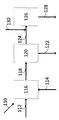
도 1 은 메틸 아세테이트 및 메탄올을 제조하기 위한 통합 프로세스의 본 발명의 일 실시형태를 보여주는 블록도이다.
도 2 는 메탄올 생성물 회수를 포함하고 그리고 메틸 아세테이트 및 메탄올을 제조하기 위한 통합 프로세스의 본 발명의 일 실시형태를 보여주는 블록도이다.
도 3 은 새로운 합성 가스, 카르보닐화 반응 생성물로부터 회수된 스크러빙된 합성 가스, 및 메탄올 합성 생성물로부터 회수된 합성 가스의 메탄올 합성 가스 공급을 포함하고 그리고 메틸 아세테이트 및 메탄올을 제조하기 위한 통합 프로세스의 본 발명의 일 실시형태를 보여주는 블록도이다.1 is a block diagram illustrating one embodiment of the present invention of an integrated process for making methyl acetate and methanol.
Figure 2 is a block diagram that illustrates one embodiment of the present invention of an integrated process for the recovery of methanol product and for the production of methyl acetate and methanol.
Figure 3 illustrates the synthesis of a new synthesis gas, a scrubbed syngas recovered from a carbonylation reaction product, and a syngas feed from the synthesis gas recovered from the methanol synthesis product, and includes a synthesis of an integrated process for the production of methyl acetate and methanol Fig. 8 is a block diagram showing an embodiment of the invention.
전술한 바와 같이, 합성 가스는 일산화탄소 및 수소를 포함한다. 선택적으로, 합성 가스는 또한 이산화탄소를 포함할 수도 있다. 전형적으로, 합성 가스는 또한 소량의 불활성 가스, 예를 들어 질소 및 메탄을 포함할 수도 있다. 탄화수소 소스들을 합성 가스로 변환시키는 종래의 프로세스들은 스팀 개질 및 부분 산화를 포함한다. 합성 가스 제조에 사용되는 탄화수소 소스들의 예들로는 바이오매스, 천연 가스, 메탄, C2 ~ C5 탄화수소들, 나프타, 석탄 및 중질 석유들을 포함한다.As described above, the synthesis gas includes carbon monoxide and hydrogen. Optionally, the syngas may also comprise carbon dioxide. Typically, syngas may also contain small amounts of inert gases, such as nitrogen and methane. Conventional processes for converting hydrocarbon sources to syngas include steam reforming and partial oxidation. Examples of hydrocarbon sources used in the synthesis gas production include biomass, natural gas, methane, C 2 -C 5 hydrocarbons, naphtha, coal and heavy oils.
스팀 개질은 일반적으로 합성 가스를 형성하도록 탄화수소와 스팀을 접촉시키는 것을 포함한다. 프로세스는 바람직하게 니켈 기반 촉매와 같은 촉매의 사용을 포함한다.Steam reforming generally involves contacting the hydrocarbon with steam to form a syngas. The process preferably involves the use of a catalyst such as a nickel-based catalyst.
부분 산화는 일반적으로 합성 가스를 형성하도록 산소 또는 공기와 같은 산소 함유 가스와 탄화수소의 접촉을 포함한다. 부분 산화는 로듐, 백금 또는 팔라듐 기반의 촉매와 같은 촉매를 사용하여 또는 촉매를 사용하지 않고 실시된다.Partial oxidation generally involves contacting the hydrocarbon with an oxygen-containing gas such as oxygen or air to form a syngas. Partial oxidation is carried out with or without the use of catalysts such as rhodium, platinum or palladium based catalysts.
사용된 탄화수소 소스의 성질 및 이용된 특정 합성 가스 생성 프로세스에 따라, 발생된 합성 가스의 화학량수는 달라질 수 있다. 전형적으로, 천연 가스 또는 메탄의 스팀 개질 및 부분 산화에 의해 생성된 합성 가스는 적어도 1.5 의 화학량수를 가지고, 예를 들어, 석탄의 가스화에 의해 생성된 합성 가스보다 많고, 화학량수는 0.1 이하일 수도 있다. 많은 경우에, 합성 가스 시설 내에서 다양한 화학량수들의 합성 가스가 이용가능하다. Depending on the nature of the hydrocarbon source used and the particular syngas production process utilized, the stoichiometry of the syngas generated may vary. Typically, the syngas produced by steam reforming and partial oxidation of natural gas or methane has a stoichiometric number of at least 1.5, for example, greater than the syngas produced by gasification of coal, and the stoichiometry may be less than or equal to 0.1 have. In many cases, synthetic gases of varying stoichiometry are available within the syngas facility.
본 발명에서,디메틸 에테르, 및 일산화탄소와 수소를 포함하는 제 1 합성 가스는, 수소가 농후한 합성 가스 및 메틸 아세테이트를 포함하는 가스성 카르보닐화 반응 생성물을 제조하도록 적합한 카르보닐화 촉매의 존재 하에 카르보닐화 반응 구역에서 반응된다. 카르보닐화 반응 생성물로부터 회수된 합성 가스와 함께 제 2 합성 가스 공급물이 메탄올 합성 촉매와 접촉되어서 메탄올 및 미변환 합성 가스를 포함하는 메탄올 합성 생성물을 형성한다. In the present invention, the first synthesis gas comprising dimethyl ether, and carbon monoxide and hydrogen is reacted in the presence of a suitable carbonylation catalyst to produce a gaseous carbonylation reaction product comprising hydrogen- And is reacted in the carbonylation reaction zone. The second syngas feed together with the syngas recovered from the carbonylation reaction product is contacted with the methanol synthesis catalyst to form a methanol synthesis product comprising methanol and unconverted synthesis gas.
유리하게도 본 발명에서 카르보닐화 반응에 사용하기 위한 제 1 합성 가스는 낮은 화학량수 (SN) 를 가질 수도 있다. 바람직하게, 제 1 합성 가스는 1.1 이하, 예를 들어 0.05 ~ 1.1 범위, 예로 1.0 ~ 1.1 범위의 화학량수를 갖는다 (임의의 재순환물들 포함). 제 2 합성 가스는, 제 2 합성 가스 및 카르보닐화 반응 생성물로부터 회수된 합성 가스의 조합물이 제 1 합성 가스의 화학량수보다 높은 화학량수를 가지도록 조성을 갖는다. 적합하게, 제 2 합성 가스 및 카르보닐화 반응 생성물로부터 회수된 합성 가스의 조합물의 화학량수는 1.5 ~ 2.5 범위, 바람직하게 2.0 ~ 2.1 범위에 있고, 보다 바람직하게 2.05 이다. Advantageously, the first syngas for use in the carbonylation reaction of the present invention may have a low stoichiometric number (SN). Preferably, the first syngas has a stoichiometry in the range of less than or equal to 1.1, for example, in the range of 0.05 to 1.1, such as in the range of 1.0 to 1.1 (including any recirculation). The second syngas has a composition such that the combination of the second syngas and the syngas recovered from the carbonylation reaction product has a stoichiometric number greater than the stoichiometry of the first syngas. Suitably, the stoichiometry of the combination of the second synthesis gas and the synthesis gas recovered from the carbonylation reaction product is in the range of 1.5 to 2.5, preferably 2.0 to 2.1, more preferably 2.05.
적합하게, 제 1 합성 가스 및 제 2 합성 가스 중 적어도 하나는 이산화탄소를 포함한다. 이산화탄소는 50 mol% 이하, 예로 0.5 ~ 12 mol% 범위의 양으로 제 1 합성 가스 및 제 2 합성 가스 각각에 존재할 수도 있다. Suitably, at least one of the first synthesis gas and the second synthesis gas comprises carbon dioxide. The carbon dioxide may be present in each of the first synthesis gas and the second synthesis gas in an amount in the range of 50 mol% or less, for example, 0.5 to 12 mol%.
적합하게, 제 1 합성 가스는 카르보닐화 반응 구역으로 도입되기 전 냉각된다. 바람직하게, 합성 가스는 합성 가스 형성 프로세스 중 형성된 수증기의 적어도 일부를 응축시키기 위해서 냉각된다.Suitably, the first syngas is cooled prior to introduction into the carbonylation reaction zone. Preferably, the syngas is cooled to condense at least a portion of the water vapor formed during the syngas formation process.
카르보닐화 반응 구역으로 공급된 제 1 합성 가스는 바람직하게 건조 합성 가스이다. 물은, 임의의 적합한 수단, 예를 들어 분자체를 사용해 합성 가스로부터 제거될 수도 있다. The first synthesis gas fed to the carbonylation reaction zone is preferably a dry synthesis gas. The water may be removed from the synthesis gas using any suitable means, such as molecular sieves.
제 1 합성 가스는 새로운 합성 가스일 수도 있다. 본원의 목적을 위해, 새로운 합성 가스는 합성 가스의 저장된 소스들을 포함한다. 적합하게, 제 1 합성 가스는 임의의 재순환 합성 가스가 없는 새로운 합성 가스로 본질적으로 구성된다. 바람직하게, 새로운 합성 가스는 이산화탄소를 포함한다. 카르보닐화 반응 구역으로의 제 1 합성 가스는 또한 재순환 합성 가스를 포함할 수도 있다. 재순환 합성 가스 스트림들은, 카르보닐화 반응의 하류에서 프로세스의 임의의 부분으로부터 회수된 일산화탄소, 수소 및 선택적으로 이산화탄소를 포함하는 하나 이상 가스성 또는 액체 스트림들일 수 있다. 적합한 재순환 합성 가스 스트림들은 카르보닐화 반응 생성물로부터 회수된 합성 가스를 포함한다. The first synthesis gas may be a new synthesis gas. For purposes herein, the new syngas includes stored sources of syngas. Suitably, the first synthesis gas consists essentially of a new synthesis gas without any recycle synthesis gas. Preferably, the new synthesis gas comprises carbon dioxide. The first synthesis gas to the carbonylation reaction zone may also comprise a recycle synthesis gas. The recycle syngas streams may be one or more gaseous or liquid streams containing carbon monoxide, hydrogen and optionally carbon dioxide recovered from any portion of the process downstream of the carbonylation reaction. Suitable recycle syngas streams include syngas recovered from the carbonylation reaction product.
실시형태에서, 제 1 합성 가스는 새로운 합성 가스 및 카르보닐화 반응 생성물로부터 회수된 합성 가스의 혼합물을 포함한다.In an embodiment, the first syngas comprises a mixture of fresh syngas and syngas recovered from the carbonylation reaction product.
제 1 합성 가스는 하나 이상의 공급 스트림들로서 카르보닐화 반응 구역에 공급될 수도 있다. 하나 이상의 공급 스트림들은 새로운 합성 가스 또는 새로운 합성 가스와 재순환 합성 가스의 혼합물 중 어느 하나일 수도 있다.The first syngas may be fed to the carbonylation reaction zone as one or more feed streams. The one or more feed streams may be either new synthesis gas or a mixture of fresh synthesis gas and recycle synthesis gas.
바람직하게, 카르보닐화 반응에서 사용하기 전, 제 1 합성 가스 (새로운 가스이거나 새로운 가스와 재순환 가스의 혼합물) 는 예를 들어 하나 이상의 열교환기들에서 원하는 카르보닐화 반응 온도로 가열된다.Preferably, before being used in the carbonylation reaction, the first syngas (a new gas or a mixture of fresh and recycle gases) is heated to a desired carbonylation reaction temperature, for example, in one or more heat exchangers.
카르보닐화 반응 구역에서 일산화탄소 부분 압력은 메틸 아세테이트의 제조를 허용하기에 충분해야 한다. 따라서, 적합하게, 일산화탄소 부분 압력은 0.1 ~ 100 barg (10 kPa ~ 10,000kPa), 예로 10 ~ 65 barg (1,000 kPa ~ 6,500 kPa) 의 범위에 있다. The carbon monoxide partial pressure in the carbonylation reaction zone should be sufficient to allow the production of methyl acetate. Accordingly, suitably the carbon monoxide partial pressure is in the range of 0.1 to 100 barg (10 kPa to 10,000 kPa), for example 10 to 65 barg (1,000 kPa to 6,500 kPa).
카르보닐화 반응 구역에서 수소 부분 압력은 적합하게 1 barg ~ 100 barg (100 kPa ~ 10,000 kPa), 바람직하게 10 ~ 75 barg (1,000 kPa ~ 7,500 kPa) 의 범위에 있다.The hydrogen partial pressure in the carbonylation reaction zone is suitably in the range of 1 barg to 100 barg (100 kPa to 10,000 kPa), preferably 10 to 75 barg (1,000 kPa to 7,500 kPa).
카르보닐화 반응에서 사용하기 위한 디메틸 에테르는 새로운 디메틸 에테르 또는 새로운 디메틸 에테르와 재순환 디메틸 에테르의 혼합물일 수도 있다. 적합하게, 디메틸 에테르를 포함하는 카르보닐화 반응 구역으로의 재순환 스트림들은, 예를 들어, 카르보닐화 반응 생성물로부터 회수된 합성 가스를 포함하는 카르보닐화 반응의 하류에서 프로세스의 임의의 부분으로부터 수득될 수도 있다. The dimethyl ether for use in the carbonylation reaction may be a new dimethyl ether or a mixture of a new dimethyl ether and a recycled dimethyl ether. Suitably, the recycle streams to the carbonylation reaction zone comprising dimethyl ether can be obtained, for example, from any portion of the process downstream of the carbonylation reaction involving the syngas recovered from the carbonylation reaction product .
디메틸 에테르는 하나 이상의 새로운 디메틸 에테르 스트림들로서 또는 새로운 디메틸 에테르와 재순환 디메틸 에테르의 혼합물을 포함하는 하나 이상의 스트림들로서 카르보닐화 반응 구역으로 공급될 수도 있다.The dimethyl ether may be fed into the carbonylation reaction zone as one or more new dimethyl ether streams or as one or more streams comprising a mixture of fresh dimethyl ether and recycled dimethyl ether.
디메틸 에테르와 제 1 합성 가스는 하나 이상의 별개의 스트림들로서 카르보닐화 반응 구역으로 공급될 수도 있지만, 바람직하게 하나 이상의 조합된 합성 가스와 디메틸 에테르 스트림들로서 도입된다. The dimethyl ether and first syngas may be fed into the carbonylation reaction zone as one or more separate streams, but are preferably introduced as one or more combined syngas and dimethyl ether streams.
실시형태에서, 디메틸 에테르와 제 1 합성 가스는 조합 스트림으로서 카르보닐화 반응 구역으로 공급되고, 상기 조합 스트림은 카르보닐화 반응 구역에서 사용하기 전 예를 들어 하나 이상의 열교환기들에서 원하는 카르보닐화 반응 온도로 가열된다.In an embodiment, the dimethyl ether and the first syngas are fed to the carbonylation reaction zone as a combined stream, which is subjected to the desired carbonylation reaction prior to use in the carbonylation reaction zone, for example in one or more heat exchangers Lt; / RTI >
상업적 관례에서, 디메틸 에테르는 메탄올 탈수 촉매들을 통한 메탄올의 촉매 변환에 의해 생성된다. 이 촉매 변환은 대부분 디메틸 에테르인 생성물을 유발하지만 그것은 또한 낮은 레벨의 메탄올 및/또는 물을 함유할 수도 있다. 디메틸 에테르의 제올라이트 촉매의 카르보닐화에서 상당량의 물의 존재는 메틸 아세테이트 생성물의 제조를 억제하는 경향이 있다. 게다가, 부반응들을 통하여 카르보닐화 반응에서 물이 발생될 수도 있다. 하지만, 메탄올과 물의 총량이 메틸 아세테이트의 제조를 크게 억제하도록 많지 않다면 본 발명의 카르보닐화 반응에서 사용하기 위한 디메틸 에테르는 소량의 물과 메탄올 중 하나 이상을 함유할 수도 있다. 적합하게, 디메틸 에테르 (재순환물 포함) 는 1 ppm ~ 10 mol%, 예를 들어 1 ppm ~ 2 mol%, 예로 1 ppm ~ 1 mol% 범위, 바람직하게 1 ppm ~ 0.5 mol% 범위의 총량으로 물과 메탄올을 함유할 수도 있다. In commercial practice, dimethyl ether is produced by catalytic conversion of methanol through methanol dehydration catalysts. This catalytic conversion results in a product which is mostly dimethyl ether, but it may also contain low levels of methanol and / or water. The presence of a significant amount of water in the carbonylation of the zeolite catalyst of dimethyl ether tends to inhibit the production of the methyl acetate product. In addition, water may be generated in the carbonylation reaction through side reactions. However, the dimethyl ether for use in the carbonylation reaction of the present invention may contain at least one of a small amount of water and methanol, if the total amount of methanol and water is not large enough to greatly inhibit the production of methyl acetate. Suitably, the dimethyl ether (including recycled) is present in the total amount of 1 ppm to 10 mol%, for example in the range of 1 ppm to 2 mol%, such as 1 ppm to 1 mol%, preferably 1 ppm to 0.5 mol% And methanol.
바람직하게, 디메틸 에테르 (새로운 디메틸 에테르 및 재순환 디메틸 에테르) 공급물은 카르보닐화 반응에서 사용하기 전 건조된다.Preferably, the dimethyl ether (fresh dimethyl ether and recycle dimethyl ether) feeds are dried prior to use in the carbonylation reaction.
디메틸 에테르의 농도는, 카르보닐화 반응 구역으로 모든 스트림들 전부를 기반으로, 1 mol% ~ 20 mol% 범위, 적합하게 1.5 mol% ~ 15 mol%, 예로 5 ~ 15 mol%, 예를 들어 2.5 ~ 12 mol%, 예로 2.5 ~ 7.5 mol% 범위일 수도 있다.The concentration of dimethyl ether is in the range of 1 mol% to 20 mol%, suitably 1.5 mol% to 15 mol%, for example, 5 to 15 mol%, for example 2.5 mol%, based on all the streams into the carbonylation reaction zone. To 12 mol%, for example, from 2.5 to 7.5 mol%.
카르보닐화 반응 구역에서 일산화탄소 대 디메틸 에테르의 몰비는 적합하게 1:1 ~ 99:1, 예를 들어 1:1 ~ 25:1, 예로 2:1 ~ 25:1 범위이다. The molar ratio of carbon monoxide to dimethyl ether in the carbonylation reaction zone is suitably in the range of 1: 1 to 99: 1, such as 1: 1 to 25: 1, such as 2: 1 to 25:
이산화탄소는 수소와 반응하여서 물과 일산화탄소를 형성한다. 이 반응은 통상적으로 역 수성 가스 시프트 반응 (reverse water gas shift reaction) 으로서 지칭된다. 따라서, 카르보닐화 반응에 대한 물의 영향을 완화시키기 위해서 이산화탄소를 포함하는 합성 가스를 사용하는 것이 바람직한 경우에, 카르보닐화 촉매는 역 수성 가스 시프트 반응에 대해 또는 메탄올의 제조에 대해 비활성인 것이 바람직하다. 바람직하게, 카르보닐화 촉매는 알루미노실리케이트 제올라이트를 포함한다. Carbon dioxide reacts with hydrogen to form water and carbon monoxide. This reaction is commonly referred to as a reverse water gas shift reaction. Thus, where it is desirable to use a synthesis gas comprising carbon dioxide to mitigate the effect of water on the carbonylation reaction, the carbonylation catalyst is preferably inert to the reverse water gas shift reaction or to the production of methanol Do. Preferably, the carbonylation catalyst comprises an aluminosilicate zeolite.
제올라이트들은 다른 채널 시스템들 또는 캐비티들, 예로 사이드 포켓들 또는 케이지들과 상호연결될 수도 있는 채널들의 시스템을 포함한다. 채널 시스템들은 고리 구조들에 의해 규정되고 고리들은, 예를 들어, 8, 10, 또는 12 개의 원소들을 포함할 수도 있다. 제올라이트들, 그것의 골격 구조 유형들 및 채널 시스템들에 대한 정보는 2007 년, 암스테르담, Elsevier, 개정 6 판, C.H. Baerlocher, L.B. Mccusker 및 D.H. Olson 의 Atlas of Zeolite Framework Types 에 게재되고, www.iza-online.org 의 국제 제올라이트 협회 웹사이트에서 또한 이용가능하다. Zeolites include systems of channels that may be interconnected with other channel systems or cavities, e.g., side pockets or cages. The channel systems may be defined by ring structures and the rings may comprise, for example, 8, 10, or 12 elements. The zeolite, information on its skeletal structure type and channel system is placed in 2007, Amsterdam, Elsevier, revised sixth edition, CH Baerlocher, LB Mccusker and DH Olson in the Atlas of Zeolite Framework Types, www.iza- It is also available on the International Zeolite Association website at online.org .
적합하게, 카르보닐화 촉매는 8-원 (member) 고리에 의해 규정된 적어도 하나의 채널을 포함하는 알루미노실리케이트 제올라이트이다. 8-원 고리에 의해 규정된 제올라이트 채널 시스템의 애퍼처 (aperture) 는, 반응물 디메틸 에테르와 일산화탄소 분자들이 제올라이트 골격 안팎으로 자유롭게 확산될 수 있는 치수들을 가져야 한다. 적합하게, 제올라이트의 8-원 고리 채널의 애퍼처는 적어도 2.5 x 3.6 옹스트롬의 치수들을 갖는다. 바람직하게, 8-원 고리에 의해 규정된 채널은 10 개 또는 12 개의 원들을 갖는 고리에 의해 규정된 적어도 하나의 채널로 상호연결된다.Suitably, the carbonylation catalyst is an aluminosilicate zeolite comprising at least one channel defined by an 8-member ring. The aperture of the zeolite channel system defined by the 8-ring should have dimensions such that reactant dimethyl ether and carbon monoxide molecules can diffuse freely into and out of the zeolite framework. Suitably, the aperture of the 8-member circular channel of zeolite has dimensions of at least 2.5 x 3.6 angstroms. Preferably, the channel defined by the 8-ring is interconnected with at least one channel defined by a ring having 10 or 12 circles.
8-원 고리에 의해 규정된 적어도 하나의 채널을 포함하는 알루미노실리케이트 제올라이트들의 비제한적인 실시예들은, 골격 구조 유형 MOR (예를 들어, 모데나이트), FER (예를 들어, 페리에라이트), OFF (예를 들어, 오프레타이트) 및 GME (예를 들어, 지멜나이트) 의 제올라이트들을 포함한다. Non-limiting examples of aluminosilicate zeolites comprising at least one channel defined by an 8-membered ring are the skeletal structure type MOR (e.g., mordenite), FER (e.g., ferrierite) , OFF (e. G., Opretite) and GME (e. G., Zimelite) zeolites.
바람직한 카르보닐화 촉매는 모데나이트 제올라이트이다.A preferred carbonylation catalyst is mordenite zeolite.
카르보닐화 촉매는 수소 형태의 제올라이트일 수도 있다. 바람직하게, 카르보닐화 촉매는 수소 형태의 모데나이트이다. The carbonylation catalyst may be a hydrogen-type zeolite. Preferably, the carbonylation catalyst is mordenite in hydrogen form.
카르보닐화 촉매는 하나 이상의 금속들로 완전히 또는 부분적으로 로딩되는 제올라이트일 수도 있다. 제올라이트로 로딩하기에 적합한 금속들은 구리, 은, 니켈, 이리듐, 로듐, 백금, 팔라듐 또는 코발트 및 그것의 조합물들, 바람직하게 구리, 은 및 그것의 조합물들을 포함한다. 금속 로딩된 형태는 이온 교환 및 함침과 같은 기법들에 의해 제조될 수도 있다. 이 기법들은 잘 알려져 있고 전형적으로 금속 양이온들과 제올라이트의 수소 또는 수소 전구체 양이온들 (예로 암모늄 양이온들) 을 교환하는 것을 포함한다. The carbonylation catalyst may be a zeolite that is completely or partially loaded with one or more metals. Suitable metals for loading with zeolite include copper, silver, nickel, iridium, rhodium, platinum, palladium or cobalt and combinations thereof, preferably copper, silver and combinations thereof. Metal loaded forms may be prepared by techniques such as ion exchange and impregnation. These techniques are well known and typically involve exchanging hydrogen or hydrogen precursor cations (e.g., ammonium cations) of zeolites with metal cations.
카르보닐화 촉매는, 알루미늄과 규소 이외에, 갈륨, 붕소 및 철 중 적어도 하나로부터 선택된 3 가 금속들과 같은 하나 이상의 부가적 금속들이 골격에 존재하는 알루미노실리케이트 제올라이트일 수도 있다. 적합하게, 카르보닐화 촉매는 골격 원소로서 갈륨을 함유한 제올라이트일 수도 있다. 보다 적합하게, 카르보닐화 촉매는 골격 원소로서 갈륨을 함유한 모데나이트이고, 가장 적합하게 카르보닐화 촉매는 골격 원소로서 갈륨을 함유하고 수소 형태인 모데나이트이다. The carbonylation catalyst may be an aluminosilicate zeolite in which, in addition to aluminum and silicon, one or more additional metals such as trivalent metals selected from at least one of gallium, boron and iron are present in the skeleton. Suitably, the carbonylation catalyst may be a zeolite containing gallium as a skeleton element. More suitably, the carbonylation catalyst is mordenite containing gallium as a skeleton element, and most preferably the carbonylation catalyst is mordenite, which contains gallium as a skeleton element and is in hydrogen form.
카르보닐화 촉매는 적어도 하나의 바인더 재료로 합성된 제올라이트일 수도 있다. 본 기술분야의 당업자들이 알고 있는 것처럼, 카르보닐화 반응 조건들 하에 촉매는 적합하게 활성이고 견고하도록 바인더 재료들이 선택된다. 적합한 바인더 재료들의 예로는 무기 산화물들, 예로 실리카, 알루미나, 알루미나-실리케이트, 마그네슘 실리케이트, 마그네슘 알루미늄 실리케이트, 티타니아 및 지르코니아를 포함한다. 바람직한 바인더 재료들은 알루미나, 알루미나-실리케이트 및 실리카, 예를 들어, 베마이트 (boehemite) 유형 알루미나를 포함한다. The carbonylation catalyst may be a zeolite synthesized from at least one binder material. As known to those skilled in the art, the catalyst materials under the carbonylation reaction conditions are selected to be suitably active and rigid. Examples of suitable binder materials include inorganic oxides such as silica, alumina, alumina-silicate, magnesium silicate, magnesium aluminum silicate, titania and zirconia. Preferred binder materials include alumina, alumina-silicates and silicas, such as boehmite type alumina.
제올라이트와 바인더 재료의 상대 비율들은 상당히 달라질 수도 있지만, 적합하게, 바인더 재료는 합성물의 중량으로 10% ~ 90% 범위, 바람직하게, 합성물의 중량으로 10% ~ 65% 범위의 양으로 합성물에 존재할 수도 있다. Suitably, the binder material may be present in the composition in an amount ranging from 10% to 90% by weight of the composite, preferably in an amount ranging from 10% to 65% by weight of the composite, although the relative proportions of the zeolite and binder material may vary considerably have.
제올라이트 분말들은 또한 바인더를 사용하지 않고 입자들로 형성될 수도 있다. 전형적인 제올라이트 촉매 입자들은 단면들이 원형인 압출물들을 포함하거나 촉매 입자들의 중심부로부터 바깥쪽으로 연장되는 복수의 아치형 로브들을 포함한다. The zeolite powders may also be formed into particles without using a binder. Typical zeolite catalyst particles comprise a plurality of arcuate lobes that include extrudates whose cross-sections are circular or which extend outwardly from the center of the catalyst particles.
본 발명의 실시형태에서, 카르보닐화 촉매는, 알루미나, 실리카 및 알루미나-실리케이트로부터 적합하게 선택될 수도 있는 적어도 하나의 무기 산화물 바인더 재료와 합성되는 모데나이트와 같은 제올라이트이고, 압출물과 같은 형상화된 보디의 형태로 이용된다. 특히, 카르보닐화 촉매는 베마이트 알루미나와 같은 알루미나와 합성된 모데나이트이다. 알루미나와 합성된 모데나이트는 골격 원소로서 갈륨을 함유할 수도 있다. In an embodiment of the invention, the carbonylation catalyst is a zeolite, such as mordenite, synthesized with at least one inorganic oxide binder material that may be suitably selected from alumina, silica and alumina-silicate, It is used in the form of a body. In particular, the carbonylation catalyst is mordenite synthesized with alumina such as boehmite alumina. The mordenite synthesized with alumina may contain gallium as a skeleton element.
본 발명에서 카르보닐화 촉매들로서 사용하기 위한 제올라이트들의 실리카 대 알루미나 몰비는 벌크 또는 전체 비이다. 이것은 다수의 화학 분석 기법들 중 어느 하나에 의해 결정될 수 있다. 이러한 기법들은 x-선 형광, 원자 흡수 및 ICP (유도 결합 플라즈마) 를 포함한다. 모두 실질적으로 동일한 실리카 대 알루미나 몰비 값을 제공할 것이다.The silica to alumina molar ratio of zeolites for use as carbonylation catalysts in the present invention is bulk or total ratio. This can be determined by any of a number of chemical analysis techniques. These techniques include x-ray fluorescence, atomic absorption and ICP (inductively coupled plasma). All will provide substantially the same silica to alumina mole ratio value.
합성 제올라이트들의 벌크 실리카 대 알루미나 몰비 (본원에서 "SAR" 로도 지칭) 는 다양할 것이다. 예를 들어, 모데나이트와 같은 제올라이트의 SAR 은 5 정도 ~ 90 초과의 범위에 있을 수도 있다. The bulk silica to alumina molar ratio (also referred to herein as "SAR") of the synthetic zeolites will vary. For example, the SAR of a zeolite such as mordenite may range from about 5 to more than 90.
본 발명에서 카르보닐화 촉매로서 사용하기 위한 제올라이트의 SAR 은 적합하게 10:1 ~ 90:1, 예를 들어 20:1 ~ 60:1 의 범위에 있을 수도 있다. The SAR of the zeolite for use as a carbonylation catalyst in the present invention may suitably range from 10: 1 to 90: 1, for example from 20: 1 to 60: 1.
전형적으로 유동하는 질소, 일산화탄소, 수소 또는 그것의 혼합물들 하에 적어도 1 시간 동안 상승된 온도에서 제올라이트 카르보닐화 촉매를 가열함으로써 그것이 사용 직전 활성화되는 것이 바람직하다.It is preferred that the zeolite carbonylation catalyst is activated just prior to use, typically by heating the zeolite carbonylation catalyst at elevated temperatures for at least one hour under flowing nitrogen, carbon monoxide, hydrogen or mixtures thereof.
바람직하게, 실질적으로 무수 조건들 하에 카르보닐화 반응이 실시된다. 적합하게 따라서, 전술한 바와 같이, 카르보닐화 반응에서 물의 존재를 제한하도록, 새로운 제 1 합성 가스, 새로운 디메틸 에테르, 그것의 임의의 재순환물들 및 카르보닐화 촉매를 포함한 모든 반응물들이 카르보닐화 반응에서 사용하기 전 건조된다. 적합하게, 카르보닐화 반응에서 존재하는 물과 메탄올 (물의 소스) 의 조합된 양은 1 ppm ~ 0.5 mol% 범위, 바람직하게 1 ppm ~ 0.1 mol% 범위, 가장 바람직하게 1 ppm ~ 0.05 mol% 범위에 있도록 제한된다. 바람직하게, 카르보닐화 반응 구역으로 도입된 물과 메탄올의 조합된 양은 0.5 mol% 이하, 예를 들어 0 ~ 0.5 mol%, 예로 1 ppm ~ 0.5 mol% 이다. Preferably, the carbonylation reaction is carried out under substantially anhydrous conditions. Suitably, therefore, all reactants, including the new first synthesis gas, the new dimethyl ether, any recycles thereof, and the carbonylation catalyst, are subjected to a carbonylation reaction to limit the presence of water in the carbonylation reaction, Is dried before being used. Suitably, the combined amount of water and methanol (source of water) present in the carbonylation reaction ranges from 1 ppm to 0.5 mol%, preferably from 1 ppm to 0.1 mol%, and most preferably from 1 ppm to 0.05 mol% . Preferably, the combined amount of water and methanol introduced into the carbonylation reaction zone is 0.5 mol% or less, for example, 0 to 0.5 mol%, for example, 1 ppm to 0.5 mol%.
전형적으로 가스 형태로, 디메틸 에테르와 합성 가스 공급물들이 카르보닐화 촉매를 넘어가거나 통과하는, 예를 들어 파이프들 또는 튜브들 형상의, 고정층 카르보닐화 반응 구역에서 카르보닐화 촉매가 이용될 수도 있다. Carbonylation catalysts may be used in the fixed-bed carbonylation reaction zone, typically in the form of gasses, such as pipes or tubes, in which the dimethyl ether and syngas feeds pass or pass through the carbonylation catalyst have.
카르보닐화 반응은 증기상으로 실시된다.The carbonylation reaction is carried out in a vapor phase.
제 1 합성 가스 및 디메틸 에테르는 메틸 아세테이트를 포함하는 가스성 카르보닐화 반응 생성물을 형성하기에 효과적인 반응 조건들 하에 카르보닐화 촉매의 존재 하에서 반응된다.The first synthesis gas and the dimethyl ether are reacted in the presence of a carbonylation catalyst under reaction conditions effective to form a gaseous carbonylation reaction product comprising methyl acetate.
바람직하게, 카르보닐화 반응은 100 ℃ ~ 350 ℃ 의 범위, 예를 들어 250 ℃ ~ 350 ℃ 범위의 온도에서 실시된다.Preferably, the carbonylation reaction is carried out at a temperature in the range of 100 ° C to 350 ° C, for example in the range of 250 ° C to 350 ° C.
바람직하게, 카르보닐화 반응은 1 ~ 200 barg (100 kPa ~ 20,000 kPa), 예를 들어 10 ~ 100 barg (1,000 kPa ~ 10,000 kPa), 예로 50 ~ 100 barg (5,000 kPa ~ 10,000 kPa) 범위의 전체 압력에서 실시된다. Preferably, the carbonylation reaction is carried out in an amount ranging from 1 to 200 barg (100 kPa to 20,000 kPa), such as from 10 to 100 barg (1,000 kPa to 10,000 kPa), such as from 50 kPa to 10,000 kPa Pressure.
실시형태에서, 카르보닐화 반응은 250 ℃ ~ 350 ℃ 범위의 온도 및 50 ~ 100 barg (5,000 kPa ~ 10,000 kPa) 범위의 전체 압력에서 실시된다. In embodiments, the carbonylation reaction is conducted at a temperature ranging from 250 ° C to 350 ° C and a total pressure ranging from 50 to 100 barg (5,000 kPa to 10,000 kPa).
바람직한 실시형태에서, 바람직하게 1 ppm ~ 10 mol% 범위의 조합된 양 이하로 물과 메탄올을 함유한, 제 1 합성 가스 및 디메틸 에테르가, 8-원 고리, 예를 들어 모데나이트, 바람직하게 수소 형태의 모데나이트에 의해 규정되는 적어도 하나의 채널을 가지는 알루미노실리케이트 제올라이트와 같은 카르보닐화 촉매의 존재 하에, 100 ℃ ~ 350 ℃ 범위의 온도에서 그리고 10 ~ 100 barg (1,000 kPa ~ 10,000 kPa) 범위의 전체 압력에서 반응되어서 메틸 아세테이트 및 수소가 농후한 합성 가스를 포함하는 가스성 카르보닐화 반응 생성물을 형성한다. In a preferred embodiment, the first synthesis gas and the dimethyl ether, preferably containing less than the combined amount of water and methanol in the range of 1 ppm to 10 mol%, are reacted with an 8-membered ring such as mordenite, preferably hydrogen In the presence of a carbonylation catalyst, such as aluminosilicate zeolite having at least one channel defined by the type of mordenite, at a temperature in the range of from 100 DEG C to 350 DEG C and in the range of from 10 to 100 barg (1,000 kPa to 10,000 kPa) To form a gaseous carbonylation reaction product comprising methyl acetate and hydrogen-rich syngas.
디메틸 에테르 및 제 1 합성 가스 (선택적으로 이산화탄소 및 임의의 재순환물들 포함) 는, 500 ~ 40,000 h-1, 예로 2,000 ~ 20,000 h-1 범위의 촉매층 (GHSV) 을 통과하는 가스 유동의 전체 가스 시간당 공간 속도로 카르보닐화 반응 구역으로 적합하게 공급될 수도 있다. Dimethyl ether, and the first synthesis gas (carbon dioxide, and optionally containing any of the recycle waters) is, 500 ~ 40,000 h -1, for example 2,000 ~ 20,000 h -1 of the total gas ranges gas flow through the catalyst bed (GHSV) of the hourly space Lt; RTI ID = 0.0 > carbonylation < / RTI > reaction zone.
바람직하게, 실질적으로 요오드화물과 같은 할로겐화물들의 부재 하에 카르보닐화 반응이 실시된다. '실질적으로' 라는 용어는, 카르보닐화 반응 구역으로의 공급 스트림들의 할로겐화물, 예를 들어 전체 요오드화물 함량이 500 ppm 미만, 바람직하게 100 ppm 미만임을 의미한다. Preferably, the carbonylation reaction is carried out in the absence of substantially halides such as iodide. The term " substantially " means that the halide, e.g., total iodide, content of feed streams to the carbonylation reaction zone is less than 500 ppm, preferably less than 100 ppm.
합성 가스에 존재하는 수소는 카르보닐화 반응에서 본질적으로 비활성이고, 그리하여 카르보닐화 반응 구역으로부터 인출된 합성 가스는 제 1 합성 가스의 수소 함량에 비하여 수소가 농후하다. The hydrogen present in the syngas is essentially inert in the carbonylation reaction so that the syngas drawn from the carbonylation reaction zone is hydrogen rich compared to the hydrogen content of the first synthesis gas.
카르보닐화 반응 구역으로부터 인출된 가스성 카르보닐화 반응 생성물은 메틸 아세테이트 및 수소가 농후한 합성 가스를 포함한다. 전형적으로, 카르보닐화 반응 생성물은 부가적 성분들, 예로 미반응 디메틸 에테르, 물, 메탄올, 및 아세트산 중 하나 이상을 포함할 것이다. The gaseous carbonylation reaction product withdrawn from the carbonylation reaction zone comprises methyl acetate and hydrogen-rich syngas. Typically, the carbonylation reaction product will comprise at least one of the additional components, such as unreacted dimethyl ether, water, methanol, and acetic acid.
카르보닐화 반응 구역으로의 합성 가스 공급물에 존재하는 이산화탄소는 카르보닐화 반응에서 크게 소모되지 않고, 그 결과 카르보닐화 반응 생성물은 또한 이산화탄소를 포함할 것이다. The carbon dioxide present in the syngas feed to the carbonylation reaction zone is not significantly consumed in the carbonylation reaction, so that the carbonylation reaction product will also contain carbon dioxide.
카르보닐화 반응 생성물은 가스 형태로 카르보닐화 반응 구역으로부터 인출된다. The carbonylation reaction product is withdrawn from the carbonylation reaction zone in gaseous form.
본 발명에서, 메틸 아세테이트를 포함하는 메틸 아세테이트-농후 액체 스트림 및 합성 가스 스트림은 카르보닐화 반응 생성물로부터 회수된다. In the present invention, the methyl acetate-rich liquid stream and the synthesis gas stream comprising methyl acetate are recovered from the carbonylation reaction product.
적합하게, 카르보닐화 반응 생성물은 카르보닐화 반응 구역으로부터 인출되고 냉각 및 분리되어서 메틸 아세테이트-농후 액체 스트림 및 합성 가스 스트림을 회수한다. 카르보닐화 반응 생성물의 냉각은, 카르보닐화 반응 생성물을, 예를 들어, 50 ℃ 이하 범위의 온도로, 예로 40 ~ 50 ℃ 범위의 온도로 냉각하도록, 종래의 열교환기들과 같은, 하나 이상의 열교환 수단을 사용해 실시될 수도 있다. 냉각된 카르보닐화 반응 생성물은 메틸 아세테이트-농후 액체 스트림 및 합성 가스 스트림을 회수하도록, 녹아웃 드럼 (knock-out drum) 또는 접선 방향 유입 드럼과 같은, 예를 들어 하나 이상의 가스/액체 분리 수단에서, 분리될 수도 있다. Suitably, the carbonylation reaction product is withdrawn from the carbonylation reaction zone and cooled and separated to recover the methyl acetate-enriched liquid stream and syngas stream. The cooling of the carbonylation reaction product can be accomplished by cooling the carbonylation reaction product to a temperature in the range of, for example, 50 DEG C or less, for example, in the range of 40 to 50 DEG C, ≪ / RTI > The cooled carbonylation reaction product may be recovered from the methyl acetate-rich liquid stream and the syngas stream by, for example, one or more gas / liquid separation means, such as a knock-out drum or tangential inlet drum, May be separated.
메틸 아세테이트-농후 액체 스트림은 주로 메틸 아세테이트를 포함하고 또한 약간의 미반응 디메틸 에테르, 아세트산, 및 용해된 합성 가스를 또한 포함할 수도 있다.The methyl acetate-enriched liquid stream mainly comprises methyl acetate and may also contain some unreacted dimethyl ether, acetic acid, and dissolved syngas.
메틸 아세테이트는 예를 들어 증류에 의해 메틸 아세테이트-농후 액체 스트림으로부터 회수되고, 그와 같이 판매되거나 하류 화학 프로세스들에서 공급 원료로서 사용될 수도 있다.Methyl acetate is recovered from the methyl acetate-enriched liquid stream, for example by distillation, and may be sold as such or used as feedstock in downstream chemical processes.
실시형태에 있어서, 메틸 아세테이트는 메틸 아세테이트 농후 액체 스트림의 적어도 일부로부터 회수되고, 회수된 메틸 아세테이트는, 바람직하게 가수분해 프로세스에 의해서 아세트산으로 변환된다. 회수된 메틸 아세테이트의 가수분해는 촉매 증류 프로세스들과 같은 공지된 프로세스들을 사용하여 실시될 수 있다. 전형적으로, 메틸 아세테이트의 가수분해를 위한 촉매 증류 프로세스들에서, 메틸 아세테이트는 산성 이온교환 수지 또는 제올라이트와 같은 산성 촉매를 사용하여 고정층 반응기에서 물로 가수분해되어, 아세트산 및 메탄올을 포함하는 혼합물을 생성하고, 이 혼합물로부터 아세트산과 메탄올이 1 개 이상의 증류 단계들에서 증류에 의해 분리될 수도 있다. In an embodiment, the methyl acetate is recovered from at least a portion of the methyl acetate-rich liquid stream, and the recovered methyl acetate is preferably converted to acetic acid by a hydrolysis process. The hydrolysis of the recovered methyl acetate can be carried out using known processes such as catalytic distillation processes. Typically, in catalytic distillation processes for the hydrolysis of methyl acetate, methyl acetate is hydrolyzed into water in a fixed-bed reactor using an acidic ion exchange resin or an acidic catalyst such as zeolite to produce a mixture comprising acetic acid and methanol , Acetic acid and methanol from this mixture may be separated by distillation in one or more distillation stages.
카르보닐화 반응 생성물로부터 회수된 합성 가스 스트림은 미반응 디메틸 에테르, 이산화탄소, 아세트산, 및 메틸 아세테이트 중 하나 이상과 같은 부가적 성분들을 포함할 수도 있다.The syngas stream recovered from the carbonylation reaction product may contain additional components such as at least one of unreacted dimethyl ether, carbon dioxide, acetic acid, and methyl acetate.
바람직하게, 카르보닐화 반응 생성물로부터 회수된 합성 가스의 일부는 카르보닐화 반응 구역으로 재순환된다. Preferably, a portion of the syngas recovered from the carbonylation reaction product is recycled to the carbonylation reaction zone.
적합하게, 카르보닐화 반응 생성물로부터 회수된 합성 가스는 2 개의 부분들로 분리되고, 합성 가스의 제 1 부분은 메탄올 합성 구역으로 공급되고, 그리고 예를 들어 제 1 부분에 상응하는 적어도 하나의 다른 부분은 카르보닐화 반응 구역으로 재순환된다. 하지만 바람직하게, 카르보닐화 반응 생성물로부터 회수된 합성 가스는 주요 부분 및 소량 부분으로 분리된다. 보다 바람직하게, 합성 가스는 주요 부분과 소량 부분으로 분리되고, 주요 부분은 카르보닐화 반응 구역으로 재순환되고, 소량 부분은 메탄올 합성 구역으로 공급된다.Suitably, the syngas recovered from the carbonylation reaction product is separated into two portions, a first portion of the synthesis gas is fed to the methanol synthesis zone and, for example, at least one other The portion is recycled to the carbonylation reaction zone. Preferably, however, the syngas recovered from the carbonylation reaction product is separated into a major portion and a minor portion. More preferably, the synthesis gas is separated into a main portion and a minor portion, the main portion is recycled to the carbonylation reaction zone, and a small amount is fed to the methanol synthesis zone.
적합하게, 주요 부분은 합성 가스의 적어도 50 mol%, 예를 들어 75 ~ 99 mol%, 예를 들어 95 ~ 98 mol% 범위이다. 적합하게, 소량 부분은 50 mol% 미만, 예를 들어 1 ~ 25 mol%, 예를 들어 2 ~ 5 mol% 범위이다. Suitably, the main portion is at least 50 mol%, for example from 75 to 99 mol%, for example from 95 to 98 mol%, of the synthesis gas. Suitably, the minor portion is less than 50 mol%, for example from 1 to 25 mol%, for example from 2 to 5 mol%.
일 실시형태에서, 합성 가스의 80 ~ 99 mol%, 바람직하게 95 ~ 98 mol% 가 카르보닐화 반응 구역으로 재순환되고 합성 가스의 1 ~ 20 mol%, 바람직하게 2 ~ 5 mol% 가 메탄올 합성 구역으로 공급된다. In one embodiment, 80 to 99 mol%, preferably 95 to 98 mol%, of the synthesis gas is recycled to the carbonylation reaction zone and 1 to 20 mol%, preferably 2 to 5 mol%, of the synthesis gas is fed to the methanol synthesis zone .
적합하게, 카르보닐화 반응 생성물로부터 회수된 합성 가스는 카르보닐화 반응 구역으로 재순환되기 전에 1 개 이상의 압축기들에서 압축될 수 있다.Suitably, the syngas recovered from the carbonylation reaction product can be compressed in one or more compressors before being recycled to the carbonylation reaction zone.
바람직하다면, 카르보닐화 반응 생성물로부터의 합성 가스의 일부는 퍼지 가스로서 배기될 수 있지만, 바람직하게는, 실질적으로 회수된 합성 가스 전부 메탄올 합성 구역으로 공급되거나 카르보닐화 반응 구역으로 재순환되거나 또는 그 둘의 조합을 취한다.If desired, a portion of the syngas from the carbonylation reaction product may be vented as a purge gas, but preferably substantially all of the recovered synthesis gas is fed to the methanol synthesis zone or recycled to the carbonylation reaction zone, Take a combination of the two.
전술한 대로, 카르보닐화 반응 생성물로부터 회수된 합성 가스는 전형적으로 메틸 아세테이트의 잔류량을 함유할 것이다. 메탄올 합성에서 메틸 아세테이트의 존재는, 그것이 에탄올 및 아세트산 중 하나 이상과 같은 원치 않는 부산물들의 형성을 유발할 수 있으므로 바람직하지 않다. 따라서, 메탄올 합성 구역으로 공급되는 합성 가스의 메틸 아세테이트 함량을 감소시키는 것이 바람직하다. As described above, the syngas recovered from the carbonylation reaction product will typically contain a residual amount of methyl acetate. The presence of methyl acetate in methanol synthesis is undesirable because it can lead to the formation of unwanted byproducts such as one or more of ethanol and acetic acid. Therefore, it is desirable to reduce the methyl acetate content of the syngas fed to the methanol synthesis zone.
합성 가스에 존재하는 메틸 아세테이트의 양은 다양하지만, 전형적으로, 합성 가스는 0.1 ~ 5 mol%, 예를 들어 0.5 ~ 5 mol%, 예로 0.5 ~ 2 mol%, 예를 들어 0.5 ~ 1 mol% 범위의 양으로 메틸 아세테이트를 포함한다. The amount of methyl acetate present in the synthesis gas varies but typically the synthesis gas is present in the range of 0.1 to 5 mol%, such as 0.5 to 5 mol%, such as 0.5 to 2 mol%, such as 0.5 to 1 mol% Lt; RTI ID = 0.0 > methyl acetate. ≪ / RTI >
따라서, 본 발명의 바람직한 실시형태에서, 카르보닐화 반응 생성물로부터 회수된 합성 가스의 적어도 일부는 스크러빙 용매로 스크러빙되어서 합성 가스의 메틸 아세테이트 함량을 감소시킨다. 바람직하다면, 합성 가스 전부 스크러빙될 수도 있다. Thus, in a preferred embodiment of the present invention, at least a portion of the syngas recovered from the carbonylation reaction product is scrubbed with a scrubbing solvent to reduce the methyl acetate content of the synthesis gas. If desired, the syngas may be thoroughly scrubbed.
적합하게, 합성 가스의 메틸 아세테이트 함량을 감소시키는 합성 가스의 스크러빙은 하나 이상의 스크러빙 유닛들을 포함할 수도 있는 스크러빙 구역에서 수행된다. 스크러빙 유닛은 적합하게 종래의 설계, 예를 들어 탑 또는 타워를 가지고 이 탑 또는 타워 내에 트레이들 또는 패킹과 같은 높은 표면적 재료들이 배열되어서 합성 가스와 스크러빙 용매의 밀접한 접촉을 가능하게 하고 가스상과 액체상 사이 양호한 질량 전이를 보장한다. 바람직하게, 합성 가스가 탑 또는 타워를 통하여 위로 유동하고 스크러빙 용매가 탑 또는 타워를 통하여 아래로 유동하도록 합성 가스와 스크러빙 용매의 역류 접촉에 의해 스크러빙이 수행된다. Suitably, scrubbing of the syngas to reduce the methyl acetate content of the syngas is carried out in a scrubbing zone, which may comprise one or more scrubbing units. The scrubbing unit suitably has a conventional design, for example a tower or tower, with high surface area materials such as trays or packings arranged in this tower or tower to enable close contact between the syngas and the scrubbing solvent, Ensuring good mass transfer. Preferably, scrubbing is performed by countercurrent contact of syngas and scrubbing solvent so that syngas flows up through the tower or tower and the scrubbing solvent flows down through the tower or tower.
적합하게, 스크러빙 용매 및 메틸 아세테이트를 포함하는 액체 스트림은 스크러빙 유닛의 하부로부터 인출된다.Suitably, a liquid stream comprising a scrubbing solvent and methyl acetate is withdrawn from the bottom of the scrubbing unit.
메틸 아세테이트 함량이 고갈된 합성 가스는 적합하게 스크러빙 유닛의 상부로부터 제거된다. The synthesis gas depleted in methyl acetate content is suitably removed from the top of the scrubbing unit.
합성 가스는 다수의 스크러빙 처리들을 부여받을 수도 있다. 각각의 스크러빙은 동일하거나 상이한 스크러빙 용매로 수행될 수도 있다. The syngas may be subjected to a number of scrubbing treatments. Each scrubbing may be performed with the same or different scrubbing solvents.
합성 가스가 1 번 초과 스크러빙 처리, 예로 2 번의 스크러빙 처리들을 부여받는 경우에, 메틸 아세테이트 및 메틸 아세테이트가 고갈된 합성 가스를 포함하는 액체 용매 스트림을 수득하도록 합성 가스를 제 1 스크러빙 용매와 접촉시킴으로써 합성 가스는 제 1 스크러빙을 부여받을 수도 있다. 메틸 아세테이트가 고갈된 합성 가스는 메틸 아세테이트가 고갈된 합성 가스를 제 2 액체 스크러빙 용매와 접촉시킴으로써 제 2 스크러빙을 부여받아서 메틸 아세테이트 및 메틸 아세테이트가 추가 고갈된 합성 가스를 포함하는 액체 용매 스트림을 수득한다. When the syngas is subjected to more than one scrubbing treatment, for example two scrubbing treatments, the synthesis gas is contacted with the first scrubbing solvent to obtain a liquid solvent stream comprising the synthesis gas depleted in methyl acetate and methyl acetate, The gas may be given a first scrubbing. The methyl acetate depleted syngas is subjected to a second scrubbing by contacting the syngas depleted in methyl acetate with a second liquid scrubbing solvent to obtain a liquid solvent stream comprising a syngas further depleted in methyl acetate and methyl acetate .
합성 가스의 다수의 스크러빙은 각각의 스크러빙으로부터의 액체 용매 스트림들이 상이한 조성을 가지도록 유발할 수도 있고 일반적으로 유발한다. 예를 들어, 스크러빙 용매가 메탄올을 포함하는 경우에, 제 1 스크러빙으로부터의 액체 메탄올 스트림이 후속 스크러빙 처리들로부터 수득된 액체 메탄올 스트림들보다 많은 양의 메틸 아세테이트를 함유하도록 스크러빙될 합성 가스에 존재하는 메틸 아세테이트의 대부분은 제 1 스크러빙 처리에서 스크러빙 용매에 의해 흡수될 것이다.Multiple scrubbing of the syngas may or may not cause the liquid solvent streams from each scrubbing to have different compositions. For example, where the scrubbing solvent comprises methanol, the liquid methanol stream from the first scrubbing is present in the syngas to be scrubbed to contain a greater amount of methyl acetate than the liquid methanol streams obtained from subsequent scrubbing treatments Most of the methyl acetate will be absorbed by the scrubbing solvent in the first scrubbing process.
제 1 스크러빙 및 임의의 후속 스크러빙으로부터의 액체 용매 스트림들은 단일 액체 스트림을 형성하도록 조합될 수도 있다.The liquid solvent streams from the first scrubbing and any subsequent scrubbing may be combined to form a single liquid stream.
바람직하게, 스크러빙 구역으로 진입시 스크러빙 용매의 온도는 -50 ℃ ~ 100 ℃, 보다 바람직하게 0 ℃ ~ 60 ℃, 가장 바람직하게 35 ℃ ~ 55 ℃ 이다. Preferably, the temperature of the scrubbing solvent upon entry into the scrubbing zone is from -50 ° C to 100 ° C, more preferably from 0 ° C to 60 ° C, and most preferably from 35 ° C to 55 ° C.
스크러빙 용매는 메틸 아세테이트를 흡수할 수 있는 임의의 용매일 수도 있다. 바람직하게, 스크러빙 용매는 메탄올을 포함한다. 스크러빙 용매는 순수 메탄올일 수도 있다. 대안적으로, 스크러빙 용매는 메탄올과 다른 성분들의 혼합물, 예로 메탄올 및 물과 디메틸 에테르 중 하나 이상의 혼합물을 포함할 수도 있다. 스크러빙 용매로서 사용하기 위한 메탄올 및 디메틸 에테르와 물 중 하나 이상의 혼합물들이 메탄올 합성 반응에서 생성되는 메탄올 합성 생성물로부터 수득될 수도 있다.The scrubbing solvent may be any solvent capable of absorbing methyl acetate. Preferably, the scrubbing solvent comprises methanol. The scrubbing solvent may be pure methanol. Alternatively, the scrubbing solvent may comprise a mixture of methanol and other components, such as methanol and a mixture of one or more of water and dimethyl ether. Mixtures of methanol and one or more of dimethyl ether and water for use as scrubbing solvents may be obtained from the methanol synthesis product produced in the methanol synthesis reaction.
적합하게, 스크러빙 용매는 주입된 메탄올, 메탄올 합성 생성물로부터 회수된 메탄올-농후 스트림, 및 그것의 혼합물들로부터 선택된다. Suitably, the scrubbing solvent is selected from injected methanol, a methanol-enriched stream recovered from the methanol synthesis product, and mixtures thereof.
적합하게, 메탄올 합성 생성물로부터 회수된 메탄올-농후 스트림의 전부 또는 일부가 스크러빙 용매로서 사용된다. Suitably, all or a portion of the methanol-enriched stream recovered from the methanol synthesis product is used as a scrubbing solvent.
바람직하게, 메탄올과 물의 혼합물을 포함하는 스크러빙 용매는 20 w/w % 미만, 보다 바람직하게 10 w/w % 미만, 가장 바람직하게 5 w/w % 미만의 양으로 물을 함유한다. Preferably, the scrubbing solvent comprising a mixture of methanol and water contains water in an amount less than 20 w / w%, more preferably less than 10 w / w% and most preferably less than 5 w / w%.
바람직하게, 메탄올과 디메틸 에테르의 혼합물을 포함하는 스크러빙 용매는 20 w/w % 미만, 보다 바람직하게 10 w/w % 미만의 양으로 디메틸 에테르를 함유한다. Preferably, the scrubbing solvent comprising a mixture of methanol and dimethyl ether contains dimethyl ether in an amount less than 20 w / w%, more preferably less than 10 w / w%.
본 발명의 일부 또는 모든 실시형태들에서, 카르보닐화 반응 생성물로부터 회수된 합성 가스의 적어도 일부는, 액체 스크러빙 용매를 갖는 하나의 스크러빙 유닛에서, 다수의 스크러빙 처리들, 예로 2 번 이상의 스크러빙 처리들을 부여받는다. 적합하게, 각각의 스크러빙 처리에서 이용된 액체 용매는 메탄올 합성 생성물로부터 회수된 메탄올-농후 스트림의 일부를 포함하고, 바람직하게 이 스트림의 일부로 구성된다. In some or all embodiments of the present invention, at least a portion of the syngas recovered from the carbonylation reaction product is subjected to a number of scrubbing treatments, such as two or more scrubbing treatments, in one scrubbing unit having a liquid scrubbing solvent Is granted. Suitably, the liquid solvent used in each scrubbing process comprises a portion of the methanol-enriched stream recovered from the methanol synthesis product and is preferably composed of a portion of this stream.
카르보닐화 반응 생성물로부터 회수된 합성 가스에 존재할 수도 있는 디메틸 에테르 및 아세트산은 메탄올 함유 스크러빙 용매들에 의해 일반적으로 흡수되고 그 결과 이 성분들은, 메틸 아세테이트와 함께, 액체 메탄올 용매 스트림의 일부로서 제거된다. The dimethyl ether and acetic acid, which may be present in the syngas recovered from the carbonylation reaction product, are generally absorbed by methanol-containing scrubbing solvents so that these components, along with methyl acetate, are removed as part of the liquid methanol solvent stream .
흡수된 메틸 아세테이트를 포함하는 액체 용매 스트림은 그로부터 스크러빙 용매를 회수하기 위해서 프로세싱 및/또는 정제 단계들을 부여받을 수도 있다.The liquid solvent stream comprising absorbed methyl acetate may be subjected to processing and / or purification steps therefrom in order to recover the scrubbing solvent.
합성 가스의 스크러빙이 실시되는 경우에, 합성 가스로부터 메틸 아세테이트의 적어도 80%, 바람직하게 적어도 90%, 보다 바람직하게 적어도 95%, 가장 바람직하게 적어도 99% 를 제거하는 것이 바람직하다.When scrubbing of syngas is carried out, it is preferred to remove at least 80%, preferably at least 90%, more preferably at least 95% and most preferably at least 99% of methyl acetate from the syngas.
적합하게, 메탄올 합성 구역으로 공급된 합성 가스는 0 ~ 1 mol%, 예로 0 ~ 1 mol% 미만의 양으로 메틸 아세테이트를 포함한다.Suitably, the synthesis gas fed to the methanol synthesis zone contains methyl acetate in an amount of 0 to 1 mol%, such as 0 to less than 1 mol%.
스크러빙된 합성 가스는 메탄올 합성 구역에서 사용하기 위해 메탄올 합성 구역으로 직접 공급될 수 있다.The scrubbed syngas can be fed directly into the methanol synthesis zone for use in the methanol synthesis zone.
카르보닐화 반응 생성물로부터 회수된 합성 가스의 화학량수는 주로 카르보닐화 반응 구역에 공급된 새로운 합성 가스의 화학량수 및 변환 정도에 의존하지만, 그것은 카르보닐화 반응 생성물로부터 회수되고 카르보닐화 반응 구역으로 재순환되는 합성 가스의 양을 변화시킴으로써 조정될 수도 있다. 따라서, 카르보닐화 반응 생성물로부터 회수된 합성 가스 및 제 2 합성 가스의 조합 화학량수는 메탄올 합성에 최적이도록, 즉 1.5 ~ 2.5 범위, 바람직하게 2.0 ~ 2.1 범위, 보다 바람직하게 2.05 이도록 상기 인자들 중 하나 이상을 변경함으로써 카르보닐화 반응 생성물로부터 회수된 합성 가스의 화학량수가 조절될 수도 있다. 적합하게, 카르보닐화 반응 생성물로부터 회수된 합성 가스는 0.1 ~ 3.0 범위의 화학량수를 갖는다. The stoichiometry of the syngas recovered from the carbonylation reaction product depends mainly on the number of stoichiometries and the degree of conversion of the new synthesis gas fed to the carbonylation reaction zone, but it is recovered from the carbonylation reaction product, Lt; RTI ID = 0.0 > recycle < / RTI > Thus, the combined stoichiometry of the syngas recovered from the carbonylation reaction product and the second synthesis gas is optimized to be optimal for methanol synthesis, that is, in the range of 1.5 to 2.5, preferably 2.0 to 2.1, more preferably 2.05 The number of stoichiometries of syngas recovered from the carbonylation reaction product may be controlled by altering one or more. Suitably, the syngas recovered from the carbonylation reaction product has a stoichiometry in the range of 0.1 to 3.0.
합성 가스의 스크러빙은 그 안에 함유된 일산화탄소, 수소, 및 이산화탄소의 양을 실질적으로 바꾸지 않는다. 하지만, 일산화탄소, 수소, 및 이산화탄소 중 하나 이상이 스크러빙 용매에 존재한다면 임의의 이러한 성분들 중 일부가 스크러빙 용매로부터 방출될 수도 있고 스크러빙된 합성 가스의 일부를 형성할 수도 있다. 하지만, 일반적으로, 스크러빙된 합성 가스의 화학량수는 카르보닐화 반응 생성물로부터 회수된 합성 가스의 화학량수에 대략적으로 대응한다. 적합하게, 따라서, 스크러빙된 합성 가스는 0.1 ~ 3.0 범위의 화학량수를 갖는다. 바람직하게, 스크러빙된 합성 가스의 화학량수는, 스크러빙된 합성 가스 및 제 2 합성 가스 공급물의 조합 화학량수가 메탄올 합성에 최적이도록, 즉, 1.5 ~ 2.5 범위, 바람직하게 2.0 ~ 2.1 범위, 보다 바람직하게 2.05 이도록 되어 있다. Scrubbing of syngas does not substantially change the amount of carbon monoxide, hydrogen, and carbon dioxide contained therein. However, if at least one of carbon monoxide, hydrogen, and carbon dioxide is present in the scrubbing solvent, some of these components may be released from the scrubbing solvent and form part of the scrubbed syngas. In general, however, the number of stoichiometries of the scrubbed syngas corresponds roughly to the number of stoichiometries of the syngas recovered from the carbonylation reaction product. Suitably, therefore, the scrubbed syngas has a stoichiometry in the range of 0.1 to 3.0. Preferably, the stoichiometry of the scrubbed syngas is such that the combined stoichiometry of the scrubbed syngas and second syngas feed is optimal for methanol synthesis, that is, in the range of 1.5 to 2.5, preferably 2.0 to 2.1, more preferably 2.05 Respectively.
본 발명의 메탄올 생성물 스트림을 제조하는데 사용되는 메탄올 합성 프로세스는 임의의 적합한 프로세스일 수 있다. 상업적으로, 메탄올은 전체 식 CO + 2H2 
CO2 + 3H2 
H2O + CO 
본 발명에서, 메탄올 합성 구역에서 메탄올 제조에 필요한 일산화탄소 및 수소는 카르보닐화 반응 생성물로부터 회수된 합성 가스 및 제 2 합성 가스 공급물로부터 수득된다. 카르보닐화 반응 생성물로부터 회수되고 메탄올 합성 구역으로 공급된 합성 가스는 스크러빙될 수도 있고 스크러빙되지 않을 수도 있다. In the present invention, the carbon monoxide and hydrogen required for the methanol production in the methanol synthesis zone are obtained from the syngas recovered from the carbonylation reaction product and the second synthesis gas feed. The syngas recovered from the carbonylation reaction product and fed to the methanol synthesis zone may or may not be scrubbed.
바람직한 실시형태에서, 본 발명의 프로세스는, In a preferred embodiment, the process of the present invention comprises:
(ⅳ) 상기 메탄올 합성 구역으로부터 메탄올 합성 생성물을 인출하고 상기 합성 생성물로부터 메탄올-농후 액체 스트림 및 합성 가스 스트림을 회수하는 단계; 및(Iv) withdrawing the methanol synthesis product from the methanol synthesis zone and recovering the methanol-enriched liquid stream and the synthesis gas stream from the synthesis product; And
(v) 상기 메탄올 합성 생성물로부터 회수된 상기 합성 가스 스트림의 적어도 일부를 상기 메탄올 합성 구역으로 재순환시키는 단계를 추가로 포함한다.(v) recirculating at least a portion of the syngas stream recovered from the methanol synthesis product to the methanol synthesis zone.
메탄올 합성 구역으로 공급된 제 2 합성 가스는 새로운 합성 가스이다. The second synthesis gas fed to the methanol synthesis zone is a new synthesis gas.
메탄올 합성 구역에서 사용하기 전, 제 2 합성 가스와 같은, 메탄올 합성 구역으로의 합성 가스 공급물들, 메탄올 합성 생성물로부터 회수된 합성 가스, 및 카르보닐화 반응 생성물로부터 회수된 합성 가스는, 예를 들어 하나 이상의 열교환기들에서, 원하는 메탄올 합성 온도로 가열될 수도 있다. The syngas feeds to the methanol synthesis zone, the syngas recovered from the methanol synthesis product, and the synthesis gas recovered from the carbonylation reaction product, such as the second synthesis gas, prior to use in the methanol synthesis zone, In one or more heat exchangers, it may be heated to the desired methanol synthesis temperature.
메탄올 합성이 유리하게 진행하도록, 메탄올 합성 생성물로부터 회수된 합성 가스 및 제 2 합성 가스는 바람직하게 원하는 메탄올 합성 압력으로 압축된다. The synthesis gas recovered from the methanol synthesis product and the second synthesis gas are preferably compressed to the desired methanol synthesis pressure so that the methanol synthesis proceeds advantageously.
제 2 합성 가스 및 카르보닐화 반응 생성물로부터 회수된 합성 가스는 별개의 공급 스트림들로서 또는 바람직하게 단일 조합 공급물로서 메탄올 합성 구역으로 공급될 수도 있다. The second syngas and syngas recovered from the carbonylation reaction product may be fed as separate feed streams or preferably as a single combined feed to the methanol synthesis section.
메탄올의 합성은 이산화탄소의 소스를 요구한다. 이산화탄소의 소스들은 합성 가스, 메탄올 합성 중 현장 생성된 이산화탄소, 및 주입된 이산화탄소를 포함한다. 이산화탄소는 메탄올 합성 프로세스에서 형성된 물로부터 그리고 메탄올 합성에 물을 부가하여 현장 생성될 수 있다. 하지만, 부가적 프로세싱을 위한 요건들 및 적합한 물 소스의 제공을 포함해, 이산화탄소의 현장 생성을 위한 메탄올 합성에 물의 부가와 연관된 다수의 단점들이 있다. 하지만, 바람직하다면, 물과 주입된 이산화탄소 중 적어도 하나는 메탄올 합성 구역으로 도입될 수도 있다. 하지만, 가장 바람직하게, 메탄올 합성을 위해 요구되는 이산화탄소 전부는 제 1 합성 가스 및 제 2 합성 가스 중 하나 이상으로부터 또는 메탄올 합성 프로세스에서 형성된 물로부터 현장 생성으로 수득된다.The synthesis of methanol requires a source of carbon dioxide. Sources of carbon dioxide include syngas, on-site produced carbon dioxide during methanol synthesis, and injected carbon dioxide. Carbon dioxide can be produced in situ from water formed in the methanol synthesis process and by adding water to the methanol synthesis. However, there are a number of disadvantages associated with the addition of water to the methanol synthesis for the on-site production of carbon dioxide, including the requirements for additional processing and the provision of a suitable water source. However, if desired, at least one of water and injected carbon dioxide may be introduced into the methanol synthesis zone. Most preferably, however, all of the carbon dioxide required for methanol synthesis is obtained from at least one of the first syngas and the second syngas, or in situ from water formed in the methanol synthesis process.
메탄올 합성에서 소모되지 않은 이산화탄소는 메탄올 합성 생성물의 부분으로서 메탄올 합성 구역으로부터 인출된다. 바람직하다면, 예를 들어, 종래의 액체/가스 분리 기법들에 의해, 메탄올 합성 생성물로부터 이산화탄소가 회수될 수도 있다.Unused carbon dioxide in the methanol synthesis is withdrawn from the methanol synthesis zone as part of the methanol synthesis product. If desired, carbon dioxide may be recovered from the methanol synthesis product, for example, by conventional liquid / gas separation techniques.
일반적으로, 디메틸 에테르는 메탄올 합성에 참여하지 않고 그 결과, 메탄올 합성 구역으로 공급된 합성 가스에 존재할 수도 있는 디메틸 에테르는 메탄올 합성 생성물의 부분으로서 메탄올 합성 구역으로부터 인출된다. In general, dimethyl ether does not participate in methanol synthesis, and as a result, dimethyl ether, which may be present in the synthesis gas fed to the methanol synthesis zone, is withdrawn from the methanol synthesis zone as part of the methanol synthesis product.
메탄올 합성은 메탄올 합성 촉매의 존재 하에 달성된다. 제 2 합성 가스 공급물, 카르보닐화 반응 생성물로부터 회수된 합성 가스의 적어도 일부, 및 선택적으로 메탄올 합성 생성물로부터 회수된 합성 가스의 적어도 일부가 메탄올 합성 구역에서 메탄올 합성 촉매와 접촉된다. Methanol synthesis is achieved in the presence of a methanol synthesis catalyst. At least a portion of the second syngas feed, at least a portion of the syngas recovered from the carbonylation reaction product, and optionally the syngas recovered from the methanol synthesis product is contacted with the methanol synthesis catalyst in the methanol synthesis zone.
메탄올 합성에 활성인 다수의 촉매들이 본 기술분야에 공지되어 있고 또한, 예를 들어, Johnson Matthey plc 로부터 이용가능한 Katalco™ 시리즈 촉매들이 상업적으로 이용가능하다. 전형적으로 촉매들은 구리를 기반으로 하고 아연, 마그네슘 및 알루미늄과 같은 하나 이상의 부가적 금속들을 또한 함유할 수도 있다. A number of catalysts that are active in methanol synthesis are known in the art and are commercially available, for example, from Katalco (TM) series catalysts available from Johnson Matthey plc. Typically, the catalysts are based on copper and may also contain one or more additional metals such as zinc, magnesium and aluminum.
본 발명의 일 실시형태에서, 메탄올 합성 촉매는 구리, 산화 아연 및 알루미나를 포함한다. In one embodiment of the present invention, the methanol synthesis catalyst comprises copper, zinc oxide and alumina.
메탄올 합성 촉매는 예를 들어 파이프들 또는 튜브들 형상의 고정층 메탄올 합성 구역에서 이용될 수도 있고, 여기에서 제 2 합성 가스, 카르보닐화 반응 생성물로부터 회수된 합성 가스, 및 선택적으로 메탄올 합성 생성물로부터 회수된 합성 가스는 메탄올 합성 촉매를 넘어가거나 통과한다. The methanol synthesis catalyst may be used, for example, in a fixed bed methanol synthesis zone in the form of pipes or tubes where a second syngas, a syngas recovered from the carbonylation reaction product, and optionally a recovered methanol synthesis product The synthesis gas passes or passes through the methanol synthesis catalyst.
바람직하게, 메탄올 합성은 증기상으로 수행된다. Preferably, the methanol synthesis is carried out in a vapor phase.
제 2 합성 가스, 카르보닐화 반응 생성물로부터 회수된 합성 가스의 적어도 일부, 및 선택적으로 메탄올 합성 생성물로부터 회수된 합성 가스는, 메탄올 및 미변환 합성 가스를 포함하는 메탄올 합성 생성물을 형성하도록 합성 가스의 변환을 가져오기에 효과적인 반응 조건들 하에 메탄올 합성 촉매와 접촉된다. The second syngas, at least a portion of the syngas recovered from the carbonylation reaction product, and optionally the syngas recovered from the methanol synthesis product, is recovered from the synthesis gas to form a methanol synthesis product comprising methanol and unconverted synthesis gas Is contacted with the methanol synthesis catalyst under reaction conditions effective for the conversion.
적합하게, 메탄올 합성은 210 ℃ ~ 300 ℃, 예로 210 ℃ ~ 270 ℃ 또는 220 ℃ ~ 300 ℃ 의 범위, 예를 들어 230 ℃ ~ 275 ℃ 의 범위의 온도에서 실시된다.Suitably the synthesis of methanol is carried out at a temperature in the range of 210 ° C to 300 ° C, for example 210 ° C to 270 ° C, or 220 ° C to 300 ° C, for example 230 ° C to 275 ° C.
바람직하게, 메탄올 합성은 25 ~ 150 barg (2,500 kPa ~ 15,000 kPa) 범위, 예를 들어 50 ~ 100 barg (5,000 kPa ~ 10,000 kPa) 범위의 전체 압력에서 실시된다. Preferably, the synthesis of methanol is carried out at a total pressure in the range of 25 to 150 barg (2,500 kPa to 15,000 kPa), for example in the range of 50 to 100 barg (5,000 kPa to 10,000 kPa).
적합하게, 메탄올 합성은 230 ℃ ~ 275 ℃ 범위의 온도와 50 ~ 100 barg (5,000 kPa ~ 10,000 kPa) 범위의 전체 압력에서 실시된다. Suitably, the methanol synthesis is carried out at a temperature in the range of 230 ° C to 275 ° C and a total pressure in the range of 50 to 100 barg (5,000 kPa to 10,000 kPa).
본 발명의 실시형태에서, 메탄올 합성은 210 ℃ ~ 270 ℃ 의 온도와 50 ~ 100 barg (5,000 kPa ~ 10,000 kPa) 범위의 전체 압력에서 실시된다. In an embodiment of the present invention, the methanol synthesis is carried out at a temperature of 210 ° C to 270 ° C and an overall pressure in the range of 50 to 100 barg (5,000 kPa to 10,000 kPa).
바람직한 실시형태에서, 제 2 합성 가스, 카르보닐화 반응 생성물로부터 회수된 합성 가스의 적어도 일부, 및 선택적으로 메탄올 합성 생성물로부터 회수된 합성 가스는, 220 ℃ ~ 300 ℃ 범위 또는 210 ℃ ~ 270 ℃ 범위의 온도 및 25 ~ 150 barg (2,500 kPa ~ 15,000 kPa) 범위의 전체 압력에서 구리를 기반으로 한 메탄올 합성 촉매, 바람직하게 구리, 아연, 및 알루미늄을 포함하는 촉매와 접촉된다.In a preferred embodiment, the second syngas, at least a portion of the syngas recovered from the carbonylation reaction product, and optionally the syngas recovered from the methanol synthesis product are heated to a temperature in the range of 220 ° C to 300 ° C or 210 ° C to 270 ° C , Preferably copper, zinc, and aluminum, at a total pressure in the range of 25 to 150 barg (2,500 kPa to 15,000 kPa).
적합하게, 메탄올 합성 구역으로 전체 공급물 (임의의 재순환 합성 가스, 물 및 임의의 주입된 이산화탄소 포함) 의 전체 가스 시간당 공간 속도는 500 ~ 40,000 h-1 의 범위에 있다. Suitably, the total gas hourly space velocity of the total feed (including any recycled syngas, water and any injected carbon dioxide) into the methanol synthesis zone is in the range of 500 to 40,000 h < -1 & gt ;.
메탄올 합성 촉매와, 제 2 합성 가스, 카르보닐화 반응 생성물로부터 회수된 합성 가스, 및 선택적으로 메탄올 합성 생성물로부터 회수된 합성 가스를 접촉시키는 것은, 메탄올 및 미변환 합성 가스를 포함하는 메탄올 합성 생성물을 생성한다. 합성 가스 공급물들의 성분들의 정확한 성질에 따라, 메탄올 합성 생성물은 이산화탄소, 물 및 디메틸 에테르 중 하나 이상과 같은 부가적 성분들을 포함할 수도 있다.Contacting the methanol synthesis catalyst with the second synthesis gas, the synthesis gas recovered from the carbonylation reaction product, and optionally the synthesis gas recovered from the methanol synthesis product, comprises contacting the methanol synthesis product comprising methanol and unconverted synthesis gas . Depending on the exact nature of the components of the syngas feeds, the methanol synthesis product may include additional components such as one or more of carbon dioxide, water, and dimethyl ether.
메탄올 합성 생성물은 바람직하게 증기 형태로 메탄올 합성 구역으로부터 인출된다. The methanol synthesis product is preferably withdrawn from the methanol synthesis zone in vapor form.
메탄올은 공지된 회수 기법들에 의해 인출된 메탄올 합성 생성물로부터 회수될 수도 있다. 적합하게, 예를 들어, 냉각된 메탄올-합성 가스 혼합물을 생성하도록 메탄올 합성 생성물의 온도를 감소시킴으로써 메탄올 합성 생성물 중 적어도 일부로부터 메탄올이 회수될 수도 있다. 적합하게, 혼합물의 온도는 30 ℃ ~ 50 ℃ 범위, 바람직하게 35 ℃ ~ 45 ℃ 범위의 온도로 감소된다. 냉각된 메탄올-합성 가스 혼합물은 액체 메탄올-농후 액체 스트림 및 가스성 합성 가스 스트림을 회수하도록 분리된다. The methanol may be recovered from the methanol synthesis product drawn by known recovery techniques. Suitably, methanol may be recovered from at least a portion of the methanol synthesis product, for example, by reducing the temperature of the methanol synthesis product to produce a cooled methanol-synthesis gas mixture. Suitably, the temperature of the mixture is reduced to a temperature in the range of 30 ° C to 50 ° C, preferably in the range of 35 ° C to 45 ° C. The cooled methanol-syngas mixture is separated to recover a liquid methanol-enriched liquid stream and a gaseous syngas stream.
바람직하게, 메탄올 합성 생성물의 실질적으로 전부가 분리되어서 메탄올-농후 액체 스트림 및 합성 가스 스트림을 회수한다. Preferably, substantially all of the methanol synthesis product is separated to recover the methanol-enriched liquid stream and the synthesis gas stream.
메탄올 합성 생성물의 적어도 일부의 분리는 하나 이상의 분리 유닛들에서 실시될 수도 있다. 분리 유닛(들) 각각은 종래의 설계를 가질 수도 있고, 메탄올 합성 생성물로부터 물과 같은 다른 응축가능한 성분들과 함께 액체 메탄올을 응축하기 위해서 메탄올 합성 생성물을 냉각하는 하나 이상의 열교환 수단, 및 메탄올-농후 액체 스트림 및 가스성 합성 가스 스트림을 회수하도록 냉각된 메탄올-합성 가스 혼합물을 분리하는 녹아웃 드럼 또는 접선 방향 유입 드럼과 같은 하나 이상의 가스/액체 분리 수단을 포함할 수도 있다. The separation of at least a portion of the methanol synthesis product may be effected in one or more separation units. Each of the separation unit (s) may have a conventional design and may comprise one or more heat exchange means for cooling the methanol synthesis product to condense the liquid methanol with other condensable components, such as water, from the methanol synthesis product, and a methanol- Liquid separating means, such as a knock-out drum or tangential inlet drum, for separating the cooled methanol-synthesis gas mixture to recover the liquid stream and the gaseous syngas stream.
대안적으로, 메탄올 합성 생성물의 분리는 메탄올 합성 구역에서 직접적으로, 즉, 메탄올 합성 구역으로부터 합성 가스를 포함하는 하나 이상의 가스성 스트림들 및 메탄올이 농후한 하나 이상의 액체 스트림들을 인출함으로써 실시될 수도 있다. Alternatively, the separation of the methanol synthesis product may be carried out directly in the methanol synthesis zone, that is, by withdrawing one or more gaseous streams containing syngas and one or more liquid streams rich in methanol from the methanol synthesis zone .
메탄올-농후 액체 스트림은 소량의 물, 미반응 디메틸 에테르, 및 에탄올을 포함할 수도 있다. The methanol-enriched liquid stream may contain a small amount of water, unreacted dimethyl ether, and ethanol.
본 발명의 실시형태에서, 메탄올 합성 생성물로부터 회수된 메탄올-농후 액체 스트림은 메틸 아세테이트를 포함하는 합성 가스로부터 메틸 아세테이트를 제거하도록 스크러빙 용매로서 사용될 수도 있다. 유리하게도, 이것은 스크러빙 구역에서 사용하기 위한 메탄올 또는 다른 적합한 스크러빙 용매의 부가적 공급을 투여할 필요성을 회피한다. In an embodiment of the present invention, the methanol-enriched liquid stream recovered from the methanol synthesis product may be used as a scrubbing solvent to remove methyl acetate from the synthesis gas containing methyl acetate. Advantageously, this avoids the need to administer additional supplies of methanol or other suitable scrubbing solvent for use in the scrubbing zone.
카르보닐화 반응 생성물로부터 회수된 합성 가스의 다수의 스크러빙 처리들이 수행되는 경우에, 스크러빙 구역으로 공급된 메탄올-농후 액체 스트림은 스크러빙 구역에서 2 개 이상의 스크러빙 유닛들 각각으로 공급된 스트림의 분할된 동등하거나 동등하지 않은 부분들일 수도 있다. 예를 들어, 0 초과 ~ 20% 와 같은 메탄올-농후 액체 스트림의 소량 부분은 제 1 스크러빙 유닛으로 공급될 수도 있고 80% ~ 100% 미만과 같은 스트림의 주요 부분은 제 2 스크러빙 유닛으로 공급될 수도 있다. When a plurality of scrubbing treatments of the syngas recovered from the carbonylation reaction product are carried out, the methanol-enriched liquid stream fed to the scrubbing zone is split into equal parts of the stream supplied to each of two or more scrubbing units in the scrubbing zone Or may be non-equivalent parts. For example, a small portion of the methanol-enriched liquid stream, such as greater than 0 to 20%, may be fed to the first scrubbing unit and a major portion of the stream such as less than 80% to 100% may be fed to the second scrubbing unit have.
대안적으로 및/또는 부가적으로, 메탄올은 증류와 같은 종래의 정제 수단에 의해 메탄올-농후 액체 스트림으로부터 회수되고, 그와 같이 판매될 수 있거나 그것은, 예를 들어, 다양한 화학 프로세스들에서 공급 원료로서 사용될 수도 있다. 예를 들어, 아세트산을 형성하기 위해서, 메탄올은 로듐, 이리듐 또는 그것의 혼합물들과 같은 VIII 족 귀금속 촉매의 존재 하에 일산화탄소로 카르보닐화될 수도 있다. Alternatively and / or additionally, the methanol may be recovered from the methanol-enriched liquid stream by conventional purification means such as distillation and may be sold as such, or it may be, for example, . For example, to form acetic acid, methanol may be carbonylated with carbon monoxide in the presence of a Group VIII noble metal catalyst, such as rhodium, iridium or mixtures thereof.
대안적으로, 메탄올은 디메틸 에테르를 형성하기 위해서 적합한 촉매의 존재 하에 탈수될 수도 있다. 적합한 촉매들은 감마-알루미나와 같은 알루미나들을 포함한다. Alternatively, the methanol may be dehydrated in the presence of a suitable catalyst to form the dimethyl ether. Suitable catalysts include alumina such as gamma-alumina.
메탄올-농후 액체 스트림에 존재하는 디메틸 에테르는 예를 들어 증류에 의해 그 스트림으로부터 회수될 수도 있다. 회수된 디메틸 에테르는 카르보닐화 반응 구역으로 재순환될 수도 있다. The dimethyl ether present in the methanol-enriched liquid stream may be recovered from the stream by, for example, distillation. The recovered dimethyl ether may be recycled to the carbonylation reaction zone.
메탄올 합성 생성물로부터 회수된 합성 가스는 이산화탄소를 포함할 수도 있다. The syngas recovered from the methanol synthesis product may include carbon dioxide.
바람직하게, 메탄올 합성 생성물로부터 회수된 합성 가스의 적어도 일부는 메탄올 합성 구역으로 재순환된다. 적합하게, 합성 가스의 90% 이상, 예로 90% ~ 99% 가 메탄올 합성 구역으로 재순환될 수도 있다. Preferably, at least a portion of the syngas recovered from the methanol synthesis product is recycled to the methanol synthesis zone. Suitably, at least 90%, such as 90% to 99%, of the syngas may be recycled to the methanol synthesis zone.
바람직하다면, 메탄올 합성 구역에서 불활성 가스들의 증가를 감소시키도록, 메탄올 합성 생성물로부터 회수된 합성 가스의 일부가 퍼지 스트림으로서 배기될 수도 있다. 적합하게, 메탄올 합성 생성물로부터 회수된 합성 가스의 1 ~ 10% 는 퍼지 스트림으로서 배기될 수도 있다. If desired, a portion of the syngas recovered from the methanol synthesis product may be vented as a purge stream to reduce the increase in inert gases in the methanol synthesis zone. Suitably 1 to 10% of the syngas recovered from the methanol synthesis product may be vented as a purge stream.
적합하게, 카르보닐화 반응 구역 및 메탄올 합성 구역 각각에서, 반응은 이종 증기상 반응으로서 수행된다.Suitably, in each of the carbonylation reaction zone and the methanol synthesis zone, the reaction is carried out as a heterogeneous vapor phase reaction.
본 발명의 통합 프로세스 및 이의 성분 메틸 아세테이트 및 메탄올 제조 프로세스들은 연속 프로세스로서 또는 일괄 프로세스로서 각각 작동될 수 있고, 바람직하게 통합 프로세스는 연속 프로세스로서 작동된다.The integrated process of the present invention and its component methyl acetate and methanol production processes may each be operated as a continuous process or as a batch process, preferably the integration process is operated as a continuous process.
도 1 은 메틸 아세테이트 및 메탄올을 제조하기 위한 통합 프로세스의 본 발명의 일 실시형태를 보여주는 블록도이다. 통합 유닛 (110) 은 카르보닐화 반응기 (116) 에 연결된 합성 가스 공급 라인 (112) 과 디메틸 에테르 공급 라인 (114) 을 포함한다. 카르보닐화 반응기 (116) 는 카르보닐화 촉매, 예를 들어 모데나이트 제올라이트, 바람직하게 수소 형태의 모데나이트의 고정층을 포함한다. 사용시, 새로운 합성 가스는 원하는 카르보닐화 반응 온도로 가열되고 그리고 합성 가스 공급 라인 (112) 을 통하여 카르보닐화 반응기 (116) 에 공급된다. 합성 가스는 일산화탄소, 수소 및 이산화탄소를 포함하고, 예를 들어 0.05 ~ 1.1 범위의 화학량수를 갖는다. 건조 디메틸 에테르는 디메틸 에테르 공급 라인 (114) 을 통하여 카르보닐화 반응기 (116) 에 공급된다. 디메틸 에테르와 합성 가스는 250 ℃ ~ 350 ℃ 범위의 온도 및 10 ~ 100 barg (1,000 kPa ~ 10,000 kPa) 범위의 전체 압력에서 카르보닐화 반응기 (116) 에서 촉매와 접촉하게 되어, 수소 농후 합성 가스와 메틸 아세테이트를 포함하는 가스성 카르보닐화 반응 생성물을 형성한다. 카르보닐화 반응 생성물은 카르보닐화 반응 생성물 라인 (118) 을 통하여 카르보닐화 반응기 (116) 로부터 인출되고 그리고 예를 들어 열교환기 및 녹아웃 드럼을 포함하는 분리 유닛 (120) 에 공급된다. 분리 유닛 (120) 에서, 카르보닐화 반응 생성물은, 바람직하게는 40 ℃~ 50 ℃ 범위의 온도로 냉각되고, 메틸 아세테이트 농후 액체 스트림과 합성 가스 스트림은 분리 유닛 (120) 으로부터 회수된다. 메틸 아세테이트 농후 액체 스트림은 액체 생성물 라인 (122) 을 통하여 분리 유닛 (120) 으로부터 회수된다. 합성 가스 스트림은 가스성 생성물 라인 (124) 을 통하여 분리 유닛 (120) 으로부터 회수되고, 1 개 이상의 열교환기들 (미도시) 에서 원하는 메탄올 합성 온도로 가열되며, 그리고 전부 메탄올 반응기 (126) 로 공급된다. 일산화탄소, 수소, 및 이산화탄소를 포함하는 제 2 합성 가스는 제 2 합성 가스 공급 라인 (130) 을 통하여 메탄올 반응기 (126) 로 공급된다. 제 2 합성 가스의 화학량수는 제 1 합성 가스의 화학량수보다 높다. 메탄올 합성 반응기 (126) 로 공급 전, 분리 유닛 (120) 으로부터 회수된 합성 가스가 제 2 합성 가스와 조합되도록 제 2 합성 가스 공급 라인 (130) 은 가스성 분획물 라인 (124) 과 합류한다. 메탄올 합성 반응기 (126) 는 메탄올 합성 촉매, 바람직하게 구리를 포함한 메탄올 합성 촉매, 예로 Johnson Matthey plc 로부터 이용가능한 Katalco™ 촉매를 함유한다. 조합된 합성 가스 공급물은, 메탄올 합성 구역 (126) 에서 메탄올 합성 조건들 하에, 예를 들어 230 ℃ ~ 275 ℃ 범위의 온도 및 50 ~ 100 barg (5,000 kPa ~ 10,000 kPa) 의 전체 압력에서, 메탄올 및 미변환 합성 가스를 포함하는 메탄올 합성 생성물로 변환되고 이 메탄올 합성 생성물은 메탄올 합성 생성물 라인 (128) 을 통하여 메탄올 합성 구역 (126) 으로부터 인출된다. 1 is a block diagram illustrating one embodiment of the present invention of an integrated process for making methyl acetate and methanol. The
도 2 는 본 발명의 실시형태에 따른 메틸 아세테이트 및 메탄올을 제조하기 위한 통합 유닛 (210) 을 도시한다. 통합 유닛 (210) 은 카르보닐화 반응기 (216) 에 연결된 제 1 합성 가스 공급 라인 (212) 과 디메틸 에테르 공급 라인 (214) 을 포함한다. 카르보닐화 반응기 (216) 는 메틸 아세테이트로 디메틸 에테르의 카르보닐화에 활성인 촉매, 예를 들어, 바람직하게 수소 형태의 모데나이트 제올라이트를 포함한다. 사용시, 새로운 합성 가스는 원하는 카르보닐화 반응 온도로 가열되고 그리고 합성 가스 공급 라인 (212) 을 통하여 카르보닐화 반응기 (216) 에 공급된다. 0.05 ~ 1.1 범위의 화학량수를 가지는 합성 가스는 일산화탄소, 수소 및 이산화탄소를 포함한다. 건조 디메틸 에테르는 디메틸 에테르 공급 라인 (214) 을 통하여 카르보닐화 반응기 (216) 에 공급된다. 디메틸 에테르와 합성 가스는 250 ℃ ~ 350 ℃ 범위의 온도 및 10 ~ 100 barg (1,000 kPa ~ 10,000 kPa) 범위의 전체 압력에서 카르보닐화 반응기 (216) 에서 촉매와 접촉하게 되어, 수소 농후 합성 가스와 메틸 아세테이트를 포함하는 가스성 카르보닐화 반응 생성물을 형성한다. 카르보닐화 반응 생성물은 카르보닐화 반응 생성물 라인 (218) 을 통하여 카르보닐화 반응기 (216) 로부터 인출되고 그리고 예를 들어 열교환기 및 녹아웃 드럼을 포함하는 분리 유닛 (220) 에 공급된다. 분리 유닛 (220) 에서, 카르보닐화 반응 생성물은, 바람직하게는 40 ℃~ 50 ℃ 범위의 온도로 냉각되고, 디메틸 에테르 및 아세트산을 또한 포함하는 메틸 아세테이트-농후 액체 스트림, 및 소량의 메틸 아세테이트, 디메틸 에테르, 및 아세트산을 포함하는 합성 가스 스트림이 분리 유닛 (220) 으로부터 회수된다. 메틸 아세테이트 농후 액체 스트림은 액체 생성물 라인 (222) 을 통하여 분리 유닛 (220) 으로부터 회수된다. 합성 가스 스트림은 가스성 생성물 라인 (224) 을 통하여 분리 유닛 (220) 으로부터 회수되고 스크러빙 유닛 (226) 으로 공급된다. 스크러빙 유닛 (226) 은 메탄올 공급 라인 (228) 을 통하여 액체 메탄올의 역류 유동을 적합하게 공급받고, 합성 가스는 그 안에서 메탄올과 접촉되어 메틸 아세테이트를 제거한다. 흡수된 메틸 아세테이트를 함유한 메탄올은 메탄올 제거 라인 (230) 을 통하여 스크러빙 유닛 (226) 으로부터 제거된다. 메틸 아세테이트가 고갈된 스크러빙된 합성 가스는 스크러빙된 합성 가스 라인 (232) 을 통하여 스크러빙 유닛 (226) 으로부터 제거되고, 하나 이상 열교환기들 (미도시) 에서 원하는 메탄올 합성 온도로 가열되어 메탄올 합성 반응기 (236) 로 공급된다. 일산화탄소, 수소, 및 이산화탄소를 포함하는 제 2 합성 가스는 제 2 합성 가스 공급 라인 (234) 을 통하여 메탄올 합성 반응기 (236) 로 공급된다. 제 2 합성 가스의 화학량수는 제 1 합성 가스의 화학량수보다 높다. 제 2 합성 가스 공급 라인 (234) 은 스크러빙된 합성 가스 라인 (232) 과 합류하여서, 스크러빙된 합성 가스는, 메탄올 합성 반응기 (236) 로 공급되기 전, 제 2 합성 가스와 조합된다. 메탄올 합성 반응기 (236) 는 메탄올 합성 촉매, 바람직하게 구리를 포함한 메탄올 합성 촉매, 예로 Katalco™ 촉매 (예, Johnson Matthey plc) 를 함유한다. 조합된 합성 가스 공급물은, 메탄올 합성 반응기 (236) 에서 메탄올 합성 조건들 하에, 예를 들어 230 ℃ ~ 275 ℃ 범위의 온도 및 50 ~ 100 barg (5,000 kPa ~ 10,000 kPa) 의 전체 압력에서, 메탄올 및 미변환 합성 가스를 포함하는 메탄올 합성 생성물로 변환되고 이 메탄올 합성 생성물은 메탄올 합성 생성물 라인 (238) 을 통하여 메탄올 합성 반응기 (236) 로부터 인출된다. Figure 2 shows an
도 3 은 본 발명의 실시형태에 따른 메틸 아세테이트 및 메탄올을 제조하기 위한 통합 유닛 (310) 을 도시한다. 통합 유닛 (310) 은 카르보닐화 반응기 (316) 에 연결된 제 1 합성 가스 공급 라인 (312) 과 디메틸 에테르 공급 라인 (314) 을 포함한다. 카르보닐화 반응기 (316) 는 메틸 아세테이트로 디메틸 에테르의 카르보닐화에 활성인 촉매, 예를 들어, 바람직하게 수소 형태의 모데나이트 제올라이트를 함유한다. 사용시, 새로운 합성 가스는 원하는 카르보닐화 반응 온도로 가열되고 그리고 합성 가스 공급 라인 (312) 을 통하여 카르보닐화 반응기 (316) 에 공급된다. 0.05 ~ 1.1 범위의 화학량수를 가지는 합성 가스는 일산화탄소, 수소 및 이산화탄소를 포함한다. 건조 디메틸 에테르는 디메틸 에테르 공급 라인 (314) 을 통하여 카르보닐화 반응기 (316) 에 공급된다. 디메틸 에테르와 합성 가스는 250 ℃ ~ 350 ℃ 범위의 온도 및 10 ~ 100 barg (1,000 kPa ~ 10,000 kPa) 범위의 전체 압력에서 카르보닐화 반응기 (316) 에서 촉매와 접촉하게 되어, 수소 농후 합성 가스와 메틸 아세테이트를 포함하는 가스성 카르보닐화 반응 생성물을 형성한다. 카르보닐화 반응 생성물은 카르보닐화 반응 생성물 라인 (318) 을 통하여 카르보닐화 반응기 (316) 로부터 인출되고 예를 들어 열교환기 및 녹아웃 드럼을 포함하는 제 1 분리 유닛 (320) 에 공급된다. 분리 유닛 (320) 에서, 카르보닐화 반응 생성물은, 바람직하게는 40 ℃~ 50 ℃ 범위의 온도로 냉각되고, 디메틸 에테르를 또한 포함하는 메틸 아세테이트 농후 액체 스트림과 합성 가스 스트림은 분리 유닛 (320) 으로부터 회수된다. 메틸 아세테이트 농후 액체 스트림은 액체 생성물 라인 (322) 을 통하여 분리 유닛 (320) 으로부터 회수된다. 합성 가스 스트림은 가스성 생성물 라인 (324) 을 통하여 분리 유닛 (320) 으로부터 회수되고, 예를 들어 적합한 밸브 배열체에 의해 제 1 부분 및 제 2 부분으로 나누어진다. 적합하게 카르보닐화 반응 생성물로부터 회수된 합성 가스의 2 ~ 5 mol% 를 포함하는 합성 가스의 제 1 부분은 스크러빙 유닛 (332) 으로 공급된다. 적합하게 카르보닐화 반응 생성물로부터 회수된 합성 가스의 95 ~ 98 mol% 를 포함하는 합성 가스의 제 2 부분은 제 1 합성 가스 재순환 라인 (330) 을 통하여 카르보닐화 반응기 (316) 로 재순환된다. 스크러빙 유닛 (332) 은 메탄올 공급 라인 (334) 을 통하여 액체 메탄올의 역류 유동을 공급받고, 합성 가스의 제 1 부분은 그 안에서 메탄올과 접촉되어서 합성 가스로부터 메틸 아세테이트를 제거한다. 흡수된 메틸 아세테이트를 함유한 메탄올은 메탄올 제거 라인 (362) 을 통하여 스크러빙 유닛 (332) 으로부터 제거되고, 스크러빙된 합성 가스는 스크러빙된 공급물 라인 (336) 을 통하여 스크러빙 유닛으로부터 제거된다. 스크러빙된 합성 가스는 스크러빙된 공급물 라인 (336) 을 통하여 메탄올 합성 반응기 (338) 로 공급된다. 일산화탄소, 수소, 및 이산화탄소를 포함하는 제 2 합성 가스는 제 2 합성 가스 공급 라인 (368) 을 통하여 메탄올 합성 반응기 (338) 로 공급된다. 제 2 합성 가스의 화학량수는 제 1 합성 가스의 화학량수보다 높다. 제 2 합성 가스 공급 라인 (368) 은 스크러빙된 공급물 라인 (336) 과 합류하여서, 스크러빙된 공급물은, 메탄올 합성 반응기 (338) 로 공급되기 전, 제 2 합성 가스와 조합된다. 메탄올 합성 반응기 (338) 는 메탄올 합성 촉매, 바람직하게 구리를 포함한 메탄올 합성 촉매, 예로 Johnson Matthey plc 로부터 이용가능한 Katalco™ 촉매를 함유한다. 조합된 합성 가스 공급물은, 메탄올 합성 반응기 (338) 에서 메탄올 합성 조건들 하에, 예를 들어 230 ℃ ~ 275 ℃ 범위의 온도 및 50 ~ 100 barg (5,000 kPa ~ 10,000 kPa) 의 전체 압력에서, 메탄올 및 미변환 합성 가스를 포함하는 메탄올 합성 생성물로 변환되고 이 메탄올 합성 생성물은 메탄올 합성 생성물 라인 (340) 을 통하여 메탄올 합성 반응기 (338) 로부터 인출되고, 예를 들어, 열교환기 및 녹아웃 드럼을 포함하는 제 2 분리 유닛 (342) 으로 공급된다. 메탄올 합성 생성물은 냉각되고 제 2 분리 유닛 (342) 에서 분리되어 메탄올과 물을 포함하는 메탄올-농후 액체 스트림 및 합성 가스 스트림을 회수한다. 메탄올-농후 액체 스트림은 메탄올 생성물 라인 (344) 을 통하여 제 2 분리 유닛 (342) 으로부터 제거되고, 합성 가스는 제 2 합성 가스 라인 (346) 을 통하여 제 2 분리 유닛 (342) 으로부터 제거된다. 합성 가스 스트림은, 예를 들어 적합한 밸브 배열체에 의하여, 적합하게 합성 가스의 90 ~ 99% 를 포함하는 제 1 부분 및 적합하게 합성 가스의 1 ~ 10% 를 포함하는 제 2 부분으로 나누어진다. 합성 가스의 제 1 부분은, 스크러빙된 공급물 라인 (336) 에 연결하는 제 2 합성 가스 재순환 라인 (350) 을 통하여 메탄올 합성 반응기 (338) 로 재순환되어서, 메탄올 합성 생성물로부터 회수된 합성 가스는, 메탄올 합성 반응기 (338) 로 공급 전, 스크러빙된 합성 가스 및 제 2 합성 가스와 조합된다. 메탄올 합성 생성물로부터 회수된 합성 가스의 제 2 부분은 퍼지 스트림으로서 제거된다. Figure 3 shows an
이하 본 발명은 하기 비제한적인 실시예들을 참조하여 보여준다.
The present invention will now be described with reference to the following non-limiting embodiments.
실시예 1Example 1
이 실시예는 메틸 아세테이트 및 메탄올을 제조하기 위한 통합 프로세스를 설명한다. 도 1 은 이러한 실시예의 통합 프로세스를 실시하는데 적합한 기본 성분들을 도시한다.This example illustrates an integrated process for preparing methyl acetate and methanol. Figure 1 shows the basic components suitable for carrying out the integration process of this embodiment.
수소:일산화탄소 몰비가 0.83 이고 화학량수 (SN) 가 0.74 이면서 수소, 일산화탄소, 이산화탄소를 포함하고 그리고 미량의 불활성 가스 (제 1 신가스 공급물) 를 포함하는 제 1 합성 가스가 카르보닐화 반응기에 공급된다. 디메틸 에테르 (DME 공급물) 는 카르보닐화 반응기에 공급된다. 카르보닐화 반응은 카르보닐화 반응기에서 촉매로서 H-모데나이트 제올라이트를 이용하는 고정층 증기상 프로세스로서 실시되고 그리고 예를 들어 250 ℃ ~ 350 ℃ 범위의 온도 및 10 ~ 100 barg (1,000 kPa ~ 10,000 kPa) 범위의 전체 압력에서, 메틸 아세테이트를 제조하기 위해서 디메틸 에테르의 카르보닐화를 촉매 작용하는데 효과적인 조건들에서 작동된다. 카르보닐화 반응기로부터 인출된 가스성 카르보닐화 반응 생성물은 메틸 아세테이트 및 수소 농후 합성 가스를 포함하고, 냉각되고 그리고 가스/액체 분리기에서 분리되어 메틸 아세테이트가 농후한 액체 스트림 (메틸 아세테이트 스트림) 및 합성 가스를 포함하는 가스성 스트림 ((메탄올 합성으로의) 신가스 공급물) 을 회수한다. 합성 가스 스트림은 1.48 의 화학량수를 갖는다. 이 합성 가스 스트림은, 15.7 의 수소:일산화탄소 몰비와 9.2 의 화학량수를 가지면서, 수소, 일산화탄소, 및 이산화탄소를 포함하는 제 2 합성 가스 (제 2 신가스 공급물) 와 조합된다. 조합된 합성 가스 (조합 공급물) 는 2.47 의 수소:일산화탄소 몰비와 2.04 의 화학량수를 가지고 메탄올 합성 온도로 가열되며 그리고 종래의 메탄올 합성 반응기로 통과된다. 합성은, 메탄올 및 미변환된 합성 가스를 포함하는 메탄올 합성 생성물 스트림 (메탄올 합성 생성물) 을 제조하도록, 50 ~ 100 barg (5,000 kPa ~ 10,000 kPa) 의 전체 압력, 240 ℃ ~ 275 ℃ 의 온도에서 작동되고 그리고 구리를 포함하는 상업적으로 이용가능한 메탄올 합성 촉매, 예를 들어 Katalco™ 촉매 (예, Johnson Matthey plc) 를 사용하는 저압 합성이다.A first synthesis gas comprising hydrogen: a carbon monoxide molar ratio of 0.83, a stoichiometric number (SN) of 0.74, and hydrogen, carbon monoxide, carbon dioxide and a minor amount of inert gas (first fresh gas feed) is fed to the carbonylation reactor do. Dimethyl ether (DME feed) is fed to the carbonylation reactor. The carbonylation reaction is carried out as a fixed-bed vapor phase process using H-modonite zeolite as a catalyst in a carbonylation reactor and is carried out at a temperature in the range of, for example, 250 ° C to 350 ° C and 10-100 barg (1,000 kPa to 10,000 kPa) At full pressure in the range, it is operated under conditions effective to catalyze the carbonylation of the dimethyl ether to produce methyl acetate. The gaseous carbonylation reaction product withdrawn from the carbonylation reactor comprises methyl acetate and a hydrogen-enriched synthesis gas, cooled and separated in a gas / liquid separator to produce a liquid stream (methyl acetate stream) rich in methyl acetate and a Gaseous stream containing gas (fresh gas feed (in methanol synthesis)) is recovered. The syngas stream has a stoichiometry of 1.48. The syngas stream is combined with a second syngas (second syngas feed) comprising hydrogen, carbon monoxide, and carbon dioxide, with a hydrogen: carbon monoxide mole ratio of 15.7 and a stoichiometry of 9.2. The combined syngas (combined feed) was heated to the methanol synthesis temperature with a hydrogen: carbon monoxide molar ratio of 2.47 and a stoichiometry of 2.04 and passed to a conventional methanol synthesis reactor. The synthesis is carried out at a total pressure of 50-100 barg (5,000 kPa to 10,000 kPa) and at a temperature of 240-275 ° C to produce a methanol synthesis product stream (methanol synthesis product) comprising methanol and unconverted synthesis gas Pressure synthesis using a commercially available methanol synthesis catalyst including, for example, Katalco (TM) catalyst (e.g., Johnson Matthey plc).
상기 통합 프로세스에서 수득될 수 있는 몰 유량의 실시예들은 이하의 표 1 에 주어진다. Examples of molar flow rates that can be obtained in this consolidation process are given in Table 1 below.

실시예 2Example 2
이 실시예는 메틸 아세테이트 및 메탄올을 제조하기 위한 통합 프로세스를 설명하고, 메틸 아세테이트를 제조하도록 디메틸 에테르의 카르보닐화로부터 수득된 합성 가스 스트림은 새로운 합성 가스와 조합되고 조합된 공급물은 메탄올 합성에 사용되고, 메탄올 합성으로부터 수득된 생성물 스트림은 메탄올-농후 액체 스트림 및 합성 가스 스트림으로 분리된다. This example illustrates an integrated process for preparing methyl acetate and methanol and the synthesis gas stream obtained from the carbonylation of dimethyl ether to produce methyl acetate is combined with the new synthesis gas and the combined feed is combined with methanol synthesis And the product stream obtained from the methanol synthesis is separated into the methanol-enriched liquid stream and the synthesis gas stream.
표 2 에 나타낸 조성들을 가지는 제 1 합성 가스 (제 1 신가스 공급물), 제 2 합성 가스 (제 2 신가스 공급물), 및 디메틸 에테르 공급물 (DME 공급물) 을 사용해 실시예 1 의 프로세스가 반복된다. Using the first synthesis gas (first syngas feed), the second synthesis gas (second syngas feed), and the dimethyl ether feed (DME feed) having the compositions shown in Table 2, Is repeated.
메탄올 합성 반응기로부터의 생성물 스트림은, 열교환기와 녹아웃 드럼을 포함하는, 가스/액체 분리 유닛으로 공급되어서 메탄올-농후 액체 스트림 (메탄올 생성물) 및 합성 가스 스트림 ((메탄올로부터의) 신가스) 을 회수한다.The product stream from the methanol synthesis reactor is fed to a gas / liquid separation unit, which includes a heat exchanger and a knock-out drum to recover the methanol-enriched liquid stream (methanol product) and the synthesis gas stream (from methanol) .
상기 통합 프로세스에서 수득될 수 있는 몰 유량의 실시예들은 이하의 표 2 에 주어진다. Examples of molar flow rates that can be obtained in this consolidation process are given in Table 2 below.

실시예 3Example 3
이 실시예는 메틸 아세테이트 및 메탄올을 제조하기 위한 통합 프로세스를 설명하고, 메틸 아세테이트를 제조하도록 디메틸 에테르의 카르보닐화로부터 수득된 합성 가스 스트림은 메탄올 합성을 위한 공급물로서 새로운 합성 가스와 조합하여 사용된다. 도 2 는 이러한 실시예의 통합 프로세스를 실시하는데 적합한 기본 성분들을 도시한다.This example illustrates an integrated process for the production of methyl acetate and methanol and the synthesis gas stream obtained from the carbonylation of dimethyl ether to produce methyl acetate is used in combination with a new synthesis gas as feed for methanol synthesis do. Figure 2 shows the basic components suitable for carrying out the integration process of this embodiment.
수소:일산화탄소 몰비가 0.83 이고 화학량수 (SN) 가 0.74 이면서 수소, 일산화탄소, 이산화탄소를 포함하고 그리고 미량의 불활성 가스 (제 1 합성 가스 공급물) 를 포함하는 제 1 합성 가스가 카르보닐화 반응기에 공급된다. 디메틸 에테르 (DME 공급물) 가 카르보닐화 반응기에 또한 공급된다. 카르보닐화 반응기는 메틸 아세테이트를 포함하는 생성물 스트림을 제조하기 위해서 디메틸 에테르의 카르보닐화를 촉매 작용하는데 효과적인 조건들 하에서, 예를 들어, 250 ℃ ~ 350 ℃ 범위의 온도 및 10 ~ 100 barg (1,000 kPa ~ 10,000 kPa) 범위의 압력에서 작동된다. 카르보닐화 반응기로부터의 생성물 스트림은 가스/액체 세퍼레이터로 공급되고 냉각되며 디메틸 에테르, 메탄올, 물, 및 아세트산과 함께 주로 메틸 아세테이트를 포함하는 액체 스트림 (카르보닐화 생성물), 및 미반응 디메틸 에테르 메틸 아세테이트, 및 미량의 아세트산을 포함하는 합성 가스 스트림 ((카르보닐화로부터의) 합성 가스) 으로 분리된다. 합성 가스는 1.46 의 화학량수를 갖는다. 합성 가스는 종래의 가스/액체 스크러빙 장치로 공급되고 이 장치에서 합성 가스는 메틸 아세테이트, 디메틸 에테르, 및 아세트산을 제거하기 위해서 메탄올을 포함하는 액체 용매와 역류로 접촉된다. 스크러빙된 합성 가스 스트림 (스크러빙된 합성 가스) 은 감소된 메틸 아세테이트, 디메틸 에테르, 및 아세트산 함량을 가지고, 1.48 의 화학량수를 갖는다. 스크러빙된 합성 가스는, 15.74 의 수소:일산화탄소 몰비와 9.15 의 화학량수를 가지면서, 수소, 일산화탄소, 및 이산화탄소를 포함하는 제 2 합성 가스 (제 2 합성 가스 공급물) 와 조합된다. 조합된 스크러빙된 합성 가스와 제 2 합성 가스 (조합 공급물) 는 2.45 의 수소:일산화탄소 비와 2.06 의 화학량 수를 가지고 종래의 메탄올 합성 반응 시스템으로 공급되고, 이 시스템에서 그것은 상업적으로 이용가능한 구리 함유 메탄올 합성 촉매, 예를 들어 Johnson Matthey plc 로부터 이용가능한 Katalco™ 촉매와 접촉된다. 메탄올 합성 반응 시스템은 메탄올, 미변환된 합성 가스, 물, 및 디메틸 에테르를 포함하는 가스성 생성물 스트림 (메탄올 반응기 스트림) 을 제조하도록 종래의 메탄올 합성 반응 조건들 하에서, 예로 240 ℃ ~ 275 ℃ 의 온도와 50 ~ 100 barg (5,000 kPa ~ 10,000 kPa) 의 압력에서 작동된다.A first syngas comprising hydrogen: a carbon monoxide molar ratio of 0.83, a stoichiometric number (SN) of 0.74, and hydrogen, carbon monoxide, carbon dioxide and a minor amount of inert gas (first syngas feed) is fed to the carbonylation reactor do. Dimethyl ether (DME feed) is also fed to the carbonylation reactor. The carbonylation reactor may be operated under conditions effective to catalyze the carbonylation of the dimethyl ether to produce a product stream comprising methyl acetate, for example at a temperature in the range of 250 ° C to 350 ° C and at a pressure in the range of 10-100 barg kPa to 10,000 kPa). The product stream from the carbonylation reactor is fed to a gas / liquid separator and cooled to give a liquid stream (carbonylation product), predominantly comprising methyl acetate with dimethyl ether, methanol, water, and acetic acid, and unreacted dimethyl ether methyl Acetate, and a trace amount of acetic acid (synthesis gas (from carbonylation)). The syngas has a stoichiometry of 1.46. The syngas is fed to a conventional gas / liquid scrubbing apparatus in which the syngas is countercurrently contacted with a liquid solvent comprising methanol to remove methyl acetate, dimethyl ether, and acetic acid. The scrubbed syngas stream (scrubbed syngas) has a reduced methyl acetate, dimethyl ether, and acetic acid content and a stoichiometry of 1.48. The scrubbed syngas is combined with a second syngas (second syngas feed) comprising hydrogen, carbon monoxide, and carbon dioxide, with a hydrogen: carbon monoxide mole ratio of 15.74 and a stoichiometry of 9.15. The combined scrubbed synthesis gas and the second synthesis gas (combined feed) are fed to a conventional methanol synthesis reaction system with a hydrogen: carbon monoxide ratio of 2.45 and a stoichiometry of 2.06, Is contacted with a Katalco (TM) catalyst available from a methanol synthesis catalyst, for example, Johnson Matthey plc. The methanol synthesis reaction system is operated under conventional methanol synthesis reaction conditions to produce a gaseous product stream (methanol reactor stream) comprising methanol, unconverted synthesis gas, water, and dimethyl ether, at a temperature of, for example, 240 DEG C to 275 DEG C And a pressure of 50 to 100 barg (5,000 kPa to 10,000 kPa).
상기 통합 프로세스에서 수득될 수 있는 몰 유량의 실시예들은 이하의 표 3 에 주어진다. Examples of molar flow rates that can be obtained in the consolidation process are given in Table 3 below.

실시예 4Example 4
이 실시예는 메틸 아세테이트 및 메탄올을 제조하기 위한 통합 프로세스를 설명하고, 메틸 아세테이트를 제조하도록 디메틸 에테르의 카르보닐화로부터 수득된 합성 가스의 일부는 스크러빙되고 메탄올 합성을 위한 공급물로서 메탄올 합성 생성물로부터 회수된 합성 가스 및 새로운 합성 가스와 조합하여 사용된다. 도 3 은 이러한 실시예의 통합 프로세스를 실시하는데 적합한 기본 성분들을 도시한다.This example illustrates an integrated process for preparing methyl acetate and methanol and a portion of the synthesis gas obtained from the carbonylation of dimethyl ether to produce methyl acetate is scrubbed and separated from the methanol synthesis product as a feed for methanol synthesis It is used in combination with the recovered syngas and the new syngas. Figure 3 shows the basic components suitable for carrying out the integration process of this embodiment.
제 1 합성 가스 공급물 (제 1 신가스 공급물) 및 디메틸 에테르 공급물 (DME 공급물) 은 표 4 에 나타낸 조성들을 갖는다. 제 1 합성 가스 공급물은 0.10 의 수소:일산화탄소 몰비와 0.08 의 화학량수 (SN) 를 갖는다. 합성 가스와 디메틸 에테르 공급물은 카르보닐화 반응기로 공급되기 전 조합되고 카르보닐화 촉매, 적합하게 모데나이트, 바람직하게 수소 형태의 모데나이트의 존재 하에 250 ℃ ~ 350 ℃ 범위의 온도와 10 ~ 100 barg (1,000 kPa ~ 10,000 kPa) 범위의 전체 압력에서 상기 반응기 내에서 반응되어서, 수소 농후 합성 가스 및 메틸 아세테이트를 포함하는 카르보닐화 생성물 스트림을 형성한다. 카르보닐화 반응기로부터의 생성물 스트림 (Carb 반응 생성물) 이 인출되고 가스/액체 세퍼레이터로 공급되고, 여기에서 상기 스트림은 냉각되고 분리되어 주로 메틸 아세테이트를 포함하는 액체 스트림 (메틸 아세테이트 액체 스트림), 및 미반응 디메틸 에테르 및 메틸 아세테이트를 포함하는 합성 가스 스트림 ((카르보닐화로부터의) 합성 가스) 을 회수한다. 합성 가스의 화학량수는 0.22 이다. 합성 가스 스트림은 2 개의 스트림들로 나누어지고, 가스성 스트림의 대략 96.8% ((카르보닐화로의) 재순환 합성 가스) 는 조합된 공급물 ((카르보닐화로의) 전체 합성 가스) 을 생성하도록 카르보닐화 반응기로 재순환되고, 합성 가스 스트림의 대략 3.2% (스크러버 합성 가스) 는 종래의 가스/액체 스크러빙 유닛 (예, 스크러빙 탑 또는 타워) 으로 방향전환되고 이 유닛에서 그것은 메틸 아세테이트 및 디메틸 에테르를 제거하도록 메탄올을 포함한 액체 용매와 역류로 접촉된다. 스크러빙 유닛으로부터 회수된 스크러빙된 합성 가스 (스크러빙된 합성 가스) 는 감소된 메틸 아세테이트 및 디메틸 에테르 함량을 갖는다. 스크러빙된 합성 가스의 화학량수는 0.19 이다. 스크러빙된 합성 가스는 제 2 합성 가스 (제 2 신가스 공급물) 와 조합된다. 제 2 합성 가스는 3.48 의 화학량수를 가지고, 조합된 스크러빙된 합성 가스와 제 2 합성 가스 (조합된 합성 가스) 는 3.16 의 수소:일산화탄소 몰비와 2.05 의 화학량수를 갖는다. 조합된 합성 가스는 메탄올 합성 생성물로부터 회수된 재순환 스트림 ((메탄올로부터의) 재순환 합성 가스) 과 조합하여 종래의 메탄올 합성 반응기로 공급되어서, 조합된 공급물 ((메탄올로의) 전체 합성 가스 공급물) 을 형성한다. 메탄올 합성 반응기로 공급된 전체 합성 가스는 상업적으로 이용가능한 구리 함유 메탄올 합성 촉매, 예로 Johnson Matthey plc 로부터 이용가능한 Katalco™ 촉매와 접촉된다. 메탄올을 포함하는 메탄올 합성 생성물 (메탄올 합성 생성물) 을 제조하도록 메탄올 합성은, 종래의 메탄올 합성 반응 조건들 하에서, 예로 230 ℃ ~ 275 ℃ 의 온도 및 50 ~ 100 barg (5,000 kPa ~ 10,000 kPa) 의 압력에서 작동된다. 메탄올 합성으로부터의 생성물 스트림은 열교환기 및 녹아웃 드럼을 포함하는 종래의 가스/액체 분리 유닛으로 공급되고, 냉각되며 주로 메탄올을 포함하는 액체 스트림 (메탄올 액체 스트림) 및 합성 가스 스트림 ((메탄올로부터의) 합성 가스) 으로 분리된다. 이 합성 가스 스트림의 대략 5% 는 퍼지 가스 (메탄올 퍼지) 로서 배기되고 합성 가스 스트림의 나머지 (대략 98%) 는 메탄올 합성 반응기로 재순환된다 ((메탄올로부터의) 재순환 합성 가스 ). The first syngas feed (first syngas feed) and the dimethyl ether feed (DME feed) have the compositions shown in Table 4. The first syngas feed has a hydrogen: carbon monoxide mole ratio of 0.10 and a stoichiometric number (SN) of 0.08. The synthesis gas and the dimethyl ether feed are combined before being fed to the carbonylation reactor and reacted in the presence of a carbonylation catalyst, suitably mordenite, preferably in the form of hydrogenated mordenite, at a temperature in the range 250 ° C to 350 ° C and 10-100 barg (1,000 kPa to 10,000 kPa), to form a carbonylation product stream comprising hydrogen-rich syngas and methyl acetate. The product stream (Carb reaction product) from the carbonylation reactor is withdrawn and fed to a gas / liquid separator, where the stream is cooled and separated to form a liquid stream (methyl acetate liquid stream) primarily comprising methyl acetate, A synthesis gas stream comprising the reaction dimethyl ether and methyl acetate (synthesis gas (from carbonylation)) is recovered. The stoichiometry of syngas is 0.22. The syngas stream is divided into two streams, and approximately 96.8% of the gaseous stream (recycled synthesis gas (with carbonylation)) is fed to the combined feed (total syngas (with carbonylation) , And about 3.2% (scrubber syngas) of the syngas stream is redirected to a conventional gas / liquid scrubbing unit (e.g., a scrubbing tower or tower) where it is stripped of methyl acetate and dimethyl ether Lt; RTI ID = 0.0 > methanol. ≪ / RTI > The scrubbed syngas recovered from the scrubbing unit (scrubbed syngas) has a reduced methyl acetate and dimethyl ether content. The stoichiometry of the scrubbed syngas is 0.19. The scrubbed syngas is combined with a second syngas (second syngas feed). The second syngas has a stoichiometric number of 3.48, the combined scrubbed syngas and the second syngas (combined syngas) have a hydrogen: carbon monoxide mole ratio of 3.16 and a stoichiometry of 2.05. The combined syngas is fed to a conventional methanol synthesis reactor in combination with a recycle stream (recycled synthesis gas (from methanol)) recovered from the methanol synthesis product to produce a combined feed (to methanol) ). The total synthesis gas fed to the methanol synthesis reactor is contacted with a commercially available copper-containing methanol synthesis catalyst, such as the Katalco (TM) catalyst available from Johnson Matthey plc. Methanol synthesis to produce a methanol synthesis product (methanol synthesis product) comprising methanol can be carried out under conventional methanol synthesis reaction conditions, for example at a temperature of 230 ° C to 275 ° C and at a pressure of 50-100 barg (5,000 kPa to 10,000 kPa) Lt; / RTI > The product stream from the methanol synthesis is fed to a conventional gas / liquid separation unit comprising a heat exchanger and a knock-out drum and is cooled and separated into a liquid stream (methanol liquid stream) comprising mainly methanol and a synthesis gas stream (from methanol) Syngas). Approximately 5% of the syngas stream is vented as purge gas (methanol purge) and the remainder (approximately 98%) of the syngas stream is recycled to the methanol synthesis reactor (recycle synthesis gas (from methanol)).
상기 조합된 프로세스에서 수득될 수 있는 몰 유량의 실시예들은 이하의 표 4 에 주어진다. Examples of molar flow rates that can be obtained in the combined process are given in Table 4 below.

표 4(계속)Table 4 (Continued)
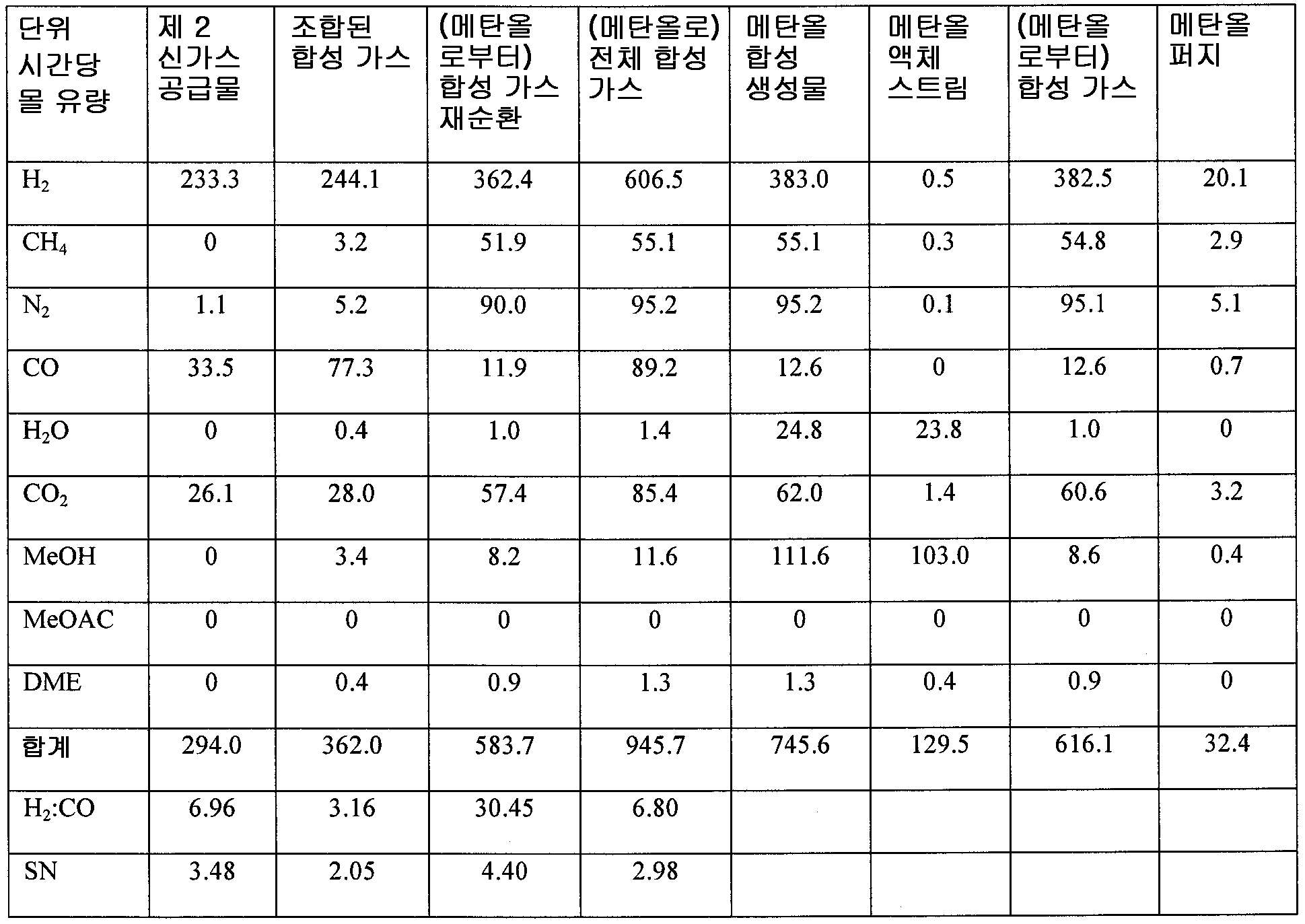
표 4 에 사용된 약어들은 다음과 같은 의미를 갖는다: Abbreviations used in Table 4 have the following meanings:
DME 는 디메틸 에테르이다. DME is dimethyl ether.
MeOH 는 메탄올이다. MeOH is methanol.
MeOAc 는 메틸 아세테이트이다. MeOAc is methyl acetate.
SN 은 화학량수이다.
SN is the stoichiometric number.
실시예 5Example 5
이 실시예는 메틸 아세테이트 및 메탄올을 제조하기 위한 통합 프로세스를 설명하고, 메틸 아세테이트를 제조하도록 디메틸 에테르의 카르보닐화로부터 수득된 합성 가스 스트림은 메탄올 합성 반응으로의 공급물로서 새로운 합성 가스와 조합되어 사용되고, 메탄올 합성 반응 시스템으로부터 수득된 생성물 스트림은 메탄올-농후 액체 스트림 및 합성 가스 스트림으로 분리된다. This example illustrates an integrated process for preparing methyl acetate and methanol and the synthesis gas stream obtained from the carbonylation of dimethyl ether to produce methyl acetate is combined with a new synthesis gas as feed to the methanol synthesis reaction And the product stream obtained from the methanol synthesis reaction system is separated into a methanol-enriched liquid stream and a synthesis gas stream.
표 5 에 나타낸 조성들을 가지는 제 1 합성 가스 (제 1 합성 가스 공급물), 제 2 합성 가스 (제 2 합성 가스 공급물), 및 디메틸 에테르 공급물 (DME 공급물) 을 사용해 실시예 1 의 프로세스가 반복된다. Using the first synthesis gas (first synthesis gas feed), second synthesis gas (second synthesis gas feed), and dimethyl ether feed (DME feed) having the compositions shown in Table 5, Is repeated.
메탄올 합성 반응기로부터의 생성물 스트림은, 열교환기와 녹아웃 드럼을 포함하는, 가스/액체 분리 유닛으로 공급되고, 냉각되고 분리되어서 주로 메탄올을 포함하는 액체 스트림 (메탄올 생성물) 및 메탄올과 디메틸 에테르를 포함하는 합성 가스 스트림 ((메탄올로부터의) 신가스) 을 회수한다.The product stream from the methanol synthesis reactor is fed to a gas / liquid separation unit, which includes a heat exchanger and a knock-out drum, cooled and separated to produce a liquid stream (methanol product) comprising mainly methanol and a synthesis comprising methanol and dimethyl ether Gas stream (from neat gas (from methanol)).
상기 통합 프로세스에서 수득될 수 있는 몰 유량의 실시예들은 이하의 표 5 에 주어진다. Examples of molar flow rates that can be obtained in this consolidation process are given in Table 5 below.
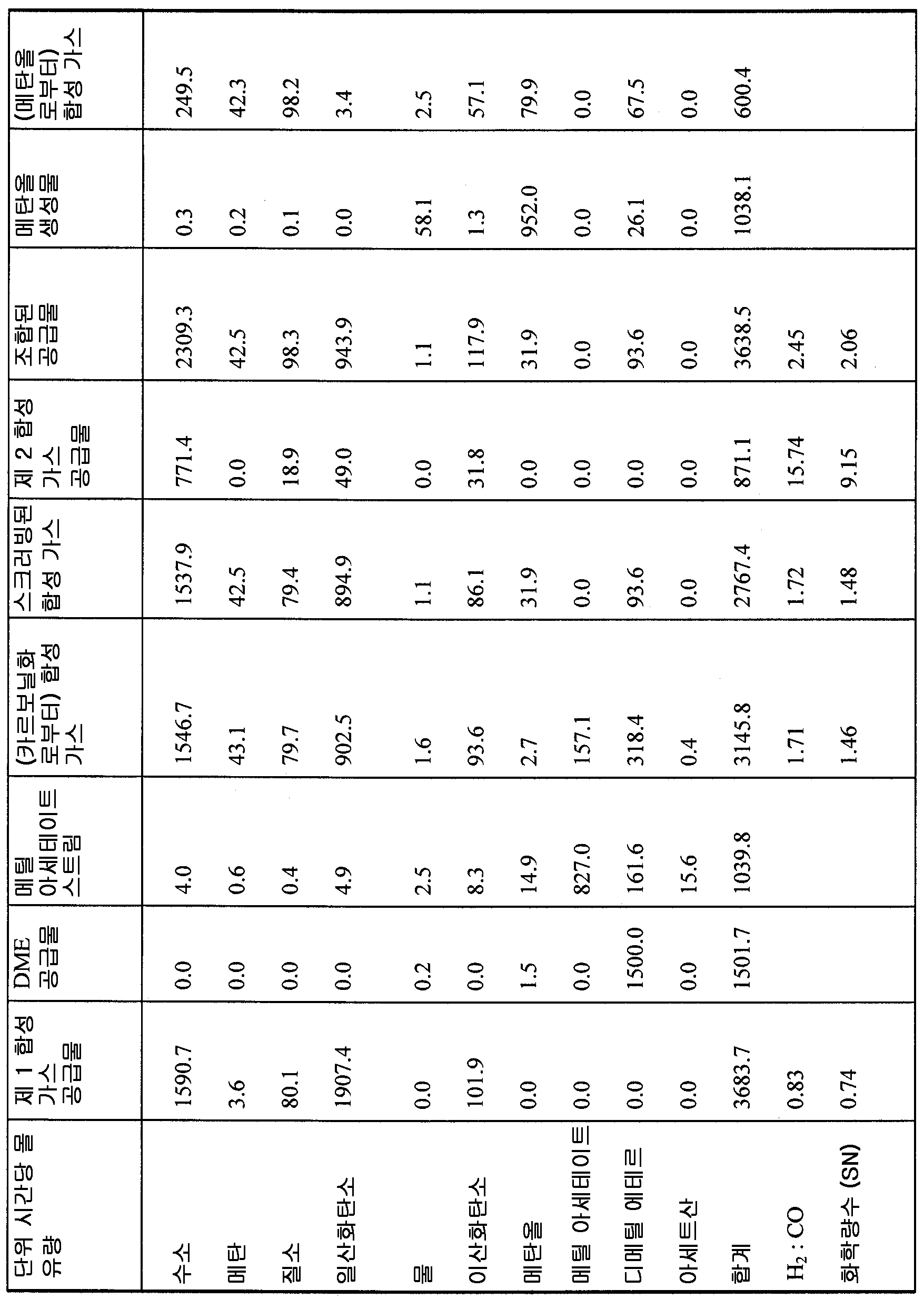
실시예 6Example 6
이 실시예는 합성 가스로부터의 메탄올 합성에 대한 메틸 아세테이트의 영향을 조사한다. Katalco™ 메탄올 촉매 (Johnson Matthey plc) 의 펠릿들이 125 ~ 160 미크론 사이즈 분획물로 분쇄 및 여과 (sieve) 되었다. 9 ㎜ 내경의 관형 반응기는 석영 칩들과 1:1 v/v 로 희석된 촉매 3 ㎖ 로 충전되었다. 촉매층의 길이는 100 ㎜ 이었다. 시험 1, 시험 3, 시험 4, 및 시험 6 에서, 62 mol% H2, 7 mol% CO, 5 mol% C02, 21 mol% N2, 및 5 mol% Ar 조성의 합성 가스가 75 bar (7,500 kPa) 의 전체 압력 및 260 ℃ 의 온도 조건들 하에, 5,000 h-1 및 20,000 h-1 의 전체 가스 시간당 공간 속도 (GHSV) 로 반응기로 공급되었다. 실험은 62 mol% H2, 7 mol% CO, 5 mol% C02, 20 mol% N2, 및 5 mol% Ar 조성의 합성 가스, 및 1 mol% 메틸 아세테이트의 동시 공급물 (co-feed) 을 사용해 시험 2 및 시험 5 에서 반복되었다. 각각의 실험에서 반응기로부터의 배출 스트림은 배출 스트림의 성분들을 분석하기 위해 2 개의 가스 크로마토그래프들 (GC) 로 통과되었다. GC 들은 3 개의 탑들 (분자체 5A, Porapak®Q, 및 CP-Wax-52) 을 갖는 Varian 4900 micro GC 이었고, 각각의 탑은 열 전도성 검출기, 및 2 개의 탑들 (CP Sil 5 및 CP-Wax-52) 을 갖는 Interscience trace GC 를 장착하였고, 각각의 탑은 화염 이온화 검출기를 구비하였다. 이하 표 5 는 시간당 촉매의 리터당 메탄올 생성물의 그램 단위의 공간 시간 수율 (STY) 및 각각의 실험들에 대해 달성된 메탄올에 대한 선택도들 (Sel) 을 제공한다. 표 6 의 데이터는, 메틸 아세테이트의 존재에 의해 합성 가스로부터 메탄올의 제조가 악영향을 받는다는 점을 분명히 보여준다. This example investigates the effect of methyl acetate on methanol synthesis from syngas. The pellets of the Katalco (TM) methanol catalyst (Johnson Matthey plc) were ground and sieved into 125-160 micron size fractions. The 9 mm tubular reactor was charged with 3 ml of catalyst diluted 1: 1 v / v with quartz chips. The length of the catalyst layer was 100 mm. In Test 1, Test 3, Test 4 and Test 6, a syngas of 62 mol% H 2 , 7 mol% CO, 5 mol% CO 2 , 21 mol% N 2 , and 5 mol% under the total pressure and temperature conditions of 260 ℃ of 7,500 kPa), was fed into the reactor to 5,000 h -1 and 20,000 total gas hourly space velocity (GHSV) of h -1. The experiment was carried out in a co-feed of synthesis gas of 62 mol% H 2 , 7 mol% CO, 5 mol% CO 2 , 20 mol% N 2 , and 5 mol% Ar composition, and 1 mol% Lt; RTI ID = 0.0 > 2 < / RTI > In each experiment, the effluent stream from the reactor was passed through two gas chromatographs (GC) to analyze the components of the effluent stream. The GCs were a Varian 4900 micro GC with three towers (molecular sieve 5A, Porapak®Q, and CP-Wax-52), each with a thermally conductive detector and two towers (CP Sil 5 and CP- 52), and each tower was equipped with a flame ionization detector. Table 5 below provides the space time yields (STY) of grams of methanol product per liter of catalyst per hour (STY) and the selectivities (Sel) for methanol achieved for each experiment. The data in Table 6 clearly show that the presence of methyl acetate adversely affects the production of methanol from the synthesis gas.
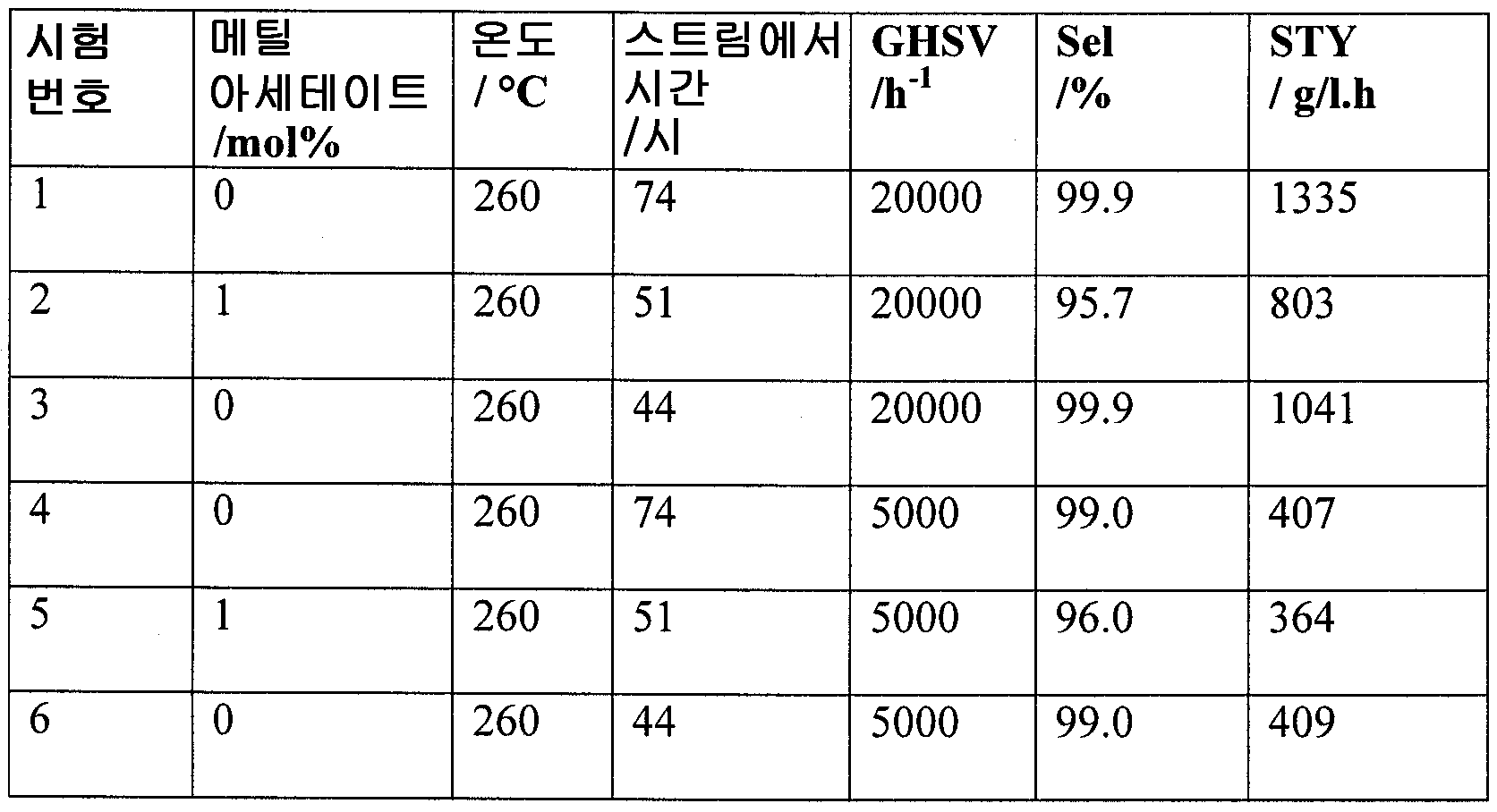
Claims (36)
(i) 메틸 아세테이트 및 수소가 농후한 합성 가스를 포함하는 가스성 카르보닐화 반응 생성물을 형성하도록 제 1 합성 가스와 디메틸 에테르를 카르보닐화 반응 구역에 공급하고 상기 반응 구역에서 카르보닐화 촉매의 존재 하에 상기 디메틸 에테르와 상기 합성 가스를 반응시키는 단계;
(ⅱ) 상기 카르보닐화 반응 구역으로부터 카르보닐화 반응 생성물을 인출하고 상기 카르보닐화 반응 생성물로부터 메틸 아세테이트-농후 액체 스트림 및 합성 가스 스트림을 회수하는 단계; 및
(ⅲ) 메탄올과 미변환 합성 가스를 포함하는 메탄올 합성 생성물을 형성하도록 상기 카르보닐화 반응 생성물로부터 회수된 합성 가스의 적어도 일부 및 제 2 합성 가스를 메탄올 합성 구역으로 공급하고 상기 합성 구역에서 상기 합성 가스를 메탄올 합성 촉매와 접촉시키는 단계
를 포함하는, 메틸 아세테이트 및 메탄올을 제조하기 위한 통합 프로세스.As an integrated process for preparing methyl acetate and methanol,
(i) a first synthesis gas and dimethyl ether are fed to the carbonylation reaction zone to form a gaseous carbonylation reaction product comprising methyl acetate and a hydrogen-rich synthesis gas, and wherein the carbonylation catalyst Reacting the syngas with the dimethyl ether in the presence of a solvent;
(Ii) withdrawing a carbonylation reaction product from said carbonylation reaction zone and recovering a methyl acetate-rich liquid stream and a synthesis gas stream from said carbonylation reaction product; And
(Iii) supplying at least a portion of the syngas recovered from said carbonylation reaction product and a second syngas to a methanol synthesis zone to form a methanol synthesis product comprising methanol and an unconverted synthesis gas, Contacting the gas with a methanol synthesis catalyst
≪ RTI ID = 0.0 > methyl acetate < / RTI > and methanol.
(ⅳ) 상기 메탄올 합성 구역으로부터 메탄올 합성 생성물을 인출하고 상기 메탄올 합성 생성물로부터 메탄올-농후 액체 스트림 및 합성 가스 스트림을 회수하는 단계; 및
(v) 상기 메탄올 합성 생성물로부터 회수된 상기 합성 가스 스트림의 적어도 일부를 상기 메탄올 합성 구역으로 재순환시키는 단계
를 더 포함하는, 메틸 아세테이트 및 메탄올을 제조하기 위한 통합 프로세스.The method according to claim 1,
(Iv) withdrawing the methanol synthesis product from the methanol synthesis zone and recovering the methanol-enriched liquid stream and the synthesis gas stream from the methanol synthesis product; And
(v) recirculating at least a portion of the syngas stream recovered from the methanol synthesis product to the methanol synthesis zone
≪ / RTI > further comprising the steps of:
상기 제 1 합성 가스는 (임의의 재순환물들을 포함해) 1.1 이하의 화학량수 (SN) 를 가지고, SN = (H2-C02)/(CO + C02) 인, 메틸 아세테이트 및 메탄올을 제조하기 위한 통합 프로세스.The method according to claim 1,
The first syngas (including any recycled waters) has a stoichiometric number (SN) of less than 1.1, SN = (H 2 -C0 2) / (CO + C0 2) of, producing the methyl acetate and methanol, The integration process for.
상기 제 1 합성 가스는 0.05 ~ 1.1 범위의 화학량수를 가지는, 메틸 아세테이트 및 메탄올을 제조하기 위한 통합 프로세스.The method of claim 3,
Wherein the first syngas has a stoichiometry in the range of 0.05 to 1.1.
상기 제 1 합성 가스는 상기 카르보닐화 반응 생성물로부터 회수된 합성 가스를 포함하는, 메틸 아세테이트 및 메탄올을 제조하기 위한 통합 프로세스. 5. The method according to any one of claims 1 to 4,
Wherein the first syngas comprises syngas recovered from the carbonylation reaction product. ≪ Desc / Clms Page number 19 >
상기 제 2 합성 가스 및 상기 카르보닐화 반응 생성물로부터 회수된 상기 합성 가스의 조합물은 상기 제 1 합성 가스의 화학량수보다 높은 화학량수를 가지는, 메틸 아세테이트 및 메탄올을 제조하기 위한 통합 프로세스. 6. The method according to any one of claims 1 to 5,
Wherein the combination of the second syngas and the syngas recovered from the carbonylation reaction product has a stoichiometry greater than the stoichiometry of the first synthesis gas.
상기 제 2 합성 가스 및 상기 카르보닐화 반응 생성물로부터 회수된 상기 합성 가스의 조합물은 1.5 ~ 2.5 범위의 화학량수를 가지는, 메틸 아세테이트 및 메탄올을 제조하기 위한 통합 프로세스. The method according to claim 6,
Wherein the combination of the second syngas and the syngas recovered from the carbonylation reaction product has a stoichiometry in the range of 1.5 to 2.5.
상기 제 1 합성 가스 및 상기 제 2 합성 가스 중 적어도 하나는 (임의의 재순환물들을 포함해) 이산화탄소를 포함하는, 메틸 아세테이트 및 메탄올을 제조하기 위한 통합 프로세스. 8. The method according to any one of claims 1 to 7,
Wherein the at least one of the first synthesis gas and the second synthesis gas comprises carbon dioxide (including any recycle).
이산화탄소는 0.5 ~ 12 mol% 범위의 양으로 상기 제 1 합성 가스 및 상기 제 2 합성 가스 중 적어도 하나에 존재하는, 메틸 아세테이트 및 메탄올을 제조하기 위한 통합 프로세스. 9. The method of claim 8,
Wherein the carbon dioxide is present in at least one of the first syngas and the second syngas in an amount ranging from 0.5 to 12 mol%.
물과 메탄올은 0 ~ 0.5 mol% 범위의 조합된 양으로 상기 카르보닐화 반응 구역으로 도입되는, 메틸 아세테이트 및 메탄올을 제조하기 위한 통합 프로세스. 10. The method according to any one of claims 1 to 9,
Wherein the water and methanol are introduced into the carbonylation reaction zone in a combined amount ranging from 0 to 0.5 mol%.
상기 카르보닐화 촉매는 8-원 고리에 의해 규정되는 적어도 하나의 채널을 포함하는 알루미노실리케이트 제올라이트인, 메틸 아세테이트 및 메탄올을 제조하기 위한 통합 프로세스. 11. The method according to any one of claims 1 to 10,
Wherein the carbonylation catalyst is an aluminosilicate zeolite comprising at least one channel defined by an 8-membered ring.
상기 알루미노실리케이트 제올라이트는 MOR, FER, OFF 및 GME 로부터 선택된 골격 구조 유형을 가지는, 메틸 아세테이트 및 메탄올을 제조하기 위한 통합 프로세스. 12. The method of claim 11,
Wherein the aluminosilicate zeolite has a skeletal structure type selected from MOR, FER, OFF and GME.
상기 제올라이트는 골격 구조 유형 MOR 을 가지고 또한 모데나이트인, 메틸 아세테이트 및 메탄올을 제조하기 위한 통합 프로세스. 13. The method of claim 12,
Wherein the zeolite has a skeletal structure type MOR and is also a mordenite, methyl acetate and methanol.
상기 제 1 합성 가스 및 디메틸 에테르는 250 ℃ ~ 350 ℃ 범위의 온도 및 50 ~ 100 barg (5,000 kPa ~ 10,000 kPa) 범위의 전체 압력의 조건들 하에 상기 카르보닐화 반응 구역에서 반응되는, 메틸 아세테이트 및 메탄올을 제조하기 위한 통합 프로세스. 14. The method according to any one of claims 1 to 13,
Wherein the first synthesis gas and dimethyl ether are reacted in the carbonylation reaction zone under conditions of a temperature in the range of 250 ° C to 350 ° C and a total pressure in the range of 50 to 100 barg (5,000 kPa to 10,000 kPa) Integrated process for making methanol.
상기 카르보닐화 반응 생성물로부터 회수된 합성 가스는 0.1 ~ 5 mol% 양의 메틸 아세테이트를 포함하는, 메틸 아세테이트 및 메탄올을 제조하기 위한 통합 프로세스. 15. The method according to any one of claims 1 to 14,
Wherein the syngas recovered from the carbonylation reaction product comprises methyl acetate in an amount of from 0.1 to 5 mol%.
상기 카르보닐화 반응 생성물로부터 회수된 합성 가스는 0.5 ~ 2 mol% 양의 메틸 아세테이트를 포함하는, 메틸 아세테이트 및 메탄올을 제조하기 위한 통합 프로세스.16. The method of claim 15,
Wherein the syngas recovered from the carbonylation reaction product comprises methyl acetate in an amount of 0.5 to 2 mol%.
상기 카르보닐화 반응 생성물로부터 회수된 합성 가스는 스크러빙되는, 메틸 아세테이트 및 메탄올을 제조하기 위한 통합 프로세스. 17. The method according to any one of claims 1 to 16,
Wherein the synthesis gas recovered from the carbonylation reaction product is scrubbed.
상기 합성 가스는 다수의 스크러빙 처리들을 부여받는, 메틸 아세테이트 및 메탄올을 제조하기 위한 통합 프로세스. 18. The method of claim 17,
Wherein the syngas is subjected to a plurality of scrubbing treatments.
상기 카르보닐화 반응 생성물로부터 회수된 합성 가스는 주요 (major) 부분과 소량 (minor) 부분으로 나누어지고, 상기 주요 부분은 상기 카르보닐화 반응 구역으로 재순환되고 상기 소량 부분은 스크러빙되는, 메틸 아세테이트 및 메탄올을 제조하기 위한 통합 프로세스. 19. The method according to any one of claims 1 to 18,
Wherein the syngas recovered from the carbonylation reaction product is divided into a major portion and a minor portion and the major portion is recycled to the carbonylation reaction zone and the minor portion is scrubbed, Integrated process for making methanol.
상기 주요 부분은 상기 카르보닐화 반응 생성물로부터 회수된 상기 합성 가스의 75 ~ 99 mol% 인, 메틸 아세테이트 및 메탄올을 제조하기 위한 통합 프로세스. 20. The method of claim 19,
Said major portion being 75-99 mol% of said syngas recovered from said carbonylation reaction product.
상기 합성 가스는 메탄올을 포함하는 스크러빙 용매로 스크러빙되는, 메틸 아세테이트 및 메탄올을 제조하기 위한 통합 프로세스. 21. The method according to any one of claims 17 to 20,
Wherein the syngas is scrubbed with a scrubbing solvent comprising methanol.
상기 스크러빙 용매는 물과 디메틸 에테르 중 하나 이상을 더 포함하는, 메틸 아세테이트 및 메탄올을 제조하기 위한 통합 프로세스. 22. The method of claim 21,
Wherein the scrubbing solvent further comprises at least one of water and dimethyl ether.
상기 스크러빙 용매는 상기 메탄올 합성 생성물로부터 회수된 메탄올-농후 액체 스트림의 적어도 일부인, 메틸 아세테이트 및 메탄올을 제조하기 위한 통합 프로세스. 23. The method of claim 21 or 22,
Wherein the scrubbing solvent is at least a portion of a methanol-enriched liquid stream recovered from the methanol synthesis product.
상기 카르보닐화 반응 생성물로부터 회수된 합성 가스 또는 스크러빙된 합성 가스는 0.1 ~ 3.0 범위의 화학량수를 가지는, 메틸 아세테이트 및 메탄올을 제조하기 위한 통합 프로세스. 24. The method according to any one of claims 1 to 23,
Wherein the syngas recovered from the carbonylation reaction product or the scrubbed synthesis gas has a stoichiometry in the range of 0.1 to 3.0.
상기 제 2 합성 가스 및 스크러빙된 합성 가스의 조합물은 1.5 ~ 2.5 범위의 화학량수를 가지는, 메틸 아세테이트 및 메탄올을 제조하기 위한 통합 프로세스. 25. The method according to any one of claims 1 to 24,
Wherein the combination of the second syngas and the scrubbed syngas has a stoichiometry in the range of 1.5 to 2.5.
이산화탄소가 상기 메탄올 합성 구역으로 도입되고 이러한 이산화탄소는 상기 제 1 합성 가스 및 상기 제 2 합성 가스 중 하나 이상으로부터 수득되는, 메틸 아세테이트 및 메탄올을 제조하기 위한 통합 프로세스. 25. The method according to any one of claims 1 to 24,
Carbon dioxide is introduced into the methanol synthesis zone and the carbon dioxide is obtained from at least one of the first synthesis gas and the second synthesis gas.
상기 메탄올 합성 촉매는 구리를 포함하는, 메틸 아세테이트 및 메탄올을 제조하기 위한 통합 프로세스. 27. The method according to any one of claims 1 to 26,
Wherein the methanol synthesis catalyst comprises copper. ≪ RTI ID = 0.0 > 11. < / RTI >
상기 촉매는 Katalco™ 메탄올 합성 촉매인, 메틸 아세테이트 및 메탄올을 제조하기 위한 통합 프로세스. 28. The method of claim 27,
The catalyst is an integrated process for preparing Katalco (TM) methanol synthesis catalyst, methyl acetate and methanol.
상기 합성 가스는, 210 ℃ ~ 270 ℃ 의 온도 및 50 ~ 100 barg (5,000 kPa ~ 10,000 kPa) 범위의 전체 압력의 조건들 하에 상기 메탄올 합성 촉매와 접촉되는, 메틸 아세테이트 및 메탄올을 제조하기 위한 통합 프로세스. 29. The method according to any one of claims 1 to 28,
Wherein the synthesis gas is an integrated process for producing methyl acetate and methanol, wherein the synthesis gas is contacted with the methanol synthesis catalyst under conditions of a temperature of 210 ° C to 270 ° C and a total pressure in the range of 50 to 100 barg (5,000 kPa to 10,000 kPa) .
메탄올은, 상기 메탄올 합성 구역으로부터 인출된 메탄올 합성 생성물 및 상기 카르보닐화 반응 생성물로부터 회수된 합성 가스의 스크러빙으로부터 수득된 메탄올을 포함하는 액체 용매 스트림들 중 하나 이상으로부터 회수되는, 메틸 아세테이트 및 메탄올을 제조하기 위한 통합 프로세스. 30. The method according to any one of claims 1 to 29,
Methanol is recovered from one or more of the liquid solvent streams comprising the methanol synthesis product drawn from the methanol synthesis zone and the methanol obtained from the scrubbing of the syngas recovered from the carbonylation reaction product, Integrated process for manufacturing.
메탄올은 상기 메탄올 합성 생성물로부터 회수된 메탄올-농후 액체 스트림으로부터 회수되는, 메틸 아세테이트 및 메탄올을 제조하기 위한 통합 프로세스.31. The method according to any one of claims 2 to 30,
Wherein the methanol is recovered from the methanol-enriched liquid stream recovered from the methanol synthesis product.
상기 메탄올 합성 구역으로 재순환된 상기 합성 가스 스트림의 일부는 퍼지 (purge) 스트림으로서 배기되는, 메틸 아세테이트 및 메탄올을 제조하기 위한 통합 프로세스. 32. The method according to any one of claims 2 to 31,
Wherein a portion of the syngas stream recycled to the methanol synthesis zone is vented as a purge stream.
메틸 아세테이트는 상기 메틸 아세테이트-농후 액체 스트림의 적어도 일부로부터 회수되고, 회수된 상기 메틸 아세테이트는 아세트산으로 변환되는, 메틸 아세테이트 및 메탄올을 제조하기 위한 통합 프로세스. 33. The method according to any one of claims 1 to 32,
Methyl acetate is recovered from at least a portion of the methyl acetate-enriched liquid stream, and the recovered methyl acetate is converted to acetic acid.
회수된 메틸 아세테이트는 가수 분해에 의해 아세트산으로 변환되는, 메틸 아세테이트 및 메탄올을 제조하기 위한 통합 프로세스. 34. The method of claim 33,
The integrated process for producing methyl acetate and methanol, wherein the recovered methyl acetate is converted to acetic acid by hydrolysis.
상기 카르보닐화 반응 구역 및 상기 메탄올 합성 구역 각각에서, 반응은 이종 (heterogeneous) 증기상 반응으로서 수행되는, 메틸 아세테이트 및 메탄올을 제조하기 위한 통합 프로세스. 35. The method according to any one of claims 1 to 34,
In each of the carbonylation reaction zone and the methanol synthesis zone, the reaction is carried out as a heterogeneous vapor phase reaction.
상기 프로세스는 연속 프로세스로서 작동되는, 메틸 아세테이트 및 메탄올을 제조하기 위한 통합 프로세스. 35. The method according to any one of claims 1 to 34,
The process is operated as a continuous process, an integrated process for producing methyl acetate and methanol.
Applications Claiming Priority (3)
| Application Number | Priority Date | Filing Date | Title |
|---|---|---|---|
| EP12199082.4 | 2012-12-21 | ||
| EP12199082 | 2012-12-21 | ||
| PCT/EP2013/077477 WO2014096249A1 (en) | 2012-12-21 | 2013-12-19 | Integrated process for the production of methanol and methyl acetate |
Publications (1)
| Publication Number | Publication Date |
|---|---|
| KR20150096523A true KR20150096523A (en) | 2015-08-24 |
Family
ID=47458746
Family Applications (1)
| Application Number | Title | Priority Date | Filing Date |
|---|---|---|---|
| KR1020157019683A Withdrawn KR20150096523A (en) | 2012-12-21 | 2013-12-19 | Integrated process for the production of methanol and methyl acetate |
Country Status (12)
| Country | Link |
|---|---|
| US (1) | US9469591B2 (en) |
| EP (1) | EP2935173A1 (en) |
| JP (1) | JP2016504328A (en) |
| KR (1) | KR20150096523A (en) |
| CN (1) | CN104995160B (en) |
| BR (1) | BR112015014967A2 (en) |
| CA (1) | CA2894285A1 (en) |
| RU (1) | RU2686701C2 (en) |
| SG (1) | SG11201504645YA (en) |
| TW (1) | TW201429942A (en) |
| UA (1) | UA119435C2 (en) |
| WO (1) | WO2014096249A1 (en) |
Families Citing this family (7)
| Publication number | Priority date | Publication date | Assignee | Title |
|---|---|---|---|---|
| WO2018004992A1 (en) | 2016-07-01 | 2018-01-04 | Res Usa, Llc | Conversion of methane to dimethyl ether |
| WO2018004993A1 (en) | 2016-07-01 | 2018-01-04 | Res Usa, Llc | Reduction of greenhouse gas emission |
| WO2018004994A1 (en) | 2016-07-01 | 2018-01-04 | Res Usa, Llc | Fluidized bed membrane reactor |
| GB201705882D0 (en) * | 2017-04-12 | 2017-05-24 | Bp Chem Int Ltd | Process |
| CN109574839B (en) * | 2017-09-29 | 2021-08-31 | 中国科学院大连化学物理研究所 | A kind of method for directly producing methyl acetate and/or acetic acid from synthesis gas |
| CN111517953A (en) * | 2020-05-09 | 2020-08-11 | 江苏湖大化工科技有限公司 | Production process method for synthesizing methyl methacrylate by methyl acetate and formaldehyde |
| EP4159710A3 (en) | 2021-10-01 | 2023-08-16 | Indian Oil Corporation Limited | Integrated process and cu/zn-based catalyst for synthesizing methanol utilizing co2, generating electricity from hydrocarbon feedstock |
Family Cites Families (11)
| Publication number | Priority date | Publication date | Assignee | Title |
|---|---|---|---|---|
| JPS4837244B1 (en) * | 1969-08-14 | 1973-11-09 | ||
| GB9118304D0 (en) | 1991-08-24 | 1991-10-09 | Bp Chem Int Ltd | Process |
| US5502243A (en) | 1992-04-15 | 1996-03-26 | Air Products And Chemicals, Inc. | Hydrocarbonylation of dimethyl ether |
| CA2093752C (en) | 1992-04-15 | 1999-06-15 | David W. Studer | Integrated process for oxygenated acetyl compounds from synthesis gas via dimethyl ether |
| DK40796A (en) | 1996-04-10 | 1997-10-11 | Haldor Topsoe As | Process for the production of acetic acid |
| WO2001007393A1 (en) * | 1999-07-23 | 2001-02-01 | Union Carbide Chemicals & Plastics | Processes for preparing oxygenates |
| OA12861A (en) * | 2002-05-20 | 2006-09-15 | Acetex Cyprus Ltd | Integrated process for making acetic acid and methanol. |
| US20060252959A1 (en) * | 2005-05-05 | 2006-11-09 | The Regents Of The University Of California | Process for carbonylation of alkyl ethers |
| EP1985362A1 (en) * | 2007-04-26 | 2008-10-29 | BP Chemicals Limited | Process for the carbonylation of dimethyl ether |
| EP2189215A1 (en) * | 2008-11-19 | 2010-05-26 | BP Chemicals Limited | Carbonylation process catalysed by mordenite supported on inorganic oxides |
| EP2198963A1 (en) * | 2008-12-10 | 2010-06-23 | BP Chemicals Limited | Bound mordenite zeolite carbonylation catalyst |
-
2013
- 2013-12-19 KR KR1020157019683A patent/KR20150096523A/en not_active Withdrawn
- 2013-12-19 RU RU2015129636A patent/RU2686701C2/en active
- 2013-12-19 SG SG11201504645YA patent/SG11201504645YA/en unknown
- 2013-12-19 UA UAA201507178A patent/UA119435C2/en unknown
- 2013-12-19 CN CN201380073647.0A patent/CN104995160B/en active Active
- 2013-12-19 US US14/652,828 patent/US9469591B2/en active Active
- 2013-12-19 CA CA2894285A patent/CA2894285A1/en not_active Abandoned
- 2013-12-19 WO PCT/EP2013/077477 patent/WO2014096249A1/en not_active Ceased
- 2013-12-19 EP EP13817914.8A patent/EP2935173A1/en not_active Withdrawn
- 2013-12-19 JP JP2015548591A patent/JP2016504328A/en not_active Ceased
- 2013-12-19 BR BR112015014967A patent/BR112015014967A2/en not_active IP Right Cessation
- 2013-12-20 TW TW102147482A patent/TW201429942A/en unknown
Also Published As
| Publication number | Publication date |
|---|---|
| UA119435C2 (en) | 2019-06-25 |
| CN104995160B (en) | 2020-03-20 |
| RU2686701C2 (en) | 2019-04-30 |
| CN104995160A (en) | 2015-10-21 |
| US20150329466A1 (en) | 2015-11-19 |
| EP2935173A1 (en) | 2015-10-28 |
| JP2016504328A (en) | 2016-02-12 |
| TW201429942A (en) | 2014-08-01 |
| WO2014096249A1 (en) | 2014-06-26 |
| RU2015129636A (en) | 2017-01-26 |
| SG11201504645YA (en) | 2015-07-30 |
| US9469591B2 (en) | 2016-10-18 |
| BR112015014967A2 (en) | 2017-07-11 |
| CA2894285A1 (en) | 2014-06-26 |
Similar Documents
| Publication | Publication Date | Title |
|---|---|---|
| CN104995167B (en) | Integrated process for the production of methyl acetate and methanol from synthesis gas and dimethylether | |
| US9242920B2 (en) | Integrated process for making acetic acid | |
| US9469591B2 (en) | Integrated process for the production of methanol and methyl acetate | |
| CN101952232B (en) | Process for the conversion of alcohol (s) into alcohol (s) with increased carbon- chain | |
| US9546120B2 (en) | Integrated process for the production of methanol and methyl acetate | |
| WO2021054962A1 (en) | Process for isobutanol production from ethanol and syngas |
Legal Events
| Date | Code | Title | Description |
|---|---|---|---|
| PA0105 | International application |
Patent event date: 20150720 Patent event code: PA01051R01D Comment text: International Patent Application |
|
| PG1501 | Laying open of application | ||
| PC1203 | Withdrawal of no request for examination | ||
| WITN | Application deemed withdrawn, e.g. because no request for examination was filed or no examination fee was paid |