KR20150059517A - Mobile terminal and control method for the mobile terminal - Google Patents
Mobile terminal and control method for the mobile terminal Download PDFInfo
- Publication number
- KR20150059517A KR20150059517A KR1020130143208A KR20130143208A KR20150059517A KR 20150059517 A KR20150059517 A KR 20150059517A KR 1020130143208 A KR1020130143208 A KR 1020130143208A KR 20130143208 A KR20130143208 A KR 20130143208A KR 20150059517 A KR20150059517 A KR 20150059517A
- Authority
- KR
- South Korea
- Prior art keywords
- touch
- display unit
- function
- touch trajectory
- mobile terminal
- Prior art date
- Legal status (The legal status is an assumption and is not a legal conclusion. Google has not performed a legal analysis and makes no representation as to the accuracy of the status listed.)
- Granted
Links
Images


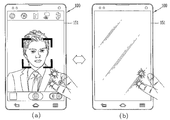


Classifications
-
- G—PHYSICS
- G06—COMPUTING OR CALCULATING; COUNTING
- G06F—ELECTRIC DIGITAL DATA PROCESSING
- G06F3/00—Input arrangements for transferring data to be processed into a form capable of being handled by the computer; Output arrangements for transferring data from processing unit to output unit, e.g. interface arrangements
- G06F3/01—Input arrangements or combined input and output arrangements for interaction between user and computer
- G06F3/048—Interaction techniques based on graphical user interfaces [GUI]
-
- H—ELECTRICITY
- H04—ELECTRIC COMMUNICATION TECHNIQUE
- H04W—WIRELESS COMMUNICATION NETWORKS
- H04W12/00—Security arrangements; Authentication; Protecting privacy or anonymity
- H04W12/06—Authentication
-
- G—PHYSICS
- G06—COMPUTING OR CALCULATING; COUNTING
- G06F—ELECTRIC DIGITAL DATA PROCESSING
- G06F21/00—Security arrangements for protecting computers, components thereof, programs or data against unauthorised activity
- G06F21/30—Authentication, i.e. establishing the identity or authorisation of security principals
- G06F21/31—User authentication
- G06F21/36—User authentication by graphic or iconic representation
-
- G—PHYSICS
- G06—COMPUTING OR CALCULATING; COUNTING
- G06F—ELECTRIC DIGITAL DATA PROCESSING
- G06F3/00—Input arrangements for transferring data to be processed into a form capable of being handled by the computer; Output arrangements for transferring data from processing unit to output unit, e.g. interface arrangements
- G06F3/01—Input arrangements or combined input and output arrangements for interaction between user and computer
- G06F3/048—Interaction techniques based on graphical user interfaces [GUI]
- G06F3/0487—Interaction techniques based on graphical user interfaces [GUI] using specific features provided by the input device, e.g. functions controlled by the rotation of a mouse with dual sensing arrangements, or of the nature of the input device, e.g. tap gestures based on pressure sensed by a digitiser
- G06F3/0488—Interaction techniques based on graphical user interfaces [GUI] using specific features provided by the input device, e.g. functions controlled by the rotation of a mouse with dual sensing arrangements, or of the nature of the input device, e.g. tap gestures based on pressure sensed by a digitiser using a touch-screen or digitiser, e.g. input of commands through traced gestures
-
- H—ELECTRICITY
- H04—ELECTRIC COMMUNICATION TECHNIQUE
- H04B—TRANSMISSION
- H04B1/00—Details of transmission systems, not covered by a single one of groups H04B3/00 - H04B13/00; Details of transmission systems not characterised by the medium used for transmission
- H04B1/38—Transceivers, i.e. devices in which transmitter and receiver form a structural unit and in which at least one part is used for functions of transmitting and receiving
- H04B1/40—Circuits
-
- H—ELECTRICITY
- H04—ELECTRIC COMMUNICATION TECHNIQUE
- H04M—TELEPHONIC COMMUNICATION
- H04M1/00—Substation equipment, e.g. for use by subscribers
- H04M1/02—Constructional features of telephone sets
- H04M1/0202—Portable telephone sets, e.g. cordless phones, mobile phones or bar type handsets
- H04M1/026—Details of the structure or mounting of specific components
- H04M1/0266—Details of the structure or mounting of specific components for a display module assembly
-
- H—ELECTRICITY
- H04—ELECTRIC COMMUNICATION TECHNIQUE
- H04M—TELEPHONIC COMMUNICATION
- H04M1/00—Substation equipment, e.g. for use by subscribers
- H04M1/72—Mobile telephones; Cordless telephones, i.e. devices for establishing wireless links to base stations without route selection
- H04M1/724—User interfaces specially adapted for cordless or mobile telephones
- H04M1/72448—User interfaces specially adapted for cordless or mobile telephones with means for adapting the functionality of the device according to specific conditions
- H04M1/72463—User interfaces specially adapted for cordless or mobile telephones with means for adapting the functionality of the device according to specific conditions to restrict the functionality of the device
- H04M1/724631—User interfaces specially adapted for cordless or mobile telephones with means for adapting the functionality of the device according to specific conditions to restrict the functionality of the device by limiting the access to the user interface, e.g. locking a touch-screen or a keypad
- H04M1/724634—With partially locked states, e.g. when some telephonic functional locked states or applications remain accessible in the locked states
-
- H—ELECTRICITY
- H04—ELECTRIC COMMUNICATION TECHNIQUE
- H04W—WIRELESS COMMUNICATION NETWORKS
- H04W52/00—Power management, e.g. Transmission Power Control [TPC] or power classes
- H04W52/02—Power saving arrangements
- H04W52/0209—Power saving arrangements in terminal devices
- H04W52/0261—Power saving arrangements in terminal devices managing power supply demand, e.g. depending on battery level
- H04W52/0267—Power saving arrangements in terminal devices managing power supply demand, e.g. depending on battery level by controlling user interface components
- H04W52/027—Power saving arrangements in terminal devices managing power supply demand, e.g. depending on battery level by controlling user interface components by controlling a display operation or backlight unit
-
- H—ELECTRICITY
- H04—ELECTRIC COMMUNICATION TECHNIQUE
- H04W—WIRELESS COMMUNICATION NETWORKS
- H04W12/00—Security arrangements; Authentication; Protecting privacy or anonymity
- H04W12/60—Context-dependent security
- H04W12/68—Gesture-dependent or behaviour-dependent
-
- H—ELECTRICITY
- H04—ELECTRIC COMMUNICATION TECHNIQUE
- H04W—WIRELESS COMMUNICATION NETWORKS
- H04W88/00—Devices specially adapted for wireless communication networks, e.g. terminals, base stations or access point devices
- H04W88/02—Terminal devices
-
- Y—GENERAL TAGGING OF NEW TECHNOLOGICAL DEVELOPMENTS; GENERAL TAGGING OF CROSS-SECTIONAL TECHNOLOGIES SPANNING OVER SEVERAL SECTIONS OF THE IPC; TECHNICAL SUBJECTS COVERED BY FORMER USPC CROSS-REFERENCE ART COLLECTIONS [XRACs] AND DIGESTS
- Y02—TECHNOLOGIES OR APPLICATIONS FOR MITIGATION OR ADAPTATION AGAINST CLIMATE CHANGE
- Y02D—CLIMATE CHANGE MITIGATION TECHNOLOGIES IN INFORMATION AND COMMUNICATION TECHNOLOGIES [ICT], I.E. INFORMATION AND COMMUNICATION TECHNOLOGIES AIMING AT THE REDUCTION OF THEIR OWN ENERGY USE
- Y02D30/00—Reducing energy consumption in communication networks
- Y02D30/70—Reducing energy consumption in communication networks in wireless communication networks
Landscapes
- Engineering & Computer Science (AREA)
- Theoretical Computer Science (AREA)
- Human Computer Interaction (AREA)
- General Engineering & Computer Science (AREA)
- Signal Processing (AREA)
- Computer Networks & Wireless Communication (AREA)
- Computer Security & Cryptography (AREA)
- Physics & Mathematics (AREA)
- General Physics & Mathematics (AREA)
- Computer Hardware Design (AREA)
- Software Systems (AREA)
- Telephone Function (AREA)
- User Interface Of Digital Computer (AREA)
Abstract
본 발명은 디스플레이부가 비활성화된 상태에서 상기 디스플레이부에 인가되는 터치를 감지할 수 있는 이동 단말기 및 그것의 제어방법에 관한 것으로, 상기 이동 단말기는, 단말기 본체, 상기 본체의 전면에 배치되는 디스플레이부, 상기 디스플레이부에 가해지는 터치 및 상기 본체를 두드리는 탭(tap) 중 적어도 하나를 감지하는 감지부 및 상기 디스플레이부가 비활성화된 상태에서 상기 디스플레이부에 인가되는 터치 궤적에 연계된 기능을 기 설정된 조건에 대응되는 탭에 근거하여 처리하는 제어부를 포함하고, 상기 제어부는, 상기 감지된 터치가 해제된 시점으로부터 기준시간 이내에 상기 탭이 감지되면, 상기 터치 궤적에 연계된 기능을 실행하는 것을 특징으로 한다.The present invention relates to a mobile terminal capable of sensing a touch applied to the display unit in a state in which a display unit is inactivated, and a control method thereof. The mobile terminal includes a terminal body, a display unit disposed on a front surface of the body, A sensing unit for sensing at least one of a touch applied to the display unit and a tap for tapping the main body, and a function associated with a touch trace applied to the display unit in a state in which the display unit is inactivated, And the control unit executes a function associated with the touch trajectory when the tab is detected within a reference time from the time when the sensed touch is released.
Description
본 발명은 디스플레이부가 비활성화된 상태에서 상기 디스플레이부에 인가되는 터치를 감지할 수 있는 이동 단말기 및 그것의 제어방법에 관한 것이다.The present invention relates to a mobile terminal capable of sensing a touch applied to the display unit in a state in which a display unit is inactivated, and a control method thereof.
단말기(terminal)는 이동 가능 여부에 따라 이동 단말기(mobile/portable terminal) 및 고정 단말기(stationary terminal)로 나뉠 수 있다. 다시 이동 단말기는 사용자의 직접 휴대 가능 여부에 따라 휴대(형) 단말기(handheld terminal) 및 거치형 단말기(vehicle mount terminal)로 나뉠 수 있다.A terminal can be divided into a mobile / portable terminal and a stationary terminal depending on whether the terminal is movable. The mobile terminal can be divided into a handheld terminal and a vehicle mount terminal according to whether the user can directly carry the mobile terminal.
이와 같은 단말기는 기능이 다양화됨에 따라, 예를 들어, 사진이나 동영상의 촬영, 음악이나 동영상 파일의 재생, 게임, 방송 수신 등의 복합적인 기능들을 갖춘 멀티미디어 기기(multimedia player) 형태로 구현되고 있다. As the functions of such terminals are diversified, they are implemented in the form of a multimedia player having complex functions such as photographing and photographing of movies, reproduction of music and video files, games, and broadcasting reception .
이러한 단말기의 기능 지지 및 증대를 위해, 단말기의 구조적인 부분 및/또는 소프트웨어적인 부분을 개량하는 것이 고려되고 있다.In order to support and enhance the functionality of such terminals, it is contemplated to improve the structural and / or software aspects of the terminal.
나아가, 단말기의 기능을 디스플레이부가 비활성화된 상태에서도 단말기에 대한 간단한 조작을 통해 간편하게 제어할 수 있는 새로운 사용자 인터페이스에 대한 요구가 증가하고 있다.Further, there is an increasing demand for a new user interface that can easily control the functions of the terminal through a simple operation on the terminal even when the display unit is inactive.
본 발명의 일 목적은 비활성화된 디스플레이부에 터치를 인가하여 단말기를 제어할 수 있는 이동 단말기 및 그것의 제어방법을 제공하기 위한 것이다.An object of the present invention is to provide a mobile terminal capable of controlling a terminal by applying a touch to an inactive display unit, and a control method thereof.
본 발명의 일 목적은 종래와 다른 새로운 방식의 사용자 인터페이스가 구비된 이동 단말기를 제공하기 위한 것이다.It is an object of the present invention to provide a mobile terminal having a user interface of a new method different from the conventional one.
상기와 같은 목적을 달성하기 위하여, 본 발명과 관련된 이동 단말기는, 단말기 본체, 상기 본체의 전면에 배치되는 디스플레이부, 상기 디스플레이부에 가해지는 터치 및 상기 본체를 두드리는 탭(tap) 중 적어도 하나를 감지하는 감지부 및 상기 디스플레이부가 비활성화된 상태에서 상기 디스플레이부에 인가되는 터치 궤적에 연계된 기능을 기 설정된 조건에 대응되는 탭에 근거하여 처리하는 제어부를 포함하고, 상기 제어부는, 상기 감지된 터치가 해제된 시점으로부터 기준시간 이내에 상기 탭이 감지되면, 상기 터치 궤적에 연계된 기능을 실행하는 것을 특징으로 한다.In order to achieve the above object, a mobile terminal according to the present invention includes at least one of a terminal body, a display portion disposed on a front surface of the body, a tap applied to the display portion, And a control unit for processing a function associated with a touch trajectory applied to the display unit based on a tap corresponding to a predetermined condition in a state in which the display unit is inactivated, When the tap is detected within a reference time from when the touch is released, the function associated with the touch trajectory is executed.
일 실시 예에 있어서, 상기 제어부는, 상기 탭이 감지되면, 상기 디스플레이부를 비활성화 상태에서 활성화 상태로 전환하고, 상기 터치 궤적에 연계된 기능의 실행화면을 상기 디스플레이부에 표시하는 것을 특징으로 한다.In one embodiment, the control unit switches the display unit from an inactive state to an active state when the tab is detected, and displays an execution screen of a function associated with the touch locus on the display unit.
일 실시 예에 있어서, 상기 터치 궤적이 형성하는 모양에 따라 서로 다른 기능이 상기 탭에 근거하여 실행되고, 상기 서로 다른 기능의 실행화면이 상기 디스플레이부에 표시되는 것을 특징으로 한다.In one embodiment, different functions are executed based on the tabs according to shapes of the touch trajectories, and the execution screens of the different functions are displayed on the display unit.
일 실시 예에 있어서, 상기 제어부는, 상기 터치 궤적에 근거하여 상위 기능을 선택하고, 상기 탭이 가해진 위치 및 가해진 횟수 중 적어도 하나에 근거하여 상기 상위 기능에 포함된 하위 기능들 중 적어도 하나를 선택하며, 상기 선택된 적어도 하나의 하위 기능을 실행하는 것을 특징으로 한다.In one embodiment, the control unit selects at least one of the lower functions included in the upper function based on at least one of the position and the number of times the tap is applied, And executes the selected at least one sub-function.
일 실시 예에 있어서, 상기 터치 궤적에 연계된 상위 기능은 발신 기능에 대응되고, 상기 본체를 제1 기준 횟수만큼 두드리는 제1 탭이 감지되면, 제1 상대방에 대한 발신 기능이 실행되고, 상기 본체를 상기 제1 기준 횟수와 다른 제2 기준횟수만큼 두드리는 제2 탭이 감지되면, 제2 상대방에 대한 발신 기능이 실행되는 것을 특징으로 한다.In one embodiment, a higher function associated with the touch trajectory corresponds to a calling function, and when a first tap for tapping the body for a first reference number is detected, a calling function for the first counterpart is executed, When a second tap for tapping a second reference count different from the first reference count is detected, a calling function for the second counterpart is executed.
일 실시 예에 있어서, 상기 이동 단말기는, 상기 본체의 전면에 배치되고, 상기 감지된 터치가 해제되면 상기 터치 궤적에 연계된 기능에 근거하여 조명을 점등하는 발광부를 더 포함하는 것을 특징으로 한다.In one embodiment, the mobile terminal further includes a light emitting unit disposed on a front surface of the main body, and illuminating the illumination based on a function associated with the touch trajectory when the sensed touch is released.
일 실시 예에 있어서, 상기 터치 궤적에 연계된 기능이 제1 기능에 대응되면 상기 발광부 상에 제1 조명이 점등되고, 상기 터치 궤적에 연계된 기능이 상기 제1 기능과 다른 제2 기능에 대응되면, 상기 발광부 상에 제2 조명이 점등되는 것을 특징으로 한다.In one embodiment, when the function associated with the touch trajectory corresponds to the first function, the first illumination is turned on on the light emitting unit, and the function associated with the touch trajectory is different from the first function And the second light is turned on on the light-emitting portion when the light is corresponding to the first light.
일 실시 예에 있어서, 상기 발광부는 상기 기준시간 또는 상기 탭이 인가되는 시점까지 조명을 점등하는 것을 특징으로 한다.In one embodiment, the light emitting unit may illuminate the reference time or the time when the tab is applied.
일 실시 예에 있어서, 상기 제어부는, 상기 감지된 터치가 해제되면, 상기 터치 궤적에 연계된 기능과 관련된 정보를 상기 디스플레이부 상에 표시하는 것을 특징으로 한다.In one embodiment, the controller displays information related to a function associated with the touch trajectory on the display unit when the sensed touch is released.
일 실시 예에 있어서, 상기 터치 궤적에 연계된 기능은 상기 디스플레이부의 전체 영역을 제1 및 제2 영역으로 구분하고, 상기 탭에 근거하여 상기 제1 영역을 활성화하며, 상기 제2 영역을 비활성화하는 기능인 것을 특징으로 한다.In one embodiment, the function associated with the touch trajectory may include dividing an entire area of the display unit into first and second areas, activating the first area based on the tab, and deactivating the second area .
일 실시 예에 있어서, 상기 제1 영역의 위치 및 크기는 상기 터치 궤적에 따라 가변되는 것을 특징으로 한다.In one embodiment, the position and size of the first area may vary according to the touch trajectory.
일 실시 예에 있어서, 상기 제어부는, 상기 탭이 가해진 위치 및 가해진 횟수 중 적어도 하나에 근거하여 서로 다른 기능의 실행화면을 상기 제1 영역에 표시하는 것을 특징으로 하는 이동 단말기.In one embodiment, the control unit displays the execution screen of different functions on the first area based on at least one of the position where the tab is touched and the number of taps applied.
일 실시 예에 있어서, 상기 터치 궤적이 형성하는 모양이 기 저장된 사인(sign)과 일치하는 경우, 상기 터치 궤적에 연계된 기능은 암호의 입력 없이 상기 단말기의 잠금상태를 해제하는 기능인 것을 특징으로 한다.In one embodiment, when the shape formed by the touch trajectory matches a previously stored sign, the function associated with the touch trajectory is a function of canceling the locked state of the terminal without inputting a password .
일 실시 예에 있어서, 상기 디스플레이부가 비활성화된 상태에서 특정 기능이 실행중인 경우, 상기 제어부는, 상기 감지된 탭에 응답하여 상기 디스플레이부의 비활성화된 상태를 유지하면서 상기 특정 기능을 제어하는 것을 특징으로 한다.In one embodiment, when the display unit is in a disabled state and a specific function is being executed, the control unit controls the specific function while maintaining the inactive state of the display unit in response to the sensed tap .
일 실시 예에 있어서, 상기 감지부는, 상기 디스플레이부가 비활성화된 상태에서 기 설정된 주기로 활성화되는 도즈 모드를 실행하고, 상기 감지된 터치가 최초 터치 지점에서 해제되지 않고 이동하는 경우, 상기 터치 궤적을 감지하기 위하여 활성화 상태가 지속되는 엑티브 모드를 실행하는 것을 특징으로 한다.In one embodiment, the sensing unit executes a doze mode in which the display unit is activated in a predetermined period in a deactivated state, and when the sensed touch moves without being released from the first touch point, And an active mode in which the activated state continues is executed.
일 실시 예에 있어서, 상기 감지부는, 상기 감지된 터치가 해제된 시점으로부터 기준시간 이내에 상기 탭이 감지되지 않으면, 상기 도즈 모드를 실행하는 것을 특징으로 한다.In one embodiment, the sensing unit executes the doze mode if the tap is not sensed within a reference time from the time when the sensed touch is released.
한편, 본 발명의 일 실시 예는 이동 단말기의 제어방법에 관한 것이다. 상기 이동 단말기의 제어방법은, 디스플레이부가 비활성화된 상태에서 상기 디스플레이부에 가해지는 터치를 감지하는 단계 및 상기 감지된 터치가 해제된 시점으로부터 기준시간 이내에 기 설정된 탭(tap)이 감지되면, 터치 궤적에 연계된 기능을 실행하는 단계를 포함하는 것을 특징으로 한다.Meanwhile, an embodiment of the present invention relates to a control method of a mobile terminal. The method of controlling a mobile terminal includes sensing a touch on the display unit when the display unit is inactivated, and detecting a tapped tap within a reference time from a point in time when the detected touch is released, And executing a function associated with the function.
일 실시 예에 있어서, 상기 이동 단말기의 제어방법은, 상기 탭이 감지되면, 상기 디스플레이부를 비활성화 상태에서 활성화 상태로 전환하고, 상기 터치 궤적에 연계된 기능의 실행화면을 표시하는 단계를 더 포함하는 것을 특징으로 한다.In one embodiment, the control method of the mobile terminal further comprises switching the display unit from the inactive state to the active state when the tab is detected, and displaying an execution screen of the function associated with the touch trajectory .
일 실시 예에 있어서, 상기 터치 궤적에 연계된 기능을 실행하는 단계는, 상기 터치 궤적에 근거하여 상위 기능을 선택하는 단계, 상기 탭이 가해진 위치 및 가해진 횟수 중 적어도 하나에 근거하여 상기 상위 기능에 포함된 하위 기능들 중 적어도 하나를 선택하는 단계 및 상기 탭에 응답하여 상기 선택된 적어도 하나의 하위 기능을 실행하는 단계를 포함하는 것을 특징으로 한다.In one embodiment, performing the function associated with the touch trajectory may include selecting a superior function based on the touch trajectory, selecting a higher function based on at least one of the applied position and the applied frequency Selecting at least one of the included lower functions and executing the selected at least one lower function in response to the tap.
일 실시 예에 있어서, 상기 터치 궤적이 형성하는 모양이 기 저장된 사인(sign)과 일치하는 경우, 상기 터치 궤적에 연계된 기능은 암호의 입력 없이 단말기의 잠금상태를 해제하는 기능인 것을 특징으로 한다.In one embodiment, when the shape formed by the touch trajectory matches a previously stored sign, the function associated with the touch trajectory is a function of canceling the locked state of the terminal without inputting a password.
일 실시 예에 있어서, 상기 터치 궤적에 연계된 기능은, 상기 디스플레이부의 전체 영역을 제1 및 제2 영역으로 구분하고, 상기 탭에 근거하여 상기 제1 영역을 활성화하고, 상기 제2 영역을 비활성화하는 기능인 것을 특징으로 한다.In one embodiment, the function associated with the touch trajectory may include dividing the entire area of the display unit into first and second areas, activating the first area based on the tab, deactivating the second area, .
한편, 본 발명의 일 실시 예에 따른 이동 단말기는, 디스플레이부, 상기 디스플레이부에 가해지는 터치를 감지하는 감지부 및 상기 디스플레이부가 비활성화된 상태에서 상기 터치가 해제되면, 상기 디스플레이부에 인가되는 터치 궤적에 연계된 기능을 실행하고, 상기 디스플레이부의 적어도 일 영역에 실행화면을 표시하는 것을 특징으로 한다.Meanwhile, the mobile terminal according to an embodiment of the present invention includes a display unit, a sensing unit for sensing a touch applied to the display unit, and a touch sensor A function associated with the locus is executed, and an execution screen is displayed on at least one area of the display unit.
본 발명의 일 실시 예에 따른 이동 단말기는 디스플레이부가 비활성화된 상태에서 인가되는 터치 궤적에 따라 서로 다른 기능이 실행된다. 이때, 기 설정된 탭이 인가된 경우에만, 터치 궤적에 연계된 기능이 실행되기 때문에, 사용자가 의도하지 않은 터치에 의하여 오작동이 발생하는 것을 방지할 수 있다. 디스플레이부가 비활성화된 상태에서 터치와 탭을 이용하여 서로 다른 기능을 실행할 수 있기 때문에, 새로운 방식의 사용자 편의성을 제공할 수 있다.The mobile terminal according to an embodiment of the present invention performs different functions according to a touch trace applied in a state in which the display unit is inactivated. At this time, since the function associated with the touch trajectory is executed only when the preset tab is applied, it is possible to prevent malfunction due to unintended touch by the user. The different functions can be performed using the touch and the tab in the state in which the display unit is inactivated, so that a new type of user convenience can be provided.
또한, 본 발명의 일 실시 예에 따른 이동 단말기는 디스플레이부가 비활성화된 상태에서 터치를 감지하는 터치부는 주기적으로 활성화되거나 비활성화된다. 이때, 비활성화된 디스플레이부에 인가된 터치가 최초 터치 지점에서 해제되지 않고 이동하면, 상기 감지부를 완전히 활성화시켜 터치 궤적을 추적하기 때문에, 터치 궤적을 정확히 산출할 수 있을 뿐만 아니라, 감지부에 의한 전력 효율을 증대시킬 수 있다.In addition, in the mobile terminal according to an embodiment of the present invention, the touch unit for sensing a touch when the display unit is inactivated is periodically activated or deactivated. At this time, when the touch applied to the inactive display unit is moved without being released from the first touch point, the touch track is tracked by completely activating the sensing unit. Therefore, not only can the touch locus be accurately calculated, The efficiency can be increased.
도 1은 본 명세서에 개시된 일 실시 예에 따른 이동 단말기를 나타내는 블록도
도 2a는 본 발명과 관련된 이동 단말기의 일 예를 전면에서 바라본 사시도
도 2b는 도 2a에 도시된 이동 단말기의 후면 사시도
도 3은 본 발명의 일 실시 예에 따른 이동 단말기의 제어방법을 설명하기 위한 흐름도
도 4a 및 도 4b는 도 3에서 살펴본 제어방법을 설명하기 위한 개념도
도 5는 본 발명의 일 실시 예에 따른 이동 단말기에 인가될 수 있는 다양한 터치 궤적을 보여주는 예시도
도 6a, 도 6b 및 도 6c는 본 발명의 일 실시 예에 따른 이동 단말기에서 잠금 상태에서 터치 궤적에 연계된 기능을 실행하는 방법을 설명하기 위한 개념도
도 7 및 도 8은 본 발명의 일 실시 예에 따른 이동 단말기에서 터치 궤적에 연계된 기능을 안내하는 방법을 설명하기 위한 개념도
도 9a, 도 9b, 도 10a, 도 10b 및 도 10c는 본 발명의 일 실시 예에 따른 이동 단말기에서 기 설정된 탭에 근거하여 서로 다른 기능을 실행하는 방법을 설명하기 위한 개념도
도 11a 및 도 11b는 본 발명의 일 실시 예에 따른 이동 단말기에서 터치 궤적 및 상기 터치 궤적에 연계된 기능을 설정하는 방법을 설명하기 위한 개념도
도 12a, 도 12b, 도 13a, 도 13b, 도 14a, 도 14b, 도 15a 및 도 15b는 본 발명의 일 실시 예에 따른 이동 단말기에서 터치 궤적에 근거하여 일부 영역만을 활성하는 방법을 설명하기 위한 개념도
도 16은 본 발명의 일 실시 예에 따른 이동 단말기에서 실행 중인 특정 기능을 제어하는 방법을 설명하기 위한 개념도
도 17a, 도 17b, 도 17c, 도 18 및 도 19는 본 발명의 일 실시 예에 따른 이동 단말기에서 탭에 대응하여, 탭에 연계된 기능을 실행하는 방법을 설명하기 위한 개념도
도 20a 및 도 20b는 본 발명의 일 실시 예에 따른 이동 단말기에서 음악을 재생하는 방법으로 설명하기 위한 개념도1 is a block diagram illustrating a mobile terminal according to one embodiment disclosed herein;
2A is a perspective view of a mobile terminal according to the present invention,
FIG. 2B is a rear perspective view of the mobile terminal shown in FIG.
3 is a flowchart illustrating a method of controlling a mobile terminal according to an exemplary embodiment of the present invention.
4A and 4B are conceptual diagrams for explaining the control method shown in FIG.
5 is an exemplary diagram illustrating various touch trajectories that can be applied to a mobile terminal according to an embodiment of the present invention.
6A, 6B, and 6C are conceptual diagrams illustrating a method of performing a function associated with a touch trajectory in a locked state in a mobile terminal according to an exemplary embodiment of the present invention
7 and 8 are conceptual diagrams illustrating a method of guiding a function associated with a touch trajectory in a mobile terminal according to an embodiment of the present invention
9A, 9B, 10A, 10B, and 10C are conceptual diagrams for explaining a method of executing different functions based on a predetermined tab in the mobile terminal according to an embodiment of the present invention.
11A and 11B are conceptual diagrams illustrating a method of setting a touch trajectory and a function associated with the touch trajectory in the mobile terminal according to an embodiment of the present invention.
12A, 12B, 13A, 13B, 14A, 14B, 15A, and 15B illustrate a method of activating only a partial region based on a touch trajectory in a mobile terminal according to an embodiment of the present invention. Conceptual diagram
16 is a conceptual diagram for explaining a method of controlling a specific function being executed in the mobile terminal according to an embodiment of the present invention
17A, 17B, 17C, 18, and 19 are conceptual diagrams for explaining a method of executing a function associated with a tab corresponding to a tab in a mobile terminal according to an embodiment of the present invention
20A and 20B are conceptual diagrams illustrating a method of playing music in a mobile terminal according to an embodiment of the present invention
이하, 첨부된 도면을 참조하여 본 명세서에 개시된 실시 예를 상세히 설명하되, 도면 부호에 관계없이 동일하거나 유사한 구성요소는 동일한 참조 번호를 부여하고 이에 대한 중복되는 설명은 생략하기로 한다. 이하의 설명에서 사용되는 구성요소에 대한 접미사 "모듈" 및 "부"는 명세서 작성의 용이함만이 고려되어 부여되거나 혼용되는 것으로서, 그 자체로 서로 구별되는 의미 또는 역할을 갖는 것은 아니다. 또한, 본 명세서에 개시된 실시 예를 설명함에 있어서 관련된 공지 기술에 대한 구체적인 설명이 본 명세서에 개시된 실시 예의 요지를 흐릴 수 있다고 판단되는 경우 그 상세한 설명을 생략한다. 또한, 첨부된 도면은 본 명세서에 개시된 실시 예를 쉽게 이해할 수 있도록 하기 위한 것일 뿐, 첨부된 도면에 의해 본 명세서에 개시된 기술적 사상이 제한되는 것으로 해석되어서는 아니 됨을 유의해야 한다.Hereinafter, embodiments of the present invention will be described in detail with reference to the accompanying drawings, wherein like reference numerals are used to designate identical or similar elements, and redundant description thereof will be omitted. The suffix "module" and " part "for the components used in the following description are given or mixed in consideration of ease of specification, and do not have their own meaning or role. In the following description of the embodiments of the present invention, a detailed description of related arts will be omitted when it is determined that the gist of the embodiments disclosed herein may be blurred. In addition, it should be noted that the attached drawings are only for easy understanding of the embodiments disclosed in the present specification, and should not be construed as limiting the technical idea disclosed in the present specification by the attached drawings.
본 명세서에서 설명되는 이동 단말기에는 휴대폰, 스마트 폰(smart phone), 노트북 컴퓨터(laptop computer), 디지털방송용 단말기, PDA(personal digital assistants), PMP(portable multimedia player), 네비게이션, 슬레이트 피씨(Slate PC), Tablet PC, Ultra Book 등이 포함될 수 있다. 그러나, 본 명세서에 기재된 실시 예에 따른 구성은 이동 단말기에만 적용 가능한 경우를 제외하면, 디지털 TV, 데스크탑 컴퓨터 등과 같은 고정 단말기에도 적용될 수도 있음을 본 기술분야의 당업자라면 쉽게 알 수 있을 것이다.The mobile terminal described in this specification includes a mobile phone, a smart phone, a laptop computer, a digital broadcasting terminal, a personal digital assistant (PDA), a portable multimedia player (PMP), a navigation device, a slate PC, , Tablet PC, Ultra Book, and so on. However, it will be understood by those skilled in the art that the configuration according to the embodiments described herein may be applied to a fixed terminal such as a digital TV, a desktop computer, and the like, unless the configuration is applicable only to a mobile terminal.
도 1은 본 명세서에 개시된 일 실시 예에 따른 이동 단말기를 나타내는 블록도이다.1 is a block diagram illustrating a mobile terminal according to one embodiment disclosed herein.
상기 이동 단말기(100)는 무선 통신부(110), A/V(Audio/Video) 입력부(120), 사용자 입력부(130), 센싱부(140), 출력부(150), 메모리(160), 인터페이스부(170), 제어부(180) 및 전원 공급부(190) 등을 포함할 수 있다. 도 1에 도시된 구성요소들이 필수적인 것은 아니어서, 그보다 많은 구성요소들을 갖거나 그보다 적은 구성요소들을 갖는 이동 단말기가 구현될 수도 있다.The
이하, 상기 구성요소들에 대해 차례로 살펴본다.Hereinafter, the components will be described in order.
무선 통신부(110)는 이동 단말기(100)와 무선 통신 시스템 사이 또는 이동 단말기(100)와 이동 단말기(100)가 위치한 네트워크 사이의 무선 통신을 가능하게 하는 하나 이상의 모듈을 포함할 수 있다. 예를 들어, 무선 통신부(110)는 방송 수신 모듈(111), 이동통신 모듈(112), 무선 인터넷 모듈(113), 근거리 통신 모듈(114) 및 위치정보 모듈(115) 등을 포함할 수 있다.The
방송 수신 모듈(111)은 방송 채널을 통하여 외부의 방송 관리 서버로부터 방송 신호 및/또는 방송 관련된 정보를 수신한다. The
상기 방송 채널은 위성 채널, 지상파 채널을 포함할 수 있다. 상기 방송 관리 서버는, 방송 신호 및/또는 방송 관련 정보를 생성하여 송신하는 서버 또는 기 생성된 방송 신호 및/또는 방송 관련 정보를 제공받아 단말기에 송신하는 서버를 의미할 수 있다. 상기 방송 신호는, TV 방송 신호, 라디오 방송 신호, 데이터 방송 신호를 포함할 뿐만 아니라, TV 방송 신호 또는 라디오 방송 신호에 데이터 방송 신호가 결합한 형태의 방송 신호도 포함할 수 있다. The broadcast channel may include a satellite channel and a terrestrial channel. The broadcast management server may refer to a server for generating and transmitting broadcast signals and / or broadcast related information, or a server for receiving broadcast signals and / or broadcast related information generated by the broadcast management server and transmitting the generated broadcast signals and / or broadcast related information. The broadcast signal may include a TV broadcast signal, a radio broadcast signal, a data broadcast signal, and a broadcast signal in which a data broadcast signal is combined with a TV broadcast signal or a radio broadcast signal.
상기 방송 관련 정보는, 방송 채널, 방송 프로그램 또는 방송 서비스 제공자에 관련한 정보를 의미할 수 있다. 상기 방송 관련 정보는, 이동통신망을 통하여도 제공될 수 있다. 이러한 경우에는 상기 이동통신 모듈(112)에 의해 수신될 수 있다. The broadcast-related information may refer to a broadcast channel, a broadcast program, or information related to a broadcast service provider. The broadcast-related information may also be provided through a mobile communication network. In this case, it may be received by the
상기 방송 관련 정보는 다양한 형태로 존재할 수 있다. 예를 들어, DMB(Digital Multimedia Broadcasting)의 EPG(Electronic Program Guide) 또는 DVB-H(Digital Video Broadcast-Handheld)의 ESG(Electronic Service Guide) 등의 형태로 존재할 수 있다.The broadcast-related information may exist in various forms. For example, an EPG (Electronic Program Guide) of DMB (Digital Multimedia Broadcasting) or an ESG (Electronic Service Guide) of Digital Video Broadcast-Handheld (DVB-H).
상기 방송 수신 모듈(111)은, 예를 들어, DMB-T(Digital Multimedia Broadcasting-Terrestrial), DMB-S(Digital Multimedia Broadcasting-Satellite), MediaFLO(Media Forward Link Only), DVB-H(Digital Video Broadcast-Handheld), ISDB-T(Integrated Services Digital Broadcast-Terrestrial) 등의 디지털 방송 시스템을 이용하여 디지털 방송 신호를 수신할 수 있다. 물론, 상기 방송 수신 모듈(111)은, 상술한 디지털 방송 시스템뿐만 아니라 다른 방송 시스템에 적합하도록 구성될 수도 있다.For example, the
방송 수신 모듈(111)을 통해 수신된 방송 신호 및/또는 방송 관련 정보는 메모리(160)에 저장될 수 있다.The broadcast signal and / or broadcast related information received through the
이동통신 모듈(112)은, 이동 통신망 상에서 기지국, 외부의 단말, 서버 중 적어도 하나와 무선 신호를 송수신한다. 상기 무선 신호는, 음성 호 신호, 화상 통화 호 신호 또는 문자/멀티미디어 메시지 송수신에 따른 다양한 형태의 데이터를 포함할 수 있다. The
상기 이동통신 모듈(112)은 화상통화모드 및 음성통화모드를 구현하도록 이루어진다. 화상통화모드는 상대방의 영상을 보면서 통화하는 상태를 지칭하고, 음성통화모드는 상대방의 영상을 보지 않으면서 통화를 하는 상태를 지칭한다. 화상통화모드 및 음성통화모드를 구현하기 위하여 이동통신 모듈(112)은 음성 및 영상 중 적어도 하나를 송수신하도록 형성된다.The
무선 인터넷 모듈(113)은 무선 인터넷 접속을 위한 모듈을 말하는 것으로, 이동 단말기(100)에 내장되거나 외장될 수 있다. 무선 인터넷 기술로는 WLAN(Wireless LAN)(Wi-Fi), Wibro(Wireless broadband), Wimax(World Interoperability for Microwave Access), HSDPA(High Speed Downlink Packet Access) 등이 이용될 수 있다. The
근거리 통신 모듈(114)은 근거리 통신을 위한 모듈을 말한다. 근거리 통신(short range communication) 기술로 블루투스(Bluetooth), RFID(Radio Frequency Identification), 적외선 통신(Infrared Data Association; IrDA), UWB(Ultra Wideband), ZigBee 등이 이용될 수 있다.The short-
위치정보 모듈(115)은 이동 단말기의 위치를 획득하기 위한 모듈로서, 그의 대표적인 예로는 GPS(Global Position System) 모듈이 있다.The
도 1을 참조하면, A/V(Audio/Video) 입력부(120)는 오디오 신호 또는 비디오 신호 입력을 위한 것으로, 여기에는 카메라(121)와 마이크(122) 등이 포함될 수 있다. 카메라는(121)는 화상 통화모드 또는 촬영 모드에서 이미지 센서에 의해 얻어지는 정지영상 또는 동영상 등의 화상 프레임을 처리한다. 처리된 화상 프레임은 디스플레이부(151)에 표시될 수 있다.Referring to FIG. 1, an A / V (Audio / Video)
카메라(121)에서 처리된 화상 프레임은 메모리(160)에 저장되거나 무선 통신부(110)를 통하여 외부로 전송될 수 있다. 카메라는 사용 환경에 따라 2개 이상이 구비될 수도 있다.The image frame processed by the
마이크(122)는 통화모드 또는 녹음모드, 음성인식 모드 등에서 마이크로폰(Microphone)에 의해 외부의 음향 신호를 입력받아 전기적인 음성 데이터로 처리한다. 처리된 음성 데이터는 통화 모드인 경우 이동통신 모듈(112)을 통하여 이동통신 기지국으로 송신 가능한 형태로 변환되어 출력될 수 있다. 마이크(122)에는 외부의 음향 신호를 입력 받는 과정에서 발생되는 잡음(noise)을 제거하기 위한 다양한 잡음 제거 알고리즘이 구현될 수 있다.The
사용자 입력부(130)는 사용자가 단말기의 동작 제어를 위한 입력 데이터를 발생시킨다. 사용자 입력부(130)는 키 패드(key pad), 돔 스위치 (dome switch), 터치 패드(정압/정전), 조그 휠, 조그 스위치 등으로 구성될 수 있다.The
센싱부(140)는 이동 단말기(100)의 개폐 상태, 이동 단말기(100)의 위치, 사용자 접촉 유무, 이동 단말기의 방위, 이동 단말기의 가속/감속 등과 같이 이동 단말기(100)의 현 상태를 감지하여 이동 단말기(100)의 동작을 제어하기 위한 센싱 신호를 발생시킨다. 예를 들어 이동 단말기(100)가 슬라이드 폰 형태인 경우 슬라이드 폰의 개폐 여부를 센싱할 수 있다. 또한, 전원 공급부(190)의 전원 공급 여부, 인터페이스부(170)의 외부 기기 결합 여부 등을 센싱할 수도 있다. The
출력부(150)는 시각, 청각 또는 촉각 등과 관련된 출력을 발생시키기 위한 것으로, 이에는 디스플레이부(151), 음향 출력 모듈(152), 알람부(153) 및 햅틱 모듈(154) 등이 포함될 수 있다.The
디스플레이부(151)는 이동 단말기(100)에서 처리되는 정보를 표시(출력)한다. 예를 들어, 이동 단말기가 통화 모드인 경우 통화와 관련된 UI(User Interface) 또는 GUI(Graphic User Interface)를 표시한다. 이동 단말기(100)가 화상 통화 모드 또는 촬영 모드인 경우에는 촬영 또는/및 수신된 영상 또는 UI, GUI를 표시한다. The
디스플레이부(151)는 액정 디스플레이(liquid crystal display, LCD), 박막 트랜지스터 액정 디스플레이(thin film transistor-liquid crystal display, TFT LCD), 유기 발광 다이오드(organic light-emitting diode, OLED), 플렉시블 디스플레이(flexible display), 3차원 디스플레이(3D display), 전자잉크 디스플레이(e-ink display) 중에서 적어도 하나를 포함할 수 있다.The
이들 중 일부 디스플레이는 그를 통해 외부를 볼 수 있도록 투명형 또는 광투과형으로 구성될 수 있다. 이는 투명 디스플레이라 호칭될 수 있는데, 상기 투명 디스플레이의 대표적인 예로는 TOLED(Transparant OLED) 등이 있다. 디스플레이부(151)의 후방 구조 또한 광 투과형 구조로 구성될 수 있다. 이러한 구조에 의하여, 사용자는 단말기 바디의 디스플레이부(151)가 차지하는 영역을 통해 단말기 바디(body)의 후방에 위치한 사물을 볼 수 있다.Some of these displays may be transparent or light transmissive so that they can be seen through. This can be referred to as a transparent display, and a typical example of the transparent display is TOLED (Transparent OLED) and the like. The rear structure of the
이동 단말기(100)의 구현 형태에 따라 디스플레이부(151)가 2개 이상 존재할 수 있다. 예를 들어, 이동 단말기(100)에는 복수의 디스플레이부들이 하나의 면에 이격되거나 일체로 배치될 수 있고, 또한 서로 다른 면에 각각 배치될 수도 있다.There may be two or
디스플레이부(151)와 터치 동작을 감지하는 센서(이하, '터치 센서'라 함)가 상호 레이어 구조를 이루는 경우(이하, '터치스크린'이라 함)에, 디스플레이부(151)는 출력 장치 이외에 입력 장치로도 사용될 수 있다. 터치 센서는, 예를 들어, 터치 필름, 터치 시트, 터치 패드 등의 형태를 가질 수 있다.(Hereinafter, referred to as a 'touch screen') in which a
터치 센서는 디스플레이부(151)의 특정 부위에 가해진 압력 또는 디스플레이부(151)의 특정 부위에 발생하는 정전 용량 등의 변화를 전기적인 입력신호로 변환하도록 구성될 수 있다. 터치 센서는 터치 되는 위치 및 면적뿐만 아니라, 터치 시의 압력까지도 검출할 수 있도록 구성될 수 있다.The touch sensor may be configured to convert a change in a pressure applied to a specific portion of the
터치 센서에 대한 터치 입력이 있는 경우, 그에 대응하는 신호(들)는 터치 제어기로 보내진다. 터치 제어기는 그 신호(들)를 처리한 다음 대응하는 데이터를 제어부(180)로 전송한다. 이로써, 제어부(180)는 디스플레이부(151)의 어느 영역이 터치 되었는지 여부 등을 알 수 있게 된다.If there is a touch input to the touch sensor, the corresponding signal (s) is sent to the touch controller. The touch controller processes the signal (s) and transmits the corresponding data to the
도 1을 참조하면, 상기 터치스크린에 의해 감싸지는 이동 단말기의 내부 영역 또는 상기 터치스크린의 근처에 근접 센서가 배치될 수 있다. 상기 근접 센서는 소정의 검출면에 접근하는 물체, 혹은 근방에 존재하는 물체의 유무를 전자계의 힘 또는 적외선을 이용하여 기계적 접촉이 없이 검출하는 센서를 말한다. 근접 센서는 접촉식 센서보다는 그 수명이 길며 그 활용도 또한 높다.Referring to FIG. 1, a proximity sensor may be disposed in an inner region of the mobile terminal or in the vicinity of the touch screen, which is enclosed by the touch screen. The proximity sensor refers to a sensor that detects the presence or absence of an object approaching a predetermined detection surface or a nearby object without mechanical contact using the force of an electromagnetic field or infrared rays. The proximity sensor has a longer life span than the contact sensor and its utilization is also high.
상기 근접 센서의 예로는 투과형 광전 센서, 직접 반사형 광전 센서, 미러 반사형 광전 센서, 고주파 발진형 근접 센서, 정전용량형 근접 센서, 자기형 근접 센서, 적외선 근접 센서 등이 있다. 상기 터치스크린이 정전식인 경우에는 상기 포인터의 근접에 따른 전계의 변화로 상기 포인터의 근접을 검출하도록 구성된다. 이 경우 상기 터치스크린(터치 센서)은 근접 센서로 분류될 수도 있다.Examples of the proximity sensor include a transmission type photoelectric sensor, a direct reflection type photoelectric sensor, a mirror reflection type photoelectric sensor, a high frequency oscillation type proximity sensor, a capacitive proximity sensor, a magnetic proximity sensor, and an infrared proximity sensor. And to detect the proximity of the pointer by the change of the electric field along the proximity of the pointer when the touch screen is electrostatic. In this case, the touch screen (touch sensor) may be classified as a proximity sensor.
이하에서는 설명의 편의를 위해, 상기 터치스크린 상에 포인터가 접촉되지 않으면서 근접되어 상기 포인터가 상기 터치스크린 상에 위치함이 인식되도록 하는 행위를 "근접 터치(proximity touch)"라고 칭하고, 상기 터치스크린 상에 포인터가 실제로 접촉되는 행위를 "접촉 터치(contact touch)"라고 칭한다. 상기 터치스크린 상에서 포인터로 근접 터치가 되는 위치라 함은, 상기 포인터가 근접 터치될 때 상기 포인터가 상기 터치스크린에 대해 수직으로 대응되는 위치를 의미한다.Hereinafter, for convenience of explanation, the act of recognizing that the pointer is positioned on the touch screen while the pointer is not in contact with the touch screen is referred to as "proximity touch" The act of actually touching the pointer on the screen is called "contact touch. &Quot; The position where the pointer is proximately touched on the touch screen means a position where the pointer is vertically corresponding to the touch screen when the pointer is touched.
상기 근접센서는, 근접 터치와, 근접 터치 패턴(예를 들어, 근접 터치 거리, 근접 터치 방향, 근접 터치 속도, 근접 터치 시간, 근접 터치 위치, 근접 터치 이동 상태 등)을 감지한다. 상기 감지된 근접 터치 동작 및 근접 터치 패턴에 상응하는 정보는 터치 스크린상에 출력될 수 있다. The proximity sensor detects a proximity touch and a proximity touch pattern (e.g., a proximity touch distance, a proximity touch direction, a proximity touch speed, a proximity touch time, a proximity touch position, a proximity touch movement state, and the like). Information corresponding to the detected proximity touch operation and the proximity touch pattern may be output on the touch screen.
음향 출력 모듈(152)은 호신호 수신, 통화모드 또는 녹음 모드, 음성인식 모드, 방송수신 모드 등에서 무선 통신부(110)로부터 수신되거나 메모리(160)에 저장된 오디오 데이터를 출력할 수 있다. 음향 출력 모듈(152)은 이동 단말기(100)에서 수행되는 기능(예를 들어, 호신호 수신음, 메시지 수신음 등)과 관련된 음향 신호를 출력하기도 한다. 이러한 음향 출력 모듈(152)에는 리시버(Receiver), 스피커(speaker), 버저(Buzzer) 등이 포함될 수 있다.The
알람부(153)는 이동 단말기(100)의 이벤트 발생을 알리기 위한 신호를 출력한다. 이동 단말기에서 발생 되는 이벤트의 예로는 호 신호 수신, 메시지 수신, 키 신호 입력, 터치 입력 등이 있다. 알람부(153)는 비디오 신호나 오디오 신호 이외에 다른 형태, 예를 들어 진동으로 이벤트 발생을 알리기 위한 신호를 출력할 수도 있다. 상기 비디오 신호나 오디오 신호는 디스플레이부(151)나 음향 출력 모듈(152)을 통해서도 출력될 수 있어서, 그들(151,152)은 알람부(153)의 일부로 분류될 수도 있다.The
햅틱 모듈(haptic module)(154)은 사용자가 느낄 수 있는 다양한 촉각 효과를 발생시킨다. 햅틱 모듈(154)이 발생시키는 촉각 효과의 대표적인 예로는 진동이 있다. 햅택 모듈(154)이 발생하는 진동의 세기와 패턴 등은 제어가능하다. 예를 들어, 서로 다른 진동을 합성하여 출력하거나 순차적으로 출력할 수도 있다.The
햅틱 모듈(154)은, 진동 외에도, 접촉 피부면에 대해 수직 운동하는 핀 배열, 분사구나 흡입구를 통한 공기의 분사력이나 흡입력, 피부 표면에 대한 스침, 전극(eletrode)의 접촉, 정전기력 등의 자극에 의한 효과와, 흡열이나 발열 가능한 소자를 이용한 냉온감 재현에 의한 효과 등 다양한 촉각 효과를 발생시킬 수 있다.In addition to the vibration, the
햅틱 모듈(154)은 직접적인 접촉을 통해 촉각 효과의 전달할 수 있을 뿐만 아니라, 사용자가 손가락이나 팔 등의 근 감각을 통해 촉각 효과를 느낄 수 있도록 구현할 수도 있다. 햅틱 모듈(154)은 이동 단말기(100)의 구성 태양에 따라 2개 이상이 구비될 수 있다.The
메모리(160)는 제어부(180)의 동작을 위한 프로그램을 저장할 수 있고, 입/출력되는 데이터들(예를 들어, 폰북, 메시지, 정지영상, 동영상 등)을 임시 저장할 수도 있다. 상기 메모리(160)는 상기 터치스크린 상의 터치 입력시 출력되는 다양한 패턴의 진동 및 음향에 관한 데이터를 저장할 수 있다.The
메모리(160)는 플래시 메모리 타입(flash memory type), 하드디스크 타입(hard disk type), 멀티미디어 카드 마이크로 타입(multimedia card micro type), 카드 타입의 메모리(예를 들어 SD 또는 XD 메모리 등), 램(random access memory; RAM), SRAM(static random access memory), 롬(read-only memory; ROM), EEPROM(electrically erasable programmable read-only memory), PROM(programmable read-only memory), 자기 메모리, 자기 디스크, 광디스크 중 적어도 하나의 타입의 저장매체를 포함할 수 있다. 이동 단말기(100)는 인터넷(internet)상에서 상기 메모리(160)의 저장 기능을 수행하는 웹 스토리지(web storage)와 관련되어 동작할 수도 있다.The
인터페이스부(170)는 이동 단말기(100)에 연결되는 모든 외부기기와의 통로 역할을 한다. 인터페이스부(170)는 외부 기기로부터 데이터를 전송받거나, 전원을 공급받아 이동 단말기(100) 내부의 각 구성요소에 전달하거나, 이동 단말기(100) 내부의 데이터가 외부 기기로 전송되도록 한다. 예를 들어, 유/무선 헤드셋 포트, 외부 충전기 포트, 유/무선 데이터 포트, 메모리 카드(memory card) 포트, 식별 모듈이 구비된 장치를 연결하는 포트, 오디오 I/O(Input/Output) 포트, 비디오 I/O(Input/Output) 포트, 이어폰 포트 등이 인터페이스부(170)에 포함될 수 있다.The
식별 모듈은 이동 단말기(100)의 사용 권한을 인증하기 위한 각종 정보를 저장한 칩으로서, 사용자 인증 모듈(user identify module; UIM), 가입자 인증 모듈(subscriber identify module; SIM), 범용 사용자 인증 모듈(universal subscriber identity module; USIM) 등을 포함할 수 있다. 식별 모듈이 구비된 장치(이하 '식별 장치')는, 스마트 카드(smart card) 형식으로 제작될 수 있다. 따라서 식별 장치는 포트를 통하여 단말기(100)와 연결될 수 있다.The identification module is a chip for storing various information for authenticating the usage right of the
상기 인터페이스부(170)는 이동 단말기(100)가 외부 크래들(cradle)과 연결될 때 상기 크래들로부터의 전원이 상기 이동 단말기(100)에 공급되는 통로가 되거나, 사용자에 의해 상기 크래들에서 입력되는 각종 명령 신호가 상기 이동 단말기로 전달되는 통로가 될 수 있다. 상기 크래들로부터 입력되는 각종 명령 신호 또는 상기 전원은 상기 이동 단말기가 상기 크래들에 정확히 장착되었음을 인지하기 위한 신호로 동작될 수도 있다.When the
제어부(controller, 180)는 통상적으로 이동 단말기의 전반적인 동작을 제어한다. 예를 들어 음성 통화, 데이터 통신, 화상 통화 등을 위한 관련된 제어 및 처리를 수행한다. 제어부(180)는 멀티미디어 재생을 위한 멀티미디어 모듈(181)을 구비할 수도 있다. 멀티미디어 모듈(181)은 제어부(180) 내에 구현될 수도 있고, 제어부(180)와 별도로 구현될 수도 있다.The
또한, 상기 제어부(180)는 상기 터치스크린 상에서 행해지는 필기 입력 또는 그림 그리기 입력을 각각 문자 및 이미지로 인식할 수 있는 패턴 인식 처리를 행할 수 있다. In addition, the
또한, 상기 제어부(180)는 상기 이동 단말기의 상태가 설정된 조건을 만족하면, 애플리케이션들에 대한 사용자의 제어 명령의 입력을 제한하는 잠금상태를 실행할 수 있다. 또한, 상기 제어부(180)는 상기 잠금상태에서 상기 디스플레이부(이하, '터치 스크린'이라 함, 151)를 통해 감지되는 터치 입력에 근거하여 상기 잠금상태에서 표시되는 잠금화면을 제어할 수 있다.In addition, if the state of the mobile terminal meets a set condition, the
전원 공급부(190)는 제어부(180)의 제어에 의해 외부의 전원, 내부의 전원을 인가 받아 각 구성요소들의 동작에 필요한 전원을 공급한다.The
여기에 설명되는 다양한 실시 예는 예를 들어, 소프트웨어, 하드웨어 또는 이들의 조합된 것을 이용하여 컴퓨터 또는 이와 유사한 장치로 읽을 수 있는 기록매체 내에서 구현될 수 있다.The various embodiments described herein may be embodied in a recording medium readable by a computer or similar device using, for example, software, hardware, or a combination thereof.
하드웨어적인 구현에 의하면, 여기에 설명되는 실시 예는 ASICs(application specific integrated circuits), DSPs(digital signal processors), DSPDs(digital signal processing devices), PLDs(programmable logic devices), FPGAs(field programmable gate arrays), 프로세서(processors), 제어기(controllers), 마이크로 컨트롤러(micro-controllers), 마이크로 프로세서(microprocessors), 기타 기능 수행을 위한 전기적인 유닛 중 적어도 하나를 이용하여 구현될 수 있다. 일부의 경우에 본 명세서에서 설명되는 실시 예들이 제어부(180) 자체로 구현될 수 있다.According to a hardware implementation, the embodiments described herein may be implemented as application specific integrated circuits (ASICs), digital signal processors (DSPs), digital signal processing devices (DSPDs), programmable logic devices (PLDs), field programmable gate arrays , Microprocessors, microprocessors, microprocessors, and other electronic units for carrying out other functions. In some cases, the embodiments described herein may be implemented by the
소프트웨어적인 구현에 의하면, 본 명세서에서 설명되는 절차 및 기능과 같은 실시 예들은 별도의 소프트웨어 모듈들로 구현될 수 있다. 상기 소프트웨어 모듈들 각각은 본 명세서에서 설명되는 하나 이상의 기능 및 작동을 수행할 수 있다. According to a software implementation, embodiments such as the procedures and functions described herein may be implemented with separate software modules. Each of the software modules may perform one or more of the functions and operations described herein.
소프트웨어 코드는 적절한 프로그램 언어로 쓰여진 소프트웨어 애플리케이션으로 소프트웨어 코드가 구현될 수 있다. 상기 소프트웨어 코드는 메모리(160)에 저장되고, 제어부(180)에 의해 실행될 수 있다.The software code may be implemented in a software application written in a suitable programming language. The software code is stored in the
이하, 상기 도 1에서 살펴본 본 발명의 일 실시 예에 따른 이동 단말기 또는 이동 단말기의 구성요소들이 배치된 이동 단말기 또는 이동 단말기의 구조를 살펴본다.Hereinafter, a structure of a mobile terminal or a mobile terminal in which components of the mobile terminal or the mobile terminal according to an embodiment of the present invention shown in FIG. 1 are arranged will be described.
도 2a는 본 발명의 이동 단말기 또는 이동 단말기의 일 예를 전면에서 바라본 사시도이고, 도 2b는 도 2a에 도시된 이동 단말기의 후면 사시도이다.FIG. 2A is a perspective view of a mobile terminal or a mobile terminal according to an embodiment of the present invention, and FIG. 2B is a rear perspective view of the mobile terminal shown in FIG. 2A.
도 2a는 본 발명과 관련된 이동 단말기 또는 이동 단말기의 일 예를 전면에서 바라본 사시도이고, 도 2b는 도 2a에 도시된 이동 단말기의 후면 사시도이다. FIG. 2A is a perspective view of a mobile terminal or a mobile terminal according to the present invention, and FIG. 2B is a rear perspective view of the mobile terminal shown in FIG. 2A.
개시된 이동 단말기(100)는 바 형태의 단말기 바디를 구비하고 있다. 다만, 본 발명은 여기에 한정되지 않고, 2 이상의 바디들이 상대 이동 가능하게 결합되는 슬라이드 타입, 폴더 타입, 스윙 타입, 스위블 타입 등 다양한 구조에 적용이 가능하다. The disclosed
도시에 의하면, 단말기 본체(100)(이하, '바디'라 한다)는 전면, 측면 및 후면을 구비한다. 또한 바디는 길이방향을 따라 형성되는 양단을 구비한다.In the illustrated embodiment, the terminal body 100 (hereinafter, referred to as 'body') has a front surface, a side surface, and a rear surface. Further, the body has both ends formed along the longitudinal direction.
바디(100)는 외관을 이루는 케이스(케이싱, 하우징, 커버 등)를 포함한다. 본 실시 예에서, 케이스는 전면(이하, '프론트 케이스'라 한다, 101)과 후면(이하, '리어 케이스'라 한다, 102)로 구분될 수 있다. 프론트 케이스(101)와 리어 케이스(102)의 사이에 형성된 공간에는 각종 전자부품들이 내장된다. 프론트 케이스(101)와 리어 케이스(102) 사이에는 적어도 하나의 중간 케이스가 추가로 배치될 수도 있다.The
케이스들은 합성수지를 사출하여 형성되거나 금속 재질, 예를 들어 스테인레스 스틸(STS) 또는 티타늄(Ti) 등과 같은 금속 재질을 갖도록 형성될 수도 있다.The cases may be formed by injection molding a synthetic resin, or may be formed to have a metal material such as stainless steel (STS) or titanium (Ti) or the like.
단말기 바디(100)는 주로 프론트 케이스(101)에는 디스플레이부(151), 음향출력부(152), 카메라(121), 사용자 입력부(130/131,132), 마이크(122), 인터페이스(170), 발광부(156) 등이 배치될 수 있다.The
디스플레이부(151)는 프론트 케이스(101)의 주면의 대부분을 차지한다. 디스플레이부(151)의 양단부 중 일 단부에 인접한 영역에는 음향출력부(152)와 카메라(121)가 배치되고, 다른 단부에 인접한 영역에는 사용자 입력부(131)와 마이크(122)가 배치된다. 사용자 입력부(131)와 인터페이스(170) 등은 프론트 케이스(101) 및 리어 케이스(102)의 측면들에 배치될 수 있다. 이에 반해, 마이크(122)는 바디(100)의 타단에 배치된다.The
사용자 입력부(130)는 이동 단말기의 동작을 제어하기 위한 명령을 입력받기 위해 조작되는 것으로서, 복수의 조작 유닛들(131, 132)을 포함할 수 있다. 조작 유닛들(131, 132)은 조작부(manipulating portion)로도 통칭 될 수 있으며, 사용자가 촉각 적인 느낌을 가면서 조작하게 되는 방식(tactile manner)이라면 어떤 방식이든 채용될 수 있다.The
제1 또는 제2조작 유닛들(131, 132)에 의하여 입력되는 내용은 다양하게 설정될 수 있다. 예를 들어, 제1 조작 유닛(131)은 시작, 종료, 스크롤 등과 같은 명령을 입력받고, 제2조작 유닛(132)은 음향출력부(152)에서 출력되는 음향의 크기 조절 또는 디스플레이부(151)의 터치 인식 모드로의 전환 등과 같은 명령을 입력받을 수 있다.The contents inputted by the first or
한편, 발광부(156)는 바디(100) 전면의 상단 영역에 배치되며, 적어도 하나의 발광 다이오드(light emitting diode, led)를 구비한다. 발광부(156)는 제어부(180)의 제어에 따라 다양한 방식으로 조명을 점등한다. 이때, 다양한 방식이란, 조명의 색상, 점멸의 주기, 밝기 등이 서로 다른 것을 의미한다.The
도 2b를 참조하면, 단말기 바디의 후면, 다시 말해 리어케이스(102)에는 음향 출력부(152')가 추가로 배치될 수도 있다. 음향 출력부(152')는 음향 출력부(152, 도 2a 참조)와 함께 스테레오 기능을 구현할 수 있으며, 통화시 스피커폰 모드의 구현을 위하여 사용될 수도 있다.Referring to FIG. 2B, the rear surface of the terminal body, that is, the
단말기 바디에는 이동 단말기(100)에 전원을 공급하기 위한 전원공급부(190)가 장착된다. 전원공급부(190)는 단말기 바디에 내장되거나, 단말기 바디의 외부에서 직접 탈착될 수 있게 구성될 수 있다.A
또한, 리어 케이스(102)에는 터치를 감지하기 위한 터치 패드(135)가 추가로 장착될 수 있다. 터치 패드(135) 또한 디스플레이부(151)와 마찬가지로 광 투과형으로 구성될 수 있다. 이 경우에, 디스플레이부(151)가 양면에서 시각 정보를 출력하도록 구성된다면, 터치 패드(135)를 통해서도 상기 시각 정보를 인지할 수 있게 된다. 상기 양면에 출력되는 정보는 상기 터치 패드(135)에 의해 모두 제어될 수도 있다. 이와 달리, 터치 패드(135)에는 디스플레이가 추가로 장착되어, 리어 케이스(102)에도 터치 스크린이 배치될 수도 있다.The
또한, 단말기 바디의 리어 케이스(102)에는 카메라가(121') 추가로 장착될 수 있다. 상기 카메라(121') 프론트 케이스에 장착된 카메라(121, 도 2a 참조)와 실질적으로 반대되는 촬영 방향을 가지며, 카메라(121)와 서로 다른 화소를 가지는 카메라일 수 있다. In addition, a camera 121 'may be additionally mounted on the
예를 들어, 카메라(121)는 화상 통화 등의 경우에 사용자의 얼굴을 촬영하여 상대방에 전송함에 무리가 없도록 저 화소를 가지며, 카메라(121')는 일반적인 피사체를 촬영하고 바로 전송하지는 않는 경우가 많기에 고 화소를 가지도록 이루어질 수 있다. 카메라(121')는 회전 또는 팝업(pop-up) 가능하게 단말기 바디(100)에 설치될 수도 있다.For example, the
상기 카메라(121')에 인접하게는 플래쉬(123)와 거울(124)이 추가로 배치된다. 플래쉬(123)는 카메라(121')로 피사체를 촬영하는 경우에 피사체를 향해 빛을 비추게 된다. 거울은 사용자가 카메라(121')를 이용하여 자신을 촬영(셀프 촬영)하고자 하는 경우에, 사용자 자신의 얼굴 등을 비춰볼 수 있게 한다.A
단말기 바디의 후면에는 음향 출력부(252')가 추가로 배치될 수도 있다. 음향 출력부(252')는 음향 출력부(252, 도 2a 참조)와 함께 스테레오 기능을 구현할 수 있으며, 통화시 스피커폰 모드의 구현을 위하여 사용될 수도 있다.An acoustic output unit 252 'may be further disposed on the rear surface of the terminal body. The sound output unit 252 'may implement the stereo function together with the sound output unit 252 (see FIG. 2A), and may be used for the implementation of the speakerphone mode in a call.
단말기 바디에는 이동 단말기(100)에 전원을 공급하기 위한 전원공급부(190)가 장착된다. 전원공급부(190)는 단말기 바디에 내장되거나, 단말기 바디의 외부에서 직접 탈착될 수 있게 구성될 수 있다.A
리어 케이스(102)에는 터치를 감지하기 위한 터치 패드(135)가 추가로 장착될 수 있다. 터치 패드(135) 또한 디스플레이부(151)와 마찬가지로 광 투과형으로 구성될 수 있다. 이 경우에, 디스플레이부(151)가 양면에서 시각 정보를 출력하도록 구성된다면, 터치 패드(135)를 통해서도 상기 시각 정보를 인지할 수 있게 된다. 상기 양면에 출력되는 정보는 상기 터치 패드(135)에 의해 모두 제어될 수도 있다. 이와 달리, 터치 패드(135)에는 디스플레이가 추가로 장착되어, 리어 케이스(102)에도 터치 스크린이 배치될 수도 있다.The
터치 패드(135)는 프론트 케이스(101)의 디스플레이부(151)와 상호 관련되어 작동한다. 터치 패드(135)는 디스플레이부(151)의 후방에 평행하게 배치될 수 있다. 이러한 터치 패드(135)는 디스플레이부(151)와 동일하거나 작은 크기를 가질 수 있다.The touch pad 135 operates in correlation with the
또한, 위에서 살펴본 것과 같은 구성요소들 중 적어도 하나 이상을 포함하는 것이 가능한 본 발명의 일 실시 예에 따른 이동 단말기에서는, 디스플레이부가 비활성화된 상태에서 상기 디스플레이부에 가해지는 터치 및 단말기 본체를 두드리는 탭(tap) 중 적어도 하나를 감지하는 감지부를 구비한다. 그리고, 상기 이동 단말기는 디스플레이부가 비활성화된 상태에서 상기 디스플레이부에 인가된 터치 궤적에 연계된 기능을 기준시간 이내에 가해지는 탭에 근거하여 실행한다. 사용자는 터치를 이용하여 터치 궤적을 형성하고, 물체를 두드리는 간단한 제스처로, 이동 단말기 상에서 실행 가능한 기능 중 적어도 하나가 실행되도록 할 수 있다. 따라서, 사용자는 디스플레이부를 켜고, 실행하고자 하는 기능의 아이콘을 탐색하는 과정을 생략할 수 있다. In addition, in the mobile terminal according to the embodiment of the present invention, which can include at least one of the above-mentioned components, a touch which is applied to the display unit while the display unit is inactivated, and a sensing unit for sensing at least one of the taps. The mobile terminal executes a function associated with the touch trajectory applied to the display unit in a state in which the display unit is inactivated based on a tab to be applied within a reference time. A user can use a touch to form a touch trajectory and a simple gesture to tap an object so that at least one of the functions executable on the mobile terminal can be executed. Accordingly, the user can omit the process of turning on the display unit and searching for the icon of the function to be executed.
이하에서는, 디스플레이부가 비활성화된 상태에서 터치 궤적 및 탭에 근거하여 새로운 사용자 인터페이스를 제공할 수 있는 이동 단말기 및 그것의 제어방법에 대하여 첨부된 도면과 함께 구체적으로 살펴본다. Hereinafter, a mobile terminal capable of providing a new user interface based on a touch trajectory and a tab in a state in which the display unit is inactivated, and a control method thereof will be described in detail with reference to the accompanying drawings.
도 3은 본 발명의 일 실시 예에 따른 이동 단말기의 제어방법을 설명하기 위한 흐름도이다. 상기 이동 단말기(100, 도 1 참조)는 감지부(140), 디스플레이부(151) 및 제어부(180)를 구비한다.3 is a flowchart illustrating a method of controlling a mobile terminal according to an exemplary embodiment of the present invention. The
도 3을 참조하면, 본 발명에 따른 이동 단말기(100)에서는, 디스플레이부(151)가 비활성화된 상태에서 상기 디스플레이부(151)에 가해지는 터치를 감지하는 단계가 진행된다(S310).Referring to FIG. 3, in the
여기에서, "디스플레이부(151)가 비활성화된 상태"란 디스플레이부(151)를 조명하는 내부에 구비된 조명이 오프(off) 상태임을 의미한다. 즉, 상기 디스플레이부(151)가 비활성화된 상태에서는 디스플레이부(151)에는 어떠한 정보 또는 그래픽 이미지(graphic image)가 표시되지 않는다. Here, the "state in which the
한편, 감지부(140)는 디스플레이부(151)의 활성화 여부와 관계없이 상기 디스플레이부(151)에 가해지는 터치를 감지한다. 감지부(140)는 예를 들어, 터치 센서일 수 있다.Meanwhile, the
다만, 감지부(140)는 상기 디스플레이부(151)의 활성화 여부에 따라 서로 다른 방식으로 터치를 감지할 수 있다. 예를 들어, 상기 디스플레이부(151)가 활성화된 경우에는 사용자 입력에 즉시 반응할 수 있어야 하므로, 상기 감지부(140)는 활성화 상태를 유지하는 액티브 모드(active mode)를 실행한다. 이와 달리, 상기 디스플레이부(151)가 비활성화된 경우에는 배터리를 절약하기 위하여, 상기 감지부(140)는 활성화 상태와 비활성화 상태가 기 설정된 주기로 전환되는 도즈 모드(doze mode)를 실행한다. 즉, 디스플레이부(151)가 비활성화된 경우, 감지부(140)는 상기 도즈 모드를 실행하고, 기 설정된 주기마다 활성화된다.However, the
감지부(140)가 활성화되는 주기가 짧을수록, 디스플레이부(151)에 가해지는 터치를 감지하는 속도가 빨라지지만, 그에 따라 감지부(140)에 의해 소모되는 전력이 커진다. 이와 달리, 감지부(140)가 활성화되는 주기가 길수록, 감지부(140)에 의해 소모되는 전력은 작아지지만, 디스플레이부(151)에 가해지는 터치를 감지하는 속도는 느려진다.The shorter the period in which the
따라서, 기 설정된 주기는 디스플레이부(151)에 가해지는 터치를 감지함에 있어 감지 속도가 사용자에게 인식되지 않을 정도로 빠르면서도, 전력 소모의 효율이 증대되도록 설정된다. 예를 들어, 상기 기 설정된 주기는 감지부(140)가 1초에 30번(30Hz) 정도 활성화되도록 설정될 수 있다. 이는 디스플레이부(151)가 비활성화된 상태에서 터치를 인식할 수 있는 최소 전류 수준에 해당할 수 있다. Accordingly, the predetermined period is set to increase the efficiency of power consumption while sensing the touch applied to the
한편, 감지부(140)는 디스플레이부(151)가 비활성화된 상태에서 도즈 모드를 실행하되, 상기 디스플레이부(151)에 가해진 터치가 최초 터치 지점에서 해제되지 않고 연속적으로 이동하는 경우, 상기 엑티브 모드를 실행한다. 즉, 감지부(140)는 상기 디스플레이부(151)가 비활성화된 상태에서 터치 궤적이 인가되는 것으로 판단되는 경우, 상기 터치 궤적을 더욱 정확히 추적할 수 있도록 엑티브 모드를 실행한다. 예를 들어, 상기 엑티브 모드에서는 감지부(140)는 1초에 120번(120Hz) 정도 활성화되도록 설정될 수 있다. The
한편, 다음 단계(S320)에서 설명될 탭(tap)이, 터치가 해제된 시점으로부터 기준시간 이내에 감지되지 않으면, 상기 감지부(140)는 엑티브 모드를 도즈 모드로 전환한다. 이는, 기준시간 이내에 탭이 인가되지 않는 한 사용자가 의도하지 않은 터치가 발생한 것이므로, 사용자가 의도하지 않은 터치에 의하여 단말기의 오작동이 발생되는 것을 방지하기 위함이다.On the other hand, if the tap to be described in the next step S320 is not detected within the reference time from when the touch is released, the
다음으로, 터치 궤적에 연계된 기능을 탭에 근거하여 처리하는 단계가 진행된다(S320).Next, a step of processing the function associated with the touch trajectory based on the tab is performed (S320).
여기에서, 터치 궤적은 디스플레이부(151)에 가해진 터치의 움직임 자취를 의미한다. 보다 구체적으로 터치 궤적은, 터치입력을 가할 수 있는 물체가 디스플레이부(151) 상에 맨 처음 터치 된 제1 지점으로부터 터치가 해제되는 제2 지점에 이르기까지 연속적으로 이동함에 따라 형성되는 궤적을 의미한다. Here, the touch trajectory means a motion trace of a touch applied to the
이때, 터치 궤적은 적어도 한 번의 터치에 의하여 생성된다. 즉, 한 번의 터치에 의하여 터치 궤적이 생성될 수 있고, 복수 번의 터치에 의하여 터치 궤적이 생성될 수도 있다. 복수 번의 터치에 의하여 터치 궤적이 생성되는 경우, 제어부(180)는 터치가 인가된 순서와 터치 각각의 궤적을 하나의 터치 궤적으로 감지할 수 있다.At this time, the touch trajectory is generated by at least one touch. That is, the touch trajectory can be generated by one touch, and the touch trajectory can be generated by a plurality of touches. When a touch trajectory is generated by a plurality of taps, the
한편, 복수 번의 터치에 의하여 터치 궤적이 생성되는 경우에는, 상기 복수 번의 터치가 기준시간 이내에 가해진 경우에 한하여, 이동 단말기의 제어를 목적으로 하는 "하나의 터치 궤적"이 감지되었다고 판단할 수 있다. 예를 들어, 제1 터치에 의하여 제1 터치 궤적이 생성되고, 상기 제1 터치가 해제된 시점으로부터 기준시간 이내에 제2 터치가 가해지는 경우에 상기 제1 터치 궤적 및 상기 제2 터치에 의하여 생성되는 제2 터치 궤적을 하나의 터치 궤적으로 감지할 수 있다. 상기 제1 터치가 해제된 시점으로부터 기준시간이 지나면, 제어부(180)는 상기 제1 터치를 무시한다.On the other hand, when a touch trace is generated by a plurality of touches, it can be determined that a "one touch trace" for the purpose of controlling the mobile terminal is detected only when the plurality of touches are applied within the reference time. For example, when the first touch trajectory is generated by the first touch and the second touch is applied within the reference time from the time when the first touch is released, the first touch trajectory is generated by the first touch trajectory and the second touch The second touch trajectory can be detected by one touch trajectory. If the reference time passes after the first touch is released, the
한편, 감지부(140)는 맨 처음 터치가 가해진 제1 지점 및 상기 터치가 해제된 제2 지점을 감지할 수 있을 뿐만 아니라, 상기 제1 지점에서 상기 제2 지점에 이르는 터치 움직임을 시계열적으로 감지한다.In addition, the
한편, 제어부(180)는 감지부(140)에 의하여 감지된 터치 궤적에 연계된 기능을 검색한다. 상기 터치 궤적에 연계된 기능은 상기 터치 궤적에 매칭되는 기능으로서, 이동 단말기에서 실행되거나 구동되는 것이 가능한 모든 종류의 기능을 의미한다. 예를 들어, 상기 터치 궤적에 연계된 기능 중 하나는 이동 단말기에 설치된 애플리케이션일 수 있다. 예를 들어, '임의의 기능이 실행된다'고 함은, '임의의 애플리케이션이 실행 또는 구동된다'는 것을 의미할 수 있다. On the other hand, the
또 다른 예로서, 터치 궤적에 연계된 기능은, 이벤트를 발생시키는 기능일 수 있다. 여기에서, 상기 이벤트는, 메시지 발신 이벤트, 콜 발신 이벤트 등일 수 있다. 한편, 상기 이벤트는 이동 단말기에 설치된 애플리케이션에서 발생하는 이벤트일 수 있다.As another example, the function associated with the touch trajectory may be a function of generating an event. Here, the event may be a message origination event, a call origination event, or the like. Meanwhile, the event may be an event occurring in an application installed in the mobile terminal.
또 다른 예로서, 터치 궤적에 연계된 기능은, 이동 단말기의 기본적인 구동을 위하여 필요한 기능일 수 있다. 예를 들어, 기본적인 구동을 위하여 필요한 기능은, 디스플레이부(151)에 구비된 조명을 온/오프하는 기능일 수 있고, 이동 단말기를 해제상태에서 잠금상태로 전환하거나, 반대로 잠금상태에서 해제상태로 전환하는 기능, 통신망을 설정하는 기능, 이동 단말기의 설정정보를 변경하는 기능 등에 해당할 수 있다.As another example, the function associated with the touch trajectory may be a function necessary for basic operation of the mobile terminal. For example, the functions necessary for the basic operation may be a function of turning on / off the lights provided on the
한편, 메모리(140)는 특정 터치 궤적과 상기 특정 터치 궤적에 연계된 기능을 저장하고, 제어부(180)는 감지된 터치 궤적을 메모리(140)에 저장된 터치 궤적들과 비교함으로써 상기 감지된 터치 궤적과 연계된 기능을 탐색한다. 즉, 복수의 터치 궤적들이 존재할 수 있고, 각 터치 궤적마다 서로 다른 기능이 매칭되어 존재할 수 있다. 그리고 제어부(180)는 감지된 터치 궤적이 무엇인지에 따라 달라지는 기능을 처리한다.The
이러한 터치 궤적 및 상기 터치 궤적에 연계된 기능은 단말기의 공장 출고시 메모리(160)에 저장되거나, 단말기의 사용자에 의하여 추가, 삭제 및 편집될 수 있다. 사용자가 터치 궤적을 추가하는 방법에 대해서는 이하 도 11a 및 도 11b를 참조하여 후술한다.The touch trajectory and the functions associated with the touch trajectory may be stored in the
한편, 제어부(180)는 디스플레이부(151)에 가해진 터치가 해제된 경우, 출력부(150, 도 1 참조)를 이용하여 터치 궤적과 관련된 정보를 출력할 수 있다. 터치 궤적과 관련된 정보는, 터치 궤적에 연계된 기능이 탐색 되었는지 여부, 탐색된 기능의 명칭 및 종류, 상기 탐색된 기능이 실행되기 위하여 탭이 인가되어야 한다는 정보, 탭이 인가되어야 하는 기준시간에 대한 정보 등을 포함한다. Meanwhile, when the touch applied to the
제어부(180)는 터치 궤적과 관련된 정보를 시각, 청각, 촉각 중 적어도 하나의 방법으로 출력할 수 있다. 예를 들어, 단말기 본체의 전면에 배치되는 발광부(예를 들어, 발광 다이오드)를 이용하여, 터치 궤적에 연계된 기능이 탐색된 경우 파란색 조명을 점등하고, 터치 궤적에 연계된 기능이 탐색되지 않은 경우 빨간색 조명을 점등할 수 있다. 조명의 색상과 깜빡임 등을 이용하여 터치 궤적에 연계된 기능과 관련된 정보를 서로 다른 방식으로 출력할 수 있다. 이 밖에도, 디스플레이부(151)를 활성화하여 상기 터치 궤적과 관련된 정보를 상기 디스플레이부(151)에 표시하거나, 상기 터치 궤적과 관련된 정보를 음향 출력 모듈(153)을 이용하여 음성으로 출력할 수 있다. 이로써 사용자는 터치 궤적과 관련된 정보를 확인할 수 있다.The
한편, 터치 궤적에 연계된 기능은 감지된 터치가 해제된 시점으로부터 기준시간 이내에 기 설정된 탭이 감지되는 경우에 한하여 실행될 수 있다. 즉, 제어부(18)는 터치 궤적을 형성한 터치가 해제된 시점으로부터 기준시간 이내에 기 설정된 탭을 감지한 경우에 상기 터치 궤적에 연계된 기능을 실행한다. On the other hand, the function associated with the touch trajectory can be executed only when a predetermined tab is detected within the reference time from the point at which the sensed touch is released. That is, the
한편, 탭(tap) 또는 탭 제스처(tap gesture)는 이동 단말기(100) 본체 또는 물체를 두드리는 제스처를 의미할 수 있다. 보다 구체적으로 탭은, 손가락 등의 탭 대상체로 이동 단말기 본체(100) 또는 물체를 가볍게 치는 동작 또는 탭 대상체를 이동 단말기 본체(100) 또는 물체에 가볍게 접촉시키는 동작으로 이해되어 질 수 있다.On the other hand, a tap or a tap gesture may mean a gesture of tapping the main body of the
한편, 이러한 탭을 인가하는 탭 대상체는, 이동 단말기 본체(100) 또는 물체에 외력을 가할 수 있는 사물일 수 있으며, 예를 들어, 손가락, 스타일러스 펜(stylus pen), 펜(pen), 포인터, 주먹 등이 될 수 있다. 한편, 상기 탭 대상체는, 반드시 본 발명에 따른 이동 단말기에 터치입력을 가할 수 있는 사물에 제한되지 않고, 이동 단말기 본체(100) 또는 물체에 외력을 가할 수 있는 사물이기만 하면 그 종류가 무관하다. The tap object to which the tab is applied may be an object that can apply an external force to the mobile
한편, 제어부(180)는 감지된 터치가 해제된 시점으로부터 기준시간 이내에 적어도 한 번 이상의 탭이 가해지는 경우에 한하여, 터치 궤적에 연계된 기능을 실행하기 위한 "탭"이 감지되었다고 판단할 수 있다. 이때, 상기 기준시간은 매우 짧은 시간일 수 있으며, 예를 들어, 300ms 내지 2s 이내의 시간일 수 있다. On the other hand, the
한편, 상기 탭 제스처가 가해지는 물체는, 이동 단말기 본체 및 이동 단말기가 놓여진 물체 중 적어도 하나를 포함할 수 있다. 즉, 이동 단말기의 입력영역은 단말기 본체의 외부로 확장될 수 있다. 따라서, 단말기 본체를 벗어난 지점에서 상기 탭을 감지할 수 있는 지점은 가상의 입력영역이 된다.Meanwhile, the object to which the tap gesture is applied may include at least one of a mobile terminal body and an object on which the mobile terminal is placed. That is, the input area of the mobile terminal can be extended outside the terminal body. Accordingly, a point at which the tap can be detected at a point outside the terminal main body becomes a virtual input region.
또한, 상기 가상의 입력영역은 단말기가 놓이는 장소나 대상, 또는 탭의 강도에 따라 넓이가 달라질 수 있다. 예를 들어, 상기 단말기가 테이블 등에 놓인 경우에, 사용자가 테이블을 두드리면, 상기 단말기의 움직임이 발생하며 이를 통하여 상기 탭이 감지될 수 있다. 따라서, 상기 두드림의 강도가 크면 상기 가상의 입력영역은 보다 커지게 된다. 다른 예로서, 상기 단말기 본체를 사용자가 들고 있는 경우에는 상기 가상의 입력영역은 사라질 수 있다.In addition, the virtual input area may vary depending on the place where the terminal is placed, the object, or the strength of the tab. For example, when the terminal is placed on a table or the like, when the user hits the table, movement of the terminal occurs and the tab can be sensed through it. Therefore, if the intensity of the tapping is large, the virtual input area becomes larger. As another example, if the user holds the terminal body, the virtual input area may disappear.
한편, 제어부는(180)는 기 설정된 조건에 대응하는 탭에 응답하여 터치 궤적에 연계된 기능을 실행할 수 있다. 여기에서, 상기 기 설정된 조건은, 상기 탭이 가해진 횟수, 위치, 속도, 강도, 패턴 및 영역 중 적어도 하나와 관련될 수 있다. 예를 들어, 제어부(180)는 탭이 두 번 연속해서 가해진 경우에만, 터치 궤적에 연계된 기능을 실행한다. 이는, 사용자가 의도하지 않은 터치에 의하여 터치 궤적과 연계된 기능이 실행되는 것을 방지하기 위함이다.On the other hand, the
따라서, 감지부(140)는 제한시간 이내에 연속적으로 가해지는 적어도 두 번 이상(또는 복수 번)의 탭이 가해진 경우에 한하여, 터치 궤적에 연계된 기능을 실행하기 위한 제어신호를 생성할 수 있다.Therefore, the
한편, 적어도 두 번 이상의 탭들이 제한시간 이내에 연속적으로 센싱되는 것을 "톡톡" 또는 "노크온(knock on)"이라 호칭한다. 마치 사람이 문을 톡톡하고 두드리면 문 안에 있는 상대방이 응답하는 것처럼, 단말기의 사용자가 톡톡하고 단말기를 두드리면 단말기의 제어부(180)가 그에 따른 기능을 실행하기 때문이다. 제어부(180)는 제1 탭이 감지된 시점으로부터 제한시간 이내에 제2 탭이 감지되면, "톡톡"이 감지된 것으로 볼 수 있다. 따라서, 이하에서 "톡톡"이 감지되었다고 함은, 단말기 본체 또는 상기 본체를 벗어나는 지점에 물체가 두드려지는 것이 실질적으로 복수 번 감지되었음을 의미할 수 있다. On the other hand, the fact that at least two or more taps are consecutively sensed within a time limit is referred to as "tap" or "knock on ". If a person strikes a door and knocks on the door, the user of the terminal strikes the terminal as if the other terminal in the door answers, so that the
한편, 상기 "톡톡"은, 상기 본체 또는 상기 본체를 벗어나는 지점을 제1 기준 횟수만큼 또는 상기 제1 기준 횟수 이상 두드리는 제1 탭이 감지된 후, 제한시간 이내에 상기 본체 또는 상기 본체를 벗어나는 지점을 제2 기준 횟수만큼 또는 상기 제2 기준 횟수 이상 두드리는 제2 탭이 감지되는 것일 수 있다.On the other hand, the "tokotk" refers to a point at which the first tap for tapping the main body or the main body out of the main body or the main body is detected by the first reference number or by tapping the first tap for more than the first reference time, The second tap may be detected by the second reference number or by tapping the second reference number or more.
여기에서, 상기 제1 기준 횟수와 상기 제2 기준 횟수의 수는 서로 같거나 다를 수도 있다. 예를 들어, 상기 제1 기준 횟수는 3회일 수 있고, 상기 제2 기준 횟수는 2회일 수 있다. 또 다른 예로, 상기 제1 기준 횟수 및 제2 기준 횟수는 모두 제2회 이상일 수 있다. Here, the number of the first reference times and the number of the second reference times may be equal to or different from each other. For example, the first reference number may be three, and the second reference number may be two. As another example, the first reference number and the second reference number may all be the second or more times.
뿐만 아니라, "톡톡"의 제1 및 제2 탭은 다양한 패턴으로 입력될 수 있다. 예를 들면, 물체를 가볍게 치는 동작은 모르스 부호의 도트(점)에 대응하고, 물체에 접촉된 상태에서 일정시간 동안 접촉을 해제하지 않는 동작은 모르스 부호의 대시(선)에 대응하는 것으로 볼 수 있다. 예를 들어, '톡톡', '톡-톡', '톡톡-'은 두 번의 탭이 인가된 경우이지만, 서로 다른 패턴으로 발생한 탭 제스처일 수 있다. In addition, the first and second taps of "tap" can be input in various patterns. For example, an operation for tapping an object corresponds to a dot (point) of a Morse code, and an operation for not releasing the contact for a predetermined time in a state of being in contact with an object corresponds to a dash (line) have. For example, 'tap', 'tap-to-touch', and 'tap-to' are cases where two tabs are applied, but they may be tap gestures generated in different patterns.
다만, 설명의 편의를 위하여 이하에서는 제1 및 제2 기준 횟수가 1회이고 패턴이 동일한 것을 예를 들어 본 발명의 일 실시 예에 따른 이동 단말기를 설명한다.However, for convenience of description, a mobile terminal according to an embodiment of the present invention will be described below in which the first and second reference times are once and the patterns are the same.
나아가, 감지부(145)는 상기 제1 및 제2 탭이, 상기 제한시간 이내에 센싱되는 것에서 나아가, 상기 제1 및 제2 탭이 "소정의 영역" 내에서 가하진 경우에 한하여, "톡톡"이 감지되었다고 판단할 수 있다. 예를 들어, "톡톡"은 제한시간 내에 소정의 영역 내에서 연속적으로 감지되는 복수 번의 두드림을 의미할 수 있다. Furthermore, the sensing unit 145 may be configured such that the first and second taps are sensed within the time limit, and that only when the first and second taps are within the "predetermined area ", the" Can be judged to be detected. For example, "tap" may mean a plurality of tapes continuously sensed within a predetermined area within a time limit.
한편, 여기에서, 제한시간은 매우 짧은 시간일 수 있으며, 예를 들어, 300ms 내지 2s 이내의 시간일 수 있다. 또한, 상기 소정의 영역은 상기 탭이 가해진 지점이 동일하거나, 동일한 지점으로 볼 수 있는 좁은 영역을 의미할 수 있다. Meanwhile, the time limit may be a very short time, for example, 300 ms to 2 s or less. In addition, the predetermined region may refer to a narrow region where the tap is applied at the same or the same point.
이를 위하여, 감지부(140)에 위해 이동 단말기 본체 또는 물체가 처음 두드려진 것이 감지되면, 감지부(140)는 상기 처음 두드림이 감지된 지점으로부터 소정의 영역을 산출할 수 있다. 그리고, 상기 처음 두드림이 감지된 시간으로부터 제한시간 이내에 상기 소정의 영역에 상기 처음 두드림에 이어 다음번 두드림이 감지되면, 상기 감지부(140)는 "톡톡"이 감지된 것으로 판단할 수 있다.For this, when it is detected that the mobile terminal or the object is struck for the first time to the
한편, 상술한 기준시간 및 소정의 영역은 실시 예에 따라 다양하게 변형될 수 있다. Meanwhile, the reference time and the predetermined region may be variously modified according to the embodiment.
한편, 본 발명에 있어서, 탭은 감지부(140)에 포함된 터치 센서 및 가속도 센서 중 적어도 하나에 의하여 센싱될 수 있다. Meanwhile, in the present invention, the tab may be sensed by at least one of the touch sensor and the acceleration sensor included in the
여기에서 가속도 센서는, 단말기 본체의 가속도, 진동, 충격 등의 동적 힘을 측정하는 것이 가능한 센서이다. 상기 가속도 센서는 탭 제스처에 의해 발생하는 단말기 본체의 움직임(또는 진동)을 감지하여, 물체에 대하여 탭이 가해졌는지를 감지할 수 있다. 따라서, 상기 가속도 센서는, 단말기 본체에 대한 탭을 감지하거나, 단말기 본체에 움직임 또는 진동이 발생했는지를 감지할 수 있을 만큼 단말기 본체와 가깝게 위치하는 물체가 탭되는 것을 감지할 수 있다.Here, the acceleration sensor is a sensor capable of measuring dynamic forces such as acceleration, vibration, and shock of the terminal main body. The acceleration sensor senses the movement (or vibration) of the terminal body generated by the tap gesture, and detects whether a tab is applied to the object. Accordingly, the acceleration sensor may sense a tap on the main body of the terminal, or an object located close to the main body of the terminal, to sense whether movement or vibration occurs in the main body of the terminal.
이와 같이, 감지부(140)는 단말기 본체에 움직임 또는 진동이 감지하는 것이 가능하기만 하면, 탭이 단말기 본체에 인가되는 경우뿐만 아니라, 상기 본체를 벗어난 지점에 인가되는 경우에도 상기 탭을 감지할 수 있다. As long as the
한편, 감지부(140)는 상기 제1 및 제2 탭을 터치 센서 또는 가속도 센서를 이용하여 모두 감지할 수 있다. 뿐만 아니라, 터치 센서 또는 가속도 센서 중 적어도 하나를 이용하여 탭이 인가되었는지 여부를 종합적으로 판단할 수 있다. 예를 들어, 디스플레이부(151)가 비활성화된 상태에서 전력의 소모가 큰 터치 센서를 비활성화시키고, 가속도 센서만이 활성화 상태를 유지할 수 있다. 이때, 가속도 센서에 의하여 제1 탭이 감지되면, 감지부(140)는 터치 센서를 활성화하여 가속도 센서 및 터치 센서를 이용하여 제2 탭을 감지할 수 있다. 이러한 경우, 소모되는 전력의 양을 줄일 수 있으며, 탭을 더욱 정확하게 감지할 수 있다. Meanwhile, the
한편, 터치 궤적에 연계된 기능이 상위 기능이라고 할 때, 제어부(180)는 기 설정된 조건의 탭에 근거하여 상기 상위 기능에 포함된 하위 기능들 중 적어도 하나를 선택하고, 선택된 하위 기능을 실행할 수 있다. On the other hand, when the function associated with the touch trajectory is a superior function, the
여기에서, 상기 기 설정된 조건은, 상기 탭이 가해진 횟수, 위치, 속도, 강도, 패턴 및 영역 중 적어도 하나와 관련될 수 있다. 예를 들어, 제어부(180)는 탭이 연속적으로 두 번 가해진 경우에만, 상기 터치 궤적에 연계된 기능을 실행할 수 있다. Here, the predetermined condition may be related to at least one of the number of times the tab is applied, the position, the velocity, the intensity, the pattern, and the area. For example, the
예를 들어, 터치 궤적에 연계된 상위 기능이 발신 기능에 대응하는 경우, 제어부(180)는 본체를 제1 기준 횟수만큼 두드리는 제1 탭이 감지되면, 제1 상대방에 대한 발신 기능을 실행하고, 상기 본체를 상기 제1 기준 횟수와 다른 제2 기준횟수만큼 두드리는 제2 탭이 감지되면, 제2 상대방에 대한 발신 기능을 수행한다. For example, when the upper function associated with the touch trajectory corresponds to the calling function, the
다른 예를 들어, 터치 궤적에 연계된 상위 기능이 카메라를 활성화하고, 카메라에 포착된 영상을 디스플레이부(151)에 표시하는 기능에 대응하는 경우, 제어부(180)는 디스플레이부(151)의 상부영역 및 하부영역 중에서 상기 상부 영역에 탭이 감지되면, 전면에 배치된 카메라를 활성화하고, 상기 하부 영역에 탭이 감지되면, 후면에 배치된 카메라를 활성화할 수 있다.For example, when the upper function associated with the touch trajectory corresponds to the function of activating the camera and displaying the image captured by the camera on the
또 다른 예를 들어, 터치 궤적에 연계된 상위 기능은 디스플레이부(151)의 전체 영역을 복수의 영역들로 구획하는 기능에 매칭될 수 있다. 터치 궤적이 단말기 본체의 좌측 단에서 우측 단으로 이동하는 궤적을 형성하는 경우, 제어부(180)는 터치 궤적을 기준선으로 하여 디스플레이부(151)를 상부영역 및 하부영역으로 구획한다. 이후, 기준시간 이내에 탭이 인가되는 경우, 탭의 특성에 근거하여 상기 상부영역 및 하부영역 중 어느 하나를 활성화한다. 그리고 상기 탭의 특성에 따라 서로 다른 하위 기능을 실행하며, 상기 실행된 하위 기능에 대응하는 실행화면을 활성화된 디스플레이부(151)의 일부 영역에 표시한다.For example, the upper function associated with the touch trajectory may be matched with the function of dividing the entire area of the
즉, 제어부(180)는 터치가 감지되는 것에 대응하여 단말기를 레디(ready) 상태(또는 활성화 상태)로 준비시키고, 탭이 가해지는 경우, 이에 따라 단말기를 제어할 수 있다. 그리고 제어부(180)에 의하여 제어되는 기능은 터치 궤적 및 탭의 특성 중 적어도 하나에 따라 가변 된다.That is, the
이와 같이, 본 발명에 따르면, 제어부(180)는 터치 궤적 및 탭에 근거하여 이동 단말기 상에서 실행 가능한 기능 중 적어도 하나를 제어할 수 있다. 이때, 제어부(180)는 터치 궤적에 연계된 기능을 실행하고, 디스플레이부(151)를 비활성화된 상태에서 활성화 상태로 전환할 수 있다. 그리고, 기능 실행에 따른 실행화면을 디스플레이부(151)에 표시할 수 있다.As described above, according to the present invention, the
한편, 여기에서, 터치 궤적에 연계된 기능은, 단말기의 상태에 따라 달라질 수 있다. 단말기의 상태에 대하여 보다 구체적으로 살펴보면, 제어부(180)는 사용자의 제어 또는 잠금 상태 실행 설정에 의하여 잠금 상태를 실행할 수 있다. Here, the function associated with the touch trajectory may vary depending on the state of the terminal. In more detail, the
예를 들어, 사용자에 의하여 잠금 상태로의 전환을 제어하는 입력이 인가되면, 단말기는 잠금 상태로 전환된다. 뿐만 아니라, 기 설정된 잠금 상태의 실행 조건을 만족하는 경우, 잠금 상태가 실행될 수 있다. 이때, 잠금 상태는 사용자가 단말기를 이용하기 위해서 암호를 입력해야하는 상태이다. 이에 따라, 제3 자에 의하여 단말기가 사용되는 것을 방지할 수 있다. For example, if an input is controlled by the user to control the switch to the locked state, the terminal is switched to the locked state. In addition, when the execution condition of the predetermined locked state is satisfied, the locked state can be executed. At this time, the locked state is a state in which the user must input a password to use the terminal. Accordingly, it is possible to prevent the terminal from being used by a third party.
이때, 제어부(180)는 터치 궤적에 연계된 기능들을 잠금 상태에서 실행가능한 기능과 실행 불가능한 기능으로 구분할 수 있다. 예를 들어, 터치 궤적이 사용자 고유의 방법으로 자신을 나타내는 시그니처(signiture, 또는 사인)에 대응하는 경우에는, 상기 터치 궤적에 연계된 기능은 잠금 상태를 해제하고, 가장 최근에 실행한 애플리케이션의 실행화면을 표시하는 기능(이하, '시그니처 기능'으로 명명)에 대응한다. 즉, 시그니처 기능은 잠금 상태에서도 실행될 수 있다. 이와 달리, 잠금 상태에서 실행이 불가능한 기능의 경우, 터치 궤적이 감지되더라도 제어부(180)는 이를 무시하거나, 암호를 입력하도록 형성되는 잠금 화면을 디스플레이부(151)에 표시할 수 있다.At this time, the
한편, 사용자의 작위에 의해서만 입력 가능한 일부 터치 궤적에 대해서는 탭이 요구되지 않을 수 있다. 즉, 제어부(180)는 잘못 입력될 우려가 없는 일부 터치 궤적이 가해지면, 터치가 해제됨과 동시에 상기 일부 터치 궤적에 연계된 기능을 실행할 수 있다. 예를 들어, 사용자 고유의 서명(sign)이 터치 궤적으로 입력되면, 제어부(180)는 기 설정된 조건의 탭이 입력되지 않아도 단말기의 잠금 상태를 해제하고, 홈 스크린 페이지를 표시할 수 있다. 고유의 서명은 사용자에 의해서만 입력될 수 있는 암호의 역할을 수행할 수 있기 때문이다.On the other hand, a tap may not be required for some touch trajectories that can be input only by the user's action. That is, if some touch trajectory which is not likely to be mistakenly inputted is applied, the
상술한 바와 같은 구동방식에 의하면, 디스플레이부(151)가 비활성화된 상태에서 터치 및 탭에 근거하여 사용자가 원하는 다양한 기능들을 바로 실행할 수 있어 간편한 유저 인터페이스가 구현된다. According to the above-described driving method, various functions desired by the user can be performed immediately on the basis of the touch and the tab in a state in which the
또한, 종래에는 복수 개의 페이지로 구성된 홈 스크린 화면에 여러 개의 실행 아이콘이 섞여서 보기에 복잡하고, 실행하고자 하는 아이콘을 찾는 데 오래 걸리거나 실행하기 위에 여러 번의 사용자 입력을 인가해야하는 단점이 있었으나, 상기의 예시에서는 이러한 단점을 해결한다.In addition, in the past, there have been disadvantages in that a plurality of execution icons are mixed on a home screen screen composed of a plurality of pages, which is complicated to view, and it takes a long time to find an icon to be executed or a plurality of user inputs must be applied before execution. The example solves these drawbacks.
이와 같이, 디스플레이부가 비활성화된 상태에서도 사용자는 새로운 형태로 단말기를 제어할 수 있게 된다.Thus, the user can control the terminal in a new form even when the display unit is inactivated.
이하에서는, 도 3에서 살펴본 제어방법에 따라 이동 단말기를 제어하는 방법에 대하여 첨부된 도면과 함께 보다 구체적으로 살펴본다. 도 4a 및 도 4b는 도 3에서 살펴본 제어방법을 설명하기 위한 개념도이고, 도 5는 본 발명의 일 실시 예에 따른 이동 단말기에 인가될 수 있는 다양한 터치 궤적을 보여주는 예시도이다.Hereinafter, a method of controlling the mobile terminal according to the control method shown in FIG. 3 will be described in detail with reference to the accompanying drawings. 4A and 4B are conceptual diagrams for explaining the control method shown in FIG. 3, and FIG. 5 is an exemplary view showing various touch trajectories that can be applied to a mobile terminal according to an embodiment of the present invention.
본 발명에 따른 이동 단말기에서는, 도 4a의 (a)에 도시된 것과 같이, 디스플레이부(151)가 비활성화된 상태(또는, 오프된 상태)에서도 이동 단말기 디스플레이부(151)에 가해지는 터치 및 물체를 두드리는 탭을 감지할 수 있다. 이와 같이, 디스플레이부(151)가 비활성화된 상태에서, 디스플레이부(151)에 터치가 인가되는 경우, 제어부(180)는 터치 궤적에 연계되는 기능을 탐색한다. 예를 들어, 도 4a의 (b)에 도시된 것과 같이, 디스플레이부(151)에 별표 모양의 터치 궤적이 형성되면, 제어부(180)는 상기 별표 모양에 매칭되는 기능을 탐색할 수 있다. 터치 궤적에 연계된 기능은 다양할 수 있는데, 제어부(180)는 터치 궤적의 모양에 따라 서로 다른 기능을 선택할 수 있다. In the mobile terminal according to the present invention, as shown in (a) of FIG. 4, even when the
한편, 선택된 기능은, 터치가 해제된 시점으로부터 기준시간 이내에 기 설정된 조건을 만족하는 탭이 인가되어야 실행될 수 있다. 예를 들어, 도 4a의 (c)에 도시된 것과 같이, 두 번의 탭이 연속해서 가해지면 터치 궤적에 연계된 기능이 실행될 수 있다. 한편, 터치 궤적에 연계된 기능을 실행하기 위한 탭, 즉 기 설정된 조건을 만족하는 탭은 실시 예에 따라 다양하게 변형될 수 있다.On the other hand, the selected function can be executed only when a tap satisfying predetermined conditions is applied within the reference time from the point of time when the touch is released. For example, as shown in (c) of FIG. 4A, when two tabs are successively applied, a function associated with the touch trajectory can be executed. On the other hand, the tab for executing the function associated with the touch trajectory, that is, the tab that satisfies predetermined conditions, can be variously modified according to the embodiment.
다음으로, 제어부(180)는, 도 4a의 (d)를 참조하면, 별표 모양의 터치 궤적에 연계된 기능으로서 "LG 전자에 전화걸기 기능"을 탭에 근거하여 실행하고, 기능 실행에 따른 실행화면(410)을 디스플레이부(151)에 표시한다. Next, referring to (d) of FIG. 4A, the
한편, 터치 궤적과 연계된 일부 기능은 터치 궤적이 인가됨과 동시에 실행되도록 설정될 수 있다. 즉, 상기 일부 기능에 있어서는, 기준시간 이내에 기 설정된 조건에 대응되는 탭이 인가될 것을 요구하지 않는다. 제어부(180)는 인가된 터치 궤적과 매칭되는 기능을 탐색하고, 탐색된 기능이 기 설정된 조건에 대응되는 탭이 요구되는지를 판단한다. 이때, 제어부(180)는 매칭되는 기능과 함께 저장된 설정정보를 이용하여 상기 탭이 요구되는지를 판단할 수 있다. On the other hand, some functions associated with the touch trajectory can be set to be executed simultaneously with the touch trajectory being applied. That is, in some of the functions, it is not required to apply a tap corresponding to a predetermined condition within the reference time. The
판단 결과, 기 설정된 조건에 대응되는 탭이 요구되는 경우, 제어부(180)는 터치가 해제된 시점으로부터 기준시간 동안 탭을 인가받을 상태로 대기한다. 이와 달리, 상기 탭이 요구되지 않는 경우, 제어부(180)는 터치 궤적과 매칭되는 기능을 탐색함과 동시에 또는 터치가 해제됨과 동시에, 매칭되는 기능을 실행한다. As a result of the determination, when a tab corresponding to a preset condition is requested, the
예를 들어, 도 4b의 (b)에 도시된 것과 같이, 다이얼 표시 기능에 매칭되는 터치 궤적(예를 들어, 'D')이 수신되면, 발신을 수행하도록 전화번호를 입력받을 수 있도록 형성되는 다이얼 화면(420)을 디스플레이부(151)에 표시할 수 있다.For example, as shown in (b) of FIG. 4B, when a touch trace (for example, 'D') matching the dial display function is received, a telephone number The dial screen 420 can be displayed on the
탭을 요구하지 않는 일부 기능은 사용자가 자유롭게 설정할 수 있으며, 이로써 사용자 맞춤 세팅환경이 구축될 수 있다.Some functions that do not require tabs can be freely set by the user, thereby creating a custom setting environment.
한편, 제어부(180)는 별표 모양의 터치 궤적에 대한 실시 예에 한정되지 않고, 도 5에 도시된 것과 같이, 다양한 형태의 터치 궤적에 대응하여, 특정 터치 궤적에 매칭되는 기능을 실행할 수 있다. On the other hand, the
한편, 사용자 직관력을 높이기 위하여 터치 궤적은 숫자, 알파벳과 같은 문자 형태로 형성되며, 상기 터치 궤적은 매칭되는 기능을 호칭하는 명칭의 첫 글자에 대응될 수 있다. 예를 들어, 도 5의 (a)와 같은 터치 궤적('m')은 메시지(message)와 관련된 애플리케이션의 실행기능에 매칭되고, 도 5의 (b)와 같은 터치 궤적('w')은 웹(web) 브라우저 실행기능에 매칭되며, 도 5의 (c)와 같은 터치 궤적('c')은 주소록(contact list) 화면을 표시하는 기능에 매칭되고, 도 5의 (d)와 같은 터치 궤적('s')은 세팅(setting) 화면을 표시하는 기능에 매칭될 수 있다. 다른 예를 들어, 도 5의 (e)와 같은 터치 궤적('2')은 사용자가 설정한 제어기능들 중에서 2번째 순서에 대응하는 제어기능에 매칭될 수 있다. 이 밖에도, 연락처 리스트 출력 기능('L'에 매칭), 특정 애플리케이션의 실행기능(애플리케이션 명칭의 첫글자에 매칭) 등이 있을 수 있다.Meanwhile, in order to increase the user's intuitiveness, the touch trajectory is formed in a letter shape such as numerals and alphabets, and the touch trajectory may correspond to the first letter of a name designating a matching function. For example, the touch trajectory 'm' as shown in FIG. 5A matches the execution function of the application related to the message, and the touch trajectory 'w' as shown in FIG. The touch trajectory 'c' as shown in FIG. 5C matches the function of displaying the contact list screen, and the touch trajectory 'c' as shown in FIG. The locus 's' can be matched to the function of displaying a setting screen. In another example, the touch trajectory ('2') as shown in FIG. 5 (e) may be matched to the control function corresponding to the second order among the control functions set by the user. In addition, there may be a contact list output function (matching 'L') and an execution function of a specific application (matching the first letter of the application name).
뿐만 아니라, 터치 궤적은 사용자가 비밀을 유지하기 위하여 자신만이 알 수 있도록 꾸민 특별한 모양으로 형성될 수도 있다. 예를 들어, 도 5의 (h)와 같은 별표 모양의 터치 궤적은 암호의 입력 없이도 잠금 상태를 해제하는 기능에 매칭될 수 있다.In addition, the touch trajectory may be formed in a special shape for the user to know only in order to keep the secret. For example, the touch trajectory in the shape of an asterisk as shown in (h) of FIG. 5 may be matched with a function of releasing the lock state without inputting a password.
한편, 터치 궤적은 동일한 모양이더라도, 터치 순서 및 방향에 따라 다른 터치 궤적에 해당할 수 있다. 예를 들어, 도 5의 (i) 및 (j)에는 터치 궤적의 모양이 별표 모양으로 동일하지만, 터치 궤적이 형성되는 순서 및 방향이 상이하기 때문에 서로 다른 터치 궤적이며, 이에 따라 서로 다른 기능이 매칭될 수 있다. On the other hand, even if the touch trajectory has the same shape, it may correspond to a different touch trajectory depending on the touch order and direction. For example, in FIGS. 5 (i) and 5 (j), the shape of the touch trajectory is the same as that of the star shape but the touch trajectory is different in the order and direction in which the touch trajectory is formed. Can be matched.
이와 같이, 본 발명에 따른 이동 단말기에서는, 서로 다른 모양의 터치 궤적에 따라 서로 다른 기능이 선택되고, 터치 이후에 인가되는 탭에 근거하여 상기 선택된 기능을 처리될 수 있다. 또한, 이러한 터치 궤적의 서로 다른 모양은, 사용자가 통상적, 관념적으로 파악할 수 있는 모양일 수 있으며, 이를 통해 제어부(180)는 사용자에게 보다 친숙한 UX(User Experience)를 제공할 수 있다.As described above, in the mobile terminal according to the present invention, different functions are selected according to the touch trajectories of different shapes, and the selected function can be processed based on the tabs applied after the touch. In addition, the different shapes of the touch trajectory may be a shape that can be grasped by the user in a normal and conceptual manner, and the
이하에서는, 단말기의 상태에 따라 이동 단말기를 제어하는 방법에 대하여 도 6a 및 도 6b와 함께 보다 구체적으로 살펴본다. 도 6a 및 도 6b는 본 발명의 일 실시 예에 따른 이동 단말기에서 잠금 상태에서 터치 궤적에 연계된 기능을 실행하는 방법을 설명하기 위한 개념도이다.Hereinafter, a method of controlling the mobile terminal according to the state of the terminal will be described in detail with reference to FIG. 6A and FIG. 6B. 6A and 6B are conceptual diagrams illustrating a method of executing a function associated with a touch trajectory in a locked state in a mobile terminal according to an exemplary embodiment of the present invention.
본 발명에 따른 이동 단말기에서는, 암호의 입력을 요구하는 잠금상태가 활성화되거나 비활성화될 수 있다. 일반적으로 단말기에서 잠금 상태가 활성화되는 경우, 특정 기능이 실행되기 위해서는 암호가 입력되어야 한다. 예를 들어, 디스플레이부(151)가 활성화되는 경우, 제어부(180)는 암호를 입력하도록 형성되는 잠금 화면을 표시한다. 이는, 단말기 사용의 권한을 특정인에게만 부여하고, 제3 자에 의한 사용을 방지하기 위함이다. In the mobile terminal according to the present invention, the lock state requiring the input of the password can be activated or deactivated. Generally, when a lock state is activated in a terminal, a password must be input for a specific function to be executed. For example, when the
한편, 도 3을 참조하여 상술한 제어방법에 의하면, 제어부(180)는 비활성화된 디스플레이부(151)에 인가된 터치 및 탭에 근거하여 특정 기능을 실행한다. 하지만, 잠금 상태에서는, 터치 궤적에 연계된 기능들이 실행 가능한 기능과 그렇지 않은 기능으로 구분될 수 있다. 즉, 터치 궤적에 연계된 기능들 각각의 실행 가능 여부는 잠금 상태에서 다르게 설정될 수 있다.3, the
터치 궤적에 연계된 특정 기능이 잠금 상태에서도 실행 가능하도록 설정된 경우, 제어부(180)는 암호의 입력을 요구하지 않는다. 즉, 제어부(180)는 상기 특정 기능을 탭이 인가되는 대로 실행하고, 잠금 화면 대신에 상기 특정 기능에 의한 실행 화면을 디스플레이부(151)에 표시힌다. 예를 들어, 도 6a에 도시된 바와 같이, 터치 궤적이 시그니처 기능에 매칭되는 경우, 잠금을 해제하고 홈 스크린 페이지(home screen page)를 표시할 수 있다. 상기 스크린 페이지에는 적어도 하나의 객체가 포함되며, 상기 객체는 이동 단말기에 설치된 애플리케이션(application)의 아이콘(icon) 또는 위젯(widget)일 수 있다. 한편, 해제 상태로 전환될 때, 가장 처음에 출력되는 화면은, 반드시 홈 스크린 페이지가 아니라도 가능하다. 예를 들어, 해제상태로 전환될 때, 디스플레이부(151) 상에 가장 처음에 출력되는 화면은, 잠금상태가 실행되기 전 가장 최근에 디스플레이부(151) 상에 출력되었던 화면정보가 표시될 수 있다.If the specific function associated with the touch trajectory is set to be executable even in the locked state, the
이와 달리, 터치 궤적에 연계된 특정 기능이 잠금 상태에서 실행되지 않도록 설정된 경우, 제어부(180)는 감지부(140)에 감지되는 입력들을 무시하거나, 잠금 화면을 디스플레이부(151)에 표시할 수 있다. 예를 들어, 디스플레이부(151)를 비활성화된 상태로 유지하거나, 다른 예를 들어, 도 6b에 도시된 바와 같이, 제어부(180)는 터치 궤적에 연계된 기능(예를 들어, 발신 기능)의 실행을 보류하고, 잠금 화면을 표시할 수 있다. 이후, 상기 잠금 화면에 정확한 암호가 입력되면, 상기 발신 기능을 실행한다.Alternatively, when the specific function associated with the touch trajectory is set not to be executed in the locked state, the
한편, 잠금 상태에서 디스플레이부(151)에 터치가 가해진 뒤, "톡톡"이 감지되었으나, 터치 궤적에 매칭된 기능이 없는 경우가 발생할 수 있다(이하에서, 이러한 상황을 '실패 케이스'라고 호칭한다). 이러한 경우, 제어부(180)는 "톡톡"이 인가되면, 발광부(156)를 이용하여 실행할 수 있는 기능이 없음(또는, 잘못된 터치 궤적이 입력되었음)을 안내한다. 예를 들어, 도 6c의 (b)에 도시된 것과 같이, 제어부(180)는 "톡톡"에 응답하여 디스플레이부(151)를 비활성 상태로 유지하고, 발광부(156)를 적색 조명으로 복수 번 깜빡일 수 있다. On the other hand, when a touch is applied to the
한편, 실패 케이스가 기준 횟수만큼 반복되는 경우, 도 6c의 (c)에 도시된 것과 같이, 제어부(180)는 디스플레이부(151)를 활성화하고, 암호를 입력받도록 형성되는 잠금 화면을 표시한다. 실패 케이스가 반복되는 것은 사용자가 터치 궤적을 잘못 알고 있는 경우에 해당하므로, 제어부(180)는 잠금을 해제할 수 있는 잠금 화면을 디스플레이부(151)에 표시한다.On the other hand, when the failure case is repeated a predetermined number of times, as shown in (c) of FIG. 6C, the
실패 케이스에서 제어부(180)는, 예를 들어, 발광부(156)는 적색 조명을 복수 번 깜빡이는 방법으로 In a failure case, the
이와 같이, 본 발명에 따른 이동 단말기에서는, 동일한 터치 궤적 및 탭이 인가되는 경우라도, 잠금 상태에 따라 서로 다른 제어를 수행할 수 있다. 이를 통해, 단말기 사용자의 사생활을 보호할 수 있다.As described above, in the mobile terminal according to the present invention, even if the same touch trajectory and tab are applied, different controls can be performed according to the locked state. Thus, the privacy of the terminal user can be protected.
한편, 본 발명에 따른 이동 단말기에서는 디스플레이부(151)가 비활성화된 상태에서 상기 디스플레이부(151)에 가해진 터치에 응답하여 터치 궤적과 관련된 가이드 정보(또는 안내정보)를 출력시킬 수 있다. 이러한, 가이드 정보는 터치 궤적이 정확하게 입력되었는지를 안내하는 정보일 수 있고, 터치 궤적에 연계된 기능에 대한 정보일 수 있으며, 탭이 인가되어야 하는 기준시간이나, 탭이 가해질 위치를 안내하는 정보일 수 있다. 또한, 이러한 가이드 정보는, 시각, 청각 및 촉각 중 적어도 하나의 방식을 통하여 출력될 수 있다. 도 7 및 도 8은 본 발명의 일 실시 예에 따른 이동 단말기에서 터치 궤적에 연계된 기능을 안내하는 방법을 설명하기 위한 개념도이다.Meanwhile, in the mobile terminal according to the present invention, guide information (or guidance information) related to the touch trajectory may be output in response to a touch applied to the
도 7을 참조하면, 본 발명에 따른 이동 단말기(100)는 발광부(156) 및 디스플레이부(151)를 구비한다. Referring to FIG. 7, the
한편, 비활성화된 디스플레이부(151)에 가해진 터치가 해제되면, 제어부(180)는 상기 터치의 움직임에 의하여 형성되는 터치 궤적에 근거하여 발광부(156)에 조명을 점등할 수 있다. 이때, 점등되는 조명은, 터치 궤적에 매칭되는 기능이 존재하는지 여부와, 매칭되는 기능의 종류에 따라 다양한 방식으로 점등될 수 있다. 상기 다양한 방식은, 조명의 색상, 조명의 밝기, 조명의 점멸 횟수, 점멸의 주기 등이 서로 다른 것을 의미한다.On the other hand, when the touch applied to the
예를 들어, 도 7에 도시된 것과 같이, 별표 모양의 터치 궤적이 부정확하게 인가된 경우, 잘못된 터치가 인가되었음을 알리는 조명이 상기 발광부(156)에 의하여 출력될 수 있다. 잘못된 터치가 인가되었다는 것은 터치 궤적에 연계된 기능이 탐색되지 않은 것을 의미한다. 이러한 경우, 발광부(156)는 신호등처럼 적색조명을 두 번 깜빡일 수 있다. 이와 달리 터치 궤적에 매칭되는 기능이 있는 경우, 청색 조명을 출력할 수 있다. For example, as shown in FIG. 7, when an asterisk-shaped touch trajectory is incorrectly applied, a light indicating that a wrong touch is applied may be output by the
나아가, 발광부(156)는 매칭되는 기능들의 종류에 따라 서로 다른 색상의 조명을 출력할 수 있으며, 이러한 조명의 설정은 사용자의 입력에 의하여 변경될 수 있다. 예를 들어, 터치 기능에 연계된 기능이 발신 기능에 매칭되는 경우, 소정의 시간 동안 빨강 조명을 점등하고, 메시지 관련 애플리케이션의 실행 기능에 매칭되는 경우, 소정의 시간 동안 노랑 조명을 점등할 수 있다.Further, the
뿐만 아니라, 터치가 해제된 시점으로부터 기준시간 이내에 탭을 인가하도록 안내하는 조명이 점등될 수도 있다. 예를 들어, 기준시간에 가까워짐에 따라 점멸 주기가 점점 빨라지는 하얀색 조명이 출력될 수 있다. 조명이 더 이상 출력되지 않으면, 기준시간이 지난 것이므로 터치 궤적을 새로이 입력해야 한다. 이를 통해, 사용자는 탭이 인가되어야 하는 기준시간을 인지할 수 있다.In addition, the illumination for guiding the tap to be applied within the reference time from the point at which the touch is released may be turned on. For example, as the reference time approaches, a white light whose blinking cycle is getting faster can be output. If the light is no longer output, the reference time has elapsed and a new touch trajectory must be entered. Thereby, the user can recognize the reference time at which the tab should be applied.
이때, 디스플레이부(151)는 비활성화된 상태를 유지하면서, 발광부(156)만 동작하기 때문에, 디스플레이부(151) 조명을 활성화하기 위하여 소모되는 전력을 줄일 수 있다.At this time, since only the
나아가, 도 8에 도시된 것과 같이, 제어부(180)는 발광부(156) 이외에도 출력부(150)에 포함되는 디스레이부(151), 음향 출력 모듈(153) 및 햅틱 모듈(155) 중 적어도 하나를 이용하여 터치 궤적과 관련된 가이드 정보를 안내할 수 있다. 8, the
한편, 가이드 정보가 출력되는 상태에서 소정의 영역보다 넓은 영역에서 터치가 인가되면, 제어부(180)는 발광부(156)를 비활성화시키고, 터치 궤적에 연계된 기능의 실행을 취소할 수 있다. 예를 들어, 손바닥으로 디스플레이부(151)를 덮는 제스처가 감지되면, 터치가 인가되기 전의 상태로 되돌릴 수 있다. 이로써, 간단하고 사용자 친화적인 방법으로 단말기를 제어할 수 있다. On the other hand, if a touch is applied in a region wider than the predetermined region in a state where the guide information is output, the
한편, 본 발명에 따른 이동 단말기에서는, 터치 궤적에 연계된 상위 기능에 포함된 하위 기능들 중에서 탭의 특성에 근거하여 적어도 하나의 하위 기능을 실행할 수 있다. 즉, 제어부(180)는 터치 궤적에 연계된 상위 기능을 탐색하고, 이후 인가된 탭의 특성에 근거하여 상기 상위 기능에 포함된 복수의 하위 기능들 중에서 적어도 하나의 하위 기능을 선택할 수 있다. Meanwhile, in the mobile terminal according to the present invention, at least one lower function may be executed based on the characteristics of the tap among the lower functions included in the upper function associated with the touch trajectory. That is, the
한편, 탭의 속성에 대하여 살펴보면, 제어부(180)는 가해진 탭의 횟수, 탭이 가해진 위치, 탭의 세기, 탭의 속도, 탭의 면적, 탭의 패턴 등에 근거하여, 서로 다른 하위 기능을 처리할 수 있다.On the other hand, the attributes of the tabs are different depending on the number of taps applied, the location of the taps, the strength of the taps, the speed of the taps, the area of the taps, .
이하에서는, 탭의 특성에 근거하여 이동 단말기를 제어하는 방법에 대하여 첨부된 도면과 함께 보다 구체적으로 살펴본다. 도 9a, 도 9b, 도 10a, 도 10b 및 도 10c는 본 발명의 일 실시 예에 따른 이동 단말기에서 기 설정된 탭에 근거하여 서로 다른 기능을 실행하는 방법을 설명하기 위한 개념도이다.Hereinafter, a method of controlling the mobile terminal based on the characteristics of the tab will be described in more detail with reference to the accompanying drawings. FIGS. 9A, 9B, 10A, 10B, and 10C are conceptual diagrams illustrating a method for performing different functions based on predetermined tabs in a mobile terminal according to an exemplary embodiment of the present invention.
먼저, 디스플레이부(151)가 비활성화된 상태(또는 오프(off) 상태)에서, 터치에 대응하여 터치 궤적에 연계된 상위 기능이 선택될 수 있다. 터치 궤적에 따라 다양한 상위 기능이 선택될 수 있지만, 설명의 편의를 위하여 발신 기능에 매칭되는 터치 궤적이 가해지는 것을 전제한다. 즉, 도 9a에 도시된 것과 같이, 영문자 "C" 모양의 터치 궤적에 연계된 상위 기능은 발신 기능인 것을 예로 들어 설명한다.First, in a state in which the
제어부(180)는 터치 궤적에 연계된 상위 기능이 선택된 상태에서, 기준시간 이내에 인가되는 탭의 특성에 따라 서로 다른 하위 기능을 실행한다. 이때, 탭의 특성은, 가해진 탭의 횟수 및 탭의 위치 중 적어도 하나와 관련될 수 있다. 즉, 제어부(180)는 감지된 탭의 속성이, 기 설정된 조건에 대응되는 경우, 상기 가해지는 탭에 미리 매칭된 하위 기능을 처리할 수 있다. 예를 들어, 제어부(180)제1 특성을 갖는 탭이 감지되면, 이에 매칭된 제1 하위 기능을 처리할 수 있고, 제1 특성과 다른 제2 특성을 갖는 탭이 감지되면, 이에 매칭된 제2 하위 기능을 처리할 수 있다. The
예를 들어, 도 9a에 도시된 것과 같이 단말기 본체를 두 번 두드리는 제1 탭이 감지되면, 제1 상대방(마마, mama)에게 발신하는 기능을 수행하고, 도 9b에 도시된 것과 같이 상기 본체를 세 번 두드리는 제2 탭이 감지되면, 제2 상대방(파파, papa)에게 발신하는 기능을 수행할 수 있다.For example, when a first tap for tapping the terminal body twice is detected as shown in FIG. 9A, the terminal performs a function of calling out the first counterpart (mama), and, as shown in FIG. 9B, When the second tap to be tapped three times is detected, the second tap (papa) can be performed.
또한, 다른 예를 들어, 도 10a에 도시된 것과 같이, 디스플레이부(151) 상의 상단부(1010)에 탭이 인가되는 경우, 제어부(180)는 제1 상대방(마마, mama)에게 발신하는 기능을 실행할 수 있다. 또한, 도 10b에 도시된 것과 같이, 상기 디스플레이부(151) 상의 하단부(1020)에 탭이 인가되는 경우, 제어부(180)는 제2 상대방(파파, papa)에게 발신하는 기능을 실행할 수 있다.10A, when the tab is applied to the
한편, 디스플레이부(151) 상에 가해진 터치가 해제되면, 제어부(180)는 터치 궤적에 연계된 기능을 탐색하고, 탐색된 기능과 관련된 정보를 디스플레이부(151)에 출력할 수 있다. 터치 궤적에 연계된 상위 기능이 하나 또는 그 이상의 하위 기능들을 포함하는 경우, 상기 하위 기능들 각각에 대한 알림정보를 시각적, 촉각적 및 청각적 방식 중 적어도 하나를 이용하여 출력할 수 있다. 한편, 시각적 알림정보가 출력되는 경우, 제어부(180)는 디스플레이부(151)를 일부만 활성화시켜, 상기 알림정보를 출력시킬 수 있다.On the other hand, when the touch on the
한편, 제어부(180)는 터치 궤적에 매칭되는 기능이 있고, 상기 매칭되는 기능이 하위 기능들을 포함하고 있는 경우, 터치 궤적에 응답하여 상기 하위 기능들 각각에 대한 정보를 표시할 수 있다. 예를 들어, 도 10c의 (a)에 도시된 것과 같이, 디스플레이부(151)가 비활성화된 상태에서 발신 기능에 매칭되는 터치 궤적('c')이 입력될 수 있다. 한편, 상기 발신 기능은, 마마(mama)에게 발신하는 제1 하위 기능, 파파(papa)에게 발신하는 제2 하위 기능을 포함할 수 있다.Meanwhile, the
이때, 하위 기능을 선택하는 탭의 특성이 탭이 가해진 위치와 관련되는 경우, 디스플레이부(151) 상에 각각의 위치에 매칭되는 하위 기능 정보가 표시될 수 있다. 예를 들어, 도 10c의 (b)에 도시된 것과 같이, 상단부(1032)에는 제1 상대방(마마, mama)에게 발신하는 기능이 매칭되고, 하단부(1034)에는 제2 상대방(파파, papa)에게 발신하는 기능에 매칭됨을 표시할 수 있다. At this time, if the characteristics of the tabs for selecting the lower function are related to the positions to which the tabs are attached, lower function information matched to the respective positions on the
이와 달리, 상기 탭의 특성이 탭이 가해진 횟수와 관련되는 경우, 도 10c의 (c)에 도시된 것과 같이, 탭의 횟수와 상기 탭의 횟수에 매칭되는 기능에 대한 정보를 디스플레이부(151) 상에 표시할 수 있다. 이때, 알림 정보는 입력 가능한 탭의 특성(또는 종류)에 관한 정보 및 이에 의해 실행될 기능에 대한 정보를 포함한다.Alternatively, as shown in FIG. 10C, when the characteristic of the tap is related to the number of times the tap is applied, the
이와 같이, 본 발명의 이동 단말기에 의하면, 사용자는 디스플레이부 상에 표시되는 알림정보를 이용하여 실행 가능한 기능 정보와 특정 기능을 실행하기 위해 인가해야 하는 탭의 특성에 대한 정보를 획득할 수 있다. 이로써, 사용자 편의성이 증대될 수 있다.As described above, according to the mobile terminal of the present invention, the user can obtain executable function information and information on the characteristics of tabs to be applied for executing a specific function by using the notification information displayed on the display unit. Thus, user convenience can be increased.
이 밖에도, 도면에 도시되지 않았으나, 터치 궤적에 연계된 상위 기능이 카메라를 활성화하는 기능인 경우, 상기 상위 기능에 포함되는 하위 기능들로 전면/후면 카메라의 활성화 기능들이 포함될 수 있다. 상위 및 하위 기능과 이에 매칭되는 탭의 특성은 실시 예에 따라 다양하게 변형될 수 있다.In addition, although not shown in the drawing, in the case where the upper function associated with the touch trajectory is a function for activating the camera, the functions of the front / rear cameras may be included in the lower functions included in the upper function. The characteristics of the upper and lower functions and the tabs matching therewith can be variously modified according to the embodiment.
한편, 터치 궤적과 상기 터치 궤적에 매칭되는 기능은 사용자에 의하여 추가되거나 편집될 수 있다. 이하에서는, 도 11a 및 도 11b를 참조하여, 본 발명의 일 실시 예에 따른 이동 단말기에서 터치 궤적 및 상기 터치 궤적에 연계된 기능을 설정하는 방법을 살펴본다.On the other hand, the function matching the touch trajectory and the touch trajectory can be added or edited by the user. Hereinafter, a method of setting a touch trajectory and a function associated with the touch trajectory in a mobile terminal according to an embodiment of the present invention will be described with reference to FIGS. 11A and 11B.
본 발명에 따른 이동 단말기에서는 도 11a에 도시된 것과 같이, 특정 터치 궤적에 대응하는 기능을 사용자가 직접 설정할 수 있다. 예를 들어, 도 11a의 (a)에 도시된 것과 같이, 시그니처 기능에 대응하는 터치 궤적을 매칭시키고자 하는 경우, 사용자에 의해 시그니처 기능이 선택되면, 제어부(180)는 도 11a의 (b)에 도시된 것과 같이, 상기 시그니처 기능에 매칭될 터치 궤적을 입력받기 위한 유도정보를 출력한다. 그리고, 도 11a의 (c)에 도시된 것과 같이, 동일한 터치 궤적이 인식되면, 이를, 상기 시그니처 기능에 매칭시킬 수 있다.In the mobile terminal according to the present invention, as shown in FIG. 11A, the user can directly set a function corresponding to a specific touch trajectory. For example, in the case of matching the touch trajectory corresponding to the signature function as shown in (a) of FIG. 11A, when the signature function is selected by the user, , Guidance information for receiving a touch trajectory to be matched with the signature function is output as shown in FIG. When the same touch trajectory is recognized as shown in (c) of FIG. 11, it can be matched to the above-mentioned signature function.
또한, 비록 도시되지는 않았지만, 본 발명에 따른 이동 단말기에서는 사용자가 직접 인가하는 터치 궤적에 근거하여 특정 제스처를 인식하는 방법 외에, 미리 저장된 제스처 항목들 중에 어느 하나를 사용자로부터 선택받는 것이 가능하다.Also, although not shown, in the mobile terminal according to the present invention, it is possible to select any one of the previously stored gesture items from the user, in addition to the method of recognizing the specific gesture based on the touch trajectory directly applied by the user.
이와 같이, 본 발명에 따른 이동 단말기에서는 사용자가 단말기에서 특정기능에 대응하는 터치 궤적을 선택하거나 입력함으로써, 사용자 맞춤 세팅환경을 구축할 수 있다.As described above, in the mobile terminal according to the present invention, the user can select or input a touch trajectory corresponding to a specific function in the terminal, thereby establishing a customized setting environment.
도면에 도시되지 않았으나, 터치 궤적뿐만 아니라, 탭이 인가되어야 하는 기준 시간 및 탭의 특성 중 적어도 하나에 대해서도 사용자 맞춤 세팅환경을 제공할 수 있다.Although not shown in the drawing, it is possible to provide a customized setting environment for at least one of the reference time and tab characteristics to which the tab is to be applied as well as the touch trajectory.
한편, 본 발명에 따른 이동 단말기에 의하면, 도 11b에 도시된 것과 같이, 사용자는 터치 궤적에 연계된 기능을 특정인에 대한 발신 기능으로 설정할 수 있다. 예를 들어, 도 11b의 (a)에 도시된 것과 같이, 특정 연락처에 대한 발신 기능을 터치 궤적에 매칭시키고자 하는 경우, 사용자에 의해 추가 기능이 선택되면, 제어부(180)는 도 11b의 (b) 및 (c)에 도시된 것과 같이, 터치 궤적을 입력받기 위한 유도 정보를 출력하고, 터치 궤적을 입력받아 설정할 수 있다. 그리고, 도 11b의 (d)에 도시된 것과 같이, 연락처를 표시함에 있어서 매칭되는 터치 궤적에 관한 정보도 함께 표시할 수 있다.Meanwhile, according to the mobile terminal of the present invention, as shown in FIG. 11B, the user can set the function associated with the touch trajectory as a calling function for a specific person. For example, in the case where the calling function for a specific contact is matched to the touch trajectory as shown in FIG. 11B (a), if the user selects the additional function, b) and c), guidance information for receiving the touch trajectory may be output, and the touch trajectory may be input and set. As shown in (d) of FIG. 11B, information on the touch trajectory matched in displaying the contact information can also be displayed together.
한편, 본 발명의 일 실시 예에 따른 이동 단말기에서 터치 궤적에 연계된 기능은, 디스플레이부(151)의 전체 영역 중에서 일부 영역을 선택하고, 활성화하는 기능에 대응할 수 있다. 이하에서는, 도 12a, 도 12b, 도 13a, 도 13b, 도 14a, 도 14b, 도 15a 및 도 15b를 참조하여 터치 궤적에 근거하여 일부 영역만을 활성하는 방법을 살펴본다.Meanwhile, the function associated with the touch trajectory in the mobile terminal according to an exemplary embodiment of the present invention may correspond to a function of selecting and activating a part of the entire area of the
본 발명에 따른 이동 단말기에서는, 디스플레이부(151)가 비활성화된 상태에서 상기 디스플레이부(151)에 가해지는 터치 궤적에 근거하여 디스플레이부(151)의 전체 영역을 제1 영역 및 제2 영역으로 구획할 수 있다. 즉, 터치 궤적에 연계된 기능은 디스플레이부(151)의 전체 영역을 복수의 영역들로 구획하는 기능에 대응한다. In the mobile terminal according to the present invention, the entire area of the
그리고 제어부(180)는 상기 터치가 해제된 시점으로부터 기준시간 이내에 단말기 본체 또는 물체를 두드리는 탭을 감지할 수 있다. 이때, 제어부(180)는 터치 궤적 및 감지된 탭 중 적어도 하나에 근거하여 구획된 복수의 영역들 중 어느 하나를 선택하고, 선택된 영역을 활성화한다. 즉, 제어부(180)는 탭에 응답하여 선택된 영역을 활성화하고, 선택되지 않은 영역에 대해서는 비활성화 상태를 유지한다. 이때, 제어부(180)는 상기 선택된 영역의 위치, 크기 및 탭의 특성 중 적어도 하나에 따라 달라지는 화면 정보를 상기 선택된 영역(이하, '퀵 윈도우(quick window)'라고 호칭)에 표시할 수 있다.The
한편, 상기 퀵 윈도우의 크기 및 위치는 터치 궤적에 의하여 다양하게 변형될 수 있다. 제어부(180)는 디스플레이부(151)의 가장자리와, 터치궤적, 그리고 터치 궤적의 최초 터치 지점과 터치 해제 지점을 이용하여 화면 정보를 표시할 영역을 선택한다. Meanwhile, the size and position of the quick window can be variously changed according to the touch trajectory. The
예를 들어, 도 12a에 도시된 것과 같이, 터치 궤적에 의하여 네모 모양의 도형이 형성되는 경우, 터치 궤적에 의하여 둘러싸인 영역(1212)이 선택된다. 그리고 터치 궤적에 의하여 도형이 형성되는 경우, 제어부(180)는 상기 도형 내부에 "톡톡"이 인가되는 경우에만 화면 정보를 출력한다. 즉, 도형 밖의 영역에 "톡톡"이 인가되는 경우에는 터치 궤적에 연계된 기능을 실행하지 않는다.For example, as shown in FIG. 12A, when a square shape is formed by the touch trajectory, the
다른 예를 들어, 도 12b에 도시된 것과 같이, 최초 터치 지점이 디스플레이부(151)의 일 측 단이고, 터치 해제 지점이 타 측 단에 해당하는 경우, 터치 궤적에 의하여 디스플레이부(151)의 전체 영역이 복수의 영역들(1220, 1222)로 구획된다. 이때, 제어부(180)는 탭에 근거하여 탭이 인가된 지점에 위치하는 영역(1222)을 선택할 수 있다. 12B, when the first touch point corresponds to one end of the
또한, 디스플레이부(151)의 일부 영역이 활성화됨에 따라 출력되는 화면 정보는 다양할 수 있는데, 상기 퀵 윈도우가 형성되는 위치에 따라 서로 다른 정보가 출력될 수 있다.In addition, the screen information output according to the activation of a part of the area of the
예를 들어, 도 13a에 도시된 것과 같이, 퀵 윈도우가 디스플레이부(151)의 상단부에 형성되면, 제어부(180)는 상기 퀵 윈도우에 대한 탭에 응답하여 상기 퀵 윈도우에 전면 카메라에 포착되는 영상을 표시할 수 있다(1310). 전면 카메라에 포착된 영상이 상기 퀵 윈도우에 표시되기 때문에, 본 발명에 따른 이동 단말기는 거울로 활용될 수 있다. 또한, 제어부(180)는, 퀵 윈도우에 전면 카메라에 포착된 영상을 표시하는 경우, 상기 영상에서 얼굴이 포함된 영역을 탐색하고, 탐색된 일부 영역을 상기 퀵 윈도우의 비율에 맞게 변형하여 표시할 수 있다. 얼굴이 포함된 일부 영역이 퀵 윈도우의 크기에 따라 확대되거나, 축소되어 표시되기 때문에 사용자 편의성이 증대된다.13A, when a quick window is formed on the upper end of the
또한, 다른 예를 들어, 도 13b에 도시된 것과 같이, 퀵 윈도우가 디스플레이부(151)의 하단부에 형성되면, 제어부(180)는 상기 퀵 윈도우에 대한 탭에 응답하여 상기 퀵 윈도우에 시간정보를 표시할 수 있다(1320). 이러한 시간정보는, 현재 시간정보, 세계 시간정보 등, 다양한 종류의 시간정보를 출력시킬 수 있다. 또한, 이러한 실행화면이 디스플레이부(151)의 일부 영역에 표시된 상태에서 상기 일부 영역을 두드리는 탭이 감지되는 경우, 제어부(180)는 디스플레이부(151)의 전체 영역에 상기 실행화면을 표시할 수 있다.13B, when a quick window is formed at the lower end of the
한편, 제어부(180)는 탭이 가해진 횟수에 따라 서로 다른 정보를 상기 일부 영역에 출력시킬 수도 있다. 예를 들어, 도 14a에 도시된 것과 같이, 연속해서 두 번 두드리는 탭이 감지되면 도 13b에서 상술한 시간정보를 표시하고(1410), 도 13b에 도시된 것과 같이, 연속해서 세 번 두드리는 탭이 감지되면 전면 카메라에 포착되는 영상을 표시할 수 있다(1420). On the other hand, the
한편, 제어부(180)는 터치 궤적에 의하여 디스플레이부(151)의 전체 영역을 제1 및 제2 영역으로 구획하고, 제1 탭에 응답하여 상기 제1 및 제2 영역 중 어느 하나에 제1 실행화면을 표시할 수 있다. 즉, 상기 어느 하나의 영역에는 제1 실행화면이 표시되고, 다른 하나의 영역은 비활성화 상태를 유지한다. 이때, 상기 다른 하나의 영역에 상기 제1 탭과 다른 제2 탭이 인가되면, 상기 제2 탭에 대응하는 제2 실행화면을 상기 다른 하나의 영역에 표시할 수 있다. 즉, 상기 어느 하나의 영역에는 상기 제1 실행화면이 표시되고, 상기 다른 하나의 영역에는 상기 제2 실행화면이 표시된다. 이로써, 디스플레이부(151)에는 서로 다른 실행화면이 표시될 수 있다. On the other hand, the
예를 들어, 제어부(180)는 도 15a에 도시된 것과 같이, 디스플레이부(151)의 좌측단에서 우측단으로 연속해서 이동하는 터치에 근거하여 디스플레이부(151)를 상단영역(1510)과 하단영역(1520)으로 구획할 수 있다. 이후, 기준시간 이내에 인가되는 탭의 위치 및 횟수에 근거하여, 하단영역(1520)에 시간정보를 표시할 수 있다. 한편, 제어부(180)는, 도 15b에 도시된 것과 같이, 상기 하단 영역(1520)에 시간정보가 표시되고, 상단 영역(1510)은 비활성화된 상태에서, 상기 상단 영역(1510)에 인가되는 탭의 횟수에 근거하여, 상기 상단영역(1510)에 전면 카메라에서 포착되는 영상을 표시할 수 있다. For example, as shown in FIG. 15A, the
한편, 제어부(180)는, 디스플레이부(151)의 조명이 꺼진 상태에서 이동 단말기 상에서 특정 기능이 실행되고 있는 경우, 디스플레이부(151)의 조명이 꺼진 상태(비활성화된 상태)에서 감지되는 터치 궤적 및 탭에 대응하여, 상기 특정 기능을 제어할 수 있다.On the other hand, when a specific function is being executed on the mobile terminal while the illumination of the
예를 들어, 도 16에 도시된 것과 같이, 디스플레이부(151)의 조명이 꺼진 상태에서 음악 재생기능이 실행되고 있는 경우, 제어부(180)는 디스플레이부(151)에 가해지는 터치 궤적에 근거하여 음악 재생과 관련된 제어 기능을 선택하고, 탭에 응답하여 선택된 제어 기능을 실행할 수 있다. 예를 들어, 제어부(180)는 단말기 본체 또는 물체에 가해지는 터치 궤적의 모양에 따라 재생되는 음악의 소리(또는 볼륨(volume))을 조절하거나, 재생되는 음악을 다른 음악으로 전환시킬 수 있다. For example, as shown in FIG. 16, when the music playback function is being executed while the
예를 들어, 도 16의 (a)에 도시된 것과 같이, 디스플레이부(151) 상에 터치가 맨 처음 가해진 지점에서 우측방향으로 이동하여 해제되고, 기준시간 이내에 디스플레이부(151) 상의 임의의 일 영역에 탭이 인가되면, 제어부(180)는 현재 재생되는 음악을 다음에 재생될 음악으로 전환시킬 수 있다. 그리고, 도 16의 (b)에 도시된 것과 같이, 터치가 최초 인가된 지점에서 좌측방향으로 이동하여 해제되고, 기준시간 이내에 탭이 인가되면, 제어부(180)는 현재 재생되는 음악을 이전에 재생되었던 음악으로 전환시킬 수 있다.For example, as shown in Fig. 16 (a), the touch is moved to the right direction at the first position on the
나아가, 도 16의 (c)에 도시된 것과 같이, 터치가 최초 인가된 지점에서 상단 방향으로 연속적으로 이동하여 해제되고, 기준시간 이내에 탭이 인가되면, 제어부(180)는 볼륨(또는 음량)을 상승시킬 수 있다. 또한, 도 16의 (d)에 도시된 것과 같이, 터치가 최초 인가된 지점에서 하단 방향으로 연속적으로 이동하여 해제되고, 기준시간 이내에 탭이 인가되면, 제어부(180)는 볼륨을 하강시킬 수 있다.Further, as shown in FIG. 16 (c), when the touch is continuously moved in the upper direction at the point where the touch is first applied and released, and the tab is applied within the reference time, the
도시되지는 않았지만, 제어부(180)는, 터치 궤적의 이동 거리에 따라 제어되는 정도를 다르게 할 수 있다. 예를 들어, 제어부(180)는 볼륨 조절을 위한 터치 궤적이 감지된 경우, 상기 터치 궤적의 이동 거리 또는 크기에 따라 볼륨이 조절되는 정도를 다르게 제어할 수 있다. 보다 구체적인 예로서, 제어부(180)는 터치 궤적이 제1 기준 거리만큼 위쪽으로 이동한 경우, 상기 제1 기준 거리에 대응하는 크기로 볼륨을 상승시키고, 제2 기준 거리만큼 위쪽으로 이동한 경우, 상기 제2 기준 거리에 대응하는 크기로 볼륨을 상승시킬 수 있다. 이로써, 제어부(180)는 사용자에게 보다 친숙한 UX(User Experience)를 제공할 수 있다.Although not shown, the
이상에서 살펴본 것과 같이, 본 발명에 따른 이동 단말기의 사용자는 디스플레이부가 비활성화된 상태에서 이동 단말기를 터치하고, 두드리는 것만으로 이동 단말기를 제어할 수 있다. 즉, 본 발명에 따른 이동 단말기는 사용자에게 보다 직관적이고, 비교적 간단한 사용자 인터페이스 환경을 제공할 수 있다.As described above, the user of the mobile terminal according to the present invention can control the mobile terminal by touching and tapping the mobile terminal in a state in which the display unit is inactivated. That is, the mobile terminal according to the present invention can provide a user with a more intuitive and relatively simple user interface environment.
이하에서는, 디스플레이부가 활성화된 상태에서, 물체를 두드리는 탭에 의하여 하나 또는 적어도 하나의 제어기능이 실행되는 예에 대하여 첨부된 도면과 함께 보다 구체적으로 살펴본다. 도 17a, 도 17b, 도 17c, 도 18 및 도 19는 본 발명의 일 실시 예에 따른 이동 단말기에서 탭에 대응하여, 탭에 연계된 기능을 실행하는 방법을 설명하기 위한 개념도이다.Hereinafter, an example in which one or at least one control function is performed by tapping an object while the display unit is activated will be described in more detail with reference to the accompanying drawings. FIGS. 17A, 17B, 17C, 18, and 19 are conceptual diagrams for explaining a method of executing a function associated with a tab corresponding to a tap in a mobile terminal according to an embodiment of the present invention.
본 발명에 따른 이동 단말기에서는, 디스플레이부가 활성화된 상태에서 이동 단말기 본체 또는 물체에 대하여 탭이 가해지는 경우, 디스플레이부에 출력된 화면정보 또는 상기 화면정보에 대응되는 애플리케이션을 제어할 수 있다. 예를 들어, 제어부(180)는 상기 화면정보에 대응되는 애플리케이션의 설정을 변경하거나, 상기 애플리케이션을 통해 출력되는 영역의 크기 및/또는 위치를 변경할 수 있다. 나아가, 제어부(180)는 이러한 탭이 가해지는 횟수에 따라 서로 다른 제어를 수행할 수 있다. The mobile terminal according to the present invention can control the screen information output to the display unit or the application corresponding to the screen information when a tab is applied to the mobile terminal body or the object with the display unit activated. For example, the
제어부(180)는 도 17a의 (a), 도 17b의 (a) 및 도 17c의 (a)에 도시된 것과 같이, 동영상 재생 애플리케이션이 구동되어, 이에 대응하는 제1 화면정보(1710)가 출력된 상태에서, 디스플레이부(151)를 두드리는 탭이 인가될 수 있다. 이때, 제어부(180)는 두드려진 횟수를 산출하고, 탭의 횟수에 기 설정된 기능을 실행할 수 있다. The
예를 들어, 도 17a의 (b)에 도시된 것과 같이, 제어부(180)는 디스플레이부(151)가 활성화된 상태에서 세 번의 탭에 응답하여 일정 관리 애플리케이션을 실행하고, 이에 대응하는 제2 화면정보(1720)를 표시할 수 있다. For example, as shown in (b) of FIG. 17A, the
한편, 도 17a의 (c)에 도시된 것과 같이, 탭에 의하여 일정 관리 애플리케이션이 실행된 상태에서, 또다시 세 번의 탭이 인가되는 경우, 제어부(180)는, 잠금 상태를 실행하고 디스플레이부(151)에 잠금 화면(1730)을 표시한다. 이때, 잠금 화면(1730)은 잠금 상태를 해제하기 위한 암호를 입력받도록 형성되는 그래픽 객체(1732)와 함께 상기 일정 관리 애플리케이션에 대응하는 제2 화면정보(1720)를 포함할 수 있다. 즉, 상기 제2 화면정보(1720)가 잠금화면(1730)의 바탕화면(또는 배경화면)으로 출력되며, 제어부(180)는 이러한 바탕화면과 그래픽 객체(1732)가 중첩되어 표시되도록 디스플레이부(151)를 제어할 수 있다. 이로써, 사용자는 탭의 횟수를 달리하여 특정 기능을 실행할 수 있을 뿐만 아니라, 잠금 화면으로 표시할 배경을 설정할 수 있다. On the other hand, when three tabs are again applied while the schedule management application is executed by the tab, as shown in (c) of FIG. 17A, the
또한, 탭에 근거하여 디스플레이부에 출력된 화면 정보를 제어하는 다른 예를 살펴보면, 도 17b의 (b)에 도시된 것과 같이, 제어부(180)는 세 번의 탭에 응답하여 가장 최근에 실행된 애플리케이션들의 실행화면을 표시할 수 있다. 즉, 복수의 실행화면들(1742-1748)이 탭에 대응하여 디스플레이부(151)의 전체 영역에 표시될 수 있다. Another example of controlling the screen information output to the display unit based on the tab is as follows. As shown in FIG. 17B (b), the
한편, 제어부(180)는 복수의 실행화면들(1742-1748) 중 어느 하나를 터치에 근거하여 선택하고, 선택된 실행화면을 디스플레이부(151)의 전체 영역에 표시할 수 있다. 이와 달리, 도 17b의 (b)에 도시된 것과 같이 복수의 실행화면들(1742-1748) 중 어느 하나의 실행화면(1744)에 탭이 가해지는 경우, 도 17b의 (c)에 도시된 것과 같이, 상기 선택된 실행화면(1744)을 탭이 인가되기 전에 표시되던 제1 화면정보(1710)와 함께 표시할 수 있다. 이때, 상기 제1 화면정보의 크기는 소정의 비율로 축소될 수 있다(1710'). 뿐만 아니라, 상기 제1 화면 정보는 사용자의 드래그 입력에 의하여 이동될 수 있으며, 표시되는 위치 및 크기가 변형될 수 있다.On the other hand, the
도면에 도시되지 않았으나, 상기 선택된 실행화면(1744) 및 상기 제1 화면정보가 모두 디스플레이부(151)의 전체 영역상에 표시될 수 있다. 이때, 제어부(180)는 상기 선택된 실행화면(1744)의 투명도를 조절함으로써, 상기 선택된 실행화면(1744)과 제1 화면정보(1710)를 중첩하여 표시할 수 있다.Although not shown in the drawing, the selected
이로써, 본 발명에 따른 이동 단말기에서는, 디스플레이부(151)가 활성화된 상태에서 터치뿐만 아니라 탭에 의하여 디스플레이부(151)에 표시되는 화면정보가 다르게 제어될 수 있다.Thus, in the mobile terminal according to the present invention, the screen information displayed on the
한편, 탭에 근거하여 디스플레이부에 출력된 화면 정보를 제어하는 또 다른 예를 살펴보면, 도 17c의 (b)에 도시된 것과 같이, 제어부(180)는 세 번의 탭에 응답하여 제1 실행화면(1710)의 크기를 조절할 수 있다(1710"). 이때, 제어부(180)는 탭의 세기에 근거하여 상기 제1 실행화면(1710)의 크기를 다르게 조절할 수 있다. 보다 구체적인 예로서, 제어부(180)는 제1 세기의 탭이 감지된 경우, 상기 제1 실행화면(1710)의 크기를 제1 크기로 조절하고, 제1 세기보다 큰 제2 세기의 탭이 감지된 경우, 제2 크기로 조절할 수 있다.17 (b), the
한편, 도면에 도시되지 않았으나, 음악재생 애플리케이션이 구동되어, 이에 대응하는 화면정보가 출력된 상태에서, 본체가 두 번 탭되면, 제어부(180)는 현재 재생되는 음악이 재생되기 전에 재생되었던 음악을 다시 재생시킬 수 있다. 이와 달리, 본체가 세 번 탭되면, 제어부(180)는 다음 음악을 재생시킬 수 있다. 뿐만 아니라, 탭의 횟수에 근거하여 볼륨을 조절할 수도 있다. 이 경우, 제어부(180)는 현재 제어되는 기능을 알리기 위하여, 상기 제어되는 기능에 대응되는 아이콘을 다른 아이콘과 구분되도록 표시할 수 있다. 즉, 상기 아이콘은 하이라이팅 처리될 수 있다. 예를 들어, 상기 아이콘(601)은 깜빡임 처리, 강조 처리, 색변경 처리 등의 시각적 효과를 갖을 수 있다. Meanwhile, although not shown in the figure, when the main body is tapped twice in a state in which the music reproduction application is driven and the corresponding screen information is output, the
디스플레이부가 활성화된 상태에서 이동 단말기 본체 또는 물체에 대하여 탭이 가해지는 경우, 디스플레이부에 출력된 화면정보 또는 상기 화면정보에 대응되는 애플리케이션을 제어하는 또 다른 예를 살펴보면, 도 18에 도시된 것과 같이, 카메라 애플리케이션이 구동되어, 이에 대응하는 화면정보가 출력된 상태에서, 디스플레이부(151) 상의 일 영역이 두 번 탭되는 경우, 제어부(180)는 애플리케이션의 구동을 중지하고, 디스플레이부(151)를 비활성화시킬 수 있다. 반대로, 비활성화된 디스플레이부(151) 상의 일 영역이 두 번 탭되는 경우, 제어부(180)는 디스플레이부(151)를 활성화하고, 가장 마자막으로 실행한 애플리케이션의 실행화면을 표시할 수 있다.As another example of controlling the screen information output to the display unit or the application corresponding to the screen information when a tab is applied to the mobile terminal body or the object in a state in which the display unit is activated, The
한편, 도 19를 참조하면, 디스플레이부(151)가 비활성화된 상태에서 제어부(180)는, 터치 궤적에 근거하여 디스플레이부(151)의 전체 영역 중에서 활성화할 일부 영역을 설정하고, 상기 일부 영역에 인가되는 탭에 근거하여 탭의 특성에 따라 달라지는 화면 정보(1910)를 상기 일부 영역에 표시할 수 있다. 예를 들어, 본체를 세 번 두드리는 탭이 감지되면, 제어부(180)는 도 13b를 참조하여 상술한 시간정보를 상기 일부 영역에 표시할 수 있다(1910). 이때, 제어부(180)는 터치가 해제된 시점부터 탭이 인가될 때까지 발광부(156)를 이용하여 조명을 점등하고, 탭이 인가되어야 함을 안내할 수 있다. 19, in a state in which the
한편, 탭에 의하여 일부 영역이 활성화된 상태에서, 상기 일부 영역에 또다시 탭이 인가될 수 있다. 이때, 제어부(180)는 상기 일부 영역에 인가된 탭의 특성에 근거하여 서로 다른 기능을 실행할 수 있다. 예를 들어, 상기 일부 영역을 세 번 두드리는 탭이 감지되면, 제어부(180)는 일부 영역에 표시되던 시간정보를 전체 영역에 표시할 수 있다. 이때, 제어부(180)는 시간정보로 표시되던 정보의 크기를 확대하거나, 일부 영역에 표시되지 않던 정보를 더 추가할 수 있다. 다른 예를 들어, 상기 일부 영역을 두 번 두드리는 탭이 감지되면, 제어부(180)는 상기 시간 정보를 표시하지 않을 수 있다. 즉, 디스플레이부(151)의 전체 영역을 다시 비활성화시킬 수 있다.On the other hand, in a state where a part of the area is activated by the tab, the part of the area may be again tapped. At this time, the
이상에서 살펴본 것과 같이, 본 발명에 따른 이동 단말기에서는, 디스플레이부가 비활성화된 상태뿐만 아니라, 디스플레이부(151)가 활성화된 상태에서 가해지는 탭에 대응하여, 디스플레이부에 출력된 화면정보와 관련된 기능을 제어할 수 있다. 따라서, 사용자는 이동 단말기 본체 또는 주변 물체를 두드리는 것만으로도, 상기 기능을 손쉽게 조작할 수 있다.As described above, in the mobile terminal according to the present invention, not only the display unit is deactivated, but also functions related to the screen information output to the display unit in correspondence with the tabs applied in a state in which the
도 20a 및 도 20b는 본 발명의 일 실시 예에 따른 이동 단말기에서 음악을 재생하는 방법으로 설명하기 위한 개념도이다.20A and 20B are conceptual diagrams illustrating a method of playing music in a mobile terminal according to an embodiment of the present invention.
도 20a를 참조하면, 디스플레이부(151)가 비활성화된 상태에서 복수의 탭들이 순차적으로 인가될 수 있다(1→2→3→4). 예를 들어, 단말기 본체가 주머니에 들어가 있는 상태에서 주머니를 복수 번 두드리는 제스처가 발생할 수 있다. 보다 구체적으로, 사용자가 손가락 네 개를 디스플레이부(151)에 올려놓고, 상기 네 개의 손가락들을 이용하여 순차적으로 디스플레이부(151)를 두드리는 탭일 수 있다. 이때, 감지부(140)는 본체의 움직임을 이용하여 탭을 감지하기 때문에, 디스플레이부(151) 전면이 상대물에 의하여 덮여진 상태에서 상기 상대물에 인가되는 탭을 감지할 수 있다. Referring to FIG. 20A, a plurality of taps may be sequentially applied (1? 2? 3? 4) while the
한편, 기 설정된 횟수의 탭이 순차적으로 인가되는 경우, 제어부(180)는 디스플레이부(151)를 비활성화 상태로 유지하면서 음향 출력 모듈(153)을 이용하여 소리를 출력할 수 있다. 즉, 음악 재생 애플리케이션을 실행하여 음악을 재생하거나, 라디오 애플리케이션을 실행하여 방송을 출력할 수 있다. 특히, 이어폰이 잭(jack)에 연결되어 있는 경우, 제어부(180)는 음악 재생 애플리케이션을 이용하여 음악을 재생할 수 있다. 이때, 발광부(156)는 복수의 탭들이 인가되었을 때, 조명을 1회 점등함으로써 탭이 제대로 인가되었음을 안내할 수 있다. On the other hand, when a predetermined number of taps are sequentially applied, the
반대로, 도 20b를 참조하면, 소리를 출력하는 중에 복수의 탭들이 순차적으로 인가되는 경우(1→2→3→4), 제어부(180)는 음향 출력 모듈(153)을 비활성화한다. 즉, 음악 재생이나 방송의 출력을 중지시킨다. 이때, 제어부(180)는 발광부(156)나 햅틱 모듈(155)을 이용하여 소리 출력 기능이 중지됨을 안내할 수 있다.Conversely, referring to FIG. 20B, when a plurality of taps are sequentially applied (1 → 2 → 3 → 4) during sound output, the
이로써, 사용자는 본체를 두드리는 간단한 방법으로 음악 재생 애플리케이션을 실행하고 음악을 청취하거나 청취 중인 음악 재생을 중지시킬 수 있다.Thereby, the user can execute the music playback application in a simple way to tap the main body and listen to music or stop playing the music being listened to.
본 명세서에 개시된 일 실시 예에 의하면, 전술한 방법은, 프로그램이 기록된 매체에 프로세서가 읽을 수 있는 코드로서 구현하는 것이 가능하다. 프로세서가 읽을 수 있는 매체의 예로는, ROM, RAM, CD-ROM, 자기 테이프, 플로피 디스크, 광 데이터 저장장치 등이 있으며, 캐리어 웨이브(예를 들어, 인터넷을 통한 전송)의 형태로 구현되는 것도 포함한다.According to the embodiment disclosed herein, the above-described method can be implemented as a code that can be read by a processor on a medium on which the program is recorded. Examples of the medium that can be read by the processor include ROM, RAM, CD-ROM, magnetic tape, floppy disk, optical data storage, etc., and may be implemented in the form of a carrier wave (e.g., transmission over the Internet) .
상기와 같이 설명된 이동 단말기는 상기 설명된 실시 예들의 구성과 방법이 한정되게 적용될 수 있는 것이 아니라, 상기 실시 예들은 다양한 변형이 이루어질 수 있도록 각 실시 예들의 전부 또는 일부가 선택적으로 조합되어 구성될 수도 있다. The mobile terminal described above can be applied to not only the configuration and method of the embodiments described above but also all or some of the embodiments may be selectively combined so that various modifications may be made to the embodiments It is possible.
Claims (20)
상기 본체의 전면에 배치되는 디스플레이부;
상기 디스플레이부에 가해지는 터치 및 상기 본체를 두드리는 탭(tap) 중 적어도 하나를 감지하는 감지부; 및
상기 디스플레이부가 비활성화된 상태에서 상기 디스플레이부에 인가되는 터치 궤적에 연계된 기능을 기 설정된 조건에 대응되는 탭에 근거하여 처리하는 제어부를 포함하고,
상기 제어부는, 상기 감지된 터치가 해제된 시점으로부터 기준시간 이내에 상기 탭이 감지되면, 상기 터치 궤적에 연계된 기능을 실행하는 것을 특징으로 하는 이동 단말기.A terminal body;
A display unit disposed on a front surface of the main body;
A sensing unit for sensing at least one of a touch applied to the display unit and a tap for tapping the main body; And
And a control unit for processing a function associated with a touch trajectory applied to the display unit in a state in which the display unit is inactivated, based on a tap corresponding to a predetermined condition,
Wherein the control unit executes a function associated with the touch trajectory when the tab is sensed within a reference time from when the sensed touch is released.
상기 제어부는,
상기 탭이 감지되면, 상기 디스플레이부를 비활성화 상태에서 활성화 상태로 전환하고, 상기 터치 궤적에 연계된 기능의 실행화면을 상기 디스플레이부에 표시하는 것을 특징으로 하는 이동 단말기.The method according to claim 1,
Wherein,
Wherein the control unit switches the display unit from the inactive state to the active state when the taps are sensed and displays the execution screen of the function associated with the touch trajectory on the display unit.
상기 터치 궤적이 형성하는 모양에 따라 서로 다른 기능이 상기 탭에 근거하여 실행되고, 상기 서로 다른 기능의 실행화면이 상기 디스플레이부에 표시되는 것을 특징으로 하는 이동 단말기.3. The method of claim 2,
Wherein different functions are executed based on the tabs according to shapes of the touch trajectories, and execution screens of the different functions are displayed on the display unit.
상기 제어부는,
상기 터치 궤적에 근거하여 상위 기능을 선택하고, 상기 탭이 가해진 위치 및 가해진 횟수 중 적어도 하나에 근거하여 상기 상위 기능에 포함된 하위 기능들 중 적어도 하나를 선택하며, 상기 선택된 적어도 하나의 하위 기능을 실행하는 것을 특징으로 하는 이동 단말기.3. The method of claim 2,
Wherein,
Selecting at least one of the lower functions included in the upper function based on at least one of the position and the number of times the tap is applied; To the mobile terminal.
상기 터치 궤적에 연계된 상위 기능은 발신 기능에 대응되고,
상기 본체를 제1 기준 횟수만큼 두드리는 제1 탭이 감지되면, 제1 상대방에 대한 발신 기능이 실행되고, 상기 본체를 상기 제1 기준 횟수와 다른 제2 기준횟수만큼 두드리는 제2 탭이 감지되면, 제2 상대방에 대한 발신 기능이 실행되는 것을 특징으로 하는 이동 단말기.5. The method of claim 4,
A higher function associated with the touch trajectory corresponds to a calling function,
When a first tap for tapping the main body for a first reference number is detected and a second tap for tapping the main body for a second reference number different from the first reference number is detected, And a calling function for the second party is executed.
상기 본체의 전면에 배치되고, 상기 감지된 터치가 해제되면 상기 터치 궤적에 연계된 기능에 근거하여 조명을 점등하는 발광부를 더 포함하는 것을 특징으로 하는 이동 단말기.The method according to claim 1,
Further comprising a light emitting unit disposed on a front surface of the main body and lighting the illumination based on a function associated with the touch trajectory when the sensed touch is released.
상기 터치 궤적에 연계된 기능이 제1 기능에 대응되면 상기 발광부 상에 제1 조명이 점등되고, 상기 터치 궤적에 연계된 기능이 상기 제1 기능과 다른 제2 기능에 대응되면, 상기 발광부 상에 제2 조명이 점등되는 것을 특징으로 하는 이동 단말기.The method according to claim 6,
If the function associated with the touch trajectory corresponds to the first function, the first illumination is turned on on the light emitting portion, and if the function associated with the touch trajectory corresponds to the second function different from the first function, And the second illumination is turned on.
상기 발광부는 상기 기준시간 또는 상기 탭이 인가되는 시점까지 조명을 점등하는 것을 특징으로 하는 이동 단말기.8. The method of claim 7,
Wherein the light emitting unit lights up the reference time or the time when the tab is applied.
상기 터치 궤적에 연계된 기능은 상기 디스플레이부의 전체 영역을 제1 및 제2 영역으로 구분하고, 상기 탭에 근거하여 상기 제1 영역을 활성화하며, 상기 제2 영역을 비활성화하는 기능인 것을 특징으로 하는 이동 단말기.The method according to claim 1,
Wherein the function associated with the touch trajectory is a function of dividing an entire area of the display unit into first and second areas, activating the first area based on the tab, and deactivating the second area. terminal.
상기 제1 영역의 위치 및 크기는 상기 터치 궤적에 따라 가변되는 것을 특징으로 하는 이동 단말기.10. The method of claim 9,
Wherein the position and size of the first area vary according to the touch trajectory.
상기 제어부는,
상기 탭이 가해진 위치 및 가해진 횟수 중 적어도 하나에 근거하여 서로 다른 기능의 실행화면을 상기 제1 영역에 표시하는 것을 특징으로 하는 이동 단말기.The method of claim 10, wherein
Wherein,
And displays an execution screen of a different function in the first area based on at least one of the position where the tab is touched and the number of taps applied.
상기 터치 궤적이 형성하는 모양이 기 저장된 사인(sign)과 일치하는 경우, 상기 터치 궤적에 연계된 기능은 암호의 입력 없이 상기 단말기의 잠금상태를 해제하는 기능인 것을 특징으로 하는 이동 단말기.The method according to claim 1,
Wherein the function associated with the touch trajectory is a function of releasing the locked state of the terminal without inputting a password if the shape formed by the touch trajectory matches a pre-stored sign.
상기 디스플레이부가 비활성화된 상태에서 특정 기능이 실행중인 경우,
상기 제어부는,
상기 감지된 탭에 응답하여 상기 디스플레이부의 비활성화된 상태를 유지하면서 상기 특정 기능을 제어하는 것을 특징으로 하는 이동 단말기.The method according to claim 1,
When the specific function is being executed while the display unit is inactivated,
Wherein,
And controls the specific function while maintaining the inactive state of the display unit in response to the sensed tap.
상기 감지부는,
상기 디스플레이부가 비활성화된 상태에서 기 설정된 주기로 활성화되는 도즈 모드를 실행하고,
상기 감지된 터치가 최초 터치 지점에서 해제되지 않고 이동하는 경우, 상기 터치 궤적을 감지하기 위하여 활성화 상태가 지속되는 엑티브 모드를 실행하는 것을 특징으로 하는 이동 단말기.The method according to claim 1,
The sensing unit includes:
Wherein the display unit is in a deactivated state and performs a doze mode in which the display unit is activated in a predetermined cycle,
Wherein the controller executes an active mode in which an active state is maintained to detect the touch trajectory when the sensed touch moves without being released from an initial touch point.
상기 감지부는, 상기 감지된 터치가 해제된 시점으로부터 기준시간 이내에 상기 탭이 감지되지 않으면, 상기 도즈 모드를 실행하는 것을 특징으로 하는 이동 단말기.15. The method of claim 14,
Wherein the sensing unit executes the doze mode if the tap is not sensed within a reference time from the time when the sensed touch is released.
상기 감지된 터치가 해제된 시점으로부터 기준시간 이내에 기 설정된 탭(tap)이 감지되면, 터치 궤적에 연계된 기능을 실행하는 단계를 포함하는 것을 특징으로 하는 이동 단말기의 제어방법.Sensing a touch on the display unit when the display unit is inactivated; And
And executing a function associated with the touch trajectory when a predetermined tap is sensed within a reference time from when the sensed touch is released.
상기 탭이 감지되면, 상기 디스플레이부를 비활성화 상태에서 활성화 상태로 전환하고, 상기 터치 궤적에 연계된 기능의 실행화면을 표시하는 단계를 더 포함하는 것을 특징으로 하는 이동 단말기의 제어방법.17. The method of claim 16,
Further comprising switching the display unit from an inactive state to an active state when the tab is detected and displaying an execution screen of a function associated with the touch trajectory.
상기 터치 궤적에 연계된 기능을 실행하는 단계는,
상기 터치 궤적에 근거하여 상위 기능을 선택하는 단계;
상기 탭이 가해진 위치 및 가해진 횟수 중 적어도 하나에 근거하여 상기 상위 기능에 포함된 하위 기능들 중 적어도 하나를 선택하는 단계; 및
상기 탭에 응답하여 상기 선택된 적어도 하나의 하위 기능을 실행하는 단계를 포함하는 것을 특징으로 하는 이동 단말기의 제어방법.18. The method of claim 17,
Wherein the step of performing the function associated with the touch trajectory comprises:
Selecting an upper function based on the touch trajectory;
Selecting at least one of the lower functions included in the higher function based on at least one of the position and the number of times the tap is applied; And
And executing the selected at least one sub-function in response to the tap.
상기 터치 궤적이 형성하는 모양이 기 저장된 사인(sign)과 일치하는 경우, 상기 터치 궤적에 연계된 기능은 암호의 입력 없이 단말기의 잠금상태를 해제하는 기능인 것을 특징으로 하는 이동 단말기의 제어방법.17. The method of claim 16,
Wherein the function associated with the touch trajectory is a function of releasing a locked state of the terminal without inputting a password when the shape formed by the touch trajectory matches a pre-stored sign.
상기 디스플레이부에 가해지는 터치를 감지하는 감지부; 및
상기 디스플레이부가 비활성화된 상태에서 상기 터치가 해제되면, 상기 디스플레이부에 인가되는 터치 궤적에 연계된 기능을 실행하고, 상기 디스플레이부의 적어도 일 영역에 실행화면을 표시하는 것을 특징으로 하는 이동 단말기.A display unit;
A sensing unit for sensing a touch applied to the display unit; And
Wherein the controller executes a function associated with a touch trajectory applied to the display unit when the touch is released while the display unit is inactivated and displays an execution screen on at least one area of the display unit.
Priority Applications (4)
| Application Number | Priority Date | Filing Date | Title |
|---|---|---|---|
| KR1020130143208A KR102115186B1 (en) | 2013-11-22 | 2013-11-22 | Mobile terminal and control method for the mobile terminal |
| EP14003400.0A EP2876538B1 (en) | 2013-11-22 | 2014-10-01 | Mobile terminal and method for controlling the same |
| US14/507,489 US9742904B2 (en) | 2013-11-22 | 2014-10-06 | Mobile terminal and method for controlling the same |
| CN201410645846.0A CN104660801B (en) | 2013-11-22 | 2014-11-12 | Mobile terminal and its control method |
Applications Claiming Priority (1)
| Application Number | Priority Date | Filing Date | Title |
|---|---|---|---|
| KR1020130143208A KR102115186B1 (en) | 2013-11-22 | 2013-11-22 | Mobile terminal and control method for the mobile terminal |
Publications (2)
| Publication Number | Publication Date |
|---|---|
| KR20150059517A true KR20150059517A (en) | 2015-06-01 |
| KR102115186B1 KR102115186B1 (en) | 2020-05-27 |
Family
ID=51751860
Family Applications (1)
| Application Number | Title | Priority Date | Filing Date |
|---|---|---|---|
| KR1020130143208A Ceased KR102115186B1 (en) | 2013-11-22 | 2013-11-22 | Mobile terminal and control method for the mobile terminal |
Country Status (4)
| Country | Link |
|---|---|
| US (1) | US9742904B2 (en) |
| EP (1) | EP2876538B1 (en) |
| KR (1) | KR102115186B1 (en) |
| CN (1) | CN104660801B (en) |
Cited By (5)
| Publication number | Priority date | Publication date | Assignee | Title |
|---|---|---|---|---|
| KR20170011861A (en) * | 2015-07-24 | 2017-02-02 | 엘지전자 주식회사 | Mobile terminal and method for controlling the same |
| WO2017026655A1 (en) * | 2015-08-07 | 2017-02-16 | 삼성전자 주식회사 | User terminal device and control method therefor |
| WO2017082457A1 (en) * | 2015-11-11 | 2017-05-18 | 엘지전자 주식회사 | Hmd and method for controlling same |
| KR20170077871A (en) * | 2015-12-28 | 2017-07-07 | 엘지디스플레이 주식회사 | Display device integrated with touch screen panel and method for driving the display device integrated with touch screen panel |
| WO2019198844A1 (en) * | 2018-04-12 | 2019-10-17 | 라인플러스 주식회사 | Method and system for controlling media player |
Families Citing this family (45)
| Publication number | Priority date | Publication date | Assignee | Title |
|---|---|---|---|---|
| KR20150098115A (en) * | 2014-02-19 | 2015-08-27 | 엘지전자 주식회사 | Mobile terminal and method for controlling the same |
| KR102261552B1 (en) * | 2014-06-30 | 2021-06-07 | 삼성전자주식회사 | Providing Method For Voice Command and Electronic Device supporting the same |
| US10614204B2 (en) | 2014-08-28 | 2020-04-07 | Facetec, Inc. | Facial recognition authentication system including path parameters |
| US11256792B2 (en) | 2014-08-28 | 2022-02-22 | Facetec, Inc. | Method and apparatus for creation and use of digital identification |
| US10803160B2 (en) | 2014-08-28 | 2020-10-13 | Facetec, Inc. | Method to verify and identify blockchain with user question data |
| US12130900B2 (en) | 2014-08-28 | 2024-10-29 | Facetec, Inc. | Method and apparatus to dynamically control facial illumination |
| US10915618B2 (en) | 2014-08-28 | 2021-02-09 | Facetec, Inc. | Method to add remotely collected biometric images / templates to a database record of personal information |
| CA3186147A1 (en) | 2014-08-28 | 2016-02-28 | Kevin Alan Tussy | Facial recognition authentication system including path parameters |
| US10698995B2 (en) | 2014-08-28 | 2020-06-30 | Facetec, Inc. | Method to verify identity using a previously collected biometric image/data |
| HK1207522A2 (en) * | 2014-12-11 | 2016-01-29 | Coco Color Company Limited | A digital stylus |
| USD763872S1 (en) * | 2015-01-07 | 2016-08-16 | Facetec, Inc. | Display screen or portion thereof with graphical user interface |
| US9754588B2 (en) | 2015-02-26 | 2017-09-05 | Motorola Mobility Llc | Method and apparatus for voice control user interface with discreet operating mode |
| US9489172B2 (en) * | 2015-02-26 | 2016-11-08 | Motorola Mobility Llc | Method and apparatus for voice control user interface with discreet operating mode |
| KR20170006558A (en) * | 2015-07-08 | 2017-01-18 | 엘지전자 주식회사 | Mobile terminal and method for controlling the same |
| KR102350382B1 (en) * | 2015-07-16 | 2022-01-13 | 삼성전자 주식회사 | Display apparatus and control method thereof |
| KR20170014764A (en) * | 2015-07-31 | 2017-02-08 | 삼성전자주식회사 | Screen controlling method and electronic device supporting the same |
| CN105262883A (en) * | 2015-08-31 | 2016-01-20 | 努比亚技术有限公司 | Mobile terminal and volume adjusting method thereof |
| CN105135632A (en) * | 2015-10-16 | 2015-12-09 | 珠海格力电器股份有限公司 | Sleep display control method and device of air conditioner |
| CN105893796A (en) * | 2015-11-16 | 2016-08-24 | 乐视网信息技术(北京)股份有限公司 | Password input method and terminal equipment |
| CN108370509A (en) * | 2015-12-03 | 2018-08-03 | 开利公司 | Utilize the Verification System of kinematic parameter |
| US9977530B2 (en) | 2015-12-11 | 2018-05-22 | Google Llc | Use of accelerometer input to change operating state of convertible computing device |
| KR101877503B1 (en) * | 2015-12-24 | 2018-07-11 | 주식회사 모다이노칩 | Complex device and electronic device having the same |
| CN105472173A (en) * | 2016-01-20 | 2016-04-06 | 广东欧珀移动通信有限公司 | A method, device and mobile terminal for sending instant messaging information |
| JP6764662B2 (en) * | 2016-02-26 | 2020-10-07 | 東芝テック株式会社 | Signature input device |
| USD987653S1 (en) | 2016-04-26 | 2023-05-30 | Facetec, Inc. | Display screen or portion thereof with graphical user interface |
| USD1074689S1 (en) | 2016-04-26 | 2025-05-13 | Facetec, Inc. | Display screen or portion thereof with animated graphical user interface |
| EP3388936B1 (en) * | 2017-04-12 | 2020-02-12 | Vestel Elektronik Sanayi ve Ticaret A.S. | Media player and a method of operating a media player |
| CN107580143B (en) * | 2017-09-30 | 2019-03-01 | 维沃移动通信有限公司 | A display method and mobile terminal |
| US10965464B1 (en) * | 2018-06-08 | 2021-03-30 | Wells Fargo Bank, N.A. | Tactile binary coded communication |
| CN110874166B (en) * | 2018-08-29 | 2022-05-03 | 腾讯科技(深圳)有限公司 | Page switching method and device, storage medium and computer equipment |
| US10565587B1 (en) * | 2018-10-02 | 2020-02-18 | Capital One Services, Llc | Systems and methods for cryptographic authentication of contactless cards |
| CN109189306B (en) * | 2018-10-19 | 2020-12-04 | 北京小米移动软件有限公司 | Operation mode switching method and device |
| CN110069132A (en) * | 2019-03-28 | 2019-07-30 | 努比亚技术有限公司 | Application control method, intelligent wearable device and computer readable storage medium |
| US11269952B1 (en) | 2019-07-08 | 2022-03-08 | Meta Platforms, Inc. | Text to music selection system |
| US10911504B1 (en) | 2019-08-29 | 2021-02-02 | Facebook, Inc. | Social media music streaming |
| US11210339B1 (en) | 2019-08-29 | 2021-12-28 | Facebook, Inc. | Transient contextual music streaming |
| USD924912S1 (en) | 2019-09-09 | 2021-07-13 | Apple Inc. | Display screen or portion thereof with graphical user interface |
| US11775581B1 (en) | 2019-09-18 | 2023-10-03 | Meta Platforms, Inc. | Systems and methods for feature-based music selection |
| USD941324S1 (en) * | 2019-09-25 | 2022-01-18 | Facebook, Inc. | Display screen with a graphical user interface for music fetching |
| USD941325S1 (en) | 2019-09-25 | 2022-01-18 | Facebook, Inc. | Display screen with a graphical user interface for music fetching |
| US11416544B2 (en) | 2019-09-25 | 2022-08-16 | Meta Platforms, Inc. | Systems and methods for digitally fetching music content |
| US20210319767A1 (en) * | 2020-04-08 | 2021-10-14 | Micron Technology, Inc. | Activation of a portion of a display of a computing device |
| WO2022119084A1 (en) | 2020-12-03 | 2022-06-09 | 삼성전자 주식회사 | Electronic device including expandable display and operation method thereof |
| CN114860144B (en) * | 2022-05-26 | 2025-12-12 | 北京小米移动软件有限公司 | Method, device and terminal equipment for controlling the unlocking interface of terminal equipment |
| CN115268340A (en) * | 2022-08-17 | 2022-11-01 | 维沃移动通信有限公司 | Electronic device and control method |
Citations (2)
| Publication number | Priority date | Publication date | Assignee | Title |
|---|---|---|---|---|
| US20080254839A1 (en) * | 2007-04-10 | 2008-10-16 | Samsung Electronics Co., Ltd. | Apparatus and method for controlling a touchscreen in a wireless terminal |
| US20120169617A1 (en) * | 2011-01-04 | 2012-07-05 | Nokia Corporation | Controlling of user input device |
Family Cites Families (30)
| Publication number | Priority date | Publication date | Assignee | Title |
|---|---|---|---|---|
| FI20021655L (en) * | 2002-06-19 | 2003-12-20 | Nokia Corp | Method for unlocking and portable electronic device |
| US7656393B2 (en) * | 2005-03-04 | 2010-02-02 | Apple Inc. | Electronic device having display and surrounding touch sensitive bezel for user interface and control |
| US20040203594A1 (en) * | 2002-08-12 | 2004-10-14 | Michael Kotzin | Method and apparatus for signature validation |
| US20060075250A1 (en) * | 2004-09-24 | 2006-04-06 | Chung-Wen Liao | Touch panel lock and unlock function and hand-held device |
| US8004493B2 (en) * | 2007-06-08 | 2011-08-23 | Apple Inc. | Methods and systems for providing sensory information to devices and peripherals |
| US8677285B2 (en) * | 2008-02-01 | 2014-03-18 | Wimm Labs, Inc. | User interface of a small touch sensitive display for an electronic data and communication device |
| US8487918B1 (en) * | 2008-03-07 | 2013-07-16 | Google Inc. | Context sensitive back light |
| KR101447752B1 (en) * | 2008-03-25 | 2014-10-06 | 삼성전자주식회사 | Screen division and screen display device and method on touch screen |
| US9176620B2 (en) * | 2008-07-22 | 2015-11-03 | Lg Electronics Inc. | Mobile terminal and method for displaying information list thereof |
| KR101592296B1 (en) * | 2008-09-03 | 2016-02-05 | 엘지전자 주식회사 | Mobile terminal and its object selection and execution method |
| US8600446B2 (en) * | 2008-09-26 | 2013-12-03 | Htc Corporation | Mobile device interface with dual windows |
| US8385885B2 (en) * | 2008-10-17 | 2013-02-26 | Sony Ericsson Mobile Communications Ab | Method of unlocking a mobile electronic device |
| KR20100043825A (en) * | 2008-10-21 | 2010-04-29 | 삼성전자주식회사 | Information display device for portable device and method using the same |
| TWI433010B (en) * | 2010-04-21 | 2014-04-01 | Pixart Imaging Inc | Optical touch display apparatus |
| US20110283241A1 (en) * | 2010-05-14 | 2011-11-17 | Google Inc. | Touch Gesture Actions From A Device's Lock Screen |
| TW201203075A (en) * | 2010-07-06 | 2012-01-16 | Compal Electronics Inc | Method for opening and arranging window |
| TW201205410A (en) * | 2010-07-16 | 2012-02-01 | Inventec Corp | System and method for dividing the windows according to trail |
| US8593418B2 (en) * | 2010-08-08 | 2013-11-26 | Qualcomm Incorporated | Method and system for adjusting display content |
| US9027117B2 (en) * | 2010-10-04 | 2015-05-05 | Microsoft Technology Licensing, Llc | Multiple-access-level lock screen |
| JP5588844B2 (en) * | 2010-11-26 | 2014-09-10 | 京セラ株式会社 | Portable electronic device, control method, and control program |
| US20120133484A1 (en) * | 2010-11-29 | 2012-05-31 | Research In Motion Limited | Multiple-input device lock and unlock |
| US20120169776A1 (en) * | 2010-12-29 | 2012-07-05 | Nokia Corporation | Method and apparatus for controlling a zoom function |
| KR101859099B1 (en) * | 2011-05-31 | 2018-06-28 | 엘지전자 주식회사 | Mobile device and control method for the same |
| US20130219304A1 (en) * | 2011-08-23 | 2013-08-22 | Salesforce.Com, Inc. | Systems and methods for a graphical user interface of a touchscreen display |
| KR101901790B1 (en) * | 2011-10-13 | 2018-09-27 | 엘지전자 주식회사 | Input device and image display apparatus including the same |
| US8963857B2 (en) * | 2012-02-21 | 2015-02-24 | Lg Electronics Inc. | Electronic device and method of controlling the same |
| US20130300985A1 (en) * | 2012-05-14 | 2013-11-14 | Marcus Bulda | Integrated privacy filter |
| KR20130134508A (en) * | 2012-05-31 | 2013-12-10 | 삼성전기주식회사 | Unlocking method using touch-screen and electric device thereof |
| CN102981737B (en) | 2012-10-30 | 2016-09-07 | 北京小米科技有限责任公司 | A kind of file operation method and device |
| CN102968242A (en) | 2012-11-12 | 2013-03-13 | 中兴通讯股份有限公司 | Screen state control method, screen state control device and touch screen terminal |
-
2013
- 2013-11-22 KR KR1020130143208A patent/KR102115186B1/en not_active Ceased
-
2014
- 2014-10-01 EP EP14003400.0A patent/EP2876538B1/en not_active Not-in-force
- 2014-10-06 US US14/507,489 patent/US9742904B2/en not_active Expired - Fee Related
- 2014-11-12 CN CN201410645846.0A patent/CN104660801B/en not_active Expired - Fee Related
Patent Citations (2)
| Publication number | Priority date | Publication date | Assignee | Title |
|---|---|---|---|---|
| US20080254839A1 (en) * | 2007-04-10 | 2008-10-16 | Samsung Electronics Co., Ltd. | Apparatus and method for controlling a touchscreen in a wireless terminal |
| US20120169617A1 (en) * | 2011-01-04 | 2012-07-05 | Nokia Corporation | Controlling of user input device |
Cited By (6)
| Publication number | Priority date | Publication date | Assignee | Title |
|---|---|---|---|---|
| KR20170011861A (en) * | 2015-07-24 | 2017-02-02 | 엘지전자 주식회사 | Mobile terminal and method for controlling the same |
| WO2017026655A1 (en) * | 2015-08-07 | 2017-02-16 | 삼성전자 주식회사 | User terminal device and control method therefor |
| WO2017082457A1 (en) * | 2015-11-11 | 2017-05-18 | 엘지전자 주식회사 | Hmd and method for controlling same |
| KR20170077871A (en) * | 2015-12-28 | 2017-07-07 | 엘지디스플레이 주식회사 | Display device integrated with touch screen panel and method for driving the display device integrated with touch screen panel |
| WO2019198844A1 (en) * | 2018-04-12 | 2019-10-17 | 라인플러스 주식회사 | Method and system for controlling media player |
| KR20200132884A (en) * | 2018-04-12 | 2020-11-25 | 라인플러스 주식회사 | Methods and systems for controlling media players |
Also Published As
| Publication number | Publication date |
|---|---|
| US20150148106A1 (en) | 2015-05-28 |
| EP2876538A1 (en) | 2015-05-27 |
| CN104660801A (en) | 2015-05-27 |
| US9742904B2 (en) | 2017-08-22 |
| EP2876538B1 (en) | 2019-09-04 |
| KR102115186B1 (en) | 2020-05-27 |
| CN104660801B (en) | 2017-11-28 |
Similar Documents
| Publication | Publication Date | Title |
|---|---|---|
| KR102115186B1 (en) | Mobile terminal and control method for the mobile terminal | |
| US9733828B2 (en) | Mobile terminal and control method thereof | |
| KR102179056B1 (en) | Mobile terminal and control method for the mobile terminal | |
| KR101698098B1 (en) | Mobile terminal and control method for the mobile terminal | |
| CN104660799B (en) | Mobile terminal and control method thereof | |
| KR102223277B1 (en) | Mobile terminal and control method for the mobile terminal | |
| KR101533850B1 (en) | Mobile communication terminal having electronic paper and control method applied thereto | |
| KR101657549B1 (en) | Mobile terminal and control method thereof | |
| KR20150065543A (en) | Mobile terminal and control method for the mobile terminal | |
| KR20140051719A (en) | Mobile terminal and control method thereof | |
| KR101404234B1 (en) | Mobile terminal and control method for the mobile terminal | |
| KR20140029720A (en) | Method for controlling mobile terminal | |
| KR20150086032A (en) | Mobile terminal and method for controlling the same | |
| KR20140133082A (en) | Mobile terminal | |
| KR20150127842A (en) | Mobile terminal and control method thereof | |
| KR20150033429A (en) | Mobile terminal and control method thereof | |
| KR101925327B1 (en) | Mobile terminal and control method thereof | |
| KR101626818B1 (en) | Apparatus and method for controlling touch-input of mobile terminal | |
| KR20140127559A (en) | Terminal and operating method thereof | |
| KR101917692B1 (en) | Mobile terminal | |
| KR101917687B1 (en) | Mobile terminal and control method thereof | |
| KR20150055904A (en) | Mobile terminal and control method for the mobile terminal | |
| KR102077676B1 (en) | Mobile terminal and control method for the mobile terminal | |
| KR20150062085A (en) | Mobile terminal and control method for the mobile terminal | |
| KR102124525B1 (en) | Mobile terminal and control method for the mobile terminal |
Legal Events
| Date | Code | Title | Description |
|---|---|---|---|
| PA0109 | Patent application |
St.27 status event code: A-0-1-A10-A12-nap-PA0109 |
|
| PN2301 | Change of applicant |
St.27 status event code: A-3-3-R10-R13-asn-PN2301 St.27 status event code: A-3-3-R10-R11-asn-PN2301 |
|
| PG1501 | Laying open of application |
St.27 status event code: A-1-1-Q10-Q12-nap-PG1501 |
|
| E13-X000 | Pre-grant limitation requested |
St.27 status event code: A-2-3-E10-E13-lim-X000 |
|
| P11-X000 | Amendment of application requested |
St.27 status event code: A-2-2-P10-P11-nap-X000 |
|
| P13-X000 | Application amended |
St.27 status event code: A-2-2-P10-P13-nap-X000 |
|
| PA0201 | Request for examination |
St.27 status event code: A-1-2-D10-D11-exm-PA0201 |
|
| E902 | Notification of reason for refusal | ||
| PE0902 | Notice of grounds for rejection |
St.27 status event code: A-1-2-D10-D21-exm-PE0902 |
|
| T11-X000 | Administrative time limit extension requested |
St.27 status event code: U-3-3-T10-T11-oth-X000 |
|
| T11-X000 | Administrative time limit extension requested |
St.27 status event code: U-3-3-T10-T11-oth-X000 |
|
| P11-X000 | Amendment of application requested |
St.27 status event code: A-2-2-P10-P11-nap-X000 |
|
| P13-X000 | Application amended |
St.27 status event code: A-2-2-P10-P13-nap-X000 |
|
| E701 | Decision to grant or registration of patent right | ||
| PE0701 | Decision of registration |
St.27 status event code: A-1-2-D10-D22-exm-PE0701 |
|
| GRNT | Written decision to grant | ||
| PR0701 | Registration of establishment |
St.27 status event code: A-2-4-F10-F11-exm-PR0701 |
|
| PR1002 | Payment of registration fee |
St.27 status event code: A-2-2-U10-U11-oth-PR1002 Fee payment year number: 1 |
|
| PG1601 | Publication of registration |
St.27 status event code: A-4-4-Q10-Q13-nap-PG1601 |
|
| PN2301 | Change of applicant |
St.27 status event code: A-5-5-R10-R13-asn-PN2301 St.27 status event code: A-5-5-R10-R11-asn-PN2301 |
|
| H15-X000 | Ip right surrendered |
St.27 status event code: N-4-6-H10-H15-oth-X000 |
|
| L14-X000 | Surrender of ip right requested |
St.27 status event code: A-4-5-L10-L14-rvc-X000 |
|
| PC2102 | Extinguishment |
St.27 status event code: N-4-6-H10-H13-oth-PC2102 Not in force date: 20210625 Ip right cessation event data comment text: Termination Category : OTHERS |