KR20140016780A - A method for processing an audio signal and an apparatus for processing an audio signal - Google Patents
A method for processing an audio signal and an apparatus for processing an audio signal Download PDFInfo
- Publication number
- KR20140016780A KR20140016780A KR20120084206A KR20120084206A KR20140016780A KR 20140016780 A KR20140016780 A KR 20140016780A KR 20120084206 A KR20120084206 A KR 20120084206A KR 20120084206 A KR20120084206 A KR 20120084206A KR 20140016780 A KR20140016780 A KR 20140016780A
- Authority
- KR
- South Korea
- Prior art keywords
- channel
- weight
- phase
- channels
- phase difference
- Prior art date
- Legal status (The legal status is an assumption and is not a legal conclusion. Google has not performed a legal analysis and makes no representation as to the accuracy of the status listed.)
- Withdrawn
Links
Images


Classifications
-
- G—PHYSICS
- G10—MUSICAL INSTRUMENTS; ACOUSTICS
- G10L—SPEECH ANALYSIS TECHNIQUES OR SPEECH SYNTHESIS; SPEECH RECOGNITION; SPEECH OR VOICE PROCESSING TECHNIQUES; SPEECH OR AUDIO CODING OR DECODING
- G10L19/00—Speech or audio signals analysis-synthesis techniques for redundancy reduction, e.g. in vocoders; Coding or decoding of speech or audio signals, using source filter models or psychoacoustic analysis
- G10L19/008—Multichannel audio signal coding or decoding using interchannel correlation to reduce redundancy, e.g. joint-stereo, intensity-coding or matrixing
-
- H—ELECTRICITY
- H04—ELECTRIC COMMUNICATION TECHNIQUE
- H04R—LOUDSPEAKERS, MICROPHONES, GRAMOPHONE PICK-UPS OR LIKE ACOUSTIC ELECTROMECHANICAL TRANSDUCERS; DEAF-AID SETS; PUBLIC ADDRESS SYSTEMS
- H04R5/00—Stereophonic arrangements
- H04R5/04—Circuit arrangements, e.g. for selective connection of amplifier inputs/outputs to loudspeakers, for loudspeaker detection, or for adaptation of settings to personal preferences or hearing impairments
-
- H—ELECTRICITY
- H04—ELECTRIC COMMUNICATION TECHNIQUE
- H04S—STEREOPHONIC SYSTEMS
- H04S5/00—Pseudo-stereo systems, e.g. in which additional channel signals are derived from monophonic signals by means of phase shifting, time delay or reverberation
-
- H—ELECTRICITY
- H04—ELECTRIC COMMUNICATION TECHNIQUE
- H04S—STEREOPHONIC SYSTEMS
- H04S5/00—Pseudo-stereo systems, e.g. in which additional channel signals are derived from monophonic signals by means of phase shifting, time delay or reverberation
- H04S5/005—Pseudo-stereo systems, e.g. in which additional channel signals are derived from monophonic signals by means of phase shifting, time delay or reverberation of the pseudo five- or more-channel type, e.g. virtual surround
-
- H—ELECTRICITY
- H04—ELECTRIC COMMUNICATION TECHNIQUE
- H04S—STEREOPHONIC SYSTEMS
- H04S2420/00—Techniques used stereophonic systems covered by H04S but not provided for in its groups
- H04S2420/03—Application of parametric coding in stereophonic audio systems
Landscapes
- Engineering & Computer Science (AREA)
- Physics & Mathematics (AREA)
- Acoustics & Sound (AREA)
- Signal Processing (AREA)
- Mathematical Physics (AREA)
- Computational Linguistics (AREA)
- Health & Medical Sciences (AREA)
- Audiology, Speech & Language Pathology (AREA)
- Human Computer Interaction (AREA)
- Multimedia (AREA)
- Stereophonic System (AREA)
Abstract
본 발명은, 오디오 신호 처리 방법 및 장치로서, 다운믹스 신호를 수신하는 단계; 제1 위상 채널 및 제2 위상 채널의 위상 차이에 해당하는 채널간 위상 차이(IPD:inter-channel phase difference) 정보를 수신하는 단계; 상기 제1 위상 채널 및 상기 제2 위상 차이의 레벨 차이인 채널간 레벨 차이를 수신하는 단계; 상기 채널간 레벨 차이를 근거로 제1 가중치 및 제2 가중치의 정의를 결정하는 단계; 상기 정의에 따라서, 상기 채널간 위상 차이를 이용하여 상기 제1 가중치 및 상기 제2 가중치를 계산하는 단계; 및 상기 제1 가중치 및 상기 제2 가중치를 근거로, 상기 제1 위상 채널 및 상기 다운믹스 신호간의 위상 차이에 해당하는 전역 위상 차이(OPD:overall phase difference) 정보를 생성하는 단계를 포함하는 오디오 신호 처리 방법이 개시된다.The present invention provides a method and apparatus for processing audio signals, the method comprising: receiving a downmix signal; Receiving inter-channel phase difference (IPD) information corresponding to a phase difference between the first phase channel and the second phase channel; Receiving a level difference between channels that is a level difference between the first phase channel and the second phase difference; Determining a definition of a first weight and a second weight based on the level difference between the channels; Calculating the first weight and the second weight using the phase difference between the channels according to the definition; And generating overall phase difference (OPD) information corresponding to a phase difference between the first phase channel and the downmix signal based on the first weight and the second weight. A treatment method is disclosed.
Description
본 발명은 오디오 신호를 처리할 수 있는 오디오 신호 처리 방법 및 장치에 관한 것으로서, 구체적으로 오디오 신호를 인코딩하거나 디코딩할 수 있는 오디오 신호 처리 방법 및 장치에 관한 것이다. The present invention relates to an audio signal processing method and apparatus capable of processing an audio signal, and more particularly, to an audio signal processing method and apparatus capable of encoding or decoding an audio signal.
일반적으로, 비디오 영상의 대형화 추세에 따라, 오디오 또한 청취자를 에워 싸는 듯한 느낌을 갖도록 하기 위한 요구가 있다. 사운드의 현장감 내지 임장감(immersive, envelopment)를 높이기 위해서, 오디오 신호의 채널 수가 2ch 또는 5.1ch 보다 더 많아질 수 있는데, 최대 수십 개에 이르는 채널 수에 해당하는 오디오 신호들(예: 22.2ch)이 처리될 수 있다.In general, in accordance with the trend of larger video images, there is a demand for audio to have a feeling that surrounds the listener. In order to increase the realism or envelopment of the sound, the number of channels of the audio signal can be more than 2ch or 5.1ch, and audio signals corresponding to up to several dozen channels (e.g. 22.2ch) Can be processed.
최대 수십 개의 이르는 다수의 채널 신호들이 인코더에서 다운믹스되고, 이 다운믹스 신호가 디코더로 전송될 수 있는데, 이 다운믹스 신호는 디코더에서 원본 채널신호들과 가깝게 업믹스되어야 한다.Up to several dozens of channel signals can be downmixed at the encoder, which can be sent to the decoder, which must be upmixed close to the original channel signals at the decoder.
본 발명은 상기와 같은 문제점을 해결하기 위해 창안된 것으로서, 인코더로부터 수신된 업믹스 파라미터(예: 채널간 위상 차이)를 이용하여, 다운믹스 신호 중 하나 이상의 채널이 둘 이상의 채널로 업믹스할 수 있는 오디오 신호 처리 방법 및 장치를 제공하는 데 그 목적이 있다.The present invention was devised to solve the above problems, and by using an upmix parameter (for example, phase difference between channels) received from an encoder, one or more channels of the downmix signal can be upmixed to two or more channels. It is an object of the present invention to provide an audio signal processing method and apparatus.
본 발명의 또 다른 목적은, 제1 위상 채널 및 제2 위상 채널간의 위상 차이에 해당하는 채널간 위상 차이(IPD: inter-channel phase difference)가 인코더로부터 수신된 경우, 이를 이용하여 제1 위상 채널 및 다운믹스 신호 간의 위상 차이에 해당하는 전역 위상 차이(OPD: overall phase difference)를 생성할 수 있는 오디오 신호 처리 방법 및 장치를 제공하는 데 있다.It is still another object of the present invention to provide an inter-channel phase difference (IPD) corresponding to a phase difference between a first phase channel and a second phase channel when the first phase channel is used. And an audio signal processing method and apparatus capable of generating an overall phase difference (OPD) corresponding to a phase difference between downmix signals.
본 발명의 또 다른 목적은, 제1 위상 채널(예: 좌측 채널) 및 제2 위상 채널(예: 우측 채널)의 위상 차이가 180에 가까워짐에 따라 발생하는 에러를 방지하기 위해, 채널간 위상 차이(IPD)로부터 전역 위상 차이(OPD)를 생성하는 데 있어서, 가중치를 적용할 수 있는 오디오 신호 처리 방법 및 장치를 제공하는 데 있다.It is still another object of the present invention to prevent an error that occurs as the phase difference between the first phase channel (for example, the left channel) and the second phase channel (for example, the right channel) approaches 180, so that the phase difference between the channels is different. An object of the present invention is to provide an audio signal processing method and apparatus capable of applying a weight in generating a global phase difference (OPD) from an IPD.
본 발명의 또 다른 목적은, 상기 가중치를 적용하는 데 있어서, 제1 위상 채널(예: 좌측 채널)의 크기에 따라서, 제1 위상 채널에 적용되는 제1 가중치의 정의를 가변시킬 수 있는 오디오 신호 처리 방법 및 장치를 제공하는 데 있다.Another object of the present invention, in applying the weight, according to the size of the first phase channel (for example, the left channel), an audio signal that can vary the definition of the first weight applied to the first phase channel It is to provide a processing method and apparatus.
본 발명의 또 다른 목적은, 인코더로부터 업믹스 파라미터 및 업믹스 레지듀얼가 수신되는 경우, 다운믹스 신호에 상기 업믹스 파라미터 및 업믹스 레지듀얼을 선택적으로 적용함으로써, 출력 신호의 채널 수를 달리하여 스케일러블 오디오 업믹싱을 구현할 수 있는 오디오 신호 처리 방법 및 장치를 제공하는 데 있다.Still another object of the present invention is to scale by varying the number of channels of an output signal by selectively applying the upmix parameter and upmix residual to a downmix signal when an upmix parameter and upmix residual are received from an encoder. The present invention provides an audio signal processing method and apparatus capable of implementing flexible audio upmixing.
본 발명은 상기와 같은 목적을 달성하기 위해, 본 발명에 따른 오디오 신호 처리 방법은 다운믹스 신호를 수신하는 단계; 제1 위상 채널 및 제2 위상 채널의 위상 차이에 해당하는 채널간 위상 차이(IPD:inter-channel phase difference) 정보를 수신하는 단계; 상기 제1 위상 채널 및 상기 제2 위상 차이의 레벨 차이인 채널간 레벨 차이를 수신하는 단계; 상기 채널간 레벨 차이를 근거로 제1 가중치 및 제2 가중치의 정의를 결정하는 단계; 상기 정의에 따라서, 상기 채널간 위상 차이를 이용하여 상기 제1 가중치 및 상기 제2 가중치를 계산하는 단계; 및 상기 제1 가중치 및 상기 제2 가중치를 근거로, 상기 제1 위상 채널 및 상기 다운믹스 신호간의 위상 차이에 해당하는 전역 위상 차이(OPD:overall phase difference) 정보를 생성하는 단계를 포함한다.The present invention to achieve the above object, the audio signal processing method according to the present invention comprises the steps of receiving a downmix signal; Receiving inter-channel phase difference (IPD) information corresponding to a phase difference between the first phase channel and the second phase channel; Receiving a level difference between channels that is a level difference between the first phase channel and the second phase difference; Determining a definition of a first weight and a second weight based on the level difference between the channels; Calculating the first weight and the second weight using the phase difference between the channels according to the definition; And generating overall phase difference (OPD) information corresponding to a phase difference between the first phase channel and the downmix signal based on the first weight and the second weight.
본 발명에 따르면, 상기 전역 위상 차이(OPD) 정보 및 상기 다운믹스 신호를 이용하여, 상기 제1 위상 채널 및 상기 제2 위상 채널을 생성하는 단계를 포함할 수 있다.According to the present invention, the method may include generating the first phase channel and the second phase channel by using the global phase difference (OPD) information and the downmix signal.
본 발명에 따르면, 상기 정의는 제1 정의 및 제2 정의를 포함하고, 상기 채널간 위상 차이에 따라 상기 제1 위상 채널의 레벨 값이 큰 경우, 상기 제1 가중치가 상기 제2 가중치보다 크고,상기 채널간 위상 차이에 따라 상기 제2 위상 채널의 레벨 값이 큰 경우, 상기 제2 가중치가 상기 제1 가중치보다 클 수 있다.According to the present invention, the definition includes a first definition and a second definition, when the level value of the first phase channel is large according to the phase difference between the channels, the first weight is greater than the second weight, When the level value of the second phase channel is large according to the phase difference between the channels, the second weight may be greater than the first weight.
본 발명의 또 다른 측면에 따르면, 다운믹스 신호를 수신하고, 제1 위상 채널 및 제2 위상 채널의 위상 차이에 해당하는 채널간 위상 차이(IPD:inter-channel phase difference)를 수신하고, 상기 제1 위상 채널 및 상기 제2 위상 차이의 레벨 차이인 채널간 레벨 차이를 수신하는 디멀티플렉싱부; 상기 채널간 레벨 차이를 근거로 제1 가중치 및 제2 가중치의 정의를 결정하는 가중치 정의 결정부; 상기 정의에 따라서, 상기 채널간 위상 차이를 이용하여 상기 제1 가중치 및 상기 제2 가중치를 계산하는 가중치 생성부; 및 상기 제1 가중치 및 상기 제2 가중치를 근거로, 상기 제1 위상 채널 및 상기 다운믹스 신호간의 위상 차이에 해당하는 전역 위상 차이(OPD:overall phase difference) 정보를 생성하는 OPD 생성부를 포함하는 오디오 신호 처리 장치가 제공된다.According to another aspect of the present invention, a downmix signal is received, an inter-channel phase difference (IPD) corresponding to a phase difference between a first phase channel and a second phase channel is received, and the first A demultiplexer configured to receive a level difference between channels that is a level difference between a first phase channel and the second phase difference; A weight definition determiner configured to determine a first weight and a second weight based on the level difference between the channels; A weight generator configured to calculate the first weight and the second weight by using the phase difference between the channels according to the definition; And an OPD generator configured to generate overall phase difference (OPD) information corresponding to a phase difference between the first phase channel and the downmix signal based on the first weight and the second weight. A signal processing device is provided.
본 발명에 따르면, 상기 전역 위상 차이(OPD) 및 상기 다운믹스 신호를 이용하여, 상기 제1 위상 채널 및 상기 제2 위상 채널을 생성하는 OPD 적용부를 포함할 수 있다.According to the present invention, an OPD application unit for generating the first phase channel and the second phase channel by using the global phase difference OPD and the downmix signal may be included.
본 발명에 따르면, 상기 정의는 제1 정의 및 제2 정의를 포함하고, 상기 채널간 위상 차이에 따라 상기 제1 위상 채널의 레벨 값이 큰 경우, 상기 제1 가중치가 상기 제2 가중치보다 크고, 상기 채널간 위상 차이에 따라 상기 제2 위상 채널의 레벨 값이 큰 경우, 상기 제2 가중치가 상기 제1 가중치보다 클 수 있다. According to the present invention, the definition includes a first definition and a second definition, when the level value of the first phase channel is large according to the phase difference between the channels, the first weight is greater than the second weight, When the level value of the second phase channel is large according to the phase difference between the channels, the second weight may be greater than the first weight.
본 발명의 또 다른 측면에 따르면, 다운믹스 신호를 수신하는 단계; 제1 위상 채널 및 제2 위상 채널의 위상 차이에 해당하는 채널간 위상 차이(IPD:inter-channel phase difference)를 수신하는 단계; 상기 제1 위상 채널 및 상기 제2 위상 차이의 레벨 차이인 채널간 레벨 차이를 수신하는 단계; 상기 제1 위상 채널에 적용되는 제1 가중치 및, 상기 제 위상 채널에 적용되는 제2 가중치를 산출하는 단계; 상기 채널간 레벨 차이를 근거로, 상기 제1 위상 채널 및 상기 다운믹스 신호간의 합 정의를 결정하는 단계; 및 상기 합 정의에 따라서, 상기 제1 가중치 및 상기 제2 가중치를 근거로, 상기 제1 위상 채널 및 상기 다운믹스 신호간의 위상 차이에 해당하는 전역 위상 차이(OPD:overall phase difference) 정보를 생성하는 단계를 포함하는 오디오 신호 처리 방법이 제공된다.According to another aspect of the invention, the method comprising: receiving a downmix signal; Receiving an inter-channel phase difference (IPD) corresponding to a phase difference between the first phase channel and the second phase channel; Receiving a level difference between channels that is a level difference between the first phase channel and the second phase difference; Calculating a first weight applied to the first phase channel and a second weight applied to the first phase channel; Determining a sum definition between the first phase channel and the downmix signal based on the level difference between the channels; And generating overall phase difference (OPD) information corresponding to a phase difference between the first phase channel and the downmix signal based on the first weight and the second weight according to the sum definition. An audio signal processing method comprising the steps is provided.
본 발명에 따르면, 상기 전역 위상 차이(OPD) 및 상기 다운믹스 신호를 이용하여, 상기 제1 위상 채널 및 상기 제2 위상 채널을 생성하는 단계를 포함할 수 있다.According to the present invention, the method may include generating the first phase channel and the second phase channel by using the global phase difference OPD and the downmix signal.
본 발명에 따르면, 상기 합 정의는 제1 합 정의 및 제2 합 정의를 포함하고, 상기 채널간 위상 차이에 따라 상기 제1 위상 채널의 레벨 값이 큰 경우, 상기 제1 합 정의에서의 상기 제1 가중치가 상기 제2 가중치보다 크고, 상기 채널간 위상 차이에 따라 상기 제2 위상 채널의 레벨 값이 큰 경우, 상기 제2 합 정의에서의 상기 제2 가중치가 상기 제1 가중치보다 클 수 있다.According to the present invention, the sum definition includes a first sum definition and a second sum definition, and when the level value of the first phase channel is large according to the phase difference between the channels, the first sum definition in the first sum definition When the first weight is greater than the second weight and the level value of the second phase channel is large according to the phase difference between the channels, the second weight in the second sum definition may be greater than the first weight.
본 발명의 또 다른 측면에 따르면, 다운믹스 신호를 수신하는 단계; 업믹스 파라미터 및 업믹스 레지듀얼 중 하나 이상을 수신하는 단계; 상기 업믹스 파라미터를 수신하는 경우, 상기 다운믹스 신호에 상기 업믹스 파라미터를 적용함으로써, 파라메트릭 M개의 출력 채널을 생성하는 단계; 및, 상기 업믹스 파라미터 및 상기 업믹스 레지듀얼을 모두 수신하는 경우, 상기 다운믹스 신호에 대해서 상기 업믹스 파라미터 및 상기 업믹스 레지듀얼을 적용함으로써, 디스크릿트 N개의 출력 채널을 생성하는 단계를 포함하는 오디오 신호 처리 방법이 제공된다.According to another aspect of the invention, the method comprising: receiving a downmix signal; Receiving at least one of an upmix parameter and an upmix residual; When receiving the upmix parameter, generating M parametric output channels by applying the upmix parameter to the downmix signal; And generating the discrete N output channels by applying the upmix parameter and the upmix residual to the downmix signal when receiving both the upmix parameter and the upmix residual. An audio signal processing method is provided.
본 발명은 다음과 같은 효과와 이점을 제공한다.The present invention provides the following advantages and advantages.
우선, 업믹스 파라미터를 이용하여 다운믹스 신호로부터 5.1ch 이상의 멀티채널로 업믹싱할 수 있으므로, 멀티채널을 그대로 인코딩했을 때 보다 비트효율을 높일 수 있다.First, since upmix parameters can be upmixed from the downmix signal to 5.1ch or more multichannels, the bit efficiency can be improved compared to when multichannels are encoded as they are.
둘째, 스피커 셋팅이 모노이거나 스테레오이기 때문에, 다운믹스 신호를 업믹싱 과정없이 디코딩해도 되는 경우, 5.1ch 이상의 멀티채널을 복원한 후에 다운믹스할 필요 없으므로, 연산량 및 복잡도를 감소시킬 수 있다.Second, since the speaker setting is mono or stereo, when the downmix signal may be decoded without the upmixing process, since the downmix after restoring the multichannel of 5.1ch or more, it is possible to reduce the amount of computation and complexity.
셋째, 채널간 위상 차이를 근거로 전역 위상 차이를 산출할 수 있으므로, 전역 위상 차이를 별도로 전송할 필요가 없어서, 비트수를 줄일 수 있다.Third, since the global phase difference can be calculated based on the phase difference between the channels, it is not necessary to transmit the global phase difference separately, thereby reducing the number of bits.
넷째, 업믹싱에 필요한 OPD를 생성하는 데 있어서 가중치를 적용하므로, 제1 위상 채널 및 제2 위상 채널의 위상 차이가 180도에 가까운 경우에 발생하는 간섭 상쇄 효과를 감소시킬 수 있다.Fourth, since the weight is applied in generating the OPD required for the upmixing, it is possible to reduce the interference canceling effect that occurs when the phase difference between the first phase channel and the second phase channel is close to 180 degrees.
다섯째, 제1 위상 채널의 크기가 작을 때 큰 가중치를 적용했을 때, 왜곡이 오히려 증가되는 것을 방지할 수 있다.Fifth, when a large weight is applied when the size of the first phase channel is small, it is possible to prevent the distortion from increasing.
여섯째, 디코딩부가 스케일러블한 구조를 가짐으로써, 각 디바이스의 스피커 셋업에 따라서, 비트스트림의 디코딩 수준을 달리함으로써, 비트효율을 높일 수 있을 뿐만 아니라, 연산량과 복잡도를 낮출 수 있다.Sixth, since the decoding unit has a scalable structure, by varying the decoding level of the bitstream according to the speaker setup of each device, not only can the bit efficiency be increased, but also the amount of computation and the complexity can be reduced.
도 1은 동일한 시청 거리상에서 영상 크기(예: UHDTV 및 HDTV)에 따른 시청 각도를 설명하기 위한 도면.
도 2는 멀티 채널의 일 예로서 22.2ch의 스피커 배치를 나타낸 도면.
도 3은 멀티 채널 신호가 다운믹스되는 과정을 나타낸 도면.
도 4는 본 발명의 일 실시예에 따른 디코더의 구성을 보여주는 도면.
도 5는 도 4의 출력채널 생성부(120)의 제1 실시예.
도 6는 도 4의 출력채널 생성부(120)의 제2 실시예.
도 7은 도 4의 출력채널 생성부(120)의 제3 실시예.
도 8은 도 5 내지 도 7의 업믹싱부(122)의 일 실시예에 따른 세부 구성도.
도 9는 위상 차이에 따른 왜곡 현상을 설명하기 위한 도면.
도 10은 본 발명의 다른 실시예에 따른 인코더 및 디코더의 구성을 보여주는 도면.
도 11은 본 발명의 일 실시예에 따른 오디오 신호 처리 장치가 구현된 제품의 개략적인 구성도. 1 is a view for explaining the viewing angle according to the image size (eg, UHDTV and HDTV) on the same viewing distance.
2 is a diagram showing a speaker arrangement of 22.2ch as an example of a multi-channel;
3 is a diagram illustrating a process of downmixing a multi-channel signal.
4 is a diagram illustrating a configuration of a decoder according to an embodiment of the present invention.
FIG. 5 is a first embodiment of the
6 is a second embodiment of the
FIG. 7 is a third embodiment of the
FIG. 8 is a detailed configuration diagram of an
9 is a view for explaining a distortion phenomenon according to the phase difference.
10 is a diagram illustrating a configuration of an encoder and a decoder according to another embodiment of the present invention.
11 is a schematic configuration diagram of a product on which an audio signal processing apparatus according to an embodiment of the present invention is implemented.
이하 첨부된 도면을 참조로 본 발명의 바람직한 실시예를 상세히 설명하기로 한다. 이에 앞서, 본 명세서 및 청구범위에 사용된 용어나 단어는 통상적이거나 사전적인 의미로 한정해서 해석되어서는 아니되며, 발명자는 그 자신의 발명을 가장 최선의 방법으로 설명하기 위해 용어의 개념을 적절하게 정의할 수 있다는 원칙에 입각하여 본 발명의 기술적 사상에 부합하는 의미와 개념으로 해석되어야만 한다. 따라서, 본 명세서에 기재된 실시예와 도면에 도시된 구성은 본 발명의 가장 바람직한 일 실시예에 불과할 뿐이고 본 발명의 기술적 사상을 모두 대변하는 것은 아니므로, 본 출원시점에 있어서 이들을 대체할 수 있는 다양한 균등물과 변형예들이 있을 수 있음을 이해하여야 한다. Hereinafter, preferred embodiments of the present invention will be described in detail with reference to the accompanying drawings. Prior to this, terms and words used in the present specification and claims should not be construed as limited to ordinary or dictionary terms, and the inventor should appropriately interpret the concepts of the terms appropriately It should be construed in accordance with the meaning and concept consistent with the technical idea of the present invention based on the principle that it can be defined. Therefore, the embodiments described in this specification and the configurations shown in the drawings are merely the most preferred embodiments of the present invention and do not represent all the technical ideas of the present invention. Therefore, It is to be understood that equivalents and modifications are possible.
본 발명에서 다음 용어는 다음과 같은 기준으로 해석될 수 있고, 기재되지 않은 용어라도 하기 취지에 따라 해석될 수 있다. 코딩은 경우에 따라 인코딩 또는 디코딩으로 해석될 수 있고, 정보(information)는 값(values), 파라미터(parameter), 계수(coefficients), 성분(elements) 등을 모두 아우르는 용어로서, 경우에 따라 의미는 달리 해석될 수 있는 바, 그러나 본 발명은 이에 한정되지 아니한다.In the present invention, the following terms may be interpreted based on the following criteria, and terms not described may be interpreted according to the following meanings. Coding can be interpreted as encoding or decoding as occasion demands, and information is a term that includes all of values, parameters, coefficients, elements, and the like, But the present invention is not limited thereto.
도 1은 동일한 시청 거리상에서 영상 크기(예: UHDTV 및 HDTV)에 따른 시청 각도를 설명하기 위한 도면이다. 디스플레이의 제작 기술이 발전되고, 소비자의 요구에 따라서 영상크기가 대형화 되어가는 추세이다. 도 1에 나타난 바와 같이 HDTV(1920*1080픽셀 영상)인 경우보다 UHDTV(7680*4320픽셀 영상)는 약 16배가 커진 영상이다. HDTV가 거실 벽면에 설치되고 시청자가 일정 시청거리를 두고 거실 쇼파에 앉은 경우 약 시청 각도가 30도일 수 있다. 그런데 동일 시청 거리에서 UHDTV가 설치된 경우 시청 각도는 약 100도에 이르게 된다. 이와 같이 고화질 고해상도의 대형 스크린이 설치된 경우, 이 대형 컨텐츠에 걸맞게 높은 현장감과 임장감을 갖는 사운드가 제공되는 것이 바람직할 수 있다. 시청자가 마치 현장에 있는 것과 거의 동일한 환경을 제공하기 위해서는, 1-2개의 서라운드 채널 스피커가 존재하는 것만으로는 부족할 수 있다. 따라서, 보다 많은 스피커 및 채널 수를 갖는 멀티채널 오디오 환경이 요구될 수 있다.1 is a view for explaining viewing angles according to image sizes (e.g., UHDTV and HDTV) on the same viewing distance. Display technology has been developed and the size of the image has been increasing in accordance with the demand of the consumer. As shown in FIG. 1, the UHDTV (7680 * 4320 pixels) is about 16 times larger than the HDTV (1920 * 1080 pixels). If the HDTV is installed on the living room wall and the viewer is sitting on the living room sofa at a certain viewing distance, the viewing angle may be about 30 degrees. However, when UHDTV is installed in the same viewing distance, the viewing angle reaches about 100 degrees. When a large screen of high resolution and high resolution is installed as described above, it may be desirable to provide a sound having high sense of presence and impact suitable for the large content. In order to provide a viewer with almost the same environment as in the scene, the presence of one or two surround channel speakers may not be sufficient. Thus, a multi-channel audio environment having a larger number of speakers and channels may be required.
상기 설명한 바와 같이 홈 시어터 환경 이외에도 개인 3D TV(personal 3D TV), 스마트폰 TV, 22.2채널 오디오 프로그램, 자동차, 3D video, 원격 현장감 룸(telepresence room), 클라우드 기반 게임(cloud-based gaming) 등이 있을 수 있다.As described above, in addition to home theater environments, personal 3D TVs, smartphone TVs, 22.2 channel audio programs, automobiles, 3D video, remote presence rooms, cloud-based gaming, etc. There may be.
도 2는 멀티 채널의 일 예로서 22.2ch의 스피커 배치를 나타낸 도면이다. 22.2ch는 음장감을 높이기 위한 멀티 채널 환경의 일 예일 수 있으며, 본 발명은 특정 채널 수 또는 특정 스피커 배치에 한정되지 아니한다. 도 2를 참조하면, 가장 높은 레이어(top layer)에 총 9개 채널이 제공될 수 있다. 전면에 3개, 중간 위치에 3개, 서라운드 위치에 3개 총 9개의 스피커가 배치되어 있음을 알 수 있다. 중간 레이어(middle layer)에는 전면에 5개, 중간 위치에 2개, 서라운드 위치에 총 3개의 스피커가 배치될 수 있다. 전면의 5개 스피커 중에 중앙 위치의 3개는 TV 스크린의 내에 포함될 수 있다. 바닥(bottom layer)에는 전면에 총 3개의 채널 및 2개의 LFE 채널이 설치될 수 있다. 2 is a diagram showing a speaker arrangement of 22.2 channels as an example of a multi-channel. 22.2ch may be an example of a multi-channel environment for enhancing the sound field, and the present invention is not limited to a specific number of channels or a specific speaker arrangement. Referring to FIG. 2, a total of nine channels may be provided in the highest layer. It can be seen that a total of nine speakers are arranged at the front, three at the middle position, and three at the surround position. In the middle layer, five speakers in front, two in the middle position, and three speakers in the surround position may be arranged. Of the five speakers on the front, three of the center positions can be contained within the TV screen. A total of three channels and two LFE channels may be installed at the bottom layer.
이와 같이 최대 수십 개 채널에 이르는 멀티 채널 신호를 전송하고 재생하는 데 있어서, 높은 연산량이 필요할 수 있다. 또한 통신 환경 등을 고려할 때 높은 압축률이 요구될 수 있다. 뿐만 아니라, 일반 가정에서는 멀티채널(예: 22.2ch) 스피커 환경을 구비하는 경우는 많지 않고 2ch 또는 5.1ch 셋업을 갖는 청취자가 많기 때문에, 모든 유저에게 공통적으로 전송하는 신호가 멀티채널을 각각 인코딩해서 보내는 경우에는, 그 멀티채널을 2ch 및 5.1ch로 다시 변환하여 재생해야하는 경우 통신적인 비효율이 발생할 뿐만 아니라 22.2ch의 PCM 신호를 저장해야 하므로, 메모리 관리에 있어서의 비효율이 발생할 수 있다.As described above, in order to transmit and reproduce a multi-channel signal of up to several dozen channels, a high amount of computation may be required. In addition, a high compression ratio may be required when considering a communication environment. In addition, in a typical home, there are not many multichannel (e.g. 22.2ch) speaker environments, and many listeners have 2ch or 5.1ch setups. In the case of sending, when the multichannel is to be converted back to 2ch and 5.1ch and reproduced, not only communication inefficiency occurs but also 22.2ch of PCM signal must be stored, which may result in inefficiency in memory management.
따라서, 멀티 채널 신호(총 M 채널, 입력 채널의 수)를 각각 인코딩하여 전송하기 보다는, 보다 작은 채널 수(N 채널, 출력 채널의 수)로 감소시키는 과정인 다운믹스 과정(M-N downmix)을 수행한 후에 디코더에 전송될 수 있다. 디코더는 다운믹스 신호를 수신하고 그 다운믹스 신호를 그대로 재생하거나 또는, 다운믹스 과정에서 추출된 정보를 이용하여, 원본 신호와 동일 채널의 수의 신호를 다운믹스 신호로부터 생성할 수 있다.Therefore, rather than encoding and transmitting multi-channel signals (total number of M channels, number of input channels), a downmix process (MN downmix), which is a process of reducing the number of channels (N channels, the number of output channels), is performed. It can then be sent to the decoder. The decoder may receive the downmix signal and reproduce the downmix signal as it is, or may generate the same number of signals as the original signal from the downmix signal using information extracted in the downmix process.
도 3은 멀티 채널 신호가 다운믹스되는 과정을 나타낸 도면이다. 인코더에서 정해진 트리 구조에 따라서 다운믹스 될 수 있는데, 5.1ch가 멀티채널 신호인 경우를 일 예로 들어서 다운믹스 과정을 설명하고자 한다. 그러나 본 발명은 특정 트리 구조 또는 특정 입력 채널의 수 등에 의해 한정되지 아니하며, 멀티 채널 신호는 22.2ch이 될 수도 있다. 또한 다운믹스된 신호의 채널(N개 채널)도 도 3에서는 모노 또는 스테레오를 예를 들어 설명하고 있지만, N개 채널은 입력 채널의 수(M)보다 작은 경우라면 어떤 경우도 가능(5.1ch 등)할 수 있음을 밝혀둔다.3 is a diagram illustrating a process of downmixing a multi-channel signal. It can be downmixed according to the tree structure determined by the encoder. The downmix process will be described by taking an example where 5.1ch is a multichannel signal. However, the present invention is not limited by the specific tree structure or the number of specific input channels, and the multi-channel signal may be 22.2ch. In addition, although the channels (N channels) of the downmixed signal are described with reference to mono or stereo in FIG. 3, the N channels can be any case if the number of input channels is smaller than the number of input channels (M). Make sure you can.
도 3을 참조하면, 좌측 채널, 우측 채널, 센터 채널, 서라운드 좌측 채널, 서라운드 우측 채널이 멀티채널 또는 그 중 일부가 될 수 있다. 센터 채널은 스케일링 된 후에 좌측 채널 및 우측 채널에 각각 배분된다. 추가적으로, 서라운드 좌측 채널 및 서라운드 우측 채널이 존재하는 경우, 그 크기가 조정된 후에 좌측 채널 및 우측 채널에 각각 포함될 수 있다. 그 결과 좌측 합 채널(Lt/Lo) 및 우측 합 채널(Rt/Ro)이 생성될 수 있고, 그 두 채널이 다시 합쳐져서 모노 신호가 생성될 수도 있다.Referring to FIG. 3, a left channel, a right channel, a center channel, a surround left channel, and a surround right channel may be a multichannel or a part thereof. The center channel is scaled and then allocated to the left channel and the right channel, respectively. In addition, when the surround left channel and the surround right channel exist, they may be included in the left channel and the right channel, respectively, after their size is adjusted. As a result, the left sum channel Lt / Lo and the right sum channel Rt / Ro may be generated, and the two channels may be combined again to generate a mono signal.
한편, 이와 같이 다운믹스하는 과정에서 역 위산의 신호 간의 상쇄 간섭 효과로 인해 신호의 품질이 나빠지는 문제가 생길 수 있다. 구체적으로, 주변 채널들끼리 단순히 합(sum)을 하는 방식으로 다운믹스를 수행한다면, 결국 동일한 신호의 서로 다른 위상(phase) 신호가 더해질 확률이 높다. 이 과정에서 어떤 신호는 증폭 효과 또는 감쇄 효과가 발생하여, 결과적으로는 상관 왜곡(correlation distortion)이 발생할 수 있다. 또한, 탑 레이어(top layer)나 바닥 레이어(bottom) 상의 채널을 중간 레이어(middle layer)로 단순히 더해서 다운믹스하는 경우, 원하는 사운드 신(sound scene)의 구현이 사실상 불가능할 수 있다.Meanwhile, in the downmixing process, the quality of the signal may be deteriorated due to the destructive interference effect between the signals of the inverse acid. Specifically, if downmixing is performed by simply summating peripheral channels, it is highly likely that different phase signals of the same signal are added. In this process, some signals may have an amplification effect or attenuation effect, and as a result, correlation distortion may occur. In addition, when simply adding a channel on a top layer or a bottom layer to a middle layer to downmix, implementation of a desired sound scene may be virtually impossible.
이와 같이 모노 또는 스테레오 신호 등으로 다운믹스된 신호는 디코더에서 5.1ch 이상의 멀티채널 신호로 업믹싱될 수 있다. 앞서 설명한 바와 같이, 다운믹스 과정에서 상쇄 간섭 효과로 인해 음질이 악화되었을 수 있으므로, 업믹싱하는 과정에서 이에 대한 보상 처리를 수행할 수 있다. 그 과정에 대해서는 이하 도 4 등을 참조하면서 설명하고자 한다.The downmixed signal such as a mono or stereo signal may be upmixed into a multichannel signal of 5.1ch or more at the decoder. As described above, since the sound quality may be deteriorated due to the destructive interference effect in the downmix process, the compensation process may be performed during the upmixing process. The process will be described below with reference to FIG. 4 and the like.
도 4는 본 발명의 일 실시예에 따른 디코더의 구성을 보여주는 도면이다. 도 4를 참조하면, 본 발명의 일 실시예에 따른 디코더는 디멀티플렉서(110) 및 출력채널 생성부(120)를 포함한다. 디멀티플렉서(110)는 인코더로부터 오디오 신호 비트스트림을 수신하고, 이 비트스트림으로부터 다운믹스 신호(DMX) 및 업믹싱 파라미터(UP)를 추출한다. 물론 다운믹스 신호 및 업믹싱 파라미터는 하나의 비트스트림이 아니라 각각의 별도 오디오 신호 비트스트림을 통해 수신될 수 있다.4 is a diagram illustrating a configuration of a decoder according to an embodiment of the present invention. Referring to FIG. 4, a decoder according to an embodiment of the present invention includes a
출력채널 생성부(120)는 수신된 다운믹스 신호(DMX)에 업믹싱 파라미터(UP)를 적용함으로써 멀티채널 신호(채널 수 N개)를 생성할 수 있다. 여기서 멀티채널 신호는 앞서 언급한 바와 같이 다운믹스 신호의 채널 수 (M)보다 큰 수의 채널을 갖는 신호로서, 5.1ch, 22.2ch 등이 될 수 있다. 그러나, 멀티채널 신호의 개수(N)은 인코더의 입력채널 수와 동일할 수 있지만, 경우에 따라서는 동일하지 않을 수도 있다.The
여기서 업믹스 파라미터(UP)는 공간 파라미터 및 채널간 위상차이(IPD) 정보를 포함할 수 있다. 여기서 공간 파라미터는 채널간 레벨 차이(CLD: Channel Level Differences)를 포함하고, 채널간 상관 관계(ICC: Inter Channel Coherences)를 더 포함할 수 있다. 하나의 OTT(One-To-Two) 박스를 통해 2개의 채널(제1 입력 채널 및 제2 입력 채널)이 1개의 채널(제1 출력 채널)로 다운믹스되는 경우, 채널간 레벨 차이(CLD)는 제1 입력 채널 및 제2 입력 채널간의 레벨 차이이고, 채널간 상관 관계(ICC)는 제1 입력 채널 및 제2 입력 채널간의 상관관계이다. Here, the upmix parameter UP may include spatial parameters and IPD information between channels. In this case, the spatial parameter may include channel level differences (CLD) and further include inter-channel correlations (ICC). Level difference (CLD) between channels when two channels (first input channel and second input channel) are downmixed to one channel (first output channel) through one One-To-Two box Is a level difference between the first input channel and the second input channel, and the inter-channel correlation (ICC) is a correlation between the first input channel and the second input channel.
한편, 채널간 위상차이(IPD: inter-channel phase difference) 정보는 채널간 위상차이(IPD) 그 자체이거나, 위상차이(IPD)가 양자화되거나 인코딩된 값일 수 있다. 디멀티플렉서(110)는 수신된 채널간 위상차이(IPD) 정보로부터 채널간 위상 차이를 획득한다. 여기서, 채널간 위상차이(IPD)는 제1 입력 채널 및 제2 입력 채널간의 위상 차이에 해당한다. 여기서 상기 제1 입력 채널 및 제2 입력 채널 대신 제1 위상 채널 및 제2 위상 채널이라 명명할 수 있다.On the other hand, the inter-channel phase difference (IPD) information may be an inter-channel phase difference (IPD) itself or a value in which the phase difference (IPD) is quantized or encoded. The
출력채널 생성부(120)는 이와 같이 업믹스 파라미터(UP)를 하나 이상의 업믹싱부를 통해 다운믹스 신호에 적용함으로써, 멀티채널에 해당하는 출력채널 신호를 생성할 수 있는데, 출력채널 생성부(120)의 다양한 실시예들(120A, 120B, 120C)을 도 5 내지 도 7를 참조하면서 설명하고자 한다.The
도 5 내지 도 7은 도 4의 출력채널 생성부(120)의 제1 실시예(120A) 내지 제3 실시예(120B)이다. 우선 도 5를 참조하면, 제1 실시예에 따른 출력채널 생성부(120A)는 하나의 업믹싱부(122)를 포함한다. 업믹싱부(122)는 하나의 입력신호에 업믹싱 파라미터(UP)를 적용함으로써, 제1 위상 채널(P1) 및 제2 위상 채널(P2)를 생성한다. 여기서의 입력신호는 수신된 다운믹스 신호 그 자체일 수도 있고, 다운믹스 신호 중 하나의 채널 신호일 수도 있다. 여기서의 업믹싱 파라미터(UP)는 채널간 위상차이(IPD) 및 채널간 레벨 차이(CLD)를 포함할 수 있다. 한편, 제1-1 실시예(120A.1)에 나타난 바와 같이, 입력신호는 디코릴레이터(D)에서 디코릴레이팅된 후, 입력 신호 및 디코렐레이션된 신호가 업믹싱부(122)에 입력될 수도 있다. 5 to 7 illustrate the
한편 업믹싱부(122)는 채널간 위상차이(IPD)를 전역 위상 차이(OPD: overall phase difference)로 변환한 후에 상기 입력 신호에 적용될 수 있는데, 여기서 전역 위상 차이는 상기 제1 위상 채널 및 상기 다운믹스 신호간의 위상 차이 (또는 제1 위상 채널 및 입력 신호간의 위상 차이)에 해당한다. 업믹싱부(122)에 대한 세부적인 설명은 추후 도 8을 참조하면서 구체적으로 설명하고자 한다.On the other hand, the
도 6을 참조하면 제2 실시예에 따른 출력채널 생성부(120B)의 구성을 알 수 있다. 출력채널 생성부(120B)는 두 개의 업믹싱부(122)를 포함하는데, 이 업믹싱부들은 병렬적으로 배치된다. 제1 업믹싱부(122.1)는 입력 신호_1에 업믹싱 파라미터(UP)를 적용하여 제1 위상 채널(P1) 및 제2 위상 채널(P2)를 생성하는데, 여기서 입력 신호_1은 다운믹스 신호 중 일부일 수 있다. 예를 들어 다운믹스 신호가 스테레오 신호인 경우, 입력 신호_1은 좌측 채널 신호일 수 있다. 제2 업믹싱부(122.2)는 입력 신호_2에 업믹싱 파라미터(UP)를 적용하여 제3 위상 채널(P3) 및 제4 위상 채널(P4)을 생성하는데, 입력 신호_2는 다운믹스 신호가 스테레오 신호인 경우 우측 채널 신호일 수 있다.Referring to FIG. 6, the configuration of the
마찬가지로, 제1 업믹싱부(122.1) 및 제2 업믹싱부(122.2)의 세부구성에 대해서는 도 8을 참조하면서 추후에 설명하고자 한다.Similarly, detailed configurations of the first upmixing unit 122.1 and the second upmixing unit 122.2 will be described later with reference to FIG. 8.
도 7을 참조하면, 제3 실시예에 따른 출력채널 생성부(120C)의 구성을 알 수 있다. 출력채널 생성부(120C)는 세 개의 업믹싱부(122)가 계층적으로 배치되어 있다. 제1 업믹싱부(122.1)의 출력인 제1 위상 채널(P1) 및 제2 위상 채널(P2)이 제2 업믹싱부(122.2) 및 제3 업믹싱부(122.3)에 각각 입력 채널로서 입력된다. 제1 업믹싱부(122.1)는 제1 실시예 또는 제1-1 실시예의 업믹싱부와 거의 동일한 동작을 수행할 수 있다. 제2 업믹싱부(122.2)는 제1 위상 채널(P1)에 업믹스 파라미터(UP)를 적용하여 제3 위상 채널(P3) 및 제4 위상 채널(P4)을 생성하고, 제3 업믹싱부(122.3)은 제2 위상 채널(P2)에 업믹스 파라미터(UP)를 적용하여 제5 위상채널(P5) 및 제5 위상채널(P6)을 생성한다. Referring to FIG. 7, the configuration of the output channel generator 120C according to the third embodiment may be understood. In the output channel generator 120C, three
상기 제1 실시예 내지 제3 실시예의 출력채널 생성부(120A~120C) 이외에도 다수의 업믹싱부(122)가 병렬적 및 직렬적으로 조합되고 다양한 트리 구조를 구성할 수 있고, 본 발명은 특정 트리 구조에 한정되지 아니한다.In addition to the
이하에서는 상기 실시예들에 하나 이상 포함되는 업믹싱부(122)의 세부 구성에 대해서 설명하고자 하다. Hereinafter, a detailed configuration of the
도 8은 도 5 내지 도 7의 업믹싱부(122)의 일 실시예에 따른 세부 구성을 보여주는 도면이다. 업믹싱부(122)는 채널간 위상 차이(IPD) 정보를 전역 위상 차이(OPD)로 변환하고, 공간 파라미터를 적용함으로써, 하나 이상의 채널로부터 둘 이상의 채널 신호를 생성한다. 도 8을 참조하면, 업믹싱부(122)는 가중치 정의 결정부(122a), 가중치 생성부(122b), OPD 생성부(122c), OPD 적용부(122d)를 포함한다.8 is a diagram illustrating a detailed configuration of the
우선, 도 9를 참조하면서, 위상 차이에 따른 상쇄 왜곡 현상을 설명하고자 한다. 도 9를 참조하면, 모노 신호 및 좌측 채널, 우측 채널간의 위상이 나타나 있다. 도 9의 (A)는 수학식 1과 같이 좌측 채널 및 우측 채널을 단순히 합(summation)하여 모노 신호를 생성하였을 때의 위상 차이가 도시되어 있다.First, referring to FIG. 9, an offset distortion phenomenon according to a phase difference will be described. 9, a phase between a mono signal, a left channel, and a right channel is shown. FIG. 9A illustrates a phase difference when a mono signal is generated by simply summating a left channel and a right channel as shown in
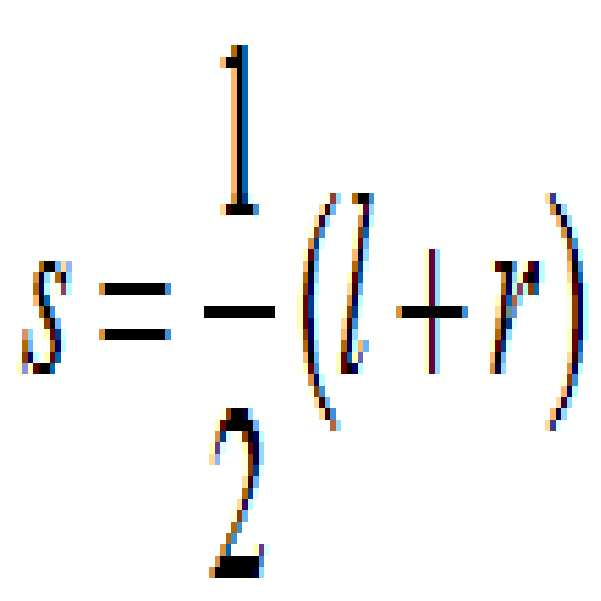
여기서 s는 모노 신호, l은 좌측 채널 신호, r은 우측 채널 신호Where s is mono signal, l is left channel signal, r is right channel signal
도 9의 (A)에 나타난 바와 같이, 모노 신호(s)를 나타내는 벡터와 좌측 채널 신호(l)를 나타내는 벡터간의 각도가 전역 위상 차이(OPD)이다. 좌측 채널 신호(l)과 우측 채널 신호(r) 벡터들간의 각도는 채널간 위상 차이(IPD)에 해당할 수 있다. 도 9의 (A)는 채널간 위상 차이(IPD)가 90도 미만이기 때문에, 모노 신호(s=1/2*(l+r))는 증폭 효과가 일어났기 때문에, 원래 좌측 채널 및 우측 채널 신호보다 모노 신호(s)의 크기가 커졌음을 알 수 있다. 만약, 채널간 위상 차이(IPD)가 180도에 가까워질수록, 원래 좌측 채널 신호 및 우측 채널 신호 각각의 크기에 상관없이, 그 벡터들의 벡터 합인 모노 신호(s)는 크기는 0에 가까워져서, 감쇄 효과가 나타날 수 있다. As shown in Fig. 9A, the angle between the vector representing the mono signal s and the vector representing the
이러한 문제점을 해결하기 위해서 수학식 1과 같은 정의 대신에, 도 9의 (B)에 나타난 일 예와 같이 각 신호들에 가중치(w1 및 w2)를 적용하여 합 신호를 생성하는 정의를 사용하고자 한다. 그 정의 중에서 일 예는 아래와 같다.In order to solve this problem, instead of the definition as shown in

여기서 s는 다운믹스 신호 (또는 입력 채널 신호), l은 제1 위상 채널 신호 (또는 좌측 채널 신호), r은 제2 위상 채널 신호(또는 우측 채널 신호)Where s is the downmix signal (or input channel signal), l is the first phase channel signal (or left channel signal), r is the second phase channel signal (or right channel signal)
여기서, w1는 제1 위상 채널 신호에 적용되는 제1 가중치, w2는 제2 위상 채널 신호에 적용되는 제2 가중치Here, w 1 is a first weight applied to the first phase channel signal, w 2 is a second weight applied to the second phase channel signal
제1 가중치(w1) 및 제2 가중치(w2)는 제1 위상 채널(l) 및 제2 위상 채널(r)을 선택적으로 키워주는 값이다. 더욱 구체적으로는 채널간 레벨 차이(CLD)를 근거로 하여, 제1 위상 채널(l) 및 제2 위상 채널(r)의 상대적인 레벨 크기를 고려하여, 레벨 크기가 큰 신호에 큰 값의 가중치를 주도록 제1 가중치 및 제2 가중치가 적용된다. The first weight w 1 and the second weight w 2 are values for selectively growing the
이와 같이 선택적으로 키워주는 이유는, 예를 들어 제1 위상 채널이 원래 작은 값인 경우 높은 값의 가중치를 적용하는 것이 무의미하고, 오히려 가중치를 적용하기 전보다 에러가 크게 발생할 수 있다. 따라서, 제1 위상 채널 및 제2 위상 채널 중 레벨이 높은 신호에 높은 값의 가중치를 적용하도록 한다.The reason for this selective growth is that, for example, when the first phase channel is originally a small value, it is meaningless to apply a high weight, and rather an error may occur more than before the weight is applied. Therefore, a higher value weight is applied to a signal having a higher level among the first phase channel and the second phase channel.
상기 제1 가중치 및 제2 가중치의 일 예는 아래 수학식과 같을 수 있다.An example of the first weight and the second weight may be as follows.

제1 정의 및 제2 정의에서 모두 제1 가중치는 w1, 제2 가중치는 w2 In both the first and second definitions, the first weight is w 1 and the second weight is w 2
상기 수학식 3은 가중치의 정의가 경우에 따라 제1 정의 및 제2 정의가 존재하는데, 채널간 레벨 차이에 따라서 제1 정의 및 제2 정의가 선택적으로 적용된다. 구체적으로, 제1 위상 채널의 채널 레벨 값이 큰 경우에 적용되고, 제2 위상 채널의 채널 레벨 값이 큰 경우에 제2 정의가 적용된다.In
상기와 같은 정의를 기반으로, 업믹싱부(122)의 세부 구성에 대해서 설명하고자 한다.Based on the above definition, the detailed configuration of the
가중치 정의 결정부(122a)는 업믹싱 파라미터(UP)의 공간 파라미터 중에서 채널간 레벨 차이(CLD)를 근거로 하여, 제1 위상 채널(P1)의 제1 가중치(w1) 및 제2 위상 채널(P2)의 제2 가중치(w2)를 결정하는 정의를 결정한다. 구체적으로, 채널간 레벨 차이(CLD)는 제1 위상 채널 및 제2 위상 채널간의 레벨 차이를 나타내므로, 상기 CLD를 고려하면, 제1 위상 채널의 레벨이 상대적으로 높은지 제2 위상 채널의 레벨이 높은지 알 수 있다. 제1 위상 채널의 레벨값이 상대적으로 높은 경우, 제1 가중치(w1)의 값이 높도록 제1 정의로 결정할 수 있다. 반대로 제2 위상 채널의 에너지가 높은 경우, 제2 가중치(w2)의 값이 높도록 제2 정의로 결정할 수 있다.The
제1 정의로 결정한 경우, 가중치 생성부(122b)는 제1 정의에 따라서, 제1 가중치 및 제2 가중치를 산출할 수 있다. 즉, 수학식 3 중 제1 정의에 따라서, 제1 가중치 및 제2 가중치를 산출하는 것이다. 제2 정의로 결정한 경우, 가중치 생성부(122b)는 제2 정의에 따라서, 제1 가중치 및 제2 가중치를 산출할 수 있다. 즉, 수학식 3 중 제2 정의에 따라서, 제1 가중치 및 제2 가중치를 산출하는 것이다. 수학식 3에 나타난 바와 같이 제1 가중치 및 제2 가중치를 산출하는 데 있어서, 채널간 레벨 차이(CLD), 채널간 상관관계(ICC) 및 채널간 위상 차이(IPD)가 이용될 수 있다.When determined as the first definition, the
제1 정의에 따라서 제1 가중치 및 제2 가중치가 산출되는 경우, IPD의 값이 180도에 가까울수록, 제1 가중치 값은 커질 수 있다. 반대로, 제2 정의에 따라서 제1 가중치가 산출되는 경우, IPD의 값이 180도에 가까울수록 제2 가중치 값이 커질 수 있다.When the first weight and the second weight are calculated according to the first definition, the closer the value of the IPD to 180 degrees, the greater the first weight value. Conversely, when the first weight is calculated according to the second definition, the closer the IPD value to 180 degrees, the larger the second weight value.
상기와 같이 채널간 레벨 차이 값이 따라서, 제1 정의 및 제2 정의가 선택적으로 적용됨으로써, 제1 위상 채널 및 제2 위상 채널 중 큰 레벨 값을 갖는 채널에 대해서 높은 가중치 값이 적용된다.As the above-described level difference value between channels is selectively applied, the first definition and the second definition are selectively applied, so that a high weight value is applied to the channel having the larger level value among the first phase channel and the second phase channel.
이와 같이 가중치 생성부(122b)에 의해 제1 가중치 및 제2 가중치가 생성되면, OPD 생성부(122c)는 상기 제1 가중치 및 제2 가중치를 근거로 채널간 위상 차이(IPD)를 전역 위상 차이(OPD)로 변환한다. 제1 가중치 및 제2 가중치가 결정되면, 수학식 2에 따라서 다운믹스 신호 및 제1 위상 채널 신호와의 관계가 결정된다. 그러면, 전역 위상 차이(OPD)는 다운믹스 신호 및 제1 위상 채널과의 위상 차이이므로, 채널간 위상 차이(IPD)는 전역 위상 차이(OPD)로 변환될 수 있는 것이다.When the first weight and the second weight are generated by the
구체적으로, 채널간 위상 차이(IPD) 및 전역 위상 차이(OPD)의 관계식의 일 예는 다음과 같다.Specifically, an example of the relationship between the phase difference (IPD) and the global phase difference (OPD) between channels is as follows.

상기 관계식에 따라서, 전역 위상 차이(OPD)를 산출하기 위해서, 채널간 위상 차이(IPD)뿐만 아니라 채널간 레벨 차이(CLD)가 더 이용될 수 있다.According to the above relation, in order to calculate the global phase difference OPD, the inter-channel level difference CLD as well as the inter-channel phase difference IPD may be further used.
그러면 OPD 적용부(122d)는 전역 위상 차이(OPD)를 근거로 입력 신호(또는 다운믹스 신호)로부터 제1 위상 채널(P1) 및 제2 위상 채널(P2)을 생성한다. 하나의 신호에 OPD를 적용함으로써, 두 개 채널을 생성하여, 채널 수를 증가시키는 업믹싱과정이 수행되는 것이다.Then, the
한편, 앞서 수학식 2와 같이 제1 가중치 및 제2 가중치의 정의를 결정하는 대신에, 합 신호(다운믹스 신호) 및 위상 채널들간의 관계에 대한 정의를 다음과 같이 결정할 수 있다.Meanwhile, instead of determining the definition of the first weight and the second weight as shown in
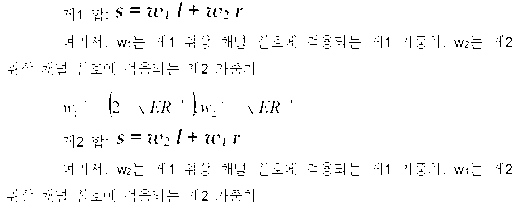
즉, 제1 가중치 및 제2 가중치에 대한 정의는 동일한 데 비해, 제1 합 및 제2 합이 채널간 레벨 차이에 따라 결정될 수 있는 것이다. 그러나, 수학식 3와 마찬가지로, 수학식 5도 마찬가지로, 제1 위상 채널의 레벨 값이 높을 경우, 높은 값의 가중치가 적용되고, 제2 위상 채널의 레벨 값이 높을 경우, 높은 값이 가중치가 적용되도록 하기 위함이다.That is, while the definitions of the first weight and the second weight are the same, the first sum and the second sum may be determined according to the level difference between channels. However, like
상기와 같이 업믹싱부에서 채널 수를 증가시키기 위해 필요한 OPD를 생성하는 데 있어서, 위상 차이가 180도 가까워질 때 발생하는 상쇄 간섭 효과를 줄일 수 있을 뿐만 아니라, 제1 위상 채널 및 제2 위상 채널 중 채널 레벨이 낮은 경우, 높은 가중치를 적용할 때 발생하는 왜곡 현상을 줄일 수 있다.In generating the OPD required to increase the number of channels in the upmixing unit as described above, the first phase channel and the second phase channel as well as the canceling interference effect generated when the phase difference approaches 180 degrees can be reduced. If the channel level is low, distortion caused when high weight is applied can be reduced.
도 10은 본 발명의 다른 실시예에 따른 인코더 및 디코더의 구성을 보여주는 도면이다. 도 10은 디코더의 스피커 셋업이 각기 다를 경우에 스케일러블한 코딩을 위한 구조를 나타낸다. 10 is a diagram illustrating a configuration of an encoder and a decoder according to another embodiment of the present invention. FIG. 10 shows a structure for scalable coding when the speaker setup of the decoder is different.
인코더는 다운믹싱부(210)를 포함하고, 디코더는 디멀티플렉싱부(220)를 포함하고, 제1 디코딩부(230) 내지 제3 디코딩부(250) 중 하나 이상을 포함한다.The encoder includes the
다운믹싱부(210)는 멀티채널에 해당하는 입력신호(CH_N)을 다운믹싱함으로써, 다운믹스 신호(DMX)를 생성한다. 이 과정에서 업믹스 파라미터(UP) 및 업믹스 레지듀얼(UR) 중 하나 이상을 생성한다. 그런 다음 다운믹스 신호(DMX), 업믹스 파라미터(UP) (및 업믹스 레지듀얼(UR))를 멀티플렉싱함으로써, 하나 이상의 비트스트림을 생성하여 디코더에 전송한다.The
여기서 업믹스 파라미터(UP)는 하나 이상의 채널을 둘 이상을 채널로 업믹싱하기 위해 필요한 파라미터로서, 앞서 본 발명의 일 실시예와 함께 설명한 바와 같이, 공간 파라미터 및 채널간 위상 차이(IPD) 등이 포함될 수 있다.Here, the upmix parameter UP is a parameter required for upmixing one or more channels into two or more channels. As described above with one embodiment of the present invention, the upmix parameter UP includes a spatial parameter and an IPD between channels. May be included.
그리고 업믹스 레지듀얼(UR)은 원본 신호인 입력 신호(CH_N)과 복원된 신호와의 차이인 레지듀얼 신호에 해당하는데, 여기서 복원된 신호는 다운믹스(DMX)에 업믹스 파라미터(UP)를 적용하여 업믹싱된 신호일 수도 있고, 다운믹싱부(210)에 의해 다운믹싱되지 않은 채널이 discrete한 방식으로 인코딩된 신호일 수 있다.The upmix residual signal UR corresponds to a residual signal which is a difference between the original signal CH_N and the recovered signal. The recovered signal corresponds to an upmix parameter UP to the downmix DMX And the downmixed signal by the
디코더의 디멀티플렉싱부(220)는 하나 이상의 비트스트림으로부터 다운믹스 신호(DMX) 및 업믹스 파라미터(UP)를 추출하고 업믹스 레지듀얼(UR)를 더 추출할 수 있다.The demultiplexer 220 of the decoder may extract the downmix signal DMX and the upmix parameter UP from one or more bitstreams and further extract the upmix residual (UR).
디코더의 스피커 셋업 환경에 따라서, 제1 디코딩부(230) 내지 제3 디코딩부(250) 중 하나(또는 하나 이상)를 선택적으로 포함할 수 있다. 디바이스의 종류(스마트폰, 스테레오 TV, 5.1ch 홈시어터, 22.2ch 홈시어터 등)에 따라서 라우드 스피커의 셋업 환경이 다양할 수 있다. 이와 같이 다양한 환경에도 불구하고, 22.2ch 등의 멀티채널 신호를 생성하기 위한 비트스트림 및 디코더가 선택적이지 않다면, 22.2ch의 신호를 모두 복원한 후에, 스피커 재생환경에 따라서, 다시 다운믹스 해야 한다. 이러한 경우, 복원 및 다운믹스에 소요되는 연산량이 매우 높을 뿐만 아니라, 지연이 발생할 수도 있다. (Or one or more) of the
그러나 본 발명의 다른 실시예에 따르면, 각 디바이스의 셋업 환경에 따라서 제1 디코더 내지 제3 디코더 중 하나(또는 하나 이상)을 선택적으로 구비함으로써, 상기와 같은 불리함으로 해소할 수 있다.However, according to another embodiment of the present invention, the disadvantage can be solved by selectively providing one (or more) of the first decoder to the third decoder according to the setup environment of each device.
제1 디코더(230)는 다운믹스 신호(DMX)만을 디코딩하는 구성으로써, 채널 수의 증가를 동반하지 않는다. 다운믹스 신호가 모노인 경우, 모노 채널 신호를 출력하고, 만약 스테레오인 경우, 스테레오 신호를 출력하는 것이다. 스피커 채널 수가 하나나 또는 두 개인 헤드폰 구비된 장치, 스마트폰, TV 등에 적합할 수 있다.The
한편, 제2 디코더(240)는 다운믹스 신호(DMX) 및 업믹스 파라미터(UP)를 수신하고, 이를 근거로 파라메트릭 M채널(PM)을 생성한다. 제1 디코더에 비해서 채널 수가 증가하지만, 업믹스 파라미터(UP)가 총 M채널까지의 업믹스에 해당하는 파라미터만 존재하는 경우, 원본 채널 수(N)에 못미치는 M채널 수의 신호를 재생할 수 있다. 예를 들어 인코더의 입력신호인 원본 신호가 22.2ch 신호이고, M채널은 5.1ch, 7.1ch 채널 등일 수 있다.Meanwhile, the
제3 디코더(250)는 다운믹스 신호(DMX) 및 업믹스 파라미터(UP) 뿐만 아니라, 업믹스 레지듀얼(UR)까지 수신한다. 제2 디코더는 M채널의 파라메트릭 채널을 생성하는 데 비해, 제3 디코더는 이에 업믹스 레지듀얼 신호(UR)까지 추가적으로 적용함으로써, N개 채널의 복원된 신호를 출력할 수 있다.The
각 디바이스는 제1 디코더 및 제3 디코더 중 하나 이상을 선택적으로 구비하고, 비트스트림 중에서 업믹스 파라미터(UP) 및 업믹스 레지듀얼(UR)을 선택적으로 파싱함으로써, 각 스피커 셋업 환경에 맞는 신호를 바로 생성함으로써, 복잡도 및 연산량을 줄일 수 있다.Each device optionally includes one or more of a first decoder and a third decoder, and selectively parses upmix parameters (UP) and upmix residuals (UR) in the bitstream, thereby providing a signal suitable for each speaker setup environment. By creating it immediately, complexity and computations can be reduced.
도 11은 본 발명의 일 실시예에 따른 오디오 신호 처리 장치가 구현된 제품들의 관계를 보여주는 도면이다. 우선 도 11을 참조하면, 유무선 통신부(310)는 유무선 통신 방식을 통해서 비트스트림을 수신한다. 구체적으로 유무선 통신부(310)는 유선통신부(310A), 적외선통신부(310B), 블루투스부(310C), 무선랜통신부(310D) 중 하나 이상을 포함할 수 있다.11 is a diagram illustrating a relationship between products in which an audio signal processing apparatus according to an embodiment of the present invention is implemented. First, referring to FIG. 11, the wired /
사용자 인증부는(320)는 사용자 정보를 입력 받아서 사용자 인증을 수행하는 것으로서 지문인식부(320A), 홍채인식부(320B), 얼굴인식부(320C), 및 음성인식부(320D) 중 하나 이상을 포함할 수 있는데, 각각 지문, 홍채정보, 얼굴 윤곽 정보, 음성 정보를 입력받아서, 사용자 정보로 변환하고, 사용자 정보 및 기존 등록되어 있는 사용자 데이터와의 일치여부를 판단하여 사용자 인증을 수행할 수 있다. The user authentication unit 320 performs user authentication by receiving the user information and performs at least one of the fingerprint recognition unit 320A, the iris recognition unit 320B, the face recognition unit 320C, and the voice recognition unit 320D The fingerprint, iris information, face contour information, and voice information may be input and converted into user information, and user authentication may be performed by determining whether the user information and the previously registered user data match each other .
입력부(330)는 사용자가 여러 종류의 명령을 입력하기 위한 입력장치로서, 키패드부(330A), 터치패드부(330B), 리모컨부(330C) 중 하나 이상을 포함할 수 있지만, 본 발명은 이에 한정되지 아니한다. The
신호 코딩 유닛(340)는 유무선 통신부(310)를 통해 수신된 오디오 신호 및/또는 비디오 신호에 대해서 인코딩 또는 디코딩을 수행하고, 시간 도메인의 오디오 신호를 출력한다. 오디오 신호 처리 장치(345)를 포함하는데, 이는 앞서 설명한 본 발명의 실시예(즉, 일 실시예에 따른 디코더(100) 및 다른 실시예에 따른 인코더 및 디코더(200))에 해당하는 것으로서, 이와 같이 오디오 처리 장치(345) 및 이를 포함한 신호 코딩 유닛은 하나 이상의 프로세서에 의해 구현될 수 있다.The
제어부(350)는 입력장치들로부터 입력 신호를 수신하고, 신호 디코딩부(340)와 출력부(360)의 모든 프로세스를 제어한다. 출력부(360)는 신호 디코딩부(340)에 의해 생성된 출력 신호 등이 출력되는 구성요소로서, 스피커부(360A) 및 디스플레이부(360B)를 포함할 수 있다. 출력 신호가 오디오 신호일 때 출력 신호는 스피커로 출력되고, 비디오 신호일 때 출력 신호는 디스플레이를 통해 출력된다.The
본 발명에 따른 오디오 신호 처리 방법은 컴퓨터에서 실행되기 위한 프로그램으로 제작되어 컴퓨터가 읽을 수 있는 기록 매체에 저장될 수 있으며, 본 발명에 따른 데이터 구조를 가지는 멀티미디어 데이터도 컴퓨터가 읽을 수 있는 기록 매체에 저장될 수 있다. 상기 컴퓨터가 읽을 수 있는 기록 매체는 컴퓨터 시스템에 의하여 읽혀질 수 있는 데이터가 저장되는 모든 종류의 저장 장치를 포함한다. 컴퓨터가 읽을 수 있는 기록 매체의 예로는 ROM, RAM, CD-ROM, 자기 테이프, 플로피디스크, 광 데이터 저장장치 등이 있으며, 또한 캐리어 웨이브(예를 들어 인터넷을 통한 전송)의 형태로 구현되는 것도 포함한다. 또한, 상기 인코딩 방법에 의해 생성된 비트스트림은 컴퓨터가 읽을 수 있는 기록 매체에 저장되거나, 유/무선 통신망을 이용해 전송될 수 있다.The audio signal processing method according to the present invention may be implemented as a program to be executed by a computer and stored in a computer-readable recording medium. The multimedia data having the data structure according to the present invention may also be recorded on a computer- Lt; / RTI > The computer-readable recording medium includes all kinds of storage devices in which data that can be read by a computer system is stored. Examples of the computer-readable recording medium include a ROM, a RAM, a CD-ROM, a magnetic tape, a floppy disk, an optical data storage device, and the like, and may be implemented in the form of a carrier wave (for example, transmission via the Internet) . In addition, the bit stream generated by the encoding method may be stored in a computer-readable recording medium or transmitted using a wired / wireless communication network.
이상과 같이, 본 발명은 비록 한정된 실시예와 도면에 의해 설명되었으나, 본 발명은 이것에 의해 한정되지 않으며 본 발명이 속하는 기술분야에서 통상의 지식을 가진 자에 의해 본 발명의 기술사상과 아래에 기재될 특허청구범위의 균등범위 내에서 다양한 수정 및 변형이 가능함은 물론이다. While the present invention has been particularly shown and described with reference to exemplary embodiments thereof, it is to be understood that the invention is not limited to the disclosed exemplary embodiments. It will be understood that various modifications and changes may be made without departing from the scope of the appended claims.
본 발명은 오디오 신호를 인코딩하고 디코딩하는데 데 적용될 수 있다.The present invention can be applied to encoding and decoding audio signals.
Claims (10)
제1 위상 채널 및 제2 위상 채널의 위상 차이에 해당하는 채널간 위상 차이(IPD:inter-channel phase difference) 정보를 수신하는 단계;
상기 제1 위상 채널 및 상기 제2 위상 차이의 레벨 차이인 채널간 레벨 차이를 수신하는 단계;
상기 채널간 레벨 차이를 근거로 제1 가중치 및 제2 가중치의 정의를 결정하는 단계;
상기 정의에 따라서, 상기 채널간 위상 차이를 이용하여 상기 제1 가중치 및 상기 제2 가중치를 계산하는 단계; 및
상기 제1 가중치 및 상기 제2 가중치를 근거로, 상기 제1 위상 채널 및 상기 다운믹스 신호간의 위상 차이에 해당하는 전역 위상 차이(OPD:overall phase difference) 정보를 생성하는 단계를 포함하는 오디오 신호 처리 방법.
Receiving a downmix signal;
Receiving inter-channel phase difference (IPD) information corresponding to a phase difference between the first phase channel and the second phase channel;
Receiving a level difference between channels that is a level difference between the first phase channel and the second phase difference;
Determining a definition of a first weight and a second weight based on the level difference between the channels;
Calculating the first weight and the second weight using the phase difference between the channels according to the definition; And
Generating overall phase difference (OPD) information corresponding to a phase difference between the first phase channel and the downmix signal based on the first weight and the second weight; Way.
상기 전역 위상 차이(OPD) 정보 및 상기 다운믹스 신호를 이용하여, 상기 제1 위상 채널 및 상기 제2 위상 채널을 생성하는 단계를 포함하는 것을 특징으로 하는 오디오 신호 처리 방법.
The method of claim 1,
And generating the first phase channel and the second phase channel by using the global phase difference (OPD) information and the downmix signal.
상기 정의는 제1 정의 및 제2 정의를 포함하고,
상기 채널간 위상 차이에 따라 상기 제1 위상 채널의 레벨 값이 큰 경우, 상기 제1 가중치가 상기 제2 가중치보다 크고,
상기 채널간 위상 차이에 따라 상기 제2 위상 채널의 레벨 값이 큰 경우, 상기 제2 가중치가 상기 제1 가중치보다 큰 것을 특징으로 하는 오디오 신호 처리 방법.
The method of claim 1,
The definition includes a first definition and a second definition,
When the level value of the first phase channel is large according to the phase difference between the channels, the first weight is greater than the second weight,
And when the level value of the second phase channel is large according to the phase difference between the channels, the second weight is greater than the first weight.
상기 채널간 레벨 차이를 근거로 제1 가중치 및 제2 가중치의 정의를 결정하는 가중치 정의 결정부;
상기 정의에 따라서, 상기 채널간 위상 차이를 이용하여 상기 제1 가중치 및 상기 제2 가중치를 계산하는 가중치 생성부; 및
상기 제1 가중치 및 상기 제2 가중치를 근거로, 상기 제1 위상 채널 및 상기 다운믹스 신호간의 위상 차이에 해당하는 전역 위상 차이(OPD:overall phase difference) 정보를 생성하는 OPD 생성부를 포함하는 오디오 신호 처리 장치.
Receives a downmix signal, receives inter-channel phase difference (IPD) information corresponding to the phase difference between the first phase channel and the second phase channel, and receives the first phase channel and the second phase A demultiplexer which receives a level difference between channels that is a level difference of the difference;
A weight definition determiner configured to determine a first weight and a second weight based on the level difference between the channels;
A weight generator configured to calculate the first weight and the second weight by using the phase difference between the channels according to the definition; And
An audio signal including an OPD generator configured to generate overall phase difference (OPD) information corresponding to a phase difference between the first phase channel and the downmix signal based on the first weight and the second weight. Processing unit.
상기 전역 위상 차이(OPD) 정보 및 상기 다운믹스 신호를 이용하여, 상기 제1 위상 채널 및 상기 제2 위상 채널을 생성하는 OPD 적용부를 포함하는 것을 특징으로 하는 오디오 신호 처리 장치.
5. The method of claim 4,
And an OPD application unit configured to generate the first phase channel and the second phase channel by using the global phase difference (OPD) information and the downmix signal.
상기 정의는 제1 정의 및 제2 정의를 포함하고,
상기 채널간 위상 차이에 따라 상기 제1 위상 채널의 레벨 값이 큰 경우, 상기 제1 가중치가 상기 제2 가중치보다 크고,
상기 채널간 위상 차이에 따라 상기 제2 위상 채널의 레벨 값이 큰 경우, 상기 제2 가중치가 상기 제1 가중치보다 큰 것을 특징으로 하는 오디오 신호 처리 정치.
5. The method of claim 4,
The definition includes a first definition and a second definition,
When the level value of the first phase channel is large according to the phase difference between the channels, the first weight is greater than the second weight,
And if the level value of the second phase channel is large according to the phase difference between the channels, the second weight is greater than the first weight.
제1 위상 채널 및 제2 위상 채널의 위상 차이에 해당하는 채널간 위상 차이(IPD:inter-channel phase difference) 정보를 수신하는 단계;
상기 제1 위상 채널 및 상기 제2 위상 차이의 레벨 차이인 채널간 레벨 차이를 수신하는 단계; 및,
상기 제1 위상 채널에 적용되는 제1 가중치 및, 상기 제 위상 채널에 적용되는 제2 가중치를 산출하는 단계;
상기 채널간 레벨 차이를 근거로, 상기 제1 위상 채널 및 상기 다운믹스 신호간의 합 정의를 결정하는 단계; 및,
상기 합 정의에 따라서, 상기 제1 가중치 및 상기 제2 가중치를 근거로, 상기 제1 위상 채널 및 상기 다운믹스 신호간의 위상 차이에 해당하는 전역 위상 차이(OPD:overall phase difference) 정보를 생성하는 단계를 포함하는 오디오 신호 처리 방법.
Receiving a downmix signal;
Receiving inter-channel phase difference (IPD) information corresponding to a phase difference between the first phase channel and the second phase channel;
Receiving a level difference between channels that is a level difference between the first phase channel and the second phase difference; And
Calculating a first weight applied to the first phase channel and a second weight applied to the first phase channel;
Determining a sum definition between the first phase channel and the downmix signal based on the level difference between the channels; And
Generating overall phase difference (OPD) information corresponding to a phase difference between the first phase channel and the downmix signal based on the first weight and the second weight according to the sum definition; Audio signal processing method comprising a.
상기 전역 위상 차이(OPD) 정보 및 상기 다운믹스 신호를 이용하여, 상기 제1 위상 채널 및 상기 제2 위상 채널을 생성하는 단계를 포함하는 것을 특징으로 하는 오디오 신호 처리 방법.
The method of claim 7, wherein
And generating the first phase channel and the second phase channel by using the global phase difference (OPD) information and the downmix signal.
상기 합 정의는 제1 합 정의 및 제2 합 정의를 포함하고,
상기 채널간 위상 차이에 따라 상기 제1 위상 채널의 레벨 값이 큰 경우, 상기 제1 합 정의에서의 상기 제1 가중치가 상기 제2 가중치보다 크고,
상기 채널간 위상 차이에 따라 상기 제2 위상 채널의 레벨 값이 큰 경우, 상기 제2 합 정의에서의 상기 제2 가중치가 상기 제1 가중치보다 큰 것을 특징으로 하는 오디오 신호 처리 방법.
The method of claim 7, wherein
The sum definition includes a first sum definition and a second sum definition,
When the level value of the first phase channel is large according to the phase difference between the channels, the first weight in the first sum definition is greater than the second weight,
And when the level value of the second phase channel is large according to the phase difference between the channels, the second weight in the second sum definition is greater than the first weight.
업믹스 파라미터 및 업믹스 레지듀얼 중 하나 이상을 수신하는 단계;
상기 업믹스 파라미터를 수신하는 경우, 상기 다운믹스 신호에 상기 업믹스 파라미터를 적용함으로써, 파라메트릭 M개의 출력 채널을 생성하는 단계; 및,
상기 업믹스 파라미터 및 상기 업믹스 레지듀얼을 모두 수신하는 경우, 상기 다운믹스 신호에 대해서 상기 업믹스 파라미터 및 상기 업믹스 레지듀얼을 적용함으로써, 디스크릿트 N개의 출력 채널을 생성하는 단계를 포함하는 것을 특징으로 하는 오디오 신호 처리 방법.
Receiving a downmix signal;
Receiving at least one of an upmix parameter and an upmix residual;
When receiving the upmix parameter, generating M parametric output channels by applying the upmix parameter to the downmix signal; And
When receiving both the upmix parameter and the upmix residual, generating the discrete N output channels by applying the upmix parameter and the upmix residual to the downmix signal. An audio signal processing method.
Priority Applications (6)
| Application Number | Priority Date | Filing Date | Title |
|---|---|---|---|
| KR20120084206A KR20140016780A (en) | 2012-07-31 | 2012-07-31 | A method for processing an audio signal and an apparatus for processing an audio signal |
| PCT/KR2013/006729 WO2014021586A1 (en) | 2012-07-31 | 2013-07-26 | Method and device for processing audio signal |
| JP2015523020A JP2015529046A (en) | 2012-07-31 | 2013-07-26 | Audio signal processing method and apparatus |
| US14/414,934 US20150179180A1 (en) | 2012-07-31 | 2013-07-26 | Method and device for processing audio signal |
| CN201380038930.XA CN104509131A (en) | 2012-07-31 | 2013-07-26 | Method and device for processing audio signal |
| EP13826300.9A EP2863658A4 (en) | 2012-07-31 | 2013-07-26 | Method and device for processing audio signal |
Applications Claiming Priority (1)
| Application Number | Priority Date | Filing Date | Title |
|---|---|---|---|
| KR20120084206A KR20140016780A (en) | 2012-07-31 | 2012-07-31 | A method for processing an audio signal and an apparatus for processing an audio signal |
Publications (1)
| Publication Number | Publication Date |
|---|---|
| KR20140016780A true KR20140016780A (en) | 2014-02-10 |
Family
ID=50028213
Family Applications (1)
| Application Number | Title | Priority Date | Filing Date |
|---|---|---|---|
| KR20120084206A Withdrawn KR20140016780A (en) | 2012-07-31 | 2012-07-31 | A method for processing an audio signal and an apparatus for processing an audio signal |
Country Status (6)
| Country | Link |
|---|---|
| US (1) | US20150179180A1 (en) |
| EP (1) | EP2863658A4 (en) |
| JP (1) | JP2015529046A (en) |
| KR (1) | KR20140016780A (en) |
| CN (1) | CN104509131A (en) |
| WO (1) | WO2014021586A1 (en) |
Families Citing this family (6)
| Publication number | Priority date | Publication date | Assignee | Title |
|---|---|---|---|---|
| US9679571B2 (en) | 2013-04-10 | 2017-06-13 | Electronics And Telecommunications Research Institute | Encoder and encoding method for multi-channel signal, and decoder and decoding method for multi-channel signal |
| EP3061089B1 (en) * | 2013-10-21 | 2018-01-17 | Dolby International AB | Parametric reconstruction of audio signals |
| JP2015152437A (en) * | 2014-02-14 | 2015-08-24 | 株式会社デンソー | Vehicle navigation system |
| CN105407443B (en) * | 2015-10-29 | 2018-02-13 | 小米科技有限责任公司 | The way of recording and device |
| US20180098150A1 (en) * | 2016-10-03 | 2018-04-05 | Blackfire Research Corporation | Multichannel audio interception and redirection for multimedia devices |
| US9820073B1 (en) | 2017-05-10 | 2017-11-14 | Tls Corp. | Extracting a common signal from multiple audio signals |
Family Cites Families (10)
| Publication number | Priority date | Publication date | Assignee | Title |
|---|---|---|---|---|
| US7006636B2 (en) * | 2002-05-24 | 2006-02-28 | Agere Systems Inc. | Coherence-based audio coding and synthesis |
| KR101158698B1 (en) * | 2004-04-05 | 2012-06-22 | 코닌클리케 필립스 일렉트로닉스 엔.브이. | A multi-channel encoder, a method of encoding input signals, storage medium, and a decoder operable to decode encoded output data |
| JP4892184B2 (en) * | 2004-10-14 | 2012-03-07 | パナソニック株式会社 | Acoustic signal encoding apparatus and acoustic signal decoding apparatus |
| US8666752B2 (en) * | 2009-03-18 | 2014-03-04 | Samsung Electronics Co., Ltd. | Apparatus and method for encoding and decoding multi-channel signal |
| KR101613975B1 (en) * | 2009-08-18 | 2016-05-02 | 삼성전자주식회사 | Method and apparatus for encoding multi-channel audio signal, and method and apparatus for decoding multi-channel audio signal |
| KR20110022252A (en) * | 2009-08-27 | 2011-03-07 | 삼성전자주식회사 | Stereo audio encoding and decoding method and apparatus |
| KR101710113B1 (en) * | 2009-10-23 | 2017-02-27 | 삼성전자주식회사 | Apparatus and method for encoding/decoding using phase information and residual signal |
| EP2323130A1 (en) * | 2009-11-12 | 2011-05-18 | Koninklijke Philips Electronics N.V. | Parametric encoding and decoding |
| US20120035940A1 (en) * | 2010-08-06 | 2012-02-09 | Samsung Electronics Co., Ltd. | Audio signal processing method, encoding apparatus therefor, and decoding apparatus therefor |
| CN103262159B (en) * | 2010-10-05 | 2016-06-08 | 华为技术有限公司 | For the method and apparatus to encoding/decoding multi-channel audio signals |
-
2012
- 2012-07-31 KR KR20120084206A patent/KR20140016780A/en not_active Withdrawn
-
2013
- 2013-07-26 US US14/414,934 patent/US20150179180A1/en not_active Abandoned
- 2013-07-26 JP JP2015523020A patent/JP2015529046A/en not_active Ceased
- 2013-07-26 CN CN201380038930.XA patent/CN104509131A/en active Pending
- 2013-07-26 WO PCT/KR2013/006729 patent/WO2014021586A1/en not_active Ceased
- 2013-07-26 EP EP13826300.9A patent/EP2863658A4/en not_active Withdrawn
Also Published As
| Publication number | Publication date |
|---|---|
| WO2014021586A1 (en) | 2014-02-06 |
| EP2863658A4 (en) | 2016-06-15 |
| EP2863658A1 (en) | 2015-04-22 |
| CN104509131A (en) | 2015-04-08 |
| US20150179180A1 (en) | 2015-06-25 |
| JP2015529046A (en) | 2015-10-01 |
Similar Documents
| Publication | Publication Date | Title |
|---|---|---|
| CN111316354B (en) | Determination of target spatial audio parameters and associated spatial audio playback | |
| CN104541524B (en) | A kind of method and apparatus for processing audio signal | |
| US8379868B2 (en) | Spatial audio coding based on universal spatial cues | |
| JP5081838B2 (en) | Audio encoding and decoding | |
| JP6027901B2 (en) | Transcoding equipment | |
| CN101479786B (en) | Method for encoding and decoding object-based audio signal and apparatus thereof | |
| US9219972B2 (en) | Efficient audio coding having reduced bit rate for ambient signals and decoding using same | |
| CN101542595B (en) | For the method and apparatus of the object-based sound signal of Code And Decode | |
| KR20140128564A (en) | Audio system and method for sound localization | |
| KR20180115652A (en) | Method and apparatus for encoding and decoding successive frames of an ambisonics representation of a 2- or 3-dimensional sound field | |
| KR102148217B1 (en) | Audio signal processing method | |
| JP6374980B2 (en) | Apparatus and method for surround audio signal processing | |
| KR20140016780A (en) | A method for processing an audio signal and an apparatus for processing an audio signal | |
| CN112823534A (en) | Signal processing device and method, and program | |
| KR102059846B1 (en) | Apparatus and method for audio signal processing | |
| KR101949756B1 (en) | Apparatus and method for audio signal processing | |
| KR20140128565A (en) | Apparatus and method for audio signal processing | |
| JP2011002574A (en) | 3-dimensional sound encoding device, 3-dimensional sound decoding device, encoding program and decoding program | |
| KR101950455B1 (en) | Apparatus and method for audio signal processing | |
| KR101949755B1 (en) | Apparatus and method for audio signal processing | |
| WO2025084114A1 (en) | Signal processing device, method, and program |
Legal Events
| Date | Code | Title | Description |
|---|---|---|---|
| PA0109 | Patent application |
St.27 status event code: A-0-1-A10-A12-nap-PA0109 |
|
| R17-X000 | Change to representative recorded |
St.27 status event code: A-3-3-R10-R17-oth-X000 |
|
| PG1501 | Laying open of application |
St.27 status event code: A-1-1-Q10-Q12-nap-PG1501 |
|
| R17-X000 | Change to representative recorded |
St.27 status event code: A-3-3-R10-R17-oth-X000 |
|
| R18-X000 | Changes to party contact information recorded |
St.27 status event code: A-3-3-R10-R18-oth-X000 |
|
| R17-X000 | Change to representative recorded |
St.27 status event code: A-3-3-R10-R17-oth-X000 |
|
| R18-X000 | Changes to party contact information recorded |
St.27 status event code: A-3-3-R10-R18-oth-X000 |
|
| PC1203 | Withdrawal of no request for examination |
St.27 status event code: N-1-6-B10-B12-nap-PC1203 |
|
| WITN | Application deemed withdrawn, e.g. because no request for examination was filed or no examination fee was paid | ||
| R18-X000 | Changes to party contact information recorded |
St.27 status event code: A-3-3-R10-R18-oth-X000 |
|
| PN2301 | Change of applicant |
St.27 status event code: A-3-3-R10-R13-asn-PN2301 St.27 status event code: A-3-3-R10-R11-asn-PN2301 |
|
| R18-X000 | Changes to party contact information recorded |
St.27 status event code: A-3-3-R10-R18-oth-X000 |
|
| R18-X000 | Changes to party contact information recorded |
St.27 status event code: A-3-3-R10-R18-oth-X000 |