KR102546098B1 - Apparatus and method for encoding / decoding audio based on block - Google Patents
Apparatus and method for encoding / decoding audio based on block Download PDFInfo
- Publication number
- KR102546098B1 KR102546098B1 KR1020160033627A KR20160033627A KR102546098B1 KR 102546098 B1 KR102546098 B1 KR 102546098B1 KR 1020160033627 A KR1020160033627 A KR 1020160033627A KR 20160033627 A KR20160033627 A KR 20160033627A KR 102546098 B1 KR102546098 B1 KR 102546098B1
- Authority
- KR
- South Korea
- Prior art keywords
- block
- subframes
- inter
- input frames
- encoder
- Prior art date
- Legal status (The legal status is an assumption and is not a legal conclusion. Google has not performed a legal analysis and makes no representation as to the accuracy of the status listed.)
- Active
Links
Images






Classifications
-
- G—PHYSICS
- G10—MUSICAL INSTRUMENTS; ACOUSTICS
- G10L—SPEECH ANALYSIS TECHNIQUES OR SPEECH SYNTHESIS; SPEECH RECOGNITION; SPEECH OR VOICE PROCESSING TECHNIQUES; SPEECH OR AUDIO CODING OR DECODING
- G10L19/00—Speech or audio signals analysis-synthesis techniques for redundancy reduction, e.g. in vocoders; Coding or decoding of speech or audio signals, using source filter models or psychoacoustic analysis
- G10L19/02—Speech or audio signals analysis-synthesis techniques for redundancy reduction, e.g. in vocoders; Coding or decoding of speech or audio signals, using source filter models or psychoacoustic analysis using spectral analysis, e.g. transform vocoders or subband vocoders
- G10L19/022—Blocking, i.e. grouping of samples in time; Choice of analysis windows; Overlap factoring
-
- H—ELECTRICITY
- H04—ELECTRIC COMMUNICATION TECHNIQUE
- H04N—PICTORIAL COMMUNICATION, e.g. TELEVISION
- H04N19/00—Methods or arrangements for coding, decoding, compressing or decompressing digital video signals
- H04N19/10—Methods or arrangements for coding, decoding, compressing or decompressing digital video signals using adaptive coding
- H04N19/102—Methods or arrangements for coding, decoding, compressing or decompressing digital video signals using adaptive coding characterised by the element, parameter or selection affected or controlled by the adaptive coding
- H04N19/103—Selection of coding mode or of prediction mode
- H04N19/11—Selection of coding mode or of prediction mode among a plurality of spatial predictive coding modes
-
- G—PHYSICS
- G10—MUSICAL INSTRUMENTS; ACOUSTICS
- G10L—SPEECH ANALYSIS TECHNIQUES OR SPEECH SYNTHESIS; SPEECH RECOGNITION; SPEECH OR VOICE PROCESSING TECHNIQUES; SPEECH OR AUDIO CODING OR DECODING
- G10L19/00—Speech or audio signals analysis-synthesis techniques for redundancy reduction, e.g. in vocoders; Coding or decoding of speech or audio signals, using source filter models or psychoacoustic analysis
- G10L19/005—Correction of errors induced by the transmission channel, if related to the coding algorithm
-
- G—PHYSICS
- G10—MUSICAL INSTRUMENTS; ACOUSTICS
- G10L—SPEECH ANALYSIS TECHNIQUES OR SPEECH SYNTHESIS; SPEECH RECOGNITION; SPEECH OR VOICE PROCESSING TECHNIQUES; SPEECH OR AUDIO CODING OR DECODING
- G10L19/00—Speech or audio signals analysis-synthesis techniques for redundancy reduction, e.g. in vocoders; Coding or decoding of speech or audio signals, using source filter models or psychoacoustic analysis
- G10L19/02—Speech or audio signals analysis-synthesis techniques for redundancy reduction, e.g. in vocoders; Coding or decoding of speech or audio signals, using source filter models or psychoacoustic analysis using spectral analysis, e.g. transform vocoders or subband vocoders
- G10L19/032—Quantisation or dequantisation of spectral components
-
- G—PHYSICS
- G10—MUSICAL INSTRUMENTS; ACOUSTICS
- G10L—SPEECH ANALYSIS TECHNIQUES OR SPEECH SYNTHESIS; SPEECH RECOGNITION; SPEECH OR VOICE PROCESSING TECHNIQUES; SPEECH OR AUDIO CODING OR DECODING
- G10L19/00—Speech or audio signals analysis-synthesis techniques for redundancy reduction, e.g. in vocoders; Coding or decoding of speech or audio signals, using source filter models or psychoacoustic analysis
- G10L19/04—Speech or audio signals analysis-synthesis techniques for redundancy reduction, e.g. in vocoders; Coding or decoding of speech or audio signals, using source filter models or psychoacoustic analysis using predictive techniques
-
- H—ELECTRICITY
- H04—ELECTRIC COMMUNICATION TECHNIQUE
- H04N—PICTORIAL COMMUNICATION, e.g. TELEVISION
- H04N19/00—Methods or arrangements for coding, decoding, compressing or decompressing digital video signals
- H04N19/10—Methods or arrangements for coding, decoding, compressing or decompressing digital video signals using adaptive coding
- H04N19/169—Methods or arrangements for coding, decoding, compressing or decompressing digital video signals using adaptive coding characterised by the coding unit, i.e. the structural portion or semantic portion of the video signal being the object or the subject of the adaptive coding
- H04N19/17—Methods or arrangements for coding, decoding, compressing or decompressing digital video signals using adaptive coding characterised by the coding unit, i.e. the structural portion or semantic portion of the video signal being the object or the subject of the adaptive coding the unit being an image region, e.g. an object
- H04N19/176—Methods or arrangements for coding, decoding, compressing or decompressing digital video signals using adaptive coding characterised by the coding unit, i.e. the structural portion or semantic portion of the video signal being the object or the subject of the adaptive coding the unit being an image region, e.g. an object the region being a block, e.g. a macroblock
-
- G—PHYSICS
- G10—MUSICAL INSTRUMENTS; ACOUSTICS
- G10L—SPEECH ANALYSIS TECHNIQUES OR SPEECH SYNTHESIS; SPEECH RECOGNITION; SPEECH OR VOICE PROCESSING TECHNIQUES; SPEECH OR AUDIO CODING OR DECODING
- G10L19/00—Speech or audio signals analysis-synthesis techniques for redundancy reduction, e.g. in vocoders; Coding or decoding of speech or audio signals, using source filter models or psychoacoustic analysis
- G10L19/02—Speech or audio signals analysis-synthesis techniques for redundancy reduction, e.g. in vocoders; Coding or decoding of speech or audio signals, using source filter models or psychoacoustic analysis using spectral analysis, e.g. transform vocoders or subband vocoders
- G10L19/0204—Speech or audio signals analysis-synthesis techniques for redundancy reduction, e.g. in vocoders; Coding or decoding of speech or audio signals, using source filter models or psychoacoustic analysis using spectral analysis, e.g. transform vocoders or subband vocoders using subband decomposition
-
- G—PHYSICS
- G10—MUSICAL INSTRUMENTS; ACOUSTICS
- G10L—SPEECH ANALYSIS TECHNIQUES OR SPEECH SYNTHESIS; SPEECH RECOGNITION; SPEECH OR VOICE PROCESSING TECHNIQUES; SPEECH OR AUDIO CODING OR DECODING
- G10L19/00—Speech or audio signals analysis-synthesis techniques for redundancy reduction, e.g. in vocoders; Coding or decoding of speech or audio signals, using source filter models or psychoacoustic analysis
- G10L19/02—Speech or audio signals analysis-synthesis techniques for redundancy reduction, e.g. in vocoders; Coding or decoding of speech or audio signals, using source filter models or psychoacoustic analysis using spectral analysis, e.g. transform vocoders or subband vocoders
- G10L19/0212—Speech or audio signals analysis-synthesis techniques for redundancy reduction, e.g. in vocoders; Coding or decoding of speech or audio signals, using source filter models or psychoacoustic analysis using spectral analysis, e.g. transform vocoders or subband vocoders using orthogonal transformation
-
- G—PHYSICS
- G10—MUSICAL INSTRUMENTS; ACOUSTICS
- G10L—SPEECH ANALYSIS TECHNIQUES OR SPEECH SYNTHESIS; SPEECH RECOGNITION; SPEECH OR VOICE PROCESSING TECHNIQUES; SPEECH OR AUDIO CODING OR DECODING
- G10L19/00—Speech or audio signals analysis-synthesis techniques for redundancy reduction, e.g. in vocoders; Coding or decoding of speech or audio signals, using source filter models or psychoacoustic analysis
- G10L19/02—Speech or audio signals analysis-synthesis techniques for redundancy reduction, e.g. in vocoders; Coding or decoding of speech or audio signals, using source filter models or psychoacoustic analysis using spectral analysis, e.g. transform vocoders or subband vocoders
- G10L19/03—Spectral prediction for preventing pre-echo; Temporary noise shaping [TNS], e.g. in MPEG2 or MPEG4
Landscapes
- Engineering & Computer Science (AREA)
- Physics & Mathematics (AREA)
- Signal Processing (AREA)
- Multimedia (AREA)
- Computational Linguistics (AREA)
- Health & Medical Sciences (AREA)
- Audiology, Speech & Language Pathology (AREA)
- Human Computer Interaction (AREA)
- Acoustics & Sound (AREA)
- Spectroscopy & Molecular Physics (AREA)
- Compression, Expansion, Code Conversion, And Decoders (AREA)
- Compression Or Coding Systems Of Tv Signals (AREA)
Abstract
블록 기반의 오디오 부호화/복호화 장치 및 그 방법이 개시된다.
오디오 신호의 부호화 방법은 오디오 신호를 구성하는 입력 프레임들 각각을 복수의 서브 프레임들로 분할하는 단계; 상기 서브 프레임들을 주파수 영역으로 변환하는 단계; 주파수 영역으로 변환된 서브 프레임들을 이용하여 2D 인트라(intra)블록을 형성하는 단계; 및 상기 2D 인트라 블록을 부호화하는 단계를 포함하고, 상기 2D 인트라 블록은, 상기 주파수 영역으로 변환된 서브 프레임들의 주파수 계수를 시간과 주파수를 이용하여 2차원으로 표시한 블록일 수 있다.A block-based audio encoding/decoding apparatus and method are disclosed.
An audio signal encoding method includes dividing each of input frames constituting an audio signal into a plurality of subframes; transforming the subframes into a frequency domain; forming a 2D intrablock using subframes converted to a frequency domain; and encoding the 2D intra block, wherein the 2D intra block may be a block in which frequency coefficients of subframes converted to the frequency domain are displayed in two dimensions using time and frequency.

Description
본 발명은 오디오 신호의 부호화/복호화 장치 및 방법에 관한 것이다.The present invention relates to an audio signal encoding/decoding apparatus and method.
오디오 신호의 부호화/복호화 기술은 오디오 신호를 압축 전송하기 위한 기술로 지난 수십 년간 많은 기술적 진보를 달성하였다. An audio signal encoding/decoding technology is a technology for compressing and transmitting an audio signal and has achieved many technological advances over the past decades.
1세대 MPEG 오디오 부호화/복호화 기술인 MPEG-1 Layer III (MP3)는 지각적 음질 손실을 최소화하기 위하여 인간의 심리음향 모델에 근거한 양자화기를 설계하고 데이터를 압축하는 방식이다. MPEG-1 Layer III (MP3), a first-generation MPEG audio encoding/decoding technology, is a method of designing a quantizer based on a human psychoacoustic model and compressing data to minimize perceptual sound quality loss.
2세대 MPEG 오디오 부호화/복호화 기술인 MPEG-2 Advanced Audio Coding (AAC)는 MP3와 호환성을 제공하지 않으며, MDCT기반의 전대역 오디오 주파수 계수에 대해서 심리음향 모델을 적용함으로써, 압축 성능을 향상시킨 방식이다.MPEG-2 Advanced Audio Coding (AAC), a second-generation MPEG audio encoding/decoding technology, does not provide compatibility with MP3, and improves compression performance by applying a psychoacoustic model to MDCT-based full-band audio frequency coefficients.
3세대 MPEG 오디오 부호화/복호화 기술인MPEG-4 Parametric coding 기술은 파라메트릭 부호화/복호화(parametric coding) 기술을 이용하여 48kbps 이하의 저 비트 레이트에서 압축율을 높인 방식이다. 예를 들어, 파라메트릭 부호화/복호화 기술에는 스테레오 채널을 부호화/복호화하기 위한 PS(Parametric Stereo), 고대역 신호를 부호화/복호화하기 위한 SBR(Spectral Band Replication) 기술이 있다. MPEG-4 Parametric coding technology, which is a 3rd generation MPEG audio encoding/decoding technology, uses a parametric coding/decoding technology to increase compression rate at a low bit rate of 48 kbps or less. For example, parametric encoding/decoding technologies include parametric stereo (PS) technology for encoding/decoding stereo channels and spectral band replication (SBR) technology for encoding/decoding high-band signals.
4세대 MPEG 오디오 부호화/복호화 기술인 Unified Speech and Audio Coding (USAC)는 저 비트율 음성의 음질을 개선하기 위한 USAC 오디오 코덱 기술이나, CD급의 고음질을 제공하기 위해서는 AAC 128kbps와 유사한 압축 성능을 가지고 있다. Unified Speech and Audio Coding (USAC), a 4th-generation MPEG audio encoding/decoding technology, is a USAC audio codec technology to improve the sound quality of low bit rate voices, but has compression performance similar to that of AAC 128 kbps to provide CD-level high sound quality.
즉, 종래의 오디오 부호화/복호화 기술들은 심리음향 모델을 활용하여 압축 성능을 높였으나, 일차원적 심리음향 모델 기반의 양자화로 인한 성능의 한계에 도달한 것으로 해석될 수 있다. That is, although conventional audio encoding/decoding techniques have improved compression performance by utilizing a psychoacoustic model, it can be interpreted that performance limits have been reached due to quantization based on a one-dimensional psychoacoustic model.
따라서, 일차원적 심리음향 모델이 아닌 다른 방법을 이용하여 오디오 신호를 부호화/복호화 함으로써, 부호화 효율을 높일 수 있는 방법이 요청되고 있다.Accordingly, there is a demand for a method of increasing encoding efficiency by encoding/decoding an audio signal using a method other than a one-dimensional psychoacoustic model.
본 발명은 입력 오디오 신호를 2차원 신호로 재구성한 후 부호화함으로써, 부호화 효율을 높이는 장치 및 방법을 제공할 수 있다.The present invention can provide an apparatus and method for increasing encoding efficiency by reconstructing an input audio signal into a two-dimensional signal and then encoding the same.
또한, 본 발명은 블록 단위로 해석되는 부호화 방식을 사용함으로써, 비디오 신호와 동일한 프레이밍 구조를 가질 수 있으므로, 부호화 방식의 동질성 및 동기화가 유연해지도록 하는 장치 및 방법을 제공할 수 있다.In addition, since the present invention can have the same framing structure as a video signal by using a coding scheme interpreted in units of blocks, it is possible to provide an apparatus and method for flexible homogeneity and synchronization of coding schemes.
본 발명의 일실시예에 따른 오디오 신호의 부호화 방법은 오디오 신호를 구성하는 입력 프레임들 각각을 복수의 서브 프레임들로 분할하는 단계; 상기 서브 프레임들을 주파수 영역으로 변환하는 단계; 주파수 영역으로 변환된 서브 프레임들을 이용하여 2D 인트라(intra)블록을 형성하는 단계; 및 상기 2D 인트라 블록을 부호화하는 단계를 포함하고, 상기 2D 인트라 블록은, 상기 주파수 영역으로 변환된 서브 프레임들의 주파수 계수를 시간과 주파수를 이용하여 2차원으로 표시한 블록일 수 있다.An audio signal encoding method according to an embodiment of the present invention includes dividing each of input frames constituting an audio signal into a plurality of subframes; transforming the subframes into a frequency domain; forming a 2D intrablock using subframes converted to a frequency domain; and encoding the 2D intra block, wherein the 2D intra block may be a block in which frequency coefficients of subframes converted to the frequency domain are displayed in two dimensions using time and frequency.
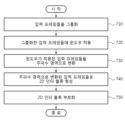
본 발명의 일실시예에 따른 오디오 신호의 부호화 방법의 주파수 영역으로 변환하는 단계는, 오버랩을 고려하여 상기 서브 프레임들을 그룹화하는 단계; 그룹화한 서브 프레임들에 윈도우를 적용하는 단계; 및 윈도우가 적용된 서브 프레임들을 주파수 영역으로 변환하는 단계를 포함할 수 있다.The converting to the frequency domain of the audio signal encoding method according to an embodiment of the present invention includes grouping the subframes in consideration of overlap; applying a window to the grouped subframes; and transforming subframes to which the window is applied into a frequency domain.
본 발명의 일실시예에 따른 오디오 신호의 부호화 방법의 그룹화하는 단계는, 상기 입력 프레임 중 현재 프레임에서 분할된 마지막 서브 프레임과 다음 프레임에서 분할된 첫 번째 서브 프레임을 그룹화할 수 있다.In the grouping of the audio signal encoding method according to an embodiment of the present invention, the last subframe divided from the current frame and the first subframe divided from the next frame among the input frames may be grouped.
본 발명의 일실시예에 따른 오디오 신호의 부호화 방법의 부호화하는 단계는. 상기 2D 인트라 블록의 서브 프레임들 각각을 복수의 서브 밴드 신호들로 분할하는 단계; 상기 서브 밴드 신호들간의 상관도를 예측하는 단계; 상기 서브 밴드 신호들 중 대역값이 기준값을 초과하는 고대역 신호를 스케일 펙터를 이용하여 양자화하는 단계; 상기 서브 밴드 신호들 중 대역값이 상기 기준값 이하인 저대역 신호의 예측 결과 및 서브 밴드 신호들 간의 잔차 신호를 양자화하는 단계; 및 양자화 인덱스, 스케일 펙터 및 양자화된 고대역 신호, 잔차 신호, 예측 결과를 비트스트림으로 변환하는 단계를 포함할 수 있다.The encoding step of the audio signal encoding method according to an embodiment of the present invention. dividing each of the subframes of the 2D intra block into a plurality of subband signals; predicting a degree of correlation between the sub-band signals; quantizing a high-band signal whose band value exceeds a reference value among the sub-band signals using a scale factor; quantizing a prediction result of a low-band signal having a band value equal to or less than the reference value among the sub-band signals and a residual signal between the sub-band signals; and converting the quantization index, the scale factor, the quantized high-band signal, the residual signal, and the prediction result into a bitstream.
본 발명의 일실시예에 따른 오디오 신호의 복호화 방법은 수신한 비트스트림에서 2D 인트라 블록을 복호화하는 단계; 상기 2D 인트라 블록을 이용하여 주파수 영역의 서브 프레임들을 생성하는 단계; 상기 주파수 영역의 서브 프레임들을 시간 영역의 서브 프레임들로 변환하는 단계; 상기 시간 영역의 서브 프레임들에 오버랩 애드(overlap add)를 수행하여 입력 프레임들을 생성하는 단계; 및 입력 프레임들을 이용하여 오디오 신호를 복호화하는 단계를 포함할 수 있다.An audio signal decoding method according to an embodiment of the present invention includes decoding a 2D intra block from a received bitstream; generating frequency domain subframes using the 2D intra block; transforming the frequency domain subframes into time domain subframes; generating input frames by performing an overlap add on subframes in the time domain; and decoding the audio signal using the input frames.
본 발명의 일실시예에 따른 오디오 신호의 부호화 방법은 오버랩을 고려하여 오디오 신호를 구성하는 입력 프레임들을 그룹화하는 단계; 그룹화한 입력 프레임들에 윈도우를 적용하는 단계; 윈도우가 적용된 입력 프레임들을 주파수 영역으로 변환하는 단계 주파수 영역으로 변환된 입력 프레임들을 이용하여 2D 인터(inter)블록을 형성하는 단계; 및 상기 2D 인터 블록을 부호화하는 단계를 포함하고, 상기 2D 인터 블록은, 상기 주파수 영역으로 변환된 입력 프레임들의 주파수 계수를 시간과 주파수를 이용하여 2차원으로 표시한 블록일 수 있다.An audio signal encoding method according to an embodiment of the present invention includes grouping input frames constituting an audio signal in consideration of overlap; applying a window to the grouped input frames; Transforming the windowed input frames into the frequency domain Forming a 2D inter-block using the input frames transformed into the frequency domain; and encoding the 2D inter-block, wherein the 2D inter-block may be a block in which frequency coefficients of the input frames converted to the frequency domain are displayed in two dimensions using time and frequency.
본 발명의 일실시예에 따른 오디오 신호의 부호화 방법의 부호화하는 단계는. 상기 2D 인터 블록의 입력 프레임들 각각을 서브 밴드 신호들로 분할하는 단계; 상기 서브 밴드 신호들간의 상관도를 예측하는 단계; 상기 서브 밴드 신호들 각각을 양자화하는 단계; 및 상기 상관도를 기초로 예측 이득을 계산하여 서브 밴드 신호들 간의 잔차 신호를 양자화하는 단계를 포함할 수 있다.The encoding step of the audio signal encoding method according to an embodiment of the present invention. dividing each of the input frames of the 2D inter-block into sub-band signals; predicting a degree of correlation between the sub-band signals; quantizing each of the sub-band signals; and quantizing a residual signal between sub-band signals by calculating a prediction gain based on the correlation.
본 발명의 일실시예에 따른 오디오 신호의 복호화 방법은 수신한 비트스트림에서 2D 인터 블록을 복호화하는 단계; 상기 2D 인터 블록을 이용하여 주파수 영역의 입력 프레임들을 생성하는 단계; 상기 주파수 영역의 입력 프레임들을 시간 영역의 입력 프레임들로 변환하는 단계; 및 상기 시간 영역의 서브 프레임들에 오버랩 애드(overlap add)를 수행하여 입력 프레임들로 구성된 오디오 신호를 복호화하는 단계를 포함할 수 있다.An audio signal decoding method according to an embodiment of the present invention includes decoding a 2D inter-block from a received bitstream; generating frequency domain input frames using the 2D inter-block; converting the input frames of the frequency domain into input frames of the time domain; and decoding an audio signal composed of input frames by performing an overlap add on the subframes in the time domain.
본 발명의 일실시예에 따른 오디오 신호의 부호화 방법은 오디오 신호를 구성하는 제1 입력 프레임들을 이용하여 2D 인터(inter)블록을 형성하는 단계; 상기 2D 인터 블록을 부호화하는 단계; 부호화한 2D 인터 블록에서 제2 입력 프레임들을 복원하는 단계; 상기 제2 입력 프레임과 상기 제1 입력 프레임 간의 잔차 신호를 이용하여 2D 인트라(intra)블록을 형성하는 단계; 상기 2D 인트라 블록을 부호화하는 단계; 및 부호화된 상기 2D 인터 블록과 부호화된 상기 2D 인트라 블록을 믹싱하는 단계를 포함할 수 있다.An audio signal encoding method according to an embodiment of the present invention includes forming a 2D inter-block using first input frames constituting an audio signal; encoding the 2D inter-block; restoring second input frames from the encoded 2D inter-block; forming a 2D intra block using a residual signal between the second input frame and the first input frame; encoding the 2D intra block; and mixing the encoded 2D inter block and the encoded 2D intra block.
본 발명의 일실시예에 따른 오디오 신호의 부호화 방법의 2D 인터 블록을 형성하는 단계는, 오버랩을 고려하여 복수의 제1 입력 프레임들을 그룹화하는 단계; 그룹화한 제1 입력 프레임들에 윈도우를 적용하는 단계; 윈도우가 적용된 제1 입력 프레임들을 주파수 영역으로 변환하는 단계; 및 주파수 영역으로 변환된 제1 입력 프레임들을 이용하여 2D 인터 블록을 형성하는 단계를 포함할 수 있다.Forming a 2D inter-block of an audio signal encoding method according to an embodiment of the present invention includes grouping a plurality of first input frames in consideration of overlap; applying a window to the grouped first input frames; converting the first input frames to which the window is applied into a frequency domain; and forming a 2D inter-block using the first input frames converted to the frequency domain.
본 발명의 일실시예에 따른 오디오 신호의 부호화 방법의 2D 인트라 블록을 형성하는 단계는, 상기 제2 입력 프레임과 상기 제1 입력 프레임 간의 잔차 신호를 복수의 서브 프레임들로 분할하는 단계; 상기 서브 프레임들을 주파수 영역으로 변환하는 단계; 및 주파수 영역으로 변환된 서브 프레임들을 이용하여 2D 인트라(intra)블록을 형성하는 단계를 포함할 수 있다.Forming a 2D intra block of an audio signal encoding method according to an embodiment of the present invention may include dividing a residual signal between the second input frame and the first input frame into a plurality of subframes; transforming the subframes into a frequency domain; and forming a 2D intra block using the subframes converted to the frequency domain.
본 발명의 일실시예에 따른 오디오 신호의 복호화 방법은 부호화된 2D 인터 블록에서 2D 인터 블록을 복호화하는 단계; 상기 2D 인터 블록에서 입력 프레임 신호의 그룹들을 복원하는 단계; 복원한 입력 프레임들의 그룹들에 오버랩 애드를 수행하여 제2 입력 프레임을 생성하는 단계; 부호화된 2D 인트라 블록에서 2D 인트라 블록을 복호화하는 단계; 상기 2D 인트라 블록에서 잔차 신호를 복원하는 단계; 및 상기 잔차 신호와 상기 제2 입력 프레임을 이용하여 원본인 제1 입력 프레임을 복원하는 단계를 포함할 수 있다.An audio signal decoding method according to an embodiment of the present invention includes decoding a 2D inter block from an encoded 2D inter block; restoring groups of input frame signals in the 2D inter-block; generating second input frames by performing an overlap add on groups of restored input frames; decoding a 2D intra block from the encoded 2D intra block; restoring a residual signal from the 2D intra block; and restoring an original first input frame using the residual signal and the second input frame.
본 발명의 일실시예에 따른 오디오 신호의 부호화 방법은 오디오 신호를 구성하는 제1 입력 프레임들 각각을 복수의 제1 서브 프레임들로 분할하여 2D 인트라 블록들을 형성하는 단계; 2D 인트라 블록들을 부호화하는 단계; 부호화한 2D 인트라 블록들에서 제2 서브 프레임들을 복원하는 단계; 제2 서브 프레임들을 결합하여 제2 입력 프레임들을 생성하는 단계; 상기 제2 입력 프레임들과 상기 제1 입력 프레임들 간의 잔차 신호들을 이용하여 2D 인터 블록을 형성하는 단계; 상기 2D 인터 블록을 부호화하는 단계; 및 부호화된 상기 2D 인터 블록과 부호화된 상기 2D 인트라 블록을 믹싱하는 단계를 포함할 수 있다.An audio signal encoding method according to an embodiment of the present invention includes forming 2D intra blocks by dividing each of first input frames constituting an audio signal into a plurality of first subframes; encoding 2D intra blocks; Reconstructing second subframes from encoded 2D intra blocks; generating second input frames by combining second sub-frames; forming a 2D inter-block using residual signals between the second input frames and the first input frames; encoding the 2D inter-block; and mixing the encoded 2D inter block and the encoded 2D intra block.
본 발명의 일실시예에 따른 오디오 신호의 부호화 방법의 2D 인터 블록을 부호화하는 단계는 상기 2D 인트라 블록들의 제1 서브 프레임들을 매크로 블록으로 설정하는 단계; 매크로 블록들 간의 상관도를 예측하는 단계; 예측한 상관도가 가장 높은 매크로 블록들에 DPCM(Differential Pulse Code Modulation)를 수행하는 단계; 상기 매크로 블록들 각각을 양자화하는 단계; 및 상기 DPCM 결과를 기초로 예측 이득을 계산하여 상관도가 가장 높은 매크로 블록들 간의 잔차 신호를 양자화하는 단계를 포함할 수 있다.The encoding of the 2D inter-blocks of the audio signal encoding method according to an embodiment of the present invention includes setting first sub-frames of the 2D intra-blocks as macroblocks; predicting a degree of correlation between macro blocks; Performing DPCM (Differential Pulse Code Modulation) on macroblocks having the highest predicted correlation; quantizing each of the macro blocks; and quantizing a residual signal between macroblocks having the highest correlation by calculating a prediction gain based on the DPCM result.
본 발명의 일실시예에 따른 오디오 신호의 복호화 방법은 부호화된 2D 인터 블록에서 2D 인터 블록을 복호화하는 단계; 상기 2D 인터 블록에서 잔차 신호의 프레임 그룹들을 복원하는 단계; 상기 잔차 신호의 프레임들의 그룹들에 오버랩 애드를 수행하여 잔차 신호를 생성하는 단계; 부호화된 2D 인트라 블록에서 2D 인트라 블록을 복호화하는 단계; 상기 2D 인트라 블록에서 제2 입력 프레임을 생성하는 단계; 및 상기 제2 입력 프레임과 상기 잔차 신호를 이용하여 원본인 제1 입력 프레임을 복원하는 단계를 포함할 수 있다.An audio signal decoding method according to an embodiment of the present invention includes decoding a 2D inter block from an encoded 2D inter block; restoring frame groups of residual signals in the 2D inter-block; generating a residual signal by performing an overlap add on groups of frames of the residual signal; decoding a 2D intra block from the encoded 2D intra block; generating a second input frame from the 2D intra block; and restoring the original first input frame using the second input frame and the residual signal.
본 발명의 일실시예에 따른 오디오 신호의 복호화 방법의 제2 입력 프레임을 생성하는 단계는, 상기 2D 인트라 블록을 이용하여 주파수 영역의 서브 프레임들을 생성하는 단계; 상기 주파수 영역의 서브 프레임들을 시간 영역의 서브 프레임들로 변환하는 단계; 및 상기 시간 영역의 서브 프레임들에 오버랩 애드를 수행하여 제2 입력 프레임을 생성하는 단계를 포함할 수 있다.The generating of the second input frame of the audio signal decoding method according to an embodiment of the present invention includes generating subframes in the frequency domain using the 2D intra block; transforming the frequency domain subframes into time domain subframes; and generating a second input frame by performing an overlap add on the subframes in the time domain.
본 발명의 일실시예에 따른 오디오 신호의 부호화 방법은 오디오 신호를 구성하는 입력 프레임들을 각각을 복수의 서브 프레임들로 분할하여 2D 인트라 블록들을 형성하는 단계; 2D 인트라 블록들을 부호화하는 단계; 상기 2D 인트라 블록들과 부호화한 2D 인트라 블록들 간의 잔차 신호들을 이용하여 2D 인터 블록을 형성하는 단계; 2D 인터 블록을 부호화하는 단계; 및 상기 2D 인터 블록과 상기 2D 인트라 블록을 믹싱하는 단계를 포함할 수 있다.An audio signal encoding method according to an embodiment of the present invention includes forming 2D intra blocks by dividing input frames constituting an audio signal into a plurality of subframes; encoding 2D intra blocks; forming a 2D inter-block using residual signals between the 2D intra blocks and encoded 2D intra blocks; Encoding a 2D inter-block; and mixing the 2D inter block and the 2D intra block.
본 발명의 일실시예에 따른 오디오 신호의 복호화 방법은 부호화된 2D 인터 블록에서 2D 인터 블록을 복호화하는 단계; 상기 2D 인터 블록에서 잔차 신호의 프레임 그룹들을 복원하는 단계; 상기 잔차 신호의 프레임들의 그룹들에 오버랩 애드를 수행하여 잔차 신호를 복원하는 단계; 부호화된 2D 인트라 블록과 상기 잔차 신호를 이용하여 부호화 전의 2D 인트라 블록을 복원하는 단계; 및 상기 부호화 하기 전의 2D 인트라 블록을 이용하여 오디오 신호를 복원하는 단계를 포함할 수 있다.An audio signal decoding method according to an embodiment of the present invention includes decoding a 2D inter block from an encoded 2D inter block; restoring frame groups of residual signals in the 2D inter-block; restoring a residual signal by performing an overlap add on groups of frames of the residual signal; restoring a 2D intra block before encoding using the encoded 2D intra block and the residual signal; and restoring an audio signal using the 2D intra block before encoding.
본 발명의 일실시예에 따른 오디오 신호의 복호화 방법의 잔차 신호의 프레임 그룹들을 복원하는 단계는, 상기 2D 인터 블록을 이용하여 주파수 영역의 프레임들을 생성하는 단계; 상기 주파수 영역의 프레임들을 시간 영역의 프레임들로 변환하는 단계; 및 시간 영역의 프레임들에서 윈도우를 해제하여 잔차 신호를 구성하는 프레임들의 그룹들을 복원하는 단계를 포함할 수 있다.The step of restoring the frame groups of the residual signal of the audio signal decoding method according to an embodiment of the present invention includes generating frames in the frequency domain using the 2D inter-block; transforming the frames in the frequency domain into frames in the time domain; and restoring groups of frames constituting the residual signal by releasing windows from frames in the time domain.
본 발명의 일실시예에 의하면, 입력 오디오 신호를 2차원 신호로 재구성한 후 부호화함으로써, 부호화 효율을 높일 수 있다. According to an embodiment of the present invention, encoding efficiency can be increased by encoding an input audio signal after reconstructing it into a 2D signal.
또한, 본 발명의 일실시예에 의하면, 블록 단위로 해석되는 부호화 방식을 사용함으로써, 비디오 신호와 동일한 프레이밍 구조를 가질 수 있으므로, 부호화 방식의 동질성 및 동기화가 종래의 부호화 방법보다 유연해지도록 할 수 있다.In addition, according to an embodiment of the present invention, since the same framing structure as that of a video signal can be obtained by using a coding method interpreted in units of blocks, homogeneity and synchronization of the coding method can be more flexible than conventional coding methods. there is.
도 1은 본 발명의 일실시예에 따른 오디오 부호화 장치 및 오디오 복호화 장치를 나타내는 도면이다.
도 2는 본 발명의 제1 실시예에 따른 오디오 신호의 부호화 방법을 도시한 플로우차트이다.
도 3은 본 발명의 제1 실시예에 따른 오디오 부호화 과정의 일례이다.
도 4는 본 발명의 제1 실시예에 따른 양자화 방법의 일례이다.
도 5는 본 발명의 제1 실시예에 따른 오디오 복호화 방법을 도시한 플로우차트이다.
도 6은 본 발명의 제1 실시예에 따른 오디오 복호화 과정의 일례이다.
도 7은 본 발명의 제2 실시예에 따른 오디오 신호의 부호화 방법을 도시한 플로우차트이다.
도 8은 본 발명의 제2 실시예에 따른 오디오 부호화 과정의 일례이다.
도 9는 본 발명의 제2 실시예에 따른 양자화 방법의 일례이다.
도 10은 본 발명의 제2 실시예에 따른 오디오 복호화 방법을 도시한 플로우차트이다.
도 11은 본 발명의 제2 실시예에 따른 오디오 복호화 과정의 일례이다.
도 12는 본 발명의 제3 실시예에 따른 오디오 신호의 부호화 방법을 도시한 플로우차트이다.
도 13은 본 발명의 제3 실시예에 따른 오디오 부호화 과정의 일례이다.
도 14는 본 발명의 제3 실시예에 따른 오디오 복호화 방법을 도시한 플로우차트이다.
도 15는 본 발명의 제3 실시예에 따른 오디오 복호화 과정의 일례이다.
도 16은 본 발명의 제4 실시예에 따른 오디오 신호의 부호화 방법을 도시한 플로우차트이다.
도 17은 본 발명의 제4 실시예에 따른 오디오 부호화 과정의 일례이다.
도 18은 본 발명의 제4 실시예에 따른 오디오 복호화 방법을 도시한 플로우차트이다.
도 19는 본 발명의 제4 실시예에 따른 오디오 복호화 과정의 일례이다.
도 20은 본 발명의 제5 실시예에 따른 오디오 신호의 부호화 방법을 도시한 플로우차트이다.
도 21은 본 발명의 제5 실시예에 따른 오디오 부호화 과정의 일례이다.
도 22는 본 발명의 제5 실시예에 따른 양자화 방법의 일례이다.
도 23은 본 발명의 제5 실시예에 따른 오디오 복호화 방법을 도시한 플로우차트이다.
도 24는 본 발명의 제5 실시예에 따른 오디오 복호화 과정의 일례이다.1 is a diagram illustrating an audio encoding apparatus and an audio decoding apparatus according to an embodiment of the present invention.
2 is a flowchart showing a method for encoding an audio signal according to a first embodiment of the present invention.
3 is an example of an audio encoding process according to the first embodiment of the present invention.
4 is an example of a quantization method according to the first embodiment of the present invention.
5 is a flowchart showing an audio decoding method according to the first embodiment of the present invention.
6 is an example of an audio decoding process according to the first embodiment of the present invention.
7 is a flowchart showing a method for encoding an audio signal according to a second embodiment of the present invention.
8 is an example of an audio encoding process according to the second embodiment of the present invention.
9 is an example of a quantization method according to a second embodiment of the present invention.
10 is a flowchart showing an audio decoding method according to a second embodiment of the present invention.
11 is an example of an audio decoding process according to the second embodiment of the present invention.
12 is a flowchart showing a method for encoding an audio signal according to a third embodiment of the present invention.
13 is an example of an audio encoding process according to the third embodiment of the present invention.
14 is a flowchart showing an audio decoding method according to a third embodiment of the present invention.
15 is an example of an audio decoding process according to the third embodiment of the present invention.
16 is a flowchart showing a method for encoding an audio signal according to a fourth embodiment of the present invention.
17 is an example of an audio encoding process according to the fourth embodiment of the present invention.
18 is a flowchart showing an audio decoding method according to a fourth embodiment of the present invention.
19 is an example of an audio decoding process according to the fourth embodiment of the present invention.
20 is a flowchart showing a method for encoding an audio signal according to a fifth embodiment of the present invention.
21 is an example of an audio encoding process according to the fifth embodiment of the present invention.
22 is an example of a quantization method according to the fifth embodiment of the present invention.
23 is a flowchart showing an audio decoding method according to a fifth embodiment of the present invention.
24 is an example of an audio decoding process according to the fifth embodiment of the present invention.
이하, 본 발명의 실시예를 첨부된 도면을 참조하여 상세하게 설명한다. 본 발명의 일실시예에 따른 오디오 신호의 부호화 방법은 오디오 부호화 장치에 의해 수행될 수 있다. 또한, 본 발명의 일실시예에 따른 오디오 복호화 방법은 오디오 복호화 장치에 의해 수행될 수 있다. Hereinafter, embodiments of the present invention will be described in detail with reference to the accompanying drawings. An audio signal encoding method according to an embodiment of the present invention may be performed by an audio encoding apparatus. Also, the audio decoding method according to an embodiment of the present invention may be performed by an audio decoding apparatus.
도 1은 본 발명의 일실시예에 따른 오디오 부호화 장치 및 오디오 복호화 장치를 나타내는 도면이다. 1 is a diagram illustrating an audio encoding apparatus and an audio decoding apparatus according to an embodiment of the present invention.
오디오 부호화 장치(100)는 도 1에 도시된 바와 같이 부호화부(111)와 송신부(112)를 포함할 수 있다. The audio encoding apparatus 100 may include an
부호화부(111)는 입력 오디오 신호를 2차원 신호로 재구성할 수 있다. 그리고, 부호화부(111)는 2차원 신호로 재구성된 입력 오디오 신호를 부호화하여 비트스트림을 출력할 수 있다.The
이때, 부호화부(111)는 입력 오디오 신호를 구성하는 오디오 프레임들 중 하나의 오디오 프레임을 블록화하여 양자화 하는 인트라(intra) 블록 부호화 방식을 기초로 2차원 신호인 인트라 블록을 생성하고, 인트라 블록을 부호화할 수 있다. 인트라 블록 부호화 방식을 기초로 부호화하는 구체적인 동작은 이하 도 2 내지 도 4를 참조로 상세히 설명한다.At this time, the
또한, 부호화부(111)는 입력 오디오 신호를 구성하는 오디오 프레임들을 블록화하여 양자화 하는 인터(inter) 블록 부호화 방식을 기초로 2차원 신호인 인터 블록을 생성하고, 인터 블록을 부호화할 수 있다. 인터 블록 부호화 방식을 기초로 부호화하는 구체적인 동작은 이하 도 7 내지 도 8을 참조로 상세히 설명한다.In addition, the
그리고, 부호화부(111)는 인터 블록 부호화 방식과 인트라 블록 부호화 방식을 모두 사용하여 입력 오디오 신호를 부호화할 수 있다.Also, the
일례로, 부호화부(110)는 입력 오디오 신호를 인터 블록 부호화 방식으로 부호화하고, 부호화된 오디오 신호와 복원한 오디오 신호 간의 차분 신호를 인트라 블록 부호화 방식으로 부호화할 수 있다. 인터 블록 부호화 방식을 적용한 후 인트라 블록 부호화 방식으로 부호화하는 구체적인 동작은 이하 도 12 내지 도 13을 참조로 상세히 설명한다. For example, the
다른 일례로, 부호화부(110)는 입력 오디오 신호를 인트라 블록 부호화 방식으로 부호화하고, 부호화된 오디오 신호를 복원한 복원 오디오 신호와 원본 오디오 신호 간의 차분 신호를 인터 블록 부호화 방식으로 부호화할 수 있다. 인트라 블록 부호화 방식을 적용한 후 인터 블록 부호화 방식으로 부호화하는 구체적인 동작은 이하 도 16 내지 도 17을 참조로 상세히 설명한다. As another example, the
또 다른 일례로, 부호화부(110)는 입력 오디오 신호를 인트라 블록 부호화 방식으로 부호화하고, 부호화 오디오 신호와 원본 오디오 신호 간의 차분 신호를 인터 블록 부호화 방식으로 부호화할 수 있다. 인트라 블록 부호화 방식을 적용한 후 부호화 오디오 신호와 원본 오디오 신호 간의 차분 신호를 인터 블록 부호화 방식으로 부호화하는 구체적인 동작은 이하 도 20 내지 도 22를 참조로 상세히 설명한다. As another example, the
송신부(112)는 부호화부(111)에서 출력된 비트스트림을 오디오 복호화 장치(120)로 전송할 수 있다.The
오디오 복호화 장치(120)는 오디오 부호화 장치(110)로부터 수신한 비트스트림에서 오디오 신호를 복호화하여 출력할 수 있다.The
수신부(121)는 송신부(112)로부터 비트스트림을 수신하여 복호화부(122)로 전달할 수 있다. 이때, 수신부(121)가 수신하는 비트스트림은 인터 블록 비트스트림, 또는 인트라 블록 비트스트림, 또는 인트라 블록 비트스트림과 인터 블록 비트스트림이 믹싱된 비트스트림일 수 있다.The receiving
복호화부(122)는 비트스트림에서 입력 오디오 신호에 대응하는 출력 오디오 신호를 복호화할 수 있다.The
이때, 복호화부(122)는 부호화부(111)가 인트라 블록 부호화 방식을 기초로 부호화한 경우, 오버랩을 이용하여 원본 인트라 프레임을 합성하고, 원본 인트라 프레임에서 출력 오디오 신호를 복호화할 수 있다. 인트라 블록 부호화 방식을 기초로 부호화된 비트스트림을 복호화하는 구체적인 동작은 이하 도 5 내지 도 6을 참조로 상세히 설명한다.In this case, the
또한, 복호화부(122)는 부호화부(111)가 인터 블록 부호화 방식을 기초로 부호화한 경우, 인터 블록을 이용하여 입력 프레임들을 복원하고, 입력 프레임들을 오버랩하여 출력 오디오 신호를 복호화할 수 있다. 인터 블록 부호화 방식을 기초로 부호화된 비트스트림을 복호화하는 구체적인 동작은 이하 도 10 내지 도 11을 참조로 상세히 설명한다.Also, when the
그리고, 복호화부(122)는 부호화부(111)가 인터 블록 부호화 방식과 인트라 블록 부호화 방식을 모두 사용하여 입력 오디오 신호를 부호화한 경우, 인터 블록 비트스트림과 인트라 블록 비트스트림을 각각 복호화한 후 통합하여 출력 오디오 신호를 복호화할 수 있다. 부호화부(111)가 인터 블록 부호화 방식과 인트라 블록 부호화 방식을 모두 사용하여 부호화된 비트스트림을 복호화하는 구체적인 동작은 이하 도 14, 도 15, 도 18, 도 19, 도 23, 도 24를 참조로 상세히 설명한다.Also, when the
오디오 부호화 장치(110)는 입력 오디오 신호를 2차원 신호로 재구성한 후 부호화함으로써, 부호화 효율을 높일 수 있다. 또한, 오디오 부호화 장치(110)는 블록 단위로 해석되는 부호화 방식을 사용함으로써, 비디오 신호와 동일한 프레이밍 구조를 가질 수 있으므로, 부호화 방식의 동질성 및 동기화가 종래의 부호화 방법보다 유연해지도록 할 수 있다.The
도 2는 본 발명의 제1 실시예에 따른 오디오 신호의 부호화 방법을 도시한 플로우차트이다.2 is a flowchart showing a method for encoding an audio signal according to a first embodiment of the present invention.
단계(210)에서 부호화부(111)는 오디오 신호를 구성하는 입력 프레임들 각각을 복수의 서브 프레임들로 분할할 수 있다.In
단계(220)에서 부호화부(111)는 단계(210)에서 분할된 서브 프레임들을 주파수 영역으로 변환할 수 있다. In
이때, 부호화부(111)는 오버랩을 고려하여 서브 프레임들을 그룹화할 수 있다. 그리고, 부호화부(111)는 그룹화한 서브 프레임들에 윈도우를 적용할 수 있다. 다음으로, 부호화부(111)는 윈도우가 적용된 서브 프레임들을 주파수 영역으로 변환할 수 있다.At this time, the
이때, 부호화부(111)는 현재 처리 중인 입력 프레임인 현재 프레임에서 분할된 마지막 서브 프레임과 다음 프레임에서 분할된 첫 번째 서브 프레임을 그룹화할 수 있다.At this time, the
단계(230)에서 부호화부(111)는 단계(220)에서 주파수 영역으로 변환된 서브 프레임들을 이용하여 2D 인트라(intra)블록을 형성할 수 있다.In
이때, 2D 인트라 블록은 입력 프레임을 주파수 영역에서 2D로 표현한 블록일 수 있다. 예를 들어, 2D 인트라 블록은 주파수 영역으로 변환된 서브 프레임들의 주파수 계수를 시간과 주파수를 이용하여 2차원으로 표시한 블록일 수 있다.In this case, the 2D intra block may be a block in which the input frame is expressed in 2D in the frequency domain. For example, a 2D intra block may be a block in which frequency coefficients of subframes transformed into a frequency domain are displayed in two dimensions using time and frequency.
단계(240)에서 부호화부(111)는 단계(230)에서 형성된 2D 인트라 블록을 부호화할 수 있다. 이때, 부호화부(111)는 2D 인트라 블록의 서브 프레임들 각각을 복수의 서브 밴드 신호들로 분할할 수 있다. 그리고, 부호화부(111)는 서브 밴드 신호들간의 상관도를 예측할 수 있다. In
다음으로, 부호화부(111)는 서브 밴드 신호들 중 대역값이 기준값을 초과하는 고대역 신호를 스케일 펙터를 이용하여 양자화할 수 있다. 또한, 부호화부(111)는 서브 밴드 신호들 중 대역값이 기준값 이하인 저대역 신호의 예측 결과 및 서브 밴드 신호들 간의 잔차 신호를 양자화할 수 있다.Next, the
그리고, 부호화부(111)는 양자화 인덱스, 스케일 펙터 및 양자화된 고대역 신호, 잔차 신호, 예측 결과를 비트스트림으로 변환할 수 있다.Also, the
도 3은 본 발명의 제1 실시예에 따른 오디오 부호화 과정의 일례이다.3 is an example of an audio encoding process according to the first embodiment of the present invention.
도 3에서 / 해칭으로 표시된 신호는 시간 영역의 오디오 신호이고, \ 해칭으로 표시된 신호는 주파수 영역의 오디오 신호일 수 있다.In FIG. 3 , signals indicated by hatching / may be audio signals in the time domain, and signals indicated by hatching \ may be audio signals in the frequency domain.
입력 오디오 신호(300)는 도 3에 도시된 바와 같이 복수의 입력 프레임(301)들을 포함할 수 있다. 이때, 입력 프레임은 통상적인 1D 오디오 프레임일 수 있다. 예를 들어, 입력 프레임은 인트라 프레임(Intra-frame)일 수 있다.The
부호화부(111)는 도 3에 도시된 바와 같이 스플리터(Splitter)(310)를 사용하여 입력 프레임(310)를 복수의 서브 프레임(302)들로 분할할 수 있다.As shown in FIG. 3 , the
다음으로, 부호화부(111)는 오버랩을 고려하여 서브 프레임(302)들을 그룹화할 수 있다. 예를 들어, 부호화부(111)는 서브 프레임(302)들로 오버랩 애드(overlap-add) 중첩과정을 수행하기 위한 50% 오버랩(overlap)을 고려하여 서브 프레임(302)들을 2개씩 그룹화할 수 있다. 구체적으로, 부호화부(111)는 도 3에 도시된 바와 같이 입력 프레임 중 현재 프레임의 첫 번째 서브 프레임 1과 두 번째 서브 프레임 2를 그룹화할 수 있다. 다음으로, 부호화부(111)는 입력 프레임 중 현재 프레임의 두 번째 서브 프레임 2와 세 번째 서브 프레임 3을 그룹화할 수 있다. 즉, 부호화부(111)는 그룹에 포함된 서브 프레임들 중 일부가 다른 그룹에도 중복으로 포함되도록 서브 프레임들을 그룹화할 수 있다.Next, the
또한, 부호화부(111)는 입력 프레임의 현재 프레임과 다음 프레임 간의 연결을 위하여 현재 프레임의 마지막 서브 프레임인 b를 다음 프레임의 첫 번째 프레임인 b+1과 그룹화할 수 있다.Also, the
그 다음으로, 부호화부(111)는 그룹화한 서브 프레임들에 윈도우를 적용할 수 있다. 예를 들어, 부호화부(111)는 그룹화한 서브 프레임들에 신(sine) 윈도우, 또는 카이저 베셀(Kaiser Bessel) 윈도우를 적용할 수 있다.Next, the
다음으로, 부호화부(111)는 윈도우가 적용된 서브 프레임들을 주파수 영역으로 변환할 수 있다. 이때, 부호화부(111)는 50% 오버랩을 고려하여 MDCT(Modified Discrete Cosine Transform)를 윈도우가 적용된 서브 프레임들에 적용함으로써, 서브 프레임들을 주파수 영역으로 변환할 수 있다. Next, the
그 다음으로, 부호화부(111)는 주파수 영역으로 변환된 서브 프레임(320)들을 적분기(integrator)(320)에 입력하여 2D 인트라(intra) 블록(303)을 형성할 수 있다.Next, the
예를 들어, 주파수 영역으로 변환된 서브 프레임(320)의 주파수 계수의 개수가 N이고, 시간축 분해능이 W이며, 주파수 분해능이 H인 경우, 2D 인트라 블록(303)은 N = W x H로 표시될 수 있다. 이때, W는 2D 인트라 블록(303)의 폭(width)이고, H는 2D 인트라 블록(303)의 높이(height)일 수 있다.For example, when the number of frequency coefficients of the
다음으로 부호화부(111)는 서브 프레임들을 각각 양자화하지 않고, 하나의 2D 인트라 블록(303)을 양자화함으로써, 서브 프레임들을 독립적으로 양자화하는 방식 보다 부호화 효율을 높일 수 있다.Next, the
이때, 부호화부(111)는 2D 인트라 블록(303)으로부터 서브 프레임(302) 간의 상관도를 예측함으로써, 2D 인트라 블록(303)의 정보량을 최소화하여 양자화를 수행할 수 있다. 2D 인트라 블록(303)의 양자화 방법은 이하 도 4를 참조하여 상세히 설명한다.In this case, the
마지막으로 부호화부(111)는 인코더(330)를 이용하여 양자화 인덱스 및 관련 정보에 대해서 엔트로피 인부호화/복호화(entropy encoding)을 수행함으로써, 비트스트림(bit stream)을 출력할 수 있다.Finally, the
도 4는 본 발명의 제1 실시예에 따른 양자화 방법의 일례이다.4 is an example of a quantization method according to the first embodiment of the present invention.
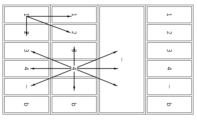
부호화부(111)는 2D 인트라 블록의 서브 프레임들 각각을 복수의 서브 밴드 신호들로 분할할 수 있다. 예를 들어, 2D 인트라 블록의 서브 프레임 1은 도 4에 도시된 바와 같이 서브 밴드 xf(0,1) 내지 서브 밴드 xf(k,1)로 분할될 수 있다. 이때, index k는 서브 밴드의 개수일 수 있다.The
그리고, 부호화부(111)는 서브 밴드 신호들간의 상관도를 예측할 수 있다. 예를 들어, 부호화부(111)는 DPCM(Differential Pulse Code Modulation)을 이용하여 1차 예측을 수행하거나, LPC(Linear Prediction Coefficient) 방식을 이용하여 고차 예측을 수행할 수 있다.Also, the
다음으로, 부호화부(111)는 서브 밴드 신호들 중 대역값이 기준값을 초과하는 고대역 신호를 스케일 펙터(scale-factor)를 이용하여 코스(coarse)한 양자화를 수행할 수 있다. 예를 들어, 기준값은 4kHz일 수 있다.Next, the
또한, 부호화부(111)는 서브 밴드 신호들 중 대역값이 기준값 이하인 저대역 신호의 예측 결과 및 서브 밴드 신호들 간의 잔차 신호를 양자화할 수 있다. 이때, 부호화부(111)는 양자화된 저대역의 예측 개수 및 잔차 신호에 무손실 압축 과정을 적용하여 비트스트림으로 변환할 수 있다.Also, the
그리고, 부호화부(111)는 무손실 압축 방식(entropy coding)으로 양자화 인덱스를 비트스트림으로 변환할 수 있다. 또한, 양자화 인덱스는 스케일 펙터에 고대역 신호, 양자화 인덱스와는 별도의 양자화를 수행하고, 무손실 압축 과정을 통해 비트스트림으로 변환할 수 있다.Also, the
도 5는 본 발명의 제1 실시예에 따른 오디오 복호화 방법을 도시한 플로우차트이다.5 is a flowchart showing an audio decoding method according to the first embodiment of the present invention.
단계(510)에서 복호화부(122)는 수신부(121)가 수신한 비트스트림에서 2D 인트라 블록을 복호화할 수 있다.In
단계(520)에서 복호화부(122)는 단계(510)에서 복호화한 2D 인트라 블록을 이용하여 주파수 영역의 서브 프레임들을 생성할 수 있다.In
단계(530)에서 복호화부(122)는 단계(520)에서 생성한 주파수 영역의 서브 프레임들을 시간 영역의 서브 프레임들로 변환할 수 있다. In
단계(540)에서 복호화부(122)는 단계(520)에서 변환한 시간 영역의 서브 프레임들에 오버랩 애드(overlap add)를 수행하여 입력 프레임을 생성할 수 있다.In
이때, 복호화부(122)는 시간 영역의 서브 프레임들에서 윈도우를 해제하여 그룹화된 서브 프레임들을 복원할 수 있다. 그리고, 복호화부(122)는 그룹에 포함된 서브 프레임들에 오버랩 애드를 수행할 수 있다.In this case, the
또한, 복호화부(122)는 입력 프레임들을 이용하여 출력 오디오 신호를 복호화할 수 있다.Also, the
도 6은 본 발명의 제1 실시예에 따른 오디오 복호화 과정의 일례이다.6 is an example of an audio decoding process according to the first embodiment of the present invention.
복호화부(122)는 디코더(610)를 이용하여 비트스트림(601)에서 2D 인트라 블록(602)을 복호화할 수 있다.The
다음으로, 복호화부(122)는 스플리터(620)로 2D 인트라 블록(602)을 분할하여 주파수 영역의 서브 프레임(603)들을 생성할 수 있다.Next, the
그 다음으로 복호화부(122)는 주파수 영역의 서브 프레임들을 시간 영역의 서브 프레임으로 변환할 수 있다. 이때, 복호화부(122)는 시간 영역의 서브 프레임들에서 윈도우를 해제하여 그룹화된 서브 프레임들(604)을 복원할 수 있다. 그리고, 복호화부(122)는 오버랩부(630)를 이용하여 그룹에 포함된 서브 프레임들에 오버랩 애드를 수행할 수 있다. 예를 들어, 복호화부(122)는 서브 프레임 1과 서브 프레임 2가 포함된 그룹과 서브 프레임 2와 서브 프레임 3이 포함된 그룹을 오버랩 애드하여 서브 프레임 1, 서브 프레임 2 및 서브 프레임 3이 포함된 입력 프레임(605)을 생성할 수 있다.Next, the
이때, 현재 프레임의 마지막 서브 프레임인 b과 그룹화된 다음 프레임의 첫 번째 서브 프레임인 b+1는 다음 프레임의 첫 번째 그룹과 오버랩 애드될 수 있다. 구체적으로, 현재 프레임의 마지막 그룹(b,b+1)는 다음 프레임의 첫 번째 그룹인 (b+1, b+2)과 오버랩 애드될 수 있다.In this case, b+1, which is the first subframe of the next frame grouped with b, which is the last subframe of the current frame, may be overlap-added with the first group of the next frame. Specifically, the last group (b, b+1) of the current frame may be overlap-added with the first group (b+1, b+2) of the next frame.
마지막으로 복호화부(122)는 상기 과정들을 반복하여 입력 프레임(605)들을 순차적으로 생성함으로써, 도 6에 도시된 바와 같이 입력 프레임(605)들로 구성된 출력 오디오 신호(600)를 복호화할 수 있다.Finally, the
도 7은 본 발명의 제2 실시예에 따른 오디오 신호의 부호화 방법을 도시한 플로우차트이다.7 is a flowchart showing a method for encoding an audio signal according to a second embodiment of the present invention.
단계(710)에서 부호화부(111)는 오버랩을 고려하여 오디오 신호를 구성하는 입력 프레임들을 그룹화할 수 있다. 이때, 부호화부(111)는 입력 프레임들로 오버랩 애드(overlap-add) 중첩과정을 수행하기 위한 50% 오버랩(overlap)을 고려하여 입력 프레임들을 2개씩 그룹화할 수 있다.In
단계(720)에서 부호화부(111)는 단계(710)에서 그룹화한 입력 프레임들에 윈도우를 적용할 수 있다.In
단계(730)에서 부호화부(111)는 단계(720)에서 윈도우가 적용된 입력 프레임들을 주파수 영역으로 변환할 수 있다. 이때, 부호화부(111)는 50% 오버랩을 고려하여 MDCT(Modified Discrete Cosine Transform)를 윈도우가 적용된 입력 프레임들에 적용함으로써, 입력 프레임들을 주파수 영역으로 변환할 수 있다.In
단계(740)에서 부호화부(111)는 단계(730)에서 주파수 영역으로 변환된 입력 프레임들을 이용하여 2D 인터(inter)블록을 형성할 수 있다. 이때, 2D 인터 블록은, 주파수 영역으로 변환된 입력 프레임들의 주파수 계수를 시간과 주파수를 이용하여 2차원으로 표시한 블록일 수 있다.In
단계(750)에서 부호화부(111)는 단계(740)에서 형성된 2D 인터 블록을 부호화할 수 있다.In
이때, 부호화부(111)는 2D 인터 블록의 입력 프레임들 각각을 서브 밴드 신호들로 분할할 수 있다. 그리고, 부호화부(111)는 서브 밴드 신호들간의 상관도를 예측할 수 있다. 다음으로, 부호화부(111)는 서브 밴드 신호들 각각을 양자화할 수 있다. 마지막으로 부호화부(111)는 상관도를 기초로 예측 이득을 계산하여 서브 밴드 신호들 간의 잔차 신호를 양자화할 수 있다.At this time, the
도 8은 본 발명의 제2 실시예에 따른 오디오 부호화 과정의 일례이다.8 is an example of an audio encoding process according to the second embodiment of the present invention.
도 8에서 / 해칭으로 표시된 신호는 시간 영역의 오디오 신호이고, \ 해칭으로 표시된 신호는 주파수 영역의 오디오 신호일 수 있다.In FIG. 8 , signals indicated by hatching / may be audio signals in the time domain, and signals indicated by hatching \ may be audio signals in the frequency domain.
입력 오디오 신호는 도 8에 도시된 바와 같이 복수의 입력 프레임(801)들을 포함할 수 있다.An input audio signal may include a plurality of input frames 801 as shown in FIG. 8 .
부호화부(111)는 오버랩을 고려하여 오디오 신호를 구성하는 입력 프레임들을 적어도 2개 이상씩 그룹화하여 그룹(802)들을 생성할 수 있다. 이때, 부호화부(111)는 입력 프레임들로 오버랩 애드(overlap-add) 중첩과정을 수행하기 위한 50% 오버랩(overlap)을 고려하여 입력 프레임들을 2개씩 그룹화할 수 있다.The
다음으로, 부호화부(111)는 그룹(802)들에 윈도우를 적용할 수 있다. 예를 들어, 부호화부(111)는 그룹(802)들에 신(sine) 윈도우, 또는 카이저 베셀(Kaiser Bessel) 윈도우를 적용할 수 있다.Next, the
그 다음으로 부호화부(111)는 윈도우가 적용된 입력 프레임들을 시간 영역에서 주파수 영역으로 변환할 수 있다. 이때, 부호화부(111)는 50% 오버랩을 고려하여 MDCT(Modified Discrete Cosine Transform)를 윈도우가 적용된 입력 프레임들에 적용함으로써, 입력 프레임들을 주파수 영역으로 변환할 수 있다.Next, the
다음으로 부호화부(111)는 주파수 영역으로 변환된 입력 프레임(803)들을 적분기(integrator)(810)에 입력하여 2D 인터(inter) 블록(804)을 형성할 수 있다. 이때, 2D 인터 블록은, 주파수 영역으로 변환된 입력 프레임들의 주파수 계수를 시간과 주파수를 이용하여 2차원으로 표시한 블록일 수 있다.Next, the
그 다음으로 부호화부(111)는 입력 프레임(801)들을 각각 양자화하지 않고, 하나의 2D 인터 블록(804)을 양자화함으로써, 입력 프레임(801)들을 독립적으로 양자화하는 방식 보다 부호화 효율을 높일 수 있다.Next, the
이때, 부호화부(111)는 2D 인터 블록(804)으로부터 입력 프레임(801) 간의 상관도를 예측함으로써, 2D 인터 블록(804)의 정보량을 최소화하여 양자화를 수행할 수 있다. 2D 인터 블록(804)의 양자화 방법은 이하 도 9를 참조하여 상세히 설명한다.In this case, the
마지막으로 부호화부(111)는 인코더(330)를 이용하여 양자화 인덱스 및 관련 정보에 대해서 엔트로피 인부호화/복호화(entropy encoding)을 수행함으로써, 비트스트림(bit stream)을 출력할 수 있다.Finally, the
도 9는 본 발명의 제2 실시예에 따른 양자화 방법의 일례이다.9 is an example of a quantization method according to a second embodiment of the present invention.
부호화부(111)는 2D 인터 블록의 입력 프레임들 각각을 서브 밴드 신호들로 분할할 수 있다. 예를 들어, 2D 인터 블록의 입력 프레임 Frame 0은 도 9에 도시된 바와 같이 서브 밴드 sf(0,0) 내지 서브 밴드 sf(N/2,0)로 분할될 수 있다. 이때, N은 주파수 계수의 개수일 수 있다.The
그리고, 부호화부(111)는 서브 밴드 신호들 각각을 양자화할 수 있다. 이때, 부호화부(111)는 서브 밴드 신호들간의 상관도를 예측할 수 있다.Also, the
그 다음으로, 부호화부(111)는 상관도를 기초로 예측 이득(prediction gain)을 계산하여 서브 밴드 신호들 간의 잔차 신호를 양자화할 수 있다. 이때, 부호화부(111)는 DPCM과 LPC 방식으로 예측 이득을 계산할 수 있다.Next, the
마지막으로 부호화부(111)는 잔차 신호에 스케일 펙터를 적용하여 양자화를 한 후, 무손실 압축을 수행할 수 있다.Finally, the
도 10은 본 발명의 제2 실시예에 따른 오디오 복호화 방법을 도시한 플로우차트이다.10 is a flowchart showing an audio decoding method according to a second embodiment of the present invention.
단계(1010)에서 복호화부(122)는 수신부(121)가 수신한 비트스트림에서 2D 인터 블록을 복호화할 수 있다.In
단계(1020)에서 복호화부(122)는 단계(1010)에서 복호화한 2D 인터 블록을 이용하여 주파수 영역의 입력 프레임들을 생성할 수 있다.In
단계(1030)에서 복호화부(122)는 단계(1020)에서 생성한 주파수 영역의 입력 프레임들을 시간 영역의 입력 프레임들로 변환할 수 있다. 이때, 복호화부(122)는 시간 영역의 입력 프레임들에서 윈도우를 해제하여 입력 프레임들의 그룹들을 복원할 수 있다. In
단계(1040)에서 복호화부(122)는 단계(1020)에서 변환한 시간 영역의 입력 프레임들의 그룹에 오버랩 애드(overlap add)를 수행하여 오디오 신호를 구성하는 원본 입력 프레임을 생성할 수 있다. 또한, 복호화부(122)는 원본 입력 프레임들을 이용하여 출력 오디오 신호를 복호화할 수 있다.In
도 11은 본 발명의 제2 실시예에 따른 오디오 복호화 과정의 일례이다.11 is an example of an audio decoding process according to the second embodiment of the present invention.
복호화부(122)는 디코더(610)를 이용하여 비트스트림에서 2D 인터 블록(1101)을 복호화할 수 있다.The
다음으로, 복호화부(122)는 스플리터(1120)로 2D 인터 블록(1101)을 분할하여 주파수 영역의 입력 프레임(1102)들을 생성할 수 있다.Next, the
그 다음으로 복호화부(122)는 주파수 영역의 입력 프레임들(1102)을 시간 영역의 입력 프레임들로 변환할 수 있다. 이때, 복호화부(122)는 시간 영역의 입력 프레임들에서 윈도우를 해제하여 입력 프레임들의 그룹(1130)들을 복원할 수 있다. Next, the
마지막으로 복호화부(122)는 오버랩부(1130)를 이용하여 그룹(1103)들에 오버랩 애드를 수행함으로써, 입력 프레임들로 구성된 오디오 신호(1100)를 복원할 수 있다.Finally, the
도 12는 본 발명의 제3 실시예에 따른 오디오 신호의 부호화 방법을 도시한 플로우차트이다.12 is a flowchart showing a method for encoding an audio signal according to a third embodiment of the present invention.
단계(1210)에서 부호화부(111)는 오디오 신호를 구성하는 제1 입력 프레임들을 이용하여 2D 인터(inter)블록을 형성할 수 있다.In
이때, 부호화부(111)는 오버랩을 고려하여 복수의 제1 입력 프레임들을 그룹화할 수 있다. 다음으로, 부호화부(111)는 그룹화한 제1 입력 프레임들에 윈도우를 적용할 수 있다. 그 다음으로 부호화부(111)는 윈도우가 적용된 제1 입력 프레임들을 주파수 영역으로 변환할 수 있다. 마지막으로 부호화부(111)는 주파수 영역으로 변환된 제1 입력 프레임들을 이용하여 2D 인터 블록을 형성할 수 있다.In this case, the
단계(1220)에서 부호화부(111)는 단계(1210)에서 형성한 2D 인터 블록을 부호화할 수 있다.In
단계(1230)에서 부호화부(111)는 단계(1220)에서 부호화한 2D 인터 블록에서 제2 입력 프레임들을 복원할 수 있다. 이때, 제2 입력 프레임은 단계(1220)에서 부호화한 2D 인터 블록에 복호화 과정을 수행한 결과일 수 있다.In
단계(1240)에서 부호화부(111)는 단계(1230)에서 복원한 제2 입력 프레임과 제1 입력 프레임 간의 잔차 신호를 이용하여 2D 인트라(intra)블록을 형성할 수 있다.In
이때, 부호화부(111)는 제2 입력 프레임과 상기 제1 입력 프레임 간의 잔차 신호를 복수의 서브 프레임들로 분할할 수 있다. 다음으로, 부호화부(111)는 서브 프레임들을 주파수 영역으로 변환할 수 있다. 마지막으로, 부호화부(111)는 주파수 영역으로 변환된 서브 프레임들을 이용하여 2D 인트라 블록을 형성할 수 있다.In this case, the
단계(1250)에서 부호화부(111)는 단계(1240)에서 형성한 2D 인트라 블록을 부호화할 수 있다.In
단계(1260)에서 부호화부(111)는 단계(1250)에서 부호화한 2D 인터 블록과 단계(1220)에서 부호화한 2D 인트라 블록을 믹싱하여 비트스트림으로 변환할 수 있다.In
도 13은 본 발명의 제3 실시예에 따른 오디오 부호화 과정의 일례이다.13 is an example of an audio encoding process according to the third embodiment of the present invention.
입력 오디오 신호(1300)는 도 13에 도시된 바와 같이 복수의 제1 입력 프레임(1301)들을 포함할 수 있다.As shown in FIG. 13 , the
부호화부(111)는 오버랩을 고려하여 복수의 제1 입력 프레임(1301)들을 그룹화할 수 있다. 이때, 부호화부(111)는 그룹화한 제1 입력 프레임들에 윈도우를 적용할 수 있다. 그 다음으로 부호화부(111)는 윈도우가 적용된 제1 입력 프레임들을 주파수 영역으로 변환할 수 있다. 마지막으로 부호화부(111)는 주파수 영역으로 변환된 제1 입력 프레임들을 이용하여 2D 인터 블록을 형성할 수 있다.The
다음으로, 부호화부(111)는 인터 블록 인코더(1310)를 이용하여 2D 인터 블록을 부호화할 수 있다. 이때, 인터 블록 인코더(1310)는 부호화한 2D 인터 블록을 인터 블록 비트스트림으로 변환하여 출력할 수 있다.Next, the
그 다음으로, 부호화부(111)는 인터 블록 통합기(1320)를 이용하여 2D 인터 블록에서 제2 입력 프레임들을 복원할 수 있다. 구체적으로, 부호화부(111)는 인터 블록을 복수의 입력 프레임들로 분할하고, 통합하는 복호화 과정을 수행하여 제2 입력 프레임을 생성할 수 있다.Next, the
다음으로, 부호화부(111)는 차분 신호 생성기(1330)를 이용하여 제2 입력 프레임과 제1 입력 프레임 간의 잔차 신호(1302)를 생성할 수 있다.Next, the
그 다음으로, 부호화부(111)는 잔차 신호(1302)를 이용하여 2D 인트라 블록을 형성할 수 있다. 이때, 부호화부(111)는 제2 입력 프레임과 상기 제1 입력 프레임 간의 잔차 신호를 복수의 서브 프레임들로 분할할 수 있다. 다음으로, 부호화부(111)는 서브 프레임들을 주파수 영역으로 변환할 수 있다. 마지막으로, 부호화부(111)는 주파수 영역으로 변환된 서브 프레임들을 이용하여 2D 인트라 블록을 형성할 수 있다.Next, the
다음으로, 부호화부(111)는 인트라 블록 인코더(1340)를 이용하여 2D 인트라 블록을 부호화할 수 있다. 이때, 인트라 블록 인코더(1340)는 부호화한 2D 인트라 블록을 인트라 블록 비트스트림으로 변환하여 출력할 수 있다.Next, the
송신부(112)는 인터 블록 비트스트림과 인트라 블록 비트스트림을 하나의 비트스트림으로 믹싱하여 오디오 복호화 장치(120)로 전송할 수 있다.The
도 14는 본 발명의 제3 실시예에 따른 오디오 복호화 방법을 도시한 플로우차트이다.14 is a flowchart showing an audio decoding method according to a third embodiment of the present invention.
단계(1410)에서 복호화부(122)는 비트스트림에서 부호화된 2D 인터 블록과 부호화된 2D 인트라 블록을 추출할 수 있다. 그리고, 복호화부(122)는 부호화된 2D 인터 블록에서 2D 인터 블록을 복호화할 수 있다.In
단계(1420)에서 복호화부(122)는 단계(1410)에서 복호화한 2D 인터 블록에서 입력 프레임 신호의 그룹들을 복원할 수 있다. 이때, 복호화부(122)는 단계(1420)에서 복호화한 2D 인터 블록을 이용하여 주파수 영역의 입력 프레임들을 생성할 수 있다. 다음으로 복호화부(122)는 주파수 영역의 입력 프레임들을 시간 영역의 입력 프레임들로 변환할 수 있다. 이때, 복호화부(122)는 시간 영역의 입력 프레임들에서 윈도우를 해제하여 입력 프레임들의 그룹들을 복원할 수 있다. In
단계(1430)에서 복호화부(122)는 단계(1420)에서 복원한 입력 프레임들의 그룹들에 오버랩 애드를 수행하여 제2 입력 프레임을 생성할 수 있다. In
단계(1440)에서 복호화부(122)는 부호화된 2D 인트라 블록에서 2D 인트라 블록을 복호화할 수 있다.In
단계(1450)에서 복호화부(122)는 단계(1440)에서 복호화한 2D 인트라 블록에서 잔차 신호를 복원할 수 있다. 이때, 복호화부(122)는 2D 인트라 블록을 이용하여 주파수 영역의 서브 프레임들을 생성할 수 있다. 그리고, 복호화부(122)는 주파수 영역의 서브 프레임들을 시간 영역의 서브 프레임들로 변환할 수 있다. 마지막으로 복호화부(122)는 시간 영역의 서브 프레임들에 오버랩 애드를 수행하여 잔차 신호를 생성할 수 있다.In
단계(1460)에서 복호화부(122)는 단계(1450)에서 생성한 잔차 신호와 단계(1430)에서 생성한 제2 입력 프레임을 이용하여 원본인 제1 입력 프레임을 복원할 수 있다. 이때, 잔차 신호는 부호화 방법의 단계(1240)에서 생성된 바와 같이 부호화된 2D 인터 블록에서 복원한 입력 프레임인 제2 입력 프레임과 원본 입력 프레임인 제1 입력 프레임 간의 차이일 수 있다. In
따라서, 복호화부(122)는 제2 입력 프레임에 잔차 신호를 합하여 제1 입력 프레임을 복원할 수 있다.Accordingly, the
도 15는 본 발명의 제3 실시예에 따른 오디오 복호화 과정의 일례이다.15 is an example of an audio decoding process according to the third embodiment of the present invention.
복호화부(122)는 부호화된 2D 인트라 블록을 변환한 인트라 블록 비트스트림을 수신할 수 있다. 그리고, 복호화부(122)는 인트라 블록 디코더(1510)를 이용하여 인터 블록 비트스트림에서 2D 인터 블록을 복호화할 수 있다.The
이때, 복호화부(122)는 단계(1440)에서 복호화한 2D 인트라 블록에서 잔차 신호(1501)를 복원할 수 있다. In this case, the
또한, 복호화부(122)는 부호화된 2D 인터 블록을 변환한 인터 블록 비트스트림을 수신할 수 있다. 그리고, 복호화부(122)는 인터 블록 디코더(1530)를 이용하여 인터 블록 비트스트림에서 2D 인터 블록을 복호화할 수 있다.Also, the
다음으로, 복호화부(122)는 복호화한 2D 인터 블록에서 입력 프레임 신호의 그룹(1502)들을 복원할 수 있다. Next, the
그 다음으로, 복호화부(122)는 입력 프레임들의 그룹(1502)들에 오버랩 애드를 수행하여 제2 입력 프레임을 생성할 수 있다. Next, the
마지막으로 복호화부(122)는 결합부(1520)로 제2 입력 프레임에 잔차 신호(1501)를 합하여 제1 입력 프레임들로 구성된 오디오 신호(1500)를 복호화할 수 있다.Finally, the
도 16은 본 발명의 제4 실시예에 따른 오디오 신호의 부호화 방법을 도시한 플로우차트이다.16 is a flowchart showing a method for encoding an audio signal according to a fourth embodiment of the present invention.
단계(1610)에서 부호화부(111)는 오디오 신호를 구성하는 제1 입력 프레임들 각각을 복수의 제1 서브 프레임들로 분할하여 2D 인트라 블록들을 형성할 수 있다.In
단계(1620)에서 부호화부(111)는 단계(1610)에서 형성한 2D 인트라 블록들을 부호화할 수 있다.In
이때, 부호화부(111)는 2D 인트라 블록들의 제1 서브 프레임들을 매크로 블록으로 설정할 수 있다. 그리고, 부호화부(111)는 매크로 블록들 간의 상관도를 예측할 수 있다. 다음으로, 부호화부(111)는 예측한 상관도가 가장 높은 매크로 블록들에 DPCM(Differential Pulse Code Modulation)를 수행할 수 있다. 그 다음으로, 부호화부(111)는 매크로 블록들 각각을 양자화할 수 있다. 마지막으로 부호화부(111)는 DPCM 결과를 기초로 예측 이득을 계산하여 상관도가 가장 높은 매크로 블록들 간의 잔차 신호를 양자화할 수 있다.In this case, the
단계(1630)에서 부호화부(111)는 단계(1620)에서 부호화한 2D 인트라 블록들에서 제2 서브 프레임들을 복원할 수 있다.In
단계(1640)에서 부호화부(111)는 단계(1630)에서 복원한 제2 서브 프레임들을 결합하여 제2 입력 프레임들을 생성할 수 있다.In
단계(1650)에서 부호화부(111)는 단계(1640)에서 생성한 제2 입력 프레임들과 제1 입력 프레임들 간의 잔차 신호들을 생성할 수 있다. 그리고, 부호화부(111)는 제2 입력 프레임들과 제1 입력 프레임들 간의 잔차 신호들을 이용하여 2D 인터 블록을 형성할 수 있다.In
단계(1660)에서 부호화부(111)는 단계(1650)에서 형성한 2D 인터 블록을 부호화할 수 있다.In
단계(1670)에서 부호화부(111)는 단계(1660)에서 부호화한 상기 2D 인터 블록과 단계(1620)에서 부호화한 2D 인트라 블록을 믹싱한 비트스트림을 출력할 수 있다.In
도 17은 본 발명의 제4 실시예에 따른 오디오 부호화 과정의 일례이다.17 is an example of an audio encoding process according to the fourth embodiment of the present invention.
부호화부(111)는 오디오 신호(1700)를 구성하는 제1 입력 프레임들 각각을 복수의 제1 서브 프레임들로 분할하여 2D 인트라 블록들을 형성할 수 있다. 그리고, 부호화부(111)는 인트라 블록 인코더(1710)를 이용하여 2D 인트라 블록들을 부호화할 수 있다. 이때, 인트라 블록 인코더(1710)는 부호화한 2D 인트라 블록을 인트라 블록 비트스트림으로 변환하여 출력할 수 있다.The
다음으로, 부호화부(111)는 단계(1620)에서 부호화한 2D 인트라 블록들에서 제2 서브 프레임들을 복원할 수 있다. 이때, 부호화부(111)는 인트라 블록 통합기(1720)로 제2 서브 프레임들을 결합하여 제2 입력 프레임들을 생성할 수 있다.Next, the
그 다음으로 부호화부(111)는 잔차 신호 생성기(1730)를 이용하여 제2 입력 프레임들과 제1 입력 프레임들 간의 잔차 신호(1701)들을 생성할 수 있다.Next, the
다음으로, 부호화부(111)는 오버랩을 고려하여 잔차 신호(1701)를 구성하는 프레임들을 적어도 2개 이상씩 그룹화하여 그룹(1702)들을 생성할 수 있다.Next, the
그 다음으로, 부호화부(111)는 그룹(1702)들을 이용하여 2D 인터 블록을 형성할 수 있다.Next, the
이때, 부호화부(111)는 그룹(1702)들에 윈도우를 적용할 수 있다. 그리고, 부호화부(111)는 단계(720)에서 윈도우가 적용된 그룹(1702)들을 주파수 영역으로 변환할 수 있다. 이때, 부호화부(111)는 50% 오버랩을 고려하여 MDCT를 그룹(1702) 들에 적용함으로써, 입력 프레임들을 주파수 영역으로 변환할 수 있다. 마지막으로 부호화부(111)는 주파수 영역으로 변환된 그룹(1702)에 포함된 입력 프레임들을 이용하여 2D 인터(inter)블록을 형성할 수 있다. 이때, 2D 인터 블록은, 주파수 영역으로 변환된 입력 프레임들의 주파수 계수를 시간과 주파수를 이용하여 2차원으로 표시한 블록일 수 있다.At this time, the
마지막으로, 부호화부(111)는 인터 블록 인코더(1740)를 이용하여 2D 인터 블록을 부호화할 수 있다. 이때, 인터 블록 인코더(1740)는 부호화한 2D 인터 블록을 인터 블록 비트스트림으로 변환하여 출력할 수 있다.Finally, the
송신부(112)는 인터 블록 비트스트림과 인트라 블록 비트스트림을 하나의 비트스트림으로 믹싱하여 오디오 복호화 장치(120)로 전송할 수 있다.The
도 18은 본 발명의 제4 실시예에 따른 오디오 복호화 방법을 도시한 플로우차트이다.18 is a flowchart showing an audio decoding method according to a fourth embodiment of the present invention.
단계(1810)에서 복호화부(122)는 비트스트림에서 부호화된 2D 인터 블록과 부호화된 2D 인트라 블록을 추출할 수 있다. 그리고, 복호화부(122)는 부호화된 2D 인터 블록에서 2D 인터 블록을 복호화할 수 있다.In
단계(1820)에서 복호화부(122)는 단계(1810)에서 복호화한 2D 인터 블록에서 잔차 신호의 프레임 그룹들을 복원할 수 있다. 이때, 복호화부(122)는 단계(1820)에서 복호화한 2D 인터 블록을 이용하여 주파수 영역의 프레임들을 생성할 수 있다. 다음으로 복호화부(122)는 주파수 영역의 프레임들을 시간 영역의 프레임들로 변환할 수 있다. 이때, 복호화부(122)는 시간 영역의 프레임들에서 윈도우를 해제하여 잔차 신호를 구성하는 프레임들의 그룹들을 복원할 수 있다. In
단계(1830)에서 복호화부(122)는 단계(1820)에서 복원한 잔차 신호의 프레임들의 그룹들에 오버랩 애드를 수행하여 잔차 신호를 생성할 수 있다. In
단계(1840)에서 복호화부(122)는 부호화된 2D 인트라 블록에서 2D 인트라 블록을 복호화할 수 있다.In
단계(1850)에서 복호화부(122)는 단계(1840)에서 복호화한 2D 인트라 블록에서 제2 입력 프레임을 복원할 수 있다. 이때, 복호화부(122)는 2D 인트라 블록을 이용하여 주파수 영역의 서브 프레임들을 생성할 수 있다. 그리고, 복호화부(122)는 주파수 영역의 서브 프레임들을 시간 영역의 서브 프레임들로 변환할 수 있다. 마지막으로 복호화부(122)는 시간 영역의 서브 프레임들에 오버랩 애드를 수행하여 제2 입력 프레임을 생성할 수 있다.In
단계(1860)에서 복호화부(122)는 단계(1850)에서 생성한 제2 입력 프레임과 단계(1830)에서 생성한 잔차 신호를 이용하여 원본인 제1 입력 프레임을 복원할 수 있다. 이때, 잔차 신호는 부호화 방법의 단계(1650)에서 생성된 바와 같이 부호화된 2D 인트라 블록에서 복원한 입력 프레임인 제2 입력 프레임과 원본 입력 프레임인 제1 입력 프레임 간의 차이일 수 있다. 따라서, 복호화부(122)는 제2 입력 프레임에 잔차 신호를 합하여 제1 입력 프레임을 복원할 수 있다.In
도 19는 본 발명의 제4 실시예에 따른 오디오 복호화 과정의 일례이다.19 is an example of an audio decoding process according to the fourth embodiment of the present invention.
복호화부(122)는 부호화된 2D 인터 블록을 변환한 인터 블록 비트스트림을 수신할 수 있다. 그리고, 복호화부(122)는 인터 블록 디코더(1910)를 이용하여 인터 블록 비트스트림에서 잔차 신호들의 그룹(1901)을 복호화할 수 있다.The
다음으로 복호화부(122)는 복원한 잔차 신호의 프레임들의 그룹(1901)들에 오버랩 애드를 수행하여 프레임들로 구성된 잔차 신호(1902)를 생성할 수 있다.Next, the
또한, 복호화부(122)는 부호화된 2D 인트라 블록을 변환한 인트라 블록 비트스트림을 수신할 수 있다. 그리고, 복호화부(122)는 인트라 블록 디코더(1930)를 이용하여 인터 블록 비트스트림에서 2D 인터 블록을 복호화할 수 있다.Also, the
이때, 복호화부(122)는 단계(1440)에서 복호화한 2D 인트라 블록을 이용하여 제2 입력 프레임을 복원할 수 있다. 이때, 복호화부(122)는 2D 인트라 블록을 이용하여 주파수 영역의 서브 프레임들을 생성할 수 있다. 그리고, 복호화부(122)는 주파수 영역의 서브 프레임들을 시간 영역의 서브 프레임들로 변환할 수 있다. 마지막으로 복호화부(122)는 시간 영역의 서브 프레임들에 오버랩 애드를 수행하여 제2 입력 프레임을 생성할 수 있다.In this case, the
마지막으로, 복호화부(122)는 결합부(1940)로 제2 입력 프레임에 잔차 신호(1902)를 합하여 제1 입력 프레임들로 구성된 오디오 신호(1900)를 복호화할 수 있다.Finally, the
이때, 제2 입력 프레임은 제1 입력 프레임을 부호화하고, 복호화한 결과이므로, 제2 입력 프레임만으로도 오디오 신호를 생성할 수 있다. 다만, 부호화 및 복호화 과정에서 신호의 변화가 발생하므로, 제2 입력 프레임은 원본 오디오 신호에 포함된 프레임인 제1 입력 프레임과 차이가 있을 수 있다. 잔차 신호는 제1 입력 프레임과 제2 입력 프레임 간의 차이를 나타내는 정보이므로, 복호화부(122)는 제2 입력 프레임에 잔차 신호를 합하여 제1 입력 프레임을 복호화함으로써, 복호화한 오디오 신호(1900)의 품질을 향상시킬 수 있다In this case, since the second input frame is a result of encoding and decoding the first input frame, an audio signal can be generated with only the second input frame. However, since signal changes occur during encoding and decoding processes, the second input frame may be different from the first input frame included in the original audio signal. Since the residual signal is information indicating the difference between the first input frame and the second input frame, the
도 20은 본 발명의 제5 실시예에 따른 오디오 신호의 부호화 방법을 도시한 플로우차트이다.20 is a flowchart showing a method for encoding an audio signal according to a fifth embodiment of the present invention.
단계(2010)에서 부호화부(111)는 오디오 신호를 구 성하는 입력 프레임들을 각각을 복수의 서브 프레임들로 분할하여 2D 인트라 블록들을 형성할 수 있다.In
단계(2020)에서 부호화부(111)는 단계(2010)에서 형성한 2D 인트라 블록들을 부호화할 수 있다.In
단계(2030)에서 부호화부(111)는 단계(2010)에서 형성한 2D 인트라 블록들과 단계(2020)에서 부호화한 2D 인트라 블록들 간의 잔차 신호들을 이용하여 2D 인터 블록을 형성할 수 있다.In
단계(2040)에서 부호화부(111)는 단계(2030)에서 형성한 2D 인터 블록을 부호화할 수 있다.In
단계(2050)에서 부호화부(111)는 단계(2040)에서 부호화한 2D 인터 블록과 단계(2020)에서 부호화한 2D 인트라 블록을 믹싱할 수 있다.In
도 21은 본 발명의 제5 실시예에 따른 오디오 부호화 과정의 일례이다.21 is an example of an audio encoding process according to the fifth embodiment of the present invention.
부호화부(111)는 오디오 신호(2100)에 인트라 블록 변환기(2110)를 사용하여 2D 인트라 블록들을 형성할 수 있다.The
구체적으로, 인트라 블록 변환기(21110)는 도 21에 도시된 바와 같이 오디오 신호를 구성하는 입력 프레임들 각각을 복수의 서브 프레임들로 분할하고, 서브 프레임들을 주파수 영역으로 변환하여 2D 인트라 블록들(2101)을 생성할 수 있다.Specifically, the intra block converter 21110 divides each of the input frames constituting the audio signal into a plurality of subframes as shown in FIG. ) can be created.
다음으로, 부호화부(111)는 인트라 블록 인코더(2120)를 이용하여 2D 인트라 블록들을 부호화할 수 있다. 이때, 인트라 블록 인코더(2120)는 부호화한 2D 인트라 블록을 인트라 블록 비트스트림으로 변환하여 출력할 수 있다.Next, the
그 다음으로, 부호화부(111)는 2D 인트라 블록(2101)들과 인트라 블록 인코더(2120)가 부호화한 2D 인트라 블록들 간의 잔차 신호들을 생성할 수 있다.Next, the
다음으로, 부호화부(111)는 인터 블록 변환기(2130)에 잔차 신호를 입력하여 2D 인터 블록(2102)을 형성할 수 있다.Next, the
이때, 부호화부(111)는 오버랩을 고려하여 잔차 신호를 구성하는 프레임들을 적어도 2개 이상씩 그룹화하여 그룹들을 생성할 수 있다. 그리고, 부호화부(111)는 그룹들에 윈도우를 적용할 수 있다. 다음으로, 부호화부(111)는 윈도우가 적용된 그룹들을 주파수 영역으로 변환할 수 있다. 마지막으로 부호화부(111)는 주파수 영역으로 변환된 그룹에 포함된 입력 프레임들을 이용하여 2D 인터 블록(2102)을 형성할 수 있다. 이때, 2D 인터 블록(2102)은 2D 인트라 블록(2101)이 서브블록 단위의 주파수 계수로 표현된 블록일 수 있다.In this case, the
마지막으로 부호화부(111)는 인터 블록 인코더(2140)로 2D 인터 블록(2102)을 부호화할 수 있다. 이때, 인터 블록 인코더(2140)는 부호화한 2D 인터 블록을 인터 블록 비트스트림으로 변환하여 출력할 수 있다.Finally, the
이때, 송신부(112)는 인터 블록 비트스트림과 인트라 블록 비트스트림을 하나의 비트스트림으로 믹싱하여 오디오 복호화 장치(120)로 전송할 수 있다.In this case, the
도 22는 본 발명의 제5 실시예에 따른 양자화 방법의 일례이다.22 is an example of a quantization method according to the fifth embodiment of the present invention.
부호화부(111)는 2D 인트라 블록들의 제1 서브 프레임들을 매크로 블록으로 설정할 수 있다. 그리고, 부호화부(111)는 매크로 블록들 간의 상관도를 예측할 수 있다. The
예를 들어, 부호화부(111)는 도 22에 도시된 바와 같이 첫 번째 매크로 블록인 1과 매크로 블록 1에 인접한 다른 서브 프레임들 간의 상관도를 예측할 수 있다. 또한, 부호화부(111)는 네 번째 매크로 블록인 4와 매크로 블록 4에 인접한 다른 서브 프레임들 간의 상관도를 예측할 수 있다For example, as shown in FIG. 22, the
또한, 부호화부(111)는 도 22에 도시된 바와 같이 인접한 매크로 블록 이외에도 일정 간격 이격된 매크로 블록과 현재 처리 중인 매크로 블록 간의 상관도를 예측할 수도 있다. 예를 들어, 부호화부(111)는 현재 처리 중인 매크로 블록을 기준으로 복수의 매크로 블록들만큼 이격된 다른 매크로 블록과 현재 처리 중인 매크로 블록 간의 상관도를 예측할 수 있다. 이때, 최적의 상관도를 가지는 매크로 블록을 찾을 확률이 증가하나, 복수의 매크로 블록들만큼 이격된 다른 매크로 블록의 위치 정보와 같은 부가 정보를 더 필요로 할 수 있다. 따라서, 상관도를 측정하는 매크로 블록들 간의 거리와 최적의 상관도를 가지는 매크로 블록을 찾을 확률 간에 트레이드 오프(trade-off)가 있을 수 있다. In addition, as shown in FIG. 22, the
다음으로, 부호화부(111)는 예측한 상관도가 가장 높은 매크로 블록들에 DPCM(Differential Pulse Code Modulation)를 수행할 수 있다. 그 다음으로, 부호화부(111)는 매크로 블록들 각각을 양자화할 수 있다. 마지막으로 부호화부(111)는 DPCM 결과를 기초로 예측 이득을 계산하여 상관도가 가장 높은 매크로 블록들 간의 잔차 신호를 양자화할 수 있다.Next, the
도 23은 본 발명의 제5 실시예에 따른 오디오 복호화 방법을 도시한 플로우차트이다.23 is a flowchart showing an audio decoding method according to a fifth embodiment of the present invention.
단계(2310)에서 복호화부(122)는 비트스트림에서 부호화된 2D 인터 블록과 부호화된 2D 인트라 블록을 추출할 수 있다. 그리고, 복호화부(122)는 부호화된 2D 인터 블록에서 2D 인터 블록을 복호화할 수 있다.In
단계(2320)에서 복호화부(122)는 단계(2310)에서 복호화한 2D 인터 블록에서 잔차 신호의 프레임 그룹들을 복원할 수 있다. 이때, 복호화부(122)는 단계(2320)에서 복호화한 2D 인터 블록을 이용하여 주파수 영역의 프레임들을 생성할 수 있다. 다음으로 복호화부(122)는 주파수 영역의 프레임들을 시간 영역의 프레임들로 변환할 수 있다. 이때, 복호화부(122)는 시간 영역의 프레임들에서 윈도우를 해제하여 잔차 신호를 구성하는 프레임들의 그룹들을 복원할 수 있다. In
단계(2330)에서 복호화부(122)는 단계(2320)에서 복원한 잔차 신호의 프레임들의 그룹들에 오버랩 애드를 수행하여 잔차 신호를 복원할 수 있다. In
단계(2340)에서 복호화부(122)는 인트라 블록 비트스트림을 부호화된 2D 인트라 블록으로 변환할 수 있다.In
단계(2350)에서 복호화부(122)는 단계(2340)에서 변환한 부호화된 2D 인트라 블록과 단계(2330)에서 생성한 잔차 신호를 이용하여 부호화 전의 2D 인트라 블록을 복원할 수 있다. 이때, 잔차 신호는 부호화 방법의 단계(2030)에서 생성된 바와 같이 단계(2010)에서 형성한 2D 인트라 블록들과 단계(2020)에서 부호화한 2D 인트라 블록들 간의 차이일 수 있다. 따라서, 복호화부(122)는 부호화된 2D 인트라 블록에 잔차 신호를 합하여 부호화 하기 전의 2D 인트라 블록을 복원할 수 있다.In
단계(2360)에서 복호화부(122)는 단계(2350)에서 복원한 부호화 하기 전의 2D 인트라 블록을 이용하여 오디오 신호를 복원할 수 있다. 구체적으로, 복호화부는 도 5의 단계(520) 내지 단계(540)를 수행하여 2D 인트라 블록에서 입력 프레임들로 구성된 오디오 신호를 복원할 수 있다.In
도 24는 본 발명의 제5 실시예에 따른 오디오 복호화 과정의 일례이다.24 is an example of an audio decoding process according to the fifth embodiment of the present invention.
복호화부(122)는 부호화된 2D 인터 블록을 변환한 인터 블록 비트스트림을 수신할 수 있다. 그리고, 복호화부(122)는 인터 블록 디코더(2410)를 이용하여 인터 블록 비트스트림에서 잔차 신호(2401)를 생성할 수 있다. The
구체적으로, 복호화부(122)는 복호화한 2D 인터 블록을 이용하여 주파수 영역의 프레임들을 생성할 수 있다. 다음으로 복호화부(122)는 주파수 영역의 프레임들을 시간 영역의 프레임들로 변환할 수 있다. 이때, 복호화부(122)는 시간 영역의 프레임들에서 윈도우를 해제하여 잔차 신호를 구성하는 프레임들의 그룹들을 복원할 수 있다. 마지막으로 복호화부(122)는 잔차 신호의 프레임들의 그룹들에 오버랩 애드를 수행하여 잔차 신호(2401)를 복원할 수 있다. Specifically, the
그리고, 복호화부(122)는 인터 블록 스플리터(2420)를 이용하여 잔차 신호(2401)를 인트라 블록 단위로 분할할 수 있다.Also, the
또한, 복호화부(122)는 부호화된 2D 인트라 블록을 변환한 인트라 블록 비트스트림을 수신할 수 있다. 그리고, 복호화부(122)는 인트라 블록 디코더(2430)를 이용하여 인터 블록 비트스트림을 부호화된 2D 인터 블록으로 변환할 수 있다.Also, the
이때, 복호화부(122)는 부호화된 2D 인트라 블록과 인트라 블록 단위로 분할한 잔차 신호들을 이용하여 부호화 전의 2D 인트라 블록을 복원할 수 있다. 구체적으로, 복호화부(122)는 부호화된 2D 인트라 블록에 잔차 신호를 합하여 부호화 하기 전의 2D 인트라 블록(2402)을 복원할 수 있다.In this case, the
이때, 부호화 하기 전의 2D 인트라 블록(2402)은 도 24에 도시된 바와 같이 복수의 서브 프레임들로 구성된 인트라 블록일 수 있다.In this case, the
마지막으로 복호화부(122)는 인트라 블록 통합기(2440)로 부호화 하기 전의 2D 인트라 블록(2402)들을 통합하여 오디오 신호를 복원할 수 있다. 구체적으로, 복호화부는 2D 인트라 블록(2402)에 포함된 주파수 영역의 서브 프레임들을 시간 영역의 서브 프레임으로 변환할 수 있다. 이때, 복호화부(122)는 시간 영역의 서브 프레임들에서 윈도우를 해제하여 그룹화된 서브 프레임들을 복원할 수 있다. 그리고, 복호화부(122)는 그룹에 포함된 서브 프레임들에 오버랩 애드를 수행하여 오디오 신호(2400)를 구성하는 입력 프레임 1 내지 12들을 순차적으로 생성함으로써, 도 24에 도시된 바와 같이 입력 프레임들로 구성된 오디오 신호(2400)를 복호화할 수 있다.Finally, the
본 발명은 입력 오디오 신호를 2차원 신호로 재구성한 후 부호화함으로써, 부호화 효율을 높일 수 있다. 또한, 본 발명은 블록 단위로 해석되는 부호화 방식을 사용함으로써, 비디오 신호와 동일한 프레이밍 구조를 가질 수 있으므로, 부호화 방식의 동질성 및 동기화가 종래의 부호화 방법보다 유연해지도록 할 수 있다.According to the present invention, encoding efficiency can be increased by reconstructing an input audio signal into a 2D signal and then encoding the same. In addition, since the present invention can have the same framing structure as a video signal by using a coding method interpreted in units of blocks, the homogeneity and synchronization of the coding method can be more flexible than conventional coding methods.
실시예에 따른 방법은 다양한 컴퓨터 수단을 통하여 수행될 수 있는 프로그램 명령 형태로 구현되어 컴퓨터 판독 가능 매체에 기록될 수 있다. 상기 컴퓨터 판독 가능 매체는 프로그램 명령, 데이터 파일, 데이터 구조 등을 단독으로 또는 조합하여 포함할 수 있다. 상기 매체에 기록되는 프로그램 명령은 실시예를 위하여 특별히 설계되고 구성된 것들이거나 컴퓨터 소프트웨어 당업자에게 공지되어 사용 가능한 것일 수도 있다. 컴퓨터 판독 가능 기록 매체의 예에는 하드 디스크, 플로피 디스크 및 자기 테이프와 같은 자기 매체(magnetic media), CD-ROM, DVD와 같은 광기록 매체(optical media), 플롭티컬 디스크(floptical disk)와 같은 자기-광 매체(magneto-optical media), 및 롬(ROM), 램(RAM), 플래시 메모리 등과 같은 프로그램 명령을 저장하고 수행하도록 특별히 구성된 하드웨어 장치가 포함된다. 프로그램 명령의 예에는 컴파일러에 의해 만들어지는 것과 같은 기계어 코드뿐만 아니라 인터프리터 등을 사용해서 컴퓨터에 의해서 실행될 수 있는 고급 언어 코드를 포함한다. 상기된 하드웨어 장치는 실시예의 동작을 수행하기 위해 하나 이상의 소프트웨어 모듈로서 작동하도록 구성될 수 있으며, 그 역도 마찬가지이다.The method according to the embodiment may be implemented in the form of program instructions that can be executed through various computer means and recorded on a computer readable medium. The computer readable medium may include program instructions, data files, data structures, etc. alone or in combination. Program commands recorded on the medium may be specially designed and configured for the embodiment or may be known and usable to those skilled in computer software. Examples of computer-readable recording media include magnetic media such as hard disks, floppy disks and magnetic tapes, optical media such as CD-ROMs and DVDs, and magnetic media such as floptical disks. - includes hardware devices specially configured to store and execute program instructions, such as magneto-optical media, and ROM, RAM, flash memory, and the like. Examples of program instructions include high-level language codes that can be executed by a computer using an interpreter, as well as machine language codes such as those produced by a compiler. The hardware devices described above may be configured to operate as one or more software modules to perform the operations of the embodiments, and vice versa.
이상과 같이 본 발명은 비록 한정된 실시예와 도면에 의해 설명되었으나, 본 발명은 상기의 실시예에 한정되는 것은 아니며, 본 발명이 속하는 분야에서 통상의 지식을 가진 자라면 이러한 기재로부터 다양한 수정 및 변형이 가능하다.As described above, although the present invention has been described by the limited embodiments and drawings, the present invention is not limited to the above embodiments, and those skilled in the art in the field to which the present invention belongs can make various modifications and variations from these descriptions. this is possible
그러므로, 본 발명의 범위는 설명된 실시예에 국한되어 정해져서는 아니 되며, 후술하는 특허청구범위뿐 아니라 이 특허청구범위와 균등한 것들에 의해 정해져야 한다.Therefore, the scope of the present invention should not be limited to the described embodiments and should not be defined, and should be defined by not only the claims to be described later, but also those equivalent to these claims.
110: 오디오 부호화 장치
111: 부호화부
120: 오디오 복호화 장치
122: 복호화부110: audio encoding device
111: encoding unit
120: audio decryption device
122: decryption unit
Claims (19)
상기 서브 프레임들을 주파수 영역으로 변환하는 단계;
주파수 영역으로 변환된 서브 프레임들을 이용하여 2D 인트라(intra)블록을 형성하는 단계; 및
상기 2D 인트라 블록의 서브 프레임들이 분할되는 복수의 서브 밴드 신호들 간의 상관도에 기초하여 상기 2D 인트라 블록을 부호화하는 단계
를 포함하고,
상기 2D 인트라 블록은,
상기 주파수 영역으로 변환된 서브 프레임들의 주파수 계수를 시간과 주파수를 이용하여 2차원으로 표시한 블록인 오디오 신호의 부호화 방법.Dividing each of the input frames constituting the audio signal into a plurality of subframes;
transforming the subframes into a frequency domain;
forming a 2D intrablock using subframes converted to a frequency domain; and
Encoding the 2D intra block based on a correlation between a plurality of subband signals from which the subframes of the 2D intra block are divided
including,
The 2D intra block,
A method of encoding an audio signal, which is a block in which frequency coefficients of the subframes converted to the frequency domain are displayed in two dimensions using time and frequency.
상기 주파수 영역으로 변환하는 단계는,
오버랩을 고려하여 상기 서브 프레임들을 그룹화하는 단계;
그룹화한 서브 프레임들에 윈도우를 적용하는 단계; 및
윈도우가 적용된 서브 프레임들을 주파수 영역으로 변환하는 단계
를 포함하는 오디오 신호의 부호화 방법.According to claim 1,
The step of converting to the frequency domain,
grouping the subframes in consideration of overlap;
applying a window to the grouped subframes; and
Transforming windowed subframes into frequency domain
An audio signal encoding method comprising a.
상기 그룹화하는 단계는,
상기 입력 프레임 중 현재 프레임에서 분할된 마지막 서브 프레임과 다음 프레임에서 분할된 첫 번째 서브 프레임을 그룹화하는 오디오 신호의 부호화 방법.According to claim 2,
The grouping step is
An audio signal encoding method of grouping a last subframe divided in a current frame and a first subframe divided in a next frame among the input frames.
상기 부호화하는 단계는.
상기 2D 인트라 블록의 서브 프레임들 각각을 복수의 서브 밴드 신호들로 분할하는 단계;
상기 서브 밴드 신호들간의 상관도를 예측하는 단계;
상기 서브 밴드 신호들 중 대역값이 기준값을 초과하는 고대역 신호를 스케일 펙터를 이용하여 양자화하는 단계;
상기 서브 밴드 신호들 중 대역값이 상기 기준값 이하인 저대역 신호의 예측 결과 및 서브 밴드 신호들 간의 잔차 신호를 양자화하는 단계; 및
양자화 인덱스, 스케일 펙터 및 양자화된 고대역 신호, 잔차 신호, 예측 결과를 비트스트림으로 변환하는 단계
를 포함하는 오디오 신호의 부호화 방법.According to claim 1,
The encoding step.
dividing each of the subframes of the 2D intra block into a plurality of subband signals;
predicting a degree of correlation between the sub-band signals;
quantizing a high-band signal whose band value exceeds a reference value among the sub-band signals using a scale factor;
quantizing a prediction result of a low-band signal having a band value equal to or less than the reference value among the sub-band signals and a residual signal between the sub-band signals; and
Converting a quantization index, a scale factor, a quantized high-band signal, a residual signal, and a prediction result into a bitstream
An audio signal encoding method comprising a.
상기 2D 인트라 블록을 이용하여 주파수 영역의 서브 프레임들을 생성하는 단계;
상기 주파수 영역의 서브 프레임들을 시간 영역의 서브 프레임들로 변환하는 단계;
상기 시간 영역의 서브 프레임들에 오버랩 애드(overlap add)를 수행하여 입력 프레임들을 생성하는 단계; 및
입력 프레임들을 이용하여 오디오 신호를 복호화하는 단계
를 포함하는 오디오 신호의 복호화 방법.decoding the 2D intra block based on a correlation between a plurality of sub-band signals from which sub-frames of the 2D intra block are divided in the received bitstream;
generating frequency domain subframes using the 2D intra block;
transforming the frequency domain subframes into time domain subframes;
generating input frames by performing an overlap add on subframes in the time domain; and
Decoding an audio signal using input frames
A decoding method of an audio signal comprising a.
그룹화한 입력 프레임들에 윈도우를 적용하는 단계;
윈도우가 적용된 입력 프레임들을 주파수 영역으로 변환하는 단계;
주파수 영역으로 변환된 입력 프레임들을 이용하여 2D 인터(inter)블록을 형성하는 단계; 및
상기 2D 인터 블록의 입력 프레임들이 분할되는 서브 밴드 신호들간의 상관도에 기초하여 상기 2D 인터 블록을 부호화하는 단계
를 포함하고,
상기 2D 인터 블록은,
상기 주파수 영역으로 변환된 입력 프레임들의 주파수 계수를 시간과 주파수를 이용하여 2차원으로 표시한 블록인 오디오 신호의 부호화 방법.grouping input frames constituting an audio signal in consideration of overlap;
applying a window to the grouped input frames;
converting windowed input frames into a frequency domain;
forming a 2D inter-block using the input frames converted to the frequency domain; and
Encoding the 2D inter-block based on a correlation between sub-band signals from which the input frames of the 2D inter-block are divided
including,
The 2D interblock,
A method of encoding an audio signal, which is a block in which frequency coefficients of the input frames converted to the frequency domain are displayed in two dimensions using time and frequency.
상기 부호화하는 단계는.
상기 2D 인터 블록의 입력 프레임들 각각을 서브 밴드 신호들로 분할하는 단계;
상기 서브 밴드 신호들간의 상관도를 예측하는 단계;
상기 서브 밴드 신호들 각각을 양자화하는 단계; 및
상기 상관도를 기초로 예측 이득을 계산하여 서브 밴드 신호들 간의 잔차 신호를 양자화하는 단계
를 포함하는 오디오 신호의 부호화 방법.According to claim 6,
The encoding step.
dividing each of the input frames of the 2D inter-block into sub-band signals;
predicting a degree of correlation between the sub-band signals;
quantizing each of the sub-band signals; and
quantizing a residual signal between sub-band signals by calculating a prediction gain based on the correlation;
An audio signal encoding method comprising a.
상기 2D 인터 블록을 이용하여 주파수 영역의 입력 프레임들을 생성하는 단계;
상기 주파수 영역의 입력 프레임들을 시간 영역의 입력 프레임들로 변환하는 단계; 및
상기 시간 영역의 서브 프레임들에 오버랩 애드(overlap add)를 수행하여 입력 프레임들로 구성된 오디오 신호를 복호화하는 단계
를 포함하는 오디오 신호의 복호화 방법.decoding the 2D inter-block based on a correlation between sub-band signals from which input frames of the 2D inter-block are divided from the received bitstream;
generating frequency domain input frames using the 2D inter-block;
converting the input frames of the frequency domain into input frames of the time domain; and
Decoding an audio signal composed of input frames by performing overlap add on subframes in the time domain.
A decoding method of an audio signal comprising a.
Priority Applications (3)
| Application Number | Priority Date | Filing Date | Title |
|---|---|---|---|
| KR1020160033627A KR102546098B1 (en) | 2016-03-21 | 2016-03-21 | Apparatus and method for encoding / decoding audio based on block |
| PCT/KR2017/002995 WO2017164606A2 (en) | 2016-03-21 | 2017-03-21 | Block-based audio encoding/decoding device and method therefor |
| US16/081,169 US10839819B2 (en) | 2016-03-21 | 2017-03-21 | Block-based audio encoding/decoding device and method therefor |
Applications Claiming Priority (1)
| Application Number | Priority Date | Filing Date | Title |
|---|---|---|---|
| KR1020160033627A KR102546098B1 (en) | 2016-03-21 | 2016-03-21 | Apparatus and method for encoding / decoding audio based on block |
Publications (2)
| Publication Number | Publication Date |
|---|---|
| KR20170109456A KR20170109456A (en) | 2017-09-29 |
| KR102546098B1 true KR102546098B1 (en) | 2023-06-22 |
Family
ID=59900470
Family Applications (1)
| Application Number | Title | Priority Date | Filing Date |
|---|---|---|---|
| KR1020160033627A Active KR102546098B1 (en) | 2016-03-21 | 2016-03-21 | Apparatus and method for encoding / decoding audio based on block |
Country Status (3)
| Country | Link |
|---|---|
| US (1) | US10839819B2 (en) |
| KR (1) | KR102546098B1 (en) |
| WO (1) | WO2017164606A2 (en) |
Families Citing this family (1)
| Publication number | Priority date | Publication date | Assignee | Title |
|---|---|---|---|---|
| KR102546098B1 (en) * | 2016-03-21 | 2023-06-22 | 한국전자통신연구원 | Apparatus and method for encoding / decoding audio based on block |
Family Cites Families (24)
| Publication number | Priority date | Publication date | Assignee | Title |
|---|---|---|---|---|
| US7272556B1 (en) * | 1998-09-23 | 2007-09-18 | Lucent Technologies Inc. | Scalable and embedded codec for speech and audio signals |
| KR101037931B1 (en) * | 2004-05-13 | 2011-05-30 | 삼성전자주식회사 | Speech signal compression and decompression device and its method using two-dimensional data processing |
| US7418394B2 (en) * | 2005-04-28 | 2008-08-26 | Dolby Laboratories Licensing Corporation | Method and system for operating audio encoders utilizing data from overlapping audio segments |
| KR100846795B1 (en) | 2006-11-24 | 2008-07-16 | 삼성전자주식회사 | RGB codec based video transmission and reception method and device therefor |
| US7885819B2 (en) * | 2007-06-29 | 2011-02-08 | Microsoft Corporation | Bitstream syntax for multi-process audio decoding |
| KR101490246B1 (en) * | 2007-07-02 | 2015-02-05 | 엘지전자 주식회사 | Broadcast receiver and method of processing broadcast signal |
| KR101405972B1 (en) * | 2007-07-02 | 2014-06-12 | 엘지전자 주식회사 | broadcasting receiver and method of processing broadcast signal |
| KR101405971B1 (en) * | 2007-07-02 | 2014-06-12 | 엘지전자 주식회사 | broadcasting receiver and method of processing broadcast signal |
| KR101513028B1 (en) * | 2007-07-02 | 2015-04-17 | 엘지전자 주식회사 | Broadcast receiver and method of processing broadcast signal |
| KR101531910B1 (en) * | 2007-07-02 | 2015-06-29 | 엘지전자 주식회사 | broadcasting receiver and method of processing broadcast signal |
| KR101441896B1 (en) * | 2008-01-29 | 2014-09-23 | 삼성전자주식회사 | Method and apparatus for encoding/decoding audio signal using adaptive LPC coefficient interpolation |
| WO2010005224A2 (en) * | 2008-07-07 | 2010-01-14 | Lg Electronics Inc. | A method and an apparatus for processing an audio signal |
| US8290782B2 (en) * | 2008-07-24 | 2012-10-16 | Dts, Inc. | Compression of audio scale-factors by two-dimensional transformation |
| WO2010028292A1 (en) * | 2008-09-06 | 2010-03-11 | Huawei Technologies Co., Ltd. | Adaptive frequency prediction |
| KR101137652B1 (en) | 2009-10-14 | 2012-04-23 | 광운대학교 산학협력단 | Unified speech/audio encoding and decoding apparatus and method for adjusting overlap area of window based on transition |
| RU2486687C2 (en) * | 2010-02-17 | 2013-06-27 | ЗетТиИ (ЮЭсЭй) ИНК. | Methods and systems for csi-rs transmission in lte-advance systems |
| US8600737B2 (en) * | 2010-06-01 | 2013-12-03 | Qualcomm Incorporated | Systems, methods, apparatus, and computer program products for wideband speech coding |
| JP5942358B2 (en) * | 2011-08-24 | 2016-06-29 | ソニー株式会社 | Encoding apparatus and method, decoding apparatus and method, and program |
| CN104718572B (en) * | 2012-06-04 | 2018-07-31 | 三星电子株式会社 | Audio coding method and device, audio-frequency decoding method and device and the multimedia device using this method and device |
| US9549253B2 (en) * | 2012-09-26 | 2017-01-17 | Foundation for Research and Technology—Hellas (FORTH) Institute of Computer Science (ICS) | Sound source localization and isolation apparatuses, methods and systems |
| BR112015025092B1 (en) * | 2013-04-05 | 2022-01-11 | Dolby International Ab | AUDIO PROCESSING SYSTEM AND METHOD FOR PROCESSING AN AUDIO BITS FLOW |
| BR112015029031B1 (en) * | 2013-05-24 | 2021-02-23 | Dolby International Ab | METHOD AND ENCODER FOR ENCODING A PARAMETER VECTOR IN AN AUDIO ENCODING SYSTEM, METHOD AND DECODER FOR DECODING A VECTOR OF SYMBOLS ENCODED BY ENTROPY IN A AUDIO DECODING SYSTEM, AND A LOT OF DRAINAGE IN DRAINAGE. |
| US9489227B2 (en) | 2013-06-10 | 2016-11-08 | Electronics And Telecommunications Research Institute | Apparatus and method for virtual desktop service |
| KR102546098B1 (en) * | 2016-03-21 | 2023-06-22 | 한국전자통신연구원 | Apparatus and method for encoding / decoding audio based on block |
-
2016
- 2016-03-21 KR KR1020160033627A patent/KR102546098B1/en active Active
-
2017
- 2017-03-21 WO PCT/KR2017/002995 patent/WO2017164606A2/en not_active Ceased
- 2017-03-21 US US16/081,169 patent/US10839819B2/en active Active
Also Published As
| Publication number | Publication date |
|---|---|
| US10839819B2 (en) | 2020-11-17 |
| US20190035412A1 (en) | 2019-01-31 |
| WO2017164606A3 (en) | 2018-08-02 |
| KR20170109456A (en) | 2017-09-29 |
| WO2017164606A2 (en) | 2017-09-28 |
Similar Documents
| Publication | Publication Date | Title |
|---|---|---|
| US9728196B2 (en) | Method and apparatus to encode and decode an audio/speech signal | |
| JP7391930B2 (en) | Apparatus and method for generating enhanced signals with independent noise filling | |
| JP6144773B2 (en) | Apparatus and method for encoding and decoding an encoded audio signal using temporal noise / patch shaping | |
| JP2023098967A (en) | Context-Based Entropy Coding of Spectral Envelope Sample Values | |
| JP5404412B2 (en) | Encoding device, decoding device and methods thereof | |
| US8515770B2 (en) | Method and apparatus for encoding and decoding excitation patterns from which the masking levels for an audio signal encoding and decoding are determined | |
| US20080312758A1 (en) | Coding of sparse digital media spectral data | |
| US9454972B2 (en) | Audio and speech coding device, audio and speech decoding device, method for coding audio and speech, and method for decoding audio and speech | |
| CN109074812B (en) | Apparatus and method for MDCT M/S stereo with global ILD and improved mid/side decision-making | |
| CN101432802A (en) | Method and apparatus for lossless encoding of a source signal using a lossy encoded data stream and a lossless extension data stream | |
| WO2012053150A1 (en) | Audio encoding device and audio decoding device | |
| US9240192B2 (en) | Device and method for efficiently encoding quantization parameters of spectral coefficient coding | |
| KR20140026279A (en) | Apparatus and method for encoding audio signal, apparatus and method for decoding audio signal | |
| KR100945219B1 (en) | Processing of Encoded Signals | |
| KR102546098B1 (en) | Apparatus and method for encoding / decoding audio based on block | |
| KR101387808B1 (en) | Apparatus for high quality multiple audio object coding and decoding using residual coding with variable bitrate | |
| CN104380377A (en) | Method and apparatus for scalable low-complexity encoding/decoding | |
| Namazi et al. | On ultra low-delay compression of higher order ambisonics signals | |
| KR101457897B1 (en) | Method and apparatus for encoding and decoding bandwidth extension | |
| KR101449432B1 (en) | Method and apparatus for signal encoding and decoding | |
| US20090006081A1 (en) | Method, medium and apparatus for encoding and/or decoding signal | |
| KR20100113932A (en) | Apparatus for encoding/decoding multichannel signal and method thereof |
Legal Events
| Date | Code | Title | Description |
|---|---|---|---|
| PA0109 | Patent application |
St.27 status event code: A-0-1-A10-A12-nap-PA0109 |
|
| PG1501 | Laying open of application |
St.27 status event code: A-1-1-Q10-Q12-nap-PG1501 |
|
| A201 | Request for examination | ||
| PA0201 | Request for examination |
St.27 status event code: A-1-2-D10-D11-exm-PA0201 |
|
| D13-X000 | Search requested |
St.27 status event code: A-1-2-D10-D13-srh-X000 |
|
| D14-X000 | Search report completed |
St.27 status event code: A-1-2-D10-D14-srh-X000 |
|
| E902 | Notification of reason for refusal | ||
| PE0902 | Notice of grounds for rejection |
St.27 status event code: A-1-2-D10-D21-exm-PE0902 |
|
| E13-X000 | Pre-grant limitation requested |
St.27 status event code: A-2-3-E10-E13-lim-X000 |
|
| P11-X000 | Amendment of application requested |
St.27 status event code: A-2-2-P10-P11-nap-X000 |
|
| P13-X000 | Application amended |
St.27 status event code: A-2-2-P10-P13-nap-X000 |
|
| E701 | Decision to grant or registration of patent right | ||
| PE0701 | Decision of registration |
St.27 status event code: A-1-2-D10-D22-exm-PE0701 |
|
| PR0701 | Registration of establishment |
St.27 status event code: A-2-4-F10-F11-exm-PR0701 |
|
| PR1002 | Payment of registration fee |
St.27 status event code: A-2-2-U10-U11-oth-PR1002 Fee payment year number: 1 |
|
| PG1601 | Publication of registration |
St.27 status event code: A-4-4-Q10-Q13-nap-PG1601 |