KR102421255B1 - Electronic device and method for controlling voice signal - Google Patents
Electronic device and method for controlling voice signal Download PDFInfo
- Publication number
- KR102421255B1 KR102421255B1 KR1020170134542A KR20170134542A KR102421255B1 KR 102421255 B1 KR102421255 B1 KR 102421255B1 KR 1020170134542 A KR1020170134542 A KR 1020170134542A KR 20170134542 A KR20170134542 A KR 20170134542A KR 102421255 B1 KR102421255 B1 KR 102421255B1
- Authority
- KR
- South Korea
- Prior art keywords
- electronic device
- information
- server
- processor
- voice
- Prior art date
- Legal status (The legal status is an assumption and is not a legal conclusion. Google has not performed a legal analysis and makes no representation as to the accuracy of the status listed.)
- Active
Links
Images




Classifications
-
- G—PHYSICS
- G10—MUSICAL INSTRUMENTS; ACOUSTICS
- G10L—SPEECH ANALYSIS TECHNIQUES OR SPEECH SYNTHESIS; SPEECH RECOGNITION; SPEECH OR VOICE PROCESSING TECHNIQUES; SPEECH OR AUDIO CODING OR DECODING
- G10L15/00—Speech recognition
- G10L15/22—Procedures used during a speech recognition process, e.g. man-machine dialogue
-
- H—ELECTRICITY
- H04—ELECTRIC COMMUNICATION TECHNIQUE
- H04W—WIRELESS COMMUNICATION NETWORKS
- H04W4/00—Services specially adapted for wireless communication networks; Facilities therefor
- H04W4/70—Services for machine-to-machine communication [M2M] or machine type communication [MTC]
-
- G—PHYSICS
- G06—COMPUTING OR CALCULATING; COUNTING
- G06F—ELECTRIC DIGITAL DATA PROCESSING
- G06F1/00—Details not covered by groups G06F3/00 - G06F13/00 and G06F21/00
- G06F1/26—Power supply means, e.g. regulation thereof
- G06F1/32—Means for saving power
-
- G—PHYSICS
- G06—COMPUTING OR CALCULATING; COUNTING
- G06F—ELECTRIC DIGITAL DATA PROCESSING
- G06F1/00—Details not covered by groups G06F3/00 - G06F13/00 and G06F21/00
- G06F1/26—Power supply means, e.g. regulation thereof
- G06F1/32—Means for saving power
- G06F1/3203—Power management, i.e. event-based initiation of a power-saving mode
- G06F1/3206—Monitoring of events, devices or parameters that trigger a change in power modality
- G06F1/3228—Monitoring task completion, e.g. by use of idle timers, stop commands or wait commands
-
- G—PHYSICS
- G06—COMPUTING OR CALCULATING; COUNTING
- G06F—ELECTRIC DIGITAL DATA PROCESSING
- G06F3/00—Input arrangements for transferring data to be processed into a form capable of being handled by the computer; Output arrangements for transferring data from processing unit to output unit, e.g. interface arrangements
- G06F3/16—Sound input; Sound output
- G06F3/167—Audio in a user interface, e.g. using voice commands for navigating, audio feedback
-
- G—PHYSICS
- G10—MUSICAL INSTRUMENTS; ACOUSTICS
- G10L—SPEECH ANALYSIS TECHNIQUES OR SPEECH SYNTHESIS; SPEECH RECOGNITION; SPEECH OR VOICE PROCESSING TECHNIQUES; SPEECH OR AUDIO CODING OR DECODING
- G10L15/00—Speech recognition
- G10L15/04—Segmentation; Word boundary detection
-
- G—PHYSICS
- G10—MUSICAL INSTRUMENTS; ACOUSTICS
- G10L—SPEECH ANALYSIS TECHNIQUES OR SPEECH SYNTHESIS; SPEECH RECOGNITION; SPEECH OR VOICE PROCESSING TECHNIQUES; SPEECH OR AUDIO CODING OR DECODING
- G10L15/00—Speech recognition
- G10L15/08—Speech classification or search
-
- G—PHYSICS
- G10—MUSICAL INSTRUMENTS; ACOUSTICS
- G10L—SPEECH ANALYSIS TECHNIQUES OR SPEECH SYNTHESIS; SPEECH RECOGNITION; SPEECH OR VOICE PROCESSING TECHNIQUES; SPEECH OR AUDIO CODING OR DECODING
- G10L15/00—Speech recognition
- G10L15/28—Constructional details of speech recognition systems
-
- G—PHYSICS
- G10—MUSICAL INSTRUMENTS; ACOUSTICS
- G10L—SPEECH ANALYSIS TECHNIQUES OR SPEECH SYNTHESIS; SPEECH RECOGNITION; SPEECH OR VOICE PROCESSING TECHNIQUES; SPEECH OR AUDIO CODING OR DECODING
- G10L15/00—Speech recognition
- G10L15/28—Constructional details of speech recognition systems
- G10L15/30—Distributed recognition, e.g. in client-server systems, for mobile phones or network applications
-
- G—PHYSICS
- G10—MUSICAL INSTRUMENTS; ACOUSTICS
- G10L—SPEECH ANALYSIS TECHNIQUES OR SPEECH SYNTHESIS; SPEECH RECOGNITION; SPEECH OR VOICE PROCESSING TECHNIQUES; SPEECH OR AUDIO CODING OR DECODING
- G10L19/00—Speech or audio signals analysis-synthesis techniques for redundancy reduction, e.g. in vocoders; Coding or decoding of speech or audio signals, using source filter models or psychoacoustic analysis
-
- G—PHYSICS
- G10—MUSICAL INSTRUMENTS; ACOUSTICS
- G10L—SPEECH ANALYSIS TECHNIQUES OR SPEECH SYNTHESIS; SPEECH RECOGNITION; SPEECH OR VOICE PROCESSING TECHNIQUES; SPEECH OR AUDIO CODING OR DECODING
- G10L25/00—Speech or voice analysis techniques not restricted to a single one of groups G10L15/00 - G10L21/00
- G10L25/48—Speech or voice analysis techniques not restricted to a single one of groups G10L15/00 - G10L21/00 specially adapted for particular use
- G10L25/51—Speech or voice analysis techniques not restricted to a single one of groups G10L15/00 - G10L21/00 specially adapted for particular use for comparison or discrimination
- G10L25/60—Speech or voice analysis techniques not restricted to a single one of groups G10L15/00 - G10L21/00 specially adapted for particular use for comparison or discrimination for measuring the quality of voice signals
-
- G—PHYSICS
- G10—MUSICAL INSTRUMENTS; ACOUSTICS
- G10L—SPEECH ANALYSIS TECHNIQUES OR SPEECH SYNTHESIS; SPEECH RECOGNITION; SPEECH OR VOICE PROCESSING TECHNIQUES; SPEECH OR AUDIO CODING OR DECODING
- G10L15/00—Speech recognition
- G10L15/08—Speech classification or search
- G10L2015/088—Word spotting
-
- G—PHYSICS
- G10—MUSICAL INSTRUMENTS; ACOUSTICS
- G10L—SPEECH ANALYSIS TECHNIQUES OR SPEECH SYNTHESIS; SPEECH RECOGNITION; SPEECH OR VOICE PROCESSING TECHNIQUES; SPEECH OR AUDIO CODING OR DECODING
- G10L15/00—Speech recognition
- G10L15/22—Procedures used during a speech recognition process, e.g. man-machine dialogue
- G10L2015/223—Execution procedure of a spoken command
-
- G—PHYSICS
- G10—MUSICAL INSTRUMENTS; ACOUSTICS
- G10L—SPEECH ANALYSIS TECHNIQUES OR SPEECH SYNTHESIS; SPEECH RECOGNITION; SPEECH OR VOICE PROCESSING TECHNIQUES; SPEECH OR AUDIO CODING OR DECODING
- G10L15/00—Speech recognition
- G10L15/22—Procedures used during a speech recognition process, e.g. man-machine dialogue
- G10L2015/225—Feedback of the input speech
-
- G—PHYSICS
- G16—INFORMATION AND COMMUNICATION TECHNOLOGY [ICT] SPECIALLY ADAPTED FOR SPECIFIC APPLICATION FIELDS
- G16Y—INFORMATION AND COMMUNICATION TECHNOLOGY SPECIALLY ADAPTED FOR THE INTERNET OF THINGS [IoT]
- G16Y10/00—Economic sectors
- G16Y10/75—Information technology; Communication
-
- H—ELECTRICITY
- H04—ELECTRIC COMMUNICATION TECHNIQUE
- H04W—WIRELESS COMMUNICATION NETWORKS
- H04W84/00—Network topologies
- H04W84/02—Hierarchically pre-organised networks, e.g. paging networks, cellular networks, WLAN [Wireless Local Area Network] or WLL [Wireless Local Loop]
- H04W84/10—Small scale networks; Flat hierarchical networks
- H04W84/12—WLAN [Wireless Local Area Networks]
Landscapes
- Engineering & Computer Science (AREA)
- Physics & Mathematics (AREA)
- Human Computer Interaction (AREA)
- Multimedia (AREA)
- Health & Medical Sciences (AREA)
- Audiology, Speech & Language Pathology (AREA)
- Acoustics & Sound (AREA)
- Computational Linguistics (AREA)
- Theoretical Computer Science (AREA)
- General Engineering & Computer Science (AREA)
- General Physics & Mathematics (AREA)
- Signal Processing (AREA)
- General Health & Medical Sciences (AREA)
- Quality & Reliability (AREA)
- Computer Networks & Wireless Communication (AREA)
- User Interface Of Digital Computer (AREA)
- Electromagnetism (AREA)
- Telephone Function (AREA)
Abstract
다양한 실시예들에 따른 전자 장치는, 마이크로폰과, 스피커와, Wi-Fi(wireless fidelity)를 지원하도록 설정된 무선 통신 회로와, 상기 마이크로폰, 상기 스피커, 및 상기 무선 통신 회로와 작동적으로 연결되는 프로세서와, 상기 프로세서와 작동적으로 연결된 메모리를 포함할 수 있고, 상기 메모리는, 상기 마이크로폰을 통해 제1 사용자 발언(utternace)을 수신하고, 상기 무선 통신 회로를 통해 외부 서버에게, 상기 제1 사용자 발언과 관련된 제1 음성 데이터 및 상기 제1 음성 데이터와 관련된 제1 메타 데이터를 포함하는 제1 데이터를 송신하고, 음성 기반 서비스(voice based service)를 위한 입력 장치로서 선택된 상기 전자 장치와 관련된 응답을 상기 외부 서버로부터 상기 무선 통신 회로를 통해 수신하기 위해 실행되는 경우 상기 프로세서를 야기하는 명령어들을 저장할 수 있다. An electronic device according to various embodiments includes a microphone, a speaker, a wireless communication circuit configured to support Wi-Fi (wireless fidelity), and a processor operatively connected to the microphone, the speaker, and the wireless communication circuit and a memory operatively coupled to the processor, the memory configured to receive a first user utterance through the microphone and to an external server via the wireless communication circuitry, the first user utterance transmit first data including first voice data related to the first voice data and first metadata related to the first voice data, and receive a response related to the electronic device selected as an input device for a voice based service. and store instructions that, when executed, cause the processor to receive from an external server via the wireless communication circuitry.
Description
다양한 실시예들은 음성 신호(voice signal)를 제어하기 위한 전자 장치(electronic device) 및 그의 방법에 관한 것이다. Various embodiments relate to an electronic device and method for controlling a voice signal.
다양한 실시예들은, 센서 네트워크(sensor network), 사물 통신(machine to machine, M2M), MTC(machine type communication) 및 사물 인터넷(internet of things, IoT)을 위한 기술과 관련될 수 있다. 다양한 실시예들은, 상기 기술을 기반으로 하는 지능형 서비스(스마트 홈, 스마트 빌딩, 스마트 시티, 스마트 카 혹은 커넥티드(connected) 카, 헬스 케어, 디지털 교육, 소매업, 보안, 및 안전 관련 서비스 등)에 활용될 수 있다. Various embodiments may relate to technologies for a sensor network, machine to machine (M2M), machine type communication (MTC), and Internet of things (IoT). Various embodiments provide intelligent services (smart home, smart building, smart city, smart or connected car, healthcare, digital education, retail, security, and safety related services, etc.) based on the technology. can be utilized.
무선 통신 기술(wireless communication technology)의 발달(development)로 인하여, 사물 인터넷(internet of things, IoT)을 위한 전자 장치(electronic device)들이 개발되고 있다. 이러한 전자 장치들은, 사용자(user)와의 인터액션(interaction)을 위해 사용자로부터 음성 신호(voice signal)를 수신할 수 있다. 상기 전자 장치들에 수신되는 음성 신호는, 장치들 각각에 포함된 구성요소(component, 예: 마이크로폰(microphone) 등)의 능력(capability), 장치들 각각과 사용자 사이의 거리 등에 따라 서로 다른 수신 품질(reception quality)을 가질 수 있다. 따라서, 음성 신호를 제어하기 위한 방안이 상기 전자 장치들을 포함하는 시스템 내에서 요구될 수 있다. Due to the development of wireless communication technology, electronic devices for the Internet of things (IoT) are being developed. These electronic devices may receive a voice signal from the user for interaction with the user. The voice signal received by the electronic devices has different reception quality depending on the capability of a component (eg, a microphone, etc.) included in each of the devices and the distance between each of the devices and the user. (reception quality). Accordingly, a method for controlling a voice signal may be required in a system including the electronic devices.
다양한 실시예들은, 전자 장치들과 연동되는 서버와 전자 장치들 사이의 시그널링에 기반하여 음성 신호를 제어하는 전자 장치 및 방법을 제공할 수 있다. Various embodiments may provide an electronic device and method for controlling a voice signal based on signaling between a server interworking with electronic devices and the electronic devices.
본 문서에서 이루고자 하는 기술적 과제는 이상에서 언급한 기술적 과제로 제한되지 않으며, 언급되지 않은 또 다른 기술적 과제들은 아래의 기재로부터 본 발명이 속하는 기술분야에서 통상의 지식을 가진 자에게 명확하게 이해될 수 있을 것이다. The technical problems to be achieved in this document are not limited to the technical problems mentioned above, and other technical problems not mentioned above can be clearly understood by those of ordinary skill in the art to which the present invention belongs from the description below. There will be.
다양한 실시예들에 따른 시스템(system)은, 네트워크 인터페이스와, 상기 네트워크 인터페이스와 작동적으로 연결된 적어도 하나의 프로세서와, 상기 적어도 하나의 프로세서와 작동적으로 연결된 적어도 하나의 메모리를 포함할 수 있고, 상기 메모리는, 제1 외부 장치로부터 상기 네트워크 인터페이스를 통해 제1 사용자 발언(utterance)과 관련되고 제1 음성 데이터 및 상기 제1 음성 데이터와 관련된 제1 메타(meta) 데이터를 포함하는 제1 데이터를 수신하고, 제2 외부 장치로부터 상기 네트워크 인터페이스를 통해 상기 제1 사용자 발언과 관련되고 제2 음성 데이터 및 상기 제2 음성 데이터와 관련된 제2 메타 데이터를 포함하는 제2 데이터를 수신하고, 상기 제1 메타 데이터 및 상기 제2 메타 데이터에 적어도 일부 기반하여, 상기 제1 외부 장치 및 상기 제2 외부 장치 중 하나의 장치를 선택하고, 상기 선택된 하나의 장치와 관련된 응답을 상기 선택된 하나의 장치에게 제공하고, 상기 선택된 하나의 장치로부터 제2 사용자 발언과 관련된 제3 데이터를 수신하기 위해 실행되는 경우 상기 적어도 하나의 프로세서를 야기하는 명령어들을 저장할 수 있다. A system according to various embodiments may include a network interface, at least one processor operatively connected to the network interface, and at least one memory operatively connected to the at least one processor, The memory stores first data related to a first user utterance from a first external device through the network interface and including first voice data and first meta data related to the first voice data receiving, and receiving, from a second external device, second data related to the first user utterance and including second voice data and second metadata related to the second voice data through the network interface, the first selecting one of the first external device and the second external device based at least in part on metadata and the second metadata, and providing a response related to the selected one device to the selected one device; , causing the at least one processor to cause the at least one processor to be executed to receive third data related to a second user utterance from the selected one device.
다양한 실시예들에 따른 전자 장치는, 마이크로폰과, 스피커와, Wi-Fi(wireless fidelity)를 지원하도록 설정된 무선 통신 회로와, 상기 마이크로폰, 상기 스피커, 및 상기 무선 통신 회로와 작동적으로 연결되는 프로세서와, 상기 프로세서와 작동적으로 연결된 메모리를 포함할 수 있고, 상기 메모리는, 상기 마이크로폰을 통해 제1 사용자 발언(utternace)을 수신하고, 상기 무선 통신 회로를 통해 외부 서버에게, 상기 제1 사용자 발언과 관련된 제1 음성 데이터 및 상기 제1 음성 데이터와 관련된 제1 메타 데이터를 포함하는 제1 데이터를 송신하고, 음성 기반 서비스(voice based service)를 위한 입력 장치로서 선택된 상기 전자 장치와 관련된 응답을 상기 외부 서버로부터 상기 무선 통신 회로를 통해 수신하기 위해 실행되는 경우 상기 프로세서를 야기하는 명령어들을 저장할 수 있다. An electronic device according to various embodiments includes a microphone, a speaker, a wireless communication circuit configured to support Wi-Fi (wireless fidelity), and a processor operatively connected to the microphone, the speaker, and the wireless communication circuit and a memory operatively coupled to the processor, the memory configured to receive a first user utterance through the microphone and to an external server via the wireless communication circuitry, the first user utterance transmit first data including first voice data related to the first voice data and first metadata related to the first voice data, and receive a response related to the electronic device selected as an input device for a voice based service. and store instructions that, when executed, cause the processor to receive from an external server via the wireless communication circuitry.
다양한 실시예들에 따른 전자 장치(electronic device)는, 마이크로폰(microphone)과, 통신 인터페이스(communication interface)와, 상기 마이크로폰을 통해 음성 신호(voice signal)를 수신하고, 상기 음성 신호 내에서 웨이크-업 명령(wake-up command)을 식별하고, 상기 웨이크-업 명령에 적어도 기반하여, 상기 음성 신호의 수신 품질(reception quality)을 나타내기 위한 값을 결정하고, 상기 통신 인터페이스를 통해 서버(server)에게, 상기 결정된 값에 대한 정보를 송신하도록 설정되는 적어도 하나의 프로세서(processor)를 포함할 수 있다. An electronic device according to various embodiments receives a voice signal through a microphone, a communication interface, and the microphone, and wakes up within the voice signal identify a wake-up command, determine, based at least on the wake-up command, a value indicative of a reception quality of the voice signal, to a server via the communication interface , at least one processor configured to transmit information on the determined value.
다양한 실시예들에 따른 서버(server)는 통신 인터페이스(communication interface)와, 제1 전자 장치로부터 상기 통신 인터페이스를 통해, 상기 제1 전자 장치에 수신된 음성 신호(voice signal)의 수신 품질(reception quality)을 나타내기 위한 제1 값에 대한 정보를 수신하고, 제2 전자 장치로부터 상기 통신 인터페이스를 통해, 상기 제2 전자 장치에 수신된 상기 음성 신호의 수신 품질을 나타내기 위한 제2 값에 대한 정보를 수신하고, 상기 제1 값 및 상기 제2 값에 적어도 기반하여, 상기 제1 전자 장치 및 상기 제2 전자 장치를 포함하는 복수의 전자 장치들 중에서, 상기 음성 신호 내에 포함된 음성 명령(voice command)을 송신할 전자 장치를 결정하고, 상기 통신 인터페이스를 통해 상기 결정된 전자 장치에게, 상기 음성 명령에 대한 정보를 송신할 것을 나타내는 메시지를 송신하도록 설정되는 프로세서를 포함할 수 있다. A server according to various embodiments includes a communication interface and a reception quality of a voice signal received from the first electronic device through the communication interface and the first electronic device. ), and information on a second value for indicating reception quality of the voice signal received by the second electronic device through the communication interface from the second electronic device a voice command included in the voice signal from among a plurality of electronic devices including the first electronic device and the second electronic device based on at least the first value and the second value. ) to be transmitted, and a processor configured to transmit a message indicating transmission of information on the voice command to the determined electronic device through the communication interface.
다양한 실시예들에 따른 시스템(system)의 방법은, 제1 외부 장치로부터 상기 시스템의 네트워크 인터페이스를 통해 제1 사용자 발언(utterance)과 관련되고 제1 음성 데이터 및 상기 제1 음성 데이터와 관련된 제1 메타(meta) 데이터를 포함하는 제1 데이터를 수신하는 동작과, 제2 외부 장치로부터 상기 네트워크 인터페이스를 통해 상기 제1 사용자 발언과 관련되고 제2 음성 데이터 및 상기 제2 음성 데이터와 관련된 제2 메타 데이터를 포함하는 제2 데이터를 수신하는 동작과, 상기 제1 메타 데이터 및 상기 제2 메타 데이터에 적어도 일부 기반하여, 상기 제1 외부 장치 및 상기 제2 외부 장치 중 하나의 장치를 선택하는 동작과, 상기 선택된 하나의 장치와 관련된 응답을 상기 선택된 하나의 장치에게 제공하는 동작과, 상기 선택된 하나의 장치로부터 제2 사용자 발언과 관련된 제3 데이터를 수신하는 동작을 포함할 수 있다. A method of a system according to various embodiments may include a first voice data associated with a first user utterance from a first external device through a network interface of the system and associated with the first voice data. receiving first data including meta data; and second meta data related to the first user utterance and related to the second voice data and second voice data from a second external device through the network interface receiving second data including data; and selecting one of the first external device and the second external device based at least in part on the first meta data and the second meta data; , providing a response related to the one selected device to the one selected device, and receiving third data related to a second user's speech from the selected one device.
다양한 실시예들에 따른 전자 장치의 방법은, 상기 전자 장치의 마이크로폰을 통해 제1 사용자 발언(utternace)을 수신하는 동작과, 상기 전자 장치의 무선 통신 회로를 통해 외부 서버에게, 상기 제1 사용자 발언과 관련된 제1 음성 데이터 및 상기 제1 음성 데이터와 관련된 제1 메타 데이터를 포함하는 제1 데이터를 송신하는 동작과, 음성 기반 서비스(voice based service)를 위한 입력 장치로서 선택된 상기 전자 장치와 관련된 응답을 상기 외부 서버로부터 상기 무선 통신 회로를 통해 수신하는 동작을 포함할 수 있다. A method of an electronic device according to various embodiments includes receiving a first user's speech through a microphone of the electronic device, and to an external server through a wireless communication circuit of the electronic device, the first user's speech transmitting first data including first voice data related to and first metadata related to the first voice data, and a response related to the electronic device selected as an input device for a voice based service may include the operation of receiving from the external server through the wireless communication circuit.
다양한 실시예들에 따른 전자 장치의 방법은, 상기 전자 장치의 마이크로폰을 통해 음성 신호(voice signal)를 수신하는 동작과, 상기 음성 신호 내에서 웨이크-업 명령(wake-up command)을 식별하는 동작과, 상기 웨이크-업 명령에 적어도 기반하여 상기 음성 신호의 수신 품질(reception quality)을 나타내기 위한 값을 결정하는 동작과, 상기 통신 인터페이스를 통해 서버(server)에게 상기 결정된 값에 대한 정보를 송신하는 동작을 포함할 수 있다. A method of an electronic device according to various embodiments includes an operation of receiving a voice signal through a microphone of the electronic device, and an operation of identifying a wake-up command in the voice signal and determining a value for indicating reception quality of the voice signal based at least on the wake-up command, and transmitting information about the determined value to a server through the communication interface It may include an action to
다양한 실시예들에 따른 서버(server)의 방법은, 제1 전자 장치로부터 상기 서버의 통신 인터페이스를 통해, 상기 제1 전자 장치에 수신된 음성 신호(voice signal)의 수신 품질(reception quality)을 나타내기 위한 제1 값에 대한 정보를 수신하는 동작과, 제2 전자 장치로부터 상기 통신 인터페이스를 통해, 상기 제2 전자 장치에 수신된 상기 음성 신호의 수신 품질을 나타내기 위한 제2 값에 대한 정보를 수신하는 동작과, 상기 제1 값 및 상기 제2 값에 적어도 기반하여 상기 제1 전자 장치 및 상기 제2 전자 장치를 포함하는 복수의 전자 장치들 중에서, 상기 음성 신호 내에 포함된 음성 명령(voice command)을 송신할 전자 장치를 결정하는 동작과, 상기 통신 인터페이스를 통해 상기 결정된 전자 장치에게, 상기 음성 명령에 대한 정보를 송신할 것을 나타내는 메시지를 송신하는 동작을 포함할 수 있다. A method of a server according to various embodiments indicates reception quality of a voice signal received from a first electronic device through a communication interface of the server to the first electronic device an operation of receiving information on a first value for betting, and information on a second value for indicating reception quality of the voice signal received by the second electronic device from the second electronic device through the communication interface A voice command included in the voice signal from among a plurality of electronic devices including the first electronic device and the second electronic device based on at least an operation of receiving and the first value and the second value ), and transmitting a message indicating that information on the voice command is to be transmitted to the determined electronic device through the communication interface.
다양한 실시 예들에 따른 전자 장치(electronic device) 및 그의 방법은, 서버(server)와의 시그널링(signaling)에 기반하여 음성 신호(voice signal)를 인식(recognize)함으로써, 효율적인(effective) 서비스를 제공할 수 있다. An electronic device and a method thereof according to various embodiments may provide an effective service by recognizing a voice signal based on signaling with a server. have.
본 개시에서 얻을 수 있는 효과는 이상에서 언급한 효과들로 제한되지 않으며, 언급하지 않은 또 다른 효과들은 아래의 기재로부터 본 개시가 속하는 기술 분야에서 통상의 지식을 가진 자에게 명확하게 이해될 수 있을 것이다. Effects obtainable in the present disclosure are not limited to the above-mentioned effects, and other effects not mentioned may be clearly understood by those of ordinary skill in the art to which the present disclosure belongs from the description below. will be.
도 1은 본 발명의 다양한 실시 예에 따른 통합 지능화 시스템을 나타낸 도면이다.
도 2는 본 발명의 일 실시 예에 따른 통합 지능화 시스템의 사용자 단말을 나타낸 블록도이다.
도 3은 본 발명의 일 실시 예에 따른 사용자 단말의 지능형 앱을 실행시키는 것을 나타낸 도면이다.
도 4는 본 발명의 일 실시 예에 따른 지능형 서비스 모듈의 컨텍스트 모듈이 현재 상태를 수집하는 것을 나타낸 도면이다.
도 5는 본 발명의 일 실시 예에 따른 지능형 서비스 모듈의 제안 모듈을 나타낸 블록도이다.
도 6은 본 발명의 일 실시 예에 따른 통합 지능화 시스템의 지능형 서버를 나타낸 블록도이다.
도 7은 본 발명의 일 실시 예에 따른 패스 자연어 이해 모듈(natural language understanding)(NLU)이 패스 룰(path rule)을 생성하는 방법을 나타낸 도면이다.
도 8은 본 발명의 일 실시 예에 따른 지능형 서비스 모듈의 페르소나 모듈(persona module)이 사용자의 정보를 관리하는 것을 나타낸 도면이다.
도 9는 다양한 실시예들에 따른 복수의 전자 장치들을 포함하는 환경(environment)의 예를 도시한다.
도 10은 다양한 실시예들에 따라 음성 인식과 관련된 동작을 수행하는 전자 장치의 기능적 구성의 예를 도시한다.
도 11은 다양한 실시예들에 따라 음성 인식과 관련된 동작을 수행하는 전자 장치의 기능적 구성의 다른 예를 도시한다.
도 12는 다양한 실시예들에 따른 서버의 기능적 구성의 예를 도시한다.
도 13a는 다양한 실시예들에 따른 전자 장치의 동작의 예를 도시한다.
도 13b는 다양한 실시예들에 따른 전자 장치의 동작의 다른 예를 도시한다.
도 14a는 다양한 실시예들에 따른 서버의 동작의 예를 도시한다.
도 14b는 다양한 실시예들에 따른 서버의 동작의 다른 예를 도시한다.
도 15는 다양한 실시예들에 따른 복수의 전자 장치들과 서버 사이의 시그널링의 예를 도시한다.
도 16은 다양한 실시예들에 따라 복수의 전자 장치들에 수신되는 음성 신호의 포맷의 예를 도시한다.
도 17은 다양한 실시예들에 따른 복수의 전자 장치들과 서버 사이의 시그널링의 다른 예를 도시한다.
도 18은 다양한 실시예들에 따른 복수의 전자 장치들과 서버 사이의 시그널링의 또 다른 예를 도시한다.
도 19는 다양한 실시예들에 따라 피드백을 제공하는 서버의 동작의 예를 도시한다.
도 20은 다양한 실시예들에 따른 복수의 전자 장치들과 서버 사이의 시그널링의 또 다른 예를 도시한다.
도 21은 다양한 실시예들에 따른 서버의 다른 동작의 예를 도시한다.
도 22는 다양한 실시예들에 따른 복수의 전자 장치들과 서버 사이의 시그널링의 또 다른 예를 도시한다.
도 23은 다양한 실시예들에 따라 음성 명령에 대한 노이즈 캔슬링(noise canceling)을 수행하는 서버의 동작의 예를 도시한다.
도 24는 다양한 실시예들에 따른 복수의 전자 장치들을 포함하는 환경의 다른 예를 도시한다.
도 25는 다양한 실시예들에 따른 복수의 전자 장치들과 서버 사이의 시그널링의 또 다른 예를 도시한다.
도 26은 다양한 실시예들에 따른 복수의 전자 장치들과 서버 사이의 시그널링의 또 다른 예를 도시한다. 1 is a view showing an integrated intelligent system according to various embodiments of the present invention.
2 is a block diagram illustrating a user terminal of an integrated intelligent system according to an embodiment of the present invention.
3 is a diagram illustrating running an intelligent app of a user terminal according to an embodiment of the present invention.
4 is a diagram illustrating that a context module of an intelligent service module collects a current state according to an embodiment of the present invention.
5 is a block diagram illustrating a proposal module of an intelligent service module according to an embodiment of the present invention.
6 is a block diagram illustrating an intelligent server of an integrated intelligent system according to an embodiment of the present invention.
7 is a diagram illustrating a method for generating a path rule by a path natural language understanding module (NLU) according to an embodiment of the present invention.
8 is a diagram illustrating that a persona module of an intelligent service module manages user information according to an embodiment of the present invention.
9 illustrates an example of an environment including a plurality of electronic devices according to various embodiments of the present disclosure;
10 illustrates an example of a functional configuration of an electronic device that performs an operation related to voice recognition according to various embodiments of the present disclosure.
11 illustrates another example of a functional configuration of an electronic device that performs an operation related to voice recognition according to various embodiments of the present disclosure;
12 illustrates an example of a functional configuration of a server according to various embodiments.
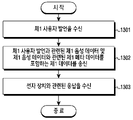
13A illustrates an example of an operation of an electronic device according to various embodiments.
13B illustrates another example of an operation of an electronic device according to various embodiments.
14A illustrates an example of operation of a server according to various embodiments.
14B illustrates another example of operation of a server according to various embodiments.
15 illustrates an example of signaling between a plurality of electronic devices and a server according to various embodiments of the present disclosure.
16 illustrates an example of a format of a voice signal received by a plurality of electronic devices according to various embodiments of the present disclosure;
17 illustrates another example of signaling between a plurality of electronic devices and a server according to various embodiments of the present disclosure.
18 illustrates another example of signaling between a plurality of electronic devices and a server according to various embodiments of the present disclosure.
19 illustrates an example of operation of a server providing feedback in accordance with various embodiments.
20 illustrates another example of signaling between a plurality of electronic devices and a server according to various embodiments of the present disclosure.
21 illustrates an example of another operation of a server according to various embodiments.
22 illustrates another example of signaling between a plurality of electronic devices and a server according to various embodiments of the present disclosure.
23 illustrates an example of an operation of a server that performs noise canceling on a voice command according to various embodiments of the present disclosure.
24 illustrates another example of an environment including a plurality of electronic devices according to various embodiments of the present disclosure;
25 illustrates another example of signaling between a plurality of electronic devices and a server according to various embodiments of the present disclosure.
26 illustrates another example of signaling between a plurality of electronic devices and a server according to various embodiments of the present disclosure.
본 발명의 일 실시 예를 서술하기에 앞서, 본 발명의 일 실시 예가 적용될 수 있는 통합 지능화 시스템에 대해 설명한다.Before describing an embodiment of the present invention, an integrated intelligent system to which an embodiment of the present invention can be applied will be described.
도 1은 본 발명의 다양한 실시 예에 따른 통합 지능화 시스템을 나타낸 도면이다.1 is a view showing an integrated intelligent system according to various embodiments of the present invention.
도 1을 참조하면, 통합 지능화 시스템(10)은 사용자 단말(100), 지능형 서버(200), 개인화 정보 서버(300) 또는 제안 서버(400)를 포함할 수 있다.Referring to FIG. 1 , the integrated
사용자 단말(100)은 사용자 단말(100) 내부에 저장된 앱(app)(또는, 어플리케이션 프로그램(application program))(예: 알람 앱, 메시지 앱, 사진(갤러리) 앱 등)을 통해 사용자에게 필요한 서비스를 제공할 수 있다. 예를 들어, 사용자 단말(100)은 사용자 단말(100) 내부에 저장된 지능형 앱(또는, 음성 인식 앱)을 통해 다른 앱을 실행하고 동작시킬 수 있다. 사용자 단말(100)의 상기 지능형 앱을 통해 상기 다른 앱의 실행하고 동작을 실행시키기 위한 사용자 입력을 수신할 수 있다. 상기 사용자 입력은, 예를 들어, 물리적 버튼, 터치 패드, 음성 입력, 원격 입력 등을 통해 수신될 수 있다. 일 실시 예에 따르면, 사용자 단말(100)은 휴대폰, 스마트폰, PDA(personal digital assistant) 또는 노트북 컴퓨터 등 인터넷에 연결 가능한 각종 단말 장치(또는, 전자 장치)가 이에 해당될 수 있다.The
일 실시 예에 따르면, 사용자 단말(100)은 사용자의 발화를 사용자 입력으로 수신할 수 있다. 사용자 단말(100)은 사용자의 발화를 수신하고, 상기 사용자의 발화에 기초하여 앱을 동작시키는 명령을 생성할 수 있다. 이에 따라, 사용자 단말(100)은 상기 명령을 이용하여 상기 앱을 동작시킬 수 있다.According to an embodiment, the
지능형 서버(200)는 통신망을 통해 사용자 단말(100)로부터 사용자 음성 입력(voice input)을 수신하여 텍스트 데이터(text data)로 변경할 수 있다. 다른 실시 예에서는, 지능형 서버(200)는 상기 텍스트 데이터에 기초하여 패스 룰(path rule)을 생성(또는, 선택)할 수 있다. 상기 패스 룰은 앱의 기능을 수행하기 위한 동작(action)(또는, 오퍼레이션(operation))에 대한 정보 또는 상기 동작을 실행하기 위해 필요한 파라미터에 대한 정보를 포함할 수 있다. 또한, 상기 패스 룰은 상기 앱의 상기 동작의 순서를 포함할 수 있다. 사용자 단말(100)은 상기 패스 룰을 수신하고, 상기 패스 룰에 따라 앱을 선택하고, 상기 선택된 앱에서 상기 패스 룰에 포함된 동작을 실행시킬 수 있다. The
본 문서의 "패스 룰(path rule)" 이라는 용어는 일반적으로, 전자 장치가 사용자에 의해 요청된 태스크를 수행하기 위한 상태들의 시퀀스를 의미할 수 있지만, 이에 제한되지 않는다. 다시 말해, 패스 룰은 상태들의 시퀀스에 대한 정보를 포함할 수 있다. 상기 태스크는, 예를 들어, 지능형 앱이 제공할 수 있는 어떠한 동작(action)일 수 있다. 상기 태스크는 일정을 생성하거나, 원하는 상대방에게 사진을 전송하거나, 날씨 정보를 제공하는 것을 포함 할 수 있다. 사용자 단말(100)은 적어도 하나 이상의 상태(예: 사용자 단말(100)의 동작 상태)를 순차적으로 갖음으로써, 상기 태스크를 수행할 수 있다.In this document, the term “path rule” may generally mean a sequence of states for an electronic device to perform a task requested by a user, but is not limited thereto. In other words, the pass rule may include information about the sequence of states. The task may be, for example, any action that an intelligent app may provide. The task may include creating a schedule, transmitting a photo to a desired counterpart, or providing weather information. The
일 실시 예에 따르면, 패스 룰은 인공 지능(artificial intelligent)(AI) 시스템에 의해 제공되거나, 생성될 수 있다. 인공지능 시스템은 룰 베이스 시스템(rule-based system) 일 수도 있고, 신경망 베이스 시스템(neual network-based system)(예: 피드포워드 신경망(feedforward neural network(FNN)), 순환 신경망(recurrent neural network(RNN))) 일 수도 있다. 또는 전술한 것의 조합 또는 이와 다른 인공지능 시스템일 수도 있다. 일 실시 예에 따르면, 패스 룰은 미리 정의된 패스 룰들의 집합에서 선택될 수 있거나, 사용자 요청에 응답하여 실시간으로 생성될 수 있다. 예를 들어, 인공지능 시스템은 미리 정의 된 복수의 패스 룰 중 적어도 패스 룰을 선택하거나, 동적(또는, 실시간)으로 패스 룰을 생성할 수 있다. 또한, 사용자 단말(100)은 패스 룰을 제공하기 위해 하이브리드 시스템을 사용할 수 있다.According to an embodiment, the pass rule may be provided or generated by an artificial intelligent (AI) system. The artificial intelligence system may be a rule-based system, a neural network-based system (eg, a feedforward neural network (FNN)), a recurrent neural network (RNN) ))) can also be Or it may be a combination of the above or other artificial intelligence systems. According to an embodiment, the pass rule may be selected from a set of predefined pass rules or may be generated in real time in response to a user request. For example, the artificial intelligence system may select at least a pass rule from among a plurality of predefined pass rules, or dynamically (or in real time) generate a pass rule. Also, the
일 실시 예에 따르면, 사용자 단말(100)은 상기 동작을 실행하고, 동작을 실행한 사용자 단말(100)의 상태에 대응되는 화면을 디스플레이에 표시할 수 있다. 다른 예를 들어, 사용자 단말(100)은 상기 동작을 실행하고, 동작을 수행한 결과를 디스플레이에 표시하지 않을 수 있다. 사용자 단말(100)은, 예를 들어, 복수의 동작을 실행하고, 상기 복수의 동작의 일부 결과 만을 디스플레이에 표시할 수 있다. 사용자 단말(100)은, 예를 들어, 마지막 순서의 동작을 실행한 결과만을 디스플레이에 표시할 수 있다. 또 다른 예를 들어, 사용자 단말(100)은 사용자의 입력을 수신하여 상기 동작을 실행한 결과를 디스플레이에 표시할 수 있다.According to an embodiment, the
개인화 정보 서버(300)는 사용자 정보가 저장된 데이터베이스를 포함할 수 있다. 예를 들어, 개인화 정보 서버(300)는 사용자 단말(100)로부터 사용자 정보(예: 컨텍스트 정보, 앱 실행 등)를 수신하여 상기 데이터베이스에 저장할 수 있다. 지능형 서버(200)는 통신망을 통해 개인화 정보 서버(300)로부터 상기 사용자 정보를 수신하여 사용자 입력에 대한 패스 룰을 생성하는 경우에 이용할 수 있다. 일 실시 예에 따르면, 사용자 단말(100)은 통신망을 통해 개인화 정보 서버(300)로부터 사용자 정보를 수신하여 데이터베이스를 관리하기 위한 정보로 이용할 수 있다.The
제안 서버(400)는 단말 내에 기능 혹은 어플리케이션의 소개 또는 제공될 기능에 대한 정보가 저장된 데이터베이스를 포함할 수 있다. 예를 들어, 제안 서버(400)는 개인화 정보 서버(300)로부터 사용자 단말기(100)의 사용자 정보를 수신하여 사용자가 사용 할 수 있는 기능에 대한 데이터베이스를 포함 할 수 있다. 사용자 단말(100)은 통신망을 통해 제안 서버(400)로부터 상기 제공될 기능에 대한 정보를 수신하여 사용자에게 정보를 제공할 수 있다.The
도 2는 본 발명의 일 실시 예에 따른 통합 지능화 시스템의 사용자 단말을 나타낸 블록도이다.2 is a block diagram illustrating a user terminal of an integrated intelligent system according to an embodiment of the present invention.
도 2를 참조하면, 사용자 단말(100)은 입력 모듈(110), 디스플레이(120), 스피커(130), 메모리(140) 또는 프로세서(150)을 포함할 수 있다. 사용자 단말(100)은 하우징을 더 포함할 수 있고, 상기 사용자 단말(100)의 구성들은 상기 하우징의 내부에 안착되거나 하우징 상에(on the housing) 위치할 수 있다. 사용자 단말(100)은 상기 하우징의 내부에 위치한 통신 회로를 더 포함할 수 있다. 사용자 단말(100)은 상기 통신 회로를 통해 외부 서버(예: 지능형 서버(200))와 데이터(또는, 정보)를 송수신할 수 있다.Referring to FIG. 2 , the
일 실시 예에 따른, 입력 모듈(110)은 사용자로부터 사용자 입력을 수신할 수 있다. 예를 들어, 입력 모듈(110)은 연결된 외부 장치(예: 키보드, 헤드셋)로부터 사용자 입력을 수신할 수 있다. 다른 예를 들어, 입력 모듈(110)은 디스플레이(120)와 결합된 터치 스크린(예: 터치 스크린 디스플레이)을 포함할 수 있다. 또 다른 예를 들어, 입력 모듈(110)은 사용자 단말(100)(또는, 사용자 단말(100)의 하우징)에 위치한 하드웨어 키(또는, 물리적 키)를 포함할 수 있다. According to an embodiment, the
일 실시 예에 따르면, 입력 모듈(110)은 사용자의 발화를 음성 신호로 수신할 수 있는 마이크를 포함할 수 있다. 예를 들어, 입력 모듈(110)은 발화 입력 시스템(speech input system)을 포함하고, 상기 발화 입력 시스템을 통해 사용자의 발화를 음성 신호로 수신할 수 있다. 상기 마이크는, 예를 들어, 하우징의 일부분(예: 제1 부분)을 통해 노출될 수 있다.According to an embodiment, the
일 실시 예에 따른, 디스플레이(120)는 이미지나 비디오, 및/또는 어플리케이션의 실행 화면을 표시할 수 있다. 예를 들어, 디스플레이(120)는 앱의 그래픽 사용자 인터페이스(graphic user interface)(GUI)를 표시할 수 있다. 일 실시 예에 따르면, 디스플레이(120)는 하우징의 일부분(예: 제2 부분)을 통해 노출될 수 있다.According to an embodiment, the
일 실시 예에 따르면, 스피커(130)는 음성 신호를 출력할 수 있다. 예를 들어, 스피커(130)는 사용자 단말(100) 내부에서 생성된 음성 신호를 외부로 출력할 수 있다. 일 실시 예에 따르면, 스피커(130)는 하우징의 일부분(예: 제3 부분)을 통해 노출될 수 있다.According to an embodiment, the speaker 130 may output a voice signal. For example, the speaker 130 may output a voice signal generated inside the
일 실시 예에 따르면, 메모리(140)는 복수의 앱(또는, 어플리케이션 프로그램 application program))(141, 143)을 저장할 수 있다. 복수의 앱(141, 143)은, 예를 들어, 사용자 입력에 대응되는 기능을 수행하기 위한 프로그램(program)일 수 있다. 일 실시 예에 따르면, 메모리(140)는 지능형 에이전트(145), 실행 매니저 모듈(147) 또는 지능형 서비스 모듈(149)을 저장할 수 있다. 지능형 에이전트(145), 실행 매니저 모듈(147) 및 지능형 서비스 모듈(149)은, 예를 들어, 수신된 사용자 입력(예: 사용자 발화)을 처리하기 위한 프레임워크(framework)(또는, 어플리케이션 프레임워크(application framework))일 수 있다.According to an embodiment, the memory 140 may store a plurality of apps (or application programs) 141 and 143 . The plurality of
일 실시 예에 따르면, 메모리(140)는 사용자 입력을 인식하는데 필요한 정보를 저장할 수 있는 데이터베이스를 포함할 수 있다. 예를 들어, 메모리(140)은 로그(log) 정보를 저장할 수 있는 로그 데이터베이스를 포함할 수 있다. 다른 예를 들어, 메모리(140)는 사용자 정보를 저장할 수 있는 페르소나 데이터베이스를 포함할 수 있다.According to an embodiment, the memory 140 may include a database capable of storing information necessary for recognizing a user input. For example, the memory 140 may include a log database capable of storing log information. As another example, the memory 140 may include a persona database that may store user information.
일 실시 예에 따르면, 메모리(140)는 복수의 앱(141, 143)을 저장하고, 복수의 앱(141, 143)은 로드되어 동작할 수 있다. 예를 들어, 메모리(140)에 저장된 복수의 앱(141,143)은 실행 매니저 모듈(147)에 의해 로드되어 동작할 수 있다. 복수의 앱(141, 143)은 기능을 수행하는 실행 서비스 모듈(141a, 143a)을 포함할 수 있다. 일 실시 예에서, 복수의 앱(141,143)은 기능을 수행하기 위해서 실행 서비스 모듈(141a, 143a)를 통해 복수의 동작(예: 상태 들의 시퀀스)(141b, 143b)을 실행할 수 있다. 다시 말해, 실행 서비스 모듈(141a, 143a)는 실행 매니저 모듈(147)에 의해 활성화되고, 복수의 동작 (141b, 143b)을 실행할 수 있다.According to an embodiment, the memory 140 may store a plurality of
일 실시 예에 따르면, 앱(141, 143)의 동작(141b, 143b)이 실행되었을 때, 동작(141b, 143b)의 실행에 따른 실행 상태 화면은 디스플레이(120)에 표시될 수 있다. 상기 실행 상태 화면은, 예를 들어, 동작(141b, 143b)이 완료된 상태의 화면일 수 있다. 상기 실행 상태 화면은, 다른 예를 들어, 동작(141b, 143b)의 실행이 정지된 상태(partial landing)(예: 동작(141b, 143b)에 필요한 파라미터가 입력되지 않은 경우)의 화면일 수 있다.According to an embodiment, when the
일 실시 예에 따른, 실행 서비스 모듈(141a, 143a)은 패스 룰에 따라 동작(141b, 143b)을 실행할 수 있다. 예를 들어, 실행 서비스 모듈(141a, 143a)은 실행 매니저 모듈(147)에 의해 활성화되고, 실행 매니저 모듈(147)로부터 상기 패스 룰에 따라 실행 요청을 전달 받고, 상기 실행 요청에 따라 동작(141b, 143b)을 함으로써, 앱(141, 143)의 기능을 실행할 수 있다. 실행 서비스 모듈(141a, 143a)는 상기 동작(141b, 143b)의 수행이 완료되면 완료 정보를 실행 매니저 모듈(147)로 전달할 수 있다.According to an embodiment, the
일 실시 예에 따르면, 앱(141, 143)에서 복수의 동작(141b, 143b)이 실행되는 경우, 복수의 동작(141b, 143b)은 순차적으로 실행될 수 있다. 실행 서비스 모듈(141a, 143a)은 하나의 동작(예: 제1 앱(141)의 동작 1, 제2 앱(143)의 동작 1)의 실행이 완료되면 다음 동작(예: 제1 앱(141)의 동작 2, 제2 앱(143)의 동작 2)을 오픈하고 완료 정보를 실행 매니저 모듈(147)로 송신할 수 있다. 여기서 임의의 동작을 오픈한다는 것은, 임의의 동작을 실행 가능한 상태로 천이시키거나, 임의의 동작의 실행을 준비하는 것으로 이해될 수 있다. 다시 말해서, 임의의 동작이 오픈되지 않으면, 해당 동작은 실행될 수 없다. 실행 매니저 모듈(147)은 상기 완료 정보가 수신되면 다음 동작(예: 제1 앱(141)의 동작 2, 제2 앱(143)의 동작 2)에 대한 실행 요청을 실행 서비스 모듈로 전달할 수 있다. 일 실시 예에 따르면, 복수의 앱(141, 143)이 실행되는 경우, 복수의 앱(141, 143)은 순차적으로 실행될 수 있다. 예를 들어, 제1 앱(141)의 마지막 동작(예: 제1 앱(141)의 동작 3)의 실행이 완료되어 완료 정보를 수신하면, 실행 매니저 모듈(147)은 제2 앱(143)의 첫번째 동작(예: 제2 앱(143)의 동작 1)의 실행 요청을 실행 서비스(143a)로 송신할 수 있다.According to an embodiment, when a plurality of
일 실시 예에 따르면, 앱(141, 143)에서 복수의 동작(141b, 143b)이 실행된 경우, 상기 실행된 복수의 동작(141b, 143b) 각각의 실행에 따른 결과 화면은 디스플레이(120)에 표시될 수 있다. 일 실시 예에 따르면, 상기 실행된 복수의 동작(141b, 143b)의 실행에 따른 복수의 결과 화면 중 일부만 디스플레이(120)에 표시될 수 있다.According to an embodiment, when a plurality of
일 실시 예에 따르면, 메모리(140)는 지능형 에이전트(145)와 연동된 지능형 앱(예: 음성 인식 앱)을 저장할 수 있다. 지능형 에이전트(145)와 연동된 앱은 사용자의 발화를 음성 신호로 수신하여 처리할 수 있다. 일 실시 예에 따르면, 지능형 에이전트(145)와 연동된 앱은 입력 모듈(110)을 통해 입력되는 특정 입력(예: 하드웨어 키를 통한 입력, 터치 스크린을 통한 입력, 특정 음성 입력)에 의해 동작될 수 있다.According to an embodiment, the memory 140 may store an intelligent app (eg, a voice recognition app) interlocked with the
일 실시 예에 따르면, 메모리(140)에 저장된 지능형 에이전트(145), 실행 매니저 모듈(147) 또는 지능형 서비스 모듈(149)이 프로세서(150)에 의해 실행될 수 있다. 지능형 에이전트(145), 실행 매니저 모듈(147) 또는 지능형 서비스 모듈(149)의 기능은 프로세서(150)에 의해 구현될 수 있다. 상기 지능형 에이전트(145), 실행 매니저 모듈(147) 및 지능형 서비스 모듈(149)의 기능에 대해 프로세서(150)의 동작으로 설명하겠다. 일 실시 예에 따르면, 메모리(140)에 저장된 지능형 에이전트(145), 실행 매니저 모듈(147) 또는 지능형 서비스 모듈(149)는 소프트웨어뿐만 아니라 하드웨어로 구현될 수 있다.According to an embodiment, the
일 실시 예에 따르면, 프로세서(150)는 사용자 단말(100)의 전반적인 동작을 제어할 수 있다. 예를 들어, 프로세서(150)는 입력 모듈(110)을 제어하여 사용자 입력을 수신할 수 있다. 프로세서(150)는 디스플레이(120)를 제어하여 이미지를 표시할 수 있다. 프로세서(150)는 스피커(130)를 제어하여 음성 신호를 출력할 수 있다. 프로세서(150)는 메모리(140)를 제어하여 프로그램을 실행시키고, 필요한 정보를 불러오거나 저장할 수 있다. According to an embodiment, the
일 실시 예에 따르면, 프로세서(150)는 메모리(140)에 저장된 지능형 에이전트(145), 실행 매니저 모듈(147) 또는 지능형 서비스 모듈(149)을 실행시킬 수 있다. 이에 따라, 프로세서(150)는 지능형 에이전트(145), 실행 매니저 모듈(147) 또는 지능형 서비스 모듈(149)의 기능을 구현할 수 있다.According to an embodiment, the
일 실시 예에 따른, 프로세서(150)는 지능형 에이전트(145)를 실행하여 사용자 입력으로 수신된 음성 신호에 기초하여 앱을 동작시키는 명령을 생성할 수 있다. 일 실시 예에 따른, 프로세서(150)는 실행 매니저 모듈(147)을 실행하여 상기 생성된 명령에 따라 메모리(140)에 저장된 앱(141, 143)을 실행시킬 수 있다. 일 실시 예에 따르면, 프로세서(150)는 지능형 서비스 모듈(149)을 실행하여 사용자의 정보를 관리하 고, 상기 사용자의 정보를 이용하여 사용자 입력을 처리할 수 있다.According to an embodiment, the
프로세서(150)는 지능형 에이전트(145)를 실행하여 입력 모듈(110)을 통해 수신된 사용자 입력을 지능형 서버(200)로 송신하고, 지능형 서버(200)를 통해 상기 사용자 입력을 처리할 수 있다.The
일 실시 예에 따르면, 프로세서(150)는 지능형 에이전트(145)를 실행하여 상기 사용자 입력을 지능형 서버(200)로 송신하기 전에 상기 사용자 입력을 전처리할 수 있다. 일 실시 예에 따르면, 지능형 에이전트(145)는 상기 사용자 입력을 전처리하기 위하여, 적응 반향 제거(adaptive echo canceller)(AEC) 모듈, 노이즈 억제(noise suppression)(NS) 모듈, 종점 검출(end-point detection)(EPD) 모듈 또는 자동 이득 제어(automatic gain control)(AGC) 모듈을 포함할 수 있다. 상기 적응 반향 제거부는 상기 사용자 입력에 포함된 에코(echo)를 제거할 수 있다. 상기 노이즈 억제 모듈은 상기 사용자 입력에 포함된 배경 잡음을 억제할 수 있다. 상기 종점 검출 모듈은 상기 사용자 입력에 포함된 사용자 음성의 종점을 검출하 고, 상기 검출된 종점을 이용하여 사용자의 음성이 존재하는 부분을 찾을 수 있다. 상기 자동 이득 제어 모듈은 상기 사용자 입력을 인식하고, 상기 인식된 사용자 입력을 처리하기 적합하도록 상기 사용자 입력의 음량을 조절할 수 있다. 일 실시 예에 따르면, 프로세서(150)는 성능을 위하여 상기 전처리 구성을 전부 실행시킬 수 있지만, 다른 실시 예에서 프로세서(150)는 저전력으로 동작하기 위해 상기 전처리 구성 중 일부를 실행시킬 수 있다.According to an embodiment, the
일 실시 예에 따르면, 지능형 에이전트(145)는 사용자의 호출을 인식하기 위해 메모리(140)에 저장된 웨이크 업(wake up) 인식 모듈을 실행시킬 수 있다. 이에 따라, 프로세서(150)는 상기 웨이크 업 인식 모듈을 통해 사용자의 웨이크 업 명령을 인식할 수 있고, 상기 웨이크 업 명령을 수신한 경우 사용자 입력을 수신하기 위한 지능형 에이전트(145)를 실행시킬 수 있다. 상기 웨이크 업 인식 모듈은 저전력 프로세서(예: 오디오 코덱에 포함된 프로세서)로 구현될 수 있다. 일 실시 예에 따르면, 프로세서(150)는 하드웨어 키를 통한 사용자 입력 을 수신하였을 때 지능형 에이전트(145)를 실행시킬 수 있다. 지능형 에이전트(145)가 실행된 경우, 지능형 에이전트(145)와 연동된 지능형 앱(예: 음성 인식 앱)이 실행될 수 있다.According to an embodiment, the
일 실시 예에 따르면, 지능형 에이전트(145)는 사용자 입력을 실행하기 위한 음성 인식 모듈을 포함할 수 있다. 프로세서(150)는 상기 음성 인식 모듈을 통해 앱에서 동작을 실행하도록 하기 위한 사용자 입력을 인식할 수 있다. 예를 들어, 프로세서(150)는 상기 음성 인식 모듈을 통해 앱(141, 143)에서 상기 웨이크 업 명령과 같은 동작을 실행하는 제한된 사용자 (음성) 입력(예: 카메라 앱이 실행 중일 때 촬영 동작을 실행시키는 "찰칵"과 같은 발화 등)을 인식할 수 있다. 프로세서(150)는 상기 지능형 서버(200)를 보조하여 상기 음성 인식 모듈을 통해 사용자 단말(100)내에서 처리할 수 있는 사용자 명령을 인식하여 빠르게 처리할 수 있다. 일 실시 예에 따르면, 사용자 입력을 실행하기 위한 지능형 에이전트(145)의 음성 인식 모듈은 앱 프로세서에서 구현될 수 있다.According to an embodiment, the
일 실시 예에 따르면, 지능형 에이전트(145)의 음성 인식 모듈(웨이크 업 모듈의 음성 인식 모듈을 포함)은 음성을 인식하기 위한 알고리즘을 이용하여 사용자 입력을 인식할 수 있다. 상기 음성을 인식하기 위해 사용되는 알고리즘은, 예를 들어, HMM(hidden markov model) 알고리즘, ANN(artificial neural network) 알고리즘 또는 DTW(dynamic time warping) 알고리즘 중 적어도 하나일 수 있다.According to an embodiment, the voice recognition module of the intelligent agent 145 (including the voice recognition module of the wake-up module) may recognize a user input using an algorithm for recognizing a voice. The algorithm used to recognize the voice may be, for example, at least one of a hidden markov model (HMM) algorithm, an artificial neural network (ANN) algorithm, or a dynamic time warping (DTW) algorithm.
일 실시 예에 따르면, 프로세서(150)는 지능형 에이전트(145)를 실행하여 사용자의 음성 입력을 텍스트 데이터로 변환할 수 있다. 예를 들어, 프로세서(150)는 지능형 에이전트(145)를 통해 사용자의 음성을 지능형 서버(200)로 송신하고, 지능형 서버(200)로부터 사용자의 음성에 대응되는 텍스트 데이터를 수신할 수 있다. 이에 따라, 프로세서(150) 는 상기 변환된 텍스트 데이터를 디스플레이(120)에 표시할 수 있다.According to an embodiment, the
일 실시 예에 따르면, 프로세서(150)는 지능형 에이전트(145)를 실행하여 지능형 서버(200)로부터 패스 룰을 수신할 수 있다. 일 실시 예에 따르면, 프로세서(150)는 지능형 에이전트(145)를 통해 상기 패스 룰을 실행 매니저 모듈(147)로 전달할 수 있다.According to an embodiment, the
일 실시 예에 따르면, 프로세서(150)는 지능형 에이전트(145) 를 실행하여 지능형 서버(200)로부터 수신된 패스 룰에 따른 실행 결과 로그(log)를 지능형 서비스(intelligence service) 모듈(149)로 전달하고, 상기 전달된 실행 결과 로그는 페르소나 모듈(persona manager)(149b)의 사용자의 선호(preference) 정보에 누적되어 관리될 수 있다.According to an embodiment, the
일 실시 예에 따른, 프로세서(150)는 실행 매니저 모듈(147)을 실행하여 지능형 에이전트(145)로부터 패스 룰을 전달받아 앱(141, 143)을 실행시키고, 앱(141, 143)이 상기 패스 룰에 포함된 동작(141b, 143b)을 실행하도록 할 수 있다. 예를 들어, 프로세서(150)는 실행 매니저 모듈(147)을 통해 앱(141, 143)으로 동작(141b, 143b)을 실행하기 위한 명령 정보(예: 패스 룰 정보)를 송신할 수 있고, 상기 앱(141, 143)로부터 동작(141b, 143b)의 완료 정보를 전달 받을 수 있다.According to an embodiment, the
일 실시 예에 따르면, 프로세서(150)는 실행 매니저 모듈(147)을 실행하여 지능형 에이전트(145)와 앱(141, 143)의 사이에서 앱(141, 143)의 동작(141b, 143b)을 실행하기 위한 명령 정보(예: 패스 룰 정보)를 전달할 수 있다. 프로세서(150)는 실행 매니저 모듈(147)을 통해 상기 패스 룰에 따라 실행할 앱(141, 143)을 바인딩(binding)하고, 상기 패스 룰에 포함된 동작(141b, 143b)의 명령 정보(예: 패스 룰 정보)를 앱(141, 143)으로 전달할 수 있다. 예를 들어, 프로세서(150)는 실행 매니저 모듈(147)을 통해 상기 패스 룰에 포함된 동작(141b, 143b)을 순차적으로 앱(141, 143)으로 전달하여, 앱(141, 143)의 동작(141b, 143b)을 상기 패스 룰에 따라 순차적으로 실행시킬 수 있다.According to an embodiment, the
일 실시 예에 따르면, 프로세서(150)는 실행 매니저 모듈(147)을 실행하여 앱(141, 143)의 동작(141b, 143b)의 실행 상태를 관리할 수 있다. 예를 들어, 프로세서(150)는 실행 매니저 모듈(147)을 통해 앱(141, 143)으로부터 상기 동작(141b, 143b)의 실행 상태에 대한 정보를 전달 받을 수 있다. 상기 동작(141b, 143b)의 실행 상태가, 예를 들어, 정지된 상태(partial landing)인 경우(예: 동작(141b, 143b)에 필요한 파라미터가 입력되지 않은 경우), 프로세서(150)는 실행 매니저 모듈(147)을 통해 상기 정지된 상태에 대한 정보를 지능형 에이전트(145)로 전달할 수 있다. 프로세서(150)는 지능형 에이전트(145)를 통해 상기 전달 받은 정보를 이용하여, 사용자에게 필요한 정보(예: 파라미터 정보)의 입력을 요청할 수 있다. 상기 동작(141b, 143b)의 실행 상태가, 다른 예를 들어, 동작 상태인 경우, 프로세서(150)는 지능형 에이전트(145)를 통해 사용자로부터 발화를 수신할 수 있 다. 프로세서(150)는 실행 매니저 모듈(147)를 통해 상기 실행되고 있는 앱(141, 143) 및 앱(141, 143)의 실행 상태에 대한 정보를 지능형 에이전트(145)로 전달할 수 있다. 프로세서(150)는 지능형 에이전트(145) 를 통해 상기 사용자 발화를 지능형 서버(200)로 송신할 수 있다. 프로세서(150)는 지능형 에이전트(145)를 통해 지능형 서버(200)로부터 상기 사용자의 발화의 파라미터 정보를 수신할 수 있 다. 프로세서(150)는 지능형 에이전트(145)를 통해 상기 수신된 파라미터 정보를 실행 매니저 모듈(147)로 전달할 수 있다. 실행 매니저 모듈(147)은 상기 수신한 파라미터 정보를 이용하여 동작(141b, 143b)의 파라미터를 새로운 파라미터로 변경할 수 있다.According to an embodiment, the
일 실시 예에 따르면, 프로세서(150)는 실행 매니저 모듈(147)을 실행하여 패스 룰에 포함된 파라미터 정보를 앱(141, 143)로 전달할 수 있다. 상기 패스 룰에 따라 복수의 앱(141, 143)이 순차적으로 실행되는 경우, 실행 매니저 모듈(147)은 하나의 앱에서 다른 앱으로 패스 룰에 포함된 파라미터 정보를 전달할 수 있다.According to an embodiment, the
일 실시 예에 따르면, 프로세서(150)는 실행 매니저 모듈(147)을 실행하여 복수의 패스 룰을 수신할 수 있다. 프로세서(150)는 실행 매니저 모듈(147)을 통해 사용자의 발화에 기초하여 복수의 패스 룰이 선택될 수 있다. 예를 들어, 프로세서(150)는 실행 매니저 모듈(147)을 통해 사용자의 발화가 일부 동작(141a)을 실행할 일부 앱(141)을 특정하였지만, 나머지 동작(143b)을 실행할 다른 앱(143)을 특정하지 않은 경우, 일부 동작(141a)를 실행할 동일한 앱(141)(예: 갤러리 앱)이 실행되고 나머지 동작(143b)를 실행할 수 있는 서로 다른 앱(143)(예: 메시지 앱, 텔레그램 앱)이 각각 실행되는 서로 다른 복수의 패스 룰을 수신할 수 있다. 프로세서(150)는, 예를 들어, 실행 매니저 모듈(147)을 통해 상기 복수의 패스 룰의 동일한 동작(141b, 143b)(예: 연속된 동일한 동작(141b, 143b))을 실행할 수 있다. 프로세서(150)는 상기 동일한 동작까지 실행한 경우, 실행 매니저 모듈(147)을 통해 상기 복수의 패스 룰에 각각 포함된 서로 다른 앱(141, 143)을 선택할 수 있는 상태 화면을 디스플레이(120)에 표시할 수 있다.According to an embodiment, the
일 실시 예에 따르면, 지능형 서비스 모듈(149)은 컨텍스트 모듈(149a), 페르소나 모듈(149b) 또는 제안 모듈(149c)을 포함할 수 있다.According to an embodiment, the intelligent service module 149 may include a
프로세서(150)는 컨텍스트 모듈(149a)을 실행하여 앱(141, 143)으로부터 앱(141, 143)의 현재 상태를 수집할 수 있다. 예를 들어, 프로세서(150)는 컨텍스트 모듈(149a)을 실행하여 앱(141, 143)의 현재 상태를 나타내는 컨텍스트 정보를 수신하고, 상기 수신된 컨텍스트 정보를 통해 앱(141, 143)의 현재 상태를 수집할 수 있다.The
프로세서(150)는 페르소나 모듈(149b)을 실행하여 사용자 단말(100)을 사용하는 사용자의 개인 정보를 관리할 수 있다. 예를 들어, 프로세서(150)는 페르소나 모듈(149b)을 실행하여 사용자 단말(100)의 사용 정보 및 수행 결과를 수집하고, 상기 수집된 사용자 단말(100)의 사용 정보 및 수행 결과를 이용하여 사용자의 개인 정보를 관리할 수 있다. The
프로세서(150)는 제안 모듈(149c)을 실행하여 사용자의 의도를 예측하고, 상기 사용자의 의도에 기초하여 사용자에게 명령을 추천해줄 수 있다. 예를 들어, 프로세서(150)는 제안 모듈(149c)을 실행하여 사용자의 현재 상태(예: 시간, 장소, 상황, 앱)에 따라 사용자에게 명령을 추천해줄 수 있다.The
도 3은 본 발명의 일 실시 예에 따른 사용자 단말의 지능형 앱을 실행시키는 것을 나타낸 도면이다.3 is a diagram illustrating running an intelligent app of a user terminal according to an embodiment of the present invention.
도 3을 참조하면, 사용자 단말(100)이 사용자 입력을 수신하여 지능형 에이전트(145)와 연동된 지능형 앱(예: 음성 인식 앱)을 실행시키는 것을 나타낸 것이다.Referring to FIG. 3 , the
일 실시 예에 따르면, 사용자 단말(100)은 하드웨어 키(112)를 통해 음성을 인식하기 위한 지능형 앱을 실행시킬 수 있다. 예를 들어, 사용자 단말(100)은 하드웨어 키(112)를 통해 사용자 입력을 수신한 경우 디스플레이(120)에 지능형 앱의 UI(user interface)(121)를 표시할 수 있다. 사용자는, 예를 들어, 지능형 앱의 UI(121)가 디스플레이(120)에 표시된 상태에서 음성을 입력(111b)하기 위해 지능형 앱의 UI(121)에 음성인식 버튼(121a)를 터치할 수 있다. 사용자는, 다른 예를 들어, 음성을 입력(120b)하기 위해 상기 하드웨어 키(112)를 지속적으로 눌러서 음성을 입력(120b)을 할 수 있다.According to an embodiment, the
일 실시 예에 따르면, 사용자 단말(100)은 마이크(111)를 통해 음성을 인식하기 위한 지능형 앱을 실행시킬 수 있다. 예를 들어, 사용자 단말(100)은 마이크(111)를 통해 지정된 음성(예: 일어나!(wake up!))이 입력(111a)된 경우 디스플레이(120)에 지능형 앱의 UI(121)를 표시할 수 있다.According to an embodiment, the
도 4는 본 발명의 일 실시 예에 따른 지능형 서비스 모듈의 컨텍스트 모듈이 현재 상태를 수집하는 것을 나타낸 도면이다.4 is a diagram illustrating that a context module of an intelligent service module collects a current state according to an embodiment of the present invention.
도 4를 참조하면, 프로세서(150)는 지능형 에이전트(145)로부터 컨텍스트 요청을 수신(①)하면, 컨텍스트 모듈(149a)을 통해 앱(141, 143)의 현재 상태를 나타내는 컨텍스트 정보를 요청(②)할 수 있다. 일 실시 예에 따르면, 프로세서(150)는 컨텍스트 모듈(149a)을 통해 앱(141, 143)으로부터 상기 컨텍스트 정보를 수신(③)하여 지능형 에이전트(145)로 송신(④)할 수 있다.Referring to FIG. 4 , the
일 실시 예에 따르면, 프로세서(150)는 컨텍스트 모듈(149a)을 통해 앱(141, 143)으로부터 복수의 컨텍스트 정보를 전달 받을 수 있다. 상기 컨텍스트 정보는, 예를 들어, 가장 최근 실행된 앱(141, 143)에 대한 정보일 수 있다. 상기 컨텍스트 정보는, 다른 예를 들어, 앱(141, 143) 내의 현재 상태에 대한 정보(예: 갤러리에서 사진을 보고 있는 경우, 해당 사진에 대한 정보)일 수 있다.According to an embodiment, the
일 실시 예에 따르면, 프로세서(150)는 컨텍스트 모듈(149a)을 통해 앱(141, 143)뿐만 아니라, 디바이스 플랫폼(device platform)으로부터 사용자 단말(100)의 현재 상태를 나타내는 컨텍스트 정보를 수신할 수 있다. 상기 컨텍스트 정보는 일반적 컨텍스트 정보, 사용자 컨텍스트 정보 또는 장치 컨텍스트 정보를 포함할 수 있다.According to an embodiment, the
상기 일반적 컨텍스트 정보는 사용자 단말(100)의 일반적인 정보를 포함할 수 있다. 상기 일반적 컨텍스트 정보는 디바이스 플랫폼의 센서 허브 등을 통해 데이터를 전달 받아서 내부 알고리즘을 통해 확인될 수 있다. 예를 들어, 상기 일반적 컨텍스트 정보는 현재 시공간에 대한 정보를 포함할 수 있다. 상기 현재 시공간에 대한 정보는, 예를 들어, 현재 시간 또는 사용자 단말(100)의 현재 위치에 대한 정보를 포함할 수 있다. 상기 현재 시간은 사용자 단말(100) 상에서의 시간을 통해 확인될 수 있고, 상기 현재 위치에 대한 정보는 GPS(global positioning system)를 통해 확인될 수 있다. 다른 예를 들어, 상기 일반적 컨텍스트 정보는 물리적 움직임에 대한 정보를 포함할 수 있다. 상기 물리적 움직임에 대한 정보는, 예를 들어, 걷기, 뛰기, 운전 중 등에 대한 정보를 포함할 수 있다. 상기 물리적 움직임 정보는 모션 센서(motion sensor)를 통해 확인될 수 있다. 상기 운전 중에 대한 정보는 상기 모션 센서를 통해 운행을 확인할 수 있을 뿐만 아니라, 차량 내의 블루투스 연결을 감지하여 탑승 및 주차를 확인할 수 있다. 또 다른 예를 들어, 상기 일반적 컨텍스트 정보는 사용자 활동 정보를 포함할 수 있다. 상기 사용자 활동 정보는, 예를 들어, 출퇴근, 쇼핑, 여행 등에 대한 정보를 포함할 수 있다. 상기 사용자 활동 정보는 사용자 또는 앱이 데이터베이스에 등록한 장소에 대한 정보를 이용하여 확인될 수 있다.The general context information may include general information of the
상기 사용자 컨텍스트 정보는 사용자에 대한 정보를 포함할 수 있다. 예를 들어, 상기 사용자 컨텍스트 정보는 사용자의 감정적 상태에 대한 정보를 포함할 수 있다. 상기 감정적 상태에 대한 정보는, 예를 들어, 사용자의 행복, 슬픔, 화남 등에 대한 정보를 포함할 수 있다. 다른 예를 들어, 상기 사용자 컨텍스트 정보는 사용자의 현재 상태에 대한 정보를 포함할 수 있다. 상기 현재 상태에 대한 정보는, 예를 들어, 관심, 의도 등(예: 쇼핑)에 대한 정보를 포함할 수 있다.The user context information may include information about a user. For example, the user context information may include information about the user's emotional state. The information on the emotional state may include, for example, information on the user's happiness, sadness, anger, and the like. As another example, the user context information may include information about the user's current state. The information on the current state may include, for example, information on interests, intentions, etc. (eg, shopping).
상기 장치 컨텍스트 정보는 사용자 단말(100)의 상태에 대한 정보를 포함할 수 있다. 예를 들어, 상기 장치 컨텍스트 정보는 실행 매니저 모듈(147)이 실행한 패스 룰에 대한 정보를 포함할 수 있다. 다른 예를 들어, 상기 디바이스 정보는 배터리에 대한 정보를 포함할 수 있다. 상기 배터리에 대한 정보는, 예를 들어, 상기 배터리의 충전 및 방전 상태를 통해 확인될 수 있다. 또 다른 예를 들어, 상기 디바이스 정보는 연결된 장치 및 네트워크에 대한 정보를 포함할 수 있다. 상기 연결된 장치에 대한 정보는, 예를 들어, 상기 장치가 연결된 통신 인터페이스를 통해 확인될 수 있다.The device context information may include information on the state of the
도 5는 본 발명의 일 실시 예에 따른 지능형 서비스 모듈의 제안 모듈을 나타낸 블록도이다.5 is a block diagram illustrating a proposal module of an intelligent service module according to an embodiment of the present invention.
도 5를 참조하면, 제안 모듈(149c)은 힌트 제공 모듈(149c_1), 컨텍스트 힌트 생성 모듈(149c_2), 조건 체킹 모듈(149c_3), 조건 모델 모듈(149c_4), 재사용 힌트 생성 모듈(149c_5) 또는 소개 힌트 생성 모듈(149c_6)을 포함할 수 있다.Referring to FIG. 5 , the
일 실시 예에 따르면, 프로세서(150)는 힌트 제공 모듈(149c_1)을 실행하여 사용자에게 힌트(hint)를 제공할 수 있다. 예를 들어, 프로세서(150)는 힌트 제공 모듈(149c_1)을 통해 컨텍스트 힌트 생성 모듈(149c_2), 재사용 힌트 생성 모듈(149c_5) 또는 소개 힌트 생성 모듈(149c_6)로부터 생성된 힌트를 전달 받아 사용자에게 힌트를 제공할 수 있다.According to an embodiment, the
일 실시 예에 따르면, 프로세서(150)는 조건 체킹 모듈(149c_3) 또는 조건 모델 모듈(149c_4)을 실행하여 현재 상태에 따라 추천될 수 있는 힌트를 생성할 수 있다. 프로세서(150)는 조건 체킹 모듈(149c_3)을 실행하여 현재 상태에 대응되는 정보를 전달 받을 수 있고, 조건 모델 모듈(149c_4)을 실행하여 상기 전달 받은 정보를 이용하여 조건 모델(condition model)을 설정할 수 있다. 예를 들어, 프로세서(150)는 조건 모델 모듈은(149c_4)을 실행하여 사용자에게 힌트를 제공하는 시점의 시간, 위치, 상황 사용중인 앱 등을 파악하여 해당 조건에서 사용할 가능성이 높은 힌트를 우선 순위가 높은 순으로 사용자에게 제공할 수 있다.According to an embodiment, the
일 실시 예에 따르면, 프로세서(150)는 재사용 힌트 생성 모듈(149c_5)을 실행하여 사용 빈도에 따라 추천될 수 있는 힌트를 생성할 수 있다. 예를 들어, 프로세서(150)는 재사용 힌트 생성 모듈(149c_5)을 실행하여 사용자의 사용 패턴에 기초한 힌트를 생성할 수 있다.According to an embodiment, the
일 실시 예에 따르면, 소개 힌트 생성 모듈(149c_6)은 사용자에게 신규 기능 또는 다른 사용자가 많이 쓰는 기능을 소개하는 힌트를 생성할 수 있다. 예를 들어, 상기 신규 기능을 소개하는 힌트에는 지능형 에이전트(145)에 대한 소개(예: 작동 방법)를 포함할 수 있다.According to an embodiment, the introduction hint generating module 149c_6 may generate a hint for introducing a new function or a function frequently used by other users to the user. For example, the hint for introducing the new function may include an introduction (eg, operation method) of the
다른 실시 예에 따르면, 제안 모듈(149c)의 컨텍스트 힌트 생성 모듈(149c_2), 조건 체킹 모듈(149c_3), 조건 모델 모듈(149c_4), 재사용 힌트 생성 모듈(149c_5) 또는 소개 힌트 생성 모듈(149c_6)은 개인화 정보 서버(300)에 포함될 수 있다. 예를 들어, 프로세서(150)는 제안 모듈(149c)의 힌트 제공 모듈(149c_1)을 통해 사용자 개인화 정보 서버(300)의 컨텍스트 힌트 생성 모듈(149c_2), 재사용 힌트 생성 모듈(149c_5) 또는 소개 힌트 생성 모듈(149c_6)로부터 힌트를 수신하여 사용자에게 상기 수신된 힌트를 제공할 수 있다.According to another embodiment, the context hint generation module 149c_2, the condition checking module 149c_3, the condition model module 149c_4, the reuse hint generation module 149c_5, or the introduction hint generation module 149c_6 of the
일 실시 예에 따르면, 사용자 단말(100)은 다음의 일련의 프로세스에 따라 힌트를 제공할 수 있다. 예를 들어, 프로세서(150)는 지능형 에이전트(145)로부터 힌트 제공 요청을 수신하면, 힌트 제공 모듈(149c_1)을 통해 컨텍스트 힌트 생성 모듈(149c_2)로 힌트 생성 요청을 전달할 수 있다. 프로세서(150)는 상기 힌트 생성 요청을 전달 받으면, 조건 체킹 모듈(149c_3)을 통해 컨텍스트 모듈(149a) 및 페르소나 모듈(149b)로부터 현재 상태에 대응되는 정보를 전달 받을 수 있다. 프로세서(150)는 조건 체킹 모듈(149c_3)을 통해 상기 전달 받은 정보를 조건 모델 모듈(149c_4)로 전달하고, 조건 모델 모듈(149c_4)을 통해 상기 정보를 이용하여 사용자에게 제공되는 힌트 중 상기 조건에 사용 가능성이 높은 순서로 힌트에 대해 우선순위를 부여 할 수 있다. 프로세서(150)는 컨텍스트 힌트 생성 모듈(149c_2)을 통해 상기 조건을 확인(⑥)하고, 상기 현재 상태에 대응되는 힌트를 생성할 수 있다. 프로세서(150)는 컨텍스트 힌트 생성 모듈(149c_2)을 통해 상기 생성된 힌트를 힌트 제공 모듈(149c_1)로 전달할 수 있다. 프로세서(150)는 힌트 제공 모듈(149c_1)을 통해 지정된 규칙에 따라 상기 힌트를 정렬하고, 상기 힌트를 지능형 에이전트(145)로 전달할 수 있다.According to an embodiment, the
일 실시 예에 따르면, 프로세서(150)는 힌트 제공 모듈(149c_1)을 통해 복수의 컨텍스트 힌트를 생성할 수 있고, 지정된 규칙에 따라 복수의 컨텍스트 힌트에 우선 순위를 지정할 수 있다. 일 실시 예에 따르면, 프로세서(150)는 힌트 제공 모듈(149c_1)을 통해 상기 복수의 컨텍스트 힌트 중에서 우선 순위가 높은 것을 사용자에게 먼저 제공할 수 있다.According to an embodiment, the
일 실시 예에 따르면, 사용자 단말(100)은 사용 빈도에 따른 힌트를 제안할 수 있다. 예를 들어, 프로세서(150)는 지능형 에이전트(145)로부터 힌트 제공 요청을 전달 받으면, 힌트 제공 모듈(149c_1)을 통해 재사용 힌트 생성 모듈(149c_5)로 힌트 생성 요청을 전달할 수 있다. 프로세서(150)는 상기 힌트 생성 요청을 전달 받으면, 재사용 힌트 생성 모듈(149c_5)를 통해 페르소나 모듈(149b)로부터 사용자 정보를 전달 받을 수 있다. 예를 들어, 프로세서(150)는 재사용 힌트 생성 모듈(149c_5)을 통해 페르소나 모듈(149b)의 사용자의 프리퍼런스 정보에 포함된 패스 룰, 패스 룰에 포함된 파라미터, 앱의 실행 빈도, 앱이 사용된 시공간 정보를 전달 받을 수 있다. 프로세서(150)는 재사용 힌트 생성 모듈(149c_5)을 통해 상기 전달 받은 사용자 정보에 대응되는 힌트를 생성할 수 있다. 프로세서(150)는 재사용 힌트 생성 모듈(149c_5)을 통해 상기 생성된 힌트를 힌트 제공 모듈(149c_1)로 전달할 수 있다. 프로세서(150)는 힌트 제공 모듈(149c_1)을 통해 상기 힌트를 정렬하고, 상기 힌트를 지능형 에이전트(145)로 전달할 수 있다.According to an embodiment, the
일 실시 예에 따르면, 사용자 단말(100)은 새로운 기능에 대한 힌트를 제안할 수 있다. 예를 들어, 프로세서(150)는 지능형 에이전트(145)로부터 힌트 제공 요청을 전달 받으면, 힌트 제공 모듈(149c_1)을 통해 소개 힌트 생성 모듈(149c_6)로 힌트 생성 요청을 전달할 수 있다. 프로세서(150)는 소개 힌트 생성 모듈(149c_6)을 통해 제안 서버(400)로부터 소개 힌트 제공 요청을 전달하여 제안 서버(400)로부터 소개될 기능에 대한 정보를 수신할 수 있다. 제안 서버(400)는, 예를 들어, 소개될 기능에 대한 정보를 저장할 수 있고, 상기 소개될 기능에 대한 힌트 리스트(hint list)는 서비스 운영자에 의해 업데이트될 수 있다. 프로세서(150)는 소개 힌트 생성 모듈(149c_6)을 통해 상기 생성된 힌트를 힌트 제공 모듈(149c_1)로 전달할 수 있다. 프로세서(150)는 힌트 제공 모듈(149c_1)을 통해 상기 힌트를 정렬하고, 상기 힌트를 지능형 에이전트(145)로 전송(⑥)할 수 있다.According to an embodiment, the
이에 따라, 프로세서(150)는 제안 모듈(149c)을 통해 컨텍스트 힌트 생성 모듈(149c_2), 재사용 힌트 생성 모듈(149c_5) 또는 소개 힌트 생성 모듈(149c_6)에서 생성된 힌트를 사용자에게 제공할 수 있다. 예를 들어, 프로세서(150)는 제안 모듈(149c)을 통해 상기 생성된 힌트를 지능형 에이전트(145)을 동작시키는 앱에 표시할 수 있고, 상기 앱을 통해 사용자로부터 상기 힌트를 선택하는 입력을 수신할 수 있다.Accordingly, the
도 6은 본 발명의 일 실시 예에 따른 통합 지능화 시스템의 지능형 서버를 나타낸 블록도이다.6 is a block diagram illustrating an intelligent server of an integrated intelligent system according to an embodiment of the present invention.
도 6을 참조하면, 지능형 서버(200)는 자동 음성 인식(automatic speech recognition)(ASR) 모듈(210), 자연어 이해(natural language understanding)(NLU) 모듈(220), 패스 플래너(path planner) 모듈(230), 대화 매니저(dialogue manager)(DM) 모듈(240), 자연어 생성(natural language generator)(NLG) 모듈(250) 또는 텍스트 음성 변환(text to speech)(TTS) 모듈(260)을 포함할 수 있다. 일 실시 예에 따르면, 지능형 서버(200)는 통신 회로, 메모리 및 프로세서를 포함할 수 있다. 상기 프로세서는 상기 메모리에 저장된 명령어를 실행하여 자동 음성 인식 모듈(210), 자연어 이해 모듈(220), 패스 플래너 모듈(230), 대화 매니저 모듈(240), 자연어 생성 모듈(250) 및 텍스트 음성 변환 모듈(260)을 구동시킬 수 있다. 지능형 서버(200)는 상기 통신 회로를 통해 외부 전자 장치(예: 사용자 단말(100))와 데이터(또는, 정보)를 송수신할 수 있다.Referring to FIG. 6 , the
지능형 서버(200)의 자연어 이해 모듈(220) 또는 패스 플래너 모듈(230)은 패스 룰(path rule)을 생성할 수 있다.The natural
일 실시 예에 따르면, 자동 음성 인식(automatic speech recognition)(ASR) 모듈(210)은 사용자 단말(100)로부터 수신된 사용자 입력을 텍스트 데이터로 변환할 수 있다.According to an embodiment, the automatic speech recognition (ASR)
일 실시 예에 따르면, 자동 음성 인식 모듈(210)은 사용자 단말(100)로부터 수신된 사용자 입력을 텍스트 데이터로 변환할 수 있다. 예를 들어, 자동 음성 인식 모듈(210)은 발화 인식 모듈을 포함할 수 있다. 상기 발화 인식 모듈은 음향(acoustic) 모델 및 언어(language) 모델을 포함할 수 있다. 예를 들어, 상기 음향 모델은 발성에 관련된 정보를 포함할 수 있고, 상기 언어 모델은 단위 음소 정보 및 단위 음소 정보의 조합에 대한 정보를 포함할 수 있다. 상기 발화 인식 모듈은 발성에 관련된 정보 및 단위 음소 정보에 대한 정보를 이용하여 사용자 발화를 텍스트 데이터로 변환할 수 있다. 상기 음향 모델 및 언어 모델에 대한 정보는, 예를 들어, 자동 음성 인식 데이터베이스(automatic speech recognition database)(ASR DB)(211)에 저장될 수 있다.According to an embodiment, the automatic
일 실시 예에 따르면, 자연어 이해 모듈(220)은 문법적 분석(syntactic analyze) 또는 의미적 분석(semantic analyze)을 수행하여 사용자 의도를 파악할 수 있다. 상기 문법적 분석은 사용자 입력을 문법적 단위(예: 단어, 구, 형태소 등)로 나누고, 상기 나누어진 단위가 어떤 문법적인 요소를 갖는지 파악할 수 있다. 상기 의미적 분석은 의미(semantic) 매칭, 룰(rule) 매칭, 포뮬러(formula) 매칭 등을 이용하여 수행할 수 있다. 이에 따라, 자연어 이해 모듈(220)은 사용자 입력이 어느 도메인(domain), 의도(intent) 또는 상기 의도를 표현하는데 필요한 파라미터(parameter)(또는, 슬롯(slot))를 얻을 수 있다.According to an embodiment, the natural
일 실시 예에 따르면, 자연어 이해 모듈(220)은 도메인(domain), 의도(intend) 및 상기 의도를 파악하는데 필요한 파라미터(parameter)(또는, 슬롯(slot))로 나누어진 매칭 규칙을 이용하여 사용자의 의도 및 파라미터를 결정할 수 있다. 예를 들어, 상기 하나의 도메인(예: 알람)은 복수의 의도(예: 알람 설정, 알람 해제 등)를 포함할 수 있고, 하나의 의도는 복수의 파라미터(예: 시간, 반복 횟수, 알람음 등)을 포함할 수 있다. 복수의 룰은, 예를 들어, 하나 이상의 필수 요소 파라미터를 포함할 수 있다. 상기 매칭 규칙은 자연어 인식 데이터베이스(natural language understanding database)(NLU DB)(221)에 저장될 수 있다.According to an embodiment, the natural
일 실시 예에 따르면, 자연어 이해 모듈(220)은 형태소, 구 등의 언어적 특징(예: 문법적 요소)을 이용하여 사용자 입력으로부터 추출된 단어의 의미를 파악하고, 상기 파악된 단어의 의미를 도메인 및 의도에 매칭시켜 사용자의 의도를 결정할 수 있다. 예를 들어, 자연어 이해 모듈(220)은 각각의 도메인 및 의도에 사용자 입력에서 추출된 단어가 얼마나 포함되어 있는 지를 계산하여 사용자 의도를 결정할 수 있다. 일 실시 예에 따르면, 자연어 이해 모듈(220)은 상기 의도를 파악하는데 기초가 된 단어를 이용하여 사용자 입력의 파라미터를 결정할 수 있다. 일 실시 예에 따르면, 자연어 이해 모듈(220)은 사용자 입력의 의도를 파악하기 위한 언어적 특징이 저장된 자연어 인식 데이터베이스(221)를 이용하여 사용자의 의도를 결정할 수 있다. 다른 실시 예에 따르면, 자연어 이해 모듈(220)은 개인화 언어 모델(personal language model)(PLM)을 이용하여 사용자의 의도를 결정할 수 있다. 예를 들어, 자연어 이해 모듈(220)은 개인화된 정보(예: 연락처 리스트, 음악 리스트)를 이용하여 사용자의 의도를 결정할 수 있다. 상기 개인화 언어 모델은, 예를 들어, 자연어 인식 데이터베이스(221)에 저장될 수 있다. 일 실시 예에 따르면, 자연어 이해 모듈(220)뿐만 아니라 자동 음성 인식 모듈(210)도 자연어 인식 데이터베이스(221)에 저장된 개인화 언어 모델을 참고하여 사용자의 음성을 인식할 수 있다.According to an embodiment, the natural
일 실시 예에 따르면, 자연어 이해 모듈(220)은 사용자 입력의 의도 및 파라미터에 기초하여 패스 룰을 생성할 수 있다. 예를 들어, 자연어 이해 모듈(220)은 사용자 입력의 의도에 기초하여 실행될 앱을 선택하고, 상기 선택된 앱에서 수행될 동작을 결정할 수 있다. 상자연어 이해 모듈(220)은 상기 결정된 동작에 대응되는 파라미터를 결정하여 패스 룰을 생성할 수 있다. 일 실시 예에 따르면, 자연어 이해 모듈(220)에 의해 생성된 패스 룰은 실행될 앱, 상기 앱에서 실행될 동작(예: 적어도 하나 이상의 상태(state)) 및 상기 동작을 실행하는데 필요한 파라미터에 대한 정보를 포함할 수 있다.According to an embodiment, the natural
일 실시 예에 따르면, 자연어 이해 모듈(220)은 사용자 입력의 의도 및 파라미터를 기반으로 하나의 패스 룰, 또는 복수의 패스 룰을 생성할 수 있다. 예를 들어, 자연어 이해 모듈(220)은 패스 플래너 모듈(230)로부터 사용자 단말(100)에 대응되는 패스 룰 셋을 수신하고, 사용자 입력의 의도 및 파라미터를 상기 수신된 패스 룰 셋에 매핑하여 패스 룰을 결정할 수 있다.According to an embodiment, the natural
다른 실시 예에 따르면, 자연어 이해 모듈(220)은 사용자 입력의 의도 및 파라미터에 기초하여 실행될 앱, 상기 앱에서 실행될 동작 및 상기 동작을 실행하는데 필요한 파라미터를 결정하여 하나의 패스 룰, 또는 복수의 패스 룰을 생성할 수 있다. 예를 들어, 자연어 이해 모듈(220)은 사용자 단말(100)의 정보를 이용하여 상기 실행될 앱 및 상기 앱에서 실행될 동작을 사용자 입력의 의도에 따라 온톨로지(ontology) 또는 그래프 모델(graph model) 형태로 배열하여 패스 룰을 생성할 수 있다. 상기 생성된 패스 룰은, 예를 들어, 패스 플래너 모듈(230)를 통해 패스 룰 데이터베이스(path rule database)(PR DB)(231)에 저장될 수 있다. 상기 생성된 패스 룰은 데이터베이스(231)의 패스 룰 셋에 추가될 수 있다.According to another embodiment, the natural
일 실시 예에 따르면, 자연어 이해 모듈(220)은 생성된 복수의 패스 룰 중 적어도 하나의 패스 룰을 선택할 수 있다. 예를 들어, 자연어 이해 모듈(220)은 상기 복수의 패스 룰 최적의 패스 룰을 선택할 수 있다. 다른 예를 들어, 자연어 이해 모듈(220)은 사용자 발화에 기초하여 일부 동작만이 특정된 경우 복수의 패스 룰을 선택할 수 있다. 자연어 이해 모듈(220)은 사용자의 추가 입력에 의해 상기 복수의 패스 룰 중 하나의 패스 룰을 결정할 수 있다.According to an embodiment, the natural
일 실시 예에 따르면, 자연어 이해 모듈(220)은 사용자 입력에 대한 요청으로 패스 룰을 사용자 단말(100)로 송신할 수 있다. 예를 들어, 자연어 이해 모듈(220)은 사용자 입력에 대응되는 하나의 패스 룰을 사용자 단말(100)로 송신할 수 있다. 다른 예를 들어, 자연어 이해 모듈(220)은 사용자 입력에 대응되는 복수의 패스 룰을 사용자 단말(100)로 송신할 수 있다. 상기 복수의 패스 룰은, 예를 들어, 사용자 발화에 기초하여 일부 동작만이 특정된 경우 자연어 이해 모듈(220)에 의해 생성될 수 있다.According to an embodiment, the natural
일 실시 예에 따르면, 패스 플래너 모듈(230)은 복수의 패스 룰 중 적어도 하나의 패스 룰을 선택할 수 있다.According to an embodiment, the
일 실시 예에 따르면, 패스 플래너 모듈(230)은 자연어 이해 모듈(220)로 복수의 패스 룰을 포함하는 패스 룰 셋을 전달할 수 있다. 상기 패스 룰 셋의 복수의 패스 룰은 패스 플래너 모듈(230)에 연결된 패스 룰 데이터베이스(231)에 테이블 형태로 저장될 수 있다. 예를 들어, 패스 플래너 모듈(230)은 지능형 에이전트(145)로부터 수신된 사용자 단말(100)의 정보(예: OS 정보, 앱 정보)에 대응되는 패스 룰 셋을 자연어 이해 모듈(220)로 전달할 수 있다. 상기 패스 룰 데이터베이스(231)에 저장된 테이블은, 예를 들어, 도메인 또는 도메인의 버전 별로 저장될 수 있다.According to an embodiment, the
일 실시 예에 따르면, 패스 플래너 모듈(230)은 패스 룰 셋에서 하나의 패스 룰, 또는 복수의 패스 룰을 선택하여 자연어 이해 모듈(220)로 전달할 수 있다. 예를 들어, 패스 플래너 모듈(230)은 사용자의 의도 및 파라미터를 사용자 단말(100) 에 대응되는 패스 룰 셋에 매칭하여 하나의 패스 룰, 또는 복수의 패스 룰을 선택하여 자연어 이해 모듈(220)로 전달할 수 있다.According to an embodiment, the
일 실시 예에 따르면, 패스 플래너 모듈(230)은 사용자 의도 및 파라미터를 이용하여 하나의 패스 룰, 또는 복수의 패스 룰을 생성할 수 있다. 예를 들어, 패스 플래너 모듈(230)은 사용자 의도 및 파라미터에 기초하여 실행될 앱 및 상기 앱에서 실행될 동작을 결정하여 하나의 패스 룰, 또는 복수의 패스 룰을 생성할 수 있다. 일 실시 예에 따르면, 패스 플래너 모듈(230)은 상기 생성된 패스 룰을 패스 룰 데이터베이스(231)에 저장할 수 있다.According to an embodiment, the
일 실시 예에 따르면, 패스 플래너 모듈(230)은 자연어 이해 모듈(220)에서 생성된 패스 룰을 패스 룰 데이터베이스(231)에 저장할 수 있다. 상기 생성된 패스 룰은 패스 룰 데이터베이스(231)에 저장된 패스 룰 셋에 추가될 수 있다.According to an embodiment, the
일 실시 예에 따르면, 패스 룰 데이터베이스(231)에 저장된 테이블에는 복수의 패스 룰 또는 복수의 패스 룰 셋을 포함할 수 있다. 복수의 패스 룰 또는 복수의 패스 룰 셋은 각 패스 룰을 수행하는 장치의 종류, 버전, 타입, 또는 특성을 반영할 수 있다. According to an embodiment, the table stored in the
일 실시 예에 따르면, 대화 매니저 모듈(240)은 자연어 이해 모듈(220)에 의해 파악된 사용자의 의도가 명확한지 여부를 판단할 수 있다. 예를 들어, 대화 매니저 모듈(240)은 파라미터의 정보가 충분하지 여부에 기초하여 사용자의 의도가 명확한지 여부를 판단할 수 있다. 대화 매니저 모듈(240)은 자연어 이해 모듈(220)에서 파악된 파라미터가 태스크를 수행하는데 충분한지 여부를 판단할 수 있다. 일 실시 예에 따르면, 대화 매니저 모듈(240)은 사용자의 의도가 명확하지 않은 경우 사용자에게 필요한 정보를 요청하는 피드백을 수행할 수 있다. 예를 들어, 대화 매니저 모듈(240)은 사용자의 의도를 파악하기 위한 파라미터에 대한 정보를 요청하는 피드백을 수행할 수 있다.According to an embodiment, the
일 실시 예에 따르면, 대화 매니저 모듈(240)은 컨텐츠 제공(content provider) 모듈을 포함할 수 있다. 상기 컨텐츠 제공 모듈은 자연어 이해 모듈(220)에서 파악된 의도 및 파라미터에 기초하여 동작을 수행할 수 있는 경우, 사용자 입력에 대응되는 태스크를 수행한 결과를 생성할 수 있다. 일 실시 예에 따르면, 대화 매니저 모듈(240)은 사용자 입력에 대한 응답으로 상기 컨텐츠 제공 모듈에서 생성된 상기 결과를 사용자 단말(100)로 송신할 수 있다.According to an embodiment, the
일 실시 예에 따르면, 자연어 생성 모듈(NLG)(250)은 지정된 정보를 텍스트 형태로 변경할 수 있다. 상기 텍스트 형태로 변경된 정보는 자연어 발화의 형태일 수 있다. 상기 지정된 정보는, 예를 들어, 추가 입력에 대한 정보, 사용자 입력에 대응되는 동작의 완료를 안내하는 정보 또는 사용자의 추가 입력을 안내하는 정보(예: 사용자 입력에 대한 피드백 정보)일 수 있다. 상기 텍스트 형태로 변경된 정보는 사용자 단말(100)로 송신되어 디스플레이(120)에 표시되거나, 텍스트 음성 변환 모듈(260)로 송신되어 음성 형태로 변경될 수 있다.According to an embodiment, the natural language generating module (NLG) 250 may change the specified information into a text form. The information changed to the text form may be in the form of natural language utterance. The designated information may be, for example, information on additional input, information guiding completion of an operation corresponding to the user input, or information guiding the user's additional input (eg, feedback information on user input). The information changed in the text format may be transmitted to the
일 실시 예에 따르면, 텍스트 음성 변환 모듈(260)은 텍스트 형태의 정보를 음성 형태의 정보로 변경할 수 있다. 텍스트 음성 변환 모듈(260)은 자연어 생성 모듈(250)로부터 텍스트 형태의 정보를 수신하고, 상기 텍스트 형태의 정보를 음성 형태의 정보로 변경하여 사용자 단말(100)로 송신할 수 있다. 사용자 단말(100)은 상기 음성 형태의 정보를 스피커(130)로 출력할 수 있다.According to an embodiment, the text-to-
일 실시 예에 따르면, 자연어 이해 모듈(220), 패스 플래너 모듈(230) 및 대화 매니저 모듈(240)은 하나의 모듈로 구현될 수 있다. 예를 들어, 자연어 이해 모듈(220), 패스 플래너 모듈(230) 및 대화 매니저 모듈(240)은 하나의 모듈로 구현되어 사용자의 의도 및 파라미터를 결정하고, 상기 결정된 사용자의 의도 및 파라미터에 대응되는 응답(예: 패스 룰)을 생성할 수 있다. 이에 따라, 생성된 응답은 사용자 단말(100)로 송신될 수 있다.According to an embodiment, the natural
도 7은 본 발명의 일 실시 예에 따른 패스 플래너 모듈(path planner module)의 패스 룰(path rule)을 생성하는 방법을 나타낸 도면이다.7 is a diagram illustrating a method of generating a path rule of a path planner module according to an embodiment of the present invention.
도 7은 참조하면, 일 실시 예에 따른, 자연어 이해 모듈(220)은 앱의 기능을 어느 하나 동작(예: 상태 A 내지 상태 F)으로 구분하여 패스 룰 데이터베이스(231)에 저장할 수 있다. 예를 들어, 자연어 이해 모듈(220)은 어느 하나의 동작(예: 상태)으로 구분된 복수의 패스 룰(A-B1-C1, A-B1-C2, A-B1-C3-D-F, A-B1-C3-D-E-F)을 포함하는 패스 룰 셋을 패스 룰 데이터베이스(231)에 저장할 수 있다.Referring to FIG. 7 , according to an embodiment, the natural
일 실시 예에 따르면, 패스 플래너 모듈(230)의 패스 룰 데이터베이스(231)는 앱의 기능을 수행하기 위한 패스 룰 셋을 저장할 수 있다. 상기 패스 룰 셋은 복수의 동작(예: 상태들의 시퀀스)을 포함하는 복수의 패스 룰을 포함할 수 있다. 상기 복수의 패스 룰은 복수의 동작 각각에 입력되는 파라미터에 따라 실행되는 동작이 순차적으로 배열될 수 있다. 일 실시 예에 따르면, 상기 복수의 패스 룰은 온톨로지(ontology) 또는 그래프 모델(graph model) 형태로 구성되어 패스 룰 데이터베이스(231)에 저장될 수 있다.According to an embodiment, the
일 실시 예에 따르면, 자연어 이해 모듈(220)은 사용자 입력의 의도 및 파라미터에 대응되는 상기 복수의 패스 룰(A-B1-C1, A-B1-C2, A-B1-C3-D-F, A-B1-C3-D-E-F) 중에 최적의 패스 룰(A-B1-C3-D-F)을 선택할 수 있다.According to an embodiment, the natural
일 실시 예에 따르면, 자연어 이해 모듈(220)은 사용자 입력에 완벽히 매칭되는 패스 룰이 없는 경우 사용자 단말(100)에 복수의 룰을 전달할 수 있다. 예를 들어, 자연어 이해 모듈(220)은 사용자 입력에 부분적으로 대응된 패스 룰(예: A-B1)을 선택할 수 있다. 자연어 이해 모듈(220)은 사용자 입력에 부분적으로 대응된 패스 룰(예: A-B1)을 포함하는 하나 이상의 패스 룰(예: A-B1-C1, A-B1-C2, A-B1-C3-D-F, A-B1-C3-D-E-F)을 선택하여 사용자 단말(100)에 전달할 수 있다. According to an embodiment, when there is no pass rule that perfectly matches the user input, the natural
일 실시 예에 따르면, 자연어 이해 모듈(220)은 사용자 단말(100)의 추가 입력에 기초하여 복수의 패스 룰 중 하나를 선택하고, 상기 선택된 하나의 패스 룰을 사용자 단말(100)에 전달 할 수 있다. 예를 들어, 자연어 이해 모듈(220)은 사용자 단말(100)에서 추가로 입력된 사용자 입력(예: C3를 선택하는 입력)에 따라 복수의 패스 룰(예: A-B1-C1, A-B1-C2, A-B1-C3-D-F, A-B1-C3-D-E-F) 중 하나의 패스 룰(예: A-B1-C3-D-F)을 선택하여 사용자 단말(100)에 송신할 수 있다. According to an embodiment, the natural
또 다른 실시 예에 따르면, 자연어 이해 모듈(220)은 자연어 이해 모듈(220)을 통해 사용자 단말(100)에 추가로 입력된 사용자 입력(예: C3를 선택하는 입력)에 대응되는 사용자의 의도 및 파라미터를 결정할 수 있고, 상기 결정된 사용자의 의도 또는 파라미터를 사용자 단말(100)로 송신할 수 있다. 사용자 단말(100)은 상기 송신된 의도 또는 상기 파라미터에 기초하여, 복수의 패스 룰(예: A-B1-C1, A-B1-C2, A-B1-C3-D-F, A-B1-C3-D-E-F) 중 하나의 패스 룰(예: A-B1-C3-D-F)을 선택할 수 있다. According to another embodiment, the natural
이에 따라, 사용자 단말(100)은 상기 선택된 하나의 패스 룰에 의해 앱(141, 143)의 동작을 완료시킬 수 있다.Accordingly, the
일 실시 예에 따르면, 자연어 이해 모듈(220)은 정보가 부족한 사용자 입력이 지능형 서버(200)에 수신된 경우, 상기 수신한 사용자 입력에 부분적으로 대응되는 패스 룰을 생성할 수 있다. 예를 들어, 자연어 이해 모듈(220)은 상기 부분적으로 대응된 패스 룰을 지능형 에이전트(145)로 송신할 수 있다. 프로세서(150)는 지능형 에이전트(145)를 실행하여 상기 패스 룰을 수신하고, 실행 매니저 모듈(147)로 상기 부분적으로 대응된 패스 룰을 전달할 수 있다. 프로세서(150)는 실행 매니저 모듈(147)를 통해 상기 패스 룰에 따라 제1 앱(141)을 실행시킬 수 있다. 프로세서(150)는 실행 매니저 모듈(147)을 통해 제1 앱(141)을 실행하면서 부족한 파라미터에 대한 정보를 지능형 에이전트(145)로 송신할 수 있다. 프로세서(150)는 지능형 에이전트(145)를 통해 상기 부족한 파라미터에 대한 정보를 이용하여 사용자에게 추가 입력을 요청할 수 있다. 프로세서(150)는 지능형 에이전트(145)를 통해 사용자에 의해 추가 입력이 수신되면 사용자 입력을 지능형 서버(200)로 송신하여 처리할 수 있다. 자연어 이해 모듈(220)은 상기 추가로 입력된 사용자 입력의 의도 및 파라미터 정보에 기초하여 추가된 패스 룰을 생성하여 지능형 에이전트(145)로 송신할 수 있다. 프로세서(150)는 지능형 에이전트(145)를 통해 실행 매니저 모듈(147)로 상기 패스 룰을 송신하여 제2 앱(143)을 실행할 수 있다.According to an embodiment, when a user input lacking information is received by the
일 실시 예에 따르면, 자연어 이해 모듈(220)은 일부 정보가 누락된 사용자 입력이 지능형 서버(200)에 수신된 경우, 개인화 정보 서버(300)로 사용자 정보 요청을 송신할 수 있다. 개인화 정보 서버(300)는 페르소나 데이터베이스에 저장된 사용자 입력을 입력한 사용자의 정보를 자연어 이해 모듈(220)로 송신할 수 있다. 자연어 이해 모듈(220)은 상기 사용자 정보를 이용하여 일부 동작이 누락된 사용자 입력에 대응되는 패스 룰을 선택할 수 있다. 이에 따라, 자연어 이해 모듈(220)은 일부 정보가 누락된 사용자 입력이 지능형 서버(200)에 수신되더라도, 누락된 정보를 요청하여 추가 입력을 받거나 사용자 정보를 이용하여 상기 사용자 입력에 대응되는 패스 룰을 결정할 수 있다.According to an embodiment, the natural
하기에 첨부된 표 1은 일 실시 예에 따른 사용자가 요청한 태스크와 관련한 패스 룰의 예시적 형태를 나타낼 수 있다.Table 1 attached below may show an exemplary form of a pass rule related to a task requested by a user according to an embodiment.
표 1을 참조하면, 사용자 발화(예: "사진 공유해줘")에 따라 지능형 서버(도 1의 지능형 서버(200))에서 생성 또는 선택되는 패스 룰은 적어도 하나의 상태(state)(25, 26, 27, 28, 29 또는 30)를 포함할 수 있다. 예를 들어, 상기 적어도 하나의 상태 (예: 단말의 어느 한 동작 상태)는 사진 어플리케이션 실행(PicturesView)(25), 사진 검색 기능 실행(SearchView)(26), 검색 결과 표시 화면 출력(SearchViewResult)(27), 사진이 미(non)선택된 검색 결과 표시 화면 출력(SearchEmptySelectedView)(28), 적어도 하나의 사진이 선택된 검색 결과 표시 화면 출력(SearchSelectedView)(29) 또는 공유 어플리케이션 선택 화면 출력(CrossShare)(30) 중 적어도 하나에 해당될 수 있다.Referring to Table 1, the pass rule generated or selected by the intelligent server (the
일 실시 예에서, 상기 패스 룰의 파라미터 정보는 적어도 하나의 상태(state)에 대응될 수 있다. 예를 들어, 상기 적어도 하나의 사진이 선택된 검색 결과 표시 화면 출력(29) 상태에 포함될 수 있다. In an embodiment, the parameter information of the pass rule may correspond to at least one state. For example, the at least one photo may be included in the selected search result display screen output 29 state.
상기 상태(25, 26, 27, 28, 29)들의 시퀀스를 포함한 패스 룰의 수행 결과 사용자가 요청한 태스크 (예: "사진 공유해줘!")가 수행될 수 있다.As a result of the execution of the pass rule including the sequence of the
도 8은 본 발명의 일 실시 예에 따른 지능형 서비스 모듈의 페르소나 모듈(persona module)이 사용자의 정보를 관리하는 것을 나타낸 도면이다.8 is a diagram illustrating that a persona module of an intelligent service module manages user information according to an embodiment of the present invention.
도 8을 참조하면, 프로세서(150)는 페르소나 모듈(149b)을 통해 앱(141, 143), 실행 매니저 모듈(147) 또는 컨텍스트 모듈(149a)로부터 사용자 단말(100)의 정보를 전달 받을 수 있다. 프로세서(150)는 앱(141, 143) 및 실행 매니저 모듈(147)을 통해 앱의 동작(141b, 143b)을 실행한 결과 정보를 동작 로그 데이터베이스에 저장할 수 있다. 프로세서(150)는 컨텍스트 모듈(149a)을 통해 사용자 단말(100)의 현재 상태에 대한 정보를 컨텍스트 데이터베이스에 저장할 수 있다. 프로세서(150)는 페르소나 모듈(149b)을 통해 상기 동작 로그 데이터베이스 또는 상기 컨텍스트 데이터베이스로부터 상기 저장된 정보를 전달 받을 수 있다. 상기 동작 로그 데이터베이스 및 상기 컨텍스트 데이터베이스에 저장된 데이터는, 예를 들어, 분석 엔진(analysis engine)에 의해 분석되어 페르소나 모듈(149b)로 전달될 수 있다. Referring to FIG. 8 , the
일 실시 예에 따르면, 프로세서(150)는 페르소나 모듈(149b)을 통해 앱(141, 143), 실행 매니저 모듈(147) 또는 컨텍스트 모듈(149a)로부터 수신한 정보를 제안 모듈(149c)로 송신할 수 있다. 예를 들어, 프로세서(150)는 페르소나 모듈(149b)을 통해 상기 동작 로그 데이터베이스 또는 상기 컨텍스트 데이터베이스에 저장된 데이터를 제안 모듈(149c)로 전달할 수 있다. According to an embodiment, the
일 실시 예에 따르면, 프로세서(150)는 페르소나 모듈(149b)을 통해 앱(141, 143), 실행 매니저 모듈(147) 또는 컨텍스트 모듈(149a)로부터 전달 받은 정보를 개인화 정보 서버(300)로 송신할 수 있다. 예를 들어, 프로세서(150)는 페르소나 모듈(149b)을 통해 상기 동작 로그 데이터베이스 또는 상기 컨텍스트 데이터베이스에 누적되어 저장된 데이터를 주기적으로 개인화 정보 서버(300)에 송신할 수 있다.According to an embodiment, the
일 실시 예에 따르면, 프로세서(150)는 페르소나 모듈(149b)을 통해 상기 동작 로그 데이터베이스 또는 상기 컨텍스트 데이터베이스에 저장된 데이터를 제안 모듈(149c)로 전달할 수 있다. 페르소나 모듈(149b)통해 생성된 사용자 정보는 페르소나 데이터베이스에 저장될 수 있다. 페르소나 모듈(149b)는 상기 페르소나 데이터베이스에 저장된 사용자 정보를 주기적으로 개인화 정보 서버(300)로 송신할 수 있다. 일 실시 예에 따르면, 페르소나 모듈(149b)을 통해 개인화 정보 서버(300)로 송신된 정보는 페르소나 데이터베이스에 저장될 수 있다. 개인화 정보 서버(300)는 상기 페르소나 데이터베이스에 저장된 정보를 이용하여 지능형 서버(200)의 패스 룰 생성에 필요한 사용자 정보를 추론할 수 있다.According to an embodiment, the
일 실시 예에 따르면, 페르소나 모듈(149b)을 통해 송신된 정보를 이용하여 추론된 사용자 정보는 프로파일(profile) 정보 또는 프리퍼런스(preference) 정보를 포함할 수 있다. 상기 프로파일 정보 또는 프리퍼런스 정보는 사용자의 계정(account) 및 누적된 정보를 통해 추론될 수 있다.According to an embodiment, the user information inferred using the information transmitted through the
상기 프로파일 정보는 사용자의 신상 정보를 포함할 수 있다. 예를 들어, 상기 프로파일 정보는 사용자의 인구 통계 정보를 포함할 수 있다. 상기 인구 통계 정보는, 예를 들어, 사용자의 성(gender), 나이 등을 포함할 수 있다. 다른 예를 들어, 상기 프로파일 정보는 라이프 이벤트(life event) 정보를 포함할 수 있다. 상기 라이프 이벤트 정보는, 예를 들어, 로그 정보를 라이프 이벤트 모델(life event model)과 비교하여 추론되고, 행동 패턴(behavior patter)을 분석하여 보강될 수 있다. 또 다른 예를 들어, 상기 프로파일 정보는 관심(interest) 정보를 포함할 수 있다. 상기 관심 정보는, 예를 들어, 관심 쇼핑 물품, 관심 분야(예: 스포츠, 정치 등) 등을 포함할 수 있다. 또 다른 예를 들어, 상기 프로파일 정보는 활동 지역 정보를 포함할 수 있다. 상기 활동 지역 정보는, 예를 들어, 집, 일하는 곳 등에 대한 정보를 포함할 수 있다. 상기 활동 지역에 대한 정보는 장소의 위치에 대한 정보뿐만 아니라 누적 체류 시간 및 방문 횟수를 기준으로 우선 순위가 기록된 지역에 대한 정보를 포함할 수 있다. 또 다른 예를 들어, 상기 프로파일 정보는 활동 시간 정보를 포함할 수 있다. 상기 활동 시간 정보는, 예를 들어, 기상 시간, 출퇴근 시간, 수면 시간 등에 대한 정보을 포함할 수 있다. 상기 출퇴근 시간에 대한 정보는 상기 활동 지역 정보(예: 집 및 일하는 곳에 대한 정보)를 이용하여 추론될 수 있다. 상기 수면 시간에 대한 정보는 사용자 단말(100)의 미사용 시간을 통해 추론될 수 있다.The profile information may include personal information of the user. For example, the profile information may include demographic information of the user. The demographic information may include, for example, a user's gender and age. As another example, the profile information may include life event information. The life event information may be inferred by comparing log information with a life event model, for example, and reinforced by analyzing a behavior pattern. As another example, the profile information may include interest information. The interest information may include, for example, a shopping item of interest, a field of interest (eg, sports, politics, etc.). As another example, the profile information may include activity area information. The activity area information may include, for example, information on a home, a place of work, and the like. The information on the activity area may include information on the area in which priority is recorded based on the accumulated staying time and the number of visits as well as information on the location of the place. As another example, the profile information may include active time information. The activity time information may include, for example, waking up time, commuting time, sleep time, and the like. The information on the commuting time may be inferred using the activity area information (eg, information about home and work place). The information on the sleep time may be inferred through the unused time of the
상기 프리퍼런스 정보는 사용자의 선호도 정보를 포함할 수 있다. 예를 들어, 상기 프리퍼런스 정보는 앱 선호도에 대한 정보를 포함할 수 있다. 상기 앱 선호도는, 예를 들어, 앱의 사용 기록(예: 시간별, 장소별 사용 기록)을 통해 추론될 수 있다. 상기 앱의 선호도는 사용자의 현재 상태(예: 시간, 장소)에 따라 실행될 앱을 결정하기 위해 이용될 수 있다. 다른 예를 들어, 상기 프리퍼런스 정보는 연락처 선호도에 대한 정보를 포함할 수 있다. 상기 연락처 선호도는, 예를 들어, 연락처의 연락 빈도(예: 시간별, 장소별 연락하는 빈도) 정보를 분석하여 추론될 수 있다. 상기 연락처 선호도는 사용자의 현재 상태(예: 중복된 이름에 대한 연락)에 따라 연락할 연락처를 결정하기 위해 이용될 수 있다. 또 다른 예를 들어, 상기 프리퍼런스 정보는 세팅(setting) 정보를 포함할 수 있다. 상기 세팅 정보는, 예를 들어, 특정 세팅 값의 설정 빈도(예: 시간별, 장소별 세팅 값으로 설정하는 빈도) 정보를 분석하여 추론될 수 있다. 상기 세팅 정보는 사용자의 현재 상태(예: 시간, 장소, 상황)에 따라 특정 세팅 값을 설정하기 위해 이용될 수 있다. 또 다른 예를 들어, 상기 프리퍼런스 정보는 장소 선호도를 포함할 수 있다. 상기 장소 선호도는, 예를 들어, 특정 장소의 방문 기록(예: 시간별 방문 기록)을 통해 추론될 수 있다. 상기 장소 선호도는 사용자의 현재 상태(예: 시간)에 따라 방문하고 있는 장소를 결정하기 위하여 이용될 수 있다. 또 다른 예를 들어, 상기 프리퍼런스 정보는 명령 선호도를 포함할 수 있다. 상기 명령 선호도는, 예를 들어, 명령 사용 빈도(예: 시간별, 장소별 사용 빈도)를 통해 추론될 수 있다. 상기 명령 선호도는 사용자의 현재 상태(예: 시간, 장소)에 따라 사용될 명령어 패턴을 결정하기 위해 이용될 수 있다. 특히, 상기 명령 선호도는 로그 정보를 분석하여 실행되고 있는 앱의 현재 상태에서 사용자가 가장 많이 선택한 메뉴에 대한 정보를 포함할 수 있다. The preference information may include user preference information. For example, the preference information may include information on app preference. The app preference may be inferred through, for example, a usage record of the app (eg, a usage record by time and location). The preference of the app may be used to determine an app to be executed according to the user's current state (eg, time, place). As another example, the preference information may include information about contact preference. The contact preference may be inferred, for example, by analyzing contact frequency (eg, contact frequency by time and place) information of the contact. The contact preference may be used to determine a contact to contact according to the user's current status (eg, contact for a duplicate name). As another example, the preference information may include setting information. The setting information may be inferred, for example, by analyzing information on a setting frequency of a specific setting value (eg, a frequency of setting a specific setting value according to time and place). The setting information may be used to set a specific setting value according to the user's current state (eg, time, place, situation). As another example, the preference information may include place preference. The place preference may be inferred, for example, through a visit record of a specific place (eg, a visit record by time). The place preference may be used to determine a place being visited according to the user's current state (eg, time). As another example, the preference information may include a command preference. The command preference may be inferred through, for example, command usage frequency (eg, usage frequency by time and location). The command preference may be used to determine a command pattern to be used according to the user's current status (eg, time, place). In particular, the command preference may include information on the menu most selected by the user in the current state of the running app by analyzing log information.
도 9는 다양한 실시예들에 따른 복수의 전자 장치들을 포함하는 환경(environment)의 예를 도시한다. 9 illustrates an example of an environment including a plurality of electronic devices according to various embodiments of the present disclosure;
환경(900)은, 서버(905)와 복수의 전자 장치들(예: 전자 장치(910-1) 내지 전자 장치(910-N))을 포함할 수 있다. The
서버(905)는 상기 복수의 전자 장치들(예: 전자 장치(910-1) 내지 전자 장치(910-N))과 통신을 수행할 수 있다. The
다양한 실시예들에서, 서버(905)는 상기 복수의 전자 장치들(예: 전자 장치(910-1) 내지 전자 장치(910-N)) 중 적어도 일부로부터 데이터, 신호, 정보, 또는 메시지를 수신할 수 있다. 서버(905)는, 상기 복수의 전자 장치들 중 적어도 일부로부터, 상기 복수의 전자 장치들 중 적어도 일부에 수신된 음성 신호와 관련된 상기 데이터, 상기 신호, 상기 정보, 또는 상기 메시지를 수신할 수 있다. 상기 데이터, 상기 신호, 상기 정보, 또는 상기 메시지는, 상기 복수의 전자 장치들 중 적어도 일부로부터 직접적으로(directly) 서버(905)에 수신될 수 있다. 상기 데이터, 상기 신호, 상기 정보, 또는 상기 메시지는, 상기 복수의 전자 장치들 중 적어도 일부로부터 적어도 하나의 다른(at least one another) 장치를 통해 서버(905)에 수신될 수도 있다. In various embodiments, the
다양한 실시예들에서, 서버(905)는 상기 복수의 전자 장치들(예: 전자 장치(910-1) 내지 전자 장치(910-N)) 중 적어도 일부에게 데이터, 신호, 정보, 또는 메시지를 송신할 수 있다. 서버(905)는, 상기 복수의 전자 장치들 중 적어도 일부에게, 상기 복수의 전자 장치들 중 적어도 일부에 수신된 음성 신호에 대한 응답(response) 또는 피드백(feedback)과 관련된 데이터, 신호, 정보, 또는 메시지를 송신할 수 있다. 상기 데이터, 상기 신호, 상기 정보, 또는 상기 메시지는, 상기 복수의 전자 장치들 중 적어도 일부에게 직접적으로 송신될 수 있다. 상기 데이터, 상기 신호, 상기 정보, 또는 상기 메시지는, 적어도 하나의 다른 장치를 통해 상기 복수의 전자 장치들 중 적어도 일부에게 송신될 수도 있다. In various embodiments, the
다양한 실시예들에서, 서버(905)는 도 1에 도시된 지능형 서버(200), 개인화 정보 서버(300), 제안 서버(400) 중 적어도 하나에 상응(correspond to)할 수 있다. In various embodiments, the
다양한 실시예들에서, 서버(905)는 도 1에 도시된 지능형 서버(200), 개인화 정보 서버(300), 제안 서버(400) 중 적어도 하나와 연동되는 장치일 수도 있다. 예를 들면, 서버(905)는, 도 1에 도시된 지능형 서버(200), 개인화 정보 서버(300), 제안 서버(400) 중 적어도 하나와의 연동(association)을 위해, 지능형 서버(200), 개인화 정보 서버(300), 제안 서버(400) 중 적어도 하나와 통신할 수 있다. In various embodiments, the
상기 복수의 전자 장치들(예: 전자 장치(910-1) 내지 전자 장치(910-N)) 각각은, 서비스를 제공할 수 있다. 상기 복수의 전자 장치들 각각은, 상기 복수의 전자 장치들 각각에 수신되는 입력(input)에 기반하여 서비스를 제공할 수 있다. Each of the plurality of electronic devices (eg, the electronic device 910-1 to the electronic device 910-N) may provide a service. Each of the plurality of electronic devices may provide a service based on an input received from each of the plurality of electronic devices.
상기 복수의 전자 장치들(예: 전자 장치(910-1) 내지 전자 장치(910-N)) 중 적어도 일부는, 서버(905)와 통신할 수 있다. 다양한 실시예들에서, 상기 복수의 전자 장치들 중 적어도 일부(예: 전자 장치(910-1) 내지 전자 장치(910-N))는, 서버(905)에게 데이터, 신호, 정보, 또는 메시지를 송신할 수 있다. 서버(905)에게 제공되는 상기 데이터, 상기 신호, 상기 정보, 또는 상기 메시지는, 상기 복수의 전자 장치들 중 적어도 일부에 수신된 음성 신호와 관련될 수 있다. 다양한 실시예들에서, 상기 복수의 전자 장치들 중 적어도 일부(예: 전자 장치(910-1) 내지 전자 장치(910-N))는, 서버(905)로부터 데이터, 신호, 정보, 또는 메시지를 수신할 수 있다. 서버(905)로부터 제공되는 상기 데이터, 상기 신호, 상기 정보, 또는 상기 메시지는, 상기 복수의 전자 장치들 중 적어도 일부에 수신된 음성 신호에 대한 응답 또는 피드백과 관련될 수 있다. At least some of the plurality of electronic devices (eg, the electronic device 910 - 1 to the electronic device 910 -N) may communicate with the
상기 복수의 전자 장치들(예: 전자 장치(910-1) 내지 전자 장치(910-N)) 중 적어도 일부는, 상기 복수의 전자 장치들 중 적어도 다른 일부와 통신할 수 있다. 다양한 실시예들에서, 상기 복수의 전자 장치들 사이의 통신은, 블루투스(bluetooth) 통신, BLE(blutooth low energy) 통신, 와이파이(Wi-Fi, wireless fidelity) 직접(direct) 통신, LTE(long term evolution) 사이드링크(sidelink) 통신 등과 같은 장치 대 장치 간(D2D, device-to-device) 간 직접 통신일 수도 있다. 다양한 실시예들에서, 상기 복수의 전자 장치들 사이의 통신은, 액세스 포인트(access point), 기지국(base station), 서버(server) 등과 같은 중간 노드를 요구하는 통신일 수도 있다. At least some of the plurality of electronic devices (eg, the electronic device 910 - 1 to the electronic device 910 -N) may communicate with at least another portion of the plurality of electronic devices. In various embodiments, the communication between the plurality of electronic devices includes Bluetooth (bluetooth) communication, BLE (bluetooth low energy) communication, Wi-Fi (wireless fidelity) direct communication, and long term (LTE) communication. Evolution) may be device-to-device (D2D) direct communication, such as sidelink communication. In various embodiments, the communication between the plurality of electronic devices may be communication requiring an intermediate node such as an access point, a base station, or a server.
상기 복수의 전자 장치들(예: 전자 장치(910-1) 내지 전자 장치(910-N)) 중 적어도 일부는, 상기 복수의 전자 장치들 중 적어도 다른 일부와 다른 능력(capability), 특성(characteristics), 또는 속성(attribute)을 가질 수 있다. At least some of the plurality of electronic devices (eg, the electronic device 910 - 1 to the electronic device 910 -N) may have different capabilities and characteristics from at least other portions of the plurality of electronic devices. ), or an attribute.
예를 들면, 상기 복수의 전자 장치들(예: 전자 장치(910-1) 내지 전자 장치(910-N)) 중 적어도 일부는, 고정된(fixed) 장치인 반면, 상기 복수의 전자 장치들 중 적어도 다른 일부는 이동성(mobility)을 가지는 장치일 수 있다. 예를 들면, 상기 복수의 전자 장치들 중 적어도 일부는, 데스크톱 컴퓨터(desktop computer), TV(television), 냉장고(refrigerator), 세탁기(washing machine), 에어컨(air conditioner), 스마트 전등(light), LFD(large format display), 디지털 사이너지(digital sinage), 또는 미러 디스플레이(mirror display) 중 하나 이상을 포함하고, 상기 복수의 전자 장치들 중 적어도 다른 일부는, 스마트폰(smartphone), 테블릿(tablet) 컴퓨터, 랩탑(laptop) 컴퓨터, 휴대용(portable) 게임기, 휴대용 음악 재생기, 또는 청소기(vacuum cleaner) 중 하나 이상을 포함할 수 있다. For example, at least some of the plurality of electronic devices (eg, the electronic device 910 - 1 to the electronic device 910 -N) are fixed devices, while among the plurality of electronic devices, At least another part may be a device having mobility. For example, at least some of the plurality of electronic devices may include a desktop computer, a television (TV), a refrigerator, a washing machine, an air conditioner, a smart light, including at least one of a large format display (LFD), a digital sinage, or a mirror display, and at least another part of the plurality of electronic devices, a smartphone, a tablet ( It may include one or more of a tablet) computer, a laptop computer, a portable game machine, a portable music player, or a vacuum cleaner.
다른 예를 들면, 상기 복수의 전자 장치들 중 적어도 일부는 다른 장치(예: 서버(905))와 양방향 통신(예: 데이터, 신호, 정보, 또는 메시지의 송신 및 수신)을 수행할 수 있는 반면, 상기 복수의 전자 장치들 중 적어도 다른 일부는 다른 장치와 단방향 통신을 수행할 수 있다. As another example, at least some of the plurality of electronic devices may perform two-way communication (eg, sending and receiving data, signals, information, or messages) with another device (eg, the server 905 ), while , at least another part of the plurality of electronic devices may perform one-way communication with another device.
또 다른 예를 들면, 상기 복수의 전자 장치들 중 적어도 일부는 음성 신호를 수신할 수 있는 능력을 가지는 반면, 상기 복수의 전자 장치들 중 적어도 다른 일부는 음성 신호를 수신할 수 있는 능력을 가지지 않을 수 있다. For another example, at least some of the plurality of electronic devices may have the ability to receive a voice signal, while at least another portion of the plurality of electronic devices may not have the ability to receive a voice signal. can
도 10은 다양한 실시예들에 따라 음성 인식과 관련된 동작을 수행하는 전자 장치의 기능적 구성의 예를 도시한다. 이러한 기능적 구성은 도 9에 도시된 복수의 전자 장치들(예: 전자 장치(910-1) 내지 전자 장치(910-N)) 중 적어도 하나에 포함될 수 있다. 10 illustrates an example of a functional configuration of an electronic device that performs an operation related to voice recognition according to various embodiments of the present disclosure. Such a functional configuration may be included in at least one of the plurality of electronic devices (eg, the electronic device 910 - 1 to the electronic device 910 -N) illustrated in FIG. 9 .
도 10을 참조하면, 전자 장치(910)는, 프로세서(1010), 마이크로폰(1020), 통신 인터페이스(1030), 메모리(1040), 및 출력 장치(1050)를 포함할 수 있다. Referring to FIG. 10 , the
프로세서(1010)는, 전자 장치(910)의 전반적인 동작을 제어할 수 있다. 프로세서(1010)는, 전자 장치(910)의 전반적인 동작을 제어하기 위해, 마이크로폰(1020), 통신 인터페이스(1030), 메모리(1040), 출력 장치(1050)과 같은 전자 장치(910) 내의 다른 구성요소(component)와 작동적으로 결합될 수 있다. The
프로세서(1010)는 전자 장치(910)의 다른 구성요소들의 명령을 수신할 수 있고, 수신된 명령을 해석할 수 있으며, 해석된 명령에 따라 계산을 수행하거나 데이터를 처리할 수 있다. The
프로세서(1010)는 전자 장치(910) 내에서 야기되는 데이터 또는 신호를 처리할 수 있다. 예를 들면, 프로세서(1010)는 메모리(1040)에게 명령어, 데이터, 또는 신호를 요청할 수 있다. 프로세서(1010)는 전자 장치(910)의 제어 또는 전자 장치(910) 내의 다른 구성요소를 제어하기 위해 메모리(1040) 내에 명령어, 데이터, 또는 신호를 기록(또는 저장)하거나 갱신할 수 있다. The
프로세서(1010)는 마이크로폰(1020), 통신 인터페이스(1030), 메모리(1040), 출력 장치(1050) 등으로부터 수신되는 메시지, 데이터, 명령어 또는 신호를 해석할 수 있고, 가공할 수 있다. 프로세서(1010)는 수신된 메시지, 데이터, 명령어, 또는 신호에 기반하여 새로운 메시지, 데이터, 명령어, 또는 신호를 생성할 수 있다. 프로세서(1010)는 가공되거나 생성된 메시지, 데이터, 명령어, 또는 신호를 마이크로폰(1020), 통신 인터페이스(1030), 메모리(1040), 출력 장치(1050) 등에게 제공할 수 있다. The
프로세서(1010)는 적어도 하나의 프로세서를 포함할 수 있다. 예를 들면, 프로세서(1010)는, 어플리케이션 등과 같은 상위 계층의 프로그램을 제어하는 어플리케이션 프로세서(application processor), 통신과 관련된 기능을 제어하는 통신 프로세서(communication processor), 또는 오디오 신호와 관련된 인코딩(encoding)과 디코딩(decoding)을 제어하는 오디오 코덱 칩(audio codec chip) 중 하나 이상을 포함할 수 있다. The
마이크로폰(1020)은, 전자 장치(910)의 외부에서 야기되는 오디오 신호(audio signal)를 수신할 수 있다. 마이크로폰(1020)은, 전자 장치(910)와 관련된 사용자에 의해 생성되는 음성 신호(voice signal)와 같은 오디오 신호를 수신할 수 있다. 마이크로폰(1020)는, 상기 수신된 오디오 신호를 전기적 신호로 변환할 수 있다. 마이크로폰(1020)는, 상기 변환된 전기적 신호를 프로세서(1010)에게 제공할 수 있다. The
통신 인터페이스(1030)는 다른 전자 장치와 전자 장치(910) 사이의 통신 경로(예: 전자 장치(910)와 다른 전자 장치(910-K) 사이의 통신 경로, 전자 장치(910)와 서버(905) 사이의 통신 경로) 등을 생성(generate)하거나 수립(establish)하기 위해 이용될 수 있다. 예를 들면, 통신 인터페이스(1030)는, 블루투스(bluetooth) 통신 기법, BLE(bluetooth low energy) 통신 기법, Wi-Fi(wireless fidelity) 통신 기법, 셀룰러(cellular 또는 모바일(mobile)) 통신 기법, 또는 유선 통신 기법 중 적어도 하나를 위한 모듈일 수 있다. 통신 인터페이스(1030)는 상기 다른 전자 장치로부터 수신되는 신호, 정보, 데이터, 또는 메시지를 프로세서(1010)에게 제공할 수 있다. 통신 인터페이스(1030)는 프로세서(1010)로부터 제공되는 신호, 정보, 데이터, 또는 메시지를 상기 다른 전자 장치에게 송신할 수 있다. The
메모리(1040)는 전자 장치(910)을 제어하는 명령어, 제어 명령어 코드, 제어 정보(control information), 또는 사용자 데이터(user data)를 저장할 수 있다. 예를 들면, 메모리(1040)는 어플리케이션(application), OS(operating system), 미들웨어(middleware), 디바이스 드라이버(device driver)를 포함할 수 있다. The
출력 장치(1050)는 사용자에게 정보를 제공하기 위해 이용될 수 있다. 예를 들면, 출력 장치(1050)는 오디오 신호를 통해 사용자에게 정보를 제공하는 스피커(speaker), GUI(graphical user interface)를 통해 사용자에게 정보를 제공하는 디스플레이(display), 또는 빛(light)을 통해 사용자에게 정보를 제공하는 인디케이터(indicator) 모듈(module)(예: LED(light emitting diode) 모듈) 중 하나 이상을 포함할 수 있다. 출력 장치(1050)는 프로세서(1010)로부터 제공되는 정보, 데이터, 또는 신호에 기반하여 정보를 제공할 수 있다. The
다양한 실시예들에서, 프로세서(1010)는 마이크로폰(1020)를 통해 음성 신호를 수신할 수 있다. 프로세서(1010)는 마이크로폰(1020)를 통해 전자 장치(910)와 사용자 사이의 인터액션(interaction)을 위한 음성 신호를 수신할 수 있다. 상기 음성 신호는, 사용자 발언(user utterance)으로 지칭될 수도 있다. In various embodiments, the
상기 음성 신호는, 웨이크-업(wake-up) 명령(command)을 포함할 수 있다. 상기 웨이크-업 명령은, 비활성 상태에서 동작하는 전자 장치(910)를 활성 상태로 전환하기 위해 이용될 수 있다. 상기 비활성 상태는, 전자 장치(910)의 기능들 중 적어도 하나의 기능이 비활성화된 상태를 나타낼 수 있다. 상기 비활성 상태는, 전자 장치(910)의 구성요소들 중 적어도 하나의 구성요소가 비활성화된 상태를 나타낼 수 있다. 상기 웨이크-업 명령은, 사용자가 전자 장치(910)와의 인터액션을 개시함을 나타낼 수 있다. 상기 웨이크-업 명령은, 상기 웨이크-업 명령 다음에 음성 명령(voice command)이 수신될 예정임을 나타낼 수 있다. 상기 웨이크-업 명령은, 전자 장치(910)의 음성 인식(voice recognition)을 위한 기능을 활성화하기 위해 이용되는 음성 입력일 수 있다. 상기 웨이크-업 명령은, 상기 웨이크-업 명령 후에 수신될 수 있는 음성 명령이 전자 장치(910)와 관련된 음성 신호임을 나타내기 위해 이용되는 음성 입력일 수 있다. 상기 웨이크-업 명령은, 전자 장치(910)와 관련된지 않은 음성 신호와 전자 장치(910)와 관련된 음성 신호를 구별하기 위해 이용될 수 있다. 상기 웨이크-업 명령은, "헤이 빅스비(hey bixby)"와 같이 적어도 하나의 지정된(designated 또는 specified) 키워드(keyword)로 설정될(configured with) 수 있다. 상기 웨이크-업 명령은, 상기 적어도 하나의 키워드에 상응하는지 여부를 식별하는 것이 요구되는 음성 입력일 수 있다. 상기 웨이크-업 명령은, 자연어 처리(natural language processing)를 요구하지 않거나 제한된 수준(level)의 자연어 처리를 요구하는 음성 입력일 수 있다. The voice signal may include a wake-up command. The wake-up command may be used to switch the
상기 음성 신호는, 상기 웨이크-업 명령 다음에 음성 명령을 더 포함할 수 있다. 상기 음성 명령은, 상기 음성 신호가 사용자에 의해 야기된 목적 또는 이유와 관련될 수 있다. 상기 음성 명령은, 사용자가 전자 장치(910)를 통해 제공받길 원하는 서비스를 나타내기 위한 정보를 포함할 수 있다. 상기 음성 명령은 "오늘 날씨는", "지금 재생 중인 음악의 곡명은?" 등과 같이 사용자와 전자 장치(910) 사이의 인터액션을 위한 적어도 하나의 텍스트로 설정될(configured with) 수 있다. 상기 음성 명령은, 상기 적어도 하나의 텍스트가 무엇인지를 식별하는 것이 요구되는 음성 입력일 수 있다. 상기 음성 명령은 자연어 처리를 요구하는 음성 입력일 수 있다. The voice signal may further include a voice command after the wake-up command. The voice command may be related to a purpose or reason for which the voice signal was caused by the user. The voice command may include information for indicating a service desired by the user to be provided through the
다양한 실시예들에서, 프로세서(1010)는, 상기 음성 신호의 상기 수신이 완료된 후, 상기 음성 신호를 수신함을 나타내는 인디케이션(indication)을 출력 장치(1050)를 통해 제공할 수 있다. 예를 들면, 프로세서(1010)는, 상기 음성 신호의 상기 수신이 완료된 후, 출력 장치(1050)를 통해 상기 음성 신호를 수신함을 나타내는 효과음(sound effect)을 제공하거나, 상기 음성 신호를 수신함을 나타내는 시각적 객체(visual object)를 제공할 수 있다. In various embodiments, after the reception of the voice signal is completed, the
다양한 실시예들에서, 프로세서(1010)는, 상기 음성 신호 내의 상기 웨이크-업 명령과 상기 음성 신호 내의 상기 음성 명령 사이의 침묵 구간(duration of silience) 내에서 상기 음성 신호를 수신함을 나타내는 인디케이션을 제공할 수도 있다. In various embodiments, the
다양한 실시예들에서, 프로세서(1010)는, 상기 수신된 음성 신호 내에서 상기 웨이크-업 명령을 식별(identify)하거나 인식(recognize)할 수 있다. 프로세서(1010)는, 상기 수신된 음성 신호가 상기 적어도 하나의 지정된 키워드를 포함하는지 여부를 모니터링할 수 있다. 프로세서(1010)는, 상기 모니터링에 기반하여, 상기 수신된 음성 신호 내에서 상기 적어도 하나의 지정된 키워드에 상응하는 상기 웨이크-업 명령을 식별하거나 인식할 수 있다. In various embodiments, the
다양한 실시예들에서, 프로세서(1010)는, 통신 인터페이스(1030)를 통해 전자 장치(910)와 연동된 서버(905)에게, 상기 식별된 웨이크-업 명령에 대한 정보를 송신할 수 있다. 프로세서(1010)는, 전자 장치(910)에 수신된 상기 음성 신호의 수신 품질을 결정하거나 측정하기 위해, 상기 웨이크-업 명령을 식별하는 것에 응답하여 통신 인터페이스(1030)를 통해 전자 장치(910)와 연동된 서버(905)에게, 상기 식별된 웨이크-업 명령에 대한 정보를 송신할 수 있다. 서버(905)는 전자 장치(910)로부터 송신된 웨이크-업 명령에 대한 정보에 적어도 기반하여, 상기 음성 신호의 수신 품질을 나타내기 위한 값을 결정할 수 있다. 상기 수신 품질을 나타내기 위한 값은, 상기 웨이크-업 명령에 대한 오디오 이득(audio gain), 상기 웨이크-업 명령에 대한 수신 신호 강도(RSS, received signal strength), 상기 웨이크-업 명령에 대한 신호 대 잡음비(SNR, signal to noise ratio), 상기 웨이크-업 명령에 대한 에너지 분포(energy distribution), 또는 상기 웨이크-업 명령이 상기 적어도 하나의 지정된 키워드에 일치되는 정도(degree) 중 하나 이상을 포함할 수 있다. In various embodiments, the
다양한 실시예들에서, 프로세서(1010)는, 상기 식별된 웨이크-업 명령에 적어도 기반하여 상기 음성 신호의 수신 품질을 나타내기 위한 값을 결정할 수 있다. 예를 들면, 프로세서(1010)는, 상기 식별된 웨이크-업 명령에 대한 수신 신호 강도, 상기 식별된 웨이크-업 명령에 대한 신호 대 잡음비, 상기 웨이크-업 명령에 대한 에너지 분포, 상기 웨이크-업 명령이 상기 적어도 하나의 지정된 키워드에 일치되는 정도 중 하나 이상을 상기 음성 신호의 수신 품질을 나타내기 위한 값으로 결정할 수 있다. 다양한 실시예들에서, 프로세서(1010)는, 상기 결정된 값에 대한 정보를 통신 인터페이스(1030)를 통해 서버(905)에게 송신할 수 있다. 상기 결정된 값에 대한 정보는, 메타 데이터로 지칭될 수도 있다. In various embodiments, the
전자 장치(910) 또는 서버(905)에 의해 결정되는 상기 음성 신호의 수신 품질을 나타내기 위한 값은, 상기 음성 신호 내에 포함된 상기 음성 명령에 대한 정보를 서버(905)에게 송신할 장치를 결정하기 위해 이용될 수 있다. 예를 들면, 서버(905)는 환경(900) 내에 포함되고 전자 장치(910)와 다른 적어도 하나의 전자 장치(예: 전자 장치(910-K) 등)로부터 상기 적어도 하나의 전자 장치에 수신된 상기 음성 신호의 수신 품질을 나타내기 위한 적어도 하나의 값을 수신할 수 있다. 서버(905)는, 전자 장치(910)에 수신된 상기 음성 신호의 수신 품질을 나타내기 위한 값과 상기 적어도 하나의 전자 장치에 수신된 상기 음성 신호의 수신 품질을 나타내기 위한 값을 비교함으로써, 가장 높은 수신 품질로 음성 신호를 수신한 장치를 결정할 수 있다. 서버(905)는, 상기 결정된 장치를 상기 음성 명령에 대한 정보를 송신할 장치로 결정할 수 있다. The value for indicating the reception quality of the voice signal determined by the
다양한 실시예들에서, 프로세서(1010)는, 통신 인터페이스(1030)를 통해 전자 장치(910)와 연동된 서버(905)에게, 전자 장치(910)를 식별하기 위한 정보를 송신할 수 있다. 전자 장치(910)를 식별하기 위한 상기 정보는, 상기 웨이크-업 명령에 대한 정보 또는 전자 장치(910)에 수신된 상기 음성 신호의 수신 품질을 나타내기 위한 값에 대한 정보가 어떤 장치로부터 송신되는 것인지를 나타내기 위해 이용될 수 있다. 전자 장치(910)를 식별하기 위한 상기 정보는, 상기 웨이크-업 명령에 대한 정보 또는 전자 장치(910)에 수신된 상기 음성 신호의 수신 품질을 나타내기 위한 값에 대한 정보를 송신한 전자 장치(910)가 어떤 시스템(또는 환경)에 포함되는지를 식별하기 위해 이용될 수 있다. 예를 들면, 서버(905)는, 서버(905)에 수신된 전자 장치(910)를 식별하기 위한 상기 정보에 적어도 기반하여, 상기 웨이크-업 명령에 대한 정보 또는 전자 장치(910)에 수신된 상기 음성 신호의 수신 품질을 나타내기 위한 값에 대한 정보를 송신한 장치가 전자 장치(910)이라는 것을 식별할 수 있다. 다른 예를 들면, 서버(905)는, 서버(905)에 수신된 전자 장치(910)를 식별하기 위한 상기 정보에 적어도 기반하여, 전자 장치(910)가 적어도 하나의 다른 전자 장치(예: 전자 장치(910-K) 등)를 포함하는 시스템(또는 환경) 내에 포함됨을 식별할 수 있다. 다양한 실시예들에서, 전자 장치(910)를 식별하기 위한 상기 정보는, 전자 장치(910)의 제조사 정보, 전자 장치(910)의 제품 정보, 전자 장치(910)의 장치 식별자(ID, identifier), 전자 장치(910)의 사용자 계정(user account), 전자 장치(910)와 관련된 핀 코드(pin code), 전자 장치(910)의 MAC(medium access control) 주소(address) 중 하나 이상을 포함할 수 있다. 다양한 실시예들에서, 전자 장치(910)를 식별하기 위한 상기 정보는, 상기 웨이크-업 명령에 대한 정보 또는 전자 장치(910)로부터 수신된 상기 음성 신호의 수신 품질을 나타내기 위한 값에 대한 정보와 함께 송신될 수도 있다. 다양한 실시예들에서, 전자 장치(910)를 식별하기 위한 상기 정보의 송신은, 상기 웨이크-업 명령에 대한 정보 또는 전자 장치(910)로부터 수신된 상기 음성 신호의 수신 품질을 나타내기 위한 값에 대한 정보의 송신과 독립적일 수 있다. In various embodiments, the
전자 장치(910)를 식별하기 위한 정보와 관련된 서버(905)의 동작에 대한 상세한 설명은 도 12에 대한 설명을 통해 후술될 것이다. A detailed description of the operation of the
다양한 실시예들에서, 프로세서(1010)는, 서버(905)로부터 통신 인터페이스(1030)를 통해, 메시지를 수신할 수 있다. 예를 들면, 프로세서(1010)는, 서버(905)로부터 인터페이스(1030)를 통해, 상기 음성 명령에 대한 정보를 서버(905)에게 송신할 것을 나타내는 메시지를 수신할 수 있다. 프로세서(1010)는, 서버(905)에 의해 전자 장치(910)가 상기 음성 명령에 대한 정보를 송신할 장치로 결정된 경우, 서버(905)로부터 인터페이스(1030)를 통해 상기 음성 명령에 대한 정보를 요청하는 메시지를 수신할 수 있다. 상기 음성 명령에 대한 정보를 서버(905)에게 송신할 것을 나타내는 메시지는, 상기 웨이크-업 명령에 대한 정보에 대한 응답이거나, 상기 결정된 값에 대한 정보에 대한 응답일 수 있다. 다른 예를 들면, 프로세서(1010)는, 서버(905)로부터 통신 인터페이스(1030)를 통해, 마이크로폰(1020)을 지정된 시간 구간(time interval) 동안 비활성화(inactive, disable, 또는 deactivate)할 것을 나타내는 메시지를 수신하거나, 상기 음성 명령에 대한 정보를 서버(905)에게 송신하지 않을 것을 요청하는 메시지를 수신할 수 있다. 프로세서(1010)는, 서버(905)에 의해 전자 장치(910)가 상기 음성 명령에 대한 정보를 송신할 장치로 결정되지 않은 경우, 서버(905)로부터 인터페이스(1030)를 통해 마이크로폰(1020)을 지정된 시간 구간 동안 비활성화할 것을 나타내는 메시지를 수신하거나, 상기 음성 명령에 대한 정보를 서버(905)에게 송신하지 않을 것을 요청하는 메시지를 수신할 수 있다. In various embodiments, the
다양한 실시예들에서, 프로세서(1010)는, 서버(905)로부터 인터페이스(1030)를 통해 상기 음성 명령에 대한 정보를 요청하는 메시지를 수신하는 것에 응답하여, 출력 장치(1050)를 통해 인디케이션(indication)을 제공할 수 있다. 상기 인디케이션은, 출력 장치(1050)의 특성, 속성, 또는 능력에 따라 다양한 포맷들로 설정될(configured with) 수 있다. 예를 들어, 출력 장치(1050)가 오디오 신호를 제공할 수 있는 스피커인 경우, 상기 인디케이션은 알림음(notification sound)로 설정될(configured with) 수 있다. 다른 예를 들어, 출력 장치(1050)가 시각적 객체(visual object)를 제공할 수 있는 디스플레이인 경우, 상기 인디케이션은 알림(notification) 메시지로 설정될(configured with) 수 있다. 또 다른 예를 들어, 출력 장치(1050)가 빛을 발산하는 적어도 하나의 소자로 설정된(configured with) 인디케이터(indicator)인 경우, 상기 인디케이션은 특정 색깔을 가지는 빛으로 설정될 수 있다. In various embodiments, the
다양한 실시예들에서, 프로세서(1010)는 서버(905)로부터 통신 인터페이스(1030)를 통해 상기 음성 명령에 대한 정보를 요청하는 메시지를 수신한 것에 응답하여, 상기 음성 명령에 대한 정보를 송신할 수 있다. 다시 말해, 프로세서(1010)는, 서버(905)로부터 수신된 메시지에 대한 응답으로, 통신 인터페이스(1030)를 통해 서버(905)에게 상기 음성 명령에 대한 정보를 송신할 수 있다. In various embodiments, the
다양한 실시예들에서, 프로세서(1010)는, 서버(905)로부터 통신 인터페이스(1030)를 통해 상기 음성 명령에 대한 피드백(feedback)을 수신할 수 있다. 상기 피드백은, 상기 음성 명령에 대한 응답(response)일 수 있다. 상기 피드백은, 전자 장치(910)의 후속 동작(post operation)을 야기할 수 있다. 예를 들면, 프로세서(1010)는, 상기 피드백에 기반하여, 출력 장치(1050)를 통해 정보를 제공하거나 비활성화된 상태의 전자 장치(910)의 기능을 활성화 상태로 전환(예: TV의 디스플레이를 활성화, 에어컨의 공기 정화 기능을 활성화 등)할 수 있다. 상기 피드백은, 상기 응답의 특성에 따라 다양한 포맷들로 설정될(configured with) 수 있다. 예를 들면, 상기 피드백은, 전자 장치(910)가 특정 기능을 수행하도록 명령하거나 가이드하는 제어 신호(control signal)일 수 있다. In various embodiments, the
상술한 바와 같이, 다양한 실시예들에 따른 전자 장치(910) 내의 프로세서(1010)는, 상기 음성 신호를 수신하고 수신된 음성 신호 내에서 웨이크-업 명령을 식별할 수 있다. 프로세서(1010)는, 서버(905)가 상기 음성 신호 내에 포함된 상기 음성 명령을 보다 효율적으로 인식할 수 있도록, 상기 식별된 웨이크-업 명령에 대한 정보를 송신하거나 상기 식별된 웨이크-업 명령에 적어도 기반하여 결정되는 상기 음성 신호의 수신 품질을 나타내기 위한 값에 대한 정보를 송신할 수 있다. 서버(905)는, 전자 장치(910) 뿐 아니라 환경(900) 내에 포함된 복수의 전자 장치들 중 적어도 하나로부터 상기 정보를 수신함으로써, 가장 높은 수신 품질을 가지는 전자 장치를 특정하거나 결정할 수 있다. 서버(905)는, 상기 특정된 전자 장치에게 상기 음성 명령에 대한 정보를 송신할 것을 요청하거나 명령함으로써, 음성 명령을 획득할 수 있다. 상기 획득된 음성 명령은 가장 높은 수신 품질을 가질 수 있기 때문에, 서버(905)는 보다 효율적으로 상기 음성 명령을 인식하고, 음성 명령에 대한 응답을 송신할 수 있다. 다양한 실시 예들에 따른 서버(905)는 상기 음성 명령에 대한 정보를 송신하는 전자 장치와 구별되는 다른 전자 장치에게 상기 음성 명령을 송신하지 않을 것을 요청하거나, 지정된 시간 구간 동안 마이크로폰을 통해 상기 음성 신호를 수신하는 것을 중단할 것을 요청할 수 있다. 이러한 요청을 통해, 서버(905)와 상기 복수의 전자 장치들(예: 전자 장치(910-1) 내지 전자 장치(910-N))을 포함하는 환경(900)은 불필요한 자원이 소비되는 것을 방지할 수 있다. As described above, the
도 11은 다양한 실시예들에 따라 음성 인식과 관련된 동작을 수행하는 전자 장치의 기능적 구성의 다른 예를 도시한다. 이러한 기능적 구성은 도 9에 도시된 복수의 전자 장치들(예: 전자 장치(910-1) 내지 전자 장치(910-N)) 중 적어도 하나에 포함될 수 있다. 11 illustrates another example of a functional configuration of an electronic device that performs an operation related to voice recognition according to various embodiments of the present disclosure; Such a functional configuration may be included in at least one of the plurality of electronic devices (eg, the electronic device 910 - 1 to the electronic device 910 -N) illustrated in FIG. 9 .
도 11을 참조하면, 전자 장치(910)는, 프로세서(1010), 마이크로폰(1020), 통신 인터페이스(1030), 메모리(1040), 및 출력 장치(1050)를 포함할 수 있다. Referring to FIG. 11 , the
프로세서(1010) 내지 출력 장치(1050) 각각은, 도 10에 도시된 프로세서(1010) 내지 출력 장치(1050) 각각에 상응할 수 있다. Each of the
프로세서(1010)는, 어플리케이션 프로세서(1010-1)와 오디오 코덱(1010-2)을 포함할 수 있다. The
어플리케이션 프로세서(1010-1)는 활성 상태(active state 또는 activate state)에서 동작할 수 있다. 어플리케이션 프로세서(1010-1)는 PMIC(power management integrated circuitry, 도 9에서 미도시)로부터 기준 전력 이상의 전력을 공급 받는 경우, 활성 상태(active state 또는 activate state)에서 동작할 수 있다. 상기 활성 상태는 인터럽트(interrupt) 또는 타스크(task)를 처리할 수 있는 상태를 나타낼 수 있다. 상기 활성 상태는, 웨이크 업(wake up) 상태(또는 모드)로 지칭될 수 있다. The application processor 1010-1 may operate in an active state or an activated state. The application processor 1010-1 may operate in an active state (or activated state) when receiving power greater than or equal to a reference power from a power management integrated circuitry (PMIC, not shown in FIG. 9 ). The active state may indicate a state capable of processing an interrupt or task. The active state may be referred to as a wake up state (or mode).
어플리케이션 프로세서(1010-1)는, 전자 장치(910)의 상태에 따라 비활성 상태에서 동작할 수 있다. 예를 들면, 상기 어플리케이션 프로세서는, 전자 장치(910)의 상태에 따라 PMIC로부터 상기 기준 전력 미만의 전력을 제공 받는 경우, 상기 활성 상태로의 전환을 위해 부팅(booting)을 요구하지 않는 유휴 상태(idle state), 슬립 상태(sleep state), 또는 대기 상태(standby state)에서 동작할 수 있다. 다른 예를 들면, 어플리케이션 프로세서(1010-1)는, 전자 장치(910)의 상태에 따라 PMIC로부터 공급되는 전력이 차단되는 경우, 상기 활성 상태로의 전환을 위해 부팅을 요구하는 턴오프(turn-off) 상태를 가질 수 있다. The application processor 1010-1 may operate in an inactive state according to the state of the
오디오 코덱(1010-2)은, 클락 주파수(clock frqeuency)에 따라, 어플리케이션 프로세서(1010-1)를 위한 전력보다 낮은 전력에 기반하여 동작할 수 있다. 예를 들면, 오디오 코덱(1010-2)은 제1 클락 주파수에 기반하여, 어플리케이션 프로세서(1010-1)를 위한 전력보다 낮은 전력을 이용하여 동작할 수 있다. 제1 클락 주파수에 기반하여 동작하는 오디오 코덱(1010-2)은, 마이크로폰(1020)과의 연동을 통해 음성 인식과 관련된 기능을 수행할 수 있다. 다른 예를 들면, 오디오 코덱(1010-2)은 제1 클락 주파수보다 높은 제2 클락 주파수에 기반하여, 어플리케이션 프로세서(1010-1)를 위한 전력에 상응하는 전력을 이용하여 동작할 수 있다. 제2 클락 주파수에 기반하여 동작하는 오디오 코덱(1010-2)은, 오디오 신호의 전처리 또는 후처리를 수행할 수 있다. 예를 들면, 제2 클락 주파수에 기반하여 동작하는 오디오 코덱(1010-2)은, 상기 오디오 신호의 재생을 위해, 상기 오디오 신호에 대한 DAC(digital-to-analog converting) 또는 ADC(analog-to-digital converting)를 수행할 수 있다. The audio codec 1010 - 2 may operate based on a lower power than that for the application processor 1010-1 according to a clock frequency. For example, the audio codec 1010 - 2 may operate using a lower power than that for the application processor 1010-1 based on the first clock frequency. The audio codec 1010 - 2 operating based on the first clock frequency may perform a function related to voice recognition through interworking with the
다양한 실시예들에서, 전자 장치(910)가 대기 상태(standby state)에 있는 경우, 어플리케이션 프로세서(1010-1)는 비활성 상태(deactivate state)에 있을 수 있다. 예를 들어, 전자 장치(910)가 TV인 경우, 전자 장치(910)는 전자 장치(910)의 디스플레이가 턴-오프된 상태에서 동작할 수 있다. 이러한 경우, 어플리케이션 프로세서(1010-1)는 비활성 상태에 있을 수 있다. 상기 비활성 상태는, 활성 상태로의 전환을 위해 부팅을 요구하지 않는 유휴 상태, 슬립 상태, 또는 대기 상태일 수 있다. 상기 비활성 상태는, 활성 상태로의 전환을 위해 부팅을 요구하는 턴오프 상태일 수도 있다. In various embodiments, when the
어플리케이션 프로세서(1010-1)가 상기 비활성 상태에 있는 동안, 오디오 코덱(1010-2)은 제1 클락 주파수에 기반하여 동작할 수 있다. 제1 클락 주파수에 기반하여 동작하는 오디오 코덱(1010-2)은 마이크로폰(1020)을 통해 음성 신호가 수신되는지 여부를 모니터링할 수 있다. 제1 클락 주파수에 기반하여 동작하는 오디오 코덱(1010-2)은, 상기 활성 상태에 있는 어플리케이션 프로세서(1010-1)에 의해 소비되는 전력보다 낮은 전력을 소비할 수 있다. 제1 클락 주파수에 기반하여 동작하는 오디오 코덱(1010-2)은, 마이크로폰(1020)을 통해 상기 음성 신호가 수신됨을 확인하는 것에 응답하여, 상기 음성 신호 내에 웨이크-업 명령이 포함되는지 여부를 확인할 수 있다. 상기 제1 클락 주파수에 기반하여 동작하는 오디오 코덱(1010-2)은, 상기 웨이크-업 명령이 상기 음성 신호 내에 포함된 경우, 상기 음성 신호 내에서 상기 웨이크-업 명령을 식별할 수 있다. While the application processor 1010-1 is in the inactive state, the audio codec 1010-2 may operate based on the first clock frequency. The audio codec 1010 - 2 operating based on the first clock frequency may monitor whether a voice signal is received through the
상기 제1 클락 주파수에 기반하여 동작하는 오디오 코덱(1010-2)은, 상기 웨이크-업 명령의 식별에 응답하여, 상기 음성 신호(또는 상기 음성 신호 내의 음성 명령)를 버퍼링할 수 있다. 상기 제1 클락 주파수에 기반하여 동작하는 오디오 코덱(1010-2)은, 상기 웨이크-업 명령의 식별에 응답하여, 어플리케이션 프로세서(1010-1)가 상기 활성 상태로 전환될 때까지, 상기 음성 신호를 임시적으로 저장할 수 있다. The audio codec 1010 - 2 operating based on the first clock frequency may buffer the voice signal (or a voice command in the voice signal) in response to identification of the wake-up command. The audio codec 1010 - 2 operating based on the first clock frequency responds to the identification of the wake-up command until the application processor 101 - 1 is switched to the active state, the voice signal can be temporarily stored.
상기 제1 클락 주파수에 기반하여 동작하는 오디오 코덱(1010-2)은, 상기 웨이크-업 명령의 식별에 응답하여, 상기 비활성 상태에 있는 어플리케이션 프로세서(1010-1)를 활성 상태로 전환하기 위한 신호를 상기 PMIC 또는 어플리케이션 프로세서(1010-1)에게 송신할 수 있다. 어플리케이션 프로세서(1010-1)는, 오디오 코덱(1010-2)로부터 송신되는 상기 신호에 기반하여, 상기 활성 상태로 전환될 수 있다. 예를 들어, 상기 신호가 상기 PMIC에게 송신되는 경우, 상기 PMIC는 어플리케이션 프로세서(1010-1)에게 정상 전력(steady state power)를 제공할 수 있다. 어플리케이션 프로세서(1010-1)는, 상기 정상 전력의 제공에 기반하여, 상기 활성 상태로 전환될 수 있다. 다른 예를 들어, 상기 신호가 어플리케이션 프로세서(1010-1)에게 송신되는 경우, 어플리케이션 프로세서(1010-1)는, 상기 신호의 수신에 응답하여, 상기 PMIC에게 정상 전력을 제공할 것을 요청할 수 있다. 어플리케이션 프로세서(1010-1)는, 상기 정상 전력을 상기 PMIC로부터 획득하는 것에 응답하여, 상기 활성 상태로 전환될 수 있다. The audio codec 1010 - 2 operating based on the first clock frequency is a signal for switching the application processor 1010-1 in the inactive state to the active state in response to the identification of the wake-up command. may be transmitted to the PMIC or the application processor 1010-1. The application processor 1010-1 may be switched to the active state based on the signal transmitted from the audio codec 1010-2. For example, when the signal is transmitted to the PMIC, the PMIC may provide steady state power to the application processor 1010-1. The application processor 1010-1 may be switched to the active state based on the provision of the normal power. As another example, when the signal is transmitted to the application processor 1010-1, the application processor 1010-1 may request the PMIC to provide normal power in response to the reception of the signal. The application processor 1010-1 may be switched to the active state in response to obtaining the normal power from the PMIC.
상기 제1 클락 주파수에 기반하여 동작하는 오디오 코덱(1010-2)은, 어플리케이션 프로세서(1010-1)가 상기 활성 상태로 전환됨을 확인하는 것에 응답하여, 상기 버퍼링된 음성 신호에 대한 정보를 어플리케이션 프로세서(1010-1)에게 제공할 수 있다. 또한, 상기 활성 상태로 전환된 어플리케이션 프로세서(1010-1)는, 마이크로폰(1020)을 통해 상기 버퍼링된 음성 신호 뒤의 음성 신호를 수신할 수 있다. 어플리케이션 프로세서(1010-1)는, 전자 장치(910)가 서버(905)에 의해 상기 음성 명령에 대한 정보를 송신할 장치로 결정되는 경우, 마이크로폰(1020)을 통해 수신되는 상기 음성 신호 및 상기 버퍼링된 음성 신호에 적어도 기반하여 상기 음성 명령을 식별할 수 있다. In response to confirming that the application processor 1010-1 is switched to the active state, the audio codec 1010-2 operating based on the first clock frequency transmits information about the buffered voice signal to the application processor. (1010-1) can be provided. Also, the application processor 1010-1 switched to the active state may receive a voice signal after the buffered voice signal through the
상기 제1 클락 주파수에 기반하여 동작하는 오디오 코덱(1010-2)은, 어플리케이션 프로세서(1010-1)가 상기 활성 상태로 전환됨을 확인하는 것에 응답하여, 상기 식별된 웨이크-업 명령에 대한 정보를 어플리케이션 프로세서(1010-1)에게 제공할 수 있다. 어플리케이션 프로세서(1010-1)는, 상기 웨이크-업 명령에 대한 정보에 적어도 기반하여, 전자 장치(910)에 수신된 상기 음성 신호의 수신 품질을 나타내기 위한 값을 결정할 수 있다. 어플리케이션 프로세서(1010-1)는, 상기 결정된 값에 대한 정보를 서버(905)에게 송신할 수 있다. The audio codec 1010 - 2 operating based on the first clock frequency transmits information about the identified wake-up command in response to confirming that the application processor 101 - 1 is switched to the active state. It may be provided to the application processor 1010-1. The application processor 1010-1 may determine a value for indicating the reception quality of the voice signal received by the
한편, 상기 제1 클락 주파수에 기반하여 동작하는 오디오 코덱(1010-2)은, 전자 장치(910) 내에서 상기 음성 신호와 다른(other than 또는 different from) 상기 오디오 신호를 처리하기 위한 이벤트가 발생함을 검출하는 것에 응답하여, 상기 제1 클락 주파수보다 높은 제2 클락 주파수에 기반하여 동작할 수 있다. 예를 들어, 오디오 코덱(1010-2) 또는 어플리케이션 프로세서(1010-1)가 전자 장치(910) 내에서 상기 오디오 신호를 재생함을 검출하거나 전자 장치(910)의 디스플레이가 활성화됨을 검출하는 경우, 오디오 코덱(1010-2)는 상기 제2 클락 주파수에 기반하여 동작할 수 있다. 상기 제2 클락 주파수에 기반하여 동작하는 오디오 코덱(1010-2)에 의해 소비되는 전력은 상기 활성 상태에서 동작하는 어플리케이션 프로세서(1010-1)에 의해 소비되는 전력에 상응할 수 있다. Meanwhile, in the audio codec 1010 - 2 operating based on the first clock frequency, an event for processing the audio signal different from or different from the audio signal in the
상술한 바와 같이, 다양한 실시예들에 따른 전자 장치(910)는, 대기 상태에 있는 동안, 마이크로폰(1020)과 기능적으로 연결된 오디오 코덱(1010-2)을 이용하여 상기 음성 신호를 인식함으로써, 상기 음성 신호의 인식을 위해 소비되는 전력을 감소시킬 수 있다. As described above, the
도 12는 다양한 실시예들에 따른 서버의 기능적 구성의 예를 도시한다. 이러한 기능적 구성은, 도 9에 도시된 서버(905)에 포함될 수 있다. 12 illustrates an example of a functional configuration of a server according to various embodiments. Such a functional configuration may be included in the
도 12를 참조하면, 서버(905)는 프로세서(1210), 메모리(1220), 및 통신 인터페이스(1230)를 포함할 수 있다. Referring to FIG. 12 , a
프로세서(1210)는, 서버(905)의 전반적인 동작을 제어할 수 있다. 프로세서(1210)는, 서버(905)의 전반적인 동작을 제어하기 위해, 통신 인터페이스(1230), 메모리(1220)와 같은 서버(905) 내의 다른 구성요소(component)와 작동적으로 결합될 수 있다. The
프로세서(1210)는 서버(905)의 다른 구성요소들의 명령을 수신할 수 있고, 수신된 명령을 해석할 수 있으며, 해석된 명령에 따라 계산을 수행하거나 데이터를 처리할 수 있다. The
프로세서(1210)는 서버(905) 내에서 야기되는 데이터 또는 신호를 처리할 수 있다. 예를 들면, 프로세서(1210)는 메모리(1220)에게 명령어, 데이터, 또는 신호를 요청할 수 있다. 프로세서(1210)는 서버(905)의 제어 또는 서버(905) 내의 다른 구성요소를 제어하기 위해 메모리(1220) 내에 명령어, 데이터, 또는 신호를 기록(또는 저장)하거나 갱신할 수 있다. The
프로세서(1210)는 통신 인터페이스(1230), 메모리(1220) 등으로부터 수신되는 메시지, 데이터, 명령어 또는 신호를 해석할 수 있고, 가공할 수 있다. 프로세서(1210)는 수신된 메시지, 데이터, 명령어, 또는 신호에 기반하여 새로운 메시지, 데이터, 명령어, 또는 신호를 생성할 수 있다. 프로세서(1210)는 가공되거나 생성된 메시지, 데이터, 명령어, 또는 신호를 통신 인터페이스(1230), 메모리(1220) 등에게 제공할 수 있다. The
메모리(1220)는 서버(905)를 제어하는 명령어, 제어 명령어 코드, 제어 정보(control information), 또는 사용자 데이터(user data)를 저장할 수 있다. 예를 들면, 메모리(1220)는 어플리케이션(application), OS(operating system), 미들웨어(middleware), 디바이스 드라이버(device driver)를 포함할 수 있다. The
통신 인터페이스(1230)는 다른 전자 장치와 서버(905) 사이의 통신 경로(예: 전자 장치(910-K)와 서버(905) 사이의 통신 경로) 등을 생성(generate)하거나 수립(establish)하기 위해 이용될 수 있다. 예를 들면, 통신 인터페이스(1230)는, Wi-Fi(wireless fidelity) 통신 기법, 셀룰러(cellular 또는 모바일(mobile)) 통신 기법, 또는 유선 통신 기법 중 적어도 하나를 위한 모듈일 수 있다. 통신 인터페이스(1230)는 상기 다른 전자 장치로부터 수신되는 신호, 정보, 데이터, 또는 메시지를 프로세서(1210)에게 제공할 수 있다. 통신 인터페이스(1230)는 프로세서(1210)로부터 제공되는 신호, 정보, 데이터, 또는 메시지를 상기 다른 전자 장치에게 송신할 수 있다. The
다양한 실시예들에서, 프로세서(1210)는, 전자 장치(910)로부터 통신 인터페이스(1230)를 통해, 상기 웨이크-업 명령에 대한 정보 또는 전자 장치(910)로부터 수신된 상기 음성 신호의 수신 품질을 나타내기 위한 값에 대한 정보를 수신할 수 있다. 프로세서(1210)는, 전자 장치(910)로부터 통신 인터페이스(1230)를 통해, 전자 장치(910)를 식별하기 위한 정보를 수신할 수 있다. 다양한 실시예들에서, 전자 장치(910)를 식별하기 위한 정보는, 상기 웨이크-업 명령에 대한 정보 또는 전자 장치(910)로부터 수신된 상기 음성 신호의 수신 품질을 나타내기 위한 값에 대한 정보와 함께 수신될 수 있다. 다양한 실시예들에서, 전자 장치(910)를 식별하기 위한 정보는, 상기 웨이크-업 명령에 대한 정보 또는 전자 장치(910)로부터 수신된 상기 음성 신호의 수신 품질을 나타내기 위한 값에 대한 정보가 수신되는 시점(timing)으로부터 지정된 시간 구간 이전에 수신되거나, 지정된 시간 구간 이후에 수신될 수도 있다. In various embodiments, the
다양한 실시예들에서, 프로세서(1210)는 전자 장치(910)를 식별하기 위한 정보를 이용하여 메모리(1220) 내에 저장된 데이터베이스(DB, database)를 조회하거나 검색할 수 있다. 프로세서(1210)는 전자 장치(910)를 식별하기 위한 정보에 기반하여 상기 데이터베이스 내에서 전자 장치(910)와 관련된 적어도 하나의 전자 장치를 조회하거나 검색할 수 있다. 다양한 실시예들에서, 전자 장치(910)와 관련된 적어도 하나의 전자 장치는, 전자 장치(910)와 동일한 환경(예: 환경(900)) 내에 포함된 적어도 하나의 장치일 수 있다. 예를 들면, 전자 장치(910)와 관련된 적어도 하나의 전자 장치는, 전자 장치(910) 주변에 위치된(또는 전자 장치(910)로부터 지정된 거리 이내에 위치된) 적어도 하나의 장치일 수 있다. 다양한 실시예들에서, 전자 장치(910)와 관련된 적어도 하나의 전자 장치는, 전자 장치(910)와 동일한 사용자 계정(user account)으로 상기 데이터베이스 내에 등록된 적어도 하나의 장치일 수 있다. 예를 들면, 상기 데이터 베이스는, 전자 장치(910)를 식별하기 위한 정보 및 상기 적어도 하나의 전자 장치를 식별하기 위한 정보와 연동된 사용자 계정을 포함할 수 있다. In various embodiments, the
다양한 실시예들에서, 프로세서(1210)는, 지정된 시간 구간 동안, 상기 웨이크-업 명령에 대한 정보 또는 상기 적어도 하나의 전자 장치에 수신되는 상기 음성 신호의 수신 품질을 나타내기 위한 값에 대한 정보가 상기 검색된 적어도 하나의 전자 장치로부터 수신되는지 여부를 모니터링할 수 있다. 다양한 실시예들에서, 상기 지정된 시간 구간은, 전자 장치(910) 및 상기 적어도 하나의 전자 장치를 포함하는 환경(900)의 면적, 전자 장치(910)의 통신 성능 및 상기 적어도 하나의 전자 장치의 통신 성능 등에 따라 다르게 설정될 수 있다. In various embodiments, the
다양한 실시예들에서, 프로세서(1210)는, 상기 적어도 하나의 전자 장치로부터 통신 인터페이스(1230)를 통해, 상기 웨이크-업 명령에 대한 정보 또는 상기 적어도 하나의 전자 장치에 수신되는 상기 음성 신호의 수신 품질을 나타내기 위한 값에 대한 정보를 수신할 수 있다. In various embodiments, the
프로세서(1210)는, 전자 장치(910) 및 상기 적어도 하나의 전자 장치로부터 웨이크-업 명령에 대한 정보를 수신하는 경우, 상기 수신된 정보에 적어도 기반하여 전자 장치(910) 및 상기 적어도 하나의 전자 장치를 포함하는 복수의 전자 장치들 각각에 수신된 상기 음성 신호의 수신 품질을 나타내기 위한 값을 결정할 수 있다. 예를 들면, 프로세서(1210)는, 전자 장치(910)로부터 수신된 상기 웨이크-업 명령에 대한 정보에 적어도 기반하여 전자 장치(910)에 수신된 상기 음성 신호의 수신 품질을 나타내기 위한 값을 결정하고, 상기 적어도 하나의 전자 장치로부터 수신된 상기 웨이크-업 명령에 대한 정보에 적어도 기반하여 상기 적어도 하나의 전자 장치에 수신된 상기 음성 신호의 수신 품질을 나타내기 위한 적어도 하나의 값을 결정할 수 있다. 프로세서(1210)는, 전자 장치(910)에 수신된 상기 음성 신호의 수신 품질을 나타내기 위한 상기 값과 상기 적어도 하나의 전자 장치에 수신된 상기 음성 신호의 수신 품질을 나타내기 위한 상기 적어도 하나의 값에 적어도 기반하여, 상기 음성 신호 내에 포함된 상기 음성 명령에 대한 정보를 송신할 장치를 결정할 수 있다. 예를 들면, 프로세서(1210)는, 상기 값들에 적어도 기반하여, 상기 복수의 전자 장치들 중에서 가장 높은 수신 품질로 상기 음성 신호를 수신한 장치를 상기 음성 명령에 대한 정보를 송신할 장치로 결정할 수 있다. When the
프로세서(1210)는, 전자 장치(910) 및 상기 적어도 하나의 전자 장치를 포함하는 복수의 전자 장치들 각각으로부터 상기 복수의 전자 장치들 각각에 수신된 상기 음성 신호의 수신 품질을 나타내기 위한 복수의 값들 각각을 수신하는 경우, 상기 복수의 값들 각각에 적어도 기반하여 상기 음성 신호 내에 포함된 상기 음성 명령에 대한 정보를 송신할 장치를 결정할 수 있다. 예를 들면, 프로세서(1210)는, 상기 복수의 값들 중 가장 높은 값을 송신한 장치를 상기 음성 명령에 대한 정보를 송신할 장치로 결정할 수 있다. The
다양한 실시예들에서, 프로세서(1210)는, 통신 인터페이스(1230)를 통해 상기 음성 명령에 대한 정보를 송신할 장치에게, 상기 음성 명령에 대한 정보를 송신할 것을 나타내는(또는 요청하는) 메시지를 송신할 수 있다. 다시 말해, 프로세서(1210)는, 가장 높은 수신 품질로 상기 음성 신호를 수신한 장치에게, 상기 음성 신호 내에 포함된 상기 음성 명령에 대한 정보를 송신할 것을 요청할 수 있다. In various embodiments, the
다양한 실시예들에서, 프로세서(1210)는, 통신 인터페이스(1230)를 통해, 상기 복수의 전자 장치들 중에서 상기 음성 명령에 대한 정보를 송신할 장치를 제외한 남은 장치들에게, 서버(905)에게 상기 음성 명령에 대한 정보를 송신하지 않을 것을 요청하는 메시지를 송신하거나 지정된 시간 구간 동안 상기 남은 장치들의 마이크로폰을 비활성화할 것을 요청하는 메시지를 송신할 수 있다. In various embodiments, the
다양한 실시예들에서, 프로세서(1210)는, 통신 인터페이스(1230)를 통해, 상기 복수의 전자 장치들 중에서 상기 음성 명령에 대한 정보를 송신할 장치와 구별되는 다른 전자 장치에게, 상기 음성 신호가 수신된 시간 구간 밖에서(outside of) 상기 다른 전자 장치에 수신된 오디오 신호에 대한 정보를 송신할 것을 요청하는 다른 메시지를 송신할 수 있다. 예를 들면, 프로세서(1210)는, 상기 복수의 전자 장치들 중에서 상기 음성 명령에 대한 정보를 송신할 장치와 구별되는 상기 다른 전자 장치를 노이즈 캔슬링(noise canceling)을 위한 장치로 결정할 수 있다. 프로세서(1210)는, 상기 음성 신호에 포함된 노이즈를 제거(cancel)하기 위해, 상기 음성 신호가 수신된 시간 구간 밖에서 상기 다른 전자 장치에 수신된 상기 오디오 신호에 대한 정보를 송신할 것을 나타내는 메세지를 송신할 수 있다. 프로세서(1210)는, 상기 오디오에 대한 정보에 적어도 기반하여, 상기 음성 명령을 보상할 수 있다. 다시 말해, 프로세서(1210)는, 상기 오디오에 대한 정보에 적어도 기반하여, 보상된 음성 명령을 획득할 수 있다. In various embodiments, the
다양한 실시예들에서, 프로세서(1210)는, 상기 음성 명령에 대한 정보를 수신할 수 있다. 프로세서(1210)는, 상기 수신된 음성 명령에 대한 정보에 적어도 기반하여, 상기 음성 명령을 인식할 수 있다. 프로세서(1210)는 상기 인식에 기반하여, 상기 음성 명령에 대한 피드백을 생성할 수 있다. In various embodiments, the
다양한 실시예들에서, 프로세서(1210)는, 상기 음성 신호의 수신 품질을 나타내는 상기 복수의 값들에 적어도 기반하여, 상기 음성 신호와 관련된 사용자가 상기 복수의 전자 장치들 중에서 특정 전자 장치에 근접하여 위치됨을 확인할 수 있다. 예를 들면, 프로세서(1210)는, 상기 복수의 값들에 적어도 기반하여, 상기 사용자가 가장 높은 수신 품질로 상기 음성 신호를 수신한 전자 장치에 근접하여 위치됨을 결정할 수 있다. 프로세서(1210)는, 상기 결정에 응답하여, 상기 데이터베이스로부터 상기 사용자와 근접하여 위치되는 상기 전자 장치의 능력에 대한 정보를 획득할 수 있다. 다양한 실시예들에서, 상기 데이터베이스는, 상기 전자 장치를 식별하기 위한 정보와 연동된 상기 전자 장치의 능력에 대한 정보를 포함할 수 있다. 예를 들면, 상기 전자 장치의 능력에 대한 정보는, 상기 전자 장치의 출력 장치의 종류, 상기 출력 장치의 속성, 또는 상기 출력 장치의 특성에 대한 정보를 포함할 수 있다. In various embodiments, the
다양한 실시예들에서, 프로세서(1210)는, 상기 획득된 정보에 적어도 기반하여 상기 피드백의 포맷을 결정할 수 있다. 예를 들어, 상기 획득된 정보에 적어도 기반하여 상기 전자 장치의 출력 장치가 디스플레이임을 확인하는 경우, 프로세서(1210)는 상기 피드백의 포맷을 화면 표시(screen display)로 결정할 수 있다. 다른 예를 들어, 상기 획득된 정보에 적어도 기반하여 상기 전자 장치의 출력 장치가 스피커임을 확인하는 경우, 프로세서(1210)는 상기 피드백의 포맷을 음성 출력(voice output)으로 결정할 수 있다. 또 다른 예를 들어, 상기 획득된 정보에 적어도 기반하여 상기 전자 장치의 출력 장치가 발광 소자(emitting element)임을 확인하는 경우, 프로세서(1210)는 상기 피드백의 포맷을 특정(specific) 색깔(color)을 가지는 빛의 방출로 결정할 수 있다. 또 다른 예를 들어, 상기 획득된 정보에 적어도 기반하여 상기 전자 장치의 출력 장치가 햅틱 모듈임을 확인하는 경우, 프로세서(1210)는 상기 피드백의 포맷을 특정 패턴을 가지는 햅틱 제공(haptic provision)으로 결정할 수 있다. 다양한 실시예들에서, 프로세서(1210)는 상기 결정된 포맷을 가지는 상기 피드백을 생성할 수 있다. In various embodiments, the
다양한 실시예들에서, 프로세서(1210)는, 상기 피드백에 대한 정보를 송신할 수 있다. 프로세서(1210)는, 상기 피드백에 대한 정보를, 상기 음성 명령에 대한 정보를 송신한 상기 전자 장치 뿐 아니라 다른 전자 장치에게 송신할 수도 있다. 예를 들어, 상기 음성 명령에 대한 정보를 송신한 상기 전자 장치의 출력 장치가 스피커이고, 상기 전자 장치 주변에 배치된 다른 전자 장치의 출력 장치가 디스플레이인 경우, 프로세서(1210)는, 음성 출력을 위한 포맷을 가지는 상기 피드백에 대한 정보를 상기 전자 장치에게 송신하고 화면 출력을 위한 포맷을 가지는 상기 피드백에 대한 정보를 상기 다른 전자 장치에게 송신할 수 있다. In various embodiments, the
다양한 실시예들에서, 프로세서(1210)는, 상기 데이터베이스로부터 상기 전자 장치(또는 상기 전자 장치의 사용자 계정)와 관련된 사용자의 프로파일에 대한 정보를 획득할 수 있다. 예를 들면, 상기 데이터베이스는, 상기 사용자 계정에 연동된 상기 사용자의 프로파일을 포함할 수 있다. 상기 사용자의 프로파일은, 상기 사용자가 선호하는 피드백의 포맷에 대한 데이터를 포함할 수 있다. 프로세서(1210)는, 상기 사용자의 프로파일에 적어도 기반하여, 상기 피드백의 포맷을 결정할 수 있다. 예를 들어, 상기 데이터베이스에 기반하여 상기 사용자가 화면 표시로 상기 피드백을 제공 받는 것을 선호함을 확인하는 경우, 프로세서(1210)는, 화면 출력을 위한 포맷을 가지는 상기 피드백을 생성할 수 있다. 다른 예를 들어, 상기 데이터베이스에 기반하여 상기 사용자가 음성 출력으로 상기 피드백을 제공 받는 것을 선호함을 확인하는 경우, 프로세서(1210)는, 음성 출력을 위한 포맷을 가지는 상기 피드백을 생성할 수 있다. 프로세서(1210)는, 상기 결정된 포맷을 가지는 상기 피드백에 대한 정보를 상기 결정된 포맷에 따라 상기 피드백을 출력할 수 있는 장치에게 송신할 수 있다. In various embodiments, the
다양한 실시예들에서, 프로세서(1210)는, 상기 음성 명령의 인식에 기반하여, 상기 음성 명령에 대한 응답을 생성할 수 있다. 예를 들어, 상기 음성 명령이 특정 장치의 구동(operation)과 관련되는 경우, 프로세서(1210)는, 상기 음성 명령에 대한 상기 응답을 생성할 수 있다. 상기 응답은, 상기 피드백과 구별될 수 있다. 상기 피드백은 상기 음성 명령이 성공적으로 수신됨을 나타내거나 상기 음성 명령에 따른 정보 제공을 나타내는 반면, 상기 응답은 상기 음성 명령에 따라 특정 장치가(또는 특정 장치의 기능이) 구동되는 것을 나타낼 수 있다. 다시 말해, 상기 응답은, 정보의 제공과 구별되는 동작인 특정 기능의 활성화 또는 구동과 관련될 수 있다. 프로세서(1210)는, 상기 인식에 기반하여, 상기 음성 명령에 대한 응답을 수행할 적어도 하나의 전자 장치를 결정할 수 있다. 예를 들면, 프로세서(1210)는, 상기 인식에 기반하여, 환경(900) 내에 포함된 복수의 전자 장치들 중에서, 상기 음성 명령에 대한 응답을 수행할 적어도 하나의 전자 장치를 결정할 수 있다. 프로세서(1210)는 상기 적어도 하나의 전자 장치가 상기 응답에 기반하여 동작하도록, 통신 인터페이스(1230)를 통해 상기 적어도 하나의 전자 장치에게 상기 응답과 관련된 제어 신호를 송신할 수 있다. In various embodiments, the
상술한 바와 같이, 다양한 실시예들에 따른 서버(905)는 상기 음성 신호를 수신한 상기 복수의 전자 장치들 중에서 상기 음성 신호를 가장 높은 수신 품질로 수신한 전자 장치로부터 상기 음성 명령에 대한 정보를 수신할 수 있다. 다양한 실시예들에 따른 서버(905)는, 상기 수신된 음성 명령에 대한 정보에 적어도 기반하여 상기 음성 명령을 인식함으로써, 상기 음성 명령의 인식률을 향상시킬 수 있다. 또한, 다양한 실시예들에 따른 서버(905)는, 상기 음성 명령에 대한 피드백의 포맷을, 시스템 내의 복수의 전자 장치들의 능력, 상기 음성 명령과 관련된 사용자의 프로파일에 기반하여 결정함으로써, 보다 효율적으로 정보 또는 서비스를 제공할 수 있다. As described above, the
상술한 바와 같은 다양한 실시예들에 따른 시스템(system)(예: 서버(905))은, 네트워크 인터페이스(예: 통신 인터페이스(1230))와, 상기 네트워크 인터페이스와 작동적으로 연결된 적어도 하나의 프로세서(예: 프로세서(1210))와, 상기 적어도 하나의 프로세서와 작동적으로 연결된 적어도 하나의 메모리(예: 메모리(1220))를 포함할 수 있고, 상기 메모리는, 제1 외부 장치로부터 상기 네트워크 인터페이스를 통해 제1 사용자 발언(utterance)과 관련되고 제1 음성 데이터 및 상기 제1 음성 데이터와 관련된 제1 메타(meta) 데이터를 포함하는 제1 데이터를 수신하고, 제2 외부 장치로부터 상기 네트워크 인터페이스를 통해 상기 제1 사용자 발언과 관련된 제2 음성 데이터 및 상기 제2 음성 데이터와 관련된 제2 메타 데이터를 포함하는 제2 데이터를 수신하고, 상기 제1 메타 데이터 및 상기 제2 메타 데이터에 적어도 일부 기반하여, 상기 제1 외부 장치 및 상기 제2 외부 장치 중 하나의 장치를 선택하고, 상기 선택된 하나의 장치와 관련된 응답을 상기 선택된 하나의 장치에게 제공하고, 상기 선택된 하나의 장치로부터 제2 사용자 발언과 관련된 제3 데이터를 수신하기 위해 실행되는 경우 상기 적어도 하나의 프로세서를 야기하는(cause) 명령어들을 저장할 수 있다. A system (eg, server 905) according to various embodiments as described above includes a network interface (eg, communication interface 1230) and at least one processor operatively connected to the network interface ( For example: a processor 1210) and at least one memory (eg, a memory 1220) operatively connected to the at least one processor, the memory configured to connect the network interface from a first external device Receive first data related to a first user utterance and including first voice data and first meta data related to the first voice data from a second external device through the network interface receiving second data including second voice data related to the first user's speech and second metadata related to the second voice data, based at least in part on the first metadata and the second metadata; selecting one of the first external device and the second external device, providing a response related to the selected one device to the selected one device, and providing a second user speech from the selected one
다양한 실시예들에서, 상기 제1 메타 데이터 및 상기 제2 메타 데이터 각각은, 오디오 이득(audio gain), 웨이크-업 명령 신뢰(confidence) 레벨, 또는 신호 대 잡음 비(SNR, signal-to-noise ratio) 중 적어도 하나를 포함할 수 있다. In various embodiments, each of the first metadata and the second metadata may include an audio gain, a wake-up command confidence level, or a signal-to-noise ratio (SNR). ratio) may include at least one of
상술한 바와 같은 다양한 실시예들에 따른 전자 장치(electronic device)(예: 전자 장치(910))는, 마이크로폰(예: 마이크로폰(1020))과, 스피커(예: 출력 장치(1050))와, Wi-Fi(wireless fidelity)를 지원하도록 설정된 무선 통신 회로(예: 통신 인터페이스(1030))와, 상기 마이크로폰, 상기 스피커, 및 상기 무선 통신 회로와 작동적으로 연결되는 프로세서(예: 프로세서(1010))와, 상기 프로세서와 작동적으로 연결된 메모리(예: 메모리(1040))를 포함할 수 있고, 상기 메모리는, 상기 마이크로폰을 통해 제1 사용자 발언(utternace)을 수신하고, 상기 무선 통신 회로를 통해 외부 서버에게, 상기 제1 사용자 발언과 관련된 제1 음성 데이터 및 상기 제1 음성 데이터와 관련된 제1 메타 데이터를 포함하는 제1 데이터를 송신하고, 음성 기반 서비스(voice based service)를 위한 입력 장치로서 선택된 상기 전자 장치와 관련된 응답을 상기 외부 서버로부터 상기 무선 통신 회로를 통해 수신하기 위해 실행되는 경우 상기 프로세서를 야기하는 명령어들을 저장할 수 있다. An electronic device (eg, electronic device 910) according to various embodiments as described above includes a microphone (eg, microphone 1020), a speaker (eg, output device 1050), and A wireless communication circuit (eg, communication interface 1030) configured to support Wi-Fi (wireless fidelity), and a processor (eg, processor 1010) operatively connected to the microphone, the speaker, and the wireless communication circuit ) and a memory (eg, memory 1040) operatively coupled to the processor, wherein the memory receives a first user utterance through the microphone, and through the wireless communication circuitry As an input device for transmitting, to an external server, first data including first voice data related to the first user's speech and first metadata related to the first voice data, and for a voice based service and store instructions that cause the processor when executed to receive a response related to the selected electronic device from the external server via the wireless communication circuit.
다양한 실시예들에서, 상기 제1 메타 데이터는, 오디오 이득(audio gain), 웨이크-업 명령 신뢰도(confidence level), 또는 신호 대 잡음 비(SNR, signal-to-noise ratio) 중 적어도 하나를 포함할 수 있다. In various embodiments, the first metadata includes at least one of an audio gain, a wake-up command confidence level, or a signal-to-noise ratio (SNR). can do.
상술한 바와 같은 다양한 실시예들에 따른 전자 장치는, 마이크로폰(microphone)(예: 마이크로폰(1020))과, 통신 인터페이스(communication interface)(예: 통신 인터페이스(1030))와, 적어도 하나의 프로세서(processor)(예: 프로세서(1010))를 포함할 수 있고, 상기 적어도 하나의 프로세서는, 상기 마이크로폰을 통해, 음성 신호(voice signal)를 수신하고, 상기 음성 신호 내에서 웨이크-업 명령(wake-up command)을 식별하고, 상기 웨이크-업 명령에 적어도 기반하여, 상기 음성 신호의 수신 품질(reception quality)을 나타내기 위한 값을 결정하고, 상기 통신 인터페이스를 통해 서버(server)에게, 상기 결정된 값에 대한 정보를 송신하도록 설정될 수 있다. As described above, the electronic device according to various embodiments includes a microphone (eg, the microphone 1020), a communication interface (eg, the communication interface 1030), and at least one processor ( processor) (eg, the processor 1010), wherein the at least one processor receives a voice signal through the microphone, and receives a wake-up command within the voice signal. up command) and, based at least on the wake-up command, determine a value for indicating a reception quality of the voice signal, and to a server via the communication interface, the determined value It can be set to transmit information about
다양한 실시예들에서, 상기 음성 신호는, 상기 웨이크-업 명령 다음에(subsequent to) 음성 명령(voice command)을 더 포함할 수 있고, 상기 적어도 하나의 프로세서는, 상기 서버가 상기 전자 장치 및 상기 음성 신호를 수신한 적어도 하나의 다른(at least one other electronic device) 전자 장치를 포함하는 복수의 전자 장치들 중에서 상기 음성 명령에 대한 정보를 상기 서버에게 송신할 장치를 결정하도록, 상기 통신 인터페이스를 통해 상기 결정된 값에 대한 정보를 상기 서버에게 송신하도록 설정될 수 있다. 다양한 실시예들에서, 상기 전자 장치는, 출력 장치(output device)(예: 출력 장치(1050))를 더 포함할 수 있고, 상기 적어도 하나의 프로세서는, 상기 서버로부터 상기 통신 인터페이스를 통해, 상기 음성 명령을 상기 서버에게 송신할 것을 나타내는 메시지를 수신하고, 상기 수신에 응답하여, 상기 음성 명령에 대한 상기 정보를 상기 통신 인터페이스를 통해 상기 서버에게 송신하고, 상기 수신에 응답하여, 상기 출력 장치를 통해, 인디케이션(indication)을 제공하도록 더 설정될 수 있다. 다양한 실시예들에서, 상기 메시지는, 상기 결정된 값에 대한 정보 및 상기 적어도 하나의 다른 전자 장치 로부터 상기 서버에게 송신되고 상기 적어도 하나의 다른 전자 장치에서의 상기 웨이크-업 명령의 수신 품질을 나타내기 위한 적어도 하나의 다른(at least one other) 값에 대한 정보에 적어도 기반하여, 상기 서버로부터 상기 전자 장치에게 송신될 수 있다. In various embodiments, the voice signal may further include a voice command subsequent to the wake-up command, wherein the at least one processor enables the server to communicate with the electronic device and the to determine a device to transmit information about the voice command to the server from among a plurality of electronic devices including at least one other electronic device that has received the voice signal, through the communication interface It may be configured to transmit information about the determined value to the server. In various embodiments, the electronic device may further include an output device (eg, an output device 1050), wherein the at least one processor is configured to: receiving a message indicating to send a voice command to the server, and in response to the receiving, sending the information about the voice command to the server through the communication interface, and in response to the receiving, the output device Through, it may be further configured to provide an indication (indication). In various embodiments, the message is transmitted from the information on the determined value and the at least one other electronic device to the server and indicates the reception quality of the wake-up command in the at least one other electronic device. may be transmitted from the server to the electronic device based at least on information about at least one other value for
다양한 실시예들에서, 상기 전자 장치는, 출력 장치(output device)(예: 출력 장치(1050))를 더 포함할 수 있고, 상기 적어도 하나의 프로세서는, 상기 출력 장치를 통해, 상기 음성 신호의 상기 수신이 완료된 후 상기 음성 신호를 수신함을 나타내는 인디케이션(indication)을 제공하도록 더 설정될 수 있다. In various embodiments, the electronic device may further include an output device (eg, an output device 1050), and the at least one processor is configured to output the voice signal through the output device. It may be further configured to provide an indication indicating that the voice signal is received after the reception is completed.
다양한 실시예들에서, 상기 전자 장치는, 출력 장치(output device)(예: 출력 장치(1050))를 더 포함할 수 있고, 상기 적어도 하나의 프로세서는, 상기 출력 장치를 통해, 상기 웨이크-업 명령과 상기 음성 명령 사이의 침묵 구간(duration of silence) 내에서 상기 음성 신호를 수신함을 나타내는 인디케이션(indication)을 제공하도록 더 설정될 수 있다. In various embodiments, the electronic device may further include an output device (eg, an output device 1050 ), and the at least one processor, through the output device, wakes-up and provide an indication indicating receipt of the voice signal within a duration of silence between a command and the voice command.
다양한 실시예들에서, 상기 적어도 하나의 프로세서는, 어플리케이션 프로세서(application processor)(예: 어플리케이션 프로세서(1010-1) 및 오디오 코덱 칩(audio codec chip)(예: 오디오 코덱(1010-2))을 포함할 수 있고, 상기 오디오 코덱 칩은, 제1 클락 주파수(clock frequency)에 기반하여, 상기 마이크로폰을 통해 상기 음성 신호를 수신하고, 상기 수신에 응답하여, 상기 음성 신호 내에서 상기 웨이크-업 명령을 식별하고, 상기 식별(identification)에 응답하여, 상기 어플리케이션 프로세서의 상태(state)를 웨이크-업(wake-up) 상태로 전환하기 위한 신호를 상기 어플리케이션 프로세서에게 송신하고, 상기 웨이크-업 상태로 전환된 상기 프로세서에게, 상기 식별된 웨이크-업 명령에 대한 정보를 송신하도록 설정될 수 있으며, 상기 웨이크-업 상태로 전환된 상기 프로세서는, 상기 식별된 웨이크-업 명령에 대한 정보에 적어도 기반하여, 상기 음성 신호의 상기 수신 품질을 나타내기 위한 상기 값을 결정하고, 상기 통신 인터페이스를 통해 상기 서버에게, 상기 결정된 값에 대한 정보를 송신하도록 설정될 수 있다. 다양한 실시예들에서, 상기 오디오 코덱 칩은, 상기 프로세서가 상기 웨이크-업 상태로 전환될 때까지, 상기 음성 신호를 버퍼(buffer)하고, 상기 프로세서가 상기 웨이크-업 상태로 전환됨을 확인하는 것에 응답하여, 상기 버퍼된 음성 신호에 대한 정보를 상기 프로세서에게 제공하도록 더 설정될 수 있다. In various embodiments, the at least one processor includes an application processor (eg, the application processor 1010-1 and an audio codec chip (eg, the audio codec 1010-2)). may include, wherein the audio codec chip receives the voice signal through the microphone based on a first clock frequency, and in response to the reception, the wake-up command in the voice signal , and in response to the identification, transmit a signal for switching the state of the application processor to a wake-up state to the application processor, and return to the wake-up state. and transmit information on the identified wake-up command to the switched processor, wherein the processor switched to the wake-up state is configured to: based at least on the information on the identified wake-up command , determine the value for indicating the reception quality of the voice signal, and transmit information about the determined value to the server through the communication interface. The chip buffers the voice signal until the processor transitions to the wake-up state, and in response to confirming that the processor transitions to the wake-up state, It may be further configured to provide information about the processor to the processor.
상술한 바와 같은 다양한 실시예들에 따른 서버(server)는 통신 인터페이스(communication interface)(예: 통신 인터페이스(1230))와, 프로세서(예: 프로세서(1210))를 포함할 수 있고, 상기 프로세서는, 제1 전자 장치로부터 상기 통신 인터페이스를 통해, 상기 제1 전자 장치에 수신된 음성 신호(voice signal)의 수신 품질(reception quality)을 나타내기 위한 제1 값에 대한 정보를 수신하고, 제2 전자 장치로부터 상기 통신 인터페이스를 통해, 상기 제2 전자 장치에 수신된 상기 음성 신호의 수신 품질을 나타내기 위한 제2 값에 대한 정보를 수신하고, 상기 제1 값 및 상기 제2 값에 적어도 기반하여, 상기 제1 전자 장치 및 상기 제2 전자 장치를 포함하는 복수의 전자 장치들 중에서, 상기 음성 신호 내에 포함된 음성 명령(voice command)을 송신할 전자 장치를 결정하고, 상기 통신 인터페이스를 통해 상기 결정된 전자 장치에게, 상기 음성 명령에 대한 정보를 송신할 것을 나타내는 메시지를 송신하도록 설정될 수 있다. The server according to various embodiments as described above may include a communication interface (eg, communication interface 1230) and a processor (eg, processor 1210), and the processor includes , receive information about a first value for indicating reception quality of a voice signal received by the first electronic device from the first electronic device through the communication interface, and a second electronic device receive information on a second value for indicating reception quality of the voice signal received by the second electronic device from a device through the communication interface, based at least on the first value and the second value, An electronic device to transmit a voice command included in the voice signal is determined from among a plurality of electronic devices including the first electronic device and the second electronic device, and the determined electronic device is configured through the communication interface. It may be configured to send a message to the device indicating to send information about the voice command.
다양한 실시예들에서, 상기 프로세서는, 상기 제2 전자 장치로부터 상기 통신 인터페이스를 통해, 상기 제1 정보가 수신된 시점으로부터 지정된 시간 구간 내(within)에서, 상기 제2 전자 장치에 수신된 상기 음성 신호의 수신 품질을 나타내기 위한 상기 제2 값에 대한 상기 정보를 수신하도록 설정될 수 있다. In various embodiments, the processor is configured to: the voice received by the second electronic device from the second electronic device through the communication interface within a specified time period from a time point when the first information is received and receive the information about the second value for indicating reception quality of a signal.
다양한 실시예들에서, 상기 제1 값 및 상기 제2 값 각각은, 상기 음성 신호 내에 포함되고 상기 음성 명령 이전의(prior to) 웨이크-업 명령(wake-up command)에 적어도 기반하여 결정될 수 있다. In various embodiments, each of the first value and the second value may be determined based at least on a wake-up command included in the voice signal and prior to the voice command. .
다양한 실시예들에서, 상기 프로세서는, 상기 제1 값이 상기 제2 값보다 높음을 확인하는 것에 기반하여, 상기 제1 전자 장치를 상기 음성 명령을 송신할 전자 장치로 결정하고, 상기 통신 인터페이스를 통해 상기 제1 전자 장치에게 상기 음성 명령에 대한 정보를 송신할 것을 나타내는 상기 메시지를 송신하며, 상기 제1 값이 상기 제2 값보다 낮음을 확인하는 것에 기반하여, 상기 제2 전자 장치를 상기 음성 명령을 송신할 전자 장치로 결정하고, 상기 통신 인터페이스를 통해 상기 제2 전자 장치에게 상기 음성 명령에 대한 정보를 송신할 것을 나타내는 상기 메시지를 송신하도록 설정될 수 있다. In various embodiments, the processor determines, based on determining that the first value is higher than the second value, as the electronic device to transmit the voice command, and establishes the communication interface. transmits the message indicating that the information on the voice command is to be transmitted to the first electronic device through It may be configured to determine an electronic device to transmit a command, and to transmit the message indicating that information on the voice command is to be transmitted to the second electronic device through the communication interface.
다양한 실시예들에서, 상기 프로세서는, 상기 결정된 전자 장치로부터 상기 통신 인터페이스를 통해, 상기 메시지에 대한 응답으로 상기 음성 명령에 대한 정보를 수신하고, 상기 음성 명령에 대한 피드백(feedback)을 생성하고, 상기 통신 인터페이스를 통해 상기 피드백에 대한 정보를 송신하도록 더 설정될 수 있다. 다양한 실시예들에서, 상기 프로세서는, 상기 제1 값 및 상기 제2 값에 적어도 기반하여, 상기 음성 신호와 관련된 사용자가 상기 복수의 전자 장치들 중에서 제3 전자 장치에 근접하여 위치됨을 확인하고, 상기 서버의 메모리(memory)에 저장된 데이터베이스(database)로부터 상기 제3 전자 장치의 능력(capability)에 대한 정보를 획득하고, 상기 제3 전자 장치의 능력에 대한 정보에 적어도 기반하여, 상기 피드백의 포맷(format)을 결정하고, 상기 통신 인터페이스를 통해 상기 제3 전자 장치에게, 상기 결정된 포맷을 가지는 상기 피드백에 대한 정보를 송신하도록 설정될 수 있다. 다양한 실시예들에서, 상기 포맷은, 음성 출력(voice output), 화면 표시(screen display), 빛 방출(light emission), 또는 햅틱 제공(haptic provision) 중 하나 이상을 포함할 수 있다. In various embodiments, the processor receives information about the voice command in response to the message from the determined electronic device through the communication interface, and generates a feedback for the voice command, It may be further configured to transmit information on the feedback through the communication interface. In various embodiments, the processor is configured to determine, based on at least the first value and the second value, that the user related to the voice signal is located in proximity to a third electronic device among the plurality of electronic devices, obtain information on the capability of the third electronic device from a database stored in a memory of the server, and at least based on the information on the capability of the third electronic device, format the feedback (format) may be determined and configured to transmit information on the feedback having the determined format to the third electronic device through the communication interface. In various embodiments, the format may include one or more of a voice output, a screen display, a light emission, or a haptic provision.
다양한 실시예들에서, 상기 프로세서는, 상기 복수의 전자 장치들 중에서, 상기 음성 명령에 대한 응답을 수행할 적어도 하나의 전자 장치를 결정하고, 상기 적어도 하나의 전자 장치가 상기 응답에 기반하여 동작하도록, 상기 통신 인터페이스를 통해 상기 적어도 하나의 전자 장치에게, 상기 응답과 관련된 제어 신호(control signal)을 송신하도록 더 설정될 수 있다. In various embodiments, the processor determines, from among the plurality of electronic devices, at least one electronic device to perform a response to the voice command, and causes the at least one electronic device to operate based on the response. , to transmit a control signal related to the response to the at least one electronic device through the communication interface.
다양한 실시예들에서, 상기 프로세서는, 상기 제1 값 및 상기 제2 값에 적어도 기반하여, 상기 복수의 전자 장치들 중에서 상기 결정된 전자 장치와 구별되는(distinct from) 다른(another) 전자 장치를 결정하고, 상기 통신 인터페이스를 통해 상기 다른 전자 장치에게, 상기 음성 신호가 수신되는 시간 구간 밖에서(outside of) 상기 다른 전자 장치에 수신된 오디오(audio)에 대한 정보를 송신할 것을 나타내는 다른(another) 메시지를 송신하고, 상기 결정된 다른 전자 장치로부터 상기 통신 인터페이스를 통해, 상기 다른 메시지에 대한 응답으로 상기 오디오에 대한 정보를 수신하고, 상기 오디오에 대한 정보에 적어도 기반하여 상기 음성 명령을 보상하고, 상기 보상된 음성 명령에 대한 상기 피드백을 생성하고, 상기 통신 인터페이스를 통해 상기 피드백에 대한 정보를 송신하도록 설정될 수 있다. In various embodiments, the processor determines, based on at least the first value and the second value, another electronic device that is distinct from the determined electronic device from among the plurality of electronic devices. and another message indicating that information on audio received to the other electronic device is to be transmitted to the other electronic device through the communication interface outside of a time interval in which the voice signal is received transmits, receives the information on the audio in response to the other message from the determined other electronic device through the communication interface, compensates the voice command based at least on the information on the audio, and the compensation It may be configured to generate the feedback for the received voice command and transmit information on the feedback through the communication interface.
다양한 실시예들에서, 상기 프로세서는, 상기 데이터베이스로부터 상기 제1 전자 장치 및 상기 제2 전자 장치와 관련된 사용자의 프로파일(profile)에 대한 정보를 획득하고, 상기 프로파일에 대한 정보에 적어도 기반하여, 상기 피드백의 포맷을 결정하고, 상기 통신 인터페이스를 통해 상기 결정된 포맷을 가지는 상기 피드백에 대한 정보를 송신하도록 설정될 수 있다. In various embodiments, the processor obtains information about a profile (profile) of a user related to the first electronic device and the second electronic device from the database, and based at least on the information on the profile, It may be configured to determine a format of the feedback and transmit information on the feedback having the determined format through the communication interface.
도 13a는 다양한 실시예들에 따른 전자 장치의 동작의 예를 도시한다. 이러한 동작은 도 10에 도시된 전자 장치(910) 또는 전자 장치(910)에 포함된 프로세서(1010)에 의해 수행될 수 있다. 13A illustrates an example of an operation of an electronic device according to various embodiments. Such an operation may be performed by the
도 13a를 참조하면, 동작 1301에서, 프로세서(1010)는 마이크로폰(1020)을 통해 제1 사용자 발언(user utterance)을 수신할 수 있다. 상기 제1 사용자 발언은, 상기 웨이크-업 명령을 포함할 수 있다. 프로세서(1010)는 마이크로폰(1020)을 통해 음성 명령이 인식될 것을 나타내는 상기 제1 사용자 발언을 수신할 수 있다. Referring to FIG. 13A , in
동작 1302에서, 프로세서(1010)는 상기 제1 사용자 발언과 관련된 제1 음성 데이터(voice data) 및 상기 제1 음성 데이터와 관련된 제1 메타 데이터를 포함하는 제1 데이터를, 통신 인터페이스(1030)를 통해 전자 장치(910)와 연동된 서버(905)에게, 송신할 수 있다. 상기 제1 음성 데이터는, 상기 제1 사용자 발언과 관련된 정보를 포함할 수 있다. 상기 제1 음성 데이터는, 상기 웨이크-업 명령에 대한 정보를 포함할 수 있다. 다양한 실시예들에서, 상기 제1 메타 데이터는, 전자 장치(910)를 식별하기 위한 정보를 포함할 수 있다. 상기 제1 메타 데이터는, 상기 제1 데이터를 송신한 장치가 전자 장치(910)임을 나타내기 위해 이용될 수 있다. 상기 제1 메타 데이터는, 전자 장치(910)가 포함된 시스템(또는 환경(900))이 무엇인지를 식별하기 위해 이용될 수 있다. 예를 들면, 상기 제1 메타 데이터는 전자 장치(910)와 관련된 사용자 계정을 조회하기 위해 서버(905)에 의해 이용될 수 있다. 다양한 실시예들에서, 상기 제1 메타 데이터는, 상기 제1 사용자 발언과 관련된 상기 제1 음성 데이터에 대한 오디오 이득(audio gain), 상기 제1 사용자 발언에 포함된 상기 웨이크-업 명령에 대한 신뢰도(confidence level), 또는 상기 제1 음성 데이터에 대한 신호 대 잡음 비(SNR, signal-to-noise ratio) 중 적어도 하나를 포함할 수 있다. 상기 제1 메타 데이터는, 전자 장치(910)에 수신된 상기 제1 사용자 발언의 수신 품질을 결정하기 위해 이용될 수 있다. 예를 들면, 상기 제1 메타 데이터는, 다른 전자 장치로부터 서버(905)에게 송신되는 제2 데이터에 포함되는 제2 메타 데이터와 비교될 수 있다. 상기 제2 메타 데이터는, 상기 제2 데이터를 송신하는 상기 다른 전자 장치에 수신된 상기 제1 사용자 발언과 관련된 제2 음성 데이터와 관련될 수 있다. 서버(905)는 상기 제1 메타 데이터와 상기 제2 메타 데이터를 비교함으로써, 상기 제1 사용자 발언을 보다 높은 수신 품질로 수신한 장치를 결정할 수 있다. In
동작 1303에서, 프로세서(1010)는, 서버(905)로부터 통신 인터페이스(1030)를 통해, 음성 기반 서비스(voice based service)를 위한 입력 장치로 선택된 전자 장치(910)와 관련된 응답을 수신할 수 있다. 예를 들면, 상기 제1 데이터 및 상기 제2 데이터를 수신한 서버(905)는, 상기 제1 메타 데이터 및 상기 제2 메타 데이터에 적어도 기반하여, 제2 사용자 발언에 대한 정보를 송신할 장치를 결정할 수 있다. 상기 제1 메타 데이터에 의해 지시되는(indicated) 수신 품질이 상기 제2 메타 데이터에 의해 지시된 수신 품질보다 높은 경우, 서버(905)는, 전자 장치(910)를 상기 제2 사용자 발언에 대한 정보를 송신할 장치로 결정할 수 있다. 상기 제2 사용자 발언은, 상기 음성 명령에 대한 정보를 포함할 수 있다. 상기 응답은, 상기 제2 사용자 발언을 송신할 것을 요청하는 정보를 포함할 수 있다. 상기 응답은, 마이크로폰(1020)를 통해 상기 제2 사용자 발언을 수신할 것을 요청하는 정보를 포함할 수 있다. In
프로세서(1010)는 상기 응답의 수신에 응답하여, 출력 장치(1050)를 통해 인디케이션을 제공할 수 있다. 상기 인디케이션의 포맷은 출력 장치(1050)의 포맷에 따라 다양하게 설정될 수 있다. 예를 들어, 출력 장치(1050)가 디스플레이인 경우, 상기 인디케이션의 포맷은 화면 표시와 관련될 수 있다. 다른 예를 들어, 출력 장치(1050)가 스피커인 경우, 상기 인디케이션의 포맷은 오디오 신호의 출력과 관련될 수 있다. The
프로세서(1010)는 상기 응답의 수신에 응답하여, 마이크로폰(1020)을 통해 상기 음성 명령을 포함하는 상기 제2 사용자 발언을 수신할 수 있다. 프로세서(1010)는 상기 제2 사용자 발언에 대한 정보를 통신 인터페이스(1030)를 통해 서버(905)에게 송신할 수 있다. The
상술한 바와 같이, 다양한 실시예들에 따른 전자 장치(910)에서 프로세서(1010)는, 상기 웨이크-업 명령을 포함하는 상기 제1 사용자 발언과 관련된 상기 제1 음성 데이터와 상기 제1 음성 데이터와 관련된 상기 제1 메타 데이터를 서버(905)에게 송신함으로써, 상기 제1 사용자 발언 다음에 수신될 제2 사용자 발언을 수신할 장치를 결정하기 위한 정보를 서버(905)에게 제공할 수 있다. 상기 정보의 제공을 통해, 프로세서(1010)는, 서버(905)가 보다 높은 인식률을 가지는 제2 사용자 발언을 수신할 장치를 결정할 수 있도록 가이드할 수 있다. As described above, in the
도 13b는 다양한 실시예들에 따른 전자 장치의 동작의 다른 예를 도시한다. 이러한 동작은 도 10에 도시된 전자 장치(910) 또는 전자 장치(910)에 포함된 프로세서(1010)에 의해 수행될 수 있다. 13B illustrates another example of an operation of an electronic device according to various embodiments. Such an operation may be performed by the
도 13b를 참조하면, 동작 1310에서, 프로세서(1010)는 마이크로폰(1020)을 통해 음성 신호를 수신할 수 있다. 상기 음성 신호는, 전자 장치(910)와 관련된 사용자에 의해 야기될 수 있다. 상기 음성 신호는, 상기 웨이크-업 명령을 포함할 수 있다. Referring to FIG. 13B , in
동작 1320에서, 프로세서(1010)는 상기 음성 신호 내에서 상기 웨이크-업 명령을 식별할 수 있다. 프로세서(1010)는, 상기 음성 신호의 수신에 응답하여, 메모리(1040)에 저장된 음성 인식과 관련된 참조 정보(reference information)를 조회할 수 있다. 상기 참조 정보는, 상기 웨이크-업 명령과 관련된 적어도 하나의 키워드에 대한 데이터를 포함할 수 있다. 프로세서(1010)는, 상기 적어도 하나의 키워드에 상응하는 상기 웨이크-업 명령을 상기 수신된 음성 신호 내에서 인식할 수 있다. In
동작 1330에서, 프로세서(1010)는 상기 식별된 웨이크-업 명령에 적어도 기반하여 상기 음성 신호의 수신 품질을 나타내기 위한 값을 결정할 수 있다. 예를 들면, 프로세서(1010)는 상기 식별된 웨이크-업 명령에 적어도 기반하여, 상기 음성 신호의 오디오 이득(audio gain)을 상기 음성 신호의 수신 품질을 나타내기 위한 값으로 결정할 수 있다. 다른 예를 들면, 프로세서(1010)는, 상기 식별된 웨이크-업 명령에 적어도 기반하여, 상기 웨이크-업 명령의 신뢰도(confidence level)을 상기 음성 신호의 수신 품질을 나타내기 위한 값으로 결정할 수 있다. 또 다른 예를 들면, 프로세서(1010)는, 상기 식별된 웨이크-업 명령에 적어도 기반하여, 상기 음성 신호의 수신 세기를 상기 음성 신호의 수신 품질을 나타내기 위한 값으로 결정할 수 있다. 또 다른 예를 들면, 프로세서(1010)는, 상기 식별된 웨이크-업 명령에 적어도 기반하여, 상기 음성 신호의 신호 대 잡음비를 상기 음성 신호의 수신 품질을 나타내기 위한 값으로 결정할 수 있다. In
동작 1340에서, 프로세서(1010)는 상기 결정된 값에 대한 정보를 서버(905)에게 송신할 수 있다. 상기 음성 신호는, 상기 웨이크-업 명령 다음에 음성 명령을 더 포함할 수 있다. 프로세서(1010)는, 서버(905)가 전자 장치(910) 및 상기 음성 신호를 수신한 적어도 하나의 다른 전자 장치를 포함하는 복수의 전자 장치들 중에서, 상기 음성 명령에 대한 정보를 서버(905)에게 송신할 장치를 결정하도록, 통신 인터페이스(1030)를 통해 상기 결정된 값에 대한 정보를 송신할 수 있다. 다양한 실시예들에서, 상기 결정된 값에 대한 정보는, 전자 장치(910)를 식별하기 위한 정보와 함께 송신될 수 있다. 전자 장치(910)를 식별하기 위한 정보는, 상기 결정된 값에 대한 정보가 전자 장치(910)로부터 송신되는 것임을 나타내기 위해 이용될 수 있다. 전자 장치(910)를 식별하기 위한 정보는, 상기 음성 신호와 관련된 상기 적어도 하나의 다른 전자 장치를 식별하기 위해 서버(905)에 의해 이용될 수 있다. 예를 들면, 서버(905)는, 메모리(1220)에 저장된 데이터베이스를 전자 장치(910)를 식별하기 위한 정보를 이용하여 검색함으로써, 전자 장치(910)과 동일한 사용자 계정을 공유하는(또는 전자 장치(910)의 주변에 위치된) 상기 적어도 하나의 전자 장치를 식별할 수 있다. 서버(905)는, 상기 적어도 하나의 다른 전자 장치의 식별에 기반하여, 지정된 시간 구간 동안, 상기 적어도 하나의 다른 전자 장치에서의 상기 음성 신호의 수신 품질을 나타내기 위한 적어도 하나의 다른 값에 대한 정보가 상기 적어도 하나의 다른 전자 장치로부터 수신되는지 여부를 모니터링할 수 있다. 상기 적어도 하나의 다른 전자 장치로부터 상기 적어도 하나의 다른 전자 장치에서의 싱기 음성 신호의 수신 품질을 나타내기 위한 적어도 하나의 다른 값에 대한 정보가 수신되는 경우, 서버(905)는 전자 장치(910)로부터 수신되는 상기 값에 대한 정보 및 상기 적어도 하나의 다른 전자 장치로부터 수신되는 상기 적어도 하나의 다른 값에 대한 정보에 적어도 기반하여, 가장 높은 수신 품질로 상기 음성 신호를 수신한 장치를 결정할 수 있다. In
상술한 바와 같이, 다양한 실시예들에 따른 전자 장치(910)는, 서버(905)가 가장 높은 수신 품질로 상기 음성 신호를 수신한 장치를 결정할 수 있도록, 전자 장치(910)에 수신된 상기 음성 신호의 수신 품질을 나타내기 위한 값에 대한 정보를 서버(905)에게 송신할 수 있다. 이러한 서버(905)와의 시그널링을 통해, 전자 장치(910)는 상기 음성 신호의 인식률을 향상시킬 수 있다. As described above, in the
도 14a는 다양한 실시예들에 따른 서버의 동작의 예를 도시한다. 이러한 동작은 도 12에 도시된 서버(905) 또는 서버(905)에 포함된 프로세서(1210)에 의해 수행될 수 있다. 14A illustrates an example of operation of a server according to various embodiments. Such an operation may be performed by the
도 14a를 참조하면, 동작 1401에서, 프로세서(1210)는 제1 외부 장치(예: 전자 장치(910-1))로부터 제1 데이터를 수신할 수 있다. 상기 제1 데이터는, 제1 사용자 발언과 관련된 제1 음성 데이터를 포함할 수 있다. 상기 제1 사용자 발언은 상기 제1 외부 장치의 마이크로폰을 통해 상기 제1 외부 장치에 수신될 수 있다. 상기 제1 데이터는, 상기 제1 음성 데이터와 관련된 제1 메타 데이터를 포함할 수 있다. Referring to FIG. 14A , in
상기 제1 메타 데이터는 상기 제1 외부 장치를 식별하기 위한 정보를 포함할 수 있다. 상기 제1 외부 장치를 식별하기 위한 정보는, 상기 제1 데이터의 송신 주체를 식별하기 위해 이용될 수 있다. 상기 제1 외부 장치를 식별하기 위한 정보는, 상기 제1 외부 장치와 관련된 다른 장치가 존재하는지 여부를 확인하기 위해 이용될 수 있다. 다양한 실시예들에서, 프로세서(1210)는, 상기 제1 외부 장치를 식별하기 위한 정보에 적어도 기반하여 메모리(1220)에 저장된 상기 데이터베이스를 조회할 수 있다. 프로세서(1210)는, 상기 조회를 통해, 상기 제1 외부 장치로부터 지정된 거리 이내에 다른 장치가 존재함을 확인할 수 있다. 예를 들면, 프로세서(1210)는, 상기 데이터베이스 내에서 상기 제1 외부 장치를 식별하기 위한 정보와 연동된 사용자 계정을 식별할 수 있다. 프로세서(1210)는, 상기 사용자 계정이 상기 제1 외부 장치뿐만 아니라 적어도 하나의 다른 장치를 식별하기 위한 정보와 연동됨을 확인할 수 있다. 프로세서(1210)는, 상기 확인에 기반하여, 상기 제1 데이터에 상응하는 포맷을 가지는 다른 데이터가 상기 적어도 하나의 다른 장치로부터 수신되는지 여부를 모니터링할 수 있다. The first metadata may include information for identifying the first external device. The information for identifying the first external device may be used to identify a transmission subject of the first data. The information for identifying the first external device may be used to check whether another device related to the first external device exists. In various embodiments, the
상기 제1 메타 데이터는, 상기 제1 외부 장치에 수신된 상기 제1 사용자 발언의 수신 품질과 관련된 정보를 포함할 수 있다. 예를 들면, 상기 제1 메타 데이터는, 상기 제1 사용자 발언의 오디오 이득, 상기 제1 사용자 발언 내의 상기 웨이크-업 명령의 신뢰도, 또는 상기 제1 사용자 발언의 신호 대 잡음비 중 적어도 하나를 포함할 수 있다. 상기 제1 메타 데이터는, 상기 적어도 하나의 장치 중 적어도 일부로부터 서버(905)에 수신되는 다른 메타 데이터와 비교될 수 있다. 상기 비교를 통해, 프로세서(1210)는, 가장 높은 수신 품질을 가지는 장치를 결정할 수 있다. The first metadata may include information related to a reception quality of the first user's speech received by the first external device. For example, the first metadata may include at least one of an audio gain of the first user utterance, a reliability of the wake-up command in the first user utterance, or a signal-to-noise ratio of the first user utterance. can The first metadata may be compared with other metadata received from at least a portion of the at least one device to the
동작 1402에서, 프로세서(1210)는 제2 외부 장치로부터 제2 데이터를 수신할 수 있다. 상기 제2 데이터의 포맷은 상기 제1 데이터의 포맷에 상응할 수 있다. 예를 들면, 상기 제2 데이터는, 상기 제1 사용자 발언과 관련된 제2 음성 데이터를 포함할 수 있다. 상기 제2 데이터는, 상기 제2 외부 장치에 수신된 상기 제1 사용자 발언에 대한 데이터인 상기 제2 음성 데이터를 포함할 수 있다. 상기 제2 데이터는, 상기 제2 음성 데이터와 관련된 제2 메타 데이터를 포함할 수 있다. 프로세서(1210)는, 상기 제1 외부 장치로부터 상기 제1 데이터를 수신한 후 지정된 시간 동안 제2 외부 장치를 포함하는 상기 적어도 하나의 장치로부터 데이터가 수신되는지 여부를 모니터링할 수 있다. 프로세서(1210)는 상기 적어도 하나의 장치 중 상기 제2 외부 장치로부터 상기 제2 데이터를 수신할 수 있다. In
상기 제2 메타 데이터는, 상기 제2 외부 장치를 식별하기 위한 정보를 포함할 수 있다. 상기 제2 메타 데이터는, 상기 제2 외부 장치에 수신된 상기 제1 사용자 발언의 수신 품질과 관련된 정보를 포함할 수 있다. The second metadata may include information for identifying the second external device. The second metadata may include information related to a reception quality of the first user's speech received by the second external device.
동작 1403에서, 프로세서(1210)는, 상기 제1 메타 데이터 및 상기 제2 메타 데이터에 적어도 기반하여 상기 제1 외부 장치 및 상기 제2 외부 장치 중 하나의 장치를 선택할 수 있다. 프로세서(1210)는, 상기 제1 메타 데이터에 의해 지시되는 상기 제1 외부 장치에서의 상기 제1 사용자 발언에 대한 수신 품질과 상기 제2 메타 데이터에 의해 지시되는 상기 제2 외부 장치에서의 상기 제1 사용자 발언에 대한 수신 품질을 비교할 수 있다. 프로세서(1210)는, 상기 비교 결과에 기반하여, 상기 제1 외부 장치 및 상기 제2 외부 장치 중 하나의 장치를 선택할 수 있다. 예를 들면, 프로세서(1210)는, 상기 제1 외부 장치에서의 상기 제1 사용자 발언에 대한 수신 품질보다 높은 수신 품질로 상기 제1 사용자 발언을 수신한 상기 제2 외부 장치를 상기 하나의 장치로 선택할 수 있다. In
동작 1404에서, 프로세서(1210)는, 상기 선택된 하나의 장치에게 응답을 제공할 수 있다. 예를 들면, 프로세서(1210)는, 통신 인터페이스(1230)를 통해 상기 선택된 하나의 장치에게 응답을 제공할 수 있다. 상기 응답은, 상기 제1 사용자 발언 다음의 제2 사용자 발언과 관련된 제3 데이터를 송신할 것을 상기 선택된 하나의 장치에게 요청하기 위한 메시지일 수 있다. 상기 응답은, 상기 제2 사용자 발언을 수신할 것을 요청하기 위한 메시지일 수 있다. 상기 응답은, 상기 선택된 하나의 장치 내에서 인디케이션을 야기할 수 있다. 예를 들면, 상기 응답을 수신한 상기 선택된 하나의 장치는 인디케이션을 제공할 수 있다. In
동작 1405에서, 프로세서(1210)는, 상기 선택된 하나의 장치로부터 제3 데이터를 수신할 수 있다. 상기 제3 데이터는 상기 제2 사용자 발언과 관련될 수 있다. 상기 제3 데이터는, 상기 제2 사용자 발언과 관련된 제3 음성 데이터를 포함할 수 있다. 상기 제3 음성 데이터는, 음성 명령을 포함할 수 있다. 프로세서(1210)는, 상기 음성 명령에 대한 피드백을 생성하고, 생성된 피드백을 상기 선택된 하나의 장치 또는 상기 선택된 하나의 장치와 다른 장치에게 송신할 수 있다. In
상술한 바와 같이, 다양한 실시예들에 따른 서버(905) 내의 프로세서(1210)는, 사용자 발언을 수신한 복수의 장치들로부터 메타 데이터를 수신함으로써, 상기 복수의 장치들 중에서 가장 높은 수신 품질로 사용자 발언을 수신한 장치를 결정할 수 있다. 이러한 결정을 통해, 서버(905)는 상기 사용자 발언에 포함된 음성 명령의 인식률을 향상시킬 수 있다. As described above, the
도 14b는 다양한 실시예들에 따른 서버의 동작의 다른 예를 도시한다. 이러한 동작은 도 12에 도시된 서버(905) 또는 서버(905)에 포함된 프로세서(1210)에 의해 수행될 수 있다. 14B illustrates another example of operation of a server according to various embodiments. Such an operation may be performed by the
도 14b를 참조하면, 동작 1410에서, 프로세서(1210)는 제1 전자 장치에 수신된 음성 신호(voice signal)의 수신 품질(reception quality)을 나타내기 위한 제1 값에 대한 정보를 상기 제1 전자 장치로부터 통신 인터페이스(1230)를 통해 수신할 수 있다. 상기 제1 값은, 상기 제1 전자 장치의 마이크로폰을 통해 수신된 상기 음성 신호 내의 웨이크-업 명령에 기반하여 결정될 수 있다. 상기 제1 값에 대한 정보는 상기 제1 전자 장치를 식별하기 위한 정보와 함께 수신될 수 있다. 프로세서(1210)는, 상기 제1 전자 장치를 식별하기 위한 정보에 기반하여 상기 제1 전자 장치와 관련된 적어도 하나의 전자 장치가 메모리(1220) 내에 저장된 상기 데이터베이스 내에 등록되어 있는지 여부를 확인할 수 있다. 상기 적어도 하나의 전자 장치가 상기 데이터베이스 내에 등록되는 경우, 프로세서(1210)는, 상기 적어도 하나의 전자 장치로부터, 상기 적어도 하나의 전자 장치에 수신된 상기 음성 신호의 수신 품질을 나타내기 위한 적어도 하나의 값에 대한 정보가 수신되는지 여부를 지정된 시간 동안 확인할 수 있다. Referring to FIG. 14B , in
동작 1420에서, 프로세서(1210)는, 상기 지정된 시간 동안, 제2 전자 장치에 수신된 상기 음성 신호의 수신 품질을 나타내기 위한 제2 값에 대한 정보를 상기 적어도 하나의 전자 장치 중 상기 제2 전자 장치로부터 통신 인터페이스(1230)를 통해 수신할 수 있다. 상기 제2 값은, 상기 제2 전자 장치의 마이크로폰을 통해 수신된 상기 음성 신호 내의 웨이크-업 명령에 기반하여 결정될 수 있따. 상기 제2 값에 대한 정보는 상기 제2 전자 장치를 식별하기 위한 정보와 함께 수신될 수 있다. 프로세서(1210)는, 상기 제2 전자 장치를 식별하기 위한 정보에 기반하여, 상기 제2 값이 상기 제1 값과 관련됨을 결정할 수 있다. 프로세서(1210)는, 상기 데이터베이스에 저장된 데이터에 기반하여, 상기 제1 전자 장치를 식별하기 위한 정보 및 상기 제2 전자 장치를 식별하기 위한 정보가 동일한 사용자 계정에 연동됨을 확인할 수 있다. 프로세서(1210)는, 상기 확인에 기반하여, 상기 제2 값이 상기 제1 값과 관련됨을 결정할 수 있다. In
동작 1430에서, 프로세서(1210)는, 상기 제1 값 및 상기 제2 값에 적어ㅏ도 기반하여 상기 제1 전자 장치 및 상기 제2 전자 장치를 포함하는 복수의 전자 장치들 중에서, 상기 음성 신호 내에 포함된 음성 명령을 송신할 전자 장치를 결정할 수 있다. 예를 들면, 프로세서(1210)는 상기 제1 값이 상기 제2 값보다 높음을 확인하는 것에 기반하여, 상기 제1 전자 장치를 상기 음성 명령에 대한 정보를 송신할 전자 장치로 결정할 수 있다. 다른 예를 들면, 프로세서(1210)는, 상기 제1 값이 상기 제2 값보다 낮음을 확인하는 것에 기반하여, 상기 제2 전자 장치를 상기 음성 명령에 대한 정보를 송신할 전자 장치로 결정할 수 있다. In
동작 1440에서, 프로세서(1210)는, 통신 인터페이스(1230)를 통해 상기 결정된 전자 장치에게, 상기 음성 명령에 대한 정보를 송신할 것을 나타내는 메시지를 송신할 수 있다. 프로세서(1210)는, 보다 높은 수신 품질로 상기 음성 신호를 수신한 상기 결정된 전자 장치에게, 상기 음성 명령에 대한 정보를 송신할 것을 요청하는 메시지를 송신할 수 있다. In
상술한 바와 같이, 다양한 실시예들에 따른 서버(905)는, 상기 음성 신호를 수신한 복수의 전자 장치들 각각으로부터 수신되는 상기 음성 신호의 수신 품질을 나타내기 위한 값에 대한 정보를 수신할 수 있다. 서버(905)는, 상기 음성 신호의 수신 품질을 나타내기 위한 값에 적어도 기반하여, 상기 복수의 전자 장치들 중에서 상기 음성 명령에 대한 정보를 요청할 전자 장치를 결정할 수 있다. 서버(905)는, 상기 결정된 전자 장치에게 상기 음성 명령에 대한 정보를 요청함으로써, 보다 높은 수신 품질을 가지는 음성 명령에 대한 정보를 획득할 수 있다. 서버(905)는, 상기 획득을 통해, 상기 음성 명령의 인식률을 향상시킬 수 있다. As described above, the
도 15는 다양한 실시예들에 따른 복수의 전자 장치들과 서버 사이의 시그널링의 예를 도시한다. 이러한 시그널링은 도 9에 도시된 복수의 전자 장치들(예: 전자 장치(910-1) 내지 전자 장치(910-N))과 도 9에 도시된 서버(905) 사이에서 야기될 수 있다. 15 illustrates an example of signaling between a plurality of electronic devices and a server according to various embodiments of the present disclosure. Such signaling may be caused between the plurality of electronic devices (eg, the electronic device 910 - 1 to the electronic device 910 -N) shown in FIG. 9 and the
도 16은 다양한 실시예들에 따라 복수의 전자 장치들에 수신되는 음성 신호의 포맷의 예를 도시한다. 16 illustrates an example of a format of a voice signal received by a plurality of electronic devices according to various embodiments of the present disclosure;
도 15를 참조하면, 동작 1505에서, 제1 전자 장치(910-1) 및 제2 전자 장치(910-2)는 사용자로부터 음성 신호를 수신할 수 있다. 제1 전자 장치(910-1)가 위치된 영역은 제2 전자 장치(910-2)가 위치된 영역과 다를 수 있기 때문에, 제1 전자 장치(910-1)에 수신되는 상기 음성 신호의 오디오 이득은 제2 전자 장치(910-2)에 수신되는 상기 음성 신호의 오디오 이득과 다를 수 있다. Referring to FIG. 15 , in
동작 1510에서, 제1 전자 장치(910-1)는 상기 음성 신호 내에서 웨이크-업 명령을 식별할 수 있다. 예를 들어, 도 16을 참조하면, 음성 신호(1600)는, 웨이크-업 명령(1610)를 포함할 수 있다. 웨이크-업 명령(1610)은 지정된 적어도 하나의 키워드로 설정될(configured with) 수 있다. 음성 신호(1600)는, 음성 명령(1620)를 더 포함할 수 있다. 음성 신호(1600)는, 웨이크-업 명령(1610)과 음성 명령(1620) 사이의 침묵 구간(duration of silence)(1615)를 더 포함할 수 있다. 제1 전자 장치(910-1)는 음성 신호(1600) 내에서 침묵 구간(1615)을 식별하고, 침묵 구간(1615) 이전에(previous to) 수신된 부분을 인식할 수 있다. 제1 전자 장치(910-1)는 상기 인식된 부분과 상기 지정된 적어도 하나의 키워드를 비교할 수 있다. 제1 전자 장치(910-1)는, 상기 인식된 부분의 적어도 일부가 상기 지정된 적어도 하나의 키워드에 상응함을 확인하는 경우, 상기 인식된 부분을 웨이크-업 명령(1610)으로 식별할 수 있다. In
동작 1515에서, 제1 전자 장치(910-1)는 상기 식별된 웨이크-업 명령(1610)에 기반하여, 음성 신호(1600)의 수신 품질을 나타내기 위한 제1 값을 결정할 수 있다. In
동작 1520에서, 제1 전자 장치(910-1)는 상기 제1 값에 대한 정보를 서버(905)에게 송신할 수 있다. 서버(905)는 상기 제1 값에 대한 정보를 수신할 수 있다. In operation 1520 , the first electronic device 910 - 1 may transmit information on the first value to the
한편, 동작 1525에서, 제2 전자 장치(910-2)는 상기 음성 신호 내에서 웨이크-업 명령을 식별할 수 있다. 제2 전자 장치(910-2)는 제1 전자 장치(910-1)와 유사한 방법으로 상기 음성 신호 내에서 상기 웨이크-업 명령을 식별할 수 있다. Meanwhile, in
동작 1530에서, 제2 전자 장치(910-2)는 상기 식별된 웨이크-업 명령에 기반하여 상기 음성 신호의 수신품질을 나타내기 위한 제2 값을 결정할 수 있다. 동작 1535에서, 제2 전자 장치(910-2)는 상기 제2 값에 대한 정보를 서버(905)에게 송신할 수 있다. 서버(905)는, 상기 제2 값에 대한 정보를 제2 전자 장치(910-2)로부터 수신할 수 있다. 서버(905)는, 상기 제2 값에 대한 정보를 지정된 시간 구간(1537) 내에서, 제2 전자 장치(910-2)로부터 수신할 수 있다. 지정된 시간 구간(1537)은, 상기 음성 신호를 수신한 다른 전자 장치로부터, 상기 제2 값에 대한 정보와 같이, 상기 다른 전자 장치에 수신된 상기 음성 신호의 수신 품질을 나타내기 위한 값에 대한 정보를 수신하기 위해 서버(905)가 대기하는 시간 구간일 수 있다. 지정된 시간 구간(1537)은, 제1 전자 장치(910-1)와 제2 전자 장치(910-2) 각각의 통신 성능 또는 제1 전자 장치(910-1)와 제2 전자 장치(910-2)를 포함하는 환경(900)의 면적에 따라 다르게 설정될 수 있다. In
동작 1540에서, 서버(905)는 상기 제1 값 및 상기 제2 값에 적어도 기반하여 음성 명령을 송신할 전자 장치를 제1 전자 장치(910-1)로 결정할 수 있다. 예를 들어, 상기 제1 값이 상기 제2 값보다 높은 경우, 서버(905)는 상기 음성 명령을 송신할 전자 장치를 제1 전자 장치(910-1)로 결정할 수 있다. In
동작 1545에서, 서버(905)는, 상기 결정에 기반하여, 제1 전자 장치(910-1)에게 상기 음성 명령을 서버(905)에게 송신할 것을 나타내는 메시지를 송신할 수 있다. 서버(905)는 보다 높은 품질을 가지는 음성 명령을 획득하기 위해, 제1 전자 장치(910-1)에게 상기 음성 명령을 송신할 것을 요청할 수 있다. 제1 전자 장치(910-1)는 상기 요청을 수신할 수 있다. In operation 1545 , the
동작 1550에서, 제1 전자 장치(910-1)는, 상기 메시지(또는 요청)의 수신에 응답하여, 인디케이션을 제공할 수 있다. 상기 인디케이션은, 상기 메시지(또는 요청)를 수신함을 나타내기 위해 이용될 수 있다. 상기 인디케이션은, 제1 전자 장치(910-1)의 출력 장치의 종류에 따라 다양한 포맷들을 가질 수 있다. 예를 들어, 제1 전자 장치(910-1)의 출력 장치가 발광 소자인 경우, 상기 인디케이션은 특정 색깔을 가지는 빛의 발산으로 설정될 수 있다. 다른 예를 들어, 제1 전자 장치(910-1)의 출력 장치가 스피커인 경우, 상기 인디케이션은 특정 오디오 신호의 출력으로 설정될 수 있다. In
동작 1555에서, 서버(905)는, 제2 전자 장치(910-2)에게 제어 신호를 송신할 수 있다. 서버(905)는, 상기 음성 명령을 송신할 전자 장치로 선택되지 않은 제2 전자 장치(910-2)에게, 상기 제어 신호를 송신할 수 있다. 다양한 실시예들에서, 상기 제어 신호는, 제2 전자 장치(910-2)가 상기 음성 신호의 수신을 중단할 것을 요청하기 위해 이용될 수 있다. 다양한 실시예들에서, 상기 제어 신호는, 제2 전자 장치(910-2)가 상기 음성 명령에 대한 정보를 서버(905)에게 송신하지 않을 것을 요청하기 위해 이용될 수 있다. 다양한 실시예들에서, 상기 제어 신호는, 특정 시간 구간 동안 제2 전자 장치(910-2)의 마이크로폰을 비활성화할 것을 요청하기 위해 이용될 수 있다. 서버(905)는, 상기 음성 신호의 수신 또는 상기 음성 명령에 대한 정보의 송신에 의해 소비되는 전력을 절약하기 위해, 제2 전자 장치(910-2)에게 상기 제어 신호를 송신할 수 있다. 제2 전자 장치(910-2)는 상기 제어 신호를 수신할 수 있다. 동작 1555는, 실시예들에 따라, 생략되거나 우회될 수 있다. In operation 1555 , the
동작 1560에서, 제1 전자 장치(910-1)는, 상기 메시지(또는 요청)의 수신에 응답하여, 상기 음성 신호 내에 포함된 음성 명령(1620)에 대한 정보를 서버(905)에게 송신할 수 있다. 제1 전자 장치(910-1)는, 사용자의 인터액션을 제공하기 위해, 음성 명령(1620)에 대한 정보를 서버(905)에게 송신할 수 있다. 서버(905)는, 음성 명령(1620)에 대한 상기 정보를 수신할 수 있다. In operation 1560 , the first electronic device 910 - 1 may transmit information on the
도 15는 동작 1550가 수행된 후 동작 1560가 수행되는 예를 도시하고 있으나, 동작 1550 및 동작 1560은 순서와 관계없이 수행될 수 있다. 예를 들면, 동작 1550과 동작 1560은 도 15의 도시와 달리 역순으로 수행될 수도 있고, 동시에 수행될 수도 있다. 15 illustrates an example in which operation 1560 is performed after
동작 1565에서, 서버(905)는 음성 명령(1620)에 대한 피드백을 생성할 수 있다. 다양한 실시예들에서, 서버(905)는, 서버(905)에 의해 수행되는 상기 음성 명령의 자연어 처리에 기반하여, 상기 음성 명령을 인식할 수 있다. 다양한 실시예들에서, 서버(905)는, 서버(905)와 연동되는 다른 서버에 의해 수행되는 상기 음성 명령의 자연어 처리에 기반하여, 상기 음성 명령을 인식할 수 있다. 서버(905)는, 상기 인식된 음성 명령에 기반하여 피드백을 생성할 수 있다. 상기 피드백의 생성은, 서버(905)에 의해 수행될 수도 있고, 서버(905)와 다른 서버 사이의 연동에 의해 수행될 수도 있다. At
동작 1570에서, 서버(905)는 상기 피드백에 대한 정보를 제1 전자 장치(910-1)에게 송신할 수 있다. 상기 피드백에 대한 정보는 상기 음성 명령에 대한 정보를 정상적으로 수신함을 나타낼 수 있다. 상기 피드백에 대한 정보는 사용자가 상기 음성 명령을 통해 획득하고자 하는 데이터를 포함할 수 있다. 제1 전자 장치(910-1)는 상기 피드백에 대한 정보를 수신할 수 있다. In operation 1570 , the
동작 1575에서, 제1 전자 장치(910-1)는 상기 피드백을 제공할 수 있다. 예를 들면, 제1 전자 장치(910-1)는 출력 장치(1050)를 통해 상기 피드백을 제공할 수 있다. In
상술한 바와 같이, 다양한 실시예들에 따른 서버(905)는, 음성 신호의 수신 품질과 관련되는 복수의 전자 장치들(예: 제1 전자 장치(910-1) 및 제2 전자 장치(910-2)과의 시그널링을 통해, 보다 높은 품질을 가지는 음성 명령에 대한 정보를 획득할 수 있다. 다양한 실시예들에 따른 서버(905)는, 보다 높은 품질을 가지는 음성 명령에 기반하여 피드백을 생성함으로써, 향상된 정확성을 가지는 정보를 사용자에게 제공할 수 있다. As described above, the
도 17은 다양한 실시예들에 따른 복수의 전자 장치들과 서버 사이의 시그널링의 다른 예를 도시한다. 이러한 시그널링은 도 9에 도시된 복수의 전자 장치들(예: 전자 장치(910-1) 내지 전자 장치(910-N))과 도 9에 도시된 서버(905) 사이에서 야기될 수 있다.17 illustrates another example of signaling between a plurality of electronic devices and a server according to various embodiments of the present disclosure. Such signaling may be caused between the plurality of electronic devices (eg, the electronic device 910 - 1 to the electronic device 910 -N) shown in FIG. 9 and the
도 17을 참조하면, 동작 1705에서, 제1 전자 장치(910-1) 및 제2 전자 장치(910-2)는 사용자로부터 음성 신호를 수신할 수 있다. Referring to FIG. 17 , in
동작 1710에서, 제1 전자 장치(910-1)는 제1 전자 장치(910-1)에 수신된 상기 음성 신호 내에서 웨이크-업 명령을 식별할 수 있다. In
동작 1715에서, 제1 전자 장치(910-1)는, 서버(905)에게 제1 전자 장치(910-1)에 의해 식별된 상기 웨이크-업 명령에 대한 정보를 송신할 수 있다. 서버(905)는 제1 전자 장치(910-1)에 의해 식별된 상기 웨이크-업 명령에 대한 정보를 수신할 수 있다. In operation 1715 , the first electronic device 910 - 1 may transmit information about the wake-up command identified by the first electronic device 910 - 1 to the
동작 1720에서, 제2 전자 장치(910-2)는 제2 전자 장치(910-2)에 수신된 상기 음성 신호 내에서 웨이크-업 명령을 식별할 수 있다. In
동작 1725에서, 제2 전자 장치(910-2)는, 서버(905)에게 제2 전자 장치(910-2)에 의해 식별된 상기 웨이크-업 명령에 대한 정보를 송신할 수 있다. 서버(905)는 제2 전자 장치(910-2)에 의해 식별된 상기 웨이크-업 명령에 대한 정보를 수신할 수 있다. In operation 1725 , the second electronic device 910 - 2 may transmit information about the wake-up command identified by the second electronic device 910 - 2 to the
동작 1730에서, 서버(905)는 상기 수신된 정보에 적어도 기반하여 제1 전자 장치(910-1) 및 제2 전자 장치(910-2)를 포함하는 복수의 전자 장치들 각각에 수신된 상기 음성 신호의 수신 품질을 결정할 수 있다. 예를 들면, 서버(905)는, 제1 전자 장치(910-1)에 의해 식별된 상기 웨이크-업 명령에 대한 정보에 적어도 기반하여 제1 전자 장치(910-1)에 수신된 상기 음성 신호의 수신 품질을 결정하고, 제2 전자 장치(910-2)에 의해 식별된 상기 웨이크-업 명령에 대한 정보에 적어도 기반하여 제2 전자 장치(910-2)에 수신된 상기 음성 신호의 수신 품질을 결정할 수 있다. In operation 1730 , the
동작 1735에서, 서버(905)는 상기 음성 신호 내에 포함된 음성 명령에 대한 정보를 송신할 전자 장치를 제2 전자 장치(910-2)로 결정할 수 있다. 예를 들면, 서버(905)는, 제1 전자 장치(910-1)에 수신된 상기 음성 신호의 수신 품질보다 제2 전자 장치(910-2)에 수신된 상기 음성 신호의 수신 품질이 양호함을 확인하는 것에 기반하여, 상기 음성 명령에 대한 정보를 송신할 전자 장치를 제2 전자 장치(910-2)로 결정할 수 있다. In
동작 1740에서, 서버(905)는, 제2 전자 장치(910-2)에게 상기 음성 명령을 송신할 것을 나타내는 메시지를 송신할 수 있다. 제2 전자 장치(910-2)는 상기 메시지를 수신할 수 있다. In operation 1740 , the
동작 1745에서, 서버(905)는, 제1 전자 장치(910-1)에게 상기 음성 명령에 대한 정보를 송신하지 않을 것을 명령하는 제어 신호를 송신할 수 있다. 제1 전자 장치(910-1)는 상기 제어 신호를 수신할 수 있다. In operation 1745 , the
동작 1750에서, 제2 전자 장치(910-2)는 상기 메시지의 수신에 기반하여 인디케이션을 제공할 수 있다. 동작 1755에서, 제2 전자 장치(910-2)는 상기 메시지의 수신에 기반하여, 상기 음성 명령에 대한 정보를 서버(905)에게 송신할 수 있다. 서버(905)는 상기 음성 명령에 대한 정보를 수신할 수 있다. In
동작 1750 및 동작 1755는 순서에 관계없이 수행될 수 있다.
동작 1760에서, 서버(905)는 상기 음성 명령에 대한 피드백을 생성할 수 있다. 서버(905)는 상기 음성 명령의 인식에 기반하여, 상기 피드백을 생성할 수 있다. In
동작 1765에서, 서버(905)는 상기 피드백에 대한 정보를 제2 전자 장치(910-2)에게 송신할 수 있다. 제2 전자 장치(910-2)는 상기 피드백에 대한 정보를 수신할 수 있다. In operation 1765 , the
동작 1770에서, 제2 전자 장치(910-2)는 상기 수신된 정보에 기반하여 피드백을 제공할 수 있다. 상기 피드백은 상기 음성 명령에 상응하는 정보를 포함할 수 있다. In
상술한 바와 같이, 다양한 실시예들에 따른 복수의 전자 장치들(예: 제1 전자 장치(910-1) 및 제2 전자 장치(910-2))는 상기 복수의 전자 장치들 각각에 수신되는 음성 신호의 수신 품질의 결정을 서버(905)에게 양도할 수 있다. 이러한 양도를 통해, 상기 복수의 전자 장치들 각각은, 상기 수신 품질을 결정하기 위해 소비되는 전력을 감소시킬 수 있다. 또한, 이러한 양도를 통해, 상기 복수의 전자 장치들 각각은, 상기 수신 품질을 결정하기 위한 연산량을 감소시킬 수 있다. As described above, a plurality of electronic devices (eg, the first electronic device 910 - 1 and the second electronic device 910 - 2 ) according to various embodiments of the present disclosure are received by each of the plurality of electronic devices. The determination of the reception quality of the voice signal may be transferred to the
도 18은 다양한 실시예들에 따른 복수의 전자 장치들과 서버 사이의 시그널링의 또 다른 예를 도시한다. 이러한 시그널링은 도 9에 도시된 복수의 전자 장치들(예: 전자 장치(910-1) 내지 전자 장치(910-N))과 도 9에 도시된 서버(905) 사이에서 야기될 수 있다. 18 illustrates another example of signaling between a plurality of electronic devices and a server according to various embodiments of the present disclosure. Such signaling may be caused between the plurality of electronic devices (eg, the electronic device 910 - 1 to the electronic device 910 -N) shown in FIG. 9 and the
도 19는 다양한 실시예들에 따라 피드백을 제공하는 서버의 동작의 예를 도시한다. 19 illustrates an example of operation of a server providing feedback in accordance with various embodiments.
도 18을 참조하면, 동작 1805에서, 상기 음성 신호를 수신한 제1 전자 장치(910-1)는 상기 제1 값에 대한 정보를 서버(905)에게 송신할 수 있다. 서버(905)는 상기 제1 값에 대한 정보를 수신할 수 있다. Referring to FIG. 18 , in
동작 1810에서, 상기 음성 신호를 수신한 제2 전자 장치(910-2)는, 상기 제2 값에 대한 정보를 서버(905)에게 송신할 수 있다. 서버(905)는 상기 제2 값에 대한 정보를 수신할 수 있다. 다양한 실시예들에서, 서버(905)는, 상기 지정된 시간 구간 내에서, 상기 제2 값에 대한 정보를 수신할 수 있다. In operation 1810 , the second electronic device 910 - 2 receiving the voice signal may transmit information on the second value to the
동작 1815에서, 서버(905)는 상기 제1 값 및 상기 제2 값에 적어도 기반하여 음성 명령을 송신할 전자 장치를 제1 전자 장치(910-1)로 결정할 수 있다. 서버(905)는 상기 제2 값보다 높은 상기 제1 값에 대한 정보를 송신한 제1 전자 장치(910-1)를 상기 음성 명령에 대한 정보를 송신할 전자 장치로 결정할 수 있다. In
동작 1820에서, 서버(905)는, 상기 결정에 응답하여, 상기 음성 신호 내에 포함된 음성 명령에 대한 정보를 송신할 것을 나타내는 메시지를 제1 전자 장치(910-1)에게 송신할 수 있다. 제1 전자 장치(910-1)는 상기 메시지를 수신할 수 있다. In operation 1820 , in response to the determination, the
동작 1825에서, 제1 전자 장치(910-1)는 상기 메시지의 수신에 응답하여, 상기 음성 명령에 대한 정보를 송신할 수 있다. 서버(905)는 상기 음성 명령에 대한 정보를 수신할 수 있다. In operation 1825 , the first electronic device 910 - 1 may transmit information about the voice command in response to the reception of the message. The
동작 1830에서, 서버(905)는, 상기 음성 명령의 인식에 기반하여, 상기 음성 명령에 대한 피드백을 생성할 수 있다. In
동작 1835에서, 서버(905)는 상기 제1 값 및 상기 제2 값에 적어도 기반하여 상기 음성 신호를 발화한 사용자가 제3 전자 장치에 근접하여 위치됨을 확인할 수 있다. 예를 들면, 서버(905)는 상기 제1 값에 기반하여 사용자와 제1 전자 장치(910-1) 사이의 제1 거리를 결정하고, 상기 제2 값에 기반하여 사용자와 제2 전자 장치(910-2) 사이의 제2 거리를 결정할 수 있다. 서버(905)는, 상기 제1 거리 및 상기 제2 거리에 적어도 기반하여 제1 전자 장치(910-1)와 사용자의 위치 관계 및 제2 전자 장치(910-2)와 사용자의 위치 관계를 결정할 수 있다. 또한, 서버(905)는, 제1 전자 장치(910-1)와 사용자의 위치 관계 및 제2 전자 장치(910-2)와 사용자의 위치 관계에 기반하여, 마이크로폰을 구비하지 않아 상기 음성 신호를 수신할 수 없으나, 제1 전자 장치(910-1) 및 제2 전자 장치(910-2) 주변에 배치된 제3 전자 장치(910-3)와 사용자 사이의 위치 관계를 결정할 수 있다. 서버(905)는, 제3 전자 장치(910-3)와 사용자 사이의 위치 관계에 적어도 기반하여, 사용자가 제3 전자 장치(910-3)에 근접하여 위치됨을 확인할 수 있다. In
동작 1840에서, 서버(905)는 상기 확인에 응답하여, 제3 전자 장치(910-3)의 능력에 대한 정보에 적어도 기반하여 상기 생성된 피드백의 포맷을 결정할 수 있다. 서버(905)는, 메모리(1220)에 저장된 데이터베이스에 기반하여 제3 전자 장치(910-3)가 제1 전자 장치(910-1) 및 제2 전자 장치(910-2)와 연동됨을 확인할 수 있다. 서버(905)는, 상기 확인에 기반하여, 상기 데이터베이스 내에서 제3 전자 장치(910-3)의 능력에 대한 정보를 조회할 수 있다. 서버(905)는, 상기 조회에 기반하여, 상기 피드백의 포맷을 제3 전자 장치(910-3)의 능력에 상응하는 포맷으로 결정할 수 있다. 예를 들어, 제3 전자 장치(910-3)의 출력 장치가 디스플레이인 경우, 서버(905)는 상기 피드백의 포맷을 화면 표시를 위한 포맷으로 결정할 수 있다. 다른 예를 들어, 제3 전자 장치(910-3)의 출력 장치가 스피커인 경우, 서버(905)는 상기 피드백의 포맷을 오디오 출력을 위한 포맷으로 결정할 수 있다. In
동작 1845에서, 서버(905)는 상기 결정된 포맷을 가지는 피드백에 대한 정보를 제3 전자 장치(910-3)에게 송신할 수 있다. 제3 전자 장치(910-3)는 상기 결정된 포맷을 가지는 피드백에 대한 정보를 수신할 수 있다. 예를 들어, 도 19를 참조하면, 제3 전자 장치(910-3)는, 제3 전자 장치(910-3)의 출력 장치가 디스플레이임을 확인하는 것에 기반하여, 화면 출력을 위한 포맷을 가지는 피드백에 대한 정보를 제3 전자 장치(910-3)에게 송신할 수 있다. 다른 예를 들어, 도 19를 참조하면, 제3 전자 장치(910-3)는, 제3 전자 장치(910-3)의 출력 장치가 스피커임을 확인하는 것에 기반하여, 오디오 출력을 위한 포맷을 가지는 피드백에 대한 정보를 제3 전자 장치(910-3)에게 송신할 수 있다. 제3 전자 장치(910-3)는 상기 피드백에 대한 정보를 수신할 수 있다. In operation 1845 , the
동작 1850에서, 제3 전자 장치(910-3)는 상기 수신된 정보에 기반하여 피드백을 제공할 수 있다. 예를 들어, 도 19를 참조하면, 제3 전자 장치(910-3)는, 상기 수신된 정보에 기반하여, 뉴욕의 현재 날씨 정보를 나타내는 시각적 컨텐츠를 상기 피드백으로 제공할 수 있다. 다른 예를 들어, 도 19를 참조하면, 제3 전자 장치(910-3)는, 상기 수신된 정보에 기반하여, 뉴욕의 현재 날씨 정보를 나타내는 오디오 컨텐츠를 상기 피드백으로 제공할 수 있다. In
도 18은 서버(905)가 하나의 장치인 제3 전자 장치(910-3)에게 상기 피드백에 대한 정보를 제공하는 예를 도시하고 있으나, 서버(905)는 복수의 전자 장치들 각각에게 상기 피드백에 대한 정보를 제공할 수도 있다. 예를 들어, 상기 피드백이 음악 재생인 경우, 서버(905)는, 음악을 재생할 수 있는 복수의 전자 장치들 각각에게 서로 다른 사운드 특성을 가지는 피드백에 대한 정보를 제공함으로써, 상기 복수의 전자 장치들을 통해 서라운드 사운드 또는 5.1 채널을 위한 사운드를 제공할 수 있다. 다른 예를 들엇, 상기 피드백이 정보의 제공인 경우, 서버(905)는, 스피커를 포함하는 전자 장치 및 디스플레이를 포함하는 다른 전자 장치 각각에게 서로 다른 포맷을 가지는 피드백에 대한 정보를 제공함으로써, 상기 전자 장치를 통해 오디오 신호를 제공하고, 상기 다른 전자 장치를 통해 화면 출력을 제공할 수도 있다. 18 illustrates an example in which the
상술한 바와 같이, 다양한 실시예들에 따른 서버(905)는, 복수의 전자 장치들 각각으로부터 음성 신호의 수신 품질을 나타내기 위한 정보를 수신함으로써, 상기 음성 신호를 발화한 사용자와 상기 복수의 전자 장치들 각각 사이의 위치 관계를 결정할 수 있다. 서버(905)는, 상기 결정에 기반하여, 상기 복수의 전자 장치들 중에서 사용자와 근접하여 위치되는 전자 장치를 통해 피드백을 제공할 수 있다. 뿐만 아니라, 서버(905)는, 상기 피드백을 제공할 전자 장치의 능력에 기반하여 적응적으로 상기 피드백이 가지는 포맷을 변경함으로써, 보다 효율적으로 서비스를 제공할 수 있다. As described above, the
도 20은 다양한 실시예들에 따른 복수의 전자 장치들과 서버 사이의 시그널링의 또 다른 예를 도시한다. 이러한 도 9에 도시된 복수의 전자 장치들(예: 전자 장치(910-1) 내지 전자 장치(910-N))과 도 9에 도시된 서버(905) 사이에서 야기될 수 있다. 20 illustrates another example of signaling between a plurality of electronic devices and a server according to various embodiments of the present disclosure. This may be caused between the plurality of electronic devices (eg, the electronic device 910 - 1 to the electronic device 910 -N) shown in FIG. 9 and the
도 21은 다양한 실시예들에 따른 서버의 다른 동작의 예를 도시한다. 21 illustrates an example of another operation of a server according to various embodiments.
동작 2005에서, 상기 음성 신호를 수신한 제1 전자 장치(910-1)는 상기 제1 값에 대한 정보를 서버(905)에게 송신할 수 있다. 서버(905)는 상기 제1 값에 대한 정보를 수신할 수 있다. In
동작 2010에서, 상기 음성 신호를 수신한 제2 전자 장치(910-2)는 상기 제2 값에 대한 정보를 서버(905)에게 송신할 수 있다. 서버(905)는 상기 제2 값에 대한 정보를 수신할 수 있다. In operation 2010 , the second electronic device 910 - 2 receiving the voice signal may transmit information on the second value to the
동작 2015에서, 서버(905)는 상기 제1 값 및 상기 제2 값에 적어도 기반하여 상기 음성 신호 내에 포함되는 음성 명령을 송신할 전자 장치를 제1 전자 장치(910-1)로 결정할 수 있다. In
동작 2020에서, 서버(905)는, 상기 음성 명령을 서버(905)에게 송신할 것을 나타내는 메시지를 제1 전자 장치(910-1)에게 송신할 수 있다. 제1 전자 장치(910-1)는 상기 메시지를 수신할 수 있다. In operation 2020, the
동작 2025에서, 제1 전자 장치(910-1)는 상기 음성 명령에 대한 정보를 서버(905)에게 송신할 수 있다. 서버(905)는 상기 음성 명령에 대한 정보를 수신할 수 있다. In operation 2025 , the first electronic device 910 - 1 may transmit information about the voice command to the
동작 2030에서, 서버(905)는 상기 음성 명령에 대한 응답을 수행할 적어도 하나의 전자 장치를 결정할 수 있다. 상기 응답은, 상기 피드백과 구별될 수 있다(distinct from). 상기 응답은, 상기 음성 명령이 정보 제공 뿐 아니라 다른 동작을 요구하는 경우, 서버(905) 내에서 생성되거나 정의될 수 있다. 예를 들면, 상기 응답은, 턴-오프된 장치의 턴-온 또는 비활성화된 장치의 활성 상태로의 전환 등과 관련될 수 있다. 서버(905)는, 상기 음성 명령의 인식에 기반하여, 상기 응답에 기반하여 제어할 장치를 제3 전자 장치(910-3)로 결정할 수 있다. In
동작 2040에서, 서버(905)는, 상기 음성 명령에 대한 응답으로, 제어 신호를 제3 전자 장치(910-3)에게 송신할 수 있다. 예를 들어, 도 21을 참조하면, 서버(905)는, 제3 전자 장치(910-3)인 에어컨에게 상기 에어컨을 구동하기 위한 상기 제어 신호를 송신할 수 있다. 제3 전자 장치(910-3)인 에어컨은 서버(905)로부터 상기 제어 신호를 수신할 수 있다. In
동작 2045에서, 제3 전자 장치(910-3)는 상기 제어 신호에 기반하여 동작할 수 있다. 예를 들어, 도 21을 참조하면, 제3 전자 장치(910-3)는 서버(905)로부터 수신되는 상기 제어 신호에 기반하여, 실내의 냉각을 위한 바람을 발산할 수 있다. In
상술한 바와 같이, 다양한 실시예들에 따른 서버(905)는, 음성 신호의 수신 품질을 나타내기 위한 값에 대한 정보의 수신에 기반하여, 상기 음성 신호 내의 음성 명령을 인식함으로써, 상기 음성 명령이 목적으로 하는 장치를 제어할 수 있다. 상기 제어를 통해, 서버(905)는 심리스한(seamless) 서비스를 제공할 수 있다. As described above, the
도 22는 다양한 실시예들에 따른 복수의 전자 장치들과 서버 사이의 시그널링의 또 다른 예를 도시한다. 이러한 시그널링은 도 9에 도시된 복수의 전자 장치들(예: 전자 장치(910-1) 내지 전자 장치(910-N))과 도 9에 도시된 서버(905) 사이에서 야기될 수 있다. 22 illustrates another example of signaling between a plurality of electronic devices and a server according to various embodiments of the present disclosure. Such signaling may be caused between the plurality of electronic devices (eg, the electronic device 910 - 1 to the electronic device 910 -N) shown in FIG. 9 and the
도 22를 참조하면, 동작 2205에서, 상기 음성 신호를 수신한 제1 전자 장치(910-1)는 상기 제1 값에 대한 정보를 서버(905)에게 송신할 수 있다. 서버(905)는 상기 제1 값에 대한 정보를 수신할 수 있다. Referring to FIG. 22 , in operation 2205 , the first electronic device 910 - 1 receiving the voice signal may transmit information on the first value to the
동작 2210에서, 상기 음성 신호를 수신한 제2 전자 장치(910-2)는 상기 제2 값에 대한 정보를 서버(905)에게 송신할 수 있다. 서버(905)는 상기 제2 값에 대한 정보를 수신할 수 있다. In operation 2210 , the second electronic device 910 - 2 receiving the voice signal may transmit information on the second value to the
동작 2215에서, 서버(905)는 상기 제1 값 및 상기 제2 값에 적어도 기반하여 상기 음성 명령을 송신할 전자 장치를 제1 전자 장치(910-1)로 결정할 수 있다. In
동작 2220에서, 서버(905)는 제1 전자 장치(910-1)에게 상기 음성 신호 내에 포함된 음성 명령을 송신할 것을 나타내는 메시지를 송신할 수 있다. 제1 전자 장치(910-1)는 상기 메시지를 수신할 수 있다. In operation 2220 , the
동작 2225에서, 제1 전자 장치(910-1)는 상기 메시지의 수신에 응답하여, 상기 메시지를 수신함을 나타내는 인디케이션을 제공할 수 있다. In
한편, 동작 2230에서, 서버(905)는 제2 전자 장치(910-2)에게 상기 음성 신호의 수신을 중단할 것을 요청하는 제어 신호를 송신할 수 있다. 제2 전자 장치(910-2)는 상기 제어 신호를 수신할 수 있다. Meanwhile, in operation 2230 , the
동작 2235에서, 제1 전자 장치(910-1)는 상기 메시지의 수신에 기반하여, 상기 음성 명령에 대한 정보를 서버(905)에게 송신할 수 있다. In operation 2235 , the first electronic device 910 - 1 may transmit information about the voice command to the
동작 2240에서, 서버(905)는 상기 수신된 정보에 기반하여, 상기 음성 명령에 대한 피드백을 생성할 수 있다. 서버(905)는 상기 음성 명령을 인식함으로써, 상기 피드백을 생성할 수 있다. In
동작 2245에서, 서버(905)는 메모리(1220)에 저장된 상기 데이터베이스에 기반하여, 제1 전자 장치(910-1) 및 제2 전자 장치(910-2)와 관련된 사용자의 프로파일에 대한 정보를 획득할 수 있다. 서버(905)는, 상기 데이터베이스로부터, 상기 사용자가 상기 피드백을 어떻게 제공받길 원하는지에 대한 정보인 상기 프로파일에 대한 정보를 획득할 수 있다. In
동작 2250에서, 서버(905)는 상기 획득된 프로파일에 대한 정보에 적어도 기반하여 상기 피드백의 포맷을 결정할 수 있다. 예를 들어, 상기 프로파일에 대한 정보가 상기 사용자가 음성 출력을 원함을 나타내는 경우, 서버(905)는 음성 출력을 위한 포맷으로 상기 피드백의 포맷을 결정할 수 있다. 다른 예를 들어, 상기 프로파일에 대한 정보가 상기 사용자가 햅틱의 제공을 원함을 나타내는 경우, 서버(905)는 햅틱 제공을 위한 포맷으로 상기 피드백의 포맷을 결정할 수 있다. In
동작 2255에서, 서버(905)는 상기 결정된 포맷을 가지는 피드백에 대한 정보를 제1 전자 장치(910-1)에게 송신할 수 있다. 제1 전자 장치(910-1)는 상기 정보를 수신할 수 있다. In operation 2255 , the
동작 2260에서, 제1 전자 장치(910-1)는 상기 수신된 정보에 기반하여, 피드백을 제공할 수 있다. 상기 피드백은 사용자의 프로파일에 기반하여 결정된 포맷을 가지기 때문에, 제1 전자 장치(910-1)는 상기 사용자의 상태(또는 상황(context))에 부합하는 서비스를 제공할 수 있다. In
상술한 바와 같이, 다양한 실시예들에 따른 서버(905)는 빅 데이터 또는 기계 학습(machine learning)을 통해 획득되고 상기 데이터베이스에 등록되는 사용자의 프로파일에 기반하여 상기 피드백을 제공함으로써, 보다 높은 편의성을 사용자에게 부여할 수 있다. As described above, the
도 23은 다양한 실시예들에 따라 음성 명령에 대한 노이즈 캔슬링(noise canceling)을 수행하는 서버의 동작의 예를 도시한다. 이러한 동작은, 도 12에 도시된 서버(905) 또는 서버(905)에 포함된 프로세서(1210)에 의해 수행될 수 있다. 23 illustrates an example of an operation of a server that performs noise canceling on a voice command according to various embodiments of the present disclosure. Such an operation may be performed by the
도 23을 참조하면, 동작 2305에서, 서버(905)는 복수의 전자 장치들로부터 음성 신호의 수신 품질을 나타내기 위한 값들을 수신할 수 있다. Referring to FIG. 23 , in
동작 2310에서, 서버(905)는, 상기 수신된 값들에 기반하여, 상기 복수의 전자 장치들 중에서 상기 음성 신호에 포함되는 음성 명령을 송신할 전자 장치를 결정할 수 있다. 서버(905)는 상기 결정된 전자 장치에게 상기 음성 명령을 요청할 수 있다. In
동작 2315에서, 서버(905)는, 상기 수신된 값들에 기반하여, 상기 복수의 전자 장치들 중에서 상기 음성 명령 내에 포함된 노이즈를 제거하기 위해 이용될 다른 전자 장치를 결정할 수 있다. 예를 들면, 서버(905)는, 상기 복수의 전자 장치들 중에서, 동작 2310에서 결정된 전자 장치로부터 송신된 상기 음성 신호의 수신 품질을 나타내기 위한 값의 특성과 다른 특성을 가지는 값을 송신한 전자 장치를 상기 다른 전자 장치로 결정할 수 있다. 상기 특성은, 상기 음성 신호의 주파수 특성과 관련될 수 있다. 상기 특성은, 상기 음성 신호의 에너지 분포와 관련될 수 있다. 서버(905)는, 상기 결정된 다른 전자 장치에게, 상기 음성 신호가 수신되는 시간 구간 밖에서 상기 다른 전자 장치에 수신된 오디오에 대한 정보를 요청할 수 있다. In
동작 2320에서, 서버(905)는, 상기 결정된 전자 장치로부터, 상기 음성 명령에 대한 정보를 수신할 수 있다. In
동작 2325에서, 서버(905)는, 상기 결정된 다른 전자 장치로부터, 상기 음성 신호가 수신된 시간 구간 밖에서 상기 다른 전자 장치에 수신된 오디오에 대한 정보를 수신할 수 있다. 상기 오디오에 대한 정보는, 상기 음성 명령에 포함된 노이즈와 관련될 수 있다. In
동작 2330에서, 서버(905)는, 상기 수신된 오디오에 대한 정보에 적어도 기반하여, 상기 음성 명령을 보상할 수 있다. 예를 들면, 서버(905)는, 상기 수신된 오디오가 가지는 주파수에 상응하는 주파수 성분을 상기 음성 명령으로부터 제거함으로써, 상기 음성 명령을 보상할 수 있다. In
동작 2335에서, 서버(905)는, 상기 보상된 음성 명령에 대한 피드백을 생성할 수 있다. 예를 들면, 서버(905)는, 상기 보상된 음성 명령을 인식할 수 있다. 서버(905)는 상기 인식된 음성 명령에 적어도 기반하여, 상기 피드백을 생성할 수 있다. In
동작 2340에서, 서버(905)는, 상기 피드백에 대한 정보를 송신할 수 있다. In
상술한 바와 같이, 다양한 실시예들에 따른 서버(905)는, 가장 높은 수신 품질로 상기 음성 신호를 수신한 전자 장치로부터 음성 명령에 대한 정보를 획득하고, 상기 전자 장치에 수신된 음성 신호의 특성과 다른 특성을 가지는 음성 신호를 수신한 다른 전자 장치로부터 상기 음성 명령을 보상하기 위해 이용되는 정보를 획득함으로써, 상기 음성 명령 내의 노이즈를 제거할 수 있다. 상기 노이즈의 제거를 통해, 다양한 실시예들에 따른 서버(905)는, 상기 음성 명령의 인식률을 향상시킬 수 있다. 또한, 다양한 실시예들에 따른 서버(905)는, 상기 노이즈의 제거를 통해, 보다 강건한(robust) 음성 인식 서비스를 제공할 수 있다. As described above, the
도 24는 다양한 실시예들에 따른 복수의 전자 장치들을 포함하는 환경의 다른 예를 도시한다. 24 illustrates another example of an environment including a plurality of electronic devices according to various embodiments of the present disclosure;
환경(2400)은, 서버(905), 전자 장치(910), 및 다른 전자 장치(2405)를 포함할 수 있다. The
환경(2400) 내에 포함된 서버(905)는 도 9 및 도 12에 도시된 서버(905) 등에 상응할 수 있다.
환경(2400) 내에 포함된 전자 장치(910)는 도 9 및 도 10 등에 도시된 전자 장치(910)에 상응할 수 있다. The
환경(2400) 내에 포함된 전자 장치(910)는 무선 AP(access point)를 통해 서버(905)와 시그널링을 수행할 수 있다. 이를 위해, 전자 장치(910)는 서버(905)와 전자 장치(910) 사이의 통신 경로를 생성할 수 있다. 상기 통신 경로는, 서버(905)와 무선 AP 사이의 통신 경로와 전자 장치(910)와 무선 AP 사이의 통신 경로를 포함할 수 있다. The
환경(2400) 내에 포함된 다른 전자 장치(2405)는 환경(2400) 내에 새롭게 설치된 장치일 수 있다. 다른 전자 장치(2405)는 서버(905) 내의 상기 데이터베이스 내에 등록되지 않은 장치일 수 있다. Another
다른 전자 장치(2405)는 환경(2400) 내에 새롭게 진입된 고정된 장치일 수 있다. 예를 들면, 다른 전자 장치(2405)는, 데스크톱 컴퓨터(desktop computer), TV(television), 냉장고(refrigerator), 세탁기(washing machine), 에어컨(air conditioner), 스마트 전등(light), LFD(large format display), 디지털 사이너지(digital sinage), 또는 미러 디스플레이(mirror display) 중 하나일 수 있다. The other
다른 전자 장치(2405)는 환경(2400) 내에 새롭게 진입된 이동성을 가지는 장치일 수 있다. 예를 들면, 다른 전자 장치(2405)는, 스마트폰(smartphone), 테블릿(tablet) 컴퓨터, 랩탑(laptop) 컴퓨터, 휴대용(portable) 게임기, 휴대용 음악 재생기, 또는 청소기(vacuum cleaner) 중 하나일 수 있다. The other
다양한 실시예들에서, 다른 전자 장치(2405)는 통신 기능을 구비할 수 있다. 이를 위해, 다른 전자 장치(2405)는, 프로세서 및 통신 인터페이스를 포함할 수 있다. 다양한 실시예들에서, 다른 전자 장치(2405)는 오디오 신호를 출력할 수 있다. 이를 위해, 다른 전자 장치(2405)는 스피커를 포함할 수 있다. 다양한 실시예들에서, 다른 전자 장치(2405)는 오디오 신호를 수신할 수 있다. 이를 위해, 다른 전자 장치(2405)는 마이크로폰을 포함할 수 있다. In various embodiments, another
다양한 실시예들에서, 다른 전자 장치(2405)는 전자 장치(910)와 시그널링을 수행할 수 있다. 이를 위해, 다른 전자 장치(2405)는 전자 장치(910)와 다른 전자 장치(2405) 사이의 통신 경로를 생성할 수 있다. In various embodiments, the other
다양한 실시예들에서, 다른 전자 장치(2405)는 서버(905)와 시그널링을 수행할 수 있다. 이를 위해, 다른 전자 장치(2405)는 다른 전자 장치(2405)와 서버(905) 사이의 통신 경로를 생성할 수 있다. 상기 통신 경로는, 다른 전자 장치(2405)와 무선 AP 사이의 통신 경로와 서버(905)와 무선 AP 사이의 통신 경로를 포함할 수 있다. In various embodiments, the other
도 25는 다양한 실시예들에 따른 복수의 전자 장치들과 서버 사이의 시그널링의 또 다른 예를 도시한다. 이러한 시그널링은, 도 24에 도시된 전자 장치(910), 다른 전자 장치(2405), 및 서버(905)에 의해 수행될 수 있다. 25 illustrates another example of signaling between a plurality of electronic devices and a server according to various embodiments of the present disclosure. Such signaling may be performed by the
도 25에서, 제1 전자 장치(2405)는 서버(905)와 제2 전자 장치(910)를 포함하는 환경(2400) 내에 새롭게 진입한 장치일 수 있다. In FIG. 25 , a first
도 25를 참조하면, 동작 2505에서, 제1 전자 장치(2405)는, 환경(2400) 내에 새롭게 진입된 후 최초로 전력을 획득하는 것(또는 최초로 턴-온 하는 것)에 응답하여, 제1 전자 장치(2405)에 대한 정보를 제1 전자 장치(2405)의 통신 인터페이스를 통해 송신할 수 있다. 제1 전자 장치(2405)에 대한 정보는, 제1 전자 장치(2405)를 식별하기 위한 정보를 포함할 수 있다. 제1 전자 장치(2405)에 대한 정보는, 제1 전자 장치(2405)에 접속하기 위한 정보(예: 자원 정보 등)를 포함할 수 있다. 제1 전자 장치(2405)에 대한 정보는, 제1 전자 장치(2405)와 관련된 사용자 계정에 대한 정보를 포함할 수 있다. 제1 전자 장치(2405)는, 제1 전자 장치(2405)에 대한 정보를 방송할 수 있다. 제2 전자 장치(910)는, 제1 전자 장치(2405)와 연결되지 않은 상태에서(또는 제1 전자 장치(2405)와의 연결을 생성하기 전에), 상기 방송된 제1 전자 장치(2405)에 대한 정보를 수신할 수 있다. Referring to FIG. 25 , in operation 2505 , the first
동작 2510에서, 제2 전자 장치(910)는, 제2 전자 장치(910)의 마이크로폰(1020)를 통해, 음성 신호를 수신할 수 있다. 상기 음성 신호는, 제1 전자 장치(2405)를 등록할 것을 나타내는 음성 명령을 포함할 수 있다. 상기 음성 신호는, 제1 전자 장치가 새롭게 환경(2400) 내에 진입됨을 나타내는 음성 명령을 포함할 수 있다. In operation 2510 , the second
동작 2515에서, 제2 전자 장치(910)는, 상기 음성 신호의 수신에 응답하여, 상기 수신된 제1 전자 장치(2405)에 대한 정보에 기반하여, 제1 전자 장치(2405)에게 연결을 요청할 수 있다. In operation 2515 , in response to the reception of the voice signal, the second
동작 2520에서, 제1 전자 장치(2405) 및 제2 전자 장치(910)는, 제2 전자 장치(910)의 상기 연결의 요청에 기반하여, 제1 연결을 생성할 수 있다. 상기 제1 연결은, 제1 전자 장치(2405)와 제2 전자 장치(910) 사이의 연결을 나타낼 수 있다. 상기 제1 연결은, 제1 통신 기법과 관련될 수 있다. 예를 들면, 상기 제1 연결은, 장치 대 장치 간(device-to-device) 직접 연결일 수 있다. 예를 들면, 상기 제1 연결은, 블루투스 연결, BLE 연결, LTE 사이드링크 연결, 또는 Wi-Fi 다이렉트 연결일 수 있다. In
동작 2525에서, 제2 전자 장치(910)는 상기 제1 연결을 통해 서버(905)에 접속하기 위한 정보를 제1 전자 장치(2405)에게 송신할 수 있다. 예를 들면, 서버(905)에 접속하기 위한 정보는, 서버(905)를 식별하기 위한 정보, 서버(905)에 접속하기 위해 요구되는 자원에 대한 정보 등을 포함할 수 있다. 제1 전자 장치(2405)는 상기 제1 연결을 통해 서버(905)에 접속하기 위한 정보를 수신할 수 있다. In operation 2525 , the second
동작 2530에서, 제1 전자 장치(2405)는, 서버(905)에 접속하기 위한 정보게 기반하여 서버(905)에게 연결을 요청함으로써, 서버(905)와 제2 연결을 생성할 수 있다. 상기 제2 연결은, 제1 전자 장치(2405)와 서버(905) 사이의 연결을 나타낼 수 있다. 상기 제2 연결은, 상기 제1 통신 기법과 다른 제2 통신 기법과 관련될 수 있다. 예를 들면, 상기 제2 연결은 중간 노드를 요구하는 간접 연결일 수 있다. 예를 들면, 상기 제2 연결은, LTE 연결 또는 Wi-Fi 연결일 수 있다. In
동작 2535에서, 제1 전자 장치(2405)는, 상기 제2 연결을 통해, 제1 전자 장치(2405)에 대한 정보를 서버(905)에게 송신할 수 있다. 서버(905)는 상기 제2 연결을 통해, 제1 전자 장치(2405)로부터 제1 전자 장치(2405)에 대한 정보를 수신할 수 있다. 서버(905)에 수신된 제1 전자 장치(2405)에 대한 정보는 서버(905)가 추후 제1 전자 장치(2405)를 관리(manage)하기 위한 정보를 포함할 수 있다. 서버(905)에 수신된 제1 전자 장치(2405)에 대한 정보는, 제1 전자 장치(2405)의 능력에 대한 정보, 제1 전자 장치(2405)가 가지는 다양한 식별자들에 대한 정보, 또는 제1 전자 장치(2405)와 관련된 사용자 계정에 대한 정보 중 적어도 하나를 포함할 수 있다. In operation 2535 , the first
동작 2540에서, 서버(905)는 제1 전자 장치(2405)에 대한 정보를 상기 데이터베이스에 등록할 수 있다. 예를 들면, 서버(905)는, 제1 전자 장치(2405)가 제2 전자 장치(910)와 관련됨을 나타내는 데이터를 등록할 수 있다. 예를 들면, 서버(905)는, 제1 전자 장치(2405)의 능력에 대한 데이터를 등록할 수 있다. 서버(905)는, 새롭게 진입된 제1 전자 장치(2405)를 추후 관리하기 위해, 제1 전자 장치(2405)에 대한 정보를 데이터베이스에 저장할 수 있다. 서버(905)는, 제1 전자 장치(2405)로부터 수신된 정보 뿐 아니라, 웹 서치 등을 통해 획득되는 제1 전자 장치(2405)에 대한 정보를 상기 데이터베이스에 저장할 수 있다. In
동작 2545에서, 서버(905)는, 제1 전자 장치(2405)에 대한 상기 정보에 적어도 기반하여, 제1 전자 장치(2405)가 음성 신호를 수신할 수 있는지 여부를 결정할 수 있다. 예를 들어, 제1 전자 장치(2405)에 대한 상기 정보가 제1 전자 장치(2405)가 마이크로폰을 구비함을 나타내는 경우, 서버(905)는 동작 2550을 수행할 수 있다. 다른 예를 들어, 제1 전자 장치(2405)에 대한 상기 정보가 제1 전자 장치(2405)가 마이크로폰과 같은 음성 신호의 수신을 위한 장치를 구비하지 않음을 나타내는 경우, 서버(905)는 동작 2570을 수행할 수 있다. In
동작 2550에서, 서버(905)는, 제1 전자 장치(2405)가 음성 신호를 수신할 수 있음을 결정하는 것에 기반하여, 제1 전자 장치(2405)의 위치를 제1 전자 장치(2405)에게 요청할 수 있다. 예를 들면, 서버(905)는, 제1 전자 장치(2405)에게 제1 전자 장치(2405)의 위치를 송신할 것을 요청하기 위한 메시지를 송신할 수 있다. 제1 전자 장치(2405)는 상기 메시지를 수신할 수 있다. In operation 2550 , the
동작 2555에서, 제1 전자 장치(2405)는, 제1 전자 장치(2405)의 위치를 문의하기 위한 오디오 신호를 제1 전자 장치(2405)의 스피커를 통해 출력할 수 있다. 제1 전자 장치(2405)는, 제1 전자 장치(2405)의 위치를 음성 신호를 통해 입력할 것을 가이드하는 오디오 신호를 제1 전자 장치(2405)의 스피커를 통해 출력할 수 있다. In
동작 2560에서, 제1 전자 장치(2405)는, 상기 오디오 신호에 대한 응답으로, 다른 음성 신호를 제1 전자 장치(2405)의 마이크로폰을 통해 수신할 수 있다. 상기 다른 음성 신호는 제1 전자 장치(2405)의 위치를 나타내기 위한 정보를 포함할 수 있다. In operation 2560 , the first
동작 2565에서, 제1 전자 장치(2405)는, 상기 다른 음성 신호에 대한 정보를 서버(905)에게 송신할 수 있다. 서버(905)는 상기 다른 음성 신호에 대한 정보를 수신할 수 있다. In operation 2565 , the first
동작 2567에서, 서버(905)는, 상기 다른 음성 신호에 대한 정보에 기반하여 제1 전자 장치(2405)의 위치를 상기 데이터베이스 내에 등록할 수 있다. 서버(905)는, 상기 다른 음성 신호에 대한 인식에 기반하여, 제1 전자 장치(2405)의 위치에 대한 정보를 획득할 수 있다. 서버(905)는, 상기 획득된 정보를 상기 데이터베이스 내에 등록할 수 있다. In
동작 2570에서, 서버(905)는, 제1 전자 장치(2405)가 음성 신호를 수신할 수 없음을 결정하는 것에 기반하여, 제1 전자 장치(2405)의 위치를 제2 전자 장치(910)에게 요청할 수 있다. 제2 전자 장치(910)는 상기 요청을 수신할 수 있다. In operation 2570 , the
동작 2575에서, 제2 전자 장치(910)는 제1 전자 장치(2405)의 위치를 문의 하기 위한 오디오 신호를 제2 전자 장치(910)의 스피커를 통해 출력할 수 있다. 제2 전자 장치(910)는 제1 전자 장치(2405)의 위치를 음성 신호를 통해 입력할 것을 가이드하는 오디오 신호를 제2 전자 장치(910)의 스피커를 통해 출력할 수 있다. In operation 2575 , the second
동작 2580에서, 제2 전자 장치(910)는 상기 오디오 신호에 대한 응답으로, 다른 음성 신호를 제2 전자 장치(910)의 마이크로폰을 통해 수신할 수 있다. 상기 다른 음성 신호는 제1 전자 장치(2405)의 위치를 나타내기 위한 정보를 포함할 수 있다. In
동작 2585에서, 제2 전자 장치(910)는 상기 다른 음성 신호에 대한 정보를 서버(905)에게 송신할 수 있다. 서버(905)는 상기 다른 음성 신호에 대한 정보를 수신할 수 있다. In operation 2585 , the second
동작 2590에서, 서버(905)는 상기 다른 음성 신호에 대한 정보에 기반하여 제1 전자 장치(2405)의 위치를 상기 데이터베이스 내에 등록할 수 있다. 서버(905)는 상기 다른 음성 신호에 대한 인식에 기반하여, 제1 전자 장치(2405)의 위치에 대한 정보를 획득할 수 있다. 서버(905)는, 상기 획득된 정보를 상기 데이터베이스 내에 등록할 수 있다. In
상술한 바와 같이, 다양한 실시예들에 따른 서버(905)는, 새롭게 진입된 전자 장치 및 상기 새롭게 진입된 전자 장치와 근접하여 위치된 전자 장치와의 시그널링을 통해, 상기 새롭게 진입된 전자 장치 및 상기 새롭게 진입된 전자 장치의 위치를 음성 신호를 통해 등록할 수 있다. 또한, 다양한 실시예들에 따른 서버(905)는, 상기 새롭게 진입된 전자 장치가 음성 신호를 인식할 수 있는지 여부에 따라, 적응적으로 시그널링을 변경함으로써, 사용자의 편의성을 증대시킬 수 있다. As described above, the
도 26은 다양한 실시예들에 따른 복수의 전자 장치들과 서버 사이의 시그널링의 또 다른 예를 도시한다. 이러한 시그널링은, 도 24에 도시된 전자 장치(910), 다른 전자 장치(2405), 및 서버(905)에 의해 수행될 수 있다. 26 illustrates another example of signaling between a plurality of electronic devices and a server according to various embodiments of the present disclosure. Such signaling may be performed by the
도 26에서, 제1 전자 장치(2405)는 서버(905), 제2 전자 장치(910-2), 및 제3 전자 장치(910-3)를 포함하는 환경(2400) 내에 새롭게 진입한 장치일 수 있다. 26 , a first
도 26을 참조하면, 동작 2605에서, 제1 전자 장치(2405)는, 환경(2400) 내에 새롭게 진입된 후 최초로 전력을 획득하는 것(또는 최초로 턴-온 하는 것)에 응답하여, 제1 전자 장치(2405)의 스피커를 통해 오디오 신호를 출력할 수 있다. 다양한 실시예들에서, 상기 오디오 신호는, 제1 전자 장치(2405)가 새롭게 환경(2400) 내에 진입됨을 나타내는 정보를 포함할 수 있다. 다양한 실시예들에서, 상기 오디오 신호는 제1 전자 장치(2405)를 식별하기 위한 정보를 포함할 수 있다. 다양한 실시예들에서, 상기 정보는, 사용자에 의해 청취 가능할 수도 있고, 청취 불가능할 수도 있다. 다양한 실시예들에서, 상기 정보는, 상기 오디오 신호에 워터마크될 수 있다. 제2 전자 장치(910-2) 및 제3 전자 장치(910-3)는 상기 오디오 신호를 수신할 수 있다. Referring to FIG. 26 , in
동작 2610에서, 제2 전자 장치(910-2)는 상기 오디오 신호에 대한 정보를 서버(905)에게 송신할 수 있다. 서버(905)는 상기 오디오 신호에 대한 정보를 수신할 수 있다. In operation 2610 , the second electronic device 910 - 2 may transmit information on the audio signal to the
동작 2615에서, 제3 전자 장치(910-3)는 상기 오디오 신호에 대한 정보를 서버(905)에게 송신할 수 있다. 서버(905)는 상기 오디오 신호에 대한 정보를 수신할 수 있다. In operation 2615 , the third electronic device 910 - 3 may transmit information on the audio signal to the
동작 2620에서, 서버(905)는 제1 전자 장치와 연결될 전자 장치를 제2 전자 장치(910-2)로 결정할 수 있다. 예를 들면, 서버(905)는, 제2 전자 장치(910-2)로부터 수신되는 상기 오디오 신호에 대한 정보 및 제3 전자 장치(910-3)로부터 수신되는 상기 오디오 신호에 대한 정보에 기반하여, 제2 전자 장치(910-2)가 제1 전자 장치(2405)와 보다 가깝게 위치됨을 결정할 수 있다. 서버(905)는, 상기 결정에 기반하여, 제1 전자 장치(2405)와 연결될 전자 장치를 제2 전자 장치(910-2)로 결정할 수 있다. In operation 2620 , the
동작 2615 및 동작 2620는, 환경(2400)이 제3 전자 장치(910-3)를 포함하지 않는 경우, 생략되거나 우회될 수 있음에 유의하여야 한다. It should be noted that operations 2615 and 2620 may be omitted or bypassed when the
동작 2625에서, 서버(905)는 제2 전자 장치(910-2)에게 제1 전자 장치(2405)에 대한 정보를 송신할 수 있다. 예를 들면, 제1 전자 장치(2405)에 대한 정보는 제1 전자 장치(2405)에 접속하기 위한 정보를 포함할 수 있다. 제2 전자 장치(910-2)는 제1 전자 장치(2405)에 대한 정보를 수신할 수 있다. In operation 2625 , the
동작 2630에서, 제2 전자 장치(910-2)는, 상기 정보의 수신에 응답하여, 인디케이션을 제공할 수 있다. 상기 인디케이션은, 서버(905)에 의해 제1 전자 장치(905)와 연동될 전자 장치로 제2 전자 장치(910-2)가 선택됨을 나타내기 위해 이용될 수 있다. 동작 2630은, 우회되거나 생략될 수 있다. In
동작 2635에서, 제2 전자 장치(910-2)는 상기 수신된 제1 전자 장치(2405)에 대한 정보에 기반하여, 제1 전자 장치(2405)에게 연결을 요청할 수 있다. In operation 2635 , the second electronic device 910 - 2 may request a connection from the first
동작 2640에서, 제1 전자 장치(2405) 및 제2 전자 장치(910-2)는, 상기 연결의 요청에 기반하여, 상기 제1 연결을 생성할 수 있다. In
동작 2645에서, 제2 전자 장치(910-2)는, 상기 제1 연결을 생성하는 것에 기반하여, 상기 제1 연결을 통해 제1 전자 장치(2405)에게 서버(905)에 접속하기 위한 정보를 제공할 수 있다. In operation 2645 , the second electronic device 910 - 2 provides information for accessing the
동작 2650에서, 제1 전자 장치(2405)는, 서버(905)에 접속하기 위한 정보에 기반하여 서버(905)에게 연결을 요청함으로써, 서버(905)와 제2 연결을 생성할 수 있다. 상기 제2 연결은 서버(905)와 제1 전자 장치(2405) 사이의 연결을 나타낼 수 있다. In
동작 2655에서, 서버(905)는 상기 제2 연결을 통해 제1 전자 장치(2405)의 위치를 요청할 수 있다. 제1 전자 장치(2405)는 상기 제2 연결을 통해 상기 요청을 수신할 수 있다. In operation 2655 , the
동작 2660에서, 제1 전자 장치(2405)는, 서버(905)로부터 수신된 요청에 기반하여, 제1 전자 장치(2405)의 위치를 문의하기 위한 오디오 신호를 출력할 수 있다. 상기 오디오 신호는, 제1 전자 장치(2405)의 위치를 음성 입력을 통해 등록할 것을 가이드할 수 있다. In
동작 2665에서, 제1 전자 장치(2405)는 제1 전자 장치(2405)의 마이크를 통해 음성 신호를 수신할 수 있다. 상기 음성 신호는, 상기 출력된 오디오 신호에 대한 사용자의 응답일 수 있다. 상기 음성 신호는, 제1 전자 장치(2405)의 위치를 나타내는 정보를 포함할 수 있다. In operation 2665 , the first
동작 2670에서, 제1 전자 장치(2405)는 상기 제2 연결을 통해 서버(905)에게 상기 음성 신호에 대한 정보를 송신할 수 있다. 서버(905)는 상기 제2 연결을 통해 상기 음성 신호에 대한 정보를 수신할 수 있다. In operation 2670 , the first
동작 2675에서, 서버(905)는 상기 음성 신호에 대한 정보에 기반하여, 제1 전자 장치(2405)의 위치를 등록할 수 있다. 예를 들면, 서버(905)는 상기 음성 신호를 인식함으로써, 제1 전자 장치(2405)의 위치에 대한 정보를 획득할 수 있다. 서버(905)는, 상기 획득에 기반하여, 제1 전자 장치(2405)의 위치를 데이터베이스 내에 저장할 수 있다. In
상술한 바와 같이, 다양한 실시예들에 따른 복수의 전자 장치들 및 서버(905)는 음성 입력을 통해 새롭게 진입된 전자 장치의 위치를 등록할 수 있다. 상기 등록은 사용자에게 투명한(transparent) 통신 시그널링과 사용자에게 심리스한 음성 입력을 통해 이뤄지기 때문에, 다양한 실시예들에 따른 복수의 전자 장치들 및 서버(905)는 보다 높은 편의성을 제공할 수 있다. As described above, the plurality of electronic devices and the
상술한 바와 같은 다양한 실시예들에 따른 시스템(system)의 방법은, 제1 외부 장치로부터 상기 시스템의 네트워크 인터페이스를 통해 제1 사용자 발언(utterance)과 관련되고 제1 음성 데이터 및 상기 제1 음성 데이터와 관련된 제1 메타(meta) 데이터를 포함하는 제1 데이터를 수신하는 동작과, 제2 외부 장치로부터 상기 네트워크 인터페이스를 통해 상기 제1 사용자 발언과 관련되고 제2 음성 데이터 및 상기 제2 음성 데이터와 관련된 제2 메타 데이터를 포함하는 제2 데이터를 수신하는 동작과, 상기 제1 메타 데이터 및 상기 제2 메타 데이터에 적어도 일부 기반하여, 상기 제1 외부 장치 및 상기 제2 외부 장치 중 하나의 장치를 선택하는 동작과, 상기 선택된 하나의 장치와 관련된 응답을 상기 선택된 하나의 장치에게 제공하는 동작과, 상기 선택된 하나의 장치로부터 제2 사용자 발언과 관련된 제3 데이터를 수신하는 동작을 포함할 수 있다. As described above, the method of the system according to various embodiments is related to a first user utterance from a first external device through a network interface of the system and includes first voice data and the first voice data receiving first data including first meta data related to, and second voice data and second voice data related to the first user utterance from a second external device through the network interface; receiving second data including related second metadata; and, based at least in part on the first metadata and the second metadata, to configure one of the first external device and the second external device. The method may include an operation of selecting, providing a response related to the selected one device to the one selected device, and receiving third data related to a second user's speech from the selected one device.
다양한 실시예들에서, 상기 제1 메타 데이터 및 상기 제2 메타 데이터 각각은, 오디오 이득(audio gain), 웨이크-업 명령 신뢰(confidence) 레벨, 또는 신호 대 잡음 비(SNR, signal-to-noise ratio) 중 적어도 하나를 포함할 수 있다. In various embodiments, each of the first metadata and the second metadata may include an audio gain, a wake-up command confidence level, or a signal-to-noise ratio (SNR). ratio) may include at least one of
상술한 바와 같은 다양한 실시예들에 따른 전자 장치(electronic device)의 방법은, 상기 전자 장치의 마이크로폰을 통해 제1 사용자 발언(utternace)을 수신하는 동작과, 상기 무선 통신 회로를 통해 외부 서버에게, 상기 제1 사용자 발언과 관련된 제1 음성 데이터 및 상기 제1 음성 데이터와 관련된 제1 메타 데이터를 포함하는 제1 데이터를 송신하는 동작과, 음성 기반 서비스(voice based service)를 위한 입력 장치로서 선택된 상기 전자 장치와 관련된 응답을 상기 외부 서버로부터 상기 무선 통신 회로를 통해 수신하는 동작을 포함할 수 있다. The method of an electronic device according to various embodiments as described above includes an operation of receiving a first user's utterance through a microphone of the electronic device, and an external server through the wireless communication circuit, transmitting first data including first voice data related to the first user utterance and first metadata related to the first voice data, and the selected as an input device for a voice based service and receiving a response related to the electronic device from the external server through the wireless communication circuit.
다양한 실시예들에서, 상기 제1 메타 데이터는, 오디오 이득(audio gain), 웨이크-업 명령 신뢰도(confidence level), 또는 신호 대 잡음 비(SNR, signal-to-noise ratio) 중 적어도 하나를 포함할 수 있다. In various embodiments, the first metadata includes at least one of an audio gain, a wake-up command confidence level, or a signal-to-noise ratio (SNR). can do.
상술한 바와 같은 다양한 실시예들에 따른 전자 장치의 방법은, 상기 전자 장치의 마이크로폰을 통해, 음성 신호(voice signal)를 수신하는 동작과, 상기 음성 신호 내에서 웨이크-업 명령(wake-up command)을 식별하는 동작과, 상기 웨이크-업 명령에 적어도 기반하여, 상기 음성 신호의 수신 품질(reception quality)을 나타내기 위한 값을 결정하는 동작과, 상기 전자 장치의 통신 인터페이스를 통해 서버(server)에게, 상기 결정된 값에 대한 정보를 송신하는 동작을 포함할 수 있다. As described above, the method of the electronic device according to various embodiments includes an operation of receiving a voice signal through a microphone of the electronic device, and a wake-up command within the voice signal. ) and determining, based at least on the wake-up command, a value for indicating reception quality of the voice signal, and a server through a communication interface of the electronic device. It may include an operation of transmitting information about the determined value to the user.
다양한 실시예들에서, 상기 음성 신호는, 상기 웨이크-업 명령 다음에(subsequent to) 음성 명령(voice command)을 더 포함할 수 있고, 상기 결정된 값에 대한 정보를 송신하는 동작은, 상기 서버가 상기 전자 장치 및 상기 음성 신호를 수신한 적어도 하나의 다른(at least one other electronic device) 전자 장치를 포함하는 복수의 전자 장치들 중에서 상기 음성 명령에 대한 정보를 상기 서버에게 송신할 장치를 결정하도록, 상기 전자 장치의 통신 인터페이스를 통해 상기 결정된 값에 대한 정보를 상기 서버에게 송신하는 동작을 포함할 수 있다. 다양한 실시예들에서, 상기 방법은, 상기 서버로부터 상기 통신 인터페이스를 통해, 상기 음성 명령을 상기 서버에게 송신할 것을 나타내는 메시지를 수신하는 동작과, 상기 수신에 응답하여, 상기 음성 명령에 대한 상기 정보를 상기 통신 인터페이스를 통해 상기 서버에게 송신하는 동작과, 상기 수신에 응답하여, 상기 전자 장치의 출력 장치를 통해, 인디케이션(indication)을 제공하는 동작을 더 포함할 수 있다. 다양한 실시예들에서, 상기 메시지는, 상기 결정된 값에 대한 정보 및 상기 적어도 하나의 다른 전자 장치 로부터 상기 서버에게 송신되고 상기 적어도 하나의 다른 전자 장치에서의 상기 음성 신호의 수신 품질을 나타내기 위한 적어도 하나의 다른(at least one other) 값에 대한 정보에 적어도 기반하여, 상기 서버로부터 상기 전자 장치에게 송신될 수 있다. In various embodiments, the voice signal may further include a voice command subsequent to the wake-up command, and the operation of transmitting information about the determined value may include: to determine a device to transmit information about the voice command to the server from among a plurality of electronic devices including the electronic device and at least one other electronic device that has received the voice signal; and transmitting information on the determined value to the server through a communication interface of the electronic device. In various embodiments, the method includes receiving, via the communication interface, a message from the server indicating to send the voice command to the server, and in response to the receiving, the information about the voice command The method may further include an operation of transmitting to the server through the communication interface, and an operation of providing an indication through an output device of the electronic device in response to the reception. In various embodiments, the message is transmitted from the information on the determined value and the at least one other electronic device to the server and is at least for indicating reception quality of the voice signal in the at least one other electronic device. It may be transmitted from the server to the electronic device based at least on information about at least one other value.
다양한 실시예들에서, 상기 방법은, 상기 전자 장치의 출력 장치를 통해, 상기 음성 신호의 상기 수신이 완료된 후 상기 음성 신호를 수신함을 나타내는 인디케이션(indication)을 제공하는 동작을 더 포함할 수 있다. In various embodiments, the method may further include providing, through the output device of the electronic device, an indication indicating that the voice signal is received after the reception of the voice signal is completed. .
다양한 실시예들에서, 상기 방법은, 상기 전자 장치의 출력 장치를 통해, 상기 웨이크-업 명령과 상기 음성 명령 사이의 침묵 구간(duration of silence) 내에서 상기 음성 신호를 수신함을 나타내는 인디케이션(indication)을 제공하는 동작을 더 포함할 수 있다. In various embodiments, the method includes, via an output device of the electronic device, an indication indicating that the voice signal is received within a duration of silence between the wake-up command and the voice command. ) may further include an operation to provide.
다양한 실시예들에서, 상기 음성 신호를 수신하는 동작은, 상기 전자 장치의 오디오 코덱 칩이, 제1 클락 주파수(clock frequency)에 기반하여, 상기 마이크로폰을 통해 상기 음성 신호를 수신하는 동작을 포함할 수 있고, 상기 웨이크-업 명령을 식별하는 동작은, 상기 오디오 코덱 칩이, 상기 수신에 응답하여, 상기 음성 신호 내에서 상기 웨이크-업 명령을 식별하는 동작과, 상기 식별(identification)에 응답하여, 상기 전자 장치의 어플리케이션 프로세서의 상태(state)를 웨이크-업(wake-up) 상태로 전환하기 위한 신호를 상기 어플리케이션 프로세서에게 송신하는 동작과, 상기 웨이크-업 상태로 전환된 상기 프로세서에게, 상기 식별된 웨이크-업 명령에 대한 정보를 송신하는 동작을 포함할 수 있고, 상기 값을 결정하는 동작은, 상기 웨이크-업 상태로 전환된 상기 프로세서가, 상기 식별된 웨이크-업 명령에 대한 정보에 적어도 기반하여, 상기 음성 신호의 상기 수신 품질을 나타내기 위한 상기 값을 결정하는 동작을 포함할 수 있으며, 상기 정보를 송신하는 동작은, 상기 웨이크-업 상태로 전환된 상기 프로세서가 상기 통신 인터페이스를 통해 상기 서버에게, 상기 결정된 값에 대한 정보를 송신하는 동작을 포함할 수 있다. 다양한 실시예들에서, 상기 방법은, 상기 오디오 코덱 칩이, 상기 프로세서가 상기 웨이크-업 상태로 전환될 때까지, 상기 음성 신호를 버퍼(buffer)하는 동작과, 상기 프로세서가 상기 웨이크-업 상태로 전환됨을 확인하는 것에 응답하여, 상기 버퍼된 음성 신호에 대한 정보를 상기 프로세서에게 제공하는 동작을 더 포함할 수 있다. In various embodiments, the receiving of the voice signal may include receiving, by the audio codec chip of the electronic device, the voice signal through the microphone based on a first clock frequency. wherein the identifying the wake-up command includes: the audio codec chip, in response to the reception, identifying the wake-up command in the voice signal, and in response to the identification , transmitting a signal for changing the state of the application processor of the electronic device to a wake-up state to the application processor; The method may include transmitting information on the identified wake-up command, and the determining of the value may include, in the processor switched to the wake-up state, the information on the identified wake-up command. determining the value for indicating the reception quality of the voice signal based at least on the basis and transmitting information on the determined value to the server through the In various embodiments, the method comprises: the audio codec chip buffering the voice signal until the processor is transitioned to the wake-up state; The method may further include providing information about the buffered voice signal to the processor in response to confirming the conversion to .
상술한 바와 같은 다양한 실시예들에 따른 서버의 방법은, 제1 전자 장치로부터 상기 서버의 통신 인터페이스를 통해, 상기 제1 전자 장치에 수신된 음성 신호(voice signal)의 수신 품질(reception quality)을 나타내기 위한 제1 값에 대한 정보를 수신하는 동작과, 제2 전자 장치로부터 상기 통신 인터페이스를 통해, 상기 제2 전자 장치에 수신된 상기 음성 신호의 수신 품질을 나타내기 위한 제2 값에 대한 정보를 수신하는 동작과, 상기 제1 값 및 상기 제2 값에 적어도 기반하여, 상기 제1 전자 장치 및 상기 제2 전자 장치를 포함하는 복수의 전자 장치들 중에서, 상기 음성 신호 내에 포함된 음성 명령(voice command)을 송신할 전자 장치를 결정하는 동작과, 상기 통신 인터페이스를 통해 상기 결정된 전자 장치에게, 상기 음성 명령에 대한 정보를 송신할 것을 나타내는 메시지를 송신하는 동작을 포함할 수 있다. In the method of the server according to various embodiments as described above, the reception quality of a voice signal received from the first electronic device to the first electronic device through the communication interface of the server is measured. An operation of receiving information on a first value for indicating, and information on a second value for indicating a reception quality of the voice signal received by the second electronic device from the second electronic device through the communication interface receiving a voice command included in the voice signal from among a plurality of electronic devices including the first electronic device and the second electronic device, determining an electronic device to transmit a voice command) and transmitting a message indicating transmission of information on the voice command to the determined electronic device through the communication interface.
다양한 실시예들에서, 상기 제2 값에 대한 정보를 수신하는 동작은, 상기 제2 전자 장치로부터 상기 통신 인터페이스를 통해, 상기 제1 값에 대한 정보가 수신된 시점으로부터 지정된 시간 구간 내(within)에서, 상기 제2 전자 장치에 수신된 상기 음성 신호의 수신 품질을 나타내기 위한 상기 제2 값에 대한 상기 정보를 수신하는 동작을 포함할 수 있다. In various embodiments, the receiving of the information on the second value may include receiving the information on the first value from the second electronic device through the communication interface within a specified time period from a time point when the information on the first value is received. in the second electronic device, receiving the information about the second value for indicating the reception quality of the voice signal received by the second electronic device.
다양한 실시예들에서, 상기 제1 값 및 상기 제2 값 각각은, 상기 음성 신호 내에 포함되고 상기 음성 명령 이전의(prior to) 웨이크-업 명령(wake-up command)에 적어도 기반하여 결정될 수 있다. In various embodiments, each of the first value and the second value may be determined based at least on a wake-up command included in the voice signal and prior to the voice command. .
다양한 실시예들에서, 상기 메시지를 송신하는 동작은, 상기 제1 값이 상기 제2 값보다 높음을 확인하는 것에 기반하여, 상기 제1 전자 장치를 상기 음성 명령을 송신할 전자 장치로 결정하고, 상기 통신 인터페이스를 통해 상기 제1 전자 장치에게 상기 음성 명령에 대한 정보를 송신할 것을 나타내는 상기 메시지를 송신하는 동작과, 상기 제1 값이 상기 제2 값보다 낮음을 확인하는 것에 기반하여, 상기 제2 전자 장치를 상기 음성 명령을 송신할 전자 장치로 결정하고, 상기 통신 인터페이스를 통해 상기 제2 전자 장치에게 상기 음성 명령에 대한 정보를 송신할 것을 나타내는 상기 메시지를 송신하는 동작을 포함할 수 있다. In various embodiments, the transmitting of the message determines, based on confirming that the first value is higher than the second value, the first electronic device as the electronic device to transmit the voice command; Based on the operation of transmitting the message indicating that the information on the voice command is to be transmitted to the first electronic device through the communication interface, and confirming that the first value is lower than the second value, determining a second electronic device as an electronic device to transmit the voice command, and transmitting the message indicating that information on the voice command is to be transmitted to the second electronic device through the communication interface.
다양한 실시예들에서, 상기 방법은, 상기 결정된 전자 장치로부터 상기 통신 인터페이스를 통해, 상기 메시지에 대한 응답으로 상기 음성 명령에 대한 정보를 수신하는 동작과, 상기 음성 명령에 대한 피드백(feedback)을 생성하는 동작과, 상기 통신 인터페이스를 통해 상기 피드백에 대한 정보를 송신하는 동작을 더 포함할 수 있다. 다양한 실시예들에서, 상기 피드백에 대한 정보를 송신하는 동작은, 상기 제1 값 및 상기 제2 값에 적어도 기반하여, 상기 음성 신호와 관련된 사용자가 상기 복수의 전자 장치들 중에서 제3 전자 장치에 근접하여 위치됨을 확인하는 동작과, 상기 서버의 메모리(memory)에 저장된 데이터베이스(database)로부터 상기 제3 전자 장치의 능력(capability)에 대한 정보를 획득하는 동작과, 상기 제3 전자 장치의 능력에 대한 정보에 적어도 기반하여, 상기 피드백의 포맷(format)을 결정하는 동작과, 상기 통신 인터페이스를 통해 상기 제3 전자 장치에게, 상기 결정된 포맷을 가지는 상기 피드백에 대한 정보를 송신하는 동작을 포함할 수 있다. 다양한 실시예들에서, 상기 포맷은, 음성 출력(voice output), 화면 표시(screen display), 빛 방출(light emission), 또는 햅틱 제공(haptic provision) 중 하나 이상을 포함할 수 있다. In various embodiments, the method includes: receiving information about the voice command in response to the message from the determined electronic device through the communication interface; and generating a feedback on the voice command and transmitting information on the feedback through the communication interface. In various embodiments, the transmitting of the information on the feedback may include, based on at least the first value and the second value, a user related to the voice signal to a third electronic device among the plurality of electronic devices. An operation of confirming that the device is located close to each other, an operation of obtaining information on the capability of the third electronic device from a database stored in a memory of the server, and an operation of determining the capability of the third electronic device determining a format of the feedback based at least on the information about have. In various embodiments, the format may include one or more of a voice output, a screen display, a light emission, or a haptic provision.
다양한 실시예들에서, 상기 방법은, 상기 복수의 전자 장치들 중에서, 상기 음성 명령에 대한 응답을 수행할 적어도 하나의 전자 장치를 결정하는 동작과, 상기 적어도 하나의 전자 장치가 상기 응답에 기반하여 동작하도록, 상기 통신 인터페이스를 통해 상기 적어도 하나의 전자 장치에게, 상기 응답과 관련된 제어 신호(control signal)을 송신하는 동작을 더 포함할 수 있다. In various embodiments, the method includes: determining, from among the plurality of electronic devices, at least one electronic device to perform a response to the voice command; To operate, the method may further include transmitting a control signal related to the response to the at least one electronic device through the communication interface.
다양한 실시예들에서, 상기 방법은, 상기 제1 값 및 상기 제2 값에 적어도 기반하여, 상기 복수의 전자 장치들 중에서 상기 결정된 전자 장치와 구별되는(distinct from) 다른(another) 전자 장치를 결정하는 동작과, 상기 통신 인터페이스를 통해 상기 다른 전자 장치에게, 상기 음성 신호가 수신되는 시간 구간 밖에서(outside of) 상기 다른 전자 장치에 수신된 오디오(audio)에 대한 정보를 송신할 것을 나타내는 다른(another) 메시지를 송신하는 동작과, 상기 결정된 다른 전자 장치로부터 상기 통신 인터페이스를 통해, 상기 다른 메시지에 대한 응답으로 상기 오디오에 대한 정보를 수신하는 동작과, 상기 오디오에 대한 정보에 적어도 기반하여 상기 음성 명령을 보상하는 동작과, 상기 보상된 음성 명령에 대한 상기 피드백을 생성하는 동작과, 상기 통신 인터페이스를 통해 상기 피드백에 대한 정보를 송신하는 동작을 더 포함할 수 있다. In various embodiments, the method determines, based on at least the first value and the second value, another electronic device from among the plurality of electronic devices that is distinct from the determined electronic device another electronic device indicating to transmit information about audio received to the other electronic device to the other electronic device through the communication interface outside of a time interval in which the voice signal is received ) transmitting a message, receiving information on the audio in response to the other message from the determined other electronic device through the communication interface, and the voice command based at least on the information on the audio The method may further include compensating for , generating the feedback for the compensated voice command, and transmitting information on the feedback through the communication interface.
다양한 실시예들에서, 상기 피드백에 대한 정보를 송신하는 동작은, 상기 데이터베이스로부터 상기 제1 전자 장치 및 상기 제2 전자 장치와 관련된 사용자의 프로파일(profile)에 대한 정보를 획득하는 동작과, 상기 프로파일에 대한 정보에 적어도 기반하여, 상기 피드백의 포맷을 결정하는 동작과, 상기 통신 인터페이스를 통해 상기 결정된 포맷을 가지는 상기 피드백에 대한 정보를 송신하는 동작을 포함할 수 있다. In various embodiments, the transmitting of the information about the feedback includes: obtaining information about a profile of a user related to the first electronic device and the second electronic device from the database; The method may include determining the format of the feedback based at least on the information on , and transmitting information on the feedback having the determined format through the communication interface.
상술한 바와 같은 다양한 실시예들에 따른 전자 장치의 방법은, 상기 전자 장치의 스피커를 이용하여, 오디오 신호를 출력하는 동작과, 상기 전자 장치의 통신 인터페이스를 이용하여, 상기 오디오 신호를 수신하고 서버와 연결된 외부 전자 장치로부터 연결을 요청하는 신호를 수신하는 동작과, 상기 통신 인터페이스를 이용하여, 상기 수신된 신호에 적어도 기반하여 상기 전자 장치와 상기 외부 전자 장치 사이의 상기 연결을 생성하는 동작과, 상기 통신 인터페이스를 이용하여, 상기 외부 전자 장치로부터 상기 연결을 통해, 상기 서버에 접속하기 위한 정보를 수신하는 동작과, 상기 통신 인터페이스를 이용하여, 상기 정보에 적어도 기반하여 상기 서버에 접속하는 동작과, 상기 통신 인터페이스를 이용하여, 상기 서버로부터 상기 전자 장치의 위치를 요청하는 메시지를 수신하는 동작과, 상기 메시지의 상기 수신에 응답하여, 상기 전자 장치의 상기 위치를 문의하기 위한 다른 오디오 신호를 상기 스피커를 이용하여 출력하는 동작을 포함할 수 있다. As described above, the method of the electronic device according to various embodiments includes an operation of outputting an audio signal using a speaker of the electronic device, receiving the audio signal using a communication interface of the electronic device, and receiving a server receiving a signal for requesting a connection from an external electronic device connected with receiving information for accessing the server from the external electronic device through the connection using the communication interface; using the communication interface to access the server based on at least the information; , receiving a message requesting the location of the electronic device from the server using the communication interface, and in response to the receiving of the message, another audio signal for inquiring the location of the electronic device, the It may include an operation of outputting using a speaker.
다양한 실시예들에서, 상기 방법은, 상기 서버에 접속한 후, 상기 서버에 상기 전자 장치를 등록하기 위해, 상기 전자 장치에 대한 정보를 상기 통신 인터페이스를 이용하여 송신하는 동작을 더 포함할 수 있고, 상기 메시지는, 상기 전자 장치에 대한 정보에 적어도 기반하여 상기 전자 장치를 등록하는 것에 응답하여 상기 서버로부터 상기 전자 장치에게 송신될 수 있다. In various embodiments, the method may further include, after accessing the server, transmitting information about the electronic device using the communication interface to register the electronic device with the server. , the message may be transmitted from the server to the electronic device in response to registering the electronic device based at least on information about the electronic device.
다양한 실시예들에서, 상기 방법은, 상기 마이크로폰을 통해, 상기 다른 오디오 신호에 대한 응답을 수신하는 동작과, 상기 통신 인터페이스를 이용하여, 상기 응답에 대한 정보를 상기 서버에게 송신하는 동작을 더 포함할 수 있다. In various embodiments, the method further includes receiving, through the microphone, a response to the other audio signal, and transmitting, using the communication interface, information on the response to the server can do.
본 개시의 청구항 또는 명세서에 기재된 실시예들에 따른 방법들은 하드웨어, 소프트웨어, 또는 하드웨어와 소프트웨어의 조합의 형태로 구현될(implemented) 수 있다. Methods according to the embodiments described in the claims or specifications of the present disclosure may be implemented in the form of hardware, software, or a combination of hardware and software.
소프트웨어로 구현하는 경우, 하나 이상의 프로그램(소프트웨어 모듈)을 저장하는 컴퓨터 판독 가능 저장 매체가 제공될 수 있다. 컴퓨터 판독 가능 저장 매체에 저장되는 하나 이상의 프로그램은, 전자 장치(device) 내의 하나 이상의 프로세서에 의해 실행 가능하도록 구성된다(configured for execution). 하나 이상의 프로그램은, 전자 장치로 하여금 본 개시의 청구항 또는 명세서에 기재된 실시예들에 따른 방법들을 실행하게 하는 명령어(instructions)를 포함한다. When implemented in software, a computer-readable storage medium storing one or more programs (software modules) may be provided. One or more programs stored in the computer-readable storage medium are configured to be executable by one or more processors in an electronic device (device). The one or more programs include instructions for causing an electronic device to execute methods according to embodiments described in a claim or specification of the present disclosure.
이러한 프로그램(소프트웨어 모듈, 소프트웨어)은 랜덤 액세스 메모리 (random access memory), 플래시(flash) 메모리를 포함하는 불휘발성(non-volatile) 메모리, 롬(ROM: read only memory), 전기적 삭제가능 프로그램가능 롬(EEPROM: electrically erasable programmable read only memory), 자기 디스크 저장 장치(magnetic disc storage device), 컴팩트 디스크 롬(CD-ROM: compact disc-ROM), 디지털 다목적 디스크(DVDs: digital versatile discs) 또는 다른 형태의 광학 저장 장치, 마그네틱 카세트(magnetic cassette)에 저장될 수 있다. 또는, 이들의 일부 또는 전부의 조합으로 구성된 메모리에 저장될 수 있다. 또한, 각각의 구성 메모리는 다수 개 포함될 수도 있다. Such programs (software modules, software) include random access memory, non-volatile memory including flash memory, read only memory (ROM), electrically erasable programmable ROM (EEPROM: electrically erasable programmable read only memory), magnetic disc storage device, compact disc ROM (CD-ROM), digital versatile discs (DVDs), or other types of It may be stored in an optical storage device or a magnetic cassette. Alternatively, it may be stored in a memory composed of a combination of some or all thereof. In addition, each configuration memory may be included in plurality.
또한, 상기 프로그램은 인터넷(Internet), 인트라넷(Intranet), LAN(local area network), WLAN(wide LAN), 또는 SAN(storage area network)과 같은 통신 네트워크, 또는 이들의 조합으로 구성된 통신 네트워크를 통하여 접근(access)할 수 있는 부착 가능한(attachable) 저장 장치(storage device)에 저장될 수 있다. 이러한 저장 장치는 외부 포트를 통하여 본 개시의 실시 예를 수행하는 장치에 접속할 수 있다. 또한, 통신 네트워크상의 별도의 저장장치가 본 개시의 실시 예를 수행하는 장치에 접속할 수도 있다. In addition, the program is transmitted through a communication network consisting of a communication network such as the Internet, an intranet, a local area network (LAN), a wide LAN (WLAN), or a storage area network (SAN), or a combination thereof. It may be stored on an attachable storage device that can be accessed. Such a storage device may be connected to a device implementing an embodiment of the present disclosure through an external port. In addition, a separate storage device on the communication network may be connected to the device implementing the embodiment of the present disclosure.
상술한 본 개시의 구체적인 실시예들에서, 개시에 포함되는 구성 요소는 제시된 구체적인 실시 예에 따라 단수 또는 복수로 표현되었다. 그러나, 단수 또는 복수의 표현은 설명의 편의를 위해 제시한 상황에 적합하게 선택된 것으로서, 본 개시가 단수 또는 복수의 구성 요소에 제한되는 것은 아니며, 복수로 표현된 구성 요소라 하더라도 단수로 구성되거나, 단수로 표현된 구성 요소라 하더라도 복수로 구성될 수 있다. In the specific embodiments of the present disclosure described above, elements included in the disclosure are expressed in the singular or plural according to the specific embodiments presented. However, the singular or plural expression is appropriately selected for the context presented for convenience of description, and the present disclosure is not limited to the singular or plural component, and even if the component is expressed in plural, it is composed of a singular or singular. Even an expressed component may be composed of a plurality of components.
한편 본 개시의 상세한 설명에서는 구체적인 실시 예에 관해 설명하였으나, 본 개시의 범위에서 벗어나지 않는 한도 내에서 여러 가지 변형이 가능함은 물론이다. 그러므로 본 개시의 범위는 설명된 실시 예에 국한되어 정해져서는 아니 되며 후술하는 특허청구의 범위뿐만 아니라 이 특허청구의 범위와 균등한 것들에 의해 정해져야 한다. Meanwhile, although specific embodiments have been described in the detailed description of the present disclosure, various modifications are possible without departing from the scope of the present disclosure. Therefore, the scope of the present disclosure should not be limited to the described embodiments and should be defined by the claims described below as well as the claims and equivalents.
Claims (20)
네트워크 인터페이스;
상기 네트워크 인터페이스와 작동적으로 연결된 적어도 하나의 프로세서; 및
상기 적어도 하나의 프로세서와 작동적으로 연결된 적어도 하나의 메모리를 포함하고,
상기 메모리는,
제1 외부 장치로부터 상기 네트워크 인터페이스를 통해 제1 사용자 발언(utterance)과 관련된 제1 음성 데이터 및 상기 제1 음성 데이터와 관련된 제1 메타(meta) 데이터를 포함하는 제1 데이터를 수신하고,
제2 외부 장치로부터 상기 네트워크 인터페이스를 통해 상기 제1 사용자 발언과 관련된 제2 음성 데이터 및 상기 제2 음성 데이터와 관련된 제2 메타 데이터를 포함하는 제2 데이터를 수신하고,
상기 제1 메타 데이터 및 상기 제2 메타 데이터에 적어도 일부 기반하여, 상기 제1 외부 장치 및 상기 제2 외부 장치 중 하나의 장치를 선택하고,
상기 선택된 하나의 장치와 관련된 응답을 상기 선택된 하나의 장치에게 제공하고,
상기 선택된 하나의 장치로부터 제2 사용자 발언과 관련된 제3 데이터를 수신하기 위해 실행되는 경우 상기 적어도 하나의 프로세서를 야기하는 명령어들을 저장하는 시스템.
In the system (system),
network interface;
at least one processor operatively coupled to the network interface; and
at least one memory operatively coupled to the at least one processor;
The memory is
Receive first data including first voice data related to a first user utterance and first meta data related to the first voice data from a first external device through the network interface,
receiving second data including second voice data related to the first user utterance and second metadata related to the second voice data from a second external device through the network interface;
selecting one of the first external device and the second external device based at least in part on the first meta data and the second meta data;
providing a response related to the selected one device to the selected one device;
and cause the at least one processor to cause the at least one processor to receive third data related to a second user utterance from the selected one device.
오디오 이득(audio gain), 웨이크-업 명령 신뢰도(confidence level) , 또는 신호 대 잡음 비(SNR, signal-to-noise ratio) 중 적어도 하나를 포함하는 시스템.
The method according to claim 1, Each of the first metadata and the second metadata,
A system comprising at least one of an audio gain, a wake-up command confidence level, or a signal-to-noise ratio (SNR).
마이크로폰;
스피커;
무선 통신 회로;
상기 마이크로폰, 상기 스피커, 및 상기 무선 통신 회로와 작동적으로 연결되는 프로세서; 및
상기 프로세서의 실행을 야기하는 명령어들을 저장하는 메모리를 포함하고,
상기 프로세서는 상기 명령어들의 실행 시:
상기 마이크로폰을 통해 제1 사용자 발언(utternace)을 수신하고,
상기 무선 통신 회로를 통해 외부 서버에게, 상기 제1 사용자 발언과 관련된 제1 음성 데이터 및 상기 제1 음성 데이터와 관련된 제1 메타 데이터를 포함하는 제1 데이터를 송신하고,
음성 기반 서비스(voice based service)를 위한 입력 장치로서 선택된 상기 전자 장치와 관련된 응답을 상기 외부 서버로부터 상기 무선 통신 회로를 통해 수신하고,
상기 제1 메타 데이터는 상기 외부 서버에서 상기 제1 사용자 발언 다음의 제2 사용자 발언에 대한 정보를 상기 외부 서버에게 송신할 장치를 결정하기 위해 이용되는, 전자 장치.
In an electronic device,
microphone;
speaker;
radio communication circuit;
a processor operatively coupled to the microphone, the speaker, and the wireless communication circuitry; and
a memory for storing instructions causing execution of the processor;
When the processor executes the instructions:
receiving a first user's utterance through the microphone;
transmit first data including first voice data related to the first user utterance and first metadata related to the first voice data to an external server through the wireless communication circuit;
Receiving a response related to the electronic device selected as an input device for a voice based service from the external server through the wireless communication circuit,
The first meta data is used in the external server to determine a device to transmit information about a second user utterance following the first user utterance to the external server.
오디오 이득(audio gain), 웨이크-업 명령 신뢰도(confidence level), 또는 신호 대 잡음 비(SNR, signal-to-noise ratio) 중 적어도 하나를 포함하는 전자 장치.
The method according to claim 3, The first metadata,
An electronic device comprising at least one of an audio gain, a wake-up command confidence level, or a signal-to-noise ratio (SNR).
마이크로폰(microphone);
통신 인터페이스(communication interface); 및
적어도 하나의 프로세서(processor)를 포함하고, 상기 적어도 하나의 프로세서는,
상기 마이크로폰을 통해, 음성 신호(voice signal)를 수신하고, 상기 음성 신호는 웨이크-업 명령(wake-up command) 및 상기 웨이크-업 명령 다음의 음성 명령을 포함하고,
상기 음성 신호 내에서 상기 웨이크-업 명령을 식별하고,
상기 웨이크-업 명령에 적어도 기반하여, 상기 음성 신호의 수신 품질(reception quality)을 나타내기 위한 값을 결정하고,
서버가 상기 전자 장치 및 상기 음성 신호를 수신한 적어도 하나의 다른 전자 장치를 포함하는 복수의 전자 장치들 중에서 상기 음성 명령에 대한 정보를 상기 서버에게 송신할 장치를 결정하도록, 상기 통신 인터페이스를 통해 상기 서버에게, 상기 결정된 값에 대한 정보를 송신하도록 설정되는 전자 장치.
In an electronic device,
microphone;
communication interface; and
At least one processor comprising: the at least one processor,
receive a voice signal through the microphone, the voice signal including a wake-up command and a voice command following the wake-up command,
identify the wake-up command in the voice signal;
determine, based at least on the wake-up command, a value for indicating a reception quality of the voice signal;
through the communication interface, so that a server determines a device to transmit information about the voice command to the server from among a plurality of electronic devices including the electronic device and at least one other electronic device that has received the voice signal An electronic device configured to transmit information about the determined value to a server.
출력 장치(output device)를 더 포함하고,
상기 적어도 하나의 프로세서는,
상기 서버로부터 상기 통신 인터페이스를 통해, 상기 음성 명령을 상기 서버에게 송신할 것을 나타내는 메시지를 수신하고,
상기 수신에 응답하여, 상기 음성 명령에 대한 상기 정보를 상기 통신 인터페이스를 통해 상기 서버에게 송신하고,
상기 수신에 응답하여, 상기 출력 장치를 통해, 인디케이션(indication)을 제공하도록 더 설정되는 전자 장치.
6. The method of claim 5,
Further comprising an output device (output device),
the at least one processor,
receiving a message from the server indicating to send the voice command to the server through the communication interface,
in response to the receiving, sending the information about the voice command to the server through the communication interface,
The electronic device further configured to provide, via the output device, an indication in response to the receiving.
상기 결정된 값에 대한 정보 및 상기 적어도 하나의 다른 전자 장치 로부터 상기 서버에게 송신되고 상기 적어도 하나의 다른 전자 장치에서의 상기 음성 신호의 수신 품질을 나타내기 위한 적어도 하나의 다른(at least one other) 값에 대한 정보에 적어도 기반하여, 상기 서버로부터 상기 전자 장치에게 송신되는 전자 장치.
The method according to claim 7, wherein the message,
Information on the determined value and at least one other value transmitted from the at least one other electronic device to the server and indicating the reception quality of the voice signal in the at least one other electronic device An electronic device transmitted from the server to the electronic device based at least on the information on the .
출력 장치(output device)를 더 포함하고,
상기 적어도 하나의 프로세서는,
상기 출력 장치를 통해, 상기 음성 신호의 상기 수신이 완료된 후 상기 음성 신호를 수신함을 나타내는 인디케이션(indication)을 제공하도록 더 설정되는 전자 장치.
6. The method of claim 5,
Further comprising an output device (output device),
the at least one processor,
The electronic device is further configured to provide, through the output device, an indication indicating that the voice signal is received after the reception of the voice signal is completed.
출력 장치(output device)를 더 포함하고,
상기 적어도 하나의 프로세서는,
상기 출력 장치를 통해, 상기 웨이크-업 명령과 상기 음성 명령 사이의 침묵 구간(duration of silence) 내에서 상기 음성 신호를 수신함을 나타내는 인디케이션(indication)을 제공하도록 더 설정되는 전자 장치.
6. The method of claim 5,
Further comprising an output device (output device),
the at least one processor,
and provide, via the output device, an indication indicating receipt of the voice signal within a duration of silence between the wake-up command and the voice command.
어플리케이션 프로세서(application processor) 및 오디오 코덱 칩(audio codec chip)을 포함하고,
상기 오디오 코덱 칩은,
제1 클락 주파수(clock frequency)에 기반하여, 상기 마이크로폰을 통해 상기 음성 신호를 수신하고,
상기 수신에 응답하여, 상기 음성 신호 내에서 상기 웨이크-업 명령을 식별하고,
상기 식별(identification)에 응답하여, 상기 어플리케이션 프로세서의 상태(state)를 웨이크-업(wake-up) 상태로 전환하기 위한 신호를 상기 어플리케이션 프로세서에게 송신하고,
상기 웨이크-업 상태로 전환된 상기 프로세서에게, 상기 식별된 웨이크-업 명령에 대한 정보를 송신하도록 설정되고,
상기 웨이크-업 상태로 전환된 상기 프로세서는,
상기 식별된 웨이크-업 명령에 대한 정보에 적어도 기반하여, 상기 음성 신호의 상기 수신 품질을 나타내기 위한 상기 값을 결정하고,
상기 통신 인터페이스를 통해 상기 서버에게, 상기 결정된 값에 대한 정보를 송신하도록 설정되는 전자 장치.
The method according to claim 5, wherein the at least one processor,
an application processor and an audio codec chip;
The audio codec chip,
receiving the voice signal through the microphone based on a first clock frequency,
in response to the receiving, identify the wake-up command within the voice signal;
In response to the identification, sending a signal for transitioning a state of the application processor to a wake-up state to the application processor;
configured to transmit information about the identified wake-up command to the processor switched to the wake-up state;
The processor switched to the wake-up state,
determine, based at least on information about the identified wake-up command, the value for indicating the reception quality of the voice signal;
The electronic device is configured to transmit information on the determined value to the server through the communication interface.
상기 프로세서가 상기 웨이크-업 상태로 전환될 때까지, 상기 음성 신호를 버퍼(buffer)하고,
상기 프로세서가 상기 웨이크-업 상태로 전환됨을 확인하는 것에 응답하여, 상기 버퍼된 음성 신호에 대한 정보를 상기 프로세서에게 제공하도록 더 설정되는 전자 장치.
The method according to claim 11, wherein the audio codec chip,
buffer the voice signal until the processor enters the wake-up state;
The electronic device further configured to provide information about the buffered voice signal to the processor in response to confirming that the processor is switched to the wake-up state.
통신 인터페이스(communication interface); 및
프로세서를 포함하고,
상기 프로세서는,
제1 전자 장치로부터 상기 통신 인터페이스를 통해, 상기 제1 전자 장치에 수신된 음성 신호(voice signal)의 수신 품질(reception quality)을 나타내기 위한 제1 값에 대한 정보를 수신하고,
제2 전자 장치로부터 상기 통신 인터페이스를 통해, 상기 제2 전자 장치에 수신된 상기 음성 신호의 수신 품질을 나타내기 위한 제2 값에 대한 정보를 수신하고,
상기 제1 값 및 상기 제2 값에 적어도 기반하여, 상기 제1 전자 장치 및 상기 제2 전자 장치를 포함하는 복수의 전자 장치들 중에서, 상기 음성 신호 내에 포함된 음성 명령(voice command)을 송신할 전자 장치를 결정하고,
상기 통신 인터페이스를 통해 상기 결정된 전자 장치에게, 상기 음성 명령에 대한 정보를 송신할 것을 나타내는 메시지를 송신하도록 설정되는 서버.
In the server (server),
communication interface; and
including a processor;
The processor is
Receive information about a first value for indicating reception quality of a voice signal received by the first electronic device from the first electronic device through the communication interface,
Receive information on a second value for indicating reception quality of the voice signal received by the second electronic device from a second electronic device through the communication interface,
transmit a voice command included in the voice signal from among a plurality of electronic devices including the first electronic device and the second electronic device based on at least the first value and the second value; determine the electronic device,
A server configured to transmit a message indicating to transmit information on the voice command to the determined electronic device through the communication interface.
상기 제2 전자 장치로부터 상기 통신 인터페이스를 통해, 상기 제1 값에 대한 정보가 수신된 시점으로부터 지정된 시간 구간 내(within)에서, 상기 제2 전자 장치에 수신된 상기 음성 신호의 수신 품질을 나타내기 위한 상기 제2 값에 대한 상기 정보를 수신하도록 설정되는 서버.
The method of claim 13, wherein the processor,
Indicating the reception quality of the voice signal received by the second electronic device through the communication interface from the second electronic device within a specified time period from a time point when the information on the first value is received a server configured to receive the information about the second value for
상기 음성 신호 내에 포함되고 상기 음성 명령 이전의(prior to) 웨이크-업 명령(wake-up command)에 적어도 기반하여 결정되는 서버.
The method according to claim 13, wherein each of the first value and the second value,
A server included in the voice signal and determined based at least on a wake-up command prior to the voice command.
상기 제1 값이 상기 제2 값보다 높음을 확인하는 것에 기반하여, 상기 제1 전자 장치를 상기 음성 명령을 송신할 전자 장치로 결정하고, 상기 통신 인터페이스를 통해 상기 제1 전자 장치에게 상기 음성 명령에 대한 정보를 송신할 것을 나타내는 상기 메시지를 송신하며,
상기 제1 값이 상기 제2 값보다 낮음을 확인하는 것에 기반하여, 상기 제2 전자 장치를 상기 음성 명령을 송신할 전자 장치로 결정하고, 상기 통신 인터페이스를 통해 상기 제2 전자 장치에게 상기 음성 명령에 대한 정보를 송신할 것을 나타내는 상기 메시지를 송신하도록 설정되는 서버.
The method of claim 13, wherein the processor,
Based on confirming that the first value is higher than the second value, the first electronic device is determined as the electronic device to transmit the voice command, and the voice command is sent to the first electronic device through the communication interface. sending the message indicating to send information about
Based on confirming that the first value is lower than the second value, the second electronic device is determined as the electronic device to transmit the voice command, and the voice command is sent to the second electronic device through the communication interface. A server configured to send the message indicating to send information about
상기 결정된 전자 장치로부터 상기 통신 인터페이스를 통해, 상기 메시지에 대한 응답으로 상기 음성 명령에 대한 정보를 수신하고,
상기 음성 명령에 대한 피드백(feedback)을 생성하고,
상기 통신 인터페이스를 통해 상기 피드백에 대한 정보를 송신하도록 더 설정되는 서버.
The method of claim 13, wherein the processor,
Receive information on the voice command in response to the message from the determined electronic device through the communication interface,
generate feedback for the voice command;
A server further configured to transmit information about the feedback through the communication interface.
상기 제1 값 및 상기 제2 값에 적어도 기반하여, 상기 음성 신호와 관련된 사용자가 상기 복수의 전자 장치들 중에서 제3 전자 장치에 근접하여 위치됨을 확인하고,
상기 서버의 메모리(memory)에 저장된 데이터베이스(database)로부터 상기 제3 전자 장치의 능력(capability)에 대한 정보를 획득하고,
상기 제3 전자 장치의 능력에 대한 정보에 적어도 기반하여, 상기 피드백의 포맷(format)을 결정하고,
상기 통신 인터페이스를 통해 상기 제3 전자 장치에게, 상기 결정된 포맷을 가지는 상기 피드백에 대한 정보를 송신하도록 설정되는 서버.
The method according to claim 17, wherein the processor,
confirming that the user related to the voice signal is located in proximity to a third electronic device among the plurality of electronic devices based on at least the first value and the second value;
obtaining information on the capability of the third electronic device from a database stored in a memory of the server;
determine a format of the feedback based at least on the information on the capability of the third electronic device,
A server configured to transmit information on the feedback having the determined format to the third electronic device through the communication interface.
음성 출력(voice output), 화면 표시(screen display), 빛 방출(light emission), 또는 햅틱 제공(haptic provision) 중 하나 이상을 포함하는 서버.
The method of claim 18, wherein the format is
A server comprising one or more of a voice output, a screen display, a light emission, or a haptic provision.
상기 복수의 전자 장치들 중에서, 상기 음성 명령에 대한 응답을 수행할 적어도 하나의 전자 장치를 결정하고,
상기 적어도 하나의 전자 장치가 상기 응답에 기반하여 동작하도록, 상기 통신 인터페이스를 통해 상기 적어도 하나의 전자 장치에게, 상기 응답과 관련된 제어 신호(control signal)을 송신하도록 더 설정되는 서버. The method according to claim 17, wherein the processor,
determining at least one electronic device to perform a response to the voice command from among the plurality of electronic devices;
The server is further configured to transmit a control signal related to the response to the at least one electronic device through the communication interface so that the at least one electronic device operates based on the response.
Priority Applications (3)
| Application Number | Priority Date | Filing Date | Title |
|---|---|---|---|
| KR1020170134542A KR102421255B1 (en) | 2017-10-17 | 2017-10-17 | Electronic device and method for controlling voice signal |
| US16/757,016 US20200342869A1 (en) | 2017-10-17 | 2018-10-16 | Electronic device and method for controlling voice signal |
| PCT/KR2018/012168 WO2019078576A1 (en) | 2017-10-17 | 2018-10-16 | Electronic device and method for controlling voice signal |
Applications Claiming Priority (1)
| Application Number | Priority Date | Filing Date | Title |
|---|---|---|---|
| KR1020170134542A KR102421255B1 (en) | 2017-10-17 | 2017-10-17 | Electronic device and method for controlling voice signal |
Publications (2)
| Publication Number | Publication Date |
|---|---|
| KR20190042903A KR20190042903A (en) | 2019-04-25 |
| KR102421255B1 true KR102421255B1 (en) | 2022-07-18 |
Family
ID=66174095
Family Applications (1)
| Application Number | Title | Priority Date | Filing Date |
|---|---|---|---|
| KR1020170134542A Active KR102421255B1 (en) | 2017-10-17 | 2017-10-17 | Electronic device and method for controlling voice signal |
Country Status (3)
| Country | Link |
|---|---|
| US (1) | US20200342869A1 (en) |
| KR (1) | KR102421255B1 (en) |
| WO (1) | WO2019078576A1 (en) |
Families Citing this family (144)
| Publication number | Priority date | Publication date | Assignee | Title |
|---|---|---|---|---|
| US9318108B2 (en) | 2010-01-18 | 2016-04-19 | Apple Inc. | Intelligent automated assistant |
| US8977255B2 (en) | 2007-04-03 | 2015-03-10 | Apple Inc. | Method and system for operating a multi-function portable electronic device using voice-activation |
| US8676904B2 (en) | 2008-10-02 | 2014-03-18 | Apple Inc. | Electronic devices with voice command and contextual data processing capabilities |
| US20120311585A1 (en) | 2011-06-03 | 2012-12-06 | Apple Inc. | Organizing task items that represent tasks to perform |
| US10276170B2 (en) | 2010-01-18 | 2019-04-30 | Apple Inc. | Intelligent automated assistant |
| US10417037B2 (en) | 2012-05-15 | 2019-09-17 | Apple Inc. | Systems and methods for integrating third party services with a digital assistant |
| JP2016508007A (en) | 2013-02-07 | 2016-03-10 | アップル インコーポレイテッド | Voice trigger for digital assistant |
| US10652394B2 (en) | 2013-03-14 | 2020-05-12 | Apple Inc. | System and method for processing voicemail |
| US10748529B1 (en) | 2013-03-15 | 2020-08-18 | Apple Inc. | Voice activated device for use with a voice-based digital assistant |
| HK1223708A1 (en) | 2013-06-09 | 2017-08-04 | Apple Inc. | Device, method, and graphical user interface for enabling conversation persistence across two or more instances of a digital assistant |
| US10176167B2 (en) | 2013-06-09 | 2019-01-08 | Apple Inc. | System and method for inferring user intent from speech inputs |
| US10791216B2 (en) | 2013-08-06 | 2020-09-29 | Apple Inc. | Auto-activating smart responses based on activities from remote devices |
| TWI566107B (en) | 2014-05-30 | 2017-01-11 | 蘋果公司 | Method for processing a multi-part voice command, non-transitory computer readable storage medium and electronic device |
| US9715875B2 (en) | 2014-05-30 | 2017-07-25 | Apple Inc. | Reducing the need for manual start/end-pointing and trigger phrases |
| US10170123B2 (en) | 2014-05-30 | 2019-01-01 | Apple Inc. | Intelligent assistant for home automation |
| US9338493B2 (en) | 2014-06-30 | 2016-05-10 | Apple Inc. | Intelligent automated assistant for TV user interactions |
| US9886953B2 (en) | 2015-03-08 | 2018-02-06 | Apple Inc. | Virtual assistant activation |
| US10460227B2 (en) | 2015-05-15 | 2019-10-29 | Apple Inc. | Virtual assistant in a communication session |
| US10200824B2 (en) | 2015-05-27 | 2019-02-05 | Apple Inc. | Systems and methods for proactively identifying and surfacing relevant content on a touch-sensitive device |
| US20160378747A1 (en) | 2015-06-29 | 2016-12-29 | Apple Inc. | Virtual assistant for media playback |
| US10671428B2 (en) | 2015-09-08 | 2020-06-02 | Apple Inc. | Distributed personal assistant |
| US10747498B2 (en) | 2015-09-08 | 2020-08-18 | Apple Inc. | Zero latency digital assistant |
| US10740384B2 (en) | 2015-09-08 | 2020-08-11 | Apple Inc. | Intelligent automated assistant for media search and playback |
| US10331312B2 (en) | 2015-09-08 | 2019-06-25 | Apple Inc. | Intelligent automated assistant in a media environment |
| US11587559B2 (en) | 2015-09-30 | 2023-02-21 | Apple Inc. | Intelligent device identification |
| US10691473B2 (en) | 2015-11-06 | 2020-06-23 | Apple Inc. | Intelligent automated assistant in a messaging environment |
| US10956666B2 (en) | 2015-11-09 | 2021-03-23 | Apple Inc. | Unconventional virtual assistant interactions |
| US10223066B2 (en) | 2015-12-23 | 2019-03-05 | Apple Inc. | Proactive assistance based on dialog communication between devices |
| US9947316B2 (en) | 2016-02-22 | 2018-04-17 | Sonos, Inc. | Voice control of a media playback system |
| US10743101B2 (en) | 2016-02-22 | 2020-08-11 | Sonos, Inc. | Content mixing |
| US10264030B2 (en) | 2016-02-22 | 2019-04-16 | Sonos, Inc. | Networked microphone device control |
| US10095470B2 (en) | 2016-02-22 | 2018-10-09 | Sonos, Inc. | Audio response playback |
| US9811314B2 (en) | 2016-02-22 | 2017-11-07 | Sonos, Inc. | Metadata exchange involving a networked playback system and a networked microphone system |
| US9978390B2 (en) | 2016-06-09 | 2018-05-22 | Sonos, Inc. | Dynamic player selection for audio signal processing |
| US12223282B2 (en) | 2016-06-09 | 2025-02-11 | Apple Inc. | Intelligent automated assistant in a home environment |
| US10586535B2 (en) | 2016-06-10 | 2020-03-10 | Apple Inc. | Intelligent digital assistant in a multi-tasking environment |
| DK201670540A1 (en) | 2016-06-11 | 2018-01-08 | Apple Inc | Application integration with a digital assistant |
| DK179415B1 (en) | 2016-06-11 | 2018-06-14 | Apple Inc | Intelligent device arbitration and control |
| US12197817B2 (en) | 2016-06-11 | 2025-01-14 | Apple Inc. | Intelligent device arbitration and control |
| US10134399B2 (en) | 2016-07-15 | 2018-11-20 | Sonos, Inc. | Contextualization of voice inputs |
| US10115400B2 (en) | 2016-08-05 | 2018-10-30 | Sonos, Inc. | Multiple voice services |
| US9942678B1 (en) | 2016-09-27 | 2018-04-10 | Sonos, Inc. | Audio playback settings for voice interaction |
| US10181323B2 (en) | 2016-10-19 | 2019-01-15 | Sonos, Inc. | Arbitration-based voice recognition |
| US11204787B2 (en) | 2017-01-09 | 2021-12-21 | Apple Inc. | Application integration with a digital assistant |
| US11183181B2 (en) | 2017-03-27 | 2021-11-23 | Sonos, Inc. | Systems and methods of multiple voice services |
| DK180048B1 (en) | 2017-05-11 | 2020-02-04 | Apple Inc. | MAINTAINING THE DATA PROTECTION OF PERSONAL INFORMATION |
| US10726832B2 (en) | 2017-05-11 | 2020-07-28 | Apple Inc. | Maintaining privacy of personal information |
| DK179496B1 (en) | 2017-05-12 | 2019-01-15 | Apple Inc. | USER-SPECIFIC Acoustic Models |
| DK179745B1 (en) | 2017-05-12 | 2019-05-01 | Apple Inc. | SYNCHRONIZATION AND TASK DELEGATION OF A DIGITAL ASSISTANT |
| DK201770428A1 (en) | 2017-05-12 | 2019-02-18 | Apple Inc. | Low-latency intelligent automated assistant |
| DK201770411A1 (en) | 2017-05-15 | 2018-12-20 | Apple Inc. | MULTI-MODAL INTERFACES |
| DK179560B1 (en) | 2017-05-16 | 2019-02-18 | Apple Inc. | Far-field extension for digital assistant services |
| US20180336275A1 (en) | 2017-05-16 | 2018-11-22 | Apple Inc. | Intelligent automated assistant for media exploration |
| US20180336892A1 (en) | 2017-05-16 | 2018-11-22 | Apple Inc. | Detecting a trigger of a digital assistant |
| US10475449B2 (en) | 2017-08-07 | 2019-11-12 | Sonos, Inc. | Wake-word detection suppression |
| US10048930B1 (en) | 2017-09-08 | 2018-08-14 | Sonos, Inc. | Dynamic computation of system response volume |
| US10446165B2 (en) | 2017-09-27 | 2019-10-15 | Sonos, Inc. | Robust short-time fourier transform acoustic echo cancellation during audio playback |
| US10482868B2 (en) | 2017-09-28 | 2019-11-19 | Sonos, Inc. | Multi-channel acoustic echo cancellation |
| US10051366B1 (en) | 2017-09-28 | 2018-08-14 | Sonos, Inc. | Three-dimensional beam forming with a microphone array |
| US10466962B2 (en) | 2017-09-29 | 2019-11-05 | Sonos, Inc. | Media playback system with voice assistance |
| US10880650B2 (en) | 2017-12-10 | 2020-12-29 | Sonos, Inc. | Network microphone devices with automatic do not disturb actuation capabilities |
| US10818290B2 (en) | 2017-12-11 | 2020-10-27 | Sonos, Inc. | Home graph |
| WO2019152722A1 (en) | 2018-01-31 | 2019-08-08 | Sonos, Inc. | Device designation of playback and network microphone device arrangements |
| US10818288B2 (en) | 2018-03-26 | 2020-10-27 | Apple Inc. | Natural assistant interaction |
| US10928918B2 (en) | 2018-05-07 | 2021-02-23 | Apple Inc. | Raise to speak |
| US11145294B2 (en) | 2018-05-07 | 2021-10-12 | Apple Inc. | Intelligent automated assistant for delivering content from user experiences |
| US11175880B2 (en) * | 2018-05-10 | 2021-11-16 | Sonos, Inc. | Systems and methods for voice-assisted media content selection |
| US10959029B2 (en) | 2018-05-25 | 2021-03-23 | Sonos, Inc. | Determining and adapting to changes in microphone performance of playback devices |
| DK180639B1 (en) | 2018-06-01 | 2021-11-04 | Apple Inc | DISABILITY OF ATTENTION-ATTENTIVE VIRTUAL ASSISTANT |
| US10892996B2 (en) | 2018-06-01 | 2021-01-12 | Apple Inc. | Variable latency device coordination |
| DK201870355A1 (en) | 2018-06-01 | 2019-12-16 | Apple Inc. | Virtual assistant operation in multi-device environments |
| DK179822B1 (en) | 2018-06-01 | 2019-07-12 | Apple Inc. | Voice interaction at a primary device to access call functionality of a companion device |
| US10681460B2 (en) | 2018-06-28 | 2020-06-09 | Sonos, Inc. | Systems and methods for associating playback devices with voice assistant services |
| US11076035B2 (en) | 2018-08-28 | 2021-07-27 | Sonos, Inc. | Do not disturb feature for audio notifications |
| US10461710B1 (en) | 2018-08-28 | 2019-10-29 | Sonos, Inc. | Media playback system with maximum volume setting |
| US10587430B1 (en) | 2018-09-14 | 2020-03-10 | Sonos, Inc. | Networked devices, systems, and methods for associating playback devices based on sound codes |
| US11024331B2 (en) * | 2018-09-21 | 2021-06-01 | Sonos, Inc. | Voice detection optimization using sound metadata |
| US10811015B2 (en) | 2018-09-25 | 2020-10-20 | Sonos, Inc. | Voice detection optimization based on selected voice assistant service |
| US11462215B2 (en) | 2018-09-28 | 2022-10-04 | Apple Inc. | Multi-modal inputs for voice commands |
| US11100923B2 (en) | 2018-09-28 | 2021-08-24 | Sonos, Inc. | Systems and methods for selective wake word detection using neural network models |
| US10692518B2 (en) | 2018-09-29 | 2020-06-23 | Sonos, Inc. | Linear filtering for noise-suppressed speech detection via multiple network microphone devices |
| US11899519B2 (en) | 2018-10-23 | 2024-02-13 | Sonos, Inc. | Multiple stage network microphone device with reduced power consumption and processing load |
| EP3654249A1 (en) | 2018-11-15 | 2020-05-20 | Snips | Dilated convolutions and gating for efficient keyword spotting |
| US11183183B2 (en) | 2018-12-07 | 2021-11-23 | Sonos, Inc. | Systems and methods of operating media playback systems having multiple voice assistant services |
| US11132989B2 (en) | 2018-12-13 | 2021-09-28 | Sonos, Inc. | Networked microphone devices, systems, and methods of localized arbitration |
| US10602268B1 (en) | 2018-12-20 | 2020-03-24 | Sonos, Inc. | Optimization of network microphone devices using noise classification |
| US10867604B2 (en) | 2019-02-08 | 2020-12-15 | Sonos, Inc. | Devices, systems, and methods for distributed voice processing |
| EP3891731B1 (en) * | 2019-02-12 | 2024-04-03 | Google LLC | Directing a vehicle client device to use on-device functionality |
| US11210911B2 (en) | 2019-03-04 | 2021-12-28 | Timothy T. Murphy | Visual feedback system |
| US11348573B2 (en) | 2019-03-18 | 2022-05-31 | Apple Inc. | Multimodality in digital assistant systems |
| US11538482B2 (en) * | 2019-04-25 | 2022-12-27 | Lg Electronics Inc. | Intelligent voice enable device searching method and apparatus thereof |
| US11120794B2 (en) | 2019-05-03 | 2021-09-14 | Sonos, Inc. | Voice assistant persistence across multiple network microphone devices |
| DK201970509A1 (en) | 2019-05-06 | 2021-01-15 | Apple Inc | Spoken notifications |
| US11307752B2 (en) | 2019-05-06 | 2022-04-19 | Apple Inc. | User configurable task triggers |
| US12289171B2 (en) * | 2019-05-10 | 2025-04-29 | Ntt Docomo, Inc. | User equipment and communication method |
| US11140099B2 (en) | 2019-05-21 | 2021-10-05 | Apple Inc. | Providing message response suggestions |
| WO2020241920A1 (en) * | 2019-05-29 | 2020-12-03 | 엘지전자 주식회사 | Artificial intelligence device capable of controlling another device on basis of device information |
| DK180649B1 (en) | 2019-05-31 | 2021-11-11 | Apple Inc | Voice assistant discoverability through on-device targeting and personalization |
| DK180129B1 (en) | 2019-05-31 | 2020-06-02 | Apple Inc. | USER ACTIVITY SHORTCUT SUGGESTIONS |
| DK201970510A1 (en) | 2019-05-31 | 2021-02-11 | Apple Inc | Voice identification in digital assistant systems |
| US12198695B2 (en) | 2019-05-31 | 2025-01-14 | Apple Inc. | Voice assistant discoverability through on-device targeting and personalization |
| US11227599B2 (en) | 2019-06-01 | 2022-01-18 | Apple Inc. | Methods and user interfaces for voice-based control of electronic devices |
| US11200894B2 (en) | 2019-06-12 | 2021-12-14 | Sonos, Inc. | Network microphone device with command keyword eventing |
| US11545148B2 (en) | 2019-06-18 | 2023-01-03 | Roku, Inc. | Do not disturb functionality for voice responsive devices |
| US11138969B2 (en) | 2019-07-31 | 2021-10-05 | Sonos, Inc. | Locally distributed keyword detection |
| US10871943B1 (en) | 2019-07-31 | 2020-12-22 | Sonos, Inc. | Noise classification for event detection |
| CN110457078B (en) * | 2019-08-09 | 2020-11-24 | 百度在线网络技术(北京)有限公司 | Intelligent service method, device and equipment |
| US12198692B2 (en) | 2019-09-06 | 2025-01-14 | Lg Electronics Inc. | Display apparatus |
| US11308284B2 (en) | 2019-10-18 | 2022-04-19 | Facebook Technologies, Llc. | Smart cameras enabled by assistant systems |
| US11567788B1 (en) | 2019-10-18 | 2023-01-31 | Meta Platforms, Inc. | Generating proactive reminders for assistant systems |
| US11189286B2 (en) | 2019-10-22 | 2021-11-30 | Sonos, Inc. | VAS toggle based on device orientation |
| KR20210068901A (en) | 2019-12-02 | 2021-06-10 | 삼성전자주식회사 | Electronic apparatus providing voice-based interface and Method for controlling the same |
| US11200900B2 (en) | 2019-12-20 | 2021-12-14 | Sonos, Inc. | Offline voice control |
| US11562740B2 (en) | 2020-01-07 | 2023-01-24 | Sonos, Inc. | Voice verification for media playback |
| CN111312239B (en) * | 2020-01-20 | 2023-09-26 | 北京小米松果电子有限公司 | Response method, response device, electronic equipment and storage medium |
| US11556307B2 (en) | 2020-01-31 | 2023-01-17 | Sonos, Inc. | Local voice data processing |
| US11308958B2 (en) | 2020-02-07 | 2022-04-19 | Sonos, Inc. | Localized wakeword verification |
| US11682391B2 (en) | 2020-03-30 | 2023-06-20 | Motorola Solutions, Inc. | Electronic communications device having a user interface including a single input interface for electronic digital assistant and voice control access |
| US12301635B2 (en) | 2020-05-11 | 2025-05-13 | Apple Inc. | Digital assistant hardware abstraction |
| US11061543B1 (en) | 2020-05-11 | 2021-07-13 | Apple Inc. | Providing relevant data items based on context |
| US11038934B1 (en) | 2020-05-11 | 2021-06-15 | Apple Inc. | Digital assistant hardware abstraction |
| US11755276B2 (en) | 2020-05-12 | 2023-09-12 | Apple Inc. | Reducing description length based on confidence |
| US11308962B2 (en) | 2020-05-20 | 2022-04-19 | Sonos, Inc. | Input detection windowing |
| US11482224B2 (en) | 2020-05-20 | 2022-10-25 | Sonos, Inc. | Command keywords with input detection windowing |
| US12387716B2 (en) | 2020-06-08 | 2025-08-12 | Sonos, Inc. | Wakewordless voice quickstarts |
| KR102912315B1 (en) | 2020-07-06 | 2026-01-15 | 삼성전자주식회사 | Method for providing screen in artificial intelligence virtual assistant service and user terminal device and server for supporting the same |
| US11490204B2 (en) | 2020-07-20 | 2022-11-01 | Apple Inc. | Multi-device audio adjustment coordination |
| US11438683B2 (en) | 2020-07-21 | 2022-09-06 | Apple Inc. | User identification using headphones |
| US11698771B2 (en) | 2020-08-25 | 2023-07-11 | Sonos, Inc. | Vocal guidance engines for playback devices |
| US12283269B2 (en) | 2020-10-16 | 2025-04-22 | Sonos, Inc. | Intent inference in audiovisual communication sessions |
| US11984123B2 (en) | 2020-11-12 | 2024-05-14 | Sonos, Inc. | Network device interaction by range |
| CN112562666B (en) * | 2020-11-30 | 2022-11-04 | 海信视像科技股份有限公司 | Method for screening equipment and service equipment |
| KR20220102492A (en) * | 2021-01-13 | 2022-07-20 | 삼성전자주식회사 | Audio device for processing audio data and operating method thereof |
| EP4262236A4 (en) | 2021-01-13 | 2024-05-22 | Samsung Electronics Co., Ltd. | ELECTRONIC DEVICE FOR PROCESSING AUDIO DATA, AND ASSOCIATED OPERATING METHOD |
| KR102862970B1 (en) * | 2021-02-18 | 2025-09-22 | 삼성전자주식회사 | Method for processing audio data and electronic device supporting the same |
| CN113066490B (en) * | 2021-03-16 | 2022-10-14 | 海信视像科技股份有限公司 | Prompting method of awakening response and display equipment |
| US20220399022A1 (en) * | 2021-06-09 | 2022-12-15 | Samsung Electronics Co., Ltd. | Electronic device and method for operating thereof |
| KR20230043562A (en) * | 2021-09-24 | 2023-03-31 | 삼성전자주식회사 | Electronic device and control method thereof |
| EP4325484A4 (en) | 2021-09-24 | 2024-10-30 | Samsung Electronics Co., Ltd. | ELECTRONIC DEVICE AND CONTROL METHOD THEREFOR |
| EP4409933A1 (en) | 2021-09-30 | 2024-08-07 | Sonos, Inc. | Enabling and disabling microphones and voice assistants |
| EP4564154A3 (en) | 2021-09-30 | 2025-07-23 | Sonos Inc. | Conflict management for wake-word detection processes |
| WO2023058944A1 (en) * | 2021-10-08 | 2023-04-13 | 삼성전자주식회사 | Electronic device and response providing method |
| US12327549B2 (en) | 2022-02-09 | 2025-06-10 | Sonos, Inc. | Gatekeeping for voice intent processing |
| CN115602149B (en) * | 2022-09-30 | 2025-12-02 | 海尔优家智能科技(北京)有限公司 | Equipment testing methods, devices, storage media and electronic devices |
Citations (1)
| Publication number | Priority date | Publication date | Assignee | Title |
|---|---|---|---|---|
| JP2009145434A (en) * | 2007-12-12 | 2009-07-02 | O Chuhei | Speech recognition system |
Family Cites Families (22)
| Publication number | Priority date | Publication date | Assignee | Title |
|---|---|---|---|---|
| US20090164215A1 (en) * | 2004-02-09 | 2009-06-25 | Delta Electronics, Inc. | Device with voice-assisted system |
| US20130073293A1 (en) * | 2011-09-20 | 2013-03-21 | Lg Electronics Inc. | Electronic device and method for controlling the same |
| KR20130043758A (en) * | 2011-10-21 | 2013-05-02 | (주) 아이엔텍 | Voice recognition home network system using advancement technology of variable position recognition rate |
| JP2016508007A (en) * | 2013-02-07 | 2016-03-10 | アップル インコーポレイテッド | Voice trigger for digital assistant |
| JP2016524724A (en) * | 2013-05-28 | 2016-08-18 | トムソン ライセンシングThomson Licensing | Method and system for controlling a home electrical appliance by identifying a position associated with a voice command in a home environment |
| KR102158208B1 (en) * | 2013-07-26 | 2020-10-23 | 엘지전자 주식회사 | Electronic device and control method for the same |
| US9698999B2 (en) * | 2013-12-02 | 2017-07-04 | Amazon Technologies, Inc. | Natural language control of secondary device |
| TWI566107B (en) * | 2014-05-30 | 2017-01-11 | 蘋果公司 | Method for processing a multi-part voice command, non-transitory computer readable storage medium and electronic device |
| KR101585105B1 (en) * | 2014-08-11 | 2016-01-13 | 주식회사 케이티 | Voice recognition apparatus, method and system |
| US9812126B2 (en) * | 2014-11-28 | 2017-11-07 | Microsoft Technology Licensing, Llc | Device arbitration for listening devices |
| US10121472B2 (en) * | 2015-02-13 | 2018-11-06 | Knowles Electronics, Llc | Audio buffer catch-up apparatus and method with two microphones |
| US10026399B2 (en) * | 2015-09-11 | 2018-07-17 | Amazon Technologies, Inc. | Arbitration between voice-enabled devices |
| US9542941B1 (en) * | 2015-10-01 | 2017-01-10 | Lenovo (Singapore) Pte. Ltd. | Situationally suspending wakeup word to enable voice command input |
| KR102642666B1 (en) * | 2016-02-05 | 2024-03-05 | 삼성전자주식회사 | A Voice Recognition Device And Method, A Voice Recognition System |
| EP3455719B1 (en) * | 2016-05-10 | 2025-11-12 | Google LLC | Implementations for voice assistant on devices |
| US10453449B2 (en) * | 2016-09-01 | 2019-10-22 | Amazon Technologies, Inc. | Indicator for voice-based communications |
| US10290302B2 (en) * | 2016-12-30 | 2019-05-14 | Google Llc | Compact home assistant with combined acoustic waveguide and heat sink |
| US10467510B2 (en) * | 2017-02-14 | 2019-11-05 | Microsoft Technology Licensing, Llc | Intelligent assistant |
| US10102855B1 (en) * | 2017-03-30 | 2018-10-16 | Amazon Technologies, Inc. | Embedded instructions for voice user interface |
| US20180336892A1 (en) * | 2017-05-16 | 2018-11-22 | Apple Inc. | Detecting a trigger of a digital assistant |
| US11100922B1 (en) * | 2017-09-26 | 2021-08-24 | Amazon Technologies, Inc. | System and methods for triggering sequences of operations based on voice commands |
| US10490207B1 (en) * | 2018-05-11 | 2019-11-26 | GM Global Technology Operations LLC | Automated speech recognition using a dynamically adjustable listening timeout |
-
2017
- 2017-10-17 KR KR1020170134542A patent/KR102421255B1/en active Active
-
2018
- 2018-10-16 US US16/757,016 patent/US20200342869A1/en not_active Abandoned
- 2018-10-16 WO PCT/KR2018/012168 patent/WO2019078576A1/en not_active Ceased
Patent Citations (1)
| Publication number | Priority date | Publication date | Assignee | Title |
|---|---|---|---|---|
| JP2009145434A (en) * | 2007-12-12 | 2009-07-02 | O Chuhei | Speech recognition system |
Also Published As
| Publication number | Publication date |
|---|---|
| KR20190042903A (en) | 2019-04-25 |
| US20200342869A1 (en) | 2020-10-29 |
| WO2019078576A1 (en) | 2019-04-25 |
Similar Documents
| Publication | Publication Date | Title |
|---|---|---|
| KR102421255B1 (en) | Electronic device and method for controlling voice signal | |
| US11551683B2 (en) | Electronic device and operation method therefor | |
| CN110288987B (en) | System for processing sound data and method of controlling the same | |
| US11443744B2 (en) | Electronic device and voice recognition control method of electronic device | |
| KR102406718B1 (en) | An electronic device and system for deciding a duration of receiving voice input based on context information | |
| KR102389625B1 (en) | Electronic apparatus for processing user utterance and controlling method thereof | |
| KR102445382B1 (en) | Speech processing method and system supporting the same | |
| US11295743B1 (en) | Speech processing for multiple inputs | |
| US11096112B2 (en) | Electronic device for setting up network of external device and method for operating same | |
| KR102421824B1 (en) | Electronic device for providing voice based service using external device and operating method thereof, the external device and operating method thereof | |
| KR102339819B1 (en) | Method and device for generating natural language expression by using framework | |
| US12198687B2 (en) | System for processing user utterance and control method thereof | |
| KR102594838B1 (en) | Electronic device for performing task including call in response to user utterance and method for operation thereof | |
| US12183329B2 (en) | Electronic device for processing user utterance and operation method therefor | |
| KR20190109916A (en) | A electronic apparatus and a server for processing received data from the apparatus | |
| US20260018170A1 (en) | Processing voice input in integrated environment | |
| JP2020038709A (en) | Continuous conversation function in artificial intelligence equipment | |
| KR102421745B1 (en) | System and device for generating TTS model | |
| US20230154463A1 (en) | Method of reorganizing quick command based on utterance and electronic device therefor | |
| KR102402224B1 (en) | Device for performing a task corresponding to user utterance | |
| US20230127543A1 (en) | Method of identifying target device based on utterance and electronic device therefor | |
| KR20230059307A (en) | Method of identifying target device based on utterance and electronic device therefor | |
| KR20230060351A (en) | Method of identifying target device based on reception of utterance and electronic device therefor |
Legal Events
| Date | Code | Title | Description |
|---|---|---|---|
| PA0109 | Patent application |
Patent event code: PA01091R01D Comment text: Patent Application Patent event date: 20171017 |
|
| PG1501 | Laying open of application | ||
| A201 | Request for examination | ||
| PA0201 | Request for examination |
Patent event code: PA02012R01D Patent event date: 20200923 Comment text: Request for Examination of Application Patent event code: PA02011R01I Patent event date: 20171017 Comment text: Patent Application |
|
| E902 | Notification of reason for refusal | ||
| PE0902 | Notice of grounds for rejection |
Comment text: Notification of reason for refusal Patent event date: 20211025 Patent event code: PE09021S01D |
|
| E701 | Decision to grant or registration of patent right | ||
| PE0701 | Decision of registration |
Patent event code: PE07011S01D Comment text: Decision to Grant Registration Patent event date: 20220428 |
|
| GRNT | Written decision to grant | ||
| PR0701 | Registration of establishment |
Comment text: Registration of Establishment Patent event date: 20220712 Patent event code: PR07011E01D |
|
| PR1002 | Payment of registration fee |
Payment date: 20220713 End annual number: 3 Start annual number: 1 |
|
| PG1601 | Publication of registration |