KR102417910B1 - Apparatus and method for controlling vehicle platooning - Google Patents
Apparatus and method for controlling vehicle platooning Download PDFInfo
- Publication number
- KR102417910B1 KR102417910B1 KR1020180019322A KR20180019322A KR102417910B1 KR 102417910 B1 KR102417910 B1 KR 102417910B1 KR 1020180019322 A KR1020180019322 A KR 1020180019322A KR 20180019322 A KR20180019322 A KR 20180019322A KR 102417910 B1 KR102417910 B1 KR 102417910B1
- Authority
- KR
- South Korea
- Prior art keywords
- vehicle
- following vehicles
- platoon
- control unit
- function
- Prior art date
- Legal status (The legal status is an assumption and is not a legal conclusion. Google has not performed a legal analysis and makes no representation as to the accuracy of the status listed.)
- Active
Links
Images


Classifications
-
- B—PERFORMING OPERATIONS; TRANSPORTING
- B60—VEHICLES IN GENERAL
- B60W—CONJOINT CONTROL OF VEHICLE SUB-UNITS OF DIFFERENT TYPE OR DIFFERENT FUNCTION; CONTROL SYSTEMS SPECIALLY ADAPTED FOR HYBRID VEHICLES; ROAD VEHICLE DRIVE CONTROL SYSTEMS FOR PURPOSES NOT RELATED TO THE CONTROL OF A PARTICULAR SUB-UNIT
- B60W30/00—Purposes of road vehicle drive control systems not related to the control of a particular sub-unit, e.g. of systems using conjoint control of vehicle sub-units
- B60W30/14—Adaptive cruise control
- B60W30/16—Control of distance between vehicles, e.g. keeping a distance to preceding vehicle
- B60W30/165—Automatically following the path of a preceding lead vehicle, e.g. "electronic tow-bar"
-
- B—PERFORMING OPERATIONS; TRANSPORTING
- B60—VEHICLES IN GENERAL
- B60K—ARRANGEMENT OR MOUNTING OF PROPULSION UNITS OR OF TRANSMISSIONS IN VEHICLES; ARRANGEMENT OR MOUNTING OF PLURAL DIVERSE PRIME-MOVERS IN VEHICLES; AUXILIARY DRIVES FOR VEHICLES; INSTRUMENTATION OR DASHBOARDS FOR VEHICLES; ARRANGEMENTS IN CONNECTION WITH COOLING, AIR INTAKE, GAS EXHAUST OR FUEL SUPPLY OF PROPULSION UNITS IN VEHICLES
- B60K35/00—Instruments specially adapted for vehicles; Arrangement of instruments in or on vehicles
-
- B—PERFORMING OPERATIONS; TRANSPORTING
- B60—VEHICLES IN GENERAL
- B60K—ARRANGEMENT OR MOUNTING OF PROPULSION UNITS OR OF TRANSMISSIONS IN VEHICLES; ARRANGEMENT OR MOUNTING OF PLURAL DIVERSE PRIME-MOVERS IN VEHICLES; AUXILIARY DRIVES FOR VEHICLES; INSTRUMENTATION OR DASHBOARDS FOR VEHICLES; ARRANGEMENTS IN CONNECTION WITH COOLING, AIR INTAKE, GAS EXHAUST OR FUEL SUPPLY OF PROPULSION UNITS IN VEHICLES
- B60K35/00—Instruments specially adapted for vehicles; Arrangement of instruments in or on vehicles
- B60K35/20—Output arrangements, i.e. from vehicle to user, associated with vehicle functions or specially adapted therefor
- B60K35/21—Output arrangements, i.e. from vehicle to user, associated with vehicle functions or specially adapted therefor using visual output, e.g. blinking lights or matrix displays
- B60K35/22—Display screens
-
- B—PERFORMING OPERATIONS; TRANSPORTING
- B60—VEHICLES IN GENERAL
- B60Q—ARRANGEMENT OF SIGNALLING OR LIGHTING DEVICES, THE MOUNTING OR SUPPORTING THEREOF OR CIRCUITS THEREFOR, FOR VEHICLES IN GENERAL
- B60Q1/00—Arrangement of optical signalling or lighting devices, the mounting or supporting thereof or circuits therefor
- B60Q1/26—Arrangement of optical signalling or lighting devices, the mounting or supporting thereof or circuits therefor the devices being primarily intended to indicate the vehicle, or parts thereof, or to give signals, to other traffic
- B60Q1/50—Arrangement of optical signalling or lighting devices, the mounting or supporting thereof or circuits therefor the devices being primarily intended to indicate the vehicle, or parts thereof, or to give signals, to other traffic for indicating other intentions or conditions, e.g. request for waiting or overtaking
- B60Q1/508—Arrangement of optical signalling or lighting devices, the mounting or supporting thereof or circuits therefor the devices being primarily intended to indicate the vehicle, or parts thereof, or to give signals, to other traffic for indicating other intentions or conditions, e.g. request for waiting or overtaking specific to vehicles driving in fleets or convoys
-
- B—PERFORMING OPERATIONS; TRANSPORTING
- B60—VEHICLES IN GENERAL
- B60W—CONJOINT CONTROL OF VEHICLE SUB-UNITS OF DIFFERENT TYPE OR DIFFERENT FUNCTION; CONTROL SYSTEMS SPECIALLY ADAPTED FOR HYBRID VEHICLES; ROAD VEHICLE DRIVE CONTROL SYSTEMS FOR PURPOSES NOT RELATED TO THE CONTROL OF A PARTICULAR SUB-UNIT
- B60W10/00—Conjoint control of vehicle sub-units of different type or different function
- B60W10/20—Conjoint control of vehicle sub-units of different type or different function including control of steering systems
-
- B—PERFORMING OPERATIONS; TRANSPORTING
- B60—VEHICLES IN GENERAL
- B60W—CONJOINT CONTROL OF VEHICLE SUB-UNITS OF DIFFERENT TYPE OR DIFFERENT FUNCTION; CONTROL SYSTEMS SPECIALLY ADAPTED FOR HYBRID VEHICLES; ROAD VEHICLE DRIVE CONTROL SYSTEMS FOR PURPOSES NOT RELATED TO THE CONTROL OF A PARTICULAR SUB-UNIT
- B60W50/00—Details of control systems for road vehicle drive control not related to the control of a particular sub-unit, e.g. process diagnostic or vehicle driver interfaces
-
- B—PERFORMING OPERATIONS; TRANSPORTING
- B60—VEHICLES IN GENERAL
- B60W—CONJOINT CONTROL OF VEHICLE SUB-UNITS OF DIFFERENT TYPE OR DIFFERENT FUNCTION; CONTROL SYSTEMS SPECIALLY ADAPTED FOR HYBRID VEHICLES; ROAD VEHICLE DRIVE CONTROL SYSTEMS FOR PURPOSES NOT RELATED TO THE CONTROL OF A PARTICULAR SUB-UNIT
- B60W50/00—Details of control systems for road vehicle drive control not related to the control of a particular sub-unit, e.g. process diagnostic or vehicle driver interfaces
- B60W50/02—Ensuring safety in case of control system failures, e.g. by diagnosing, circumventing or fixing failures
- B60W50/0205—Diagnosing or detecting failures; Failure detection models
-
- B—PERFORMING OPERATIONS; TRANSPORTING
- B60—VEHICLES IN GENERAL
- B60W—CONJOINT CONTROL OF VEHICLE SUB-UNITS OF DIFFERENT TYPE OR DIFFERENT FUNCTION; CONTROL SYSTEMS SPECIALLY ADAPTED FOR HYBRID VEHICLES; ROAD VEHICLE DRIVE CONTROL SYSTEMS FOR PURPOSES NOT RELATED TO THE CONTROL OF A PARTICULAR SUB-UNIT
- B60W50/00—Details of control systems for road vehicle drive control not related to the control of a particular sub-unit, e.g. process diagnostic or vehicle driver interfaces
- B60W50/08—Interaction between the driver and the control system
- B60W50/14—Means for informing the driver, warning the driver or prompting a driver intervention
-
- G—PHYSICS
- G05—CONTROLLING; REGULATING
- G05D—SYSTEMS FOR CONTROLLING OR REGULATING NON-ELECTRIC VARIABLES
- G05D1/00—Control of position, course, altitude or attitude of land, water, air or space vehicles, e.g. using automatic pilots
- G05D1/02—Control of position or course in two dimensions
- G05D1/021—Control of position or course in two dimensions specially adapted to land vehicles
- G05D1/0276—Control of position or course in two dimensions specially adapted to land vehicles using signals provided by a source external to the vehicle
- G05D1/0278—Control of position or course in two dimensions specially adapted to land vehicles using signals provided by a source external to the vehicle using satellite positioning signals, e.g. GPS
-
- G—PHYSICS
- G05—CONTROLLING; REGULATING
- G05D—SYSTEMS FOR CONTROLLING OR REGULATING NON-ELECTRIC VARIABLES
- G05D1/00—Control of position, course, altitude or attitude of land, water, air or space vehicles, e.g. using automatic pilots
- G05D1/02—Control of position or course in two dimensions
- G05D1/021—Control of position or course in two dimensions specially adapted to land vehicles
- G05D1/0287—Control of position or course in two dimensions specially adapted to land vehicles involving a plurality of land vehicles, e.g. fleet or convoy travelling
- G05D1/0291—Fleet control
-
- G—PHYSICS
- G05—CONTROLLING; REGULATING
- G05D—SYSTEMS FOR CONTROLLING OR REGULATING NON-ELECTRIC VARIABLES
- G05D1/00—Control of position, course, altitude or attitude of land, water, air or space vehicles, e.g. using automatic pilots
- G05D1/02—Control of position or course in two dimensions
- G05D1/021—Control of position or course in two dimensions specially adapted to land vehicles
- G05D1/0287—Control of position or course in two dimensions specially adapted to land vehicles involving a plurality of land vehicles, e.g. fleet or convoy travelling
- G05D1/0291—Fleet control
- G05D1/0295—Fleet control by at least one leading vehicle of the fleet
-
- G—PHYSICS
- G08—SIGNALLING
- G08G—TRAFFIC CONTROL SYSTEMS
- G08G1/00—Traffic control systems for road vehicles
- G08G1/09—Arrangements for giving variable traffic instructions
- G08G1/0962—Arrangements for giving variable traffic instructions having an indicator mounted inside the vehicle, e.g. giving voice messages
- G08G1/0968—Systems involving transmission of navigation instructions to the vehicle
-
- G—PHYSICS
- G08—SIGNALLING
- G08G—TRAFFIC CONTROL SYSTEMS
- G08G1/00—Traffic control systems for road vehicles
- G08G1/22—Platooning, i.e. convoy of communicating vehicles
-
- B—PERFORMING OPERATIONS; TRANSPORTING
- B60—VEHICLES IN GENERAL
- B60W—CONJOINT CONTROL OF VEHICLE SUB-UNITS OF DIFFERENT TYPE OR DIFFERENT FUNCTION; CONTROL SYSTEMS SPECIALLY ADAPTED FOR HYBRID VEHICLES; ROAD VEHICLE DRIVE CONTROL SYSTEMS FOR PURPOSES NOT RELATED TO THE CONTROL OF A PARTICULAR SUB-UNIT
- B60W50/00—Details of control systems for road vehicle drive control not related to the control of a particular sub-unit, e.g. process diagnostic or vehicle driver interfaces
- B60W50/08—Interaction between the driver and the control system
- B60W50/14—Means for informing the driver, warning the driver or prompting a driver intervention
- B60W2050/146—Display means
-
- B—PERFORMING OPERATIONS; TRANSPORTING
- B60—VEHICLES IN GENERAL
- B60W—CONJOINT CONTROL OF VEHICLE SUB-UNITS OF DIFFERENT TYPE OR DIFFERENT FUNCTION; CONTROL SYSTEMS SPECIALLY ADAPTED FOR HYBRID VEHICLES; ROAD VEHICLE DRIVE CONTROL SYSTEMS FOR PURPOSES NOT RELATED TO THE CONTROL OF A PARTICULAR SUB-UNIT
- B60W2554/00—Input parameters relating to objects
- B60W2554/80—Spatial relation or speed relative to objects
- B60W2554/801—Lateral distance
-
- B—PERFORMING OPERATIONS; TRANSPORTING
- B60—VEHICLES IN GENERAL
- B60W—CONJOINT CONTROL OF VEHICLE SUB-UNITS OF DIFFERENT TYPE OR DIFFERENT FUNCTION; CONTROL SYSTEMS SPECIALLY ADAPTED FOR HYBRID VEHICLES; ROAD VEHICLE DRIVE CONTROL SYSTEMS FOR PURPOSES NOT RELATED TO THE CONTROL OF A PARTICULAR SUB-UNIT
- B60W2554/00—Input parameters relating to objects
- B60W2554/80—Spatial relation or speed relative to objects
- B60W2554/802—Longitudinal distance
-
- B—PERFORMING OPERATIONS; TRANSPORTING
- B60—VEHICLES IN GENERAL
- B60W—CONJOINT CONTROL OF VEHICLE SUB-UNITS OF DIFFERENT TYPE OR DIFFERENT FUNCTION; CONTROL SYSTEMS SPECIALLY ADAPTED FOR HYBRID VEHICLES; ROAD VEHICLE DRIVE CONTROL SYSTEMS FOR PURPOSES NOT RELATED TO THE CONTROL OF A PARTICULAR SUB-UNIT
- B60W2556/00—Input parameters relating to data
- B60W2556/45—External transmission of data to or from the vehicle
- B60W2556/65—Data transmitted between vehicles
Landscapes
- Engineering & Computer Science (AREA)
- Automation & Control Theory (AREA)
- Mechanical Engineering (AREA)
- Transportation (AREA)
- Physics & Mathematics (AREA)
- General Physics & Mathematics (AREA)
- Radar, Positioning & Navigation (AREA)
- Remote Sensing (AREA)
- Human Computer Interaction (AREA)
- Aviation & Aerospace Engineering (AREA)
- Chemical & Material Sciences (AREA)
- Combustion & Propulsion (AREA)
- Traffic Control Systems (AREA)
- Control Of Driving Devices And Active Controlling Of Vehicle (AREA)
Abstract
본 발명은 군집 주행을 위한 군집 형성 시 군집 내 전차량의 기능 동작 동기화를 점검하는 군집 주행 제어 장치 및 방법에 관한 것으로, 군집 내 후행 차량들과의 통신을 수행하는 통신부 및 군집 형성 후 상기 통신부를 통해 상기 후행 차량들에 차량 기능 점검을 요청하여 상기 요청에 대응하는 상기 후행 차량들의 특정 기능의 동작 여부를 확인하고 확인결과에 따라 상기 군집 형성의 유지여부를 결정하여 군집 주행을 제어하는 제어부를 포함한다.The present invention relates to a platoon driving control apparatus and method for checking the functional operation synchronization of all vehicles in a platoon when forming a platoon for platoon driving, and includes a communication unit that communicates with the following vehicles in the platoon, and the communication unit after formation of the platoon. Through the requesting vehicle function check to the following vehicles, confirming whether a specific function of the following vehicles corresponding to the request is operating, and determining whether to maintain the formation of the group according to the check result, including a control unit to control the group driving do.
Description
본 발명은 군집 주행을 위한 군집 형성 시 군집 내 전차량의 기능 동작 동기화를 점검하는 군집 주행 제어 장치 및 방법에 관한 것이다.The present invention relates to a platoon driving control apparatus and method for checking the synchronization of function and operation of all vehicles in a platoon when forming a platoon for platoon driving.
군집 주행(platooning)은 차량간 실시간 통신을 통해 선두 차량의 움직임 및 상황 정보를 교환하고 이에 따라 선행 차량과 일정 간격을 유지하며 여러 차량이 함께 주행하는 방식이다. 이러한 군집 주행은 선두 차량과 일정한 간격을 유지하며 주행하므로 후행 차량의 공기 저항을 낮춰 연비를 절감시키며 사고의 위험을 감소시킨다.Platooning is a method in which the movement and situation information of the leading vehicle are exchanged through real-time communication between vehicles, and accordingly, several vehicles drive together while maintaining a certain distance from the preceding vehicle. Since the platoon driving runs at a constant distance from the leading vehicle, the air resistance of the following vehicle is lowered to reduce fuel efficiency and reduce the risk of an accident.
종래에는 군집 형성(생성) 후 군집 내 전차량의 시각(time)을 공유하고 초기화하는 기술을 제시하고 있다. 이러한 종래기술은 군집 초기 차량의 기능 점검 없이 차량 간의 통신만 연결되면 바로 군집을 형성한다. 따라서, 종래에는 군집 주행 중 차간 거리 오류가 발생하거나 통신 오류 발생 시 군집을 해제한다.Conventionally, a technique for sharing and initializing the time of all vehicles in the platoon after platoon formation (creation) has been proposed. This prior art forms a cluster immediately when only communication between vehicles is connected without checking the function of the vehicle in the initial cluster. Accordingly, in the related art, when an error in the distance between vehicles occurs or a communication error occurs during group driving, the group is released.
또한, 군집 주행 시 운전자의 집중도가 떨어지므로 군집 주행 중 군집 차량의 기능 동작 오류가 발생하는 경우 운전자가 적절하게 대처하기 어려워 대형사고로 이어질 위험이 있다. 즉, 종래에는 초기 군집 형성 시 군집 차량들의 기능 점검없이 군집 형성이 진행되므로, 군집 주행 중 차량 기능 동작 오류로 인한 사고가 발생할 위험이 있다. In addition, since the concentration of the driver decreases during platoon driving, when an error in the functional operation of the platoon vehicle occurs during platoon driving, it is difficult for the driver to properly respond, and there is a risk of leading to a major accident. That is, in the prior art, since the formation of the platoon proceeds without a functional check of the platoon vehicles during the initial formation of the platoon, there is a risk of an accident due to an error in vehicle function operation while driving in the platoon.
본 발명은 군집 주행을 위한 군집 형성 시 군집 차량들의 기능 동작 동기화를 점검하는 군집 주행 제어 장치 및 방법을 제공하고자 한다.An object of the present invention is to provide a platoon driving control apparatus and method for checking functional operation synchronization of platoon vehicles when forming a platoon for platoon driving.
상기한 과제를 해결하기 위하여, 본 발명의 일 실시예에 따른 군집 주행 제어 장치는 군집 내 후행 차량들과의 통신을 수행하는 통신부 및 군집 형성 후 상기 통신부를 통해 상기 후행 차량들에 차량 기능 점검을 요청하여 상기 요청에 대응하는 상기 후행 차량들의 특정 기능의 동작 여부를 확인하고 확인결과에 따라 상기 군집 형성의 유지여부를 결정하여 군집 주행을 제어하는 제어부를 포함하는 것을 특징으로 한다.In order to solve the above problems, the platoon driving control device according to an embodiment of the present invention performs a vehicle function check on the following vehicles through a communication unit that communicates with the following vehicles in the group and the communication unit after forming the group and a controller for controlling platoon driving by making a request, confirming whether a specific function of the following vehicles is operating in response to the request, and determining whether to maintain the formation of the platoon according to the confirmation result.
상기 특정 기능은 차량의 램프, 감속, 가속, 조향 및 자동군집해제 기능을 포함하는 것을 특징으로 한다.The specific function is characterized in that it includes a vehicle ramp, deceleration, acceleration, steering and automatic disarmament functions.
상기 제어부는 상기 통신부를 통해 상기 후행 차량들에 램프 작동 명령을 전송하고, 상기 램프 작동 명령에 따른 상기 후행 차량들의 램프 작동 시점을 확인하여 차량 기능의 동작 이상 여부를 판정하는 것을 특징으로 한다.The control unit transmits a lamp operation command to the following vehicles through the communication unit, and determines whether a vehicle function is abnormal by checking the lamp operation timing of the following vehicles according to the lamp operation command.
상기 제어부는 차량 제어부를 제어하여 자차량을 감속시킨 후 상기 자차량의 감속에 따른 상기 후행 차량들의 감속 시점 및 선행 차량과의 차간 거리가 허용 범위 내인지를 확인하여 차량 기능의 동작 이상 여부를 판정하는 것을 특징으로 한다.The control unit controls the vehicle control unit to decelerate the own vehicle, and then determines whether the vehicle function is abnormal by checking whether the deceleration time of the following vehicles and the inter-vehicle distance from the preceding vehicle are within an allowable range according to the deceleration of the host vehicle characterized in that
상기 제어부는 상기 차량 제어부를 제어하여 자차량을 가속시킨 후 상기 자차량의 가속에 따른 상기 후행 차량들의 가속 시점 및 선행 차량과의 차간 거리가 허용 범위 내인지를 확인하여 차량 기능의 동작 이상 여부를 판정하는 것을 특징으로 한다.After accelerating the own vehicle by controlling the vehicle control unit, the control unit determines whether the vehicle function is abnormal by checking whether the acceleration time of the following vehicles and the inter-vehicle distance from the preceding vehicle are within an allowable range according to the acceleration of the own vehicle. It is characterized by judging.
상기 제어부는 상기 차량 제어부를 통해 자차량의 조향을 제어한 후 상기 자차량의 조향 제어에 대한 상기 후행 차량들의 조향 응답성을 확인하여 차량 기능의 동작 이상 여부를 판정하는 것을 특징으로 한다.After controlling the steering of the host vehicle through the vehicle control unit, the control unit determines whether a vehicle function is abnormal by checking steering responsiveness of the following vehicles to the steering control of the host vehicle.
상기 제어부는 상기 통신부를 통해 상기 후행 차량들로 군집 해제 명령을 전송한 후 정해진 시간 내 상기 후행 차량들로부터의 군집 해제 완료 수신 여부에 따라 차량 기능의 동작 이상 여부를 판정하는 것을 특징으로 한다.The control unit transmits a decolonization command to the following vehicles through the communication unit and then determines whether a vehicle function is abnormal according to whether the decolonization has been completed from the following vehicles within a predetermined time.
상기 제어부는 상기 차량 기능의 동작에 이상이 있으면 군집 해제 명령을 상기 후행 차량들로 전송하며 군집 해제 사유를 상기 후행 차량들과 공유하는 것을 특징으로 한다.When there is an abnormality in the operation of the vehicle function, the control unit transmits a group disengagement command to the following vehicles and shares the reason for dismembering the group with the following vehicles.
상기 군집 주행 제어 장치는 각종 정보를 출력하는 표시부를 더 포함하며, 상기 제어부는 상기 군집 해제 사유를 표시부에 표시하는 것을 특징으로 한다.The group driving control device may further include a display unit for outputting various types of information, and the control unit may display the reason for canceling the grouping on the display unit.
상기 통신부는 V2X(Vehicle to Everything) 통신을 이용하는 것을 특징으로 한다.The communication unit is characterized in that it uses V2X (Vehicle to Everything) communication.
한편, 본 발명의 일 실시예에 따른 군집 주행 제어 방법은 군집 형성 후 군집 초기화 모드로 진입하는 단계, 상기 군집 초기화 모드에서 후행 차량들의 차량 기능 점검을 요청하여 상기 요청에 대응하는 상기 후행 차량들의 특정 기능의 동작 여부를 확인하는 단계, 및 상기 특정 기능의 동작 여부를 확인한 결과에 따라 상기 군집 형성의 유지 여부를 결정하여 군집 주행을 제어하는 단계를 포함하는 것을 특징으로 한다.On the other hand, the platoon driving control method according to an embodiment of the present invention includes the steps of entering a platoon initialization mode after formation of a platoon, and requesting a vehicle function check of the following vehicles in the platoon initialization mode to specify the following vehicles corresponding to the request. It characterized in that it comprises the steps of checking whether the function is operated, and controlling the group driving by determining whether to maintain the group formation according to a result of checking whether the specific function is operated.
상기 특정 기능은, 차량의 램프, 감속, 가속, 조향 및 자동군집해제 기능을 포함하는 것을 특징으로 한다.The specific function is characterized in that it includes a vehicle ramp, deceleration, acceleration, steering, and automatic disarmament functions.
상기 특정 기능의 동작 여부를 확인하는 단계는, 통신부를 통해 상기 후행 차량들에 램프 작동 명령을 전송하고, 상기 램프 작동 명령에 따른 상기 후행 차량들의 램프 작동 시점을 확인하여 차량 기능의 동작 이상 여부를 판정하는 것을 특징으로 한다.The step of confirming whether the specific function operates may include transmitting a lamp operation command to the following vehicles through a communication unit, and checking whether the lamp operation time of the following vehicles according to the lamp operation command is abnormal to determine whether the vehicle function is abnormal It is characterized by judging.
상기 특정 기능의 동작 여부를 확인하는 단계는, 차량 제어부를 제어하여 자차량을 감속시킨 후 상기 자차량의 감속에 따른 상기 후행 차량들의 감속 시점 및 선행 차량과의 차간 거리가 허용 범위 내인지를 확인하여 차량 기능의 동작 이상 여부를 판정하는 것을 특징으로 한다.The step of checking whether the specific function operates may include controlling the vehicle controller to decelerate the own vehicle, and then checking whether the deceleration time of the following vehicles and the inter-vehicle distance from the preceding vehicle are within an allowable range according to the deceleration of the host vehicle It is characterized in that it is determined whether the operation of the vehicle function is abnormal.
상기 특정 기능의 동작 여부를 확인하는 단계는, 상기 차량 제어부를 제어하여 자차량을 가속시킨 후 상기 자차량의 가속에 따른 상기 후행 차량들의 가속 시점 및 선행 차량과의 차간 거리가 허용 범위 내인지를 확인하여 차량 기능의 동작 이상 여부를 판정하는 것을 특징으로 한다.The step of checking whether the specific function is operating may include controlling the vehicle controller to accelerate the own vehicle, and then checking whether the acceleration time of the following vehicles and the inter-vehicle distance from the preceding vehicle are within an allowable range according to the acceleration of the host vehicle. It is characterized in that it is determined whether the operation of the vehicle function is abnormal by checking.
상기 특정 기능의 동작 여부를 확인하는 단계는, 상기 차량 제어부를 통해 자차량의 조향을 제어한 후 상기 자차량의 조향 제어에 대한 상기 후행 차량들의 조향 응답성을 확인하여 차량 기능의 동작 이상 여부를 판정하는 것을 특징으로 한다.The step of confirming whether the specific function operates may include controlling the steering of the own vehicle through the vehicle controller and then checking the steering responsiveness of the following vehicles to the steering control of the own vehicle to determine whether the operation of the vehicle function is abnormal. It is characterized by judging.
상기 특정 기능의 동작 여부를 확인하는 단계는, 상기 통신부를 통해 상기 후행 차량들로 군집 해제 명령을 전송한 후 정해진 시간 내 상기 후행 차량들로부터의 군집 해제 완료 수신 여부에 따라 차량 기능의 동작 이상 여부를 판정하는 것을 특징으로 한다.The step of confirming whether the specific function is operating may include whether the vehicle function is abnormal depending on whether the decolonization completion is received from the following vehicles within a predetermined time after transmitting a decolonization command to the following vehicles through the communication unit. characterized in that it is determined.
상기 특정 기능의 동작 여부를 확인하는 단계 이후, 상기 차량 기능의 동작에 이상이 있으면 군집 해제 명령을 상기 후행 차량들로 전송하여 군집 해제를 수행하는 단계를 포함하는 것을 특징으로 한다.After confirming whether the specific function operates, if there is an abnormality in the operation of the vehicle function, transmitting a group cancellation command to the following vehicles to cancel the group.
상기 군집 해제를 수행하는 단계에서, 상기 군집 해제 명령을 전송할 때 군집 해제 사유를 전송하여 상기 후행 차량들과 공유하는 것을 특징으로 한다.In the step of disarming the platoon, a reason for disarming the platoon is transmitted and shared with the following vehicles when the disarming command is transmitted.
상기 군집 해제를 수행하는 단계에서, 상기 군집 해제 사유를 표시부에 표시하는 것을 특징으로 한다.In the step of performing the group cancellation, the reason for the group cancellation is displayed on a display unit.
본 발명은 군집 주행을 위한 군집 형성 시 군집 차량들의 기능 동작 동기화를 점검하므로 군집 주행 중 차량 기능 동작 오류로 인해 발생할 수 있는 사고를 사전에 방지할 수 있다.The present invention checks the synchronization of functional operation of platoon vehicles when forming a platoon for platoon driving, so that an accident that may occur due to an error in vehicle function operation during platoon driving can be prevented in advance.
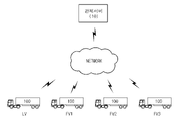
도 1은 본 발명과 관련된 군집 주행 서비스 시스템을 간략하게 도시한 구성도.
도 2는 본 발명의 일 실시예에 따른 군집 주행 제어 장치의 블록구성도.
도 3은 본 발명의 일 실시예에 따른 군집 주행 제어 방법을 도시한 흐름도.
도 4는 도 3에 도시된 차량 기능 점검 과정을 도시한 흐름도.1 is a configuration diagram schematically illustrating a group driving service system related to the present invention.
2 is a block diagram of a group driving control apparatus according to an embodiment of the present invention;
3 is a flowchart illustrating a group driving control method according to an embodiment of the present invention.
4 is a flowchart illustrating a vehicle function check process shown in FIG. 3 ;
이하, 본 발명의 일부 실시예들을 예시적인 도면을 통해 상세하게 설명한다. 각 도면의 구성요소들에 참조부호를 부가함에 있어서, 동일한 구성요소들에 대해서는 비록 다른 도면상에 표시되더라도 가능한 한 동일한 부호를 가지도록 하고 있음에 유의해야 한다. 또한, 본 발명의 실시예를 설명함에 있어, 관련된 공지 구성 또는 기능에 대한 구체적인 설명이 본 발명의 실시예에 대한 이해를 방해한다고 판단되는 경우에는 그 상세한 설명은 생략한다.Hereinafter, some embodiments of the present invention will be described in detail with reference to exemplary drawings. In adding reference numerals to the components of each drawing, it should be noted that the same components are given the same reference numerals as much as possible even though they are indicated on different drawings. In addition, in describing the embodiment of the present invention, if it is determined that a detailed description of a related known configuration or function interferes with the understanding of the embodiment of the present invention, the detailed description thereof will be omitted.
본 발명의 실시예의 구성 요소를 설명하는 데 있어서, 제 1, 제 2, A, B, (a), (b) 등의 용어를 사용할 수 있다. 이러한 용어는 그 구성 요소를 다른 구성 요소와 구별하기 위한 것일 뿐, 그 용어에 의해 해당 구성 요소의 본질이나 차례 또는 순서 등이 한정되지 않는다. 또한, 다르게 정의되지 않는 한, 기술적이거나 과학적인 용어를 포함해서 여기서 사용되는 모든 용어들은 본 발명이 속하는 기술 분야에서 통상의 지식을 가진 자에 의해 일반적으로 이해되는 것과 동일한 의미를 가진다. 일반적으로 사용되는 사전에 정의되어 있는 것과 같은 용어들은 관련 기술의 문맥상 가지는 의미와 일치하는 의미를 가진 것으로 해석되어야 하며, 본 출원에서 명백하게 정의하지 않는 한, 이상적이거나 과도하게 형식적인 의미로 해석되지 않는다.In describing the components of the embodiment of the present invention, terms such as first, second, A, B, (a), (b), etc. may be used. These terms are only for distinguishing the elements from other elements, and the essence, order, or order of the elements are not limited by the terms. In addition, unless otherwise defined, all terms used herein, including technical or scientific terms, have the same meaning as commonly understood by one of ordinary skill in the art to which the present invention belongs. Terms such as those defined in a commonly used dictionary should be interpreted as having a meaning consistent with the meaning in the context of the related art, and should not be interpreted in an ideal or excessively formal meaning unless explicitly defined in the present application. does not
본 발명은 군집 주행 서비스 이용 시 군집 주행(자율 주행)을 위한 차량 기능 점검없이 군집 형성이 진행되므로 차량 기능 동작 오류로 인한 사고를 예방할 수 없는 종래의 문제점을 개선하기 위하여 군집 형성 시 차량의 기능 동작(군집 초기 차량 상태)을 점검하여 최종 군집형성을 승인하므로 차량 기능 동작 오류로 인한 사고를 미연에 방지하기 위한 것이다.In order to improve the conventional problem that cannot prevent an accident due to an error in vehicle function operation since the formation of a platoon proceeds without a vehicle function check for platoon driving (autonomous driving) when using the platoon driving service, the functional operation of the vehicle during platoon formation This is to prevent accidents due to an error in vehicle function operation in advance by checking (initial group vehicle state) to approve final group formation.
일반적으로, 군집 주행은 1대의 선두 차량(Leading Vehicle, LV)과 1대 이상의 후행 차량(Following Vehicle, FV)이 군집(그룹)을 형성하여 주행하는 것을 말한다. 본 명세서에서 선두 차량(LV)은 군집 주행하는 차량 대열(군집 주행 대열)의 맨 앞 차량, 후행 차량(FV)은 선두 차량(LV)을 뒤따르는 차량, 선행 차량(Preceding Vehicle)은 차량(자차량)의 바로 앞 차량을 의미한다.In general, group driving refers to driving in which one Leading Vehicle (LV) and one or more Following Vehicles (FV) form a group (group). In the present specification, the leading vehicle LV is the front vehicle of the vehicle group running in a platoon (group driving group), the trailing vehicle FV is the vehicle following the lead vehicle LV, and the preceding vehicle is the vehicle (self). vehicle) means the vehicle in front of it.
도 1은 본 발명과 관련된 군집 주행 서비스 시스템을 간략하게 도시한 구성도이다.1 is a configuration diagram schematically illustrating a group driving service system related to the present invention.
도 1에 도시된 바와 같이, 군집 주행 서비스 시스템은 유무선 통신을 통해 연결되는 관제 서버(10) 및 군집 주행 제어 장치(100)를 포함한다. 유무선 통신 기술로는 LAN(Local Area Network), WAN(Wide Area Network, WAN) 및 이더넷(Ethernet) 등과 같은 유선 통신 기술 및/또는 WiFi(Wireless Fidelity), LTE(Long Term Evolution), 블루투스(Bluetooth) 및 V2X(Vehicle to Everything) 등과 같은 무선 통신 기술이 이용될 수 있다.As shown in FIG. 1 , the platoon driving service system includes a control server 10 and a platoon
군집 주행 제어 장치(100)는 차량에 탑재되는 차량 단말 장치(On-Board Unit, OBU)이다. 군집 주행 제어 장치(100)는 군집 주행 서비스를 이용하기 위하여 정해진 차량 등록 절차에 따라 관제 서버(10)에 차량 등록을 실시한다. 군집 주행 제어 장치(100)는 군집 주행 서비스를 이용하는 차량들(LF, FV1, FV2 및 FV3) 간의 통신을 지원한다. 즉, 군집 주행 제어 장치(100)는 관제 서버(10)에 등록된 차량들(LF, FV1, FV2 및 FV3) 간의 통신을 지원한다. 군집 주행 제어 장치(100)는 차량의 주행 정보(운행 정보)를 군집(그룹) 내 다른 차량들과 교환한다.The group
관제 서버(10)는 군집 주행 서비스 등록 차량들(LV, FV1, FV2 및 FV3)을 관리 및 통제한다. 관제 서버(10)는 군집 주행 서비스 등록 차량들(LV, FV1, FV2 및 FV3)로부터 차량 정보(출발지, 도착지 및 차량번호 등)를 수집한다. 관제 서버(10)는 수집한 차량 정보를 토대로 군집 주행을 수행할 둘 이상의 차량들(LV, FV1, FV2 및 FV3)로 군집(그룹)을 형성한다. 관제 서버(10)는 군집 형성 시 리더 차량(선두 차량, LV)을 선정할 수 있다.The control server 10 manages and controls the group driving service registration vehicles LV, FV1, FV2 and FV3. The control server 10 collects vehicle information (such as origin, destination, and vehicle number) from the vehicles registered for the group driving service (LV, FV1, FV2, and FV3). The control server 10 forms a group (group) with two or more vehicles (LV, FV1, FV2, and FV3) to perform group driving based on the collected vehicle information. The control server 10 may select a leader vehicle (lead vehicle, LV) when forming a group.
도면에 도시되지 않았지만, 관제 서버(10)와 군집 주행 제어 장치(100) 사이에 노변 장치(Road Side Unit, RSU)가 배치될 수 있다. 노변 장치는 도로 주변에 설치되어 차량과의 통신 및 다른 노변 장치들과의 통신을 지원한다. 노변 장치는 라우팅 테이블(주변차량의 위치 정보 및 타임스탬프 정보 포함) 및 지도 등을 저장하고 있는 메모리, 도로 주변에 설치되어 도로 주변 상황을 감지(센싱)하는 하나 이상의 센서 및 이 센서를 제어하는 제어장치(ECU)를 포함한다. 노변 장치는 하나 이상의 센서를 이용하여 획득한 도로 주변 상황 정보를 관제 서버(10) 및/또는 군집 주행 제어 장치(100)로 전송한다.Although not shown in the drawing, a roadside unit (RSU) may be disposed between the control server 10 and the group driving
도 2는 본 발명의 일 실시예에 따른 군집 주행 제어 장치의 블록구성도를 도시한다.2 is a block diagram illustrating a group driving control apparatus according to an embodiment of the present invention.
도 2에 도시된 바와 같이, 군집 주행 제어 장치(100)는 사용자 입력부(110), 검출부(120), 통신부(130), 저장부(140), 표시부(150), 차량 제어부(160) 및 제어부(170)를 포함한다.As shown in FIG. 2 , the platoon driving
사용자 입력부(110)는 사용자의 조작에 따른 입력 데이터를 발생시킨다. 사용자 입력부(110)는 사용자로부터 적재함 관련 정보를 입력받아 제어부(170)로 전송한다. 적재함 관련 정보(적재함 정보)는 적재함 타입, 적재함 사이즈(높이, 폭 및 길이 등), 및 수화물 종류 등을 포함한다. 사용자는 사용자 입력부(110)를 통해 출발지 및 목적지, 또는 목적지 정보를 입력할 수 있다.The
또한, 사용자 입력부(110)는 군집 요청 및 군집 수락 등의 신호(명령)를 발생시키는 별도의 스위치(운전자 스위치)를 포함할 수도 있다. 사용자는 해당 스위치를 조작하여 군집 요청을 하거나 군집 요청에 대한 군집 수락을 수행할 수 있다.Also, the
이러한 사용자 입력부(110)는 키패드(keypad), 돔 스위치(dome switch), 터치 패드(정압/정전), 조그 휠 및 조그 스위치 등의 입력 수단 중 적어도 하나 이상으로 구성될 수 있다.The
검출부(120)는 자차량의 주행(운행) 정보, 주변환경 정보 및 주변차량 정보 등을 검출한다. 자차량의 운행 정보는 자차량의 위치(차량 위치), 주행 속도, 및 조향각 등을 포함하고, 주변차량 정보는 자차량을 기준으로 주변차량의 상대속도, 상대거리, 및 차선 정보 등을 포함한다.The detection unit 120 detects driving (driving) information of the own vehicle, surrounding environment information, and surrounding vehicle information. The driving information of the own vehicle includes the location (vehicle location), driving speed, and steering angle of the own vehicle, and the surrounding vehicle information includes relative speed, relative distance, and lane information of the surrounding vehicle with respect to the own vehicle. .
검출부(120)는 GPS(Global Positioning System) 수신기, 속도 센서, 가속도 센서, 라이더(Light Detection And Ranging, LiDAR), 레이더(Radio Detecting And Ranging,radar), 초음파 센서 및 이미지 센서 등을 포함한다.The detection unit 120 includes a GPS (Global Positioning System) receiver, a speed sensor, an acceleration sensor, a lidar (Light Detection And Ranging, LiDAR), a radar (Radio Detecting And Ranging,radar), an ultrasonic sensor, an image sensor, and the like.
검출부(120)는 GPS 수신기를 통해 GPS 위성들로부터 송출되는 신호를 수신하고 이 수신한 신호를 이용하여 자차량의 위치를 산출(감지)한다. 검출부(120)는 둘 이상의 GPS 수신기를 구비할 수도 있다.The detection unit 120 receives signals transmitted from GPS satellites through the GPS receiver, and calculates (detects) the location of the own vehicle by using the received signals. The detection unit 120 may include two or more GPS receivers.
검출부(120)는 차량에 장착된 센서(속도 센서, 가속도 센서 등) 및/또는 차량에 탑재된 전자제어장치(ECU)를 통해 차량의 속도 및 가속도(감속도) 등을 검출할 수 있다. 또한, 검출부(120)는 라이더 및 레이더와 같은 거리 센서를 이용하여 자차량과 주변차량 사이의 차간 거리를 검출한다. 예컨대, 검출부(120)는 자차량의 선행차량과의 차간 거리 및/또는 자차량의 후행차량과의 차간 거리를 건출한다.The detector 120 may detect the speed and acceleration (deceleration) of the vehicle through a sensor (a speed sensor, an acceleration sensor, etc.) mounted on the vehicle and/or an electronic control unit (ECU) mounted on the vehicle. In addition, the detection unit 120 detects an inter-vehicle distance between the own vehicle and a neighboring vehicle by using a distance sensor such as a lidar and a radar. For example, the detection unit 120 calculates the inter-vehicle distance of the host vehicle to the preceding vehicle and/or the inter-vehicle distance of the host vehicle to the following vehicle.
검출부(120)는 하나 이상의 이미지 센서(카메라)를 통해 차량 주변의 영상(예: 전방 영상, 후방 영상 및/또는 측방 영상)을 획득한다. 이미지 센서를 통해 획득한 영상을 이미지 처리하여 분석하므로 차량의 주변환경 정보 및 차선 정보 등을 검출한다.The detector 120 acquires an image (eg, a front image, a rear image, and/or a side image) around the vehicle through one or more image sensors (cameras). Since the image acquired through the image sensor is image-processed and analyzed, the vehicle's surrounding environment information and lane information are detected.
여기서, 이미지 센서는 CCD(charge coupled device) 이미지 센서(image sensor), CMOS(complementary metal oxide semi-conductor) 이미지 센서, CPD(charge priming device) 이미지 센서 및 CID(charge injection device) 이미지 센서 등으로 구현될 수 있다.Here, the image sensor is implemented as a charge coupled device (CCD) image sensor, a complementary metal oxide semi-conductor (CMOS) image sensor, a charge priming device (CPD) image sensor, and a charge injection device (CID) image sensor. can be
통신부(130)는 차량에 탑재된 전자제어장치(ECU: Electric Control Unit), 타 차량(예: 선행 차량, 선두 차량, 후미 차량 및/또는 후행 차량) 내 장착된 군집 주행 제어 장치, 이동단말(예: 스마트폰, 컴퓨터, 노트북, 및 태블릿 등) 및 관제 서버(10) 등의 기기들과 통신을 수행한다.The
통신부(130)는 관제 서버(10)로부터 제공되는 지도, 도로 정보, 교통상황 정보 및 군집 주행 관련 정보 등을 수신할 수 있다.The
통신부(130)는 차량 통신(In-Vehicle Network, IVN), V2X(Vehicle to Everything) 통신 및/또는 무선 통신 등을 이용할 수 있다. 차량 통신으로는 CAN(Controller Area Network) 통신, MOST(Media Oriented Systems Transport) 통신, LIN(Local Interconnect Network) 통신 또는 X-by-Wire(Flexray) 통신 등이 사용될 수 있다. V2X 통신은 V2V(Vehicle to Vehicle) 통신 및/또는 V2I(Vehicle to Infrastructure) 통신 등으로 구현될 수 있다. 무선 통신은 무선 인터넷(예: wi-fi), 근거리 통신(예: 블루투스, 지그비 및 적외선 통신) 및 이동통신 등의 통신 기술 중 적어도 하나 이상으로 구현될 수 있다.The
저장부(140)는 제어부(170)가 정해진 동작을 수행하도록 프로그래밍된 소프트웨어를 저장할 수 있다. 또한, 저장부(140)는 지도, 도로 정보, 차량 정보, 및 적재함 정보 등을 저장할 수 있으며, 제어부(170)의 입/출력 데이터를 임시 저장할 수도 있다.The storage unit 140 may store software programmed so that the control unit 170 performs a predetermined operation. In addition, the storage unit 140 may store maps, road information, vehicle information, and loading box information, and may temporarily store input/output data of the control unit 170 .
저장부(140)는 플래시 메모리(flash memory), 하드디스크(hard disk), SD 카드(Secure Digital Card), 램(Random Access Memory, RAM), 롬(Read Only Memory, ROM), EPROM(Erasable Programming ROM) 및 웹 스토리지(web storage) 등의 저장매체 중 적어도 하나 이상의 저장매체로 구현될 수 있다.The storage unit 140 includes a flash memory, a hard disk, a secure digital card (SD), a random access memory (RAM), a read only memory (ROM), and an erasable programming (EPROM). It may be implemented as at least one storage medium among storage media such as ROM) and web storage.
표시부(150)는 제어부(170)의 동작에 따른 상태 및 결과를 출력한다. 표시부(150)는 주행 속도, 연료 잔량, 길 안내 정보, 지도 및 군집 주행 관련 정보 등을 표시한다.The display unit 150 outputs a state and result according to the operation of the control unit 170 . The display unit 150 displays driving speed, fuel remaining, road guidance information, map and group driving-related information, and the like.
표시부(150)는 액정 디스플레이(liquid crystal display, LCD), 박막 트랜지스터 액정 디스플레이(thin film transistor-liquid crystal display, TFT LCD), 유기 발광 다이오드(organic light-emitting diode, OLED) 디스플레이, 플렉시블 디스플레이(flexible display), 3차원 디스플레이(3D display), 투명디스플레이, 헤드업 디스플레이(head-up display, HUD) 및 클러스터(cluster) 중 적어도 하나 이상으로 구현될 수 있다.The display unit 150 is a liquid crystal display (LCD), a thin film transistor-liquid crystal display (TFT LCD), an organic light-emitting diode (OLED) display, a flexible display (flexible) display), a three-dimensional display (3D display), a transparent display, a head-up display (HUD), and may be implemented as at least one of a cluster (cluster).
표시부(150)는 오디오 데이터를 출력할 수 있는 스피커(speaker)와 같은 음향 출력 모듈을 포함할 수도 있다. 예컨대, 표시부(150)는 길 안내 정보를 표시하며 스피커를 통해 음성 신호(오디오 신호)도 출력할 수 있다.The display unit 150 may include a sound output module such as a speaker capable of outputting audio data. For example, the display unit 150 may display road guidance information and may also output a voice signal (audio signal) through a speaker.
또한, 표시부(150)는 터치 센서와 결합된 터치 스크린으로 구현되어 출력장치 뿐만 아니라 입력장치로도 사용될 수 있다. 터치 센서는 터치 필름 또는 터치 패드 등이 사용될 수 있다.In addition, the display unit 150 is implemented as a touch screen combined with a touch sensor, so that it can be used as an input device as well as an output device. As the touch sensor, a touch film or a touch pad may be used.
차량 제어부(160)는 램프 구동부(161), 엔진 제어부(162), 제동 제어부(163) 및 조향 제어부(164)를 포함한다.The
램프 구동부(161)는 방향 전환(좌회전 또는 우회전) 신호 램프(방향지시등), 정지 신호 램프(정지등), 및 군집 주행 모드 신호 램프 등을 구동한다.The
엔진 제어부(162)는 차량의 엔진을 제어하는 액추에이터로, 차량의 가속을 제어한다. 엔진 제어부(162)는 EMS(Engine Management System)으로 구현된다. 엔진 제어부(162)는 가속 페달 위치 센서로부터 출력되는 가속 페달 위치 정보에 따라 엔진의 구동토크를 제어한다. 한편, 엔진 제어부(162)는 자율주행(군집 주행) 시 제어부(170)로부터 요청받은 차량의 주행속도를 추종하기 위해 엔진 출력을 제어한다.The
제동 제어부(163)는 차량의 감속을 제어하는 액추에이터로, 전자식 주행 안정화 컨트롤(Electronic Stability Control, ESC)로 구현될 수 있다. 제동 제어부(163)는 자율주행 시 제어부(170)로부터 요청받은 목표속도를 추종하기 위해 제동압력을 제어한다. 따라서, 제동 제어부(163)는 차량의 속도를 제어하여 차량을 감속시킬 수 있다.The
조향 제어부(164)는 차량의 조향을 제어하는 것으로, 차량의 횡방향 이동을 제어한다. 조향 제어부(164)는 MDPS(Motor Driven Power steering System)으로 구현될 수 있다.The
제어부(170)는 군집 주행 제어 장치(100)의 전반적인 동작을 제어한다. 제어부(210)는 ASIC(Application Specific Integrated Circuit), DSP(Digital Signal Processor), PLD(Programmable Logic Devices), FPGAs(Field Programmable Gate Arrays), CPU(Central Processing unit), 마이크로 컨트롤러(microcontrollers) 및 마이크로 프로세서(microprocessors) 중 적어도 하나 이상을 포함할 수 있다.The controller 170 controls the overall operation of the group driving
제어부(170)는 통신부(130)를 통해 군집 요청 메시지를 관제 서버(10)에 전송한다. 즉, 제어부(170)는 관제 서버(10)에 군집 주행 서비스를 요청한다. 관제 서버(10)는 군집 주행 서비스를 요청한 차량들로부터 차량 정보를 수집하고 수집한 차량 정보를 토대로 둘 이상의 차량들로 군집을 형성한다. 이때, 관제 서버(10)는 군집 내 리더 차량을 선출할 수도 있다. 관제 서버(10)는 군집 형성이 완료되면 군집 승인 정보 및 형성된 군집에 대한 정보(군집 정보)를 군집 내 차량들로 전송한다. 본 실시예에서는 관제 서버(10)가 군집 형성을 실시하는 것을 개시하고 있으나, 이에 한정되지 않고 선두 차량(리더 차량, LV)이 주변 차량들의 군집 요청에 따라 군집을 형성할 수도 있다.The control unit 170 transmits the group request message to the control server 10 through the
제어부(170)는 군집 정보를 수신하면 즉, 군집 형성이 완료되면 군집초기화를 개시한다. 여기서, 군집초기화는 군집 형성 후 군집 내 차량들(선두 차량 및 후행 차량)의 기능 동작 동기화를 점검하는 과정을 의미한다.When the control unit 170 receives the cluster information, that is, when the cluster formation is completed, the cluster initialization starts. Here, the cluster initialization refers to a process of checking the function and operation synchronization of the vehicles (the leading vehicle and the following vehicle) in the cluster after the formation of the cluster.
제어부(170)는 자차량이 선두 차량(LV)인 경우 통신부(130)를 통해 후행 차량(FV)들로 점검 명령을 전송한다. 한편, 제어부(170)는 자차량이 후행 차량(FV)인 경우 선두 차량(FV)의 점검 요청에 따른 기능 점검 결과(기능 동작 시점 및 선행 차량과의 차간 거리 등)를 선두 차량(LV)으로 전송한다.When the host vehicle is the lead vehicle LV, the control unit 170 transmits a check command to the following vehicles FV through the
선두 차량(LV)의 제어부(170)는 적어도 하나 이상의 후행 차량(FV)들의 램프류 작동 동기화, 감속 동작, 가속 동작, 조향 제어 동작 및 긴급상황모드 동작 등을 점검한다. 제어부(170)는 후행 차량(FV)들의 기능 동작을 점검하여 이상이 없으면 군집 형성을 최종적으로 승인하고 군집주행을 실시한다.The control unit 170 of the leading vehicle LV checks ramp operation synchronization, deceleration operation, acceleration operation, steering control operation, emergency mode operation, and the like of at least one or more following vehicles FV. The controller 170 checks the functional operation of the following vehicles FV, and if there is no abnormality, finally approves the formation of the platoon and conducts platoon driving.
이하에서는 군집 초기화 과정을 좀더 상세하게 설명한다.Hereinafter, the cluster initialization process will be described in more detail.
선두 차량(LV)의 제어부(170)는 동일 시점에 방향지시등 및 정지등 등의 램프류 점검 명령을 후행 차량(FV)들로 전송한다. 후속 차량(FV)의 제어부(170)는 선두 차량(LV)로부터 램프류 점검 명령을 수신하면, 램프 구동부(161)를 제어하여 방향지시등 및 정지등 등을 작동시키며 작동 시점 및/또는 작동 정상여부 등을 포함하는 점검 결과를 선두 차량(LV)에 전송한다. 선두 차량(LV)의 제어부(170)는 통신부(130)를 통해 후행 차량(FV)의 점검 결과를 수신하면 점검 결과를 토대로 후행 차량(FV)들의 램프류 작동 이상유무를 결정한다. 예를 들어, 선두 차량(LV)의 제어부(170)는 후행 차량(FV)들의 램프 작동(동작) 시점이 선두 차량(LV)의 램프 작동 시점으로부터 정해진 시간(예: 2초) 이내이면 이상 없음으로 판정한다.The control unit 170 of the leading vehicle LV transmits a lamp inspection command such as a turn signal lamp and a stop lamp to the following vehicles FV at the same time. When the control unit 170 of the subsequent vehicle FV receives a lamp inspection command from the lead vehicle LV, it controls the
선두 차량(LV)의 제어부(170)는 군집 전차량의 램프류 작동 동기화 점검 결과가 정상이면 제동 제어부(163)를 제어하여 정해진 감속도(예: -3m/s2)로 자차량의 주행속도를 급격히 감속시킨다. 선두 차량(LV)의 제어부(170)는 후행 차량(FV)들로부터 제동 동작 시점(제동 시점) 및 차간 거리 등을 포함하는 주행 정보(점검 결과)를 수신하면 제동 시점 및 차간 거리가 허용 범위 내인지를 확인하여 이상유무를 판정한다. 예를 들어, 선두 차량(LV)이 급격하게 10kph 감속하면, 후행 차량(FV)의 제어부(170)는 검출부(120)를 통해 선행 차량(선두 차량 포함)의 감속을 감지하고 제동 제어부(163)를 통해 자차량에 제동을 걸며 제동 시점과 차간 거리를 검출(감지)한다. 후행 차량(FV)의 제어부(170)는 검출한 제동 시점과 선행 차량과의 차간 거리를 선두 차량(LV)으로 전송한다. 선두 차량(LV)의 제어부(170)는 후행 차량(FV)의 제동 시점이 선두 차량(LV)의 제동 시점으로부터 50ms 이내 이며, 선행 차량과의 차간 거리가 5m 초과 이면 후행 차량(FV)의 제동 기능을 이상 없음으로 판정한다.The control unit 170 of the leading vehicle (LV) controls the
선두 차량(LV)의 제어부(170)는 군집 전차량의 감속 기능 동기화가 정상으로 판정되면 군집 전차량의 가속 기능을 점검하기 위해 엔진 제어부(162)를 제어하여 자차량의 주행속도를 정해진 가속도(예: 3m/s2)로 급격히 가속시킨다. 후행 차량(FV)의 제어부(170)는 검출부(120)를 통해 선행 차량(선두 차량 포함)의 급가속을 감지하면 엔진 제어부(162)를 제어하여 자차량을 가속시키며 가속 시점 및 선행 차량과의 차간 거리를 검출한다. 후행 차량(FV)의 제어부(170)는 검출된 가속 시점 및 차간 거리를 선두 차량(LV)으로 전송한다. 선두 차량(LV)의 제어부(170)는 검출된 가속 시점이 선두 차량(LV)의 사고 시점으로부터 200ms 이내 이며 검출된 차간 거리가 5m 초과이면 가속 동작 동기화 정상(이상없음)으로 판정한다.When it is determined that the synchronization of the deceleration function of the platoon vehicle is normal, the control unit 170 of the lead vehicle LV controls the
선두 차량(LV)의 제어부(170)는 군집 전차량의 가속 기능 동기화가 정상으로 판정되면 조향 제어부(164)를 제어하여 정해진 조향각으로 자차량의 조향을 제어한다. 즉, 제어부(170)는 자차량(LV)이 주행 차로 내에서 S자로 조향하며 주행하게 한다. 후행 차량(FV)의 제어부(170)는 검출부(120)를 통해 선행 차량(선두 차량 포함)의 조향(진행 방향 변경)을 검출하고 그에 따라 조향 제어부(164)를 제어하여 자차량의 조향을 제어한다. 후행 차량(FV)의 제어부(170)는 조향 제어에 따른 조향각 및 조향 시점 등의 정보를 선두 차량(LV)에 전송한다. 선두 차량(LV)의 제어부(170)는 후행 차량(FV)으로부터 전송되는 조향각 및 조향 시점 등을 토대로 후행 차량의 조향 응답성을 확인한다. 다시 말해서, 선두 차량(LV)의 제어부(170)는 후행 차량(FV)들의 S자 주행 여부를 확인하여 군집 전차량의 조향 기능 동기화 이상여부를 결정한다.When it is determined that the synchronization of the acceleration function of the vehicle in the platoon is normal, the control unit 170 of the lead vehicle LV controls the
선두 차량(LV)의 제어부(170)는 군집 전차량의 조향 기능 동기화가 이상 없음으로 판정되면 긴급상황모드 동작의 동기화를 점검한다. 선두 차량(LV)의 제어부(170)는 긴급상황모드 동작의 동기화를 점검하기 위해 후행 차량(FV)들로 군집해제(군집강제해제) 신호를 전송한다. 후행 차량(FV)의 제어부(170)는 통신부(130)를 통해 군집해제 신호를 수신하면 즉시 자동해제 기능을 동작시킨다. 후행 차량(FV)의 제어부(170)는 자동해제 기능을 동작시킨 후 군집 해제가 완료되면 이를 알리는 메시지를 선두 차량(LV)으로 전송한다. 선두 차량(LV)의 제어부(170)는 군집해제 신호를 전송한 후 정해진 시간 내 후행 차량(FV)들로부터 군집해제 완료 메시지를 수신하면 자동을 군집을 재형성한다. 즉, 선두 차량(LV)은 기형성된 군집에 대한 최종 승인을 수행한다. The control unit 170 of the lead vehicle LV checks the synchronization of the emergency mode operation when it is determined that the synchronization of the steering function of the platoon vehicle is not abnormal. The control unit 170 of the leading vehicle LV transmits a group disarmament (forcibly disarmed) signal to the following vehicles FV in order to check the synchronization of the emergency mode operation. When the control unit 170 of the following vehicle FV receives the group disengagement signal through the
이상에서는 후행 차량(FV)이 선두 차량(LV)의 점검 명령에 따라 기능 동작 시점 및 선행 차량과의 차간 거리 등을 검출하여 선두 차량(LV)에 전송하는 것을 개시하고 있으나, 이에 한정되지 않고 선두 차량(LV)이 점검 명령과 함께 기능 동작 시점 정보를 후행 차량(FV)에 전송하면 후행 차량(FV)이 점검 명령에 따라 특정 기능을 동작시키며 자차량(FV)의 기능 동작 동기화 이상여부를 판정하여 해당 판정결과를 선두 차량(LV)에 제공하도록 구현할 수도 있다. 예를 들어, 후행 차량(FV)은 선두 차량(LV)의 점검 명령에 따라 특정 기능을 동작시키며 해당 기능의 동작 시점 및 선행 차량과의 차간 거리 등을 검출한 후 선두 차량(LV)의 기능 동작 시점 정보 및 검출한 자차량(FV)의 기능 동작 시점과 선행 차량과의 차간 거리를 토대로 자차량(FV)의 기능 동작 동기화 이상여부를 판정하여 해당 판정결과를 선두 차량(LV)에 제공한다.In the above description, the following vehicle FV detects the time of function operation and the inter-vehicle distance with the preceding vehicle according to the inspection command of the leading vehicle LV and transmits the detection to the leading vehicle LV, but the present invention is not limited thereto. When the vehicle LV transmits function operation time information to the following vehicle FV along with the inspection command, the following vehicle FV operates a specific function according to the inspection command and determines whether the function operation synchronization of the own vehicle FV is abnormal. Thus, it may be implemented to provide the corresponding determination result to the lead vehicle LV. For example, the following vehicle FV operates a specific function according to the inspection command of the leading vehicle LV, and after detecting the operation time of the corresponding function and the inter-vehicle distance from the preceding vehicle, the function operation of the leading vehicle LV Based on the timing information and the detected functional operation time of the host vehicle FV and the inter-vehicle distance from the preceding vehicle, it is determined whether the functional operation synchronization of the host vehicle FV is abnormal, and the determination result is provided to the lead vehicle LV.
도 3은 본 발명의 일 실시예에 따른 군집 주행 제어 방법을 도시한 흐름도이고, 도 4는 도 3에 도시된 차량 기능의 동작 동기화 점검 과정을 도시한 흐름도이다.3 is a flowchart illustrating a group driving control method according to an embodiment of the present invention, and FIG. 4 is a flowchart illustrating an operation synchronization check process of the vehicle function illustrated in FIG. 3 .
도 3에 도시된 바와 같이, 관제 서버(10)는 군집 주행 서비스를 요청한 차량들로부터 차량 정보를 수집하여 해당 차량 정보를 토대로 군집을 형성한다(S110). 관제 서버(10)는 군집 형성이 완료되면 군집 승인 정보 및 형성된 군집에 대한 정보를 군집 차량들(선두 차량 및 후행 차량)로 전송한다. 예컨대, 관제 서버(10)는 출발지 및 도착지가 동일한 적어도 둘 이상의 차량들을 하나의 군집(그룹)으로 형성한다. 이때, 관제 서버(10)는 형성된 군집 내 선두 차량(리더 차량, LV)을 선정할 수도 있다.As shown in FIG. 3 , the control server 10 collects vehicle information from vehicles that have requested a group driving service and forms a group based on the corresponding vehicle information ( S110 ). When the formation of the group is completed, the control server 10 transmits the group approval information and information on the formed group to the group vehicles (the leading vehicle and the following vehicle). For example, the control server 10 forms a group (group) of at least two or more vehicles having the same origin and destination. In this case, the control server 10 may select a leading vehicle (leader vehicle, LV) within the formed group.
선두 차량(LV)의 제어부(170)는 군집 형성이 완료되면 군집 초기화를 개시한다(S120). 즉, 선두 차량(LV)의 제어부(170)는 군집 초기화 모드로 진입한다. 여기서, 군집 초기화는 형성된 군집 내 전차량(군집 전차량)에 대해 기능 동작 동기화를 의미한다.When the formation of the group is completed, the control unit 170 of the lead vehicle LV starts group initialization ( S120 ). That is, the control unit 170 of the lead vehicle LV enters the group initialization mode. Here, the group initialization refers to the synchronization of functions and operations with respect to all vehicles (platoon vehicles) within the formed group.
선두 차량(LV)의 제어부(170)는 군집 전차량에 대해 차량 기능의 동작 동기화를 점검하여 이상여부를 확인한다(S130). 즉, 선두 차량(LV)의 제어부(170)는 군집 전차량에 대해 군집 초기화를 진행한다. The control unit 170 of the lead vehicle LV checks the operation synchronization of vehicle functions for all vehicles in the platoon to determine whether there is an abnormality (S130). That is, the control unit 170 of the lead vehicle LV performs group initialization for all vehicles in the group.
이하에서는 도 4를 참조하여 선두 차량(LV)이 군집 초기화(차량 기능의 동작 동기화 점검)를 실시하는 과정을 보다 상세하게 설명한다.Hereinafter, a process in which the lead vehicle LV performs group initialization (operation synchronization check of vehicle functions) will be described in more detail with reference to FIG. 4 .
도 4를 참조하면, 선두 차량(LV)의 제어부(170)는 군집 전차량의 램프류 점검을 실시한다(S1301). 이때, 선두 차량의 제어부(170)는 방향지시등 및 정지등 등의 램프류 작동을 지시하는 점검 명령을 후행 차량(FV)들에 전송한다. 후행 차량(FV)의 제어부(170)는 통신부(130)를 통해 점검 명령을 수신하면 램프 구동부(161)를 제어하여 방향지시등 및 정지등 등의 램프를 작동시키고 램프의 작동 시점, 동작 완료 여부 및/또는 정상 작동 여부를 체크한다. 제어부(170)는 램프의 작동 시점 및/또는 정상 작동 여부를 체크하여 해당 체크 결과를 선두 차량(LV)에 전송한다.Referring to FIG. 4 , the control unit 170 of the lead vehicle LV checks the lamps of the platoon vehicle ( S1301 ). In this case, the control unit 170 of the leading vehicle transmits an inspection command for instructing operation of lamps such as a turn indicator and a stop light to the following vehicles FV. When the control unit 170 of the following vehicle (FV) receives the inspection command through the
선두 차량(LV)의 제어부(170)는 후행 차량(FV)들로부터 제공받은 램프류 점검 결과를 토대로 후행 차량(FV)들의 램프류 이상 여부를 결정한다(S1302). 예컨대, 선두 차량(LV)의 제어부(170)는 램프류 점검 명령을 전송한 후 정해진 시간 내 후행 차량(FV)들로부터 점검 결과(동작 완료 알림)가 수신되는지를 확인한다.The controller 170 of the leading vehicle LV determines whether the lamps of the following vehicles FV are abnormal based on the lamp inspection results provided from the following vehicles FV ( S1302 ). For example, the control unit 170 of the leading vehicle LV checks whether an inspection result (operation completion notification) is received from the following vehicles FV within a predetermined time after transmitting the lamp inspection command.
선두 차량(LV)의 제어부(170)는 램프류 점검 결과 이상이 없으면 군집 전차량의 감속 기능을 점검한다(S1303). 선두 차량(LV)의 제어부(170)는 제동 제어부(163)를 제어하여 정해진 감속도로 자차량(LV)의 주행 속도를 급격히 감속시킨다. 이후, 선두 차량(LV)의 제어부(170)는 선두 차량(LV)의 감속에 따른 후행 차량(FV)들의 감속 시점(감속 동작 시점) 및 선행 차량과의 차간 거리에 근거하여 후속 차량(FV)들의 감속 기능 이상여부를 판정한다(S1304).If there is no abnormality as a result of the lamp inspection, the control unit 170 of the lead vehicle LV checks the deceleration function of the platoon vehicle (S1303). The control unit 170 of the lead vehicle LV controls the
예를 들어, 선두 차량(LV)이 -3m/s2의 감속도로 차량 속도(주행 속도)를 감속하면, 후행 차량(FV)들은 제동 제어부(163)을 제어하여 선두 차량(LV)의 감속에 따라 감속을 실시한다. 이때, 후행 차량(FV)들은 검출부(120)를 통해 감속 시점 및 선행 차량과의 차간 거리를 검출하여 선두 차량(LV)에 제공한다. 선두 차량(LV)은 후행 차량(FV)들로부터 수신한 감속 시점 및 차간 거리가 허용 범위 내인지를 확인하여 감속 시점 및 차간 거리가 허용 범위 내이면 이상 없음으로 판정한다. 예컨대, 선두 차량(LV)은 후행 차량(FV)의 감속 시점이 선두 차량(LV)의 제동 시점으로부터 50ms 이내 이며, 선행 차량과의 차간 거리가 5m 초과 이면 이상 없음으로 판정한다.For example, when the leading vehicle LV decelerates the vehicle speed (traveling speed) at a deceleration of -3 m/s 2 , the following vehicles FV control the
선두 차량(LV)의 제어부(170)는 후행 차량(FV)들의 감속 동작 동기화에 이상이 없으면, 군집 전차량의 가속 기능을 점검한다(S1305). 이때, 선두 차량(LV)의 제어부(170)는 정해진 가속도로 선두 차량(LV)의 주행 속도를 가속시킨다. 선두 차량(LV)의 제어부(170)는 선두 차량(LV)의 가속에 따른 후행 차량(FV)들의 가속 시점 및 선행 차량 과의 차간 거리를 토대로 후행 차량(FV)들의 가속 기능 이상여부를 판정한다(S1306).If there is no abnormality in synchronization of deceleration operations of the following vehicles FV, the control unit 170 of the leading vehicle LV checks the acceleration function of the platoon vehicle (S1305). At this time, the control unit 170 of the lead vehicle LV accelerates the traveling speed of the lead vehicle LV with a predetermined acceleration. The control unit 170 of the leading vehicle LV determines whether the acceleration function of the following vehicles FV is abnormal based on the acceleration time of the following vehicles FV according to the acceleration of the leading vehicle LV and the inter-vehicle distance from the preceding vehicle. (S1306).
예컨대, 선두 차량(LV)이 3m/s2의 가속도로 차량 속도를 가속하면, 후행 차량(FV)들은 엔진 제어부(162)를 제어하여 선두 차량(LV)의 가속에 따라 가속을 수행한다. 이때, 후행 차량(FV)들은 검출부(120)를 통해 자차량(FV)의 가속 시점 및 선행 차량과의 차간 거리를 검출하고 검출한 가속 시점 및 차간 거리를 선두 차량(LV)에 전송한다. 선두 차량(LV)은 후행 차량(FV)들로부터 검출한 가속 시점 및 차간 거리를 수신하여 검출한 가속 시점이 선두 차량(LV)의 가속 시점으로부터 200ms 이내이며 검출한 차간 거리가 5m 초과 이면 가속 동작 동기화 이상 없음으로 결정한다.For example, when the leading vehicle LV accelerates the vehicle speed with an acceleration of 3 m/s 2 , the following vehicles FV control the
선두 차량(LV)의 제어부(170)는 후행 차량(FV)들의 가속 기능에 이상이 없으면, 군집 전차량의 조향 기능을 점검한다(S1307). 선두 차량(LV)의 제어부(170)는 조향 제어부(164)를 제어하여 주행 차로 내에서 S자로 천천히 조향하면서 주행한다. 이때, 선두 차량(LV)의 제어부(170)는 후행 차량(FV)들의 조향 응답성을 확인(체크)한다. 즉, 제어부(170)는 후행 차량(FV)들의 S자 주행 여부를 확인하여 군집 전차량의 조향 기능 이상여부를 결정한다(S1308). 즉, 선두 차량(LV)이 정해진 조향각에 따라 조향을 제어하면, 후행 차량(FV)들은 선두 차량(LV)의 조향에 따라 조향 제어부(164)를 제어하여 차량의 조향을 제어하며 검출부(120)를 통해 조향 시점 및 조향각 등을 검출한다. 선두 차량(LV)은 후행 차량(FV)들로부터 검출된 조향 시점 및 조향각을 제공받아 선두 차량(LV)의 조향 시점 및 조향각을 비교하여 그 차이가 허용 범위 내인지를 확인한다. If there is no abnormality in the acceleration function of the following vehicles FV, the control unit 170 of the leading vehicle LV checks the steering function of the platoon vehicle (S1307). The control unit 170 of the lead vehicle LV controls the
선두 차량(LV)의 제어부(170)는 군집 전차량의 조향 기능 점검 결과 이상이 없으면 긴급상황 시 군집 전차량의 자동 해제 기능을 점검한다(S1309). 선두 차량(LV)의 제어부(170)는 군집해제 신호를 후행 차량(FV)들에 전송하고, 후행 차량(FV)들의 제어부(170)는 선두 차량(LV)으로부터 군집해제 신호를 수신하면 즉시 자동해제 기능을 동작시킨다. 즉, 후행 차량(FV)의 제어부(170)는 통신부(130)를 통해 군집 해제 명령을 수신하면 즉시 자차량(FV)의 주행모드로 설정된 군집주행모드를 해제하고 자율주행모드로 전환한다. 후행 차량(FV)들의 제어부(170)는 자동해제 기능 동작으로 군집해제가 완료되면 군집해제 완료를 알리는 메시지를 선두 차량(LV)으로 전송한다. 선두 차량(LV)의 제어부(170)는 정해진 시간(예: 2초) 내 후행 차량(FV)들로부터 군집해제 완료 메시지를 수신하면 이상 없음으로 결정한다.If there is no abnormality as a result of the inspection of the steering function of the all platoon vehicles, the control unit 170 of the leading vehicle LV checks the automatic release function of the all platoon vehicles in an emergency situation (S1309). The control unit 170 of the leading vehicle LV transmits a degrouping signal to the following vehicles FV, and the control unit 170 of the following vehicles FV automatically automatically upon receiving a disarmament signal from the leading vehicle LV Activate the release function. That is, upon receiving the platoon release command through the
선두 차량(LV)의 제어부(170)는 점검 결과 이상이 없으면, 군집초기화를 완료하고 군집주행을 실시한다(S140). 이때, 선두 차량(LV)의 제어부(170)는 후행 차량(FV)들에 군집초기화 완료를 알리는 메시지를 전송하며, 해제한 군집을 재형성한다. 즉, 선두 차량(LV)은 최종 군집 승인을 수행하는 것이다. 선두 차량(LV) 및 후속 차량(FV)의 제어부(170)는 군집초기화 완료를 나타내는 알림을 표시부(150)로 출력한다.If there is no abnormality as a result of the inspection, the control unit 170 of the lead vehicle LV completes the platoon initialization and conducts platoon driving (S140). In this case, the control unit 170 of the leading vehicle LV transmits a message informing the following vehicles FV that the group initialization is complete, and re-forms the released group. That is, the lead vehicle LV performs final group approval. The control unit 170 of the lead vehicle LV and the following vehicle FV outputs a notification indicating completion of group initialization to the display unit 150 .
한편, 선두 차량(LV)의 제어부(170)는 차량 기능 점검 중 어느 하나의 기능에 이상이 있으면 군집해제 명령을 후행 차량(FV)들로 전송하여 자동 군집해제를 수행한다(S150). 그리고, 선두 차량(LV)의 제어부(170)는 군집 해제 사유를 후행 차량(FV)들에게 전송하여 공유한다. 선두 차량(LV) 및 후행 차량(FV)들의 제어부(170)는 군집 해제 사유를 표시부(150)에 출력하여 표시한다. 예를 들어, 선두 차량(LV) 및 후행 차량(FV)들의 제어부(170)는 차량 기능 점검 결과 이상이 있어 군집 초기화에 실패하면 해당 군집 초기화 실패 사유인 "감속 기능 Fail로 군집 해제 됩니다. (FV1 차량, 차량번호 1456)"를 표시부(150)에 표시한다. On the other hand, if any one of the functions of the vehicle function check is abnormal, the control unit 170 of the leading vehicle LV transmits a disarmament command to the following vehicles FV to automatically disarm (S150). In addition, the control unit 170 of the leading vehicle LV transmits and shares the reason for group cancellation to the following vehicles FV. The control unit 170 of the leading vehicle LV and the following vehicles FV outputs and displays the reason for group cancellation on the display unit 150 . For example, if the control unit 170 of the leading vehicle (LV) and the following vehicle (FV) fails to initialize the group due to an abnormality as a result of the vehicle function check, the group is canceled with “deceleration function Fail,” which is the reason for the failure of the group initialization. (FV1 Vehicle, vehicle number 1456)" is displayed on the display unit 150 .
이상의 설명은 본 발명의 기술 사상을 예시적으로 설명한 것에 불과한 것으로서, 본 발명이 속하는 기술 분야에서 통상의 지식을 가진 자라면 본 발명의 본질적인 특성에서 벗어나지 않는 범위에서 다양한 수정 및 변형이 가능할 것이다. 따라서, 본 발명에 개시된 실시예들은 본 발명의 기술 사상을 한정하기 위한 것이 아니라 설명하기 위한 것이고, 이러한 실시예에 의하여 본 발명의 기술 사상의 범위가 한정되는 것은 아니다. 본 발명의 보호 범위는 아래의 청구범위에 의하여 해석되어야 하며, 그와 동등한 범위 내에 있는 모든 기술 사상은 본 발명의 권리범위에 포함되는 것으로 해석되어야 할 것이다.The above description is merely illustrative of the technical spirit of the present invention, and various modifications and variations will be possible without departing from the essential characteristics of the present invention by those skilled in the art to which the present invention pertains. Accordingly, the embodiments disclosed in the present invention are not intended to limit the technical spirit of the present invention, but to explain, and the scope of the technical spirit of the present invention is not limited by these embodiments. The protection scope of the present invention should be construed by the following claims, and all technical ideas within the scope equivalent thereto should be construed as being included in the scope of the present invention.
10: 관제 서버
100: 군집 주행 제어 장치
110: 사용자 입력부
120: 검출부
130: 통신부
140: 저장부
150: 표시부
160: 차량 제어부
161: 램프 구동부
162: 엔진 제어부
163: 제동 제어부
164: 조향 제어부
170: 제어부10: control server
100: platoon driving control device
110: user input unit
120: detection unit
130: communication department
140: storage
150: display
160: vehicle control unit
161: lamp driving unit
162: engine control unit
163: brake control
164: steering control
170: control unit
Claims (20)
군집 형성 후 상기 통신부를 통해 상기 후행 차량들에 차량 기능 점검을 요청하여 상기 요청에 대응하는 상기 후행 차량들의 특정 기능의 동작 여부를 확인하고 확인결과에 따라 상기 군집 형성의 유지여부를 결정하여 군집 주행을 제어하는 제어부를 포함하고,
상기 제어부는 상기 후행 차량들 각각의 특정 기능 작동 시점을 점검하여 상기 후행 차량들의 특정 기능 작동 시점을 동기화하는 것을 특징으로 하는 군집 주행 제어 장치.
a communication unit configured to communicate with vehicles following in the platoon; and
After forming a group, a vehicle function check is requested to the following vehicles through the communication unit to confirm whether a specific function of the following vehicles corresponding to the request is operated, and whether to maintain the formation of the group is determined according to the confirmation result to drive the group including a control unit for controlling the
The control unit checks the operation time of the specific function of each of the following vehicles to synchronize the operation time of the specific function of the following vehicles.
상기 특정 기능은,
차량의 램프, 감속, 가속, 조향 및 자동군집해제 기능을 포함하는 것을 특징으로 하는 군집 주행 제어 장치.
According to claim 1,
The specific function is
A platooning control device comprising a vehicle ramp, deceleration, acceleration, steering and automatic disarmament functions.
상기 제어부는,
상기 통신부를 통해 상기 후행 차량들에 램프 작동 명령을 전송하고, 상기 램프 작동 명령에 따른 상기 후행 차량들의 램프 작동 시점을 확인하여 차량 기능의 동작 이상 여부를 판정하는 것을 특징으로 하는 군집 주행 제어 장치.
3. The method of claim 2,
The control unit is
Transmitting a lamp operation command to the following vehicles through the communication unit, and checking a lamp operation timing of the following vehicles according to the lamp operation command to determine whether a vehicle function is abnormal.
상기 제어부는,
차량 제어부를 제어하여 자차량을 감속시킨 후 상기 자차량의 감속에 따른 상기 후행 차량들의 감속 시점 및 선행 차량과의 차간 거리가 허용 범위 내인지를 확인하여 차량 기능의 동작 이상 여부를 판정하는 것을 특징으로 하는 군집 주행 제어 장치.
4. The method of claim 3,
The control unit is
After decelerating the own vehicle by controlling the vehicle control unit, it is characterized in that it is determined whether the vehicle function is abnormal by checking whether the deceleration time of the following vehicles and the inter-vehicle distance from the preceding vehicle are within an allowable range according to the deceleration of the host vehicle A platoon driving control device with
상기 제어부는,
상기 차량 제어부를 제어하여 자차량을 가속시킨 후 상기 자차량의 가속에 따른 상기 후행 차량들의 가속 시점 및 선행 차량과의 차간 거리가 허용 범위 내인지를 확인하여 차량 기능의 동작 이상 여부를 판정하는 것을 특징으로 하는 군집 주행 제어 장치.
5. The method of claim 4,
The control unit is
After accelerating the own vehicle by controlling the vehicle controller, determining whether the vehicle function is abnormal by checking whether the acceleration time of the following vehicles and the inter-vehicle distance from the preceding vehicle are within an allowable range according to the acceleration of the host vehicle A platoon driving control device characterized by the
상기 제어부는,
상기 차량 제어부를 통해 자차량의 조향을 제어한 후 상기 자차량의 조향 제어에 대한 상기 후행 차량들의 조향 응답성을 확인하여 차량 기능의 동작 이상 여부를 판정하는 것을 특징으로 하는 군집 주행 제어 장치.
6. The method of claim 5,
The control unit is
After controlling the steering of the own vehicle through the vehicle control unit, the platoon driving control apparatus according to claim 1, wherein the vehicle function is abnormally operated by checking steering responsiveness of the following vehicles to the steering control of the host vehicle.
상기 제어부는,
상기 통신부를 통해 상기 후행 차량들로 군집 해제 명령을 전송한 후 정해진 시간 내 상기 후행 차량들로부터의 군집 해제 완료 수신 여부에 따라 차량 기능의 동작 이상 여부를 판정하는 것을 특징으로 하는 군집 주행 제어 장치.
7. The method of claim 6,
The control unit is
The platoon driving control apparatus of claim 1, wherein after transmitting a decolonization command to the following vehicles through the communication unit, it is determined whether a vehicle function is abnormal according to whether the decolonization is received from the following vehicles within a predetermined time.
상기 제어부는,
상기 차량 기능의 동작에 이상이 있으면 군집 해제 명령을 상기 후행 차량들로 전송하며 군집 해제 사유를 상기 후행 차량들과 공유하는 것을 특징으로 하는 군집 주행 제어 장치.
8. The method of claim 7,
The control unit is
If there is an abnormality in the operation of the vehicle function, a platoon release command is transmitted to the following vehicles, and a reason for platoon cancellation is shared with the following vehicles.
각종 정보를 출력하는 표시부를 더 포함하며,
상기 제어부는 상기 군집 해제 사유를 표시부에 표시하는 것을 특징으로 하는 군집 주행 제어 장치.
9. The method of claim 8,
It further includes a display unit for outputting various information,
The control unit platoon driving control device, characterized in that the display unit to display the reason for canceling the group.
상기 통신부는,
V2X(Vehicle to Everything) 통신을 이용하는 것을 특징으로 하는 군집 주행 제어 장치.
According to claim 1,
The communication unit,
A platoon driving control device, characterized in that it uses V2X (Vehicle to Everything) communication.
상기 군집 초기화 모드에서 후행 차량들의 차량 기능 점검을 요청하여 상기 요청에 대응하는 상기 후행 차량들의 특정 기능의 동작 여부를 확인하는 단계, 및
상기 특정 기능의 동작 여부를 확인한 결과에 따라 상기 군집 형성의 유지 여부를 결정하여 군집 주행을 제어하는 단계를 포함하고,
상기 특정 기능의 동작 여부를 확인하는 단계는,
상기 제어하는 단계는 상기 후행 차량들 각각의 특정 기능 작동 시점을 점검하여 상기 후행 차량들의 특정 기능 작동 시점을 동기화하는 단계를 포함하는 것을 특징으로 하는 군집 주행 제어 방법.
Entering the cluster initialization mode after cluster formation;
requesting a vehicle function check of the following vehicles in the group initialization mode and confirming whether a specific function of the following vehicles corresponding to the request operates; and
and controlling group driving by determining whether to maintain the group formation according to a result of checking whether the specific function operates,
The step of checking whether the specific function operates,
The controlling of the group driving control method, characterized in that the step of synchronizing the specific function activation time of each of the following vehicles by checking the operation time of the specific function of the following vehicles.
상기 특정 기능은,
차량의 램프, 감속, 가속, 조향 및 자동군집해제 기능을 포함하는 것을 특징으로 하는 군집 주행 제어 방법.
12. The method of claim 11,
The specific function is
A platooning control method comprising a vehicle ramp, deceleration, acceleration, steering and automatic disarmament functions.
상기 특정 기능의 동작 여부를 확인하는 단계는,
통신부를 통해 상기 후행 차량들에 램프 작동 명령을 전송하고, 상기 램프 작동 명령에 따른 상기 후행 차량들의 램프 작동 시점을 확인하여 차량 기능의 동작 이상 여부를 판정하는 것을 특징으로 하는 군집 주행 제어 방법.
13. The method of claim 12,
The step of checking whether the specific function operates,
A platoon driving control method, comprising: transmitting a lamp operation command to the following vehicles through a communication unit;
상기 특정 기능의 동작 여부를 확인하는 단계는,
차량 제어부를 제어하여 자차량을 감속시킨 후 상기 자차량의 감속에 따른 상기 후행 차량들의 감속 시점 및 선행 차량과의 차간 거리가 허용 범위 내인지를 확인하여 차량 기능의 동작 이상 여부를 판정하는 것을 특징으로 하는 군집 주행 제어 방법.
14. The method of claim 13,
The step of checking whether the specific function operates,
After decelerating the own vehicle by controlling the vehicle control unit, it is characterized in that it is determined whether the vehicle function is abnormal by checking whether the deceleration time of the following vehicles and the inter-vehicle distance from the preceding vehicle are within an allowable range according to the deceleration of the host vehicle platoon driving control method.
상기 특정 기능의 동작 여부를 확인하는 단계는,
상기 차량 제어부를 제어하여 자차량을 가속시킨 후 상기 자차량의 가속에 따른 상기 후행 차량들의 가속 시점 및 선행 차량과의 차간 거리가 허용 범위 내인지를 확인하여 차량 기능의 동작 이상 여부를 판정하는 것을 특징으로 하는 군집 주행 제어 방법.
15. The method of claim 14,
The step of checking whether the specific function operates,
After accelerating the own vehicle by controlling the vehicle controller, determining whether the vehicle function is abnormal by checking whether the acceleration time of the following vehicles and the inter-vehicle distance from the preceding vehicle are within an allowable range according to the acceleration of the host vehicle A platoon driving control method characterized.
상기 특정 기능의 동작 여부를 확인하는 단계는,
상기 차량 제어부를 통해 자차량의 조향을 제어한 후 상기 자차량의 조향 제어에 대한 상기 후행 차량들의 조향 응답성을 확인하여 차량 기능의 동작 이상 여부를 판정하는 것을 특징으로 하는 군집 주행 제어 방법.
16. The method of claim 15,
The step of checking whether the specific function operates,
The platoon driving control method, characterized in that after controlling the steering of the own vehicle through the vehicle controller, the steering response of the following vehicles to the steering control of the own vehicle is checked to determine whether an operation of a vehicle function is abnormal.
상기 특정 기능의 동작 여부를 확인하는 단계는,
상기 통신부를 통해 상기 후행 차량들로 군집 해제 명령을 전송한 후 정해진 시간 내 상기 후행 차량들로부터의 군집 해제 완료 수신 여부에 따라 차량 기능의 동작 이상 여부를 판정하는 것을 특징으로 하는 군집 주행 제어 방법.
17. The method of claim 16,
The step of checking whether the specific function operates,
The platoon driving control method according to claim 1, wherein after transmitting a decolonization command to the following vehicles through the communication unit, it is determined whether an operation of a vehicle function is abnormal according to whether or not the completion of the decolonization is received from the following vehicles within a predetermined time.
상기 특정 기능의 동작 여부를 확인하는 단계 이후,
상기 차량 기능의 동작에 이상이 있으면 군집 해제 명령을 상기 후행 차량들로 전송하여 군집 해제를 수행하는 단계를 포함하는 것을 특징으로 하는 군집 주행 제어 방법.
18. The method of claim 17,
After the step of checking whether the specific function operates,
and if there is an abnormality in the operation of the vehicle function, transmitting a platoon cancellation command to the following vehicles to cancel the platooning.
상기 군집 해제를 수행하는 단계에서,
상기 군집 해제 명령을 전송할 때 군집 해제 사유를 전송하여 상기 후행 차량들과 공유하는 것을 특징으로 하는 군집 주행 제어 방법.
19. The method of claim 18,
In the step of performing the decolonization,
The platoon driving control method, characterized in that when transmitting the platoon cancellation command, the platoon cancellation reason is transmitted and shared with the following vehicles.
상기 군집 해제를 수행하는 단계에서,
상기 군집 해제 사유를 표시부에 표시하는 것을 특징으로 하는 군집 주행 제어 방법.20. The method of claim 19,
In the step of performing the decolonization,
The platoon driving control method, characterized in that the reason for canceling the platoon is displayed on a display unit.
Priority Applications (4)
| Application Number | Priority Date | Filing Date | Title |
|---|---|---|---|
| KR1020180019322A KR102417910B1 (en) | 2018-02-19 | 2018-02-19 | Apparatus and method for controlling vehicle platooning |
| US16/018,104 US10854088B2 (en) | 2018-02-19 | 2018-06-26 | Apparatus and method for controlling platooning |
| DE102018210542.1A DE102018210542A1 (en) | 2018-02-19 | 2018-06-28 | DEVICE AND METHOD FOR CONTROLLING PLATOONING |
| CN201810734455.4A CN110171419B (en) | 2018-02-19 | 2018-07-06 | Device and method for controlling the driving of a train |
Applications Claiming Priority (1)
| Application Number | Priority Date | Filing Date | Title |
|---|---|---|---|
| KR1020180019322A KR102417910B1 (en) | 2018-02-19 | 2018-02-19 | Apparatus and method for controlling vehicle platooning |
Publications (2)
| Publication Number | Publication Date |
|---|---|
| KR20190105150A KR20190105150A (en) | 2019-09-16 |
| KR102417910B1 true KR102417910B1 (en) | 2022-07-07 |
Family
ID=67482095
Family Applications (1)
| Application Number | Title | Priority Date | Filing Date |
|---|---|---|---|
| KR1020180019322A Active KR102417910B1 (en) | 2018-02-19 | 2018-02-19 | Apparatus and method for controlling vehicle platooning |
Country Status (4)
| Country | Link |
|---|---|
| US (1) | US10854088B2 (en) |
| KR (1) | KR102417910B1 (en) |
| CN (1) | CN110171419B (en) |
| DE (1) | DE102018210542A1 (en) |
Families Citing this family (23)
| Publication number | Priority date | Publication date | Assignee | Title |
|---|---|---|---|---|
| EP3559601B1 (en) * | 2016-12-22 | 2024-06-12 | Nissan North America, Inc. | Autonomous vehicle service system |
| US20200125117A1 (en) * | 2018-10-23 | 2020-04-23 | Peloton Technology, Inc. | Systems and methods for platooning and automation safety |
| CN113614807B (en) * | 2019-03-15 | 2023-09-19 | 本田技研工业株式会社 | Vehicle communication device and computer-readable non-transitory storage medium storing program |
| KR20210025767A (en) * | 2019-08-27 | 2021-03-10 | 현대자동차주식회사 | Apparatus for controlling platooning driving, system having the same and method thereof |
| KR20210035383A (en) * | 2019-09-23 | 2021-04-01 | 현대자동차주식회사 | A platooning controlling Apparatus for controlling a braking based hitch angle, system having the same and method thereof |
| EP3798075B1 (en) * | 2019-09-25 | 2023-08-02 | Ningbo Geely Automobile Research & Development Co. Ltd. | A method for driving a vehicle platoon |
| CN110570648A (en) * | 2019-10-29 | 2019-12-13 | 北京百度网讯科技有限公司 | Adjustment method, device, device and computer-readable storage medium for formation driving |
| KR102323759B1 (en) * | 2019-11-27 | 2021-11-08 | 재단법인대구경북과학기술원 | Controlling system for automated vehicles operating in a platoon |
| US12414067B2 (en) | 2019-12-30 | 2025-09-09 | Lg Electronics Inc. | Method by which terminal changes reception timing in wireless communication system supporting side links, and apparatus therefor |
| WO2021149253A1 (en) * | 2020-01-24 | 2021-07-29 | 三菱電機株式会社 | Control device, moving body, management server, base station, communication system, and communication method |
| JP7104739B2 (en) * | 2020-03-26 | 2022-07-21 | 本田技研工業株式会社 | Vehicle control device |
| JP2021162954A (en) * | 2020-03-30 | 2021-10-11 | 本田技研工業株式会社 | Containment area management device |
| CN113734168B (en) * | 2020-05-15 | 2023-01-20 | 北京机械设备研究所 | Vehicle formation driving method |
| CN111824147B (en) * | 2020-06-19 | 2021-07-06 | 东风商用车有限公司 | Method for changing queue channel |
| CN114003024B (en) * | 2020-07-13 | 2024-06-18 | 广州汽车集团股份有限公司 | A vehicle speed planning method, device and vehicle based on vehicle formation |
| CN112566340B (en) * | 2020-12-23 | 2023-03-31 | 广州橙行智动汽车科技有限公司 | Vehicle lamp synchronous control method and device for multiple vehicles, vehicle and readable medium |
| CN113147764B (en) * | 2021-06-01 | 2022-08-16 | 吉林大学 | Vehicle control method based on hybrid potential function of cooperative adaptive cruise system |
| US20230072230A1 (en) * | 2021-09-08 | 2023-03-09 | GM Global Technology Operations LLC | System amd method for scene based positioning and linking of vehicles for on-demand autonomy |
| US20230343223A1 (en) * | 2022-04-22 | 2023-10-26 | The Regents Of The University Of California | System and method for autonomously maneuvering vehicle nodes in a platoon |
| CN115206081A (en) * | 2022-07-07 | 2022-10-18 | 智道网联科技(北京)有限公司 | Formation control system for autonomous vehicles |
| KR20240092906A (en) * | 2022-12-15 | 2024-06-24 | 현대오토에버 주식회사 | Method for driving in a gruoup and system thereof |
| US12420703B2 (en) | 2023-03-06 | 2025-09-23 | Ford Global Technologies, Llc | Marshalling status communication to a vehicle observer |
| CN116466722B (en) * | 2023-04-25 | 2025-09-05 | 江苏大学 | A human-machine integrated intelligent agricultural machinery automatic driving formation transfer system and method |
Citations (4)
| Publication number | Priority date | Publication date | Assignee | Title |
|---|---|---|---|---|
| JP2011076322A (en) | 2009-09-30 | 2011-04-14 | Hitachi Automotive Systems Ltd | On-vehicle communication terminal equipment and vehicle internal data distribution method |
| JP2011255862A (en) | 2010-06-11 | 2011-12-22 | Denso Corp | Electronic control unit and information management system |
| US20130211624A1 (en) * | 2010-05-31 | 2013-08-15 | Volvo Car Corporation | Control system for travel in a platoon |
| US20170329348A1 (en) * | 2016-05-13 | 2017-11-16 | Macau University Of Science And Technology | System and method for operating a follower vehicle in a vehicle platoon |
Family Cites Families (20)
| Publication number | Priority date | Publication date | Assignee | Title |
|---|---|---|---|---|
| US6498976B1 (en) * | 2000-10-30 | 2002-12-24 | Freightliner Llc | Vehicle operator advisor system and method |
| JP4244943B2 (en) | 2005-03-11 | 2009-03-25 | 株式会社デンソー | Inter-vehicle communication device, support system for passing through narrow streets |
| KR100957137B1 (en) | 2009-02-26 | 2010-05-11 | 한국과학기술원 | System and method for controlling group driving |
| US8352111B2 (en) * | 2009-04-06 | 2013-01-08 | GM Global Technology Operations LLC | Platoon vehicle management |
| JP5494332B2 (en) * | 2010-07-27 | 2014-05-14 | トヨタ自動車株式会社 | Vehicle control system |
| JP5472248B2 (en) * | 2011-09-27 | 2014-04-16 | 株式会社デンソー | Convoy travel device |
| JP6183023B2 (en) * | 2013-07-17 | 2017-08-23 | 日産自動車株式会社 | Convoy travel control device and convoy travel control method |
| KR102104271B1 (en) | 2014-02-28 | 2020-04-24 | 한국단자공업 주식회사 | Method and system for correcting the path in vehicle for group driving |
| KR102227845B1 (en) | 2014-09-29 | 2021-03-15 | 현대모비스 주식회사 | System and method for controlling group driving based on v2v and das sensor |
| KR102149527B1 (en) | 2015-01-23 | 2020-08-31 | 한국전자통신연구원 | Station information providing apparatus for driving a group of multiple vehicle and method therefor |
| KR20160139907A (en) | 2015-05-29 | 2016-12-07 | 전자부품연구원 | Device for supporting the safety of the group driving of personal transportation and method thereof |
| US10712748B2 (en) * | 2015-08-26 | 2020-07-14 | Peloton Technology, Inc. | Devices, systems, and methods for generating travel forecasts for vehicle pairing |
| KR101745156B1 (en) * | 2015-10-22 | 2017-06-20 | 현대자동차주식회사 | Apparatus for controlling vehicle interval and method thereof |
| KR101807386B1 (en) * | 2016-01-26 | 2018-01-10 | 주식회사 만도 | Cooperative driving method and cooperative driving apparatus |
| US10017179B2 (en) * | 2016-06-06 | 2018-07-10 | GM Global Technology Operations LLC | Method for optimizing inter-vehicle distance and equitably sharing fuel benefits in a vehicle platoon |
| US10625742B2 (en) * | 2016-06-23 | 2020-04-21 | Honda Motor Co., Ltd. | System and method for vehicle control in tailgating situations |
| CN106994969B (en) * | 2017-03-24 | 2019-06-14 | 奇瑞汽车股份有限公司 | A platoon formation driving system and method |
| US10394252B2 (en) * | 2017-05-31 | 2019-08-27 | Ford Global Technologies, Llc | System and method for platooning vehicles |
| US10453346B2 (en) * | 2017-09-07 | 2019-10-22 | Ford Global Technologies, Llc | Vehicle light control |
| US10467907B2 (en) * | 2017-12-28 | 2019-11-05 | Bendix Commercial Vehicle Systems Llc | Initialization and safety maintenance strategy for platooning vehicles |
-
2018
- 2018-02-19 KR KR1020180019322A patent/KR102417910B1/en active Active
- 2018-06-26 US US16/018,104 patent/US10854088B2/en active Active
- 2018-06-28 DE DE102018210542.1A patent/DE102018210542A1/en active Pending
- 2018-07-06 CN CN201810734455.4A patent/CN110171419B/en active Active
Patent Citations (4)
| Publication number | Priority date | Publication date | Assignee | Title |
|---|---|---|---|---|
| JP2011076322A (en) | 2009-09-30 | 2011-04-14 | Hitachi Automotive Systems Ltd | On-vehicle communication terminal equipment and vehicle internal data distribution method |
| US20130211624A1 (en) * | 2010-05-31 | 2013-08-15 | Volvo Car Corporation | Control system for travel in a platoon |
| JP2011255862A (en) | 2010-06-11 | 2011-12-22 | Denso Corp | Electronic control unit and information management system |
| US20170329348A1 (en) * | 2016-05-13 | 2017-11-16 | Macau University Of Science And Technology | System and method for operating a follower vehicle in a vehicle platoon |
Also Published As
| Publication number | Publication date |
|---|---|
| CN110171419A (en) | 2019-08-27 |
| KR20190105150A (en) | 2019-09-16 |
| DE102018210542A1 (en) | 2019-08-22 |
| US20190259286A1 (en) | 2019-08-22 |
| CN110171419B (en) | 2023-04-18 |
| US10854088B2 (en) | 2020-12-01 |
Similar Documents
| Publication | Publication Date | Title |
|---|---|---|
| KR102417910B1 (en) | Apparatus and method for controlling vehicle platooning | |
| KR102383436B1 (en) | Platooning control apparatus and method | |
| JP6439735B2 (en) | Driving support device | |
| US20230106791A1 (en) | Control device for vehicle and automatic driving system | |
| US20200168080A1 (en) | Communication device, control method thereof and communication system including the same | |
| US12122423B2 (en) | Autonomous vehicle and drone-based emergency response method thereof | |
| JP6651914B2 (en) | Remote control system | |
| US10275043B2 (en) | Detection of lane conditions in adaptive cruise control systems | |
| CN111586625B (en) | Controllers and Autonomous Vehicles | |
| CN107021099A (en) | Autonomous vehicle emergency modes of operation | |
| US12060058B2 (en) | Apparatus and method for preventing vehicle collision | |
| US11235756B2 (en) | Vehicle control method and system based on detection of falling of load | |
| US11815887B2 (en) | Vehicle control device, vehicle control method, vehicle, information processing device, information processing method, and program | |
| US12444303B2 (en) | Information processing device, information processing method, program, mobile device, and information processing system | |
| CN112208530B (en) | Vehicle control system, vehicle control method, and storage medium | |
| US20190129434A1 (en) | Vehicle control device | |
| CN112810620B (en) | Run design domain verification covering relative speeds of adjacent lanes | |
| US20230418586A1 (en) | Information processing device, information processing method, and information processing system | |
| WO2021010396A1 (en) | Travel storage system, potential accident liability determination device, travel storage method, potential accident liability determination method, video recording system, automatic driving system, and video recording method | |
| EP3565286B1 (en) | Disaster mitigation system for connected vehicles having hidden vehicle functionality | |
| US20240367648A1 (en) | Movement control system, movement control method, movement control device, and information processing device | |
| JP7400710B2 (en) | Vehicle control system and vehicle control method | |
| CN114694396A (en) | Method, apparatus, electronic device, vehicle, and medium for controlling vehicle | |
| CN114162125B (en) | Method, device, medium and vehicle for controlling an autonomous driving vehicle | |
| KR20240146225A (en) | Vehicle and controlling method thereof |
Legal Events
| Date | Code | Title | Description |
|---|---|---|---|
| PA0109 | Patent application |
St.27 status event code: A-0-1-A10-A12-nap-PA0109 |
|
| PN2301 | Change of applicant |
St.27 status event code: A-3-3-R10-R13-asn-PN2301 St.27 status event code: A-3-3-R10-R11-asn-PN2301 |
|
| R18-X000 | Changes to party contact information recorded |
St.27 status event code: A-3-3-R10-R18-oth-X000 |
|
| R18-X000 | Changes to party contact information recorded |
St.27 status event code: A-3-3-R10-R18-oth-X000 |
|
| P22-X000 | Classification modified |
St.27 status event code: A-2-2-P10-P22-nap-X000 |
|
| PG1501 | Laying open of application |
St.27 status event code: A-1-1-Q10-Q12-nap-PG1501 |
|
| P22-X000 | Classification modified |
St.27 status event code: A-2-2-P10-P22-nap-X000 |
|
| A201 | Request for examination | ||
| PA0201 | Request for examination |
St.27 status event code: A-1-2-D10-D11-exm-PA0201 |
|
| PN2301 | Change of applicant |
St.27 status event code: A-3-3-R10-R13-asn-PN2301 St.27 status event code: A-3-3-R10-R11-asn-PN2301 |
|
| P22-X000 | Classification modified |
St.27 status event code: A-2-2-P10-P22-nap-X000 |
|
| P22-X000 | Classification modified |
St.27 status event code: A-2-2-P10-P22-nap-X000 |
|
| E902 | Notification of reason for refusal | ||
| PE0902 | Notice of grounds for rejection |
St.27 status event code: A-1-2-D10-D21-exm-PE0902 |
|
| P11-X000 | Amendment of application requested |
St.27 status event code: A-2-2-P10-P11-nap-X000 |
|
| P13-X000 | Application amended |
St.27 status event code: A-2-2-P10-P13-nap-X000 |
|
| E701 | Decision to grant or registration of patent right | ||
| PE0701 | Decision of registration |
St.27 status event code: A-1-2-D10-D22-exm-PE0701 |
|
| PR0701 | Registration of establishment |
St.27 status event code: A-2-4-F10-F11-exm-PR0701 |
|
| PR1002 | Payment of registration fee |
St.27 status event code: A-2-2-U10-U11-oth-PR1002 Fee payment year number: 1 |
|
| PG1601 | Publication of registration |
St.27 status event code: A-4-4-Q10-Q13-nap-PG1601 |
|
| P22-X000 | Classification modified |
St.27 status event code: A-4-4-P10-P22-nap-X000 |
|
| PR1001 | Payment of annual fee |
St.27 status event code: A-4-4-U10-U11-oth-PR1001 Fee payment year number: 4 |
|
| P22-X000 | Classification modified |
St.27 status event code: A-4-4-P10-P22-nap-X000 |