KR102268337B1 - Augmented Reality-based performance video viewing system and performance image providing method using it - Google Patents
Augmented Reality-based performance video viewing system and performance image providing method using it Download PDFInfo
- Publication number
- KR102268337B1 KR102268337B1 KR1020190015052A KR20190015052A KR102268337B1 KR 102268337 B1 KR102268337 B1 KR 102268337B1 KR 1020190015052 A KR1020190015052 A KR 1020190015052A KR 20190015052 A KR20190015052 A KR 20190015052A KR 102268337 B1 KR102268337 B1 KR 102268337B1
- Authority
- KR
- South Korea
- Prior art keywords
- performance
- image
- led
- actual
- performance image
- Prior art date
- Legal status (The legal status is an assumption and is not a legal conclusion. Google has not performed a legal analysis and makes no representation as to the accuracy of the status listed.)
- Active
Links
Images



Classifications
-
- G—PHYSICS
- G06—COMPUTING OR CALCULATING; COUNTING
- G06Q—INFORMATION AND COMMUNICATION TECHNOLOGY [ICT] SPECIALLY ADAPTED FOR ADMINISTRATIVE, COMMERCIAL, FINANCIAL, MANAGERIAL OR SUPERVISORY PURPOSES; SYSTEMS OR METHODS SPECIALLY ADAPTED FOR ADMINISTRATIVE, COMMERCIAL, FINANCIAL, MANAGERIAL OR SUPERVISORY PURPOSES, NOT OTHERWISE PROVIDED FOR
- G06Q50/00—Information and communication technology [ICT] specially adapted for implementation of business processes of specific business sectors, e.g. utilities or tourism
- G06Q50/10—Services
-
- G—PHYSICS
- G06—COMPUTING OR CALCULATING; COUNTING
- G06T—IMAGE DATA PROCESSING OR GENERATION, IN GENERAL
- G06T19/00—Manipulating 3D models or images for computer graphics
- G06T19/006—Mixed reality
-
- H—ELECTRICITY
- H05—ELECTRIC TECHNIQUES NOT OTHERWISE PROVIDED FOR
- H05B—ELECTRIC HEATING; ELECTRIC LIGHT SOURCES NOT OTHERWISE PROVIDED FOR; CIRCUIT ARRANGEMENTS FOR ELECTRIC LIGHT SOURCES, IN GENERAL
- H05B47/00—Circuit arrangements for operating light sources in general, i.e. where the type of light source is not relevant
- H05B47/10—Controlling the light source
Landscapes
- Engineering & Computer Science (AREA)
- Business, Economics & Management (AREA)
- Physics & Mathematics (AREA)
- Tourism & Hospitality (AREA)
- Theoretical Computer Science (AREA)
- General Physics & Mathematics (AREA)
- General Health & Medical Sciences (AREA)
- Primary Health Care (AREA)
- Strategic Management (AREA)
- Marketing (AREA)
- General Business, Economics & Management (AREA)
- Human Resources & Organizations (AREA)
- Economics (AREA)
- Health & Medical Sciences (AREA)
- Computer Graphics (AREA)
- Computer Hardware Design (AREA)
- General Engineering & Computer Science (AREA)
- Software Systems (AREA)
- Studio Devices (AREA)
Abstract
본 발명은 에 관한 것으로, 본 발명에 따르면, 본 발명의 실시예에 따른 AR 기반 퍼포먼스 영상 관람 시스템은 공연을 공연 실영상 및 증강현실(AR) 퍼포먼스를 포함하는 퍼포먼스 영상으로 관람할 수 있도록 하는 시스템에 있어서, 공연을 촬영할 수 있는 관람객 단말; 상기 관람객 단말로부터 공연에 대한 공연 실영상이 수신되면, 퍼포먼스 영상을 관람객 단말로 전송하는 AR 기반 관람 서버 및 공연장에 설치되어 공연 시 상시 신호 및 특정 신호를 출력하는 LED 프로토콜 보드를 포함하는 AR 기반 퍼포먼스 영상 관람 시스템을 제공할 수 있다.
또한, AR 기반 퍼포먼스 영상 관람 시스템을 이용하여 공연 실영상 및 증강현실(AR) 퍼포먼스를 포함하는 퍼포먼스 영상을 관람객에게 제공하는 방법에 있어서, (a) 관람객 단말로부터 공연을 촬영한 공연 실영상을 수신받는 단계; (b) 수신된 공연 실영상에서 상시 신호를 인지하여 공연 진행 및 공연장을 인지하는 단계; (c) 상기 공연 실영상에서 하나 이상의 LED 객체를 인지하는 단계; (d) 상기 공연 실영상에서 특정 신호를 인지하고, 상기 특정 신호에 따라 AR 퍼포먼스의 이펙트를 어느 LED 객체에 나타낼지 설정하여 이펙트 설정 정보를 생성하는 단계 및 (e) 상기 이펙트 설정 정보에 따라 AR 퍼포먼스를 상기 관람객 단말에 전송하고 상기 공연 실영상에 상기 AR 퍼포먼스를 구현하여 상기 퍼포먼스 영상을 제공하는 단계를 포함하는 AR 기반 퍼포먼스 영상 관람 시스템을 이용한 퍼포먼스 영상 제공 방법을 제공할 수 있다.The present invention relates to, and according to the present invention, an AR-based performance video viewing system according to an embodiment of the present invention is a system for viewing a performance as a performance image including a real performance image and an augmented reality (AR) performance. In the audience terminal that can shoot a performance; AR-based performance including an AR-based viewing server that transmits a performance image to the audience terminal when a performance image is received from the audience terminal, and an LED protocol board installed in the performance hall to output regular signals and specific signals during performances A video viewing system may be provided.
In addition, in a method of providing a performance image including an actual performance image and an augmented reality (AR) performance to the audience using an AR-based performance image viewing system, (a) receiving a performance image photographed from the audience terminal receiving; (b) recognizing a regular signal from the received performance image to recognize the performance progress and the performance venue; (c) recognizing one or more LED objects in the performance image; (d) generating effect setting information by recognizing a specific signal in the actual performance image, setting which LED object to display the effect of AR performance according to the specific signal, and (e) AR according to the effect setting information It is possible to provide a method for providing a performance image using an AR-based performance image viewing system, comprising the step of transmitting a performance to the audience terminal and providing the performance image by implementing the AR performance on the actual performance image.
Description
본 발명은 AR 기반 퍼포먼스 영상 관람 시스템 및 이를 이용한 퍼포먼스 영상 제공 방법에 관한 것으로, 오프라인의 LED 로봇 공연에 증강현실(AR) 퍼포먼스를 융합하여 몰입감 증대 및 다이나믹함을 연출하고, LED 프로토콜 보드를 이용함으로써 오프라인의 LED 로봇 공연과 AR 퍼포먼스 간의 동기화가 효과적으로 이루어지는 AR 기반 퍼포먼스 영상 관람 시스템 및 이를 이용한 퍼포먼스 영상 제공 방법에 관한 것이다.The present invention relates to an AR-based performance video viewing system and a method for providing a performance video using the same, by fusing augmented reality (AR) performance with an offline LED robot performance to increase immersion and create dynamics, and by using an LED protocol board It relates to an AR-based performance video viewing system that effectively synchronizes an offline LED robot performance and an AR performance, and a method for providing a performance video using the same.
다양한 로봇 퍼포먼스가 학교를 중심으로 운영되고 있지만 대부분 국립전시관을 통해 제공되고 있고, 하루 4회 정도의 적은 공연이 진행되고 있다.Various robot performances are being operated mainly by schools, but most are provided through the National Exhibition Center, and there are only a few performances of about 4 times a day.
이때 콘텐츠 또한 로봇 댄스 정도로, 과거에 진행했던 단순한 공연으로 콘텐츠 업데이트 율이 낮은 상황이다.At this time, the content is also like a robot dance, and the content update rate is low due to a simple performance performed in the past.
한편, 증강현실, 가상현실이란 실제로 존재하지 않는 현실을 구현하고 인간이 이를 인지 감지할 수 있도록 하는 기술로, 2010년 이후 빠르게 성장 중에 있으며, 선도 기업들은 기술경쟁력 확보, 생태계구축 수요 촉진을 중심으로 확장을 시도하고 있다.On the other hand, augmented reality and virtual reality are technologies that realize a reality that does not actually exist and allow humans to perceive it and have been growing rapidly since 2010. Leading companies are focusing on securing technological competitiveness and promoting demand for ecosystem construction. trying to expand.
그러나, 현재 증강현실 시장은 게임 등 일부 시장을 제외하고는 주목할만한 결과가 없는 실정이다.However, the current augmented reality market has no remarkable results except for some markets such as games.
또한, 퍼포먼스, 공연 등의 분야에서 증강 현실을 활용하여 무대 효과를 주는 AR 공연이 개발되었으나, 종래의 AR 공연에서 사용되는 AR 기술은 이미지 센싱을 통한 입력값을 확인 후 가상 퍼포먼스 구현하기 때문에 가상 퍼포먼스가 공연보다 늦어지는 딜레이가 발생하고, 이미지 센싱의 감도 확대로 필요 이상의 데이터를 수집하여 하기 때문에 AR 공연의 퀄리티가 저하되는 문제가 있었다.In addition, AR performances that give stage effects by using augmented reality in fields such as performances and performances have been developed, but the AR technology used in conventional AR performances implements virtual performance after checking input values through image sensing. There was a problem in that the quality of the AR performance deteriorated because there was a delay that was delayed compared to the performance, and more data was collected than necessary due to the increased sensitivity of image sensing.
따라서, 공연과 AR 퍼포먼스 간의 동기화가 효과적으로 이루어지며, 증강현실 적용으로 공연의 몰입감 증대 및 다이나믹함을 연출할 수 있는 기술 개발이 필요한 실정이다.Therefore, the synchronization between the performance and the AR performance is effectively performed, and it is necessary to develop a technology that can increase the immersion and the dynamics of the performance by applying the augmented reality.
상기와 같은 문제를 해결하고자, 본 발명은 오프라인의 LED 로봇 공연에 증강현실(AR) 퍼포먼스를 융합하여 몰입감 증대 및 다이나믹함을 연출하고, LED 프로토콜 보드를 이용함으로써 오프라인의 LED 로봇 공연과 AR 퍼포먼스 간의 동기화가 효과적으로 이루어지는 AR 기반 퍼포먼스 영상 관람 시스템 및 이를 이용한 퍼포먼스 영상 제공 방법을 제공하는 데 목적이 있다.In order to solve the above problems, the present invention combines augmented reality (AR) performance with offline LED robot performances to increase immersion and dynamics, and use an LED protocol board to create a relationship between offline LED robot performance and AR performance. An object of the present invention is to provide an AR-based performance video viewing system that synchronizes effectively and a method for providing a performance video using the same.
상기와 같은 과제를 해결하기 위하여, 본 발명의 실시예에 따른 AR 기반 퍼포먼스 영상 관람 시스템은 공연을 공연 실영상 및 증강현실(AR) 퍼포먼스를 포함하는 퍼포먼스 영상으로 관람할 수 있도록 하는 시스템에 있어서, 공연을 촬영할 수 있는 관람객 단말; 상기 관람객 단말로부터 공연에 대한 공연 실영상이 수신되면, 퍼포먼스 영상을 관람객 단말로 전송하는 AR 기반 관람 서버 및 공연장에 설치되어 공연 시 상시 신호 및 특정 신호를 출력하는 LED 프로토콜 보드를 포함하는 AR 기반 퍼포먼스 영상 관람 시스템을 제공할 수 있다.In order to solve the above problems, the AR-based performance image viewing system according to an embodiment of the present invention is a system for viewing a performance as a performance image including a real performance image and an augmented reality (AR) performance, a visitor terminal capable of photographing; AR-based performance including an AR-based viewing server that transmits a performance image to the audience terminal when a performance image is received from the audience terminal, and an LED protocol board installed in the performance hall to output regular signals and specific signals during performances A video viewing system may be provided.
여기서, 상기 AR 기반 관람 서버는 다수의 AR 퍼포먼스를 저장하는 데이터베이스; 상기 관람객 단말로부터 상기 공연 실영상을 수신받고, 상기 공연 실영상에서 상시 신호를 인지하여 공연 진행 및 공연장을 인지하는 공연 인지부; 상기 공연장이 인지된 공연 실영상에서 하나 이상의 LED 객체를 인지하는 객체 인지부; 상기 공연 실영상에서 특정 신호가 인지되면 특정 신호에 따라 인지된 하나 이상의 LED 객체 중 AR 퍼포먼스의 이펙트를 어느 LED 객체에 나타낼지 설정하여 이펙트 설정 정보를 생성하는 설정부 및 상기 이펙트 설정 정보에 따라 AR 퍼포먼스를 상기 관람객 단말에 전송하고 상기 공연 실영상에 상기 AR 퍼포먼스를 구현하여 상기 퍼포먼스 영상을 제공하는 영상 출력부를 포함할 수 있다.Here, the AR-based viewing server includes a database for storing a plurality of AR performances; a performance recognition unit receiving the actual performance image from the audience terminal, and recognizing a signal from the actual performance image at all times to recognize the performance progress and the performance venue; an object recognition unit for recognizing one or more LED objects in the real image of the performance hall recognized; When a specific signal is recognized in the real image of the performance, a setting unit that generates effect setting information by setting which LED object to display the effect of AR performance among one or more LED objects recognized according to the specific signal and AR according to the effect setting information It may include an image output unit for transmitting a performance to the audience terminal and providing the performance image by implementing the AR performance on the actual image of the performance.
또한, 상기 AR 기반 관람 서버는 관리자 단말로부터 공연에 따라 AR 퍼포먼스 설정 정보가 수신되면, LED 프로토콜 보드에 AR 퍼포먼스 설정 정보를 전송하는 제어부를 더 포함할 수 있다.In addition, the AR-based viewing server may further include a control unit that transmits AR performance setting information to the LED protocol board when AR performance setting information is received according to a performance from the manager terminal.
또한, 상기 AR 기반 관람 서버는 상기 관람객 단말에 미션 정보를 제공하고, 상기 관람객 단말로부터 미션 정보에 해당하는 기능이 수행될 경우 미션 달성 정보를 상기 관람객 단말로 전송하는 미션부를 더 포함할 수 있다.In addition, the AR-based viewing server may further include a mission unit that provides mission information to the visitor terminal, and transmits mission achievement information to the visitor terminal when a function corresponding to the mission information is performed from the visitor terminal.
또한, 상기 객체 인지부는 상기 공연 실영상을 그레이 영상으로 변환하고, 그레이 영상으로 변환된 공연 실영상을 임계값(threshold)을 이용하여 흑백처리하고, 흑백처리된 공연 실영상에서 캐니 엣지 디텍터(Canny Edge Detector)를 이용해 외곽선을 검출하여 LED 객체를 인지하는 것을 특징으로 한다.In addition, the object recognition unit converts the actual performance image into a gray image, performs black-and-white processing on the actual performance image converted into a gray image using a threshold, and canny edge detector (Canny) from the black-and-white processed performance image It is characterized in that it recognizes the LED object by detecting the outline using Edge Detector).
또한, 상기 객체 인지부는 외곽선을 검출하여 LED 객체를 인지할 경우, 흑백처리된 공연 실영상에서 가우시안 마스크를 이용한 블러링(bluring)을 통해 노이즈를 제거하고, 소벨 마스크(Sobel mask)를 이용하여 엣지를 검출하고, 검출된 엣지의 그레디언트 크기 및 방향을 계산하고, 낮은 픽셀값을 제거하여 엣지를 선명화하며, 중요 엣지를 선별하고 연결하여 외곽선을 검출하는 것을 특징으로 한다.In addition, when the object recognition unit detects an outline and recognizes an LED object, it removes noise through blurring using a Gaussian mask from the black-and-white-processed performance real image, and uses a Sobel mask to remove the edge , calculates the gradient size and direction of the detected edge, sharpens the edge by removing low pixel values, and detects the outline by selecting and connecting important edges.
또한, 상기 LED 프로토콜 보드는 상시 신호를 출력하는 상시 신호부 및 공연에 따라 설정된 AR 퍼포먼스에 의해 특정 신호를 출력하는 특정 신호부를 포함할 수 있다.In addition, the LED protocol board may include a constant signal unit for outputting a constant signal and a specific signal unit for outputting a specific signal according to an AR performance set according to a performance.
또한, AR 기반 퍼포먼스 영상 관람 시스템은 AR 퍼포먼스를 설정하여 AR 퍼포먼스 설정 정보를 상기 AR 기반 관람 서버에 전송하고, AR 퍼포먼스를 입력받아 데이터베이스에 저장시킬 수 있으며, 공연 시작 정보를 입력받아 AR 기반 관람 서버에 전송하는 상기 관리자 단말을 더 포함할 수 있다.In addition, the AR-based performance video viewing system can set the AR performance and transmit the AR performance setting information to the AR-based viewing server, receive the AR performance and store it in the database, and receive the performance start information to the AR-based viewing server It may further include the manager terminal to transmit to.
또한, 본 발명의 실시예에 따른 AR 기반 퍼포먼스 영상 관람 시스템을 이용한 퍼포먼스 영상 제공 방법은, AR 기반 퍼포먼스 영상 관람 시스템을 이용하여 공연 실영상 및 증강현실(AR) 퍼포먼스를 포함하는 퍼포먼스 영상을 관람객에게 제공하는 방법에 있어서, (a) 관람객 단말로부터 공연을 촬영한 공연 실영상을 수신받는 단계; (b) 수신된 공연 실영상에서 상시 신호를 인지하여 공연 진행 및 공연장을 인지하는 단계; (c) 상기 공연 실영상에서 하나 이상의 LED 객체를 인지하는 단계; (d) 상기 공연 실영상에서 특정 신호를 인지하고, 상기 특정 신호에 따라 AR 퍼포먼스의 이펙트를 어느 LED 객체에 나타낼지 설정하여 이펙트 설정 정보를 생성하는 단계 및 (e) 상기 이펙트 설정 정보에 따라 AR 퍼포먼스를 상기 관람객 단말에 전송하고 상기 공연 실영상에 상기 AR 퍼포먼스를 구현하여 상기 퍼포먼스 영상을 제공하는 단계를 포함하는 AR 기반 퍼포먼스 영상 관람 시스템을 이용한 퍼포먼스 영상 제공 방법을 제공할 수 있다.In addition, the method for providing a performance image using an AR-based performance image viewing system according to an embodiment of the present invention provides a performance image including a real performance image and an augmented reality (AR) performance to the audience using the AR-based performance image viewing system. A method of providing, comprising the steps of: (a) receiving an actual image of a performance photographed from a visitor terminal; (b) recognizing a regular signal from the received performance image to recognize the performance progress and the performance venue; (c) recognizing one or more LED objects in the performance image; (d) generating effect setting information by recognizing a specific signal in the actual performance image, setting which LED object to display the effect of AR performance according to the specific signal, and (e) AR according to the effect setting information It is possible to provide a method for providing a performance image using an AR-based performance image viewing system, comprising the step of transmitting a performance to the audience terminal and providing the performance image by implementing the AR performance on the actual performance image.
또한, 상기 (c) 단계는, 공연 실영상을 그레이 영상으로 변환하는 단계; 그레이 영상으로 변환된 공연 실영상을 임계값(threshold)을 이용하여 흑백처리하는 단계 및 흑백처리된 공연 실영상에서 캐니 엣지 디텍터(Canny Edge Detector)를 이용해 외곽선을 검출하는 단계를 포함할 수 있다.In addition, the step (c), converting the actual performance image into a gray image; It may include the step of black-and-white processing of the actual performance image converted into a gray image using a threshold, and the step of detecting an outline using a Canny Edge Detector in the black-and-white-processed actual performance image.
또한, 상기 캐니 엣지 디텍터(Canny Edge Detector)를 이용해 외곽선을 검출하는 단계는, 흑백처리된 공연 실영상에서 가우시안 마스크를 이용한 블러링(bluring)을 통해 노이즈를 제거하는 단계; 소벨 마스크(Sobel mask)를 이용하여 엣지를 검출하는 단계; 검출된 엣지의 그레디언트 크기 및 방향을 계산하는 단계; 낮은 픽셀값을 제거하여 엣지를 선명화하는 단계 및 중요 엣지를 선별하고 연결하여 외곽선을 검출하는 단계를 포함할 수 있다.In addition, the step of detecting the outline using the Canny Edge Detector (Canny Edge Detector), removing the noise through the blurring (blurring) using a Gaussian mask from the black-and-white-processed real image; detecting an edge using a Sobel mask; calculating a gradient magnitude and direction of the detected edge; The method may include sharpening an edge by removing a low pixel value, and detecting an outline by selecting and connecting important edges.
상기와 같이 본 발명의 실시예에 따른 AR 기반 퍼포먼스 영상 관람 시스템 및 이를 이용한 퍼포먼스 영상 제공 방법은 과학관에서 제공하는 오프라인의 LED 로봇 공연에 증강현실(AR) 퍼포먼스를 융합하여 몰입감 증대 및 다이나믹함을 연출할 수 있다.As described above, the AR-based performance video viewing system and the performance video providing method using the same according to an embodiment of the present invention can produce increased immersion and dynamics by fusing augmented reality (AR) performance with offline LED robot performances provided by the science center. can
또한, LED 프로토콜 보드를 이용함으로써 오프라인의 LED 로봇 공연과 AR 퍼포먼스 간의 동기화가 효과적으로 이루어져 고퀄리티의 퍼포먼스 영상을 제공할 수 있다.In addition, by using the LED protocol board, the synchronization between the offline LED robot performance and the AR performance can be effectively achieved to provide a high-quality performance image.
이에 관람객의 만족도 및 수요를 증대시킬 수 있다.This can increase the satisfaction and demand of visitors.
또한, 주 대상이 학생인 고객에게 미래에 대한 새로운 청사진을 그려 줄 것으로 기대된다.It is also expected to paint a new blueprint for the future for customers, whose main target is students.
또한, 다양한 전시, 공연 등에 적용될 수 있을 것이라고 기대된다.In addition, it is expected that it can be applied to various exhibitions and performances.
도 1은 본 발명의 실시예에 따른 AR 기반 퍼포먼스 영상 관람 시스템 사용 예시도.
도 2는 본 발명의 실시예에 따른 AR 기반 퍼포먼스 영상 관람 시스템의 구성을 도시한 블록도.
도 3은 본 발명의 실시예에 따른 AR 기반 퍼포먼스 영상 관람 시스템의 AR 기반 관람 서버의 구성을 도시한 블록도.
도 4는 본 발명의 실시예에 따른 AR 기반 퍼포먼스 영상 관람 시스템의 LED 프로토콜 보드를 도시한 정면도.
도 5는 본 발명의 실시예에 따른 AR 기반 퍼포먼스 영상 관람 시스템을 이용한 퍼포먼스 영상 제공 방법을 순차적으로 나타낸 흐름도.
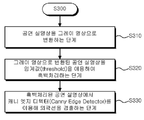
도 6은 도 5의 S300 단계를 순차적으로 나타낸 흐름도.
도 7은 도 6의 S330 단계를 순차적으로 나타낸 흐름도.1 is an example of using an AR-based performance video viewing system according to an embodiment of the present invention.
2 is a block diagram illustrating the configuration of an AR-based performance video viewing system according to an embodiment of the present invention.
3 is a block diagram illustrating the configuration of an AR-based viewing server of an AR-based performance video viewing system according to an embodiment of the present invention.
4 is a front view showing an LED protocol board of an AR-based performance video viewing system according to an embodiment of the present invention.
5 is a flowchart sequentially illustrating a method for providing a performance video using an AR-based performance video viewing system according to an embodiment of the present invention.
6 is a flowchart sequentially illustrating steps S300 of FIG. 5;
7 is a flowchart sequentially illustrating steps S330 of FIG. 6;
이하, 도면을 참조한 본 발명의 설명은 특정한 실시 형태에 대해 한정되지 않으며, 다양한 변환을 가할 수 있고 여러 가지 실시예를 가질 수 있다. 또한, 이하에서 설명하는 내용은 본 발명의 사상 및 기술 범위에 포함되는 모든 변환, 균등물 내지 대체물을 포함하는 것으로 이해되어야 한다.Hereinafter, the description of the present invention with reference to the drawings is not limited to specific embodiments, and various modifications may be made and various embodiments may be provided. In addition, it should be understood that the contents described below include all conversions, equivalents, and substitutes included in the spirit and scope of the present invention.
이하의 설명에서 제1, 제2 등의 용어는 다양한 구성요소들을 설명하는데 사용되는 용어로서, 그 자체에 의미가 한정되지 아니하며, 하나의 구성요소를 다른 구성요소로부터 구별하는 목적으로만 사용된다.In the following description, terms such as first and second are terms used to describe various components, meanings are not limited thereto, and are used only for the purpose of distinguishing one component from other components.
본 명세서 전체에 걸쳐 사용되는 동일한 참조번호는 동일한 구성요소를 나타낸다.Like reference numbers used throughout this specification refer to like elements.
본 발명에서 사용되는 단수의 표현은 문맥상 명백하게 다르게 뜻하지 않는 한, 복수의 표현을 포함한다. 또한, 이하에서 기재되는 "포함하다", "구비하다" 또는 "가지다" 등의 용어는 명세서상에 기재된 특징, 숫자, 단계, 동작, 구성요소, 부품 또는 이들을 조합한 것이 존재함을 지정하려는 것으로 해석되어야 하며, 하나 또는 그 이상의 다른 특징들이나, 숫자, 단계, 동작, 구성요소, 부품 또는 이들을 조합한 것들의 존재 또는 부가 가능성을 미리 배제하지 않는 것으로 이해되어야 한다.As used herein, the singular expression includes the plural expression unless the context clearly dictates otherwise. In addition, terms such as "comprises", "comprising" or "have" described below are intended to designate the existence of features, numbers, steps, operations, components, parts, or combinations thereof described in the specification. It should be construed as not precluding the possibility of addition or existence of one or more other features, numbers, steps, operations, components, parts, or combinations thereof.
다르게 정의되지 않는 한, 기술적이거나 과학적인 용어를 포함해서 여기서 사용되는 모든 용어들은 본 발명이 속하는 기술 분야에서 통상의 지식을 가진 자에 의해 일반적으로 이해되는 것과 동일한 의미를 갖고 있다. 일반적으로 사용되는 사전에 정의되어 있는 것과 같은 용어들은 관련 기술의 문맥상 갖는 의미와 일치하는 의미를 갖는 것으로 해석되어야 하며, 본 출원에서 명백하게 정의하지 않는 한, 이상적이거나 과도하게 형식적인 의미로 해석되지 않는다.Unless defined otherwise, all terms used herein, including technical or scientific terms, have the same meaning as commonly understood by one of ordinary skill in the art to which this invention belongs. Terms such as those defined in commonly used dictionaries should be interpreted as having a meaning consistent with the meaning in the context of the related art, and should not be interpreted in an ideal or excessively formal meaning unless explicitly defined in the present application. does not
또한, 첨부 도면을 참조하여 설명함에 있어, 도면 부호에 관계없이 동일한 구성 요소는 동일한 참조부호를 부여하고 이에 대한 중복되는 설명은 생략하기로 한다. 본 발명을 설명함에 있어서 관련된 공지 기술에 대한 구체적인 설명이 본 발명의 요지를 불필요하게 흐릴 수 있다고 판단되는 경우 그 상세한 설명을 생략한다.In addition, in the description with reference to the accompanying drawings, the same components are given the same reference numerals regardless of the reference numerals, and the overlapping description thereof will be omitted. In describing the present invention, if it is determined that a detailed description of a related known technology may unnecessarily obscure the gist of the present invention, the detailed description thereof will be omitted.
본 발명의 AR 기반 퍼포먼스 영상 관람 시스템은 어플리케이션(또는 모바일 앱)을 이용하여 무선통신망을 통해 통신하는 스마트 폰을 포함하는 이동통신 단말기 및 유선통신망을 통해 통신하는 컴퓨터 환경에서 제공된다. 이하에서는 설명의 편의상 이동통신 단말기를 위주로 설명하기로 한다.The AR-based performance video viewing system of the present invention is provided in a mobile communication terminal including a smart phone that communicates through a wireless communication network using an application (or mobile app) and a computer environment that communicates through a wired communication network. Hereinafter, for convenience of description, a mobile communication terminal will be mainly described.
본 발명은 AR 기반 퍼포먼스 영상 관람 시스템 및 이를 이용한 퍼포먼스 영상 제공 방법에 관한 것으로, 과학관 등에서 제공되는 오프라인의 LED 로봇 공연에 증강현실(AR) 퍼포먼스를 융합하여 몰입감 증대 및 다이나믹함을 연출하고자 한다.The present invention relates to an AR-based performance video viewing system and a method for providing a performance video using the same, and it is intended to enhance immersion and create dynamics by fusion of augmented reality (AR) performance with offline LED robot performances provided in science halls, etc.
또한, LED 프로토콜 보드를 이용함으로써 오프라인의 LED 로봇 공연과 AR 퍼포먼스 간의 동기화가 효과적으로 이루어지도록 하여 고품질의 퍼포먼스 영상을 제공할 수 있도록 한다.In addition, by using the LED protocol board, it is possible to provide high-quality performance video by effectively synchronizing the offline LED robot performance and AR performance.
이하, 본 발명의 실시 예를 첨부한 도 1 내지 도 7을 참조하여 상세히 설명하기로 한다.Hereinafter, an embodiment of the present invention will be described in detail with reference to the accompanying drawings 1 to 7 .
도 1은 본 발명의 실시예에 따른 AR 기반 퍼포먼스 영상 관람 시스템 사용 예시도이고, 도 2는 본 발명의 실시예에 따른 AR 기반 퍼포먼스 영상 관람 시스템의 구성을 도시한 블록도이고, 도 3은 본 발명의 실시예에 따른 AR 기반 퍼포먼스 영상 관람 시스템의 AR 기반 관람 서버의 구성을 도시한 블록도이며, 도 4는 본 발명의 실시예에 따른 AR 기반 퍼포먼스 영상 관람 시스템의 LED 프로토콜 보드를 도시한 정면도이다.1 is an example of using an AR-based performance video viewing system according to an embodiment of the present invention, FIG. 2 is a block diagram illustrating the configuration of an AR-based performance video viewing system according to an embodiment of the present invention, and FIG. It is a block diagram showing the configuration of an AR-based viewing server of an AR-based performance video viewing system according to an embodiment of the present invention, and FIG. 4 is a front view showing an LED protocol board of the AR-based performance video viewing system according to an embodiment of the present invention. to be.
도 1을 참조하면, 본 발명의 실시예에 따른 AR 기반 퍼포먼스 영상 관람 시스템은 공연장(T)에서 진행되는 공연을 관람객 단말(10)로 촬영하면 증강현실(AR) 퍼포먼스를 구현함으로써, 관람객이 관람객 단말(10)을 통해 공연 실영상 및 증강현실(AR) 퍼포먼스를 포함하는 퍼포먼스 영상으로 관람할 수 있도록 하는 시스템이다.Referring to FIG. 1 , the AR-based performance video viewing system according to an embodiment of the present invention implements an augmented reality (AR) performance when a performance held in a performance hall T is photographed by a
도 2를 참조하면, 이러한 본 발명의 AR 기반 퍼포먼스 영상 관람 시스템은 관람객 단말(10), AR 기반 관람 서버(20), LED 프로토콜 보드(30) 및 관리자 단말(40)을 포함할 수 있다.Referring to FIG. 2 , the AR-based performance video viewing system of the present invention may include a
관람객 단말(10)은 과학관, 체험관, 박물관, 공연장 등을 방문하여 공연을 관람하는 관람객을 포함한 불특정 다수가 소지하고 있는 모바일 단말기를 의미한다. 이때, 관람객 단말(10)은 모바일 단말 외 태블릿, PDA(Personal Digital Assistant) 등을 포함할 수 있다.The
또한, 관람객 단말(10)은 AR 기반 관람 서버(20)로부터 제공되는 어플리케이션(또는 모바일 앱)을 포함할 수 있다. 즉, AR 기반 관람 서버(20)로부터 제공되는 어플리케이션(또는 모바일 앱)이 설치되어 있어 AR 기반 퍼포먼스 영상 관람 시스템을 이용할 수 있다.In addition, the
관람객 단말(10)은 퍼포먼스 영상을 제공받기 위하여, AR 기반 관람 서버(20)로부터 제공되는 어플리케이션을 통해 공연을 촬영하여 공연 실영상을 얻을 수 있고, 얻어진 공연 실영상을 AR 기반 관람 서버(20)로 전송할 수 있다.In order to receive the performance image, the
또한, 관람객 단말(10)은 AR 기반 관람 서버(20)로부터 퍼포먼스 영상을 수신받아 출력하여 관람객에게 제공할 수 있다.In addition, the
또한, 관람객 단말(10)은 관람객으로부터 녹화 요청이 입력되면 퍼포먼스 영상을 녹화하고 녹화 종료가 입력되면 퍼포먼스 영상의 녹화를 종료할 수 있다. 이때, 관리자 단말(40)은 녹화가 종료되면 녹화된 퍼포먼스 영상을 AR 기반 관람 서버(20)로 전송할 수 있다.In addition, the
AR 기반 관람 서버(20)는 관람객 단말(10)로부터 공연에 대한 공연 실영상이 수신되면, 퍼포먼스 영상을 생성하여 관람객 단말(10)로 전송할 수 있다.The AR-based
이를 위해, AR 기반 관람 서버(20)는 도 3과 같이 데이터베이스(21), 공연 인지부(22), 객체 인지부(23), 설정부(24), 영상 출력부(25) 및 제어부(26)를 포함할 수 있다.To this end, the AR-based
데이터베이스(21)는 관리자 단말(40)로부터 수신받은 다수의 AR 퍼포먼스를 저장할 수 있다.The
여기서, AR 퍼포먼스는 오프라인에서 공연되는 스토리에 따라 설계되어 다수 이펙트로 짜여질 수 있다.Here, the AR performance may be designed according to the story performed offline and may be woven into a number of effects.
또한, 데이터베이스(21)는 관람객 단말(10)로부터 녹화된 퍼포먼스 영상을 수신받아 저장할 수 있다.In addition, the
또한, 데이터베이스(21)는 특정 신호에 대한 정보를 저장할 수 있다. 즉, 인지되는 특정 신호에 따라 그 신호가 어떤 의미인지에 대한 정보를 저장할 수 있다.Also, the
이에 설정부(24)가 특정 신호를 인지하여 그에 따라 이펙트 설정 정보를 생성할 수 있도록 한다.Accordingly, the setting
공연 인지부(22)는 관람객 단말(10)로부터 공연 실영상을 수신받고, 공연 실영상에서 상시 신호를 인지하여 공연 진행 및 공연장을 인지할 수 있다.The
즉, 상시 신호는 공연이 시작됨과 동시에 LED 프로토콜 보드(30)에서 출력되어 관람객 단말(10)에 촬영될 수 있는데, 이에 공연 실영상에 상시 신호가 나타날 경우 공연 인지부(22)는 이를 인식하여 공연이 진행된다는 것을 인지할 수 있다.That is, the regular signal is output from the
이로 인해, AR 퍼포먼스의 구현 시점을 파악할 수 있어 오프라인의 공연과 AR 퍼포먼스 간의 싱크(동기화)를 효과적으로 맞출 수 있다.As a result, it is possible to identify the implementation time of the AR performance, so that the synchronization (synchronization) between the offline performance and AR performance can be effectively matched.
또한, 공연 인지부(22)는 공연장에 설치된 LED 프로토콜 보드(30)에서 출력하는 상시 신호를 기준으로 공연장을 인지하여 오프라인의 공연과 AR 퍼포먼스 간의 위치를 전체적으로 맞출 수 있다. 즉, 공연 실영상에서 AR 퍼포먼스가 전체적으로 어느 위치에 구현되어야 하는지 파악할 수 있는 것이다.In addition, the
또한, LED 객체가 위치하는 범위인 즉, AR 퍼포먼스가 구현되어야 하는 위치를 전체적으로 먼저 파악해 둠에 따라 객체 인지부(23)에서의 LED 객체 인식이 효과적으로 이루어질 수 있도록 할 수 있다.In addition, the LED
객체 인지부(23)는 공연장이 인지된 공연 실영상에서 하나 이상의 LED 객체(R)를 인지할 수 있다.The
여기서, LED 객체(R)는 공연장(T)에서 댄스 등의 다양한 공연을 하는 LED 로봇이 바람직하나, 이에 한정되지 않고, LED 로봇 외에도 LED를 활용하여 다양하게 적용될 수 있다.Here, the LED object (R) is preferably an LED robot that performs various performances such as dancing in the performance hall (T), but is not limited thereto, and may be variously applied using LEDs in addition to the LED robot.
구체적으로, 객체 인지부(23)는 공연 실영상을 그레이 영상으로 변환하고, 그레이 영상으로 변환된 공연 실영상을 임계값(threshold)을 이용하여 흑백처리하고, 흑백처리된 공연 실영상에서 캐니 엣지 디텍터(Canny Edge Detector)를 이용해 외곽선을 검출하여 LED 객체(R)를 인지할 수 있다.Specifically, the
더 구체적으로 설명하자면, 객체 인지부(23)는 공연 실영상을 그레이 영상으로 변환할 수 있다.More specifically, the
그 다음, 객체 인지부(23)는 그레이 영상으로 변환된 공연 실영상을 임계값(threshold)을 이용하여 흑백처리할 수 있다. 이는 흑백처리하여 공연 실영상에서 LED 객체(R)와 공연장(T) 등 LED 객체(R) 외의 배경을 분리해 내는 것이다.Next, the
이때, 객체 인지부(23)는 그레이 영상으로 변환된 공연 실영상에서 픽셀값이 임계값보다 같거나 크면 픽셀값을 255로 작으면 0으로 픽셀값을 변경하는 것으로, 공연 실영상을 흑백처리 할 수 있다.At this time, the
그 다음, 객체 인지부(23)는 흑백처리된 공연 실영상에서 캐니 엣지 디텍터(Canny Edge Detector)를 이용해 외곽선을 검출할 수 있다. 이에 최종적으로 LED 객체(R)를 인지할 수 있다.Next, the
이때, 객체 인지부(23)는 노이즈를 제거하고, 엣지를 검출하고, 그레디언트 크기 및 방향을 계산하고, 엣지를 선명화하고, 중요 엣지를 선별하고 연결하는 과정을 통해 외곽선을 검출할 수 있다.In this case, the
더 자세하게는, 객체 인지부(23)는 흑백처리된 공연 실영상에서 가우시안 마스크를 이용한 블러링(bluring)을 통해 노이즈를 제거할 수 있다. 이는 LED 객체(R)의 인지에 대한 정확도를 높이기 위한 것이다.In more detail, the
가우시안 마스크를 이용한 블러링(bluring)은 평균이 0인 가우시안 정규분포를 이용해 필터링하여 노이즈를 제거하는 것이다.The blurring using a Gaussian mask removes noise by filtering using a Gaussian normal distribution with a mean of 0.
여기서 가우시안 정규분포는 중심으로 갈수록 높은값를 가지며 외곽으로 갈수록 낮은값을 가진다.Here, the Gaussian normal distribution has a higher value toward the center and a lower value toward the outer part.
이와 같은 과정을 통해 공연 실영상의 노이즈는 제거되고 상세한 부분이 단순화 될 수 있다.Through this process, the noise of the actual performance image can be removed and the details can be simplified.
노이즈 제거 후, 객체 인지부(23)는 노이즈가 제거된 공연 실영상에서 소벨 마스크(Sobel mask)를 이용하여 엣지를 검출할 수 있다. After the noise is removed, the
이때, 객체 인지부(23)는 수직방향에 대한 엣지를 검출하여 수직의 소벨 마스크, 수평방향에 대한 엣지를 검출하여 수평의 소벨 마스크를 획득하고, 각각 공연 실영상과 합성곱(convolution)하여 나온 두 이미지(값)의 등급을 구해 엣지를 검출할 수 있다. At this time, the
엣지 검출 후, 객체 인지부(23)는 검출된 엣지의 그레디언트 크기 및 방향을 계산할 수 있다.After detecting the edge, the
그레디언트 크기 및 방향을 계산 후, 객체 인지부(23)는 NMS(Non-maximum suppression)을 통해 낮은 픽셀값을 제거하여 엣지를 선명화할 수 있다. 이는 검출된 엣지는 블러딩되어 있는 엣지이기 때문에 더 선명한 엣지를 찾기 위해 필요한 과정이다.After calculating the gradient size and direction, the
NMS(Non-maximum suppression)는 중심 픽셀을 기준으로 이웃하고 있는 8방향의 픽셀값들을 비교하여 중심픽셀이 가장 클 경우 그대로 두고, 아닐 경우 제거하는 방법이다.Non-maximum suppression (NMS) is a method of comparing pixel values in 8 neighboring directions based on the central pixel, leaving the central pixel as it is if it is the largest, and removing it if it is not.
이러한 객체 인지부(23)는 NMS(Non-maximum suppression)를 통해 낮은 픽셀값을 제거하여 엣지를 얇게 만들어 주어 엣지를 선명화시킬 수 있다.The
엣지 선명화 후, 객체 인지부(23)는 엣지 중 중요 엣지를 선별하고 연결하여 외곽선을 검출할 수 있다.After edge sharpening, the
이때 객체 인지부(23)는 공연 실영상의 미처 제거되지 못한 노이즈 또는 색 변화(color variation)로 인해 엣지가 아닌 부분이 엣지로 검출될 수 있기 때문에, 검출된 엣지 중에서 진짜 엣지(이하 “중요 엣지”라 함)만을 선별하는 것이다.At this time, since the
이를 수행하기 위해, 객체 인지부(23)는 두개의 임계값을 가지고 중요 엣지를 설명할 수 있다.To do this, the
여기서 두개의 임계값은 높은 임계값(high threshold)과 낮은 임계값(low threshold)을 포함할 수 있다.Here, the two thresholds may include a high threshold and a low threshold.
이에 객체 인지부(23)는 엣지가 높은 임계값보다 높은 값을 가지면 강 엣지, 엣지가 높은 임계값보다 낮고 낮은 임계값보다 높은 값을 가지면 약 엣지, 엣지가 낮은 임계값보다 낮으면 제거하여, 강 엣지와 약 엣지를 선별할 수 있다.Accordingly, the
그 다음, 객체 인지부(23)는 선별된 강 엣지는 그대로 살리고, 약 엣지를 강 엣지와 연관되어 있는 것들만 구별해 내어 선별함으로써, 중요 엣지를 선별할 수 있다.Next, the
이와 같이 선별된 중요 엣지를 연결하여 외곽선을 검출할 수 있다.An outline can be detected by connecting the selected important edges in this way.
이와 같이 검출된 외곽선이 LED 객체(R)를 나타내므로 LED 객체(R)를 검출할 수 있는 것이다.Since the detected outline indicates the LED object R, the LED object R can be detected.
설정부(24)는 공연 실영상에서 특정 신호가 인지되면 특정 신호에 따라 인지된 하나 이상의 LED 객체 중 AR 퍼포먼스의 이펙트를 어느 LED 객체에 나타낼지 설정하여 이펙트 설정 정보를 생성할 수 있다.When a specific signal is recognized in the actual performance image, the setting
여기서 인지되는 특정 신호는 AR 퍼포먼스의 이펙트 정보, 이펙트 구현 위치 정보를 포함할 수 있으나, 이에 한정되지는 않는다.The specific signal recognized here may include, but is not limited to, effect information of AR performance and effect implementation location information.
예를 들어, 특정 신호의 이펙트 구현 위치 정보 가 인지된 1번, 2번, 3번의 LED 객체(R) 중 3번의 LED 객체(R)에 이펙트를 구현하는 정보라면, 3번의 LED 객체(R)에 이펙트가 구현되도록 하는 이펙트 설정 정보를 생성할 수 있는 것이다.For example, if the effect implementation location information of a specific signal is information implementing an effect on the 3rd LED object (R) among the recognized 1st, 2nd, and 3rd LED objects (R), the 3rd LED object (R) It is possible to create effect setting information that allows the effect to be implemented in the .
영상 출력부(25)는 이펙트 설정 정보에 따라 AR 퍼포먼스를 관람객 단말(10)에 전송하고 공연 실영상에 AR 퍼포먼스를 구현하여 퍼포먼스 영상을 관람객에 제공할 수 있다.The
즉, 영상 출력부(25)는 AR 퍼포먼스가 관람객 단말(10)의 화면에 이펙트 설정 정보에 따라 출력되도록 하여, AR 퍼포먼스를 오프라인의 공연과의 위치 및 싱크가 맞게 구현할 수 있다.That is, the
이에 몰입감이 향상된 퍼포먼스 영상을 제공할 수 있다.Accordingly, it is possible to provide a performance image with improved immersion.
제어부(26)는 관리자 단말(40)로부터 공연에 따라 AR 퍼포먼스 설정 정보가 수신되면, LED 프로토콜 보드(30)에 AR 퍼포먼스 설정 정보를 전송할 수 있다.When AR performance setting information is received according to a performance from the
이에 LED 프로토콜 보드(30)는 공연에 의해 설정된 AR 퍼포먼스에 따라 특정 신호를 출력할 수 있다.Accordingly, the
또한, 제어부(26)는 관람객 단말(10)로부터 녹화된 퍼포먼스 영상을 수신받아 데이터베이스(21)에 저장시킬 수 있다.In addition, the
또한, 제어부(26)는 관리자 단말(40)로부터 공연 시작 정보를 수신받아, LED 프로토콜 보드(30)에 전송하여, LED 프로토콜 보드(30)가 작동하여 상시 신호를 출력할 수 있도록 하고 AR 퍼포먼스 설정 정보에 따라 특정 신호를 출력하도록 할 수 있다.In addition, the
또한, AR 기반 관람 서버(20)는 미션부(미도시)를 더 포함할 수 있다.In addition, the AR-based
미션부(미도시)는 관람객 단말(10)에 미션 정보를 제공하고, 관람객 단말(10)로부터 미션 정보에 해당하는 기능이 수행될 경우 미션 달성 정보를 관람객 단말(10)로 전송할 수 있다.The mission unit (not shown) may provide mission information to the
즉, 미션부(미도시)는 오프라인에서 공연될 예정일 공연에 따라 해당 공연 관람을 미션 정보로 생성하여 관람객 단말(10)에 미션 정보를 제공할 수 있다.That is, the mission unit (not shown) may provide the mission information to the
또한, 미션부(미도시)는 관람객 단말(10)로부터 해당 공연의 공연 실영상이 수신되면 미션을 수행했다고 감지하여 미션 달성 정보를 생성하여 관람객 단말(10)로 전송할 수 있다.In addition, the mission unit (not shown) may detect that the mission has been performed when the actual performance image of the performance is received from the
이때, 빙고 형태로 미션 정보와 미션 달성 정보를 제공하여 흥미도를 높일 수 있으나, 이에 한정되지는 않는다.In this case, the level of interest may be increased by providing mission information and mission achievement information in the form of bingo, but is not limited thereto.
이와 같이 미션부(미도시)를 통해 관람객의 관심도와 관람율을 향상시킬 수 있다.As such, it is possible to improve the interest and viewing rate of visitors through the mission unit (not shown).
LED 프로토콜 보드(30)는 공연장(T)에 설치되어 공연 시 상시 신호 및 특정 신호를 출력할 수 있다.The
이러한 LED 프로토콜 보드(30)는 관람객 단말(10)로부터 공연이 촬영되어 AR 기반 관람 서버(20)가 관람객 단말(10)에 퍼포먼스 영상을 제공하고자 할 때, 오프라인의 공연과 AR 퍼포먼스 간의 위치와 싱크를 효과적으로 맞출 수 있도록 할 수 있다.This
이를 위해, LED 프로토콜 보드(30)는 도 1에 도시된 바와 같이, 공연장(T)의 상단 양측에 설치되는 것이 바람직하나, 이에 한정되지는 않는다.To this end, the
또한, LED 프로토콜 보드(30)는 도 4에 도시된 바와 같이 상시 신호부(31) 및 특정 신호부(32)를 포함하여 상시 신호 및 특정 신호를 출력할 수 있으나, 형상은 이에 한정되지 않는다.In addition, as shown in FIG. 4 , the
상시 신호부(31)는 LED로 구성되고, 공연이 시작되어 AR 기반 관람 서버(20)로부터 공연 시작 정보를 수신받으면 상시 신호를 출력할 수 있다.The
상시 신호부(31)는 공연이 종료될 때까지 계속 상시 신호를 출력할 수 있다.The
이에 AR 기반 관람 서버(20)가 공연 시작을 인지할 수 있으며, 공연 중간부터 관람객이 관람객 단말(10)로 공연을 촬영하게 되더라도 AR 기반 관람 서버(20)가 공연이 진행 중임을 인지할 수 있어, 공연의 중간부터라도 관람객이 AR 기반 퍼포먼스 영상 관람 시스템을 이용하여 퍼포먼스 영상을 제공받을 수 있다.Accordingly, the AR-based
이러한 상시 신호부(31)는 주황색 LED로 구성될 수 있고, 4개가 격자로 배열되어 구성될 수 있으나, 이에 한정되지는 않는다.Such a
특정 신호부(32)는 LED로 구성되고, 공연에 따라 설정된 AR 퍼포먼스에 의해 특정 신호를 출력할 수 있다.The
즉, 특정 신호부(32)는 AR 기반 관람 서버(20)로부터 수신받은 AR 퍼포먼스 설정 정보를 수신받고, AR 퍼포먼스 설정 정보를 통해 설정된 AR 퍼포먼스를 판단하여 설정된 AR 퍼포먼스에 따라 특정 신호를 출력할 수 있다.That is, the
이러한 특정 신호부(32)는 초록색 LED로 구성될 수 있고, 4개가 격자로 배열되어 구성될 수 있으나, 이에 한정되지는 않는다.This
예를 들어, 특정 신호부(32)는 격자로 배열된 4개의 LED 중에 하나 이상을 출력하는 것으로 특정 신호를 출력할 수 있다.For example, the
이에 AR 기반 관람 서버(20)가 특정 신호를 인지하여 특정 신호에 따라 AR 퍼포먼스를 공연 실영상에 구현할 수 있으며, 공연의 중간부터라도 관람객이 AR 기반 퍼포먼스 영상 관람 시스템을 이용하게 되면 진행 중인 공연에 맞게 동기화된 퍼포먼스 영상을 관람객 단말(10)에 제공할 수 있다.Accordingly, the AR-based
관리자 단말(40)은 과학관, 체험관, 박물관, 공연장 등의 공연을 관리자, 책임자, 감독 등이 소지하고 있는 모바일 단말기를 의미한다. 이때, 관리자 단말(40)은 모바일 단말 외 PC, 태블릿, PDA(Personal Digital Assistant) 등을 포함할 수 있다.The
또한, 관리자 단말(40)은 AR 기반 관람 서버(20)로부터 제공되는 어플리케이션(또는 모바일 앱)을 포함할 수 있다. 즉, AR 기반 관람 서버(20)로부터 제공되는 어플리케이션(또는 모바일 앱)이 설치되어 있어 AR 기반 퍼포먼스 영상 관람 시스템을 관리 및 이용할 수 있다.In addition, the
이러한 관리자 단말(40)은 AR 퍼포먼스를 설정하여 AR 퍼포먼스 설정 정보를 AR 기반 관람 서버(20)의 제어부(26)에 전송할 수 있다.The
또한, 관리자 단말(40)은 공연 시작 정보를 입력받아 AR 기반 관람 서버(20)의 제어부(26)에 전송할 수 있다.In addition, the
또한, 관리자 단말(40)은 AR 퍼포먼스를 입력받아 AR 기반 관람 서버(20)로 전송하여 데이터베이스(21)에 저장되도록 할 수 있다.In addition, the
이상, 앞서 설명한 구성을 기초하여 본 발명의 실시예에 따른 AR 기반 퍼포먼스 영상 관람 시스템을 이용한 퍼포먼스 영상 제공 방법을 설명한다. 이때 상기 시스템의 설명에서 구체적으로 설명하였으므로 간단하게 설명하기로 한다.Above, a method for providing a performance video using the AR-based performance video viewing system according to an embodiment of the present invention will be described based on the configuration described above. At this time, since it has been described in detail in the description of the system, it will be briefly described.
도 5는 본 발명의 실시예에 따른 AR 기반 퍼포먼스 영상 관람 시스템을 이용한 퍼포먼스 영상 제공 방법을 순차적으로 나타낸 흐름도이고, 도 6은 도 5의 S300 단계를 순차적으로 나타낸 흐름도이며, 도 7은 도 6의 S330 단계를 순차적으로 나타낸 흐름도이다.5 is a flowchart sequentially illustrating a method for providing a performance image using an AR-based performance image viewing system according to an embodiment of the present invention, FIG. 6 is a flowchart sequentially illustrating steps S300 of FIG. 5, and FIG. It is a flowchart sequentially showing steps S330.
도 5를 참조하면, 본 발명의 실시예에 AR 기반 퍼포먼스 영상 관람 시스템을 이용한 퍼포먼스 영상 제공 방법은 관람객 단말로부터 공연을 촬영한 공연 실영상을 수신받는 단계(S100), 수신된 공연 실영상에서 상시 신호를 인지하여 공연 진행 및 공연장을 인지하는 단계(S200), 공연 실영상에서 하나 이상의 LED 객체를 인지하는 단계(S300), 공연 실영상에서 특정 신호를 인지하고, 특정 신호에 따라 AR 퍼포먼스의 이펙트를 어느 LED 객체에 나타낼지 설정하여 이펙트 설정 정보를 생성하는 단계(S400) 및 이펙트 설정 정보에 따라 AR 퍼포먼스를 관람객 단말에 전송하고 공연 실영상에 AR 퍼포먼스를 구현하여 퍼포먼스 영상을 제공하는 단계(S500)를 포함할 수 있다.Referring to FIG. 5 , the method for providing a performance video using the AR-based performance video viewing system in an embodiment of the present invention includes the step of receiving an actual performance image photographed from the audience terminal (S100), and always in the received performance image Recognizing a signal to recognize a performance progress and a venue (S200), recognizing one or more LED objects in a performance image (S300), recognizing a specific signal in a performance image, and effect of AR performance according to a specific signal Step of generating effect setting information by setting which LED object to display (S400) and transmitting the AR performance to the audience terminal according to the effect setting information and providing a performance image by implementing the AR performance on the actual image of the performance (S500) ) may be included.
먼저, S100 단계는 관람객 단말(10)로부터 공연을 촬영한 공연 실영상을 AR 기반 관람 서버(20)가 수신받을 수 있다.First, in step S100 , the AR-based
S200 단계는 AR 기반 관람 서버(20)가 공연 실영상을 수신받아, 수신된 공연 실영상에서 상시 신호를 인지하여 공연 진행 및 공연장을 인지할 수 있다.In step S200, the AR-based
S300 단계는 공연장이 인지된 공연 실영상에서 AR 기반 관람 서버(20)가 하나 이상의 LED 객체를 인지할 수 있다.In step S300, the AR-based
구체적으로, 도 6을 참조하면 S300 단계는 공연 실영상을 그레이 영상으로 변환하는 단계(S310), 그레이 영상으로 변환된 공연 실영상을 임계값(threshold)을 이용하여 흑백처리하는 단계(S320) 및 흑백처리된 공연 실영상에서 캐니 엣지 디텍터(Canny Edge Detector)를 이용해 외곽선을 검출하는 단계(S330)를 포함할 수 있다.Specifically, referring to FIG. 6 , step S300 is a step of converting an actual performance image into a gray image (S310), a step of black-and-white processing of the actual performance image converted into a gray image using a threshold (S320), and It may include a step (S330) of detecting an outline using a Canny Edge Detector in the black-and-white-processed actual image of the performance.
S310 단계는 공연 실영상을 그레이 영상으로 변환할 수 있다.In step S310, the actual performance image may be converted into a gray image.
S320 단계는 S310 단계에서 그레이 영상으로 변환된 공연 실영상을 임계값(threshold)을 이용하여 흑백처리할 수 있다.In step S320, the actual performance image converted to the gray image in step S310 may be processed in black and white using a threshold.
즉, S320 단계는 AR 기반 관람 서버(20)가 그레이 영상으로 변환된 공연 실영상에서 픽셀값이 임계값보다 같거나 크면 픽셀값을 255로 작으면 0으로 픽셀값을 변경하여 공연 실영상을 흑백처리 할 수 있다.That is, in step S320, the AR-based
S330 단계는 S320 단계에서 흑백처리된 공연 실영상에서 캐니 엣지 디텍터(Canny Edge Detector)를 이용해 외곽선을 검출할 수 있다.In step S330, an outline can be detected using a Canny Edge Detector in the black-and-white-processed performance image in step S320.
더 구체적으로는, S330 단계는 도 7과 같이, 흑백처리된 공연 실영상에서 가우시안 마스크를 이용한 블러링(bluring)을 통해 노이즈를 제거하는 단계(S331), 소벨 마스크(Sobel mask)를 이용하여 엣지를 검출하는 단계(S332), 검출된 엣지의 그레디언트 크기 및 방향을 계산하는 단계(S333), 낮은 픽셀값을 제거하여 엣지를 선명화하는 단계(S334) 및 중요 엣지를 선별하고 연결하여 외곽선을 검출하는 단계(S335)를 포함할 수 있다.More specifically, step S330 is a step of removing noise through blurring using a Gaussian mask in the black-and-white-processed real image as shown in FIG. 7 ( S331 ), an edge using a Sobel mask Detecting (S332), calculating the gradient size and direction of the detected edge (S333), sharpening the edge by removing low pixel values (S334), and selecting and connecting important edges to detect the outline It may include a step (S335).
먼저, S331 단계는 흑백처리된 공연 실영상에서 가우시안 마스크를 이용한 블러링(bluring)을 통해 노이즈를 제거할 수 있다.First, in step S331, noise may be removed from the black-and-white-processed performance image through blurring using a Gaussian mask.
S332 단계는 노이즈가 제거된 공연 실영상에 소벨 마스크(Sobel mask)를 이용하여 엣지를 검출할 수 있다.In step S332, an edge may be detected by using a Sobel mask in the real image of the performance from which the noise has been removed.
즉, S332 단계는 흑백처리된 공연 실영상에서 수직방향에 대한 엣지를 검출하여 수직의 소벨 마스크, 수평방향에 대한 엣지를 검출하여 수평의 소벨 마스크를 획득하고, 각각 공연 실영상과 합성곱(convolution)하여 나온 두 이미지(값)의 등급을 구해 엣지를 검출할 수 있다.That is, in step S332, a vertical Sobel mask is detected by detecting an edge in the vertical direction from the black-and-white processed performance image, and a horizontal Sobel mask is obtained by detecting an edge in the horizontal direction, and convolution with the actual performance image, respectively. ), the edge can be detected by obtaining the grade of the two images (values).
S333 단계는 S332 단계에서 검출된 엣지의 그레디언트 크기 및 방향을 계산할 수 있다.In step S333, the gradient magnitude and direction of the edge detected in step S332 may be calculated.
S334 단계는 S333 단계 후에 NMS(Non-maximum suppression)을 통해 낮은 픽셀값을 제거하여 엣지를 선명화할 수 있다.In step S334, the edge may be sharpened by removing a low pixel value through non-maximum suppression (NMS) after step S333.
즉, S334 단계는 엣지가 검출된 공연 실영상에서 중심 픽셀을 기준으로 이웃하고 있는 8방향의 픽셀값들을 비교하여 중심 픽셀이 가장 클 경우 그대로 두고, 아닐 경우 제거하는 과정을 반복하여 엣지를 선명화할 수 있다.That is, step S334 compares pixel values in 8 neighboring directions with respect to the center pixel in the performance image in which the edge is detected, and if the center pixel is the largest, it is left as it is, otherwise it is removed by repeating the process to sharpen the edge. can
S335 단계는 S334 단계에서 선명화된 엣지 중 중요 엣지를 선별하고 연결하여 외곽선을 검출할 수 있다.In step S335, an outline may be detected by selecting and connecting important edges among the edges sharpened in step S334.
즉, S335 단계는 다수 엣지 중 엣지가 높은 임계값보다 높은 값을 가지면 강 엣지, 엣지가 높은 임계값보다 낮고 낮은 임계값보다 높은 값을 가지면 약 엣지, 엣지가 낮은 임계값보다 낮으면 제거하여, 강 엣지와 약 엣지를 선별할 수 있다.That is, step S335 removes a strong edge if the edge has a value higher than the high threshold among the multiple edges, a weak edge if the edge has a value lower than the high threshold and higher than the low threshold, and removes the edge if the edge is lower than the low threshold, A strong edge and a weak edge can be selected.
그 다음, 선별된 강 엣지는 그대로 살리고, 약 엣지를 강 엣지와 연관되어 있는 것들만 구별해 내어 중요 엣지를 선별할 수 있다.Then, it is possible to select important edges by keeping the selected strong edges as they are, and by distinguishing only the weak edges related to the strong edges.
그 다음, 선별된 중요 엣지를 연결하여 외관선을 검출함으로써 LED 객체(R)를 인지할 수 있다.Then, the LED object R can be recognized by connecting the selected important edges to detect the exterior line.
S400 단계는 공연 실영상에서 특정 신호를 인지하고, 특정 신호에 따라 AR 퍼포먼스의 이펙트를 어느 LED 객체(R)에 나타낼지 설정하여 이펙트 설정 정보를 생성할 수 있다.Step S400 may generate effect setting information by recognizing a specific signal in the actual performance image, and setting which LED object (R) to display the effect of the AR performance according to the specific signal.
S500 단계는 이펙트 설정 정보에 따라 AR 퍼포먼스를 관람객 단말(10)에 전송하고 공연 실영상에 AR 퍼포먼스를 구현하여 퍼포먼스 영상을 제공할 수 있다. 이와 같이 관리자 단말(40)에 공연 실영상에 맞춰 AR 퍼포먼스를 구현함으로써, 오프라인의 공연과 AR 퍼포먼스 간에 싱크가 정확하게 맞는 퍼포먼스 영상을 제공할 수 있다.In step S500, the AR performance may be transmitted to the
상기에서 설명한 바와 같이, 본 발명의 실시예에 따른 AR 기반 퍼포먼스 영상 관람 시스템 및 이를 이용한 퍼포먼스 영상 제공 방법은 과학관에서 제공하는 오프라인의 LED 로봇 공연에 증강현실(AR) 퍼포먼스를 융합하여 몰입감 증대 및 다이나믹함을 연출할 수 있다.As described above, the AR-based performance video viewing system and the performance video providing method using the same according to an embodiment of the present invention can increase immersion and dynamics by fusing augmented reality (AR) performance with an offline LED robot performance provided by a science museum. You can create a ham.
또한, LED 프로토콜 보드를 이용함으로써 오프라인의 LED 로봇 공연과 AR 퍼포먼스 간의 동기화가 효과적으로 이루어져 고퀄리티의 퍼포먼스 영상을 제공할 수 있다.In addition, by using the LED protocol board, the synchronization between the offline LED robot performance and the AR performance can be effectively achieved to provide a high-quality performance image.
이에 관람객의 만족도 및 수요를 증대시킬 수 있다.This can increase the satisfaction and demand of visitors.
또한, 주 대상이 학생인 고객에게 미래에 대한 새로운 청사진을 그려 줄 것으로 기대된다.It is also expected to paint a new blueprint for the future for customers, whose main target is students.
또한, 다양한 전시, 공연 등에 적용될 수 있을 것이라고 기대된다.In addition, it is expected that it can be applied to various exhibitions and performances.
이상에서 설명한 본 발명의 실시예는 장치 및/또는 방법을 통해서만 구현이 되는 것은 아니며, 본 발명의 실시예의 구성에 대응하는 기능을 실현하기 위한 프로그램, 그 프로그램이 기록된 기록 매체 등을 통해 구현될 수도 있으며, 이러한 구현은 앞서 설명한 실시예의 기재로부터 본 발명이 속하는 기술분야의 전문가라면 쉽게 구현할 수 있는 것이다.The embodiment of the present invention described above is not implemented only through an apparatus and/or method, but may be implemented through a program for realizing a function corresponding to the configuration of the embodiment of the present invention, a recording medium in which the program is recorded, etc. Also, such an implementation can be easily implemented by those skilled in the art to which the present invention pertains from the description of the above-described embodiments.
이상에서 본 발명의 실시예에 대하여 상세하게 설명하였지만 본 발명의 권리범위는 이에 한정되는 것은 아니고 다음의 청구범위에서 정의하고 있는 본 발명의 기본 개념을 이용한 당업자의 여러 변형 및 개량 형태 또한 본 발명의 권리범위에 속하는 것이다.Although the embodiments of the present invention have been described in detail above, the scope of the present invention is not limited thereto, and various modifications and improved forms of the present invention are also provided by those skilled in the art using the basic concept of the present invention as defined in the following claims. is within the scope of the right.
10: 관람객 단말
20: AR 기반 관람 서버
21: 데이터베이스
22: 공연 인지부
23: 객체 인지부
24: 설정부
25: 영상 출력부
26: 제어부
30: LED 프로토콜 보드
40: 관리자
T: 공연장
R: LED 객체10: visitor terminal
20: AR-based viewing server
21: Database
22: Performance Recognition Department
23: object recognition unit
24: setting unit
25: video output unit
26: control unit
30: LED protocol board
40: Manager
T: concert hall
R: LED object
Claims (5)
공연을 촬영할 수 있는 관람객 단말;
상기 관람객 단말로부터 공연에 대한 공연 실영상이 수신되면, 퍼포먼스 영상을 관람객 단말로 전송하는 AR 기반 관람 서버 및
공연장의 상단 양측에 설치되어 공연 시 상시 신호 및 특정 신호를 출력하는 LED 프로토콜 보드를 포함하고,
상기 LED 프로토콜 보드는,
공연이 시작되어 AR 기반 관람 서버로부터 공연 시작 정보를 수신받으면 상시 신호를 출력하는 상시 신호부 및
공연에 따라 설정된 AR 퍼포먼스에 의해 특정 신호를 출력하는 특정 신호부를 포함하는 AR 기반 퍼포먼스 영상 관람 시스템.
In a system for viewing an LED robot performance as a performance image including an actual performance image and an augmented reality (AR) performance,
a visitor terminal capable of filming a performance;
When an actual performance image for a performance is received from the audience terminal, an AR-based viewing server that transmits the performance image to the audience terminal; and
It includes an LED protocol board that is installed on both sides of the upper part of the concert hall and outputs regular signals and specific signals during performances.
The LED protocol board,
When the performance starts and the performance start information is received from the AR-based viewing server, a regular signal unit that outputs a signal at all times, and
AR-based performance video viewing system including a specific signal unit that outputs a specific signal according to the AR performance set according to the performance.
상기 AR 기반 관람 서버는,
다수의 AR 퍼포먼스를 저장하는 데이터베이스;
상기 관람객 단말로부터 상기 공연 실영상을 수신받고, 상기 공연 실영상에서 상시 신호를 인지하여 공연 진행 및 공연장을 인지하는 공연 인지부;
상기 공연장이 인지된 공연 실영상에서 하나 이상의 LED 객체를 인지하는 객체 인지부;
상기 공연 실영상에서 특정 신호가 인지되면 특정 신호에 따라 인지된 하나 이상의 LED 객체 중 AR 퍼포먼스의 이펙트를 어느 LED 객체에 나타낼지 설정하여 이펙트 설정 정보를 생성하는 설정부 및
상기 이펙트 설정 정보에 따라 AR 퍼포먼스를 상기 관람객 단말에 전송하고 상기 공연 실영상에 상기 AR 퍼포먼스를 구현하여 상기 퍼포먼스 영상을 제공하는 영상 출력부를 포함하는 AR 기반 퍼포먼스 영상 관람 시스템.
According to claim 1,
The AR-based viewing server,
a database storing a plurality of AR performances;
a performance recognition unit receiving the actual performance image from the audience terminal, and recognizing a signal from the actual performance image at all times to recognize the performance progress and the performance venue;
an object recognition unit for recognizing one or more LED objects in the real image of the performance hall recognized;
When a specific signal is recognized in the actual performance image, a setting unit for generating effect setting information by setting which LED object to display the effect of the AR performance among one or more LED objects recognized according to the specific signal; and
AR-based performance video viewing system including an image output unit for transmitting an AR performance to the audience terminal according to the effect setting information and providing the performance image by implementing the AR performance on the actual performance image.
상기 객체 인지부는,
상기 공연 실영상을 그레이 영상으로 변환하고,
그레이 영상으로 변환된 공연 실영상에서 픽셀값이 임계값(threshold)보다 같거나 크면 픽셀값을 255로 작으면 0으로 픽셀값을 변경하여 흑백처리하고,
흑백처리된 공연 실영상에서 캐니 엣지 디텍터(Canny Edge Detector)를 이용해 외곽선을 검출하여 LED 객체를 인지하는 것을 특징으로 하는 AR 기반 퍼포먼스 영상 관람 시스템.
3. The method of claim 2,
The object recognition unit,
Converting the actual image of the performance into a gray image,
In the actual performance image converted to gray image, if the pixel value is greater than or equal to the threshold, the pixel value is changed to 255, and if it is smaller than the pixel value, the pixel value is changed to 0,
AR-based performance video viewing system, characterized in that the LED object is recognized by detecting the outline using Canny Edge Detector in the black-and-white processed performance image.
(a) 관람객 단말로부터 LED 로봇 공연을 촬영한 공연 실영상을 수신받는 단계;
(b) 수신된 공연 실영상에서 상시 신호를 인지하여 공연 진행 및 공연장을 인지하는 단계;
(c) 상기 공연 실영상에서 하나 이상의 LED 객체를 인지하는 단계;
(d) 상기 공연 실영상에서 특정 신호를 인지하고, 상기 특정 신호에 따라 AR 퍼포먼스의 이펙트를 어느 LED 객체에 나타낼지 설정하여 이펙트 설정 정보를 생성하는 단계 및
(e) 상기 이펙트 설정 정보에 따라 AR 퍼포먼스를 상기 관람객 단말에 전송하고 상기 공연 실영상에 상기 AR 퍼포먼스를 구현하여 상기 퍼포먼스 영상을 제공하는 단계를 포함하고,
상기 (c) 단계는,
공연 실영상을 그레이 영상으로 변환하는 단계;
그레이 영상으로 변환된 공연 실영상을 임계값을 이용하여 흑백처리하는 단계 및
흑백처리된 공연 실영상에서 케니 엣지 디텍터를 이용해 외관선을 검출하는 단계를 포함하여 수행되는 것을 특징으로 하는 AR 기반 퍼포먼스 영상 관람 시스템을 이용한 퍼포먼스 영상 제공 방법In the method of providing a performance image including an actual performance image and an augmented reality (AR) performance to the audience using an AR-based performance image viewing system,
(a) receiving a real image of a performance photographed by an LED robot performance from a visitor terminal;
(b) recognizing a regular signal from the received performance image to recognize the performance progress and the performance venue;
(c) recognizing one or more LED objects in the performance image;
(d) generating effect setting information by recognizing a specific signal in the performance image, and setting which LED object to display the effect of the AR performance according to the specific signal; and
(e) transmitting the AR performance to the visitor terminal according to the effect setting information and providing the performance image by implementing the AR performance in the performance real image,
The step (c) is,
converting an actual performance image into a gray image;
Black-and-white processing of the actual performance image converted into a gray image using a threshold value
A method for providing performance video using an AR-based performance video viewing system, characterized in that it includes the step of detecting an exterior line using a Kenny edge detector in the black-and-white-processed performance image
Priority Applications (1)
| Application Number | Priority Date | Filing Date | Title |
|---|---|---|---|
| KR1020190015052A KR102268337B1 (en) | 2019-02-08 | 2019-02-08 | Augmented Reality-based performance video viewing system and performance image providing method using it |
Applications Claiming Priority (1)
| Application Number | Priority Date | Filing Date | Title |
|---|---|---|---|
| KR1020190015052A KR102268337B1 (en) | 2019-02-08 | 2019-02-08 | Augmented Reality-based performance video viewing system and performance image providing method using it |
Publications (2)
| Publication Number | Publication Date |
|---|---|
| KR20200097543A KR20200097543A (en) | 2020-08-19 |
| KR102268337B1 true KR102268337B1 (en) | 2021-06-22 |
Family
ID=72291787
Family Applications (1)
| Application Number | Title | Priority Date | Filing Date |
|---|---|---|---|
| KR1020190015052A Active KR102268337B1 (en) | 2019-02-08 | 2019-02-08 | Augmented Reality-based performance video viewing system and performance image providing method using it |
Country Status (1)
| Country | Link |
|---|---|
| KR (1) | KR102268337B1 (en) |
Families Citing this family (1)
| Publication number | Priority date | Publication date | Assignee | Title |
|---|---|---|---|---|
| CN113064446A (en) * | 2021-03-17 | 2021-07-02 | 广州穿越千机创新科技有限公司 | A method and system for information interaction of formation UAV flight performance |
Citations (1)
| Publication number | Priority date | Publication date | Assignee | Title |
|---|---|---|---|---|
| KR101855397B1 (en) * | 2016-11-30 | 2018-06-08 | (주)잼투고 | On site evaluation method and server using real world images of mobile terminal |
Family Cites Families (2)
| Publication number | Priority date | Publication date | Assignee | Title |
|---|---|---|---|---|
| KR101337555B1 (en) * | 2010-09-09 | 2013-12-16 | 주식회사 팬택 | Method and Apparatus for Providing Augmented Reality using Relation between Objects |
| KR20150105157A (en) * | 2014-03-07 | 2015-09-16 | 이모션웨이브 주식회사 | On-line virtual stage system for the performance service of mixed-reality type |
-
2019
- 2019-02-08 KR KR1020190015052A patent/KR102268337B1/en active Active
Patent Citations (1)
| Publication number | Priority date | Publication date | Assignee | Title |
|---|---|---|---|---|
| KR101855397B1 (en) * | 2016-11-30 | 2018-06-08 | (주)잼투고 | On site evaluation method and server using real world images of mobile terminal |
Also Published As
| Publication number | Publication date |
|---|---|
| KR20200097543A (en) | 2020-08-19 |
Similar Documents
| Publication | Publication Date | Title |
|---|---|---|
| US10540806B2 (en) | Systems and methods for depth-assisted perspective distortion correction | |
| CN113992861B (en) | Image processing method and image processing device | |
| KR100560507B1 (en) | Improved Image Conversion and Coding Technique | |
| CN104885125B (en) | Information processing device, information processing system and information processing method | |
| US8189960B2 (en) | Image processing apparatus, image processing method, program and recording medium | |
| CN101616260B (en) | Signal processing apparatus, signal processing method | |
| US10706512B2 (en) | Preserving color in image brightness adjustment for exposure fusion | |
| US11415935B2 (en) | System and method for holographic communication | |
| CN106462944A (en) | Mapping multiple high resolution images onto one low resolution 360 degree image to generate a ghost-free high resolution panorama | |
| CN112513933B (en) | Method and data processing system for synthesizing images | |
| US9667887B2 (en) | Lens distortion method for broadcast video | |
| KR20090087670A (en) | Shooting information automatic extraction system and method | |
| CN105141841B (en) | Picture pick-up device and its method | |
| CN102682440A (en) | Image processing apparatus, image capturing apparatus, and image processing method | |
| CN110073414A (en) | Image processing device and method | |
| US20110128415A1 (en) | Image processing device and image-shooting device | |
| KR102268337B1 (en) | Augmented Reality-based performance video viewing system and performance image providing method using it | |
| JP2017059927A (en) | User terminal, color correction system, and color correction method | |
| TWI559762B (en) | An image processing apparatus, an image processing method, and a recording medium | |
| JP5202190B2 (en) | Image processing method and image processing apparatus | |
| JP6396932B2 (en) | Image composition apparatus, operation method of image composition apparatus, and computer program | |
| CN106954060B (en) | A kind of three-dimensional video-frequency generation method and auxiliary filming apparatus towards smart phone | |
| KR20230074067A (en) | Method for Providing High Definition Photo Using Video Image Frame | |
| CN109842791A (en) | A kind of image processing method and device | |
| KR101718309B1 (en) | The method of auto stitching and panoramic image genertation using color histogram |
Legal Events
| Date | Code | Title | Description |
|---|---|---|---|
| PA0109 | Patent application |
Patent event code: PA01091R01D Comment text: Patent Application Patent event date: 20190208 |
|
| PA0201 | Request for examination | ||
| PE0902 | Notice of grounds for rejection |
Comment text: Notification of reason for refusal Patent event date: 20200326 Patent event code: PE09021S01D |
|
| PG1501 | Laying open of application | ||
| E701 | Decision to grant or registration of patent right | ||
| PE0701 | Decision of registration |
Patent event code: PE07011S01D Comment text: Decision to Grant Registration Patent event date: 20201026 |
|
| GRNT | Written decision to grant | ||
| PR0701 | Registration of establishment |
Comment text: Registration of Establishment Patent event date: 20210617 Patent event code: PR07011E01D |
|
| PR1002 | Payment of registration fee |
Payment date: 20210617 End annual number: 3 Start annual number: 1 |
|
| PG1601 | Publication of registration | ||
| PR1001 | Payment of annual fee |
Payment date: 20240617 Start annual number: 4 End annual number: 6 |