KR102231266B1 - Metal complexes comprising diazabenzimidazol carbene-ligands and the use thereof in oleds - Google Patents
Metal complexes comprising diazabenzimidazol carbene-ligands and the use thereof in oleds Download PDFInfo
- Publication number
- KR102231266B1 KR102231266B1 KR1020207018180A KR20207018180A KR102231266B1 KR 102231266 B1 KR102231266 B1 KR 102231266B1 KR 1020207018180 A KR1020207018180 A KR 1020207018180A KR 20207018180 A KR20207018180 A KR 20207018180A KR 102231266 B1 KR102231266 B1 KR 102231266B1
- Authority
- KR
- South Korea
- Prior art keywords
- optionally
- heteroatoms
- carbon atoms
- substituted
- functional groups
- Prior art date
- Legal status (The legal status is an assumption and is not a legal conclusion. Google has not performed a legal analysis and makes no representation as to the accuracy of the status listed.)
- Active
Links
- 239000003446 ligand Substances 0.000 title claims abstract description 102
- VQNDBXJTIJKJPV-UHFFFAOYSA-N 2h-triazolo[4,5-b]pyridine Chemical compound C1=CC=NC2=NNN=C21 VQNDBXJTIJKJPV-UHFFFAOYSA-N 0.000 title abstract 2
- 229910052751 metal Inorganic materials 0.000 title description 17
- 239000002184 metal Substances 0.000 title description 17
- 239000000463 material Substances 0.000 claims abstract description 83
- 239000011159 matrix material Substances 0.000 claims abstract description 67
- 229910052741 iridium Inorganic materials 0.000 claims abstract description 19
- 229910052697 platinum Inorganic materials 0.000 claims abstract description 9
- -1 alkyl radical Chemical class 0.000 claims description 261
- 125000004432 carbon atom Chemical group C* 0.000 claims description 195
- 125000005842 heteroatom Chemical group 0.000 claims description 185
- 150000001875 compounds Chemical class 0.000 claims description 142
- 125000003118 aryl group Chemical group 0.000 claims description 100
- 125000000524 functional group Chemical group 0.000 claims description 95
- 150000003254 radicals Chemical class 0.000 claims description 63
- 125000000217 alkyl group Chemical group 0.000 claims description 53
- 150000005840 aryl radicals Chemical class 0.000 claims description 51
- 125000001072 heteroaryl group Chemical group 0.000 claims description 51
- 125000000753 cycloalkyl group Chemical group 0.000 claims description 39
- 238000000034 method Methods 0.000 claims description 39
- 125000001424 substituent group Chemical group 0.000 claims description 39
- 125000000592 heterocycloalkyl group Chemical group 0.000 claims description 35
- 229910052757 nitrogen Inorganic materials 0.000 claims description 35
- 229910052760 oxygen Inorganic materials 0.000 claims description 34
- 229910052799 carbon Inorganic materials 0.000 claims description 33
- 229910052717 sulfur Inorganic materials 0.000 claims description 33
- 229910052739 hydrogen Inorganic materials 0.000 claims description 31
- 239000001257 hydrogen Substances 0.000 claims description 27
- 230000009471 action Effects 0.000 claims description 22
- 239000007787 solid Substances 0.000 claims description 22
- HZVOZRGWRWCICA-UHFFFAOYSA-N methanediyl Chemical compound [CH2] HZVOZRGWRWCICA-UHFFFAOYSA-N 0.000 claims description 21
- 229920006395 saturated elastomer Polymers 0.000 claims description 21
- 125000004433 nitrogen atom Chemical group N* 0.000 claims description 20
- UFHFLCQGNIYNRP-UHFFFAOYSA-N Hydrogen Chemical compound [H][H] UFHFLCQGNIYNRP-UHFFFAOYSA-N 0.000 claims description 19
- 239000003574 free electron Substances 0.000 claims description 14
- 125000006413 ring segment Chemical group 0.000 claims description 9
- 229910052727 yttrium Inorganic materials 0.000 claims description 8
- 125000000129 anionic group Chemical group 0.000 claims description 7
- 150000002431 hydrogen Chemical class 0.000 claims description 7
- CIUQDSCDWFSTQR-UHFFFAOYSA-N [C]1=CC=CC=C1 Chemical class [C]1=CC=CC=C1 CIUQDSCDWFSTQR-UHFFFAOYSA-N 0.000 claims description 6
- 125000000623 heterocyclic group Chemical group 0.000 claims description 6
- HEDRZPFGACZZDS-UHFFFAOYSA-N Chloroform Chemical compound ClC(Cl)Cl HEDRZPFGACZZDS-UHFFFAOYSA-N 0.000 claims description 4
- 125000003342 alkenyl group Chemical group 0.000 claims description 4
- 125000000304 alkynyl group Chemical group 0.000 claims description 3
- 125000000732 arylene group Chemical group 0.000 claims description 3
- 125000005549 heteroarylene group Chemical group 0.000 claims description 3
- 125000004450 alkenylene group Chemical group 0.000 claims description 2
- 125000002947 alkylene group Chemical group 0.000 claims description 2
- 125000004419 alkynylene group Chemical group 0.000 claims description 2
- BASFCYQUMIYNBI-UHFFFAOYSA-N platinum Chemical compound [Pt] BASFCYQUMIYNBI-UHFFFAOYSA-N 0.000 abstract description 18
- GKOZUEZYRPOHIO-UHFFFAOYSA-N iridium atom Chemical compound [Ir] GKOZUEZYRPOHIO-UHFFFAOYSA-N 0.000 abstract description 9
- 239000010410 layer Substances 0.000 description 243
- YXFVVABEGXRONW-UHFFFAOYSA-N Toluene Chemical compound CC1=CC=CC=C1 YXFVVABEGXRONW-UHFFFAOYSA-N 0.000 description 126
- 239000000203 mixture Substances 0.000 description 123
- YMWUJEATGCHHMB-UHFFFAOYSA-N Dichloromethane Chemical compound ClCCl YMWUJEATGCHHMB-UHFFFAOYSA-N 0.000 description 116
- 239000000243 solution Substances 0.000 description 71
- OKKJLVBELUTLKV-UHFFFAOYSA-N Methanol Chemical compound OC OKKJLVBELUTLKV-UHFFFAOYSA-N 0.000 description 69
- CSCPPACGZOOCGX-UHFFFAOYSA-N Acetone Chemical compound CC(C)=O CSCPPACGZOOCGX-UHFFFAOYSA-N 0.000 description 60
- 230000032258 transport Effects 0.000 description 59
- LFQSCWFLJHTTHZ-UHFFFAOYSA-N Ethanol Chemical compound CCO LFQSCWFLJHTTHZ-UHFFFAOYSA-N 0.000 description 53
- 238000010992 reflux Methods 0.000 description 48
- 238000001816 cooling Methods 0.000 description 44
- 239000000725 suspension Substances 0.000 description 38
- CTQNGGLPUBDAKN-UHFFFAOYSA-N O-Xylene Chemical compound CC1=CC=CC=C1C CTQNGGLPUBDAKN-UHFFFAOYSA-N 0.000 description 37
- 230000005525 hole transport Effects 0.000 description 37
- XLYOFNOQVPJJNP-UHFFFAOYSA-N water Substances O XLYOFNOQVPJJNP-UHFFFAOYSA-N 0.000 description 37
- XEKOWRVHYACXOJ-UHFFFAOYSA-N Ethyl acetate Chemical compound CCOC(C)=O XEKOWRVHYACXOJ-UHFFFAOYSA-N 0.000 description 35
- VYPSYNLAJGMNEJ-UHFFFAOYSA-N Silicium dioxide Chemical compound O=[Si]=O VYPSYNLAJGMNEJ-UHFFFAOYSA-N 0.000 description 31
- 239000000758 substrate Substances 0.000 description 31
- 239000000741 silica gel Substances 0.000 description 30
- 229910002027 silica gel Inorganic materials 0.000 description 30
- 238000004440 column chromatography Methods 0.000 description 29
- 239000000706 filtrate Substances 0.000 description 28
- 239000004020 conductor Substances 0.000 description 26
- 125000001997 phenyl group Chemical group [H]C1=C([H])C([H])=C(*)C([H])=C1[H] 0.000 description 25
- TXCDCPKCNAJMEE-UHFFFAOYSA-N dibenzofuran Chemical compound C1=CC=C2C3=CC=CC=C3OC2=C1 TXCDCPKCNAJMEE-UHFFFAOYSA-N 0.000 description 24
- IJGRMHOSHXDMSA-UHFFFAOYSA-N nitrogen Substances N#N IJGRMHOSHXDMSA-UHFFFAOYSA-N 0.000 description 24
- RTZKZFJDLAIYFH-UHFFFAOYSA-N Diethyl ether Chemical compound CCOCC RTZKZFJDLAIYFH-UHFFFAOYSA-N 0.000 description 23
- 239000002904 solvent Substances 0.000 description 23
- 238000003756 stirring Methods 0.000 description 23
- XDTMQSROBMDMFD-UHFFFAOYSA-N Cyclohexane Chemical compound C1CCCCC1 XDTMQSROBMDMFD-UHFFFAOYSA-N 0.000 description 22
- 239000010408 film Substances 0.000 description 22
- 238000002347 injection Methods 0.000 description 22
- 239000007924 injection Substances 0.000 description 22
- 238000007740 vapor deposition Methods 0.000 description 22
- 238000005424 photoluminescence Methods 0.000 description 21
- 229920003229 poly(methyl methacrylate) Polymers 0.000 description 21
- 239000004926 polymethyl methacrylate Substances 0.000 description 21
- 239000003480 eluent Substances 0.000 description 20
- 239000011541 reaction mixture Substances 0.000 description 20
- URGAHOPLAPQHLN-UHFFFAOYSA-N sodium aluminosilicate Chemical compound [Na+].[Al+3].[O-][Si]([O-])=O.[O-][Si]([O-])=O URGAHOPLAPQHLN-UHFFFAOYSA-N 0.000 description 19
- 239000012074 organic phase Substances 0.000 description 18
- 125000002496 methyl group Chemical group [H]C([H])([H])* 0.000 description 17
- 239000002808 molecular sieve Substances 0.000 description 17
- 229940078552 o-xylene Drugs 0.000 description 17
- 230000015572 biosynthetic process Effects 0.000 description 16
- VLKZOEOYAKHREP-UHFFFAOYSA-N n-Hexane Chemical compound CCCCCC VLKZOEOYAKHREP-UHFFFAOYSA-N 0.000 description 16
- RYHBNJHYFVUHQT-UHFFFAOYSA-N 1,4-Dioxane Chemical compound C1COCCO1 RYHBNJHYFVUHQT-UHFFFAOYSA-N 0.000 description 15
- PCNDJXKNXGMECE-UHFFFAOYSA-N Phenazine Natural products C1=CC=CC2=NC3=CC=CC=C3N=C21 PCNDJXKNXGMECE-UHFFFAOYSA-N 0.000 description 15
- HEMHJVSKTPXQMS-UHFFFAOYSA-M Sodium hydroxide Chemical compound [OH-].[Na+] HEMHJVSKTPXQMS-UHFFFAOYSA-M 0.000 description 15
- 238000003786 synthesis reaction Methods 0.000 description 15
- KFZMGEQAYNKOFK-UHFFFAOYSA-N Isopropanol Chemical compound CC(C)O KFZMGEQAYNKOFK-UHFFFAOYSA-N 0.000 description 14
- KYQCOXFCLRTKLS-UHFFFAOYSA-N Pyrazine Natural products C1=CN=CC=N1 KYQCOXFCLRTKLS-UHFFFAOYSA-N 0.000 description 14
- PMZURENOXWZQFD-UHFFFAOYSA-L Sodium Sulfate Chemical compound [Na+].[Na+].[O-]S([O-])(=O)=O PMZURENOXWZQFD-UHFFFAOYSA-L 0.000 description 14
- WYURNTSHIVDZCO-UHFFFAOYSA-N Tetrahydrofuran Chemical compound C1CCOC1 WYURNTSHIVDZCO-UHFFFAOYSA-N 0.000 description 14
- 239000000843 powder Substances 0.000 description 14
- 239000000047 product Substances 0.000 description 14
- 229910052938 sodium sulfate Inorganic materials 0.000 description 14
- 235000011152 sodium sulphate Nutrition 0.000 description 14
- VEXZGXHMUGYJMC-UHFFFAOYSA-N Hydrochloric acid Chemical compound Cl VEXZGXHMUGYJMC-UHFFFAOYSA-N 0.000 description 13
- 239000002244 precipitate Substances 0.000 description 13
- 239000004912 1,5-cyclooctadiene Substances 0.000 description 12
- IAZDPXIOMUYVGZ-UHFFFAOYSA-N Dimethylsulphoxide Chemical compound CS(C)=O IAZDPXIOMUYVGZ-UHFFFAOYSA-N 0.000 description 12
- BZLVMXJERCGZMT-UHFFFAOYSA-N Methyl tert-butyl ether Chemical compound COC(C)(C)C BZLVMXJERCGZMT-UHFFFAOYSA-N 0.000 description 12
- CBENFWSGALASAD-UHFFFAOYSA-N Ozone Chemical compound [O-][O+]=O CBENFWSGALASAD-UHFFFAOYSA-N 0.000 description 12
- 235000019439 ethyl acetate Nutrition 0.000 description 12
- JUJWROOIHBZHMG-UHFFFAOYSA-N Pyridine Chemical compound C1=CC=NC=C1 JUJWROOIHBZHMG-UHFFFAOYSA-N 0.000 description 11
- 150000001721 carbon Chemical group 0.000 description 11
- 125000001449 isopropyl group Chemical group [H]C([H])([H])C([H])(*)C([H])([H])[H] 0.000 description 11
- 239000000178 monomer Substances 0.000 description 11
- GKASDNZWUGIAMG-UHFFFAOYSA-N triethyl orthoformate Chemical compound CCOC(OCC)OCC GKASDNZWUGIAMG-UHFFFAOYSA-N 0.000 description 11
- VYXHVRARDIDEHS-UHFFFAOYSA-N 1,5-cyclooctadiene Chemical compound C1CC=CCCC=C1 VYXHVRARDIDEHS-UHFFFAOYSA-N 0.000 description 10
- PAYRUJLWNCNPSJ-UHFFFAOYSA-N Aniline Chemical compound NC1=CC=CC=C1 PAYRUJLWNCNPSJ-UHFFFAOYSA-N 0.000 description 10
- 125000000609 carbazolyl group Chemical group C1(=CC=CC=2C3=CC=CC=C3NC12)* 0.000 description 10
- 229920001577 copolymer Polymers 0.000 description 10
- 125000001495 ethyl group Chemical group [H]C([H])([H])C([H])([H])* 0.000 description 10
- 229910052784 alkaline earth metal Inorganic materials 0.000 description 9
- 239000012043 crude product Substances 0.000 description 9
- 239000013078 crystal Substances 0.000 description 9
- RAXXELZNTBOGNW-UHFFFAOYSA-N imidazole Natural products C1=CNC=N1 RAXXELZNTBOGNW-UHFFFAOYSA-N 0.000 description 9
- VFWRGKJLLYDFBY-UHFFFAOYSA-N silver;hydrate Chemical compound O.[Ag].[Ag] VFWRGKJLLYDFBY-UHFFFAOYSA-N 0.000 description 9
- 150000003624 transition metals Chemical class 0.000 description 9
- XKRFYHLGVUSROY-UHFFFAOYSA-N Argon Chemical compound [Ar] XKRFYHLGVUSROY-UHFFFAOYSA-N 0.000 description 8
- ZMXDDKWLCZADIW-UHFFFAOYSA-N N,N-Dimethylformamide Chemical compound CN(C)C=O ZMXDDKWLCZADIW-UHFFFAOYSA-N 0.000 description 8
- IMNFDUFMRHMDMM-UHFFFAOYSA-N N-Heptane Chemical compound CCCCCCC IMNFDUFMRHMDMM-UHFFFAOYSA-N 0.000 description 8
- XYFCBTPGUUZFHI-UHFFFAOYSA-N Phosphine Chemical compound P XYFCBTPGUUZFHI-UHFFFAOYSA-N 0.000 description 8
- 125000004429 atom Chemical group 0.000 description 8
- 239000007789 gas Substances 0.000 description 8
- 238000004519 manufacturing process Methods 0.000 description 8
- 239000011368 organic material Substances 0.000 description 8
- 229920000642 polymer Polymers 0.000 description 8
- 239000002243 precursor Substances 0.000 description 8
- 239000000126 substance Substances 0.000 description 8
- 238000001291 vacuum drying Methods 0.000 description 8
- 239000002253 acid Substances 0.000 description 7
- 229910052783 alkali metal Inorganic materials 0.000 description 7
- 229910052731 fluorine Inorganic materials 0.000 description 7
- 150000002739 metals Chemical class 0.000 description 7
- 238000002156 mixing Methods 0.000 description 7
- 239000003208 petroleum Substances 0.000 description 7
- IUBQJLUDMLPAGT-UHFFFAOYSA-N potassium bis(trimethylsilyl)amide Chemical compound C[Si](C)(C)N([K])[Si](C)(C)C IUBQJLUDMLPAGT-UHFFFAOYSA-N 0.000 description 7
- 238000002360 preparation method Methods 0.000 description 7
- 229910052723 transition metal Inorganic materials 0.000 description 7
- 238000005406 washing Methods 0.000 description 7
- NPGWGNZIPWCHOF-UHFFFAOYSA-M 1,3-diphenylimidazo[4,5-b]pyrazin-3-ium;iodide Chemical compound [I-].C12=NC=CN=C2[N+](C=2C=CC=CC=2)=CN1C1=CC=CC=C1 NPGWGNZIPWCHOF-UHFFFAOYSA-M 0.000 description 6
- ZWEHNKRNPOVVGH-UHFFFAOYSA-N 2-Butanone Chemical compound CCC(C)=O ZWEHNKRNPOVVGH-UHFFFAOYSA-N 0.000 description 6
- WEVYAHXRMPXWCK-UHFFFAOYSA-N Acetonitrile Chemical compound CC#N WEVYAHXRMPXWCK-UHFFFAOYSA-N 0.000 description 6
- UHOVQNZJYSORNB-UHFFFAOYSA-N Benzene Chemical compound C1=CC=CC=C1 UHOVQNZJYSORNB-UHFFFAOYSA-N 0.000 description 6
- YLQBMQCUIZJEEH-UHFFFAOYSA-N Furan Chemical compound C=1C=COC=1 YLQBMQCUIZJEEH-UHFFFAOYSA-N 0.000 description 6
- KWYUFKZDYYNOTN-UHFFFAOYSA-M Potassium hydroxide Chemical compound [OH-].[K+] KWYUFKZDYYNOTN-UHFFFAOYSA-M 0.000 description 6
- 150000001342 alkaline earth metals Chemical class 0.000 description 6
- 125000003545 alkoxy group Chemical group 0.000 description 6
- 229910052782 aluminium Inorganic materials 0.000 description 6
- XAGFODPZIPBFFR-UHFFFAOYSA-N aluminium Chemical compound [Al] XAGFODPZIPBFFR-UHFFFAOYSA-N 0.000 description 6
- 230000004888 barrier function Effects 0.000 description 6
- 238000000576 coating method Methods 0.000 description 6
- 229940043397 deconex Drugs 0.000 description 6
- 239000003599 detergent Substances 0.000 description 6
- 125000004987 dibenzofuryl group Chemical group C1(=CC=CC=2OC3=C(C21)C=CC=C3)* 0.000 description 6
- 125000004988 dibenzothienyl group Chemical group C1(=CC=CC=2SC3=C(C21)C=CC=C3)* 0.000 description 6
- 239000003085 diluting agent Substances 0.000 description 6
- 230000000694 effects Effects 0.000 description 6
- 238000005401 electroluminescence Methods 0.000 description 6
- 208000027386 essential tremor 1 Diseases 0.000 description 6
- 239000011521 glass Substances 0.000 description 6
- 125000004435 hydrogen atom Chemical group [H]* 0.000 description 6
- 125000001971 neopentyl group Chemical group [H]C([*])([H])C(C([H])([H])[H])(C([H])([H])[H])C([H])([H])[H] 0.000 description 6
- UMJSCPRVCHMLSP-UHFFFAOYSA-N pyridine Natural products COC1=CC=CN=C1 UMJSCPRVCHMLSP-UHFFFAOYSA-N 0.000 description 6
- 238000001228 spectrum Methods 0.000 description 6
- 125000000999 tert-butyl group Chemical group [H]C([H])([H])C(*)(C([H])([H])[H])C([H])([H])[H] 0.000 description 6
- DFZVCTPUFOPWSP-UHFFFAOYSA-N 2-ethoxy-1,3-bis(4-fluorophenyl)-2h-imidazo[4,5-b]pyrazine Chemical compound CCOC1N(C=2C=CC(F)=CC=2)C2=NC=CN=C2N1C1=CC=C(F)C=C1 DFZVCTPUFOPWSP-UHFFFAOYSA-N 0.000 description 5
- RIVUQDDFYIYWEK-UHFFFAOYSA-N 2-ethoxy-1,3-diphenyl-2h-imidazo[4,5-b]pyrazine Chemical compound CCOC1N(C=2C=CC=CC=2)C2=NC=CN=C2N1C1=CC=CC=C1 RIVUQDDFYIYWEK-UHFFFAOYSA-N 0.000 description 5
- 101000686491 Platymeris rhadamanthus Venom redulysin 1 Proteins 0.000 description 5
- 239000002800 charge carrier Substances 0.000 description 5
- 229910052801 chlorine Inorganic materials 0.000 description 5
- 125000001309 chloro group Chemical group Cl* 0.000 description 5
- 239000011248 coating agent Substances 0.000 description 5
- 239000002019 doping agent Substances 0.000 description 5
- 238000001704 evaporation Methods 0.000 description 5
- 230000008020 evaporation Effects 0.000 description 5
- 229910052736 halogen Inorganic materials 0.000 description 5
- 125000002883 imidazolyl group Chemical group 0.000 description 5
- 239000012299 nitrogen atmosphere Substances 0.000 description 5
- 239000012044 organic layer Substances 0.000 description 5
- 238000007639 printing Methods 0.000 description 5
- 238000000746 purification Methods 0.000 description 5
- 125000003944 tolyl group Chemical group 0.000 description 5
- RFFLAFLAYFXFSW-UHFFFAOYSA-N 1,2-dichlorobenzene Chemical compound ClC1=CC=CC=C1Cl RFFLAFLAYFXFSW-UHFFFAOYSA-N 0.000 description 4
- XZXYQEHISUMZAT-UHFFFAOYSA-N 2-[(2-hydroxy-5-methylphenyl)methyl]-4-methylphenol Chemical compound CC1=CC=C(O)C(CC=2C(=CC=C(C)C=2)O)=C1 XZXYQEHISUMZAT-UHFFFAOYSA-N 0.000 description 4
- ZNQVEEAIQZEUHB-UHFFFAOYSA-N 2-ethoxyethanol Chemical compound CCOCCO ZNQVEEAIQZEUHB-UHFFFAOYSA-N 0.000 description 4
- 229940093475 2-ethoxyethanol Drugs 0.000 description 4
- QTBSBXVTEAMEQO-UHFFFAOYSA-N Acetic acid Chemical compound CC(O)=O QTBSBXVTEAMEQO-UHFFFAOYSA-N 0.000 description 4
- CSNNHWWHGAXBCP-UHFFFAOYSA-L Magnesium sulfate Chemical compound [Mg+2].[O-][S+2]([O-])([O-])[O-] CSNNHWWHGAXBCP-UHFFFAOYSA-L 0.000 description 4
- OFBQJSOFQDEBGM-UHFFFAOYSA-N Pentane Chemical compound CCCCC OFBQJSOFQDEBGM-UHFFFAOYSA-N 0.000 description 4
- KAESVJOAVNADME-UHFFFAOYSA-N Pyrrole Chemical compound C=1C=CNC=1 KAESVJOAVNADME-UHFFFAOYSA-N 0.000 description 4
- UIIMBOGNXHQVGW-UHFFFAOYSA-M Sodium bicarbonate Chemical compound [Na+].OC([O-])=O UIIMBOGNXHQVGW-UHFFFAOYSA-M 0.000 description 4
- YTPLMLYBLZKORZ-UHFFFAOYSA-N Thiophene Chemical compound C=1C=CSC=1 YTPLMLYBLZKORZ-UHFFFAOYSA-N 0.000 description 4
- 150000001340 alkali metals Chemical class 0.000 description 4
- QGZKDVFQNNGYKY-UHFFFAOYSA-N ammonia Natural products N QGZKDVFQNNGYKY-UHFFFAOYSA-N 0.000 description 4
- 229940107816 ammonium iodide Drugs 0.000 description 4
- 239000008346 aqueous phase Substances 0.000 description 4
- 229910052786 argon Inorganic materials 0.000 description 4
- 230000000903 blocking effect Effects 0.000 description 4
- MCQRPQCQMGVWIQ-UHFFFAOYSA-N boron;methylsulfanylmethane Chemical compound [B].CSC MCQRPQCQMGVWIQ-UHFFFAOYSA-N 0.000 description 4
- 238000006243 chemical reaction Methods 0.000 description 4
- 238000004132 cross linking Methods 0.000 description 4
- IYYZUPMFVPLQIF-UHFFFAOYSA-N dibenzothiophene Chemical compound C1=CC=C2C3=CC=CC=C3SC2=C1 IYYZUPMFVPLQIF-UHFFFAOYSA-N 0.000 description 4
- 208000026462 essential tremor 3 Diseases 0.000 description 4
- 238000010438 heat treatment Methods 0.000 description 4
- 208000031683 hereditary essential 3 tremor Diseases 0.000 description 4
- 229910052740 iodine Inorganic materials 0.000 description 4
- 125000000959 isobutyl group Chemical group [H]C([H])([H])C([H])(C([H])([H])[H])C([H])([H])* 0.000 description 4
- NUJOXMJBOLGQSY-UHFFFAOYSA-N manganese dioxide Chemical compound O=[Mn]=O NUJOXMJBOLGQSY-UHFFFAOYSA-N 0.000 description 4
- MZRVEZGGRBJDDB-UHFFFAOYSA-N n-Butyllithium Substances [Li]CCCC MZRVEZGGRBJDDB-UHFFFAOYSA-N 0.000 description 4
- 125000004108 n-butyl group Chemical group [H]C([H])([H])C([H])([H])C([H])([H])C([H])([H])* 0.000 description 4
- 125000004123 n-propyl group Chemical group [H]C([H])([H])C([H])([H])C([H])([H])* 0.000 description 4
- 150000002825 nitriles Chemical class 0.000 description 4
- NFHFRUOZVGFOOS-UHFFFAOYSA-N palladium;triphenylphosphane Chemical compound [Pd].C1=CC=CC=C1P(C=1C=CC=CC=1)C1=CC=CC=C1.C1=CC=CC=C1P(C=1C=CC=CC=1)C1=CC=CC=C1.C1=CC=CC=C1P(C=1C=CC=CC=1)C1=CC=CC=C1.C1=CC=CC=C1P(C=1C=CC=CC=1)C1=CC=CC=C1 NFHFRUOZVGFOOS-UHFFFAOYSA-N 0.000 description 4
- 229910000073 phosphorus hydride Inorganic materials 0.000 description 4
- LPNYRYFBWFDTMA-UHFFFAOYSA-N potassium tert-butoxide Chemical compound [K+].CC(C)(C)[O-] LPNYRYFBWFDTMA-UHFFFAOYSA-N 0.000 description 4
- 125000002577 pseudohalo group Chemical group 0.000 description 4
- 229910052710 silicon Inorganic materials 0.000 description 4
- 150000003384 small molecules Chemical class 0.000 description 4
- 239000011734 sodium Substances 0.000 description 4
- 238000004528 spin coating Methods 0.000 description 4
- POILWHVDKZOXJZ-ARJAWSKDSA-M (z)-4-oxopent-2-en-2-olate Chemical compound C\C([O-])=C\C(C)=O POILWHVDKZOXJZ-ARJAWSKDSA-M 0.000 description 3
- MLCNOCRGSBCAGH-UHFFFAOYSA-N 2,3-dichloropyrazine Chemical compound ClC1=NC=CN=C1Cl MLCNOCRGSBCAGH-UHFFFAOYSA-N 0.000 description 3
- ASJSFLBZSNACQE-UHFFFAOYSA-N 2-n,3-n-diphenylpyrazine-2,3-diamine Chemical compound N=1C=CN=C(NC=2C=CC=CC=2)C=1NC1=CC=CC=C1 ASJSFLBZSNACQE-UHFFFAOYSA-N 0.000 description 3
- NSMJMUQZRGZMQC-UHFFFAOYSA-N 2-naphthalen-1-yl-1H-imidazo[4,5-f][1,10]phenanthroline Chemical compound C12=CC=CN=C2C2=NC=CC=C2C2=C1NC(C=1C3=CC=CC=C3C=CC=1)=N2 NSMJMUQZRGZMQC-UHFFFAOYSA-N 0.000 description 3
- DHDHJYNTEFLIHY-UHFFFAOYSA-N 4,7-diphenyl-1,10-phenanthroline Chemical compound C1=CC=CC=C1C1=CC=NC2=C1C=CC1=C(C=3C=CC=CC=3)C=CN=C21 DHDHJYNTEFLIHY-UHFFFAOYSA-N 0.000 description 3
- CXUDTGWLYIMSKM-UHFFFAOYSA-N 9-(8-bromodibenzofuran-2-yl)carbazole Chemical compound C12=CC=CC=C2C2=CC=CC=C2N1C1=CC=C2OC3=CC=C(Br)C=C3C2=C1 CXUDTGWLYIMSKM-UHFFFAOYSA-N 0.000 description 3
- VFUDMQLBKNMONU-UHFFFAOYSA-N 9-[4-(4-carbazol-9-ylphenyl)phenyl]carbazole Chemical group C12=CC=CC=C2C2=CC=CC=C2N1C1=CC=C(C=2C=CC(=CC=2)N2C3=CC=CC=C3C3=CC=CC=C32)C=C1 VFUDMQLBKNMONU-UHFFFAOYSA-N 0.000 description 3
- VHUUQVKOLVNVRT-UHFFFAOYSA-N Ammonium hydroxide Chemical compound [NH4+].[OH-] VHUUQVKOLVNVRT-UHFFFAOYSA-N 0.000 description 3
- 229920000742 Cotton Polymers 0.000 description 3
- ABLZXFCXXLZCGV-UHFFFAOYSA-N Phosphorous acid Chemical class OP(O)=O ABLZXFCXXLZCGV-UHFFFAOYSA-N 0.000 description 3
- WTKZEGDFNFYCGP-UHFFFAOYSA-N Pyrazole Chemical compound C=1C=NNC=1 WTKZEGDFNFYCGP-UHFFFAOYSA-N 0.000 description 3
- RWRDLPDLKQPQOW-UHFFFAOYSA-N Pyrrolidine Chemical compound C1CCNC1 RWRDLPDLKQPQOW-UHFFFAOYSA-N 0.000 description 3
- XUIMIQQOPSSXEZ-UHFFFAOYSA-N Silicon Chemical group [Si] XUIMIQQOPSSXEZ-UHFFFAOYSA-N 0.000 description 3
- GQENPXQJRUSMDY-UHFFFAOYSA-N [Ir+].ClC1=CCCC=CCC1 Chemical class [Ir+].ClC1=CCCC=CCC1 GQENPXQJRUSMDY-UHFFFAOYSA-N 0.000 description 3
- 235000011114 ammonium hydroxide Nutrition 0.000 description 3
- 229910052794 bromium Inorganic materials 0.000 description 3
- 238000005266 casting Methods 0.000 description 3
- 239000003795 chemical substances by application Substances 0.000 description 3
- URYYVOIYTNXXBN-UPHRSURJSA-N cyclooctene Chemical compound C1CCC\C=C/CC1 URYYVOIYTNXXBN-UPHRSURJSA-N 0.000 description 3
- 239000004913 cyclooctene Substances 0.000 description 3
- 125000004986 diarylamino group Chemical group 0.000 description 3
- 150000001993 dienes Chemical class 0.000 description 3
- 238000001035 drying Methods 0.000 description 3
- 238000001194 electroluminescence spectrum Methods 0.000 description 3
- IIEWJVIFRVWJOD-UHFFFAOYSA-N ethyl cyclohexane Natural products CCC1CCCCC1 IIEWJVIFRVWJOD-UHFFFAOYSA-N 0.000 description 3
- 238000004770 highest occupied molecular orbital Methods 0.000 description 3
- 238000007641 inkjet printing Methods 0.000 description 3
- 229910044991 metal oxide Inorganic materials 0.000 description 3
- 150000004706 metal oxides Chemical class 0.000 description 3
- 125000000956 methoxy group Chemical group [H]C([H])([H])O* 0.000 description 3
- IBHBKWKFFTZAHE-UHFFFAOYSA-N n-[4-[4-(n-naphthalen-1-ylanilino)phenyl]phenyl]-n-phenylnaphthalen-1-amine Chemical group C1=CC=CC=C1N(C=1C2=CC=CC=C2C=CC=1)C1=CC=C(C=2C=CC(=CC=2)N(C=2C=CC=CC=2)C=2C3=CC=CC=C3C=CC=2)C=C1 IBHBKWKFFTZAHE-UHFFFAOYSA-N 0.000 description 3
- 230000003472 neutralizing effect Effects 0.000 description 3
- 239000003921 oil Substances 0.000 description 3
- 239000003960 organic solvent Substances 0.000 description 3
- 230000000737 periodic effect Effects 0.000 description 3
- 125000002924 primary amino group Chemical group [H]N([H])* 0.000 description 3
- 150000003222 pyridines Chemical class 0.000 description 3
- 125000004076 pyridyl group Chemical group 0.000 description 3
- 238000001953 recrystallisation Methods 0.000 description 3
- OLRJXMHANKMLTD-UHFFFAOYSA-N silyl Chemical compound [SiH3] OLRJXMHANKMLTD-UHFFFAOYSA-N 0.000 description 3
- 239000008096 xylene Substances 0.000 description 3
- 229910006400 μ-Cl Inorganic materials 0.000 description 3
- APPOKADJQUIAHP-GGWOSOGESA-N (2e,4e)-hexa-2,4-diene Chemical compound C\C=C\C=C\C APPOKADJQUIAHP-GGWOSOGESA-N 0.000 description 2
- 125000004209 (C1-C8) alkyl group Chemical group 0.000 description 2
- OZRQQVJZHUAPTI-UHFFFAOYSA-M 1,3-diphenylimidazo[4,5-b]pyridin-3-ium;chloride Chemical compound [Cl-].C12=NC=CC=C2[N+](C=2C=CC=CC=2)=CN1C1=CC=CC=C1 OZRQQVJZHUAPTI-UHFFFAOYSA-M 0.000 description 2
- DGCQHTACQZUATF-UHFFFAOYSA-N 1-[2,6-di(propan-2-yl)phenyl]-2-phenylimidazole Chemical compound CC(C)C1=CC=CC(C(C)C)=C1N1C(C=2C=CC=CC=2)=NC=C1 DGCQHTACQZUATF-UHFFFAOYSA-N 0.000 description 2
- AUMALJUBRYGINJ-UHFFFAOYSA-M 1-phenyl-3-propan-2-ylimidazo[4,5-b]pyrazin-3-ium;iodide Chemical compound [I-].C12=NC=CN=C2N(C(C)C)C=[N+]1C1=CC=CC=C1 AUMALJUBRYGINJ-UHFFFAOYSA-M 0.000 description 2
- WADZRVUCZWKQQV-UHFFFAOYSA-M 1-phenyl-3-propan-2-ylimidazo[4,5-b]pyridin-3-ium;iodide Chemical compound [I-].C12=CC=CN=C2N(C(C)C)C=[N+]1C1=CC=CC=C1 WADZRVUCZWKQQV-UHFFFAOYSA-M 0.000 description 2
- TYUJGKFUZUYNCK-UHFFFAOYSA-N 2,8-di(dibenzofuran-2-yl)dibenzofuran Chemical compound C1=CC=C2C3=CC(C4=CC=C5OC6=CC=C(C=C6C5=C4)C4=CC=C5OC=6C(C5=C4)=CC=CC=6)=CC=C3OC2=C1 TYUJGKFUZUYNCK-UHFFFAOYSA-N 0.000 description 2
- STTGYIUESPWXOW-UHFFFAOYSA-N 2,9-dimethyl-4,7-diphenyl-1,10-phenanthroline Chemical compound C=12C=CC3=C(C=4C=CC=CC=4)C=C(C)N=C3C2=NC(C)=CC=1C1=CC=CC=C1 STTGYIUESPWXOW-UHFFFAOYSA-N 0.000 description 2
- TWIKJCHPXAXCDO-UHFFFAOYSA-N 2-chloro-n-propan-2-ylpyridin-3-amine Chemical compound CC(C)NC1=CC=CN=C1Cl TWIKJCHPXAXCDO-UHFFFAOYSA-N 0.000 description 2
- GDWJKTGSLLXSHE-UHFFFAOYSA-N 2-dibenzofuran-2-yl-4,4,5,5-tetramethyl-1,3,2-dioxaborolane Chemical compound O1C(C)(C)C(C)(C)OB1C1=CC=C(OC=2C3=CC=CC=2)C3=C1 GDWJKTGSLLXSHE-UHFFFAOYSA-N 0.000 description 2
- ZZAAYTBHMYTECY-UHFFFAOYSA-N 2-ethoxy-1,3-bis(4-methylphenyl)-2h-imidazo[4,5-b]pyrazine Chemical compound CCOC1N(C=2C=CC(C)=CC=2)C2=NC=CN=C2N1C1=CC=C(C)C=C1 ZZAAYTBHMYTECY-UHFFFAOYSA-N 0.000 description 2
- OPJJXQDHRCSKIR-UHFFFAOYSA-N 2-n,3-n-bis(4-fluorophenyl)pyrazine-2,3-diamine Chemical compound C1=CC(F)=CC=C1NC1=NC=CN=C1NC1=CC=C(F)C=C1 OPJJXQDHRCSKIR-UHFFFAOYSA-N 0.000 description 2
- KLLSRBPOPMSAMK-UHFFFAOYSA-N 2-n,3-n-bis(4-methylphenyl)pyrazine-2,3-diamine Chemical compound C1=CC(C)=CC=C1NC1=NC=CN=C1NC1=CC=C(C)C=C1 KLLSRBPOPMSAMK-UHFFFAOYSA-N 0.000 description 2
- NZWKAYMFHNNNPX-UHFFFAOYSA-N 2-n,3-n-diphenylpyridine-2,3-diamine Chemical compound C=1C=CN=C(NC=2C=CC=CC=2)C=1NC1=CC=CC=C1 NZWKAYMFHNNNPX-UHFFFAOYSA-N 0.000 description 2
- BTXCYNYUWLGJJZ-UHFFFAOYSA-N 2-n,3-n-diphenylpyridine-2,3-diamine;hydrochloride Chemical compound Cl.C=1C=CN=C(NC=2C=CC=CC=2)C=1NC1=CC=CC=C1 BTXCYNYUWLGJJZ-UHFFFAOYSA-N 0.000 description 2
- VQGHOUODWALEFC-UHFFFAOYSA-N 2-phenylpyridine Chemical compound C1=CC=CC=C1C1=CC=CC=N1 VQGHOUODWALEFC-UHFFFAOYSA-N 0.000 description 2
- OFGAFBWKVFEJLJ-UHFFFAOYSA-N 3-(2-methylpropyl)phenanthro[9,10-b]pyrazine Chemical compound C1=CC=C2C3=NC(CC(C)C)=CN=C3C3=CC=CC=C3C2=C1 OFGAFBWKVFEJLJ-UHFFFAOYSA-N 0.000 description 2
- AEVSSZHXGJAPIE-UHFFFAOYSA-N 3-chloropyrazin-2-amine Chemical compound NC1=NC=CN=C1Cl AEVSSZHXGJAPIE-UHFFFAOYSA-N 0.000 description 2
- REWYPRUOQZUSHC-UHFFFAOYSA-M 3-methyl-1-phenylimidazo[4,5-b]pyrazin-3-ium;iodide Chemical compound [I-].C12=NC=CN=C2N(C)C=[N+]1C1=CC=CC=C1 REWYPRUOQZUSHC-UHFFFAOYSA-M 0.000 description 2
- LSGMMIIBYPXTAB-UHFFFAOYSA-N 3-phenylimidazo[4,5-b]pyrazine Chemical compound C1=NC2=NC=CN=C2N1C1=CC=CC=C1 LSGMMIIBYPXTAB-UHFFFAOYSA-N 0.000 description 2
- UQRONKZLYKUEMO-UHFFFAOYSA-N 4-methyl-1-(2,4,6-trimethylphenyl)pent-4-en-2-one Chemical group CC(=C)CC(=O)Cc1c(C)cc(C)cc1C UQRONKZLYKUEMO-UHFFFAOYSA-N 0.000 description 2
- KDCGOANMDULRCW-UHFFFAOYSA-N 7H-purine Chemical group N1=CNC2=NC=NC2=C1 KDCGOANMDULRCW-UHFFFAOYSA-N 0.000 description 2
- UHBIKXOBLZWFKM-UHFFFAOYSA-N 8-hydroxy-2-quinolinecarboxylic acid Chemical group C1=CC=C(O)C2=NC(C(=O)O)=CC=C21 UHBIKXOBLZWFKM-UHFFFAOYSA-N 0.000 description 2
- HJCUTNIGJHJGCF-UHFFFAOYSA-N 9,10-dihydroacridine Chemical compound C1=CC=C2CC3=CC=CC=C3NC2=C1 HJCUTNIGJHJGCF-UHFFFAOYSA-N 0.000 description 2
- LTUJKAYZIMMJEP-UHFFFAOYSA-N 9-[4-(4-carbazol-9-yl-2-methylphenyl)-3-methylphenyl]carbazole Chemical group C12=CC=CC=C2C2=CC=CC=C2N1C1=CC=C(C=2C(=CC(=CC=2)N2C3=CC=CC=C3C3=CC=CC=C32)C)C(C)=C1 LTUJKAYZIMMJEP-UHFFFAOYSA-N 0.000 description 2
- GJCOSYZMQJWQCA-UHFFFAOYSA-N 9H-xanthene Chemical compound C1=CC=C2CC3=CC=CC=C3OC2=C1 GJCOSYZMQJWQCA-UHFFFAOYSA-N 0.000 description 2
- DJHGAFSJWGLOIV-UHFFFAOYSA-K Arsenate3- Chemical compound [O-][As]([O-])([O-])=O DJHGAFSJWGLOIV-UHFFFAOYSA-K 0.000 description 2
- 229940122361 Bisphosphonate Drugs 0.000 description 2
- KAKZBPTYRLMSJV-UHFFFAOYSA-N Butadiene Chemical compound C=CC=C KAKZBPTYRLMSJV-UHFFFAOYSA-N 0.000 description 2
- 125000003860 C1-C20 alkoxy group Chemical group 0.000 description 2
- VEXZGXHMUGYJMC-UHFFFAOYSA-M Chloride anion Chemical compound [Cl-] VEXZGXHMUGYJMC-UHFFFAOYSA-M 0.000 description 2
- 229910003849 O-Si Inorganic materials 0.000 description 2
- ZCQWOFVYLHDMMC-UHFFFAOYSA-N Oxazole Chemical compound C1=COC=N1 ZCQWOFVYLHDMMC-UHFFFAOYSA-N 0.000 description 2
- 229910003872 O—Si Inorganic materials 0.000 description 2
- GLUUGHFHXGJENI-UHFFFAOYSA-N Piperazine Chemical compound C1CNCCN1 GLUUGHFHXGJENI-UHFFFAOYSA-N 0.000 description 2
- NQRYJNQNLNOLGT-UHFFFAOYSA-N Piperidine Chemical compound C1CCNCC1 NQRYJNQNLNOLGT-UHFFFAOYSA-N 0.000 description 2
- ZLMJMSJWJFRBEC-UHFFFAOYSA-N Potassium Chemical compound [K] ZLMJMSJWJFRBEC-UHFFFAOYSA-N 0.000 description 2
- 229910052772 Samarium Inorganic materials 0.000 description 2
- CDBYLPFSWZWCQE-UHFFFAOYSA-L Sodium Carbonate Chemical compound [Na+].[Na+].[O-]C([O-])=O CDBYLPFSWZWCQE-UHFFFAOYSA-L 0.000 description 2
- FZWLAAWBMGSTSO-UHFFFAOYSA-N Thiazole Chemical compound C1=CSC=N1 FZWLAAWBMGSTSO-UHFFFAOYSA-N 0.000 description 2
- BCRJHHFLBOQAMG-YNRRLODASA-N [(1e,3e)-penta-1,3-dienyl]benzene Chemical compound C\C=C\C=C\C1=CC=CC=C1 BCRJHHFLBOQAMG-YNRRLODASA-N 0.000 description 2
- 229960000583 acetic acid Drugs 0.000 description 2
- YRKCREAYFQTBPV-UHFFFAOYSA-N acetylacetone Chemical compound CC(=O)CC(C)=O YRKCREAYFQTBPV-UHFFFAOYSA-N 0.000 description 2
- 150000001298 alcohols Chemical class 0.000 description 2
- 239000003513 alkali Substances 0.000 description 2
- 150000004703 alkoxides Chemical class 0.000 description 2
- 150000001408 amides Chemical class 0.000 description 2
- 150000001412 amines Chemical class 0.000 description 2
- RDOXTESZEPMUJZ-UHFFFAOYSA-N anisole Chemical compound COC1=CC=CC=C1 RDOXTESZEPMUJZ-UHFFFAOYSA-N 0.000 description 2
- 125000002178 anthracenyl group Chemical group C1(=CC=CC2=CC3=CC=CC=C3C=C12)* 0.000 description 2
- 229940000489 arsenate Drugs 0.000 description 2
- 125000001769 aryl amino group Chemical group 0.000 description 2
- 239000002585 base Substances 0.000 description 2
- 230000008901 benefit Effects 0.000 description 2
- HUMNYLRZRPPJDN-UHFFFAOYSA-N benzaldehyde Chemical compound O=CC1=CC=CC=C1 HUMNYLRZRPPJDN-UHFFFAOYSA-N 0.000 description 2
- 125000003785 benzimidazolyl group Chemical group N1=C(NC2=C1C=CC=C2)* 0.000 description 2
- 125000001797 benzyl group Chemical group [H]C1=C([H])C([H])=C(C([H])=C1[H])C([H])([H])* 0.000 description 2
- 150000004663 bisphosphonates Chemical class 0.000 description 2
- 239000000872 buffer Substances 0.000 description 2
- XZCJVWCMJYNSQO-UHFFFAOYSA-N butyl pbd Chemical compound C1=CC(C(C)(C)C)=CC=C1C1=NN=C(C=2C=CC(=CC=2)C=2C=CC=CC=2)O1 XZCJVWCMJYNSQO-UHFFFAOYSA-N 0.000 description 2
- 229910052791 calcium Inorganic materials 0.000 description 2
- 239000011575 calcium Substances 0.000 description 2
- 238000005229 chemical vapour deposition Methods 0.000 description 2
- 150000001805 chlorine compounds Chemical class 0.000 description 2
- 238000007796 conventional method Methods 0.000 description 2
- 125000004122 cyclic group Chemical group 0.000 description 2
- IQJHQUMEEPSLMG-UHFFFAOYSA-N dibenzofuran-2,8-dicarboximidamide;hydrochloride Chemical compound Cl.C1=C(C(N)=N)C=C2C3=CC(C(=N)N)=CC=C3OC2=C1 IQJHQUMEEPSLMG-UHFFFAOYSA-N 0.000 description 2
- ZUOUZKKEUPVFJK-UHFFFAOYSA-N diphenyl Chemical compound C1=CC=CC=C1C1=CC=CC=C1 ZUOUZKKEUPVFJK-UHFFFAOYSA-N 0.000 description 2
- USIUVYZYUHIAEV-UHFFFAOYSA-N diphenyl ether Chemical compound C=1C=CC=CC=1OC1=CC=CC=C1 USIUVYZYUHIAEV-UHFFFAOYSA-N 0.000 description 2
- 239000012153 distilled water Substances 0.000 description 2
- 239000000975 dye Substances 0.000 description 2
- 239000000284 extract Substances 0.000 description 2
- 238000001914 filtration Methods 0.000 description 2
- NIHNNTQXNPWCJQ-UHFFFAOYSA-N fluorene Chemical compound C1=CC=C2CC3=CC=CC=C3C2=C1 NIHNNTQXNPWCJQ-UHFFFAOYSA-N 0.000 description 2
- 125000002541 furyl group Chemical group 0.000 description 2
- 239000012362 glacial acetic acid Substances 0.000 description 2
- 150000004820 halides Chemical class 0.000 description 2
- 125000005843 halogen group Chemical group 0.000 description 2
- 150000002367 halogens Chemical group 0.000 description 2
- 150000002390 heteroarenes Chemical class 0.000 description 2
- 238000000589 high-performance liquid chromatography-mass spectrometry Methods 0.000 description 2
- 125000001041 indolyl group Chemical group 0.000 description 2
- MILUBEOXRNEUHS-UHFFFAOYSA-N iridium(3+) Chemical compound [Ir+3] MILUBEOXRNEUHS-UHFFFAOYSA-N 0.000 description 2
- LNJXVUXPFZKMNF-UHFFFAOYSA-K iridium(3+);trichloride;trihydrate Chemical compound O.O.O.Cl[Ir](Cl)Cl LNJXVUXPFZKMNF-UHFFFAOYSA-K 0.000 description 2
- QDLAGTHXVHQKRE-UHFFFAOYSA-N lichenxanthone Natural products COC1=CC(O)=C2C(=O)C3=C(C)C=C(OC)C=C3OC2=C1 QDLAGTHXVHQKRE-UHFFFAOYSA-N 0.000 description 2
- 239000007791 liquid phase Substances 0.000 description 2
- DLEDOFVPSDKWEF-UHFFFAOYSA-N lithium butane Chemical compound [Li+].CCC[CH2-] DLEDOFVPSDKWEF-UHFFFAOYSA-N 0.000 description 2
- 229910052943 magnesium sulfate Inorganic materials 0.000 description 2
- 235000019341 magnesium sulphate Nutrition 0.000 description 2
- AUHZEENZYGFFBQ-UHFFFAOYSA-N mesitylene Substances CC1=CC(C)=CC(C)=C1 AUHZEENZYGFFBQ-UHFFFAOYSA-N 0.000 description 2
- 125000001827 mesitylenyl group Chemical group [H]C1=C(C(*)=C(C([H])=C1C([H])([H])[H])C([H])([H])[H])C([H])([H])[H] 0.000 description 2
- BDAGIHXWWSANSR-UHFFFAOYSA-N methanoic acid Natural products OC=O BDAGIHXWWSANSR-UHFFFAOYSA-N 0.000 description 2
- 125000001624 naphthyl group Chemical group 0.000 description 2
- QJGQUHMNIGDVPM-UHFFFAOYSA-N nitrogen group Chemical group [N] QJGQUHMNIGDVPM-UHFFFAOYSA-N 0.000 description 2
- 230000003647 oxidation Effects 0.000 description 2
- 238000007254 oxidation reaction Methods 0.000 description 2
- RZXMPPFPUUCRFN-UHFFFAOYSA-N p-toluidine Chemical compound CC1=CC=C(N)C=C1 RZXMPPFPUUCRFN-UHFFFAOYSA-N 0.000 description 2
- 239000012071 phase Substances 0.000 description 2
- 125000001792 phenanthrenyl group Chemical group C1(=CC=CC=2C3=CC=CC=C3C=CC12)* 0.000 description 2
- UEZVMMHDMIWARA-UHFFFAOYSA-M phosphonate Chemical compound [O-]P(=O)=O UEZVMMHDMIWARA-UHFFFAOYSA-M 0.000 description 2
- XHXFXVLFKHQFAL-UHFFFAOYSA-N phosphoryl trichloride Chemical compound ClP(Cl)(Cl)=O XHXFXVLFKHQFAL-UHFFFAOYSA-N 0.000 description 2
- 238000005240 physical vapour deposition Methods 0.000 description 2
- 229920003227 poly(N-vinyl carbazole) Polymers 0.000 description 2
- 229920000548 poly(silane) polymer Polymers 0.000 description 2
- 229910052700 potassium Inorganic materials 0.000 description 2
- 239000011591 potassium Substances 0.000 description 2
- BWHMMNNQKKPAPP-UHFFFAOYSA-L potassium carbonate Chemical compound [K+].[K+].[O-]C([O-])=O BWHMMNNQKKPAPP-UHFFFAOYSA-L 0.000 description 2
- 230000002265 prevention Effects 0.000 description 2
- 230000008569 process Effects 0.000 description 2
- 239000011241 protective layer Substances 0.000 description 2
- 125000000168 pyrrolyl group Chemical group 0.000 description 2
- 238000010791 quenching Methods 0.000 description 2
- 230000000171 quenching effect Effects 0.000 description 2
- 230000035484 reaction time Effects 0.000 description 2
- 238000005215 recombination Methods 0.000 description 2
- 230000006798 recombination Effects 0.000 description 2
- 238000010020 roller printing Methods 0.000 description 2
- NDVLTYZPCACLMA-UHFFFAOYSA-N silver oxide Chemical compound [O-2].[Ag+].[Ag+] NDVLTYZPCACLMA-UHFFFAOYSA-N 0.000 description 2
- 125000003808 silyl group Chemical group [H][Si]([H])([H])[*] 0.000 description 2
- 235000017557 sodium bicarbonate Nutrition 0.000 description 2
- 229910000030 sodium bicarbonate Inorganic materials 0.000 description 2
- MFRIHAYPQRLWNB-UHFFFAOYSA-N sodium tert-butoxide Chemical compound [Na+].CC(C)(C)[O-] MFRIHAYPQRLWNB-UHFFFAOYSA-N 0.000 description 2
- 238000006467 substitution reaction Methods 0.000 description 2
- UGNWTBMOAKPKBL-UHFFFAOYSA-N tetrachloro-1,4-benzoquinone Chemical compound ClC1=C(Cl)C(=O)C(Cl)=C(Cl)C1=O UGNWTBMOAKPKBL-UHFFFAOYSA-N 0.000 description 2
- 125000001544 thienyl group Chemical group 0.000 description 2
- 125000004149 thio group Chemical group *S* 0.000 description 2
- 229930192474 thiophene Natural products 0.000 description 2
- JFLKFZNIIQFQBS-FNCQTZNRSA-N trans,trans-1,4-Diphenyl-1,3-butadiene Chemical compound C=1C=CC=CC=1\C=C\C=C\C1=CC=CC=C1 JFLKFZNIIQFQBS-FNCQTZNRSA-N 0.000 description 2
- 230000007704 transition Effects 0.000 description 2
- 150000003852 triazoles Chemical class 0.000 description 2
- ODHXBMXNKOYIBV-UHFFFAOYSA-N triphenylamine Chemical compound C1=CC=CC=C1N(C=1C=CC=CC=1)C1=CC=CC=C1 ODHXBMXNKOYIBV-UHFFFAOYSA-N 0.000 description 2
- 238000010626 work up procedure Methods 0.000 description 2
- CYPYTURSJDMMMP-WVCUSYJESA-N (1e,4e)-1,5-diphenylpenta-1,4-dien-3-one;palladium Chemical compound [Pd].[Pd].C=1C=CC=CC=1\C=C\C(=O)\C=C\C1=CC=CC=C1.C=1C=CC=CC=1\C=C\C(=O)\C=C\C1=CC=CC=C1.C=1C=CC=CC=1\C=C\C(=O)\C=C\C1=CC=CC=C1 CYPYTURSJDMMMP-WVCUSYJESA-N 0.000 description 1
- VEJOYRPGKZZTJW-FDGPNNRMSA-N (z)-4-hydroxypent-3-en-2-one;platinum Chemical compound [Pt].C\C(O)=C\C(C)=O.C\C(O)=C\C(C)=O VEJOYRPGKZZTJW-FDGPNNRMSA-N 0.000 description 1
- 125000001399 1,2,3-triazolyl group Chemical group N1N=NC(=C1)* 0.000 description 1
- 125000001376 1,2,4-triazolyl group Chemical group N1N=C(N=C1)* 0.000 description 1
- SFPQFQUXAJOWNF-UHFFFAOYSA-N 1,3-diiodobenzene Chemical compound IC1=CC=CC(I)=C1 SFPQFQUXAJOWNF-UHFFFAOYSA-N 0.000 description 1
- CKMFLEFBKFNOJP-UHFFFAOYSA-N 1-(8-acetyldibenzofuran-2-yl)ethanone Chemical compound C1=C(C(C)=O)C=C2C3=CC(C(=O)C)=CC=C3OC2=C1 CKMFLEFBKFNOJP-UHFFFAOYSA-N 0.000 description 1
- FFSUYFMBNPVQRQ-UHFFFAOYSA-N 1-[8-(2,4-diphenyl-4h-pyrimidin-1-yl)dibenzofuran-2-yl]-2,4-diphenyl-4h-pyrimidine Chemical compound C1=CN(C=2C=C3C4=CC(=CC=C4OC3=CC=2)N2C(=NC(C=C2)C=2C=CC=CC=2)C=2C=CC=CC=2)C(C=2C=CC=CC=2)=NC1C1=CC=CC=C1 FFSUYFMBNPVQRQ-UHFFFAOYSA-N 0.000 description 1
- QMMUVLYNUQYPNN-UHFFFAOYSA-N 1-[8-(4,6-diphenyl-4h-pyrimidin-1-yl)dibenzofuran-2-yl]-4,6-diphenyl-4h-pyrimidine Chemical compound C1=NC(C=2C=CC=CC=2)C=C(C=2C=CC=CC=2)N1C(C=C1C2=C3)=CC=C1OC2=CC=C3N1C=NC(C=2C=CC=CC=2)C=C1C1=CC=CC=C1 QMMUVLYNUQYPNN-UHFFFAOYSA-N 0.000 description 1
- MLHNCHNPYHVTOO-UHFFFAOYSA-M 1-dibenzofuran-4-yl-3-methylimidazol-3-ium;iodide Chemical compound [I-].C1=[N+](C)C=CN1C1=CC=CC2=C1OC1=CC=CC=C21 MLHNCHNPYHVTOO-UHFFFAOYSA-M 0.000 description 1
- KGLYHHCCIBZMLN-UHFFFAOYSA-N 1-methyl-4-[4-(4-methylphenyl)buta-1,3-dienyl]benzene Chemical compound C1=CC(C)=CC=C1C=CC=CC1=CC=C(C)C=C1 KGLYHHCCIBZMLN-UHFFFAOYSA-N 0.000 description 1
- TZMSYXZUNZXBOL-UHFFFAOYSA-N 10H-phenoxazine Chemical compound C1=CC=C2NC3=CC=CC=C3OC2=C1 TZMSYXZUNZXBOL-UHFFFAOYSA-N 0.000 description 1
- HYZJCKYKOHLVJF-UHFFFAOYSA-N 1H-benzimidazole Chemical class C1=CC=C2NC=NC2=C1 HYZJCKYKOHLVJF-UHFFFAOYSA-N 0.000 description 1
- YBYIRNPNPLQARY-UHFFFAOYSA-N 1H-indene Natural products C1=CC=C2CC=CC2=C1 YBYIRNPNPLQARY-UHFFFAOYSA-N 0.000 description 1
- ZKAMEFMDQNTDFK-UHFFFAOYSA-N 1h-imidazo[4,5-b]pyrazine Chemical group C1=CN=C2NC=NC2=N1 ZKAMEFMDQNTDFK-UHFFFAOYSA-N 0.000 description 1
- JBOIAZWJIACNJF-UHFFFAOYSA-N 1h-imidazole;hydroiodide Chemical compound [I-].[NH2+]1C=CN=C1 JBOIAZWJIACNJF-UHFFFAOYSA-N 0.000 description 1
- VEPOHXYIFQMVHW-XOZOLZJESA-N 2,3-dihydroxybutanedioic acid (2S,3S)-3,4-dimethyl-2-phenylmorpholine Chemical compound OC(C(O)C(O)=O)C(O)=O.C[C@H]1[C@@H](OCCN1C)c1ccccc1 VEPOHXYIFQMVHW-XOZOLZJESA-N 0.000 description 1
- KTSGGWMVDAECFK-UHFFFAOYSA-N 2,4,7,9-tetraphenyl-1,10-phenanthroline Chemical compound C1=CC=CC=C1C1=CC(C=2C=CC=CC=2)=C(C=CC=2C3=NC(=CC=2C=2C=CC=CC=2)C=2C=CC=CC=2)C3=N1 KTSGGWMVDAECFK-UHFFFAOYSA-N 0.000 description 1
- VKTLGHDNPWVFSY-UHFFFAOYSA-N 2,8-diiododibenzofuran Chemical compound C1=C(I)C=C2C3=CC(I)=CC=C3OC2=C1 VKTLGHDNPWVFSY-UHFFFAOYSA-N 0.000 description 1
- YFTHTJAPODJVSL-UHFFFAOYSA-N 2-(1-benzothiophen-5-yl)-4,4,5,5-tetramethyl-1,3,2-dioxaborolane Chemical compound O1C(C)(C)C(C)(C)OB1C1=CC=C(SC=C2)C2=C1 YFTHTJAPODJVSL-UHFFFAOYSA-N 0.000 description 1
- FLHLSYBCDKENMZ-UHFFFAOYSA-N 2-N,2-N,2-N',2-N',7-N,7-N,7-N',7-N'-octakis(2-methylphenyl)-9,9'-spirobi[fluorene]-2,2',7,7'-tetramine Chemical compound CC1=CC=CC=C1N(C=1C(=CC=CC=1)C)C1=CC=C(C=2C(=CC(=CC=2)N(C=2C(=CC=CC=2)C)C=2C(=CC=CC=2)C)C23C4=CC(=CC=C4C4=CC=C(C=C42)N(C=2C(=CC=CC=2)C)C=2C(=CC=CC=2)C)N(C=2C(=CC=CC=2)C)C=2C(=CC=CC=2)C)C3=C1 FLHLSYBCDKENMZ-UHFFFAOYSA-N 0.000 description 1
- RIKNNBBGYSDYAX-UHFFFAOYSA-N 2-[1-[2-(4-methyl-n-(4-methylphenyl)anilino)phenyl]cyclohexyl]-n,n-bis(4-methylphenyl)aniline Chemical compound C1=CC(C)=CC=C1N(C=1C(=CC=CC=1)C1(CCCCC1)C=1C(=CC=CC=1)N(C=1C=CC(C)=CC=1)C=1C=CC(C)=CC=1)C1=CC=C(C)C=C1 RIKNNBBGYSDYAX-UHFFFAOYSA-N 0.000 description 1
- IXHWGNYCZPISET-UHFFFAOYSA-N 2-[4-(dicyanomethylidene)-2,3,5,6-tetrafluorocyclohexa-2,5-dien-1-ylidene]propanedinitrile Chemical compound FC1=C(F)C(=C(C#N)C#N)C(F)=C(F)C1=C(C#N)C#N IXHWGNYCZPISET-UHFFFAOYSA-N 0.000 description 1
- PEBRIGBNSYOMPV-UHFFFAOYSA-N 2-[4-(dicyanomethylidene)-2,5-bis(2-hydroxyethoxy)cyclohexa-2,5-dien-1-ylidene]propanedinitrile Chemical compound OCCOC1=CC(=C(C#N)C#N)C(OCCO)=CC1=C(C#N)C#N PEBRIGBNSYOMPV-UHFFFAOYSA-N 0.000 description 1
- PFSDYUVXXQTNMX-UHFFFAOYSA-N 2-[4-(dicyanomethylidene)-2,5-difluorocyclohexa-2,5-dien-1-ylidene]propanedinitrile Chemical compound FC1=CC(=C(C#N)C#N)C(F)=CC1=C(C#N)C#N PFSDYUVXXQTNMX-UHFFFAOYSA-N 0.000 description 1
- DFJXWQJAMNCPII-UHFFFAOYSA-N 2-[4-(dicyanomethylidene)-2,5-dimethylcyclohexa-2,5-dien-1-ylidene]propanedinitrile Chemical compound CC1=CC(=C(C#N)C#N)C(C)=CC1=C(C#N)C#N DFJXWQJAMNCPII-UHFFFAOYSA-N 0.000 description 1
- BXPLEMMFZOKIHP-UHFFFAOYSA-N 2-[4-(dicyanomethylidene)-3-fluorocyclohexa-2,5-dien-1-ylidene]propanedinitrile Chemical compound FC1=CC(=C(C#N)C#N)C=CC1=C(C#N)C#N BXPLEMMFZOKIHP-UHFFFAOYSA-N 0.000 description 1
- CRJISNQTZDMKQD-UHFFFAOYSA-N 2-bromodibenzofuran Chemical compound C1=CC=C2C3=CC(Br)=CC=C3OC2=C1 CRJISNQTZDMKQD-UHFFFAOYSA-N 0.000 description 1
- MEQBJJUWDCYIAB-UHFFFAOYSA-N 2-chloropyridin-3-amine Chemical compound NC1=CC=CN=C1Cl MEQBJJUWDCYIAB-UHFFFAOYSA-N 0.000 description 1
- JWUJQDFVADABEY-UHFFFAOYSA-N 2-methyltetrahydrofuran Chemical compound CC1CCCO1 JWUJQDFVADABEY-UHFFFAOYSA-N 0.000 description 1
- ZDAWFMCVTXSZTC-UHFFFAOYSA-N 2-n',7-n'-dinaphthalen-1-yl-2-n',7-n'-diphenyl-9,9'-spirobi[fluorene]-2',7'-diamine Chemical compound C1=CC=CC=C1N(C=1C2=CC=CC=C2C=CC=1)C1=CC=C(C=2C(=CC(=CC=2)N(C=2C=CC=CC=2)C=2C3=CC=CC=C3C=CC=2)C23C4=CC=CC=C4C4=CC=CC=C43)C2=C1 ZDAWFMCVTXSZTC-UHFFFAOYSA-N 0.000 description 1
- 125000003903 2-propenyl group Chemical group [H]C([*])([H])C([H])=C([H])[H] 0.000 description 1
- SLRMQYXOBQWXCR-UHFFFAOYSA-N 2154-56-5 Chemical compound [CH2]C1=CC=CC=C1 SLRMQYXOBQWXCR-UHFFFAOYSA-N 0.000 description 1
- PSTFMALKVLSKOP-UHFFFAOYSA-N 3,3,5,5-tetramethylcyclopentane-1,2-dione Chemical compound CC1(C)CC(C)(C)C(=O)C1=O PSTFMALKVLSKOP-UHFFFAOYSA-N 0.000 description 1
- VHCWENVIQSXOQV-UHFFFAOYSA-N 3-chloro-n-propan-2-ylpyrazin-2-amine Chemical compound CC(C)NC1=NC=CN=C1Cl VHCWENVIQSXOQV-UHFFFAOYSA-N 0.000 description 1
- ZDSYEVZBXOPWNL-UHFFFAOYSA-N 3-methoxy-2,4,5-triphenyl-3h-1,2,4-triazole Chemical compound COC1N(C=2C=CC=CC=2)N=C(C=2C=CC=CC=2)N1C1=CC=CC=C1 ZDSYEVZBXOPWNL-UHFFFAOYSA-N 0.000 description 1
- OOWFYDWAMOKVSF-UHFFFAOYSA-N 3-methoxypropanenitrile Chemical compound COCCC#N OOWFYDWAMOKVSF-UHFFFAOYSA-N 0.000 description 1
- OGGKVJMNFFSDEV-UHFFFAOYSA-N 3-methyl-n-[4-[4-(n-(3-methylphenyl)anilino)phenyl]phenyl]-n-phenylaniline Chemical compound CC1=CC=CC(N(C=2C=CC=CC=2)C=2C=CC(=CC=2)C=2C=CC(=CC=2)N(C=2C=CC=CC=2)C=2C=C(C)C=CC=2)=C1 OGGKVJMNFFSDEV-UHFFFAOYSA-N 0.000 description 1
- MRWWWZLJWNIEEJ-UHFFFAOYSA-N 4,4,5,5-tetramethyl-2-propan-2-yloxy-1,3,2-dioxaborolane Chemical compound CC(C)OB1OC(C)(C)C(C)(C)O1 MRWWWZLJWNIEEJ-UHFFFAOYSA-N 0.000 description 1
- OSWFIVFLDKOXQC-UHFFFAOYSA-N 4-(3-methoxyphenyl)aniline Chemical compound COC1=CC=CC(C=2C=CC(N)=CC=2)=C1 OSWFIVFLDKOXQC-UHFFFAOYSA-N 0.000 description 1
- XAGDINBMKIXFAH-UHFFFAOYSA-M 4-(3-methylbenzimidazol-3-ium-1-yl)benzonitrile;iodide Chemical compound [I-].C12=CC=CC=C2N(C)C=[N+]1C1=CC=C(C#N)C=C1 XAGDINBMKIXFAH-UHFFFAOYSA-M 0.000 description 1
- YGBCLRRWZQSURU-UHFFFAOYSA-N 4-[(diphenylhydrazinylidene)methyl]-n,n-diethylaniline Chemical compound C1=CC(N(CC)CC)=CC=C1C=NN(C=1C=CC=CC=1)C1=CC=CC=C1 YGBCLRRWZQSURU-UHFFFAOYSA-N 0.000 description 1
- PGDARWFJWJKPLY-UHFFFAOYSA-N 4-[2-[3-[4-(diethylamino)phenyl]-2-phenyl-1,3-dihydropyrazol-5-yl]ethenyl]-n,n-diethylaniline Chemical compound C1=CC(N(CC)CC)=CC=C1C=CC1=CC(C=2C=CC(=CC=2)N(CC)CC)N(C=2C=CC=CC=2)N1 PGDARWFJWJKPLY-UHFFFAOYSA-N 0.000 description 1
- KBXXZTIBAVBLPP-UHFFFAOYSA-N 4-[[4-(diethylamino)-2-methylphenyl]-(4-methylphenyl)methyl]-n,n-diethyl-3-methylaniline Chemical compound CC1=CC(N(CC)CC)=CC=C1C(C=1C(=CC(=CC=1)N(CC)CC)C)C1=CC=C(C)C=C1 KBXXZTIBAVBLPP-UHFFFAOYSA-N 0.000 description 1
- KRZCOLNOCZKSDF-UHFFFAOYSA-N 4-fluoroaniline Chemical compound NC1=CC=C(F)C=C1 KRZCOLNOCZKSDF-UHFFFAOYSA-N 0.000 description 1
- 125000001255 4-fluorophenyl group Chemical group [H]C1=C([H])C(*)=C([H])C([H])=C1F 0.000 description 1
- ZOKIJILZFXPFTO-UHFFFAOYSA-N 4-methyl-n-[4-[1-[4-(4-methyl-n-(4-methylphenyl)anilino)phenyl]cyclohexyl]phenyl]-n-(4-methylphenyl)aniline Chemical compound C1=CC(C)=CC=C1N(C=1C=CC(=CC=1)C1(CCCCC1)C=1C=CC(=CC=1)N(C=1C=CC(C)=CC=1)C=1C=CC(C)=CC=1)C1=CC=C(C)C=C1 ZOKIJILZFXPFTO-UHFFFAOYSA-N 0.000 description 1
- MVIXNQZIMMIGEL-UHFFFAOYSA-N 4-methyl-n-[4-[4-(4-methyl-n-(4-methylphenyl)anilino)phenyl]phenyl]-n-(4-methylphenyl)aniline Chemical compound C1=CC(C)=CC=C1N(C=1C=CC(=CC=1)C=1C=CC(=CC=1)N(C=1C=CC(C)=CC=1)C=1C=CC(C)=CC=1)C1=CC=C(C)C=C1 MVIXNQZIMMIGEL-UHFFFAOYSA-N 0.000 description 1
- NSPMIYGKQJPBQR-UHFFFAOYSA-N 4H-1,2,4-triazole Chemical compound C=1N=CNN=1 NSPMIYGKQJPBQR-UHFFFAOYSA-N 0.000 description 1
- MZYDBGLUVPLRKR-UHFFFAOYSA-N 9-(3-carbazol-9-ylphenyl)carbazole Chemical compound C12=CC=CC=C2C2=CC=CC=C2N1C1=CC(N2C3=CC=CC=C3C3=CC=CC=C32)=CC=C1 MZYDBGLUVPLRKR-UHFFFAOYSA-N 0.000 description 1
- PQJUJGAVDBINPI-UHFFFAOYSA-N 9H-thioxanthene Chemical compound C1=CC=C2CC3=CC=CC=C3SC2=C1 PQJUJGAVDBINPI-UHFFFAOYSA-N 0.000 description 1
- NLXLAEXVIDQMFP-UHFFFAOYSA-N Ammonium chloride Substances [NH4+].[Cl-] NLXLAEXVIDQMFP-UHFFFAOYSA-N 0.000 description 1
- 101100025412 Arabidopsis thaliana XI-A gene Proteins 0.000 description 1
- ROFVEXUMMXZLPA-UHFFFAOYSA-N Bipyridyl Chemical compound N1=CC=CC=C1C1=CC=CC=N1 ROFVEXUMMXZLPA-UHFFFAOYSA-N 0.000 description 1
- BTBUEUYNUDRHOZ-UHFFFAOYSA-N Borate Chemical compound [O-]B([O-])[O-] BTBUEUYNUDRHOZ-UHFFFAOYSA-N 0.000 description 1
- NLZUEZXRPGMBCV-UHFFFAOYSA-N Butylhydroxytoluene Chemical compound CC1=CC(C(C)(C)C)=C(O)C(C(C)(C)C)=C1 NLZUEZXRPGMBCV-UHFFFAOYSA-N 0.000 description 1
- 101100135641 Caenorhabditis elegans par-3 gene Proteins 0.000 description 1
- OYPRJOBELJOOCE-UHFFFAOYSA-N Calcium Chemical compound [Ca] OYPRJOBELJOOCE-UHFFFAOYSA-N 0.000 description 1
- 229910052684 Cerium Inorganic materials 0.000 description 1
- XFXPMWWXUTWYJX-UHFFFAOYSA-N Cyanide Chemical compound N#[C-] XFXPMWWXUTWYJX-UHFFFAOYSA-N 0.000 description 1
- YZCKVEUIGOORGS-OUBTZVSYSA-N Deuterium Chemical compound [2H] YZCKVEUIGOORGS-OUBTZVSYSA-N 0.000 description 1
- 229910052691 Erbium Inorganic materials 0.000 description 1
- PIICEJLVQHRZGT-UHFFFAOYSA-N Ethylenediamine Chemical compound NCCN PIICEJLVQHRZGT-UHFFFAOYSA-N 0.000 description 1
- 229910052688 Gadolinium Inorganic materials 0.000 description 1
- DGAQECJNVWCQMB-PUAWFVPOSA-M Ilexoside XXIX Chemical compound C[C@@H]1CC[C@@]2(CC[C@@]3(C(=CC[C@H]4[C@]3(CC[C@@H]5[C@@]4(CC[C@@H](C5(C)C)OS(=O)(=O)[O-])C)C)[C@@H]2[C@]1(C)O)C)C(=O)O[C@H]6[C@@H]([C@H]([C@@H]([C@H](O6)CO)O)O)O.[Na+] DGAQECJNVWCQMB-PUAWFVPOSA-M 0.000 description 1
- FYYHWMGAXLPEAU-UHFFFAOYSA-N Magnesium Chemical compound [Mg] FYYHWMGAXLPEAU-UHFFFAOYSA-N 0.000 description 1
- AFBPFSWMIHJQDM-UHFFFAOYSA-N N-methyl-N-phenylamine Natural products CNC1=CC=CC=C1 AFBPFSWMIHJQDM-UHFFFAOYSA-N 0.000 description 1
- 101100030361 Neurospora crassa (strain ATCC 24698 / 74-OR23-1A / CBS 708.71 / DSM 1257 / FGSC 987) pph-3 gene Proteins 0.000 description 1
- 229910019142 PO4 Inorganic materials 0.000 description 1
- 239000004793 Polystyrene Substances 0.000 description 1
- CZPWVGJYEJSRLH-UHFFFAOYSA-N Pyrimidine Chemical compound C1=CN=CN=C1 CZPWVGJYEJSRLH-UHFFFAOYSA-N 0.000 description 1
- 239000002262 Schiff base Substances 0.000 description 1
- 150000004753 Schiff bases Chemical class 0.000 description 1
- 229910004298 SiO 2 Inorganic materials 0.000 description 1
- FOIXSVOLVBLSDH-UHFFFAOYSA-N Silver ion Chemical compound [Ag+] FOIXSVOLVBLSDH-UHFFFAOYSA-N 0.000 description 1
- FAPWRFPIFSIZLT-UHFFFAOYSA-M Sodium chloride Chemical class [Na+].[Cl-] FAPWRFPIFSIZLT-UHFFFAOYSA-M 0.000 description 1
- QAOWNCQODCNURD-UHFFFAOYSA-L Sulfate Chemical compound [O-]S([O-])(=O)=O QAOWNCQODCNURD-UHFFFAOYSA-L 0.000 description 1
- 238000006069 Suzuki reaction reaction Methods 0.000 description 1
- 229910052771 Terbium Inorganic materials 0.000 description 1
- 229910052775 Thulium Inorganic materials 0.000 description 1
- 239000007983 Tris buffer Substances 0.000 description 1
- 229910052769 Ytterbium Inorganic materials 0.000 description 1
- DGEZNRSVGBDHLK-UHFFFAOYSA-N [1,10]phenanthroline Chemical compound C1=CN=C2C3=NC=CC=C3C=CC2=C1 DGEZNRSVGBDHLK-UHFFFAOYSA-N 0.000 description 1
- 150000007513 acids Chemical class 0.000 description 1
- QQINRWTZWGJFDB-UHFFFAOYSA-N actinium atom Chemical group [Ac] QQINRWTZWGJFDB-UHFFFAOYSA-N 0.000 description 1
- 125000001931 aliphatic group Chemical group 0.000 description 1
- 125000003282 alkyl amino group Chemical group 0.000 description 1
- 125000002877 alkyl aryl group Chemical group 0.000 description 1
- 125000003368 amide group Chemical group 0.000 description 1
- 150000001413 amino acids Chemical class 0.000 description 1
- 229910021529 ammonia Inorganic materials 0.000 description 1
- 238000013459 approach Methods 0.000 description 1
- 239000012300 argon atmosphere Substances 0.000 description 1
- 229910052785 arsenic Inorganic materials 0.000 description 1
- 125000004104 aryloxy group Chemical group 0.000 description 1
- YCOXTKKNXUZSKD-UHFFFAOYSA-N as-o-xylenol Natural products CC1=CC=C(O)C=C1C YCOXTKKNXUZSKD-UHFFFAOYSA-N 0.000 description 1
- 239000012298 atmosphere Substances 0.000 description 1
- 150000003851 azoles Chemical class 0.000 description 1
- 229910052788 barium Inorganic materials 0.000 description 1
- DSAJWYNOEDNPEQ-UHFFFAOYSA-N barium atom Chemical compound [Ba] DSAJWYNOEDNPEQ-UHFFFAOYSA-N 0.000 description 1
- 150000007514 bases Chemical class 0.000 description 1
- 229910052728 basic metal Inorganic materials 0.000 description 1
- LZCZIHQBSCVGRD-UHFFFAOYSA-N benzenecarboximidamide;hydron;chloride Chemical compound [Cl-].NC(=[NH2+])C1=CC=CC=C1 LZCZIHQBSCVGRD-UHFFFAOYSA-N 0.000 description 1
- HFACYLZERDEVSX-UHFFFAOYSA-N benzidine Chemical class C1=CC(N)=CC=C1C1=CC=C(N)C=C1 HFACYLZERDEVSX-UHFFFAOYSA-N 0.000 description 1
- 125000004618 benzofuryl group Chemical group O1C(=CC2=C1C=CC=C2)* 0.000 description 1
- 125000004196 benzothienyl group Chemical group S1C(=CC2=C1C=CC=C2)* 0.000 description 1
- 125000003354 benzotriazolyl group Chemical group N1N=NC2=C1C=CC=C2* 0.000 description 1
- 235000010290 biphenyl Nutrition 0.000 description 1
- 239000004305 biphenyl Substances 0.000 description 1
- UFVXQDWNSAGPHN-UHFFFAOYSA-K bis[(2-methylquinolin-8-yl)oxy]-(4-phenylphenoxy)alumane Chemical compound [Al+3].C1=CC=C([O-])C2=NC(C)=CC=C21.C1=CC=C([O-])C2=NC(C)=CC=C21.C1=CC([O-])=CC=C1C1=CC=CC=C1 UFVXQDWNSAGPHN-UHFFFAOYSA-K 0.000 description 1
- 229910000085 borane Inorganic materials 0.000 description 1
- BGECDVWSWDRFSP-UHFFFAOYSA-N borazine Chemical compound B1NBNBN1 BGECDVWSWDRFSP-UHFFFAOYSA-N 0.000 description 1
- 125000000484 butyl group Chemical group [H]C([*])([H])C([H])([H])C([H])([H])C([H])([H])[H] 0.000 description 1
- 239000006227 byproduct Substances 0.000 description 1
- 229910052792 caesium Inorganic materials 0.000 description 1
- 150000001716 carbazoles Chemical class 0.000 description 1
- 125000002915 carbonyl group Chemical group [*:2]C([*:1])=O 0.000 description 1
- 125000005708 carbonyloxy group Chemical group [*:2]OC([*:1])=O 0.000 description 1
- 230000008859 change Effects 0.000 description 1
- 238000004587 chromatography analysis Methods 0.000 description 1
- 239000003086 colorant Substances 0.000 description 1
- 229920001940 conductive polymer Polymers 0.000 description 1
- 238000002425 crystallisation Methods 0.000 description 1
- 230000008025 crystallization Effects 0.000 description 1
- 125000000113 cyclohexyl group Chemical group [H]C1([H])C([H])([H])C([H])([H])C([H])(*)C([H])([H])C1([H])[H] 0.000 description 1
- URYYVOIYTNXXBN-UHFFFAOYSA-N cyclooctene Chemical compound [CH]1[CH]CCCCCC1 URYYVOIYTNXXBN-UHFFFAOYSA-N 0.000 description 1
- 125000000058 cyclopentadienyl group Chemical group C1(=CC=CC1)* 0.000 description 1
- 125000001511 cyclopentyl group Chemical group [H]C1([H])C([H])([H])C([H])([H])C([H])(*)C1([H])[H] 0.000 description 1
- 125000001559 cyclopropyl group Chemical group [H]C1([H])C([H])([H])C1([H])* 0.000 description 1
- 230000007423 decrease Effects 0.000 description 1
- 230000002950 deficient Effects 0.000 description 1
- 238000000151 deposition Methods 0.000 description 1
- 230000005595 deprotonation Effects 0.000 description 1
- 238000010537 deprotonation reaction Methods 0.000 description 1
- 238000013461 design Methods 0.000 description 1
- 229910052805 deuterium Inorganic materials 0.000 description 1
- 238000011161 development Methods 0.000 description 1
- 150000001470 diamides Chemical class 0.000 description 1
- RAABOESOVLLHRU-UHFFFAOYSA-N diazene Chemical compound N=N RAABOESOVLLHRU-UHFFFAOYSA-N 0.000 description 1
- 229910000071 diazene Inorganic materials 0.000 description 1
- 125000000664 diazo group Chemical group [N-]=[N+]=[*] 0.000 description 1
- UZVGSSNIUNSOFA-UHFFFAOYSA-N dibenzofuran-1-carboxylic acid Chemical compound O1C2=CC=CC=C2C2=C1C=CC=C2C(=O)O UZVGSSNIUNSOFA-UHFFFAOYSA-N 0.000 description 1
- LHRXOUZBYQFVMV-UHFFFAOYSA-N dibenzofuran-2,8-dicarbonitrile Chemical compound C1=C(C#N)C=C2C3=CC(C#N)=CC=C3OC2=C1 LHRXOUZBYQFVMV-UHFFFAOYSA-N 0.000 description 1
- ZFTFAPZRGNKQPU-UHFFFAOYSA-N dicarbonic acid Chemical class OC(=O)OC(O)=O ZFTFAPZRGNKQPU-UHFFFAOYSA-N 0.000 description 1
- VVAOPCKKNIUEEU-PHFPKPIQSA-L dichloro(cycloocta-1,5-diene)platinum(ii) Chemical compound Cl[Pt]Cl.C\1C\C=C/CC\C=C/1 VVAOPCKKNIUEEU-PHFPKPIQSA-L 0.000 description 1
- 238000003618 dip coating Methods 0.000 description 1
- GPAYUJZHTULNBE-UHFFFAOYSA-N diphenylphosphine Chemical compound C=1C=CC=CC=1PC1=CC=CC=C1 GPAYUJZHTULNBE-UHFFFAOYSA-N 0.000 description 1
- JZBWUTVDIDNCMW-UHFFFAOYSA-L dipotassium;oxido sulfate Chemical compound [K+].[K+].[O-]OS([O-])(=O)=O JZBWUTVDIDNCMW-UHFFFAOYSA-L 0.000 description 1
- GOMCKELMLXHYHH-UHFFFAOYSA-L dipotassium;phthalate Chemical compound [K+].[K+].[O-]C(=O)C1=CC=CC=C1C([O-])=O GOMCKELMLXHYHH-UHFFFAOYSA-L 0.000 description 1
- 239000006185 dispersion Substances 0.000 description 1
- 238000000295 emission spectrum Methods 0.000 description 1
- ZSWFCLXCOIISFI-UHFFFAOYSA-N endo-cyclopentadiene Natural products C1C=CC=C1 ZSWFCLXCOIISFI-UHFFFAOYSA-N 0.000 description 1
- 238000005516 engineering process Methods 0.000 description 1
- 208000027385 essential tremor 2 Diseases 0.000 description 1
- 208000026459 essential tremor 4 Diseases 0.000 description 1
- 150000002148 esters Chemical class 0.000 description 1
- 125000001301 ethoxy group Chemical group [H]C([H])([H])C([H])([H])O* 0.000 description 1
- 230000005284 excitation Effects 0.000 description 1
- 238000002474 experimental method Methods 0.000 description 1
- 230000005669 field effect Effects 0.000 description 1
- 238000003818 flash chromatography Methods 0.000 description 1
- 125000003983 fluorenyl group Chemical group C1(=CC=CC=2C3=CC=CC=C3CC12)* 0.000 description 1
- 239000007850 fluorescent dye Substances 0.000 description 1
- 150000002222 fluorine compounds Chemical class 0.000 description 1
- 235000019253 formic acid Nutrition 0.000 description 1
- JVZRCNQLWOELDU-UHFFFAOYSA-N gamma-Phenylpyridine Natural products C1=CC=CC=C1C1=CC=NC=C1 JVZRCNQLWOELDU-UHFFFAOYSA-N 0.000 description 1
- 229910000078 germane Inorganic materials 0.000 description 1
- 230000009477 glass transition Effects 0.000 description 1
- 238000003306 harvesting Methods 0.000 description 1
- RBTKNAXYKSUFRK-UHFFFAOYSA-N heliogen blue Chemical compound [Cu].[N-]1C2=C(C=CC=C3)C3=C1N=C([N-]1)C3=CC=CC=C3C1=NC([N-]1)=C(C=CC=C3)C3=C1N=C([N-]1)C3=CC=CC=C3C1=N2 RBTKNAXYKSUFRK-UHFFFAOYSA-N 0.000 description 1
- 125000003187 heptyl group Chemical group [H]C([*])([H])C([H])([H])C([H])([H])C([H])([H])C([H])([H])C([H])([H])C([H])([H])[H] 0.000 description 1
- 208000031534 hereditary essential 2 tremor Diseases 0.000 description 1
- 125000004051 hexyl group Chemical group [H]C([H])([H])C([H])([H])C([H])([H])C([H])([H])C([H])([H])C([H])([H])* 0.000 description 1
- 239000012456 homogeneous solution Substances 0.000 description 1
- 229920001519 homopolymer Polymers 0.000 description 1
- OAKJQQAXSVQMHS-UHFFFAOYSA-N hydrazine Substances NN OAKJQQAXSVQMHS-UHFFFAOYSA-N 0.000 description 1
- 150000004678 hydrides Chemical class 0.000 description 1
- 239000005457 ice water Substances 0.000 description 1
- 125000002636 imidazolinyl group Chemical group 0.000 description 1
- 150000004693 imidazolium salts Chemical class 0.000 description 1
- 125000001841 imino group Chemical group [H]N=* 0.000 description 1
- 125000003453 indazolyl group Chemical group N1N=C(C2=C1C=CC=C2)* 0.000 description 1
- 125000003454 indenyl group Chemical group C1(C=CC2=CC=CC=C12)* 0.000 description 1
- 229910052738 indium Inorganic materials 0.000 description 1
- APFVFJFRJDLVQX-UHFFFAOYSA-N indium atom Chemical compound [In] APFVFJFRJDLVQX-UHFFFAOYSA-N 0.000 description 1
- AMGQUBHHOARCQH-UHFFFAOYSA-N indium;oxotin Chemical compound [In].[Sn]=O AMGQUBHHOARCQH-UHFFFAOYSA-N 0.000 description 1
- 125000003387 indolinyl group Chemical group N1(CCC2=CC=CC=C12)* 0.000 description 1
- 229910010272 inorganic material Inorganic materials 0.000 description 1
- 239000011147 inorganic material Substances 0.000 description 1
- 238000011835 investigation Methods 0.000 description 1
- SNHMUERNLJLMHN-UHFFFAOYSA-N iodobenzene Chemical compound IC1=CC=CC=C1 SNHMUERNLJLMHN-UHFFFAOYSA-N 0.000 description 1
- HLYTZTFNIRBLNA-LNTINUHCSA-K iridium(3+);(z)-4-oxopent-2-en-2-olate Chemical compound [Ir+3].C\C([O-])=C\C(C)=O.C\C([O-])=C\C(C)=O.C\C([O-])=C\C(C)=O HLYTZTFNIRBLNA-LNTINUHCSA-K 0.000 description 1
- 125000004594 isoindolinyl group Chemical group C1(NCC2=CC=CC=C12)* 0.000 description 1
- 150000002576 ketones Chemical class 0.000 description 1
- 238000010030 laminating Methods 0.000 description 1
- 229910052747 lanthanoid Inorganic materials 0.000 description 1
- 150000002602 lanthanoids Chemical class 0.000 description 1
- 239000007788 liquid Substances 0.000 description 1
- 239000004973 liquid crystal related substance Substances 0.000 description 1
- 229910052744 lithium Inorganic materials 0.000 description 1
- CCZVEWRRAVASGL-UHFFFAOYSA-N lithium;2-methanidylpropane Chemical compound [Li+].CC(C)[CH2-] CCZVEWRRAVASGL-UHFFFAOYSA-N 0.000 description 1
- UBJFKNSINUCEAL-UHFFFAOYSA-N lithium;2-methylpropane Chemical compound [Li+].C[C-](C)C UBJFKNSINUCEAL-UHFFFAOYSA-N 0.000 description 1
- 238000001459 lithography Methods 0.000 description 1
- 125000000040 m-tolyl group Chemical group [H]C1=C([H])C(*)=C([H])C(=C1[H])C([H])([H])[H] 0.000 description 1
- 229910052749 magnesium Inorganic materials 0.000 description 1
- 239000011777 magnesium Substances 0.000 description 1
- 238000005259 measurement Methods 0.000 description 1
- 229910001092 metal group alloy Inorganic materials 0.000 description 1
- UZKWTJUDCOPSNM-UHFFFAOYSA-N methoxybenzene Substances CCCCOC=C UZKWTJUDCOPSNM-UHFFFAOYSA-N 0.000 description 1
- 229910003455 mixed metal oxide Inorganic materials 0.000 description 1
- 238000010295 mobile communication Methods 0.000 description 1
- 238000004776 molecular orbital Methods 0.000 description 1
- 125000002757 morpholinyl group Chemical group 0.000 description 1
- JGOAZQAXRONCCI-SDNWHVSQSA-N n-[(e)-benzylideneamino]aniline Chemical compound C=1C=CC=CC=1N\N=C\C1=CC=CC=C1 JGOAZQAXRONCCI-SDNWHVSQSA-N 0.000 description 1
- GKTNLYAAZKKMTQ-UHFFFAOYSA-N n-[bis(dimethylamino)phosphinimyl]-n-methylmethanamine Chemical compound CN(C)P(=N)(N(C)C)N(C)C GKTNLYAAZKKMTQ-UHFFFAOYSA-N 0.000 description 1
- 125000001280 n-hexyl group Chemical group C(CCCCC)* 0.000 description 1
- 125000000740 n-pentyl group Chemical group [H]C([H])([H])C([H])([H])C([H])([H])C([H])([H])C([H])([H])* 0.000 description 1
- 238000006386 neutralization reaction Methods 0.000 description 1
- 125000000018 nitroso group Chemical group N(=O)* 0.000 description 1
- 229910052755 nonmetal Inorganic materials 0.000 description 1
- 125000002347 octyl group Chemical group [H]C([*])([H])C([H])([H])C([H])([H])C([H])([H])C([H])([H])C([H])([H])C([H])([H])C([H])([H])[H] 0.000 description 1
- 230000003287 optical effect Effects 0.000 description 1
- 150000002894 organic compounds Chemical class 0.000 description 1
- 238000013086 organic photovoltaic Methods 0.000 description 1
- 150000002902 organometallic compounds Chemical class 0.000 description 1
- 239000007800 oxidant agent Substances 0.000 description 1
- AUONHKJOIZSQGR-UHFFFAOYSA-N oxophosphane Chemical compound P=O AUONHKJOIZSQGR-UHFFFAOYSA-N 0.000 description 1
- 125000005740 oxycarbonyl group Chemical group [*:1]OC([*:2])=O 0.000 description 1
- 125000001037 p-tolyl group Chemical group [H]C1=C([H])C(=C([H])C([H])=C1*)C([H])([H])[H] 0.000 description 1
- 238000007649 pad printing Methods 0.000 description 1
- QNGNSVIICDLXHT-UHFFFAOYSA-N para-ethylbenzaldehyde Natural products CCC1=CC=C(C=O)C=C1 QNGNSVIICDLXHT-UHFFFAOYSA-N 0.000 description 1
- CBHCDHNUZWWAPP-UHFFFAOYSA-N pecazine Chemical compound C1N(C)CCCC1CN1C2=CC=CC=C2SC2=CC=CC=C21 CBHCDHNUZWWAPP-UHFFFAOYSA-N 0.000 description 1
- 125000001147 pentyl group Chemical group C(CCCC)* 0.000 description 1
- KBBSSGXNXGXONI-UHFFFAOYSA-N phenanthro[9,10-b]pyrazine Chemical compound C1=CN=C2C3=CC=CC=C3C3=CC=CC=C3C2=N1 KBBSSGXNXGXONI-UHFFFAOYSA-N 0.000 description 1
- 150000005041 phenanthrolines Chemical class 0.000 description 1
- 125000004625 phenanthrolinyl group Chemical group N1=C(C=CC2=CC=C3C=CC=NC3=C12)* 0.000 description 1
- PARWUHTVGZSQPD-UHFFFAOYSA-N phenylsilane Chemical compound [SiH3]C1=CC=CC=C1 PARWUHTVGZSQPD-UHFFFAOYSA-N 0.000 description 1
- NBIIXXVUZAFLBC-UHFFFAOYSA-K phosphate Chemical compound [O-]P([O-])([O-])=O NBIIXXVUZAFLBC-UHFFFAOYSA-K 0.000 description 1
- 239000010452 phosphate Substances 0.000 description 1
- SIOXPEMLGUPBBT-UHFFFAOYSA-N picolinic acid Chemical class OC(=O)C1=CC=CC=N1 SIOXPEMLGUPBBT-UHFFFAOYSA-N 0.000 description 1
- 125000005936 piperidyl group Chemical group 0.000 description 1
- 229920000767 polyaniline Polymers 0.000 description 1
- 239000004417 polycarbonate Substances 0.000 description 1
- 229920000515 polycarbonate Polymers 0.000 description 1
- 229920006254 polymer film Polymers 0.000 description 1
- 238000006116 polymerization reaction Methods 0.000 description 1
- 229920002223 polystyrene Polymers 0.000 description 1
- 229910000027 potassium carbonate Inorganic materials 0.000 description 1
- 125000001436 propyl group Chemical group [H]C([*])([H])C([H])([H])C([H])([H])[H] 0.000 description 1
- 230000001681 protective effect Effects 0.000 description 1
- 125000003226 pyrazolyl group Chemical group 0.000 description 1
- 125000005412 pyrazyl group Chemical group 0.000 description 1
- ZZYXNRREDYWPLN-UHFFFAOYSA-N pyridine-2,3-diamine Chemical compound NC1=CC=CN=C1N ZZYXNRREDYWPLN-UHFFFAOYSA-N 0.000 description 1
- 125000000714 pyrimidinyl group Chemical group 0.000 description 1
- 125000000719 pyrrolidinyl group Chemical group 0.000 description 1
- 238000006862 quantum yield reaction Methods 0.000 description 1
- 150000004053 quinones Chemical class 0.000 description 1
- 229910052761 rare earth metal Inorganic materials 0.000 description 1
- 150000002910 rare earth metals Chemical class 0.000 description 1
- 229910052701 rubidium Inorganic materials 0.000 description 1
- KZUNJOHGWZRPMI-UHFFFAOYSA-N samarium atom Chemical compound [Sm] KZUNJOHGWZRPMI-UHFFFAOYSA-N 0.000 description 1
- 238000007650 screen-printing Methods 0.000 description 1
- 238000005201 scrubbing Methods 0.000 description 1
- 125000002914 sec-butyl group Chemical group [H]C([H])([H])C([H])([H])C([H])(*)C([H])([H])[H] 0.000 description 1
- 125000003548 sec-pentyl group Chemical group [H]C([H])([H])C([H])([H])C([H])([H])C([H])(*)C([H])([H])[H] 0.000 description 1
- 238000000926 separation method Methods 0.000 description 1
- FZHAPNGMFPVSLP-UHFFFAOYSA-N silanamine Chemical compound [SiH3]N FZHAPNGMFPVSLP-UHFFFAOYSA-N 0.000 description 1
- 229910001923 silver oxide Inorganic materials 0.000 description 1
- 229910052708 sodium Inorganic materials 0.000 description 1
- 229910000029 sodium carbonate Inorganic materials 0.000 description 1
- 125000006850 spacer group Chemical group 0.000 description 1
- 238000005507 spraying Methods 0.000 description 1
- 229910052712 strontium Inorganic materials 0.000 description 1
- 125000003107 substituted aryl group Chemical group 0.000 description 1
- 229940124530 sulfonamide Drugs 0.000 description 1
- 150000003456 sulfonamides Chemical class 0.000 description 1
- BDHFUVZGWQCTTF-UHFFFAOYSA-M sulfonate Chemical compound [O-]S(=O)=O BDHFUVZGWQCTTF-UHFFFAOYSA-M 0.000 description 1
- 125000000472 sulfonyl group Chemical group *S(*)(=O)=O 0.000 description 1
- 150000003462 sulfoxides Chemical class 0.000 description 1
- 125000005555 sulfoximide group Chemical group 0.000 description 1
- 150000003513 tertiary aromatic amines Chemical class 0.000 description 1
- DZLFLBLQUQXARW-UHFFFAOYSA-N tetrabutylammonium Chemical compound CCCC[N+](CCCC)(CCCC)CCCC DZLFLBLQUQXARW-UHFFFAOYSA-N 0.000 description 1
- DPKBAXPHAYBPRL-UHFFFAOYSA-M tetrabutylazanium;iodide Chemical compound [I-].CCCC[N+](CCCC)(CCCC)CCCC DPKBAXPHAYBPRL-UHFFFAOYSA-M 0.000 description 1
- NLDYACGHTUPAQU-UHFFFAOYSA-N tetracyanoethylene Chemical group N#CC(C#N)=C(C#N)C#N NLDYACGHTUPAQU-UHFFFAOYSA-N 0.000 description 1
- PCCVSPMFGIFTHU-UHFFFAOYSA-N tetracyanoquinodimethane Chemical compound N#CC(C#N)=C1C=CC(=C(C#N)C#N)C=C1 PCCVSPMFGIFTHU-UHFFFAOYSA-N 0.000 description 1
- 125000003831 tetrazolyl group Chemical group 0.000 description 1
- 239000010409 thin film Substances 0.000 description 1
- 125000002813 thiocarbonyl group Chemical group *C(*)=S 0.000 description 1
- DQFBYFPFKXHELB-VAWYXSNFSA-N trans-chalcone Chemical compound C=1C=CC=CC=1C(=O)\C=C\C1=CC=CC=C1 DQFBYFPFKXHELB-VAWYXSNFSA-N 0.000 description 1
- 125000001425 triazolyl group Chemical group 0.000 description 1
- MJRFDVWKTFJAPF-UHFFFAOYSA-K trichloroiridium;hydrate Chemical compound O.Cl[Ir](Cl)Cl MJRFDVWKTFJAPF-UHFFFAOYSA-K 0.000 description 1
- UORVGPXVDQYIDP-UHFFFAOYSA-N trihydridoboron Substances B UORVGPXVDQYIDP-UHFFFAOYSA-N 0.000 description 1
- 125000000026 trimethylsilyl group Chemical group [H]C([H])([H])[Si]([*])(C([H])([H])[H])C([H])([H])[H] 0.000 description 1
- 229910052721 tungsten Inorganic materials 0.000 description 1
- 125000000391 vinyl group Chemical group [H]C([*])=C([H])[H] 0.000 description 1
- 238000001429 visible spectrum Methods 0.000 description 1
Images

Classifications
-
- C—CHEMISTRY; METALLURGY
- C09—DYES; PAINTS; POLISHES; NATURAL RESINS; ADHESIVES; COMPOSITIONS NOT OTHERWISE PROVIDED FOR; APPLICATIONS OF MATERIALS NOT OTHERWISE PROVIDED FOR
- C09K—MATERIALS FOR MISCELLANEOUS APPLICATIONS, NOT PROVIDED FOR ELSEWHERE
- C09K11/00—Luminescent, e.g. electroluminescent, chemiluminescent materials
- C09K11/06—Luminescent, e.g. electroluminescent, chemiluminescent materials containing organic luminescent materials
-
- C—CHEMISTRY; METALLURGY
- C07—ORGANIC CHEMISTRY
- C07F—ACYCLIC, CARBOCYCLIC OR HETEROCYCLIC COMPOUNDS CONTAINING ELEMENTS OTHER THAN CARBON, HYDROGEN, HALOGEN, OXYGEN, NITROGEN, SULFUR, SELENIUM OR TELLURIUM
- C07F15/00—Compounds containing elements of Groups 8, 9, 10 or 18 of the Periodic Table
- C07F15/0006—Compounds containing elements of Groups 8, 9, 10 or 18 of the Periodic Table compounds of the platinum group
- C07F15/0033—Iridium compounds
-
- C—CHEMISTRY; METALLURGY
- C07—ORGANIC CHEMISTRY
- C07F—ACYCLIC, CARBOCYCLIC OR HETEROCYCLIC COMPOUNDS CONTAINING ELEMENTS OTHER THAN CARBON, HYDROGEN, HALOGEN, OXYGEN, NITROGEN, SULFUR, SELENIUM OR TELLURIUM
- C07F15/00—Compounds containing elements of Groups 8, 9, 10 or 18 of the Periodic Table
- C07F15/0006—Compounds containing elements of Groups 8, 9, 10 or 18 of the Periodic Table compounds of the platinum group
- C07F15/0086—Platinum compounds
-
- H01L51/0065—
-
- H01L51/0067—
-
- H01L51/0072—
-
- H01L51/0077—
-
- H01L51/0085—
-
- H01L51/0087—
-
- H01L51/0094—
-
- H—ELECTRICITY
- H10—SEMICONDUCTOR DEVICES; ELECTRIC SOLID-STATE DEVICES NOT OTHERWISE PROVIDED FOR
- H10K—ORGANIC ELECTRIC SOLID-STATE DEVICES
- H10K85/00—Organic materials used in the body or electrodes of devices covered by this subclass
- H10K85/30—Coordination compounds
-
- H—ELECTRICITY
- H10—SEMICONDUCTOR DEVICES; ELECTRIC SOLID-STATE DEVICES NOT OTHERWISE PROVIDED FOR
- H10K—ORGANIC ELECTRIC SOLID-STATE DEVICES
- H10K85/00—Organic materials used in the body or electrodes of devices covered by this subclass
- H10K85/30—Coordination compounds
- H10K85/341—Transition metal complexes, e.g. Ru(II)polypyridine complexes
- H10K85/342—Transition metal complexes, e.g. Ru(II)polypyridine complexes comprising iridium
-
- H—ELECTRICITY
- H10—SEMICONDUCTOR DEVICES; ELECTRIC SOLID-STATE DEVICES NOT OTHERWISE PROVIDED FOR
- H10K—ORGANIC ELECTRIC SOLID-STATE DEVICES
- H10K85/00—Organic materials used in the body or electrodes of devices covered by this subclass
- H10K85/30—Coordination compounds
- H10K85/341—Transition metal complexes, e.g. Ru(II)polypyridine complexes
- H10K85/346—Transition metal complexes, e.g. Ru(II)polypyridine complexes comprising platinum
-
- H—ELECTRICITY
- H10—SEMICONDUCTOR DEVICES; ELECTRIC SOLID-STATE DEVICES NOT OTHERWISE PROVIDED FOR
- H10K—ORGANIC ELECTRIC SOLID-STATE DEVICES
- H10K85/00—Organic materials used in the body or electrodes of devices covered by this subclass
- H10K85/40—Organosilicon compounds, e.g. TIPS pentacene
-
- H—ELECTRICITY
- H10—SEMICONDUCTOR DEVICES; ELECTRIC SOLID-STATE DEVICES NOT OTHERWISE PROVIDED FOR
- H10K—ORGANIC ELECTRIC SOLID-STATE DEVICES
- H10K85/00—Organic materials used in the body or electrodes of devices covered by this subclass
- H10K85/60—Organic compounds having low molecular weight
- H10K85/649—Aromatic compounds comprising a hetero atom
- H10K85/653—Aromatic compounds comprising a hetero atom comprising only oxygen as heteroatom
-
- H—ELECTRICITY
- H10—SEMICONDUCTOR DEVICES; ELECTRIC SOLID-STATE DEVICES NOT OTHERWISE PROVIDED FOR
- H10K—ORGANIC ELECTRIC SOLID-STATE DEVICES
- H10K85/00—Organic materials used in the body or electrodes of devices covered by this subclass
- H10K85/60—Organic compounds having low molecular weight
- H10K85/649—Aromatic compounds comprising a hetero atom
- H10K85/654—Aromatic compounds comprising a hetero atom comprising only nitrogen as heteroatom
-
- H—ELECTRICITY
- H10—SEMICONDUCTOR DEVICES; ELECTRIC SOLID-STATE DEVICES NOT OTHERWISE PROVIDED FOR
- H10K—ORGANIC ELECTRIC SOLID-STATE DEVICES
- H10K85/00—Organic materials used in the body or electrodes of devices covered by this subclass
- H10K85/60—Organic compounds having low molecular weight
- H10K85/649—Aromatic compounds comprising a hetero atom
- H10K85/657—Polycyclic condensed heteroaromatic hydrocarbons
- H10K85/6572—Polycyclic condensed heteroaromatic hydrocarbons comprising only nitrogen in the heteroaromatic polycondensed ring system, e.g. phenanthroline or carbazole
-
- Y—GENERAL TAGGING OF NEW TECHNOLOGICAL DEVELOPMENTS; GENERAL TAGGING OF CROSS-SECTIONAL TECHNOLOGIES SPANNING OVER SEVERAL SECTIONS OF THE IPC; TECHNICAL SUBJECTS COVERED BY FORMER USPC CROSS-REFERENCE ART COLLECTIONS [XRACs] AND DIGESTS
- Y02—TECHNOLOGIES OR APPLICATIONS FOR MITIGATION OR ADAPTATION AGAINST CLIMATE CHANGE
- Y02E—REDUCTION OF GREENHOUSE GAS [GHG] EMISSIONS, RELATED TO ENERGY GENERATION, TRANSMISSION OR DISTRIBUTION
- Y02E10/00—Energy generation through renewable energy sources
- Y02E10/50—Photovoltaic [PV] energy
- Y02E10/549—Organic PV cells
Landscapes
- Chemical & Material Sciences (AREA)
- Organic Chemistry (AREA)
- Engineering & Computer Science (AREA)
- Materials Engineering (AREA)
- Inorganic Chemistry (AREA)
- Physics & Mathematics (AREA)
- Spectroscopy & Molecular Physics (AREA)
- Crystallography & Structural Chemistry (AREA)
- Electroluminescent Light Sources (AREA)
Abstract
본 발명은 이리듐 및 백금으로부터 선택된 중심 원자 및, 디아자벤즈이미다졸 카르벤-리간드를 포함하는 금속-카르벤 착물, 상기 착물을 포함하는 유기 광 다이오드, 상기 금속-카르벤 착물 1종 이상을 포함하는 발광층, OLED를 포함하는, 조명 엘리먼트, 정지 영상 디스플레이 장치 및 이동 영상 디스플레이 장치를 포함하는 군으로부터 선택된 디바이스 및 예를 들면 이미터, 매트릭스 물질, 전하 수송 물질 및/또는 전하 또는 엑시톤 차단체로서 OLED에서 금속-카르벤 착물의 용도에 관한 것이다.The present invention includes a metal-carbene complex comprising a central atom selected from iridium and platinum and a diazabenzimidazole carbene-ligand, an organic photodiode comprising the complex, and one or more of the metal-carbene complexes A device selected from the group comprising a light emitting layer, comprising an OLED, a still image display device and a moving image display device, and, for example, an OLED as an emitter, a matrix material, a charge transport material and/or a charge or exciton blocker. To the use of metal-carbene complexes in
Description
본 발명은 이리듐 및 백금으로부터 선택된 중심 원자 및 디아자벤즈이미다졸로카르벤 리간드를 포함하는 금속-카르벤 착물, 상기 착물을 포함하는 OLED(유기 발광 다이오드), 상기 금속-카르벤 착물 1종 이상을 포함하는 발광층, 상기 OLED를 포함하는, 조명 엘리먼트, 정지(stationary) 영상 디스플레이 장치 및 이동 영상 디스플레이 장치를 포함하는 군으로부터 선택된 디바이스 및 예를 들면 이미터(emitter), 매트릭스 물질, 전하 수송 물질 및/또는 전하 또는 엑시톤 차단체로서 OLED에서 금속-카르벤 착물의 용도에 관한 것이다.The present invention relates to a metal-carbene complex comprising a central atom selected from iridium and platinum and a diazabenzimidazolocarbene ligand, an OLED (organic light emitting diode) comprising the complex, and one or more of the metal-carbene complexes. A device selected from the group comprising a light emitting layer comprising, the OLED comprising, a lighting element, a stationary image display device and a moving image display device, and for example an emitter, a matrix material, a charge transport material, and And/or the use of metal-carbene complexes in OLEDs as charge or exciton blockers.
유기 발광 다이오드(OLED)는 전류에 의하여 여기시 광을 방출하는 물질의 경향을 이용한다. OLED는 평면 영상 디스플레이 장치의 제조를 위한 액정 디스플레이 및 음극선관에 대한 대안으로서 특히 중요하다. 매우 컴팩트한 디자인과 고유의 낮은 전력 소비로 인하여, OLED를 포함하는 디바이스는 이동 통신 분야, 예를 들면 휴대폰, 랩탑 컴퓨터 등에서의 분야에 적절하다. 또한, 백색광 OLED는 현재까지 알려진 조명 기술에 비하여 특히 고 효율면에서 상당한 잇점을 제공한다.Organic light-emitting diodes (OLEDs) use the tendency of a material to emit light when excited by an electric current. OLEDs are of particular interest as an alternative to liquid crystal displays and cathode ray tubes for the manufacture of flat image display devices. Due to their very compact design and inherent low power consumption, devices comprising OLEDs are suitable for applications in mobile communication fields, for example cell phones, laptop computers, and the like. In addition, white light OLEDs offer significant advantages, especially in terms of high efficiency, compared to lighting techniques known to date.
종래 기술은 전류에 의한 여기시 광을 방출하는 다양한 소재를 제안한다.The prior art proposes various materials that emit light upon excitation by electric current.
WO 2005/019373에는 유기 발광 다이오드(OLED)용 이미터로서 카르벤 리간드를 사용한 전이 금속 착물이 개시되어 있다. 이들 전이 금속 착물의 리간드는 바람직하게는 금속-카르벤 결합에 의하여 그리고 금속 원자와 방향족 라디칼 사이의 결합에 의하여 결합된다. 카르벤 결합을 경유한 금속 원자에 결합된 다수의 헤테로사이클이 개시되어 있으나, 디아자벤즈이미다졸로카르벤 리간드를 갖는 착물은 개시되어 있지 않다.WO 2005/019373 discloses a transition metal complex using a carbene ligand as an emitter for an organic light emitting diode (OLED). The ligands of these transition metal complexes are preferably bonded by metal-carbene bonds and by bonds between metal atoms and aromatic radicals. A number of heterocycles bonded to metal atoms via carbene bonds have been disclosed, but complexes having a diazabenzimidazolocarbene ligand have not been disclosed.
WO 2006/056418 A2에는 유기 발광 다이오드에서의 전이 금속-카르벤 착물의 용도가 개시되어 있다. 해당 전이 금속 착물에서, 금속 원자는 1종 이상의 금속-카르벤 결합에 의하여 그리고 금속 원자와 방향족 라디칼 사이의 결합에 의하여 리간드에 결합된다. 금속-카르벤 결합은 바람직하게는 이미다졸 고리를 경유하며, 인용된 문헌에 의하면, 이에 방향족 사이클이 또한 융합될 수 있다. 그러나, 디아자벤즈이미다졸로카르벤 리간드를 갖는 착물은 개시되어 있지 않다.WO 2006/056418 A2 discloses the use of transition metal-carbene complexes in organic light emitting diodes. In this transition metal complex, the metal atom is bonded to the ligand by at least one metal-carbene bond and by a bond between the metal atom and an aromatic radical. The metal-carbene bond is preferably via an imidazole ring, and according to the cited literature, aromatic cycles can also be fused thereto. However, a complex having a diazabenzimidazolocarbene ligand has not been disclosed.
WO 2007/088093 A1 및 WO 2007/185981 A1은 금속-카르벤 결합에 의하여 결합되어 있는 리간드를 포함하는 전이 금속 착물이 개시되어 있다. 바람직한 카르벤 리간드로는 이미다졸 리간드가 언급되어 있다. 이는 또한 융합된 방향족 6-원 고리를 가지며, 여기서 방향족 6-원 고리에 존재하는 탄소 원자 중 1 내지 4개는 질소로 치환될 수 있다. 인용된 문헌은 방향족 6-원 고리에서 질소의 위치는 개시되어 있지 않다.WO 2007/088093 A1 and WO 2007/185981 A1 disclose transition metal complexes comprising a ligand bound by a metal-carbene bond. Preferred carbene ligands include imidazole ligands. It also has a fused aromatic 6-membered ring, wherein 1 to 4 of the carbon atoms present in the aromatic 6-membered ring may be substituted with nitrogen. The cited document does not disclose the position of nitrogen in the aromatic 6-membered ring.
WO 2007/115970 A1은 마찬가지로 전이 금속-카르벤 착물이 개시되어 있으며, 이미다졸 단위가 카르벤 리간드로서 바람직하다. 방향족 6-원 고리는 마찬가지로 이러한 이미다졸 단위에 융합될 수 있으며, 여기서 1 내지 4개의 탄소 원자가 질소 원자로 치환될 수 있다. 이 문헌에는 질소 원자의 위치에 관하여서는 어떠한 개시도 존재하지 않는다.WO 2007/115970 A1 likewise discloses transition metal-carbene complexes, with imidazole units being preferred as carbene ligands. Aromatic 6-membered rings may likewise be fused to these imidazole units, where 1 to 4 carbon atoms may be substituted with nitrogen atoms. There is no disclosure in this document as to the location of the nitrogen atom.
전자기 스펙트럼의 가시 영역, 특히 청색 영역에서 전기발광을 나타내는 화합물이 이미 공지되어 있다하더라도, 긴 다이오드 수명을 나타내는 화합물의 제공이 요구된다. 본 발명과 관련하여, 전기발광은 전기형광 및 전기인광 모두를 의미하는 것으로 이해한다.Although compounds that exhibit electroluminescence in the visible region of the electromagnetic spectrum, particularly in the blue region, are already known, there is a need to provide compounds that exhibit long diode lifetimes. In the context of the present invention, electroluminescence is understood to mean both electrofluorescence and electrophosphorescence.
그러므로, 본 발명의 목적은 총천연색 디스플레이 및 백색광 OLED의 제조가 가능한, 전자기 스펙트럼의 가시 영역, 보다 특히 청색 영역에서 전기발광에 적절한 대안의 이리듐 및 백금 착물을 제공하는 것이다. 본 발명의 추가의 목적은 OLED에서 발광층으로서 호스트 화합물(매트릭스 물질)과의 혼합물로서 사용될 수 있는 해당 착물을 제공하는 것이다. 본 발명의 추가의 목적은 다이오드에서의 높은 양자 수율 및 높은 안정성을 갖는 해당 착물을 제공하는 것이다. 착물은 OLED에서 이미터, 매트릭스 물질, 전하 수송 물질, 특히 정공 수송 물질 또는 전하 차단체로서 사용 가능하여야만 한다.Therefore, it is an object of the present invention to provide an alternative iridium and platinum complex suitable for electroluminescence in the visible region of the electromagnetic spectrum, more particularly in the blue region, capable of the manufacture of full-color displays and white light OLEDs. A further object of the present invention is to provide a corresponding complex that can be used as a mixture with a host compound (matrix material) as a light emitting layer in an OLED. A further object of the present invention is to provide a corresponding complex with high quantum yield and high stability in diodes. The complex must be usable as an emitter, matrix material, charge transport material, in particular hole transport material or charge blocker in OLED.
이러한 목적은 본 발명에 의하면 화학식 I의 금속-카르벤 착물에 의하여 달성된다:This object is achieved according to the invention by the metal-carbene complex of formula I:
<화학식 I><Formula I>
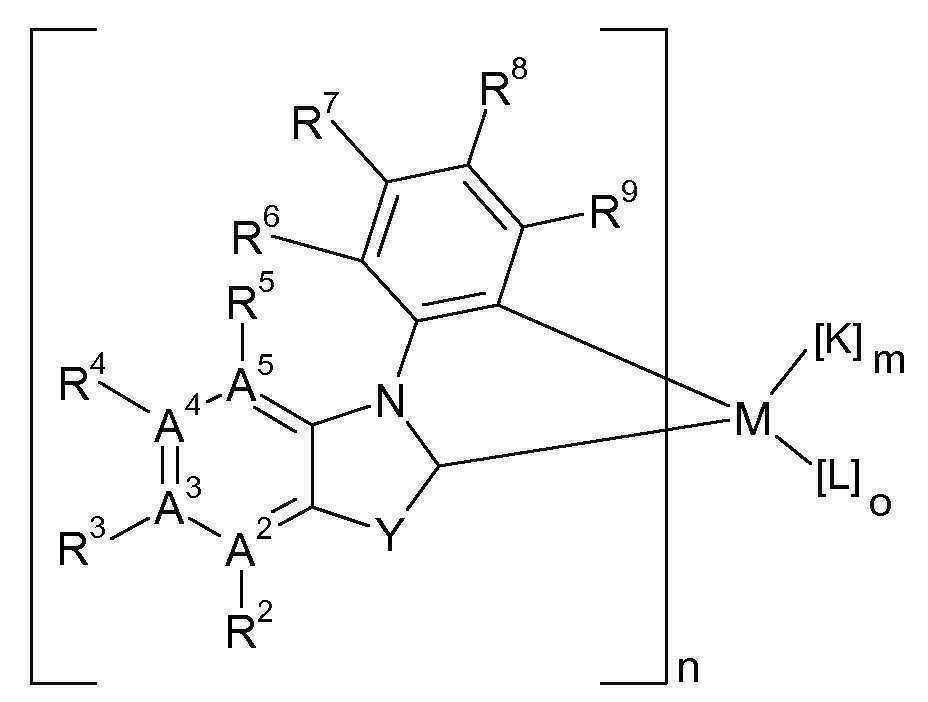
상기 화학식에서,In the above formula,
M, n, Y, A2, A3, A4, A5, R1, R2, R3, R4, R5, R6, R7, R8, R9, R10, K, L, m 및 o는 각각 하기에서 정의된 바와 같다:M, n, Y, A 2 , A 3 , A 4 , A 5 , R 1 , R 2 , R 3 , R 4 , R 5 , R 6 , R 7 , R 8 , R 9 , R 10 , K, L, m and o are each as defined below:
M은 Ir 또는 Pt이고,M is Ir or Pt,
n은 1, 2 및 3으로부터 선택된 정수이고,n is an integer selected from 1, 2 and 3,
Y는 NR1, O, S 또는 C(R10)2이고,Y is NR 1 , O, S or C(R 10 ) 2 ,
A2, A3, A4, A5는 각각 독립적으로 N 또는 C이고, 여기서 2개의 A는 질소 원자이고, 1종 이상의 탄소 원자는 고리에서 2개의 질소 원자 사이에 존재하며,A 2 , A 3 , A 4 , A 5 are each independently N or C, where two A are nitrogen atoms, and at least one carbon atom is present between two nitrogen atoms in the ring,
R1은 1종 이상의 이종원자로 임의로 개재되며, 임의로 1종 이상의 작용기를 지니며 그리고 1 내지 20개의 탄소 원자를 갖는 선형 또는 분지형 알킬 라디칼; 1종 이상의 이종원자로 임의로 개재되며, 임의로 1종 이상의 작용기를 지니며 그리고 3 내지 20개의 탄소 원자를 갖는 시클로알킬 라디칼; 1종 이상의 이종원자로 임의로 개재되며, 임의로 1종 이상의 작용기를 지니며 그리고 6 내지 30개의 탄소 원자를 갖는 치환 또는 비치환 아릴 라디칼; 1종 이상의 이종원자로 임의로 개재되며, 임의로 1종 이상의 작용기를 지니며 그리고 총 5 내지 18개의 탄소 원자 및/또는 이종원자를 갖는 치환 또는 비치환 헤테로아릴 라디칼이며,R 1 is a linear or branched alkyl radical optionally interrupted by one or more heteroatoms, optionally having one or more functional groups, and having 1 to 20 carbon atoms; A cycloalkyl radical optionally interrupted by one or more heteroatoms, optionally having one or more functional groups, and having 3 to 20 carbon atoms; Substituted or unsubstituted aryl radicals optionally interposed by one or more heteroatoms, optionally having one or more functional groups, and having 6 to 30 carbon atoms; A substituted or unsubstituted heteroaryl radical optionally interposed by one or more heteroatoms, optionally having one or more functional groups, and having a total of 5 to 18 carbon atoms and/or heteroatoms,
R2, R3, R4, R5는 각각, A2, A3, A4 및/또는 A5가 N인 경우 유리 전자쌍이거나 또는, A2, A3, A4 및/또는 A5가 C인 경우 각각 독립적으로 수소; 1종 이상의 이종원자로 임의로 개재되며, 임의로 1종 이상의 작용기를 지니며 그리고 1 내지 20개의 탄소 원자를 갖는 선형 또는 분지형 알킬 라디칼; 1종 이상의 이종원자로 임의로 개재되며, 임의로 1종 이상의 작용기를 지니며 그리고 3 내지 20개의 탄소 원자를 갖는 시클로알킬 라디칼; 1종 이상의 이종원자로 임의로 개재되며, 임의로 1종 이상의 작용기를 지니며 그리고 6 내지 30개의 탄소 원자를 갖는 치환 또는 비치환 아릴 라디칼; 1종 이상의 이종원자로 임의로 개재되며, 임의로 1종 이상의 작용기를 지니며 그리고 총 5 내지 18개의 탄소 원자 및/또는 이종원자를 갖는 치환 또는 비치환 헤테로아릴 라디칼; 공여체 또는 수용체 작용을 갖는 기이거나 또는R 2 , R 3 , R 4 , R 5 are each a free electron pair when A 2 , A 3 , A 4 and/or A 5 is N, or A 2 , A 3 , A 4 and/or A 5 is In the case of C, each independently hydrogen; Linear or branched alkyl radicals optionally interrupted by one or more heteroatoms, optionally having one or more functional groups, and having 1 to 20 carbon atoms; A cycloalkyl radical optionally interrupted by one or more heteroatoms, optionally having one or more functional groups, and having 3 to 20 carbon atoms; Substituted or unsubstituted aryl radicals optionally interposed by one or more heteroatoms, optionally having one or more functional groups, and having 6 to 30 carbon atoms; A substituted or unsubstituted heteroaryl radical optionally interrupted by one or more heteroatoms, optionally having one or more functional groups, and having a total of 5 to 18 carbon atoms and/or heteroatoms; Is a group having a donor or acceptor action, or
R3 및 R4는 A3 및 A4와 함께 1종 이상의 추가의 이종원자로 임의로 개재되며 그리고 총 5 내지 18개의 탄소 원자 및/또는 이종원자를 갖는 임의로 치환된 불포화 고리를 형성하며,R 3 and R 4 together with A 3 and A 4 form an optionally substituted unsaturated ring having a total of 5 to 18 carbon atoms and/or heteroatoms, optionally interrupted by one or more additional heteroatoms,
R6, R7, R8, R9는 각각 독립적으로 수소; 1종 이상의 이종원자로 임의로 개재되며, 임의로 1종 이상의 작용기를 지니며 그리고 1 내지 20개의 탄소 원자를 갖는 선형 또는 분지형 알킬 라디칼; 1종 이상의 이종원자로 임의로 개재되며, 임의로 1종 이상의 작용기를 지니며 그리고 3 내지 20개의 탄소 원자를 갖는 시클로알킬 라디칼; 1종 이상의 이종원자로 임의로 개재되며, 임의로 1종 이상의 작용기를 지니며 그리고 3 내지 20개의 탄소 원자를 갖는 시클로헤테로알킬 라디칼; 1종 이상의 이종원자로 임의로 개재되며, 임의로 1종 이상의 작용기를 지니며 그리고 6 내지 30개의 탄소 원자를 갖는 치환 또는 비치환 아릴 라디칼; 1종 이상의 이종원자로 임의로 개재되며, 임의로 1종 이상의 작용기를 지니며 그리고 총 5 내지 18개의 탄소 원자 및/또는 이종원자를 갖는 치환 또는 비치환 헤테로아릴 라디칼; 공여체 또는 수용체 작용을 갖는 기이거나 또는R 6 , R 7 , R 8 , and R 9 are each independently hydrogen; Linear or branched alkyl radicals optionally interrupted by one or more heteroatoms, optionally having one or more functional groups, and having 1 to 20 carbon atoms; A cycloalkyl radical optionally interrupted by one or more heteroatoms, optionally having one or more functional groups, and having 3 to 20 carbon atoms; A cycloheteroalkyl radical optionally interrupted by one or more heteroatoms, optionally having one or more functional groups, and having 3 to 20 carbon atoms; Substituted or unsubstituted aryl radicals optionally interposed by one or more heteroatoms, optionally having one or more functional groups, and having 6 to 30 carbon atoms; A substituted or unsubstituted heteroaryl radical optionally interrupted by one or more heteroatoms, optionally having one or more functional groups, and having a total of 5 to 18 carbon atoms and/or heteroatoms; Is a group having a donor or acceptor action, or
R6과 R7, R7과 R8 또는 R8과 R9는 이들이 결합되어 있는 탄소 원자와 함께 1종 이상의 이종원자로 임의로 개재되며 그리고 총 5 내지 18개의 탄소 원자 및/또는 이종원자를 갖는 불포화 또는 방향족, 임의로 치환된 고리를 형성하며 및/또는R 6 and R 7 , R 7 and R 8 or R 8 and R 9 are optionally interposed with one or more heteroatoms together with the carbon atom to which they are attached, and are unsaturated or having a total of 5 to 18 carbon atoms and/or heteroatoms. Form an aromatic, optionally substituted ring, and/or
A5가 C인 경우, R5 및 R6은 함께 임의로 이종원자, 방향족 단위, 헤테로방향족 단위 및/또는 작용기를 포함하며 그리고 총 1 내지 30개의 탄소 원자 및/또는 이종원자를 갖고, 이에 탄소 원자 및/또는 이종원자를 포함하는 치환 또는 비치환, 5- 내지 8-원 고리가 임의로 융합되어 있는 포화 또는 불포화, 선형 또는 분지형 가교를 형성하며,When A 5 is C, R 5 and R 6 together optionally contain a heteroatom, an aromatic unit, a heteroaromatic unit and/or a functional group and have a total of 1 to 30 carbon atoms and/or heteroatoms, wherein the carbon atom and / Or a substituted or unsubstituted, 5- to 8-membered ring containing heteroatoms is optionally fused to form a saturated or unsaturated, linear or branched bridge,
R10은 독립적으로 1종 이상의 이종원자로 임의로 개재되며, 임의로 1종 이상의 작용기를 지니며 그리고 1 내지 20개의 탄소 원자를 갖는 선형 또는 분지형 알킬 라디칼; 1종 이상의 이종원자로 임의로 개재되며, 임의로 1종 이상의 작용기를 지니며 그리고 3 내지 20개의 탄소 원자를 갖는 시클로알킬 라디칼; 1종 이상의 이종원자로 임의로 개재되며, 임의로 1종 이상의 작용기를 지니며 그리고 6 내지 30개의 탄소 원자를 갖는 치환 또는 비치환 아릴 라디칼; 1종 이상의 이종원자로 임의로 개재되며, 임의로 1종 이상의 작용기를 지니며 그리고 총 5 내지 18개의 탄소 원자 및/또는 이종원자를 갖는 치환 또는 비치환 헤테로아릴 라디칼이고,R 10 is independently a linear or branched alkyl radical optionally interrupted by one or more heteroatoms, optionally having one or more functional groups, and having 1 to 20 carbon atoms; A cycloalkyl radical optionally interrupted by one or more heteroatoms, optionally having one or more functional groups, and having 3 to 20 carbon atoms; Substituted or unsubstituted aryl radicals optionally interposed by one or more heteroatoms, optionally having one or more functional groups, and having 6 to 30 carbon atoms; A substituted or unsubstituted heteroaryl radical optionally interposed by one or more heteroatoms, optionally having one or more functional groups, and having a total of 5 to 18 carbon atoms and/or heteroatoms,
K는 비하전된 1좌 배위자 또는 2좌 배위자(mono- and bidentate) 리간드이고,K is an uncharged 1st locus ligand or bidentate ligand (mono- and bidentate) ligand,
L이 1좌 배위자 또는 2좌 배위자일 수 있는, 1가 또는 2가 음이온 리간드, 바람직하게는 1가 음이온 리간드이며,L is a monovalent or divalent anionic ligand, preferably a monovalent anionic ligand, which may be a monovalent ligand or a didentate ligand,
m은 0, 1 또는 2이고, 여기서 m이 2인 경우, K 리간드는 동일하거나 또는 상이할 수 있으며, m is 0, 1 or 2, wherein when m is 2, the K ligands may be the same or different,
o는 0, 1 또는 2이고, 여기서 o가 2인 경우, L 리간드는 동일하거나 또는 상이할 수 있다.o is 0, 1 or 2, wherein when o is 2, the L ligands may be the same or different.
도 1 은, 본 발명의 금속-카르벤 착물의 화학식이다.1 is a chemical formula of a metal-carbene complex of the present invention.
m 및 o가 각각 0인 경우, 본 발명에 의하면 화학식 I의 동종리간드성 금속-카르벤 착물이 존재한다. m 및 o 중 1종 이상이 1 또는 2인 경우, 본 발명에 의하면 이종리간드성 화학식 I의 금속-카르벤 착물이 존재한다.When m and o are each 0, according to the present invention, a homoligandic metal-carbene complex of formula (I) is present. When at least one of m and o is 1 or 2, according to the present invention, a heteroligand-type metal-carbene complex of formula (I) is present.
본 발명과 관련하여, 용어 아릴 라디칼, 단위 또는 기, 헤테로아릴 라디칼, 단위 또는 기, 알킬 라디칼, 단위 또는 기 및 시클로알킬 라디칼, 단위 또는 기는 각각 반대의 의미로 명시하지 않는 한 하기와 같이 정의된다:In the context of the present invention, the terms aryl radicals, units or groups, heteroaryl radicals, units or groups, alkyl radicals, units or groups and cycloalkyl radicals, units or groups are each defined as follows unless otherwise specified. :
아릴 라디칼, 단위 또는 기는 방향족 고리 또는 복수의 융합된 방향족 고리로부터 형성된 6 내지 30개의 탄소 원자, 바람직하게는 6 내지 18개의 탄소 원자의 기본 골격을 갖는 라디칼을 의미하는 것으로 이해한다. 적절한 기본 골격의 예로는 페닐, 나프틸, 안트라세닐 또는 페난트레닐을 들 수 있다. 이러한 기본 골격은 치환 가능한 모든 탄소 원자가 수소 원자를 지닌다는 것을 의미하는 비치환일 수 있거나 또는, 기본 골격의 1종 이상 또는 모든 치환 가능한 위치에서 치환될 수 있다.An aryl radical, unit or group is understood to mean a radical having a basic skeleton of 6 to 30 carbon atoms, preferably 6 to 18 carbon atoms, formed from an aromatic ring or a plurality of fused aromatic rings. Examples of suitable basic skeletons include phenyl, naphthyl, anthracenyl or phenanthrenyl. Such a basic skeleton may be unsubstituted, meaning that all of the substitutable carbon atoms have hydrogen atoms, or may be substituted at one or more of the basic skeletons or at all substitutable positions.
적절한 치환기의 예로는 알킬 라디칼, 바람직하게는 1 내지 8개의 탄소 원자를 갖는 알킬 라디칼, 더욱 바람직하게는 메틸, 에틸, i-프로필, t-부틸, 네오펜틸, 아릴 라디칼, 바람직하게는 차례로 치환 또는 비치환될 수 있는 C6-아릴 라디칼, 헤테로아릴 라디칼, 바람직하게는 1종 이상의 질소 원자를 포함하는 헤테로아릴 라디칼, 더욱 바람직하게는 피리딜 라디칼, 알케닐 라디칼, 바람직하게는 하나의 이중 결합을 지니는 알케닐 라디칼, 더욱 바람직하게는 하나의 이중 결합 및 1 내지 8개의 탄소 원자를 갖는 알케닐 라디칼 또는, 공여체 또는 수용체 기능을 갖는 기를 들 수 있다. 공여체 작용을 갖는 기는 +I 및/또는 +M 효과를 갖는 기를 의미하는 것으로 이해하며, 수용체 작용을 갖는 기는 -I 및/또는 -M 효과를 갖는 기를 의미하는 것으로 이해한다. 적절한 공여체 또는 수용체 기능을 갖는 기로는 할로겐 라디칼, 바람직하게는 F, Cl, Br, 더욱 바람직하게는 F, 알킬 라디칼, 실릴 라디칼, 실록시 라디칼, 알콕시 라디칼, 아릴옥시 라디칼, 카르보닐 라디칼, 에스테르 라디칼, 아민 라디칼, 아미드 라디칼, CH2F 기, CHF2 기, CF3 기, CN 기, 티오 기 또는 SCN 기를 들 수 있다. 아릴 라디칼은 가장 바람직하게는 메틸, 에틸, 이소-프로필, n-프로필, n-부틸, 이소-부틸, tert-부틸, 네오펜틸, CF3, 아릴옥시, 아민, 티오 기 및 알콕시로 이루어진 군으로부터 선택된 치환기를 지니거나 또는 아릴 라디칼은 비치환이다. 아릴 라디칼 또는 아릴 기는 바람직하게는 전술한 치환기 중 1종 이상으로 임의로 치환된 C6-아릴 라디칼이다. C6-아릴 라디칼은 더욱 바람직하게는 전술한 치환기 중 0, 1, 2 또는 3개를 갖는다.Examples of suitable substituents are alkyl radicals, preferably alkyl radicals having 1 to 8 carbon atoms, more preferably methyl, ethyl, i-propyl, t-butyl, neopentyl, aryl radicals, preferably in turn substituted or Unsubstituted C 6 -aryl radicals, heteroaryl radicals, preferably heteroaryl radicals containing at least one nitrogen atom, more preferably pyridyl radicals, alkenyl radicals, preferably one double bond. Genies include alkenyl radicals, more preferably alkenyl radicals having one double bond and 1 to 8 carbon atoms, or groups having a donor or acceptor function. A group having a donor action is understood to mean a group having a +I and/or +M effect, and a group having a receptor action is understood to mean a group having a -I and/or -M effect. Groups having a suitable donor or acceptor function include halogen radicals, preferably F, Cl, Br, more preferably F, alkyl radicals, silyl radicals, siloxy radicals, alkoxy radicals, aryloxy radicals, carbonyl radicals, ester radicals. , An amine radical, an amide radical, a CH 2 F group, a CHF 2 group, a CF 3 group, a CN group, a thio group, or an SCN group. The aryl radical is most preferably from the group consisting of methyl, ethyl, iso-propyl, n-propyl, n-butyl, iso-butyl, tert-butyl, neopentyl, CF 3 , aryloxy, amine, thio group and alkoxy. With selected substituents or the aryl radical is unsubstituted. The aryl radical or aryl group is preferably a C 6 -aryl radical optionally substituted with one or more of the aforementioned substituents. The C 6 -aryl radical more preferably has 0, 1, 2 or 3 of the aforementioned substituents.
헤테로아릴 라디칼 또는 헤테로아릴 단위 또는 기는 전술한 아릴 라디칼로부터 아릴 라디칼의 기본 골격에서 1종 이상의 탄소 원자가 이종원자로 치환된 것이 상이한 5 내지 30개의 탄소 원자 및/또는 이종원자를 갖는 라디칼을 의미하는 것으로 이해한다. 바람직한 이종원자는 N, O 및 S이다. 가장 바람직하게는, 아릴 라디칼의 기본 골격의 1 또는 2개의 탄소 원자는 이종원자로 치환된다. 기본 골격은 특히 바람직하게는 전자-부족 계, 예컨대 피리딜, 피리미딜, 피라질 및 트리아졸릴 및 5-원 헤테로방향족, 예컨대 피롤, 푸란, 티오펜, 이미다졸, 피라졸, 트리아졸, 옥사졸 및 티아졸로부터 선택된다. 기본 골격은 기본 골격의 1개, 1개 초과 또는 전부의 치환 가능한 위치에서 치환될 수 있다. 적절한 치환기는 아릴 기에 대하여 이미 상기 명시되어 있는 바와 동일하다.Heteroaryl radical or heteroaryl unit or group is understood to mean a radical having 5 to 30 carbon atoms and/or heteroatoms different from the above-described aryl radical in which one or more carbon atoms are substituted with heteroatoms in the basic skeleton of the aryl radical. . Preferred heteroatoms are N, O and S. Most preferably, one or two carbon atoms of the basic skeleton of the aryl radical are substituted with heteroatoms. The basic skeleton is particularly preferably electron-deficient systems such as pyridyl, pyrimidyl, pyrazyl and triazolyl and 5-membered heteroaromatics such as pyrrole, furan, thiophene, imidazole, pyrazole, triazole, oxazole And thiazole. The basic skeleton may be substituted at one, more than one or all substitutable positions of the basic skeleton. Suitable substituents are the same as already specified above for the aryl group.
알킬 라디칼 또는 알킬 기는 1 내지 20개의 탄소 원자, 바람직하게는 1 내지 10개의 탄소 원자, 더욱 바람직하게는 1 내지 8개의 탄소 원자를 갖는 라디칼을 의미하는 것으로 이해한다. 이러한 알킬 라디칼은 분지되거나 또는 분지되지 않을 수 있으며, 임의로 1종 이상의 이종원자, 바람직하게는 N, O 또는 S로 개재될 수 있다. 또한, 이러한 알킬 라디칼은 아릴 기에 대하여 이미 명시된 치환기 중 1종 이상에 의하여 치환될 수 있다. 마찬가지로, 알킬 라디칼은 1종 이상의 아릴 기를 지니는 것이 가능하다. 상기 제시된 아릴 기의 전부가 적절하다. 메틸, 에틸, i-프로필, n-프로필, i-부틸, n-부틸, t-부틸, sec-부틸, i-펜틸, n-펜틸, sec-펜틸, 네오펜틸, n-헥실, i-헥실 및 sec-헥실로 이루어진 군으로부터 선택된 알킬 라디칼이 특히 바람직하다. 메틸, i-프로필, tert-부틸 및 네오펜틸이 매우 특히 바람직하다.An alkyl radical or an alkyl group is understood to mean a radical having 1 to 20 carbon atoms, preferably 1 to 10 carbon atoms, more preferably 1 to 8 carbon atoms. These alkyl radicals may or may not be branched and may optionally be interrupted by one or more heteroatoms, preferably N, O or S. In addition, these alkyl radicals may be substituted by one or more of the substituents already specified for the aryl group. Likewise, it is possible for the alkyl radical to carry more than one aryl group. All of the aryl groups presented above are suitable. Methyl, ethyl, i-propyl, n-propyl, i-butyl, n-butyl, t-butyl, sec-butyl, i-pentyl, n-pentyl, sec-pentyl, neopentyl, n-hexyl, i-hexyl And an alkyl radical selected from the group consisting of sec-hexyl is particularly preferred. Very particularly preferred are methyl, i-propyl, tert-butyl and neopentyl.
시클로알킬 라디칼 또는 시클로알킬 기는 3 내지 20개의 탄소 원자, 바람직하게는 3 내지 10개의 탄소 원자, 더욱 바람직하게는 3 내지 8개의 탄소 원자를 갖는 고리형 라디칼을 의미하는 것으로 이해한다. 알킬 라디칼은 임의로 1종 이상의 이종원자, 바람직하게는 N, O 또는 S로 개재될 수 있다. 게다가, 이러한 시클로알킬 라디칼은 비치환 또는 치환될 수 있으며, 즉 아릴 기에 대하여 이미 명시된 치환기 중 1종 이상으로 치환될 수 있다. 마찬가지로 시클로알킬 라디칼은 1종 이상의 아릴 기를 지닐 수 있다. 상기 제시된 모든 아릴 기가 적절하다.Cycloalkyl radicals or cycloalkyl groups are understood to mean cyclic radicals having 3 to 20 carbon atoms, preferably 3 to 10 carbon atoms, more preferably 3 to 8 carbon atoms. The alkyl radical may optionally be interrupted by one or more heteroatoms, preferably N, O or S. In addition, these cycloalkyl radicals may be unsubstituted or substituted, ie may be substituted with one or more of the substituents already specified for the aryl group. Likewise, cycloalkyl radicals may carry one or more aryl groups. All aryl groups presented above are suitable.
아릴, 헤테로아릴, 알킬 및 시클로알킬 라디칼에 대한 언급은 본 발명에 의하면 독립적으로 본원에서 언급된 라디칼에 적용하며, 여기서 R2, R3, R4 및 R5는, A2, A3, A4 및/또는 A5가 N인 경우 전술한 기로부터 선택된 치환기가 이들 고리 질소 원자상에 존재하지 않는다는 것을 의미하는 유리 전자쌍이다. A2, A3, A4 및/또는 A5가 C인 경우에서, R2, R3, R4 및 R5는 각각 독립적으로 수소 및/또는 명시된 치환기이다.References to aryl, heteroaryl, alkyl and cycloalkyl radicals according to the invention apply independently to the radicals mentioned herein, wherein R 2 , R 3 , R 4 and R 5 are, A 2 , A 3 , A When 4 and/or A 5 is N, it is a free electron pair which means that a substituent selected from the aforementioned groups is not present on these ring nitrogen atoms. When A 2 , A 3 , A 4 and/or A 5 is C, R 2 , R 3 , R 4 and R 5 are each independently hydrogen and/or a specified substituent.
화학식 I에서의 K는 비하전된 1좌 배위자 또는 2좌 배위자 리간드이고, 화학식 I에서의 L은 1가 또는 2가 음이온 리간드, 바람직하게는 1좌 배위자 또는 2좌 배위자일 수 있는 1가 음이온 리간드이다.K in formula I is an uncharged monodentate ligand or bidentate ligand ligand, and L in formula I is a monovalent or divalent anionic ligand, preferably a monovalent anionic ligand which may be a monovalent or didentate ligand to be.
2좌 배위자 리간드는 2개의 부위에서 전이 금속 원자 M에 배위 결합된 리간드를 의미하는 것으로 이해한다. 1좌 배위자 리간드는 리간드상에서 하나의 위치에서 전이 금속 원자 M에 배위 결합된 리간드를 의미하는 것으로 이해한다.The bidentate ligand ligand is understood to mean a ligand coordinated to the transition metal atom M at two sites. The monologue ligand ligand is understood to mean a ligand coordinarily bonded to the transition metal atom M at one position on the ligand.
1좌 배위자 또는 2좌 배위자일 수 있는 적절한 1가 음이온성 또는 2가 음이온성 리간드 L, 바람직하게는 1가 음이온성 리간드 L은 1좌 배위자 또는 2좌 배위자 1가 음이온성 또는 2가 음이온성 리간드로서 통상적으로 사용되는 리간드이다.Suitable mono-anionic or di-anionic ligands L, preferably mono-anionic ligands L, which may be monodentate or bidentate ligands, are monovalent or bidentate ligands monoanionic or diionic ligands It is a ligand commonly used as.
적절한 1가 음이온성 1좌 배위자 리간드의 예로는 할로겐화물, 특히 Cl- 및 Br-, 슈도할로겐화물, 특히 CN-, 시클로펜타디에닐(Cp-), 수소화물, 전이 금속 M에 시그마 결합에 의하여 결합된 알킬 라디칼, 예를 들면 CH3, 전이 금속 M에 시그마 결합에 의하여 결합된 알킬아릴 라디칼, 예를 들면 벤질을 들 수 있다.An example of a suitable first anionic one L ligand, the ligand is a halide, especially Cl - by a sigma bond, a hydride, a transition metal M and Br -, pseudo halide, in particular CN - -, cyclopentadienyl (Cp) A bonded alkyl radical such as CH 3 , an alkylaryl radical bonded to the transition metal M by a sigma bond, such as benzyl.
적절한 1가 음이온성 2좌 배위자 리간드의 예로는 아세틸아세토네이트 및 그의 유도체, 피콜리네이트, 시프(Schiff) 염기, 아미노산, 아릴피리딘, 예를 들면 페닐피리딘 및, WO 02/15645에 명시된 추가의 2좌 배위자 1가 음이온성 리간드, WO2006056418 및 EP1658343에 명시된 바와 같은 카르벤 리간드, 아릴아졸, 예를 들면 2-아릴이미다졸을 들 수 있으며, 2-아릴이미다졸 및 카르벤 리간드가 바람직하다.Examples of suitable monoanionic bidentate ligand ligands include acetylacetonate and derivatives thereof, picolinates, Schiff bases, amino acids, arylpyridines, such as phenylpyridine, and the additional 2 specified in WO 02/15645. Left ligand monovalent anionic ligands, carbene ligands as specified in WO2006056418 and EP1658343, arylazoles such as 2-arylimidazole, with 2-arylimidazole and carbene ligand being preferred.
적절한 2가 음이온성 2좌 배위자 리간드의 예로는 디알콕시드, 디카르보네이트, 디카르복실레이트, 디아미드, 디이미드, 디티올레이트, 비스시클로펜타디에닐, 비스포스포네이트, 비스술포네이트 및 3-페닐피라졸을 들 수 있다.Examples of suitable dianionic bidentate ligand ligands are dialkoxides, dicarbonates, dicarboxylates, diamides, diimides, dithiolates, biscyclopentadienyl, bisphosphonates, bissulfonates and 3-phenyl And pyrazole.
적절한 비하전 1좌 배위자 또는 2좌 배위자 리간드 K는 바람직하게는 포스핀, 모노- 및 비스포스핀 모두; 포스포네이트, 모노- 및 비스포스포네이트 모두 및 그의 유도체, 아르세네이트, 모노- 및 비스아르세네이트 모두 및 그의 유도체; 포스파이트, 모노- 및 비스포스파이트 모두; CO; 피리딘, 모노- 및 비스피리딘 모두; 니트릴, 디니트릴, 알릴, 디이민, M1과의 π 착물을 형성하는 비공액 디엔 및 공액 디엔으로 이루어진 군으로부터 선택된다. 특히 바람직한 비하전 1좌 배위자 또는 2좌 배위자 리간드 K는 포스핀, 모노- 및 비스포스핀 모두, 바람직하게는 트리알킬-, 트리아릴- 또는 알킬아릴포스핀, 더욱 바람직하게는 PAr3(여기서 Ar은 치환 또는 비치환 아릴 라디칼이며, PAr3에서의 3종의 아릴 라디칼은 동일하거나 또는 상이할 수 있음), 더욱 바람직하게는 PPh3, PEt3, PnBu3, PEt2Ph, PMe2Ph, PnBu2Ph; 포스포네이트 및 그의 유도체, 아르세네이트 및 그의 유도체, 포스파이트, CO; 피리딘, 모노- 및 비스피리딘 모두(여기서 피리딘은 알킬 또는 아릴 기로 치환될 수 있음); M1과 π 착물을 형성하는 니트릴 및 디엔, 바람직하게는 η4-디페닐-1,3-부타디엔, η4-1,3-펜타디엔, η4-1-페닐-1,3-펜타디엔, η4-1,4-디벤질-1,3-부타디엔, η4-2,4-헥사디엔, η4-3-메틸-1,3-펜타디엔, η4-1,4-디톨릴-1,3-부타디엔, η4-1,4-비스(트리메틸실릴)-1,3-부타디엔 및 η2- 또는 η4-시클로옥타디엔(각각 1,3 및 각각 1,5), 더욱 바람직하게는 1,4-디페닐-1,3-부타디엔, 1-페닐-1,3-펜타디엔, 2,4-헥사디엔, 부타디엔, η2-시클로옥텐, η4-1,3-시클로옥타디엔 및 η4-1,5-시클로옥타디엔으로 이루어진 군으로부터 선택된다. 매우 특히 바람직한 비하전 1좌 배위자 리간드는 PPh3, P(OPh)3, AsPh3, CO, 피리딘, 니트릴 및 그의 유도체로 이루어진 군으로부터 선택된다. 적절한 비하전 1좌 배위자 또는 2좌 배위자 리간드는 바람직하게는 1,4-디페닐-1,3-부타디엔, 1-페닐-1,3-펜타디엔, 2,4-헥사디엔, η4-시클로옥타디엔 및 η2-시클로옥타디엔(각각 1,3 및 각각 1,5)이다.Suitable uncharged monodentate ligands or bidentate ligand ligands K are preferably all phosphine, mono- and bisphosphine; Phosphonates, all mono- and bisphosphonates and derivatives thereof, arsenate, all mono- and bisarsenates and derivatives thereof; Both phosphite, mono- and bisphosphite; CO; Both pyridine, mono- and bispyridine; It is selected from the group consisting of nitrile, dinitrile, allyl, diimine, non-conjugated diene and conjugated diene forming a π complex with M 1. Particularly preferred uncharged monodentate ligands or bidentate ligands K are phosphine, mono- and bisphosphine, preferably trialkyl-, triaryl- or alkylarylphosphine, more preferably PAr 3 (wherein Ar Is a substituted or unsubstituted aryl radical, and the three aryl radicals in PAr 3 may be the same or different), more preferably PPh 3 , PEt 3 , PnBu 3 , PEt 2 Ph, PMe 2 Ph, PnBu 2 Ph; Phosphonate and its derivatives, arsenate and its derivatives, phosphite, CO; Both pyridine, mono- and bispyridine, wherein pyridine may be substituted with an alkyl or aryl group; Nitriles and dienes forming a π complex with M 1 , preferably η 4 -diphenyl-1,3-butadiene, η 4 -1,3-pentadiene, η 4 -1-phenyl-1,3-pentadiene , η 4 -1,4-dibenzyl-1,3-butadiene, η 4 -2,4-hexadiene, η 4 -3-methyl-1,3-pentadiene, η 4 -1,4-ditolyl -1,3-butadiene, η 4 -1,4-bis (trimethylsilyl) -1,3-butadiene and η 2 -or η 4 -cyclooctadiene (1,3 each and 1,5 each), more preferably Specifically, 1,4-diphenyl-1,3-butadiene, 1-phenyl-1,3-pentadiene, 2,4-hexadiene, butadiene, η 2 -cyclooctene, η 4 -1,3-cycloocta Diene and η 4 -1,5-cyclooctadiene. Very particularly preferred uncharged monodentate ligand ligands are selected from the group consisting of PPh 3 , P(OPh) 3 , AsPh 3 , CO, pyridine, nitriles and derivatives thereof. Suitable uncharged monodentate or bidentate ligand ligands are preferably 1,4-diphenyl-1,3-butadiene, 1-phenyl-1,3-pentadiene, 2,4-hexadiene, η 4 -cyclo Octadiene and η 2 -cyclooctadiene (1,3 respectively and 1,5 respectively).
전술한 경우에서 1가 음이온성 리간드 L의 수 o는 0, 1, 2이다. o>1인 경우, L 리간드는 동일하거나 또는 상이하며, 바람직하게는 동일하다.In the above-described case, the number o of the monoanionic ligand L is 0, 1, 2. When o>1, the L ligands are the same or different, preferably the same.
비하전 리간드 K의 수 m은 Ir(III)의 배위수 6 또는 Pt(II)의 배위수 4가 카르벤 리간드 및 리간드 L의 도움으로 이미 달성되었는지의 여부에 의존한다. Ir(III)을 사용하는 경우에서 n이 3이고 그리고 3개의 1가 음이온성 2좌 배위자 카르벤 리간드를 사용할 경우, 전술한 경우에서 m은 0이다. Pt(II)를 사용할 경우에서 n이 2이고, 2개의 1가 음이온성 2좌 배위자 카르벤 리간드를 사용할 경우, 이 경우에서 m은 마찬가지로 0이다.The number m of uncharged ligand K depends on whether the
추가로 바람직한 실시양태에서, 본 발명은 화학식 I에서의 L이 하기 화학식 II의 카르벤 리간드인 본 발명의 금속-카르벤 착물에 관한 것이다:In a further preferred embodiment, the invention relates to a metal-carbene complex of the invention wherein L in formula (I) is a carbene ligand of formula (II):
<화학식 II><Formula II>

상기 화학식에서,In the above formula,
A6, A7은 각각 독립적으로 C 또는 N이고,A 6 and A 7 are each independently C or N,
R11은 1종 이상의 이종원자로 임의로 개재되며, 임의로 1종 이상의 작용기를 지니며 그리고 1 내지 20개의 탄소 원자를 갖는 선형 또는 분지형 알킬 라디칼; 1종 이상의 이종원자로 임의로 개재되며, 임의로 1종 이상의 작용기를 지니며 그리고 3 내지 20개의 탄소 원자를 갖는 시클로알킬 라디칼; 1종 이상의 이종원자로 임의로 개재되며, 임의로 1종 이상의 작용기를 지니며 그리고 3 내지 20개의 탄소 원자를 갖는 시클로헤테로알킬 라디칼; 1종 이상의 이종원자로 임의로 개재되며, 임의로 1종 이상의 작용기를 지니며 그리고 6 내지 30개의 탄소 원자를 갖는 치환 또는 비치환 아릴 라디칼; 1종 이상의 이종원자로 임의로 개재되며, 임의로 1종 이상의 작용기를 지니며 그리고 총 5 내지 18개의 탄소 원자 및/또는 이종원자를 갖는 치환 또는 비치환 헤테로아릴 라디칼이고,R 11 is a linear or branched alkyl radical optionally interrupted by one or more heteroatoms, optionally having one or more functional groups, and having 1 to 20 carbon atoms; A cycloalkyl radical optionally interrupted by one or more heteroatoms, optionally having one or more functional groups, and having 3 to 20 carbon atoms; A cycloheteroalkyl radical optionally interrupted by one or more heteroatoms, optionally having one or more functional groups, and having 3 to 20 carbon atoms; Substituted or unsubstituted aryl radicals optionally interposed by one or more heteroatoms, optionally having one or more functional groups, and having 6 to 30 carbon atoms; A substituted or unsubstituted heteroaryl radical optionally interposed by one or more heteroatoms, optionally having one or more functional groups, and having a total of 5 to 18 carbon atoms and/or heteroatoms,
R12, R13은 각각 독립적으로, A가 N인 경우 유리 전자쌍이거나 또는, A가 C인 경우 수소; 1종 이상의 이종원자로 임의로 개재되며, 임의로 1종 이상의 작용기를 지니며 그리고 1 내지 20개의 탄소 원자를 갖는 선형 또는 분지형 알킬 라디칼; 1종 이상의 이종원자로 임의로 개재되며, 임의로 1종 이상의 작용기를 지니며 그리고 3 내지 20개의 탄소 원자를 갖는 시클로알킬 라디칼; 1종 이상의 이종원자로 임의로 개재되며, 임의로 1종 이상의 작용기를 지니며 그리고 3 내지 20개의 탄소 원자를 갖는 시클로헤테로알킬 라디칼; 1종 이상의 이종원자로 임의로 개재되며, 임의로 1종 이상의 작용기를 지니며 그리고 6 내지 30개의 탄소 원자를 갖는 치환 또는 비치환 아릴 라디칼; 1종 이상의 이종원자로 임의로 개재되며, 임의로 1종 이상의 작용기를 지니며 그리고 총 5 내지 18개의 탄소 원자 및/또는 이종원자를 갖는 치환 또는 비치환 헤테로아릴 라디칼; 공여체 또는 수용체 작용을 갖는 기이고,R 12 and R 13 are each independently a free electron pair when A is N, or hydrogen when A is C; Linear or branched alkyl radicals optionally interrupted by one or more heteroatoms, optionally having one or more functional groups, and having 1 to 20 carbon atoms; A cycloalkyl radical optionally interrupted by one or more heteroatoms, optionally having one or more functional groups, and having 3 to 20 carbon atoms; A cycloheteroalkyl radical optionally interrupted by one or more heteroatoms, optionally having one or more functional groups, and having 3 to 20 carbon atoms; Substituted or unsubstituted aryl radicals optionally interposed by one or more heteroatoms, optionally having one or more functional groups, and having 6 to 30 carbon atoms; A substituted or unsubstituted heteroaryl radical optionally interrupted by one or more heteroatoms, optionally having one or more functional groups, and having a total of 5 to 18 carbon atoms and/or heteroatoms; Is a group having a donor or acceptor action,
R14, R15, R16, R17은 각각 독립적으로 수소; 1종 이상의 이종원자로 임의로 개재되며, 임의로 1종 이상의 작용기를 지니며 그리고 1 내지 20개의 탄소 원자를 갖는 선형 또는 분지형 알킬 라디칼; 1종 이상의 이종원자로 임의로 개재되며, 임의로 1종 이상의 작용기를 지니며 그리고 3 내지 20개의 탄소 원자를 갖는 시클로알킬 라디칼; 1종 이상의 이종원자로 임의로 개재되며, 임의로 1종 이상의 작용기를 지니며 그리고 3 내지 20개의 탄소 원자를 갖는 시클로헤테로알킬 라디칼; 1종 이상의 이종원자로 임의로 개재되며, 임의로 1종 이상의 작용기를 지니며 그리고 6 내지 30개의 탄소 원자를 갖는 치환 또는 비치환 아릴 라디칼; 1종 이상의 이종원자로 임의로 개재되며, 임의로 1종 이상의 작용기를 지니며 그리고 총 5 내지 18개의 탄소 원자 및/또는 이종원자를 갖는 치환 또는 비치환 헤테로아릴 라디칼; 공여체 또는 수용체 작용을 갖는 기이거나 또는R 14 , R 15 , R 16 , and R 17 are each independently hydrogen; Linear or branched alkyl radicals optionally interrupted by one or more heteroatoms, optionally having one or more functional groups, and having 1 to 20 carbon atoms; A cycloalkyl radical optionally interrupted by one or more heteroatoms, optionally having one or more functional groups, and having 3 to 20 carbon atoms; A cycloheteroalkyl radical optionally interrupted by one or more heteroatoms, optionally having one or more functional groups, and having 3 to 20 carbon atoms; Substituted or unsubstituted aryl radicals optionally interposed by one or more heteroatoms, optionally having one or more functional groups, and having 6 to 30 carbon atoms; A substituted or unsubstituted heteroaryl radical optionally interrupted by one or more heteroatoms, optionally having one or more functional groups, and having a total of 5 to 18 carbon atoms and/or heteroatoms; Is a group having a donor or acceptor action, or
R12와 R13, R14와 R15, R15와 R16 또는 R16과 R17은 이들이 결합되어 있는 A 또는 탄소 원자와 함께 1종 이상의 이종원자로 임의로 개재되며 그리고 총 5 내지 18개의 탄소 원자 및/또는 이종원자를 갖는 불포화 또는 방향족, 임의로 치환된 고리를 형성하며 및/또는R 12 and R 13 , R 14 and R 15 , R 15 and R 16 or R 16 and R 17 are optionally interposed by one or more heteroatoms together with the A or carbon atom to which they are attached, and a total of 5 to 18 carbon atoms And/or forming an unsaturated or aromatic, optionally substituted ring having heteroatoms and/or
A6이 C인 경우, R13 및 R14는 함께 임의로 이종원자, 방향족 단위, 헤테로방향족 단위 및/또는 작용기를 포함하며 그리고 총 1 내지 30개의 탄소 원자 및/또는 이종원자를 갖고, 이에 탄소 원자 및/또는 이종원자를 포함하는 치환 또는 비치환, 5- 내지 8-원 고리가 임의로 융합되어 있는 포화 또는 불포화, 선형 또는 분지형 가교를 형성한다.When A 6 is C, R 13 and R 14 together optionally contain heteroatoms, aromatic units, heteroaromatic units and/or functional groups, and have a total of 1 to 30 carbon atoms and/or heteroatoms, wherein the carbon atoms and / Or a substituted or unsubstituted, 5- to 8-membered ring containing heteroatoms is optionally fused to form a saturated or unsaturated, linear or branched bridge.
추가로 바람직한 실시양태에서, 본 발명은 화학식 I에서의 L이 하기 화학식 III의 헤테로시클릭 비카르벤 리간드인 본 발명의 금속-카르벤 착물에 관한 것이다: In a further preferred embodiment, the invention relates to a metal-carbene complex of the invention wherein L in formula (I) is a heterocyclic bicarbene ligand of formula (III):
<화학식 III><Formula III>

상기 화학식 III의 리간드에서의 부호는 각각 하기에서 정의한 바와 같으며:The symbols in the ligand of Formula III are as defined below, respectively:
D는 각각 독립적으로 CR18 또는 N, 바람직하게는 CR18이고;Each D is independently CR 18 or N, preferably CR 18 ;
W는 C, N, 바람직하게는 C이고;W is C, N, preferably C;
E는 각각 독립적으로 CR19, N, NR20, 바람직하게는 CR19 또는 N이고;Each E is independently CR 19 , N, NR 20 , preferably CR 19 or N;
G는 CR21, N, NR22, S, O, 바람직하게는 NR21이고; G is CR 21 , N, NR 22 , S, O, preferably NR 21 ;
R18, R19, R21은 각각 독립적으로 수소; 1종 이상의 이종원자로 임의로 개재되며, 임의로 1종 이상의 작용기를 지니며 그리고 1 내지 20개의 탄소 원자를 갖는 선형 또는 분지형 알킬 라디칼; 1종 이상의 이종원자로 임의로 개재되며, 임의로 1종 이상의 작용기를 지니며 그리고 3 내지 20개의 탄소 원자를 갖는 시클로알킬 라디칼; 1종 이상의 이종원자로 임의로 개재되며, 임의로 1종 이상의 작용기를 지니며 그리고 3 내지 20개의 탄소 원자를 갖는 시클로헤테로알킬 라디칼; 1종 이상의 이종원자로 임의로 개재되며, 임의로 1종 이상의 작용기를 지니며 그리고 6 내지 30개의 탄소 원자를 갖는 치환 또는 비치환 아릴 라디칼; 1종 이상의 이종원자로 임의로 개재되며, 임의로 1종 이상의 작용기를 지니며 그리고 총 5 내지 18개의 탄소 원자 및/또는 이종원자를 갖는 치환 또는 비치환 헤테로아릴 라디칼; 공여체 또는 수용체 작용을 갖는 기이거나 또는 R 18 , R 19 , and R 21 are each independently hydrogen; Linear or branched alkyl radicals optionally interrupted by one or more heteroatoms, optionally having one or more functional groups, and having 1 to 20 carbon atoms; A cycloalkyl radical optionally interrupted by one or more heteroatoms, optionally having one or more functional groups, and having 3 to 20 carbon atoms; A cycloheteroalkyl radical optionally interrupted by one or more heteroatoms, optionally having one or more functional groups, and having 3 to 20 carbon atoms; Substituted or unsubstituted aryl radicals optionally interposed by one or more heteroatoms, optionally having one or more functional groups, and having 6 to 30 carbon atoms; A substituted or unsubstituted heteroaryl radical optionally interrupted by one or more heteroatoms, optionally having one or more functional groups, and having a total of 5 to 18 carbon atoms and/or heteroatoms; Is a group having a donor or acceptor action, or
각각의 경우에서 2개의 R18, R19 및 R21 라디칼은 이들이 결합되어 있는 탄소 원자와 함께 1종 이상의 이종원자로 임의로 개재되며 그리고 총 5 내지 18개의 탄소 원자 및/또는 이종원자를 갖는 포화, 불포화 또는 방향족, 임의로 치환된 고리를 형성하며,In each case two R 18 , R 19 and R 21 radicals are optionally interrupted by one or more heteroatoms together with the carbon atom to which they are attached and are saturated, unsaturated or having a total of 5 to 18 carbon atoms and/or heteroatoms. Form an aromatic, optionally substituted ring,
R20, R22은 각각 독립적으로 1종 이상의 이종원자로 임의로 개재되며, 임의로 1종 이상의 작용기를 지니며 그리고 1 내지 20개의 탄소 원자를 갖는 선형 또는 분지형 알킬 라디칼; 1종 이상의 이종원자로 임의로 개재되며, 임의로 1종 이상의 작용기를 지니며 그리고 3 내지 20개의 탄소 원자를 갖는 시클로알킬 라디칼; 1종 이상의 이종원자로 임의로 개재되며, 임의로 1종 이상의 작용기를 지니며 그리고 3 내지 20개의 탄소 원자를 갖는 시클로헤테로알킬 라디칼; 1종 이상의 이종원자로 임의로 개재되며, 임의로 1종 이상의 작용기를 지니며 그리고 6 내지 30개의 탄소 원자를 갖는 치환 또는 비치환 아릴 라디칼; 1종 이상의 이종원자로 임의로 개재되며, 임의로 1종 이상의 작용기를 지니며 그리고 총 5 내지 18개의 탄소 원자 및/또는 이종원자를 갖는 치환 또는 비치환 헤테로아릴 라디칼; 공여체 또는 수용체 작용을 갖는 기; 바람직하게는 o,o'-디알킬화 아릴 라디칼이며,R 20 and R 22 are each independently a linear or branched alkyl radical optionally interposed by one or more heteroatoms, optionally having one or more functional groups, and having 1 to 20 carbon atoms; A cycloalkyl radical optionally interrupted by one or more heteroatoms, optionally having one or more functional groups, and having 3 to 20 carbon atoms; A cycloheteroalkyl radical optionally interrupted by one or more heteroatoms, optionally having one or more functional groups, and having 3 to 20 carbon atoms; Substituted or unsubstituted aryl radicals optionally interposed by one or more heteroatoms, optionally having one or more functional groups, and having 6 to 30 carbon atoms; A substituted or unsubstituted heteroaryl radical optionally interrupted by one or more heteroatoms, optionally having one or more functional groups, and having a total of 5 to 18 carbon atoms and/or heteroatoms; Groups having donor or acceptor action; Preferably an o,o'-dialkylated aryl radical,
여기서 실선 곡선은 D 기 중 하나 및 G 기 사이의 임의의 가교이며; 여기서 가교는 알킬렌, 아릴렌, 헤테로아릴렌, 알키닐렌, 알케닐렌, O, S, SiR24R25 및 (CR26R27)d로 정의될 수 있으며, 여기서 1종 이상의 이웃하지 않는 (CR26R27) 기는 O, S, SiR24R25로 치환될 수 있으며, 여기서Where the solid curve is any bridge between one of the D groups and the G group; Wherein the bridge may be defined as alkylene, arylene, heteroarylene, alkynylene, alkenylene, O, S, SiR 24 R 25 and (CR 26 R 27 ) d , wherein one or more non-neighboring (CR 26 R 27 ) group may be substituted with O, S, SiR 24 R 25, wherein
d는 2 내지 10이며;d is 2 to 10;
R24, R25, R26, R27은 각각 H, 알킬, 아릴, 헤테로아릴, 알케닐, 알키닐이다.R 24 , R 25 , R 26 and R 27 are each H, alkyl, aryl, heteroaryl, alkenyl, and alkynyl.
각각의 경우에서 2개의 R18, R19 및 R21 라디칼은 이들이 결합되어 있는 탄소 원자와 함께 1종 이상의 이종원자로 임의로 개재되며 그리고 총 5 내지 18개의 탄소 원자 및/또는 이종원자를 갖는 포화, 불포화 또는 방향족, 임의로 치환된 고리를 형성하는 본 발명의 실시양태의 경우, 예를 들면 2개의 R18 라디칼, 2개의 R19 라디칼 또는 1개의 R19 라디칼 및 1개의 R21 라디칼은 해당 고리를 형성한다.In each case two R 18 , R 19 and R 21 radicals are optionally interrupted by one or more heteroatoms together with the carbon atom to which they are attached and are saturated, unsaturated or having a total of 5 to 18 carbon atoms and/or heteroatoms. In the case of embodiments of the invention forming an aromatic, optionally substituted ring, for example two R 18 radicals, two R 19 radicals or one R 19 radical and one R 21 radical form the corresponding ring.
본 발명에 의하여 매우 특히 바람직한 리간드 L은 하기와 같다:A very particularly preferred ligand L according to the invention is as follows:

추가의 바람직한 리간드 L:Additional preferred ligands L:
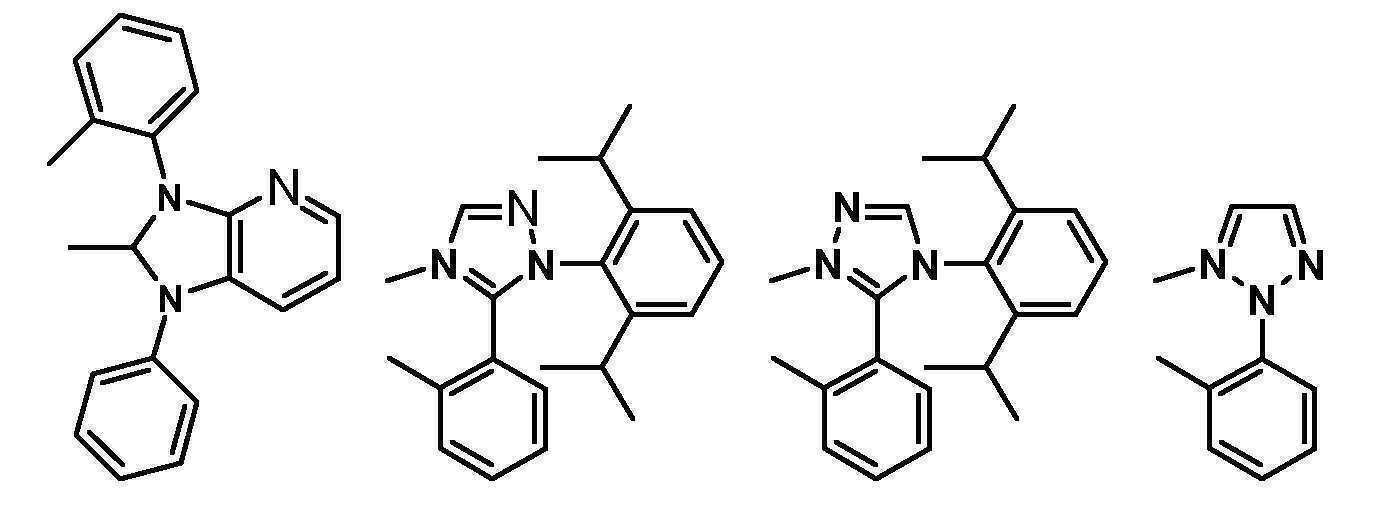
바람직한 실시양태에서, 화학식 I에서의 M, n, Y, A2, A3, A4, A5, R1, R2, R3, R4, R5, R6, R7, R8, R9, R10, K, L, n 및 o는 각각 하기에서 정의된 바와 같다:In a preferred embodiment, M, n, Y, A 2 , A 3 , A 4 , A 5 , R 1 , R 2 , R 3 , R 4 , R 5 , R 6 , R 7 , R 8 in formula I , R 9 , R 10 , K, L, n and o are each as defined below:
본 발명에 의하면, M은 Ir 또는 Pt이고, 바람직하게는 Ir이다. Ir은 본 발명의 착물에서 +3 산화 상태로 존재한다. Pt는 본 발명의 착물에서 +2 산화 상태로 존재한다.According to the present invention, M is Ir or Pt, preferably Ir. Ir exists in the +3 oxidation state in the complexes of the present invention. Pt exists in the +2 oxidation state in the complexes of the present invention.
*n은 일반적으로 1, 2 또는 3이다. M이 Ir인 경우, n은 바람직하게는 3이다. M이 Pt인 경우, n은 바람직하게는 1이다.*n is usually 1, 2 or 3. When M is Ir, n is preferably 3. When M is Pt, n is preferably 1.
본 발명에 의하면, Y는 NR1, O, S 또는 C(R25)2, 바람직하게는 NR1이다.According to the present invention, Y is NR 1 , O, S or C(R 25 ) 2 , preferably NR 1 .
본 발명에 의하면, A2, A3, A4 및 A5는 각각 독립적으로 C 또는 N이며, 여기서 2개의 A는 질소 원자이고, 1종 이상의 탄소 원자는 고리에서 2개의 질소 원자 사이에 존재한다. 일반적으로, 1 또는 2개의 탄소 원자는 2개의 질소 원자 사이에 존재한다.According to the present invention, A 2 , A 3 , A 4 and A 5 are each independently C or N, where two A are nitrogen atoms, and at least one carbon atom is present between two nitrogen atoms in the ring. . Typically, 1 or 2 carbon atoms are present between 2 nitrogen atoms.
본 발명에 의하면, 하기의 실시양태가 바람직하다:According to the invention, the following embodiments are preferred:
1. A2 및 A5는 각각 N이고, A3 및 A4는 각각 C이며, 즉 본 발명의 금속-카르벤 착물은 이러한 바람직한 실시양태에서 금속-카르벤 결합에 의하여 결합되며 그리고 하기 화학식 Ia를 갖는 1종 이상의 피라지노이미다졸 단위를 포함한다:1.A 2 and A 5 are each N, and A 3 and A 4 are each C, i.e. the metal-carbene complex of the present invention is bonded by a metal-carbene bond in this preferred embodiment and the formula Ia At least one pyrazinoimidazole unit having:
<화학식 Ia><Formula Ia>
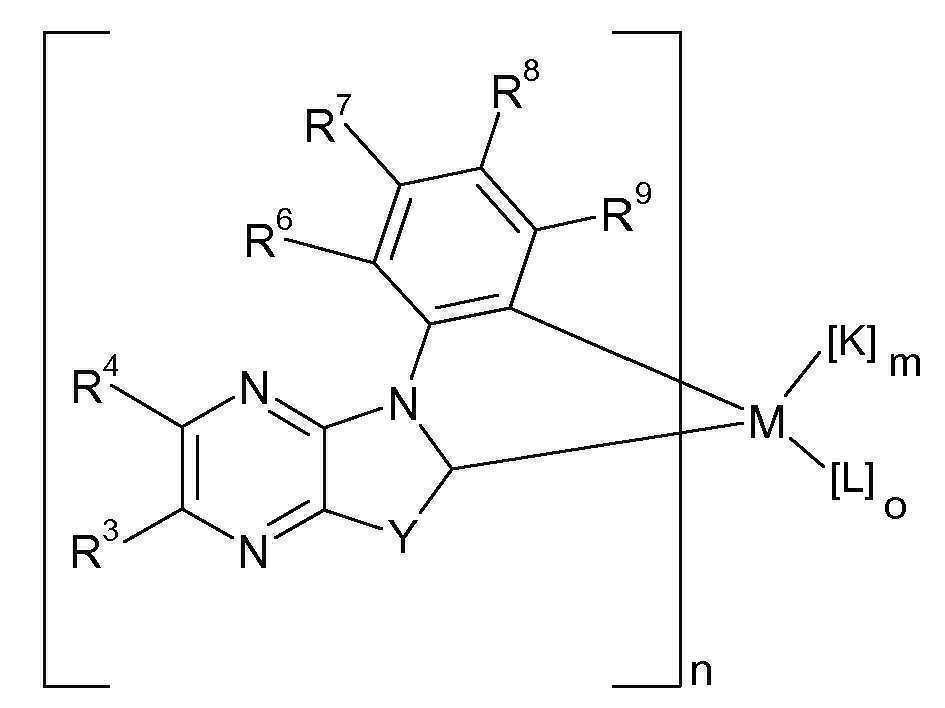
2. A2 및 A4는 각각 N이고, A3 및 A5는 각각 C이고, 즉 본 발명의 금속-카르벤 착물은 이러한 바람직한 실시양태에서 금속-카르벤 결합에 의하여 결합되며 그리고 하기 화학식 Ib을 갖는 1종 이상의 피리미디노이미다졸 단위를 포함한다:2. A 2 and A 4 are each N, A 3 and A 5 are each C, that is, the metal-carbene complex of the present invention is bonded by a metal-carbene bond in this preferred embodiment and the formula Ib At least one pyrimidinoimidazole unit having:
<화학식 Ib><Formula Ib>
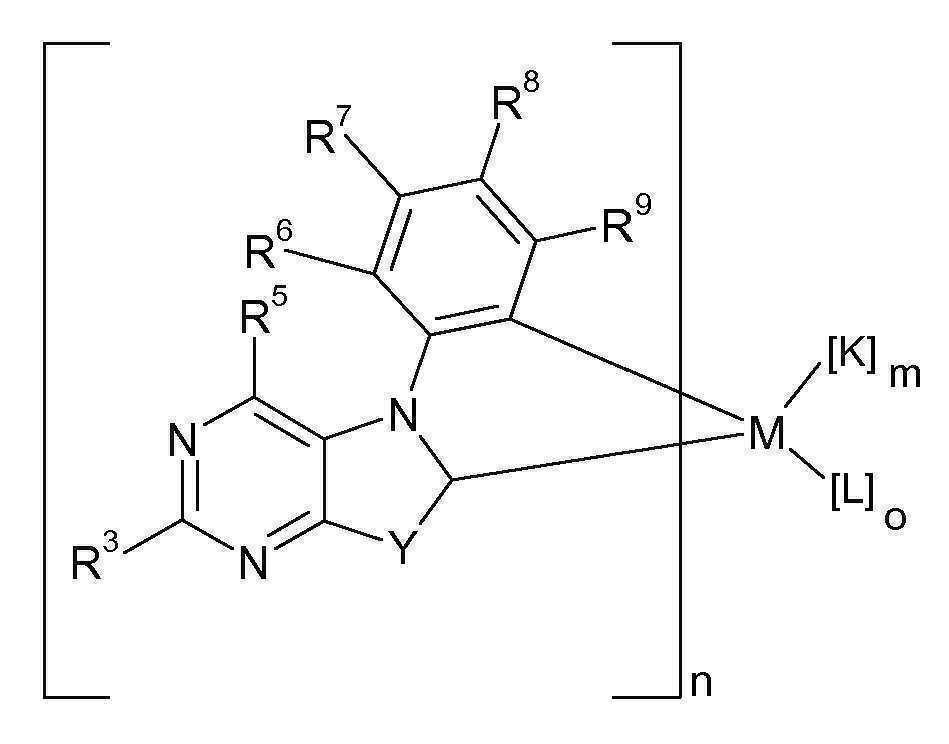
3. A3 및 A5는 각각 N이고, A2 및 A4는 각각 C이고, 즉 본 발명의 금속-카르벤 착물은 이러한 바람직한 실시양태에서 금속-카르벤 결합에 의하여 결합되며 그리고 하기 화학식 Ic를 갖는 1종 이상의 피리미디노이미다졸 단위를 포함한다:3. A 3 and A 5 are each N, A 2 and A 4 are each C, that is, the metal-carbene complex of the present invention is bonded by a metal-carbene bond in this preferred embodiment and the formula Ic At least one pyrimidinoimidazole unit having:
<화학식 Ic><Formula Ic>

화학식 Ia, 화학식 Ib 및 화학식 Ic에서, 동일한 정의가 화학식 I에서와 같이 적용된다.In formula Ia, formula Ib and formula Ic, the same definition applies as in formula I.
Y가 NR1인 바람직한 경우에서, 바람직한 실시양태에서 R1은 1 내지 6개의 탄소 원자를 갖는 선형 또는 분지형 알킬 라디칼이고, 6 내지 30개의 탄소 원자를 갖는 치환 또는 비치환 아릴 라디칼이고, 총 5 내지 18개의 탄소 원자 및/또는 이종원자를 갖는 치환 또는 비치환 헤테로아릴 라디칼이다.In a preferred case where Y is NR 1 , in a preferred embodiment R 1 is a linear or branched alkyl radical having 1 to 6 carbon atoms, and a substituted or unsubstituted aryl radical having 6 to 30 carbon atoms, a total of 5 A substituted or unsubstituted heteroaryl radical having from to 18 carbon atoms and/or heteroatoms.
R1은 더욱 바람직하게는 1 내지 6개의 탄소 원자를 갖는 선형 또는 분지형 알킬 라디칼, 치환 또는 비치환 페닐 라디칼, 총 5 또는 6개의 탄소 원자 및/또는 이종원자를 갖는 치환 또는 비치환 헤테로아릴 라디칼이다.R 1 is more preferably a linear or branched alkyl radical having 1 to 6 carbon atoms, a substituted or unsubstituted phenyl radical, a substituted or unsubstituted heteroaryl radical having a total of 5 or 6 carbon atoms and/or heteroatoms. .
R1은 가장 바람직하게는 페닐, 톨릴, 메시틸, 티오페닐, 푸라닐, 피리딜, 메틸, 이소프로필 및 네오펜틸로부터 선택된다.R 1 is most preferably selected from phenyl, tolyl, mesityl, thiophenyl, furanyl, pyridyl, methyl, isopropyl and neopentyl.
그러므로, 본 발명은 특히 Y는 NR1이고, 여기서 R1은 페닐, 톨릴, 메시틸, 티오페닐, 푸라닐, 피리딜, 메틸, 이소프로필 및 네오펜틸로 구성된 군으로부터 선택된 본 발명의 금속-카르벤 착물에 관한 것이다.Therefore, the present invention in particular Y is NR 1 , wherein R 1 is a metal-car of the present invention selected from the group consisting of phenyl, tolyl, mesityl, thiophenyl, furanyl, pyridyl, methyl, isopropyl and neopentyl. It's about the Ben complex.
바람직한 실시양태에서, R2, R3, R4, R5는 각각 독립적으로 수소, 1 내지 20개의 탄소 원자를 갖는 선형 또는 분지형 알킬 라디칼, 6 내지 30개의 탄소 원자를 갖는 치환 또는 비치환 아릴 라디칼, 5 내지 18개의 탄소 원자를 갖는 치환 또는 비치환 헤테로아릴 라디칼 및/또는 이종원자 또는 실릴 라디칼이다.In a preferred embodiment, R 2 , R 3 , R 4 , R 5 are each independently hydrogen, a linear or branched alkyl radical having 1 to 20 carbon atoms, substituted or unsubstituted aryl having 6 to 30 carbon atoms. Radicals, substituted or unsubstituted heteroaryl radicals having 5 to 18 carbon atoms and/or heteroatoms or silyl radicals.
바람직한 실시양태에서, R2, R3, R4, R5는 각각, A2, A3, A4 및/또는 A5가 N인 경우 유리 전자쌍이거나 또는, A2, A3, A4 및/또는 A5가 C인 경우 각각 독립적으로 수소, 1 내지 6개의 탄소 원자를 갖는 선형 또는 분지형 알킬 라디칼, 6 내지 30개의 탄소 원자를 갖는 치환 또는 비치환 아릴 라디칼, 총 5 내지 18개의 탄소 원자 및/또는 이종원자를 갖는 치환 또는 비치환 헤테로아릴 라디칼 또는 실릴 라디칼이거나 또는In a preferred embodiment, R 2 , R 3 , R 4 , R 5 are each a free electron pair when A 2 , A 3 , A 4 and/or A 5 is N, or A 2 , A 3 , A 4 and / Or when A 5 is C, each independently hydrogen, a linear or branched alkyl radical having 1 to 6 carbon atoms, a substituted or unsubstituted aryl radical having 6 to 30 carbon atoms, a total of 5 to 18 carbon atoms And/or a substituted or unsubstituted heteroaryl radical or a silyl radical having a hetero atom, or
R3 및 R4는 A3 및 A4와 함께 1종 이상의 추가의 이종원자로 임의로 개재되며 그리고 총 5 내지 18개의 탄소 원자 및/또는 이종원자를 갖는 임의로 치환된 불포화 고리를 형성한다.R 3 and R 4 together with A 3 and A 4 form an optionally substituted unsaturated ring optionally interrupted by one or more additional heteroatoms and having a total of 5 to 18 carbon atoms and/or heteroatoms.
본 발명에 의하면, 불포화 고리는 단일-, 이중- 또는 다중불포화된, 바람직하게는 단일불포화된 고리이다. 본 발명에 의하면, 방향족 고리는 이러한 정의에는 포함되지 않는다. 보다 특히, A3 및 A4와 함께 R3 및 R4는 페닐 고리를 형성하지 않는다.According to the invention, the unsaturated ring is a mono-, di- or polyunsaturated, preferably monounsaturated ring. According to the present invention, aromatic rings are not included in this definition. More particularly, R 3 and R 4 together with A 3 and A 4 do not form a phenyl ring.
R2는 더욱 바람직하게는 A2가 N인 경우 유리 전자쌍이거나 또는 A2가 C인 경우 수소이다.R 2 is more preferably a free electron pair when A 2 is N or hydrogen when A 2 is C.
R3은 더욱 바람직하게는 A3가 N인 경우 유리 전자쌍이거나 또는, A3이 C인 경우 수소 또는 1 내지 20개의 탄소 원자를 갖는 선형 또는 분지형 알킬 라디칼 또는 총 5 내지 18개의 탄소 원자 및/또는 이종원자를 갖는 임의로 치환된, 포화, 불포화 또는 방향족 고리, 더욱 바람직하게는 분지쇄 알킬 라디칼 또는 o,o'-디알킬화 페닐 고리이다.R 3 is more preferably a free electron pair when A 3 is N, or hydrogen when A 3 is C or a linear or branched alkyl radical having 1 to 20 carbon atoms or a total of 5 to 18 carbon atoms and/ Or an optionally substituted, saturated, unsaturated or aromatic ring having heteroatoms, more preferably a branched chain alkyl radical or an o,o'-dialkylated phenyl ring.
R4는 더욱 바람직하게는 A4가 N인 경우 유리 전자쌍이거나 또는, A4가 C인 경우 수소 또는 1 내지 20개의 탄소 원자를 갖는 선형 또는 분지형 알킬 라디칼 또는 총 5 내지 18개의 탄소 원자 및/또는 이종원자를 갖는 임의로 치환된, 포화, 불포화 또는 방향족 고리, 더욱 바람직하게는 분지쇄 알킬 라디칼 또는 o,o'-디알킬화 페닐 고리이다.R 4 is more preferably a free electron pair when A 4 is N, or hydrogen when A 4 is C or a linear or branched alkyl radical having 1 to 20 carbon atoms or a total of 5 to 18 carbon atoms and/ Or an optionally substituted, saturated, unsaturated or aromatic ring having heteroatoms, more preferably a branched chain alkyl radical or an o,o'-dialkylated phenyl ring.
R3 및 R4는 가장 바람직하게는 A3 및 A4가 각각 C인 경우 A3 및 A4와 함께 총 5 내지 18개의 탄소 원자를 갖는 임의로 치환된 불포화 고리를 형성하는데, A2 및 A5는 각각 N이고, R3 및 R4는 A3 및 A4와 함께 페닐 고리를 형성하는 경우는 본 발명에 의하여 배제되기는 한다.R 3 and R 4 most preferably form an optionally substituted unsaturated ring having a total of 5 to 18 carbon atoms together with A 3 and A 4 when A 3 and A 4 are each C , A 2 and A 5 Is N, and R 3 and R 4 together with A 3 and A 4 to form a phenyl ring are excluded by the present invention.
R5는 더욱 바람직하게는 A5가 N인 경우 유리 전자쌍이거나 또는 A5가 C인 경우 수소이다.R 5 is more preferably a free electron pair when A 5 is N or hydrogen when A 5 is C.
추가로 바람직한 실시양태에서, R6, R7, R8, R9는 각각 독립적으로 수소 또는 1 내지 20개의 탄소 원자를 갖는 선형 또는 분지형 알킬 라디칼 또는 o,o'-디알킬화 페닐 라디칼, 더욱 바람직하게는 수소이다.In a further preferred embodiment, R 6 , R 7 , R 8 , R 9 are each independently hydrogen or a linear or branched alkyl radical having 1 to 20 carbon atoms or an o,o'-dialkylated phenyl radical, more It is preferably hydrogen.
추가로 바람직한 실시양태에서, R6과 R7 또는 R7과 R8 또는 R8과 R9는 페닐 고리와 함께, 즉 라디칼이 결합되어 있는 탄소 원자와 함께 1종 이상의 이종원자에 의하여 임의로 개재되며 그리고 총 5, 6 또는 7개의 탄소 원자 및/또는 이종원자를 갖는 불포화 또는 방향족, 임의로 치환된 고리를 형성한다. 2개의 특정한 라디칼은 더욱 바람직하게는 페닐 고리와 함께 하기 헤테로사이클: 디벤조푸란, 디벤조티오펜, 플루오렌, 아크리단, 크산텐, 티오크산텐, 페나진 또는 펜옥사진을 형성한다.In a further preferred embodiment, R 6 and R 7 or R 7 and R 8 or R 8 and R 9 are optionally interrupted by one or more heteroatoms together with the phenyl ring, i.e. with the carbon atom to which the radical is attached. And an unsaturated or aromatic, optionally substituted ring having a total of 5, 6 or 7 carbon atoms and/or heteroatoms. The two specific radicals more preferably together with the phenyl ring form the following heterocycles: dibenzofuran, dibenzothiophene, fluorene, acridan, xanthene, thioxanthene, phenazine or phenoxazine.
대안으로 또는 추가로, R5 및 R6은 함께 임의로 이종원자, 방향족 단위, 헤테로방향족 단위 및/또는 작용기를 포함하며 그리고 총 1 내지 30개의 탄소 원자 및/또는 이종원자를 갖는 포화 또는 불포화, 선형 또는 분지형 가교를 형성하며, 이에 탄소 원자 및/또는 이종원자를 포함하는 치환 또는 비치환, 5- 내지 8-원, 바람직하게는 6-원 고리가 임의로 융합된다.Alternatively or additionally, R 5 and R 6 together optionally contain heteroatoms, aromatic units, heteroaromatic units and/or functional groups, and are saturated or unsaturated, linear or having a total of 1 to 30 carbon atoms and/or heteroatoms. Branched bridges are formed, to which substituted or unsubstituted, 5- to 8-membered, preferably 6-membered rings containing carbon atoms and/or heteroatoms are optionally fused.
R25가 존재할 경우, 바람직하게는 독립적으로 본 발명에 의하면 1 내지 20개의 탄소 원자를 갖는 선형 또는 분지형 알킬 라디칼, 6 내지 30개의 탄소 원자를 갖는 치환 또는 비치환 아릴 라디칼, 5 내지 18개의 탄소 원자 및/또는 이종원자를 갖는 치환 또는 비치환 헤테로아릴 라디칼, 더욱 바람직하게는 선형 알킬 라디칼 또는 치환 또는 비치환 페닐 라디칼이다.If R 25 is present, preferably independently according to the invention a linear or branched alkyl radical having 1 to 20 carbon atoms, a substituted or unsubstituted aryl radical having 6 to 30 carbon atoms, 5 to 18 carbons Substituted or unsubstituted heteroaryl radicals having atoms and/or heteroatoms, more preferably linear alkyl radicals or substituted or unsubstituted phenyl radicals.
특히 바람직한 실시양태에서, 본 발명은 M, n, Y, A2, A3, A4, A5, R1, R2, R3, R4, R5, R6, R7, R8, R9, L, m 및 o가 각각 하기에서 정의된 바와 같으며:In a particularly preferred embodiment, the present invention is M, n, Y, A 2 , A 3 , A 4 , A 5 , R 1 , R 2 , R 3 , R 4 , R 5 , R 6 , R 7 , R 8 , R 9 , L, m and o are each as defined below:
M은 Ir이고,M is Ir,
n은 1, 2 또는 3이고,n is 1, 2 or 3,
Y는 NR1이고,Y is NR 1 ,
A2, A3, A4, A5는 각각 독립적으로 N 또는 C이고, 여기서 2개의 A는 질소 원자이고, 1종 이상의 탄소 원자는 고리에서 2개의 질소 원자 사이에 존재하며,A 2 , A 3 , A 4 , A 5 are each independently N or C, where two A are nitrogen atoms, and at least one carbon atom is present between two nitrogen atoms in the ring,
R1은 1 내지 6개의 탄소 원자를 갖는 선형 또는 분지형 알킬 라디칼, 6 내지 30개의 탄소 원자를 갖는 치환 또는 비치환 아릴 라디칼, 총 5 내지 18개의 탄소 원자 및/또는 이종원자를 갖는 치환 또는 비치환 헤테로아릴 라디칼이고,R 1 is a linear or branched alkyl radical having 1 to 6 carbon atoms, a substituted or unsubstituted aryl radical having 6 to 30 carbon atoms, a substituted or unsubstituted having a total of 5 to 18 carbon atoms and/or heteroatoms. Is a heteroaryl radical,
R2, R3, R4, R5는 각각, A2, A3, A4 및/또는 A5가 N인 경우 유리 전자쌍이거나 또는, A2, A3, A4 및/또는 A5가 C인 경우 각각 독립적으로 수소, 1 내지 6개의 탄소 원자를 갖는 선형 또는 분지형 알킬 라디칼, 6 내지 30개의 탄소 원자를 갖는 치환 또는 비치환 아릴 라디칼, 총 5 내지 18개의 탄소 원자 및/또는 이종원자를 갖는 치환 또는 비치환 헤테로아릴 라디칼이거나 또는R 2 , R 3 , R 4 , R 5 are each a free electron pair when A 2 , A 3 , A 4 and/or A 5 is N, or A 2 , A 3 , A 4 and/or A 5 is In the case of C, each independently hydrogen, a linear or branched alkyl radical having 1 to 6 carbon atoms, a substituted or unsubstituted aryl radical having 6 to 30 carbon atoms, a total of 5 to 18 carbon atoms and/or heteroatoms. Or a substituted or unsubstituted heteroaryl radical having
R3 및 R4는 A3 및 A4와 함께 1종 이상의 추가의 이종원자로 임의로 개재되며 그리고 총 5 내지 18개의 탄소 원자 및/또는 이종원자를 갖는 임의로 치환된 불포화 고리를 형성하며,R 3 and R 4 together with A 3 and A 4 form an optionally substituted unsaturated ring having a total of 5 to 18 carbon atoms and/or heteroatoms, optionally interrupted by one or more additional heteroatoms,
R6, R7, R8, R9는 각각 독립적으로 수소; 1종 이상의 이종원자로 임의로 개재되며, 임의로 1종 이상의 작용기를 지니며 그리고 1 내지 20개의 탄소 원자를 갖는 선형 또는 분지형 알킬 라디칼; 1종 이상의 이종원자로 임의로 개재되며, 임의로 1종 이상의 작용기를 지니며 그리고 6 내지 30개의 탄소 원자를 갖는 치환 또는 비치환 아릴 라디칼; 1종 이상의 이종원자로 임의로 개재되며, 임의로 1종 이상의 작용기를 지니며 그리고 총 5 내지 18개의 탄소 원자 및/또는 이종원자를 갖는 치환 또는 비치환 헤테로아릴 라디칼이고R 6 , R 7 , R 8 , and R 9 are each independently hydrogen; Linear or branched alkyl radicals optionally interrupted by one or more heteroatoms, optionally having one or more functional groups, and having 1 to 20 carbon atoms; Substituted or unsubstituted aryl radicals optionally interposed by one or more heteroatoms, optionally having one or more functional groups, and having 6 to 30 carbon atoms; Is a substituted or unsubstituted heteroaryl radical optionally interposed by one or more heteroatoms, optionally having one or more functional groups, and having a total of 5 to 18 carbon atoms and/or heteroatoms,
L은 1가 음이온성 2좌 배위자 리간드이고,L is a monoanionic bidentate ligand ligand,
**
**
*m은 0이고,*m is 0,
o는 0, 1 또는 2인 본 발명의 금속-카르벤 착물에 관한 것이다.o is 0, 1 or 2, relates to the metal-carbene complex of the present invention.
본 발명은 더욱 바람직하게는 M, n, Y, A2, A3, A4, A5, R1, R2, R3, R4, R5, R6, R7, R8, R9, L, m 및 o가 각각 하기에서 정의된 바와 같고:The present invention is more preferably M, n, Y, A 2 , A 3 , A 4 , A 5 , R 1 , R 2 , R 3 , R 4 , R 5 , R 6 , R 7 , R 8 , R 9 , L, m and o are each as defined below:
M은 Ir이고,M is Ir,
n은 1, 2 또는 3이고,n is 1, 2 or 3,
Y는 NR1이고,Y is NR 1 ,
A2, A3, A4, A5는 A2 및 A5가 각각 N이고, A3 및 A4는 각각 C이거나 또는In A 2 , A 3 , A 4 , A 5 , A 2 and A 5 are each N, and A 3 and A 4 are each C, or
A2 및 A4는 각각 N이고 그리고 A3 및 A5는 각각 C이거나 또는A 2 and A 4 are each N and A 3 and A 5 are each C, or
A3 및 A5는 각각 N이고 그리고 A2 및 A4는 각각 C이고,A 3 and A 5 are each N and A 2 and A 4 are each C,
R1은 1 내지 6개의 탄소 원자를 갖는 선형 또는 분지형 알킬 라디칼, 치환 또는 비치환 페닐 라디칼, 총 6 내지 18개의 탄소 원자 및/또는 이종원자를 갖는 치환 또는 비치환 헤테로아릴 라디칼이고,R 1 is a linear or branched alkyl radical having 1 to 6 carbon atoms, a substituted or unsubstituted phenyl radical, a substituted or unsubstituted heteroaryl radical having a total of 6 to 18 carbon atoms and/or heteroatoms,
R2, R3, R4, R5는 각각, A2, A3, A4 및/또는 A5가 N인 경우, 유리 전자쌍이거나 또는, A2, A3, A4 및/또는 A5가 C인 경우 각각 독립적으로 수소, 1 내지 6개의 탄소 원자를 갖는 선형 또는 분지형 알킬 라디칼, 치환된, 특히 o,o'-디알킬화 또는 비치환 페닐 라디칼이거나 또는R 2 , R 3 , R 4 , R 5 are each a free electron pair when A 2 , A 3 , A 4 and/or A 5 is N, or A 2 , A 3 , A 4 and/or A 5 When is C, each independently is hydrogen, a linear or branched alkyl radical having 1 to 6 carbon atoms, a substituted, in particular o,o'-dialkylated or unsubstituted phenyl radical, or
R3 및 R4는 A3 및 A4와 함께 총 5 내지 7개의 탄소 원자를 갖는 임의로 치환된, 단일불포화 고리를 형성하며,R 3 and R 4 together with A 3 and A 4 form an optionally substituted, monounsaturated ring having a total of 5 to 7 carbon atoms,
R6, R7, R8, R9는 각각 독립적으로 수소, 1 내지 20개의 탄소 원자를 갖는 선형 또는 분지형 알킬 라디칼, 6 내지 30개의 탄소 원자를 갖는 o,o'-디알킬화 아릴 라디칼이고,R 6 , R 7 , R 8 , R 9 are each independently hydrogen, a linear or branched alkyl radical having 1 to 20 carbon atoms, an o,o'-dialkylated aryl radical having 6 to 30 carbon atoms, and ,
L은 1가 음이온성 2좌 배위자 리간드이고,L is a monoanionic bidentate ligand ligand,
m은 0이고,m is 0,
o는 0, 1 또는 2인 본 발명의 금속-카르벤 착물에 관한 것이다.o is 0, 1 or 2, relates to the metal-carbene complex of the present invention.
따라서, 추가의 전술한 바람직한 및 특히 바람직한 실시양태가 적용된다.Accordingly, the further aforementioned preferred and particularly preferred embodiments apply.
매우 특히 바람직한 본 발명의 화학식 I의 금속-카르벤 착물은 하기에 제시되어 있다:Very particularly preferred metal-carbene complexes of formula I of the invention are shown below:
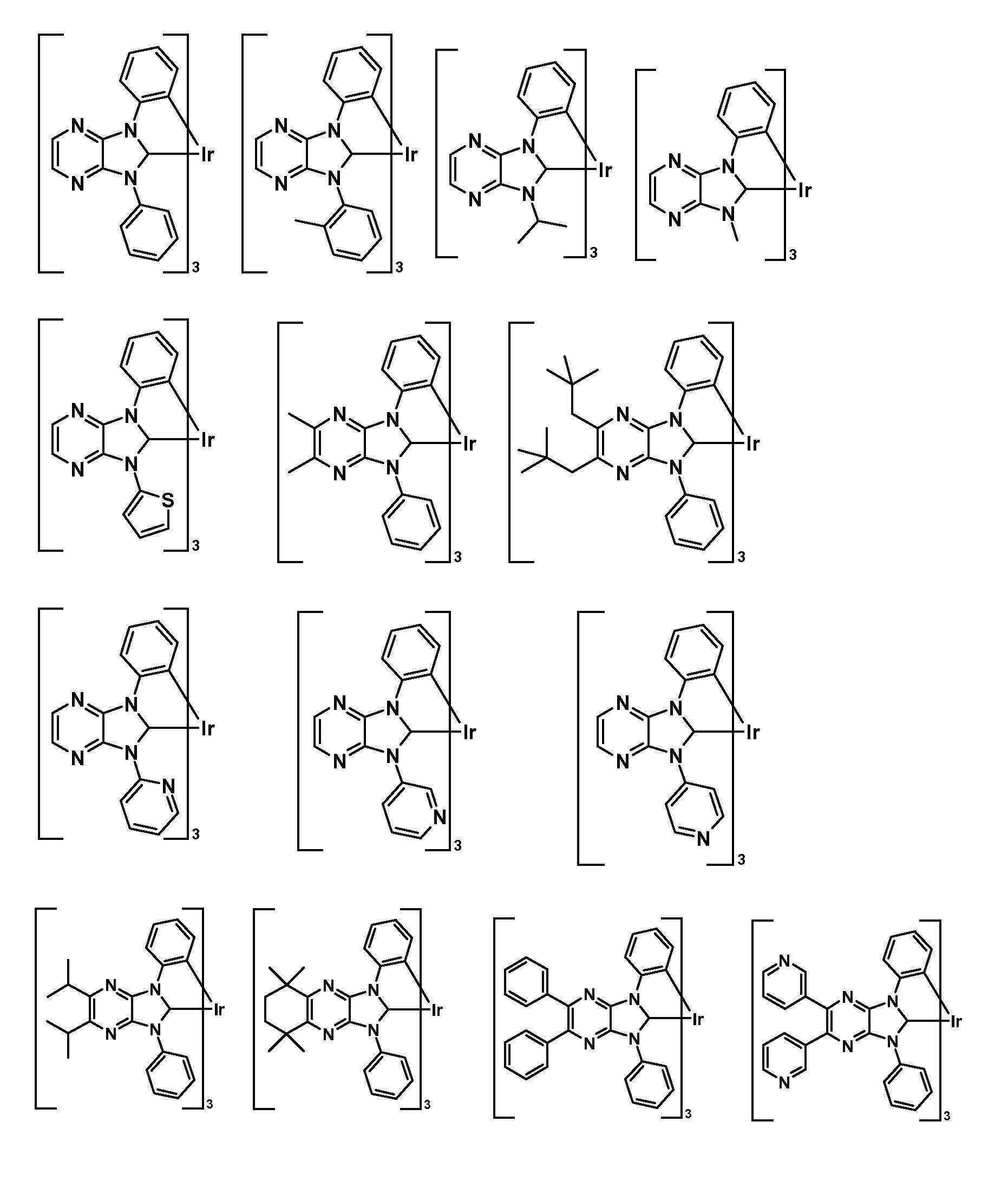
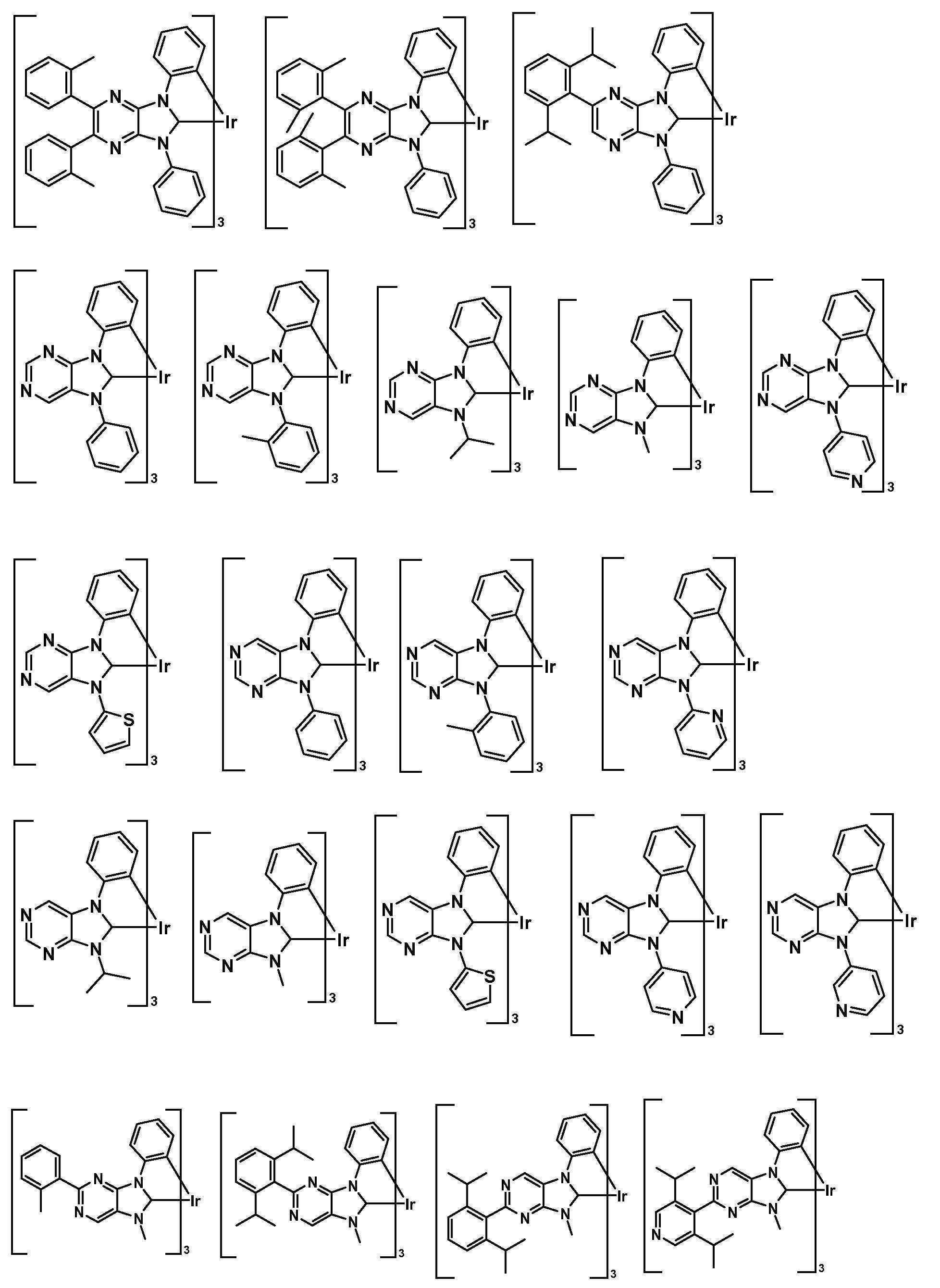
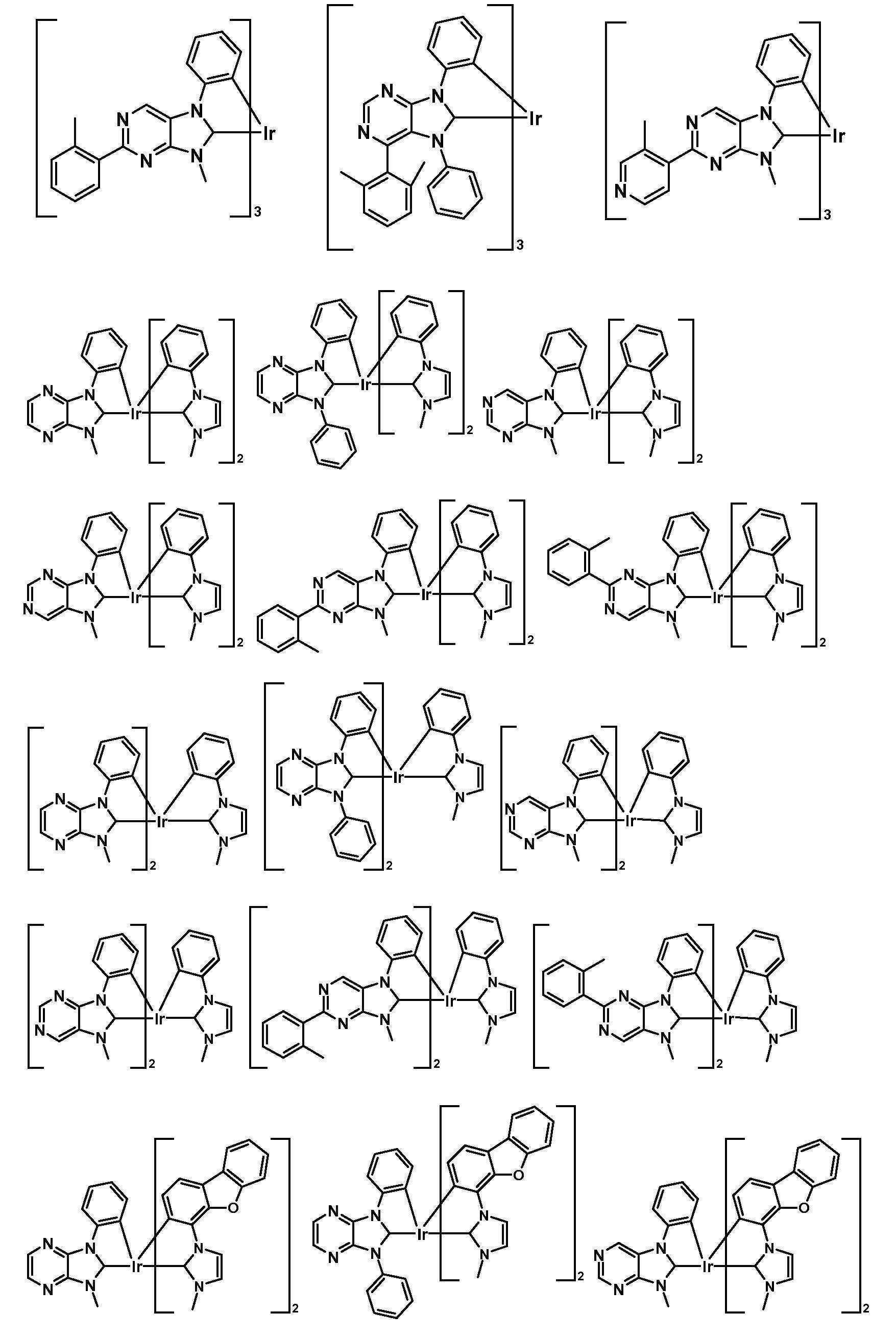

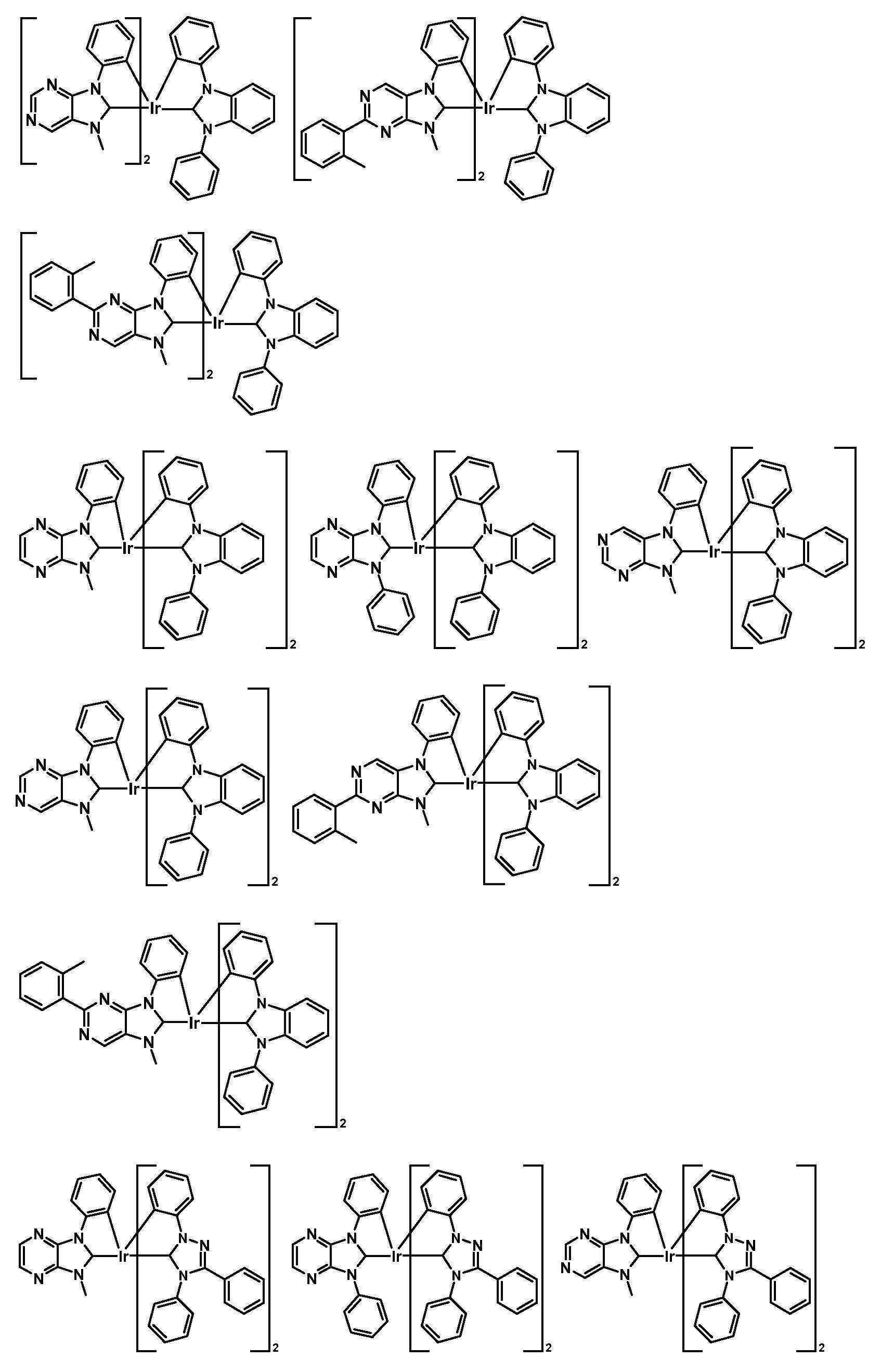
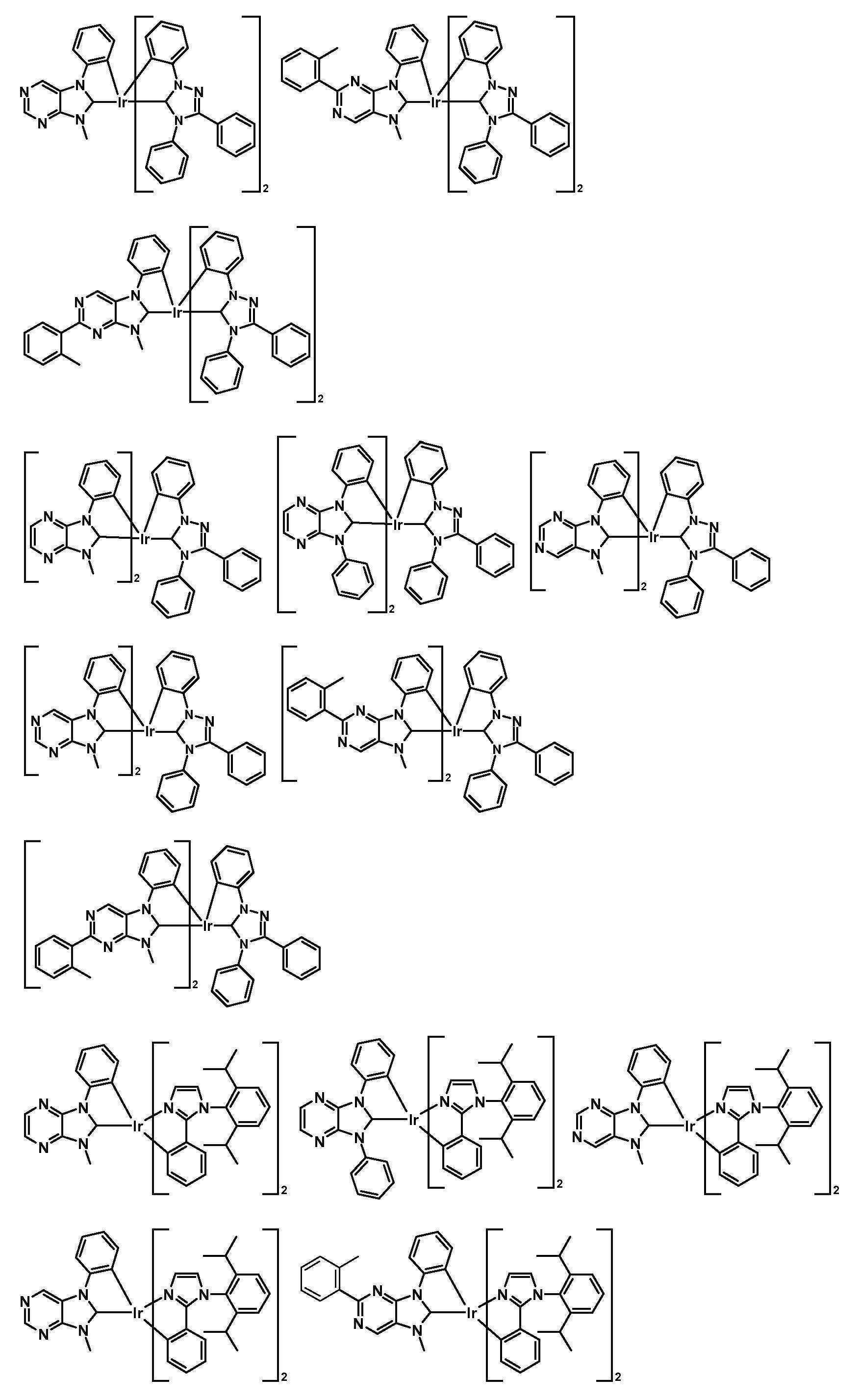
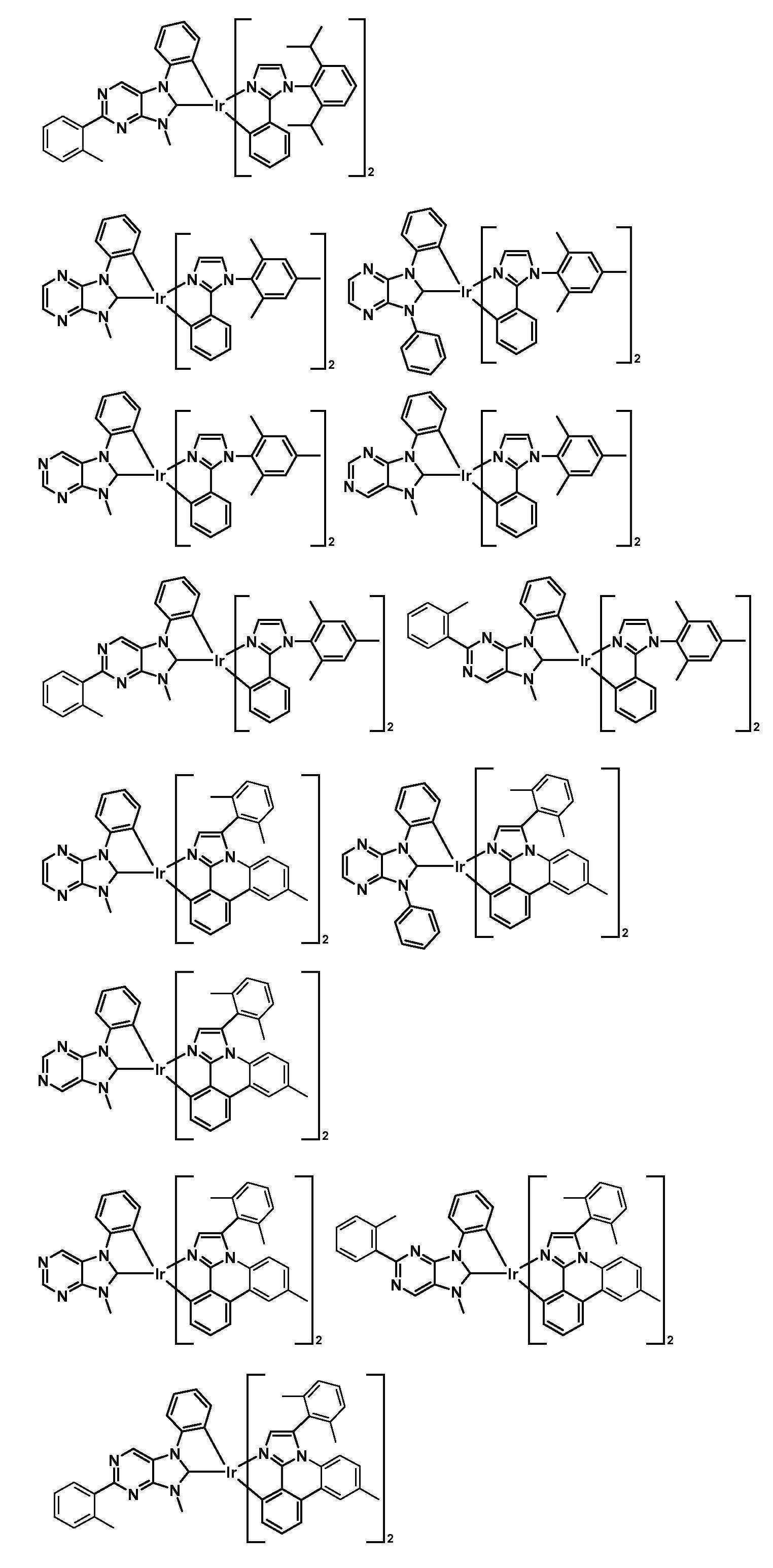
본 발명의 동종리간드성 금속-카르벤 착물은 면 또는 자오선 이성체의 형태로 존재할 수 있으며, 면 이성체가 바람직하다.The homoligandic metal-carbene complex of the present invention may exist in the form of a cotton or meridian isomer, and a cotton isomer is preferable.
이종리간드성 금속-카르벤 착물의 경우, 4종의 상이한 이성체가 존재할 수 있으며, 슈도-면 이성체가 바람직하다.In the case of heteroligandic metal-carbene complexes, four different isomers may exist, and pseudo-planar isomers are preferred.
본 발명은 추가로 또한 M을 포함하는 적절한 화합물을 적절한 리간드 또는 리간드 전구체와 접촉시켜 본 발명의 금속-카르벤 착물을 제조하는 방법에 관한 것이다.The invention further relates to a method for preparing the metal-carbene complex of the invention by contacting a suitable compound comprising M with a suitable ligand or ligand precursor.
본 발명에 의한 방법의 바람직한 실시양태에서, 적절한 금속 M, 즉 이리듐 또는 백금, 바람직하게는 이리듐 및 적절한 카르벤 리간드를 바람직하게는 유리 카르벤으로서 탈양성자화된 형태로 또는 보호된 카르벤의 형태로서, 예를 들면 은-카르벤 착물로서 포함하는 적절한 화합물을 접촉시킨다. 적절한 전구체 화합물은 화학식 I의 착물에 존재하여야만 하는 적절한 치환기 R1 내지 R9 및 R25를 포함한다.In a preferred embodiment of the method according to the invention, the appropriate metal M, i.e. iridium or platinum, preferably iridium and a suitable carbene ligand, is preferably in deprotonated form as free carbene or in the form of protected carbenes. As, for example, a suitable compound to be included as a silver-carbene complex is brought into contact. Suitable precursor compounds include suitable substituents R 1 to R 9 and R 25 that must be present in the complex of formula (I).
그러므로, 본 발명은 보다 특히 사용한 리간드 전구체가 해당 Ag-카르벤 착물인 본 발명에 의한 방법에 관한 것이다.Therefore, the present invention more particularly relates to the method according to the present invention, wherein the ligand precursor used is the corresponding Ag-carbene complex.
본 발명에 의한 방법의 추가의 바람직한 실시양태에서, 사용한 리간드 전구체는 적절한 M-함유 화합물과 반응하는 유기 화합물이다. 카르벤은 예를 들면 고온에서 및/또는 감압하에서 및/또는 제거되는 알콜 분자를 결합시키는 분자체를 사용하여 휘발성 물질, 예를 들면 저급 알콜, 예컨대 메탄올, 에탄올을 제거하여 카르벤 리간드의 전구체로부터 배출될 수 있다. 이러한 과정은 특히 화학식 XII의 화합물의 경우에서 수행된다. 해당 방법은 당업자에게 공지되어 있다.In a further preferred embodiment of the method according to the invention, the ligand precursor used is an organic compound which reacts with a suitable M-containing compound. Carbene is, for example, from a precursor of a carbene ligand by removing volatile substances such as lower alcohols such as methanol, ethanol using molecular sieves that bind alcohol molecules that are removed and/or at high temperature and/or under reduced pressure. Can be discharged. This process is carried out in particular in the case of compounds of formula XII. This method is known to those skilled in the art.
또한, 본 발명은 사용한 리간드 전구체가 하기 화학식 IV의 화합물인 본 발명에 의한 방법에 관한 것이다:In addition, the present invention relates to a method according to the invention wherein the ligand precursor used is a compound of formula IV:
<화학식 IV><Formula IV>
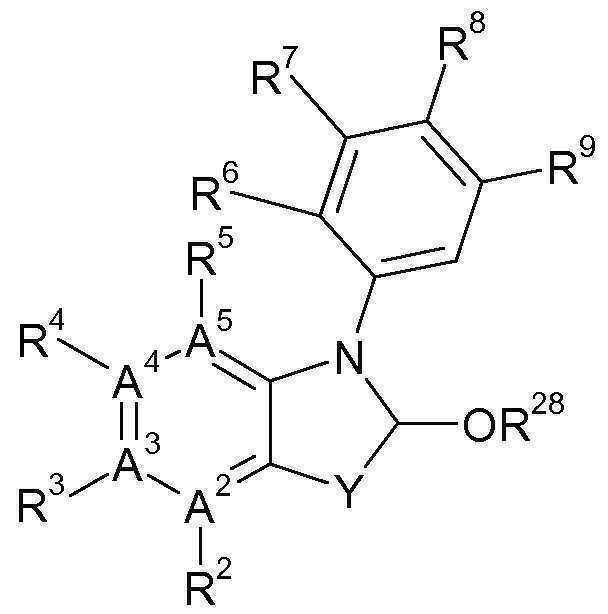
상기 화학식에서, Y, A2, A3, A4, A5, R2, R3, R4, R5, R6, R7, R8 및 R9는 각각 화학식 I의 화합물에 대하여 상기 정의된 바와 같고, R28은 하기와 같이 정의되며:In the above formula, Y, A 2 , A 3 , A 4 , A 5 , R 2 , R 3 , R 4 , R 5 , R 6 , R 7 , R 8 and R 9 are each of the above for the compound of formula I As defined, R 28 is defined as follows:
R28은 독립적으로 SiR29R30R31, 아릴, 헤테로아릴, 알킬, 시클로알킬 또는 헤테로시클로알킬이고,R 28 is independently SiR 29 R 30 R 31 , aryl, heteroaryl, alkyl, cycloalkyl or heterocycloalkyl,
*R29, R30, R31은 각각 독립적으로 아릴, 헤테로아릴, 알킬, 시클로알킬 또는 헤테로시클로알킬이다.*R 29 , R 30 , R 31 are each independently aryl, heteroaryl, alkyl, cycloalkyl or heterocycloalkyl.
아릴, 헤테로아릴, 알킬, 시클로알킬 및 헤테로시클로알킬의 정의는 상기에 명시되어 있다.The definitions of aryl, heteroaryl, alkyl, cycloalkyl and heterocycloalkyl are specified above.
특히 바람직한 실시양태에서, R28은 알킬, 특히 C1-C20-알킬, 바람직하게는 C1-C10-알킬, 더욱 바람직하게는 C1-C8-알킬, 예를 들면 메틸, 에틸, 프로필, 예컨대 n-프로필, 이소프로필, 부틸, 예컨대 n-부틸, 이소부틸, tert-부틸, 펜틸, 헥실, 헵틸 또는 옥틸이다.In a particularly preferred embodiment, R 28 is alkyl, in particular C 1 -C 20 -alkyl, preferably C 1 -C 10 -alkyl, more preferably C 1 -C 8 -alkyl, for example methyl, ethyl, Propyl, such as n-propyl, isopropyl, butyl, such as n-butyl, isobutyl, tert-butyl, pentyl, hexyl, heptyl or octyl.
화학식 IV의 화합물에서의 R28은 가장 바람직하게는 메틸 또는 에틸이다. R 28 in the compound of formula IV is most preferably methyl or ethyl.
화학식 IV의 화합물은 일반적으로 당업자에게 공지된 방법에 의하여 얻을 수 있다. Y가 NR1인 본 발명에 의한 특히 바람직한 경우에서, 화학식 IV의 해당 화합물은 하기 화학식 V의 화합물을 하기 화학식 VI의 화합물과 반응시켜 얻을 수 있다:Compounds of formula IV can generally be obtained by methods known to those skilled in the art. In a particularly preferred case according to the invention in which Y is NR 1 , the corresponding compound of formula IV can be obtained by reacting a compound of formula V with a compound of formula VI:
<화학식 V><Formula V>
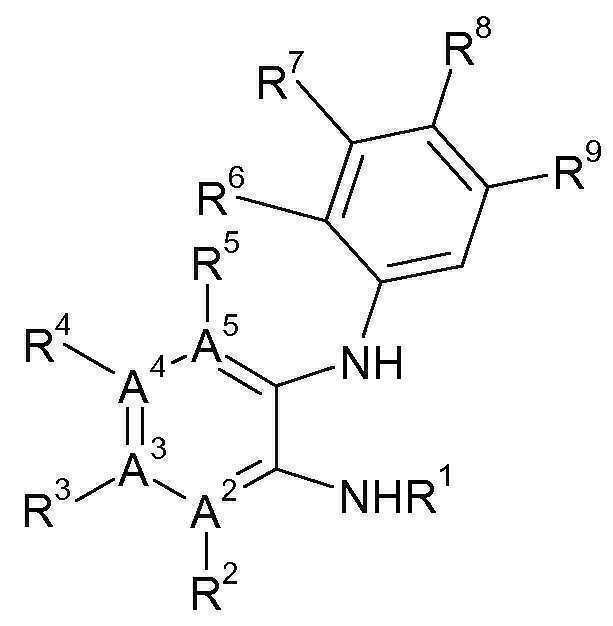
<화학식 VI><Formula VI>
HC(OR28)3 HC(OR 28 ) 3
상기 화학식에서, A2, A3, A4, A5, R1, R2, R3, R4, R5, R6, R7, R8, R9 및 R28은 각각 화학식 I 또는 화학식 IV의 화합물에 대하여 이미 상기 정의된 바와 같다.In the above formula, A 2 , A 3 , A 4 , A 5 , R 1 , R 2 , R 3 , R 4 , R 5 , R 6 , R 7 , R 8 , R 9 and R 28 are each of formula I or As already defined above for the compound of formula IV.
이와 같은 화학식 IV의 화합물의 제조는 용매의 존재 또는 부재하에서 수행될 수 있다. 적절한 용매는 하기에 명시되어 있다. 바람직한 실시양태에서, 화학식 IV의 화합물은 물질중에서 생성되거나 또는, 화학식 VI의 화합물은 용매로서 작용하도록 과량으로 첨가된다.The preparation of such compounds of formula IV can be carried out in the presence or absence of a solvent. Suitable solvents are specified below. In a preferred embodiment, the compound of formula IV is produced in the material, or the compound of formula VI is added in excess to act as a solvent.
화학식 V 및 화학식 VI의 화합물은 시판중이며 및/또는 당업자에게 공지된 방법에 의하여 얻을 수 있으며, 예를 들면 화학식 V의 화합물은 적절한 염화물을 적절한 아민과 반응시켜 얻을 수 있다.Compounds of formula (V) and (VI) are commercially available and/or can be obtained by methods known to those skilled in the art, for example compounds of formula (V) can be obtained by reacting suitable chlorides with suitable amines.
화학식 IV의 화합물은 일반적으로 10℃ 내지 150℃, 바람직하게는 40℃ 내지 120℃, 더욱 바람직하게는 60℃ 내지 110℃의 온도에서 생성된다.The compounds of formula IV are generally produced at temperatures of 10°C to 150°C, preferably 40°C to 120°C, more preferably 60°C to 110°C.
반응 시간은 일반적으로 2 내지 48 시간, 바람직하게는 6 내지 24 시간, 더욱 바람직하게는 8 내지 16 시간이다.The reaction time is generally 2 to 48 hours, preferably 6 to 24 hours, more preferably 8 to 16 hours.
반응이 종료된 후, 목적하는 생성물을 당업계에 공지된 통상의 방법, 예를 들면 여과, 재결정화, 컬럼 크로마토그래피 등에 의하여 분리 및 정제할 수 있다.After the reaction is completed, the desired product can be separated and purified by a conventional method known in the art, for example, filtration, recrystallization, column chromatography, or the like.
적절한 화합물, 특히 적절한 금속 M, 바람직하게는 이리듐을 포함하는 착물은 당업자에게 공지되어 있다. 백금 또는 이리듐을 포함하는 특히 적절한 화합물은 예를 들면 리간드, 예컨대 할로겐화물, 바람직하게는 염화물, 1,5-시클로옥타디엔(COD), 시클로옥텐 (COE), 포스핀, 시안화물, 알콕시드, 슈도할로겐화물 및/또는 알킬을 포함한다.Suitable compounds, in particular complexes comprising a suitable metal M, preferably iridium, are known to the person skilled in the art. Particularly suitable compounds comprising platinum or iridium are, for example, ligands such as halides, preferably chlorides, 1,5-cyclooctadiene (COD), cyclooctene (COE), phosphine, cyanide, alkoxide, Pseudohalides and/or alkyls.
적절한 금속, 특히 이리듐을 포함하는 특히 바람직한 착물은 [Ir(COD)Cl]2, [Ir(COE)2Cl]2 IrCl3×H2O, Ir(acac)3, Ir(COD)2BF4, Ir(COD)2BARF (BARF=테트라키스[3,5-비스(트리플루오로메틸)페닐]보레이트)), Pt(COD)Cl2, Pt(acac)2, [Pt(C6H10)Cl2]2, K2PtCl6 및 그의 혼합물로 이루어진 군으로부터 선택된다.Particularly preferred complexes comprising suitable metals, in particular iridium, are [Ir(COD)Cl] 2 , [Ir(COE) 2 Cl] 2 IrCl 3 ×H 2 O, Ir(acac) 3 , Ir(COD) 2 BF 4 , Ir(COD) 2 BARF (BARF=tetrakis[3,5-bis(trifluoromethyl)phenyl]borate)), Pt(COD)Cl 2 , Pt(acac) 2 , [Pt(C 6 H 10 )Cl 2 ] 2 , K 2 PtCl 6 and mixtures thereof.
카르벤 리간드 전구체는 바람직하게는 반응전, 예를 들면 당업자에게 공지된 염기성 화합물, 예를 들면 염기성 메탈레이트, 염기성 금속 아세트산염, 아세틸아세토네이트 또는 알콕시드, 또는 염기, 예컨대 KOtBu,NaOtBu,LiOtBu,NaH, 실릴아미드, Ag2O 및 포스파젠 염기에 의하여 탈양성자화된다. Ag2O를 사용하여 탈양성자화시켜 해당 Ag-카르벤을 얻고, M을 포함하는 화합물과 반응시켜 본 발명의 착물을 얻는 것이 특히 바람직하다.The carbene ligand precursor is preferably prior to the reaction, for example a basic compound known to the person skilled in the art, for example a basic metallate, a basic metal acetate, an acetylacetonate or an alkoxide, or a base such as KO t Bu, NaO t Bu, LiO t Bu, NaH, silylamide, Ag 2 O and deprotonated by phosphazene base. It is particularly preferred to obtain the Ag-carbene by deprotonation using Ag 2 O, and to obtain the complex of the present invention by reacting with a compound containing M.
화학식 IV의 화합물을 사용하여 화학식 I의 착물을 생성하는 본 발명에 의한 방법은 화학식 IV의 화합물이, 용이하게 취급될 수 있으며 그리고 표준 실험실 조건하에서 분리될 수 있는 안정한 중간체라는 잇점을 갖는다. 게다가, 균질한 용액중의 본 발명의 화학식 I의 착물의 제조가 가능하도록, 목적하는 생성물, 즉 화학식 I의 착물의 워크업(workup)이 예를 들면 분리 및/또는 정제에 대하여 더욱 용이하게 가능하도록, 화학식 IV의 화합물은 통상의 유기 용매 중에서 가용성이다.The method according to the invention for producing a complex of formula I using a compound of formula IV has the advantage that the compound of formula IV is a stable intermediate that can be easily handled and separated under standard laboratory conditions. Furthermore, in order to enable the preparation of the complexes of the formula I of the invention in a homogeneous solution, the work-up of the desired product, i.e. the complexes of formula I, is more easily possible, for example for separation and/or purification. So, the compounds of formula IV are soluble in common organic solvents.
접촉은 바람직하게는 용매 중에서 실시된다. 적절한 용매는 당업자에게 그 자체로서 공지되어 있으며, 바람직하게는 방향족 또는 지방족 용매, 예를 들면 벤젠, 톨루엔, 크실렌 또는 메시틸렌, 고리형 또는 비고리형 에테르, 예를 들면 디옥산 또는 THF, 알콜, 에스테르, 아미드, 케톤, 니트릴, 할로겐화 화합물 및 그의 혼합물로 이루어진 군으로부터 선택된다. 특히 바람직한 용매는 톨루엔, 크실렌, 메시틸렌 및 디옥산이다.The contacting is preferably carried out in a solvent. Suitable solvents are known per se to the person skilled in the art, preferably aromatic or aliphatic solvents such as benzene, toluene, xylene or mesitylene, cyclic or acyclic ethers such as dioxane or THF, alcohols, esters , Amides, ketones, nitriles, halogenated compounds and mixtures thereof. Particularly preferred solvents are toluene, xylene, mesitylene and dioxane.
사용한 금속-비카르벤 착물 대 사용한 카르벤 리간드 전구체의 몰비는 일반적으로 1:10 내지 10:1, 바람직하게는 1:1 내지 1:6, 더욱 바람직하게는 1:2 내지 1:5이다.The molar ratio of the metal-bicarbene complex used to the carbene ligand precursor used is generally 1:10 to 10:1, preferably 1:1 to 1:6, more preferably 1:2 to 1:5.
접촉은 일반적으로 20℃ 내지 200℃, 바람직하게는 50℃ 내지 150℃, 더욱 바람직하게는 60℃ 내지 130℃의 온도에서 실시된다.The contacting is generally carried out at a temperature of 20°C to 200°C, preferably 50°C to 150°C, more preferably 60°C to 130°C.
반응 시간은 목적하는 카르벤 착물에 의존하며, 일반적으로 0.02 내지 50 시간, 바람직하게는 0.1 내지 24 시간, 더욱 바람직하게는 1 내지 12 시간이다.The reaction time depends on the desired carbene complex and is generally 0.02 to 50 hours, preferably 0.1 to 24 hours, more preferably 1 to 12 hours.
반응후 얻은 화학식 I의 착물은 임의로 당업자에게 공지된 방법, 예를 들면 세정, 결정화 또는 크로마토그래피에 의하여 정제될 수 있으며, 임의로 마찬가지로 당업자에게 공지된 조건하에서, 예를 들면 열 또는 광화학적 산 매개하에서 이성화된다.The complex of formula I obtained after the reaction can optionally be purified by methods known to the person skilled in the art, for example washing, crystallization or chromatography, optionally likewise under conditions known to the person skilled in the art, for example under the mediation of thermal or photochemical acids. Isomerized.
전술한 금속-카르벤 착물 및 그의 혼합물은 유기 발광 다이오드(OLED)에서 이미터 분자로서 매우 적절하다. 리간드에서의 변화는 전자기 스펙트럼에서 적색, 녹색에서, 특히 청색 영역에서 전기발광을 나타내는 해당 착물을 제공할 수 있도록 한다. 그러므로, 본 발명의 화학식 I의 금속-카르벤 착물은 이미터 물질로서 매우 적절한데, 이들은 전자기 스펙트럼의 가시 영역, 예를 들면 400 내지 800 ㎚, 바람직하게는 400 내지 600 ㎚에서 방출되기 때문이다. 본 발명의 착물은 전자기 스펙트럼의 적색, 녹색 및 청색 영역에서 전기발광을 갖는 화합물을 제공할 수 있게 한다. 이미터 물질로서 본 발명의 착물의 도움으로 공업적으로 이용 가능한 OLED를 제공할 수 있다.The aforementioned metal-carbene complexes and mixtures thereof are very suitable as emitter molecules in organic light-emitting diodes (OLEDs). The change in ligand makes it possible to provide a corresponding complex that exhibits electroluminescence in the red, green, and especially blue regions of the electromagnetic spectrum. Therefore, the metal-carbene complexes of formula I of the present invention are very suitable as emitter materials, since they are emitted in the visible region of the electromagnetic spectrum, for example 400 to 800 nm, preferably 400 to 600 nm. The complexes of the present invention make it possible to provide compounds with electroluminescence in the red, green and blue regions of the electromagnetic spectrum. Industrially usable OLEDs can be provided with the aid of the complexes of the present invention as emitter materials.
게다가, 본 발명의 화학식 I의 금속-카르벤 착물은 매트릭스 물질, 전하 수송 물질, 특히 정공 수송 물질 및/또는 전하 차단체로서 사용될 수 있다.In addition, the metal-carbene complex of formula I of the present invention can be used as a matrix material, a charge transport material, in particular a hole transport material and/or a charge blocker.
본 발명의 화학식 I의 금속-카르벤 착물은 바람직하게는 이미터 및/또는 정공 수송 물질로서, 더욱 바람직하게는 이미터로서 사용된다.The metal-carbene complexes of formula I of the present invention are preferably used as emitters and/or hole transport materials, more preferably as emitters.
본 발명의 화학식 I의 금속-카르벤 착물의 특정한 성질은 OLED에 사용시 특히 우수한 효율 및 긴 수명을 갖는다.Certain properties of the metal-carbene complex of formula I of the present invention have particularly good efficiency and long life when used in OLEDs.
그러므로, 본 발명은 1종 이상의 본 발명의 화학식 I의 금속-카르벤 착물을 포함하는 OLED를 추가로 제공한다. 본 발명의 화학식 I의 금속-카르벤 착물은 OLED에서 바람직하게는 이미터, 매트릭스 물질, 전하 수송 물질, 특히 정공 수송 물질 및/또는 전하 차단체로서, 더욱 바람직하게는 이미터 및/또는 정공 수송 물질로서, 가장 바람직하게는 이미터로서 사용된다.Therefore, the present invention further provides an OLED comprising at least one inventive metal-carbene complex of formula (I). The metal-carbene complex of formula I of the present invention is preferably an emitter, matrix material, charge transport material, in particular hole transport material and/or charge blocker in OLED, more preferably emitter and/or hole transport It is used as a material, most preferably as an emitter.
또한, 본 발명은 바람직하게는 이미터, 매트릭스 물질, 전하 수송 물질, 특히 정공 수송 물질, 및/또는 전하 차단체로서, 더욱 바람직하게는 이미터 및/또는 정공 수송 물질로서, 가장 바람직하게는 이미터로서 OLED에서 화학식 I의 금속-카르벤 착물의 용도를 제공한다.In addition, the present invention is preferably used as an emitter, matrix material, charge transport material, in particular hole transport material, and/or charge blocker, more preferably emitter and/or hole transport material, most preferably already As a result, it provides the use of a metal-carbene complex of formula I in OLEDs.
유기 광 다이오드는 원칙적으로 복수의 층으로부터 예를 들면Organic photodiodes are, in principle, from a plurality of layers, for example
- 애노드(1),-Anode (1),
- 정공 수송층(2),-Hole transport layer (2),
- 발광층(3),-Light-emitting layer (3),
- 전자 수송층(4),-Electron transport layer (4),
- 캐쏘드(5)로부터 형성된다.-It is formed from the cathode (5).
그러나, 또한 OLED는 언급된 층의 전부를 갖지 않을 수 있으며, 예를 들면 층 (1) (애노드), (3) (발광층) 및 (5) (캐쏘드)를 포함하는 OLED도 마찬가지로 적절하며, 이 경우에서 층 (2) (정공 수송층) 및 (4) (전자 수송층)의 기능은 인접층에 의하여 추정된다. 층 (1), (2), (3) 및 (5) 또는 층 (1), (3), (4) 및 (5)를 갖는 OLED도 마찬가지로 적절하다.However, also OLEDs may not have all of the mentioned layers, for example OLEDs comprising layers (1) (anode), (3) (light-emitting layer) and (5) (cathode) are likewise suitable, In this case, the functions of layers (2) (hole transport layers) and (4) (electron transport layers) are estimated by adjacent layers. OLEDs having layers (1), (2), (3) and (5) or layers (1), (3), (4) and (5) are likewise suitable.
화학식 I의 금속-카르벤 착물은 바람직하게는 발광층(3)에서 이미터 분자 및/또는 매트릭스 물질로서 사용된다. 본 발명의 화학식 I의 금속-카르벤 착물은 또한 발광층(3)에서 이미터 분자 및/또는 매트릭스 물질로서의 용도 이외에 또는 발광층에서의 용도 대신에 정공 수송층(2)에서 또는 전자 수송층(4)에서 전하 수송 물질로서 및/또는 전하 차단체로서 사용될 수 있으며, 정공 수송층(2)(정공 수송 물질)에서 전하 수송 물질로서 사용되는 것이 바람직하다.The metal-carbene complex of formula (I) is preferably used as an emitter molecule and/or matrix material in the light-emitting layer (3). The metal-carbene complex of formula (I) of the present invention is also charged in the hole transport layer (2) or in the electron transport layer (4) in addition to the use as emitter molecules and/or matrix material in the light-emitting layer (3) or instead of use in the light-emitting layer (4). It can be used as a transport material and/or as a charge blocker, and is preferably used as a charge transport material in the hole transport layer 2 (hole transport material).
그러므로, 본 출원은 본 발명의 화학식 I의 금속-카르벤 착물 중 1종 이상을, 바람직하게는 이미터 분자로서 포함하는 발광층을 추가로 제공한다. 바람직한 화학식 I의 금속-카르벤 착물은 이미 상기 명시되어 있다.Therefore, the present application further provides a light emitting layer comprising at least one of the metal-carbene complexes of the general formula (I) of the present invention, preferably as emitter molecules. Preferred metal-carbene complexes of formula I have already been specified above.
본 발명에 의하여 사용한 화학식 I의 금속-카르벤 착물은 물질 중에서 발광층내에 존재할 수 있으며, 즉 추가로 첨가하지 않는다. 그러나, 본 발명에 의하여 사용한 화학식 I의 금속-카르벤 착물 이외에, 추가의 화합물이 발광층에 존재할 수 있다. 예를 들면 형광 염료가 존재하여 이미터 분자로서 사용되는 금속-카르벤 착물의 방출 색상을 변경시킬 수 있다. 게다가, 희석제 물질(매트릭스 물질)을 사용할 수 있다. 이러한 희석제 물질은 중합체, 예를 들면 폴리(N-비닐카르바졸) 또는 폴리실란일 수 있다. 그러나, 희석제 물질은 마찬가지로 소분자, 예를 들면 4,4'-N,N'-디카르바졸비페닐(CDP) 또는 3차 방향족 아민일 수 있다. 희석제 물질을 사용할 경우, 발광층내의 본 발명의 화학식 I의 금속-카르벤 착물의 비율은 일반적으로 40 중량% 미만, 바람직하게는 3 내지 30 중량%이다. 본 발명의 화학식 I의 금속-카르벤 착물은 바람직하게는 매트릭스에 사용된다. 그리하여 발광층은 바람직하게는 1종 이상의 본 발명의 화학식 I의 금속-카르벤 착물 및 1종 이상의 매트릭스 물질을 포함한다.The metal-carbene complex of formula (I) used by the present invention may exist in the light emitting layer in the material, i. However, in addition to the metal-carbene complex of formula I used by the present invention, additional compounds may be present in the light emitting layer. For example, fluorescent dyes may be present to alter the emission color of the metal-carbene complex used as the emitter molecule. In addition, it is possible to use a diluent material (matrix material). This diluent material can be a polymer, for example poly(N-vinylcarbazole) or polysilane. However, the diluent material may likewise be a small molecule, for example 4,4'-N,N'-dicarbazolebiphenyl (CDP) or a tertiary aromatic amine. When a diluent material is used, the proportion of the metal-carbene complex of formula I of the invention in the light emitting layer is generally less than 40% by weight, preferably 3 to 30% by weight. The metal-carbene complex of formula I of the present invention is preferably used in the matrix. Thus, the light emitting layer preferably comprises at least one metal-carbene complex of formula I of the present invention and at least one matrix material.
적절한 매트릭스 물질은 전술한 희석 물질 이외에, 원칙적으로 정공 및 전자 수송 물질로서 이하에서 명시된 물질 및, 또한 탄소 착물, 예를 들면 화학식 I의 카르벤 착물 또는 WO 2005/019373에 언급된 카르벤 착물이다. 카르바졸 유도체, 예를 들면 4,4'-비스(카르바졸-9-일)-2,2'-디메틸비페닐(CDBP), 4,4'-비스(카르바졸-9-일)비페닐(CBP), 1,3-비스(N-카르바졸릴)벤젠(mCP), 하기의 출원: WO2008/034758, WO2009/003919에 명시된 매트릭스 물질이 특히 적절하다.Suitable matrix materials, in addition to the aforementioned diluent materials, are, in principle, those specified below as hole and electron transport materials, and also carbon complexes, for example carbenes of the formula I or carbenes mentioned in WO 2005/019373. Carbazole derivatives such as 4,4'-bis(carbazol-9-yl)-2,2'-dimethylbiphenyl (CDBP), 4,4'-bis(carbazol-9-yl)biphenyl (CBP), 1,3-bis(N-carbazolyl)benzene (mCP), the matrix material specified in the following applications: WO2008/034758, WO2009/003919 are particularly suitable.
디벤조푸란. 예를 들면 US 2007/0224446 A1에 개시된 디벤조푸란, 예를 들면 R1 내지 R8 라디칼 중 1종 이상이 헤테로시클릭 기인 디벤조푸란, 예를 들면 화합물 A-15 및, WO 2009/069442 A1, WO 2010/090077 A1 및 JP 2006/321750 A에 개시된 디벤조푸란이 매트릭스 물질로서 추가로 적절하다.Dibenzofuran. For example dibenzofuran disclosed in US 2007/0224446 A1, for example dibenzofuran in which at least one of the radicals R 1 to R 8 is a heterocyclic group, for example compound A-15 and WO 2009/069442 A1 , Dibenzofuran disclosed in WO 2010/090077 A1 and JP 2006/321750 A are further suitable as matrix materials.
소분자 또는 언급된 소분자의 (공)중합체가 될 수 있는 추가로 적절한 매트릭스 물질은 하기의 공개 문헌에 명시되어 있다:Further suitable matrix materials which can be small molecules or (co)polymers of the small molecules mentioned are specified in the following publications:
WO2007108459(H-1 내지 H-37), 바람직하게는 H-20 내지 H-22 및 H-32 내지 H-37, 가장 바람직하게는 H-20, H-32, H-36, H-37, WO2008035571 A1(호스트 1 내지 호스트 6), JP2010135467(화합물 1 내지 46 및 호스트-1 내지 호스트-39 및 호스트-43), WO2009008100 화합물 번호 1 내지 번호 67, 바람직하게는 번호 3, 번호 4, 번호 7 내지 번호 12, 번호 55, 번호 59, 번호 63 내지 번호 67, 더욱 바람직하게는 번호 4, 번호 8 내지 번호 12, 번호 55, 번호 59, 번호 64, 번호 65, 및 번호 67, WO2009008099 화합물 번호 1 내지 번호 110, WO2008140114 화합물 1-1 내지 1-50, WO2008090912 화합물 OC-7 내지 OC-36 및 Mo-42 내지 Mo-51의 중합체, JP2008084913 H-1 내지 H-70, WO2007077810 화합물 1 내지 44, 바람직하게는 1, 2, 4-6, 8, 19-22, 26, 28-30, 32, 36, 39-44, WO201001830 단량체 1-1 내지 1-9, 바람직하게는 1-3, 1-7 및 1-9의 중합체, WO2008029729 화합물 1-1 내지 1-36(의 중합체), WO20100443342 HS-1 내지 HS-101 및 BH-1 내지 BH-17, 바람직하게는 BH-1 내지 BH-17, JP2009182298 단량체 1 내지 75에 기초한 (공)중합체, JP2009170764, JP2009135183 단량체 1-14에 기초한 (공)중합체, WO2009063757 바람직하게는 단량체 1-1 내지 1-26에 기초한 (공)중합체, WO2008146838 화합물 a-1 내지 a-43 및 1-1 내지 1-46, JP2008207520 단량체 1-1 내지 1-26에 기초한 (공)중합체, JP2008066569 단량체 1-1 내지 1-16에 기초한 (공)중합체, WO2008029652 단량체 1-1 내지 1-52에 기초한 (공)중합체, WO2007114244 단량체 1-1 내지 1-18에 기초한 (공)중합체, JP2010040830 화합물 HA-1 내지 HA-20, HB-1 내지 HB-16, HC-1 내지 HC-23 및 단량체 HD-1 내지 HD-12에 기초한 (공)중합체, JP2009021336, WO2010090077 화합물 1 내지 55, WO2010079678 화합물 H1 내지 H42, WO2010067746, WO2010044342 화합물 HS-1 내지 HS-101 및 폴리-1 내지 폴리-4, JP2010114180 화합물 PH-1 내지 PH-36, US2009284138 화합물 1 내지 111 및 H1 내지 H71, WO2008072596 화합물 1 내지 45, JP2010021336 화합물 H-1 내지 H-38, 바람직하게는 H-1, WO2010004877 화합물 H-1 내지 H-60, JP2009267255 화합물 1-1 내지 1-105, WO2009104488 화합물 1-1 내지 1-38, WO2009086028, US2009153034, US2009134784, WO2009084413 화합물 2-1 내지 2-56, JP2009114369 화합물 2-1 내지 2-40, JP2009114370 화합물 1 내지 67, WO2009060742 화합물 2-1 내지 2-56, WO2009060757 화합물 1-1 내지 1-76, WO2009060780 화합물 1-1 내지 1-70, WO2009060779 화합물 1-1 내지 1-42, WO2008156105 화합물 1 내지 54, JP2009059767 화합물 1 내지 20, JP2008074939 화합물 1 내지 256, JP2008021687 화합물 1 내지 50, WO2007119816 화합물 1 내지 37, WO2010087222 화합물 H-1 내지 H-31, WO2010095564 화합물 호스트-1 내지 호스트-61, WO2007108362, WO2009003898, WO2009003919, WO2010040777, US2007224446 및 WO06128800.WO2007108459 (H-1 to H-37), preferably H-20 to H-22 and H-32 to H-37, most preferably H-20, H-32, H-36, H-37, WO2008035571 A1 (host 1 to host 6), JP2010135467 (compounds 1 to 46 and host-1 to host-39 and host-43), WO2009008100 compound number 1 to number 67, preferably number 3, number 4, number 7 to No. 12, No. 55, No. 59, No. 63 to No. 67, more preferably No. 4, No. 8 to No. 12, No. 55, No. 59, No. 64, No. 65, and No. 67, WO2009008099 Compound No. 1 to No. 110, WO2008140114 compounds 1-1 to 1-50, WO2008090912 compounds OC-7 to OC-36 and polymers of Mo-42 to Mo-51, JP2008084913 H-1 to H-70, WO2007077810 compounds 1 to 44, preferably 1, 2, 4-6, 8, 19-22, 26, 28-30, 32, 36, 39-44, WO201001830 monomers 1-1 to 1-9, preferably 1-3, 1-7 and 1 Polymer of -9, WO2008029729 compounds 1-1 to 1-36 (polymer of), WO20100443342 HS-1 to HS-101 and BH-1 to BH-17, preferably BH-1 to BH-17, JP2009182298 Monomer 1 (Co)polymer based on to 75, JP2009170764, (co)polymer based on JP2009135183 monomers 1-14, WO2009063757 (co)polymer based on monomers 1-1 to 1-26 preferably, WO2008146838 compounds a-1 to a- 43 and 1-1 to 1-46, JP2008207520 (co)polymer based on monomers 1-1 to 1-26, JP2008066569 (co)polymer based on monomers 1-1 to 1-16, WO20 08029652 (co)polymer based on monomers 1-1 to 1-52, WO2007114244 (co)polymer based on monomers 1-1 to 1-18, JP2010040830 compounds HA-1 to HA-20, HB-1 to HB-16, (Co)polymers based on HC-1 to HC-23 and monomers HD-1 to HD-12, JP2009021336, WO2010090077 compounds 1 to 55, WO2010079678 compounds H1 to H42, WO2010067746, WO2010044342 compounds HS-1 to HS-101 and poly -1 to poly-4, JP2010114180 compounds PH-1 to PH-36, US2009284138 compounds 1 to 111 and H1 to H71, WO2008072596 compounds 1 to 45, JP2010021336 compounds H-1 to H-38, preferably H-1, WO2010004877 Compounds H-1 to H-60, JP2009267255 Compounds 1-1 to 1-105, WO2009104488 Compounds 1-1 to 1-38, WO2009086028, US2009153034, US2009134784, WO2009084413 Compounds 2-1 to 2-56, JP2009114369 Compound 2- 1 to 2-40, JP2009114370 Compounds 1 to 67, WO2009060742 Compounds 2-1 to 2-56, WO2009060757 Compounds 1-1 to 1-76, WO2009060780 Compounds 1-1 to 1-70, WO2009060779 Compounds 1-1 to 1- 42, WO2008156105 Compounds 1 to 54, JP2009059767 Compounds 1 to 20, JP2008074939 Compounds 1 to 256, JP2008021687 Compounds 1 to 50, WO2007119816 Compounds 1 to 37, WO2010087222 Compounds H-1 to H-31, WO2010095564 Compound Host-1 to Host- 61, WO2007108362, WO2009003 898, WO2009003919, WO2010040777, US2007224446 and WO06128800.
특히 바람직한 실시양태에서, 하기에 명시된 화학식 X의 화합물 1종 이상은 매트릭스 물질로서 사용된다. 화학식 X의 화합물의 바람직한 실시양태는 마찬가지로 하기에 명시되어 있다.In a particularly preferred embodiment, at least one compound of formula X specified below is used as matrix material. Preferred embodiments of the compounds of formula (X) are likewise specified below.
OLED의 전술한 층 중에서의 개별적인 층은 차례로 2종 이상의 층으로부터 형성될 수 있다. 예를 들면 정공 수송층은 정공이 전극으로부터 주입되는 하나의 층 및, 정공을 정공-주입층으로부터 발광층으로 수송하는 층으로부터 형성될 수 있다. 전자 수송층은 마찬가지로 복수의 층, 예를 들면 전자가 전극을 통하여 주입되는 층 및, 전자-주입 층으로부터 전자를 받아서 이를 발광층으로 수송하는 층으로 이루어질 수 있다. 언급된 이들 층은 각각 에너지 레벨, 내열성 및 전하 캐리어 이동도 및 또한 언급된 층과 유기 층 또는 금속 전극의 에너지 차이와 같은 요인에 의하여 선택된다. 당업자는 본 발명에 의한 이미터 물질로서 사용되는 본 발명에 의한 이종리간드성 착물에 최적으로 부합되도록 OLED의 구조를 선택할 수 있다.Individual layers of the aforementioned layers of the OLED may in turn be formed from two or more layers. For example, the hole transport layer may be formed from one layer into which holes are injected from an electrode, and a layer that transports holes from the hole-injection layer to the light emitting layer. The electron transport layer may likewise consist of a plurality of layers, for example, a layer in which electrons are injected through an electrode, and a layer that receives electrons from the electron-injection layer and transports them to the light emitting layer. These layers mentioned are each selected by factors such as the energy level, heat resistance and charge carrier mobility and also the energy difference between the mentioned layer and the organic layer or metal electrode. One skilled in the art can select the structure of the OLED to optimally match the heteroligand complex according to the present invention used as the emitter material according to the present invention.
특히 효율적인 OLED를 얻기 위하여, 정공 수송층의 HOMO(최고 점유 분자 궤도함수)는 애노드의 일 함수로 정렬되어야만 하며, 전자 수송층의 (최저 점유 분자 궤도함수)는 캐쏘드의 일 함수로 정렬되어야만 한다.In order to obtain a particularly efficient OLED, the HOMO (highest occupied molecular orbital function) of the hole transport layer must be aligned with the work function of the anode, and the (lowest occupied molecular orbital function) of the electron transport layer must be aligned with the work function of the cathode.
본 출원은 1종 이상의 본 발명의 발광층을 포함하는 OLED를 추가로 제공한다. OLED에서의 추가의 층은 상기 층에 통상적으로 사용되고 그리고 당업자에게 공지된 임의의 물질로 형성될 수 있다.The present application further provides an OLED comprising at least one light emitting layer of the present invention. Additional layers in OLEDs are commonly used for these layers and can be formed of any material known to a person skilled in the art.
전술한 층(애노드, 캐쏘드, 정공 및 전자 주입 물질, 정공 및 전자 수송 물질 및 정공 및 전자 차단체 물질, 매트릭스 물질, 형광 및 인광 이미터)에 적절한 물질은 당업자에게 공지되어 있으며, 예를 들면 문헌[H. Meng, N. Herron, Organic Small Molecule Materials for Organic Light-Emitting Devices in Organic Light-Emitting Materials and Devices, eds: Z. Li, H. Meng, Taylor & Francis, 2007, Chapter 3, pages 295 to 411]에 명시되어 있다.Materials suitable for the above-described layers (anode, cathode, hole and electron injection material, hole and electron transport material and hole and electron blocker material, matrix material, fluorescence and phosphorescent emitter) are known to those skilled in the art, for example H. Meng, N. Herron, Organic Small Molecule Materials for Organic Light-Emitting Devices in Organic Light-Emitting Materials and Devices , eds: Z. Li, H. Meng, Taylor & Francis, 2007,
애노드는 양전하 캐리어를 제공하는 전극이다. 예를 들면 금속, 각종 금속의 혼합물, 금속 합금, 금속 산화물 또는 각종 금속 산화물의 혼합물을 포함하는 물질로 이루어질 수 있다. 대안으로, 애노드는 전도성 중합체일 수 있다. 적절한 금속은 원소 주기율표의 11, 4, 5 및 6족의 금속 및 또한 8 내지 10족의 전이금속을 포함한다. 애노드가 투명할 경우, 일반적으로 원소 주기율표의 12, 13 및 14족의 혼합 금속 산화물, 예를 들면 산화인듐 주석(ITO)을 사용한다. 마찬가지로 애노드(1)는 예를 들면 문헌[Nature, Vol. 357, pages 477 to 479 (June 11, 1992)]에 기재된 바와 같이 유기 물질, 예를 들면 폴리아닐린을 포함할 수 있다. 적어도 애노드 또는 캐쏘드는 형성된 광을 방출할 수 있도록 하기 위하여 적어도 부분적으로 투명하여야만 한다.The anode is an electrode that provides positive charge carriers. For example, it may be made of a material including a metal, a mixture of various metals, a metal alloy, a metal oxide, or a mixture of various metal oxides. Alternatively, the anode can be a conductive polymer. Suitable metals include metals of
본 발명의 OLED의 층(2)에 적절한 정공 수송 물질은 예를 들면 문헌[Kirk-Othmer Encyclopedia of Chemical Technology, 4th Edition, Vol. 18, pages 837 to 860, 1996]에 개시되어 있다. 정공 수송 분자 또는 중합체는 정공 수송 물질로서 사용될 수 있다. 통상적으로 사용되는 정공 수송 분자는 4,4'-비스[N-(1-나프틸)-N-페닐아미노]비페닐(α-NPD), N,N'-디페닐-N,N'-비스(3-메틸페닐)-[1,1'-비페닐]-4,4'-디아민(TPD), 1,1-비스[(디-4-톨릴아미노)페닐]-시클로헥산(TAPC), N,N'-비스(4-메틸페닐)-N,N'-비스(4-에틸페닐)-[1,1'-(3,3'-디메틸)비페닐]-4,4'-디아민(ETPD), 테트라키스(3-메틸페닐)-N,N,N',N'-2,5-페닐렌디아민(PDA), α-페닐-4-N,N-디페닐아미노스티렌(TPS), p-(디에틸아미노)벤즈알데히드 디페닐히드라존(DEH), 트리페닐아민(TPA), 비스[4-(N,N-디에틸아미노)-2-메틸페닐](4-메틸페닐)메탄(MPMP), 1-페닐-3-[p-(디에틸아미노)스티릴]-5-[p-(디에틸아미노)페닐]피라졸린(PPR 또는 DEASP), 1,2-trans-비스(9H-카르바졸-9-일)-시클로부탄(DCZB), N,N,N',N'-테트라키스(4-메틸페닐)-(1,1'-비페닐)-4,4'-디아민(TTB), 불소 화합물, 예컨대 2,2',7,7'-테트라(N,N-디-톨릴)아미노-9,9-스피로비플루오렌(스피로-TTB), N,N'-비스(나프탈렌-1-일)-N,N'-비스(페닐)-9,9-스피로비플루오렌(스피로-NPB) 및 9,9-비스(4-(N,N-비스-비페닐-4-일-아미노)페닐-9H-플루오렌, 벤지딘 화합물, 예컨대 N,N'-비스(나프탈렌-1-일)-N,N'-비스(페닐)벤지딘 및 포르피린 화합물, 예컨대 구리 프탈로시아닌으로 이루어진 군으로부터 선택된다. 통상적으로 사용되는 정공 수송 중합체는 폴리비닐카르바졸, (페닐메틸)폴리실란 및 폴리아닐린으로 이루어진 군으로부터 선택된다. 마찬가지로 정공 수송 분자를 중합체, 예컨대 폴리스티렌 및 폴리카르보네이트로 도핑시켜 정공 수송 중합체를 얻을 수 있다. 적절한 정공 수송 분자는 이미 상기 언급한 분자이다.Hole transport materials suitable for the
게다가, 하나의 실시양태에서, 카르벤 착물을 정공 도체 물질로서 사용할 수 있으며, 이 경우에서 1종 이상의 정공 도체 물질의 밴드갭은 일반적으로 사용한 이미터 물질의 밴드갭보다 크다. 본 출원과 관련하여, 밴드갭은 3중 에너지를 의미하는 것으로 이해한다.Furthermore, in one embodiment, the carbene complex can be used as the hole conductor material, in which case the bandgap of the at least one hole conductor material is generally larger than the bandgap of the emitter material used. In the context of this application, bandgap is understood to mean triple energy.
적절한 카르벤 착물의 예로는 본 발명의 화학식 I의 카르빈 착물, WO 2005/019373 A2, WO 2006/056418 A2, WO 2005/113704, WO 2007/115970, WO 2007/115981 및 WO 2008/000727에 기재된 바와 같은 카르벤 착물을 들 수 있다. 적절한 카르벤 착물의 일례로는 하기 화학식의 Ir(DPBIC)3이다:Examples of suitable carbene complexes are described in the carbine complexes of formula I of the present invention, WO 2005/019373 A2, WO 2006/056418 A2, WO 2005/113704, WO 2007/115970, WO 2007/115981 and WO 2008/000727. The carbene complex as described above can be mentioned. An example of a suitable carbene complex is Ir(DPBIC) 3 of the formula:

정공 수송층은 또한 사용한 물질의 수송 성질을 개선시키기 위하여, 첫번째로 층 두께가 더욱 온화하게 되도록 하기 위하여(핀홀/단락의 방지) 그리고 두번째로 디바이스의 작동 전압을 최소로 하기 위하여 전자 도핑될 수 있다. 전자 도핑은 당업자에게 공지되어 있으며, 예를 들면 문헌[W. Gao, A. Kahn, J. Appl. Phys., Vol. 94, No. 1, 1 July2003 (p-doped organic layers)]; [A. G. Werner, F. Li, K. Harada, M. Pfeiffer, T. Fritz, K. Leo, Appl. Phys. Lett., Vol. 82, No. 25, 23 June2003] 및 [Pfeiffer et al., Organic Electronics 2003, 4, 89 - 103] 및 [K. Walzer, B. Maennig, M. Pfeiffer, K. Leo, Chem. Soc. Rev. 2007, 107, 1233]에 개시되어 있다. 예를 들면, 정공 수송층, 특히 정공 수송층의 전기 p-도핑을 초래하는 혼합물을 사용할 수 있다. p-도핑은 산화 물질의 첨가에 의하여 달성된다. 이러한 혼합물은 예를 들면 하기의 혼합물일 수 있다: 전술한 정공 수송 물질과 1종 이상의 금속 산화물, 예를 들면 MoO2, MoO3, WOx, ReO3 및/또는 V2O5, 바람직하게는 MoO3 및/또는 ReO3, 더욱 바람직하게는 ReO3 또는, 혼합물 또는, 7,7,8,8-테트라시아노퀴노디메탄(TCNQ), 2,3,5,6-테트라플루오로-7,7,8,8-테트라시아노퀴노디메탄(F4-TCNQ), 2,5-비스(2-히드록시에톡시)-7,7,8,8-테트라시아노퀴노디메탄, 비스(테트라-n-부틸암모늄)-테트라시아노디페노퀴노디메탄, 2,5-디메틸-7,7,8,8-테트라시아노퀴노디메탄, 테트라시아노에틸렌, 11,11,12,12-테트라시아노나프토-2,6-퀴노디메탄, 2-플루오로-7,7,8,8-테트라시아노퀴노디메탄, 2,5-디플루오로-7,7,8,8-테트라시아노퀴노디메탄, 디시아노메틸렌-1,3,4,5,7,8-헥사플루오로-6H-나프탈렌-2-일리덴)말로노니트릴(F6-TNAP), Mo(tfd)3(문헌[Kahn et al., J. Am. Chem. Soc. 2009, 131 (35), 12530-12531]으로부터), EP1988587 및 EP2180029에 기재된 바와 같은 화합물 및 EP 09153776.1에 언급된 바와 같은 퀴논 화합물로부터 선택된 1종 이상의 화합물 및 전술한 정공 수송 물질을 포함하는 혼합물.The hole transport layer may also be electron doped to improve the transport properties of the material used, firstly to make the layer thickness more gentle (prevention of pinholes/short circuits) and secondly to minimize the operating voltage of the device. Electron doping is known to the person skilled in the art and is described, for example, in W. Gao, A. Kahn, J. Appl. Phys. , Vol. 94, No. 1, 1 July 2003 (p-doped organic layers)]; [AG Werner, F. Li, K. Harada, M. Pfeiffer, T. Fritz, K. Leo, Appl. Phys. Lett. , Vol. 82, No. 25, 23 June 2003] and [Pfeiffer et al.,
본 발명의 OLED의 층(4)에 적절한 전자 수송 물질은 옥시노이드 화합물, 예컨대 트리스(8-히드록시퀴놀라토)알루미늄(Alq3), 페난트롤린에 기초한 화합물, 예컨대 2,9-디메틸-4,7-디페닐-1,10-페난트롤린(DDPA=BCP), 4,7-디페닐-1,10-페난트롤린(Bphen), 2,4,7,9-테트라페닐-1,10-페난트롤린, 4,7-디페닐-1,10-페난트롤린(DPA) 또는 EP1786050, EP1970371 또는 EP1097981에 개시된 페난트롤린 유도체 및 아졸 화합물, 예컨대 2-(4-비페닐릴)-5-(4-t-부틸페닐)-1,3,4-옥사디아졸(PBD) 및 3-(4-비페닐릴)-4-페닐-5-(4-t-부틸페닐)-1,2,4-트리아졸(TAZ)로 킬레이트화된 금속을 포함한다. 게다가, 디벤조푸란은 예를 들면 US 2007/0224446 A1에 개시된 디벤조푸란, 예를 들면 R1 내지 R8 라디칼 중 1종 이상이 헤테로시클릭 기인 디벤조푸란, 예를 들면 화합물 A-15 및 WO 2009/069442 A1, WO 2010/090077 A1 및 JP 2006/321750 A에 개시된 디벤조푸란이 전자 수송 물질로서 적절하다. 층(4)은 OLED의 층의 계면에서 엑시톤의 급냉을 방지하기 위하여 완충층으로서 또는 차단층으로서 그리고 전자 수송을 용이하게 하는 작용을 할 수 있다. 층(4)은 바람직하게는 전자의 이동도를 개선시키고 그리고 엑시톤의 급냉을 감소시킨다.Suitable electron transport materials for the
마찬가지로 전자 수송층에서의 2종 이상의 물질의 혼합물을 사용할 수 있으며, 이 경우에서 1종 이상의 물질은 전자-전도성이다. 바람직하게는, 상기 혼합된 전자 수송층에서, 1종 이상의 페난트롤린 화합물, 바람직하게는 BCP 또는 1종 이상의 하기 화학식 VIII에 의한 피리딘 화합물, 바람직하게는 하기 화학식 VIIIaa의 화합물을 사용한다. 더욱 바람직하게는, 혼합된 전자 수송층에서, 1종 이상의 페난트롤린 화합물 이외에, 알칼리 토금속 또는 알칼리 금속 히드록시퀴놀레이트 착물, 예를 들면 Liq를 사용한다. 적절한 알칼리 토금속 또는 알칼리 금속 히드록시퀴놀레이트 착물은 하기에 명시되어 있다(화학식 VII).Likewise, a mixture of two or more substances in the electron transport layer can be used, in which case the at least one substance is electron-conducting. Preferably, in the mixed electron transport layer, at least one phenanthroline compound, preferably BCP or at least one pyridine compound represented by the following formula VIII, preferably a compound of the following formula VIIIaa is used. More preferably, in the mixed electron transport layer, in addition to the at least one phenanthroline compound, an alkaline earth metal or alkali metal hydroxyquinolate complex such as Liq is used. Suitable alkaline earth metal or alkali metal hydroxyquinolate complexes are specified below (formula VII).
전자 수송층은 또한 사용한 물질의 수송 성질을 개선시키기 위하여, 첫번째로 층 두께가 더욱 온화하게 되도록 하기 위하여(핀홀/단락의 방지) 그리고 두번째로 디바이스의 작동 전압을 최소로 하기 위하여 전자 도핑될 수 있다. 전자 도핑은 당업자에게 공지되어 있으며, 예를 들면 문헌[W. Gao, A. Kahn, J. Appl. Phys., Vol. 94, No. 1, 1 July2003 (p-doped organic layers)]; [A. G. Werner, F. Li, K. Harada, M. Pfeiffer, T. Fritz, K. Leo, Appl. Phys. Lett., Vol. 82, No. 25, 23 June2003] 및 [Pfeiffer et al., Organic Electronics 2003, 4, 89 - 103] 및 [K. Walzer, B. Maennig, M. Pfeiffer, K. Leo, Chem. Soc. Rev. 2007, 107, 1233]에 개시되어 있다. 예를 들면 전자 수송층의 전기 n-도핑을 초래하는 혼합물을 사용할 수 있다. n-도핑은 환원 물질의 첨가에 의하여 달성된다. 이러한 혼합물은 예를 들면 전술한 전자 수송 물질과 알칼리/알칼리 토 금속 또는 알칼리/알칼리 토 금속 염, 예를 들면 Li, Cs, Ca, Sr, Cs2CO3, 알칼리 금속 착물, 예를 들면 8-히드록시퀴놀라토리튬(Liq) 및, EP 1786050로부터의 Y, Ce, Sm, Gd, Tb, Er, Tm, Yb, Li3N, Rb2CO3, 프탈산2칼륨, W(hpp)4 또는, EP1837926 B1에 기재된 바와 같은 화합물과의 혼합물일 수 있다.The electron transport layer can also be electron doped to improve the transport properties of the materials used, firstly to make the layer thickness more gentle (prevention of pinholes/short circuits) and secondly to minimize the operating voltage of the device. Electron doping is known to the person skilled in the art and is described, for example, in W. Gao, A. Kahn, J. Appl. Phys. , Vol. 94, No. 1, 1 July 2003 (p-doped organic layers)]; [AG Werner, F. Li, K. Harada, M. Pfeiffer, T. Fritz, K. Leo, Appl. Phys. Lett. , Vol. 82, No. 25, 23 June 2003] and [Pfeiffer et al.,
그러므로, 본 발명은 1종 이상의 물질이 전자-전도성인, 2종 이상의 상이한 물질을 포함하는 전자 수송층을 포함하는 본 발명의 OLED에 관한 것이다.Therefore, the present invention relates to an OLED of the invention comprising an electron transport layer comprising two or more different materials, wherein at least one material is electron-conductive.
바람직한 실시양태에서, 전자 수송층은 하기 화학식 VII의 1종 이상의 화합물을 포함한다:In a preferred embodiment, the electron transport layer comprises at least one compound of formula VII:
<화학식 VII><Formula VII>
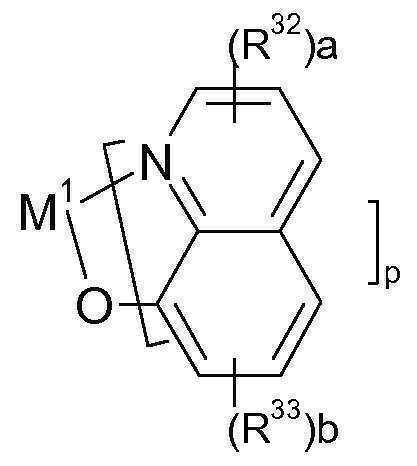
(상기 화학식에서,(In the above formula,
R32 및 R33은 각각 독립적으로 F, C1-C8-알킬 또는, 1종 이상의 C1-C8-알킬 기로 임의로 치환된 C6-C14-아릴이고,R 32 and R 33 are each independently F, C 1 -C 8 -alkyl or C 6 -C 14 -aryl optionally substituted with one or more C 1 -C 8 -alkyl groups,
2개의 R32 및/또는 R33 치환기는 함께 1종 이상의 C1-C8-알킬 기로 임의로 치환된 융합된 벤젠 고리를 형성하며;Two R 32 and/or R 33 substituents together form a fused benzene ring optionally substituted with one or more C 1 -C 8 -alkyl groups;
a 및 b는 각각 독립적으로 0, 또는 1, 2 또는 3이고,a and b are each independently 0, or 1, 2 or 3,
M1은 알칼리 금속 원자 또는 알칼리 토금속 원자이고,M 1 is an alkali metal atom or an alkaline earth metal atom,
M1이 알칼리 금속 원자인 경우 p는 1이고, M1이 알칼리 토금속 원자인 경우 p는 2이다.When M 1 is an alkali metal atom, p is 1, and when M 1 is an alkaline earth metal atom, p is 2.
화학식 VII의 매우 특히 바람직한 화합물은 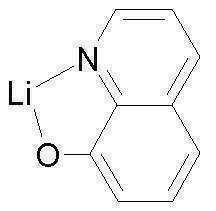
추가로 바람직한 실시양태에서, 전자 수송층은 1종 이상의 하기 화학식 VIII의 화합물을 포함한다:In a further preferred embodiment, the electron transport layer comprises at least one compound of formula VIII:
<화학식 VIII><Formula VIII>
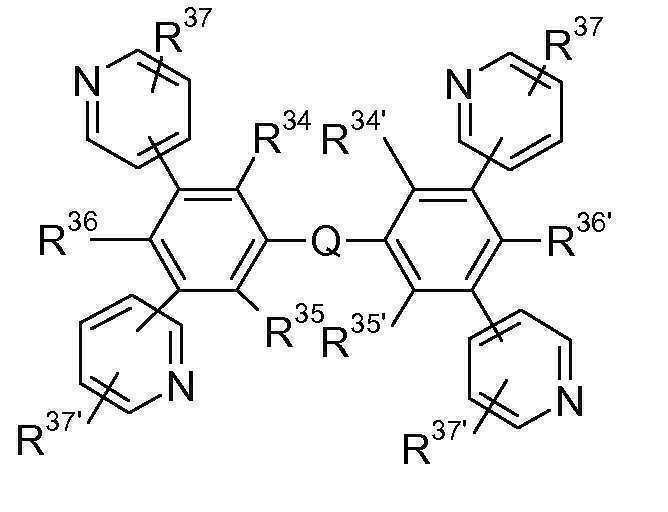
상기 화학식에서,In the above formula,
R34, R35, R36, R37, R34', R35', R36' 및 R37'는 각각 독립적으로 H, C1-C18-알킬, E로 치환되거나 및/또는 D로 개재된 C1-C18-알킬, C6-C24-아릴, G로 치환된 C6-C24-아릴, C2-C20-헤테로아릴 또는 G로 치환된 C2-C20-헤테로아릴이고,R 34 , R 35 , R 36 , R 37 , R 34' , R 35' , R 36' and R 37' are each independently H, C 1 -C 18 -alkyl, E and/or D via a C 1 -C 18 - alkyl, C 6 -C 24 - aryl, substituted C 6 -C 24 in G - aryl, C 2 -C 20 - heteroaryl, or a C 2 -C 20 substituted with G - heteroaryl Aryl,
*Q는 아릴렌 또는 헤테로아릴렌 기이고, 각각은 G로 임의로 치환되며;*Q is an arylene or heteroarylene group, each optionally substituted with G;
D는 -CO-; -COO-; -S-; -SO-; -SO2-; -O-; -NR40-; -SiR45R46-; -POR47-; -CR38=CR39-; 또는 -C≡C-이고;D is -CO-; -COO-; -S-; -SO-; -SO 2 -; -O-; -NR 40 -; -SiR 45 R 46 -; -POR 47 -; -CR 38 =CR 39 -; Or -C≡C-;
E는 -OR44; -SR44; -NR40R41; -COR43; -COOR42; -CONR40R41; -CN; 또는 F이고;E is -OR 44 ; -SR 44 ; -NR 40 R 41 ; -COR 43 ; -COOR 42 ; -CONR 40 R 41 ; -CN; Or F;
G는 E, C1-C18-알킬, D로 치환된 C1-C18-알킬, C1-C18-퍼플루오로알킬, C1-C18-알콕시 또는, E로 치환되거나 및/또는 D로 개재된 C1-C18-알콕시이고,G is E, C 1 -C 18 - alkyl, C 1 -C 18 substituted with D - alkyl, C 1 -C 18 - perfluoroalkyl, C 1 -C 18 - alkoxy, or, or is substituted by E and / Or C 1 -C 18 -alkoxy interrupted by D,
여기서 R38 및 R39는 각각 독립적으로 H, C6-C18-아릴; C1-C18-알킬 또는 C1-C18-알콕시로 치환된 C6-C18-아릴; C1-C18-알킬; 또는 -O-로 개재된 C1-C18-알킬이고; Wherein R 38 and R 39 are each independently H, C 6 -C 18 -aryl; C 1 -C 18 - alkyl or C 1 -C 18 - a C 6 -C 18 alkoxy substituted with aryl; C 1 -C 18 -alkyl; Or C 1 -C 18 -alkyl interrupted by -O-;
R40 및 R41은 각각 독립적으로 C6-C18-아릴; C1-C18-알킬 또는 C1-C18-알콕시로 치환된 C6-C18-아릴; C1-C18-알킬; 또는 -O-로 개재된 C1-C18-알킬이거나; 또는R 40 and R 41 are each independently C 6 -C 18 -aryl; C 1 -C 18 - alkyl or C 1 -C 18 - a C 6 -C 18 alkoxy substituted with aryl; C 1 -C 18 -alkyl; Or C 1 -C 18 -alkyl interrupted by -O-; or
R40 및 R41은 함께 6-원 고리를 형성하며;R 40 and R 41 together form a 6-membered ring;
R42 및 R43은 각각 독립적으로 C6-C18-아릴; C1-C18-알킬 또는 C1-C18-알콕시로 치환된 C6-C18-아릴; C1-C18-알킬; 또는 -O-로 개재된 C1-C18-알킬이고;R 42 and R 43 are each independently C 6 -C 18 -aryl; C 1 -C 18 - alkyl or C 1 -C 18 - a C 6 -C 18 alkoxy substituted with aryl; C 1 -C 18 -alkyl; Or C 1 -C 18 -alkyl interrupted by -O-;
R44는 C6-C18-아릴; C1-C18-알킬 또는 C1-C18-알콕시로 치환된 C6-C18-아릴; C1-C18-알킬; 또는 -O-로 개재된 C1-C18-알킬이고;R 44 is C 6 -C 18 -aryl; C 1 -C 18 - alkyl or C 1 -C 18 - a C 6 -C 18 alkoxy substituted with aryl; C 1 -C 18 -alkyl; Or C 1 -C 18 -alkyl interrupted by -O-;
R45 및 R46은 각각 독립적으로 C1-C18-알킬로 치환된 C6-C18-아릴, C6-C18-아릴 또는 C1-C18-알킬이고,Alkyl, - R 45 and R 46 are each independently C 1 -C 18 - a C 6 -C 18 substituted alkyl-aryl, C 6 -C 18 -aryl or C 1 -C 18
R47은 C1-C18-알킬로 치환된 C6-C18-아릴, C6-C18-아릴 또는 C1-C18-알킬이다.R 47 is C 1 -C 18 - alkyl substituted by C 6 -C 18 -aryl, C 6 -C 18 - alkyl-aryl or C 1 -C 18.
화학식 VIII의 바람직한 화합물은 하기 화학식 VIIIa의 화합물이다:Preferred compounds of formula VIII are those of formula VIIIa:
<화학식 VIIIa><Formula VIIIa>
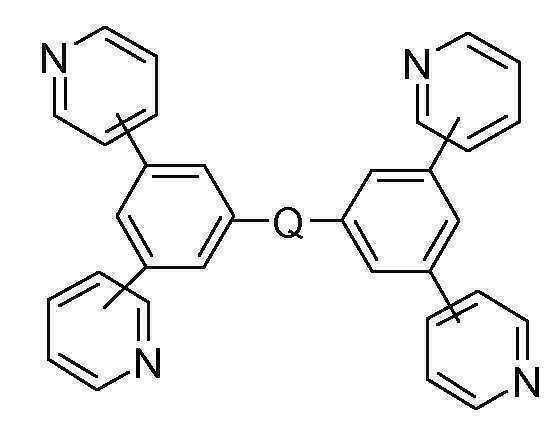
상기 화학식에서,In the above formula,
Q는 
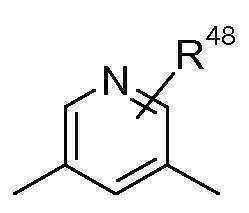
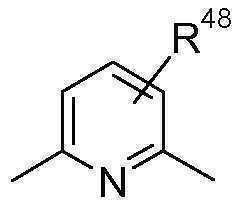

R48는 H 또는 C1-C18-알킬이고,R 48 is H or C 1 -C 18 -alkyl,
*R48'는 H, C1-C18-알킬 또는 


화학식 VIIIaa의 화합물이 특히 바람직하다:Particularly preferred are compounds of formula VIIIaa:
<화학식 VIIIaa><Formula VIIIaa>
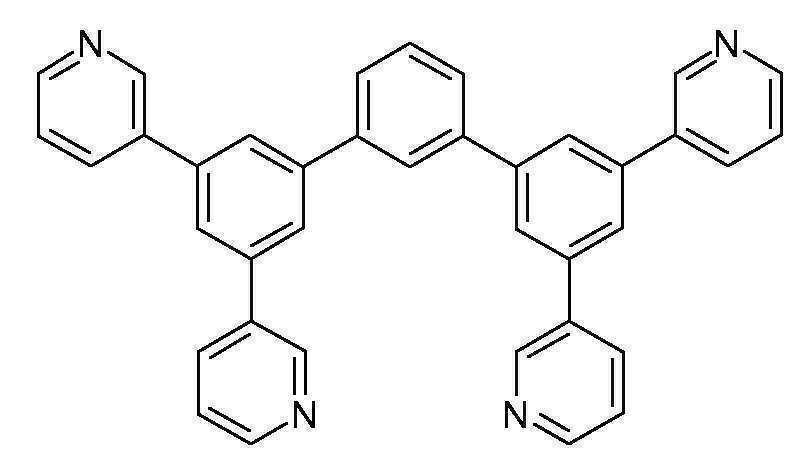
추가로, 매우 특히 바람직한 실시양태에서, 전자 수송층은 하기 화학식 Liq의 화합물 및 하기 화학식 VIIIaa의 화합물을 포함한다:Additionally, in a very particularly preferred embodiment, the electron transport layer comprises a compound of the formula Liq and a compound of the formula VIIIaa:
<화학식 Liq><Formula Liq>
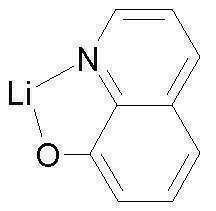
<화학식 VIIIaa><Formula VIIIaa>
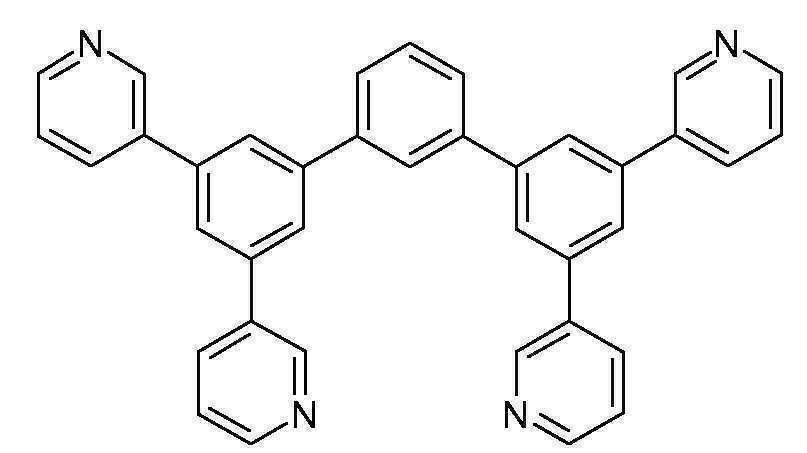
바람직한 실시양태에서, 전자 수송층은 화학식 VII의 화합물을 99 내지 1 중량%, 바람직하게는 75 내지 25 중량%, 더욱 바람직하게는 약 50 중량%의 양으로 포함하며, 여기서 화학식 VII의 화합물의 양 및 화학식 VIII의 화합물의 양은 합하여 총 100 중량% 이하이다.In a preferred embodiment, the electron transport layer comprises the compound of formula VII in an amount of 99 to 1% by weight, preferably 75 to 25% by weight, more preferably about 50% by weight, wherein the amount of the compound of formula VII and The total amount of compounds of formula VIII is up to 100% by weight in total.
화학식 VIII의 화합물의 제조는 문헌[J. Kido et al., Chem. Commun. (2008) 5821-5823], [J. Kido et al., Chem. Mater. 20 (2008) 5951-5953] 및 JP2008-127326에 기재되어 있거나 또는 화합물은 전술한 문헌에 기재된 방법과 유사하게 생성될 수 있다.The preparation of compounds of formula VIII is described in J. Kido et al., Chem. Commun . (2008) 5821-5823], [J. Kido et al., Chem. Mater . 20 (2008) 5951-5953] and JP2008-127326, or compounds can be produced analogously to the methods described in the aforementioned documents.
화학식 VII의 화합물의 제조는 예를 들면 문헌[Christoph Schmitz et al., Chem. Mater. 12 (2000) 3012-3019] 및 WO00/32717에 기재되어 있거나 또는 화합물은 전술한 문헌에 기재된 방법과 유사하게 생성될 수 있다.The preparation of compounds of formula VII is described, for example, in Christoph Schmitz et al., Chem. Mater . 12 (2000) 3012-3019] and WO00/32717, or the compounds can be produced analogously to the methods described in the aforementioned documents.
바람직한 실시양태에서, 본 발명은 전자 수송층이 1종 이상의 페난트롤린 유도체 및/또는 피리딘 유도체를 포함하는 본 발명의 OLED에 관한 것이다.In a preferred embodiment, the invention relates to an OLED of the invention wherein the electron transport layer comprises at least one phenanthroline derivative and/or a pyridine derivative.
추가로 바람직한 실시양태에서, 본 발명은 전자 수송층이 1종 이상의 페난트롤린 유도체 및/또는 피리딘 유도체 및 1종 이상의 알칼리 금속 히드록시퀴놀레이트 착물을 포함하는 본 발명의 OLED에 관한 것이다.In a further preferred embodiment, the invention relates to an OLED of the invention wherein the electron transport layer comprises at least one phenanthroline derivative and/or pyridine derivative and at least one alkali metal hydroxyquinolate complex.
추가로 바람직한 실시양태에서, 본 발명은 전자 수송층이 1종 이상의 페난트롤린 유도체 및/또는 피리딘 유도체 및 8-히드록시퀴놀라토리튬을 포함하는 본 발명의 OLED에 관한 것이다.In a further preferred embodiment, the invention relates to an OLED of the invention wherein the electron transport layer comprises at least one phenanthroline derivative and/or pyridine derivative and 8-hydroxyquinolatolithium.
정공 수송 물질 및 전자 수송 물질로서 상기 언급된 물질의 일부는 여러 기능을 수행할 수 있다. 예를 들면 전자 수송 물질의 일부는 하위의 HOMO를 가질 경우 동시에 정공 차단 물질이 된다.Some of the materials mentioned above as hole transport materials and electron transport materials can perform several functions. For example, if some of the electron transport materials have a lower HOMO, they become hole blocking materials at the same time.
캐쏘드(5)는 전자 또는 음전하 캐리어를 투입하도록 작용하는 전극이 된다. 캐쏘드는 애노드보다 더 낮은 일 함수를 갖는 임의의 금속 또는 비금속일 수 있다. 캐쏘드에 적절한 물질은 원소 주기율표의 1족 알칼리 금속, 예를 들면 Li, Cs, 2족의 알칼리 토금속, 희토류 금속 및 란탄족 및 악티늄족을 포함한 12족의 금속으로 이루어진 군으로부터 선택된다. 게다가, 금속, 예컨대 알루미늄, 인듐, 칼슘, 바륨, 사마륨 및 마그네슘 및 그의 조합을 사용할 수 있다. 게다가, 리튬-포함 유기금속 화합물, 예컨대 8-히드록시퀴놀라토리튬(Liq), CsF, NaF, KF, Cs2CO3 또는 LiF는 작동 전압을 감소시키기 위하여 전자 주입층으로서 유기층 및 캐쏘드 사이에 적용될 수 있다.The cathode 5 becomes an electrode that acts to inject electrons or negative charge carriers. The cathode can be any metal or non-metal with a lower work function than the anode. Materials suitable for the cathode are selected from the group consisting of alkali metals of group 1 of the periodic table of the elements, such as Li, Cs, alkaline earth metals of
본 발명의 OLED는 당업자에게 공지된 추가의 층을 더 포함할 수 있다. 예를 들면 양전하의 수송을 용이하게 하며 및/또는 서로에 대한 층의 밴드갭에 부합하는 층은 층(2) 및 발광층(3) 사이에 적용될 수 있다. 대안으로, 이러한 추가의 층은 보호층으로서 작용할 수 있다. 유사한 방식으로, 음전하의 수송을 용이하게 하며 및/또는 서로에 대한 층의 밴드갭에 부합하도록 추가의 층은 발광층(3) 및 층(4) 사이에 존재할 수 있다. 대안으로, 이러한 층은 보호층으로서 작용할 수 있다.The OLEDs of the present invention may further comprise additional layers known to those skilled in the art. For example, a layer that facilitates transport of positive charges and/or matches the band gap of the layers with respect to each other may be applied between the
바람직한 실시양태에서, 층(1) 내지 (5) 이외에, 본 발명의 OLED는 하기에 언급한 추가의 층 중 1종 이상을 포함한다:In a preferred embodiment, in addition to layers (1) to (5), the inventive OLED comprises at least one of the additional layers mentioned below:
- 애노드(1) 및 정공 수송층(2) 사이의 정공 주입층;-A hole injection layer between the anode 1 and the
- 정공 수송층(2) 및 발광층(3) 사이의 전자를 위한 차단층;-A blocking layer for electrons between the
- 발광층(3) 및 전자 수송층(4) 사이의 정공을 위한 차단층;-A blocking layer for holes between the light emitting
- 전자 수송층(4) 및 캐쏘드(5) 사이의 전자 주입층.-An electron injection layer between the
그러나, 상기에서 이미 언급한 바와 같이, OLED는 언급한 층 (1) 내지 층 (5) 모두를 갖지 않을 수 있으며, 예를 들면 층 (1) (애노드), 층 (3) (발광층) 및 층 (5) (캐쏘드)를 포함하는 OLED도 마찬가지로 적절하며, 이 경우에서 층 (2) (정공 수송층) 및 (4)(전자 수송층)의 기능은 인접한 층에 의하여 가정된다. 층(1), 층(2), 층(3) 및 층(5) 또는 층(1), 층(3), 층(4) 및 층(5)을 갖는 OLED도 마찬가지로 적절하다.However, as already mentioned above, the OLED may not have all of the mentioned layers (1) to (5), for example, layer (1) (anode), layer (3) (light-emitting layer) and layer (5) OLEDs comprising (cathode) are likewise suitable, in which case the functions of layers (2) (hole transport layers) and (4) (electron transport layers) are assumed by adjacent layers. OLEDs with layer 1,
당업자는 적절한 물질을 선택하여야만 하는 방법(예를 들면 전기화학적 조사에 기초하여)을 숙지할 것이다. 개개의 층에 적절한 물질은 당업자에게 공지되어 있으며, 예를 들면 WO 00/70655에 개시되어 있다.The person skilled in the art will be familiar with the method by which the appropriate material must be selected (eg based on electrochemical investigation). Suitable materials for the individual layers are known to the person skilled in the art and are disclosed, for example, in WO 00/70655.
게다가, 층(1), 층(2), 층(3), 층(4) 및 층(5)의 일부 또는 전부는 전하 캐리어 수송의 효율을 증가시키기 위하여 표면 처리될 수 있다. 언급한 층 각각에 대한 물질의 선택은 바람직하게는 높은 효율을 갖는 OLED를 얻음으로써 결정된다.In addition, some or all of the
본 발명의 OLED는 당업자에게 공지된 방법으로 생성될 수 있다. 일반적으로, OLED는 개개의 층을 적절한 기판으로 연속 증착시켜 생성된다. 적절한 기판의 예로는 유리, 무기 물질, 예컨대 ITO 또는 IZO 또는 중합체 필름을 들 수 있다. 증착의 경우, 통상의 기법, 예컨대 열 증착, 화학적 증착(CVD), 물리적 증착(PVD) 등을 사용할 수 있다.The OLEDs of the present invention can be produced by methods known to those skilled in the art. Typically, OLEDs are produced by successively depositing individual layers onto a suitable substrate. Examples of suitable substrates are glass, inorganic materials such as ITO or IZO or polymer films. For vapor deposition, conventional techniques such as thermal vapor deposition, chemical vapor deposition (CVD), physical vapor deposition (PVD), and the like can be used.
대안의 방법으로, 유기 층은 적절한 용매 중에서 용액 또는 분산액으로부터 코팅될 수 있으며, 이 경우 당업자에게 공지된 코팅 기법을 사용한다. 적절한 코팅 기법의 예로는 스핀-코팅, 캐스팅 방법, 랭뮈르-블로겟(Langmuir-Blodgett)("LB") 방법, 잉크젯 인쇄 방법, 침지 코팅, 철판 인쇄, 스크린 인쇄, 닥터 블레이드 인쇄, 슬릿-코팅, 롤러 인쇄, 역롤러 인쇄, 오프셋 리토그래피 인쇄, 플렉소그래픽 인쇄, 웹 인쇄, 분무 코팅, 브러쉬에 의한 코팅 또는 패드 인쇄 등을 들 수 있다. 언급된 방법 중에서, 전술한 증착 이외에, 스핀-코팅, 잉크젯 인쇄 방법 및 캐스팅 방법은 특히 단순하면서도 실시 비용이 저렴하므로 바람직하다.Alternatively, the organic layer can be coated from a solution or dispersion in a suitable solvent, in which case coating techniques known to those skilled in the art are used. Examples of suitable coating techniques include spin-coating, casting method, Langmuir-Blodgett ("LB") method, inkjet printing method, dip coating, plate printing, screen printing, doctor blade printing, slit-coating. , Roller printing, reverse roller printing, offset lithography printing, flexographic printing, web printing, spray coating, brush coating, or pad printing. Among the mentioned methods, in addition to the above-described vapor deposition, spin-coating, inkjet printing method and casting method are particularly simple and are preferable because of their low implementation cost.
스핀-코팅 방법, 캐스팅 방법 또는 잉크젯 인쇄 방법에 의하여 얻은 OLED의 층의 경우에서, 코팅은 적절한 유기 용매, 예컨대 벤젠, 톨루엔, 크실렌, 테트라히드로푸란, 메틸테트라히드로푸란, N,N-디메틸포름아미드, 아세톤, 아세토니트릴, 아니솔, 디클로로메탄, 디메틸 술폭시드, 물 및 그의 혼합물 중에서 0.0001 내지 90 중량%의 농도로 조성물을 용해시켜 생성된 용액을 사용하여 얻을 수 있다.In the case of a layer of OLED obtained by a spin-coating method, a casting method or an inkjet printing method, the coating is a suitable organic solvent such as benzene, toluene, xylene, tetrahydrofuran, methyltetrahydrofuran, N,N-dimethylformamide , Acetone, acetonitrile, anisole, dichloromethane, dimethyl sulfoxide, water, and mixtures thereof, by dissolving the composition in a concentration of 0.0001 to 90% by weight can be obtained by using a resulting solution.
일반적으로, 각종 층은 하기의 두께를 갖는다: 애노드(2) 500 내지 5,000 Å, 바람직하게는 1,000 내지 2,000 Å(옹스트롬); 정공 수송층(3) 50 내지 1,000 Å, 바람직하게는 200 내지 800 Å; 발광층(4) 10 내지 1,000 Å, 바람직하게는 100 내지 800 Å; 전자 수송층(5) 50 내지 1,000 Å, 바람직하게는 200 내지 800 Å; 캐쏘드(6) 200 내지 10,000 Å, 바람직하게는 300 내지 5,000 Å. 게다가, 마찬가지로 여러 층을 혼합으로 합할 수 있다. 예를 들면 정공 수송 물질은 발광층의 물질과 혼합한 후, 함께 적용할 수 있다. 본 발명의 OLED에서의 정공 및 전자의 재조합 구역의 위치 및 OLED의 방출 스펙트럼은 각각의 층의 상대적 두께 및 농도 비에 의하여 영향을 받을 수 있다. 이는 전자 수송층의 두께가 바람직하게는 전자/정공 재조합 구역이 발광층내에 있도록 선택하여야만 한다는 것을 의미한다. OLED에서의 각각의 층의 층 두께의 비는 사용한 물질에 의존한다. 사용한 임의의 추가의 층의 층 두께는 당업자에게 공지되어 있다.In general, the various layers have the following thickness:
바람직한 실시양태에서, 본 발명은 1종 이상의 본 발명의 금속-카르벤 착물 및 1종 이상의 하기 화학식 X의 화합물을 포함하는 OLED에 관한 것이다:In a preferred embodiment, the invention relates to an OLED comprising at least one inventive metal-carbene complex and at least one compound of formula X:
<화학식 X><Formula X>

상기 화학식에서,In the above formula,
T는 NR57, S, O 또는 PR57, 바람직하게는 S 또는 O, 더욱 바람직하게는 O이고;T is NR 57 , S, O or PR 57 , preferably S or O, more preferably O;
R57은 아릴, 헤테로아릴, 알킬, 시클로알킬 또는 헤테로시클로알킬이고;R 57 is aryl, heteroaryl, alkyl, cycloalkyl or heterocycloalkyl;
Q'는 -NR58R59, -P(O)R60R61, -PR62R63, -S(O)2R64, -S(O)R65, -SR66 또는 -OR67, 바람직하게는 -NR58R59; 더욱 바람직하게는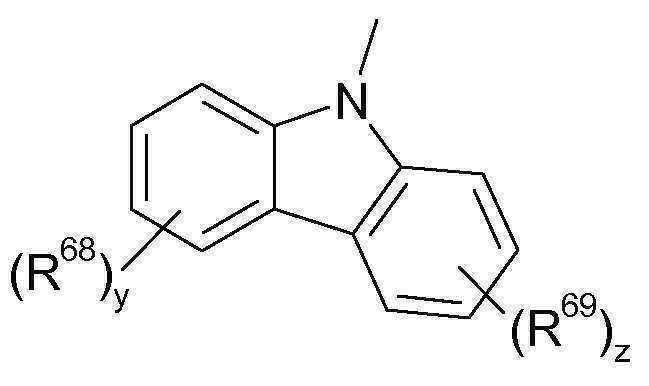
R68, R69는 각각 독립적으로 알킬, 시클로알킬, 헤테로시클로알킬, 아릴 또는 헤테로아릴; 바람직하게는 메틸, 카르바졸릴, 디벤조푸릴 또는 디벤조티에닐이고;R 68 and R 69 are each independently alkyl, cycloalkyl, heterocycloalkyl, aryl or heteroaryl; Preferably methyl, carbazolyl, dibenzofuryl or dibenzothienyl;
y, z는 각각 독립적으로 0, 1, 2, 3 또는 4, 바람직하게는 0 또는 1이고;y and z are each independently 0, 1, 2, 3 or 4, preferably 0 or 1;
R55, R56은 각각 독립적으로 알킬, 시클로알킬, 헤테로시클로알킬, 아릴, 헤테로아릴, SiR70R71R72, Q' 기 또는 공여체 또는 수용체 작용을 갖는 기이며,R 55 , R 56 are each independently alkyl, cycloalkyl, heterocycloalkyl, aryl, heteroaryl, SiR 70 R 71 R 72 , a Q'group or a group having a donor or acceptor function,
a"는 0, 1, 2, 3 또는 4이고;a" is 0, 1, 2, 3 or 4;
b'는 0, 1, 2 또는 3이고;
R58, R59는 질소 원자와 함께 3 내지 10개의 고리 원자를 가지며 그리고 알킬, 시클로알킬, 헤테로시클로알킬, 아릴, 헤테로아릴 및, 공여체 또는 수용체 작용을 갖는 기로부터 선택된 1종 이상의 치환기로 치환되거나 또는 비치환될 수 있으며 및/또는 3 내지 10개의 고리 원자를 갖는 1종 이상의 추가의 고리형 라디칼로 융합될 수 있는 고리형 라디칼을 형성하며, 여기서 융합된 라디칼은 알킬, 시클로알킬, 헤테로시클로알킬, 아릴, 헤테로아릴 및, 공여체 또는 수용체 작용을 갖는 기로부터 선택된 1종 이상의 치환기로 치환되거나 또는 비치환될 수 있으며;R 58 , R 59 together with a nitrogen atom have 3 to 10 ring atoms and are substituted with one or more substituents selected from alkyl, cycloalkyl, heterocycloalkyl, aryl, heteroaryl and groups having a donor or acceptor function, or Or form a cyclic radical which may be unsubstituted and/or fused to one or more additional cyclic radicals having 3 to 10 ring atoms, wherein the fused radical is alkyl, cycloalkyl, heterocycloalkyl , Aryl, heteroaryl and, may be unsubstituted or substituted with one or more substituents selected from a group having a donor or acceptor function;
R70, R71, R72, R60, R61, R62, R63, R64, R65, R66, R67은 각각 독립적으로 아릴, 헤테로아릴, 알킬, 시클로알킬 또는 헤테로시클로알킬이거나 또는,R 70 , R 71 , R 72 , R 60 , R 61 , R 62 , R 63 , R 64 , R 65 , R 66 , R 67 are each independently aryl, heteroaryl, alkyl, cycloalkyl or heterocycloalkyl, or or,
화학식 X의 2개의 단위는 1종 이상의 이종원자로 임의로 개재된 선형 또는 분지형, 포화 또는 불포화 가교에 의하여, 결합에 의하여 또는 O에 의하여 서로 가교된다.The two units of formula (X) are crosslinked to each other by linear or branched, saturated or unsaturated bridges, by bonds or by O, optionally interrupted by one or more heteroatoms.
T는 S 또는 O, 바람직하게는 O이고,T is S or O, preferably O,
Q'는 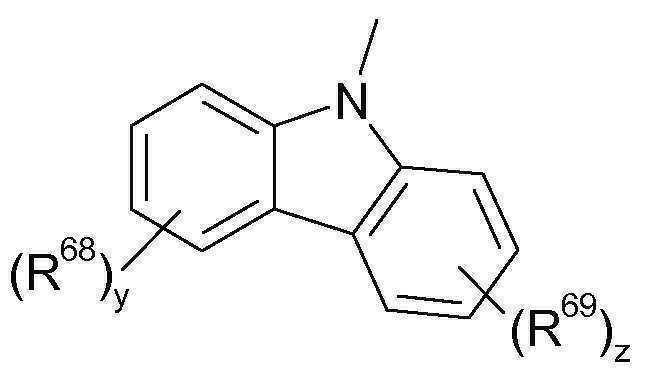
R68, R69는 각각 독립적으로 알킬, 시클로알킬, 헤테로시클로알킬, 아릴 또는 헤테로아릴; 바람직하게는 메틸, 카르바졸릴, 디벤조푸릴 또는 디벤조티에닐이고;R 68 and R 69 are each independently alkyl, cycloalkyl, heterocycloalkyl, aryl or heteroaryl; Preferably methyl, carbazolyl, dibenzofuryl or dibenzothienyl;
y, z는 각각 독립적으로 0, 1, 2, 3 또는 4, 바람직하게는 0 또는 1인 화학식 X의 화합물이 바람직하다.A compound of formula X, wherein y and z are each independently 0, 1, 2, 3 or 4, preferably 0 or 1, is preferred.
*특히 바람직한 화학식 X의 화합물은 하기 화학식 Xa를 갖는다:*Particularly preferred compounds of formula X have the following formula Xa:
<화학식 Xa><Formula Xa>
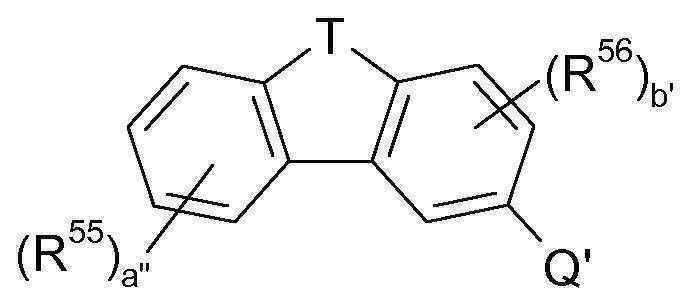
상기 화학식에서,In the above formula,
부호 및 지수 Q', T, R55, R56, a" 및 b'는 각각 상기 정의된 바와 같다.Signs and indices Q', T, R 55 , R 56 , a" and b'are as defined above, respectively.
매우 특히 바람직한 화학식 X의 화합물은 하기 화학식 Xaa를 갖는다:Very particularly preferred compounds of formula X have the formula Xaa:
<화학식 Xaa><Formula Xaa>
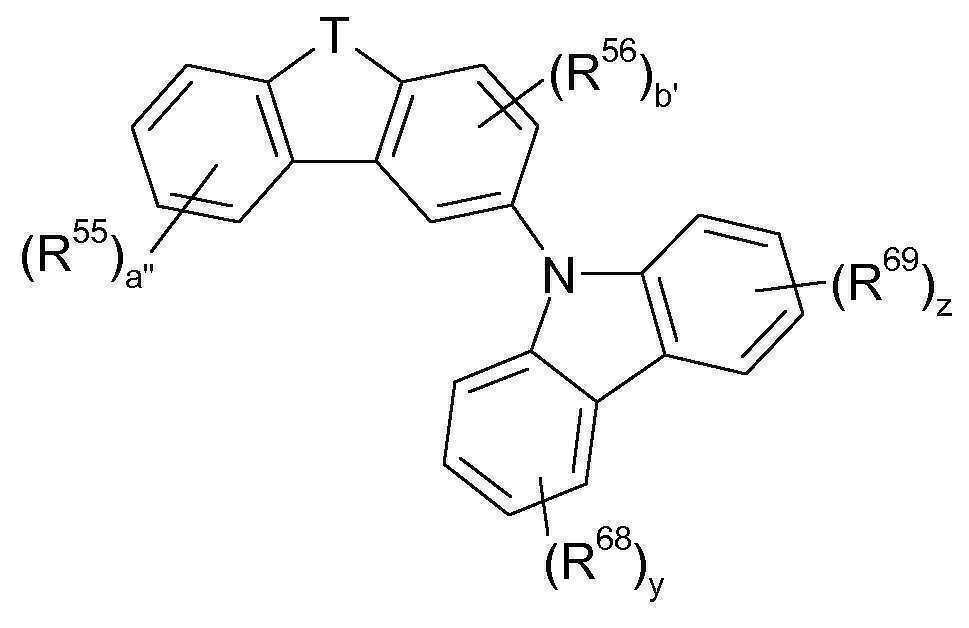
부호 및 지수 R68, R69 y, z, T, R55, R56, a" 및 b'는 각각 상기 정의된 바와 같다.Signs and indices R 68 , R 69 y, z, T, R 55 , R 56 , a" and b'are as defined above, respectively.
매우 특히 바람직한 실시양태에서, 화학식 Xaa에서In a very particularly preferred embodiment, in the formula Xaa
T는 O 또는 S, 바람직하게는 O이고;T is O or S, preferably O;
a"는 1이고;a" is 1;
b'는 0이고;b'is 0;
y, z는 각각 독립적으로 0 또는 1이고;y and z are each independently 0 or 1;
R68, R69는 각각 독립적으로 메틸, 카르바졸릴, 디벤조푸릴 또는 디벤조티에닐이고;R 68 and R 69 are each independently methyl, carbazolyl, dibenzofuryl or dibenzothienyl;
R55는 치환된 페닐, 카르바졸릴, 디벤조푸릴 또는 디벤조티에닐이다.R 55 is substituted phenyl, carbazolyl, dibenzofuryl or dibenzothienyl.
추가로 바람직한 실시양태에서, 화학식 X의 화합물은 화학식 XI 또는 XI*을 갖는다:In a further preferred embodiment, the compound of formula X has the formula XI or XI * :
<화학식 XI><Formula XI>
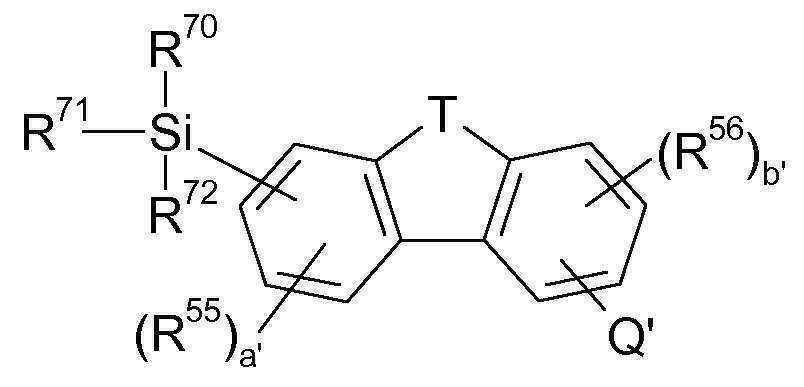
<화학식 XI*><Formula XI * >
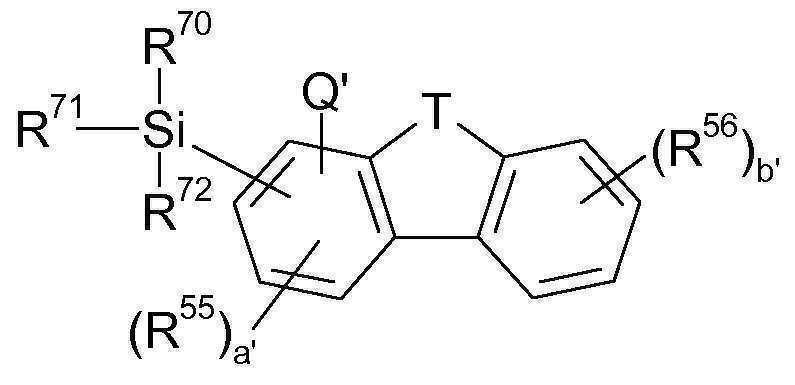
(상기 화학식에서,(In the above formula,
T는 NR57, S, O 또는 PR57이고;T is NR 57 , S, O or PR 57 ;
R57은 아릴, 헤테로아릴, 알킬, 시클로알킬 또는 헤테로시클로알킬이고;R 57 is aryl, heteroaryl, alkyl, cycloalkyl or heterocycloalkyl;
Q'는 -NR58R59, -P(O)R60R61, -PR62R63, -S(O)2R64, -S(O)R65, -SR66 또는 -OR67이고;Q'is -NR 58 R 59 , -P(O)R 60 R 61 , -PR 62 R 63 , -S(O) 2 R 64 , -S(O)R 65 , -SR 66 or -OR 67 ;
R70, R71, R72는 각각 독립적으로 아릴, 헤테로아릴, 알킬, 시클로알킬, 헤테로시클로알킬이고, 여기서 R70, R71, R72 라디칼 중 1종 이상은 2개 이상의 탄소 원자 또는 OR73을 포함하며;R 70 , R 71 , R 72 are each independently aryl, heteroaryl, alkyl, cycloalkyl, heterocycloalkyl, wherein at least one of the R 70 , R 71 , R 72 radicals is at least 2 carbon atoms or OR 73 Includes;
R55, R56은 각각 독립적으로 알킬, 시클로알킬, 헤테로시클로알킬, 아릴, 헤테로아릴, Q 기 또는, 공여체 또는 수용체 작용을 갖는 기이고;R 55 and R 56 are each independently alkyl, cycloalkyl, heterocycloalkyl, aryl, heteroaryl, Q group or a group having a donor or acceptor function;
a', b'는 화학식 XI의 화합물의 경우 각각 독립적으로 0, 1, 2, 3이고; 화학식 XI*의 화합물의 경우 a'는 0, 1, 2이고, b'는 0, 1, 2, 3, 4이고;a'and b'are each independently 0, 1, 2, 3 in the case of the compound of Formula XI; For the compound of formula XI * a'is 0, 1, 2,
R58, R59는 질소 원자와 함께, 3 내지 10개의 고리 원자를 가지며 그리고 알킬, 시클로알킬, 헤테로시클로알킬, 아릴, 헤테로아릴 및, 공여체 또는 수용체 작용을 갖는 기로부터 선택된 1종 이상의 치환기로 치환되거나 또는 치환되지 않을 수 있으며 및/또는 3 내지 10개의 고리 원자를 갖는 1종 이상의 추가의 고리형 라디칼에 융합될 수 있는 고리형 라디칼을 형성하며, 여기서 융합된 라디칼은 알킬, 시클로알킬, 헤테로시클로알킬, 아릴, 헤테로아릴 및, 공여체 또는 수용체 작용을 갖는 기로부터 선택된 1종 이상의 치환기로 치환되거나 또는 치환되지 않을 수 있으며;R 58 , R 59 together with a nitrogen atom, having 3 to 10 ring atoms and substituted with one or more substituents selected from alkyl, cycloalkyl, heterocycloalkyl, aryl, heteroaryl and groups having a donor or acceptor function Forms a cyclic radical which may or may not be substituted and/or may be fused to one or more additional cyclic radicals having 3 to 10 ring atoms, wherein the fused radical is an alkyl, cycloalkyl, heterocyclo May or may not be substituted with one or more substituents selected from alkyl, aryl, heteroaryl and groups having a donor or acceptor function;
R73은 각각 독립적으로 OR77 기로 임의로 치환된, SiR74R75R76, 아릴, 헤테로아릴, 알킬, 시클로알킬 또는 헤테로시클로알킬이고,R 73 are each independently SiR 74 R 75 R 76 , aryl, heteroaryl, alkyl, cycloalkyl or heterocycloalkyl, optionally substituted with an OR 77 group,
R77은 각각 독립적으로 SiR74R75R76, 아릴, 헤테로아릴, 알킬, 시클로알킬 또는 헤테로시클로알킬이고,Each R 77 is independently SiR 74 R 75 R 76 , aryl, heteroaryl, alkyl, cycloalkyl or heterocycloalkyl,
R60, R61, R62, R63, R64, R65, R66, R67, R74, R75, R76은 각각 독립적으로 아릴, 헤테로아릴, 알킬, 시클로알킬 또는 헤테로시클로알킬이거나 또는R 60 , R 61 , R 62 , R 63 , R 64 , R 65 , R 66 , R 67 , R 74 , R 75 , R 76 are each independently aryl, heteroaryl, alkyl, cycloalkyl or heterocycloalkyl, or or
화학식 XI 및/또는 화학식 XI*의 2개의 단위는 1종 이상의 이종원자에 의하여 또는 O에 의하여 임의로 개재된 선형 또는 분지형, 포화 또는 불포화 가교에 의하여 서로 가교되며, 여기서 화학식 XI 및/또는 화학식 XI*에서의 이러한 가교는 각각의 경우에서 R71 대신에 규소 원자에 결합된다.The two units of formula XI and/or formula XI * are crosslinked to each other by one or more heteroatoms or by linear or branched, saturated or unsaturated bridges optionally interrupted by O, wherein formula XI and/or formula XI This crosslinking in * is bonded to a silicon atom instead of R 71 in each case.
화학식 X의 화합물은 청구된 착물와 함께 매트릭스(희석제 물질), 정공/엑시톤 차단체, 전자/엑시톤 차단체, 전자 수송 물질 또는 정공 수송 물질로서 사용될 수 있으며, 그리하여 이미터로서 작용한다. 화학식 X의 화합물 및 화학식 I의 화합물 1종 이상을 모두 포함하는 본 발명의 OLED는 특히 우수한 효율 및 수명을 나타낸다. 화학식 X의 화합물을 사용하는 작용에 의존하여, 순수한 형태로 또는 각종 혼합비로 존재한다. 특히 바람직한 실시양태에서, 화학식 X의 화합물 1종 이상은 발광층에서 매트릭스 물질로서 사용된다.The compound of formula X can be used as a matrix (diluent material), hole/exciton blocker, electron/exciton blocker, electron transport material or hole transport material, together with the claimed complexes, and thus act as emitters. The OLEDs of the present invention comprising both a compound of formula (X) and one or more compounds of formula (I) exhibit particularly good efficiency and longevity. Depending on the action of using the compound of formula X, it exists in pure form or in various mixing ratios. In a particularly preferred embodiment, at least one compound of formula (X) is used as a matrix material in the light emitting layer.
화학식 X의 화합물의 경우, 특히 R55 내지 R77 라디칼의 경우,In the case of compounds of formula X, in particular for the radicals R 55 to R 77,
용어 아릴 라디칼 또는 기, 헤테로아릴 라디칼 또는 기, 알킬 라디칼 또는 기, 시클로알킬 라디칼 또는 기, 헤테로시클로알킬 라디칼 또는 기, 알케닐 라디칼 또는 기, 알키닐 라디칼 또는 기 및, 공여체 및/또는 수용체 작용을 갖는 기는 각각 하기에서와 같이 정의된다:The terms aryl radicals or groups, heteroaryl radicals or groups, alkyl radicals or groups, cycloalkyl radicals or groups, heterocycloalkyl radicals or groups, alkenyl radicals or groups, alkynyl radicals or groups and, donor and/or acceptor functions Each group having is defined as follows:
아릴 라디칼(또는 기)은 방향족 고리 또는 복수의 융합된 방향족 고리로부터 형성되는 6 내지 30개의 탄소 원자, 바람직하게는 6 내지 18개의 탄소 원자의 기본 골격을 갖는 라디칼을 의미하는 것으로 이해한다. 적절한 기본 골격의 예로는 페닐, 나프틸, 안트라세닐 또는 페난트레닐, 인데닐 또는 플루오레닐을 들 수 있다. 이러한 기본 골격은 비치환(이는 치환 가능한 모든 탄소 원자가 수소 원자를 지닌다는 것을 의미함)일 수 있거나 또는 기본 골격의 1개, 1개 초과의 또는 모든 치환 가능한 위치에서 치환될 수 있다.An aryl radical (or group) is understood to mean a radical having a basic skeleton of 6 to 30 carbon atoms, preferably 6 to 18 carbon atoms, formed from an aromatic ring or a plurality of fused aromatic rings. Examples of suitable basic skeletons include phenyl, naphthyl, anthracenyl or phenanthrenyl, indenyl or fluorenyl. These basic skeletons can be unsubstituted (which means that all carbon atoms that can be substituted have hydrogen atoms) or can be substituted at one, more than one or all substitutable positions of the basic skeleton.
적절한 치환기의 예로는 중수소, 알콕시 라디칼, 아릴옥시 라디칼, 알킬아미노 기, 아릴아미노 기, 카르바졸릴 기, 실릴 기, SiR78R79R80, (적절한 실릴 기 SiR78R79R80는 하기에 명시됨), 알킬 라디칼, 바람직하게는 1 내지 8개의 탄소 원자를 갖는 알킬 라디칼, 더욱 바람직하게는 메틸, 에틸 또는 i-프로필, 차례로 치환 또는 비치환될 수 있는 아릴 라디칼, 바람직하게는 C6-아릴 라디칼, 헤테로아릴 라디칼, 바람직하게는 1종 이상의 질소 원자를 포함하는 헤테로아릴 라디칼, 더욱 바람직하게는 피리딜 라디칼 및 카르바졸릴 라디칼, 알케닐 라디칼, 바람직하게는 1개의 이중 결합을 지니는 알케닐 라디칼, 더욱 바람직하게는 1개의 이중 결합 및 1 내지 8개의 탄소 원자를 갖는 알케닐 라디칼 , 알키닐 라디칼, 바람직하게는 삼중 결합을 갖는 알키닐 라디칼, 더욱 바람직하게는 1개의 삼중 결합 및 1 내지 8개의 탄소 원자를 갖는 알키닐 라디칼 및 또는 공여체 또는 수용체 기능을 갖는 기를 들 수 있다. 적절한 공여체 또는 수용체 기능을 갖는 기는 하기에 명시되어 있다. 치환된 아릴 라디칼은 가장 바람직하게는 메틸, 에틸, 이소프로필, 알콕시, 헤테로아릴, 할로겐, 슈도할로겐 및 아미노, 바람직하게는 아릴아미노로 이루어진 군으로부터 선택된 치환기를 지닌다. 아릴 라디칼 또는 아릴 기는 전술한 치환기 중 1종 이상 또는 1 초과의 것으로 임의로 치환된 바람직하게는 C6-C18-아릴 라디칼, 더욱 바람직하게는 C6-아릴 라디칼이다. C6-C18-아릴 라디칼, 바람직하게는 C6-아릴 라디칼은 더욱 바람직하게는 전술한 치환기 중 0, 1, 2, 3 또는 4개, 가장 바람직하게는 0, 1 또는 2개를 갖는다.Examples of suitable substituents include deuterium, alkoxy radicals, aryloxy radicals, alkylamino groups, arylamino groups, carbazolyl groups, silyl groups, SiR 78 R 79 R 80 , (suitable silyl groups SiR 78 R 79 R 80 are Specified), an alkyl radical, preferably an alkyl radical having 1 to 8 carbon atoms, more preferably methyl, ethyl or i-propyl, an aryl radical which in turn may be substituted or unsubstituted, preferably C 6- Aryl radicals, heteroaryl radicals, preferably heteroaryl radicals comprising at least one nitrogen atom, more preferably pyridyl radicals and carbazolyl radicals, alkenyl radicals, preferably alkenyl with one double bond A radical, more preferably an alkenyl radical having 1 double bond and 1 to 8 carbon atoms, an alkynyl radical, preferably an alkynyl radical having a triple bond, more preferably 1 triple bond and 1 to 8 Alkynyl radicals having four carbon atoms and or groups having a donor or acceptor function. Groups with appropriate donor or acceptor function are specified below. The substituted aryl radical most preferably carries a substituent selected from the group consisting of methyl, ethyl, isopropyl, alkoxy, heteroaryl, halogen, pseudohalogen and amino, preferably arylamino. The aryl radical or aryl group is preferably a C 6 -C 18 -aryl radical, more preferably a C 6 -aryl radical optionally substituted with one or more or more than one of the aforementioned substituents. The C 6 -C 18 -aryl radical, preferably the C 6 -aryl radical, more preferably has 0, 1, 2, 3 or 4, most preferably 0, 1 or 2 of the aforementioned substituents.
헤테로아릴 라디칼 또는 헤테로아릴 기는 아릴 라디칼의 기본 골격에서 1종 이상의 탄소 원자가 이종원자로 치환되며, 헤테로아릴 라디칼의 기본 골격은 바람직하게는 5 내지 18개의 고리 원자를 갖는 전술한 아릴 라디칼과는 상이한 라디칼을 의미하는 것으로 이해한다. 바람직한 이종원자는 N, O 및 S이다. 특히 바람직하게 적절한 헤테로아릴 라디칼은 질소-함유 헤테로아릴 라디칼이다. 가장 바람직하게는, 기본 골격의 1 또는 2개의 탄소 원자는 이종원자, 바람직하게는 질소로 치환된다. 기본 골격은 특히 바람직하게는 계, 예컨대 피리딘, 피리미딘 및 5-원 헤테로방향족, 예컨대 피롤, 푸란, 피라졸, 이미다졸, 티오펜, 옥사졸, 티아졸, 트리아졸로부터 선택된다. 게다가, 헤테로아릴 라디칼은 융합된 고리계, 예를 들면 벤조푸릴, 벤조티에닐, 벤조피롤릴, 디벤조푸릴, 디벤조티에닐, 페난트롤리닐, 카르바졸릴 라디칼, 아자카르바졸릴 라디칼 또는 디아자카르바졸릴 라디칼일 수 있다. 기본 골격은 기본 골격의 1개, 1개 초과 또는 전체 치환 가능한 위치에서 치환될 수 있다. 적절한 치환기는 아릴 기에 대하여 이미 명시된 바와 동일하다.Heteroaryl radicals or heteroaryl groups are substituted with heteroatoms in the basic skeleton of the aryl radical, and the basic skeleton of the heteroaryl radical preferably has a radical different from the aforementioned aryl radical having 5 to 18 ring atoms. Understand what it means. Preferred heteroatoms are N, O and S. Particularly preferably suitable heteroaryl radicals are nitrogen-containing heteroaryl radicals. Most preferably, one or two carbon atoms of the basic skeleton are substituted with heteroatoms, preferably nitrogen. The basic skeleton is particularly preferably selected from systems such as pyridine, pyrimidine and 5-membered heteroaromatics such as pyrrole, furan, pyrazole, imidazole, thiophene, oxazole, thiazole, triazole. In addition, the heteroaryl radical may be a fused ring system such as benzofuryl, benzothienyl, benzopyrrolyl, dibenzofuryl, dibenzothienyl, phenanthrolinyl, carbazolyl radical, azacarbazolyl radical or dia It may be a jacarbazolyl radical. The basic skeleton may be substituted at one, more than one or all substitutable positions of the basic skeleton. Suitable substituents are the same as already specified for the aryl group.
알킬 라디칼 또는 알킬 기는 1 내지 20개의 탄소 원자, 바람직하게는 1 내지 10개의 탄소 원자, 더욱 바람직하게는 1 내지 8개, 가장 바람직하게는 1 내지 4개의 탄소 원자를 갖는 라디칼을 의미하는 것으로 이해한다. 이러한 알킬 라디칼은 분지형 또는 비분지형일 수 있으며, 1종 이상의 이종원자, 바람직하게는 Si, N, O 또는 S, 더욱 바람직하게는 N, O 또는 S로 임의로 개재될 수 있다. 게다가, 이러한 알킬 라디칼은 아릴 기에 대하여 명시된 치환기 중 1종 이상으로 치환될 수 있다. 게다가, 본 발명에 의하여 존재하는 알킬 라디칼은 1종 이상의 할로겐 원자, 예를 들면 F, Cl, Br 또는 I, 특히 F를 가질 수 있다. 추가의 실시양태에서, 본 발명에 의하여 존재하는 알킬 라디칼은 완전 불소화될 수 있다. 마찬가지로, 알킬 라디칼은 1종 이상의 (헤테로)아릴 기를 지닐 수 있다. 본 출원과 관련하여, 예를 들면 벤질 라디칼은 그리하여 치환된 알킬 라디칼이 된다. 이와 관련하여, 상기 제시된 (헤테로)아릴 기 전체가 적절하다. 알킬 라디칼은 더욱 바람직하게는 메틸, 에틸, 이소프로필, n-프로필, n-부틸, 이소-부틸 및 tert-부틸로 이루어진 군으로부터 선택되며, 메틸 및 에틸이 매우 특히 바람직하다.Alkyl radical or alkyl group is understood to mean a radical having 1 to 20 carbon atoms, preferably 1 to 10 carbon atoms, more preferably 1 to 8 and most preferably 1 to 4 carbon atoms . These alkyl radicals may be branched or unbranched and may be optionally interrupted by one or more heteroatoms, preferably Si, N, O or S, more preferably N, O or S. In addition, these alkyl radicals may be substituted with one or more of the substituents specified for the aryl group. Furthermore, the alkyl radicals present according to the invention may have one or more halogen atoms, for example F, Cl, Br or I, in particular F. In a further embodiment, the alkyl radicals present by the present invention may be fully fluorinated. Likewise, the alkyl radical may carry one or more (hetero)aryl groups. In the context of the present application, for example a benzyl radical is thus a substituted alkyl radical. In this regard, all of the (hetero)aryl groups presented above are suitable. The alkyl radical is more preferably selected from the group consisting of methyl, ethyl, isopropyl, n-propyl, n-butyl, iso-butyl and tert-butyl, with methyl and ethyl being very particularly preferred.
시클로알킬 라디칼 또는 시클로알킬 기는 3 내지 20개의 탄소 원자, 바람직하게는 3 내지 10개의 탄소 원자, 더욱 바람직하게는 3 내지 8개의 탄소 원자를 갖는 라디칼을 의미하는 것으로 이해한다. 이러한 기본 골격은 비치환(이는 치환 가능한 모든 탄소 원자가 수소 원자를 지닌다는 것을 의미함)일 수 있거나 또는 기본 골격의 1개, 1개 초과의 또는 모든 치환 가능한 위치에서 치환될 수 있다. 적절한 치환기는 아릴 라디칼에 대하여 상기에서 이미 언급된 기이다. 마찬가지로 시클로알킬 라디칼은 1종 이상의 (헤테로)아릴 기를 지닐 수 있다. 적절한 시클로알킬 라디칼의 예로는 시클로프로필, 시클로펜틸 및 시클로헥실이다.Cycloalkyl radicals or cycloalkyl groups are understood to mean radicals having 3 to 20 carbon atoms, preferably 3 to 10 carbon atoms, more preferably 3 to 8 carbon atoms. These basic skeletons can be unsubstituted (which means that all carbon atoms that can be substituted have hydrogen atoms) or can be substituted at one, more than one or all substitutable positions of the basic skeleton. Suitable substituents are the groups already mentioned above for aryl radicals. Likewise, cycloalkyl radicals may carry one or more (hetero)aryl groups. Examples of suitable cycloalkyl radicals are cyclopropyl, cyclopentyl and cyclohexyl.
헤테로시클로알킬 라디칼 또는 헤테로시클로알킬 기는 시클로알킬 라디칼의 기본 골격에서 1종 이상의 탄소 원자가 이종원자로 치환된 전술한 시클로알킬 라디칼과는 상이한 라디칼을 의미하는 것으로 이해한다. 바람직한 이종원자는 N, O 및 S이다. 가장 바람직하게는, 시클로알킬 라디칼의 기본 골격의 1 또는 2개의 탄소 원자는 이종원자로 치환된다. 적절한 헤테로시클로알킬 라디칼의 예로는 피롤리딘, 피페리딘, 피페라진, 테트라히드로푸란, 디옥산으로부터 유래하는 라디칼이다.A heterocycloalkyl radical or a heterocycloalkyl group is understood to mean a radical different from the aforementioned cycloalkyl radical in which at least one carbon atom is substituted with a heteroatom in the basic skeleton of the cycloalkyl radical. Preferred heteroatoms are N, O and S. Most preferably, one or two carbon atoms of the basic skeleton of the cycloalkyl radical are substituted with heteroatoms. Examples of suitable heterocycloalkyl radicals are radicals derived from pyrrolidine, piperidine, piperazine, tetrahydrofuran, dioxane.
알케닐 라디칼 또는 알케닐 기는 2개 이상의 탄소 원자를 갖는 전술한 알킬 라디칼에 해당하며, 알킬 라디칼의 1종 이상의 C-C 단일 결합이 C-C 이중 결합으로 치환되는 것이 상이한 라디칼을 의미하는 것으로 이해한다. 알케닐 라디칼은 바람직하게는 1 또는 2개의 이중 결합을 갖는다.The alkenyl radical or alkenyl group corresponds to the aforementioned alkyl radical having two or more carbon atoms, and it is understood that the substitution of at least one C-C single bond of the alkyl radical with a C-C double bond means a different radical. The alkenyl radical preferably has 1 or 2 double bonds.
알키닐 라디칼 또는 알키닐 기는 2개 이상의 탄소 원자를 갖는 전술한 알킬 라디칼에 해당하며, 알킬 라디칼의 1종 이상의 C-C 단일 결합이 C-C 삼중 결합으로 치환되는 것이 상이한 라디칼을 의미하는 것으로 이해한다. 알키닐 라디칼은 바람직하게는 1 또는 2개의 삼중 결합을 갖는다.The alkynyl radical or alkynyl group corresponds to the aforementioned alkyl radical having two or more carbon atoms, and it is understood that the substitution of at least one C-C single bond of the alkyl radical with a C-C triple bond means a different radical. The alkynyl radical preferably has 1 or 2 triple bonds.
SiR78R79R80 기는 R78, R79 및 R80이 각각 독립적으로 알킬, 시클로알킬, 헤테로시클로알킬, 아릴, 헤테로아릴 또는 OR73인 실릴 라디칼을 의미하는 것으로 이해한다.The group SiR 78 R 79 R 80 is understood to mean a silyl radical wherein R 78 , R 79 and R 80 are each independently alkyl, cycloalkyl, heterocycloalkyl, aryl, heteroaryl or OR 73.
SiR74R75R76 기는 R74, R75 및 R76이 각각 독립적으로 알킬, 시클로알킬, 헤테로시클로알킬, 아릴, 헤테로아릴 또는 OR73인 실릴 라디칼을 의미하는 것으로 이해한다.The group SiR 74 R 75 R 76 is understood to mean a silyl radical wherein R 74 , R 75 and R 76 are each independently alkyl, cycloalkyl, heterocycloalkyl, aryl, heteroaryl or OR 73.
본 출원과 관련하여, 공여체 또는 수용체 작용을 갖는 기 또는 치환기는 하기 기를 의미하는 것으로 이해한다:In the context of this application, a group or substituent having a donor or acceptor action is understood to mean the following groups:
공여체 작용을 갖는 기는 +I 및/또는 +M 효과를 갖는 기를 의미하는 것으로 이해하고, 수용체 작용을 갖는 기는 -I 및/또는 -M 효과를 갖는 기를 기를 의미하는 것으로 이해한다. 바람직한 적절한 기는 C1-C20-알콕시, C6-C30-아릴옥시, C1-C20-알킬티오, C6-C30-아릴티오, SiR81R82R83, OR73, 할로겐 라디칼, 할로겐화 C1-C20-알킬 라디칼, 카르보닐(-CO(R81)), 카르보닐티오(-C=O(SR81)), 카르보닐옥시(-C=O(OR81)), 옥시카르보닐(-OC=O(R81)), 티오카르보닐(-SC=O(R81)), 아미노(-NR81R82), 슈도할로겐 라디칼, 아미도(-C=O(NR81)), -NR81C=O(R83), 포스포네이트(-P(O)(OR81)2, 포스페이트(-OP(O)(OR81)2), 포스핀(-PR81R82), 포스핀 옥시드(-P(O)R81 2), 술페이트(-OS(O)2OR81), 술폭시드(-S(O)R81), 술포네이트(-S(O)2OR81), 술포닐(-S(O)2R81), 술폰아미드(-S(O)2NR81R82), NO2, 보론산 에스테르(-OB(OR81)2), 이미노(-C=NR81R82)), 보란 라디칼, 스타난 라디칼, 히드라진 라디칼, 히드라존 라디칼, 옥심 라디칼, 니트로소 기, 디아조 기, 비닐 기, 술폭시민, 알란, 게르만, 보록심 및 보라진으로부터 선택된다.A group having a donor action is understood to mean a group having a +I and/or +M effect, and a group having a receptor action is understood to mean a group having a -I and/or -M effect. Preferred suitable groups are C 1 -C 20 -alkoxy, C 6 -C 30 -aryloxy, C 1 -C 20 -alkylthio, C 6 -C 30 -arylthio, SiR 81 R 82 R 83 , OR 73 , halogen radicals , Halogenated C 1 -C 20 -alkyl radical, carbonyl (-CO (R 81 )), carbonylthio (-C = O (SR 81 )), carbonyloxy (-C = O (OR 81 )), Oxycarbonyl (-OC=O(R 81 )), thiocarbonyl (-SC=O(R 81 )), amino (-NR 81 R 82 ), pseudohalogen radical, amido (-C=O(NR 81 )), -NR 81 C=O(R 83 ), phosphonate (-P(O)(OR 81 ) 2 , phosphate (-OP(O)(OR 81 ) 2 ), phosphine (-PR 81 R 82 ), phosphine oxide (-P(O)R 81 2 ), sulfate (-OS(O) 2 OR 81 ), sulfoxide (-S(O)R 81 ), sulfonate (-S( O) 2 OR 81 ), sulfonyl (-S(O) 2 R 81 ), sulfonamide (-S(O) 2 NR 81 R 82 ), NO 2 , boronic acid ester (-OB(OR 81 ) 2 ) , Imino (-C=NR 81 R 82 )), borane radical, stanane radical, hydrazine radical, hydrazone radical, oxime radical, nitroso group, diazo group, vinyl group, sulfoximine, allane, germane, boroc It is selected from shim and borazine.
전술한 공여체 또는 수용체 기능을 갖는 기에서 언급한 R81, R82 및 R83 라디칼은 각각 독립적으로 치환 또는 비치환 C1-C20-알킬 또는 치환 또는 비치환 C6-C30-아릴, 또는 OR76이며, 적절한 및 바람직한 알킬 및 아릴 라디칼은 상기에 명시되어 있다. R81, R82 및 R83 라디칼은 더욱 바람직하게는 C1-C6-알킬, 예를 들면 메틸, 에틸 또는 i-프로필 또는 페닐이다. 바람직한 실시양태에서, - SiR81R82R83의 경우 - R81, R82 및 R83은 바람직하게는 각각 독립적으로 치환 또는 비치환 C1-C20-알킬 또는 치환 또는 비치환 아릴, 바람직하게는 페닐이다. The R 81 , R 82 and R 83 radicals mentioned in the above-described groups having a donor or acceptor function are each independently substituted or unsubstituted C 1 -C 20 -alkyl or substituted or unsubstituted C 6 -C 30 -aryl, or OR 76 , and suitable and preferred alkyl and aryl radicals are specified above. The R 81 , R 82 and R 83 radicals are more preferably C 1 -C 6 -alkyl, for example methyl, ethyl or i-propyl or phenyl. In a preferred embodiment,-in the case of SiR 81 R 82 R 83 -R 81 , R 82 and R 83 are preferably each independently substituted or unsubstituted C 1 -C 20 -alkyl or substituted or unsubstituted aryl, preferably Is phenyl.
공여체 또는 수용체 작용을 갖는 바람직한 치환기는 C1-C20-알콕시, 바람직하게는 C1-C6-알콕시, 더욱 바람직하게는 에톡시 또는 메톡시; C6-C30-아릴옥시, 바람직하게는 C6-C10-아릴옥시, 더욱 바람직하게는 페닐옥시; SiR81R82R83(여기서 R81, R82 및 R83은 바람직하게는 각각 독립적으로 치환 또는 비치환 알킬 또는 치환 또는 비치환 아릴, 바람직하게는 페닐이고; 더욱 바람직하게는, R81, R82 및 R83 라디칼 중 1종 이상은 치환 또는 비치환 페닐(적절한 치환기는 상기 명시됨); 할로겐 라디칼, 바람직하게는 F, Cl, 더욱 바람직하게는 F, 할로겐화 C1-C20-알킬 라디칼, 바람직하게는 할로겐화 C1-C6-알킬 라디칼, 가장 바람직하게는 불소화 C1-C6-알킬 라디칼, 예를 들면 CF3, CH2F, CHF2 또는 C2F5; 아미노, 바람직하게는 디메틸아미노, 디에틸아미노 또는 디아릴아미노, 더욱 바람직하게는 디아릴아미노; 슈도할로겐 라디칼, 바람직하게는 CN, -C(O)OC1-C4-알킬, 바람직하게는 -C(O)OMe, P(O)R2, 바람직하게는 P(O)Ph2로 이루어진 군으로부터 선택된다.Preferred substituents having donor or acceptor action are C 1 -C 20 -alkoxy, preferably C 1 -C 6 -alkoxy, more preferably ethoxy or methoxy; C 6 -C 30 -aryloxy, preferably C 6 -C 10 -aryloxy, more preferably phenyloxy; SiR 81 R 82 R 83 (where R 81 , R 82 and R 83 are preferably each independently substituted or unsubstituted alkyl or substituted or unsubstituted aryl, preferably phenyl; more preferably, R 81 , R At least one of the 82 and R 83 radicals is substituted or unsubstituted phenyl (suitable substituents are specified above); halogen radicals, preferably F, Cl, more preferably F, halogenated C 1 -C 20 -alkyl radicals, Preferably halogenated C 1 -C 6 -alkyl radicals, most preferably fluorinated C 1 -C 6 -alkyl radicals, for example CF 3 , CH 2 F, CHF 2 or C 2 F 5 ; amino, preferably Dimethylamino, diethylamino or diarylamino, more preferably diarylamino; pseudohalogen radicals, preferably CN, -C(O)OC 1 -C 4 -alkyl, preferably -C(O)OMe , P(O)R 2 , preferably P(O)Ph 2 .
매우 특히 바람직한 공여체 또는 수용체 작용을 갖는 치환기는 메톡시, 페닐옥시, 할로겐화 C1-C4-알킬, 바람직하게는 CF3, CH2F, CHF2, C2F5, 할로겐, 바람직하게는 F, CN, SiR81R82R83(적절한 R81, R82 및 R83 라디칼은 이미 명시되어 있음), 디아릴아미노(NR84R85, 여기서 R84, R85는 각각 C6-C30-아릴임), -C(O)OC1-C4-알킬, 바람직하게는 -C(O)OMe, P(O)Ph2으로 이루어진 군으로부터 선택된다.Substituents with very particularly preferred donor or acceptor action are methoxy, phenyloxy, halogenated C 1 -C 4 -alkyl, preferably CF 3 , CH 2 F, CHF 2 , C 2 F 5 , halogen, preferably F , CN, SiR 81 R 82 R 83 (appropriate R 81 , R 82 and R 83 radicals are already specified), diarylamino (NR 84 R 85 , wherein R 84 , R 85 are each C 6 -C 30- Aryl), -C(O)OC 1 -C 4 -alkyl, preferably -C(O)OMe, P(O)Ph 2 .
할로겐 기는 바람직하게는 F, Cl 및 Br, 더욱 바람직하게는 F 및 Cl, 가장 바람직하게는 F를 의미하는 것으로 이해한다.Halogen groups are understood to mean preferably F, Cl and Br, more preferably F and Cl, most preferably F.
슈도할로겐 기는 바람직하게는 CN, SCN 및 OCN, 더욱 바람직하게는 CN을 의미하는 것으로 이해한다.Pseudohalogen groups are understood to mean preferably CN, SCN and OCN, more preferably CN.
전술한 공여체 또는 수용체 기능을 갖는 기는 본 출원에 언급되었으나 공여체 또는 수용체 기능을 갖는 기의 상기 리스트에는 포함되지 않는 추가의 라디칼 및 치환기는 공여체 또는 수용체 작용을 가질 가능성을 배제하지는 않는다.Groups having a donor or acceptor function as described above are mentioned in this application, but additional radicals and substituents not included in the above list of groups having a donor or acceptor function do not exclude the possibility of having a donor or acceptor function.
아릴 라디칼 또는 기, 헤테로아릴 라디칼 또는 기, 알킬 라디칼 또는 기, 시클로알킬 라디칼 또는 기, 헤테로시클로알킬 라디칼 또는 기, 알케닐 라디칼 또는 기 및 공여체 및/또는 수용체 작용을 갖는 기는 상기 언급한 바와 같이 치환 또는 비치환될 수 있다. 본 출원과 관련하여, 비치환 기는 기의 치환 가능한 원자가 수소 원자를 갖는 기를 의미하는 것으로 이해한다. 본 출원과 관련하여, 치환된 기는 1종 이상의 치환 가능한 원자(들)가 적어도 하나의 위치에서 수소 원자 대신에 치환기를 지니는 것을 의미하는 것으로 이해한다. 적절한 치환기는 아릴 라디칼 또는 기에 대하여 상기 명시된 치환기이다.Aryl radicals or groups, heteroaryl radicals or groups, alkyl radicals or groups, cycloalkyl radicals or groups, heterocycloalkyl radicals or groups, alkenyl radicals or groups and groups having donor and/or acceptor action are substituted as mentioned above. Or can be unsubstituted. In the context of this application, an unsubstituted group is understood to mean a group in which the substitutable atom of the group has a hydrogen atom. In the context of this application, a substituted group is understood to mean that at least one substitutable atom(s) has a substituent in place of a hydrogen atom at at least one position. Suitable substituents are those specified above for aryl radicals or groups.
동일한 번호를 갖는 라디칼이 본 출원에 의한 화합물에서 1회보다 많이 발생할 경우, 이들 라디칼은 각각 독립적으로 명시된 정의를 가질 수 있다.When radicals having the same number occur more than once in a compound according to the present application, each of these radicals may independently have the specified definitions.
화학식 X의 화합물에서의 T 라디칼은 NR57, S, O 또는 PR57, 바람직하게는 NR57, S 또는 O, 더욱 바람직하게는 O 또는 S, 가장 바람직하게는 O이다.The T radical in the compound of formula X is NR 57 , S, O or PR 57 , preferably NR 57 , S or O, more preferably O or S, most preferably O.
R57 라디칼은 아릴, 헤테로아릴, 알킬, 시클로알킬 또는 헤테로시클로알킬, 바람직하게는 아릴, 헤테로아릴 또는 알킬, 더욱 바람직하게는 아릴이고, 여기서 전술한 라디칼은 비치환 또는 치환될 수 있다. 적절한 치환기는 상기에 명시되어 있다. R65는 더욱 바람직하게는 전술한 치환기로 치환되거나 또는 치환되지 않을 수 있는 페닐이다. R57은 가장 바람직하게는 비치환 페닐이다.The R 57 radical is aryl, heteroaryl, alkyl, cycloalkyl or heterocycloalkyl, preferably aryl, heteroaryl or alkyl, more preferably aryl, wherein the aforementioned radicals may be unsubstituted or substituted. Suitable substituents are specified above. R 65 is more preferably phenyl which may or may not be substituted with the aforementioned substituents. R 57 is most preferably unsubstituted phenyl.
화학식 X의 화합물에서의 Q' 기는 -NR58R59, -P(O)R60R61, -PR62R63, -S(O)2R64, -S(O)R65, -SR66 또는 -OR67; 바람직하게는 NR58R59, -P(O)R60R61 또는 -OR67, 더욱 바람직하게는 -NR58R59이다.The Q'group in the compound of formula X is -NR 58 R 59 , -P(O)R 60 R 61 , -PR 62 R 63 , -S(O) 2 R 64 , -S(O)R 65 , -SR 66 or -OR 67 ; Preferably NR 58 R 59 , -P(O)R 60 R 61 or -OR 67 , more preferably -NR 58 R 59 .
R58 내지 R67 및 R74 내지 R76 라디칼은 각각 하기에 정의되어 있다:The radicals R 58 to R 67 and R 74 to R 76 are each defined below:
R58, R59는 질소 원자와 함께, 3 내지 10개의 고리 원자를 가지며 그리고 알킬, 시클로알킬, 헤테로시클로알킬, 아릴, 헤테로아릴 및, 공여체 또는 수용체 작용을 갖는 기로부터 선택된 1종 이상의 치환기로 치환되거나 또는 치환되지 않을 수 있으며 및/또는 3 내지 10개의 고리 원자를 갖는 1종 이상의 추가의 고리형 라디칼로 융합될 수 있는 고리형 라디칼을 형성하며, 여기서 융합된 라디칼은 알킬, 시클로알킬, 헤테로시클로알킬, 아릴, 헤테로아릴 및, 공여체 또는 수용체 작용을 갖는 기로부터 선택된 1종 이상의 치환기로 치환되거나 또는 치환되지 않을 수 있으며;R 58 , R 59 together with a nitrogen atom, having 3 to 10 ring atoms and substituted with one or more substituents selected from alkyl, cycloalkyl, heterocycloalkyl, aryl, heteroaryl and groups having a donor or acceptor function Forms a cyclic radical which may or may not be substituted and/or may be fused to one or more additional cyclic radicals having 3 to 10 ring atoms, wherein the fused radical is alkyl, cycloalkyl, heterocyclo May or may not be substituted with one or more substituents selected from alkyl, aryl, heteroaryl and groups having a donor or acceptor function;
R60, R61, R62, R63, R64, R65, R66, R67, R74, R75, R76은 각각 독립적으로 아릴, 헤테로아릴, 알킬, 시클로알킬 또는 헤테로시클로알킬, 바람직하게는 아릴 또는 헤테로아릴이고, 여기서 라디칼은 알킬, 시클로알킬, 헤테로시클로알킬, 아릴, 헤테로아릴 및, 공여체 또는 수용체 작용을 갖는 기, 더욱 바람직하게는 비치환 또는 치환된 페닐, (적절한 치환기는 상기 명시됨), 예를 들면 톨릴 또는 화학식 
R60, R61, R62, R63, R64, R65, R66 및 R67은 가장 바람직하게는 각각 독립적으로 페닐, 톨릴 또는 화학식 
적절한 -NR58R59 기의 예로는 바람직하게는 피롤릴, 2,5-디히드로-1-피롤릴, 피롤리디닐, 인돌릴, 인돌리닐, 이소인돌리닐, 카르바졸릴, 아자카르바졸릴, 디아자카르바졸릴, 이미다졸릴, 이미다졸리닐, 벤즈이미다졸릴, 피라졸릴, 인다졸릴, 1,2,3-트리아졸릴, 벤조트리아졸릴, 1,2,4-트리아졸릴, 테트라졸릴, 1,3-옥사졸릴, 1,3-티아졸릴, 피페리딜, 모르폴리닐, 9,10-디히드로아크리디닐 및 1,4-옥사지닐로 이루어진 군으로부터 선택되며, 여기서 전술한 기는 알킬, 시클로알킬, 헤테로시클로알킬, 아릴, 헤테로아릴 및, 공여체 또는 수용체 작용을 갖는 기로부터 선택된 1종 이상의 치환기로 치환되거나 또는 치환되지 않을 수 있으며; -NR58R59 기는 바람직하게는 카르바졸릴, 피롤릴, 인돌릴, 이미다졸릴, 벤즈이미다졸릴, 아자카르바졸릴 및 디아자카르바졸릴로부터 선택되며, 여기서 전술한 기는 알킬, 시클로알킬, 헤테로시클로알킬, 아릴, 헤테로아릴 및, 공여체 또는 수용체 작용을 갖는 기로부터 선택된 1종 이상의 치환기로 치환되거나 또는 치환되지 않을 수 있으며; -NR58R59 기는 더욱 바람직하게는 알킬, 시클로알킬, 헤테로시클로알킬, 아릴, 헤테로아릴 및, 공여체 또는 수용체 작용을 갖는 기로부터 선택된 1종 이상의 치환기로 치환되거나 또는 치환되지 않을 수 있는 카르바졸릴이다.Examples of suitable -NR 58 R 59 groups are preferably pyrrolyl, 2,5-dihydro-1-pyrrolyl, pyrrolidinyl, indolyl, indolinyl, isoindolinyl, carbazolyl, azacarba Zolyl, diazacarbazolyl, imidazolyl, imidazolinyl, benzimidazolyl, pyrazolyl, indazolyl, 1,2,3-triazolyl, benzotriazolyl, 1,2,4-triazolyl, Tetrazolyl, 1,3-oxazolyl, 1,3-thiazolyl, piperidyl, morpholinyl, 9,10-dihydroacridinyl and 1,4-oxazinyl, wherein One group may or may not be substituted with one or more substituents selected from alkyl, cycloalkyl, heterocycloalkyl, aryl, heteroaryl and groups having a donor or acceptor function; The group -NR 58 R 59 is preferably selected from carbazolyl, pyrrolyl, indolyl, imidazolyl, benzimidazolyl, azacarbazolyl and diazacarbazolyl, wherein the aforementioned groups are alkyl, cycloalkyl , Heterocycloalkyl, aryl, heteroaryl and, may or may not be substituted with one or more substituents selected from a group having a donor or acceptor function; The group -NR 58 R 59 more preferably carbazolyl which may or may not be substituted with one or more substituents selected from alkyl, cycloalkyl, heterocycloalkyl, aryl, heteroaryl and groups having donor or acceptor function. to be.
특히 바람직한 -NR58R59 기는 
y, z는 각각 독립적으로 0, 1, 2, 3 또는 4, 바람직하게는 0 또는 1이고;y and z are each independently 0, 1, 2, 3 or 4, preferably 0 or 1;
예를 들면For example
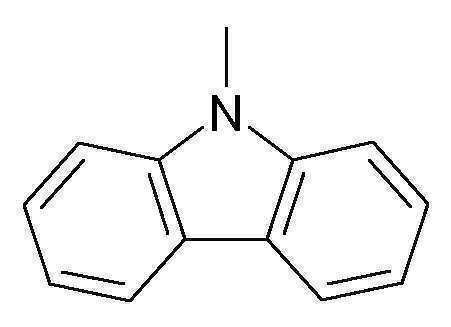

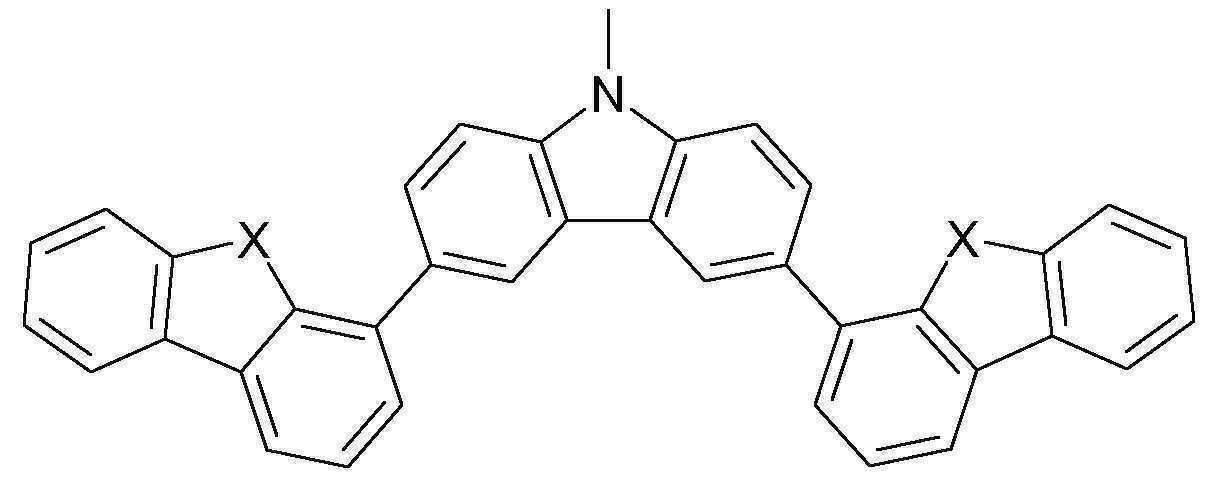
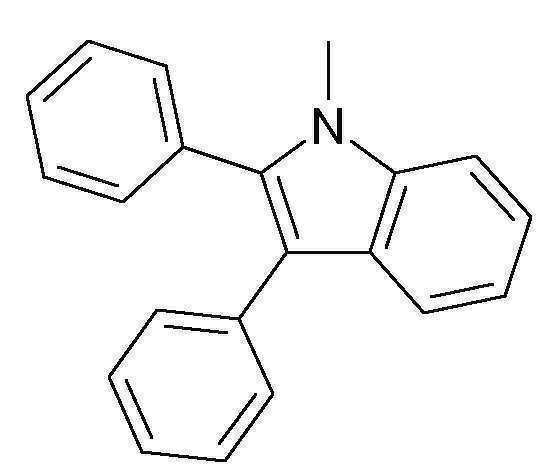
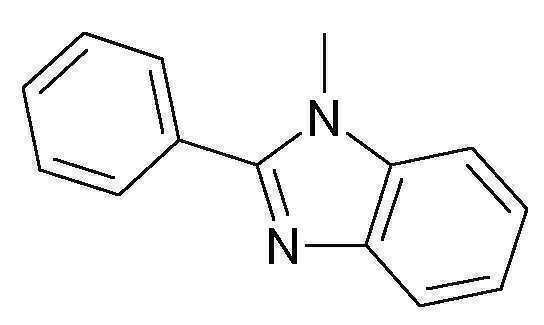
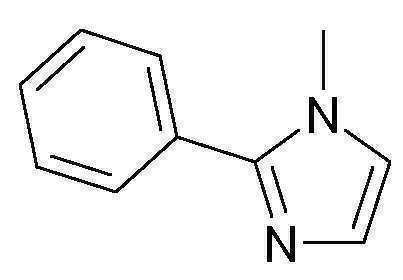
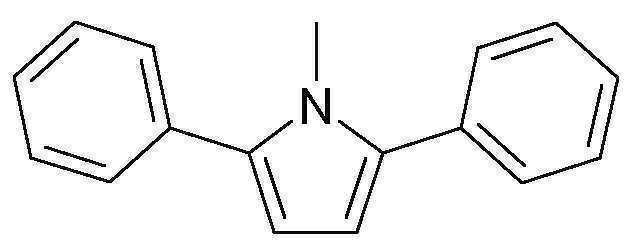
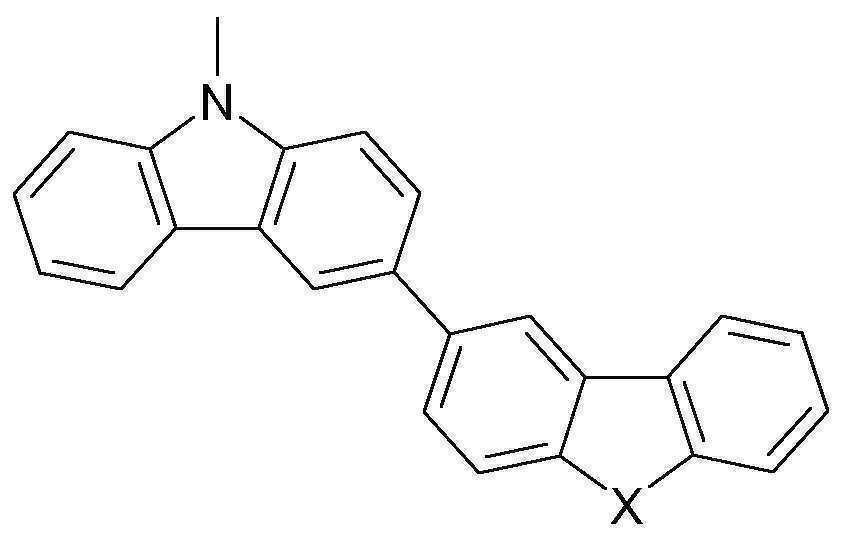
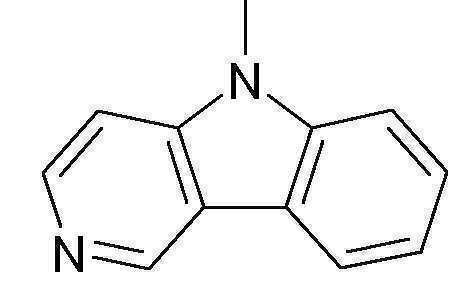
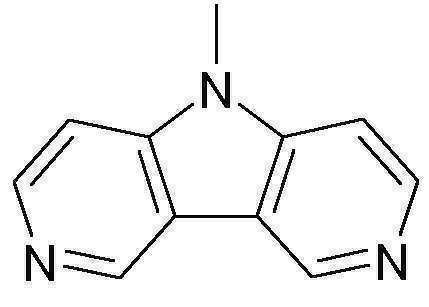
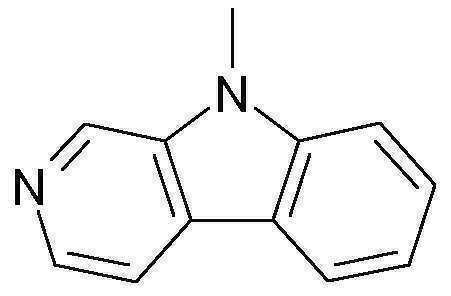
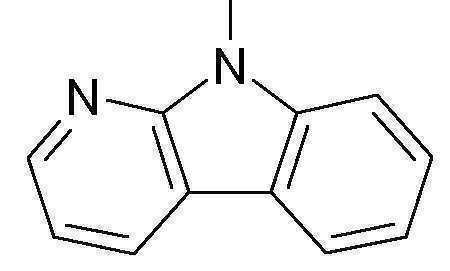
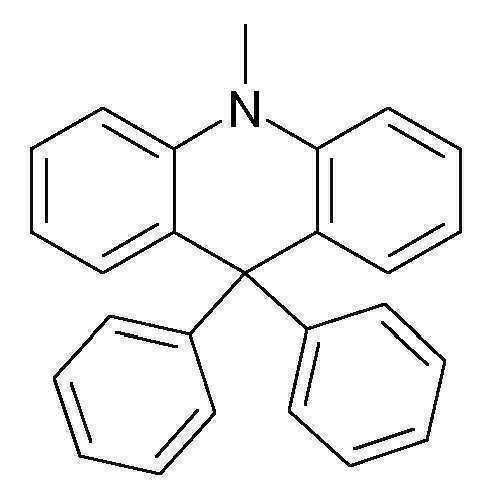

특히 바람직한 -P(O)R60R61 기는 
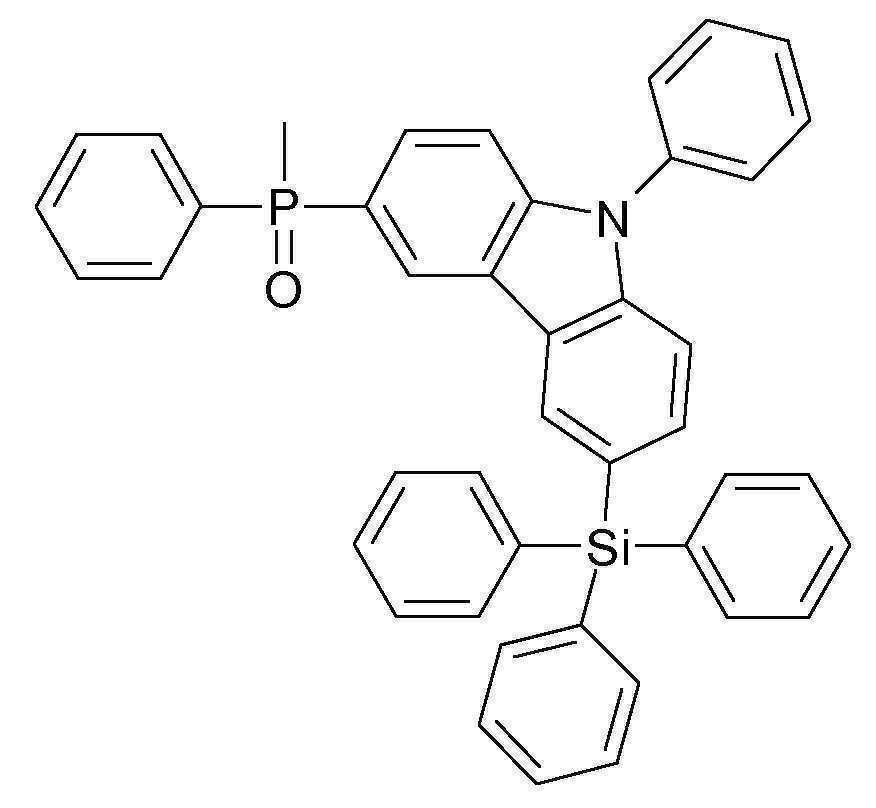
특히 바람직한 PR62R63 기는 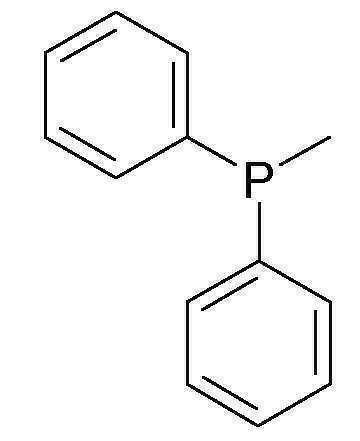
*특히 바람직한 기 -S(O)2R64 및 -S(O)R65는 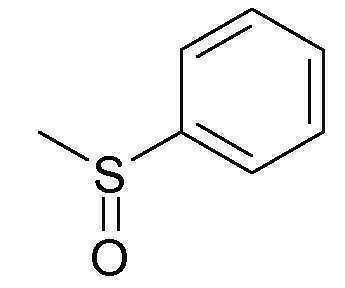
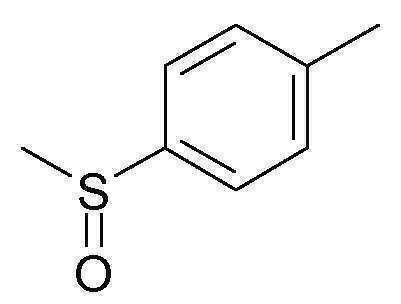
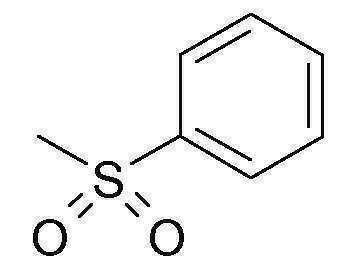

특히 바람직한 기 -SR66 및 -OR67은 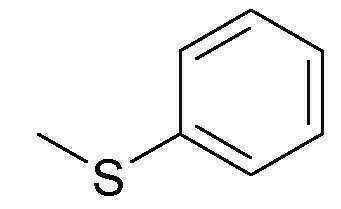


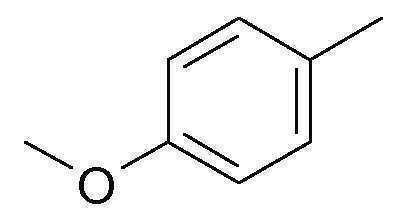


화학식 X의 화합물에서 R55, R56은 각각 독립적으로 알킬, 시클로알킬, 헤테로시클로알킬, 아릴, 헤테로아릴, 추가의 A 기 또는 공여체 또는 수용체 작용을 갖는 기; 바람직하게는 각각 독립적으로 알킬, 아릴, 헤테로아릴 또는 공여체 또는 수용체 작용을 갖는 기이다. 예를 들면 R55 또는 R56은 각각 독립적으로 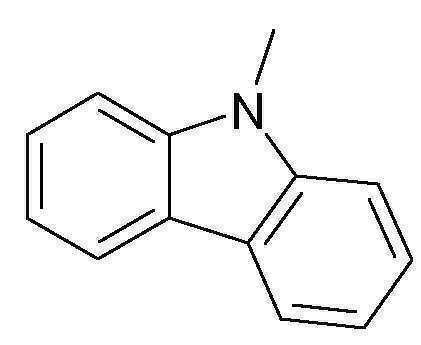

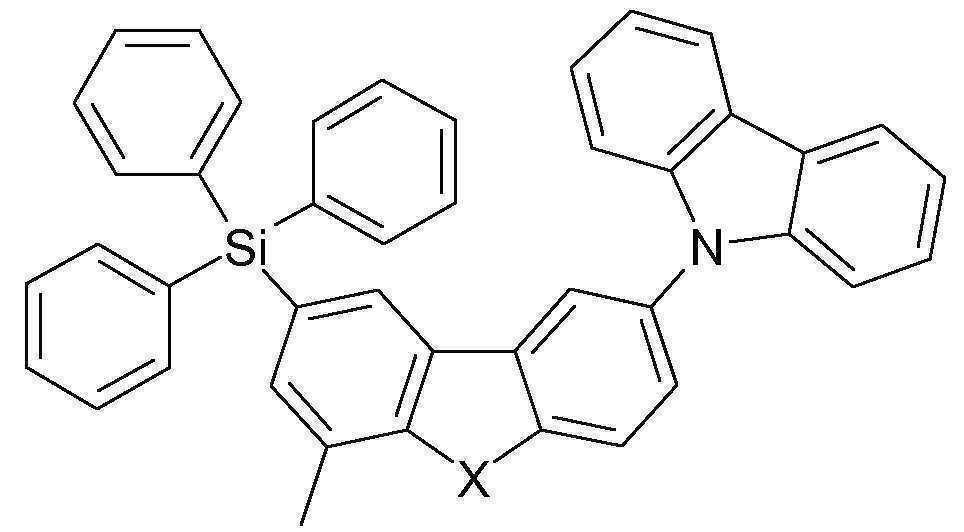
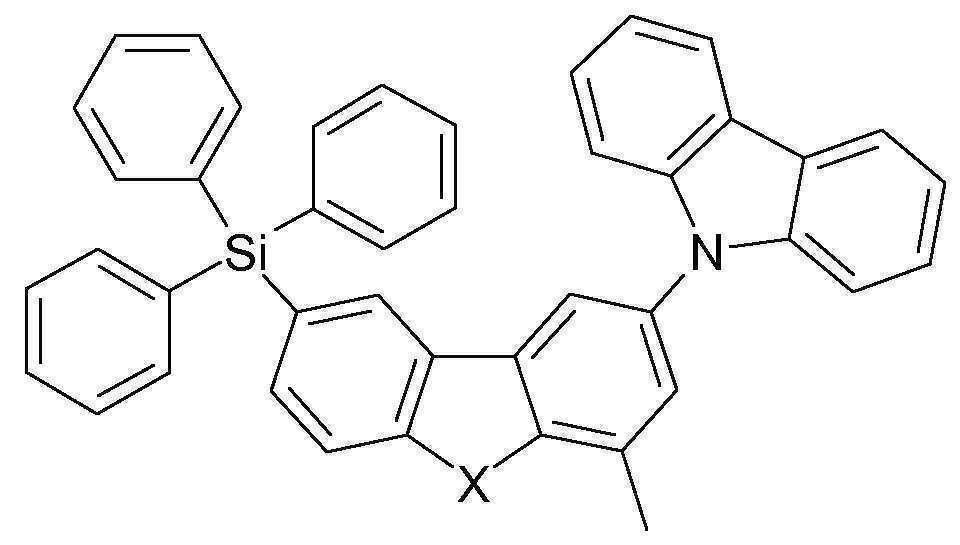
화학식 X의 화합물에서, a" R55 기 및/또는 b' R56 기는 존재할 수 있으며, 여기서 a" 및 b'는In the compound of formula X, a" R 55 group and/or b'R 56 group may be present, wherein a" and b'are
a"가 0, 1, 2, 3 또는 4; 바람직하게는 독립적으로 0, 1 또는 2이고;a" is 0, 1, 2, 3 or 4; preferably independently 0, 1 or 2;
b'가 0, 1, 2 또는 3; 바람직하게는 독립적으로 0, 1 또는 2이다.
가장 바람직하게는 적어도 a" 또는 b'는 0이고, 매우 특히 바람직하게는 a" 및 b'는 각각 0이거나 또는 a"는 1이고, b'는 0이다.Most preferably at least a" or b'is 0, very particularly preferably a" and b'are each 0 or a" is 1 and b'is 0.
화학식 XI의 화합물에서 R73은 일반적으로 독립적으로 OR77 기로 임의로 치환된, SiR74R75R76, 아릴, 헤테로아릴, 알킬, 시클로알킬 또는 헤테로시클로알킬이고. R 73 in the compound of formula XI is generally SiR 74 R 75 R 76 , aryl, heteroaryl, alkyl, cycloalkyl or heterocycloalkyl, optionally substituted independently with group OR 77.
화학식 XI의 화합물에서 R77은 일반적으로 독립적으로 아릴, 헤테로아릴, 알킬, 시클로알킬 또는 헤테로시클로알킬이다. R 77 in the compound of formula XI is generally independently aryl, heteroaryl, alkyl, cycloalkyl or heterocycloalkyl.
임의로 존재하는 OR77 치환기는 일반적으로 당업자에게 적절한 것으로 나타난 모든 부위에서 언급된 라디칼에 존재할 수 있다.An optionally present OR 77 substituent may generally be present in the mentioned radical at any site indicated to be suitable to one of skill in the art.
추가의 실시양태에서, 화학식 XI 및/또는 화학식 XI*의 2개의 단위는 1종 이상의 이종원자에 의하여 또는 O에 의하여 임의로 개재된 선형 또는 분지형, 포화 또는 불포화 가교에 의하여 서로 가교되며, 여기서 화학식 XI 및/또는 화학식 XI*에서의 이러한 가교는 각각의 경우에서 R71 대신에 규소 원자에 결합된다.In a further embodiment, the two units of formula XI and/or formula XI * are crosslinked to each other by one or more heteroatoms or by linear or branched, saturated or unsaturated bridges optionally interrupted by O, wherein the formula These bridges in XI and/or formula XI * are in each case bonded to a silicon atom instead of R 71.
이러한 가교는 바람직하게는 -CH2-, -C2H4-, -C3H6-, -C4H8-, -C6H12-, -C8H16-, -C9H18-, -CH(C8H17)CH2-, -C2H4(CF2)8C2H4-, -C≡C-, -1,4-(CH2)2-페닐-(CH2)2-, 1,3-(CH2)2-페닐-(CH2)2-, -1,4-페닐-, -1,3-페닐-, -O-, -O-Si(CH3)2-O-, -O-Si(CH3)2-O- Si(CH3)2-O-, -O-로 이루어진 군으로부터 선택된다.Such crosslinking is preferably -CH 2 -, -C 2 H 4 -, -C 3 H 6 -, -C 4 H 8 -, -C 6 H 12 -, -C 8 H 16 -, -C 9 H 18 -, -CH(C 8 H 17 )CH 2 -, -C 2 H 4 (CF 2 ) 8 C 2 H 4 -, -C≡C-, -1,4-(CH 2 ) 2 -phenyl- (CH 2 ) 2 -, 1,3-(CH 2 ) 2 -phenyl-(CH 2 ) 2 -, -1,4-phenyl-, -1,3-phenyl-, -O-, -O-Si (CH 3 ) 2 -O-, -O-Si(CH 3 ) 2 -O- Si(CH 3 ) 2 -O-, -O-.
본 발명의 바람직한 실시양태에서, 화학식 X의 화합물은 하기 화학식 XIa, 하기 화학식 XIb, 하기 화학식 XIc, 하기 화학식 XId 또는 하기 화학식 XIe를 가지며, 즉 이들은 화학식 XI 또는 화학식 XI*의 화합물의 바람직한 실시양태이다:In a preferred embodiment of the invention, the compounds of formula X have the following formula XIa, the following formula XIb, the following formula XIc, the following formula XId or the following formula XIe, i.e. they are preferred embodiments of the compounds of formula XI or formula XI* :
<화학식 XIa><Formula XIa>
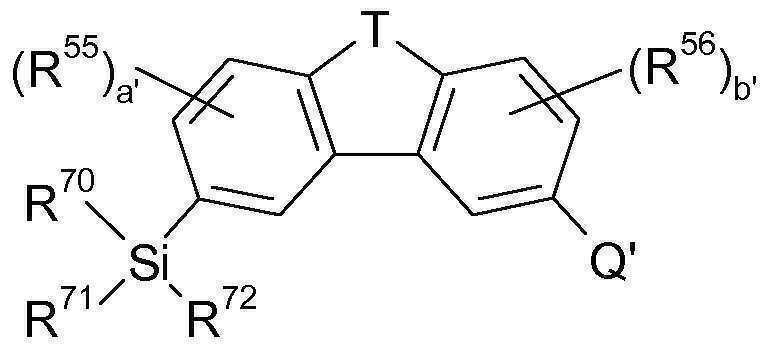
<화학식 XIb><Formula XIb>
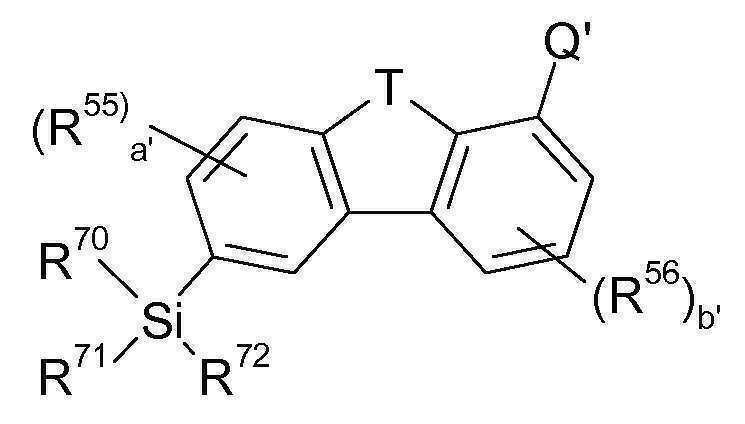
<화학식 XIc><Formula XIc>
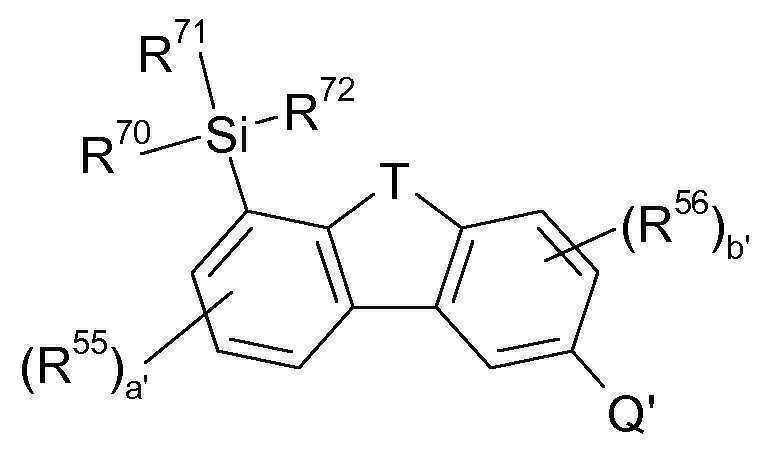
<화학식 XId><Formula XId>

<화학식 XIe><Formula XIe>
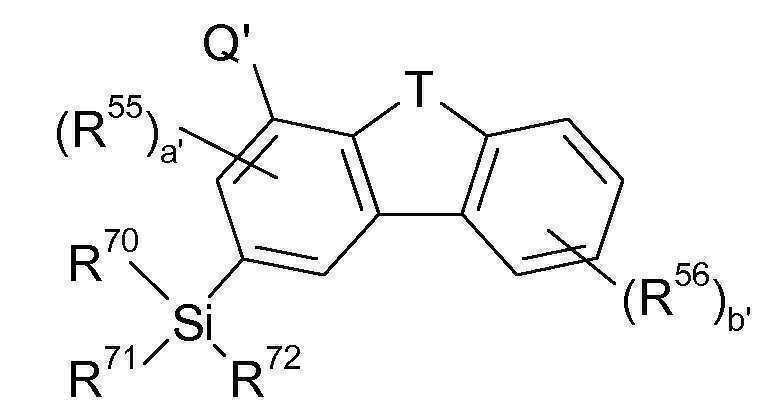
상기 화학식에서, Q', T, R70, R71, R72, R55, R56 라디칼 및 기, 및 a' 및 b',는 각각 상기 정의된 바와 같다.In the above formula, Q', T, R 70 , R 71 , R 72 , R 55 , R 56 radicals and groups, and a'and b', are as defined above, respectively.
본 발명에 의한 또다른 바람직한 실시양태에서, 화학식 XI 또는 화학식 XI*의 화합물에서 R70, R71 또는 R72는 하기 화학식 XIi 및/또는 화학식 XIi*의 방향족 단위이다:In another preferred embodiment according to the invention, R 70 , R 71 or R 72 in the compound of formula XI or formula XI* is an aromatic unit of formula XIi and/or formula XIi*:
<화학식 XIi><Formula XIi>
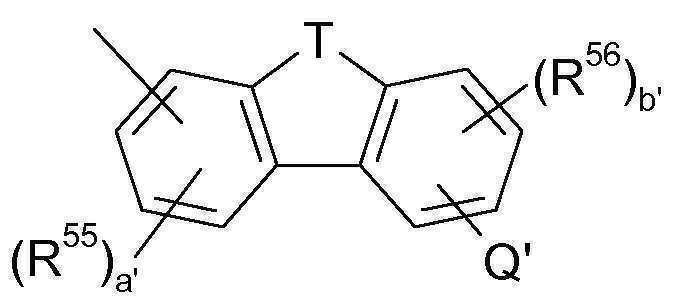
<화학식 XIi*><Formula XIi*>
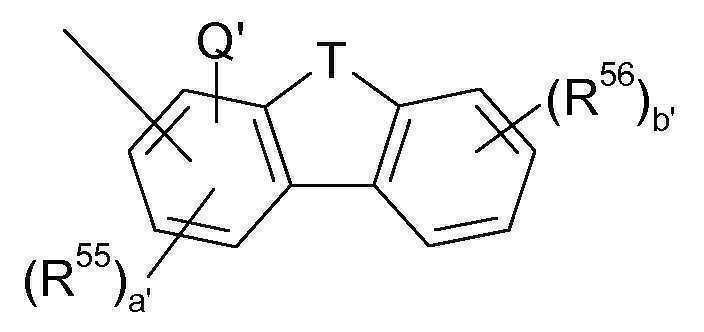
상기 화학식에서, R55, R56, Q', T, a' 및 b'는 각각 상기 정의된 바와 같다.In the above formula, R 55 , R 56 , Q', T, a'and b'are each as defined above.
그러므로, 본 발명은 하나의 실시양태에서, 하기 화학식 XI 또는 화학식 XI*의 화합물에서 R70, R71 또는 R72가 화학식 XIi 및/또는 화학식 XIi*의 방향족 단위인 본 발명의 OLED에 관한 것이다:Therefore, the present invention relates to the inventive OLED, in one embodiment, wherein R 70 , R 71 or R 72 in a compound of Formula XI or Formula XI* is an aromatic unit of Formula XIi and/or Formula XIi*:
<화학식 XIi><Formula XIi>
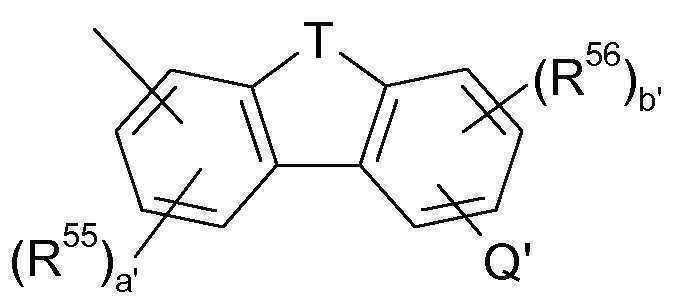
<화학식 XIi*><Formula XIi*>
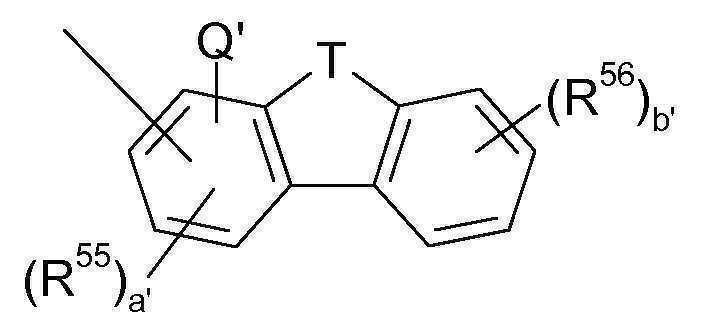
상기 화학식에서, R55, R56, Q', T, a' 및 b'는 각각 상기 정의된 바와 같다.In the above formula, R 55 , R 56 , Q', T, a'and b'are each as defined above.
바람직한 실시양태에서, 본 발명은 화학식 XI 또는 화학식 XI*의 화합물이 하기의 군으로부터 선택되는 OLED에 관한 것이다:In a preferred embodiment, the invention relates to an OLED wherein the compound of formula XI or formula XI* is selected from the group:

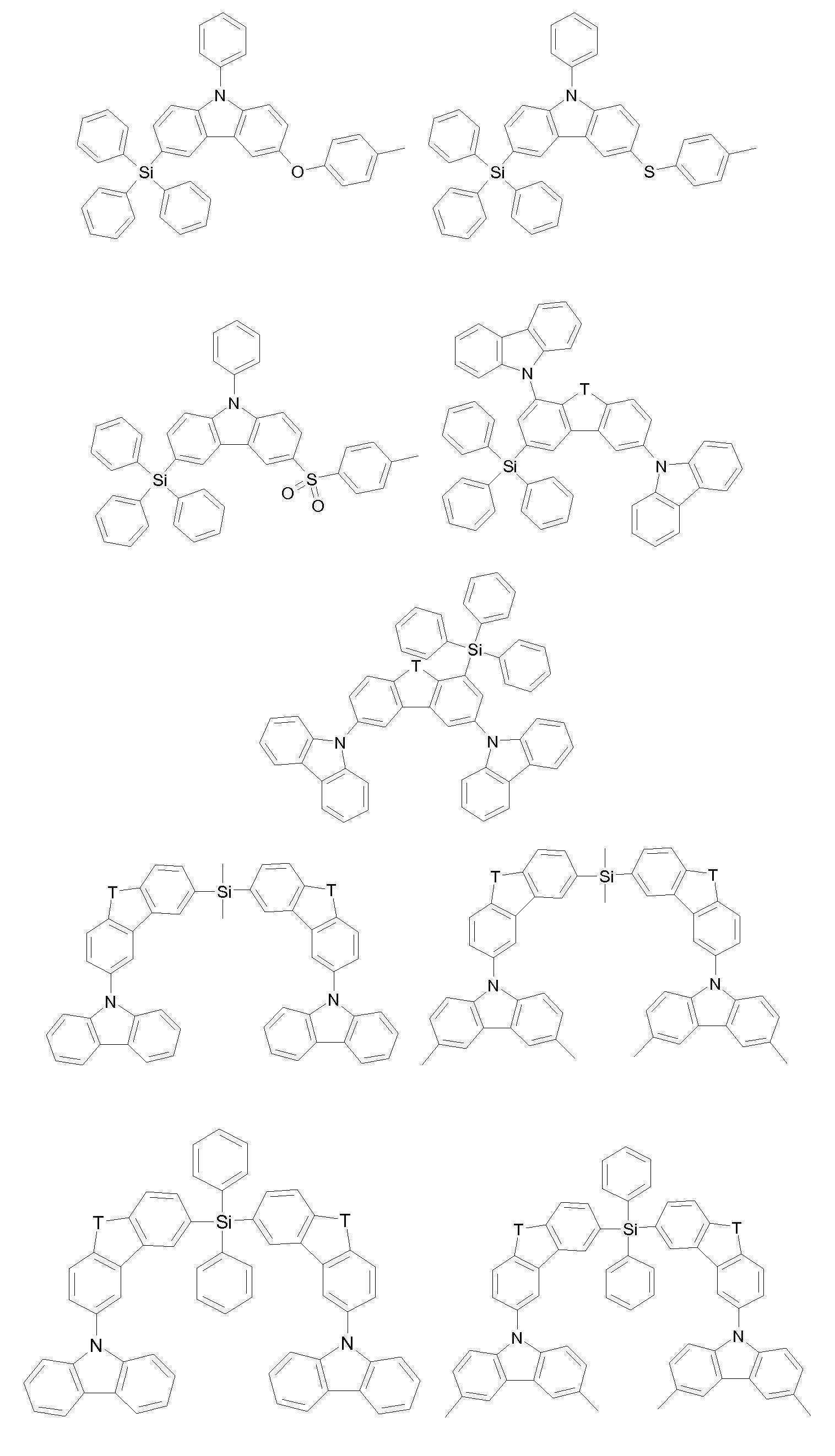
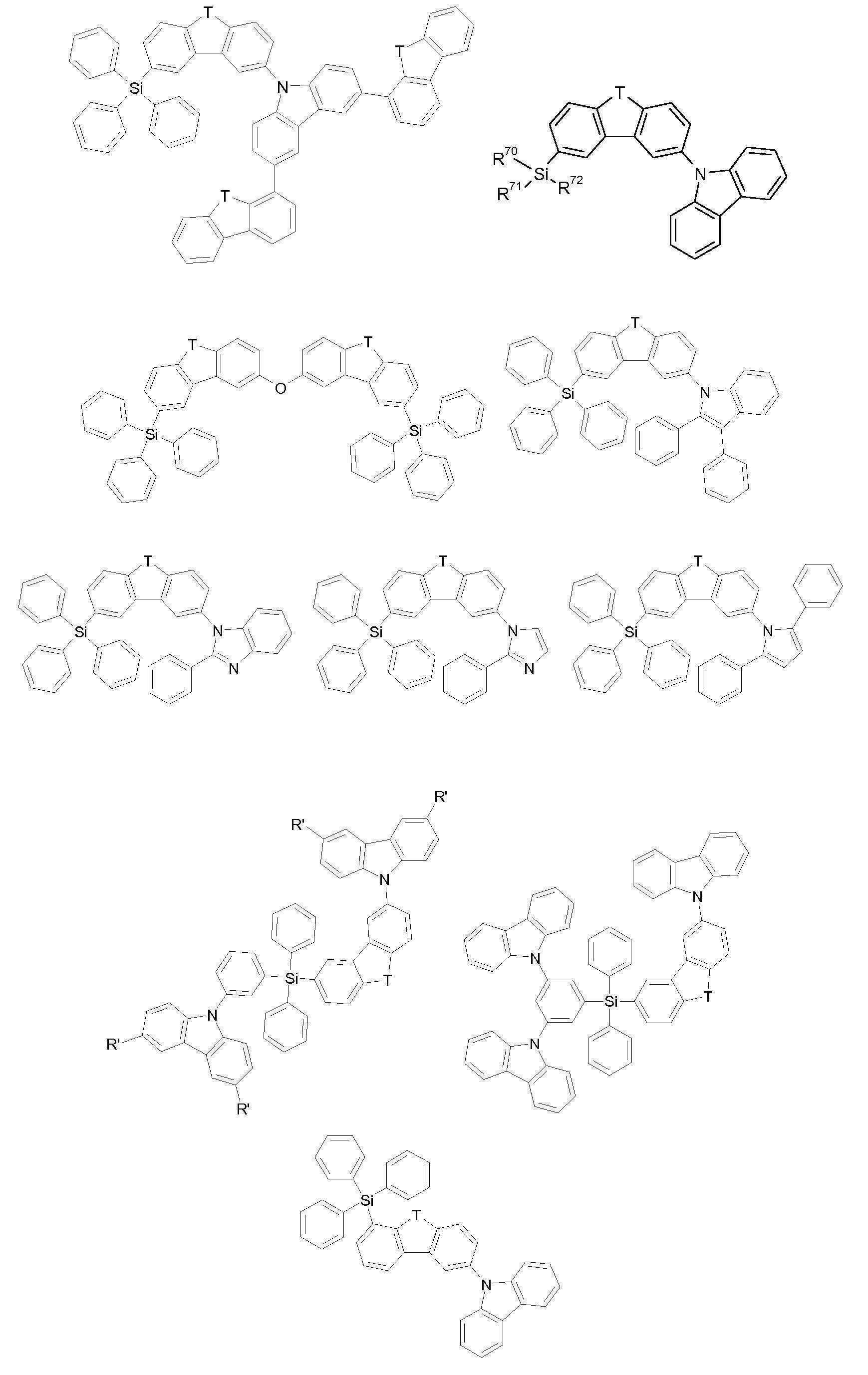
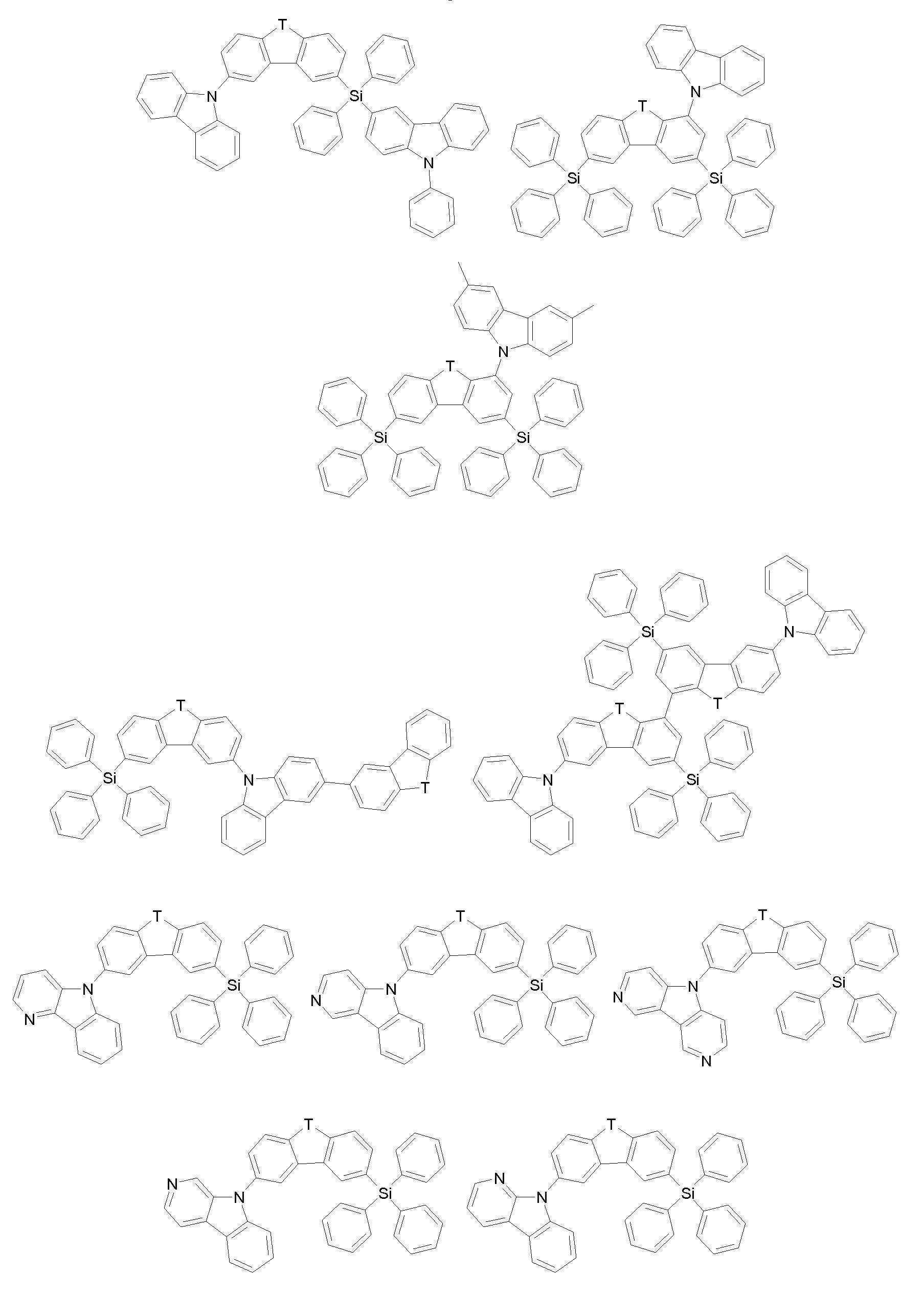

이들 특히 바람직한 화학식 XI 또는 화학식 XI*의 화합물에서,In these particularly preferred compounds of formula XI or formula XI * ,
T는 S 또는 O이고,T is S or O,
R'는 H 또는 CH3이고,R'is H or CH 3 ,
R70, R71, R72는 각각 페닐, 카르바졸릴, 디벤조푸란 또는 디벤조티오펜이다.R 70 , R 71 and R 72 are each phenyl, carbazolyl, dibenzofuran or dibenzothiophene.
추가로 특히 적절한 화학식 XI 또는 화학식 XI*의 화합물은 하기와 같다:Further particularly suitable compounds of formula XI or formula XI * are as follows:
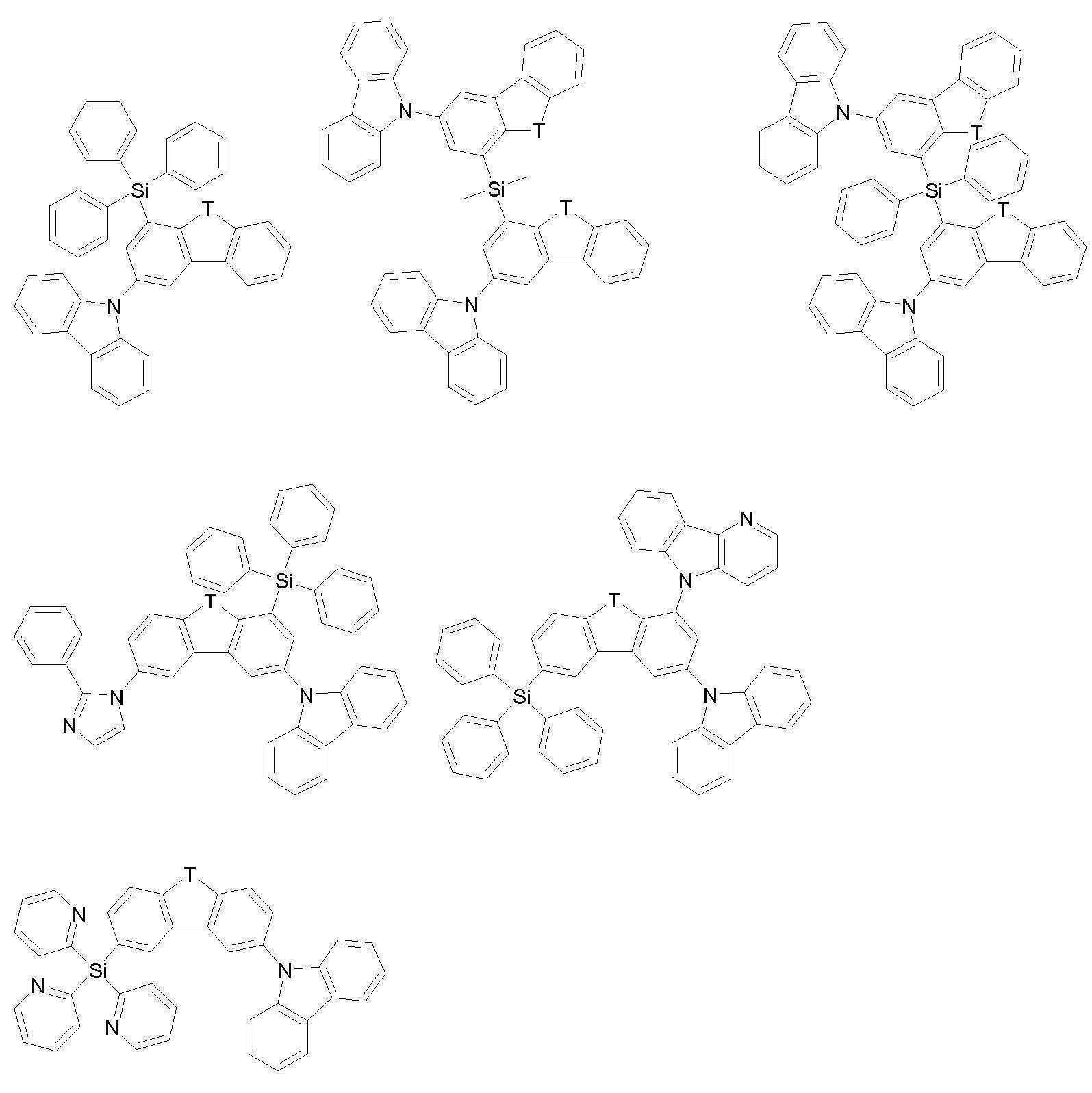

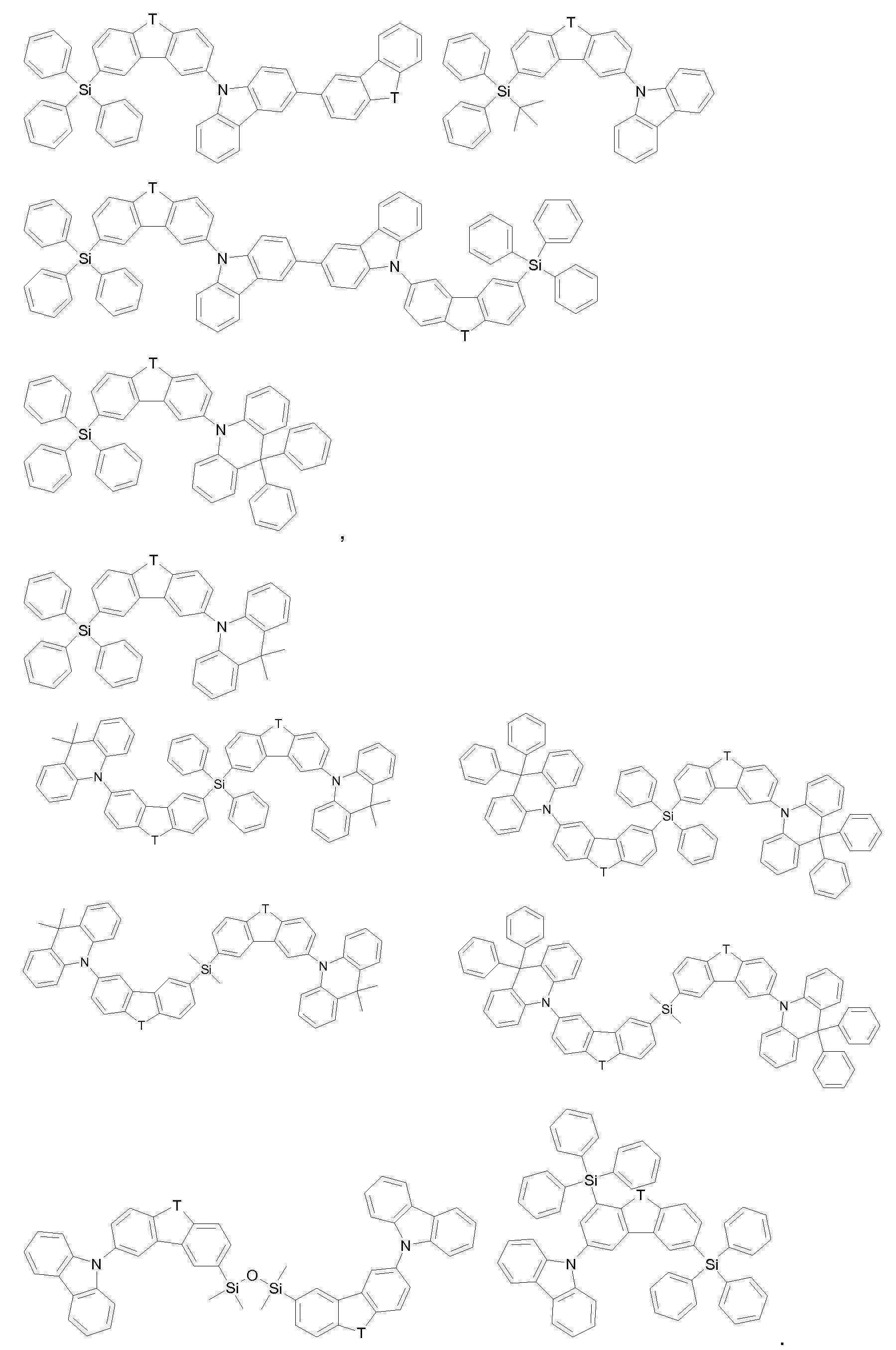
이러한 특히 바람직한 화학식 XI 또는 화학식 XI*의 화합물에서 또한 T는 O 또는 S, 바람직하게는 O이다.In these particularly preferred compounds of formula XI or formula XI * also T is O or S, preferably O.
추가의 본 발명의 화학식 XI 또는 화학식 XI*의 화합물은 하기 화학식 XII에 해당한다:Further inventive compounds of formula XI or formula XI * correspond to formula XII:
<화학식 XII><Formula XII>

화학식 XII에서, R70, R71, R72는 각각 하기와 같이 정의된다:In formula XII, R 70 , R 71 , R 72 are each defined as follows:
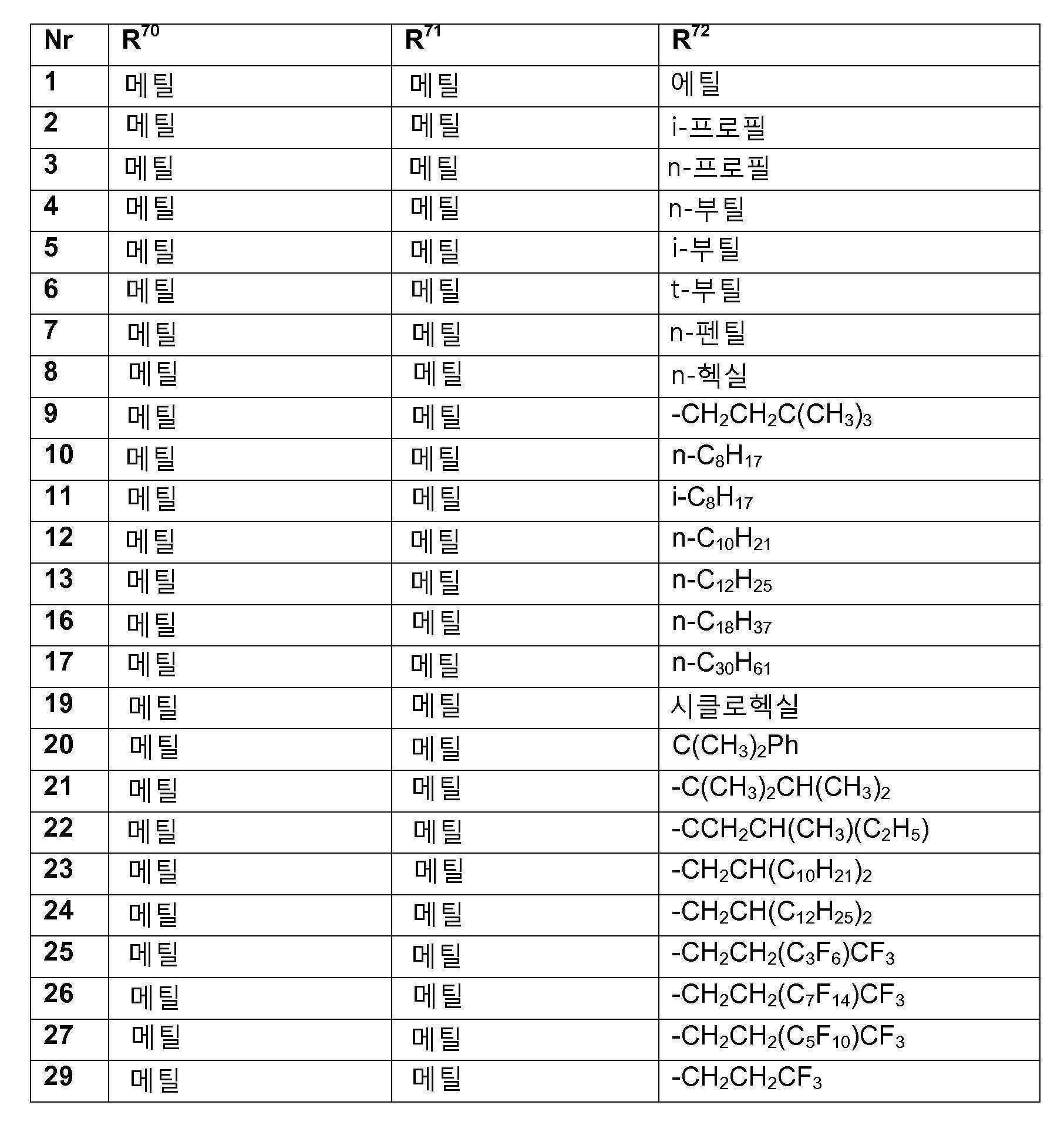


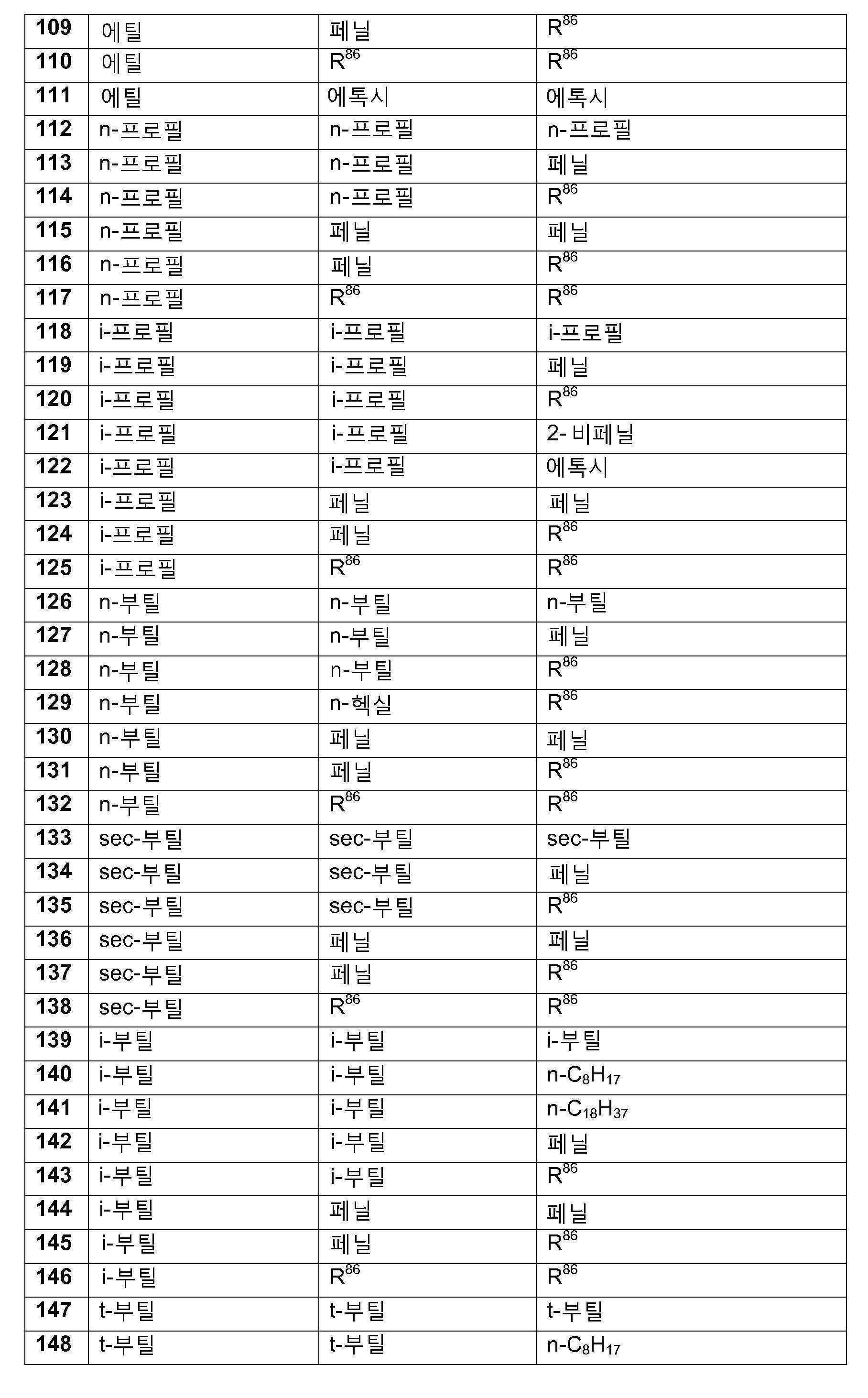
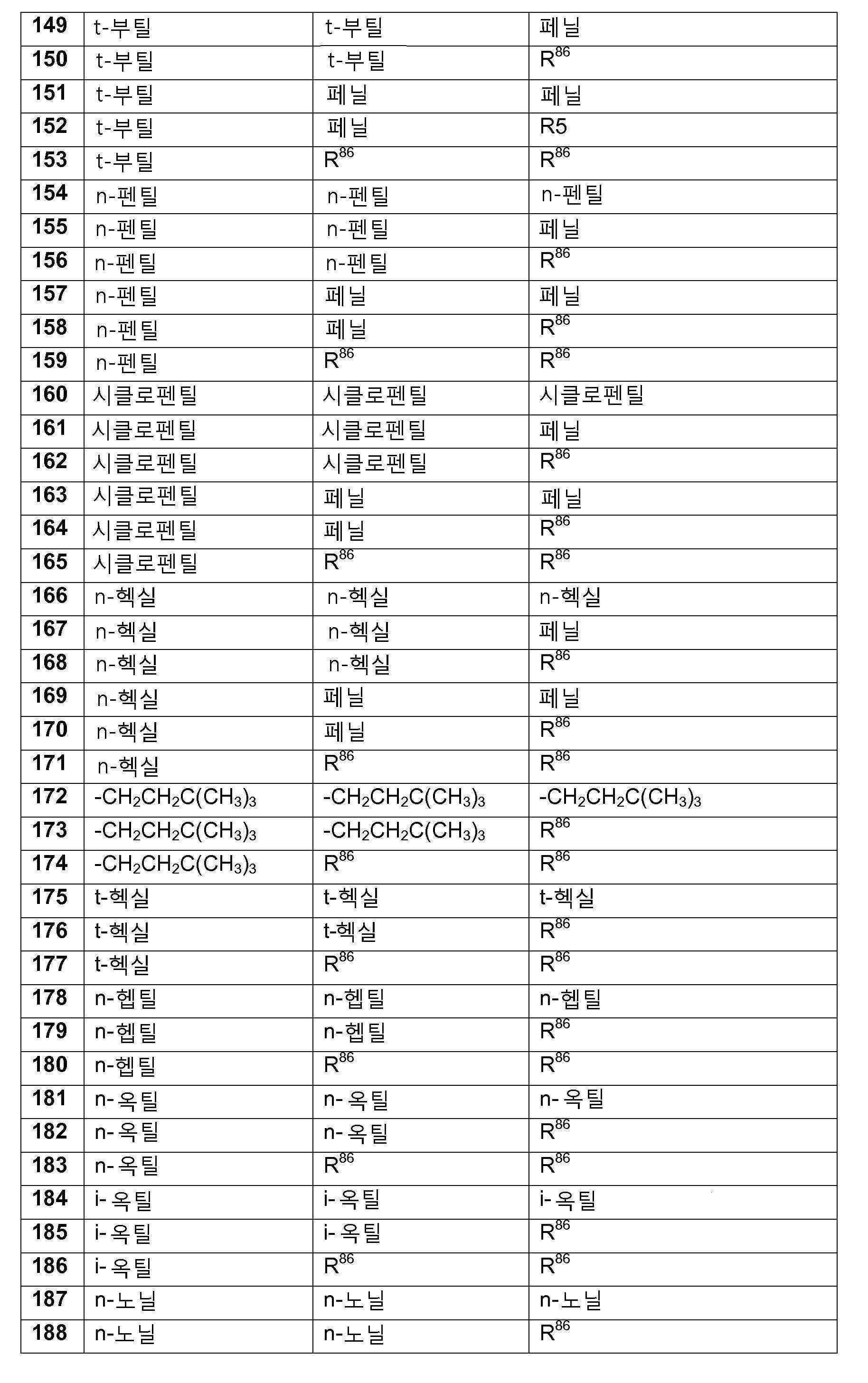

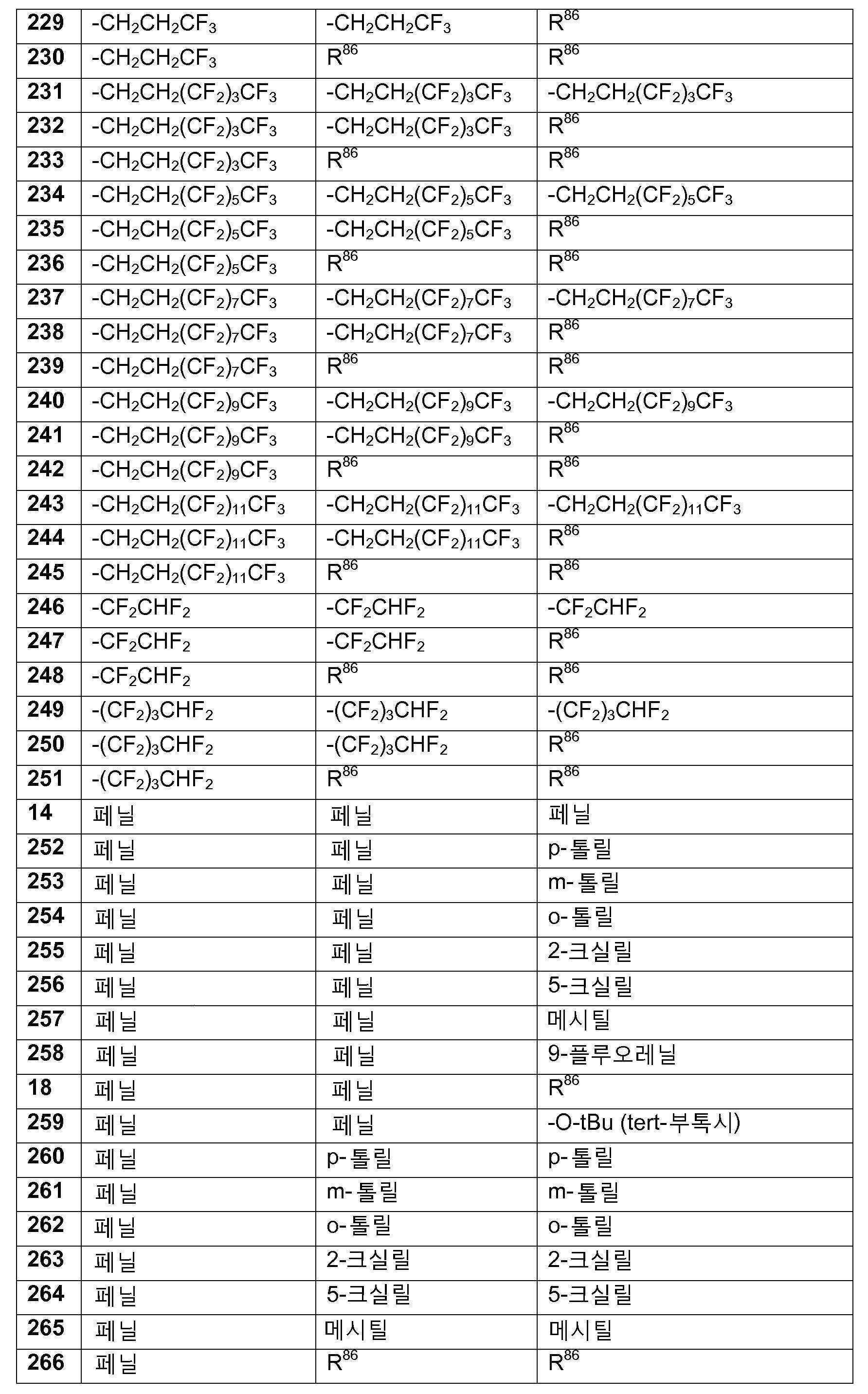

상기 표에서,In the above table,
R86은 
화학식 XI 및/또는 화학식 XI*의 2개의 단위가 1종 이상의 이종원자에 의하여 임의로 개재된 선형 또는 분지형, 포화 또는 불포화 가교에 의하여 또는 O에 의하여 서로 가교되며, 여기서 화학식 XI 및/또는 화학식 XI*에서의 이러한 가교는 각각의 경우에서 R71 대신에 규소 원자에 결합되어 있는 특히 바람직한 화합물은 하기 화학식 XIII에 해당한다:The two units of formula XI and/or formula XI * are crosslinked to each other by means of linear or branched, saturated or unsaturated bridges optionally interposed by one or more heteroatoms or by O, wherein the formulas XI and/or XI A particularly preferred compound in which this crosslinking in * is bonded to a silicon atom instead of R 71 in each case corresponds to the following formula (XIII):
<화학식 XIII><Formula XIII>
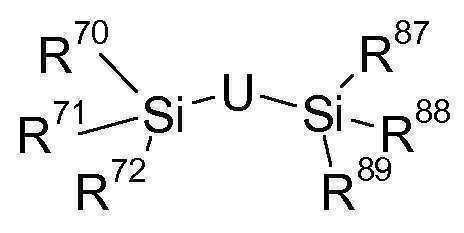
화학식 XIII에서, U, R70, R71, R72, R87, R88 및 R89는 각각 하기에서와 같이 정의된다:In formula XIII, U, R 70 , R 71 , R 72 , R 87 , R 88 and R 89 are each defined as follows:
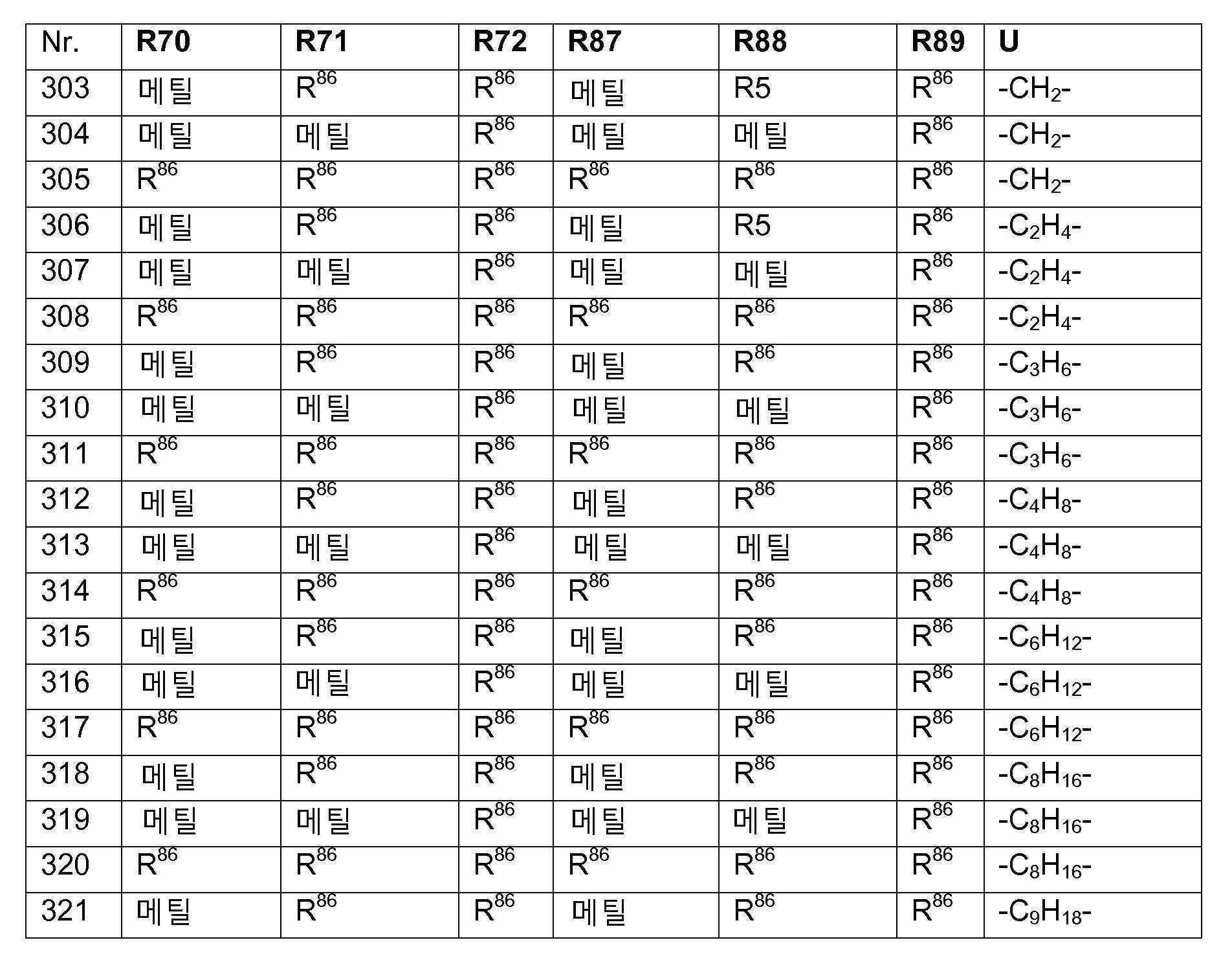

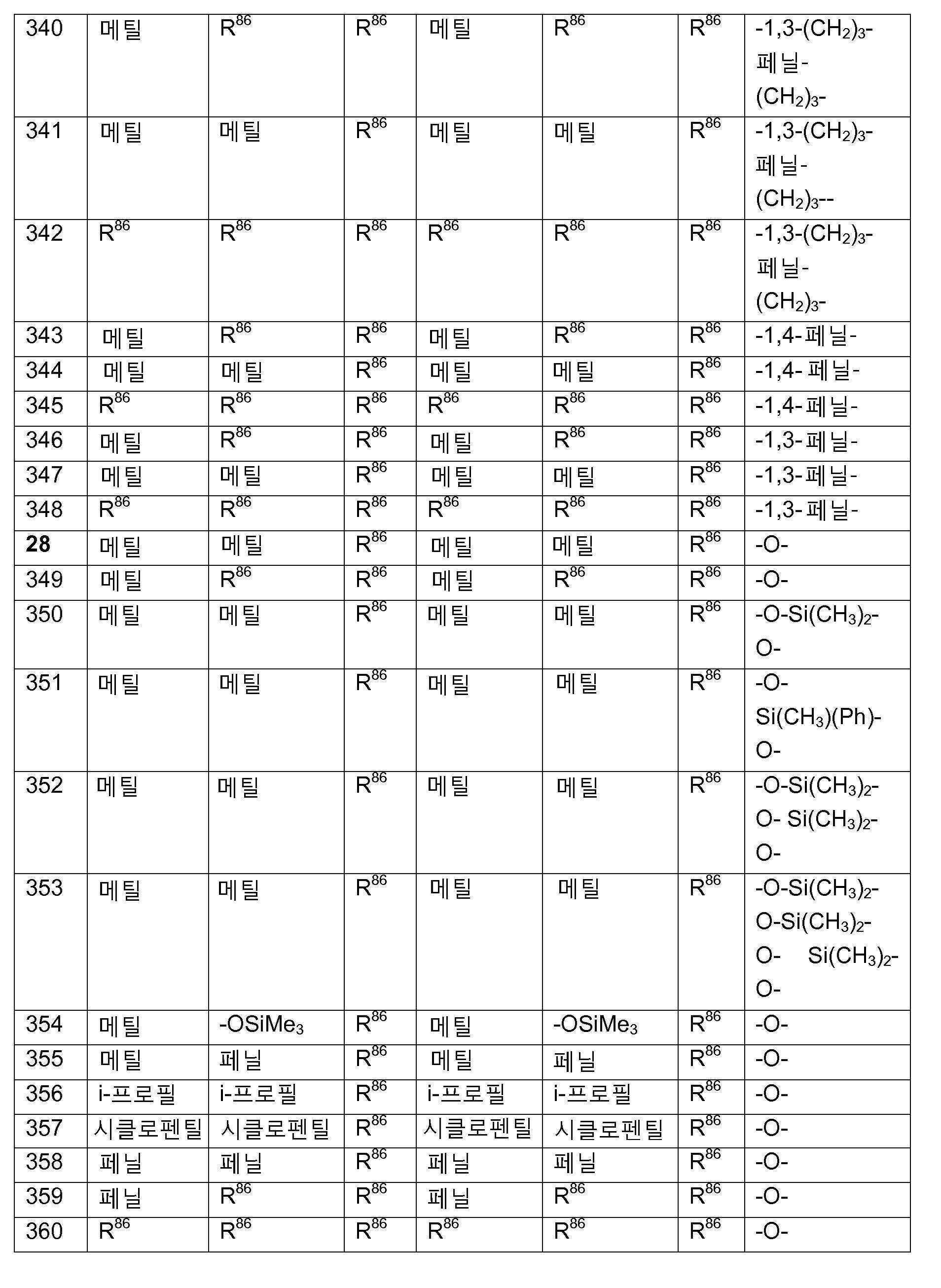
상기 표에서, R86은 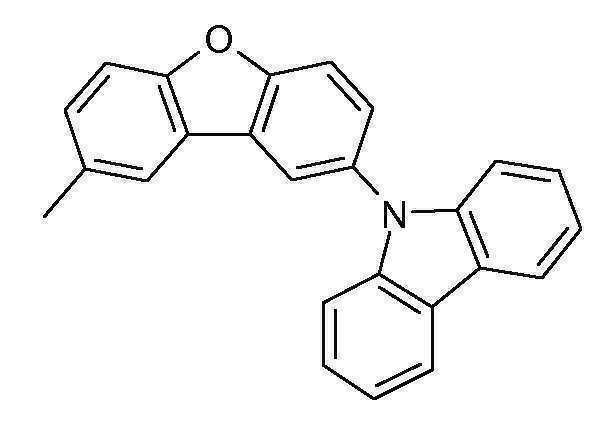
화학식 XI 및/또는 화학식 XI*의 추가로 적절한 화합물은 하기에 명시되어 있다. 여기서 R은 독립적으로 Me, 페닐 또는 R86이고, 여기서 1종 이상의 R 라디칼은 R86이다:Further suitable compounds of formula XI and/or formula XI * are specified below. Wherein R is independently Me, phenyl or R 86 , wherein at least one R radical is R 86 :
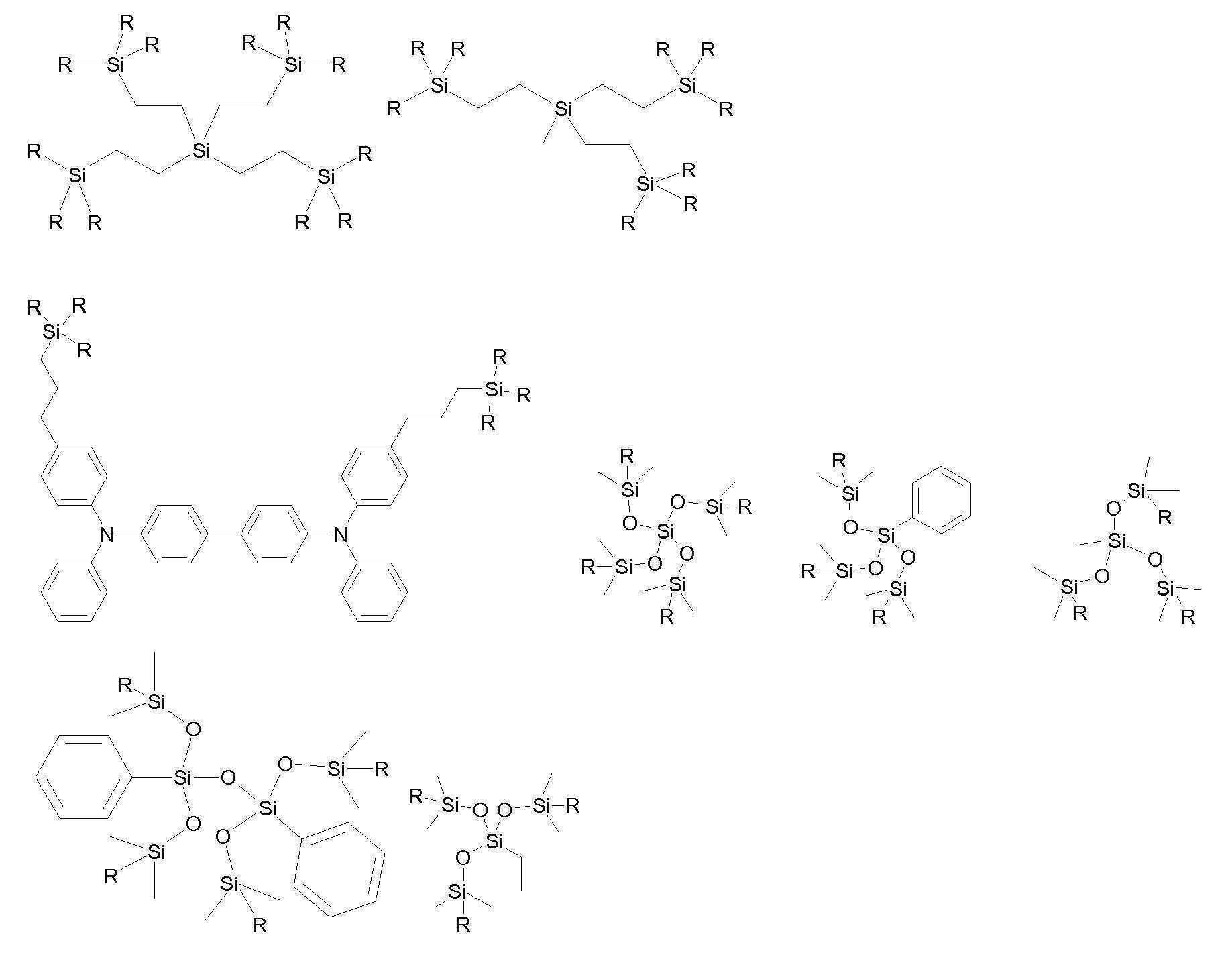
매우 특히 바람직한 실시양태에서, 본 발명은 1종 이상의 화학식 I의 금속-카르벤 착물뿐 아니라, 1종 이상의 화학식 X의 화합물을 포함하는 OLED에 관한 것이며, 이러한 경우에서 화학식 X의 화합물은 가장 바람직하게는 하기 명시된 화합물 중 1종 이상이다:In a very particularly preferred embodiment, the invention relates to an OLED comprising at least one metal-carbene complex of formula I, as well as at least one compound of formula X, in which case the compound of formula X is most preferably Is one or more of the compounds specified below:

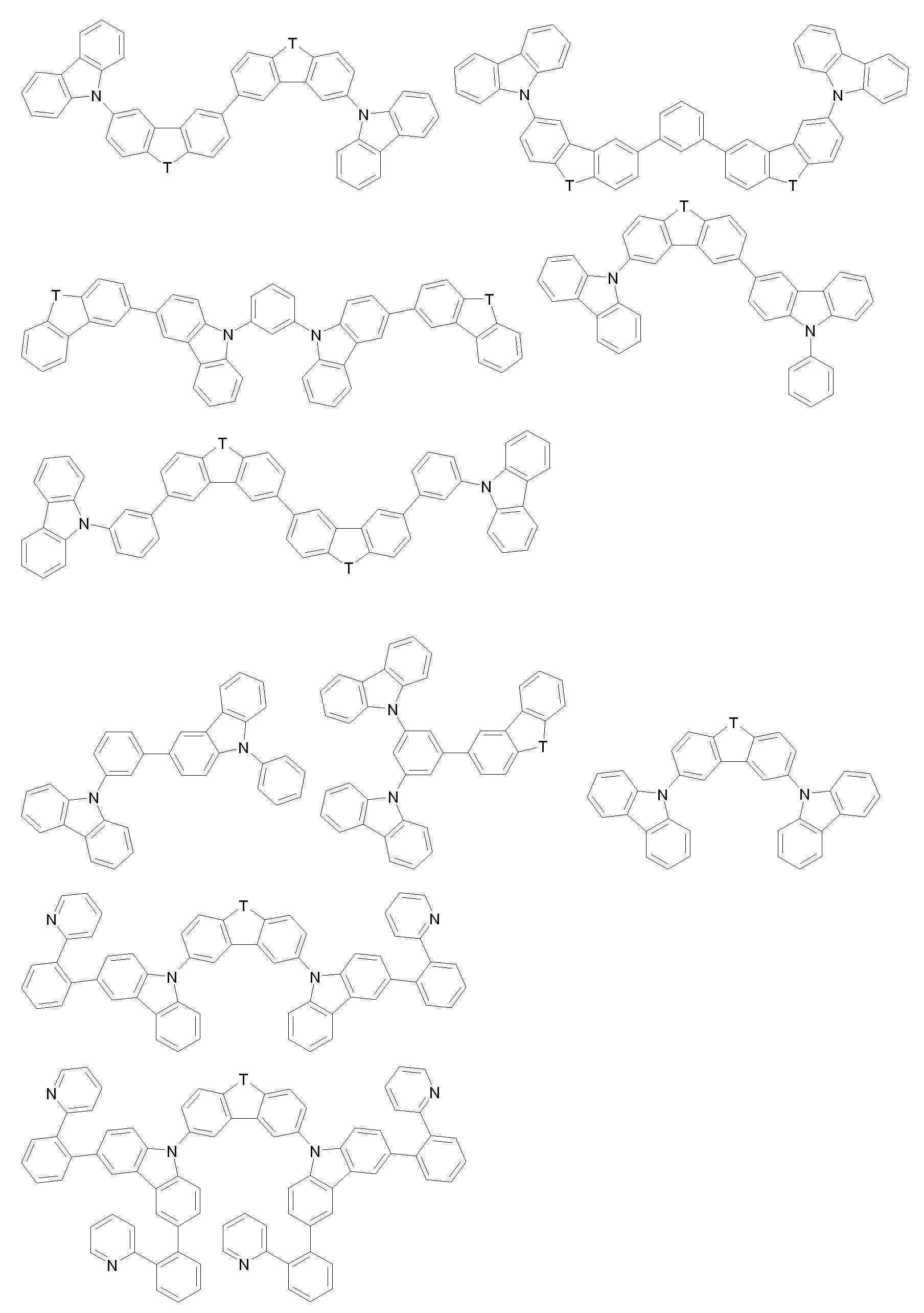
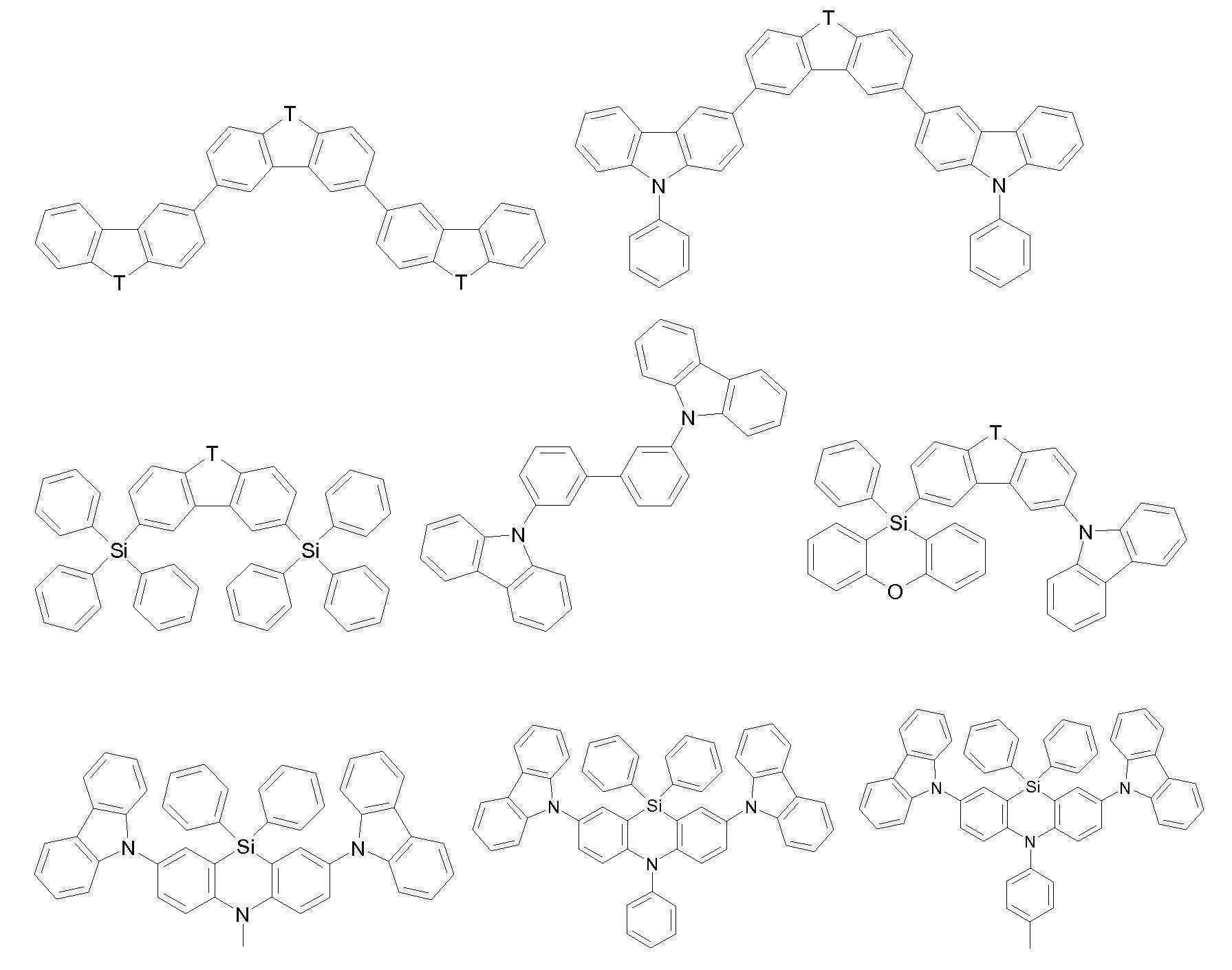
전술한 화합물에서, T는 O 또는 S, 바람직하게는 O이다. 1개보다 많은 T가 분자에 존재할 경우, 모든 T 기는 동일한 정의를 갖는다.In the aforementioned compounds, T is O or S, preferably O. When more than one T is present in the molecule, all T groups have the same definition.
화학식 X의 화합물 이외에, 본 발명에 의하면, 1종 이상의 화학식 I의 금속-카르벤 착물와 함께 가교된 또는 중합된 형태로 화학식 X에 기초한 반복 단위를 포함하는 가교된 또는 중합체 물질을 사용할 수 있다. 화학식 X의 화합물과 같이, 후자는 바람직하게는 매트릭스 물질로서 사용된다.In addition to the compounds of formula (X), according to the invention, it is possible to use crosslinked or polymeric materials comprising repeating units based on formula (X) in crosslinked or polymerized form with one or more metal-carbene complexes of formula (I). Like the compounds of formula X, the latter is preferably used as a matrix material.
가교된 또는 중합체 물질은 유기 용매중에서의 우수한 용해도, 탁월한 막 형성 성질 및 비교적 높은 유리 전이 온도를 갖는다. 게다가, 높은 전하 캐리어 이동도, 색 방출의 높은 안정도 및 해당 성분의 긴 작동 시간은 본 발명에 의한 가교된 또는 중합체 물질이 유기 발광 다이오드(OLED)에 사용될 경우 관찰될 수 있다.Crosslinked or polymeric materials have good solubility in organic solvents, excellent film forming properties and relatively high glass transition temperatures. In addition, high charge carrier mobility, high stability of color emission and long operating times of the corresponding components can be observed when the crosslinked or polymeric material according to the present invention is used in organic light emitting diodes (OLEDs).
가교된 또는 중합체 물질은 열적 및 기계적으로 안정하며, 비교적 무결함이어서 코팅으로서 또는 얇은 필름에 특히 적절하다.Crosslinked or polymeric materials are thermally and mechanically stable, and are relatively defect-free, making them particularly suitable as coatings or for thin films.
화학식 X에 기초한 반복 단위를 포함하는 가교된 또는 중합체 물질은 하기 단계 (a) 및 단계 (b)를 포함하는 방법에 의하여 생성될 수 있다:Crosslinked or polymeric materials comprising repeating units based on formula X can be produced by a method comprising the following steps (a) and (b):
(a) a" R55 라디칼 중 1종 이상 또는 b' R56 라디칼 중 1종 이상이 스페이서에 의하여 결합된 가교성 또는 중합성 기인 화학식 X의 가교성 또는 중합성 화합물의 제조 및(a) preparation of a crosslinkable or polymerizable compound of formula X, wherein at least one of a" R 55 radicals or at least one of b'R 56 radicals is a crosslinkable or polymerizable group bonded by a spacer, and
(b) 단계 (a)로부터 얻은 화학식 X의 화합물의 가교 또는 중합.(b) crosslinking or polymerization of the compound of formula X obtained from step (a).
가교된 또는 중합체 물질은 단독중합체일 수 있으며, 이는 전적으로 화학식 X의 단위가 가교된 또는 중합된 형태에 존재한다는 것을 의미한다. 이들은 또한 공중합체일 수 있으며, 이는 추가의 단량체가 화학식 X이 단위 이외에 예를 들면 가교된 또는 중합된 형태로 정공-전도 전자-전도성 성질을 갖는 단량체가 존재한다는 것을 의미한다.The crosslinked or polymeric material may be a homopolymer, meaning entirely that the units of formula X are present in a crosslinked or polymerized form. They may also be copolymers, which means that the additional monomers are, in addition to the units of formula X, monomers having hole-conducting electron-conducting properties, for example in crosslinked or polymerized form.
본 발명의 OLED의 추가로 바람직한 실시양태에서, 이는 1종 이상의 본 발명의 화학식 I의 금속-카르벤 착물, 1종 이상의 화학식 X의 매트릭스 물질 및 임의로 1종 이상의 추가로 정공 수송 매트릭스 물질을 포함하는 발광층을 포함한다.In a further preferred embodiment of the inventive OLED, it comprises at least one inventive metal-carbene complex of formula I, at least one matrix material of formula X and optionally at least one further hole transport matrix material. It includes a light emitting layer.
본 발명의 OLED는 전기발광이 유용한 모든 디바이스에 사용될 수 있다. 적절한 디바이스는 바람직하게는 정지 및 이동 영상 디스플레이 장치 및 조명 수단으로부터 선택된다. 그러므로, 본 발명은 또한 본 발명의 OLED를 포함하는, 정지 영상 디스플레이 장치 및 이동 영상 디스플레이 장치 및 조명 수단으로 이루어진 군으로부터 선택된 디바이스에 관한 것이다.The OLED of the present invention can be used in any device in which electroluminescence is useful. Suitable devices are preferably selected from still and moving image display devices and lighting means. Therefore, the invention also relates to a device selected from the group consisting of a still image display device and a moving image display device and lighting means, comprising the inventive OLED.
정지 영상 디스플레이 장치의 예로는 컴퓨터의 영상 디스플레이 장치, 텔레비젼, 프린터에서의 영상 디스플레이 장치, 부엌용 기기 및 광고 패널, 조명 및 정보 패널을 들 수 있다. 이동 영상 디스플레이 장치의 예로는 휴대폰, 랩탑, 디지탈 카메라, mp-3 플레이어, 스마트폰, 자동차에서의 영상 디스플레이 장치 및, 버스 및 기차에서의 목적지 디스플레이를 들 수 있다.Examples of still image display devices include image display devices of computers, televisions, image display devices in printers, kitchen appliances and advertisement panels, and lighting and information panels. Examples of moving image display devices include mobile phones, laptops, digital cameras, mp-3 players, smart phones, image display devices in automobiles, and destination displays in buses and trains.
본 발명의 화학식 I의 금속-카르벤 착물은 추가로 역의 구조를 갖는 OLED에 사용될 수 있다. 이와 같은 역의 OLED에서, 본 발명의 착물은 차례로 바람직하게는 발광층에 사용된다. 본원에서 통상적으로 사용되는 역의 OLED 및 물질의 구조는 당업자에게 공지되어 있다.The metal-carbene complex of formula I of the present invention can further be used in OLEDs having an inverse structure. In this reversed OLED, the complexes of the invention are in turn preferably used in a light emitting layer. The structures of reverse OLEDs and materials commonly used herein are known to those of skill in the art.
본 발명은 추가로 1종 이상의 본 발명의 화학식 I의 금속-카르벤 착물을 포함하는 백색광 OLED를 제공한다. 바람직한 실시양태에서, 화학식 I의 금속-카르벤 착물은 백색광 OLED에서 이미터 물질로서 사용된다. 화학식 I의 금속-카르벤 착물의 바람직한 실시양태는 상기에 명시되어 있다. 1종 이상의 화학식 I의 금속-카르벤 착물 이외에, 백색광 OLED는The invention further provides a white light OLED comprising at least one inventive metal-carbene complex of formula (I). In a preferred embodiment, the metal-carbene complex of formula (I) is used as an emitter material in white light OLEDs. Preferred embodiments of the metal-carbene complexes of formula I are specified above. In addition to one or more metal-carbene complexes of formula I, white light OLEDs
(i) 1종 이상의 화학식 X의 화합물(화학식 X의 화합물은 바람직하게는 매트릭스 물질로서 사용된다. 바람직한 화학식 X의 화합물은 명시되어 있음); 및/또는(i) one or more compounds of formula X (compounds of formula X are preferably used as matrix materials. Preferred compounds of formula X are specified); And/or
(ii) 1종 이상의 화학식 VII 및/또는 화학식 IX의 화합물(화학식 VII 및/또는 화학식 IX의 화합물은 바람직하게는 전자 수송 물질로서 사용된다. 바람직한 화학식 VII 및 화학식 IX의 화합물은 상기에 명시됨)을 포함할 수 있다.(ii) one or more compounds of formula VII and/or formula IX (compounds of formula VII and/or formula IX are preferably used as electron transport substances. Preferred compounds of formula VII and formula IX are specified above) It may include.
백색광을 얻기 위하여, OLED는 스펙트럼의 전체 가시 범위를 착색시키는 광을 생성하여야만 한다. 그러나, 유기 이미터는 통상적으로 가시 스펙트럼의 제한된 부분에서만 방출된다, 즉 착색된다. 백색광은 각종 이미터의 조합에 의하여 생성될 수 있다. 통상적으로, 적색, 녹색 및 청색 이미터가 조합된다. 그러나, 종래 기술은 또한 백색광 OLED의 형성을 위한 기타의 방법, 예를 들면 3중 수확 접근법이 개시되어 있다. 백색광 OLED에 적절한 구조 또는 백색광 OLED의 형성 방법은 당업자에게 공지되어 있다.In order to get white light, the OLED must produce light that colors the entire visible range of the spectrum. However, organic emitters typically emit only in a limited portion of the visible spectrum, ie they are colored. White light can be generated by a combination of various emitters. Typically, red, green and blue emitters are combined. However, the prior art also discloses other methods for the formation of white light OLEDs, such as a triple harvesting approach. Structures suitable for white light OLEDs or methods of forming white light OLEDs are known to those skilled in the art.
백색광 OLED의 하나의 실시양태에서, 수개의 염료는 OLED의 발광층에서 층층이 적층되어 조합된다(적층된 디바이스). 이는 모든 염료를 혼합하여 또는 상이하게 착색된 층의 직접 연속 연결에 의하여 달성될 수 있다. 용어 "적층된 OLED" 및 적절한 실시양태는 당업자에게 공지되어 있다.In one embodiment of a white light OLED, several dyes are combined by laminating layers in the emissive layer of the OLED (stacked device). This can be achieved by mixing all dyes or by direct continuous connection of differently colored layers. The term “laminated OLED” and suitable embodiments are known to those skilled in the art.
일반적으로, 그후 상이한 층은 애노드(2) 500 내지 5,000 Å(옹스트롬), 바람직하게는 1,000 내지 2,000 Å; 정공 수송층(3) 50 내지 1,000 Å, 바람직하게는 200 내지 800 Å의 두께를 가지며, 상이한 이미터의 혼합물을 포함하는 발광층(4): 10 내지 1,000 Å, 바람직하게는 100 내지 800 Å 또는 연속하는 수개의 발광층, 상이한 이미터를 포함하는 각각의 개별적인 층(4a, b, c, ...): 각각 10 내지 1,000 Å, 바람직하게는 각각 50 내지 600 Å, 전자 수송층(5) 50 내지 1,000 Å, 바람직하게는 200 내지 800 Å, 캐쏘드(6) 200 내지 10,000 Å, 바람직하게는 300 내지 5,000 Å.In general, the different layers thereafter are the
백색광 OLED의 추가의 실시양태에서, 수개의 상이한-착색 OLED는 서로 적층되어 있다(적층된 디바이스). 2개의 OLED의 적층의 경우, OLED, 소위 전하 생성층(CG층)을 사용한다. 이러한 CG층은 예를 들면 하나의 전기적 n-도핑된 및 하나의 전기적 p-도핑된 수송층으로부터 형성될 수 있다. 용어 "적층된 OLED" 및 적절한 실시양태는 당업자에게 공지되어 있다.In a further embodiment of a white light OLED, several different-colored OLEDs are stacked on each other (stacked device). In the case of stacking of two OLEDs, an OLED, a so-called charge generation layer (CG layer) is used. Such a CG layer can be formed, for example, from one electrically n-doped and one electrically p-doped transport layer. The term “laminated OLED” and suitable embodiments are known to those skilled in the art.
일반적으로, 상이한 층은 하기의 두께를 갖는다: 애노드(2) 500 내지 5,000 Å(옹스트롬), 바람직하게는 1,000 내지 2,000 Å; 1차 정공 수송층(3) 50 내지 1,000 Å, 바람직하게는 200 내지 800 Å, 1차 발광층(4) 10 내지 1,000 Å, 바람직하게는 50 내지 600 Å, 1차 전자 수송층(5) 50 내지 1,000 Å, 바람직하게는 200 내지 800 Å, 전기적 n-도핑된 층 50 내지 1,000 Å, 바람직하게는 100 내지 800 Å, 전기적 p-도핑된 층 50 내지 1,000 Å, 바람직하게는 100 내지 800 Å, 2차 정공 수송층(3) 50 내지 1,000 Å, 바람직하게는 200 내지 800 Å, 2차 발광층(4) 10 내지 1,000 Å, 바람직하게는 50 내지 600 Å, 2차 전자 수송층(5) 50 내지 1,000 Å, 바람직하게는 200 내지 800 Å, 전기적 n-도핑된 층 50 내지 1,000 Å, 바람직하게는 100 내지 800 Å, 전기적 p-도핑된 층 50 내지 1,000 Å, 바람직하게는 100 내지 800 Å, 3차 정공 수송층(3) 1,000 Å, 바람직하게는 200 내지 800 Å까지, 3차 발광층(4) 10 내지 1,000 Å, 바람직하게는 50 내지 600 Å, 3차 전자 수송층(5) 50 내지 1,000 Å, 바람직하게는 200 내지 800 Å, 캐쏘드(6) 200 내지 10,000 Å, 바람직하게는 300 내지 5,000 Å.In general, the different layers have the following thickness: anode 2 500 to 5,000 Å (angstroms), preferably 1,000 to 2,000 Å; Primary hole transport layer (3) 50 to 1,000 Å, preferably 200 to 800 Å, primary light emitting layer (4) 10 to 1,000 Å, preferably 50 to 600 Å, primary electron transport layer (5) 50 to 1,000 Å , Preferably 200 to 800 Å, electrical n-doped layer 50 to 1,000 Å, preferably 100 to 800 Å, electrical p-doped layer 50 to 1,000 Å, preferably 100 to 800 Å, secondary holes Transport layer (3) 50 to 1,000 Å, preferably 200 to 800 Å, secondary light emitting layer (4) 10 to 1,000 Å, preferably 50 to 600 Å, secondary electron transport layer (5) 50 to 1,000 Å, preferably Is 200 to 800 Å, electrical n-doped layer 50 to 1,000 Å, preferably 100 to 800 Å, electrical p-doped layer 50 to 1,000 Å, preferably 100 to 800 Å, tertiary hole transport layer (3 ) 1,000 Å, preferably 200 to 800 Å, tertiary light emitting layer 4 10 to 1,000 Å, preferably 50 to 600 Å, tertiary electron transport layer 5 50 to 1,000 Å, preferably 200 to 800 Å, cathode 6 200 to 10,000 Å, preferably 300 to 5,000 Å.
이와 같은 "적층된 디바이스 개념"의 추가의 실시양태에서, 또한 단 2개의 OLED를 적층시킬 수 있거나 또는 3개보다 많은 OLED를 적층시킬 수 있다.In a further embodiment of this “stacked device concept”, it is also possible to stack only two OLEDs or more than three OLEDs.
백색광 OLED의 추가의 실시양태에서, 백색광 생성에 대하여 언급된 2가지의 개념을 또한 조합할 수 있다. 예를 들면 단색 OLED(예를 들면 청색)는 다중색 OLED(예를 들면 적색-녹색)로 적층될 수 있다. 2가지 개념의 추가의 조합은 상상 가능하며, 당업자에게 공지되어 있다.In a further embodiment of a white light OLED, the two concepts mentioned for white light generation can also be combined. For example monochromatic OLEDs (eg blue) can be stacked as multicolor OLEDs (eg red-green). Further combinations of the two concepts are conceivable and are known to those skilled in the art.
본 발명의 화학식 I의 금속-카르벤 착물은 백색광 OLED에서 상기 언급된 층 중 임의의 것에 사용될 수 있다. 바람직한 실시양태에서, 이는 OLED(들)의 1종 이상의 또는 모든 발광층(들)에 사용되며, 이 경우에서 본 발명의 금속-카르벤 착물의 구조는 착물의 용도의 기능에 따라 변경된다. 광 OLED(들)의 추가의 층에 적절한 그리고 바람직한 부품 또는 발광층(들)에서의 매트릭스 물질로서 적절한 물질 및 바람직한 매트릭스 물질도 마찬가지로 상기에 명시되어 있다.The metal-carbene complex of formula I of the present invention can be used in any of the above-mentioned layers in white light OLEDs. In a preferred embodiment, it is used for one or more or all light emitting layer(s) of the OLED(s), in which case the structure of the metal-carbene complex of the present invention is changed depending on the function of the use of the complex. Materials suitable for further layers of the optical OLED(s) and suitable as matrix materials in the preferred component or light emitting layer(s) and preferred matrix materials are likewise specified above.
본 발명은 또한 1종 이상의 본 발명의 화학식 I의 금속-카르벤 착물을 포함하는, 유기 전자 부품, 바람직하게는 유기 발광 다이오드(OLED), 유기 광기전력 전지(OPV), 유기 전계 효과 트랜지스터(OFET) 또는 발광 전기화학 전지(LEEC)에 관한 것이다.The present invention also provides an organic electronic component, preferably an organic light emitting diode (OLED), an organic photovoltaic cell (OPV), an organic field effect transistor (OFET), comprising at least one of the inventive metal-carbene complexes of the formula (I). ) Or to a luminescent electrochemical cell (LEEC).
실시예Example
하기의 실시예, 보다 특히 실시예에 기재된 방법, 물질, 조건, 공정 변수, 장치 등은 본 발명을 뒷받침하고자 하는 것이지만, 본 발명의 범위를 한정하여서는 안된다.The following examples, and more particularly, the methods, materials, conditions, process parameters, devices, and the like described in the examples are intended to support the present invention, but should not limit the scope of the present invention.
모든 실험은 보호 기체 대기 중에서 실시한다.All experiments are conducted in a protective gas atmosphere.
하기의 실시예에 언급된 비율(%) 및 비는 반대의 의미로 명시하지 않는 한 중량% 및 중량비이다.The proportions (%) and ratios mentioned in the examples below are weight percent and weight ratio unless otherwise specified.
실시예 1:Example 1:
2,3-비스(N-페닐아미노)피라진2,3-bis(N-phenylamino)pyrazine

아닐린(35.3 ㎖, 376 mmol) 중의 2,3-디클로로피라진(10.0 g, 67 mmol)의 혼합물을 105℃에서 밤새 교반한다. 80℃로 냉각시킨 후, 물(100 ㎖)을 첨가한다. 혼합물을 50% 수산화나트륨 용액으로 pH 11로 조절하고, 디클로로메탄 및 에틸 아세테이트로 추출한다. 합한 유기상을 무수 상태로 농축시키고, 미정제 생성물을 컬럼 크로마토그래피(실리카 겔, n-헥산/에틸 아세테이트 4:1)로 정제한다. 수율: 16.2 g(92%).A mixture of 2,3-dichloropyrazine (10.0 g, 67 mmol) in aniline (35.3 ml, 376 mmol) is stirred at 105° C. overnight. After cooling to 80° C., water (100 ml) is added. The mixture was adjusted to pH 11 with 50% sodium hydroxide solution and extracted with dichloromethane and ethyl acetate. The combined organic phases are concentrated to anhydrous and the crude product is purified by column chromatography (silica gel, n-hexane/ethyl acetate 4:1). Yield: 16.2 g (92%).
1H NMR (CD2Cl2, 500 MHz): δ = 6.27 (br s, 2H), 7.00 (mc, 2H), 7.26-7.30 (m, 8H), 7.72 (s, 2H). 1 H NMR (CD 2 Cl 2 , 500 MHz): δ = 6.27 (br s, 2H), 7.00 (m c , 2H), 7.26-7.30 (m, 8H), 7.72 (s, 2H).
요오드화1,3-디페닐피라지노이미다졸륨1,3-diphenylpyrazinoimidazolium iodide
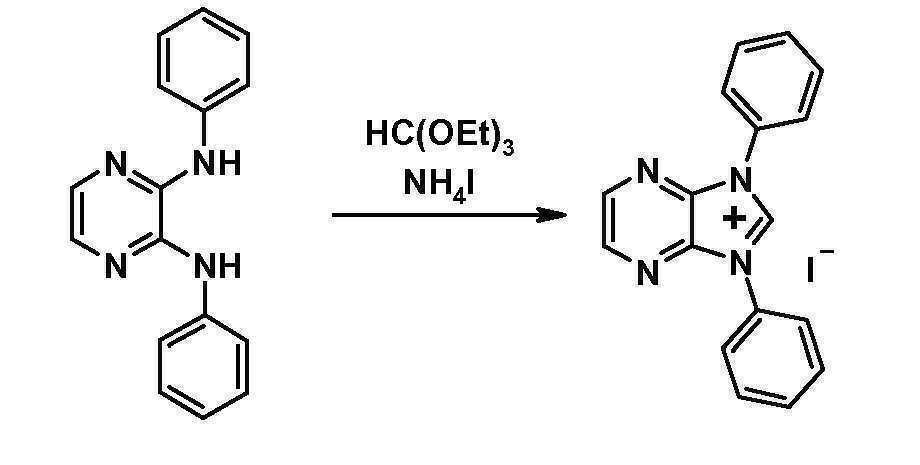
트리에틸 오르토포르메이트(100 ㎖) 중의 2,3-비스(N-페닐아미노)피라진(15.5 g, 59 mmol)의 혼합물을 요오드화암모늄(17.1 g, 118 mmol)과 혼합하고, 밤새 80℃에서 교반한다. 실온으로 냉각시킨 후, 고체를 흡인으로 여과하고, 석유 에테르로 세정하고, 진공 건조 캐비넷에서 70℃에서 건조시킨다. 수율: 19.5 g(82%).A mixture of 2,3-bis(N-phenylamino)pyrazine (15.5 g, 59 mmol) in triethyl orthoformate (100 ml) was mixed with ammonium iodide (17.1 g, 118 mmol) and stirred at 80° C. overnight. do. After cooling to room temperature, the solid is filtered with suction, washed with petroleum ether, and dried at 70° C. in a vacuum drying cabinet. Yield: 19.5 g (82%).
1H NMR (d6-DMSO, 500 MHz): δ = 7.77 (mc, 2H), 7.84 (mc, 4H), 8.03-8.08 (m, 4H), 9.08 (s, 2H), 11.20 (s, 1H). 1 H NMR (d 6 -DMSO, 500 MHz): δ = 7.77 (m c , 2H), 7.84 (m c , 4H), 8.03-8.08 (m, 4H), 9.08 (s, 2H), 11.20 (s , 1H).
착물 fac-Em1: Complex fac-Em1 :
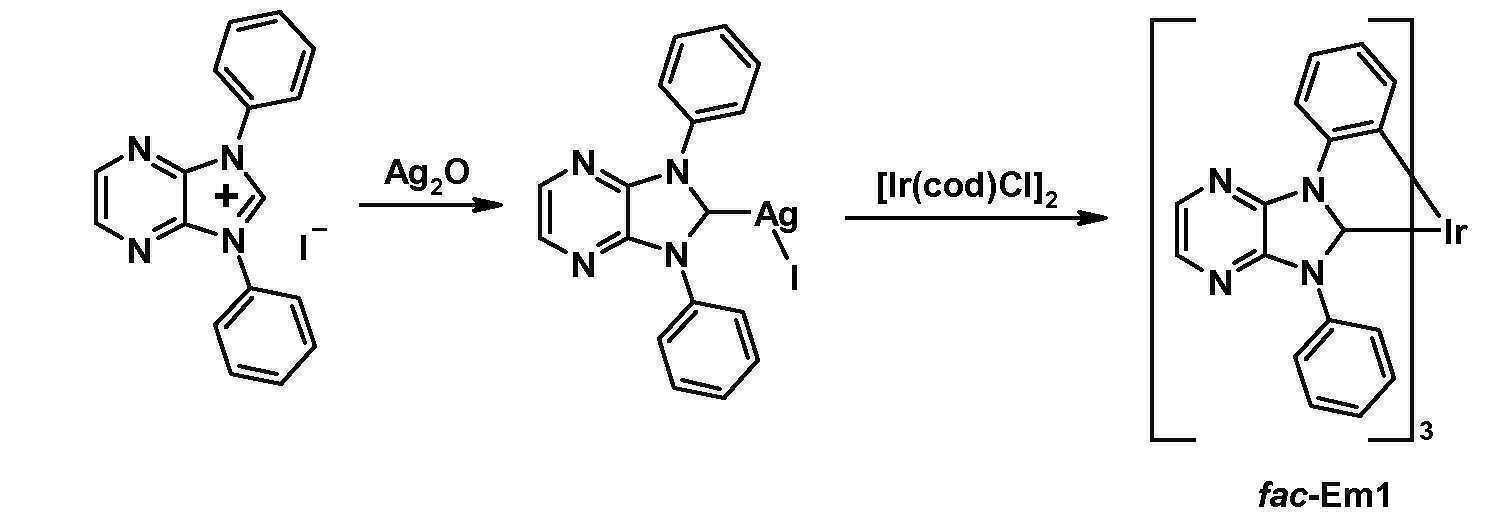
디옥산(95 ㎖) 중의 요오드화1,3-디페닐피라지노이미다졸륨(1.6 g, 4.0 mmol)의 현탁액을 분자체(14 g) 및 산화은(I)(742 mg, 3.2 mmol)과 혼합하고, 밤새 실온에서 교반한다. 그후, o-크실렌(130 ㎖) 중의 클로로(1,5-시클로옥타디엔)이리듐(I) 이량체(269 mg, 0.4 mmol)의 용액을 첨가한다. 혼합물을 밤새 환류 교반한다. 80℃로 냉각시킨 후, 잔류물을 흡인으로 여과하고, o-크실렌으로 세정한다. 합한 여과액을 무수 상태로 농축시키고, 잔류물을 75℃에서 톨루엔(40 ㎖)에 용해시킨다. 용액을 농축시키고, 밤새 실온에서 정치시킨다. 침전물을 여과하고, 시클로헥산으로 세정하고, 진공 건조 캐비넷에서 65℃에서 건조시킨다. 수율: 0.8 g(95%).A suspension of 1,3-diphenylpyrazinoimidazolium iodide (1.6 g, 4.0 mmol) in dioxane (95 ml) was mixed with molecular sieve (14 g) and silver (I) oxide (742 mg, 3.2 mmol) and , Stir overnight at room temperature. Then, a solution of chloro(1,5-cyclooctadiene)iridium(I) dimer (269 mg, 0.4 mmol) in o-xylene (130 ml) is added. The mixture is stirred at reflux overnight. After cooling to 80° C., the residue is filtered with suction and washed with o-xylene. The combined filtrate was concentrated to dryness and the residue was dissolved in toluene (40 mL) at 75°C. The solution is concentrated and left overnight at room temperature. The precipitate was filtered, washed with cyclohexane, and dried at 65° C. in a vacuum drying cabinet. Yield: 0.8 g (95%).
1H NMR (d6-DMSO, 500 MHz, 100℃): δ = 6.51-6.59 (m, 9H), 6.70 (mc, 3H), 6.81 (mc, 3H), 6.90 (br m, 6H), 7.09 (mc, 3H), 8.16 (d, 3H), 8.42 (d, 3H), 8.66 (dd, 3H). 1 H NMR (d 6 -DMSO, 500 MHz, 100°C): δ = 6.51-6.59 (m, 9H), 6.70 (m c , 3H), 6.81 (m c , 3H), 6.90 (br m, 6H) , 7.09 (m c , 3H), 8.16 (d, 3H), 8.42 (d, 3H), 8.66 (dd, 3H).
광발광 (PMMA 필름 중의 2%): Photoluminescence (2% in PMMA film):
λmax=474 ㎚, CIE: (0.16;0.24), QY=93%λ max =474 nm, CIE: (0.16;0.24), QY=93%
실시예 2:Example 2:
2-N-이소프로필아미노-3-클로로피라진2-N-isopropylamino-3-chloropyrazine
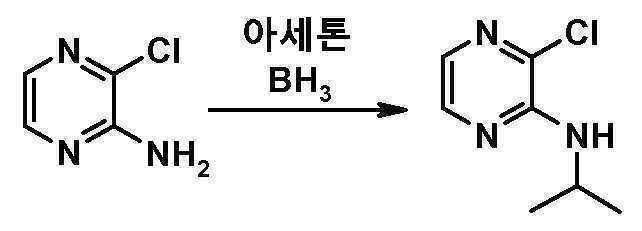
디클로로메탄(54 ㎖) 및 빙초산(27 ㎖) 중의 2-아미노-3-클로로피라진(2.7 g, 20.8 mmol)의 용액을 1℃에서 아세톤(4.1 ㎖, 56.3 mmol) 및 보란-디메틸 술피드 착물(2.2 ㎖, 22.9 mmol)와 혼합하고, 밤새 실온에서 교반한다. 보란-디메틸 술피드 착물의 2차 분획(0.8 ㎖)을 1℃에서 첨가하고, 혼합물을 다시 밤새 실온에서 교반한다. 마지막으로, 보란-디메틸 술피드 착물의 3차 분획(0.6 ㎖) 및 아세톤(1.0 ㎖)을 1℃에서 첨가하고, 혼합물을 다시 밤새 실온에서 교반한다. 용액을 <10℃에서 수성 암모니아(38 ㎖)로 pH 9로 조절한다. 유기상을 제거하고, 물로 세정한다. 황산나트륨상에서 건조시킨 후, 용액을 농축시키고, 밤새 정치시킨다. 형성된 침전물을 여과하고, 소량의 디클로로메탄으로 세정한다. 합한 여과액을 무수 상태로 농축시키고, 진공 건조 캐비넷에서 40℃에서 건조시킨다. 수율: 2.3 g(64%).A solution of 2-amino-3-chloropyrazine (2.7 g, 20.8 mmol) in dichloromethane (54 ml) and glacial acetic acid (27 ml) at 1° C. was prepared with acetone (4.1 ml, 56.3 mmol) and borane-dimethyl sulfide complex ( 2.2 mL, 22.9 mmol) and stirred overnight at room temperature. A second fraction (0.8 ml) of the borane-dimethyl sulfide complex is added at 1° C. and the mixture is stirred again overnight at room temperature. Finally, the tertiary fraction (0.6 ml) and acetone (1.0 ml) of the borane-dimethyl sulfide complex are added at 1° C. and the mixture is again stirred at room temperature overnight. The solution is adjusted to pH 9 with aqueous ammonia (38 ml) at <10°C. The organic phase is removed and washed with water. After drying over sodium sulfate, the solution is concentrated and left overnight. The formed precipitate is filtered and washed with a small amount of dichloromethane. The combined filtrate was concentrated to dryness and dried at 40° C. in a vacuum drying cabinet. Yield: 2.3 g (64%).
1H NMR (CD2Cl2, 500 MHz): δ = 1.22 (d, 6H), 4.16 (sept, 1H), 5.00 (br s, 1H), 7.46 (d, 1H), 7.88 (d, 1H). 1 H NMR (CD 2 Cl 2 , 500 MHz): δ = 1.22 (d, 6H), 4.16 (sept, 1H), 5.00 (br s, 1H), 7.46 (d, 1H), 7.88 (d, 1H) .
2-N-페닐아미노-3-N-이소프로필아미노피라진2-N-phenylamino-3-N-isopropylaminopyrazine
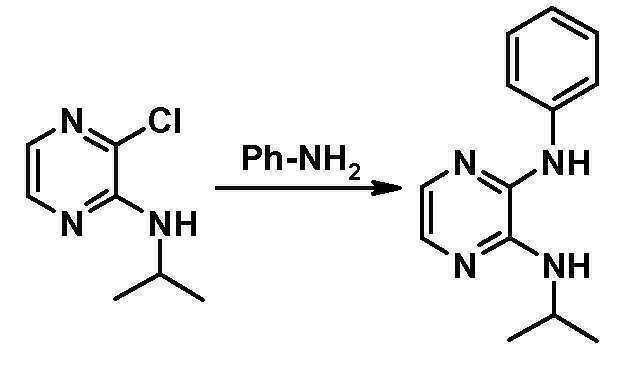
아닐린(9 ㎖, 99 mmol) 중의 2-이소프로필아미노-3-클로로피라진(5.1 g, 30 mmol)의 혼합물을 밤새 125℃에서 교반한다. 90℃로 냉각시킨 후, 물을 첨가한다. 실온에서 디클로로메탄을 첨가하고, 용액을 수성 암모니아로 pH 9로 조절한다. 유기상을 제거하고, 물로 세정하고, 황산나트륨상에서 건조시키고, 무수 상태로 농축시킨다. 미정제 생성물을 컬럼 크로마토그래피(실리카 겔, 톨루엔/에틸 아세테이트 8:1)로 정제한다. 수율: 4.6 g(68%).A mixture of 2-isopropylamino-3-chloropyrazine (5.1 g, 30 mmol) in aniline (9 mL, 99 mmol) is stirred overnight at 125°C. After cooling to 90° C., water is added. Dichloromethane is added at room temperature and the solution is adjusted to pH 9 with aqueous ammonia. The organic phase is removed, washed with water, dried over sodium sulfate and concentrated to anhydrous. The crude product is purified by column chromatography (silica gel, toluene/ethyl acetate 8:1). Yield: 4.6 g (68%).
1H NMR (CD2Cl2, 500 MHz): δ = 1.23 (d, 6H), 4.15 (br s, 1H), 4.18 (sept, 1H), 5.95 (br s, 1H), 6.96-7.02 (m, 1H), 7.23-7.32 (m, 4H), 7.45 (d, 1H), 7.64 (d, 1H). 1 H NMR (CD 2 Cl 2 , 500 MHz): δ = 1.23 (d, 6H), 4.15 (br s, 1H), 4.18 (sept, 1H), 5.95 (br s, 1H), 6.96-7.02 (m , 1H), 7.23-7.32 (m, 4H), 7.45 (d, 1H), 7.64 (d, 1H).
요오드화 1-페닐-3-이소프로필피라지노이미다졸륨1-phenyl-3-isopropylpyrazinoimidazolium iodide
**
**
*
트리에틸 오르토포르메이트(6 ㎖) 중의 2-N-페닐아미노-3-N-이소프로필아미노피라진(1.2 g, 5.2 mmol)의 혼합물을 요오드화암모늄(0.8 g, 5.7 mmol)과 혼합하고, 밤새 80℃에서 교반한다. 실온으로 냉각시킨 후, 고체를 흡인으로 여과하고, 소량의 에탄올 및 석유 에테르로 세정하고, 진공 건조 캐비넷에서 50℃에서 건조시킨다. 수율: 1.1 g(60%).A mixture of 2-N-phenylamino-3-N-isopropylaminopyrazine (1.2 g, 5.2 mmol) in triethyl orthoformate (6 mL) was mixed with ammonium iodide (0.8 g, 5.7 mmol) and 80 overnight Stir at °C. After cooling to room temperature, the solid is filtered with suction, washed with a small amount of ethanol and petroleum ether, and dried at 50° C. in a vacuum drying cabinet. Yield: 1.1 g (60%).
1H NMR (d6-DMSO, 500 MHz): δ = 1.76 (d, 6H), 5.23 (sept, 1H), 7.67-7.84 (m, 3H), 7.91-8.02 (m, 2H), 8.98 (d, 1H), 9.02 (d, 1H), 10.72 (s, 1H). 1 H NMR (d 6 -DMSO, 500 MHz): δ = 1.76 (d, 6H), 5.23 (sept, 1H), 7.67-7.84 (m, 3H), 7.91-8.02 (m, 2H), 8.98 (d , 1H), 9.02 (d, 1H), 10.72 (s, 1H).
착물 mer-Em2:Complex mer-Em2:
**
**
*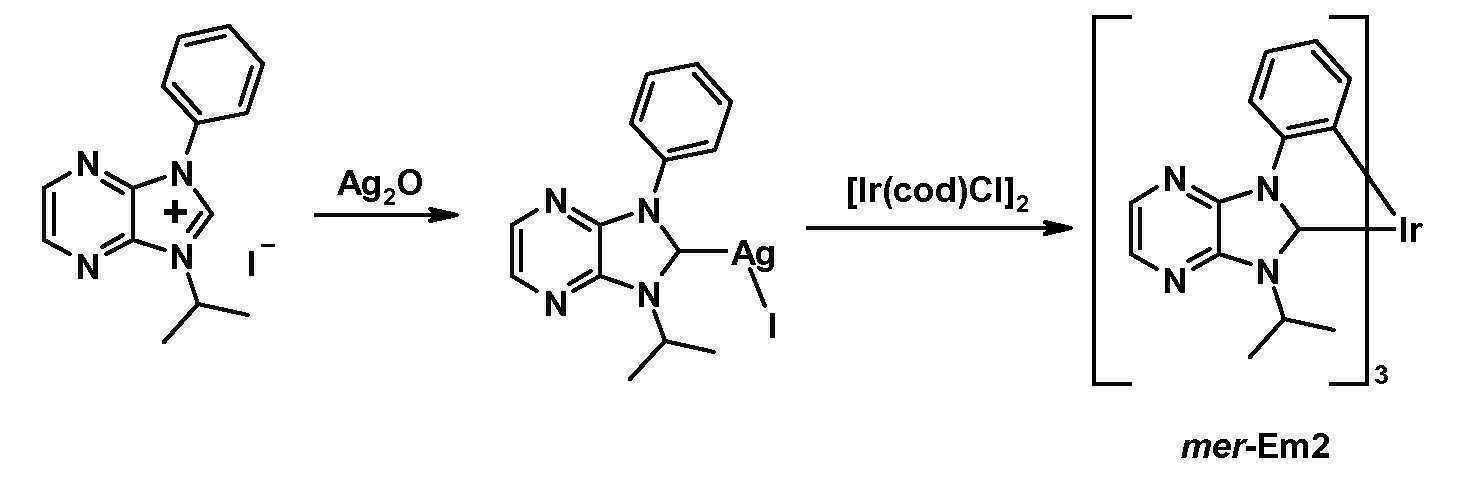
디옥산(8 ㎖) 중의 요오드화1-페닐-3-이소프로필피라지노이미다졸륨(166 mg, 0.48 mmol)의 현탁액을 분자체(1 g) 및 산화은(I)(89 mg, 0.38 mmol)과 혼합하고, 밤새 실온에서 교반한다. 클로로(1,5-시클로옥타디엔)-이리듐(I) 이량체(30 mg, 0.05 mmol)를 첨가하고, 혼합물을 밤새 환류 교반한다. 실온으로 냉각시킨 후, 잔류물을 흡인으로 여과하고, 디클로로메탄으로 세정한다. 합한 여과액을 무수 상태로 농축시키고, 잔류물을 컬럼 크로마토그래피(실리카 겔, 톨루엔/에틸 아세테이트 4:1)로 정제한다. 수율: 65 mg (80%).A suspension of 1-phenyl-3-isopropylpyrazinoimidazolium iodide (166 mg, 0.48 mmol) in dioxane (8 ml) with molecular sieve (1 g) and silver (I) oxide (89 mg, 0.38 mmol) Mix and stir overnight at room temperature. Chloro(1,5-cyclooctadiene)-iridium(I) dimer (30 mg, 0.05 mmol) is added and the mixture is stirred under reflux overnight. After cooling to room temperature, the residue is filtered with suction and washed with dichloromethane. The combined filtrate was concentrated to dryness, and the residue was purified by column chromatography (silica gel, toluene/ethyl acetate 4:1). Yield: 65 mg (80%).
1H NMR (CD2Cl2, 500 MHz): δ = 0.72 (d, 3H), 0.77 (d, 3H), 0.87 (d, 3H), 1.36 (d, 3H), 1.45 (d, 3H), 1.77 (d, 3H), 4.37-4.53 (m, 2H), 4.65 (sept, 1H), 6.57 (dd, 1H), 6.65-6.74 (m, 3H), 6.94-7.24 (m, 5H), 8.17 (d, 1H), 8.22 (d, 1H), 8.23 (d, 1H), 8.28 (d, 1H), 8.30 (d, 1H), 8.33 (d, 1H), 8.60 (dd, 1H), 8.63 (dd, 1H), 8.67 (dd, 1H). 1 H NMR (CD 2 Cl 2 , 500 MHz): δ = 0.72 (d, 3H), 0.77 (d, 3H), 0.87 (d, 3H), 1.36 (d, 3H), 1.45 (d, 3H), 1.77 (d, 3H), 4.37-4.53 (m, 2H), 4.65 (sept, 1H), 6.57 (dd, 1H), 6.65-6.74 (m, 3H), 6.94-7.24 (m, 5H), 8.17 ( d, 1H), 8.22 (d, 1H), 8.23 (d, 1H), 8.28 (d, 1H), 8.30 (d, 1H), 8.33 (d, 1H), 8.60 (dd, 1H), 8.63 (dd , 1H), 8.67 (dd, 1H).
광발광 (PMMA 필름 중의 2%): Photoluminescence (2% in PMMA film):
λmax=516 ㎚, CIE: (0.29;0.51), QY=66%λ max =516 nm, CIE: (0.29;0.51), QY=66%
착물 fac-Em2:Complex fac-Em2:
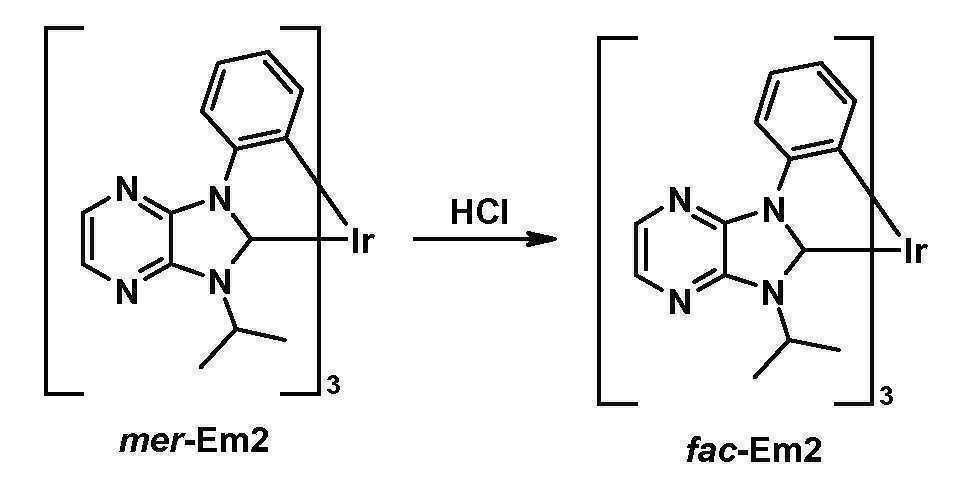
부타논(70 ㎖) 중의 mer-Em2(720 mg, 0.80 mmol)의 용액을 염산(1 N, 10 ㎖)과 혼합하고, 밤새 환류하에 교반한다. 용액을 농축시키고, 디클로로메탄으로 희석하고, 물로 세정한다. 유기상을 황산나트륨상에서 건조시키고, 무수 상태로 농축시킨다. 잔류물을 컬럼 크로마토그래피(실리카 겔, 톨루엔/에틸 아세테이트 10:1)로 정제한다. 수율: 327 mg (45%).A solution of mer-Em2 (720 mg, 0.80 mmol) in butanone (70 mL) is mixed with hydrochloric acid (1 N, 10 mL) and stirred under reflux overnight. The solution is concentrated, diluted with dichloromethane and washed with water. The organic phase is dried over sodium sulfate and concentrated to anhydrous. The residue is purified by column chromatography (silica gel, toluene/ethyl acetate 10:1). Yield: 327 mg (45%).
1H NMR (CD2Cl2, 500 MHz, 100℃): δ = 0.86 (d, 9H), 1.70 (d, 9H), 4.54 (sept, 3H), 6.36 (d, 3H), 6.64 (dd, 3H), 7.02 (dd, 3H), 8.17 (d, 3H), 8.28 (d, 3H), 8.60 (d, 3H). 1 H NMR (CD 2 Cl 2 , 500 MHz, 100°C): δ = 0.86 (d, 9H), 1.70 (d, 9H), 4.54 (sept, 3H), 6.36 (d, 3H), 6.64 (dd, 3H), 7.02 (dd, 3H), 8.17 (d, 3H), 8.28 (d, 3H), 8.60 (d, 3H).
광발광 (PMMA 필름 중의 2%): Photoluminescence (2% in PMMA film):
λmax=474 ㎚, CIE: (0.16;0.27), QY=90%λ max =474 nm, CIE: (0.16;0.27), QY=90%
실시예 3:Example 3:
2-N-페닐아미노-3-아미노피라진2-N-phenylamino-3-aminopyrazine

아닐린(12 ㎖, 131 mmol) 중의 2-아미노-3-클로로피라진(5.0 g, 39 mmol)의 혼합물을 밤새 100℃에서 2회 교반한다. 실온으로 냉각시킨 후, 혼합물을 디클로로메탄(80 ㎖)으로 희석하고, 밤새 교반하고, 여과한다. 고체를 디클로로메탄(200 ㎖)에 용해시키고, 포화 탄산수소나트륨 수용액으로 세정한다. 유기상을 무수 상태로 농축시키고, 잔류물을 진공 건조 캐비넷에서 70℃에서 건조시킨다. 수율: 5.3 g(74%).A mixture of 2-amino-3-chloropyrazine (5.0 g, 39 mmol) in aniline (12 mL, 131 mmol) is stirred twice at 100° C. overnight. After cooling to room temperature, the mixture is diluted with dichloromethane (80 ml), stirred overnight, and filtered. The solid was dissolved in dichloromethane (200 ml) and washed with a saturated aqueous sodium hydrogen carbonate solution. The organic phase is concentrated to dryness and the residue is dried at 70° C. in a vacuum drying cabinet. Yield: 5.3 g (74%).
1H NMR (CD2Cl2, 500 MHz): δ = 4.43 (br s, 2H), 6.23 (br s, 1H), 7.03 (dd, 1H), 7.32 (dd, 2H), 7.40 (d, 2H), 7.59 (d, 1H), 7.62 (d, 1H). 1 H NMR (CD 2 Cl 2 , 500 MHz): δ = 4.43 (br s, 2H), 6.23 (br s, 1H), 7.03 (dd, 1H), 7.32 (dd, 2H), 7.40 (d, 2H) ), 7.59 (d, 1H), 7.62 (d, 1H).
1-페닐피라지노이미다졸1-phenylpyrazinoimidazole

포름산(160 ㎖) 중의 2-N-페닐아미노-3-아미노피라진(5.3 g, 29 mmol)의 용액을 밤새 환류하에 교반한 후, 무수 상태로 농축시킨다. 잔류물을 디클로로메탄(100 ㎖) 중에서 취하고, 포화 탄산수소나트륨 수용액으로 세정한다. 수성상을 디클로로메탄(2×50 ㎖)으로 추출하고, 합한 유기상을 무수 상태로 농축시킨다. 수율: 5.6 g(98%).A solution of 2-N-phenylamino-3-aminopyrazine (5.3 g, 29 mmol) in formic acid (160 mL) was stirred under reflux overnight and then concentrated to anhydrous. The residue is taken up in dichloromethane (100 ml) and washed with saturated aqueous sodium hydrogen carbonate solution. The aqueous phase is extracted with dichloromethane (2 x 50 mL) and the combined organic phases are concentrated to anhydrous. Yield: 5.6 g (98%).
1H NMR (CD2Cl2, 500 MHz): δ = 7.49 (dd, 1H), 7.60 (dd, 2H), 7.76 (d, 2H), 8.39 (d, 1H), 8.56 (d, 1H), 8.63 (s, 1H). 1 H NMR (CD 2 Cl 2 , 500 MHz): δ = 7.49 (dd, 1H), 7.60 (dd, 2H), 7.76 (d, 2H), 8.39 (d, 1H), 8.56 (d, 1H), 8.63 (s, 1H).
1-페닐-3-메틸피라지노이미다졸륨 테트라플루오로보레이트1-phenyl-3-methylpyrazinoimidazolium tetrafluoroborate
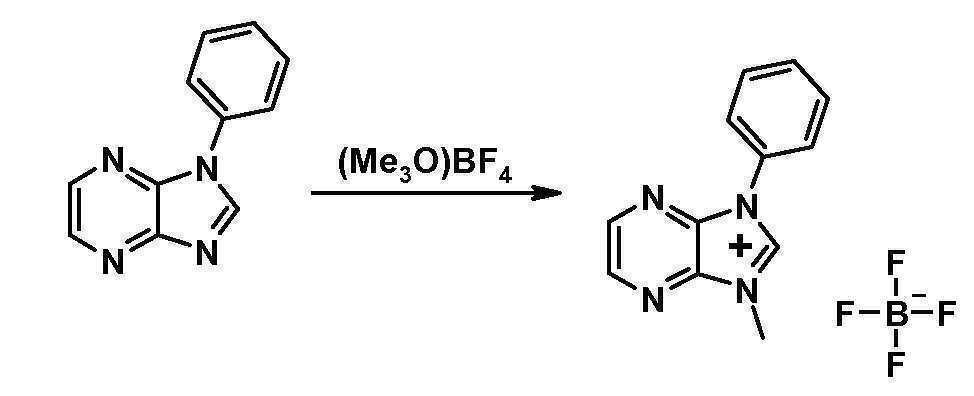
디클로로메탄(400 ㎖) 중의 1-페닐피라지노이미다졸(5.5 g, 28 mmol)의 용액을 트리메틸옥소늄 테트라플루오로보레이트(4.2 g, 28 mmol)와 혼합하고, 밤새 환류하에 교반한다. 침전물을 여과하고, 건조시킨다. 생성물은 약 75%의 순도로 얻는다. 수율: 7.3 g(87%).A solution of 1-phenylpyrazinoimidazole (5.5 g, 28 mmol) in dichloromethane (400 mL) is mixed with trimethyloxonium tetrafluoroborate (4.2 g, 28 mmol) and stirred under reflux overnight. The precipitate is filtered and dried. The product is obtained with a purity of about 75%. Yield: 7.3 g (87%).
1H NMR (d6-DMSO, 500 MHz): δ = 4.19 (s, 3H), 7.71 (dd, 1H), 7.78 (dd, 2H), 7.91 (d, 2H), 8.99 (d, 1H), 9.04 (d, 1H), 10.70 (s, 1H). 1 H NMR (d 6 -DMSO, 500 MHz): δ = 4.19 (s, 3H), 7.71 (dd, 1H), 7.78 (dd, 2H), 7.91 (d, 2H), 8.99 (d, 1H), 9.04 (d, 1H), 10.70 (s, 1H).
요오드화 1-페닐-3-메틸피라지노이미다졸륨1-phenyl-3-methylpyrazinoimidazolium iodide

아세토니트릴(70 ㎖) 중의 1-페닐-3-메틸피라지노이미다졸륨 테트라플루오로보레이트(7.3 g, 25 mmol, 순도: 75%)의 용액을 아세토니트릴(67 ㎖) 중의 요오드화테트라부틸암모늄(27.2 g, 74 mmol)의 용액과 혼합하고, 밤새 실온에서 교반한다. 침전물을 흡인으로 여과하고, 석유 에테르로 세정한다. 생성물은 약 75%의 순도로 얻는다. 수율: 6.0 g(72%).A solution of 1-phenyl-3-methylpyrazinoimidazolium tetrafluoroborate (7.3 g, 25 mmol, purity: 75%) in acetonitrile (70 mL) was added to tetrabutylammonium iodide ( 27.2 g, 74 mmol) and stirred overnight at room temperature. The precipitate is filtered with suction and washed with petroleum ether. The product is obtained with a purity of about 75%. Yield: 6.0 g (72%).
1H NMR (d6-DMSO, 500 MHz): δ = 4.19 (s, 3H), 7.71 (dd, 1H), 7.78 (dd, 2H), 7.92 (d, 2H), 8.99 (d, 1H), 9.04 (d, 1H), 10.72 (s, 1H). 1 H NMR (d 6 -DMSO, 500 MHz): δ = 4.19 (s, 3H), 7.71 (dd, 1H), 7.78 (dd, 2H), 7.92 (d, 2H), 8.99 (d, 1H), 9.04 (d, 1H), 10.72 (s, 1H).
착물 mer-Em3:Complex mer-Em3:
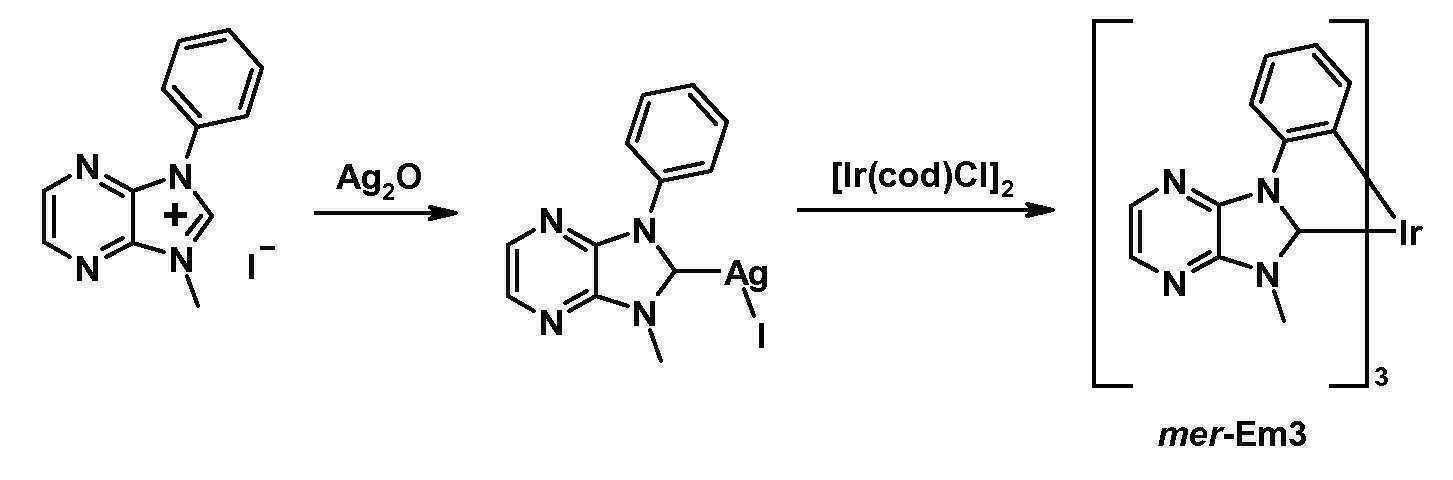
디옥산(60 ㎖) 중의 요오드화1-페닐-3-메틸피라지노이미다졸륨(1.0 g, 2.3 mmol)의 현탁액을 분자체(8.4 g) 및 산화은(I)(0.4 g, 1.8 mmol)과 혼합하고, 밤새 실온에서 교반한다. o-크실렌(83 ㎖) 중의 클로로(1,5-시클로옥타디엔)이리듐(I) 이량체(153 mg, 0.2 mmol)의 용액을 첨가하고, 혼합물을 밤새 환류하에 교반한다. 실온으로 냉각시킨 후, 잔류물을 흡인으로 여과하고, 아세톤으로 세정한다. 합한 여과액을 무수 상태로 농축시키고, 잔류물을 컬럼 크로마토그래피(실리카 겔, 디클로로메탄)로 정제한다. 수율: 44 mg (13%).A suspension of 1-phenyl-3-methylpyrazinoimidazolium iodide (1.0 g, 2.3 mmol) in dioxane (60 ml) is mixed with molecular sieve (8.4 g) and silver (I) oxide (0.4 g, 1.8 mmol) And stirred overnight at room temperature. A solution of chloro(1,5-cyclooctadiene)iridium(I) dimer (153 mg, 0.2 mmol) in o-xylene (83 ml) is added and the mixture is stirred under reflux overnight. After cooling to room temperature, the residue is filtered with suction and washed with acetone. The combined filtrate was concentrated to dryness, and the residue was purified by column chromatography (silica gel, dichloromethane). Yield: 44 mg (13%).
1H NMR (CD2Cl2, 500 MHz): δ = 3.22 (s, 3H), 3.36 (s, 3H), 3.37 (s, 3H), 6.60 (dd, 1H), 6.70-6.78 (m, 3H), 6.87 (dd, 1H), 6.92 (dd, 1H), 7.01-7.10 (m, 3H), 8.22 (d, 1H), 8.27 (d, 1H), 8.28 (d, 1H), 8.32 (d, 1H), 8.35 (d, 1H), 8.36 (d, 1H), 8.60 (dd, 1H), 8.67 (dd, 1H), 8.68 (dd, 1H). 1 H NMR (CD 2 Cl 2 , 500 MHz): δ = 3.22 (s, 3H), 3.36 (s, 3H), 3.37 (s, 3H), 6.60 (dd, 1H), 6.70-6.78 (m, 3H) ), 6.87 (dd, 1H), 6.92 (dd, 1H), 7.01-7.10 (m, 3H), 8.22 (d, 1H), 8.27 (d, 1H), 8.28 (d, 1H), 8.32 (d, 1H), 8.35 (d, 1H), 8.36 (d, 1H), 8.60 (dd, 1H), 8.67 (dd, 1H), 8.68 (dd, 1H).
광발광 (PMMA 필름 중의 2%): Photoluminescence (2% in PMMA film):
λmax=515 ㎚, CIE: (0.29;0.50), QY=74%λ max =515 nm, CIE: (0.29;0.50), QY=74%
착물 fac-Em3:Complex fac-Em3:
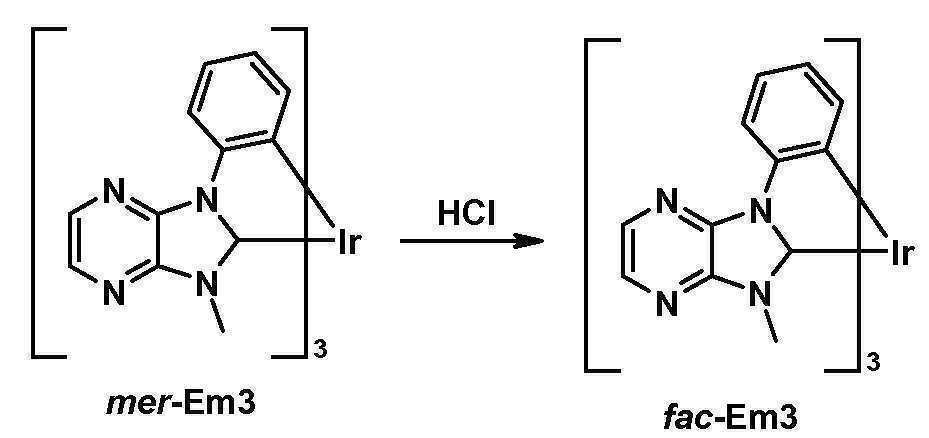
부타논 중의 mer-Em3의 용액을 염산과 혼합하고, 밤새 환류하에 교반한다. 용액을 농축시키고, 디클로로메탄으로 희석하고, 물로 세정한다. 유기상을 황산나트륨상에서 건조시키고, 무수 상태로 농축시킨다. 잔류물을 컬럼 크로마토그래피로 정제한다.A solution of mer-Em3 in butanone is mixed with hydrochloric acid and stirred under reflux overnight. The solution is concentrated, diluted with dichloromethane and washed with water. The organic phase is dried over sodium sulfate and concentrated to anhydrous. The residue is purified by column chromatography.
실시예 4Example 4
μ-디클로로 이량체 D1:μ-dichloro dimer D1:
N-(2,6-디이소프로필페닐)-2-페닐이미다졸은 WO2006/121811의 실시예 14와 유사하게 합성한다.N-(2,6-diisopropylphenyl)-2-phenylimidazole is synthesized similarly to Example 14 of WO2006/121811.
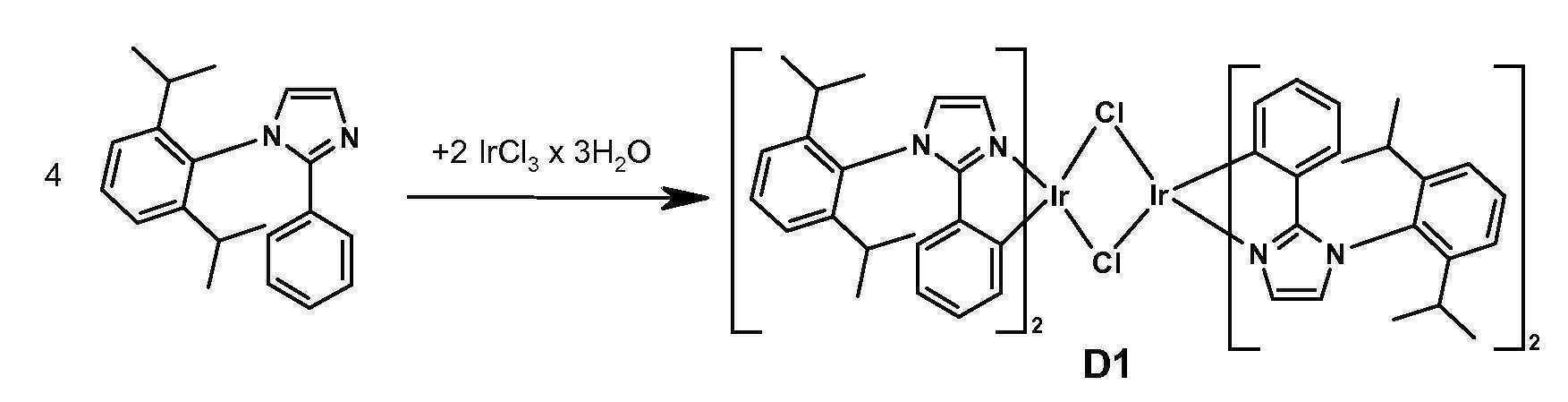
3.50 g(11.5 mmol)의 1-(2,6-디이소프로필페닐)-2-페닐-1H-이미다졸을 초기에 200 ㎖의 2-에톡시에탄올/물(비 3/1)로 채우고, 1.84 g(5.2 mmol)의 염화이리듐(III) 삼수화물과 혼합한다. 반응 혼합물을 18 시간 동안 환류 가열한다. 냉각후, 50 ㎖의 증류수를 첨가한다. 침전물을 여과하고, 증류수로 세정하고, 건조시킨다. 이는 3.50 g(80%)의 μ-디클로로 이량체 D1을 황색 분말로서 생성한다.3.50 g (11.5 mmol) 1-(2,6-diisopropylphenyl)-2-phenyl-1H-imidazole is initially charged with 200 ml 2-ethoxyethanol/water (
1H NMR (CD2Cl2, 400 MHz): 1 H NMR (CD 2 Cl 2 , 400 MHz):
δ = 0.95 (d, 12H), 1.18 (d, 12H), 1.27 (d, 12H), 1.34 (d, 12H), 2.80-2.91 (m, 8H), 6.08 (d, 4H), 6.24 (d, 4H), 6.39 (pt, 4H), 6.53 (pt, 4H), 6.97 (d, 4H), 7.39-7.45 (m, 8H), 7.59 (t, 4H), 7.67 (d, 4H).δ = 0.95 (d, 12H), 1.18 (d, 12H), 1.27 (d, 12H), 1.34 (d, 12H), 2.80-2.91 (m, 8H), 6.08 (d, 4H), 6.24 (d, 4H), 6.39 (pt, 4H), 6.53 (pt, 4H), 6.97 (d, 4H), 7.39-7.45 (m, 8H), 7.59 (t, 4H), 7.67 (d, 4H).
착물 mer-Em7:Complex mer-Em7:

무수 디옥산(100 ㎖) 중의 요오드화1,3-디페닐피라지노이미다졸륨(0.5 g, 1.25 mmol)의 현탁액을 분자체(10 g) 및 산화은(I)(0.19 g, 0.81 mmol)과 혼합하고, 밤새 실온에서 교반한다. 그후, 디옥산(74 ㎖) 중의 클로로 이량체 D1(0.52 g, 0.31 mmol)의 용액을 적가한다. 그후, 혼합물을 환류하에 1 시간 동안 교반한다. 반응 혼합물을 냉각시키고, 여과한다. 여과액으로부터 용매를 감압하에서 제거하고, 메탄올로 세정한 후, 컬럼 크로마토그래피(실리카 겔, 용출제 시클로헥산/아세톤=1/0.25)로 정제한다. 이는 0.40 g의 mer-Em7을 오렌지색 분말로서 생성한다(63%).A suspension of 1,3-diphenylpyrazinoimidazolium iodide (0.5 g, 1.25 mmol) in anhydrous dioxane (100 ml) is mixed with molecular sieve (10 g) and silver (I) oxide (0.19 g, 0.81 mmol) And stirred overnight at room temperature. Then, a solution of chloro dimer D1 (0.52 g, 0.31 mmol) in dioxane (74 mL) is added dropwise. Then, the mixture is stirred under reflux for 1 hour. The reaction mixture is cooled and filtered. The solvent was removed from the filtrate under reduced pressure, washed with methanol, and then purified by column chromatography (silica gel, eluent cyclohexane/acetone=1/0.25). This gives 0.40 g of mer-Em7 as an orange powder (63%).
1H NMR (CD2Cl2, 500 MHz): 1 H NMR (CD 2 Cl 2 , 500 MHz):
δ = 0.89 (d, 3H), 0.90 (d, 6H), 0.92 (d, 3H), 1.09 (d, 3H), 1.16 (d, 3H), 1.21 (d, 3H), 1.24 (d, 3H), 2.13 (sept, 1H), 2.66 (m, 2H), 2.73 (sept, 1H), 6.08-6.23 (m, 5H), 6.45-6.48 (m, 3H), 6.66 (d, 1H), 6.70-6.76 (m, 3H), 6.85-6.92 (m, 2H), 6.98 (m, 4H), 7.08-7.13 (m, 2H), 7.31 (t, 2H), 7.35 (d, 1H), 7.39 (d, 1H), 7.50 (t, 1H), 7.55 (t, 1H), 8.21 (d, 1H), 8.41 (d, 1H), 8.80 (d, 1H).δ = 0.89 (d, 3H), 0.90 (d, 6H), 0.92 (d, 3H), 1.09 (d, 3H), 1.16 (d, 3H), 1.21 (d, 3H), 1.24 (d, 3H) , 2.13 (sept, 1H), 2.66 (m, 2H), 2.73 (sept, 1H), 6.08-6.23 (m, 5H), 6.45-6.48 (m, 3H), 6.66 (d, 1H), 6.70-6.76 (m, 3H), 6.85-6.92 (m, 2H), 6.98 (m, 4H), 7.08-7.13 (m, 2H), 7.31 (t, 2H), 7.35 (d, 1H), 7.39 (d, 1H) ), 7.50 (t, 1H), 7.55 (t, 1H), 8.21 (d, 1H), 8.41 (d, 1H), 8.80 (d, 1H).
광발광 (PMMA 필름 중의 2%): Photoluminescence (2% in PMMA film):
λmax=565 ㎚, CIE: (0.44;0.49)λ max =565 nm, CIE: (0.44;0.49)
착물 fac-Em7:Complex fac-Em7:
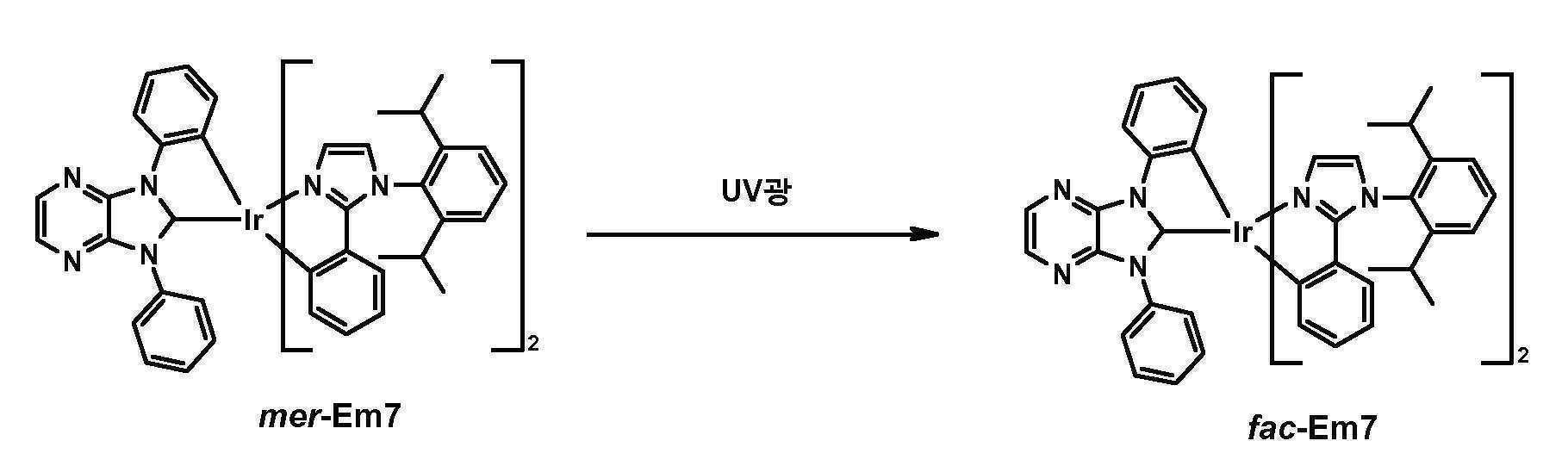
착물 fac-Em7(mer-Em7에 대한 이성체)은 3-메톡시프로피오니트릴 중의 mer-Em7의 용액을 흑색광 청색 램프[오스람(Osram), L18W/73, λmax=370-380 ㎚]으로 조사한 후, 컬럼 크로마토그래피로 정제하여 얻는다.Complex fac-Em7 (isomer to mer-Em7) was obtained by using a solution of mer-Em7 in 3-methoxypropionitrile in a black light blue lamp [Osram, L18W/73, λ max =370-380 nm]. After irradiation, it is obtained by purification by column chromatography.
실시예 5:Example 5:
착물 K1:Complex K1:
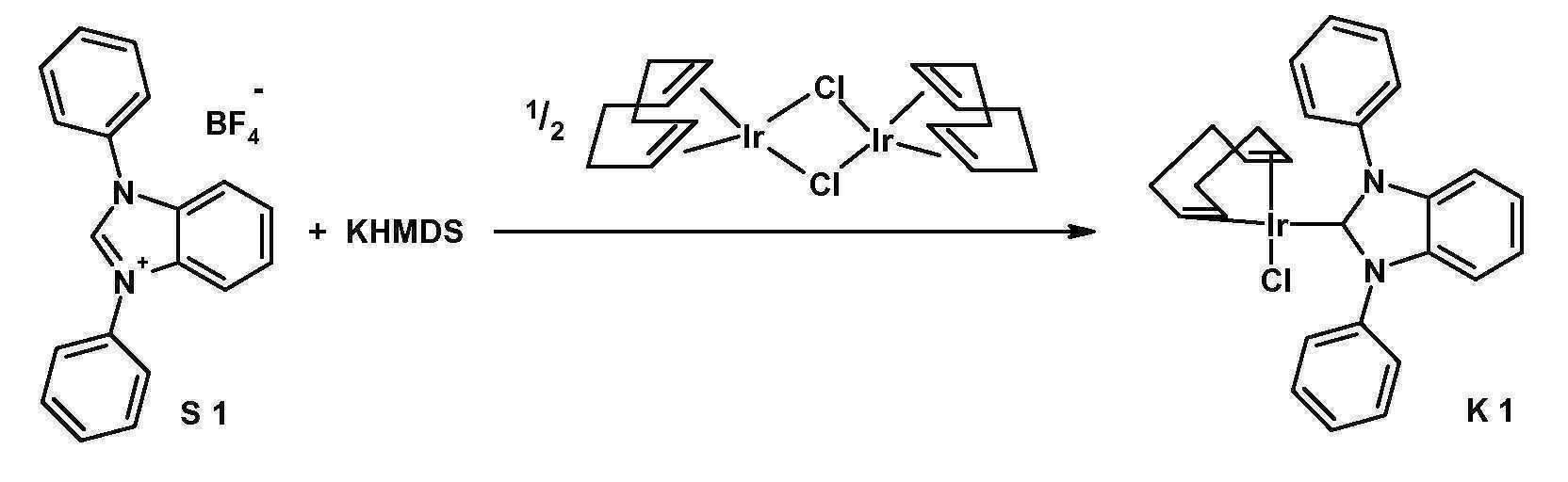
5.00 g(14.0 mmol)의 벤즈이미다졸륨 염 S1을 80 ㎖의 무수 톨루엔에 현탁시키고, -8℃로 냉각시킨다. 그후, 28 ㎖의 칼륨 비스(트리메틸실릴)아미드(KHMDS, 톨루엔 중의 0.5M, 14.0 mmol)를 10 분 이내에 첨가한다. 혼합물을 실온에서 1 시간 동안 교반한 후, -78℃에서 15 분 이내에 120 ㎖ 톨루엔 중의 4.70 g(7.0 mmol)의 [(μ-Cl)Ir(η4-1,5-COD)]2의 용액에 적가한다. 반응 혼합물을 실온에서 1.5 시간 동안 교반한 후, 19 시간 동안 환류 가열한다. 냉각후, 침전물을 여과하고, 톨루엔으로 세정한다. 합한 톨루엔 상을 무수 상태로 농축시키고, 컬럼 크로마토그래피(실리카 겔, 용출제 염화메틸렌)로 정제한다. 이는 5.8 g(68%)의 K1을 황색 분말로서 생성한다.5.00 g (14.0 mmol) of benzimidazolium salt S1 was suspended in 80 ml of anhydrous toluene and cooled to -8°C. Then 28 ml of potassium bis(trimethylsilyl)amide (KHMDS, 0.5M in toluene, 14.0 mmol) are added within 10 minutes. After the mixture was stirred at room temperature for 1 hour, a solution of 4.70 g (7.0 mmol) of [(μ-Cl)Ir(η 4 -1,5-COD)] 2 in 120 ml toluene within 15 min at -78°C Add dropwise to The reaction mixture was stirred at room temperature for 1.5 hours and then heated to reflux for 19 hours. After cooling, the precipitate is filtered and washed with toluene. The combined toluene phase was concentrated to anhydrous and purified by column chromatography (silica gel, eluent methylene chloride). This produces 5.8 g (68%) of K1 as a yellow powder.
**
*1H NMR (CD2Cl2, 500 MHz):* 1 H NMR (CD 2 Cl 2 , 500 MHz):
δ = 1.17 (m, 2H), 1.34 (m, 4H), 1.61 (m, 2H), 2.43 (m, 2H), 4.31 (m, 2H), 7.18 (m, 2H), 7.25 (m, 2H), 7.51 (m, 6H), 7.96 (m, 4H).δ = 1.17 (m, 2H), 1.34 (m, 4H), 1.61 (m, 2H), 2.43 (m, 2H), 4.31 (m, 2H), 7.18 (m, 2H), 7.25 (m, 2H) , 7.51 (m, 6H), 7.96 (m, 4H).
착물 Em8:Complex Em8:

무수 1,4-디옥산(140 ㎖) 중의 요오드화1,3-디페닐피라지노이미다졸륨(3.17 g, 7.92 mmol)의 현탁액을 분자체(15 g) 및 산화은(I)(1.48 g, 6.34 mmol)과 혼합하고, 밤새 실온에서 교반한다. 그후, 무수 o-크실렌(200 ㎖) 중의 착물 K1(1.60 g, 2.64 mmol)의 용액을 적가한다. 그후, 혼합물을 환류하에 24 시간 동안 교반한다. 반응 혼합물을 냉각시키고, 여과한다. 여과액으로부터 용매를 감압하에 제거하고, 컬럼 크로마토그래피(실리카 겔, 용출제 에틸 아세테이트/시클로헥산=1/2)로 정제한다. 이는 0.80 g의 Em8(30%)을 생성한다.A suspension of 1,3-diphenylpyrazinoimidazolium iodide (3.17 g, 7.92 mmol) in anhydrous 1,4-dioxane (140 ml) was prepared by molecular sieve (15 g) and silver (I) oxide (1.48 g, 6.34 g). mmol) and stirred overnight at room temperature. Then, a solution of complex K1 (1.60 g, 2.64 mmol) in anhydrous o-xylene (200 mL) is added dropwise. Thereafter, the mixture is stirred under reflux for 24 hours. The reaction mixture is cooled and filtered. The solvent was removed from the filtrate under reduced pressure, and purified by column chromatography (silica gel, eluent ethyl acetate/cyclohexane=1/2). This produces 0.80 g of Em8 (30%).
1H NMR (CD2Cl2, 500 MHz): 1 H NMR (CD 2 Cl 2 , 500 MHz):
δ = 6.20-7.40 (매우 평편한 넓은 시그날, 8H), 6.26 (d, 1H), 6.36-6.42 (m, 3H), 6.59 (d, 1H), 6.66 (t, 2H), 6.76-6.85 (m, 6H), 7.06-7.17 (m, 4H), 7.29 (t, 1H), 7.33 (t, 1H), 8.01 (m, 2H), 8.04 (d, 1H), 8.18 (d, 1H), 8.27 (d, 1H), 8.31 (d, 1H), 8.70 (d, 1H), 8.77 (d, 1H).δ = 6.20-7.40 (very flat broad signal, 8H), 6.26 (d, 1H), 6.36-6.42 (m, 3H), 6.59 (d, 1H), 6.66 (t, 2H), 6.76-6.85 (m) , 6H), 7.06-7.17 (m, 4H), 7.29 (t, 1H), 7.33 (t, 1H), 8.01 (m, 2H), 8.04 (d, 1H), 8.18 (d, 1H), 8.27 ( d, 1H), 8.31 (d, 1H), 8.70 (d, 1H), 8.77 (d, 1H).
광발광 (PMMA 필름 중의 2%): Photoluminescence (2% in PMMA film):
λmax=480 ㎚, CIE: (0.17;0.31)λ max =480 nm, CIE: (0.17;0.31)
실시예 6:Example 6:
착물 D2:Complex D2:
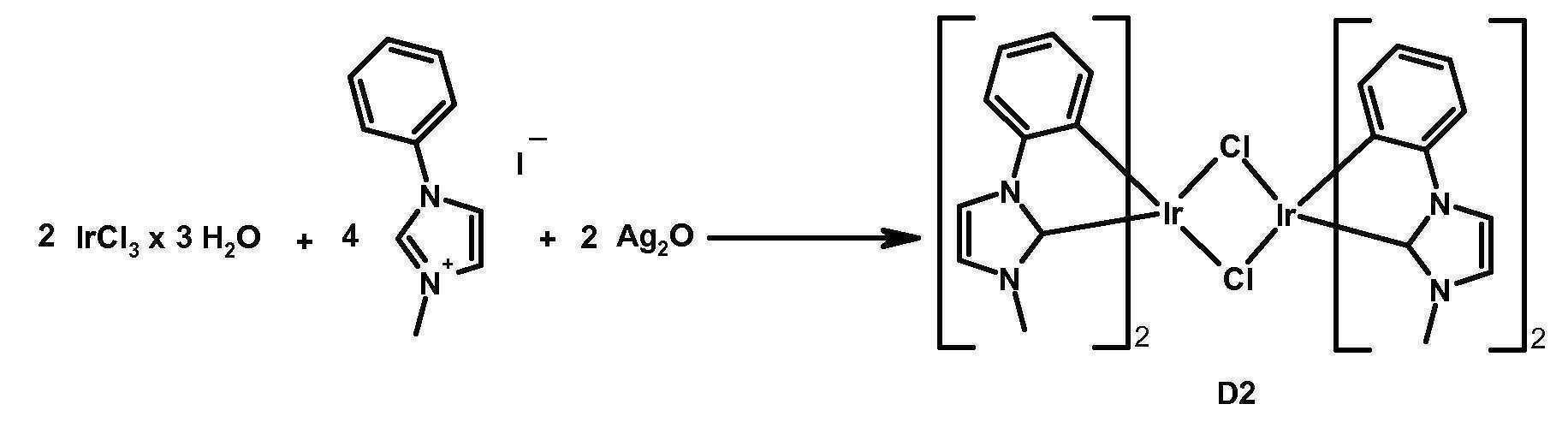
4.29 g(18.5 mmol)의 산화은, 9.47 g(33.1 mmol)의 요오드화이미다졸륨 및 3.56 g(10.1 mmol)의 삼염화이리듐 삼수화물을 350 ㎖의 2-에톡시에탄올에 현탁시키고, 암실에서 120℃에서 15 시간 동안 교반한다. 그후, 용매를 감압하에 제거하고, 잔류물을 염화메틸렌으로 추출한다. 추출물을 그의 부피의 1/4로 농축시키고, 메탄올과 혼합한다. 침전된 고체를 여과하고, 건조시킨다. 이는 1.7 g의 착물 D2 (31%)를 생성한다.4.29 g (18.5 mmol) of silver oxide, 9.47 g (33.1 mmol) of imidazolium iodide and 3.56 g (10.1 mmol) of iridium trichloride trihydrate were suspended in 350 ml of 2-ethoxyethanol, and at 120° C. in the dark Stir for 15 hours. Then, the solvent is removed under reduced pressure, and the residue is extracted with methylene chloride. The extract is concentrated to 1/4 of its volume and mixed with methanol. The precipitated solid is filtered and dried. This yields 1.7 g of complex D2 (31%).
1H NMR (CD2Cl2, 500 MHz): 1 H NMR (CD 2 Cl 2 , 500 MHz):
δ = 7.59 (d, 4H), 7.17 (d, 4H), 6.99 (d, 4H), 6.73 (pt, 4H), 6.45 (pt, 4H), 6.09 (d, 4H), 3.91 (s, 12H).δ = 7.59 (d, 4H), 7.17 (d, 4H), 6.99 (d, 4H), 6.73 (pt, 4H), 6.45 (pt, 4H), 6.09 (d, 4H), 3.91 (s, 12H) .
착물 Em9:Complex Em9:
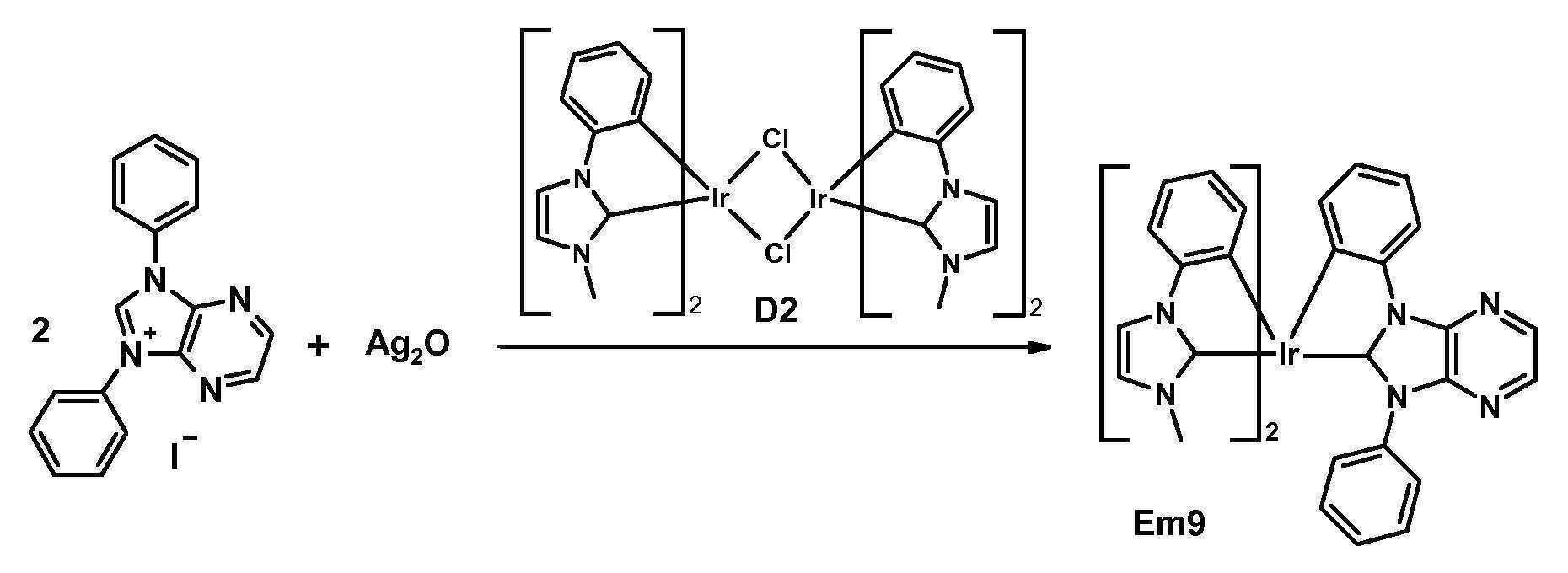
무수 1,4-디옥산(35 ㎖) 중의 요오드화1,3-디페닐피라지노이미다졸륨(0.59 g, 1.48 mmol)의 현탁액을 분자체(5 g) 및 산화은(I)(0.28 g, 1.18 mmol)과 혼합하고, 밤새 실온에서 교반한다. 그후, 무수 o-크실렌(50 ㎖) 중의 착물 D2(0.40 g, 0.37 mmol)의 현탁액을 첨가한다. 그후, 혼합물을 환류하에 3.5 시간 동안 교반한다. 반응 혼합물을 냉각시키고, 여과한다. 여과액으로부터 용매를 감압하에 제거하고, 컬럼 크로마토그래피(실리카 겔, 용출제 디클로로메탄)로 정제한다.A suspension of 1,3-diphenylpyrazinoimidazolium iodide (0.59 g, 1.48 mmol) in anhydrous 1,4-dioxane (35 ml) was prepared with molecular sieve (5 g) and silver (I) oxide (0.28 g, 1.18 g). mmol) and stirred overnight at room temperature. Then a suspension of complex D2 (0.40 g, 0.37 mmol) in anhydrous o-xylene (50 mL) is added. Thereafter, the mixture is stirred under reflux for 3.5 hours. The reaction mixture is cooled and filtered. The solvent was removed from the filtrate under reduced pressure, and purified by column chromatography (silica gel, eluent dichloromethane).
이는 Em9의 각각의 2종의 상이한 이성체의 혼합물로서 0.11 g(20%, 오렌지색 분말, RF=0.39, 20/80 이성체 혼합물)의 분획 1 및 0.23 g(40%, 황색 분말, RF=0.31, 40/60 이성체 혼합물)의 분획 2를 생성한다.It is a mixture of two different isomers of each of Em9, fraction 1 of 0.11 g (20%, orange powder, R F =0.39, 20/80 isomer mixture) and 0.23 g (40%, yellow powder, R F =0.31). , 40/60 isomeric mixture) of
분획 1:Fraction 1:
MS (Maldi):MS (Maldi):
m/e=779 (M+H+)m/e=779 (M+H + )
광발광 (PMMA 필름 중의 2%): Photoluminescence (2% in PMMA film):
λmax=547 ㎚, CIE: (0.40;0.54)λ max =547 nm, CIE: (0.40;0.54)
분획 2:Fraction 2:
MS (Maldi):MS (Maldi):
m/e=779 (M+H+)m/e=779 (M+H + )
광발광 (PMMA 필름 중의 2%): Photoluminescence (2% in PMMA film):
λmax=526 ㎚, CIE: (0.33;0.55)λ max =526 nm, CIE: (0.33;0.55)
실시예 7:Example 7:
착물 K2:Complex K2:
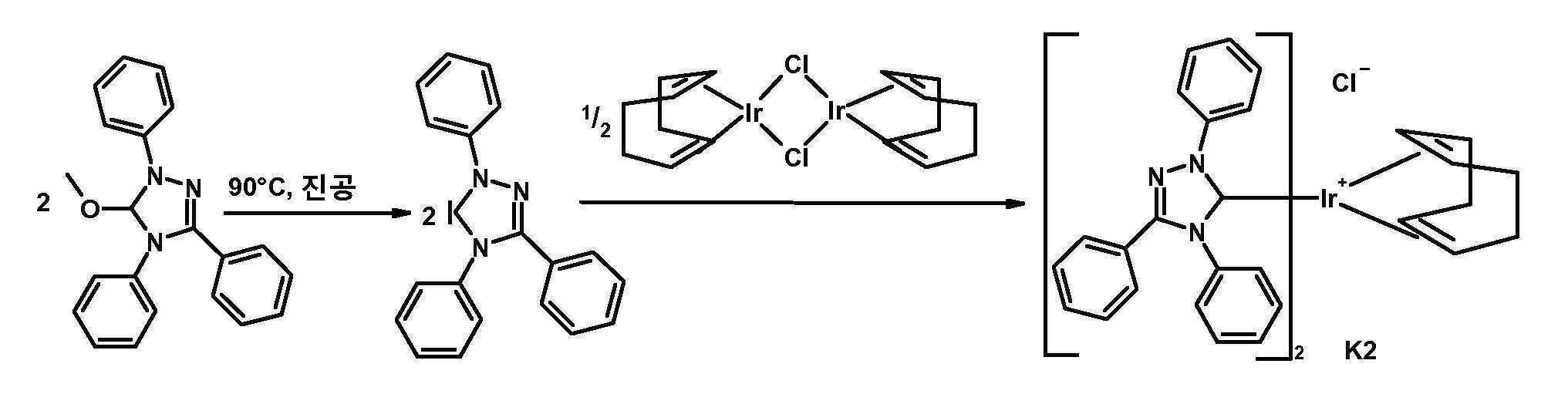
3.10 g(9.41 mmol)의 5-메톡시-1,3,4-트리페닐-4,5-디히드로-1H-[1,2,4]-트리아졸을 90℃로 감압(10-3 mbar)하에서 16 시간 동안 가열한다. 냉각후, 잔류물을 120 ㎖의 무수 톨루엔 중에서 취하고, 120 ㎖의 무수 톨루엔 중의 1.38 g(2.03 mmol)의 μ-클로로(1,5-시클로옥타디엔)이리듐(I) 이량체의 용액과 혼합한다. 반응 혼합물을 점진적으로 50℃로 가열하고, 이 온도에서 1 시간 동안 교반한다. 냉각후, 오렌지색-적색 침전물을 여과하고, 톨루엔으로 세정하고, 건조시킨다. 이는 2.68 g의 K2(70%)를 생성한다.3.10 g (9.41 mmol) of 5-methoxy-1,3,4-triphenyl-4,5-dihydro-1H-[1,2,4]-triazole was reduced to 90°C (10 -3 mbar ) Under heating for 16 hours. After cooling, the residue is taken up in 120 ml of anhydrous toluene and mixed with a solution of 1.38 g (2.03 mmol) of μ-chloro(1,5-cyclooctadiene)iridium(I) dimer in 120 ml of anhydrous toluene. . The reaction mixture is gradually heated to 50° C. and stirred at this temperature for 1 hour. After cooling, the orange-red precipitate is filtered off, washed with toluene and dried. This produces 2.68 g of K2 (70%).
1H NMR (CD2Cl2, 500 MHz): 1 H NMR (CD 2 Cl 2 , 500 MHz):
δ = 1.19 (m, 2H), 1.29 (m, 2H), 2.14 (m, 2H), 2.26 (m, 2H), 2.77 (m, 2H), 4.95 (m, 2H), 7.25-7.44 (m, 26H), 7.82 (d, 4H).δ = 1.19 (m, 2H), 1.29 (m, 2H), 2.14 (m, 2H), 2.26 (m, 2H), 2.77 (m, 2H), 4.95 (m, 2H), 7.25-7.44 (m, 26H), 7.82 (d, 4H).
**
**
*착물 Em10: * Complex Em10:

무수 디옥산(40 ㎖) 중의 0.5 g(1.25 mmol)의 요오드화1,3-디페닐피라지노이미다졸륨의 현탁액을 10 g의 분자체 및 0.22 g(0.95 mmol)의 산화은(I)과 혼합하고, 밤새 실온에서 교반한다. 그후, 0.94 g(1.01 mmol)의 착물 K2를 여러 부분으로 나누어 첨가한다. 반응 혼합물을 환류하에 밤새 가열한다. 냉각후, 침전물을 여과한다. 여과액을 무수 상태로 농축시키고, 컬럼 크로마토그래피(실리카 겔, 용출제: 시클로헥산/아세톤)로 정제하고, 소량의 메탄올로 세정한다. 이는 0.21 g의 이미터 Em10(20%)을 생성한다.A suspension of 0.5 g (1.25 mmol) of 1,3-diphenylpyrazinoimidazolium iodide in anhydrous dioxane (40 ml) is mixed with 10 g of molecular sieve and 0.22 g (0.95 mmol) of silver (I) oxide , Stir overnight at room temperature. Then, 0.94 g (1.01 mmol) of complex K2 is added in portions. The reaction mixture is heated under reflux overnight. After cooling, the precipitate is filtered. The filtrate was concentrated to anhydrous, purified by column chromatography (silica gel, eluent: cyclohexane/acetone), and washed with a small amount of methanol. This produces 0.21 g of emitter Em10 (20%).
실시예 8:Example 8:
착물 K3:Complex K3:
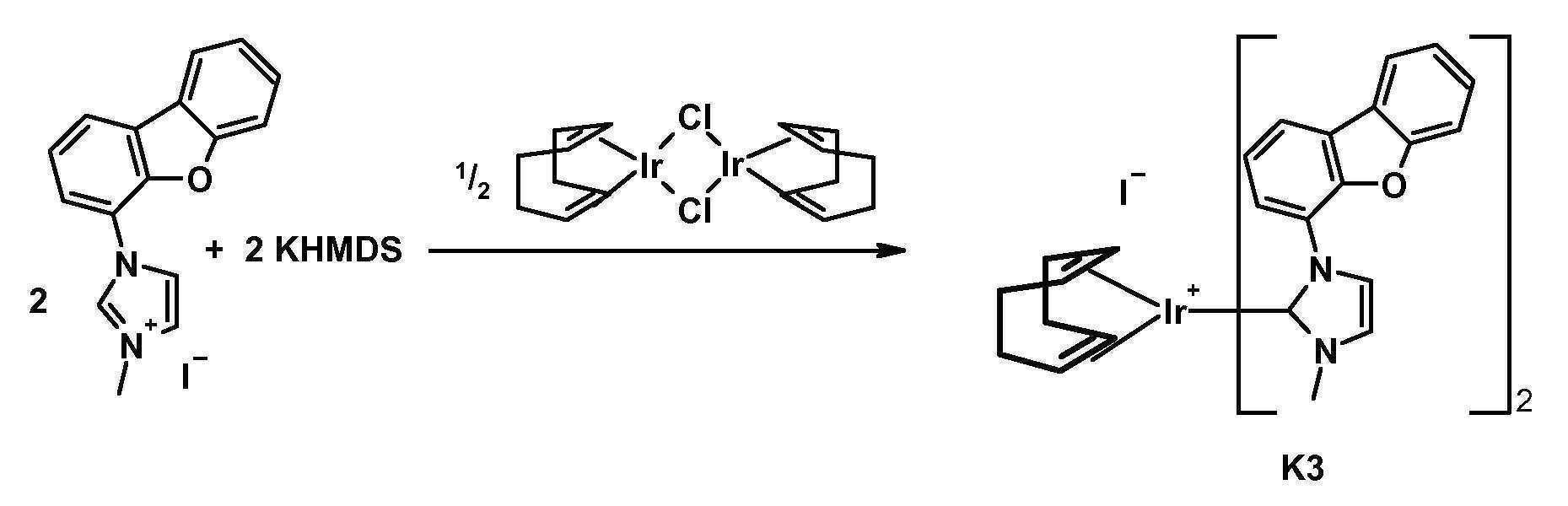
230 ㎖의 무수 톨루엔 중의 10.4 g(27.6 mmol)의 요오드화3-디벤조푸란-4-일-1-메틸-3H-이미다졸-1-륨을 실온에서 점진적으로 55.3 ㎖의 칼륨 비스(트리메틸실릴)아미드 용액(KHMDS, 톨루엔 중의 0.5M, 27.6 mmol)과 혼합하고, 1 시간 동안 교반한다. 그후, 230 ㎖의 무수 톨루엔 중의 4.68 g(6.9 mmol)의 μ-클로로(1,5-시클로옥타디엔)이리듐(I) 이량체의 용액을 적가한다. 반응 혼합물을 밤새 환류 가열한다. 냉각후, 침전물을 여과하고, 소량의 물로 세정하고, 에탄올로 추출한다. 추출물을 건조시켜 6.8 g의 K3(53%)를 오렌지색-적색 분말로서 얻는다.10.4 g (27.6 mmol) of 3-dibenzofuran-4-yl-1-methyl-3H-imidazol-1-ium iodide in 230 ml of anhydrous toluene are gradually added to 55.3 ml of potassium bis(trimethylsilyl) at room temperature. Mix with an amide solution (KHMDS, 0.5M in toluene, 27.6 mmol) and stir for 1 hour. Then, a solution of 4.68 g (6.9 mmol) of μ-chloro(1,5-cyclooctadiene)iridium(I) dimer in 230 ml of anhydrous toluene is added dropwise. The reaction mixture is heated to reflux overnight. After cooling, the precipitate is filtered, washed with a small amount of water, and extracted with ethanol. Dry the extract to give 6.8 g of K3 (53%) as an orange-red powder.
1H NMR (CD2Cl2, 500 MHz): 1 H NMR (CD 2 Cl 2 , 500 MHz):
δ = 1.49 (m, 2H), 1.84 (m, 2H), 2.02 (m, 2H), 2.16 (m, 2H), 3.29 (m, 2H), 4.85 (m, 2H), 6.53 (s, 2H), 6.93 (s, 2H), 7.37 (d, 2H), 7.47-7.62 (m, 8H), 8.14 (d, 2H), 8.25 (d, 2H).δ = 1.49 (m, 2H), 1.84 (m, 2H), 2.02 (m, 2H), 2.16 (m, 2H), 3.29 (m, 2H), 4.85 (m, 2H), 6.53 (s, 2H) , 6.93 (s, 2H), 7.37 (d, 2H), 7.47-7.62 (m, 8H), 8.14 (d, 2H), 8.25 (d, 2H).
착물 Em11:Complex Em11:

Em11은 Em10과 유사하게 합성한다.Em11 is synthesized similarly to Em10.
실시예 9:Example 9:
OLED의 제조 - 다양한 이미터의 비교Fabrication of OLED-Comparison of various emitters
애노드로서 사용한 ITO 기판을 LCD 제조용 시판 세제[Deconex® 20NS 및 25ORGAN-ACID® 중화제]로 우선 세정한 후, 아세톤/이소프로판올 혼합물 중에서 초음파 배쓰내에서 세정한다. 가능한 유기 잔류물을 제거하기 위하여, 기판을 연속 오존 흐름에 오존 오븐내에서 추가의 25 분 동안 노출시킨다. 이러한 처리는 또한 ITO의 정공 주입 성질을 개선시킨다. 그 다음, 플렉스코어(Plexcore)로부터의 정공 주입층 AJ20-1000을 용액으로부터 방적 처리한다.The ITO substrate used as an anode in a commercially available LCD-producing detergents [® Deconex 20NS and 25ORGAN-ACID ® neutralizing agent] to a first washed, then, acetone / isopropanol mixture is washed in an ultrasonic bath. In order to remove possible organic residues, the substrate is exposed to a continuous ozone flow in an ozone oven for an additional 25 minutes. This treatment also improves the hole injection properties of ITO. Then, the hole injection layer AJ20-1000 from Plexcore is spun from the solution.
그후, 하기에 명시된 유기 물질을 증착에 의하여 세정된 기판에 약 10-7-10-9 mbar에서 약 0.5-5 ㎚/min의 속도로 적용한다. 기판에 적용된 정공 도체 및 엑시톤 차단체는 두께가 45 ㎚인 Ir(DPBIC)3이고, 처음 35 ㎚는 MoOx로 도핑 처리하여(CEm 및 fac-Em2를 갖는 다이오드의 경우 10% 및, fac-Em1을 갖는 다이오드의 경우 50%) 전도율을 개선시킨다.Then, the organic material specified below is applied to the substrate cleaned by vapor deposition at a rate of about 0.5-5 nm/min at about 10 -7 -10 -9 mbar. The hole conductor and exciton blocker applied to the substrate is Ir(DPBIC) 3 with a thickness of 45 nm, and the first 35 nm is doped with MoO x (10% for diodes with CEm and fac-Em2, and fac-Em1). In the case of a diode having 50%), it improves the conductivity.
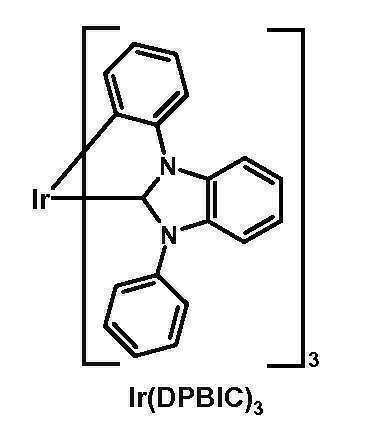
(Ir(DPBIC)3의 제조의 경우, 출원 PCT/EP/04/09269에서의 Ir 착물(7)를 참조한다).(For the production of Ir(DPBIC) 3 , see Ir complex (7) in application PCT/EP/04/09269).
그후, 이미터(CEm의 경우 10%, fac-Em1 및 fac-Em2의 경우 20%) 및 화합물 Ma1(90% 및 80% 각각)의 혼합물을 증착에 의하여 40 ㎚의 두께로 적용하고, 후자의 화합물은 매트릭스 물질로서 작용한다. 그후, 물질 Ma1(fac-Em1의 경우)은 증착에 의하여 5 ㎚의 두께로 적용하거나 또는 Ma5(Em1의 경우 5 ㎚, fac-Em2의 경우 10 ㎚)은 엑시톤 및 정공 차단체로서 적용한다.Then, a mixture of the emitter (10% for CEm, 20% for fac-Em1 and fac-Em2) and the compound Ma1 (90% and 80% respectively) was applied to a thickness of 40 nm by evaporation, and the latter The compound acts as a matrix material. Thereafter, the material Ma1 (for fac-Em1) is applied to a thickness of 5 nm by evaporation, or Ma5 (5 nm for Em1, 10 nm for fac-Em2) is applied as excitons and hole blockers.
Ma1의 합성은 WO2010079051에 기재되어 있으며, Ma5의 합성은 WO2009003898에 기재되어 있다.The synthesis of Ma1 is described in WO2010079051, and the synthesis of Ma5 is described in WO2009003898.
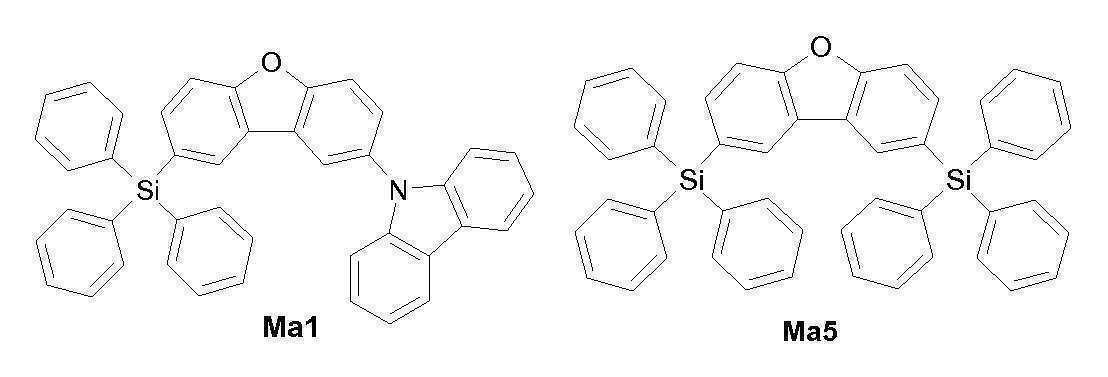
종래 기술의 비교용으로 사용한 이미터는 하기 CEm이다:The emitter used for comparison of the prior art is the following CEm:
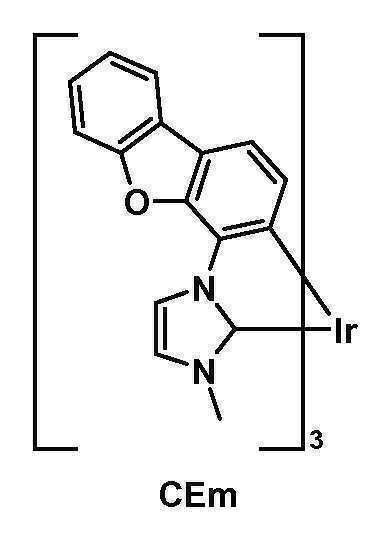
그 다음, 전자 수송체로서 Liq 및 BCP(2,9-디메틸-4,7-디페닐-1,10-페난트롤린)(fac-Em1의 경우 50:50, CEm 및 fac-Em2의 경우 0:100)의 혼합물을 증착에 의하여 fac-Em1의 경우 40 ㎚의 두께로, CEm 및 fac-Em2의 경우 30 ㎚의 두께로, fac-Em1의 경우 1.0 ㎚-두께의 liq 층, CEm 및 fac-Em2의 경우 0.7 ㎚ LiF 층 및 마지막으로 100 ㎚-두께의 Al 전극로서 적용한다. 모든 성분은 불활성 질소 대기 중에서 유리 뚜껑에 접착제로 접착시킨다.Then Liq and BCP (2,9-dimethyl-4,7-diphenyl-1,10-phenanthroline) as electron transporters (50:50 for fac-Em1, 0 for CEm and fac-Em2) :100) was deposited to a thickness of 40 nm for fac-Em1, 30 nm for CEm and fac-Em2, and 1.0 nm-thick liq layer for fac-Em1, CEm and fac- For Em2 we apply as a 0.7 nm LiF layer and finally a 100 nm-thick Al electrode. All components are glued to the glass lid in an inert nitrogen atmosphere.
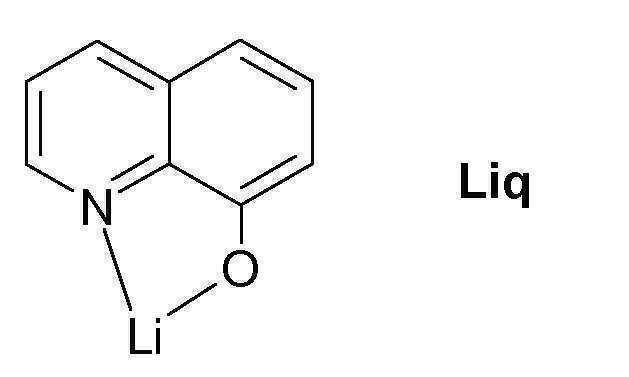
OLED를 특성화하기 위하여, 전기발광 스펙트럼을 상이한 전류 및 전압에서 기록한다. 게다가, 전류-전압 특징은 방출되는 광 출력과 조합하여 측정한다. 광 출력은 측광계를 사용한 보정에 의하여 측광 변수로 전환시킬 수 있다. 다이오드의 수명 t1/2은 휘도가 그의 초기값의 50%로 감소되었을 때 측정한 시간으로 정의한다. 수명 측정은 일정한 전류로 실시한다.To characterize the OLED, electroluminescence spectra are recorded at different currents and voltages. Moreover, the current-voltage characteristic is measured in combination with the emitted light output. The light output can be converted into a photometric variable by calibration using a photometer. The lifetime t 1/2 of a diode is defined as the time measured when the luminance decreases to 50% of its initial value. Life measurement is carried out with a constant current.
전술한 OLED 구조체에서의 각종 이미터의 경우, 하기의 전기광학 데이타를 얻는다:For various emitters in the aforementioned OLED structures, the following electro-optical data are obtained:

실시예 10:Example 10:
매트릭스 물질의 영향(파트 1)Matrix material effects (part 1)
*실시예 9에 기재된 구조를 갖는 발광층을 변경시킨다. MoOx의 도핑 레벨은 50%이다. 이미터 fac-Em1(20%) 및 각종 매트릭스 물질(80%)의 혼합물은 증착에 의하여 20 ㎚의 두께로 적용한다. 각각의 경우에서 사용한 정공/엑시톤 차단체(5 ㎚)는 매트릭스 물질이다. 사용한 전자 도체는 40 ㎚의 두께의 BCP 및 liq의 혼합물(50:50)이다. 사용한 전자 주입기는 liq(1 ㎚)이다. Ma1 이외에, 하기 물질을 사용한다:* The light emitting layer having the structure described in Example 9 was changed. The doping level of MoO x is 50%. A mixture of emitter fac-Em1 (20%) and various matrix materials (80%) was applied by vapor deposition to a thickness of 20 nm. The hole/exciton blocker (5 nm) used in each case is a matrix material. The electron conductor used was a mixture of 40 nm thick BCP and liq (50:50). The electron injector used was liq (1 nm). In addition to Ma1, the following materials are used:
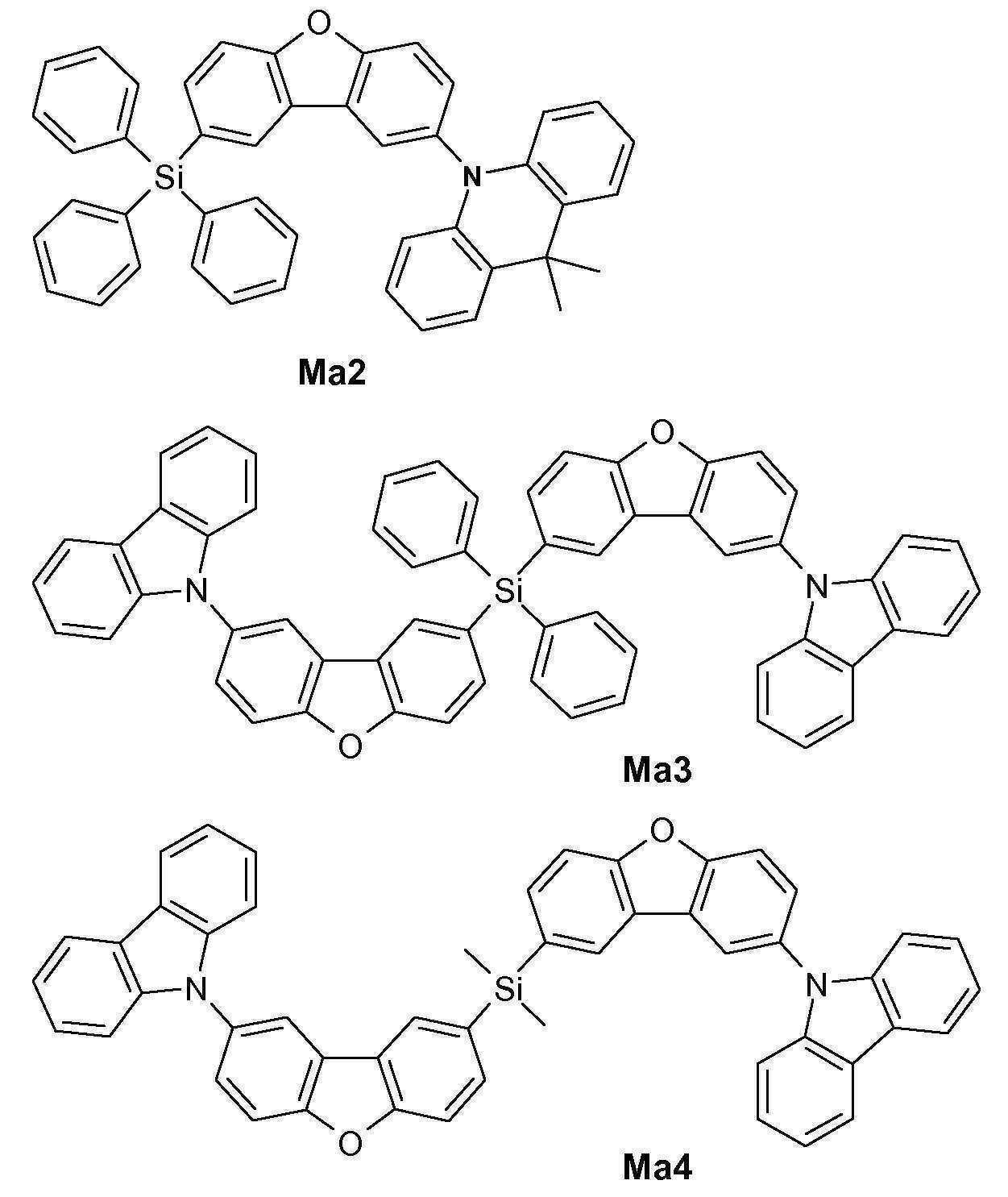
Ma2, Ma3 및 Ma4의 합성은 WO2010079051에 기재되어 있다.The synthesis of Ma2, Ma3 and Ma4 is described in WO2010079051.
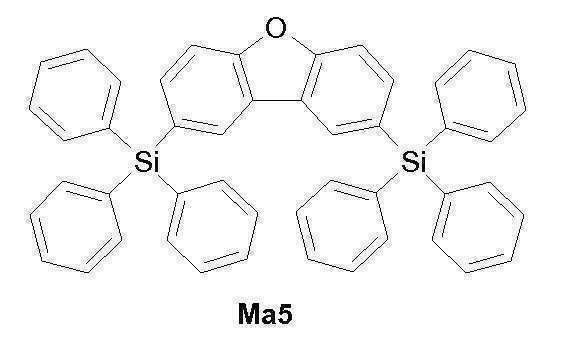
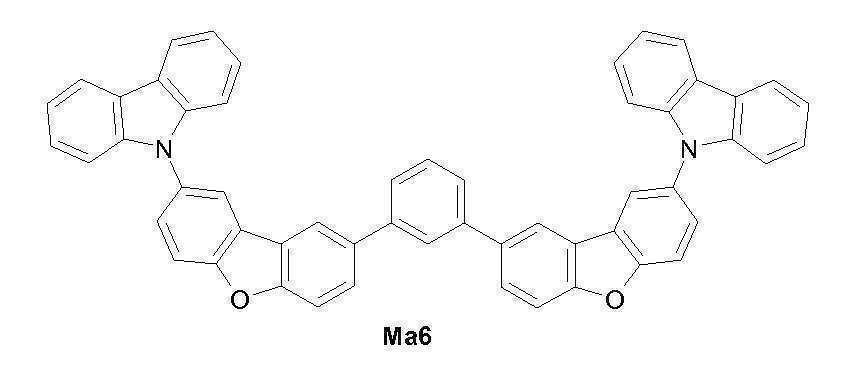
Ma6은 당업자에게 공지된 방법에 의하여 생성될 수 있다. 9-(8-브로모-디벤조푸란-2-일)-9H-카르바졸(WO2010079051 참조)을 THF 중의 n-BuLi 및 2-이소프로폭시-4,4,5,5-테트라메틸-1,3,2-디옥사보롤란과 반응시켜 9-[8-(4,4,5,5-테트라메틸-[1,3,2]디옥사보롤란-2-일)디벤조푸란-2-일]-9H-카르바졸(실시예 18의 단계 1과 유사함)을 생성한 후, 당업자에게 공지된 스즈키(Suzuki) 커플링으로 1,3-디요오도벤젠과 반응시켜 Ma6을 얻는다.Ma6 can be produced by methods known to those skilled in the art. 9-(8-bromo-dibenzofuran-2-yl)-9H-carbazole (see WO2010079051) was added to n-BuLi and 2-isopropoxy-4,4,5,5-tetramethyl-1 in THF 9-[8-(4,4,5,5-tetramethyl-[1,3,2]dioxaborolan-2-yl)dibenzofuran-2 by reacting with ,3,2-dioxaborolane After -yl]-9H-carbazole (similar to step 1 in Example 18) is produced, it is reacted with 1,3-diiodobenzene by Suzuki coupling known to those skilled in the art to obtain Ma6.

Ma7의 합성은 실시예 19에 기재되어 있다.The synthesis of Ma7 is described in Example 19.
전술한 OLED 구조에서의 각종 매트릭스 물질의 경우, 하기 전기광학 데이타(Ma5의 값에 대하여 정규화시킴)를 얻는다:For various matrix materials in the aforementioned OLED structure, the following electro-optical data (normalized to the value of Ma5) are obtained:
*
실시예 10a:Example 10a:
실시예 10에 기재된 구조를 갖는 발광층을 변경시킨다. 사용한 발광층은 fac-Em1(30%) 및 매트릭스(하기 표 참조, 70%)의 혼합물이다. 사용한 정공 도체 층은 40 ㎚의 Ir(DPBIC)3의 층이며, 이의 처음 35 ㎚는 ReO3(5%)로 도핑시킨다. 사용한 정공/엑시톤 차단체는 Ma7의 5 ㎚ 층이다. 사용한 전자 도체는 liq 및 ETM1의 혼합물(50:50, 40 ㎚)이다. 사용한 전자 주입기는 4 ㎚ 두께의 KF이다.The light emitting layer having the structure described in Example 10 was changed. The light emitting layer used was a mixture of fac-Em1 (30%) and a matrix (see table below, 70%). The hole conductor layer used was a layer of 40 nm Ir(DPBIC) 3 , the first 35 nm of which was doped with ReO 3 (5%). The hole/exciton blocker used was a 5 nm layer of Ma7. The electron conductor used was a mixture of liq and ETM1 (50:50, 40 nm). The electron injector used is a 4 nm thick KF.

ETM1은 시판중이다.ETM1 is commercially available.
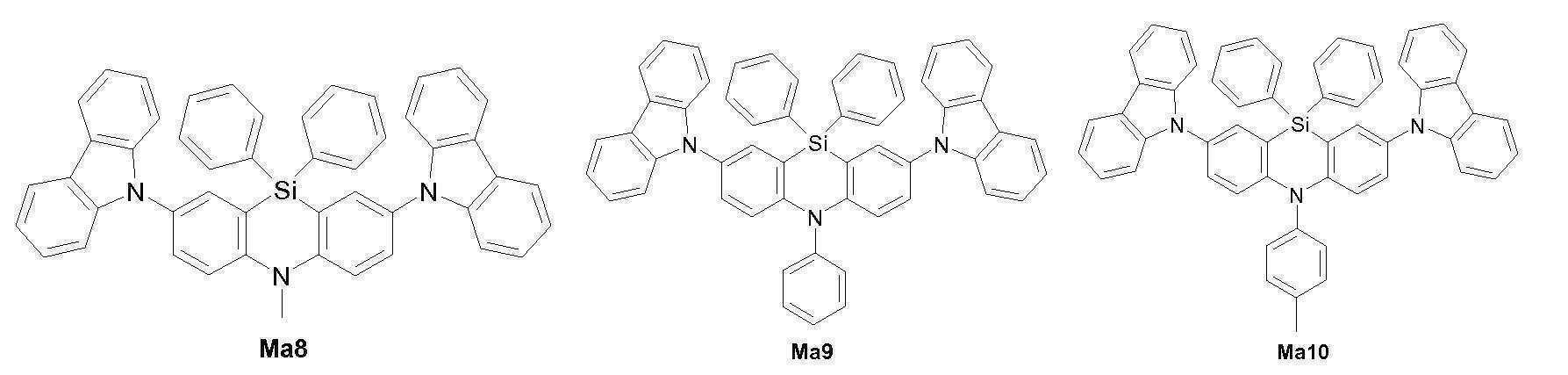
Ma8, Ma9 및 Ma10의 합성은 JP2006083167에 기재되어 있다.The synthesis of Ma8, Ma9 and Ma10 is described in JP2006083167.
전술한 OLED 구조에서의 각종 매트릭스 물질의 경우, 하기의 전기광학 데이타(Ma8의 값에 대하여 정규화시킴)를 얻는다:For various matrix materials in the aforementioned OLED structure, the following electro-optical data (normalized to the value of Ma8) are obtained:

실시예 10bExample 10b
이미터 Em8을 갖는 다이오드는 실시예 10과 유사하게 구조된다. 정공 도체 층은 두께가 40 ㎚이다. Em8은 30%의 레벨로 Ma4로 도핑된다. 사용한 전자 도체 층은 40 ㎚의 두께의 ETM1이다. 사용한 전자 주입기는 KF(2 ㎚)이다.A diode with emitter Em8 is constructed similarly to Example 10. The hole conductor layer has a thickness of 40 nm. Em8 is doped with Ma4 at a level of 30%. The electron conductor layer used was ETM1 with a thickness of 40 nm. The electron injector used was KF (2 nm).
다이오드는 색 좌표 CIE 0.19, 0.37을 나타낸다. 300 cd/㎡에서, 전압은 3.5 V이고, 발광 효율은 11 lm/W이다.The diode has color coordinates CIE 0.19, 0.37. At 300 cd/m2, the voltage is 3.5 V and the luminous efficiency is 11 lm/W.
실시예 10cExample 10c
다이오드는 Ma7에 대하여 실시예 10a와 유사하게 구조된다. 사용한 이미터는 fac-Em1 대신에 Em8이다.The diode is constructed similarly to Example 10a for Ma7. The emitter used is Em8 instead of fac-Em1.
다이오드는 색 좌표 CIE 0.17, 0.31을 나타낸다.The diode has color coordinates CIE 0.17, 0.31.
실시예 10dExample 10d
다이오드는 Ma7에 대하여 실시예 10a와 유사하게 구조된다. 사용한 이미터는 fac-Em1 대신에 Em8이다. 매트릭스는 변경된다. 전술한 OLED 구조에서 각종 매트릭스 물질의 경우 하기의 전기광학 데이타(Ma10의 값에 대하여 정규화시킴)를 얻는다:The diode is constructed similarly to Example 10a for Ma7. The emitter used is Em8 instead of fac-Em1. The matrix is changed. For various matrix materials in the aforementioned OLED structure, the following electro-optical data (normalized to the value of Ma10) are obtained:

실시예 10eExample 10e
다이오드는 실시예 10a와 유사하게 구조된다. 사용한 이미터는 fac-Em1 대신에 매트릭스 Ma4 (80%) 중의 도판트 농도 20%의 fac-Em12이다. 정공/엑시톤 차단체는 10 ㎚의 두께로 사용한다.The diode is structured similarly to Example 10a. The emitter used was fac-Em12 with a dopant concentration of 20% in matrix Ma4 (80%) instead of fac-Em1. The hole/exciton blocker is used with a thickness of 10 nm.
다이오드는 색 좌표 CIE 0.19, 0.36을 나타낸다. 300 cd/㎡에서 전압은 4.0 V이고, 외부 양자 효율은 13%이다.The diode has color coordinates CIE 0.19, 0.36. At 300 cd/m2, the voltage is 4.0 V and the external quantum efficiency is 13%.
실시예 10fExample 10f
다이오드는 실시예 10a와 유사하게 구조된다. 사용한 이미터는 fac-Em1 대신에 매트릭스 Ma4(80%) 중의 도판트 농도 20%의 fac-Em14이다. 정공/엑시톤 차단체는 10 ㎚의 두께로 사용된다.The diode is structured similarly to Example 10a. The emitter used was fac-Em14 with a dopant concentration of 20% in matrix Ma4 (80%) instead of fac-Em1. The hole/exciton blocker is used with a thickness of 10 nm.
다이오드는 색 좌표 CIE 0.20, 0.27을 나타낸다.The diode has color coordinates CIE 0.20, 0.27.
**
*실시예 10g * Example 10g
다이오드는 실시예 10a와 유사하게 구조된다. 기판에 적용된 정공 도체 및 엑시톤 차단체는 두께가 45 ㎚인 Ir(DPBIC)3이고, 처음 35 ㎚는 MoOx(10%)로 도핑시켜 전도율을 개선시킨다. 정공/엑시톤 차단체는 10 ㎚의 두께로 적용한다. 사용한 이미터는 fac-Em1 대신에 매트릭스 Ma4(80%) 중의 도판트 농도 20%의 fac-Em13이다.The diode is structured similarly to Example 10a. The hole conductor and exciton barrier applied to the substrate is Ir(DPBIC) 3 with a thickness of 45 nm, and the first 35 nm is doped with MoO x (10%) to improve the conductivity. The hole/exciton blocker is applied with a thickness of 10 nm. The emitter used was fac-Em13 with a dopant concentration of 20% in matrix Ma4 (80%) instead of fac-Em1.
다이오드는 색 좌표 CIE 0.14, 0.22를 나타낸다. 300 cd/㎡에서, 전압은 3.7 V이다.The diode has color coordinates CIE 0.14 and 0.22. At 300 cd/m2, the voltage is 3.7 V.
실시예 10hExample 10h
다이오드는 실시예 10g와 유사하게 구조된다. 사용한 이미터는 매트릭스 Ma7(80%) 중의 도판트 농도 20%의 fac-Em13이다.The diode is constructed similarly to Example 10g. The emitter used was fac-Em13 with a dopant concentration of 20% in matrix Ma7 (80%).
다이오드는 색 좌표 CIE 0.14, 0.22를 나타낸다. 300 cd/㎡에서 전압은 3.6 V이고, 외부 양자 효율은 16%이다.The diode has color coordinates CIE 0.14 and 0.22. At 300 cd/m2, the voltage is 3.6 V and the external quantum efficiency is 16%.
실시예 11:Example 11:
매트릭스 물질의 영향(파트 2)Matrix material effects (part 2)
실시예 10에 기재된 구조를 갖는 발광층을 변경시킨다. 이미터 fac-Em1(20%) 및 1개 또는 2개의 매트릭스 물질의 혼합물을 증착에 의하여 20 ㎚의 두께로 적용한다. 2개의 매트릭스 물질을 사용할 경우, 2개의 매트릭스 물질을 동일한 비로 사용한다. 각각의 경우에서 사용한 정공/엑시톤 차단체는 Ma1이다.The light emitting layer having the structure described in Example 10 was changed. A mixture of emitter fac-Em1 (20%) and one or two matrix materials is applied by vapor deposition to a thickness of 20 nm. When two matrix materials are used, the two matrix materials are used in the same ratio. The hole/exciton blocker used in each case is Ma1.
하기 전기광학 데이타를 얻는다:The following electro-optical data are obtained:
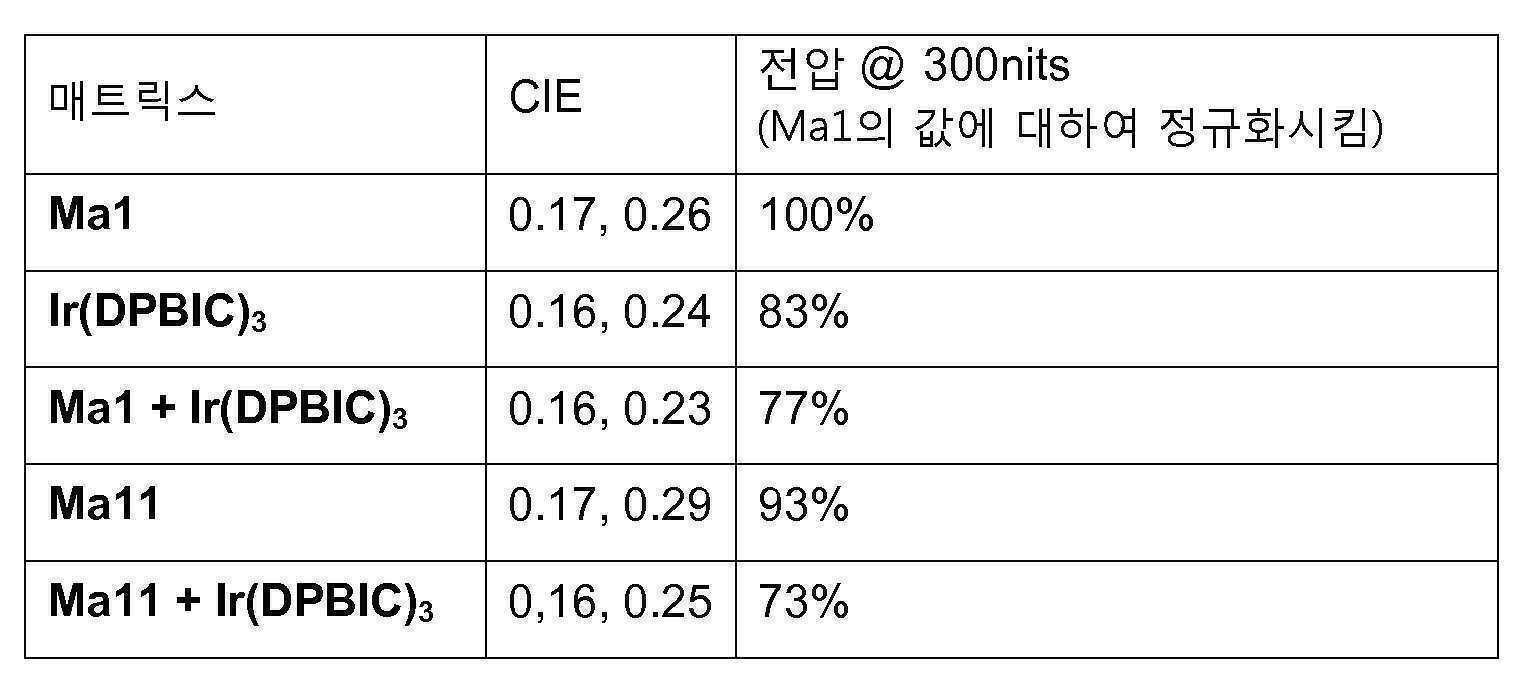
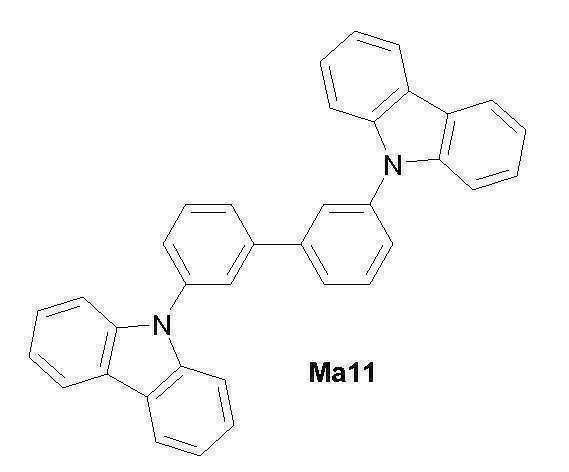
Ma11은 시판중이다.Ma11 is commercially available.
실시예 11a:Example 11a:
실시예 10a에서와 같은 구조. 사용한 발광층은 Ir(DPBIC)3(35%), fac-Em1(30%) 및 매트릭스(35%, 하기 표 참조)의 혼합물이다. 각각의 경우에서 사용한 정공/엑시톤 차단체는 매트릭스 물질이다.Structure as in Example 10a. The light emitting layer used was a mixture of Ir(DPBIC) 3 (35%), fac-Em1 (30%) and a matrix (35%, see table below). The hole/exciton blocker used in each case is a matrix material.
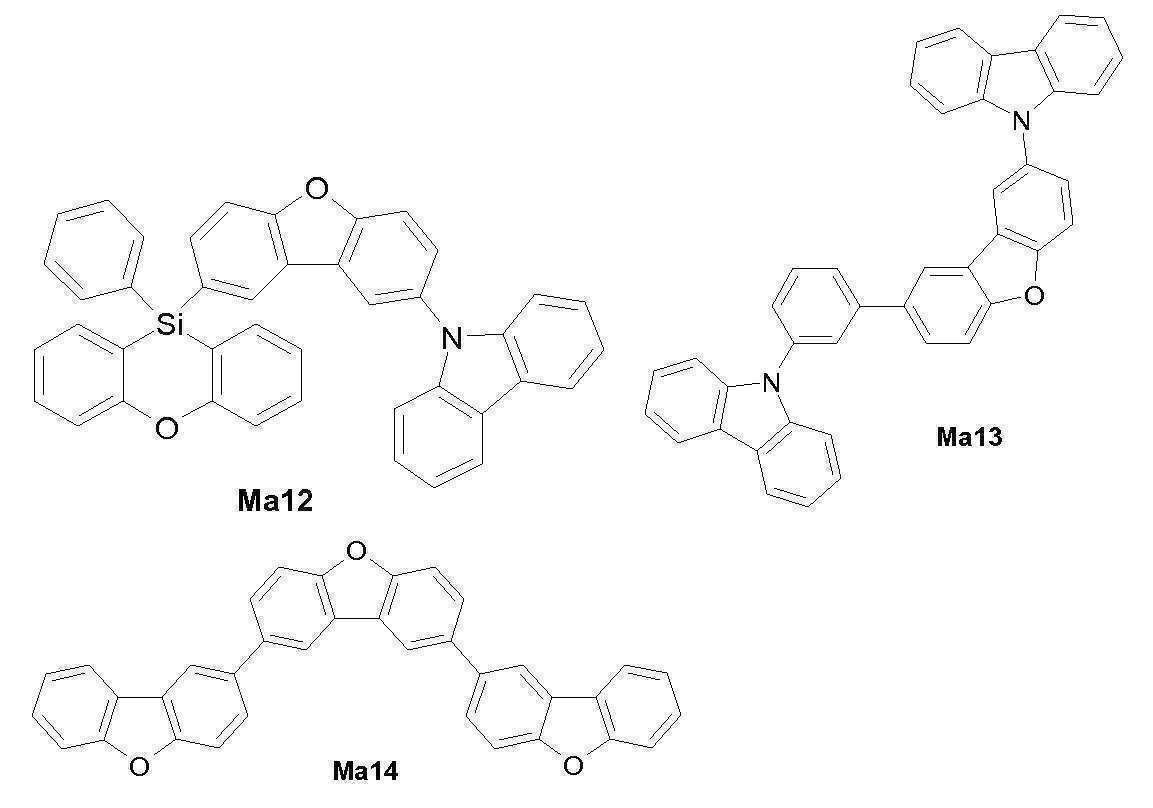
Ma13의 합성은 WO2009008100에 기재되어 있다.The synthesis of Ma13 is described in WO2009008100.
Ma12의 합성은 실시예 20에 기재되어 있으며, Ma14의 합성은 실시예 18에 기재되어 있다. The synthesis of Ma12 is described in Example 20, and the synthesis of Ma14 is described in Example 18.
전술한 OLED 구조에서의 각종 매트릭스 물질의 경우, 하기 전기광학 데이타(Ma9의 값에 대하여 정규화시킴)를 얻는다:For various matrix materials in the aforementioned OLED structure, the following electro-optical data (normalized to the value of Ma9) are obtained:
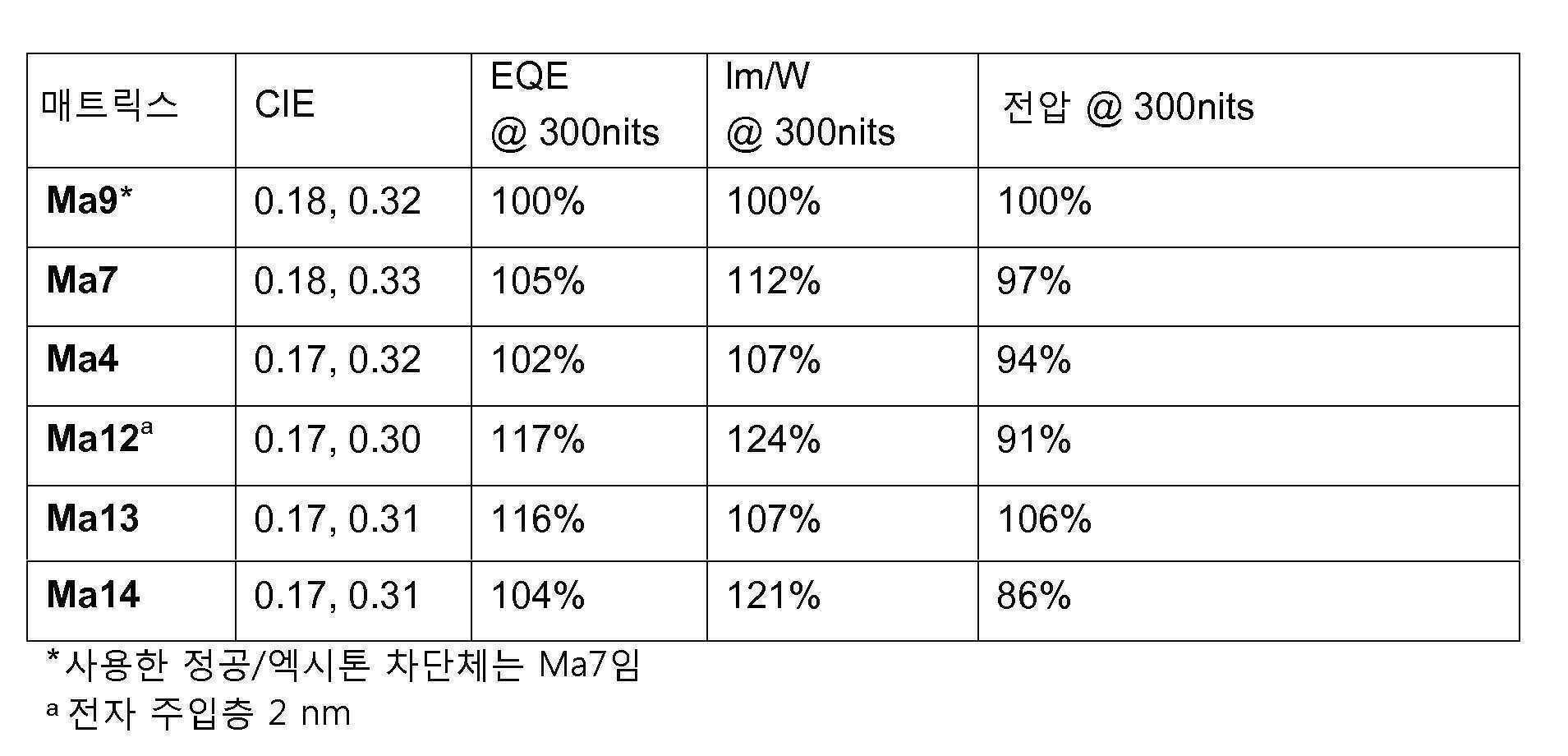
실시예 11bExample 11b
*실시예 10a에서와 같은 구조. 사용한 발광층은 Ir(DPBIC)3(45%), Em8(10%) 및 매트릭스(45%, 하기 표 참조)의 혼합물이다.*Same structure as in Example 10a. The light emitting layer used was a mixture of Ir(DPBIC) 3 (45%), Em8 (10%) and matrix (45%, see table below).
상기 기재된 OLED 구조체에서의 각종 매트릭스 물질의 경우, 하기 전기광학 데이타(Ma9의 값에 대하여 정규화시킴)를 얻었다:For the various matrix materials in the OLED structures described above, the following electro-optical data (normalized to the value of Ma9) were obtained:
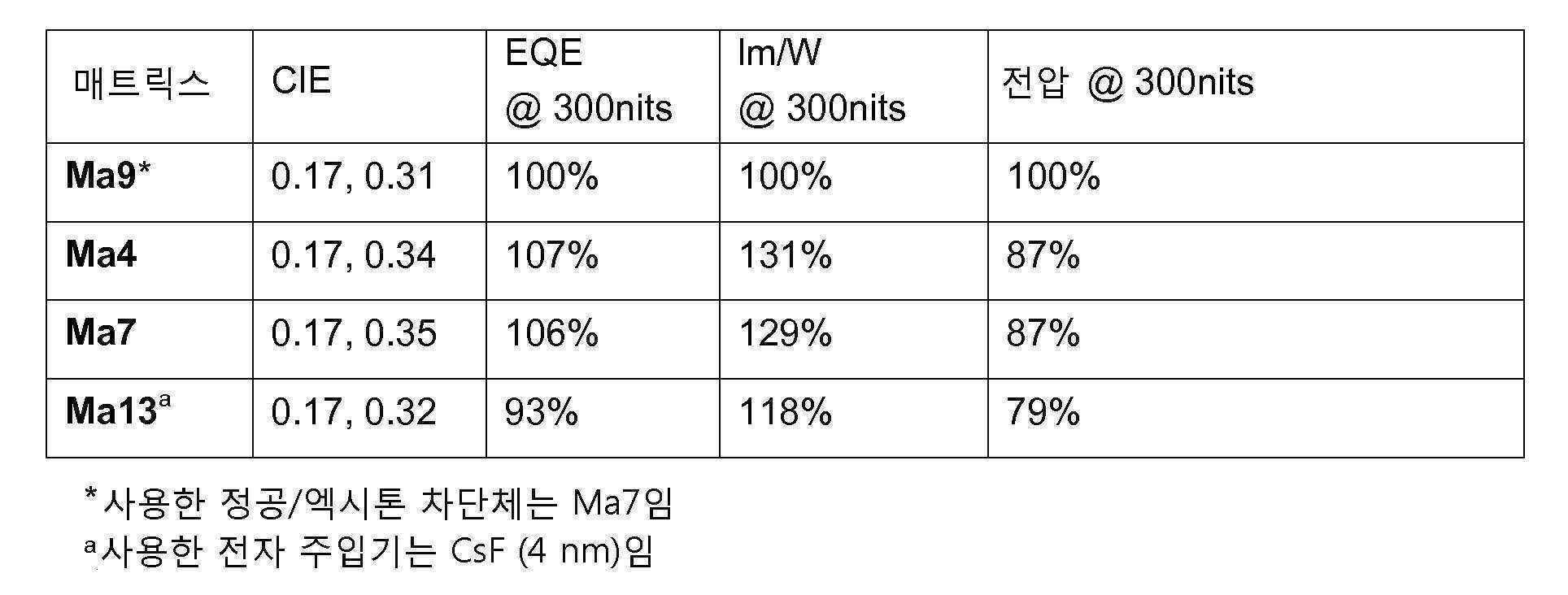
실시예 11cExample 11c
실시예 11a에서와 같은 구조. 기판에 적용된 정공 도체 및 엑시톤 차단체는 40 ㎚의 두께의 Ir(DPBIC)3이며, 처음 35 ㎚는 MoOx(50%)로 도핑시켜 전도율을 개선시킨다. 사용한 발광층은 Ir(DPBIC)3(40%), fac-Em12(20%) 및 Ma4(40%)의 혼합물이다. 사용한 전자 도체 층은 40 ㎚의 두께의 ETM1:Liq(75:25)의 혼합물이다. 사용한 전자 주입기는 KF(2 ㎚)이다.Structure as in Example 11a. The hole conductor and exciton blocker applied to the substrate is Ir(DPBIC) 3 with a thickness of 40 nm, and the first 35 nm is doped with MoO x (50%) to improve the conductivity. The light emitting layer used was a mixture of Ir(DPBIC) 3 (40%), fac-Em12 (20%) and Ma4 (40%). The electron conductor layer used was a mixture of ETM1:Liq (75:25) with a thickness of 40 nm. The electron injector used was KF (2 nm).
다이오드는 색 좌표 CIE 0.20, 0.40을 나타낸다. 300 cd/㎡에서, 전압은 3.0 V이고, 외부 양자 효율은 13%이다.The diode has color coordinates CIE 0.20, 0.40. At 300 cd/m2, the voltage is 3.0 V and the external quantum efficiency is 13%.
실시예 11dExample 11d
실시예 11b에서와 같은 구조. 사용한 발광층은 Ir(DPBIC)3(45%), fac-Em14(10%) 및 Ma4(45%)의 혼합물이다.Structure as in Example 11b. The light emitting layer used was a mixture of Ir(DPBIC) 3 (45%), fac-Em14 (10%) and Ma4 (45%).
다이오드는 색 좌표 CIE 0.26, 0.39를 나타낸다. 300 cd/㎡에서, 전압은 3.0 V이다.The diode has color coordinates CIE 0.26, 0.39. At 300 cd/m2, the voltage is 3.0 V.
실시예 11eExample 11e
다이오드는 실시예 11a와 유사하게 구조된다. 기판에 적용된 정공 도체 및 엑시톤 차단체는 두께가 45 ㎚인 Ir(DPBIC)3이고, 처음 35 ㎚는 MoOx(10%)로 도핑시켜 전도율을 개선시킨다. 사용한 정공/엑시톤 차단체는 Ma7(5 ㎚)이다. 사용한 발광층은 Ir(DPBIC)3(40%), fac-Em13(30%) 및 Ma4(30%)의 혼합물이다.The diode is structured similarly to Example 11a. The hole conductor and exciton barrier applied to the substrate is Ir(DPBIC) 3 with a thickness of 45 nm, and the first 35 nm is doped with MoO x (10%) to improve the conductivity. The hole/exciton blocker used was Ma7 (5 nm). The light emitting layer used was a mixture of Ir(DPBIC) 3 (40%), fac-Em13 (30%) and Ma4 (30%).
다이오드는 색 좌표 CIE 0.15, 0.26을 나타낸다. 300 cd/㎡에서, 전압은 3.4 V이다.The diode has color coordinates CIE 0.15 and 0.26. At 300 cd/m2, the voltage is 3.4 V.
실시예 11fExample 11f
다이오드는 실시예 11a와 유사하게 구조된다. 기판에 적용된 정공 도체 및 엑시톤 차단체는 두께가 45 ㎚인 Ir(DPBIC)3이고, 처음 35 ㎚는 MoOx(10%)로 도핑시켜 전도율을 개선시킨다. 정공/엑시톤 차단체는 10 ㎚의 두께로 적용된다. 사용한 발광층은 Ir(DPBIC)3(40%), fac-Em13(30%) 및 Ma7(30%)의 혼합물이다.The diode is structured similarly to Example 11a. The hole conductor and exciton barrier applied to the substrate is Ir(DPBIC) 3 with a thickness of 45 nm, and the first 35 nm is doped with MoO x (10%) to improve the conductivity. The hole/exciton blocker is applied with a thickness of 10 nm. The light emitting layer used was a mixture of Ir(DPBIC) 3 (40%), fac-Em13 (30%) and Ma7 (30%).
다이오드는 색 좌표 CIE 0.14, 0.25를 나타낸다. 300 cd/㎡에서, 외부 양자 효율은 15%이다.The diode has color coordinates CIE 0.14 and 0.25. At 300 cd/m2, the external quantum efficiency is 15%.
실시예 11gExample 11g
다이오드는 실시예 11a와 유사하게 구조된다. 사용한 발광층은 Ir(DPBIC)3(40%), fac-Em13(30%) 및 Ma15(30%)의 혼합물이다.The diode is structured similarly to Example 11a. The light emitting layer used was a mixture of Ir(DPBIC) 3 (40%), fac-Em13 (30%) and Ma15 (30%).
다이오드는 색 좌표 CIE 0.14, 0.23을 나타낸다. 300 cd/㎡에서, 외부 양자 효율은 17%이다.The diode has color coordinates CIE 0.14 and 0.23. At 300 cd/m2, the external quantum efficiency is 17%.

Ma15의 합성은 WO2010079051에 기재되어 있다.The synthesis of Ma15 is described in WO2010079051.
실시예 11hExample 11h
다이오드는 Ma12의 경우 실시예 11a와 유사하게 구조된다. Ma12 대신에, Ma16(JP2009267255에서의 합성 참조)을 사용한다.The diode is structured similarly to Example 11a in the case of Ma12. Instead of Ma12, Ma16 (see synthesis in JP2009267255) is used.
다이오드는 색 좌표 CIE 0.18, 0.34를 나타내며, 전압은 300 cd/㎡에서 3.3 V이다.The diode has color coordinates CIE 0.18 and 0.34, and the voltage is 3.3 V at 300 cd/m2.

실시예 11i:Example 11i:
백색광 다이오드White light diode
애노드로서 사용한 ITO 기판은 LCD 제조용 시판 세제(Deconex® 20NS, 및 25ORGAN-ACID® 중화제)로 세정한 후, 아세톤/이소프로판올 혼합물 중에서 초음파 배쓰내에서 세정한다. 가능한 유기 잔류물을 제거하기 위하여, 기판을 연속 오존 흐름에 오존 오븐내에서 추가의 25 분 동안 노출시킨다. 이러한 처리는 또한 ITO의 정공 주입 성질을 개선시킨다. 그 다음, 플렉스코어로부터의 정공 주입층 AJ20-1000을 용액으로부터 방적 처리한다.Using ITO as the anode substrate is washed in an ultrasonic bath after washing in a commercially available LCD-producing detergents (Deconex 20NS ®, and 25ORGAN-ACID ® neutralizing agent), acetone / isopropanol mixture. In order to remove possible organic residues, the substrate is exposed to a continuous ozone flow in an ozone oven for an additional 25 minutes. This treatment also improves the hole injection properties of ITO. Then, the hole injection layer AJ20-1000 from the flexcore was spun from the solution.
층상 백색광(실시예 11ia):Layered white light (Example 11ia):
정공 주입층 이후에, 하기 명시한 유기 물질을 세정된 기판에 증착에 의하여 약 0.5-5 ㎚/min의 속도로 약 10-7-10-9 mbar에서 적용한다. 기판에 적용된 정공 도체 및 엑시톤 차단체는 20 ㎚의 두께의 Ir(DPBC)3이고, 우선 10 ㎚를 10% MoOx로 도핑시켜 전도율을 개선시킨다.After the hole injection layer, the organic material specified below is applied to the cleaned substrate by vapor deposition at a rate of about 0.5-5 nm/min at about 10 -7 -10 -9 mbar. The hole conductor and the exciton blocker applied to the substrate is Ir(DPBC) 3 having a thickness of 20 nm, and first, 10 nm is doped with 10% MoO x to improve the conductivity.
그후, 10% 이미터 Red1 및 90%의 화합물 Ma7의 혼합물을 증착에 의하여 6 ㎚의 두께로 적용시키고, 후자의 화합물은 매트릭스 물질로서 작용한다. 추가의 구조체 11ib에서, 전술한 혼합물은 10% 이미터 Red1, 60%의 매트릭스 Ma7 및 30%의 매트릭스 Ir(DPBIC)3의 혼합물로 대체된다.Then, a mixture of 10% emitter Red1 and 90% compound Ma7 was applied by vapor deposition to a thickness of 6 nm, the latter compound acting as a matrix material. In the further structure 11ib, the aforementioned mixture is replaced with a mixture of 10% emitter Red1, 60% matrix Ma7 and 30% matrix Ir(DPBIC) 3 .
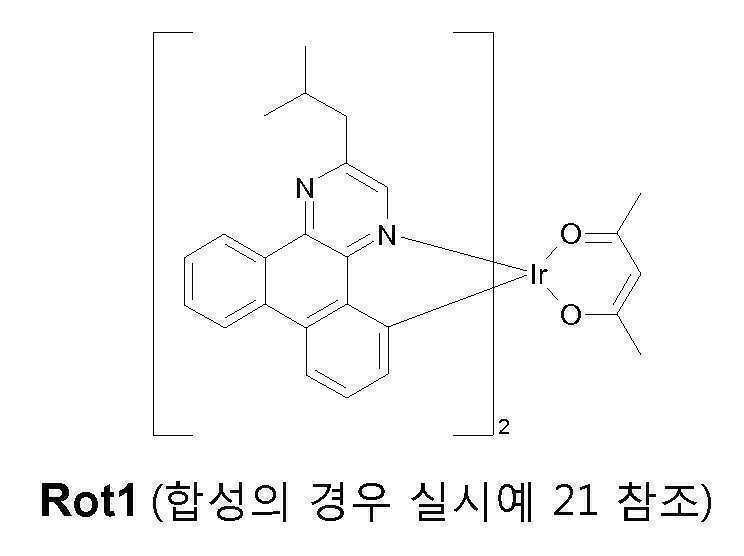
그후, 물질 fac-Em1, Ma7 및 Ir(DPBIC)3의 혼합물을 증착에 의하여 30 ㎚의 층 두께로 적용한다. 혼합비는 40% 이미터 fac-Em1, 30%의 매트릭스 Ma7 및 30%의 2차 매트릭스 Ir(DPBIC)3이다. 그후, 물질 Ma7을 10 ㎚의 층 두께로 정공 및 엑시톤 차단체로서 적용한다. 사용한 차후의 전자 도체 층은 30 ㎚ 층 두께인 Cs2CO3-도핑된 BCP 층이다. 두께 100 ㎚의 알루미늄 캐쏘드는 다이오드를 생성한다.Then, a mixture of materials fac-Em1, Ma7 and Ir(DPBIC) 3 is applied by vapor deposition with a layer thickness of 30 nm. The mixing ratio is 40% emitter fac-Em1, 30% matrix Ma7 and 30% secondary matrix Ir(DPBIC) 3 . Then, the material Ma7 was applied as a hole and exciton blocker with a layer thickness of 10 nm. The subsequent electron conductor layer used is a Cs 2 CO 3 -doped BCP layer with a layer thickness of 30 nm. An aluminum cathode 100 nm thick produces a diode.
모든 부품은 불활성 질소 대기 중에서 유리 뚜껑에 접착제로 접착된다.All parts are glued to the glass lid in an inert nitrogen atmosphere.
적층 백색광(실시예 11ic):Stacked white light (Example 11ic):
정공 주입층 이후에, 하기에 명시한 유기 물질을 증착에 의하여 깨끗한 기판에 약 0.5-5 ㎚/min의 속도로 약 10-7-10-9 mbar에서 적용한다. 기판에 적용된 정공 도체 및 엑시톤 차단체는 20 ㎚의 두께의 Ir(DPBIC)3이고, 처음 10 ㎚를 10% MoOx로 도핑시켜 전도율을 개선시킨다.After the hole injection layer, the organic material specified below is applied to a clean substrate by vapor deposition at a rate of about 0.5-5 nm/min at about 10 -7 -10 -9 mbar. The hole conductor and exciton blocker applied to the substrate is Ir(DPBIC) 3 with a thickness of 20 nm, and the first 10 nm is doped with 10% MoO x to improve the conductivity.
그후, 물질 fac-Em1, Ma1 및 Ir(DPBIC)3의 혼합물을 증착에 의하여 20 ㎚의 두께로 적용한다. 혼합비는 30% 이미터 fac-Em1, 40%의 매트릭스 Ma1 및 30%의 매트릭스 Ir(DPBIC)3이다. 그후, 10 ㎚의 Ma1의 순수한 층을 엑시톤 및 정공 차단체로서 적용한다.Then, a mixture of materials fac-Em1, Ma1 and Ir(DPBIC) 3 is applied by vapor deposition to a thickness of 20 nm. The mixing ratio is 30% emitter fac-Em1, 40% matrix Ma1 and 30% matrix Ir(DPBIC) 3 . Then, a pure layer of 10 nm Ma1 was applied as excitons and hole blockers.
Cs2CO3로 도핑된 20 ㎚의 BCP 및, 10% MoOx로 도핑된 60 ㎚의 Ir(DPBIC)3(90 ㎚의 Ir(DPBIC)3를 갖는 추가의 구조체 11id에서)의 추가의 조합은 전하 생성층으로서 작용한다.A further combination of 20 nm of BCP doped with Cs 2 CO 3 and 60 nm of Ir(DPBIC) 3 (in additional structure 11id with 90 nm of Ir(DPBIC) 3 ) doped with 10% MoO x It acts as a charge generating layer.
그후, 정공 도체 및 엑시톤 차단체로서 Ir(DPBIC)3를 10 ㎚ 두께의 기판에 적용한다. 그후, 물질 Red1, NPD 및 Ma17의 혼합물을 20 ㎚의 두께로 적용한다. 혼합비는 10% 이미터 Red1, 40%의 매트릭스 NPD 및 50%의 2차 매트릭스 Ma17이다. Thereafter, Ir(DPBIC) 3 as a hole conductor and an exciton barrier is applied to a substrate having a thickness of 10 nm. Then, a mixture of materials Red1, NPD and Ma17 is applied to a thickness of 20 nm. The mixing ratio is 10% emitter Red1, 40% matrix NPD and 50% secondary matrix Ma17.

그후, 10 ㎚의 BAlq의 순수한 층을 엑시톤 및 정공 차단체로서 적용한다.Then, a pure layer of 10 nm BAlq was applied as excitons and hole blockers.
사용한 차후의 전자 도체 층은 층 두께가 50 ㎚인 Cs2CO3-도핑된 BCP 층이다. 두께가 100 ㎚인 알루미늄 캐쏘드는 다이오드를 생성한다.The subsequent electron conductor layer used is a Cs 2 CO 3 -doped BCP layer with a layer thickness of 50 nm. An aluminum cathode with a thickness of 100 nm produces a diode.
모든 부품은 불활성 질소 대기 중에서 유리 뚜껑에 접착제로 접착된다.All parts are glued to the glass lid in an inert nitrogen atmosphere.
OLED를 특성화하기 위하여, 전기발광 스펙트럼을 상이한 전류 및 전압에서 기록한다. 게다가, 전류-전압 특징은 방출된 광 출력과 조합하여 측정한다. 광 출력은 측광계를 사용한 보정에 의하여 측광 변수로 전환시킬 수 있다. To characterize the OLED, electroluminescence spectra are recorded at different currents and voltages. In addition, the current-voltage characteristic is measured in combination with the emitted light output. The light output can be converted into a photometric variable by calibration using a photometer.
백색광 OLED의 2종의 작업예의 경우, 하기 전기광학 데이타를 얻는다:For two working examples of white light OLED, the following electro-optical data are obtained:
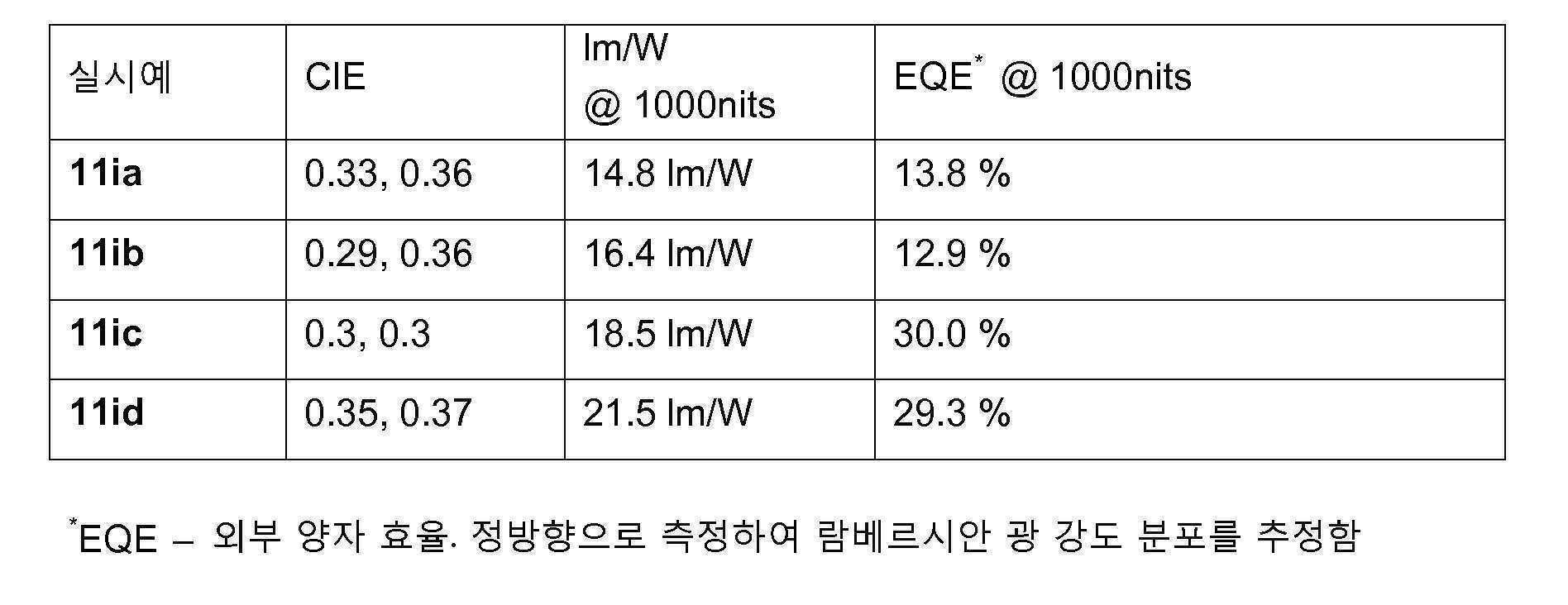
실시예 11j: 액체-처리한 발광층Example 11j: Liquid-treated light emitting layer
애노드로서 사용한 ITO 기판을 우선 LCD 제조용 시판 세제(Deconex® 20NS, 및 25ORGANO-ACID® 중화제)로 세정한 후, 아세톤/이소프로판올 혼합물 중에서 초음파 배쓰내에서 세정한다. 가능한 유기 잔류물을 제거하기 위하여, 기판을 연속 오존 흐름에 오존 오븐내에서 추가의 25 분 동안 노출시킨다. 이러한 처리는 또한 ITO의 정공 주입 성질을 개선시킨다. 그 다음, 플렉스코어로부터의 정공 주입층 AJ20-1000을 용액으로부터 방적 처리한다.After washing with a commercially available detergent (Deconex 20NS ®, and 25ORGANO-ACID ® neutralizing agent) for producing first LCD substrate with the ITO as the anode, and in acetone / isopropanol mixture it is washed in an ultrasonic bath. In order to remove possible organic residues, the substrate is exposed to a continuous ozone flow in an ozone oven for an additional 25 minutes. This treatment also improves the hole injection properties of ITO. Then, the hole injection layer AJ20-1000 from the flexcore is spun from the solution.
그후, 정공 도체 및 엑시톤 차단체 Ir(DPBIC)3를 액체상으로부터 적용한다. 이를 위하여, THF 중의 Ir(DPBIC)3의 용액을 10 mg/㎖의 농도로 분당 5,000 회전(rpm)으로 방적 처리한다(스핀-코팅).Then, a hole conductor and an exciton barrier Ir (DPBIC) 3 are applied from the liquid phase. To this end, a solution of Ir(DPBIC) 3 in THF was spun at a concentration of 10 mg/ml at 5,000 revolutions per minute (rpm) (spin-coating).
그후, 이미터 fac-Em1 및 호스트 Ma7로 이루어진 발광층은 마찬가지로 액체 상으로부터 적용한다. 이를 위하여, 염화메틸렌 중의 fac-Em1 및 Ma7의 용액을 10 mg/㎖의 농도로 5,000 rpm의 속도로 방적 처리한다. 이미터 및 호스트 사이의 고체의 중량비는 30:70이다.Then, the light emitting layer consisting of emitter fac-Em1 and host Ma7 is likewise applied from the liquid phase. To this end, a solution of fac-Em1 and Ma7 in methylene chloride was spun at a concentration of 10 mg/ml at a speed of 5,000 rpm. The weight ratio of solids between emitter and host is 30:70.
그후, 하기에 언급한 유기 물질을 증착에 의하여 감압하에서 약 0.5-5 ㎚/min의 속도로 약 10-7-10-9 mbar에서 이미 존재하는 층에 적용한다.Thereafter, the organic material mentioned below is applied by vapor deposition to the already existing layer at a rate of about 0.5-5 nm/min at about 10 -7 -10 -9 mbar under reduced pressure.
우선, 10 ㎚의 순수한 Ma7을 증착에 의하여 엑시톤 차단체로서 적용한다. 그후, 전자 도체 ETM1:Liq(50:50)를 증착에 의하여 20 ㎚의 층 두께로 적용한다.First, 10 nm of pure Ma7 is applied as an exciton blocker by vapor deposition. Then, the electron conductor ETM1:Liq (50:50) is applied with a layer thickness of 20 nm by evaporation.
그후에 전자 주입기에는 1 ㎚의 CsF이 따르며, 100 ㎚의 알루미늄이 캐쏘드로서 적용된다. 부품은 불활성 질소 대기 중에서 유리 뚜껑에 접착제로 접착되고, 색 좌표 CIE x=0.20, y=0.35를 나타낸다.The electron injector is then followed by 1 nm of CsF, and 100 nm of aluminum is applied as the cathode. The parts are glued to a glass lid in an inert nitrogen atmosphere and show color coordinates CIE x=0.20, y=0.35.
실시예 12: Example 12:
혼합된 전자 도체 층의 영향Influence of mixed electron conductor layers
fac-Em1의 경우 실시예 9에 기재된 구조체를 갖는 전자 수송층을 변경시킨다. 하기의 전기광학 데이타를 얻는다:In the case of fac-Em1, the electron transport layer having the structure described in Example 9 was changed. The following electro-optical data are obtained:
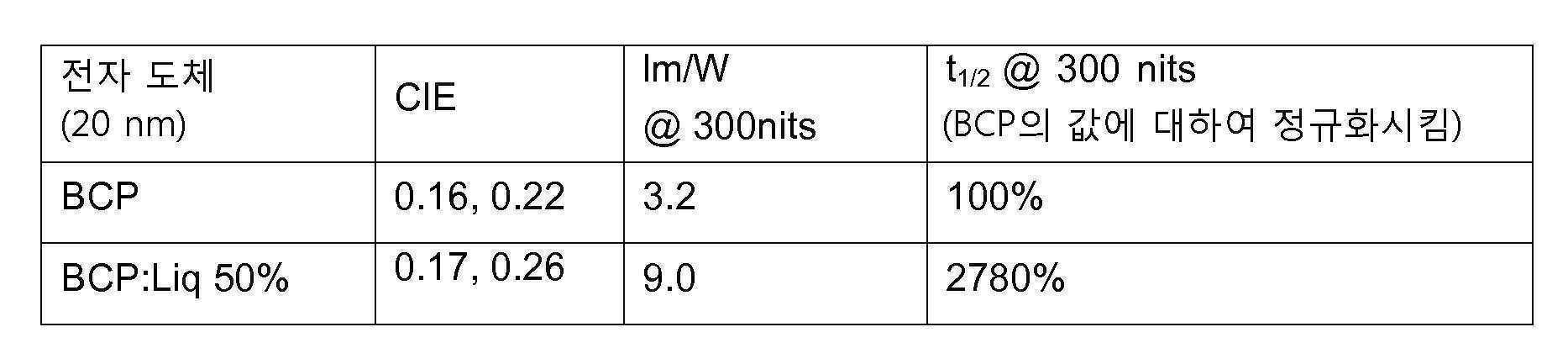
실시예 13:Example 13:
이미터 Em12:Emitter Em12:
2,3-비스-(N-4'-메틸페닐아미노)피라진2,3-bis-(N-4'-methylphenylamino)pyrazine
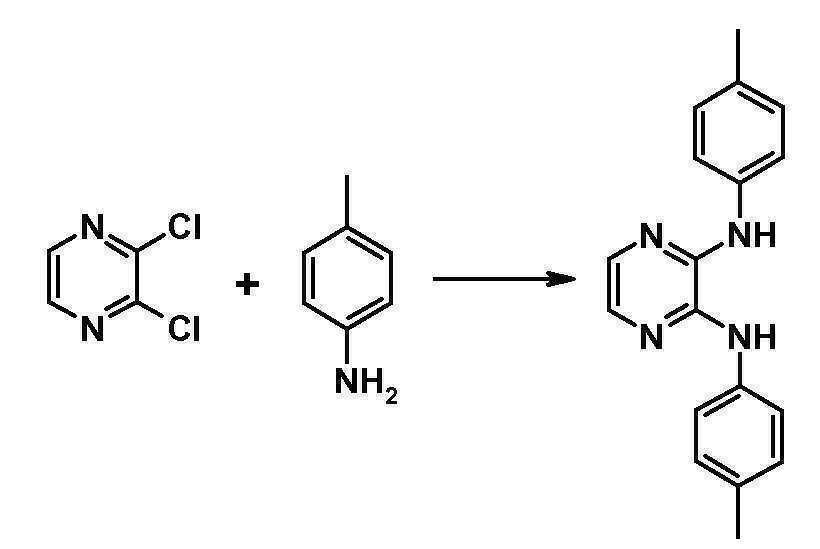
p-톨루이딘(21.2 g, 198 mmol) 중의 2,3-디클로로피라진(13.4 g, 90 mmol)의 혼합물을 110℃에서 밤새 교반한다. 실온으로 냉각시킨 후, 혼합물을 디클로로메탄(200 ㎖)에서 취하고, 25% 수산화나트륨 용액과 함께 진탕시켜 추출한다. 합한 유기상을 황산나트륨상에서 건조시키고, 무수 상태로 농축시킨다. 잔류물을 석유 에테르와 함께 교반하고, 흡인으로 여과하고, 시클로헥산으로 세정한다. 수율: 15.7 g(60%).A mixture of 2,3-dichloropyrazine (13.4 g, 90 mmol) in p-toluidine (21.2 g, 198 mmol) is stirred at 110° C. overnight. After cooling to room temperature, the mixture is taken up in dichloromethane (200 mL) and extracted by shaking with 25% sodium hydroxide solution. The combined organic phases are dried over sodium sulfate and concentrated to anhydrous. The residue is stirred with petroleum ether, filtered by suction and washed with cyclohexane. Yield: 15.7 g (60%).
1H NMR (CD2Cl2, 500 MHz): δ = 2.30 (s, 6H), 6.24 (br s, 2H), 7.10 (d, 4H), 7.18 (d, 4H), 7.67 (s, 2H). 1 H NMR (CD 2 Cl 2 , 500 MHz): δ = 2.30 (s, 6H), 6.24 (br s, 2H), 7.10 (d, 4H), 7.18 (d, 4H), 7.67 (s, 2H) .
2-에톡시-1,3-비스(4'-메틸페닐)피라지노이미다졸린2-ethoxy-1,3-bis(4'-methylphenyl)pyrazinoimidazoline
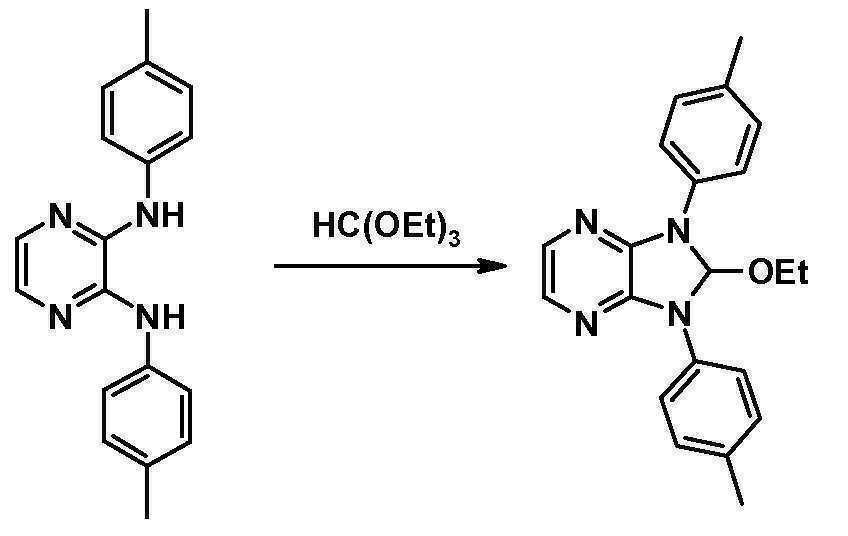
트리에틸 오르토포르메이트(65 ㎖) 중의 2,3-비스(N-4'-메틸페닐아미노)피라진(4.0 g, 14 mmol)의 혼합물을 75℃에서 밤새 교반한다. 실온으로 냉각시킨 후, 혼합물을 여과하고, 여과액을 무수 상태로 농축시킨다. 잔류물을 메틸 tert-부틸 에테르로부터 재결정시킨다. 수율: 3.3 g(70%).A mixture of 2,3-bis(N-4'-methylphenylamino)pyrazine (4.0 g, 14 mmol) in triethyl orthoformate (65 ml) is stirred at 75° C. overnight. After cooling to room temperature, the mixture is filtered and the filtrate is concentrated to dryness. The residue is recrystallized from methyl tert-butyl ether. Yield: 3.3 g (70%).
1H NMR (CD2Cl2, 500 MHz): δ = 0.99 (t, 3H), 2.32 (s, 6H), 3.24 (q, 2H), 7.16 (s, 1H), 7.21 (d, 4H), 7.42 (s, 2H), 7.85 (d, 4H). 1 H NMR (CD 2 Cl 2 , 500 MHz): δ = 0.99 (t, 3H), 2.32 (s, 6H), 3.24 (q, 2H), 7.16 (s, 1H), 7.21 (d, 4H), 7.42 (s, 2H), 7.85 (d, 4H).
착물 fac-Em12:Complex fac-Em12:

o-크실렌(60 ㎖) 중의 2-에톡시-1,3-비스(4'-메틸페닐)피라지노이미다졸린 (3.5 g, 10 mmol)의 용액을 3Å 분자체(6 g) 및 클로로(1,5-시클로옥타디엔)이리듐(I) 이량체(672 mg, 1.0 mmol)와 혼합한다. 혼합물을 115℃에서 밤새 교반한다. 80℃로 냉각시킨 후, 잔류물을 흡인으로 여과하고, 디클로로메탄으로 세정한다. 합한 여과액을 무수 상태로 농축시키고, 잔류물을 따뜻한 이소프로판올로 세정한다. 미정제 생성물을 컬럼 크로마토그래피(실리카 겔, 톨루엔→디클로로메탄)로 정제한다. 수율: 0.8 g(37%).A solution of 2-ethoxy-1,3-bis(4'-methylphenyl)pyrazinoimidazoline (3.5 g, 10 mmol) in o-xylene (60 ml) was added to a 3Å molecular sieve (6 g) and chloro (1 ,5-cyclooctadiene)iridium(I) dimer (672 mg, 1.0 mmol) and mixed. The mixture is stirred at 115° C. overnight. After cooling to 80° C., the residue is filtered with suction and washed with dichloromethane. The combined filtrate is concentrated to dryness and the residue is washed with warm isopropanol. The crude product is purified by column chromatography (silica gel, toluene→dichloromethane). Yield: 0.8 g (37%).
1H NMR (CD2Cl2, 500 MHz): δ = 1.85 (s, 9H), 2.06 (s, 9H), 6.44 (s, 3H), 6.91 (d, 3H), 7.97 (d, 3H), 8.27 (d, 3H), 8.56 (d, 3H). 비-시클로메탈레이트화 톨릴 고리 중 12개의 양성자는 방향족 계의 회전으로 인하여 실온에서 방향족 부위에서의 매우 넓은 전개로서만 식별 가능하다. 1 H NMR (CD 2 Cl 2 , 500 MHz): δ = 1.85 (s, 9H), 2.06 (s, 9H), 6.44 (s, 3H), 6.91 (d, 3H), 7.97 (d, 3H), 8.27 (d, 3H), 8.56 (d, 3H). Twelve protons in the non-cyclometalated tolyl ring are only identifiable as a very wide spread at the aromatic site at room temperature due to the rotation of the aromatic system.
광발광 (PMMA 필름 중의 2%):Photoluminescence (2% in PMMA film):
λmax=485 ㎚, CIE: (0.18;0.36), QY=85%λ max =485 nm, CIE: (0.18;0.36), QY=85%
실시예 14:Example 14:
이미터 Em13:Emitter Em13:
피라진 화합물(a)Pyrazine compound (a)

에탄올(1.45 ℓ) 중의 3,3,5,5-테트라메틸시클로펜탄-1,2-디온(합성의 경우 문헌[T. Laitalainen, Finn. Chem. Lett. 1982, 10]을 참조함)(30.5 g, 188 mmol) 및 에틸렌디아민(15.9 ㎖, 235 mmol)의 혼합물을 환류하에 밤새 교반한다. 45℃로 냉각시킨 후, 산화망간(IV)(36.0 g, 414 mmol) 및 수산화칼륨(11.6 g, 207 mmol)을 첨가하고, 혼합물을 환류하에 5 시간 동안 교반한다. 70℃로 냉각시킨 후, 혼합물을 여과하고, 여과액을 10% 염산으로 실온에서 중화시킨다. 현탁액을 여과하고, 여과액을 무수 상태로 농축시킨다. 잔류물을 디클로로메탄을 사용하는 실리카 겔로 컬럼 여과한다. 수율: 22.7 g(69%).3,3,5,5-tetramethylcyclopentane-1,2-dione in ethanol (1.45 L) (for synthesis see T. Laitalainen, Finn. Chem. Lett. 1982, 10) (30.5 g, 188 mmol) and ethylenediamine (15.9 mL, 235 mmol) were stirred under reflux overnight. After cooling to 45° C., manganese (IV) oxide (36.0 g, 414 mmol) and potassium hydroxide (11.6 g, 207 mmol) are added, and the mixture is stirred under reflux for 5 hours. After cooling to 70° C., the mixture is filtered and the filtrate is neutralized at room temperature with 10% hydrochloric acid. The suspension is filtered and the filtrate is concentrated to dryness. The residue is column filtered through silica gel using dichloromethane. Yield: 22.7 g (69%).
1H NMR (CD2Cl2, 500 MHz): δ = 1.33 (s, 12H), 1.98 (s, 2H), 8.30 (s, 2H). 1 H NMR (CD 2 Cl 2 , 500 MHz): δ = 1.33 (s, 12H), 1.98 (s, 2H), 8.30 (s, 2H).
피라진 화합물(b)Pyrazine compound (b)

피라진 화합물(a)(18.1 g, 98 mmol) 및 물(750 ㎖)의 혼합물을 퍼옥소모노황산칼륨[옥손(Oxone), 144 g, 234 mmol)과 혼합하고, 50℃에서 밤새 교반한다. 수성상을 디클로로메탄으로 추출하고, 물로 2회 세정하고, 황산나트륨상에서 건조시키고, 무수 상태로 농축시킨다. 수율: 17.0 g(84%).A mixture of pyrazine compound (a) (18.1 g, 98 mmol) and water (750 ml) was mixed with potassium peroxomonosulfate [Oxone, 144 g, 234 mmol), and stirred at 50° C. overnight. The aqueous phase is extracted with dichloromethane, washed twice with water, dried over sodium sulfate and concentrated to anhydrous. Yield: 17.0 g (84%).
1H NMR (CD2Cl2, 500 MHz): δ = 1.51 (s, 12H), 1.97 (s, 2H), 7.78 (s, 2H). 1 H NMR (CD 2 Cl 2 , 500 MHz): δ = 1.51 (s, 12H), 1.97 (s, 2H), 7.78 (s, 2H).
피라진 화합물(c)Pyrazine compound (c)
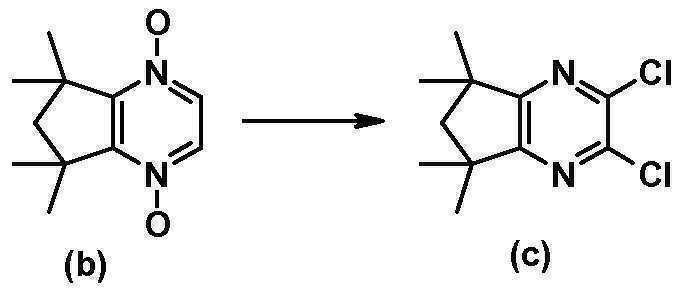
염화포스포릴(325 ㎖) 중의 피라진 화합물(b)(18.3 g, 83 mmol)의 혼합물을 환류하에 밤새 교반한다. 실온으로 냉각시킨 후, 용액을 빙수물(5 ℓ) 및 디클로로메탄(1.5 ℓ)의 혼합물에 조심스럽게 적가한다. 진한 수산화나트륨 용액으로 중화시킨 후, 유기상을 제거하고, 물로 3회 세정하고, 황산나트륨상에서 건조시키고, 무수 상태로 농축시킨다. 이는 생성물(약 80%) 및 일염소화 부산물(약 20%)의 혼합물을 제공하며, 이는 추가로 워크업 없이 사용한다. 순수한 생성물은 석유 에테르 중에서 교반하여 얻을 수 있다. 총 수율: 19.2 g(94%).A mixture of pyrazine compound (b) (18.3 g, 83 mmol) in phosphoryl chloride (325 mL) was stirred under reflux overnight. After cooling to room temperature, the solution is carefully added dropwise to a mixture of ice water (5 L) and dichloromethane (1.5 L). After neutralization with concentrated sodium hydroxide solution, the organic phase is removed, washed three times with water, dried over sodium sulfate, and concentrated to anhydrous. This gives a mixture of the product (about 80%) and the monochlorination by-product (about 20%), which is used without further work-up. The pure product can be obtained by stirring in petroleum ether. Total yield: 19.2 g (94%).
1H NMR (CD2Cl2, 500 MHz): δ = 1.29 (s, 12H), 1.99 (s, 2H). 1 H NMR (CD 2 Cl 2 , 500 MHz): δ = 1.29 (s, 12H), 1.99 (s, 2H).
피라진 화합물(d)Pyrazine compound (d)
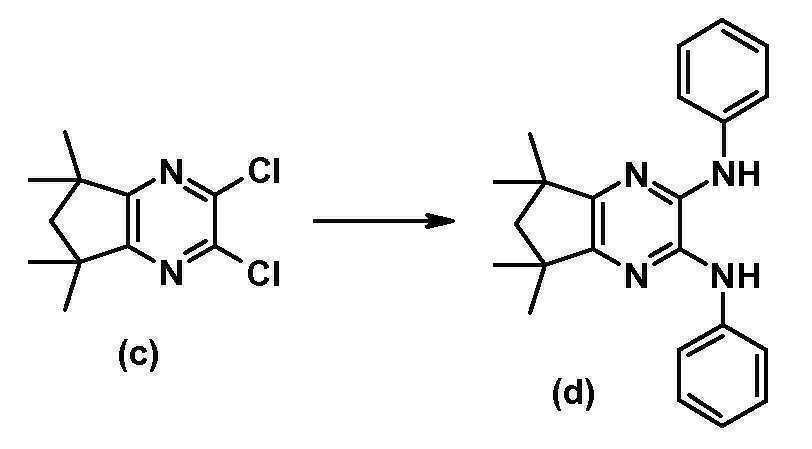
o-크실렌(65 ㎖) 중의 피라진 화합물(c)(5.5 g, 22 mmol) 및 아닐린(24.6 ㎖, 270 mmol)의 혼합물을 150℃에서 밤새 교반한다. 실온으로 냉각시킨 후, 침전물을 흡인으로 여과하고, 톨루엔으로 세정한다. 합한 여과액을 실리카 겔의 존재하에서 무수 상태로 농축시킨다. 잔류물을 시클로헥산 및 에틸 아세테이트의 혼합물을 사용하는 실리카 겔을 통하여 여과하고, 여과액을 무수 상태로 농축시킨다. 수율: 6.6 g(81%).A mixture of pyrazine compound (c) (5.5 g, 22 mmol) and aniline (24.6 mL, 270 mmol) in o-xylene (65 ml) is stirred at 150° C. overnight. After cooling to room temperature, the precipitate is filtered by suction and washed with toluene. The combined filtrate is concentrated to anhydrous in the presence of silica gel. The residue was filtered through silica gel using a mixture of cyclohexane and ethyl acetate, and the filtrate was concentrated to anhydrous. Yield: 6.6 g (81%).
1H NMR (CD2Cl2, 500 MHz): δ = 1.28 (s, 12H), 1.95 (s, 2H), 6.25 (br s, 2H), 6.90-6.95 (m, 2H), 7.21-7.27 (m, 8H). 1 H NMR (CD 2 Cl 2 , 500 MHz): δ = 1.28 (s, 12H), 1.95 (s, 2H), 6.25 (br s, 2H), 6.90-6.95 (m, 2H), 7.21-7.27 ( m, 8H).
피라진 화합물(e)Pyrazine compound (e)
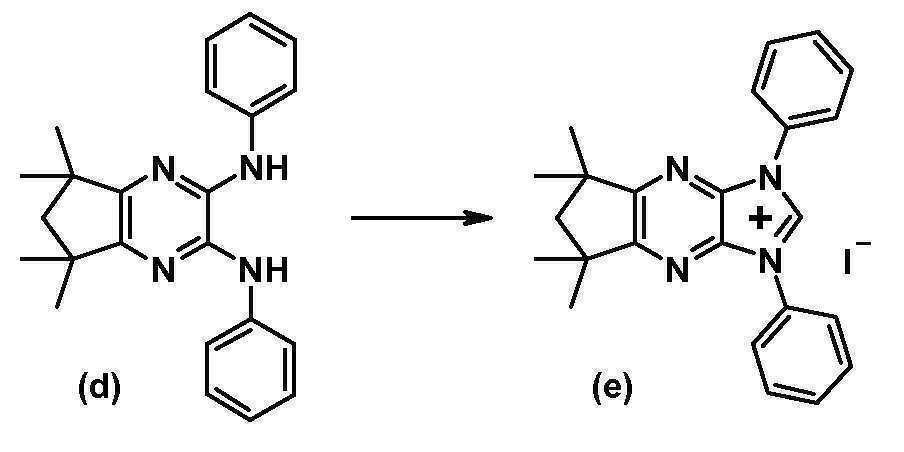
트리에틸 오르토포르메이트(3.5 ㎖) 중의 피라진 화합물(d)(0.50 g, 0.7 mmol)의 혼합물을 요오드화암모늄(0.31 g, 2.1 mmol)과 혼합하고, 85℃에서 2 시간 동안 교반한다. 실온으로 냉각시킨 후, 고체를 흡인으로 여과하고, 트리에틸 오르토포르메이트, 저온 에탄올 및 n-헵탄으로 세정하고, 진공 건조 캐비넷에서 65℃에서 건조시킨다. 수율: 0.16 g(46%).A mixture of pyrazine compound (d) (0.50 g, 0.7 mmol) in triethyl orthoformate (3.5 ml) is mixed with ammonium iodide (0.31 g, 2.1 mmol) and stirred at 85° C. for 2 hours. After cooling to room temperature, the solid is filtered with suction, washed with triethyl orthoformate, cold ethanol and n-heptane, and dried at 65° C. in a vacuum drying cabinet. Yield: 0.16 g (46%).
1H NMR (d6-DMSO, 500 MHz): δ = 1.41 (s, 12H), 2.19 (s, 2H), 7.74 (dd, 2H), 7.82 (dd, 4H), 8.01 (d, 4H), 10.98 (s, 1H). 1 H NMR (d 6 -DMSO, 500 MHz): δ = 1.41 (s, 12H), 2.19 (s, 2H), 7.74 (dd, 2H), 7.82 (dd, 4H), 8.01 (d, 4H), 10.98 (s, 1H).
착물 fac-Em13:Complex fac-Em13:
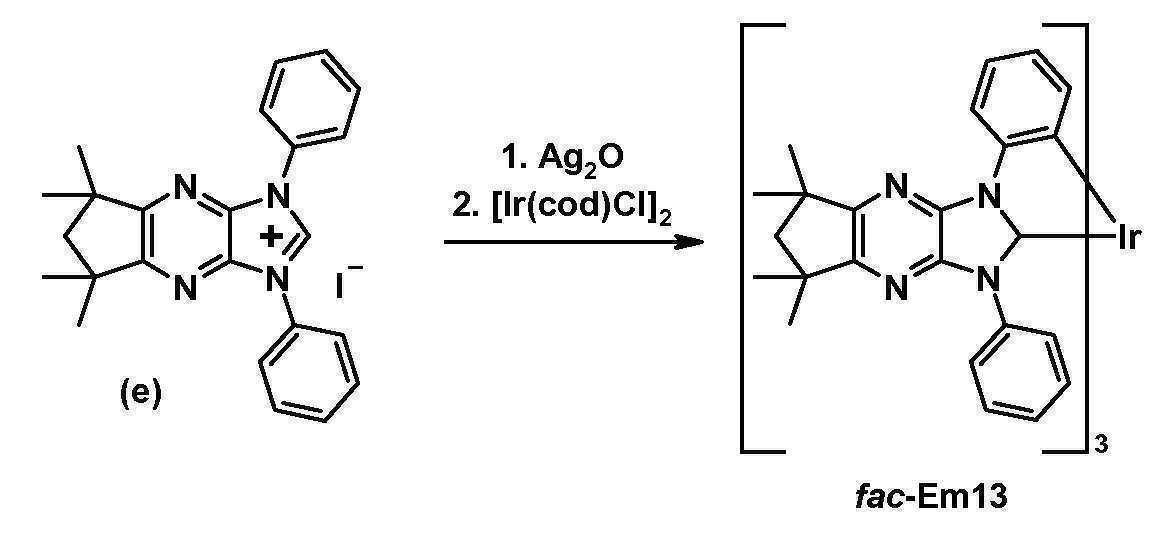
디옥산(60 ㎖) 중의 피라진 화합물(e)(1.1 g, 2.1 mmol)의 현탁액을 4Å 분자체(11 g) 및 산화은(I)(0.5 g, 2.1 mmol)과 혼합하고, 실온에서 밤새 교반한다. 그후, o-크실렌(75 ㎖) 중의 클로로(1,5-시클로옥타디엔)이리듐(I) 이량체(142 mg, 0.2 mmol)의 용액을 첨가한다. 혼합물을 밤새 환류 교반한다. 80℃로 냉각시킨 후, 잔류물을 흡인으로 여과한다. 여과액을 회전 증발기상에서 약 60 ㎖의 부피로 농축시키고, 밤새 정치시킨다. 침전물을 여과하고, 톨루엔 및 n-헥산으로 세정하고, 진공 건조 캐비넷에서 85℃에서 건조시킨다. 수율: 0.3 g(57%).A suspension of pyrazine compound (e) (1.1 g, 2.1 mmol) in dioxane (60 ml) is mixed with a 4Å molecular sieve (11 g) and silver (I) oxide (0.5 g, 2.1 mmol) and stirred at room temperature overnight. . Then, a solution of chloro(1,5-cyclooctadiene)iridium(I) dimer (142 mg, 0.2 mmol) in o-xylene (75 ml) is added. The mixture is stirred at reflux overnight. After cooling to 80° C., the residue is filtered with suction. The filtrate was concentrated on a rotary evaporator to a volume of about 60 ml and allowed to stand overnight. The precipitate was filtered, washed with toluene and n-hexane, and dried at 85° C. in a vacuum drying cabinet. Yield: 0.3 g (57%).
1H NMR (CD2Cl2, 500 MHz): δ = 1.15 (s, 9H), 1.35 (s, 9H), 1.46 (s, 9H), 1.59 (s, 9H), 2.11 (mc, 6H), 6.67 (d, 3H), 6.73 (dd, 3H), 6.79 (dd, 3H), 7.14 (dd, 3H), 8.86 (d, 3H). 비-시클로메탈레이트화 페닐 고리의 15개의 양성자 중 12개는 방향족 계의 회전으로 인하여 실온에서 방향족 부위에서의 매우 넓은 전개로서만 식별 가능하다. 1 H NMR (CD 2 Cl 2 , 500 MHz): δ = 1.15 (s, 9H), 1.35 (s, 9H), 1.46 (s, 9H), 1.59 (s, 9H), 2.11 (m c , 6H) , 6.67 (d, 3H), 6.73 (dd, 3H), 6.79 (dd, 3H), 7.14 (dd, 3H), 8.86 (d, 3H). Twelve of the fifteen protons of the non-cyclometalated phenyl ring are identifiable only as a very broad development in the aromatic site at room temperature due to the rotation of the aromatic system.
광발광 (PMMA 필름 중의 2%): Photoluminescence (2% in PMMA film):
λmax=474 ㎚, CIE: (0.14;0.24), QY=91%λ max =474 nm, CIE: (0.14;0.24), QY=91%
실시예 15:Example 15:
이미터 Em14:Emitter Em14:
2,3-비스(N-4'-플루오로페닐아미노)피라진2,3-bis(N-4'-fluorophenylamino)pyrazine

o-크실렌(100 ㎖) 중의 2,3-디클로로피라진(8.6 g, 58 mmol) 및 4-플루오로아닐린(66.3 g, 148 mmol)의 혼합물을 130℃에서 밤새 및 140℃에서 4 시간 동안 교반한다. 실온으로 냉각시킨 후, 혼합물을 무수 상태로 농축시키고, 잔류물을 디클로로메탄(300 ㎖), 물(100 ㎖) 및 암모니아(물 중의 25%, 100 ㎖) 중에서 취한다. 유기상을 제거하고, 물로 2회 세정하고, 황산나트륨상에서 건조시키고, 무수 상태로 농축시킨다. 잔류물을 석유 에테르와 함께 교반하고, 흡인으로 여과하고, 메틸 tert-부틸 에테르로 세정한다. 수율: 12.7 g(73%).A mixture of 2,3-dichloropyrazine (8.6 g, 58 mmol) and 4-fluoroaniline (66.3 g, 148 mmol) in o-xylene (100 mL) is stirred at 130° C. overnight and at 140° C. for 4 hours. . After cooling to room temperature, the mixture is concentrated to dryness and the residue is taken up in dichloromethane (300 ml), water (100 ml) and ammonia (25% in water, 100 ml). The organic phase is removed, washed twice with water, dried over sodium sulfate and concentrated to anhydrous. The residue is stirred with petroleum ether, filtered with suction and washed with methyl tert-butyl ether. Yield: 12.7 g (73%).
1H NMR (CD2Cl2, 500 MHz): δ = 6.30 (br s, 2H), 7.03 (dd, 4H), 7.31 (dd, 4H), 7.72 (s, 2H). 1 H NMR (CD 2 Cl 2 , 500 MHz): δ = 6.30 (br s, 2H), 7.03 (dd, 4H), 7.31 (dd, 4H), 7.72 (s, 2H).
2-에톡시-1,3-비스(4'-플루오로페닐)피라지노이미다졸린2-ethoxy-1,3-bis(4'-fluorophenyl)pyrazinoimidazoline
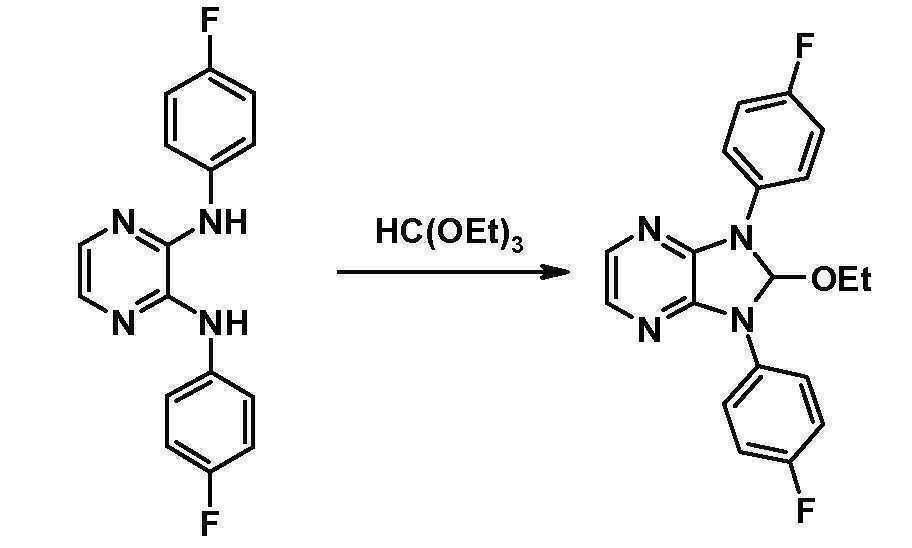
트리에틸 오르토포르메이트(36 ㎖) 중의 2,3-비스(N-4'-플루오로페닐아미노)피라진(1.2 g, 4 mmol)의 혼합물을 황산나트륨(4.7 g) 및 5Å 분자체(4.7 g)와 혼합하고, 100℃에서 24 시간 동안 교반한다. 실온으로 냉각시킨 후, 혼합물을 황산나트륨 및 탈지면을 통하여 여과하고, 메틸 tert-부틸 에테르로 세정한다. 합한 여과액을 무수 상태로 농축시킨다. 잔류물을 n-펜탄과 함께 교반하고, 흡인으로 여과한다. 수율: 0.6 g(42%).A mixture of 2,3-bis(N-4'-fluorophenylamino)pyrazine (1.2 g, 4 mmol) in triethyl orthoformate (36 ml) was prepared with sodium sulfate (4.7 g) and 5Å molecular sieve (4.7 g). And stirred at 100° C. for 24 hours. After cooling to room temperature, the mixture is filtered through sodium sulfate and cotton wool and washed with methyl tert-butyl ether. The combined filtrate is concentrated to dryness. The residue is stirred with n-pentane and filtered by suction. Yield: 0.6 g (42%).
1H NMR (CD2Cl2, 500 MHz): δ = 1.01 (t, 3H), 3.26 (q, 2H), 7.08-7.16 (m, 5H), 7.46 (s, 2H), 7.98 (dd, 4H). 1 H NMR (CD 2 Cl 2 , 500 MHz): δ = 1.01 (t, 3H), 3.26 (q, 2H), 7.08-7.16 (m, 5H), 7.46 (s, 2H), 7.98 (dd, 4H) ).
착물 fac-Em14:Complex fac-Em14:

o-크실렌(60 ㎖) 중의 2-에톡시-1,3-비스(4'-플루오로페닐)피라지노이미다졸린(560 mg, 1.60 mmol)의 용액을 황산나트륨(4.7 g), 5Å 분자체(4.7 g) 및 클로로(1,5-시클로옥타디엔)이리듐(I) 이량체(107 mg, 0.16 mmol)와 혼합한다. 혼합물을 110℃에서 밤새 교반한다. 다시 클로로(1,5-시클로옥타디엔)이리듐(I) 이량체(107 mg, 0.16 mmol)를 첨가한 후, 혼합물을 110℃에서 5 시간 동안 교반한다. 80℃로 냉각시킨 후, 잔류물을 흡인으로 여과하고, 디클로로메탄으로 세정한다. 합한 여과액을 무수 상태로 농축시키고, 잔류물을 컬럼 크로마토그래피(실리카 겔, 클로로포름→톨루엔)로 정제한다. 수율: 133 mg (19%).A solution of 2-ethoxy-1,3-bis(4'-fluorophenyl)pyrazinoimidazoline (560 mg, 1.60 mmol) in o-xylene (60 ml) was prepared with sodium sulfate (4.7 g), 5Å molecular sieve (4.7 g) and chloro (1,5-cyclooctadiene) iridium (I) dimer (107 mg, 0.16 mmol) are mixed. The mixture is stirred at 110° C. overnight. After adding chloro (1,5-cyclooctadiene) iridium (I) dimer (107 mg, 0.16 mmol) again, the mixture was stirred at 110° C. for 5 hours. After cooling to 80° C., the residue is filtered with suction and washed with dichloromethane. The combined filtrate was concentrated to dryness, and the residue was purified by column chromatography (silica gel, chloroform→toluene). Yield: 133 mg (19%).
1H NMR (CD2Cl2, 500 MHz): δ = 6.30 (dd, 3H), 6.84 (ddd, 3H), 8.09 (d, 3H), 8.36 (d, 3H), 8.71 (dd, 3H). 비-시클로메탈레이트화 4-플루오로페닐 고리 중 12개의 양성자는 방향족 계의 회전으로 인하여 실온에서 방향족 부위에서의 매우 넓은 전개로서만 식별 가능하다. 1 H NMR (CD 2 Cl 2 , 500 MHz): δ = 6.30 (dd, 3H), 6.84 (ddd, 3H), 8.09 (d, 3H), 8.36 (d, 3H), 8.71 (dd, 3H). Twelve protons in the non-cyclometalated 4-fluorophenyl ring are only identifiable as a very broad evolution in the aromatic site at room temperature due to the rotation of the aromatic system.
광발광 (PMMA 필름 중의 2%): Photoluminescence (2% in PMMA film):
λmax=458 ㎚, CIE: (0.17;0.17), QY=58%λ max =458 nm, CIE: (0.17;0.17), QY=58%
실시예 16:Example 16:
**
**
*이미터 Em15 * Emitter Em15
2-에톡시-1,3-디페닐-2,3-디히드로-1H-이미다조[4,5-b]피라진2-ethoxy-1,3-diphenyl-2,3-dihydro-1H-imidazo[4,5-b]pyrazine
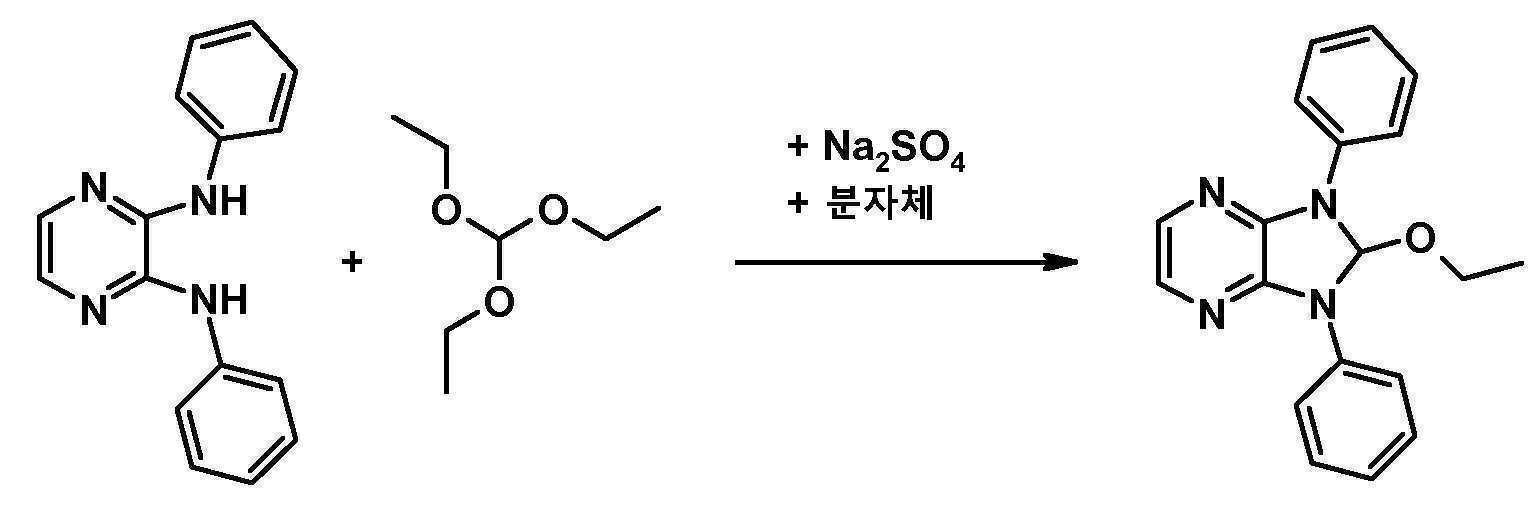
15.30 g(58.3 mmol)의 2,3-비스(N-페닐아미노)피라진, 68.00 g의 황산나트륨 및 68.00 g의 분자체(4A)를 270 ㎖의 트리에틸 오르토포르메이트 중에서 45 시간 동안 90℃로 가열한다. 냉각후, 고체를 여과하고, 메틸 tert-부틸 에테르로 세정한다. 여과액으로부터 용매를 감압하에서 제거한다. 얻은 적갈색 오일을 반복적으로 소량의 n-헵탄과 함께 교반하고, 다시 감압하에서 건조시킨다. 잔류물을 컬럼 크로마토그래피(실리카 겔, 용출제: 4/1 시클로헥산/아세톤)로 정제한다. 이는 11.39 g(61%)의 2-에톡시-1,3-디페닐-2,3-디히드로-1H-이미다조[4,5-b]피라진을 생성한다.15.30 g (58.3 mmol) of 2,3-bis(N-phenylamino)pyrazine, 68.00 g of sodium sulfate and 68.00 g of molecular sieve (4A) were heated to 90° C. for 45 hours in 270 ml of triethyl orthoformate. do. After cooling, the solid is filtered and washed with methyl tert-butyl ether. The solvent is removed from the filtrate under reduced pressure. The reddish brown oil obtained was repeatedly stirred with a small amount of n-heptane, and dried again under reduced pressure. The residue was purified by column chromatography (silica gel, eluent: 4/1 cyclohexane/acetone). This gives 11.39 g (61%) of 2-ethoxy-1,3-diphenyl-2,3-dihydro-1H-imidazo[4,5-b]pyrazine.
1H NMR (DMSO-D6, 500 MHz): δ = 0.88 (t, 3H), 3.17 (q, 2H), 7.16-7.20 (m, 2H), 7.45-7.48 (m, 4H), 7.52 (s, 2H), 7.76 (s, 1H), 8.04-8.06 (m, 4H). 1 H NMR (DMSO-D 6 , 500 MHz): δ = 0.88 (t, 3H), 3.17 (q, 2H), 7.16-7.20 (m, 2H), 7.45-7.48 (m, 4H), 7.52 (s , 2H), 7.76 (s, 1H), 8.04-8.06 (m, 4H).
착물 Em15Complex em15

1.85 g(4.90 mmol)의 디클로로(1,5-시클로옥타디엔)백금(II)을 실온에서 60 ㎖의 부타논 중의 1.85 g(5.82 mmol)의 2-에톡시-1,3-디페닐-2,3-디히드로-1H-이미다조[4,5-b]피라진의 용액에 첨가한다. 현탁액을 환류하에 4 시간 동안 가열한다. 그후, 1.64 g(7.84 mmol)의 은(I) 아세틸아세토네이트를 실온에서 첨가한다. 그후, 혼합물을 환류하에 밤새 가열한다. 냉각후, 현탁액을 여과한다. 여과액으로부터 용매를 감압하에 제거하고, 컬럼 크로마토그래피(실리카 겔, 용출제: 염화메틸렌)로 정제한다. 이는 0.24 g의 Em15(9%)를 생성한다.1.85 g (4.90 mmol) of dichloro (1,5-cyclooctadiene) platinum (II) in 60 ml of butanone at room temperature 1.85 g (5.82 mmol) of 2-ethoxy-1,3-diphenyl-2 To a solution of ,3-dihydro-1H-imidazo[4,5-b]pyrazine. The suspension is heated under reflux for 4 hours. Then, 1.64 g (7.84 mmol) of silver(I) acetylacetonate are added at room temperature. Thereafter, the mixture is heated under reflux overnight. After cooling, the suspension is filtered. The solvent was removed from the filtrate under reduced pressure, and purified by column chromatography (silica gel, eluent: methylene chloride). This produces 0.24 g of Em15 (9%).
1H NMR (CD2Cl2, 500 MHz): δ =1.36 (s, 3H), 2.02 (s, 3H), 5.36 (s, 1H), 7.07 (dt, 1H), 7.17 (dt, 1H), 7.57-7.65 (m, 5H), 7.81 (dd, 1H), 8.20 (dd, 1H), 8.30 (d, 1H), 8.43 (d, 1H). 1 H NMR (CD 2 Cl 2 , 500 MHz): δ =1.36 (s, 3H), 2.02 (s, 3H), 5.36 (s, 1H), 7.07 (dt, 1H), 7.17 (dt, 1H), 7.57-7.65 (m, 5H), 7.81 (dd, 1H), 8.20 (dd, 1H), 8.30 (d, 1H), 8.43 (d, 1H).
광발광 (PMMA 필름 중의 2%):Photoluminescence (2% in PMMA film):
λmax=484 ㎚, CIE: (0.22;0.34)λ max =484 nm, CIE: (0.22;0.34)
실시예 17:Example 17:
이미터 Em16Emitter Em16
착물 K4Complex K4
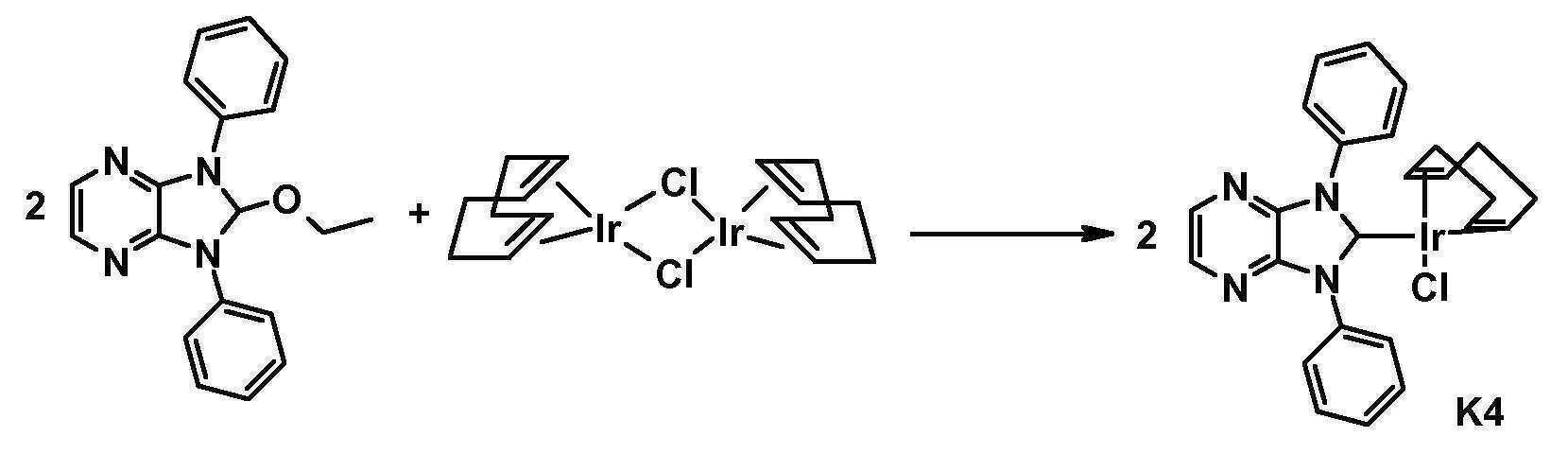
50 ㎖의 무수 톨루엔 중의 0.63 g(0.94 mmol)의 염화비스(1,5-시클로옥타디엔)디이리듐(I)의 용액을 실온에서 30 ㎖의 무수 톨루엔 중의 0.60 g(1.88 mmol)의 2-에톡시-1,3-디페닐-2,3-디히드로-1H-이미다조[4,5-b]피라진의 용액에 적가한다. 혼합물을 60℃에서 30 분 동안 그리고 90℃에서 24 시간 동안 교반한다. 냉각후, 용매를 감압하에 제거하고, 잔류물을 컬럼 크로마토그래피(실리카 겔, 용출제: 100/1 염화메틸렌/메탄올)로 정제한다. 이는 0.85 g(75%)의 K4를 생성한다.A solution of 0.63 g (0.94 mmol) of bis(1,5-cyclooctadiene)diiridium(I) chloride in 50 ml of anhydrous toluene was added to 0.60 g (1.88 mmol) of 2- in 30 ml of anhydrous toluene at room temperature. It is added dropwise to a solution of oxy-1,3-diphenyl-2,3-dihydro-1H-imidazo[4,5-b]pyrazine. The mixture is stirred at 60° C. for 30 minutes and at 90° C. for 24 hours. After cooling, the solvent was removed under reduced pressure, and the residue was purified by column chromatography (silica gel, eluent: 100/1 methylene chloride/methanol). This produces 0.85 g (75%) of K4.
1H NMR (CD2Cl2, 500 MHz): δ = 1.32-1.38 (m, 2H), 1.44-1.52 (m, 2H), 1.53-1.59 (m, 2H), 1.73-1.81 (m, 2H), 2.55-2.59 (m, 2H), 4.60-4.62 (m, 2H), 7.58-7.65 (m, 6H), 8.13-8.15 (m, 4H), 8.29 (s, 2H). 1 H NMR (CD 2 Cl 2 , 500 MHz): δ = 1.32-1.38 (m, 2H), 1.44-1.52 (m, 2H), 1.53-1.59 (m, 2H), 1.73-1.81 (m, 2H) , 2.55-2.59 (m, 2H), 4.60-4.62 (m, 2H), 7.58-7.65 (m, 6H), 8.13-8.15 (m, 4H), 8.29 (s, 2H).
착물 Em16:Complex Em16:
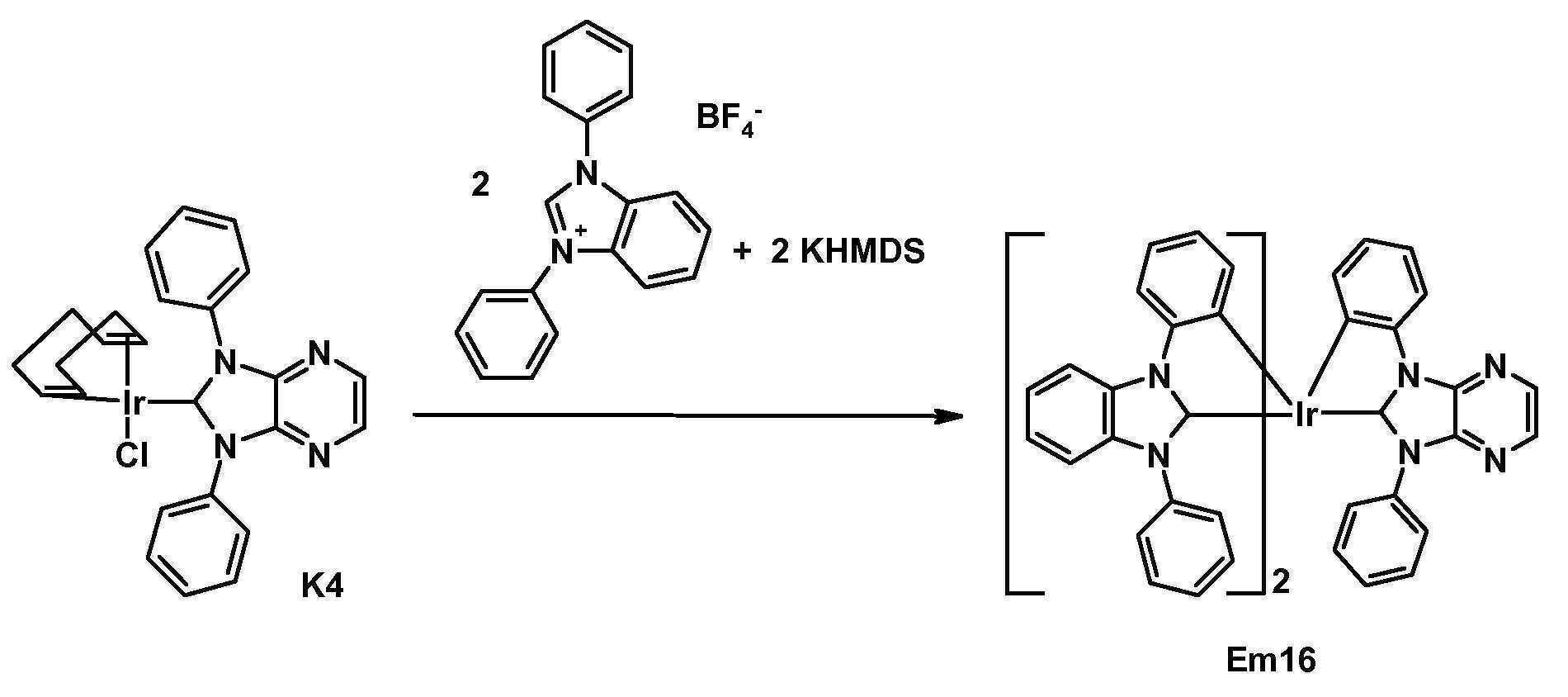
30 ㎖의 무수 톨루엔 중의 0.75 g(2.09 mmol)의 N,N'-디페닐벤즈이미다졸륨 테트라플루오로보레이트(WO2005/019373과 유사한 합성)를 0℃에서 4.20 ㎖(2.10 mmol)의 0.5 몰 톨루엔성 칼륨 헥사메틸디실릴아미드(KHMDS) 용액과 혼합한다. 혼합물을 실온으로 해동되도록 하고, 1 시간 동안 교반한다. 그후, 150 ㎖의 무수 톨루엔 중의 0.61 g(0.99 mmol)의 K4의 용액을 적가하고, 혼합물을 추가의 30 분 동안 교반한다. 그후, 혼합물을 1 시간 동안 환류 가열한다. 냉각후, 반응 혼합물을 여과한다. 여과액으로부터 용매를 감압하에 제거하고, 컬럼 크로마토그래피(실리카 겔, 용출제: 시클로헥산/아세톤=4/1)로 정제한다. 이는 0.30 g의 Em16(30% 수율)을 생성한다.0.75 g (2.09 mmol) of N,N'-diphenylbenzimidazolium tetrafluoroborate (synthesis similar to WO2005/019373) in 30 ml of anhydrous toluene was added 4.20 ml (2.10 mmol) of 0.5 mol toluene at 0° C. St. potassium hexamethyldisilylamide (KHMDS) is mixed with a solution. The mixture is allowed to thaw to room temperature and stirred for 1 hour. Then, a solution of 0.61 g (0.99 mmol) of K4 in 150 ml of anhydrous toluene is added dropwise and the mixture is stirred for an additional 30 minutes. Thereafter, the mixture is heated to reflux for 1 hour. After cooling, the reaction mixture is filtered. The solvent was removed from the filtrate under reduced pressure, and purified by column chromatography (silica gel, eluent: cyclohexane/acetone=4/1). This produces 0.30 g of Em16 (30% yield).
1H NMR (CD2Cl2, 500 MHz): δ = 6.10-7.20 (매우 평편한 넓은 시그날, 4H), 6.19 (br. d, 1H), 6.22-6.25 (m, 2H), 6.37-6.50 (m, 5H), 6.61 (br. d, 2H), 6.67 (br. d, 1H), 6.72-6.81 (m, 6H), 7.02-7.17 (m, 5H), 7.27-7.34 (m, 4H), 7.95 (d, 1H), 8.00-8.02 (m, 2H), 8.14 (d, 1H), 8.18 (d, 1H), 8.26 (d, 1H), 8.71 (d, 1H). 1 H NMR (CD 2 Cl 2 , 500 MHz): δ = 6.10-7.20 (very flat broad signal, 4H), 6.19 (br. d, 1H), 6.22-6.25 (m, 2H), 6.37-6.50 ( m, 5H), 6.61 (br. d, 2H), 6.67 (br. d, 1H), 6.72-6.81 (m, 6H), 7.02-7.17 (m, 5H), 7.27-7.34 (m, 4H), 7.95 (d, 1H), 8.00-8.02 (m, 2H), 8.14 (d, 1H), 8.18 (d, 1H), 8.26 (d, 1H), 8.71 (d, 1H).
광발광 (PMMA 필름 중의 2%):Photoluminescence (2% in PMMA film):
λmax=489 ㎚, CIE: (0.19;0.38), 98% QYλ max =489 nm, CIE: (0.19;0.38), 98% QY
실시예 18:Example 18:
2,8-디(디벤조푸란-2-일)디벤조푸란, Ma14의 제조Preparation of 2,8-di(dibenzofuran-2-yl)dibenzofuran, Ma14
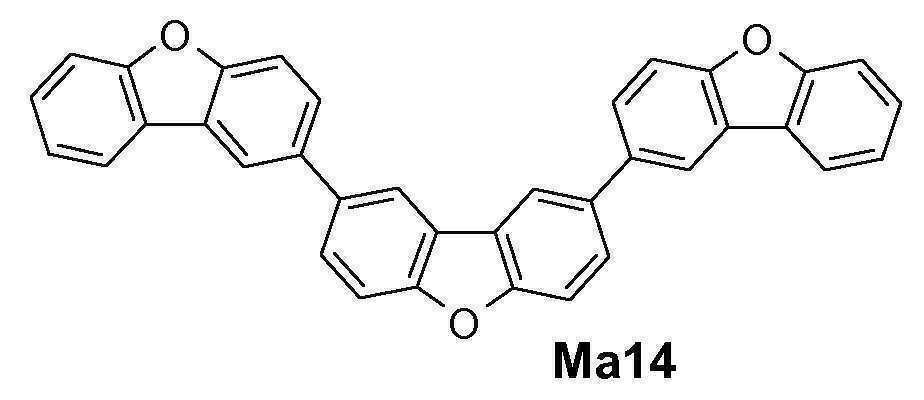
단계 1:Step 1:
10.4 g(42.09 mmol)의 2-브로모디벤조푸란(문헌[J. Med. Chem 52(7),1799-1802, 2009]에 의하여 제조함)을 자기 교반기, 온도계, 격막 및 질소 블랭켓팅이 장착된 가열 처리한 1 ℓ 3목 둥근 바닥 플라스크로 평량한다. 300 ㎖의 THF(나트륨상에서 무수 상태로 만듬)를 첨가하고, 맑은 무색 용액을 -78℃로 아르곤 대기하에서 교반하면서 냉각시킨다. 30 분 이내에, 헥산 중의 부틸 리튬 2.7 M 용액 17.1 ㎖(46.3 mmol)를 내부 온도를 <73℃에서 유지하면서 적가한다. 그후, 상기 온도에서 추가의 30 분 동안 교반한다. 그후, 8.61 g(46.3 mmol)의 2-이소프로폭시-4,4,5,5-테트라메틸-1,3,2-디옥사보롤란을 황색 현탁액에 40 분 이내에 내부 온도를 <73℃에서 유지하면서 적가한다. 상기 온도에서 추가로 60 분 동안 교반한다. 반응 혼합물을 실온으로 가온시키고, 맑은 황색 용액을 200 ㎖의 pH 7 완충액에 붓고, 23 ㎖의 2N HCl을 첨가한다. 용매를 회전 증발기상에서 농축시키고, 수성상을 250 ㎖의 EtOAc로 3회 추출시킨다. 합한 유기상을 100 ㎖의 포화 NaCl 용액으로 1회 세정하고, 황산마그네슘상에서 건조시키고, 여과하고, 농축시킨다. 이는 12.95 g의 백색 고체를 생성하고, 이를 50 ㎖의 MeOH와 혼합하고, 환류 가열한다. 형성된 맑은 용액을 교반하면서 실온으로 냉각시킨 후, 0℃로 냉각시킨다. 형성된 현탁액을 여과하고, 잔류물을 10 ㎖의 빙냉 MeOH로 2회 세정하고, 50℃/120T에서 진공 건조 캐비넷에서 밤새 건조시킨다. 이는 8.97 g(71.6% 이론치)의 2-디벤조푸란-2-일-4,4,5,5-테트라메틸-1,3,2-디옥사보롤란을 98.3%의 순도로 생성한다. NMR 및 MS 데이타는 제안된 구조와 일치한다.10.4 g (42.09 mmol) of 2-bromodibenzofuran (manufactured by J. Med. Chem 52(7), 1799-1802, 2009) was equipped with magnetic stirrer, thermometer, diaphragm and nitrogen blanketing. Weigh into a 1 ℓ 3-neck round bottom flask that has been heated. 300 ml of THF (made anhydrous over sodium) are added and the clear colorless solution is cooled to -78[deg.] C. with stirring under an argon atmosphere. Within 30 minutes, 17.1 ml (46.3 mmol) of a 2.7 M solution of butyl lithium in hexane is added dropwise while maintaining the internal temperature at <73°C. Then, it is stirred for an additional 30 minutes at this temperature. Then, 8.61 g (46.3 mmol) of 2-isopropoxy-4,4,5,5-tetramethyl-1,3,2-dioxaborolane was added to a yellow suspension at an internal temperature of <73°C within 40 minutes. Add dropwise while maintaining. Stir for an additional 60 minutes at this temperature. The reaction mixture is warmed to room temperature, the clear yellow solution is poured into 200 ml of pH 7 buffer, and 23 ml of 2N HCl are added. The solvent is concentrated on a rotary evaporator and the aqueous phase is extracted three times with 250 ml of EtOAc. The combined organic phases are washed once with 100 ml of saturated NaCl solution, dried over magnesium sulfate, filtered and concentrated. This gives 12.95 g of a white solid, which is mixed with 50 ml of MeOH and heated to reflux. The formed clear solution was cooled to room temperature with stirring, and then cooled to 0°C. The resulting suspension was filtered, and the residue was washed twice with 10 ml of ice-cold MeOH and dried overnight in a vacuum drying cabinet at 50° C./120T. This yields 8.97 g (71.6% theory) of 2-dibenzofuran-2-yl-4,4,5,5-tetramethyl-1,3,2-dioxaborolane with a purity of 98.3%. The NMR and MS data are consistent with the proposed structure.
단계 2:Step 2:
4.09 g(9.73 mmol)의 2,8-디요오도디벤조푸란(문헌[J. Amer. Chem. Soc. 124(40), 11900-11907, 2002]에 의하여 제조함), 6.30 g(21.04 mmol)의 2-디벤조푸란-2-일-4,4,5,5-테트라메틸-1,3,2-디옥사보롤란, 6.86 g(49.67 mmol)의 탄산칼륨, 180 ㎖의 톨루엔, 79 ㎖의 EtOH 및 37 ㎖의 H2O2를 초기에 자기 교반기, 온도계, 환류 응축기 및 질소 블랭켓팅이 장착된 500 ㎖ 3목 플라스크에 가하고, 장치를 비우고, 아르곤으로 4회 채운다. 그후, 1.58 g(1.36 mmol)의 테트라키스(트리페닐포스핀)팔라듐을 첨가하고, 장치를 비우고, 아르곤으로 4회 채운다. 그후, 반응 혼합물을 격렬하게 4 시간 동안 교반하면서 환류 가열한 후, 200 ㎖의 톨루엔으로 희석하고, 실온으로 냉각시킨다. 상을 분리시키고, 유기상을 150 ㎖의 물로 2회 세정하고, 황산마그네슘상에서 건조시키고, 여과하고, 농축시킨다. 이는 5.72 g의 갈색 고체를 얻는다. 용출제로서 헥산/톨루엔=5:2를 사용하는 플래쉬 크로마토그래피로 정제하여 1.20 g의 2,8-디(디벤조푸란-2-일)디벤조푸란을 순도가 99.3%인 백색 고체로서 얻는다. NMR 및 MS 데이타는 제안된 구조와 일치한다.4.09 g (9.73 mmol) of 2,8- diiododibenzofuran (prepared by J. Amer. Chem. Soc . 124(40), 11900-11907, 2002), 6.30 g (21.04 mmol) ) 2-dibenzofuran-2-yl-4,4,5,5-tetramethyl-1,3,2-dioxaborolane, 6.86 g (49.67 mmol) potassium carbonate, 180 ml toluene, 79 Ml of EtOH and 37 ml of H 2 O 2 are initially added to a 500 ml three neck flask equipped with magnetic stirrer, thermometer, reflux condenser and nitrogen blanketing, the device is emptied and filled 4 times with argon. Then 1.58 g (1.36 mmol) of tetrakis(triphenylphosphine)palladium are added, the device is emptied and charged 4 times with argon. Thereafter, the reaction mixture was heated to reflux while stirring vigorously for 4 hours, then diluted with 200 ml of toluene and cooled to room temperature. The phases are separated and the organic phase is washed twice with 150 ml of water, dried over magnesium sulfate, filtered and concentrated. This gives 5.72 g of a brown solid. Purification by flash chromatography using hexane/toluene=5:2 as eluent to obtain 1.20 g of 2,8-di(dibenzofuran-2-yl)dibenzofuran as a white solid having a purity of 99.3%. The NMR and MS data are consistent with the proposed structure.
실시예 19Example 19
Ma7의 제조Manufacturing of Ma7
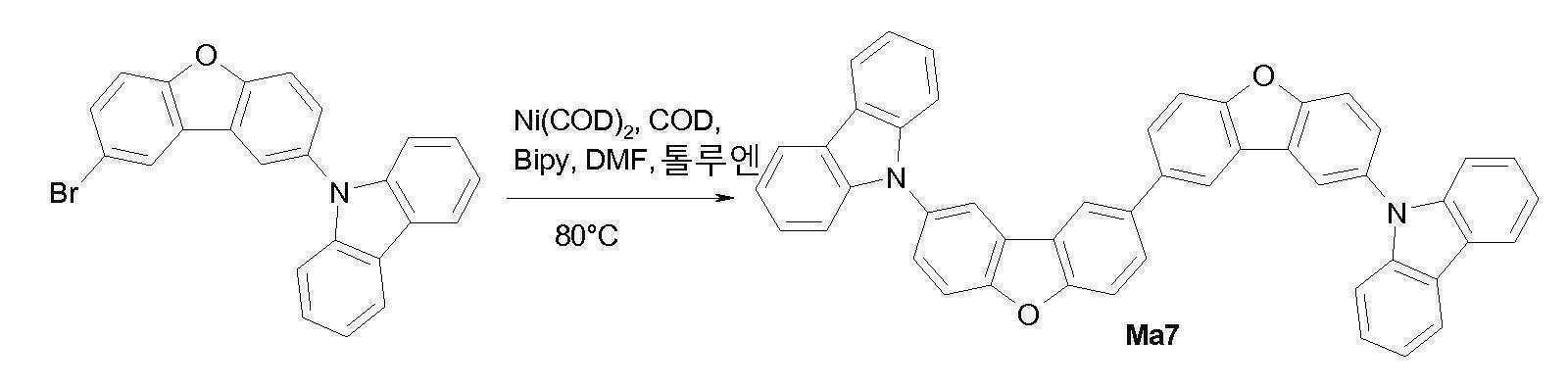
Ni(COD)2(9.03 g, 32.8 mmol), 1,5-시클로옥타디엔(3.55 g, 32.8 mmol) 및 2,2'-비피리딘(5.12 g, 32.8 mmol)을 슐렝크(Schlenk) 플라스크(글로브박스)내의 무수 DMF(140 ㎖)에 용해시킨다. 혼합물을 80℃에서 30 분 동안 교반한다. 무수 톨루엔(380 ㎖) 중의 9-(8-브로모-디벤조푸란-2-일)-9H-카르바졸(11.75 g, 11.8 mmol)의 용액을 점진적으로 첨가한다. 80℃에서 아르곤하에서 24 시간 동안 교반한 후, 혼합물을 실온으로 냉각시키고, MeOH/HCl(1:1, 2,000 ㎖)에 첨가하고, 1 시간 동안 교반한다. 유기상을 톨루엔으로 추출하고, Na2SO4상에서 건조시키고, 농축시킨다. LC(SiO2; 시클로헥산/CH2Cl2; 4/1)에 의하여 Ma7(9.14 g, 87%)을 생성한다.Ni(COD) 2 (9.03 g, 32.8 mmol), 1,5-cyclooctadiene (3.55 g, 32.8 mmol) and 2,2'-bipyridine (5.12 g, 32.8 mmol) were added to a Schlenk flask ( Glovebox) in anhydrous DMF (140 ml). The mixture is stirred at 80° C. for 30 minutes. A solution of 9-(8-bromo-dibenzofuran-2-yl)-9H-carbazole (11.75 g, 11.8 mmol) in anhydrous toluene (380 mL) is added gradually. After stirring at 80° C. under argon for 24 hours, the mixture is cooled to room temperature, added to MeOH/HCl (1:1, 2,000 mL) and stirred for 1 hour. The organic phase is extracted with toluene, dried over Na 2 SO 4 and concentrated. Ma7 (9.14 g, 87%) was produced by LC(SiO 2 ; cyclohexane/CH 2 Cl 2; 4/1).
1H NMR (400 MHz, CD2Cl2): 8.25 (2H, d, J=2Hz), 8.19 (2H, d, J=2Hz), 8.15 (4H, d, J=8Hz), 7.88 (1H, d, J=2Hz), 7.83 (1H, d, J=2Hz), 7.77 (4H, AB, J=8Hz), 7.65 (1H, d, J=2Hz), 7.62 (1H, d, J=2Hz), 7.43-7.38 (8H, m), 7.31-7.24 (4H, m). 1 H NMR (400 MHz, CD 2 Cl 2 ): 8.25 (2H, d, J=2Hz), 8.19 (2H, d, J=2Hz), 8.15 (4H, d, J=8Hz), 7.88 (1H, d, J=2Hz), 7.83 (1H, d, J=2Hz), 7.77 (4H, AB, J=8Hz), 7.65 (1H, d, J=2Hz), 7.62 (1H, d, J=2Hz) , 7.43-7.38 (8H, m), 7.31-7.24 (4H, m).
실시예 20Example 20
Ma12의 제조Manufacturing of Ma12
단계 1:Step 1:

t-BuLi(펜탄 중의 1.7M)(46.8 ㎖, 79.4 mmol)를 -30℃에서 아르곤하에서 무수 THF(82 ㎖) 중의 디페닐 에테르(6 ㎖, 37.8 mmol)의 용액을 적가한다. 혼합물을 -30℃에서 5.5 시간 동안 교반한 후, 페닐실란(4.64 g, 41.6 mmol)을 첨가한다. 혼합물을 -30℃에서 추가의 1 시간 동안 교반한 후, 실온으로 밤새 가온시킨다. 산성화된 얼음(H2SO4)을 첨가하고, 유기상을 CH2Cl2로 추출하고, Na2SO4상에서 건조시키고, 여과하고, 농축시킨다. MeHO로부터 재결정시켜 10-페닐펜옥사실린(49%)을 얻는다.t-BuLi (1.7M in pentane) (46.8 mL, 79.4 mmol) was added dropwise a solution of diphenyl ether (6 mL, 37.8 mmol) in anhydrous THF (82 mL) under argon at -30°C. After the mixture was stirred at -30° C. for 5.5 hours, phenylsilane (4.64 g, 41.6 mmol) was added. The mixture is stirred at -30[deg.] C. for an additional hour and then warmed to room temperature overnight. Acidified ice (H 2 SO 4 ) is added and the organic phase is extracted with CH 2 Cl 2 , dried over Na 2 SO 4 , filtered and concentrated. Recrystallization from MeHO gives 10-phenylphenoxacillin (49%).
1H NMR (CD2Cl2, 400 MHz): 7.57 (2H, dd, J=8.0 Hz, J=1.6 Hz), 7.48-7.35 (7H, m), 7.23 (2H, d, J=8.4 Hz), 7.11 (2H, AB, J=7.2 Hz, J=0.8 Hz), 5.50 (1H, s). 1 H NMR (CD 2 Cl 2 , 400 MHz): 7.57 (2H, dd, J=8.0 Hz, J=1.6 Hz), 7.48-7.35 (7H, m), 7.23 (2H, d, J=8.4 Hz) , 7.11 (2H, AB, J=7.2 Hz, J=0.8 Hz), 5.50 (1H, s).
단계 2:Step 2:
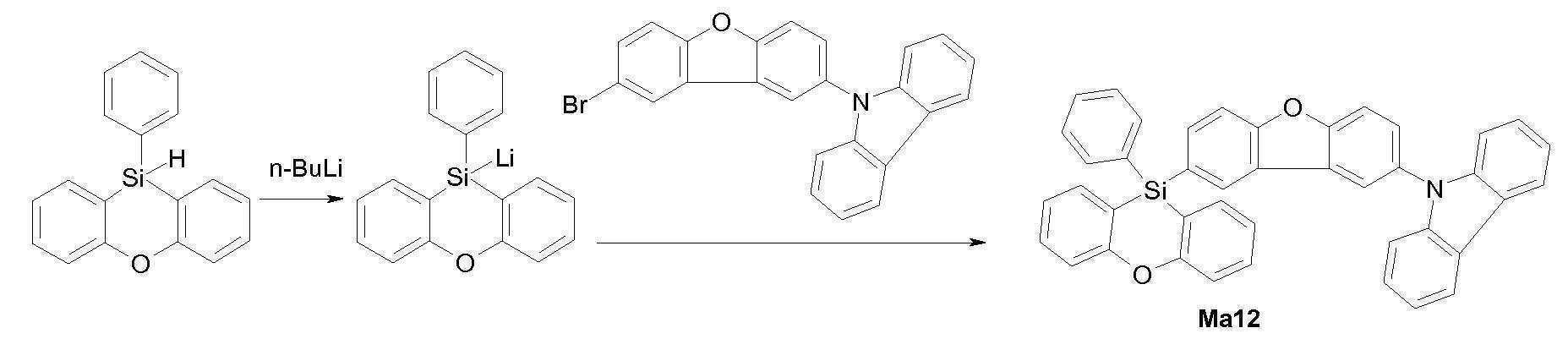
n-BuLi(헥산 중의 1.6M)(2.44 ㎖, 3.9 mmol)를 디에틸 에테르(60 ㎖)중의 9-(8-브로모디벤조푸란-2-일)-9H-카르바졸(1.24 g, 3 mmol)의 용액을 0℃에서 Ar하에서 점진적으로 첨가한다. 0℃에서 20 분 동안 교반한 후, 디에틸 에테르(10 ㎖) 중의 10-페닐펜옥사실린(0.99 g, 3.6 mmol)의 용액을 0℃에서 첨가한다. 혼합물을 밤새 교반하면서 실온으로 가온시킨다. 포화 NH4Cl 용액을 첨가하고, 유기상을 디에틸 에테르로 추출하고, Na2SO4상에서 건조시키고, 여과하고, 농축시킨다. 시클로헥산/CH2Cl2으로부터 재결정시켜 9-(8-(10-페닐-10H-디벤조[b,e][1,4]옥사실린-10-일)디벤조[b,d]푸란-2-일)-9H-카르바졸(0.92 g)을 51% 수율로 얻는다. n-BuLi (1.6M in hexane) (2.44 mL, 3.9 mmol) was added to 9-(8-bromodibenzofuran-2-yl)-9H-carbazole (1.24 g, 3 mmol) in diethyl ether (60 mL). ) Is gradually added under Ar at 0°C. After stirring at 0° C. for 20 minutes, a solution of 10-phenylphenoxacillin (0.99 g, 3.6 mmol) in diethyl ether (10 ml) is added at 0° C.. The mixture is allowed to warm to room temperature while stirring overnight. Saturated NH 4 Cl solution is added and the organic phase is extracted with diethyl ether, dried over Na 2 SO 4 , filtered and concentrated. 9-(8-(10-phenyl-10H-dibenzo[b,e][1,4]oxacillin-10-yl)dibenzo[b,d]furan- by recrystallization from cyclohexane/CH 2 Cl 2 2-yl)-9H-carbazole (0.92 g) is obtained in 51% yield.
1H NMR (CD2Cl2, 400 MHz): 8.16 (1H, s), 8.14 (2H, d, J=8.0 Hz), 8.03 (1H, d, J=2.0 Hz), 7.78 (1H, d, J=8.4 Hz), 7.72 (1H, d, J=8.0 Hz), 7.65 (1H, d, J=8.4 Hz), 7.62-7.58 (5H, m), 7.46 (2H, t, J=7.4 Hz, J=2.0 Hz), 7.40-7.33 (7H, m), 7.33-7.24 (4H, m), 7.13 (2H, t, J=7.2Hz). 13C NMR (CD2Cl2, 125 MHz): 110.0, 112.3, 113.3, 116.4, 118.6, 120.3, 120.5, 120.6, 123.4, 123.6, 124.4, 125.7, 126.4, 127.3, 128.6, 128.8, 129.3, 130.5, 132.2, 133.3, 134.3, 135.7, 136.2, 141.2, 155.6, 158.8, 160.8. 1 H NMR (CD 2 Cl 2 , 400 MHz): 8.16 (1H, s), 8.14 (2H, d, J=8.0 Hz), 8.03 (1H, d, J=2.0 Hz), 7.78 (1H, d, J=8.4 Hz), 7.72 (1H, d, J=8.0 Hz), 7.65 (1H, d, J=8.4 Hz), 7.62-7.58 (5H, m), 7.46 (2H, t, J=7.4 Hz, J=2.0 Hz), 7.40-7.33 (7H, m), 7.33-7.24 (4H, m), 7.13 (2H, triplet, J=7.2 Hz). 13 C NMR (CD 2 Cl 2 , 125 MHz): 110.0, 112.3, 113.3, 116.4, 118.6, 120.3, 120.5, 120.6, 123.4, 123.6, 124.4, 125.7, 126.4, 127.3, 128.6, 128.8, 129.3, 130.5, 132.2 , 133.3, 134.3, 135.7, 136.2, 141.2, 155.6, 158.8, 160.8.
실시예 21Example 21
Red1의 합성Synthesis of Red1
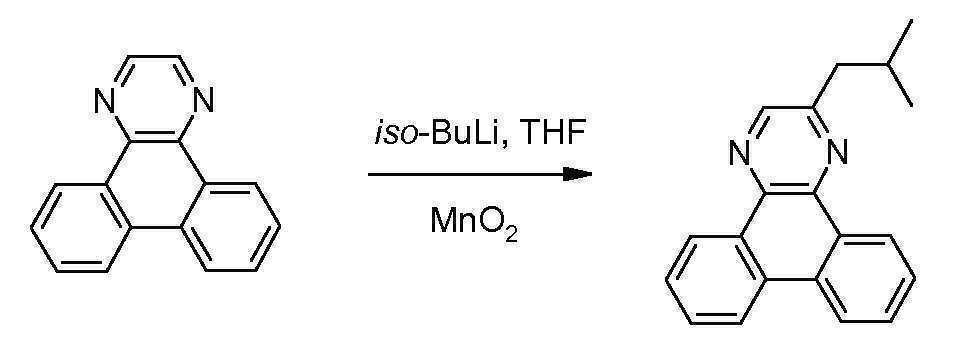
a) 3-이소부틸페난트로[9,10-b]피라진은 특허 출원 WO2009/100991의 실시예 9c에 의하여 32.2 g(0.14 mol)의 디벤조-[f,h]퀴녹살린으로부터 진행하여 헵탄 중의 이소부틸리튬의 1.7M 용액 90 ㎖(0.15 mol) 및 산화망간(IV) 50 g을 사용하여 생성한다. 미정제 생성물을 실리카 겔을 통하여 고온 여과하고, 여과액을 감압하에서 농축시킨다. 생성된 고체를 밤새 에탄올 중에서 추가의 18 시간 동안 교반한다. 여과 및 에탄올을 사용한 세정으로 생성물을 밝은 베이지색 고체로서 얻는다(수율: 8.7 g, 31%).a) 3-isobutylphenanthro[9,10-b]pyrazine proceeds from 32.2 g (0.14 mol) of dibenzo-[f,h]quinoxaline in heptane according to Example 9c of patent application WO2009/100991 It was produced using 90 ml (0.15 mol) of a 1.7 M solution of isobutyllithium and 50 g of manganese (IV) oxide. The crude product was filtered hot through silica gel, and the filtrate was concentrated under reduced pressure. The resulting solid is stirred overnight in ethanol for an additional 18 hours. Filtration and washing with ethanol give the product as a light beige solid (yield: 8.7 g, 31%).

b) 8.0 g(28 mmol)의 3-이소부틸페난트로[9,10-b]피라진 및 4.82 g(13.2 mmol)의 염화이리듐(III) 수화물(이리듐 함유량 53.01%)을 초기에 실온에서 100 ㎖의 2-에톡시에탄올에 가한다. 회색-검정색 현탁액을 123℃에서 24 시간에 걸쳐 교반한다. 생성된 적색 현탁액을 여과하고, 고체를 에탄올로 세정한 후, 감압하에서 추가로 건조시킨다. 생성물 21a를 적색 분말로서 얻는다(수율: 10.1 g, 95%).b) 8.0 g (28 mmol) 3-isobutylphenanthro[9,10-b]pyrazine and 4.82 g (13.2 mmol) iridium(III) chloride hydrate (iridium content 53.01%) were initially 100 ml at room temperature. Is added to 2-ethoxyethanol. The gray-black suspension is stirred at 123° C. over 24 hours. The resulting red suspension was filtered, the solid was washed with ethanol, and further dried under reduced pressure. Product 21a is obtained as a red powder (yield: 10.1 g, 95%).
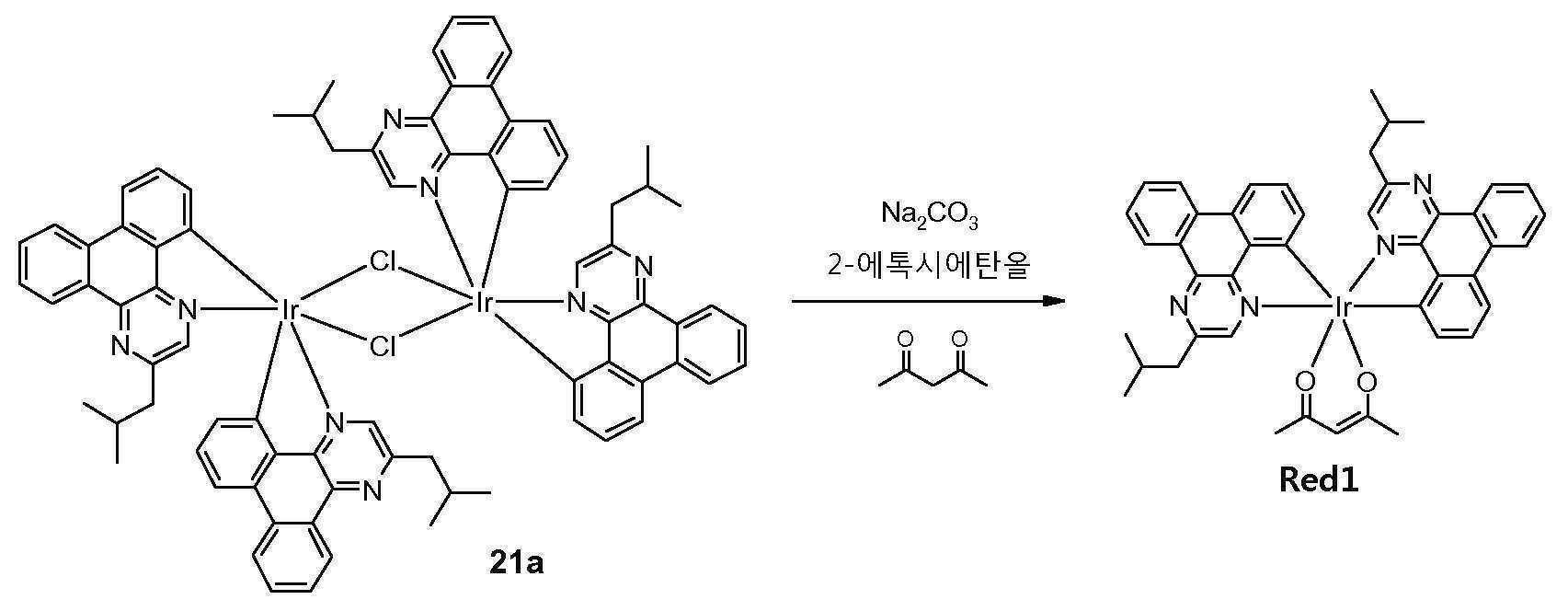
c) 4.95 g(3.1 mmol)의 생성물 21a 및 3.3 g(3.1 mmol)의 탄산나트륨을 초기에 40 ㎖의 2-에톡시에탄올 및 20 ㎖의 N,N-디메틸포름아미드에 가한다. 적색 현탁액을 2.5 g(24.8 mmol)의 아세틸아세톤과 혼합한 후, 121℃에서 70 분에 걸쳐 교반한다. 생성된 짙은 적색 현탁액을 여과하고, 고체를 에탄올로 1회, 물로 2회 교반하고, 헥산으로 세정한다. 생성물은 적색 분말로서 얻는다(수율: 4.3 g, 81%).c) 4.95 g (3.1 mmol) of product 21a and 3.3 g (3.1 mmol) of sodium carbonate are initially added to 40 ml of 2-ethoxyethanol and 20 ml of N,N-dimethylformamide. The red suspension was mixed with 2.5 g (24.8 mmol) of acetylacetone, followed by stirring at 121° C. over 70 minutes. The resulting dark red suspension was filtered, the solid was stirred once with ethanol and twice with water, and washed with hexane. The product is obtained as a red powder (yield: 4.3 g, 81%).
1H NMR (CDCl3, 400 MHz): δ = 1.15 (t, 12H), 1.86 (s, 6H), 2.40-2.50 (m, 2H), 3.10-3.15 (m, 4H), 5.35 (s, 1H), 6.45 (d, 2H), 7.04 (6, 2H), 7.73-7.82 (m, 4H), 7.93 (d, 2H), 8.56 (d, 2H), 8.67 (s, 2H), 9.33 (d, 2H). 1 H NMR (CDCl 3 , 400 MHz): δ = 1.15 (t, 12H), 1.86 (s, 6H), 2.40-2.50 (m, 2H), 3.10-3.15 (m, 4H), 5.35 (s, 1H) ), 6.45 (d, 2H), 7.04 (6, 2H), 7.73-7.82 (m, 4H), 7.93 (d, 2H), 8.56 (d, 2H), 8.67 (s, 2H), 9.33 (d, 2H).
실시예 22:Example 22:
이미터 Em17Emitter Em17
(2-클로로피리딘-3-일)이소프로필아민:(2-chloropyridin-3-yl) isopropylamine:
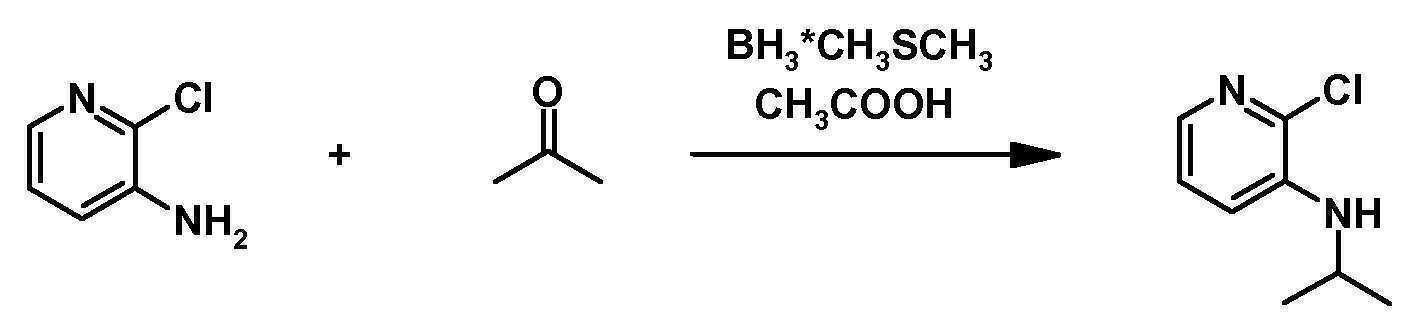
12.5 ㎖ (9.7 g, 167.0 mmol)의 아세톤 및 75 ㎖의 빙초산을 150 ㎖의 무수 디클로로메탄 중의 8.0 g(62.2 mmol)의 3-아미노-2-클로로피리딘의 용액에 첨가한다. 0℃에서 6.5 ㎖(5.2 g, 68.4 mmol)의 보란-디메틸 술피드 착물을 첨가한다. 기체 발생이 종료된 후, 혼합물을 실온으로 해동시키고, 추가로 밤새 교반한다. 그후, 25% 암모니아 용액을 첨가하여 pH를 8로 조절한다. 50 ㎖의 물을 첨가한다. 수성상을 매번 50 ㎖의 디클로로메탄으로 3회 추출한다. 합한 유기상을 황산나트륨상에서 건조시키고, 용매를 제거한다. 이는 10.5 g(99%)의 황색 오일을 생성한다.12.5 ml (9.7 g, 167.0 mmol) of acetone and 75 ml of glacial acetic acid are added to a solution of 8.0 g (62.2 mmol) of 3-amino-2-chloropyridine in 150 ml of anhydrous dichloromethane. At 0° C. 6.5 ml (5.2 g, 68.4 mmol) of borane-dimethyl sulfide complex are added. After gas evolution is complete, the mixture is thawed to room temperature and further stirred overnight. Then, the pH is adjusted to 8 by adding 25% ammonia solution. 50 ml of water are added. The aqueous phase is extracted three times with 50 ml of dichloromethane each time. The combined organic phases are dried over sodium sulfate and the solvent is removed. This produces 10.5 g (99%) of yellow oil.
1H NMR (DMSO-D6, 500 MHz): δ = 1.18 (d, 6H), 3.64 (sept, 1H), 4.96 (d, 1H), 7.07 (d, 1H), 7.17 (dd, 1H), 7.57 (dd, 1H). 1 H NMR (DMSO-D 6 , 500 MHz): δ = 1.18 (d, 6H), 3.64 (sept, 1H), 4.96 (d, 1H), 7.07 (d, 1H), 7.17 (dd, 1H), 7.57 (dd, 1H).
2-N-페닐아미노-3-N-이소프로필아미노피리딘:2-N-phenylamino-3-N-isopropylaminopyridine:

10.5 g(61.5 mmol)의 (2-클로로피리딘-3-일)이소프로필아민을 5.84 g(62.5 mmol)의 아닐린과 혼합하고, 혼합물을 184℃에서 16 시간 동안 교반한다. 실온으로 냉각시킨 후, 50 ㎖의 물을 첨가한다. 혼합물을 1 시간 동안 교반하고, NaOH 수용액으로 pH=11로 조절한다. 혼합물을 매번 50 ㎖의 디클로로메탄으로 3회 추출한다. 합한 유기상을 황산나트륨상에서 건조시키고, 감압하에서 용매를 제거한다. 잔류물을 컬럼 크로마토그래피(실리카 겔, 용출제: 시클로헥산/에틸 아세테이트=5/1)로 정제한다. 이는 7.5 g(53%)의 담갈색 고체를 생성한다.10.5 g (61.5 mmol) of (2-chloropyridin-3-yl) isopropylamine are mixed with 5.84 g (62.5 mmol) of aniline and the mixture is stirred at 184° C. for 16 hours. After cooling to room temperature, 50 ml of water are added. The mixture was stirred for 1 hour, and the pH was adjusted to 11 with an aqueous NaOH solution. The mixture is extracted three times with 50 ml of dichloromethane each time. The combined organic phases are dried over sodium sulfate and the solvent is removed under reduced pressure. The residue was purified by column chromatography (silica gel, eluent: cyclohexane/ethyl acetate=5/1). This produces 7.5 g (53%) of a pale brown solid.
1H NMR (CD2Cl2, 500 MHz): δ = 1.21 (d, 6H), 3.23 (s br, 1H), 3.57 (sept, 1H), 6.26 (s br, 1H), 6.83 (dd, 1H), 6.92-6.99 (m, 2H), 7.25-7.29 (m, 4H), 7.70 (dd, 1H). 1 H NMR (CD 2 Cl 2 , 500 MHz): δ = 1.21 (d, 6H), 3.23 (s br, 1H), 3.57 (sept, 1H), 6.26 (s br, 1H), 6.83 (dd, 1H ), 6.92-6.99 (m, 2H), 7.25-7.29 (m, 4H), 7.70 (dd, 1H).
요오드화 1-페닐-3-이소프로필피리디노이미다졸륨:1-phenyl-3-isopropylpyridinoimidazolium iodide:
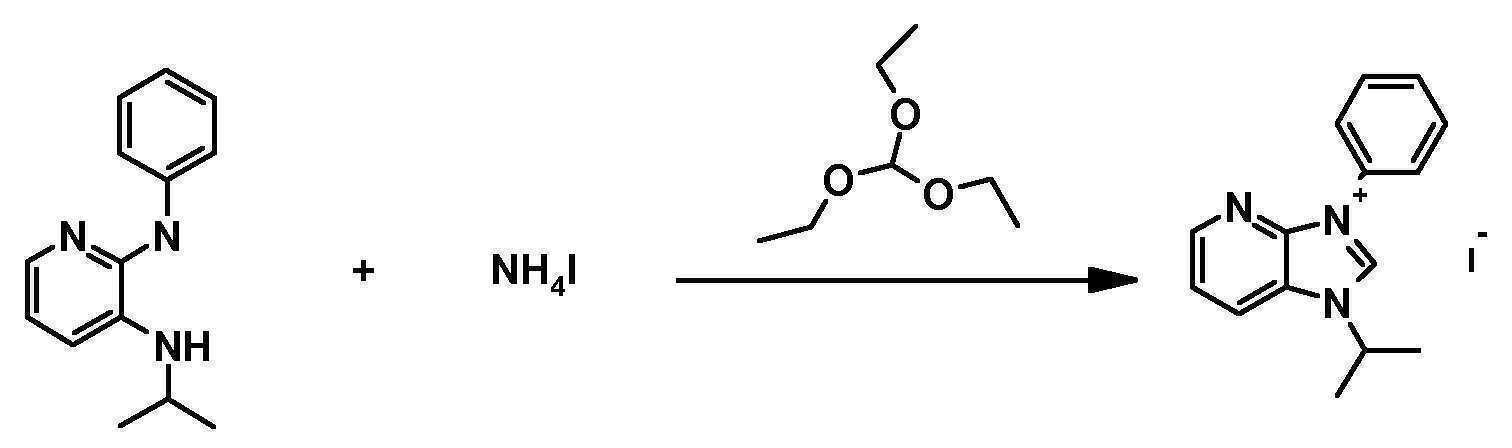
7.3 g(32.1 mmol)의 2-N-페닐아미노-3-N-이소프로필아미노피리딘을 30 ㎖의 트리에틸 오르토포르메이트에 용해시키고, 4.8 g(33.1 mmol)의 요오드화 암모늄을 첨가한다. 반응 혼합물을 82℃에서 밤새 교반한다. 냉각후, 형성된 담황색 고체를 여과하고, 3×15 ㎖의 석유 에테르 및 3×30 ㎖의 디클로로메탄으로 세정하고, 건조시킨다. 이는 10.2 g(86%)의 이미다졸륨 염을 생성한다.7.3 g (32.1 mmol) of 2-N-phenylamino-3-N-isopropylaminopyridine are dissolved in 30 ml of triethyl orthoformate, and 4.8 g (33.1 mmol) of ammonium iodide are added. The reaction mixture is stirred at 82° C. overnight. After cooling, the formed pale yellow solid is filtered off, washed with 3 x 15 ml of petroleum ether and 3 x 30 ml of dichloromethane and dried. This gives 10.2 g (86%) of the imidazolium salt.
1H NMR (DMSO-D6, 500 MHz): δ = 1.72 (d, 6H), 5.19 (sept, 1H), 7.67-7.70 (m, 1H), 7.73-7.76 (m, 2H), 7.86-7.88 (m, 1H), 7.95-7.97 (m, 2H), 8.81-8.82 (m, 2H), 10.43 (s, 1H). 1 H NMR (DMSO-D 6 , 500 MHz): δ = 1.72 (d, 6H), 5.19 (sept, 1H), 7.67-7.70 (m, 1H), 7.73-7.76 (m, 2H), 7.86-7.88 (m, 1H), 7.95-7.97 (m, 2H), 8.81-8.82 (m, 2H), 10.43 (s, 1H).
착물 K5Complex K5
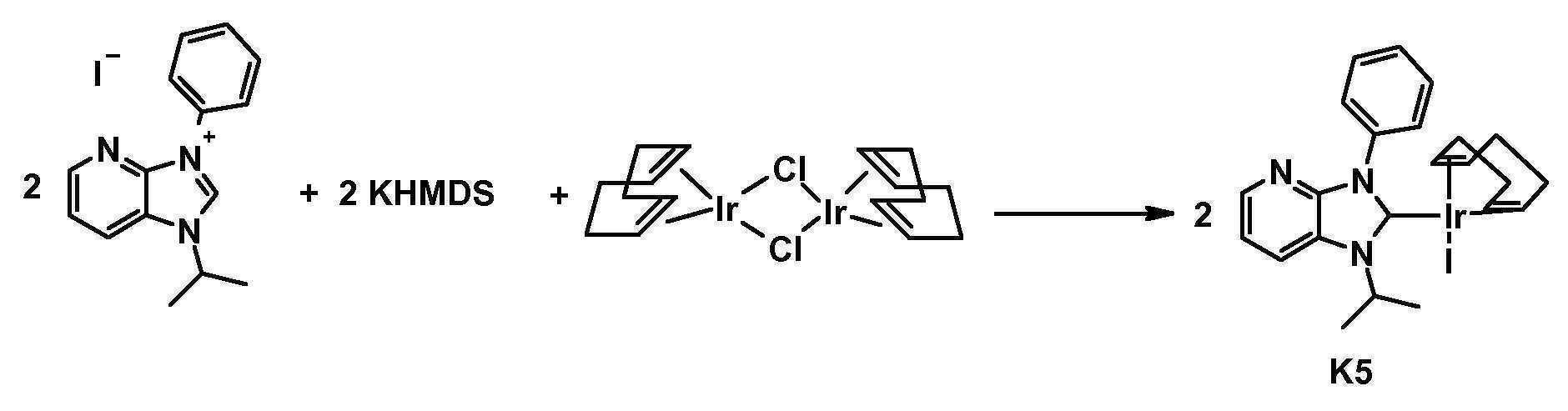
3.00 g(8.21 mmol)의 요오드화1-페닐-3-이소프로필피리디노이미다졸륨을 45 ㎖의 무수 톨루엔에 현탁시킨다. -8℃에서 톨루엔(8.21 mmol) 중의 0.5 몰 KHMDS 용액 16.42 ㎖를 첨가한다. 혼합물을 실온으로 해동시키고, 1 시간 동안 교반한다. 그후, 적색 현탁액을 -78℃에서 75 ㎖의 무수 톨루엔 중의 염화비스(1,5-시클로옥타디엔)디이리듐(I)의 용액 2.76 g(4.11 mmol)에 첨가한다. 그후, 혼합물을 실온에서 1.5 시간 동안 그리고 환류하에 1 시간 동안 가열한다. 냉각후, 반응 혼합물을 여과한다. 여과액으로부터 용매를 감압하에 제거하고, 컬럼 크로마토그래피(실리카 겔, 용출제: 염화메틸렌)로 정제한다. 이는 3.70 g(68%)의 착물 K5를 황색 분말로서 생성한다.3.00 g (8.21 mmol) of 1-phenyl-3-isopropylpyridinoimidazolium iodide are suspended in 45 ml of anhydrous toluene. 16.42 ml of a 0.5 mol KHMDS solution in toluene (8.21 mmol) is added at -8°C. The mixture is thawed to room temperature and stirred for 1 hour. The red suspension is then added to a solution of 2.76 g (4.11 mmol) of bis(1,5-cyclooctadiene)diiridium(I) chloride in 75 ml of anhydrous toluene at -78°C. The mixture is then heated at room temperature for 1.5 hours and under reflux for 1 hour. After cooling, the reaction mixture is filtered. The solvent was removed from the filtrate under reduced pressure, and purified by column chromatography (silica gel, eluent: methylene chloride). This yields 3.70 g (68%) of complex K5 as a yellow powder.
1H NMR (CD2Cl2, 500 MHz): δ = 1.02-1.08 (m, 1H), 1.16-1.21 (m, 1H), 1.37-1.42 (m, 1H), 1.59-1.72 (m, 3H), 1.76 (dd, 6H), 2.07-2.18 (m, 2H), 2.51-2.55 (m, 1H),3.15-3.18 (m, 1H), 4.65-4.69 (m, 1H), 4.87-4.91 (m, 1H), 6.06 (sept, 1H), 7.23 (dd, 1H), 7.49-7.56 (m, 3H), 7.85 (dd, 1H), 8.04-8.06 (m, 2H), 8.22 (dd, 1H). 1 H NMR (CD 2 Cl 2 , 500 MHz): δ = 1.02-1.08 (m, 1H), 1.16-1.21 (m, 1H), 1.37-1.42 (m, 1H), 1.59-1.72 (m, 3H) , 1.76 (dd, 6H), 2.07-2.18 (m, 2H), 2.51-2.55 (m, 1H), 3.15-3.18 (m, 1H), 4.65-4.69 (m, 1H), 4.87-4.91 (m, 1H), 6.06 (sept, 1H), 7.23 (dd, 1H), 7.49-7.56 (m, 3H), 7.85 (dd, 1H), 8.04-8.06 (m, 2H), 8.22 (dd, 1H).
착물 Em17:Complex Em17:
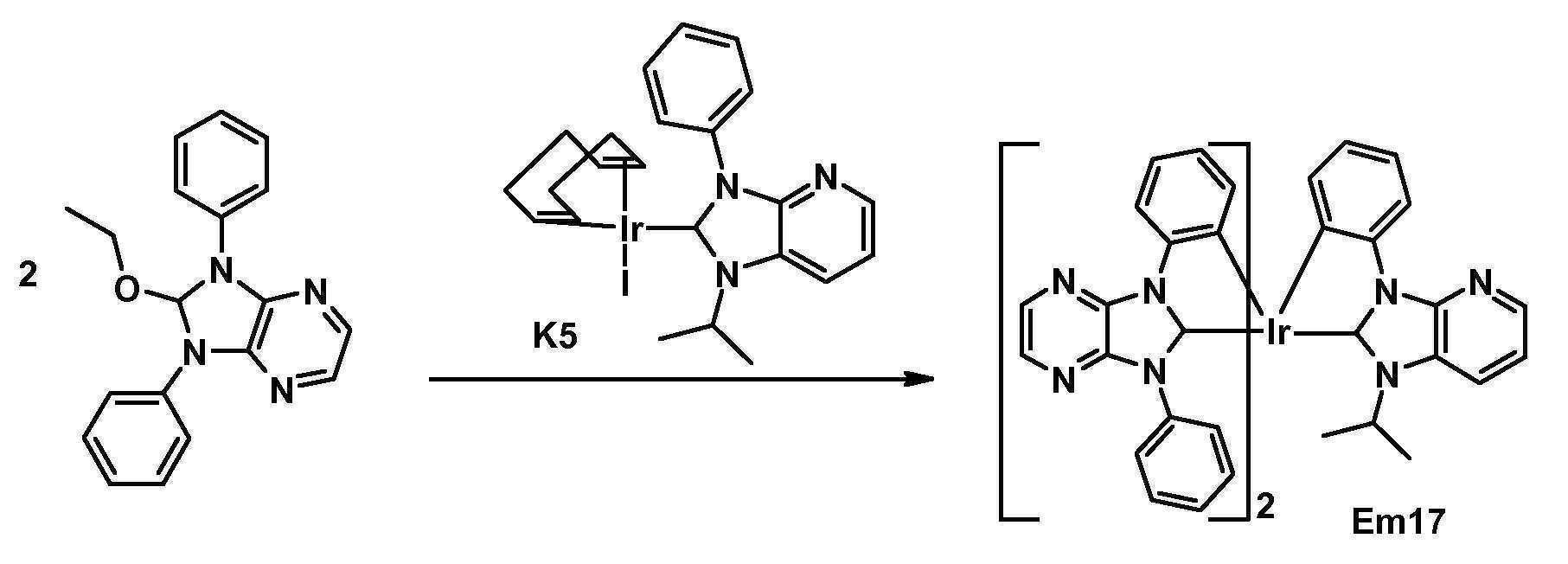
50 ㎖의 무수 o-크실렌 중의 0.90 g(2.83 mmol)의 2-에톡시-1,3-디페닐-2,3-디히드로-1H-이미다조[4,5-b]피라진의 용액을 연속적으로 실온에서 10 g의 분자체 및 75 ㎖의 무수 o-크실렌 중의 0.86 g(1.29 mmol)의 K5의 용액과 혼합한다. 혼합물을 115℃에서 22 시간 동안 교반한다. 이를 냉각한 후, 여과한다. 여과액으로부터 용매를 감압하에 제거하고, 컬럼 크로마토그래피(실리카 겔, 용출제: 시클로헥산/아세톤=4/1)로 정제한다. 이는 0.53 g(42%)의 Em17을 황색 분말로서 생성한다.A solution of 0.90 g (2.83 mmol) 2-ethoxy-1,3-diphenyl-2,3-dihydro-1H-imidazo[4,5-b]pyrazine in 50 ml of anhydrous o-xylene was successively At room temperature with a solution of 0.86 g (1.29 mmol) of K5 in 10 g of molecular sieve and 75 ml of anhydrous o-xylene. The mixture is stirred at 115° C. for 22 hours. After cooling it, it is filtered. The solvent was removed from the filtrate under reduced pressure, and purified by column chromatography (silica gel, eluent: cyclohexane/acetone=4/1). This produces 0.53 g (42%) of Em17 as a yellow powder.
1H NMR (CD2Cl2, 500 MHz): δ = 0.62 (d, 3H), 1.06 (d, 3H), 4.28 (sept, 1H), 6.35-7.53 (매우 평편한 넓은 시그날, 8H, 2개의 비-시클로메탈레이트화 페닐 고리의 오르토- 및 메타-H), 6.52 (dd, 1H), 6.59 (dd, 1H), 6.64 (dd, 1H), 6.72-6.77 (m, 3H), 6.81 (dt, 1H), 6.97-7.01 (m, 1H), 7.05-7.08 (m, 2H), 7.14 (dt, 1H), 7.19 (dt, 1H), 7.41 (dd, 1H), 8.07 (d, 1H), 8.12 (d, 1H), 8.34 (dd, 2H), 8.37 (dd, 1H), 8.69 (dd, 1H), 8.80 (dd, 1H), 8.95 (dd, 1H). 1 H NMR (CD 2 Cl 2 , 500 MHz): δ = 0.62 (d, 3H), 1.06 (d, 3H), 4.28 (sept, 1H), 6.35-7.53 (very flat broad signal, 8H, 2 Ortho- and meta-H of non-cyclometalated phenyl ring), 6.52 (dd, 1H), 6.59 (dd, 1H), 6.64 (dd, 1H), 6.72-6.77 (m, 3H), 6.81 (dt , 1H), 6.97-7.01 (m, 1H), 7.05-7.08 (m, 2H), 7.14 (dt, 1H), 7.19 (dt, 1H), 7.41 (dd, 1H), 8.07 (d, 1H), 8.12 (d, 1H), 8.34 (dd, 2H), 8.37 (dd, 1H), 8.69 (dd, 1H), 8.80 (dd, 1H), 8.95 (dd, 1H).
광발광 (PMMA 필름 중의 2%):Photoluminescence (2% in PMMA film):
λmax=484 ㎚, CIE: (0.17;0.34), 95% QYλ max =484 nm, CIE: (0.17;0.34), 95% QY
실시예 23:Example 23:
착물 Em18:Complex Em18:
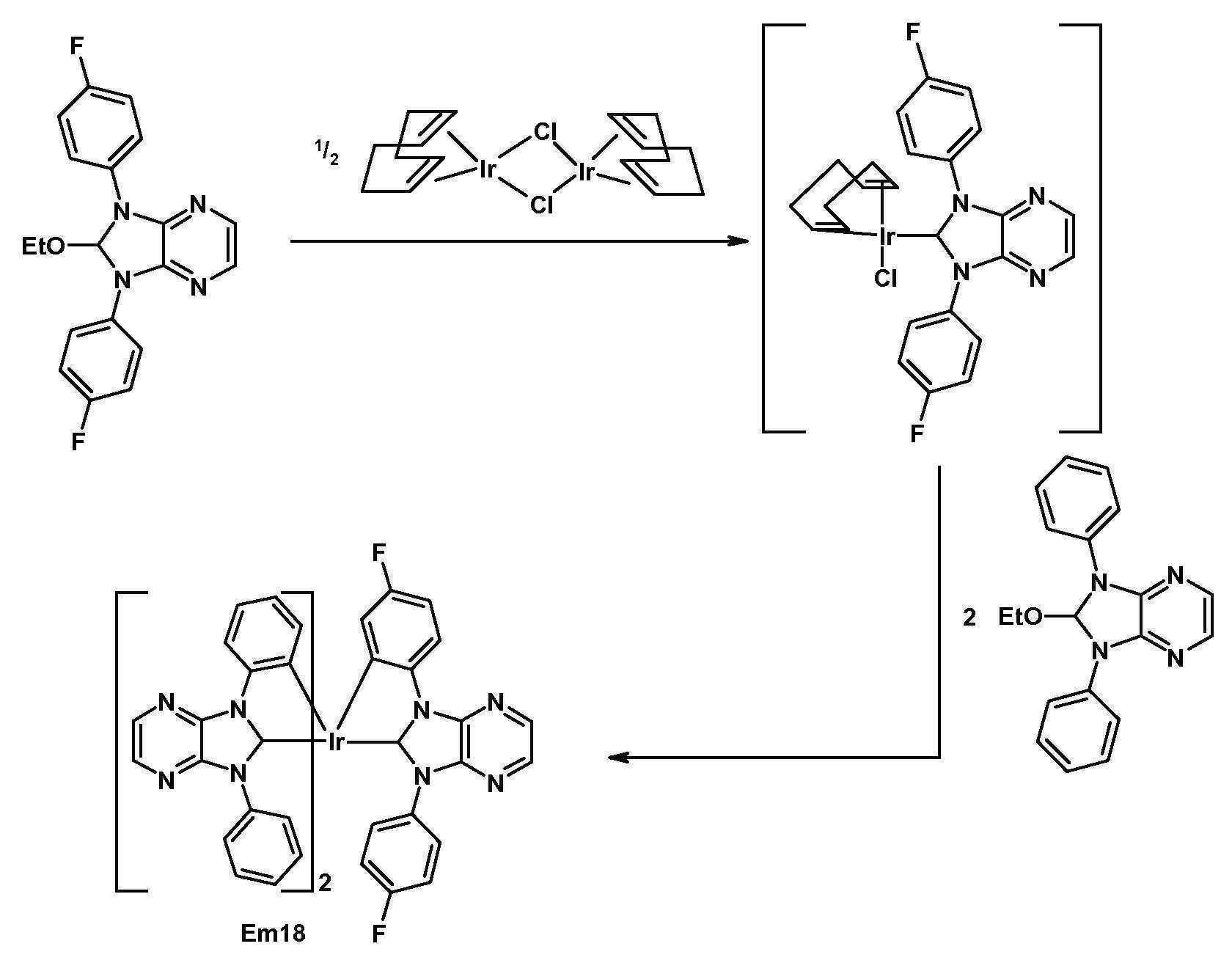
1.06 g(2.98 mmol)의 2-에톡시-1,3-비스(4-플루오로페닐)-2,3-디히드로-1H-이미다조[4,5-b]피라진 (2-에톡시-1,3-비스-(4'-플루오로페닐)피라지노이미다졸린)을 100 ㎖의 o-크실렌 중의 1.00 g(1.49 mmol)의 [(μ-Cl)Ir(η4-1,5-COD)]2의 용액에 첨가한다. 그후, 생성된 용액을 65℃에서 20 시간 동안 교반한다. 1.80 g(5.66 mmol)의 2-에톡시-1,3-디페닐-2,3-디히드로-1H-이미다조[4,5-b]피라진을 첨가한 후, 반응 혼합물을 95℃에서 추가의 48 시간 동안 교반한다. 냉각후, 침전물을 여과하고, o-크실렌 및 시클로헥산으로 세정한다. 합한 유기상을 무수 상태로 농축시키고, 컬럼 크로마토그래피(실리카 겔, 용출제 에틸 아세테이트/시클로헥산=1/4)로 정제한다. 이는 0.30 g(20%)의 Em18을 황색 분말로서 생성한다.1.06 g (2.98 mmol) of 2-ethoxy-1,3-bis(4-fluorophenyl)-2,3-dihydro-1H-imidazo[4,5-b]pyrazine (2-ethoxy- 1,3-bis-(4'-fluorophenyl)pyrazinoimidazoline) was added to 1.00 g (1.49 mmol) of [(μ-Cl)Ir(η 4 -1,5- COD)] 2 is added to the solution. Then, the resulting solution was stirred at 65° C. for 20 hours. 1.80 g (5.66 mmol) of 2-ethoxy-1,3-diphenyl-2,3-dihydro-1H-imidazo[4,5-b]pyrazine was added, then the reaction mixture was added at 95°C. Stir for 48 hours. After cooling, the precipitate is filtered and washed with o-xylene and cyclohexane. The combined organic phases are concentrated to anhydrous and purified by column chromatography (silica gel, eluent ethyl acetate/cyclohexane=1/4). This produces 0.30 g (20%) of Em18 as a yellow powder.
1H NMR (CD2Cl2, 500 MHz): 1 H NMR (CD 2 Cl 2 , 500 MHz):
δ = 6.20-6.90 (매우 평편한 넓은 시그날, 8H), 6.28 (dd, 1H), 6.65 (ddd, 3H), 6.59 (d, 1H), 6.80-6.86 (m, 6H), 7.14-7.19 (m, 2H), 8.05 (d, 1H), 8.07 (dd, 2H), 8.32 (d, 1H), 8.35 (t, 2H), 8.72 (dd, 1H), 8.76 (dd, 2H).δ = 6.20-6.90 (very flat wide signal, 8H), 6.28 (dd, 1H), 6.65 (ddd, 3H), 6.59 (d, 1H), 6.80-6.86 (m, 6H), 7.14-7.19 (m) , 2H), 8.05 (d, 1H), 8.07 (dd, 2H), 8.32 (d, 1H), 8.35 (t, 2H), 8.72 (dd, 1H), 8.76 (dd, 2H).
광발광 (PMMA 필름 중의 2%): Photoluminescence (2% in PMMA film):
λmax=466 ㎚, CIE: (0.15;0.19); QY=95%λ max =466 nm, CIE: (0.15; 0.19); QY=95%
실시예 24:Example 24:
착물 Em19:Complex Em19:
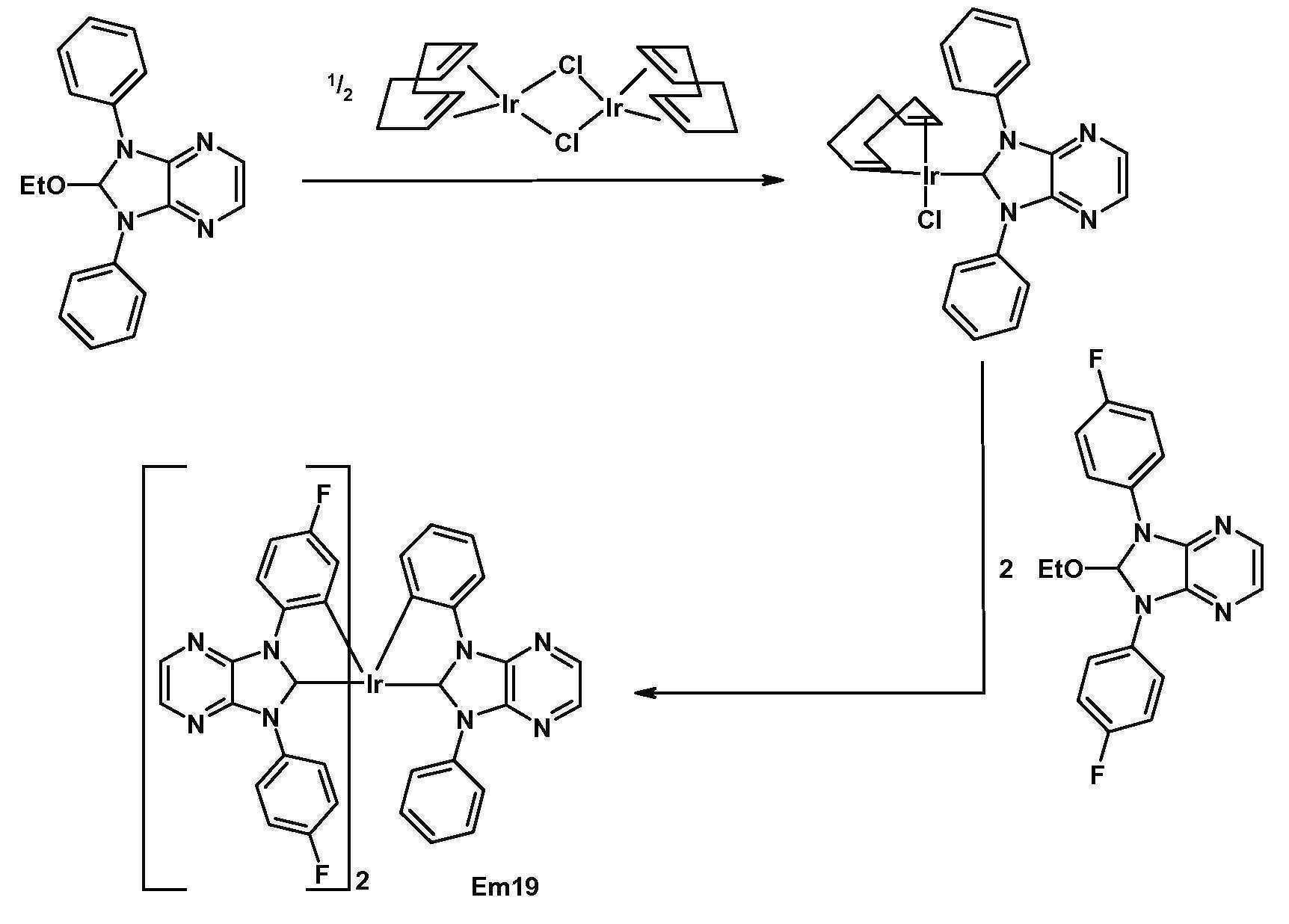
0.47 g(1.49 mmol)의 2-에톡시-1,3-디페닐-2,3-디히드로-1H-이미다조[4,5-b]피라진을 50 ㎖의 o-크실렌 중의 0.50 g(0.74 mmol)의 [(μ-Cl)Ir(η4-1,5-COD)]2의 용액에 첨가한다. 그후, 생성된 용액을 60℃에서 22 시간 동안 교반한다. 1.04 g(2.94 mmol)의 2-에톡시-1,3-비스(4-플루오로페닐)-2,3-디히드로-1H-이미다조[4,5-b]피라진을 첨가한 후, 반응 혼합물을 95℃에서 추가의 48 시간 동안 교반한다. 냉각후, 반응 혼합물을 무수 상태로 농축시킨다. 고체 잔류물을 디클로로메탄/시클로헥산에 용해시키고, 셀라이트에 여과한다. 여과액을 무수 상태로 농축시키고, 잔류물을 컬럼 크로마토그래피(실리카 겔, 용출제 에틸 아세테이트/시클로헥산=1/4)로 정제한다. 이는 0.17 g(11%)의 Em19를 황색 분말로서 생성한다.0.47 g (1.49 mmol) of 2-ethoxy-1,3-diphenyl-2,3-dihydro-1H-imidazo[4,5-b]pyrazine was added to 0.50 g (0.74) in 50 ml of o-xylene. mmol) of [(μ-Cl)Ir(η 4 -1,5-COD)] 2 . Then, the resulting solution was stirred at 60° C. for 22 hours. After adding 1.04 g (2.94 mmol) of 2-ethoxy-1,3-bis(4-fluorophenyl)-2,3-dihydro-1H-imidazo[4,5-b]pyrazine, reaction The mixture is stirred at 95° C. for an additional 48 hours. After cooling, the reaction mixture is concentrated to dryness. The solid residue is dissolved in dichloromethane/cyclohexane and filtered through celite. The filtrate was concentrated to anhydrous, and the residue was purified by column chromatography (silica gel, eluent ethyl acetate/cyclohexane=1/4). This produces 0.17 g (11%) of Em19 as a yellow powder.
1H NMR (CD2Cl2, 500 MHz): 1 H NMR (CD 2 Cl 2 , 500 MHz):
δ = 6.20-6.90 (매우 평편한 넓은 시그날, 8H), 6.31 (ddd, 3H), 6.68 (dd, 2H), 6.83-6.88 (m, 4H), 7.21 (dt, 1H), 8.10 (dd, 2H), 8.12 (d, 1H), 8.37 (t, 2H), 8.40 (d, 1H), 8.71-8.75 (m, 2H), 8.79 (dd, 1H).δ = 6.20-6.90 (very flat wide signal, 8H), 6.31 (ddd, 3H), 6.68 (dd, 2H), 6.83-6.88 (m, 4H), 7.21 (dt, 1H), 8.10 (dd, 2H) ), 8.12 (d, 1H), 8.37 (t, 2H), 8.40 (d, 1H), 8.71-8.75 (m, 2H), 8.79 (dd, 1H).
광발광 (PMMA 필름 중의 2%): Photoluminescence (2% in PMMA film):
λmax=461 ㎚, CIE: (0.15;0.16); QY=90%λ max =461 nm, CIE: (0.15;0.16); QY=90%
실시예 25:Example 25:
이미터 Em20Emitter Em20
피라진 화합물(f)Pyrazine compound (f)

10.5 g(29.3 mmol)의 피라진 화합물(d) 및 15.0 g의 분자체(5A)를 120℃로 230 ㎖의 트리에틸 오르토포르메이트 중에서 48 시간 동안 가열한다. 냉각후, 고체를 여과하고, 여과액으로부터 용매를 감압하에서 제거한다. 얻은 갈색 오일을 컬럼 크로마토그래피(실리카 겔, 용출제: 시클로헥산/에틸 아세테이트=9/1)로 정제한다. 생성 분획을 합하고, 메틸 tert-부틸 에테르로부터 재결정시킨다. 이는 4.63 g(38%)의 피라진 화합물(f)을 생성한다.10.5 g (29.3 mmol) of pyrazine compound (d) and 15.0 g of molecular sieve (5A) are heated to 120° C. in 230 ml of triethyl orthoformate for 48 hours. After cooling, the solid is filtered and the solvent is removed from the filtrate under reduced pressure. The obtained brown oil was purified by column chromatography (silica gel, eluent: cyclohexane/ethyl acetate=9/1). The resulting fractions are combined and recrystallized from methyl tert-butyl ether. This gives 4.63 g (38%) of pyrazine compound (f).
1H NMR (CD2Cl2, 500 MHz): δ = 1.06 (t, 3H), 1.33 (s, 6H), 1.34 (s, 6H), 1.98 (s, 2H), 3.32 (q, 2H), 7.12-7.16 (m, 2H), 7.21 (s, 1H), 7.40-7.47 (m, 4H), 8.11-8.16 (m, 4H). 1 H NMR (CD 2 Cl 2 , 500 MHz): δ = 1.06 (t, 3H), 1.33 (s, 6H), 1.34 (s, 6H), 1.98 (s, 2H), 3.32 (q, 2H), 7.12-7.16 (m, 2H), 7.21 (s, 1H), 7.40-7.47 (m, 4H), 8.11-8.16 (m, 4H).
착물 Em20:Complex Em20:

200 ㎖의 o-크실렌(무수) 중의 1.9 g(1.8 mmol)의 피라진 화합물(f)의 용액을 초기에 20 g의 분자체와 함께 가하고, 150 ㎖의 o-크실렌(무수) 중의 1.26 g(0.8 mmol)의 착물 K1의 용액을 첨가한다. 그후, 반응 혼합물을 115℃에서 18 시간 동안 교반한다. 냉각후, 반응 혼합물을 여과한다. 여과액을 무수 상태로 농축시키고, 컬럼 크로마토그래피(실리카 겔, 용출제 시클로헥산/아세톤=4/1)로 정제한 후, 염화메틸렌/메탄올로부터 재결정시킨다. 그후, 컬럼 크로마토그래피(실리카 겔, 용출제 시클로헥산/아세톤=10/1)로 추가로 정제한다. 이는 0.75 g(30%)의 Em20을 담황색 분말로서 생성한다.A solution of 1.9 g (1.8 mmol) of pyrazine compound (f) in 200 mL of o-xylene (anhydrous) was initially added together with 20 g of molecular sieve, and 1.26 g (0.8) in 150 mL of o-xylene (anhydrous). mmol) of complex K1 are added. Then, the reaction mixture is stirred at 115° C. for 18 hours. After cooling, the reaction mixture is filtered. The filtrate was concentrated to anhydrous and purified by column chromatography (silica gel, eluent cyclohexane/acetone=4/1), and then recrystallized from methylene chloride/methanol. Then, it is further purified by column chromatography (silica gel, eluent cyclohexane/acetone=10/1). This produces 0.75 g (30%) of Em20 as a pale yellow powder.
1H NMR (CD2Cl2, 500 MHz): δ = 1.13 (d, 6H), 1.36 (d, 6H), 1.45 (d, 6H), 1.58 (d, 6H), 2.03-2.16 (m, 4H), 6.18-6.43 (m, 5H), 6.44-6.97 (m, broad, 15H), 6.98-7.22 (m, 6H), 7.32 (t, 1H), 7.99 (d, 1H), 8.17 (d, 1H), 8.78 (d, 1H), 8.90 (d, 1H). 1 H NMR (CD 2 Cl 2 , 500 MHz): δ = 1.13 (d, 6H), 1.36 (d, 6H), 1.45 (d, 6H), 1.58 (d, 6H), 2.03-2.16 (m, 4H) ), 6.18-6.43 (m, 5H), 6.44-6.97 (m, broad, 15H), 6.98-7.22 (m, 6H), 7.32 (t, 1H), 7.99 (d, 1H), 8.17 (d, 1H) ), 8.78 (d, 1H), 8.90 (d, 1H).
광발광 (PMMA 필름 중의 2%):Photoluminescence (2% in PMMA film):
λmax=479 ㎚, CIE: (0.14; 0.29), 95% QYλ max =479 nm, CIE: (0.14; 0.29), 95% QY
실시예 26:Example 26:
이미터 Em21Emitter Em21
2,3-디(N-페닐아미노)피리딘:2,3-di(N-phenylamino)pyridine:

디옥산(270 ㎖) 중의 2,3-디아미노피리딘(8.9 g, 9 mmol) 및 요오도벤젠(17.8 ㎖, 18 mmol)의 현탁액을 트리스(디벤질리덴아세톤)디팔라듐(838 mg, 0.1 mmol), 9,9-디메틸-4,5-비스(디페닐포스핀)크산텐(1.4 g, 0.3 mmol), 나트륨 tert-부톡시드(15.4 g, 18 mmol) 및 물(2.3 g)과 혼합한다. 혼합물을 환류하에 밤새 교반한다. 실온으로 냉각시킨 후, 침전물을 흡인으로 여과하고, 디클로로메탄으로 세정한다. 합한 여과액을 무수 상태로 농축시키고, 잔류물을 디클로로메탄(125 ㎖) 및 시클로헥산(150 ㎖)에 용해시키고, 컬럼 여과한다. 생성물 분획을 농축시키고, 침전된 생성물을 여과한다. 수율: 14.2 g(67%).A suspension of 2,3-diaminopyridine (8.9 g, 9 mmol) and iodobenzene (17.8 mL, 18 mmol) in dioxane (270 mL) was added to tris(dibenzylideneacetone)dipalladium (838 mg, 0.1 mmol). ), 9,9-dimethyl-4,5-bis(diphenylphosphine)xanthene (1.4 g, 0.3 mmol), sodium tert-butoxide (15.4 g, 18 mmol) and water (2.3 g). . The mixture is stirred under reflux overnight. After cooling to room temperature, the precipitate is filtered with suction and washed with dichloromethane. The combined filtrate was concentrated to dryness, and the residue was dissolved in dichloromethane (125 mL) and cyclohexane (150 mL), and column filtered. The product fractions are concentrated and the precipitated product is filtered. Yield: 14.2 g (67%).
1H NMR (CD2Cl2, 500 MHz, 0698403439): δ = 5.19 (br s, 1H), 6.71-6.76 (m, 3H), 6.84 (dd, 1H), 6.89-6.96 (m, 2H), 7.19 (dd, 2H), 7.23 (dd, 2H), 7.39 (d, 1H), 7.51 (d, 2H), 8.02 (d, 1H). 1 H NMR (CD 2 Cl 2 , 500 MHz, 0698403439): δ = 5.19 (br s, 1H), 6.71-6.76 (m, 3H), 6.84 (dd, 1H), 6.89-6.96 (m, 2H), 7.19 (dd, 2H), 7.23 (dd, 2H), 7.39 (d, 1H), 7.51 (d, 2H), 8.02 (d, 1H).
2,3-디(N-페닐아미노)피리딘 염산염2,3-di(N-phenylamino)pyridine hydrochloride
염산(200 ㎖) 중의 2,3-디(N-페닐아미노)피리딘(14.2 g, 54 mmol)의 현탁액을 실온에서 밤새 교반한다. 혼합물을 무수 상태로 농축시킨다. 수율: 14.0 g(87%).A suspension of 2,3-di(N-phenylamino)pyridine (14.2 g, 54 mmol) in hydrochloric acid (200 mL) is stirred at room temperature overnight. The mixture is concentrated to dryness. Yield: 14.0 g (87%).
1H NMR (d6-DMSO, 500 MHz, 0698403873): δ = 6.94-7.00 (m, 2H), 7.17 (d, 2H), 7.30 (mc, 3H), 7.40-7.51 (m, 5H), 7.74 (dd, 1H). NH 양성자는 검출 불가하다. 1 H NMR (d 6 -DMSO, 500 MHz, 0698403873): δ = 6.94-7.00 (m, 2H), 7.17 (d, 2H), 7.30 (m c , 3H), 7.40-7.51 (m, 5H), 7.74 (dd, 1H). NH protons are not detectable.
염화1,3-디페닐-4-아자벤즈이미다졸륨:1,3-diphenyl-4-azabenzimidazolium chloride:
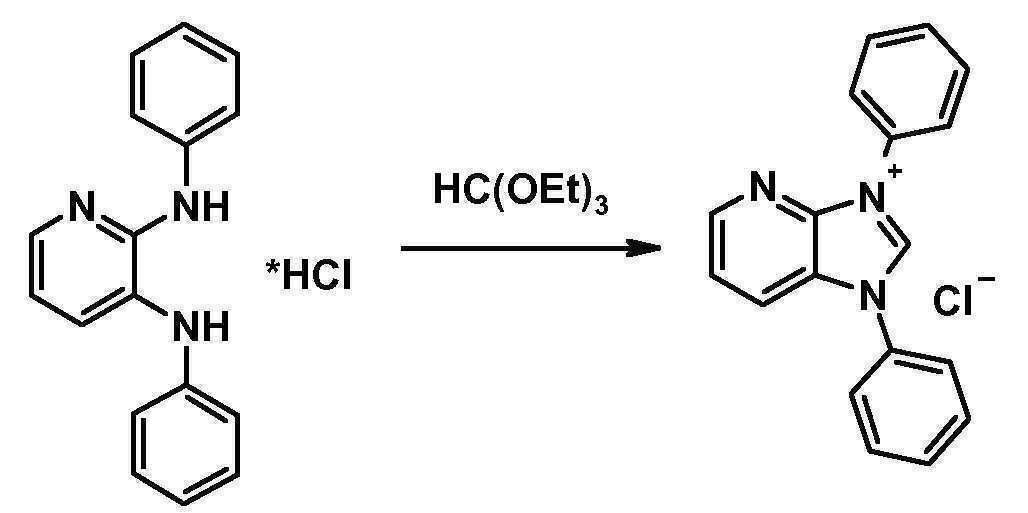
트리에틸 오르토포르메이트(160 ㎖) 중의 2,3-디(N-페닐아미노)피리딘 염산염(14.0 g, 47 mmol)의 혼합물을 105℃에서 밤새 교반한다. 실온으로 냉각시킨 후, 고체를 흡인으로 여과하고, 트리에틸 오르토포르메이트로 세정한다. 수율: 10.3 g(71%).A mixture of 2,3-di(N-phenylamino)pyridine hydrochloride (14.0 g, 47 mmol) in triethyl orthoformate (160 ml) is stirred at 105° C. overnight. After cooling to room temperature, the solid is filtered with suction and washed with triethyl orthoformate. Yield: 10.3 g (71%).
1H NMR (CD2Cl2, 500 MHz): δ = 7.55-7.73 (m, 7H), 8.08 (dd, 2H), 8.19 (dd, 1H), 8.33 (dd, 2H), 8.80 (dd, 1H), 12.24 (s, 1H). 1 H NMR (CD 2 Cl 2 , 500 MHz): δ = 7.55-7.73 (m, 7H), 8.08 (dd, 2H), 8.19 (dd, 1H), 8.33 (dd, 2H), 8.80 (dd, 1H ), 12.24 (s, 1H).
착물 Em21Complex em21
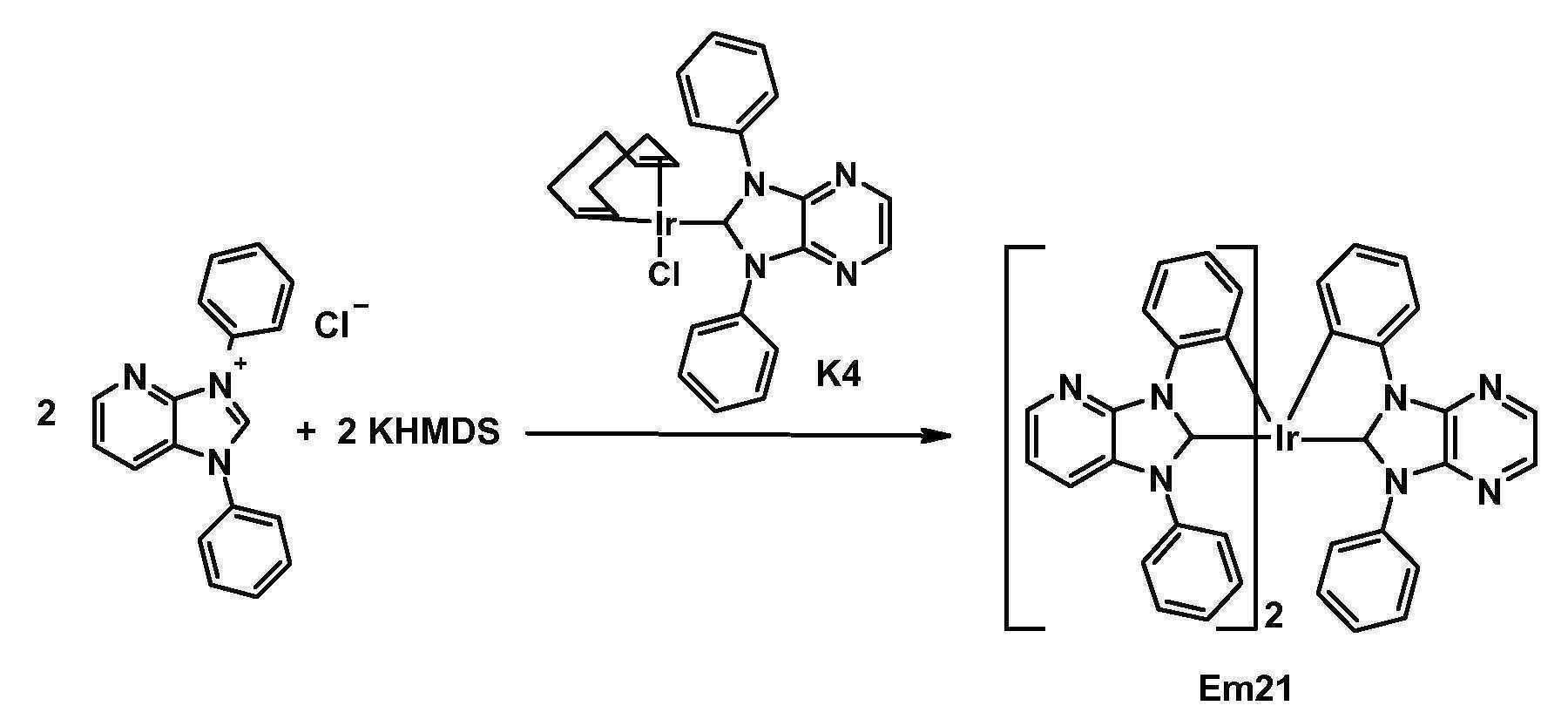
0.65 g의 염화1,3-디페닐-4-아자벤즈이미다졸륨(2.1 mmol)을 100 ㎖의 무수 톨루엔에 현탁시키고, 0℃로 냉각시킨다. 그후, 4.2 ㎖의 칼륨 비스(트리메틸실릴)아미드(KHMDS, 톨루엔 중의 0.5M, 2.1 mmol)를 점진적으로 첨가한다. 혼합물을 실온에서 1 시간 동안 교반한 후, 100 ㎖의 무수 톨루엔 중의 0.61 g의 K4(1.0 mmol)의 용액을 첨가한다. 혼합물을 실온에서 1 시간 동안 교반한 후, 18 시간 동안 환류 가열한다. 혼합물을 냉각시킨 후, 무수 상태로 농축시킨다. 잔류물을 컬럼 크로마토그래피(실리카 겔, 용출제: 시클로헥산/아세톤=4/1)로 정제한다. 이는 0.13 g(13%)의 Em21을 담황색 분말로서 생성한다.0.65 g of 1,3-diphenyl-4-azabenzimidazolium chloride (2.1 mmol) was suspended in 100 ml of anhydrous toluene and cooled to 0°C. Then 4.2 ml of potassium bis(trimethylsilyl)amide (KHMDS, 0.5M in toluene, 2.1 mmol) are added gradually. After the mixture is stirred at room temperature for 1 hour, a solution of 0.61 g of K4 (1.0 mmol) in 100 ml of anhydrous toluene is added. The mixture is stirred at room temperature for 1 hour and then heated to reflux for 18 hours. After cooling the mixture, it is concentrated to dryness. The residue was purified by column chromatography (silica gel, eluent: cyclohexane/acetone=4/1). This produces 0.13 g (13%) of Em21 as a pale yellow powder.
1H NMR (CD2Cl2, 500 MHz): δ = 6.23-6.32 (m, 3H), 6.38 (t, 1H), 6.40-6.85 (m, 17H), 7.00-7.05 (m, 2H), 7.10-7.16 (m, 3H), 7.32 (t, 2H), 8.01 (d, 1H), 8.28 (d, 1H), 8.39 (dt, 2H), 8.72 (d, 1H), 8.94 (d, 1H), 8.98 (d, 1H). 1 H NMR (CD 2 Cl 2 , 500 MHz): δ = 6.23-6.32 (m, 3H), 6.38 (t, 1H), 6.40-6.85 (m, 17H), 7.00-7.05 (m, 2H), 7.10 -7.16 (m, 3H), 7.32 (t, 2H), 8.01 (d, 1H), 8.28 (d, 1H), 8.39 (dt, 2H), 8.72 (d, 1H), 8.94 (d, 1H), 8.98 (d, 1H).
광발광 (PMMA 필름 중의 2%):Photoluminescence (2% in PMMA film):
λmax=480 ㎚, CIE: (0.17; 0.30), 95% QYλ max =480 nm, CIE: (0.17; 0.30), 95% QY
실시예 27:Example 27:
이미터 Em22Emitter Em22
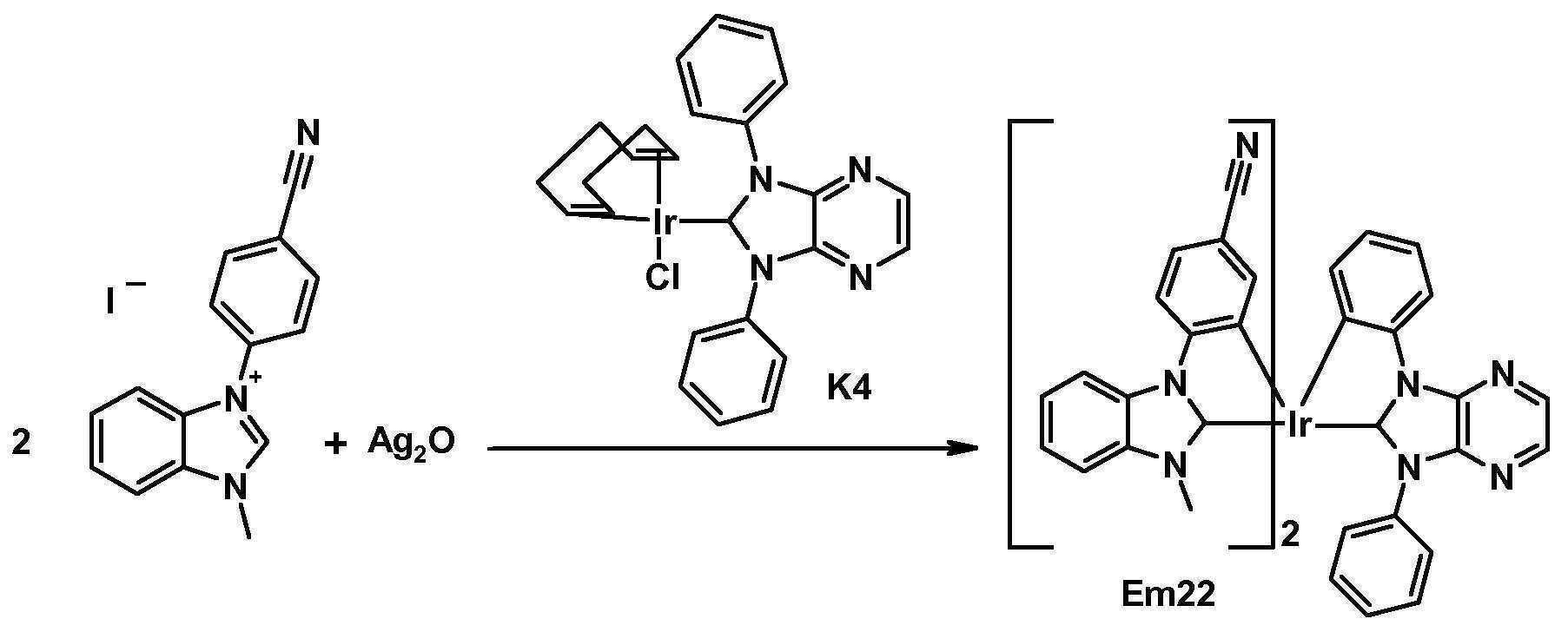
200 ㎖의 1,4-디옥산(무수, 울트라드라이) 중의 2.30 g(6.4 mmol)의 요오드화1-(4-시아노페닐)-3-메틸벤즈이미다졸륨(제조의 경우 WO2006/056418 참조)의 용액을 1.11 g(4.8 mmol)의 산화은(I) 및 20 g의 분자체와 혼합하고, 실온에서 밤새 교반한다. 그후, 200 ㎖의 무수 o-크실렌 중의 1.29 g(2.1 mmol)의 착물 K4의 용액을 첨가하고, 혼합물을 110℃에서 22 시간 동안 교반한다. 냉각후, 반응 혼합물을 여과한다. 여과액으로부터 용매를 감압하에 제거한 후, 컬럼 크로마토그래피(실리카 겔, 용출제: 시클로헥산/아세톤=2/1)로 분리한다. 이는 0.61 g(31%)의 Em22 이성체 1(RF=0.31), 0.45 g(23%)의 Em22 이성체 2(RF=0.25) 및 0.25 g(13%)의 Em22 이성체 3(RF=0.20)을 생성하며, 이들은 각각 염화메틸렌/메탄올로부터 한번 더 재결정시킨다.2.30 g (6.4 mmol) of 1-(4-cyanophenyl)-3-methylbenzimidazolium iodide in 200 ml of 1,4-dioxane (anhydrous, ultra-dry) (for manufacture see WO2006/056418) A solution of 1.11 g (4.8 mmol) of silver (I) oxide and 20 g of molecular sieve is mixed and stirred at room temperature overnight. Then, a solution of 1.29 g (2.1 mmol) of complex K4 in 200 ml of anhydrous o-xylene is added and the mixture is stirred at 110° C. for 22 hours. After cooling, the reaction mixture is filtered. After removing the solvent from the filtrate under reduced pressure, it was separated by column chromatography (silica gel, eluent: cyclohexane/acetone = 2/1). This produced 0.61 g (31%) of Em22 isomer 1 (RF=0.31), 0.45 g (23%) of Em22 isomer 2 (RF=0.25) and 0.25 g (13%) of Em22 isomer 3 (RF=0.20). And each of them is recrystallized once more from methylene chloride/methanol.
Em22 이성체 1:Em22 isomer 1:
1H NMR (CD2Cl2, 500 MHz): δ = 2.78 (s, 3H), 3.15 (s, 3H), 6.31 (d, very broad, 2H), 6.53 (d, 1H), 6.68 (t, 1H), 6.77 (t, 1H), 6.92 (d, 1H), 7.11-7.16 (m, 2H), 7.23-7.52 (m, 10H), 7.88 (d, 1H), 7.91 (d, 1H), 7.99 (d, 1H), 8.11 (d, 1H), 8.18 (d, 1H), 8.41 (d, 1H), 8.76 (d, 1H). 1 H NMR (CD 2 Cl 2 , 500 MHz): δ = 2.78 (s, 3H), 3.15 (s, 3H), 6.31 (d, very broad, 2H), 6.53 (d, 1H), 6.68 (t, 1H), 6.77 (t, 1H), 6.92 (d, 1H), 7.11-7.16 (m, 2H), 7.23-7.52 (m, 10H), 7.88 (d, 1H), 7.91 (d, 1H), 7.99 (d, 1H), 8.11 (d, 1H), 8.18 (d, 1H), 8.41 (d, 1H), 8.76 (d, 1H).
광발광 (PMMA 필름 중의 2%):Photoluminescence (2% in PMMA film):
λmax=484 ㎚, CIE: (0.19; 0.33), 87% QYλ max =484 nm, CIE: (0.19; 0.33), 87% QY
Em22 이성체 2:Em22 isomer 2:
1H NMR (CD2Cl2, 500 MHz): δ = 3.20 (s, 3H), 3.37 (s, 3H), 5.67-6.92 (매우 평편한 넓은 시그날, 2H), 6.51 (d, 1H), 6.70-6.77 (m, 2H), 6.97-7.00 (m, 1H), 7.06-7.12 (m, 3H), 7.20-7.47 (m, 10 H), 7.90 (d, 1H), 8.06 (t, 2H), 8.24 (d, 1H), 8.45 (d, 1H), 8.80 (d, 1H). 1 H NMR (CD 2 Cl 2 , 500 MHz): δ = 3.20 (s, 3H), 3.37 (s, 3H), 5.67-6.92 (very flat broad signal, 2H), 6.51 (d, 1H), 6.70 -6.77 (m, 2H), 6.97-7.00 (m, 1H), 7.06-7.12 (m, 3H), 7.20-7.47 (m, 10H), 7.90 (d, 1H), 8.06 (t, 2H), 8.24 (d, 1H), 8.45 (d, 1H), 8.80 (d, 1H).
광발광 (PMMA 필름 중의 2%):Photoluminescence (2% in PMMA film):
λmax=494 ㎚, CIE: (0.22; 0.41), 87% QYλ max =494 nm, CIE: (0.22; 0.41), 87% QY
Em22 이성체 3:Em22 Isomer 3:
1H NMR (CD2Cl2, 500 MHz): δ = 2.75 (s, 3H), 3.56 (s, 3H), 6.02-7.26 (매우 평편한 넓은 시그날, 4H), 6.48 (dd, 1H), 6.68 (d, 1H), 6.69-6.73 (m, 1H), 6.78 (dt, 1H), 6.86 (d, 1H), 6.90 (d, broad, 1H), 7.14 (dt, 1H), 7.24 (dt, 1H), 7.30-7.39 (m, 5H), 7.49 (dd, 1H), 7.87 (d, 1H), 7.94 (d, 1H), 8.03 (d, 1H), 8.08 (d, 1H), 8.17 (d, 1H), 8.41 (d, 1H), 8.79 (dd, 1H). 1 H NMR (CD 2 Cl 2 , 500 MHz): δ = 2.75 (s, 3H), 3.56 (s, 3H), 6.02-7.26 (very flat broad signal, 4H), 6.48 (dd, 1H), 6.68 (d, 1H), 6.69-6.73 (m, 1H), 6.78 (dt, 1H), 6.86 (d, 1H), 6.90 (d, broad, 1H), 7.14 (dt, 1H), 7.24 (dt, 1H ), 7.30-7.39 (m, 5H), 7.49 (dd, 1H), 7.87 (d, 1H), 7.94 (d, 1H), 8.03 (d, 1H), 8.08 (d, 1H), 8.17 (d, 1H), 8.41 (d, 1H), 8.79 (dd, 1H).
광발광 (PMMA 필름 중의 2%):Photoluminescence (2% in PMMA film):
λmax=468 ㎚, CIE: (0.16; 0.21), 90% QYλ max =468 nm, CIE: (0.16; 0.21), 90% QY
실시예 28Example 28
도핑된 OLED의 제조Fabrication of doped OLED
애노드로서 사용한 ITO 기판을 우선 LCD 제조용 시판 세제(Deconex® 20NS, 및 25ORGAN-ACID® 중화제)로 세정한 후, 아세톤/이소프로판올 혼합물 중에서 초음파 배쓰 내에서 세정한다. 가능한 유기 잔류물을 제거하기 위하여, 기판을 연속 오존 흐름에 오존 오븐 내에서 추가의 25 분 동안 노출시킨다. 이러한 처리는 또한 ITO의 정공 주입 성질을 개선시킨다. 그 다음, 플렉스코어로부터의 정공 주입층 AJ20-1000을 용액으로부터 방적 처리한다.After washing with first LCD for producing commercially available detergent (Deconex 20NS ®, and 25ORGAN-ACID ® neutralizer) an ITO substrate was used as the anode, and in acetone / isopropanol mixture is washed in an ultrasonic bath. In order to remove possible organic residues, the substrate is exposed to a continuous ozone flow for an additional 25 minutes in an ozone oven. This treatment also improves the hole injection properties of ITO. Then, the hole injection layer AJ20-1000 from the flexcore was spun from the solution.
실시예 28a:Example 28a:
정공 주입층 이후에, 하기에 명시한 유기 물질을 약 0.5-5 ㎚/min의 속도로 세정된 기판에 약 10-7-10-9 mbar에서 적용한다. 증착에 의하여 적용된 정공 도체는 Ir(DPBIC)3과 4%의 p-도판트 F6-TNAP의 20 ㎚의 혼합물이다. 기판에 적용된 엑시톤 차단체는 두께가 10 ㎚인 Ir(DPBIC)3이다.After the hole injection layer, the organic material specified below is applied to the cleaned substrate at a rate of about 0.5-5 nm/min at about 10 -7 -10 -9 mbar. The hole conductor applied by vapor deposition is a 20 nm mixture of Ir(DPBIC) 3 and 4% p-dopant F6-TNAP. The exciton barrier applied to the substrate is Ir(DPBIC) 3 with a thickness of 10 nm.
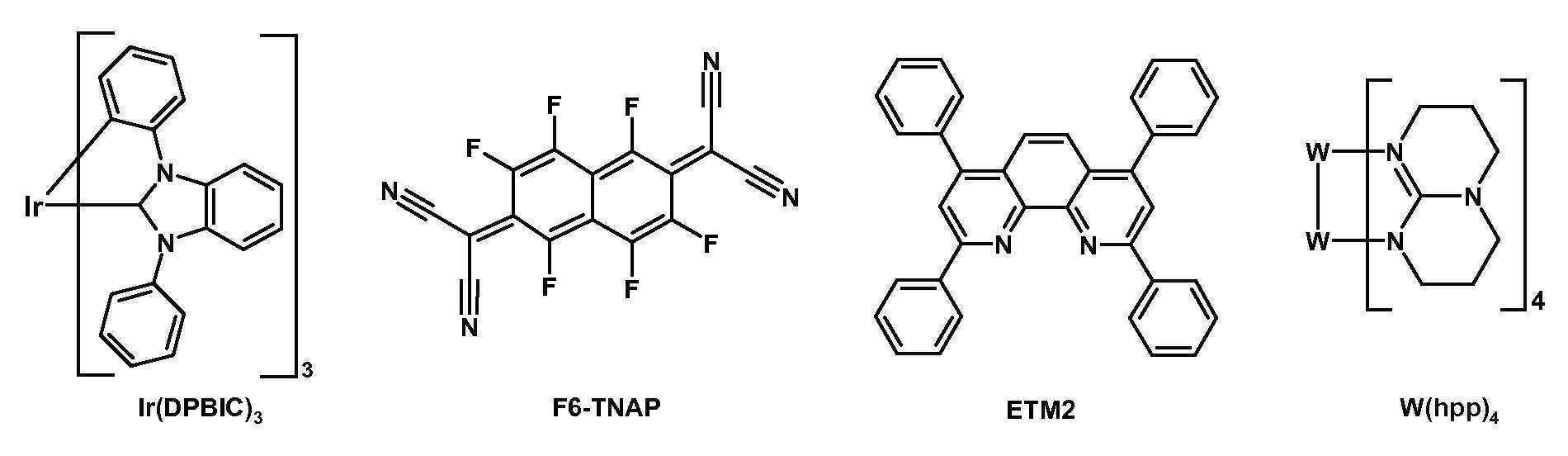
(Ir(DPBIC)3의 제조의 경우 출원 WO 2005/019373 A2에서의 Ir 착물(7) 참조).(For the preparation of Ir(DPBIC) 3 see Ir complex (7) in application WO 2005/019373 A2).
그후, 30% 이미터 fac-Em1, 60%의 화합물 Ma7 및 10%의 화합물 Ir(DPBIC)3 의 두께가 30 ㎚인 혼합물을 증착에 의하여 방출층으로서 적용하고, 후자의 2개의 화합물은 매트릭스 물질로서 작용한다.Thereafter, a mixture of 30% emitter fac-Em1, 60% compound Ma7 and 10% compound Ir(DPBIC) 3 having a thickness of 30 nm was applied as an emissive layer by vapor deposition, and the latter two compounds were used as matrix materials. Acts as
사용한 차후의 전자 도체 층은 층 두께가 25 ㎚인 8% W(hpp)4(EP1786050 참조)로 도핑된 ETM2 층(EP1097981에서의 화합물 번호 28 참조)이다 The subsequent electron conductor layer used is an ETM2 layer (see compound number 28 in EP1097981) doped with 8% W(hpp) 4 (see EP1786050) with a layer thickness of 25 nm.
두께가 100 ㎚인 알루미늄 캐쏘드는 다이오드를 생성한다.An aluminum cathode with a thickness of 100 nm produces a diode.
모든 부품은 불활성 질소 대기 중에서 유리 뚜껑으로 캡슐화된다.All parts are encapsulated with glass lids in an inert nitrogen atmosphere.
실시예 28b:Example 28b:
실시예 28b로부터의 OLED는 방출층이 30% Em8 및 70% 매트릭스 물질 Ma7로 이루어진 것을 제외하고, 실시예 28a로부터의 OLED와 동일한 구조를 갖는다.The OLED from Example 28b has the same structure as the OLED from Example 28a, except that the emissive layer consists of 30% Em8 and 70% matrix material Ma7.
OLED를 특성화하기 위하여, 전기발광 스펙트럼을 상이한 전류 및 전압에서 기록한다. 게다가, 전류-전압 특징은 방출되는 광 출력과 조합하여 측정한다. 광 출력은 측광계를 사용한 보정에 의하여 측광 변수로 전환시킬 수 있다.To characterize the OLED, electroluminescence spectra are recorded at different currents and voltages. In addition, the current-voltage characteristic is measured in combination with the emitted light output. The light output can be converted into a photometric variable by calibration using a photometer.
도핑된 OLED의 2종의 작업예의 경우, 하기 전기광학 데이타를 얻는다:For two working examples of doped OLED, the following electro-optical data are obtained:

실시예 29Example 29
각종 이미터를 사용한 다이오드Diode using various emitters
애노드로서 사용한 ITO 기판을 우선 LCD 제조용 시판 세제(Deconex® 20NS, 및 25ORGAN-ACID® 중화제)로 세정한 후, 아세톤/이소프로판올 혼합물 중에서 초음파 배쓰 내에서 세정한다. 가능한 유기 잔류물을 제거하기 위하여, 기판을 연속 오존 흐름에 오존 오븐 내에서 추가의 25 분 동안 노출시킨다. 이러한 처리는 또한 ITO의 정공 주입 성질을 개선시킨다. 다음, 플렉스코어로부터의 40 ㎚-두께의 정공 주입층 AJ20-1000을 용액으로부터 방적 처리한다.After washing with first LCD for producing commercially available detergent (Deconex 20NS ®, and 25ORGAN-ACID ® neutralizer) an ITO substrate was used as the anode, and in acetone / isopropanol mixture is washed in an ultrasonic bath. In order to remove possible organic residues, the substrate is exposed to a continuous ozone flow for an additional 25 minutes in an ozone oven. This treatment also improves the hole injection properties of ITO. Next, the 40 nm-thick hole injection layer AJ20-1000 from the flexcore was spun from the solution.
그후, 하기에 명시된 유기 물질을 증착에 의하여 약 0.5-5 ㎚/min의 속도로 깨끗한 기판에 약 10-7-10-9 mbar에서 적용한다.The organic material specified below is then applied by vapor deposition to a clean substrate at a rate of about 0.5-5 nm/min at about 10 -7 -10 -9 mbar.
적용한 정공 도체 및 엑시톤 차단체는 20 ㎚ 두께의 Ir(DPBIC)3이고, 처음 15 ㎚를 5% ReO3로 도핑시킨다. 그후, 이미터 및 2개의 매트릭스 물질로 이루어진 20 ㎚-두께의 발광층을 증착에 의하여 적용한다. 그후, 엑시톤 및 정공 차단체의 5 ㎚-두께의 층을 적용한다. 그 다음, 전자 수송층으로서 50% Liq 및 50% ETM1의 혼합물을 40 ㎚의 두께로 적용한다. 마지막으로, KF의 4 ㎚-두께의 층 및 100 ㎚-두께의 Al 전극을 증착에 의하여 적용한다.The applied hole conductor and exciton blocker were Ir(DPBIC) 3 having a thickness of 20 nm, and the first 15 nm was doped with 5% ReO 3. Thereafter, a 20 nm-thick light emitting layer consisting of an emitter and two matrix materials is applied by evaporation. Then, a 5 nm-thick layer of excitons and hole blockers is applied. Then, a mixture of 50% Liq and 50% ETM1 as an electron transport layer is applied with a thickness of 40 nm. Finally, a 4 nm-thick layer of KF and a 100 nm-thick Al electrode are applied by vapor deposition.
실시예 29aExample 29a
다이오드는 상기 기재된 바와 같이 10%의 이미터 Em16 및 45% 각각의 매트릭스 물질 Ir(DPBIC)3 및 Ma13으로 이루어진 발광층으로 구조된다. 사용한 엑시톤 및 정공 차단체는 Ma13이다.The diode is structured as a light emitting layer made of 10% of the emitter Em16 and 45% of the matrix materials Ir(DPBIC) 3 and Ma13 respectively, as described above. The exciton and hole blocker used was Ma13.
다이오드는 색 좌표 CIE 0.20, 0.43을 나타낸다. 300 cd/㎡에서, 전압은 3.6 V이고, 외부 양자 효율은 17.7%이다.The diode has color coordinates CIE 0.20, 0.43. At 300 cd/m2, the voltage is 3.6 V and the external quantum efficiency is 17.7%.
실시예 29bExample 29b
다이오드는 상기 기재된 바와 같이 10%의 이미터 Em16 및 45% 각각의 매트릭스 물질 Ir(DPBIC)3 및 Ma7로 이루어진 발광층으로 구조된다. 사용한 엑시톤 및 정공 차단체는 Ma7이다.The diode is structured as a light emitting layer consisting of 10% of the emitter Em16 and 45% of the matrix materials Ir(DPBIC) 3 and Ma7, respectively, as described above. The exciton and hole blocker used was Ma7.
다이오드는 색 좌표 CIE 0.19, 0.43을 나타낸다. 300 cd/㎡에서, 전압은 3.6 V이고, 외부 양자 효율은 14.7%이다.The diode has color coordinates CIE 0.19, 0.43. At 300 cd/m2, the voltage is 3.6 V and the external quantum efficiency is 14.7%.
실시예 29cExample 29c
다이오드는 상기 기재된 바와 같이 10%의 이미터 Em17 및 45% 각각의 매트릭스 물질 Ir(DPBIC)3 및 Ma13으로 이루어진 발광층으로 구조된다. 사용한 엑시톤 및 정공 차단체는 Ma13이다.The diode is structured as a light emitting layer made of 10% of the emitter Em17 and 45% of the matrix materials Ir(DPBIC) 3 and Ma13, respectively, as described above. The exciton and hole blocker used was Ma13.
다이오드는 색 좌표 CIE 0.20, 0.44를 나타낸다. 300 cd/㎡에서, 발광 효율은 45.5 lm/W이고, 외부 양자 효율은 19.6%이다.The diode has color coordinates CIE 0.20, 0.44. At 300 cd/m2, the luminous efficiency is 45.5 lm/W, and the external quantum efficiency is 19.6%.
실시예 29dExample 29d
다이오드는 상기 기재된 바와 같이 10%의 이미터 Em17 및 45% 각각의 매트릭스 물질 Ir(DPBIC)3 및 Ma7로 이루어진 발광층으로 구조된다. 사용한 엑시톤 및 정공 차단체는 Ma7이다.The diode is structured as a light emitting layer made of 10% of the emitter Em17 and 45% of the matrix materials Ir(DPBIC) 3 and Ma7, respectively, as described above. The exciton and hole blocker used was Ma7.
다이오드는 색 좌표 CIE 0.18, 0.39를 나타낸다. 300 cd/㎡에서, 전압은 3.8 V이고, 발광 효율은 40.4 lm/W이다.The diode has color coordinates CIE 0.18 and 0.39. At 300 cd/m2, the voltage is 3.8 V and the luminous efficiency is 40.4 lm/W.
실시예 29eExample 29e
다이오드는 상기 기재된 바와 같이 10%의 이미터 Em20 및 45% 각각의 매트릭스 물질 Ir(DPBIC)3 및 Ma7로 이루어진 발광층으로 구조된다. 사용한 엑시톤 및 정공 차단체는 Ma7이다.The diode is structured as a light emitting layer made of 10% of the emitter Em20 and 45% of the matrix materials Ir(DPBIC) 3 and Ma7, respectively, as described above. The exciton and hole blocker used was Ma7.
다이오드는 색 좌표 CIE 0.15, 0.29를 나타낸다. 300 cd/㎡에서, 전압은 3.6 V이고, 외부 양자 효율은 19.9%이다.The diode has color coordinates CIE 0.15 and 0.29. At 300 cd/m2, the voltage is 3.6 V and the external quantum efficiency is 19.9%.
실시예 29fExample 29f
다이오드는 상기 기재된 바와 같이 10%의 이미터 Em20 및 45% 각각의 매트릭스 물질 Ir(DPBIC)3 및 Ma13으로 이루어진 발광층으로 구조된다. 사용한 엑시톤 및 정공 차단체는 Ma13이다.The diode is structured as a light emitting layer made of 10% of the emitter Em20 and 45% of the matrix materials Ir(DPBIC) 3 and Ma13, respectively, as described above. The exciton and hole blocker used was Ma13.
다이오드는 색 좌표 CIE 0.15, 0.29이다. 300 cd/㎡에서, 전압은 3.3 V이고, 외부 양자 효율은 19.0%이다.The diode has color coordinates CIE 0.15, 0.29. At 300 cd/m2, the voltage is 3.3 V and the external quantum efficiency is 19.0%.
실시예 30Example 30
동질접합(homojunction) OLEDHomojunction OLED
실시예 30aExample 30a
애노드로서 사용한 ITO 기판을 우선 LCD 제조용 시판 세제(Deconex® 20NS, 및 25ORGAN-ACID® 중화제)로 세정한 후, 아세톤/이소프로판올 혼합물 중에서 초음파 배쓰 내에서 세정한다. 가능한 유기 잔류물을 제거하기 위하여, 기판을 연속 오존 흐름에 오존 오븐 내에서 추가의 25 분 동안 노출시킨다. 이러한 처리는 또한 ITO의 정공 주입 성질을 개선시킨다. 그 다음, 플렉스코어로부터의 40 ㎚-두께의 정공 주입층 AJ20-1000을 용액으로부터 방적 처리한다.After washing with first LCD for producing commercially available detergent (Deconex 20NS ®, and 25ORGAN-ACID ® neutralizer) an ITO substrate was used as the anode, and in acetone / isopropanol mixture is washed in an ultrasonic bath. In order to remove possible organic residues, the substrate is exposed to a continuous ozone flow for an additional 25 minutes in an ozone oven. This treatment also improves the hole injection properties of ITO. Then, the 40 nm-thick hole injection layer AJ20-1000 from the flexcore was spun from the solution.
그후, 하기에 명시된 유기 물질을 증착에 의하여 약 0.5-5 ㎚/min의 속도로 깨끗한 기판에 약 10-7-10-9 mbar에서 적용한다.The organic material specified below is then applied by vapor deposition to a clean substrate at a rate of about 0.5-5 nm/min at about 10 -7 -10 -9 mbar.
적용한 정공 도체 및 엑시톤 차단체는 두께가 20 ㎚인 Ma4이며, 처음 15 ㎚를 5% ReO3로 도핑시킨다. 그후, 10% fac-Em1, 35% Ir(DPBIC)3 및 55% Ma4로 이루어진 20 ㎚-두께의 발광층을 증착에 의하여 적용한다. 그후, 엑시톤 및 정공 차단체의 Ma4의 5 ㎚-두께의 층을 적용한다. 그 다음, 전자 수송층으로서 50% Liq 및 50% Ma4의 혼합물을 40 ㎚의 두께로 적용한다. 마지막으로, 4 ㎚-두께의 층의 KF 및 100 ㎚-두께의 Al 전극을 증착에 의하여 적용한다.The applied hole conductor and exciton blocker were Ma4 with a thickness of 20 nm, and the first 15 nm was doped with 5% ReO 3. Then, a 20 nm-thick light emitting layer consisting of 10% fac-Em1, 35% Ir(DPBIC) 3 and 55% Ma4 is applied by evaporation. Then, a 5 nm-thick layer of Ma4 of excitons and hole blockers is applied. Then, a mixture of 50% Liq and 50% Ma4 as an electron transport layer is applied with a thickness of 40 nm. Finally, a 4 nm-thick layer of KF and a 100 nm-thick Al electrode are applied by vapor deposition.
다이오드는 색 좌표 CIE 0.15, 0.25를 나타낸다. 300 cd/㎡에서, 외부 양자 효율은 18.7%이다.The diode has color coordinates CIE 0.15, 0.25. At 300 cd/m2, the external quantum efficiency is 18.7%.
**
*실시예 30b * Example 30b
다이오드는 발광층이 30% fac-Em1, 35% Ir(DPBIC)3 및 35% Ma4로 이루어진 것을 제외하고, 실시예 30a와 유사하게 구조된다.The diode was structured similarly to Example 30a, except that the light emitting layer was composed of 30% fac-Em1, 35% Ir (DPBIC) 3 and 35% Ma4.
다이오드는 색 좌표 CIE 0.16, 0.31을 나타낸다. 300 cd/㎡에서, 외부 양자 효율은 16.2%이다.The diode has color coordinates CIE 0.16, 0.31. At 300 cd/m2, the external quantum efficiency is 16.2%.
*실시예 30c * Example 30c
다이오드는 Ma4를 특정 층에서 Ma7로 대체하고, 발광층은 10% fac-Em1, 45% Ir(DPBIC)3 및 45% Ma7로 이루어진 것을 제외하고, 실시예 30a와 유사하게 구조된다.The diode is structured similarly to Example 30a, except that Ma4 is replaced by Ma7 in a specific layer, and the light emitting layer is made of 10% fac-Em1, 45% Ir (DPBIC) 3 and 45% Ma7.
다이오드는 CIE 색 좌표 0.16, 0.28을 나타낸다. 300 cd/㎡에서, 외부 양자 효율은 11.9%이다.The diodes have CIE color coordinates of 0.16 and 0.28. At 300 cd/m2, the external quantum efficiency is 11.9%.
실시예 30dExample 30d
다이오드는 Ma4를 특정 층에서 Ma7로 대체하고, 발광층은 30% fac-Em1, 35% Ir(DPBIC)3 및 35% Ma7로 이루어진 것을 제외하고, 실시예 30a와 유사하게 구조된다The diode is structured similarly to Example 30a, except that Ma4 is replaced by Ma7 in a specific layer, and the light emitting layer is composed of 30% fac-Em1, 35% Ir (DPBIC) 3 and 35% Ma7.
다이오드는 CIE 색 좌표 0.18, 0.34를 나타낸다. 300 cd/㎡에서, 외부 양자 효율은 16.3%이다.The diode represents the CIE color coordinates 0.18 and 0.34. At 300 cd/m2, the external quantum efficiency is 16.3%.
실시예 31Example 31
ETM3의 합성Synthesis of ETM3

단계 1Step 1
자기 교반기, 온도계, 적하 깔때기, 환류 응축기 및 질소 블랭켓팅이 장착된 250 ㎖ 3목 둥근 바닥 플라스크에 초기에 150 ㎖의 메탄올을 가하고, 3.8 g의 수산화칼륨(≥85%)을 첨가한다. 맑은 무색 용액이 형성될 때까지 혼합물을 실온에서 교반한다. 그후, 얼음 배쓰를 사용하여 0℃로 냉각되도록 하고, 14.3 g(56.7 mmol)의 1-(8-아세틸디벤조푸란-2-일)에타논(문헌[M. J. Bruce, Perkin Transactions I, 1789 (1995)]에 의하여 제조함)을 첨가한다. 현탁액을 0℃에서 1 시간 동안 교반한 후, 17.3 ㎖(170 mmol)의 벤즈알데히드를 3 분 이내에 적가한다. 그후, 반응 혼합물을 실온으로 가온되도록 하고, 14 시간 동안 교반한다. 미세한 베이지색-황색 현탁액을 여과하고, 잔류물을 50 ㎖의 에탄올로 세정한다. 미정제 생성물을 150 ㎖의 에탄올에 현탁시키고, 환류하에 30 분 동안 교반한다. 그후, 이를 실온으로 냉각시킨 후, 0℃로 냉각시키고, 여과하고, 10 ㎖의 빙냉 에탄올로 2회 세정하고, 및 잔류물을 50℃/150 mbar에서 밤새 건조시킨다. 이는 21.6 g(88.9% 이론치)의 3-페닐-1-{8-(3-페닐아크릴로일)]-디벤조푸란-2-일}프로페논을 옅은 베이지색 결정으로서 얻는다.To a 250 ml three necked round bottom flask equipped with magnetic stirrer, thermometer, dropping funnel, reflux condenser and nitrogen blanketing was initially added 150 ml of methanol, followed by addition of 3.8 g of potassium hydroxide (≥85%). The mixture is stirred at room temperature until a clear colorless solution is formed. Then, it was allowed to cool to 0°C using an ice bath, and 14.3 g (56.7 mmol) of 1-(8-acetyldibenzofuran-2-yl)ethanone (MJ Bruce, Perkin Transactions I , 1789 (1995) )] is added. After the suspension was stirred at 0° C. for 1 hour, 17.3 ml (170 mmol) of benzaldehyde was added dropwise within 3 minutes. Then, the reaction mixture is allowed to warm to room temperature and stirred for 14 hours. The fine beige-yellow suspension is filtered and the residue is washed with 50 ml of ethanol. The crude product is suspended in 150 ml of ethanol and stirred under reflux for 30 minutes. Then it is cooled to room temperature, then cooled to 0° C., filtered, washed twice with 10 ml of ice-cold ethanol, and the residue is dried overnight at 50° C./150 mbar. This gives 21.6 g (88.9% theory) of 3-phenyl-1-{8-(3-phenylacryloyl)]-dibenzofuran-2-yl}propenone as pale beige crystals.
1H NMR (CDCl3, 300 MHz): 1 H NMR (CDCl 3 , 300 MHz):
8.67 (s, 2H), 8.25 (d, J=7Hz, 2H), 7.89 (s, J=12Hz, 2H), 7.8-7.65 (m, 8H), 7.55-7.4 (m, 6H).8.67 (s, 2H), 8.25 (d, J=7Hz, 2H), 7.89 (s, J=12Hz, 2H), 7.8-7.65 (m, 8H), 7.55-7.4 (m, 6H).
단계 2
자기 교반기, 온도계, 환류 응축기 및 질소 블랭켓팅이 장착된 100 ㎖ 3목 둥근 바닥 플라스크에 초기에 60 ㎖의 메탄올을 가하고, 교반하면서 얼음 배쓰를 사용하여 0℃로 냉각시킨다. 그후, 15.7 g(240 mmol)의 칼륨 tert-부톡시드를 10 분 이내에 여러 부분으로 첨가한다. 자기 교반기, 온도계, 적하 깔때기, 환류 응축기 및 질소 블랭켓팅이 장착된 500 ㎖ 3목 둥근 바닥 플라스크에 초기에 90 ㎖의 메탄올을 가한 후, 8.6 g(20 mmol)의 3-페닐-1-{8-(3-페닐아크릴로일)]디벤조푸란-2-일}프로페논 및 41.8 g(80 mmol)의 벤즈아미딘 염산염(메탄올 중의 30%)을 교반하면서 첨가한다. 베이지색 현탁액을 환류 가열한 후, 미리 생성한 칼륨 tert-부톡시드 용액을 20 분 이내에 적가한다. 베이지색-갈색 현탁액을 환류하에 밤새 교반한다. 그후, 이를 실온으로 냉각시킨 후, 150 ㎖의 물을 적가하고, 혼합물을 4 시간 동안 교반한다. 현탁액이 형성되며, 이를 여과한다. 잔류물을 200 ㎖의 물에 현탁시키고, 2 시간 동안 환류 가열한다. 그후, 혼합물을 실온으로 냉각시키고, 여과하고, 잔류물을 50 ㎖의 물로 세정한 후, 60℃/150 mbar에서 밤새 건조시킨다. 이는 10.9 g의 2,8-비스(2,4-디페닐-1,4-디히드로피리미디닐)디벤조푸란(85.8% 이론치)을 황색 결정으로서 얻는다. 사용한 미정제 생성물을 추가로 정제하지 않고 사용한다.Initially, 60 ml of methanol was added to a 100 ml three necked round bottom flask equipped with a magnetic stirrer, thermometer, reflux condenser and nitrogen blanketing, and cooled to 0° C. using an ice bath while stirring. Then, 15.7 g (240 mmol) of potassium tert-butoxide are added in several portions within 10 minutes. After initially adding 90 ml of methanol to a 500 ml three-neck round bottom flask equipped with magnetic stirrer, thermometer, dropping funnel, reflux condenser and nitrogen blanketing, 8.6 g (20 mmol) 3-phenyl-1-{8 -(3-phenylacryloyl)]dibenzofuran-2-yl}propenone and 41.8 g (80 mmol) of benzamidine hydrochloride (30% in methanol) are added with stirring. After heating the beige suspension to reflux, the potassium tert-butoxide solution produced in advance is added dropwise within 20 minutes. The beige-brown suspension is stirred under reflux overnight. Then, after cooling it to room temperature, 150 ml of water was added dropwise, and the mixture was stirred for 4 hours. A suspension is formed, which is filtered. The residue is suspended in 200 ml of water and heated to reflux for 2 hours. The mixture is then cooled to room temperature, filtered, and the residue is washed with 50 ml of water and then dried at 60° C./150 mbar overnight. This gives 10.9 g of 2,8-bis(2,4-diphenyl-1,4-dihydropyrimidinyl)dibenzofuran (85.8% theory) as yellow crystals. The crude product used is used without further purification.
단계 3
자기 교반기, 온도계, 환류 응축기 및 질소 블랭켓팅이 장착된 500 ㎖ 3목 둥근 바닥 플라스크에 초기에 100 ㎖의 o-디클로로벤젠 중의 10.9 g(17 mmol)의 미정제 2,8-비스(2,4-디페닐-1,4-디히드로피리미디닐)디벤조푸란을 가하고, 교반하면서 60℃로 가열한다. 그후, 19.1 g(78 mmol)의 클로라닐을 첨가하고, 짙은색 반응 혼합물을 14 시간 동안 환류 가열한다. 그후, 160 ㎖의 MeOH를 첨가하고, 혼합물을 환류하에 15 분 동안 교반한다. 그후, 이를 얼음 배쓰로 0℃로 냉각시키고, 짙은 갈색 현탁액을 여과하고, 잔류물을 매회 50 ㎖의 MeOH로 3회 그리고 매회 50 ㎖의 물로 2회 세정한다. 60℃/125 mbar에서 밤새 건조시킨 후, 18.0 g의 갈색 결정을 얻는다. 미정제 생성물을 100 ㎖의 MeOH에 환류하에 1 시간 동안 현탁시킨 후, 0℃로 냉각시키고, 매회 20 ㎖의 MeOH로 2회 세정하고, 60℃/125 mbar에서 건조시킨다. 이는 16.4 g의 갈색 결정을 생성한다. 5.7 g의 상기 물질을 50 ㎖의 EtOH에 환류하에 30 분 동안 현탁시킨 후, 0℃로 냉각시키고, 매회 20 ㎖의 EtOH로 2회 세정하고, 60℃/125 mbar에서 건조시킨다. 이는 5.0 g의 갈색 결정을 생성한다. 이러한 미정제 생성물을 190 ㎖의 톨루엔 중에서 슬러리로 만들고, 환류하에 30 분 동안 교반한다. 그후, 얼음 배쓰로 0℃로 냉각시키고, 현탁액을 여과하고, 잔류물을 매회 20 ㎖의 톨루엔으로 3회 세정한다. 60℃/125 mbar에서 밤새 건조시킨 후, 3.0 g(81% 이론치)의 목적하는 생성물을 백색-베이지색 결정으로서 얻는다.Initially 10.9 g (17 mmol) of
HPLC-MS: 순도 99.5%, [M+1]=629.5 m/z. HPLC-MS: purity 99.5%, [M+1]=629.5 m/z.
1H NMR (CDCl3, 300 MHz): 1 H NMR (CDCl 3 , 300 MHz):
8.97 (s, 2H), 8.73 (d, J=9Hz, 4H), 8,43 (d, J=10Hz, 2H), 8.42-8.28 (m, 4H), 8.11 (s, 2H), 7.73 (d, J=9Hz, 2H) 7.60-7.35 (m, 12H) 8.97 (s, 2H), 8.73 (d, J=9Hz, 4H), 8,43 (d, J=10Hz, 2H), 8.42-8.28 (m, 4H), 8.11 (s, 2H), 7.73 (d , J=9Hz, 2H) 7.60-7.35 (m, 12H)
실시예 32Example 32
우선, 애노드로서 사용한 ITO 기판을 실시예 30a에서와 같이 처리하고, 상기 기재한 바와 같이 플렉스코어로부터의 40 ㎚-두께의 정공 주입층 AJ20-1000을 제공한다.First, an ITO substrate used as an anode was treated as in Example 30a, and a 40 nm-thick hole injection layer AJ20-1000 from a flexcore was provided as described above.
그후, 하기에 명시한 유기 물질을 증착에 의하여 약 0.5-5 ㎚/min의 속도로 깨끗한 기판에 약 10-7-10-9 mbar에서 적용한다:The organic material specified below is then applied by vapor deposition to a clean substrate at a rate of about 0.5-5 nm/min at about 10 -7 -10 -9 mbar:
실시예 32aExample 32a
적용한 정공 도체 및 엑시톤 차단체는 20 ㎚ 두께의 Ir(DPBIC)3이고, 처음 15 ㎚를 5% ReO3으로 도핑시킨다. 그후, 10% fac-Em1, 45% Ir(DPBIC)3 및 45% Ma13으로 이루어진 20 ㎚-두께의 발광층을 증착에 의하여 적용한다. 그후, 엑시톤 및 정공 차단체의 5 ㎚-두께의 층 Ma13을 적용한다. 그 다음, 전자 수송층으로서 50% Liq 및 50% ETM3의 혼합물을 40 ㎚의 두께로 적용한다. 마지막으로, KF의 4 ㎚-두께의 층 및 100 ㎚-두께의 Al 전극을 증착에 의하여 적용한다.The applied hole conductor and exciton blocker were Ir(DPBIC) 3 having a thickness of 20 nm, and the first 15 nm was doped with 5% ReO 3. Then, a 20 nm-thick light emitting layer consisting of 10% fac-Em1, 45% Ir (DPBIC) 3 and 45% Ma13 is applied by vapor deposition. Then, a 5 nm-thick layer Ma13 of excitons and hole blockers is applied. Then, a mixture of 50% Liq and 50% ETM3 as an electron transport layer is applied with a thickness of 40 nm. Finally, a 4 nm-thick layer of KF and a 100 nm-thick Al electrode are applied by vapor deposition.
다이오드는 CIE 색 좌표 0.16, 0.27을 나타낸다. 300 cd/㎡에서, 외부 양자 효율은 13.7%이다.The diode represents the CIE color coordinates 0.16 and 0.27. At 300 cd/m2, the external quantum efficiency is 13.7%.
실시예 32bExample 32b
다이오드는 전자 수송층이 순수한 ETM3으로 이루어진 것을 제외하고. 실시예 32a에 기재된 바와 같이 구조한다.Diodes except that the electron transport layer is made of pure ETM3. Construct as described in Example 32a.
다이오드는 CIE 색 좌표 0.16, 0.27을 나타낸다. 300 cd/㎡에서, 전압은 3.4 V이다.The diode represents the CIE color coordinates 0.16 and 0.27. At 300 cd/m2, the voltage is 3.4 V.
실시예 32cExample 32c
다이오드는 발광층이 30% fac-Em1, 35% Ir(DPBIC)3 및 35% Ma13으로 이루어진 것을 제외하고, 실시예 32a에 기재된 바와 같이 구조한다.The diode was constructed as described in Example 32a, except that the light emitting layer was composed of 30% fac-Em1, 35% Ir (DPBIC) 3 and 35% Ma13.
다이오드는 CIE 색 좌표 0.17, 0.32를 나타낸다. 300 cd/㎡에서, 전압은 3.4 V이다.The diode represents the CIE color coordinates 0.17 and 0.32. At 300 cd/m2, the voltage is 3.4 V.
실시예 32dExample 32d
다이오드는 전자 수송층이 순수한 ETM3으로 이루어진 것을 제외하고, 실시예 32c에 기재된 바와 같이 구조한다.The diode was constructed as described in Example 32c, except that the electron transport layer was made of pure ETM3.
다이오드는 CIE 색 좌표 0.17, 0.31을 나타낸다. 300 cd/㎡에서, 외부 양자 효율은 14.2%이다.The diode represents the CIE color coordinates 0.17 and 0.31. At 300 cd/m2, the external quantum efficiency is 14.2%.
실시예 33Example 33
ETM4의 합성Synthesis of ETM4
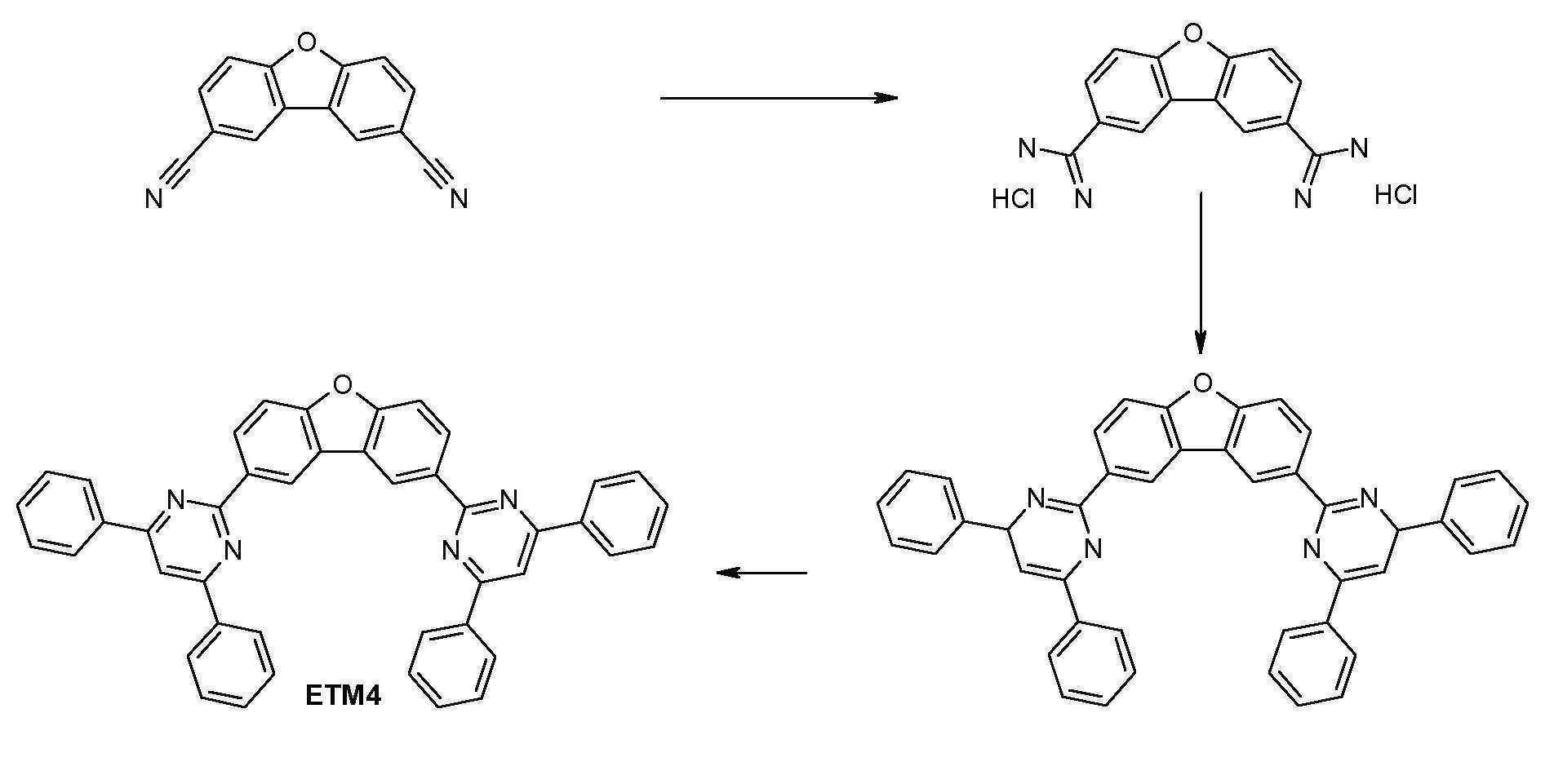
단계 1Step 1
자기 교반기, 온도계, 환류 응축기, 기체 투입관, 질소 블랭켓팅 및 기체 세정병이 장착된 100 ㎖ 3목 둥근 바닥 플라스크에 초기에 1.8 ㎖의 에탄올 및 50 ㎖의 1,4-디옥산의 혼합물 중의 1.09 g(5.0 mmol)의 디벤조푸란-2,8-디카르보니트릴(문헌[S. Wang, Eur.J. Med. Chem. 34, 215 (1999)]에 의하여 생성함)을 가하고, EtOH/CO2 배쓰로 0℃로 냉각시킨 후, HCl 기체를 포화될 때까지 투입한다. 그후, 플라스크를 밀봉시키고, 백색 현탁액을 실온으로 가온시키고, 48 시간 동안 교반한다. 그후, HCl이 임의의 배기 가스중에 더 이상 검출될 수 없을 때까지 무수 N2를 현탁액에 취입시킨다. 25 ㎖의 t-부틸 메틸 에테르를 첨가하고, 황색을 띠는 현탁액을 여과한다. 잔류물을 매회 25 ㎖의 t-부틸 메틸 에테르로 2회 세정한 후, 에탄올 중의 2M NH3 40 ㎖에 현탁시키고, 60℃에서 18 시간 동안 교반한다. 그후, 현탁액을 냉각시키고, NH3가 임의의 배기 가스중에 더 이상 검출될 수 없을 때까지 무수 N2를 현탁액에 취입시킨다. 그후, 얼음 배쓰로 냉각시키고, HCl 기체를 다시 포화될 때까지 투입한다. 그후, 다시 무수 N2를 취입시키고, 베이지색 현탁액을 여과하고, 빙냉 EtOH의 총 25 ㎖의 부분으로 세정한다. 잔류물을 50℃/125 mbar에서 밤새 건조시킨다. 이는 1.71 g(99.2% 이론치)의 디벤조푸란-2,8-비스아미딘 염산염을 베이지색 결정으로서 생성한다.1.09 in a mixture of 1.8 ml ethanol and 50 ml 1,4-dioxane initially in a 100 ml three neck round bottom flask equipped with magnetic stirrer, thermometer, reflux condenser, gas inlet tube, nitrogen blanketing and gas scrubbing bottle. g (5.0 mmol) of dibenzofuran-2,8-dicarbonitrile (produced by S. Wang, Eur.J. Med. Chem . 34, 215 (1999)) was added, and EtOH/CO After cooling to 0° C. with 2 baths, HCl gas is added until saturated. Then the flask is sealed and the white suspension is warmed to room temperature and stirred for 48 hours. Then, anhydrous N 2 is blown into the suspension until HCl can no longer be detected in any exhaust gas. 25 ml of t-butyl methyl ether are added and the yellowish suspension is filtered. The residue was washed twice with 25 ml of t-butyl methyl ether each time, then suspended in 40 ml of 2M NH 3 in ethanol and stirred at 60° C. for 18 hours. Thereafter, the suspension is cooled and anhydrous N 2 is blown into the suspension until NH 3 is no longer detectable in any exhaust gas. Then, it is cooled with an ice bath, and HCl gas is added until saturated again. Thereafter, anhydrous N 2 was again taken in, and the beige suspension was filtered and washed with a total portion of 25 ml of ice-cold EtOH. The residue is dried overnight at 50° C./125 mbar. This yields 1.71 g (99.2% theory) of dibenzofuran-2,8-bisamidine hydrochloride as beige crystals.
1H NMR (DMSO, 300 MHz): 1 H NMR (DMSO, 300 MHz):
8.90-8.75 (m, 2H), 8.25-8.00 (m, 4H)8.90-8.75 (m, 2H), 8.25-8.00 (m, 4H)
단계 2
자기 교반기, 온도계, 환류 응축기 및 질소 블랭켓팅이 장착된 100 ㎖ 3목 둥근 바닥 플라스크에 초기에 40 ㎖의 메탄올을 가하고, 교반하면서 얼음 배쓰로 0℃로 냉각시킨다. 그후, 2.85 g(25.4 mmol)의 칼륨 tert-부톡시드를 10 분 이내에 여러 부분으로 나누어 첨가한다. 자기 교반기, 온도계, 적하 깔때기, 환류 응축기 및 질소 블랭켓팅이 장착된 250 ㎖ 3목 둥근 바닥 플라스크에 초기에 60 ㎖의 메탄올에 이어서 1.7 g의 디벤조푸란-2,8-비스아미딘 염산염 및 4.08 g(19 mmol)의 벤질리덴아세토페논을 교반하면서 첨가한다. 베이지색 현탁액을 환류 가열한 후, 미리 생성한 칼륨 tert-부톡시드 용액을 5 분 이내에 적가한다. 베이지색 현탁액을 환류하에 밤새 교반한다. 그후, 혼합물을 0℃로 냉각시키고, 여과하고, 잔류물을 15 ㎖의 빙냉 MeOH로 세정하고, 60 ㎖의 물로 3회 세정하고, 60℃/150 mbar에서 밤새 건조시킨다. 이는 1.59 g의 2,8-비스(4,6-디페닐-1,4-디히드로피리미디닐)디벤조푸란(39.6% 이론치)을 황색 결정으로서 생성한다. 미정제 생성물을 추가로 정제하지 않고 사용한다.Initially 40 ml of methanol was added to a 100 ml three-neck round bottom flask equipped with a magnetic stirrer, thermometer, reflux condenser and nitrogen blanketing, and cooled to 0° C. with an ice bath while stirring. Then 2.85 g (25.4 mmol) of potassium tert-butoxide are added in portions within 10 minutes. In a 250 ml three neck round bottom flask equipped with magnetic stirrer, thermometer, dropping funnel, reflux condenser and nitrogen blanketing, initially 60 ml of methanol followed by 1.7 g of dibenzofuran-2,8-bisamidine hydrochloride and 4.08. g (19 mmol) benzylideneacetophenone is added with stirring. After heating the beige suspension to reflux, the potassium tert-butoxide solution produced in advance is added dropwise within 5 minutes. The beige suspension is stirred overnight under reflux. The mixture is then cooled to 0° C., filtered, and the residue is washed with 15 ml of ice-cold MeOH, 3 times with 60 ml of water and dried overnight at 60° C./150 mbar. This gives 1.59 g of 2,8-bis(4,6-diphenyl-1,4-dihydropyrimidinyl)dibenzofuran (39.6% theory) as yellow crystals. The crude product is used without further purification.
단계 3
자기 교반기, 온도계, 환류 응축기 및 질소 블랭켓팅이 장착된 100 ㎖ 3목 둥근 바닥 플라스크에 초기에 15 ㎖의 o-디클로로벤젠 중의 1.59 g(2.45 mmol)의 2,8-디(4,6-디페닐-1,4-디히드로피리미디닐)디벤조푸란을 가한다. 혼합물을 교반하면서 내부 온도 50℃로 가열한 후, 2.41 g(9.80 mmol)의 클로라닐을 첨가한다. 베이지색-갈색 현탁액을 4 시간 동안 환류 가열한 후, 30 ㎖의 MeOH에 이어서 5 ㎖의 물에 용해된 1 g의 NaOH를 적가한다. 짙은 갈색 현탁액을 환류하에 30 분 동안 교반한 후, 얼음 배쓰로 0℃로 냉각시키고, 여과한다. 잔류물을 20 ㎖의 MeOH로 3회 및 20 ㎖의 고온의 물로 5회 세정한다. 베이지색 고체를 50 ㎖의 톨루엔에 현탁시키고, 30 분 동안 교반하면서 환류시킨다. 그후, 60℃의 내부 온도로 냉각시키고, 여과하고, 잔류물을 10 ㎖의 톨루엔으로 2회 세정하고, 60℃/125 mbar에서 밤새 건조시킨다. 이는 0.85 g(55.2% 이론치)의 목적하는 생성물을 백색 결정으로서 생성한다.1.59 g (2.45 mmol) 2,8-di(4,6-di) in 15 ml o-dichlorobenzene initially in a 100 ml three neck round bottom flask equipped with magnetic stirrer, thermometer, reflux condenser and nitrogen blanketing. Phenyl-1,4-dihydropyrimidinyl)dibenzofuran is added. After the mixture was heated to an internal temperature of 50° C. while stirring, 2.41 g (9.80 mmol) of chloranil was added. After heating the beige-brown suspension to reflux for 4 hours, 30 ml of MeOH, followed by 1 g of NaOH dissolved in 5 ml of water are added dropwise. The dark brown suspension is stirred under reflux for 30 minutes, then cooled to 0° C. with an ice bath and filtered. The residue is washed 3 times with 20 ml of MeOH and 5 times with 20 ml of hot water. The beige solid was suspended in 50 ml of toluene and refluxed with stirring for 30 minutes. It is then cooled to an internal temperature of 60° C., filtered, and the residue is washed twice with 10 ml of toluene and dried overnight at 60° C./125 mbar. This gives 0.85 g (55.2% theory) of the desired product as white crystals.
HPLC-MS: 순도 99.3%, [M+1]=629.5 m/z. HPLC-MS: purity 99.3%, [M+1]=629.5 m/z.
1H NMR (CDCl3, 300 MHz): 1 H NMR (CDCl 3 , 300 MHz):
9.41 (s, 2H), 8.89 (d, J=9Hz, 2H), 8.35-8.20 (m, 8H), 7.98 (s, 2H), 7.68 (d, J=9Hz, 2H) 7.70-7.45 (m, 12H)9.41 (s, 2H), 8.89 (d, J=9Hz, 2H), 8.35-8.20 (m, 8H), 7.98 (s, 2H), 7.68 (d, J=9Hz, 2H) 7.70-7.45 (m, 12H)
Claims (6)
<화학식 I>
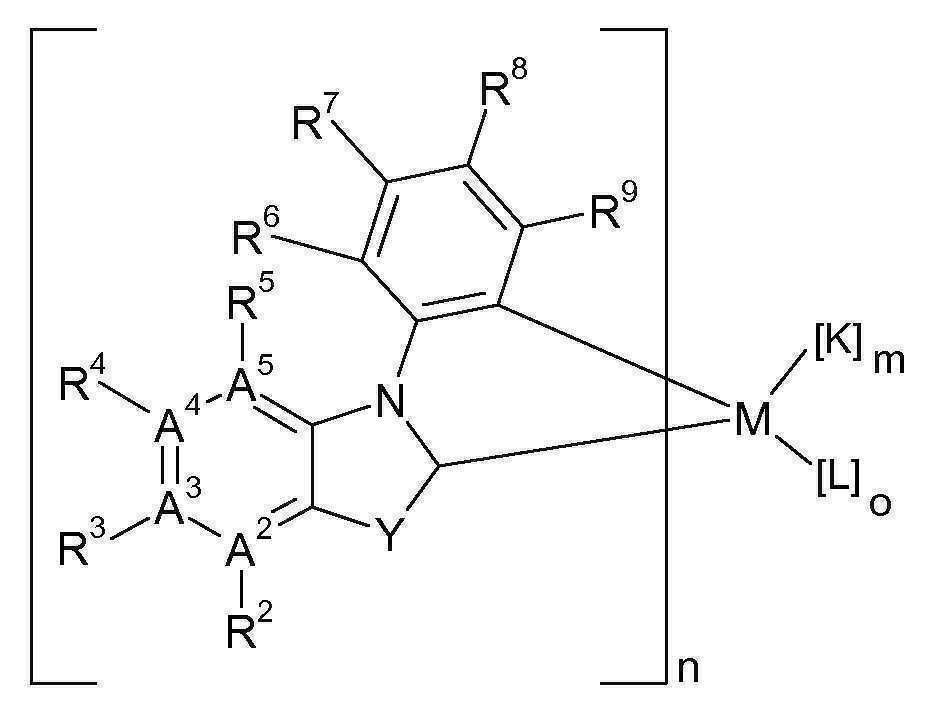
상기 화학식에서,
M, n, Y, A2, A3, A4, A5, R1, R2, R3, R4, R5, R6, R7, R8, R9, R10, K, L, m 및 o는 각각 하기에서 정의된 바와 같다:
M은 Ir 또는 Pt이고,
n은 1, 2 및 3으로부터 선택된 정수이고,
Y는 NR1, O, S 또는 C(R10)2이고,
A2, A3, A4, A5는 각각 독립적으로 N 또는 C이고, 여기서 2개의 A는 질소 원자이고, 1종 이상의 탄소 원자는 고리에서 2개의 질소 원자 사이에 존재하며,
R1은 1종 이상의 이종원자로 임의로 개재되며, 임의로 1종 이상의 작용기를 지니며 그리고 1 내지 20개의 탄소 원자를 갖는 선형 또는 분지형 알킬 라디칼; 1종 이상의 이종원자로 임의로 개재되며, 임의로 1종 이상의 작용기를 지니며 그리고 3 내지 20개의 탄소 원자를 갖는 시클로알킬 라디칼; 1종 이상의 이종원자로 임의로 개재되며, 임의로 1종 이상의 작용기를 지니며 그리고 6 내지 30개의 탄소 원자를 갖는 치환 또는 비치환 아릴 라디칼; 및 1종 이상의 이종원자로 임의로 개재되며, 임의로 1종 이상의 작용기를 지니며 그리고 총 5 내지 18개의 탄소 원자 및/또는 이종원자를 갖는 치환 또는 비치환 헤테로아릴 라디칼로 이루어진 군에서 선택되며,
R2, R3, R4, R5는 각각, A2, A3, A4 및/또는 A5가 N인 경우 유리 전자쌍이거나 또는, A2, A3, A4 및/또는 A5가 C인 경우 각각 독립적으로 수소; 1종 이상의 이종원자로 임의로 개재되며, 임의로 1종 이상의 작용기를 지니며 그리고 1 내지 20개의 탄소 원자를 갖는 선형 또는 분지형 알킬 라디칼; 1종 이상의 이종원자로 임의로 개재되며, 임의로 1종 이상의 작용기를 지니며 그리고 3 내지 20개의 탄소 원자를 갖는 시클로알킬 라디칼; 1종 이상의 이종원자로 임의로 개재되며, 임의로 1종 이상의 작용기를 지니며 그리고 6 내지 30개의 탄소 원자를 갖는 치환 또는 비치환 아릴 라디칼; 1종 이상의 이종원자로 임의로 개재되며, 임의로 1종 이상의 작용기를 지니며 그리고 총 5 내지 18개의 탄소 원자 및/또는 이종원자를 갖는 치환 또는 비치환 헤테로아릴 라디칼; 및 공여체 또는 수용체 작용을 갖는 기로 이루어진 군에서 선택되거나, 또는
R3 및 R4는 A3 및 A4와 함께 1종 이상의 추가의 이종원자로 임의로 개재되며 그리고 총 5 내지 18개의 탄소 원자 및/또는 이종원자를 갖는 임의로 치환된 불포화 고리를 형성하며,
R6, R7, R8, R9는 각각 독립적으로 수소; 1종 이상의 이종원자로 임의로 개재되며, 임의로 1종 이상의 작용기를 지니며 그리고 1 내지 20개의 탄소 원자를 갖는 선형 또는 분지형 알킬 라디칼; 1종 이상의 이종원자로 임의로 개재되며, 임의로 1종 이상의 작용기를 지니며 그리고 3 내지 20개의 탄소 원자를 갖는 시클로알킬 라디칼; 1종 이상의 이종원자로 임의로 개재되며, 임의로 1종 이상의 작용기를 지니며 그리고 3 내지 20개의 탄소 원자를 갖는 시클로헤테로알킬 라디칼; 1종 이상의 이종원자로 임의로 개재되며, 임의로 1종 이상의 작용기를 지니며 그리고 6 내지 30개의 탄소 원자를 갖는 치환 또는 비치환 아릴 라디칼; 1종 이상의 이종원자로 임의로 개재되며, 임의로 1종 이상의 작용기를 지니며 그리고 총 5 내지 18개의 탄소 원자 및/또는 이종원자를 갖는 치환 또는 비치환 헤테로아릴 라디칼; 및 공여체 또는 수용체 작용을 갖는 기로 이루어진 군에서 선택되거나, 또는
R6과 R7, R7과 R8 또는 R8과 R9는 이들이 결합되어 있는 탄소 원자와 함께 1종 이상의 이종원자로 임의로 개재되며 그리고 총 5 내지 18개의 탄소 원자 및/또는 이종원자를 갖는 포화, 불포화 또는 방향족, 임의로 치환된 고리를 형성하며, 및/또는
A5가 C인 경우, R5 및 R6은 함께 임의로 이종원자, 방향족 단위, 헤테로방향족 단위 및/또는 작용기를 포함하며 그리고 총 1 내지 30개의 탄소 원자 및/또는 이종원자를 갖고, 이에 탄소 원자 및/또는 이종원자를 포함하는 치환 또는 비치환, 5- 내지 8-원 고리가 임의로 융합되어 있는 포화 또는 불포화, 선형 또는 분지형 가교를 형성하며,
R10은 독립적으로 1종 이상의 이종원자로 임의로 개재되며, 임의로 1종 이상의 작용기를 지니며 그리고 1 내지 20개의 탄소 원자를 갖는 선형 또는 분지형 알킬 라디칼; 1종 이상의 이종원자로 임의로 개재되며, 임의로 1종 이상의 작용기를 지니며 그리고 3 내지 20개의 탄소 원자를 갖는 시클로알킬 라디칼; 1종 이상의 이종원자로 임의로 개재되며, 임의로 1종 이상의 작용기를 지니며 그리고 6 내지 30개의 탄소 원자를 갖는 치환 또는 비치환 아릴 라디칼; 및 1종 이상의 이종원자로 임의로 개재되며, 임의로 1종 이상의 작용기를 지니며 그리고 총 5 내지 18개의 탄소 원자 및/또는 이종원자를 갖는 치환 또는 비치환 헤테로아릴 라디칼로 이루어진 군에서 선택되고,
K는 비하전된 1좌 배위자 또는 2좌 배위자 리간드이고,
L이 1좌 배위자 또는 2좌 배위자일 수 있는, 1가 또는 2가 음이온 리간드이며,
m은 0, 1 또는 2이고, 여기서 m이 2인 경우, K 리간드는 동일하거나 또는 상이할 수 있으며,
o는 0, 1 또는 2이고, 여기서 o가 2인 경우, L 리간드는 동일하거나 또는 상이할 수 있다.Method of using a metal-carbene complex of formula (I) as an emitter, matrix material, charge transport material, and/or charge blocker in OLEDs:
<Formula I>
In the above formula,
M, n, Y, A 2 , A 3 , A 4 , A 5 , R 1 , R 2 , R 3 , R 4 , R 5 , R 6 , R 7 , R 8 , R 9 , R 10 , K, L, m and o are each as defined below:
M is Ir or Pt,
n is an integer selected from 1, 2 and 3,
Y is NR 1 , O, S or C(R 10 ) 2 ,
A 2 , A 3 , A 4 , A 5 are each independently N or C, where two A are nitrogen atoms, and at least one carbon atom is present between two nitrogen atoms in the ring,
R 1 is a linear or branched alkyl radical optionally interrupted by one or more heteroatoms, optionally having one or more functional groups, and having 1 to 20 carbon atoms; A cycloalkyl radical optionally interrupted by one or more heteroatoms, optionally having one or more functional groups, and having 3 to 20 carbon atoms; Substituted or unsubstituted aryl radicals optionally interposed by one or more heteroatoms, optionally having one or more functional groups, and having 6 to 30 carbon atoms; And a substituted or unsubstituted heteroaryl radical optionally interposed by one or more heteroatoms, optionally having one or more functional groups, and having a total of 5 to 18 carbon atoms and/or heteroatoms,
R 2 , R 3 , R 4 , R 5 are each a free electron pair when A 2 , A 3 , A 4 and/or A 5 is N, or A 2 , A 3 , A 4 and/or A 5 is In the case of C, each independently hydrogen; Linear or branched alkyl radicals optionally interrupted by one or more heteroatoms, optionally having one or more functional groups, and having 1 to 20 carbon atoms; A cycloalkyl radical optionally interrupted by one or more heteroatoms, optionally having one or more functional groups, and having 3 to 20 carbon atoms; Substituted or unsubstituted aryl radicals optionally interposed by one or more heteroatoms, optionally having one or more functional groups, and having 6 to 30 carbon atoms; A substituted or unsubstituted heteroaryl radical optionally interrupted by one or more heteroatoms, optionally having one or more functional groups, and having a total of 5 to 18 carbon atoms and/or heteroatoms; And it is selected from the group consisting of a group having a donor or acceptor action, or
R 3 and R 4 together with A 3 and A 4 form an optionally substituted unsaturated ring having a total of 5 to 18 carbon atoms and/or heteroatoms, optionally interrupted by one or more additional heteroatoms,
R 6 , R 7 , R 8 , and R 9 are each independently hydrogen; Linear or branched alkyl radicals optionally interrupted by one or more heteroatoms, optionally having one or more functional groups, and having 1 to 20 carbon atoms; A cycloalkyl radical optionally interrupted by one or more heteroatoms, optionally having one or more functional groups, and having 3 to 20 carbon atoms; A cycloheteroalkyl radical optionally interrupted by one or more heteroatoms, optionally having one or more functional groups, and having 3 to 20 carbon atoms; Substituted or unsubstituted aryl radicals optionally interposed by one or more heteroatoms, optionally having one or more functional groups, and having 6 to 30 carbon atoms; A substituted or unsubstituted heteroaryl radical optionally interrupted by one or more heteroatoms, optionally having one or more functional groups, and having a total of 5 to 18 carbon atoms and/or heteroatoms; And it is selected from the group consisting of a group having a donor or acceptor action, or
R 6 and R 7 , R 7 and R 8 or R 8 and R 9 are optionally interposed with one or more heteroatoms together with the carbon atom to which they are attached and saturated having a total of 5 to 18 carbon atoms and/or heteroatoms, Form an unsaturated or aromatic, optionally substituted ring, and/or
When A 5 is C, R 5 and R 6 together optionally contain a heteroatom, an aromatic unit, a heteroaromatic unit and/or a functional group and have a total of 1 to 30 carbon atoms and/or heteroatoms, wherein the carbon atom and / Or a substituted or unsubstituted, 5- to 8-membered ring containing heteroatoms is optionally fused to form a saturated or unsaturated, linear or branched bridge,
R 10 is independently a linear or branched alkyl radical optionally interrupted by one or more heteroatoms, optionally having one or more functional groups, and having 1 to 20 carbon atoms; A cycloalkyl radical optionally interrupted by one or more heteroatoms, optionally having one or more functional groups, and having 3 to 20 carbon atoms; Substituted or unsubstituted aryl radicals optionally interposed by one or more heteroatoms, optionally having one or more functional groups, and having 6 to 30 carbon atoms; And a substituted or unsubstituted heteroaryl radical optionally interposed by one or more heteroatoms, optionally having one or more functional groups, and having a total of 5 to 18 carbon atoms and/or heteroatoms,
K is an uncharged one locus ligand or a two locus ligand ligand,
L is a monovalent or divalent anionic ligand, which may be a monodentate ligand or a bidentate ligand,
m is 0, 1 or 2, wherein when m is 2, the K ligands may be the same or different,
o is 0, 1 or 2, wherein when o is 2, the L ligands may be the same or different.
M, n, Y, A2, A3, A4, A5, R1, R2, R3, R4, R5, R6, R7, R8, R9, L, m 및 o가 각각 하기와 같이 정의되는 것인 방법:
M은 Ir이고,
n은 1, 2 또는 3이고,
Y는 NR1이고,
A2, A3, A4, A5는 각각 독립적으로 N 또는 C이고, 여기서 2개의 A는 질소 원자이고, 1종 이상의 탄소 원자는 고리에서 2개의 질소 원자 사이에 존재하며,
R1은 1 내지 6개의 탄소 원자를 갖는 선형 또는 분지형 알킬 라디칼; 6 내지 30개의 탄소 원자를 갖는 치환 또는 비치환 아릴 라디칼; 및 총 5 내지 18개의 탄소 원자 및/또는 이종원자를 갖는 치환 또는 비치환 헤테로아릴 라디칼로 이루어진 군에서 선택되고,
R2, R3, R4, R5는 각각, A2, A3, A4 및/또는 A5가 N인 경우 유리 전자쌍이거나 또는, A2, A3, A4 및/또는 A5가 C인 경우 각각 독립적으로 수소; 1 내지 6개의 탄소 원자를 갖는 선형 또는 분지형 알킬 라디칼; 6 내지 30개의 탄소 원자를 갖는 치환 또는 비치환 아릴 라디칼; 및 총 5 내지 18개의 탄소 원자 및/또는 이종원자를 갖는 치환 또는 비치환 헤테로아릴 라디칼로 이루어진 군에서 선택되거나, 또는
R3 및 R4는 A3 및 A4와 함께 1종 이상의 추가의 이종원자로 임의로 개재되며 그리고 총 5 내지 18개의 탄소 원자 및/또는 이종원자를 갖는 임의로 치환된 불포화 고리를 형성하며,
R6, R7, R8, R9는 각각 독립적으로 수소; 1종 이상의 이종원자로 임의로 개재되며, 임의로 1종 이상의 작용기를 지니며 그리고 1 내지 20개의 탄소 원자를 갖는 선형 또는 분지형 알킬 라디칼; 1종 이상의 이종원자로 임의로 개재되며, 임의로 1종 이상의 작용기를 지니며 그리고 6 내지 30개의 탄소 원자를 갖는 치환 또는 비치환 아릴 라디칼; 및 1종 이상의 이종원자로 임의로 개재되며, 임의로 1종 이상의 작용기를 지니며 그리고 총 5 내지 18개의 탄소 원자 및/또는 이종원자를 갖는 치환 또는 비치환 헤테로아릴 라디칼로 이루어진 군에서 선택되고,
L은 1가 음이온성 2좌 배위자 리간드이고,
m은 0이고,
o는 0, 1 또는 2이다.The method of claim 1,
M, n, Y, A 2 , A 3 , A 4 , A 5 , R 1 , R 2 , R 3 , R 4 , R 5 , R 6 , R 7 , R 8 , R 9 , L, m and o Is each defined as follows:
M is Ir,
n is 1, 2 or 3,
Y is NR 1 ,
A 2 , A 3 , A 4 , A 5 are each independently N or C, where two A are nitrogen atoms, and at least one carbon atom is present between two nitrogen atoms in the ring,
R 1 is a linear or branched alkyl radical having 1 to 6 carbon atoms; Substituted or unsubstituted aryl radical having 6 to 30 carbon atoms; And a substituted or unsubstituted heteroaryl radical having a total of 5 to 18 carbon atoms and/or heteroatoms,
R 2 , R 3 , R 4 , R 5 are each a free electron pair when A 2 , A 3 , A 4 and/or A 5 is N, or A 2 , A 3 , A 4 and/or A 5 is In the case of C, each independently hydrogen; Linear or branched alkyl radicals having 1 to 6 carbon atoms; Substituted or unsubstituted aryl radical having 6 to 30 carbon atoms; And a substituted or unsubstituted heteroaryl radical having a total of 5 to 18 carbon atoms and/or heteroatoms, or
R 3 and R 4 together with A 3 and A 4 form an optionally substituted unsaturated ring having a total of 5 to 18 carbon atoms and/or heteroatoms, optionally interrupted by one or more additional heteroatoms,
R 6 , R 7 , R 8 , and R 9 are each independently hydrogen; Linear or branched alkyl radicals optionally interrupted by one or more heteroatoms, optionally having one or more functional groups, and having 1 to 20 carbon atoms; Substituted or unsubstituted aryl radicals optionally interposed by one or more heteroatoms, optionally having one or more functional groups, and having 6 to 30 carbon atoms; And a substituted or unsubstituted heteroaryl radical optionally interposed by one or more heteroatoms, optionally having one or more functional groups, and having a total of 5 to 18 carbon atoms and/or heteroatoms,
L is a monoanionic bidentate ligand ligand,
m is 0,
o is 0, 1 or 2.
M, n, Y, A2, A3, A4, A5, R1, R2, R3, R4, R5, R6, R7, R8, R9, L, m 및 o가 각각 하기와 같이 정의되는 것인 방법:
M은 Ir이고,
n은 2 또는 3이고,
Y는 NR1이고,
A2, A3, A4, A5에서 A2 및 A5가 각각 N이고 그리고 A3 및 A4는 각각 C이거나, 또는
A2 및 A4는 각각 N이고 그리고 A3 및 A5는 각각 C이거나, 또는
A3 및 A5는 각각 N이고 그리고 A2 및 A4는 각각 C이고,
R1은 1 내지 6개의 탄소 원자를 갖는 선형 또는 분지형 알킬 라디칼; 치환 또는 비치환 페닐 라디칼; 및 총 6 내지 18개의 탄소 원자 및/또는 이종원자를 갖는 치환 또는 비치환 헤테로아릴 라디칼로 이루어진 군에서 선택되고,
R2, R3, R4, R5는 각각, A2, A3, A4 및/또는 A5가 N인 경우, 유리 전자쌍이거나 또는, A2, A3, A4 및/또는 A5가 C인 경우 각각 독립적으로 수소, 1 내지 6개의 탄소 원자를 갖는 선형 또는 분지형 알킬 라디칼, 및 치환된 또는 비치환 페닐 라디칼로 이루어진 군에서 선택되거나, 또는
R3 및 R4는 A3 및 A4와 함께 총 5 내지 7개의 탄소 원자를 갖는 임의로 치환된, 단일불포화 고리를 형성하며,
R6, R7, R8, R9는 각각 독립적으로 수소, 1 내지 20개의 탄소 원자를 갖는 선형 또는 분지형 알킬 라디칼, 및 6 내지 30개의 탄소 원자를 갖는 o,o'-디알킬화 아릴 라디칼에서 선택되고,
L은 1가 음이온성 2좌 배위자 리간드이고,
m은 0이고,
o는 0 또는 1이다.The method according to claim 1 or 2,
M, n, Y, A 2 , A 3 , A 4 , A 5 , R 1 , R 2 , R 3 , R 4 , R 5 , R 6 , R 7 , R 8 , R 9 , L, m and o Is each defined as follows:
M is Ir,
n is 2 or 3,
Y is NR 1 ,
In A 2 , A 3 , A 4 , A 5 , A 2 and A 5 are each N and A 3 and A 4 are each C, or
A 2 and A 4 are each N and A 3 and A 5 are each C, or
A 3 and A 5 are each N and A 2 and A 4 are each C,
R 1 is a linear or branched alkyl radical having 1 to 6 carbon atoms; Substituted or unsubstituted phenyl radical; And a substituted or unsubstituted heteroaryl radical having a total of 6 to 18 carbon atoms and/or heteroatoms,
R 2 , R 3 , R 4 , R 5 are each a free electron pair when A 2 , A 3 , A 4 and/or A 5 is N, or A 2 , A 3 , A 4 and/or A 5 When is C, each independently selected from the group consisting of hydrogen, a linear or branched alkyl radical having 1 to 6 carbon atoms, and a substituted or unsubstituted phenyl radical, or
R 3 and R 4 together with A 3 and A 4 form an optionally substituted, monounsaturated ring having a total of 5 to 7 carbon atoms,
R 6 , R 7 , R 8 , R 9 are each independently hydrogen, a linear or branched alkyl radical having 1 to 20 carbon atoms, and an o,o'-dialkylated aryl radical having 6 to 30 carbon atoms. Is selected from,
L is a monoanionic bidentate ligand ligand,
m is 0,
o is 0 or 1.
<화학식 II>
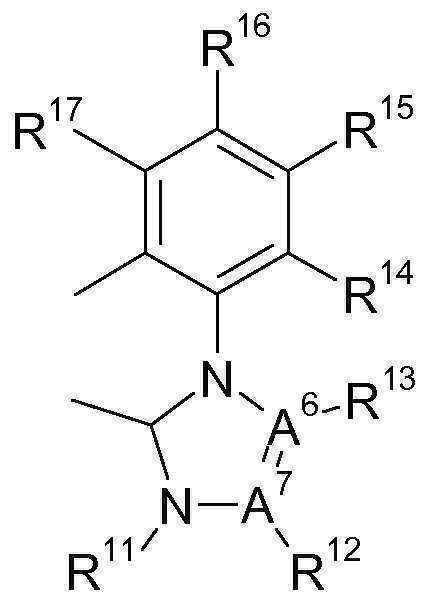
상기 화학식에서,
A6, A7은 각각 독립적으로 C 또는 N이고,
R11은 1종 이상의 이종원자로 임의로 개재되며, 임의로 1종 이상의 작용기를 지니며 그리고 1 내지 20개의 탄소 원자를 갖는 선형 또는 분지형 알킬 라디칼; 1종 이상의 이종원자로 임의로 개재되며, 임의로 1종 이상의 작용기를 지니며 그리고 3 내지 20개의 탄소 원자를 갖는 시클로알킬 라디칼; 1종 이상의 이종원자로 임의로 개재되며, 임의로 1종 이상의 작용기를 지니며 그리고 3 내지 20개의 탄소 원자를 갖는 시클로헤테로알킬 라디칼; 1종 이상의 이종원자로 임의로 개재되며, 임의로 1종 이상의 작용기를 지니며 그리고 6 내지 30개의 탄소 원자를 갖는 치환 또는 비치환 아릴 라디칼; 및 1종 이상의 이종원자로 임의로 개재되며, 임의로 1종 이상의 작용기를 지니며 그리고 총 5 내지 18개의 탄소 원자 및/또는 이종원자를 갖는 치환 또는 비치환 헤테로아릴 라디칼로 이루어진 군에서 선택되고,
R12, R13은 각각 독립적으로, A가 N인 경우 유리 전자쌍이거나 또는, A가 C인 경우 수소; 1종 이상의 이종원자로 임의로 개재되며, 임의로 1종 이상의 작용기를 지니며 그리고 1 내지 20개의 탄소 원자를 갖는 선형 또는 분지형 알킬 라디칼; 1종 이상의 이종원자로 임의로 개재되며, 임의로 1종 이상의 작용기를 지니며 그리고 3 내지 20개의 탄소 원자를 갖는 시클로알킬 라디칼; 1종 이상의 이종원자로 임의로 개재되며, 임의로 1종 이상의 작용기를 지니며 그리고 3 내지 20개의 탄소 원자를 갖는 시클로헤테로알킬 라디칼; 1종 이상의 이종원자로 임의로 개재되며, 임의로 1종 이상의 작용기를 지니며 그리고 6 내지 30개의 탄소 원자를 갖는 치환 또는 비치환 아릴 라디칼; 1종 이상의 이종원자로 임의로 개재되며, 임의로 1종 이상의 작용기를 지니며 그리고 총 5 내지 18개의 탄소 원자 및/또는 이종원자를 갖는 치환 또는 비치환 헤테로아릴 라디칼; 및 공여체 또는 수용체 작용을 갖는 기로 이루어진 군에서 선택되고,
R14, R15, R16, R17은 각각 독립적으로 수소; 1종 이상의 이종원자로 임의로 개재되며, 임의로 1종 이상의 작용기를 지니며 그리고 1 내지 20개의 탄소 원자를 갖는 선형 또는 분지형 알킬 라디칼; 1종 이상의 이종원자로 임의로 개재되며, 임의로 1종 이상의 작용기를 지니며 그리고 3 내지 20개의 탄소 원자를 갖는 시클로알킬 라디칼; 1종 이상의 이종원자로 임의로 개재되며, 임의로 1종 이상의 작용기를 지니며 그리고 3 내지 20개의 탄소 원자를 갖는 시클로헤테로알킬 라디칼; 1종 이상의 이종원자로 임의로 개재되며, 임의로 1종 이상의 작용기를 지니며 그리고 6 내지 30개의 탄소 원자를 갖는 치환 또는 비치환 아릴 라디칼; 1종 이상의 이종원자로 임의로 개재되며, 임의로 1종 이상의 작용기를 지니며 그리고 총 5 내지 18개의 탄소 원자 및/또는 이종원자를 갖는 치환 또는 비치환 헤테로아릴 라디칼; 및 공여체 또는 수용체 작용을 갖는 기로 이루어진 군에서 선택되거나, 또는
R12와 R13, R14와 R15, R15와 R16 또는 R16과 R17은 이들이 결합되어 있는 A 또는 탄소 원자와 함께 1종 이상의 이종원자로 임의로 개재되며 그리고 총 5 내지 18개의 탄소 원자 및/또는 이종원자를 갖는 불포화 또는 방향족, 임의로 치환된 고리를 형성하며, 및/또는
A6이 C인 경우, R13 및 R14는 함께 임의로 이종원자, 방향족 단위, 헤테로방향족 단위 및/또는 작용기를 포함하며 그리고 총 1 내지 30개의 탄소 원자 및/또는 이종원자를 갖고, 이에 탄소 원자 및/또는 이종원자를 포함하는 치환 또는 비치환, 5- 내지 8-원 고리가 임의로 융합되어 있는 포화 또는 불포화, 선형 또는 분지형 가교를 형성한다.The method according to claim 1 or 2, wherein L in formula I is a carbene ligand of formula II:
<Formula II>
In the above formula,
A 6 and A 7 are each independently C or N,
R 11 is a linear or branched alkyl radical optionally interrupted by one or more heteroatoms, optionally having one or more functional groups, and having 1 to 20 carbon atoms; A cycloalkyl radical optionally interrupted by one or more heteroatoms, optionally having one or more functional groups, and having 3 to 20 carbon atoms; A cycloheteroalkyl radical optionally interrupted by one or more heteroatoms, optionally having one or more functional groups, and having 3 to 20 carbon atoms; Substituted or unsubstituted aryl radicals optionally interposed by one or more heteroatoms, optionally having one or more functional groups, and having 6 to 30 carbon atoms; And a substituted or unsubstituted heteroaryl radical optionally interposed by one or more heteroatoms, optionally having one or more functional groups, and having a total of 5 to 18 carbon atoms and/or heteroatoms,
R 12 and R 13 are each independently a free electron pair when A is N, or hydrogen when A is C; Linear or branched alkyl radicals optionally interrupted by one or more heteroatoms, optionally having one or more functional groups, and having 1 to 20 carbon atoms; A cycloalkyl radical optionally interrupted by one or more heteroatoms, optionally having one or more functional groups, and having 3 to 20 carbon atoms; A cycloheteroalkyl radical optionally interrupted by one or more heteroatoms, optionally having one or more functional groups, and having 3 to 20 carbon atoms; Substituted or unsubstituted aryl radicals optionally interposed by one or more heteroatoms, optionally having one or more functional groups, and having 6 to 30 carbon atoms; A substituted or unsubstituted heteroaryl radical optionally interrupted by one or more heteroatoms, optionally having one or more functional groups, and having a total of 5 to 18 carbon atoms and/or heteroatoms; And it is selected from the group consisting of a group having a donor or acceptor action,
R 14 , R 15 , R 16 , and R 17 are each independently hydrogen; Linear or branched alkyl radicals optionally interrupted by one or more heteroatoms, optionally having one or more functional groups, and having 1 to 20 carbon atoms; A cycloalkyl radical optionally interrupted by one or more heteroatoms, optionally having one or more functional groups, and having 3 to 20 carbon atoms; A cycloheteroalkyl radical optionally interrupted by one or more heteroatoms, optionally having one or more functional groups, and having 3 to 20 carbon atoms; Substituted or unsubstituted aryl radicals optionally interposed by one or more heteroatoms, optionally having one or more functional groups, and having 6 to 30 carbon atoms; A substituted or unsubstituted heteroaryl radical optionally interrupted by one or more heteroatoms, optionally having one or more functional groups, and having a total of 5 to 18 carbon atoms and/or heteroatoms; And it is selected from the group consisting of a group having a donor or acceptor action, or
R 12 and R 13 , R 14 and R 15 , R 15 and R 16 or R 16 and R 17 are optionally interposed by one or more heteroatoms together with the A or carbon atom to which they are attached, and a total of 5 to 18 carbon atoms And/or forming an unsaturated or aromatic, optionally substituted ring having heteroatoms, and/or
When A 6 is C, R 13 and R 14 together optionally contain heteroatoms, aromatic units, heteroaromatic units and/or functional groups, and have a total of 1 to 30 carbon atoms and/or heteroatoms, wherein the carbon atoms and / Or a substituted or unsubstituted, 5- to 8-membered ring containing heteroatoms is optionally fused to form a saturated or unsaturated, linear or branched bridge.
<화학식 III>
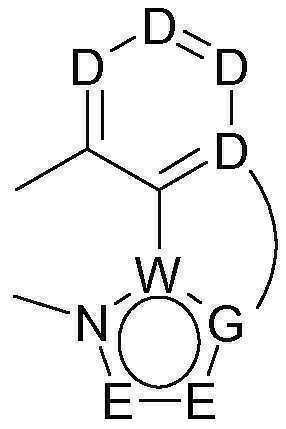
상기 화학식 III의 리간드에서의 부호는 각각 하기에서 정의한 바와 같다:
D는 각각 독립적으로 CR18 또는 N이고;
W는 C 또는 N이고;
E는 각각 독립적으로 CR19, N 또는 NR20이고;
G는 CR21, N, NR22, S 또는 O이고;
R18, R19, R21은 각각 독립적으로 수소; 1종 이상의 이종원자로 임의로 개재되며, 임의로 1종 이상의 작용기를 지니며 그리고 1 내지 20개의 탄소 원자를 갖는 선형 또는 분지형 알킬 라디칼; 1종 이상의 이종원자로 임의로 개재되며, 임의로 1종 이상의 작용기를 지니며 그리고 3 내지 20개의 탄소 원자를 갖는 시클로알킬 라디칼; 1종 이상의 이종원자로 임의로 개재되며, 임의로 1종 이상의 작용기를 지니며 그리고 3 내지 20개의 탄소 원자를 갖는 시클로헤테로알킬 라디칼; 1종 이상의 이종원자로 임의로 개재되며, 임의로 1종 이상의 작용기를 지니며 그리고 6 내지 30개의 탄소 원자를 갖는 치환 또는 비치환 아릴 라디칼; 및 1종 이상의 이종원자로 임의로 개재되며, 임의로 1종 이상의 작용기를 지니며 그리고 총 5 내지 18개의 탄소 원자 및/또는 이종원자를 갖는 치환 또는 비치환 헤테로아릴 라디칼; 및 공여체 또는 수용체 작용을 갖는 기로 이루어진 군에서 선택되거나, 또는
각각의 경우에서 2개의 R18, R19 및 R21 라디칼은 이들이 결합되어 있는 탄소 원자와 함께 1종 이상의 이종원자로 임의로 개재되며 그리고 총 5 내지 18개의 탄소 원자 및/또는 이종원자를 갖는 포화, 불포화 또는 방향족, 임의로 치환된 고리를 형성하며,
R20, R22는 각각 독립적으로 1종 이상의 이종원자로 임의로 개재되며, 임의로 1종 이상의 작용기를 지니며 그리고 1 내지 20개의 탄소 원자를 갖는 선형 또는 분지형 알킬 라디칼; 1종 이상의 이종원자로 임의로 개재되며, 임의로 1종 이상의 작용기를 지니며 그리고 3 내지 20개의 탄소 원자를 갖는 시클로알킬 라디칼; 1종 이상의 이종원자로 임의로 개재되며, 임의로 1종 이상의 작용기를 지니며 그리고 3 내지 20개의 탄소 원자를 갖는 시클로헤테로알킬 라디칼; 1종 이상의 이종원자로 임의로 개재되며, 임의로 1종 이상의 작용기를 지니며 그리고 6 내지 30개의 탄소 원자를 갖는 치환 또는 비치환 아릴 라디칼; 1종 이상의 이종원자로 임의로 개재되며, 임의로 1종 이상의 작용기를 지니며 그리고 총 5 내지 18개의 탄소 원자 및/또는 이종원자를 갖는 치환 또는 비치환 헤테로아릴 라디칼; 및 공여체 또는 수용체 작용을 갖는 기로 이루어진 군에서 선택되며,
여기서 실선 곡선은 D 기 중 하나 및 G 기 사이의 임의의 가교이며; 여기서 가교는 알킬렌, 아릴렌, 헤테로아릴렌, 알키닐렌, 알케닐렌, O, S, SiR24R25 및 (CR26R27)d로 정의될 수 있으며, 여기서 1종 이상의 이웃하지 않는 (CR26R27) 기는 O, S, SiR24R25로 치환될 수 있으며, 여기서
d는 2 내지 10이며;
R24, R25, R26, R27은 각각 독립적으로 H, 알킬, 아릴, 헤테로아릴, 알케닐 또는 알키닐이다.The method according to claim 1 or 2, wherein L in formula I is a heterocyclic bicarbene ligand of formula III:
<Formula III>
The symbols in the ligand of Formula III are as defined below, respectively:
Each D is independently CR 18 or N;
W is C or N;
Each E is independently CR 19 , N or NR 20 ;
G is CR 21 , N, NR 22 , S or O;
R 18 , R 19 , and R 21 are each independently hydrogen; Linear or branched alkyl radicals optionally interrupted by one or more heteroatoms, optionally having one or more functional groups, and having 1 to 20 carbon atoms; A cycloalkyl radical optionally interrupted by one or more heteroatoms, optionally having one or more functional groups, and having 3 to 20 carbon atoms; A cycloheteroalkyl radical optionally interrupted by one or more heteroatoms, optionally having one or more functional groups, and having 3 to 20 carbon atoms; Substituted or unsubstituted aryl radicals optionally interposed by one or more heteroatoms, optionally having one or more functional groups, and having 6 to 30 carbon atoms; And a substituted or unsubstituted heteroaryl radical optionally interposed by one or more heteroatoms, optionally having one or more functional groups, and having a total of 5 to 18 carbon atoms and/or heteroatoms; And it is selected from the group consisting of a group having a donor or acceptor action, or
In each case two R 18 , R 19 and R 21 radicals are optionally interrupted by one or more heteroatoms together with the carbon atom to which they are attached and are saturated, unsaturated or having a total of 5 to 18 carbon atoms and/or heteroatoms. Form an aromatic, optionally substituted ring,
R 20 and R 22 are each independently a linear or branched alkyl radical optionally interposed by one or more heteroatoms, optionally having one or more functional groups, and having 1 to 20 carbon atoms; A cycloalkyl radical optionally interrupted by one or more heteroatoms, optionally having one or more functional groups, and having 3 to 20 carbon atoms; A cycloheteroalkyl radical optionally interrupted by one or more heteroatoms, optionally having one or more functional groups, and having 3 to 20 carbon atoms; Substituted or unsubstituted aryl radicals optionally interposed by one or more heteroatoms, optionally having one or more functional groups, and having 6 to 30 carbon atoms; A substituted or unsubstituted heteroaryl radical optionally interrupted by one or more heteroatoms, optionally having one or more functional groups, and having a total of 5 to 18 carbon atoms and/or heteroatoms; And it is selected from the group consisting of a group having a donor or acceptor action,
Where the solid curve is any bridge between one of the D groups and the G group; Wherein the bridge may be defined as alkylene, arylene, heteroarylene, alkynylene, alkenylene, O, S, SiR 24 R 25 and (CR 26 R 27 ) d , wherein one or more non-neighboring (CR 26 R 27 ) group may be substituted with O, S, SiR 24 R 25, wherein
d is 2 to 10;
R 24 , R 25 , R 26 , R 27 are each independently H, alkyl, aryl, heteroaryl, alkenyl or alkynyl.
<화학식 X>
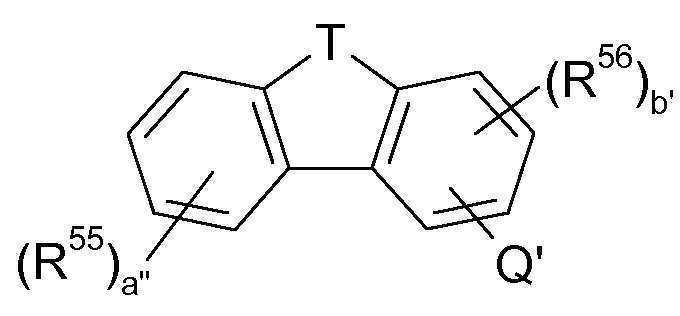
상기 화학식에서,
T는 NR57, S, O 또는 PR57이고;
R57은 아릴, 헤테로아릴, 알킬, 시클로알킬 또는 헤테로시클로알킬이고;
Q'는 -NR58R59, -P(O)R60R61, -PR62R63, -S(O)2R64, -S(O)R65, -SR66 또는 -OR67이고,
R55, R56은 각각 독립적으로 알킬, 시클로알킬, 헤테로시클로알킬, 아릴, 헤테로아릴, SiR70R71R72, Q' 기 또는, 공여체 또는 수용체 작용을 갖는 기이고;
a"는 0, 1, 2, 3 또는 4이고;
b'는 0, 1, 2 또는 3이고;
R58, R59는 질소 원자와 함께, 3 내지 10개의 고리 원자를 가지며 그리고 알킬, 시클로알킬, 헤테로시클로알킬, 아릴, 헤테로아릴 및, 공여체 또는 수용체 작용을 갖는 기로부터 선택된 1종 이상의 치환기로 치환되거나 또는 비치환될 수 있으며 및/또는 3 내지 10개의 고리 원자를 갖는 1종 이상의 추가의 고리형 라디칼로 융합될 수 있는 고리형 라디칼을 형성하며, 여기서 융합된 라디칼은 알킬, 시클로알킬, 헤테로시클로알킬, 아릴, 헤테로아릴, 및 공여체 또는 수용체 작용을 갖는 기로부터 선택된 1종 이상의 치환기로 치환되거나 또는 비치환될 수 있으며;
R70, R71, R72, R60, R61, R62, R63, R64, R65, R66, R67은 각각 독립적으로 아릴, 헤테로아릴, 알킬, 시클로알킬 또는 헤테로시클로알킬이거나, 또는
화학식 X의 2개의 단위는 1종 이상의 이종원자로 임의로 개재된 선형 또는 분지형, 포화 또는 불포화 가교에 의하여, 결합에 의하여 또는 O에 의하여 서로 가교된다.
A method of using at least one compound of formula X below and at least one metal-carbene complex as defined in claim 1 or 2 in an OLED:
<Formula X>
In the above formula,
T is NR 57 , S, O or PR 57 ;
R 57 is aryl, heteroaryl, alkyl, cycloalkyl or heterocycloalkyl;
Q'is -NR 58 R 59 , -P(O)R 60 R 61 , -PR 62 R 63 , -S(O) 2 R 64 , -S(O)R 65 , -SR 66 or -OR 67 ,
R 55 and R 56 are each independently alkyl, cycloalkyl, heterocycloalkyl, aryl, heteroaryl, SiR 70 R 71 R 72 , a Q'group or a group having a donor or acceptor function;
a" is 0, 1, 2, 3 or 4;
b'is 0, 1, 2 or 3;
R 58 , R 59 together with a nitrogen atom, having 3 to 10 ring atoms and substituted with one or more substituents selected from alkyl, cycloalkyl, heterocycloalkyl, aryl, heteroaryl and groups having a donor or acceptor function Form a cyclic radical which may be unsubstituted and/or fused to one or more additional cyclic radicals having 3 to 10 ring atoms, wherein the fused radicals are alkyl, cycloalkyl, heterocyclo May be unsubstituted or substituted with one or more substituents selected from alkyl, aryl, heteroaryl, and groups having a donor or acceptor function;
R 70 , R 71 , R 72 , R 60 , R 61 , R 62 , R 63 , R 64 , R 65 , R 66 , R 67 are each independently aryl, heteroaryl, alkyl, cycloalkyl or heterocycloalkyl, or , or
The two units of formula (X) are crosslinked to each other by linear or branched, saturated or unsaturated bridges, by bonds or by O, optionally interrupted by one or more heteroatoms.
Applications Claiming Priority (9)
| Application Number | Priority Date | Filing Date | Title |
|---|---|---|---|
| US28604609P | 2009-12-14 | 2009-12-14 | |
| US61/286,046 | 2009-12-14 | ||
| US32388510P | 2010-04-14 | 2010-04-14 | |
| US61/323,885 | 2010-04-14 | ||
| US39171210P | 2010-10-11 | 2010-10-11 | |
| EP10187176.2 | 2010-10-11 | ||
| EP10187176 | 2010-10-11 | ||
| US61/391,712 | 2010-10-11 | ||
| PCT/EP2010/069541 WO2011073149A1 (en) | 2009-12-14 | 2010-12-13 | Metal complexes comprising diazabenzimidazol carbene-ligands and the use thereof in oleds |
Related Parent Applications (1)
| Application Number | Title | Priority Date | Filing Date |
|---|---|---|---|
| KR1020197004904A Division KR102128072B1 (en) | 2009-12-14 | 2010-12-13 | Metal complexes comprising diazabenzimidazol carbene-ligands and the use thereof in oleds |
Publications (2)
| Publication Number | Publication Date |
|---|---|
| KR20200080326A KR20200080326A (en) | 2020-07-06 |
| KR102231266B1 true KR102231266B1 (en) | 2021-03-24 |
Family
ID=65561014
Family Applications (2)
| Application Number | Title | Priority Date | Filing Date |
|---|---|---|---|
| KR1020197004904A Active KR102128072B1 (en) | 2009-12-14 | 2010-12-13 | Metal complexes comprising diazabenzimidazol carbene-ligands and the use thereof in oleds |
| KR1020207018180A Active KR102231266B1 (en) | 2009-12-14 | 2010-12-13 | Metal complexes comprising diazabenzimidazol carbene-ligands and the use thereof in oleds |
Family Applications Before (1)
| Application Number | Title | Priority Date | Filing Date |
|---|---|---|---|
| KR1020197004904A Active KR102128072B1 (en) | 2009-12-14 | 2010-12-13 | Metal complexes comprising diazabenzimidazol carbene-ligands and the use thereof in oleds |
Country Status (1)
| Country | Link |
|---|---|
| KR (2) | KR102128072B1 (en) |
Citations (2)
| Publication number | Priority date | Publication date | Assignee | Title |
|---|---|---|---|---|
| US20050260447A1 (en) * | 2004-05-18 | 2005-11-24 | Jason Brooks | Cyclometallated iridium carbene complexes for use as hosts |
| WO2009003898A1 (en) * | 2007-07-05 | 2009-01-08 | Basf Se | Organic light-emitting diodes containing carbene transition metal complex emitters and at least one compound selected from disilylcarbazoles, disilyldibenzofurans, disilyldibenzothiophenes, disilyldibenzophospholes, disilyldibenzothiophene s-oxides and disilyldibenzothiophene s,s-dioxides |
Family Cites Families (3)
| Publication number | Priority date | Publication date | Assignee | Title |
|---|---|---|---|---|
| DE102004057072A1 (en) * | 2004-11-25 | 2006-06-01 | Basf Ag | Use of Transition Metal Carbene Complexes in Organic Light Emitting Diodes (OLEDs) |
| EP2338593B1 (en) * | 2006-01-31 | 2013-06-19 | Basf Se | Process for the preparation of transition metal carbene complexes |
| WO2011073149A1 (en) * | 2009-12-14 | 2011-06-23 | Basf Se | Metal complexes comprising diazabenzimidazol carbene-ligands and the use thereof in oleds |
-
2010
- 2010-12-13 KR KR1020197004904A patent/KR102128072B1/en active Active
- 2010-12-13 KR KR1020207018180A patent/KR102231266B1/en active Active
Patent Citations (2)
| Publication number | Priority date | Publication date | Assignee | Title |
|---|---|---|---|---|
| US20050260447A1 (en) * | 2004-05-18 | 2005-11-24 | Jason Brooks | Cyclometallated iridium carbene complexes for use as hosts |
| WO2009003898A1 (en) * | 2007-07-05 | 2009-01-08 | Basf Se | Organic light-emitting diodes containing carbene transition metal complex emitters and at least one compound selected from disilylcarbazoles, disilyldibenzofurans, disilyldibenzothiophenes, disilyldibenzophospholes, disilyldibenzothiophene s-oxides and disilyldibenzothiophene s,s-dioxides |
Also Published As
| Publication number | Publication date |
|---|---|
| KR102128072B1 (en) | 2020-06-30 |
| KR20200080326A (en) | 2020-07-06 |
| KR20190020182A (en) | 2019-02-27 |
Similar Documents
| Publication | Publication Date | Title |
|---|---|---|
| US11839140B2 (en) | Metal complexes comprising diazabenzmidazolocarbene ligands and the use thereof in OLEDS | |
| TWI626243B (en) | Metal complexes comprising azabenzimidazole carbene ligands and the use thereof in oleds | |
| US9315724B2 (en) | Metal complexes comprising azabenzimidazole carbene ligands and the use thereof in OLEDs | |
| JP6486355B2 (en) | Luminescent diaza-monoaza- and benzimidazole metal carbene complexes for use in electronic devices such as OLEDs | |
| CN102741265B (en) | Heteroplexic carbene complexes and their use in organic electronics | |
| CN104470937B (en) | Dinuclear metal complexes containing carbene ligands and their use in OLEDs | |
| KR20160027087A (en) | Monosubstituted diazabenzimidazole carbene metal complexes for use in organic light emitting diodes | |
| KR102231266B1 (en) | Metal complexes comprising diazabenzimidazol carbene-ligands and the use thereof in oleds |
Legal Events
| Date | Code | Title | Description |
|---|---|---|---|
| A107 | Divisional application of patent | ||
| PA0104 | Divisional application for international application |
Comment text: Divisional Application for International Patent Patent event code: PA01041R01D Patent event date: 20200623 Application number text: 1020197004904 Filing date: 20190219 |
|
| PA0201 | Request for examination | ||
| PG1501 | Laying open of application | ||
| E902 | Notification of reason for refusal | ||
| PE0902 | Notice of grounds for rejection |
Comment text: Notification of reason for refusal Patent event date: 20200727 Patent event code: PE09021S01D |
|
| E701 | Decision to grant or registration of patent right | ||
| PE0701 | Decision of registration |
Patent event code: PE07011S01D Comment text: Decision to Grant Registration Patent event date: 20210120 |
|
| GRNT | Written decision to grant | ||
| PR0701 | Registration of establishment |
Comment text: Registration of Establishment Patent event date: 20210317 Patent event code: PR07011E01D |
|
| PR1002 | Payment of registration fee |
Payment date: 20210318 End annual number: 3 Start annual number: 1 |
|
| PG1601 | Publication of registration | ||
| PR1001 | Payment of annual fee |
Payment date: 20240305 Start annual number: 4 End annual number: 4 |