KR102168068B1 - Novel compound and organic light emitting device comprising the same - Google Patents
Novel compound and organic light emitting device comprising the same Download PDFInfo
- Publication number
- KR102168068B1 KR102168068B1 KR1020190073543A KR20190073543A KR102168068B1 KR 102168068 B1 KR102168068 B1 KR 102168068B1 KR 1020190073543 A KR1020190073543 A KR 1020190073543A KR 20190073543 A KR20190073543 A KR 20190073543A KR 102168068 B1 KR102168068 B1 KR 102168068B1
- Authority
- KR
- South Korea
- Prior art keywords
- group
- layer
- compound
- light emitting
- emitting device
- Prior art date
- Legal status (The legal status is an assumption and is not a legal conclusion. Google has not performed a legal analysis and makes no representation as to the accuracy of the status listed.)
- Active
Links
- IXNCZKYMNVHDHB-UHFFFAOYSA-N c(cc1)cc(c2c3cccc2)c1[n]3-c1ccc(C2(c(cc3)ccc3-[n]3c4ccccc4c4c3cccc4)c3ccccc3Oc3c2cccc3)cc1 Chemical compound c(cc1)cc(c2c3cccc2)c1[n]3-c1ccc(C2(c(cc3)ccc3-[n]3c4ccccc4c4c3cccc4)c3ccccc3Oc3c2cccc3)cc1 IXNCZKYMNVHDHB-UHFFFAOYSA-N 0.000 description 1
- NLDCLWNPWGQQEB-UHFFFAOYSA-N c1ccc(C2(c(cc3)ccc3-c3nc(-c4ccccc4)nc(-c4ccccc4)n3)c3ccccc3Oc3ccccc23)cc1 Chemical compound c1ccc(C2(c(cc3)ccc3-c3nc(-c4ccccc4)nc(-c4ccccc4)n3)c3ccccc3Oc3ccccc23)cc1 NLDCLWNPWGQQEB-UHFFFAOYSA-N 0.000 description 1
- DIAVBDCSDYTOSH-UHFFFAOYSA-N c1ccc(C2(c(cc3)ccc3-c3nc(-c4ccccc4)nc(-c4ccccc4)n3)c3ccccc3Sc3ccccc23)cc1 Chemical compound c1ccc(C2(c(cc3)ccc3-c3nc(-c4ccccc4)nc(-c4ccccc4)n3)c3ccccc3Sc3ccccc23)cc1 DIAVBDCSDYTOSH-UHFFFAOYSA-N 0.000 description 1
- VDNKDDJIKWUHKL-UHFFFAOYSA-N c1ccc(C2(c3ccccc3)c(cc(cc3)-c4nc(-c5cc6ccccc6cc5)c(cccc5)c5n4)c3Oc3c2cccc3)cc1 Chemical compound c1ccc(C2(c3ccccc3)c(cc(cc3)-c4nc(-c5cc6ccccc6cc5)c(cccc5)c5n4)c3Oc3c2cccc3)cc1 VDNKDDJIKWUHKL-UHFFFAOYSA-N 0.000 description 1
- CITSJGLCEUBOTF-UHFFFAOYSA-N c1ccc(C2(c3ccccc3)c(ccc(-c3nc(cccc4)c4c(-c4cc(cccc5)c5cc4)n3)c3)c3Oc3c2cccc3)cc1 Chemical compound c1ccc(C2(c3ccccc3)c(ccc(-c3nc(cccc4)c4c(-c4cc(cccc5)c5cc4)n3)c3)c3Oc3c2cccc3)cc1 CITSJGLCEUBOTF-UHFFFAOYSA-N 0.000 description 1
- YQBXAQHQYLCJQX-UHFFFAOYSA-N c1ccc(C2(c3ccccc3)c(cccc3-c4nc(-c5cccc6c5cccc6)nc(-c5cc(cccc6)c6cc5)n4)c3Oc3ccccc23)cc1 Chemical compound c1ccc(C2(c3ccccc3)c(cccc3-c4nc(-c5cccc6c5cccc6)nc(-c5cc(cccc6)c6cc5)n4)c3Oc3ccccc23)cc1 YQBXAQHQYLCJQX-UHFFFAOYSA-N 0.000 description 1
- MXNXMABSHOQJQX-UHFFFAOYSA-N c1ccc(C2(c3ccccc3)c3cc(-c4nc(-c(cc5)ccc5-c5ccccc5)c(cccc5)c5n4)ccc3Oc3c2cccc3)cc1 Chemical compound c1ccc(C2(c3ccccc3)c3cc(-c4nc(-c(cc5)ccc5-c5ccccc5)c(cccc5)c5n4)ccc3Oc3c2cccc3)cc1 MXNXMABSHOQJQX-UHFFFAOYSA-N 0.000 description 1
- AYOSOWMXQXGMKD-UHFFFAOYSA-N c1ccc(C2(c3ccccc3)c3cccc(-c4nc(-c5cc6ccccc6cc5)c(cccc5)c5n4)c3Oc3c2cccc3)cc1 Chemical compound c1ccc(C2(c3ccccc3)c3cccc(-c4nc(-c5cc6ccccc6cc5)c(cccc5)c5n4)c3Oc3c2cccc3)cc1 AYOSOWMXQXGMKD-UHFFFAOYSA-N 0.000 description 1
Images


Classifications
-
- C—CHEMISTRY; METALLURGY
- C07—ORGANIC CHEMISTRY
- C07D—HETEROCYCLIC COMPOUNDS
- C07D403/00—Heterocyclic compounds containing two or more hetero rings, having nitrogen atoms as the only ring hetero atoms, not provided for by group C07D401/00
- C07D403/02—Heterocyclic compounds containing two or more hetero rings, having nitrogen atoms as the only ring hetero atoms, not provided for by group C07D401/00 containing two hetero rings
- C07D403/04—Heterocyclic compounds containing two or more hetero rings, having nitrogen atoms as the only ring hetero atoms, not provided for by group C07D401/00 containing two hetero rings directly linked by a ring-member-to-ring-member bond
-
- C—CHEMISTRY; METALLURGY
- C07—ORGANIC CHEMISTRY
- C07D—HETEROCYCLIC COMPOUNDS
- C07D311/00—Heterocyclic compounds containing six-membered rings having one oxygen atom as the only hetero atom, condensed with other rings
- C07D311/02—Heterocyclic compounds containing six-membered rings having one oxygen atom as the only hetero atom, condensed with other rings ortho- or peri-condensed with carbocyclic rings or ring systems
- C07D311/78—Ring systems having three or more relevant rings
- C07D311/80—Dibenzopyrans; Hydrogenated dibenzopyrans
- C07D311/82—Xanthenes
-
- C—CHEMISTRY; METALLURGY
- C07—ORGANIC CHEMISTRY
- C07D—HETEROCYCLIC COMPOUNDS
- C07D401/00—Heterocyclic compounds containing two or more hetero rings, having nitrogen atoms as the only ring hetero atoms, at least one ring being a six-membered ring with only one nitrogen atom
- C07D401/02—Heterocyclic compounds containing two or more hetero rings, having nitrogen atoms as the only ring hetero atoms, at least one ring being a six-membered ring with only one nitrogen atom containing two hetero rings
- C07D401/04—Heterocyclic compounds containing two or more hetero rings, having nitrogen atoms as the only ring hetero atoms, at least one ring being a six-membered ring with only one nitrogen atom containing two hetero rings directly linked by a ring-member-to-ring-member bond
-
- C—CHEMISTRY; METALLURGY
- C07—ORGANIC CHEMISTRY
- C07D—HETEROCYCLIC COMPOUNDS
- C07D401/00—Heterocyclic compounds containing two or more hetero rings, having nitrogen atoms as the only ring hetero atoms, at least one ring being a six-membered ring with only one nitrogen atom
- C07D401/02—Heterocyclic compounds containing two or more hetero rings, having nitrogen atoms as the only ring hetero atoms, at least one ring being a six-membered ring with only one nitrogen atom containing two hetero rings
- C07D401/10—Heterocyclic compounds containing two or more hetero rings, having nitrogen atoms as the only ring hetero atoms, at least one ring being a six-membered ring with only one nitrogen atom containing two hetero rings linked by a carbon chain containing aromatic rings
-
- C—CHEMISTRY; METALLURGY
- C07—ORGANIC CHEMISTRY
- C07D—HETEROCYCLIC COMPOUNDS
- C07D403/00—Heterocyclic compounds containing two or more hetero rings, having nitrogen atoms as the only ring hetero atoms, not provided for by group C07D401/00
- C07D403/02—Heterocyclic compounds containing two or more hetero rings, having nitrogen atoms as the only ring hetero atoms, not provided for by group C07D401/00 containing two hetero rings
- C07D403/10—Heterocyclic compounds containing two or more hetero rings, having nitrogen atoms as the only ring hetero atoms, not provided for by group C07D401/00 containing two hetero rings linked by a carbon chain containing aromatic rings
-
- C—CHEMISTRY; METALLURGY
- C07—ORGANIC CHEMISTRY
- C07D—HETEROCYCLIC COMPOUNDS
- C07D405/00—Heterocyclic compounds containing both one or more hetero rings having oxygen atoms as the only ring hetero atoms, and one or more rings having nitrogen as the only ring hetero atom
- C07D405/02—Heterocyclic compounds containing both one or more hetero rings having oxygen atoms as the only ring hetero atoms, and one or more rings having nitrogen as the only ring hetero atom containing two hetero rings
- C07D405/10—Heterocyclic compounds containing both one or more hetero rings having oxygen atoms as the only ring hetero atoms, and one or more rings having nitrogen as the only ring hetero atom containing two hetero rings linked by a carbon chain containing aromatic rings
-
- C—CHEMISTRY; METALLURGY
- C07—ORGANIC CHEMISTRY
- C07D—HETEROCYCLIC COMPOUNDS
- C07D491/00—Heterocyclic compounds containing in the condensed ring system both one or more rings having oxygen atoms as the only ring hetero atoms and one or more rings having nitrogen atoms as the only ring hetero atoms, not provided for by groups C07D451/00 - C07D459/00, C07D463/00, C07D477/00 or C07D489/00
- C07D491/02—Heterocyclic compounds containing in the condensed ring system both one or more rings having oxygen atoms as the only ring hetero atoms and one or more rings having nitrogen atoms as the only ring hetero atoms, not provided for by groups C07D451/00 - C07D459/00, C07D463/00, C07D477/00 or C07D489/00 in which the condensed system contains two hetero rings
- C07D491/04—Ortho-condensed systems
-
- C—CHEMISTRY; METALLURGY
- C07—ORGANIC CHEMISTRY
- C07D—HETEROCYCLIC COMPOUNDS
- C07D491/00—Heterocyclic compounds containing in the condensed ring system both one or more rings having oxygen atoms as the only ring hetero atoms and one or more rings having nitrogen atoms as the only ring hetero atoms, not provided for by groups C07D451/00 - C07D459/00, C07D463/00, C07D477/00 or C07D489/00
- C07D491/02—Heterocyclic compounds containing in the condensed ring system both one or more rings having oxygen atoms as the only ring hetero atoms and one or more rings having nitrogen atoms as the only ring hetero atoms, not provided for by groups C07D451/00 - C07D459/00, C07D463/00, C07D477/00 or C07D489/00 in which the condensed system contains two hetero rings
- C07D491/04—Ortho-condensed systems
- C07D491/044—Ortho-condensed systems with only one oxygen atom as ring hetero atom in the oxygen-containing ring
- C07D491/048—Ortho-condensed systems with only one oxygen atom as ring hetero atom in the oxygen-containing ring the oxygen-containing ring being five-membered
-
- C—CHEMISTRY; METALLURGY
- C07—ORGANIC CHEMISTRY
- C07D—HETEROCYCLIC COMPOUNDS
- C07D495/00—Heterocyclic compounds containing in the condensed system at least one hetero ring having sulfur atoms as the only ring hetero atoms
- C07D495/02—Heterocyclic compounds containing in the condensed system at least one hetero ring having sulfur atoms as the only ring hetero atoms in which the condensed system contains two hetero rings
- C07D495/04—Ortho-condensed systems
-
- H01L51/0071—
-
- H01L51/5048—
-
- H—ELECTRICITY
- H10—SEMICONDUCTOR DEVICES; ELECTRIC SOLID-STATE DEVICES NOT OTHERWISE PROVIDED FOR
- H10K—ORGANIC ELECTRIC SOLID-STATE DEVICES
- H10K50/00—Organic light-emitting devices
- H10K50/10—OLEDs or polymer light-emitting diodes [PLED]
- H10K50/14—Carrier transporting layers
-
- H—ELECTRICITY
- H10—SEMICONDUCTOR DEVICES; ELECTRIC SOLID-STATE DEVICES NOT OTHERWISE PROVIDED FOR
- H10K—ORGANIC ELECTRIC SOLID-STATE DEVICES
- H10K85/00—Organic materials used in the body or electrodes of devices covered by this subclass
- H10K85/60—Organic compounds having low molecular weight
- H10K85/649—Aromatic compounds comprising a hetero atom
- H10K85/654—Aromatic compounds comprising a hetero atom comprising only nitrogen as heteroatom
-
- H—ELECTRICITY
- H10—SEMICONDUCTOR DEVICES; ELECTRIC SOLID-STATE DEVICES NOT OTHERWISE PROVIDED FOR
- H10K—ORGANIC ELECTRIC SOLID-STATE DEVICES
- H10K85/00—Organic materials used in the body or electrodes of devices covered by this subclass
- H10K85/60—Organic compounds having low molecular weight
- H10K85/649—Aromatic compounds comprising a hetero atom
- H10K85/657—Polycyclic condensed heteroaromatic hydrocarbons
-
- H—ELECTRICITY
- H10—SEMICONDUCTOR DEVICES; ELECTRIC SOLID-STATE DEVICES NOT OTHERWISE PROVIDED FOR
- H10K—ORGANIC ELECTRIC SOLID-STATE DEVICES
- H10K85/00—Organic materials used in the body or electrodes of devices covered by this subclass
- H10K85/60—Organic compounds having low molecular weight
- H10K85/649—Aromatic compounds comprising a hetero atom
- H10K85/657—Polycyclic condensed heteroaromatic hydrocarbons
- H10K85/6574—Polycyclic condensed heteroaromatic hydrocarbons comprising only oxygen in the heteroaromatic polycondensed ring system, e.g. cumarine dyes
-
- H—ELECTRICITY
- H10—SEMICONDUCTOR DEVICES; ELECTRIC SOLID-STATE DEVICES NOT OTHERWISE PROVIDED FOR
- H10K—ORGANIC ELECTRIC SOLID-STATE DEVICES
- H10K85/00—Organic materials used in the body or electrodes of devices covered by this subclass
- H10K85/60—Organic compounds having low molecular weight
- H10K85/649—Aromatic compounds comprising a hetero atom
- H10K85/657—Polycyclic condensed heteroaromatic hydrocarbons
- H10K85/6576—Polycyclic condensed heteroaromatic hydrocarbons comprising only sulfur in the heteroaromatic polycondensed ring system, e.g. benzothiophene
-
- H—ELECTRICITY
- H10—SEMICONDUCTOR DEVICES; ELECTRIC SOLID-STATE DEVICES NOT OTHERWISE PROVIDED FOR
- H10K—ORGANIC ELECTRIC SOLID-STATE DEVICES
- H10K50/00—Organic light-emitting devices
- H10K50/10—OLEDs or polymer light-emitting diodes [PLED]
- H10K50/14—Carrier transporting layers
- H10K50/16—Electron transporting layers
-
- H—ELECTRICITY
- H10—SEMICONDUCTOR DEVICES; ELECTRIC SOLID-STATE DEVICES NOT OTHERWISE PROVIDED FOR
- H10K—ORGANIC ELECTRIC SOLID-STATE DEVICES
- H10K50/00—Organic light-emitting devices
- H10K50/10—OLEDs or polymer light-emitting diodes [PLED]
- H10K50/18—Carrier blocking layers
-
- H—ELECTRICITY
- H10—SEMICONDUCTOR DEVICES; ELECTRIC SOLID-STATE DEVICES NOT OTHERWISE PROVIDED FOR
- H10K—ORGANIC ELECTRIC SOLID-STATE DEVICES
- H10K50/00—Organic light-emitting devices
- H10K50/10—OLEDs or polymer light-emitting diodes [PLED]
- H10K50/18—Carrier blocking layers
- H10K50/181—Electron blocking layers
Landscapes
- Chemical & Material Sciences (AREA)
- Organic Chemistry (AREA)
- Physics & Mathematics (AREA)
- Spectroscopy & Molecular Physics (AREA)
- Engineering & Computer Science (AREA)
- Materials Engineering (AREA)
- Optics & Photonics (AREA)
- Electroluminescent Light Sources (AREA)
Abstract
본 발명은 신규한 화합물 및 이를 포함하는 유기 발광 소자를 제공한다.The present invention provides a novel compound and an organic light emitting device including the same.
Description
본 발명은 신규한 화합물 및 이를 포함하는 유기 발광 소자에 관한 것이다. The present invention relates to a novel compound and an organic light emitting device comprising the same.
일반적으로 유기 발광 현상이란 유기 물질을 이용하여 전기에너지를 빛에너지로 전환시켜주는 현상을 말한다. 유기 발광 현상을 이용하는 유기 발광 소자는 넓은 시야각, 우수한 콘트라스트, 빠른 응답 시간을 가지며, 휘도, 구동 전압 및 응답 속도 특성이 우수하여 많은 연구가 진행되고 있다. In general, the organic light emission phenomenon refers to a phenomenon in which electrical energy is converted into light energy using an organic material. An organic light-emitting device using the organic light-emitting phenomenon has a wide viewing angle, excellent contrast, and fast response time, and has excellent luminance, driving voltage, and response speed characteristics, and thus many studies are being conducted.
유기 발광 소자는 일반적으로 양극과 음극 및 상기 양극과 음극 사이에 유기물 층을 포함하는 구조를 가진다. 상기 유기물 층은 유기 발광 소자의 효율과 안정성을 높이기 위하여 각기 다른 물질로 구성된 다층의 구조로 이루어진 경우가 많으며, 예컨대 정공주입층, 정공수송층, 발광층, 전자수송층, 전자주입층 등으로 이루어질 수 있다. 이러한 유기 발광 소자의 구조에서 두 전극 사이에 전압을 걸어주게 되면 양극에서는 정공이, 음극에서는 전자가 유기물층에 주입되게 되고, 주입된 정공과 전자가 만났을 때 엑시톤(exciton)이 형성되며, 이 엑시톤이 다시 바닥상태로 떨어질 때 빛이 나게 된다. The organic light emitting device generally has a structure including an anode and a cathode, and an organic material layer between the anode and the cathode. The organic material layer is often made of a multi-layered structure composed of different materials in order to increase the efficiency and stability of the organic light emitting device.For example, it may be formed of a hole injection layer, a hole transport layer, a light emitting layer, an electron transport layer, an electron injection layer, and the like. In the structure of such an organic light-emitting device, when a voltage is applied between the two electrodes, holes are injected from the anode and electrons from the cathode are injected into the organic material layer, and excitons are formed when the injected holes and electrons meet. It glows when it falls back to the ground.
상기와 같은 유기 발광 소자에 사용되는 유기물에 대하여 새로운 재료의 개발이 지속적으로 요구되고 있다.Development of new materials for organic materials used in organic light emitting devices as described above is continuously required.
본 발명은 신규한 유기발광 재료 및 이를 포함하는 유기 발광 소자에 관한 것이다.The present invention relates to a novel organic light emitting material and an organic light emitting device including the same.
본 발명은 하기 화학식 1로 표시되는 화합물을 제공한다:The present invention provides a compound represented by the following formula 1:
[화학식 1][Formula 1]

상기 화학식 1에서,In Formula 1,
L1은 단일결합; 또는 치환 또는 비치환된 C6-60 아릴렌이고, L 1 is a single bond; Or a substituted or unsubstituted C 6-60 arylene,
A는 하기로 구성되는 군으로부터 선택되는 어느 하나이다:A is any one selected from the group consisting of:

상기 군에서,In the above group,
X1, X2 및 X3는 각각 독립적으로, CH 또는 N이고, 단 X1, X2 및 X3 중 적어도 하나는 N이고,X 1, X 2 and X 3 are each independently CH or N, provided that at least one of X 1, X 2 and X 3 is N,
Ar1 및 Ar2는 각각 독립적으로, 치환 또는 비치환된 C6-60 아릴; 또는 치환 또는 비치환된 O 및 S 중 하나 이상을 포함하는 C2-60 헤테로아릴이다.Ar 1 and Ar 2 are each independently a substituted or unsubstituted C 6-60 aryl; Or substituted or unsubstituted C 2-60 heteroaryl including one or more of O and S.
또한, 본 발명은 제1 전극; 상기 제1 전극과 대향하여 구비된 제2 전극; 및 상기 제1 전극과 상기 제2 전극 사이에 구비된 1층 이상의 유기물 층을 포함하는 유기 발광 소자로서, 상기 유기물층 중 1층 이상은 상기 화학식 1로 표시되는 화합물을 포함하는, 유기 발광 소자를 제공한다.In addition, the present invention is a first electrode; A second electrode provided to face the first electrode; And one or more organic material layers provided between the first electrode and the second electrode, wherein at least one of the organic material layers includes a compound represented by Formula 1 do.
상술한 화학식 1로 표시되는 화합물은 유기 발광 소자의 유기물 층의 재료로서 사용될 수 있으며, 유기 발광 소자에서 효율의 향상, 낮은 구동전압 및/또는 수명 특성을 향상시킬 수 있다. 특히, 상술한 화학식 1로 표시되는 화합물은 정공주입, 정공수송, 정공주입, 정공억제 및 수송, 발광, 전자수송, 또는 전자주입 재료로 사용될 수 있다.The compound represented by Chemical Formula 1 may be used as a material for an organic material layer of an organic light-emitting device, and may improve efficiency, low driving voltage, and/or lifetime characteristics in the organic light-emitting device. In particular, the compound represented by Formula 1 may be used as a material for hole injection, hole transport, hole injection, hole suppression and transport, light emission, electron transport, or electron injection.
도 1은 기판(1), 양극(2), 발광층(3), 음극(4)으로 이루어진 유기 발광 소자의 예를 도시한 것이다.
도 2는 기판 (1), 양극(2), 정공주입층(5), 정공수송층(6), 전자억제층(7), 발광층(3), 정공억제층(8), 전자수송층(9) 및 음극(4)으로 이루어진 유기 발광 소자의 예를 도시한 것이다.1 shows an example of an organic light emitting device comprising a
2 shows a substrate (1), an anode (2), a hole injection layer (5), a hole transport layer (6), an electron suppression layer (7), a light emitting layer (3), a hole suppression layer (8), an electron transport layer (9). And an example of an organic light-emitting device including the
이하, 본 발명의 이해를 돕기 위하여 보다 상세히 설명한다.Hereinafter, it will be described in more detail to aid the understanding of the present invention.
본 발명은 상기 화학식 1로 표시되는 화합물을 제공한다. The present invention provides a compound represented by Chemical Formula 1.
본 명세서에서, 
본 명세서에서 "치환 또는 비치환된" 이라는 용어는 중수소; 할로겐기; 니트릴기; 니트로기; 히드록시기; 카보닐기; 에스테르기; 이미드기; 아미노기; 포스핀옥사이드기; 알콕시기; 아릴옥시기; 알킬티옥시기; 아릴티옥시기; 알킬술폭시기; 아릴술폭시기; 실릴기; 붕소기; 알킬기; 사이클로알킬기; 알케닐기; 아릴기; 아르알킬기; 아르알케닐기; 알킬아릴기; 알킬아민기; 아랄킬아민기; 헤테로아릴아민기; 아릴아민기; 아릴포스핀기; 또는 N, O 및 S 원자 중 1개 이상을 포함하는 헤테로고리기로 이루어진 군에서 선택된 1개 이상의 치환기로 치환 또는 비치환되거나, 상기 예시된 치환기 중 2 이상의 치환기가 연결된 치환 또는 비치환된 것을 의미한다. 예컨대, "2 이상의 치환기가 연결된 치환기"는 비페닐기일 수 있다. 즉, 비페닐기는 아릴기일 수도 있고, 2개의 페닐기가 연결된 치환기로 해석될 수 있다.In the present specification, the term "substituted or unsubstituted" refers to deuterium; Halogen group; Nitrile group; Nitro group; Hydroxy group; Carbonyl group; Ester group; Imide group; Amino group; Phosphine oxide group; Alkoxy group; Aryloxy group; Alkyl thioxy group; Arylthioxy group; Alkyl sulfoxy group; Arylsulfoxy group; Silyl group; Boron group; Alkyl group; Cycloalkyl group; Alkenyl group; Aryl group; Aralkyl group; Aralkenyl group; Alkylaryl group; Alkylamine group; Aralkylamine group; Heteroarylamine group; Arylamine group; Arylphosphine group; Or it means a substituted or unsubstituted substituted or unsubstituted with one or more substituents selected from the group consisting of a heterocyclic group containing one or more of N, O and S atoms, or linked with two or more substituents among the above-exemplified substituents . For example, "a substituent to which two or more substituents are connected" may be a biphenyl group. That is, the biphenyl group may be an aryl group or may be interpreted as a substituent to which two phenyl groups are connected.
본 명세서에서 카보닐기의 탄소수는 특별히 한정되지 않으나, 탄소수 1 내지 40인 것이 바람직하다. 구체적으로 하기와 같은 구조의 화합물이 될 수 있으나, 이에 한정되는 것은 아니다.In the present specification, the number of carbon atoms of the carbonyl group is not particularly limited, but it is preferably 1 to 40 carbon atoms. Specifically, it may be a compound having the following structure, but is not limited thereto.

본 명세서에 있어서, 에스테르기는 에스테르기의 산소가 탄소수 1 내지 25의 직쇄, 분지쇄 또는 고리쇄 알킬기 또는 탄소수 6 내지 25의 아릴기로 치환될 수 있다. 구체적으로, 하기 구조식의 화합물이 될 수 있으나, 이에 한정되는 것은 아니다.In the present specification, the ester group may be substituted with an oxygen of the ester group with a straight chain, branched or cyclic alkyl group having 1 to 25 carbon atoms or an aryl group having 6 to 25 carbon atoms. Specifically, it may be a compound of the following structural formula, but is not limited thereto.

본 명세서에 있어서, 이미드기의 탄소수는 특별히 한정되지 않으나, 탄소수 1 내지 25인 것이 바람직하다. 구체적으로 하기와 같은 구조의 화합물이 될 수 있으나, 이에 한정되는 것은 아니다.In the present specification, the number of carbon atoms of the imide group is not particularly limited, but it is preferably 1 to 25 carbon atoms. Specifically, it may be a compound having the following structure, but is not limited thereto.

본 명세서에 있어서, 실릴기는 구체적으로 트리메틸실릴기, 트리에틸실릴기, t-부틸디메틸실릴기, 비닐디메틸실릴기, 프로필디메틸실릴기, 트리페닐실릴기, 디페닐실릴기, 페닐실릴기 등이 있으나 이에 한정되지 않는다. In the present specification, the silyl group is specifically trimethylsilyl group, triethylsilyl group, t-butyldimethylsilyl group, vinyldimethylsilyl group, propyldimethylsilyl group, triphenylsilyl group, diphenylsilyl group, phenylsilyl group, etc. However, it is not limited thereto.
본 명세서에 있어서, 붕소기는 구체적으로 트리메틸붕소기, 트리에틸붕소기, t-부틸디메틸붕소기, 트리페닐붕소기, 페닐붕소기 등이 있으나 이에 한정되지 않는다.In the present specification, the boron group specifically includes a trimethyl boron group, a triethyl boron group, a t-butyldimethyl boron group, a triphenyl boron group, and a phenyl boron group, but is not limited thereto.
본 명세서에 있어서, 할로겐기의 예로는 불소, 염소, 브롬 또는 요오드가 있다.In the present specification, examples of the halogen group include fluorine, chlorine, bromine or iodine.
본 명세서에 있어서, 상기 알킬기는 직쇄 또는 분지쇄일 수 있고, 탄소수는 특별히 한정되지 않으나 1 내지 40인 것이 바람직하다. 일 실시상태에 따르면, 상기 알킬기의 탄소수는 1 내지 20이다. 또 하나의 실시상태에 따르면, 상기 알킬기의 탄소수는 1 내지 10이다. 또 하나의 실시상태에 따르면, 상기 알킬기의 탄소수는 1 내지 6이다. 알킬기의 구체적인 예로는 메틸, 에틸, 프로필, n-프로필, 이소프로필, 부틸, n-부틸, 이소부틸, tert-부틸, sec-부틸, 1-메틸-부틸, 1-에틸-부틸, 펜틸, n-펜틸, 이소펜틸, 네오펜틸, tert-펜틸, 헥실, n-헥실, 1-메틸펜틸, 2-메틸펜틸, 4-메틸-2-펜틸, 3,3-디메틸부틸, 2-에틸부틸, 헵틸, n-헵틸, 1-메틸헥실, 사이클로펜틸메틸, 사이클로헥실메틸, 옥틸, n-옥틸, tert-옥틸, 1-메틸헵틸, 2-에틸헥실, 2-프로필펜틸, n-노닐, 2,2-디메틸헵틸, 1-에틸-프로필, 1,1-디메틸-프로필, 이소헥실, 2-메틸펜틸, 4-메틸헥실, 5-메틸헥실 등이 있으나, 이들에 한정되지 않는다.In the present specification, the alkyl group may be a linear or branched chain, and the number of carbon atoms is not particularly limited, but is preferably 1 to 40. According to an exemplary embodiment, the alkyl group has 1 to 20 carbon atoms. According to another exemplary embodiment, the alkyl group has 1 to 10 carbon atoms. According to another exemplary embodiment, the alkyl group has 1 to 6 carbon atoms. Specific examples of the alkyl group include methyl, ethyl, propyl, n-propyl, isopropyl, butyl, n-butyl, isobutyl, tert-butyl, sec-butyl, 1-methyl-butyl, 1-ethyl-butyl, pentyl, n -Pentyl, isopentyl, neopentyl, tert-pentyl, hexyl, n-hexyl, 1-methylpentyl, 2-methylpentyl, 4-methyl-2-pentyl, 3,3-dimethylbutyl, 2-ethylbutyl, heptyl , n-heptyl, 1-methylhexyl, cyclopentylmethyl, cyclohexylmethyl, octyl, n-octyl, tert-octyl, 1-methylheptyl, 2-ethylhexyl, 2-propylpentyl, n-nonyl, 2,2 -Dimethylheptyl, 1-ethyl-propyl, 1,1-dimethyl-propyl, isohexyl, 2-methylpentyl, 4-methylhexyl, 5-methylhexyl, and the like, but are not limited thereto.
본 명세서에 있어서, 상기 알케닐기는 직쇄 또는 분지쇄일 수 있고, 탄소수는 특별히 한정되지 않으나, 2 내지 40인 것이 바람직하다. 일 실시상태에 따르면, 상기 알케닐기의 탄소수는 2 내지 20이다. 또 하나의 실시상태에 따르면, 상기 알케닐기의 탄소수는 2 내지 10이다. 또 하나의 실시상태에 따르면, 상기 알케닐기의 탄소수는 2 내지 6이다. 구체적인 예로는 비닐, 1-프로페닐, 이소프로페닐, 1-부테닐, 2-부테닐, 3-부테닐, 1-펜테닐, 2-펜테닐, 3-펜테닐, 3-메틸-1-부테닐, 1,3-부타디에닐, 알릴, 1-페닐비닐-1-일, 2-페닐비닐-1-일, 2,2-디페닐비닐-1-일, 2-페닐-2-(나프틸-1-일)비닐-1-일, 2,2-비스(디페닐-1-일)비닐-1-일, 스틸베닐기, 스티레닐기 등이 있으나 이들에 한정되지 않는다.In the present specification, the alkenyl group may be a linear or branched chain, and the number of carbon atoms is not particularly limited, but is preferably 2 to 40. According to an exemplary embodiment, the alkenyl group has 2 to 20 carbon atoms. According to another exemplary embodiment, the alkenyl group has 2 to 10 carbon atoms. According to another exemplary embodiment, the alkenyl group has 2 to 6 carbon atoms. Specific examples include vinyl, 1-propenyl, isopropenyl, 1-butenyl, 2-butenyl, 3-butenyl, 1-pentenyl, 2-pentenyl, 3-pentenyl, 3-methyl-1- Butenyl, 1,3-butadienyl, allyl, 1-phenylvinyl-1-yl, 2-phenylvinyl-1-yl, 2,2-diphenylvinyl-1-yl, 2-phenyl-2-( Naphthyl-1-yl)vinyl-1-yl, 2,2-bis(diphenyl-1-yl)vinyl-1-yl, stilbenyl group, styrenyl group, and the like, but are not limited thereto.
본 명세서에 있어서, 사이클로알킬기는 특별히 한정되지 않으나, 탄소수 3 내지 60인 것이 바람직하며, 일 실시상태에 따르면, 상기 사이클로알킬기의 탄소수는 3 내지 30이다. 또 하나의 실시상태에 따르면, 상기 사이클로알킬기의 탄소수는 3 내지 20이다. 또 하나의 실시상태에 따르면, 상기 사이클로알킬기의 탄소수는 3 내지 6이다. 구체적으로 사이클로프로필, 사이클로부틸, 사이클로펜틸, 3-메틸사이클로펜틸, 2,3-디메틸사이클로펜틸, 사이클로헥실, 3-메틸사이클로헥실, 4-메틸사이클로헥실, 2,3-디메틸사이클로헥실, 3,4,5-트리메틸사이클로헥실, 4-tert-부틸사이클로헥실, 사이클로헵틸, 사이클로옥틸 등이 있으나, 이에 한정되지 않는다.In the present specification, the cycloalkyl group is not particularly limited, but is preferably 3 to 60 carbon atoms, and according to an exemplary embodiment, the cycloalkyl group has 3 to 30 carbon atoms. According to another exemplary embodiment, the cycloalkyl group has 3 to 20 carbon atoms. According to another exemplary embodiment, the cycloalkyl group has 3 to 6 carbon atoms. Specifically, cyclopropyl, cyclobutyl, cyclopentyl, 3-methylcyclopentyl, 2,3-dimethylcyclopentyl, cyclohexyl, 3-methylcyclohexyl, 4-methylcyclohexyl, 2,3-dimethylcyclohexyl, 3, 4,5-trimethylcyclohexyl, 4-tert-butylcyclohexyl, cycloheptyl, cyclooctyl, and the like, but are not limited thereto.
본 명세서에 있어서, 아릴기는 특별히 한정되지 않으나 탄소수 6 내지 60인 것이 바람직하며, 단환식 아릴기 또는 다환식 아릴기일 수 있다. 일 실시상태에 따르면, 상기 아릴기의 탄소수는 6 내지 30이다. 일 실시상태에 따르면, 상기 아릴기의 탄소수는 6 내지 20이다. 상기 아릴기가 단환식 아릴기로는 페닐기, 바이페닐기, 터페닐기 등이 될 수 있으나, 이에 한정되는 것은 아니다. 상기 다환식 아릴기로는 나프틸기, 안트라세닐기, 페난트릴기, 파이레닐기, 페릴레닐기, 크라이세닐기, 플루오레닐기 등이 될 수 있으나, 이에 한정되는 것은 아니다.In the present specification, the aryl group is not particularly limited, but is preferably 6 to 60 carbon atoms, and may be a monocyclic aryl group or a polycyclic aryl group. According to an exemplary embodiment, the aryl group has 6 to 30 carbon atoms. According to an exemplary embodiment, the aryl group has 6 to 20 carbon atoms. The aryl group may be a phenyl group, a biphenyl group, or a terphenyl group, but the monocyclic aryl group is not limited thereto. The polycyclic aryl group may be a naphthyl group, an anthracenyl group, a phenanthryl group, a pyrenyl group, a perylenyl group, a chrysenyl group, a fluorenyl group, and the like, but is not limited thereto.
본 명세서에 있어서, 플루오레닐기는 치환될 수 있고, 치환기 2개가 서로 결합하여 스피로 구조를 형성할 수 있다. 상기 플루오레닐기가 치환되는 경우, 
본 명세서에 있어서, 헤테로고리기는 이종 원소로 O, N, Si 및 S 중 1개 이상을 포함하는 헤테로고리기로서, 탄소수는 특별히 한정되지 않으나, 탄소수 2 내지 60인 것이 바람직하다. 헤테로고리기의 예로는 티오펜기, 퓨란기, 피롤기, 이미다졸기, 티아졸기, 옥사졸기, 옥사디아졸기, 트리아졸기, 피리딜기, 비피리딜기, 피리미딜기, 트리아진기, 아크리딜기, 피리다진기, 피라지닐기, 퀴놀리닐기, 퀴나졸린기, 퀴녹살리닐기, 프탈라지닐기, 피리도 피리미디닐기, 피리도 피라지닐기, 피라지노 피라지닐기, 이소퀴놀린기, 인돌기, 카바졸기, 벤조옥사졸기, 벤조이미다졸기, 벤조티아졸기, 벤조카바졸기, 벤조티오펜기, 디벤조티오펜기, 벤조퓨라닐기, 페난쓰롤린기(phenanthroline), 이소옥사졸릴기, 티아디아졸릴기, 페노티아지닐기 및 디벤조퓨라닐기 등이 있으나, 이들에만 한정되는 것은 아니다.In the present specification, the heterocyclic group is a heterocyclic group including at least one of O, N, Si and S as a heterogeneous element, and the number of carbons is not particularly limited, but it is preferably 2 to 60 carbon atoms. Examples of the heterocyclic group include thiophene group, furan group, pyrrole group, imidazole group, thiazole group, oxazole group, oxadiazole group, triazole group, pyridyl group, bipyridyl group, pyrimidyl group, triazine group, acridyl group , Pyridazine group, pyrazinyl group, quinolinyl group, quinazoline group, quinoxalinyl group, phthalazinyl group, pyrido pyrimidinyl group, pyrido pyrazinyl group, pyrazino pyrazinyl group, isoquinoline group, indole group , Carbazole group, benzoxazole group, benzoimidazole group, benzothiazole group, benzocarbazole group, benzothiophene group, dibenzothiophene group, benzofuranyl group, phenanthroline group, isoxazolyl group, thiiadia There may be a zolyl group, a phenothiazinyl group, and a dibenzofuranyl group, but are not limited thereto.
본 명세서에 있어서, 아르알킬기, 아르알케닐기, 알킬아릴기, 아릴아민기 중의 아릴기는 전술한 아릴기의 예시와 같다. 본 명세서에 있어서, 아르알킬기, 알킬아릴기, 알킬아민기 중 알킬기는 전술한 알킬기의 예시와 같다. 본 명세서에 있어서, 헤테로아릴아민 중 헤테로아릴은 전술한 헤테로고리기에 관한 설명이 적용될 수 있다. 본 명세서에 있어서, 아르알케닐기 중 알케닐기는 전술한 알케닐기의 예시와 같다. 본 명세서에 있어서, 아릴렌은 2가기인 것을 제외하고는 전술한 아릴기에 관한 설명이 적용될 수 있다. 본 명세서에 있어서, 헤테로아릴렌은 2가기인 것을 제외하고는 전술한 헤테로고리기에 관한 설명이 적용될 수 있다. 본 명세서에 있어서, 탄화수소 고리는 1가기가 아니고, 2개의 치환기가 결합하여 형성한 것을 제외하고는 전술한 아릴기 또는 사이클로알킬기에 관한 설명이 적용될 수 있다. 본 명세서에 있어서, 헤테로고리는 1가기가 아니고, 2개의 치환기가 결합하여 형성한 것을 제외하고는 전술한 헤테로고리기에 관한 설명이 적용될 수 있다.In the present specification, the aryl group among the aralkyl group, aralkenyl group, alkylaryl group, and arylamine group is the same as the example of the aryl group described above. In the present specification, the alkyl group among the aralkyl group, the alkylaryl group and the alkylamine group is the same as the example of the aforementioned alkyl group. In the present specification, for heteroaryl among heteroarylamines, the description of the aforementioned heterocyclic group may be applied. In the present specification, the alkenyl group of the aralkenyl group is the same as the example of the alkenyl group described above. In the present specification, the description of the aryl group described above may be applied except that the arylene is a divalent group. In the present specification, the description of the aforementioned heterocyclic group may be applied except that the heteroarylene is a divalent group. In the present specification, the hydrocarbon ring is not a monovalent group, and the description of the aryl group or the cycloalkyl group described above may be applied except that the hydrocarbon ring is formed by bonding of two substituents. In the present specification, the heterocycle is not a monovalent group, and the description of the above-described heterocyclic group may be applied, except that two substituents are bonded to each other.
바람직하게는, L1은 단일결합, 또는 치환 또는 비치환된 C6-20 아릴렌일 수 있고,Preferably, L 1 may be a single bond, or a substituted or unsubstituted C 6-20 arylene,
보다 바람직하게는, L1은 단일결합, 페닐렌, 비페닐릴렌, 터페닐릴렌, 쿼터페닐릴렌, 나프틸렌, 안트라세닐렌, 플루오레닐렌, 페난트레닐렌, 파이레닐렌, 또는 트리페닐레닐렌일 수 있고,More preferably, L 1 is a single bond, phenylene, biphenylylene, terphenylylene, quarterphenylylene, naphthylene, anthracenylene, fluorenylene, phenanthrenylene, pyrenylene, or triphenyllenylene. Can,
가장 바람직하게는, L1은 단일결합, 페닐렌, 또는 비페닐릴렌일 수 있다.Most preferably, L 1 may be a single bond, phenylene, or biphenylylene.
바람직하게는, Ar1 및 Ar2는 각각 독립적으로, 치환 또는 비치환된 C6-20 아릴; 또는 치환 또는 비치환된 O 및 S 중 하나 이상을 포함하는 C6-20 헤테로아릴일 수 있고,Preferably, Ar 1 and Ar 2 are each independently substituted or unsubstituted C 6-20 aryl; Or it may be a substituted or unsubstituted C 6-20 heteroaryl including at least one of O and S,
보다 바람직하게는, 상기 Ar1 및 Ar2는 각각 독립적으로, 페닐, 비페닐릴, 나프틸, 디벤조퓨라닐, 또는 디벤조티오페닐일 수 있다.More preferably, Ar 1 and Ar 2 may each independently be phenyl, biphenylyl, naphthyl, dibenzofuranyl, or dibenzothiophenyl.
바람직하게는, Ar1 및 Ar2 중 적어도 하나는 치환 또는 비치환된 C6-60 아릴일 수 있고,Preferably, at least one of Ar 1 and Ar 2 may be a substituted or unsubstituted C 6-60 aryl,
보다 바람직하게는, Ar1이 치환 또는 비치환된 C6-60 아릴일 수 있고,More preferably, Ar 1 may be a substituted or unsubstituted C 6-60 aryl,
더욱 바람직하게는, Ar1이 치환 또는 비치환된 C6-20 아릴일 수 있고,More preferably, Ar 1 may be a substituted or unsubstituted C 6-20 aryl,
가장 바람직하게는, Ar1이 페닐, 비페닐릴, 또는 나프틸일 수 있다.Most preferably, Ar 1 may be phenyl, biphenylyl, or naphthyl.
상기 화합물은 하기 화학식 1-1 내지 1-3 중 어느 하나로 표시될 수 있다:The compound may be represented by any one of the following Formulas 1-1 to 1-3:
[화학식 1-1][Formula 1-1]

[화학식 1-2][Formula 1-2]

[화학식 1-3][Formula 1-3]

상기 화학식 1-1 내지 1-3에서,In Formulas 1-1 to 1-3,
L1 및 A에 대한 설명은 상기 화학식 1에서 정의한 바와 같다.The description of L 1 and A is as defined in
상기 화학식 1로 표시되는 화합물의 대표적인 예는 다음과 같다:Representative examples of the compound represented by


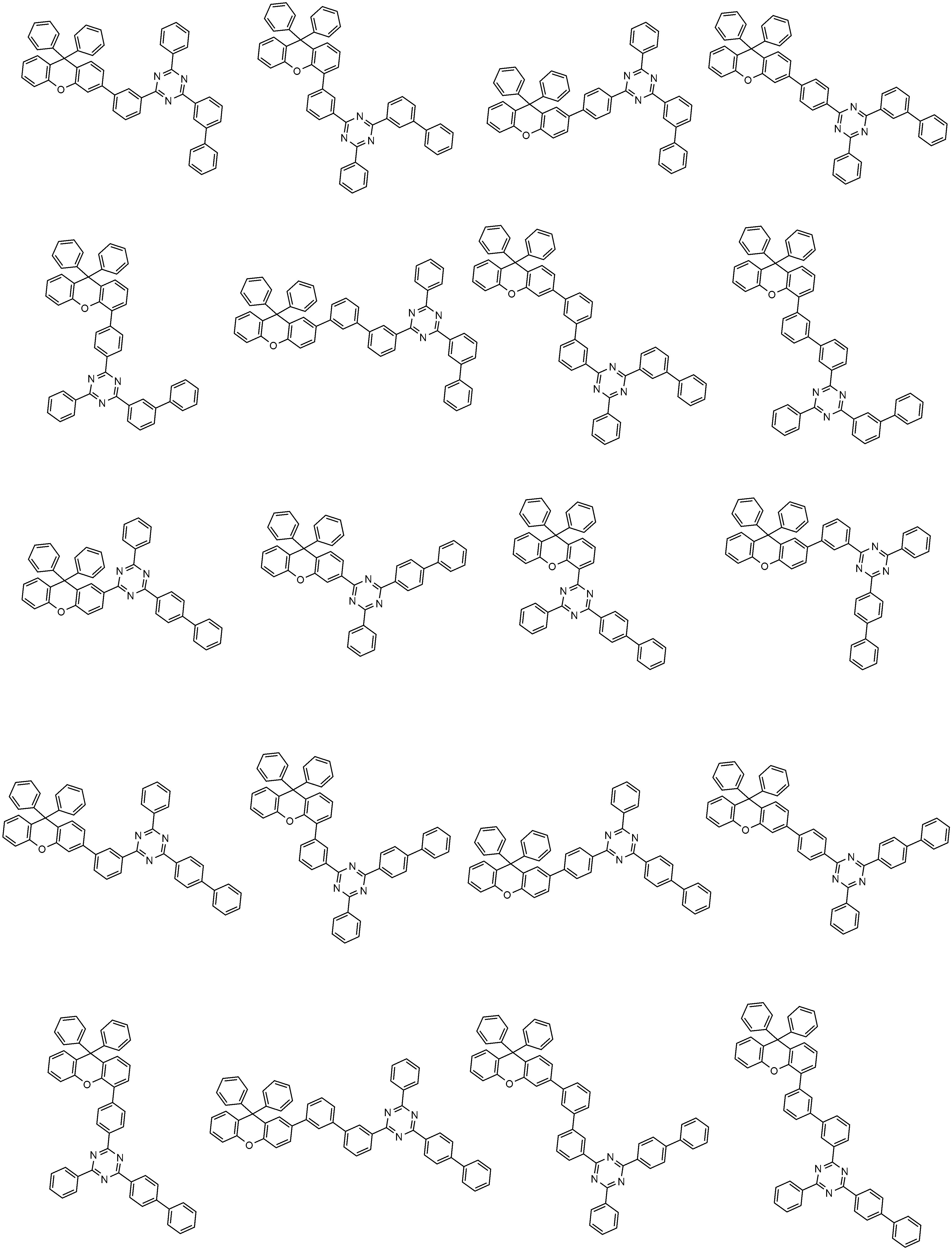


상기 화학식 1로 표시되는 화합물은, 일례로 하기 반응식 1과 같은 제조 방법으로 제조할 수 있으며, 그 외 나머지 화합물도 유사하게 제조할 수 있다.The compound represented by
[반응식 1][Scheme 1]

상기 반응식 1에서 L1 및 A는 앞서 정의한 바와 같으며, X는 할로겐이고, 바람직하게는 X는 클로로 또는 브로모이다.In
상기 반응식 1은 스즈키 커플링 반응으로서, 팔라듐 촉매와 염기 존재 하에 수행하는 것이 바람직하며, 스즈키 커플링 반응을 위한 반응기는 당업계에 알려진 바에 따라 변경이 가능하다. 상기 제조 방법은 후술할 실시예에서 보다 구체화될 수 있다.
또한, 본 발명은 상기 화학식 1로 표시되는 화합물을 포함하는 유기 발광 소자를 제공한다. 일례로, 본 발명은 제1 전극; 상기 제1 전극과 대향하여 구비된 제2 전극; 및 상기 제1 전극과 상기 제2 전극 사이에 구비된 1층 이상의 유기물 층을 포함하는 유기 발광 소자로서, 상기 유기물층 중 1층 이상은 상기 화학식 1로 표시되는 화합물을 포함하는, 유기 발광 소자를 제공한다. In addition, the present invention provides an organic light-emitting device including the compound represented by
본 발명의 유기 발광 소자의 유기물 층은 단층 구조로 이루어질 수도 있으나, 2층 이상의 유기물층이 적층된 다층 구조로 이루어질 수 있다. 예컨대, 본 발명의 유기 발광 소자는 유기물 층으로서 정공주입층, 정공수송층, 전자억제층, 발광층, 정공억제층, 전자수송층, 전자주입층 등을 포함하는 구조를 가질 수 있다. 그러나 유기 발광 소자의 구조는 이에 한정되지 않고 더 적은 수의 유기층을 포함할 수 있다.The organic material layer of the organic light emitting device of the present invention may have a single-layer structure, but may have a multilayer structure in which two or more organic material layers are stacked. For example, the organic light-emitting device of the present invention may have a structure including a hole injection layer, a hole transport layer, an electron suppression layer, a light-emitting layer, a hole suppression layer, an electron transport layer, an electron injection layer, and the like as an organic material layer. However, the structure of the organic light emitting device is not limited thereto and may include a smaller number of organic layers.
또한, 상기 유기물 층은 발광층을 포함할 수 있고, 상기 발광층은 상기 화학식 1로 표시되는 화합물을 포함한다. 특히, 본 발명에 따른 화합물은 발광층의 호스트로 사용할 수 있다. In addition, the organic material layer may include an emission layer, and the emission layer includes the compound represented by
또한, 상기 유기물 층은 전자수송층, 또는 전자주입층을 포함할 수 있고, 상기 전자수송층, 또는 전자주입층은 상기 화학식 1로 표시되는 화합물을 포함할 수 있다. In addition, the organic material layer may include an electron transport layer or an electron injection layer, and the electron transport layer or the electron injection layer may include the compound represented by
또한, 상기 전자수송층, 전자주입층, 또는 전자수송 및 전자주입을 동시에 하는 층은 상기 화학식 1로 표시되는 화합물을 포함할 수 있다.In addition, the electron transport layer, the electron injection layer, or a layer that simultaneously transports electrons and injects electrons may include the compound represented by
또한, 상기 유기물 층은 발광층 및 전자수송층을 포함하고, 상기 전자수송층은 상기 화학식 1로 표시되는 화합물을 포함할 수 있다. In addition, the organic material layer may include a light emitting layer and an electron transport layer, and the electron transport layer may include a compound represented by
또한, 상기 유기물 층은 정공억제층을 포함할 수 있고, 상기 정공억제층은 상기 화학식 1로 표시되는 화합물을 포함할 수 있다. In addition, the organic material layer may include a hole suppression layer, and the hole suppression layer may include a compound represented by
또한, 상기 유기물 층은 전자억제층을 포함할 수 있고, 상기 전자억제층은 상기 화학식 1로 표시되는 화합물을 포함할 수 있다. In addition, the organic material layer may include an electron suppressing layer, and the electron suppressing layer may include a compound represented by
또한, 본 발명에 따른 유기 발광 소자는, 기판 상에 양극, 1층 이상의 유기물 층 및 음극이 순차적으로 적층된 구조(normal type)의 유기 발광 소자일 수 있다. 또한, 본 발명에 따른 유기 발광 소자는 기판 상에 음극, 1층 이상의 유기물 층 및 양극이 순차적으로 적층된 역방향 구조(inverted type)의 유기 발광 소자일 수 있다. 예컨대, 본 발명의 일실시예에 따른 유기 발광 소자의 구조는 도 1 및 2에 예시되어 있다.In addition, the organic light emitting device according to the present invention may be an organic light emitting device having a structure (normal type) in which an anode, one or more organic material layers, and a cathode are sequentially stacked on a substrate. In addition, the organic light emitting device according to the present invention may be an inverted type organic light emitting device in which a cathode, one or more organic material layers, and an anode are sequentially stacked on a substrate. For example, the structure of an organic light-emitting device according to an embodiment of the present invention is illustrated in FIGS. 1 and 2.
도 1은 기판(1), 양극(2), 발광층(3), 음극(4)으로 이루어진 유기 발광 소자의 예를 도시한 것이다. 이와 같은 구조에 있어서, 상기 화학식 1로 표시되는 화합물은 상기 발광층에 포함될 수 있다. 1 shows an example of an organic light emitting device comprising a
도 2는 기판(1), 양극(2), 정공주입층(5), 정공수송층(6), 전자억제층(7), 발광층(3), 정공억제층(8), 전자수송층(9) 및 음극(4)으로 이루어진 유기 발광 소자의 예를 도시한 것이다. 이와 같은 구조에 있어서, 상기 화학식 1로 표시되는 화합물은 상기 정공주입층, 정공수송층, 전자억제층, 발광층, 정공억제층 및 전자수송층 중 1층 이상에 포함될 수 있다. 2 is a substrate (1), anode (2), hole injection layer (5), hole transport layer (6), electron suppression layer (7), light emitting layer (3), hole suppression layer (8), electron transport layer (9) And an example of an organic light-emitting device including the
본 발명에 따른 유기 발광 소자는, 상기 유기물 층 중 1층 이상이 상기 화학식 1로 표시되는 화합물을 포함하는 것을 제외하고는 당 기술분야에 알려져 있는 재료와 방법으로 제조될 수 있다. 또한, 상기 유기 발광 소자가 복수개의 유기물층을 포함하는 경우, 상기 유기물층은 동일한 물질 또는 다른 물질로 형성될 수 있다. The organic light-emitting device according to the present invention may be manufactured by materials and methods known in the art, except that at least one of the organic material layers includes the compound represented by
예컨대, 본 발명에 따른 유기 발광 소자는 기판 상에 제1 전극, 유기물층 및 제2 전극을 순차적으로 적층시켜 제조할 수 있다. 이때, 스퍼터링법(sputtering)이나 전자빔 증발법(e-beam evaporation)과 같은 PVD(physical Vapor Deposition)방법을 이용하여, 기판 상에 금속 또는 전도성을 가지는 금속 산화물 또는 이들의 합금을 증착시켜 양극을 형성하고, 그 위에 정공 주입층, 정공 수송층, 발광층, 정공억제층 및 전자 수송층을 포함하는 유기물 층을 형성한 후, 그 위에 음극으로 사용할 수 있는 물질을 증착시켜 제조할 수 있다. 이와 같은 방법 외에도, 기판 상에 음극 물질부터 유기물층, 양극 물질을 차례로 증착시켜 유기 발광 소자를 만들 수 있다. For example, the organic light emitting device according to the present invention may be manufactured by sequentially stacking a first electrode, an organic material layer, and a second electrode on a substrate. At this time, using a PVD (physical vapor deposition) method such as sputtering or e-beam evaporation, the anode is formed by depositing a metal or a conductive metal oxide or an alloy thereof on the substrate. Then, an organic material layer including a hole injection layer, a hole transport layer, an emission layer, a hole suppression layer, and an electron transport layer is formed thereon, and then a material that can be used as a cathode may be deposited thereon. In addition to this method, an organic light-emitting device may be manufactured by sequentially depositing a cathode material, an organic material layer, and an anode material on a substrate.
또한, 상기 화학식 1로 표시되는 화합물은 유기 발광 소자의 제조시 진공 증착법 뿐만 아니라 용액 도포법에 의하여 유기물 층으로 형성될 수 있다. 여기서, 용액 도포법이라 함은 스핀 코팅, 딥코팅, 닥터 블레이딩, 잉크젯 프린팅, 스크린 프린팅, 스프레이법, 롤 코팅 등을 의미하지만, 이들만으로 한정되는 것은 아니다.In addition, the compound represented by
이와 같은 방법 외에도, 기판 상에 음극 물질로부터 유기물층, 양극 물질을 차례로 증착시켜 유기 발광 소자를 제조할 수 있다(WO 2003/012890). 다만, 제조 방법이 이에 한정되는 것은 아니다. In addition to such a method, an organic light-emitting device may be manufactured by sequentially depositing an organic material layer and an anode material from a cathode material on a substrate (WO 2003/012890). However, the manufacturing method is not limited thereto.
일례로, 상기 제1 전극은 양극이고, 상기 제2 전극은 음극이거나, 또는 상기 제1 전극은 음극이고, 상기 제2 전극은 양극이다.For example, the first electrode is an anode, the second electrode is a cathode, or the first electrode is a cathode, and the second electrode is an anode.
상기 양극 물질로는 통상 유기물 층으로 정공 주입이 원활할 수 있도록 일함수가 큰 물질이 바람직하다. 상기 양극 물질의 구체적인 예로는 바나듐, 크롬, 구리, 아연, 금과 같은 금속 또는 이들의 합금; 아연 산화물, 인듐 산화물, 인듐주석 산화물(ITO), 인듐아연 산화물(IZO)과 같은 금속 산화물; ZnO:Al 또는 SnO2:Sb와 같은 금속과 산화물의 조합; 폴리(3-메틸티오펜), 폴리[3,4-(에틸렌-1,2-디옥시)티오펜](PEDOT), 폴리피롤 및 폴리아닐린과 같은 전도성 고분자 등이 있으나, 이들에만 한정되는 것은 아니다. As the anode material, a material having a large work function is preferable so that holes can be smoothly injected into the organic material layer. Specific examples of the cathode material include metals such as vanadium, chromium, copper, zinc, and gold, or alloys thereof; Metal oxides such as zinc oxide, indium oxide, indium tin oxide (ITO), and indium zinc oxide (IZO); Combinations of metals and oxides such as ZnO:Al or SnO 2 :Sb; Poly(3-methylthiophene), poly[3,4-(ethylene-1,2-dioxy)thiophene] (PEDOT), conductive polymers such as polypyrrole and polyaniline, and the like, but are not limited thereto.
상기 음극 물질로는 통상 유기물층으로 전자 주입이 용이하도록 일함수가 작은 물질인 것이 바람직하다. 상기 음극 물질의 구체적인 예로는 마그네슘, 칼슘, 나트륨, 칼륨, 티타늄, 인듐, 이트륨, 리튬, 가돌리늄, 알루미늄, 은, 주석 및 납과 같은 금속 또는 이들의 합금; LiF/Al 또는 LiO2/Al과 같은 다층 구조 물질 등이 있으나, 이들에만 한정되는 것은 아니다. It is preferable that the cathode material is a material having a small work function to facilitate electron injection into the organic material layer. Specific examples of the negative electrode material include metals such as magnesium, calcium, sodium, potassium, titanium, indium, yttrium, lithium, gadolinium, aluminum, silver, tin, and lead, or alloys thereof; There are multi-layered materials such as LiF/Al or LiO 2 /Al, but are not limited thereto.
상기 정공주입층은 전극으로부터 정공을 주입하는 층으로, 정공 주입 물질로는 정공을 수송하는 능력을 가져 양극에서의 정공 주입효과, 발광층 또는 발광재료에 대하여 우수한 정공 주입 효과를 갖고, 발광층에서 생성된 여기자의 전자주입층 또는 전자주입재료에의 이동을 방지하며, 또한, 박막 형성 능력이 우수한 화합물이 바람직하다. 정공 주입 물질의 HOMO(highest occupied molecular orbital)가 양극 물질의 일함수와 주변 유기물 층의 HOMO 사이인 것이 바람직하다. 정공 주입 물질의 구체적인 예로는 금속 포피린(porphyrin), 올리고티오펜, 아릴아민 계열의 유기물, 헥사니트릴헥사아자트리페닐렌 계열의 유기물, 퀴나크리돈(quinacridone)계열의 유기물, 페릴렌(perylene) 계열의 유기물, 안트라퀴논 및 폴리아닐린과 폴리티오펜 계열의 전도성 고분자 등이 있으나, 이들에만 한정 되는 것은 아니다. The hole injection layer is a layer that injects holes from an electrode, and has the ability to transport holes as a hole injection material, so that it has a hole injection effect at the anode, an excellent hole injection effect for a light emitting layer or a light emitting material. A compound that prevents the movement of excitons to the electron injection layer or the electron injection material and has excellent ability to form a thin film is preferable. It is preferable that the HOMO (highest occupied molecular orbital) of the hole injection material is between the work function of the positive electrode material and the HOMO of the surrounding organic material layer. Specific examples of hole injection materials include metal porphyrin, oligothiophene, arylamine-based organic substances, hexanitrile hexaazatriphenylene-based organic substances, quinacridone-based organic substances, and perylene-based organic substances. Organic substances, anthraquinone, polyaniline, and polythiophene-based conductive polymers, but are not limited thereto.
상기 정공수송층은 정공주입층으로부터 정공을 수취하여 발광층까지 정공을 수송하는 층으로, 정공 수송 물질로 양극이나 정공 주입층으로부터 정공을 수송받아 발광층으로 옮겨줄 수 있는 물질로 정공에 대한 이동성이 큰 물질이 적합하다. 구체적인 예로는 아릴아민 계열의 유기물, 전도성 고분자, 및 공액 부분과 비공액 부분이 함께 있는 블록 공중합체 등이 있으나, 이들에만 한정되는 것은 아니다. The hole transport layer is a layer that receives holes from the hole injection layer and transports holes to the light emitting layer.As a hole transport material, a material capable of transporting holes from the anode or the hole injection layer to the light emitting layer and having high mobility for holes This is suitable. Specific examples include an arylamine-based organic material, a conductive polymer, and a block copolymer including a conjugated portion and a non-conjugated portion, but are not limited thereto.
상기 발광 물질로는 정공 수송층과 전자 수송층으로부터 정공과 전자를 각각 수송받아 결합시킴으로써 가시광선 영역의 빛을 낼 수 있는 물질로서, 형광이나 인광에 대한 양자 효율이 좋은 물질이 바람직하다. 구체적인 예로 8-히드록시-퀴놀린 알루미늄 착물(Alq3); 카르바졸 계열 화합물; 이량체화 스티릴(dimerized styryl) 화합물; BAlq; 10-히드록시벤조 퀴놀린-금속 화합물; 벤족사졸, 벤즈티아졸 및 벤즈이미다졸 계열의 화합물; 폴리(p-페닐렌비닐렌)(PPV) 계열의 고분자; 스피로(spiro) 화합물; 폴리플루오렌, 루브렌 등이 있으나, 이들에만 한정되는 것은 아니다. The light-emitting material is a material capable of emitting light in a visible light region by transporting and bonding holes and electrons from the hole transport layer and the electron transport layer, respectively, and a material having good quantum efficiency for fluorescence or phosphorescence is preferable. Specific examples of 8-hydroxy-quinoline aluminum complex (Alq 3 ); Carbazole-based compounds; Dimerized styryl compounds; BAlq; 10-hydroxybenzo quinoline-metal compound; Benzoxazole, benzthiazole, and benzimidazole-based compounds; Poly(p-phenylenevinylene) (PPV)-based polymer; Spiro compounds; Polyfluorene, rubrene, and the like, but are not limited thereto.
상기 전자억제층은 음극에서 주입된 전자가 발광층에서 재결합되지 않고 정공수송층으로 넘어가는 것을 방지하기 위해 정공수송층과 발광층의 사이에 두는 층으로는 층으로, 전자저지층으로 불리기도 한다. 전자억제층에는 전자수송층보다 전자 친화력이 작은 물질이 바람직하다. The electron-suppression layer is a layer between the hole-transport layer and the light-emitting layer in order to prevent electrons injected from the cathode from passing over to the hole-transport layer without being recombined in the light-emitting layer, and is also called an electron-blocking layer. The electron-suppressing layer is preferably a material having less electron affinity than the electron transport layer.
상기 발광층은 호스트 재료 및 도펀트 재료를 포함할 수 있다. 호스트 재료는 축합 방향족환 유도체 또는 헤테로환 함유 화합물 등이 있다. 구체적으로 축합 방향족환 유도체로는 안트라센 유도체, 피렌 유도체, 나프탈렌 유도체, 펜타센 유도체, 페난트렌 화합물, 플루오란텐 화합물 등이 있고, 헤테로환 함유 화합물로는 카바졸 유도체, 디벤조퓨란 유도체, 래더형 퓨란 화합물, 피리미딘 유도체 등이 있으나, 이에 한정되지 않는다. The emission layer may include a host material and a dopant material. Host materials include condensed aromatic ring derivatives or heterocyclic-containing compounds. Specifically, condensed aromatic ring derivatives include anthracene derivatives, pyrene derivatives, naphthalene derivatives, pentacene derivatives, phenanthrene compounds, and fluoranthene compounds, and heterocycle-containing compounds include carbazole derivatives, dibenzofuran derivatives, ladder type Furan compounds, pyrimidine derivatives, and the like, but are not limited thereto.
도펀트 재료로는 방향족 아민 유도체, 스트릴아민 화합물, 붕소 착체, 플루오란텐 화합물, 금속 착체 등이 있다. 구체적으로 방향족 아민 유도체로는 치환 또는 비치환된 아릴아미노기를 갖는 축합 방향족환 유도체로서, 아릴아미노기를 갖는 피렌, 안트라센, 크리센, 페리플란텐 등이 있으며, 스티릴아민 화합물로는 치환 또는 비치환된 아릴아민에 적어도 1개의 아릴비닐기가 치환되어 있는 화합물로, 아릴기, 실릴기, 알킬기, 사이클로알킬기 및 아릴아미노기로 이루어진 군에서 1 또는 2 이상 선택되는 치환기가 치환 또는 비치환된다. 구체적으로 스티릴아민, 스티릴디아민, 스티릴트리아민, 스티릴테트라아민 등이 있으나, 이에 한정되지 않는다. 또한, 금속 착체로는 이리듐 착체, 백금 착체 등이 있으나, 이에 한정되지 않는다.Dopant materials include aromatic amine derivatives, strylamine compounds, boron complexes, fluoranthene compounds, and metal complexes. Specifically, the aromatic amine derivative is a condensed aromatic ring derivative having a substituted or unsubstituted arylamino group, and includes pyrene, anthracene, chrysene, and periflanthene having an arylamino group, and the styrylamine compound is substituted or unsubstituted As a compound in which at least one arylvinyl group is substituted on the arylamine, one or two or more substituents selected from the group consisting of an aryl group, silyl group, alkyl group, cycloalkyl group, and arylamino group are substituted or unsubstituted. Specifically, there are styrylamine, styryldiamine, styryltriamine, styryltetraamine, and the like, but are not limited thereto. In addition, the metal complex includes an iridium complex, a platinum complex, and the like, but is not limited thereto.
상기 정공억제층은 양극에서 주입된 정공이 발광층에서 재결합되지 않고 전자수송층으로 넘어가는 것을 방지하기 위해 전자수송층과 발광층의 사이에 두는 층으로, 정공저지층으로 불리기도 한다. 정공억제층에는 이온화에너지가 큰 물질이 바람직하다. 바람직하게는, 상기 화학식 1로 표시되는 화합물을 정공억제층의 물질로 포함할 수 있다.The hole suppression layer is a layer placed between the electron transport layer and the emission layer to prevent holes injected from the anode from being recombined in the emission layer and passes to the electron transport layer, and is also called a hole blocking layer. A material having high ionization energy is preferable for the hole suppression layer. Preferably, the compound represented by
상기 전자수송층은 전자주입층으로부터 전자를 수취하여 발광층까지 전자를 수송하는 층으로 전자 수송 물질로는 음극으로부터 전자를 잘 주입 받아 발광층으로 옮겨줄 수 있는 물질로서, 전자에 대한 이동성이 큰 물질이 적합하다. 구체적인 예로는 8-히드록시퀴놀린의 Al 착물; Alq3를 포함한 착물; 유기 라디칼 화합물; 히드록시플라본-금속 착물 등이 있으나, 이들에만 한정되는 것은 아니다. 전자 수송층은 종래기술에 따라 사용된 바와 같이 임의의 원하는 캐소드 물질과 함께 사용할 수 있다. 특히, 적절한 캐소드 물질의 예는 낮은 일함수를 가지고 알루미늄층 또는 실버층이 뒤따르는 통상적인 물질이다. 구체적으로 세슘, 바륨, 칼슘, 이테르븀 및 사마륨이고, 각 경우 알루미늄 층 또는 실버층이 뒤따른다. 바람직하게는, 상기 화학식 1로 표시되는 화합물을 전자수송층의 물질로 포함할 수 있다.The electron transport layer is a layer that receives electrons from the electron injection layer and transports electrons to the emission layer. As an electron transport material, a material capable of injecting electrons from the cathode and transferring them to the emission layer, and a material having high mobility for electrons is suitable. Do. Specific examples include Al complex of 8-hydroxyquinoline; Complexes containing Alq 3 ; Organic radical compounds; Hydroxyflavone-metal complexes and the like, but are not limited thereto. The electron transport layer can be used with any desired cathode material as used according to the prior art. In particular, examples of suitable cathode materials are conventional materials that have a low work function and are followed by an aluminum layer or a silver layer. Specifically, they are cesium, barium, calcium, ytterbium, and samarium, and in each case an aluminum layer or a silver layer follows. Preferably, the compound represented by
상기 전자주입층은 전극으로부터 전자를 주입하는 층으로, 전자를 수송하는 능력을 갖고, 음극으로부터의 전자 주입 효과, 발광층 또는 발광 재료에 대하여 우수한 전자주입 효과를 가지며, 발광층에서 생성된 여기자의 정공주입층에의 이동을 방지하고, 또한, 박막형성능력이 우수한 화합물이 바람직하다. 구체적으로는 플루오레논, 안트라퀴노다이메탄, 다이페노퀴논, 티오피란 다이옥사이드, 옥사졸, 옥사다이아졸, 트리아졸, 이미다졸, 페릴렌테트라카복실산, 프레오레닐리덴 메탄, 안트론 등과 그들의 유도체, 금속 착체 화합물 및 질소 함유 5원환 유도체 등이 있으나, 이에 한정되지 않는다. The electron injection layer is a layer that injects electrons from the electrode, has the ability to transport electrons, has an electron injection effect from the cathode, an excellent electron injection effect on the light emitting layer or the light emitting material, and hole injection of excitons generated in the light emitting layer A compound that prevents migration to the layer and has excellent thin film formation ability is preferable. Specifically, fluorenone, anthraquinodimethane, diphenoquinone, thiopyran dioxide, oxazole, oxadiazole, triazole, imidazole, perylenetetracarboxylic acid, preorenylidene methane, anthrone, and their derivatives, metals Complex compounds and nitrogen-containing 5-membered ring derivatives, but are not limited thereto.
상기 금속 착체 화합물로서는 8-하이드록시퀴놀리나토 리튬, 비스(8-하이드록시퀴놀리나토)아연, 비스(8-하이드록시퀴놀리나토)구리, 비스(8-하이드록시퀴놀리나토)망간, 트리스(8-하이드록시퀴놀리나토)알루미늄, 트리스(2-메틸-8-하이드록시퀴놀리나토)알루미늄, 트리스(8-하이드록시퀴놀리나토)갈륨, 비스(10-하이드록시벤조[h]퀴놀리나토)베릴륨, 비스(10-하이드록시벤조[h]퀴놀리나토)아연, 비스(2-메틸-8-퀴놀리나토)클로로갈륨, 비스(2-메틸-8-퀴놀리나토)(o-크레졸라토)갈륨, 비스(2-메틸-8-퀴놀리나토)(1-나프톨라토)알루미늄, 비스(2-메틸-8-퀴놀리나토)(2-나프톨라토)갈륨 등이 있으나, 이에 한정되지 않는다.Examples of the metal complex compound include lithium 8-hydroxyquinolinato, bis(8-hydroxyquinolinato)zinc, bis(8-hydroxyquinolinato)copper, bis(8-hydroxyquinolinato)manganese, Tris(8-hydroxyquinolinato)aluminum, tris(2-methyl-8-hydroxyquinolinato)aluminum, tris(8-hydroxyquinolinato)gallium, bis(10-hydroxybenzo[h] Quinolinato)beryllium, bis(10-hydroxybenzo[h]quinolinato)zinc, bis(2-methyl-8-quinolinato)chlorogallium, bis(2-methyl-8-quinolinato)( o-cresolato)gallium, bis(2-methyl-8-quinolinato)(1-naphtholato)aluminum, bis(2-methyl-8-quinolinato)(2-naphtholato)gallium, etc. It is not limited to this.
본 발명에 따른 유기 발광 소자는 사용되는 재료에 따라 전면 발광형, 후면 발광형 또는 양면 발광형일 수 있다.The organic light emitting device according to the present invention may be a top emission type, a bottom emission type, or a double-sided emission type depending on the material used.
또한, 상기 화학식 1로 표시되는 화합물은 유기 발광 소자 외에도 유기 태양 전지 또는 유기 트랜지스터에 포함될 수 있다.In addition, the compound represented by
발명을 이하 실시예에서 보다 구체적으로 설명한다. 그러나 하기 실시예는 본 발명을 예시하기 위한 것이며, 본 발명의 범위가 이들에 의하여 한정되는 것은 아니다.The invention will be described in more detail in the following examples. However, the following examples are for illustrating the present invention, and the scope of the present invention is not limited thereto.
제조예Manufacturing example
제조예Manufacturing example
1: 화합물 1의 제조1: Preparation of
1-1. 중간체 A의 제조1-1. Preparation of Intermediate A
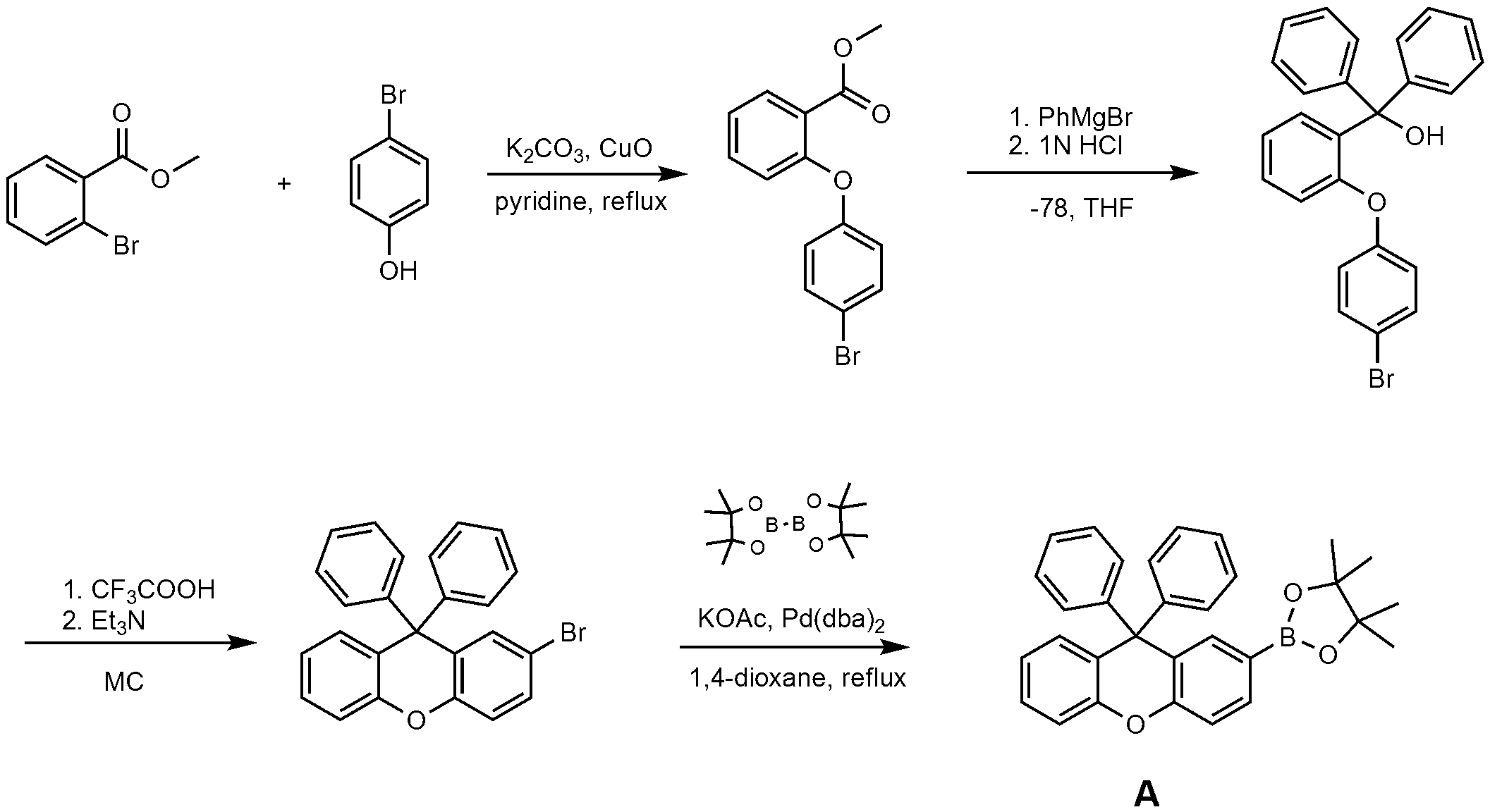
1-2. 화합물 1의 제조1-2. Preparation of

질소 분위기에서 500ml 둥근 바닥 플라스크에 중간체 A (7.50 g, 16.31 mmol), 중간체 a-1 (6.01 g, 15.53 mmol)을 테트라하이드로퓨란 (280 ml)에 완전히 녹인 후 2M 탄산칼륨수용액(140 ml)을 첨가하고, 테트라키스-(트리페닐포스핀)팔라듐 (0.54 g, 0.47 mmol)을 넣은 후 4 시간 동안 가열 교반하였다. 상온으로 온도를 낮추고 물 층을 제거하고 무수황산마그네슘으로 건조한 후 감압농축 시키고 테트라하이드로퓨란 (210 ml)으로 재결정하여 화합물 1 (8.26 g, 수율: 72 %)을 제조하였다.Intermediate A (7.50 g, 16.31 mmol) and intermediate a-1 (6.01 g, 15.53 mmol) were completely dissolved in tetrahydrofuran (280 ml) in a 500 ml round bottom flask in a nitrogen atmosphere, and then 2M aqueous potassium carbonate solution (140 ml) was added. After addition, tetrakis-(triphenylphosphine)palladium (0.54 g, 0.47 mmol) was added, followed by heating and stirring for 4 hours. The temperature was lowered to room temperature, the water layer was removed, dried over anhydrous magnesium sulfate, concentrated under reduced pressure, and recrystallized with tetrahydrofuran (210 ml) to prepare compound 1 (8.26 g, yield: 72%).
MS: [M+H]+= 642.MS: [M+H] + = 642.
제조예Manufacturing example
2: 화합물 2의 제조2: Preparation of

질소 분위기에서 500 ml 둥근 바닥 플라스크에 중간체 A (7.50 g, 16.31 mmol), 중간체 a-2 (6.01 g, 15.53 mmol)을 테트라하이드로퓨란 (280 ml)에 완전히 녹인 후 2M 탄산칼륨수용액 (140 ml)을 첨가하고, 테트라키스-(트리페닐포스핀)팔라듐 (0.54 g, 0.47 mmol)을 넣은 후 4 시간 동안 가열 교반하였다. 상온으로 온도를 낮추고 물 층을 제거하고 무수황산마그네슘으로 건조한 후 감압농축 시키고 에틸아세테이트 (280 ml)로 재결정하여 화합물 2 (6.86 g, 수율: 59 %)를 제조하였다.Intermediate A (7.50 g, 16.31 mmol) and intermediate a-2 (6.01 g, 15.53 mmol) were completely dissolved in tetrahydrofuran (280 ml) in a 500 ml round-bottom flask in a nitrogen atmosphere, and then 2M aqueous potassium carbonate solution (140 ml) Was added, tetrakis-(triphenylphosphine)palladium (0.54 g, 0.47 mmol) was added, followed by heating and stirring for 4 hours. The temperature was lowered to room temperature, the water layer was removed, dried over anhydrous magnesium sulfate, concentrated under reduced pressure, and recrystallized with ethyl acetate (280 ml) to prepare compound 2 (6.86 g, yield: 59%).
MS: [M+H]+= 642.MS: [M+H] + = 642.
제조예Manufacturing example
3: 화합물 3의 제조3: Preparation of

질소 분위기에서 500ml 둥근 바닥 플라스크에 중간체 A (7.50 g, 16.31 mmol), 중간체 a-3 (6.01 g, 15.53 mmol)을 테트라하이드로퓨란 (280 ml)에 완전히 녹인 후 2M 탄산칼륨수용액 (140 ml)을 첨가하고, 테트라키스-(트리페닐포스핀)팔라듐 (0.54 g, 0.47 mmol)을 넣은 후 4 시간 동안 가열 교반하였다. 상온으로 온도를 낮추고 물 층을 제거하고 무수황산마그네슘으로 건조한 후 감압농축 시키고 에틸아세테이트 (250 ml)로 재결정하여 화합물 3 (6.52 g, 수율: 57 %)을 제조하였다.In a nitrogen atmosphere, intermediate A (7.50 g, 16.31 mmol) and intermediate a-3 (6.01 g, 15.53 mmol) were completely dissolved in tetrahydrofuran (280 ml) in a 500 ml round bottom flask, and then 2M aqueous potassium carbonate solution (140 ml) was added. After addition, tetrakis-(triphenylphosphine)palladium (0.54 g, 0.47 mmol) was added, followed by heating and stirring for 4 hours. The temperature was lowered to room temperature, the water layer was removed, dried over anhydrous magnesium sulfate, concentrated under reduced pressure, and recrystallized with ethyl acetate (250 ml) to prepare compound 3 (6.52 g, yield: 57%).
MS: [M+H]+= 641.MS: [M+H] + = 641.
제조예Manufacturing example
4: 화합물 4의 제조4: Preparation of

질소 분위기에서 500ml 둥근 바닥 플라스크에 중간체 A (7.50 g, 16.31 mmol), 중간체 a-4 (6.01 g, 15.53 mmol)을 테트라하이드로퓨란 (280 ml)에 완전히 녹인 후 2M 탄산칼륨수용액 (140 ml)을 첨가하고, 테트라키스-(트리페닐포스핀)팔라듐 (0.54 g, 0.47 mmol)을 넣은 후 4 시간 동안 가열 교반하였다. 상온으로 온도를 낮추고 물 층을 제거하고 무수황산마그네슘으로 건조한 후 감압농축 시키고 에틸아세테이트 (230 ml)로 재결정하여 화합물 4 (6.31 g, 수율: 55 %)를 제조하였다.Intermediate A (7.50 g, 16.31 mmol) and Intermediate a-4 (6.01 g, 15.53 mmol) were completely dissolved in tetrahydrofuran (280 ml) in a 500 ml round bottom flask in a nitrogen atmosphere, and then 2M aqueous potassium carbonate solution (140 ml) was added. After addition, tetrakis-(triphenylphosphine)palladium (0.54 g, 0.47 mmol) was added, followed by heating and stirring for 4 hours. The temperature was lowered to room temperature, the water layer was removed, dried over anhydrous magnesium sulfate, concentrated under reduced pressure, and recrystallized with ethyl acetate (230 ml) to prepare compound 4 (6.31 g, yield: 55%).
MS: [M+H]+= 640.MS: [M+H] + = 640.
제조예Manufacturing example 5: 화합물 5의 제조5: Preparation of compound 5

질소 분위기에서 500ml 둥근 바닥 플라스크에 중간체 A (7.51 g, 16.32 mmol), 중간체 a-5 (5.33 g, 15.54 mmol)을 테트라하이드로퓨란 (280 ml)에 완전히 녹인 후 2M 탄산칼륨수용액 (140 ml)을 첨가하고, 테트라키스-(트리페닐포스핀)팔라듐 (0.54 g, 0.47 mmol)을 넣은 후 4 시간 동안 가열 교반하였다. 상온으로 온도를 낮추고 물 층을 제거하고 무수황산마그네슘으로 건조한 후 감압농축 시키고 에틸아세테이트 (180 ml)로 재결정하여 화합물 5 (5.97 g, 수율: 60 %)를 제조하였다.Intermediate A (7.51 g, 16.32 mmol) and intermediate a-5 (5.33 g, 15.54 mmol) were completely dissolved in tetrahydrofuran (280 ml) in a 500 ml round bottom flask in a nitrogen atmosphere, and then 2M aqueous potassium carbonate solution (140 ml) was added. After addition, tetrakis-(triphenylphosphine)palladium (0.54 g, 0.47 mmol) was added, followed by heating and stirring for 4 hours. The temperature was lowered to room temperature, the water layer was removed, dried over anhydrous magnesium sulfate, concentrated under reduced pressure, and recrystallized with ethyl acetate (180 ml) to prepare compound 5 (5.97 g, yield: 60%).
MS: [M+H]+= 642.MS: [M+H] + = 642.
제조예Manufacturing example
6: 화합물 6의 제조6: Preparation of

질소 분위기에서 500ml 둥근 바닥 플라스크에 중간체 A (7.50 g, 16.29 mmol), 중간체 a-6 (5.54 g, 15.52 mmol)을 테트라하이드로퓨란 (280 ml)에 완전히 녹인 후 2M 탄산칼륨수용액(140 ml)을 첨가하고, 테트라키스-(트리페닐포스핀)팔라듐 (0.54 g, 0.47 mmol)을 넣은 후 4 시간 동안 가열 교반하였다. 상온으로 온도를 낮추고 물 층을 제거하고 무수황산마그네슘으로 건조한 후 감압농축 시키고 에틸아세테이트 (210 ml)로 재결정하여 화합물 6 (5.97 g, 수율: 60 %)을 제조하였다.Intermediate A (7.50 g, 16.29 mmol) and intermediate a-6 (5.54 g, 15.52 mmol) were completely dissolved in tetrahydrofuran (280 ml) in a 500 ml round bottom flask in a nitrogen atmosphere, and then 2M aqueous potassium carbonate solution (140 ml) was added. After addition, tetrakis-(triphenylphosphine)palladium (0.54 g, 0.47 mmol) was added, followed by heating and stirring for 4 hours. The temperature was lowered to room temperature, the water layer was removed, dried over anhydrous magnesium sulfate, concentrated under reduced pressure, and recrystallized with ethyl acetate (210 ml) to prepare compound 6 (5.97 g, yield: 60%).
MS: [M+H]+= 656.MS: [M+H] + = 656.
제조예Manufacturing example
7: 화합물 7의 제조7: Preparation of
7-1. 중간체 B의 제조7-1. Preparation of Intermediate B

7-2. 화합물 7의 제조7-2. Preparation of

질소 분위기에서 500 ml 둥근 바닥 플라스크에 중간체 B (7.50 g, 16.31 mmol), 중간체 a-1 (6.01 g, 15.53 mmol)을 테트라하이드로퓨란 (280 ml)에 완전히 녹인 후 2M 탄산칼륨수용액 (140 ml)을 첨가하고, 테트라키스-(트리페닐포스핀)팔라듐 (0.54 g, 0.47 mmol)을 넣은 후 4 시간 동안 가열 교반하였다. 상온으로 온도를 낮추고 물 층을 제거하고 무수황산마그네슘으로 건조한 후 감압농축 시키고 테트라하이드로퓨란 (210 ml)으로 재결정하여 화합물 7 (7.16 g, 수율: 72 %)을 제조하였다.In a nitrogen atmosphere, intermediate B (7.50 g, 16.31 mmol) and intermediate a-1 (6.01 g, 15.53 mmol) were completely dissolved in tetrahydrofuran (280 ml) in a 500 ml round bottom flask, and then 2M aqueous potassium carbonate solution (140 ml). Was added, tetrakis-(triphenylphosphine)palladium (0.54 g, 0.47 mmol) was added, followed by heating and stirring for 4 hours. The temperature was lowered to room temperature, the water layer was removed, dried over anhydrous magnesium sulfate, concentrated under reduced pressure, and recrystallized with tetrahydrofuran (210 ml) to prepare compound 7 (7.16 g, yield: 72%).
MS: [M+H]+= 642.MS: [M+H] + = 642.
제조예Manufacturing example
8: 화합물 8의 제조8: Preparation of
8-1. 중간체 C의 제조8-1. Preparation of Intermediate C

8-2. 화합물 8의 제조8-2. Preparation of

질소 분위기에서 500ml 둥근 바닥 플라스크에 중간체 C (7.50 g, 16.31 mmol), 중간체 a-8 (5.70 g, 15.53 mmol)을 테트라하이드로퓨란 (280 ml)에 완전히 녹인 후 2M 탄산칼륨수용액 (140 ml)을 첨가하고, 테트라키스-(트리페닐포스핀)팔라듐 (0.54 g, 0.47 mmol)을 넣은 후 4 시간 동안 가열 교반하였다. 상온으로 온도를 낮추고 물 층을 제거하고 무수황산마그네슘으로 건조한 후 감압농축 시키고 에틸아세테이트 (200 ml)로 재결정하여 화합물 8 (8.22 g, 수율: 79 %)을 제조하였다.Intermediate C (7.50 g, 16.31 mmol) and Intermediate a-8 (5.70 g, 15.53 mmol) were completely dissolved in tetrahydrofuran (280 ml) in a 500 ml round bottom flask in a nitrogen atmosphere, and then 2M aqueous potassium carbonate solution (140 ml) was added. After addition, tetrakis-(triphenylphosphine)palladium (0.54 g, 0.47 mmol) was added, followed by heating and stirring for 4 hours. The temperature was lowered to room temperature, the water layer was removed, dried over anhydrous magnesium sulfate, concentrated under reduced pressure, and recrystallized with ethyl acetate (200 ml) to prepare compound 8 (8.22 g, yield: 79%).
MS: [M+H]+= 666.MS: [M+H] + = 666.
제조예Manufacturing example 9: 화합물 9의 제조9: Preparation of compound 9

질소 분위기에서 500ml 둥근 바닥 플라스크에 중간체 C (7.50 g, 16.31 mmol), 중간체 a-9 (5.70 g, 15.53 mmol)을 테트라하이드로퓨란 (280 ml)에 완전히 녹인 후 2M 탄산칼륨수용액 (140 ml)을 첨가하고, 테트라키스-(트리페닐포스핀)팔라듐 (0.54 g, 0.47 mmol)을 넣은 후 4 시간 동안 가열 교반하였다. 상온으로 온도를 낮추고 물 층을 제거하고 무수황산마그네슘으로 건조한 후 감압농축 시키고 에틸아세테이트 (240 ml)로 재결정하여 화합물 9 (8.22 g, 수율: 79 %)를 제조하였다.Intermediate C (7.50 g, 16.31 mmol) and intermediate a-9 (5.70 g, 15.53 mmol) were completely dissolved in tetrahydrofuran (280 ml) in a 500 ml round bottom flask in a nitrogen atmosphere, and then 2M aqueous potassium carbonate solution (140 ml) was added. After addition, tetrakis-(triphenylphosphine)palladium (0.54 g, 0.47 mmol) was added, followed by heating and stirring for 4 hours. The temperature was lowered to room temperature, the water layer was removed, dried over anhydrous magnesium sulfate, concentrated under reduced pressure, and recrystallized with ethyl acetate (240 ml) to prepare compound 9 (8.22 g, yield: 79%).
MS: [M+H]+= 597.MS: [M+H] + = 597.
제조예Manufacturing example 10: 화합물 10의 제조10: Preparation of compound 10

질소 분위기에서 500ml 둥근 바닥 플라스크에 중간체 C (7.50 g, 16.31 mmol), 중간체 a-10 (5.70 g, 15.53 mmol)을 테트라하이드로퓨란 (280 ml)에 완전히 녹인 후 2M 탄산칼륨수용액 (140 ml)을 첨가하고, 테트라키스-(트리페닐포스핀)팔라듐 (0.54 g, 0.47 mmol)을 넣은 후 4 시간 동안 가열 교반하였다. 상온으로 온도를 낮추고 물 층을 제거하고 무수황산마그네슘으로 건조한 후 감압농축 시키고 에틸아세테이트 (260 ml)로 재결정하여 화합물 10 (8.22 g, 수율: 79 %)을 제조하였다.Intermediate C (7.50 g, 16.31 mmol) and Intermediate a-10 (5.70 g, 15.53 mmol) were completely dissolved in tetrahydrofuran (280 ml) in a 500 ml round bottom flask in a nitrogen atmosphere, and then 2M aqueous potassium carbonate solution (140 ml) was added. After addition, tetrakis-(triphenylphosphine)palladium (0.54 g, 0.47 mmol) was added, followed by heating and stirring for 4 hours. The temperature was lowered to room temperature, the water layer was removed, dried over anhydrous magnesium sulfate, concentrated under reduced pressure, and recrystallized with ethyl acetate (260 ml) to prepare compound 10 (8.22 g, yield: 79%).
MS: [M+H]+= 631.MS: [M+H] + = 631.
제조예Manufacturing example 11: 화합물 11의 제조11: Preparation of compound 11

질소 분위기에서 500ml 둥근 바닥 플라스크에 중간체 A (7.50 g, 16.31 mmol), 중간체 a-11 (4.91 g, 15.54 mmol)을 테트라하이드로퓨란 (280 ml)에 완전히 녹인 후 2M 탄산칼륨수용액 (140 ml)을 첨가하고, 테트라키스-(트리페닐포스핀)팔라듐 (0.54 g, 0.47 mmol)을 넣은 후 4 시간 동안 가열 교반하였다. 상온으로 온도를 낮추고 물 층을 제거하고 무수황산마그네슘으로 건조한 후 감압농축 시키고 에틸아세테이트 (230 ml)로 재결정하여 화합물 11 (5.97 g, 수율: 60 %)을 제조하였다.Intermediate A (7.50 g, 16.31 mmol) and intermediate a-11 (4.91 g, 15.54 mmol) were completely dissolved in tetrahydrofuran (280 ml) in a 500 ml round bottom flask in a nitrogen atmosphere, and then 2M aqueous potassium carbonate solution (140 ml) was added. After addition, tetrakis-(triphenylphosphine)palladium (0.54 g, 0.47 mmol) was added, followed by heating and stirring for 4 hours. The temperature was lowered to room temperature, the water layer was removed, dried over anhydrous magnesium sulfate, concentrated under reduced pressure, and recrystallized with ethyl acetate (230 ml) to prepare compound 11 (5.97 g, yield: 60%).
MS: [M+H]+= 615.MS: [M+H] + = 615.
제조예 12: 화합물 12의 제조 Preparation Example 12: Preparation of compound 12

질소 분위기에서 500ml 둥근 바닥 플라스크에 중간체 A (11.94 g, 25.96 mmol), 중간체 a-12 (8.42 g, 22.57 mmol)을 테트라하이드로퓨란 (220 ml)에 완전히 녹인 후 2M 탄산칼륨수용액 (110 ml)을 첨가하고, 테트라키스-(트리페닐포스핀)팔라듐 (0.78 g, 0.68 mmol)을 넣은 후 3 시간 동안 가열 교반하였다. 상온으로 온도를 낮추고 물 층을 제거하고 무수황산마그네슘으로 건조한 후 감압농축 시키고 에틸아세테이트 (240 ml)로 재결정하여 화합물 12 (8.02 g, 수율: 53 %)을 제조하였다.Intermediate A (11.94 g, 25.96 mmol) and intermediate a-12 (8.42 g, 22.57 mmol) were completely dissolved in tetrahydrofuran (220 ml) in a 500 ml round-bottom flask in a nitrogen atmosphere, and then 2M aqueous potassium carbonate solution (110 ml) was added. After addition, tetrakis-(triphenylphosphine)palladium (0.78 g, 0.68 mmol) was added, followed by heating and stirring for 3 hours. The temperature was lowered to room temperature, the water layer was removed, dried over anhydrous magnesium sulfate, concentrated under reduced pressure, and recrystallized with ethyl acetate (240 ml) to prepare compound 12 (8.02 g, yield: 53%).
MS: [M+H]+= 672.MS: [M+H] + = 672.
실시예 1-1Example 1-1
ITO(indium tin oxide)가 1,000 Å의 두께로 박막 코팅된 유리 기판을 세제를 녹인 증류수에 넣고 초음파로 세척하였다. 이때, 세제로는 피셔사(Fischer Co.) 제품을 사용하였으며, 증류수로는 밀러포어사(Millipore Co.) 제품의 필터(Filter)로 2차로 걸러진 증류수를 사용하였다. ITO를 30 분간 세척한 후 증류수로 2 회 반복하여 초음파 세척을 10 분간 진행하였다. 증류수 세척이 끝난 후, 이소프로필알콜, 아세톤, 메탄올의 용제로 초음파 세척을 하고 건조시킨 후 플라즈마 세정기로 수송시켰다. 또한, 산소 플라즈마를 이용하여 상기 기판을 5 분간 세정한 후 진공 증착기로 기판을 수송시켰다.A glass substrate coated with a thin film of ITO (indium tin oxide) having a thickness of 1,000 Å was put in distilled water dissolved in a detergent and washed with ultrasonic waves. At this time, a product made by Fischer Co. was used as a detergent, and distilled water secondarily filtered with a filter manufactured by Millipore Co. was used as distilled water. After washing the ITO for 30 minutes, it was repeated twice with distilled water to perform ultrasonic cleaning for 10 minutes. After washing with distilled water, ultrasonic cleaning was performed with a solvent of isopropyl alcohol, acetone, and methanol, dried, and then transported to a plasma cleaner. In addition, after cleaning the substrate for 5 minutes using oxygen plasma, the substrate was transported to a vacuum evaporator.
이렇게 준비된 양극인 ITO 투명 전극 위에 하기 화합물 HI1 및 하기 화합물 HI2의 화합물을 98:2의 몰비가 되도록 100 Å의 두께로 열 진공 증착하여 정공주입층을 형성하였다. 상기 정공주입층 위에 하기 화학식 HT1으로 표시되는 화합물을 1150 Å의 두께로 진공 증착하여 정공수송층을 형성하였다. 이어서, 상기 정공수송층 위에 막 두께 50 Å으로 EB1의 화합물을 진공 증착하여 전자억제층을 형성하였다. 이어서, 상기 전자억제층 위에 막 두께 200 Å으로 하기 화학식 BH로 표시되는 화합물 및 하기 화학식 BD로 표시되는 화합물을 50:1의 중량비로 진공증착하여 발광층을 형성하였다. 상기 발광층 위에 막 두께 50 Å으로 앞서 제조예 1에서 제조한 화합물 1을 진공 증착하여 정공억제층을 형성하였다. 이어서, 상기 정공억제층 위에 하기 화학식 ET1으로 표시되는 화합물과 하기 화학식 LiQ로 표시되는 화합물을 1:1의 중량비로 진공증착하여 30 Å의 두께로 전자수송층을 형성하였다. 상기 전자수송층 위에 순차적으로 12 Å두께로 리튬플로라이드(LiF)와 1,000 Å 두께로 알루미늄을 증착하여 음극을 형성하였다.A hole injection layer was formed by thermally vacuum evaporating a compound of the following compound HI1 and the following compound HI2 to a thickness of 100 Å so as to have a molar ratio of 98:2 on an ITO transparent electrode, which is an anode thus prepared. A hole transport layer was formed by vacuum depositing a compound represented by Formula HT1 on the hole injection layer to a thickness of 1150 Å. Subsequently, an electron suppressing layer was formed by vacuum depositing a compound of EB1 with a film thickness of 50 Å on the hole transport layer. Subsequently, a light emitting layer was formed by vacuum depositing a compound represented by the following formula BH and a compound represented by the following formula BD with a film thickness of 200 Å on the electron suppressing layer at a weight ratio of 50:1.

상기의 과정에서 유기물의 증착속도는 0.4 ~ 0.7 Å/sec를 유지하였고, 음극의 리튬플로라이드는 0.3 Å/sec, 알루미늄은 2 Å/sec의 증착 속도를 유지하였으며, 증착시 진공도는 2ⅹ10-7~5ⅹ10-6 torr를 유지하여, 유기 발광 소자를 제작하였다.In the above process, the deposition rate of organic material was maintained at 0.4 ~ 0.7 Å/sec, the deposition rate of lithium fluoride at the cathode was 0.3 Å/sec, and the deposition rate of aluminum was 2 Å/sec, and the vacuum degree during deposition was 2×10 -7 An organic light emitting device was manufactured by maintaining ~5x10 -6 torr.
실시예 1-2 내지 1-5Examples 1-2 to 1-5
정공억제층의 형성 시 화합물 1 대신 하기 표 1에 기재된 화합물을 사용한 것을 제외하고는, 상기 실시예 1-1과 동일한 방법으로 유기 발광 소자를 각각 제조하였다.An organic light-emitting device was manufactured in the same manner as in Example 1-1, except that the compound shown in Table 1 was used instead of
비교예 1-1 내지 1-3Comparative Examples 1-1 to 1-3
정공억제층의 형성 시 화합물 1 대신 하기 표 1에 기재된 화합물을 사용하는 것을 제외하고는, 상기 실시예 1-1과 동일한 방법으로 유기 발광 소자를 제조하였다. 하기 표 1에서 사용한 HB2, HB3 및 HB4의 화합물은 하기와 같다.An organic light-emitting device was manufactured in the same manner as in Example 1-1, except that the compound shown in Table 1 was used instead of

실시예 1-1 내지 1-5 및 비교예 1-1 내지 1-3에 의해 제작된 유기 발광 소자에 20 mA/cm2의 전류를 인가하였을 때, 전압, 효율, 색좌표 및 수명을 측정하고 그 결과를 하기 표 1에 나타내었다. T95은 휘도가 초기휘도(1600nit)에서 95 %로 감소되는데 소요되는 시간을 의미한다.When a current of 20 mA/cm 2 was applied to the organic light emitting devices manufactured according to Examples 1-1 to 1-5 and Comparative Examples 1-1 to 1-3, voltage, efficiency, color coordinates, and lifetime were measured, and the The results are shown in Table 1 below. T95 refers to the time it takes for the luminance to decrease from the initial luminance (1600 nits) to 95%.
(정공억제층)compound
(Hole suppression layer)
(@20 mA/cm2)Voltage(V)
(@20 mA/cm 2 )
(@20 mA/cm2)Efficiency (cd/A)
(@20 mA/cm 2 )
(x,y)Color coordinates
(x,y)
(@20 mA/cm2)T95(hr)
(@20 mA/cm 2 )
상기 표 1에서 나타난 바와 같이, 본원 발명의 화합물을 정공억제층으로 사용하여 제조된 유기 발광 소자의 경우에 유기 발광 소자의 구동전압, 발광효율 및 수명 면에서 우수한 특성을 나타낸다.As shown in Table 1, in the case of an organic light-emitting device manufactured using the compound of the present invention as a hole-suppressing layer, the organic light-emitting device exhibits excellent characteristics in terms of driving voltage, luminous efficiency, and lifetime.
본원의 실시예와 다른 위치에 트리아지닐이 치환된 HB3 및 HB4를 정공억제층으로 사용하거나 카바졸릴이 치환된 HB2를 정공억제층으로 사용하여 제조된 유기 발광 소자보다 저전압, 고효율 및 장수명의 특성을 나타내었다.Compared to the organic light emitting device manufactured by using HB3 and HB4 substituted with triazinyl as a hole suppression layer or HB2 substituted with carbazolyl as a hole suppressing layer at different positions from the examples of the present disclosure, the characteristics of low voltage, high efficiency and long life Indicated.
실시예 2-1 내지 실시예 2-12Example 2-1 to Example 2-12
정공억제층의 형성 시 화합물 1 대신 아래의 화합물 HB1을 사용하고, 전자수송층의 형성 시 상기 ET1 대신 하기 표 2에 기재된 화합물을 사용하는 것을 제외하고는, 상기 실시예 1-1과 동일한 방법으로 유기 발광 소자를 각각 제조하였다.In the same manner as in Example 1-1, except that the following compound HB1 was used instead of the

비교예 2-1 내지 2-3Comparative Examples 2-1 to 2-3
정공억제층의 형성 시 화합물 1 대신 상기 HB1의 화합물을 사용하고, 전자수송층의 형성 시 상기 ET1 대신 하기 표 2에 기재된 화합물을 사용하는 것을 제외하고는, 상기 실시예 1-1과 동일한 방법으로 유기 발광 소자를 각각 제조하였다. 하기 표 2에서 사용한 ET2, ET3 및 ET4의 화합물은 하기와 같다.In the same manner as in Example 1-1, except that the compound of HB1 was used instead of

실시예 2-1 내지 2-11 및 비교예 2-1 내지 2-3에 의해 제작된 유기 발광 소자에 20 mA/cm2의 전류를 인가하였을 때, 전압, 효율, 색좌표 및 수명을 측정하고 그 결과를 하기 표 2에 나타내었다. T95은 휘도가 초기휘도(1600nit)에서 95 %로 감소되는데 소요되는 시간을 의미한다.When a current of 20 mA/cm 2 was applied to the organic light emitting devices manufactured according to Examples 2-1 to 2-11 and Comparative Examples 2-1 to 2-3, voltage, efficiency, color coordinates, and lifetime were measured and The results are shown in Table 2 below. T95 refers to the time it takes for the luminance to decrease from the initial luminance (1600nit) to 95%.
(전자수송층)compound
(Electron transport layer)
(@20mA/cm2)Voltage(V)
(@20mA/cm 2 )
(@20mA/cm2)Efficiency (cd/A)
(@20mA/cm 2 )
(x,y)Color coordinates
(x,y)
(@20mA/cm2)T95(hr)
(@20mA/cm 2 )
상기 표 2에서 보는 바와 같이, 본원 발명의 화합물을 전자수송층으로 사용하여 제조된 유기 발광 소자의 경우에 유기 발광 소자의 구동전압, 발광효율 및 수명 면에서 우수한 특성을 나타낸다.As shown in Table 2, in the case of an organic light-emitting device manufactured using the compound of the present invention as an electron transport layer, the organic light-emitting device exhibits excellent characteristics in terms of driving voltage, luminous efficiency, and lifetime.
본원의 실시예와 다른 위치에 트리아지닐이 치환된 ET3 및 ET4를 전자수송층으로 사용하거나 카바졸릴이 치환된 ET2를 전자수송층으로 사용하여 제조된 유기 발광 소자보다 저전압, 고효율 및 장수명의 특성을 나타내었다.Compared to an organic light-emitting device manufactured by using ET3 and ET4 with triazinyl substituted as an electron transport layer or ET2 with carbazolyl substituted as an electron transport layer, it exhibited characteristics of lower voltage, higher efficiency and longer life than the examples of the present application. .
1: 기판 2: 양극
3: 발광층 4: 음극
5: 정공주입층 6: 정공수송층
7: 전자억제층 8: 정공억제층
9: 전자수송층1: substrate 2: anode
3: light emitting layer 4: cathode
5: hole injection layer 6: hole transport layer
7: electron suppression layer 8: hole suppression layer
9: electron transport layer
Claims (7)
[화학식 1]

상기 화학식 1에서,
L1은 단일결합; 또는 C6-60 아릴렌이고,
A는 하기로 구성되는 군으로부터 선택되는 어느 하나이다:

상기 군에서,
X1, X2 및 X3는 각각 독립적으로, CH 또는 N이고, 단 X1, X2 및 X3 중 적어도 하나는 N이고,
Ar1 및 Ar2는 각각 독립적으로, C6-60 아릴; 또는 O 및 S 중 하나 이상을 포함하는 C2-60 헤테로아릴이다.
Compound represented by the following formula (1):
[Formula 1]
In Formula 1,
L 1 is a single bond; Or C 6-60 arylene,
A is any one selected from the group consisting of:
In the above group,
X 1, X 2 and X 3 are each independently CH or N, provided that at least one of X 1, X 2 and X 3 is N,
Ar 1 and Ar 2 are each independently C 6-60 aryl; Or C 2-60 heteroaryl including one or more of O and S.
L1은 단일결합, 페닐렌, 비페닐릴렌, 터페닐릴렌, 쿼터페닐릴렌, 나프틸렌, 안트라세닐렌, 플루오레닐렌, 페난트레닐렌, 파이레닐렌, 또는 트리페닐레닐렌인,
화합물.
The method of claim 1,
L 1 is a single bond, phenylene, biphenylylene, terphenylylene, quarterphenylylene, naphthylene, anthracenylene, fluorenylene, phenanthrenylene, pyrenylene, or triphenyllenylene,
compound.
Ar1 및 Ar2는 각각 독립적으로, 페닐, 비페닐릴, 나프틸, 디벤조퓨라닐, 또는 디벤조티오페닐인,
화합물.
The method of claim 1,
Ar 1 and Ar 2 are each independently phenyl, biphenylyl, naphthyl, dibenzofuranyl, or dibenzothiophenyl,
compound.
Ar1은 C6-60 아릴인,
화합물.
The method of claim 1,
Ar 1 is C 6-60 aryl,
compound.
상기 화합물은 하기 화학식 1-1 내지 1-3 중 어느 하나로 표시되는,
화합물.
[화학식 1-1]

[화학식 1-2]

[화학식 1-3]

상기 화학식 1-1 내지 1-3에서,
L1 및 A에 대한 설명은 제1항에서 정의한 바와 같다.
The method of claim 1,
The compound is represented by any one of the following formulas 1-1 to 1-3,
compound.
[Formula 1-1]
[Formula 1-2]
[Formula 1-3]
In Formulas 1-1 to 1-3,
The description of L 1 and A is as defined in paragraph 1.
상기 화학식 1로 표시되는 화합물은 하기로 구성되는 군으로부터 선택되는 어느 하나인,
화합물:

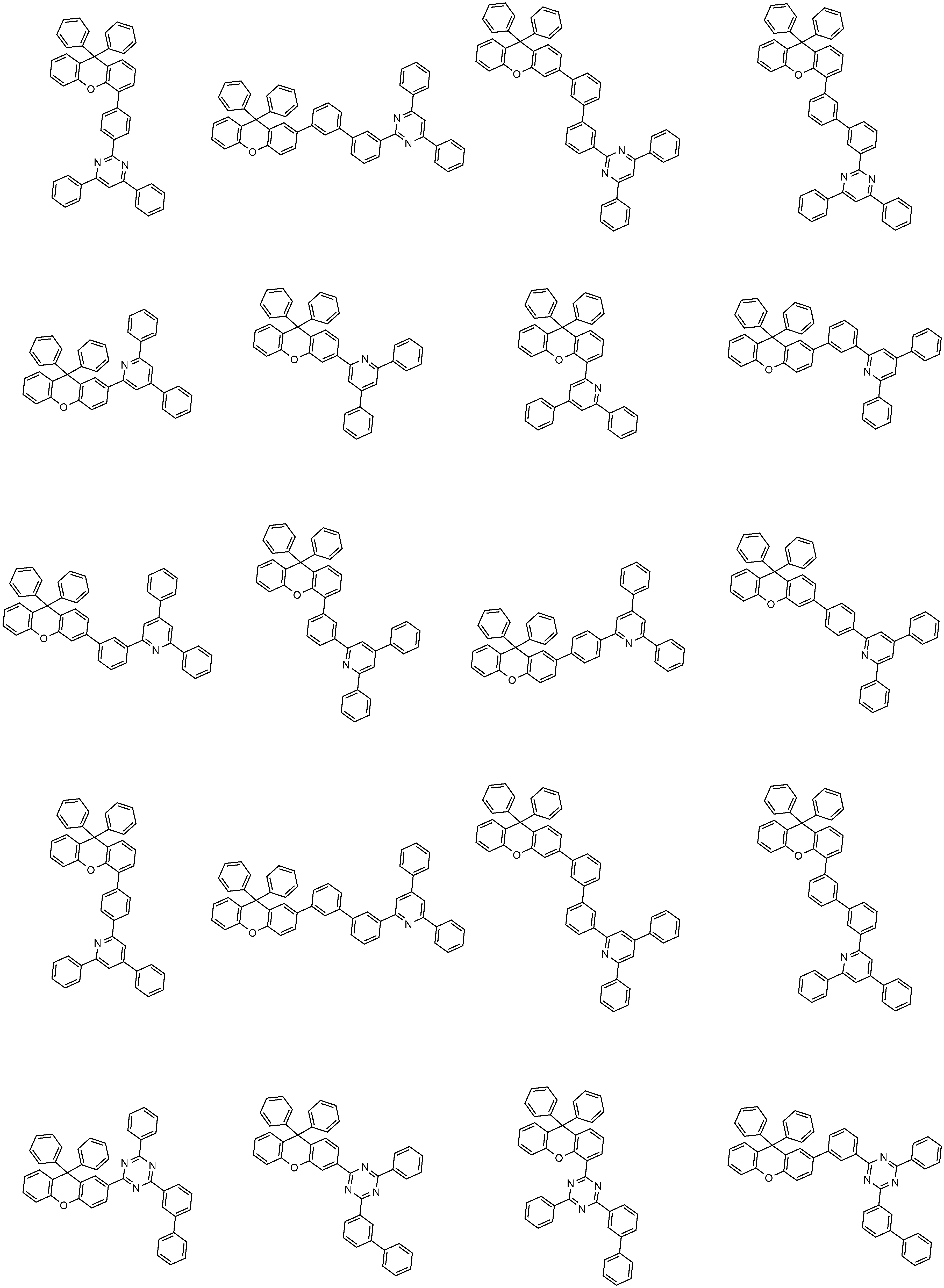


The method of claim 1,
The compound represented by Formula 1 is any one selected from the group consisting of,
compound:
유기 발광 소자.A first electrode; A second electrode provided to face the first electrode; And at least one organic material layer provided between the first electrode and the second electrode, wherein at least one of the organic material layers contains the compound according to any one of claims 1 to 6 To do,
Organic light emitting device.
Priority Applications (3)
| Application Number | Priority Date | Filing Date | Title |
|---|---|---|---|
| PCT/KR2019/008169 WO2020036314A1 (en) | 2018-08-17 | 2019-07-03 | Novel compound and organic light emitting diode using same |
| US16/981,129 US11926607B2 (en) | 2018-08-17 | 2019-07-03 | Compound and organic light emitting device comprising the same |
| CN201980022165.XA CN111902407B (en) | 2018-08-17 | 2019-07-03 | Compound and organic light emitting device comprising the same |
Applications Claiming Priority (2)
| Application Number | Priority Date | Filing Date | Title |
|---|---|---|---|
| KR20180096137 | 2018-08-17 | ||
| KR1020180096137 | 2018-08-17 |
Publications (2)
| Publication Number | Publication Date |
|---|---|
| KR20200020582A KR20200020582A (en) | 2020-02-26 |
| KR102168068B1 true KR102168068B1 (en) | 2020-10-20 |
Family
ID=69637836
Family Applications (1)
| Application Number | Title | Priority Date | Filing Date |
|---|---|---|---|
| KR1020190073543A Active KR102168068B1 (en) | 2018-08-17 | 2019-06-20 | Novel compound and organic light emitting device comprising the same |
Country Status (3)
| Country | Link |
|---|---|
| US (1) | US11926607B2 (en) |
| KR (1) | KR102168068B1 (en) |
| CN (1) | CN111902407B (en) |
Families Citing this family (2)
| Publication number | Priority date | Publication date | Assignee | Title |
|---|---|---|---|---|
| KR102605828B1 (en) * | 2020-06-26 | 2023-11-24 | 주식회사 엘지화학 | Hetero-cyclic compound and organic light emitting device comprising the same |
| KR102573735B1 (en) * | 2020-07-13 | 2023-08-31 | 주식회사 엘지화학 | Novel compound and organic light emitting device comprising the same |
Family Cites Families (22)
| Publication number | Priority date | Publication date | Assignee | Title |
|---|---|---|---|---|
| JP3463402B2 (en) | 1995-03-24 | 2003-11-05 | 東洋インキ製造株式会社 | Hole transport material and its use |
| JP3924799B2 (en) | 1996-01-29 | 2007-06-06 | 東洋インキ製造株式会社 | Luminescent material for organic electroluminescence device and organic electroluminescence device using the same |
| KR100430549B1 (en) | 1999-01-27 | 2004-05-10 | 주식회사 엘지화학 | New organomattalic complex molecule for the fabrication of organic light emitting diodes |
| DE10135513B4 (en) | 2001-07-20 | 2005-02-24 | Novaled Gmbh | Light-emitting component with organic layers |
| US9518217B2 (en) | 2011-09-06 | 2016-12-13 | E Ink Holdings Inc. | Transition metal carbene complexes and the electroluminescent application thereof |
| JP6122112B2 (en) | 2012-07-13 | 2017-04-26 | エルジー・ケム・リミテッド | Heterocyclic compounds and organic electronic devices using the same |
| KR102029336B1 (en) | 2012-08-21 | 2019-10-07 | 제일모직 주식회사 | Compound for organic optoelectronic device, organic light emitting diode including the same and display including the organic light emitting diode |
| WO2014072017A1 (en) | 2012-11-12 | 2014-05-15 | Merck Patent Gmbh | Materials for electronic devices |
| KR101671561B1 (en) * | 2013-09-25 | 2016-11-01 | 주식회사 엘지화학 | New compounds and organic light emitting device using the same |
| KR102216673B1 (en) | 2014-03-11 | 2021-02-18 | 삼성디스플레이 주식회사 | Compound and organic light emitting device comprising same |
| JP6629291B2 (en) | 2014-07-21 | 2020-01-15 | メルク、パテント、ゲゼルシャフト、ミット、ベシュレンクテル、ハフツングMerck Patent GmbH | Materials for electronic devices |
| CN104193736B (en) | 2014-08-22 | 2017-04-05 | 华南理工大学 | A kind of organic small molecule material based on spiral shell formula thioxanthene and using the material as the organic electro-optic device of luminescent layer |
| KR102285381B1 (en) | 2014-10-22 | 2021-08-04 | 삼성디스플레이 주식회사 | Compound and organic light emitting device comprising same |
| KR101897907B1 (en) | 2016-04-25 | 2018-09-12 | 주식회사 엘지화학 | Compound and organic electronic device comprising the same |
| KR101833171B1 (en) * | 2016-05-30 | 2018-02-27 | 주식회사 엘지화학 | Hetero-cyclic compound and organic light emitting device comprising the same |
| US10680184B2 (en) | 2016-07-11 | 2020-06-09 | Universal Display Corporation | Organic electroluminescent materials and devices |
| WO2018030786A1 (en) | 2016-08-09 | 2018-02-15 | 주식회사 엘지화학 | Compound and organic light-emitting device comprising same |
| CN106478611B (en) | 2016-08-26 | 2019-05-24 | 江苏三月光电科技有限公司 | It is a kind of using xanthene as the organic compound of core and its application |
| CN107778219A (en) | 2016-08-31 | 2018-03-09 | 江苏三月光电科技有限公司 | A kind of compound and its application using dibenzo hexatomic ring and nitrogenous hexa-member heterocycle as core |
| KR102727643B1 (en) | 2016-12-07 | 2024-11-08 | 삼성디스플레이 주식회사 | Condensed compound and organic light emitting device comprising the same |
| KR101967381B1 (en) * | 2016-12-27 | 2019-04-10 | 주식회사 엘지화학 | Novel hetero-cyclic compound and organic light emitting device comprising the same |
| CN106800558B (en) | 2016-12-29 | 2019-09-17 | 中节能万润股份有限公司 | A kind of titanium dioxide thioxanthene class electroluminescent organic material and its preparation method and application |
-
2019
- 2019-06-20 KR KR1020190073543A patent/KR102168068B1/en active Active
- 2019-07-03 CN CN201980022165.XA patent/CN111902407B/en active Active
- 2019-07-03 US US16/981,129 patent/US11926607B2/en active Active
Also Published As
| Publication number | Publication date |
|---|---|
| CN111902407A (en) | 2020-11-06 |
| KR20200020582A (en) | 2020-02-26 |
| US20210053934A1 (en) | 2021-02-25 |
| CN111902407B (en) | 2023-11-14 |
| US11926607B2 (en) | 2024-03-12 |
Similar Documents
| Publication | Publication Date | Title |
|---|---|---|
| KR102235734B1 (en) | Novel compound and organic light emitting device comprising the same | |
| KR102163070B1 (en) | Novel compound and organic light emitting device comprising the same | |
| KR102080286B1 (en) | Novel compound and organic light emitting device comprising the same | |
| KR102202593B1 (en) | Novel triphenylene compound and organic light emitting device comprising the same | |
| KR20200144482A (en) | Novel compound and organic light emitting device comprising the same | |
| KR102175713B1 (en) | Novel hetero-cyclic compound and organic light emitting device comprising the same | |
| KR20210031409A (en) | Novel compound and organic light emitting device comprising the same | |
| KR20210027978A (en) | Novel compound and organic light emitting device comprising the same | |
| KR20210019969A (en) | Novel compound and organic light emitting device comprising the same | |
| KR20210023773A (en) | Novel compound and organic light emitting device comprising the same | |
| KR20200143227A (en) | Novel compound and organic light emitting device comprising the same | |
| KR102168068B1 (en) | Novel compound and organic light emitting device comprising the same | |
| KR102838356B1 (en) | Novel compound and organic light emitting device comprising the same | |
| KR102662721B1 (en) | Novel compound and organic light emitting device comprising the same | |
| KR102217268B1 (en) | Novel compound and organic light emitting device comprising the same | |
| KR102235477B1 (en) | Novel hetero-cyclic compound and organic light emitting device comprising the same | |
| KR20210023774A (en) | Novel compound and organic light emitting device comprising the same | |
| KR20200115159A (en) | Novel compound and organic light emitting device comprising the same | |
| KR20210056078A (en) | Novel compound and organic light emitting device comprising the same | |
| KR102251402B1 (en) | Novel compound and organic light emitting device comprising the same | |
| KR102233985B1 (en) | Novel compound and organic light emitting device comprising the same | |
| KR20200077333A (en) | Novel compound and organic light emitting device comprising the same | |
| KR102817857B1 (en) | Novel compound and organic light emitting device comprising the same | |
| KR102838358B1 (en) | Novel compound and organic light emitting device comprising the same | |
| KR102247684B1 (en) | Novel compound and organic light emitting device comprising the same |
Legal Events
| Date | Code | Title | Description |
|---|---|---|---|
| PA0109 | Patent application |
St.27 status event code: A-0-1-A10-A12-nap-PA0109 |
|
| R18-X000 | Changes to party contact information recorded |
St.27 status event code: A-3-3-R10-R18-oth-X000 |
|
| A201 | Request for examination | ||
| PA0201 | Request for examination |
St.27 status event code: A-1-2-D10-D11-exm-PA0201 |
|
| PG1501 | Laying open of application |
St.27 status event code: A-1-1-Q10-Q12-nap-PG1501 |
|
| A302 | Request for accelerated examination | ||
| PA0302 | Request for accelerated examination |
St.27 status event code: A-1-2-D10-D17-exm-PA0302 St.27 status event code: A-1-2-D10-D16-exm-PA0302 |
|
| D13-X000 | Search requested |
St.27 status event code: A-1-2-D10-D13-srh-X000 |
|
| D14-X000 | Search report completed |
St.27 status event code: A-1-2-D10-D14-srh-X000 |
|
| E902 | Notification of reason for refusal | ||
| PE0902 | Notice of grounds for rejection |
St.27 status event code: A-1-2-D10-D21-exm-PE0902 |
|
| P11-X000 | Amendment of application requested |
St.27 status event code: A-2-2-P10-P11-nap-X000 |
|
| P13-X000 | Application amended |
St.27 status event code: A-2-2-P10-P13-nap-X000 |
|
| E701 | Decision to grant or registration of patent right | ||
| PE0701 | Decision of registration |
St.27 status event code: A-1-2-D10-D22-exm-PE0701 |
|
| GRNT | Written decision to grant | ||
| PR0701 | Registration of establishment |
St.27 status event code: A-2-4-F10-F11-exm-PR0701 |
|
| PR1002 | Payment of registration fee |
St.27 status event code: A-2-2-U10-U11-oth-PR1002 Fee payment year number: 1 |
|
| PG1601 | Publication of registration |
St.27 status event code: A-4-4-Q10-Q13-nap-PG1601 |
|
| P22-X000 | Classification modified |
St.27 status event code: A-4-4-P10-P22-nap-X000 |
|
| P22-X000 | Classification modified |
St.27 status event code: A-4-4-P10-P22-nap-X000 |
|
| PR1001 | Payment of annual fee |
St.27 status event code: A-4-4-U10-U11-oth-PR1001 Fee payment year number: 4 |
|
| PR1001 | Payment of annual fee |
St.27 status event code: A-4-4-U10-U11-oth-PR1001 Fee payment year number: 5 |
|
| PR1001 | Payment of annual fee |
St.27 status event code: A-4-4-U10-U11-oth-PR1001 Fee payment year number: 6 |
|
| U11 | Full renewal or maintenance fee paid |
Free format text: ST27 STATUS EVENT CODE: A-4-4-U10-U11-OTH-PR1001 (AS PROVIDED BY THE NATIONAL OFFICE) Year of fee payment: 6 |