KR102156233B1 - Method and apparatus for supporting a carrier aggregation group in a wireless communication system - Google Patents
Method and apparatus for supporting a carrier aggregation group in a wireless communication system Download PDFInfo
- Publication number
- KR102156233B1 KR102156233B1 KR1020157011399A KR20157011399A KR102156233B1 KR 102156233 B1 KR102156233 B1 KR 102156233B1 KR 1020157011399 A KR1020157011399 A KR 1020157011399A KR 20157011399 A KR20157011399 A KR 20157011399A KR 102156233 B1 KR102156233 B1 KR 102156233B1
- Authority
- KR
- South Korea
- Prior art keywords
- cag
- pcell
- cags
- terminal
- cell
- Prior art date
- Legal status (The legal status is an assumption and is not a legal conclusion. Google has not performed a legal analysis and makes no representation as to the accuracy of the status listed.)
- Active
Links
Images


Classifications
-
- H04W72/042—
-
- H—ELECTRICITY
- H04—ELECTRIC COMMUNICATION TECHNIQUE
- H04L—TRANSMISSION OF DIGITAL INFORMATION, e.g. TELEGRAPHIC COMMUNICATION
- H04L5/00—Arrangements affording multiple use of the transmission path
- H04L5/0001—Arrangements for dividing the transmission path
- H04L5/0003—Two-dimensional division
- H04L5/0005—Time-frequency
- H04L5/0007—Time-frequency the frequencies being orthogonal, e.g. OFDM(A) or DMT
- H04L5/001—Time-frequency the frequencies being orthogonal, e.g. OFDM(A) or DMT the frequencies being arranged in component carriers
-
- H—ELECTRICITY
- H04—ELECTRIC COMMUNICATION TECHNIQUE
- H04L—TRANSMISSION OF DIGITAL INFORMATION, e.g. TELEGRAPHIC COMMUNICATION
- H04L5/00—Arrangements affording multiple use of the transmission path
- H04L5/0091—Signalling for the administration of the divided path, e.g. signalling of configuration information
- H04L5/0094—Indication of how sub-channels of the path are allocated
-
- H—ELECTRICITY
- H04—ELECTRIC COMMUNICATION TECHNIQUE
- H04W—WIRELESS COMMUNICATION NETWORKS
- H04W52/00—Power management, e.g. Transmission Power Control [TPC] or power classes
- H04W52/04—Transmission power control [TPC]
- H04W52/30—Transmission power control [TPC] using constraints in the total amount of available transmission power
- H04W52/34—TPC management, i.e. sharing limited amount of power among users or channels or data types, e.g. cell loading
-
- H—ELECTRICITY
- H04—ELECTRIC COMMUNICATION TECHNIQUE
- H04W—WIRELESS COMMUNICATION NETWORKS
- H04W72/00—Local resource management
- H04W72/04—Wireless resource allocation
- H04W72/044—Wireless resource allocation based on the type of the allocated resource
- H04W72/0453—Resources in frequency domain, e.g. a carrier in FDMA
-
- H—ELECTRICITY
- H04—ELECTRIC COMMUNICATION TECHNIQUE
- H04W—WIRELESS COMMUNICATION NETWORKS
- H04W72/00—Local resource management
- H04W72/20—Control channels or signalling for resource management
- H04W72/23—Control channels or signalling for resource management in the downlink direction of a wireless link, i.e. towards a terminal
-
- H—ELECTRICITY
- H04—ELECTRIC COMMUNICATION TECHNIQUE
- H04W—WIRELESS COMMUNICATION NETWORKS
- H04W74/00—Wireless channel access
- H04W74/002—Transmission of channel access control information
-
- H—ELECTRICITY
- H04—ELECTRIC COMMUNICATION TECHNIQUE
- H04W—WIRELESS COMMUNICATION NETWORKS
- H04W76/00—Connection management
- H04W76/20—Manipulation of established connections
- H04W76/27—Transitions between radio resource control [RRC] states
-
- H—ELECTRICITY
- H04—ELECTRIC COMMUNICATION TECHNIQUE
- H04L—TRANSMISSION OF DIGITAL INFORMATION, e.g. TELEGRAPHIC COMMUNICATION
- H04L5/00—Arrangements affording multiple use of the transmission path
- H04L5/0001—Arrangements for dividing the transmission path
- H04L5/0014—Three-dimensional division
- H04L5/0023—Time-frequency-space
-
- H—ELECTRICITY
- H04—ELECTRIC COMMUNICATION TECHNIQUE
- H04L—TRANSMISSION OF DIGITAL INFORMATION, e.g. TELEGRAPHIC COMMUNICATION
- H04L5/00—Arrangements affording multiple use of the transmission path
- H04L5/003—Arrangements for allocating sub-channels of the transmission path
- H04L5/0032—Distributed allocation, i.e. involving a plurality of allocating devices, each making partial allocation
Landscapes
- Engineering & Computer Science (AREA)
- Signal Processing (AREA)
- Computer Networks & Wireless Communication (AREA)
- Mobile Radio Communication Systems (AREA)
Abstract
다중 반송파를 지원하는 무선 통신 시스템에서 반송파 집성 그룹을 지원하는 방법 및 장치를 제공한다. 무선 장치는 하나 이상의 서빙셀을 포함하는 RRC 설정 신호를 매크로 셀로부터 수신하고, 하나 이상의 서빙셀을 포함하는 RRC 설정 신호를 소형 셀로부터 수신하고, 상기 RRC 설정 신호 각각을 기반으로 적어도 2개 이상의 반송파 집성 그룹을 설정한다. 그리고 본 발명은 다중 요소 반송파를 위한 cell planning이 더 정확하고 효율적으로 제공되는 것을 포함한다.It provides a method and apparatus for supporting a carrier aggregation group in a wireless communication system supporting multiple carriers. The wireless device receives an RRC configuration signal including one or more serving cells from a macro cell, receives an RRC configuration signal including one or more serving cells from a small cell, and receives at least two or more carriers based on each of the RRC configuration signals. Set up an aggregation group. Further, the present invention includes providing more accurate and efficient cell planning for multi-element carriers.
Description
본 발명은 무선 통신에 관한 것으로서, 보다 상세하게는 다중 반송파를 지원하는 무선 통신 시스템에서 반송파 집성 그룹을 지원하기 위한 방법 및 장치에 관한 것이다.The present invention relates to wireless communication, and more particularly, to a method and apparatus for supporting a carrier aggregation group in a wireless communication system supporting multiple carriers.
UMTS(Universal Mobile Telecommunications System)의 향상인 3GPP(3rd Generation Partnership Project) LTE(long term evolution)는 3GPP 릴리즈(release) 8로 소개되고 있다. 3GPP LTE는 하향링크에서 OFDMA(orthogonal frequency division multiple access)를 사용하고, 상향링크에서 SC-FDMA(Single Carrier-frequency division multiple access)를 사용한다. 최대 4개의 안테나를 갖는 MIMO(multiple input multiple output)를 채용한다. 최근에는 3GPP LTE의 진화인 3GPP LTE-A(LTE-Advanced)에 대한 논의가 진행 중이다.3rd Generation Partnership Project (3GPP) long term evolution (LTE), which is an enhancement of the Universal Mobile Telecommunications System (UMTS), is introduced as 3GPP release 8. 3GPP LTE uses orthogonal frequency division multiple access (OFDMA) in downlink and single carrier-frequency division multiple access (SC-FDMA) in uplink. It employs multiple input multiple output (MIMO) with up to 4 antennas. Recently, a discussion on 3GPP LTE-Advanced (LTE-A), an evolution of 3GPP LTE, is in progress.
3GPP LTE(A) 시스템의 상업화가 최근에 가속되고 있는 중이다. LTE 시스템은 음성 서비스와 같이 이동성을 확보하면서도 더 높은 품질과 더 높은 용량을 지원할 수 있는 서비스에 대한 사용자의 요구에 따라 더 빠르게 확산된다. LTE 시스템은 낮은 전송 지연, 높은 전송속도와 시스템 용량, 그리고 향상된 커버리지를 제공한다.Commercialization of the 3GPP LTE(A) system is accelerating recently. The LTE system spreads faster according to the user's demand for a service capable of supporting higher quality and higher capacity while securing mobility like voice service. The LTE system provides low transmission delay, high transmission rate and system capacity, and improved coverage.
사용자 요구에 따른 서비스 용량을 증가시키기 위하여, 대역폭을 증가시키는 것은 필수적이다. 반송파 집성(carrier aggregation; CA) 기술은 효과를 얻는 것을 목표로 하여 마치 논리적으로 보다 넓은 밴드가 사용되고, 주파수 영역에서 복수의 물리적으로 불연속적인 밴드를 그룹화함으로써, 분열된 소형 밴드를 효율적으로 사용하도록 발전하고 있다. 반송파 집성에 의해 그룹화된 개별적인 단위 반송파는 요소 반송파(component carrier; CC)로 알려져 있다. 각각의 요소 반송파는 하나의 대역폭 및 중심 주파수로 정의된다.In order to increase the service capacity according to user demand, it is essential to increase the bandwidth. Carrier aggregation (CA) technology aims to obtain an effect, as if logically a wider band is used, and by grouping a plurality of physically discontinuous bands in the frequency domain, it is developed to efficiently use the fragmented small band. Are doing. Individual unit carriers grouped by carrier aggregation are known as component carriers (CCs). Each component carrier is defined with one bandwidth and a center frequency.
복수의 요소 반송파를 통하여 광대역에서 데이터가 송수신되는 시스템은 다중 요소 반송파 시스템(multi-CC system) 또는 반송파 집성 환경이라고 불릴 수 있다. 다중 요소 반송파 시스템은 하나 이상의 반송파를 사용함으로써 협대역 및 광대역을 둘다 수행한다. 예를 들어, 각각의 부반송파가 20MHz의 대역폭에 상응한다면, 최대 대역폭 100MHz는 5개의 반송파를 사용하여 지원될 수 있다.A system in which data is transmitted and received in a broadband through a plurality of CCs may be referred to as a multi-CC system or a carrier aggregation environment. The multi-element carrier system performs both narrowband and wideband by using one or more carriers. For example, if each subcarrier corresponds to a bandwidth of 20 MHz, a maximum bandwidth of 100 MHz may be supported using 5 carriers.
다중 요소 반송파 시스템을 동작시키기 위해서, eNB(enhanced Node B)와 같은 기지국(BS)과 Terminal과 같은 단말(UE) 간에 다양한 제어 신호가 요구된다. 예를 들어, HARQ(Hybrid Automatic Repeat reQuest)를 수행하기 위한 ACK(Acknowledgement)/NACK(Non-Acknowledgement) 정보를 교환하고, HARQ의 전력을 제어하는 등이 요구된다. 또한, 다중 요소 반송파를 위한 효율적인 cell planning도 요구된다.In order to operate a multi-element carrier system, various control signals are required between a base station (BS) such as an enhanced Node B (eNB) and a terminal (UE) such as a terminal. For example, it is required to exchange acknowledgment (ACK)/non-acknowledgement (NACK) information for performing hybrid automatic repeat request (HARQ), and control power of HARQ. In addition, efficient cell planning for multi-element carriers is also required.
본 발명은 다중 반송파를 지원하는 무선 통신 시스템에서 반송파 집성 그룹을 지원하는 방법 및 장치를 제공한다.The present invention provides a method and apparatus for supporting a carrier aggregation group in a wireless communication system supporting multiple carriers.
또한, 본 발명은 다중 반송파를 지원하는 무선 통신 시스템에서 동일한 eNB에 속하는 셀 그룹을 설정하기 위한 방법 및 장치도 제공한다.In addition, the present invention also provides a method and apparatus for configuring a cell group belonging to the same eNB in a wireless communication system supporting multiple carriers.
또한, 본 발명은 다중 반송파를 지원하는 무선 통신 시스템에서 서로 다른 eNB에 속하는 서빙셀을 위한 적어도 2개 이상의 반송파 집성 그룹을 설정하기 위한 방법 및 장치도 제공한다. In addition, the present invention also provides a method and apparatus for configuring at least two or more carrier aggregation groups for serving cells belonging to different eNBs in a wireless communication system supporting multiple carriers.
일 측면에 따라, 다중 반송파를 지원하는 무선 통신 시스템에서 반송파 집성 그룹(carrier aggregation group; CAG)을 지원하기 위한 방법을 제공한다. 상기 방법은 하나 이상의 서빙셀을 포함하는 RRC 설정 신호를 매크로 셀로부터 수신하고, 하나 이상의 서빙셀을 포함하는 RRC 설정 신호를 소형 셀로부터 수신하고, 상기 RRC 설정 신호 각각을 기반으로 적어도 2개 이상의 CAG를 설정하는 것을 포함한다.According to an aspect, a method for supporting a carrier aggregation group (CAG) in a wireless communication system supporting multiple carriers is provided. The method includes receiving an RRC configuration signal including one or more serving cells from a macro cell, receiving an RRC configuration signal including one or more serving cells from a small cell, and at least two CAGs based on each of the RRC configuration signals. Includes setting up.
상기 방법은 상기 적어도 2개 이상의 CAG가 상기 적어도 2개 이상의 CAG의 각 CAG는 서로 다른 반송파를 가지는 하나 이상의 서빙셀을 포함하고, 상기 각 CAG의 PCell(primary serving cell)은 서로 독립적으로 설정되는 것을 더 포함할 수 있다.The method is that the at least two or more CAGs each CAG of the at least two or more CAGs include one or more serving cells having different carriers, and that the primary serving cell (PCell) of each CAG is set independently from each other. It may contain more.
상기 방법은 매크로 셀의 PCell이 첫 번째 CAG의 PCell인 M-PCell(master primary serving cell)로 집성되어 설정하는 것을 더 포함할 수 있다. The method may further include configuring the PCell of the macro cell as a master primary serving cell (M-PCell), which is the PCell of the first CAG.
다른 측면에 따라, 다중 반송파를 지원하는 무선 통신 시스템에서 반송파 집성 그룹을 지원하는 무선 장치를 제공한다. 상기 무선 장치는 무선 신호를 수신하기 위한 RF(radio frequency)부와 상기 RF부와 동작적으로 연결된 프로세서를 포함하되, 상기 프로세서는 하나 이상의 서빙셀을 포함하는 RRC 설정 신호를 매크로 셀로부터 수신하고, 하나 이상의 서빙셀을 포함하는 RRC 설정 신호를 소형 셀로부터 수신하고, 상기 RRC 설정 신호 각각을 기반으로 적어도 2개 이상의 CAG를 설정한다.According to another aspect, a wireless device supporting a carrier aggregation group in a wireless communication system supporting multiple carriers is provided. The wireless device includes a radio frequency (RF) unit for receiving a radio signal and a processor operatively connected to the RF unit, wherein the processor receives an RRC configuration signal including one or more serving cells from a macro cell, An RRC configuration signal including one or more serving cells is received from a small cell, and at least two or more CAGs are configured based on each of the RRC configuration signals.
무선 장치는 상기 각 CAG를 위한 PCell이 서로 독립적으로 설정되고 상기 매크로 셀의 PCell은 CAG PCell로서 설정되는 프로세서를 더 포함한다.The wireless device further includes a processor in which the PCells for each CAG are set independently of each other, and the PCell of the macro cell is set as a CAG PCell.
본 발명은 eNB의 CAG를 위한 서로 다른 커버리지를 가지는 적어도 2개 이상의 서빙셀이 데이터 전송을 위해 사용될 수 있다는 것을 제공한다. 구체적으로, 본 발명은 서로 다른 반송파를 가지는 단일 요소 반송파 또는 다중 요소 반송파를 포함하는 각 CAG, 예를 들어, 매크로 eNB의 셀을 포함하는 CAG 및 소형 eNB의 셀을 포함하는 CAG인 다중 CAG가 단말을 위해 설정되는 것이 포함될 수 있다. 그래서, 본 발명은 핸드오버&커버리지 면에서 매크로 커버리지의 이점, 데이터 전송에 국한시켜 데이터 처리량 증가. 그리고 매크로 셀로부터 극심한 로드의 분담을 유지할 수 있다. 그리고 특정 셀 가장자리에 있는 단말에 더 좋은 품질의 QoE(Quality of Experience)를 제공할 수 있다. 또한, 본 발명에서는 다중 요소 반송파를 위한 보다 효율적인 cell planning도 제공된다.The present invention provides that at least two or more serving cells having different coverage for CAG of an eNB can be used for data transmission. Specifically, in the present invention, each CAG including a single component carrier or multiple component carriers having different carriers, for example, a CAG including a cell of a macro eNB and a CAG including a cell of a small eNB, a multi-CAG terminal What is set for may be included. Therefore, the present invention is limited to the advantage of macro coverage and data transmission in terms of handover & coverage, thereby increasing data throughput. And it is possible to keep the extreme load sharing from the macro cell. In addition, it is possible to provide a higher quality QoE (Quality of Experience) to a terminal at the edge of a specific cell. In addition, in the present invention, more efficient cell planning for multi-element carriers is also provided.
도 1은 본 발명이 적용되는 무선 통신 시스템을 도시하는 도면이다.
도 2는 본 발명이 적용되는 프로토콜 구조(protocol architecture)의 일례를 도시하는 도면이다.
도 3은 본 발명이 적용되는 다중 반송파 동작을 위한 프레임 구조의 일례를 도시하는 도면이다.
도 4는 본 발명이 적용되는 무선 프레임(radio frame)의 구조를 나타낸다.
도 5는 본 발명이 적용되는 하나의 하향링크 슬롯을 위한 자원 그리드(resource grid)를 나타내는 바람직한 도면이다.
도 6은 본 발명이 적용되는 하향링크 서브프레임의 구조를 나타낸다.
도 7은 본 발명이 적용되는 ACK/NACK 신호를 전달하는 상향링크 서브프레임의 구조를 나타낸다.
도 8은 본 발명의 바람직한 실시예에 따른 이중 연결(dual connectivity)을 위한 개념도를 나타낸다.
도 9는 본 발명의 바람직한 실시예에 따른 CAG를 설정하기 위한 개념도를 나타낸다.
도 10은 본 발명의 바람직한 실시예에 따른 CAG 설정/재설정을 위한 흐름도를 나타낸다.
도 11은 본 발명의 바람직한 실시예에 따른 무선 통신 시스템을 나타내는 블록도를 나타낸다.1 is a diagram showing a wireless communication system to which the present invention is applied.
2 is a diagram showing an example of a protocol architecture to which the present invention is applied.
3 is a diagram showing an example of a frame structure for multi-carrier operation to which the present invention is applied.
4 shows a structure of a radio frame to which the present invention is applied.
5 is a preferred diagram showing a resource grid for one downlink slot to which the present invention is applied.
6 shows a structure of a downlink subframe to which the present invention is applied.
7 shows a structure of an uplink subframe carrying an ACK/NACK signal to which the present invention is applied.
8 shows a conceptual diagram for dual connectivity according to a preferred embodiment of the present invention.
9 shows a conceptual diagram for setting a CAG according to a preferred embodiment of the present invention.
10 shows a flowchart for setting/resetting CAG according to a preferred embodiment of the present invention.
11 is a block diagram showing a wireless communication system according to a preferred embodiment of the present invention.
도 1은 본 발명이 적용되는 무선 통신 시스템을 나타낸다. 이러한 무선 통신 시스템은 EUTRAN(Evolved-UMTS Terrestrial Radio Access Network), 또는 LTE(Long Term Evolution)/LTE-A 시스템이라고도 불릴 수 있다.1 shows a wireless communication system to which the present invention is applied. Such a wireless communication system may also be referred to as an Evolved-UMTS Terrestrial Radio Access Network (EUTRAN), or a Long Term Evolution (LTE)/LTE-A system.
E-UTRAN은 단말(10; User Equipment, UE)에게 제어 평면(control plane)과 사용자 평면(user plane)을 제공하는 기지국(20; Base Station, BS)을 포함한다. 단말(10)은 고정되거나 이동성을 가질 수 있으며, MS(Mobile station), UT(User Terminal), SS(Subscriber Station), MT(mobile terminal), 무선기기(Wireless Device) 등 다른 용어로 불릴 수 있다. 기지국(20)은 단말(10)과 통신하는 고정된 지점(fixed station)을 말하며, eNB(evolved-NodeB), BTS(Base Transceiver System), 액세스 포인트(Access Point) 등 다른 용어로 불릴 수 있다.The E-UTRAN includes a base station (BS) 20 that provides a user equipment (UE) with a control plane and a user plane. The
무선 통신 시스템에서 적용되는 다중 접속 기법은 제한되지 않는다. 즉, CDMA(Code Division Multiple Access), TDMA(Time Division Multiple Access), FDMA(Frequency Division Multiple Access), OFDMA(Orthogonal Frequency Division Multiple Access), SC-FDMA(Single Carrier-FDMA), OFDM-FDMA, OFDM-TDMA, OFDM-CDMA 등과 같은 다양한 다중 접속 기법이 사용될 수 있다. 상향링크 전송 및 하향링크 전송을 위해서, 서로 다른 시간을 사용함으로써 전송하는 TDD 기법 또는 서로 다른 주파수를 사용함으로써 전송하는 FDD 기법이 사용될 수 있다.The multiple access scheme applied in the wireless communication system is not limited. That is, CDMA (Code Division Multiple Access), TDMA (Time Division Multiple Access), FDMA (Frequency Division Multiple Access), OFDMA (Orthogonal Frequency Division Multiple Access), SC-FDMA (Single Carrier-FDMA), OFDM-FDMA, OFDM -Various multiple access techniques such as TDMA and OFDM-CDMA can be used. For uplink transmission and downlink transmission, a TDD scheme transmitted by using different times or an FDD scheme transmitted by using different frequencies may be used.
기지국(20)들은 X2 인터페이스를 통하여 서로 연결될 수 있다. 기지국(20)은 S1 인터페이스를 통해 EPC(Evolved Packet Core, 30), 보다 상세하게는 S1-MME를 통해 MME(Mobility Management Entity)와 S1-U를 통해 S-GW(Serving Gateway)와 연결된다.The
EPC(30)는 MME, S-GW 및 P-GW(Packet Data Network-Gateway)로 구성된다. MME는 단말의 접속 정보나 단말의 능력에 관한 정보를 가지고 있으며, 이러한 정보는 단말의 이동성 관리에 주로 사용된다. S-GW는 E-UTRAN을 종단점으로 갖는 게이트웨이이며, P-GW는 PDN을 종단점으로 갖는 게이트웨이이다.The
단말과 네트워크 사이의 무선인터페이스 프로토콜 (Radio Interface Protocol)의 계층들은 통신시스템에서 널리 알려진 개방형 시스템간 상호접속(Open System Interconnection; OSI) 기준 모델의 하위 3개 계층을 바탕으로 L1(제1계층), L2 (제2계층), L3(제3계층)로 구분될 수 있는데, 이 중에서 제1계층에 속하는 물리계층은 물리채널(Physical Channel)을 이용한 정보전송서비스(Information Transfer Service)를 제공하며, 제 3계층에 위치하는 RRC(Radio Resource Control) 계층은 단말과 네트워크 간에 무선자원을 제어하는 역할을 수행한다. 이를 위해 RRC 계층은 단말과 기지국간 RRC 메시지를 교환한다.The layers of the Radio Interface Protocol between the terminal and the network are L1 (Layer 1), based on the lower three layers of the Open System Interconnection (OSI) standard model widely known in communication systems. It can be divided into L2 (layer 2) and L3 (layer 3). Among them, the physical layer belonging to the first layer provides information transfer service using a physical channel. The RRC (Radio Resource Control) layer located in Layer 3 plays a role of controlling radio resources between the UE and the network. To this end, the RRC layer exchanges RRC messages between the terminal and the base station.
도 2는 사용자 평면(user plane) 및 제어 평면(control plane)에 대한 무선 프로토콜 구조(radio protocol architecture)를 나타낸 블록도이다. 사용자 평면은 사용자 데이터 전송을 위한 프로토콜 스택(protocol stack)이고, 제어 평면은 RRC 및 NAS 계층과 함께 제어신호 전송을 위한 프로토콜 스택이다.2 is a block diagram showing a radio protocol architecture for a user plane and a control plane. The user plane is a protocol stack for user data transmission, and the control plane is a protocol stack for transmission of control signals together with the RRC and NAS layers.
도 2를 참조하면, 물리계층(PHY(physical) layer)은 물리채널(physical channel)을 이용하여 상위 계층에게 정보 전송 서비스(information transfer service)를 제공한다. 물리계층은 상위 계층인 MAC(Medium Access Control) 계층과는 전송채널(transport channel)을 통해 연결되어 있다. 전송채널을 통해 MAC 계층과 물리계층 사이로 데이터가 이동한다. 전송채널은 무선 인터페이스를 통해 데이터가 어떻게 어떤 특징으로 전송되는가에 따라 분류된다.Referring to FIG. 2, a physical layer (PHY) provides an information transfer service to an upper layer using a physical channel. The physical layer is connected to an upper layer, a medium access control (MAC) layer, through a transport channel. Data moves between the MAC layer and the physical layer through the transport channel. Transport channels are classified according to how and with what characteristics data is transmitted through the air interface.
서로 다른 물리계층 사이, 즉 송신기와 수신기의 물리계층 사이는 물리채널을 통해 데이터가 이동한다. 상기 물리채널은 OFDM(Orthogonal Frequency Division Multiplexing) 방식으로 변조될 수 있고, 시간과 주파수를 무선자원으로 활용한다.Data moves between different physical layers, that is, between the physical layers of the transmitter and the receiver through a physical channel. The physical channel may be modulated in an Orthogonal Frequency Division Multiplexing (OFDM) method, and time and frequency are used as radio resources.
MAC 계층의 기능은 논리채널과 전송채널간의 맵핑 및 논리채널에 속하는 MAC SDU(service data unit)의 전송채널 상으로 물리채널로 제공되는 전송블록(transport block)으로의 다중화/역다중화를 포함한다. MAC 계층은 논리채널을 통해 RLC(Radio Link Control) 계층에게 서비스를 제공한다.The functions of the MAC layer include mapping between a logical channel and a transport channel and multiplexing/demultiplexing of a MAC service data unit (SDU) belonging to the logical channel onto a transport block provided as a physical channel onto a transport channel. The MAC layer provides a service to the Radio Link Control (RLC) layer through a logical channel.
RLC 계층의 기능은 RLC SDU의 연결(concatenation), 분할(segmentation) 및 재결합(reassembly)를 포함한다. 무선베어러(Radio Bearer; RB)가 요구하는 다양한 QoS(Quality of Service)를 보장하기 위해, RLC 계층은 투명모드(Transparent Mode, TM), 비확인 모드(Unacknowledged Mode, UM) 및 확인모드(Acknowledged Mode, AM)의 세 가지의 동작모드를 제공한다. AM RLC는 ARQ(automatic repeat request)를 통해 오류 정정을 제공한다.The functions of the RLC layer include concatenation, segmentation, and reassembly of RLC SDUs. In order to ensure various QoS (Quality of Service) required by Radio Bearer (RB), the RLC layer has a Transparent Mode (TM), Unacknowledged Mode (UM), and Acknowledged Mode. , AM). AM RLC provides error correction through automatic repeat request (ARQ).
사용자 평면에서의 PDCP(Packet Data Convergence Protocol) 계층의 기능은 사용자 데이터의 전달, 헤더 압축(header compression) 및 암호화(ciphering)를 포함한다. 제어 평면에서의 PDCP(Packet Data Convergence Protocol) 계층의 기능은 제어 평면 데이터의 전달 및 암호화/무결정 보호(integrity protection)를 포함한다.Functions of the Packet Data Convergence Protocol (PDCP) layer in the user plane include transmission of user data, header compression, and ciphering. Functions of the Packet Data Convergence Protocol (PDCP) layer in the control plane include transmission of control plane data and encryption/integrity protection.
RRC(Radio Resource Control) 계층은 제어 평면에서만 정의된다. RRC 계층은 무선 베어러들의 설정(configuration), 재설정(re-configuration) 및 해제(release)와 관련되어 논리채널, 전송채널 및 물리채널들의 제어를 담당한다. RB는 단말과 네트워크간의 데이터 전달을 위해 제1 계층(PHY 계층) 및 제2 계층(MAC 계층, RLC 계층, PDCP 계층)에 의해 제공되는 논리적 경로를 의미한다.The Radio Resource Control (RRC) layer is defined only in the control plane. The RRC layer is in charge of controlling logical channels, transport channels, and physical channels in relation to configuration, re-configuration, and release of radio bearers. RB refers to a logical path provided by the first layer (PHY layer) and the second layer (MAC layer, RLC layer, PDCP layer) for data transmission between the terminal and the network.
RB가 설정된다는 것은 특정 서비스를 제공하기 위해 무선 프로토콜 계층 및 채널의 특성을 규정하고, 각각의 구체적인 파라미터 및 동작 방법을 설정하는 과정을 의미한다. RB는 다시 SRB(Signaling RB)와 DRB(Data RB) 두가지로 나누어 질 수 있다. SRB는 제어 평면에서 RRC 메시지를 전송하는 통로로 사용되며, DRB는 사용자 평면에서 사용자 데이터를 전송하는 통로로 사용된다. Establishing the RB refers to a process of defining characteristics of a radio protocol layer and channel to provide a specific service, and setting specific parameters and operation methods for each. The RB can be further divided into SRB (Signaling RB) and DRB (Data RB). SRB is used as a path for transmitting RRC messages in the control plane, and DRB is used as a path for transmitting user data in the user plane.
단말의 RRC 계층과 E-UTRAN의 RRC 계층 사이에 RRC 연결(RRC Connection)이 확립되면, 단말은 RRC 연결(RRC connected) 상태에 있게 되고, 그렇지 못할 경우 RRC 아이들(RRC idle) 상태에 있게 된다.When an RRC connection is established between the RRC layer of the UE and the RRC layer of the E-UTRAN, the UE is in an RRC connected state, otherwise, it is in an RRC idle state.
네트워크에서 단말로 데이터를 전송하는 하향링크 전송채널로는 시스템정보를 전송하는 BCH(Broadcast Channel)과 그 이외에 사용자 트래픽이나 제어메시지를 전송하는 하향링크 SCH(Shared Channel)이 있다. 하향링크 멀티캐스트 또는 브로드 캐스트 서비스의 트래픽 또는 제어메시지의 경우 하향링크 SCH를 통해 전송될 수도 있고, 또는 별도의 하향링크 MCH(Multicast Channel)을 통해 전송될 수도 있다. 한편, 단말에서 네트워크로 데이터를 전송하는 상향링크 전송채널로는 초기 제어메시지를 전송하는 RACH(Random Access Channel)와 그 이외에 사용자 트래픽이나 제어 메시지를 전송하는 상향링크 SCH(Shared Channel)가 있다.As a downlink transport channel for transmitting data from a network to a terminal, there are a broadcast channel (BCH) for transmitting system information, and a downlink shared channel (SCH) for transmitting user traffic or control messages. In the case of a downlink multicast or broadcast service traffic or control message, it may be transmitted through a downlink SCH or a separate downlink multicast channel (MCH). Meanwhile, as an uplink transport channel for transmitting data from a terminal to a network, there are a random access channel (RACH) for transmitting an initial control message and an uplink shared channel (SCH) for transmitting user traffic or control messages.
전송채널 상위에 있으며, 전송채널에 매핑되는 논리채널(Logical Channel)로는 BCCH(Broadcast Control Channel), PCCH(Paging Control Channel), CCCH(Common Control Channel), MCCH(Multicast Control Channel), MTCH(Multicast TrafficChannel) 등이 있다.It is located above the transport channel, and the logical channels mapped to the transport channel include BCCH (Broadcast Control Channel), PCCH (Paging Control Channel), CCCH (Common Control Channel), MCCH (Multicast Control Channel), MTCH (Multicast Traffic Channel). ), etc.
물리채널(Physical Channel)은 시간 영역에서 여러 개의 OFDM 심벌과 주파수 영역에서 여러 개의 부반송파(Sub-carrier)로 구성된다. 하나의 서브프레임(Subframe)은 시간 영역에서 복수의 OFDM 심벌(Symbol)들로 구성된다. 자원블록은 자원 할당 단위로, 복수의 OFDM 심벌들과 복수의 부반송파(sub-carrier)들로 구성된다. 또한 각 서브프레임은 PDCCH(Physical Downlink Control Channel) 즉, L1/L2 제어채널을 위해 해당 서브프레임의 특정 OFDM 심벌들(예를 들어, 첫번째 OFDM 심볼)의 특정 부반송파들을 사용할 수 있다.The physical channel is composed of several OFDM symbols in the time domain and several sub-carriers in the frequency domain. One subframe is composed of a plurality of OFDM symbols in the time domain. A resource block is a resource allocation unit and is composed of a plurality of OFDM symbols and a plurality of sub-carriers. In addition, each subframe may use specific subcarriers of specific OFDM symbols (eg, the first OFDM symbol) of the corresponding subframe for the PDCCH (Physical Downlink Control Channel), that is, the L1/L2 control channel.
도 3은 본 발명이 적용되는 다중 반송파 동작을 위한 프레임 구조의 일례를 도시하는 도면이다. 또한, 본 발명은 집성된 요소 반송파가 동기화처럼 서브프레임 내에서 정렬되지 않는 것도 적용된다.3 is a diagram showing an example of a frame structure for multi-carrier operation to which the present invention is applied. In addition, the present invention also applies that the aggregated CCs are not aligned within a subframe like synchronization.
도 3을 참조하면, 단말은 하나 이상의 반송파(반송파 1개 또는 반송파 2개...N개)를 단말의 반송파 용량에 따라 지원할 수 있다. 다중 반송파는 서로 인접하거나 인접하지 않을 수 있다.Referring to FIG. 3, the terminal may support one or more carriers (one carrier or two carriers...N) according to the carrier capacity of the terminal. The multiple carriers may or may not be adjacent to each other.
요소 반송파는 활성화 여부에 따라 PCC(primary component carrier)와 SCC(secondary component carrier)로 나뉠 수 있다. PCC는 계속적으로 활성화된 상태인 반송파이고, SCC는 특정 조건에 따라 활성화 또는 비활성된 상태인 반송파이다. 여기서, 활성화 상태는 트래픽 데이터가 송수신되는 상태 또는 트래픽 데이터가 송수신되도록 준비된 상태로 불릴 수 있다. 비활성화 상태는 트래픽 데이터가 송수신되지 못하고 최소한의 정보의 측정 또는 전송 또는 수신할 수 있는 상태로 불릴 수 있다. 게다가, PCC는 비트처럼 활성화/비활성화 지시를 사용하여 활성화 또는 비활성화 상태가 된다. 단말은 초기 접속시에 PCC를 Pcell(Primary serving cell)로 보류 접속할 수 있다. 단말은 오직 하나의 PCC 또는 PCC와 함께 하나 이상의 SCC를 사용할 수 있다. 단말은 기지국으로부터 PCC 또는 SCC를 할당받을 수 있다.The component carrier can be divided into a primary component carrier (PCC) and a secondary component carrier (SCC) depending on whether or not it is activated. PCC is a carrier that is continuously activated, and SCC is a carrier that is activated or inactive according to a specific condition. Here, the activation state may be referred to as a state in which traffic data is transmitted/received or a state in which traffic data is prepared to be transmitted/received. The inactive state may be referred to as a state in which traffic data cannot be transmitted/received and minimum information can be measured, transmitted, or received. In addition, the PCC is either activated or deactivated using an enable/disable indication like a bit. At the time of initial access, the terminal can reserve access to the PCC as a primary serving cell (Pcell). The terminal may use one or more SCCs with only one PCC or PCC. The terminal may be assigned PCC or SCC from the base station.
PCC는 기지국과 단말 간에 PCC 아이템을 교환하는 반송파이다. SCC는 단말로부터의 요청 또는 기지국으로부터의 지시에 따라 할당되는 반송파이다. PCC가 네트워크에 진입하기 위해 단말을 위해서 사용될 수 있고 및/또는 SCC를 할당하기 위해 사용될 수도 있다. PCC는 특정 반송파로 고정되기보다는 전체 반송파 집합 가운데 선택될 수 있다. SCC로 된 반송파 집합은 PCC로 변화될 수도 있다.PCC is a carrier that exchanges PCC items between a base station and a terminal. The SCC is a carrier that is allocated according to a request from a terminal or an instruction from a base station. The PCC may be used for the terminal to enter the network and/or may be used to allocate the SCC. The PCC may be selected from the entire set of carriers rather than being fixed to a specific carrier. The carrier set of SCC may be changed to PCC.
상기에서 서술한 바와 같이, DL CC는 하나의 서빙셀을 구성할 수 있고, DL CC 및 UL CC는 서로 연결되고 있는 것으로 하나의 서빙셀을 구성할 수 있다. 게다가, PCell(primary serving cell)은 PCC에 대응하고, SCell(secondary serving cell)은 SCC에 대응한다. 각 반송파 및 반송파의 조합은 PCell 또는 SCell과 같은 각각의 하나의 서빙셀로 불릴 수도 있다. 이는, 상기 하나의 서빙셀이 하나의 DL CC에 대해서만 대응하거나, DL CC 및 UL CC 둘다에 대응할 수 있다.As described above, the DL CC may constitute one serving cell, and the DL CC and the UL CC are connected to each other and thus constitute one serving cell. In addition, a primary serving cell (PCell) corresponds to PCC, and a secondary serving cell (SCell) corresponds to SCC. Each carrier and a combination of carriers may be referred to as each one serving cell such as a PCell or SCell. In this case, one serving cell may correspond to only one DL CC, or may correspond to both DL CC and UL CC.
PCell은 단말이 몇몇 셀 가운데 연결(또는 RRC 연결)을 초기에 확립하는 자원이다. PCell은 복수의 셀에 대하여 시그널링을 위한 연결(RRC 연결)로써 제공하고, 단말과 관련된 연결 정보인 단말 전후 사정(context)을 관리하기 위한 특별한 요소 반송파이다. 게다가, PCell(PCC)은 단말과의 연결을 확립하고 이와 같이 RRC 연결 모드 내에 있고, PCC는 언제나 활성화 상태에서 존재한다. SCell(SCC)은 PCell(PCC)외에 단말로 할당되는 자원이다. SCell은 추가적인 자원 할당 등을 위해 늘어난 반송파이고, PCC에 추가로, 활성화 상태 및 비활성화 상태로 나뉠 수 있다. SCell은 초기에는 비활성화 상태에 있다. 만약 SCell이 비활성화 상태라면, SCell 상에서 SRS를 전송하지 않는 것, SCell을 위해 CQI/PMI/RI/PTI를 보고하지 않는 것, SCell의 UL-SCH 상에 전송하지 않는 것, SCell 상에 PDCCH를 모니터링하지 않는 것, SCell을 위해 PDCCH를 모니터링하지 않는 것을 포함한다. 단말은 SCell을 활성화 또는 비활성화시키는 TTI 내에서 활성화/비활성화 MAC 제어 요소를 수신한다.PCell is a resource by which the UE initially establishes a connection (or RRC connection) among several cells. The PCell is a special component carrier for providing a connection for signaling (RRC connection) for a plurality of cells and for managing the context before and after the terminal, which is connection information related to the terminal. In addition, the PCell (PCC) establishes a connection with the terminal and is in the RRC connection mode in this way, and the PCC always exists in the active state. SCell (SCC) is a resource allocated to a terminal other than PCell (PCC). The SCell is an increased carrier for additional resource allocation, etc., and can be divided into an active state and an inactive state in addition to the PCC. The SCell is initially in an inactive state. If the SCell is inactive, does not transmit SRS on the SCell, does not report CQI/PMI/RI/PTI for the SCell, does not transmit on the UL-SCH of the SCell, and monitors the PDCCH on the SCell. This includes not monitoring the PDCCH for the SCell. The terminal receives an activation/deactivation MAC control element within the TTI that activates or deactivates the SCell.
활성화 지시자를 포함하는 MAC 제어 요소는 8비트의 길이를 가지고, 각 서빙셀을 위한 활성화를 위해 사용된다. 여기에서, PCell이 단말과 기지국 간에 활성화되고 있는 것은 함축적으로 간주되고, 이와 같이 PCell은 활성화 지시자에 추가적으로 포함되지는 않는다. PCell의 인덱스는 항상 특정 값으로 주어지고, 여기서는 인덱스를 0으로 가정한다. 그러므로, SCell은 왼쪽에서부터 7번째 비트에 대응하는 서빙셀 인덱스 1을 위해 1,2,3,...,7로 인덱스가 붙고, 왼쪽에서부터 7번째 비트 즉, PCell의 인덱스 0 외에 나머지 인덱스이다. 여기에서, 서빙셀의 인덱스는 각 단말을 위해 상대적으로 정해진 논리적인 인덱스가 될 수 있거나, 특정 주파수 밴드의 셀을 가리키기 위한 물리적인 인덱스가 될 수 있다. The MAC control element including the activation indicator has a length of 8 bits and is used for activation for each serving cell. Here, it is considered implicitly that the PCell is being activated between the terminal and the base station, and thus the PCell is not additionally included in the activation indicator. The index of the PCell is always given as a specific value, and the index is assumed to be 0 here. Therefore, the SCell is indexed as 1,2,3,...,7 for the serving
도 4는 본 발명이 적용되는 무선 프레임(radio frame)의 구조를 나타낸다.4 shows a structure of a radio frame to which the present invention is applied.
도 4를 참조하면, 무선 프레임은 10개의 서브프레임(subframe)으로 구성되고, 하나의 서브프레임은 2개의 슬롯(slot)으로 구성된다. 하나의 서브프레임이 전송되는 데 걸리는 시간을 TTI(Transmission TimeInterval)라 한다. TTI는 데이터 전송을 위한 스케줄링 단위라 할 수 있다. 예를 들어, 하나의 무선 프레임의 길이는 10ms이고, 하나의 서브프레임의 길이는 1ms이고, 하나의 슬롯의 길이는 0.5ms 일 수 있다.Referring to FIG. 4, a radio frame consists of 10 subframes, and one subframe consists of two slots. The time taken for one subframe to be transmitted is called a Transmission Time Interval (TTI). TTI may be referred to as a scheduling unit for data transmission. For example, the length of one radio frame may be 10 ms, the length of one subframe may be 1 ms, and the length of one slot may be 0.5 ms.
하나의 슬롯은 시간 영역(time domain)에서 복수의 OFDM(Orthogonal Frequency Division Multiplexing) 심벌을 포함하고, 주파수 영역에서 복수의 자원 블록(Resource Blocks; RBs)를 포함한다. 하향링크 OFDMA는 3GPP LTE에서 사용되고 SC-FDMA 심벌 또는 다중 접속 기법에 의존하는 심벌 주기라 불릴 수 있기 때문에 OFDM 심벌은 하나의 심벌 구간(symbol period)을 표현하기 위한 것이다. 자원 블록은 자원 할당 단위이고, 하나의 슬롯 내에 있는 복수의 연속적인 부반송파를 포함한다. One slot includes a plurality of Orthogonal Frequency Division Multiplexing (OFDM) symbols in the time domain, and includes a plurality of Resource Blocks (RBs) in the frequency domain. Since downlink OFDMA is used in 3GPP LTE and can be called a symbol period dependent on an SC-FDMA symbol or a multiple access scheme, an OFDM symbol is for expressing one symbol period. The resource block is a resource allocation unit and includes a plurality of consecutive subcarriers in one slot.
상기 무선 프레임의 구조는 일 예에 불과하다. 따라서 무선 프레임에 포함되는 서브프레임의 개수나 서브프레임에 포함되는 슬롯의 개수, 또는 슬롯에 포함되는 OFDM 심벌의 개수는 다양하게 변경될 수 있다.The structure of the radio frame is only an example. Accordingly, the number of subframes included in the radio frame, the number of slots included in the subframe, or the number of OFDM symbols included in the slot may be variously changed.
자원 할당과 관련해서, 물리적인 자원 구조가 첫 번째로 서술된다.Regarding resource allocation, the physical resource structure is first described.
도 5는 본 발명이 적용되는 하나의 하향링크 슬롯을 위한 자원 그리드(resource grid)를 나타내는 바람직한 도면이다.5 is a preferred diagram showing a resource grid for one downlink slot to which the present invention is applied.
도 5를 참조하면, 하향링크 슬롯은 시간영역에서 복수의 OFDM 심볼을 포함한다. 여기서, 하나의 하향링크 슬롯은 7개의 OFDM 심볼을 포함하는 것으로 예시하고 하나의 자원 블록(Resource Block)은 주파수 영역에서 12개의 부반송파를 포함하는 것으로 예시했지만, 그렇다고 거기에 제한되는 것은 아니다.Referring to FIG. 5, a downlink slot includes a plurality of OFDM symbols in a time domain. Here, one downlink slot is illustrated as including 7 OFDM symbols, and one resource block is illustrated as including 12 subcarriers in the frequency domain, but is not limited thereto.
자원 그리드 상에서의 각 요소는 RE(Resource Element)라고 불린다. 하나의 자원 블록은 12X7 RE를 포함한다. 하향링크 슬롯에 포함되는 자원 블록의 수(NDL)는 셀 내에 설정된 하향링크 전송 대역폭에 의존한다. LTE에서 고려되는 대역폭은 1.4MHz, 3MHz, 5MHz, 10MHz, 15MHz, 및 20MHz이다. 만약 대역폭이 자원 블록의 수로 표현된다면, 그것들은 상대적으로 6, 15, 25, 50, 75, 및 100이다. 각 밴드에 대응하는 하나 이상의 자원 블록은 RBG(Resource Block Group)로부터 결합될 수 있다. 예를 들어, 2개의 연속하는 자원 블록은 하나의 RBG를 형성할 수 있다.Each element on the resource grid is called RE (Resource Element). One resource block contains 12X7 RE. The number of resource blocks (N DL ) included in the downlink slot depends on the downlink transmission bandwidth set in the cell. Bandwidths considered in LTE are 1.4MHz, 3MHz, 5MHz, 10MHz, 15MHz, and 20MHz. If the bandwidth is expressed as the number of resource blocks, they are relatively 6, 15, 25, 50, 75, and 100. One or more resource blocks corresponding to each band may be combined from a Resource Block Group (RBG). For example, two consecutive resource blocks may form one RBG.
LTE에서, 각 대역폭에 대한 자원 블록의 총 개수 및 RBG를 형성하는 자원 블록의 수가 표 1에 나타나있다.In LTE, the total number of resource blocks for each bandwidth and the number of resource blocks forming the RBG are shown in Table 1.
표 1을 참조하면, 사용가능한 자원 블록의 총 개수는 주어진 대역폭에 따라 다르다. 자원 블록의 총 개수가 다르다는 것은 자원 할당을 가리키는 정보의 사이즈가 다르다는 것을 의미한다.Referring to Table 1, the total number of available resource blocks varies according to a given bandwidth. The difference in the total number of resource blocks means that the size of information indicating resource allocation is different.
도 6은 본 발명이 적용되는 하향링크 서브프레임의 구조를 나타낸다.6 shows a structure of a downlink subframe to which the present invention is applied.
도 6을 참조하면, 서브프레임은 2개의 슬롯을 포함한다. 서브프레임 내에 첫 번째 슬롯의 이전의 0 또는 1또는 2 또는 3 OFDM 심볼은 PDCCH가 할당되는 제어 영역에 대응하고, 나머지 OFDM 심볼은 PDSCH가 할당되는 데이터 영역이 된다. 서브프라임 내에 첫 번째 슬롯의 0 OFDM 심볼은 제어 영역을 위해 사용되고, EPDCCH(enhanced PDCCH)는 제어 정보를 전달하는 데이터 영역에 위치할 수 있다.Referring to FIG. 6, a subframe includes two slots. In the subframe, 0 or 1 or 2 or 3 OFDM symbols before the first slot correspond to the control region to which the PDCCH is allocated, and the remaining OFDM symbols become the data region to which the PDSCH is allocated. In the subprime, the 0 OFDM symbol of the first slot is used for the control region, and the enhanced PDCCH (EPDCCH) may be located in the data region transmitting control information.
하향링크 제어 채널은 PCFICH(Physical Control Format Indicator Channel), PDCCH(Physical Downlink Control Channel)/EPDCCH, 및 PHICH(Physical Hybrid-ARQ Indicator Channel)/EPHICH를 포함한다.The downlink control channel includes a Physical Control Format Indicator Channel (PCFICH), a Physical Downlink Control Channel (PDCCH)/EPDCCH, and a Physical Hybrid-ARQ Indicator Channel (PHICH)/EPHICH.
서브프레임의 첫 번째 OFDM 심볼 상에서 전송되는 PCFICH는 서브프레임에서 제어 채널의 전송을 위해 사용되는 OFDM 심볼(즉, 제어 영역의 크기)의 수와 관련한 CFI(control format indicator)를 전달한다. 이는, 서브프레임 내에서 제어 채널의 전송을 위해 사용되는 OFDM 심볼의 수와 관련한 정보를 전달하는 것이다. 단말은 PCFICH 상에서 처음으로 CFI를 수신하고, 그 이후에 PDCCH/EPDCCH를 모니터링한다. The PCFICH transmitted on the first OFDM symbol of a subframe carries a control format indicator (CFI) related to the number of OFDM symbols (ie, the size of the control region) used for transmission of a control channel in the subframe. This is to convey information related to the number of OFDM symbols used for transmission of a control channel within a subframe. The UE receives the CFI for the first time on the PCFICH, and then monitors the PDCCH/EPDCCH.
PHICH/EPHICH는 상향링크 HARQ(Hybrid Automatic Repeat Request)에 대한 반응으로 ACK(acknowledgement)/NACK(not-acknowledgement) 신호를 전달한다. 이는, 단말에 의해 전송되는 상향링크 데이터를 위한 ACK/NACK 신호가 PHICH 상에서 전송되는 것이다.The PHICH/EPHICH transmits an acknowledgment (ACK)/not-acknowledgement (NACK) signal in response to an uplink Hybrid Automatic Repeat Request (HARQ). This means that the ACK/NACK signal for uplink data transmitted by the terminal is transmitted on the PHICH.
하향링크 물리 채널인, PDCCH/EPDCCH는 아래에서 설명한다.The downlink physical channel, PDCCH/EPDCCH, will be described below.
PDCCH는 DL-SCH(Downlink Shared Channel)의 자원 할당 및 전송 포맷에 관한 정보, UL-SCH(Uplink Shared Channel)의 자원 할당에 관한 정보, PCH(Paging Channel)에 대한 페이징 정보, DL-SCH 상에서 시스템 정보, 상위 계층 제어 메시지의 자원 할당에 관한 정보, 예를 들어, PDSCH 상에서 전송되는 랜덤 액세스 응답, 특정 단말 그룹 내에서 단말을 위한 전송 전력 제어 명령의 집합, VoIP(Voice over Internet Protocol)의 활성화 등을 전달할 수 있다. 복수의 PDCCH/EPDCCH는 제어 영역 내에서 전송될 수 있고, 단말은 복수의 PDCCH/EPDCCH를 모니터링할 수 있다. PDCCH/EPDCCH는 하나의 CCE(Control Channel Element)/ECCE 상에서 또는 어떤 연속하는 CCE/ECCE의 집합 상에서 전송된다. CCE(ECCE)는 무선 채널의 상태에 따른 coding rate를 PDCCH/EPDCCH로 제공하기 위한 논리적인 할당 단위이다. CCE/ECCE는 복수의 REGs(resource element groups)에 대응한다. PDCCH/EPDCCH의 포맷 및 PDCCH/EPDCCH의 가능한 비트 수는 CCE(ECCE)의 개수와 CCE(ECCE)에 의해 제공되는 coding rate 사이의 상관관계에 의해 결정된다.PDCCH is information on resource allocation and transmission format of DL-SCH (Downlink Shared Channel), information on resource allocation of UL-SCH (Uplink Shared Channel), paging information on Paging Channel (PCH), system on DL-SCH Information, information on resource allocation of upper layer control messages, for example, a random access response transmitted on the PDSCH, a set of transmission power control commands for terminals within a specific terminal group, activation of VoIP (Voice over Internet Protocol), etc. Can be delivered. A plurality of PDCCHs/EPDCCHs may be transmitted within the control region, and the UE may monitor a plurality of PDCCHs/EPDCCHs. The PDCCH/EPDCCH is transmitted on one Control Channel Element (CCE)/ECCE or a set of consecutive CCE/ECCEs. CCE (ECCE) is a logical allocation unit for providing a PDCCH/EPDCCH with a coding rate according to a state of a radio channel. CCE/ECCE corresponds to a plurality of REGs (resource element groups). The format of the PDCCH/EPDCCH and the number of possible bits of the PDCCH/EPDCCH are determined by the correlation between the number of CCEs (ECCE) and the coding rate provided by the CCEs (ECCE).
PDCCH/EPDCCH를 통해 전송되는 제어 정보는 하향링크 제어 정보(이하에서는 DCI로 부른다)라고 불린다. DCI는 상향링크 또는 하향링크 스케줄링 정보를 포함하거나 임의적인 단말 그룹을 위한 상향링크 전송 전력 제어 명령을 포함한다. DCI는 그것의 포맷에 따라 다르게 사용되고, DCI 내에서 정의된 다른 필드를 가진다. 표 2는 DCI 포맷에 따른 DCI를 보여준다.Control information transmitted through the PDCCH/EPDCCH is called downlink control information (hereinafter referred to as DCI). The DCI includes uplink or downlink scheduling information or an uplink transmission power control command for an arbitrary terminal group. DCI is used differently according to its format and has different fields defined within DCI. Table 2 shows the DCI according to the DCI format.
DCI 포맷 0은 상향링크 자원 할당 정보를 가리키고, DCI 포맷 1~2는 하향링크 자원 할당 정보를 가리키고, DCI 포맷 3 및 3A는 특정 단말 그룹을 위한 상향링크 TPC(Transmit Power Control) 명령을 가리킨다. DCI의 필드는 정보 비트와 연속적으로 맵핑된다. 예를 들어, 44비트의 총 길이를 가지는 정보 비트에 DCI가 맵핑된다는 것을 가정하면, 자원 할당 필드는 정보 비트의 10번째 비트부터 23번째 비트까지 맵핑될 수 있다.
DCI는 PDSCH의 자원 할당(여기서는 하향링크 그랜트로 불린다), PUSCH의 자원 할당(여기서는 상향링크 그랜트로 불린다), 어떤 단말 그룹 및/또는 VoIP(voice over Internet protocol)의 활성화 상태에서 개개의 단말을 위한 전송 전력 제어 명령의 집합을 포함할 수 있다. DCI is a resource allocation of PDSCH (referred to herein as a downlink grant), resource allocation of a PUSCH (referred to as an uplink grant), a terminal group and/or for individual terminals in an active state of VoIP (voice over Internet protocol). It may contain a set of transmit power control commands.
표 3은 상향링크 자원 할당 정보(또는 상향링크 그랜트)인, 포맷 0의 DCI를 나타낸다. Table 3 shows DCI of
- Flag for identifying format 0/format1A -1 bit, where 0 indicates format 0 and 1 indicates format 1A.
- Frequency hopping flag -1 bit, is a Most Significant Bit (MSB) corresponding to resource allocation at need and used to assign multiple clusters.
- Resource block assignment and hopping resource allocation - 
- PUSCH hopping (corresponding to only single cluster allocation only):- NUL_hop MSB bits are used to obtain the nPRB(i)value. - 
- In single cluster assignment,non-hopping PUSCH - 
- In multi-cluster assignment, non-hopping PUSCH: Resource assignment is obtained from a combination of a frequency hopping flag field and a resource block assignment and hopping resource allocation field. - 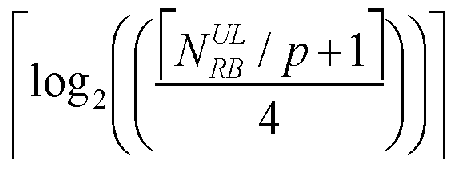
- Modulation and coding scheme and redundancy version - 5 bits
- New data indicator - 1 bit
- TPC command for scheduled PUSCH - 2 bits
- Cyclic shift for DM RS and OCC index - 3 bits
- UL index - 2 bits, only exist for a TDD operation, that is, an uplink-downlink configuration 0.
- Downlink Assignment Index (DAI) - 2 bits only exist for TDD operations, that is, uplink-downlink configurations 1-6.
- CQI request - 1 or 2 bits. a 2 bit field applies to a UE configured using at least one DL cell.
- SRS request - 0 or 1 bit.
- Multi-cluster flag - 1 bit. -Carrier indicator-0 or 3 bits.
-Flag for identifying
-Frequency hopping flag -1 bit, is a Most Significant Bit (MSB) corresponding to resource allocation at need and used to assign multiple clusters.
-Resource block assignment and hopping resource allocation-
-PUSCH hopping (corresponding to only single cluster allocation only):-NUL_hop MSB bits are used to obtain the n PRB (i)value. -
-In single cluster assignment, non-hopping PUSCH-
-In multi-cluster assignment, non-hopping PUSCH: Resource assignment is obtained from a combination of a frequency hopping flag field and a resource block assignment and hopping resource allocation field. -
-Modulation and coding scheme and redundancy version-5 bits
-New data indicator-1 bit
-TPC command for scheduled PUSCH-2 bits
-Cyclic shift for DM RS and OCC index-3 bits
-UL index-2 bits, only exist for a TDD operation, that is, an uplink-
-Downlink Assignment Index (DAI)-2 bits only exist for TDD operations, that is, uplink-downlink configurations 1-6.
-CQI request-1 or 2 bits. a 2 bit field applies to a UE configured using at least one DL cell.
-SRS request-0 or 1 bit.
-Multi-cluster flag-1 bit.
플래그(flag)는 1비트 정보이고 DCI 0 및 DCI 1을 서로 구별하기 위한 지시자이다. 홉핑 플래그(hopping flag)는 1비트 정보이고, 단말이 상향링크 전송을 수행할 때 주파수 홉핑이 적용되는지 여부를 가리킨다. 예를 들어, 홉핑 플래그가 1이라면, 그것은 상향링크 전송 시간에서 주파수 홉핑이 적용되는 것을 가리킨다. 홉핑 플래그가 0이라면, 그것은 상향링크 전송 시간에서 주파수 홉핑이 적용되지 않는 것을 가리킨다. 자원 블록 할당 및 홉핑 자원 할당은 또한 자원 할당 필드로 불린다. 자원 할당 필드는 물리적인 위치 및 단말에 할당된 자원의 양을 가리킨다. 표 3에 나타나진 않았을지라도, 상향링크 그랜트는 비트의 총 개수를 계속적으로 유지하기 위해 리던던트 비트(redundant bits) 또는 패딩 비트(padding bits)를 포함한다. DCI는 몇몇 포맷을 가지고 있다. DCI가 다른 포맷의 제어 정보를 가진다고 할지라도, 비트의 길이는 리던던트 비트를 사용하여 동일하게 제어된다. 이와 같이, 단말은 블라인드 디코딩을 순조롭게 수행할 수 있다.The flag is 1-bit information and is an indicator for distinguishing
예를 들어, 표 3에서, 만약 자원 할당 필드가 FDD 20MHz의 밴드에서 13비트를 가진다면, 상향링크 그랜트는 총 27비트를 가진다(CIF 필드 및 CRC 필드를 제외하고). 만약 블라인드 디코딩의 입력으로 결정된 비트의 길이가 28비트라면, 기지국(BS)은 스케줄링 시간에 상향링크 그랜트에 대하여 1비트의 리던던트 비트를 추가함으로써 상향링크 그랜트 총 개수를 28비트로 생각한다. 여기서, 모든 리던던트 비트는 0으로 설정될 수 있는데 리던던트 비트가 특별한 정보를 포함하지 않기 때문이다. 물론, 리던던트 비트의 수는 2보다 작거나 크다.For example, in Table 3, if the resource allocation field has 13 bits in the band of FDD 20MHz, the uplink grant has a total of 27 bits (excluding the CIF field and the CRC field). If the length of the bit determined by the input of blind decoding is 28 bits, the base station (BS) considers the total number of uplink grants to be 28 bits by adding 1 redundant bit to the uplink grant at the scheduling time. Here, all redundant bits may be set to 0 because the redundant bits do not contain special information. Of course, the number of redundant bits is less than or greater than 2.
본 발명의 3GPP LTE와 같은 무선 통신 시스템은 PDCCH/EPDCCH 검출을 위해서 블라인드 디코딩을 사용한다. 블라인드 디코딩은 바람직한 식별자가 PDCCH/EPDCCH가 CRC 에러 확인을 수행함으로써 자신의 채널인지 여부를 결정하기 위해 PDCCH/EPDCCH(후보 PDCCH/EPDCCH로 불린다)의 CRC로부터 디매스킹(de-mask) 되는 기법이다. A wireless communication system such as 3GPP LTE of the present invention uses blind decoding for PDCCH/EPDCCH detection. Blind decoding is a technique in which the preferred identifier is de-masked from the CRC of the PDCCH/EPDCCH (referred to as the candidate PDCCH/EPDCCH) in order to determine whether the PDCCH/EPDCCH is its own channel by performing CRC error check. .
eNB는 단말에 전송되기 위해 DCI에 따른 PDCCH/EPDCCH 포맷을 결정한다. 그 이후에, eNB는 CRC(cyclic redundancy check)를 DCI에 부착하고, PDCCH/EPDCCH의 소유주(owner) 또는 사용에 따른 고유한 식별자(RNTI(radio network temporary identifier)라 불린다)를 CRC에 매스킹(mask)한다. The eNB determines a PDCCH/EPDCCH format according to DCI to be transmitted to the UE. After that, the eNB attaches a cyclic redundancy check (CRC) to the DCI, and masks the PDCCH/EPDCCH owner or a unique identifier (called a radio network temporary identifier (RNTI)) according to the use to the CRC ( mask).
도 7은 본 발명이 적용되는 ACK/NACK 신호를 전달하는 상향링크 서브프레임의 구조의 일례를 도시하는 도면이다.7 is a diagram illustrating an example of a structure of an uplink subframe carrying an ACK/NACK signal to which the present invention is applied.
도 7을 참조하면, 여기에서, 상향링크 서브프레임은 상향링크 제어 정보를 전달하는 PUCCH(physical uplink control channel)가 할당되는 제어 영역으로 나뉠 수 있다. 제어 정보는 하향링크 전송의 ACK/NACK 응답을 포함한다. 사용자 데이터를 전달하는 PUSCH에 대한 데이터 영역은 주파수 영역에 할당된다. Referring to FIG. 7, here, an uplink subframe may be divided into a control region to which a physical uplink control channel (PUCCH) carrying uplink control information is allocated. The control information includes an ACK/NACK response of downlink transmission. The data region for the PUSCH carrying user data is allocated to the frequency domain.
하나의 반송파 특성(property)을 유지하기 위해, 하나의 단말은 동시에 PUCCH 및 PUSCH를 전송하지 않을 수 있다. 그러나, 만약 단말이 동시에 PUCCH/PUSCH 전송을 할 수 있다면, 하나의 단말이 같은 서브프레임에서 PUCCH 및 PUSCH를 전송하는 것도 실현 가능하다. 서브프레임 내에서, 자원 블록 쌍은 하나의 단말에 대하여 PUCCH로 할당되고, 할당된 자원 블록 쌍은 각각의 두 슬롯 내에서 다른 부반송파에 대응하는 자원 블록이다. 이것은 PUCCH로 할당된 자원 블록 쌍이 슬롯 경계에서 주파수 홉핑되었다고 부른다.In order to maintain one carrier property, one UE may not simultaneously transmit PUCCH and PUSCH. However, if the UE can simultaneously transmit PUCCH/PUSCH, it is also possible for one UE to transmit PUCCH and PUSCH in the same subframe. In a subframe, a resource block pair is allocated as a PUCCH for one terminal, and the allocated resource block pair is a resource block corresponding to a different subcarrier in each of two slots. This is called that the resource block pair allocated to the PUCCH is frequency-hopped at the slot boundary.
PUCCH는 다중 포맷을 지원할 수 있다. 즉, 그것은 변조 기법에 따른 서브프레임마다 다른 비트 수를 가지는 상향링크 제어 정보를 전송할 수 있다. PUCCH 포맷 1은 SR(scheduling request)을 전송하기 위해 사용되고, PUCCH 포맷 1a 및 1b는 HARQ ACK/NACK 신호를 전송하기 위해 사용된다. PUCCH 포맷 2는 CQI를 전송하기 위해 사용되고, PUCCH 포맷 2a 및 2b는 CQI 및 HARQ ACK/NACK을 전송하기 위해 사용된다. HARQ ACK/NACK이 홀로 전송된다면, PUCCH 포맷 1a 및 1b가 사용되고, SR이 홀로 전송된다면, PUCCH 포맷 1이 사용된다. 그리고 PUCCH 포맷 3은 TDD 시스템을 위해 사용될 수 있고, 또한 FDD 시스템을 위해 사용될 수 있다.PUCCH can support multiple formats. That is, it can transmit uplink control information having a different number of bits for each subframe according to the modulation scheme.
반면에, 네트워크 노드의 개수를 증가시키는 것, 그렇게 함으로써 물리적으로 그것들을 사용자 터미널(user terminals)로 가까워지게 하는 것은 트래픽 용량을 개선시키고 무선 통신 시스템의 달성할 수 있는 사용자 데이터 전송률을 확대시키는데 중요한 역할을 한다.On the other hand, increasing the number of network nodes, by doing so physically bringing them closer to user terminals, plays an important role in improving traffic capacity and increasing the achievable user data transfer rate of wireless communication systems. Do it.
도 8은 본 발명의 바람직한 실시예에 따른 이종 네트워크 환경에 대한 개념도를 나타낸다.8 shows a conceptual diagram of a heterogeneous network environment according to a preferred embodiment of the present invention.
도 8을 참조하면, 무선 통신 기술의 발전, 이종 네트워크 환경이 두각을 나타내고 있다. 매크로 셀, 펨토 셀, 피코 셀 등은 이종 네트워크 환경에서 사용된다. 매크로 셀과 비교해볼 때, 펨토 셀 또는 피코 셀은 현재 사용되는 이동 통신 서비스 반경보다 작은 영역을 커버하는 시스템이다. 매크로 배치(macro deployment)의 직접적인 고밀화(desification)뿐만 아니라, 네트워크 고밀화는 현재 사용되는 매크로 노드 계층의 커버리지 아래에서 상호보완적인 낮은 전력 노드(low-power nodes)의 배치에 의해 달성될 수 있다.Referring to FIG. 8, advances in wireless communication technology and heterogeneous network environments are prominent. Macro cells, femto cells, pico cells, etc. are used in heterogeneous network environments. Compared with a macro cell, a femto cell or a pico cell is a system that covers an area smaller than a mobile communication service radius currently used. In addition to direct desification of macro deployment, network densification can be achieved by the placement of complementary low-power nodes under the coverage of the currently used macro node layer.
이러한 이종 배치에서는, 낮은 전력 노드가 장소상으로, 예를 들어, 실내 및 야외 핫스팟 위치에서 매우 높은 트래픽 용량 및 매우 높은 사용자 처리량을 제공한다. 반면에, 매크로 계층은 전체 커버리지 영역을 넘어서 서비스 효용성 및 QoE를 보장한다. 다시 말해서, 낮은 전력 노드를 포함하는 계층은 매크로 계층을 커버하는 와이드 영역(wide-area-covering macro layer)에 대하여, 로컬 영역 접속(local-area access)을 제공하는 것으로 불릴 수 있다. 이종 배치뿐만 아니라 낮은 전력 노드의 설치는 가능하다.In this heterogeneous deployment, low power nodes provide very high traffic capacity and very high user throughput on location, for example in indoor and outdoor hotspot locations. On the other hand, the macro layer guarantees service effectiveness and QoE beyond the entire coverage area. In other words, a layer including a low power node may be referred to as providing local-area access to a wide-area-covering macro layer covering the macro layer. It is possible to install low power nodes as well as heterogeneous arrangements.
이종 배치(heterogeneous deployment)에서 동작하기 위해 용량을 확대하는 것은 LTE 시스템, 매크로 및 낮은 전력 계층에 추가되고, 이는, 낮은 전력 계층 및 이중 계층 연결에 대한 매크로 보조(macro assistance)의 다른 형태를 포함한다. 이중 연결은 단말이 매크로 및 낮은 전력 계층 둘 다에 동시 연결하는 것을 암시한다. 이중 연결은 제어와 데이터의 분리를 암시한다. 예를 들어, 높은 속도의 데이터 연결은 소형 셀과 같은 낮은 전력 계층을 통하여 제공되는 것처럼 이동성을 위한 제어 시그널링은 같은 시간에서 매크로 계층을 통해 제공된다. 하향링크 및 상향링크 연결인 하향링크와 상향링크 간에 분리는 다른 계층을 통해 제공된다. 게다가, 이중 연결은 서로 다른 eNB 간에 적용할 수 있고, 서로 다른 eNB 중 각각의 eNB는 서로 다른 위치에서 동일한 계층(또는 동일한 유형)을 통하여 제공한다. 여기에서, 서로 다른 eNB는 소형 셀의 경우 또는 매크로 셀의 경우가 될 수 있다.Expansion of capacity to operate in a heterogeneous deployment is added to the LTE system, macro and low power layer, which includes other forms of macro assistance for low power layer and dual layer connectivity. . Dual connectivity implies that the terminal connects to both the macro and the low power layer simultaneously. Double connection implies separation of control and data. For example, control signaling for mobility is provided through the macro layer at the same time, just as high-speed data connections are provided through a lower power layer such as a small cell. Separation between downlink and uplink, which is a downlink and uplink connection, is provided through different layers. In addition, dual connectivity can be applied between different eNBs, and each of the different eNBs provides through the same layer (or the same type) at different locations. Here, different eNBs may be a small cell or a macro cell.
본 발명의 단말은 상향링크/하향링크에서 데이터를 송수신하기 위해 f1의 주파수 밴드를 가지는 매크로 셀을 통하여 서비스를 지원할 수 있고, 단말은 상향링크/하향링크에서 데이터를 송수신하기 위해 f2의 주파수 밴드를 가지는소형 셀을 통하여 서비스를 지원할 수도 있고, f1 및 f2는 동일하게 또는 서로 다르게 또는 부분적으로 겹쳐질 수 있다. 이는, 단말이 이중 연결을 지원하기 위해 매크로 셀 및 소형 셀을 동시에 사용할 수 있다는 것이고, 단말과 매크로 셀(매크로 eNB) 간에 무선 링크 및 단말과 소형 셀(소형 eNB) 간에 무선 링크는 상대적으로 확립될 수 있는 것이 포함된다.The UE of the present invention can support a service through a macro cell having a frequency band of f1 to transmit and receive data in an uplink/downlink, and the UE uses a frequency band of f2 to transmit and receive data in an uplink/downlink. The branches may support a service through a small cell, and f1 and f2 may be identically or differently or partially overlapped. This means that the terminal can use a macro cell and a small cell at the same time to support dual connectivity, and a radio link between the terminal and a macro cell (macro eNB) and a radio link between the terminal and a small cell (small eNB) will be relatively established. Includes what can be done.
그래서, 무선 링크 각각을 위한 제어는 필요로 할 수 있다. 여기에서, 매크로 셀 및 소형 셀은, 예를 들어, 무선 인터페이스 프로토콜은 통신 시스템에서 OSI 3계층에 기반하는 첫 번째 계층(L1), 두 번째 계층(L2) 및 세번 째 계층(L3)으로 분류될 수 있다. 예를 들어, 매크로 eNB는 PDCP, RLC, MAC 및 PHY 계층을 포함하고 소형 eNB는 RLC, MAC 및 PHY 계층을 포함할 수 있고, PDCP 계층은 선택적으로 포함된다. 여기에서, 매크로 셀의 PDCP 계층은 Xa(인터넷 프로토콜)를 통하여 소형 셀의 RLC 계층에 연결될 수 있고, Xa 인터페이스는 LTE 시스템에서 X2 인터페이스가 될 수 있다. EPS 베어러 각각은 자원 블록을 단말에 대한 매크로 eNB 및 소형 eNB로 확립함으로써 서비스를 제공하도록 확립된다. So, control for each of the radio links may be required. Here, the macro cell and the small cell, for example, the air interface protocol will be classified into a first layer (L1), a second layer (L2) and a third layer (L3) based on the OSI layer 3 in the communication system. I can. For example, a macro eNB may include a PDCP, RLC, MAC and PHY layer, a small eNB may include an RLC, MAC and PHY layer, and a PDCP layer is optionally included. Here, the PDCP layer of the macro cell may be connected to the RLC layer of the small cell through Xa (Internet Protocol), and the Xa interface may be an X2 interface in the LTE system. Each of the EPS bearers is established to provide a service by establishing a resource block as a macro eNB and a small eNB for the terminal.
도 9는 본 발명의 바람직한 실시예에 따른 CAG를 설정하기 위한 개념도를 나타낸다.9 shows a conceptual diagram for setting a CAG according to a preferred embodiment of the present invention.
도 9를 참조하면, 소형 셀 시나리오에 대한 큰 관심으로, LTE에서 인터 사이트 반송파 집성(inter-site carrier aggregation)은 잘 지원될 수 있다. 본 발명은 동일한 eNB(즉, MAC 및 상위 계층을 공유하는)에 속하는 셀 그룹으로 정의되는 CAG(Carrier Aggregation Group)의 개념을 제공한다.Referring to FIG. 9, with great interest in a small cell scenario, inter-site carrier aggregation in LTE can be well supported. The present invention provides the concept of a CAG (Carrier Aggregation Group) defined as a cell group belonging to the same eNB (ie, sharing MAC and upper layers).
여기에서, CAG는 PUCCH가 전송될 수 있는 서로 다른 PCell을 허용하기 위해 이중 모드(duplex mode) 또는 또 다른 카테고리를 기반으로 결정될 수 있다. 예를 들어, FDD 반송파는 하나의 CAG로 그룹화되고 반면에 TDD 반송파는 나머지 CAG로 그룹화된다. 또한, PUCCH가 전송되는 각 CAG 마다 PCell이 존재하는 각각 시스템을 설정하는 2개 이상의 CAG가 있을 수 있다. Here, the CAG may be determined based on a duplex mode or another category in order to allow different PCells to which PUCCH can be transmitted. For example, FDD carriers are grouped into one CAG, while TDD carriers are grouped into remaining CAGs. In addition, for each CAG through which PUCCH is transmitted, there may be two or more CAGs that configure each system in which a PCell exists.
인터 사이트 반송파 집성의 경우 각 단말은 설정되고, 단말은 각 CAG가 하나의 CC 또는 다중 CC를 포함할 수 있는 다중 CAG로 설정될 수 있다. 2개의 CAG 경우(2개의 인터 사이트 반송파 집성)의 예시는 도 9에 나타난다. 이 예시에서, eNB1은 단말로 2개의 CC(CC1 및 CC2)를 설정하고 eNB2는 단말로 3개의 CC(CC3, CC4, CC5)를 설정한다. 하나의 eNB 내에서, CC는 RRH 또는 다른 것을 통해 다른 곳에 위치할 수 있다. X2를 통한 eNB 또는 Xa와 같은 다른 수단 간의 인터페이스는 데이터가 실시간에 eNB간에 교환될 수 없도록 느리게 역수송(slow backhaul)된다고 가정될 수 있다. 게다가 스케줄링은 각 eNB마다 독립적으로 된다고 가정될 수도 있다.In the case of inter-site carrier aggregation, each terminal is configured, and the terminal may be configured with multiple CAGs in which each CAG may include one CC or multiple CCs. An example of two CAG cases (two inter-site carrier aggregation) is shown in FIG. 9. In this example, eNB1 configures two CCs (CC1 and CC2) as a terminal and eNB2 configures three CCs (CC3, CC4, CC5) as a terminal. Within one eNB, the CC may be located in another location through the RRH or another. The interface between the eNB over X2 or other means such as Xa may be assumed to be slow backhaul so that data cannot be exchanged between the eNBs in real time. Furthermore, it may be assumed that scheduling is independent for each eNB.
첫 번째 CAG(또는 매크로 셀 반송파를 포함하는 CAG 또는 PCell을 포함하는 CAG)는 핸드오버 면에서 단말 이동성을 처리하고 있고 또한 RRC_IDLE 단말을 처리하고 있다. 다시 말하면, 단말은 첫 번째 CAG 핸드오버의 PCell 요구될 때, 서로 다른 PCell로 핸드오버를 수행할 수 있다. 또는, 단말이 RRC_IDLE 모드가 될 때, 첫 번째 CAG의 PCell은 단말을 처리한다.The first CAG (or CAG including macro cell carrier or CAG including PCell) handles terminal mobility in terms of handover, and also processes RRC_IDLE terminal. In other words, when the PCell of the first CAG handover is requested, the UE can perform handover to different PCells. Or, when the terminal is in the RRC_IDLE mode, the PCell of the first CAG processes the terminal.
게다가, RRC_IDLE 모드에서 페이징은 첫 번째 CAG에 의해서도 지원될 것이다. 단말이 RRC_IDLE 모드가 될 때, 첫 번째가 아닌 CAG(예를 들어, 두 번째 또는 다른 CAG)와 관련된 모든 반송파는 비활성화될 것이라고 가정할 것이다. 게다가, 첫 번째 CAG에서 PCell을 제외한 다른 반송파는 상위 계층에서부터 비활성화 신호가 없었음에도 비활성화된다고 가정된다. 편의를 위해, 첫 번째 CAG의 PCell은 PCell의 주인(master)인 M-PCell로 불린다.In addition, paging in RRC_IDLE mode will also be supported by the first CAG. When the UE enters the RRC_IDLE mode, it will be assumed that all carriers related to CAGs other than the first (eg, the second or other CAGs) will be deactivated. In addition, it is assumed that carriers other than PCell in the first CAG are deactivated even though there is no deactivation signal from the upper layer. For convenience, the PCell of the first CAG is called the M-PCell, the master of the PCell.
각 CAG를 위해, 셀은 릴리즈 10 LTE 반송파 집성에서 PCell과 같이 행동하는 CAG PCell로 불리는 PCell로 지정될 수 있다. 예를 들어, PCell은 단말이 몇몇 CC 중에 초기에 연결(또는 RRC 연결)을 형성한 CC이다. PCell은 복수의 CC에 대하여 시그널링을 위한 연결(RRC 연결)로 제공하고, PCell은 단말에 관련된 연결 정보인 단말 context를 관리하기 위한 특별한 CC이다. 게다가, PCell이 단말과의 연결을 확립하고 이와 같이 RRC 연결 모드에 있는 상태라면, PCell은 활성화 상태에 항상 존재한다. 그리고 SCell은 PCell과 달리 단말에 할당된 CC이다. SCell은 추가적인 자원 할당 등을 위해 연장된 반송파이고, PCell 뿐만 아니라, 활성화 상태 및 비활성화 상태로 나뉠 수 있다. SCell은 초기에 비활성화 상태에 있다.For each CAG, a cell may be designated a PCell called CAG PCell that acts like a PCell in
단말 관점에서, 다중 CAG로 설정된다면, 각 CAG가 서로 독립적으로 동작하는 다중 PCell을 가질 수 있다. 여기에서, CAG를 위한 재설정, 추가, 삭제 프로세스의 서빙 셀과 같은 셀은 RRC 계층에서 수행될 수 있다. SCell이 새롭게 추가된다면, RRC 시그널링은 전용 시그널링(dedicated signaling)의 시스템 정보를 전송하기 위해 사용될 수 있다.From the terminal point of view, if multiple CAGs are configured, each CAG may have multiple PCells operating independently of each other. Here, a cell such as a serving cell for a reconfiguration, addition, or deletion process for CAG may be performed in the RRC layer. If the SCell is newly added, RRC signaling can be used to transmit system information of dedicated signaling.
각 CAG에 RLF(radio link failure)를 처리하는 측면에서, 첫 번째 CAG가 아닌 CAG를 위해 RLF가 발생할 때, RRC 재설정이 발생될 수 있는 것이 추정된다. 그러나, 단말의 RRC 상태는 첫 번째 CAG에서만 RLF 때문에 변할 수 있다. 다시 말해서, non-M-PCell(s)상의 RLF는 RRC_CONNECTED부터 RRC_IDLE까지 단말의 트랜지션(transition)을 야기하지 않을 것이다. 상태 트랜지션은 M-PCell의 RLF에 의해 발생될 수 있다. 이것은 T310 타이머가 M-PCell을 위해서만 적용될 수 있고 반면에 다른 새로운 타이머는 첫 번째가 아닌 CAG의 다른 PCell의 RLF를 지원하기 위해 소개될 수 있음을 암시한다.In terms of handling radio link failure (RLF) for each CAG, it is estimated that when RLF occurs for a CAG other than the first CAG, RRC reconfiguration may occur. However, the RRC state of the terminal may change due to the RLF only in the first CAG. In other words, RLF on non-M-PCell(s) will not cause a transition of the terminal from RRC_CONNECTED to RRC_IDLE. The state transition may be generated by the RLF of the M-PCell. This implies that the T 310 timer can only be applied for the M-PCell, while another new timer can be introduced to support the RLF of another PCell of CAG other than the first.
그 이후에, CAG 설정은 이하에서 정의된다.After that, the CAG setting is defined below.
각 단말은 만약 필요하다면 다중 CAG를 설정하는 하나의 PCell에 할당된다. 예를 들어, CC1은 다른 CC가 CC1(PCell)에 의해 설정될 것인 단말을 위한 PCell이 될 수 있다. 여기에서, 만약 다중 CAG가 필요하다면, 단말은 다중 CAG를 요구하기 위한 단말 용량 절차를 적용할 수 있다. 단말이 셀에 접속(초기 접속)할 때, 첫 번째 연결되는 셀은 M-PCell이라고 가정할 수 있을 것이다. 네트워크가 다중 CAG를 설정한다면, SCell의 개수로부터 CAG 분리(CAGs separate)를 설정할 수 있을 것이다. 이와 같이, CAG IDs 와 SCell 인덱스 간에 맵핑은 필수적일 수 있다.Each terminal is assigned to one PCell for configuring multiple CAGs, if necessary. For example, CC1 may be a PCell for a terminal in which other CCs will be set by CC1 (PCell). Here, if multiple CAGs are required, the terminal may apply a terminal capacity procedure for requesting multiple CAGs. When the UE accesses the cell (initial access), it may be assumed that the first connected cell is an M-PCell. If the network configures multiple CAGs, it will be possible to set CAGs separate from the number of SCells. As such, mapping between CAG IDs and SCell indexes may be essential.
게다가, 단말은 그것이 다중 CAG를 지원하는지 여부에 대한 용량을 네트워크에 알릴 것이다. 이러한 용량은 그것이 인터 사이트 자원 집성(inter-site resource aggregation)을 지원하는지 여부로 해석될 수 있다. 또는, 단말이 그것이 인터 사이트 자원 집성 및 동시 상향링크 전송(또는 동시 PUCCH/PUCCH 전송)을 지원한다고 보고한다면, 이러한 용량이 지원되도록 가정될 수 있다.In addition, the terminal will inform the network of its capacity as to whether it supports multiple CAGs. This capacity can be interpreted as whether it supports inter-site resource aggregation. Or, if the terminal reports that it supports inter-site resource aggregation and simultaneous uplink transmission (or simultaneous PUCCH/PUCCH transmission), it may be assumed that this capacity is supported.
그 대신에, 다중 CAG 상에서 지원을 지시하는 분리된 시그널링(separate signaling)이 고려될 수 있다. 단말이 다중 CAG를 지원한다고 할지라도, 동시 상향링크 전송(또는 동시 PUCCH/PUCCH 전송) 상에서 분리된 단말 용량(separate UE capability)은 단말이 지원하는 밴드 및 밴드 조합마다 시그널링될 수 있다. 만약 단말이 다중 CAG를 지원한다면, 단말이 다중 TAG 역시 지원한다고 가정할 수 있다.Instead, separate signaling indicating support on multiple CAGs may be considered. Even if the UE supports multiple CAGs, a separate UE capability on simultaneous uplink transmission (or simultaneous PUCCH/PUCCH transmission) may be signaled for each band and band combination supported by the UE. If the terminal supports multiple CAGs, it can be assumed that the terminal also supports multiple TAGs.
게다가, 서로 다른 CAG로의 동시에 PRACH 전송의 설정을 지원하기 위해, 단말 또는 네트워크는 2개의 CAG가 동기화되었는지 여부를 알릴 수 있다.In addition, in order to support the establishment of PRACH transmission to different CAGs at the same time, the terminal or network can inform whether the two CAGs are synchronized.
CAG는 다음의 특징을 가진다.CAG has the following characteristics.
DL 및 UL을 둘 다 제공하는 CAG 마다 적어도 하나의 CC가 있어야 한다. DL 및 UL과의 CC 중에서, 하나의 CC가 PCell을 포함하지 않는 CAG를 위해 CAG PCell로 선택될 수 있다. 이전에 언급한대로, 만약 서로 다른 반송파로의 핸드오버를 하지 않는다면, 단말이 초기 셀 관련성(initial cell association)을 수행하는 반송파는 M-PCell로 가정되어야 한다. 다시 말하면, M-PCell을 변화시키는 것은 핸드오버 절차를 통하여 달성될 수 있을 것이다.There must be at least one CC for each CAG that provides both DL and UL. Among CCs with DL and UL, one CC may be selected as a CAG PCell for CAG not including a PCell. As previously mentioned, if the handover to different carriers is not performed, the carrier on which the terminal performs initial cell association should be assumed to be an M-PCell. In other words, changing the M-PCell may be achieved through a handover procedure.
-PUCCH는 동일한 CAG에서 반송파를 통하여 전송되는 PDSCH을 위한 HARQ-ACK 또는 동일한 CAG에서만 반송파를 위한 UCI를 포함하는 CAG PCell 상향링크에 전송된다. PUCCH는 SCell 상향링크를 통하여 전송될 수 있음을 주목하라.-PUCCH is transmitted in the CAG PCell uplink including HARQ-ACK for the PDSCH transmitted through the carrier in the same CAG or the UCI for the carrier in the same CAG only. Note that the PUCCH can be transmitted through the SCell uplink.
그러나, UCI 및 HARQ-ACK 내용에 대하여, 하나의 CAG에서 전송되는 PUCCH는 동일한 CAG에서 반송파를 위해 생성되는 HARQ-ACK 및 UCI를 포함할 것이다.However, for UCI and HARQ-ACK content, PUCCH transmitted in one CAG will include HARQ-ACK and UCI generated for a carrier in the same CAG.
-만약 CAG PCell DL이 CSS에 의해 설정된다면, PCell DL의 그것뿐만 아니라, 단말은 각 CAG를 위해 CAG PCell DL를 위한 공용 검색 공간(Common Search Space)을 모니터링할 것이다. 단말은 상위 계층 시그널링에 의해 CAG PCell DL이 CSS를 가지는지 여부를 받을 수 있거나, 단말은 만약 CSS가 검출된다면 CSS를 전달할 것이라 가정할 수 있거나, 만약 CSS(SIB와 같은)가 스케줄되어 있는 서브프레임에서 CSS가 검출되지 않는다면 CSS를 전달하지 않을 것이라 가정할 수 있다.-If CAG PCell DL is set by CSS, not only that of PCell DL, the terminal will monitor Common Search Space for CAG PCell DL for each CAG. The terminal can receive whether the CAG PCell DL has CSS by higher layer signaling, or the terminal can assume that it will deliver CSS if CSS is detected, or if a subframe in which CSS (such as SIB) is scheduled If the CSS is not detected in, it can be assumed that CSS will not be delivered.
다시 말하면, 만약 단말이 CAG PCell(첫 번째 CAG가 아니다)의 CSS를 모니터링하지 않게 설정된다면, CSS가 CAG의 PCell에 의해 전송된다 할지라도 CSS를 모니터링하지 않을 수 있다. 자연스럽게, 단말이 다른 것들도 설정하지 않는다면, 단말은 각 CAG PCell의 CSS를 모니터링할 것이라 가정한다. CSS는 PDCCH 또는 EPDCCH에 의해 스케줄링될 수 있다.In other words, if the terminal is set not to monitor the CSS of the CAG PCell (not the first CAG), the CSS may not be monitored even if the CSS is transmitted by the PCell of the CAG. Naturally, if the terminal does not configure anything else, it is assumed that the terminal will monitor the CSS of each CAG PCell. CSS can be scheduled by PDCCH or EPDCCH.
특히, RAR(random access response) 및 TPC(transmission power control) 명령을 지원하는 것은 필수적이다. 분리된 RNTI(SI-RNTI, RA-RNTI, TPC-RNTI와 같은)가 CAG의 각 PCell 마다 설정될 수 있고 각 셀은 CSS의 다중 그룹을 전달할 수 있음을 주목하라. 다시 말하면, 그룹 특정 검색 공간(group-specific search space)은 셀 특정 검색 공간(cell-specific search space) 대신에 non-M-PCell을 위하여 가정될 수 있다.In particular, it is essential to support random access response (RAR) and transmission power control (TPC) commands. Note that a separate RNTI (such as SI-RNTI, RA-RNTI, TPC-RNTI) can be set for each PCell of CAG and each cell can carry multiple groups of CSS. In other words, a group-specific search space may be assumed for a non-M-PCell instead of a cell-specific search space.
-단말은 PDCCH 명령 없이 PRACH을 각 CAG PCell로 전송할 수 있다(즉, 초기 접속 RACH 또는 content-based PRACH transmission은 실현 가능하다). 각 CAG PCell을 위한 RACH 설정은 PCell(상위 계층 시그널링을 통하여)에 의해 설정될 수 있거나 각 CAG PCell은 시스템 정보를 가지고 있다. 단말은 첫 번째 CAG의 PCell에 의하지 않거나 각 CAG PCell 상에서 초기 RACH 전송이 가능하도록 설정될 수 있다.-The terminal can transmit the PRACH to each CAG PCell without a PDCCH command (ie, initial access RACH or content-based PRACH transmission can be realized). RACH configuration for each CAG PCell can be configured by a PCell (via higher layer signaling), or each CAG PCell has system information. The terminal may be configured not by the PCell of the first CAG or to enable initial RACH transmission on each CAG PCell.
-각 CAG PCell을 위하여, 반송파 지시자 필드는 사용되지 않을 것이다. CAG 내에서는, 각 CAG PCell은 0(CAG PCell을 위한 0)에서부터 시작하여 독립적으로 CC 인덱스를 할당할 수 있거나, CC 인덱스의 하나의 리스트만이 단말에 설정된 모든 CAG를 위해 사용될 수 있다. 예를 들어, 도 1에서, 만약 개별적인 CC 인덱싱이 각 CAG 마다 사용된다면, G1은 0 및 1을 CC1 및 CC2에 각각 할당할 수 있고, CAG2는 0,1 및 2를 CC3, CC4, 및 CC5에 각각 할당할 수 있다. 또는, 만약 하나의 인덱싱만 CAG 중에 공유되었다면, 0에서 4까지가 CC1부터 CC5에 할당된다. 만약 개별적인 CC 인덱싱이 사용된다면, CAG ID는 서로 다른 CAG에서 서로 다른 CC를 위해 사용될 수 있다. 예를 들어, CC3는 <CAG ID = 2, CC index = 0>로 식별될 수 있다.-For each CAG PCell, the carrier indicator field will not be used. Within the CAG, each CAG PCell may independently allocate a CC index starting from 0 (0 for the CAG PCell), or only one list of CC indexes may be used for all CAGs set in the terminal. For example, in FIG. 1, if individual CC indexing is used for each CAG, G1 may assign 0 and 1 to CC1 and CC2, respectively, and CAG2 may assign 0, 1 and 2 to CC3, CC4, and CC5. Each can be assigned. Alternatively, if only one indexing is shared among CAGs, 0 to 4 are allocated to CC1 to CC5. If individual CC indexing is used, the CAG ID can be used for different CCs in different CAGs. For example, CC3 may be identified as <CAG ID = 2, CC index = 0>.
-M-PCell로부터 어떠한 RRC 설정은, 달리 언급이 없으면, 모든 설정된 CC에 대해 적용될 수 있다.Any RRC configuration from -M-PCell can be applied to all configured CCs, unless otherwise stated.
-CAG PCell로부터 어떠한 RRC 설정은, 달리 언급이 없으면, CAG 내에 모든 설정된 CC에 대해 적용될 수 있다.-Any RRC configuration from the CAG PCell can be applied to all configured CCs in the CAG, unless otherwise stated.
-만약 CAG가 제거되도록 설정되지 않았다면, CAG PCell 뿐만 아니라 M-PCell은 비활성화되지 않는다. PCell 및 CAG PCell은 활성화된 CC로 유지된다.-If CAG is not set to be removed, not only CAG PCell but also M-PCell are not deactivated. PCell and CAG PCell is maintained as an activated CC.
-각 PCell 또는 CAG PCell은 동일한 CAG에 각각 속하는 CC의 활성화/비활성화를 수행한다. 만약 하나의 CC 인덱싱만이 사용된다면, PCell은 역시 다른 CAG를 위해 CC를 활성화/비활성화 시킬 것이다. 만약 단말이 설정 가능 하다면, 단말은 활성화/비활성화 메커니즘이 설정되는 상위 계층이다.-Each PCell or CAG PCell performs activation/deactivation of each CC belonging to the same CAG. If only one CC indexing is used, the PCell will also enable/disable the CC for another CAG. If the terminal is configurable, the terminal is a higher layer in which an activation/deactivation mechanism is set.
-하나 이상의 TAG(Time Advance(Alignment) group)는 각 CAG 마다 설정될 수 있다. 하지만, TAG는 다중 CAG 중에서 공유될 수는 없다.-More than one TAG (Time Advance (Alignment) group) may be set for each CAG. However, the TAG cannot be shared among multiple CAGs.
-교차된 반송파 스케줄링(Cross-carrier scheduling)은 CAG 내에서 허용되지만, 교차된 CAG 내에서는 아니다.-Cross-carrier scheduling is allowed within the CAG, but not within the crossed CAG.
-RLF는 각각 PCell 및 CAG PCell을 위해 수행되고 필수적인 핸드오버 절차(necessary hand-over procedure)는 RLF가 검출될 때 발생한다. 핸드오버는 M-PCell RLF가 발생할 때만 발생되는 것을 주목하라. CAG PCell의 RLF로 인한 핸드오버는 이전 CAG가 제거되고 새로운 CAG가 설정되는 'CAG를 재설정'하는 것이다.-RLF is performed for each PCell and CAG PCell, and an essential hand-over procedure occurs when an RLF is detected. Note that handover occurs only when an M-PCell RLF occurs. Handover due to RLF of CAG PCell is'resetting the CAG' in which the old CAG is removed and a new CAG is set.
-불규칙적인 CSI를 위한 설정은 설정이 발생하는 하나의 CAG에만 적용된다.-The configuration for irregular CSI is applied only to one CAG in which the configuration occurs.
-HARQ-ACK은 각 CAG 마다 독립적으로 동작한다.-HARQ-ACK operates independently for each CAG.
-상향링크 전력 제어는, TPC(Transmit Power Control) 명령이 동일한 CAG에 속하는 CC를 위한 전력 제어를 포함하는 각 eNB가 독립적으로 전력 제어를 처리하는 CAG마다 수행될 수 있다. 단말 전력(다중 CC를 위해 합쳐진)이 PCmax를 초과하는 경우, 릴리즈 11 규칙이 적용될 수 있다. 이는, 단말이 하나의 서빙 셀 상에서 전력을 전송할 수 있고 이 값에 의해 결정된 서빙 셀의 설정된 최대 단말 출력 전력을 초과하지 않을 것이라는 것이다. 다중 CAG 중에 PUCCH가 충돌하고 합쳐진 전력이 PCmax를 초과하면, 스케일링이 적용되거나 M-PCell을 포함하는 CAG 내의 PUCCH(s)는 떨어지게 될 수 있다.-Uplink power control may be performed for each CAG in which each eNB including power control for a CC belonging to the same CAG with a transmit power control (TPC) command independently processes power control. When the terminal power (summed for multiple CCs) exceeds PCmax, the Release 11 rule may be applied. This means that the UE can transmit power on one serving cell and will not exceed the set maximum UE output power of the serving cell determined by this value. If PUCCH collides among multiple CAGs and the combined power exceeds PCmax, scaling may be applied or PUCCH(s) in the CAG including the M-PCell may drop.
만약 감소가 적용된다면, 가장 높은 CAG ID를 가지는 CAG는 단말 전력이 PCmax보다 낮아지게 될 때까지 첫 번째 감소가 될 것이다.If a reduction is applied, the CAG with the highest CAG ID will be the first decrease until the terminal power becomes lower than PCmax.
각 CAG 마다 PCmax가 각 CAG의 PCmax의 총합이 단말의 PCmax의 물리적인 임계치를 초과하지 않는 것처럼 기지정될 수 있음을 주목하라. 예를 들어, CAG 중에 전력 분배 간에 비율이 단말이 자신의 PCmax를 설정된 비율에 따라 각각 계산하는 것처럼 단말에 설정될 수 있다.Note that the PCmax for each CAG can be specified as if the sum of the PCmax of each CAG does not exceed the physical threshold of the PCmax of the terminal. For example, a ratio between power distribution among CAGs may be set in the terminal as the terminal calculates its own PCmax according to a set ratio.
상기에 실린 어떤 기능은 CAG PCell을 위해 의무적이진 않을 수 있음을 주목하라. 예를 들어, CAG PCell은 CSS를 전달하거나 전달하지 않을 수 있다.Note that some of the features listed above may not be mandatory for the CAG PCell. For example, CAG PCell may or may not pass CSS.
도 10은 본 발명의 바람직한 실시예에 따른 CAG 설정/재설정을 위한 흐름도를 나타낸다. 10 shows a flowchart for setting/resetting CAG according to a preferred embodiment of the present invention.
도 10을 참조하면, 단말은 CAG1을 위한 적어도 하나의 CC에서 RRC 설정 신호를 수신한다. 여기서, CAG를 위한 적어도 하나의 CC는 eNB1의 사용가능한 주파수 자원으로 구성될 수 있다. eNB1은 적어도 2개의 반송파(CC1 및 CC2)를 가지는 매크로 셀을 포함한다. 게다가, 단말은 CA(1000)를 위해 3개의 CC(CC3, CC4 및 CC5)를 설정하는 eNB2로부터 RRC 설정 신호를 수신하고, 상기 eNB2는 좁은 RF 커버리지를 가지는 서로 다른 중심 주파수를 가지는 셀을 포함한다.Referring to FIG. 10, the UE receives an RRC configuration signal in at least one CC for CAG1. Here, at least one CC for CAG may be configured as an available frequency resource of eNB1. The eNB1 includes a macro cell having at least two carriers (CC1 and CC2). In addition, the UE receives the RRC configuration signal from eNB2 that configures three CCs (CC3, CC4 and CC5) for
예를 들어, 본 발명에서는 다양한 커버리지를 가지는 노드 또는 셀을 포함하는 HetNet 시스템이 적용된다. 시스템을 형성하는 네트워크 노드는 긴 커버리지를 가지는 매크로 셀 및 매크로 셀의 커버리지 내에 존재하는 짧은 커버리지를 가지는 소형 셀을 포함한다. 본 발명에서는, 마이크로 셀, 피코 셀, 핫스팟, 펨토 셀, 또는 매크로 셀보다 작은 커버리지를 가지는 서로 다른 eNB와 같은 소형 셀은 모든 셀 또는 네트워크 노드를 나타내기 위해 일반적으로 사용되고, 이와 같이, 보통 의미보다는 좀 더 넓은 의미로 해석되어야한다. 게다가, 제한된 시간 자원 또는 주파수 자원은 소형 셀은 제한된 전송 전력 때문에 매크로 셀보다 더 좁은 서비스 커버리지를 가진다. 여기서, 단말 이동성을 처리하기 위해 매크로 셀보다 밴드 할당에서 낮은 우선 순위를 가지는 소형 셀과 같은 셀에 적용된다. 이는 CAG 1이 매크로 셀에 포함되고 CAG 2는 소형 셀에 포함되는 것이다. 여기서, 각 셀 eNB는 도 8과 같이 단말 간에 무선 인터페이스 프로토콜을 가질 수 있다.For example, in the present invention, a HetNet system including nodes or cells having various coverages is applied. The network nodes forming the system include a macro cell having a long coverage and a small cell having a short coverage existing within the coverage of the macro cell. In the present invention, small cells such as micro cells, pico cells, hotspots, femto cells, or different eNBs having a coverage smaller than macro cells are generally used to represent all cells or network nodes, and thus, rather than the usual meaning It should be interpreted in a broader sense. In addition, a limited time resource or a frequency resource has a narrower service coverage than a macro cell because a small cell has limited transmission power. Here, in order to handle terminal mobility, it is applied to a cell such as a small cell having a lower priority in band allocation than a macro cell. This means that
1000단계에서는, 단말은 매크로 셀과 같은 eNB1으로부터 CAG 1을 위해 CC1 및 CC2를 포함하는 SCell 설정과 CAG2를 위해 CC3, CC4 및 CC5를 포함하는 SCell 설정을 포함하는 하나의 RRC 설정 신호도 수신할 수 있다. In
여기서, eNB1 및 eNB2는 단말이 단말의 하드웨어 수행 및 eNB의 사용 가능한 주파수 자원에 따라 복수의 CC를 사용하도록 허용하고 복수의 CAG를 정의한다. 다중 CAG를 필요로 한다면, 단말은 다중 CAG를 요구하기 위해 단말 용량 절차를 적용할 수 있고 매크로 셀의 eNB로부터 다중 CAG의 사용 가능(enabling)을 수신할 수 있다. 또는, 단말이 매크로 셀 및 소형 셀 각각에 있는 대응하는 eNB로부터 CAG-id를 가지는 대응하는 CAG의 사용 가능한 정보(enabling information)를 수신할 수 있다. Here, eNB1 and eNB2 allow the UE to use a plurality of CCs according to hardware performance of the UE and available frequency resources of the eNB, and define a plurality of CAGs. If multiple CAGs are required, the UE can apply the UE capacity procedure to request multiple CAGs and receive the enablement of multiple CAGs from the eNB of the macro cell. Alternatively, the UE may receive available information of a corresponding CAG having a CAG-id from a corresponding eNB in each of the macro cell and the small cell.
여기에서, RRC 설정 신호는 각 CAG를 가지는 SCell 해제/SCell 추가/변경을 포함한다. RRC 설정은 RRC 신호의 MAC 주 설정(MAC main configuration)에서 전송될 수 있다.Here, the RRC configuration signal includes SCell release/SCell addition/change with each CAG. The RRC configuration can be transmitted in the MAC main configuration of the RRC signal.
단말은 CAG를 설정하고 셀은 각 CAG(1010)에서 불리는 PCell로 지정될 수 있다. 이는, RRC 신호에서 MAC 주 설정을 수신하는 것에 따라 단말이 CAG를 설정하고 셀이 각 CAG에서 불리는 PCell로 지정될 수 있다는 것이다. The UE configures the CAG and the cell may be designated as a PCell called in each
만약 단말에 의해 RRCConnectionReconfiguration을 수신함으로써 수신된 mac-MainConfig가 CAG-ToReleaseList를 포함한다면, CAG-ToReleaseList에 포함되는 각 CAG-ID 값은 현재 단말 설정의 일부가 되고, 단말은 CAG-ID에 의해 지시되는 CAG를 해제한다.If the mac-MainConfig received by receiving the RRCConnectionReconfiguration by the terminal includes a CAG-ToReleaseList, each CAG-ID value included in the CAG-ToReleaseList becomes part of the current terminal configuration, and the terminal is indicated by the CAG-ID. Release CAG.
만약 수신된 mac-MainConfig가 CAG-ToADDModList를 포함한다면, CAG-ToAddModList에 포함되는 각 CAG-ID 값은 현재 단말 설정의 일부가 되고(CAG 추가), 단말은 CAG-ID에 대응하는 CAG를 추가하고, 여기서, CAG-ToAddModList에 포함되는 각 CAG-ID 값은 현재 단말 설정의 일부가 되고(CAG 변경), 단말은 CAG-ID에 대응하는 CAG를 재설정한다.If the received mac-MainConfig includes CAG-ToADDModList, each CAG-ID value included in CAG-ToAddModList becomes part of the current terminal configuration (CAG addition), and the terminal adds a CAG corresponding to the CAG-ID , Here, each CAG-ID value included in the CAG-ToAddModList becomes part of the current terminal configuration (CAG change), and the terminal resets the CAG corresponding to the CAG-ID.
그 이후에, CAG에서 SCell 해제는 Sell 해제 절차에 적용될 수 있다. 만약 해제가 CAG에서 sCellToReleaseList의 수신에 의해 야기된다면, sCellIndex 값은 sCellToReleaseList에 포함되고, 만약 현재 단말 설정이 값 sCellIndex를 가진 SCell을 포함한다면, 단말은 CAG에서 SCell을 해제한다. 해제가 RRC 연결 재확립(RRC connection re-establishment)에 의해 야기된다면, 단말은 CAG의 현재 단말 설정의 일부인 모든 SCell을 해제한다.After that, SCell release in CAG can be applied to Sell release procedure. If the release is caused by the reception of sCellToReleaseList in CAG, the sCellIndex value is included in sCellToReleaseList, and if the current terminal configuration includes a SCell with the value sCellIndex, the UE releases the SCell from the CAG. If the release is caused by RRC connection re-establishment, the UE releases all SCells that are part of the current UE configuration of the CAG.
반면에, CAG에서 SCell 추가/변경은 SCell 추가/변경 절차에 적용될 수 있고, 단말은 현재 단말 설정의 일부가 아닌 sCellToAddModList에 포함되는 각 sCellIndex 값을 위해 SCell 설정을 변경할 수 있다(SCell 추가). 이는, radioResourceCofigCommonSCell의 수신된 신호 또는 radioResourceConfigDedicatedSCell의 신호에 따라 단말이 cellIdentification에 대응하는 Scell을 추가하는 것이다. 그리고 단말은 SCell을 비활성화 상태로 고려하기 위해 낮은 계층을 설정한다. On the other hand, in CAG, SCell addition/change can be applied to the SCell addition/change procedure, and the terminal can change the SCell configuration for each sCellIndex value included in sCellToAddModList that is not part of the current terminal configuration (SCell addition). This means that the UE adds the Scell corresponding to cellIdentification according to the received signal of radioResourceCofigCommonSCell or the signal of radioResourceConfigDedicatedSCell. In addition, the terminal configures a lower layer to consider the SCell in an inactive state.
또한, sCellToAddModList에 포함되는 각 sCellIndex 값이 현재 단말 설정의 일부라면(SCell 변경), 단말은 radioResourceConfigDedicatedSCell의 수신된 신호에 따라 SCell 설정을 변경할 수 있다.In addition, if each sCellIndex value included in the sCellToAddModList is part of the current terminal configuration (SCell change), the terminal may change the SCell configuration according to the received signal of radioResourceConfigDedicatedSCell.
단말이 MAC 제어로부터 CC를 포함 또는 제외함으로써 각 CAG에서 CC의 활성화/비활성화를 지시된 후에, PCell이 언제나 활성화 상태에 존재하기 때문에 단말은 PDCCH 명령(PDCCH order) 없이 CAG PCell로 RACH 절차를 수행한다.After the terminal instructs activation/deactivation of the CC in each CAG by including or excluding the CC from MAC control, the terminal performs the RACH procedure to the CAG PCell without a PDCCH command (PDCCH order) because the PCell is always in the active state. .
단말이 RLF가 PCell 및 CAG PCells를 위해 각각 검출된다는 것을 검출한다면, 핸드 오버의 단말 절차는 PCell RLF가 발생할때만 발생된다. 그리고 단말은 eNB1(1030)으로부터 RRC 신호에 의해 핸드오버 절차 메시지 또는 재설정 메시지를 수신할 수 있다.If the terminal detects that RLF is detected for each of the PCell and CAG PCells, the terminal procedure of handover occurs only when the PCell RLF occurs. In addition, the UE may receive a handover procedure message or a reconfiguration message from the
단말은 재설정된 CAG1 및 CAG2를 위한 적어도 하나의 CC를 포함하는 RRC 설정 신호를 수신하고 결정한다. 예를 들어, 만약 단말이 RLF가 PCell을 위해 검출된다는 것을 검출한다면 재설정이 발생된다.The terminal receives and determines the RRC configuration signal including at least one CC for the reset CAG1 and CAG2. For example, if the terminal detects that the RLF is detected for the PCell, reconfiguration occurs.
여기에서, RRC 설정은 RadioResourceConfigDedicated가 자원 블록을 설치/변경/해제하기 위해서, MAC 주 설정을 변경하기 위해서, SPS 설정을 변경하기 위해서 및 전용 물리적인 설정을 변경하기 위해서 사용되는 것을 포함한다. 이는, 단말이 수신된 radioResourceConfigDedicatedSCell에 따라 SCell 설정을 변경하는 것이다. 그렇다면, 단말은 CAG를 재설정하고 하나 이상의 SCell에 각 CAG1 또는 CAG2(1040)를 대응하는 것을 재설정한다.Here, the RRC configuration includes that RadioResourceConfigDedicated is used to install/change/release a resource block, change the MAC main configuration, change the SPS configuration, and change the dedicated physical configuration. This is to change the SCell configuration according to the radioResourceConfigDedicatedSCell received by the terminal. If so, the UE resets the CAG and resets the corresponding CAG1 or
설명된 것처럼, 본 발명은 CAG를 위한 서로 다른 커버리지를 가지는 적어도 2개의 서빙셀이 데이터 전송을 위해 사용될 수 있다는 것을 제공한다. 보다 구체적으로, 본 발명은 서로 다른 반송파를 가지는 하나의 CC 또는 다중 CC를 포함하는 각 CAG에 대한 다중 CAG를 포함될 수 있다. 예를 들어, 매크로 eNB의 셀을 포함하는 CAG 및 소형 eNB의 셀을 포함하는 CAG는 단말을 위해 설정된다. 그래서, 본 발명은 핸드오버&커버리지, 데이터 전송을 로컬라이징함으로써 데이터 처리량의 증진, 매크로 셀로부터 과도한 로드의 오프로드(offload)에 대한 매크로 커버리지의 이점을 유지할 수 있다. 그래서 특정 셀 가장자리 단말에서 단말에 대한 더 나은 QoE(Quality of Experience)를 제공할 수 있다. 또한 본 발명에서는 다중 셀을 위한 보다 효율적인 cell planning도 제공된다.As described, the present invention provides that at least two serving cells having different coverage for CAG can be used for data transmission. More specifically, the present invention may include multiple CAGs for each CAG including one CC or multiple CCs having different carriers. For example, a CAG including a cell of a macro eNB and a CAG including a cell of a small eNB are configured for a terminal. Thus, the present invention can maintain the advantages of handover & coverage, enhancement of data throughput by localizing data transmission, and macro coverage against offload of excessive load from a macro cell. Therefore, a terminal at the edge of a specific cell can provide a better quality of experience (QoE) for the terminal. In addition, more efficient cell planning for multiple cells is provided in the present invention.
도 11은 본 발명의 바람직한 실시예에 따른 무선 통신 시스템을 나타내는 블록도를 나타낸다.11 is a block diagram showing a wireless communication system according to a preferred embodiment of the present invention.
기지국(1150)은 프로세서(1151; processor), 메모리(1152; memory), RF부(130; Radio Frequency unit)를 포함한다. 메모리(1152)는 프로세서(1151)에 연결되어, 프로세서(1151)를 구동하기 위한 다양한 정보를 저장한다. RF부(1153)은 프로세서(1151)에 연결되어, 무선 신호를 전송 및/또는 수신한다. 프로세서(1151)은 제안된 기능, 과정, 및/또는 방법을 구현한다. 도 2부터 도 10까지의 실시예에서, 기지국의 동작은 프로세서(1151)에 의해 구현될 수 있다.The
특히, 프로세서(1151)는 서로 다른 반송파를 가지는 하나의 CC 또는 다중 CC를 포함하는 각 CAG 및 다중 CAG를 위한 주파수간 측정(inter-frequency measurement) 및 RLF를 위한 측정 object의 다중 CAG를 설정할 수 있다. 만약 각 CAG 마다 개별적인 CC 인덱싱이 사용된다면, 프로세서(1151)은 매크로 셀의 CAG1을 결정하고, 0 및 1은 CC1 및 CC2에 각각 할당할 수 있고, CAG2는 0, 1 및 2를 CC3, CC4 및 CC5에 각각 할당한다. 여기에서 개별적인 CC 인덱싱이 사용되고, CAG ID는 서로 다른 CAG에서 서로 다른 CC를 위해 사용될 수 있다. 예를 들어, 프로세서(1151)은 CAG List에 포함된 각 CAG-ID 값은 현재 단말 설정의 일부인 것을 mac-MainConfig이 포함하는 것을 포함하는 RRC 설정 신호를 설정한다. 단말은 CAG-ID에 의해 지시되는 다중 CAG를 설정한다. 여기서, 각 CAG는 서로 다른 반송파를 가지는 하나의 CC 또는 다중 CC를 포함한다.In particular, the
프로세서(1151)는 PDCCH 명령 없이 PCell uplink 및 RACH가 CAG PCell로 ㅈ전송되는 PUCCH가 각 CAG를 위해 CAG PCell uplink만으로 전송되는 단말의 상향링크의 자원을 제어할 수 있고, 각 CAG 마다 설정될 수 있는 하나 이상의 TAG가 있다. 그리고, 프로세서(1151)는 오프셋과 같은 스케일링 변수 또는 기지정된 규칙이 각 CAG에서 PUCCH로 설정되는 전력을 제어할 수 있다. 프로세서(1151)는 중심 주파수, 측정 기간, 및 RRM 측정의 임계치 또는 선택 기준 등과 같은 단말 소형 셀 발견 변수(UE small cell discovery parameters)로 설정할 수 있다. 본 발명은 매크로 셀이 CAG의 PCell로 집성되고 소형 셀이 SCell로 집성된다고 가정한다. 매크로 셀 및 소형 셀간은 프로세서(1151)이 매크로 셀 및/또는 소형 셀에 포함되도록 X2 인터페이스 또는 새로운 역송 인터페이스(backhaul interface)를 통하여 연결될 수 있다.The
반면에, 무선 장치(1160)은 프로세서(1161), 메모리(1162), 및 RF부(1163)을 포함한다. 메모리(1162)는 프로세서(1161)에 연결되어, 프로세서(1161)를 구동하기 위한 다양한 정보를 저장한다. RF부(1163)은 프로세서(1161)에 연결되어, 무선 신호를 전송 및/또는 수신한다. 프로세서(1161)은 제안된 기능, 과정, 및/또는 방법을 구현한다. 도 2부터 도 10까지의 실시예에서, 단말의 동작은 프로세서(1161)에 의해 구현될 수 있다.On the other hand, the
특히, 프로세서(1161)는 RRC 설정 신호를 수신할 수 있고, 서로 다른 반송파를 가지는 하나의 CC 또는 다중 CC를 포함하는 각 CAG의 다중 CAG를 설정할 수 있고, 주파수간 측정(inter-frequency measurement)을 위한 측정 object를 측정하고, 및 다중 CAG를 위한 RLF를 검출한다. 만약 각 CAG 마다 개별적인 CC 인덱싱이 사용된다면, 프로세서(1161)은 매크로 셀의 CAG1을 결정하고, 0 및 1은 CC1 및 CC2에 각각 할당할 수 있고, CAG2는 0, 1 및 2를 CC3, CC4 및 CC5에 각각 할당한다. 여기에서 개별적인 CC 인덱싱이 사용되고, CAG ID는 서로 다른 CAG에서 서로 다른 CC를 위해 사용될 수 있다. 예를 들어, 프로세서(1161)은 mac-MainConfig이 포함하는 RRC 설정 신호를 수신하고 결정하고, 현재 단말 설정의 일부인 CAG List에 포함된 각 CAG-ID 값을 포함하고, 단말은 CAG-ID에 의해 지시되는 다중 CAG를 설정한다. 여기서, 각 CAG는 서로 다른 반송파를 가지는 하나의 CC 또는 다중 CC를 포함한다.In particular, the
프로세서(1161)는 PDCCH 명령 없이 PCell uplink 및 RACH가 CAG PCell로 ㅈ전송되는 PUCCH가 각 CAG를 위해 CAG PCell uplink만으로 전송되는 단말의 상향링크의 자원을 제어할 수 있고, 각 CAG 마다 설정될 수 있는 하나 이상의 TAG가 있다. 그리고, 프로세서(1161)는 다중 CAG 중에 PUCCH를 충돌하거나 합쳐진 전력이 PCmax를 초과하는 전력을 제어할 수 있고, 전력 스케일링이 적용되거나 PCell을 ㅍ포함하지 않는 CAG에서 PUCCH가 감소될 수 있다. 프로세서(1161)는 중심 주파수, 측정 기간, 및 RRM 측정의 임계치 또는 선택 기준 등과 같은 단말 소형 셀 발견 변수(UE small cell discovery parameters)로 설정할 수 있다. The
프로세서는 ASIC(application-specific integrated circuit), 다른 칩셋, 논리 회로 및/또는 데이터 처리 장치를 포함할 수 있다. 메모리는 ROM(read-only memory), RAM(random access memory), 플래쉬 메모리, 메모리 카드, 저장 매체 및/또는 다른 저장 장치를 포함할 수 있다. RF부는 무선 신호를 처리하기 위한 베이스밴드 회로를 포함할 수 있다. 실시예가 소프트웨어로 구현될 때, 상술한 기법은 상술한 기능을 수행하는 모듈(과정, 기능 등)로 구현될 수 있다. 모듈은 메모리에 저장되고, 프로세서에 의해 실행될 수 있다. 메모리는 프로세서 내부 또는 외부에 있을 수 있고, 잘 알려진 다양한 수단으로 프로세서와 통신에 관하여 연결될 수 있다. The processor may include an application-specific integrated circuit (ASIC), another chipset, a logic circuit, and/or a data processing device. The memory may include read-only memory (ROM), random access memory (RAM), flash memory, memory card, storage medium, and/or other storage device. The RF unit may include a baseband circuit for processing a radio signal. When the embodiment is implemented as software, the above-described technique may be implemented as a module (process, function, etc.) that performs the above-described functions. The modules are stored in memory and can be executed by the processor. The memory may be inside or outside the processor, and may be connected for communication with the processor by various well-known means.
상술한 예시적인 시스템에서, 방법들은 일련의 단계 또는 블록으로써 순서도를 기초로 설명되고 있지만, 본 발명은 단계들의 순서에 한정되는 것은 아니며, 어떤 단계는 상술한 바와 다른 단계와 다른 순서로 동시에 발생할 수 있다. 또한 당업자라면 순서도에 나타낸 단계들이 배타적이지 않고, 다른 단계가 포함되거나 순서도의 하나 또는 그 이상의 단계가 본 발명의 범위에 영향을 미치지 않고 삭제될 수 있음을 이해할 수 있을 것이다.
In the exemplary system described above, the methods are described on the basis of a flowchart as a series of steps or blocks, but the present invention is not limited to the order of the steps, and certain steps may occur simultaneously in a different order than those described above. have. In addition, those skilled in the art will understand that the steps shown in the flowchart are not exclusive, other steps may be included, or one or more steps in the flowchart may be deleted without affecting the scope of the present invention.
Claims (15)
하나 이상의 서빙셀과 연관된 하나 이상의 파라미터들을 포함하는 RRC 설정 메시지를 수신하는 단계; 및
상기 RRC 설정 메시지 내에 포함된 상기 하나 이상의 파라미터들을 기반으로 적어도 2개의 CAG를 설정하는 단계에 있어서,
MAC(medium access control) 설정은 상기 적어도 2개의 CAG의 각 CAG 마다 독립적으로 설정되고,
상기 MAC 설정은 상기 적어도 2개의 CAG 설정을 위한 CAG ID(identification)를 구비하고,
상기 CAG에서 SCell(secondary cell) 해제/추가/변경은 공통 SCell(secondary cell) 무선 자원 구성(Common SCell radio resource configuration)과 연관된 제1 파라미터 및 전용 SCell 무선 자원 구성(Dedicated SCell radio resource configuration)과 연관된 제2 파라미터에 따라 적용되고,
상기 RRC 설정 메시지는 RRC 연결을 변경하기 위해 사용되고, 및
상기 적어도 2개의 CAG에서 상기 각 CAG를 위한 PCell(primary serving cell)은 서로 독립적으로 설정되는 것을 포함하는 것을 특징으로 하는 방법.
In a method for supporting a carrier aggregation group (CAG) in a wireless communication system performed by a wireless device and supporting multiple carriers,
Receiving an RRC configuration message including one or more parameters associated with one or more serving cells; And
In the step of setting at least two CAGs based on the one or more parameters included in the RRC configuration message,
MAC (medium access control) setting is independently set for each CAG of the at least two CAGs,
The MAC setting includes a CAG ID (identification) for setting the at least two CAGs,
In the CAG, SCell (secondary cell) release/add/change is related to a first parameter associated with a common secondary cell (SCell) radio resource configuration and a dedicated SCell radio resource configuration. Applied according to the second parameter,
The RRC configuration message is used to change the RRC connection, and
And a primary serving cell (PCell) for each CAG in the at least two CAGs is configured independently of each other.
매크로 셀의 PCell이 첫 번째 CAG의 PCell인 M-PCell(master primary serving cell)로 집성되도록 설정하는 단계를 더 포함하되,
상기 매크로 셀을 위한 기지국 및 소형 셀을 위한 기지국은 X2 또는 Xa 인터페이스를 통하여 연결되는 것을 특징으로 하는 방법.
The method of claim 1,
Further comprising the step of setting the PCell of the macro cell to be aggregated to the master primary serving cell (M-PCell), which is the PCell of the first CAG,
The method characterized in that the base station for the macro cell and the base station for the small cell are connected through an X2 or Xa interface.
매크로 셀의 하나 이상의 서빙셀 및 소형 셀의 하나 이상의 서빙셀을 포함하는 하나의 RRC 설정 신호를 기지국으로부터 수신하는 단계를 더 포함하는 것을 특징으로 하는 방법.
The method of claim 1,
The method further comprising receiving, from the base station, one RRC configuration signal including one or more serving cells of a macro cell and one or more serving cells of a small cell.
동일한 CAG에 속하는 요소 반송파(component carrier)를 위해 PUCCH(physical uplink control channel)를 하나의 CAG PCell로 전송하는 단계를 더 포함하는 것을 특징으로 하는 방법.
The method of claim 1,
The method further comprising transmitting a physical uplink control channel (PUCCH) to one CAG PCell for component carriers belonging to the same CAG.
상기 각 CAG를 위한 상기 CAG PCell의 공용 검색 공간(common search space)을 모니터링하는 단계를 더 포함하는 것을 특징으로 하는 방법.
The method of claim 1,
And monitoring a common search space of the CAG PCell for each CAG.
상기 각 CAG PCell을 위한 RACH(random access channel)를 설정하는 단계;
상위 계층에서 시그널링된 PDCCH 명령(physical downlink control channel order) 또는 PRACH(physical random access channel) 자원 없이, PRACH를 상기 CAG를 위한 상기 CAG PCell로 전송하는 단계를 더 포함하는 것을 특징으로 하는 방법.
The method of claim 1,
Establishing a random access channel (RACH) for each CAG PCell;
The method further comprising transmitting a PRACH to the CAG PCell for the CAG without a PDCCH command (physical downlink control channel order) or a physical random access channel (PRACH) resource signaled from a higher layer.
상기 CAG를 위한 상기 CAG PCell을 위한 반송파 지시 필드(carrier indication field)를 사용하지 않도록 설정하는 단계;
상기 각 CAG의 PCell의 요소 반송파를 독립적으로 시작하도록 인덱스 0으로 설정하는 단계를 더 포함하는 것을 특징으로 하는 방법.
The method of claim 1,
Setting not to use a carrier indication field for the CAG PCell for the CAG;
And setting index 0 to independently start component carriers of PCells of each CAG.
상기 각 CAG의 PCell 또는 상기 CAG PCell을 위한 RLF(radio link failure)를 검출하는 단계;
M-PCell을 위한 핸드오버 절차를 설정하는 단계; 및
상기 RLF를 위한 상기 CAG을 재설정하는 단계를 더 포함하는 것을 특징으로 하는 방법.
The method of claim 1,
Detecting a radio link failure (RLF) for the PCell of each CAG or the CAG PCell;
Establishing a handover procedure for the M-PCell; And
And resetting the CAG for the RLF.
상기 각 CAG마다 하나 이상의 TAG(time advance group)를 설정하는 단계를 더 포함하는 것을 특징으로 하는 방법.
The method of claim 1,
And setting at least one time advance group (TAG) for each of the CAGs.
상기 CAG마다 상향링크를 위한 전력 제어를 설정하는 단계; 및
상기 적어도 2개 이상의 CAG 중에 단말 전력의 최대값을 초과하지 않도록 PUCCH를 위한 전력을 제어하는 단계를 더 포함하는 것을 특징으로 하는 방법.
The method of claim 1,
Setting power control for uplink for each CAG; And
And controlling power for the PUCCH so as not to exceed the maximum value of the terminal power among the at least two or more CAGs.
상기 CAG ID 각각은 MAC-MainConfigSCell 설정에 선택적으로 포함되고 상기 CAG에서 SCell(serving cell) 해제/추가/변경은 radioResourceConfigCommonSCell 또는 radioResourceConfigDedicatedSCell의 신호에 따라 SCell 설정 절차에 적용되는 것을 특징으로 하는 방법.
The method of claim 10,
Each of the CAG IDs is selectively included in MAC-MainConfigSCell configuration, and the SCell (serving cell) release/addition/change in the CAG is applied to the SCell configuration procedure according to a signal of radioResourceConfigCommonSCell or radioResourceConfigDedicatedSCell.
무선 신호를 수신하기 위한 RF(radio frequency)부; 및
상기 RF부와 동작적으로 연결된 프로세서를 포함하되, 상기 프로세서는
하나 이상의 서빙셀과 연관된 하나 이상의 파라미터들을 포함하는 RRC 설정 메시지를 수신하고,
상기 RRC 설정 메시지 내에 포함된 상기 하나 이상의 파라미터들을 기반으로 적어도 2개의 CAG를 설정하는데 있어서,
MAC(medium access control) 설정은 상기 적어도 2개의 CAG의 각 CAG 마다 독립적으로 설정되고,
상기 MAC 설정은 상기 적어도 2개의 CAG 설정을 위한 CAG ID(identification)를 구비하고,
상기 CAG에서 SCell(secondary cell) 해제/추가/변경은 공통 SCell(secondary cell) 무선 자원 구성(Common SCell radio resource configuration)과 연관된 제1 파라미터 및 전용 SCell 무선 자원 구성(Dedicated SCell radio resource configuration)과 연관된 제2 파라미터에 따라 적용되고,
상기 RRC 설정 메시지는 RRC 연결을 변경하기 위해 사용되고, 및
상기 적어도 2개의 CAG에서 상기 각 CAG를 위한 PCell(primary serving cell)은 서로 독립적으로 설정되는것을 특징으로 하는 무선 장치.
In a wireless device for supporting a carrier aggregation group (CAG) in a wireless communication system supporting multiple carriers,
A radio frequency (RF) unit for receiving a radio signal; And
And a processor operatively connected to the RF unit, wherein the processor is
Receiving an RRC configuration message including one or more parameters associated with one or more serving cells,
In setting at least two CAGs based on the one or more parameters included in the RRC configuration message,
MAC (medium access control) setting is independently set for each CAG of the at least two CAGs,
The MAC setting includes a CAG ID (identification) for setting the at least two CAGs,
In the CAG, SCell (secondary cell) release/add/change is related to a first parameter associated with a common secondary cell (SCell) radio resource configuration and a dedicated SCell radio resource configuration. Applied according to the second parameter,
The RRC configuration message is used to change the RRC connection, and
In the at least two CAGs, a primary serving cell (PCell) for each CAG is set independently of each other.
Applications Claiming Priority (3)
| Application Number | Priority Date | Filing Date | Title |
|---|---|---|---|
| US201261709137P | 2012-10-02 | 2012-10-02 | |
| US61/709,137 | 2012-10-02 | ||
| PCT/KR2013/008843 WO2014054892A1 (en) | 2012-10-02 | 2013-10-02 | Method and apparatus for supporting a carrier aggregation group in a wireless communication system |
Publications (2)
| Publication Number | Publication Date |
|---|---|
| KR20150065814A KR20150065814A (en) | 2015-06-15 |
| KR102156233B1 true KR102156233B1 (en) | 2020-09-15 |
Family
ID=50435181
Family Applications (1)
| Application Number | Title | Priority Date | Filing Date |
|---|---|---|---|
| KR1020157011399A Active KR102156233B1 (en) | 2012-10-02 | 2013-10-02 | Method and apparatus for supporting a carrier aggregation group in a wireless communication system |
Country Status (6)
| Country | Link |
|---|---|
| US (1) | US9565668B2 (en) |
| EP (2) | EP3402279B1 (en) |
| KR (1) | KR102156233B1 (en) |
| CN (1) | CN104782205B (en) |
| ES (1) | ES2808123T3 (en) |
| WO (1) | WO2014054892A1 (en) |
Families Citing this family (37)
| Publication number | Priority date | Publication date | Assignee | Title |
|---|---|---|---|---|
| WO2014056163A1 (en) * | 2012-10-10 | 2014-04-17 | Broadcom Corporation | Method and apparatus for managing handovers |
| US9872256B2 (en) * | 2013-01-10 | 2018-01-16 | Telefonaktiebolaget Lm Ericsson (Publ) | User equipment and a method for power control of uplink transmissions |
| JP2014138302A (en) * | 2013-01-17 | 2014-07-28 | Kddi Corp | Terminal device, base station device, communication system and communication method |
| EP4425807A3 (en) | 2013-02-22 | 2024-12-04 | NEC Corporation | Radio station and radio terminal apparatuses and methods for dual connectivity |
| KR102073680B1 (en) * | 2013-02-28 | 2020-02-06 | 닛본 덴끼 가부시끼가이샤 | Radio communication system, radio station, radio terminal, communication control method, and non-temporary computer-readable medium |
| WO2015001772A1 (en) * | 2013-07-01 | 2015-01-08 | パナソニック インテレクチュアル プロパティ コーポレーション オブ アメリカ | Wireless connection setting method, wireless communication device and display method |
| EP3031255B1 (en) * | 2013-08-09 | 2019-11-06 | Telefonaktiebolaget LM Ericsson (publ) | Mobile terminal, first wireless network access point and methods performed therein |
| CN110113772B (en) | 2013-10-23 | 2022-04-08 | Lg电子株式会社 | User equipment supporting dual connectivity in a wireless communication system and method therefor |
| JP6381217B2 (en) * | 2014-01-30 | 2018-08-29 | 株式会社Nttドコモ | User apparatus, base station, and control information detection method |
| WO2015165120A1 (en) * | 2014-05-02 | 2015-11-05 | Nokia Solutions And Networks Oy | Communications via multiple access points |
| US10141983B2 (en) * | 2014-05-08 | 2018-11-27 | Samsung Electronics Co., Ltd. | Method for activating pSCell and SCell in mobile communication system supporting dual connectivity |
| US9985773B2 (en) * | 2014-05-16 | 2018-05-29 | Qualcomm Incorporated | Techniques for performing half/full-duplex operations in wireless communications |
| KR102210431B1 (en) * | 2014-07-03 | 2021-02-01 | 삼성전자주식회사 | Method and apparatus for connecting to packet data networks in wireless communication system |
| JP6457244B2 (en) * | 2014-11-07 | 2019-01-23 | 株式会社Nttドコモ | User device and dual connectivity communication method |
| CN107211296B (en) * | 2015-01-20 | 2020-11-03 | Lg电子株式会社 | Method and apparatus for activating/deactivating cell in wireless communication system |
| US10271356B2 (en) | 2015-01-22 | 2019-04-23 | Lg Electronics Inc. | Method for initiating a random access procedure in a carrier aggregation system and a device therefor |
| RU2665056C1 (en) * | 2015-01-29 | 2018-08-28 | Хуавей Текнолоджиз Ко., Лтд. | Method of communication and device for aggregating multiple carriers |
| WO2016119202A1 (en) * | 2015-01-30 | 2016-08-04 | Nokia Solutions And Networks Oy | Methods, apparatus, computer program, computer pro-gram product and mobile communications network for serving cells comprising primary cell and secondary sells |
| US10470171B2 (en) * | 2016-04-01 | 2019-11-05 | Huawei Technologies Co., Ltd. | System and method for partitioning resources for joint decoding in the downlink |
| US10631295B2 (en) | 2016-08-02 | 2020-04-21 | Qualcomm Incorporated | Techniques for beacon-assisted multi-tier spectrum sharing |
| US20190297613A1 (en) * | 2018-03-20 | 2019-09-26 | Corning Optical Communications Wireless Ltd | Wireless communications systems supporting carrier aggregation and selective distributed routing of secondary cell component carriers for selectively directing capacity |
| US20190373479A1 (en) * | 2018-06-04 | 2019-12-05 | Corning Optical Communications LLC | Wireless communications systems supporting carrier aggregation and selective distributed routing of secondary cell component carriers based on capacity demand |
| CN112586067A (en) * | 2018-08-05 | 2021-03-30 | 瑞典爱立信有限公司 | Atmospheric channel driven interference handling |
| CN113507747B (en) * | 2018-08-08 | 2023-09-01 | 中兴通讯股份有限公司 | Information transmitting and receiving method, apparatus and storage medium |
| WO2020037457A1 (en) * | 2018-08-20 | 2020-02-27 | Qualcomm Incorporated | Synchronized scheduling for carrier aggregation |
| US11223995B2 (en) | 2018-09-26 | 2022-01-11 | Corning Optical Communications LLC | Wireless communications systems supporting carrier aggregation and selective distributed routing of secondary cell component carriers based on transmission power demand or signal |
| US20200137593A1 (en) | 2018-10-25 | 2020-04-30 | Corning Optical Communications Wireless Ltd | Wireless communications systems supporting selective routing of carrier aggregation (ca) and multiple-input multiple-output (mimo) data streams |
| EP3808127B1 (en) * | 2019-03-27 | 2025-12-10 | Peninsula Technologies, LLC | Cell information for access management |
| BR112021018291A2 (en) | 2019-03-29 | 2021-11-23 | Idac Holdings Inc | Methods and apparatus for secure access control in wireless communications |
| KR102477824B1 (en) | 2019-04-12 | 2022-12-15 | 삼성전자 주식회사 | A method and an apparatus for determining a radio link failure in wireless communication system |
| CN113261346A (en) | 2019-09-30 | 2021-08-13 | Oppo广东移动通信有限公司 | Information transmission method and equipment |
| WO2021062664A1 (en) * | 2019-09-30 | 2021-04-08 | 华为技术有限公司 | Method, device, and system for updating configuration data |
| CN112770365B (en) * | 2019-11-06 | 2022-04-12 | 大唐移动通信设备有限公司 | Cell switching processing method and device, network side equipment and terminal |
| US11064372B1 (en) * | 2020-01-16 | 2021-07-13 | Sprint Spectrum L.P. | Dynamic reconfiguration of secondary access node radiation pattern in response to threshold high rate of secondary access node addition failures for dual connectivity |
| CN113727326B (en) * | 2020-05-22 | 2025-03-25 | 维沃移动通信有限公司 | CAG information processing method, terminal, network element and USIM |
| CN115175323A (en) * | 2021-04-02 | 2022-10-11 | 中兴通讯股份有限公司 | Information notification method, communication node and storage medium |
| US20240107627A1 (en) * | 2022-09-22 | 2024-03-28 | Qualcomm Incorporated | Dynamic signaling to release configured cell groups for layer 1 and layer 2 inter-cell mobility |
Citations (3)
| Publication number | Priority date | Publication date | Assignee | Title |
|---|---|---|---|---|
| WO2011145823A2 (en) * | 2010-05-17 | 2011-11-24 | 엘지전자 주식회사 | Method and device for configuring a carrier indication field for a multi-carrier |
| US20120039302A1 (en) * | 2009-04-27 | 2012-02-16 | Sung-Duck Chun | Method of performing a handover procedure in wireless communication system |
| WO2012043955A1 (en) * | 2010-09-30 | 2012-04-05 | 엘지전자 주식회사 | Method for transmitting and receiving control signal in wireless access system that supports carrier aggregation |
Family Cites Families (32)
| Publication number | Priority date | Publication date | Assignee | Title |
|---|---|---|---|---|
| EP2595431A1 (en) * | 2007-11-20 | 2013-05-22 | InterDigital Patent Holdings, Inc. | Method and wireless transmit/receive unit for obtaining a sequence hopping pattern |
| KR20100073992A (en) * | 2008-12-23 | 2010-07-01 | 엘지전자 주식회사 | Uplink transmission in carrier aggregation environment |
| KR101674940B1 (en) * | 2009-01-29 | 2016-11-10 | 엘지전자 주식회사 | Method and apparatus of controlling transmission power |
| US8724571B2 (en) * | 2009-04-20 | 2014-05-13 | Lg Electronics Inc. | Carrier construction for effective control channel decoding |
| KR20110019683A (en) * | 2009-08-20 | 2011-02-28 | 주식회사 팬택 | Resource allocation method for each element carrier and communication method of terminal in wireless communication system |
| KR20110040672A (en) * | 2009-10-12 | 2011-04-20 | 주식회사 팬택 | Method and device for transmitting and receiving control information in wireless communication system |
| CA2719576C (en) * | 2009-11-04 | 2015-05-26 | Lg Electronics Inc. | Method for handling radio link failure in multiple carrier system |
| TWI555419B (en) * | 2010-04-02 | 2016-10-21 | 聯發科技股份有限公司 | Methods for manage multiple component carriers, bsr and phr |
| US8867440B2 (en) * | 2010-05-28 | 2014-10-21 | Qualcomm Incorporated | Power headroom reporting for multicarrier LTE systems |
| US9326211B2 (en) * | 2010-06-10 | 2016-04-26 | Interdigital Patent Holdings, Inc. | Reconfiguration and handover procedures for fuzzy cells |
| EP2622932A1 (en) * | 2010-10-01 | 2013-08-07 | Interdigital Patent Holdings, Inc. | Method for coordinating discontinuous reception, drx |
| US8717920B2 (en) * | 2010-10-08 | 2014-05-06 | Telefonaktiebolaget L M Ericsson (Publ) | Signalling mechanism for multi-tiered intra-band carrier aggregation |
| US8675528B2 (en) * | 2010-11-15 | 2014-03-18 | Sharp Laboratories Of America, Inc. | Configuring uplink control information (UCI) reporting |
| WO2012108718A2 (en) | 2011-02-10 | 2012-08-16 | 엘지전자 주식회사 | Method and device for scheduling in carrier aggregate system |
| KR102073027B1 (en) * | 2011-04-05 | 2020-02-04 | 삼성전자 주식회사 | Method and appratus of operating multiple time alignment timer in mobile communication system using carrier aggregation |
| US9204289B2 (en) * | 2011-02-15 | 2015-12-01 | Samsung Electronics Co., Ltd. | Method and apparatus of handling user equipment category in wireless communication system |
| US20120214540A1 (en) * | 2011-02-21 | 2012-08-23 | Motorola Mobility, Inc. | Signal Measurement on Component Carriers in Wireless Communication Systems |
| US8837304B2 (en) * | 2011-04-08 | 2014-09-16 | Sharp Kabushiki Kaisha | Devices for multi-group communications |
| US10085164B2 (en) * | 2011-04-28 | 2018-09-25 | Qualcomm Incorporated | System and method for managing invalid reference subframes for channel state information feedback |
| US9485075B2 (en) * | 2011-04-29 | 2016-11-01 | Futurewei Technologies Inc. | Method and system for transmission and reception of signals and related method of signaling |
| US8792924B2 (en) * | 2011-05-06 | 2014-07-29 | Futurewei Technologies, Inc. | System and method for multi-cell access |
| US9642161B2 (en) * | 2011-05-11 | 2017-05-02 | Nokia Solutions And Networks Oy | Cross-scheduling for random access response |
| US8369280B2 (en) * | 2011-07-01 | 2013-02-05 | Ofinno Techologies, LLC | Control channels in multicarrier OFDM transmission |
| US20130010641A1 (en) * | 2011-07-05 | 2013-01-10 | Esmael Dinan | Carrier Activation Employing RRC messages |
| CN102892122A (en) * | 2011-07-19 | 2013-01-23 | 北京三星通信技术研究有限公司 | Method for reducing interference under multi-carrier configuration |
| US9537633B2 (en) * | 2011-07-29 | 2017-01-03 | Qualcomm Incorporated | Method and apparatus for aggregating carriers of multiple radio access technologies |
| KR101902559B1 (en) * | 2011-07-29 | 2018-10-01 | 인터디지탈 패튼 홀딩스, 인크 | Method and apparatus for radio resources management in multi-radio access technology wireless systems |
| WO2013025539A1 (en) * | 2011-08-12 | 2013-02-21 | Interdigital Patent Holdings, Inc. | Systems and/or methods for providing mobility robustness in heterogeneous network and small cell deployments |
| EP2742749B1 (en) * | 2011-08-12 | 2020-10-07 | Interdigital Patent Holdings, Inc. | Methods, apparatus and systems for power control and timing advance |
| EP3373610A1 (en) * | 2011-09-09 | 2018-09-12 | Interdigital Patent Holdings, Inc. | Methods and apparatus for accessing localized applications |
| US9065600B2 (en) * | 2012-03-14 | 2015-06-23 | Nokia Technologies Oy | Aggregation for a new carrier type |
| ES2623529T3 (en) * | 2012-03-23 | 2017-07-11 | Mediatek Inc. | Methods for aggregation of multi-point carriers of physical layer and multi-point feedback configuration |
-
2013
- 2013-10-02 KR KR1020157011399A patent/KR102156233B1/en active Active
- 2013-10-02 CN CN201380057445.7A patent/CN104782205B/en active Active
- 2013-10-02 EP EP18181117.5A patent/EP3402279B1/en active Active
- 2013-10-02 EP EP13843932.8A patent/EP2904865B1/en active Active
- 2013-10-02 WO PCT/KR2013/008843 patent/WO2014054892A1/en not_active Ceased
- 2013-10-02 US US14/433,321 patent/US9565668B2/en active Active
- 2013-10-02 ES ES18181117T patent/ES2808123T3/en active Active
Patent Citations (3)
| Publication number | Priority date | Publication date | Assignee | Title |
|---|---|---|---|---|
| US20120039302A1 (en) * | 2009-04-27 | 2012-02-16 | Sung-Duck Chun | Method of performing a handover procedure in wireless communication system |
| WO2011145823A2 (en) * | 2010-05-17 | 2011-11-24 | 엘지전자 주식회사 | Method and device for configuring a carrier indication field for a multi-carrier |
| WO2012043955A1 (en) * | 2010-09-30 | 2012-04-05 | 엘지전자 주식회사 | Method for transmitting and receiving control signal in wireless access system that supports carrier aggregation |
Non-Patent Citations (1)
| Title |
|---|
| 3GPP TR36.823 v0.2.0* |
Also Published As
| Publication number | Publication date |
|---|---|
| EP3402279B1 (en) | 2020-06-24 |
| EP2904865A1 (en) | 2015-08-12 |
| US20150264666A1 (en) | 2015-09-17 |
| EP3402279A1 (en) | 2018-11-14 |
| WO2014054892A1 (en) | 2014-04-10 |
| US9565668B2 (en) | 2017-02-07 |
| EP2904865B1 (en) | 2018-09-12 |
| CN104782205B (en) | 2019-01-01 |
| EP2904865A4 (en) | 2016-05-25 |
| KR20150065814A (en) | 2015-06-15 |
| ES2808123T3 (en) | 2021-02-25 |
| CN104782205A (en) | 2015-07-15 |
Similar Documents
| Publication | Publication Date | Title |
|---|---|---|
| KR102156233B1 (en) | Method and apparatus for supporting a carrier aggregation group in a wireless communication system | |
| US9516512B2 (en) | Method and apparatus for supporting a control plane and a user plane in a wireless communication system | |
| US9848414B2 (en) | Method for signaling control information, and apparatus therefor | |
| CN105493420B (en) | Method for wireless communications and equipment | |
| US20220039094A1 (en) | Communication method using frequency band of base station in wireless communication system, and device using method | |
| US9426801B2 (en) | Method and apparatus for transceiving control signal | |
| US9900142B2 (en) | Method and apparatus for FDD/TDD intra-node and inter-node carrier aggregation | |
| CN105144605B (en) | The method and apparatus of data transmission is executed in a wireless communication system | |
| US10033510B2 (en) | Method and apparatus for aggregation of frequency division duplex and time division duplex | |
| US9872244B2 (en) | Method and apparatus for selecting uplink cell | |
| KR20160089354A (en) | Method for sending report to base station by terminal and device therefor | |
| CN105706520A (en) | Method and apparatus for wireless communication with dual connectivity |
Legal Events
| Date | Code | Title | Description |
|---|---|---|---|
| PA0105 | International application |
St.27 status event code: A-0-1-A10-A15-nap-PA0105 |
|
| PN2301 | Change of applicant |
St.27 status event code: A-3-3-R10-R13-asn-PN2301 St.27 status event code: A-3-3-R10-R11-asn-PN2301 |
|
| PG1501 | Laying open of application |
St.27 status event code: A-1-1-Q10-Q12-nap-PG1501 |
|
| P22-X000 | Classification modified |
St.27 status event code: A-2-2-P10-P22-nap-X000 |
|
| P11-X000 | Amendment of application requested |
St.27 status event code: A-2-2-P10-P11-nap-X000 |
|
| P13-X000 | Application amended |
St.27 status event code: A-2-2-P10-P13-nap-X000 |
|
| PA0201 | Request for examination |
St.27 status event code: A-1-2-D10-D11-exm-PA0201 |
|
| E902 | Notification of reason for refusal | ||
| PE0902 | Notice of grounds for rejection |
St.27 status event code: A-1-2-D10-D21-exm-PE0902 |
|
| E13-X000 | Pre-grant limitation requested |
St.27 status event code: A-2-3-E10-E13-lim-X000 |
|
| P11-X000 | Amendment of application requested |
St.27 status event code: A-2-2-P10-P11-nap-X000 |
|
| P13-X000 | Application amended |
St.27 status event code: A-2-2-P10-P13-nap-X000 |
|
| PN2301 | Change of applicant |
St.27 status event code: A-3-3-R10-R13-asn-PN2301 St.27 status event code: A-3-3-R10-R11-asn-PN2301 |
|
| E701 | Decision to grant or registration of patent right | ||
| PE0701 | Decision of registration |
St.27 status event code: A-1-2-D10-D22-exm-PE0701 |
|
| GRNT | Written decision to grant | ||
| PR0701 | Registration of establishment |
St.27 status event code: A-2-4-F10-F11-exm-PR0701 |
|
| PR1002 | Payment of registration fee |
St.27 status event code: A-2-2-U10-U12-oth-PR1002 Fee payment year number: 1 |
|
| PG1601 | Publication of registration |
St.27 status event code: A-4-4-Q10-Q13-nap-PG1601 |
|
| P22-X000 | Classification modified |
St.27 status event code: A-4-4-P10-P22-nap-X000 |
|
| P22-X000 | Classification modified |
St.27 status event code: A-4-4-P10-P22-nap-X000 |
|
| PR1001 | Payment of annual fee |
St.27 status event code: A-4-4-U10-U11-oth-PR1001 Fee payment year number: 4 |
|
| PR1001 | Payment of annual fee |
St.27 status event code: A-4-4-U10-U11-oth-PR1001 Fee payment year number: 5 |
|
| P22-X000 | Classification modified |
St.27 status event code: A-4-4-P10-P22-nap-X000 |
|
| PR1001 | Payment of annual fee |
St.27 status event code: A-4-4-U10-U11-oth-PR1001 Fee payment year number: 6 |
|
| U11 | Full renewal or maintenance fee paid |
Free format text: ST27 STATUS EVENT CODE: A-4-4-U10-U11-OTH-PR1001 (AS PROVIDED BY THE NATIONAL OFFICE) Year of fee payment: 6 |