KR102068173B1 - Mutifunctional bionanocomposite hydrogel, method of manufacturing thereof and use thereof - Google Patents
Mutifunctional bionanocomposite hydrogel, method of manufacturing thereof and use thereof Download PDFInfo
- Publication number
- KR102068173B1 KR102068173B1 KR1020170031052A KR20170031052A KR102068173B1 KR 102068173 B1 KR102068173 B1 KR 102068173B1 KR 1020170031052 A KR1020170031052 A KR 1020170031052A KR 20170031052 A KR20170031052 A KR 20170031052A KR 102068173 B1 KR102068173 B1 KR 102068173B1
- Authority
- KR
- South Korea
- Prior art keywords
- nanoparticles
- film
- hydrogel
- gelatin
- nanocomposite
- Prior art date
- Legal status (The legal status is an assumption and is not a legal conclusion. Google has not performed a legal analysis and makes no representation as to the accuracy of the status listed.)
- Active
Links
Images



Classifications
-
- A—HUMAN NECESSITIES
- A61—MEDICAL OR VETERINARY SCIENCE; HYGIENE
- A61L—METHODS OR APPARATUS FOR STERILISING MATERIALS OR OBJECTS IN GENERAL; DISINFECTION, STERILISATION OR DEODORISATION OF AIR; CHEMICAL ASPECTS OF BANDAGES, DRESSINGS, ABSORBENT PADS OR SURGICAL ARTICLES; MATERIALS FOR BANDAGES, DRESSINGS, ABSORBENT PADS OR SURGICAL ARTICLES
- A61L15/00—Chemical aspects of, or use of materials for, bandages, dressings or absorbent pads
- A61L15/16—Bandages, dressings or absorbent pads for physiological fluids such as urine or blood, e.g. sanitary towels, tampons
- A61L15/42—Use of materials characterised by their function or physical properties
- A61L15/60—Liquid-swellable gel-forming materials, e.g. super-absorbents
-
- A—HUMAN NECESSITIES
- A61—MEDICAL OR VETERINARY SCIENCE; HYGIENE
- A61K—PREPARATIONS FOR MEDICAL, DENTAL OR TOILETRY PURPOSES
- A61K8/00—Cosmetics or similar toiletry preparations
- A61K8/02—Cosmetics or similar toiletry preparations characterised by special physical form
- A61K8/04—Dispersions; Emulsions
- A61K8/042—Gels
-
- A—HUMAN NECESSITIES
- A61—MEDICAL OR VETERINARY SCIENCE; HYGIENE
- A61K—PREPARATIONS FOR MEDICAL, DENTAL OR TOILETRY PURPOSES
- A61K8/00—Cosmetics or similar toiletry preparations
- A61K8/18—Cosmetics or similar toiletry preparations characterised by the composition
- A61K8/96—Cosmetics or similar toiletry preparations characterised by the composition containing materials, or derivatives thereof of undetermined constitution
- A61K8/97—Cosmetics or similar toiletry preparations characterised by the composition containing materials, or derivatives thereof of undetermined constitution from algae, fungi, lichens or plants; from derivatives thereof
-
- A—HUMAN NECESSITIES
- A61—MEDICAL OR VETERINARY SCIENCE; HYGIENE
- A61L—METHODS OR APPARATUS FOR STERILISING MATERIALS OR OBJECTS IN GENERAL; DISINFECTION, STERILISATION OR DEODORISATION OF AIR; CHEMICAL ASPECTS OF BANDAGES, DRESSINGS, ABSORBENT PADS OR SURGICAL ARTICLES; MATERIALS FOR BANDAGES, DRESSINGS, ABSORBENT PADS OR SURGICAL ARTICLES
- A61L15/00—Chemical aspects of, or use of materials for, bandages, dressings or absorbent pads
- A61L15/16—Bandages, dressings or absorbent pads for physiological fluids such as urine or blood, e.g. sanitary towels, tampons
- A61L15/18—Bandages, dressings or absorbent pads for physiological fluids such as urine or blood, e.g. sanitary towels, tampons containing inorganic materials
-
- A—HUMAN NECESSITIES
- A61—MEDICAL OR VETERINARY SCIENCE; HYGIENE
- A61L—METHODS OR APPARATUS FOR STERILISING MATERIALS OR OBJECTS IN GENERAL; DISINFECTION, STERILISATION OR DEODORISATION OF AIR; CHEMICAL ASPECTS OF BANDAGES, DRESSINGS, ABSORBENT PADS OR SURGICAL ARTICLES; MATERIALS FOR BANDAGES, DRESSINGS, ABSORBENT PADS OR SURGICAL ARTICLES
- A61L15/00—Chemical aspects of, or use of materials for, bandages, dressings or absorbent pads
- A61L15/16—Bandages, dressings or absorbent pads for physiological fluids such as urine or blood, e.g. sanitary towels, tampons
- A61L15/22—Bandages, dressings or absorbent pads for physiological fluids such as urine or blood, e.g. sanitary towels, tampons containing macromolecular materials
- A61L15/32—Proteins, polypeptides; Degradation products or derivatives thereof, e.g. albumin, collagen, fibrin, gelatin
-
- A—HUMAN NECESSITIES
- A61—MEDICAL OR VETERINARY SCIENCE; HYGIENE
- A61L—METHODS OR APPARATUS FOR STERILISING MATERIALS OR OBJECTS IN GENERAL; DISINFECTION, STERILISATION OR DEODORISATION OF AIR; CHEMICAL ASPECTS OF BANDAGES, DRESSINGS, ABSORBENT PADS OR SURGICAL ARTICLES; MATERIALS FOR BANDAGES, DRESSINGS, ABSORBENT PADS OR SURGICAL ARTICLES
- A61L15/00—Chemical aspects of, or use of materials for, bandages, dressings or absorbent pads
- A61L15/16—Bandages, dressings or absorbent pads for physiological fluids such as urine or blood, e.g. sanitary towels, tampons
- A61L15/40—Bandages, dressings or absorbent pads for physiological fluids such as urine or blood, e.g. sanitary towels, tampons containing ingredients of undetermined constitution or reaction products thereof, e.g. plant or animal extracts
-
- A—HUMAN NECESSITIES
- A61—MEDICAL OR VETERINARY SCIENCE; HYGIENE
- A61L—METHODS OR APPARATUS FOR STERILISING MATERIALS OR OBJECTS IN GENERAL; DISINFECTION, STERILISATION OR DEODORISATION OF AIR; CHEMICAL ASPECTS OF BANDAGES, DRESSINGS, ABSORBENT PADS OR SURGICAL ARTICLES; MATERIALS FOR BANDAGES, DRESSINGS, ABSORBENT PADS OR SURGICAL ARTICLES
- A61L15/00—Chemical aspects of, or use of materials for, bandages, dressings or absorbent pads
- A61L15/16—Bandages, dressings or absorbent pads for physiological fluids such as urine or blood, e.g. sanitary towels, tampons
- A61L15/42—Use of materials characterised by their function or physical properties
- A61L15/64—Use of materials characterised by their function or physical properties specially adapted to be resorbable inside the body
-
- A—HUMAN NECESSITIES
- A61—MEDICAL OR VETERINARY SCIENCE; HYGIENE
- A61Q—SPECIFIC USE OF COSMETICS OR SIMILAR TOILETRY PREPARATIONS
- A61Q19/00—Preparations for care of the skin
Landscapes
- Health & Medical Sciences (AREA)
- Life Sciences & Earth Sciences (AREA)
- Chemical & Material Sciences (AREA)
- Animal Behavior & Ethology (AREA)
- General Health & Medical Sciences (AREA)
- Public Health (AREA)
- Veterinary Medicine (AREA)
- Epidemiology (AREA)
- Engineering & Computer Science (AREA)
- Hematology (AREA)
- Materials Engineering (AREA)
- Dispersion Chemistry (AREA)
- Botany (AREA)
- Birds (AREA)
- Inorganic Chemistry (AREA)
- Biotechnology (AREA)
- Microbiology (AREA)
- Mycology (AREA)
- Dermatology (AREA)
- Chemical Kinetics & Catalysis (AREA)
- Zoology (AREA)
- Medicinal Preparation (AREA)
- Cosmetics (AREA)
- Pharmaceuticals Containing Other Organic And Inorganic Compounds (AREA)
Abstract
본 발명은 생고분자 및 금속 나노입자를 포함하는 다기능성의 생분해성 나노복합 하이드로겔, 그의 제조방법, 상기 생분해성 나노복합 하이드로겔을 포함하는 피부질환, 상처 또는 화상 치료용 드레싱, 및 상기 생분해성 나노복합 하이드로겔을 포함하는 스킨 케어용 화장료 조성물에 관한 것이다.The present invention is a multifunctional biodegradable nanocomposite hydrogel comprising biopolymer and metal nanoparticles, a method for preparing the same, a dressing for treating skin diseases, wounds or burns, including the biodegradable nanocomposite hydrogel, and the biodegradable It relates to a cosmetic composition for skin care comprising a nanocomposite hydrogel.
Description
본 발명은 다기능성 바이오나노복합 하이드로겔, 그의 제조방법 및 그의 용도에 관한 것으로, 보다 상세하게는 생고분자 및 금속 나노입자를 포함하는 생분해성 나노복합 하이드로겔, 그의 제조방법, 상기 다기능성 바이오나노복합 하이드로겔을 포함하는 피부질환, 상처 또는 화상 치료용 드레싱, 및 상기 다기능성 바이오나노복합 하이드로겔을 포함하는 스킨 케어용 화장료 조성물에 관한 것이다.The present invention relates to a multifunctional bio nanocomposite hydrogel, a method for preparing the same, and a use thereof, and more particularly, a biodegradable nanocomposite hydrogel including biopolymer and metal nanoparticles, a method for preparing the same, and the multifunctional bionano. The present invention relates to a dressing for treating skin diseases, wounds or burns including a complex hydrogel, and a cosmetic composition for skin care comprising the multifunctional bionanocomposite hydrogel.
최근 세계적으로 급격한 환경의 변화와 기후변동으로 인해 피부질환의 발생이 급격히 증가하고 있으며 사회경제적 발전에 따라 삶의 질의 향상과 피부질환에 대한 관심의 고조되고 있어 새로운 기능성 피부보호제에 대한 요구가 증대되고 있다. 현재 스킨케어용품으로 널리 사용되고 있는 것 중에 하이드로겔을 사용하여 여기에 다양한 기능성을 부여한 제품이 널리 이용되고 있다.In recent years, the occurrence of skin diseases is rapidly increasing due to the rapid change of the environment and climate change in the world, and the demand for new functional skin protection agent is increasing due to the improvement of quality of life and the interest in skin diseases due to socioeconomic development. have. Among the products that are currently widely used as skin care products, products that impart various functionalities to it using hydrogels are widely used.
하이드로겔(hydrogel)은 고분자 사슬이 3차원 망상구조를 갖고 있고 친수성 관능기 및 모세관현상과 삼투압현상에 의해 다량의 수분을 함유할 수 있는 친수성 고분자로서 상처드레싱, 콘택트 렌즈, 약물전달 시스템, 의료용 보형물 및 폐수처리용 담체 등으로 많이 이용되고 있으며 최근에는 얼굴에 수분 및 영양성분을 보충하기 위해 사용하는 마스크 팩(mask pack)의 소재로도 널리 이용되고 있다. Hydrogel is a hydrophilic polymer that has a three-dimensional network structure of polymer chains and can contain a large amount of water by hydrophilic functional groups and capillary and osmotic pressures. Wound dressings, contact lenses, drug delivery systems, medical implants, It is widely used as a carrier for wastewater treatment, and recently, it is also widely used as a material of a mask pack used to replenish moisture and nutrients to the face.
상기에서 언급한 분야에 사용하기 위한 하이드로겔은 다량의 수분을 흡수할 수 있는 능력과 적절한 물리적인 강도 및 일정한 형태를 유지해야 하는 형태안정성이 기본적으로 요구된다. Hydrogels for use in the above-mentioned fields are basically required for the ability to absorb large amounts of water, and to maintain proper physical strength and form stability.
특히 상처 치료용이나 인체(피부) 접촉용으로 사용되는 하이드로겔은 인체에 독성이 없어야 하며, 사용시 외부로부터 오염을 막을 수 있고 상처나 피부에 접착이 용이할 뿐만 아니라 멸균이 가능하고 저장성이 우수하며 취급이 용이해야 한다. In particular, hydrogels used for wound treatment or human body (skin) contact should be non-toxic to the human body. When used, they can prevent contamination from the outside and are easy to adhere to wounds or skin, as well as sterilized and have excellent storage properties. It should be easy to handle.
현재 하이드로겔 소재로 폴리아크릴산과 폴리비닐 알코올 등이 널리 사용되고 있다. 이들은 수분의 흡수율이 높고 형태안정성이 우수하나 피부에 장시간 부착하고 있으면 피부를 자극하여 가려움증을 유발하는 등의 생체조화성이 다소 떨어지는 문제점이 제기되고 있다. Currently, polyacrylic acid and polyvinyl alcohol are widely used as hydrogel materials. They have high water absorption and excellent morphological stability, but if they are attached to the skin for a long time, the problem of biocompatibility is somewhat lowered, such as irritating the skin and causing itching.
최근에는 환경 친화적이고 생체 조화성이 우수하며, 무독성의 재생가능한 소재인 생고분자 물질의 사용이 주목을 받고 있다. 그러나 대부분의 생고분자 물질은 기존의 플라스틱에 비해 물리적인 강도가 떨어지고, 수분에 대한 저항성이 약하며 가공성이 떨어지는 문제점이 있다. Recently, the use of biopolymers, which are environmentally friendly, biocompatible, and non-toxic renewable materials, has attracted attention. However, most of the raw polymer materials have a physical strength lower than that of conventional plastics, and are poor in resistance to moisture and inferior in processability.
이러한 생고분자 소재의 문제점을 개선하기 위한 방법의 일환으로 생고분자에 소량의 나노점토나 나노금속 또는 나노섬유소와 같은 나노입자를 혼합하여 나노입자와 폴리머 사이의 결합강도를 증가시켜 물성이 증진된 나노복합체를 제조하는 기술이 이용되고 있다. As part of the method for improving the problem of the raw polymer material, a small amount of nanoparticles such as nanoclay, nanometal or nanofiber are mixed with the raw polymer to increase the bonding strength between the nanoparticle and the polymer, thereby enhancing the physical properties. Techniques for preparing composites are used.
나노복합필름을 제조하므로 생고분자 하이드로겔의 물리적 강도를 증가시킬 수 있을 뿐만 아니라, 나노복합체의 제조에 사용되는 나노입자들이 갖는 항균성, 항산회성, 자외선 차단성 등과 같은 다양한 기능성을 갖는 제품의 개발이 기대된다. The production of nanocomposite films not only increases the physical strength of raw polymer hydrogels, but also develops products with various functionalities such as antimicrobial, anti-acid and UV protection properties of nanoparticles used in the production of nanocomposites. It is expected.
예로서, 생고분자에 금나노 입자를 첨가하여 외관의 증진 외에 서방형 약물 전달체로 개발한 바 있으며 (Expert Opin. Drug Deliv. 7(6): 753-763 (2010)), 은나노 입자와 철나노 입자(Fe3O4)를 첨가하여 카라기난 하이드로겔의 수분 흡수율을 증대시키고, 서방형 약물전달 시스템으로 개발한 것이 보고된 바 있고 (Biomaterials 29(4): 487-496 (2008); Nanotechnology 27(6): 085103 (2016); J. Mater. Chem. B, 1: 2874-2884 (2013), 나노점토인 sodium montmorillonite (Na-MMT)를 첨가했을 때 색소 흡착율이 증가한 것과 나노점토와 은나노입자를 카라기난에 첨가했을 때 UV 차단성과 항균성을 갖음을 보고한 바 있다 (Applied Clay Science 97-98: 174-181 (2014); Materials Scienece and Engineering C 32(8): 2349-2355 (2012); J. Mater. Chem. B, 3: 7237-7245 (2015)). For example, by adding gold nanoparticles to raw polymers, they have been developed as sustained-release drug carriers in addition to enhancement of appearance (Expert Opin. Drug Deliv. 7 (6): 753-763 (2010)), silver nanoparticles and iron nanoparticles. The addition of particles (Fe 3 O 4 ) has been reported to increase the water absorption of carrageenan hydrogels and to develop a sustained release drug delivery system (Biomaterials 29 (4): 487-496 (2008); Nanotechnology 27 ( 6): 085103 (2016); J. Mater. Chem. B, 1: 2874-2884 (2013), increased the pigment adsorption rate with the addition of nanoclay sodium montmorillonite (Na-MMT) and nanoclay and silver nanoparticles. It has been reported to have UV blocking and antibacterial properties when added to carrageenan (Applied Clay Science 97-98: 174-181 (2014); Materials Scienece and Engineering C 32 (8): 2349-2355 (2012); J. Mater. Chem. B, 3: 7237-7245 (2015)).
이외에도 ZnO와 CuO 나노입자를 여러 종류의 천연고분자에 첨가하여 필름을 제조하였을 때 이들 필름이 자외선 차단성과 강한 항균성을 보인 결과가 알려져 있다 (Food Hydrocolloids 45: 264-271 (2015); Materials Letters 132: 307-311 (2014)).In addition, when the films were prepared by adding ZnO and CuO nanoparticles to various kinds of natural polymers, it was known that these films showed UV protection and strong antibacterial properties (Food Hydrocolloids 45: 264-271 (2015); Materials Letters 132: 307-311 (2014)).
한편, 금속 나노입자가 혼합된 하이드로겔을 이용한 생체 적합성을 갖는 표면증강라만산란 패치 (한국공개특허 제10-2011-0027366호), 수소결합성 하이드로겔 및 전기전도성 물질을 포함하는 전기전도성 하이드로겔 복합재료 (한국공개특허 제10-2015-0024490호) 등이 개시되어 있으나, 본 발명의 생고분자 및 금속 나노입자를 포함하는 생분해성 나노복합 하이드로겔 및 그 용도에 대해서는 개시되어 있지 않다. On the other hand, an electroconductive hydrogel comprising a surface-enhanced Raman scattering patch (Korea Patent Publication No. 10-2011-0027366), a hydrogen bondable hydrogel and an electrically conductive material having a biocompatibility using a hydrogel mixed with metal nanoparticles Composite materials (Korean Patent Publication No. 10-2015-0024490) and the like are disclosed, but biodegradable nanocomposite hydrogels containing the biopolymers and metal nanoparticles of the present invention and their use are not disclosed.
따라서, 본 발명에서는 금속 또는 산화금속형의 나노입자를 대규모로 생산하고 이를 안전성과 생체조화성이 검증된 생고분자에 분산 혼합하여 나노복합형의 하이드로겔 타입과 건조필름형으로 제조하고 또한 이들 나노입자를 거즈나 탈지면에 도포한 상처치료용 드레싱으로 개발하고, 또한 이들 나노입자를 크림에 분산시킨 크림형 제품으로 개발하여 사용이 간편하고 지속적으로 기능성이 유지되는 신개념의 피부질환치료제 또는 피부보호제를 개발하고자 하였다. Therefore, in the present invention, nanoparticles of metal or metal oxide type are produced on a large scale and dispersed and mixed in raw polymers that have been verified for safety and biocompatibility. Developed as a dressing for wound treatment applied to gauze or cotton wool, and developed as a cream-type product in which these nanoparticles were dispersed in a cream, and developed a new concept of skin disease treatment or skin protection agent that is easy to use and maintains its functionality. Was intended.
이에 본 발명의 발명자들은 매년 재생이 가능하고 환경 친화적이며, 인체에 무해하고 수분흡수율이 높은 천연 생고분자와 금속 나노입자와 기타 친환경 첨가물을 혼합하여 피부에 자극이 없고, 적절한 강도와 규격 안정성을 갖는 다기능성 바이오 나노복합 스킨케어 용품을 제공하고자 한다.Therefore, the inventors of the present invention are regenerating and environmentally friendly every year, harmless to the human body, and the natural absorption of high moisture absorption rate of natural nanopolymers and metal nanoparticles and other environmentally friendly additives are not irritating to the skin, and has the appropriate strength and standard stability To provide a multifunctional bio nanocomposite skin care products.
본 발명의 목적은 생고분자와 금속 나노입자를 활용하여 환경 친화적인 생분해성의 다기능성 나노복합 하이드로겔을 제공하는 것이다.An object of the present invention is to provide an environmentally friendly biodegradable multifunctional nanocomposite hydrogel utilizing biopolymers and metal nanoparticles.
본 발명의 다른 목적은 상기 생분해성의 다기능성 나노복합 하이드로겔을 제조하는 제조방법을 제공하는 것이다.Another object of the present invention is to provide a method for producing the biodegradable multifunctional nanocomposite hydrogel.
본 발명의 또 다른 목적은 생분해성 나노복합 하이드로겔의 용도로서, 피부질환, 상처 또는 화상 치료용 드레싱, 및 스킨 케어용 화장료 조성물을 제공하는 것이다.Still another object of the present invention is to provide a biodegradable nanocomposite hydrogel, which is a dressing for treating skin diseases, wounds or burns, and a cosmetic composition for skin care.
상기와 같은 과제를 해결하기 위하여, 본 발명은 생고분자 및 금속 나노입자를 포함하는 생분해성의 다기능성 나노복합 하이드로겔을 제공한다.In order to solve the above problems, the present invention provides a biodegradable multifunctional nanocomposite hydrogel comprising biopolymers and metal nanoparticles.
또한, 본 발명은 (a) 생고분자, 금속 나노입자 및 가소제를 용매에 첨가하여 용해시키는 단계, (b) 상기 용해시킨 용매를 균질화하여, 나노입자가 균질하게 분산된 하이드로겔 용액을 얻는 단계, 및 (c) 상기에서 얻은 하이드로겔 용액을 겔화시키는 단계를 포함하는 생분해성 나노복합 하이드로겔의 제조방법을 제공한다.In addition, the present invention comprises the steps of (a) adding the green polymer, metal nanoparticles and plasticizer to the solvent to dissolve, (b) homogenizing the dissolved solvent, to obtain a hydrogel solution in which the nanoparticles are homogeneously dispersed, And (c) provides a method for producing a biodegradable nanocomposite hydrogel comprising the step of gelling the hydrogel solution obtained above.
또한, 본 발명은 탈지면 또는 거즈에, 상기 생분해성 나노복합 하이드로겔이 도포되어 있는 드레싱을 제공한다.The present invention also provides a dressing to which the biodegradable nanocomposite hydrogel is applied to cotton wool or gauze.
또한, 본 발명은 생분해성 나노복합 하이드로겔 및 크림 베이스를 포함하는, 스킨 케어용 화장료 조성물을 제공한다.The present invention also provides a cosmetic composition for skin care, comprising a biodegradable nanocomposite hydrogel and a cream base.
본 발명은 보습력이 우수하고, 물리적인 강도가 크며 규격안정성이 우수한 생체조화형의 다기능성의 바이오 나노복합 제재의 스킨케어 용품을 제공할 수 있다.The present invention can provide a skin care article of a biocompatible multifunctional bio nanocomposite having excellent moisturizing power, large physical strength and excellent standard stability.
또한, 본 발명의 다기능성 바이오 나노복합 스킨케어 용품 제조시, 주름제거제, 미백제, 화장수, 여드름 치료제, 피부질환 치료제, 항산화제, 진통소염제, 상처치료제, 건선치료제 중에서 선택된 어느 하나의 기능성 제제를 포함하도록 하여 다기능성 바이오 나노복합 스킨케어 용품을 제공할 수 있다.In addition, when manufacturing the multi-functional bio-nano complex skin care products of the present invention, wrinkles, whitening agent, lotion, acne treatment, skin disease treatment, antioxidant, analgesic anti-inflammatory, wound treatment, psoriasis treatment any one selected from the functional agent It is possible to provide a multi-functional bio nanocomposite skin care products.
또한, 본 발명의 다기능성 나노물질과 상기의 기능성 물질을 크림베이스에 혼합하여 피부 도포용의 기능성 크림 제재나 나노 화장품을 제공할 수 있다.In addition, the multifunctional nanomaterial and the functional material of the present invention may be mixed in a cream base to provide a functional cream preparation or a nano cosmetic product for skin application.
도 1은 산화아연 나노입자(ZnO NPs)의 제조 공정도를 나타낸 것이다.
도 2는 산화구리 나노입자(CuONPs)의 제조 공정도를 나타낸 것이다.
도 3a는 산화아연(ZnO) 나노입자의 FE-SEM 마이크로그래프, 도 3b는 산화구리(CuO) 나노입자의 FE-SEM 마이크로그래프를 나타낸 것이다.
도 4a는 산화아연 나노입자의 XRD 스펙트라, 도4b는 산화구리 나노입자의 XRD 스펙트라를 나타낸 것이다.
도 5a는 산화아연 나노입자의 FTIR 스펙트라, 도5b는 산화구리 나노입자의 FTIR 스펙트라를 나타낸 것이다.
도 6은 pH에 따른 카라기난 하이드로겔 필름의 팽윤도 변화를 나타낸 것이다.
도 7은 카라기난 필름의 팽윤도에 미치는 CaCO3의 농도의 영향을 나타낸 것이다.
도 8은 나노하이드로겔 필름의 팽윤도를 나타낸 것이다.
도 9a는 각종 하이드로겔의 모습, 도 9b는 카라기난/Cu 나노입자 나모복합 필름, 도 9c는 나노복합 하이드로겔, 도 9d는 각종 하이드로겔 필름을 나타낸 것이다.
도 10은 필름의 표면과 단면의 SEM 이미지를 나타낸 것으로서, (1)은 카라기난, (2)는 카라기난-KCl, (3)은 카라기난-KCl/ZnONPs 1%, (4)는 카라기난-KCl/CuNPs 1%, (5)는 ZnONPs 0.5% /CuNPs 0.5%의 외관을 나타낸 것이다.
도 11은 카라기난 하이드로겔 필름의 광학적 특성 및 외관을 나타낸 것으로서. (a)는 광투과도, (b)는 흡광도, (c)는 필름의 외관을 나타낸 것으로서, (1)은 카라기난, (2)는 카라기난-KCl, (3)은 카라기난-KCl/ZnONPs 1%, (4)는 카라기난-KCl/CuNPs 1%, (5)는 ZnONPs 0.5% /CuNPs 0.5%의 외관을 나타낸 것이다.
도 12a는 나노컴포지트 카라기난필름의 L. monocytogenes에 대한 항균 특성, 도 12b는 나노컴포지트 카라기난필름의 E. coli 에 대한 항균 특성을 나타낸 것이다.
도 13은 여러 가지 나노입자의 UV-가시광선 스펙트라(UV-visible spectra)를 나타낸 것이다.
도 14는 여러 나노입자들의 전자현미경 사진(Transmission Electron Micrographs)을 나타낸 것이다.
도 15는 여러 가지 나노입자들의 FTIR 스펙트라를 나타낸 것이다.
도 16은 여러 가지 나노입자들의 XRD 패턴을 나타낸 것이다.
도 17은 젤라틴 필름과 젤라틴 나노복합 필름의 전자현미경 사진(FE-SEM micrographs)을 나타낸 것이다.
도 18은 젤라틴 필름과 젤라틴 나노복합 필름의 UV-가시광선 스펙트라를 나타낸 것이다.
도 19a는 젤라틴 필름과 젤라틴 나노복합 필름의 E. coli ATCC 25922에 대한 항균성, 도 19b는 젤라틴 필름과 젤라틴 나노복합 필름의 S. epidermis KCT1917에 대한 항균성을 나타낸 것이다.
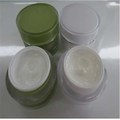
도 20은 기능성 나노입자 함유 크림 제제를 나타낸 것이다.
도 21은 상기 크림 제제의 E . coli에 대한 항균성을 나타낸 것이다. Figure 1 shows a manufacturing process of the zinc oxide nanoparticles (ZnO NPs).
Figure 2 shows a manufacturing process of the copper oxide nanoparticles (CuONPs).
FIG. 3A shows FE-SEM micrographs of zinc oxide (ZnO) nanoparticles, and FIG. 3B shows FE-SEM micrographs of copper oxide (CuO) nanoparticles.
FIG. 4A shows the XRD spectra of the zinc oxide nanoparticles, and FIG. 4B shows the XRD spectra of the copper oxide nanoparticles.
FIG. 5A shows FTIR spectra of zinc oxide nanoparticles, and FIG. 5B shows FTIR spectra of copper oxide nanoparticles.
Figure 6 shows the swelling degree change of the carrageenan hydrogel film according to pH.
Figure 7 shows the effect of the concentration of CaCO 3 on the swelling degree of the carrageenan film.
8 shows the swelling degree of the nanohydrogel film.
Figure 9a is a state of the various hydrogels, Figure 9b is a carrageenan / Cu nanoparticle namocomposite film, Figure 9c is a nanocomposite hydrogel, Figure 9d shows a variety of hydrogel films.
Figure 10 shows the SEM image of the surface and cross section of the film, (1) carrageenan, (2) carrageenan-KCl, (3) carrageenan-KCl /
Figure 11 as showing the optical properties and appearance of the carrageenan hydrogel film. (a) is light transmittance, (b) is absorbance, (c) is appearance of film, (1) carrageenan, (2) carrageenan-KCl, (3) carrageenan-KCl /
Figure 12a is the antimicrobial properties of L. monocytogenes of nanocomposite carrageenan film, Figure 12b is E. coli of nanocomposite carrageenan film It shows the antimicrobial properties for.
FIG. 13 shows UV-visible spectra of various nanoparticles.
14 shows transmission electron micrographs of various nanoparticles.
15 shows the FTIR spectra of various nanoparticles.
16 shows XRD patterns of various nanoparticles.
Figure 17 shows the electron micrographs (FE-SEM micrographs) of the gelatin film and gelatin nanocomposite film.
FIG. 18 shows UV-Vis spectra of gelatin films and gelatin nanocomposite films. FIG.
19a shows the antimicrobial activity of E. coli ATCC 25922 of gelatin film and gelatin nanocomposite film, and FIG. 19b shows the antimicrobial activity of S. epidermis KCT1917 of gelatin film and gelatin nanocomposite film.
20 shows a functional nanoparticle containing cream formulation.
21 shows E of the cream formulation . It shows the antimicrobial activity against coli .
본 발명은 생고분자 및 금속 나노입자 를 포함하는 생분해성 나노복합 하이드로겔에 관한 것이다.The present invention relates to a biodegradable nanocomposite hydrogel comprising biopolymers and metal nanoparticles.
본 발명의 상기 생분해성 나노복합 하이드로겔에서, 상기 생고분자는 카라기난, 젤라틴, 밀단백, 대두단백, 유청단백, 펙틴, 알긴산, 키토산 및 아가 중에서 선택되는 하나 이상일 수 있으나, 이에 한정되는 것은 아니다.In the biodegradable nanocomposite hydrogel of the present invention, the biopolymer may be one or more selected from carrageenan, gelatin, wheat protein, soy protein, whey protein, pectin, alginic acid, chitosan and agar, but is not limited thereto.
본 발명의 상기 생분해성의 다기능성 나노복합 하이드로겔에서, 상기 금속 나노입자는 산화아연 나노입자, 산화구리 나노입자, 나노은입자, 나노금입자 및 나노산화티타늄입자 중에서 선택되는 하나 이상일 수 있으나, 이에 한정되는 것은 아니다.In the biodegradable multifunctional nanocomposite hydrogel of the present invention, the metal nanoparticles may be one or more selected from zinc oxide nanoparticles, copper oxide nanoparticles, nanosilver particles, nanogold particles and nanotitanium oxide particles, but is not limited thereto. It doesn't happen.
삭제delete
또한, 본 발명은 (a) 생고분자, 금속 나노입자 및 가소제를 용매에 첨가하여 용해시키는 단계, (b) 상기 용해시킨 용매를 균질화하여, 나노입자가 균질하게 분산된 하이드로겔 용액을 얻는 단계, 및 (c) 상기에서 얻은 하이드로겔 용액을 겔화시키는 단계를 포함하는, 생분해성 나노복합 하이드로겔의 제조방법에 관한 것이다.In addition, the present invention comprises the steps of (a) adding the green polymer, metal nanoparticles and plasticizer to the solvent to dissolve, (b) homogenizing the dissolved solvent, to obtain a hydrogel solution in which the nanoparticles are homogeneously dispersed, And (c) relates to a method for producing a biodegradable nanocomposite hydrogel comprising the step of gelling the hydrogel solution obtained above.
본 발명의 상기 생분해성 나노복합 하이드로겔의 제조방법에서, 상기 생고분자는 카라기난, 젤라틴, 밀단백, 대두단백, 유청단백, 펙틴, 알긴산, 키토산 및 아가 중에서 선택되는 하나 이상일 수 있으나, 이에 한정되는 것은 아니다.In the method for preparing the biodegradable nanocomposite hydrogel of the present invention, the biopolymer may be at least one selected from carrageenan, gelatin, wheat protein, soy protein, whey protein, pectin, alginic acid, chitosan and agar, but is not limited thereto. It is not.
본 발명의 상기 생분해성 나노복합 하이드로겔의 제조방법에서, 상기 금속 나노입자는 산화아연 나노입자, 산화구리 나노입자, 나노은입자, 나노금입자 및 나노산화티타늄입자 중에서 선택되는 하나 이상일 수 있으나, 이에 한정되는 것은 아니다.In the method for preparing the biodegradable nanocomposite hydrogel of the present invention, the metal nanoparticles may be one or more selected from zinc oxide nanoparticles, copper oxide nanoparticles, nanosilver particles, nanogold particles and nanotitanium oxide particles. It is not limited.
본 발명의 상기 생분해성 나노복합 하이드로겔의 제조방법에서, 상기 가소제는 글리세린, 폴리에틸렌 글리콜, 트리에틸 시트레이트 및 솔비톨 중에서 선택되는 하나 이상일 수 있으나, 이에 한정되는 것은 아니다.In the method for preparing the biodegradable nanocomposite hydrogel of the present invention, the plasticizer may be one or more selected from glycerin, polyethylene glycol, triethyl citrate, and sorbitol, but is not limited thereto.
본 발명의 상기 생분해성 나노복합 하이드로겔의 제조방법에서, 상기 (a) 단계는 상기 생고분자 100 중량부에 대하여, 상기 금속 나노입자 1~10 중량부 및 상기 가소제 25~40 중량부를 증류수 5,000 중량부에 첨가하여 용해시킬 수 있다.In the method for preparing the biodegradable nanocomposite hydrogel of the present invention, the step (a) is based on 100 parts by weight of the biopolymer, 1 to 10 parts by weight of the metal nanoparticles and 25 to 40 parts by weight of the plasticizer 5,000 weight of distilled water It can be added to the part to dissolve.
본 발명의 상기 생분해성 나노복합 하이드로겔의 제조방법에서, 상기 용해는 85~95℃, 바람직하게는 95℃에서, 15~30 분간, 바람직하게는 20분간 가열하면서 용해시킬 수 있다.In the method for preparing the biodegradable nanocomposite hydrogel of the present invention, the dissolution may be dissolved at 85 to 95 ° C, preferably at 95 ° C for 15 to 30 minutes, preferably for 20 minutes.
본 발명의 상기 생분해성 나노복합 하이드로겔의 제조방법에서, 상기 (a) 단계의 균질화는 500∼2,000 rpm, 바람직하게는 1000~1500 rpm으로, 12∼24시간, 바람직하게는 15~20시간 동안 교반시킨 후, 20∼100 kHz, 바람직하게는 40∼80 kHz의 초음파를 10∼20분 동안 처리하여 수행할 수 있다.In the method for producing the biodegradable nanocomposite hydrogel of the present invention, the homogenization of step (a) is 500 to 2,000 rpm, preferably 1000 to 1500 rpm, for 12 to 24 hours, preferably for 15 to 20 hours. After stirring, ultrasonic waves of 20 to 100 kHz, preferably 40 to 80 kHz, may be treated by 10-20 minutes.
또한, 본 발명은 탈지면 또는 거즈에, 상기 생분해성 나노복합 하이드로겔이 도포되어 있는 드레싱에 관한 것이다. The present invention also relates to a dressing on which the biodegradable nanocomposite hydrogel is applied to cotton wool or gauze.
본 발명의 상기 드레싱은 피부질환 치료용, 상처 치료용 또는 화상 치료용일 수 있다.The dressing of the present invention may be for treating skin diseases, for treating wounds or for treating burns.
본 발명의 상기 드레싱은상기 드레싱은 식물 추출물을 더 포함할 수 있다.The dressing of the present invention, the dressing may further comprise a plant extract.
본 발명의 상기 드레싱에서, 상기 식물은 비쑥(Artemisia scoparia), 함초, 잠몽씨추출물, 녹차추출물 중에서 선택되는 하나 이상일 수 있으나, 이에 한정되는 것은 아니다.In the dressing of the present invention, the plant is Artemisia scoparia ), may be one or more selected from seaweed, persimmon seed extract, green tea extract, but is not limited thereto.
또한, 본 발명은 상기 생분해성 나노복합 하이드로겔 및 크림 베이스를 포함하는 스킨 케어용 화장료 조성물에 관한 것이다.The present invention also relates to a cosmetic composition for skin care comprising the biodegradable nanocomposite hydrogel and cream base.
본 발명의 상기 스킨 케어용 화장료 조성물에서, 상기 크림 베이스는 화장품 제조시에 사용되는 공지의 크림 베이스를 사용하는 것으로 족하므로, 이에 대한 구체적인 설명은 생략한다. In the cosmetic composition for skin care of the present invention, the cream base is sufficient to use a known cream base used in the manufacture of cosmetics, a detailed description thereof will be omitted.
본 발명의 상기 스킨 케어용 화장료 조성물은 자몽 추출물을 더 포함할 수 있다.The cosmetic composition for skin care of the present invention may further include a grapefruit extract.
본 발명의 상기 스킨 케어용 화장료 조성물에서, 상기 자몽 추출물은 자몽씨, 자몽 껍질, 또는 자몽 씨와 껍질로부터 추출한 것일 수 있다.In the skin care cosmetic composition of the present invention, the grapefruit extract may be extracted from grapefruit seeds, grapefruit peel, or grapefruit seeds and shells.
본 발명의 상기 스킨 케어용 화장료 조성물에서, 상기 자몽 추출물의 추출 방법은 공지된 방법, 예컨대 알코올, 물 및 글리세롤 혼합 추출 용매를 사용하여 추출하는 것으로 족하므로, 이에 대한 구체적인 설명은 생략한다. In the cosmetic composition for skin care of the present invention, the grapefruit extract extraction method is sufficient to extract using a known method, such as alcohol, water and glycerol mixed extraction solvent, a detailed description thereof will be omitted.
이하 본 발명의 내용을 실험 예를 통하여 구체적으로 설명한다. 그러나, 이들은 본 발명을 보다 상세하게 설명하기 위한 것으로 본 발명의 권리범위가 이들에 의해 한정되는 것은 아니다.Hereinafter, the contents of the present invention will be described in detail through experimental examples. However, these are intended to explain the present invention in more detail, and the scope of the present invention is not limited thereto.
<실시예 1> 나노입자의 제조Example 1 Preparation of Nanoparticles
1. One. 나노산화아연(ZnO nanoparticles)의Of ZnO nanoparticles 제조 Produce
나노산화아연(ZnO NPs)을 아연의 원료인 질화 아연에 NaOH를 가수분해제로 사용하여, 도 1에 표시한 공정에 따라 제조하였다. Nano zinc oxide (ZnO NPs) was prepared according to the process shown in Fig. 1 using NaOH as a hydrolysis agent in zinc nitride which is a raw material of zinc.
이를 위해 29.75 g의 0.1 M 질화 아연을 1000 mL의 증류수에 용해시키고 끓는점까지 가열하고, 여기에 40 mL의 5 M NaOH 용액을 첨가하여 90℃에서 2시간 동안 가열하였다. To this end, 29.75 g of 0.1 M zinc nitride was dissolved in 1000 mL of distilled water and heated to boiling point, and 40 mL of 5 M NaOH solution was added thereto and heated at 90 ° C. for 2 hours.
이때 백색 침전물이 생성되는데, 이것이 산화아연 나노입자(ZnO NPs)이었다. 침전물을 원심분리에 의해 수집하고, 증류수로 3회, 무수 알코올로 2회 세척한 후, 70℃에서 6 시간 건조하여 분말을 얻었다. This produced a white precipitate, which was zinc oxide nanoparticles (ZnO NPs). The precipitate was collected by centrifugation, washed three times with distilled water and twice with anhydrous alcohol, and then dried at 70 ° C. for 6 hours to obtain a powder.
상기에서 얻은 ZnO NPs 분말을 밀봉하여 상온에 보관하면서, 나노복합 필름의 제조에 사용하였다. The ZnO NPs powder obtained above was sealed and stored at room temperature, and used for the preparation of the nanocomposite film.
2. 나노산화구리(2. Nano copper oxide ( CuOCuO nanoparticlesnanoparticles )의 제조Manufacturing
나노 산화구리(CuO NPs)를 염화구리를 원료로 사용하고, NaOH를 가수분해제로 사용하여 도 2의 공정에 따라 제조하였다. Nano copper oxides (CuO NPs) were prepared according to the process of FIG. 2 using copper chloride as a raw material and NaOH as a hydrolysis agent.
34.96 g의 0.2 M 염화구리를 1000 mL의 증류수에 용해시켜 끓는점까지 가열한 후, 60 mL의 5 M NaOH 용액을 가한 다음, 90℃에서 2시간 동안 가열하여, CuO NPs가 갈색 침전물로 얻어졌다. 34.96 g of 0.2 M copper chloride was dissolved in 1000 mL of distilled water and heated to boiling point, then 60 mL of 5 M NaOH solution was added, followed by heating at 90 ° C. for 2 hours, to obtain CuO NPs as a brown precipitate.
상기 침전물을 원심 분리에 의해 수집하고, 증류수로 3회, 무수알코올로 2회 세척한 후, 70℃에서 6시간 동안 건조하여 분말을 얻었다. The precipitate was collected by centrifugation, washed three times with distilled water and twice with anhydrous alcohol, and then dried at 70 ° C. for 6 hours to obtain a powder.
상기에서 얻은 CuO NPs 분말을 밀봉하여 상온에 보관하면서, 나노복합 필름의 제조에 사용하였다. CuO NPs powder obtained above was sealed and stored at room temperature, and used for the manufacture of nanocomposite film.
3. 나노입자의 특성 조사 (Characterization of 3. Characterization of Nanoparticles nanoparticlesnanoparticles ))
산화아연과 산화구리 나노입자의 미세구조를 field emission scanning electron microscopy (FE-SEM, S-4800, Hitachi Co., Ltd., Matsuda, Japan)를 사용하여 조사하였다. 이를 위해 산화아연과 산화구리 나노입자 분말을 카본 테이프로 고정한 후, 가속 전압(acceleration voltage) 10.0 kV로 관찰하였다. The microstructures of zinc oxide and copper oxide nanoparticles were investigated using field emission scanning electron microscopy (FE-SEM, S-4800, Hitachi Co., Ltd., Matsuda, Japan). To this end, zinc oxide and copper oxide nanoparticle powders were fixed with carbon tape, and then observed at an acceleration voltage of 10.0 kV.
나노입자의 결정 구조는 X-ray 회절도를 측정하여 조사하였다. The crystal structure of the nanoparticles was examined by measuring the X-ray diffractogram.
- Cu Kα 방사선 (파장: 0.1541 nm) Cu Kα radiation (wavelength: 0.1541 nm)
- 니켈 모노크로메이터 여과 파장Nickel Monochromator Filtration Wavelength
- 40 kV 및 30 mA로 가속 Acceleration to 40 kV and 30 mA
이때, 회절 패턴(diffraction pattern)은 2θ=30-80의 회절각에서 0.4°/분의 스캐닝 속도로 측정하였다.At this time, the diffraction pattern (diffraction pattern) was measured at a scanning speed of 0.4 ° / min at a diffraction angle of 2θ = 30-80.
나노입자의 Fourier transform infrared(FT-IR) 스펙트라를 oattenuated total reflectance-Fourier transform infrared(AT-FTIR) 스펙트로포토미터(TENSOR 37 spectrophotometer, Billerica, MA, USA)를 사용하여 4 cm-1의 해상도(resolution)로 4000~500 cm-1의 파장수 범위에서 측정하였다. Resolution of 4 cm -1 using oattenuated total reflectance-Fourier transform infrared (AT-FTIR) spectrophotometer (TENSOR 37 spectrophotometer, Billerica, MA, USA) ) Was measured in the wavelength range of 4000 ~ 500 cm -1 .
4. 결과 및 고찰4. Results and Discussion
본 연구에서 제조된 ZnO NPs는 백색 분말로 생산량(yield)는 25 wt% (7.5g의 ZnO NPs/29.75g의 질화아연)이었다. 반면에 CuO 나노입자는 진한 갈색의 분말로서 생산량이 약 30 wt% (12g의 CuO NPs/34.96g의 염화구리)이었다. The ZnO NPs prepared in this study were white powder with a yield of 25 wt% (7.5 g of ZnO NPs / 29.75 g of zinc nitride). CuO nanoparticles, on the other hand, were dark brown powders with an output of about 30 wt% (12 g of CuO NPs / 34.96 g of copper chloride).
도 3a 및 도 3b는 ZnO와 CuO 나노입자의 SEM 마이크로그래프를 보여주고 있다. ZnO 나노입자는 구형으로 크기가 50~100 nm이었으며, 100~200 nm 크기의 균일한 클러스터를 형성했다. 반면에 CuO 나노입자는 막대모양 (rod shape)으로 그 크기가 100~200 nm이었다. 3A and 3B show SEM micrographs of ZnO and CuO nanoparticles. ZnO nanoparticles were spherical in size 50-50 nm and formed uniform clusters of 100-200 nm in size. CuO nanoparticles, on the other hand, had a rod shape and had a size of 100-200 nm.
도 4a 및 도 4b는 나노입자들의 XRD 패턴을 보여주고 있다. 모든 나노입자들은 결정형 구조를 보이고 있으며, 각 나노입자의 특징적인 회절 피트를 보여주고 있다. 4A and 4B show XRD patterns of nanoparticles. All nanoparticles show a crystalline structure and show the characteristic diffraction pits of each nanoparticle.
도 5a 및 도 5b는 ZnO와 CuO 나노입자의 FTIR 스펙트라 결과를 보여주고 있다. 5A and 5B show FTIR spectra results of ZnO and CuO nanoparticles.
ZnO 나노입자의 865 cm-1에서의 아연의 사면체 배위(tetrahedral coordination)의 형성에 기인하며, 650~700 cm-1에서 나타난 피크는 ZnO 나노입자의 스트레치 진동(stretching vibrations)에 의한 것이다. It is due to the formation of tetrahedral coordination of zinc at 865 cm −1 of ZnO nanoparticles, and the peak at 650-700 cm −1 is due to the stretching vibrations of ZnO nanoparticles.
반면에, 670 및 686 cm-1에서 나타난 피크는 Cu-O의 스트레치 진동에 의한 것이다.On the other hand, the peaks appearing at 670 and 686 cm −1 are due to the stretch vibration of Cu—O.
<실시예 2> 카라기난을 이용한 기능성 하이드로겔의 제조Example 2 Preparation of Functional Hydrogel Using Carrageenan
1. 재료1. Material
κ-카라기난은 한국카라겐 (화순, 전남)에서 구입하였으며, 염화구리(CuCl2·2H2O)와 질화아연(N2O6Zn·6 H2O)는 덕산화학(Duksan Pure Chemical Co., Ltd., Ansan, Gyonggido, Korea)에서 NaOH는 삼천화학 (Samchun Pure Chemical Co., Ltd., Pyeongtaek, Gyonggido, Korea), 염화칼륨(KCl)과 구연산, 젖산 및 글리세린은 대정화학(Daejung Chemicals & Metals Co., Ltd., Siheung, Gyonggido, Korea)에서 구입하여 사용하였다. κ-carrageenan was purchased from Carogen Korea (Hwasun, Jeonnam), and copper chloride (CuCl 2 · 2H 2 O) and zinc nitride (N 2 O 6 Zn · 6 H 2 O) were purchased from Duksan Pure Chemical Co. , Ltd., Ansan, Gyonggido, Korea) NaOH is Samchun Pure Chemical Co., Ltd., Pyeongtaek, Gyonggido, Korea), potassium chloride (KCl) and citric acid, lactic acid and glycerin are Daejung Chemicals & Metals Co., Ltd., Siheung, Gyonggido, Korea).
2. 방법2. How to
대조구 카라기난 필름을 제조하기 위해 3g의 카라기난(2% w/v)과 0.9g의 글리세린(카라기난의 30%)을 150 mL의 증류수에 넣고 90C에서 20분간 가열하면서 용해시킨 후, 테플론 필름(Cole-Parmer InstrumentCo., Chicago, IL, USA)으로 코팅한 유리판(24 cm × 30 cm) 위에 캐스팅하고, 상온에서 건조하였다. To prepare a control carrageenan film, 3 g of carrageenan (2% w / v) and 0.9 g of glycerin (30% of carrageenan) were added to 150 mL of distilled water and dissolved by heating at 90C for 20 minutes, followed by Teflon film (Cole- Parmer Instrument Co., Chicago, IL, USA) was cast on a glass plate (24 cm x 30 cm) coated and dried at room temperature.
카라기난 하이드로겔 필름은 카라기난의 겔형성을 촉진시키기 위해, 위의 카라기난 필름용액에 2.5 mL의 1 M KCl 용액을 첨가하여 상기의 방법으로 필름을 제조하였다. Carrageenan hydrogel film was prepared by the above method by adding 2.5 mL of 1 M KCl solution to the carrageenan film solution to promote the gel formation of carrageenan.
카라기난 나노복합 하이드로겔 필름은 앞서 서술한 바와 같은 카라기난 필름 용액에 1 wt%의 산화아연 나노입자(ZnO NPs), 1 wt%의 구리 나노입자(CuO NPs) 및 0.5 wt%의 ZnO NPs와 0.5 wt%의 Cu NPs를 혼합첨가하여 3종의 나노복합 필름을 제조하였다. The carrageenan nanocomposite hydrogel film was prepared with 1 wt% zinc oxide nanoparticles (ZnO NPs), 1 wt% copper nanoparticles (CuO NPs) and 0.5 wt% ZnO NPs and 0.5 wt. Three nanocomposite films were prepared by mixing and adding% Cu NPs.
필름의 수분 흡착능을 표시하는 팽윤도(swelling ratio)는 일정한 크기의 시료(2.5 cm×5 cm)를 증류수에 침지한 후 일정시간 간격으로 시료를 꺼내 표면수를 제거한 후, 무게를 측정하여 다음 식 1에 따라 수분흡착능을 백분율로 표시하였다.The swelling ratio, which indicates the water adsorption capacity of the film, is obtained by dipping a constant size sample (2.5 cm × 5 cm) in distilled water, removing the sample at regular intervals, removing the surface water, and then measuring the weight by the
<식 1><

여기에서, W1은 필름의 초기무게, W2는 침지후의 무게이다.Here, W 1 is the initial weight of the film, W 2 is the weight after immersion.
3. 결과 및 고찰3. Results and Discussion
3.1. 팽윤도(swelling ratio)3.1. Swelling ratio
하이드로겔 필름의 팽윤도에 미치는 pH의 영향을 조사하기 위해 필름용액의 pH를 달리하여 조사한 결과는 도 6과 같았다.In order to investigate the effect of pH on the degree of swelling of the hydrogel film, the results of different pH of the film solution were investigated.
도 6에서 보는 바와 같이, 일반적으로 팽윤도는 침지시간이 15분까지는 급격히 증가하였으나, 그 이후에는 증가속도가 느려지거나 일정한 값을 나타내었다. pH가 낮을수록 팽윤도는 높았으나, 겔의 안정성은 다소 떨어지는 현상이 있었다. As shown in Figure 6, in general, the degree of swelling was rapidly increased until the
팽윤도에 미치는 CaCO3의 첨가효과를 조사하기 위하여, CaCO3의 농도를 변화시키면서(5, 10, 15, 20%), 카라기난 하이드로겔 필름의 팽윤도를 조사한 결과는 도 7과 같았다. In order to investigate the effect of adding CaCO 3 on the degree of swelling, the swelling degree of the carrageenan hydrogel film was examined as shown in FIG. 7 while varying the concentration of CaCO 3 (5, 10, 15, 20%).
도 7에서 보는 바와 같이, CaCO3의 첨가는 카라기난 필름의 팽윤도를 증가시킬 뿐 아니라 겔의 안정성도 증가시켰는데, 5%를 첨가했을 때 가장 높은 효과를 나타내었다.As shown in Figure 7, addition of CaCO 3 not only increased the swelling degree of the carrageenan film but also increased the stability of the gel, the highest effect was added when 5%.
따라서, 필름의 안정성 증진을 위해, 카라기난 필름 용액의 pH를 10으로 조정하고, 5%의 CaCO3를 첨가하는 것이 바람직한 것으로 판단되었다.Therefore, in order to enhance the stability of the film, it was determined that the pH of the carrageenan film solution was adjusted to 10, and 5% of CaCO 3 was added.
3.2. 나노금속입자(산화아연, 구리)의 첨가 효과3.2. Effect of Adding Nano Metal Particles (Zinc Oxide, Copper)
카라기난 하이드로겔 필름에 기능성을 부여하기 위하여, 나노금속 입자를 혼합하여 나노하이드로겔 필름을 제조하여 그 팽윤도를 조사한 결과는 도 8과 같았다.In order to impart functionality to the carrageenan hydrogel film, nanometal particles were mixed to prepare a nanohydrogel film, and the swelling degree thereof was examined as shown in FIG. 8.
도 8에서 보는 바와 같이, 1%의 ZnO NPs를 첨가한 나노하이드로겔 필름은 팽윤도가 증가하였으나, Cu NPs을 첨가한 것은 팽윤도가 감소하였으며, Cu NPs를 1% 첨가한 경우는 겔형성을 저해하였다. As shown in FIG. 8, the swelling degree of the nanohydrogel film added with 1% ZnO NPs was increased, but the addition of Cu NPs decreased the swelling degree, and the addition of 1% Cu NPs inhibited gel formation. .
3.3. 3.3. 하이드로겔의Hydrogel 물리적 강도 Physical strength
하이드로겔의 물리적인 강도를 레오메터(Sun Rheo Meter Compac-100II, Tokyo Maruichishoji Co., Ltd., Tokyo, Japan)를 사용하여 콤프레션 모드(compression mode)로 다음의 조건에서 측정하였다.The physical strength of the hydrogel was measured under the following conditions in a compression mode using a rheometer (Sun Rheo Meter Compac-100II, Tokyo Maruichishoji Co., Ltd., Tokyo, Japan).
- 헤드 스피드(head speed) : 100 mm/minHead speed: 100 mm / min
- 최대 로드셀(maximum load cell): 10 kgMaximum load cell: 10 kg
- 인장 거리(tension distance): 70%.Tension distance: 70%.
3.4. 3.4. 카라기난Carrageenan 하이드로겔의Hydrogel 강도에 미치는 나노금속의 첨가 효과 Effect of Nanometal Addition on Strength
카라기난 하이드로겔의 강도에 미치는 나노금속의 첨가 효과를 조사한 결과를 표 1에 나타내었다. Table 1 shows the results of examining the effect of the addition of nanometals on the strength of carrageenan hydrogel.

도 9a는 각종 하이드로겔의 모습, 도 9b는 카라기난/Cu 나노입자 나모복합 필름, 도 9c는 나노복합 하이드로겔, 도 9d는 각종 하이드로겔 필름을 나타낸 것이다. Figure 9a is a state of the various hydrogels, Figure 9b is a carrageenan / Cu nanoparticle namocomposite film, Figure 9c is a nanocomposite hydrogel, Figure 9d shows a variety of hydrogel films.
3.5. 3.5. 카라기난Carrageenan 나노복합 필름의 인장특성 Tensile Properties of Nanocomposite Films
카라기난 나노복합 필름의 인장특성을 조사한 결과를 하기 표 2에 나타내었다.The results of examining the tensile properties of the carrageenan nanocomposite film are shown in Table 2 below.

3.6. 3.6. 카라기난Carrageenan 하이드로겔Hydrogel 필름의 미세구조 Microstructure of Film
전자주사현미경(SEM)을 사용하여 카라기난 하이드로겔 필름의 표면과 단면의 미세구조를 조사한 결과는 도 10과 같다.The microstructure of the surface and the cross-section of the carrageenan hydrogel film using an electron scanning microscope (SEM) is shown in FIG. 10.
도 10에서, (1)은 카라기난, (2)는 카라기난-KCl, (3)은 카라기난-KCl/ZnONPs 1%, (4)는 카라기난-KCl/CuNPs 1%, (5)는 ZnONPs 0.5%/CuNPs 0.5%의 SEM 이미지를 나타낸 것이다.In Figure 10, (1) carrageenan, (2) carrageenan-KCl, (3) carrageenan-
3.7. 3.7. 카라기난Carrageenan 하이드로겔Hydrogel 필름의 광학적 특성 및 외관 Optical properties and appearance of the film
카라기난 하이드로겔 필름의 투광도, 흡광도 및 외관은 도 11에 나타난 바와 같다. ZnO 나노입자를 첨가한 필름은 백색을 띠고, CuO 나노입자를 첨가한 필름은 갈색을 나타냈다. Transmittance, absorbance and appearance of the carrageenan hydrogel film are as shown in FIG. 11. The film added with ZnO nanoparticles was white in color, and the film added with CuO nanoparticles was brown in color.
ZnO 나노입자와 CuO 나노입자를 첨가한 필름 모두 UV-B 범위의 파장에서 광투과성이 떨어져, 이들 필름이 자외선 차단성이 강함을 확인하였으며, 이는 스킨케어용품의 개발에 적합하게 이용될 수 있을 것으로 판단된다.Both ZnO nanoparticles and CuO nanoparticles-added films are light-transmissive at wavelengths in the UV-B range, confirming that these films are strongly UV-protective, which can be used for the development of skin care products. Judging.
3.8. 나노복합 필름의 항균 특성3.8. Antimicrobial Properties of Nanocomposite Films
나노복합 카라기난필름의 L. monocytogens와 E. coli 에 대한 항균 특성을 조사한 결과는 도 12a 도 12b와 같았다. L. monocytogens and E. coli of nanocomposite carrageenan films The results of investigating the antimicrobial properties were as in FIG. 12A and FIG. 12B.
도 12a 도 12b에서 보는 바와 같이, 나노금속을 첨가한 카라기난 필름은 그램 양성 균인 L. monocytogens와 그램 음성 균인 E. coli 에 대해 뚜렷한 항균 특성을 나타냈다. As shown in FIG. 12A and FIG. 12B, the carrageenan film to which the nanometals were added was gram-positive bacteria L. monocytogens and gram-negative bacteria E. coli It showed distinct antimicrobial properties against.
이러한 나노필름이 갖는 항균 특성은 스킨케어 용품으로서의 가치를 증진시켜 줄 수 있는 것으로 생각된다. It is thought that the antimicrobial properties of these nanofilms can enhance their value as skin care products.
<실시예 3> 피부질환(여드름) 치료용 기능성 바이오 나노복합 필름 개발<Example 3> Development of functional bio nanocomposite film for skin disease (acne) treatment
1. 서론Introduction
여드름은 전세계 청소년들의 85% 정도가 경험하는 피부질환으로 Propionibacterium acne, Staphylococcus epidermidis, Escherichia coli , Staphylococcus aureus와 같은 세균에 감염되면 이들 세균이 내는 지용성 효소에 의해 피부에 질환을 일으킬 뿐만 아니라, 호르몬 불균형과 면역 과민성(immune hypersensitivity)을 초래하는 문제점이 있다. Acne is a skin disease that affects 85% of adolescents worldwide. Propionibacterium acne , Staphylococcus epidermidis , Escherichia coli , with Staphylococcus aureus Infection with the same bacteria not only causes disease on the skin by the fat-soluble enzymes produced by these bacteria, but also causes problems such as hormonal imbalance and immune hypersensitivity.
뿐만 아니라, 자외선이나 기타 독소성분에 의해 발생하는 자유라디칼이 피부세포에 손상을 초래하며 건강한 피부세포를 파괴하여 피부에 흉터를 남기게 된다. 이러한 피부 질환을 치료하기 위해 피부 연고제나 경구 제재가 사용되고 있으나, 이러한 제재를 장기적으로 사용하면 항생제 내성의 세균이 발생할 위험이 있다. In addition, free radicals, caused by UV or other toxins, can damage skin cells and destroy healthy skin cells, leaving a scar on the skin. Skin ointments or oral preparations have been used to treat such skin diseases, but the use of such preparations over a long period of time may lead to the development of antibiotic resistant bacteria.
본 연구에서는 기능성을 갖는 나노입자를 첨가한 천연 고분자 하이드로겔을 제조하여 피부를 보호하고 여드름과 같은 피부 질환을 치료할 수 있는 생체 조화형의 바이오 나노복합 하이드로겔형의 스킨케어 용품을 개발하고자 하였다. The purpose of this study was to develop bio-composite bio nanocomposite hydrogel-type skin care products to protect the skin and to treat skin diseases such as acne by preparing natural polymer hydrogel containing functional nanoparticles.
2. 재료 및 방법2. Materials and Methods
2.1. 재료2.1. material
따로 명기하지 않은 모든 화학약품은 Sigma-Aldrich (St. Louis, MO, USA)로부터 구입하여 사용하였다. Tryptic soy broth(TSB)와 brain heart infusion broth(BHI) 및 아가 분말은 덕산화학 (Duksan Pure Chemicals Co., Ltd., Ansan, Gyeonggi-do, Korea)에서 구입하였다. All chemicals unless otherwise specified Used from Sigma-Aldrich (St. Louis, Mo., USA). Tryptic soy broth (TSB), brain heart infusion broth (BHI) and agar powder were purchased from Duksan Pure Chemicals Co., Ltd., Ansan, Gyeonggi-do, Korea.
항균성 시험용 미생물(Escherichia coli ATCC 25922, Staphylococcus epidermis KCTC 1917)은 한국종균협회 (Korean Collection for Type Cultures, KCTC, Seoul, Korea)에서 구입하여 사용하였다.Microorganisms for antimicrobial test ( Escherichia coli ATCC 25922, Staphylococcus epidermis KCTC 1917, was purchased from Korean Collection for Type Cultures (KCTC, Seoul, Korea).
2.2. 2.2. 비쑥Scruffy ( ( ArtemisiaArtemisia scopariascoparia )) 추출액Extract
내염성 식물인 비쑥(Artemisia scoparia)을 2014년 5월 전남 해안에서 채취한 것을 사용하였다. 이 식물의 지상부를 스팀 가열하고 45℃에서 2 일간 건조한 후, 모르타르를 사용하여 분쇄하고 -70℃에 보관하면서 사용하였다. Flameproof plant Artemisia scoparia was taken from the coast of Jeonnam in May 2014. The ground portion of the plant was steam heated and dried at 45 ° C. for 2 days, then ground using mortar and used at -70 ° C.
건조분말 4 kg을 40 L의 증류수에 혼합하여 121℃에서 30분간 추출한 후 No. 2 필터 페이터(Whatman, Maidstone, UK)를 사용하여 비쑥 추출액을 얻었다.4 kg of dry powder was mixed with 40 L of distilled water and extracted at 121 ° C. for 30 minutes. Cucumber extract was obtained using 2 filter papers (Whatman, Maidstone, UK).
2.3. 금속 나노입자의 제조2.3. Preparation of Metal Nanoparticles
금, 은, 구리 나노입자 및 이들을 2가지 합친 바이메탈릭(bimetallic) 나노입자를 앞에 서술한 방법으로 제조하였다. Gold, silver, copper nanoparticles, and bimetallic nanoparticles in combination of these were prepared by the method described above.
10 mL의 비쑥 추출액을 490 mL 의 증류수에 질소 가스를 주입시키면서 혼합하며 70℃로 가열하였다. 금(Au NPs), 은(Ag NPs), 및 구리(Cu NPs) 나노입자를 제조하기 위해 각각 0.5 mL의 1 M의 Gold (III) chloride trihydrate(HAuCl4), 질화은(AgNO3), 및 copper (II) nitrate trihydrate (CuN2O3)를 AS 추출액에 서서히 첨가한 후 용액의 색깔이 변할 때까지 가열하였다. 10 mL of the mugwort extract was mixed with 490 mL of distilled water while injecting nitrogen gas and heated to 70 ° C. 0.5 mL of 1 M Gold (III) chloride trihydrate (HAuCl 4 ), silver nitride (AgNO 3 ), and copper to prepare gold (Au NPs), silver (Ag NPs), and copper (Cu NPs) nanoparticles, respectively (II) Nitride trihydrate (CuN 2 O 3 ) was slowly added to the AS extract and heated until the color of the solution changed.
바이메탈릭 나노입자를 제조하기 위해서, 0.25 mL(1 M)의 각 금속염용액(HAuCl4 and AgNO3; HAuCl4 and CuN2O3; AgNO3 and CuN2O3)을 위와 같은 방법으로 AS추출액에 첨가한 후 가열하였다. To prepare bimetallic nanoparticles, 0.25 mL (1 M) of each metal salt solution (HAuCl 4 and AgNO 3 ; HAuCl 4 and CuN 2 O 3 ; AgNO 3 and CuN 2 O 3 ) was added to the AS extract in the same manner as above and then heated.
이와 같이 제조한 나노입자들을 각각 AuNPs(금), AgNPs(은), CuNPs (구리), AuAgNPs(금-은), AuCuNPs(금-구리) 및 AgCuNPs(은-구리) 나노입자로 표시하였다.The nanoparticles thus prepared were represented as AuNPs (gold), AgNPs (silver), CuNPs (copper), AuAgNPs (gold-silver), AuCuNPs (gold-copper) and AgCuNPs (silver-copper) nanoparticles, respectively.
2.4. 나노입자의 특성 연구2.4. Characterization of Nanoparticles
나노입자가 형성되는 것을 용액의 빛깔이 변하는 것으로 확인하고, UV-visible spectrophotometer(Mecasys Optizen POP Series UV/Vis, Seoul, Korea)를 사용하여 200~700 nm 범위에서 흡광도를 측정하여 조사하였다. The formation of the nanoparticles was confirmed that the color of the solution is changed, the absorbance was measured in the 200 ~ 700 nm range using a UV-visible spectrophotometer (Mecasys Optizen POP Series UV / Vis, Seoul, Korea).
나노입자의 모양과 크기는 transmission electron microscopy(TEM, JEOL-1010 instrument, Tokyo, Japan)를 사용하여 가속 전압 120 kV의 조건으로 측정하였다.The shape and size of the nanoparticles were measured under conditions of an acceleration voltage of 120 kV using transmission electron microscopy (TEM, JEOL-1010 instrument, Tokyo, Japan).
나노입자의 Fourier transform infrared(FT-IR) 특성과 XRD 특성은 앞서 서술한 방법에 따라 조사하였다. Fourier transform infrared (FT-IR) and XRD characteristics of nanoparticles were investigated according to the method described above.
나노입자의 표면 부하(surface charge)는 제타 퍼텐셜(zeta potential을 측정하였고, 입자의 크기는 Zeta PALS-zeta potential analyzer(Brookenhaven Instruments Corporation, NY, USA)를 사용하여 dynamic light scattering(DLS) 방법으로 측정하였다. Surface charge of nanoparticles was measured by zeta potential and particle size was measured by dynamic light scattering (DLS) method using Zeta PALS-zeta potential analyzer (Brookenhaven Instruments Corporation, NY, USA). It was.
2.5. 나노입자의 항균성2.5. Antimicrobial Activity of Nanoparticles
그램 양성(S. epidermis) 및 그램 음성(E. coli) 병원성 세균에 대한 나노입자의 항균성을 브로쓰 마이크로 희석(broth microdilution) 방법을 사용하여 최소 저해농도(MIC) 및 최소 살균농도(MBC)로 측정하였다. Antimicrobial activity of nanoparticles against Gram-positive ( S. epidermis ) and Gram-negative ( E. coli ) pathogenic bacteria at minimum inhibitory concentration (MIC) and minimum bactericidal concentration (MBC) using the broth microdilution method Measured.
2.6. 젤라틴/나노입자 복합필름의 제조2.6. Preparation of Gelatin / Nanoparticle Composite Film
젤라틴필름 및 젤라틴/나노입자 복합필름을 solution casting method을 사용하여 제조하였다. Gelatin films and gelatin / nanoparticle composite films were prepared using a solution casting method.
젤라틴/NPs 나노복합 필름의 제조를 위해 4 g의 젤라틴을 상기 제조된 150 mL의 나노입자 용액에 첨가하여 용해시킨 후, 1.2 g의 글리세롤을 첨가하고 80℃에서 20 분간 가열한 후, 수평의 유리판에 캐스팅한 다음, 건조하여 필름을 제조하였다.For the preparation of gelatin / NPs nanocomposite film, 4 g of gelatin was added to and dissolved in the 150 mL nanoparticle solution prepared above, followed by the addition of 1.2 g of glycerol and heating at 80 ° C. for 20 minutes, followed by a horizontal glass plate. Cast to and then dried to prepare a film.
모든 필름은 25℃와 50% RH로 조절된 습도 챔버(model FX 1077, Jeio Tech Co. Ltd., Ansan, Korea)에서 48시간 이상 커디셔닝을 한 후, 시료로 사용하였다. All films were used as samples after conditioning for at least 48 hours in a humidity chamber (model FX 1077, Jeio Tech Co. Ltd., Ansan, Korea) controlled at 25 ° C. and 50% RH.
이렇게 제조된 젤라틴/NPs 복합필름을 각각 젤라틴/AuNPs, 젤라틴/AgNPs, 젤라틴/CuNPs, 젤라틴/AuAgNPs, 젤라틴/AuCuNPs, 젤라틴/AgCuNPs로 표기하였다.The gelatin / NPs composite film thus prepared was referred to as gelatin / AuNPs, gelatin / AgNPs, gelatin / CuNPs, gelatin / AuAgNPs, gelatin / AuCuNPs, gelatin / AgCuNPs, respectively.
2.7. 젤라틴/나노입자 복합필름의 특성2.7. Characteristics of gelatin / nanoparticle composite film
2.7.1. 미세구조 및 공학 특성2.7.1. Microstructure and Engineering Properties
필름의 미세구조는 field emission scanning electron microscopy(FE-SEM, S-4800, Hitachi Co., Ltd., Matsuda, Japan)를 사용하여 가속 전압 5.0 kV에서 조사하였다. The microstructure of the film was examined at an acceleration voltage of 5.0 kV using field emission scanning electron microscopy (FE-SEM, S-4800, Hitachi Co., Ltd., Matsuda, Japan).
필름의 표면색은 백색 표준 플레이트(L = 97.75, a = -0.49, and b = 1.96)를 배경으로 크로마 미터(Konica Minolta, CR-400, Tokyo, Japan)를 사용하여 측정하였고, 총색차(total color difference, E)는 하기의 식 2에 따라 계산하였다. The surface color of the film was measured using a chromameter (Konica Minolta, CR-400, Tokyo, Japan) against a white standard plate ( L = 97.75, a = -0.49, and b = 1.96) and the total color difference (total color) difference, E ) was calculated according to
<식 2><

필름의 광학 특성은 UV-vis spectrophotometer(Mecasys Optizen POP Series UV/Vis, Seoul, Korea)를 사용하여 조사하였으며, 필름의 자외선 차단성과 투명도를 280 nm(T280) 와 660 nm(T660)에서 광 투과도를 측정하여 조사하였다. The optical properties of the film were investigated using a UV-vis spectrophotometer (Mecasys Optizen POP Series UV / Vis, Seoul, Korea), and the UV protection and transparency of the film were measured at 280 nm (T 280 ) and 660 nm (T 660 ). Permeability was measured and investigated.
2.7.2. 필름의 인장 특성2.7.2. Tensile Properties of Film
필름의 인장 강도(tensile strength, TS), 연신율(elongation at break, E) 및 탄성률(elastic modulus)를 ASTM D 882-88 표준 방법에 따라 Instron Universal Testing Machine(Model 5565, Instron Engineering Corporation, Canton, MA, USA)를 사용하여 측정하였다.Tensile strength (TS), elongation at break (E) and elastic modulus of the film were measured using an Instron Universal Testing Machine (Model 5565, Instron Engineering Corporation, Canton, MA) in accordance with ASTM D 882-88 standard method. , USA).
2.7.3. 필름의 수분함량(MC)과 수분 2.7.3. Film Moisture Content (MC) and Moisture 접촉각Contact angle (( WCAWCA ))
필름의 친수성 또는 소수성의 지표가 되는 수분 접촉각을 WCA analyzer(model Phoenix 150, Surface Electro-Optics Co., Ltd., Kunpo, Korea)를 사용하여 측정하였다. The water contact angle, which is an indicator of hydrophilicity or hydrophobicity of the film, was measured using a WCA analyzer (
필름의 수분함량은 필름을 105℃에서 24시간 동안 건조한 후, 무게 차에 의해 결정하였다.The moisture content of the film was determined by weight difference after the film was dried at 105 ° C. for 24 hours.
2.7.4. 필름의 항균 특성 2.7.4. Antibacterial Properties of Film
젤라틴 필름과 젤라틴/나노메탈 복합 필름의 S. epidermis 와 E. coli에 대한 항균성을 viable colony count 방법을 사용하여 측정하였다.The antimicrobial activity of S. epidermis and E. coli of gelatin and gelatin / nanometal composite films was measured using the viable colony count method.
먼저 S . epidermis와 E. coli를 각각 20 mL의 BHI 및 TSB 브로쓰에 무균적으로 접종한 후 37℃에서 16시간 동안 배양하였다.First S. Epidermis and E. coli were aseptically inoculated into 20 mL of BHI and TSB broth, respectively, and incubated at 37 ° C for 16 hours.
각 배양액을 5000 rpm에서 10 분간 원심 분리하여 얻은 셀 펠릿(cell pellet)을 100 mL의 멸균 TSB 및 BHI 브로쓰에 용해시킨 후, 멸균 증류수로 10배씩 희석하였다. Cell pellets obtained by centrifuging each culture solution at 5000 rpm for 10 minutes were dissolved in 100 mL of sterile TSB and BHI broth, and then diluted 10-fold with sterile distilled water.
이 용액 50 mL(106~107 CFU/mL)를 필름 시료 (5 cm×5 cm)를 넣은100 mL의 코니칼 플라스크에 넣고 37℃에서 12시간 동안 배양하였다. 동일한 비율로 희석한 브로쓰를 대조구로 사용하였다. 50 mL (10 6-10 7 CFU / mL) of this solution was placed in a 100 mL conical flask containing a film sample (5 cm × 5 cm) and incubated at 37 ° C. for 12 hours. Broth diluted in the same ratio was used as a control.
3시간 간격으로 시료를 채취하여 생균수를 콜로니 카운팅 방법으로 측정하였다. 항균성 실험은 따로 제조된 필름을 사용하여 3 반복 실시하였다. Samples were taken at 3 hour intervals and the viable cell count was measured by colony counting method. Antimicrobial experiments were performed three times using a separately prepared film.
2.7.5. 필름의 항산화성2.7.5. Antioxidant properties of film
필름의 항산화성 조사를 위해, 200 mg의 필름 시료를 10 mL의 재증류수에 용해시켜 20 mg/mL 필름 용액을 얻어, 이를 사용하여 DPPH radical scavenging assay, ABTS+ radical scavenging assay 및 Ferric reducing (FRAP) ability assay 방법을 사용하여 항산화성을 조사하였다. To investigate the antioxidant properties of the film, 200 mg of film sample was dissolved in 10 mL of distilled water to obtain a 20 mg / mL film solution, which was then used for DPPH radical scavenging assay, ABTS + radical scavenging assay. And Ferric reducing (FRAP) ability assay Antioxidants were investigated using the method.
2.8. 통계분석2.8. Statistical analysis
필름의 특성은 3반복 실험하여 각 실험치를 구하고, 데이터를 mean±SD (standard deviation)으로 표시하였다. The characteristics of the film were obtained by performing three repeated experiments, and the data were expressed as mean ± SD (standard deviation).
통계분석은 SPSS software (SPSS Inc., Chicago, IL, USA)를 사용하여 one-way analysis of variance (ANOVA)를 행하고, 처리구간의 차이분석을 유의수준 5%를 사용하여 Duncan’s multiple range test를 실시하였다. For statistical analysis, one-way analysis of variance (ANOVA) was performed using SPSS software (SPSS Inc., Chicago, IL, USA), and Duncan's multiple range test was performed at 5% significance level. It was.
3. 결과 및 고찰3. Results and Discussion
3.1. 나노입자의 특성3.1. Characteristics of Nanoparticles
비쑥 추출액을 사용하여 제조한 단일 또는 2종의 금속 나노입자 용액의 색깔이 변하는 것으로 나노입자가 형성되는 것을 확인할 수 있었다. 즉, 초기에는 용액이 무색이었으나, AuNPs, AgNPs, CuNPs, AuAgNPs, AuCuNPs, AgCuNPs가 생성되면서, 용액의 색이 ruby red, brownish yellow, pale brown, pale ruby, brownish red, pale yellow로 변하였다 (도 13). It was confirmed that the nanoparticles were formed by changing the color of the single or two kinds of metal nanoparticle solutions prepared using the mugwort extract. That is, the solution was initially colorless, but AuNPs, AgNPs, CuNPs, AuAgNPs, AuCuNPs, AgCuNPs were formed, and the color of the solution changed to ruby red, brownish yellow, pale brown, pale ruby, brownish red, and pale yellow (Fig. 13).
이러한 색의 변화는 각각의 나노입자들의 표면 플라즈몬 진동(surface plasmon vibrations)에 기인한다. This color change is due to the surface plasmon vibrations of the individual nanoparticles.
또한, 나노입자가 형성되는 것을 분광광도계를 이용하여 조사하였는데, 금, 은, 구리 나노입자의 최대 흡수파장이 각각 558, 424, 344 nm에서 관찰되었으며, 바이메틸릭 나노입자의 경우 피크가 브로드해 졌다 (도 13). In addition, the formation of nanoparticles was investigated using a spectrophotometer. The maximum absorption wavelengths of gold, silver and copper nanoparticles were observed at 558, 424 and 344 nm, respectively. (Fig. 13).
한편, 나노입자들의 미세구조를 TEM을 사용하여 조사한 결과는 도 14에 보인 바와 같은데, 모든 나노입자들은 구형을 이루었고, 그 크기는 종류에 따라 다음과 같이 20~120nm 크기를 나타냈다. AuNPs(20~30nm), AgNPs(20~50nm), CuNPs(<15nm), AuAgNPs(10~20nm), AuCuNPs(20~30nm), AgCuNPs(80~120nm). On the other hand, the microstructure of the nanoparticles was investigated using TEM results as shown in Figure 14, all the nanoparticles were spherical, the size was 20 ~ 120nm size as follows depending on the type. AuNPs (20-30 nm), AgNPs (20-50 nm), CuNPs (<15 nm), AuAgNPs (10-20 nm), AuCuNPs (20-30 nm), AgCuNPs (80-120 nm).
그러나, dynamic light scattering(DLS) 법으로 측정한 입자들의 크기는 표 3에 보인 바와 같이 100 nm 이상이었다. However, the particle size measured by dynamic light scattering (DLS) method was 100 nm or more, as shown in Table 3.

3300, 2931, 1749, 1635, 1550, 1456, 1240, 1033, 921, 846 cm-1에서의 진동 피크는 아민의 N-H 또는 카르복실산 또는 물의 O-H 스트레치, 알칸의 C-H 스트레치, 카르복실산의 C=O 스트레치, 1차 아민의 N-H 벤드, 방향족환의 C-C 스트레치, 알칸의 C-H 벤드, 방향족 아민의 C-N 스트레치 또는 알코올이나 카르복실산의 C-O s스트레치, 알리파틱 아민의 C-N 스트레치, 카르복실산의 O-H 벤드, 페놀 화합물(phenolic compounds)의 N-H에 기인한다. Vibration peaks at 3300, 2931, 1749, 1635, 1550, 1456, 1240, 1033, 921, 846 cm −1 are NH or carboxylic acid of amine or OH stretch of water, CH stretch of alkane, C = of carboxylic acid O stretch, NH bend of primary amine, CC stretch of aromatic ring, CH bend of alkane, CN stretch of aromatic amine or CO s stretch of alcohol or carboxylic acid, CN stretch of aliphatic amine, OH bend of carboxylic acid, It is due to the NH of phenolic compounds.
이들 피크들은 비쑥 추출액이 나노입자의 캡핑 물질로 사용하고 있음을 의미한다.These peaks indicate that the wormwood extract is used as a capping material for the nanoparticles.
또한, 나노 금속입자들의 XRD 패턴은 도 16에 나타낸 바와 같다. In addition, the XRD pattern of the nano metal particles are as shown in FIG.
도 16에서 보는 바와 같이, 모든 나노입자들은 다결정질(polycrystalline) 특성을 보이고, 각각 금, 은, 동 나노입자의 특징적인 회절 피크를 보였다. 모든 나노입자들은 강한 (111) 결정형 피크를 보였다. As shown in FIG. 16, all the nanoparticles exhibited polycrystalline characteristics and exhibited characteristic diffraction peaks of gold, silver and copper nanoparticles, respectively. All nanoparticles showed strong (111) crystalline peaks.
콜로이드 시스템에서의 나노입자들의 안정성을 조사하기 위하여, 나노입자들의 제타 포텐셜(Zeta-potential)을 측정한 결과를 상기의 표 3에 나타내었다. In order to investigate the stability of the nanoparticles in the colloidal system, the results of measuring the zeta-potential of the nanoparticles are shown in Table 3 above.
상기 표 3에서 보는 바와 같이, AuNPs, AgNPs, CuNPs, AuAgNPs, AuCuNPs, AgCuNPs 나노입자의 제타포텐셜은 각각 -22.7±1.4, -42.3±3.4, -25.2±1.8, -23.4±2.6, -22.1±2.7, -16.5±1.9 mV을 나타내었다. As shown in Table 3, the zeta potentials of AuNPs, AgNPs, CuNPs, AuAgNPs, AuCuNPs, AgCuNPs nanoparticles are -22.7 ± 1.4, -42.3 ± 3.4, -25.2 ± 1.8, -23.4 ± 2.6, -22.1 ± 2.7, respectively. , -16.5 ± 1.9 mV.
모든 나노입자들은 높은 제타포텐셜 값을 보이고 있는데, 이는 이들 나노입자들이 용액 내에서 안정성이 높음을 의미한다. All nanoparticles show high zeta potential values, which means that these nanoparticles are highly stable in solution.
3.2. 나노입자의3.2. Nanoparticles 항균 특성 Antimicrobial properties
나노입자들의 항균성을 마이크로 희석법(micro-dilution method)을 사용하여 조사하였으며, 이들의 최소저해농도(MIC) 및 최소살균농도(MBC) 결과를 하기 표 4에 나타내었다.The antimicrobial properties of the nanoparticles were investigated using a micro-dilution method, and their minimum inhibitory concentration (MIC) and minimum bactericidal concentration (MBC) results are shown in Table 4 below.
표 4에서 보는 바와 같이, E. coli ATCC 25922에 대한 AuNPs, AgNPs, CuNPs, AuAgNPs, AuCUNPs, AgCuNPs의 MIC/MBC 결과는 각각 >500/>500, 15.6/31.2, 250/500, 7.8/31.2, >500/>500, 31.2/125 μM 이었으며, S. epidermis 에 대해서는 각각 >500/500, 31.2/125, >500/>500, 7.8/62.5, >500/>500, 31.2/62.5 μM 이었다. As shown in Table 4, E. coli The MIC / MBC results for AuNPs, AgNPs, CuNPs, AuAgNPs, AuCUNPs, AgCuNPs for ATCC 25922 were> 500 /> 500, 15.6 / 31.2, 250/500, 7.8 / 31.2,> 500 /> 500, 31.2 / 125 μM, respectively. S. epidermis was> 500/500, 31.2 / 125,> 500 /> 500, 7.8 / 62.5,> 500 /> 500 and 31.2 / 62.5 μM, respectively.
대체적으로 은 나노입자들이 구리 나노입자들에 비해 강항 항균력을 나타냈으며, 그램 양성균보다는 그램 음성균에 대해 보다 강한 항균력을 나타내었다. In general, silver nanoparticles showed stronger antimicrobial activity than copper nanoparticles, and showed stronger antimicrobial activity against gram negative bacteria than gram positive bacteria.

3.3. 나노복합필름의 특성3.3. Characteristics of Nanocomposite Film
3.3.1. 미세구조, 표면색 및 광학 특성3.3.1. Microstructures, Surface Colors, and Optical Properties
젤라틴 필름과 젤라틴/나노금속 복합필름을 제조하여 FE-SEM을 이용하여 이들 필름 표면의 미세구조를 살펴본 결과는 도 17과 같다.17 shows the microstructure of the surface of these films by using a FE-SEM by preparing a gelatin film and a gelatin / nanometallic composite film.
도 17에서 보는 바와 같이, 젤라틴 필름은 표면이 매끄럽고 치밀한 반면 복합필름의 표면은 덜 매끄러운 모습을 보이고 있다. AuNPs, AgNPs, CuNPs 나노입자를 첨가한 복합필름에서는 나노입자들이 균일하게 분포되어 있었으나, AuAgNPs, AuCuNPs, AgCuNPs 나노입자를 첨가한 필름은 나노입자들이 다소 뭉쳐지는 모습을 보였다. As shown in FIG. 17, the gelatin film has a smooth and dense surface while the surface of the composite film shows a less smooth appearance. In the composite film containing AuNPs, AgNPs, and CuNPs nanoparticles, the nanoparticles were uniformly distributed, but the films in which AuAgNPs, AuCuNPs, and AgCuNPs nanoparticles were added showed a slight aggregation of nanoparticles.
필름의 표면색과 광투과성을 측정한 결과를 하기의 표 5에 나타내었다.The results of measuring the surface color and the light transmittance of the film are shown in Table 5 below.

상기 표 5에서 보는 젤라틴 필름은 무색의 투명하였으나, 나노금속을 첨가한 필름은 투명도가 다소 낮고 첨가한 나노입자의 종류에 따라 독특한 색깔을 나타냈다. Although the gelatin film shown in Table 5 was colorless and transparent, the film to which the nanometal was added showed a somewhat low transparency and a unique color according to the type of nanoparticles added.
젤라틴 필름과 젤라틴/나노금속 복합필름의 광흡습성과 광투과도를 200-700 nm의 파장범위에서 측정한 결과는 도 18에 나타내었다.The light absorbency and light transmittance of the gelatin film and the gelatin / nanometallic composite film were measured in the wavelength range of 200-700 nm, and are shown in FIG. 18.
젤라틴 필름은 280 nm에서 최대흡광파장을 나타냈는데, 이는 젤라틴에 함유되어 있는 아미노산인 타이로신과 트립토판에 기인한다. 반면에 젤라틴/NPs 나노복합 필름은 280-350 nm 범위에서 넓은 흡광피크를 보이고 있는데, 이는 젤라틴과 비쑥 추출액에 함유된 페놀화합물에 기인하며, 이외에도 이들 복합필름들은 사용한 나노입자에 따라서 독특한 피크를 나타내었다.The gelatin film showed a maximum absorption wavelength at 280 nm, which is due to the amino acids tyrosine and tryptophan contained in gelatin. On the other hand, gelatin / NPs nanocomposite films show a broad absorption peak in the range of 280-350 nm, which is due to phenolic compounds contained in gelatin and cucurbita extracts, and these composite films also exhibit unique peaks depending on the nanoparticles used. It was.
일반적으로 페놀 화합물들은 자외선 영역에서 강한 광흡습능을 갖는 것으로 알려져 있다. 이들 필름의 자외선 차단성과 투명도를 조사하기 위하여, 280 과 660 nm에서 광투과도를 측정하여 그 결과를 상기 표 5에 나타내었다. In general, phenolic compounds are known to have strong light absorption in the ultraviolet region. In order to investigate the UV blocking properties and transparency of these films, light transmittances were measured at 280 and 660 nm, and the results are shown in Table 5 above.
젤라틴 필름은 660 nm에서 광투과도 (T660)가 89.3±0.9 %로서 투명도가 높았으나, 나노입자를 첨가했을 때 나노입자의 종류에 따라 투명도가 감소하였다. The gelatin film had a high transparency with a light transmittance (T 660 ) of 89.3 ± 0.9% at 660 nm, but the transparency decreased with the addition of nanoparticles.
자외선에 대한 광투과도 (T280)는 젤라틴필름이 29.4±2.6% 이었으나, 나노입자와 복합필름을 형성한 후에는 그 값이 0~0.2%로 크게 낮아져 자외선 차단성이 크게 증가하였음을 알 수 있다. The light transmittance against ultraviolet rays (T 280 ) was 29.4 ± 2.6% of the gelatin film, but after forming the composite film with the nanoparticles, the value was significantly lowered to 0-0.2%, indicating that the UV blocking property was greatly increased. .
3.3.2. 물리적 특성3.3.2. Physical properties
젤라틴 필름과 젤라틴/나노금속 복합필름의 물리적인 특성을 조사한 결과는 하기 표 6과 같다. The results of examining the physical properties of the gelatin film and the gelatin / nanometallic composite film are shown in Table 6 below.

상기 표 6에서 보는 바와 같이, 필름의 두께는 54.0±2.7 μm로서 CuNPs 외에는 나노입자의 첨가가 필름의 두께에 큰 영향을 미치지 않았다. 젤라틴 필름의 인장강도와 연신율은 각각 97.0±6.9 MPa 및 8.3±1.4% 이었다. As shown in Table 6, the thickness of the film was 54.0 ± 2.7 μm, and addition of nanoparticles except CuNPs did not significantly affect the thickness of the film. Tensile strength and elongation of gelatin film were 97.0 ± 6.9 MPa and 8.3 ± 1.4%, respectively.
인장특성 역시 나노입자의 첨가에 의해 영향을 받았는데, AuNPs, AgNPs 및 CuNPs를 첨가하였을 때는 유의적인 차이가 없었으나, AuAgNPs, AuCuNPs 및 AgCuNPs를 첨가하였을 때는 유의적인 차이를 보이며 감소하였다. Tensile properties were also affected by the addition of nanoparticles. There was no significant difference when AuNPs, AgNPs and CuNPs were added, but when AuAgNPs, AuCuNPs and AgCuNPs were added, there was a significant difference.
반면에, 나노복합 필름의 연신율은 큰 변화를 보이지 않았다. 그러나 필름의 탄성률 (EM)은 다소 감소하였다.On the other hand, the elongation of the nanocomposite film did not change significantly. However, the elastic modulus (EM) of the film decreased slightly.
3.3.3. 수분함량 및 3.3.3. Water content and 수분접촉각Moisture contact angle
젤라틴 필름과 젤라틴/나노금속 복합필름의 수분함량 및 수분점촉각을 측정한 결과는 상기 표 6에 나타난 바와 같다. The results of measuring the moisture content and the moisture point sensation of the gelatin film and the gelatin / nanometallic composite film are shown in Table 6 above.
젤라틴 필름에 비해 나노복합 필름의 수분함량이 다소 낮게 나타났다. 젤라틴 필름의 수분접촉각 56.9±0.7°이었으며, 나노입자와 복합필름을 형성한 후에는 그 값이 다소 감소하였다. The water content of the nanocomposite film was slightly lower than that of the gelatin film. The water contact angle of the gelatin film was 56.9 ± 0.7 °, and the value decreased slightly after forming the composite film with the nanoparticles.
3.3.4. 항균성3.3.4. Antimicrobial activity
피부 질환을 일으키는 세균인 S. epidermis 과 E. coli에 대해 colony count method를 사용하여 조사한 나노복합 필름의 항균성 테스트 결과를 도 19a 및 도 19b에 나타내었다. About the S. epidermis and E. coli bacteria The antimicrobial test results of the nanocomposite film irradiated using the colony count method are shown in FIGS. 19A and 19B.
도 19a 및 도 19b에서 보는 바와 같이, 젤라틴 필름과 젤라틴/비쑥 추출액 필름은 항균성을 나타내지 않았으며, 나노입자를 첨가한 필름은 AuNPs를 제외하고는 모두 강한 항균성을 나타냈다. As shown in FIGS. 19A and 19B, the gelatin film and the gelatin / wormwood extract film did not exhibit antimicrobial activity, and the nanoparticle-added films showed strong antimicrobial properties except for AuNPs.
특히, AgNPs와 이의 합금(alloy)을 첨가한 필름이 보다 높은 항균성을 나타냈다. 사용 균주에 따라서는 E. coli 가 S. epidermis 보다 AgNPs, AuAgNPs, AgCuNPs 및 CuNPs 에 의해 더 민감하였다. In particular, the films containing AgNPs and their alloys showed higher antimicrobial properties. Depending on the strain used, E. coli was more sensitive to AgNPs, AuAgNPs, AgCuNPs and CuNPs than S. epidermis .
이는 그램 음성균이 그램 양성균에 비해 이들 나노입자들에 의해 더 생육이 억제됨을 의미한다. This means that Gram-negative bacteria are more inhibited by these nanoparticles than Gram-positive bacteria.
3.3.5. 항산화성3.3.5. Antioxidant
젤라틴/NPs 나노복합 필름의 항균성을 DPPH, ABTS 및 FRAP 활성측정법을 사용하여 조사한 결과는 표 7에 나타난 바와 같이 젤라틴/NPs 나노복합 필름의 항균성은 사용한 나노입자의 종류에 따라 다르게 나타났다. The antimicrobial properties of the gelatin / NPs nanocomposite films were investigated using DPPH, ABTS and FRAP activity assay. As shown in Table 7, the antimicrobial properties of the gelatin / NPs nanocomposite films differed depending on the type of nanoparticles used.

상기 표 7에서 보는 바와 같이, 사용한 나노입자 중에서는 AgNPs-를 사용한 것이 가장 항산화성이 높았으며, 다음은 AuNPs로 나타났고, CuNPs를 첨가한 것이 가장 낮은 항산화성을 나타내었다. As shown in Table 7, among the nanoparticles used, AgNPs- was the highest in antioxidant activity, the next appeared AuNPs, and the addition of CuNPs showed the lowest antioxidant activity.
젤라틴/AgNPs, 젤라틴/AuNPs 및 젤라틴/CuNPs 필름의 DPPH 활성은 각각 89.7%, 66.0 및 22.9% 이었으며, 젤라틴/바이메탈릭 NPs 필름의 활성은 사용한 나노입자의 종류에 따라 다르게 나타났다. The DPPH activities of the gelatin / AgNPs, gelatin / AuNPs and gelatin / CuNPs films were 89.7%, 66.0 and 22.9%, respectively. The activity of the gelatin / bimetallic NPs films was different depending on the type of nanoparticles used.
즉, 젤라틴/CuAgNPs 복합필름은 젤라틴/CuNPs(22.4%)필름보다 높은 활성(50.6%)을 보였다. ABTS와 FRAP 활성 측정을 한 경우에도 DPPH법과 유사한 결과가 얻어졌다. That is, the gelatin / CuAgNPs composite film showed higher activity (50.6%) than the gelatin / CuNPs (22.4%) film. Similar results with the DPPH method were obtained for the ABTS and FRAP activity measurements.
이와 같이 강한 항산화성과 자외선 차단성을 갖는 젤라틴/나노입자 복합필름은 피부의 산화적인 손상과 자유라디칼의 생성을 억제하여 피부질환 치료에 유용하게 사용될 것으로 판단된다. Gelatin / nanoparticle composite film having such strong antioxidant properties and UV protection is expected to be useful in treating skin diseases by inhibiting oxidative damage of the skin and generation of free radicals.
4. 결론 4. Conclusion
비쑥 추출물을 환원제와 캡핑agent로 사용하여 6종의 모노 또는 바이메탈릭 나노입자를 제조하고, 이를 이용하여 젤라틴과 복합필름을 제조하였다. 6 kinds of mono or bimetallic nanoparticles were prepared by using the extract as a reducing agent and a capping agent, and gelatin and composite films were prepared using the same.
모든 젤라틴/나노입자 복합필름은 자외선 차단성을 나타냈다. All gelatin / nanoparticle composite films showed UV protection.
또한, 젤라틴/AuNPs 필름을 제외하고 모든 복합필름은 피부 질환을 야기하는 그램 양성균과 그램 음성균에 대해 강한 항균특성을 나타냈다.In addition, all composite films except gelatin / AuNPs films showed strong antimicrobial properties against Gram-positive and Gram-negative bacteria causing skin diseases.
또한, 젤라틴/CuNPs 필름을 제외하고 다른 복합필름들은 강한 항산화성을 나타냈다. In addition, other composite films except gelatin / CuNPs films showed strong antioxidant properties.
이러한 나노복합 필름이 갖는 항균성과 자외선 차단성은 피부질환을 야기하는 미생물의 생육번식을 억제하고 자외선으로부터 피부를 보호할 수 있다. 뿐만 아니라 이들 복합필름은 강한 항산화성을 나타내어 여드름과 같은 피부질환 치료제나 보호제로 사용이 기대된다.The antimicrobial properties and sunscreen properties of such nanocomposite films can inhibit the growth and growth of microorganisms that cause skin diseases and protect the skin from ultraviolet rays. In addition, these composite films show strong antioxidant properties and are expected to be used as a treatment or protection for skin diseases such as acne.
<< 적용예Application example 1> 기능성1> functionality 나노입자 함유 크림제품 제조 Manufacture of Cream Products containing Nanoparticles
스킨케어 용품의 제형 다변화를 위한 연구의 일환으로 크림형의 제품을 제조하였다.As part of the research for the formulation diversification of skin care products, a cream product was prepared.
크림 베이스는 ㈜메디플랜에서 제공한 것을 사용하였으며, 크림베이스에 GSE (자몽씨 추출물)와 ZnO 나노입자를 첨가하여 다음과 같은 4종의 크림형 제재를 제조하였다.The cream base was provided by Mediplan Co., Ltd., GSE (Grapefruit Seed Extract) and ZnO nanoparticles were added to the cream base to prepare the following four cream-type preparations.
(1) ZnONPs 0.1%; (1) ZnONPs 0.1%;
(2) ZnONPs 0.1% + GSE 1%(2) ZnONPs 0.1% +
(3) ZnONPs 0.25% (3) ZnONPs 0.25%
(4) ZnONPs 0.25% + GSE 1%(4) ZnONPs 0.25% +
먼저 이들 성분을 10 mL의 살균 증류수에 용해시킨 후, 5분간 초음파 처리를 한 다음, 90 g의 크림베이스와 첨가하여 고속 슈퍼 믹서 (EURO-ST PB, IKA® WERKE, Germany)를 사용하여 7000 rpm에서 10분간 혼합하였다. 이렇게 제조한 크림을 플라스틱 용기에 포장하였으며, 그 모습은 도 20과 같다.These ingredients were first dissolved in 10 mL of sterile distilled water, then sonicated for 5 minutes, then added with 90 g of cream base and 7000 rpm using a high speed super mixer (EURO-ST PB, IKA® WERKE, Germany). Mix for 10 minutes at. Thus prepared cream was packaged in a plastic container, the appearance is as shown in FIG.
상기 제품을 사용하여 E. coli 에 대한 항균성을 agar diffusion 방법을 사용하여 조사한 결과를 도 21에 나타내었는데, GSE와 ZnO 나노입자를 첨가한 크림 제재는 E. coli 에 대해 뚜렷한 항균성을 나타냈다. The antimicrobial activity of E. coli was investigated using the agar diffusion method in FIG. 21. The cream formulations containing GSE and ZnO nanoparticles showed distinct antimicrobial activity against E. coli .
기능성 크림형의 제품을 제조시에 이미 미백 효과와 주름개선 효과가 알려진 기능성 물질을 첨가하여 그 기능성의 범위를 증진시킬 수 있다. 미백 효과를 위해서는 니아신 아마이드를 중량비로 2~5% 첨가하고, 주름개선효과를 위해서는 아데노신을 0.04% 정도 첨가할 수 있다. When manufacturing a functional cream type product, a functional substance which is known to have a whitening effect and an anti-wrinkle effect can be added to enhance the range of its functionality. 2 to 5% by weight of niacin amide may be added for the whitening effect, and 0.04% to adenosine may be added for the wrinkle improvement effect.
<< 적용예Application example 2> 상처2> wound 치료나 화상 치료용 드레싱 제조 Manufacture of dressings for treatment or burn treatment
본 발명에서 개발된 다기능성 (항균성, 항산화성)의 생분해성 나노하이드로겔을 거즈나 탈지면에 도포하여 상처 치료나 화상 치료용 드레싱을 제조하였다.The multifunctional (antibacterial, antioxidant) biodegradable nanohydrogel developed in the present invention was applied to gauze or cotton wool to prepare a dressing for wound treatment or burn treatment.
상술한 바와 같이, 본 발명의 바람직한 실시예를 참조하여 설명하였지만, 해당 기술 분야의 숙련된 기술자라면 하기의 청구범위에 기재된 본 발명의 사상 및 영역으로부터 벗어나지 않는 범위 내에서 본 발명을 다양하게 수정 및 변경시킬 수 있음을 이해할 수 있을 것이다. As described above, although described with reference to a preferred embodiment of the present invention, those skilled in the art various modifications and variations of the present invention without departing from the spirit and scope of the present invention described in the claims below. It will be understood that it can be changed.
본 발명은 보습력이 우수하고, 물리적인 강도가 크며 규격안정성이 우수한 인체에 친화적인 기능성 바이오 나노복합 하이드로겔을 제공할 수 있다.The present invention can provide a functional bio-nanocomplex hydrogel, which is friendly to the human body, having excellent moisturizing ability, large physical strength, and excellent standard stability.
또한, 본 발명의 바이오 나노복합 하이드로겔 제조시 주름제거제, 미백제, 화장수, 여드름 치료제, 피부질환 치료제, 항산화제, 진통소염제, 상처치료제, 건선치료제 중에서 선택된 어느 하나의 기능성 제제를 포함하도록 하여 기능성 제제를 포함하는 바이오 나노복합 하이드로겔을 제공할 수 있기 때문에, 상기 기능성 제제를 필요로 하는 산업의 활성화와 상품 개발에 기여할 수 있으므로 산업상 이용가능성이 있다.In addition, in the preparation of the bio-nanocomplex hydrogel of the present invention, a functional agent is selected so as to include any functional agent selected from a wrinkle remover, a whitening agent, a lotion, an acne treatment, a skin disease treatment, an antioxidant, an analgesic anti-inflammatory agent, a wound treatment, and a psoriasis treatment. Since it is possible to provide a bio-nanocomplex hydrogel comprising a, it is possible to contribute to the development and product development of the industry requiring the functional agent there is industrial applicability.
또한, 항균성 및 생체조화성을 갖는 생분해성 나노복합 소재를 탈지면이나 거즈에 도포하여 상처치료용 드레싱이나 염증이나 여드름과 같은 피부질환 치료제로 이용가능성이 있다.In addition, the biodegradable nanocomposite material having antimicrobial and biocompatibility may be applied to cotton wool or gauze to be used as a dressing for wound treatment or to treat skin diseases such as inflammation and acne.
또한, 본 발명에서 개발된 기능성 나노소재와 미백효과 및 주름개선효과와 같은 효능이 알려진 기능성 소재를 크림 베이스에 첨가하여 피부도포용 기능성 크림이나 나노화장품으로 이용가능성이 있다.In addition, by adding a functional nano material and a known functional material such as a whitening effect and an anti-wrinkle effect to the cream base, the functional nano material developed in the present invention may be used as a functional cream or nano cosmetic product for skin application.
Claims (19)
상기 금속 나노입자가 산화아연 나노입자, 산화구리 나노입자, 나노은, 나노금, 및 나노산화티타늄 중에서 선택되는 하나 또는 2종 이상인 드레싱.A dressing comprising a biodegradable nanocomposite hydrogel comprising biopolymer and metal nanoparticles on cotton wool or gauze, and further comprising one or more plant extracts selected from Artemisia scoparia and seaweed,
And the metal nanoparticles are one or two or more selected from zinc oxide nanoparticles, copper oxide nanoparticles, nanosilver, nanogold, and nanotitanium oxide.
Priority Applications (1)
| Application Number | Priority Date | Filing Date | Title |
|---|---|---|---|
| KR1020170031052A KR102068173B1 (en) | 2017-03-13 | 2017-03-13 | Mutifunctional bionanocomposite hydrogel, method of manufacturing thereof and use thereof |
Applications Claiming Priority (1)
| Application Number | Priority Date | Filing Date | Title |
|---|---|---|---|
| KR1020170031052A KR102068173B1 (en) | 2017-03-13 | 2017-03-13 | Mutifunctional bionanocomposite hydrogel, method of manufacturing thereof and use thereof |
Publications (2)
| Publication Number | Publication Date |
|---|---|
| KR20180104386A KR20180104386A (en) | 2018-09-21 |
| KR102068173B1 true KR102068173B1 (en) | 2020-02-12 |
Family
ID=63721011
Family Applications (1)
| Application Number | Title | Priority Date | Filing Date |
|---|---|---|---|
| KR1020170031052A Active KR102068173B1 (en) | 2017-03-13 | 2017-03-13 | Mutifunctional bionanocomposite hydrogel, method of manufacturing thereof and use thereof |
Country Status (1)
| Country | Link |
|---|---|
| KR (1) | KR102068173B1 (en) |
Cited By (1)
| Publication number | Priority date | Publication date | Assignee | Title |
|---|---|---|---|---|
| KR20230147352A (en) | 2022-04-14 | 2023-10-23 | 충남대학교산학협력단 | Near-infrared sensitive soft actuator with double layer structure showing fast bending behavior in low-intensity near-infrared light and Manufacturing method thereof |
Families Citing this family (15)
| Publication number | Priority date | Publication date | Assignee | Title |
|---|---|---|---|---|
| KR102264090B1 (en) * | 2019-03-27 | 2021-06-11 | 광운대학교 산학협력단 | Antimicrobial hydrogel with metal organic frameworks |
| KR102331844B1 (en) * | 2018-11-28 | 2021-11-29 | 주식회사 올댓네이쳐 | Adhesive composition for sunblock comprising mixture of chitosan, gluten and gellatin as effective component and uses thereof |
| GB201903090D0 (en) * | 2019-03-07 | 2019-04-24 | Cambridge Entpr Ltd | Plant based functional materials |
| AT522913B1 (en) * | 2019-09-13 | 2021-06-15 | Phornano Holding Gmbh | Process for the production of metal oxide or metal nanoparticles |
| US11008425B1 (en) | 2019-11-13 | 2021-05-18 | King Abdulaziz University | Method of producing metal nanoparticle-loaded biopolymer microgels |
| CN111648028A (en) * | 2020-05-14 | 2020-09-11 | 江西鹏腾实业有限公司 | Preparation method of plant herbal nano-aluminum dustproof antibacterial slurry and melt-blown cloth |
| CN111840629B (en) * | 2020-07-29 | 2022-04-29 | 江苏科技大学 | A kind of preparation method of antibacterial silkworm cocoon-based wound dressing |
| CN112521627B (en) * | 2020-10-14 | 2022-05-03 | 浙江树人学院(浙江树人大学) | Preparation method of green composite hydrogel with slow-release type purification and sterilization functions |
| CN113289053B (en) * | 2021-05-12 | 2022-05-20 | 广州贝奥吉因生物科技股份有限公司 | Antibacterial hydrogel wound dressing loaded with two-dimensional material and nanoparticles and preparation method thereof |
| KR102584760B1 (en) * | 2021-07-07 | 2023-10-05 | 성균관대학교산학협력단 | Hydrogel patch for skin diseases and the preparing method thereof |
| CN115177579A (en) * | 2022-01-21 | 2022-10-14 | 河北金益合生物技术有限公司 | Iron sulfide nano enzyme suppository and antibacterial application thereof |
| KR102831254B1 (en) * | 2022-02-07 | 2025-07-08 | 아주대학교산학협력단 | Preparation method of in situ crosslinkable copper-containing hydrogel as a controlled nitric oxide-releasing scaffold, and biomedical use thereof |
| CN114569473B (en) * | 2022-02-10 | 2024-02-02 | 士露洁家化(武汉)有限公司 | Environment-friendly wash-free antibacterial gel and preparation method thereof |
| CN116223591B (en) * | 2022-12-14 | 2025-10-31 | 华东理工大学 | Enzyme-free biosensor based on composite nanomaterial AuCuNPs-MWCNTs and application thereof |
| CN116675892B (en) * | 2023-06-08 | 2023-11-17 | 安徽农业大学 | A double-layer film packaging material for improving the retention rate of essential oils and its preparation method |
Citations (1)
| Publication number | Priority date | Publication date | Assignee | Title |
|---|---|---|---|---|
| JP2013513648A (en) * | 2009-12-15 | 2013-04-22 | ウニヴァーシテテット イ オスロ | Composition comprising TiO2 nanoparticles |
Family Cites Families (3)
| Publication number | Priority date | Publication date | Assignee | Title |
|---|---|---|---|---|
| KR101296754B1 (en) * | 2010-08-13 | 2013-08-20 | 신현우 | A Hydrogel Composition For Transdermal Administration of Drug |
| KR101774342B1 (en) * | 2014-11-10 | 2017-09-04 | 코스맥스아이큐어 주식회사 | Hydrogel maskpack composition, Hydrogel maskpack and the preparing method thereof |
| KR101692515B1 (en) * | 2015-04-06 | 2017-01-03 | 동국대학교 산학협력단 | Biodegradable Ultraviolet Light Screening Packaging Film Comprising Biopolymers and Grapefruit Seed Extract, and Manufacturing Method Thereof |
-
2017
- 2017-03-13 KR KR1020170031052A patent/KR102068173B1/en active Active
Patent Citations (1)
| Publication number | Priority date | Publication date | Assignee | Title |
|---|---|---|---|---|
| JP2013513648A (en) * | 2009-12-15 | 2013-04-22 | ウニヴァーシテテット イ オスロ | Composition comprising TiO2 nanoparticles |
Cited By (1)
| Publication number | Priority date | Publication date | Assignee | Title |
|---|---|---|---|---|
| KR20230147352A (en) | 2022-04-14 | 2023-10-23 | 충남대학교산학협력단 | Near-infrared sensitive soft actuator with double layer structure showing fast bending behavior in low-intensity near-infrared light and Manufacturing method thereof |
Also Published As
| Publication number | Publication date |
|---|---|
| KR20180104386A (en) | 2018-09-21 |
Similar Documents
| Publication | Publication Date | Title |
|---|---|---|
| KR102068173B1 (en) | Mutifunctional bionanocomposite hydrogel, method of manufacturing thereof and use thereof | |
| Javed et al. | Chitosan encapsulated ZnO nanocomposites: Fabrication, characterization, and functionalization of bio-dental approaches | |
| Lateef et al. | The emerging roles of arthropods and their metabolites in the green synthesis of metallic nanoparticles | |
| Puri et al. | Facile green synthesis and characterization of Terminalia arjuna bark phenolic–selenium nanogel: a biocompatible and green nano-biomaterial for multifaceted biological applications | |
| Sowmya et al. | A critical review on nano-selenium based materials: synthesis, biomedicine applications and biocompatibility assessment | |
| CN104800121B (en) | A kind of daily necessities composition containing nephrite and its preparation method and application | |
| Vijayan et al. | Biogenic synthesis of silver nanoparticles using endophytic fungi Fusarium oxysporum isolated from Withania somnifera (L.), its antibacterial and cytotoxic activity | |
| Abuelsamen et al. | Novel Pluronic F‐127‐coated ZnO nanoparticles: Synthesis, characterization, and their in‐vitro cytotoxicity evaluation | |
| Harshitha et al. | Synthesis of zinc oxide nanoparticles from Cymodocea serrulata leaf extract and their biological activities | |
| Eze et al. | Ultra-fast sustainable synthesis, optimization and characterization of guava phenolic extract functionalized nanosilver with enhanced biomimetic attributes | |
| Mozaffari et al. | Cytotoxicity of PLGA-zinc oxide nanocomposite on human gingival fibroblasts | |
| Zain et al. | Biosynthesis and in vivo wound healing abilities of Dactyloctenium aegyptium-mediated silver nanoparticles used as hydrogel dressing | |
| Pal et al. | Green synthesis of silver nanoparticles using polysaccharide-based guar gum | |
| Shehzad et al. | Green-synthesized silver nanoparticle-infused PVA hydrogels: a sustainable solution for skin repair | |
| Surendhiran et al. | Bio electrochemical and in-vitro bioactivity evaluation of Araucaria columnaris interceded α-MoO3 nano rods fused chitosan-sodium alginate scaffold for tissue engineering applications | |
| Sarıtaş et al. | Antimicrobial and antibiofilm effects of silver-copper nanoparticles obtained by green synthesis against Streptococcus mutans | |
| Menon et al. | TiO2-sodium alginate core-shell nanosystem for higher antimicrobial wound healing application | |
| Sun et al. | Cellulose-based antimicrobial composites and applications: a brief review | |
| Parthasarathy et al. | Synthesis of nano particles from aloe vera extract–review paper | |
| Vimala et al. | Novel‐porous‐Ag0 nanocomposite hydrogels via green process for advanced antibacterial applications | |
| Khodke et al. | Silver nanoparticles-A review | |
| Akturk et al. | Electrospun nanofibrous hybrids of algae, salicylic acid and zinc oxide nanoparticles for an antibacterial application | |
| Rajasekaran et al. | Rapid microwave-assisted biosynthesis of chitooligosaccharide coated silver nanoparticles: assessments of antimicrobial activity for paediatric pulp therapy | |
| Sharifinejad et al. | Bioactive and Antibacterial Fluoride Nanoformulation of Zn‐MOFs Loaded With AgNPs: A Potential Substitute for SDF in Caries Management | |
| Mobarakeh et al. | Optimization of antibacterial activity of new poly (vinyl alcohol)–gum arabic–MgO nanoparticles bionanocomposite |
Legal Events
| Date | Code | Title | Description |
|---|---|---|---|
| A201 | Request for examination | ||
| PA0109 | Patent application |
St.27 status event code: A-0-1-A10-A12-nap-PA0109 |
|
| PA0201 | Request for examination |
St.27 status event code: A-1-2-D10-D11-exm-PA0201 |
|
| D13-X000 | Search requested |
St.27 status event code: A-1-2-D10-D13-srh-X000 |
|
| D14-X000 | Search report completed |
St.27 status event code: A-1-2-D10-D14-srh-X000 |
|
| E902 | Notification of reason for refusal | ||
| PE0902 | Notice of grounds for rejection |
St.27 status event code: A-1-2-D10-D21-exm-PE0902 |
|
| PG1501 | Laying open of application |
St.27 status event code: A-1-1-Q10-Q12-nap-PG1501 |
|
| PN2301 | Change of applicant |
St.27 status event code: A-3-3-R10-R13-asn-PN2301 St.27 status event code: A-3-3-R10-R11-asn-PN2301 |
|
| AMND | Amendment | ||
| E13-X000 | Pre-grant limitation requested |
St.27 status event code: A-2-3-E10-E13-lim-X000 |
|
| P11-X000 | Amendment of application requested |
St.27 status event code: A-2-2-P10-P11-nap-X000 |
|
| P13-X000 | Application amended |
St.27 status event code: A-2-2-P10-P13-nap-X000 |
|
| E601 | Decision to refuse application | ||
| PE0601 | Decision on rejection of patent |
St.27 status event code: N-2-6-B10-B15-exm-PE0601 |
|
| AMND | Amendment | ||
| P11-X000 | Amendment of application requested |
St.27 status event code: A-2-2-P10-P11-nap-X000 |
|
| P13-X000 | Application amended |
St.27 status event code: A-2-2-P10-P13-nap-X000 |
|
| PX0901 | Re-examination |
St.27 status event code: A-2-3-E10-E12-rex-PX0901 |
|
| E90F | Notification of reason for final refusal | ||
| PE0902 | Notice of grounds for rejection |
St.27 status event code: A-1-2-D10-D21-exm-PE0902 |
|
| AMND | Amendment | ||
| E13-X000 | Pre-grant limitation requested |
St.27 status event code: A-2-3-E10-E13-lim-X000 |
|
| P11-X000 | Amendment of application requested |
St.27 status event code: A-2-2-P10-P11-nap-X000 |
|
| P13-X000 | Application amended |
St.27 status event code: A-2-2-P10-P13-nap-X000 |
|
| R18-X000 | Changes to party contact information recorded |
St.27 status event code: A-3-3-R10-R18-oth-X000 |
|
| PX0701 | Decision of registration after re-examination |
St.27 status event code: A-3-4-F10-F13-rex-PX0701 |
|
| X701 | Decision to grant (after re-examination) | ||
| GRNT | Written decision to grant | ||
| PR0701 | Registration of establishment |
St.27 status event code: A-2-4-F10-F11-exm-PR0701 |
|
| PR1002 | Payment of registration fee |
St.27 status event code: A-2-2-U10-U11-oth-PR1002 Fee payment year number: 1 |
|
| PG1601 | Publication of registration |
St.27 status event code: A-4-4-Q10-Q13-nap-PG1601 |
|
| PR1001 | Payment of annual fee |
St.27 status event code: A-4-4-U10-U11-oth-PR1001 Fee payment year number: 4 |
|
| R18-X000 | Changes to party contact information recorded |
St.27 status event code: A-5-5-R10-R18-oth-X000 |
|
| PR1001 | Payment of annual fee |
St.27 status event code: A-4-4-U10-U11-oth-PR1001 Fee payment year number: 5 |
|
| PR1001 | Payment of annual fee |
St.27 status event code: A-4-4-U10-U11-oth-PR1001 Fee payment year number: 6 |
|
| R18-X000 | Changes to party contact information recorded |
St.27 status event code: A-5-5-R10-R18-oth-X000 |
|
| PR1001 | Payment of annual fee |
St.27 status event code: A-4-4-U10-U11-oth-PR1001 Fee payment year number: 7 |
|
| U11 | Full renewal or maintenance fee paid |
Free format text: ST27 STATUS EVENT CODE: A-4-4-U10-U11-OTH-PR1001 (AS PROVIDED BY THE NATIONAL OFFICE) Year of fee payment: 7 |