KR101760258B1 - Face recognition apparatus and method thereof - Google Patents
Face recognition apparatus and method thereof Download PDFInfo
- Publication number
- KR101760258B1 KR101760258B1 KR1020100131261A KR20100131261A KR101760258B1 KR 101760258 B1 KR101760258 B1 KR 101760258B1 KR 1020100131261 A KR1020100131261 A KR 1020100131261A KR 20100131261 A KR20100131261 A KR 20100131261A KR 101760258 B1 KR101760258 B1 KR 101760258B1
- Authority
- KR
- South Korea
- Prior art keywords
- face
- nodes
- image
- face recognition
- sub
- Prior art date
- Legal status (The legal status is an assumption and is not a legal conclusion. Google has not performed a legal analysis and makes no representation as to the accuracy of the status listed.)
- Active
Links
Images


Classifications
-
- G—PHYSICS
- G06—COMPUTING OR CALCULATING; COUNTING
- G06V—IMAGE OR VIDEO RECOGNITION OR UNDERSTANDING
- G06V40/00—Recognition of biometric, human-related or animal-related patterns in image or video data
- G06V40/10—Human or animal bodies, e.g. vehicle occupants or pedestrians; Body parts, e.g. hands
- G06V40/16—Human faces, e.g. facial parts, sketches or expressions
- G06V40/172—Classification, e.g. identification
-
- G—PHYSICS
- G06—COMPUTING OR CALCULATING; COUNTING
- G06F—ELECTRIC DIGITAL DATA PROCESSING
- G06F18/00—Pattern recognition
- G06F18/20—Analysing
- G06F18/21—Design or setup of recognition systems or techniques; Extraction of features in feature space; Blind source separation
- G06F18/213—Feature extraction, e.g. by transforming the feature space; Summarisation; Mappings, e.g. subspace methods
- G06F18/2132—Feature extraction, e.g. by transforming the feature space; Summarisation; Mappings, e.g. subspace methods based on discrimination criteria, e.g. discriminant analysis
-
- G—PHYSICS
- G06—COMPUTING OR CALCULATING; COUNTING
- G06F—ELECTRIC DIGITAL DATA PROCESSING
- G06F18/00—Pattern recognition
- G06F18/20—Analysing
- G06F18/29—Graphical models, e.g. Bayesian networks
- G06F18/295—Markov models or related models, e.g. semi-Markov models; Markov random fields; Networks embedding Markov models
-
- G—PHYSICS
- G06—COMPUTING OR CALCULATING; COUNTING
- G06T—IMAGE DATA PROCESSING OR GENERATION, IN GENERAL
- G06T7/00—Image analysis
- G06T7/60—Analysis of geometric attributes
-
- G—PHYSICS
- G06—COMPUTING OR CALCULATING; COUNTING
- G06V—IMAGE OR VIDEO RECOGNITION OR UNDERSTANDING
- G06V10/00—Arrangements for image or video recognition or understanding
- G06V10/40—Extraction of image or video features
- G06V10/44—Local feature extraction by analysis of parts of the pattern, e.g. by detecting edges, contours, loops, corners, strokes or intersections; Connectivity analysis, e.g. of connected components
- G06V10/443—Local feature extraction by analysis of parts of the pattern, e.g. by detecting edges, contours, loops, corners, strokes or intersections; Connectivity analysis, e.g. of connected components by matching or filtering
- G06V10/449—Biologically inspired filters, e.g. difference of Gaussians [DoG] or Gabor filters
-
- G—PHYSICS
- G06—COMPUTING OR CALCULATING; COUNTING
- G06V—IMAGE OR VIDEO RECOGNITION OR UNDERSTANDING
- G06V10/00—Arrangements for image or video recognition or understanding
- G06V10/70—Arrangements for image or video recognition or understanding using pattern recognition or machine learning
- G06V10/77—Processing image or video features in feature spaces; using data integration or data reduction, e.g. principal component analysis [PCA] or independent component analysis [ICA] or self-organising maps [SOM]; Blind source separation
- G06V10/7715—Feature extraction, e.g. by transforming the feature space, e.g. multi-dimensional scaling [MDS]; Mappings, e.g. subspace methods
-
- G—PHYSICS
- G06—COMPUTING OR CALCULATING; COUNTING
- G06V—IMAGE OR VIDEO RECOGNITION OR UNDERSTANDING
- G06V10/00—Arrangements for image or video recognition or understanding
- G06V10/70—Arrangements for image or video recognition or understanding using pattern recognition or machine learning
- G06V10/84—Arrangements for image or video recognition or understanding using pattern recognition or machine learning using probabilistic graphical models from image or video features, e.g. Markov models or Bayesian networks
- G06V10/85—Markov-related models; Markov random fields
-
- G—PHYSICS
- G06—COMPUTING OR CALCULATING; COUNTING
- G06V—IMAGE OR VIDEO RECOGNITION OR UNDERSTANDING
- G06V40/00—Recognition of biometric, human-related or animal-related patterns in image or video data
- G06V40/10—Human or animal bodies, e.g. vehicle occupants or pedestrians; Body parts, e.g. hands
- G06V40/16—Human faces, e.g. facial parts, sketches or expressions
- G06V40/168—Feature extraction; Face representation
- G06V40/171—Local features and components; Facial parts ; Occluding parts, e.g. glasses; Geometrical relationships
-
- G—PHYSICS
- G06—COMPUTING OR CALCULATING; COUNTING
- G06T—IMAGE DATA PROCESSING OR GENERATION, IN GENERAL
- G06T2207/00—Indexing scheme for image analysis or image enhancement
- G06T2207/30—Subject of image; Context of image processing
- G06T2207/30196—Human being; Person
- G06T2207/30201—Face
Landscapes
- Engineering & Computer Science (AREA)
- Theoretical Computer Science (AREA)
- Physics & Mathematics (AREA)
- Computer Vision & Pattern Recognition (AREA)
- General Physics & Mathematics (AREA)
- Health & Medical Sciences (AREA)
- General Health & Medical Sciences (AREA)
- Multimedia (AREA)
- Oral & Maxillofacial Surgery (AREA)
- Data Mining & Analysis (AREA)
- Evolutionary Computation (AREA)
- Artificial Intelligence (AREA)
- Life Sciences & Earth Sciences (AREA)
- Software Systems (AREA)
- Bioinformatics & Computational Biology (AREA)
- Bioinformatics & Cheminformatics (AREA)
- Human Computer Interaction (AREA)
- Evolutionary Biology (AREA)
- General Engineering & Computer Science (AREA)
- Computing Systems (AREA)
- Medical Informatics (AREA)
- Databases & Information Systems (AREA)
- Biomedical Technology (AREA)
- Biodiversity & Conservation Biology (AREA)
- Molecular Biology (AREA)
- Probability & Statistics with Applications (AREA)
- Geometry (AREA)
- Image Analysis (AREA)
- Collating Specific Patterns (AREA)
Abstract
본 발명은 신원 확인 대상자의 얼굴 영상이 입력되면, 얼굴 영상을 이용하여 얼굴 사이즈가 서로 다른 복수의 서브 영상을 생성하고, 복수의 서브 영상의 특징 벡터를 각각 생성하고 각 특징 벡터에 기초하여 복수의 관찰 노드를 생성하고, 복수의 서브 영상에 대응한 관찰 노드와 미리 저장된 등록자의 서브 영상에 대한 기준 노드를 상기 얼굴 사이즈별로 비교하여 유사도를 각각 산출하고, 얼굴 사이즈별 유사도에 기초하여 상태 노드를 각각 생성하고, 관찰 노드와 상태 노드를 비교하고, 상기 상태 노드들을 서로 비교하여 얼굴 인식을 수행한다.
본 발명은 마코브 네티워크를 이용하여 얼굴 인식을 수행함으로써 얼굴 인식 성능 및 얼굴 인식 속도를 향상시킬 수 있다.
또한 두 눈 사이의 거리에 기초한 복수의 서브 영상에 대해 아이형 곡선 가버 필터를 수행함으로써 얼굴의 포즈 또는 얼굴의 형태 정보에 강인한 얼굴 인식 성능을 얻을 수 있다.The method includes generating a plurality of sub-images having different face sizes by using a face image, generating feature vectors of a plurality of sub-images, and generating a plurality of The similarity degree is calculated by comparing the observation node corresponding to the plurality of sub images and the reference node for the sub image of the registrant stored in advance on the face size basis, And compares the state node with the observation node, and performs face recognition by comparing the state nodes with each other.
The present invention can enhance face recognition performance and face recognition speed by performing face recognition using a markov network.
Also, by performing the eye type curve Gabor filter on a plurality of sub images based on the distance between two eyes, it is possible to obtain a strong face recognition performance against the pose of the face or the morphological information of the face.
Description
본 발명은 신원 파악을 위한 얼굴 인식 장치 및 그 방법에 관한 것이다.The present invention relates to a face recognition apparatus for identification and a method thereof.
현대 사회는 고도의 정보화 사회가 되어감에 따라 정보 보안 및 신분 확인의 중요성이 커지고 있다. As modern society becomes a highly informationized society, the importance of information security and identification is growing.
기존에는 정보 보안 및 신분 확인 시 열쇠나, 패스워드, ID카드, 스마트 카드 등을 이용하였다. 그러나 이는 휴대가 불편하고 분실의 문제가 있었으며 또한 다른 사람에 의해 위조, 변조 및 도용될 문제가 있었다. 이러한 문제를 해결하기 위해 생체 인식을 통한 정보 보안 및 신분 확인 기술이 개발되었다.In the past, we used keys, passwords, ID cards, and smart cards for information security and identity verification. However, this was inconvenient to carry and lost, and there was also a problem of forgery, alteration, and theft by others. To solve these problems, information security and identity verification technology through biometrics have been developed.
생체인식은 사람의 신체 일부를 인식하여 신분 확인을 수행하는 것으로, 지문(Fingerprint)인식, 홍채(Iris)인식, 음성(Voice)인식, 서명(Signature)인식, 얼굴(Face)인식 등이 있다. 이러한 생체인식은 사람 고유의 신체 일부를 사용하기 때문에 편리성과 보안성이 높아 이에 대한 연구가 많이 진행되고 있다.Biometrics recognize fingerprint recognition, iris recognition, voice recognition, signature recognition, face recognition, and so on, by recognizing part of a person's body. Since biometrics uses a part of the body that is unique to a person, convenience and security are high.
생체 인식 중에서도 얼굴 인식 기술은, 지문 인식, 홍채 인식 등 사용자의 특별한 동작이나 행위를 요구하는 인식 기술과 달리, 대상자의 자발적인 동의 없이도 비접촉식으로 사용자의 신분을 확인할 수 있는 장점 때문에 편리하고 경쟁력 있는 생체 인식 기술로 평가 받고 있다.Among biometrics, facial recognition technology, unlike recognition technology that requires special actions or actions of users such as fingerprint recognition and iris recognition, is advantageous in that it can confirm the identity of the user in a non-contact manner without the voluntary consent of the subject. Technology.
얼굴 인식 기술은 멀티미디어 데이터 베이스 검색 핵심 기술 중의 하나로 얼굴 정보를 이용한 동영상의 요약, 신분 증명, HCI(Human Computer Interface) 영상 검색, 보안, 감시시스템 등 다양한 응용 분야에서 많은 개발 및 연구가 진행되고 있다.Face recognition technology is one of the key technologies of multimedia database search, and many developments and researches are being conducted in various application fields such as video summary, identity verification, HCI (Human Computer Interface) image search, security and surveillance system using face information.
그러나 얼굴 인식은 동일성(identity), 나이, 인종, 표정, 장신구 등의 내적 환경 변화나, 포즈(pose), 외부 조명, 영상 프로세스(image process) 등의 외적 환경 변화에 따라서 그 인식 결과가 민감하게 달라지는 특성이 있다. However, face recognition is sensitive to changes in the internal environment such as identity, age, race, facial expression, ornaments, and external environment changes such as pose, external illumination, and image process. There are different characteristics.
즉, 얼굴 인식을 위하여 어느 한가지 종류의 특징 분석 기법을 사용하게 되면, 환경 변화에 따라서 인식 성능에 기복이 발생하게 된다. 따라서 환경 변화에 강인한 얼굴 인식 기술이 요구되고 있다.That is, if any one kind of feature analysis technique is used for face recognition, the recognition performance is undermined according to the environment change. Therefore, face recognition technology robust to environmental changes is required.
일 측면에 따르면 마코브 네트워크를 이용한 얼굴 인식 장치 및 그 방법을 제공한다.According to an aspect of the present invention, there is provided a face recognition apparatus using a Markov network and a method thereof.
다른 측면에 따르면 아이형 곡선 가버 필터를 이용한 얼굴 인식 장치 및 그 방법을 제공한다.According to another aspect, there is provided a face recognition apparatus using the eye curve curve filter and a method thereof.
일 측면에 따른 얼굴 인식 장치는 신원 확인 대상자의 얼굴 영상이 입력되는 영상 입력부; 얼굴 영상을 이용하여 얼굴 사이즈가 서로 다른 복수의 서브 영상으로 생성하는 얼굴 영상 생성부; 복수의 서브 영상의 특징 벡터를 각각 생성하고 각 특징 벡터에 기초하여 복수의 관찰 노드를 생성하는 분류부; 복수의 서브 영상에 대응한 관찰 노드와 미리 저장된 등록자의 서브 영상에 대한 기준 노드를 얼굴 사이즈별로 비교하여 유사도를 각각 산출하고, 각 유사도에 기초하여 상태 노드를 생성하고, 관찰 노드와 상태 노드를 비교하고, 상태 노드들을 서로 비교하여 얼굴인식을 수행하는 얼굴 인식부를 포함한다.A face recognition apparatus according to one aspect includes an image input unit to which a face image of a person to be identified is inputted; A face image generation unit for generating a plurality of sub images having different face sizes using face images; A classifier for generating a plurality of feature vectors of a plurality of sub images and generating a plurality of observation nodes based on the feature vectors; The degree of similarity is calculated by comparing the observation nodes corresponding to the plurality of sub images and the reference nodes of the sub images of the registrant stored in advance in the face size, respectively, and the state nodes are generated based on the degrees of similarity, and the observation nodes and the state nodes are compared And a face recognition unit for performing face recognition by comparing state nodes with each other.
얼굴 인식부는, 관찰 노드와 상태노드에 대해 마코브 네트워크를 수행한다.The face recognition unit performs a Markov network on the observation node and the state node.
얼굴 인식부는, 얼굴 사이즈별 관찰 노드와 기준 노드의 유사도를 이용하여 유사도가 참일 경우와 거짓 경우로 나누어 확률 모델을 설계한다.The face recognition unit designes a probability model by dividing the similarity between the true and false cases by using the similarity between the observation node and the reference node for each face size.
상태 노드는 신뢰 전달(Belief Propagation)을 이용하여 설계된다.The state node is designed using Belief Propagation.
얼굴 인식부는, 신뢰 전달의 벡터와 호환 매트릭스를 설계하고, 설계된 벡터와 호환 매트릭스를 상기 마코브 네트워크에 반영한다.The face recognition unit designs a compatibility matrix and a vector of trust transfer, and reflects the designed vector and compatibility matrix to the Markov network.
얼굴 인식부는, 확률 모델을 이용하여 상기 벡터와 호환 매트릭스의 확률 값을 산출하고, 벡터에 대응한 확률값과 상기 호환 매트릭스에 대응한 확률값을 서로 비교하고, 호환 매트릭스 간의 확률값을 비교하여 신원 확인 대상자가 등록자인지 판단한다. The face recognition unit calculates a probability value of the compatibility matrix with the vector using the probability model, compares the probability value corresponding to the vector with the probability value corresponding to the compatibility matrix, compares the probability values between the compatibility matrices, It is judged whether it is a registrant.
분류부는, 복수의 서브 영상에 아이형 곡선 가버 필터를 수행하여 특징 벡터를 생성하고, 특징 벡터에 대해 선형판별분석을 수행하여 관찰 노드를 생성한다.The classifier generates a feature vector by performing an eye type curve Gabor filter on a plurality of sub images, and performs a linear discriminant analysis on the feature vector to generate an observation node.
얼굴 영상 생성부는, 얼굴 영상에서 얼굴 및 두 눈을 검출하고, 두 눈 사이의 거리를 검출하고, 검출된 거리를 조정하여 서로 다른 얼굴 사이즈의 서브 영상으로 생성한다.The face image generation unit detects a face and two eyes in the face image, detects a distance between the two eyes, and adjusts the detected distance to generate a sub image having different face sizes.
다른 측면에 따른 얼굴 인식 방법은, 신원 확인 대상자의 얼굴 영상이 입력되면, 상기 얼굴 영상을 이용하여 얼굴 사이즈가 서로 다른 복수의 서브 영상을 생성하고, 복수의 서브 영상의 특징 벡터를 각각 생성하고 각 특징 벡터에 기초하여 복수의 관찰 노드를 생성하고, 복수의 서브 영상에 대응한 관찰 노드와 미리 저장된 등록자의 서브 영상에 대한 기준 노드를 얼굴 사이즈별로 비교하여 유사도를 각각 산출하고, 얼굴 사이즈별 유사도에 기초하여 상태 노드를 각각 생성하고, 관찰 노드와 상태 노드를 비교하고, 상태 노드들을 서로 비교하여 얼굴 인식을 수행한다.According to another aspect of the present invention, when a face image of a person to be identified is input, a plurality of sub images having different face sizes are generated using the face image, a feature vector of a plurality of sub images is generated, A plurality of observation nodes are generated based on the feature vector. The similarity is calculated by comparing the observation nodes corresponding to the plurality of sub images and the reference nodes of the sub images of the registrant stored in advance, The state node is compared with the observation node and the state node, and face recognition is performed by comparing the state nodes with each other.
얼굴 인식을 수행하는 것은, 관찰 노드와 상태노드에 대해 마코브 네트워크를 수행한다.Performing face recognition performs a Markov network on observation nodes and state nodes.
얼굴 사이즈별 관찰 노드와 기준 노드의 유사도를 이용하여 유사도가 참일 경우와 거짓 경우로 나누어 확률 모델을 설계하는 것을 더 포함한다.And further designing a probability model by dividing the similarity between true and false cases using the similarity between the observation node and the reference node for each face size.
확률 모델을 설계하는 것은, 신뢰 전달(Belief Propagation)을 이용하여 상태 노드 및 관찰 노드를 설계하는 것을 더 포함한다.Designing a probability model further includes designing state nodes and observation nodes using Belief Propagation.
확률 모델을 설계하는 것은, 신뢰 전달의 벡터와 호환 매트릭스를 설계하고, 설계된 벡터와 호환 매트릭스를 마코브 네트워크에 반영하는 것을 포함한다.Designing a probability model involves designing a compatibility matrix and a vector of trust propagation, and incorporating the designed vector and compatibility matrix into the Markov network.
얼굴 인식을 수행하는 것은, 확률 모델을 이용하여 벡터와 호환 매트릭스의 확률 값을 산출하고, 벡터에 대응한 확률값과 호환 매트릭스에 대응한 확률값을 서로 비교하고, 호환 매트릭스 간의 확률값을 비교하여 신원 확인 대상자가 등록자인지 판단한다.The face recognition is performed by calculating a probability value of a vector and a compatibility matrix using a probability model, comparing a probability value corresponding to the vector with a probability value corresponding to the compatibility matrix, and comparing the probability values between the compatibility matrices, Is a registrant.
관찰 노드를 생성하는 것은, 복수의 서브 영상에 아이형 곡선 가버 필터를 수행하여 특징 벡터를 생성하고, 특징 벡터에 대해 선형판별분석을 수행하여 관찰 노드를 생성하는 것을 포함한다.Generating an observation node includes generating a feature vector by performing an eye type curve Gabor filter on a plurality of sub images and performing a linear discriminant analysis on the feature vector to generate an observation node.
서브 영상을 생성하는 것은, 얼굴 영상에서 얼굴 및 두 눈을 검출하고, 두 눈 사이의 거리를 검출하고, 검출된 거리를 조정하여 서로 다른 얼굴 사이즈의 서브 영상으로 생성한다.To generate a sub image, a face and two eyes are detected from a face image, a distance between two eyes is detected, and a detected distance is adjusted to generate a sub image having different face sizes.
일 측면에 따르면 마코브 네트워크를 이용하여 얼굴 인식을 수행함으로써 얼굴 인식 성능을 향상시킬 수 있다.According to one aspect, face recognition performance can be improved by performing face recognition using a Markov network.
또한 두 눈 사이의 거리에 기초한 복수의 서브 영상에 대해 아이형 곡선 가버 필터를 수행함으로써 얼굴의 포즈 또는 얼굴의 형태 정보에 강인한 얼굴 인식 성능을 얻을 수 있다.Also, by performing the eye type curve Gabor filter on a plurality of sub images based on the distance between two eyes, it is possible to obtain a strong face recognition performance against the pose of the face or the morphological information of the face.
또한 곡률을 가지는 곡선 가버 필터의 수를 더욱 확장하여 비교적 작은 영상에 대해서도 인식률을 개선할 수 있고, 부스팅 알고리즘을 이용하여 선별적으로 최적의 특징을 추출했기 때문에 얼굴 인식을 위해 필요한 연산량을 줄일 수 있다.In addition, the number of curved Gabor filters with curvature can be further extended to improve the recognition rate for relatively small images, and the optimal amount of features for the face recognition can be reduced by selectively extracting features using the boosting algorithm .
또한 얼굴의 특징을 추출하거나 비교함에 있어 수행되는 시간, 특징 값 및 저장 공간을 크게 줄일 수 있는 효과가 있다. 또한, 낮은 하드웨어 사양에서도 잘 동작하는 얼굴 인식 시스템을 구현할 수 있는 효과가 있다.Also, there is an effect that the time, feature value and storage space to be performed in extracting or comparing features of a face can be greatly reduced. In addition, it is possible to implement a face recognition system that works well even in low hardware specifications.
도 1은 실시예에 따른 얼굴 인식 장치의 구성도이다.
도 2는 실시예에 따른 얼굴 인식 장치의 서브 영상 예시도이다.
도 3은 실시예에 따른 얼굴 인식 장치에 마련된 분류부의 상세 구성도이다.
도 4는 실시예에 따른 얼굴 인식 장치의 아이형 곡선 가보 필터 그룹의 예시도이다.
도 5는 실시예에 따른 얼굴 인식 장치의 곡선 가보 필터의 예시도이다.
도 6은 실시예에 따른 얼굴 인식 장치의 특징 영상의 예시도이다.
도 7은 실시예에 따른 얼굴 인식 장치의 얼굴 인식 모델이다.
도 8은 실시예에 따른 얼굴 인식 장치의 주변 분포 예시도이다.
도 9는 실시예에 따른 얼굴 인식 장치의 메시지 예시도이다.
도 10은 실시예에 따른 얼굴 인식 장치의 확률 모델 예시도이다.
도 11은 실시예에 따른 얼굴 인식 장치의 마코브 네트워크 예시도이다.
도 12는 실시예에 따른 얼굴 인식 방법의 순서도이다.1 is a configuration diagram of a face recognition apparatus according to an embodiment.
2 is a diagram illustrating an example of a sub-image of a face recognition apparatus according to an embodiment of the present invention.
3 is a detailed configuration diagram of a classification unit provided in the face recognition apparatus according to the embodiment.
FIG. 4 is a diagram illustrating an example of an eye type curve Gabor filter group of the face recognition apparatus according to the embodiment.
5 is an exemplary diagram of a curved Gabor filter of the face recognition apparatus according to the embodiment.
6 is an exemplary view of a feature image of the face recognition apparatus according to the embodiment.
7 is a face recognition model of the face recognition apparatus according to the embodiment.
8 is a diagram illustrating an example of a peripheral distribution of the face recognition apparatus according to the embodiment.
9 is a diagram illustrating a message of a face recognition apparatus according to an embodiment.
10 is a diagram illustrating an example of a probability model of the face recognition apparatus according to the embodiment.
11 is a diagram illustrating an example of a Markov network of the face recognition apparatus according to the embodiment.
12 is a flowchart of a face recognition method according to an embodiment.
이하에서는 첨부도면을 참조하여 본 발명에 대해 상세히 설명한다.Hereinafter, the present invention will be described in detail with reference to the accompanying drawings.
도 1은 실시예에 따른 얼굴 인식 장치의 구성도로서, 영상 입력부(10), 얼굴 검출부(120), 얼굴 영상 생성부(130), 분류부(140), 얼굴 인식부(150), 등록자 데이터베이스부(160), 출력부(170)를 포함한다. FIG. 1 is a block diagram of a face recognition apparatus according to an embodiment of the present invention. The
영상 입력부(110)는 카메라, 캠코더 등이 영상 획득 장치(미도시)를 통해 얼굴 인식을 하고자 하는 또는 신원 검증을 하고자 하는 사람의 얼굴 영상을 획득한다. The
이러한 영상 입력부(110)는 빛을 이용하여 피사체의 영상을 획득하는 것으로, 빛이 집광되는 집광부(미도시), 집광된 빛을 감지하고 감지된 빛의 신호를 전기신호로 변환하는 촬상부(미도시), 변환된 전기신호를 디지털 신호로 변환하는 A/D 변환부(미도시)를 포함한다. The
여기서, 촬상부는 노출, 감마, 이득조정, 화이트 밸런스, 컬러 매트릭스 등의 기능을 수행하는데, 이러한 촬상부는 CCD(Charge Coupled Device), CMOS(Complementary Metal Oxide Semiconductor) 등의 영상 센서에 의해 구현 가능하다. Here, the image sensing unit performs functions such as exposure, gamma, gain adjustment, white balance, and color matrix. The image sensing unit can be implemented by an image sensor such as a CCD (Charge Coupled Device) or a CMOS (Complementary Metal Oxide Semiconductor).
얼굴 검출부(120)는 영상 입력부(110)로부터 전송된 입력 영상으로부터 배경 영역을 제거하고, 얼굴 내의 특정 구성 요소를 검출하고, 얼굴 영역 내의 특정 구성 요소를 기준으로 하여 제 1 얼굴 영상(M)을 검출하고, 검출된 제 1 얼굴 영상에서 눈을 검출하고, 제 1 얼굴 영상 위치한 눈의 좌표를 획득한다.The
얼굴 검출부(120)는 가우시안 저역 통과 필터를 통해 얼굴 영상을 필터링하여 노이즈를 제거한다. 이러한 얼굴 영상은 눈의 좌표를 기준으로 60*80 픽셀로 정규화 가능하다. The
즉 특징 노드 검출 시 120x160(고해상도)의 특징 노드 검출 시간이 60x80(저해상도)의 특징 노드 검출 시간보다 대략 2.6배 차이가 나기 때문에 60x80(저해상도)의 얼굴 영상을 이용함으로써 특징 노드 검출 시 특징 추출 시간을 줄일 수 있다.That is, since the feature node detection time of 120x160 (high resolution) is about 2.6 times larger than the feature node detection time of 60x80 (low resolution) when the feature node is detected, the feature extraction time when the feature node is detected by using the face image of 60x80 (low resolution) Can be reduced.
얼굴 검출부(120)는 제 1 얼굴 영상의 특징을 분석하는데 필요한 전처리를 수행한다. The
좀 더 구체적으로 영상 입력부(110)부로부터 입력된 입력 영상은 조명의 영향으로 상대적으로 휘도가 높거나 낮을 수 있고, 하나의 입력 영상에서도 휘도가 높은 부분과 낮은 부분이 생길 수 있다. 이러한 조명의 영향은 제 1 얼굴 영상의 특징을 추출하는데 있어서 장애가 될 수 있다. More specifically, the input image input from the
따라서 얼굴 검출부(120)는 조명의 영향을 감소시키기 위하여, 제 1 얼굴 영상에서 각 화소의 휘도 분포를 분석하여 히스토그램을 얻고, 빈도수가 높은 휘도를 중심으로 히스토그램을 평활화하는 전처리를 수행한다.Therefore, in order to reduce the influence of the illumination, the
얼굴 영상 생성부(130)는 제 1 얼굴 영상(M)의 눈의 좌표에 기초하여 두 눈 사이의 거리를 산출하고, 산출된 두 눈 사이의 거리를 조정하여 크기는 동일하지만 특징 분석 범위가 서로 다른 복수 개의 제 2 얼굴 영상을 생성한다.The face
여기서 제 2 얼굴 영상은, 제 1 서브 영상(S1), 제 2 서브 영상(S2), 제 3 서브 영상(S3)을 가진다. 이를 도 2를 참조하여 설명한다.Here, the second face image has a first sub-image S1, a second sub-image S2, and a third sub-image S3. This will be described with reference to FIG.
도 2는 얼굴 영상 생성부(130)에서 생성된 제 2 얼굴 영상의 예시도이다.2 is a diagram illustrating an example of a second face image generated by the face
도 2에 도시된 바와 같이, 얼굴 영상 생성부(130)는 두 눈 사이의 거리가 d1인 제 1 서브 영상(S1), 두 눈 사이의 거리가 d2인 제 2 서브 영상(S2), 두 눈 사이의 거리가 d3인 제 3 서브 영상(S3)을 생성한다. 2, the facial
여기서 눈 사이의 거리 d1, d2, d3는 미리 저장되어 있고, d1은 d2보다 긴 거리이고, d2는 d3보다 긴 거리이다.Here, distances d1, d2 and d3 between the eyes are stored in advance, d1 is a distance longer than d2, and d2 is a distance longer than d3.
제 1 서브 영상(S1)은 내부 얼굴 모델(Interior Face Model)로 눈, 코, 입 위주의 얼굴 안쪽 범위의 특징을 분석하기 위한 영상이다.The first sub-image S1 is an interior face model, which is an image for analyzing the characteristics of the inside-face range of the eyes, nose, and mouth.
제 2 서브 영상(S2)은 내부 얼굴 모델과 외부 얼굴 모델을 절충한 보상 얼굴 모델(Compensated Face Model)로, 얼굴 내부 범위의 특징을 분석하기 위한 영상이다. 이러한 제 2 서브 영상(S2)은 머리 정보나 배경 정보가 과도하게 들어가지 않고 대부분의 정보가 얼굴 내부 구성 요소이므로 가장 안정적인 특징 분석 성능을 보일 수 있다.The second sub-image S2 is a compensated face model that compromises the inner face model and the outer face model, and is an image for analyzing the features of the inner face range. Since the second sub-image S2 does not include excessive hair information or background information and most of the information is an internal component of the face, it can exhibit the most stable feature analysis performance.
제 3 서브 영상(S3)은 외부 얼굴 모델(Exterior Face Model)로 헤어 스타일, 귀, 턱과 같은 얼굴 주변 요소에 기초한 얼굴의 특징을 분석하기 위한 영상이다.The third sub-image S3 is an image for analyzing features of a face based on facial elements such as a hairstyle, an ear, and a jaw using an external face model.
얼굴 영상 생성부(130)는 입력 영상의 배경이나 사람의 머리스타일의 변화로 인한 영향을 감소시키고, 눈썹, 눈, 코, 입술 등 얼굴 전체의 특징을 잘 포함하여 분석할 수 있는 얼굴 영상을 생성한다.The facial
분류부(140)는 얼굴 영상 생성부(130)에서 생성된 복수 개의 제2 얼굴 영상 각각에 곡선 가버 필터링 후 선형판별분석(LDA)을 수행하여 각 제 2 얼굴 영상에 대해 복수 개의 특징을 생성함으로써 서브 영상의 특징을 출력한다. 이를 도 3 내지 도 6을 참조하여 설명한다.The
도 3은 분류부(140)의 상세 구성도로, 분류부(140)는 제1분류부(141), 제2분류부(142), 제3분류부(143)를 포함하고, 각 분류부(141, 142, 143)는 가버 필터부(Gabor Filter: 141a, 142a, 141c), 선형판별분석부(142a, 142a, 142c)를 포함한다.3 is a detailed block diagram of the classifying
분류부(140)는 얼굴 영상 생성부(130)에서 생성된 제1서브 영상(S1), 제2서브영상(S2), 제3서브영상(S3)을 수신한다. 이때 제1분류부(141)는 제1서브영상(S1)을 수신하고 제2분류부(142)는 제2서브영상(S2)을 수신하며, 제3분류부(143)는 제3서브영상(S3)을 수신하고, 각 분류부는 수신된 서브 영상의 특징을 생성한다. The
좀 더 구체적으로, 각 가버 필터부(141a, 142a, 141c)는 해당 서브 영상에 대해 서로 다른 특성을 갖는 확장된 곡선 가버 필터(Extended Curvature Gabor Classifier Bunch)들을 투영시켜 특징을 생성한다.More specifically, each of the
여기서 확장된 곡선 가버 필터의 특성은 가버 필터의 파라미터에 따라 결정되고, 가버 필터의 특성에 따라 특징들을 그룹화할 수 있다.Here, the characteristics of the extended curve gauge filter are determined according to the parameters of the gauge filter, and the features can be grouped according to the characteristics of the gauge filter.
좀 구체적으로, 확장된 곡선 가버 필터의 특성은 파라미터인 가버 필터의 방향성(orientation: μ), 스케일(scale: v), 가우시안 폭(Gaussian width: σ) 및 곡률(curvature ratios: c)에 따라 결정되고, 가우시안 폭과 곡률의 조합 별로 동일한 방향성을 갖는 가버 필터들의 특징들과, 동일한 스케일을 갖는 확장된 곡선 가버 필터들의 특징들을 그룹화 할 수 있다. More specifically, the characteristics of the extended curve gauge filter are determined according to the direction of a parameter gauge filter, scale: v, Gaussian width: sigma, and curvature ratios: c. And the characteristics of the Gabor filters having the same directionality for each combination of the Gaussian width and the curvature and the characteristics of the extended curve Gabor filters having the same scale can be grouped.
예를 들어 7개의 스케일과 8개의 방향성을 사용하면 서로 다른 특성을 갖는 56개의 확장된 곡선 가버 필터를 얻을 수 있다. 이때 3개의 가우시안 폭과 4개의 곡률을 사용하면 서로 다른 특성을 갖는 12개의 가버 필터를 더 얻을 수 있다.For example, using seven scales and eight directions, 56 extended curved Gabor filters with different characteristics can be obtained. In this case, by using three Gaussian widths and four curvatures, twelve Gabor filters having different characteristics can be obtained.
이에 따라 각 확장된 곡선 가버 필터별로 가우시안 폭과 곡률을 변화시키면 기존 가버 필터(5×8=40) 보다 확장된 곡선 가버 필터를 (7×16×3×3 + 7×8×3=1,1760) 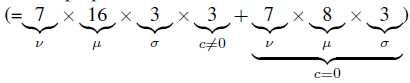
따라서 각 가버 필터부(141a, 142a, 141c)는 다른 수치의 파라미터(방향성, 스케일, 가우시안 폭, 곡률)를 조정하여 더 적은 개수 또는 더 많은 개수의 확장된 곡선 가버 필터를 사용할 수 있다.Therefore, each of the
이때 에이다부스트(adaboost)를 통해 최적의 확장된 곡선 가버 필터를 찾는다. 아울러 GentleBoost, realBoost, KLBoost와 JSBoost 등의 부스트 학습 방법을 사용할 수도 있다. 이러한 부스팅 학습을 이용하여 각각의 서브 영상으로부터 상호 보완적인 가버 특징들을 선택함으로써 객체 이미지의 인식 효율을 향상시킬 수 있다. At this time, AdaBoost finds the optimal extended curve Gabor filter. You can also use boost learning methods such as GentleBoost, realBoost, KLBoost, and JSBoost. Using this boosting learning, it is possible to improve the recognition efficiency of the object image by selecting complementary Gabor features from each subimage.
그리고 부스팅 알고리즘을 이용하여 선별적으로 최적의 특징을 추출했기 때문에 얼굴 인식을 위해 필요한 연산량을 줄일 수 있다.Since the optimum features are selectively extracted using the boosting algorithm, the amount of computation required for face recognition can be reduced.
이러한 각 가버 필터부(141a, 142a, 141c)는 아이(I) 형 확장된 곡선 가버 필터를 이용하여 해당 서브 영상의 특징들을 생성한다. 이를 도 4 내지 도 5를 참조하여 설명한다.Each of the
도 4는 아이(I)-형 확장된 곡선 가버 필터(I-Shape Extended Curvature Gabor Classifier Bunch) 그룹 예시도이고, 도 5는 곡선 가버 필터의 특성 예시도이다. FIG. 4 is an illustration of an I-shaped extended curve Gabor Classifier Bunch group, and FIG. 5 is a characteristic example of a curved Gabor filter.
도 4의 (A)에 도시된 바와 같이, 하나의 아이(I)-형 확장된 가버 필터 그룹은 3개의 가우시안 폭(σ) 및 4개의 곡률(c)을 가지는 12개의 곡선형 가버 필터 G={g(σ1, c1), g(σ2, c2), g(σ3, c3), g(σ4, c4), g(σ5, c5), ... , g(σ12, c12)}로 이루어진다.As shown in FIG. 4A, one eye (I) -type extended Gabor filter group is composed of twelve curved Gabor filters with three Gaussian widths? And four curvatures c = g (? 2, c2), g (? 4, c4), g (? 5, c5), ..., g (?
하나의 아이(I)-형 확장된 가버 필터 그룹에서 곡률은 c={0.0, 0.05, 0.1, 0.2}의 4개의 값을 갖고, 가우시안 폭은 σ={0.5π, π, 2π} 중 한개인 σ={π} 값을 갖는다. The curvature of one I-shaped extended Gabor filter group has four values of c = {0.0, 0.05, 0.1, 0.2} and the Gaussian width is one of σ = {0.5π, σ = {π}.
이와 같이 12개의 곡선형 가버 필터는, 곡률이 c={0.0}인 경우(즉, 직선)에는 도 5의 (A)와 같이 8가지 방향성을 갖고, 곡률이 c={0.0}보다 큰 경우(즉, 곡선)에는 도 5의 (B)와 같이 μ={0, 1, 2, ... , 15}의 16개의 방향성을 갖는다. Thus, the twelve curved Gabor filters have eight directions when the curvature is c = {0.0} (i.e., a straight line) as shown in Fig. 5A, and when the curvature is larger than c = {0.0} That is, a curve) has sixteen directional properties of μ = {0, 1, 2, ..., 15} as shown in FIG. 5B.
이러한 아이(I)-형 확장된 곡선 가버 필터 그룹은, 12개의 곡선 가버 필터들을 곡률(c)을 기준으로 행(column)을 따라 배열하고, 가우시안 폭(σ)을 기준으로 열(row)을 따라 배열한 후 도 4의 (B)에 도시된 바와 같이 "I" 형을 이루는 4개의 곡선 가버 필터를 이용하여 필터링한다.Such an i-type extended curved Gabor filter group is formed by arranging twelve curved Gabor filters along a column based on a curvature c and defining a row based on a Gaussian width? And then filtered using four curved Gabor filters of the "I" type as shown in Fig. 4 (B).
이 4개의 "I" 형 곡선 가버 필터들은, 가우시안 폭이 σ={π}일 때 곡률이 c={0, 0.05, 0.1, 0.2}인 4개의 곡선 가버 필터이다. These four "I" shaped curved Gabor filters are four curved Gabor filters with a curvature of c = {0, 0.05, 0.1, 0.2} when the Gaussian width is σ = {π}.
이에 따라 일정 수준 이상의 얼굴 인식률을 얻으면서도 12개의 곡선 가버 필터들을 모두 사용하는 경우보다 연산량을 현저히 감소시킬 수 있으며 속도를 향상시킬 수 있고, 그 분산이 적기 때문에 좀 더 안정적인 얼굴 인식 성능을 확보할 수 있다. Accordingly, it is possible to significantly reduce the computational complexity and improve the speed and obtain a more stable facial recognition performance because the variance is smaller than that in the case of using all the curved Gabor filters while obtaining a certain level of face recognition rate. have.
이처럼 곡선 가버 필터의 특징들을 그룹화하면 이후에 수행될 선형판별분석(Linear Discriminant Analysis: LDA) 작업을 위한 입력 값의 차원(dimension)을 감소시킬 수 있어 곡선 가버 필터를 확장시키는 것이 용이해진다.By grouping the features of the curved Gabor filter, it is possible to reduce the dimension of the input value for the later linear discriminant analysis (LDA) operation, which makes it easier to expand the curve Gabor filter.
예를 들면 가우시안 폭과 곡률을 변화시켜서 사용할 곡선 가버 필터의 수를 늘림으로써 얼굴 영상의 특징 수를 증가시키더라도 특징들을 그룹화하여 입력 값의 차원을 낮추면 선형판별분석(LDA) 학습시의 부담을 감소시킬 수 있다. 이는 선형판별분석(LDA) 학습 능률을 높이는데도 유용하다.For example, by increasing the number of curved Gabor filters to be used by changing the Gaussian width and curvature, even if the number of features of the facial image is increased, reducing the dimension of the input values by grouping the features reduces the burden on the LDA learning . This is also useful for improving linear discriminant analysis (LDA) learning.
각 선형판별분석부(142a, 142a, 142c)는 아이(I)-형 확장된 곡선 가버 필터 그룹을 입력 값으로 하여 선형판별분석(Linear Discriminant Analysis: LDA) 작업을 수행한다. Each of the linear
여기서, 각 선형판별분석부(142a, 142a, 142c)는 아이(I)-형 확장된 곡선 가버 필터 그룹마다 독립적으로 LDA 작업을 수행하게 된다. Here, each of the linear
이를 위하여 각 선형판별분석부(142a, 142a, 142c)는 복수의 선형판별분석 처리부(미도시)를 포함할 수 있으며, 각 선형판별분석처리부 마다 하나의 아이(I)-형 확장된 곡선 가버 필터 그룹에 대한 LDA 작업을 수행한다. For this purpose, each of the linear
이에 따라 각 선형판별분석부(142a, 142a, 142c)는 하나의 서브 영상에 대하여 복수의 선형판별분석 결과(즉 베이시스 벡터)를 출력하고, 출력된 복수의 선형판별분석 결과에 기초하여 관찰 노드(Observation Node)를 생성하고, 생성된 관찰 노드를 출력한다. Accordingly, each of the linear
분류부(140)는 각 서브 영상에 대한 아이(I)-형 확장된 곡선 가버 필터 그룹의 특징(즉, 특징 벡터)들을 베이시스 벡터에 투영한다. 이때 투영된 벡터가 관찰 노드가 된다.The
본 실시예의 분류부(140)는 하나의 서브 영상에 대해 대략 2400개의 특징 을 생성한다. The
여기서 대략 2400개의 특징을 생성하는 것은, 대략 1400개의 특징을 출력하는 것보다 2배 이상 시간 차가 나지 않을 뿐만 아니라, 1400개의 특징을 출력하는 것보다 성능이 좋고 그 분산이 적어 상대적으로 안정적으로 얼굴을 인식할 수 있기 때문이다. 이는 실험에 의해 획득된 것이다.Generating approximately 2400 features here is not only more than twice the time difference than outputting approximately 1400 features, but also a better performance than the output of 1400 features, Because it can recognize. This is obtained by experiments.
도 6에 도시된 바와 같이, 각 서브 영상(S, S2, S3)에 대해 곡선 가버 필터링 및 선형판별분석(LDA)을 수행하면 복수 개의 특징을 가진 얼굴 영상이 생성된다. As shown in FIG. 6, a face image having a plurality of features is generated by performing curve gauge filtering and linear discriminant analysis (LDA) on each of the sub images S, S2, and S3.
(a)에 도시된 바와 같이 두 눈 사이의 거리가 d1인 제 1 서브 영상(S1)에 대해 곡선 가버 필터링 및 선형판별 분석을 수행하면 제 1 특징 영상(F1)이 생성되고, (b)에 도시된 바와 같이 두 눈 사이의 거리가 d2인 제 2 서브 영상(S2)에 대해 곡선 가버 필터링 및 선형판별분석을 수행하면 제 2 특징 영상(F2)이 생성되며, (c)에 도시된 바와 같이 두 눈 사이의 거리가 d3인 제 3 서브 영상(S3)에 대해 곡선 가버 필터링 및 선형판별 분석을 수행하면 제 3특징 영상(F3)이 생성된다.the first feature image F1 is generated by performing the curve gauge filtering and the linear discriminant analysis on the first sub image S1 having the distance d1 between the two eyes as shown in FIG. As shown in the figure, the second feature image F2 is generated by performing the curve gauge filtering and the linear discriminant analysis on the second sub image S2 having the distance d2 between the two eyes, and as shown in (c) The third feature image F3 is generated by performing the curve gauge filtering and the linear discriminant analysis on the third sub image S3 having the distance d3 between the two eyes.
여기서 LDA(Linear Discriminant Analysis)는 클래스내의 스캐터 (within-class scatter)를 줄이면서 클래스간 스캐터(between-class scatter)를 최대화하는 서브 공간으로 데이터를 선형 투영(linear projection)하도록 학습하는 방법이다.Here, Linear Discriminant Analysis (LDA) is a method of learning to linearly project data into a subspace that maximizes the between-class scatter while reducing within-class scatter .
그 외에도 PCLDA(Principal Component and Linear Discriminant Analysis) 또는 PCA(Principal Component Analysis) 방법을 이용하는 것도 가능하다.It is also possible to use PCLDA (Principal Component and Linear Discriminant Analysis) or PCA (Principal Component Analysis) methods.
얼굴 인식부(150)는 각 서브 영상에서 관찰 노드(Observation Node)를 획득하고, 각 관찰 노드와 미리 저장된 등록자의 기준 노드를 비교하여 유사도를 산출하고 산출된 유사도에 기초하여 상태 노드(Hidden State Node)를 생성하고, 관찰 노드와 상태 노드를 마코브(Markov Network)에 적용시켜 얼굴 인식을 수행한다. The
얼굴 인식부(150)는 얼굴 인식 결과에 기초하여 영상 입력부(110)를 통해 입력된 입력 영상이 등록자 데이터베이스부(160)에 등록되어 있는 등록자인지 여부를 판단한다.The
이를 도 7 내지 도 12를 참조하여 설명한다.This will be described with reference to FIGS. 7 to 12. FIG.
도 7은 얼굴 인식부(150)에서 설계된 얼굴 인식 모델의 예시도로, 복수의 제 2 얼굴 영상인 서브 영상이 3개라고 가정한다.7 is an example of a face recognition model designed by the
도 7에 도시된 바와 같이, 얼굴 인식 모델은 제1 서브 영상(S1)의 제1 특징 영상(F1)에서 획득된 제 1 관찰 노드(Observation Node: y1), 제2 서브 영상(S2)의 제2 특징 영상(F2)에서 획득된 제 2 관찰 노드(y2), 제3 서브 영상(S3)의 제3 특징 영상(F3)에서 획득된 제 1 관찰 노드(y3)을 가진다. 7, the face recognition model includes a first observation node (y1) obtained in the first feature image F1 of the first sub-image S1, a second observation node The second observation node y2 obtained in the second feature image F2 and the first observation node y3 obtained in the third feature image F3 of the third sub image S3.
그리고, 얼굴 인식부(150)는 등록자 데이터베이스부(160)에 저장된 어느 하나의 등록 얼굴 영상의 제 1 기준 노드, 제 2 기준 노드, 제 3 기준 노드를 추출하고, 추출된 제 1 기준 노드와 제 1 관찰 노드를 비교하여 제 1 유사도를 산출하고, 산출된 제 1 유사도에 기초하여 제 1 상태 노드(Hidden State Node: x1)를 생성한다.The
얼굴 인식부(150)는 제 2 기준 노드와 제 2 관찰 노드를 비교하여 제 2 유사도를 산출하고, 산출된 제 2 유사도에 기초하여 제 2 상태 노드(Hidden State Node: x2)를 생성하고, 제 3 기준 노드와 제 3 관찰 노드를 비교하여 제 3 유사도를 산출하고, 산출된 제 3 유사도에 기초하여 제 3 상태 노드(Hidden State Node: x3)를 생성한다. 이때 복수의 상태 노드는 서로 통신이 가능하도록 Belief Propagation(BP)를 통해 설계된다.The
좀 더 구체적으로 각 관찰 노드(Observation Node)를 확률 모델로 변환하면 상태 노드(Hidden State Node) 확률은 다음과 같다. More specifically, when each Observation Node is transformed into a probability model, the probability of a Hidden State Node is as follows.

여기서 확률 모델은 도 7에 도시된 바와 같이 상태 노드(x1, x2, x3)들간의 관계를 나타내는 호환 매트릭스(Compatibility Matrix :Psi)와, 관찰 노드(y1, y2, y3)와 상태 노드(x1, x2, x3)의 관계를 나타내는 벡터(Pi)의 집합으로 나타낼 수 있다. Here, the probability model is composed of a compatibility matrix (Psi) representing the relationship between the state nodes (x1, x2, x3), the observation nodes (y1, y2, y3) (x2, x3).

Maximum A Posteriori (MAP) Estimation를 이용하면 상태 노드의 확률 값을 알 수 있다.Maximum A Posteriori (MAP) Estimation can be used to determine the probability value of the state node.

이때, 연산량을 고려하여 Belief Propagation(BP)를 이용한 반복 알고리즘(Iterative Algorithm)을 이용한다. At this time, we use an iterative algorithm (Belief Propagation (BP)) based on the computational complexity.
Belief Propagation(BP)은 신뢰도(Belief)와 메시지(Message)를 순차적으로 계산하여 노드들의 확률 값을 반복적으로 산출한다. Belief Propagation (BP) calculates the probability values of nodes repeatedly by sequentially calculating Belief and Message.
도 8에 도시된 바와 같이, 상태 노드(xj)의 신뢰도(Belief) 값이 가질 수 있는 주변 분포(Marginal Distribution)는 다음과 같다.As shown in FIG. 8, the Margin Distribution that the Belief value of the state node x j can have is as follows.

도 9에 도시된 바와 같이, 상태 노드 xi에서 상태 노드 xjf로의 노드간 통신인 메시지(message)는 다음과 같다. As shown in FIG. 9, a message which is an inter-node communication from state node x i to state node x jf is as follows.

즉, 상태 노드 xjf의 주변 분포에 대한 xi의 영향을 나타낸다. That is, the influence of x i on the ambient distribution of state node x jf .
얼굴 인식부(150)는 얼굴 인식을 위해 도 7 내지 도 9에 기초하여 마코브 네트워크(Markov network)의 입력을 확률 모델로 설계한다. The
얼굴 인식부(150)는 도 10에 도시된 바와 같이 관찰 노드와 기준 노드의 유사도(Score)를 이용하여 유사도가 참(True)일 경우와 거짓(False) 경우로 나누어 확률 모델을 설계한다.The

얼굴 인식부(150)는 각 얼굴 인식 모델에서 나온 유사도를 이용하여 도 10에 도시된 바와 같이 확률 모델을 설계한 뒤, 마코브 네트워크에서 Belief Propagation(BP)를 적용하기 위해 벡터(Pi)와 호환 매트릭스(Compatibility Matrix :Psi)를 설계한다.The
즉, Belief Propagation(BP)에서 사용되는 벡터(Pi: Belief) 호환 매트릭스(Psi: Message)는 다음과 같은 비용함수(cost function)로 설계된다. That is, a vector (Pi: Belief) compatible matrix (Psi: Message) used in Belief Propagation (BP) is designed with the following cost function.

여기서 Pi(T)는 i번째 얼굴 인식 모델에서 나온 유사도가 참(True)일 확률이고, Pi(F)는 i번째 얼굴 인식 모델에서 나온 유사도가 거짓(False)일 확률이다.Where P i (T) is the probability that the similarity from the ith face recognition model is true, and P i (F) is the probability that the similarity from the i th face recognition model is false.
Pij(TT)는 i번째와 j번째 얼굴 인식 모델에서 나온 유사도가 모두 참일 확률이고, Pij(TF)는 i번째 얼굴 인식 모델의 유사도는 참이고, j번째 얼굴 인식 모델에서 나온 유사도는 거짓일 확률이며, Pij(FT)는 i번째 얼굴 인식 모델의 유사도는 거짓이고, j번째 얼굴 인식 모델에서 나온 유사도는 참일 확률이며, Pij(FF)는 i번째 얼굴 인식 모델의 유사도는 거짓이고, j번째 얼굴 인식 모델에서 나온 유사도는 거짓일 확률이다. P ij (TT) is the probability that all the similarities from the i th and j th face recognition models are true, P ij (TF) is the similarity of the i th face recognition model is true, the probability, P ij (FT) is the i similarity of the second facial recognition model is false, the degree of similarity from the j-th face recognition model is a probability true, P ij (FF) is the similarity of the i-th face recognition model is false, , and the similarity from the jth face recognition model is false.
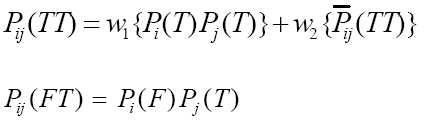

여기서 
도 11에 도시된 바와 같이, 마코브 네트워크 적용에 대응한 비용함수(cost function) 이용 시 개념도로서, 얼굴 인식부(150)는 각 관찰 노드(y1, y2, y3)의 확률 값을 산출하고, 각 관찰 노드(y1, y2, y3)와 해당 상태 노드(x1, x2, x3) 사이의 확률 값 φ(x1, y1), φ(x2, y2), φ(x3, y3)을 산출하며, 상태 노드 간의 확률 값 Ψ(x1, x2), Ψ(x2, x3), Ψ(x3, x1), Ψ(x2, x1), Ψ(x3, x2), Ψ(x1, x3)을 산출한다.As shown in FIG. 11, the
얼굴 인식부(150)는 각 관찰 노드(y1, y2, y3)와 해당 상태 노드(x1, x2, x3) 사이의 확률 값을 서로 비교하고, 상태 노드 간의 확률 값을 서로 비교한 후 비교 결과에 기초하여 신원 확인 대상의 얼굴 영상이 등록자의 얼굴 영상인지 판단한다.The
여기서 상태 노드 간의 확률 값 비교 시,어느 하나의 상태 노드가 다른 상태 노드에 미치는 영향과, 어느 하나의 상태 노드가 다른 상태 노드에 의해 받는 영향을 모두 고려한다.In the comparison of probability values between state nodes, the effect of one state node on other state nodes and the influence of one state node on other state nodes are all considered.
등록자 데이터베이스(160)는 신원 확인의 요구되는 집단에 소속된 사람들 각각의 얼굴 영상에 대한 정보를 저장한다. The
등록자 데이터베이스(160)는 얼굴 인식 효율을 향상시키기 위해서 다양한 얼굴 표정, 각도, 밝기를 갖는 복수 개의 얼굴 영상 정보를 저장한다. 등록자 데이터베이스(160)에 저장된 복수 개의 얼굴 영상은 전처리를 수행한 후 저장된다.The
여기서 전처리는 배경 영역을 제거하고, 눈의 위치를 기준으로 영상의 크기를 조정한 후, 조명의 분산도를 낮추기 위한 전처리를 수행한 것이다. 또한, 가우시안 저역 통과 필터를 통해 얼굴 영상을 필터링하여 노이즈가 제거된 얼굴 영상이다.Here, the preprocessing is to remove the background area, adjust the size of the image based on the position of the eye, and perform preprocessing to lower the degree of dispersion of the illumination. In addition, it is a face image in which noise is removed by filtering a face image through a Gaussian low pass filter.
등록자 데이터베이스(160)에 저장된 얼굴 영상은 60*80 픽셀로 정규화 가능하고, 눈의 위치를 기준으로 복수개의 서브 영상을 저장 가능하고, 각 서브 영상에 대한 복수의 기준 노드를 저장한다. 여기서 기준 노드는 등록자의 서브 영상에 대한 관찰 노드이다.The face image stored in the
이 복수의 서브 영상은 얼굴 인식 시 생성되는 것도 가능하다.The plurality of sub images may be generated at the time of face recognition.
출력부(170)는 얼굴 인식부(160)의 얼굴 인식 결과를 출력한다. 즉, 영상 입력부(110)를 통해 입력된 입력 영상이 등록자 데이터베이스부(160)에 있는 등록자인지 여부를 출력한다.The
이러한 출력부(170)는 인식 결과를 문자로 표시하는 표시부(미도시) 및 인식 결과를 사운드로 출력하는 경보음 발생부(미도시) 중 적어도 하나를 통해 구현 가능하다.The
도 12는 실시예에 따른 얼굴 인식 방법의 순서도이다.12 is a flowchart of a face recognition method according to an embodiment.
우선, 얼굴 인식 장치는 입력부(110)를 통해 신분 확인을 위한 사람의 영상을 입력(201)받는다. 이때 신분 확인을 위한 사람의 식별번호(ID)를 입력받아, 신분 인증 시간을 단축하는 것도 가능하다.First, the face recognition apparatus receives an
여기서 입력부(110)는 디지털 카메라 등의 영상획득장치(미도시)를 통해 시분 확인 대상이 되는 사람의 얼굴 영상을 획득하는 것이다.Here, the
다음 얼굴 인식 장치는 입력 영상으로부터 배경 영역을 제거하고, 얼굴 내의 특정 구성 요소를 검출하고, 얼굴 영역 내의 특정 구성 요소를 기준으로 하여 제 1 얼굴 영상(M)을 검출하고, 검출된 제 1 얼굴 영상에서 눈을 검출(202)하고, 제 1 얼굴 영상 위치한 눈의 좌표를 획득한다. 이러한 얼굴 영상은 눈의 좌표를 기준으로 60*80 픽셀로 정규화 가능하다. The following face recognition apparatus removes a background area from an input image, detects a specific component in a face, detects a first face image (M) based on a specific component in a face area, (202), and acquires the coordinates of the eye on which the first face image is located. These facial images can be normalized to 60 * 80 pixels based on the eye coordinates.
얼굴 인식 장치는 조명의 영향을 감소시키기 위하여, 제 1 얼굴 영상에서 각 화소의 휘도 분포를 분석하여 히스토그램을 얻고, 빈도수가 높은 휘도를 중심으로 히스토그램을 평활화하는 전처리를 수행하고, 가우시안 저역 통과 필터를 이용하여 얼굴 영상을 필터링함으로써 노이즈를 제거한다. In order to reduce the influence of the illumination, the face recognition apparatus analyzes the luminance distribution of each pixel in the first face image, obtains the histogram, preprocesses the histogram to smoothen the luminance with high frequency and performs a Gaussian low- And noise is removed by filtering the facial image.
다음 얼굴 인식 장치는 제 1 얼굴 영상(M)의 눈의 좌표에 기초하여 두 눈 사이의 거리를 산출하고, 산출된 두 눈 사이의 거리를 조정하여 영상의 크기는 동일하지만 특징 분석 범위가 서로 다른 복수 개의 제 2 얼굴 영상을 생성한다.The next face recognizing device calculates the distance between the two eyes based on the eye coordinates of the first face image M and adjusts the distance between the two eyes so that the size of the image is the same but the feature analysis ranges are different And generates a plurality of second face images.
여기서 제 2 얼굴 영상은, 제 1 서브 영상(S1), 제 2 서브 영상(S2), 제 3 서브 영상(S3)을 가진다.Here, the second face image has a first sub-image S1, a second sub-image S2, and a third sub-image S3.
도 2에 도시된 바와 같이, 두 눈 사이의 거리가 d1인 제 1 서브 영상(S1), 두 눈 사이의 거리가 d2인 제 2 서브 영상(S2), 두 눈 사이의 거리가 d3인 제 3 서브 영상(S3)을 생성(203)한다. As shown in FIG. 2, a first sub-image S1 having a distance d1 between two eyes, a second sub-image S2 having a distance d2 between two eyes, a third sub- The sub-image S3 is generated (203).
다음 얼굴 인식 장치는 복수 개의 제2 얼굴 영상 각각에 아이(I)형 곡선 가버 필터링 및 선형판별분석(LDA)을 수행(204)하여 각 제 2 얼굴 영상에 대해 복수 개의 특징을 생성함으로써 서브 영상의 특징을 출력한다. Next, the face recognition apparatus performs an I-type curve gauge filtering and a linear discriminant analysis (LDA) 204 on each of the plurality of second face images to generate a plurality of features for each second face image, Outputs the feature.
해당 서브 영상에 대해 서로 다른 특성을 갖는 확장된 곡선 가버 필터(Extended Curvature Gabor Classifier Bunch)들을 투영시켜 특징을 생성한다.(Extended Curvature Gabor Classifier Bunch) having different characteristics are projected on the sub-image to generate a feature.
예를 들어 도 4의 (A)와 같이 하나의 아이(I)-형 확장된 가버 필터 그룹이 3개의 가우시안 폭(σ) 및 4개의 곡률(c)을 가지는 12개의 곡선형 가버 필터를 가지는 경우, 12개의 곡선 가버 필터들을 곡률(c)을 기준으로 행(column)을 따라 배열하고, 가우시안 폭(σ)을 기준으로 열(row)을 따라 배열한 후 도 4의 (B)와 같이 "I" 형을 이루는 4개의 곡선 가버 필터를 이용하여 필터링한다. 이 4개의 "I" 형 곡선 가버 필터들은, 가우시안 폭이 σ={π}일 때 곡률이 c={0, 0.05, 0.1, 0.2}인 4개의 곡선 가버 필터이다. For example, as shown in FIG. 4 (A), when one extended (I) -type Gabor filter group has twelve curved Gabor filters having three Gaussian widths? And four curvatures c , Twelve curved Gabor filters are arranged along a column with respect to a curvature c and arranged along a row with respect to a Gaussian width sigma. Then, as shown in Fig. 4B, "I "Is filtered using four curved Gabor filters. These four "I" shaped curved Gabor filters are four curved Gabor filters with a curvature of c = {0, 0.05, 0.1, 0.2} when the Gaussian width is σ = {π}.
이에 따라 일정 수준 이상의 얼굴 인식률을 얻으면서도 12개의 곡선 가버 필터들을 모두 사용하는 경우보다 연산량을 현저히 감소시킬 수 있으며 속도를 향상시킬 수 있고, 그 분산이 적기 때문에 좀 더 안정적인 얼굴 인식 성능을 확보할 수 있다. Accordingly, it is possible to significantly reduce the computational complexity and improve the speed and obtain a more stable facial recognition performance because the variance is smaller than that in the case of using all the curved Gabor filters while obtaining a certain level of face recognition rate. have.
다음 얼굴 인식 장치는 아이(I)-형 확장된 곡선 가버 필터 그룹에 대해 선형판별분석(Linear Discriminant Analysis: LDA) 작업을 수행한다. The following face recognition apparatus performs a linear discriminant analysis (LDA) operation on an eye (I) -type extended curve Gabor filter group.
이에 따라 하나의 서브 영상에 대하여 복수의 선형판별분석 결과(즉 베이시스 벡터)를 출력하고, 출력된 복수의 선형판별분석 결과에 기초하여 관찰 노드(Observation Node)를 생성한다. Accordingly, a plurality of linear discriminant analysis results (i.e., basis vectors) are output for one sub-image, and an observation node is generated based on the plurality of linear discriminant analysis results.
즉, 얼굴 인식 장치는 각 서브 영상(S1, S2, S3)에 대한 아이(I)-형 확장된 곡선 가버 필터 그룹의 특징(즉, 특징 벡터)들을 베이시스 벡터에 투영한다. 이때 투영된 벡터가 관찰 노드가 되고, 이 관찰 노드가 생성된 특징 영상(F1, F2, F3)이 생성된다. That is, the face recognition apparatus projects the features (i.e., feature vectors) of the eye-type extended curved Gabor filter group for each of the sub images S1, S2, S3 onto the basis vector. At this time, the projected vector becomes the observation node, and the feature image F1, F2, F3 generated by the observation node is generated.
다음 얼굴 인식 장치는 각 서브 영상(S1, S2, S3)에서 관찰 노드(Observation Node: y1, y2, y3)를 획득하고, 각 관찰 노드(y1, y2, y3)와 미리 저장된 등록자의 기준 노드를 비교하여 유사도를 산출하고 산출된 유사도에 기초하여 상태 노드(Hidden State Node: x1, x2, x3)를 생성(205)하고, 관찰 노드(y1, y2, y3)와 상태 노드(x1, x2, x3)를 마코브 네트워크(Markov Network)에 적용시켜 얼굴 인식을 수행한다. Next, the face recognition apparatus obtains observer nodes (y1, y2, y3) from the respective sub images S1, S2, and S3, Y2 and y3 and the state nodes x1, x2, and x3 (x1, x2, x3) based on the calculated similarity, ) To the Markov Network to perform face recognition.
좀 더 구체적으로, 얼굴 인식 장치는 제1 서브 영상(S1)의 제1 특징 영상(F1)에서 획득된 제 1 관찰 노드(Observation Node: y1), 제2 서브 영상(S2)의 제2 특징 영상(F2)에서 획득된 제 2 관찰 노드(y2), 제3 서브 영상(S3)의 제3 특징 영상(F3)에서 획득된 제 1 관찰 노드(y3), 제1 관찰노드(y1)에 대응하는 제 1 상태노드(x1), 제2 관찰노드(y2)에 대응하는 제 2 상태노드(x2), 제3 관찰노드(y3)에 대응하는 제 3 상태노드(x3)를 이용하여 얼굴 인식 모델을 모델링한다. More specifically, the facial recognition apparatus includes a first observation node Ob obtained in the first feature image F1 of the first sub-image S1, a second feature image of the second sub-image S2, Corresponding to the first observation node y3 obtained in the third characteristic image F3 of the third sub image S3 and the first observation node y3 obtained in the second observation node y2 obtained in the second observation image F2, The face recognition model is calculated using the first state node x1, the second state node x2 corresponding to the second observation node y2, and the third state node x3 corresponding to the third observation node y3. Model.
다음 얼굴 인식 장치는 마코브 네트워크(Markov network)에 기초하여 확률 모델을 설계한다. 이때 복수의 상태 노드(x1, x2, x3)는 서로 통신이 가능하도록 신뢰전달(Belief Propagation: BP)를 통해 설계된다.The following face recognition apparatus designs a probability model based on a Markov network. At this time, a plurality of state nodes (x1, x2, x3) are designed through belief propagation (BP) so that they can communicate with each other.
즉, 얼굴 인식 장치는 각 관찰 노드와 기준 노드의 유사도(Score)를 이용하여 유사도가 참(True)일 경우와 거짓(False) 경우로 나누어 확률 모델을 설계(206)한다.That is, the face recognition apparatus designs 206 the probability model by dividing the similarity degree between True and False by using the similarity score between each observation node and the reference node.
다음 얼굴 인식 장치는 마코브 네트워크에서 Belief Propagation(BP)를 적용하기 위한 벡터(Pi)와, 호환 매트릭스(Compatibility Matrix :Psi)를 설계한다.Next, the face recognizing device designs a vector Pi and a compatibility matrix (Psi) for applying Belief Propagation (BP) in the Markov network.
이때 벡터(Pi)는 관찰 노드와 상태 노드 간의 관계를 나타내고, 호환 매트릭스(Compatibility Matrix :Psi)는 상태 노드들간의 관계를 나타낸다.Here, the vector Pi represents the relationship between the observation node and the state node, and the compatibility matrix (Psi) represents the relationship between the state nodes.
즉, Belief Propagation(BP)에서 사용되는 벡터(Pi: Belief) 호환 매트릭스(Psi: Message)는 다음과 같은 비용함수(cost function)로 설계된다. That is, a vector (Pi: Belief) compatible matrix (Psi: Message) used in Belief Propagation (BP) is designed with the following cost function.
다음 각 노드들에 대해 마코브 네트워크를 수행(207)하여 확률 값을 반복적으로 산출한다. A Markov network is performed for each of the following nodes (207), and a probability value is repeatedly calculated.
즉 얼굴 인식 장치는 각 관찰 노드(y1, y2, y3)의 확률 값을 산출하고, 각 관찰 노드(y1, y2, y3)와 해당 상태 노드(x1, x2, x3) 사이의 확률 값 φ(x1, y1), φ(x2, y2), φ(x3, y3)을 산출하며, 상태 노드 간의 확률 값 Ψ(x1, x2), Ψ(x2, x3), Ψ(x3, x1), Ψ(x2, x1), Ψ(x3, x2), Ψ(x1, x3)을 산출한다.That is, the face recognition apparatus calculates the probability values of the observation nodes y1, y2 and y3 and calculates the probability values φ (x1, y2, y3) between the observation nodes y1, y2 and y3 and the corresponding state nodes (x2, x3), Ψ (x3, x1), and Ψ (x2, y2) , x1), (x3, x2), and (x1, x3).
그리고 얼굴 인식 장치는 각 관찰 노드(y1, y2, y3)와 해당 상태 노드(x1, x2, x3) 사이의 확률 값을 서로 비교하고, 상태 노드 간의 확률 값을 서로 비교한 후 비교 결과에 기초하여 신원 확인 대상의 얼굴 영상이 등록자의 얼굴 영상인지 판단(208)한다.Then, the face recognition apparatus compares the probability values between the observation nodes y1, y2, and y3 and the corresponding state nodes x1, x2, and x3, compares the probability values between the state nodes, (208) whether the face image to be identified is the face image of the registrant.
여기서 상태 노드 간의 확률 값 비교 시, 어느 하나의 상태 노드가 다른 상태 노드에 미치는 영향과, 어느 하나의 상태 노드가 다른 상태 노드에 의해 받는 영향을 모두 고려한다.In the comparison of probability values between state nodes, the effect of one state node on other state nodes and the influence of one state node on other state nodes are all considered.
다음 얼굴 인식 장치는 얼굴 인식 결과를 출력(209)한다. 즉, 신분 확인을 위한 입력 영상이 등록자 데이터베이스부(160)에 있는 등록자인지 여부를 판단하고, 이 판단 결과를 출력한다.The next face recognition apparatus outputs the face recognition result (209). That is, it is determined whether the input image for identification is a registrant in the
이와 같은 방법에 의해 얼굴 인식 성능 및 얼굴 인식 속도를 을 향상시킬 수 있다.The face recognition performance and the face recognition speed can be improved by such a method.
110: 영상 입력부 120: 얼굴 검출부
130: 얼굴 영상 생성부 140: 분류부
150: 얼굴 인식부 160: 등록자 데이터베이스부
170: 출력부110: image input unit 120: face detection unit
130: facial image generating unit 140:
150: face recognition unit 160: registrant database unit
170:
Claims (16)
상기 얼굴 영상을 이용하여 얼굴 사이즈가 서로 다른 복수의 서브 영상들을 생성하는 얼굴 영상 생성부;
상기 복수의 서브 영상들에 아이(I)-형 곡선 가버 필터링을 수행하여 상기 복수의 서브 영상들의 특징 벡터들을 각각 생성하고, 상기 특징 벡터들에 기초하여 복수의 관찰 노드들을 생성하는 분류부; 및
상기 관찰 노드들과 미리 저장된 등록자의 서브 영상들에 대한 기준 노드들을 얼굴 사이즈별로 비교하여 상기 관찰 노드들과 상기 기준 노드들 사이의 각 유사도들을 산출하고, 상기 각 유사도들에 기초하여 각 상태 노드들을 생성하고, 상기 관찰 노드들과 상기 상태 노드들을 비교하고, 상기 상태 노드들을 서로 비교하여 얼굴 인식을 수행하는 얼굴 인식부를 포함하는 얼굴 인식 장치.An image input unit for inputting a face image of a person to be identified;
A face image generation unit for generating a plurality of sub images having different face sizes using the face image;
A classifier for generating a plurality of observation nodes based on the feature vectors by performing the I-type curve Gabor filtering on the plurality of sub images to generate feature vectors of the plurality of sub images; And
Calculating similarities between the observation nodes and the reference nodes by comparing reference nodes for the sub-images of the registrant stored in advance and the reference nodes for each face size, And a face recognition unit for comparing the observation nodes with the state nodes and performing face recognition by comparing the state nodes with each other.
상기 복수의 서브 영상들에 아이(I)-형 곡선 가버 필터링을 수행하여 상기 복수의 서브 영상들의 특징 벡터들을 각각 생성하고, 상기 특징 벡터들에 기초하여 복수의 관찰 노드들을 생성하고;
상기 관찰 노드들과 미리 저장된 등록자의 서브 영상들에 대한 기준 노드들을 얼굴 사이즈별로 비교하여 상기 관찰 노드들과 상기 기준 노드들 사이의 각 유사도들을 산출하고;
상기 각 유사도들에 기초하여 각 상태 노드들을 생성하고;
상기 관찰 노드들과 상기 상태 노드들을 비교하고, 상기 상태 노드들을 서로 비교하여 얼굴 인식을 수행하는 얼굴 인식 방법.When a face image of a person to be identified is input, generating a plurality of sub images having different face sizes using the face image;
Performing I-type curve Gabor filtering on the plurality of sub images to generate feature vectors of the plurality of sub images, generating a plurality of observation nodes based on the feature vectors;
Calculating respective degrees of similarity between the observation nodes and the reference nodes by comparing the observation nodes and the reference nodes of the sub images of the registrant stored in advance, on a face size basis;
Generate respective state nodes based on the respective similarities;
Comparing the observation nodes with the state nodes, and comparing the state nodes with each other to perform face recognition.
상기 관찰 노드들 및 상기 상태 노드들에 대해 마코브 네트워크를 수행하는 얼굴 인식 방법.10. The method of claim 9, wherein performing the face recognition comprises:
And performing a Markov network on the observation nodes and the state nodes.
상기 얼굴 사이즈별 상기 관찰 노드들과 상기 기준 노드들 사이의 유사도를 이용하여 상기 유사도가 참일 경우의 확률 모델과 상기 유사도가 거짓일 경우의 확률 모델을 별도로 설계하는 것을 더 포함하는 얼굴 인식 방법.11. The method of claim 10,
Further comprising designing a probability model when the similarity degree is true and a probability model when the similarity degree is false using the similarity degree between the observation nodes and the reference nodes for each face size.
신뢰 전달(Belief Propagation)을 이용하여 상기 상태 노드들 및 상기 관찰 노드들 각각을 설계하는 것인 얼굴 인식 방법.The method according to claim 11,
Wherein the state nodes and the observation nodes are designed using belief propagation.
상기 신뢰 전달을 위한 벡터 및 호환 매트릭스를 설계하고;
상기 설계된 벡터 및 호환 매트릭스를 상기 마코브 네트워크에 반영하는 것을 포함하는 얼굴 인식 방법.The method according to claim 12,
Designing a vector and a compatibility matrix for said trust delivery;
And reflecting the designed vector and compatibility matrix to the Markov network.
상기 확률 모델들을 이용하여 상기 벡터에 대응하는 확률값과 상기 호환 매트릭스에 대응하는 확률값을 산출하고;
상기 벡터에 대응하는 확률값과 상기 호환 매트릭스에 대응하는 확률값을 비교하고;
호환 매트릭스들 간의 확률값들을 비교하여 상기 신원 확인 대상자가 상기 등록자인지 여부를 판단하는 것을 포함하는 얼굴 인식 방법.14. The method of claim 13, wherein performing the face recognition comprises:
Calculating a probability value corresponding to the vector and a probability value corresponding to the compatibility matrix using the probability models;
Compare a probability value corresponding to the vector with a probability value corresponding to the compatibility matrix;
And comparing the probability values between the compatibility matrices to determine whether the person to be verified is the registrant.
상기 특징 벡터들에 대해 선형 판별 분석을 수행하여 상기 관찰 노드들을 생성하는 것인 얼굴 인식 방법.10. The method of claim 9, wherein generating the observation nodes comprises:
And performing a linear discriminant analysis on the feature vectors to generate the observation nodes.
상기 얼굴 영상에서 얼굴 및 두 눈을 검출하고;
상기 두 눈 사이의 거리를 검출하고, 상기 검출된 거리를 조정하여 상기 복수의 서브 영상들을 생성하는 것을 포함하는 얼굴 인식 방법.10. The method of claim 9, wherein generating the plurality of sub-
Detecting a face and two eyes of the face image;
Detecting a distance between the two eyes, and adjusting the detected distance to generate the plurality of sub images.
Priority Applications (2)
| Application Number | Priority Date | Filing Date | Title |
|---|---|---|---|
| KR1020100131261A KR101760258B1 (en) | 2010-12-21 | 2010-12-21 | Face recognition apparatus and method thereof |
| US13/293,459 US8837786B2 (en) | 2010-12-21 | 2011-11-10 | Face recognition apparatus and method |
Applications Claiming Priority (1)
| Application Number | Priority Date | Filing Date | Title |
|---|---|---|---|
| KR1020100131261A KR101760258B1 (en) | 2010-12-21 | 2010-12-21 | Face recognition apparatus and method thereof |
Publications (2)
| Publication Number | Publication Date |
|---|---|
| KR20120069922A KR20120069922A (en) | 2012-06-29 |
| KR101760258B1 true KR101760258B1 (en) | 2017-07-21 |
Family
ID=46234484
Family Applications (1)
| Application Number | Title | Priority Date | Filing Date |
|---|---|---|---|
| KR1020100131261A Active KR101760258B1 (en) | 2010-12-21 | 2010-12-21 | Face recognition apparatus and method thereof |
Country Status (2)
| Country | Link |
|---|---|
| US (1) | US8837786B2 (en) |
| KR (1) | KR101760258B1 (en) |
Families Citing this family (34)
| Publication number | Priority date | Publication date | Assignee | Title |
|---|---|---|---|---|
| US9286457B2 (en) | 2004-06-14 | 2016-03-15 | Rodney Beatson | Method and system for providing password-free, hardware-rooted, ASIC-based authentication of a human to a mobile device using biometrics with a protected, local template to release trusted credentials to relying parties |
| KR101743927B1 (en) * | 2010-09-09 | 2017-06-20 | 삼성전자주식회사 | Method and apparatus for generating an objected descriptor using extended curvature gabor filter |
| KR101901591B1 (en) | 2011-11-01 | 2018-09-28 | 삼성전자주식회사 | Face recognition apparatus and control method for the same |
| CN103959305B (en) | 2011-12-01 | 2018-01-02 | 瑞典爱立信有限公司 | Method for performing face recognition in radio access network |
| US9846799B2 (en) | 2012-05-18 | 2017-12-19 | Apple Inc. | Efficient texture comparison |
| US9135496B2 (en) | 2012-05-18 | 2015-09-15 | Apple Inc. | Efficient texture comparison |
| US9202099B2 (en) * | 2012-06-29 | 2015-12-01 | Apple Inc. | Fingerprint sensing and enrollment |
| US9715616B2 (en) | 2012-06-29 | 2017-07-25 | Apple Inc. | Fingerprint sensing and enrollment |
| EP2907082B1 (en) | 2012-10-11 | 2018-07-18 | OpenText Corporation | Using a probabilistic model for detecting an object in visual data |
| US9111125B2 (en) | 2013-02-08 | 2015-08-18 | Apple Inc. | Fingerprint imaging and quality characterization |
| US10068120B2 (en) | 2013-03-15 | 2018-09-04 | Apple Inc. | High dynamic range fingerprint sensing |
| KR101506155B1 (en) * | 2013-12-12 | 2015-03-26 | 주식회사 슈프리마 | Biometric authentication apparatus and face detection method |
| CN103617436B (en) * | 2013-12-17 | 2017-01-25 | 山东大学 | Micro-expression recognition method based on difference slice energy diagram and Gabor transformation |
| KR102222318B1 (en) * | 2014-03-18 | 2021-03-03 | 삼성전자주식회사 | User recognition method and apparatus |
| CN103927518B (en) * | 2014-04-14 | 2017-07-07 | 中国华戎控股有限公司 | A kind of face feature extraction method for human face analysis system |
| KR102077260B1 (en) * | 2014-08-08 | 2020-02-13 | 삼성전자주식회사 | Method and apparatus of face recognition using confidence based on probabilistic model |
| US10956493B2 (en) | 2015-05-19 | 2021-03-23 | Micro Focus Llc | Database comparison operation to identify an object |
| CN105095873B (en) * | 2015-07-31 | 2018-12-18 | 小米科技有限责任公司 | Photo be shared method, apparatus |
| CN105160348B (en) * | 2015-08-04 | 2018-06-12 | 大连海事大学 | Method and system for automatic identification of on-site traces based on image statistical features |
| CN105259757B (en) * | 2015-10-22 | 2017-10-17 | 山东科技大学 | A kind of control method of the infinite horizon robust controller of controlled stochastic system |
| US10275684B2 (en) | 2015-11-04 | 2019-04-30 | Samsung Electronics Co., Ltd. | Authentication method and apparatus, and method and apparatus for training a recognizer |
| CN105512624B (en) * | 2015-12-01 | 2019-06-21 | 天津中科智能识别产业技术研究院有限公司 | A kind of smiling face's recognition methods of facial image and its device |
| US20170206403A1 (en) * | 2016-01-19 | 2017-07-20 | Jason RAMBACH | Method of distributed face recognition and system thereof |
| KR102221118B1 (en) | 2016-02-16 | 2021-02-26 | 삼성전자주식회사 | Method for extracting feature of image to recognize object |
| JP6948128B2 (en) * | 2017-01-13 | 2021-10-13 | キヤノン株式会社 | Video monitoring device and its control method and system |
| US11120264B2 (en) * | 2017-06-02 | 2021-09-14 | Apple Inc. | Augmented reality interface for facilitating identification of arriving vehicle |
| CN107273845B (en) * | 2017-06-12 | 2020-10-02 | 大连海事大学 | Facial expression recognition method based on confidence region and multi-feature weighted fusion |
| CN110363048B (en) * | 2018-04-04 | 2020-04-24 | 阿里巴巴集团控股有限公司 | Face recognition method and device |
| KR102063745B1 (en) * | 2018-05-04 | 2020-02-11 | 한국과학기술연구원 | Apparatus and method for user identifying based on face profiling |
| WO2019225799A1 (en) * | 2018-05-23 | 2019-11-28 | 한국과학기술원 | Method and device for deleting user information using deep learning generative model |
| KR102085427B1 (en) * | 2018-05-23 | 2020-03-05 | 한국과학기술원 | Method and apparatus for removal of personal identification using generative model |
| CN109858463B (en) * | 2019-02-22 | 2021-03-26 | 成都云鼎丝路信息技术有限公司 | Dual-engine user identification method, system and terminal |
| CN111950429B (en) * | 2020-08-07 | 2023-11-14 | 南京审计大学 | A face recognition method based on weighted collaborative representation |
| CN111783752A (en) * | 2020-08-21 | 2020-10-16 | 北京市商汤科技开发有限公司 | Face recognition method and device, electronic equipment and storage medium |
Citations (5)
| Publication number | Priority date | Publication date | Assignee | Title |
|---|---|---|---|---|
| US20030161504A1 (en) * | 2002-02-27 | 2003-08-28 | Nec Corporation | Image recognition system and recognition method thereof, and program |
| US20060251339A1 (en) * | 2005-05-09 | 2006-11-09 | Gokturk Salih B | System and method for enabling the use of captured images through recognition |
| US20070172099A1 (en) * | 2006-01-13 | 2007-07-26 | Samsung Electronics Co., Ltd. | Scalable face recognition method and apparatus based on complementary features of face image |
| US20070239683A1 (en) * | 2006-04-07 | 2007-10-11 | Eastman Kodak Company | Identifying unique objects in multiple image collections |
| US20090316962A1 (en) * | 2008-06-18 | 2009-12-24 | Sun Yun | Image Processing Apparatus, Image Processing Method, and Program |
-
2010
- 2010-12-21 KR KR1020100131261A patent/KR101760258B1/en active Active
-
2011
- 2011-11-10 US US13/293,459 patent/US8837786B2/en active Active
Patent Citations (5)
| Publication number | Priority date | Publication date | Assignee | Title |
|---|---|---|---|---|
| US20030161504A1 (en) * | 2002-02-27 | 2003-08-28 | Nec Corporation | Image recognition system and recognition method thereof, and program |
| US20060251339A1 (en) * | 2005-05-09 | 2006-11-09 | Gokturk Salih B | System and method for enabling the use of captured images through recognition |
| US20070172099A1 (en) * | 2006-01-13 | 2007-07-26 | Samsung Electronics Co., Ltd. | Scalable face recognition method and apparatus based on complementary features of face image |
| US20070239683A1 (en) * | 2006-04-07 | 2007-10-11 | Eastman Kodak Company | Identifying unique objects in multiple image collections |
| US20090316962A1 (en) * | 2008-06-18 | 2009-12-24 | Sun Yun | Image Processing Apparatus, Image Processing Method, and Program |
Also Published As
| Publication number | Publication date |
|---|---|
| US8837786B2 (en) | 2014-09-16 |
| US20120155718A1 (en) | 2012-06-21 |
| KR20120069922A (en) | 2012-06-29 |
Similar Documents
| Publication | Publication Date | Title |
|---|---|---|
| KR101760258B1 (en) | Face recognition apparatus and method thereof | |
| KR101901591B1 (en) | Face recognition apparatus and control method for the same | |
| CN1977286B (en) | Object recognition method and apparatus therefor | |
| CN106778496A (en) | Biopsy method and device | |
| Sharma | Designing of face recognition system | |
| WO2014078432A2 (en) | Devices, systems, and methods for visual-attribute refinement | |
| KR20060054540A (en) | Facial recognition method and device | |
| Kashem et al. | Face recognition system based on principal component analysis (PCA) with back propagation neural networks (BPNN) | |
| JP2008251039A (en) | Image recognition system, recognition method thereof and program | |
| Boodoo et al. | Robust multi biometric recognition using face and ear images | |
| Zhao et al. | Applying contrast-limited adaptive histogram equalization and integral projection for facial feature enhancement and detection | |
| Chen | Design and simulation of AI remote terminal user identity recognition system based on reinforcement learning | |
| Geetha et al. | 3D face recognition using Hadoop | |
| JP7599386B2 (en) | Face Recognition System | |
| JP4061405B2 (en) | Face image classification registration device | |
| Borade et al. | Comparative study of principal component analysis and independent component analysis | |
| JP3995614B2 (en) | Pattern recognition dictionary generation apparatus and method, pattern recognition apparatus and method | |
| JP3841482B2 (en) | Face image recognition device | |
| TW202111602A (en) | Method for establishing biometric database, method for facial recognition and system thereof | |
| Peng et al. | A software framework for PCa-based face recognition | |
| SITAPURA | Real time Face Emotion Recognition Using Matlab | |
| Luciano et al. | Automated multimodal biometrics using face and ear | |
| Awad et al. | Recognizing Individual Faces of Variable Sizes using a Face Recognition Algorithm | |
| Unar et al. | Unconstrained User Authentication on Smart Phones Through Ocular Images Using FHOG and SVM | |
| Vulovic et al. | Comparison of Different Neural Network Training Algorithms with Application to Face Recognition. |
Legal Events
| Date | Code | Title | Description |
|---|---|---|---|
| PA0109 | Patent application |
Patent event code: PA01091R01D Comment text: Patent Application Patent event date: 20101221 |
|
| PG1501 | Laying open of application | ||
| PA0201 | Request for examination |
Patent event code: PA02012R01D Patent event date: 20151130 Comment text: Request for Examination of Application Patent event code: PA02011R01I Patent event date: 20101221 Comment text: Patent Application |
|
| E902 | Notification of reason for refusal | ||
| PE0902 | Notice of grounds for rejection |
Comment text: Notification of reason for refusal Patent event date: 20161010 Patent event code: PE09021S01D |
|
| E701 | Decision to grant or registration of patent right | ||
| PE0701 | Decision of registration |
Patent event code: PE07011S01D Comment text: Decision to Grant Registration Patent event date: 20170417 |
|
| GRNT | Written decision to grant | ||
| PR0701 | Registration of establishment |
Comment text: Registration of Establishment Patent event date: 20170717 Patent event code: PR07011E01D |
|
| PR1002 | Payment of registration fee |
Payment date: 20170718 End annual number: 3 Start annual number: 1 |
|
| PG1601 | Publication of registration | ||
| PR1001 | Payment of annual fee |
Payment date: 20200616 Start annual number: 4 End annual number: 4 |
|
| PR1001 | Payment of annual fee |
Payment date: 20210621 Start annual number: 5 End annual number: 5 |
|
| PR1001 | Payment of annual fee |
Payment date: 20220615 Start annual number: 6 End annual number: 6 |
|
| PR1001 | Payment of annual fee |
Payment date: 20250612 Start annual number: 9 End annual number: 9 |