KR101725478B1 - Method for displaying augmented reality of based 3d point cloud cognition, apparatus and system for executing the method - Google Patents
Method for displaying augmented reality of based 3d point cloud cognition, apparatus and system for executing the method Download PDFInfo
- Publication number
- KR101725478B1 KR101725478B1 KR1020150070875A KR20150070875A KR101725478B1 KR 101725478 B1 KR101725478 B1 KR 101725478B1 KR 1020150070875 A KR1020150070875 A KR 1020150070875A KR 20150070875 A KR20150070875 A KR 20150070875A KR 101725478 B1 KR101725478 B1 KR 101725478B1
- Authority
- KR
- South Korea
- Prior art keywords
- point
- feature points
- augmented reality
- feature
- feature point
- Prior art date
- Legal status (The legal status is an assumption and is not a legal conclusion. Google has not performed a legal analysis and makes no representation as to the accuracy of the status listed.)
- Active
Links
Images


Classifications
-
- G—PHYSICS
- G06—COMPUTING OR CALCULATING; COUNTING
- G06T—IMAGE DATA PROCESSING OR GENERATION, IN GENERAL
- G06T7/00—Image analysis
-
- G—PHYSICS
- G06—COMPUTING OR CALCULATING; COUNTING
- G06F—ELECTRIC DIGITAL DATA PROCESSING
- G06F18/00—Pattern recognition
- G06F18/20—Analysing
- G06F18/28—Determining representative reference patterns, e.g. by averaging or distorting; Generating dictionaries
-
- G—PHYSICS
- G06—COMPUTING OR CALCULATING; COUNTING
- G06T—IMAGE DATA PROCESSING OR GENERATION, IN GENERAL
- G06T19/00—Manipulating 3D models or images for computer graphics
- G06T19/006—Mixed reality
-
- G—PHYSICS
- G06—COMPUTING OR CALCULATING; COUNTING
- G06V—IMAGE OR VIDEO RECOGNITION OR UNDERSTANDING
- G06V10/00—Arrangements for image or video recognition or understanding
- G06V10/70—Arrangements for image or video recognition or understanding using pattern recognition or machine learning
- G06V10/77—Processing image or video features in feature spaces; using data integration or data reduction, e.g. principal component analysis [PCA] or independent component analysis [ICA] or self-organising maps [SOM]; Blind source separation
- G06V10/772—Determining representative reference patterns, e.g. averaging or distorting patterns; Generating dictionaries
-
- G—PHYSICS
- G06—COMPUTING OR CALCULATING; COUNTING
- G06V—IMAGE OR VIDEO RECOGNITION OR UNDERSTANDING
- G06V20/00—Scenes; Scene-specific elements
- G06V20/20—Scenes; Scene-specific elements in augmented reality scenes
-
- H—ELECTRICITY
- H04—ELECTRIC COMMUNICATION TECHNIQUE
- H04N—PICTORIAL COMMUNICATION, e.g. TELEVISION
- H04N13/00—Stereoscopic video systems; Multi-view video systems; Details thereof
Landscapes
- Engineering & Computer Science (AREA)
- Theoretical Computer Science (AREA)
- General Physics & Mathematics (AREA)
- Physics & Mathematics (AREA)
- Software Systems (AREA)
- Multimedia (AREA)
- General Engineering & Computer Science (AREA)
- Computer Vision & Pattern Recognition (AREA)
- Evolutionary Computation (AREA)
- Artificial Intelligence (AREA)
- Computer Hardware Design (AREA)
- Computer Graphics (AREA)
- General Health & Medical Sciences (AREA)
- Health & Medical Sciences (AREA)
- Databases & Information Systems (AREA)
- Computing Systems (AREA)
- Data Mining & Analysis (AREA)
- Medical Informatics (AREA)
- Life Sciences & Earth Sciences (AREA)
- Evolutionary Biology (AREA)
- Bioinformatics & Computational Biology (AREA)
- Bioinformatics & Cheminformatics (AREA)
- Processing Or Creating Images (AREA)
- Signal Processing (AREA)
Abstract
증강 현실 출력 방법과 이를 수행하기 위한 장치 및 시스템이 개시된다. 예시적인 실시예에 따른 증강 현실 출력 방법은, 특징점 분류 장치에서, 촬영 위치 및 촬영 자세 중 적어도 하나가 달라지도록 촬영 포인트를 변경하면서 각각 촬영된 복수 개의 영상들에서 특징점을 추출하는 단계, 특징점 분류 장치에서, 복수 개의 영상들의 동일 영역에서 추출한 특징점들을 추적하여 상호 연관시키는 단계, 특징점 분류 장치에서, 연관시킨 특징점의 위치에 대한 불확실도를 산출하는 단계, 및 특징점 분류 장치에서, 위치에 대한 불확실도에 따라 연관시킨 특징점을 인식 기준 특징점 그룹 또는 더미 특징점 그룹으로 분류하여 저장하는 단계를 포함한다.An augmented reality output method and apparatus and system for performing the augmented reality output method are disclosed. The augmented reality output method according to the exemplary embodiment includes the steps of extracting a feature point from a plurality of images photographed while changing a photographing point so that at least one of the photographing position and the photographing posture is changed in the feature point classifying device, A step of tracking and correlating feature points extracted from the same region of a plurality of images, calculating an uncertainty with respect to a position of the associated feature point in the feature point classifier, and determining, based on the uncertainty of the position, Classified into a recognition reference feature point group or a dummy feature point group and stored.
Description
본 발명의 실시예는 증강 현실 기술에 관한 것이다.
Embodiments of the invention relate to augmented reality techniques.
스마트폰 등의 대중화와 더불어 증강 현실(Augmented Reality) 기술이 다양한 분야에서 활용되고 있다. 이러한 증강 현실의 일례로는 카메라로부터 촬영되는 영상으로부터 증강 현실 마킹 이미지를 감지하고 감지된 마커에 따른 가상 물체를 상기 영상에 합성하여 출력하는 기술을 들 수 있다. 이와 같은 기술을 사용함으로써 현실에는 존재하지 않는 가상 캐릭터 등이 화면상으로는 실제로 존재하는 것처럼 영상에 표시될 수 있다.Augmented reality technology has been used in various fields along with popularization of smart phones and the like. An example of such an augmented reality is a technique of detecting an augmented reality marking image from an image photographed by a camera and synthesizing a virtual object according to the detected marker to the image and outputting the synthesized image. By using such a technique, a virtual character or the like that does not exist in reality can be displayed on the image as if it existed on the screen.
최근에는 마커를 필요로 하지 않고 특정 객체를 인식할 수 있는 마커리스(Markerless) 기반의 증강 현실 기술이 연구되고 있다. 그러나, 마커리스 기반의 증강 현실 기술은 현실 세계에서 객체의 특징점을 추출하고 이를 기반으로 해당 객체를 인식하기 때문에, 3차원 객체를 인식하는 경우 처리할 데이터량이 증가하여 증강 현실을 실시간으로 구현하기 어려운 문제점이 있다.In recent years, augmented reality technology based on a markerless method capable of recognizing a specific object without a marker has been studied. However, since the markerless based augmented reality technology extracts the feature points of objects in the real world and recognizes the objects based on them, it is difficult to realize the augmented reality in real time due to an increase in the amount of data to be processed when the three- There is a problem.
(특허문헌 1) KR10-1506610 B1
(특허문헌 2) KR10-2015-0039310 A(Patent Document 1) KR10-1506610 B1
(Patent Document 2) KR10-2015-0039310 A
삭제delete
본 발명의 실시예들은 처리할 데이터량을 줄이고 증강 현실을 실시간으로 구현할 수 있는 증강 현실 출력 방법과 이를 수행하기 위한 장치 및 시스템을 제공하기 위한 것이다.Embodiments of the present invention provide an augmented reality output method capable of reducing the amount of data to be processed and realizing an augmented reality in real time, and an apparatus and system for performing the augmented reality output method.
본 발명의 실시예들은 객체 인식의 정확도를 향상시킬 수 있는 증강 현실 출력 방법과 이를 수행하기 위한 장치 및 시스템을 제공하기 위한 것이다.
Embodiments of the present invention provide an augmented reality output method capable of improving the accuracy of object recognition, and an apparatus and system for performing the augmented reality output method.
예시적인 실시예에 따른 장치는, 하나 이상의 프로세서; 메모리; 및 하나 이상의 프로그램을 포함하는 장치로서, 상기 하나 이상의 프로그램은 상기 메모리에 저장되고 상기 하나 이상의 프로세서에 의해 실행되도록 구성되며, 상기 프로그램은, 상기 장치로 하여금, 촬영 위치 및 촬영 자세 중 적어도 하나가 달라지도록 촬영 포인트를 변경하면서 각각 촬영된 복수 개의 영상들에서 특징점을 추출하는 동작; 상기 복수 개의 영상들의 동일 영역에서 추출한 특징점들을 추적하여 상호 연관시키는 동작; 상기 연관시킨 특징점의 위치에 대한 불확실도를 산출하는 동작; 및 상기 위치에 대한 불확실도에 따라 상기 연관시킨 특징점을 분류하는 동작을 수행하도록 구성된다.An apparatus according to an exemplary embodiment includes one or more processors; Memory; And one or more programs, wherein the one or more programs are stored in the memory and configured to be executed by the one or more processors, wherein the program causes the device to perform the steps of: Extracting a feature point from a plurality of captured images while changing a photographing point so as to make a plurality of images; Tracking and extracting feature points extracted from the same region of the plurality of images; Calculating an uncertainty of a position of the associated feature point; And classifying the associated feature points according to the uncertainty of the position.
상기 특징점들을 분류하는 동작은, 상기 위치에 대한 불확실도에 따라 상기 연관시킨 특징점을 인식 기준 특징점 그룹 또는 더미 특징점 그룹으로 분류할 수 있다.The operation of classifying the feature points may classify the associated feature points into recognition reference feature point groups or dummy feature point groups according to the uncertainty with respect to the positions.
상기 위치에 대한 불확실도는, 상기 복수 개의 영상들에서 연관시킨 특징점들 사이에서 계산된 선형성 지표에 따라 산출될 수 있다. The uncertainty with respect to the position may be calculated according to a linearity index calculated between the minutiae associated with the plurality of images.
상기 특징점들을 분류하는 동작은, 상기 선형성 지표가 기 설정된 임계값 이하인 경우 상기 연관시킨 특징점을 인식 기준 특징점 그룹으로 분류하고, 상기 선형성 지표가 기 설정된 임계값을 초과하는 경우 상기 연관시킨 특징점을 더미 특징점 그룹으로 분류할 수 있다. Wherein the classification of the feature points comprises classifying the associated feature points into recognition reference feature point groups if the linearity index is less than or equal to a predetermined threshold value and if the linearity index exceeds a predetermined threshold value, Group.
상기 장치는, 상기 인식 기준 특징점 그룹으로 분류한 특징점들의 좌표값을 산출하는 동작을 더 수행하도록 구성될 수 있다.The apparatus may be further configured to calculate the coordinate values of the feature points classified into the recognition reference feature point group.
상기 특징점들을 추적하여 상호 연관시키는 동작은, 상기 복수 개의 영상들에서 동일 또는 유사한 패턴이 반복적으로 나타나는 영역에서 추출한 특징점은 추적 대상에서 제외시키는 동작을 포함할 수 있다. The operation of tracking and correlating the minutiae may include exciting the minutiae extracted in an area in which the same or similar pattern repeatedly appears in the plurality of images.
예시적인 실시예에 따른 증강 현실 출력 방법은, 특징점 분류 장치에서, 촬영 위치 및 촬영 자세 중 적어도 하나가 달라지도록 촬영 포인트를 변경하면서 각각 촬영된 복수 개의 영상들에서 특징점을 추출하는 단계; 상기 특징점 분류 장치에서, 상기 복수 개의 영상들의 동일 영역에서 추출한 특징점들을 추적하여 상호 연관시키는 단계; 상기 특징점 분류 장치에서, 상기 연관시킨 특징점의 위치에 대한 불확실도를 산출하는 단계; 및 상기 특징점 분류 장치에서, 상기 위치에 대한 불확실도에 따라 상기 연관시킨 특징점을 인식 기준 특징점 그룹 또는 더미 특징점 그룹으로 분류하여 저장하는 단계를 포함한다. The method of outputting an augmented reality according to an exemplary embodiment includes extracting a feature point from a plurality of captured images while changing a capture point so that at least one of the capture position and the capture position is changed in the feature point classifier; Tracking the feature points extracted from the same region of the plurality of images and correlating them; Calculating an uncertainty with respect to a position of the associated feature point in the feature point classifier; And classifying the associated feature points as recognition reference feature point groups or dummy feature point groups according to the uncertainty with respect to the positions in the feature point classifier.
상기 위치에 대한 불확실도는, 상기 복수 개의 영상들에서 연관시킨 특징점들 사이에서 계산된 선형성 지표에 따라 산출될 수 있다. The uncertainty with respect to the position may be calculated according to a linearity index calculated between the minutiae associated with the plurality of images.
상기 분류하여 저장하는 단계는, 상기 특징점 분류 장치에서, 상기 선형성 지표가 기 설정된 임계값 이하인 경우 상기 연관시킨 특징점을 인식 기준 특징점 그룹으로 분류하고, 상기 선형성 지표가 기 설정된 임계값을 초과하는 경우 상기 연관시킨 특징점을 더미 특징점 그룹으로 분류하는 단계를 포함할 수 있다. The classifying and storing step may include classifying the associated minutiae into recognition-based minutiae groups when the linearity index is less than or equal to a preset threshold value in the minutia point classification device, and when the linearity index exceeds a preset threshold value And classifying the associated feature points into dummy feature point groups.
상기 분류하여 저장하는 단계 이후에, 객체 인식 장치에서, 촬영 장치가 소정 객체를 촬영한 영상에서 특징점들을 추출하는 단계; 상기 객체 인식 장치에서, 상기 추출한 특징점과 매칭되는 기 저장된 특징점을 추출하여 상기 객체를 인식하는 단계; 증강 현실 표시 장치에서, 상기 인식된 객체와 대응하는 증강 현실 콘텐츠를 획득하는 단계; 및 상기 증강 현실 표시 장치에서, 상기 획득한 증강 현실 콘텐츠를 상기 객체를 촬영한 영상과 합성하여 디스플레이하는 단계를 더 포함할 수 있다. Extracting feature points from an image taken by a photographing device of an object in the object recognition device after the classifying and storing; Extracting previously stored minutiae matching with the extracted minutiae and recognizing the minutiae in the object recognizing device; Acquiring an augmented reality content corresponding to the recognized object in an augmented reality display device; And combining the acquired augmented reality contents with the image photographed by the object in the augmented reality display device.
상기 인식 기준 특징점 그룹에 속하는 특징점들은 각 특징점의 좌표값 정보가 기 저장되고, 상기 객체를 인식하는 단계는, 상기 객체 인식 장치에서, 상기 추출한 특징점들과 매칭되는 특징점들을 상기 인식 기준 특징점 그룹에서 추출하는 단계; 및 상기 객체 인식 장치에서, 상기 인식 기준 특징점 그룹에서 추출한 특징점들의 좌표값을 추출하고, 추출한 상기 좌표값을 이용하여 상기 촬영 장치의 초기 자세를 산출하는 단계를 포함할 수 있다. Wherein the feature point belonging to the recognition reference feature point group has coordinate value information of each feature point stored therein and the recognition of the object includes extracting feature points matched with the extracted feature points from the recognition reference feature point group ; And extracting coordinate values of the minutiae points extracted from the recognition reference minutiae point group in the object recognition apparatus and calculating an initial posture of the photographing apparatus using the extracted coordinate values.
상기 디스플레이하는 단계는, 상기 증강 현실 표시 장치에서, 상기 촬영 장치의 초기 자세를 통해 상기 증강 현실 콘텐츠의 자세를 조절하여 상기 객체를 촬영한 영상과 합성하는 단계를 포함할 수 있다.The step of displaying may include the step of adjusting the posture of the augmented reality contents through the initial posture of the photographing apparatus and combining the posture with the photographed image in the augmented reality display device.
상기 디스플레이하는 단계 이후에, 상기 촬영 장치의 촬영 포인트가 변경되는 경우, 상기 증강 현실 표시 장치에서, 상기 변경된 촬영 포인트에 따라 상기 증강 현실 콘텐츠의 자세를 재조절하는 단계를 더 포함할 수 있다.If the shooting point of the photographing apparatus is changed after the displaying step, the augmented reality display apparatus may further include a step of re-adjusting the posture of the augmented reality contents according to the changed shooting point.
예시적인 실시예에 따른 시스템은, 각 객체별로 해당 객체를 촬영 위치 및 촬영 자세 중 적어도 하나가 달라지도록 촬영 포인트를 변경하면서 각각 촬영한 복수 개의 영상들에서 특징점을 추출하고, 상기 복수 개의 영상들의 동일 영역에서 추출한 특징점들을 추적하여 상호 연관시키며, 상기 연관시킨 특징점의 위치에 대한 불확실도에 따라 상기 연관시킨 특징점을 인식 기준 특징점 그룹 또는 더미 특징점 그룹으로 분류하여 기 저장하는 시스템으로서, 소정 객체를 촬영하는 촬영 장치; 상기 촬영 장치가 상기 객체를 촬영한 영상에서 특징점들을 추출하고, 상기 추출한 특징점들과 매칭되는 기 저장된 특징점들을 추출하여 상기 객체를 인식하는 객체 인식 장치; 및 상기 인식된 객체와 대응하는 증강 현실 콘텐츠를 획득하고, 상기 증강 현실 콘텐츠를 상기 객체를 촬영한 영상과 합성하여 디스플레이하는 증강 현실 표시 장치를 포함한다. The system according to the exemplary embodiment extracts feature points from a plurality of images photographed while changing shooting points so that at least one of the shooting position and the shooting position is changed for each object, A system for tracking and correlating feature points extracted from a region and classifying the related feature points into recognition reference feature point groups or dummy feature point groups according to uncertainty of positions of the associated feature points and storing the classified feature point groups or dummy feature point groups, Device; An object recognizing device for extracting minutiae points from an image of the object photographed by the photographing device and extracting previously stored minutiae matching with the extracted minutiae to recognize the object; And an augmented reality display device for acquiring the augmented reality content corresponding to the recognized object, and displaying the augmented reality content by combining the augmented reality content with the captured image.
상기 인식 기준 특징점 그룹에 속하는 특징점들은 각 특징점의 좌표값 정보가 기 저장되고, 상기 객체 인식 장치는, 상기 추출한 특징점들과 매칭되는 특징점들을 상기 인식 기준 특징점 그룹에서 추출하고, 상기 인식 기준 특징점 그룹에서 추출한 특징점들의 좌표값을 추출하며, 추출한 상기 좌표값을 이용하여 상기 촬영 장치의 초기 자세를 산출할 수 있다. Wherein the feature point belonging to the recognition reference feature point group has coordinate value information of each feature point stored therein and the object recognition device extracts feature points matching the extracted feature points from the recognition reference feature point group, Extracting coordinate values of extracted minutiae points, and calculating an initial posture of the photographing device using the extracted coordinate values.
상기 증강 현실 표시 장치는, 상기 촬영 장치의 초기 자세를 통해 상기 증강 현실 콘텐츠의 자세를 조절하여 상기 객체를 촬영한 영상과 합성하고, 상기 촬영 장치의 촬영 포인트가 변경됨에 따라 상기 증강 현실 콘텐츠의 자세를 재조절할 수 있다.Wherein the augmented reality display device adjusts the attitude of the augmented reality contents through an initial attitude of the photographing device to synthesize the augmented reality contents with the photographed image, Can be readjusted.
상기 시스템은, 각 객체별로 해당 객체를 촬영 위치 및 촬영 자세 중 적어도 하나가 달라지도록 촬영 포인트를 변경하면서 각각 촬영한 복수 개의 영상들에서 특징점을 추출하고, 상기 복수 개의 영상들의 동일 영역에서 추출한 특징점들을 추적하여 상호 연관시키며, 상기 연관시킨 특징점의 위치에 대한 불확실도에 따라 상기 연관시킨 특징점을 인식 기준 특징점 그룹 또는 더미 특징점 그룹으로 분류하는 특징점 분류 장치를 더 포함할 수 있다.The system extracts feature points from a plurality of images photographed while changing a photographing point so that at least one of the photographing position and the photographing posture is changed for each object, and extracts feature points extracted from the same region of the plurality of images And a feature point classifier for classifying the associated feature points into recognition reference feature point groups or dummy feature point groups according to the uncertainty of the positions of the associated feature points.
상기 위치에 대한 불확실도는, 상기 복수 개의 영상들에서 연관시킨 특징점들 사이에서 계산된 선형성 지표에 따라 산출될 수 있다.The uncertainty with respect to the position may be calculated according to a linearity index calculated between the minutiae associated with the plurality of images.
상기 특징점 분류 장치는, 상기 선형성 지표가 기 설정된 임계값 이하인 경우 상기 연관시킨 특징점을 인식 기준 특징점 그룹으로 분류하고, 상기 선형성 지표가 기 설정된 임계값을 초과하는 경우 상기 연관시킨 특징점을 더미 특징점 그룹으로 분류할 수 있다.
Wherein the feature point classifier classifies the associated feature points into recognition reference feature point groups when the linearity index is less than or equal to a preset threshold value and sets the associated feature points as dummy feature point groups when the linearity index exceeds a predetermined threshold value Can be classified.
예시적인 실시예에 따르면, 증강 현실 서비스를 제공하고자 하는 각 객체를 촬영한 영상에서 특징점들을 추출하고, 위치에 대한 불확실도에 따라 인식 기준 특징점 또는 더미 특징점으로 분류함으로써, 객체의 인식 과정에서 데이터 처리량을 줄일 수 있고, 그로 인해 증강 현실을 실시간으로 구현할 수 있게 된다. According to an exemplary embodiment, the feature points are extracted from an image of each object for which an augmented reality service is to be provided, and classified into recognition reference feature points or dummy feature points according to the uncertainty of position, Thereby realizing the augmented reality in real time.
그리고, 위치에 대한 불확실도가 높은 특징점들은 더미 특징점으로 별도 분류함으로써, 더미 특징점으로 인해 객체의 인식률이 저하되는 것 및 촬영 장치의 초기 자세를 잘못 산출하는 것을 방지할 수 있게 된다. The feature points having high uncertainty with respect to the position are classified into dummy feature points so that the recognition rate of the object is lowered due to the dummy feature points and the initial posture of the image capture device can be prevented from being calculated incorrectly.
또한, 촬영 영상 중 동일 또는 유사한 패턴이 반복적으로 나타나는 영역에서 추출한 특징점들은 추적 대상에서 제외함으로써, 해당 특징점이 다른 특징점의 추적 또는 인식 시 방해되는 것을 미연에 방지하고, 데이터 처리량을 줄일 수 있게 된다.
In addition, by extracting the feature points extracted in the region where the same or similar patterns repeatedly appear in the captured image from the tracking object, it is possible to prevent the feature points from being disturbed when tracking or recognizing the other feature points, and to reduce the data throughput.
도 1은 예시적인 실시예에 따른 객체 인식 기반의 증강 현실 출력 시스템의 구성을 나타낸 도면
도 2는 예시적인 실시예에 따른 특징점 분류 장치에서 특징점들을 분류하는 과정을 나타낸 흐름도
도 3은 예시적인 실시예에 따른 역 거리 좌표계(Inverse Depth Coordinates)를 설명하기 위한 도면
도 4는 예시적인 실시예에 따른 특징점 분류 장치에서 특징점들을 분류하는 모습을 개략적으로 나타낸 도면
도 5는 예시적인 실시예에 따른 증강 현실 출력 시스템에서, 객체를 인식하고 해당 객체에 대응되는 증강 현실 콘텐츠를 출력하는 과정을 나타낸 흐름도
도 6은 예시적인 실시예들에서 사용되기에 적합한 예시적인 컴퓨팅 장치를 포함하는 컴퓨팅 환경을 나타낸 도면1 is a block diagram illustrating a configuration of an augmented reality output system based on an object recognition according to an exemplary embodiment;
2 is a flowchart showing a process of classifying minutiae points in a minutiae classification apparatus according to an exemplary embodiment
FIG. 3 is a view for explaining an inverse depth coordinate system according to an exemplary embodiment; FIG.
4 is a view schematically showing the manner in which feature points are classified in the feature point classifying apparatus according to the exemplary embodiment
5 is a flowchart illustrating a process of recognizing an object and outputting an augmented reality content corresponding to the object in the augmented reality output system according to the exemplary embodiment
Figure 6 illustrates a computing environment including an exemplary computing device suitable for use in the exemplary embodiments
이하, 도면을 참조하여 본 발명의 구체적인 실시형태를 설명하기로 한다. 이하의 상세한 설명은 본 명세서에서 기술된 방법, 장치 및/또는 시스템에 대한 포괄적인 이해를 돕기 위해 제공된다. 그러나 이는 예시에 불과하며 본 발명은 이에 제한되지 않는다.Hereinafter, specific embodiments of the present invention will be described with reference to the drawings. The following detailed description is provided to provide a comprehensive understanding of the methods, apparatus, and / or systems described herein. However, this is merely an example and the present invention is not limited thereto.
본 발명의 실시예들을 설명함에 있어서, 본 발명과 관련된 공지기술에 대한 구체적인 설명이 본 발명의 요지를 불필요하게 흐릴 수 있다고 판단되는 경우에는 그 상세한 설명을 생략하기로 한다. 그리고, 후술되는 용어들은 본 발명에서의 기능을 고려하여 정의된 용어들로서 이는 사용자, 운용자의 의도 또는 관례 등에 따라 달라질 수 있다. 그러므로 그 정의는 본 명세서 전반에 걸친 내용을 토대로 내려져야 할 것이다. 상세한 설명에서 사용되는 용어는 단지 본 발명의 실시예들을 기술하기 위한 것이며, 결코 제한적이어서는 안 된다. 명확하게 달리 사용되지 않는 한, 단수 형태의 표현은 복수 형태의 의미를 포함한다. 본 설명에서, "포함" 또는 "구비"와 같은 표현은 어떤 특성들, 숫자들, 단계들, 동작들, 요소들, 이들의 일부 또는 조합을 가리키기 위한 것이며, 기술된 것 이외에 하나 또는 그 이상의 다른 특성, 숫자, 단계, 동작, 요소, 이들의 일부 또는 조합의 존재 또는 가능성을 배제하도록 해석되어서는 안 된다.DETAILED DESCRIPTION OF THE PREFERRED EMBODIMENTS Hereinafter, exemplary embodiments of the present invention will be described in detail with reference to the accompanying drawings. In the following description, well-known functions or constructions are not described in detail since they would obscure the invention in unnecessary detail. The following terms are defined in consideration of the functions of the present invention, and may be changed according to the intention or custom of the user, the operator, and the like. Therefore, the definition should be based on the contents throughout this specification. The terms used in the detailed description are intended only to describe embodiments of the invention and should in no way be limiting. Unless specifically stated otherwise, the singular form of a term includes plural forms of meaning. In this description, the expressions "comprising" or "comprising" are intended to indicate certain features, numbers, steps, operations, elements, parts or combinations thereof, Should not be construed to preclude the presence or possibility of other features, numbers, steps, operations, elements, portions or combinations thereof.
이하의 설명에 있어서, 신호 또는 정보의 "전송", "통신", "송신", "수신" 기타 이와 유사한 의미의 용어는 일 구성요소에서 다른 구성요소로 신호 또는 정보가 직접 전달되는 것뿐만이 아니라 다른 구성요소를 거쳐 전달되는 것도 포함한다. 특히 신호 또는 정보를 일 구성요소로 "전송" 또는 "송신"한다는 것은 그 신호 또는 정보의 최종 목적지를 지시하는 것이고 직접적인 목적지를 의미하는 것이 아니다. 이는 신호 또는 정보의 "수신"에 있어서도 동일하다. 또한 본 명세서에 있어서, 2 이상의 데이터 또는 정보가 "관련"된다는 것은 하나의 데이터(또는 정보)를 획득하면, 그에 기초하여 다른 데이터(또는 정보)의 적어도 일부를 획득할 수 있음을 의미한다.
In the following description, terms such as " transmission ","transmission"," transmission ","reception", and the like, of a signal or information refer not only to the direct transmission of signals or information from one component to another But also through other components. In particular, "transmitting" or "transmitting" a signal or information to an element is indicative of the final destination of the signal or information and not a direct destination. This is the same for "reception" of a signal or information. Also, in this specification, the fact that two or more pieces of data or information are "related" means that when one piece of data (or information) is acquired, at least a part of the other data (or information) can be obtained based thereon.
도 1은 예시적인 실시예에 따른 객체 인식 기반의 증강 현실 출력 시스템의 구성을 나타낸 도면이다.FIG. 1 is a diagram illustrating a configuration of an augmented reality output system based on an object recognition according to an exemplary embodiment.
도 1에 도시된 증강 현실 출력 시스템(100)에서 소정 객체를 포함하는 영상에 증강 현실 콘텐츠를 합성하여 출력하는 방법을 개략적으로 설명하면 다음과 같다. 1) 증강 현실 출력 시스템(100)에서, 증강 현실 서비스를 제공하고자 하는 각 객체를 촬영한 영상에서 특징점들을 추출하고, 추출한 특징점들을 분류하여 미리 저장한다. 이때, 분류된 특징점들은 해당 객체와 매칭되어 저장된다. 이는, 하기의 2) 단계에서 촬영한 객체가 어떤 객체인지를 인식하기 위함이다. 예시적인 실시예에서, 3차원 객체를 정확히 인식하도록 하기 위해, 각 객체를 여러 방향에서 촬영하고, 여러 방향에서 촬영한 각 영상에서 해당 객체의 특징점을 추출하여 분류할 수 있다. 2) 증강 현실 출력 시스템(100)에서, 소정 객체를 촬영하고, 촬영한 영상에서 특징점을 추출하며, 추출한 특징점과 매칭되는 기 저장된 특징점을 확인하여 해당 객체를 인식한다. 3) 증강 현실 출력 시스템(100)에서, 인식된 객체와 대응되는 증강 현실 콘텐츠를 추출하고, 추출한 증강 현실 콘텐츠를 상기 객체를 촬영한 영상에 합성하여 출력(디스플레이)한다. 예시적인 실시예에서, 증강 현실 콘텐츠(또는 증강 현실 오브젝트)는 영상에 합성되어 출력되기 위한 오브젝트(object)로서, 예를 들어 3차원 가상 오브젝트 등이 될 수 있다. A method of synthesizing and outputting augmented reality contents to an image including a predetermined object in the augmented
도 1을 참조하면, 증강 현실 출력 시스템(100)은 촬영 장치(102), 특징점 분류 장치(104), 객체 인식 장치(106), 증강 현실 표시 장치(108), 및 저장 장치(110)를 포함할 수 있다. 1, an augmented
증강 현실 출력 시스템(100)의 각 구성은 하나의 컴퓨팅 장치 내에 구비된 것일 수 있다. 상기 컴퓨팅 장치는 예를 들어, 모바일 폰, 스마트 폰, 태블릿, 노트북, 데스크 탑, 스마트 워치와 같은 웨어러블 기기 등이 될 수 있다. 또한, 증강 현실 출력 시스템(100)의 적어도 2 이상의 구성은 하나의 컴퓨팅 장치 내에 구비될 수 있다. 예를 들어, 촬영 장치(102) 및 특징점 분류 장치(104)는 하나의 컴퓨팅 장치 내에 구비된 것일 수 있다. 또는, 촬영 장치(102), 객체 인식 장치(106), 및 증강 현실 표시 장치(108)는 하나의 컴퓨팅 장치 내에 구비된 것일 수 있다. 또한, 증강 현실 출력 시스템(100)의 적어도 하나의 구성은 적어도 하나의 다른 구성과 네트워크(예를 들어, 셀룰라 네트워크, 인터넷 네트워크, 이더넷 네트워크, 로컬 영역 네트워크, 광역 네트워크 등)를 통해 연결될 수 있다. Each configuration of the augmented
촬영 장치(102)는 전방에 위치한 소정 객체를 촬영하여 객체를 포함하는 영상을 생성하는 역할을 한다. 상기 영상은 동영상일 수도 있고 정지 영상일 수도 있다. 촬영 장치(102)는 적어도 하나의 카메라 모듈을 포함할 수 있다. 촬영 장치(102)는 촬영 위치 및 촬영 자세 중 적어도 하나를 변경하면서 상기 객체를 촬영할 수 있다. 즉, 촬영 장치(102)는 촬영 장치(102)의 위치 또는 촬영 장치(102)의 포커스 또는 촬영 장치(102)의 줌을 변경하면서 상기 객체를 촬영할 수 있다. 또한, 촬영 장치(102)는 촬영 장치(102)의 자세(예를 들어, 피치(Pitch), 롤(Roll), 요(Yaw) 등)를 변경하면서 상기 객체를 촬영할 수 있다. 즉, 촬영 장치(102)는 촬영 위치 및 촬영 자세 중 적어도 하나가 달라지도록 촬영 포인트를 변경하면서 상기 객체를 촬영할 수 있다. 촬영 장치(102)는 하나의 객체에 대해 촬영 위치 및 촬영 자세 중 적어도 하나를 달리하여 촬영한 복수 개의 영상을 생성할 수 있다. 복수 개의 영상은 순차적으로 생성될 수 있다.The photographing
특징점 분류 장치(104)는 증강 현실 서비스를 제공하고자 하는 각 객체를 촬영한 영상에서 특징점들을 추출하고, 객체 인식을 위해 사용 또는 미사용되는 특징점들을 미리 분류할 수 있다. 예를 들어, 특징점 분류 장치(104)는 소정 객체를 촬영한 영상에서 추출한 특징점들 중 거리(위치)에 대한 확실도가 일정 수준 이상인 특징점들만을 객체 인식을 위해 사용될 특징점(즉, 인식 기준 특징점)으로 분류할 수 있다. 그리고, 특징점 분류 장치(104)는 소정 객체를 촬영한 영상에서 추출한 특징점들 중 거리(위치)에 대한 확실도가 일정 수준 미만인 특징점들은 객체 인식을 위해 사용되지 않을 특징점(즉, 더미 특징점)으로 분류할 수 있다. 특징점 분류 장치(104)는 각 객체에 대해 분류된 특징점들을 해당 객체와 매칭하여 저장 장치(110)에 저장할 수 있다. The
객체 인식 장치(106)는 소정 객체를 포함하는 영상에서 특징점들을 추출하고, 추출한 특징점과 매칭되는 기 저장된 특징점을 확인하여 해당 객체를 인식(즉, 해당 객체가 어떤 객체인지를 인식)할 수 있다. 이때, 거리(위치)에 대한 확실도가 기 설정된 임계값 이상인 특징점들을 대상으로 대응쌍을 확인하므로, 3차원 객체(물체)를 인식하면서도 처리되는 데이터 량을 줄일 수 있게 된다. The
증강 현실 표시 장치(108)는 객체 인식 장치(106)에서 인식한 객체에 대응되는 증강 현실 콘텐츠를 획득할 수 있다. 증강 현실 표시 장치(108)는 획득한 증강 현실 콘텐츠를 객체가 포함된 영상과 합성하여 증강 현실 이미지를 생성하고 이를 디스플레이할 수 있다. 증강 현실 표시 장치(108)는 저장 장치(110)로부터 증강 현실 콘텐츠를 획득할 수 있으나, 이에 한정되는 것은 아니며 네트워크 등을 통해 외부로부터 상기 객체에 대응되는 증강 현실 콘텐츠를 수신할 수도 있다. 증강 현실 표시 장치(108)는 촬영 장치(102)의 촬영 포인트가 변함에 따라 증강 현실 이미지를 갱신할 수 있다. The augmented
저장 장치(110)는 특징점 분류 장치(104)에 의해 분류된 특징점들에 대한 정보를 해당 객체와 매칭하여 저장할 수 있다. 저장 장치(110)는 각 객체와 대응되는 증강 현실 콘텐츠를 저장할 수 있다. 저장 장치(110)는 컴퓨팅 장치의 하드 디스크 또는 메모리 등과 같은 물리적 저장 공간일 수 있다. 그러나, 이에 한정되는 것은 아니며 저장 장치(110)는 DAS(Direct Attached Storage)와 같은 로컬 스토리지, NAS(Network Attached Storage) 또는 SAN(Storage Area Network)와 같은 네트워크 스토리지, 및 클라우드 스토리지 등을 그 이외의 다양한 형태의 스토리지를 포함할 수 있다.
The
도 2는 예시적인 실시예에 따른 특징점 분류 장치에서 특징점들을 분류하는 과정을 나타낸 흐름도이다. 도면에서는 상기 과정을 복수 개의 단계로 나누어 기재하였으나, 적어도 일부의 단계들은 순서를 바꾸어 수행되거나, 다른 단계와 결합되어 함께 수행되거나, 생략되거나, 세부 단계들로 나뉘어 수행되거나, 또는 도시되지 않은 하나 이상의 단계가 부가되어 수행될 수 있다. 또한 실시예에 따라 상기 방법에 도시되지 않은 하나 이상의 단계들이 상기 방법과 함께 수행될 수도 있다.2 is a flowchart illustrating a process of sorting minutiae points in a minutiae classification apparatus according to an exemplary embodiment. Although the above process is described by dividing the process into a plurality of steps, at least some of the steps may be carried out in sequence, combined with other steps, performed together, omitted, divided into detailed steps, Step may be added and performed. Also, one or more steps not shown in the method according to the embodiment may be performed with the method.
도 2를 참조하면, 촬영 장치(102)가 소정 객체를 촬영하여 상기 객체를 포함하는 영상을 생성한다(S 101). 촬영 장치(102)는 제1 촬영 포인트에서 제n 촬영 포인트까지 촬영 포인트를 변경하면서 상기 객체를 촬영할 수 있다. 제1 촬영 포인트 내지 제n 촬영 포인트는 각각 촬영 장치(102)의 위치 및 자세 중 적어도 하나가 다를 수 있다. 즉, 실제 환경에서 객체는 일반적으로 3차원 물체이므로, 여러 촬영 위치 및 촬영 자세에서 객체를 촬영할 수 있다. 상기 객체를 촬영한 영상은 특징점 분류 장치(104)로 전달될 수 있다. Referring to FIG. 2, the photographing
다음으로, 특징점 분류 장치(104)는 제1 촬영 포인트에서 상기 객체를 촬영한 영상(즉, 제1 촬영 영상)에서 특징점을 추출하고, 추출한 각 특징점들의 위치를 역 거리 좌표계(Inverse Depth Coordinates)로 표현한다(S 103). 특징점 분류 장치(104)는 추출한 특징점에 대해 특징점 서술자를 생성할 수 있다. 특징점 추출 및 특징점 서술자를 생성하는 방법은 공지된 다양한 기술에 의해 실행될 수 있다. Next, the
도 3은 예시적인 실시예에 따른 역 거리 좌표계(Inverse Depth Coordinates)를 설명하기 위한 도면이다. 여기서는 설명의 편의상, 영상에서 추출한 1개의 특징점 P에 대해 설명하기로 한다.FIG. 3 is a diagram for explaining inverse depth coordinates according to an exemplary embodiment. Referring to FIG. Here, for convenience of explanation, one feature point P extracted from the image will be described.
도 3을 참조하면, 특징점 P의 위치는 역 거리 좌표계(Inverse Depth Coordinates)에 의하면, 촬영 장치(102)의 좌표 값을 나타내는 기준점(x, y, z), 촬영 장치(102)에서 특징점 P를 향하는 방향, 및 촬영 장치(102)에서 특징점 P까지의 거리를 통해 나타낼 수 있다. 기준점(x, y, z)는 촬영 장치(102)가 위치하는 영역의 로컬 좌표계에 의한 촬영 장치(102)의 좌표값이다. 기준점(x, y, z)은 촬영 장치(102)의 중심점의 좌표일 수 있다. 이에 따르면, 특징점 P의 좌표 값(X, Y, Z)은 하기 수학식 1을 통해 나타낼 수 있다. Referring to FIG. 3, the position of the minutiae point P can be determined by reference points (x, y, z) indicating the coordinate value of the photographing

여기서, ρ는 역 거리(Inverse Depth)로서, 1/ρ는 기준점(x, y, z)에서 특징점 P까지의 거리를 나타낸다. m(θ, φ)는 기준점(x, y, z)에서 특징점 P를 향하는 벡터(즉, 방향 벡터)를 나타낸다. Here, ρ is the inverse depth, and 1 / ρ represents the distance from the reference point (x, y, z) to the feature point P. m (?,?) represents a vector (that is, a direction vector) that is directed to the characteristic point P from the reference point (x, y, z).
특징점 P는 촬영 장치(102)가 촬영한 영상에서 추출한 것이기 때문에, 기준점(x, y, z)에서 특징점 P까지의 거리를 나타내는 1/ρ은 불확실성을 포함하게 된다. 즉, 촬영 장치(102)에서 촬영한 영상은 2차원의 평면으로 표현되기 때문에, 특징점 P는 기준점(x, y, z)에서 특징점 P를 향하여 직선(D)을 그엇을 때, 특징점 P가 해당 직선(D) 상에 위치한다는 사실만 확실히 알 수 있을 뿐, 특징점 P가 해당 직선(D)에서 어느 위치에 있는지는(즉, 기준점(x, y, z)에서 특징점 P까지의 거리는) 확률적으로 밖에 표현(예를 들어, 가우시안 분포로 표현)할 수 없다. 따라서, 기준점(x, y, z)에서 특징점 P까지의 거리를 나타내는 1/ρ은 어느 정도의 불확실성을 포함하게 된다. Since the minutiae point P is extracted from the image photographed by the photographing
다음으로, 특징점 분류 장치(104)는 제1 촬영 포인트 이후의 다른 촬영 포인트들의 상기 객체를 촬영한 영상에서 제1 촬영 영상의 특징점이 나타나는지 여부를 추적한다(S 105). 예를 들어, 특징점 분류 장치(104)는 제1 촬영 포인트 이후 다른 촬영 포인트들의 상기 객체를 촬영한 영상에서 특징점을 추출하고, 제1 촬영 영상의 특징점과 대응되는 특징점이 있는지 여부를 확인하여 제1 촬영 영상의 특징점을 추적할 수 있다. 즉, 특징점 분류 장치(104)는 제1 촬영 영상의 소정 영역에서 추출한 특징점을 제1 촬영 영상 이후에 촬영한 영상들의 동일 영역에서 추출한 특징점들과 각각 연관시킬 수 있다. Next, the
한편, 특징점 분류 장치(104)는 촬영 영상 중 동일 또는 유사한 패턴이 반복적으로 나타나는 영역에서 추출한 특징점들은 추적 대상에서 제외할 수 있다. 즉, 촬영 영상 중 동일 또는 유사한 패턴이 반복적으로 나타나는 영역에서 추출한 특징점들은 상호 유사하여 소정 특징점을 추적하거나 인식하기 어려우므로, 추적 대상에서 미리 제외시킬 수 있다. 이로써, 해당 특징점이 다른 특징점의 추적 또는 인식 시 방해되는 것을 미연에 방지하고, 데이터 처리량을 줄일 수 있게 된다.On the other hand, the
다음으로, 특징점 분류 장치(104)는 추적된 특징점의 거리(위치)에 대한 불확실도를 산출한다(S 107). 여기서, 추적된 특징점의 거리에 대한 불확실도는 하기의 수학식 2로 표현되는 선형성 지표(Lρ)로 산출할 수 있다. 즉, 소정 특징점의 거리에 대한 불확실도는 특징점 추적에 의해 상호 연관된 특징점들 사이에서 계산된 선형성 지표(Linearity Index)에 따라 산출될 수 있다. 설명의 편의상, 제1 촬영 영상의 소정 영역에서 특징점 P0를 추출하고, 제2 촬영 영상의 동일 영역에서 특징점 P0와 연관된 특징점 P1을 추출한 경우에 대해 설명하기로 한다. Next, the

수학식 2에서, 1/ρ0 및 d0는 제1 촬영 포인트에서 촬영 장치(102)의 기준점으로부터 특징점 P까지의 거리를 나타낸다. d1은 제2 촬영 포인트에서 촬영 장치(102)의 기준점으로부터 특징점 P까지의 거리를 나타낸다. α는 제1 촬영 포인트에서 촬영 장치(102)가 바라보는 방향과 제2 촬영 포인트에서 촬영 장치(102)가 바라보는 방향 간의 각도를 나타낸다. 
다음으로, 특징점 분류 장치(104)는 특징점 추적에 의해 상호 연관된 특징점들 사이에서 계산된 선형성 지표가 기 설정된 임계값 이하인지 여부를 확인한다(S 109). 상기 선형성 지표가 기 설정된 임계값 이하인 경우는, 해당 특징점의 거리(위치)에 대한 확실성이 일정 수준 이상이라는 의미일 수 있다.Next, the
여기서, 해당 특징점의 거리에 대한 불확실도는 제1 촬영 영상의 소정 영역에서 추출한 특징점보다 제2 촬영 영상의 동일 영역에서 추출한 특징점이 불확실도가 낮아지게 된다. 즉, 촬영 장치(102)가 제1 촬영 포인트 → 제2 촬영 포인트 → ... → 제n 촬영 포인트의 순서로 객체를 촬영한다고 가정한다. 그리고, 특징점 분류 장치(104)가 제1 촬영 영상의 소정 영역에서 추출한 특징점을 제2 촬영 영상 → 제3 촬영 영상 → ...→ 제n 촬영 영상의 순서로 동일 영역에서 추적해 간다고 할 때, 제2 촬영 영상에서 제n 촬영 영상으로 갈수록 해당 특징점의 거리에 대한 불확실도는 줄어들게 된다. Here, the uncertainty with respect to the distance of the feature point is lower than the uncertainty of the feature point extracted from the same region of the second captured image as the feature point extracted from the predetermined region of the first captured image. That is, it is assumed that the photographing
단계 S 109의 확인 결과, 특징점 추적에 의해 상호 연관된 특징점들 사이에서 계산된 선형성 지표가 기 설정된 임계값 이하인 경우, 특징점 분류 장치(104)는 해당 특징점을 인식 기준 특징점으로 분류한다(S 111). 특징점 분류 장치(104)가 제1 촬영 영상의 소정 영역에서 추출한 특징점을 제2 촬영 영상 → 제3 촬영 영상 → ...→ 제n 촬영 영상의 순서로 동일 영역에서 추적해 간다고 할 때, 제2 촬영 영상에서 제n 촬영 영상으로 갈수록 해당 특징점의 거리에 대한 불확실도는 줄어들게 되므로, 어느 시점에서 상기 선형성 지표가 기 설정된 임계값 이하로 될 수 있게 된다. If it is determined in step S 109 that the linearity index calculated between the minutiae that are correlated by the minutiae tracking is less than or equal to a predetermined threshold value, the
특징점 분류 장치(104)는 촬영 영상에서 추출한 모든 특징점을 인식 기준 특징점으로 선택하는 것이 아니라, 거리(위치)에 대한 확실성이 일정 수준 이상인 특징점만을 인식 기준 특징점으로 선택할 수 있다. 이로써, 3차원 객체 인식을 위한 데이터의 양을 줄일 수 있고, 그로 인해 실시간 증강 현실을 구현할 수 있게 된다. 또한, 거리(위치)에 대한 불확실도가 높은 특징점을 인식 기준 특징점에서 배제시킴으로써, 이후에 객체를 인식하는 과정에서 촬영 장치(102)의 초기 자세를 산출하는데 방해가 되는 요인을 미리 제거할 수 있게 된다.The
다음으로, 특징점 분류 장치(104)는 인식 기준 특징점으로 선택된 특징점에 대한 정보를 저장한다(S 113). 특징점 분류 장치(104)는 상기 특징점에 대한 정보를 해당 객체와 매칭하여 저장 장치(110)에 저장할 수 있다. 여기서, 상기 특징점에 대한 정보는 해당 특징점의 좌표값, 해당 특징점의 서술자, 및 해당 특징점의 선형성 지표값 중 적어도 하나가 포함될 수 있다. 특징점 분류 장치(104)는 인식 기준 특징점으로 선택된 특징점의 역 거리 좌표계(Inverse Depth Coordinates)를 카테시안 좌표계(Cartesian Coordinates)로 변환하여 해당 특징점의 좌표값을 생성할 수 있다. 특징점 분류 장치(104)는 수학식 1을 이용하여 해당 특징점의 역 거리 좌표계를 카테시안 좌표계로 변환할 수 있다. Next, the
단계 S 109의 확인 결과, 특징점 추적에 의해 상호 연관된 특징점들 사이에서 계산된 선형성 지표가 기 설정된 임계값 이하가 되지 않는 경우, 특징점 분류 장치(104)는 해당 특징점을 더미(Dummy) 특징점으로 분류한다(S 115). 즉, 제1 촬영 영상의 소정 영역에서 추출한 특징점을 제2 촬영 영상 → 제3 촬영 영상 → ...→ 제n 촬영 영상의 순서로 동일 영역에서 추적하면서 거리(위치)에 대한 불확실도를 산출하였음에도 불구하고 여전히 거리(위치)에 대한 불확실도가 높은 경우, 특징점 분류 장치(104)는 해당 특징점을 더미 특징점으로 분류할 수 있다. 이와 같이, 거리에 대한 불확실도가 높은 특징점들을 더미 특징점으로 별도 분류함으로써, 이후 객체 인식 과정에서 더미 특징점들이 객체를 인식하는데 방해가 되는 것을 방지하여 인식률을 높일 수 있게 된다. If it is determined in step S 109 that the linearity index calculated between the minutiae correlated with each other by the minutiae tracking does not fall below a preset threshold value, the
다음으로, 특징점 분류 장치(104)는 더미 특징점으로 선택된 특징점에 대한 정보를 저장한다(S 117). 특징점 분류 장치(104)는 상기 특징점에 대한 정보를 해당 객체와 매칭하여 저장 장치(110)에 저장할 수 있다. 여기서, 상기 특징점에 대한 정보는 해당 특징점의 서술자 및 해당 특징점의 선형성 지표값 중 적어도 하나가 포함될 수 있다. Next, the
한편, 제1 촬영 포인트의 촬영 영상에서는 추출되지 않았지만, 그 이후 촬영 포인트들의 촬영 영상에서 추출되는 특징점들에 대해서도 상기와 같은 단계들을 진행할 수 있다. On the other hand, the above-described steps can also be performed on the minutiae which are not extracted in the photographed image of the first photographing point but are extracted from the photographed image of the photographing points thereafter.
다음으로, 특징점 분류 장치(104)는 인식 기준 특징점 및 더미 특징점으로 분류된 특징점들을 촬영 영상 내의 해당 특징점들이 속한 영역의 명암 분포도를 이용하여 세부 분류한다(S 119). 특징점 분류 장치(104)는 분류기(Classifier)를 이용한 학습을 통해 인식 기준 특징점 및 더미 특징점으로 분류된 특징점들을 세부 분류할 수 있다.
Next, the feature
도 4는 예시적인 실시예에 따른 특징점 분류 장치에서 특징점들을 분류하는 모습을 개략적으로 나타낸 도면이다. 4 is a view schematically showing a feature point classification in a feature point classifier according to an exemplary embodiment.
도 4를 참조하면, 촬영 장치(102)는 제1 촬영 포인트(sp1)에서 제4 촬영 포인트(sp4)까지 촬영 포인트를 변경하면서 순차적으로 촬영할 수 있다. 특징점 분류 장치(104)는 제1 촬영 포인트(sp1) 내지 제4 촬영 포인트(sp4)에서 촬영한 각 영상 에서 소정 객체의 특징점을 추출할 수 있다. 이때, 특징점들은 촬영 장치(102)의 영상 평면(Image Plane : IP)에 투영되어 표시될 수 있다. Referring to FIG. 4, the photographing
여기서는, 제1 촬영 포인트(sp1)에서 촬영한 영상(제1 촬영 영상)에서 3개의 특징점(R1, G, R2)이 추출되고, 제2 촬영 포인트(sp2)에서 촬영한 영상(제2 촬영 영상)에서 3개의 특징점(R1, R2, R3)이 추출되고, 제3 촬영 포인트(sp3)에서 촬영한 영상(제3 촬영 영상)에서 4개의 특징점(R1, R2, R3, B)이 추출되며, 제4 촬영 포인트(sp4)에서 촬영한 영상(제4 촬영 영상)에서 4개의 특징점(R1, R2, R3, B)이 추출되는 것으로 도시하였다.Here, three feature points R1, G, and R2 are extracted from the image (first capture image) captured at the first capture point sp1 and the image captured at the second capture point sp2 R2, R3, and B are extracted from the image (third photographic image) photographed at the third photographing point sp3, and the three feature points R1, R2, R3, Four characteristic points R1, R2, R3, and B are extracted from the image photographed at the fourth photographing point sp4 (fourth photographing image).
여기서, 특징점(R1, R2, R3, G, B)들을 추적한 결과, 특징점(R1, R2, R3)의 선형성 지표가 임계값 이하로 나타나고, 특징점(G, B)의 선형성 지표가 임계값을 초과하여 나타나는 경우, 특징점 분류 장치(104)는 특징점(R1, R2, R3)는 인식 기준 특징점으로 분류하고, 특징점(G, B)는 더미 특징점으로 분류할 수 있다. 이 경우, 객체 인식에 사용되는 특징점의 수를 줄임으로써, 실시간 증강 현실을 구현할 수 있게 되고, 더미 특징점으로 인해 객체 인식률이 저하되는 것을 방지할 수 있게 된다.
As a result of tracking the minutiae points R1, R2, R3, G and B, the linearity indexes of the minutiae points R1, R2 and R3 are below the threshold value and the linearity indexes of the minutiae points G and B are below the threshold value. The
도 5는 예시적인 실시예에 따른 증강 현실 출력 시스템에서, 객체를 인식하고 해당 객체에 대응되는 증강 현실 콘텐츠를 출력하는 과정을 나타낸 흐름도이다. 도면에서는 상기 과정을 복수 개의 단계로 나누어 기재하였으나, 적어도 일부의 단계들은 순서를 바꾸어 수행되거나, 다른 단계와 결합되어 함께 수행되거나, 생략되거나, 세부 단계들로 나뉘어 수행되거나, 또는 도시되지 않은 하나 이상의 단계가 부가되어 수행될 수 있다. 또한 실시예에 따라 상기 방법에 도시되지 않은 하나 이상의 단계들이 상기 방법과 함께 수행될 수도 있다.5 is a flowchart illustrating a process of recognizing an object and outputting an augmented reality content corresponding to the object in the augmented reality output system according to the exemplary embodiment. Although the above process is described by dividing the process into a plurality of steps, at least some of the steps may be carried out in sequence, combined with other steps, performed together, omitted, divided into detailed steps, Step may be added and performed. Also, one or more steps not shown in the method according to the embodiment may be performed with the method.
도 5를 참조하면, 촬영 장치(102)가 소정 객체를 촬영하여 상기 객체를 포함하는 영상을 생성한다(S 201). 상기 객체를 촬영한 영상은 객체 인식 장치(106)로 전달될 수 있다. Referring to FIG. 5, the photographing
다음으로, 객체 인식 장치(106)가 상기 객체를 촬영한 영상에서 특징점들을 추출한다(S 203). 객체 인식 장치(106)는 추출한 특징점에 대해 특징점 서술자를 생성할 수 있다.Next, the
다음으로, 객체 인식 장치(106)는 저장 장치(110)에 저장된 특징점들 중 상기 추출한 특징점과 매칭되는 특징점을 추출하여 상기 객체를 인식한다(S 205). 즉, 객체 인식 장치(106)는 상기 추출한 특징점과 매칭되는 기 저장된 특징점들이 어떤 객체에 대한 특징점인지를 확인하여 상기 객체를 인식할 수 있다. Next, the
객체 인식 장치(106)는 저장 장치(100)에 저장된 인식 기준 특징점 그룹에서 상기 추출한 특징점과 매칭되는 특징점을 추출할 수 있다. 객체 인식 장치(106)는 상기 추출한 특징점이 저장 장치(100)에 저장된 더미 특징점 그룹의 특징점과 매칭되는 경우, 상기 추출한 특징점을 더미 특징점으로 인식함으로써, 객체 인식의 정확도를 높일 수 있게 된다.The
다음으로, 객체 인식 장치(106)는 상기 추출한 특징점과 매칭되는 특징점들(즉, 인식 기준 특징점 그룹에 속하는 특징점)의 좌표값을 추출하고, 상기 좌표값을 이용하여 촬영 장치(102)의 초기 자세(즉, 단계 S 201에서 객체를 촬영할 당시의 촬영 장치(102)의 자세)를 산출한다(S 207). 객체 인식 장치(106)는 Perspective-n-Point 알고리즘 등을 이용하여 촬영 장치(102)의 초기 자세를 산출할 수 있다. 이때, 촬영 장치(102)의 초기 자세를 산출하는데 사용되는 특징점에 거리(위치)에 대한 불확실도가 높은 더미 특징점들은 배제됨으로써, 촬영 장치(102)의 초기 자세가 잘못 산출되는 것을 방지할 수 있게 된다.Next, the
다음으로, 객체 인식 장치(106)는 객체 인식 정보 및 촬영 장치(102)의 초기 자세 정보를 증강 현실 표시 장치(108)로 전달한다(S 209). 여기서, 객체 인식 정보는 촬영 장치(102)가 촬영한 객체가 어떤 객체인지에 대한 정보를 포함한다. Next, the
다음으로, 증강 현실 표시 장치(108)는 객체 인식 정보를 통해 해당 객체에 대응하는 증강 현실 콘텐츠를 획득하고, 획득한 증강 현실 콘텐츠를 상기 객체를 촬영한 영상과 합성하여 디스플레이한다(S 211). 이때, 증강 현실 표시 장치(108)는 촬영 장치(102)의 초기 자세 정보를 기반으로 증강 현실 콘텐츠의 자세를 조절하여 상기 객체를 촬영한 영상과 합성할 수 있다. Next, the augmented
다음으로, 증강 현실 표시 장치(108)는 촬영 장치(102)의 촬영 포인트가 변경되는지 여부를 확인한다(S 213). 증강 현실 표시 장치(108)는 촬영 장치(102)의 촬영 위치 및 촬영 자세 중 적어도 하나가 변경되는지 여부를 확인할 수 있다.Next, the augmented
단계 S 213의 확인 결과, 촬영 장치(102)의 촬영 포인트가 변경되는 경우, 증강 현실 표시 장치(108)는 변경된 촬영 포인트에 따라 증강 현실 콘텐츠의 자세를 재조절하여 증강 현실 이미지(증강 현실 콘텐츠와 객체를 촬영한 영상이 합성된 이미지)를 갱신한다(S 215).
If the shooting point of the photographing
도 6은 예시적인 실시예들에서 사용되기에 적합한 예시적인 컴퓨팅 장치를 포함하는 컴퓨팅 환경을 도시한다.FIG. 6 illustrates a computing environment including an exemplary computing device suitable for use in the exemplary embodiments.
도 6에 도시된 예시적인 컴퓨팅 환경(200)은 컴퓨팅 장치(210)를 포함한다. 통상적으로, 각 구성은 상이한 기능 및 능력을 가질 수 있고, 이하에 기술되지 않았더라도 그 구성에 적합한 컴포넌트를 추가적으로 포함할 수 있다. 컴퓨팅 장치(210)는 특징점 분류를 위해 사용되는 장치(예를 들어, 특징점 분류 장치(104))일 수 있다. 또한, 컴퓨팅 장치(210)는 객체 인식을 위해 사용되는 장치(예를 들어, 객체 인식 장치(106))일 수 있다. 또한, 컴퓨팅 장치(210)는 증강 현실 이미지를 출력하는 장치(예를 들어, 증강 현실 표시 장치(108))일 수 있다. The
컴퓨팅 장치(210)는 적어도 하나의 프로세서(212), 컴퓨터 판독 가능 저장 매체(214) 및 버스(260)를 포함한다. 프로세서(212)는 버스(260)와 연결되고, 버스(260)는 컴퓨터 판독 가능 저장 매체(214)를 포함하여 컴퓨팅 장치(210)의 다른 다양한 컴포넌트들을 프로세서(212)에 연결한다.The
프로세서(212)는 컴퓨팅 장치(210)로 하여금 앞서 언급된 예시적인 실시예에 따라 동작하도록 할 수 있다. 예컨대, 프로세서(212)는 컴퓨터 판독 가능 저장 매체(214)에 저장된 컴퓨터 실행 가능 명령어를 실행할 수 있고, 컴퓨터 판독 가능 저장 매체(214)에 저장된 컴퓨터 실행 가능 명령어는 프로세서(212)에 의해 실행되는 경우 컴퓨팅 장치(210)로 하여금 소정의 예시적인 실시예에 따른 동작들을 수행하도록 구성될 수 있다.The
컴퓨터 판독 가능 저장 매체(214)는 컴퓨터 실행 가능 명령어 내지 프로그램 코드(예컨대, 애플리케이션(230)에 포함되는 명령어), 프로그램 데이터(예컨대, 애플리케이션(230)에 의해 사용되는 데이터) 및/또는 다른 적합한 형태의 정보를 저장하도록 구성된다. 컴퓨터 판독 가능 저장 매체(214)에 저장된 애플리케이션(230)은 프로세서(212)에 의해 실행 가능한 명령어의 소정의 집합을 포함한다.Computer
도 6에 도시된 메모리(216) 및 저장 장치(218)는 컴퓨터 판독 가능 저장 매체(214)의 예이다. 메모리(216)에는 프로세서(212)에 의해 실행될 수 있는 컴퓨터 실행 가능 명령어가 로딩될 수 있다. 또한, 메모리(216)에는 프로그램 데이터가 저장될 수 있다. 예컨대, 이러한 메모리(216)는 랜덤 액세스 메모리와 같은 휘발성 메모리, 비휘발성 메모리, 또는 이들의 적합한 조합일 수 있다. 다른 예로서, 저장 장치(218)는 정보의 저장을 위한 하나 이상의 착탈 가능하거나 착탈 불가능한 컴포넌트를 포함할 수 있다. 예컨대, 저장 장치(218)는 하드 디스크, 플래시 메모리, 자기 디스크, 광 디스크, 컴퓨팅 장치(210)에 의해 액세스되고 원하는 정보를 저장할 수 있는 다른 형태의 저장 매체, 또는 이들의 적합한 조합일 수 있다.
컴퓨팅 장치(210)는 또한 하나 이상의 입출력 장치(270)를 위한 인터페이스를 제공하는 하나 이상의 입출력 인터페이스(220)를 포함할 수 있다. 입출력 인터페이스(220)는 버스(260)에 연결된다. 입출력 장치(270)는 입출력 인터페이스(220)를 통해 컴퓨팅 장치(210)(의 다른 컴포넌트들)에 연결될 수 있다. 입출력 장치(270)는 포인팅 장치, 키보드, 터치 입력 장치, 음성 입력 장치, 센서 장치 및/또는 촬영 장치와 같은 입력 장치 및/또는 디스플레이 장치, 프린터, 스피커 및/또는 네트워크 카드와 같은 출력 장치를 포함할 수 있다.
The
한편, 소정의 실시예는 본 명세서에서 기술한 과정을 컴퓨터상에서 수행하기 위한 프로그램을 포함하는 컴퓨터 판독 가능 저장 매체를 포함할 수 있다. 이러한 컴퓨터 판독 가능 저장 매체는 프로그램 명령, 로컬 데이터 파일, 로컬 데이터 구조 등을 단독으로 또는 조합하여 포함할 수 있다. 그 컴퓨터 판독 가능 저장 매체는 본 발명을 위하여 특별히 설계되고 구성된 것들일 수 있다. 컴퓨터 판독 가능 저장 매체의 예에는 하드 디스크, 플로피 디스크 및 자기 테이프와 같은 자기 매체, CD-ROM, DVD와 같은 광 기록 매체, 플롭티컬 디스크와 같은 자기-광 매체, 및 롬, 램, 플래시 메모리 등과 같은 프로그램 명령을 저장하고 수행하도록 특별히 구성된 하드웨어 장치가 포함된다. 프로그램 명령의 예에는 컴파일러에 의해 만들어지는 것과 같은 기계어 코드뿐만 아니라 인터프리터 등을 사용해서 컴퓨터에 의해서 실행될 수 있는 고급 언어 코드를 포함할 수 있다.
On the other hand, certain embodiments may include a computer readable storage medium comprising a program for performing the procedures described herein on a computer. Such computer-readable storage media may include program instructions, local data files, local data structures, etc., alone or in combination. The computer-readable storage medium may be those specially designed and constructed for the present invention. Examples of computer-readable storage media include magnetic media such as hard disks, floppy disks and magnetic tape, optical recording media such as CD-ROMs and DVDs, magneto-optical media such as floppy disks, and ROMs, And hardware devices specifically configured to store and execute the same program instructions. Examples of program instructions may include machine language code such as those generated by a compiler, as well as high-level language code that may be executed by a computer using an interpreter or the like.
이상에서 본 발명의 대표적인 실시예들을 상세하게 설명하였으나, 본 발명이 속하는 기술분야에서 통상의 지식을 가진 자는 상술한 실시예에 대하여 본 발명의 범주에서 벗어나지 않는 한도 내에서 다양한 변형이 가능함을 이해할 것이다. 그러므로 본 발명의 권리범위는 설명된 실시예에 국한되어 정해져서는 안 되며, 후술하는 특허청구범위뿐만 아니라 이 특허청구범위와 균등한 것들에 의해 정해져야 한다.
While the present invention has been particularly shown and described with reference to exemplary embodiments thereof, it is to be understood that the invention is not limited to the disclosed exemplary embodiments, but, on the contrary, . Therefore, the scope of the present invention should not be limited to the above-described embodiments, but should be determined by equivalents to the appended claims, as well as the appended claims.
100 : 증강 현실 출력 시스템
102 : 촬영 장치
104 : 특징점 분류 장치
106 : 객체 인식 장치
108 : 증강 현실 표시 장치
110 : 저장 장치100: Augmented reality output system
102:
104: Feature point classifier
106: Object recognition device
108: Augmented reality display
110: Storage device
Claims (21)
메모리; 및
하나 이상의 프로그램을 포함하는 장치로서,
상기 하나 이상의 프로그램은 상기 메모리에 저장되고 상기 하나 이상의 프로세서에 의해 실행되도록 구성되며,
상기 프로그램은, 상기 장치로 하여금,
촬영 위치 및 촬영 자세 중 적어도 하나가 달라지도록 촬영 포인트를 변경하면서 각각 촬영된 복수 개의 영상들에서 특징점을 추출하는 동작;
상기 복수 개의 영상들의 동일 영역에서 추출한 특징점들을 추적하여 상호 연관시키는 동작;
상기 복수 개의 영상들에서 연관시킨 특징점들 사이에서 계산된 선형성 지표에 따라, 상기 연관시킨 특징점의 거리에 대한 불확실도를 산출하는 동작; 및
상기 거리에 대한 불확실도에 따라 상기 연관시킨 특징점을 분류하는 동작을 수행하도록 구성되며,
상기 선형성 지표는 다음의 수학식

(이때, Lρ는 특징점 P의 선형성 지표, 1/ρ0 및 d0는 제1 촬영 포인트에서의 상기 영상을 촬영한 촬영 장치의 기준점으로부터 특징점 P까지의 거리, d1은 제2 촬영 포인트에서 상기 기준점으로부터 특징점 P까지의 거리, α는 상기 제1 촬영 포인트에서 상기 촬영 장치가 바라보는 방향과 상기 제2 촬영 포인트에서 상기 촬영 장치가 바라보는 방향 간의 각도, σρ는 역 거리의 가우시안 분포도)
에 의하여 계산되는, 장치.
One or more processors;
Memory; And
An apparatus comprising one or more programs,
Wherein the one or more programs are stored in the memory and are configured to be executed by the one or more processors,
The program causes the apparatus to:
Extracting feature points from a plurality of captured images while changing a shooting point so that at least one of the shooting position and the shooting position is changed;
Tracking and extracting feature points extracted from the same region of the plurality of images;
Calculating an uncertainty with respect to a distance of the associated minutiae according to a linearity index calculated between minutiae associated with the plurality of images; And
And classifying the associated feature points according to the uncertainty of the distance,
The linearity index is expressed by the following equation
1 /? 0 and d 0 are distances from the reference point of the photographing apparatus which has photographed the image at the first photographing point to the feature point P, and d 1 is the distance from the reference point of the photographing apparatus, distance to a feature point P from the reference point, α is the first in the shooting point and the viewing direction is the imaging device at the second angle between the image pickup apparatus viewed from the viewing point direction up, σ ρ is a Gaussian distribution of inverse distance)
Lt; / RTI >
상기 특징점들을 분류하는 동작은,
상기 거리에 대한 불확실도에 따라 상기 연관시킨 특징점을 인식 기준 특징점 그룹 또는 더미 특징점 그룹으로 분류하는, 장치.
The method according to claim 1,
The operation of classifying the feature points comprises:
And classifies the associated feature points into recognition reference feature point groups or dummy feature point groups according to the uncertainty with respect to the distance.
상기 특징점들을 분류하는 동작은,
상기 선형성 지표가 기 설정된 임계값 이하인 경우 상기 연관시킨 특징점을 인식 기준 특징점 그룹으로 분류하고, 상기 선형성 지표가 기 설정된 임계값을 초과하는 경우 상기 연관시킨 특징점을 더미 특징점 그룹으로 분류하는, 장치.
The method according to claim 1,
The operation of classifying the feature points comprises:
And classifying the associated feature points into dummy feature point groups if the linearity index is less than or equal to a predetermined threshold value and classifying the associated feature points into dummy feature point groups if the linearity index exceeds a predetermined threshold value.
상기 장치는,
상기 인식 기준 특징점 그룹으로 분류한 특징점들의 좌표값을 산출하는 동작을 더 수행하도록 구성되는, 장치.
The method of claim 4,
The apparatus comprises:
And calculating coordinate values of the feature points classified into the recognition reference feature point group.
상기 특징점들을 추적하여 상호 연관시키는 동작은,
상기 복수 개의 영상들에서 동일 또는 유사한 패턴이 반복적으로 나타나는 영역에서 추출한 특징점은 추적 대상에서 제외시키는 동작을 포함하는, 장치.
The method according to claim 1,
The tracking and correlating of the feature points may include:
Wherein the feature point extracted from an area in which the same or similar pattern repeatedly appears in the plurality of images is excluded from the tracking object.
상기 특징점 분류 장치에서, 상기 복수 개의 영상들의 동일 영역에서 추출한 특징점들을 추적하여 상호 연관시키는 단계;
상기 특징점 분류 장치에서, 상기 복수 개의 영상들에서 연관시킨 특징점들 사이에서 계산된 선형성 지표에 따라, 상기 연관시킨 특징점의 거리에 대한 불확실도를 산출하는 단계; 및
상기 특징점 분류 장치에서, 상기 거리에 대한 불확실도에 따라 상기 연관시킨 특징점을 인식 기준 특징점 그룹 또는 더미 특징점 그룹으로 분류하여 저장하는 단계를 포함하며,
상기 선형성 지표는 다음의 수학식

(이때, Lρ는 특징점 P의 선형성 지표, 1/ρ0 및 d0는 제1 촬영 포인트에서의 상기 영상을 촬영한 촬영 장치의 기준점으로부터 특징점 P까지의 거리, d1은 제2 촬영 포인트에서 상기 기준점으로부터 특징점 P까지의 거리, α는 상기 제1 촬영 포인트에서 상기 촬영 장치가 바라보는 방향과 상기 제2 촬영 포인트에서 상기 촬영 장치가 바라보는 방향 간의 각도, σρ는 역 거리의 가우시안 분포도)
에 의하여 계산되는, 증강 현실 출력 방법.
Extracting feature points from a plurality of captured images while changing a capture point so that at least one of the captured position and the captured position is changed in the feature point classifier;
Tracking the feature points extracted from the same region of the plurality of images and correlating them;
Calculating an uncertainty with respect to a distance of the associated minutiae according to a linearity index calculated between minutiae points associated with the plurality of images in the minutia point classification device; And
And classifying and storing the related feature points into recognition reference feature point groups or dummy feature point groups according to the uncertainty of the distance in the feature point classifier,
The linearity index is expressed by the following equation
1 /? 0 and d 0 are distances from the reference point of the photographing apparatus which has photographed the image at the first photographing point to the feature point P, and d 1 is the distance from the reference point of the photographing apparatus, distance to a feature point P from the reference point, α is the first in the shooting point and the viewing direction is the imaging device at the second angle between the image pickup apparatus viewed from the viewing point direction up, σ ρ is a Gaussian distribution of inverse distance)
Wherein the augmented reality output method comprises:
상기 분류하여 저장하는 단계는,
상기 특징점 분류 장치에서, 상기 선형성 지표가 기 설정된 임계값 이하인 경우 상기 연관시킨 특징점을 인식 기준 특징점 그룹으로 분류하고, 상기 선형성 지표가 기 설정된 임계값을 초과하는 경우 상기 연관시킨 특징점을 더미 특징점 그룹으로 분류하는 단계를 포함하는, 증강 현실 출력 방법.
The method of claim 7,
Wherein the classifying and storing comprises:
The feature point classifier may classify the associated feature points into recognition reference feature point groups if the linearity index is less than or equal to a preset threshold value and if the linearity index exceeds a predetermined threshold value, Wherein the augmented reality output method comprises:
상기 분류하여 저장하는 단계 이후에,
객체 인식 장치에서, 촬영 장치가 소정 객체를 촬영한 영상에서 비교 대상 특징점들을 추출하는 단계;
상기 객체 인식 장치에서, 추출된 비교 대상 특징점과 매칭되는 기 저장된 특징점을 추출하여 상기 객체를 인식하는 단계;
증강 현실 표시 장치에서, 상기 인식된 객체와 대응하는 증강 현실 콘텐츠를 획득하는 단계; 및
상기 증강 현실 표시 장치에서, 상기 획득한 증강 현실 콘텐츠를 상기 객체를 촬영한 영상과 합성하여 디스플레이하는 단계를 더 포함하는, 증강 현실 출력 방법.
The method of claim 7,
After the categorizing and storing step,
Extracting comparison target feature points from an image captured by a photographing device of a predetermined object in the object recognition device;
Extracting previously stored minutiae matching with the extracted minutiae to be compared and recognizing the minutiae;
Acquiring an augmented reality content corresponding to the recognized object in an augmented reality display device; And
Further comprising the step of synthesizing and displaying the augmented reality contents obtained by the augmented reality display device with an image photographed by the object.
상기 인식 기준 특징점 그룹에 속하는 특징점들은 각 특징점의 좌표값 정보가 기 저장되고,
상기 객체를 인식하는 단계는,
상기 객체 인식 장치에서, 상기 추출된 비교 대상 특징점들과 매칭되는 특징점들을 상기 인식 기준 특징점 그룹에서 추출하는 단계; 및
상기 객체 인식 장치에서, 상기 인식 기준 특징점 그룹에서 추출한 특징점들의 좌표값을 추출하고, 추출한 상기 좌표값을 이용하여 상기 촬영 장치의 초기 자세를 산출하는 단계를 포함하는, 증강 현실 출력 방법.
The method of claim 10,
The feature point belonging to the recognition reference feature point group may be stored in the coordinate value information of each feature point,
The step of recognizing the object may comprise:
Extracting feature points matching with the extracted comparison target feature points from the recognition reference feature point group in the object recognition apparatus; And
Extracting coordinate values of the minutiae points extracted from the recognition reference minutiae point group in the object recognition apparatus and calculating an initial posture of the photographing apparatus using the extracted coordinate values.
상기 디스플레이하는 단계는,
상기 증강 현실 표시 장치에서, 상기 촬영 장치의 초기 자세를 통해 상기 증강 현실 콘텐츠의 자세를 조절하여 상기 객체를 촬영한 영상과 합성하는 단계를 포함하는, 증강 현실 출력 방법.
The method of claim 11,
Wherein the displaying comprises:
And adjusting the posture of the augmented reality contents through an initial posture of the imaging device to synthesize the augmented reality contents with the captured image in the augmented reality display device.
상기 디스플레이하는 단계 이후에,
상기 촬영 장치의 촬영 포인트가 변경되는 경우, 상기 증강 현실 표시 장치에서, 상기 변경된 촬영 포인트에 따라 상기 증강 현실 콘텐츠의 자세를 재조절하는 단계를 더 포함하는, 증강 현실 출력 방법.
The method of claim 12,
After the displaying step,
Further comprising the step of re-adjusting the posture of the augmented reality contents according to the changed shooting point in the augmented reality display device when the shooting point of the imaging device is changed.
소정 객체를 촬영하는 촬영 장치;
상기 촬영 장치가 상기 객체를 촬영한 영상에서 비교 대상 특징점들을 추출하고, 추출된 상기 비교 대상 특징점들과 매칭되는 기 저장된 특징점들을 추출하여 상기 객체를 인식하는 객체 인식 장치; 및
상기 인식된 객체와 대응하는 증강 현실 콘텐츠를 획득하고, 상기 증강 현실 콘텐츠를 상기 객체를 촬영한 영상과 합성하여 디스플레이하는 증강 현실 표시 장치를 포함하며,
상기 선형성 지표는 다음의 수학식
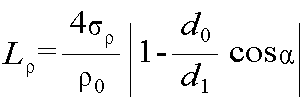
(이때, Lρ는 특징점 P의 선형성 지표, 1/ρ0 및 d0는 제1 촬영 포인트에서의 상기 영상을 촬영한 촬영 장치의 기준점으로부터 특징점 P까지의 거리, d1은 제2 촬영 포인트에서 상기 기준점으로부터 특징점 P까지의 거리, α는 상기 제1 촬영 포인트에서 상기 촬영 장치가 바라보는 방향과 상기 제2 촬영 포인트에서 상기 촬영 장치가 바라보는 방향 간의 각도, σρ는 역 거리의 가우시안 분포도)
에 의하여 계산되는, 시스템.
Extracting feature points from a plurality of images taken respectively by changing shooting points so that at least one of the shooting position and the shooting position is changed for each object, tracking the extracted feature points in the same area of the plurality of images, And associating the associated feature points with the recognition reference feature point group or the dummy feature point group according to the uncertainty of the distance of the associated feature points calculated by the linearity index calculated between the feature points associated with the plurality of images, A system for storing,
A photographing device photographing a predetermined object;
An object recognizing device for extracting comparison target feature points from the image of the object photographed by the photographing device and extracting previously stored feature points that match the extracted comparison target feature points to recognize the object; And
And an augmented reality display device for acquiring the augmented reality content corresponding to the recognized object and combining the augmented reality content with an image photographed by the augmented reality content display device,
The linearity index is expressed by the following equation
1 /? 0 and d 0 are distances from the reference point of the photographing apparatus which has photographed the image at the first photographing point to the feature point P, and d 1 is the distance from the reference point of the photographing apparatus, distance to a feature point P from the reference point, α is the first in the shooting point and the viewing direction is the imaging device at the second angle between the image pickup apparatus viewed from the viewing point direction up, σ ρ is a Gaussian distribution of inverse distance)
≪ / RTI >
상기 인식 기준 특징점 그룹에 속하는 특징점들은 각 특징점의 좌표값 정보가 기 저장되고,
상기 객체 인식 장치는, 추출된 상기 비교 대상 특징점들과 매칭되는 특징점들을 상기 인식 기준 특징점 그룹에서 추출하고, 상기 인식 기준 특징점 그룹에서 추출한 특징점들의 좌표값을 추출하며, 추출한 상기 좌표값을 이용하여 상기 촬영 장치의 초기 자세를 산출하는, 시스템.
15. The method of claim 14,
The feature point belonging to the recognition reference feature point group may be stored in the coordinate value information of each feature point,
Wherein the object recognition apparatus extracts feature points matching with the extracted comparison target feature points from the recognition reference feature point group, extracts coordinate values of the feature points extracted from the recognition reference feature point group, And calculates an initial posture of the photographing apparatus.
상기 증강 현실 표시 장치는,
상기 촬영 장치의 초기 자세를 통해 상기 증강 현실 콘텐츠의 자세를 조절하여 상기 객체를 촬영한 영상과 합성하고, 상기 촬영 장치의 촬영 포인트가 변경됨에 따라 상기 증강 현실 콘텐츠의 자세를 재조절하는, 시스템.
16. The method of claim 15,
The augmented reality display device includes:
Adjusts the posture of the augmented reality contents through an initial posture of the photographing apparatus to synthesize the posture of the augmented reality contents with the captured image, and adjusts the posture of the augmented reality contents as the photographing point of the photographing apparatus is changed.
상기 시스템은,
각 객체별로 해당 객체를 촬영 위치 및 촬영 자세 중 적어도 하나가 달라지도록 촬영 포인트를 변경하면서 각각 촬영한 복수 개의 영상들에서 특징점을 추출하고, 상기 복수 개의 영상들의 동일 영역에서 추출한 특징점들을 추적하여 상호 연관시키며, 상기 연관시킨 특징점의 거리에 대한 불확실도에 따라 상기 연관시킨 특징점을 인식 기준 특징점 그룹 또는 더미 특징점 그룹으로 분류하는 특징점 분류 장치를 더 포함하는, 시스템.
15. The method of claim 14,
The system comprises:
Extracting feature points from a plurality of images taken respectively by changing shooting points so that at least one of the shooting position and the shooting position is changed for each object, tracking the extracted feature points in the same area of the plurality of images, And a feature point classifier for classifying the associated feature points into recognition reference feature point groups or dummy feature point groups according to the uncertainty of the distance of the associated feature points.
상기 특징점 분류 장치는,
상기 선형성 지표가 기 설정된 임계값 이하인 경우 상기 연관시킨 특징점을 인식 기준 특징점 그룹으로 분류하고, 상기 선형성 지표가 기 설정된 임계값을 초과하는 경우 상기 연관시킨 특징점을 더미 특징점 그룹으로 분류하는, 시스템.
18. The method of claim 17,
The minutiae classification apparatus includes:
Classifying the associated feature points into recognition reference feature point groups when the linearity index is less than or equal to a predetermined threshold value and classifying the related feature points into dummy feature point groups when the linearity index exceeds a predetermined threshold value.
촬영 위치 및 촬영 자세 중 적어도 하나가 달라지도록 촬영 포인트를 변경하면서 각각 촬영된 복수 개의 영상들에서 특징점을 추출하는 단계;
상기 복수 개의 영상들의 동일 영역에서 추출한 특징점들을 추적하여 상호 연관시키는 단계;
상기 복수 개의 영상들에서 연관시킨 특징점들 사이에서 계산된 선형성 지표에 따라, 상기 연관시킨 특징점의 거리에 대한 불확실도를 산출하되,
상기 선형성 지표는 다음의 수학식

(이때, Lρ는 특징점 P의 선형성 지표, 1/ρ0 및 d0는 제1 촬영 포인트에서의 상기 영상을 촬영한 촬영 장치의 기준점으로부터 특징점 P까지의 거리, d1은 제2 촬영 포인트에서 상기 기준점으로부터 특징점 P까지의 거리, α는 상기 제1 촬영 포인트에서 상기 촬영 장치가 바라보는 방향과 상기 제2 촬영 포인트에서 상기 촬영 장치가 바라보는 방향 간의 각도, σρ는 역 거리의 가우시안 분포도)
에 의하여 계산되는 단계; 및
상기 거리에 대한 불확실도에 따라 상기 연관시킨 특징점을 분류하는 단계들을 실행시키기 위하여 기록매체에 저장된 컴퓨터 프로그램.
Combined with hardware,
Extracting feature points from a plurality of captured images while changing shooting points so that at least one of the shooting position and the shooting position is changed;
Tracking and correlating feature points extracted from the same region of the plurality of images;
Calculating an uncertainty with respect to a distance of the associated minutiae according to a linearity index calculated between minutiae associated with the plurality of images,
The linearity index is expressed by the following equation
1 /? 0 and d 0 are distances from the reference point of the photographing apparatus which has photographed the image at the first photographing point to the feature point P, and d 1 is the distance from the reference point of the photographing apparatus, distance to a feature point P from the reference point, α is the first in the shooting point and the viewing direction is the imaging device at the second angle between the image pickup apparatus viewed from the viewing point direction up, σ ρ is a Gaussian distribution of inverse distance)
; And
And classifying the associated feature points according to the uncertainty of the distance.
Priority Applications (2)
| Application Number | Priority Date | Filing Date | Title |
|---|---|---|---|
| KR1020150070875A KR101725478B1 (en) | 2015-05-21 | 2015-05-21 | Method for displaying augmented reality of based 3d point cloud cognition, apparatus and system for executing the method |
| US14/723,704 US9741170B2 (en) | 2015-05-21 | 2015-05-28 | Method for displaying augmented reality content based on 3D point cloud recognition, and apparatus and system for executing the method |
Applications Claiming Priority (1)
| Application Number | Priority Date | Filing Date | Title |
|---|---|---|---|
| KR1020150070875A KR101725478B1 (en) | 2015-05-21 | 2015-05-21 | Method for displaying augmented reality of based 3d point cloud cognition, apparatus and system for executing the method |
Publications (2)
| Publication Number | Publication Date |
|---|---|
| KR20160136817A KR20160136817A (en) | 2016-11-30 |
| KR101725478B1 true KR101725478B1 (en) | 2017-04-11 |
Family
ID=57325173
Family Applications (1)
| Application Number | Title | Priority Date | Filing Date |
|---|---|---|---|
| KR1020150070875A Active KR101725478B1 (en) | 2015-05-21 | 2015-05-21 | Method for displaying augmented reality of based 3d point cloud cognition, apparatus and system for executing the method |
Country Status (2)
| Country | Link |
|---|---|
| US (1) | US9741170B2 (en) |
| KR (1) | KR101725478B1 (en) |
Families Citing this family (31)
| Publication number | Priority date | Publication date | Assignee | Title |
|---|---|---|---|---|
| US11734592B2 (en) | 2014-06-09 | 2023-08-22 | Tecnotree Technologies, Inc. | Development environment for cognitive information processing system |
| CN107274431A (en) * | 2017-03-07 | 2017-10-20 | 阿里巴巴集团控股有限公司 | video content enhancement method and device |
| CN106846497B (en) * | 2017-03-07 | 2020-07-10 | 百度在线网络技术(北京)有限公司 | Method and device for presenting three-dimensional map applied to terminal |
| US10740613B1 (en) * | 2017-04-20 | 2020-08-11 | Digimarc Corporation | Hybrid feature point/watermark-based augmented reality |
| US10496157B2 (en) | 2017-05-09 | 2019-12-03 | Microsoft Technology Licensing, Llc | Controlling handheld object light sources for tracking |
| KR101980444B1 (en) * | 2017-08-30 | 2019-08-28 | 연세대학교 산학협력단 | Augmented Reality Server and System and its Method, and Recording Medium thereof |
| KR102421856B1 (en) | 2017-12-20 | 2022-07-18 | 삼성전자주식회사 | Method and apparatus for processing image interaction |
| KR101850315B1 (en) * | 2018-01-22 | 2018-05-31 | 주식회사 엑사스코프 | Apparatus for self-checkout applied to hybrid product recognition |
| CN110321910B (en) * | 2018-03-29 | 2021-05-28 | 中国科学院深圳先进技术研究院 | Point cloud-oriented feature extraction method, device and device |
| WO2019191819A1 (en) | 2018-04-05 | 2019-10-10 | Efficiency Matrix Pty Ltd | Computer implemented structural thermal audit systems and methods |
| CN112805750B (en) | 2018-08-13 | 2024-09-27 | 奇跃公司 | Cross-reality systems |
| US11227435B2 (en) | 2018-08-13 | 2022-01-18 | Magic Leap, Inc. | Cross reality system |
| CN113196209A (en) | 2018-10-05 | 2021-07-30 | 奇跃公司 | Rendering location-specific virtual content at any location |
| EP3660741B1 (en) * | 2018-11-29 | 2022-05-04 | Koninklijke Philips N.V. | Feature identification in medical imaging |
| CN111383324B (en) * | 2018-12-29 | 2023-03-28 | 广州文远知行科技有限公司 | Point cloud map construction method and device, computer equipment and storage medium |
| US11645620B2 (en) | 2019-03-15 | 2023-05-09 | Tecnotree Technologies, Inc. | Framework for explainability with recourse of black-box trained classifiers and assessment of fairness and robustness of black-box trained classifiers |
| CN114586071A (en) | 2019-10-15 | 2022-06-03 | 奇跃公司 | Cross-reality system supporting multiple device types |
| US11632679B2 (en) | 2019-10-15 | 2023-04-18 | Magic Leap, Inc. | Cross reality system with wireless fingerprints |
| CN114600064A (en) * | 2019-10-15 | 2022-06-07 | 奇跃公司 | Cross-reality system with location services |
| JP7604478B2 (en) | 2019-10-31 | 2024-12-23 | マジック リープ, インコーポレイテッド | Cross reality systems with quality information about persistent coordinate frames. |
| CN120599183A (en) | 2019-11-12 | 2025-09-05 | 奇跃公司 | Cross-reality system with location services and location-based shared content |
| CN114762008A (en) | 2019-12-09 | 2022-07-15 | 奇跃公司 | Simplified virtual content programmed cross reality system |
| WO2021163295A1 (en) | 2020-02-13 | 2021-08-19 | Magic Leap, Inc. | Cross reality system with prioritization of geolocation information for localization |
| CN119984235A (en) | 2020-02-13 | 2025-05-13 | 奇跃公司 | Cross-reality system with accurate shared maps |
| JP7768888B2 (en) | 2020-02-13 | 2025-11-12 | マジック リープ, インコーポレイテッド | Cross-reality system with map processing using multi-resolution frame descriptors |
| EP4111425A4 (en) | 2020-02-26 | 2024-03-13 | Magic Leap, Inc. | Cross reality system with fast localization |
| KR102150954B1 (en) * | 2020-04-06 | 2020-09-02 | 주식회사 맥스트 | Apparatus and method for processing point cloud |
| JP2023524446A (en) | 2020-04-29 | 2023-06-12 | マジック リープ, インコーポレイテッド | Cross-reality system for large-scale environments |
| EP4200847A4 (en) | 2020-08-24 | 2024-10-02 | FD IP & Licensing LLC | PREVIEW DEVICES AND SYSTEMS FOR THE FILM INDUSTRY |
| US12254551B2 (en) | 2022-07-13 | 2025-03-18 | Fd Ip & Licensing Llc | Method and application for animating computer generated images |
| US11875492B1 (en) | 2023-05-01 | 2024-01-16 | Fd Ip & Licensing Llc | Systems and methods for digital compositing |
Citations (3)
| Publication number | Priority date | Publication date | Assignee | Title |
|---|---|---|---|---|
| JP2007278844A (en) * | 2006-04-06 | 2007-10-25 | Topcon Corp | Image processing apparatus and processing method thereof |
| JP2010061375A (en) * | 2008-09-03 | 2010-03-18 | Toyota Central R&D Labs Inc | Apparatus and program for recognizing object |
| JP2014026555A (en) | 2012-07-30 | 2014-02-06 | Denso It Laboratory Inc | Mobile-object recognition system, mobile-object recognition program, and mobile-object recognition method |
Family Cites Families (4)
| Publication number | Priority date | Publication date | Assignee | Title |
|---|---|---|---|---|
| US7242460B2 (en) * | 2003-04-18 | 2007-07-10 | Sarnoff Corporation | Method and apparatus for automatic registration and visualization of occluded targets using ladar data |
| JP4800163B2 (en) * | 2006-09-29 | 2011-10-26 | 株式会社トプコン | Position measuring apparatus and method |
| KR101586071B1 (en) * | 2012-08-29 | 2016-02-03 | 한국과학기술연구원 | Apparatus for providing marker-less augmented reality service and photographing postion estimating method therefor |
| KR101506610B1 (en) | 2013-04-29 | 2015-03-27 | 주식회사 제이엠랩 | Apparatus for providing augmented reality and method thereof |
-
2015
- 2015-05-21 KR KR1020150070875A patent/KR101725478B1/en active Active
- 2015-05-28 US US14/723,704 patent/US9741170B2/en active Active
Patent Citations (3)
| Publication number | Priority date | Publication date | Assignee | Title |
|---|---|---|---|---|
| JP2007278844A (en) * | 2006-04-06 | 2007-10-25 | Topcon Corp | Image processing apparatus and processing method thereof |
| JP2010061375A (en) * | 2008-09-03 | 2010-03-18 | Toyota Central R&D Labs Inc | Apparatus and program for recognizing object |
| JP2014026555A (en) | 2012-07-30 | 2014-02-06 | Denso It Laboratory Inc | Mobile-object recognition system, mobile-object recognition program, and mobile-object recognition method |
Also Published As
| Publication number | Publication date |
|---|---|
| US20160343165A1 (en) | 2016-11-24 |
| US9741170B2 (en) | 2017-08-22 |
| KR20160136817A (en) | 2016-11-30 |
Similar Documents
| Publication | Publication Date | Title |
|---|---|---|
| KR101725478B1 (en) | Method for displaying augmented reality of based 3d point cloud cognition, apparatus and system for executing the method | |
| EP3680808B1 (en) | Augmented reality scene processing method and apparatus, and computer storage medium | |
| CN109934065B (en) | Method and device for gesture recognition | |
| US10853684B1 (en) | Method and system for parallactically synced acquisition of images about common target | |
| US10535160B2 (en) | Markerless augmented reality (AR) system | |
| JP6338595B2 (en) | Mobile device based text detection and tracking | |
| CN110986969B (en) | Map fusion method and device, equipment and storage medium | |
| EP2903256B1 (en) | Image processing device, image processing method and program | |
| JP5833507B2 (en) | Image processing device | |
| US11941796B2 (en) | Evaluation system, evaluation device, evaluation method, evaluation program, and recording medium | |
| CN110033423B (en) | Method and apparatus for processing image | |
| JP7389729B2 (en) | Obstacle detection device, obstacle detection system and obstacle detection method | |
| CN104156998A (en) | Implementation method and system based on fusion of virtual image contents and real scene | |
| CN112991441A (en) | Camera positioning method and device, electronic equipment and storage medium | |
| CN115562499A (en) | Intelligent ring-based accurate interaction control method and system and storage medium | |
| WO2014073204A1 (en) | Feature value extraction device and location inference device | |
| CN114185073A (en) | Pose display method, device and system | |
| US8103056B2 (en) | Method for target geo-referencing using video analytics | |
| US8917289B2 (en) | Methods and arrangements for augmented reality | |
| JP5743935B2 (en) | Object detection apparatus and object detection method | |
| KR102184619B1 (en) | How to adjust the gaze direction in the representation of the virtual environment | |
| KR102136245B1 (en) | Apparatus, method, computer-readable storage medium and computer program for detecting and selecting target | |
| JP6154759B2 (en) | Camera parameter estimation apparatus, camera parameter estimation method, and camera parameter estimation program | |
| KR20130081126A (en) | Method for hand-gesture recognition and apparatus thereof | |
| CN110880187B (en) | Camera position information determining method and device, electronic equipment and storage medium |
Legal Events
| Date | Code | Title | Description |
|---|---|---|---|
| A201 | Request for examination | ||
| PA0109 | Patent application |
Patent event code: PA01091R01D Comment text: Patent Application Patent event date: 20150521 |
|
| PA0201 | Request for examination | ||
| E902 | Notification of reason for refusal | ||
| PE0902 | Notice of grounds for rejection |
Comment text: Notification of reason for refusal Patent event date: 20160415 Patent event code: PE09021S01D |
|
| AMND | Amendment | ||
| E601 | Decision to refuse application | ||
| PE0601 | Decision on rejection of patent |
Patent event date: 20161021 Comment text: Decision to Refuse Application Patent event code: PE06012S01D Patent event date: 20160415 Comment text: Notification of reason for refusal Patent event code: PE06011S01I |
|
| AMND | Amendment | ||
| PX0901 | Re-examination |
Patent event code: PX09011S01I Patent event date: 20161021 Comment text: Decision to Refuse Application Patent event code: PX09012R01I Patent event date: 20160609 Comment text: Amendment to Specification, etc. |
|
| PG1501 | Laying open of application | ||
| E90F | Notification of reason for final refusal | ||
| PE0902 | Notice of grounds for rejection |
Comment text: Final Notice of Reason for Refusal Patent event date: 20161205 Patent event code: PE09021S02D |
|
| AMND | Amendment | ||
| PX0701 | Decision of registration after re-examination |
Patent event date: 20170323 Comment text: Decision to Grant Registration Patent event code: PX07013S01D Patent event date: 20170103 Comment text: Amendment to Specification, etc. Patent event code: PX07012R01I Patent event date: 20161109 Comment text: Amendment to Specification, etc. Patent event code: PX07012R01I Patent event date: 20161021 Comment text: Decision to Refuse Application Patent event code: PX07011S01I Patent event date: 20160609 Comment text: Amendment to Specification, etc. Patent event code: PX07012R01I |
|
| X701 | Decision to grant (after re-examination) | ||
| GRNT | Written decision to grant | ||
| PR0701 | Registration of establishment |
Comment text: Registration of Establishment Patent event date: 20170405 Patent event code: PR07011E01D |
|
| PR1002 | Payment of registration fee |
Payment date: 20170405 End annual number: 3 Start annual number: 1 |
|
| PG1601 | Publication of registration | ||
| PR1001 | Payment of annual fee |
Payment date: 20210209 Start annual number: 5 End annual number: 5 |
|
| PR1001 | Payment of annual fee |
Payment date: 20220228 Start annual number: 6 End annual number: 6 |
|
| PR1001 | Payment of annual fee |
Payment date: 20230405 Start annual number: 7 End annual number: 7 |
|
| PR1001 | Payment of annual fee |
Payment date: 20240207 Start annual number: 8 End annual number: 8 |
|
| PR1001 | Payment of annual fee |
Payment date: 20250305 Start annual number: 9 End annual number: 9 |