KR101157259B1 - Method and apparatus for transmitting/receiving a frame adjustable ttd/rtg in tdd-ofdma system - Google Patents
Method and apparatus for transmitting/receiving a frame adjustable ttd/rtg in tdd-ofdma system Download PDFInfo
- Publication number
- KR101157259B1 KR101157259B1 KR1020050095533A KR20050095533A KR101157259B1 KR 101157259 B1 KR101157259 B1 KR 101157259B1 KR 1020050095533 A KR1020050095533 A KR 1020050095533A KR 20050095533 A KR20050095533 A KR 20050095533A KR 101157259 B1 KR101157259 B1 KR 101157259B1
- Authority
- KR
- South Korea
- Prior art keywords
- symbol
- transmission
- reception
- subframe
- switching
- Prior art date
- Legal status (The legal status is an assumption and is not a legal conclusion. Google has not performed a legal analysis and makes no representation as to the accuracy of the status listed.)
- Expired - Fee Related
Links
Images


Classifications
-
- H—ELECTRICITY
- H04—ELECTRIC COMMUNICATION TECHNIQUE
- H04L—TRANSMISSION OF DIGITAL INFORMATION, e.g. TELEGRAPHIC COMMUNICATION
- H04L27/00—Modulated-carrier systems
- H04L27/26—Systems using multi-frequency codes
- H04L27/2601—Multicarrier modulation systems
- H04L27/2602—Signal structure
-
- H—ELECTRICITY
- H04—ELECTRIC COMMUNICATION TECHNIQUE
- H04L—TRANSMISSION OF DIGITAL INFORMATION, e.g. TELEGRAPHIC COMMUNICATION
- H04L27/00—Modulated-carrier systems
- H04L27/0006—Assessment of spectral gaps suitable for allocating digitally modulated signals, e.g. for carrier allocation in cognitive radio
-
- H—ELECTRICITY
- H04—ELECTRIC COMMUNICATION TECHNIQUE
- H04L—TRANSMISSION OF DIGITAL INFORMATION, e.g. TELEGRAPHIC COMMUNICATION
- H04L5/00—Arrangements affording multiple use of the transmission path
- H04L5/14—Two-way operation using the same type of signal, i.e. duplex
- H04L5/1469—Two-way operation using the same type of signal, i.e. duplex using time-sharing
-
- H—ELECTRICITY
- H04—ELECTRIC COMMUNICATION TECHNIQUE
- H04L—TRANSMISSION OF DIGITAL INFORMATION, e.g. TELEGRAPHIC COMMUNICATION
- H04L27/00—Modulated-carrier systems
- H04L27/26—Systems using multi-frequency codes
- H04L27/2601—Multicarrier modulation systems
- H04L27/2626—Arrangements specific to the transmitter only
- H04L27/2627—Modulators
- H04L27/2628—Inverse Fourier transform modulators, e.g. inverse fast Fourier transform [IFFT] or inverse discrete Fourier transform [IDFT] modulators
Landscapes
- Engineering & Computer Science (AREA)
- Signal Processing (AREA)
- Computer Networks & Wireless Communication (AREA)
- Physics & Mathematics (AREA)
- Health & Medical Sciences (AREA)
- General Health & Medical Sciences (AREA)
- Spectroscopy & Molecular Physics (AREA)
- Mobile Radio Communication Systems (AREA)
Abstract
본 발명은 셀를러 네트워크에서 TTG/RTG를 유연성 있게 조정할 수 있는 프레임의 송수신 방법 및 장치에 관한 것이다. 시스템은 송신 부프레임과 수신 부프레임을 포함하는 하나의 프레임 도중, 송수신 동작 전환을 위한 심볼 구간에서, 송신하고자 하는 정보를 L의 등간격을 가지는 M개의 부반송파들에 매핑하여, L번 반복되는 길이 M의 시퀀스들로 구성되는 한 심볼을 생성하고, 상기 생성된 심볼의 적어도 일부 시퀀스를 축약하여 부분 심볼을 생성하여, 상기 심볼 구간의 상기 축약된 구간 동안 송수신 동작 전환을 수행하며, 상기 심볼 구간의 나머지 구간 동안 상기 부분 심볼을 송신 혹은 수신한다. 이러한 본 발명은 하나의 OFDMA 심볼보다 작은 구간의 TTG/RTG를 유연성 있게 조정할 수 있다.The present invention relates to a method and apparatus for transmitting / receiving a frame capable of flexibly adjusting TTG / RTG in a cellular network. During one frame including a transmission subframe and a reception subframe, the system maps information to be transmitted to M subcarriers having an equal interval of L in a symbol interval for switching between transmission and reception operations, and thus repeats L lengths. Generating a symbol consisting of sequences of M, abbreviating at least a partial sequence of the generated symbol, generating a partial symbol, and performing a transmission / reception operation during the abbreviated period of the symbol period, The partial symbol is transmitted or received during the remaining period. The present invention can flexibly adjust TTG / RTG in a section smaller than one OFDMA symbol.
셀룰러 네트워크, TDD, 프레임 구조, FFT/IFFT, TTG/RTG, interleaved OFDMA Cellular network, TDD, frame structure, FFT / IFFT, TTG / RTG, interleaved OFDMA
Description
도 1a는 복수의 심볼들로 구성된 무선 프레임의 구조를 개략적으로 나타낸 도면.1A is a diagram schematically illustrating a structure of a radio frame composed of a plurality of symbols.
도 1b는 TTG/RTG를 가지는 TDD기반의 프레임 구조를 개략적으로 나타낸 도면.1b schematically illustrates a TDD-based frame structure with TTG / RTG.
도 2는 본 발명의 바람직한 실시예에 따른 송신 장치를 나타낸 블록도.2 is a block diagram showing a transmitting device according to a preferred embodiment of the present invention.
도 3은 본 발명의 바람직한 실시예에 따른 수신 장치를 나타낸 블록도.3 is a block diagram showing a receiving apparatus according to a preferred embodiment of the present invention.
도 4는 등간격을 가지는 부반송파 집합을 통해 전송되는 OFDMA 신호의 반복 특성을 개략적으로 나타낸 도면.4 is a diagram schematically illustrating the repetition characteristics of an OFDMA signal transmitted through a set of subcarriers having equal intervals.
도 5a는 하나의 OFDMA 심볼 구간에서 송신 신호 구간과 TTG 구간으로 구분되는 시간 영역 신호를 개략적으로 나타낸 도면.FIG. 5A is a diagram schematically illustrating a time domain signal divided into a transmission signal section and a TTG section in one OFDMA symbol section; FIG.
도 5b는 하나의 OFDMA 심볼 구간에서 RTG 구간과 수신 신호 구간으로 구분되는 시간 영역 신호를 개략적으로 나타낸 도면5b schematically illustrates a time domain signal divided into an RTG interval and a reception signal interval in one OFDMA symbol period;
도 6은 본 발명의 일 실시예에 따라 OFDMA 심볼의 1/2 구간을 TTG와 RTG로 사용한 프레임 구조를 나타낸 도면.FIG. 6 is a diagram illustrating a frame structure using TTG and RTG for one half of an OFDMA symbol according to an embodiment of the present invention. FIG.
도 7a 내지 도 7d는 본 발명의 바람직한 실시예에 따라 TTG/RTG의 위치에 따른 프레임 구조의 예들을 나타낸 도면.7A-7D illustrate examples of frame structures depending on the location of TTG / RTG in accordance with a preferred embodiment of the present invention.
도 8은 본 발명의 제1 실시예에 따라, TTG와 RTG가 하나의 부프레임 내에 위치하는 경우의 송수신 동작을 나타낸 흐름도.8 is a flowchart illustrating a transmission / reception operation when the TTG and the RTG are located in one subframe according to the first embodiment of the present invention.
도 9는 본 발명의 제2 실시예에 따라, RTG와 TTG가 서로 다른 부프레임의 첫 번째 심볼에 위치하는 경우의 송수신 동작을 나타낸 흐름도.9 is a flowchart illustrating a transmission / reception operation when the RTG and the TTG are located in the first symbol of different subframes according to the second embodiment of the present invention.
도 10은 본 발명의 제3 실시예에 따라, TTG와 RTG가 서로 다른 부프레임의 마지막 심볼에 위치하는 경우의 송수신 동작을 나타낸 흐름도.10 is a flowchart illustrating a transmission / reception operation when the TTG and the RTG are located in the last symbol of different subframes according to the third embodiment of the present invention.
본 발명은 TDD-OFDMA(Time Division Duplex - Orthogonal Frequency Multiplexing Access) 방식을 사용하는 셀룰러 네트워크에 관한 것으로, 특히 송신 동작과 수신 동작의 전환 시간을 유연성있게 조정할 수 있는 프레임의 송수신 방법 및 장치에 관한 것이다. The present invention relates to a cellular network using a time division duplex (orthogonal frequency multiplexing access) scheme, and more particularly, to a method and apparatus for transmitting and receiving a frame capable of flexibly adjusting a switching time between a transmission operation and a reception operation. .
이동통신 시스템은 아날로그 방식의 1세대, 디지털 방식의 2세대, IMT-2000의 고속 멀티미디어 서비스를 제공하는 3세대에 이어 초고속 멀티미디어 서비스를 제공하는 4세대 이동통신 시스템으로 발전하고 있는 추세이다. 4세대 이동통신 시스템은 높은 데이터 전송율을 지원하기 위한 것으로 100Mbps의 이상의 고속 데이터 전송을 목표로 하고 있다. 이러한 4세대 이동통신시스템은 다중 경로를 통해 전송되는 무선 채널 환경에서 다중 경로 지연에 따른 감쇄를 보장하며 또한, 패킷 서비스에 따라 갑자기 증가하는 버스트 패킷 데이터를 보장한다. The mobile communication system is developing into a fourth generation mobile communication system providing ultra-high speed multimedia service following the first generation of analog type, the second generation of digital type, and the third generation providing high speed multimedia service of IMT-2000. The fourth generation mobile communication system aims to support high data rates and aims at high speed data transmission of 100 Mbps or more. This fourth generation mobile communication system guarantees attenuation due to multipath delay in a wireless channel environment transmitted through a multipath, and also guarantees burst packet data that increases suddenly with packet service.
4세대 이동통신의 요구 특성을 만족시키는 유력한 무선 전송 기술의 후보로 OFDM(Orthogonal Frequency Division Multiplexing)이 대두되고 있다. 상기 OFDM은 여러 개의 반송파를 사용하는 다수반송파 전송/변조(Multi-Carrier Transmission /Modulation: MCM) 방식의 일종으로 입력 데이터를 사용 반송파의 수만큼 병렬화하고 병렬화된 데이터를 각 반송파에 실어 전송하는 방식이다. OFDM은 사용자의 다중 접속 방식에 따라 OFDM-FDMA, OFDM-TDMA, OFDM-CDMA로 나눌 수 있다. 이 중에서 OFDM-FDMA(이하 'OFDMA'라 한다)는 4세대 매크로/마이크로 셀룰러 인프라에 적합한 방식으로 셀 내 간섭이 없고 주파수 재사용 효율이 높으며, 적응 변조가 뛰어난 장점을 가지고 있다.Orthogonal Frequency Division Multiplexing (OFDM) is emerging as a candidate for a powerful wireless transmission technology that satisfies the requirements of 4G mobile communication. OFDM is a type of multi-carrier transmission / modulation (MCM) scheme using multiple carriers, in which input data is parallelized by the number of carriers and parallelized data is transmitted on each carrier. . OFDM can be divided into OFDM-FDMA, OFDM-TDMA, and OFDM-CDMA according to a user's multiple access scheme. Among them, OFDM-FDMA (hereinafter, referred to as 'OFDMA') is a method suitable for 4G macro / micro cellular infrastructure, and has the advantages of no intra-cell interference, high frequency reuse efficiency, and excellent adaptive modulation.
OFDM을 비롯한 셀룰러 네트워크에서는 도 1a와 같이 복수의 심볼들로 구성된 무선 프레임(110)의 구조를 사용한다. 상기 상기 도 1a와 같이 구성되는 한 프레임(110)을 시간 영역에서 송신과 수신을 위한 부프레임들로 구분하는 방식을 TDD라 하며, TDD 기반의 프레임 구조를 도 1b에 도시하였다.In a cellular network including OFDM, a structure of a radio frame 110 composed of a plurality of symbols is used as shown in FIG. 1A. A method of dividing one frame 110 configured as shown in FIG. 1A into subframes for transmission and reception in the time domain is called TDD, and a TDD-based frame structure is illustrated in FIG. 1B.
도 1b를 참조하면, TDD 기반의 프레임은 하향링크(Downlink: DL) 부프레임(120), 상향링크(Uplink: UL) 부프레임(130)으로 구성되며, 하향링크 부프레임 (120)과 상향링크 부프레임(130)은 송수신 동작의 전환을 위한 송신시간간격(Transmit/reception Time Gap: 이하 TTG라 칭함)(125)과 수신시간간격(Reception/transmission Time Gap: RTG)(135)으로 구분된다. TTG(135)는 기지국이 송신 모드에서 수신 모드로 전환하고, 단말이 수신모드에서 송신모드로 전환하기 위해 필요한 시간으로, 상기 TTG(135) 동안 기지국과 단말은 변조된 신호를 전송하지 않고 송수신 안테나 스위칭과 기지국 수신단의 활성화 등을 수행한다. RTG(125)는 기지국이 수신모드에서 송신모드로 전환하고, 단말이 송신모드에서 수신모드로 전환하기 위해 필요한 시간으로, 상기 RTG(125) 동안 기지국과 단말은 변조된 신호를 전송하지 않고 송수신 안테나 스위칭과 단말 수신단의 활성화 등을 수행한다. Referring to FIG. 1B, the TDD-based frame includes a downlink (DL) subframe 120, an uplink (UL) subframe 130, and a downlink subframe 120 and an uplink. The subframe 130 is divided into a transmission / reception time gap (hereinafter referred to as TTG) 125 and a reception / intermission time gap (RTG) 135 for switching between transmission and reception operations. The
이와 같이 TDD 방식은 한 프레임 내에서 하향링크 부프레임과 상향링크 부프레임이 순차적으로 위치하게 되므로 하향링크와 상향링크 사이에 피드백 지연이 존재한다. 상기 피드백 지연은 송신제어 프로토콜(Transmit Control Protocol: TCP) 수율(throughput), ARQ(Automatic Repeat reQuest)/H-ARQ(Hybrid ARQ) 및 전력 제어와 같은 폐루프 제어(closed-loop control)의 성능에 심각한 영향을 미치게 된다. 이러한 성능 열화를 줄이기 위해 짧은 피드백 지연을 가질 수 있도록 TDD 프레임의 길이는 짧아져야 한다. 그러나, 프레임 길이가 짧아짐에 따라 TTG/RTG 구간에 대한 오버헤드가 커지게 된다. As described above, in the TDD scheme, since the downlink subframe and the uplink subframe are sequentially positioned within one frame, a feedback delay exists between the downlink and the uplink. The feedback delay is dependent on the performance of closed-loop control such as Transmission Control Protocol (TCP) throughput, Automatic Repeat ReQuest (ARQ) / Hybrid ARQ (H-ARQ), and power control. It will have a serious impact. In order to reduce such performance degradation, the length of the TDD frame should be shortened to have a short feedback delay. However, as the frame length becomes shorter, the overhead for the TTG / RTG section becomes larger.
상기 TTG/RTG 구간은 프레임 길이의 변화, 셀 크기의 변경에 따라 변경될 수 있다. 일반적으로 TTG/RTG 구간의 변경은 프레임을 구성하는 심볼 길이 단위로 수행될 수 있다. 그러나, 상기와 같이 피드백 지연을 고려하여 프레임 길이가 짧아지게 되면 신호를 전송하지 않는 심볼 길이의 정수배 구간으로 존재하는 동작전환 갭은 큰 오버헤드가 된다. The TTG / RTG interval may be changed in accordance with a change in frame length and a change in cell size. In general, the change of the TTG / RTG interval may be performed in units of symbol lengths constituting the frame. However, when the frame length is shortened in consideration of the feedback delay as described above, the operation switching gap that exists as an integer multiple of the symbol length without transmitting a signal becomes a large overhead.
따라서 상기한 바와 같이 동작되는 종래 기술의 문제점을 해결하기 위하여 창안된 본 발명은, TDD 기반의 셀룰라 네트워크에서 TTG/RTG 길이를 유연성 있게 조정할 수 있는 프레임 구조를 제공한다.Accordingly, the present invention devised to solve the problems of the prior art operating as described above, provides a frame structure that can flexibly adjust the TTG / RTG length in a TDD-based cellular network.
본 발명은, TDD 기반의 셀룰라 네트워크에서 TTG/RTG 길이를 유연성 있게 조정할 수 있는 프레임의 송수신 방법 및 장치를 제공한다.The present invention provides a method and apparatus for transmitting / receiving a frame capable of flexibly adjusting the TTG / RTG length in a TDD-based cellular network.
상기한 바와 같은 목적을 달성하기 위하여 창안된 본 발명의 실시예는, 시분할 이중화(TDD) 기반의 직교주파수 분할 다중접속(OFDMA) 시스템에서 프레임을 송수신하는 방법에 있어서,In order to achieve the above object, an embodiment of the present invention provides a method for transmitting and receiving a frame in a time division duplex (TDD) based orthogonal frequency division multiple access (OFDMA) system,
송신 부프레임과 수신 부프레임을 포함하는 하나의 프레임 도중, 송수신 동작 전환을 위한 심볼 구간에서, 송신하고자 하는 정보를 담고 있는 심볼의 적어도 일부를 제거하여 부분 심볼을 생성하고, 상기 심볼 구간 중 상기 부분 심볼이 점유하는 부분 심볼 구간을 제외한 나머지 구간 동안 송수신 동작 전환을 수행하는 과정과,During a frame including a transmission subframe and a reception subframe, a partial symbol is generated by removing at least a part of a symbol containing information to be transmitted in a symbol period for switching between transmission and reception operations, and generating the partial symbol. Performing a transmission / reception operation for the remaining sections except for the partial symbol section occupied by the symbol;
상기 부분 심볼 구간 동안 상기 부분 심볼을 송신 혹은 수신하는 과정을 포함하는 것을 특징으로 한다.And transmitting or receiving the partial symbol during the partial symbol period.
본 발명의 다른 실시예는, 시분할 이중화(TDD) 기반의 직교주파수 분할 다중접속(OFDMA) 시스템에서 프레임을 송수신하는 장치에 있어서,Another embodiment of the present invention, in an apparatus for transmitting and receiving a frame in a time division duplex (TDD) based orthogonal frequency division multiple access (OFDMA) system,
송신 부프레임과 수신 부프레임을 포함하는 하나의 프레임 도중, 송수신 동작 전환을 위한 심볼 구간에서, 송신하고자 하는 정보를 담고 있는 한 심볼의 적어도 일부를 제거한 부분 심볼을 생성하는 부분 심볼 생성부와,A partial symbol generator for generating a partial symbol from which at least a part of a symbol containing information to be transmitted is removed in a symbol period for switching between transmission and reception operations during one frame including a transmission subframe and a reception subframe;
상기 심볼 구간 중 상기 부분 심볼이 점유하는 부분 심볼 구간을 제외한 나머지 구간 동안 송수신 동작 전환을 수행하는 제어부와,A control unit which performs a transmission / reception operation for the remaining sections except for the partial symbol section occupied by the partial symbol among the symbol section;
상기 부분 심볼 구간 동안 상기 부분 심볼을 송신 혹은 수신하는 송수신기로 구성되는 것을 특징으로 한다.And a transceiver for transmitting or receiving the partial symbol during the partial symbol period.
이하 첨부된 도면을 참조하여 본 발명의 바람직한 실시예에 대한 동작 원리를 상세히 설명한다. 하기에서 본 발명을 설명함에 있어 관련된 공지 기능 또는 구성에 대한 구체적인 설명이 본 발명의 요지를 불필요하게 흐릴 수 있다고 판단되는 경우에는 그 상세한 설명을 생략할 것이다. 그리고 후술되는 용어들은 본 발명에서의 기능을 고려하여 정의된 용어들로서 이는 사용자, 운용자의 의도 또는 관례 등에 따라 달라질 수 있다. 그러므로 그 정의는 본 명세서 전반에 걸친 내용을 토대로 내려져야 할 것이다.The operation principle of the preferred embodiment of the present invention will be described in detail with reference to the accompanying drawings. In the following description of the present invention, detailed descriptions of well-known functions or configurations will be omitted if it is determined that the detailed description of the present invention may unnecessarily obscure the subject matter of the present invention. The following terms are defined in consideration of the functions of the present invention, and may be changed according to the intentions or customs of the user, the operator, and the like. Therefore, the definition should be based on the contents throughout this specification.
후술되는 본 발명의 주요한 요지는 TDD 기반의 셀룰러 네트워크에서 TTG/RTG 길이를 유연성 있게 조정할 수 있는 프레임 구조를 제공한다. 이하 본 발명의 실시예를 구체적으로 설명하는데 있어, 시분할 이중화(TDD) 및 직교주파수 다중접속 (OFDMA)을 사용하는 무선통신 시스템의 셀룰러 네트워크를 이용할 것이다. 하지만, 본 발명에 따른 프레임 구조는 유사한 기술적 배경 및 채널형태를 가지는 여타의 이동통신시스템에도 본 발명의 범위를 크게 벗어나지 아니하는 범위에서 약간의 변형으로 적용 가능하며, 이는 본 발명의 분야에서 숙련된 기술적 지식을 가진 자의 판단으로 가능할 것이다.The main subject of the present invention described below provides a frame structure that can flexibly adjust the TTG / RTG length in a TDD-based cellular network. In describing the embodiments of the present invention in detail, a cellular network of a wireless communication system using time division duplication (TDD) and orthogonal frequency multiple access (OFDMA) will be used. However, the frame structure according to the present invention can be applied to other mobile communication systems having a similar technical background and channel form with a slight modification without departing from the scope of the present invention. It will be possible in the judgment of a person with technical knowledge.
본 발명의 구체적인 실시예를 설명하기에 앞서 본 발명의 실시예가 적용될 수 있는 TDD-OFDMA 통신 시스템의 동작 원리를 설명하기로 한다.Before describing a specific embodiment of the present invention, an operation principle of a TDD-OFDMA communication system to which an embodiment of the present invention can be applied will be described.
OFDMA 방식은 효율적인 자원분배를 위해 전체 주파수 대역을 다수의 부채널로 나누며, 자원 분배 방식으로는 블록 방식, 인터리브(interleaved) 방식, 블록-인터리브(block-interleaved) 방식이 존재한다. 특히 인터리브-OFDMA 방식에서는 N개의 전체 부반송파를 L개의 부채널들로 나누며, 각 부채널은 M개의 부반송파를 가진다. 즉, M=N/L이다. 인터리브 부반송파의 집합으로 각 부채널을 구성하였을 때 l번째 부채널을 구성하는 부반송파 인덱스 집합은 다음 <수학식 1>과 같다. The OFDMA scheme divides the entire frequency band into a plurality of subchannels for efficient resource distribution. As a resource distribution scheme, there are a block scheme, an interleaved scheme, and a block-interleaved scheme. In particular, in the interleaved-OFDMA scheme, N total subcarriers are divided into L subchannels, and each subchannel has M subcarriers. That is, M = N / L. When each subchannel is composed of a set of interleaved subcarriers, the subcarrier index set constituting the l-th subchannel is represented by

송신하고자 하는 정보는 상기 <수학식 1>에 의해 할당된 l번째 부채널에 다음 <수학식 2>와 같이 매핑된다.The information to be transmitted is mapped to the l-th subchannel allocated by

여기서 X(m)는 송신 정보를 의미하고, s(k)는 부채널 매핑된 신호를 의미한다. 상기 <수학식 2>는 역고속 퓨리에변환(Inverse Fast Fourier Transform: 이하 IFFT라 칭함)을 통해 다음 <수학식 3>과 같은 OFDMA 신호로 변조된다. Here, X (m) means transmission information and s (k) means subchannel mapped signal.
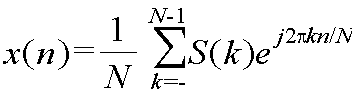
상기 <수학식 3>의 신호는 다음 <수학식 4>와 같이 간략화된다. The signal of

이와 같이 L의 등간격을 가지는 부반송파들에 정보를 매핑하여 전송하는 경우 역고속 퓨리에 변환된 OFDMA 신호는 한 심볼 구간 내에서 M 길이의 시퀀스가 L번 반복되는 형태를 가지게 된다. 즉 N=L*M이다. 여기서 각 시퀀스는 한 샘플 길이 와 동일한 하나의 반복 구간 동안 존재한다. 그러면 상기 <수학식 4>에서 p번째 반복되는 시퀀스의 신호는 다음 <수학식 5>와 같이 나타내어진다.As such, when information is mapped and transmitted on subcarriers having an equal interval of L, the inverse fast Fourier transformed OFDMA signal has a form in which a sequence of M lengths is repeated L times within one symbol period. That is, N = L * M. Here each sequence exists for one repetition interval equal to one sample length. Then, the signal of the p-th repeated sequence in
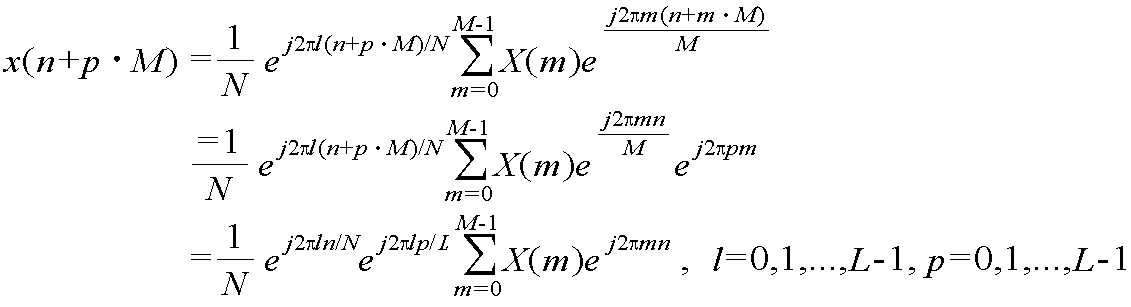
여기서 


상기 수식들에서 알 수 있듯이, 등간격을 가지는 부반송파들의 집합을 통해 OFDMA 변조된 신호는 상기 <수학식 5>와 같이 M 길이의 시퀀스가 L번 반복되며 이때 각 반복구간에서 부채널 할당 정보에 따라 위상회전이 발생한다. 즉, 각 반복구간에서의 신호는, 원신호의 OFDMA 변조된 신호를 담고 있는 부채널 정보 및 반복 구간 정보
본 발명의 바람직한 실시예에서는 상기 설명한 인터리브-OFDMA 신호의 반복 특성을 이용하여 TTG/RTG를 조정한다. 상기 설명하였듯이 상기 부채널을 통해 변조 된 OFDMA 신호는 M 개의 샘플들로 이루어진 길이 M의 시퀀스가 L번 반복되는 형태가 된다. TTG 또는 RTG를 포함하는 심볼은 전체 반송파를 사용하는 것이 아니라, 등간격을 가지는 부반송파 집합들 중의 하나인 부채널을 이용한다. 각 부채널에 포함되는 부반송파들의 개수는 반복구간 및 반복회수에 따라 변화될 수 있다. 예를 들어, 2번 반복되는 시퀀스를 얻고자 하는 경우, 부채널은 2개의 부반송파 간격을 가지는 부반송파 집합으로, 전체 반송파 개수의 1/2만큼의 부반송파들로 구성된다. In a preferred embodiment of the present invention, the TTG / RTG is adjusted using the repetitive characteristics of the interleaved-OFDMA signal described above. As described above, the OFDMA signal modulated through the subchannel has a form in which a length M sequence of M samples is repeated L times. A symbol including a TTG or RTG does not use the entire carrier but uses a subchannel, which is one of a set of subcarriers having equal intervals. The number of subcarriers included in each subchannel may vary depending on the repetition interval and the number of repetitions. For example, in order to obtain a sequence that is repeated twice, a subchannel is a subcarrier set having two subcarrier intervals, and is composed of half of the total carriers.
먼저 동작 전환 갭(TTG 또는 RTG)이 부프레임의 첫 번째 심볼에 구성되는 경우에 대해 기술한다. First, a case in which an operation switching gap (TTG or RTG) is configured in the first symbol of a subframe is described.
본 발명에 따른 시스템에서는 반복되는 M 샘플의 R배(여기서 R은 L보다 작은 정수)만큼을 동작 전환 갭으로 사용한다. 이 경우, 송신기는 하나의 심볼 구간 동안 OFDMA 신호를 송신하는 것이 아니라, M 샘플이 R번 반복되는 구간에서는 동작 전환을 수행하고, M 샘플이 나머지 (L-R)번 반복되는 구간 동안에서만 부분 OFDMA 신호를 전송한다. In the system according to the invention, R times the repeated M samples, where R is an integer less than L, is used as the operation switching gap. In this case, the transmitter does not transmit the OFDMA signal during one symbol period, but performs operation switching in a section in which M samples are repeated R times, and performs a partial OFDMA signal only in a section in which M samples are repeated (LR) times. send.
다음으로 동작 전환 갭(TTG 또는 RTG)이 부프레임의 마지막 심볼에 구성되는 경우에 대해 기술한다.Next, the case where the operation switching gap (TTG or RTG) is configured in the last symbol of the subframe will be described.
본 발명에 따른 시스템에서는 반복되는 M 샘플의 T배(여기서 T는 L보다 작은 정수)만큼을 동작 전환 갭으로 사용한다. 이 경우, 송신기는 하나의 심볼 구간 동안 OFDMA 신호를 송신하는 것이 아니라, M 샘플이 (L-T)번 반복되는 구간에서만 부분 OFDMA 신호를 먼저 송신하고, 이후 M 샘플이 나머지 T번 반복되는 구간에서는 동작 전환을 수행한다.In the system according to the invention, T times the repeated M samples, where T is an integer less than L, is used as the operation switching gap. In this case, the transmitter does not transmit the OFDMA signal during one symbol period, but transmits the partial OFDMA signal only in a section in which M samples are repeated (LT) times, and then switches operation in a section in which M samples are repeated T remaining times. Do this.
도 2 및 도 3은 본 발명의 바람직한 실시예에 따른 송수신 장치를 나타낸 것이다.2 and 3 show a transmission and reception apparatus according to a preferred embodiment of the present invention.
도 2는 본 발명의 바람직한 실시예에 따른 송신 장치를 나타낸 블록도이다. 하기에서는 하향링크 부프레임을 송신하는 기지국 송신 장치의 예를 설명할 것이나, 상향링크 부프레임을 송신하는 단말 송신 장치에도 마찬가지의 설명이 적용될 것이다. 도시한 바와 같이 송신 장치는 프레임 구성기(202)와 자원 매핑기(204)와 IFFT부(206)와 심볼 축약기(Symbol Shortening Block)(208)와 주기적 프리픽스(Cyclic Prefix: CP) 삽입기(210)와 디지털/아날로그(Digital to Analog Converter: DAC)(212)와 송신 스위치(214) 및 송신 제어부(216)로 구성된다.2 is a block diagram showing a transmission apparatus according to a preferred embodiment of the present invention. In the following, an example of a base station transmitting apparatus for transmitting a downlink subframe will be described, but the same description will be applied to a terminal transmitting apparatus for transmitting an uplink subframe. As shown, the transmitting apparatus includes a
도 2를 참조하면, 프레임 구성기(202)는 송신 제어부(216)의 제어하에, 부호화 등을 통해 송신하고자 하는 정보를 생성하고, 상기 생성된 정보는 자원 매핑기(204)에 의해 전체 L개의 부채널들 중 하나 혹은 그 이상의 부채널들에 매핑된다. 여기서 각 부채널에 포함되는 부반송파들은 블록 방식, 인터리브 방식, 블록-인터리브 방식 등에 따라 할당된다. 특히 인터리브 방식이 사용되는 경우 상기 정보는 L의 등간격을 가지는 부반송파 집합으로 이루어지는 부채널에 매핑된다.Referring to FIG. 2, the
상기 등간격을 가지는 부반송파 집합에 매핑된 신호는 IFFT부(206)에 의해 한 OFDMA 심볼에 해당하는 시간영역의 OFDMA 신호로 변환된다. 이 경우 상기 OFDMA 심볼은, M 샘플들로 이루어진 길이 M의 시퀀스가 L번 반복되는 형태를 가지게 된다. 도 4는 한 심볼 구간동안 L번 반복되는 시퀀스들을 개략적으로 도시하고 있다. 도시한 바와 같이 한 OFDMA 심볼(410)은 L번 반복되는 길이 M의 시퀀스들 A0, A1, ... AL-2, AL-1로 구성된다. 여기서 각 시퀀스는 M개의 샘플들로 이루어진다.The signal mapped to the subcarrier set having the same interval is converted by the
그러면 심볼 축약기(208)는 L개의 반복되는 시퀀스들 중 일부 시퀀스를 삭제하여 축약된 OFDMA 심볼을 생성한다. 여기서 삭제되는 시퀀스들의 위치 및 개수 등은 송신 제어부(216)에 의해 제어된다. 여기서 삭제된 시퀀스들의 구간은 동작 전환 갭으로 작용한다. 즉 송신 제어부(216)는 상기 삭제된 구간 동안 송신 스위치(214)를 온 시키고 송신 하드웨어를 설정하는 등의 송수신 동작 전환을 수행한다. CP 삽입기(210)는 상기 축약된 OFDMA 심볼에 심볼간 간섭(Inter-Symbol Interference: ISI)을 방지하기 위한 CP를 삽입하여 OFDMA 전송 심볼을 생성한 후 DAC(212)로 출력한다. DAC(212)는 상기 OFDMA 전송 심볼을 아날로그 신호로 변환한다.The symbol abbreviator 208 then deletes some of the L repeated sequences to produce an abbreviated OFDMA symbol. The position and the number of sequences to be deleted are controlled by the
송신 제어부(216)는 축약된 OFDMA 심볼 구간의 나머지인 제거된 시퀀스 구간동안 상기 동작이 수행되도록 프레임 구성기(202), 심볼 축약기(208), 송신 스위치(214)를 제어한다. 구체적으로 송신 제어부(216)는 TDD 프레임 구조에 따른 하향링크 부프레임 구간에서 송신 스위치(214)를 온(ON) 시켜, 상기 OFDMA 전송 심볼이 안테나를 통해 전송될 수 있도록 한다. 그 외의 구간에서 송신 스위치(214)는 오프(OFF) 된다. 도시하지 않을 것이나 상기 송신 스위치(214)를 통과한 상기 OFDMA 전송 심볼은 주파수 상승 변환, 필터링, 증폭 등을 거쳐 안테나를 통해 송출된다. The
도 3은 본 발명의 바람직한 실시예에 따른 수신 장치를 나타낸 블록도이다. 하기에서는 상향링크 부프레임을 수신하는 기지국 송신 장치의 예를 설명할 것이나, 하향링크 부프레임을 수신하는 단말 수신 장치에도 마찬가지의 설명이 적용될 것이다. 도시한 바와 같이 수신 장치는 수신 스위치(302)와 아날로그/디지털 변환기(Analog to Digital Converter: ADC)(304)와 부분 심볼(Fractional symbol) 검출기(306)와 CP 제거기(308)와 제로-패딩기(310)와 FFT부(312)와 채널 추정 및 보상기(314)와 자원 디매핑기(316)와 프레임 검출기(318) 및 수신 제어부(320)로 구성된다.3 is a block diagram showing a receiving apparatus according to a preferred embodiment of the present invention. Hereinafter, an example of a base station transmitting apparatus for receiving an uplink subframe will be described, but the same description will be applied to a terminal receiving apparatus for receiving a downlink subframe. As shown, the receiving device includes a receive
도 3을 참조하면, 수신 제어부(320)는 축약된 OFDMA 심볼 구간의 나머지인 제거된 시퀀스 구간동안 본 발명에 따른 동작이 수행되도록 수신 스위치(302), 부분 심볼 검출기(306), 제로 패딩기(310), 프레임 검출기(318)를 제어한다. 구체적으로 수신 제어부(320)는 TDD 프레임 구조에 따른 상향링크 부프레임이 시작되기 이전에 TTG를 감지하고 상기 TTG 동안 수신 스위치(302)를 온 시키고 수신 하드웨어를 설정하는 등의 송수신 동작 전환을 수행한다. 상기 상향링크 부프레임 구간에서 수신 스위치(302)는, 안테나를 통해 수신되고 필터링, 증폭 및 주파수 하강 변환 등을 거친 아날로그 신호를 통과시킨다. 그 외의 구간에서 수신 스위치(320)는 오프 된다. Referring to FIG. 3, the
상기 수신 스위치(302)를 통과한 아날로그 신호는 ADC(304)에 의해 한 OFDMA 심볼에 해당하는 디지털 신호로 변환된 후 부분 심볼 검출기(306)로 입력된다. 상기 부분 심볼 검출기(306)는 수신 제어부(320)의 제어 하에, 상기 디지털 신호 중 동작 전환 갭으로 사용된 반복 시퀀스 구간을 제외한 부분 심볼만을 검출하여 CP 제거기(308)로 전달한다. 상기 CP 제거기(308)는 상기 부분 심볼에 포함된 CP를 제거한다. 제로 패딩기(310)는 상기 CP가 제거된 부분 심볼에, 상기 송수신 동작 전환 갭에 해당하는 길이 만큼의 제로 시퀀스를 삽입하여 원래 길이의 OFDMA 심볼을 복원한다. The analog signal passing through the receive
상기 OFDMA 심볼은 FFT부(312)에 의해 주파수 영역의 신호로 변환되며, 채널 추정 및 보상기(314)는 상기 주파수 영역의 신호를 이용하여 채널 임펄스 응답을 측정하고 상기 주파수 영역의 신호를 보상한다. 자원 디매핑기(316)는 상기 보상된 신호 중에서, 할당된 부채널에 매핑된 신호를 구별하고, 프레임 검출기(318)는 상기 할당된 부채널에 매핑된 신호를 검출하여 수신하고자 하는 정보를 복원한다.The OFDMA symbol is converted into a signal in the frequency domain by the
상기와 같이 구성되는 본 발명의 바람직한 실시예에 따른 송수신 장치에서 사용되는 프레임 구조를 도 5a 및 도 5b에 도시하였다.5A and 5B illustrate a frame structure used in the transmission and reception apparatus according to the preferred embodiment of the present invention configured as described above.
도 5a는 본 발명의 바람직한 실시예에 따라 OFDMA 심볼 구간의 일부를 동작 전환 갭(TTG 또는 RTG)으로 사용하는 부프레임의 첫 번째 심볼의 구조를 시간영역에서 도시하고 있다. 도시한 바와 같이 한 OFDMA 심볼(510)은 L번 반복되는 길이 M의 시퀀스들 A0, A1, ... AL-2, AL-1로 구성된다. 이 중 처음 R개의 반복 구간은 동작 전환 갭, 예를 들어 RTG(515)로 사용되며, 나머지 L-2개의 반복 구간 동안 OFDMA 부분 심볼(520)이 전송된다.FIG. 5A illustrates a structure of a first symbol of a subframe in a time domain using a portion of an OFDMA symbol period as an operation switching gap (TTG or RTG) according to a preferred embodiment of the present invention. As shown, an OFDMA symbol 510 is composed of sequences A 0 , A 1 , ... A L-2 , A L-1 of length M repeated L times. The first R repetition intervals are used as an operation switching gap, for example,
도 5b는 본 발명의 바람직한 실시예에 따라 OFDMA 심볼 구간의 일부를 동작 전환 갭(TTG 또는 RTG)으로 사용하는 부프레임의 마지막 심볼의 구조를 시간영역에 서 도시하고 있다. 도시한 바와 같이 한 OFDMA 심볼(530)은 L번 반복되는 길이 M의 시퀀스들 A0, A1, ... AL-2, AL-1로 구성된다. 이 중 처음 (L-T)개의 반복 구간 동안에는 OFDM 부분 심볼(535)이 전송되며, 나머지 T개의 반복 구간은 동작 전환 갭, 예를 들어 RTG(540)로 사용된다.FIG. 5B illustrates a structure of a last symbol of a subframe in a time domain using a portion of an OFDMA symbol period as an operation switching gap (TTG or RTG) according to a preferred embodiment of the present invention. As shown, one OFDMA symbol 530 is composed of sequences A 0 , A 1 , ... A L-2 , A L-1 of length M repeated L times. The OFDM partial symbol 535 is transmitted during the first (LT) repetition intervals, and the remaining T repetition intervals are used as an operation switching gap, for example, the
상기와 같이 구성되는 프레임 구조를 사용하는 경우, 동작 전환 갭을 포함하는 심볼의 정보는 부분 심볼 구간 동안에서 수신된다. 도 3에서 제로-패딩기(310)와 FFT부(312)를 거친 신호는 다음 <수학식 6>과 같다.In the case of using the frame structure configured as described above, the information of the symbol including the operation switching gap is received during the partial symbol period. In FIG. 3, a signal passing through the zero-padding

이상적인 동기화를 가정한다면 수신된 신호는 다음 <수학식 7>과 같다. Assuming ideal synchronization, the received signal is given by Equation 7 below.

여기서 
상기 <수학식 7>과 같이, 본 발명에 따른 수신 장치는 축약된 OFDMA 심볼을 가지고 원래의 정보를 복원할 수 있다. 또한, 위상회전 성분은 미리 정해진 해당 심볼에 대한 부채널 할당 정보로 알 수 있다. 그리고 0번째 부채널이 할당되는 경우에는 위상 회전이 발생하지 않는다. As shown in Equation 7, the receiving apparatus according to the present invention may restore original information with the abbreviated OFDMA symbol. In addition, the phase rotation component may be known as subchannel allocation information for a predetermined corresponding symbol. If the 0th subchannel is allocated, no phase rotation occurs.
도 6은 본 발명의 일 실시예에 따라 OFDMA 심볼의 1/2 구간을 TTG와 RTG로 사용한 프레임 구조를 도시하고 있다. FIG. 6 illustrates a frame structure in which 1/2 intervals of an OFDMA symbol are used as TTG and RTG according to an embodiment of the present invention.
도 6을 참조하면, 하향링크 부프레임(610) 및 상향링크 부프레임(620)은 각각 복수개의 심볼들로 구성되며, RTG(615)와 TTG(625)로 구분된다. 여기서 각 데이터 심볼은 한 심볼 구간동안 부채널 할당과 사용자 정보에 따라 랜덤한 시퀀스로 구성되며 전체 부반송파에 걸쳐 존재할 수 있다. 그리고 동작 전환 갭을 포함하는 심볼은 인터리브-OFDMA 부채널 중 하나에 존재한다. 동작 전환 갭을 포함하는 각 심볼은 한 심볼 구간동안 2번 반복되는 N/2 길이의 시퀀스로 구성되며, 미리 정해지는 심볼에서 N/2 길이 구간은 TTG(625) 또는 RTG(615)로 사용되고 다른 N/2 길이 구간동안에는 정보가 전송된다. 즉, 전체 주파수 대역을 등간격을 가지는 2개의 부반송파 집합들, 즉 짝수 인덱스 부반송파 집합과 홀수 인덱스의 부반송파 집합으로 구분하고, L=2, M=N/2, T=1, R=1인 경우에, RTG(615) 및 TTG(625)의 길이는 1/2 심볼이 된다.Referring to FIG. 6, the
여기에서는 RTG(615)와 TTG(625)가 모두 하향링크 부프레임(610) 내에 위치한 경우를 도시하였다. 그러므로 하향링크 부프레임(610)의 첫 번째 심볼의 처음 1/2 심볼에는 어떠한 정보도 전송되지 않으며, 마찬가지로 마지막 심볼의 마지막 1/2 심볼에는 어떠한 정보도 전송되지 않는다. 즉 첫 번째 심볼 구간과 마지막 심볼 구간 동안에는 각 짝수번째 부반송파 혹은 홀수번째 부반송파에서만 신호가 존재한다. 이에 비해 유효한 정보를 운반하는 중간 심볼에서는 모든 부반송파에 신호가 존재함을 알 수 있다.Here, the case where the
도 7a 내지 도 7d는 본 발명의 바람직한 실시예에 따라 TTG/RTG의 위치에 따른 프레임 구조의 예들을 도시하고 있다. 각 무선 프레임(700)은 하향링크 부프레임(710)과 상향링크 부프레임(720)으로 구성된다.7A-7D show examples of frame structures depending on the location of TTG / RTG in accordance with a preferred embodiment of the present invention. Each radio frame 700 is composed of a downlink subframe 710 and an uplink subframe 720.
상기 도 7a는 TTG(725a)/RTG(715a)가 하향링크 부프레임(710)의 첫 번째 심볼과 마지막 심볼에 각각 위치하는 프레임 구조를 도시하고 있다. 상기 도 7b는 TTG(725b)/RTG(715b)가 상향링크 부프레임(720b)의 첫 번째 심볼과 마지막 심볼에 각각 위치하는 프레임 구조를 도시하고 있다. 즉, TTG(725b)는 상향링크 부프레임(720b)의 첫 번째 심볼 내에 위치하고, RTG(715b)는 상향링크 부프레임(720b)의 마지막 심볼 내에 위치한다. 상기 도 7c는 RTG(715c)/TTG(725c)가 각 부프레임(710c, 720c) 내의 첫 번째 심볼에 위치하는 프레임 구조를 도시하고 있다. 즉, RTG(715c)는 하향링크 부프레임(710c)의 첫 번째 심볼 내에 위치하고, TTG(725c)는 상향링크 부프레임(720c)의 첫 번째 심볼 내에 위치한다. 상기 도 7d는 TTG(725d)/RTG(715d)가 각 부프레임(710d, 720d) 내의 마지막 심볼에 위치하는 프레임 구조를 도시하고 있다. 즉, TTG(725d)는 하향링크 부프레임(710d)의 마지막 심볼 내에 위치하고 RTG(715d)는 상향링크 부프레임(720d)의 마지막 심볼 내에 위치한다. FIG. 7A illustrates a frame structure in which the
도 8은 본 발명의 제1 실시예에 따라, TTG와 RTG가 하나의 부프레임 내에 위치하는 경우의 송수신 동작을 나타낸 흐름도이다. 여기에서는 하향링크 송신과 상향링크 수신을 수행하는 기지국의 동작을 설명할 것이나, 동일한 설명이 상향링크 송신과 하향링크 수신을 수행하는 단말에 적용될 수 있음은 물론이다. TTG와 RTG가 하향링크 부프레임 내에 위치하게 되면 동작전환 1은 RTG 구간이 되고 동작전환 2는 TTG 구간이 된다. 반면 TTG와 RTG가 상향링크 부프레임 내에 위치하게 되면 동작전환 1은 TTG 구간이 되고 동작전환 2는 RTG 구간이 된다. 하기에서는 도 7a에 나타낸 바와 같이, TTG와 RTG가 하향링크 부프레임 내에 위치하는 경우를 설명한다.8 is a flowchart illustrating a transmission / reception operation when the TTG and the RTG are located in one subframe according to the first embodiment of the present invention. Here, an operation of a base station performing downlink transmission and uplink reception will be described, but the same description may be applied to a terminal performing uplink transmission and downlink reception. When the TTG and the RTG are located in the downlink subframe, the
도 8을 참조하면,802단계에서 기지국은 하향링크 부프레임 구간에서 첫 번째 심볼 구간의 RTG 동안 동작전환 1을 수행한다. 즉 상기 첫 번째 심볼 구간의 R개의 반복 구간들 동안 하향링크 송신을 수행하기 위해 필요한 소프트웨어 및 하드웨어 설정을 수행한다. 804단계에서 기지국은 상기 첫 번째 심볼 구간의 나머지 (L-R)개의 반복 구간들 동안 부분 심볼에 해당하는 부분 OFDMA 신호를 전송한다. 상기 부분 OFDMA 신호를 전송하고 나면, 806단계에서 기지국은 각각 완전한 OFDMA 심볼에 해당하는 OFDMA 신호를 전송한다. 808단계에서 기지국은 하향링크 부프레임을 구성하는 마지막 심볼의 송신인지를 확인하여, 만일 마지막 심볼의 송신이 아니면 상기 806단계로 복귀하고, 마지막 심볼의 송신이면 810단계로 진행한다. 여기서 마지막 심볼이라 함은 부분 심볼이 아닌 마지막 완전한 심볼을 의미한다.Referring to FIG. 8, in
상기 810단계에서 기지국은 하향링크 부프레임 구간에서 마지막 심볼 구간의 (L-T)개의 반복 구간들 동안 부분 심볼에 해당하는 부분 OFDMA 신호를 전송한다. 상기 부분 OFDMA 신호를 전송하고 나면, 812단계에서 기지국은 상기 마지막 심볼 구간의 TTG 동안 동작전환 2를 수행한다. 즉 상기 마지막 심볼 구간의 T개의 반복 구간들 동안 상향링크 수신을 수행하기 위해 필요한 소프트웨어 및 하드웨어 설정을 수행한다. 814단계에서 기지국은 각각 완전한 OFDMA 심볼에 해당하는 OFDMA 신호를 수신한다. 816단계에서 기지국은 상향링크 부프레임을 구성하는 마지막 심볼의 수신인지를 확인하여, 만일 마지막 심볼의 수신이 아니면 상기 814단계로 복귀하고, 마지막 심볼의 수신이면 상기 802단계로 복귀한다.In
도 9는 본 발명의 제2 실시예에 따라, RTG와 TTG가 서로 다른 부프레임의 첫 번째 심볼에 위치하는 경우의 송수신 동작을 나타낸 흐름도이다. 여기에서는 하향링크 송신과 상향링크 수신을 수행하는 기지국의 동작을 설명할 것이나, 동일한 설명이 상향링크 송신과 하향링크 수신을 수행하는 단말에 적용될 수 있음은 물론이다. RTG와 TTG가 첫 번째 심볼에 위치할 경우, 도 7c에 나타낸 바와 같이 RTG가 하향링크 부프레임의 첫 심볼에 위치하고 TTG가 상향링크 부프레임의 첫 심볼에 위치한다.9 is a flowchart illustrating a transmission / reception operation when the RTG and the TTG are located in the first symbol of different subframes according to the second embodiment of the present invention. Here, an operation of a base station performing downlink transmission and uplink reception will be described, but the same description may be applied to a terminal performing uplink transmission and downlink reception. When the RTG and the TTG are located in the first symbol, as shown in FIG. 7C, the RTG is located in the first symbol of the downlink subframe and the TTG is located in the first symbol of the uplink subframe.
도 9를 참조하면, 902단계에서 기지국은 하향링크 부프레임 구간에서 첫 번째 심볼 구간의 RTG 동안 동작전환 1을 수행한다. 즉 상기 첫 번째 심볼 구간의 R개의 반복 구간들 동안 하향링크 송신을 수행하기 위해 필요한 소프트웨어 및 하드웨어 설정을 수행한다. 904단계에서 기지국은 상기 첫 번째 심볼 구간의 나머지 (L-R)개의 반복 구간들 동안 부분 심볼에 해당하는 부분 OFDMA 신호를 전송한다. 상기 부분 OFDMA 신호를 전송하고 나면, 906단계에서 기지국은 각각 완전한 OFDMA 심볼에 해당하는 OFDMA 신호를 전송한다. 908단계에서 기지국은 하향링크 부프레임을 구성하는 마지막 심볼이 송신되는지를 확인하여, 만일 마지막 심볼의 송신이 아니면 상기 906단계로 복귀하고, 마지막 심볼의 송신이면 912단계로 진행한다. 여기서 마지막 심볼이라 함은 부분 심볼이 아닌 마지막 완전한 심볼을 의미한다.Referring to FIG. 9, in
상기 마지막 심볼의 송신이면, 912단계에서 기지국은 상향링크 부프레임 구간에서 첫 번째 심볼 구간의 TTG 동안 동작전환 2를 수행한다. 즉 상기 첫 번째 심볼 구간의 T개의 반복 구간들 동안 상향링크 수신을 수행하기 위해 필요한 소프트웨어 및 하드웨어 설정을 수행한다. 914단계에서 기지국은 상기 첫 번째 심볼 구간의 나머지 (L-T)개의 반복 구간들 동안 부분 심볼에 해당하는 부분 OFDMA 신호를 수신한다. 그리고 나서 916단계에서 기지국은 각각 완전한 OFDMA 심볼에 해당하는 OFDMA 신호를 수신한다. 916단계에서 기지국은 상향링크 부프레임을 구성하는 마지막 심볼이 수신되었는지를 확인하여, 만일 마지막 심볼이 수신되지 않았으면 상기 916단계로 복귀하고, 마지막 심볼이 수신되었으면 상기 902단계로 복귀한다.If the last symbol is transmitted, in
도 10은 본 발명의 제3 실시예에 따라, TTG와 RTG가 서로 다른 부프레임의 마지막 심볼에 위치하는 경우의 송수신 동작을 나타낸 흐름도이다. 여기에서는 하향링크 송신과 상향링크 수신을 수행하는 기지국의 동작을 설명할 것이나, 동일한 설명이 상향링크 송신과 하향링크 수신을 수행하는 단말에 적용될 수 있음은 물론이다. TTG와 RTG가 마지막 심볼에 위치할 경우, 도 7d에 나타낸 바와 같이 TTG가 하향링크 부프레임의 마지막 심볼에 위치하고 RTG가 상향링크 부프레임의 마지막 심볼에 위치한다.10 is a flowchart illustrating a transmission / reception operation when the TTG and the RTG are located in the last symbol of different subframes according to the third embodiment of the present invention. Here, an operation of a base station performing downlink transmission and uplink reception will be described, but the same description may be applied to a terminal performing uplink transmission and downlink reception. When the TTG and the RTG are located in the last symbol, as shown in FIG. 7D, the TTG is located in the last symbol of the downlink subframe and the RTG is located in the last symbol of the uplink subframe.
도 10을 참조하면, 1002단계에서 기지국은 하향링크 부프레임 구간에서 각각 완전한 OFDMA 심볼에 해당하는 OFDMA 신호를 전송한다. 1004단계에서 기지국은 하향링크 부프레임을 구성하는 마지막 완전한 심볼을 송신하는지를 확인하여, 만일 마지막 완전한 심볼의 송신이 아니면 상기 1002단계로 복귀하고, 마지막 완전한 심볼의 송신이면 1006단계로 진행한다. 상기 1006단계에서 기지국은 마지막 심볼 구간의 (L-T)개의 반복 구간들 동안 부분 심볼에 해당하는 부분 OFDMA 신호를 전송한다. 상기 부분 OFDMA 신호를 전송하고 나면 1008단계에서 기지국은 상기 마지막 심볼 구간의 나머지 T개의 반복 구간들, 즉 TTG 동안 동작전환 1을 수행한다. 즉 상기 마지막 심볼 구간의 나머지 T개의 반복 구간들 동안 상향링크 수신을 수행하기 위해 필요한 소프트웨어 및 하드웨어 설정을 수행한다. Referring to FIG. 10, in
1010단계에서 기지국은 상향링크 부프레임 구간에서 각각 완전한 OFDMA 심볼에 해당하는 OFDMA 신호를 수신한다. 1012단계에서 기지국은 상향링크 부프레임을 구성하는 마지막 완전한 심볼의 수신인지를 확인하여, 만일 마지막 완전한 심볼의 수신이 아니면 상기 1010단계로 복귀하고, 마지막 완전한 심볼의 수신이면 1014단계로 진행한다. 상기 1014단계에서 기지국은 마지막 심볼 구간의 (L-R)개의 반복 구간들 동안 부분 심볼에 해당하는 부분 OFDMA 신호를 수신한다. 상기 부분 OFDMA 신호를 수신하고 나면 1016단계에서 기지국은 상기 마지막 심볼 구간의 RTG 동안 동작전환 2를 수행한다. 즉 상기 마지막 심볼 구간의 나머지 R개의 반복 구간들 동안 수신을 OFF하고 하향링크 송신을 수행하기 위해 필요한 소프트웨어 및 하드웨어 설정을 수행한다. In
이상에서 설명한 실시예들에서는 RTG와 TTG의 길이가 동일한 것으로 설명하였으나, 각 동작 전환 구간이 점유하는 샘플들의 개수는 앞서 설명한 R과 T에 따라 결정되며, 상기 R과 상기 T는 서로 다른 값을 가질 수 있다.In the above-described embodiments, the lengths of the RTG and the TTG are described to be the same, but the number of samples occupied by each operation switching interval is determined according to R and T described above, and R and T may have different values. Can be.
또한 본 발명의 변형된 실시예는 TTG/RTG를 한 심볼 길이의 실수배로 설정할 수 있다. 예를 들어 TTG 혹은 RTG는 심볼 길이의 x.25, x.5, x.75 배(여기서 x는 양의 정수)가 될 수 있다. 이 경우, 복수 개의 심볼 구간에서는 신호가 전송되지 않고 이전 혹은 이후의 한 심볼의 부분 심볼 구간동안을 TTG/RTG로 사용할 수 있다. In addition, the modified embodiment of the present invention may set TTG / RTG to a real multiple of one symbol length. For example, TTG or RTG can be x.25, x.5, x.75 times the symbol length, where x is a positive integer. In this case, a signal is not transmitted in a plurality of symbol intervals, and a partial symbol interval of one symbol before or after may be used as TTG / RTG.
또 다른 실시예에서, 하나의 프레임을 구성하는 모든 OFDMA 심볼이 인터리브-OFDMA 형태를 가지지 않고, TTG 또는 RTG를 구성하는 심볼(들)만이 인터리브-OFDMA 형태를 가질 수 있다. 즉 TTG 혹은 RTG를 구성하는 심볼(들)만이, 길이 M인 시퀀스가 L번 반복되는 형태를 가진다. In another embodiment, not all OFDMA symbols constituting one frame have an interleaved-OFDMA form, and only symbol (s) constituting a TTG or RTG may have an interleaved-OFDMA form. That is, only the symbol (s) constituting the TTG or RTG has a form in which a length M sequence is repeated L times.
한편 본 발명의 상세한 설명에서는 구체적인 실시예에 관해 설명하였으나, 본 발명의 범위에서 벗어나지 않는 한도 내에서 여러 가지 변형이 가능함은 물론이다. 그러므로 본 발명의 범위는 설명된 실시예에 국한되지 않으며, 후술되는 특허청구의 범위뿐만 아니라 이 특허청구의 범위와 균등한 것들에 의해 정해져야 한다. While the present invention has been described in connection with what is presently considered to be the most practical and preferred embodiment, it is to be understood that the invention is not limited to the disclosed embodiments, but is capable of various modifications within the scope of the invention. Therefore, the scope of the present invention should not be limited to the described embodiments, but should be determined by the scope of the appended claims, and equivalents thereof.
이상에서 상세히 설명한 바와 같이 동작하는 본 발명에 있어서, 개시되는 발명중 대표적인 것에 의하여 얻어지는 효과를 간단히 설명하면 다음과 같다.In the present invention operating as described in detail above, the effects obtained by the representative ones of the disclosed inventions will be briefly described as follows.
본 발명은, 인터리브-OFDMA 신호의 시퀀스 반복 특성을 이용하여 유연성있게 TTG/RTG를 조정할 수 있으며 조정된 TTG/RTG의 위치에 따라 4가지 경우의 프레임 구조를 제공할 수 있는 효과가 있다.The present invention can flexibly adjust TTG / RTG using the sequence repetition characteristics of the interleaved-OFDMA signal and provide four cases of frame structures according to the position of the adjusted TTG / RTG.
Claims (26)
Priority Applications (1)
| Application Number | Priority Date | Filing Date | Title |
|---|---|---|---|
| KR1020050095533A KR101157259B1 (en) | 2005-10-11 | 2005-10-11 | Method and apparatus for transmitting/receiving a frame adjustable ttd/rtg in tdd-ofdma system |
Applications Claiming Priority (1)
| Application Number | Priority Date | Filing Date | Title |
|---|---|---|---|
| KR1020050095533A KR101157259B1 (en) | 2005-10-11 | 2005-10-11 | Method and apparatus for transmitting/receiving a frame adjustable ttd/rtg in tdd-ofdma system |
Publications (2)
| Publication Number | Publication Date |
|---|---|
| KR20070040151A KR20070040151A (en) | 2007-04-16 |
| KR101157259B1 true KR101157259B1 (en) | 2012-06-15 |
Family
ID=38175987
Family Applications (1)
| Application Number | Title | Priority Date | Filing Date |
|---|---|---|---|
| KR1020050095533A Expired - Fee Related KR101157259B1 (en) | 2005-10-11 | 2005-10-11 | Method and apparatus for transmitting/receiving a frame adjustable ttd/rtg in tdd-ofdma system |
Country Status (1)
| Country | Link |
|---|---|
| KR (1) | KR101157259B1 (en) |
Families Citing this family (3)
| Publication number | Priority date | Publication date | Assignee | Title |
|---|---|---|---|---|
| JP2011510569A (en) * | 2008-01-16 | 2011-03-31 | テレフオンアクチーボラゲット エル エム エリクソン(パブル) | OFDM symbol with reduced symbol length |
| US8238300B2 (en) | 2008-02-17 | 2012-08-07 | Lg Electronics Inc. | Method of communication using frame |
| RU2479928C2 (en) | 2008-11-27 | 2013-04-20 | Эл Джи Электроникс Инк. | Apparatus and method of transmitting data in wireless communication system |
Citations (2)
| Publication number | Priority date | Publication date | Assignee | Title |
|---|---|---|---|---|
| JP2000049691A (en) | 1998-07-31 | 2000-02-18 | Matsushita Commun Ind Co Ltd | Wireless line relay device and wireless line relay method thereof |
| US20020141355A1 (en) | 2001-01-19 | 2002-10-03 | Struhsaker Paul F. | Wireless access system and associated method using multiple modulation formats in TDD frames according to subscriber service type |
-
2005
- 2005-10-11 KR KR1020050095533A patent/KR101157259B1/en not_active Expired - Fee Related
Patent Citations (2)
| Publication number | Priority date | Publication date | Assignee | Title |
|---|---|---|---|---|
| JP2000049691A (en) | 1998-07-31 | 2000-02-18 | Matsushita Commun Ind Co Ltd | Wireless line relay device and wireless line relay method thereof |
| US20020141355A1 (en) | 2001-01-19 | 2002-10-03 | Struhsaker Paul F. | Wireless access system and associated method using multiple modulation formats in TDD frames according to subscriber service type |
Also Published As
| Publication number | Publication date |
|---|---|
| KR20070040151A (en) | 2007-04-16 |
Similar Documents
| Publication | Publication Date | Title |
|---|---|---|
| Wei et al. | Orthogonal time-frequency space modulation: A promising next-generation waveform | |
| US8369301B2 (en) | OFDM/OFDMA frame structure for communication systems | |
| AU2008312350B2 (en) | OFDM/OFDMA frame structure for communication systems | |
| JP5062852B2 (en) | Pilot signal transmission method | |
| RU2425459C2 (en) | Configurable pilot signals in wireless communication system | |
| US6430148B1 (en) | Multidirectional communication systems | |
| KR101472573B1 (en) | Method and apparatus for transmitting uplink signal, and method and apparatus for generating uplink signal in communication system | |
| US8649364B2 (en) | Hybrid subcarrier mapping method and system | |
| CN103281284B (en) | For adjusting the method and the travelling carriage thereof that send timing and send grouping continuously | |
| EP1895703A1 (en) | Bandwidth asymmetric communication system based on OFDM and TDMA | |
| JP2009543405A (en) | Bandwidth asymmetric communication system | |
| CN101507158A (en) | Device and method for performing communication in a variable band | |
| EP1901506B1 (en) | Inter-symbol interference cancellation method for orthogonal frequency division multiple access system | |
| US6542460B1 (en) | Relating to multidirectional communication systems | |
| KR20060133869A (en) | Device and method for transmitting / receiving uplink pilot in frequency division multiple access system | |
| JP4373977B2 (en) | Wireless communication system and wireless device | |
| JP5278539B2 (en) | Wireless communication system, transmitting apparatus, receiving apparatus, and wireless communication method in wireless communication system | |
| KR101157259B1 (en) | Method and apparatus for transmitting/receiving a frame adjustable ttd/rtg in tdd-ofdma system | |
| WO2007088580A1 (en) | Communication control method, receiving station apparatus, transmitting station apparatus, and communication system | |
| KR101225182B1 (en) | method for transmitting common feedback channel and tranceiver therefor | |
| JP3869371B2 (en) | Frequency band division method in which uplink frequency band and downlink frequency band allocated for each individual user are alternately arranged for all users | |
| JP2016134854A (en) | Wireless communication apparatus and wireless communication system | |
| JP2008244851A (en) | Wireless transmission method and apparatus | |
| Zorba et al. | Spatial Diversity Scheme to Efficiently Cancel ISI and ICI in OFDM‐OQAM Systems |
Legal Events
| Date | Code | Title | Description |
|---|---|---|---|
| PA0109 | Patent application |
St.27 status event code: A-0-1-A10-A12-nap-PA0109 |
|
| PG1501 | Laying open of application |
St.27 status event code: A-1-1-Q10-Q12-nap-PG1501 |
|
| A201 | Request for examination | ||
| P11-X000 | Amendment of application requested |
St.27 status event code: A-2-2-P10-P11-nap-X000 |
|
| P13-X000 | Application amended |
St.27 status event code: A-2-2-P10-P13-nap-X000 |
|
| PA0201 | Request for examination |
St.27 status event code: A-1-2-D10-D11-exm-PA0201 |
|
| D13-X000 | Search requested |
St.27 status event code: A-1-2-D10-D13-srh-X000 |
|
| D14-X000 | Search report completed |
St.27 status event code: A-1-2-D10-D14-srh-X000 |
|
| E902 | Notification of reason for refusal | ||
| PE0902 | Notice of grounds for rejection |
St.27 status event code: A-1-2-D10-D21-exm-PE0902 |
|
| P11-X000 | Amendment of application requested |
St.27 status event code: A-2-2-P10-P11-nap-X000 |
|
| P13-X000 | Application amended |
St.27 status event code: A-2-2-P10-P13-nap-X000 |
|
| E701 | Decision to grant or registration of patent right | ||
| PE0701 | Decision of registration |
St.27 status event code: A-1-2-D10-D22-exm-PE0701 |
|
| GRNT | Written decision to grant | ||
| PR0701 | Registration of establishment |
St.27 status event code: A-2-4-F10-F11-exm-PR0701 |
|
| PR1002 | Payment of registration fee |
St.27 status event code: A-2-2-U10-U11-oth-PR1002 Fee payment year number: 1 |
|
| PG1601 | Publication of registration |
St.27 status event code: A-4-4-Q10-Q13-nap-PG1601 |
|
| R18-X000 | Changes to party contact information recorded |
St.27 status event code: A-5-5-R10-R18-oth-X000 |
|
| FPAY | Annual fee payment |
Payment date: 20150528 Year of fee payment: 4 |
|
| PR1001 | Payment of annual fee |
St.27 status event code: A-4-4-U10-U11-oth-PR1001 Fee payment year number: 4 |
|
| FPAY | Annual fee payment |
Payment date: 20160530 Year of fee payment: 5 |
|
| PR1001 | Payment of annual fee |
St.27 status event code: A-4-4-U10-U11-oth-PR1001 Fee payment year number: 5 |
|
| P22-X000 | Classification modified |
St.27 status event code: A-4-4-P10-P22-nap-X000 |
|
| LAPS | Lapse due to unpaid annual fee | ||
| PC1903 | Unpaid annual fee |
St.27 status event code: A-4-4-U10-U13-oth-PC1903 Not in force date: 20170612 Payment event data comment text: Termination Category : DEFAULT_OF_REGISTRATION_FEE |
|
| PC1903 | Unpaid annual fee |
St.27 status event code: N-4-6-H10-H13-oth-PC1903 Ip right cessation event data comment text: Termination Category : DEFAULT_OF_REGISTRATION_FEE Not in force date: 20170612 |
|
| P22-X000 | Classification modified |
St.27 status event code: A-4-4-P10-P22-nap-X000 |