KR101089878B1 - Novel heterobicyclic derivatives useful as inhibitors of liver carnitine palmitoyl transferase - Google Patents
Novel heterobicyclic derivatives useful as inhibitors of liver carnitine palmitoyl transferase Download PDFInfo
- Publication number
- KR101089878B1 KR101089878B1 KR1020087008663A KR20087008663A KR101089878B1 KR 101089878 B1 KR101089878 B1 KR 101089878B1 KR 1020087008663 A KR1020087008663 A KR 1020087008663A KR 20087008663 A KR20087008663 A KR 20087008663A KR 101089878 B1 KR101089878 B1 KR 101089878B1
- Authority
- KR
- South Korea
- Prior art keywords
- benzenesulfonyl
- amino
- carbonyl
- chloro
- benzoic acid
- Prior art date
- Legal status (The legal status is an assumption and is not a legal conclusion. Google has not performed a legal analysis and makes no representation as to the accuracy of the status listed.)
- Expired - Fee Related
Links
- 0 *C1=CC(NC(c2cc(*)c(CCCN3S(c4c(*)c(*)c(*)c(*)c4*)(=O)=O)c3c2)=O)=C**1 Chemical compound *C1=CC(NC(c2cc(*)c(CCCN3S(c4c(*)c(*)c(*)c(*)c4*)(=O)=O)c3c2)=O)=C**1 0.000 description 1
- OGQJEKRKUBXPRH-UHFFFAOYSA-N C[N+]1(CC1)(c1ccc(CO)cc1)O Chemical compound C[N+]1(CC1)(c1ccc(CO)cc1)O OGQJEKRKUBXPRH-UHFFFAOYSA-N 0.000 description 1
- MXJOUBNXCFLFBS-UHFFFAOYSA-N Nc1ccc(C(C(F)(F)F)O)cc1 Chemical compound Nc1ccc(C(C(F)(F)F)O)cc1 MXJOUBNXCFLFBS-UHFFFAOYSA-N 0.000 description 1
- HMMYBMZBBJTNKK-UHFFFAOYSA-O OC(C(F)(F)F)c(cc1)ccc1[NH+]1CC1 Chemical compound OC(C(F)(F)F)c(cc1)ccc1[NH+]1CC1 HMMYBMZBBJTNKK-UHFFFAOYSA-O 0.000 description 1
Classifications
-
- C—CHEMISTRY; METALLURGY
- C07—ORGANIC CHEMISTRY
- C07D—HETEROCYCLIC COMPOUNDS
- C07D223/00—Heterocyclic compounds containing seven-membered rings having one nitrogen atom as the only ring hetero atom
- C07D223/14—Heterocyclic compounds containing seven-membered rings having one nitrogen atom as the only ring hetero atom condensed with carbocyclic rings or ring systems
- C07D223/16—Benzazepines; Hydrogenated benzazepines
-
- A—HUMAN NECESSITIES
- A61—MEDICAL OR VETERINARY SCIENCE; HYGIENE
- A61P—SPECIFIC THERAPEUTIC ACTIVITY OF CHEMICAL COMPOUNDS OR MEDICINAL PREPARATIONS
- A61P1/00—Drugs for disorders of the alimentary tract or the digestive system
- A61P1/16—Drugs for disorders of the alimentary tract or the digestive system for liver or gallbladder disorders, e.g. hepatoprotective agents, cholagogues, litholytics
-
- A—HUMAN NECESSITIES
- A61—MEDICAL OR VETERINARY SCIENCE; HYGIENE
- A61P—SPECIFIC THERAPEUTIC ACTIVITY OF CHEMICAL COMPOUNDS OR MEDICINAL PREPARATIONS
- A61P13/00—Drugs for disorders of the urinary system
- A61P13/12—Drugs for disorders of the urinary system of the kidneys
-
- A—HUMAN NECESSITIES
- A61—MEDICAL OR VETERINARY SCIENCE; HYGIENE
- A61P—SPECIFIC THERAPEUTIC ACTIVITY OF CHEMICAL COMPOUNDS OR MEDICINAL PREPARATIONS
- A61P3/00—Drugs for disorders of the metabolism
- A61P3/04—Anorexiants; Antiobesity agents
-
- A—HUMAN NECESSITIES
- A61—MEDICAL OR VETERINARY SCIENCE; HYGIENE
- A61P—SPECIFIC THERAPEUTIC ACTIVITY OF CHEMICAL COMPOUNDS OR MEDICINAL PREPARATIONS
- A61P3/00—Drugs for disorders of the metabolism
- A61P3/06—Antihyperlipidemics
-
- A—HUMAN NECESSITIES
- A61—MEDICAL OR VETERINARY SCIENCE; HYGIENE
- A61P—SPECIFIC THERAPEUTIC ACTIVITY OF CHEMICAL COMPOUNDS OR MEDICINAL PREPARATIONS
- A61P3/00—Drugs for disorders of the metabolism
- A61P3/08—Drugs for disorders of the metabolism for glucose homeostasis
-
- A—HUMAN NECESSITIES
- A61—MEDICAL OR VETERINARY SCIENCE; HYGIENE
- A61P—SPECIFIC THERAPEUTIC ACTIVITY OF CHEMICAL COMPOUNDS OR MEDICINAL PREPARATIONS
- A61P3/00—Drugs for disorders of the metabolism
- A61P3/08—Drugs for disorders of the metabolism for glucose homeostasis
- A61P3/10—Drugs for disorders of the metabolism for glucose homeostasis for hyperglycaemia, e.g. antidiabetics
-
- A—HUMAN NECESSITIES
- A61—MEDICAL OR VETERINARY SCIENCE; HYGIENE
- A61P—SPECIFIC THERAPEUTIC ACTIVITY OF CHEMICAL COMPOUNDS OR MEDICINAL PREPARATIONS
- A61P43/00—Drugs for specific purposes, not provided for in groups A61P1/00-A61P41/00
-
- A—HUMAN NECESSITIES
- A61—MEDICAL OR VETERINARY SCIENCE; HYGIENE
- A61P—SPECIFIC THERAPEUTIC ACTIVITY OF CHEMICAL COMPOUNDS OR MEDICINAL PREPARATIONS
- A61P9/00—Drugs for disorders of the cardiovascular system
- A61P9/04—Inotropic agents, i.e. stimulants of cardiac contraction; Drugs for heart failure
-
- A—HUMAN NECESSITIES
- A61—MEDICAL OR VETERINARY SCIENCE; HYGIENE
- A61P—SPECIFIC THERAPEUTIC ACTIVITY OF CHEMICAL COMPOUNDS OR MEDICINAL PREPARATIONS
- A61P9/00—Drugs for disorders of the cardiovascular system
- A61P9/10—Drugs for disorders of the cardiovascular system for treating ischaemic or atherosclerotic diseases, e.g. antianginal drugs, coronary vasodilators, drugs for myocardial infarction, retinopathy, cerebrovascula insufficiency, renal arteriosclerosis
-
- A—HUMAN NECESSITIES
- A61—MEDICAL OR VETERINARY SCIENCE; HYGIENE
- A61P—SPECIFIC THERAPEUTIC ACTIVITY OF CHEMICAL COMPOUNDS OR MEDICINAL PREPARATIONS
- A61P9/00—Drugs for disorders of the cardiovascular system
- A61P9/12—Antihypertensives
-
- C—CHEMISTRY; METALLURGY
- C07—ORGANIC CHEMISTRY
- C07D—HETEROCYCLIC COMPOUNDS
- C07D209/00—Heterocyclic compounds containing five-membered rings, condensed with other rings, with one nitrogen atom as the only ring hetero atom
- C07D209/02—Heterocyclic compounds containing five-membered rings, condensed with other rings, with one nitrogen atom as the only ring hetero atom condensed with one carbocyclic ring
- C07D209/04—Indoles; Hydrogenated indoles
- C07D209/10—Indoles; Hydrogenated indoles with substituted hydrocarbon radicals attached to carbon atoms of the hetero ring
-
- C—CHEMISTRY; METALLURGY
- C07—ORGANIC CHEMISTRY
- C07D—HETEROCYCLIC COMPOUNDS
- C07D215/00—Heterocyclic compounds containing quinoline or hydrogenated quinoline ring systems
- C07D215/58—Heterocyclic compounds containing quinoline or hydrogenated quinoline ring systems with hetero atoms directly attached to the ring nitrogen atom
-
- C—CHEMISTRY; METALLURGY
- C07—ORGANIC CHEMISTRY
- C07D—HETEROCYCLIC COMPOUNDS
- C07D403/00—Heterocyclic compounds containing two or more hetero rings, having nitrogen atoms as the only ring hetero atoms, not provided for by group C07D401/00
- C07D403/02—Heterocyclic compounds containing two or more hetero rings, having nitrogen atoms as the only ring hetero atoms, not provided for by group C07D401/00 containing two hetero rings
- C07D403/12—Heterocyclic compounds containing two or more hetero rings, having nitrogen atoms as the only ring hetero atoms, not provided for by group C07D401/00 containing two hetero rings linked by a chain containing hetero atoms as chain links
-
- C—CHEMISTRY; METALLURGY
- C07—ORGANIC CHEMISTRY
- C07D—HETEROCYCLIC COMPOUNDS
- C07D413/00—Heterocyclic compounds containing two or more hetero rings, at least one ring having nitrogen and oxygen atoms as the only ring hetero atoms
- C07D413/02—Heterocyclic compounds containing two or more hetero rings, at least one ring having nitrogen and oxygen atoms as the only ring hetero atoms containing two hetero rings
- C07D413/12—Heterocyclic compounds containing two or more hetero rings, at least one ring having nitrogen and oxygen atoms as the only ring hetero atoms containing two hetero rings linked by a chain containing hetero atoms as chain links
Landscapes
- Chemical & Material Sciences (AREA)
- Organic Chemistry (AREA)
- Health & Medical Sciences (AREA)
- Engineering & Computer Science (AREA)
- Bioinformatics & Cheminformatics (AREA)
- Animal Behavior & Ethology (AREA)
- Public Health (AREA)
- Chemical Kinetics & Catalysis (AREA)
- General Chemical & Material Sciences (AREA)
- Medicinal Chemistry (AREA)
- Nuclear Medicine, Radiotherapy & Molecular Imaging (AREA)
- Pharmacology & Pharmacy (AREA)
- Life Sciences & Earth Sciences (AREA)
- Veterinary Medicine (AREA)
- General Health & Medical Sciences (AREA)
- Diabetes (AREA)
- Obesity (AREA)
- Hematology (AREA)
- Cardiology (AREA)
- Heart & Thoracic Surgery (AREA)
- Urology & Nephrology (AREA)
- Emergency Medicine (AREA)
- Endocrinology (AREA)
- Hospice & Palliative Care (AREA)
- Vascular Medicine (AREA)
- Child & Adolescent Psychology (AREA)
- Gastroenterology & Hepatology (AREA)
- Pharmaceuticals Containing Other Organic And Inorganic Compounds (AREA)
- Indole Compounds (AREA)
- Quinoline Compounds (AREA)
- Plural Heterocyclic Compounds (AREA)
Abstract
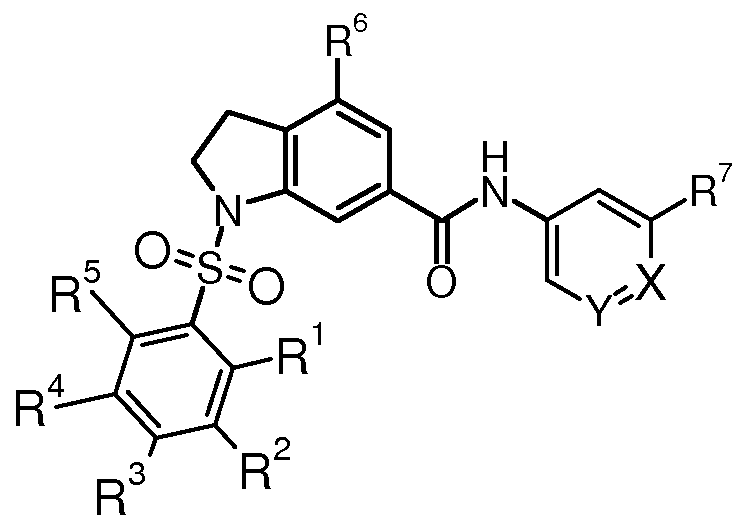
본 발명은 하기 화학식 I의 신규 헤테로바이사이클릭 유도체 및 이의 생리학적으로 허용가능한 염 및 에스터에 관한 것이다: The present invention relates to novel heterobicyclic derivatives of formula (I) and physiologically acceptable salts and esters thereof:
화학식 IFormula I

상기 식에서, Where
R1, R2, R3, R4, R5, R6, R7, A, X 및 Y는 명세서 및 청구의 범위에 정의된 바와 같다. R 1 , R 2 , R 3 , R 4 , R 5 , R 6 , R 7 , A, X and Y are as defined in the specification and claims.
상기 화합물은 L-CPT1을 억제하며, 약제로서 사용될 수 있다.The compound inhibits L-CPT1 and can be used as a medicament.
Description
본 발명은 하기 화학식 I의 신규 헤테로바이사이클릭 유도체 및 이의 약학적으로 허용가능한 염 및 에스터에 관한 것이다:The present invention relates to novel heterobicyclic derivatives of formula (I) and their pharmaceutically acceptable salts and esters:

상기 식에서,Where
X는 N 또는 CR8이고;X is N or CR 8 ;
Y는 N 또는 CR9이고;Y is N or CR 9 ;
A는 -C(R10R11)C(R12R13)-, -C(R10R11)C(R12R13)C(R14R15)-, -C(R10R11)C(R12R13)C(R14R15)C(R16R17)-, -C(R10R11)C(R12R13)C(R14R15)C(R16R17)C(R18R19)- 또는 -C(R10)=C(R11)-이고;A is -C (R 10 R 11 ) C (R 12 R 13 )-, -C (R 10 R 11 ) C (R 12 R 13 ) C (R 14 R 15 )-, -C (R 10 R 11 ) C (R 12 R 13 ) C (R 14 R 15 ) C (R 16 R 17 )-, -C (R 10 R 11 ) C (R 12 R 13 ) C (R 14 R 15 ) C (R 16 R 17 ) C (R 18 R 19 )-or -C (R 10 ) = C (R 11 )-;
R1, R2, R3, R4 및 R5는 서로 독립적으로 수소, 할로겐, 사이아노, 하이드록시, 저급-알킬, 플루오로-저급-알킬, 저급-알콕시, 플루오로-저급-알콕시, 저급-알킬-C(O), 저급-알킬-C(O)-NH, 저급-알킬-C(O)-N(저급-알킬), 저급-알킬-S(O)2, NH2-S(O)2, N(H,저급-알킬)-S(O)2 또는 N(저급-알킬)2-S(O)2, NH2-C(O), N(H,저급-알킬)-C(O), N(저급-알킬)2-C(O) 또는 저급-알콕시-C(O)이고, 상기 저급-알킬은 하이드록시, 저급 알콕시, NH2, N(H,저급-알킬) 또는 N(저급-알킬)2로 치환되거나 치환되지 않고;R 1 , R 2 , R 3 , R 4 and R 5 independently of one another are hydrogen, halogen, cyano, hydroxy, lower-alkyl, fluoro-lower-alkyl, lower-alkoxy, fluoro-lower-alkoxy, Lower-alkyl-C (O), lower-alkyl-C (O) -NH, lower-alkyl-C (O) -N (lower-alkyl), lower-alkyl-S (O) 2 , NH 2 -S (O) 2 , N (H, lower-alkyl) -S (O) 2 or N (lower-alkyl) 2 -S (O) 2 , NH 2 -C (O), N (H, lower-alkyl) -C (O), N (lower-alkyl) 2 -C (O) or lower-alkoxy-C (O), said lower-alkyl being hydroxy, lower alkoxy, NH 2 , N (H, lower-alkyl ) Or N (lower-alkyl) 2 or unsubstituted;
R6은 수소, 할로겐, 저급-알킬, 저급-알콕시, 플루오로-저급-알킬, 플루오로-저급-알콕시, 하이드록시 또는 하이드록시-저급-알킬이며;R 6 is hydrogen, halogen, lower-alkyl, lower-alkoxy, fluoro-lower-alkyl, fluoro-lower-alkoxy, hydroxy or hydroxy-lower-alkyl;
R7은 수소, 할로겐, 하이드록시, 사이아노, 저급-알킬, 저급-알콕시, 플루오로-저급-알킬, 플루오로-저급-알콕시 또는 하이드록시-저급-알킬이고;R 7 is hydrogen, halogen, hydroxy, cyano, lower-alkyl, lower-alkoxy, fluoro-lower-alkyl, fluoro-lower-alkoxy or hydroxy-lower-alkyl;
R8은 수소, 할로겐, 사이아노, 저급-알킬, 플루오로-저급-알킬, 저급-알콕시, 플루오로-저급-알콕시, 저급-알킬-C(O), 저급-알킬-C(O)-NH, 저급-알킬-C(O)-N(저급-알킬), 저급-알킬-S(O)2, NH2-S(O)2, N(H,저급-알킬)-S(O)2, N(저급-알킬)2-S(O)2, NH2-C(O), N(H,저급-알킬)-C(O), N(저급-알킬)2-C(O), 저급-알콕시-C(O), COOH, 1H-테트 라졸일, 4H-[1,2,4]옥사다이아졸-3-일-5-온, 4H-[1,2,4]싸이아다이아졸-3-일-5-온, 4H-[1,2,4]옥사다이아졸-3-일-5-싸이온, 3H-[1,2,3,5]옥사싸이아다이아졸-4-일-2-옥사이드, SO3H, 3-하이드록시-아이소옥사졸일, 3-하이드록시-피란-4-온-일 또는 P(O)(OCH2CH3)OH이고, 상기 저급-알킬은 하이드록시, NH2, N(H,저급-알킬) 또는 N(저급-알킬)2로 치환되거나 치환되지 않고, 상기 플루오로-저급-알킬은 하이드록시로 치환되거나 치환되지 않고;R 8 is hydrogen, halogen, cyano, lower-alkyl, fluoro-lower-alkyl, lower-alkoxy, fluoro-lower-alkoxy, lower-alkyl-C (O), lower-alkyl-C (O)- NH, lower-alkyl-C (O) -N (lower-alkyl), lower-alkyl-S (O) 2 , NH 2 -S (O) 2 , N (H, lower-alkyl) -S (O) 2 , N (lower-alkyl) 2 -S (O) 2 , NH 2 -C (O), N (H, lower-alkyl) -C (O), N (lower-alkyl) 2 -C (O) , Lower-alkoxy-C (O), COOH, 1H-tetrazolyl, 4H- [1,2,4] oxadiazol-3-yl-5-one, 4H- [1,2,4] thia Diazol-3-yl-5-one, 4H- [1,2,4] oxadiazol-3-yl-5-thione, 3H- [1,2,3,5] oxadiazol- 4-yl-2-oxide, SO 3 H, 3-hydroxy-isoxazolyl, 3-hydroxy-pyran-4-one-yl or P (O) (OCH 2 CH 3 ) OH, the lower -Alkyl is unsubstituted or substituted with hydroxy, NH 2 , N (H, lower-alkyl) or N (lower-alkyl) 2 , and the fluoro-lower-alkyl is unsubstituted or substituted with hydroxy;
R9는 수소, 할로겐, 하이드록시, 사이아노, 저급-알킬, 저급-알콕시, 플루오로-저급-알킬, 플루오로-저급-알콕시 또는 하이드록시-저급-알킬이고;R 9 is hydrogen, halogen, hydroxy, cyano, lower-alkyl, lower-alkoxy, fluoro-lower-alkyl, fluoro-lower-alkoxy or hydroxy-lower-alkyl;
R10, R11, R12, R13, R14, R15, R16, R17, R18 및 R19는 서로 독립적으로 수소, 할로겐, 하이드록시, 저급-알킬, 저급-알콕시, 플루오로-저급-알킬, 플루오로-저급-알콕시, 하이드록시-저급-알킬 또는 사이아노이다.R 10 , R 11 , R 12 , R 13 , R 14 , R 15 , R 16 , R 17 , R 18 and R 19 are independently of each other hydrogen, halogen, hydroxy, lower-alkyl, lower-alkoxy, fluoro -Lower-alkyl, fluoro-lower-alkoxy, hydroxy-lower-alkyl or cyano.
또한, 본 발명은 상기 화합물의 제조 방법, 상기 화합물을 함유하는 약제, 및 약제의 제조를 위한 이들 화합물의 용도에 관한 것이다.The present invention also relates to a process for the preparation of said compounds, to medicaments containing said compounds, and to the use of these compounds for the preparation of medicaments.
유리 지방산(FFA)의 높은 수준은 유효한 글루코즈신합성을 유도하는데 중요한 간 미토콘드리아의 β-산화 증가를 유도한다. 장쇄 FFA의 미토콘드리아 산화는 2개의 막-결합된 카르니틴-의존성 팔미토일 트랜스퍼라제(CPT)의 개입을 필요로 한 다. CPT1(외부 미토콘드리아 막 효소)은 장쇄 아실카르니틴의 형성을 촉매한다. 간 CPT1(L-CPT1)과 근육 CPT1(M-CPT1) 아이소형(isoform)은 2개의 상이한 유전자에 의해 암호화되며 말론일-CoA에 의해 억제된다. L-CPT1의 N-말단 도메인은 말론일 CoA에 대해 보다 낮은 민감성을 부여한다. CPT2(내부 미토콘드리아 막 효소)는 장쇄 아실카르니틴을 장쇄 아실 CoA 에스터로 재전환시킨다. 그 다음, 장쇄 아실-CoA는 β-산화되어 아실-CoA가 되고, 아실 CoA는 피루베이트 카복실라제 및 글루코즈신합성을 활성화한다. 전술된 작용 메커니즘에 따라, L-CPT1을 억제하는 약학적 활성 물질은 간 β-산화를 감소시키고, 결과적으로 글루코즈신합성을 억제함으로써 고혈당증을 방지한다.High levels of free fatty acids (FFA) lead to increased β-oxidation of liver mitochondria, which is important for inducing effective glucose synthesis. Mitochondrial oxidation of long chain FFAs requires the involvement of two membrane-bound carnitine-dependent palmitoyl transferases (CPTs). CPT1 (external mitochondrial membrane enzyme) catalyzes the formation of long chain acylcarnitine. Liver CPT1 (L-CPT1) and muscle CPT1 (M-CPT1) isoforms are encoded by two different genes and inhibited by malonyl-CoA. The N-terminal domain of L-CPT1 confers lower sensitivity to malonyl CoA. CPT2 (Internal Mitochondrial Membrane Enzyme) reconverts long chain acylcarnitine to long chain acyl CoA esters. The long chain acyl-CoA is then β-oxidized to acyl-CoA, which acyl CoA activates pyruvate carboxylase and glucose synthesis. In accordance with the mechanism of action described above, pharmaceutically active substances that inhibit L-CPT1 reduce hepatic β-oxidation and consequently prevent hyperglycemia by inhibiting glucose synthesis.
본 발명은 간 카르니틴 팔미토일 트랜스퍼라제 1(L-CPT1) 활성을 억제하는 신규 화합물에 관한 것이다. 본 발명의 화합물은 L-CPT1 억제제에 의해 조절되는 질환, 특히 고혈당증 및/또는 글루코즈 내성(glucose tolerance) 장애와 관련된 질환의 예방 및/또는 치료에 유용한 약학적으로 활성인 제제로서 사용될 수 있다. 이러한 질환의 예로는 당뇨병 및 관련 병리학적 상태, 비-인슐린 의존성 진성 당뇨병(또한, II형 당뇨병으로서도 지칭됨), 비만, 고혈압, 인슐린 내성 증후군, 대사 증후군, 고지혈증, 고콜레스테롤혈증, 지방간 질환, 죽상동맥경화증, 울혈성 심장부전 및 신부전이 포함된다.The present invention relates to novel compounds that inhibit hepatic carnitine palmitoyl transferase 1 (L-CPT1) activity. The compounds of the present invention can be used as pharmaceutically active agents useful for the prevention and / or treatment of diseases controlled by L-CPT1 inhibitors, in particular those associated with hyperglycemia and / or glucose tolerance disorders. Examples of such diseases include diabetes and related pathological conditions, non-insulin dependent diabetes mellitus (also referred to as type II diabetes), obesity, hypertension, insulin resistance syndrome, metabolic syndrome, hyperlipidemia, hypercholesterolemia, fatty liver disease, atherosclerosis Atherosclerosis, congestive heart failure and renal failure.
달리 명시하지 않은 한, 하기 정의들은 본 발명을 설명하기 위해 사용되는 다양한 용어의 의미와 범위를 예시하고 정의하기 위한 것이다.Unless stated otherwise, the following definitions are intended to illustrate and define the meaning and scope of various terms used to describe the present invention.
본원에서, "저급"이란 용어는 탄소수 1 내지 7, 바람직하게는 1 내지 4로 이루어진 기를 의미하는데 사용된다.As used herein, the term "lower" is used to mean a group consisting of 1 to 7, preferably 1 to 4 carbon atoms.
"할로겐"이란 용어는 불소, 염소, 브롬 및 요오드를 나타내고, 바람직한 것은 불소, 염소 및 브롬이다.The term "halogen" refers to fluorine, chlorine, bromine and iodine, with fluorine, chlorine and bromine being preferred.
"알킬"이란 용어는, 단독 또는 다른 기와 조합으로, 탄소수 1 내지 20, 바람직하게는 탄소수 1 내지 16, 더욱 바람직하게는 탄소수 1 내지 10의 분지쇄 또는 직쇄 1가 포화 지방족 탄화수소 라디칼을 지칭한다. 이하 기재되는 저급-알킬 기 또한 바람직한 알킬 기이다. 알킬 기는 하이드록시, NH2, N(H,저급-알킬), N(저급-알킬)2 또는 저급-알콕시로 치환되거나 치환되지 않을 수 있다. 달리 명시하지 않은 한, 치환되지 않은 알킬 기가 바람직하다.The term "alkyl", alone or in combination with other groups, refers to a branched or straight-chain monovalent saturated aliphatic hydrocarbon radical having 1 to 20 carbon atoms, preferably 1 to 16 carbon atoms, more preferably 1 to 10 carbon atoms. Lower-alkyl groups described below are also preferred alkyl groups. Alkyl groups may or may not be substituted with hydroxy, NH 2 , N (H, lower-alkyl), N (lower-alkyl) 2 or lower-alkoxy. Unless otherwise specified, unsubstituted alkyl groups are preferred.
"저급-알킬"이란 용어는, 단독 또는 다른 기와 조합으로, 탄소수 1 내지 7, 바람직하게는 탄소수 1 내지 4의 분지쇄 또는 직쇄 1가 알킬 라디칼을 지칭한다. 이 용어는 또한 메틸, 에틸, n-프로필, 아이소프로필, n-뷰틸, s-뷰틸, t-뷰틸 등과 같은 라디칼에 의해 예시된다. 저급-알킬 기는 하이드록시, NH2, N(H,저급-알킬) 또는 N(저급-알킬)2로 치환되거나 치환되지 않을 수 있다. 달리 명시하지 않은 한, 치환되지 않은 저급-알킬 기가 바람직하다. "하이드록시-저급-알킬"이라는 용어는 하이드록시로 치환된 저급-알킬 기를 지칭한다.The term "lower-alkyl", alone or in combination with other groups, refers to a branched or straight chain monovalent alkyl radical having 1 to 7 carbon atoms, preferably 1 to 4 carbon atoms. This term is also exemplified by radicals such as methyl, ethyl, n-propyl, isopropyl, n-butyl, s-butyl, t-butyl and the like. Lower-alkyl groups may or may not be substituted with hydroxy, NH 2 , N (H, lower-alkyl) or N (lower-alkyl) 2 . Unless otherwise specified, unsubstituted lower-alkyl groups are preferred. The term "hydroxy-lower-alkyl" refers to a lower-alkyl group substituted with hydroxy.
"플루오로-저급-알킬"이라는 용어는 불소로 일치환 또는 다치환된 저급-알킬 기를 지칭한다. 플루오로-저급-알킬 기의 예로는 CFH2, CF2H, CF3, CF3CH2, CF3(CH2)2, (CF3)2CH 및 CF2H-CF2가 있다.The term "fluoro-lower-alkyl" refers to a lower-alkyl group mono- or polysubstituted with fluorine. Examples of fluoro-lower-alkyl groups are CFH 2 , CF 2 H, CF 3 , CF 3 CH 2 , CF 3 (CH 2 ) 2 , (CF 3 ) 2 CH and CF 2 H-CF 2 .
"알콕시"라는 용어는 R'-O-(이때, R'는 알킬임) 기를 지칭한다. "저급-알콕시"라는 용어는 R'-O-(이때, R'은 저급-알킬임) 기를 지칭한다.The term "alkoxy" refers to the group R'-O-, wherein R 'is alkyl. The term "lower-alkoxy" refers to the group R'-O-, wherein R 'is lower-alkyl.
"플루오로-저급-알콕시"라는 용어는 R"-O-(이때, R"은 플루오로-저급-알킬임) 기를 의미한다. 플루오로-저급-알콕시 기의 예로는 CFH2-O, CF2H-O, CF3-O, CF3CH2-O, CF3(CH2)2-O, (CF3)2CH-O 및 CF2H-CF2-O가 있다.The term "fluoro-lower-alkoxy" refers to the group R "-O-, wherein R" is fluoro-lower-alkyl. Examples of fluoro-lower-alkoxy groups include CFH 2 -O, CF 2 HO, CF 3 -O, CF 3 CH 2 -O, CF 3 (CH 2 ) 2 -O, (CF 3 ) 2 CH-O and CF 2 H—CF 2 —O.
"산 등배전자체(acid isostere)"라는 용어는 카복실산의 유사한 입체적 및 전자적 특징을 갖는 기, 또는 카복실산의 공간적 배열 및 전자적 성질을 모방한다고 당해 분야에 공지되어 있는 것을 지칭한다. 산 등배전자체의 예로는 1H-테트라졸일, 특히 1H-테트라졸-5-일, 4H-[1,2,4]옥사다이아졸-3-일-5-온, 4H-[1,2,4]싸이아다이아졸-3-일-5-온, 4H-[1,2,4]옥사다이아졸-3-일-5-싸이온, 3H-[1,2,3,5]옥사싸이아다이아졸-4-일-2-옥사이드, SO3H, 3-하이드록시-아이소옥사졸, 3-하이드록시-피란-4-온, 특히 3-하이드록시-피란-4-온-5-일, 또는 P(O)(OCH2CH3)OH가 있다.The term "acid isostere" refers to a group having similar steric and electronic properties of carboxylic acids, or those known in the art to mimic the spatial arrangement and electronic properties of carboxylic acids. Examples of acid isomeric bodies include 1H-tetrazolyl, in particular 1H-tetrazol-5-yl, 4H- [1,2,4] oxadiazol-3-yl-5-one, 4H- [1,2, 4] thiadiazol-3-yl-5-one, 4H- [1,2,4] oxadiazol-3-yl-5-thione, 3H- [1,2,3,5] oxaxi Adiazol-4-yl-2-oxide, SO 3 H, 3-hydroxy-isoxazole, 3-hydroxy-pyran-4-one, in particular 3-hydroxy-pyran-4-one-5- One, or P (O) (OCH 2 CH 3 ) OH.
화학식 I의 화합물은 염기와 약학적으로 허용가능한 염을 형성할 수 있다. 이러한 염의 예로는 알칼리, 알칼리토 및 암모늄 염, 예컨대 Na-, K-, Ca- 및 트라이메틸암모늄 염이 있다.Compounds of formula (I) may form pharmaceutically acceptable salts with bases. Examples of such salts are alkali, alkaline earth and ammonium salts such as Na-, K-, Ca- and trimethylammonium salts.
"약학적으로 허용가능한 에스터"라는 용어는 카복시 기가 에스터로 전환된 화학식 I의 화합물의 유도체를 포함한다. 적합한 에스터의 예로는 저급-알킬, 하이드록시-저급-알킬, 저급-알콕시-저급-알킬, 아미노-저급-알킬, 모노- 또는 다이-저급-알킬-아미노-저급-알킬, 모폴리노-저급-알킬, 피롤리디노-저급-알킬, 피페리디노-저급-알킬, 피페라지노-저급-알킬, 저급-알킬-피페라지노-저급-알킬 및 아르알킬 에스터가 있다. 메틸, 에틸, 프로필, 뷰틸 및 벤질 에스터가 바람직한 에스터이다. 또한 "약학적으로 허용가능한 에스터"라는 용어는, 하이드록시 기가 살아있는 유기체에 독성을 나타내지 않는 무기 산 또는 유기 산, 예컨대 질산, 황산, 인산, 시트르산, 포름산, 말레산, 아세트산, 석신산, 타르타르산, 메테인설폰산, p-톨루엔설폰산 등과의 상응하는 에스터로 전환된 화학식 I의 화합물을 포함한다.The term "pharmaceutically acceptable ester" includes derivatives of compounds of formula I wherein the carboxy group is converted to an ester. Examples of suitable esters are lower-alkyl, hydroxy-lower-alkyl, lower-alkoxy-lower-alkyl, amino-lower-alkyl, mono- or di-lower-alkyl-amino-lower-alkyl, morpholino-lower -Alkyl, pyrrolidino-lower-alkyl, piperidino-lower-alkyl, piperazino-lower-alkyl, lower-alkyl-piperazino-lower-alkyl and aralkyl esters. Methyl, ethyl, propyl, butyl and benzyl esters are preferred esters. The term " pharmaceutically acceptable esters " also refers to inorganic or organic acids in which the hydroxy group is not toxic to living organisms, such as nitric acid, sulfuric acid, phosphoric acid, citric acid, formic acid, maleic acid, acetic acid, succinic acid, tartaric acid, Compounds of formula (I) converted to the corresponding esters with methanesulfonic acid, p-toluenesulfonic acid and the like.
상세하게는, 본 발명은 하기 화학식 I의 화합물, 및 이의 약학적으로 허용가능한 염 및 에스터에 관한 것이다:In particular, the present invention relates to compounds of formula (I), and pharmaceutically acceptable salts and esters thereof:
화학식 IFormula I

상기 식에서,Where
X는 N 또는 CR8이고;X is N or CR 8 ;
Y는 N 또는 CR9이고;Y is N or CR 9 ;
A는 -C(R10R11)C(R12R13)-, -C(R10R11)C(R12R13)C(R14R15)-, -C(R10R11)C(R12R13)C(R14R15)C(R16R17)-, -C(R10R11)C(R12R13)C(R14R15)C(R16R17)C(R18R19)- 또는 -C(R10)=C(R11)-이고;A is -C (R 10 R 11 ) C (R 12 R 13 )-, -C (R 10 R 11 ) C (R 12 R 13 ) C (R 14 R 15 )-, -C (R 10 R 11 ) C (R 12 R 13 ) C (R 14 R 15 ) C (R 16 R 17 )-, -C (R 10 R 11 ) C (R 12 R 13 ) C (R 14 R 15 ) C (R 16 R 17 ) C (R 18 R 19 )-or -C (R 10 ) = C (R 11 )-;
R1, R2, R3, R4 및 R5는 서로 독립적으로 수소, 할로겐, 사이아노, 하이드록시, 저급-알킬, 플루오로-저급-알킬, 저급-알콕시, 플루오로-저급-알콕시, 저급-알킬-C(O), 저급-알킬-C(O)-NH, 저급-알킬-C(O)-N(저급-알킬), 저급-알킬-S(O)2, NH2-S(O)2, N(H,저급-알킬)-S(O)2 또는 N(저급-알킬)2-S(O)2, NH2-C(O), N(H,저급-알킬)-C(O), N(저급-알킬)2-C(O) 또는 저급-알콕시-C(O)이고, 상기 저급-알킬은 하이드록시, 저급 알콕시, NH2, N(H,저급-알킬) 또는 N(저급-알킬)2로 치환되거나 치환되지 않고;R 1 , R 2 , R 3 , R 4 and R 5 independently of one another are hydrogen, halogen, cyano, hydroxy, lower-alkyl, fluoro-lower-alkyl, lower-alkoxy, fluoro-lower-alkoxy, Lower-alkyl-C (O), lower-alkyl-C (O) -NH, lower-alkyl-C (O) -N (lower-alkyl), lower-alkyl-S (O) 2 , NH 2 -S (O) 2 , N (H, lower-alkyl) -S (O) 2 or N (lower-alkyl) 2 -S (O) 2 , NH 2 -C (O), N (H, lower-alkyl) -C (O), N (lower-alkyl) 2 -C (O) or lower-alkoxy-C (O), said lower-alkyl being hydroxy, lower alkoxy, NH 2 , N (H, lower-alkyl ) Or N (lower-alkyl) 2 or unsubstituted;
R6은 수소, 할로겐, 저급-알킬, 저급-알콕시, 플루오로-저급-알킬, 플루오로-저급-알콕시, 하이드록시 또는 하이드록시-저급-알킬이며;R 6 is hydrogen, halogen, lower-alkyl, lower-alkoxy, fluoro-lower-alkyl, fluoro-lower-alkoxy, hydroxy or hydroxy-lower-alkyl;
R7은 수소, 할로겐, 하이드록시, 사이아노, 저급-알킬, 저급-알콕시, 플루오로-저급-알킬, 플루오로-저급-알콕시 또는 하이드록시-저급-알킬이고;R 7 is hydrogen, halogen, hydroxy, cyano, lower-alkyl, lower-alkoxy, fluoro-lower-alkyl, fluoro-lower-alkoxy or hydroxy-lower-alkyl;
R8은 수소, 할로겐, 사이아노, 저급-알킬, 플루오로-저급-알킬, 저급-알콕시, 플루오로-저급-알콕시, 저급-알킬-C(O), 저급-알킬-C(O)-NH, 저급-알킬-C(O)-N(저급-알킬), 저급-알킬-S(O)2, NH2-S(O)2, N(H,저급-알킬)-S(O)2, N(저급-알킬)2-S(O)2, NH2-C(O), N(H,저급-알킬)-C(O), N(저급-알킬)2-C(O), 저급-알콕시-C(O), COOH, 1H-테트라졸일, 4H-[1,2,4]옥사다이아졸-3-일-5-온, 4H-[1,2,4]싸이아다이아졸-3-일-5-온, 4H-[1,2,4]옥사다이아졸-3-일-5-싸이온, 3H-[1,2,3,5]옥사싸이아다이아졸-4-일-2-옥사이드, SO3H, 3-하이드록시-아이소옥사졸일, 3-하이드록시-피란-4-온-일 또는 P(O)(OCH2CH3)OH이고, 상기 저급-알킬은 하이드록시, NH2, N(H,저급-알킬) 또는 N(저급-알킬)2로 치환되거나 치환되지 않고, 상기 플루오로-저급-알킬은 하이드록시로 치환되거나 치환되지 않고;R 8 is hydrogen, halogen, cyano, lower-alkyl, fluoro-lower-alkyl, lower-alkoxy, fluoro-lower-alkoxy, lower-alkyl-C (O), lower-alkyl-C (O)- NH, lower-alkyl-C (O) -N (lower-alkyl), lower-alkyl-S (O) 2 , NH 2 -S (O) 2 , N (H, lower-alkyl) -S (O) 2 , N (lower-alkyl) 2 -S (O) 2 , NH 2 -C (O), N (H, lower-alkyl) -C (O), N (lower-alkyl) 2 -C (O) , Lower-alkoxy-C (O), COOH, 1H-tetrazolyl, 4H- [1,2,4] oxadiazol-3-yl-5-one, 4H- [1,2,4] thiadia Zol-3-yl-5-one, 4H- [1,2,4] oxadiazol-3-yl-5-thione, 3H- [1,2,3,5] oxadiazol-4 -Yl-2-oxide, SO 3 H, 3-hydroxy-isoxazolyl, 3-hydroxy-pyran-4-one-yl or P (O) (OCH 2 CH 3 ) OH, said lower- Alkyl is unsubstituted or substituted with hydroxy, NH 2 , N (H, lower-alkyl) or N (lower-alkyl) 2 , and the fluoro-lower-alkyl is unsubstituted or substituted with hydroxy;
R9는 수소, 할로겐, 하이드록시, 사이아노, 저급-알킬, 저급-알콕시, 플루오로-저급-알킬, 플루오로-저급-알콕시 또는 하이드록시-저급-알킬이고;R 9 is hydrogen, halogen, hydroxy, cyano, lower-alkyl, lower-alkoxy, fluoro-lower-alkyl, fluoro-lower-alkoxy or hydroxy-lower-alkyl;
R10, R11, R12, R13, R14, R15, R16, R17, R18 및 R19는 서로 독립적으로 수소, 할로겐, 하이드록시, 저급-알킬, 저급-알콕시, 플루오로-저급-알킬, 플루오로-저급-알콕시, 하이드록시-저급-알킬 또는 사이아노이다.R 10 , R 11 , R 12 , R 13 , R 14 , R 15 , R 16 , R 17 , R 18 and R 19 are independently of each other hydrogen, halogen, hydroxy, lower-alkyl, lower-alkoxy, fluoro -Lower-alkyl, fluoro-lower-alkoxy, hydroxy-lower-alkyl or cyano.
화학식 I의 화합물은 개별적으로 바람직하고, 이의 생리학적으로 허용가능한 염도 개별적으로 바람직하고, 이의 약학적으로 허용가능한 에스터도 개별적으로 바람직하며, 특히 바람직한 것은 화학식 I의 화합물이다.Compounds of formula (I) are individually preferred, their physiologically acceptable salts are also individually preferred, their pharmaceutically acceptable esters are also individually preferred, and particularly preferred are compounds of formula (I).
화학식 I의 화합물은 하나 이상의 비대칭 탄소 원자를 가질 수 있으므로, 거울상이성질체 혼합물, 입체이성질체 혼합물 또는 광학적으로 순수한 화합물로서 존재할 수 있다.The compounds of formula (I) may have one or more asymmetric carbon atoms and therefore may exist as enantiomeric mixtures, stereoisomeric mixtures or optically pure compounds.
앞서 기재된 바와 같은 화학식 I의 바람직한 화합물은, R8이 수소, 할로겐, 사이아노, 저급-알킬, 플루오로-저급-알킬, 저급-알콕시, 플루오로-저급-알콕시, 저급-알킬-C(O), 저급-알킬-C(O)-NH, 저급-알킬-C(O)-N(저급-알킬), 저급-알킬-S(O)2, NH2-S(O)2, N(H,저급-알킬)-S(O)2, N(저급-알킬)2-S(O)2, NH2-C(O), N(H,저급-알킬)-C(O), N(저급-알킬)2-C(O), 저급-알콕시-C(O), COOH, 1H-테트라졸-2-일, 4H-[1,2,4]옥사다이아졸-3-일-5-온, 4H-[1,2,4]싸이아다이아졸-3-일-5-온, 4H-[1,2,4]옥사다이아졸-3-일-5-싸이온, 3H-[1,2,3,5]옥사싸이아다이아졸-4-일-2-옥사이드, SO3H, 3-하이드록시-아이소옥사졸, 3-하이드록시-피란-4-온 또는 P(O)(OCH2CH3)OH이고, 상기 저급-알킬은 하이드록시, NH2, N(H,저급-알킬) 또는 N(저급-알킬)2로 치환되거나 치환되지 않고, 상기 플루오로-저급-알킬은 하이드록시로 치환되거나 치환되지 않는다.Preferred compounds of formula I as described above are those in which R 8 is hydrogen, halogen, cyano, lower-alkyl, fluoro-lower-alkyl, lower-alkoxy, fluoro-lower-alkoxy, lower-alkyl-C (O ), Lower-alkyl-C (O) -NH, lower-alkyl-C (O) -N (lower-alkyl), lower-alkyl-S (O) 2 , NH 2 -S (O) 2 , N ( H, lower-alkyl) -S (O) 2 , N (lower-alkyl) 2 -S (O) 2 , NH 2 -C (O), N (H, lower-alkyl) -C (O), N (Lower-alkyl) 2 -C (O), lower-alkoxy-C (O), COOH, 1H-tetrazol-2-yl, 4H- [1,2,4] oxadiazol-3-yl-5 -One, 4H- [1,2,4] thiadiazol-3-yl-5-one, 4H- [1,2,4] oxadiazol-3-yl-5-thione, 3H- [ 1,2,3,5] oxathiadiazol-4-yl-2-oxide, SO 3 H, 3-hydroxy-isoxazole, 3-hydroxy-pyran-4-one or P (O) (OCH 2 CH 3 ) OH and the lower-alkyl is substituted or unsubstituted with hydroxy, NH 2 , N (H, lower-alkyl) or N (lower-alkyl) 2 , and the fluoro-lower-alkyl Is substituted with hydroxy Or is not substituted.
앞서 기재된 바와 같은 화학식 I의 바람직한 화합물은, R1, R2, R3, R4 및 R5가 서로 독립적으로 수소, 할로겐, 저급-알킬, 플루오로-저급-알킬, 저급-알콕시 또는 플루오로-저급-알콕시인 것이다. 더욱 바람직하게는, R1, R2, R3, R4 및 R5는 서로 독립적으로 수소, 할로겐, 저급-알킬, 플루오로-저급-알킬 또는 저급-알콕시이다.Preferred compounds of formula I as described above are those in which R 1 , R 2 , R 3 , R 4 and R 5 are independently of each other hydrogen, halogen, lower-alkyl, fluoro-lower-alkyl, lower-alkoxy or fluoro -Lower-alkoxy. More preferably, R 1 , R 2 , R 3 , R 4 and R 5 are independently of each other hydrogen, halogen, lower-alkyl, fluoro-lower-alkyl or lower-alkoxy.
바람직한 실시양태에서, R1은 수소 또는 저급-알콕시, 더욱 바람직하게는 수소 또는 메톡시이다. 수소 또는 메톡시는 별도의 바람직한 실시양태를 개별적으로 구성한다. 다른 바람직한 실시양태에서, R2는 수소, 할로겐, 저급-알킬 또는 플루오로-저급-알킬, 더욱 바람직하게는 수소, Cl, CH3 또는 CF3이다. 수소, Cl, CH3 및 CF3는 별도의 바람직한 실시양태를 개별적으로 구성한다. 추가의 바람직한 실시양태에서, R3은 수소 또는 할로겐, 더욱 바람직하게는 수소 또는 Cl이다. 수소 및 Cl은 별도의 바람직한 실시양태를 개별적으로 구성한다. 다른 바람직한 실시양태에서, R4는 수소, 할로겐, 저급-알킬 또는 플루오로-저급-알킬, 더욱 바람직하게는 수소, Cl, CH3 또는 CF3이다. 수소, Cl, CH3 및 CF3는 별도의 바람직한 실시양태를 개별적으로 구성한다. 또 다른 바람직한 실시양태에서, R5는 수소 또는 저급-알콕시, 더욱 바람직하게는 수소 또는 메톡시이다. 수소 및 메톡시는 별도의 바람직한 실시양태를 개별적으로 구성한다.In a preferred embodiment, R 1 is hydrogen or lower-alkoxy, more preferably hydrogen or methoxy. Hydrogen or methoxy constitutes separate preferred embodiments individually. In other preferred embodiments, R 2 is hydrogen, halogen, lower-alkyl or fluoro-lower-alkyl, more preferably hydrogen, Cl, CH 3 or CF 3 . Hydrogen, Cl, CH 3 and CF 3 constitute separate preferred embodiments separately. In a further preferred embodiment, R 3 is hydrogen or halogen, more preferably hydrogen or Cl. Hydrogen and Cl constitute separately preferred embodiments. In other preferred embodiments, R 4 is hydrogen, halogen, lower-alkyl or fluoro-lower-alkyl, more preferably hydrogen, Cl, CH 3 or CF 3 . Hydrogen, Cl, CH 3 and CF 3 constitute separate preferred embodiments separately. In another preferred embodiment, R 5 is hydrogen or lower-alkoxy, more preferably hydrogen or methoxy. Hydrogen and methoxy constitute separate preferred embodiments separately.
본 발명의 다른 바람직한 화합물은, R6이 수소, 저급-알킬 또는 저급-알콕시인 것, 바람직하게는 R6이 수소 또는 저급-알콕시인 것, 더욱 바람직하게는 R6이 수소인 것이다. 본 발명의 다른 바람직한 실시양태는, R7이 수소, 할로겐 또는 플루오로-저급-알킬, 바람직하게는 수소 또는 할로겐, 더욱 바람직하게는 수소, F 또는 Cl인, 앞서 정의된 바와 같은 화학식 I의 화합물에 관한 것이다. 수소, F 및 Cl은 별도의 바람직한 실시양태를 개별적으로 구성한다.Other preferred compounds of the invention are those in which R 6 is hydrogen, lower-alkyl or lower-alkoxy, preferably R 6 is hydrogen or lower-alkoxy, more preferably R 6 is hydrogen. Another preferred embodiment of the invention is a compound of formula I as defined above, wherein R 7 is hydrogen, halogen or fluoro-lower-alkyl, preferably hydrogen or halogen, more preferably hydrogen, F or Cl It is about. Hydrogen, F and Cl constitute separately preferred embodiments.
본 발명의 다른 바람직한 실시양태는, X가 CR8이고 R8이 앞서 정의된 바와 같은, 앞서 정의된 바와 같은 화학식 I의 화합물에 관한 것이다. 바람직하게는, R8은 수소, 할로겐, COOH, 1H-테트라졸일, 4H-[1,2,4]옥사다이아졸-3-일-5-온, 또는 하이드록시로 치환된 플루오로-저급-알킬이다. 바람직하게는, R8은 수소, 할로겐, COOH, 1H-테트라졸-5-일, 4H-[1,2,4]옥사다이아졸-3-일-5-온, 또는 하이드록시로 치환된 플루오로-저급-알킬이다. 바람직하게는, R8은 수소, 할로겐, COOH, 1H-테트라졸-2-일, 4H-[1,2,4]옥사다이아졸-3-일-5-온, 또는 하이드록시로 치환된 플루오로-저급-알킬이다. 더욱 바람직하게는, R8은 COOH 또는 4H-[1,2,4]옥사다이아졸-3-일-5-온이다. COOH 및 4H-[1,2,4]옥사다이아졸-3-일-5-온은 별도의 바람직한 실시양태를 개별적으로 구성한다.Another preferred embodiment of the invention relates to compounds of formula (I) as defined above, wherein X is CR 8 and R 8 is defined above. Preferably, R 8 is hydrogen, halogen, COOH, 1H-tetrazolyl, 4H- [1,2,4] oxadiazol-3-yl-5-one, or fluoro-lower-substituted with hydroxy Alkyl. Preferably, R 8 is fluorine substituted with hydrogen, halogen, COOH, 1H-tetrazol-5-yl, 4H- [1,2,4] oxadiazol-3-yl-5-one, or hydroxy Low-lower-alkyl. Preferably, R 8 is fluorine substituted with hydrogen, halogen, COOH, 1H-tetrazol-2-yl, 4H- [1,2,4] oxadiazol-3-yl-5-one, or hydroxy Low-lower-alkyl. More preferably, R 8 is COOH or 4H- [1,2,4] oxadiazol-3-yl-5-one. COOH and 4H- [1,2,4] oxadiazol-3-yl-5-one individually constitute separate preferred embodiments.
본 발명의 다른 바람직한 화합물은 Y가 CR9이고 R9가 앞서 정의된 바와 같은 화합물이다. 바람직하게는, R9는 수소, 할로겐 또는 플루오로-저급-알킬이다. 더욱 바람직하게는, R9는 수소 또는 할로겐, 더욱더 바람직하게는 수소, F 또는 Cl이다. 수소, F 및 Cl은 별도의 바람직한 실시양태를 개별적으로 구성한다.Other preferred compounds of the present invention are compounds wherein Y is CR 9 and R 9 is as previously defined. Preferably, R 9 is hydrogen, halogen or fluoro-lower-alkyl. More preferably, R 9 is hydrogen or halogen, even more preferably hydrogen, F or Cl. Hydrogen, F and Cl constitute separately preferred embodiments.
앞서 기재된 바와 같은 바람직한 화합물은, A가 -C(R10R11)C(R12R13)-, -C(R10R11)C(R12R13)C(R14R15)-, -C(R10R11)C(R12R13)C(R14R15)C(R16R17)- 또는 -C(R10)=C(R11)-이고, R10, R11, R12, R13, R14, R15, R16 및 R17이 앞서 정의된 바와 같은 화합물이다. 바람직하게는, R10, R11, R12, R13, R14, R15, R16 및 R17은 서로 독립적으로 수소 또는 저급-알킬이다. A가 -C(R10R11)C(R12R13)-, -C(R10R11)C(R12R13)C(R14R15)- 또는 -C(R10)=C(R11)-이며, R10, R11, R12, R13, R14 및 R15가 앞서 정의된 바와 같은, 앞서 정의된 바와 같은 화학식 I의 화합물이 바람직하다. 바람직하게는, R10, R11, R12, R13, R14 및 R15는 수소이다. -C(R10R11)C(R12R13)-, -C(R10R11)C(R12R13)C(R14R15)-, -C(R10R11)C(R12R13)C(R14R15)C(R16R17)- 및 -C(R10)=C(R11)-은 별도의 바람직한 실시양태를 개별적으로 구성한다.Preferred compounds as described above are those in which A is -C (R 10 R 11 ) C (R 12 R 13 )-, -C (R 10 R 11 ) C (R 12 R 13 ) C (R 14 R 15 )- , -C (R 10 R 11 ) C (R 12 R 13 ) C (R 14 R 15 ) C (R 16 R 17 )-or -C (R 10 ) = C (R 11 )-, R 10 , R 11 , R 12 , R 13 , R 14 , R 15 , R 16 and R 17 are compounds as defined above. Preferably, R 10 , R 11 , R 12 , R 13 , R 14 , R 15 , R 16 and R 17 are independently of each other hydrogen or lower-alkyl. A is -C (R 10 R 11 ) C (R 12 R 13 )-, -C (R 10 R 11 ) C (R 12 R 13 ) C (R 14 R 15 )-or -C (R 10 ) = Preference is given to compounds of the formula (I) as defined above, wherein C (R 11 ) — and R 10 , R 11 , R 12 , R 13 , R 14 and R 15 are defined above. Preferably, R 10 , R 11 , R 12 , R 13 , R 14 and R 15 are hydrogen. -C (R 10 R 11 ) C (R 12 R 13 )-, -C (R 10 R 11 ) C (R 12 R 13 ) C (R 14 R 15 )-, -C (R 10 R 11 ) C (R 12 R 13 ) C (R 14 R 15 ) C (R 16 R 17 )-and -C (R 10 ) = C (R 11 )-constitute separate preferred embodiments separately.
특히, 바람직한 화합물은 개별적인 화합물로서 실시예에서 기재된 화학식 I의 화합물뿐만 아니라 이의 약학적으로 허용가능한 염 및 약학적으로 허용가능한 에스터이다.In particular, preferred compounds are the compounds of the formula (I) described in the examples as individual compounds, as well as pharmaceutically acceptable salts and pharmaceutically acceptable esters thereof.
바람직한 화학식 I의 화합물은 하기 화합물들로 이루어진 군으로부터 선택된 화합물이다:Preferred compounds of formula I are compounds selected from the group consisting of:
2-클로로-4-{[1-(3-클로로-벤젠설폰일)-2,3-다이하이드로-1H-인돌-6-카본일]-아미노}-벤조산;2-Chloro-4-{[1- (3-chloro-benzenesulfonyl) -2,3-dihydro-1H-indole-6-carbonyl] -amino} -benzoic acid;
2-클로로-4-{[1-(5-클로로-2-메톡시-벤젠설폰일)-2,3-다이하이드로-1H-인돌-6-카본일]-아미노}-벤조산;2-Chloro-4-{[1- (5-chloro-2-methoxy-benzenesulfonyl) -2,3-dihydro-1H-indole-6-carbonyl] -amino} -benzoic acid;
2-클로로-4-{[1-(3-트라이플루오로메틸-벤젠설폰일)-2,3-다이하이드로-1H-인돌-6-카본일]-아미노}-벤조산;2-Chloro-4-{[1- (3-trifluoromethyl-benzenesulfonyl) -2,3-dihydro-1H-indole-6-carbonyl] -amino} -benzoic acid;
2-클로로-4-{[1-(3,4-다이클로로-벤젠설폰일)-2,3-다이하이드로-1H-인돌-6-카본일]-아미노}-벤조산; 2-Chloro-4-{[1- (3,4-dichloro-benzenesulfonyl) -2,3-dihydro-1H-indole-6-carbonyl] -amino} -benzoic acid;
2-클로로-4-{[1-(3,5-다이클로로-벤젠설폰일)-2,3-다이하이드로-1H-인돌-6-카본일]-아미노}-벤조산;2-Chloro-4-{[1- (3,5-dichloro-benzenesulfonyl) -2,3-dihydro-1H-indole-6-carbonyl] -amino} -benzoic acid;
2-클로로-4-{[1-(3-플루오로-벤젠설폰일)-2,3-다이하이드로-1H-인돌-6-카본일]-아미노}-벤조산;2-Chloro-4-{[1- (3-fluoro-benzenesulfonyl) -2,3-dihydro-1H-indole-6-carbonyl] -amino} -benzoic acid;
2-클로로-4-{[1-(2-메톡시-5-메틸-벤젠설폰일)-2,3-다이하이드로-1H-인돌-6-카본일]-아미노}-벤조산;2-Chloro-4-{[1- (2-methoxy-5-methyl-benzenesulfonyl) -2,3-dihydro-1H-indole-6-carbonyl] -amino} -benzoic acid;
2-클로로-4-{[1-(4-다이플루오로메톡시-벤젠설폰일)-2,3-다이하이드로-1H-인돌-6-카본일]-아미노}-벤조산;2-Chloro-4-{[1- (4-difluoromethoxy-benzenesulfonyl) -2,3-dihydro-1H-indole-6-carbonyl] -amino} -benzoic acid;
4-{[1-(3-클로로-벤젠설폰일)-2,3-다이하이드로-1H-인돌-6-카본일]-아미노}-2-플루오로-벤조산;4-{[1- (3-Chloro-benzenesulfonyl) -2,3-dihydro-1H-indole-6-carbonyl] -amino} -2-fluoro-benzoic acid;
2-플루오로-4-{[1-(3-트라이플루오로메틸-벤젠설폰일)-2,3-다이하이드로-1H-인돌-6-카본일]-아미노}-벤조산;2-Fluoro-4-{[1- (3-trifluoromethyl-benzenesulfonyl) -2,3-dihydro-1H-indole-6-carbonyl] -amino} -benzoic acid;
4-{[1-(3,4-다이클로로-벤젠설폰일)-2,3-다이하이드로-1H-인돌-6-카본일]-아미노}-2-플루오로-벤조산;4-{[1- (3,4-Dichloro-benzenesulfonyl) -2,3-dihydro-1H-indole-6-carbonyl] -amino} -2-fluoro-benzoic acid;
4-{[1-(5-클로로-2-메톡시-벤젠설폰일)-2,3-다이하이드로-1H-인돌-6-카본일]-아미노}-2-플루오로-벤조산;4-{[1- (5-Chloro-2-methoxy-benzenesulfonyl) -2,3-dihydro-1H-indole-6-carbonyl] -amino} -2-fluoro-benzoic acid;
1-(3-클로로-벤젠설폰일)-2,3-다이하이드로-1H-인돌-6-카복실산 [4-(1H-테트라졸-5-일)-3-트라이플루오로메틸-페닐]-아마이드;1- (3-Chloro-benzenesulfonyl) -2,3-dihydro-1H-indole-6-carboxylic acid [4- (1H-tetrazol-5-yl) -3-trifluoromethyl-phenyl]- Amides;
2-플루오로-4-{[4-메톡시-1-(3-트라이플루오로메틸-벤젠설폰일)-2,3-다이하이드로-1H-인돌-6-카본일]-아미노}-벤조산;2-Fluoro-4-{[4-methoxy-1- (3-trifluoromethyl-benzenesulfonyl) -2,3-dihydro-1H-indole-6-carbonyl] -amino} -benzoic acid ;
4-{[1-(3-클로로-벤젠설폰일)-4-메톡시-2,3-다이하이드로-1H-인돌-6-카본일]-아미노}-2-플루오로-벤조산;4-{[1- (3-Chloro-benzenesulfonyl) -4-methoxy-2,3-dihydro-1H-indole-6-carbonyl] -amino} -2-fluoro-benzoic acid;
4-{[1-(3,4-다이클로로-벤젠설폰일)-4-메톡시-2,3-다이하이드로-1H-인돌-6-카본일]-아미노}-2-플루오로-벤조산; 4-{[1- (3,4-Dichloro-benzenesulfonyl) -4-methoxy-2,3-dihydro-1H-indole-6-carbonyl] -amino} -2-fluoro-benzoic acid ;
4-{[1-(5-클로로-2-메톡시-벤젠설폰일)-4-메톡시-2,3-다이하이드로-1H-인돌-6-카본일]-아미노}-2-플루오로-벤조산;4-{[1- (5-Chloro-2-methoxy-benzenesulfonyl) -4-methoxy-2,3-dihydro-1H-indole-6-carbonyl] -amino} -2-fluoro -Benzoic acid;
4-{[1-(3,5-다이클로로-벤젠설폰일)-4-메톡시-2,3-다이하이드로-1H-인돌-6-카본일]-아미노}-2-플루오로-벤조산;4-{[1- (3,5-Dichloro-benzenesulfonyl) -4-methoxy-2,3-dihydro-1H-indole-6-carbonyl] -amino} -2-fluoro-benzoic acid ;
2-플루오로-4-{[1-(3-플루오로-벤젠설폰일)-4-메톡시-2,3-다이하이드로-1H-인돌-6-카본일]-아미노}-벤조산;2-Fluoro-4-{[1- (3-fluoro-benzenesulfonyl) -4-methoxy-2,3-dihydro-1H-indole-6-carbonyl] -amino} -benzoic acid;
2-플루오로-4-{[4-메톡시-1-(2-메톡시-5-메틸-벤젠설폰일)-2,3-다이하이드로-1H-인돌-6-카본일]-아미노}-벤조산;2-fluoro-4-{[4-methoxy-1- (2-methoxy-5-methyl-benzenesulfonyl) -2,3-dihydro-1H-indole-6-carbonyl] -amino} -Benzoic acid;
2-클로로-4-{[4-메톡시-1-(3-트라이플루오로메틸-벤젠설폰일)-2,3-다이하이드로-1H-인돌-6-카본일]-아미노}-벤조산;2-Chloro-4-{[4-methoxy-1- (3-trifluoromethyl-benzenesulfonyl) -2,3-dihydro-1H-indole-6-carbonyl] -amino} -benzoic acid;
2-클로로-4-{[1-(5-클로로-2-메톡시-벤젠설폰일)-4-메톡시-2,3-다이하이드로-1H-인돌-6-카본일]-아미노}-벤조산;2-chloro-4-{[1- (5-chloro-2-methoxy-benzenesulfonyl) -4-methoxy-2,3-dihydro-1H-indole-6-carbonyl] -amino}- Benzoic acid;
2-클로로-4-{[1-(3,5-다이클로로-벤젠설폰일)-4-메톡시-2,3-다이하이드로-1H-인돌-6-카본일]-아미노}-벤조산;2-Chloro-4-{[1- (3,5-dichloro-benzenesulfonyl) -4-methoxy-2,3-dihydro-1H-indole-6-carbonyl] -amino} -benzoic acid;
2-클로로-4-{[1-(3-플루오로-벤젠설폰일)-4-메톡시-2,3-다이하이드로-1H-인돌-6-카본일]-아미노}-벤조산;2-Chloro-4-{[1- (3-fluoro-benzenesulfonyl) -4-methoxy-2,3-dihydro-1H-indole-6-carbonyl] -amino} -benzoic acid;
2-클로로-4-{[1-(3-클로로-벤젠설폰일)-4-메톡시-2,3-다이하이드로-1H-인돌-6-카본일]-아미노}-벤조산;2-Chloro-4-{[1- (3-chloro-benzenesulfonyl) -4-methoxy-2,3-dihydro-1H-indole-6-carbonyl] -amino} -benzoic acid;
4-{[1-(3-클로로-벤젠설폰일)-4-메톡시-2,3-다이하이드로-1H-인돌-6-카본일]-아미노}-벤조산;4-{[1- (3-Chloro-benzenesulfonyl) -4-methoxy-2,3-dihydro-1H-indole-6-carbonyl] -amino} -benzoic acid;
4-{[1-(5-클로로-2-메톡시-벤젠설폰일)-4-메톡시-2,3-다이하이드로-1H-인돌-6-카본일]-아미노}-벤조산;4-{[1- (5-Chloro-2-methoxy-benzenesulfonyl) -4-methoxy-2,3-dihydro-1H-indole-6-carbonyl] -amino} -benzoic acid;
4-{[4-메톡시-1-(2-메톡시-5-메틸-벤젠설폰일)-2,3-다이하이드로-1H-인돌-6-카본일]-아미노}-벤조산;4-{[4-methoxy-1- (2-methoxy-5-methyl-benzenesulfonyl) -2,3-dihydro-1H-indole-6-carbonyl] -amino} -benzoic acid;
4-{[1-(3-플루오로-벤젠설폰일)-4-메톡시-2,3-다이하이드로-1H-인돌-6-카본일]-아미노}-벤조산;4-{[1- (3-Fluoro-benzenesulfonyl) -4-methoxy-2,3-dihydro-1H-indole-6-carbonyl] -amino} -benzoic acid;
4-{[1-(3,5-다이클로로-벤젠설폰일)-2,3-다이하이드로-1H-인돌-6-카본일]-아미노}-벤조산;4-{[1- (3,5-Dichloro-benzenesulfonyl) -2,3-dihydro-1H-indole-6-carbonyl] -amino} -benzoic acid;
4-{[1-(5-클로로-2-메톡시-벤젠설폰일)-2,3-다이하이드로-1H-인돌-6-카본일]-아미노}-벤조산;4-{[1- (5-Chloro-2-methoxy-benzenesulfonyl) -2,3-dihydro-1H-indole-6-carbonyl] -amino} -benzoic acid;
4-{[1-(3-트라이플루오로메톡시-벤젠설폰일)-2,3-다이하이드로-1H-인돌-6-카본일]-아미노}-벤조산;4-{[1- (3-Trifluoromethoxy-benzenesulfonyl) -2,3-dihydro-1H-indole-6-carbonyl] -amino} -benzoic acid;
4-{[1-(3-플루오로-벤젠설폰일)-2,3-다이하이드로-1H-인돌-6-카본일]-아미노}-벤조산;4-{[1- (3-Fluoro-benzenesulfonyl) -2,3-dihydro-1H-indole-6-carbonyl] -amino} -benzoic acid;
1-(5-클로로-2-메톡시-벤젠설폰일)-2,3-다이하이드로-1H-인돌-6-카복실산 (4-클로로-페닐)-아마이드;1- (5-Chloro-2-methoxy-benzenesulfonyl) -2,3-dihydro-1H-indole-6-carboxylic acid (4-chloro-phenyl) -amide;
1-(5-클로로-2-메톡시-벤젠설폰일)-2,3-다이하이드로-1H-인돌-6-카복실산 페닐아마이드;1- (5-chloro-2-methoxy-benzenesulfonyl) -2,3-dihydro-1H-indole-6-carboxylic acid phenylamide;
4-[(1-벤젠설폰일-2,3-다이하이드로-1H-인돌-6-카본일)-아미노]-벤조산;4-[(1-benzenesulfonyl-2,3-dihydro-1H-indole-6-carbonyl) -amino] -benzoic acid;
1-(5-클로로-2-메톡시-벤젠설폰일)-2,3-다이하이드로-1H-인돌-6-카복실산 [4-(1H-테트라졸-5-일)-페닐]-아마이드;1- (5-Chloro-2-methoxy-benzenesulfonyl) -2,3-dihydro-1H-indol-6-carboxylic acid [4- (1H-tetrazol-5-yl) -phenyl] -amide;
1-(5-클로로-2-메톡시-벤젠설폰일)-2,3-다이하이드로-1H-인돌-6-카복실산 [4-(5-옥소-4,5-다이하이드로-[1,2,4] 옥사다이아졸-3-일)-페닐]-아마이드;1- (5-Chloro-2-methoxy-benzenesulfonyl) -2,3-dihydro-1H-indole-6-carboxylic acid [4- (5-oxo-4,5-dihydro- [1,2 , 4] oxadiazol-3-yl) -phenyl] -amide;
1-(5-클로로-2-메톡시-벤젠설폰일)-2,3-다이하이드로-1H-인돌-6-카복실산 [4-(2,2,2-트라이플루오로-1-하이드록시-에틸)-페닐]-아마이드;1- (5-Chloro-2-methoxy-benzenesulfonyl) -2,3-dihydro-1H-indole-6-carboxylic acid [4- (2,2,2-trifluoro-1-hydroxy- Ethyl) -phenyl] -amide;
2-클로로-4-{[1-(3-플루오로-벤젠설폰일)-1,2,3,4-테트라하이드로-퀴놀린-7-카본일]-아미노}-벤조산;2-Chloro-4-{[1- (3-fluoro-benzenesulfonyl) -1,2,3,4-tetrahydro-quinoline-7-carbonyl] -amino} -benzoic acid;
2-클로로-4-{[1-(3,4-다이클로로-벤젠설폰일)-1,2,3,4-테트라하이드로-퀴놀린-7-카본일]-아미노}-벤조산;2-Chloro-4-{[1- (3,4-dichloro-benzenesulfonyl) -1,2,3,4-tetrahydro-quinoline-7-carbonyl] -amino} -benzoic acid;
2-클로로-4-{[1-(3,5-다이클로로-벤젠설폰일)-1,2,3,4-테트라하이드로-퀴놀린-7-카본일]-아미노}-벤조산;2-Chloro-4-{[1- (3,5-dichloro-benzenesulfonyl) -1,2,3,4-tetrahydro-quinoline-7-carbonyl] -amino} -benzoic acid;
2-클로로-4-{[1-(3-트라이플루오로메틸-벤젠설폰일)-1,2,3,4-테트라하이드로-퀴놀린-7-카본일]-아미노}-벤조산;2-Chloro-4-{[1- (3-trifluoromethyl-benzenesulfonyl) -1,2,3,4-tetrahydro-quinoline-7-carbonyl] -amino} -benzoic acid;
2-클로로-4-{[1-(4-다이플루오로메톡시-벤젠설폰일)-1,2,3,4-테트라하이드로-퀴놀린-7-카본일]-아미노}-벤조산;2-Chloro-4-{[1- (4-difluoromethoxy-benzenesulfonyl) -1,2,3,4-tetrahydro-quinoline-7-carbonyl] -amino} -benzoic acid;
2-클로로-4-{[1-(5-클로로-2-메톡시-벤젠설폰일)-1,2,3,4-테트라하이드로-퀴놀린-7-카본일]-아미노}-벤조산;2-Chloro-4-{[1- (5-chloro-2-methoxy-benzenesulfonyl) -1,2,3,4-tetrahydro-quinoline-7-carbonyl] -amino} -benzoic acid;
2-클로로-4-{[1-(2-메톡시-5-메틸-벤젠설폰일)-1,2,3,4-테트라하이드로-퀴놀린-7-카본일]-아미노}-벤조산;2-Chloro-4-{[1- (2-methoxy-5-methyl-benzenesulfonyl) -1,2,3,4-tetrahydro-quinoline-7-carbonyl] -amino} -benzoic acid;
2-클로로-4-{[1-(3-클로로-벤젠설폰일)-1,2,3,4-테트라하이드로-퀴놀린-7-카본일]-아미노}-벤조산;2-Chloro-4-{[1- (3-chloro-benzenesulfonyl) -1,2,3,4-tetrahydro-quinoline-7-carbonyl] -amino} -benzoic acid;
2-플루오로-4-{[1-(3-플루오로-벤젠설폰일)-1,2,3,4-테트라하이드로-퀴놀린-7-카본일]-아미노}-벤조산;2-Fluoro-4-{[1- (3-fluoro-benzenesulfonyl) -1,2,3,4-tetrahydro-quinoline-7-carbonyl] -amino} -benzoic acid;
4-{[1-(3-클로로-벤젠설폰일)-1,2,3,4-테트라하이드로-퀴놀린-7-카본일]-아미노}-2-플루오로-벤조산;4-{[1- (3-Chloro-benzenesulfonyl) -1,2,3,4-tetrahydro-quinoline-7-carbonyl] -amino} -2-fluoro-benzoic acid;
2-플루오로-4-{[1-(2-메톡시-5-메틸-벤젠설폰일)-1,2,3,4-테트라하이드로-퀴놀린-7-카본일]-아미노}-벤조산;2-Fluoro-4-{[1- (2-methoxy-5-methyl-benzenesulfonyl) -1,2,3,4-tetrahydro-quinoline-7-carbonyl] -amino} -benzoic acid;
4-{[1-(5-클로로-2-메톡시-벤젠설폰일)-1,2,3,4-테트라하이드로-퀴놀린-7-카본일]-아미노}-2-플루오로-벤조산;4-{[1- (5-Chloro-2-methoxy-benzenesulfonyl) -1,2,3,4-tetrahydro-quinoline-7-carbonyl] -amino} -2-fluoro-benzoic acid;
4-{[1-(4-다이플루오로메톡시-벤젠설폰일)-1,2,3,4-테트라하이드로-퀴놀린-7-카본일]-아미노}-2-플루오로-벤조산;4-{[1- (4-Difluoromethoxy-benzenesulfonyl) -1,2,3,4-tetrahydro-quinoline-7-carbonyl] -amino} -2-fluoro-benzoic acid;
4-{[1-(3,5-다이클로로-벤젠설폰일)-1,2,3,4-테트라하이드로-퀴놀린-7-카본일]-아미노}-2-플루오로-벤조산;4-{[1- (3,5-Dichloro-benzenesulfonyl) -1,2,3,4-tetrahydro-quinoline-7-carbonyl] -amino} -2-fluoro-benzoic acid;
2-플루오로-4-{[1-(3-트라이플루오로메틸-벤젠설폰일)-1,2,3,4-테트라하이드로-퀴놀린-7-카본일]-아미노}-벤조산;2-Fluoro-4-{[1- (3-trifluoromethyl-benzenesulfonyl) -1,2,3,4-tetrahydro-quinoline-7-carbonyl] -amino} -benzoic acid;
4-{[1-(3,4-다이클로로-벤젠설폰일)-1,2,3,4-테트라하이드로-퀴놀린-7-카본일]-아미노}-2-플루오로-벤조산;4-{[1- (3,4-Dichloro-benzenesulfonyl) -1,2,3,4-tetrahydro-quinoline-7-carbonyl] -amino} -2-fluoro-benzoic acid;
1-(3-클로로-벤젠설폰일)-1,2,3,4-테트라하이드로-퀴놀린-7-카복실산 [4-(1H-테트라졸-5-일)-3-트라이플루오로메틸-페닐]-아마이드;1- (3-Chloro-benzenesulfonyl) -1,2,3,4-tetrahydro-quinoline-7-carboxylic acid [4- (1H-tetrazol-5-yl) -3-trifluoromethyl-phenyl ] -Amide;
4-{[1-(5-클로로-2-메톡시-벤젠설폰일)-1,2,3,4-테트라하이드로-퀴놀린-7-카본일]-아미노}-벤조산;4-{[1- (5-Chloro-2-methoxy-benzenesulfonyl) -1,2,3,4-tetrahydro-quinoline-7-carbonyl] -amino} -benzoic acid;
4-{[1-(3-클로로-벤젠설폰일)-1,2,3,4-테트라하이드로-퀴놀린-7-카본일]-아미노}-벤조산;4-{[1- (3-Chloro-benzenesulfonyl) -1,2,3,4-tetrahydro-quinoline-7-carbonyl] -amino} -benzoic acid;
4-{[1-(3-트라이플루오로메틸-벤젠설폰일)-1,2,3,4-테트라하이드로-퀴놀린-7-카본일]-아미노}-벤조산;4-{[1- (3-Trifluoromethyl-benzenesulfonyl) -1,2,3,4-tetrahydro-quinoline-7-carbonyl] -amino} -benzoic acid;
4-{[1-(3-플루오로-벤젠설폰일)-1,2,3,4-테트라하이드로-퀴놀린-7-카본일]-아미노}-벤조산; 4-{[1- (3-Fluoro-benzenesulfonyl) -1,2,3,4-tetrahydro-quinoline-7-carbonyl] -amino} -benzoic acid;
4-{[1-(5-클로로-2-메톡시-벤젠설폰일)-1H-인돌-6-카본일]-아미노}-벤조산; 및4-{[1- (5-Chloro-2-methoxy-benzenesulfonyl) -1 H-indole-6-carbonyl] -amino} -benzoic acid; And
이들의 약학적으로 허용가능한 염 및 에스터.Pharmaceutically acceptable salts and esters thereof.
특히 바람직한 화학식 I의 화합물은 하기 화합물들로 이루어진 군으로부터 선택된 화합물이다:Especially preferred compounds of formula I are compounds selected from the group consisting of:
2-클로로-4-{[1-(3,4-다이클로로-벤젠설폰일)-2,3-다이하이드로-1H-인돌-6-카본일]-아미노}-벤조산;2-Chloro-4-{[1- (3,4-dichloro-benzenesulfonyl) -2,3-dihydro-1H-indole-6-carbonyl] -amino} -benzoic acid;
2-클로로-4-{[1-(3,5-다이클로로-벤젠설폰일)-2,3-다이하이드로-1H-인돌-6-카본일]-아미노}-벤조산;2-Chloro-4-{[1- (3,5-dichloro-benzenesulfonyl) -2,3-dihydro-1H-indole-6-carbonyl] -amino} -benzoic acid;
2-플루오로-4-{[1-(3-트라이플루오로메틸-벤젠설폰일)-2,3-다이하이드로-1H-인돌-6-카본일]-아미노}-벤조산;2-Fluoro-4-{[1- (3-trifluoromethyl-benzenesulfonyl) -2,3-dihydro-1H-indole-6-carbonyl] -amino} -benzoic acid;
4-{[1-(5-클로로-2-메톡시-벤젠설폰일)-2,3-다이하이드로-1H-인돌-6-카본일]-아미노}-벤조산;4-{[1- (5-Chloro-2-methoxy-benzenesulfonyl) -2,3-dihydro-1H-indole-6-carbonyl] -amino} -benzoic acid;
1-(5-클로로-2-메톡시-벤젠설폰일)-2,3-다이하이드로-1H-인돌-6-카복실산 [4-(1H-테트라졸-5-일)-페닐]-아마이드;1- (5-Chloro-2-methoxy-benzenesulfonyl) -2,3-dihydro-1H-indol-6-carboxylic acid [4- (1H-tetrazol-5-yl) -phenyl] -amide;
2-클로로-4-{[1-(5-클로로-2-메톡시-벤젠설폰일)-1,2,3,4-테트라하이드로-퀴놀린-7-카본일]-아미노}-벤조산;2-Chloro-4-{[1- (5-chloro-2-methoxy-benzenesulfonyl) -1,2,3,4-tetrahydro-quinoline-7-carbonyl] -amino} -benzoic acid;
2-플루오로-4-{[1-(2-메톡시-5-메틸-벤젠설폰일)-1,2,3,4-테트라하이드로-퀴놀린-7-카본일]-아미노}-벤조산;2-Fluoro-4-{[1- (2-methoxy-5-methyl-benzenesulfonyl) -1,2,3,4-tetrahydro-quinoline-7-carbonyl] -amino} -benzoic acid;
4-{[1-(5-클로로-2-메톡시-벤젠설폰일)-1,2,3,4-테트라하이드로-퀴놀린-7-카본일]-아미노}-2-플루오로-벤조산;4-{[1- (5-Chloro-2-methoxy-benzenesulfonyl) -1,2,3,4-tetrahydro-quinoline-7-carbonyl] -amino} -2-fluoro-benzoic acid;
4-{[1-(3,5-다이클로로-벤젠설폰일)-1,2,3,4-테트라하이드로-퀴놀린-7-카본일]-아미노}-2-플루오로-벤조산;4-{[1- (3,5-Dichloro-benzenesulfonyl) -1,2,3,4-tetrahydro-quinoline-7-carbonyl] -amino} -2-fluoro-benzoic acid;
4-{[1-(5-클로로-2-메톡시-벤젠설폰일)-1,2,3,4-테트라하이드로-퀴놀린-7-카본일]-아미노}-벤조산; 4-{[1- (5-Chloro-2-methoxy-benzenesulfonyl) -1,2,3,4-tetrahydro-quinoline-7-carbonyl] -amino} -benzoic acid;
4-{[1-(5-클로로-2-메톡시-벤젠설폰일)-1H-인돌-6-카본일]-아미노}-벤조산; 및4-{[1- (5-Chloro-2-methoxy-benzenesulfonyl) -1 H-indole-6-carbonyl] -amino} -benzoic acid; And
이들의 약학적으로 허용가능한 염 및 에스터.Pharmaceutically acceptable salts and esters thereof.
다른 바람직한 화학식 I의 화합물은 하기 화합물들로 이루어진 군으로부터 선택된 화합물이다:Another preferred compound of formula I is a compound selected from the group consisting of:
4-{[1-(5-클로로-2-메톡시-벤젠설폰일)-4-메틸-2,3-다이하이드로-1H-인돌-6-카본일]-아미노}-벤조산;4-{[1- (5-Chloro-2-methoxy-benzenesulfonyl) -4-methyl-2,3-dihydro-1H-indole-6-carbonyl] -amino} -benzoic acid;
4-{[1-(5-클로로-2-메톡시-벤젠설폰일)-4-메틸-2,3-다이하이드로-1H-인돌-6-카본일]-아미노}-2-플루오로-벤조산;4-{[1- (5-Chloro-2-methoxy-benzenesulfonyl) -4-methyl-2,3-dihydro-1H-indole-6-carbonyl] -amino} -2-fluoro- Benzoic acid;
2-클로로-4-{[1-(5-클로로-2-메톡시-벤젠설폰일)-4-메틸-2,3-다이하이드로-1H-인돌-6-카본일]-아미노}-벤조산;2-Chloro-4-{[1- (5-chloro-2-methoxy-benzenesulfonyl) -4-methyl-2,3-dihydro-1H-indole-6-carbonyl] -amino} -benzoic acid ;
4-{[1-(5-클로로-2-메톡시-벤젠설폰일)-2,3,4,5-테트라하이드로-1H-벤조[b]아제파인-8-카본일]-아미노}-벤조산;4-{[1- (5-Chloro-2-methoxy-benzenesulfonyl) -2,3,4,5-tetrahydro-1H-benzo [b] azepine-8-carbonyl] -amino}- Benzoic acid;
4-{[1-(5-클로로-2-메톡시-벤젠설폰일)-2,3,4,5-테트라하이드로-1H-벤조[b]아제파인-8-카본일]-아미노}-2-플루오로-벤조산;4-{[1- (5-Chloro-2-methoxy-benzenesulfonyl) -2,3,4,5-tetrahydro-1H-benzo [b] azepine-8-carbonyl] -amino}- 2-fluoro-benzoic acid;
2-클로로-4-{[1-(5-클로로-2-메톡시-벤젠설폰일)-2,3,4,5-테트라하이드로-1H-벤조[b]아제파인-8-카본일]-아미노}-벤조산;2-chloro-4-{[1- (5-chloro-2-methoxy-benzenesulfonyl) -2,3,4,5-tetrahydro-1H-benzo [b] azepine-8-carbonyl] -Amino} -benzoic acid;
4-{[1-(5-클로로-2-메톡시-벤젠설폰일)-3-메틸-2,3-다이하이드로-1H-인돌-6-카본일]-아미노}-벤조산;4-{[1- (5-Chloro-2-methoxy-benzenesulfonyl) -3-methyl-2,3-dihydro-1H-indole-6-carbonyl] -amino} -benzoic acid;
4-{[1-(5-클로로-2-메톡시-벤젠설폰일)-3-메틸-2,3-다이하이드로-1H-인돌-6-카본일]-아미노}-2-플루오로-벤조산;4-{[1- (5-Chloro-2-methoxy-benzenesulfonyl) -3-methyl-2,3-dihydro-1H-indole-6-carbonyl] -amino} -2-fluoro- Benzoic acid;
2-클로로-4-{[1-(5-클로로-2-메톡시-벤젠설폰일)-3-메틸-2,3-다이하이드로-1H-인돌-6-카본일]-아미노}-벤조산;2-Chloro-4-{[1- (5-chloro-2-methoxy-benzenesulfonyl) -3-methyl-2,3-dihydro-1H-indole-6-carbonyl] -amino} -benzoic acid ;
4-{[1-(2-메톡시-5-메틸-벤젠설폰일)-1H-인돌-6-카본일]-아미노}-벤조산;4-{[1- (2-methoxy-5-methyl-benzenesulfonyl) -1H-indole-6-carbonyl] -amino} -benzoic acid;
4-{[1-(3-클로로-벤젠설폰일)-1H-인돌-6-카본일]-아미노}-벤조산; 4-{[1- (3-Chloro-benzenesulfonyl) -1H-indole-6-carbonyl] -amino} -benzoic acid;
4-{[1-(3,5-다이메틸-벤젠설폰일)-1H-인돌-6-카본일]-아미노}-벤조산; 및4-{[1- (3,5-Dimethyl-benzenesulfonyl) -1H-indole-6-carbonyl] -amino} -benzoic acid; And
이들의 약학적으로 허용가능한 염 및 에스터.Pharmaceutically acceptable salts and esters thereof.
본 발명에서 화학식 I의 화합물은 작용기에서 유도체화되어 생체 내 모 화합물로 되돌아 갈 수 있는 유도체를 제공할 수 있다.Compounds of formula (I) in the present invention can provide derivatives that can be derivatized at the functional group to return to the parent compound in vivo.
또한 본 발명은, a) 하기 화학식 IV의 화합물을 하기 화학식 V의 화합물과 반응시키는 단계; 또는 b) 하기 화학식 VI의 화합물을 하기 화학식 VII의 화합물과 반응시키는 단계를 포함하는, 앞서 정의된 바와 같은 화학식 I의 화합물의 제조 방법에 관한 것이다:In another aspect, the present invention provides a method for preparing a pharmaceutical composition, comprising the steps of: a) reacting a compound of formula IV with a compound of formula V; Or b) reacting a compound of formula (VI) with a compound of formula (VII):


상기 식에서,Where
R1, R2, R3, R4, R5, R6, R7, A, X 및 Y는 앞서 정의된 바와 같다.R 1 , R 2 , R 3 , R 4 , R 5 , R 6 , R 7 , A, X and Y are as defined above.
화학식 IV의 화합물을 화학식 V의 화합물과 반응시키는 것은 당해 분야의 숙련자에게 잘 공지된 조건 하에 실시될 수 있다. 화학식 IV의 화합물의 이러한 반응들은 예컨대 화학식 IV의 화합물을 화학식 V의 화합물과 0 내지 110℃의 적절한 온도에서 무수 용매(예: 다이클로로메테인, 테트라하이드로퓨란, 아세토나이트릴, 톨루엔 및 이들의 혼합물) 중에서 경우에 따라 염기(예: 트라이에틸아민, 다이아이소프로필에틸아민 또는 피리딘)의 존재 하에 혼합함으로써 편리하게 실시될 수 있다.Reacting a compound of Formula IV with a compound of Formula V can be carried out under conditions well known to those skilled in the art. Such reactions of compounds of formula IV can be carried out by, for example, compounds of formula IV with compounds of formula V and anhydrous solvents (e.g. ) May optionally be carried out by mixing in the presence of a base such as triethylamine, diisopropylethylamine or pyridine.
화학식 VI의 화합물을 화학식 VII의 화합물과 반응시키는 것은 당해 분야의 숙련자에게 잘 공지된 조건들 하에 실시될 수 있다. 이러한 반응들은 예컨대 화학식 VI의 화합물을 화학식 VII의 화합물과 염기(예: 트라이에틸아민 또는 N,N-다이아이소프로필에틸아민) 및 축합제의 존재 또는 부재 하에 경우에 따라 아실화 촉매(예: 4-(다이메틸아미노)피리딘)의 존재 하에 0 내지 60℃의 온도에서 비양성자성 용매(예: 다이클로로메테인, 테트라하이드로퓨란, N,N-다이메틸폼아마이드, N-메틸피롤리딘온 및 이들의 혼합물) 중에서 혼합함으로써 편리하게 실시될 수 있다. 적절한 축합제는 예컨대 O-(7-벤조트라이아졸-1-일)-N,N,N',N'-테트라메틸유로늄-테트라플루오로보레이트(TBTU), O-(7-아자벤조트라이아졸-1-일)-N,N,N',N'-테트라메틸유로늄-헥사플루오로포페이트(HATU), N,N'-다이사이클로헥실카보다이이미드, 1-(3-다이메틸아미노프로필)-3-에틸-카보다이이미드 하이드로클로라이드, O-(벤조트라이아졸-1-일)-N,N,N',N'-테트라메틸유로늄 헥사플루오로-포스페이트, 브로모-트리스-피롤리디노-포스포늄 헥사플루오로포스페이트, 또는 당업자에게 잘 공지된 다른 것일 수 있다. 다르게는, 이러한 반응은 먼저 화학식 VI의 화합물의 아실 할라이드 유도체를 형성한 후 염기의 존재 하에 화학식 VII의 아민과 커플링 반응시킴을 포함하는 2개 단계로 실시될 수 있다. 아실 클로라이드의 형성에 전형적으로 사용되는 시약은 싸이온일 클로라이드, 포스포러스 펜타클로라이드, 옥살일 클로라이드 또는 사이아누릭 클로라이드이며, 상기 반응은 일반적으로 용매의 부재 하에, 또는 비양성자성 용매(예: 다이클로로메테인, 톨루엔 또는 아세톤)의 존재 하에 실시된다. 경우에 따라 피리딘, 트라이에틸아민, 다이아이소프로필 에틸 아민 또는 N-메틸 모폴린과 같은 염기가 첨가될 수 있다. 수득된 아실 클로라이드는 단리될 수 있으며, 또는 예컨대 염기의 존재 하에 비양성자성 용매(예: 다이클로로메테인, 테트라하이드로퓨란 또는 아세톤) 중에서 화학식 VII의 적절한 아민과 반응될 수 있다. 전형적인 염기로는 트라이에틸아민, N-메틸모폴린, 피리딘, 다이아이소프로필 에틸 아민 또는 다이메틸아미노피리딘, 또는 이들의 혼합물이 있다.Reacting a compound of Formula VI with a compound of Formula VII may be carried out under conditions well known to those skilled in the art. Such reactions include, for example, compounds of formula (VI) with an acylation catalyst (eg, 4), optionally in the presence or absence of a compound of formula (VII) and a base (e.g. Aprotic solvents such as dichloromethane, tetrahydrofuran, N, N-dimethylformamide, N-methylpyrrolidinone at temperatures from 0 to 60 ° C. in the presence of-(dimethylamino) pyridine) and It can be conveniently carried out by mixing in a mixture thereof). Suitable condensing agents are for example O- (7-benzotriazol-1-yl) -N, N, N ', N'-tetramethyluronium-tetrafluoroborate (TBTU), O- (7-azabenzotri Azol-1-yl) -N, N, N ', N'-tetramethyluronium-hexafluorophosphate (HATU), N, N'-dicyclohexylcarbodiimide, 1- (3-dimethyl Aminopropyl) -3-ethyl-carbodiimide hydrochloride, O- (benzotriazol-1-yl) -N, N, N ', N'-tetramethyluronium hexafluoro-phosphate, bromo-tris -Pyrrolidino-phosphonium hexafluorophosphate, or others well known to those skilled in the art. Alternatively, this reaction can be carried out in two stages, first forming an acyl halide derivative of the compound of formula VI, followed by coupling reaction with the amine of formula VII in the presence of a base. Reagents typically used for the formation of acyl chlorides are cationyl chloride, phosphorus pentachloride, oxalyl chloride or cyanuric chloride, and the reaction is generally in the absence of a solvent or in an aprotic solvent such as dichloro Methane, toluene or acetone). If desired, bases such as pyridine, triethylamine, diisopropyl ethyl amine or N-methyl morpholine may be added. The acyl chloride obtained can be isolated or can be reacted with a suitable amine of formula (VII), for example in an aprotic solvent such as dichloromethane, tetrahydrofuran or acetone in the presence of a base. Typical bases are triethylamine, N-methylmorpholine, pyridine, diisopropyl ethyl amine or dimethylaminopyridine, or mixtures thereof.
본 발명은 또한 전술된 바와 같은 제조 방법에 의해 제조되는 앞서 정의된 바와 같은 화학식 I의 화합물에 관한 것이다.The invention also relates to a compound of formula (I) as defined above, which is prepared by the preparation process as described above.
화학식 I, IV, V, VI 및 VII의 화합물은 당해 분야에 공지된 방법에 의해 제조되거나, 또는 이하 기재되는 바와 같이 또는 이와 유사하게 제조될 수 있다. 달리 명시하지 않은 한, 치환기 R1, R2, R3, R4, R5, R6, R7, A, X 및 Y는 앞서 기재된 바와 같다.Compounds of Formulas (I), (IV), (V), (VI) and (VII) may be prepared by methods known in the art, or may be prepared as described below or similarly. Unless otherwise specified, substituents R 1 , R 2 , R 3 , R 4 , R 5 , R 6 , R 7 , A, X and Y are as previously described.
A가 -CH2-CH2-인 화학식 I의 화합물은 하기 화학식 II로 표시될 수 있다:Compounds of formula (I) wherein A is -CH 2 -CH 2 -can be represented by the following formula (II):
화학식 II의 화합물은 하기 반응식 1에 따라 제조될 수 있다:Compounds of formula II can be prepared according to the following scheme 1:

단계 1에서, 치환된 인돌-6-카복실산 메틸 에스터 1은 당해 분야의 숙련자에게 공지된 방법, 예컨대 염기-매개된 에스터 가수분해를 사용하여 상응하는 카복실산 2로 전환된다. 상기 반응은 전형적으로 -20 내지 120℃의 온도에서 용매, 예컨대 물, 메탄올, 테트라하이드로퓨란 및 이들의 혼합물 중에서 실시된다. 전형적인 시약은 수성 또는 무수 리튬 하이드록사이드, 리튬 하이드록사이드 모노하이드레이트, 수산화나트륨, 수산화칼륨, 탄산수소나트륨, 탄산나트륨, 탄산수소칼륨 및 탄산칼륨이다. 단계 2에서, 카복실산 유도체 2는 당해 분야의 숙련자에게 공지된 방법, 예컨대 커플링제를 사용하는 아마이드 형성을 이용하여 적절한 아민 유도체에 의해 상응하는 화학식 3의 아마이드로 전환된다. 상기 반응은 전형적으로 염기, 예컨대 트라이에틸아민 또는 다이아이소프로필에틸아민의 존재 또는 부재 하에 경우에 따라 아실화 촉매, 예컨대 4-(다이메틸아미노)-피리딘의 존재 하에 0 내지 60℃의 온도에서 비양성자성 용매, 예컨대 다이클로로메테인, 테트라하이드로퓨란, N,N-다이메틸폼아마이드, N-메틸피롤리딘온 및 이들의 혼합물 중에서 실시된다. 전형적으로 사용되는 커플링제는 N,N'-다이사이클로헥실카보다이이미드, 1-(3-다이메틸아미노프로필)-3-에틸-카보다이이미드 하이드로클로라이드, O-(벤조트라이아졸-1-일)-N,N,N',N'-테트라메틸유로늄 헥사플루오로-포스페이트, O-(7-아자벤조트라이아졸-1-일)-N,N,N',N'-테트라메틸유로늄 헥사플루오로-포스페이트 및 브로모-트리스-피롤리디노-포스포늄 헥사플루오로포스페이트이다. 반응식 1의 단계 3에서, 수득된 화학식 3의 화합물은 당해 분야의 숙련자에게 공지된 방법, 예컨대 인돌 환원을 사용하여 상응하는 화학식 4의 2,3-다이하이드로인돌로 전환된다. 상기 반응은 전형적으로 0 내지 30℃의 온도에서 양성자성 용매, 예컨대 아세트산, 트라이플루오로아세트산 및 이들의 혼합물 중에서 실시된다. 전형적으로 사용되는 환원제는 나트륨 사이아노보로하이드라이드, 나트륨 트라이아세톡시보로하이드라이드 및 나트륨 보로하이드라이드이다. 단계 4에서, 수득된 화학식 4의 화합물은 당해 분야의 숙련자에게 공지된 방법, 예컨대 설폰일 클로라이드를 사용하는 아민의 설폰일화를 이용하여 이들의 상응하는 화학식 5의 설폰아마이드로 전환된다. 상기 반응은 전형적으로 0 내지 110℃의 온도에서 무수 용매, 예컨대 다이클로로메테인, 테트라하이드로퓨란, 아세토나이트릴, 톨루엔 및 이들의 혼합물 중에서 경우에 따라 염기, 예컨대 트라이에틸아민, 다이아이소프로필에틸아민 또는 피리딘의 존재 하에 실시된다.In step 1, substituted indole-6-carboxylic acid methyl ester 1 is converted to the corresponding carboxylic acid 2 using methods known to those skilled in the art, such as base-mediated ester hydrolysis. The reaction is typically carried out in solvents such as water, methanol, tetrahydrofuran and mixtures thereof at temperatures between -20 and 120 ° C. Typical reagents are aqueous or anhydrous lithium hydroxide, lithium hydroxide monohydrate, sodium hydroxide, potassium hydroxide, sodium hydrogen carbonate, sodium carbonate, potassium hydrogen carbonate and potassium carbonate. In step 2, carboxylic acid derivative 2 is converted to the corresponding amide of formula 3 by appropriate amine derivatives using methods known to those skilled in the art, such as amide formation using coupling agents. The reaction is typically carried out at a temperature of 0 to 60 ° C. in the presence or absence of a base such as triethylamine or diisopropylethylamine, optionally in the presence of an acylation catalyst such as 4- (dimethylamino) -pyridine. Protic solvents such as dichloromethane, tetrahydrofuran, N, N-dimethylformamide, N-methylpyrrolidinone and mixtures thereof. Coupling agents typically used are N, N'-dicyclohexylcarbodiimide, 1- (3-dimethylaminopropyl) -3-ethyl-carbodiimide hydrochloride, O- (benzotriazol-1-yl ) -N, N, N ', N'-tetramethyluronium hexafluoro-phosphate, O- (7-azabenzotriazol-1-yl) -N, N, N', N'-tetramethyl euro Hexa hexafluoro-phosphate and bromo-tris-pyrrolidino-phosphonium hexafluorophosphate. In step 3 of Scheme 1, the compound of formula 3 obtained is converted to the corresponding 2,3-dihydroindole of formula 4 using methods known to those skilled in the art, such as indole reduction. The reaction is typically carried out in protic solvents such as acetic acid, trifluoroacetic acid and mixtures thereof at temperatures between 0 and 30 ° C. Reducing agents typically used are sodium cyanoborohydride, sodium triacetoxyborohydride and sodium borohydride. In step 4, the compounds of formula 4 obtained are converted to their corresponding sulfonamides of formula 5 using methods known to those skilled in the art, such as sulfonylation of amines using sulfonyl chloride. The reaction is typically optionally carried out in anhydrous solvents such as dichloromethane, tetrahydrofuran, acetonitrile, toluene and mixtures thereof at temperatures from 0 to 110 ° C., if desired, such as bases such as triethylamine, diisopropylethylamine. Or in the presence of pyridine.
반응식 1의 변형된 형태에서, 화학식 3의 중간체는 또한 하기 반응식 2에 따른 인돌 카복실산 메틸 에스터 1의 아미노분해에 의해 제조될 수 있다:In a modified form of Scheme 1, the intermediate of Formula 3 may also be prepared by the aminolysis of indole carboxylic acid methyl ester 1 according to Scheme 2:

상기 반응은 전형적으로 -20 내지 150℃의 온도에서 비양성자성 용매, 예컨대 테트라하이드로퓨란, 다이옥세인, 다이클로로메테인 및 이들의 혼합물 중에서 최종적으로는 마이크로파 조사를 사용하여 실시된다. 전형적인 시약은 트라이메틸알루미늄, 트라이에틸알루미늄 및 트라이프로필알루미늄이다.The reaction is typically carried out using microwave irradiation finally in aprotic solvents such as tetrahydrofuran, dioxane, dichloromethane and mixtures thereof at temperatures between -20 and 150 ° C. Typical reagents are trimethylaluminum, triethylaluminum and tripropylaluminum.
반응식 1의 다른 변형된 형태에서, 화학식 4의 화합물은 또한 하기 반응식 3에 예시된 경로에 의해 제조될 수 있다:In another modified form of Scheme 1, the compound of formula 4 may also be prepared by the route illustrated in Scheme 3:

반응식 3의 단계 1에서, 치환된 인돌-6-카복실산 메틸 에스터 1은 당해 분야의 숙련자에게 공지된 방법, 예컨대 인돌 환원을 사용하여 상응하는 화학식 5의 2,3-다이하이드로인돌로 전환된다. 상기 반응은 전형적으로 0 내지 30℃의 온도에서 양성자성 용매, 예컨대 아세트산, 트라이플루오로아세트산 및 이들의 혼합물 중에서 실시된다. 전형적으로 사용되는 환원 시약은 나트륨 사이아노보로하이드라이드, 나트륨 트라이아세톡시보로하이드라이드 및 나트륨 보로하이드라이드이다. 반응식 3의 단계 2에서, 수득된 화학식 5의 화합물은 당해 분야의 숙련자에게 공지된 방법, 예컨대 염기성 조건 하에 t-뷰틸카밤에이트를 보호하여 상응하는 화학식 6의 t-뷰틸카밤에이트로 전환된다. 상기 반응은 전형적으로 20 내지 100℃의 온도에서 비양성자성 용매, 예컨대 아세톤, 아세토나이트릴, 테트라하이드로퓨란, N,N-다이메틸폼아마이드, N-메틸피롤리딘온, 다이옥세인 및 이들의 혼합물 중에서 실시된다. 전형적으로 사용되는 염기는 수소화나트륨, 수소화칼륨, 나트륨 메톡사이드, 칼륨 t-뷰톡사이드, 트라이에틸아민, N,N-다이아이소프로필에틸아민, 피리딘 및 탄산칼륨이다. 반응식 3의 단계 3에서, 수득된 화학식 6의 화합물은 당해 분야의 숙련자에게 공지된 방법, 예컨대 염기-매개된 에스터 가수분해를 사용하여 상응하는 화학식 7의 카복실산으로 전환된다. 상기 반응은 전형적으로 -20 내지 120℃의 온도에서 용매, 예컨대 물, 메탄올, 테트라하이드로퓨란 및 이들의 혼합물 중에서 실시된다. 전형적인 시약은 수성 또는 무수 리튬 하이드록사이드, 리튬 하이드록사이드 모노하이드레이트, 수산화나트륨, 수산화칼륨, 탄산수소나트륨, 탄산나트륨, 탄산수소칼륨 및 탄산칼륨이다. 반응식 3의 단계 4는, 화학식 7의 카복실산 유도체가 당해 분야의 숙련자에게 공지된 방법, 예컨대 커플링 시약을 사용하는 아마이드 형성, 및 산-매개된 t-뷰틸카밤에이트 탈보호를 이용하여, 적절한 아민 유도체에 의해 상응하는 아마이드로 전환되고, t-뷰틸카밤에이트 기가 제거되어 화학식 4의 화합물을 수득하는 2-단계 공정이다. 상기 제 1 단계(아마이드 형성)는 전형적으로 염기, 예컨대 트라이에틸아민 또는 N,N-다이아이소프로필에틸아민의 존재 또는 부재 하에 0 내지 60℃의 온도에서 비양성자성 용매, 예컨대 다이클로로메테인, 테트라하이드로퓨란, N,N-다이메틸폼아마이드, N-메틸피롤리딘온 및 이들의 혼합물 중에서 실시된다. 전형적으로 사용되는 커플링제는 N,N'-다이사이클로헥실카보다이이미드, 1-(3-다이메틸아미노프로필)-3-에틸-카보다이이미드 하이드로클로라이드, O-(벤조트라이아졸-1-일)-N,N,N',N'-테트라메틸유로늄 헥사플루오로-포스페이트, O-(7-아자벤조트라이아졸-1-일)-N,N,N',N'-테트라메틸유로늄 헥사플루오로-포스페이트 및 브로모-트리스-피롤리디노-포스포늄 헥사플루오로포스페이트이다. 제 2 단계(t-뷰틸카밤에이트 탈보호)는 전형적으로 0 내지 60℃의 온도에서 용매, 예컨대 다이클로로메테인, 다이옥세인 및 테트라하이드로퓨란, 및 이들의 혼합물의 존재 또는 부재 하에 실시된다. 전형적으로 사용되는 산은 염화수소, 진한 염산 및 트라이플루오로아세트산이다. 수득된 화학식 4의 화합물은 반응식 1에 예시된 바에 따라 화학식 II의 화합물로 전환된다.In step 1 of Scheme 3, substituted indole-6-carboxylic acid methyl ester 1 is converted to the corresponding 2,3-dihydroindole of formula 5 using methods known to those skilled in the art, such as indole reduction. The reaction is typically carried out in protic solvents such as acetic acid, trifluoroacetic acid and mixtures thereof at temperatures between 0 and 30 ° C. Reducing reagents typically used are sodium cyanoborohydride, sodium triacetoxyborohydride and sodium borohydride. In step 2 of Scheme 3, the compound of formula 5 obtained is converted to the corresponding t-butylcarbamate of formula 6 by methods known to those skilled in the art, such as protecting t-butylcarbamate under basic conditions. The reaction is typically carried out at temperatures of 20 to 100 ° C. such as aprotic solvents such as acetone, acetonitrile, tetrahydrofuran, N, N-dimethylformamide, N-methylpyrrolidinone, dioxane and mixtures thereof It is carried out in the. Bases typically used are sodium hydride, potassium hydride, sodium methoxide, potassium t-butoxide, triethylamine, N, N-diisopropylethylamine, pyridine and potassium carbonate. In step 3 of Scheme 3, the compound of formula 6 obtained is converted to the corresponding carboxylic acid of formula 7 using methods known to those skilled in the art, such as base-mediated ester hydrolysis. The reaction is typically carried out in solvents such as water, methanol, tetrahydrofuran and mixtures thereof at temperatures between -20 and 120 ° C. Typical reagents are aqueous or anhydrous lithium hydroxide, lithium hydroxide monohydrate, sodium hydroxide, potassium hydroxide, sodium hydrogen carbonate, sodium carbonate, potassium hydrogen carbonate and potassium carbonate. Step 4 of Scheme 3 is carried out using a suitable amine in which the carboxylic acid derivative of formula 7 is known to those skilled in the art, using amide formation using coupling reagents, and acid-mediated t-butylcarbamate deprotection. It is a two-step process in which the derivative is converted to the corresponding amide and the t-butylcarbamate group is removed to give the compound of formula 4. The first step (amide formation) is typically carried out at a temperature between 0 and 60 ° C. in the presence or absence of a base such as triethylamine or N, N-diisopropylethylamine, such as dichloromethane, Tetrahydrofuran, N, N-dimethylformamide, N-methylpyrrolidinone and mixtures thereof. Coupling agents typically used are N, N'-dicyclohexylcarbodiimide, 1- (3-dimethylaminopropyl) -3-ethyl-carbodiimide hydrochloride, O- (benzotriazol-1-yl ) -N, N, N ', N'-tetramethyluronium hexafluoro-phosphate, O- (7-azabenzotriazol-1-yl) -N, N, N', N'-tetramethyl euro Hexa hexafluoro-phosphate and bromo-tris-pyrrolidino-phosphonium hexafluorophosphate. The second step (t-butylcarbamate deprotection) is typically carried out in the presence or absence of solvents such as dichloromethane, dioxane and tetrahydrofuran, and mixtures thereof at temperatures between 0 and 60 ° C. Acids typically used are hydrogen chloride, concentrated hydrochloric acid and trifluoroacetic acid. The compound of formula 4 obtained is converted to the compound of formula II as illustrated in Scheme 1.
다르게는, 화학식 II의 화합물은 하기 반응식 4에 예시된 바와 같이 제조될 수 있다:Alternatively, compounds of formula II can be prepared as illustrated in Scheme 4:

반응식 4의 단계 1에서, 화학식 5의 2,3-다이하이드로인돌은 당해 분야의 숙련자에게 공지된 방법, 예컨대 설폰일 클로라이드를 사용하는 아민의 설폰일화를 이용하여 이들의 상응하는 화학식 8의 설폰아마이드로 전환된다. 상기 반응은 전형적으로 0 내지 110℃의 온도에서 무수 용매, 예컨대 다이클로로메테인, 테트라하이드로퓨란, 아세토나이트릴, 톨루엔 및 이들의 혼합물 중에서 경우에 따라 염기, 예컨대 트라이에틸아민, 다이아이소프로필에틸아민 또는 피리딘의 존재 하에 실시된다. 반응식 4의 단계 2에서, 수득된 화학식 8의 화합물은 당해 분야의 숙련자에게 공지된 방법, 예컨대 염기-매개된 에스터 가수분해를 사용하여 상응하는 화학식 9의 카복실산으로 전환된다. 상기 반응은 전형적으로 -20 내지 120℃의 온도에서 용매, 예컨대 물, 메탄올, 테트라하이드로퓨란 및 이들의 혼합물 중에서 실시된다. 전형적인 시약은 수성 또는 무수 리튬 하이드록사이드, 리튬 하이드록사이드 모노하이드레이트, 수산화나트륨, 수산화칼륨, 탄산수소나트륨, 탄산나트륨, 탄산수소칼륨 및 탄산칼륨이다. 반응식 4의 단계 3에서, 화학식 9의 카복실산 유도체는 당해 분야의 숙련자에게 공지된 방법, 예컨대 커플링 시약을 사용하는 아마이드 형성을 이용하여 적절한 아민 유도체에 의해 상응하는 아마이드로 전환된다. 이는 전형적으로 염기, 예컨대 트라이에틸아민 또는 N,N-다이아이소프로필에틸아민의 존재 또는 부재 하에 0 내지 60℃의 온도에서 비양성자성 용매, 예컨대 다이클로로메테인, 테트라하이드로퓨란, N,N-다이메틸폼아마이드, N-메틸피롤리딘온 및 이들의 혼합물 중에서 경우에 따라 아실화 촉매, 예컨대 4-(다이메틸아미노)-피리딘의 존재 하에 실시된다. 전형적으로 사용되는 커플링제는 N,N'-다이사이클로헥실카보다이이미드, 1-(3-다이메틸아미노프로필)-3-에틸-카보다이이미드 하이드로클로라이드, O-(벤조트라이아졸-1-일)-N,N,N',N'-테트라메틸유로늄 헥사플루오로-포스페이트, O-(7-아자벤조트라이아졸-1-일)-N,N,N',N'-테트라메틸유로늄 헥사플루오로-포스페이트 및 브로모-트리스-피롤리디노-포스포늄 헥사플루오로포스페이트이다. 다르게는, 이러한 반응은 먼저 화학식 9의 아실 할라이드 유도체를 형성한 후 염기의 존재 하에 적절한 아민과 커플링 반응시킴을 포함하는 2개 단계로 실시될 수 있다. 아실 클로라이드의 형성에 전형적으로 사용되는 시약은 싸이온일 클로라이드, 포스포러스 펜타클로라이드, 옥살일 클로라이드 또는 사이아누릭 클로라이드이며, 상기 반응은 일반적으로 용매의 부재 하에, 또는 비양성자성 용매(예: 다이클로로메테인, 톨루엔 또는 아세톤)의 존재 하에 실시된다. 경우에 따라 피리딘, 트라이에틸아민, 다이아이소프로필 에틸 아민 또는 N-메틸 모폴린과 같은 염기가 첨가될 수 있다. 수득된 아실 클로라이드는 단리될 수 있으며, 또는 예컨대 염기의 존재 하에 비양성자성 용매(예: 다이클로로메테인, 테트라하이드로퓨란 또는 아세톤) 중에서 적절한 아민과 반응될 수 있다. 전형적인 염기로는 트라이에틸아민, N-메틸모폴린, 피리딘, 다이아이소프로필 에틸 아민 또는 다이메틸아미노피리딘, 또는 이들의 혼합물이 있다.In step 1 of Scheme 4, the 2,3-dihydroindoles of formula (5) are prepared using their corresponding sulfonamides of formula (8) using methods known to those skilled in the art, such as sulfonylation of amines using sulfonyl chlorides. Is switched to. The reaction is typically optionally carried out in anhydrous solvents such as dichloromethane, tetrahydrofuran, acetonitrile, toluene and mixtures thereof, at temperatures from 0 to 110 ° C., optionally with bases such as triethylamine, diisopropylethylamine. Or in the presence of pyridine. In step 2 of Scheme 4, the compound of formula 8 obtained is converted to the corresponding carboxylic acid of formula 9 using methods known to those skilled in the art, such as base-mediated ester hydrolysis. The reaction is typically carried out in solvents such as water, methanol, tetrahydrofuran and mixtures thereof at temperatures between -20 and 120 ° C. Typical reagents are aqueous or anhydrous lithium hydroxide, lithium hydroxide monohydrate, sodium hydroxide, potassium hydroxide, sodium hydrogen carbonate, sodium carbonate, potassium hydrogen carbonate and potassium carbonate. In step 3 of Scheme 4, the carboxylic acid derivatives of formula 9 are converted to the corresponding amides by appropriate amine derivatives using methods known to those skilled in the art, such as amide formation using coupling reagents. It is typically aprotic solvents such as dichloromethane, tetrahydrofuran, N, N- at temperatures of 0 to 60 ° C. in the presence or absence of bases such as triethylamine or N, N-diisopropylethylamine. In dimethylformamide, N-methylpyrrolidinone and mixtures thereof, it is optionally carried out in the presence of an acylation catalyst such as 4- (dimethylamino) -pyridine. Coupling agents typically used are N, N'-dicyclohexylcarbodiimide, 1- (3-dimethylaminopropyl) -3-ethyl-carbodiimide hydrochloride, O- (benzotriazol-1-yl ) -N, N, N ', N'-tetramethyluronium hexafluoro-phosphate, O- (7-azabenzotriazol-1-yl) -N, N, N', N'-tetramethyl euro Hexa hexafluoro-phosphate and bromo-tris-pyrrolidino-phosphonium hexafluorophosphate. Alternatively, this reaction can be carried out in two stages, first forming an acyl halide derivative of formula 9 and then coupling the reaction with the appropriate amine in the presence of a base. Reagents typically used for the formation of acyl chlorides are cationyl chloride, phosphorus pentachloride, oxalyl chloride or cyanuric chloride, and the reaction is generally in the absence of a solvent or in an aprotic solvent such as dichloro Methane, toluene or acetone). If desired, bases such as pyridine, triethylamine, diisopropyl ethyl amine or N-methyl morpholine may be added. The acyl chloride obtained can be isolated or can be reacted with a suitable amine in an aprotic solvent such as dichloromethane, tetrahydrofuran or acetone, for example in the presence of a base. Typical bases are triethylamine, N-methylmorpholine, pyridine, diisopropyl ethyl amine or dimethylaminopyridine, or mixtures thereof.
A가 -CH2CH2CH2-인 화학식 I의 화합물은 하기 화학식 III로 표시될 수 있다:Compounds of formula (I) wherein A is -CH 2 CH 2 CH 2 -can be represented by the following formula:

화학식 III의 화합물은 하기 반응식 5에 따라 제조될 수 있다:Compounds of Formula III can be prepared according to Scheme 5:

화학식 III의 화합물을 합성하는 방법은 퀴놀린-7-카복실산 메틸 에스터(10)로부터 출발한다. 반응식 5의 단계 1에서, 화학식 10의 퀴놀린-7-카복실산 메틸 에스터는 당해 분야의 숙련자에게 공지된 방법, 예컨대 염기-매개된 에스터 가수분해를 사용하여 상응하는 화학식 11의 카복실산으로 전환된다. 퀴놀린-7-카복실산 메틸 에스터(10)는 당해 분야의 숙련자가 문헌 "Bioorg. Med. Chem. Lett., 1999, 9, 1403-1408"에 상세하게 기재된 절차를 사용하여 용이하게 제조할 수 있다. 상기 반응은 전형적으로 -20 내지 120℃의 온도에서 용매, 예컨대 물, 메탄올, 테트라하이드로퓨란 및 이들의 혼합물 중에서 실시된다. 전형적인 시약은 수성 또는 무수 리튬 하이드록사이드, 리튬 하이드록사이드 모노하이드레이트, 수산화나트륨, 수산화칼륨, 탄산수소나트륨, 탄산나트륨, 탄산수소칼륨 및 탄산칼륨이다.The method of synthesizing the compound of formula III starts from quinoline-7-carboxylic acid methyl ester (10). In step 1 of Scheme 5, the quinoline-7-carboxylic acid methyl ester of formula 10 is converted to the corresponding carboxylic acid of formula 11 using methods known to those skilled in the art, such as base-mediated ester hydrolysis. Quinoline-7-carboxylic acid methyl ester (10) can be readily prepared by those skilled in the art using the procedures described in detail in Bioorg. Med. Chem. Lett., 1999, 9, 1403-1408. The reaction is typically carried out in solvents such as water, methanol, tetrahydrofuran and mixtures thereof at temperatures between -20 and 120 ° C. Typical reagents are aqueous or anhydrous lithium hydroxide, lithium hydroxide monohydrate, sodium hydroxide, potassium hydroxide, sodium hydrogen carbonate, sodium carbonate, potassium hydrogen carbonate and potassium carbonate.
반응식 5의 단계 2에서, 화학식 11의 카복실산 유도체는 당해 분야의 숙련자에게 공지된 방법, 예컨대 커플링 시약을 사용하는 아마이드 형성을 이용하여 적절한 아민 유도체에 의해 상응하는 화학식 12의 아마이드로 전환된다. 상기 반응은 전형적으로 염기, 예컨대 트라이에틸아민 또는 다이아이소프로필에틸아민의 존재 또는 부재 하에 0 내지 60℃의 온도에서 비양성자성 용매, 예컨대 다이클로로메테인, 테트라하이드로퓨란, N,N-다이메틸폼아마이드, N-메틸피롤리딘온 및 이들의 혼합물 중에서 실시된다. 전형적으로 사용되는 커플링제는 N,N'-다이사이클로헥실카보다이이미드, 1-(3-다이메틸아미노프로필)-3-에틸-카보다이이미드 하이드로클로라이드, O-(벤조트라이아졸-1-일)-N,N,N',N'-테트라메틸유로늄 헥사플루오로-포스페이트, O-(7-아자벤조트라이아졸-1-일)-N,N,N',N'-테트라메틸유로늄 헥사플루오로-포스페이트 및 브로모-트리스-피롤리디노-포스포늄 헥사플루오로포스페이트이다. 반응식 5의 단계 3에서, 수득된 화학식 12의 화합물은 당해 분야의 숙련자에게 공지된 방법, 예컨대 퀴놀린 환원을 사용하여 상응하는 화학식 13의 1,2,3,4-테트라하이드로퀴놀린으로 전환된다. 상기 반응은 전형적으로 20 내지 160℃의 온도에서 수소 또는 수소 전달 시약(예: 아이소프로판올)과 함께 광산(mineral acid)(예: 과염소산 또는 HCl)의 존재 또는 부재 하에 용매, 예컨대 물, 아이소프로판올, 에틸렌 글라이콜, 트라이플루오로아세트산, 테트라하이드로퓨란 및 이들의 혼합물 중에서 실시된다. 전형적으로 사용되는 촉매는 중합체-캡슐화된 팔라듐, 펜타메틸사이클로펜타다이엔일이리듐(III) 클로라이드 이량체, 라니(Raney) 니켈, 산화백금 및 다른 전이금속 촉매이다. 반응식 5의 단계 4에서, 수득된 화학식 13의 화합물은 당해 분야의 숙련자에게 공지된 방법, 예컨대 설폰일 클로라이드를 사용하는 아민의 설폰일화를 이용하여 이들의 상응하는 화학식 III의 설폰아마이드로 전환된다. 상기 반응은 전형적으로 0 내지 110℃의 온도에서 무수 용매, 예컨대 다이클로로메테인, 테트라하이드로퓨란, 아세토나이트릴, 톨루엔 및 이들의 혼합물 중에서 경우에 따라 염기, 예컨대 트라이에틸아민, 다이아이소프로필에틸아민 또는 피리딘의 존재 하에 실시된다.In step 2 of Scheme 5, the carboxylic acid derivative of formula 11 is converted to the corresponding amide of formula 12 by appropriate amine derivatives using methods known to those skilled in the art, such as amide formation using coupling reagents. The reaction is typically carried out at a temperature of 0 to 60 ° C. in the presence or absence of a base such as triethylamine or diisopropylethylamine such as dichloromethane, tetrahydrofuran, N, N-dimethyl In the formamide, N-methylpyrrolidinone and mixtures thereof. Coupling agents typically used are N, N'-dicyclohexylcarbodiimide, 1- (3-dimethylaminopropyl) -3-ethyl-carbodiimide hydrochloride, O- (benzotriazol-1-yl ) -N, N, N ', N'-tetramethyluronium hexafluoro-phosphate, O- (7-azabenzotriazol-1-yl) -N, N, N', N'-tetramethyl euro Hexa hexafluoro-phosphate and bromo-tris-pyrrolidino-phosphonium hexafluorophosphate. In step 3 of Scheme 5, the compound of formula 12 obtained is converted to the corresponding 1,2,3,4-tetrahydroquinoline of formula 13 using methods known to those skilled in the art, such as quinoline reduction. The reaction is typically carried out in the presence or absence of a mineral acid (e.g. perchloric acid or HCl) with hydrogen or a hydrogen transfer reagent (e.g. isopropanol) at a temperature of 20-160 ° C. In ethylene glycol, trifluoroacetic acid, tetrahydrofuran and mixtures thereof. Catalysts typically used are polymer-encapsulated palladium, pentamethylcyclopentadienyliridium (III) chloride dimer, Raney nickel, platinum oxide and other transition metal catalysts. In step 4 of Scheme 5, the compounds of formula 13 obtained are converted to their corresponding sulfonamides of formula III using methods known to those skilled in the art, such as sulfonylation of amines using sulfonyl chloride. The reaction is typically optionally carried out in anhydrous solvents such as dichloromethane, tetrahydrofuran, acetonitrile, toluene and mixtures thereof at temperatures from 0 to 110 ° C., if desired, such as bases such as triethylamine, diisopropylethylamine. Or in the presence of pyridine.
다르게는, 화학식 III의 화합물은 하기 반응식 6에 기재된 바와 같이 제조될 수 있다:Alternatively, the compound of formula III can be prepared as described in Scheme 6:

반응식 6의 단계 1에서, 퀴놀린-7-카복실산 메틸 에스터(10)는 당해 분야의 숙련자에게 공지된 방법, 예컨대 퀴놀린 환원을 사용하여 이들의 상응하는 화학식 14의 1,2,3,4-테트라하이드로퀴놀린으로 전환된다. 상기 반응은 전형적으로 20 내지 160℃의 온도에서 수소 또는 수소 전달 시약(예: 아이소프로판올)과 함께 광산(예: 과염소산 또는 HCl)의 존재 또는 부재 하에 용매, 예컨대 물, 아이소프로판올, 에틸렌 글라이콜, 트라이플루오로아세트산, 테트라하이드로퓨란 및 이들의 혼합물 중에서 실시된다. 전형적으로 사용되는 촉매는 중합체-캡슐화된 팔라듐, 펜타메틸사이클로펜타다이엔일이리듐(III) 클로라이드 이량체, 라니 니켈, 산화백금 및 다른 전이금속 촉매이다. 반응식 6의 단계 2에서, 수득된 화학식 14의 화합물은 당해 분야의 숙련자에게 공지된 방법, 예컨대 염기성 조건 하에 t-뷰틸카밤에이트를 보호하여 상응하는 화학식 15의 t-뷰틸카밤에이트로 전환된다. 상기 반응은 전형적으로 20 내지 100℃의 온도에서 비양성자성 용매, 예컨대 아세톤, 아세토나이트릴, 테트라하이드로퓨란, N,N-다이메틸폼아마이드, N-메틸피롤리딘온, 다이옥세인 및 이들의 혼합물 중에서 실시된다. 전형적으로 사용되는 염기는 수소화나트륨, 수소화칼륨, 나트륨 메톡사이드, 칼륨 t-뷰톡사이드, 트라이에틸아민, N,N-다이아이소프로필에틸아민, 피리딘 및 탄산칼륨이다. 반응식 6의 단계 3에서, 수득된 화학식 15의 화합물은 당해 분야의 숙련자에게 공지된 방법, 예컨대 염기-매개된 에스터 가수분해를 사용하여 상응하는 화학식 16의 카복실산으로 전환된다. 상기 반응은 전형적으로 -20 내지 120℃의 온도에서 용매, 예컨대 물, 메탄올, 테트라하이드로퓨란 및 이들의 혼합물 중에서 실시된다. 전형적인 시약은 수성 또는 무수 리튬 하이드록사이드, 리튬 하이드록사이드 모노하이드레이트, 수산화나트륨, 수산화칼륨, 탄산수소나트륨, 탄산나트륨, 탄산수소칼륨 및 탄산칼륨이다. 반응식 6의 단계 4는, 화학식 16의 카복실산 유도체가 당해 분야의 숙련자에게 공지된 방법, 예컨대 커플링제를 사용하는 아마이드 형성, 및 산-매개된 t-뷰틸카밤에이트 탈보호를 이용하여, 적절한 아민 유도체와 함께 상응하는 아마이드로 전환되고, t-뷰틸카밤에이트 기가 제거되어 화학식 13의 화합물을 수득하는 2-단계 공정이다. 상기 제 1 단계(아마이드 형성)는 전형적으로 염기, 예컨대 트라이에틸아민 또는 N,N-다이아이소프로필에틸아민의 존재 또는 부재 하에 0 내지 60℃의 온도에서 비양성자성 용매, 예컨대 다이클로로메테인, 테트라하이드로퓨란, N,N-다이메틸폼아마이드, N-메틸피롤리딘온 및 이들의 혼합물 중에서 실시된다. 전형적으로 사용되는 커플링제는 N,N'-다이사이클로헥실카보다이이미드, 1-(3-다이메틸아미노프로필)-3-에틸-카보다이이미드 하이드로클로라이드, O-(벤조트라이아졸-1-일)-N,N,N',N'-테트라메틸유로늄 헥사플루오로-포스페이트, O-(7-아자벤조트라이아졸-1-일)-N,N,N',N'-테트라메틸유로늄 헥사플루오로-포스페이트 및 브로모-트리스-피롤리디노-포스포늄 헥사플루오로포스페이트이다. 제 2 단계(t-뷰틸카밤에이트 탈보호)는 전형적으로 0 내지 60℃의 온도에서 용매, 예컨대 다이클로로메테인, 다이옥세인 및 테트라하이드로퓨란, 및 이들의 혼합물의 존재 또는 부재 하에 실시된다. 전형적으로 사용되는 산은 염화수소, 진한 염산 및 트라이플루오로아세트산이다. 수득된 화학식 13의 화합물은 반응식 5에 예시된 바에 따라 화학식 II의 화합물로 전환된다.In step 1 of Scheme 6, the quinoline-7-carboxylic acid methyl ester (10) is reacted to their corresponding 1,2,3,4-tetrahydro of formula 14 using methods known to those skilled in the art, such as quinoline reduction. Converted to quinoline. The reaction is typically carried out in the presence or absence of a mineral acid (eg perchloric acid or HCl) with hydrogen or a hydrogen transfer reagent (eg isopropanol) at a temperature of 20 to 160 ° C., such as water, isopropanol, ethylene glycol , Trifluoroacetic acid, tetrahydrofuran and mixtures thereof. Catalysts typically used are polymer-encapsulated palladium, pentamethylcyclopentadienyliridium (III) chloride dimer, Raney nickel, platinum oxide and other transition metal catalysts. In step 2 of Scheme 6, the compound of formula 14 obtained is converted to the corresponding t-butylcarbamate of formula 15 by methods known to those skilled in the art, such as protecting t-butylcarbamate under basic conditions. The reaction is typically carried out at temperatures of 20 to 100 ° C. such as aprotic solvents such as acetone, acetonitrile, tetrahydrofuran, N, N-dimethylformamide, N-methylpyrrolidinone, dioxane and mixtures thereof It is carried out in the. Bases typically used are sodium hydride, potassium hydride, sodium methoxide, potassium t-butoxide, triethylamine, N, N-diisopropylethylamine, pyridine and potassium carbonate. In step 3 of Scheme 6, the compound of formula 15 obtained is converted to the corresponding carboxylic acid of formula 16 using methods known to those skilled in the art, such as base-mediated ester hydrolysis. The reaction is typically carried out in solvents such as water, methanol, tetrahydrofuran and mixtures thereof at temperatures between -20 and 120 ° C. Typical reagents are aqueous or anhydrous lithium hydroxide, lithium hydroxide monohydrate, sodium hydroxide, potassium hydroxide, sodium hydrogen carbonate, sodium carbonate, potassium hydrogen carbonate and potassium carbonate. Step 4 in Scheme 6 provides suitable amine derivatives using methods in which the carboxylic acid derivatives of Formula 16 are known to those skilled in the art, such as amide formation using coupling agents, and acid-mediated t-butylcarbamate deprotection. Is converted to the corresponding amide and the t-butylcarbamate group is removed to yield the compound of formula 13. The first step (amide formation) is typically carried out at a temperature between 0 and 60 ° C. in the presence or absence of a base such as triethylamine or N, N-diisopropylethylamine, such as dichloromethane, Tetrahydrofuran, N, N-dimethylformamide, N-methylpyrrolidinone and mixtures thereof. Coupling agents typically used are N, N'-dicyclohexylcarbodiimide, 1- (3-dimethylaminopropyl) -3-ethyl-carbodiimide hydrochloride, O- (benzotriazol-1-yl ) -N, N, N ', N'-tetramethyluronium hexafluoro-phosphate, O- (7-azabenzotriazol-1-yl) -N, N, N', N'-tetramethyl euro Hexa hexafluoro-phosphate and bromo-tris-pyrrolidino-phosphonium hexafluorophosphate. The second step (t-butylcarbamate deprotection) is typically carried out in the presence or absence of solvents such as dichloromethane, dioxane and tetrahydrofuran, and mixtures thereof at temperatures between 0 and 60 ° C. Acids typically used are hydrogen chloride, concentrated hydrochloric acid and trifluoroacetic acid. The compound of formula 13 obtained is converted to the compound of formula II as illustrated in Scheme 5.
X가 CR8이며 R8이 COOH인 화학식 I의 화합물은 하기 화학식 Ia로 표시된다:Compounds of formula I, wherein X is CR 8 and R 8 is COOH, are represented by the formula

화학식 Ia의 화합물은 하기 반응식 7에 예시된 바와 같이 에스터(17)로부터 출발하여 합성된다:Compounds of formula (Ia) are synthesized starting from ester (17) as illustrated in Scheme 7:

에스터(17)는 아마이드 형성 단계에서 적절한 4-(알콕시카본일)-페닐아민을 사용하여 상기 반응식 1 내지 6에 기재된 바와 같이 수득된다. 에스터 17은 당해 분야의 숙련자에게 공지된 방법, 예컨대 산- 또는 염기-매개된 에스터 가수분해를 사용하여 이들의 상응하는 화학식 Ia의 카복실산으로 전환된다. 상기 반응은 전형적으로 -20 내지 120℃의 온도에서 용매, 예컨대 물, 메탄올, 테트라하이드로퓨란, 1,4-다이옥세인 및 이들의 혼합물 중에서 실시된다. 염기-매개된 에스터 가수분해를 위한 전형적인 시약은 수성 또는 무수 리튬 하이드록사이드, 리튬 하이드록사이드 모노하이드레이트, 수산화나트륨, 수산화칼륨, 탄산수소나트륨, 탄산나트륨, 탄산수소칼륨 및 탄산칼륨이다. 산-매개된 에스터 가수분해에 바람직한 시약은 폼산, 염화수소 및 트라이플루오로아세트산이다.Ester 17 is obtained as described in Schemes 1-6 above using appropriate 4- (alkoxycarbonyl) -phenylamine in the amide formation step. Esters 17 are converted to their corresponding carboxylic acids of formula Ia using methods known to those skilled in the art, such as acid- or base-mediated ester hydrolysis. The reaction is typically carried out in solvents such as water, methanol, tetrahydrofuran, 1,4-dioxane and mixtures thereof at temperatures between -20 and 120 ° C. Typical reagents for base-mediated ester hydrolysis are aqueous or anhydrous lithium hydroxide, lithium hydroxide monohydrate, sodium hydroxide, potassium hydroxide, sodium bicarbonate, sodium carbonate, potassium bicarbonate and potassium carbonate. Preferred reagents for acid-mediated ester hydrolysis are formic acid, hydrogen chloride and trifluoroacetic acid.
X가 CR8이며 R8이 산 등배전자체, 예컨대, 1H-테트라졸-5-일인 화학식 I의 화합물은 하기 화학식 Ib로 표시될 수 있다:Compounds of formula (I) wherein X is CR 8 and R 8 is an acid isomeric body, such as 1H-tetrazol-5-yl, can be represented by the following formula (Ib):

화학식 Ib의 화합물은 하기 반응식 8에 예시된 바와 같이 나이트릴(18)로부터 출발하여 제조될 수 있다:Compounds of formula (Ib) may be prepared starting from nitrile (18) as illustrated in Scheme 8:

나이트릴(18)은 아마이드 형성 단계에서 적절한 4-아미노벤조나이트릴을 사용하여 상기 반응식 1 내지 6에 기재된 바와 같이 수득된다. 나이트릴(18)은 당해 분야의 숙련자에게 공지된 방법, 예컨대 아자이드를 사용하는 이극성 고리첨가를 이용하여 상응하는 1H-테트라졸로 전환된다. 상기 반응은 전형적으로 25 내지 200℃의 온도에서 비양성자성 용매, 예컨대 다이메틸폼아마이드, 다이메틸설폭사이드, 테트라하이드로퓨란 중에서 경우에 따라 아자이드 공급원, 예컨대 암모늄 아자이드, 나트륨 아자이드 또는 트라이알킬틴 아자이드를 사용하는 마이크로파 조사 하에 실시된다.Nitrile 18 is obtained as described in Schemes 1-6 using the appropriate 4-aminobenzonitrile in the amide formation step. Nitrile 18 is converted to the corresponding 1H-tetrazole using methods known to those skilled in the art, such as bipolar ring addition using azide. The reaction is typically an azide source, such as ammonium azide, sodium azide or trialkyl, in an aprotic solvent such as dimethylformamide, dimethylsulfoxide, tetrahydrofuran, typically at a temperature of 25 to 200 ° C. It is carried out under microwave irradiation using tin azide.
X가 CR8이며 R8이 산 등배전자체, 예컨대, 4H-[1,2,4]옥사다이아졸-3-일-5- 온인 화학식 I의 화합물은 하기 화학식 Ic로 표시될 수 있다:Compounds of formula (I) wherein X is CR 8 and R 8 is an acid isomeric body, such as 4H- [1,2,4] oxadiazol-3-yl-5-one, can be represented by the following formula (Ic):

화학식 Ic의 화합물은 하기 반응식 9에 예시된 바와 같이 나이트릴(18)로부터 출발하여 제조될 수 있다:Compounds of Formula (Ic) may be prepared starting from nitrile (18) as illustrated in Scheme 9:

반응식 9의 단계 1에서, 화학식 18의 벤조나이트릴은 당해 분야의 숙련자에게 공지된 방법, 예컨대 하이드록실아민을 사용하는 친핵 부가를 사용하여 N-하이드록시-벤즈아미딘(19)으로 전환된다. 상기 반응은 전형적으로 0 내지 150℃의 온도에서 염기, 예컨대 트라이에틸아민, 다이아이소프로필에틸아민, N-메틸모폴린 또는 피리딘의 존재 하에 비양성자성 용매, 예컨대 다이메틸폼아마이드, 다이메틸설폭사이드, 테트라하이드로퓨란, 아세토나이트릴 중에서 실시된다. 수득된 N-하이드록시벤즈아미딘(19)은 당해 분야의 숙련자에게 공지된 방법, 예컨대 분자내 카밤에이트 형성을 사용하여 화학식 Ic의 화합물로 전환될 수 있다. 상기 반응은 전형적으로 0 내지 200℃의 온도에서 염기의 존재 하에 비양성자성 용매, 예컨대 벤젠, 톨루엔, 자일렌, 다이메틸폼아마이드, 다이메틸설폭사이드 또는 이들의 혼합물 중에서 실시된다. 상기 카밤에이트의 형성을 위해 전형적인 시약은 포스젠, 트라이포스젠, 카본일다이이미다졸, 클로로폼산 알킬 에스터 등이다. 전형적인 염기는 트라이에틸아민, 다이아이소프로필에틸아민, N-메틸모폴린 또는 피리딘이다.In step 1 of Scheme 9, the benzonitrile of Formula 18 is converted to N-hydroxy-benzamidine 19 using methods known to those skilled in the art, such as nucleophilic addition using hydroxylamine. The reaction is typically carried out at a temperature of 0 to 150 ° C. in the presence of a base such as triethylamine, diisopropylethylamine, N-methylmorpholine or pyridine, such as aprotic solvent such as dimethylformamide, dimethylsulfoxide , Tetrahydrofuran, acetonitrile. The N-hydroxybenzamidine (19) obtained can be converted to the compound of formula (Ic) using methods known to those skilled in the art, such as intramolecular carbamate formation. The reaction is typically carried out in an aprotic solvent such as benzene, toluene, xylene, dimethylformamide, dimethylsulfoxide or mixtures thereof in the presence of a base at temperatures between 0 and 200 ° C. Typical reagents for the formation of carbamate are phosgene, triphosgene, carbonyldiimidazole, chloroformic acid alkyl esters and the like. Typical bases are triethylamine, diisopropylethylamine, N-methylmorpholine or pyridine.
X가 CR8이며 R8이 산 등배전자체, 예컨대, 3H-[1,2,3,5]옥사싸이아다이아졸-4-일-2-옥사이드인 화학식 I의 화합물은 하기 화학식 Id로 표시될 수 있다:Compounds of formula (I) wherein X is CR 8 and R 8 is an acid isomeric body, such as 3H- [1,2,3,5] oxathiadiazol-4-yl-2-oxide, are represented by the formula Can be:

화학식 Id의 화합물은 예컨대 하기 반응식 10에 예시된 바와 같이 N-하이드록시-벤즈아미딘(19)으로부터 출발하여 제조될 수 있다:Compounds of Formula (Id) may be prepared starting from N-hydroxy-benzamidine (19), for example as illustrated in Scheme 10 below:

N-하이드록시-벤즈아미딘(19)은 당해 분야의 숙련자에게 공지된 방법, 예컨대 분자내 설핀아미데이트 형성을 사용하여 화학식 Id의 화합물로 전환될 수 있다. 상기 반응은 전형적으로 염기의 존재 하에 비양성자성 용매, 예컨대 다이메틸폼아마이드, 다이메틸설폭사이드, 아세토나이트릴, 테트라하이드로퓨란 또는 다이클로로메테인, 또는 이들의 혼합물 중에서 실시된다. 전형적으로 사용되는 시약은 싸이온일 클로라이드이며, 전형적인 염기는 트라이에틸아민, 다이아이소프로필에틸아민, N-메틸모폴린 또는 피리딘이다.N-hydroxy-benzamidine (19) can be converted to the compound of formula (Id) using methods known to those skilled in the art, such as intramolecular sulfinamidate formation. The reaction is typically carried out in the presence of a base in an aprotic solvent such as dimethylformamide, dimethylsulfoxide, acetonitrile, tetrahydrofuran or dichloromethane, or mixtures thereof. Reagents typically used are cationyl chloride and typical bases are triethylamine, diisopropylethylamine, N-methylmorpholine or pyridine.
X가 CR8이며 R8이 산 등배전자체, 예컨대, 4H-[1,2,4]옥사다이아졸-3-일-5-싸이온인 화학식 I의 화합물은 하기 화학식 Ie로 표시될 수 있다:Compounds of formula (I) wherein X is CR 8 and R 8 is an acid isomeric body such as 4H- [1,2,4] oxadiazol-3-yl-5-thione can be represented by the following formula (Ie): :

화학식 Ie의 화합물은 예컨대 하기 반응식 11에 예시된 바와 같이 N-하이드록시-벤즈아미딘(19)으로부터 출발하여 제조될 수 있다:Compounds of formula (Ie) may be prepared starting from N-hydroxy-benzamidine (19), for example as illustrated in Scheme 11 below:

N-하이드록시-벤즈아미딘(19)은 당해 분야의 숙련자에게 공지된 방법, 예컨대 분자내 싸이오카밤에이트 형성을 사용하여 화학식 Ie의 화합물로 전환될 수 있다. 상기 반응은 전형적으로 염기의 존재 하에 비양성자성 용매, 예컨대 다이메틸폼아마이드, 다이메틸설폭사이드, 아세토나이트릴, 테트라하이드로퓨란 또는 다이클로로메테인, 또는 이들의 혼합물 중에서 실시된다. 전형적으로 사용되는 시약은 1,1'-싸이오카본일다이이미다졸이며, 전형적인 염기는 트라이에틸아민, 다이아이소프로필에틸아민, N-메틸모폴린, 1,8-다이아자바이사이클로[5.4.0]운데크-7-센(DBU), 1,5-다이아자바이사이클로[4.3.0]논-5-엔 등, 또는 피리딘이다.N-hydroxy-benzamidine (19) may be converted to the compound of formula (Ie) using methods known to those skilled in the art, such as intramolecular thiocabamate formation. The reaction is typically carried out in the presence of a base in an aprotic solvent such as dimethylformamide, dimethylsulfoxide, acetonitrile, tetrahydrofuran or dichloromethane, or mixtures thereof. Reagents typically used are 1,1'-thiocarbonyldiimidazole and typical bases are triethylamine, diisopropylethylamine, N-methylmorpholine, 1,8-diazabicyclo [5.4.0] Undec-7-cene (DBU), 1,5-diazabicyclo [4.3.0] non-5-ene, or pyridine.
X가 CR8이며 R8이 산 등배전자체, 예컨대, 4H-[1,2,4]싸이아다이아졸-3-일-5-온인 화학식 I의 화합물은 하기 화학식 If로 표시될 수 있다:Compounds of formula (I) wherein X is CR 8 and R 8 is an acid isomeric body, such as 4H- [1,2,4] thiadiazol-3-yl-5-one, can be represented by the formula:

화학식 If의 화합물은 예컨대 하기 반응식 12에 예시된 바와 같이 N-하이드록시-벤즈아미딘(19)으로부터 출발하여 제조될 수 있다:Compounds of formula If can be prepared starting from N-hydroxy-benzamidine 19, as illustrated, for example, in Scheme 12 below:

N-하이드록시-벤즈아미딘(19)은 당해 분야의 숙련자에게 공지된 방법, 예컨대 분자내 싸이오카밤에이트 형성을 사용하여 화학식 If의 화합물로 전환될 수 있다. 상기 반응은 전형적으로 루이스 산의 존재 하에 비양성자성 용매, 예컨대 다이메틸폼아마이드, 다이메틸설폭사이드, 아세토나이트릴, 테트라하이드로퓨란 또는 다이클로로메테인, 또는 이들의 혼합물 중에서 실시된다. 전형적으로 사용되는 시약은 1,1'-싸이오카본일다이이미다졸이며, 전형적인 산은 보론 트라이플루오라이드이다.N-hydroxy-benzamidine (19) can be converted to a compound of formula If using methods known to those skilled in the art, such as intramolecular thiocabamate formation. The reaction is typically carried out in the presence of a Lewis acid in an aprotic solvent such as dimethylformamide, dimethylsulfoxide, acetonitrile, tetrahydrofuran or dichloromethane, or mixtures thereof. Reagents typically used are 1,1'-thiocarbonyldiimidazole and typical acids are boron trifluoride.
X가 CR8이며 R8이 1-하이드록시-저급-알킬인 화학식 I의 화합물은 하기 화학식 Ig로 표시된다:Compounds of formula I, wherein X is CR 8 and R 8 is 1-hydroxy-lower-alkyl, are represented by the formula

화학식 Ig의 화합물은 예컨대 하기 반응식 13에 예시된 바와 같이 화학식 20의 케톤으로부터 출발하여 제조될 수 있다:Compounds of formula (Ig) may be prepared starting from ketones of formula (20), for example, as illustrated in Scheme 13:

케톤(20)은 아마이드 형성 단계에서 적절한 4-알킬카본일 페닐 아민을 사용하여 상기 반응식 1 내지 6에 기재된 바와 같이 수득된다. 케톤(20)은 당해 분야의 숙련자에게 공지된 방법, 예컨대 그리나드 첨가, 다른 유기금속 시약의 첨가, 또는 반응 조건들 하에 친핵성 탄소를 생성시킬 수 있는 시약의 첨가를 사용하여 화학식 Ig의 화합물로 전환될 수 있다. 상기 반응은 전형적으로 무수 조건 하에 -80 내지 25℃의 온도에서 비양성자성 용매, 예컨대 테트라하이드로퓨란, 에터 또는 다이클로로메테인, 또는 이들의 혼합물 중에서 실시된다.Ketone 20 is obtained as described in Schemes 1-6 above using appropriate 4-alkylcarbonyl phenyl amines in the amide formation step. Ketones 20 are prepared by the compounds of formula Ig using methods known to those skilled in the art, such as Grignard addition, addition of other organometallic reagents, or the addition of reagents capable of producing nucleophilic carbon under reaction conditions. Can be switched. The reaction is typically carried out in an aprotic solvent such as tetrahydrofuran, ether or dichloromethane, or mixtures thereof under anhydrous conditions at temperatures of -80 to 25 ° C.
A가 -C(R10R11)C(R12R13)C(R14R15)C(R16R17)-인 화학식 I의 화합물은, 당해 분야의 숙련자에게 공지된 방법을 사용하여 시판 중인 α-테트랄론으로부터 출발하여 제조 될 수 있다. 방향족 케톤은 당해 분야의 숙련자에게 공지된 방법, 예컨대 방향족 친핵성 브롬화를 사용하여 7-브로모-3,4-다이하이드로-2H-나프탈렌-1-온으로 브롬화된다. 상기 반응은 루이스 산의 존재 하에 브롬 원소를 브롬 공급원으로서 사용하여 25 내지 150℃의 온도에서 용매(예: 다이클로로메테인) 중에서 실시된다. 전형적으로 사용되는 루이스 산은 알루미늄 트라이클로라이드 또는 알루미늄 트라이브로마이드이다. 수득된 7-브로모-3,4-다이하이드로-2H-나프탈렌-1-온은 당해 분야의 숙련자에게 공지된 방법, 예컨대 슈미츠 재배열(Schmidt rearrangement)을 사용하여 8-브로모-1,3,4,5-테트라하이드로-벤조[b]아제핀-2-온으로 전환된다. 상기 반응은 질소 공급원(예: 암모늄 아자이드) 및 산(예: 황산)의 존재 하에 양성자성 용매(예: 아세트산) 중에서 실시된다. 수득된 8-브로모-1,3,4,5-테트라하이드로-벤조[b]아제핀-2-온은 당해 분야의 숙련자에게 공지된 방법, 즉 아마이드 환원을 사용하여 8-브로모-2,3,4,5-테트라하이드로-1H-벤조[b]아제파인으로 환원된다. 상기 반응은 전형적으로 리튬 알루미늄 하이드라이드 또는 다이보레인을 환원제로서 사용하여 에테르성 용매(예: 에터 또는 테트라하이드로퓨란) 중에서 실시된다. 그 다음, 수득된 8-브로모-2,3,4,5-테트라하이드로-1H-벤조[b]아제파인의 아미노 기는 앞서 기재된 바와 유사하게 설폰일 클로라이드와 반응되어 상응하는 설폰아마이드를 형성한다. 수득된 1-아릴설폰일-8-브로모-2,3,4,5-테트라하이드로-1H-벤조[b]아제파인은 당해 분야의 숙련자에게 공지된 방법, 즉 팔라듐 촉매화 알콕시카본일화를 사용하여 상응하는 1-아릴설폰일-2,3,4,5-테트라하이드로-1H-벤조[b]아제파인-8-카복실산 알킬 에스터로 전환된다. 상기 반응은 전형적으로 1 내지 100 atm의 압력에서 일산화탄소의 분위기 하에 25 내지 150℃의 온도에서 알코올성 용매(예: 메탄올) 또는 알코올성 용매와 비양성자성 용매(예: 톨루엔)의 혼합물 중에서, 또는 반응 조건들 하에 일산화탄소를 유리시킬 수 있는 제제, 예컨대 몰리브데늄 헥사카본일의 존재 하에 실시된다. 전형적으로 사용되는 팔라듐 촉매는 팔라듐 다이클로라이드, 팔라듐 아세테이트, 팔라듐 테트라키스(트라이페닐포스파인) 또는 팔라듐 비스(다이벤질리덴아세톤)다이클로라이드이다. 수득된 1-아릴설폰일-2,3,4,5-테트라하이드로-1H-벤조[b]아제파인-8-카복실산 알킬 에스터는 앞서 기재된 바와 유사하게 가수분해 및 아마이드 형성을 통해 화학식 I의 최종 생성물이 된다.Compounds of formula I wherein A is -C (R 10 R 11 ) C (R 12 R 13 ) C (R 14 R 15 ) C (R 16 R 17 )-may be prepared using methods known to those skilled in the art. It can be prepared starting from commercially available α-tetralone. Aromatic ketones are brominated with 7-bromo-3,4-dihydro-2H-naphthalen-1-one using methods known to those skilled in the art, such as aromatic nucleophilic bromination. The reaction is carried out in a solvent (eg dichloromethane) at a temperature of 25 to 150 ° C. using the elemental bromine as the bromine source in the presence of Lewis acid. Lewis acids typically used are aluminum trichloride or aluminum tribromide. The obtained 7-bromo-3,4-dihydro-2H-naphthalen-1-one was obtained using 8-bromo-1,3 using a method known to those skilled in the art, such as Schmidt rearrangement. Is converted to, 4,5-tetrahydro-benzo [b] azepin-2-one. The reaction is carried out in a protic solvent (eg acetic acid) in the presence of a nitrogen source (eg ammonium azide) and an acid (eg sulfuric acid). The 8-bromo-1,3,4,5-tetrahydro-benzo [b] azepin-2-one obtained is obtained using 8-bromo-2 using methods known to those skilled in the art, namely amide reduction. Reduced to 3,4,5-tetrahydro-1H-benzo [b] azepine. The reaction is typically carried out in an ethereal solvent (eg ether or tetrahydrofuran) using lithium aluminum hydride or diborane as reducing agent. Then, the amino group of 8-bromo-2,3,4,5-tetrahydro-1H-benzo [b] azepine obtained is reacted with sulfonyl chloride to form the corresponding sulfonamide similarly as previously described. . The 1-arylsulfonyl-8-bromo-2,3,4,5-tetrahydro-1H-benzo [b] azeins obtained are subjected to methods known to those skilled in the art, namely palladium catalyzed alkoxycarbonylation. Is converted to the corresponding 1-arylsulfonyl-2,3,4,5-tetrahydro-1H-benzo [b] azein-8-carboxylic acid alkyl ester. The reaction is typically carried out in an alcoholic solvent (eg methanol) or a mixture of alcoholic and aprotic solvents (eg toluene) at a temperature of 25-150 ° C. under an atmosphere of carbon monoxide at a pressure of 1-100 atm, or reaction conditions In the presence of agents capable of liberating carbon monoxide, such as molybdenum hexacarbonyl. Typical palladium catalysts used are palladium dichloride, palladium acetate, palladium tetrakis (triphenylphosphine) or palladium bis (dibenzylideneacetone) dichloride. The 1-arylsulfonyl-2,3,4,5-tetrahydro-1H-benzo [b] azepane-8-carboxylic acid alkyl ester obtained is obtained through the hydrolysis and amide formation similarly as previously described to form the final formula (I). Product.
A가 -C(R10R11)C(R12R13)C(R14R15)C(R16R17)C(R18R19)-인 화학식 I의 화합물은 유사한 방식으로 1-벤조수베론으로부터 출발하여 제조될 수 있다.Compounds of Formula I wherein A is -C (R 10 R 11 ) C (R 12 R 13 ) C (R 14 R 15 ) C (R 16 R 17 ) C (R 18 R 19 )-are similarly formulated as 1- It can be prepared starting from benzosuberon.
X가 산 또는 산 등배전자체인 화학식 I의 화합물은 생리학적으로 상용가능한 염기와 염을 형성할 수 있다. 이러한 염의 예로는 알칼리, 알칼리토 및 암모늄 염, 예컨대 Na-, K-, Ca- 및 트라이메틸암모늄 염이 있다. 이러한 염을 형성하는 하나의 방법은 예를 들어, 염기성 염(예: M(OH)n, 여기서 M은 금속 또는 암모늄 양이온이고, n은 하이드록사이드 음이온의 수이다)의 1/n 당량을 적합한 용매(예: 에탄올, 에탄올-물 혼합물, 테트라하이드로퓨란-물 혼합물) 중에서 상기 화합물의 용액에 첨가하여 증발 또는 동결건조에 의해 용매를 제거하는 것이다.Compounds of formula (I), wherein X is an acid or acid isomer, can form salts with physiologically compatible bases. Examples of such salts are alkali, alkaline earth and ammonium salts such as Na-, K-, Ca- and trimethylammonium salts. One method of forming such salts is, for example, suiting 1 / n equivalents of basic salts such as M (OH) n where M is a metal or ammonium cation and n is the number of hydroxide anions. The solvent is removed by evaporation or lyophilization by addition to a solution of the compound in a solvent (eg ethanol, ethanol-water mixture, tetrahydrofuran-water mixture).
화학식 I의 화합물을 약학적으로 허용가능한 에스터로 전환하는 것은, 예컨 대 분자 중에 존재하는 적합한 카복시 기를, 축합제(예: 벤조트라이아졸-1-일옥시트리스(다이메틸아미노)포스포늄 헥사플루오로포스페이트(BOP), N,N-다이사이클로헥실카보다이이미드(DCC), N-(3-다이메틸아미노프로필)-N'-에틸카보다이이미드 하이드로클로라이드(EDCI) 또는 O-(1,2-다이하이드로-2-옥소-1-피리딜)-N,N,N,N-테트라메틸우로늄-테트라플루오로보레이트(TPTU))를 사용하여 적합한 알코올로 처리하는 것에 의해 수행될 수 있다. 더욱이, 약학적으로 허용가능한 에스터는 분자 중에 존재하는 적합한 하이드록시 기를 경우에 따라 또는 필요에 따라 전술된 바와 같은 축합제의 존재 하에 적합한 산으로 처리함으로써 추가로 제조될 수 있다.The conversion of the compound of formula (I) to a pharmaceutically acceptable ester may include, for example, a suitable carboxy group present in the molecule, such as a condensing agent (e.g. benzotriazol-1-yloxytris (dimethylamino) phosphonium hexafluoro Phosphate (BOP), N, N-dicyclohexylcarbodiimide (DCC), N- (3-dimethylaminopropyl) -N'-ethylcarbodiimide hydrochloride (EDCI) or O- (1,2- Dihydro-2-oxo-1-pyridyl) -N, N, N, N-tetramethyluronium-tetrafluoroborate (TPTU)) can be used to treat with a suitable alcohol. Moreover, pharmaceutically acceptable esters can be further prepared by treating suitable hydroxy groups present in the molecule with a suitable acid in the presence of a condensing agent as described above as desired or as desired.
화학식 I의 화합물 및 중간체 생성물의 제조 방법이 하기 실시예에서 기재되지 않는 한, 화학식 I의 화합물 및 중간체 생성물은 상기 방법에 따라 또는 이와 유사한 방법에 따라 제조될 수 있다. 출발 물질은 시판되며, 당해 분야에 공지된 것이거나 당해 분야에 공지된 방법 또는 이와 유사한 방법으로 제조될 수 있다.Unless the process for the preparation of compounds of formula (I) and intermediate products is described in the examples below, the compounds of formula (I) and intermediate products may be prepared according to the above methods or according to methods analogous thereto. Starting materials are commercially available and can be prepared by those known in the art or by methods known in the art or similar methods.
전술된 바와 같이, 본 발명의 신규 화합물은 간 카르니틴 팔미토일 트랜스퍼라제 1(L-CPT1) 활성을 억제하는 것으로 밝혀졌다. 그러므로, 본 발명의 화합물은 L-CPT1 억제제에 의해 조절되는 질환, 특히 고혈당증 및/또는 글루코즈 내성 장애와 관련된 질환의 치료 및/또는 예방에 사용될 수 있다. 이러한 질환의 예로는 당뇨병 및 관련 병리학적 상태, 비-인슐린 의존성 진성 당뇨병, 비만, 고혈압, 인슐린 내성 증후군, 대사 증후군, 고지혈증, 고콜레스테롤혈증, 지방간 질환, 죽상동맥경화증, 울혈성 심장부전 및 신부전이 포함된다.As mentioned above, the novel compounds of the present invention have been found to inhibit hepatic carnitine palmitoyl transferase 1 (L-CPT1) activity. Therefore, the compounds of the present invention can be used for the treatment and / or prevention of diseases regulated by L-CPT1 inhibitors, in particular diseases associated with hyperglycemia and / or glucose tolerance disorders. Examples of such diseases include diabetes and related pathological conditions, non-insulin dependent diabetes mellitus, obesity, hypertension, insulin resistance syndrome, metabolic syndrome, hyperlipidemia, hypercholesterolemia, fatty liver disease, atherosclerosis, congestive heart failure and renal failure Included.
그러므로, 본 발명은 또한 앞서 정의된 바와 같은 화합물 및 약학적으로 허 용가능한 담체 및/또는 보조제를 포함하는 약학 조성물에 관한 것이다.The present invention therefore also relates to a pharmaceutical composition comprising a compound as defined above and a pharmaceutically acceptable carrier and / or adjuvant.
유사하게, 본 발명은 치료 활성 물질, 특히 L-CPT1 억제제에 의해 조절되는 질환의 치료 및/또는 예방을 위한 치료 활성 물질, 특히 고혈당증, 글루코즈 내성 장애, 당뇨병 및 관련 병리학적 상태, 비-인슐린 의존성 진성 당뇨병, 비만, 고혈압, 인슐린 내성 증후군, 대사 증후군, 고지혈증, 고콜레스테롤혈증, 지방간 질환, 죽상동맥경화증, 울혈성 심장부전 및 신부전의 치료 및/또는 예방을 위한 치료 활성 물질로서 사용되는 화합물을 포함한다.Similarly, the present invention relates to therapeutically active substances, in particular hyperglycemia, glucose tolerance disorders, diabetes and related pathological conditions, non-insulin dependence for the treatment and / or prophylaxis of diseases controlled by therapeutically active substances, in particular L-CPT1 inhibitors. Contains compounds used as therapeutically active substances for the treatment and / or prevention of diabetes mellitus, obesity, hypertension, insulin resistance syndrome, metabolic syndrome, hyperlipidemia, hypercholesterolemia, fatty liver disease, atherosclerosis, congestive heart failure and renal failure do.
다른 바람직한 실시양태에서, 본 발명은, 앞서 정의된 바와 같은 화합물을 인간 또는 동물에게 투여함을 포함하는, L-CPT1 억제제에 의해 조절되는 질환의 치료 및/또는 예방 방법, 특히 고혈당증, 글루코즈 내성 장애, 당뇨병 및 관련 병리학적 상태, 비-인슐린 의존성 진성 당뇨병, 비만, 고혈압, 인슐린 내성 증후군, 대사 증후군, 고지혈증, 고콜레스테롤혈증, 지방간 질환, 죽상동맥경화증, 울혈성 심장부전 및 신부전의 치료 및/또는 예방 방법에 관한 것이다.In another preferred embodiment, the present invention provides a method for the treatment and / or prophylaxis of diseases controlled by L-CPT1 inhibitors, in particular hyperglycemia, glucose tolerance disorders, comprising administering a compound as defined above to a human or animal And / or treatment of diabetes and related pathological conditions, non-insulin dependent diabetes mellitus, obesity, hypertension, insulin resistance syndrome, metabolic syndrome, hyperlipidemia, hypercholesterolemia, fatty liver disease, atherosclerosis, congestive heart failure and renal failure It is about prevention method.
또한, 본 발명은 L-CPT1 억제제에 의해 조절되는 질환의 치료 및/또는 예방, 특히 고혈당증, 글루코즈 내성 장애, 당뇨병 및 관련 병리학적 상태, 비-인슐린 의존성 진성 당뇨병, 비만, 고혈압, 인슐린 내성 증후군, 대사 증후군, 고지혈증, 고콜레스테롤혈증, 지방간 질환, 죽상동맥경화증, 울혈성 심장부전 및 신부전의 치료 및/또는 예방을 위한 앞서 정의된 바와 같은 화합물의 용도를 포함한다.The invention also provides for the treatment and / or prevention of diseases regulated by L-CPT1 inhibitors, in particular hyperglycemia, glucose tolerance disorders, diabetes and related pathological conditions, non-insulin dependent diabetes mellitus, obesity, hypertension, insulin resistance syndrome, The use of a compound as defined above for the treatment and / or prevention of metabolic syndrome, hyperlipidemia, hypercholesterolemia, fatty liver disease, atherosclerosis, congestive heart failure and renal failure.
또한, 본 발명은 L-CPT1 억제제에 의해 조절되는 질환의 치료 및/또는 예방, 특히 고혈당증, 글루코즈 내성 장애, 당뇨병 및 관련 병리학적 상태, 비-인슐린 의 존성 진성 당뇨병, 비만, 고혈압, 인슐린 내성 증후군, 대사 증후군, 고지혈증, 고콜레스테롤혈증, 지방간 질환, 죽상동맥경화증, 울혈성 심장부전 및 신부전의 치료 및/또는 예방을 위한 약제의 제조를 위한 전술된 바와 같은 화합물의 용도에 관한 것이다. 이러한 약제는 앞서 정의된 바와 같은 화합물을 포함한다.The invention also provides for the treatment and / or prevention of diseases regulated by L-CPT1 inhibitors, in particular hyperglycemia, glucose tolerance disorders, diabetes and related pathological conditions, non-insulin dependent diabetes mellitus, obesity, hypertension, insulin resistance syndrome , Metabolic syndrome, hyperlipidemia, hypercholesterolemia, fatty liver disease, atherosclerosis, the use of a compound as described above for the manufacture of a medicament for the treatment and / or prevention of congestive heart failure and renal failure. Such agents include compounds as defined above.
고혈당증 및 비-인슐린 의존성 진성 당뇨병의 예방 및/또는 치료가 바람직한 처치이다.Prevention and / or treatment of hyperglycemia and non-insulin dependent diabetes mellitus is a preferred treatment.
하기 시험은 본 발명의 화합물의 활성을 측정하기 위해 수행되었다. 수행된 분석법의 배경기술 정보는 잭슨(Jackson) 등의 문헌[1999, Biochem. J. 341, 483-489] 및 잭슨 등의 문헌[2000, J. Biol. Chem. 275, 19560-19566]을 참조한다.The following tests were performed to determine the activity of the compounds of the present invention. Background information on the assays performed can be found in Jackson et al., 1999, Biochem. J. 341, 483-489 and Jackson et al., 2000, J. Biol. Chem. 275, 19560-19566.
인간 간 및 근육 CPT1 cDNA 및 래트 CPT2 cDNA는 각각 pGAPZB 또는 pGAPZA에서 서브클로닝되었다. 이들 플라스미드는 일렉트로컴피턴트 세포(Electrocompetent cell)의 제조 후 전기 천공법을 통해 파스토리스(P. pastoris) 균주 X-33을 형질전환시키는데 사용되었다. 필요한 경우 0.5 또는 1 mg/ml 제오신(Zeocin)을 사용하여 많은 복제 수의 클론이 선택되었다. 활성 측정을 위한 배양을 YPD 배지(1% 효모 추출물, 2% 펩톤, 2% 글루코즈)에서 16시간 동안 유도하였다. 조질의 세포 추출물은 발효기 크기에 따라 유리 비드 또는 프렌치 프레스(French Press)로 상기 세포를 분쇄함으로써 제조되었다. 원심분리 후, 세포-유리 추출물은 세포 파괴 완충제(50 mM Tris, pH 7.4, 100 mM KCl, 1 mM EDTA) 중에서 프로테아제 억제제 칵테일의 존재 하에 재현탁된 후, 부분표본화되고(aliquote), -20℃에서 동결되었다.Human liver and muscle CPT1 cDNA and rat CPT2 cDNA were subcloned in pGAPZB or pGAPZA, respectively. These plasmids were used to transform P. pastoris strain X-33 by electroporation after preparation of electrocompetent cells. Large numbers of clones were selected using 0.5 or 1 mg / ml Zeocin as needed. Cultures for activity measurement were induced for 16 hours in YPD medium (1% yeast extract, 2% peptone, 2% glucose). Crude cell extracts were prepared by grinding the cells with glass beads or French Press depending on fermenter size. After centrifugation, the cell-free extract is resuspended in the presence of a protease inhibitor cocktail in cell disruption buffer (50 mM Tris, pH 7.4, 100 mM KCl, 1 mM EDTA), then aliquoted and aliquoted at −20 ° C. Frozen in
엘만스(Ellman's) 시약으로도 불리는 5,5'-다이싸이오-비스-(2-나이트로벤조산)(DTNB)를 사용하는 분광광도계 분석법을 이용하여 CPT 활성이 측정되었다. 카르니틴(500 μM) 및 팔미토일-CoA(80 μM)로부터 아실카르니틴의 형성시 방출된 HS-CoA는, 410 nm에서 흡수하고 13600 M-1cm-1의 몰 계수 정지값(molar coefficient extinction)을 갖는 5-머캅토-(2-나이트로벤조산)을 형성하는 DTNB(300 μM)를 감소시켰다. 분석 완충제는 120 mM KCl, 25 mM Tris, pH 7.4, 1 mM EDTA를 함유하였다. 이 분석법은 근육 CPT1 및 CPT2 아이소형에 대한 간 CPT1 아이소형의 선택적 억제제의 동정에 사용되었다.CPT activity was measured using a spectrophotometer assay using 5,5'-dithio-bis- (2-nitrobenzoic acid) (DTNB), also called Elman's reagent. HS-CoA released upon formation of acylcarnitine from carnitine (500 μM) and palmitoyl-CoA (80 μM) absorbs at 410 nm and has a molar coefficient extinction of 13600 M −1 cm −1 . DTNB (300 μM) forming 5-mercapto- (2-nitrobenzoic acid) having was reduced. Assay buffer contained 120 mM KCl, 25 mM Tris, pH 7.4, 1 mM EDTA. This assay was used to identify selective inhibitors of the liver CPT1 isoform against the muscle CPT1 and CPT2 isotypes.
화학식 I의 화합물은 바람직하게는 10 μM 미만, 더욱 바람직하게는 10 nM 내지 10 μM, 더욱 바람직하게는 10 nM 내지 5 μM의 IC50 값을 갖는다. 하기 표는 몇몇 실시예에 대한 데이터를 나타낸다.The compound of formula (I) preferably has an IC 50 value of less than 10 μM, more preferably 10 nM to 10 μM, more preferably 10 nM to 5 μM. The table below shows data for some examples.

화학식 I의 화합물 및/또는 이의 약학적으로 허용가능한 염을 예를 들어 약학 제제의 형태로 약제로서 장내, 비경구 또는 국소 투여로 사용할 수 있다. 이들은 경구로, 예를 들어 정제, 코팅된 정제, 당의정, 경질 및 연질 젤라틴 캡슐, 용 액, 유화액 또는 현탁액의 형태로 투여될 수 있고, 직장으로, 예를 들어 좌약의 형태로 투여될 수 있고, 비 경구적으로, 예를 들어 주사액, 현탁액 또는 주입 용액의 형태로 투여될 수 있고, 국부적으로 예를 들어 연고, 크림 또는 오일의 형태로 투여될 수 있다. 경구 투여가 바람직하다.The compounds of formula (I) and / or pharmaceutically acceptable salts thereof can be used for enteral, parenteral or topical administration as medicaments, for example in the form of pharmaceutical preparations. They may be administered orally, for example in the form of tablets, coated tablets, dragees, hard and soft gelatin capsules, solutions, emulsions or suspensions, rectally, for example in the form of suppositories, It can be administered orally, e.g. in the form of injections, suspensions or infusion solutions, and can be administered locally, for example in the form of ointments, creams or oils. Oral administration is preferred.
경우에 따라 다른 치료적으로 유용한 물질과 조합되는 화학식 I의 화합물 및/또는 이의 약학적으로 허용가능한 염은 치료적으로 상용가능한 적절한 무독성 불활성 고체 또는 액체 담체 물질 및 필요에 따라 약학 보조제와 함께 생약 투여 형태로 제제화됨으로써 당업자에게 친숙한 방법에 의해 약학 제제로 제조될 수 있다.The compound of formula (I) and / or pharmaceutically acceptable salts thereof, optionally in combination with other therapeutically useful substances, may be administered in combination with a suitable non-toxic inert solid or liquid carrier material therapeutically compatible with the pharmaceutical adjuvant as necessary. Formulated in form can be prepared into pharmaceutical formulations by methods familiar to those skilled in the art.
적합한 담체 물질로는 무기 담체 물질뿐만 아니라 유기 담체 물질이 있다. 그러므로, 예를 들어, 정제, 코팅된 정제, 당의정 및 경질 젤라틴 캡슐에 대한 담체 물질로서 락토즈, 옥수수 전분 또는 이의 유도체, 활석, 스테아르산 또는 이의 염 등을 사용할 수 있다. 연질 젤라틴 캡슐에 적합한 담체 물질은 예를 들어 식물성 오일, 왁스, 지방, 반 고체 및 액체 폴리올 등이다. (그러나, 활성 성분의 속성에 따라, 대개는 연질 젤라틴 캡슐의 경우에 담체가 필요하지 않다). 용액 및 시럽의 제조에 적합한 담체 물질은 예를 들어 물, 폴리올, 수크로즈, 전화당 등이다. 주사용액에 적합한 담체 물질은 예를 들어 물, 알코올, 폴리올, 글라이세롤 및 식물성 오일이다. 좌약에 적합한 담체 물질은 예를 들어 천연 또는 경화 오일, 왁스, 지방, 반-액체 또는 액체 폴리올 등이다. 국부 제제에 적합한 담체 물질은 글라이세라이드, 반-합성 및 합성 글라이세라이드, 수소화 오일, 액체 왁스, 액체 파라핀, 액체 지방 알코올, 스테롤, 폴리에틸렌 글라이콜 및 셀룰로즈 유도체이다.Suitable carrier materials include inorganic carrier materials as well as organic carrier materials. Thus, for example, lactose, corn starch or derivatives thereof, talc, stearic acid or its salts and the like can be used as carrier materials for tablets, coated tablets, dragees and hard gelatin capsules. Suitable carrier materials for soft gelatin capsules are, for example, vegetable oils, waxes, fats, semisolid and liquid polyols and the like. (However, depending on the nature of the active ingredient, no carrier is usually required in the case of soft gelatin capsules). Suitable carrier materials for the production of solutions and syrups are, for example, water, polyols, sucrose, invert sugar and the like. Suitable carrier materials for injectable solutions are, for example, water, alcohols, polyols, glycerol and vegetable oils. Suitable carrier materials for suppositories are, for example, natural or hardened oils, waxes, fats, semi-liquid or liquid polyols and the like. Suitable carrier materials for topical preparations are glycerides, semi-synthetic and synthetic glycerides, hydrogenated oils, liquid waxes, liquid paraffins, liquid fatty alcohols, sterols, polyethylene glycols and cellulose derivatives.
유용한 안정화제, 보존제, 습윤제, 유화제, 점조성 개선제, 향 개선제, 삼투압 변화용 염, 완충제 물질, 가용화제, 착색제, 마스킹제 또는 산화방지제가 약학 보조제로서 고려된다.Useful stabilizers, preservatives, wetting agents, emulsifiers, viscosity improvers, fragrance improvers, osmotic pressure changing salts, buffer materials, solubilizers, colorants, masking agents or antioxidants are contemplated as pharmaceutical aids.
화학식 I의 화합물의 투여량은 치료될 질환, 환자의 나이 및 개별 상태 및 투여 방식에 따라 그 용량을 광범위한 한계 내에서 변화시킬 수 있으며, 물론 각각의 특정한 경우에는 개별적인 요건에 따라 조절해야 할 것이다. 성인 환자에 대한 1일 투여량은 약 1 내지 2000 mg, 특히 약 1 내지 500 mg으로 고려된다. 질환의 심각성 및 정확한 약물동력학 수준에 따라, 상기 화합물은 1회 또는 수회의 1일 투여량 단위, 예를 들어 1 내지 3회의 투여량 단위로 투여될 수 있다.The dosage of the compound of formula (I) can vary its dosage within wide limits depending on the disease to be treated, the age and individual condition of the patient and the mode of administration, and in each particular case will of course have to be adjusted to the individual requirements. The daily dosage for adult patients is considered to be about 1 to 2000 mg, especially about 1 to 500 mg. Depending on the severity of the disease and the exact pharmacokinetic level, the compound may be administered in one or several daily dosage units, for example in one to three dosage units.
약학 제제는 화학식 I의 화합물을 약 1 내지 500 mg, 바람직하게는 1 내지 200 mg 함유하는 것이 편리하다.The pharmaceutical preparations conveniently contain about 1 to 500 mg, preferably 1 to 200 mg of the compound of formula (I).
하기 실시예는 본 발명을 더욱 상세히 설명하고자 함이며, 본 발명의 범위를 어떤 식으로도 제한하고자 하는 것은 아니다.The following examples are intended to illustrate the invention in more detail, and are not intended to limit the scope of the invention in any way.
실시예 1Example 1
2-클로로-4-{[1-(3-클로로-벤젠설폰일)-2,3-다이하이드로-1H-인돌-6-카본일]-아미노}-벤조산2-Chloro-4-{[1- (3-chloro-benzenesulfonyl) -2,3-dihydro-1H-indole-6-carbonyl] -amino} -benzoic acid
표제 화합물을 반응식 1 및 7에서 예시한 바와 같이 제조하였다.The title compound was prepared as illustrated in Schemes 1 and 7.
단계 1:Step 1:
물(10 ㎖) 중의 리튬 하이드록사이드(0.72 g, 17.2 밀리몰, 3 당량)를 테트라하이드로퓨란(10 ㎖) 중의 메틸 인돌-6-카복실레이트(1 g, 5.7 밀리몰, 1 당량)에 첨가하고, 혼합물을 80℃에서 16시간 동안 교반하였다. 용액을 진공 하에 농축시킨 후, 다이클로로메테인(10 ㎖)으로 희석시키고, 유기 층을 물로 추출하였다(3 x 10 ㎖). 수성 층을 진한 HCl로 pH <1까지 산성화시켜 침전물을 형성시켰다. 침전물을 여과시키고, 1 M 수성 HCl(3 x 10 ㎖)로 세척하여 1H-인돌-6-카복실산 0.807 g(88% 수율)을 백색 고체로서 수득하였다. 215nm에서 LC; Rt 1.02: 100%, m/z(ES+): 162(M+H+); δH (400 MHz; MeOD) 8.15(1H, d), 7.72(1H, m), 7.67(1H, m), 7.45(1H, m), 6.53(1H, m).Lithium hydroxide (0.72 g, 17.2 mmol, 3 equiv) in water (10 mL) was added to methyl indole-6-carboxylate (1 g, 5.7 mmol, 1 equiv) in tetrahydrofuran (10 mL), The mixture was stirred at 80 ° C for 16 h. The solution was concentrated in vacuo, then diluted with dichloromethane (10 mL) and the organic layer was extracted with water (3 × 10 mL). The aqueous layer was acidified to pH <1 with concentrated HCl to form a precipitate. The precipitate was filtered off and washed with 1 M aqueous HCl (3 × 10 mL) to give 0.807 g (88% yield) of 1H-indole-6-carboxylic acid as a white solid. LC at 215 nm; Rt 1.02: 100%, m / z (ES + ): 162 (M + H + ); δ H (400 MHz; MeOD) 8.15 (1 H, d), 7.72 (1 H, m), 7.67 (1 H, m), 7.45 (1 H, m), 6.53 (1 H, m).
단계 2:Step 2:
브로모-트리스-피롤리디노-포스포늄 헥사플루오로포스페이트(8.3 g, 17.8 밀리몰, 1.1 당량) 및 다이아이소프로필 에틸 아민(4.4 ㎖, 33.9 밀리몰, 2.1 당량)을 테트라하이드로퓨란(30 ㎖) 중의 1H-인돌-6-카복실산(2.6 g, 16.2 밀리몰, 1 당량)에 첨가하고, 혼합물을 5분 동안 실온에서 진탕시켰다. 4-아미노-2-클로로벤조산 메틸 에스터(3.3 g, 17.9 밀리몰, 1.1 당량)를 첨가하고, 생성된 혼합물을 실온에서 16시간 동안 진탕시켰다. 용매를 진공 하에 제거하고, 잔류물을 다이클로로메테인(10 ㎖)으로 분쇄시켰다. 고체를 여과시켜 2-클로로-4-[(1H-인돌-6-카본일)-아미노]-벤조산 메틸 에스터 1.4 g(26% 수율)을 수득하였다. 215nm에서 LC; Rt 1.36: 90%, m/z(ES+): 329(M+H+); δH (400 MHz; d6-DMSO) 11.65(1H, s), 10.59(1H, s), 8.16(1H, s), 8.10(1H, s), 7.93(2H, m), 7.65(2H, s), 7.59(1H, m), 6.62(1H, s), 3.85(3H, s).Bromo-tris-pyrrolidino-phosphonium hexafluorophosphate (8.3 g, 17.8 mmol, 1.1 equiv) and diisopropyl ethyl amine (4.4 mL, 33.9 mmol, 2.1 equiv) in tetrahydrofuran (30 mL) To 1H-indole-6-carboxylic acid (2.6 g, 16.2 mmol, 1 equiv) and the mixture was shaken for 5 minutes at room temperature. 4-amino-2-chlorobenzoic acid methyl ester (3.3 g, 17.9 mmol, 1.1 equiv) was added and the resulting mixture was shaken at rt for 16 h. The solvent was removed in vacuo and the residue was triturated with dichloromethane (10 mL). The solid was filtered to give 1.4 g (26% yield) of 2-chloro-4-[(1H-indole-6-carbonyl) -amino] -benzoic acid methyl ester. LC at 215 nm; Rt 1.36: 90%, m / z (ES + ): 329 (M + H + ); δ H (400 MHz; d6-DMSO) 11.65 (1H, s), 10.59 (1H, s), 8.16 (1H, s), 8.10 (1H, s), 7.93 (2H, m), 7.65 (2H, s ), 7.59 (1 H, m), 6.62 (1 H, s), 3.85 (3 H, s).
단계 3:Step 3:
나트륨 사이아노보로하이드라이드(2.6 g, 41.6 밀리몰, 3 당량)를 5분에 걸쳐 실온에서 아세트산(25 ㎖) 중의 2-클로로-4-[(1H-인돌-6-카본일)-아미노]-벤조산 메틸 에스터(1.4 g, 4.2 밀리몰, 1 당량)의 교반된 용액에 첨가하였다. 혼합물을 30분 동안 교반한 후, 0℃까지 냉각시키고, 0℃에서 진한 암모늄 하이드록사이드(78 ㎖, d=0.880) 상에 부었다. 혼합물을 물(25 ㎖) 및 다이클로로메테인(25 ㎖)으로 희석시키고, 유기 층을 분리시키고, 수성 층을 다이클로로메테인(2 x 25 ㎖)으로 추출하였다. 합쳐진 유기 층을 Na2SO4 상에서 건조시키고, 용매를 진공 하에 제거하여 조질의 2-클로로-4-[(2,3-다이하이드로-1H-인돌-6-카본일)-아미노]-벤조산 메틸 에스터 0.75 g을 수득하였으며, 이 물질을 추가 정제 없이 다음 단계에서 사용하였다. 215nm에서 LC; Rt 1.04: 71%, m/z(ES+): 331(M+H+).Sodium cyanoborohydride (2.6 g, 41.6 mmol, 3 equiv) was added 2-chloro-4-[(1H-indole-6-carbonyl) -amino] in acetic acid (25 mL) at room temperature over 5 minutes. -To a stirred solution of benzoic acid methyl ester (1.4 g, 4.2 mmol, 1 equiv). The mixture was stirred for 30 minutes, then cooled to 0 ° C. and poured onto concentrated ammonium hydroxide (78 mL, d = 0.880) at 0 ° C. The mixture was diluted with water (25 mL) and dichloromethane (25 mL), the organic layer was separated and the aqueous layer was extracted with dichloromethane (2 x 25 mL). The combined organic layers were dried over Na 2 SO 4 and the solvent removed in vacuo to afford crude 2-chloro-4-[(2,3-dihydro-1H-indole-6-carbonyl) -amino] -benzoic acid methyl. 0.75 g of ester were obtained, which were used in the next step without further purification. LC at 215 nm; Rt 1.04: 71%, m / z (ES + ): 331 (M + H + ).
단계 4:Step 4:
3-클로로벤젠설폰일 클로라이드(71 mg, 0.3 밀리몰, 1.1 당량)를 다이클로로메테인(2 ㎖) 중의 조질의 2-클로로-4-[(2,3-다이하이드로-1H-인돌-6-카본일)-아미노]-벤조산 메틸 에스터(100 mg, 0.3 밀리몰, 1 당량)와 피리딘(0.2 ㎖, 2.4 밀리몰, 8 당량)의 혼합물에 첨가하고, 혼합물을 실온에서 16시간 동안 교반하였다. 용매를 N2의 스트림 하에 제거하고, 잔류물을 칼럼 크로마토그래피(SiO2, 다이클로로메테인)에 의해 정제시켰다. 분획물을 합쳐서 조질의 2-클로로-4-{[1-(3-클로로-벤젠설폰일)-2,3-다이하이드로-1H-인돌-6-카본일]-아미노}-벤조산 메틸 에스터 101 mg을 수득하였다. 이 물질을 추가 정제 없이 다음 단계에 넘겼다. 215nm에서 LC; Rt 2.52: 84%, m/z(ES+): 505(M+H+).3-Chlorobenzenesulfonyl chloride (71 mg, 0.3 mmol, 1.1 equiv) was added crude 2-chloro-4-[(2,3-dihydro-1H-indole-6- in dichloromethane (2 mL). Carbonyl) -amino] -benzoic acid methyl ester (100 mg, 0.3 mmol, 1 equiv) and pyridine (0.2 mL, 2.4 mmol, 8 equiv) were added to the mixture and the mixture was stirred at rt for 16 h. The solvent was removed under a stream of N 2 and the residue was purified by column chromatography (SiO 2 , dichloromethane). Fractions were combined to give 101 mg of crude 2-chloro-4-{[1- (3-chloro-benzenesulfonyl) -2,3-dihydro-1H-indole-6-carbonyl] -amino} -benzoic acid methyl ester Obtained. This material was passed to the next step without further purification. LC at 215 nm; Rt 2.52: 84%, m / z (ES + ): 505 (M + H + ).
단계 5:Step 5:
3 N 수성 KOH 용액(2 ㎖)을 테트라하이드로퓨란(2 ㎖) 및 메탄올(1 ㎖) 중의 조질의 2-클로로-4-{[1-(3-클로로-벤젠설폰일)-2,3-다이하이드로-1H-인돌-6-카본일]-아미노}-벤조산 메틸 에스터(67 mg, 0.13 밀리몰, 1 당량)의 혼합물에 첨가하고, 혼합물을 실온에서 16시간 동안 진탕시켰다. 혼합물을 N2의 스트림 하에 농축시키고, 용액을 3 N 수성 HCl 용액(2 ㎖)으로 pH 7까지 조정하여 침전물을 형성시켰다. 침전물을 여과시켜 2-클로로-4-{[1-(3-클로로-벤젠설폰일)-2,3-다이하이드로-H-인돌-6-카본일]-아미노}-벤조산 63 mg(90% 수율)을 수득하였다. 215nm에서 LC; Rt 1.53: 96%, m/z(ES+): 491.19(M+H+); δH (400 MHz; d6-DMSO) 10.67(1H, br.s), 8.11(1H, s), 8.03(1H, s), 7.80-7.94(5H, m), 7.71(1H, d), 7.66(1H, t), 7.39(1H, d), 4.07(2H, t), 3.04(2H, t).3 N aqueous KOH solution (2 mL) was added crude 2-chloro-4-{[1- (3-chloro-benzenesulfonyl) -2,3- in tetrahydrofuran (2 mL) and methanol (1 mL). To a mixture of dihydro-1H-indole-6-carbonyl] -amino} -benzoic acid methyl ester (67 mg, 0.13 mmol, 1 equiv) was added and the mixture was shaken at room temperature for 16 hours. The mixture was concentrated under a stream of N 2 and the solution was adjusted to pH 7 with 3 N aqueous HCl solution (2 mL) to form a precipitate. The precipitate was filtered off and 63 mg (90%) of 2-chloro-4-{[1- (3-chloro-benzenesulfonyl) -2,3-dihydro-H-indole-6-carbonyl] -amino} -benzoic acid Yield). LC at 215 nm; Rt 1.53: 96%, m / z (ES + ): 491.19 (M + H + ); δ H (400 MHz; d6-DMSO) 10.67 (1H, br.s), 8.11 (1H, s), 8.03 (1H, s), 7.80-7.94 (5H, m), 7.71 (1H, d), 7.66 (1H, t), 7.39 (1H, d), 4.07 (2H, t), 3.04 (2H, t).
실시예 2Example 2
2-클로로-4-{[1-(5-클로로-2-메톡시-벤젠설폰일)-2,3-다이하이드로-1H-인돌-6-카본일]-아미노}-벤조산2-Chloro-4-{[1- (5-chloro-2-methoxy-benzenesulfonyl) -2,3-dihydro-1H-indole-6-carbonyl] -amino} -benzoic acid
2-클로로-4-{[1-(5-클로로-2-메톡시-벤젠설폰일)-2,3-다이하이드로-1H-인돌-6-카본일]-아미노}-벤조산(m/z(ES+): 521.18(M+H+))을 실시예 1의 단계 1 내지 5와 유사하게 제조하였다. 5-클로로-2-메톡시-벤젠설폰일 클로라이드를 사용하여 단계 4를 실시하여 2-클로로-4-{[1-(5-클로로-2-메톡시-벤젠설폰일)-2,3-다이하이드로-1H-인돌-6-카본일]-아미노}-벤조산 메틸 에스터를 수득하였으며, 이를 단계 5에서 가수분해시켰다.2-Chloro-4-{[1- (5-chloro-2-methoxy-benzenesulfonyl) -2,3-dihydro-1H-indole-6-carbonyl] -amino} -benzoic acid (m / z (ES + ): 521.18 (M + H + )) was prepared similarly to steps 1-5 of Example 1. Step 4 is carried out using 5-chloro-2-methoxy-benzenesulfonyl chloride to give 2-chloro-4-{[1- (5-chloro-2-methoxy-benzenesulfonyl) -2,3- Dihydro-1H-indole-6-carbonyl] -amino} -benzoic acid methyl ester was obtained, which was hydrolyzed in step 5.
실시예 3Example 3
2-클로로-4-{[1-(3-트라이플루오로메틸-벤젠설폰일)-2,3-다이하이드로-1H-인돌-6-카본일]-아미노}-벤조산2-Chloro-4-{[1- (3-trifluoromethyl-benzenesulfonyl) -2,3-dihydro-1H-indole-6-carbonyl] -amino} -benzoic acid
2-클로로-4-{[1-(3-트라이플루오로메틸-벤젠설폰일)-2,3-다이하이드로-1H-인돌-6-카본일]-아미노}-벤조산(m/z(ES+): 525.23(M+H+))을 실시예 1의 단계 1 내지 5와 유사하게 제조하였다. 3-트라이플루오로메틸-벤젠설폰일 클로라이드를 사용하여 단계 4를 실시하여 2-클로로-4-{[1-(3-트라이플루오로메틸-벤젠설폰일)-2,3-다이하이드로-1H-인돌-6-카본일]-아미노}-벤조산 메틸 에스터를 수득하였으며, 이를 단계 5에서 가수분해시켰다.2-Chloro-4-{[1- (3-trifluoromethyl-benzenesulfonyl) -2,3-dihydro-1H-indole-6-carbonyl] -amino} -benzoic acid (m / z (ES + ): 525.23 (M + H + )) was prepared similarly to steps 1-5 of Example 1. Step 4 using 3-trifluoromethyl-benzenesulfonyl chloride to provide 2-chloro-4-{[1- (3-trifluoromethyl-benzenesulfonyl) -2,3-dihydro-1H -Indole-6-carbonyl] -amino} -benzoic acid methyl ester was obtained, which was hydrolyzed in step 5.
실시예 4Example 4
2-클로로-4-{[1-(3,4-다이클로로-벤젠설폰일)-2,3-다이하이드로-1H-인돌-6- 카본일]-아미노}-벤조산2-Chloro-4-{[1- (3,4-dichloro-benzenesulfonyl) -2,3-dihydro-1H-indole-6-carbonyl] -amino} -benzoic acid
2-클로로-4-{[1-(3,4-다이클로로-벤젠설폰일)-2,3-다이하이드로-1H-인돌-6-카본일]-아미노}-벤조산(m/z(ES+): 525.18(M+H+))을 실시예 1의 단계 1 내지 5와 유사하게 제조하였다. 3,4-다이클로로-벤젠설폰일 클로라이드를 사용하여 단계 4를 실시하여 2-클로로-4-{[1-(3,4-다이클로로-벤젠설폰일)-2,3-다이하이드로-1H-인돌-6-카본일]-아미노}-벤조산 메틸 에스터를 수득하였으며, 이를 단계 5에서 가수분해시켰다.2-Chloro-4-{[1- (3,4-dichloro-benzenesulfonyl) -2,3-dihydro-1H-indole-6-carbonyl] -amino} -benzoic acid (m / z (ES + ): 525.18 (M + H + )) was prepared similarly to steps 1-5 of Example 1. Step 4 is carried out using 3,4-dichloro-benzenesulfonyl chloride to give 2-chloro-4-{[1- (3,4-dichloro-benzenesulfonyl) -2,3-dihydro-1H -Indole-6-carbonyl] -amino} -benzoic acid methyl ester was obtained, which was hydrolyzed in step 5.
실시예 5Example 5
2-클로로-4-{[1-(3,5-다이클로로-벤젠설폰일)-2,3-다이하이드로-1H-인돌-6-카본일]-아미노}-벤조산2-Chloro-4-{[1- (3,5-dichloro-benzenesulfonyl) -2,3-dihydro-1H-indole-6-carbonyl] -amino} -benzoic acid
2-클로로-4-{[1-(3,5-다이클로로-벤젠설폰일)-2,3-다이하이드로-1H-인돌-6-카본일]-아미노}-벤조산(m/z(ES+): 525.21(M+H+))을 실시예 1의 단계 1 내지 5와 유사하게 제조하였다. 3,5-다이클로로-벤젠설폰일 클로라이드를 사용하여 단계 4를 실시하여 2-클로로-4-{[1-(3,5-다이클로로-벤젠설폰일)-2,3-다이하이드로-1H-인돌-6-카본일]-아미노}-벤조산 메틸 에스터를 수득하였으며, 이를 단계 5에서 가수분해시켰다.2-Chloro-4-{[1- (3,5-dichloro-benzenesulfonyl) -2,3-dihydro-1H-indole-6-carbonyl] -amino} -benzoic acid (m / z (ES + ): 525.21 (M + H + )) was prepared similarly to steps 1-5 of Example 1. Step 4 is carried out using 3,5-dichloro-benzenesulfonyl chloride to give 2-chloro-4-{[1- (3,5-dichloro-benzenesulfonyl) -2,3-dihydro-1H -Indole-6-carbonyl] -amino} -benzoic acid methyl ester was obtained, which was hydrolyzed in step 5.
실시예 6Example 6
2-클로로-4-{[1-(3-플루오로-벤젠설폰일)-2,3-다이하이드로-1H-인돌-6-카본일]-아미노}-벤조산2-Chloro-4-{[1- (3-fluoro-benzenesulfonyl) -2,3-dihydro-1H-indole-6-carbonyl] -amino} -benzoic acid
2-클로로-4-{[1-(3-플루오로-벤젠설폰일)-2,3-다이하이드로-1H-인돌-6-카본일]-아미노}-벤조산(m/z(ES+): 475.22(M+H+))을 실시예 1의 단계 1 내지 5와 유사하게 제조하였다. 3-플루오로-벤젠설폰일 클로라이드를 사용하여 단계 4를 실시하여 2-클로로-4-{[1-(3-플루오로-벤젠설폰일)-2,3-다이하이드로-1H-인돌-6-카본일]-아미노}-벤조산 메틸 에스터를 수득하였으며, 이를 단계 5에서 가수분해시켰다.2-Chloro-4-{[1- (3-fluoro-benzenesulfonyl) -2,3-dihydro-1H-indole-6-carbonyl] -amino} -benzoic acid (m / z (ES + ) : 475.22 (M + H + )) was prepared similarly to steps 1-5 of Example 1. Step 4 is carried out using 3-fluoro-benzenesulfonyl chloride to give 2-chloro-4-{[1- (3-fluoro-benzenesulfonyl) -2,3-dihydro-1H-indole-6 -Carbonyl] -amino} -benzoic acid methyl ester was obtained, which was hydrolyzed in step 5.
실시예 7Example 7
2-클로로-4-{[1-(2-메톡시-5-메틸-벤젠설폰일)-2,3-다이하이드로-1H-인돌-6-카본일]-아미노}-벤조산2-Chloro-4-{[1- (2-methoxy-5-methyl-benzenesulfonyl) -2,3-dihydro-1H-indole-6-carbonyl] -amino} -benzoic acid
2-클로로-4-{[1-(2-메톡시-5-메틸-벤젠설폰일)-2,3-다이하이드로-1H-인돌-6-카본일]-아미노}-벤조산(m/z(ES+): 501.26(M+H+))을 실시예 1의 단계 1 내지 5와 유사하게 제조하였다. 2-메톡시-5-메틸-벤젠설폰일 클로라이드를 사용하여 단계 4를 실시하여 2-클로로-4-{[1-(2-메톡시-5-메틸-벤젠설폰일)-2,3-다이하이드로-1H-인돌-6-카본일]-아미노}-벤조산 메틸 에스터를 수득하였으며, 이를 단계 5에서 가수분해시켰다.2-Chloro-4-{[1- (2-methoxy-5-methyl-benzenesulfonyl) -2,3-dihydro-1H-indole-6-carbonyl] -amino} -benzoic acid (m / z (ES + ): 501.26 (M + H + )) was prepared similarly to steps 1-5 of Example 1. Step 4 is carried out using 2-methoxy-5-methyl-benzenesulfonyl chloride to give 2-chloro-4-{[1- (2-methoxy-5-methyl-benzenesulfonyl) -2,3- Dihydro-1H-indole-6-carbonyl] -amino} -benzoic acid methyl ester was obtained, which was hydrolyzed in step 5.
실시예 8Example 8
2-클로로-4-{[1-(4-다이플루오로메톡시-벤젠설폰일)-2,3-다이하이드로-1H-인돌-6-카본일]-아미노}-벤조산2-Chloro-4-{[1- (4-difluoromethoxy-benzenesulfonyl) -2,3-dihydro-1H-indole-6-carbonyl] -amino} -benzoic acid
2-클로로-4-{[1-(4-다이플루오로메톡시-벤젠설폰일)-2,3-다이하이드로-1H-인돌-6-카본일]-아미노}-벤조산(m/z(ES+): 523.23(M+H+))을 실시예 1의 단계 1 내지 5 와 유사하게 제조하였다. 4-다이플루오로메톡시-벤젠설폰일 클로라이드를 사용하여 단계 4를 실시하여 2-클로로-4-{[1-(4-다이플루오로메톡시-벤젠설폰일)-2,3-다이하이드로-1H-인돌-6-카본일]-아미노}-벤조산 메틸 에스터를 수득하였으며, 이를 단계 5에서 가수분해시켰다.2-Chloro-4-{[1- (4-difluoromethoxy-benzenesulfonyl) -2,3-dihydro-1H-indole-6-carbonyl] -amino} -benzoic acid (m / z (ES + ): 523.23 (M + H + )) was prepared similarly to steps 1-5 of Example 1. Step 4 is carried out using 4-difluoromethoxy-benzenesulfonyl chloride to give 2-chloro-4-{[1- (4-difluoromethoxy-benzenesulfonyl) -2,3-dihydro-1H. -Indole-6-carbonyl] -amino} -benzoic acid methyl ester was obtained, which was hydrolyzed in step 5.
실시예 9Example 9
4-{[1-(3-클로로-벤젠설폰일)-2,3-다이하이드로-1H-인돌-6-카본일]-아미노}-2-플루오로-벤조산4-{[1- (3-Chloro-benzenesulfonyl) -2,3-dihydro-1H-indole-6-carbonyl] -amino} -2-fluoro-benzoic acid
4-{[1-(3-클로로-벤젠설폰일)-2,3-다이하이드로-1H-인돌-6-카본일]-아미노}-2-플루오로-벤조산(m/z(ES+): 475.18(M+H+))을 실시예 1의 단계 1 내지 5와 유사하게 제조하였다. 4-아미노-2-플루오로벤조산 에틸 에스터를 사용하여 단계 2를 실시하여 2-플루오로-4-[(1H-인돌-6-카본일)-아미노]-벤조산 에틸 에스터를 수득하였다. 이를 단계 3에서 4-[(2,3-다이하이드로-1H-인돌-6-카본일)-아미노]-2-플루오로-벤조산 에틸 에스터로 환원시켰다. 3-클로로-벤젠설폰일 클로라이드를 사용하여 단계 4를 실시하여 4-{[1-(3-클로로-벤젠설폰일)-2,3-다이하이드로-1H-인돌-6-카본일]-아미노}-2-플루오로-벤조산 에틸 에스터를 수득하였으며, 이를 단계 5에서 가수분해시켰다.4-{[1- (3-Chloro-benzenesulfonyl) -2,3-dihydro-1H-indole-6-carbonyl] -amino} -2-fluoro-benzoic acid (m / z (ES + ) : 475.18 (M + H + )) was prepared analogously to steps 1-5 of Example 1. Step 2 was carried out using 4-amino-2-fluorobenzoic acid ethyl ester to give 2-fluoro-4-[(1H-indole-6-carbonyl) -amino] -benzoic acid ethyl ester. This was reduced in step 3 with 4-[(2,3-dihydro-1H-indole-6-carbonyl) -amino] -2-fluoro-benzoic acid ethyl ester. Step 4 is carried out using 3-chloro-benzenesulfonyl chloride to prepare 4-{[1- (3-chloro-benzenesulfonyl) -2,3-dihydro-1H-indole-6-carbonyl] -amino } -2-fluoro-benzoic acid ethyl ester was obtained, which was hydrolyzed in step 5.
4-아미노-2-플루오로벤조산 에틸 에스터의 제조:Preparation of 4-amino-2-fluorobenzoic acid ethyl ester:
4-아미노-2-플루오로벤조산 에틸 에스터를 반응식 14에서 예시한 바와 같이 제조하였다:4-Amino-2-fluorobenzoic acid ethyl ester was prepared as illustrated in Scheme 14.

단계 1:Step 1:
에탄올(10 ㎖) 중의 2-플루오로-4-나이트로-벤조산(1.0 g, 5.4 밀리몰)의 용액을 진한 황산(0.3 ㎖)으로 처리하고, 환류 하에 밤새도록 교반하였다. 실온까지 냉각시킴에 따라, 결정 침전물이 형성되기 시작하였다. 침전은 0 ℃에서 완료되었고, 고체를 여과시키고, 에탄올/물 2:1로 세척하고, 고진공 하에 건조시켜 2-플루오로-4-나이트로-벤조산 에틸 에스터 750 mg(65% 수율)을 백색 고체로서 수득하였다. 이를 그 자체로 다음 반응에 사용하였다.A solution of 2-fluoro-4-nitro-benzoic acid (1.0 g, 5.4 mmol) in ethanol (10 mL) was treated with concentrated sulfuric acid (0.3 mL) and stirred overnight under reflux. Upon cooling to room temperature, crystal precipitates began to form. Precipitation was completed at 0 ° C., the solid was filtered off, washed with ethanol / water 2: 1 and dried under high vacuum to afford 750 mg (65% yield) of 2-fluoro-4-nitro-benzoic acid ethyl ester as a white solid. Obtained as. It was used by itself in the next reaction.
단계 2:Step 2:
테트라하이드로퓨란(11 ㎖) 중의 2-플루오로-4-나이트로-벤조산 에틸 에스터(725 mg, 3.4 밀리몰)의 용액을 주석 금속(807 mg, 6.8 밀리몰, 2 당량) 및 6N HCl(5.4 ㎖)로 처리하였다. 혼합물을 50℃까지 가온시키고, 30분 동안 교반하였다. 실온까지 냉각시킨 후, 용매를 증발시켰다. 잔류물을 0℃까지 냉각시키고, 10% NaOH(20 ㎖)로 처리하였다. 수분 동안 교반한 후, 현탁액을 여과시키고, 물로 세척하였다. 고체를 테트라하이드로퓨란 중에 용해시키고, Na2SO4로 처리하였다. 여과시키고, 용매를 증발시켜 밝은 황색 고체를 수득하였으며, 이를 다이아이소프로필에터 중에서의 분쇄에 의해 정제시켰다. 4-아미노-2-플루오로벤조산 에틸 에 스터를 밝은 황색 고체로서 554 mg(89% 수율)(MS(ISP): m/e = 184.1(M+H+)) 수득하였다.A solution of 2-fluoro-4-nitro-benzoic acid ethyl ester (725 mg, 3.4 mmol) in tetrahydrofuran (11 mL) was added to tin metal (807 mg, 6.8 mmol, 2 equiv) and 6N HCl (5.4 mL). Treated with. The mixture was warmed up to 50 ° C. and stirred for 30 minutes. After cooling to room temperature, the solvent was evaporated. The residue was cooled to 0 ° C. and treated with 10% NaOH (20 mL). After stirring for a few minutes, the suspension is filtered and washed with water. The solid was dissolved in tetrahydrofuran and treated with Na 2 SO 4 . Filtration and evaporation of the solvent gave a light yellow solid which was purified by trituration in diisopropylether. Ethyl 4-amino-2-fluorobenzoic acid ester was obtained as a light yellow solid 554 mg (89% yield) (MS (ISP): m / e = 184.1 (M + H + )).
실시예 10Example 10
2-플루오로-4-{[1-(3-트라이플루오로메틸-벤젠설폰일)-2,3-다이하이드로-1H-인돌-6-카본일]-아미노}-벤조산2-Fluoro-4-{[1- (3-trifluoromethyl-benzenesulfonyl) -2,3-dihydro-1H-indole-6-carbonyl] -amino} -benzoic acid
2-플루오로-4-{[1-(3-트라이플루오로메틸-벤젠설폰일)-2,3-다이하이드로-1H-인돌-6-카본일]-아미노}-벤조산(m/z(ES+): 509.2(M+H+))을 실시예 9의 단계 1 내지 5와 유사하게 제조하였다. 3-트라이플루오로메틸-벤젠설폰일 클로라이드를 사용하여 단계 4를 실시하여 2-플루오로-4-{[1-(3-트라이플루오로메틸-벤젠설폰일)-2,3-다이하이드로-1H-인돌-6-카본일]-아미노}-벤조산 에틸 에스터를 수득하였으며, 이를 단계 5에서 가수분해시켰다.2-Fluoro-4-{[1- (3-trifluoromethyl-benzenesulfonyl) -2,3-dihydro-1H-indole-6-carbonyl] -amino} -benzoic acid (m / z ( ES + ): 509.2 (M + H + )) was prepared similarly to steps 1-5 of Example 9. Step 4 is carried out using 3-trifluoromethyl-benzenesulfonyl chloride to give 2-fluoro-4-{[1- (3-trifluoromethyl-benzenesulfonyl) -2,3-dihydro- 1H-indole-6-carbonyl] -amino} -benzoic acid ethyl ester was obtained, which was hydrolyzed in step 5.
실시예 11Example 11
4-{[1-(3,4-다이클로로-벤젠설폰일)-2,3-다이하이드로-1H-인돌-6-카본일]-아미노}-2-플루오로-벤조산4-{[1- (3,4-Dichloro-benzenesulfonyl) -2,3-dihydro-1H-indole-6-carbonyl] -amino} -2-fluoro-benzoic acid
4-{[1-(3,4-다이클로로-벤젠설폰일)-2,3-다이하이드로-1H-인돌-6-카본일]-아미노}-2-플루오로-벤조산(m/z(ES+): 509.15(M+H+))을 실시예 9의 단계 1 내지 5와 유사하게 제조하였다. 3,4-다이클로로-벤젠설폰일 클로라이드를 사용하여 단계 4를 실시하여 4-{[1-(3,4-다이클로로-벤젠설폰일)-2,3-다이하이드로-1H-인돌-6-카본일]-아미노}-2-플루오로-벤조산 에틸 에스터를 수득하였으며, 이를 단계 5에서 가 수분해시켰다.4-{[1- (3,4-Dichloro-benzenesulfonyl) -2,3-dihydro-1H-indole-6-carbonyl] -amino} -2-fluoro-benzoic acid (m / z ( ES + ): 509.15 (M + H + )) was prepared similarly to steps 1-5 of Example 9. Step 4 is carried out using 3,4-dichloro-benzenesulfonyl chloride to prepare 4-{[1- (3,4-dichloro-benzenesulfonyl) -2,3-dihydro-1H-indole-6 -Carbonyl] -amino} -2-fluoro-benzoic acid ethyl ester was obtained, which was hydrolyzed in step 5.
실시예 12Example 12
4-{[1-(5-클로로-2-메톡시-벤젠설폰일)-2,3-다이하이드로-1H-인돌-6-카본일]-아미노}-2-플루오로-벤조산4-{[1- (5-Chloro-2-methoxy-benzenesulfonyl) -2,3-dihydro-1H-indole-6-carbonyl] -amino} -2-fluoro-benzoic acid
4-{[1-(5-클로로-2-메톡시-벤젠설폰일)-2,3-다이하이드로-1H-인돌-6-카본일]-아미노}-2-플루오로-벤조산(m/z(ES+): 505.18(M+H+))을 실시예 9의 단계 1 내지 5와 유사하게 제조하였다. 5-클로로-2-메톡시-벤젠설폰일 클로라이드를 사용하여 단계 4를 실시하여 4-{[1-(5-클로로-2-메톡시-벤젠설폰일)-2,3-다이하이드로-1H-인돌-6-카본일]-아미노}-2-플루오로-벤조산 에틸 에스터를 수득하였으며, 이를 단계 5에서 가수분해시켰다.4-{[1- (5-Chloro-2-methoxy-benzenesulfonyl) -2,3-dihydro-1H-indole-6-carbonyl] -amino} -2-fluoro-benzoic acid (m / z (ES + ): 505.18 (M + H + )) was prepared similarly to steps 1-5 of Example 9. Step 4 using 5-chloro-2-methoxy-benzenesulfonyl chloride to perform 4-{[1- (5-chloro-2-methoxy-benzenesulfonyl) -2,3-dihydro-1H -Indole-6-carbonyl] -amino} -2-fluoro-benzoic acid ethyl ester was obtained, which was hydrolyzed in step 5.
실시예 13Example 13
1-(3-클로로-벤젠설폰일)-2,3-다이하이드로-1H-인돌-6-카복실산 [4-(1H-테트라졸-5-일)-3-트라이플루오로메틸-페닐]-아마이드1- (3-Chloro-benzenesulfonyl) -2,3-dihydro-1H-indole-6-carboxylic acid [4- (1H-tetrazol-5-yl) -3-trifluoromethyl-phenyl]- Amide
표제 화합물을 반응식 2, 1 및 8에서 예시한 바와 같이 제조하였다.The title compound was prepared as illustrated in Schemes 2, 1 and 8.
단계 1:Step 1:
헵테인(30.8 밀리몰, 15.41 ㎖, 3 당량) 중의 2 N 트라이메틸알루미늄 용액을 10분에 걸쳐 무수 다이옥세인(20 ㎖) 중의 4-아미노-2-트라이플루오로메틸벤조나이트릴(30.8 밀리몰, 5.7 g, 3 당량)의 용액에 적가하였다. 반응 혼합물을 30분 동안 더 교반한 후, 다이옥세인 중의 1H-인돌-6-카복실산 메틸 에스터(10.3 밀리몰, 1.8 g, 1 당량)의 용액을 5분에 걸쳐 적가하고, 반응 혼합물을 106℃에서 16시간 동안 교반하였다. 용액을 1M 수성 나트륨 타르트레이트 용액(100 ㎖) 상에 붓고, 다이클로로메테인(50 ㎖)으로 희석시켰다. 유기 층을 분리시키고, Na2SO4 상에서 건조시키고, 용매를 진공 하에 제거하였다. 잔류물을 다이클로로메테인(10 ㎖) 중에 용해시키고, 5분 동안 초음파 처리하였다. 생성된 고체를 여과시켜 1H-인돌-6-카복실산 (4-사이아노-3-트라이플루오로메틸-페닐)-아마이드 2.4 g(71% 수율)을 수득하였다. 215nm에서 LC; Rt 1.50: 97%, m/z(ES+): 330(M+H+); δH (250 MHz; d6-DMSO) 10.89(1H, s), 8.54(1H, s), 8.32(2H, m), 8.17(1H, s), 8.13(1H, s), 7.70(2H, m), 7.62(1H, t), 6.57(1H, s).A 2 N trimethylaluminum solution in heptane (30.8 mmol, 15.41 mL, 3 equiv) was subjected to 4-amino-2-trifluoromethylbenzonitrile (30.8 mmol, 5.7 in anhydrous dioxane (20 mL) over 10 minutes. g, 3 equivalents) was added dropwise. The reaction mixture was further stirred for 30 minutes, then a solution of 1H-indole-6-carboxylic acid methyl ester (10.3 mmol, 1.8 g, 1 equiv) in dioxane was added dropwise over 5 minutes, and the reaction mixture was 16 at 106 ° C. Stir for hours. The solution was poured onto 1M aqueous sodium tartrate solution (100 mL) and diluted with dichloromethane (50 mL). The organic layer was separated, dried over Na 2 SO 4 and the solvent removed in vacuo. The residue was dissolved in dichloromethane (10 mL) and sonicated for 5 minutes. The resulting solid was filtered to give 2.4 g (71% yield) of 1H-indole-6-carboxylic acid (4-cyano-3-trifluoromethyl-phenyl) -amide. LC at 215 nm; Rt 1.50: 97%, m / z (ES + ): 330 (M + H + ); δ H (250 MHz; d6-DMSO) 10.89 (1H, s), 8.54 (1H, s), 8.32 (2H, m), 8.17 (1H, s), 8.13 (1H, s), 7.70 (2H, m ), 7.62 (1 H, t), 6.57 (1 H, s).
단계 2:Step 2:
나트륨 사이아노보로하이드라이드(4.6 g, 73.8 밀리몰, 3 당량)를 조심스럽게 아세트산(25mL) 중의 1H-인돌-6-카복실산 (4-사이아노-3-트라이플루오로메틸-페닐)-아마이드(2.4 g, 7.38 밀리몰, 1 당량)의 교반된 용액에 5분에 걸쳐 실온에서 첨가하였다. 반응 혼합물을 30분 동안 교반한 후, 0℃까지 냉각시키고, 0℃에서 진한 암모늄 하이드록사이드(78 ㎖, d=0.880) 상에 서서히 부었다. 혼합물을 물(25 ㎖) 및 다이클로로메테인(25 ㎖)으로 희석시키고, 유기 층을 분리시키고, 수성 층을 다이클로로메테인(2 x 25 ㎖)으로 추출하였다. 유기 층을 합치고, Na2SO4 상에서 건조시키고, 용매를 진공 하에 제거하여 조질의 2,3-다이하이드로-1H-인돌-6-카복실산 (4-사이아노-3-트라이플루오로메틸-페닐)-아마이드 1.8 g(73% 수율)을 수득하였으며, 이 물질을 추가 정제 없이 다음 단계에 넘겼다. 215nm에서 LC; Rt 1.13: 80%, m/z(ES+): 372(M+H+MeCN).Sodium cyanoborohydride (4.6 g, 73.8 mmol, 3 equiv) was carefully added 1H-indole-6-carboxylic acid (4-cyano-3-trifluoromethyl-phenyl) -amide in acetic acid (25 mL) 2.4 g, 7.38 mmol, 1 equiv) was added to the stirred solution at room temperature over 5 minutes. The reaction mixture was stirred for 30 minutes, then cooled to 0 ° C. and poured slowly onto concentrated ammonium hydroxide (78 mL, d = 0.880) at 0 ° C. The mixture was diluted with water (25 mL) and dichloromethane (25 mL), the organic layer was separated and the aqueous layer was extracted with dichloromethane (2 x 25 mL). Combine organic layers, dry over Na 2 SO 4 , remove solvent under vacuum to afford crude 2,3-dihydro-1H-indole-6-carboxylic acid (4-cyano-3-trifluoromethyl-phenyl) 1.8 g (73% yield) of amide was obtained, which was passed to the next step without further purification. LC at 215 nm; Rt 1.13: 80%, m / z (ES + ): 372 (M + H + MeCN).
단계 3:Step 3:
3-클로로-벤젠설폰일 클로라이드(55 mg, 0.26 밀리몰, 1.1 당량)를 다이클로로메테인(2 ㎖) 중의 조질의 2,3-다이하이드로-1H-인돌-6-카복실산 (4-사이아노-3-트라이플루오로메틸-페닐)-아마이드(70 mg, 0.24 밀리몰, 1 당량)와 피리딘(0.15 ㎖, 1.9 밀리몰, 8 당량)의 혼합물에 첨가하고, 혼합물을 실온에서 16시간 동안 교반하였다. 용매를 N2의 스트림 하에 제거하고, 잔류물을 칼럼 크로마토그래피(SiO2, 다이클로로메테인)에 의해 정제시켰다. 분획물을 합쳐서 1-(3-클로로-벤젠설폰일)-2,3-다이하이드로-1H-인돌-6-카복실산 (4-사이아노-3-트라이플루오로메틸-페닐)-아마이드 81 mg(67% 수율)을 수득하였다. 215nm에서 LC; Rt 1.74: 94%, m/z(ES+): 547(M+H+), δH (400 MHz; d6-DMSO) 11.04(1H, s), 8.55(1H, s), 8.36(1H, d), 8.12-8.26(5H, m), 7.92(1H, t), 7.79(1H, d), 7.45(1H, d), 4.15(2H, t), 3.07(2H, t).3-Chloro-benzenesulfonyl chloride (55 mg, 0.26 mmol, 1.1 equiv) was added crude 2,3-dihydro-1H-indole-6-carboxylic acid (4-cyano-) in dichloromethane (2 mL). To a mixture of 3-trifluoromethyl-phenyl) -amide (70 mg, 0.24 mmol, 1 equiv) and pyridine (0.15 mL, 1.9 mmol, 8 equiv) was added and the mixture was stirred at rt for 16 h. The solvent was removed under a stream of N 2 and the residue was purified by column chromatography (SiO 2 , dichloromethane). The fractions were combined to give 81 mg (67) of 1- (3-chloro-benzenesulfonyl) -2,3-dihydro-1H-indole-6-carboxylic acid (4-cyano-3-trifluoromethyl-phenyl) -amide % Yield) was obtained. LC at 215 nm; Rt 1.74: 94%, m / z (ES + ): 547 (M + H + ), δ H (400 MHz; d6-DMSO) 11.04 (1H, s), 8.55 (1H, s), 8.36 (1H, d), 8.12-8.26 (5H, m), 7.92 (1H, t), 7.79 (1H, d), 7.45 (1H, d), 4.15 (2H, t), 3.07 (2H, t).
단계 4:Step 4:
다이메틸폼아마이드(0.8 ㎖) 중의 1-(3-클로로-벤젠설폰일)-2,3-다이하이드로-1H-인돌-6-카복실산 (4-사이아노-3-트라이플루오로메틸-페닐)-아마이드(30 mg, 0.06 밀리몰)의 용액을 나트륨 아자이드(71 mg, 1.1 밀리몰, 18 당량) 및 암모늄 클로라이드(58 mg, 1.1 밀리몰, 18 당량)로 처리하였다. 용액을 아르곤으로 플러싱(flush)시킨 후, 밀봉하고, 마이크로파 오븐 내에서 17O℃에서 1시간 동안 마이크로파를 조사하였다. 혼합물을 진한 NaHCO3로 희석시키고, 에틸 아세테이트로 세척하였다. 수성 층을 HCl 1N으로 pH 1까지 산성화시킨 후, 에틸 아세테이트로 2회 추출시켰다. 합쳐진 유기 층을 Na2SO4로 건조시키고, 용매를 증발시켜 1-(3-클로로-벤젠설폰일)-2,3-다이하이드로-1H-인돌-6-카복실산 [4-(1H-테트라졸-5-일)-3-트라이플루오로메틸-페닐]-아마이드 15 mg(46% 수율)을 오렌지색 포말로서 수득하였다. MS(ISP): m/e = 547.2(M-H), δH(300 MHz; d6-DMSO) 10.75(1H, s), 8.41(1H, s), 8.21(1H, d), 7.97(1H, s), 7.61-7.84(5H, m), 7.56(1H, t), 7.32(1H, d), 3.98(2H, t), 2.95(2H, t).1- (3-Chloro-benzenesulfonyl) -2,3-dihydro-1H-indole-6-carboxylic acid (4-cyano-3-trifluoromethyl-phenyl) in dimethylformamide (0.8 mL) A solution of amide (30 mg, 0.06 mmol) was treated with sodium azide (71 mg, 1.1 mmol, 18 equiv) and ammonium chloride (58 mg, 1.1 mmol, 18 equiv). The solution was flushed with argon and then sealed and microwave irradiated for 1 hour at 17O < 0 > C in a microwave oven. The mixture was diluted with concentrated NaHCO 3 and washed with ethyl acetate. The aqueous layer was acidified to pH 1 with HCl 1N and then extracted twice with ethyl acetate. The combined organic layers were dried over Na 2 SO 4 and the solvent was evaporated to give 1- (3-chloro-benzenesulfonyl) -2,3-dihydro-1H-indole-6-carboxylic acid [4- (1H-tetrazol 15 mg (46% yield) of -5-yl) -3-trifluoromethyl-phenyl] -amide were obtained as orange foam. MS (ISP): m / e = 547.2 (MH), δ H (300 MHz; d6-DMSO) 10.75 (1H, s), 8.41 (1H, s), 8.21 (1H, d), 7.97 (1H, s ), 7.61-7.84 (5H, m), 7.56 (1H, t), 7.32 (1H, d), 3.98 (2H, t), 2.95 (2H, t).
실시예 14Example 14
2-플루오로-4-{[4-메톡시-1-(3-트라이플루오로메틸-벤젠설폰일)-2,3-다이하이드로-1H-인돌-6-카본일]-아미노}-벤조산2-Fluoro-4-{[4-methoxy-1- (3-trifluoromethyl-benzenesulfonyl) -2,3-dihydro-1H-indole-6-carbonyl] -amino} -benzoic acid
표제 화합물을 반응식 3, 1 및 7에서 예시한 바와 같이 제조하였다.The title compound was prepared as illustrated in Schemes 3, 1 and 7.
단계 1:Step 1:
나트륨 사이아노보로하이드라이드(3.6 g, 57.8 밀리몰, 3 당량)를 아세트산(40 ㎖) 중의 4-메톡시-1H-인돌-6-카복실산 메틸 에스터(3.96 g, 19.3 밀리몰, 1 당량)의 교반된 용액에 실온에서 5분에 걸쳐 첨가하였다. 혼합물을 30분 동안 교반한 후, 0℃까지 냉각시키고, 0℃에서 진한 암모늄 하이드록사이드(78 ㎖, d=0.880) 상에 서서히 부었다. 혼합물을 물로 희석시키고(20 ㎖), 다이클로로메테인(4 x 25 ㎖)으로 추출하였다. 유기 층을 합치고, Na2SO4 상에서 건조시키고, 용매를 진공 하에 제거하였다. 조질의 혼합물을 플래쉬 칼럼 크로마토그래피(SiO2, 다이클로로메테인)에 의해 정제시키고, 분획물을 합쳐서 4-메톡시-2,3-다이하이드로-1H-인돌-6-카복실산 메틸 에스터 2.8 g(70% 수율)을 수득하였다. 215nm에서 LC; Rt 0.85: 97%, m/z(ES+): 208(M+H+); δH (400 MHz; d6-DMSO) 6.90(1H, s), 6.86(1H, s), 3.80(3H, s), 3.79(3H, s), 3.49(2H, t), 2.89(2H, t).Sodium cyanoborohydride (3.6 g, 57.8 mmol, 3 equiv) was stirred with 4-methoxy-1H-indole-6-carboxylic acid methyl ester (3.96 g, 19.3 mmol, 1 equiv) in acetic acid (40 mL) To the prepared solution over 5 minutes at room temperature. The mixture was stirred for 30 minutes, then cooled to 0 ° C. and poured slowly onto concentrated ammonium hydroxide (78 mL, d = 0.880) at 0 ° C. The mixture was diluted with water (20 mL) and extracted with dichloromethane (4 x 25 mL). The organic layers were combined, dried over Na 2 SO 4 and the solvent removed in vacuo. The crude mixture was purified by flash column chromatography (SiO 2 , dichloromethane) and the fractions combined to give 2.8 g (70 g) of 4-methoxy-2,3-dihydro-1H-indole-6-carboxylic acid methyl ester % Yield) was obtained. LC at 215 nm; Rt 0.85: 97%, m / z (ES + ): 208 (M + H + ); δ H (400 MHz; d6-DMSO) 6.90 (1H, s), 6.86 (1H, s), 3.80 (3H, s), 3.79 (3H, s), 3.49 (2H, t), 2.89 (2H, t ).
단계 2:Step 2:
다이-t-뷰틸 카본에이트(2.9 g, 13.5 밀리몰, 1 당량)를 테트라하이드로퓨란(30 ㎖) 중의 4-메톡시-2,3-다이하이드로-1H-인돌-6-카복실산 메틸 에스터(2.8 g 13.5 밀리몰, 1 당량)와 다이아이소프로필 에틸 아민(4.7 ㎖, 27 밀리몰, 2 당량)의 교반된 혼합물에 첨가하고, 혼합물을 환류 하에 16시간 동안 가열하였다. 용매를 진공 하에 증발시키고, 잔류물을 칼럼 크로마토그래피(SiO2, 1:8 EtOAc:헵테인)에 의해 정제시켰다. 분획물을 합쳐서 4-메톡시-2,3-다이하이드로-인돌-1,6-다이카복실산 1-t-뷰틸 에스터 6-메틸 에스터 1.96 g(47% 수율)을 수득하였다. δH (250 MHz; d6-DMSO) 7.80(1H, s), 7.10(1H, s), 3.96(2H, t), 3.78(6H, s), 3.03(2H, t), 1.45(9H, m).Di-t-butyl carbonate (2.9 g, 13.5 mmol, 1 equiv) was added to 4-methoxy-2,3-dihydro-1H-indole-6-carboxylic acid methyl ester (2.8 g) in tetrahydrofuran (30 mL). 13.5 mmol, 1 equiv) and diisopropyl ethyl amine (4.7 mL, 27 mmol, 2 equiv) were added to a stirred mixture and the mixture was heated at reflux for 16 h. The solvent was evaporated in vacuo and the residue was purified by column chromatography (SiO 2 , 1: 8 EtOAc: heptane). The fractions were combined to give 1.96 g (47% yield) of 4-methoxy-2,3-dihydro-indole-1,6-dicarboxylic acid 1-t-butyl ester 6-methyl ester. δ H (250 MHz; d6-DMSO) 7.80 (1H, s), 7.10 (1H, s), 3.96 (2H, t), 3.78 (6H, s), 3.03 (2H, t), 1.45 (9H, m ).
단계 3:Step 3:
3 N 수성 KOH 용액(6.5 ㎖, 19.5 밀리몰, 3 당량)을 1:4 MeOH:테트라하이드로퓨란 용액(20 ㎖) 중의 4-메톡시-2,3-다이하이드로-인돌-1,6-다이카복실산 1-t-뷰틸 에스터 6-메틸 에스터(2 g, 6.5 밀리몰, 1 당량)의 용액에 첨가하고, 혼합물을 16시간 동안 진탕시켰다. 메탄올을 진공 하에 제거하고, 3 N 수성 HCl 용액으로 pH를 3까지 조정하였다. 생성된 슬러리를 에틸 아세테이트(20 ㎖)로 희석시키고, 유기 층을 분리시키고, 수성 층을 EtOAc(2 x 20 ㎖)로 추출하였다. 유기 층을 합치고, Na2SO4 상에서 건조시키고, 용매를 진공 하에 제거하여 4-메톡시-2,3-다이하이드로-인돌-1,6-다이카복실산 1-t-뷰틸 에스터 1.68 g(88% 수율)을 수득하였다. 215nm에서 LC; Rt 1.44: 83%, m/z(ES+): 238(M-Boc+MeCN+H+); δH (400 MHz; d6-DMSO) 12.58(1H, br.s) 7.97(1H, br.s), 6.94(1H, d), 3.70(2H, t), 3.61(3H, s), 2.75(2H, t), 1.28(9H, s).3 N aqueous KOH solution (6.5 mL, 19.5 mmol, 3 equiv) was added to 4-methoxy-2,3-dihydro-indole-1,6-dicarboxylic acid in 1: 4 MeOH: tetrahydrofuran solution (20 mL). To a solution of 1-t-butyl ester 6-methyl ester (2 g, 6.5 mmol, 1 equiv) was added and the mixture was shaken for 16 h. Methanol was removed in vacuo and the pH was adjusted to 3 with 3 N aqueous HCl solution. The resulting slurry was diluted with ethyl acetate (20 mL), the organic layer was separated and the aqueous layer was extracted with EtOAc (2 × 20 mL). Combine the organic layers, dry over Na 2 SO 4 , remove the solvent under vacuum to afford 1.68 g (88%) of 4-methoxy-2,3-dihydro-indole-1,6-dicarboxylic acid 1-t-butyl ester Yield). LC at 215 nm; Rt 1.44: 83%, m / z (ES + ): 238 (M-Boc + MeCN + H + ); δ H (400 MHz; d6-DMSO) 12.58 (1H, br.s) 7.97 (1H, br.s), 6.94 (1H, d), 3.70 (2H, t), 3.61 (3H, s), 2.75 ( 2H, t), 1.28 (9H, s).
단계 4:Step 4:
브로모-트리스-피롤리디노-포스포늄 헥사플루오로포스페이트(0.874 g, 1.88 밀리몰, 1.1 당량) 및 다이아이소프로필 에틸 아민(0.46 ㎖, 3.58 밀리몰, 2.1 당량)을 테트라하이드로퓨란(10 ㎖) 중의 4-메톡시-2,3-다이하이드로-인돌-1,6-다이카복실산 1-t-뷰틸 에스터(0.500 g, 1.7 밀리몰, 1 당량)의 용액에 첨가하고, 혼합물을 5분 동안 실온에서 진탕시켰다. 4-아미노-2-플루오로벤조산 에틸 에스터(3.433 g 1.88 밀리몰, 1.1 당량)를 첨가하고, 혼합물을 실온에서 16시간 동안 진탕시켰다. 용매를 진공 하에 제거하고, 잔류물을 트라이플루오로 아세트산(10 ㎖) 중에 용해시키고, 1시간 동안 실온에서 진탕시켰다. 용매를 진공 하에 제거하고, 잔류물을 칼럼 크로마토그래피(SiO2, 1:1 Hept/EtOAc로부터 EtOAc)에 의해 정제시켰다. 분획물을 합쳐서 조질의 2-플루오로-4-[(4-메톡시-2,3-다이하이드로-1H-인돌-6-카본일)-아미노]-벤조산 에틸 에스터 0.476 g(27% 수율)을 수득하였으며, 이 물질을 추가 정제 없이 다음 단계에 넘겼다. 215nm에서 LC; Rt 1.17: 46%, m/z(ES+): 359(M+H+).Bromo-tris-pyrrolidino-phosphonium hexafluorophosphate (0.874 g, 1.88 mmol, 1.1 equiv) and diisopropyl ethyl amine (0.46 mL, 3.58 mmol, 2.1 equiv) in tetrahydrofuran (10 mL) To a solution of 4-methoxy-2,3-dihydro-indole-1,6-dicarboxylic acid 1-t-butyl ester (0.500 g, 1.7 mmol, 1 equiv), the mixture was shaken for 5 minutes at room temperature I was. 4-Amino-2-fluorobenzoic acid ethyl ester (3.433 g 1.88 mmol, 1.1 equiv) was added and the mixture was shaken at rt for 16 h. The solvent was removed in vacuo and the residue was dissolved in trifluoro acetic acid (10 mL) and shaken for 1 h at room temperature. The solvent was removed in vacuo and the residue was purified by column chromatography (SiO 2 , EtOAc from 1: 1 Hept / EtOAc). The fractions were combined to yield 0.476 g (27% yield) of crude 2-fluoro-4-[(4-methoxy-2,3-dihydro-1H-indole-6-carbonyl) -amino] -benzoic acid ethyl ester. Obtained and passed this material to the next step without further purification. LC at 215 nm; Rt 1.17: 46%, m / z (ES + ): 359 (M + H + ).
단계 5:Step 5:
3-트라이플루오로메틸벤젠설폰일 클로라이드(45.1 mg, 0.18 밀리몰, 1.1 당량)를 다이클로로메테인(2 ㎖) 중의 조질의 2-플루오로-4-[(4-메톡시-2,3-다이하이드로-1H-인돌-6-카본일)-아미노]-벤조산 에틸 에스터(60 mg, 0.24밀리몰, 1 당량)와 피리딘(0.11 ㎖, 1.34 밀리몰, 8 당량)의 혼합물에 첨가하고, 혼합물을 실온에서 16시간 동안 교반하였다. 용매를 N2의 스트림 하에 제거하고, 잔류물을 분취형 HPLC에 의해 정제시켜 2-플루오로-4-{[4-메톡시-1-(3-트라이플루오로메틸-벤젠설폰일)-2,3-다이하이드로-1H-인돌-6-카본일]-아미노}-벤조산 에틸 에스터 14.4 mg(33% 수율)을 수득하였다. 215nm에서 LC; Rt 1.73: 100%, m/z(ES+): 567(M+H+).3-Trifluoromethylbenzenesulfonyl chloride (45.1 mg, 0.18 mmol, 1.1 equiv) was added crude 2-fluoro-4-[(4-methoxy-2,3- in dichloromethane (2 mL). Dihydro-1H-indole-6-carbonyl) -amino] -benzoic acid ethyl ester (60 mg, 0.24 mmol, 1 equiv) and pyridine (0.11 mL, 1.34 mmol, 8 equiv) were added to a mixture of the mixture and room temperature Stirred for 16 h. The solvent is removed under a stream of N 2 and the residue is purified by preparative HPLC to give 2-fluoro-4-{[4-methoxy-1- (3-trifluoromethyl-benzenesulfonyl) -2 14.4 mg (33% yield) of, 3-dihydro-1H-indole-6-carbonyl] -amino} -benzoic acid ethyl ester were obtained. LC at 215 nm; Rt 1.73: 100%, m / z (ES + ): 567 (M + H + ).
단계 6:Step 6:
3 N 수성 KOH 용액(2 ㎖)을 2:1 테트라하이드로퓨란:메탄올(3 ㎖) 중의 2-플루오로-4-{[4-메톡시-1-(3-트라이플루오로메틸-벤젠설폰일)-2,3-다이하이드로-1H-인돌-6-카본일]-아미노}-벤조산 에틸 에스터(14.4 mg, 0.03 밀리몰, 1 당량)의 용액에 첨가하고, 혼합물을 16시간 동안 진탕시켰다. 혼합물을 N2의 스트림 하에 농축시키고, 3 N 수성 HCl 용액(2 ㎖)으로 pH를 1까지 조정하였다. 혼합물을 1:1 CHCl3:IPA(3 x 1 ㎖)로 추출하였다. 유기 층을 합치고, Na2SO4 상에서 건조시키고, 용매를 감압 하에 제거하여 2-플루오로-4-{[4-메톡시-1-(3-트라이플루오로메틸-벤젠설폰일)-2,3-다이하이드로-1H-인돌-6-카본일]-아미노}-벤조산 12 mg(86% 수율)을 수득하였다. 215nm에서 LC; Rt 2.27: 98%, m/z(ES+): 539(M+H+); δH (400 MHz; d6-아세톤) 10.69(1H, br. s), 8.03(2H, m), 7.90(1H, d), 7.86-7.81(3H, m), 7.82-7.72(2H, m), 7.50(1H, d), 7.21(1H, s), 3.98(2H, t), 3.74(3H, s), 2.82(2H, t).3 N aqueous KOH solution (2 mL) was added 2-fluoro-4-{[4-methoxy-1- (3-trifluoromethyl-benzenesulfonyl) in 2: 1 tetrahydrofuran: methanol (3 mL). ) -2,3-dihydro-1H-indole-6-carbonyl] -amino} -benzoic acid ethyl ester (14.4 mg, 0.03 mmol, 1 equiv) was added and the mixture was shaken for 16 h. The mixture was concentrated under a stream of N 2 and the pH was adjusted to 1 with 3 N aqueous HCl solution (2 mL). The mixture was extracted with 1: 1 CHCl 3 : IPA (3 × 1 mL). Combine the organic layers, dry over Na 2 SO 4 and remove the solvent under reduced pressure to afford 2-fluoro-4-{[4-methoxy-1- (3-trifluoromethyl-benzenesulfonyl) -2, 12 mg (86% yield) of 3-dihydro-1H-indole-6-carbonyl] -amino} -benzoic acid were obtained. LC at 215 nm; Rt 2.27: 98%, m / z (ES + ): 539 (M + H + ); δ H (400 MHz; d6-acetone) 10.69 (1H, br.s), 8.03 (2H, m), 7.90 (1H, d), 7.86-7.81 (3H, m), 7.82-7.72 (2H, m) , 7.50 (1H, d), 7.21 (1H, s), 3.98 (2H, t), 3.74 (3H, s), 2.82 (2H, t).
4-메톡시-1H-인돌-6-카복실산 메틸 에스터의 제조:Preparation of 4-methoxy-1H-indole-6-carboxylic acid methyl ester:
메틸 요오다이드(0.72 ㎖, 11.5 밀리몰, 1.1 당량)를 10분에 걸쳐 아세톤(20 ㎖) 중의 4-하이드록시-1H-인돌-6-카복실산 메틸 에스터(2 g, 10.5 밀리몰, 1 당량)와 탄산칼륨(1.3 g, 15.7 밀리몰, 1.5 당량)의 교반된 용액에 실온에서 적가하고, 혼합물을 환류 하에 16시간 동안 가열하였다. 용매를 진공 하에 제거하고, 잔류물을 에틸 아세테이트(20 ㎖) 중에 용해시키고, NaHCO3(20 ㎖)과 물(20 ㎖)의 포화 수성 용액으로 세척하였다. 유기 층을 Na2SO4 상에서 건조시키고, 용매를 진공 하에 제거하여 4-메톡시-1H-인돌-6-카복실산 메틸 에스터 1.1 g(49% 수율)을 수득하였다. 215nm에서 LC; Rt 1.23: 91%, m/z(ES+): 206(M+H+); δH (400 MHz; MeOD) 7.74(1H, s), 7.15(1H, m), 7.03(1H, d), 6.46(1H, m), 3.86(3H, s), 3.80(3H, s).Methyl iodide (0.72 mL, 11.5 mmol, 1.1 equiv) was mixed with 4-hydroxy-1H-indole-6-carboxylic acid methyl ester (2 g, 10.5 mmol, 1 equiv) in acetone (20 mL) over 10 minutes. To a stirred solution of potassium carbonate (1.3 g, 15.7 mmol, 1.5 equiv) was added dropwise at room temperature and the mixture was heated at reflux for 16 h. The solvent was removed in vacuo and the residue was dissolved in ethyl acetate (20 mL) and washed with a saturated aqueous solution of NaHCO 3 (20 mL) and water (20 mL). The organic layer was dried over Na 2 S0 4 and the solvent was removed in vacuo to yield 1.1 g (49% yield) of 4-methoxy-1H-indole-6-carboxylic acid methyl ester. LC at 215 nm; Rt 1.23: 91%, m / z (ES + ): 206 (M + H + ); δ H (400 MHz; MeOD) 7.74 (1 H, s), 7.15 (1 H, m), 7.03 (1 H, d), 6.46 (1 H, m), 3.86 (3 H, s), 3.80 (3 H, s).
실시예 15Example 15
4-{[1-(3-클로로-벤젠설폰일)-4-메톡시-2,3-다이하이드로-1H-인돌-6-카본일]-아미노}-2-플루오로-벤조산4-{[1- (3-Chloro-benzenesulfonyl) -4-methoxy-2,3-dihydro-1H-indole-6-carbonyl] -amino} -2-fluoro-benzoic acid
4-{[1-(3-클로로-벤젠설폰일)-4-메톡시-2,3-다이하이드로-1H-인돌-6-카본일]-아미노}-2-플루오로-벤조산(m/z(ES+): 505.29(M+H+))을 실시예 14의 단계 1 내지 6과 유사하게 제조하였다. 3-클로로-벤젠설폰일 클로라이드를 사용하여 단계 5를 실시하여 4-{[1-(3-클로로-벤젠설폰일)-4-메톡시-2,3-다이하이드로-1H-인돌-6-카본일]-아미노}-2-플루오로-벤조산 에틸 에스터를 수득하였으며, 이를 단계 6에서 가수분해시켰다.4-{[1- (3-Chloro-benzenesulfonyl) -4-methoxy-2,3-dihydro-1H-indole-6-carbonyl] -amino} -2-fluoro-benzoic acid (m / z (ES + ): 505.29 (M + H + )) was prepared similarly to steps 1-6 of Example 14. Step 5 is carried out using 3-chloro-benzenesulfonyl chloride to obtain 4-{[1- (3-chloro-benzenesulfonyl) -4-methoxy-2,3-dihydro-1H-indole-6- Carbonyl] -amino} -2-fluoro-benzoic acid ethyl ester was obtained, which was hydrolyzed in step 6.
실시예 16Example 16
4-{[1-(3,4-다이클로로-벤젠설폰일)-4-메톡시-2,3-다이하이드로-1H-인돌-6-카본일]-아미노}-2-플루오로-벤조산4-{[1- (3,4-Dichloro-benzenesulfonyl) -4-methoxy-2,3-dihydro-1H-indole-6-carbonyl] -amino} -2-fluoro-benzoic acid
4-{[1-(3,4-다이클로로-벤젠설폰일)-4-메톡시-2,3-다이하이드로-1H-인돌-6-카본일]-아미노}-2-플루오로-벤조산(m/z(ES+): 539.27(M+H+))을 실시예 14의 단계 1 내지 6과 유사하게 제조하였다. 3,4-다이클로로-벤젠설폰일 클로라이드를 사용하여 단계 5를 실시하여 4-{[1-(3,4-다이클로로-벤젠설폰일)-4-메톡시-2,3-다이하이 드로-1H-인돌-6-카본일]-아미노}-2-플루오로-벤조산 에틸 에스터를 수득하였으며, 이를 단계 6에서 가수분해시켰다.4-{[1- (3,4-Dichloro-benzenesulfonyl) -4-methoxy-2,3-dihydro-1H-indole-6-carbonyl] -amino} -2-fluoro-benzoic acid (m / z (ES + ): 539.27 (M + H + )) was prepared similarly to steps 1-6 of Example 14. Step 5 is carried out using 3,4-dichloro-benzenesulfonyl chloride to obtain 4-{[1- (3,4-dichloro-benzenesulfonyl) -4-methoxy-2,3-dihydride. -1H-indole-6-carbonyl] -amino} -2-fluoro-benzoic acid ethyl ester was obtained, which was hydrolyzed in step 6.
실시예 17Example 17
4-{[1-(5-클로로-2-메톡시-벤젠설폰일)-4-메톡시-2,3-다이하이드로-1H-인돌-6-카본일]-아미노}-2-플루오로-벤조산4-{[1- (5-Chloro-2-methoxy-benzenesulfonyl) -4-methoxy-2,3-dihydro-1H-indole-6-carbonyl] -amino} -2-fluoro -Benzoic acid
4-{[1-(5-클로로-2-메톡시-벤젠설폰일)-4-메톡시-2,3-다이하이드로-1H-인돌-6-카본일]-아미노}-2-플루오로-벤조산(m/z(ES+): 535.33(M+H+))을 실시예 14의 단계 1 내지 6과 유사하게 제조하였다. 5-클로로-2-메톡시-벤젠설폰일 클로라이드를 사용하여 단계 5를 실시하여 4-{[1-(5-클로로-2-메톡시-벤젠설폰일)-4-메톡시-2,3-다이하이드로-1H-인돌-6-카본일]-아미노}-2-플루오로-벤조산 에틸 에스터를 수득하였으며, 이를 단계 6에서 가수분해시켰다.4-{[1- (5-Chloro-2-methoxy-benzenesulfonyl) -4-methoxy-2,3-dihydro-1H-indole-6-carbonyl] -amino} -2-fluoro -Benzoic acid (m / z (ES + ): 535.33 (M + H + )) was prepared similarly to steps 1-6 of Example 14. Step 5 is carried out using 5-chloro-2-methoxy-benzenesulfonyl chloride to give 4-{[1- (5-chloro-2-methoxy-benzenesulfonyl) -4-methoxy-2,3 -Dihydro-1H-indole-6-carbonyl] -amino} -2-fluoro-benzoic acid ethyl ester was obtained, which was hydrolyzed in step 6.
실시예 18Example 18
4-{[1-(3,5-다이클로로-벤젠설폰일)-4-메톡시-2,3-다이하이드로-1H-인돌-6-카본일]-아미노}-2-플루오로-벤조산4-{[1- (3,5-Dichloro-benzenesulfonyl) -4-methoxy-2,3-dihydro-1H-indole-6-carbonyl] -amino} -2-fluoro-benzoic acid
4-{[1-(3,5-다이클로로-벤젠설폰일)-4-메톡시-2,3-다이하이드로-1H-인돌-6-카본일]-아미노}-2-플루오로-벤조산(m/z(ES+): 539.26(M+H+))을 실시예 14의 단계 1 내지 6과 유사하게 제조하였다. 3,5-다이클로로-벤젠설폰일 클로라이드를 사용하여 단계 5를 실시하여 4-{[1-(3,5-다이클로로-벤젠설폰일)-4-메톡시-2,3-다이하이드로-1H-인돌-6-카본일]-아미노}-2-플루오로-벤조산 에틸 에스터를 수득하였으며, 이를 단계 6에서 가수분해시켰다.4-{[1- (3,5-Dichloro-benzenesulfonyl) -4-methoxy-2,3-dihydro-1H-indole-6-carbonyl] -amino} -2-fluoro-benzoic acid (m / z (ES + ): 539.26 (M + H + )) was prepared similarly to steps 1-6 of Example 14. Step 5 is carried out using 3,5-dichloro-benzenesulfonyl chloride to obtain 4-{[1- (3,5-dichloro-benzenesulfonyl) -4-methoxy-2,3-dihydro- 1H-indole-6-carbonyl] -amino} -2-fluoro-benzoic acid ethyl ester was obtained, which was hydrolyzed in step 6.
실시예 19Example 19
2-플루오로-4-{[1-(3-플루오로-벤젠설폰일)-4-메톡시-2,3-다이하이드로-1H-인돌-6-카본일]-아미노}-벤조산2-Fluoro-4-{[1- (3-fluoro-benzenesulfonyl) -4-methoxy-2,3-dihydro-1H-indole-6-carbonyl] -amino} -benzoic acid
2-플루오로-4-{[1-(3-플루오로-벤젠설폰일)-4-메톡시-2,3-다이하이드로-1H-인돌-6-카본일]-아미노}-벤조산(m/z(ES+): 489.08(M+H+))을 실시예 14의 단계 1 내지 6과 유사하게 제조하였다. 3-플루오로-벤젠설폰일 클로라이드를 사용하여 단계 5를 실시하여 2-플루오로-4-{[1-(3-플루오로-벤젠설폰일)-4-메톡시-2,3-다이하이드로-1H-인돌-6-카본일]-아미노}-벤조산 에틸 에스터를 수득하였으며, 이를 단계 6에서 가수분해시켰다.2-Fluoro-4-{[1- (3-fluoro-benzenesulfonyl) -4-methoxy-2,3-dihydro-1H-indole-6-carbonyl] -amino} -benzoic acid (m / z (ES + ): 489.08 (M + H + )) was prepared similarly to steps 1-6 of Example 14. Step 5 is carried out using 3-fluoro-benzenesulfonyl chloride to give 2-fluoro-4-{[1- (3-fluoro-benzenesulfonyl) -4-methoxy-2,3-dihydro -1H-indole-6-carbonyl] -amino} -benzoic acid ethyl ester was obtained, which was hydrolyzed in step 6.
실시예 20Example 20
2-플루오로-4-{[4-메톡시-1-(2-메톡시-5-메틸-벤젠설폰일)-2,3-다이하이드로-1H-인돌-6-카본일]-아미노}-벤조산2-fluoro-4-{[4-methoxy-1- (2-methoxy-5-methyl-benzenesulfonyl) -2,3-dihydro-1H-indole-6-carbonyl] -amino} -Benzoic acid
2-플루오로-4-{[4-메톡시-1-(2-메톡시-5-메틸-벤젠설폰일)-2,3-다이하이드로-1H-인돌-6-카본일]-아미노}-벤조산(m/z(ES+): 515.37(M+H+))을 실시예 14의 단계 1 내지 6과 유사하게 제조하였다. 2-메톡시-5-메틸-벤젠설폰일 클로라이드를 사용하여 단계 5를 실시하여 2-플루오로-4-{[4-메톡시-1-(2-메톡시-5-메틸-벤젠설폰일)-2,3-다이하이드로-1H-인돌-6-카본일]-아미노}-벤조산 에틸 에스터를 수득하였으며, 이를 단계 6에서 가수분해시켰다.2-fluoro-4-{[4-methoxy-1- (2-methoxy-5-methyl-benzenesulfonyl) -2,3-dihydro-1H-indole-6-carbonyl] -amino} -Benzoic acid (m / z (ES + ): 515.37 (M + H + )) was prepared similarly to steps 1-6 of Example 14. Step 5 is carried out using 2-methoxy-5-methyl-benzenesulfonyl chloride to give 2-fluoro-4-{[4-methoxy-1- (2-methoxy-5-methyl-benzenesulfonyl ) -2,3-dihydro-1H-indole-6-carbonyl] -amino} -benzoic acid ethyl ester was obtained, which was hydrolyzed in step 6.
실시예 21Example 21
2-클로로-4-{[4-메톡시-1-(3-트라이플루오로메틸-벤젠설폰일)-2,3-다이하이드로-1H-인돌-6-카본일]-아미노}-벤조산2-Chloro-4-{[4-methoxy-1- (3-trifluoromethyl-benzenesulfonyl) -2,3-dihydro-1H-indole-6-carbonyl] -amino} -benzoic acid
2-클로로-4-{[4-메톡시-1-(3-트라이플루오로메틸-벤젠설폰일)-2,3-다이하이드로-1H-인돌-6-카본일]-아미노}-벤조산(m/z(ES+): 555.3(M+H+))을 실시예 14의 단계 1 내지 6과 유사하게 제조하였다. 4-아미노-2-클로로벤조산 메틸 에스터를 사용하여 단계 4를 실시하여 2-클로로-4-[(4-메톡시-2,3-다이하이드로-1H-인돌-6-카본일)-아미노]-벤조산 메틸 에스터를 수득하였다. 이를 단계 5에서 3-트라이플루오로메틸-벤젠설폰일 클로라이드와 반응시켜 2-클로로-4-{[4-메톡시-1-(3-트라이플루오로메틸-벤젠설폰일)-2,3-다이하이드로-1H-인돌-6-카본일]-아미노}-벤조산 메틸 에스터를 수득하였으며, 이를 단계 6에서 가수분해시켰다.2-Chloro-4-{[4-methoxy-1- (3-trifluoromethyl-benzenesulfonyl) -2,3-dihydro-1H-indole-6-carbonyl] -amino} -benzoic acid ( m / z (ES + ): 555.3 (M + H + )) was prepared similarly to steps 1-6 of Example 14. Step 4 using 4-amino-2-chlorobenzoic acid methyl ester to give 2-chloro-4-[(4-methoxy-2,3-dihydro-1H-indole-6-carbonyl) -amino] Obtained benzoic acid methyl ester. This is reacted with 3-trifluoromethyl-benzenesulfonyl chloride in step 5 to 2-chloro-4-{[4-methoxy-1- (3-trifluoromethyl-benzenesulfonyl) -2,3- Dihydro-1H-indole-6-carbonyl] -amino} -benzoic acid methyl ester was obtained, which was hydrolyzed in step 6.
실시예 22Example 22
2-클로로-4-{[1-(5-클로로-2-메톡시-벤젠설폰일)-4-메톡시-2,3-다이하이드로-1H-인돌-6-카본일]-아미노}-벤조산2-chloro-4-{[1- (5-chloro-2-methoxy-benzenesulfonyl) -4-methoxy-2,3-dihydro-1H-indole-6-carbonyl] -amino}- Benzoic acid
2-클로로-4-{[1-(5-클로로-2-메톡시-벤젠설폰일)-4-메톡시-2,3-다이하이드로-1H-인돌-6-카본일]-아미노}-벤조산(m/z(ES+): 551.28(M+H+))을 실시예 21의 단계 1 내지 6과 유사하게 제조하였다. 5-클로로-2-메톡시-벤젠설폰일 클로라이드를 사용하여 단계 5를 실시하여 2-클로로-4-{[1-(5-클로로-2-메톡시-벤젠설폰일)-4-메톡시-2,3-다이하이드로-1H-인돌-6-카본일]-아미노}-벤조산 메틸 에스터를 수득하였으 며, 이를 단계 6에서 가수분해시켰다.2-chloro-4-{[1- (5-chloro-2-methoxy-benzenesulfonyl) -4-methoxy-2,3-dihydro-1H-indole-6-carbonyl] -amino}- Benzoic acid (m / z (ES + ): 551.28 (M + H + )) was prepared similarly to steps 1-6 of Example 21. Step 5 is carried out using 5-chloro-2-methoxy-benzenesulfonyl chloride to give 2-chloro-4-{[1- (5-chloro-2-methoxy-benzenesulfonyl) -4-methoxy -2,3-dihydro-1H-indole-6-carbonyl] -amino} -benzoic acid methyl ester was obtained, which was hydrolyzed in step 6.
실시예 23Example 23
2-클로로-4-{[1-(3,5-다이클로로-벤젠설폰일)-4-메톡시-2,3-다이하이드로-1H-인돌-6-카본일]-아미노}-벤조산2-Chloro-4-{[1- (3,5-dichloro-benzenesulfonyl) -4-methoxy-2,3-dihydro-1H-indole-6-carbonyl] -amino} -benzoic acid
2-클로로-4-{[1-(3,5-다이클로로-벤젠설폰일)-4-메톡시-2,3-다이하이드로-1H-인돌-6-카본일]-아미노}-벤조산(m/z(ES+): 555.25(M+H+))을 실시예 21의 단계 1 내지 6과 유사하게 제조하였다. 3,5-다이클로로-벤젠설폰일 클로라이드를 사용하여 단계 5를 실시하여 2-클로로-4-{[1-(3,5-다이클로로-벤젠설폰일)-4-메톡시-2,3-다이하이드로-1H-인돌-6-카본일]-아미노}-벤조산 메틸 에스터를 수득하였으며, 이를 단계 6에서 가수분해시켰다.2-Chloro-4-{[1- (3,5-dichloro-benzenesulfonyl) -4-methoxy-2,3-dihydro-1H-indole-6-carbonyl] -amino} -benzoic acid ( m / z (ES + ): 555.25 (M + H + )) was prepared similarly to steps 1-6 of Example 21. Step 5 is carried out using 3,5-dichloro-benzenesulfonyl chloride to give 2-chloro-4-{[1- (3,5-dichloro-benzenesulfonyl) -4-methoxy-2,3 -Dihydro-1H-indole-6-carbonyl] -amino} -benzoic acid methyl ester was obtained, which was hydrolyzed in step 6.
실시예 24Example 24
2-클로로-4-{[1-(3-플루오로-벤젠설폰일)-4-메톡시-2,3-다이하이드로-1H-인돌-6-카본일]-아미노}-벤조산2-Chloro-4-{[1- (3-fluoro-benzenesulfonyl) -4-methoxy-2,3-dihydro-1H-indole-6-carbonyl] -amino} -benzoic acid
2-클로로-4-{[1-(3-플루오로-벤젠설폰일)-4-메톡시-2,3-다이하이드로-1H-인돌-6-카본일]-아미노}-벤조산(m/z(ES+): 505.29(M+H+))을 실시예 21의 단계 1 내지 6과 유사하게 제조하였다. 3-플루오로-벤젠설폰일 클로라이드를 사용하여 단계 5를 실시하여 2-클로로-4-{[1-(3-플루오로-벤젠설폰일)-4-메톡시-2,3-다이하이드로-1H-인돌-6-카본일]-아미노}-벤조산 메틸 에스터를 수득하였으며, 이를 단계 6에서 가수분해시켰다.2-Chloro-4-{[1- (3-fluoro-benzenesulfonyl) -4-methoxy-2,3-dihydro-1H-indole-6-carbonyl] -amino} -benzoic acid (m / z (ES + ): 505.29 (M + H + )) was prepared similarly to steps 1-6 of Example 21. Step 5 is carried out using 3-fluoro-benzenesulfonyl chloride to give 2-chloro-4-{[1- (3-fluoro-benzenesulfonyl) -4-methoxy-2,3-dihydro- 1H-indole-6-carbonyl] -amino} -benzoic acid methyl ester was obtained, which was hydrolyzed in step 6.
실시예 25Example 25
2-클로로-4-{[1-(3-클로로-벤젠설폰일)-4-메톡시-2,3-다이하이드로-1H-인돌-6-카본일]-아미노}-벤조산2-Chloro-4-{[1- (3-chloro-benzenesulfonyl) -4-methoxy-2,3-dihydro-1H-indole-6-carbonyl] -amino} -benzoic acid
2-클로로-4-{[1-(3-클로로-벤젠설폰일)-4-메톡시-2,3-다이하이드로-1H-인돌-6-카본일]-아미노}-벤조산(m/z(ES+): 521.1(M+H+))을 실시예 21의 단계 1 내지 6과 유사하게 제조하였다. 3-클로로-벤젠설폰일 클로라이드를 사용하여 단계 5를 실시하여 2-클로로-4-{[1-(3-클로로-벤젠설폰일)-4-메톡시-2,3-다이하이드로-1H-인돌-6-카본일]-아미노}-벤조산 메틸 에스터를 수득하였으며, 이를 단계 6에서 가수분해시켰다.2-Chloro-4-{[1- (3-chloro-benzenesulfonyl) -4-methoxy-2,3-dihydro-1H-indole-6-carbonyl] -amino} -benzoic acid (m / z (ES + ): 521.1 (M + H + )) was prepared similarly to steps 1-6 of Example 21. Step 5 is carried out using 3-chloro-benzenesulfonyl chloride to give 2-chloro-4-{[1- (3-chloro-benzenesulfonyl) -4-methoxy-2,3-dihydro-1H- Indole-6-carbonyl] -amino} -benzoic acid methyl ester was obtained, which was hydrolyzed in step 6.
실시예 26Example 26
4-{[1-(3-클로로-벤젠설폰일)-4-메톡시-2,3-다이하이드로-1H-인돌-6-카본일]-아미노}-벤조산4-{[1- (3-Chloro-benzenesulfonyl) -4-methoxy-2,3-dihydro-1H-indole-6-carbonyl] -amino} -benzoic acid
4-{[1-(3-클로로-벤젠설폰일)-4-메톡시-2,3-다이하이드로-1H-인돌-6-카본일]-아미노}-벤조산(m/z(ES+): 487.29(M+H+))을 실시예 14의 단계 1 내지 6과 유사하게 제조하였다. 4-아미노-벤조산 에틸 에스터를 사용하여 단계 4를 실시하여 4-[(4-메톡시-2,3-다이하이드로-1H-인돌-6-카본일)-아미노]-벤조산 에틸 에스터를 수득하였다. 이를 단계 5에서 3-클로로-벤젠설폰일 클로라이드와 반응시켜 4-{[1-(3-클로로-벤젠설폰일)-4-메톡시-2,3-다이하이드로-1H-인돌-6-카본일]-아미노}-벤조산 에틸 에스터를 수득하였으며, 이를 단계 6에서 가수분해시켰다.4-{[1- (3-Chloro-benzenesulfonyl) -4-methoxy-2,3-dihydro-1H-indole-6-carbonyl] -amino} -benzoic acid (m / z (ES + ) : 487.29 (M + H + )) was prepared analogously to steps 1-6 of Example 14. Step 4 was carried out using 4-amino-benzoic acid ethyl ester to give 4-[(4-methoxy-2,3-dihydro-1H-indole-6-carbonyl) -amino] -benzoic acid ethyl ester . This was reacted with 3-chloro-benzenesulfonyl chloride in step 5 to 4-{[1- (3-chloro-benzenesulfonyl) -4-methoxy-2,3-dihydro-1H-indole-6-carbon Il] -amino} -benzoic acid ethyl ester was obtained, which was hydrolyzed in step 6.
실시예 27Example 27
4-{[1-(5-클로로-2-메톡시-벤젠설폰일)-4-메톡시-2,3-다이하이드로-1H-인돌-6-카본일]-아미노}-벤조산4-{[1- (5-Chloro-2-methoxy-benzenesulfonyl) -4-methoxy-2,3-dihydro-1H-indole-6-carbonyl] -amino} -benzoic acid
4-{[1-(5-클로로-2-메톡시-벤젠설폰일)-4-메톡시-2,3-다이하이드로-1H-인돌-6-카본일]-아미노}-벤조산(m/z(ES+): 517.32(M+H+))을 실시예 26의 단계 1 내지 6과 유사하게 제조하였다. 5-클로로-2-메톡시-벤젠설폰일 클로라이드를 사용하여 단계 5를 실시하여 4-{[1-(5-클로로-2-메톡시-벤젠설폰일)-4-메톡시-2,3-다이하이드로-1H-인돌-6-카본일]-아미노}-벤조산 에틸 에스터를 수득하였으며, 이를 단계 6에서 가수분해시켰다.4-{[1- (5-Chloro-2-methoxy-benzenesulfonyl) -4-methoxy-2,3-dihydro-1H-indole-6-carbonyl] -amino} -benzoic acid (m / z (ES + ): 517.32 (M + H + )) was prepared similarly to steps 1-6 of Example 26. Step 5 is carried out using 5-chloro-2-methoxy-benzenesulfonyl chloride to give 4-{[1- (5-chloro-2-methoxy-benzenesulfonyl) -4-methoxy-2,3 -Dihydro-1H-indole-6-carbonyl] -amino} -benzoic acid ethyl ester was obtained, which was hydrolyzed in step 6.
실시예 28Example 28
4-{[4-메톡시-1-(2-메톡시-5-메틸-벤젠설폰일)-2,3-다이하이드로-1H-인돌-6-카본일]-아미노}-벤조산4-{[4-methoxy-1- (2-methoxy-5-methyl-benzenesulfonyl) -2,3-dihydro-1H-indole-6-carbonyl] -amino} -benzoic acid
4-{[4-메톡시-1-(2-메톡시-5-메틸-벤젠설폰일)-2,3-다이하이드로-1H-인돌-6-카본일]-아미노}-벤조산(m/z(ES+): 497.35(M+H+))을 실시예 26의 단계 1 내지 6과 유사하게 제조하였다. 2-메톡시-5-메틸-벤젠설폰일 클로라이드를 사용하여 단계 5를 실시하여 4-{[4-메톡시-1-(2-메톡시-5-메틸-벤젠설폰일)-2,3-다이하이드로-1H-인돌-6-카본일]-아미노}-벤조산 에틸 에스터를 수득하였으며, 이를 단계 6에서 가수분해시켰다.4-{[4-methoxy-1- (2-methoxy-5-methyl-benzenesulfonyl) -2,3-dihydro-1H-indole-6-carbonyl] -amino} -benzoic acid (m / z (ES + ): 497.35 (M + H + )) was prepared similarly to steps 1-6 of Example 26. Step 5 is carried out using 2-methoxy-5-methyl-benzenesulfonyl chloride to obtain 4-{[4-methoxy-1- (2-methoxy-5-methyl-benzenesulfonyl) -2,3 -Dihydro-1H-indole-6-carbonyl] -amino} -benzoic acid ethyl ester was obtained, which was hydrolyzed in step 6.
실시예 29Example 29
4-{[1-(3-플루오로-벤젠설폰일)-4-메톡시-2,3-다이하이드로-1H-인돌-6-카본일]-아미노}-벤조산4-{[1- (3-Fluoro-benzenesulfonyl) -4-methoxy-2,3-dihydro-1H-indole-6-carbonyl] -amino} -benzoic acid
4-{[1-(3-플루오로-벤젠설폰일)-4-메톡시-2,3-다이하이드로-1H-인돌-6-카본일]-아미노}-벤조산(m/z(ES+): 471.15(M+H+))을 실시예 26의 단계 1 내지 6과 유사하게 제조하였다. 3-플루오로-벤젠설폰일 클로라이드를 사용하여 단계 5를 실시하여 4-{[1-(3-플루오로-벤젠설폰일)-4-메톡시-2,3-다이하이드로-1H-인돌-6-카본일]-아미노}-벤조산 에틸 에스터를 수득하였으며, 이를 단계 6에서 가수분해시켰다.4-{[1- (3-Fluoro-benzenesulfonyl) -4-methoxy-2,3-dihydro-1H-indole-6-carbonyl] -amino} -benzoic acid (m / z (ES + ): 471.15 (M + H + )) was prepared similarly to steps 1-6 of Example 26. Step 5 is carried out using 3-fluoro-benzenesulfonyl chloride to obtain 4-{[1- (3-fluoro-benzenesulfonyl) -4-methoxy-2,3-dihydro-1H-indole- 6-carbonyl] -amino} -benzoic acid ethyl ester was obtained, which was hydrolyzed in step 6.
실시예 30Example 30
4-{[1-(3,5-다이클로로-벤젠설폰일)-2,3-다이하이드로-1H-인돌-6-카본일]-아미노}-벤조산4-{[1- (3,5-Dichloro-benzenesulfonyl) -2,3-dihydro-1H-indole-6-carbonyl] -amino} -benzoic acid
4-{[1-(3,5-다이클로로-벤젠설폰일)-2,3-다이하이드로-1H-인돌-6-카본일]-아미노}-벤조산, MS(ISP): m/e = 488.9(M-H)을 실시예 14의 단계 1 내지 6과 유사하게 제조하였다. 1H-인돌-6-카복실산 메틸 에스터로부터 출발하여 단계 1을 실시하여 1H-인돌-6-카복실산 메틸 에스터를 2,3-다이하이드로-1H-인돌-6-카복실산 메틸 에스터(실시예 34 또한 참조)로 환원시켰다. 이를 단계 2에서 보호시켜 2,3-다이하이드로-인돌-1,6-다이카복실산 1-t-뷰틸 에스터 6-메틸 에스터를 수득하였으며, 이를 다시 단계 3에서 2,3-다이하이드로-인돌-1,6-다이카복실산 1-t-뷰틸 에스터로 가수분해시켰다. 4-아미노-벤조산 에틸 에스터를 사용하여 단계 4를 실시하여 4-[(2,3-다이하이드로-1H-인돌-6-카본일)-아미노]-벤조산 에틸 에스터를 수득하였다. 이를 단계 5에서 3,5-다이클로로-벤젠설폰일 클로라이드와 반응시켜 4-{[1-(3,5-다이클로로-벤젠설폰일)-2,3-다이하이드로-1H-인돌-6-카본일]-아미노}-벤조산을 수득하였으며, 이를 단계 6에서 가수분해시켰다.4-{[1- (3,5-Dichloro-benzenesulfonyl) -2,3-dihydro-1H-indole-6-carbonyl] -amino} -benzoic acid, MS (ISP): m / e = 488.9 (MH) was prepared similarly to steps 1-6 of Example 14. Starting from 1H-indole-6-carboxylic acid methyl ester, step 1 was carried out to convert 1H-indole-6-carboxylic acid methyl ester to 2,3-dihydro-1H-indole-6-carboxylic acid methyl ester (see also Example 34). Reduced to. This was protected in step 2 to give 2,3-dihydro-indole-1,6-dicarboxylic acid 1-t-butyl ester 6-methyl ester, which in turn was 2,3-dihydro-indole-1 Hydrolysis with, 6-dicarboxylic acid 1-t-butyl ester. Step 4 was carried out using 4-amino-benzoic acid ethyl ester to afford 4-[(2,3-dihydro-1H-indole-6-carbonyl) -amino] -benzoic acid ethyl ester. This was reacted with 3,5-dichloro-benzenesulfonyl chloride in step 5 to 4-{[1- (3,5-dichloro-benzenesulfonyl) -2,3-dihydro-1H-indole-6- Carbonyl] -amino} -benzoic acid was obtained, which was hydrolyzed in step 6.
실시예 31Example 31
4-{[1-(5-클로로-2-메톡시-벤젠설폰일)-2,3-다이하이드로-1H-인돌-6-카본일]-아미노}-벤조산4-{[1- (5-Chloro-2-methoxy-benzenesulfonyl) -2,3-dihydro-1H-indole-6-carbonyl] -amino} -benzoic acid
4-{[1-(5-클로로-2-메톡시-벤젠설폰일)-2,3-다이하이드로-1H-인돌-6-카본일]-아미노}-벤조산, MS(ISP): m/e = 485.2(M-H)을 실시예 30의 단계 1 내지 6과 유사하게 제조하였다. 5-클로로-2-메톡시-벤젠설폰일 클로라이드를 사용하여 단계 5를 실시하여 4-{[1-(5-클로로-2-메톡시-벤젠설폰일)-2,3-다이하이드로-1H-인돌-6-카본일]-아미노}-벤조산 에틸 에스터를 수득하였으며, 이를 단계 6에서 가수분해시켰다.4-{[1- (5-Chloro-2-methoxy-benzenesulfonyl) -2,3-dihydro-1H-indole-6-carbonyl] -amino} -benzoic acid, MS (ISP): m / e = 485.2 (MH) was prepared analogously to steps 1-6 of Example 30. Step 5 is carried out using 5-chloro-2-methoxy-benzenesulfonyl chloride to prepare 4-{[1- (5-chloro-2-methoxy-benzenesulfonyl) -2,3-dihydro-1H. -Indole-6-carbonyl] -amino} -benzoic acid ethyl ester was obtained, which was hydrolyzed in step 6.
실시예 32Example 32
4-{[1-(3-트라이플루오로메톡시-벤젠설폰일)-2,3-다이하이드로-1H-인돌-6-카본일]-아미노}-벤조산4-{[1- (3-Trifluoromethoxy-benzenesulfonyl) -2,3-dihydro-1H-indole-6-carbonyl] -amino} -benzoic acid
4-{[1-(3-트라이플루오로메톡시-벤젠설폰일)-2,3-다이하이드로-1H-인돌-6-카본일]-아미노}-벤조산, MS(ISP): m/e = 505.1(M-H)을 실시예 30의 단계 1 내지 6과 유사하게 제조하였다. 3-트라이플루오로메톡시-벤젠설폰일 클로라이드를 사용하여 단계 5를 실시하여 4-{[1-(3-트라이플루오로메톡시-벤젠설폰일)-2,3-다이하이드로-1H-인돌-6-카본일]-아미노}-벤조산 에틸 에스터를 수득하였으며, 이를 단계 6에서 가수분해시켰다.4-{[1- (3-Trifluoromethoxy-benzenesulfonyl) -2,3-dihydro-1H-indole-6-carbonyl] -amino} -benzoic acid, MS (ISP): m / e = 505.1 (MH) was prepared similarly to steps 1-6 of Example 30. Step 5 is carried out using 3-trifluoromethoxy-benzenesulfonyl chloride to obtain 4-{[1- (3-trifluoromethoxy-benzenesulfonyl) -2,3-dihydro-1H-indole-6 -Carbonyl] -amino} -benzoic acid ethyl ester was obtained, which was hydrolyzed in step 6.
실시예 33Example 33
4-{[1-(3-플루오로-벤젠설폰일)-2,3-다이하이드로-1H-인돌-6-카본일]-아미노}-벤조산4-{[1- (3-Fluoro-benzenesulfonyl) -2,3-dihydro-1H-indole-6-carbonyl] -amino} -benzoic acid
4-{[1-(3-플루오로-벤젠설폰일)-2,3-다이하이드로-1H-인돌-6-카본일]-아미노}-벤조산, MS(ISP): m/e = 439.3(M-H)을 실시예 30의 단계 1 내지 6과 유사하게 제조하였다. 3-플루오로-벤젠설폰일 클로라이드를 사용하여 단계 5를 실시하여 4-{[1-(3-플루오로-벤젠설폰일)-2,3-다이하이드로-1H-인돌-6-카본일]-아미노}-벤조산 에틸 에스터를 수득하였으며, 이를 단계 6에서 가수분해시켰다.4-{[1- (3-Fluoro-benzenesulfonyl) -2,3-dihydro-1H-indole-6-carbonyl] -amino} -benzoic acid, MS (ISP): m / e = 439.3 ( MH) was prepared similarly to steps 1-6 of Example 30. Step 5 was carried out using 3-fluoro-benzenesulfonyl chloride to obtain 4-{[1- (3-fluoro-benzenesulfonyl) -2,3-dihydro-1H-indole-6-carbonyl] -Amino} -benzoic acid ethyl ester was obtained, which was hydrolyzed in step 6.
실시예 34Example 34
1-(5-클로로-2-메톡시-벤젠설폰일)-2,3-다이하이드로-1H-인돌-6-카복실산 (4-클로로-페닐)-아마이드1- (5-Chloro-2-methoxy-benzenesulfonyl) -2,3-dihydro-1H-indole-6-carboxylic acid (4-chloro-phenyl) -amide
표제 화합물을 반응식 4에서 예시한 바와 같이 제조하였다.The title compound was prepared as illustrated in Scheme 4.
단계 1:Step 1:
아세트산(7.5 ㎖) 중의 인돌-6-카복실산 메틸 에스터(534 mg, 3.05 밀리몰)의 용액을 O℃까지 냉각시켰다. 나트륨 사이아노보로하이드라이드(580 mg, 9.2 밀리몰, 3 당량)를 첨가하고, 혼합물 15℃에서 40분 동안 교반하였다. 나트륨 사이아노보로하이드라이드(193 mg, 3.05 밀리몰, 1 당량)의 추가 분취물을 첨가하고, 반응 혼합물을 30분 동안 실온에서 교반하였다. 그 다음, 용매를 증발시키고, 잔류물을 다이클로로메테인 중에 용해시키고, 1N NaOH로 세척하였다. 유기 층을 Na2SO4로 건조시키고, 증발시켜서 2,3-다이하이드로-1H-인돌-6-카복실산 메틸 에스터 494 mg(77%)을 밝은 황색 고체로서 수득하였다. 이를 그 자체로 다음 반응에 사용하였다.A solution of indole-6-carboxylic acid methyl ester (534 mg, 3.05 mmol) in acetic acid (7.5 mL) was cooled to 0 ° C. Sodium cyanoborohydride (580 mg, 9.2 mmol, 3 equiv) was added and the mixture was stirred at 15 ° C. for 40 minutes. An additional aliquot of sodium cyanoborohydride (193 mg, 3.05 mmol, 1 equiv) was added and the reaction mixture was stirred for 30 minutes at room temperature. The solvent is then evaporated and the residue is dissolved in dichloromethane and washed with 1N NaOH. The organic layer was dried over Na 2 S0 4 and evaporated to give 494 mg (77%) of 2,3-dihydro-1H-indole-6-carboxylic acid methyl ester as a light yellow solid. It was used by itself in the next reaction.
단계 2:Step 2:
다이클로로메테인(66 ㎖) 및 피리딘(1.6 ㎖) 중의 2,3-다이하이드로-1H-인돌-6-카복실산 메틸 에스터(1.34 g, 7.6 밀리몰)의 용액을 5-클로로-2-메톡시-벤젠설폰일 클로라이드(1.83 g, 7.6 밀리몰, 1 당량)로 처리하였다. 혼합물을 실온에서 밤새도록 교반한 후, 다이클로로메테인으로 희석시키고, 물로 세척하였다. 유기 층을 Na2SO4로 건조시키고, 증발시켰다. 잔류물을 플래쉬 크로마토그래피(헵테인/에틸 아세테이트 구배)에 의해 정제시켜 1-(5-클로로-2-메톡시-벤젠설폰일)-2,3-다이하이드로-1H-인돌-6-카복실산 메틸 에스터 2.2 g(77% 수율)을 수득하였다. MS(ISP): m/e = 382.1(M+H+), δH (300 MHz; CDCl3) 7.99(1H, d), 7.93(1H, s), 7.61(1H, d), 7.37(1H, dd), 7.11(1H, d), 6.77(1H, d), 4.04(2H, t), 3.83(3H, s), 3.56(3H, s), 3.02(2H, t).A solution of 2,3-dihydro-1H-indole-6-carboxylic acid methyl ester (1.34 g, 7.6 mmol) in dichloromethane (66 mL) and pyridine (1.6 mL) was added to 5-chloro-2-methoxy- Treated with benzenesulfonyl chloride (1.83 g, 7.6 mmol, 1 equiv). The mixture was stirred at rt overnight, then diluted with dichloromethane and washed with water. The organic layer was dried over Na 2 S0 4 and evaporated. The residue was purified by flash chromatography (heptane / ethyl acetate gradient) to afford 1- (5-chloro-2-methoxy-benzenesulfonyl) -2,3-dihydro-1H-indole-6-carboxylic acid methyl 2.2 g (77% yield) of ester were obtained. MS (ISP): m / e = 382.1 (M + H + ), δ H (300 MHz; CDCl 3 ) 7.99 (1H, d), 7.93 (1H, s), 7.61 (1H, d), 7.37 (1H dd), 7.11 (1H, d), 6.77 (1H, d), 4.04 (2H, t), 3.83 (3H, s), 3.56 (3H, s), 3.02 (2H, t).
단계 3:Step 3:
메탄올(6 ㎖) 및 테트라하이드로퓨란(6 ㎖) 중의 1-(5-클로로-2-메톡시-벤젠설폰일)-2,3-다이하이드로-1H-인돌-6-카복실산 메틸 에스터(2.2 g, 5.8 밀리몰)의 현탁액을 3N KOH(6 ㎖, 3 당량)로 처리하고, 실온에서 24시간 동안 교반하였다. 유기 용매를 증발시키고, 수성 슬러리를 HCl 3N으로 처리하여 pH 3에 도달하였다. 백색 침전물을 여과시키고, 메탄올 및 물로 세척하고, 고진공 하에 건조시켜 1-(5-클로로-2-메톡시-벤젠설폰일)-2,3-다이하이드로-1H-인돌-6-카복실산 1.9 g(88%)을 회백색 고체로서 수득하였다. 이를 그 자체로 다음 반응에 사용하였다.1- (5-chloro-2-methoxy-benzenesulfonyl) -2,3-dihydro-1H-indole-6-carboxylic acid methyl ester (2.2 g) in methanol (6 mL) and tetrahydrofuran (6 mL) , 5.8 mmol) was treated with 3N KOH (6 mL, 3 equiv) and stirred at rt for 24 h. The organic solvent was evaporated and the aqueous slurry was treated with HCl 3N to reach pH 3. The white precipitate was filtered off, washed with methanol and water and dried under high vacuum to give 1.9 g of 1- (5-chloro-2-methoxy-benzenesulfonyl) -2,3-dihydro-1H-indole-6-carboxylic acid ( 88%) was obtained as an off-white solid. It was used by itself in the next reaction.
단계 4:Step 4:
아세톤(0.9 ㎖) 중의 1-(5-클로로-2-메톡시-벤젠설폰일)-2,3-다이하이드로-1H-인돌-6-카복실산(30 mg, 0.082 밀리몰)의 용액을 N-메틸모폴린(0.025 ㎖, 2.4 당량) 및 사이아누릭 클로라이드(18 mg, 0.098 밀리몰, 1.2 당량)로 처리하고, 실온에서 2시간 동안 교반하였다. 그 다음, 4-클로로-페닐-아민(12 mg, 0.098 mol, 1.2 당량)을 첨가하고, 혼합물을 12시간 동안 실온에서 교반하였다. 용매를 증발시키고, 잔류물을 메탄올(2.5 ㎖) 중에 용해시키고, 분취형 HPLC(ZORBAX 이클립스(Eclipse) XDB-C18, 21.2x50 mm, 5 μm, 구배 아세토나이트릴/물 + 0.1% 폼산)에 의해 정제시켰다. 1-(5-클로로-2-메톡시-벤젠설폰일)-2,3-다이하이드로-1H-인돌-6-카복실산 (4-클로로-페닐)-아마이드 10.6 mg(27%)을 백색 고체로서 수득하였다. MS(ISP): m/e = 474.9, 477.8(M-H) δH (300 MHz; d6-DMSO) 10.33(1H, s), 7.86(1H, d), 7.79(2H, d), 7.71(1H, s), 7.69(1H, d), 7.60(1H, d), 7.40(2H, d), 7.35(1H, d), 7.21(1H, d), 4.10(2H, t), 3.66(3H, s), 3.12(2H, t).A solution of 1- (5-chloro-2-methoxy-benzenesulfonyl) -2,3-dihydro-1H-indole-6-carboxylic acid (30 mg, 0.082 mmol) in acetone (0.9 mL) was diluted with N-methyl. Treated with morpholine (0.025 mL, 2.4 equiv) and cyanuric chloride (18 mg, 0.098 mmol, 1.2 equiv) and stirred at rt for 2 h. Then 4-chloro-phenyl-amine (12 mg, 0.098 mol, 1.2 equiv) was added and the mixture was stirred at rt for 12 h. The solvent was evaporated and the residue was dissolved in methanol (2.5 mL) and preparative HPLC (ZORBAX Eclipse XDB-C18, 21.2 × 50 mm, 5 μm, gradient acetonitrile / water + 0.1% formic acid) Purified. 10.6 mg (27%) of 1- (5-chloro-2-methoxy-benzenesulfonyl) -2,3-dihydro-1H-indole-6-carboxylic acid (4-chloro-phenyl) -amide as a white solid Obtained. MS (ISP): m / e = 474.9, 477.8 (MH) δ H (300 MHz; d6-DMSO) 10.33 (1H, s), 7.86 (1H, d), 7.79 (2H, d), 7.71 (1H, s), 7.69 (1H, d), 7.60 (1H, d), 7.40 (2H, d), 7.35 (1H, d), 7.21 (1H, d), 4.10 (2H, t), 3.66 (3H, s ), 3.12 (2H, t).
실시예 35Example 35
1-(5-클로로-2-메톡시-벤젠설폰일)-2,3-다이하이드로-1H-인돌-6-카복실산 페 닐아마이드1- (5-chloro-2-methoxy-benzenesulfonyl) -2,3-dihydro-1H-indole-6-carboxylic acid phenylamide
1-(5-클로로-2-메톡시-벤젠설폰일)-2,3-다이하이드로-1H-인돌-6-카복실산 페닐아마이드(MS(ISP): m/e = 441.0(M-H))를 실시예 34의 단계 1 내지 4와 유사하게 제조하였다. 아닐린을 사용하여 단계 4를 실시하였다.1- (5-chloro-2-methoxy-benzenesulfonyl) -2,3-dihydro-1H-indole-6-carboxylic acid phenylamide (MS (ISP): m / e = 441.0 (MH)) was carried out. Prepared similarly to steps 1-4 of Example 34. Step 4 was carried out using aniline.
실시예 36Example 36
4-[(1-벤젠설폰일-2,3-다이하이드로-1H-인돌-6-카본일)-아미노]-벤조산4-[(1-Benzenesulfonyl-2,3-dihydro-1H-indole-6-carbonyl) -amino] -benzoic acid
4-[(1-벤젠설폰일-2,3-다이하이드로-1H-인돌-6-카본일)-아미노]-벤조산, MS(ISP), m/e = 421.1(M-H)을 실시예 34의 단계 1 내지 4와 유사하게 제조하였다. 벤젠설폰일 클로라이드를 사용하여 단계 2를 실시하여 1-벤젠설폰일-2,3-다이하이드로-1H-인돌-6-카복실산 메틸 에스터를 수득하였으며, 이를 단계 3에서 1-벤젠설폰일-2,3-다이하이드로-1H-인돌-6-카복실산으로 가수분해시켰다.4-[(1-benzenesulfonyl-2,3-dihydro-1H-indole-6-carbonyl) -amino] -benzoic acid, MS (ISP), m / e = 421.1 (MH) as obtained in Example 34. Prepared similarly to steps 1-4. Step 2 was carried out using benzenesulfonyl chloride to give 1-benzenesulfonyl-2,3-dihydro-1H-indole-6-carboxylic acid methyl ester, which was obtained in step 3 with 1-benzenesulfonyl-2, Hydrolysis with 3-dihydro-1H-indole-6-carboxylic acid.
단계 4를 다음과 같이 실시하였다.Step 4 was carried out as follows.
1-벤젠설폰일-2,3-다이하이드로-1H-인돌-6-카복실산(40 mg, 0.13 밀리몰)을 다이클로로메테인(5 ㎖) 및 DMF(1 ㎖) 중의 싸이온일 클로라이드(63 mg, 0.53 밀리몰, 4 당량)의 용액에 첨가하였다. 반응 혼합물을 2시간 동안 교반한 후, 용매를 제거하였다. 조질의 아실 클로라이드를 다이클로로메테인(5 ㎖) 중에 재용해시키고, 4-아미노 벤조산 메틸 에스터(80 mg, 0.53 밀리몰, 4 당량)로 처리하였다. 혼합물을 30분 동안 실온에서 교반한 후, 용매를 제거하였다. 잔류물을 플래쉬 크로마토그래피에 의해 정제시켜 4-[(1-벤젠설폰일-2,3-다이하이드로-1H-인돌-6-카본일)-아미노]-벤조산 메틸 에스터 42 mg(73%)을 백색 고체로서 수득하였다. MS(ISP): m/e = 437.3(M+H+), δH (300 MHz; CDCl3) 8.02-8.09(4H, m), 7.82(2H, d), 7.77(2H, d), 7.45-7.61(4H, m), 7.21(2H, d), 3.98(2H, t), 3.92(3H, s), 2.97(2H, t).1-Benzenesulfonyl-2,3-dihydro-1H-indole-6-carboxylic acid (40 mg, 0.13 mmol) was converted to cationyl chloride (63 mg, in dichloromethane (5 mL) and DMF (1 mL). 0.53 mmol, 4 equivalents). The reaction mixture was stirred for 2 hours and then the solvent was removed. Crude acyl chloride was redissolved in dichloromethane (5 mL) and treated with 4-amino benzoic acid methyl ester (80 mg, 0.53 mmol, 4 equiv). The mixture was stirred for 30 minutes at room temperature before the solvent was removed. The residue was purified by flash chromatography to give 42 mg (73%) of 4-[(1-benzenesulfonyl-2,3-dihydro-1H-indol-6-carbonyl) -amino] -benzoic acid methyl ester. Obtained as a white solid. MS (ISP): m / e = 437.3 (M + H + ), δ H (300 MHz; CDCl 3 ) 8.02-8.09 (4H, m), 7.82 (2H, d), 7.77 (2H, d), 7.45 -7.61 (4H, m), 7.21 (2H, d), 3.98 (2H, t), 3.92 (3H, s), 2.97 (2H, t).
그 다음, 실시예 14와 유사하게 단계 5에서 4-[(1-벤젠설폰일-2,3-다이하이드로-1H-인돌-6-카본일)-아미노]-벤조산 메틸 에스터를 4-[(1-벤젠설폰일-2,3-다이하이드로-1H-인돌-6-카본일)-아미노]-벤조산으로 가수분해시켰다.Then, in step 5, similar to Example 14, 4-[(1-benzenesulfonyl-2,3-dihydro-1H-indol-6-carbonyl) -amino] -benzoic acid methyl ester was added to 4-[( 1-benzenesulfonyl-2,3-dihydro-1H-indole-6-carbonyl) -amino] -benzoic acid.
실시예 37Example 37
1-(5-클로로-2-메톡시-벤젠설폰일)-2,3-다이하이드로-1H-인돌-6-카복실산 [4-(1H-테트라졸-5-일)-페닐]-아마이드1- (5-Chloro-2-methoxy-benzenesulfonyl) -2,3-dihydro-1H-indole-6-carboxylic acid [4- (1H-tetrazol-5-yl) -phenyl] -amide
1-(5-클로로-2-메톡시-벤젠설폰일)-2,3-다이하이드로-1H-인돌-6-카복실산 [4-(1H-테트라졸-5-일)-페닐]-아마이드(MS(ISP), m/e = 509.1(M-H))를 실시예 13의 단계 1 내지 4와 유사하게 제조하였다. 4-아미노-벤조나이트릴을 사용하여 단계 1을 실시하여 1H-인돌-6-카복실산 (4-사이아노-페닐)-아마이드를 수득하였으며, 이를 단계 2에서 2,3-다이하이드로-1H-인돌-6-카복실산 (4-사이아노-페닐)-아마이드로 환원시켰다. 이를 단계 3에서 5-클로로-2-메톡시 벤젠설폰일 클로라이드와 커플링시켜 1-(5-클로로-2-메톡시-벤젠설폰일)-2,3-다이하이드로-1H-인돌-6-카복실산 (4-사이아노-페닐)-아마이드를 수득하였으며, 이를 단계 4에서 암모늄 아자이드와의 반응에 의해 1-(5-클로로-2-메톡시-벤젠설폰일)-2,3-다이하이드로-1H-인돌-6-카복실산 [4-(1H-테트라졸-5-일)-페닐]-아마이드로 전환시켰다.1- (5-Chloro-2-methoxy-benzenesulfonyl) -2,3-dihydro-1H-indole-6-carboxylic acid [4- (1H-tetrazol-5-yl) -phenyl] -amide ( MS (ISP), m / e = 509.1 (MH)) was prepared analogously to steps 1-4 of Example 13. Step 1 was carried out using 4-amino-benzonitrile to afford 1H-indole-6-carboxylic acid (4-cyano-phenyl) -amide, which in step 2 was 2,3-dihydro-1H-indole Reduced to -6-carboxylic acid (4-cyano-phenyl) -amide. This was coupled with 5-chloro-2-methoxy benzenesulfonyl chloride in step 3 to 1- (5-chloro-2-methoxy-benzenesulfonyl) -2,3-dihydro-1H-indole-6- Carboxylic acid (4-cyano-phenyl) -amide was obtained, which was reacted with ammonium azide in step 4 to 1- (5-chloro-2-methoxy-benzenesulfonyl) -2,3-dihydro -1H-indole-6-carboxylic acid [4- (1H-tetrazol-5-yl) -phenyl] -amide.
실시예 38Example 38
1-(5-클로로-2-메톡시-벤젠설폰일)-2,3-다이하이드로-1H-인돌-6-카복실산 [4-(5-옥소-4,5-다이하이드로-[1,2,4] 옥사다이아졸-3-일)-페닐]-아마이드1- (5-Chloro-2-methoxy-benzenesulfonyl) -2,3-dihydro-1H-indole-6-carboxylic acid [4- (5-oxo-4,5-dihydro- [1,2 , 4] oxadiazol-3-yl) -phenyl] -amide
1-(5-클로로-2-메톡시-벤젠설폰일)-2,3-다이하이드로-1H-인돌-6-카복실산 [4-(5-옥소-4,5-다이하이드로-[1,2,4]옥사다이아졸-3-일)-페닐]-아마이드를 반응식9에서 예시한 바와 같이 제조하였다.1- (5-Chloro-2-methoxy-benzenesulfonyl) -2,3-dihydro-1H-indole-6-carboxylic acid [4- (5-oxo-4,5-dihydro- [1,2 , 4] oxadiazol-3-yl) -phenyl] -amide was prepared as illustrated in Scheme 9.
단계 1:Step 1:
다이메틸 설폭사이드(3 ㎖) 중의 하이드록실아민 하이드로클로라이드(223 mg, 3.21 밀리몰, 5 당량)의 용액을 트라이에틸아민(0.45 ㎖, 3.21 밀리몰, 5 당량)으로 처리하고, 실온에서 5분 동안 교반하였다. 백색 침전물을 여과하여 제거하고, 여액에 1-(5-클로로-2-메톡시-벤젠설폰일)-2,3-다이하이드로-1H-인돌-6-카복실산 (4-사이아노-페닐)-아마이드(300 mg, 0.64 밀리몰, 1 당량)(실시예 37의 단계 1 내지 3에 예시된 바와 같이 제조함)를 첨가하였다. 혼합물을 75℃에서 1시간 15분 동안 교반하였다. 그 다음, 반응 혼합물을 실온까지 냉각시키고, 물로 희석시키고, 에틸 아세테이트로 추출하였다. 유기 층을 0.5 N HCl로 3회 추출하였다. 합쳐진 수성 층을 NaOH 1N으로 pH 9 내지 10까지 조정하고, 에틸 아세테이트로 3회 추출하였다. 합쳐진 유기 층을 Na2SO4로 건조시키고, 용매를 증발시켰다. 조질의 1-(5-클로로-2-메톡시-벤젠설폰일)-2,3-다이하이드로-1H-인돌-6-카복실산 [4-(N-하이드록시카밤이미도일)-페닐]-아마이드 261 mg(81%)을 백색 고체로서 수득하였으 며, 이를 그 자체로 다음 반응에서 사용하였다. MS(ISP): m/e = 501.3(M+H+), δH (300 MHz; d6-DMSO) 10.25(1H, s), 9.50(1H, s), 7.80(1H, s), 7.55-7.71(7H, m), 7.28(1H, d), 7.16(1H, d), 5.69(2H, s), 4.04(2H, t), 3.60(3H, s), 3.06(2H, t).A solution of hydroxylamine hydrochloride (223 mg, 3.21 mmol, 5 equiv) in dimethyl sulfoxide (3 mL) was treated with triethylamine (0.45 mL, 3.21 mmol, 5 equiv) and stirred at room temperature for 5 minutes It was. The white precipitate was filtered off and the filtrate was washed with 1- (5-chloro-2-methoxy-benzenesulfonyl) -2,3-dihydro-1H-indole-6-carboxylic acid (4-cyano-phenyl)- Amide (300 mg, 0.64 mmol, 1 equiv) (prepared as illustrated in steps 1 to 3 of Example 37) was added. The mixture was stirred at 75 ° C. for 1 hour 15 minutes. The reaction mixture was then cooled to room temperature, diluted with water and extracted with ethyl acetate. The organic layer was extracted three times with 0.5 N HCl. The combined aqueous layers were adjusted to pH 9-10 with NaOH IN and extracted three times with ethyl acetate. The combined organic layers were dried over Na 2 S0 4 and the solvent was evaporated. Crude 1- (5-chloro-2-methoxy-benzenesulfonyl) -2,3-dihydro-1H-indole-6-carboxylic acid [4- (N-hydroxycarbamimidoyl) -phenyl] -amide 261 mg (81%) were obtained as a white solid, which was used by itself in the next reaction. MS (ISP): m / e = 501.3 (M + H + ), δ H (300 MHz; d6-DMSO) 10.25 (1H, s), 9.50 (1H, s), 7.80 (1H, s), 7.55- 7.71 (7H, m), 7.28 (1H, d), 7.16 (1H, d), 5.69 (2H, s), 4.04 (2H, t), 3.60 (3H, s), 3.06 (2H, t).
단계 2:Step 2:
다이메틸폼아마이드(3.5 ㎖) 중의 1-(5-클로로-2-메톡시-벤젠설폰일)-2,3-다이하이드로-1H-인돌-6-카복실산 [4-(N-하이드록시카밤이미도일)-페닐]-아마이드(254 mg, 0.51 밀리몰)의 용액을 피리딘(0.04 ㎖, 1 당량)으로 처리하고, 혼합물을 O℃까지 냉각시켰다. 클로로폼산 2-에틸헥실 에스터(98 mg, 0.51 밀리몰, 1 당량)를 적가하였다. 반응 혼합물을 O℃에서 30분 동안 교반한 후, 물로 켄칭시켰다. 슬러리를 에틸 아세테이트로 3회 추출하였다. 합쳐진 유기 층을 Na2SO4로 건조시키고, 용매를 증발시켰다. 조질의 화합물을 자일렌 중에 현탁시키고, 환류 하에 2시간 동안 가열하였다. 실온까지 냉각시킨 후, 고체를 여과시키고, 고진공 하에 건조시켜 1-(5-클로로-2-메톡시-벤젠설폰일)-2,3-다이하이드로-1H-인돌-6-카복실산 [4-(5-옥소-4,5-다이하이드로-[1,2,4] 옥사다이아졸-3-일)-페닐]-아마이드 114 mg(43%)을 백색 고체로서 수득하였다. MS(ISP): m/e = 525.2(M-H), δH (300 MHz; d6-DMSO) 10.31(1H, s), 7.55-7.80(8H, m), 7.28(1H, d), 7.16(1H, d), 4.04(2H, t), 3.60(3H, s), 3.06(2H, t).1- (5-Chloro-2-methoxy-benzenesulfonyl) -2,3-dihydro-1H-indole-6-carboxylic acid in dimethylformamide (3.5 mL) [4- (N-hydroxycarbamidido) A solution of yl) -phenyl] -amide (254 mg, 0.51 mmol) was treated with pyridine (0.04 mL, 1 equiv) and the mixture was cooled to 0 ° C. Chloroformic acid 2-ethylhexyl ester (98 mg, 0.51 mmol, 1 equiv) was added dropwise. The reaction mixture was stirred at 0 ° C. for 30 minutes and then quenched with water. The slurry was extracted three times with ethyl acetate. The combined organic layers were dried over Na 2 S0 4 and the solvent was evaporated. The crude compound was suspended in xylene and heated at reflux for 2 hours. After cooling to room temperature, the solid was filtered and dried under high vacuum to give 1- (5-chloro-2-methoxy-benzenesulfonyl) -2,3-dihydro-1H-indole-6-carboxylic acid [4- ( 114 mg (43%) of 5-oxo-4,5-dihydro- [1,2,4] oxadiazol-3-yl) -phenyl] -amide were obtained as a white solid. MS (ISP): m / e = 525.2 (MH), δ H (300 MHz; d6-DMSO) 10.31 (1H, s), 7.55-7.80 (8H, m), 7.28 (1H, d), 7.16 (1H) , d), 4.04 (2H, t), 3.60 (3H, s), 3.06 (2H, t).
실시예 39Example 39
1-(5-클로로-2-메톡시-벤젠설폰일)-2,3-다이하이드로-1H-인돌-6-카복실산 [4-(2,2,2-트라이플루오로-1-하이드록시-에틸)-페닐]-아마이드1- (5-Chloro-2-methoxy-benzenesulfonyl) -2,3-dihydro-1H-indole-6-carboxylic acid [4- (2,2,2-trifluoro-1-hydroxy- Ethyl) -phenyl] -amide
1-(5-클로로-2-메톡시-벤젠설폰일)-2,3-다이하이드로-1H-인돌-6-카복실산 [4-(2,2,2-트라이플루오로-1-하이드록시-에틸)-페닐]-아마이드(MS(ISP), m/e = 539.0(M-H))를 실시예 34의 단계 1 내지 4와 유사하게 제조하였다. 1-(4-아미노-페닐)-2,2,2-트라이플루오로-에탄올을 사용하여 단계 4를 실시하였다.1- (5-Chloro-2-methoxy-benzenesulfonyl) -2,3-dihydro-1H-indole-6-carboxylic acid [4- (2,2,2-trifluoro-1-hydroxy- Ethyl) -phenyl] -amide (MS (ISP), m / e = 539.0 (MH)) was prepared similarly to steps 1-4 of Example 34. Step 4 was carried out using 1- (4-amino-phenyl) -2,2,2-trifluoro-ethanol.
1-(4-아미노-페닐)-2,2,2-트라이플루오로-에탄올을 반응식 15에서 예시한 바와 같이 제조하였다:1- (4-amino-phenyl) -2,2,2-trifluoro-ethanol was prepared as illustrated in Scheme 15:

단계 1:Step 1:
테트라하이드로퓨란(35 ㎖) 중의 4-나이트로-벤즈알데하이드(2.5 g, 17 밀리몰)의 용액을 트라이메틸-트라이플루오로메틸-실레인(테트라하이드로퓨란 중 2N, 10 ㎖, 20 밀리몰, 1.2 당량)으로 처리하고, O℃까지 냉각시켰다. 테트라뷰틸암모늄 플루오라이드(테트라하이드로퓨란 중 1N, 1.70 ㎖, 2 밀리몰)의 용액을 첨가하자 용액이 밝은 주황색으로 변한 후, 다시 흑색으로 변하였다. 혼합물을 O℃에서 10분 동안 교반한 후, 실온에서 1시간 동안 교반하였다. 혼합물을 HCl 3N(6 ㎖)으로 켄칭시키고, 실온에서 밤새도록 교반하였다. 그 다음, 반응물을 에틸 아세테이 트 및 염수로 희석시키고, 2개의 층을 분리시켰다. 유기 층을 물로 세척하고, Na2SO4로 건조시키고, 용매를 증발시켰다. 잔류물을 플래쉬 크로마토그래피(헵테인/에틸 아세테이트 구배)에 의해 정제시켜 2,2,2-트라이플루오로-1-(4-나이트로-페닐)-에탄올 2.1 g(57%)을 황색 고체로서 수득하였다. MS(ISP): m/e = 220.1(M-H), δH (300 MHz; CDCl3) 8.28(2H, d), 7.70(2H, d), 5.19(1H, m), 2.84(1H, d).A solution of 4-nitro-benzaldehyde (2.5 g, 17 mmol) in tetrahydrofuran (35 mL) was added trimethyl-trifluoromethyl-silane (2N in tetrahydrofuran, 10 mL, 20 mmol, 1.2 equiv. ) And cooled to O < 0 > C. A solution of tetrabutylammonium fluoride (1N in tetrahydrofuran, 1.70 mL, 2 mmol) was added and the solution turned bright orange and then black again. The mixture was stirred at 0 ° C. for 10 minutes and then at room temperature for 1 hour. The mixture was quenched with HCl 3N (6 mL) and stirred at rt overnight. The reaction was then diluted with ethyl acetate and brine and the two layers were separated. The organic layer was washed with water, dried over Na 2 SO 4 and the solvent was evaporated. The residue was purified by flash chromatography (heptane / ethyl acetate gradient) to give 2.1 g (57%) of 2,2,2-trifluoro-1- (4-nitro-phenyl) -ethanol as a yellow solid. Obtained. MS (ISP): m / e = 220.1 (MH), δ H (300 MHz; CDCl 3 ) 8.28 (2H, d), 7.70 (2H, d), 5.19 (1H, m), 2.84 (1H, d) .
단계 2:Step 2:
에탄올(100 ㎖) 및 테트라하이드로퓨란(37 ㎖) 중의 2,2,2-트라이플루오로-1-(4-나이트로-페닐)-에탄올(2.0 g, 9 밀리몰)의 용액을 아르곤 하에 Pd/C(250 mg) 및 하이드라자인 하이드레이트(물 중 80%, 6.15 ㎖, 127 밀리몰, 14 당량)로 처리하였다. 혼합물을 실온에서 30분 동안 교반한 후, 흑색 고체를 여과시키고, 용매를 증발시켰다. 1-(4-아미노-페닐)-2,2,2-트라이플루오로-에탄올 1.8 g(100%)이 밝은 황색 용해성(deliquescent) 고체로서 수득되었다. δH (300 MHz; CDCl3) 7.24(2H, d), 6.67(2H, d), 4.87(1H, m), 3.72(2H, bs), 3.32(1H, bs).A solution of 2,2,2-trifluoro-1- (4-nitro-phenyl) -ethanol (2.0 g, 9 mmol) in ethanol (100 mL) and tetrahydrofuran (37 mL) was added under Pd / under argon. Treated with C (250 mg) and Hydrazain hydrate (80% in water, 6.15 mL, 127 mmol, 14 equiv). After the mixture was stirred at room temperature for 30 minutes, the black solid was filtered off and the solvent was evaporated. 1.8 g (100%) of 1- (4-amino-phenyl) -2,2,2-trifluoro-ethanol were obtained as a light yellow deliquescent solid. δ H (300 MHz; CDCl 3 ) 7.24 (2H, d), 6.67 (2H, d), 4.87 (1H, m), 3.72 (2H, bs), 3.32 (1H, bs).
실시예 40Example 40
2-클로로-4-{[1-(3-플루오로-벤젠설폰일)-1,2,3,4-테트라하이드로-퀴놀린-7-카본일]-아미노}-벤조산2-Chloro-4-{[1- (3-fluoro-benzenesulfonyl) -1,2,3,4-tetrahydro-quinoline-7-carbonyl] -amino} -benzoic acid
2-클로로-4-{[1-(3-플루오로-벤젠설폰일)-1,2,3,4-테트라하이드로-퀴놀린-7-카본일]-아미노}-벤조산을 반응식 5 및 7에서 예시한 바와 같이 제조하였다.2-Chloro-4-{[1- (3-fluoro-benzenesulfonyl) -1,2,3,4-tetrahydro-quinoline-7-carbonyl] -amino} -benzoic acid in Schemes 5 and 7 Prepared as illustrated.
단계 1:Step 1:
물(50 ㎖) 중의 리튬 하이드록사이드 모노하이드레이트(5.42 g, 141 밀리몰, 3 당량)를 테트라하이드로퓨란(200 ㎖) 중의 퀴놀린-7-카복실산 메틸 에스터(8.8 g, 47 밀리몰)의 용액에 첨가하고, 용액을 실온에서 16시간 동안 교반하였다. 테트라하이드로퓨란을 감압 하에 증발시키고, 1N HCl(aq)(141 ㎖)으로 용액을 pH 7까지 조정하였으며, 백색 침전물이 형성되었다. 침전물을 여과시키고, 물 및 헵테인으로 세척하였다. 고체를 진공 오븐 내에서 50℃에서 건조시켜 퀴놀린-7-카복실산 8.4 g(100% 수율)을 백색 고체로서 수득하였다. 215nm에서 LC; Rt 0.66: 100%, m/z(ES+): 174(M+H+); δH (400 MHz; d6-DMSO) 9.02(1H, dd), 8.58(1H, s), 8.48(1H, d), 8.09(2H, m), 7.66(1H, dd).Lithium hydroxide monohydrate (5.42 g, 141 mmol, 3 equiv) in water (50 mL) was added to a solution of quinoline-7-carboxylic acid methyl ester (8.8 g, 47 mmol) in tetrahydrofuran (200 mL) The solution was stirred at rt for 16 h. Tetrahydrofuran was evaporated under reduced pressure, the solution was adjusted to pH 7 with 1N HCl (aq) (141 mL) and a white precipitate formed. The precipitate was filtered off and washed with water and heptane. The solid was dried at 50 ° C. in a vacuum oven to give 8.4 g (100% yield) of quinoline-7-carboxylic acid as a white solid. LC at 215 nm; Rt 0.66: 100%, m / z (ES + ): 174 (M + H + ); δ H (400 MHz; d6-DMSO) 9.02 (1H, dd), 8.58 (1H, s), 8.48 (1H, d), 8.09 (2H, m), 7.66 (1H, dd).
단계 2:Step 2:
브로모-트리스-피롤리디노-포스포늄 헥사플루오로포스페이트(6.03 g, 12.9 밀리몰, 1.1 당량) 및 다이아이소프로필 에틸 아민(3.19 g, 12.9 밀리몰, 1.1 당량)을 테트라하이드로퓨란(100 ㎖) 중의 퀴놀린-7-카복실산(2.03 g, 11.75 밀리몰)의 용액에 첨가하고, 생성된 혼합물을 10분 동안 교반하였다. 테트라하이드로퓨란(20 ㎖) 중의 4-아미노-2-클로로벤조산 메틸 에스터(2.40 g, 12.9 밀리몰, 1.1 당량)를 첨가하고, 혼합물 16시간 동안 환류시켰다. 추가의 브로모-트리스-피롤리디노-포스포늄 헥사플루오로포스페이트(1.10 g, 2.36 밀리몰, 0.2 당량) 및 다이아이소프로필 에틸 아민(0.61 g, 4.7 밀리몰, 0.4 당량)을 첨가하고, 혼합물을 16시간 동안 더 환류시켰다. 그 다음, 혼합물을 증발시키고, 아이소프로판올(100 ㎖) 중에 용해시켰다. 물(5 ㎖) 및 60% 수성 과염소산(0.5 ㎖)을 첨가하고, 혼합물을 24시간 동안 환류시켰다. 혼합물을 고온에서 여과시킨 후, 실온으로 냉각됨에 따라 결정 고체가 형성되었다. 고체를 여과시키고, 차가운 아이소프로판올(20 ㎖) 및 다이클로로메테인(20 ㎖)으로 세척하여 2-클로로-4-[(퀴놀린-7-카본일)-아미노]-벤조산 메틸 에스터 1.42 g(35% 수율)을 황갈색 고체로서 수득하였다. 215nm에서 LC; Rt 1.11: 100%, m/z(ES+): 341(M+H+); δH (400 MHz; d6-DMSO) 10.96(1H, br.s), 9.05(1H, m), 8.73(1H, s), 8.49(1H, d), 8.18-8.10(3H, m), 7.94(2H, s), 7.68(1H, dd), 3.86(3H, s).Bromo-tris-pyrrolidino-phosphonium hexafluorophosphate (6.03 g, 12.9 mmol, 1.1 equiv) and diisopropyl ethyl amine (3.19 g, 12.9 mmol, 1.1 equiv) in tetrahydrofuran (100 mL) To a solution of quinoline-7-carboxylic acid (2.03 g, 11.75 mmol), the resulting mixture was stirred for 10 minutes. 4-Amino-2-chlorobenzoic acid methyl ester (2.40 g, 12.9 mmol, 1.1 equiv) in tetrahydrofuran (20 mL) was added and the mixture was refluxed for 16 h. Additional bromo-tris-pyrrolidino-phosphonium hexafluorophosphate (1.10 g, 2.36 mmol, 0.2 equiv) and diisopropyl ethyl amine (0.61 g, 4.7 mmol, 0.4 equiv) were added and the mixture was 16 It was further refluxed for hours. Then the mixture was evaporated and dissolved in isopropanol (100 mL). Water (5 mL) and 60% aqueous perchloric acid (0.5 mL) were added and the mixture was refluxed for 24 hours. After the mixture was filtered at high temperature, a crystalline solid formed as it cooled to room temperature. The solid was filtered off and washed with cold isopropanol (20 mL) and dichloromethane (20 mL) to afford 1.42 g (35) of 2-chloro-4-[(quinolin-7-carbonyl) -amino] -benzoic acid methyl ester % Yield) was obtained as a tan solid. LC at 215 nm; Rt 1.11: 100%, m / z (ES + ): 341 (M + H + ); δ H (400 MHz; d6-DMSO) 10.96 (1H, br.s), 9.05 (1H, m), 8.73 (1H, s), 8.49 (1H, d), 8.18-8.10 (3H, m), 7.94 (2H, s), 7.68 (1H, doublet), 3.86 (3H, s).
단계 3:Step 3:
물(1.5 ㎖), 60% 수성 과염소산(0.01 ㎖) 및 펜타메틸사이클로펜타다이엔일-이리듐(III) 클로라이드 이량체)(116 mg, 0.145 밀리몰, 0.05 당량)를 탈기된 아이소프로판올(100 ㎖) 중의 2-클로로-4-[(퀴놀린-7-카본일)-아미노]-벤조산 메틸 에스터(1.42 g, 4.17 밀리몰)에 질소 분위기 하에 첨가하고, 혼합물을 48시간 동안 환류시켰다. 혼합물을 증발시켜 황갈색 고체를 수득하였다. 고체를 플래쉬 크로마토그래피(SiO2, 1:9 t-뷰틸-메틸 에터:다이클로로메테인으로부터 1:1:8 t-뷰틸-메틸 에터:메탄올:다이클로로메테인)에 의해 정제시켰다. 분획물을 합쳐서 2-클로로-4-[(1,2,3,4-테트라하이드로-퀴놀린-7-카본일)-아미노]-벤조산 메틸 에스터 0.434 g(30% 수율)을 황갈색 고체로서 수득하였다. 215nm에서 LC; Rt 1.15: 98%, m/z(ES+): 345(M+H+); δH (250 MHz; d6-DMSO) 10.39(1H, br.s), 8.07(1H, m), 7.91-7.80(2H, m), 7.05-6.90(3H, m), 5.95(1H, br.s), 3.82(3H, s), 3.19(2H, m), 2.70(2H, m), 1.79(2H, m).Degassed isopropanol (100 mL) with water (1.5 mL), 60% aqueous perchloric acid (0.01 mL) and pentamethylcyclopentadienyl-iridium (III) chloride dimer) (116 mg, 0.145 mmol, 0.05 equiv) To 2-chloro-4-[(quinolin-7-carbonyl) -amino] -benzoic acid methyl ester (1.42 g, 4.17 mmol) in nitrogen atmosphere, the mixture was refluxed for 48 hours. The mixture was evaporated to give a tan solid. The solid was purified by flash chromatography (SiO 2 , 1: 9 t-butyl ether: dichloromethane 1: 1: 8 t-butyl-methyl ether: methanol: dichloromethane). The fractions were combined to yield 0.434 g (30% yield) of 2-chloro-4-[(1,2,3,4-tetrahydro-quinoline-7-carbonyl) -amino] -benzoic acid methyl ester as a tan solid. LC at 215 nm; Rt 1.15: 98%, m / z (ES + ): 345 (M + H + ); δ H (250 MHz; d6-DMSO) 10.39 (1H, br.s), 8.07 (1H, m), 7.91-7.80 (2H, m), 7.05-6.90 (3H, m), 5.95 (1H, br. s), 3.82 (3H, s), 3.19 (2H, m), 2.70 (2H, m), 1.79 (2H, m).
단계 4:Step 4:
3-플루오로벤젠설폰일 클로라이드(0.027 g, 0.137 밀리몰, 1.05 당량)를 다이클로로메테인(2 ㎖) 중의 2-클로로-4-[(1,2,3,4-테트라하이드로-퀴놀린-7-카본일)-아미노]-벤조산 메틸 에스터(0.045 g, 0.130 밀리몰)와 피리딘(0.1 ㎖)의 혼합물에 첨가하고, 혼합물을 16시간 동안 진탕시켰다. 용액을 포화 탄산수소나트륨(2 ㎖) 및 1M 수성 HCl(2 ㎖)로 세척한 후, 황산마그네슘 상에서 건조시켰다. 용액을 증발시켜 조질의 2-클로로-4-{[1-(3-플루오로-벤젠설폰일)-1,2,3,4-테트라하이드로-퀴놀린-7-카본일]-아미노}-벤조산 메틸 에스터 0.097 g을 적색 오일로서 수득하였다. 이 물질을 추가 정제 없이 다음 단계에 넘겼다. 215nm에서 LC; Rt 1.64: 100%, m/z(ES+): 502(M+H).3-fluorobenzenesulfonyl chloride (0.027 g, 0.137 mmol, 1.05 equiv) was added 2-chloro-4-[(1,2,3,4-tetrahydro-quinoline-7 in dichloromethane (2 mL). -Carbonyl) -amino] -benzoic acid methyl ester (0.045 g, 0.130 mmol) and pyridine (0.1 mL) were added and the mixture was shaken for 16 hours. The solution was washed with saturated sodium hydrogen carbonate (2 mL) and 1M aqueous HCl (2 mL) and then dried over magnesium sulfate. The solution was evaporated to yield crude 2-chloro-4-{[1- (3-fluoro-benzenesulfonyl) -1,2,3,4-tetrahydro-quinoline-7-carbonyl] -amino} -benzoic acid 0.097 g of methyl ester was obtained as a red oil. This material was passed to the next step without further purification. LC at 215 nm; Rt 1.64: 100%, m / z (ES + ): 502 (M + H).
단계 5:Step 5:
3 M 수산화칼륨 용액(2 ㎖)을 MeOH(2 ㎖) 및 테트라하이드로퓨란(1 ㎖) 중의 조질의 2-클로로-4-{[1-(3-플루오로-벤젠설폰일)-1,2,3,4-테트라하이드로-퀴놀린-7-카본일]-아미노}-벤조산 메틸 에스터(0.097 g, 0.13 밀리몰)의 용액에 첨가하고, 혼합물을 16시간 동안 교반하였다. 유기 용매를 증발시키고, 용액을 3 M HCl 용액(3 ㎖)으로 중화시키자 백색 침전물이 형성되었다. 침전물을 여과시키고, 헵테인으로 세척하였다. 그 다음, 고체를 진공 하에 건조시켜 2-클로로-4-{[1-(3-플루오로-벤젠설폰일)-1,2,3,4-테트라하이드로-퀴놀린-7-카본일]-아미노}-벤조산 0.037 g을 적색 고체로서 수득하였다. 215nm에서 LC; Rt 2.06: 98%, m/z(ES+): 489.23(M+H+); δH (400 MHz; d6-DMSO) 13.18(1H, br.s), 10.63(1H, s), 8.22(1H, d), 8.08(1H, d), 7.83-7.91(2H, m), 7.76(1H, dd), 7.55-7.67(2H, m), 7.43-7.48(2H, m), 7.30(1H, d), 3.84(2H, m), 2.52(2H, m), 1.62(2H, m).3 M potassium hydroxide solution (2 mL) was added crude 2-chloro-4-{[1- (3-fluoro-benzenesulfonyl) -1,2 in MeOH (2 mL) and tetrahydrofuran (1 mL). To a solution of, 3,4-tetrahydro-quinoline-7-carbonyl] -amino} -benzoic acid methyl ester (0.097 g, 0.13 mmol) was added and the mixture was stirred for 16 hours. The organic solvent was evaporated and the solution was neutralized with 3 M HCl solution (3 mL) to form a white precipitate. The precipitate was filtered off and washed with heptane. The solid was then dried under vacuum to afford 2-chloro-4-{[1- (3-fluoro-benzenesulfonyl) -1,2,3,4-tetrahydro-quinoline-7-carbonyl] -amino } -37 g of benzoic acid were obtained as a red solid. LC at 215 nm; Rt 2.06: 98%, m / z (ES + ): 489.23 (M + H + ); δ H (400 MHz; d6-DMSO) 13.18 (1H, br.s), 10.63 (1H, s), 8.22 (1H, d), 8.08 (1H, d), 7.83-7.91 (2H, m), 7.76 (1H, dd), 7.55-7.67 (2H, m), 7.43-7.48 (2H, m), 7.30 (1H, d), 3.84 (2H, m), 2.52 (2H, m), 1.62 (2H, m ).
실시예 41Example 41
2-클로로-4-{[1-(3,4-다이클로로-벤젠설폰일)-1,2,3,4-테트라하이드로-퀴놀린-7-카본일]-아미노}-벤조산2-Chloro-4-{[1- (3,4-dichloro-benzenesulfonyl) -1,2,3,4-tetrahydro-quinoline-7-carbonyl] -amino} -benzoic acid
2-클로로-4-{[1-(3,4-다이클로로-벤젠설폰일)-1,2,3,4-테트라하이드로-퀴놀린-7-카본일]-아미노}-벤조산(m/z(ES+): 539.18(M+H+))을 실시예 40의 단계 1 내지 5와 유사하게 제조하였다. 3,4-다이클로로-벤젠설폰일 클로라이드를 사용하여 단계 4를 실시하여 2-클로로-4-{[1-(3,4-다이클로로-벤젠설폰일)-1,2,3,4-테트라하이드로-퀴놀린-7-카본일]-아미노}-벤조산 메틸 에스터를 수득하였으며, 이를 단계 5에서 가수분해시켰다.2-Chloro-4-{[1- (3,4-dichloro-benzenesulfonyl) -1,2,3,4-tetrahydro-quinoline-7-carbonyl] -amino} -benzoic acid (m / z (ES + ): 539.18 (M + H + )) was prepared similarly to steps 1-5 of Example 40. Step 4 is carried out using 3,4-dichloro-benzenesulfonyl chloride to give 2-chloro-4-{[1- (3,4-dichloro-benzenesulfonyl) -1,2,3,4- Tetrahydro-quinoline-7-carbonyl] -amino} -benzoic acid methyl ester was obtained, which was hydrolyzed in step 5.
실시예 42Example 42
2-클로로-4-{[1-(3,5-다이클로로-벤젠설폰일)-1,2,3,4-테트라하이드로-퀴놀린-7-카본일]-아미노}-벤조산2-Chloro-4-{[1- (3,5-dichloro-benzenesulfonyl) -1,2,3,4-tetrahydro-quinoline-7-carbonyl] -amino} -benzoic acid
2-클로로-4-{[1-(3,5-다이클로로-벤젠설폰일)-1,2,3,4-테트라하이드로-퀴놀린-7-카본일]-아미노}-벤조산(m/z(ES+): 539.17(M+H+))을 실시예 40의 단계 1 내지 5와 유사하게 제조하였다. 3,5-다이클로로-벤젠설폰일 클로라이드를 사용하여 단계 4를 실시하여 2-클로로-4-{[1-(3,5-다이클로로-벤젠설폰일)-1,2,3,4-테트라하이드로-퀴놀린-7-카본일]-아미노}-벤조산 메틸 에스터를 수득하였으며, 이를 단계 5에서 가수분해시켰다.2-Chloro-4-{[1- (3,5-dichloro-benzenesulfonyl) -1,2,3,4-tetrahydro-quinoline-7-carbonyl] -amino} -benzoic acid (m / z (ES + ): 539.17 (M + H + )) was prepared similarly to steps 1-5 of Example 40. Step 4 is carried out using 3,5-dichloro-benzenesulfonyl chloride to give 2-chloro-4-{[1- (3,5-dichloro-benzenesulfonyl) -1,2,3,4- Tetrahydro-quinoline-7-carbonyl] -amino} -benzoic acid methyl ester was obtained, which was hydrolyzed in step 5.
실시예 43Example 43
2-클로로-4-{[1-(3-트라이플루오로메틸-벤젠설폰일)-1,2,3,4-테트라하이드로-퀴놀린-7-카본일]-아미노}-벤조산2-Chloro-4-{[1- (3-trifluoromethyl-benzenesulfonyl) -1,2,3,4-tetrahydro-quinoline-7-carbonyl] -amino} -benzoic acid
2-클로로-4-{[1-(3-트라이플루오로메틸-벤젠설폰일)-1,2,3,4-테트라하이드로-퀴놀린-7-카본일]-아미노}-벤조산(m/z(ES+): 539.24(M+H+))을 실시예 40의 단계 1 내지 5와 유사하게 제조하였다. 3-트라이플루오로메틸-벤젠설폰일 클로라이드를 사용하여 단계 4를 실시하여 2-클로로-4-{[1-(3-트라이플루오로메틸-벤젠설폰일)-1,2,3,4-테트라하이드로-퀴놀린-7-카본일]-아미노}-벤조산 메틸 에스터를 수득하였으며, 이를 단계 5에서 가수분해시켰다.2-Chloro-4-{[1- (3-trifluoromethyl-benzenesulfonyl) -1,2,3,4-tetrahydro-quinoline-7-carbonyl] -amino} -benzoic acid (m / z (ES + ): 539.24 (M + H + )) was prepared similarly to steps 1-5 of Example 40. Step 4 is carried out using 3-trifluoromethyl-benzenesulfonyl chloride to give 2-chloro-4-{[1- (3-trifluoromethyl-benzenesulfonyl) -1,2,3,4- Tetrahydro-quinoline-7-carbonyl] -amino} -benzoic acid methyl ester was obtained, which was hydrolyzed in step 5.
실시예 44Example 44
2-클로로-4-{[1-(4-다이플루오로메톡시-벤젠설폰일)-1,2,3,4-테트라하이드로-퀴놀린-7-카본일]-아미노}-벤조산2-Chloro-4-{[1- (4-difluoromethoxy-benzenesulfonyl) -1,2,3,4-tetrahydro-quinoline-7-carbonyl] -amino} -benzoic acid
2-클로로-4-{[1-(4-다이플루오로메톡시-벤젠설폰일)-1,2,3,4-테트라하이드로 -퀴놀린-7-카본일]-아미노}-벤조산(m/z(ES+): 537.24(M+H+))을 실시예 40의 단계 1 내지 5와 유사하게 제조하였다. 4-다이플루오로메톡시-벤젠설폰일 클로라이드를 사용하여 단계 4를 실시하여 2-클로로-4-{[1-(4-다이플루오로메톡시-벤젠설폰일)-1,2,3,4-테트라하이드로-퀴놀린-7-카본일]-아미노}-벤조산 메틸 에스터를 수득하였으며, 이를 단계 5에서 가수분해시켰다.2-Chloro-4-{[1- (4-difluoromethoxy-benzenesulfonyl) -1,2,3,4-tetrahydro-quinoline-7-carbonyl] -amino} -benzoic acid (m / z (ES + ): 537.24 (M + H + )) was prepared similarly to steps 1-5 of Example 40. Step 4 is carried out using 4-difluoromethoxy-benzenesulfonyl chloride to give 2-chloro-4-{[1- (4-difluoromethoxy-benzenesulfonyl) -1,2,3,4- Tetrahydro-quinoline-7-carbonyl] -amino} -benzoic acid methyl ester was obtained, which was hydrolyzed in step 5.
실시예 45Example 45
2-클로로-4-{[1-(5-클로로-2-메톡시-벤젠설폰일)-1,2,3,4-테트라하이드로-퀴놀린-7-카본일]-아미노}-벤조산2-Chloro-4-{[1- (5-chloro-2-methoxy-benzenesulfonyl) -1,2,3,4-tetrahydro-quinoline-7-carbonyl] -amino} -benzoic acid
2-클로로-4-{[1-(5-클로로-2-메톡시-벤젠설폰일)-1,2,3,4-테트라하이드로-퀴놀린-7-카본일]-아미노}-벤조산(m/z(ES+): 535.25(M+H+))을 실시예 40의 단계 1 내지 5와 유사하게 제조하였다. 5-클로로-2-메톡시-벤젠설폰일 클로라이드를 사용하여 단계 4를 실시하여 2-클로로-4-{[1-(5-클로로-2-메톡시-벤젠설폰일)-1,2,3,4-테트라하이드로-퀴놀린-7-카본일]-아미노}-벤조산 메틸 에스터를 수득하였으며, 이를 단계 5에서 가수분해시켰다.2-Chloro-4-{[1- (5-chloro-2-methoxy-benzenesulfonyl) -1,2,3,4-tetrahydro-quinoline-7-carbonyl] -amino} -benzoic acid (m / z (ES + ): 535.25 (M + H + )) was prepared similarly to steps 1-5 of Example 40. Step 4 was carried out using 5-chloro-2-methoxy-benzenesulfonyl chloride to give 2-chloro-4-{[1- (5-chloro-2-methoxy-benzenesulfonyl) -1,2, 3,4-Tetrahydro-quinoline-7-carbonyl] -amino} -benzoic acid methyl ester was obtained, which was hydrolyzed in step 5.
실시예 46Example 46
2-클로로-4-{[1-(2-메톡시-5-메틸-벤젠설폰일)-1,2,3,4-테트라하이드로-퀴놀린-7-카본일]-아미노}-벤조산2-Chloro-4-{[1- (2-methoxy-5-methyl-benzenesulfonyl) -1,2,3,4-tetrahydro-quinoline-7-carbonyl] -amino} -benzoic acid
2-클로로-4-{[1-(2-메톡시-5-메틸-벤젠설폰일)-1,2,3,4-테트라하이드로-퀴놀린-7-카본일]-아미노}-벤조산(m/z(ES+): 515.29(M+H+))을 실시예 40의 단계 1 내지 5와 유사하게 제조하였다. 2-메톡시-5-메틸-벤젠설폰일 클로라이드를 사용하여 단계 4를 실시하여 2-클로로-4-{[1-(2-메톡시-5-메틸-벤젠설폰일)-1,2,3,4-테트라하이드로-퀴놀린-7-카본일]-아미노}-벤조산 메틸 에스터를 수득하였으며, 이를 단계 5에서 가수분해시켰다.2-Chloro-4-{[1- (2-methoxy-5-methyl-benzenesulfonyl) -1,2,3,4-tetrahydro-quinoline-7-carbonyl] -amino} -benzoic acid (m / z (ES + ): 515.29 (M + H + )) was prepared similarly to steps 1-5 of Example 40. Step 4 was carried out using 2-methoxy-5-methyl-benzenesulfonyl chloride to give 2-chloro-4-{[1- (2-methoxy-5-methyl-benzenesulfonyl) -1,2, 3,4-Tetrahydro-quinoline-7-carbonyl] -amino} -benzoic acid methyl ester was obtained, which was hydrolyzed in step 5.
실시예 47Example 47
2-클로로-4-{[1-(3-클로로-벤젠설폰일)-1,2,3,4-테트라하이드로-퀴놀린-7-카본일]-아미노}-벤조산2-Chloro-4-{[1- (3-chloro-benzenesulfonyl) -1,2,3,4-tetrahydro-quinoline-7-carbonyl] -amino} -benzoic acid
2-클로로-4-{[1-(3-클로로-벤젠설폰일)-1,2,3,4-테트라하이드로-퀴놀린-7-카본일]-아미노}-벤조산(m/z(ES+): 505.23(M+H+))을 실시예 40의 단계 1 내지 5와 유사하게 제조하였다. 3-클로로-벤젠설폰일 클로라이드를 사용하여 단계 4를 실시하여 2-클로로-4-{[1-(3-클로로-벤젠설폰일)-1,2,3,4-테트라하이드로-퀴놀린-7-카본일]-아미노}-벤조산 메틸 에스터를 수득하였으며, 이를 단계 5에서 가수분해시켰다.2-Chloro-4-{[1- (3-chloro-benzenesulfonyl) -1,2,3,4-tetrahydro-quinoline-7-carbonyl] -amino} -benzoic acid (m / z (ES + ): 505.23 (M + H + )) was prepared analogously to steps 1-5 of Example 40. Step 4 is carried out using 3-chloro-benzenesulfonyl chloride to give 2-chloro-4-{[1- (3-chloro-benzenesulfonyl) -1,2,3,4-tetrahydro-quinoline-7 -Carbonyl] -amino} -benzoic acid methyl ester was obtained, which was hydrolyzed in step 5.
실시예 48Example 48
2-플루오로-4-{[1-(3-플루오로-벤젠설폰일)-1,2,3,4-테트라하이드로-퀴놀린-7-카본일]-아미노}-벤조산2-Fluoro-4-{[1- (3-fluoro-benzenesulfonyl) -1,2,3,4-tetrahydro-quinoline-7-carbonyl] -amino} -benzoic acid
2-플루오로-4-{[1-(3-플루오로-벤젠설폰일)-1,2,3,4-테트라하이드로-퀴놀린-7-카본일]-아미노}-벤조산(m/z(ES+): 473.24(M+H+))을 실시예 40의 단계 1 내지 5와 유사하게 제조하였다. 4-아미노-2-플루오로벤조산 에틸 에스터를 사용하여 단계 2 를 실시하였고, 2-플루오로-4-[(퀴놀린-7-카본일)-아미노]-벤조산 에틸 에스터를 수득하였고, 이를 단계 3에서 2-플루오로-4-[(1,2,3,4-테트라하이드로-퀴놀린-7-카본일)-아미노]-벤조산 에틸 에스터로 환원시켰다. 3-플루오로-벤젠설폰일 클로라이드를 사용하여 단계 4를 실시하여 2-플루오로-4-{[1-(3-플루오로-벤젠설폰일)-1,2,3,4-테트라하이드로-퀴놀린-7-카본일]-아미노}-벤조산 에틸 에스터를 수득하였으며, 이를 단계 5에서 가수분해시켰다.2-Fluoro-4-{[1- (3-fluoro-benzenesulfonyl) -1,2,3,4-tetrahydro-quinoline-7-carbonyl] -amino} -benzoic acid (m / z ( ES + ): 473.24 (M + H + )) was prepared similarly to steps 1-5 of Example 40. Step 2 was carried out using 4-amino-2-fluorobenzoic acid ethyl ester to afford 2-fluoro-4-[(quinolin-7-carbonyl) -amino] -benzoic acid ethyl ester, which was step 3 In 2-fluoro-4-[(1,2,3,4-tetrahydro-quinoline-7-carbonyl) -amino] -benzoic acid ethyl ester. Step 4 is carried out using 3-fluoro-benzenesulfonyl chloride to give 2-fluoro-4-{[1- (3-fluoro-benzenesulfonyl) -1,2,3,4-tetrahydro- Quinoline-7-carbonyl] -amino} -benzoic acid ethyl ester was obtained, which was hydrolyzed in step 5.
실시예 49Example 49
4-{[1-(3-클로로-벤젠설폰일)-1,2,3,4-테트라하이드로-퀴놀린-7-카본일]-아미노}-2-플루오로-벤조산4-{[1- (3-Chloro-benzenesulfonyl) -1,2,3,4-tetrahydro-quinoline-7-carbonyl] -amino} -2-fluoro-benzoic acid
4-{[1-(3-클로로-벤젠설폰일)-1,2,3,4-테트라하이드로-퀴놀린-7-카본일]-아미노}-2-플루오로-벤조산(m/z(ES+): 489.23(M+H+))을 실시예 48의 단계 1 내지 5와 유사하게 제조하였다. 3-클로로-벤젠설폰일 클로라이드를 사용하여 단계 4를 실시하여 4-{[1-(3-클로로-벤젠설폰일)-1,2,3,4-테트라하이드로-퀴놀린-7-카본일]-아미노}-2-플루오로-벤조산 에틸 에스터를 수득하였으며, 이를 단계 5에서 가수분해시켰다.4-{[1- (3-Chloro-benzenesulfonyl) -1,2,3,4-tetrahydro-quinoline-7-carbonyl] -amino} -2-fluoro-benzoic acid (m / z (ES + ): 489.23 (M + H + )) was prepared similarly to steps 1-5 of Example 48. Step 4 using 3-chloro-benzenesulfonyl chloride to perform 4-{[1- (3-chloro-benzenesulfonyl) -1,2,3,4-tetrahydro-quinoline-7-carbonyl] -Amino} -2-fluoro-benzoic acid ethyl ester was obtained, which was hydrolyzed in step 5.
실시예 50Example 50
2-플루오로-4-{[1-(2-메톡시-5-메틸-벤젠설폰일)-1,2,3,4-테트라하이드로-퀴놀린-7-카본일]-아미노}-벤조산2-Fluoro-4-{[1- (2-methoxy-5-methyl-benzenesulfonyl) -1,2,3,4-tetrahydro-quinoline-7-carbonyl] -amino} -benzoic acid
2-플루오로-4-{[1-(2-메톡시-5-메틸-벤젠설폰일)-1,2,3,4-테트라하이드로-퀴 놀린-7-카본일]-아미노}-벤조산(m/z(ES+): 499.31(M+H+))을 실시예 48의 단계 1 내지 5와 유사하게 제조하였다. 2-메톡시-5-메틸-벤젠설폰일 클로라이드를 사용하여 단계 4를 실시하여 2-플루오로-4-{[1-(2-메톡시-5-메틸-벤젠설폰일)-1,2,3,4-테트라하이드로-퀴놀린-7-카본일]-아미노}-벤조산 에틸 에스터를 수득하였으며, 이를 단계 5에서 가수분해시켰다.2-Fluoro-4-{[1- (2-methoxy-5-methyl-benzenesulfonyl) -1,2,3,4-tetrahydro-quinolin-7-carbonyl] -amino} -benzoic acid (m / z (ES + ): 499.31 (M + H + )) was prepared similarly to steps 1-5 of Example 48. Step 4 is carried out using 2-methoxy-5-methyl-benzenesulfonyl chloride to give 2-fluoro-4-{[1- (2-methoxy-5-methyl-benzenesulfonyl) -1,2 , 3,4-tetrahydro-quinoline-7-carbonyl] -amino} -benzoic acid ethyl ester was obtained, which was hydrolyzed in step 5.
실시예 51Example 51
4-{[1-(5-클로로-2-메톡시-벤젠설폰일)-1,2,3,4-테트라하이드로-퀴놀린-7-카본일]-아미노}-2-플루오로-벤조산4-{[1- (5-Chloro-2-methoxy-benzenesulfonyl) -1,2,3,4-tetrahydro-quinoline-7-carbonyl] -amino} -2-fluoro-benzoic acid
4-{[1-(5-클로로-2-메톡시-벤젠설폰일)-1,2,3,4-테트라하이드로-퀴놀린-7-카본일]-아미노}-2-플루오로-벤조산(m/z(ES+): 519.26(M+H+))을 실시예 48의 단계 1 내지 5와 유사하게 제조하였다. 5-클로로-2-메톡시-벤젠설폰일 클로라이드를 사용하여 단계 4를 실시하여 4-{[1-(5-클로로-2-메톡시-벤젠설폰일)-1,2,3,4-테트라하이드로-퀴놀린-7-카본일]-아미노}-2-플루오로-벤조산 에틸 에스터를 수득하였으며, 이를 단계 5에서 가수분해시켰다.4-{[1- (5-Chloro-2-methoxy-benzenesulfonyl) -1,2,3,4-tetrahydro-quinoline-7-carbonyl] -amino} -2-fluoro-benzoic acid ( m / z (ES + ): 519.26 (M + H + )) was prepared similarly to steps 1-5 of Example 48. Step 4 is carried out using 5-chloro-2-methoxy-benzenesulfonyl chloride to give 4-{[1- (5-chloro-2-methoxy-benzenesulfonyl) -1,2,3,4- Tetrahydro-quinoline-7-carbonyl] -amino} -2-fluoro-benzoic acid ethyl ester was obtained, which was hydrolyzed in step 5.
실시예 52Example 52
4-{[1-(4-다이플루오로메톡시-벤젠설폰일)-1,2,3,4-테트라하이드로-퀴놀린-7-카본일]-아미노}-2-플루오로-벤조산4-{[1- (4-Difluoromethoxy-benzenesulfonyl) -1,2,3,4-tetrahydro-quinoline-7-carbonyl] -amino} -2-fluoro-benzoic acid
4-{[1-(4-다이플루오로메톡시-벤젠설폰일)-1,2,3,4-테트라하이드로-퀴놀린-7-카본일]-아미노}-2-플루오로-벤조산(m/z(ES+): 521.17(M+H+))을 실시예 48의 단계 1 내지 5와 유사하게 제조하였다. 4-다이플루오로메톡시-벤젠설폰일 클로라이드를 사용하여 단계 4를 실시하여 4-{[1-(4-다이플루오로메톡시-벤젠설폰일)-1,2,3,4-테트라하이드로-퀴놀린-7-카본일]-아미노}-2-플루오로-벤조산 에틸 에스터를 수득하였으며, 이를 단계 5에서 가수분해시켰다.4-{[1- (4-Difluoromethoxy-benzenesulfonyl) -1,2,3,4-tetrahydro-quinoline-7-carbonyl] -amino} -2-fluoro-benzoic acid (m / z (ES + ): 521.17 (M + H + )) was prepared similarly to steps 1-5 of Example 48. Step 4 is carried out using 4-difluoromethoxy-benzenesulfonyl chloride to obtain 4-{[1- (4-difluoromethoxy-benzenesulfonyl) -1,2,3,4-tetrahydro-quinoline -7-carbonyl] -amino} -2-fluoro-benzoic acid ethyl ester was obtained, which was hydrolyzed in step 5.
실시예 53Example 53
4-{[1-(3,5-다이클로로-벤젠설폰일)-1,2,3,4-테트라하이드로-퀴놀린-7-카본일]-아미노}-2-플루오로-벤조산4-{[1- (3,5-Dichloro-benzenesulfonyl) -1,2,3,4-tetrahydro-quinoline-7-carbonyl] -amino} -2-fluoro-benzoic acid
4-{[1-(3,5-다이클로로-벤젠설폰일)-1,2,3,4-테트라하이드로-퀴놀린-7-카본일]-아미노}-2-플루오로-벤조산(m/z(ES+): 523.18(M+H+))을 실시예 48의 단계 1 내지 5와 유사하게 제조하였다. 3,5-다이클로로-벤젠설폰일 클로라이드를 사용하여 단계 4를 실시하여 4-{[1-(3,5-다이클로로-벤젠설폰일)-1,2,3,4-테트라하이드로-퀴놀린-7-카본일]-아미노}-2-플루오로-벤조산 에틸 에스터를 수득하였으며, 이를 단계 5에서 가수분해시켰다.4-{[1- (3,5-Dichloro-benzenesulfonyl) -1,2,3,4-tetrahydro-quinoline-7-carbonyl] -amino} -2-fluoro-benzoic acid (m / z (ES + ): 523.18 (M + H + )) was prepared similarly to steps 1-5 of Example 48. Step 4 is carried out using 3,5-dichloro-benzenesulfonyl chloride to obtain 4-{[1- (3,5-dichloro-benzenesulfonyl) -1,2,3,4-tetrahydro-quinoline -7-carbonyl] -amino} -2-fluoro-benzoic acid ethyl ester was obtained, which was hydrolyzed in step 5.
실시예 54Example 54
2-플루오로-4-{[1-(3-트라이플루오로메틸-벤젠설폰일)-1,2,3,4-테트라하이드로-퀴놀린-7-카본일]-아미노}-벤조산2-Fluoro-4-{[1- (3-trifluoromethyl-benzenesulfonyl) -1,2,3,4-tetrahydro-quinoline-7-carbonyl] -amino} -benzoic acid
2-플루오로-4-{[1-(3-트라이플루오로메틸-벤젠설폰일)-1,2,3,4-테트라하이드로-퀴놀린-7-카본일]-아미노}-벤조산(m/z(ES+): 523.29(M+H+))을 실시예 48의 단계 1 내지 5와 유사하게 제조하였다. 3-트라이플루오로메틸-벤젠설폰일 클로라이드를 사용하여 단계 4를 실시하여 2-플루오로-4-{[1-(3-트라이플루오로메틸-벤젠설폰일)-1,2,3,4-테트라하이드로-퀴놀린-7-카본일]-아미노}-벤조산 에틸 에스터를 수득하였으며, 이를 단계 5에서 가수분해시켰다.2-Fluoro-4-{[1- (3-trifluoromethyl-benzenesulfonyl) -1,2,3,4-tetrahydro-quinoline-7-carbonyl] -amino} -benzoic acid (m / z (ES + ): 523.29 (M + H + )) was prepared similarly to steps 1-5 of Example 48. Step 4 is carried out using 3-trifluoromethyl-benzenesulfonyl chloride to give 2-fluoro-4-{[1- (3-trifluoromethyl-benzenesulfonyl) -1,2,3,4 Tetrahydro-quinoline-7-carbonyl] -amino} -benzoic acid ethyl ester was obtained, which was hydrolyzed in step 5.
실시예 55Example 55
4-{[1-(3,4-다이클로로-벤젠설폰일)-1,2,3,4-테트라하이드로-퀴놀린-7-카본일]-아미노}-2-플루오로-벤조산4-{[1- (3,4-Dichloro-benzenesulfonyl) -1,2,3,4-tetrahydro-quinoline-7-carbonyl] -amino} -2-fluoro-benzoic acid
4-{[1-(3,4-다이클로로-벤젠설폰일)-1,2,3,4-테트라하이드로-퀴놀린-7-카본일]-아미노}-2-플루오로-벤조산(m/z(ES+): 523.22(M+H+))을 실시예 48의 단계 1 내지 5와 유사하게 제조하였다. 3,4-다이클로로-벤젠설폰일 클로라이드를 사용하여 단계 4를 실시하여 4-{[1-(3,4-다이클로로-벤젠설폰일)-1,2,3,4-테트라하이드로-퀴놀린-7-카본일]-아미노}-2-플루오로-벤조산 에틸 에스터를 수득하였으며, 이를 단계 5에서 가수분해시켰다.4-{[1- (3,4-Dichloro-benzenesulfonyl) -1,2,3,4-tetrahydro-quinoline-7-carbonyl] -amino} -2-fluoro-benzoic acid (m / z (ES + ): 523.22 (M + H + )) was prepared similarly to steps 1-5 of Example 48. Step 4 is carried out using 3,4-dichloro-benzenesulfonyl chloride to obtain 4-{[1- (3,4-dichloro-benzenesulfonyl) -1,2,3,4-tetrahydro-quinoline -7-carbonyl] -amino} -2-fluoro-benzoic acid ethyl ester was obtained, which was hydrolyzed in step 5.
실시예 56Example 56
1-(3-클로로-벤젠설폰일)-1,2,3,4-테트라하이드로-퀴놀린-7-카복실산 [4-(1H-테트라졸-5-일)-3-트라이플루오로메틸-페닐]-아마이드1- (3-Chloro-benzenesulfonyl) -1,2,3,4-tetrahydro-quinoline-7-carboxylic acid [4- (1H-tetrazol-5-yl) -3-trifluoromethyl-phenyl ] -Amide
1-(3-클로로-벤젠설폰일)-1,2,3,4-테트라하이드로-퀴놀린-7-카복실산 [4-(1H-테트라졸-5-일)-3-트라이플루오로메틸-페닐]-아마이드(MS(ISP): m/e = 561.1(M-H))를 실시예 40의 단계 1 내지 4, 및 실시예 13의 단계 4와 유사하게 제조하였다.1- (3-Chloro-benzenesulfonyl) -1,2,3,4-tetrahydro-quinoline-7-carboxylic acid [4- (1H-tetrazol-5-yl) -3-trifluoromethyl-phenyl ] -Amide (MS (ISP): m / e = 561.1 (MH)) was prepared analogously to steps 1 to 4 of Example 40 and step 4 of Example 13.
실시예 40과 유사하게, 퀴놀린-7-카복실산을 단계 2에서 4-아미노-2-트라이플루오로메틸-벤조나이트릴과 반응시키고, 생성된 퀴놀린-7-카복실산 (4-사이아노-3-트라이플루오로메틸-페닐)-아마이드를 단계 3에서 1,2,3,4-테트라하이드로-퀴놀린-7-카복실산 (4-사이아노-3-트라이플루오로메틸-페닐)-아마이드로 환원시켰다. 이를 단계 4에서 3-클로로-벤젠설폰일 클로라이드와 커플링시켜 1-(3-클로로-벤젠설폰일)-1,2,3,4-테트라하이드로-퀴놀린-7-카복실산 (4-사이아노-3-트라이플루오로메틸-페닐)-아마이드를 수득하였다.Similar to Example 40, quinoline-7-carboxylic acid was reacted with 4-amino-2-trifluoromethyl-benzonitrile in step 2, and the resulting quinoline-7-carboxylic acid (4-cyano-3-tri Fluoromethyl-phenyl) -amide was reduced in step 3 to 1,2,3,4-tetrahydro-quinoline-7-carboxylic acid (4-cyano-3-trifluoromethyl-phenyl) -amide. This was coupled with 3-chloro-benzenesulfonyl chloride in step 4 to 1- (3-chloro-benzenesulfonyl) -1,2,3,4-tetrahydro-quinoline-7-carboxylic acid (4-cyano- 3-Trifluoromethyl-phenyl) -amide was obtained.
그 다음, 실시예 13의 단계 4와 유사하게, 1-(3-클로로-벤젠설폰일)-1,2,3,4-테트라하이드로-퀴놀린-7-카복실산 (4-사이아노-3-트라이플루오로메틸-페닐)-아마이드를 암모늄 클로라이드 및 나트륨 아자이드와의 반응에 의해 1-(3-클로로-벤젠설폰일)-1,2,3,4-테트라하이드로-퀴놀린-7-카복실산 [4-(1H-테트라졸-5-일)-3-트라이플루오로메틸-페닐]-아마이드로 전환시켰다.Then, similar to step 4 of Example 13, 1- (3-chloro-benzenesulfonyl) -1,2,3,4-tetrahydro-quinoline-7-carboxylic acid (4-cyano-3-tri 1- (3-chloro-benzenesulfonyl) -1,2,3,4-tetrahydro-quinoline-7-carboxylic acid by reaction of fluoromethyl-phenyl) -amide with ammonium chloride and sodium azide [4 -(1H-tetrazol-5-yl) -3-trifluoromethyl-phenyl] -amide.
실시예 57Example 57
4-{[1-(5-클로로-2-메톡시-벤젠설폰일)-1,2,3,4-테트라하이드로-퀴놀린-7-카본일]-아미노}-벤조산4-{[1- (5-Chloro-2-methoxy-benzenesulfonyl) -1,2,3,4-tetrahydro-quinoline-7-carbonyl] -amino} -benzoic acid
4-{[1-(5-클로로-2-메톡시-벤젠설폰일)-1,2,3,4-테트라하이드로-퀴놀린-7-카본일]-아미노}-벤조산을 반응식 6에서 예시한 바와 같이 제조하였다.4-{[1- (5-Chloro-2-methoxy-benzenesulfonyl) -1,2,3,4-tetrahydro-quinoline-7-carbonyl] -amino} -benzoic acid is illustrated in Scheme 6. Prepared as.
단계 1:Step 1:
아이소프로판올(9.5 ㎖)과 물(0.5 ㎖)의 탈기된 혼합물 중의 비스(펜타메틸-사이클로펜타다이엔 이리듐 다이클로라이드)(32 mg, 0.02 당량)의 용액에 퀴놀린- 7-카복실산 메틸 에스터(374 mg, 2.00 밀리몰) 및 과염소산(물 중 70%, 0.02 ㎖, 0.1 당량)을 첨가하였다. 혼합물을 85℃에서 17시간 동안 교반한 후, 용매를 증발시켰다. 잔류물을 플래쉬 크로마토그래피(헵테인/에틸 아세테이트 구배)에 의해 정제시켜 1,2,3,4-테트라하이드로-퀴놀린-7-카복실산 메틸 에스터 305 mg(80%)을 백색 고체로서 수득하였다. MS(ISP): m/e = 192.4(M+H+); δH (300 MHz; CDCl3) 7.23(1H, d), 7.13(1H, s), 6.98(1H, d), 3.86(3H, s), 2.52(2H, m), 3.32(2H, t), 2.79(2H, t), 1.94(2H, m).To a solution of bis (pentamethyl-cyclopentadiene iridium dichloride) (32 mg, 0.02 equiv) in a degassed mixture of isopropanol (9.5 mL) and water (0.5 mL) quinoline-7-carboxylic acid methyl ester (374 mg) , 2.00 mmol) and perchloric acid (70% in water, 0.02 mL, 0.1 equiv) were added. The mixture was stirred at 85 ° C. for 17 h and then the solvent was evaporated. The residue was purified by flash chromatography (heptane / ethyl acetate gradient) to yield 305 mg (80%) of 1,2,3,4-tetrahydro-quinoline-7-carboxylic acid methyl ester as a white solid. MS (ISP): m / e = 192.4 (M + H + ); δ H (300 MHz; CDCl 3 ) 7.23 (1H, d), 7.13 (1H, s), 6.98 (1H, d), 3.86 (3H, s), 2.52 (2H, m), 3.32 (2H, t) , 2.79 (2H, t), 1.94 (2H, m).
단계 2:Step 2:
테트라하이드로퓨란(20 ㎖) 중의 1,2,3,4-테트라하이드로-퀴놀린-7-카복실산 메틸 에스터(1.7 g, 9.3 밀리몰)의 용액을 다이아이소프로필에틸 아민(1.19 g, 9.3 밀리몰, 1 당량) 및 다이-t-뷰틸-다이카본에이트(2.02 g, 9.3 밀리몰, 1 당량)로 처리하였다. 혼합물을 환류 하에 밤새도록 가열한 후, 용매를 제거하였다. 3,4-다이하이드로-2H-퀴놀린-1,7-다이카복실산 1-t-뷰틸 에스터 7-메틸 에스터를 다음 반응에서 조질 상태로 사용하였다.A solution of 1,2,3,4-tetrahydro-quinoline-7-carboxylic acid methyl ester (1.7 g, 9.3 mmol) in tetrahydrofuran (20 mL) was diluted with diisopropylethyl amine (1.19 g, 9.3 mmol, 1 equiv. ) And di-t-butyl-dicarbonate (2.02 g, 9.3 mmol, 1 equiv). The mixture was heated at reflux overnight and then the solvent was removed. 3,4-Dihydro-2H-quinoline-1,7-dicarboxylic acid 1-t-butyl ester 7-methyl ester was used crude in the next reaction.
단계 3:Step 3:
메탄올(30 ㎖) 중의 조질의 3,4-다이하이드로-2H-퀴놀린-1,7-다이카복실산 1-t-뷰틸 에스터 7-메틸 에스터(2.7 g, 9.2 밀리몰)의 용액을 3N NaOH(10 ㎖, 30 밀리몰, 3.3 당량)로 처리하고, 실온에서 5시간 동안 교반하였다. 메탄올을 증발시키고, 잔여 슬러리를 3N HCl(10 ㎖)로 처리하였다. 백색 침전물을 여과시키고, 물로 세척하고, 고진공 하에 건조시켜 3,4-다이하이드로-2H-퀴놀린-1,7-다이카복실산 1-t-뷰틸 에스터 2.5 g(97%)을 백색 고체로서 수득하였다. MS(ISP): m/e = 276.1(M-H); δH (300 MHz; CDCl3) 8.40(0.25H, s), 8.33(0.75H, s), 7.70(0.25H, d), 7.64(0.75H, d), 7.14(1H, m), 3.75(2H, m), 2.82(2H, m), 1.94(2H, m), 1.54(9H, s).A solution of crude 3,4-dihydro-2H-quinoline-1,7-dicarboxylic acid 1-t-butyl ester 7-methyl ester (2.7 g, 9.2 mmol) in methanol (30 mL) was added with 3N NaOH (10 mL). , 30 mmol, 3.3 equiv) and stirred at rt for 5 h. Methanol was evaporated and the remaining slurry was treated with 3N HCl (10 mL). The white precipitate was filtered off, washed with water and dried under high vacuum to afford 2.5 g (97%) of 3,4-dihydro-2H-quinoline-1,7-dicarboxylic acid 1-t-butyl ester as a white solid. MS (ISP): m / e = 276.1 (MH); δ H (300 MHz; CDCl 3 ) 8.40 (0.25H, s), 8.33 (0.75H, s), 7.70 (0.25H, d), 7.64 (0.75H, d), 7.14 (1H, m), 3.75 ( 2H, m), 2.82 (2H, m), 1.94 (2H, m), 1.54 (9H, s).
단계 4:Step 4:
다이메틸폼아마이드(20 ㎖) 중의 3,4-다이하이드로-2H-퀴놀린-1,7-다이카복실산 1-t-뷰틸 에스터(1.0 g, 3.61 밀리몰)의 용액을 다이아이소프로필 에틸 아민(0.51 g, 3.97 밀리몰, 1.1 당량), O-(벤조트라이아졸-1-일)-N,N,N',N'-테트라메틸유로늄 헥사플루오로-포스페이트(1.27 g, 3.97 밀리몰, 1.1 당량) 및 4-아미노-벤조산 에틸 에스터(0.65 g, 3.97 밀리몰, 1.1 당량)로 처리하였다. 혼합물을 실온에서 밤새도록 교반한 후, 용매를 증발시키고, 잔류물을 플래쉬 크로마토그래피(헵테인/에틸 아세테이트 구배)에 의해 정제시켜 7-(4-에톡시카본일-페닐카밤오일)-3,4-다이하이드로-2H-퀴놀린-1-카복실산 t-뷰틸 에스터 1.1 g(70%)을 백색 고체로서 수득하였다. MS(ISP): m/e = 423.1(M-H).A solution of 3,4-dihydro-2H-quinoline-1,7-dicarboxylic acid 1-t-butyl ester (1.0 g, 3.61 mmol) in dimethylformamide (20 mL) was added to diisopropyl ethyl amine (0.51 g). , 3.97 mmol, 1.1 equiv), O- (benzotriazol-1-yl) -N, N, N ', N'-tetramethyluronium hexafluoro-phosphate (1.27 g, 3.97 mmol, 1.1 equiv) and Treated with 4-amino-benzoic acid ethyl ester (0.65 g, 3.97 mmol, 1.1 equiv). The mixture was stirred at rt overnight, then the solvent was evaporated and the residue was purified by flash chromatography (heptane / ethyl acetate gradient) to give 7- (4-ethoxycarbonyl-phenylcarbamoyl) -3, 1.1 g (70%) of 4-dihydro-2H-quinoline-1-carboxylic acid t-butyl ester were obtained as a white solid. MS (ISP): m / e = 423.1 (M-H).
트라이플루오로 아세트산(5 ㎖) 중의 7-(4-에톡시카본일-페닐카밤오일)-3,4-다이하이드로-2H-퀴놀린-1-카복실산 t-뷰틸 에스터(1.1 g, 2.5 밀리몰)의 용액을 실온에서 2시간 동안 교반하였다. 그 다음, 용매를 제거하고, 잔류물을 다이클로로메테인 중에 재용해시키고, 포화 탄산수소나트륨으로 세척하였다. 유기 층을 Na2SO4로 건조시키고, 증발시켰다. 잔류물을 플래쉬 크로마토그래피(헵테인/에틸 아세테이트 구배)에 의해 정제시켜 4-[(1,2,3,4-테트라하이드로-퀴놀린-7-카본일)-아미노]-벤조산 에틸 에스터 790 mg(97%)을 백색 고체로서 수득하였다. MS(ISP) : m/e = 325.4(M+H+); δH (300 MHz; CDCl3) 8.59(1H, s), 7.98(2H, d), 7.77(1H, s), 7.69(2H, d), 7.48(1H, d), 7.09(1H, d), 4.37(2H, q), 3.44(2H, m), 2.79(2H, t), 2.08(2H, m), 1.40(3H, t).Of 7- (4-ethoxycarbonyl-phenylcarbamoyl) -3,4-dihydro-2H-quinoline-1-carboxylic acid t-butyl ester (1.1 g, 2.5 mmol) in trifluoro acetic acid (5 mL) The solution was stirred at rt for 2 h. Then the solvent was removed and the residue was redissolved in dichloromethane and washed with saturated sodium hydrogen carbonate. The organic layer was dried over Na 2 S0 4 and evaporated. The residue was purified by flash chromatography (heptane / ethyl acetate gradient) to give 790 mg of 4-[(1,2,3,4-tetrahydro-quinoline-7-carbonyl) -amino] -benzoic acid ethyl ester 97%) was obtained as a white solid. MS (ISP): m / e = 325.4 (M + H + ); δ H (300 MHz; CDCl 3 ) 8.59 (1H, s), 7.98 (2H, d), 7.77 (1H, s), 7.69 (2H, d), 7.48 (1H, d), 7.09 (1H, d) , 4.37 (2H, q), 3.44 (2H, m), 2.79 (2H, t), 2.08 (2H, m), 1.40 (3H, t).
단계 5:Step 5:
다이클로로메테인(5 ㎖) 및 피리딘(0.15 ㎖) 중의 4-[(1,2,3,4-테트라하이드로-퀴놀린-7-카본일)-아미노]-벤조산 에틸 에스터(140 mg, 0.43 밀리몰)의 용액을 5-클로로-2-메톡시-벤젠설폰일 클로라이드(159 mg, 0.66 밀리몰, 1.5 당량)로 처리하고, 실온에서 17시간 동안 교반하였다. 그 다음, 용매를 증발시키고, 잔류물을 플래쉬 크로마토그래피(다이클로로메테인/에터 9:1)에 의해 정제시켜 4-{[1-(5-클로로-2-메톡시-벤젠설폰일)-1,2,3,4-테트라하이드로-퀴놀린-7-카본일]-아미노}-벤조산 에틸 에스터 227 mg(100%)을 백색 포말로서 수득하였다. MS(ISP): m/e = 527.2(M-H); δH (300 MHz; d6-DMSO) 10.5(1H, s), 8.02(1H, d), 7.96(2H, d), 7.93(2H, d), 7.85(1H, d), 7.72(1H, dd), 7.67(1H, dd), 7.30(1H, d), 7.23(1H, d), 4.30(2H, q), 3.78(2H, m), 2.75(2H, t), 1.74(2H, m), 1.32(3H, t).4-[(1,2,3,4-tetrahydro-quinoline-7-carbonyl) -amino] -benzoic acid ethyl ester (140 mg, 0.43 mmol) in dichloromethane (5 mL) and pyridine (0.15 mL) ) Was treated with 5-chloro-2-methoxy-benzenesulfonyl chloride (159 mg, 0.66 mmol, 1.5 equiv) and stirred at rt for 17 h. The solvent is then evaporated and the residue is purified by flash chromatography (dichloromethane / ether 9: 1) to give 4-{[1- (5-chloro-2-methoxy-benzenesulfonyl)- 227 mg (100%) of 1,2,3,4-tetrahydro-quinoline-7-carbonyl] -amino} -benzoic acid ethyl ester were obtained as white foam. MS (ISP): m / e = 527.2 (MH); δ H (300 MHz; d6-DMSO) 10.5 (1H, s), 8.02 (1H, d), 7.96 (2H, d), 7.93 (2H, d), 7.85 (1H, d), 7.72 (1H, dd ), 7.67 (1H, dd), 7.30 (1H, d), 7.23 (1H, d), 4.30 (2H, q), 3.78 (2H, m), 2.75 (2H, t), 1.74 (2H, m) , 1.32 (3H, t).
단계 6:Step 6:
4-{[1-(5-클로로-2-메톡시-벤젠설폰일)-1,2,3,4-테트라하이드로-퀴놀린-7-카 본일]-아미노}-벤조산 에틸 에스터를 앞서 실시예 40의 단계 5에 기재된 바와 유사하게 가수분해시켜 4-{[1-(5-클로로-2-메톡시-벤젠설폰일)-1,2,3,4-테트라하이드로-퀴놀린-7-카본일]-아미노}-벤조산, MS(ISP): m/e = 499.0(M-H)을 수득하였다.4-{[1- (5-Chloro-2-methoxy-benzenesulfonyl) -1,2,3,4-tetrahydro-quinoline-7-carbonyl] -amino} -benzoic acid ethyl ester Hydrolyzed similarly as described in step 5 of 40 to 4-{[1- (5-chloro-2-methoxy-benzenesulfonyl) -1,2,3,4-tetrahydro-quinoline-7-carbonyl ] -Amino} -benzoic acid, MS (ISP): m / e = 499.0 (MH).
실시예 58Example 58
4-{[1-(3-클로로-벤젠설폰일)-1,2,3,4-테트라하이드로-퀴놀린-7-카본일]-아미노}-벤조산4-{[1- (3-Chloro-benzenesulfonyl) -1,2,3,4-tetrahydro-quinoline-7-carbonyl] -amino} -benzoic acid
4-{[1-(3-클로로-벤젠설폰일)-1,2,3,4-테트라하이드로-퀴놀린-7-카본일]-아미노}-벤조산, MS(ISP): m/e = 469.0(M-H)을 실시예 57의 단계 1 내지 6과 유사하게 제조하였다. 3-클로로-벤젠설폰일 클로라이드를 사용하여 단계 5를 실시하여 4-{[1-(3-클로로-벤젠설폰일)-1,2,3,4-테트라하이드로-퀴놀린-7-카본일]-아미노}-벤조산 에틸 에스터를 수득하였으며, 이를 단계 6에서 가수분해시켰다.4-{[1- (3-Chloro-benzenesulfonyl) -1,2,3,4-tetrahydro-quinoline-7-carbonyl] -amino} -benzoic acid, MS (ISP): m / e = 469.0 (MH) was prepared similarly to steps 1-6 of Example 57. Step 5 was carried out using 3-chloro-benzenesulfonyl chloride to obtain 4-{[1- (3-chloro-benzenesulfonyl) -1,2,3,4-tetrahydro-quinoline-7-carbonyl] -Amino} -benzoic acid ethyl ester was obtained, which was hydrolyzed in step 6.
실시예 59Example 59
4-{[1-(3-트라이플루오로메틸-벤젠설폰일)-1,2,3,4-테트라하이드로-퀴놀린-7-카본일]-아미노}-벤조산4-{[1- (3-Trifluoromethyl-benzenesulfonyl) -1,2,3,4-tetrahydro-quinoline-7-carbonyl] -amino} -benzoic acid
4 4-{[1-(3-트라이플루오로메틸-벤젠설폰일)-1,2,3,4-테트라하이드로-퀴놀린-7-카본일]-아미노}-벤조산, MS(ISP): m/e = 503.0(M-H)을 실시예 57의 단계 1 내지 6과 유사하게 제조하였다. 3-트라이플루오로메틸-벤젠설폰일 클로라이드를 사용하여 단계 5를 실시하여 4-{[1-(3-트라이플루오로메틸-벤젠설폰일)-1,2,3,4-테트라하이드로-퀴놀린-7-카본일]-아미노}-벤조산 에틸 에스터를 수득하였으며, 이를 단계 6에서 가수분해시켰다.4 4-{[1- (3-Trifluoromethyl-benzenesulfonyl) -1,2,3,4-tetrahydro-quinoline-7-carbonyl] -amino} -benzoic acid, MS (ISP): m /e=503.0 (MH) was prepared similarly to steps 1-6 of Example 57. Step 5 is carried out using 3-trifluoromethyl-benzenesulfonyl chloride to obtain 4-{[1- (3-trifluoromethyl-benzenesulfonyl) -1,2,3,4-tetrahydro-quinoline -7-carbonyl] -amino} -benzoic acid ethyl ester was obtained, which was hydrolyzed in step 6.
실시예 60Example 60
4-{[1-(3-플루오로-벤젠설폰일)-1,2,3,4-테트라하이드로-퀴놀린-7-카본일]-아미노}-벤조산4-{[1- (3-Fluoro-benzenesulfonyl) -1,2,3,4-tetrahydro-quinoline-7-carbonyl] -amino} -benzoic acid
4-{[1-(3-플루오로-벤젠설폰일)-1,2,3,4-테트라하이드로-퀴놀린-7-카본일]-아미노}-벤조산, MS(ISP): m/e = 453.2(M-H)을 실시예 57의 단계 1 내지 6과 유사하게 제조하였다. 3-플루오로-벤젠설폰일 클로라이드를 사용하여 단계 5를 실시하여 4-{[1-(3-플루오로-벤젠설폰일)-1,2,3,4-테트라하이드로-퀴놀린-7-카본일]-아미노}-벤조산 에틸 에스터를 수득하였으며, 이를 단계 6에서 가수분해시켰다.4-{[1- (3-Fluoro-benzenesulfonyl) -1,2,3,4-tetrahydro-quinoline-7-carbonyl] -amino} -benzoic acid, MS (ISP): m / e = 453.2 (MH) was prepared similarly to steps 1-6 of Example 57. Step 5 is carried out using 3-fluoro-benzenesulfonyl chloride to obtain 4-{[1- (3-fluoro-benzenesulfonyl) -1,2,3,4-tetrahydro-quinoline-7-carbon Il] -amino} -benzoic acid ethyl ester was obtained, which was hydrolyzed in step 6.
실시예 61Example 61
4-{[1-(5-클로로-2-메톡시-벤젠설폰일)-1H-인돌-6-카본일]-아미노}-벤조산4-{[1- (5-Chloro-2-methoxy-benzenesulfonyl) -1 H-indole-6-carbonyl] -amino} -benzoic acid
4-{[1-(5-클로로-2-메톡시-벤젠설폰일)-1H-인돌-6-카본일]-아미노}-벤조산을 반응식 16에서 예시한 바와 같이 제조하였다:4-{[1- (5-Chloro-2-methoxy-benzenesulfonyl) -1 H-indole-6-carbonyl] -amino} -benzoic acid was prepared as illustrated in Scheme 16:

단계 1:Step 1:
테트라하이드로퓨란(2 ㎖) 중의 4-[(1H-인돌-6-카본일)-아미노]-벤조산 에틸 에스터(100 mg, 0.32 밀리몰)의 용액을 NaH(오일 중 55% 분산액, 78 mg, 1 당량)로 처리하고, 실온에서 25' 동안 교반하였다. 그 다음, 혼합물을 5-클로로-2-메톡시- 벤젠설폰일 클로라이드로 처리하고, 실온에서 4시간 동안 교반하였다. 1N NH4Cl을 첨가하여 반응물을 켄칭시켰다. 수성 층을 에틸 아세테이트로 추출하고, 합쳐진 유기 층을 Na2SO4로 건조시키고 증발시켰다. 조질의 4-{[1-(5-클로로-2-메톡시-벤젠설폰일)-1H-인돌-6-카본일]-아미노}-벤조산 에틸 에스터, MS(ISP): m/e = 511.3(M-H)를 그 자체로 다음 반응에서 사용하였다.A solution of 4-[(1H-indole-6-carbonyl) -amino] -benzoic acid ethyl ester (100 mg, 0.32 mmol) in tetrahydrofuran (2 mL) was dissolved in NaH (55% dispersion in oil, 78 mg, 1 Equivalent weight) and stirred at room temperature for 25 '. The mixture was then treated with 5-chloro-2-methoxy- benzenesulfonyl chloride and stirred at rt for 4 h. The reaction was quenched by addition of 1N NH 4 Cl. The aqueous layer was extracted with ethyl acetate and the combined organic layers were dried over Na 2 SO 4 and evaporated. Crude 4-{[1- (5-chloro-2-methoxy-benzenesulfonyl) -1H-indole-6-carbonyl] -amino} -benzoic acid ethyl ester, MS (ISP): m / e = 511.3 (MH) was used by itself in the next reaction.
단계 2:Step 2:
테트라하이드로퓨란(1.5 ㎖) 및 메탄올(0.5 ㎖) 중의 4-{[1-(5-클로로-2-메톡시-벤젠설폰일)-1H-인돌-6-카본일]-아미노}-벤조산 에틸 에스터(70 mg, 0.14 밀리몰)의 용액을 물(0.5 ㎖) 중의 LiOH의 1N 용액으로 처리하였다. 혼합물을 실온에서 4시간 동안 교반한 후, 1N HCl(0.5 ㎖)로 산성화시켰다. 메탄올 및 테트라하이드로퓨란을 증발시키고, 잔여 슬러리를 에틸 아세테이트로 3회 추출하였다. 합쳐진 유기 층을 Na2SO4로 건조시키고, 증발시키고, 잔류물 플래쉬 크로마토그래피(다이클로로메테인/메탄올 구배)에 의해 정제시켜 4-{[1-(5-클로로-2-메톡시-벤젠설폰일)-1H-인돌-6-카본일]-아미노}-벤조산 17 mg(25%)을 밝은 황색 고체로서 수득하였다. MS(ISP): m/e = 483.0(M-H); δH (300 MHz; d6-DMSO) 12.77(1H, bs), 10.60(1H, s), 8.34(1H, s), 8.08(1H, d), 7.91-7.97(6H, m), 7.75-7.80(2H, m), 7.23(1H, d), 6.91(1H, d), 3.70(3H, s).4-{[1- (5-chloro-2-methoxy-benzenesulfonyl) -1H-indole-6-carbonyl] -amino} -benzoic acid ethyl in tetrahydrofuran (1.5 mL) and methanol (0.5 mL) A solution of ester (70 mg, 0.14 mmol) was treated with a 1N solution of LiOH in water (0.5 mL). The mixture was stirred at rt for 4 h and then acidified with 1N HCl (0.5 mL). Methanol and tetrahydrofuran were evaporated and the remaining slurry was extracted three times with ethyl acetate. The combined organic layers were dried over Na 2 SO 4 , evaporated and purified by residue flash chromatography (dichloromethane / methanol gradient) to afford 4-{[1- (5-chloro-2-methoxy-benzene 17 mg (25%) of sulfonyl) -1H-indole-6-carbonyl] -amino} -benzoic acid was obtained as a light yellow solid. MS (ISP): m / e = 483.0 (MH); δ H (300 MHz; d6-DMSO) 12.77 (1H, bs), 10.60 (1H, s), 8.34 (1H, s), 8.08 (1H, d), 7.91-7.97 (6H, m), 7.75-7.80 (2H, m), 7.23 (1H, d), 6.91 (1H, d), 3.70 (3H, s).
실시예 62Example 62
4-{[1-(5-클로로-2-메톡시-벤젠설폰일)-4-메틸-2,3-다이하이드로-1H-인돌-6- 카본일]-아미노}-벤조산4-{[1- (5-Chloro-2-methoxy-benzenesulfonyl) -4-methyl-2,3-dihydro-1H-indole-6-carbonyl] -amino} -benzoic acid
표제 화합물을 반응식 4에서 예시한 바와 같이 제조하였다.The title compound was prepared as illustrated in Scheme 4.
단계 1:Step 1:
4-메틸-1H-인돌-6-카복실산 메틸 에스터를 실시예 34의 단계 1과 유사하게 4-메틸-2,3-다이하이드로-1H-인돌-6-카복실산 메틸 에스터로 환원시켰다. 황색 고체, MS(ISP): m/e 192.1(M+H).4-Methyl-1H-indole-6-carboxylic acid methyl ester was reduced to 4-methyl-2,3-dihydro-1H-indole-6-carboxylic acid methyl ester similar to step 1 of Example 34. Yellow solid, MS (ISP): m / e 192.1 (M + H).
단계 2:Step 2:
4-메틸-2,3-다이하이드로-1H-인돌-6-카복실산 메틸 에스터를 실시예 34의 단계 2와 유사하게 5-클로로-2-메톡시벤젠설폰일 클로라이드와 반응시켜 1-(5-클로로-2-메톡시-벤젠설폰일)-4-메틸-2,3-다이하이드로-1H-인돌-6-카복실산 메틸 에스터를 수득하였다. 분홍색 고체, MS(ISP) : m/e 396.1(M+H).4-Methyl-2,3-dihydro-1H-indole-6-carboxylic acid methyl ester was reacted with 5-chloro-2-methoxybenzenesulfonyl chloride similarly to step 2 of Example 34 to give 1- (5- Chloro-2-methoxy-benzenesulfonyl) -4-methyl-2,3-dihydro-1H-indole-6-carboxylic acid methyl ester was obtained. Pink solid, MS (ISP): m / e 396.1 (M + H).
단계 3:Step 3:
1-(5-클로로-2-메톡시-벤젠설폰일)-4-메틸-2,3-다이하이드로-1H-인돌-6-카복실산 메틸 에스터를 실시예 34의 단계 3과 유사하게 가수분해시켜 1-(5-클로로-2-메톡시-벤젠설폰일)-4-메틸-2,3-다이하이드로-1H-인돌-6-카복실산을 수득하였다. 밝은 황색 고체, MS(ISP) : m/e 382.2(M+H).1- (5-chloro-2-methoxy-benzenesulfonyl) -4-methyl-2,3-dihydro-1H-indole-6-carboxylic acid methyl ester was hydrolyzed similarly to step 3 of Example 34 to 1- (5-Chloro-2-methoxy-benzenesulfonyl) -4-methyl-2,3-dihydro-1H-indole-6-carboxylic acid was obtained. Light yellow solid, MS (ISP): m / e 382.2 (M + H).
단계 4:Step 4:
N,N-다이메틸폼아마이드(1.5 ㎖) 중의 1-(5-클로로-2-메톡시-벤젠설폰일)-4-메틸-2,3-다이하이드로-1H-인돌-6-카복실산(150 mg, 0.393 밀리몰), 에틸 4-아미노벤조에이트(130 mg, 0.786 밀리몰), 4-메틸모폴린(199 mg, 1.96 밀리몰), 및 O-(7- 아자벤조트라이아졸-1-일)-N,N,N',N'-테트라메틸유로늄 헥사플루오로-포스페이트(224 mg, 0.589 밀리몰)의 용액을 실온에서 15분 동안 교반한 후, 4-(다이메틸아미노)피리딘(49 mg, 0.39 밀리몰)을 첨가하고, 용액을 6O℃에서 18시간 동안 교반하였다. 냉각 후, 반응 혼합물을 물, 헵테인, 및 에틸 아세테이트로 분할시켰다. 유기 층을 염수로 세척하고, 건조시키고(MgSO4), 증발시켰다. 크로마토그래피(SiO2, 헵테인-에틸 아세테이트 구배)에 의해 4-{[1-(5-클로로-2-메톡시-벤젠설폰일)-4-메틸-2,3-다이하이드로-1H-인돌-6-카본일]-아미노}-벤조산 에틸 에스터(190 mg, 91%)를 수득하였다. 백색 고체, MS(ISP): m/e 529.2(M+H).1- (5-Chloro-2-methoxy-benzenesulfonyl) -4-methyl-2,3-dihydro-1H-indole-6-carboxylic acid (150 in N, N-dimethylformamide (1.5 mL) mg, 0.393 mmol), ethyl 4-aminobenzoate (130 mg, 0.786 mmol), 4-methylmorpholine (199 mg, 1.96 mmol), and O- (7-azabenzotriazol-1-yl) -N A solution of, N, N ', N'-tetramethyluronium hexafluoro-phosphate (224 mg, 0.589 mmol) was stirred at room temperature for 15 minutes and then 4- (dimethylamino) pyridine (49 mg, 0.39 Mmol) was added and the solution was stirred at 60 ° C. for 18 h. After cooling, the reaction mixture was partitioned between water, heptane, and ethyl acetate. The organic layer was washed with brine, dried (MgSO 4 ) and evaporated. 4-{[1- (5-chloro-2-methoxy-benzenesulfonyl) -4-methyl-2,3-dihydro-1H-indole by chromatography (SiO 2 , heptane-ethyl acetate gradient) -6-carbonyl] -amino} -benzoic acid ethyl ester (190 mg, 91%) was obtained. White solid, MS (ISP): m / e 529.2 (M + H).
단계 5:Step 5:
에탄올(2 ㎖) 중의 4-{[1-(5-클로로-2-메톡시-벤젠설폰일)-4-메틸-2,3-다이하이드로-1H-인돌-6-카본일]-아미노}-벤조산 에틸 에스터(185 mg, 0.350 밀리몰)와 3 M 수산화칼륨 수용액(0.35 ㎖, 1.05 밀리몰)의 현탁액을 5O℃에서 18시간 동안 가열한 후, 휘발성 물질을 증류에 의해 제거하였다. 잔류물을 물(2 ㎖) 중에 용해시키고, 2 M 염산 수용액을 첨가하여 pH 1까지 조정하였다. 침전물을 여과에 의해 수거하고, 건조시켜 4-{[1-(5-클로로-2-메톡시-벤젠설폰일)-4-메틸-2,3-다이하이드로-1H-인돌-6-카본일]-아미노}-벤조산(139 mg, 76%)을 제조하였다. 회백색 고체, MS(ISP): m/e 499.1(M-H).4-{[1- (5-chloro-2-methoxy-benzenesulfonyl) -4-methyl-2,3-dihydro-1H-indole-6-carbonyl] -amino} in ethanol (2 mL) -A suspension of benzoic acid ethyl ester (185 mg, 0.350 mmol) and 3 M aqueous potassium hydroxide solution (0.35 mL, 1.05 mmol) was heated at 50 [deg.] C. for 18 hours, after which the volatiles were removed by distillation. The residue was dissolved in water (2 mL) and adjusted to pH 1 by addition of 2M aqueous hydrochloric acid solution. The precipitate was collected by filtration and dried to 4-{[1- (5-chloro-2-methoxy-benzenesulfonyl) -4-methyl-2,3-dihydro-1H-indole-6-carbonyl ] -Amino} -benzoic acid (139 mg, 76%) was prepared. Off-white solid, MS (ISP): m / e 499.1 (M-H).
4-메틸-1H-인돌-6-카복실산 메틸 에스터의 제조:Preparation of 4-methyl-1H-indole-6-carboxylic acid methyl ester:
N,N-다이메틸폼아마이드(25 ㎖) 중의 4,5-다이메틸-3-나이트로벤조산(문헌[Helv. CUm. Ada 1980, 37, 385]; 2.50 g, 12.8 밀리몰)과 N,N-다이메틸폼아마이드 다이메틸 아세탈(3.66 g, 30.7 밀리몰)의 용액을 14O℃에서 4시간 동안 가열한 후, 휘발성 물질을 증류에 의해 제거하였다. 잔류물을 테트라하이드로퓨란(10 ㎖) 및 메탄올(10 ㎖) 중에 용해시킨 후, 라니 니켈(수성 현탁액, 1 ㎖) 및 하이드라자인 하이드레이트(1.85 g, 57.6 밀리몰)를 5O℃에서 3개 부분으로 30분에 걸쳐 첨가하고, 반응물을 5O℃에서 90분 더 유지시켰다. 반응 혼합물을 규조토를 통해 여과시키고, 여액을 건조시키고(MgSO4), 증발시켰다. 크로마토그래피(SiO2, 헵테인-에틸 아세테이트 2:1)에 의해 4-메틸-1H-인돌-6-카복실산 메틸 에스터(1.68 g, 69%)를 제조하였다. 백색 고체, MS(ISP) : m/e 190.3(M+H).4,5-dimethyl-3-nitrobenzoic acid (Helv. CUm. Ada 1980, 37, 385); 2.50 g, 12.8 mmol) in N, N-dimethylformamide (25 mL) and N, N A solution of dimethylformamide dimethyl acetal (3.66 g, 30.7 mmol) was heated at 14O < 0 > C for 4 hours, after which the volatiles were removed by distillation. The residue was dissolved in tetrahydrofuran (10 mL) and methanol (10 mL), then Raney nickel (aqueous suspension, 1 mL) and hydrazine hydrate (1.85 g, 57.6 mmol) in three portions at 50 [deg.] C. The reaction was added over 30 minutes and the reaction held for 90 minutes at 50 ° C. The reaction mixture was filtered through diatomaceous earth, the filtrate was dried (MgSO 4 ) and evaporated. Chromatography (SiO 2 , heptane-ethyl acetate 2: 1) produced 4-methyl-1H-indole-6-carboxylic acid methyl ester (1.68 g, 69%). White solid, MS (ISP): m / e 190.3 (M + H).
실시예 63Example 63
4-{[1-(5-클로로-2-메톡시-벤젠설폰일)-4-메틸-2,3-다이하이드로-1H-인돌-6-카본일]-아미노}-2-플루오로-벤조산4-{[1- (5-Chloro-2-methoxy-benzenesulfonyl) -4-methyl-2,3-dihydro-1H-indole-6-carbonyl] -amino} -2-fluoro- Benzoic acid
표제 화합물, MS(ISP): m/e 517.2(M-H)을 실시예 62의 단계 1 내지 5에서 기재된 바와 같이 제조하였다. 에틸 4-아미노-2-플루오로벤조에이트를 사용하여 단계 4를 실시하여 4-{[1-(5-클로로-2-메톡시-벤젠설폰일)-4-메틸-2,3-다이하이드로-1H-인돌-6-카본일]-아미노}-2-플루오로-벤조산 에틸 에스터를 수득하였으며, 이를 단계 5에서 가수분해시켰다.The title compound, MS (ISP): m / e 517.2 (M-H), was prepared as described in steps 1-5 of Example 62. Step 4 using ethyl 4-amino-2-fluorobenzoate to give 4-{[1- (5-chloro-2-methoxy-benzenesulfonyl) -4-methyl-2,3-dihydro -1H-indole-6-carbonyl] -amino} -2-fluoro-benzoic acid ethyl ester was obtained, which was hydrolyzed in step 5.
실시예 64Example 64
2-클로로-4-{[1-(5-클로로-2-메톡시-벤젠설폰일)-4-메틸-2,3-다이하이드로- 1H-인돌-6-카본일]-아미노}-벤조산2-Chloro-4-{[1- (5-chloro-2-methoxy-benzenesulfonyl) -4-methyl-2,3-dihydro-1H-indole-6-carbonyl] -amino} -benzoic acid
표제 화합물, MS(ISP): m/e 533.0(M-H)을 실시예 62의 단계 1 내지 5에서 기재된 바와 같이 제조하였다. 에틸 4-아미노-2-클로로벤조에이트를 사용하여 단계 4를 실시하여 2-클로로-4-{[1-(5-클로로-2-메톡시-벤젠설폰일)-4-메틸-2,3-다이하이드로-1H-인돌-6-카본일]-아미노}-벤조산 에틸 에스터를 수득하였으며, 이를 단계 5에서 가수분해시켰다.The title compound, MS (ISP): m / e 533.0 (M-H), was prepared as described in steps 1-5 of Example 62. Step 4 using ethyl 4-amino-2-chlorobenzoate to give 2-chloro-4-{[1- (5-chloro-2-methoxy-benzenesulfonyl) -4-methyl-2,3 -Dihydro-1H-indole-6-carbonyl] -amino} -benzoic acid ethyl ester was obtained, which was hydrolyzed in step 5.
실시예 65Example 65
4-{[1-(5-클로로-2-메톡시-벤젠설폰일)-2,3,4,5-테트라하이드로-1H-벤조[b]아제파인-8-카본일]-아미노}-벤조산4-{[1- (5-Chloro-2-methoxy-benzenesulfonyl) -2,3,4,5-tetrahydro-1H-benzo [b] azepine-8-carbonyl] -amino}- Benzoic acid
단계 1:Step 1:
보레인 테트라하이드로퓨란 착체(테트라하이드로퓨란 중 1 M 용액, 21 ㎖, 21 밀리몰)를 테트라하이드로퓨란 중의 8-브로모-1,3,4,5-테트라하이드로-벤조[b]아제핀-2-온(문헌[J Chem. Soc.(C) 1969, 183]에 기재된 일반 절차와 유사하게 7-브로모-3,4-다이하이드로-2H-나프탈렌-1-온으로부터 제조됨; 1.00 g, 4.17 밀리몰)의 용액에 첨가하고, 용액을 환류 하에 2시간 동안 가열하였다. 냉각 후, 메탄올(21 ㎖)을 첨가하고, 휘발성 물질을 증류에 의해 제거하였다. 잔류물을 5% 에탄올성 황산 용액(12 ㎖) 중에 용해시키고, 환류 하에 2시간 동안 가열한 후, 2 M 수산화나트륨 수용액을 첨가하여 pH 10까지 염기성화시키고, 물과 에틸 아세테이트로 분할시켰다. 유기 층을 건조시키고(MgSO4), 증발시켰다. 크로마토그래피(SiO2, 헵테인-에틸 아세테이트 2:1)에 의해 8-브로모-2,3,4,5-테트라하이드로-1H-벤조[b]아제파인(865 mg, 92%)을 수득하였다. 백색 고체, MS(ISP) m/e 226.1(M+H).Borane tetrahydrofuran complex (1 M solution in tetrahydrofuran, 21 mL, 21 mmol) was added to 8-bromo-1,3,4,5-tetrahydro-benzo [b] azepine-2 in tetrahydrofuran. Prepared from 7-bromo-3,4-dihydro-2H-naphthalen-1-one similar to the general procedure described in J Chem. Soc. (C) 1969, 183; 1.00 g, 4.17 mmol) and the solution was heated under reflux for 2 hours. After cooling, methanol (21 mL) was added and the volatiles were removed by distillation. The residue was dissolved in 5% ethanolic sulfuric acid solution (12 mL), heated at reflux for 2 hours, basified to pH 10 by addition of aqueous 2 M sodium hydroxide solution and partitioned between water and ethyl acetate. The organic layer was dried (MgSO 4 ) and evaporated. Chromatography (SiO 2 , heptane-ethyl acetate 2: 1) afforded 8-bromo-2,3,4,5-tetrahydro-1H-benzo [b] azepine (865 mg, 92%). It was. White solid, MS (ISP) m / e 226.1 (M + H).
단계 2:Step 2:
8-브로모-2,3,4,5-테트라하이드로-1H-벤조[b]아제파인을 실시예 34의 단계 2와 유사하게 5-클로로-2-메톡시벤젠설폰일 클로라이드와 반응시켜 8-브로모-1-(5-클로로-2-메톡시-벤젠설폰일)-2,3,4,5-테트라하이드로-1H-벤조[b]아제파인을 수득하였다. 회백색 고체, MS(ISP): m/e 430.2(M+H).8-Bromo-2,3,4,5-tetrahydro-1H-benzo [b] azine was reacted with 5-chloro-2-methoxybenzenesulfonyl chloride in a similar manner to step 2 of Example 34 to give 8 -Bromo-1- (5-chloro-2-methoxy-benzenesulfonyl) -2,3,4,5-tetrahydro-1H-benzo [b] azine was obtained. Off-white solid, MS (ISP): m / e 430.2 (M + H).
단계 3:Step 3:
톨루엔(6 ㎖) 및 메탄올(6 ㎖) 중의 8-브로모-1-(5-클로로-2-메톡시-벤젠설폰일)-2,3,4,5-테트라하이드로-1H-벤조[b]아제파인(1.20 g, 2.78 밀리몰), 트라이에틸아민(703 mg, 6.96 밀리몰) 및 다이클로로[1,1'-비스(다이페닐포스파인)페로센]팔라듐(II) 다이클로로메테인 착체(120 mg, 0.278 밀리몰)의 용액을 11O℃에서 일산화탄소 분위기(100바아) 하에 18시간 동안 가열한 후, 반응 혼합물을 농축시켰다. 잔류물의 크로마토그래피(SiO2, 헵테인-에틸 아세테이트 2:1)에 의해 1-(5-클로로-2-메톡시-벤젠설폰일)-2,3,4,5-테트라하이드로-1H-벤조[b]아제파인-8-카복실산 메틸 에스터(709 mg, 62%)를 수득하였다. 백색 고체, MS(ISP): m/e 410.1(M+H).8-Bromo-1- (5-chloro-2-methoxy-benzenesulfonyl) -2,3,4,5-tetrahydro-1H-benzo [b in toluene (6 mL) and methanol (6 mL) ] Azepine (1.20 g, 2.78 mmol), Triethylamine (703 mg, 6.96 mmol) and dichloro [1,1'-bis (diphenylphosphine) ferrocene] palladium (II) dichloromethane complex (120 mg, 0.278 mmol) was heated at 110 ° C. under carbon monoxide atmosphere (100 bar) for 18 hours, and then the reaction mixture was concentrated. Chromatography of the residue (SiO 2 , heptane-ethyl acetate 2: 1) 1- (5-chloro-2-methoxy-benzenesulfonyl) -2,3,4,5-tetrahydro-1H-benzo [b] Azepine-8-carboxylic acid methyl ester (709 mg, 62%) was obtained. White solid, MS (ISP): m / e 410.1 (M + H).
단계 4:Step 4:
1-(5-클로로-2-메톡시-벤젠설폰일)-2,3,4,5-테트라하이드로-1H-벤조[b]아제 파인-8-카복실산 메틸 에스터를 실시예 34의 단계 3과 유사하게 가수분해시켜 1-(5-클로로-2-메톡시-벤젠설폰일)-2,3,4,5-테트라하이드로-1H-벤조[b]아제파인-8-카복실산을 수득하였다. 밝은 황색 고체, MS(ISP) : m/e 394.1(M-H).1- (5-chloro-2-methoxy-benzenesulfonyl) -2,3,4,5-tetrahydro-1H-benzo [b] ase pine-8-carboxylic acid methyl ester was prepared in accordance with step 3 of Example 34. Similarly hydrolysis yielded 1- (5-chloro-2-methoxy-benzenesulfonyl) -2,3,4,5-tetrahydro-1H-benzo [b] azepine-8-carboxylic acid. Light yellow solid, MS (ISP): m / e 394.1 (M-H).
단계 5:Step 5:
1-(5-클로로-2-메톡시-벤젠설폰일)-2,3,4,5-테트라하이드로-1H-벤조[b]아제파인-8-카복실산을 실시예 62의 단계 4와 유사하게 에틸 4-아미노벤조에이트와 반응시켜 4-{[1-(5-클로로-2-메톡시-벤젠설폰일)-2,3,4,5-테트라하이드로-1H-벤조[b]아제파인-8-카본일]-아미노}-벤조산 에틸 에스터를 수득하였다. 밝은 갈색 고체, MS(ISP) 543.2(M+H).1- (5-Chloro-2-methoxy-benzenesulfonyl) -2,3,4,5-tetrahydro-1H-benzo [b] azepine-8-carboxylic acid was prepared in a similar manner to step 4 of Example 62. Reaction with ethyl 4-aminobenzoate to react 4-{[1- (5-chloro-2-methoxy-benzenesulfonyl) -2,3,4,5-tetrahydro-1H-benzo [b] azepine- 8-carbonyl] -amino} -benzoic acid ethyl ester was obtained. Light brown solid, MS (ISP) 543.2 (M + H).
단계 6:Step 6:
실시예 62의 단계 5와 유사하게, 4-{[1-(5-클로로-2-메톡시-벤젠설폰일)-2,3,4,5-테트라하이드로-1H-벤조[b]아제파인-8-카본일]-아미노}-벤조산 에틸 에스터의 가수분해에 의해 4-{[1-(5-클로로-2-메톡시-벤젠설폰일)-2,3,4,5-테트라하이드로-1H-벤조[b]아제파인-8-카본일]-아미노}-벤조산을 수득하였다. 백색 고체, MS(ISP): m/e 515.3(M+H).Similar to step 5 of Example 62, 4-{[1- (5-chloro-2-methoxy-benzenesulfonyl) -2,3,4,5-tetrahydro-1H-benzo [b] azepine 4-{[1- (5-chloro-2-methoxy-benzenesulfonyl) -2,3,4,5-tetrahydro- by hydrolysis of -8-carbonyl] -amino} -benzoic acid ethyl ester 1H-benzo [b] azepine-8-carbonyl] -amino} -benzoic acid was obtained. White solid, MS (ISP): m / e 515.3 (M + H).
실시예 66Example 66
4-{[1-(5-클로로-2-메톡시-벤젠설폰일)-2,3,4,5-테트라하이드로-1H-벤조[b]아제파인-8-카본일]-아미노}-2-플루오로-벤조산4-{[1- (5-Chloro-2-methoxy-benzenesulfonyl) -2,3,4,5-tetrahydro-1H-benzo [b] azepine-8-carbonyl] -amino}- 2-fluoro-benzoic acid
표제 화합물, MS(ISP): m/e 531.1(M-H)을 실시예 65의 단계 1 내지 6에서 기재된 바와 같이 제조하였다. 에틸 4-아미노-2-플루오로벤조에이트를 사용하여 단 계 5를 실시하여 4-{[1-(5-클로로-2-메톡시-벤젠설폰일)-2,3,4,5-테트라하이드로-1H-벤조[b]아제파인-8-카본일]-아미노}-2-플루오로-벤조산 에틸 에스터를 수득하였으며, 이를 단계 6에서 가수분해시켰다.The title compound, MS (ISP): m / e 531.1 (M-H), was prepared as described in steps 1-6 of Example 65. Step 5 is carried out using ethyl 4-amino-2-fluorobenzoate to obtain 4-{[1- (5-chloro-2-methoxy-benzenesulfonyl) -2,3,4,5-tetra Hydro-1H-benzo [b] azepane-8-carbonyl] -amino} -2-fluoro-benzoic acid ethyl ester was obtained, which was hydrolyzed in step 6.
실시예 67Example 67
2-클로로-4-{[1-(5-클로로-2-메톡시-벤젠설폰일)-2,3,4,5-테트라하이드로-1H-벤조[b]아제파인-8-카본일]-아미노}-벤조산2-chloro-4-{[1- (5-chloro-2-methoxy-benzenesulfonyl) -2,3,4,5-tetrahydro-1H-benzo [b] azepine-8-carbonyl] -Amino} -benzoic acid
표제 화합물, MS(ISP): m/e 547.1(M-H)을 실시예 65의 단계 1 내지 6에서 기재된 바와 같이 제조하였다. 에틸 4-아미노-2-클로로벤조에이트를 사용하여 단계 5를 실시하여 2-클로로-4-{[1-(5-클로로-2-메톡시-벤젠설폰일)-2,3,4,5-테트라하이드로-1H-벤조[b]아제파인-8-카본일]-아미노}-벤조산 에틸 에스터를 수득하였으며, 이를 단계 6에서 가수분해시켰다.The title compound, MS (ISP): m / e 547.1 (M-H), was prepared as described in steps 1-6 of Example 65. Step 5 was carried out using ethyl 4-amino-2-chlorobenzoate to give 2-chloro-4-{[1- (5-chloro-2-methoxy-benzenesulfonyl) -2,3,4,5 Tetrahydro-1H-benzo [b] azein-8-carbonyl] -amino} -benzoic acid ethyl ester was obtained, which was hydrolyzed in step 6.
실시예 68Example 68
4-{[1-(5-클로로-2-메톡시-벤젠설폰일)-3-메틸-2,3-다이하이드로-1H-인돌-6-카본일]-아미노}-벤조산4-{[1- (5-Chloro-2-methoxy-benzenesulfonyl) -3-methyl-2,3-dihydro-1H-indole-6-carbonyl] -amino} -benzoic acid
표제 화합물을 반응식 4에서 예시한 바와 같이 제조하였다.The title compound was prepared as illustrated in Scheme 4.
단계 1:Step 1:
3-메틸-1H-인돌-6-카복실산 메틸 에스터(문헌[Bioorg. Med. Chem. Lett. 1998, 8, 1867])를 실시예 34의 단계 1과 유사하게 3-메틸-2,3-다이하이드로-1H-인돌-6-카복실산 메틸 에스터로 환원시켰으며, 이를 다음 단계에 직접 사용하였다.3-Methyl-1H-indole-6-carboxylic acid methyl ester (Bioorg. Med. Chem. Lett. 1998, 8, 1867) was prepared using 3-methyl-2,3-di, similar to step 1 of Example 34. Reduced to hydro-1H-indole-6-carboxylic acid methyl ester, which was used directly in the next step.
단계 2:Step 2:
3-메틸-2,3-다이하이드로-1H-인돌-6-카복실산 메틸 에스터를 실시예 34의 단계 2와 유사하게 5-클로로-2-메톡시벤젠설폰일 클로라이드와 반응시켜 1-(5-클로로-2-메톡시-벤젠설폰일)-3-메틸-2,3-다이하이드로-1H-인돌-6-카복실산 메틸 에스터를 수득하였다. 회백색 고체, MS(ISP): m/e 395.9(M+H).3-Methyl-2,3-dihydro-1H-indole-6-carboxylic acid methyl ester was reacted with 5-chloro-2-methoxybenzenesulfonyl chloride similarly to step 2 of Example 34 to give 1- (5- Chloro-2-methoxy-benzenesulfonyl) -3-methyl-2,3-dihydro-1H-indole-6-carboxylic acid methyl ester was obtained. Off-white solid, MS (ISP): m / e 395.9 (M + H).
단계 3:Step 3:
1-(5-클로로-2-메톡시-벤젠설폰일)-3-메틸-2,3-다이하이드로-1H-인돌-6-카복실산 메틸 에스터를 실시예 34의 단계 3과 유사하게 가수분해시켜 1-(5-클로로-2-메톡시-벤젠설폰일)-3-메틸-2,3-다이하이드로-1H-인돌-6-카복실산을 수득하였다. 밝은 황색 고체, MS(ISP): m/e 379.9(M-H).1- (5-Chloro-2-methoxy-benzenesulfonyl) -3-methyl-2,3-dihydro-1H-indole-6-carboxylic acid methyl ester was hydrolyzed similarly to step 3 of Example 34 1- (5-Chloro-2-methoxy-benzenesulfonyl) -3-methyl-2,3-dihydro-1H-indole-6-carboxylic acid was obtained. Light yellow solid, MS (ISP): m / e 379.9 (M-H).
단계 4:Step 4:
1-(5-클로로-2-메톡시-벤젠설폰일)-3-메틸-2,3-다이하이드로-1H-인돌-6-카복실산을 실시예 62의 단계 4와 유사하게 에틸 4-아미노벤조에이트와 반응시켜 4-{[1-(5-클로로-2-메톡시-벤젠설폰일)-3-메틸-2,3-다이하이드로-1H-인돌-6-카본일]-아미노}-벤조산 에틸 에스터를 수득하였다. 백색 포말, MS(ISP) 529.1(M+H).1- (5-chloro-2-methoxy-benzenesulfonyl) -3-methyl-2,3-dihydro-1H-indole-6-carboxylic acid was prepared in ethyl 4-aminobenzo, similar to step 4 of Example 62. Reacted with the acid to yield 4-{[1- (5-chloro-2-methoxy-benzenesulfonyl) -3-methyl-2,3-dihydro-1H-indole-6-carbonyl] -amino} -benzoic acid Ethyl ester was obtained. White foam, MS (ISP) 529.1 (M + H).
단계 5:Step 5:
실시예 62의 단계 5와 유사하게, 4-{[1-(5-클로로-2-메톡시-벤젠설폰일)-3-메틸-2,3-다이하이드로-1H-인돌-6-카본일]-아미노}-벤조산 에틸 에스터의 가수분해에 의해 4-{[1-(5-클로로-2-메톡시-벤젠설폰일)-3-메틸-2,3-다이하이드로-1H-인돌-6-카본일]-아미노}-벤조산을 수득하였다. 백색 고체, MS(ISP) : m/e 499.1(M-H).Similar to step 5 of Example 62, 4-{[1- (5-chloro-2-methoxy-benzenesulfonyl) -3-methyl-2,3-dihydro-1H-indole-6-carbonyl 4-{[1- (5-chloro-2-methoxy-benzenesulfonyl) -3-methyl-2,3-dihydro-1H-indole-6 by hydrolysis of] -amino} -benzoic acid ethyl ester -Carbonyl] -amino} -benzoic acid was obtained. White solid, MS (ISP): m / e 499.1 (M-H).
실시예 69Example 69
4-{[1-(5-클로로-2-메톡시-벤젠설폰일)-3-메틸-2,3-다이하이드로-1H-인돌-6-카본일]-아미노}-2-플루오로-벤조산4-{[1- (5-Chloro-2-methoxy-benzenesulfonyl) -3-methyl-2,3-dihydro-1H-indole-6-carbonyl] -amino} -2-fluoro- Benzoic acid
표제 화합물, MS(ISP): m/e 517.2(M-H)을 실시예 68의 단계 1 내지 5에서 기재된 바와 같이 제조하였다. 에틸 4-아미노-2-플루오로벤조에이트를 사용하여 단계 4를 실시하여 4-{[1-(5-클로로-2-메톡시-벤젠설폰일)-3-메틸-2,3-다이하이드로-1H-인돌-6-카본일]-아미노}-2-플루오로-벤조산 에틸 에스터를 수득하였으며, 이를 단계 5에서 가수분해시켰다.The title compound, MS (ISP): m / e 517.2 (M-H), was prepared as described in steps 1-5 of Example 68. Step 4 using ethyl 4-amino-2-fluorobenzoate to give 4-{[1- (5-chloro-2-methoxy-benzenesulfonyl) -3-methyl-2,3-dihydro -1H-indole-6-carbonyl] -amino} -2-fluoro-benzoic acid ethyl ester was obtained, which was hydrolyzed in step 5.
실시예 70Example 70
2-클로로-4-{[1-(5-클로로-2-메톡시-벤젠설폰일)-3-메틸-2,3-다이하이드로-1H-인돌-6-카본일]-아미노}-벤조산2-Chloro-4-{[1- (5-chloro-2-methoxy-benzenesulfonyl) -3-methyl-2,3-dihydro-1H-indole-6-carbonyl] -amino} -benzoic acid
표제 화합물, MS(ISP): m/e 533.0(M-H)을 실시예 68의 단계 1 내지 5에서 기재된 바와 같이 제조하였다. 에틸 4-아미노-2-클로로벤조에이트를 사용하여 단계 4를 실시하여 2-클로로-4-{[1-(5-클로로-2-메톡시-벤젠설폰일)-3-메틸-2,3-다이하이드로-1H-인돌-6-카본일]-아미노}-벤조산 에틸 에스터를 수득하였으며, 이를 단계 5에서 가수분해시켰다.The title compound, MS (ISP): m / e 533.0 (M-H), was prepared as described in steps 1-5 of Example 68. Step 4 using ethyl 4-amino-2-chlorobenzoate to give 2-chloro-4-{[1- (5-chloro-2-methoxy-benzenesulfonyl) -3-methyl-2,3 -Dihydro-1H-indole-6-carbonyl] -amino} -benzoic acid ethyl ester was obtained, which was hydrolyzed in step 5.
실시예 71Example 71
4-{[1-(2-메톡시-5-메틸-벤젠설폰일)-1H-인돌-6-카본일]-아미노}-벤조산4-{[1- (2-Methoxy-5-methyl-benzenesulfonyl) -1H-indole-6-carbonyl] -amino} -benzoic acid
단계 1:Step 1:
N,N-다이메틸폼아마이드(10 ㎖) 중의 1H-인돌-6-카복실산(1.00 g, 6.20 밀리몰), t-뷰틸 4-아미노벤조에이트(1.20 g, 6.20 밀리몰), 4-메틸모폴린(3.14 g, 31.0 밀리몰) 및 O-(7-아자벤조트라이아졸-1-일)-N,N,N',N'-테트라메틸유로늄 헥사플루오로-포스페이트(3.53 g, 9.31 밀리몰)의 용액을 실온에서 15분 동안 교반한 후, 4-(다이메틸아미노)피리딘(758 mg, 6.20 밀리몰)을 첨가하고, 용액을 6O℃에서 3일 동안 교반하였다. 냉각 후, 반응 혼합물을 물, 헵테인 및 에틸 아세테이트로 분할시켰다. 유기 층을 염수로 세척하고, 건조시키고(MgSO4), 증발시켰다. 크로마토그래피(SiO2, 헵테인-에틸 아세테이트 구배) 후, 다이클로로메테인 중에서 분쇄시켜 4-[(1H-인돌-6-카본일)-아미노]-벤조산 t-뷰틸 에스터(629 mg, 30%)를 수득하였다. 백색 고체, MS(ISP) : m/e 337.2(M+H).1H-indole-6-carboxylic acid (1.00 g, 6.20 mmol), t-butyl 4-aminobenzoate (1.20 g, 6.20 mmol), 4-methylmorpholine in N, N-dimethylformamide (10 mL) 3.14 g, 31.0 mmol) and a solution of O- (7-azabenzotriazol-1-yl) -N, N, N ', N'-tetramethyluronium hexafluoro-phosphate (3.53 g, 9.31 mmol) After stirring for 15 minutes at room temperature, 4- (dimethylamino) pyridine (758 mg, 6.20 mmol) was added and the solution was stirred at 60 ° C. for 3 days. After cooling, the reaction mixture was partitioned between water, heptane and ethyl acetate. The organic layer was washed with brine, dried (MgSO 4 ) and evaporated. Chromatography (SiO 2 , heptane-ethyl acetate gradient), followed by trituration in dichloromethane, 4-[(1H-indole-6-carbonyl) -amino] -benzoic acid t-butyl ester (629 mg, 30% ) Was obtained. White solid, MS (ISP): m / e 337.2 (M + H).
단계 2:Step 2:
4-[(1H-인돌-6-카본일)-아미노]-벤조산 t-뷰틸 에스터(200 mg, 0.595 밀리몰)와 테트라뷰틸암모늄 황화수소(20 mg, 0.059 밀리몰)의 현탁액을 50% 수산화나트륨 수용액(0.30 ㎖, 7.4 밀리몰)으로 처리한 후, 5분 후에 2-메톡시-5-메틸벤젠설폰일 클로라이드(0.197 mg, 0.892 밀리몰)를 첨가하고, 2상 혼합물을 1시간 동안 실온에서 교반하였다. 반응 혼합물을 물과 에틸 아세테이트로 분할시키고, 유기 층을 염수로 세척하고, 건조시키고(MgSO4), 증발시켰다. 크로마토그래피(SiO2, 헵테인-에틸 아세테이트 구배)에 의해 4-{[1-(2-메톡시-5-메틸-벤젠설폰일)-1H-인돌-6-카본일]-아미노}-벤조산 t-뷰틸 에스터(309 mg, 100%)를 수득하였다. 회백색 고체, MS(ISP): m/e 521.3(M+H).A suspension of 4-[(1H-indole-6-carbonyl) -amino] -benzoic acid t-butyl ester (200 mg, 0.595 mmol) and tetrabutylammonium hydrogen sulfide (20 mg, 0.059 mmol) was added to a 50% aqueous sodium hydroxide solution ( 0.30 mL, 7.4 mmol), after 5 minutes 2-methoxy-5-methylbenzenesulfonyl chloride (0.197 mg, 0.892 mmol) was added and the biphasic mixture was stirred at rt for 1 h. The reaction mixture was partitioned between water and ethyl acetate and the organic layer was washed with brine, dried (MgSO 4 ) and evaporated. 4-{[1- (2-methoxy-5-methyl-benzenesulfonyl) -1H-indole-6-carbonyl] -amino} -benzoic acid by chromatography (SiO 2 , heptane-ethyl acetate gradient) t-butyl ester (309 mg, 100%) was obtained. Off-white solid, MS (ISP): m / e 521.3 (M + H).
단계 3:Step 3:
염화수소 용액(1,4-다이옥세인 중 4 M, 5 ㎖) 중의 4-{[1-(2-메톡시-5-메틸-벤젠설폰일)-1H-인돌-6-카본일]-아미노}-벤조산 t-뷰틸 에스터(305 mg, 0.585 밀리몰)의 현탁액을 실온에서 16시간 동안 교반한 후, 침전물을 여과에 의해 수거하고, 에틸 아세테이트로 세척하여 4-{[1-(2-메톡시-5-메틸-벤젠설폰일)-1H-인돌-6-카본일]-아미노}-벤조산(211 mg, 78%)을 수득하였다. 분홍색 고체, MS(ISP): m/e 463.1(M-H).4-{[1- (2-methoxy-5-methyl-benzenesulfonyl) -1H-indole-6-carbonyl] -amino} in a hydrogen chloride solution (4 M in 1,4-dioxane, 5 ml) After stirring a suspension of benzoic acid t-butyl ester (305 mg, 0.585 mmol) at room temperature for 16 hours, the precipitate was collected by filtration and washed with ethyl acetate to give 4-{[1- (2-methoxy- 5-Methyl-benzenesulfonyl) -1H-indole-6-carbonyl] -amino} -benzoic acid (211 mg, 78%) was obtained. Pink solid, MS (ISP): m / e 463.1 (M-H).
실시예 72Example 72
4-{[1-(3-클로로-벤젠설폰일)-1H-인돌-6-카본일]-아미노}-벤조산4-{[1- (3-Chloro-benzenesulfonyl) -1 H-indole-6-carbonyl] -amino} -benzoic acid
표제 화합물, MS(ISP): m/e 453.1(M-H)을 실시예 71의 단계 1 내지 3에서 기재된 바와 같이 제조하였다. 3-클로로벤젠설폰일 클로라이드를 사용하여 단계 2를 실시하여 4-{[1-(3-클로로-벤젠설폰일)-1H-인돌-6-카본일]-아미노}-벤조산 t-뷰틸 에스터를 수득하였으며, 이를 단계 3에서 가수분해시켰다.The title compound, MS (ISP): m / e 453.1 (M-H), was prepared as described in steps 1 to 3 of Example 71. Step 2 was carried out using 3-chlorobenzenesulfonyl chloride to prepare 4-{[1- (3-chloro-benzenesulfonyl) -1H-indole-6-carbonyl] -amino} -benzoic acid t-butyl ester Was obtained, which was hydrolyzed in step 3.
실시예 73Example 73
4-{[1-(3,5-다이메틸-벤젠설폰일)-1H-인돌-6-카본일]-아미노}-벤조산4-{[1- (3,5-Dimethyl-benzenesulfonyl) -1H-indole-6-carbonyl] -amino} -benzoic acid
표제 화합물, MS(ISP): m/e 447.1(M-H)을 실시예 71의 단계 1 내지 3에서 기재된 바와 같이 제조하였다. 3,5-다이메틸벤젠설폰일 클로라이드를 사용하여 단계 2를 실시하여 4-{[1-(3,5-다이메틸-벤젠설폰일)-1H-인돌-6-카본일]-아미노}-벤조산 t-뷰틸 에스터를 수득하였으며, 이를 단계 3에서 가수분해시켰다.The title compound, MS (ISP): m / e 447.1 (M-H), was prepared as described in steps 1 to 3 of Example 71. Step 2 was carried out using 3,5-dimethylbenzenesulfonyl chloride to obtain 4-{[1- (3,5-dimethyl-benzenesulfonyl) -1H-indole-6-carbonyl] -amino}- A benzoic acid t-butyl ester was obtained, which was hydrolyzed in step 3.
실시예 AExample A
하기 성분들을 함유한 필름 코팅된 정제를 통상적인 방식으로 제조할 수 있 다.Film coated tablets containing the following ingredients can be prepared in a conventional manner.

상기 활성 성분을 체질하여 미세결정 셀룰로즈와 혼합하고, 혼합물을 폴리바이닐피롤리돈 수용액으로 과립화시킨다. 과립을 나트륨 전분 글라이콜레이트 및 마그네슘 스테아레이트와 혼합하고 압축시켜 각각 120 mg 또는 350 mg의 커넬을 수득한다. 커넬을 상기 필름 코팅의 수용액/현탁액으로 칠한다.The active ingredient is sieved and mixed with microcrystalline cellulose and the mixture is granulated with an aqueous polyvinylpyrrolidone solution. The granules are mixed with sodium starch glycolate and magnesium stearate and compressed to yield 120 mg or 350 mg of kernel, respectively. The kernel is painted with an aqueous solution / suspension of the film coating.
실시예 BExample B
하기 성분들을 함유하는 캡슐을 통상의 방식으로 제조할 수 있다.Capsules containing the following ingredients can be prepared in a conventional manner.

상기 성분들을 체질하고 혼합하여 사이즈 2의 캡슐로 충전시킨다.The ingredients are sieved and mixed to fill into size 2 capsules.
실시예 CExample C
주사액은 하기 조성을 가질 수 있다.Injection solution may have the following composition.

활성 성분을 폴리에틸렌 글라이콜 400 및 주사액용 물(일부)의 혼합물 중에 용해시킨다. 아세트산을 이용하여 pH를 5.0으로 조정한다. 물의 잔류량을 첨가함으로써 부피를 1.0 ㎖로 조정한다. 용액을 여과하고, 적절한 오버에이지(overage)를 사용하여 바이알을 채우고 살균한다.The active ingredient is dissolved in a mixture of polyethylene glycol 400 and water (in part) for injection. The pH is adjusted to 5.0 using acetic acid. The volume is adjusted to 1.0 ml by adding the residual amount of water. The solution is filtered and the vials are filled and sterilized using an appropriate overage.
실시예 DExample D
하기 성분들을 함유한 연질 젤라틴 캡슐을 통상적인 방식으로 제조할 수 있다.Soft gelatin capsules containing the following ingredients can be prepared in a conventional manner.

활성 성분을 다른 성분들의 따뜻한 용융물 중에 용해시키고, 혼합물을 적절한 크기의 연질 젤라틴 캡슐에 충전시킨다. 충전된 연질 젤라틴 캡슐을 통상의 절차에 따라 처리한다.The active ingredient is dissolved in a warm melt of the other ingredients and the mixture is filled into soft gelatin capsules of the appropriate size. Filled soft gelatin capsules are treated according to conventional procedures.
실시예 EExample E
하기 성분들을 함유하는 사셋을 통상의 방식으로 제조할 수 있다.Sasets containing the following components can be prepared in a conventional manner.

활성 성분을 락토즈, 미세결정 셀룰로즈 및 나트륨 카복시메틸 셀룰로즈와 혼합하고, 물에서 폴리바이닐피롤리돈의 혼합물로 과립화시킨다. 과립을 마그네슘 스테아레이트 및 향 첨가제와 혼합하고 사셋에 충전시킨다.The active ingredient is mixed with lactose, microcrystalline cellulose and sodium carboxymethyl cellulose and granulated with a mixture of polyvinylpyrrolidone in water. The granules are mixed with magnesium stearate and the flavoring additives and filled into sachets.
Claims (38)


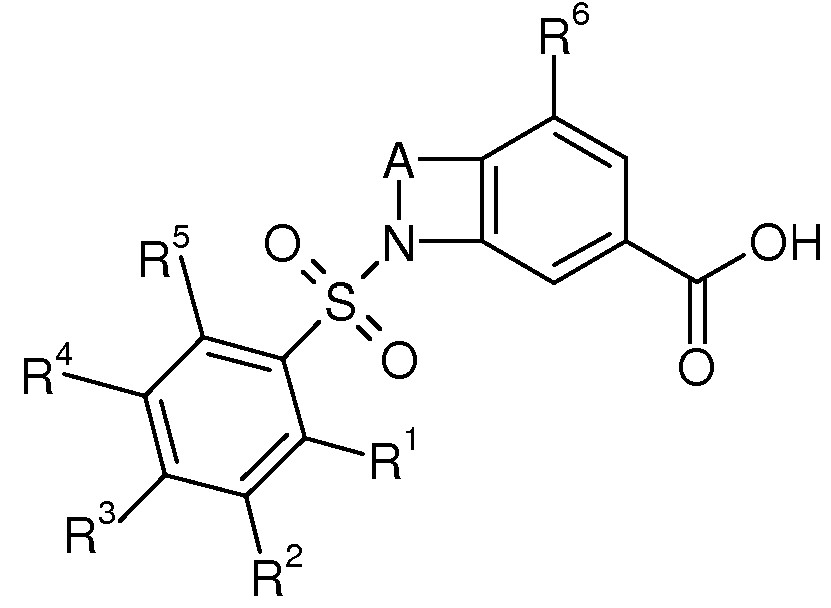

Applications Claiming Priority (3)
| Application Number | Priority Date | Filing Date | Title |
|---|---|---|---|
| EP05108468 | 2005-09-15 | ||
| EP05108468.9 | 2005-09-15 | ||
| PCT/EP2006/065989 WO2007031429A1 (en) | 2005-09-15 | 2006-09-05 | Novel heterobicyclic derivatives useful as inhibitors of liver carnitine palmitoyl transferase |
Publications (2)
| Publication Number | Publication Date |
|---|---|
| KR20080046244A KR20080046244A (en) | 2008-05-26 |
| KR101089878B1 true KR101089878B1 (en) | 2011-12-05 |
Family
ID=37488076
Family Applications (1)
| Application Number | Title | Priority Date | Filing Date |
|---|---|---|---|
| KR1020087008663A Expired - Fee Related KR101089878B1 (en) | 2005-09-15 | 2006-09-05 | Novel heterobicyclic derivatives useful as inhibitors of liver carnitine palmitoyl transferase |
Country Status (13)
| Country | Link |
|---|---|
| US (1) | US7713996B2 (en) |
| EP (1) | EP1926711B1 (en) |
| JP (1) | JP4843040B2 (en) |
| KR (1) | KR101089878B1 (en) |
| CN (1) | CN101263116B (en) |
| AR (1) | AR057812A1 (en) |
| AU (1) | AU2006290803B2 (en) |
| BR (1) | BRPI0616246A2 (en) |
| CA (1) | CA2621404C (en) |
| ES (1) | ES2398111T3 (en) |
| IL (1) | IL189663A (en) |
| TW (1) | TW200745032A (en) |
| WO (1) | WO2007031429A1 (en) |
Families Citing this family (26)
| Publication number | Priority date | Publication date | Assignee | Title |
|---|---|---|---|---|
| EP1757591A4 (en) * | 2004-05-26 | 2010-05-05 | Eisai R&D Man Co Ltd | Cinnamide compound |
| US7799933B2 (en) | 2006-12-21 | 2010-09-21 | Hoffman-La Roche Inc. | Sulfonamide derivatives |
| KR100847448B1 (en) * | 2007-03-22 | 2008-07-21 | 한국화학연구원 | 3-aryl-5-alkyl-1,2,4-oxadiazole derivatives, preparation method thereof and composition for preventing or treating obesity comprising the same |
| EP2155738B1 (en) * | 2007-06-01 | 2011-08-03 | F. Hoffmann-La Roche AG | Piperidine-amide derivatives |
| US20100210695A1 (en) * | 2007-06-22 | 2010-08-19 | Dara Biosciences, Inc. | Compositions and methods for treating skin disorders |
| CN102159080A (en) * | 2008-06-24 | 2011-08-17 | 达拉生物科学公司 | Enzyme inhibitors and the use thereof |
| WO2010017827A1 (en) * | 2008-08-14 | 2010-02-18 | European Molecular Biology Laboratory | 6-substituted 1-sulfonyl-2, 3-dihydro-indole derivatives for the treatment of proliferative diseases |
| EP2638014B1 (en) | 2010-11-08 | 2017-01-04 | Lycera Corporation | N-sulfonylated tetrahydroquinolines and related bicyclic compounds for inhibition of ror-gamma activity and the treatment of diseases |
| RU2014149136A (en) | 2012-05-08 | 2016-07-10 | Мерк Шарп И Доум Корп. | TETRAHYDRONAFTHYRIDINE AND RELATED Bicyclic Compounds for Inhibition of Rorγ Activity and Treatment of a Disease |
| JP6242868B2 (en) | 2012-05-08 | 2017-12-06 | リセラ・コーポレイションLycera Corporation | Tetrahydro [1,8] naphthyridinesulfonamide and related compounds for use as agonists of RORγ and for the treatment of diseases |
| WO2015095788A1 (en) | 2013-12-20 | 2015-06-25 | Merck Sharp & Dohme Corp. | 2-ACYLAMIDOMETHYL AND SULFONYLAMIDOMETHYL BENZOXAZINE CARBAMATES FOR INHIBITION OF RORgamma ACTIVITY AND THE TREATMENT OF DISEASE |
| WO2015095795A1 (en) | 2013-12-20 | 2015-06-25 | Merck Sharp & Dohme Corp. | TETRAHYDRONAPHTHYRIDINE, BENZOXAZINE, AZA-BENZOXAZINE, AND RELATED BICYCLIC COMPOUNDS FOR INHIBITION OF RORgamma ACTIVITY AND THE TREATMENT OF DISEASE |
| WO2015095792A1 (en) | 2013-12-20 | 2015-06-25 | Merck Sharp & Dohme Corp. | Carbamate benzoxaxine propionic acids and acid derivatives for modulation of rorgamma activity and the treatment of disease |
| US10532088B2 (en) | 2014-02-27 | 2020-01-14 | Lycera Corporation | Adoptive cellular therapy using an agonist of retinoic acid receptor-related orphan receptor gamma and related therapeutic methods |
| US9896441B2 (en) | 2014-05-05 | 2018-02-20 | Lycera Corporation | Tetrahydroquinoline sulfonamide and related compounds for use as agonists of RORγ and the treatment of disease |
| US10189777B2 (en) | 2014-05-05 | 2019-01-29 | Lycera Corporation | Benzenesulfonamido and related compounds for use as agonists of RORγ and the treatment of disease |
| CA2975997A1 (en) | 2015-02-11 | 2016-08-18 | Merck Sharp & Dohme Corp. | Substituted pyrazole compounds as rorgammat inhibitors and uses thereof |
| US10421751B2 (en) | 2015-05-05 | 2019-09-24 | Lycera Corporation | Dihydro-2H-benzo[b][1,4]oxazine sulfonamide and related compounds for use as agonists of RORγ and the treatment of disease |
| WO2016201225A1 (en) | 2015-06-11 | 2016-12-15 | Lycera Corporation | Aryl dihydro-2h-benzo[b][1,4]oxazine sulfonamide and related compounds for use as agonists of rory and the treatment of disease |
| US10287272B2 (en) | 2015-10-27 | 2019-05-14 | Merck Sharp & Dohme Corp. | Substituted indazole compounds as RORgammaT inhibitors and uses thereof |
| WO2017075178A1 (en) | 2015-10-27 | 2017-05-04 | Merck Sharp & Dohme Corp. | SUBSTITUTED BICYCLIC PYRAZOLE COMPOUNDS AS RORgammaT INHIBITORS AND USES THEREOF |
| EP3368535B1 (en) | 2015-10-27 | 2020-12-02 | Merck Sharp & Dohme Corp. | Heteroaryl substituted benzoic acids as rorgammat inhibitors and uses thereof |
| CN106854172B (en) * | 2016-12-11 | 2019-04-19 | 山东轩德医药科技有限公司 | A kind of preparation method of the fluoro- 1H- indoles -4- methyl formate of 6- |
| GB2572526A (en) * | 2017-06-22 | 2019-10-09 | Curadev Pharma Ltd | Heterocyclic small molecule modulators of human STING |
| WO2018234807A1 (en) * | 2017-06-22 | 2018-12-27 | Curadev Pharma Limited | HETEROCYCLIC MODULATORS WITH SMALL MOLECULES OF HUMAN STING |
| WO2021226076A1 (en) * | 2020-05-04 | 2021-11-11 | The Research Foundation For The State University Of New York | Positron imaging tomography imaging agent composition and method for detection of bacterial infection |
Family Cites Families (2)
| Publication number | Priority date | Publication date | Assignee | Title |
|---|---|---|---|---|
| CA2258728C (en) * | 1996-06-19 | 2011-09-27 | Rhone Poulenc Rorer Limited | Substituted azabicylic compounds and their use as inhibitors of the production of tnf and cyclic amp phosphodiesterase |
| AU7315700A (en) * | 1999-09-20 | 2001-04-24 | Takeda Chemical Industries Ltd. | Melanin concentrating hormone antagonist |
-
2006
- 2006-09-05 JP JP2008530471A patent/JP4843040B2/en not_active Expired - Fee Related
- 2006-09-05 ES ES06793207T patent/ES2398111T3/en active Active
- 2006-09-05 CA CA2621404A patent/CA2621404C/en not_active Expired - Fee Related
- 2006-09-05 BR BRPI0616246-0A patent/BRPI0616246A2/en not_active IP Right Cessation
- 2006-09-05 WO PCT/EP2006/065989 patent/WO2007031429A1/en not_active Ceased
- 2006-09-05 EP EP06793207A patent/EP1926711B1/en not_active Not-in-force
- 2006-09-05 KR KR1020087008663A patent/KR101089878B1/en not_active Expired - Fee Related
- 2006-09-05 AU AU2006290803A patent/AU2006290803B2/en not_active Ceased
- 2006-09-05 CN CN2006800337894A patent/CN101263116B/en not_active Expired - Fee Related
- 2006-09-12 US US11/519,485 patent/US7713996B2/en not_active Expired - Fee Related
- 2006-09-12 TW TW095133708A patent/TW200745032A/en unknown
- 2006-09-13 AR ARP060103990A patent/AR057812A1/en not_active Application Discontinuation
-
2008
- 2008-02-21 IL IL189663A patent/IL189663A/en not_active IP Right Cessation
Non-Patent Citations (2)
| Title |
|---|
| European Journal of Medicinal Chemistry, Editions Scientifique Elsevier, Paris, FR, Vol. 38, No. 11-12, 2003.11 pp. 975-982 |
| Febs Letters, Elsevier, Amsterdam, NL, Vol. 371, 1995, pp. 137-139 |
Also Published As
| Publication number | Publication date |
|---|---|
| ES2398111T3 (en) | 2013-03-13 |
| CN101263116B (en) | 2011-12-07 |
| US7713996B2 (en) | 2010-05-11 |
| CA2621404A1 (en) | 2007-03-22 |
| JP2009507884A (en) | 2009-02-26 |
| AR057812A1 (en) | 2007-12-19 |
| CA2621404C (en) | 2012-01-24 |
| JP4843040B2 (en) | 2011-12-21 |
| US20070060567A1 (en) | 2007-03-15 |
| KR20080046244A (en) | 2008-05-26 |
| IL189663A0 (en) | 2008-06-05 |
| AU2006290803A1 (en) | 2007-03-22 |
| BRPI0616246A2 (en) | 2011-06-14 |
| WO2007031429A1 (en) | 2007-03-22 |
| EP1926711A1 (en) | 2008-06-04 |
| IL189663A (en) | 2012-03-29 |
| EP1926711B1 (en) | 2012-11-07 |
| AU2006290803B2 (en) | 2009-11-26 |
| CN101263116A (en) | 2008-09-10 |
| TW200745032A (en) | 2007-12-16 |
Similar Documents
| Publication | Publication Date | Title |
|---|---|---|
| KR101089878B1 (en) | Novel heterobicyclic derivatives useful as inhibitors of liver carnitine palmitoyl transferase | |
| EP2097373B1 (en) | Sulfonamide derivatives as liver carnitine palmitoyl transferase (l-cptl ) | |
| CA2641379C (en) | Heterobicyclic sulfonamide derivatives for the treatment of diabetes |
Legal Events
| Date | Code | Title | Description |
|---|---|---|---|
| A201 | Request for examination | ||
| E13-X000 | Pre-grant limitation requested |
St.27 status event code: A-2-3-E10-E13-lim-X000 |
|
| P11-X000 | Amendment of application requested |
St.27 status event code: A-2-2-P10-P11-nap-X000 |
|
| P13-X000 | Application amended |
St.27 status event code: A-2-2-P10-P13-nap-X000 |
|
| PA0105 | International application |
St.27 status event code: A-0-1-A10-A15-nap-PA0105 |
|
| PA0201 | Request for examination |
St.27 status event code: A-1-2-D10-D11-exm-PA0201 |
|
| R15-X000 | Change to inventor requested |
St.27 status event code: A-3-3-R10-R15-oth-X000 |
|
| R16-X000 | Change to inventor recorded |
St.27 status event code: A-3-3-R10-R16-oth-X000 |
|
| PG1501 | Laying open of application |
St.27 status event code: A-1-1-Q10-Q12-nap-PG1501 |
|
| E902 | Notification of reason for refusal | ||
| PE0902 | Notice of grounds for rejection |
St.27 status event code: A-1-2-D10-D21-exm-PE0902 |
|
| E13-X000 | Pre-grant limitation requested |
St.27 status event code: A-2-3-E10-E13-lim-X000 |
|
| P11-X000 | Amendment of application requested |
St.27 status event code: A-2-2-P10-P11-nap-X000 |
|
| P13-X000 | Application amended |
St.27 status event code: A-2-2-P10-P13-nap-X000 |
|
| E902 | Notification of reason for refusal | ||
| PE0902 | Notice of grounds for rejection |
St.27 status event code: A-1-2-D10-D21-exm-PE0902 |
|
| R17-X000 | Change to representative recorded |
St.27 status event code: A-3-3-R10-R17-oth-X000 |
|
| P11-X000 | Amendment of application requested |
St.27 status event code: A-2-2-P10-P11-nap-X000 |
|
| P13-X000 | Application amended |
St.27 status event code: A-2-2-P10-P13-nap-X000 |
|
| E701 | Decision to grant or registration of patent right | ||
| PE0701 | Decision of registration |
St.27 status event code: A-1-2-D10-D22-exm-PE0701 |
|
| GRNT | Written decision to grant | ||
| PR0701 | Registration of establishment |
St.27 status event code: A-2-4-F10-F11-exm-PR0701 |
|
| PR1002 | Payment of registration fee |
St.27 status event code: A-2-2-U10-U12-oth-PR1002 Fee payment year number: 1 |
|
| PG1601 | Publication of registration |
St.27 status event code: A-4-4-Q10-Q13-nap-PG1601 |
|
| LAPS | Lapse due to unpaid annual fee | ||
| PC1903 | Unpaid annual fee |
St.27 status event code: A-4-4-U10-U13-oth-PC1903 Not in force date: 20141130 Payment event data comment text: Termination Category : DEFAULT_OF_REGISTRATION_FEE |
|
| PC1903 | Unpaid annual fee |
St.27 status event code: N-4-6-H10-H13-oth-PC1903 Ip right cessation event data comment text: Termination Category : DEFAULT_OF_REGISTRATION_FEE Not in force date: 20141130 |
|
| R18-X000 | Changes to party contact information recorded |
St.27 status event code: A-5-5-R10-R18-oth-X000 |