KR100946902B1 - Resource management apparatus and method in mobile communication system - Google Patents
Resource management apparatus and method in mobile communication system Download PDFInfo
- Publication number
- KR100946902B1 KR100946902B1 KR1020060040787A KR20060040787A KR100946902B1 KR 100946902 B1 KR100946902 B1 KR 100946902B1 KR 1020060040787 A KR1020060040787 A KR 1020060040787A KR 20060040787 A KR20060040787 A KR 20060040787A KR 100946902 B1 KR100946902 B1 KR 100946902B1
- Authority
- KR
- South Korea
- Prior art keywords
- real time
- data
- segment
- real
- service
- Prior art date
- Legal status (The legal status is an assumption and is not a legal conclusion. Google has not performed a legal analysis and makes no representation as to the accuracy of the status listed.)
- Expired - Fee Related
Links
Images


Classifications
-
- H—ELECTRICITY
- H04—ELECTRIC COMMUNICATION TECHNIQUE
- H04W—WIRELESS COMMUNICATION NETWORKS
- H04W72/00—Local resource management
- H04W72/20—Control channels or signalling for resource management
- H04W72/23—Control channels or signalling for resource management in the downlink direction of a wireless link, i.e. towards a terminal
-
- H—ELECTRICITY
- H04—ELECTRIC COMMUNICATION TECHNIQUE
- H04W—WIRELESS COMMUNICATION NETWORKS
- H04W72/00—Local resource management
- H04W72/50—Allocation or scheduling criteria for wireless resources
- H04W72/54—Allocation or scheduling criteria for wireless resources based on quality criteria
- H04W72/543—Allocation or scheduling criteria for wireless resources based on quality criteria based on requested quality, e.g. QoS
-
- H—ELECTRICITY
- H04—ELECTRIC COMMUNICATION TECHNIQUE
- H04W—WIRELESS COMMUNICATION NETWORKS
- H04W72/00—Local resource management
- H04W72/04—Wireless resource allocation
Landscapes
- Engineering & Computer Science (AREA)
- Quality & Reliability (AREA)
- Computer Networks & Wireless Communication (AREA)
- Signal Processing (AREA)
- Mobile Radio Communication Systems (AREA)
Abstract
본 발명은 이동 통신 시스템에 관한 것으로서, 자원 운용 방법에 있어서, 전체 주파수 대역을 이동국과 기지국간의 채널 상태 및 이동국이 요구하는 서비스 품질 레벨을 고려하여 시간 및 주파수 영역으로 점유되는 다수의 세그먼트 타입들로 구분하는 과정과, 송신할 데이터가 발생하면 상기 송신할 데이터에 상응하는 세그먼트 타입을 결정하는 과정과, 상기 송신할 데이터가 실시간으로 송신되어야 할 데이터이면, 상기 데이터의 최소 서비스 품질 레벨을 만족하도록 실시간 타입 세그먼트를 할당하는 과정과, 남은 실시간 타입 세그먼트를 비실시간으로 송신되어야 할 데이터에 전환하여 할당하는 과정을 포함한다.

세그먼트, 차등 세그먼트, 자원 운용, 서비스 품질
BACKGROUND OF THE INVENTION 1. Field of the Invention The present invention relates to a mobile communication system, comprising a plurality of segment types occupied in a time and frequency domain in consideration of a channel state between a mobile station and a base station and a level of quality of service required by the mobile station. Classifying, determining, if the data to be transmitted, a segment type corresponding to the data to be transmitted, and if the data to be transmitted is data to be transmitted in real time, to satisfy a minimum service quality level of the data. And allocating the type segment and converting the remaining real-time type segment to data to be transmitted in non-real time.
Segment, differential segment, resource management, quality of service
Description
도 1은 본 발명의 실시예에 따른 차등 세그먼트 구조를 가지는 이동 통신 시스템의 세그먼트 할당을 개략적으로 도시한 도면1 is a diagram schematically illustrating segment allocation in a mobile communication system having a differential segment structure according to an embodiment of the present invention.
도 2는 본 발명의 실시예에 따른 이동 통신 시스템에서 지원하는 세그먼트 타입들을 도시한 도면2 is a diagram illustrating segment types supported by a mobile communication system according to an embodiment of the present invention.
도 3은 본 발명의 실시예에 따른 차등 세그먼트 구조가 적용된 이동 통신 시스템의 자원 맵 구조를 개략적으로 도시한 도면3 is a diagram schematically illustrating a resource map structure of a mobile communication system to which a differential segment structure is applied according to an embodiment of the present invention;
도 4는 본 발명의 실시예에 따른 차등 세그먼트 구조가 적용된 이동 통신 시스템에서 세그먼트 맵 결정기가 포함된 장치도를 도시한 도면4 is a diagram illustrating an apparatus including a segment map determiner in a mobile communication system to which a differential segment structure is applied according to an embodiment of the present invention.
도 5는 본 발명의 실시예에 따른 세그먼트를 전환하는 과정을 도시한 흐름도5 is a flowchart illustrating a process of switching segments according to an embodiment of the present invention.
도 6a 및 6b는 본 발명에 따른 최대 전환 규칙을 적용한 성능 평가를 도시한 그래프6A and 6B are graphs illustrating performance evaluation applying the maximum conversion rule according to the present invention.
본 발명은 이동 통신 시스템에 관한 것으로서, 특히 이동 통신 시스템에서 무선 자원을 효율적으로 운용하기 위한 장치 및 방법에 관한 것이다.The present invention relates to a mobile communication system, and more particularly, to an apparatus and method for efficiently operating radio resources in a mobile communication system.
차세대 통신 시스템인 4세대(4G: 4th Generation) 이동 통신 시스템에서는 약 100Mbps의 전송 속도의 다양한 서비스 품질(QoS: Quality of Service, 이하 'QoS' 칭하기로 한다)을 가지는 서비스들을 사용자들에게 제공하고자 한다. The 4G (4G Generation) mobile communication system, the next generation communication system, provides users with services having various quality of service (QoS: QoS) at a transmission rate of about 100 Mbps. .
상기 4세대 이동 통신 시스템은 유선 혹은 무선 채널에서 고속데이터 전송에 유용한 방식으로 직교 주파수 분할 다중(OFDM: Orthogonal Frequency Division Multiplexing, 이하 'OFDM'이라 칭하기로 한다) 방식을 사용한다. 멀티 캐리어를 사용하여 데이터를 전송하는 방식 중의 하나인 상기 OFDM 방식은, 직렬로 입력되는 심벌(Symbol)열을 병렬로 변환하여 이들 각각을 상호 직교성을 갖는 다수의 서브 캐리어(subcarrier)들, 즉 다수의 서브 캐리어 채널(subcarrier channel)들로 변조하여 전송하는 멀티캐리어 변조(MCM : Multi Carrier Modulation) 방식의 일종이다. The fourth generation mobile communication system uses orthogonal frequency division multiplexing (OFDM) as a method useful for high-speed data transmission in a wired or wireless channel. The OFDM method, which is a method of transmitting data using multi-carriers, converts a series of symbols input in parallel to each other and converts each of them in parallel so that each of them has a plurality of subcarriers, that is, multiple orthogonalities. It is a type of multi-carrier modulation (MCM) that modulates and transmits subcarrier channels.
상기에서 설명한 바와 같이 상기 4세대 이동 통신 시스템은 결과적으로 보다 다양한 컨텐츠(contents)를 개발하려는 소프트웨어(software)적인 측면과 최선의 서비스 품질(QoS: Quality of Service)을 제공할 수 있도록 스펙트럼 효율(spectrum efficiency)이 높은 무선 접속 방식을 개발하려는 하드웨어(hardware)적인 면을 동시에 고려하는 방향으로 발전하고 있다. As described above, the fourth generation mobile communication system consequently has a spectral efficiency to provide a software aspect and the best quality of service (QoS) to develop more diverse contents. In order to develop a wireless access method with high efficiency, it is evolving toward a consideration of the hardware aspect.
일반적으로, 무선 통신에서 고속, 고품질의 데이터 서비스를 저해하는 요인은 대체로 채널 환경에 기인한다. 상기 무선 통신에서 채널 환경은 백색 가산성 가우시안 잡음(AWGN: Additive White Gaussian Noise) 이외에도 페이딩 현상으로 인해 발생되는 수신 신호의 전력 변화, 쉐도우잉(Shadowing), 단말기의 이동 및 빈번한 속도 변화에 따른 도플러(doppler) 효과, 타 단말기 및 다중 경로(multipath) 신호에 의한 간섭 등으로 인해 자주 변하게 된다. In general, the factors that hinder high-speed, high-quality data service in wireless communication are largely due to the channel environment. In the wireless communication, the channel environment includes a Doppler due to power change, shadowing, movement of the terminal, and frequent speed change in addition to white additive Gaussian noise (AWGN). Doppler), interference with other terminals and multipath signals are frequently changed.
이를 해결하기 위해, 상기 통신 시스템은 적응적 변조 및 부호화(AMC: Adaptive Modulation and Coding, 이하 'AMC'라 칭함) 방식, 복합 재전송(HARQ: Hybrid Automatic Retransmission Request, 이하 'HARQ'라 칭함) 방식 및 다중입력 다중출력(MIMO: Multiple Input Multiple Output, 이하 'MIMO'라 칭함) 등과 같은 방식들을 적용하여 채널 변화에 적응적으로 대처하여 시스템 전체 성능을 개선한다. In order to solve this problem, the communication system includes an adaptive modulation and coding (AMC) scheme, a hybrid automatic retransmission request (HARQ) scheme, and the like. Multiple Input Multiple Output (MIMO) is applied to improve the system's overall performance by adaptively coping with channel changes.
물론, 상기에서 설명한 바와 같이 상기 이동 통신 시스템에 AMC 방식, HARQ 방식 및 MIMO 방식 등과 같은 다양한 방식들을 적용한다고 하더라도 무선 자원(radio resource)의 부족이라는 무선 통신에 있어서의 근본적인 문제가 해결되는 것은 아니다. 따라서, 상기 무선 자원 부족이라는 문제점을 해결하면서도 이동국이 요구하는 실시간 트래픽의 QoS 레벨을 제공해 줄 수 있는 새로운 방안이 필요하다. Of course, even if various methods such as AMC scheme, HARQ scheme and MIMO scheme are applied to the mobile communication system as described above, the fundamental problem in wireless communication, which is lack of radio resources, is not solved. Therefore, there is a need for a new method that can provide the QoS level of real-time traffic required by the mobile station while solving the problem of lack of radio resources.
본 발명은 상기와 같은 문제점을 해결 위해 창안된 것으로, 본 발명의 목적은 서비스 품질을 고려하여 자원을 효율적으로 운용하기 위한 장치 및 방법을 제공한다.The present invention was devised to solve the above problems, and an object of the present invention is to provide an apparatus and method for efficiently managing resources in consideration of service quality.
상기한 바와 같은 목적을 달성하기 위한 본 발명의 방법은; 이동 통신 시스템 에서, 자원 운용 방법에 있어서, 전체 주파수 대역을 이동국과 기지국간의 채널 상태 및 이동국이 요구하는 서비스 품질 레벨을 고려하여 시간 및 주파수 영역으로 점유되는 다수의 세그먼트 타입들로 구분하는 과정과, 송신할 데이터가 발생하면 상기 송신할 데이터에 상응하는 세그먼트 타입을 결정하는 과정과, 상기 송신할 데이터가 실시간으로 송신되어야 할 데이터이면, 상기 데이터의 최소 서비스 품질 레벨을 만족하도록 실시간 타입 세그먼트를 할당하는 과정과, 남은 실시간 타입 세그먼트를 비실시간으로 송신되어야 할 데이터에 전환하여 할당하는 과정을 포함한다.The method of the present invention for achieving the above object; In the mobile communication system, in the resource management method, the process of dividing the entire frequency band into a plurality of segment types occupied in the time and frequency domain in consideration of the channel state between the mobile station and the base station and the quality of service required by the mobile station; Determining a segment type corresponding to the data to be transmitted when data to be transmitted is generated; and assigning a real-time type segment to satisfy a minimum quality of service level of the data if the data to be transmitted is data to be transmitted in real time. And converting and assigning the remaining real-time type segment to data to be transmitted in non-real time.
상기한 바와 같은 목적을 달성하기 위한 본 발명의 장치는; 이동 통신 시스템에서, 자원 운용 장치에 있어서, 전체 주파수 대역은 이동국과 기지국간의 채널 상태 및 이동국이 요구하는 서비스 품질 레벨을 고려하여 시간 및 주파수 영역으로 점유되는 다수의 세그먼트 타입들로 구분되며, 송신 데이터 입력시 상기 데이터가 실시간으로 송신되어야 할 데이터인지 여부를 판단하는 분류기와, 상기 송신 데이터가 실시간 데이터이면, 상기 데이터의 최소 서비스 품질 레벨을 만족하도록 실시간 타입 세그먼트 맵 및 실시간 타입 세그먼트를 비실시간 타입 세그먼트로 전환하기 위한 전환 비율을 결정하는 세그먼트 맵 결정기와, 상기 전환 비율에 상응하게 남은 실시간 타입 세그먼트를 비실시간으로 송신되어야 할 데이터에 전환하여 할당하는 패킷 스케줄러를 포함한다.The apparatus of the present invention for achieving the above object; In the mobile communication system, in the resource management apparatus, the entire frequency band is divided into a plurality of segment types occupied in the time and frequency domain in consideration of the channel state between the mobile station and the base station and the quality of service required by the mobile station. A classifier for determining whether the data is to be transmitted in real time upon input; and if the transmission data is real time data, a real-time type segment map and a real-time type segment in order to satisfy the minimum quality of service level of the data. And a segment map determiner for determining a switching ratio for switching to a packet, and a packet scheduler for converting and assigning the remaining real-time type segment corresponding to the switching ratio to data to be transmitted in non-real time.
이하, 본 발명의 바람직한 실시예를 첨부된 도면을 참조하여 상세히 설명한 다. 하기의 설명에서는 본 발명의 동작을 이해하는데 필요한 부분만을 설명하며 그 이외의 배경 기술은 본 발명의 요지를 흩트리지 않도록 생략한다. Hereinafter, exemplary embodiments of the present invention will be described in detail with reference to the accompanying drawings. In the following description, only parts necessary for understanding the operation of the present invention will be described, and other background art will be omitted so as not to distract from the gist of the present invention.
본 발명은 이동 통신 시스템에서 실시간 데이터 트래픽에 대해 최소 수준의 서비스 품질(Quality of Service, 이하 'QoS'라 칭함) 레벨을 만족시키는 범위내에서 자원을 할당하고, 남은 자원을 비실시간 데이터 트래픽을 할당함으로써 자원 활용율을 향상시킬 수 있는 자원 운용 장치 및 방법을 제안한다. The present invention allocates resources within a range that satisfies a minimum level of quality of service (QoS) for real-time data traffic in a mobile communication system, and allocates remaining resources to non-real-time data traffic. We propose a resource management apparatus and method that can improve resource utilization rate.
이후, 본 발명에서는 무선 자원의 최소 단위로서 '세그먼트(segment)'라는 새로운 용어를 정의한다. 상기 세그먼트는 시간 영역에서 미리 설정한 개수의 직교 주파수 분할 다중(Orthogonal Frequency Division Multiplexing, 이하 'OFDM'라 칭함) 심볼 구간(OFDM symbol interval)들과, 주파수 영역에서 미리 설정한 개수의 서브 캐리어들에 의해 점유되는 영역을 의미한다. 여기서, 상기 최소 수준의 QoS 레벨은 실시간 데이터 트래픽인 경우 상기 데이터 트래픽이 요구하는 지연조건과 소실율을 정량화했을 때 만족되어야 할 최소한의 수치를 의미한다. Then, the present invention defines a new term 'segment' as the minimum unit of radio resources. The segment includes a predetermined number of orthogonal frequency division multiplexing (OFDM) symbol intervals in the time domain and a predetermined number of subcarriers in the frequency domain. It means the area occupied by. Here, the minimum QoS level means a minimum value that must be satisfied when quantifying the delay condition and the loss rate required for the data traffic in real time data traffic.
상기 세그먼트에 대해서는 도 1 및 2를 참조하여 보다 상세히 설명하기로 한다. 상기 세그먼트를 할당하는 이동 통신 시스템을 '차등 세그먼트(DiffSeg: Differential Segment)' 구조를 가지는 이동 통신 시스템이라 한다.The segment will be described in more detail with reference to FIGS. 1 and 2. The mobile communication system for allocating the segments is called a mobile communication system having a 'differential segment (DiffSeg)' structure.
도 1은 본 발명의 실시예에 따른 차등 세그먼트 구조를 가지는 이동 통신 시스템의 세그먼트 할당을 개략적으로 도시한 도면이다. 1 is a diagram schematically illustrating segment allocation in a mobile communication system having a differential segment structure according to an embodiment of the present invention.
상기 도 1을 참조하면, 가로축은 시간 영역(time-domain)을 나타내며, 세로축은 주파수 영역(frequency-domain)을 나타낸다. 도 1에 나타낸 바와 같이, 1개의 세그먼트는 
다음으로 도 2를 참조하여 본 발명의 실시예에 따른 이동 통신 시스템에서 지원하는 각각의 세그먼트 타입들에 대해서 설명하기로 한다. Next, respective segment types supported by the mobile communication system according to an embodiment of the present invention will be described with reference to FIG. 2.
도 2는 본 발명의 실시예에 따른 이동 통신 시스템에서 지원하는 세그먼트 타입들을 도시한 도면이다. 2 is a diagram illustrating segment types supported by a mobile communication system according to an embodiment of the present invention.
상기 도 2를 참조하면, 상기 이동 통신 시스템은 세그먼트의 타입에 따라 적용되는 신호 처리 방식 및 프로토콜을 차별화하는 차등 세그먼트 구조를 구현한다. 여기서, 상기 세그먼트 타입은 지연 허용(delay tolerance), 즉 QoS 레벨 조건과, 기지국으로부터의 거리 조건, 즉 채널 품질 조건을 고려하여 결정된다. 여기서, 상기 QoS 레벨 조건은 실시간(RT: Real Time) 서비스인지 혹은 비실시간(NRT: Non Real Time) 서비스인지를 구분하는 조건이며, 상기 채널 품질 조건은 평균 신호 대 간섭 및 잡음 비 (CINR: Carrier to Interference Noise Ratio)를 기준으로 셀 중심(cell center) 영역인지 혹은 셀 경계(cell boundary) 영역인지를 구분하는 조건이다. Referring to FIG. 2, the mobile communication system implements a differential segment structure that differentiates a signal processing scheme and a protocol applied according to a segment type. Here, the segment type is determined in consideration of delay tolerance, that is, QoS level condition and distance condition from the base station, that is, channel quality condition. Here, the QoS level condition is a condition for distinguishing whether a real time (RT) service or a non real time (NRT) service is used, and the channel quality condition is an average signal to interference and noise ratio (CINR: Carrier). It is a condition for distinguishing whether it is a cell center region or a cell boundary region based on to Interference Noise Ratio.
본 발명에서는 상기 우선 순위에 따라 상기 세그먼트의 타입(type)을 4가지 타입들, 즉 제1타입(type Ⅰ) 내지 제4타입(type Ⅳ)의 4가지 타입들로 구분하기로 한다. In the present invention, the type of the segment is divided into four types, that is, the first type (type I) to the fourth type (type IV) according to the priority.
상기 제1타입 세그먼트는 셀 중심 영역에 위치하는 이동국을 타겟으로 하는 비실시간 서비스 지원을 위한 세그먼트이고, 상기 제2타입 세그먼트는 셀 중심 영역에 위치하는 이동국을 타겟으로 하는 실시간 서비스 지원을 위한 세그먼트이고, 제3타입 세그먼트는 셀 경계 영역에 위치하는 이동국을 타겟으로 하는 비실시간 서비스 지원을 위한 세그먼트이고, 제4타입 세그먼트는 셀 경계 영역에 위치하는 이동국을 타겟으로 하는 실시간 서비스 지원을 위한 세그먼트이다. The first type segment is a segment for non real-time service support targeting a mobile station located in a cell center region, and the second type segment is a segment for real time service support targeting a mobile station located in a cell center region. The third type segment is a segment for non real-time service support targeting a mobile station located in a cell boundary region, and the fourth type segment is a segment for real time service support targeting a mobile station located in a cell boundary region.
도 3은 본 발명의 실시예에 따른 차등 세그먼트 구조가 적용된 이동 통신 시스템의 자원 맵 구조를 개략적으로 도시한 도면이다. 3 is a diagram schematically illustrating a resource map structure of a mobile communication system to which a differential segment structure is applied according to an embodiment of the present invention.
도 3에서는 상기 차등 세그먼트 구조, 즉 서로 다른 타입을 가지는 세그먼트들이 실제 물리 채널로 매핑될 경우의 자원 맵 구조가 도시되어 있다. 서로 다른 타입을 가지는 세그먼트들은 서로 동일하거나 서로 다른 신호 처리 방식을 적용할 수 있다. 상기 세그먼트들 각각은 그 타입별로 서로 다른 크기와 모양을 가질 수 있으며, 이는 주파수 영역 및 시간 영역의 2차원 맵 구조를 가지게 된다. 물론, 상기 차등 세그먼트 구조를 적용하는 자원 맵 구조는 상기 도 3에 도시한 바와 같은 패턴(pattern) 뿐만 아니라 다른 패턴(pattern)으로도 변경 가능하다. 3 illustrates a resource map structure when the differential segment structure, that is, segments having different types are mapped to actual physical channels. Segments having different types may apply the same or different signal processing schemes. Each of the segments may have a different size and shape for each type, which has a two-dimensional map structure of a frequency domain and a time domain. Of course, the resource map structure to which the differential segment structure is applied can be changed to not only a pattern as shown in FIG. 3 but also to another pattern.
도 3을 참조하면, 실시간 타입 세그먼트는 지연에 민감하며, 주파수 다이버시티(diversity)를 획득하기 위해 시간 구간이 짧고 주파수 구간으로 긴 사각 형태로 설계될 수 있다. 비실시간 타입 세그먼트는 지연에 둔감하며, 기회적 스케줄링을 위해 주파수 구간이 짧고 시간 구간으로 긴 사각 형태로 설계될 수 있다.Referring to FIG. 3, the real-time type segment is sensitive to delay and may be designed in a rectangular shape having a short time interval and a long frequency interval to obtain frequency diversity. Non-real-time type segments are insensitive to delay and can be designed in a rectangular form with short frequency intervals and long time intervals for opportunistic scheduling.
한편, 자원 할당 방식 중 정적(static) 할당 방식은 실시간 서비스 연결(connection)을 실시간 타입의 세그먼트에 할당하고, 비실시간 서비스 연결을 비실시간 타입의 세그먼트에 할당하는 방식이다. 그러나, 본 발명에서는 자원 할당 방식으로 종래의 정적 할당 방식과는 상이한 세그먼트 전환(diversion) 할당 방식을 새롭게 제안한다.Meanwhile, a static allocation method among resource allocation methods is a method of allocating a real time service connection to a segment of a real time type and a non-real time service connection to a segment of a non real time type. However, the present invention newly proposes a segmentation allocation scheme different from the conventional static allocation scheme as a resource allocation scheme.
상기 세그먼트 전환 할당 방식은 실시간 연결에 해당하는 데이터 트래픽을 비실시간 타입의 세그먼트를 이용하여 서비스 하는 것을 의미한다. 실시간 타입 세그먼트의 할당은 다이버시티 획득과 하이브리드 자동 재전송(Hybrid Automatic Repeat Request, 이하 'H-ARQ'라 칭함) 방식을 적용하여 통신의 신뢰도를 높일 수 있게 된다. 반면에, 비실시간 타입 세그먼트의 할당은 기회적 스케줄링 방식 적용 및 적응적 변조 및 코딩(AMC: Adaptive Modulation and Coding) 방식의 적용을 통해 스펙트럼 효율을 높일 수 있게 된다. 따라서, 실시간 데이터 트래픽을 비실시간 타입 세그먼트에 할당하여 송신하면, 정적 할당 방식에 비해 QoS 만족도는 저하되지만 높은 스펙트럼 효율을 통해 상대적으로 적은 자원을 사용하여 실시간 연결의 요청 대역폭을 만족시킬 수 있다.The segment switching allocation scheme means that data traffic corresponding to a real-time connection is serviced using a segment of a non-real time type. Real-time type segment allocation can increase the reliability of communication by applying diversity acquisition and hybrid automatic repeat request (hereinafter, referred to as 'H-ARQ'). On the other hand, the allocation of non-real-time type segments can increase the spectral efficiency through the application of the opportunistic scheduling scheme and the adaptive modulation and coding (AMC) scheme. Accordingly, when real-time data traffic is allocated and transmitted to a non-real-time type segment, QoS satisfaction is lowered compared to the static allocation scheme, but high bandwidth efficiency can be used to satisfy the request bandwidth of the real-time connection using relatively less resources.
그러나, 모든 실시간 데이터 트래픽에 대해 세그먼트 전환이 허용되는 것은 아니다. 왜냐하면, 비실시간 타입 세그먼트는 기회적 스케줄링의 적용을 위해 순시적인(instantaneous) 채널 상태에 대한 궤환(feedback) 정보가 요구되므로, 이동국의 비실시간 연결이 존재하지 않는다면 비실시간 타입 세그먼트로의 전환은 불가능하게 된다.However, segment switching is not allowed for all real-time data traffic. Because non-real-time type segments require feedback information on instantaneous channel conditions for the application of opportunistic scheduling, switching to non-real-time type segments is impossible unless there is a non-real-time connection of the mobile station. Done.
전체 실시간 연결의 집합을 


상기 표 1에서, RC는 실시간 중심(Realtime Center) 세그먼트(즉, 도 2의 제3타입)를, NRC는 비실시간 중심(Non-Realtime Center) 세그먼트(즉, 도 2의 제1타입)를, RB는 실시간 변두리(Realtime Boundary) 세그먼트(즉, 도 2의 제4타입)를, NRB는 비실시간 변두리(Non-Realtime Boundary) 세그먼트(즉, 도 2의 제2타입)를 의미한다.In Table 1, RC denotes a Realtime Center segment (ie, the third type of FIG. 2), and NRC denotes a Non-Realtime Center segment (ie, the first type of FIG. 2). RB stands for Realtime Boundary Segment (ie, fourth type of FIG. 2), and NRB stands for Non-Realtime Boundary Segment (ie, second type of FIG. 2).
그러면, 세그먼트 전환 방법과 최적의 세그먼트 맵을 선택하는 방안에 대해 설명하기로 한다. 여기서, 상기 세그먼트 전환은, 소정 개수의 실시간 연결들이 존재하는 경우 상기 실시간 연결들에 상응하는 QoS를 만족시키면서 동시에 비실시간 연결에 사용할 수 있는 잔여 자원량, 즉 잔여 세그먼트의 수를 극대화 할 수 있는 방안을 모색하여야 한다.Next, a segment switching method and a method of selecting an optimal segment map will be described. Here, the segment switching, if there is a predetermined number of real-time connections while satisfying the QoS corresponding to the real-time connections and at the same time a method for maximizing the remaining amount of resources available for non-real time connection, that is, the number of remaining segments It must be sought.
전체 세그먼트 맵 집합을 


i번째 실시간 연결의 전송률 벡터(vector)를 


한편, 

그러면, 이하 수학식들을 이용하여 비실시간 세그먼트를 실시간 연결을 위해 전환하는 경우, 비실시간 연결 자원을 최대로 만드는 세그먼트 전환 벡터 

상기 수학식 1에서, 

상기 수학식 2에서 Rk는 k번째 세그먼트 맵이 결정되었을 때 전환비 최적화 결정에 따라 획득할 수 있는 목표값의 최대치를 의미한다.In
상기 수학식 2를 만족하기 위한 제약 조건들은 하기 수학식 3 내지 8과 같다.Constraints for
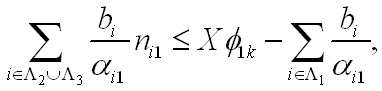
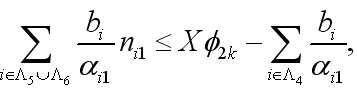

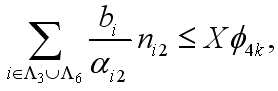


상기 수학식 2 내지 8에서, 

상기 수학식 2는 수학식 1을 풀기 위한 목적 함수이며, 비실시간 연결을 위해 사용할 수 있는 자원의 총량을 의미한다. 상기 수학식 3 내지 6은 세그먼트 전환시 j번째 세그먼트 타입(j=1,2,3 및 4)의 최소 비율값에 대한 제약 조건을 나타내는 식이다. 상기 수학식 7은 i번째 실시간 연결에 대한 QoS 만족 조건을 나타내는 식이고, 상기 수학식 8은 
상기 수학식 8을 이용하여 


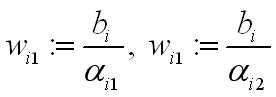


상기 수학식 11과 관련된 제약 조건 또는 만족 조건들은 하기 수학식 12 내지 16과 같다.Constraints or satisfaction conditions associated with Equation 11 are shown in Equations 12 to 16.


상기 수학식 1의 R 값은 상기 수학식 11의 선형 최적화 문제를 


도 4는 본 발명의 실시예에 따른 차등 세그먼트 구조가 적용된 이동 통신 시스템에서 세그먼트 맵 결정기가 포함된 장치도를 도시한 도면이다. 4 is a diagram illustrating an apparatus including a segment map determiner in a mobile communication system to which a differential segment structure is applied according to an embodiment of the present invention.
상기 도 4를 참조하면, 상위 계층으로부터의 트래픽은 각 연결별 QoS 타입을 고려한 분류기(402)로 입력된다. 상기 분류기(402)에 의해 분류된 트래픽은 패킷 스케줄러(408) 내부의 연결별 큐(queue)로 입력된다. 상기 세그먼트 맵 결정기(406)는 세그먼트 타입 전환 관리기(404)와 각 이동국별 세그먼트별 전송률 정보 및 QoS 상태 정보를 참조하여 세그먼트 전환비(diversion ratio) 및 세그먼트 맵 인덱스를 결정하고, 이를 각각 패킷 스케줄러(408) 및 세그먼트 맵 형성기(410)로 출력한다. 상기 세그먼트 타입 전환 관리기(404)는 해당 이동국의 무선 채널 변화를 추적하여 RC, RB, NRC, NRB 중 어떤 타입의 세그먼트를 사용하게 할지 판단하고, 판단된 정보에 의거하여 상기 세그먼트 맵 결정기(406)를 제어한다. 상기 세그먼트 맵 형성기(410)는 상기 세그먼트 맵 인덱스 정보에 상응하게 맵 구성을 변경하고, 모든 이동국들에 새롭게 결정된 맵 인덱스 정보를 방송한다. 상기 패킷 스케줄러(408)는 상기 세그먼트 전환비를 이용하여 각각의 세그먼트들을 스케줄링 한다.Referring to FIG. 4, traffic from the upper layer is input to the
이상의 내용을 다시 정리하면, 본 발명에 따른 장치는 상위 계층에서 내려오는 데이터 트래픽이 실시간 혹은 비실시간 데이터 트래픽인지에 대한 구분이 선행되어야 한다. 그리고, 입력 파라미터로서 이동국별로 각 세그먼트 타입에 해당하는 전송률(


최종적으로 알고리즘 수행의 결과로 나오는 출력은 최적 세그먼트 맵 인덱스와 연결별 세그먼트 전환률 

그러면, 상기 수학식 11을 정수 혼합 최적화 알고리즘(mixed integer program)을 이용하여 하기 수학식 17 과 같이 변형하기로 한다. 하기 수학식 17에서는 0과 1의 값을 가지는 변수 

상기 수학식 17 과 관련된 제약 조건 또는 만족 조건들은 하기 수학식 18 내지 23과 같다.Constraints or satisfaction conditions associated with Equation 17 are as shown in Equations 18 to 23.




상기 수학식 17은 분기한정법(branch and bound)을 이용하여 풀 수 있다. 상기 분기한정법은 다양한 최적화 문제에서 최적의 해를 찾기 위한 방법으로, 1960년에 A.H.Land와 A.G.Doig에 의해 처음 소개된 방법이다. 이러한 분기한정법에 의해 구해지 해를 상기 수학식 17의 최적의 해로 가정한다.Equation 17 can be solved using a branch and bound method. The branch limit method is a method introduced by A.H.Land and A.G.Doig in 1960 to find an optimal solution for various optimization problems. It is assumed that the solution obtained by this branch limiting method is the optimal solution of the above equation (17).
그러면, 본 발명에서 새롭게 제안하는, 세그먼트 전환을 위한 최대 전환 규칙(Max Diversion Rule) 알고리즘에 대해 하기에서 설명하기로 한다.Next, the Max Diversion Rule algorithm for segment switching, which is newly proposed in the present invention, will be described below.
상기 최대 전환 규칙 알고리즘은 상기 수학식 17을 그리디(greedy)한 방법으로 풀 수 있는 알고리즘을 의미한다. i번째 실시간 연결을 세그먼트 전환을 통해 얻을 수 있는 최대의 넷(net) 이득은 하기 수학식 24와 같이 나타낼 수 있다.The maximum switching rule algorithm means an algorithm that can be solved by a method greedy. The maximum net gain that can be obtained through segment switching of the i-th real-time connection may be expressed by Equation 24 below.
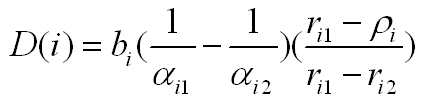
상기 수학식 24를 분석하여 보면, NRT 타입 세그먼트의 전송률이 RT 타입 세그먼트의 전송률보다 월등히 높을수록, NRT 타입 세그먼트의 QoS 만족 지수가 높을수록, 실시간 트래픽의 QoS 요구 조건이 낮을수록, 그리고 실시간 트래픽의 요구 대역폭이 높을수록 세그먼트 전환을 통해 얻을 수 있는 이득이 커짐을 알 수 있다. 상기와 같은 내용을 기반으로 도 5와 같은 최대 전환 규칙 알고리즘을 제안할 수 있다.Analysis of Equation 24 shows that the rate of the NRT type segment is much higher than that of the RT type segment, the higher the QoS satisfaction index of the NRT type segment, the lower the QoS requirement of the real time traffic, and It can be seen that the higher the required bandwidth, the greater the gain that can be achieved by segment switching. Based on the above contents, the maximum switching rule algorithm of FIG. 5 may be proposed.
도 5는 본 발명의 실시예에 따른 세그먼트를 전환하는 과정을 도시한 흐름도이다.5 is a flowchart illustrating a process of switching segments according to an embodiment of the present invention.
설명에 앞서, 도 5는 세그먼트 맵을 결정하고, 실시간 데이터 트래픽을 비실시간 데이터 트래픽에 사용되는 세그먼트를 전환하는 장치인 '세그먼트 전환기'의 동작에 대해 설명하기로 한다.5, the operation of the 'segment switcher', which is a device for determining a segment map and switching segments used for non-real-time data traffic, will be described.
상기 도 5를 참조하면, 먼저 502단계에서 상기 세그먼트 전환기는 세그먼트 맵 

상기 508단계에서 상기 세그먼트 전환기는 

상기 512단계에서 상기 세그먼트 전환기는 상기 508단계 혹은 510단계에서 결정된 


상기 514단계에서 상기 세그먼트 전환기는 


상기 516단계에서 상기 세그먼트 전환기는 


상술한 내용을 정리하면, 최대 전환 규칙 알고리즘은 최대로 세그먼트를 전환하여 달성할 수 있는 세그먼트 맵을 미리 계산한 후, 이득이 큰 실시간 연결부터 세그먼트 전환을 적용하고 맵 결정 이후에는 중단한다. 맵 결정 이후에 더 이상의 세그먼트를 전환하지 않는 이유는 실시간 데이터 트래픽의 QoS만 저하시키고 잔여 자원량을 증가시키지 못하기 때문이다.In summary, the maximum switching rule algorithm precomputes a segment map that can be achieved by switching segments at maximum, and then applies segment switching from the real-time high gain connection and stops after determining the map. The reason for not switching more segments after map determination is because it only degrades the QoS of the real-time data traffic and does not increase the amount of remaining resources.
상기 최대 전환 규칙 알고리즘은 시행 착오(trial and error)를 거쳐 최적의 값을 발견해 나가는 휴리스틱(heuristic) 알고리즘이다. 따라서, 상기 최대 전환 규칙 알고리즘에 대한 평가가 필요하다. The maximum switching rule algorithm is a heuristic algorithm that finds an optimal value through trial and error. Therefore, evaluation of the maximum conversion rule algorithm is needed.
전술한 바에 따르면 본 발명에서는 모두 4개의 세그먼트 타입에 대해 정의하였다. 그러나, 실시간 세그먼트는 안테나 수에 따른 구분으로 사용되는 요소 기술은 거의 유사하기 때문에 3개의 세그먼트 타입에 대해서만 평가하기로 한다.As described above, in the present invention, all four segment types are defined. However, the real-time segment is evaluated only for the three segment types because the element technology used for the division according to the number of antennas is almost similar.
세그먼트 맵은 다음과 같이 생성할 수 있다. 하나의 MAC 프레임을 23개의 클러스터(cluster)로 구성할 때 각 클러스터는 동일한 패턴을 가진다. 여기서, 상기 클러스터는 184개의 세그먼트로 구성된다. 따라서, 클러스터 하나를 3개의 세그먼트 타입에 대해 어떤 비율로 정할지 결정되면 전체 세그먼트 맵이 자동적으로 결정된다. 하나의 클러스터에 대해 


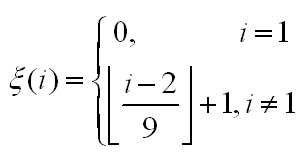

상기 수학식 25 및 26에서 결정된 바와 같이, 매 프레임마다 23


도 6a 및 6b는 본 발명에 따른 최대 전환 규칙을 적용한 성능 평가를 도시한 그래프이다.6A and 6B are graphs illustrating performance evaluation applying the maximum switching rule according to the present invention.
상기 표 2는 차등 세그먼트 구조를 가지는 이동 통신 시스템에 적용한 변조 및 부호 방식을 나타낸 표이다. 실시간 데이터 트래픽을 가정한다. i번째 실시간 연결에 대해서 512 kbits/s의 대역폭을 요구한다고 할 때 


상기 표 3에서 


도 6a 및 6b에 나타낸 바와 같이, 최대 전환 규칙 알고리즘은 정수 혼합 문제를 직접적으로 푼 결과와 비교해 매우 근접한 성능을 나타내고, 정적 할당 방식과 비교해 상당한 성능 향상이 있음을 알 수 있다. 또한, 시나리오 2는 시나리오 1과 비교해 NRT 타입 세그먼트의 전송률이 상대적으로 높음을 알 수 있고, 시나리오 3은 시나리오 1과 비교해 NRT 타입 세그먼트의 QoS 만족도가 상대적으로 낮음을 알 수 있다. 게다가, 도 6b는 시나리오 3과 시나리오 1의 성능이 현저히 차이가 나는 것을 알 수 있다. 즉, 본 발명에서 제안하는 세그먼트 전환 할당 방식은 NRT 타입 세그먼트의 전송률보다 QoS 만족도에 더 민감하다.As shown in Figs. 6A and 6B, it can be seen that the maximum conversion rule algorithm exhibits very close performance compared to the result of directly solving the integer mixing problem, and there is a significant performance improvement compared to the static allocation scheme. In addition,
본 발명의 상세한 설명에서는 구체적인 실시예에 관해 설명하였으나, 본 발명의 범위에서 벗어나지 않는 한도 내에서 여러 가지 변형이 가능함은 물론이다. 그러므로 본 발명의 범위는 설명된 실시예에 국한되지 않으며, 후술되는 특허청구의 범위뿐만 아니라 이 특허청구의 범위와 균등한 것들에 의해 정해져야 한다. In the detailed description of the present invention, specific embodiments have been described, but various modifications are possible without departing from the scope of the present invention. Therefore, the scope of the present invention should not be limited to the described embodiments, but should be defined not only by the scope of the following claims, but also by those equivalent to the scope of the claims.
상술한 바와 같이, 본 발명은 비실시간 타입 세그먼트 자원을 전환하여 실시간 연결에 사용함으로써 상대적으로 적은 자원을 운용하여 실시간 연결의 요청 대 역폭을 만족시킬 수 있는 이점이 존재한다. 또한, 본 발명의 최대 전환 규칙(Max Diversion Rule)을 이용하여 세그먼트 전환함으로써 연산량을 최소화 하는 이점이 존재한다.As described above, the present invention has an advantage of operating a relatively small resource to satisfy the request bandwidth of the real-time connection by switching the non-real-time type segment resources to use in the real-time connection. In addition, there is an advantage of minimizing the amount of computation by segment switching using the Max Diversion Rule of the present invention.
Claims (17)
Priority Applications (2)
| Application Number | Priority Date | Filing Date | Title |
|---|---|---|---|
| KR1020060040787A KR100946902B1 (en) | 2006-05-06 | 2006-05-06 | Resource management apparatus and method in mobile communication system |
| US11/800,683 US7778644B2 (en) | 2006-05-06 | 2007-05-07 | Apparatus and method for managing resources in mobile communication system |
Applications Claiming Priority (1)
| Application Number | Priority Date | Filing Date | Title |
|---|---|---|---|
| KR1020060040787A KR100946902B1 (en) | 2006-05-06 | 2006-05-06 | Resource management apparatus and method in mobile communication system |
Publications (2)
| Publication Number | Publication Date |
|---|---|
| KR20070108297A KR20070108297A (en) | 2007-11-09 |
| KR100946902B1 true KR100946902B1 (en) | 2010-03-09 |
Family
ID=38861446
Family Applications (1)
| Application Number | Title | Priority Date | Filing Date |
|---|---|---|---|
| KR1020060040787A Expired - Fee Related KR100946902B1 (en) | 2006-05-06 | 2006-05-06 | Resource management apparatus and method in mobile communication system |
Country Status (2)
| Country | Link |
|---|---|
| US (1) | US7778644B2 (en) |
| KR (1) | KR100946902B1 (en) |
Families Citing this family (15)
| Publication number | Priority date | Publication date | Assignee | Title |
|---|---|---|---|---|
| KR101001961B1 (en) * | 2003-07-09 | 2010-12-17 | 인터디지탈 테크날러지 코포레이션 | Method and system for managing radio resources in time slotted communication system |
| US20050203775A1 (en) * | 2004-03-12 | 2005-09-15 | Chesbrough Richard M. | Automated reporting, notification and data-tracking system particularly suited to radiology and other medical/professional applications |
| KR100640492B1 (en) * | 2004-08-31 | 2006-10-30 | 삼성전자주식회사 | How to measure the available bandwidth of your network |
| JP2008306409A (en) * | 2007-06-06 | 2008-12-18 | Toshiba Corp | Wireless communication system |
| KR20100021576A (en) * | 2007-06-19 | 2010-02-25 | 가부시키가이샤 엔티티 도코모 | Base station device and communication control method |
| KR100998927B1 (en) * | 2007-06-28 | 2010-12-09 | 삼성전자주식회사 | Method and apparatus for managing neighbor base station list in broadband wireless communication system |
| WO2010008252A2 (en) * | 2008-07-18 | 2010-01-21 | Lg Electronics Inc. | Apparatus for managing a resource and method thereof |
| US8553634B2 (en) | 2008-11-07 | 2013-10-08 | Lg Electronics Inc. | Method for performing bandwidth request process in wireless communication system |
| KR20100051521A (en) * | 2008-11-07 | 2010-05-17 | 엘지전자 주식회사 | Method of performing bandwidth request procedure in wireless communication system |
| WO2010053253A1 (en) * | 2008-11-07 | 2010-05-14 | 엘지전자주식회사 | Method for performing bandwidth request process in wireless communication system |
| KR101552838B1 (en) * | 2009-02-06 | 2015-09-14 | 삼성전자주식회사 | Band combining system and method for determining its transmission band |
| US8351465B2 (en) * | 2009-12-04 | 2013-01-08 | Cable Television Laboratories, Inc. | System and method of decoupling media access control (MAC) and physical (PHY) operating layers |
| US20110231215A1 (en) * | 2010-03-16 | 2011-09-22 | Santos Cipriano A | Optimization of a resource matching model by mapping a model to a bipartite graph |
| KR101343633B1 (en) * | 2011-02-14 | 2013-12-19 | 주식회사 케이티 | Method and apparatus for managing radio resource based on traffic pattern of terminal |
| US20160308934A1 (en) * | 2015-04-20 | 2016-10-20 | Qualcomm Incorporated | Further Device Timing Adjustments and Methods for Supporting DASH Over Broadcast |
Citations (6)
| Publication number | Priority date | Publication date | Assignee | Title |
|---|---|---|---|---|
| KR20020001403A (en) * | 2000-06-28 | 2002-01-09 | 홍승호 | Methode for allocating bandwidth in control area network protocol |
| KR20020033362A (en) * | 2000-10-31 | 2002-05-06 | 오길록 | MAC Protocol Over An ATM Passive Optical Network |
| KR20030036980A (en) * | 2001-11-01 | 2003-05-12 | 한국전자통신연구원 | The Packet Scheduling Method for Quality of Service of Internet based on Diffserv in Wireless Telecommnunication Network |
| KR20030045638A (en) * | 2001-12-03 | 2003-06-11 | 가부시키가이샤 엔.티.티.도코모 | Communication control system, communication control method, base station device and mobile terminal device |
| KR20040043794A (en) * | 2002-11-20 | 2004-05-27 | 한국전자통신연구원 | Method for adaptive packet transmission in a multibeam satellite communication system |
| KR20060027502A (en) * | 2004-09-23 | 2006-03-28 | 넷포드 주식회사 | Heterogeneous network interworking device and real-time traffic conversion method using same |
Family Cites Families (7)
| Publication number | Priority date | Publication date | Assignee | Title |
|---|---|---|---|---|
| JP3742760B2 (en) * | 2001-07-03 | 2006-02-08 | 松下電器産業株式会社 | Wireless communication system and wireless communication method |
| JP4015939B2 (en) * | 2002-12-17 | 2007-11-28 | 株式会社エヌ・ティ・ティ・ドコモ | Packet communication method, base station, mobile station, and packet communication program |
| FI20030712A0 (en) * | 2003-05-13 | 2003-05-13 | Nokia Corp | Traffic management method and network element |
| KR101001961B1 (en) * | 2003-07-09 | 2010-12-17 | 인터디지탈 테크날러지 코포레이션 | Method and system for managing radio resources in time slotted communication system |
| JP2008501284A (en) * | 2004-06-16 | 2008-01-17 | サムスン エレクトロニクス カンパニー リミテッド | Method for transmitting and receiving data in a mobile communication system using orthogonal frequency division multiple access |
| KR100943474B1 (en) * | 2005-04-18 | 2010-02-22 | 삼성전자주식회사 | System and method for transmitting and receiving data in communication system using multi-carrier |
| US20070297386A1 (en) * | 2005-07-28 | 2007-12-27 | Interdigital Technology Corporation | Method and system for scheduling uplink transmissions in a single carrier frequency division multiple access system |
-
2006
- 2006-05-06 KR KR1020060040787A patent/KR100946902B1/en not_active Expired - Fee Related
-
2007
- 2007-05-07 US US11/800,683 patent/US7778644B2/en active Active
Patent Citations (6)
| Publication number | Priority date | Publication date | Assignee | Title |
|---|---|---|---|---|
| KR20020001403A (en) * | 2000-06-28 | 2002-01-09 | 홍승호 | Methode for allocating bandwidth in control area network protocol |
| KR20020033362A (en) * | 2000-10-31 | 2002-05-06 | 오길록 | MAC Protocol Over An ATM Passive Optical Network |
| KR20030036980A (en) * | 2001-11-01 | 2003-05-12 | 한국전자통신연구원 | The Packet Scheduling Method for Quality of Service of Internet based on Diffserv in Wireless Telecommnunication Network |
| KR20030045638A (en) * | 2001-12-03 | 2003-06-11 | 가부시키가이샤 엔.티.티.도코모 | Communication control system, communication control method, base station device and mobile terminal device |
| KR20040043794A (en) * | 2002-11-20 | 2004-05-27 | 한국전자통신연구원 | Method for adaptive packet transmission in a multibeam satellite communication system |
| KR20060027502A (en) * | 2004-09-23 | 2006-03-28 | 넷포드 주식회사 | Heterogeneous network interworking device and real-time traffic conversion method using same |
Also Published As
| Publication number | Publication date |
|---|---|
| KR20070108297A (en) | 2007-11-09 |
| US7778644B2 (en) | 2010-08-17 |
| US20070291692A1 (en) | 2007-12-20 |
Similar Documents
| Publication | Publication Date | Title |
|---|---|---|
| US7778644B2 (en) | Apparatus and method for managing resources in mobile communication system | |
| CN101835161B (en) | Dynamic resource allocation method and equipment of multi-cell wireless communication system | |
| US8867453B2 (en) | System and method for subcarrier allocation signaling in a multicarrier wireless network | |
| JP4705674B2 (en) | Communication device | |
| US7835750B2 (en) | Multi-carrier wireless network using flexible fractional frequency reuse | |
| JP5014001B2 (en) | base station | |
| KR101002897B1 (en) | Channel Allocation System and Method in Mobile Communication System | |
| CN102238627B (en) | Resource allocating method and device of downlink shared channel | |
| JP2007532057A (en) | Apparatus and method for controlling transmission power in a communication system using orthogonal frequency division multiple access | |
| US7586990B2 (en) | Method and system for allocating subcarriers to subscriber devices | |
| KR20060044335A (en) | System and Method for Stable Channel Operation in Orthogonal Frequency Division Multiple Access Communication System | |
| KR100943474B1 (en) | System and method for transmitting and receiving data in communication system using multi-carrier | |
| US20100040080A1 (en) | Method of and apparatus for allocating sub-channels in orthogonal frequency division multiple access (ofdma) system | |
| KR20080070387A (en) | Scheduling device and method in broadband wireless access system | |
| EP1821478A1 (en) | Method and system for transmitting data in communication system | |
| CN101222728B (en) | Method and system for using time-frequency resources in OFDMA system | |
| KR20060038786A (en) | System and method for allocating resources between physical layer and media access control layer in radio access protocol | |
| US8638733B2 (en) | Apparatus and method for estimating map size in a broadband wireless communication system | |
| KR101378701B1 (en) | Method scheduling to allocate sub-carrier in a orthogonal frequency divisiong multiplexing access system | |
| KR101119275B1 (en) | Configuration method of channel in a communication system using orthogonal frequency division multiple access scheme and transmitting/receiving apparatus and method thereof | |
| Jiao et al. | Competitive scheduling for OFDMA systems with guaranteed transmission rate | |
| KR100771493B1 (en) | Scheduling Method and System Robust to Channel Estimation Error in Wireless Communication System | |
| CN116318289A (en) | A space-time-frequency three-dimensional resource allocation method for MU-MIMO system | |
| KR100882427B1 (en) | Method for generating preamble of ODF frame using cell loading state and ODF transmitter for same | |
| KR101397596B1 (en) | Apparatus and method for allocating sub-channel in a orthogonal frequency division multiplexingaccess system |
Legal Events
| Date | Code | Title | Description |
|---|---|---|---|
| PA0109 | Patent application |
St.27 status event code: A-0-1-A10-A12-nap-PA0109 |
|
| PG1501 | Laying open of application |
St.27 status event code: A-1-1-Q10-Q12-nap-PG1501 |
|
| R18-X000 | Changes to party contact information recorded |
St.27 status event code: A-3-3-R10-R18-oth-X000 |
|
| A201 | Request for examination | ||
| P11-X000 | Amendment of application requested |
St.27 status event code: A-2-2-P10-P11-nap-X000 |
|
| P13-X000 | Application amended |
St.27 status event code: A-2-2-P10-P13-nap-X000 |
|
| PA0201 | Request for examination |
St.27 status event code: A-1-2-D10-D11-exm-PA0201 |
|
| D13-X000 | Search requested |
St.27 status event code: A-1-2-D10-D13-srh-X000 |
|
| D14-X000 | Search report completed |
St.27 status event code: A-1-2-D10-D14-srh-X000 |
|
| E902 | Notification of reason for refusal | ||
| PE0902 | Notice of grounds for rejection |
St.27 status event code: A-1-2-D10-D21-exm-PE0902 |
|
| P11-X000 | Amendment of application requested |
St.27 status event code: A-2-2-P10-P11-nap-X000 |
|
| P13-X000 | Application amended |
St.27 status event code: A-2-2-P10-P13-nap-X000 |
|
| E701 | Decision to grant or registration of patent right | ||
| PE0701 | Decision of registration |
St.27 status event code: A-1-2-D10-D22-exm-PE0701 |
|
| GRNT | Written decision to grant | ||
| PR0701 | Registration of establishment |
St.27 status event code: A-2-4-F10-F11-exm-PR0701 |
|
| PR1002 | Payment of registration fee |
St.27 status event code: A-2-2-U10-U11-oth-PR1002 Fee payment year number: 1 |
|
| PG1601 | Publication of registration |
St.27 status event code: A-4-4-Q10-Q13-nap-PG1601 |
|
| R18-X000 | Changes to party contact information recorded |
St.27 status event code: A-5-5-R10-R18-oth-X000 |
|
| FPAY | Annual fee payment |
Payment date: 20130227 Year of fee payment: 4 |
|
| PR1001 | Payment of annual fee |
St.27 status event code: A-4-4-U10-U11-oth-PR1001 Fee payment year number: 4 |
|
| FPAY | Annual fee payment |
Payment date: 20140227 Year of fee payment: 5 |
|
| PR1001 | Payment of annual fee |
St.27 status event code: A-4-4-U10-U11-oth-PR1001 Fee payment year number: 5 |
|
| R18-X000 | Changes to party contact information recorded |
St.27 status event code: A-5-5-R10-R18-oth-X000 |
|
| FPAY | Annual fee payment |
Payment date: 20150226 Year of fee payment: 6 |
|
| PR1001 | Payment of annual fee |
St.27 status event code: A-4-4-U10-U11-oth-PR1001 Fee payment year number: 6 |
|
| R18-X000 | Changes to party contact information recorded |
St.27 status event code: A-5-5-R10-R18-oth-X000 |
|
| FPAY | Annual fee payment |
Payment date: 20160226 Year of fee payment: 7 |
|
| PR1001 | Payment of annual fee |
St.27 status event code: A-4-4-U10-U11-oth-PR1001 Fee payment year number: 7 |
|
| FPAY | Annual fee payment |
Payment date: 20170224 Year of fee payment: 8 |
|
| PR1001 | Payment of annual fee |
St.27 status event code: A-4-4-U10-U11-oth-PR1001 Fee payment year number: 8 |
|
| LAPS | Lapse due to unpaid annual fee | ||
| PC1903 | Unpaid annual fee |
St.27 status event code: A-4-4-U10-U13-oth-PC1903 Not in force date: 20180304 Payment event data comment text: Termination Category : DEFAULT_OF_REGISTRATION_FEE |
|
| PC1903 | Unpaid annual fee |
St.27 status event code: N-4-6-H10-H13-oth-PC1903 Ip right cessation event data comment text: Termination Category : DEFAULT_OF_REGISTRATION_FEE Not in force date: 20180304 |
|
| P22-X000 | Classification modified |
St.27 status event code: A-4-4-P10-P22-nap-X000 |
|
| P22-X000 | Classification modified |
St.27 status event code: A-4-4-P10-P22-nap-X000 |