KR100559269B1 - Three-dimensional image display apparatus, method of distributing parallax image to the display apparatus, and method of displaying three-dimensional image on the display apparatus - Google Patents
Three-dimensional image display apparatus, method of distributing parallax image to the display apparatus, and method of displaying three-dimensional image on the display apparatus Download PDFInfo
- Publication number
- KR100559269B1 KR100559269B1 KR1020030097305A KR20030097305A KR100559269B1 KR 100559269 B1 KR100559269 B1 KR 100559269B1 KR 1020030097305 A KR1020030097305 A KR 1020030097305A KR 20030097305 A KR20030097305 A KR 20030097305A KR 100559269 B1 KR100559269 B1 KR 100559269B1
- Authority
- KR
- South Korea
- Prior art keywords
- pixel
- light
- image
- pixels
- opening
- Prior art date
- Legal status (The legal status is an assumption and is not a legal conclusion. Google has not performed a legal analysis and makes no representation as to the accuracy of the status listed.)
- Expired - Fee Related
Links
Images






Classifications
-
- H—ELECTRICITY
- H04—ELECTRIC COMMUNICATION TECHNIQUE
- H04N—PICTORIAL COMMUNICATION, e.g. TELEVISION
- H04N13/00—Stereoscopic video systems; Multi-view video systems; Details thereof
- H04N13/30—Image reproducers
- H04N13/302—Image reproducers for viewing without the aid of special glasses, i.e. using autostereoscopic displays
- H04N13/31—Image reproducers for viewing without the aid of special glasses, i.e. using autostereoscopic displays using parallax barriers
-
- G—PHYSICS
- G02—OPTICS
- G02B—OPTICAL ELEMENTS, SYSTEMS OR APPARATUS
- G02B30/00—Optical systems or apparatus for producing three-dimensional [3D] effects, e.g. stereoscopic images
- G02B30/20—Optical systems or apparatus for producing three-dimensional [3D] effects, e.g. stereoscopic images by providing first and second parallax images to an observer's left and right eyes
- G02B30/26—Optical systems or apparatus for producing three-dimensional [3D] effects, e.g. stereoscopic images by providing first and second parallax images to an observer's left and right eyes of the autostereoscopic type
- G02B30/27—Optical systems or apparatus for producing three-dimensional [3D] effects, e.g. stereoscopic images by providing first and second parallax images to an observer's left and right eyes of the autostereoscopic type involving lenticular arrays
-
- G—PHYSICS
- G02—OPTICS
- G02B—OPTICAL ELEMENTS, SYSTEMS OR APPARATUS
- G02B30/00—Optical systems or apparatus for producing three-dimensional [3D] effects, e.g. stereoscopic images
- G02B30/20—Optical systems or apparatus for producing three-dimensional [3D] effects, e.g. stereoscopic images by providing first and second parallax images to an observer's left and right eyes
- G02B30/26—Optical systems or apparatus for producing three-dimensional [3D] effects, e.g. stereoscopic images by providing first and second parallax images to an observer's left and right eyes of the autostereoscopic type
- G02B30/30—Optical systems or apparatus for producing three-dimensional [3D] effects, e.g. stereoscopic images by providing first and second parallax images to an observer's left and right eyes of the autostereoscopic type involving parallax barriers
Landscapes
- Physics & Mathematics (AREA)
- General Physics & Mathematics (AREA)
- Optics & Photonics (AREA)
- Engineering & Computer Science (AREA)
- Multimedia (AREA)
- Signal Processing (AREA)
- Testing, Inspecting, Measuring Of Stereoscopic Televisions And Televisions (AREA)
Abstract
표시 유닛과 마스크를 갖는 장치가 제공된다. 표시 유닛은 매트릭스 형상으로 배열된 복수의 픽셀을 갖고, 각 픽셀은 제1 및 제2 그룹으로 그룹 분류되어 요소 화상(element image)을 표시한다. 마스크는 제1 픽셀 그룹에 대향하는 제1 광 개구부와 제2 픽셀 그룹 중의 대응하는 하나에 대향하는 제2 광 개구부를 갖는다. 제1 픽셀 그룹의 중심은 제1 광 개구부의 축과 일치하고, 제2 픽셀 그룹의 각 중심은 제2 광 개구부의 대응하는 하나로부터 편향되고, 이 편향은 제1 및 제2 픽셀 그룹 중심 간의 거리에 따라 서서히 증가한다. 광선은 제1 및 제2 픽셀 그룹으로부터 제1 및 제2 개구부의 축을 통해 기준면으로 향한다.An apparatus having a display unit and a mask is provided. The display unit has a plurality of pixels arranged in a matrix, and each pixel is grouped into first and second groups to display an element image. The mask has a first light opening opposite the first pixel group and a second light opening opposite the corresponding one of the second pixel groups. The center of the first pixel group coincides with the axis of the first light opening, and each center of the second pixel group is deflected from a corresponding one of the second light openings, the deflection being the distance between the first and second pixel group centers. Gradually increases. The light beam is directed from the first and second pixel groups through the axes of the first and second openings to the reference plane.
표시 유닛, 마스크, 표시 장치, 픽셀 그룹, 개구부Display unit, mask, display device, pixel group, opening
Description
도 1은 본 발명의 제1 실시예에 따라 3차원 화상을 표시하는 Ⅱ 시스템 표시 장치의 구조를 개략적으로 도시하는 부분 도면.BRIEF DESCRIPTION OF THE DRAWINGS Fig. 1 is a partial diagram schematically showing the structure of a II system display apparatus for displaying a three-dimensional image according to a first embodiment of the present invention;
도 2는 본 발명에서 제시한 방법에 의한, 도 1에 도시한 표시 장치의 시역(viewing zone)의 최대화를 도시하는 개략적인 도면.FIG. 2 is a schematic diagram illustrating maximization of the viewing zone of the display device shown in FIG. 1 by the method presented in the present invention. FIG.
도 3은 도 1에 도시한 표시 장치의 표시 유닛을 개략적으로 도시하는 평면도.3 is a plan view schematically illustrating a display unit of the display device illustrated in FIG. 1.
도 4a 및 4b는 도 3에 도시한 표시 유닛의 픽셀에 부합하는 배열을 포함하여 도 1에 도시한 투과 제어부(transmission control section)의 2개 예를 개략적으로 도시하는 평면도.4A and 4B are plan views schematically showing two examples of a transmission control section shown in FIG. 1, including an arrangement corresponding to the pixels of the display unit shown in FIG.
도 5는 요소 화상(element image)이 도 1에 도시한 표시 장치에서의 시역의 중심에 대향하거나 개략적으로 대향하여 배치된 특정 픽셀 그룹을 개략적으로 도시하는 도면.FIG. 5 is a diagram schematically showing a specific pixel group in which an element image is disposed to face or roughly face the center of viewing area in the display device shown in FIG. 1; FIG.
도 6은 투과 제어부의 중심축 상에 위치한 개구부를 통해 시역이 조사되는 광선 경로, 및 도 1에 도시한 표시 장치에서의 시역과의 관계를 도시하는 도면.FIG. 6 is a diagram showing a relationship between a light path through which a viewing area is irradiated through an opening located on a central axis of the transmission control unit, and a viewing area in the display device shown in FIG. 1; FIG.
도 7은 소정의 픽셀로부터 방사되어 광 개구부를 통과한 광선이 도 1에 도시한 표시 장치에서의 기준 거리 내에 입사하는 위치를 도시하는 도면.FIG. 7 is a diagram showing a position at which light rays emitted from predetermined pixels and passing through the light openings are incident within a reference distance in the display device shown in FIG. 1. FIG.
도 8a 내지 8c는 표시 유닛에 요소 화상이 배열되어 각 요소 화상을 구성하는 픽셀 그룹의 중심이 광 개구부(4)의 중심과 동심을 갖는 비교예에 따른 표시 장치의 개략적인 도면.8A to 8C are schematic views of a display device according to a comparative example in which element images are arranged in the display unit so that the center of the pixel group constituting each element image is concentric with the center of the
도 9a 내지 9c는 본 발명의 제1 실시예에 따라 요소 화상을 표시 유닛에 배치하는 방법을 도시하는 개략적인 도면.9A to 9C are schematic views showing a method of arranging element images in a display unit according to the first embodiment of the present invention.
도 10은 요소 화상이 도 1에 도시한 표시 장치에서 소정의 상태에서 시역의 중심으로부터 떨어진 영역 내에 표시된다는 가정하에 발생하는 광선 그룹의 각도를 도시하는 도면.FIG. 10 is a view showing angles of a group of light rays occurring under the assumption that element images are displayed in an area away from the center of viewing area in a predetermined state in the display device shown in FIG. 1; FIG.
도 11은 도 1에 도시한 표시 장치에서 소정의 상태에서 시역의 단부에 입사하는 광선 각도를 도시하는 개략적인 도면.FIG. 11 is a schematic diagram showing light beam angles incident on ends of viewing areas in a predetermined state in the display device shown in FIG. 1; FIG.
도 12는 도 1에 도시한 표시 장치에서 기본 시차 수가 짝수인 경우에 시차 화상의 전체 개수를 얻는 것을 도시하는 도면.FIG. 12 is a diagram illustrating obtaining the total number of parallax images when the basic parallax number is even in the display device shown in FIG. 1; FIG.
도 13은 도 1에 도시한 표시 장치에서 기본 시차 수가 홀수인 경우에 시차 화상의 전체 개수를 얻는 것을 도시하는 도면.FIG. 13 is a diagram illustrating obtaining the total number of parallax images when the basic parallax number is odd in the display device shown in FIG. 1; FIG.
도 14는 도 1에 도시한 표시 장치에서 기본 시차 수가 짝수인 경우에 광 개구부와 픽셀 간의 위치 관계로부터 배치되는 시차 화상 개수를 얻는 것을 도시하는 도면.FIG. 14 is a diagram showing obtaining the number of parallax images arranged from the positional relationship between the light aperture and the pixel when the basic parallax number is even in the display device shown in FIG.
도 15는 도 1에 도시한 표시 장치에서 기본 시차 수가 홀수인 경우에 광 개구부와 픽셀 간의 배열 관계로부터 배치되는 시차 화상 개수를 얻는 것을 도시하는 도면.FIG. 15 is a diagram showing obtaining a number of parallax images arranged from an arrangement relationship between a light opening and a pixel when the number of basic parallaxes is odd in the display device shown in FIG. 1; FIG.
도 16은 도 1에 도시한 표시 장치에서 픽셀로부터 발생하여 광 개구부를 통과한 광선이 소정의 상태에서 시역의 범위에 입사할 수 있는지 여부를 판단하는 기준을 도시하는 도면.FIG. 16 is a diagram showing a criterion for determining whether a light ray generated from a pixel and passing through a light opening in the display device shown in FIG. 1 can enter a range of viewing region in a predetermined state.
도 17은 도 1에 도시한 표시 장치에서 표시 유닛 상에 표시되는 요소 화상을 얻기 위한 촬영 방향을 도시하는 도면.FIG. 17 is a diagram showing a shooting direction for obtaining an element image displayed on a display unit in the display device shown in FIG. 1; FIG.
도 18은 본 발명의 제1 실시예에 따라 표시 장치의 표시 유닛에 표시되는 요소 화상 그룹을 결정하는 방법에 따라 시차 화상을 배열하는 수순을 설명하는 제1 알고리즘을 도시하는 흐름도.Fig. 18 is a flowchart showing a first algorithm for explaining a procedure for arranging parallax images according to a method for determining a group of element images displayed on a display unit of a display device according to the first embodiment of the present invention.
도 19는 본 발명의 다른 실시예에 따라 표시 장치의 표시 유닛에 표시되는 요소 화상 그룹을 결정하는 방법에 따라 시차 화상을 배열하는 수순을 설명하는 제2 알고리즘을 도시하는 흐름도.Fig. 19 is a flowchart showing a second algorithm for explaining a procedure for arranging parallax images according to a method for determining a group of element images displayed on a display unit of a display device according to another embodiment of the present invention.
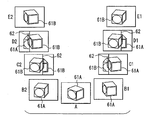
도 20은 본 발명의 변형예에 따라 3차원 화상 표시 장치를 개략적으로 도시하며, 도 3에 도시한 3차원 화상을 표시하는 픽셀이 도 4a에 도시한 투과 제어부와 결합되어 시역의 외측에서 관찰되는 경우에 경고를 행할 수 있는 것을 나타내는 평면도.FIG. 20 schematically illustrates a three-dimensional image display device according to a modification of the present invention, in which a pixel displaying the three-dimensional image shown in FIG. 3 is combined with the transmission control unit shown in FIG. 4A and viewed from outside the viewing area. A floor plan showing that a warning can be given in case.
도 21a는 도 20에 도시한 3차원 화상 표시 장치와 관찰 위치와의 관계를 개략적으로 도시하는 도면.FIG. 21A is a diagram schematically showing a relationship between the three-dimensional image display device shown in FIG. 20 and an observation position; FIG.
도 21b는 도 21a에 도시한 각 관찰 위치에서 관찰할 때 지각되는 3차원 화상을 개략적으로 도시하는 도면.FIG. 21B is a diagram schematically showing a three-dimensional image perceived when observed at each observation position shown in FIG. 21A;
도 22는 쌍안 시스템(binocular system)을 이용하여 경고용 화상을 표시하는 경우를 개략적으로 도시하는 도면.Fig. 22 is a diagram schematically showing a case of displaying a warning image using a binocular system.
도 23은 도 20에 도시한 3차원 화상 표시 장치의 변형예를 개략적으로 도시하는 평면도.FIG. 23 is a plan view schematically illustrating a modification of the three-dimensional image display device shown in FIG. 20.
도 24a는 본 발명의 또 다른 변형예에 따라 Ⅱ 시스템의 3차원 화상 표시 장치를 개략적으로 도시하는 평면도.24A is a plan view schematically showing a three-dimensional image display device of a II system according to another modification of the present invention;
도 24b는 도 24a에 도시한 3차원 화상 표시 장치에서 개구부에 대하여 3차원 화상 표시용 픽셀의 상대 위치를 개략적으로 도시하는 평면도.FIG. 24B is a plan view schematically showing the relative position of the three-dimensional image display pixel with respect to the opening portion in the three-dimensional image display device shown in FIG. 24A; FIG.
도 25a는 도 24a 및 24b에 도시한 3차원 화상 표시 장치와 관찰 위치와의 관계를 개략적으로 도시하는 도면.FIG. 25A is a diagram schematically showing a relationship between the three-dimensional image display device shown in FIGS. 24A and 24B and an observation position. FIG.
도 25b는 도 25a에 도시한 각 관찰 위치에서 관찰한 경우에 지각되는 3차원 화상을 개략적으로 도시하는 도면.FIG. 25B is a diagram schematically showing a three-dimensional image perceived when observed at each observation position shown in FIG. 25A; FIG.
도 26은 본 발명의 또 다른 변형예에 따라 3차원 화상 표시 장치를 개략적으로 도시하는 부분 도면.FIG. 26 is a partial view schematically showing a three-dimensional image display device according to another modification of the present invention; FIG.
도 27은 본 발명의 또 다른 변형예에 따라 3차원 화상 표시 장치를 개략적으로 도시하는 부분 도면.FIG. 27 is a partial view schematically showing a three-dimensional image display device according to another modification of the present invention; FIG.
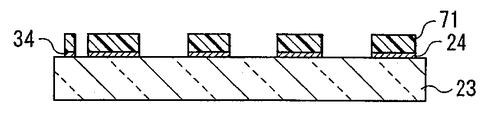
도 28a 내지 28h는 도 25a 및 25b에 도시한 변형예에서 사용가능한 마스크를 준비하는 방법을 개략적으로 도시하는 부분 도면.28A to 28H are partial views schematically showing a method of preparing a mask usable in the variant shown in FIGS. 25A and 25B.
* 도면의 주요 부분에 대한 부호 설명 *Explanation of symbols on the main parts of the drawings
1 광원1 light source
2 화상 표시 유닛2 image display unit
3 투과 제어부3 transmission control unit
4 투과 제어부4 transmission control
11 3차원 화상11 three-dimensional image
12 서브 픽셀12 sub pixels
14 기준면14 reference planes
본 발명은 3차원 화상을 표시하는 표시 장치에 관한 것으로서, 보다 상세하게는 시역을 최대한 확보하기 위한 시차 화상의 배치 방법, 그 시역으로부터의 편향을 관찰자가 인식할 수 있는 방법, 및 이 방법을 구현하는 장치에 관한 것이다.BACKGROUND OF THE
3차원 화상을 표시하는 다양한 시스템이 존재하는데, 대략 2가지 방법으로 나눌 수 있다. 그 중 하나는 쌍안 시차를 이용하여 입체 뷰잉하는 시스템이며, 나머지 방법은 공간 화상을 실제로 공간에 형성하기 위한 공간 화상 재생 시스템이다.There are various systems for displaying three-dimensional images, which can be roughly divided into two ways. One of them is a system for stereoscopic viewing using binocular parallax, and the other method is a spatial image reproduction system for actually forming a spatial image in a space.
쌍안 시차 시스템으로는, 안경의 존재/부재를 포함하는 다양한 시스템이 제안되어 왔으며, 예를 들어, 좌안/우안용 비디오 정보를 포함하는 쌍안 시스템(소위 입체 방법)뿐만 아니라 비디오 촬영시 복수의 관찰 위치가 배치되어 정보 양을 늘리고 관찰가능한 범위를 늘리는 다안식 시스템이 있다. 그 쌍안 시스템에서는, 2개의 촬영 위치가 좌안 및 우안용으로 배치되어 좌안 및 우안용 화상을 얻게 되어 이 화상이 좌안 및 우안으로 각각 볼 수 있게 된다. 다안식 시스템에서는, 비디오 촬영 위치가 쌍안 시스템의 경우보다 더 많게 된다.As a binocular parallax system, various systems including the presence / absence of glasses have been proposed, for example, a plurality of observation positions in video shooting as well as a binocular system (so-called stereoscopic method) including video information for left and right eyes. There is a multi-spatial system that is deployed to increase the amount of information and increase the observable range. In the binocular system, two photographing positions are arranged for the left eye and the right eye to obtain images for the left eye and the right eye so that the image can be viewed with the left eye and the right eye, respectively. In a multieye system, the video shooting position is more than in a binocular system.
어떠한 안경도 없는 시스템에서는, 임의의 안경없이 입체 뷰잉이 가능하고 안경이 필요없는 대신, 관찰가능한 범위가 한정된다. 그러나, 안경을 이용하는 것은 관찰자에게 불편함을 주게 된다. 따라서, 최근에는, 렌티큘러 렌즈 또는 시차 슬릿이 디스플레이와 결합되어 어떠한 안경없이도 관찰이 가능한 시스템에 대한 연구가 주로 수행되어 왔다.In systems without any glasses, stereoscopic viewing is possible without any glasses and glasses are not needed, but the viewable range is limited. However, the use of eyeglasses causes inconvenience to the observer. Therefore, in recent years, research has been mainly conducted on a system in which a lenticular lens or parallax slit is combined with a display and can be observed without any glasses.
쌍안 시차 시스템과는 대조적으로, 공간에 화상이 재생되는 공간 화상 재생 시스템은 3차원 화상 재생용으로 이상적인 시스템이며, 홀로그래피는 이 공간 화상 재생 시스템으로 분류된다. 이 시스템은 때때로 1908년 프랑스인인 리프망(Lippmann)에 의해 제안된 집적 이미징(Ⅱ) 시스템(또한 집적 촬영(integral photography; IP) 시스템이라고 칭하며, 또한 광선 재생 방법이라고도 칭해짐)이라 칭해지고, 또한 때때로 쌍안 시차 시스템으로도 분류된다. 그러나, 집적 이미징(Ⅱ) 시스템에서, 광선은 재생시에 재생 광 경로로 이동하는데, 이것은 촬영시의 촬영 광 경로와 반대의 경로로서, 완전한 3차원 화상을 재생하게 된다. 따라서, 이상적인 집적 이미징(Ⅱ) 시스템은 공간 화상 재생 시스템으로 분류되어야 한다.In contrast to binocular parallax systems, spatial image reproduction systems in which images are reproduced in space are ideal systems for three-dimensional image reproduction, and holography is classified into this spatial image reproduction system. This system is sometimes referred to as the Integrated Imaging (II) system (also called an integrated photography (IP) system, also referred to as a ray reproduction method) proposed by Lippmann, a Frenchman in 1908, It is also sometimes classified as a binocular parallax system. However, in an integrated imaging (II) system, light rays travel in a reproduction light path at the time of reproduction, which is a path opposite to the photographing light path at the time of imaging, which reproduces a complete three-dimensional image. Therefore, the ideal integrated imaging (II) system should be classified as a spatial image reproduction system.
이러한 집적 이미징(Ⅱ) 시스템 또는 광선 재생 시스템은, 예를 들어, 일본 특허출원 공개공보 평10-239785 및 2001-56450에 개시되어 있다. 여기서, 집적 이미징 방법 및 광선 재생 방법이라는 용어는 입체 표시 방법으로서 그 용어의 의미가 정확하게 확립되어 있지는 않지만, 대략 동일한 원리에 기초하는 것으로 생각할 수 있다. 다음의 설명에서, 이 시스템은 광선 재생 시스템을 포함하는 개념으로 "집적 이미징 시스템"이라 칭할 것이다.Such integrated imaging (II) systems or ray reproduction systems are disclosed, for example, in Japanese Patent Application Laid-open Nos. Hei 10-239785 and 2001-56450. Here, the terms integrated imaging method and ray reproduction method are considered to be based on the same principle, although the meaning of the term is not accurately established as a stereoscopic display method. In the following description, this system will be referred to as an "integrated imaging system" with the concept of including a ray reproduction system.
또한, 3차원 화상이 다안식 시스템 또는 Ⅱ 시스템과 같이 안경 없이 표시될 때, 예를 들어, 다음과 같은 시스템 또는 장치가 때때로 사용된다. 이 시스템에서, 표시 유닛이 제공되며, 이것은 복수의 2차원 배열 픽셀을 구비하며, 마스크가 그 픽셀 앞에 배치된다. 픽셀은 2차원 화상을 표시하며, 이 화상은 마스크를 통해 전면 공간에 투영되어 3차원 화상을 형성하게 된다. 마스크는 개구부, 슬릿 또는 윈도우를 구비하며, 이들 각각은 픽셀보다 크기가 작으며, 전형적으로 픽셀 크기와 대략 같다. 마스크는 픽셀로부터 방사되는 광선의 투과를 제어하는 기능을 갖기에 소위 투과 제어 유닛이라 불리며 개구부는 소위 투과 제어부(transmission control section)라 불리고, 이 개구부는 핀홀 또는 마이크로렌즈에 의해 구현되며, 이들은 2차원으로 배열된다. 상기한 공개 공보에서 개시된 바와 같은 집적 이미징 시스템이 적용된 3차원 화상 표시 장치에서는, 자연스러운 3차원 화상을 재생할 수 있다. 여기서 액정 표시 유닛을 그 표시 유닛으로서 사용할 수 있으며, 이 유닛은 매트릭스 형상으로 배열된 픽셀에 대응하는 화상 표시 엘리먼트를 포함한다.In addition, when a three-dimensional image is displayed without glasses, such as a polycular system or a II system, for example, the following system or apparatus is sometimes used. In this system, a display unit is provided, which has a plurality of two-dimensional array pixels, and a mask is disposed before the pixels. The pixels display a two-dimensional image, which is projected through the mask into the front space to form a three-dimensional image. The mask has openings, slits or windows, each of which is smaller in size than a pixel and is typically approximately the same as the pixel size. Since the mask has a function of controlling the transmission of the light rays emitted from the pixels, the so-called transmission control unit and the openings are called transmission control sections, which are implemented by pinholes or microlenses, which are two-dimensional Is arranged. In the three-dimensional image display apparatus to which the integrated imaging system as disclosed in the above-mentioned publication is applied, a natural three-dimensional image can be reproduced. A liquid crystal display unit can be used here as the display unit, which includes an image display element corresponding to the pixels arranged in a matrix.
표시 유닛 상의 다수의 화상 패턴이 요소 화상(element image)을 구성하게 되며, 이 요소 화상은 시야각에 따라 가시적 방식에 있어서 미묘하게 다르며, 이 요소 화상은 3차원 화상 표시 장치 상의 개별적인 핀홀 또는 마이크로렌즈를 통해 공간에서 표시된다. 즉, 광선이, 요소 화상에 대응하는 다수의 화상 패턴으로부터 대응하는 핀홀 또는 마이크로렌즈를 통해 표시 장치의 전면 공간으로, 또는 광원으로부터 핀홀 또는 마이크로렌즈 및 화상 패턴을 통해 방사된다. 이러한 광선은 핀홀 또는 마이크로렌즈와 같은 투과 제어부의 3차원 실제 화상을 형성한다. 이러한 광선 경로가, 핀홀 또는 마이크로렌즈의 투과 제어부의 배면에서의 배면 공간 상에서 외삽될 때, 3차원 가상 화상(즉, 배면 공간측에서 볼 때 존재하지 않는 화상)은 핀홀 또는 마이크로렌즈의 투과 제어부의 배면 공간 상에서 관찰된다. 즉, 관찰자에 의해 관찰될 때, 3차원 실제 화상은, 요소 화상으로부터 방사되며 투과 제어부의 전면 공간에서 화상을 형성하는 광선 그룹에 의해 관찰되고, 그 3차원 가상 화상은 투과 제어부의 배면 공간에서 화상을 또한 형성하는 광선 그룹에 의해 관찰된다.Multiple image patterns on the display unit constitute an element image, which is subtly different in a visible manner depending on the viewing angle, which element image is characterized by individual pinholes or microlenses on the three-dimensional image display device. Are displayed in space through. That is, light rays are emitted from the plurality of image patterns corresponding to the element images through the corresponding pinholes or microlenses to the front space of the display device, or from the light source through the pinholes or microlenses and the image patterns. These light rays form a three dimensional real image of a transmission control such as a pinhole or microlens. When such a ray path is extrapolated on the back space at the back of the transmission control of the pinhole or the microlens, the three-dimensional virtual image (that is, the image which does not exist when viewed from the back space side) is obtained from the transmission control of the pinhole or the microlens. Observed on the back space. That is, when viewed by an observer, the three-dimensional actual image is observed by a group of rays that radiate from the element image and form an image in the front space of the transmission control, the three-dimensional virtual image being imaged in the back space of the transmission control. Is also observed by the group of rays forming it.
상기한 바와 같이, 실제 공간에서 3차원 화상을 표시하기 위한 다양한 시스템이 제안되어 왔다. 궁극적인 3차원 화상 디스플레이에서, 표시된 화상은 실제 공간에서 실제로 존재하는 것처럼 자연스러워 보인다. 이러한 관점에서, 집적 이미징 화상은 뛰어난 방법이라 여겨지며, 그 이유는 자연스러운 입체 화상이 간단한 구성에 의해 형성될 수 있기 때문이다. 입체 화상이 집적 이미징 시스템에서 실제로 재생되기 때문에, 편광 안경과 같은 광학 수단이 필요없다. 또한, 입체 화상의 가시 각도는 관찰자가 관찰하는 각도에 따라 변하기 때문에, 자연스러운 이동 시차를 얻게 되며, 보다 현실감있는 입체 화상을 재생할 수 있다. 이러한 관점에서, 이 방법이 뛰어나다.As mentioned above, various systems have been proposed for displaying three-dimensional images in real space. In the ultimate three-dimensional image display, the displayed image looks as natural as it actually exists in real space. In this respect, integrated imaging images are considered an excellent method because natural stereoscopic images can be formed by a simple configuration. Since stereoscopic images are actually reproduced in an integrated imaging system, there is no need for optical means such as polarized glasses. In addition, since the viewing angle of the stereoscopic image changes depending on the angle observed by the observer, a natural moving parallax is obtained, and a more realistic stereoscopic image can be reproduced. In this respect, this method is excellent.
어떠한 안경도 이용하지 않는 다안식 표시 장치는 Ⅱ 시스템의 표시 장치의 구성과 유사한 구성을 갖는다는 점을 주목하길 바란다. 그러나, 다안식 시스템의 표시 장치는, 이 장치로부터의 광선이 가시 거리에 위치한 관찰면에 집광된다는 점에서 Ⅱ 시스템과 명백히 다르다. 다안식 시스템의 표시 장치에서, 관찰자는 그 가시 거리내에 또는 가시 거리 근처에 있어야 하며, 이 가시 거리 내에서의 광선의 집광점은 양쪽 눈 간격의 배수(1/정수)로 설정되어야 한다. 다시 말하면, 관찰자가 가시 거리 내에 위치할 때, 출사동(exit pupil)의 배수(1/정수)를 경유한 광선은 관찰자의 양안에 입사되어야 한다. 다안식 시스템의 표시 장치에서는, 하나의 출사동에 대응하는 시차 화상 그룹을 구성하는 시차 화상의 수가 적더라도, 쌍안 시차에 의해 3차원 화상으로서 인식될 수 있다. 따라서, 다안식 시스템의 표시 장치에서의 화상 표시 유닛의 해상도와 같은 다양한 환경 때문에 픽셀의 수가 제한될 때, Ⅱ 시스템에 비교해 보다 높은 공간 주파수를 갖는 3차원 화상이 재생될 수 있는 이점이 있다. 그러나, 관찰자가 다안식 시스템의 표시 장치에서 가로 방향(traverse)으로 이동하면, 그리고 집광점 간의 간격이 충분히 짧지 않으면, 3차원 화상의 깜빡임(flipping)이 관찰되거나 보는 방향에 따라 시역(viewing zone)이 제한되는 문제점이 발생한다.Note that a multi-eye display device without any glasses has a configuration similar to that of the display device of the II system. However, the display device of the polycular system is clearly different from the II system in that light rays from this device are focused on an observation surface located at a viewing distance. In a display device of a multi-eye system, the observer must be within or near the viewing distance, and the focusing point of the light rays within this viewing distance should be set to a multiple of both eye intervals (1 / integer). In other words, when the observer is located within the viewing distance, the light beams through multiples (1 / integer) of the exit pupil must be incident on both eyes of the observer. In the display device of a multi-eye system, even if the number of parallax images forming a parallax image group corresponding to one exit pupil is small, it can be recognized as a three-dimensional image by binocular parallax. Therefore, when the number of pixels is limited due to various environments such as the resolution of the image display unit in the display device of the multi-eye system, there is an advantage that a three-dimensional image having a higher spatial frequency can be reproduced compared to the II system. However, when the observer moves in the transverse direction in the display device of the multi-eye system, and the spacing between the condensing points is not sufficiently short, the viewing zone depends on the direction in which flickering of the three-dimensional image is observed or viewed. This limited problem occurs.
본질적으로, 사진 개념인 집적 이미징 시스템(Ⅱ 시스템)이 LCD 또는 PDP와 같은 전자 장치로 구현될 때, 시역이라는 개념이 있지만, 시역을 고려하여 화상 표시 유닛 상에 표시되는 화상을 준비하는 방법에 대해서는 연구되지 못했다. 시역 개념을 화상 표시 유닛에 의해 표시되는 3차원 화상 형성에 반영하지 않는다면, 후술하는 바와 같이 실제 시역이 좁아지게 되는 문제점이 발생한다.In essence, when the integrated imaging system (II system), which is a photography concept, is implemented by an electronic device such as an LCD or a PDP, there is a concept of viewing area, but regarding a method of preparing an image displayed on an image display unit in consideration of viewing area It has not been studied. If the concept of the field of view is not reflected in the three-dimensional image formation displayed by the image display unit, a problem arises in that the actual field of view becomes narrow as described later.
광원으로부터의 광선은, 시차 화상이 표시되는 투과형 표시 유닛의 각 픽셀을 통해 모든 방향으로 방사되고, 상기한 바와 같이 핀홀 어레이, 슬릿판, 플라이-아이 렌즈 어레이, 또는 렌티큘러 렌즈 어레이와 같은 출사동 어레이(exit pupil array) 등의 투과 섹션을 통해 투과한다. 따라서, 광선은 시차 정보를 전달하도록 제어되며 소정의 방향으로 방사된다. 소정의 방향으로 방사되는 광선은 관찰자의 눈에 입사되어 관찰자의 눈 위치에 따라 시각적으로 인식되며, 3차원 화상은 쌍안 시차에 의해 인식된다. 다수의 광선이 전면 공간에서 충분히 투영되면, 3차원 실제 화상 또는 가상 화상은 표시 유닛의 앞 또는 뒤에서 형성되어, 관찰자가 그 화상을 인식할 수 있다. 본 명세서에서는, 하나의 출사동에 대응한 복수의 시차 화상을 요소 화상(element image)이라 칭한다.Light rays from the light source are emitted in all directions through each pixel of the transmissive display unit in which the parallax image is displayed, and as described above, an exit pupil array such as a pinhole array, a slit plate, a fly-eye lens array, or a lenticular lens array. through a transmission section such as an exit pupil array. Thus, the light beam is controlled to convey parallax information and is emitted in a predetermined direction. Light rays emitted in a predetermined direction are incident on the observer's eye and visually recognized according to the observer's eye position, and the three-dimensional image is recognized by binocular parallax. When a large number of light rays are sufficiently projected in the front space, a three-dimensional real image or virtual image is formed in front of or behind the display unit, so that the viewer can recognize the image. In the present specification, a plurality of parallax images corresponding to one exit pupil is called an element image.
상기한 표시 장치에서, 픽셀로부터 방사되는 광선은 대응하는 출사동을 통과하여 소정의 방향을 향하도록 구성되지만, 이 광선중 일부는 실제로 다른 출사동, 특히, 인접하는 출사동을 통과하며 다른 방향으로 향하게 된다. 이와 같이 원하지 않는 출사동을 통과하는 광선은 원래 표시되어야 하는 3차원 화상을 형성하는데 필요가 없다. 따라서, 정확한 3차원 화상(이하, 진상(correct image)이라 칭함)의 표시를 방해한다. 또한, 이러한 원하지 않는 광선은 원래의 3차원 화상과는 다른 화상(이하, 허상(false image)이라 칭함)을 형성한다. 허상은 진상과 유사하지만 설계값의 편향에 따라 왜곡된 화상으로 형성된다. 원하지 않는 광선이 진상을 방해할 때, 진상 및 허상은 혼재되어 시각적으로 인식된다.In the display device described above, the light rays emitted from the pixels are configured to pass through corresponding corresponding exit pupils in a predetermined direction, but some of these rays actually pass through other exit pupils, in particular, adjacent exit pupils and in different directions. Is headed. Such light rays passing through unwanted exit pupils do not need to form a three-dimensional image that should be originally displayed. Therefore, the display of the correct three-dimensional image (hereinafter, referred to as correct image) is disturbed. In addition, these unwanted light rays form an image different from the original three-dimensional image (hereinafter referred to as a false image). The virtual image is similar to true image but is formed as a distorted image according to the deviation of the design value. When unwanted rays interfere with the true phase, the true phase and the virtual image are mixed and visually recognized.
시역이 고려되지 않는 Ⅱ 시스템의 3차원 화상 표시 장치에서, 출사동에 대응하는 요소 화상 간의 위치 관계는 상세히 연구되지 못했다. 상기한 이유 때문에, 진상만이 관찰되는 시역이 상당히 좁아지게 되고, 허상과 진상이 혼재되어 있는 혼재 영역 및 허상이 발생하는 허상 영역이 좁은 시역 외측에 제공된다. 어떠한 경우에서든, 혼재 영역과 허상 영역에 비해 진상만이 형성되는 시역은 좁아지게 되며 이 영역은 실질적으로 그리고 실용적으로 이용될 수 없는 제한된 영역이라는 문제점이 발생한다.In the three-dimensional image display device of the II system in which the viewing area is not considered, the positional relationship between the element images corresponding to the exit pupils has not been studied in detail. For the above reason, the viewing area where only the true image is observed becomes considerably narrower, and the mixed region where the virtual image and the true image are mixed and the virtual image region where the virtual image occurs are provided outside the narrow viewing region. In any case, the field of view where only the true phase is formed becomes narrower than the mixed region and the virtual region, and the problem arises that this region is a limited region that cannot be used practically and practically.
상기한 바와 같이, Ⅱ 시스템이 이용되는 3차원 화상 표시 장치에서, 시역은 좁고 진상 및 허상이 혼재되어 시각적으로 인식되는 영역은 넓다는 문제점이 지적되었다.As described above, it has been pointed out that in the three-dimensional image display apparatus using the II system, the viewing area is narrow and the area where visual and virtual images are mixed and visually recognized is wide.
또한, 상기한 바와 같이, 3차원 화상 표시 장치에서, 3차원 화상을 표시하기 위한 개별적인 픽셀에 의해 표시되는 요소 화상은 마스크에 의해 부분적으로 차단되어, 관찰자는 슬릿과 같은 개구부를 통해 투과되는 광선만을 시각적으로 인식하게 된다. 따라서, 소정의 개구부를 통해 시각적으로 인식되는 2차원 화상을 표시하기 위한 픽셀은 각 관찰 위치마다 변경될 수 있으며, 안경을 이용하지 않고 3차원 화상이 표시될 수 있다. 그러나, 상기한 바와 같이 시역내의 정확한 위치로부터 관찰될 때, 원래의 실제 화상, 즉, 진상이 지각된다. 그러나, 관찰자의 관찰 위치가 편향을 갖게 되면, 진상과 다른 허상이 점진적으로 혼재되어, 결국 허상만이 지각된다. 이것은, 관찰 위치가 변이되면, 광 시야 범위에서는, 3차원 화상을 표시하기 위한 소정의 픽셀에 대향하여 배치된 그 개구부를 통해, 원래의 픽셀에 인접하여 배치된 3차원 화상 표시용 픽셀에 의해 표시되는 요소 화상의 일부가 시각적으로 인식되기 때문이다.Further, as described above, in the three-dimensional image display apparatus, the element image displayed by the individual pixels for displaying the three-dimensional image is partially blocked by the mask, so that the observer only sees the light rays transmitted through the opening such as the slit. Visually perceived. Therefore, the pixel for displaying the two-dimensional image visually recognized through the predetermined opening can be changed at each observation position, and the three-dimensional image can be displayed without using glasses. However, when viewed from an exact position in the field of view as described above, the original actual image, i.e., the truth is perceived. However, when the observer's viewing position is deflected, the true image and other virtual images are gradually mixed, so that only the virtual image is perceived. This is indicated by the three-dimensional image display pixels disposed adjacent to the original pixels through the openings disposed opposite the predetermined pixels for displaying the three-dimensional image when the observation position changes. This is because a part of the element image to be visually recognized.
상기한 구성을 이용하는 3차원 화상 표시 장치는 다양한 분야에서 이용될 수 있으며, 주요 응용 예를 들면 의료 분야에 적용될 수 있다. 3차원 화상 표시 장치가 의료 분야에서 이용되는 경우, 중요한 점은, 허상이 지각될 수 없거나 관찰자에 의해 지각되는 3차원 화상이 허상을 포함하고 있다는 것을 관찰자가 인식할 수 있다는 것이다. 그러나, 종래의 3차원 화상 표시 장치에서는, 허상이 불필요하게 지각된다. 또한, 지각된 3차원 화상이 허상을 포함하는 경우에, 허상이 관찰되는 것을 항상 인식할 수 있는 것은 아니다.The three-dimensional image display device using the above-described configuration can be used in various fields, and can be applied to major applications such as the medical field. When a three-dimensional image display device is used in the medical field, an important point is that the observer can recognize that the virtual image cannot be perceived or that the three-dimensional image perceived by the observer includes the virtual image. However, in the conventional three-dimensional image display apparatus, a virtual image is unnecessarily perceived. In addition, when the perceived three-dimensional image includes a virtual image, it is not always possible to recognize that the virtual image is observed.
이 문제점을 해결하기 위해, 일본 특허공개공보 2002-72136에 개시된 바와 같이 광의 굴절을 이용하는 기술이 제안되었다. 이 공보에서 광 셔터 기능을 갖는 컬러 필터가 3차원 화상 표시용 픽셀을 구성하며, 마스크를 이용하는 대신 컬러 필터의 배면 상에 백색 광원이 배치된다는 점을 주목하길 바란다.In order to solve this problem, a technique using light refraction has been proposed as disclosed in Japanese Patent Laid-Open No. 2002-72136. Note that in this publication, a color filter having an optical shutter function constitutes a pixel for three-dimensional image display, and a white light source is disposed on the back of the color filter instead of using a mask.
이 일본 특허 공개공보 2002-72136에 설명된 기술에서는, 굴절률이 1보다 큰 투명 매체가 컬러 필터와 백색 광원 어레이 간에 삽입된다. 이 구조에서, 투명 매체의 컬러 필터측의 면에서, 각 백색 광원으로부터의 광선 중 광시야각 측 광선 성분을 전반사시킬 수 있다. 따라서, 투명 매체와 컬러 필터 간의 거리가 적절히 설정되면, 3차원 화상 표시용 픽셀에 대향하여 배치된 백색 광원으로부터의 광선은, 인접하는 3차원 화상 표시용 픽셀에 입력되지 않는다. 따라서, 허상이 지각되는 것을 방지할 수 있다.In the technique described in this Japanese Patent Laid-Open No. 2002-72136, a transparent medium having a refractive index greater than 1 is inserted between the color filter and the white light source array. In this structure, the wide viewing angle side light ray component of the light rays from each white light source can be totally reflected on the color filter side of the transparent medium. Therefore, when the distance between the transparent medium and the color filter is appropriately set, the light rays from the white light source arranged opposite to the three-dimensional image display pixels are not input to the adjacent three-dimensional image display pixels. Therefore, perception of a virtual image can be prevented.
그러나, 이 방법에서 광의 굴절이 이용되기 때문에, 진상이 지각될 수 있는 관찰 위치 영역이 넓어진다. 따라서, 관찰 위치가 이동되는 경우에 발생하는 화상의 변화가 불규칙하게 되어, 자연스러운 이동 패턴을 잃게 되며, 또는 자연스러운 이동 시차를 얻기 위해서는 3차원 화상 표시용 픽셀에 포함된 2차원 화상 표시용 픽셀의 수가 충분히 많아야 한다는 문제점이 발생한다.However, since the refraction of light is used in this method, the observation position region where the image can be perceived is widened. Therefore, the change of the image generated when the observation position is shifted becomes irregular, so that the natural movement pattern is lost, or in order to obtain the natural movement parallax, the number of the two-dimensional image display pixels included in the three-dimensional image display pixels is obtained. The problem arises that it should be large enough.
본 발명의 목적은, 진상을 표시하기 위한 시차 화상을 전달하는 광선만이 시각적으로 인식되는 시역을 넓히고 허상이 혼재되는 관찰각을 최소화할 수 있는 3차원 화상 표시 장치를 제공하는 것에 있다.SUMMARY OF THE INVENTION An object of the present invention is to provide a three-dimensional image display device capable of widening the viewing range where only light rays that transmit parallax images for displaying the true image are visually recognized and minimizing the observation angle at which the virtual images are mixed.
본 발명의 다른 목적은, 허상이 지각될 수 없거나 관찰자에 의해 지각되는 3차원 화상이 허상을 포함하는 것을 관찰자가 지각할 수 있는 3차원 화상 표시 장치, 및 이 장치를 이용하는 표시 방법을 제공하는 것이다.Another object of the present invention is to provide a three-dimensional image display apparatus in which an observer can perceive that a three-dimensional image in which a virtual image cannot be perceived or perceived by an observer includes a virtual image, and a display method using the apparatus. .
본 발명은 장치로부터 사전 결정된 거리만큼 떨어진 기준면을 갖는 시역에서 관찰가능한 3차원 화상을 표시하기 위한 장치를 제공하며, 이 장치는, 매트릭스 형상으로 배열된 복수의 픽셀을 갖는 표시 유닛- 상기 복수의 픽셀은 제1 및 제2 그룹으로 그룹화되어 요소 화상을 표시하고, 상기 제1 및 제2 그룹은 각각 제1 및 제2 픽셀 그룹의 중심을 가짐-과, 상기 요소 화상으로부터의 광선의 투과를 제어하도록 구성된, 제1 개구부 및 제2 개구부를 갖는 전송 제어부- 상기 제1 개구부는 상기 제1 픽셀 그룹에 대향하고, 상기 제2 개구부는 상기 제2 픽셀 그룹 중 대응하는 그룹에 대향하고, 상기 제1 및 제2 개구부는 각각 제1 및 제2 개구부의 축을 갖고, 상기 제1 픽셀 그룹의 중심은 상기 제1 개구부의 축과 일치하고, 상기 제2 픽셀 그룹의 중심의 각각은 상기 제2 개구부의 축에 대응하는 축으로부터 편향되고, 상기 편향은 상기 제1 픽셀 그룹의 중심과 상기 제2 픽셀 그룹의 중심 간의 거리에 따라 서서히 증가하고, 상기 광선은 상기 제1 개구부의 축을 통해 상기 제1 픽셀 그룹으로부터 발사되고, 상기 광선은 상기 제2 개구부의 축에 대응하는 축을 통해 상기 제2 픽셀 그룹 각각으로부터 상기 기준면으로 향함- 를 포함한다.The present invention provides an apparatus for displaying an observable three-dimensional image having a reference plane separated by a predetermined distance from the apparatus, the apparatus comprising: a display unit having a plurality of pixels arranged in a matrix shape-the plurality of pixels Are grouped into first and second groups to display elemental images, the first and second groups having centers of first and second pixel groups, respectively, and to control transmission of light rays from the elementary images. A transmission control having a first opening and a second opening, the first opening facing the first pixel group, the second opening facing the corresponding group of the second pixel group, and the first and second openings facing each other. The second openings have axes of first and second openings, respectively, the center of the first pixel group coincides with the axis of the first opening, and each of the centers of the second pixel group is the second Deflected from an axis corresponding to the axis of the opening, wherein the deflection gradually increases with a distance between the center of the first pixel group and the center of the second pixel group, and the light beam is directed through the axis of the first opening; Emitted from a group of pixels, wherein the light beam is directed from each of the second group of pixels to the reference plane through an axis corresponding to the axis of the second opening.
본 발명은 매트릭스 형상으로 배열된 복수의 픽셀을 갖는 표시 유닛- 상기 복수의 픽셀은 제1 및 제2 그룹으로 그룹화되어 요소 화상을 표시함-과, 상기 요소 화상으로부터의 광선의 투과를 제어하도록 구성된 광 개구부를 갖는 전송 제어부를 포함하여, 시역에서 관찰가능한 3차원 화상을 표시하기 위한 장치에서, 시차 화상을 분포하는 방법을 제공하며, 이 방법은, 상기 표시 유닛으로부터 사전 결정된 거리에 위치한 기준면을 결정하고, 상기 기준면의 중심을 상기 시역의 중심으로서 결정하는 단계와, 상기 광 개구부에 대한 광선의 최적 경로를 설정하고- 상기 최적 경로의 각각은 상기 광 개구부의 각각의 중심을 통해 상기 시역의 중심 또는 상기 시역의 중심에 가장 근접한 위치로 통과함-, 상기 광 개구부와 상기 광 개구부를 통과하는 상기 최적 경로 상에 위치하는 대응하는 픽셀 그룹 간의 관계를 결정하는 단계와, 상기 최적 경로에 기초하여 상기 시차 화상을 상기 픽셀 그룹에 적용하는 단계를 포함한다.The present invention is directed to a display unit having a plurality of pixels arranged in a matrix shape, the plurality of pixels being grouped into first and second groups to display an element image, and configured to control the transmission of light rays from the element image. An apparatus for displaying a three-dimensional image that is observable in the field of view, including a transmission control unit having a light opening, provides a method of distributing a parallax image, the method determining a reference plane located at a predetermined distance from the display unit Determining a center of the reference plane as the center of the viewing area, setting an optimal path of light rays for the light openings, wherein each of the optimal paths is the center of the viewing area through each center of the light openings or Passing through the position closest to the center of the viewing zone, the optimal aperture passing through the light aperture and the light aperture Determining a relationship between corresponding groups of pixels located on a furnace, and applying the parallax image to the groups of pixels based on the optimal path.
본 발명은, 매트릭스 형상으로 배열된 복수의 픽셀을 갖는 표시 유닛과, 상기 픽셀로부터의 광선의 투과를 제어하도록 구성된 광 개구부를 갖는 전송 제어부를 포함하여, 시역에서 관찰가능한 3차원 화상을 표시하기 위한 장치에서, 시차 화상을 분포하는 방법을 제공하며, 이 방법은, 상기 픽셀로부터의 광선이 상기 광 개구부를 통과하여 상기 시역으로 향하는 제1 상태와, 상기 픽셀로부터의 광선이 상기 광 개구부를 통과하여 상기 픽셀의 위치로부터 상기 시역 외측으로 향하는 제2 상태를 결정하는 단계와, 상기 제1 상태에 있는 시차 화상 데이터로부터, 상기 픽셀에 분포될 상기 시차 화상을 결정하는 단계와, 상기 광 개구부를 상기 제2 상태에 있는 광 개구부의 다른 하나로 변경하고, 상기 제1 및 제2 상태 중의 하나를 결정하는 단계를 포함한다.The present invention provides a display unit having a plurality of pixels arranged in a matrix, and a transmission control unit having a light opening configured to control the transmission of light rays from the pixels, for displaying a three-dimensional observable field view. In an apparatus, there is provided a method of distributing a parallax image, the method comprising: a first state in which light rays from the pixel pass through the light opening to the viewing area, and light rays from the pixel pass through the light opening Determining a second state toward the outside of the viewing area from the position of the pixel; determining the parallax image to be distributed to the pixel from the parallax image data in the first state; Changing to another of the light apertures in the two states, and determining one of the first and second states.
본 발명은 표시 장치로부터 사전 결정된 거리만큼 떨어진 기준면을 갖는 시역에서 관찰가능한 3차원 화상을 표시하기 위한 방법을 제공하며, 이 방법은, 요소 화상을 매트릭스 형상으로 배열된 복수의 픽셀 상에 표시하는 단계- 상기 복수의 픽셀은 제1 및 제2 그룹으로 그룹분류되고, 상기 제1 및 제2 픽셀 그룹은 각각 제1 및 제2 픽셀 그룹의 중심을 가짐-와, 제1 광 개구부 및 제2 광 개구부를 활용하여 상기 요소 화상으로부터의 광선의 투과를 제어하는 단계- 상기 제1 광 개구부는 상기 제1 픽셀 그룹에 대향하고, 상기 제2 광 개구부는 상기 제2 픽셀 그룹 중 대응하는 그룹에 대향하고, 상기 제1 및 제2 광 개구부는 각각 제1 및 제2 개구부의 축을 갖고, 상기 제1 픽셀 그룹의 중심은 상기 제1 개구부의 축과 일치하고, 상기 제2 픽셀 그룹의 중심의 각각은 상기 제2 개구부의 축에 대응하는 축으로부터 편향되고, 상기 편향은 상기 제1 픽셀 그룹의 중심과 상기 제2 픽셀 그룹의 중심 간의 거리에 따라 서서히 증가하고, 상기 광선은 상기 제1 개구부의 축을 통해 상기 제1 픽셀 그룹으로부터 발사되고, 상기 광선은 상기 제2 개구부의 축에 대응하는 축을 통해 상기 제2 픽셀 그룹의 각각으로부터 상기 기준면으로 향함- 를 포함한다.The present invention provides a method for displaying an observable three-dimensional image having a reference plane separated by a predetermined distance from a display device, the method comprising: displaying an element image on a plurality of pixels arranged in a matrix shape The plurality of pixels are grouped into first and second groups, the first and second pixel groups having a center of the first and second pixel groups, respectively, a first light opening and a second light opening Controlling transmission of light rays from the element image using a second light aperture, the first light aperture facing the first pixel group, the second light aperture facing the corresponding group of the second pixel group, The first and second light openings have axes of first and second openings, respectively, the center of the first pixel group coincides with the axis of the first opening, and each of the centers of the second pixel group is imaged. Deflected from an axis corresponding to an axis of the second opening, wherein the deflection gradually increases with a distance between the center of the first pixel group and the center of the second pixel group, and the light beam passes through the axis of the first opening. Emitted from the first group of pixels, wherein the light beam is directed from each of the second group of pixels to the reference plane through an axis corresponding to the axis of the second opening.
본 발명은, 일체 촬상 시스템을 활용하여 3차원 화상을 표시하는 장치를 제공하며, 이 장치는, 수직 및 수평으로 배열된 복수의 픽셀 유닛을 갖는 디스플레이-상기 각 픽셀 유닛은 상기 픽셀 유닛의 중앙부에 위치한 제1 그룹의 서브 픽셀(sub-pixel)과 상기 픽셀 유닛의 주변 단부에 위치한 제2 그룹의 서브 픽셀을 가짐-와, 광 개구부를 갖고 상기 픽셀 유닛에 대향하여 배치된 마스크- 상기 광 개구부에 의해서, 상기 제1 그룹의 서브 픽셀은 상기 3차원 화상을 표시하고, 상기 제2 그룹의 서브 픽셀은 상기 3차원 화상으로부터 구별가능한 경고용 화상을 표시함-를 포함한다.The present invention provides an apparatus for displaying a three-dimensional image utilizing an integrated imaging system, comprising: a display having a plurality of pixel units arranged vertically and horizontally, wherein each pixel unit is located at the center of the pixel unit; Having a first group of sub-pixels positioned and a second group of sub-pixels positioned at the peripheral end of the pixel unit; and a mask having a light aperture and disposed opposite the pixel unit. Wherein the subpixels in the first group display the three-dimensional image, and the subpixels in the second group display a warning image distinguishable from the three-dimensional image.
본 발명은 시역에서 관찰가능한 3차원 화상을 표시하는 장치를 제공하며, 이 장치는, 수직 및 수평으로 배열된 복수의 픽셀 유닛-상기 각 픽셀 유닛은 제1 그룹의 서브 픽셀을 가짐-과, 상기 복수의 픽셀 유닛에 대향하여 배치되며, 각 픽셀 유닛에 대향하여 배치된 제1 광 개구부를 구비하는 제1 차광층(shielding layer)과, 상기 픽셀 유닛 및 상기 제1 차광층으로부터 분리되고, 상기 복수의 픽셀 유닛과 상기 제1 차광층 사이에 배치되며, 각각 상기 제1 광 개구부에 대향하도록 배치된 제2 광 개구부를 갖는 제2 차광층을 포함한다.The present invention provides an apparatus for displaying a three-dimensional image observable in a field of view, the apparatus comprising: a plurality of pixel units arranged vertically and horizontally, each pixel unit having a first group of subpixels; A first shielding layer disposed to face the plurality of pixel units, the first shielding layer having a first light opening disposed to face each pixel unit, and separated from the pixel unit and the first light shielding layer; And a second light blocking layer disposed between the pixel unit and the first light blocking layer, each having a second light opening disposed to face the first light opening.
다안식 시스템은 관찰 위치가 표시면으로부터 관찰 가시 거리만큼 떨어져 있다고 가정한 경우의 3차원 화상 표시 시스템이며, 이 경우 2개의 촬영 위치에서 촬영된 2차원 화상이 양안으로 관찰되는 설계가 이용된다. 즉, 다안식 시스템은 표시 면으로부터 관찰 가시 거리만큼 떨어진 면에, 좌안과 우안에 대응한 한 쌍의 집광점을 2개 이상 설정하고, 각 관찰 위치에서 촬영된 2차원 화상을 표시하기 위한 표시 광선이 그 집광점에서 집광된다. 본 명세서에서 이용하는 2차원 화상은 투시 투영법에 의해 촬영된다는 점을 주목하길 바란다.The multi-eye system is a three-dimensional image display system in the case where the observation position is assumed to be separated by the viewing visual distance from the display surface. In this case, a design in which a two-dimensional image photographed at two photographing positions is observed with both eyes is used. That is, the multi-eye system sets two or more pairs of converging points corresponding to the left eye and the right eye on a surface separated by the viewing distance from the display surface, and displays a two-dimensional image photographed at each observation position. Is condensed at the condensing point. Note that the two-dimensional image used in this specification is photographed by the perspective projection method.
이 설계에 따르면, 관찰자는 어떠한 안경도 이용하지 않고 화면으로부터 관찰 가시 거리 L만큼 떨어진 위치에서 양안으로 개별적인 화상(2개의 촬영 위치에서 촬영된 각 2차원 화상)을 볼 수 있다. 또한, 한 쌍의 집광점을 수평 방향으로 2개 이상 배열하면, 관찰 위치가 좌측 및/또는 우측 방향으로 이동하게 될 때, 양안으로 관찰되는 양쪽 화상 모두가 스위칭된다. 따라서, 관찰자는 관찰 위치의 이동에 따라 3차원 화상의 변경 상태를 확신할 수 있다.According to this design, the observer can see an individual image (each two-dimensional image photographed at two photographing positions) with both eyes at a position separated by the viewing distance L from the screen without using any glasses. Further, when two or more pairs of condensing points are arranged in the horizontal direction, both images observed by both eyes are switched when the observation position moves in the left and / or right direction. Thus, the observer can be sure of the changed state of the three-dimensional image in accordance with the movement of the observation position.
한편, Ⅱ 시스템은, 각 촬영 위치에서 촬영된 2차원 화상이 하나의 점에 집광되지 않는 설계를 이용하는 3차원 화상 표시 시스템이다. 예를 들어, 관찰 위치가 표시 면으로부터 무한대의 거리만큼 떨어져 있다고 가정한 경우와 같은 방식으로 시스템이 설계되며, 한쪽 눈으로 관찰한 화상이 관찰 각도에 따라 복수의 촬영 위치에서 촬영된 각 화상에 대하여 스위칭된다. 다안식 시스템의 투시 투영과는 명백하게 다른, 평행 투영에 의해 촬영되는 화상이 이용된다.On the other hand, the II system is a three-dimensional image display system using a design in which two-dimensional images photographed at each photographing position are not collected at one point. For example, the system is designed in the same manner as when the observation position is assumed to be an infinite distance from the display surface, and an image observed by one eye is taken for each image photographed at a plurality of shooting positions according to the viewing angle. Switching. Images taken by parallel projection, which are distinct from the perspective projection of a multi-eye system, are used.
이러한 설계에 따르면, 실제로, 표시 면으로부터 무한대의 거리만큼 떨어진 위치로부터 화상이 관찰되지 않기 때문에, 한쪽 눈으로 관찰되는 2차원 화상은 임의의 촬영 위치에서 촬영된 화상과 동일하지 않다. 그러나, 양안으로 관찰된 2차원 화상 각각은 평행 투영법에 의해 복수의 방향에서 촬영된 추가 화상에 의해 구성되고, 이에 따라 평균적으로 투시 투영법에 의해 관찰 위치에서 촬영된 2차원 화상이 형성된다. 이러한 구성에 따라, 양안으로 개별적인 화상을 각각 볼 수 있어, 관찰자에 의해 지각된 3차원 화상은, 피사체가 어떠한 방향에서든지 실제로 관찰되는 경우에 인식되는 화상과 동일해진다.According to this design, in practice, since no image is observed from a position separated by an infinite distance from the display surface, the two-dimensional image observed with one eye is not the same as the image photographed at any shooting position. However, each of the two-dimensional images observed with both eyes is constituted by additional images photographed in a plurality of directions by the parallel projection method, thereby forming a two-dimensional image photographed at the observation position by the perspective projection method on average. According to this configuration, individual images can be viewed by both eyes, so that the three-dimensional image perceived by the observer becomes the same as the image recognized when the subject is actually observed in any direction.
또한, 본 명세서에서, "표시 기준 위치"이라는 용어는, 표시 면에 위치하는 직선 또는 임의의 점을 의미한다. 또한, "표시 기준 위치"라는 용어는 표시 면내의 어떠한 위치로도 설정될 수 있다. 그러나, "표시 기준 위치"가 점이면, 이 점은 전형적으로 표시 면의 거의 중심으로 설정된다. "표시 기준 위치"가 직선이면, 이 직선은 전형적으로 그 표시 면의 거의 중심을 통과하고 관찰자의 양안에 연결되는 선에 수직이 되도록 설정된다.In addition, in this specification, the term "display reference position" means a straight line or any point located on the display surface. Further, the term "display reference position" may be set to any position within the display surface. However, if the "display reference position" is a point, this point is typically set to almost the center of the display surface. If the "indication reference position" is a straight line, this straight line is typically set to be perpendicular to the line passing almost the center of the display surface and connected to both eyes of the observer.
첨부 도면을 참조하여 본 발명의 실시예에 따른 3차원 화상 표시 장치를 설명한다.A three-dimensional image display device according to an embodiment of the present invention will be described with reference to the accompanying drawings.
도 1은 본 발명의 제1 실시예에 따른 3차원 화상 표시 장치의 구조를 도시한다. 도 1에 도시한 바와 같이, 3차원 화상 표시 장치는, 광선을 백라이트로서 방사하는 광원(1); 광원(1)으로부터의 광선이 조사되어 픽셀에 대응하는 동일한 크기를 갖고 매트릭스 형상, 즉, 행/열로 배열된 표시 장치의 화상 표시 소자 어레이를 포함하는 화상 표시 유닛(2); 및 화상 표시 유닛(2)을 통과하는 광선을 한정하여 광선의 방향을 제어하는 투과 제어부(3)를 구비한 마스크를 포함한다. 도 1에서의 화살표는 관찰자가 3차원 화상 표시 장치를 보는 방향을 나타내는 것을 주목하길 바란다. 이 장치가 그 방향으로부터 관찰될 때, 3차원 입체 화상을 얻을 수 있다.1 shows the structure of a three-dimensional image display device according to a first embodiment of the present invention. As shown in Fig. 1, the three-dimensional image display device includes a
화상 표시 유닛(2)은 3차원 화상 표시에 필요한 시차 화상 정보를 픽셀로 표시하며, 광선을 투과하여 광선에 화상 정보를 전달하는 투과형, 및 자신이 화상 정보를 전달하는 광선을 생성하는 자발광형을 포함한다. 투과형 화상 표시 장치에서는, 도 1에 도시한 바와 같은 광원(1)이 필요하다. 화상 표시 유닛(2)이 도 2에 도시한 바와 같은 자발광형이라면, 광원(1)은 당연히 불필요하다. 투과형 및 자발광형을 포함하는 화상 표시 유닛(2)은 음극선관 장치(CRT), 액정 표시 장치(LCD), 및 플라즈마 표시 장치(PDP)와 같은 일반적인 직시형 2차원 디스플레이, 또는 투사형 디스플레이에서 사용된다고 볼 수 있다.The
한편, 소위 마스크라 불리는 투과 제어부(3)는, 투과되는 광선을 한정하고 광선을 소정의 방향으로 향하게 하는 투과 제어부(3)가 적절히 배열된 핀홀 어레이, 슬릿 어레이와 같은 어레이 판, 광선이 소정의 방향으로 향하도록 입사 광선 및 출사 광선을 제어하는 렌즈 세그먼트(4)를 포함하는 플라이-아이 렌즈, 또는 렌티큘러 렌즈 등의 세그먼트 렌즈 어레이 판 등에 대응한다. 이러한 투과 제어부(3)가 및 광 세그먼트(4)는 화상 표시 유닛(2)으로부터의 광선을 제어하고 그 광선을 소정의 방향으로 향하게 하는 기능을 갖는다. 투과 제어부(3)는 간단히 개구부 또는 광 개구부(4)라 칭한다. 개구부(4)는 투과 제어부(3)가 상에서 매트릭스 또는 슬릿 형상으로 배열된다. 투과 제어부(3)용으로는, 이러한 광학 장치 대신에 투과 제어부의 위치 및 형태가 시간에 따라 변경될 수 있는 광 셔터로서 액정 표시 장치(LCD)를 이용하여도 된다.On the other hand, the so-called
또한, 화상 표시 유닛(2)은 표시 구동 회로(5)에 의해 구동되어 시차 화상 정보를 각 광 개구부(4)에 대응하는 픽셀 내에 배치 및 표시하게 되며, 시차 화상을 전달하는 광선은 후술하는 광 개구부(4)를 통해 전면 공간에 투영된다. 도 1에 도시한 투과형 화상 표시 장치의 배열에서, 광원(1), 화상 표시 유닛(2), 및 투과 제어부(3)는 연속하여 배열된다. 그러나, 화상 표시 유닛(2)과 투과 제어부(3)가 교체되고, 광원(1), 투과 제어부(3), 및 화상 표시 유닛(2)으로 배열되더라도, 마찬가지의 시차 화상을 전달하는 광선이 생성될 수 있다.In addition, the
다음의 설명에서, 도 3에 개략적으로 도시한 바와 같이, 화상 표시 유닛(2)에서, 3차원 화상(11)을 표시하는 픽셀 유닛(이하, 간단히 픽셀이라 칭함)은 매트릭스 형상으로 배열되며, 각 픽셀 유닛은 2차원 요소 화상으로 또한 배열된 복수의 서브 픽셀(12)로 구성된다. 투과 제어부(3)용으로는, 도 4a에 도시한 일 예와 같이, 광 개구부(4)를 규정하는 차광 패턴이 투명 기판 상에 형성된다. 다른 방법으로는, 광 개구부(4)에 대응하는 스루홀이 차광판 내에 형성될 수 있다. 여기서, 광 개구부(4)는 3차원 화상(11)을 표시하는 픽셀에 대향하도록 투과 제어부(3)가 내에 매트릭스 형상으로 배열된다. 후술하는 바와 같이 수직 방향을 따라 시차를 제공하지 않고 수평 방향을 따라 시차를 제공하는 화상 표시 유닛(2)에서, 도 4b에 도시한 바와 같이, 광 개구부(4)는 투과 제어부(3)가 상에서 수직 방향을 따라 연장되는 슬릿 내에 형성된다. 또한, 슬릿(4)은 디스플레이 상의 픽셀(11)을 향하여 수평 방향을 따라 배열되도록 배치된다.In the following description, as schematically shown in FIG. 3, in the
화상 표시 유닛(2)이 예를 들어 모노크롬형인 경우, 각 서브 픽셀(12)의 디스플레이 컬러는 동일한 것으로 가정되며, 개별적인 서브 픽셀(12)은 2차원 화상을 표시하는 픽셀을 형성할 수 있다. 이 경우, 각 광 개구부(4)는 일반적으로 하나의 서브 픽셀(12)과 유사한 형상을 갖고 전형적으로 하나의 서브 픽셀(12)과 대략 동일한 형태 및 치수를 갖는다.If the
또한, 도 1에 도시한 화상 표시 유닛(2)이 풀컬러형인 경우, 3차원 화상(11)을 표시하는 픽셀은, 예를 들어, 적색, 녹색, 및 청색인 3색으로 표시되는 3개의 서브 픽셀(12)로 구성될 수 있다. 또한, 2차원 화상을 표시하는 픽셀은 적색, 녹색, 및 청색의 서브 픽셀(12)로 구성될 수 있으며, 도 1에 도시한 3차원 화상 표시 장치는 2차원 평면 화상을 표시할 수 있다. 픽셀(11)이 하나의 유닛으로 가정되는 전자의 경우, 각 광 개구부(4)는, 일반적으로 적색, 녹색, 및 청색의 3개 서브 픽셀(12)로 구성된 2차원 화상을 표시하는 하나의 픽셀과 유사한 형상을 갖고, 전형적으로 2차원 화상을 표시하는 하나의 픽셀과 대략 동일한 형상 및 치수를 갖는다. 또한, 서브 픽셀이 그 유닛이라 가정되는 후자의 경우, 각 광 개구부(4)는 일반적으로 서브 픽셀(12)과 유사한 형상을 갖고, 전형적으로 하나의 서브 픽셀(12)과 대략 동일한 형상 및 치수를 갖는다. In addition, when the
또한, 도 4a는, 개구부가 격자 형상으로 배열되지만 공간에서 균일하게 배열될 수 있으며 또한 예를 들어 바둑판 형상으로도 배열될 수 있는 일례를 도시한다.In addition, FIG. 4A shows an example in which the openings are arranged in a lattice shape but can be arranged uniformly in space and also arranged in a checkerboard shape, for example.
제1 실시예에서, 3차원 화상은 예를 들어 다음에 따르는 방법에 의해 도 1에 도시한 표시 장치에서 표시된다. 관찰자가 지각한 3차원 화상이 허상을 포함하면, 관찰자가 허상 표시를 인식할 수 있다.In the first embodiment, the three-dimensional image is displayed in the display device shown in FIG. 1 by, for example, the following method. If the three-dimensional image perceived by the viewer includes a virtual image, the viewer can recognize the virtual image display.
이하, 도 1에 도시한 배열의 예를 설명한다. 도 1은 수직 방향으로 장치가 관찰되는 상태, 즉, 수평 방향을 따라 장치를 부분적으로 관찰한 것을 도시한다. 도 1에 도시한 3차원 화상 표시 장치에서, 시야각에 따라 미묘하게 보이는 방식이 상이한 복수의 시차 화상으로 구성된 요소 화상(P1 내지 Pn)은 화상 표시 유닛(2) 상에 표시된다.Hereinafter, an example of the arrangement shown in FIG. 1 will be described. 1 shows a state in which the device is observed in the vertical direction, that is, a partial view of the device along the horizontal direction. In the three-dimensional image display device shown in FIG. 1, element images P1 to Pn composed of a plurality of parallax images different in subtle ways depending on the viewing angle are displayed on the
각 요소 화상(P1 내지 Pn)은 복수의 픽셀(11), 즉, 픽셀 그룹 내에서 핀홀 또는 마이크로 렌즈와 같은 광 개구부(4)에 대응하는 화상 패턴으로서 표시된다. 요소 화상에 대응하는 많은 패턴으로부터 방사되는 광선은, 핀홀 또는 마이크로 렌즈와 같은 대응하는 광 개구부(4)를 통해 표시 장치의 전면을 향하는 광선(R)으로서 방사된다. 이러한 광선(R)은 핀홀 또는 마이크로 렌즈의 투과 제어부(3)의 전면 공간 상에서 실상을 형성하며, 표시 유닛(2)의 배면 공간 상에서 허상을 형성한다. 즉, 광 개구부(4)를 포함하는 투과 제어부(3)를 통해 표시 유닛(2) 상의 패턴으로 향하는 광선(R)으로 구성된 광선 그룹에 의해 3차원 허상이 관찰된다. 3차원 실상은 핀홀 또는 마이크로 렌즈의 투과 제어부(3)를 통해 화상 표시 유닛(2)상의 패턴으로부터 관찰자로 향하는 광선 그룹(R)에 의해 형성된다.Each element image P1 to Pn is displayed as an image pattern corresponding to a plurality of
도 2에 도시한 바와 같이, 3차원 화상 표시 장치에서, 기준 거리(L)가 설정되며, 이것은 화상 표시 유닛(2) 상에 요소 화상을 배열하는데 사용되며, 기준 거리(L)에서의 기준면(14)이 설정된다. 도 1과 동일한 방식으로, 도 2는 수평 방향의 개략적인 부분 도면이며, 광선 경로를 도시한다. 기준면(14)에서의 수평 방향의 시역의 폭은 도 2에서 hva로 표시되며, 이 시역의 중심은 V0으로 표시된다. 요소 화상은 대응하는 투과 제어부(3)가, 즉, 광 개구부(4)에 대하여 편심을 갖도록 배열되어 요소 화상으로부터의 광선(R) 경로는 수평 방향의 시역에서 폭 hva을 갖는 기준면 상에 입사된다. 여기서, 상기한 바와 같이, 시역에서, 3차원 진상만이 관찰되며, 시역은, 3차원 화상으로서 진상과 함께 허상이 관찰되는 혼재 영역, 및 허상이 발생되는 허상 영역을 배제한 영역에 대응한다. 대응하는 요소 화상(P1 내지 Pn)의 배열이 투과 제어부에 대하여 변경되면, 즉, 요소 화상(P1 내지 Pn)으로부터 방사되며 모든 광 개구부(4)를 투과하는 광선(Rx), 및 광 개구부(4)의 중심은 실질적으로 기준 거리(L)의 영역 내에서 서로 중첩되며, 시역의 폭 hva이 실질적으로 최대화된다. 도 2에서, 폭 hva에서 기준면(14)의 단부에서, 광선(Rx)이 하나의 점 상에서 서로 교차하는 것처럼 그려져 있지만, 후술하는 바와 같이 명백히 이 광선은 실제로는 소정의 폭을 갖는 영역을 통과한다. 도 2에서, 기준면(14)의 단부에서 소정의 폭을 갖는 영역이 하나의 점으로 간주되어 그려진 것임을 주목하길 바란다.As shown in Fig. 2, in the three-dimensional image display apparatus, the reference distance L is set, which is used to arrange the element images on the
다음으로, 도 5 내지 도 19를 참조하여 기준 거리에서의 폭 hva을 최대화하는 방법을 설명한다. 이하, 수평 방향에서 시역을 최대화하는 방법을 설명하지만, 수직 방향에서 시역을 최대화하는 유사한 방법에도 적용가능하다. 화상 표시 유닛(2)의 화면 좌단부가 0으로 설정되고 우측으로 향할 때 +값으로 설정되는 것을 주목하길 바란다.Next, a method of maximizing the width hva at the reference distance will be described with reference to FIGS. 5 to 19. Hereinafter, a method of maximizing viewing field in the horizontal direction is described, but it is also applicable to a similar method of maximizing viewing field in the vertical direction. Note that the left end of the screen of the
도 5는 요소 화상이 시역의 중심에 대향하거나 대략 대향하여 배치되는 특정 픽셀 그룹을 도시한다. 표시 유닛(2)은 도시된 파라미터에 의해 결정되는 치수를 갖는 것으로 가정된다. 일반적으로 실제의 표시 유닛에서, 수평 픽셀 수를 갖는 픽셀(크기 H)은 전체 화면 영역 내에서 소정의 픽셀 피치 hp로 배열된다. 여기서, 픽셀은 3개의 픽셀, 즉, 적색(R), 녹색(G), 및 청색(B)의 서브 픽셀 세트에 대응한다. 픽셀 피치 hp는 각 픽셀의 픽셀 피치 hp에 대응하며, 이들 화소에는 3차원 화상을 구성하는 최소 단위의 시차 화상이 표시된다. 도 5는 시역의 중심에 대향하거나 실질적으로 대향하여 배치된 특정 픽셀 그룹을 도시한다. 따라서, 투과 제어부(3)의 광 개구부(4)를 통해 각 픽셀로부터 방사되어 기준 거리(L)의 폭 hva으로 향하는 광선은, 광 개구부(4)의 중심을 통과하며 화상 표시 유닛(2)에 직각으로 교차하는 개구부 중심축 Op에 대하여 대칭인 투영 각도 θ0의 범위 내의 방향으로 방사된다. 이러한 방식으로 소정의 광 개구부(4)를 통해 폭 hva으로 향하는 광선 그룹을 방사하는 시차 화상의 한 세트는 요소 화상 Px라 칭하며, 이 요소 화상 Px는 3차원 입체 화상을 형성하게 된다.5 shows a particular group of pixels in which the element images are arranged opposite or approximately opposite to the center of the viewing field. It is assumed that the
또한, 도 5에 도시한 투과 제어부(3)의 가로 폭은 표시 유닛의 픽셀 피치 hp에 대응한다. 투과 제어부는 도 4b에 도시한 바와 같이 수직 방향에서 연속적으로 연장되며 수직 세로 방향으로 연장된 형상을 갖는 광 개구부(4)를 포함한다. 이 광 개구부(4)는 판에서 픽셀 피치 hp의 정수배인 간격(hsp)으로 배열된 슬릿으로서 형성되며, 광 개구부(4)의 이 간격(hsp)은 요소 화상(Px)의 폭과 동일한 관계를 갖는다. 다음에 따르는 설명의 편의상, 광 개구부(4)의 간격(hsp)이 요소 화상(Px)의 폭과 동일한 관계로 한정된 예를 설명한다. 이 예에서, 기본적인 시차 화상의 수(Nvs), 즉, 요소 화상을 구성하는 픽셀 수는 Nvs = hsp/hp (광 개구부(4)의 간격 / 픽셀폭)으로 표현된다. 즉, 시역의 중심에 대향하거나 실질적으로 대향하도록 배치된 요소 화상(Px)용으로, 화상 표시 유닛(2) 상의 요소 화상은 시차 화상 수로 구성된다. 이 수는 기본적인 시차 화상 수 Nvs에 대응한다. 또한, 개구부 중심축 Op로부터 요소 화상(Px)의 최외각 단부에 배치된 픽셀 중심에 대한 거리 hs는 hs = hp(Nvs-1)/2로 표현된다.In addition, the horizontal width of the
도 6에 도시한 바와 같이 이러한 방식으로 화상 표시 유닛(2)의 시역의 중심에 대향하거나 실질적으로 대향하여 배치된 영역에서, 개구부 중심축 Op는 요소 화상(Px)의 중심을 통과하며, 요소 화상(Px)을 구성하는 픽셀은 개구부 중심축 Op에 대하여 기하학적으로 거의 대칭으로 배열된다. 후술하는 바와 같이, 화면을 따라 시역의 중심에 대향하거나 실질적으로 대향하여 배치된 요소 화상(Px)과는 달리, 표시 유닛 상의 요소 화상을 구성하는 픽셀 그룹은 대응하는 개구부의 중심축 Op로부터 점진적으로 편향을 갖게 되어 배치된다. 그 결과, 픽셀은 시역의 중심(V0)을 통과하며 화상 표시 유닛(2)에 직각으로 교차하는 직교 선에 대하여 대칭으로 배열된다.In the region arranged in this manner as opposed to or substantially opposite to the center of the viewing area of the
여기서, 3 x hp는 3개의 서브 픽셀(R, G, B의 서브 픽셀)로 구성된 픽셀의 폭을 나타낸다. 효율적인 화면 폭(H)은 이 픽셀폭을 픽셀의 전체 개수(크기 H)로 곱함으로써 계산된다. Nvs가 표시 유닛의 전체 픽셀 개수(3 x 크기 H)의 공통 분모라 가정하면, 슬릿 개수(Ns)는 화면 폭으로부터 Ns = H/hsp(화면 폭/광 개구부(4)의 간격)로 표현된다. 광 개구부(4) 및 표시 유닛(2) 간의 간격(갭)은 g = hs/tanθ0으로 표현된다. θ0는 임의의 시역 및 폭 hvs로부터 결정될 수 있다. 상기한 관계는 아래의 표 1에 정리되어 있다.Here, 3 x hp represents the width of a pixel composed of three subpixels (R, G, B subpixels). The effective screen width H is calculated by multiplying this pixel width by the total number of pixels (size H). Assuming that Nvs is a common denominator of the total number of pixels (3 x size H) of the display unit, the number of slits Ns is expressed from the screen width as Ns = H / hsp (interval of the screen width / light opening 4). . The gap (gap) between the
다시 말하면, 본 명세서에서, 광 개구부(슬릿; 4) 간의 간격(hsp)은 설명의 편의상 일정하게 설정된다. 광 개구부 간의 간격은 3차원 화상을 구성하는 광선 그룹의 간격이기 때문에, 3차원 화상의 해상도를 일정하게 설정하기 위해서는 슬릿 피치 hsp도 일정하게 설정하는 것이 당연한 것이라 할 수 있다. 또한, 여기서, 투과 제어부(3)의 광 개구부(4) 간의 간격 hsp는 픽셀 피치(hp)의 정수배라는 것을 전제로 한다. 이러한 가정하에 후술하는 표시 장치를 설계하는 알고리즘에서, 광선의 광 경로에 대응하는 선들은 실질적으로 서로 평행하며, 각 선은 픽셀 중심으로부터 대응하는 광 개구부(4)의 중심까지 연장된다. 동일한 시차 개수가 픽셀 및 대응하는 광 개구부(4)에 할당된다. 소정 방향을 따라 피사체가 촬영되어 시차 화상 또는 복수의 화상을 생성하면, 그 소정 방향은 픽셀 중심에 대응하는 광 개구부(4)의 중심에 연결하는 선에 대응하며, 시차 화상은 피사체 화상의 일부에 대응하고, 이것은 그 소정 방향을 따라 개구부를 통해 표시 유닛 상에 투영된다.In other words, in the present specification, the spacing hsp between the light openings (slits) 4 is set constant for convenience of description. Since the interval between the light openings is the interval of the light ray groups constituting the three-dimensional image, it is natural that the slit pitch hsp is also set constant to set the resolution of the three-dimensional image uniformly. In addition, it is assumed here that the spacing hsp between the
수직 방향을 따른 수직 시차도, 상기한 바와 같이 수평 방향을 따른 수평 시차와 동일한 방식으로 픽셀에 전달될 수 있다. 따라서, 여기서는 설명의 편의상 수직 시차에 대한 설명은 생략한다.The vertical parallax along the vertical direction may also be transmitted to the pixel in the same manner as the horizontal parallax along the horizontal direction as described above. Therefore, the description of the vertical parallax is omitted here for convenience of description.
또한, 다음 설명에 앞서, 픽셀의 중심 위치(Xp) 및 광 개구부(4)의 중심 위치(Xs)는 다음의 수학식 (1), (2)로부터 결정된다. 픽셀 중심 위치(Xp)는 표시 유닛(2)의 일 단부(도 6에서 Xp = 0)와 픽셀의 중심 위치 간의 거리를 나타낸다. 픽셀 수(vp)는 정수이며, 제1 픽셀은 픽셀 번호 0에 할당된다. 제1 픽셀은 그 거리에 대응하는 중심 위치(Xp)를 갖고, 그 거리는 픽셀 피치(hp)의 1/2이다. 픽셀 번호가 1이면, 픽셀 중심 위치(Xp)는 (1 + 1/2)hp이다. 유사한 방식으로, 픽셀 번호가 vp이라 가정하면 픽셀 중심 위치(Xp)는 다음과 같다.In addition, prior to the following description, the center position Xp of the pixel and the center position Xs of the

(여기서, vp = 0, 1, 2... 픽셀 번호임, 0 ≤vp ≤3 x 크기 H-1)(Where vp = 0, 1, 2 ... pixel number, 0 ≤ vp ≤ 3 x size H-1)
여기서, 픽셀 번호는 수학식 1에서 정의한 바와 같이 최좌측 픽셀로부터 최우측 픽셀에 할당되기 때문에, 최대 픽셀 번호 vp는 전체 픽셀 수(3 x 크기 H)로부터 번호 0을 제외한 (3 x 크기 H-1)이다. Here, since the pixel number is allocated from the leftmost pixel to the rightmost pixel as defined in
또한, 광 개구부(4)의 위치(Xs)는 표시 유닛(2)의 일 단부(X0)로부터 대향 단부까지 동일한 간격(hsp)으로 배열된다. 광 개구부(4)의 번호(vs)가 0이면, 그 위치(Xs = hsp/2)는 슬릿 폭(hsp)의 1/2이다. 광 개구부(4)의 번호가 1이면, 광 개구부(4)의 위치(Xs)는 (1+1/2) x hsp 이다. 유사한 방식으로, 광 개구부(4)의 번호가 vs라 가정하면, 광 개구부(4)의 위치(Xs)는 다음과 같다.Further, the position Xs of the

(vs = 0, 1, 2...광 개구부(4)의 번호임, 0 ≤vs ≤Ns-1)(vs = 0, 1, 2 ... number of the
여기서, 광 개구부(4)의 번호가, 투과 제어부(3)의 최외곽 단부 근처에 배치된 광 개구부(4a)로부터 그 번호가 연속적으로 증가하는 방식으로 대향 단부까지 할당된다. 광 개구부(4)의 최대 번호는, 전체 광 개구부(4) 번호(Ns)로부터 0을 제외하여 얻어지는 (Ns-1)이다.Here, the number of the
다음으로, 상기한 가정 및 수학식 (1), (2)에 기초하여 기준 거리(L)에서의 폭(hva)을 설명한다. 일반적으로, 다안식 시스템의 표시 장치와 다른 Ⅱ 시스템에서, 시차 화상을 전달하는 광선은 기준면(14)내의 하나의 점 상에 집광되지 않는다. 다안식 시스템에서, 시차 화상으로부터의 광선은 가시 거리(L)내의 점들 상에 집광된다. 따라서, 생성되는 점 개수는 구성되는 시차 화상의 개수에 대응한다. 따라서, 뷰잉 거리(L)에서 광선이 입사하는 영역을 시역이라 규정한다. 그러나, Ⅱ 시스템에서는, 각 시차 화상을 전달하는 광선이 기준면(14) 상에 집광되지 않는다. 특히, 상기한 바와 같이 각 시차 화상을 전달하는 광선이 평행 광선으로 구성된 Ⅱ 시스템의 실시예에서, 평행 광선의 경로는, 픽셀 피치(hps), 슬릿 피치(hsp), 투영 각도(θ0), 및 갭(g)에 의해 결정되고, 평행 광선은 실질적으로 시역에서 균일하게 배치된다. 이러한 방식으로, Ⅱ 시스템의 표시 장치를 설계할 때 광선의 균일한 배치를 고려할 필요가 있다. 따라서, 후술하는 Ⅱ 시스템의 표시 장치의 설계 알고리즘에 있어서, 기준 거리(L)에서 시역(Vf)의 폭(hva)은 픽셀 및 개구부에 기초하여 설정된다. 개구부는 각 픽셀로부터 발생되어 선택된 광 개구부(4)를 통과하는 광선이 수학식 3을 최소화하도록 선택된다.Next, the width hva at the reference distance L will be described based on the above assumptions and equations (1) and (2). In general, in the II system, which is different from the display device of the multi-eye system, the light beams transmitting the parallax image are not focused on one point in the

여기서, hvm(Xp, Xs)는 기준면(14)상의 점(Vm)과 중심점(V0) 간의 간격이다.Here, hvm (Xp, Xs) is a distance between the point Vm and the center point V0 on the
도 6 및 7을 참조하여 수학식 3을 설명한다. 수학식 3에서, 상기한 가정에 부가하여, 시역의 중심(V0)이 화상 표시 유닛(2)의 중심과 동심을 갖는다고 가정한다. 즉, 표시 유닛(2)의 화면 중심을 통과하고 기준면(14)에 대하여 직각으로 교차하는 중심선이 시역 폭의 중심(V0)과 동심을 갖는 방식으로 폭(hva)이 결정되고, 옵션인 시차 화상(Px 또는 Pc)으로부터의 광선이 폭(hva)을 갖는 기준면(14) 상에 입사하도록 설계된다. 즉, 시차 화상(Px 또는 Pc)을 구성하는 픽셀 및 각 픽셀용으로 대응하는 광 개구부(4)는, 수학식 3을 만족하도록 소정의 관계를 갖고, 그 픽셀 및 대응하는 광 개구부(4)는 수학식 3에 도시된 알고리즘에 의해 결정되어 광선이 소정의 폭(hva)에 도달하게 된다.
여기서, Pc는, 중심이 시역의 중심(V0)을 통과하며 표시 유닛(2)과 투과 제어부(3)에 대하여 직각으로 교차하는 직교 선(Op)과 동심을 갖는 개구부에 대응하는 요소 화상을 의미한다. 또한, 요소 화상(Pc)은 실제가 아닌 가상으로 제공되어도 된다. 이것은, 개구부(4)의 중심이 직교 선(Opc)의 교차점과 동심을 갖지 않아도 되기 때문이다. 예를 들어, 슬릿의 수(Ns)가 짝수이면, 직교 선(Opc)은 개구부(4)의 중심이 아닌 다른 점에서 투과 제어부(3)와 교차한다. 도 5의 설명에서, 요소 화상(Px)이 "대략" 시역의 중심에 대향하여 배치된다고 설명하였다. 또한, 시역이 표시 유닛의 전면으로부터 큰 편향을 갖도록 배열되면, 시역의 중심(V0)을 통과하는 직교 선은 표시 유닛과 직접 교차하지 않을 수 있으며, 교차점이 표시 유닛 상에 제공되지 않고 표시 유닛 외부에 제공될 수 있다. 따라서, 요소 화상(Pc)은, 시역의 중심(V0)을 통과하고 표시 유닛(2)에 직교하는 직교 선(Opc)과 동심을 갖는 중심을 갖는 개구부에 대응하는 개념으로 규정된다.Here, Pc means an element image corresponding to an opening concentric with an orthogonal line Op that the center passes through the center V0 of the viewing zone and crosses at right angles to the
다음으로, 도 7을 참조하여, 입사 위치(Vm)와 입사 위치(V0) 간의 간격, 및 위치(Vn)와 위치(V0)간의 간격을 설명한다. 입사 위치(Vm, Vn)는, 주요 광선 경로에 대응하며 소정의 픽셀(px)의 중심을 소정의 광 개구부(4m, 4n)의 중심에 연결하는 선이 기준 거리(L)에서 기준면(14) 상에서 입사 위치(Vm, Vn)와 교차하도록 규정된다. 또한, 입사 위치(V0)는, 시역의 중심축이 기준 거리(L)에서 기준면 상에서 입사 위치(V0)와 교차하도록 규정된다. 이 실시예에서, 시역의 중심축은 표시 유닛(2)의 중심을 통과하는 직교 선과 동심을 갖고, 이것은 기준면이 V0인 상태에서의 필수 조건이다.Next, referring to FIG. 7, the interval between the incident position Vm and the incident position V0 and the interval between the position Vn and the position V0 will be described. The incident positions Vm and Vn correspond to the main light beam paths and the line connecting the center of the predetermined pixel px to the center of the predetermined
수학식 3의 관계를 보다 상세히 설명한다. 수평 방향에서 소정의 픽셀(px)의 중심과 소정의 광 개구부(4m, 4n)의 중심 간의 거리는 (Xs-Xp)로 표현된다. 여기서, 광 개구부(4m)에 대한 거리는 도 7에 도시한 바와 같이 (Xs1-Xp)이고, 도 7에 도시한 바와 같이 광 개구부(4n)에 대한 거리는 (Xs2-Xp)이다. 모든 광 개구부(4)에 대하여, 광 개구부(4)의 중심과 픽셀(px)의 중심 간의 거리는 (Xs-Xp)로 표현된다.The relationship of
도 7에서, 광학 제어 섹션(3), 및 픽셀(px) 중심을 통과하며 광학 제어 섹션(3)에 직각으로 교차하는 직교 선 간의 교차점(Sx)이 제공되며, 또한, 직교 선이 기준면(14)에 대하여 직각으로 교차하는 교차점(Vx)이 제공된다. 픽셀(px)로부터 방사되고 광 개구부(4m)의 중심을 통과하는 주요 광선은 기준면(14) 상의 입사점(Vm, Vn) 상에 입사한다. 교차점(Sx), 소정 픽셀(px)의 중심, 및 광 개구부(4m, 4n)의 중심에 의해 형성되는 삼각형은, 교차점(Vx), 픽셀(px)의 중심, 및 입사점(Vm, n)에 의해 형성되는 삼각형과 유사하다. 따라서, 도 7에 도시한 바와 같이, 광 개구부(4m ,4n)에 대하여, 다음과 같은 식을 얻게 된다.In FIG. 7, the intersection point Sx between the
입사점(Vm)과 교차점(Vx) 간의 거리 = {(Xp-Xs1) ×(L+g)/g}Distance between incident point Vm and intersection point Vx = {(Xp-Xs1) × (L + g) / g}
입사점(Vn)과 교차점(Vx) 간의 거리 = {(Xs2-Xp) ×(L+g)/g}Distance between incident point Vn and intersection point Vx = {(Xs2-Xp) × (L + g) / g}
또한, 입사점(Vm, Vn)의 위치는 표시 유닛(2)의 일 단부(X0)로부터의 거리에 의해 다음과 같이 표현된다.In addition, the positions of the incident points Vm and Vn are expressed as follows by the distance from one end X0 of the
입사점(Vm)의 위치 Vm = {Xp-(Xp-Xs1) ×(L+g)/g}Position Vm of the incident point Vm = {Xp- (Xp-Xs1) × (L + g) / g}
입사점(Vn)의 위치 Vn = {Xp+(Xs2-Xp) ×(L+g)/g}Position Vn of the incident point Vn = {Xp + (Xs2-Xp) × (L + g) / g}
다음의 방정식을 얻게 된다.You get the following equation.
입사점의 위치 = {Xp+(Xs-Xp) ×(L+g)/g}Position of incident point = {Xp + (Xs-Xp) × (L + g) / g}
따라서, 기준면(14) 상의 점(Vm)과 점(Vn) 간의 간격(hvm(Xp,Xs1)), 및 점(Vn)과 점(v0) 간의 간격(Xp, Xs2)은 다음과 같이 표현된다. 즉, 간격(hvm(Xp,Xs1)) 및 간격(Xp, Xs2)은, 기준 거리(L)에서 기준면 내의 시역의 중심(필수 선행 조건인, 표시 유닛(2)의 중심을 통과하는 직교 선과 기준면(14)과의 교차점)과, 입사점(Vm, Vn) 간의 간격에 대응하며, 도 7로부터 명백하듯이 다음과 같이 된다.Accordingly, the interval hvm (Xp, Xs1) between the point Vm and the point Vn on the
hvm(Xp, Xs1) = H/2-{Xp-(Xp-Xs1) ×(L+g)/g}hvm (Xp, Xs1) = H / 2- {Xp- (Xp-Xs1) × (L + g) / g}
hvm(Xp, Xs2) = {Xp+(Xs2-Xp) ×(L+g)/g}-H/2hvm (Xp, Xs2) = (Xp + (Xs2-Xp) × (L + g) / g} -H / 2
이 간격 hvm(Xp, Xs)은 방정식 3으로 표현된다. 다시 말하면, 방정식 3은 시역의 기준면내의 중심(V0)을 통과하고 표시 유닛에 직교하는 직교 선이 표시 유닛의 중심과 교차한다는 가정하에 결정된다. 또한, 상기한 경우가 아닌 다른 경우에, 시역의 기준면 내의 중심(V0)을 통과하며 표시 유닛에 직교하는 직교 선의 수평 좌표가 방정식 3의 H/2으로 대체되면, 방정식 3에 의한 개념을 적용할 수 있다.This interval hvm (Xp, Xs) is represented by equation (3). In other words,
광 개구부(4; 슬릿 Xs)는 특정 픽셀(Xp)에 대하여 선택되어 방정식 3에 의해 표현된 폭 hvm(Xp, Xs)이 최소화된다. 이후, 픽셀로부터의 광선이 시역에 효율적으로 입사할 수 있다. 즉, 특정 광 개구부(4; 슬릿)는 각 픽셀에 대하여 복수의 광 개구부(4; 슬릿)로부터 결정되고, 경로로서 광 개구부(슬릿)의 중심(Xs)을 픽셀의 중심(Xp)에 연결하는 선을 포함하는 광선에 대하여 최적의 시차 화상이 그 픽셀 내에 배치될 수 있다.The light opening 4 (slit Xs) is selected for the particular pixel Xp so that the width hvm (Xp, Xs) represented by equation (3) is minimized. Thereafter, light rays from the pixels can be incident on the viewing area efficiently. That is, the specific light opening 4 (slit) is determined from the plurality of light openings 4 (slit) for each pixel, and connects the center Xs of the light opening (slit) to the center Xp of the pixel as a path. An optimal parallax image can be placed within that pixel for a ray containing a line.
도 8a, 8b, 및 8c는, 각 요소 화상의 중심이 광 개구부(4)의 중심과 동심을 갖는 방식으로 시차 화상이 배치되는 비교예에 따른 개략적인 도면이다. 도 9a, 9b, 및 9c는 방정식 3의 값을 최소화하도록 시차 화상이 배치되는 개략적인 도면이다. 도 8a, 8b, 8c, 9a, 9b, 9c에서, 도 8b 및 9b는 표시 장치 구조 및 표시 장치에서 표시된 요소 화상에 의해 결정되는 광선 경로를 도시한다. 도 8a 및 9a는 시차 화상이 광 개구부(4)에 따라 표시 유닛(2) 상의 픽셀에 배치되어 있는 확대된 배열을 도시한다. 도 8c 및 9c는 도 8a 및 9a에 도시한 시차 화상이 광 개구부(4)를 통해 시역의 기준면(14) 상으로 투영되는 위치를 도시하며 이 위치는 도 8b 및 9b의 위치와 동심을 갖는다. 도 8a, 8b, 8c, 9a, 9b, 9c에서, 광 개구부(4) 번호(vs)인 제6 내지 제10 으로 지정된 광 개구부(4)(vs = 6 to 10)가 도시되어 있다. 제28 내지 제54 광 개구부는 도 8a 및 9a에서 픽셀 번호(vs)로서 도시되며 제 25 내지 제57 광 개구부는 도 8c 및 9c에서 픽셀 번호에 따라 픽셀 투영 위치로서 도시된다. 광 개구부(4)의 번호에 대응하는 요소 화상은 화상 표시 유닛(2)의 픽셀에 표시된다. 기준면(14) 상의 요소 화상을 가리키는 번호로는, 대응하는 개구부 번호 vs = 6 내지 10을 이용한다.8A, 8B and 8C are schematic views according to comparative examples in which parallax images are arranged in such a manner that the center of each element image is concentric with the center of the
상기한 바와 같이, 본 발명에서, 광 개구부(4)의 피치는 기본적인 시차 화상 수 hsp/hp가 자연수가 되도록 결정된다. 따라서, 각 픽셀 중심을 광 개구부(4)의 중심에 연결하는 선(주요 광선 경로)은 동일한 시차 번호와 평행 관계를 갖는다. 즉, 도 8a, 8b, 8c에 도시한 비교예에서, 각 요소 화상(vs = 6 내지 10)은, 제1 내지 제5 시차 번호로 지정된 5개의 시차 화상이 표시되는 5개의 픽셀로 구성된다. 시차 화상은 시차 번호 1을 갖는 시차 화상이 표시되는 픽셀 중심에 대응하는 광 개구부(4)의 중심에 연결하는 광선 경로들이 상호 평행한 관계를 갖는 방식으로 픽셀에 주어진다. 유사하게, 시차 화상은, 시차 번호 2 내지 5를 갖는 시차 화상이 이동하는 광선 경로들이 픽셀 중심으로부터 대응하는 광 개구부(4)의 중심으로 연장되며 상호 평행한 관계를 갖는 방식으로 픽셀에 주어진다. 따라서, 요소 화상(vs = 6 내지 10) 각각에 대응하는 광선은 동일한 확산 각도로 광 개구부로부터 발산된다. 다시 말하면, 각 픽셀로부터의 광선은 모든 전 방향(front direction)으로 발산되며, 투과 제어부(3)의 모든 개구부는 그 광선으로 조사되며, 각 개구부로 인해 광선이 통과할 수 있게 된다. 그러나, 각 픽셀에 표시되는 시차 화상은, 픽셀 중심을 그 픽셀에 대응하는 하나의 광 개구부의 중심에 연결하는 선으로 도시된 주요 광선에 기초하여 결정된다. 대응하는 개구부를 통과한 주요 광선 경로는 상기한 관계를 만족한다. 상기한 관계에 따라, 광 개구부(4)를 통해 인접하는 요소 화상 각각으로부터의 광선은, 입사 위치가 기준 거리(L)에서 기준면(14)내의 광 개구부(4)의 간격 hsp만큼 편향되는 방식으로 시프트된다. 입사 위치의 편향은 도 8c에서와 같이 음영으로 도시된다.As described above, in the present invention, the pitch of the
픽셀 vp=29 내지 33에 의해 발생하는 요소 화상은, 도 8a 및 8b에 도시한 바와 같이 개구부 번호 6(vs=6)의 개구부(4)를 통과하며 기준면 상에 투영되어 (도 8c에서 vp=29 내지 33으로 유사하게 특정화된) 투영 화상이 형성된다. 또한, 픽셀 vp=34 내지 38에 의해 발생하는 인접하는 요소 화상은 인접하는 도 8c에 도시한 바와 같은 (vp=34 내지 38로 유사하게 특정화된) 투영 화상을 형성한다. 또한, vs=34 내지 38로 특정화된 인접하는 요소 화상은, vs=29 내지 33으로 특정화된 투영 요소 화상으로부터 광 개구부(4)의 간격 hsp만큼 시프트되도록 기준면 상에 형성된다. 유사하게, 투영 요소 화상 vp=39 내지 43도, 도 8c의 기준면 상에서 인접하는 요소 화상으로부터 vp=34 내지 38로 특정화된 투영 요소 화상으로 광 개구부(4)의 간격 hsp만큼 시프트된다. 그 결과, 도 8a 내지 8c에 도시한 비교예에서, 각 시차 화상으로부터 방사되는 광선이 입사하는 중첩 영역을 포함하는 부분, 즉, 진상이 전체 화면 영역 내에서 시각적으로 인식될 수 있는 영역이 좁아지게 된다. 예를 들어, 도 8c에 도시한 바와 같이 개구부(Vs=6 내지 8)에 대하여 기준 거리(L)에서 화살표 A에 의해 도시한 수평 위치로부터 관찰자가 관찰할 때, 엘리먼트의 진상으로부터 방사되는 광선이 관찰된다. 그러나, 개구부(Vs=9,10)를 통과하는 광선에 대해서는, 요소 화상을 표시하는 픽셀(Vp=49, 54)로부터 방사되는 광선도 관찰되며, 이 광선은 인접하는 광 개구부(Vs=10, 11(Vs=11은 도시하지 않음))를 통과해야 한다.The element image generated by the pixels vp = 29 to 33 passes through the
한편, 도 9a, 9b, 9c에서, 광 개구부(4)에 대응하는 시차 화상은 픽셀에 배치되어 방정식 3의 관계를 최소화할 수 있다. 다시 말하면, 시차 화상이 소정의 픽셀에 배치되면, 그 시차 화상을 전달하는 광선과 이 광선의 방향은 방정식 3에 의해 특정화된다. 즉, 광 개구부(4)가 소정의 픽셀에 대하여 결정되면, 그 광 개구부(4)를 통과하며 시차 화상을 전달하는 광선이 결정된다. 소정의 픽셀, 예를 들어, 픽셀 번호 41(vp=41)로 특정화된 픽셀이 지정되면, 이 픽셀로부터의 광선은 특정화될 수 없으며 그 이유는 이 픽셀이 여러 방향으로 광선을 조사하기 때문이다. 따라서, 이 픽셀로부터의 광선은, 개구부 번호 8(vs=8)을 갖는 광 개구부(4)뿐만 아니라 다른 개구부 번호(vs=6,7,9,10)로 지정된 광 개구부(4)에도 입사하며, 픽셀 번호(vp=41)로 지정된 픽셀로부터의 광선은 이러한 광 개구부(4; vs=6 내지 10)를 통해 조사된다. 도 9a, 9b, 9c에 도시한 예에서, 도 9c는 픽셀 번호 41(vp=41)을 갖는 픽셀로부터의 광선이 개구부 번호 8(vs=8)을 갖는 개구부 뿐만 아니라 개구부 번호 7, 9를 갖는 개구부를 통해 조사되며 기준면 상에 입사하는 것을 도시한다. 광 개구부(4)는 방정식 3의 관계를 최소화함에 따라 픽셀 번호 41(vp=41)로 지정된 픽셀에 대하여 결정된다. 이후, 픽셀로부터의 광선 경로가 결정되고, 이 방향에 대응하는 시차 화상이 픽셀에 배치된다. 개구부 번호 8을 갖는 개구부(vs=8)로부터의 입사 위치는 픽셀 번호 41(vp=41)로 지정된 픽셀에서의 입사 위치(V0)에 가장 가깝다. 따라서, 방정식 3의 관계를 최소화하는 개구부가 선택되고, 촬영 방향에 대응하는 시차 화상이 광 개구부(4)와 픽셀 간의 관계로부터 픽셀에 배치된다. 즉, 개구부 번호 Vs=7, 9를 갖는 개구부를 통해 픽셀 번호 41(vp=41)로 지정된 픽셀로부터 조사되는 광선 경로는 기준면의 폭 hvm을 결정하기 위해 선택되지 않는다.On the other hand, in Figs. 9A, 9B and 9C, the parallax image corresponding to the
도 8a, 8b, 8c에 도시한 배열과는 다르게 방정식 3에 의해 결정된 폭 hvm을 최대화하는 광선을 선택함으로써, 픽셀 번호(vp=28, 33, 49, 54)를 갖는 픽셀에 대한 광 개구부(4)가 변경되며, 그 픽셀에 표시되는 시차 화상이 변경된다. 도 9a에서, 사선은, 도 8a의 배열과 비교하여 요소 화상과 대응하는 개구부 번호 간의 관계가 변경되는 픽셀 상에 형성된 요소 화상을 도시한다. 각 시차 화상으로부터 방사되고 대응하는 광 개구부(4)를 통과하는 광선의 경로는 특정 영역 또는 화면 중심 상에 집중되는 폭 hva상에 입사된다. 예를 들어, 기준 거리(L)에서 화살표 A에 의해 도시한 수평 위치로부터 관찰자가 관찰할 때, 도 9c에 도시한 바와 같이, 기준면에서 관찰자 쪽으로 향하는 광선이 표시될 요소 화상에 관한 것으로서, 이 광선은 개구부 번호(vs=6 내지 10)를 갖는 개구부로부터 투영되어 이전에 개구부 번호(vs=6 내지 10)로 지정된 픽셀에 할당된 것임을 알 수 있다.Unlike the arrangement shown in Figs. 8A, 8B, 8C, by selecting a light ray that maximizes the width hvm determined by
상기한 설명에서, 각 픽셀에 대응하는 광 개구부(4)는 기준 거리에서 시역의 중심에 기초하여 따라 선택되고, 그 결과, 기준 거리에서 시역의 폭(hva)이 결정된다. 도 9c에 도시한 바와 같이, Ⅱ 시스템의 설계 특성으로서, 기준 거리(L)에서 시차 정보를 전달하는 광선은 동일한 점 상에 입사하지 않으며, 각 요소 화상에 대하여 조금씩 편향을 갖게 된다. 따라서, 본 명세서에서, 광선의 입사 위치의 차이가 그 편향 내에 있다면, 그 입사점은 동일한 입사점으로서 설명된다. 한편, 시역(hvs)이 먼저 결정되면, 시역에 입사하는 광선 경로가 선택되며, 광 개구부(4)도 각 픽셀용으로 결정된다. 광선의 입사 위치가 편향된다는 이유 때문에, 다음에 따르는 시역은 부등식을 이용하여 규정된다. 또한, 각 픽셀용 광 개구부(4)는, 픽셀 피치(ph)와 광 개구부 간의 간격(hsp)이 일정할 때에만, 선택될 수 있다.In the above description, the
도 6에 도시한 바와 같이, 폭(hva)은, 기본 시차 화상 번호(Nvs)을 기준으로 이용하여 시역의 폭(2Ltanθ0)에 기초하여 수학식 4에 의해 하나의 픽셀을 기본적인 시차 픽셀 번호(Nv)에 더함으로써 얻게 되는 영역으로서 표현된다.As shown in FIG. 6, the width hva is obtained by converting one pixel to the basic parallax pixel number Nv based on the width 2Ltanθ0 of the viewing area using the basic parallax image number Nvs as a reference. It is expressed as an area obtained by adding to).

수학식 4가 충족되면, 도 9a, 9b, 9c에 도시한 바와 같이, 광 개구부(4)에 대한 요소 화상은 시역의 중심으로부터 떨어진 외측 상에 배치된다. 그 결과, 시역에 광선을 효율적으로 모을 수 있다. 그 결과, 수학식 4에 의해 결정되는 시역은 비교예의 시역에 비교하여 확대된다. 요소 화상의 배열이 외측으로 시프트되면, 구성 픽셀이 1씩 증가하는 요소 화상이 배치된다. 예를 들어, 도 9a, 9b, 9c에 도시한 바와 같이 개구부 번호(vp=9)를 갖는 광 개구부(4)에 대응하는 픽셀 번호(vp = 44 내지 49)로 지정된 픽셀 그룹처럼, 5개의 기본 시차 픽셀에 하나의 픽셀이 더 증가된 6개의 픽셀로 구성된 픽셀 그룹(요소 화상)이 배치되며, 이 요소 화상은 외측으로 시프트될 수 있게 된다.If
기준 거리에서 시역의 중심을 통과하는 법선과 표시 유닛(2)과의 교차점의 근처 영역(특정 영역)에 시차 화상의 배열을 설계하려면, 기본적인 시차 픽셀로 구성된 요소 화상은, 기준 거리에서 입사 위치가 광 개구부(4)의 모든 피치마다 시프트되는 동안, 반복적으로 배치된다. 요소 화상이 반복적으로 배치되면, 요소 화상으로부터 방사되어 기준 거리에서의 개구부를 통과하는 광선의 입사 위치는 수학식 4에 의해 결정되는 폭 hvs를 충족시키지 못한다. 이 요소 화상이 생성되면, (기본적인 시차 화상 수 + 1)시차 화상이 다시 생성되며, 대응하는 광 개구부(4)의 중심에 대하여 할당되며, 그 광 개구부(4)는 외측으로 시프트된다. 요소 화상은 이러한 방식으로 반복적으로 배치되어 시차 화상이 화면 전체에 걸쳐 배열된다. 여기서, 시역의 중심(V0)은 화면 중심과 일치하도록 설정된다. To design an arrangement of parallax images in a region (specific region) near the intersection point of the normal line passing through the center of the viewing area at the reference distance and the
다음으로, 전체 시차 화상 수의 개념을 설명한다. 이 전체 시차 화상 수는, 시차 투영에 의해 3차원 입체 화상을 촬영하고 그 시차 화상을 각 픽셀에 배치하는데 필요한 촬영 방향 번호에 대응한다. 픽셀 피치 hp 및 슬릿 간격 hsp이 일정하다는 가정하에 폭 hva이 규정되는 수학식을 이하 설명한다.Next, the concept of the total number of parallax images will be described. The total number of parallax images corresponds to a photographing direction number necessary for capturing a three-dimensional stereoscopic image by parallax projection and arranging the parallax image in each pixel. The following formula describes the width hva on the assumption that the pixel pitch hp and the slit interval hsp are constant.
광 개구부(4)의 피치(hsp)는 픽셀폭에 의해 분리되어 기본적인 시차 화상 번호 Nvs를 결정한다. 추가 시차 번호를 기본 시차 화상 번호 Nvs에 더함으로써 얻게되는 번호는 전체 시차 화상 수에 대응한다. 시역을 최대화하기 위해, 시차 투영을 이용하는 촬영 방향은 추가 시차 증가에 따라 증가하게 되며 시차 화상은 상기한 방법에 따라 픽셀 상에 배열된다. 촬영 방향 증가를 보다 상세히 설명한다.The pitch hsp of the
본 발명에서 제안한 알고리즘은, 추가 시차, 즉, 추가 촬영 방향을 얻기 위해, 후술하는 바와 같이 그리고, 도 10에 도시한 바와 같이 주요 광선의 보다 큰 입사각 θ1을 갖는 작은 촬영 각도에서 촬영된 화상 정보를 필요로 한다. 설명의 편의상, 도 10에서도, 시역의 중심이 도 2 및 6에서의 가정한 방식과 동일하게 표시 유닛의 중심과 일치한다.In order to obtain additional parallax, i.e., the additional photographing direction, the algorithm proposed in the present invention uses image information photographed at a small photographing angle having a larger incident angle θ1 of the main beam as described later and as shown in FIG. in need. For convenience of explanation, also in FIG. 10, the center of the viewing area coincides with the center of the display unit in the same manner as in the assumed method of FIGS. 2 and 6.
시차 화상(Pc)으로부터의 광선은, 시역의 중심에 대향하도록 위치하며, 도 6에 도시한 바와 같이 개구부(4)를 통해 중심 선 Op에 대하여 동일한 투영각 θ1에 의해 규정된 대칭 영역에 투영된다. 도 10에서, 또한, 대칭 영역은 도 6에서의 영역과 동일한 방식으로 비교하기 위해 도시되어 있다. 도 10에서, 대칭 영역은 주요 광선 Op과 FR1 간에 그리고 주요 광선 Op와 중심 선 Op에 대하여 동일한 투영각 θ0을 갖는 FR2 간에 규정되며, 이는 표시 유닛(2)의 중심으로부터 떨어진 시차 화상(Px)을 통과한다.The light ray from the parallax image Pc is located so as to face the center of the viewing area, and is projected through the
제1 실시예에서, 도 10에 도시한 바와 같이, 표시 유닛(2)의 중심으로부터 떨어진 시차 화상(Px)으로부터의 광선은 개구부(4)를 통해 주요 광선 Op과 FR3 간의 제1 영역 그리고 주요 광선 Op와 FR4 간의 제2 영역에 투영된다. 제1 영역은 투영각 θ0보다 작은 투영각 θs을 갖고 제2 영역은 투영각 θ0보다 큰 투영각 θ1을 갖는다. 따라서, 투영각 θ1과 투영각 θ0 간의 추가 범위(θ1 - θ0)로 향하는 광선의 시차 화상 정보는 데이터에 각 ±θ0 간의 새롭게 부가될 필요가 있다. 이것은 광선 경로에 따라 시차 투영을 이용하는 촬영을 추가 영역(θ1 - θ0)에 추가할 필요가 있다는 것을 의미한다.In the first embodiment, as shown in FIG. 10, the light rays from the parallax image Px away from the center of the
도 10으로부터 명백하듯이, 광선 FR1 및 FR3 간의 제2 영역에 투영되는 광선에 대응하는 시차 화상 정보는, 표시 유닛(2)으로부터의 거리에 따라 불필요하며 광선 FR2 및 FR4 간의 영역에 투영되는 광선에 대응하는 시차 화상 정보를 부가할 필요가 있다. 이것은, 요소 화상(Px)의 중심 위치가 대응하는 광 개구부(4)의 중심 위치와 시역의 중심 간의 거리에 따라 외측을 향하여 시프트될 필요가 있음을 의미한다. 상기한 바와 같이 시차 화상 정보가 적절히 선택되면, 폭 hva에서 표시 유닛 전체에 대하여 진상을 관찰할 수 있다.As is apparent from FIG. 10, the parallax image information corresponding to the light beam projected on the second area between the light beams FR1 and FR3 is unnecessary depending on the distance from the
본 실시예에서, 픽셀 간격 hp 및 슬릿 간격 hsp은 일정하다고 가정한다. 이 실시예에서, 시차 화상을 형성하는 추가 요소 화상(Px')은, 시역의 중심으로부터의 거리에 따라 이산 방식으로 반복적으로 추가되어 표시 유닛 상에 위치하게 된다. 즉, 요소 화상(Px)은 시차 화상의 기본 시차 화상 번호 Nvs에 대응하고 추가 요소 화상(Px')이 추가되면, 시차 화상 번호(Nvs1)는 기본 시차 화상 번호 Nvs에 1을 더함으로써 얻어지고 추가 요소 화상(Px')은 요소 화상(Px)을 따르도록 추가로 위치하게 된다. 다음의 설명에서는 전체 시차 화상 수(Nall)를 이용하며, 이것은 FR2 내지 FR4의 영역에서 시차 화상 번호, 및 FR2 내지 FR4의 영역에 대칭되는 영역에서의 시차 화상 번호를 포함한다.In this embodiment, it is assumed that the pixel spacing hp and the slit spacing hsp are constant. In this embodiment, the additional element image Px 'forming the parallax image is repeatedly added in a discrete manner and positioned on the display unit according to the distance from the center of the viewing area. That is, when the element image Px corresponds to the basic parallax image number Nvs of the parallax image and the additional element image Px 'is added, the parallax image number Nvs1 is obtained by adding 1 to the basic parallax image number Nvs and added. The element image Px 'is further positioned to follow the element image Px. In the following description, the total parallax image number Nall is used, which includes a parallax image number in the region of FR2 to FR4 and a parallax image number in the region symmetric to the region of FR2 to FR4.
전체 시차 화상 수(Nall:실수)를 계산하는 방법을 도 11을 참조하여 설명한다.A method of calculating the total parallax image number Nall will be described with reference to FIG.
중심 선 Op에 의해 분리된 표시 유닛(2)의 한 영역(2-1)이 관찰되면, 그 영역의 폭은 화면 폭의 1/2(H/2)에 대응한다. 여기서, 최외측 요소 화상(Pa)을 고려할 때, 요소 화상(Pa)은 요소 화상(Pa)에 대응하는 최외측 광 개구부(4a)를 통해 폭 hva를 갖는 시역에 투영된다. 본 실시예에서, 광 개구부(4)의 번호는 Ns = H/hsp 및 정수로 설정된다. 따라서, 표시 유닛(2)의 최우측 광 개구부(4a)는 외측 단부로부터 개구부(슬릿) 간격 hsp의 1/2만큼 떨어져 위치한다. 즉, 최외측 광 개구부(4a)를 통과하는 중심 선(Opa)은 표시 유닛(2)의 외측 단부로부터 개구부(슬릿) 간격 hsp의 1/2만큼 떨어져 있다. 이 개구부(슬릿) 간격 hsp의 1/2은 표 1로부터 자명하듯이 hp x Nsv/2로 표현된다. 또한, 최외측 광 개구부(4a)의 중심 선(Opa)은 표시 유닛(2)의 중심 선(Opc)으로부터 거리(H/2 - hp x Nvs/2)만큼 떨어져 있다. 기준 거리 L의 기준면(14)에서 시역의 폭 hva는 표 1 및 수학식 4에 의해 규정된 바와 같이 hva로 표현된다. 표시 유닛(2)의 중심 선(Opc)으로부터의 폭 hva의 다른 단부(도시하지 않음)로의 거리는 hva/2이기 때문에, 폭 hva를 갖는 기준면(14)의 그 다른 단부로부터 최외측 단부 상의 광 개구부(4a)의 중심 선(Opa)까지의 거리는 (H/2 - hp ×Nvs/2 + hva/2)로 표현된다. 높이 g를 갖고 밑변으로 요소 화상(Pa)을 포함하며 중심 선(Opa)을 포함하는 삼각형은, 높이 L를 갖고 밑면으로 거리 (H/2 - hp ×Nvs/2 + hva/2)를 포함하며 중심 선(Opa)을 포함하는 삼각형과 유사하다. 따라서, 표시 유닛(2)의 표시 장치로 폭 hva의 다른 단부를 개구부(4a)에 연결하는 직선의 교차점, 및 개구부(4a)의 중심 선(Opa) 간의 거리(Wa)는 (H/2 - hp ×Nvs/2 + hva/2) ×g/L 로 표현된다.When one region 2-1 of the
다음으로, 이 거리(Wa)(도시하지 않음)로 배열된 시차 화상 수를 설명한다. 도 12는 기본적인 시차 수가 짝수인 경우에 시차 화상 번호를 얻는 것을 도시한다. 도 12에서, 좌측은 표시 유닛(2)의 좌측 단부 영역에 대응하고, 우측은 표시 유닛(2)의 우측 단부 영역에 대응한다. 광 개구부(슬릿)의 위치(Xs)는 좌측 또는 우측 단부 상에 배치된 광 개구부(슬릿; 4a 또는 4b)의 중심, 즉, 도 11에 도시한 축 Opa 또는 Opb에 대응한다. 화살표 101, 102는 광 개구부(슬릿; 4a, 4b)를 폭 hva의 다른 단부에 연결하는 선을 나타낸다. 도 12에 도시한 바와 같이, 기본적인 시차 수가 짝수이면, 광 개구부(4)의 위치(Xs)는 픽셀의 경계 영역과 동심을 갖는다. 이러한 점을 고려할 때, 광 개구부(4a)의 외측에 인접하여 배치된 픽셀의 중심으로부터 화살표 101로 나타낸 입사 위치에 대한 폭(Wa - 0.5hp)을 얻게 된다. 다음으로, 이 폭(Wa - 0.5hp)은 픽셀 폭(hp)에 의해 나누어지고, 절사(rounding down)에 의해 얻어진 정수값에 1이 더해지고, 이 값은 표시 유닛(2)의 다른 영역(2-2)을 고려하여 두배로 된다. 따라서, 최대 투영 각을 고려할 때 폭(hva)의 내측 상에 입사하는 시차 화상 수(=Nall)를 얻게 된다. 도 12에서, 화살표 101, 102는 광 개구부(4a, 4b)를 폭(hva)의 다른 단부에 연결하는 선을 나타낸다. 선(101, 102)과 표시 유닛 간의 교차점 밖의 복수의 픽셀 또는 픽셀 상에 표시되는 시차 화상으로부터 방사되며 광 개구부(4a, 4b)를 통과하는 광선은 폭(hva)의 외측을 향하며 시역 내의 폭(hva) 상에 입사하지 않는다. 즉, 표시 유닛(2)의 외측에 가상 픽셀이 배열되고 가상 픽셀의 위치는 픽셀 피치 hp의 외삽에 기초하여 결정된다. 따라서, 가상 픽셀 상에 표시된 시차 화상으로부터 방사되는 광선은 광 개구부(4a, 4b)를 통해 폭 hva 상에 입사하지 않는다. 따라서, 전체 시차 화상 수가 계산될 때, 폭(Wa - 0.5hp)을 픽셀 폭(hp)으로 나눈 값은 절사되어 정수값을 얻게 된다. 따라서, 전체 시차 화상 수는 폭 hva 상에 입사하는 범위 내에서 계산될 수 있다. 즉, 다음과 같은 식을 얻게 된다.Next, the number of parallax images arranged at this distance Wa (not shown) will be described. Fig. 12 shows obtaining a parallax image number when the basic parallax number is even. In FIG. 12, the left side corresponds to the left end region of the

도 13은 기본적인 시차 수가 홀수인 경우 시차 화상 수를 얻는 것을 도시한다. 도 13에서, 도 12와 동일한 방식으로, 좌측은 표시 유닛(2)의 좌측 단부 영역에 대응하며, 우측은 표시 유닛(2)의 우측 단부 영역에 대응한다. 또한, 광 개구부(슬릿)의 위치(Xs)는 우측 또는 좌측 단부, 즉, 도 12에 도시한 축(Opa 또는 Opb) 상에 배치된 광 개구부(슬릿; 4a 또는 4b)의 중심에 대응한다. 화살표 101, 102는 광 개구부(슬릿; 4a, 4b)를 폭 hva의 다른 단부에 연결하는 선을 나타낸다. 도 12에 도시한 바와 같이, 기본적인 시차 수가 홀수이면, 광 개구부(슬릿; 4)의 위치(Xs)는 픽셀 중심(Xp)과 일치한다. 즉, 폭(Wa)은 픽셀 폭(h)에 의해 나누어진다. 시차 화상 수를 얻기 위해 1을 더함으로써 얻은 값(Wa/hp + 1)은 절사되어 정수 값을 얻게 되고, 이 값(Wa/hp + 1)은 표시 유닛(2)의 다른 영역(2-2)을 고려하여 두배로 된다. 여기서, 표시 유닛(2)의 법선에 평행한 광선은 영역(2-1, 2-2)에서 동일하다. 따라서, 이 시치 방향에서 1을 배제함으로써 Nall을 얻게 된다.Fig. 13 shows obtaining the number of parallax images when the basic parallax number is odd. In FIG. 13, in the same manner as in FIG. 12, the left side corresponds to the left end region of the

(Wa/hp+1)이 절사되어 정수값을 얻는 이유는 짝수인 경우에 대하여 설명한 바와 유사하다.The reason why (Wa / hp + 1) is truncated to obtain an integer value is similar to that described for the even case.
수학식 5 및 6은 동일하며(도시하지 않음), 다음에 따르는 식 7에 의해 표현된다.
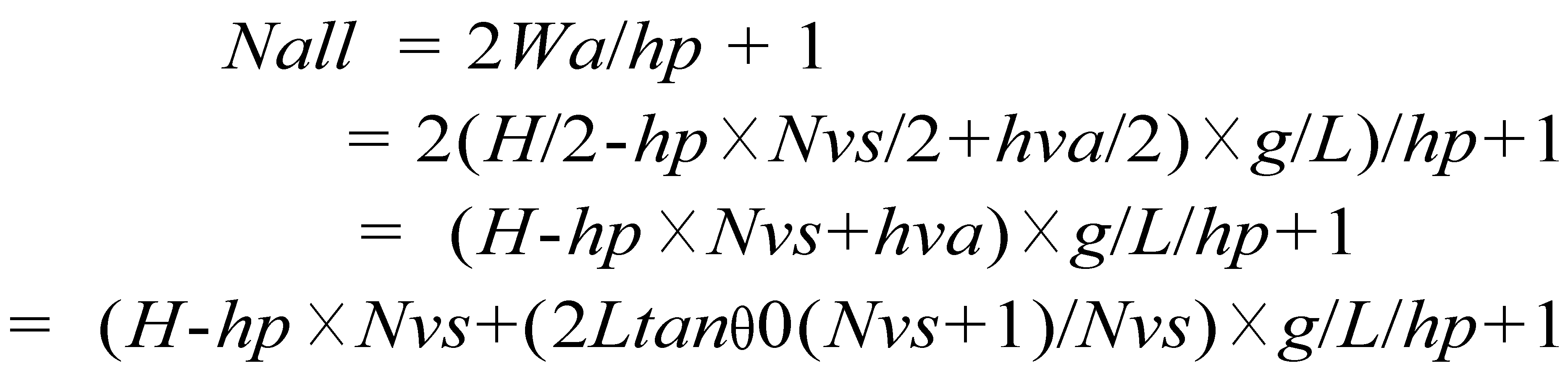
수학식 7의 전체 시차 화상(Nall:실제 수)는, 도 10에 도시한 표시 유닛(2)의 대향하는 단부 상에 투영각 θ0을 갖는 FR2 내지 FR4의 영역에 방사되는 광선 그룹을 추가하기에 충분한 시차 화상 수를 나타내며, 투영 각 θ1은 투영각 θ의 최대 값에 대응한다. 따라서, 요소 화상을 표시 유닛(2) 상의 모든 화상에 배치하기 위해, 전체 시차 화상 수만큼의 시차 화상이 존재할 수 있음을 의미한다.The entire parallax image (Nall: actual number) of equation (7) is used to add a group of rays emitted in the regions of FR2 to FR4 having the projection angle θ0 on opposite ends of the
다시 말하면, 도 12에서, 요소 화상(Pa, Pb), 또는 이 화상에 인접하여 배치된 복수의 요소 화상내에서, 요소 화상(Pa, Pb)을 구성하는 모든 시차 화상을 위해 그 픽셀을 준비할 필요는 없다는 것을 주목하길 바란다. 명백하게, 기준 거리에서 기준면 내의 시역은 표시 유닛의 영역에 대하여 좁고, 또는 시역의 중심이 화면 중심과 일치하지 않는다. 기준 거리 L에서 기준면(14)내의 시역이 넓고 표시 유닛(2)의 표시면에 대하여 내부로 한정되면, 그리고 시차 화상을 전달하는 광선이 시역의 내부 상에 입사하는 방식으로 요소 화상이 배치되면, 대응하는 개구부(4)가 요소 화상 위치로부터 멀리 떨어져 있을 가능성이 있다. 이 경우, 표시 유닛 밖의 영역 내에 위치한 개구부에 대응하는 요소 화상은 표시 유닛 밖에 배치되어, 픽셀은 필요없다.In other words, in Fig. 12, the pixel is prepared for all the parallax images constituting the element images Pa and Pb in the element images Pa and Pb or a plurality of element images arranged adjacent to the images. Note that it is not necessary. Clearly, the viewing area within the reference plane at the reference distance is narrow with respect to the area of the display unit, or the center of the viewing area does not coincide with the screen center. If the viewing area in the
다음으로, 각 픽셀에 배치되는 시차 화상 번호(시차 투영에 의해 촬영하는 카메라의 모든 촬영 각도마다 부여된 번호에 상당함)를 얻는 수순을 도 14 내지 16을 참조하여 설명한다. 다음의 설명에서, 시차 화상 및 광 개구부(4)가 표시 유닛(2)의 한쪽 단부로부터 나머지 한쪽 단부로 순서대로 번호를 갖게 된다고 가정한다. 유사한 방식으로, 배열되는 시차 화상은 그 픽셀에 따라 번호를 갖게 되고, 이 시차 화상 번호는, 시차 화상이 배치되는 픽셀에 대응하는 광 개구부(4)에 대한 위치로부터 얻어진다.Next, the procedure for obtaining the parallax image number (corresponding to the number given to every imaging angle of the camera photographing by parallax projection) arrange | positioned at each pixel is demonstrated with reference to FIGS. 14-16. In the following description, it is assumed that the parallax image and the
기본적인 시차 화상 번호(Nvs)가 짝수이면, 광 개구부(4)는 도 14에 도시한 바와 같이 픽셀 경계 위치에 대향하여 배치되고, 중심 선(Op)은 인접하는 픽셀의 경계를 통과한다. 픽셀 중심 위치(Xp) 및 광 개구부의 중심 위치(Xs)가 결정되면, 픽셀 및 광 개구부에 대응하는 시차 화상 번호(N(Xp,Xs))는 전체 시차 화상 수(Nall) 및 픽셀 폭(hp)로부터 다음과 같이 표현된다.If the basic parallax image number Nvs is even, the

여기서, {Xs-Xp}는 소정 픽셀의 중심과 이 소정 픽셀의 중심에 대응하는 광 개구부(4)의 중심 선 간의 거리이다. 개구부의 중심이 픽셀 간의 경계를 통과하는 것으로 가정한다. 따라서, 픽셀폭의 절반(1/2hp)이 광 개구부(4)의 중심 위치(xs)로부터 감해져(Xs-1/2hp) 광 개구부(4)의 중심 위치에 인접하여 배치된 픽셀 중심과 목표로 하는 픽셀의 중심 간의 거리를 얻게 된다. 또한, (Nall/2-1)은, 최대 시차 화상 수(Nall)를 2로 나누고 1을 빼서 얻어지며 광 개구부(4)에 인접하여 배치된 픽셀 내에 표시되는 시차 화상 번호이다. {(Xs-1/2hp)-xp}로부터 얻은 거리에서 픽셀 피치(hp)로 배열된 시차 화상 수를 감하여, 점(Xs)으로부터 떨어진 점(Xp)내에 위치하는 픽셀 내에 배열된 시차 화상 번호가 정해진다.Here, {Xs-Xp} is the distance between the center of the predetermined pixel and the center line of the
반면에, 도 15에 도시한 바와 같이 시차 화상 수(Nvs)가 홀수이면, 광 개구부(4)는 픽셀 중심에 대향하여 배치되고, 중심 선(Op)은 그 픽셀 중심을 통과한다. 이 경우, 픽셀 중심 위치(Xp) 및 광 개구부(4)의 중심 위치(Xs)에 따른 시차 번호(N:정수)는, 짝수인 경우와 동일한 방식으로 전체 시차 화상 수(Nall) 및 픽셀폭(hp)에 의해 다음과 같이 표현된다.On the other hand, when the number of parallax images Nvs is odd as shown in Fig. 15, the

수학식 9에서, 전체 시차 화상 수(Nall)가 홀수이기 때문에, 광 개구부(4)에 대향하여 배치된 픽셀내에 배열된 시차 화상 번호는, (Nall/2)에 값 1/2(=0.5)이 더해진다. 다시 말하면, (Nall/2-0.5)에 의해 최대 시차 번호는 정수로 변경된다. 광 개구부(4)의 중심 위치에 대향하여 배치된 픽셀 중심과 목표로 하는 픽셀 중심 간의 거리는 (Xs-Xp)에 의해 구해지며, 거리는 픽셀폭으로 나누어져 이 거리 중에 배열된 시차 화상 번호를 얻게 된다. (Xs-Xp)로부터 얻은 이 거리에서 픽셀 피치(hp)로 배열된 시차 화상 수가, 광 개구부(4)에 대향하여 배치된 픽셀의 시차 번호로부터 감해지면, Xs로부터 떨어져 있는 Xp에 위치한 픽셀내에 배열된 시차 화상의 번호가 결정된다.In equation (9), since the total number of parallax images Nall is an odd number, the parallax image numbers arranged in the pixels arranged opposite to the
수학식 8 및 9는 다음의 수학식 10과 동일하다.

다시 말하면, 도 10 및 도 11을 참조하여 설명한 바와 같이, 전체 시차 화상 수(Nall)는 각도 ±θ에서 시차 투영에 의한 촬영을 위한 카메라 촬영 방향의 전체 번호에 대응하며, 각 시차 번호(N(Xp, Xs))는 촬영 방향 번호에 대응한다.In other words, as described with reference to FIGS. 10 and 11, the total number of parallax images Nall corresponds to the total number of camera shooting directions for shooting by parallax projection at an angle ± θ, and each parallax number N ( Xp, Xs)) corresponds to the shooting direction number.
수학식 3의 값을 최소화하기 위해 각 픽셀 내에 시차 화상 및 요소 화상을 배열하는 방법은 상기한 바와 같다. 다음으로, 폭 hva에 기초하여 시차 화상을 배열하는 알고리즘을 설명한다. 이 알고리즘은, 수학식 3과는 달리 또한 수학식 4에서 규정한 폭 hva과 전체 시차 수(7)의 전제와 같이, 픽셀 간격 hp 및 슬릿 간격 hsp이 일정할 때 성립된다. 픽셀 위치(Xp)를 광 개구부 위치(Xs)에 연결하는 시차 화상으로부터의 광선 경로가 수학식 4에 의해 결정된 폭 hva의 내부 상에 입사하는지 여부에 기초하여, 중심 위치가 Xs인 개구부를 광선 경로가 통과한다는 가정하에 중심 위치가 Xp인 픽셀 내에 시차 화상이 배열되는지 여부를 판단한다. 도 16은 본 알고리즘에 기초하여 시차 화상을 배열하는 방법을 도시한다. 도 16에서, 기준 거리(L)의 면 내의 광선의 입사 위치(|Xp-Xs|×L/g)는, 광 개구부(4)의 중심 및 시차 화상이 배열될 픽셀 중심, 그리고 시차 화상으로부터의 광선 경로 간의 간격으로부터 얻어진다. 후술하는 수학식 11로부터 입사 위치가 폭 hva의 기준면(14) 내에 포함되는지 여부를 판단한다.The method of arranging the parallax image and the element image in each pixel in order to minimize the value of equation (3) is as described above. Next, an algorithm for arranging parallax images based on the width hva will be described. Unlike the equation (3), this algorithm is also established when the pixel interval hp and the slit gap hsp are constant, as is the premise of the width hva and the

여기서, |Xp-Xs|×L/g는 기준 거리(L)에서 광 개구부(4)의 중심축(Opx)에서 광선의 입사 위치까지의 거리이며, hva/2는 수학식 4에 의해 결정된 기준 시역 면(14)에서 시역 폭의 1/2에 대응하며, hva/2-(H/2-Xs)는 광 개구부(4)의 중심축(Opx)으로부터 기준 시역 면(14) 단부로의 거리이다. 따라서, 수학식 11은, 픽셀(Xs)로부터 방사되어 광 개구부(Xp)를 통과하는 광선 경로로부터 폭 hva의 내측 상에 입사하는 광선인지 여부를 판단하는 기준이다.Here, | Xp-Xs | XL / g is a distance from the reference distance L to the incident position of a light ray from the central axis Opx of the
도 16에서, 광선 경로를 결정하는 판단 기준으로서 폭 hva의 한쪽 단부만이 이용된다. 실제로, 한쪽 상의 판단 기준에만 기초하여 표시 유닛 전체 영역에 요소 화상을 배열할 수 있다. 명백하게, 화면 최좌측의 픽셀 최좌측의 개구부에서 순서대로 판단(11)이 시작된다. 수학식 11의 조건이 충족되면, 광 개구부(Xp)를 통한 광선 경로에 대응하는 시차 화상이 픽셀에 할당된다. 수학식 11에 충족되지 않으면, 광 개구부(4) 번호가 1씩 증가한다. 즉, 광 개구부가 우측 상에서 1씩 시프트되면, 요소 화상을 배치하여 기준 거리에서 광선의 입사 위치가 폭 hva내에 있을 수 있다. 즉, 소정의 픽셀로부터의 광선이 광 개구부(4)를 통해 폭 hva로 향하지 않으면, 그 개구부는 인접하는 광 개구부(4)로 변경되어, 변경된 광 개구부(4)가 수학식 11을 이용하여 검증된다.In Fig. 16, only one end of the width hva is used as a criterion for determining the light path. In fact, the element image can be arranged in the entire display unit area based only on the criterion of determination on one side. Obviously, the
또한, 픽셀에 표시되는 시차 화상을 얻기 위해 카메라 위치(Xc)를 이동시키는 수순을 도 17을 참조하여 설명한다. 최대 투영 각도 θ1를 갖는 카메라 위치는 다음에 따르는 수학식 12(Xc_start)에 의해 수학식 7에서 얻은 전체 시차 화상 수 Nall로부터 얻는다. 카메라는, 픽셀 피치에 비례하는 촬영 간격으로 이 위치로부터 간헐적으로 이동한다. 카메라 위치(Xc)가 변경되는 동안, 시차 투영에 의해 촬영을 수행하여 필요한 시차 화상을 획득한다.In addition, the procedure for moving the camera position Xc to obtain the parallax image displayed on the pixel will be described with reference to FIG. The camera position having the maximum projection angle θ1 is obtained from the total number of parallax images Nall obtained in equation (7) by the following equation (12) (Xc_start). The camera moves intermittently from this position at shooting intervals proportional to the pixel pitch. While the camera position Xc is changed, imaging is performed by parallax projection to obtain the required parallax image.


여기서, vi=0, 1, 2...; 시차 번호임, 0< vi < Nall-1Where vi = 0, 1, 2 ...; Parallax number, 0 <vi <Nall-1
표시 유닛에서 요소 화상을 배열하는 2개의 알고리즘을 설명하였다. 먼저, 수학식 3의 알고리즘에 의해 요소 화상을 배열하는 수순을 도 18을 참조하여 설명한다.Two algorithms for arranging element images in the display unit have been described. First, the procedure for arranging the element images by the algorithm of equation (3) will be described with reference to FIG.
먼저, 표 1에 도시한 다양한 파라미터 값이 결정되고, 기준 거리 L 및 기준 시역 면(14) 내의 시역의 중심 V0이 스텝 S1에서와 같이 얻어진다. 스텝 S2에서, 시역(hva)은 수학식 4로부터 얻어지고, 전체 시차 화상 수(Nall)는 수학식 7로부터 얻어진다. 다음으로, 스텝 S3에 도시한 바와 같이, 광 개구부(4)의 위치(Xp, Xs) 및 표시 유닛(2)의 한쪽 단부의 픽셀은 수학식 1과 2로부터 얻게 되어 픽셀 내에 배열될 요소 화상을 결정하는 일련의 스텝을 시작하게 된다.First, various parameter values shown in Table 1 are determined, and the center distance V0 of the viewing area in the reference viewing distance L and the
스텝 S4에서, 픽셀로부터 방사되어 광 개구부(4)를 통과하는 광선의 기준 거리(L)에서 입사 위치와 시역의 중심(V0) 간의 간격은 수학식 3을 이용하여 화면의 한쪽 단부 상의 광 개구부로부터 순서대로 계산된다. 그 입사 위치가 시역(NO)의 중심(V0)에 가장 가깝지 않으면, 광 개구부(4)는 그 번호를 갖는 픽셀에 대응하지 않는 것이라 가정된다. 스텝 S5에 도시한 바와 같이, 개구부 번호가 증가하며, 광 개구부(4)에 인접하여 배치된 다른 광 개구부(4)가 지정된다. 광선의 거리 L에서 입사 위치가, 유사하게 새롭게 지정된 광 개구부(4)에 대하여 마찬가지로 시역의 중심이어야 하는 위치에 가장 가깝게 있는지 여부가 검증되며, 이것은 가장 가까운 위치 관계를 얻을 때까지 반복된다.In step S4, the distance between the incident position and the viewing center V0 at the reference distance L of the light beam emitted from the pixel and passing through the
즉, 픽셀로부터 방사되는 모든 광선의 그룹의 기준 거리(L)에서의 입사 위치와 시역의 중심(V0) 간의 간격으로 매우 작은 값을 갖는 관계가 발견될 때까지 스텝 S5가 반복되고, 이 픽셀에 대응하는 광 개구부가 결정된다. 또한, 스텝 S6에 도시한 바와 같이, 배열된 시차 화상 번호는 수학식 10을 이용하여 결정되고 화상은 픽셀에 할당된다. 스텝 S6에서 사용하기 위한 시차 화상은 수학식 12 및 13에 의해 결정된 촬영 위치에 카메라를 배치하고 시차 투영에 의해 촬영을 행함으로써 획득된다.That is, step S5 is repeated until a relationship having a very small value is found at the distance between the incident position at the reference distance L of the group of all the rays emitted from the pixel and the center of the viewing area V0, The corresponding light opening is determined. Further, as shown in step S6, the arranged parallax image numbers are determined using equation (10) and the image is assigned to the pixels. A parallax image for use in step S6 is obtained by arranging a camera at a shooting position determined by equations (12) and (13) and taking a picture by parallax projection.
다음으로, 스텝 S7에 도시한 바와 같이, 픽셀 번호가 1씩 증가되어 갱신된다. 스텝 S8에 도시한 바와 같이, 갱신된 픽셀 번호 vp가 픽셀 번호(0 ≤vp ≤3 x 크기H-1)내에 있으면, 갱신된 픽셀 번호에 의해 결정된 픽셀에 대하여 단계 S4, S5, S6, S8이 다시 실행된다. Next, as shown in step S7, the pixel number is incremented by one and updated. As shown in step S8, if the updated pixel number vp is within the pixel number (0 ≦ vp ≦ 3 × size H−1), steps S4, S5, S6, and S8 are performed for the pixel determined by the updated pixel number. Is executed again.
스텝 S8에서 픽셀 번호(vp)가 (픽셀 번호-1)을 초과하게 되면, 픽셀 내로의 요소 화상의 배열이 완료되었다고 가정하며, 이에 따라 스텝 S9에 도시한 바와 같은 스텝을 종료한다.If the pixel number vp exceeds (pixel number-1) in step S8, it is assumed that the arrangement of the element images in the pixel is completed, and thus the step as shown in step S9 is terminated.
다음으로, 기준 거리에서 시역에 기초하여 요소 화상을 배열하는 수순을 도 19를 참조하여 설명한다.Next, the procedure for arranging the element images based on the viewing field at the reference distance will be described with reference to FIG. 19.
먼저, 표 1에 도시한 다양한 파라미터 값을 결정하고, 기준 거리를 스텝 S11에서 얻는다. 스텝 S12에서, 시역(hva)은 수학식 4로부터 얻고, 전체 시차 화상 수(Nall)는 수학식 7로부터 얻는다. 다음으로, 스텝 S13에 도시한 바와 같이, 광 개구부(4)의 위치(Xp, Xs) 및 표시 유닛(2)의 한쪽 단부의 픽셀을 수학식 1과 2로부터 얻어 픽셀 내에 배열될 요소 화상을 결정하는 일련의 스텝을 시작한다.First, various parameter values shown in Table 1 are determined, and a reference distance is obtained in step S11. In step S12, the viewing area hva is obtained from equation (4), and the total number of parallax images Nall is obtained from equation (7). Next, as shown in step S13, the position Xp, Xs of the
스텝 S14에서, 지정된 픽셀 번호를 갖는 픽셀로부터 방사되어 지정된 개구부 번호를 갖는 광 개구부(4)를 통과하는 광선이 기준 거리(L)에서 폭(hva) 내로 향하는지 여부를 수학식 11을 이용하여 판단한다. 지정된 광 개구부(4)를 통과한 광선이 폭(hva) 내로 향하면, 그 지정된 번호를 갖는 픽셀과 지정된 번호를 갖는 광 개구부(4) 간의 관계가 확립된다. 스텝 S16에 도시한 바와 같이, 배열된 시차 화상의 번호는 수학식 10을 이용하여 결정되고, 그 화상은 픽셀에 할당된다. 번호를 갖는 픽셀로부터의 광선이 폭 hva의 외측으로 향하게 되면(NO), 스텝 S14에서 체크한 광 개구부(4)가 그 지정된 픽셀 번호를 갖는 픽셀에 대응하지 않는 것이라 가정한다. 스텝 S15에 도시한 바와 같이, 개구부 번호가 증가하여, 광 개구부(4)에 인접하여 배치된 다른 광 개구부(4)가 지정된다. 유사하게, 광선 경로가 새롭게 지정된 개구부 번호에 관련된 광 개구부(4)에 대하여 폭(hva) 내에 들어가는지 여부가 검증된다. 새롭게 지정된 개구부 번호를 갖는 광 개구부를 통과한 광선이 폭(hva) 상에 입사하면, 지정된 픽셀 번호 및 픽셀 간의 관계가 확립된다. 스텝 S16에 도시한 바와 같이, 배열된 시차 화상 번호는 수학식 10을 이용하여 결정되고, 그 화상은 픽셀에 할당된다. 스텝 S16에서 이용하기 위한 시차 화상은, 수학식 12 및 13에 의해 결정된 촬영 위치에 카메라를 배치하고 시차 투영에 의한 촬영을 수행함으로써 획득된다.In step S14, it is determined using
다음으로, 스텝 S17에 도시한 바와 같이, 픽셀 번호가 1씩 증가되어 갱신된다. 스텝 S18에 도시한 바와 같이, 갱신된 픽셀 번호 vp가 픽셀 번호(0 ≤vp ≤3 x 크기H-1)내에 있으면, 갱신된 픽셀 번호에 의해 결정된 픽셀에 대하여 단계 S14, S15, S16, S17이 다시 실행된다. 스텝 S18에서 픽셀 번호(vp)가 (픽셀 번호-1)을 초과하게 되면, 픽셀 내로의 요소 화상의 배열이 완료되었다고 가정하며, 이에 따라 스텝 S19에 도시한 바와 같은 스텝을 종료한다.Next, as shown in step S17, the pixel number is incremented by one and updated. As shown in step S18, if the updated pixel number vp is within the pixel number (0 ≦ vp ≦ 3 × size H−1), steps S14, S15, S16, and S17 are performed for the pixel determined by the updated pixel number. Is executed again. If the pixel number vp exceeds (pixel number -1) in step S18, it is assumed that the arrangement of the element images in the pixel is completed, and thus the step as shown in step S19 ends.
이하, 상기한 2개 방법에서 요소 화상 배열을 도 9a 내지 9c를 참조하여 간략히 설명한다. 도 9a 내지 9c에서, 기준 시차 화상 수 Nvs는 설명의 편의상 Nvs=5로 설정된다. 기준 거리(L)에서 시역의 중심에 대향하여 배치된 요소 화상은 Vs=8에 대응하는 광 개구부용으로 배치된다. 대응하는 광 개구부(4)는, 기준 거리(L)에서 시차 화상을 전달하는 광선의 입사 위치와 시역의 중심(V0) 간의 거리, 또는 폭(hva)에 기초하여 변경된다. 광선 경로를 반영하고 표시될 시차 화상을 변경한 픽셀 번호에 대해, 광 개구부(4) 변경을 화살표 SH1 내지 SH4로 도시하였으며 표시될 시차 화상의 변경은 빗금선 및 빈칸으로 도시하였다. 그 결과, 도 9a 내지 9c에서, 시역 중심으로부터의 거리가 가장 짧거나(수학식 3) 폭(hva) 내부에 입사하는(수학식 11) 광선 경로가 선택된다. 시역의 중심에 대향하여 배치된 요소 화상으로부터 떨어져, 대응하는 광 개구부(4)의 중심에 대하여 요소 화상의 중심이 외측으로 시프트되어 있다.In the following, the element image arrangement in the above two methods will be briefly described with reference to Figs. 9A to 9C. 9A to 9C, the reference parallax image number Nvs is set to Nvs = 5 for convenience of explanation. The element images arranged opposite to the center of the viewing area at the reference distance L are arranged for the light openings corresponding to Vs = 8. The corresponding
도 9a 내지 9c는 기준 거리(L)에 대한 결과를 도시한다. 요소 화상 배열은 L의 크기에 따라 적절히 변경된다. 자명하듯이, 표시 유닛(2)과 투과 제어부(3)가 간의 갭 g 또는 투영 각도 θ0가 일정하게 유지되는 동안 L의 감소에 따라, 수학식 4에 의해 결정되는 기준 거리(L)에서의 폭(hva)가 좁아진다. 따라서, 시역의 중심으로부터의 거리에 의존하는 광 개구부(4)의 중심에 대하여 요소 화상의 시프트 양이 더 증가하도록 요소 화상이 배열된다. 또한, 요소 화상을 위해 필요한 시차 화상의 전체 수가 증가한다. 반면에, L이 증가하면, 상기한 시프트 양이 감소하게 된다. 상기한 관계로부터, 표시 유닛의 면적에 비해 시역이 불충분하면, 기준 거리(L)를 증가시키고 시역을 확대하는 것이 효율적이다.9a to 9c show the results for the reference distance L. FIG. The element image arrangement is changed according to the size of L as appropriate. As is apparent, the width at the reference distance L determined by
상기한 바와 같이, 픽셀 피치 hp 및 광 개구부 피치 hsp가 일정하며 기준 거리(L)에서 시역의 중심(v0)을 통과하며 표시 유닛(2)에 직교하는 직교 선이 표시 유닛(2)의 표시 영역의 중심과 일치한다는 가정하에, 수학식 4 및 후속하는 수학식들을 성립한다는 것을 주목하길 바란다. 그러나, 수학식 3에 의한 판단은 이러한 가정을 필요로 하지 않는다. 즉, 투과 제어부(3)의 중간으로부터 단부를 향하여 소정의 주기로 그리고 단계적으로 개구부(4)의 피치가 변경될 때에도, 즉, 복수의 Nvs 값이 존재하거나 vs가 자연수가 아닐 때에도, 그 응용이 가능하다. 이러한 경우, 도 19가 아닌 도 18에 도시한 흐름도에 따라 시차 화상을 결정하기 위한 광선 경로를 선택하는 것이 적절하다. 도 18의 흐름도에서, 배열될 시차 화상 번호를 결정하기 위해 수학식 4로부터 폭 hva가 계산된다. 그러나, 본 제안의 범위는 시역을 최대화하기 위한 광선 경로를 선택하는 방법 내에 있다(수학식 3, 11). 단지 광선 경로만이 결정되면, 광선의 모든 경사마다 시차 화상 번호를 설정하는 것은 어렵지 않다. 또한, 거리(L)에서 광선의 입사 위치가, 수학식 3의 관계를 최소화하기 위한 관계를 얻기 위해 스텝 S4에서 모든 광 개구부에 대한 광선 경로로부터 계산되는 것을 설명하였다. 그러나, 픽셀 피치 hp 및 광 개구부 피치 hsp가 일정하면, 화면의 한쪽 단부에서의 광 개구부로부터 특정 픽셀에 대한 검토를 시작하게 된다. 수학식 3의 감소된 값이 증가하게 될 때, 수학식 3을 최소화하는 광 개구부가 결정되고, 스텝은 스텝 S6으로 시프트된다. 이 경우에도, 문제점은 발생하지 않는다.As described above, the orthogonal line which is constant at the pixel pitch hp and the light aperture pitch hsp and which passes through the center of the viewing area v0 at the reference distance L and is orthogonal to the
또한, 상기한 실시예에서, 평면에서 입체 화상이 표시될 수 있는 개념을 설명하기 위해 수평 방향만의 시차 화상을 설명하였지만, 이 시차 화상은 상기한 바와 같이 동일한 방식으로 수직 방향에 대하여 배치될 수도 있음은 명백하다.In addition, in the above-described embodiment, a parallax image in only the horizontal direction has been described in order to explain the concept in which a stereoscopic image can be displayed in a plane, but this parallax image may be arranged with respect to the vertical direction in the same manner as described above. It is obvious.
이하, 실시예를 설명한다.Examples will be described below.
(제1 실시예)(First embodiment)
본 실시예에서, 입체 시역에 효율적인 수평 시차만을 설명한다. 액정 표시 장치에서, QUXGA-LCD(픽셀 수 3200 x 2400, 화면 크기 422.4mm ×316.8mm)를 이용하였다. 최소 구동 단위는 R, G, B 서브 픽셀이다. 나란히 배열된 R, G, B의 3개 서브 픽셀은 일반적으로 하나의 픽셀(트리플렛)을 형성하지만, R, G, B 서브 픽셀은 본 실시예의 표시 유닛에서 수평 픽셀 수를 증가시키기 위해 하나의 픽셀처럼 처리된다. 서브 픽셀은 44㎛의 횡단 폭 및 132㎛의 수직 길이를 갖는다. 백라이트는 표시 유닛의 배면 상에 배치된다. 관찰자 입장에서는, 투과 제어부가 44㎛의 폭을 갖는 슬릿 형태로 제공되며, 이 슬릿은 0.704mm의 간격으로 배열되어 Ⅱ 시스템에 의해 수평 방향에서만 시차 정보를 전달하는 슬릿 어레이를 형성한다. 슬릿 어레이는 유리판 상에 크롬 및 산화크롬막을 형성하고 패터닝함으로써 준비된다. 어떠한 막도 투과 제어부 내에 형성되지 않기 때문에, 유리 투명성은 그 자체로 유지된다. 크롬 및 산화크롬막이 차폐 영역내에 형성되기 때문에, 유리 표면으로부터 흑 산화크롬막이 관찰되며, 반사 특성이 배면으로부터 관찰된다. 이 슬릿판의 크롬 표면을 액정 표시 장치에 대향하여 배치하기 위해 액정 표시 장치가 결합된 3차원 화상 표시 장치를 갖는 Ⅱ 시스템에서, 시차 화상을 픽셀에 배치하는 것은 도 18에 도시한 알고리즘에 의해 결정되고, 요소 화상이 표시된다. 본 실시예의 시역은, 기준 거리(L)에서 기준면 내의 중심 위치(V0)를 통과하며 패널에 직교하는 직교 선이 패널의 중심과 만나는 방식으로 결정된다.In this embodiment, only horizontal parallax effective for stereoscopic viewing is described. In the liquid crystal display, QUXGA-LCD (pixel number 3200 x 2400, screen size 422.4 mm x 316.8 mm) was used. The minimum driving unit is the R, G, and B subpixels. Three sub-pixels of R, G, and B arranged side by side generally form one pixel (triplet), while R, G, and B sub-pixels have one pixel to increase the number of horizontal pixels in the display unit of this embodiment. Is treated like The subpixel has a transverse width of 44 μm and a vertical length of 132 μm. The backlight is disposed on the back side of the display unit. From the observer's point of view, the transmission control unit is provided in the form of slits having a width of 44 µm, which slits are arranged at intervals of 0.704 mm to form a slit array for transmitting parallax information only in the horizontal direction by the II system. The slit array is prepared by forming and patterning a chromium and chromium oxide film on a glass plate. Since no film is formed in the permeation control, glass transparency is maintained by itself. Since the chromium and chromium oxide films are formed in the shielding area, a black chromium oxide film is observed from the glass surface, and the reflection characteristic is observed from the back side. In the II system having a three-dimensional image display device in which a liquid crystal display device is combined to arrange the chrome surface of this slit plate against the liquid crystal display device, the arrangement of parallax images on pixels is determined by the algorithm shown in FIG. The element image is displayed. The viewing area of the present embodiment is determined in such a way that an orthogonal line perpendicular to the panel passing through the central position V0 in the reference plane at the reference distance L meets the center of the panel.
여기서, 표 2의 값을 파라미터로서 사용하였다.Here, the values of Table 2 were used as parameters.
표시될 시차 화상이 수학식 3의 판단 방법에 의해 각 픽셀에 배치되면, 전체 시차 수는 34개이며, 표시 유닛에서 시역의 중심에 대향하여 배치된 중간 근처에 배치된 요소 화상을 구성하는 시차 화상의 번호 (Xp, Xs)는 8 내지 23이다. 반면에, N(Xp, Xs) = 0 내지 15인 요소 화상이 화면 좌측 단부로부터 두번째에 배치된 슬릿(4)에 대하여 할당되면, N(Xp, Xs) = 18 내지 33 요소 화상은 우측 단부로부터 두번째에 배치된 슬릿(4)에 대하여 할당되고, 요소 화상의 위치는 대응하는 슬릿에 대하여 외측으로 시프트된다. 즉, 화면 좌측 단부로부터 두번째에 배치된 슬릿(4) 요소 화상을 구성하는 픽셀 그룹을 위해, 슬릿(4)의 중간에 위치한 법선 Op의 좌측의 픽셀 번호는 16인 반면, 우측의 픽셀 번호는 0이다. 요소 화상의 중심은 법선 Op로부터 표시 유닛(2)의 외측으로 시프트하도록 구성된다. 반면에, 화면의 우측 단부로부터 두번째에 위치한 슬릿(4)에 대응하는 요소 화상을 구성하는 픽셀 그룹에 대해서는, 슬릿(4)의 중간에서 법선 Op의 상기한 좌측 단부 상의 경우에 대향하는 수의 픽셀이 배치된다.When the parallax image to be displayed is arranged in each pixel by the determination method of equation (3), the total number of parallaxes is 34, and the parallax image constituting the element image arranged near the middle arranged opposite to the center of the viewing area in the display unit The number (Xp, Xs) of is from 8 to 23. On the other hand, if an element picture with N (Xp, Xs) = 0 to 15 is allocated for the
이 알고리즘에 의해 준비되는 요소 화상 그룹이 표시 유닛에 표시되면, 기준 거리에서의 진상 관찰 범위(hva)는 약 35cm이다. 그 화상이 이 시역의 전체 화면에서 허상으로 전환되는 상태를 인식하게 되며, 그리고 더 외부 영역에서, 그 허상이 시각적으로 인식된다.When the group of elementary images prepared by this algorithm is displayed on the display unit, the factual observation range hva at the reference distance is about 35 cm. It will recognize the state in which the image is converted into a virtual image on the entire screen of this viewing area, and in a further outer area, the virtual image is visually recognized.
(제2 실시예)(2nd Example)
요소 화상이 도 19의 알고리즘에 따라 수학식 11의 판단 방법에 의해 제1 실시예의 구성과 유사한 구성으로 배열되면, 제1 실시예와 완전히 동일한 요소 화상 그룹을 얻게 된다.If the element images are arranged in a configuration similar to that of the first embodiment by the determination method of equation (11) according to the algorithm of Fig. 19, the same element image group as in the first embodiment is obtained.
(제3 실시예)(Third Embodiment)
기준 거리는 제1 실시예와 유사한 구성 및 알고리즘에 의해 1.5m로 변경된다. 전체 시차 수는 28이고, 제1 실시예와 비교할 때 감소된 것이며, 표시 유닛의 시역의 중심에 대향하여 배치된 중간 근처에서의 요소 화상을 구성하는 시차 화상의 수 N(Xp, Xs)는 6 내지 21이다. 반면에, 화면 좌측 단부로부터 두번째에 위치한 슬릿(4) 요소 화상을 위해, N(Xp, Xs) = 0 내지 15 시차 화상이 할당된다. 화면 우측 단부로부터 두번째에 위치한 슬릿(4) 요소 화상을 위해, N(Xp, Xs) = 12 내지 27 시차 화상이 할당된다. 또한, 화면 좌측 단부로부터 두번째에 위치한 슬릿(4) 요소 화상을 구성하는 픽셀 그룹을 위해, 슬릿(4)의 중간에 위치한 법선 Op의 좌측 상에 14개의 픽셀이 존재하는 반면, 우측 상에는 2개가 존재한다. 이 그룹은 좌측 상에 더 위치하고 있다. 화면 우측 단부로부터 두번째에 위치한 슬릿(4) 요소 화상을 구성하는 픽셀 배치가 반대로 되며, 그 픽셀은 우측 상에 더 위치하게 된다. 즉, 양쪽 그룹에서, 요소 화상을 구성하는 픽셀 그룹의 중심이 대응하는 슬릿의 중심을 통과하는 법선 Op로부터 표시 유닛(2)의 외측으로 시프트된다.The reference distance is changed to 1.5 m by a configuration and algorithm similar to that of the first embodiment. The total number of parallaxes is 28, which is reduced in comparison with the first embodiment, and the number N (Xp, Xs) of the parallax images constituting the element image near the middle arranged opposite to the center of the viewing area of the display unit is 6 To 21. On the other hand, for the
이 알고리즘에 의해 준비되는 요소 화상 그룹은 표시 유닛에 표시되고, 기준 거리에서 진상 관찰 범위(hva)는 약 55cm이다. 그 화상이 이 시역의 전체 화면에서 허상으로 전환되는 상태를 인식하게 되며, 그리고 더 외부 영역에서, 그 허상이 시각적으로 인식된다.The group of elementary images prepared by this algorithm is displayed on the display unit, and the advance observation range hva is about 55 cm at the reference distance. It will recognize the state in which the image is converted into a virtual image on the entire screen of this viewing area, and in a further outer area, the virtual image is visually recognized.
(제4 실시예)(Example 4)
시역 각도 θ0는 제1 실시예와 유사한 알고리즘과 구성에 의해 15도로 변경된다. 표시 유닛의 시역의 중심에 대향하여 배치된 중간 근처에서의 요소 화상을 구성하는 시차 화상의 수 N(Xp, Xs)는 6 내지 21이다. 반면에, 화면 좌측 단부로부터 두번째에 위치한 슬릿(4) 요소 화상을 위해, N(Xp, Xs) = 0 내지 15 시차 화상이 할당된다. 화면 우측 단부로부터 두번째에 위치한 슬릿(4) 요소 화상을 위해, N(Xp, Xs) = 12 내지 27 시차 화상이 할당된다. 또한, 화면 좌측 단부로부터 두번째에 위치한 슬릿(4) 요소 화상을 구성하는 픽셀 그룹을 위해, 슬릿(4)의 중간에 위치한 법선 Op의 좌측 상에 14개의 픽셀이 존재하는 반면, 우측 상에는 2개가 존재한다. 이 그룹은 좌측 상에 더 위치하고 있다. 화면 우측 단부로부터 두번째에 위치한 슬릿(4) 요소 화상을 구성하는 픽셀 배치가 반대로 되며, 그 픽셀은 우측 상에 더 위치하게 된다. 즉, 양쪽 그룹에서, 요소 화상을 구성하는 픽셀 그룹의 중심이 대응하는 슬릿의 중심을 통과하는 법선 Op로부터 표시 유닛(2)의 외측으로 시프트된다.The viewing angle θ0 is changed to 15 degrees by an algorithm and configuration similar to that of the first embodiment. The number N (Xp, Xs) of the parallax images constituting the elemental image near the middle arranged opposite to the center of the viewing area of the display unit is 6 to 21. On the other hand, for the
이 알고리즘에 의해 준비되는 요소 화상 그룹은 표시 유닛에 표시되고, 기준 거리에서 진상 관찰 범위(hva)는 약 55cm이다. 그 화상이 이 시역의 전체 화면에서 허상으로 전환되는 상태를 인식하게 되며, 그리고 더 외부 영역에서, 그 허상이 시각적으로 인식된다.The group of elementary images prepared by this algorithm is displayed on the display unit, and the advance observation range hva is about 55 cm at the reference distance. It will recognize the state in which the image is converted into a virtual image on the entire screen of this viewing area, and in a further outer area, the virtual image is visually recognized.
(제1 비교예)(First Comparative Example)
제1 실시예와 유사한 구성에서, 제시한 알고리즘을 이용하지 않는다. 전체 표시 유닛(2) 영역에서, 기본적인 시차 수는 16이고, 슬릿용으로 배치된 시차 화상의 번호를 N(Xp, Xs) = 0 내지 15와 동일하게 설정한다. 또한, 전체 표시 유닛(2) 영역에서, 슬릿(4) 요소 화상을 구성하는 픽셀 그룹의 중심과 대응하는 슬릿(4)의 중심에 위치한 법선 Op과 만난다.In a configuration similar to the first embodiment, the proposed algorithm is not used. In the
이러한 방식으로 구성된 요소 화상 그룹이 표시 유닛에 표시되면, 1m의 기준 거리에서 관찰할 때 전체 화면에서 진상이 관찰될 수 있는 어떠한 범위도 존재하지 않는다. 1.5m만큼 떨어진 위치에서, 그 진상은 약 13cm의 범위에서 전체 화면에 대하여 관찰될 수 있으며, 이 범위는 화면의 폭의 범위보다 작은 것이다. 약 28cm의 대향하는 외부 영역 각각에서는, 진상 및 허상이 혼재되어 관찰된다.If a group of elementary images configured in this manner is displayed on the display unit, there is no range where the truth can be observed on the entire screen when viewed at a reference distance of 1 m. At a distance of 1.5 m, the true image can be observed over the entire screen in the range of about 13 cm, which is smaller than the width of the screen. In each of the opposite outer regions of about 28 cm, a true phase and a virtual image are mixed and observed.
(제2 비교예)(2nd comparative example)
제1 실시예와 유사한 구성으로 0.5m인 짧은 기준 거리를 설정하며, 요소 화상 그룹은 도 16의 알고리즘에 따라 수학식 3의 판단 방법에 의해 준비되고, 표시 유닛(2)에 표시된다. 이후, 기준 거리에서의 진상 관찰 범위(hva)는 약 18cm이고, 이것은 화면 폭보다 작다. 3차원 화상 표시 장치는, 깊이 방향의 시역이 제한되고 3차원 화상의 관찰가능 범위가 제한되는 인상을 전달하도록 구성된다.In a configuration similar to that of the first embodiment, a short reference distance of 0.5 m is set, and the element image group is prepared by the determination method of equation (3) according to the algorithm of Fig. 16 and displayed on the display unit (2). Thereafter, the field of view observation (hva) at the reference distance is about 18 cm, which is smaller than the screen width. The three-dimensional image display device is configured to deliver an impression in which the viewing area in the depth direction is limited and the viewable range of the three-dimensional image is limited.
진상이 표시되는 시역을 확장하는 방법을 도 1 내지 도 19를 참조하여 설명하였다. 다음으로, 진상 표시를 포함하여 시역 밖의 허상이 관찰되는 것을 관찰자가 인식할 수 있는 표시 방법을 도 20 내지 도 31을 참조하여 설명한다. 도 20 내지 도 28에 도시한 제2 실시예에 따른 표시 방법이 구현될 수 있으며 시역이 넓어지는 표시 방법과 결합될 수도 있다는 것은 자명하다.The method of extending the viewing area in which the truth is displayed has been described with reference to FIGS. 1 to 19. Next, a display method in which an observer can recognize that a virtual image outside the viewing area is observed, including a true phase display, will be described with reference to FIGS. 20 to 31. It is apparent that the display method according to the second embodiment shown in FIGS. 20 to 28 may be implemented, and may be combined with the display method in which the viewing area is widened.
도 3에 도시한 바와 같이, 다음의 설명에서, 3차원 화상을 표시하기 위한 각 픽셀(11)은 2차원 방식으로 배열된 복수의 서브 픽셀(12)로 구성된다. 도 4에 도시한 바와 같이, 광 개구부(4)는 규칙적으로 배열된다. 따라서, 3차원 화상(11)을 표시하는 픽셀에 대한 광 개구부(4)의 상대 위치는 표시면 내에서 일정하다. As shown in Fig. 3, in the following description, each
도 20은 도 3에 도시한 3차원 화상(11)을 표시하는 픽셀 및 도 4a에 도시한 투과 제어부(3)용 마스크를 이용하는 3차원 화상 표시 장치를 개략적으로 도시하는 평면도이다. 도 20에서, 광 개구부(4)만이 투과 제어부(3)에 대하여 도시되어 있음을 주목하길 바란다.FIG. 20 is a plan view schematically showing a three-dimensional image display device using a pixel for displaying the three-
제2 실시예에서, 3차원 화상 표시용 픽셀(11)에 포함된 2차원 화상을 표시하기 위한 복수의 픽셀 중에, 즉, 서브 픽셀(12) 중에, 3차원 화상을 표시하는데 있어서 중간 부분에 위치한 서브 픽셀(12A)이 사용되며, 3차원 화상으로부터 구별될 수 있는 경고용 화상을 표시하는데 있어서 가장자리 부분에 위치한 서브 픽셀(12B)이 사용된다. 3차원 화상 표시용 픽셀(11)에 포함된 2차원 화상을 표시하기 위한 복수의 픽셀에 의해 표시되는 화상 중에서, 이하, 3차원 화상을 표시하는데 사용되는 화상을 요소 화상이라 칭하는 것을 주목하길 바란다.In the second embodiment, among the plurality of pixels for displaying the two-dimensional image included in the three-dimensional
도 21a는 도 20에 도시한 3차원 화상 표시 장치와 관찰 위치 간의 관계를 개략적으로 도시하는 도면이다. 도 21b는 도 21a에 도시한 관찰 위치 A, B1, C1,C2, D1, D2, E1, 2에서 관찰함에 따라 지각된 3차원 화상을 개략적으로 도시하는 도면이다. 도 21에서, 각 쇄선(51)은 3차원 화상 표시용 픽셀(11) 간의 경계를 (주요 광선에 대응하는) 투과 제어부(3)의 광 개구부(4)에 연결하는 직선임을 주목하길 바란다. 도 21a에서, 각 쇄선(52)은 진상만이 지각되는 관찰 위치와 허상이 지각되는 관찰 위치 간의 경계를 나타낸다. 쇄선(52)으로 둘러싸인 영역은 진상만이 지각되는 관찰 위치에 대응한다. 이하, 상기한 바와 유사한 방식으로 진상만이 지각되는 관찰 위치를 "시역"이라 칭한다.FIG. 21A is a diagram schematically showing a relationship between the three-dimensional image display device and the observation position shown in FIG. 20. FIG. 21B is a diagram schematically showing a three-dimensional image perceived as observed at the observation positions A, B1, C1, C2, D1, D2, E1, and 2 shown in FIG. 21A. In Fig. 21, it is noted that each dashed
도 21b에 도시한 바와 같이, 관찰 위치 A, B1, B2에서, 진상(61A)만이 지각된다. 도 21a에 도시한 쇄선(52) 아래의 영역(시역)에서 관찰함에 따라, 진상(61A)을 보는 방식이 관찰 위치에 따라 변경된다.As shown in Fig. 21B, only the
관찰 위치 C1, C2, D1, D2에서, 진상(61A)은 허상(61B)와 함께 혼재되어 지각된다. 여기서, 허상(61B)이 인식되며, 그 이유는 소정의 광 개구부(4)에 대향하여 배치된 3차원 화상 표시용 픽셀(11)에 인접하여 배치된 3차원 화상 표시용 픽셀(11)에 의해 표시되는 요소 화상의 일부가 관찰되기 때문이다. 지각된 3차원 화상에서 허상(1B)의 비율은 광시야각만큼 증가한다. 관찰 위치 E1, E2에서, 모든 광 개구부(4)에 대하여 3차원 화상(11)을 표시하기 위한 인접하는 픽셀에 의해 표시되는 요소 화상의 일부가 관찰되기 때문에, 허상(61B)만이 지각된다.At the observation positions C1, C2, D1 and D2, the
제2 실시예에서, 허상(1B) 또는 진상(61A)으로부터 구별될 수 있는 경고용 화상이 도 20에 도시한 서브 픽셀(12B)에 의해 표시된다. 예를 들어, 경고용 화상으로서, 모든 서브 픽셀(12B)이 어두운 표시 상태 또는 밝은 표시 상태로 된다. 서브 픽셀(12B)은 3차원 화상 표시용 픽셀(11) 간의 경계에 위치한다. 따라서, 관찰 위치가 B1으로부터 C1으로 이동함에 따라, 선형 경고용 화상(62)이 허상(61B) 이전에 보인다. 관찰 위치가 C1으로부터 D1으로 이동함에 따라, 경고용 화상(62)은, 지각된 3차원 화상에서 차지하는 허상(61B)의 비율 증가에 따라 도면의 좌측으로부터 우측으로 이동한다. 또한, 관찰 위치가 D1으로부터 E1으로 이동함에 따라, 경고용 화상(62)은 사라지며, 허상(61B)만이 지각된다.In the second embodiment, a warning image that can be distinguished from the virtual image 1B or the
경고용 화상(62)을 위해, 하나의 눈이 도 21a에 도시한 쇄선(52) 밖의 영역에 위치하며 양안이 모든 쇄선(51)을 넘어가게 될 때까지 하나의 직선이 지각되는 것을 주목하길 바란다.For the
이러한 방식으로, 제2 실시예에 따라, 관찰자는 관찰 위치가 선형 경고용 화상(62)에 의해 시역으로부터 편향을 갖게 됨을 인식할 수 있다. 수평 방향에서 관찰 위치의 이동을 도 21a 및 21b를 참조하여 설명하였음을 주목하길 바란다. 그러나, 수직 방향에서 그 위치가 변경될 때에도, 관찰자는 유사한 방법에 의해 시역으로부터 편향되는 관찰 위치를 인식할 수 있다. 이 경우, 경고용 화상은 하나의 수평 직선이다. 또한, 경고용 화상(62)은 관찰 위치의 이동에 따라 이동하게 된다. 따라서, 진상(61a) 및 허상(61b)이 선형 부분을 포함하는 경우에도, 선형 경고용 화상(62)을 이러한 화상들로부터 쉽게 구별할 수 있다.In this way, according to the second embodiment, the observer can recognize that the viewing position is deflected from the field of view by the
또한, 제2 실시예에서, 굴절광 이용과는 다르게, 진상을 지각하는 기준 거리에서의 시역 폭 또는 진상이 지각될 수 있는 관찰 위치 영역이 확장될 수 없다. 따라서, 3차원 화상 표시용 픽셀(11)에 포함된 2차원 화상을 표시하기 위한 픽셀 수, 즉, 서브 픽셀(12 또는 12a) 수가 비교적 작으면, 그 화상은 관찰 위치의 이동시에 매끄럽게 변경될 수 있다.Also, in the second embodiment, unlike the use of the refracted light, the viewing area at the reference distance for perceiving the truth or the observation position region where the truth can be perceived cannot be expanded. Therefore, if the number of pixels for displaying the two-dimensional image included in the three-dimensional
이러한 방식으로, 제2 실시예에 따라, 관찰자는 관찰 위치가 시역으로부터 편향된다는 것을 확실히 인식할 수 있다. 시역으로부터의 편향이 인식될 수 있다는 효과는, Ⅱ 시스템을 이용함으로써 얻어지며, 쌍안 또는 다안식 시스템을 이용해서는 얻을 수 없다. 이것을 도 22를 참조하여 설명한다.In this way, according to the second embodiment, the observer can surely recognize that the viewing position is biased from the field of view. The effect that deflection from the field of view can be recognized is obtained by using the II system, and not by using the binocular or polycular system. This will be described with reference to FIG.
도 22는 쌍안 시스템이 사용되어 경고용 화상을 표시하는 경우를 개략적으로 도시하는 도면이다. 도 22의 영역(52R)에서, 우안용 화상이 우측 광 개구부(4)를 통해 관찰될 수 있는 우안용 영역(81R)은, 우안용 화상이 좌측 광 개구부(4)를 통해 관찰될 수 있는 영역(82R)과 중첩된다. 또한, 영역(52L)에서, 좌안용 화상이 우측 광 개구부(4)를 통해 관찰될 수 있는 영역(81L)은, 좌측 광 개구부(4)를 통해 좌안용 화상이 관찰될 수 있는 영역(82L)과 중첩된다. 또한, 영역(83)은 경고용 화상이 관찰되는 영역을 나타낸다.22 is a diagram schematically showing a case where a binocular system is used to display a warning image. In the
쌍안 시스템에서, 좌안이 쇄선(52L)으로 둘러싸인 영역 내에 위치하고 우안이 쇄선(52R)으로 둘러싸인 영역 내에만 위치하면, 진상만이 지각된다. 관찰 위치가 편향을 갖게 되고 한쪽 눈이 영역(83) 내에 위치하면, 관찰자는 경고용 화상을 지각하며, 관찰 위치가 시역으로부터 편향된다는 것을 인식하게 된다.In a binocular system, only the true phase is perceived if the left eye is located within the area surrounded by the dashed
그러나, 영역(85)에서, 우측 광 개구부(4)를 통해 좌안용 화상이 관찰될 수 있는 영역(81L)은, 좌측 광 개구부(4)를 통해 우안용 화상이 관찰될 수 있는 영역(82L)과 중첩되고, 우측 광 개구부(4)를 통해 우안용 화상이 관찰될 수 있는 영역(81L)은, 좌측 광 개구부(4)를 통해 좌안용 화상이 관찰될 수 있는 영역(82L)과 중첩된다. 즉, 관찰 위치가 영역(85) 내에 있으면, 관찰자는 어떠한 경고용 화상도 인식하지 못하며, 왜곡된 3차원 화상을 지각하게 된다. 따라서, 관찰 위치가 편향되고 한쪽 눈이 영역(85) 내에 있고 나머지 눈이 영역(52L 또는 52R) 내에 위치하면, 또는 양안이 영역(85) 내에 위치하면, 관찰 위치가 시역으로부터 편향된다는 것을 관찰자가 인식하는 것은 상당히 어렵다. 이러한 방식으로, 다안식 시스템에서, 관찰자는 관찰 위치가 시역으로부터 편향된다는 것을 확실히 인식할 수 없다.However, in the
제2 실시예에서, 도 20에 도시한 바와 같이, 경고용 화상(62)을 표시하는데 사용되는 서브 픽셀(12B)은 3차원 화상을 표시하는데 사용되는 서브 픽셀(12A)에 대하여 배열되지만, 다른 배열을 이용하는 것도 가능하다.In the second embodiment, as shown in Fig. 20, the
도 23은 도 20에 도시한 3차원 화상 표시 장치의 변형예를 개략적으로 도시하는 평면도이다. 도 22에서, 3차원 화상 표시용 픽셀(11)에 포함된 서브 픽셀(12) 중에, 하측 단부 행 및 우측 단부 열에서의 서브 픽셀은 경고용 화상(62)을 표시하는데 사용되는 서브 픽셀(12B)이다. 반면에, 도 23에서, 3차원 화상 표시용 픽셀(11)에 포함된 서브 픽셀(12) 중에, 그 하측 단부 행 및 우측 단부 열에서의 서브 픽셀에 더하여, 상측 단부 행 및 좌측 단부 열에서의 서브 픽셀도 경고용 화상을 표시하기 위한 서브 픽셀(12B)이다. 이 경우, 경고용 화상 표시에 사용되는 서브 픽셀(12B)에 대한 3차원 화상 표시에 사용되는 서브 픽셀(12A)의 비율은 감소되지만, 보다 쉽게 지각될 수 있는 경고용 화상(62)을 표시할 수 있다.FIG. 23 is a plan view schematically showing a modification of the three-dimensional image display device shown in FIG. 20. In Fig. 22, of the subpixels 12 included in the three-dimensional
제2 실시예에서, 3차원 화상 표시용 픽셀(11)에서의 서브 픽셀(12B)은 하나의 행 또는 열을 형성할 뿐만 아니라 복수의 행 또는 열을 형성한다. 또한, 관찰 위치가 시역으로부터 편향되었다는 것을 관찰자가 인식 가능한 방향이 좌우 방향만으로 충분한 경우, 또는, 수평 방향에서만 시차 정보가 전달되는 1차원 Ⅱ 시스템인 경우, 각각의 3차원 화상 표시용 픽셀(11)에서 상하로 인접하는 3차원 화상 표시용 픽셀(11) 간의 경계를 따라 배열한, 경고용 화상을 표시하기 위한 서브 픽셀(12B)은 설치할 필요가 없다. 유사한 방식으로, 수직 방향에서만 관찰 위치가 시역으로부터 편향된다는 것을 관찰자가 충분히 인식하면, 3차원 화상 표시용 픽셀(11)에서, 경고용 화상을 표시하기 위한 서브 픽셀(12B)은 좌우에 인접하는 3차원 화상(11)을 표시하기 위한 수평으로 인접한 픽셀 간의 경계를 따라 배열될 필요가 없다.In the second embodiment, the sub-pixel 12B in the three-dimensional
다음으로, 본 발명의 수정된 실시예를 설명한다. 이 실시예는, 광 개구부(4)에 대한 3차원 화상 표시용 픽셀(11)의 상대 위치가 단계적으로 표시 면의 디스플레이 기준 위치로부터 떨어진 방향에서 시프트한다는 점을 제외하고 제2 실시예와 유사하다. 즉, 이 수정된 실시예는 제1 및 제2 실시예의 결합에 대응한다.Next, a modified embodiment of the present invention will be described. This embodiment is similar to the second embodiment except that the relative position of the three-dimensional
도 24a는 본 발명의 수정된 실시예에 따라 Ⅱ 시스템의 3차원 화상 표시 장치를 개략적으로 도시하는 평면도이다. 도 24b는 도 24a의 3차원 화상 표시 장치에서 광 개구부(4)에 대하여 3차원 화상 표시용 픽셀(11)의 상대 위치를 개략적으로 도시하는 평면도이다. 도 24a에 도시한 3차원 화상 표시용 픽셀(11) 중에서 도 24b에 도시한 3차원 화상 표시용 픽셀(11)이 영역(B0) 내에 위치함을 주목하길 바란다.24A is a plan view schematically showing a three-dimensional image display device of the II system according to a modified embodiment of the present invention. FIG. 24B is a plan view schematically showing the relative position of the three-dimensional
도 24a 및 24b에 도시한 구조에서, 수평 방향에서 광 개구부(4) 간의 간격은 일정하게 설정되고, 3차원 화상 표시용 픽셀(11)에서 수평 방향으로 배열된 서브 픽셀(12a) 수는 영역 A0, A2R, A4R, A2L, A4L에서 9로 설정되며, 영역 A1R, A3R, A1L, A3L에서 10으로 설정된다. 따라서, 광 개구부(4)에 대하여 3차원 화상 표시용 픽셀(11)의 상대 위치는, 3차원 화상 표시용 픽셀 중심을 통과하며 수직 방향으로 연장되는 직선으로부터 멀어지게 되는 것에 따라 직선으로부터 떨어진 방향에서 단계적으로 시프트된다. 또한 이 구조에서, 수직 방향에서 광 개구부(4) 간의 간격이 일정하게 설정되며, 광 개구부(4)에 대하여 3차원 화상 표시용 픽셀(11)의 상대 위치는, 직선으로부터의 거리에 따라, 3차원 화상 표시용 픽셀(11) 중심을 통과하며 수평 방향으로 연장되는 직선으로부터 떨어진 방향에서 단계적으로 시프트된다.In the structure shown in Figs. 24A and 24B, the interval between the
도 24a에서, 중간에 그려진 3차원 화상 표시용 픽셀(11) 중심이 디스플레이 기준 위치에 대응하는 것을 주목하길 바란다. 즉, 영역(A0)이 도 24a에 도시한 영역(B0)과 중첩하는 영역에서, 광 개구부(4)는 도 24b에 도시한 바와 같이 3차원 화상 표시용 픽셀(11) 중심에 대향하여 배치된다. 반면에, 3차원 화상 표시용 픽셀(11)은 영역(A0)의 우측의 영역에서 광 개구부(4)의 중심의 우측의 위치에 대향하여 배치되고, 3차원 화상 표시용 픽셀(11)은 좌측의 영역에서 광 개구부(4)의 중심의 좌측의 위치에 대향하여 배치된다. 유사한 방식으로, 3차원 화상 표시용 픽셀(11)은 영역(B0)의 상측의 영역에서 광 개구부(4)의 중심보다 상측의 위치에 대향하여 배치되고, 3차원 화상 표시용 픽셀(11)은 하측의 영역에서 광 개구부(4)의 중심보다 하측의 위치에 대향하여 배치된다.In Fig. 24A, it should be noted that the center of the
이 구조를 이용하면, 그리고, 도 20을 참조하여 제2 실시예와 동일한 방식으로 화상을 표시함으로써, 관찰자가 지각한 3차원 화상이 허상을 포함하고 있는 경우에 그것을 관찰자 자신이 인식 가능하게 된다. 또한 이 수정된 실시예에서, 도 20에 도시한 제2 실시예와 동일한 방식으로, 3차원 화상 표시용 픽셀(11)에 포함된 2차원 화상(서브 픽셀(12 또는 12a))을 표시하기 위한 픽셀 수가 비교적 작다면, 그 화상은 관찰 위치의 변경시에 매끄럽게 변경될 수 있다.By using this structure, and by displaying an image in the same manner as in the second embodiment with reference to Fig. 20, the observer can recognize it when the three-dimensional image perceived by the observer contains a virtual image. Also in this modified embodiment, in order to display the two-dimensional image (
또한, 도 24a 및 24b에 관한 다른 수정된 실시예에서, 상기한 구조가 사용되기 때문에, 도 20에 도시한 제2 실시예의 경고용 화상과 다른 경고용 화상(62)을 지각할 수 있다.In addition, in another modified embodiment with respect to Figs. 24A and 24B, since the above structure is used, the
도 25a는 도 24a 및 24b에 도시한 3차원 화상 표시 장치와 관찰 위치 간의 관계를 개략적으로 도시하는 도면이다. 도 25b는 도 25a에 도시한 각 관찰 위치에서 관찰할 때 3차원 화상을 개략적으로 도시하는 도면이다. 도 21a에서, 3차원 화상 표시용 픽셀(11) 간의 경계와 투과 제어부(3)의 광 개구부(4)를 연결하는 직선(51)들은 서로 평행하다. 반면에, 도 25에서, 한 그룹 내에서 서로 평행한 복수의 직선(51)은 한 점(55)에서 서로 교차한다.FIG. 25A is a diagram schematically showing a relationship between the three-dimensional image display device shown in FIGS. 24A and 24B and an observation position. FIG. 25B is a diagram schematically showing a three-dimensional image when observed at each observation position shown in FIG. 25A. In Fig. 21A, the
도 25b에 도시한 바와 같이, 관찰 영역 A, B1, B2에서는 진상(61A)만이 지각된다. 또한, 도 25b에 도시한 쇄선(52) 아래의 관찰 영역(시역)에서는, 진상(61A)을 보는 방식이 도 21a 및 21b를 참조하여 설명한 바와 동일한 방식으로 관찰 위치에 따라 변경된다.As shown in Fig. 25B, only the
관찰 위치 C1, C2에서, 양안은 시역 밖에 그리고 경고용 화상이 배치되어 표시되는 교차점(55) 근처에 위치한다. 따라서, 관찰자는 화면 전체에 걸쳐 경고용 화상(62)을 지각할 수 있다. 여기서 경고용 화상(62)은 일례로 바둑판 패턴을 갖는다는 것을 주목하길 바란다. 관찰자가 경고용 화상(62)을 쉽게 지각하기 위해, 서로 인접하여 배치된 3차원 화상 표시용 픽셀(11) 간의 경계에 위치한 서브 픽셀(12B)의 열(N) 수, 픽셀(12B)의 폭(w), 투과 제어부(3)와 교차점(55) 간의 거리(L; 기준 거리), 3차원 화상 표시용 픽셀(11)과 투과 제어부(3)가 간의 갭(g), 및 양안 간의 간격(D)은 부등식 D ≤N ×w ×L/g을 충족하도록 설계된다. D가 N ×w ×L/g 보다 커짐에 따라, 관찰 위치 C1, C2에서는 경고용 화상이 화면에 실질적으로 동등한 간격에 위치한 복수의 수직 선으로서 가시적으로 인식된다.At the observation positions C1 and C2, both eyes are located outside the viewing zone and near the
관찰 위치를 광시야각 측으로 이동시키면, 관찰자는 허상(61B)을 한쪽 눈으로 지각하게 되며, 경고용 화상(62)을 다른쪽 눈으로 화면 전체에 걸쳐 지각하게 된다. 관찰위치를 더 광시야각 측으로 이동시키면 관찰 위치 E1, E2에서는 허상(61B)만이 지각된다.When the observation position is moved to the wide viewing angle side, the observer perceives the
이러한 방식으로, 본 실시예에 따라, 경고용 화상(62)은 2차원으로 설정될 수 있다. 따라서, 경고용 화상(62)을 진상(61A) 또는 허상(61B)으로부터 구별하는 것이 더 쉬워진다.In this way, according to this embodiment, the
관찰 위치가 직선(51)의 교차점(55) 근처에 있을 때에만 화면 전체에 걸쳐 표시되는 경고용 화상(62)이 지각되는 것을 주목하길 바란다. 예를 들어, 지각된 경고용 화상(62)의 폭은 관찰 위치 D1, D2에서 감소된다. 이러한 방식으로, 본 실시예에서, 관찰 위치가 직선(51) 상에 있을 때, 전체 화면 내의 경고용 화상(62)의 비율은, 직선(51)의 교차점과 관찰 위치 간의 거리가 증가함에 따라, 감소된다. 그러나, 그 거리가 충분히 짧다면, 경고용 화상(62)은 제2 실시예보다 쉽게 지각된다.Note that the
또한, 도 21a와 도 25a를 비교하여 명백하듯이, 본 실시예는 도 4에 도시한 실시예와 비교할 때 시역을 확장하는데 있어서 이점을 갖는다. Ⅱ 시스템을 이용함으로써 발생하는 특징중 하나는 복수의 직선(51)이 서로 평행하다는 것을 주목하길 바란다.Also, as is apparent by comparing Figs. 21A and 25A, this embodiment has an advantage in expanding the field of view as compared with the embodiment shown in Fig. 4. Note that one of the characteristics generated by using the II system is that the plurality of
상기한 실시예에서, 도 24a 및 24b에 도시한 바와 같이, 경고용 화상(62) 표시에 사용하기 위한 서브 픽셀(12B)은, 3차원 화상 표시에 사용하기 위한 서브 픽셀(12A)에 대하여 배열되지만, 다른 배열을 이용할 수도 있다.In the above embodiment, as shown in Figs. 24A and 24B, the subpixels 12B for use in displaying the
예를 들어, 3차원 화상 표시용 픽셀(11)에 포함된 서브 픽셀(12) 중에, 하나의 하측 단부 행 및 우측 단부 열에서의 서브 픽셀에 더하여, 하나의 상측 단부 행 및 좌측 단부 열에서의 서브 픽셀을 서브 픽셀(12B)로서 또한 이용하여 경고용 화상을 표시할 수 있다.For example, among the subpixels 12 included in the three-dimensional
또한, 3차원 화상(11)을 표시하기 위한 서브 픽셀(12B)은 하나의 행 또는 열을 형성할 뿐만 아니라 복수의 행 또는 열도 형성한다.In addition, the sub-pixel 12B for displaying the three-
관찰 위치가 시역으로부터 편향된 것을 관찰자가 인식 가능한 방향이 좌우 방향만으로 충분한 경우, 또는, 수평 방향에서만 시차 정보가 전달되는 1차원 Ⅱ 시스템의 경우, 각각의 3차원 화상 표시용 픽셀(11)에서 상하로 인접하는 3차원 화상 표시용 픽셀(11) 간의 경계를 따라 배열한 경고용 화상을 표시하기 위한 서브 픽셀(12B)은 설치될 필요가 없다. 유사한 방식으로, 관찰 위치가 시역으로부터 편향된 것을 관찰자가 인식 가능한 방향이 상하 방향만으로 충분한 경우, 3차원 화상 표시용 픽셀(11)에서, 경고용 화상을 표시하기 위한 서브 픽셀(12B)은 좌우에 인접하는 3차원 화상(11)을 표시하기 위한 수평으로 인접한 픽셀 간의 경계를 따라 배열될 필요가 없다.When the direction that the observer can recognize that the observation position is deflected from the viewing area is sufficient in the left and right directions only, or in the case of the one-dimensional II system in which parallax information is transmitted only in the horizontal direction, the
또한, 도 24a 및 24에서, 서브 픽셀(12A)의 한 열이, 영역 A1R, A3R, A1L, A3L에 포함된 3차원 화상 표시용 픽셀(11) 외부로 증가한다. 따라서, 광 개구부(4)에 대한 3차원 화상 표시용 픽셀(11)의 상대 위치는, 광 개구부(4)의 중심을 통과하며 기준 선으로부터 떨어진 수직 방향으로 연장되는 기준 선으로부터 떨어진 방향으로 시프트되지만, 다른 구조를 이용하여도 된다. 예를 들어, 광 개구부(4)에 대한 3차원 화상(11)의 표시하기 위한 픽셀의 상대 위치도, 3차원 화상(11)을 표시하기 위한 중간 픽셀의 중심을 통과하며 기준 선으로부터 떨어진 수평 방향으로 연장되는 기준 선으로부터 떨어진 방향으로 시프트되어도 된다. 또한, 광 개구부(4)에 대하여 3차원 화상 표시용 픽셀(11)의 상대 위치도, 기준점으로부터 떨어진 거리에 따라, 3차원 화상(11)을 표시하기 위한 중간 픽셀의 중심(기준점)으로부터 떨어진 방향으로 시프트되어도 된다.24A and 24, one column of the
도 20 또는 도 23의 실시예에서, 경고용 화상을 표시하기 위한 서브 픽셀(12B)은 불변 표시 상태를 가질 수 있다. 다른 방법으로, 경고용 화상(12B)을 표시하기 위한 서브 픽셀용으로, 표시 상태는 선택 사항으로서 서브 픽셀(12A)과 동일한 방식으로 변경되어도 된다. 제2 실시예 및 변형예에서, 서브 픽셀(12A)을 구동하기 위한 구동 회로는 서브 픽셀(12B)을 구동하기 위한 구동 회로와는 별로도 배치되어도 된다. 다른 방법으로, 서브 픽셀은 동일한 구동 회로에 의해 구동되어도 된다. 즉, 제2 실시예 및 변형예에서, 경고용 화상(62)을 표시하기 위한 구성도 하드웨어를 적절히 설계함으로써 또는 단순히 신호 처리에 의해 구현될 수 있다. 어떠한 경우이든지, 3차원 화상 표시 장치를 설계 또는 제조하기 쉽다.In the embodiment of FIG. 20 or FIG. 23, the
또한, 제2 실시예 및 변형예에서, 경고용 화상(12B)을 표시하기 위한 서브 픽셀의 표시 상태는 변경가능하며, 서브 픽셀(12A)에 의해 동화상을 표시할 때, 경고용 화상12B)을 표시하기 위한 서브 픽셀에 의해 정화상이 표시된다. 서브 픽셀(12A)이 정화상을 표시하면, 경고용 화상(12B)을 표시하기 위한 서브 픽셀은 동화상을 표시할 수 있다.In addition, in the second embodiment and the modified example, the display state of the subpixel for displaying the
도 20 또는 도 23에 도시한 실시예에서, 진상(61A) 또는 허상(61B)의 표시 색도 경고용 화상(62)과 다를 수 있다. 또한, 진상(61A) 또는 허상(61B)은 공간 주파수에 있어 경고용 화상(62)과 다를 수 있다. 또한, 진상(61A) 또는 허상(61B)은 표시 색 및 공간 주파수 모두에 대하여 경고용 화상(62)과 다를 수 있다.In the embodiment shown in FIG. 20 or FIG. 23, the display chromaticity of the
또한, 경고용 화상의 표시 위치는 전체 화면이 아니며, 화면의 일부일 수 있다. 명백하게, 어떠한 수직 시차도 존재하지 않고 수평 시차만이 존재하는 경우, 경고용 화상은 수평 방향으로 연장되는 스트립 형 영역 내에만 배치될 수 있다. 또한, 스트립 형 영역은 화면의 상측, 하측, 또는 중간에 배치될 수 있다. 반면에, 수직 시차도 존재하는 경우, 경고용 화상은 화면 둘레의 프레임 형 내에 배치될 수도 있다. 어떠한 경우이든, 기준 거리에 따라 경고용 화상이 이산 방식으로 표시되는 가능성을 고려하여 그 경고용 화상이 수평 또는 수직 방향으로 연속 영역 내에 배치되면, 그 경고용 화상을 확실하게 시각적으로 인식할 수 있다.In addition, the display position of the warning image is not the entire screen but may be part of the screen. Obviously, in the case where there is no vertical parallax and only horizontal parallax exists, the warning image can be arranged only in a strip-shaped area extending in the horizontal direction. In addition, the strip-shaped area may be disposed above, below, or in the middle of the screen. On the other hand, when there is also a vertical parallax, the warning image may be arranged in a frame shape around the screen. In any case, if the warning image is disposed in the continuous area in the horizontal or vertical direction in consideration of the possibility that the warning image is displayed in a discrete manner according to the reference distance, the warning image can be reliably visually recognized. .
다음으로, 본 발명의 다른 수정된 실시예를 설명한다.Next, another modified embodiment of the present invention will be described.
도 26은 본 발명의 다른 수정된 실시예에 따른 3차원 화상 표시 장치를 개략적으로 도시하는 부분도이다. 도 26에 도시한 3차원 화상 표시 장치는 수직 및 수평 방향으로 배열된 3차원 화상 표시용 픽셀(11) 및 이 픽셀에 대향하여 배치된 투과 제어부(3)를 포함한다.Fig. 26 is a partial view schematically showing a three-dimensional image display device according to another modified embodiment of the present invention. The three-dimensional image display device shown in FIG. 26 includes a three-dimensional
투과 제어부(3)는 투명 기판(23), 투명 기판(23)의 전면 상에 배치된 제1 차광층(24), 및 투명 기판(23)의 배면 상에 배치된 제2 차광층(25)을 포함한다. 제2 차광층(25)은 차광층(25A) 및 반사층(25B)을 포함하는 것을 주목하길 바란다.The
제1 광 개구부(4-1)는 픽셀(11)을 향하도록 제1 차광층(24)에 의해 투명 기판(23)의 전면 상에 규정된다. 제1 광 개구부(4-1)의 치수 및 배열은 후술하는 바와 같이 상세히 결정될 수 있다.The first light opening 4-1 is defined on the entire surface of the
또한, 제2 광 개구부(4-2)는 픽셀(11) 및 제1 광 개구부(4-1)를 향하도록 제2 차광층(25)에 의해 투명 기판(23)의 배면 상에 규정된다. 제2 광 개구부(4-2)는 제2 실시예 및 변형예에서 설명하는 광 개구부(4)에 대응한다. 따라서, 3차원 화상 표시 장치가 모노크롬형인 경우, 각 제2 광 개구부(4-2)는 픽셀(11)의 하나의 서브 픽셀과 유사한 형태를 구비할 수 있고, 또는 전형적으로 하나의 서브 픽셀(12)과 대략 동일한 형태 및 치수를 구비할 수도 있다. 3차원 화상 표시 장치가 풀컬러형인 경우, 각 제2 광 개구부(4-2)는 하나의 픽셀과 유사한 형태를 가질 수 있고, 각 픽셀은 적색, 녹색, 및 청색인 3개의 서브 픽셀로 구성되며, 이 제2 광 개구부는 전형적으로 하나의 픽셀과 대략 동일한 형태 및 치수를 가질 수도 있다. 다른 방법으로, 각 제2 광 개구부(4-2)는 하나의 서브 픽셀과 유사한 형태를 가질 수 있고, 또는 전형적으로 하나의 서브 픽셀과 대략 동일한 형태 및 치수를 가질 수도 있다.In addition, the second light opening 4-2 is defined on the rear surface of the
상기한 구성을 갖는 실시예에서, 다양한 치수 또는 배열을 다음과 같이 결정할 수 있다. 즉, 먼저, 기판면과 직선 간에 최소각을 갖도록 직선(53)을 고려하여 결정한다. 직선(53)은 3차원 화상용 소정의 픽셀(11)의 외곽 상에 배치된 점으로부터 시작되며 픽셀(11)을 향하는 제2 광 개구부(4-2)의 외곽점으로 연장된다. 이후, 제1 광 개구부(4-1)의 위치 및 치수는, 제1 광 개구부(4-1)의 외곽이 실질적으로 제1 차광층(24)의 에지와 직선(53)과의 교차부와 동심을 갖는 방식으로 결정된다.In the embodiment having the above configuration, various dimensions or arrangements can be determined as follows. That is, first, the
이 구조를 이용하면, 소정의 픽셀(11)의 서브 픽셀로부터의 광선이 픽셀에 대향하여 배치된 제1 광 개구부(4-1) 및 제2 광 개구부(4-2)를 통과할 수 있다. 그러나, 인접하는 픽셀(11)의 서브 픽셀로부터의 광선은 제1 광 개구부(4-1)를 통과하지 못한다. 따라서, 관찰자는 진상만을 지각할 수 있으며, 허상을 지각하지 못한다.Using this structure, the light rays from the subpixels of the
또한, 본 실시예에서, 광의 굴절을 이용하는 것과는 달리, 상기한 효과를 얻기 위해 진상을 지각할 수 있는 시야각이 확장되지 않는다. 따라서, 3차원 화상 표시용 픽셀(11)내에 포함된 2차원 화상을 표시하기 위한 픽셀의 수가 비교적 작으며, 화상은 관찰 위치의 변경시에 매끄럽게 변경될 수 있다.In addition, in the present embodiment, unlike using the refraction of light, the viewing angle that can perceive the truth is not extended to obtain the above-mentioned effect. Therefore, the number of pixels for displaying the two-dimensional image included in the three-dimensional
다음으로, 본 발명의 다른 실시예를 설명한다.Next, another embodiment of the present invention will be described.
도 27은 본 발명의 다른 수정된 실시예에 따른 3차원 화상 표시 장치를 개략적으로 도시하는 도면이다. 본 실시예는, 제1 광 개구부(4-1)가 제1 및 제2 실시예에서 설명한 광 개구부(4)에 대응하는 점을 제외하고, 상기한 실시예와 유사하며, 제2 광 개구부(4-2)의 치수 및 배열은 후술하는 바와 같이 결정된다.27 is a diagram schematically showing a three-dimensional image display device according to another modified embodiment of the present invention. This embodiment is similar to the above embodiment except that the first light opening 4-1 corresponds to the
즉, 본 실시예에서, 기판 표면과 직선(54) 간에 최대값을 갖도록 직선(54)을 고려하여 결정한다. 직선은 3차원 화상용 소정의 픽셀(11)의 외곽 상에 배치된 점으로부터 시작되며 픽셀(11)을 향하는 제1 광 개구부(4-1)의 외곽점으로 연장된다. 이후, 제2 광 개구부(4-2)의 위치 및 치수는, 제2 광 개구부(4-2)의 외곽이 실질적으로 제2 차광층(25)의 에지와 직선(53)과의 교차부와 동심을 갖는 방식으로 결정된다.That is, in this embodiment, the determination is made in consideration of the
이 구조를 이용하면, 도 26에 도시한 실시예와 동일한 방식으로, 관찰자는 진상만을 지각하며 허상을 지각하지 못한다. 또한, 본 실시예에서, 광의 굴절을 이용하는 것과는 달리, 상기한 효과를 얻기 위해 진상을 지각할 수 있는 시야각이 확장되지 않는다. 따라서, 3차원 화상 표시용 픽셀(11)내에 포함된 2차원 화상을 표시하기 위한 픽셀의 수가 비교적 작으며, 화상은 관찰 위치의 변경시에 매끄럽게 변경될 수 있다.With this structure, in the same manner as in the embodiment shown in Fig. 26, the observer perceives only the true image and does not perceive the virtual image. In addition, in the present embodiment, unlike using the refraction of light, the viewing angle that can perceive the truth is not extended to obtain the above-mentioned effect. Therefore, the number of pixels for displaying the two-dimensional image included in the three-dimensional
도 26 및 도 27에서, 3차원 화상(11)을 표시하는 픽셀을 위해 자발광형 표시 장치를 이용해도 된다는 점을 주목하길 바란다. 도 26 및 도 27에서, 3차원 화상(11)을 표시하는 픽셀을 위해 투과형 액정 표시 장치를 이용해도 된다. 후자의 경우, 백라이트는 3차원 화상(11)을 표시하는 픽셀 아래에 배치될 필요가 있으며, 투과 제어부(3)는 액정 표시 장치 위 또는 아래에 배치되어도 된다.It should be noted that in FIGS. 26 and 27, a self-luminous display device may be used for the pixel displaying the three-
수정된 실시예에서, 차광층(24, 25)은 바람직하게 관찰자 측에서 검게 보이는 차광층(즉, 차광층 25A)을 포함한다. 이것은, 액정 표시 장치의 컬러 필터에서의 흑색 매트릭스부에서와 같이 흑색 표시 시의 흑색이 충분히 응결되기 때문이다. 차광층 재료의 예로는 산화크롬으로 형성된 금속막, 유기계 흑색 안료 분산 레지스트(black pigment scattered resist) 등이 있다. 흑색 안료 분산 레지스트는 포토폴리머 내에 분산시킨 흑색 안료를 포함한다는 점을 주목하길 바란다. 그 예로는 Hitachi ChemicalCo., Ltd.에서 제조한 안료 분산형 감광액인 "PD-170K(BM)"가 있다. 흑색 안료 분산 레지스트의 다른 예로는 카본 또는 카본과 흑색 안료의 혼합물이 분산된 레지스트가 있다.In a modified embodiment, the light shielding layers 24, 25 preferably comprise a light shielding layer (i.e.
도 26 또는 도 27에 도시한 수정된 실시예에서, 차광층(24, 25) 중에 광원의 측면 상에 배치된 층은 광원 측면 상에 반사층(즉, 반사층 25B)을 포함하여도 되고 포함하지 않아도 된다. 이 반사층이 배치되는 경우, 광 이용 효율이 증가되며, 보다 높은 휘도를 구현할 수 있다. 차광층으로서 산화크롬막을 이용함으로써 많은 경우에 산화크롬과 같은 금속막을 차광층 상에 형성되는 반사층으로서 이용할 수 있음을 주목하길 바란다. 또한, 반사층은 흔히 단부 표면이 차광층으로부터 돌출되지 않는 방식으로 형성된다.In the modified embodiment shown in FIG. 26 or 27, the layer disposed on the side of the light source among the light shielding layers 24, 25 may or may not include a reflective layer (ie,
수정된 실시예에서, 차광층(24, 25)은 기판(23)의 대향 기판 상에 형성되지만, 차광층(24, 25)은 별도의 기판 상에 형성되어도 된다. 또한, 필요한 구성 요소의 수가 전자의 경우에 더 작기 때문에, 이 구조는 후자의 경우와 비교하여 두께 및 중량 감소라는 면에서 이점을 갖는다.In the modified embodiment, the light shielding layers 24, 25 are formed on the opposing substrate of the
또한, 전자의 구조를 이용함으로써, 후자의 경우와 비교하여, 높은 위치 정렬 정밀도를 보다 쉽게 구현할 수 있다. 즉, 예를 들어, 차광층(24)이 차광층(25) 앞에 형성되는 경우, 차광층(24)을 형성하는데 있어서 위치 정렬용 마커를 형성하여도 된다. 이 경우, 차광층(25)을 형성하기 위한 패터닝은, 앞의 마커의 위치를 이면으로부터 확인하면서 수행할 수 있다.In addition, by using the former structure, it is possible to more easily implement a high positional alignment accuracy as compared with the latter case. That is, for example, when the
이하, 본 발명의 표시 방법 및 장치의 예를 설명한다.Hereinafter, examples of the display method and apparatus of the present invention will be described.
(제5 실시예)(Example 5)
본 실시예에서, 도 20에 도시한 구조와 유사한 구조를 갖는 3차원 화상 표시 장치를 준비한다.In this embodiment, a three-dimensional image display device having a structure similar to that shown in FIG. 20 is prepared.
명백하게, 본 실시예에서는, 액정 표시 장치로서, UXGA-LCD(픽셀 수 1600 x 1200, 화면 크기 240mm x 180mm)를 이용하였다. 이 액정 표시 장치에서, 적색, 녹색, 청색인 3개의 서브 픽셀(12)을 독립적으로 구동할 수 있다. 또한, 적색, 녹색, 청색 각각의 서브 픽셀(12)의 길이는 가로 방향으로 50㎛이고, 세로 방향에서의 길이는 150㎛이다. 일반적인 2차원 화상 표시 장치에서, 나란히 배열된 적색, 녹색, 청색인 3개 서브 픽셀이 흔히 하나의 픽셀(트리플렛)을 형성하지만 본 실시예에서 적색, 녹색, 청색 서브 픽셀은 2차원 화상을 표시하는 픽셀로서 처리된다는 점을 주목하길 바란다. 또한, 1.0mm 두께의 유리 기판이 그 액정 표시 장치에서 사용된다.Obviously, in this embodiment, UXGA-LCD (number of pixels 1600 x 1200, screen size 240 mm x 180 mm) was used as the liquid crystal display device. In this liquid crystal display, three
투과 제어부(3)에 있어서, 크롬막 및 산화크롬막이 유리 기판의 주요면 상에 연속적으로 형성되며, 이렇게 적층된 막을 패터닝하여 투과 제어부를 형성한다. 패터닝에 의해, 수직 방향으로 연장되며 50㎛의 폭을 갖는 슬릿형 광 개구부(4)가 0.8mm의 간격(중심 간의 거리)으로 차광층 내에 배치된다는 점을 주목하길 바란다.In the
또한, 투과 제어부(3)는 섹션의 측면을 형성하는 막이 액정 표시 장치의 전면에 대향하여 배치되는 방식으로 배치되며, 액정 표시 장치의 전면과 막 형성 표면 간의 거리는 약 2.7mm로 고정된다. 따라서, 액정 표시 장치의 컬러 필터층의 전면과 투과 제어부(3)가 간의 거리는 공기를 고려하여 약 3.3mm이다. 이 설계에 있어서, 각 요소 화상은 1m의 기준 거리에서 개구부 상에 중심을 갖는 약 240mm(= 0.8mm ×1000mm/3.3mm)인 폭의 범위 내에서 관찰된다(다음에 따르는 시역의 폭 설명에서, 한쪽 눈으로 화상이 관찰될 수 있는 범위가 표시된다. 양안으로 관찰하면, 65mm인 양안 간의 거리를 양안 위치를 고려하여 여기서 설명하는 값으로부터 감할 수 있다).In addition, the
상기한 구성을 이용하면, 3차원 화상(11)을 표시하기 위한 각 픽셀에서 가로 방향으로 16개의 서브 픽셀(12)이 배열된 3차원 화상 표시 장치를 얻게 된다. 3차원 화상 표시 장치의 진상만이 관찰가능한 시역이 1m 이하의 기준 거리를 갖는 영역 내에 존재하지 않는 것을 주목하길 바란다. 이것은, 각 개구부에 대향하여 배치된 요소 화상이 1m의 기준 거리에서 240mm의 폭을 갖는 화면의 대향 단부에서 개구부로부터 관찰될 수 없기 때문이다. 기준 거리가 2.0m로 설정되면, 각 개구부에 대향하여 배치된 요소 화상이, 240mm의 폭을 갖는 화면의 대향 단부에 있는 개구부로부터 관찰될 수 있는 영역이 발생한다. 3차원 화상 표시 장치의 2.0m의 기준 거리에서 시역 폭은 약 210mm이다(즉, 관찰 위치에서의 광선 산란에 의한 시역 폭 감소를 고려하여 210 = 240mm ×7 시차/8시차).Using the above configuration, a three-dimensional image display apparatus in which sixteen
3차원 화상 표시 장치에서, 대향 단부 상에 위치하는 각 서브 픽셀(전체 2개의 서브 픽셀)을 경고용 화상(12B)을 표시하기 위한 서브 픽셀로서 사용하며, 3차원 화상(11)을 표시하기 위한 그 픽셀에 포함된 16개의 서브 픽셀(12) 중에 나머지 서브 픽셀을 3차원 화상(12A)를 표시하기 위한 서브 픽셀로서 사용한다. 경고용 화상(12B)을 표시하기 위한 모든 픽셀이 밝은 표시 상태에서 유지되는 한편, 서브 픽셀(12A)이 구동되어 3차원 화상을 표시한다. 관찰 위치가 수평 방향으로 이동하는 한편, 화면을 관찰한다.In the three-dimensional image display apparatus, each sub-pixel (two total sub-pixels) located on the opposite end is used as a sub-pixel for displaying the
그 결과, 경고용 화상이 1m 이하의 기준 거리 내에서 임의의 영역에서 혼재되어 지각되며, 진상만을 관찰할 수 있는 임의의 영역도 존재하지 않음을 확실히 지각할 수 있다. 또한, 2.0m의 기준 거리에서, 2개의 서브 픽셀을 위한 경고용 화상의 삽입이 반사되며, 시역 폭은 약 150mm(= 240mm ×5시차/8시차)로 감소한다. 그러나, 도 5A, 5B를 참조하여 설명한 바와 같이, 선형 경고용 화상(62)이 시역으로부터 편향되는 관찰 위치에서 보이고 허상(61B)이 지각된 화상내에 혼재되는 것을 쉽게 인식할 수 있다.As a result, it is possible to reliably perceive that the warning image is mixed and perceived in any area within a reference distance of 1 m or less, and there is no arbitrary area where only the truth can be observed. Further, at a reference distance of 2.0 m, the insertion of the warning image for the two sub pixels is reflected, and the viewing area width is reduced to about 150 mm (= 240 mm x 5 parallax / 8 parallax). However, as described with reference to Figs. 5A and 5B, it can be easily recognized that the
(제1 비교예)(First Comparative Example)
예 5에서 설명한 것과 유사한 3차원 화상 표시 장치가, 3차원 화상(12A)을 표시하기 위한 서브 픽셀로서 이용된 3차원 화상(11)을 표시하는 픽셀에 포함된 16개의 서브 픽셀(12)을 제외하고 준비된다. 또한, 이 3차원 화상 표시 장치에서, 3차원 화상(12A)은 3차원 화상을 표시하기 위해 구동된다. 관찰 위치를 수평 방향으로 이동하면서, 화면이 관찰된다. 그 결과로서, 경고용 화상(62)이 시역으로부터 벗어난 관찰 위치에서도 보이지 않거나, 또는 허상(61B)이 지각 화상과 혼재되는 것을 용이하게 인식할 수 없게 된다.A three-dimensional image display device similar to that described in Example 5 excludes sixteen
<예 6><Example 6>
예 5에서 설명한 것과 유사한 구조를 갖는 3차원 화상 표시 장치는, 광 개구부(4)에 대하여 3차원 화상 표시용 픽셀(11)의 상대 위치가 도 24A 및 도 24B를 참조하여 설명한 표시 평면에서의 표시 기준 위치로부터 멀어지는 것에 따라 단계적으로 그 표시 기준 위치로부터 떨어진 방향으로 시프트된 것을 제외하고 준비된다. 상술하면, 3차원 화상 표시용 픽셀(11)에서 수평 방향으로 배열된 서브 픽셀(12)의 개수는, 영역(A0, A2R, A4R, A2L, A4L)에서 16으로 설정된다. 3차원 화상(11)을 표시하기 위한 각 픽셀에서 수평 방향으로 배열된 서브 픽셀(12)의 개수는, 영역(A1R, A3R, A1R, A3L)에서 17로 설정된다. 본 예에서, 도 25A에 도시한 표시면과 그 표시면에 대하여 수직한 방향으로의 교점(55) 간의 거리(기준 거리)는 1m로 설정된다. 진상만이 기준 거리에서 관찰가능한 시역의 폭은 약 230mm(=240mm ×15시차/16시차)으로 설정된다.In the three-dimensional image display device having a structure similar to that described in Example 5, the relative position of the three-dimensional
3차원 화상 표시 장치에 있어서, 대향 측에 위치한 각 서브 픽셀(총 2개의 서브 픽셀)은 경고용 화상(12B)을 표시하기 위한 서브 픽셀로서 이용되었고, 남은 서브 픽셀은 3차원 화상(11)을 표시하기 위한 각 서브 픽셀에 포함된 16개의 서브 픽셀(12) 중 3차원 화상(12A)을 표시하기 위한 서브 픽셀로서 이용되었다. 경고용 화상(12B)을 표시하기 위한 서브 픽셀이 체크 무늬 패턴을 표시하도록 구동되는 한편, 서브 픽셀(12A)은 3차원 화상을 표시하도록 구동되었다. 수평 방향으로 관찰 위치를 이동하면, 화면이 관찰되었다.In the three-dimensional image display apparatus, each sub-pixel (two sub-pixels in total) located on the opposite side was used as a sub-pixel for displaying the
그 결과로서, 2개의 서브 픽셀에 대한 경고용 화상의 삽입이 반영되었고, 시역 폭이 약 200mm(=240mm ×13 시차/16시차)로 증가하였다. 그러나, 도 24A, 24B를 참조하여 설명한 바와 같이, 체크 무늬 패턴을 갖는 경고용 화상(62)이 시역으로부터 벗어나 있지만 기준 거리로 설정된 관찰 위치에서 화면 전체에 걸쳐 보였고, 허상(61B)이 지각 화상과 혼재된 것을 용이하게 인식할 수 있었다. 또한, 관찰 위치가 기준 위치로부터 및 시역으로부터 벗어났을때, 체크 무늬 패턴을 갖는 경고용 화상(62)이 화면의 일부에 나타난다. 또한, 이 경우에, 허상(61B)이 지각 화상에 혼재된 것을 용이하게 인식할 수 있었다.As a result, the insertion of the warning image for the two sub pixels was reflected, and the viewing area width increased to about 200 mm (= 240 mm x 13 parallax / 16 parallax). However, as described with reference to Figs. 24A and 24B, the
<비교예 2>Comparative Example 2
예 6에서 설명한 것과 유사한 3차원 화상 장치가, 3차원 화상(11)을 표시하기 위한 각 픽셀에 포함된 모든 서브 픽셀(12)이 3차원 화상을 표시하기 위하여 구동되는 것을 제외하고 준비된다. 또한 3차원 화상 표시 장치에 있어서, 서브 픽셀(12A)은 3차원 화상을 표시하기 위하여 구동되었다. 관찰 위치가 수평 방향으로 이동하는 동안, 화면이 관찰되었다. 그 결과로서, 관찰 위치가 시역으로부터 벗어났을지라도, 경고용 화상(62)은 나타나지 않았다. 허상(61B)이 지각 화상과 혼재된 것을 용이하게 인식할 수 없었다. 본 비교예에서, 여기서 시역 폭은 약 230mm(= 240mm ×15시차/16시차)인 것에 주목하길 바란다.A three-dimensional image device similar to that described in Example 6 is prepared except that all the
<예 7><Example 7>
도 28A-28H는 도 24A 및 24B에 도시한 예 7에서 이용가능한 투과 제어부(3)를 준비하는 방법을 개략적으로 도시한 단면도이다. 투과 제어부(3)를 준비하기 위하여, 우선, 도 28A에 도시한 바와 같이, 두께 10mm의 산화 크롬막(24)이 스퍼터링 공정에 의해 유리 기판(23)의 주요 표면 상에 형성된다. 다음에, 전자 빔 레지스트가 산화 크롬막(24) 상에 약 500-700nm의 두께로 도포된다. 그 도포막에 대하여 열처리가 행해져 레지스트 막(71)을 형성하게 된다.28A-28H are cross-sectional views schematically showing a method of preparing the
다음에, 전자빔 묘화 장치는 이용되어 광 개구부(4-1)에 따라 레지스트 막(71)에 대하여 패턴을 작성한다. 또한, 레지스트 막(71)에 대하여 현상 처리가 실시되어 도 28B에 도시한 바와 같은 레지스트 막(71)을 형성한다. 산호 크롬막으로 이루어진 위치 정렬용 마커를 기판(23)의 주요 표면의 끝에 형성하기 위하여, 패턴 묘화 처리가 실시되는 것에 주목하길 바란다.Next, an electron beam drawing apparatus is used to create a pattern for the resist
그 후, 이 레지스트 막(71)은 마스크로서 이용되어 산화 크롬막(24)은 에칭 처리된다. 여기서, 예를 들면, 등방성 습식 에칭이 2염기 셀륨 초산 암모늄 및 과염소산을 이용하여 실행된다. 예를 들면, 이방성 에칭을 수행할 때, 4염화 탄소 및 산소의 혼합 가스가 건식 에칭을 실시하는데 이용되는 것에 주목하길 바란다. 이러한 방식으로, 도 28C에 도시한 차광 패턴(24) 및 위치 정렬용 마커(34)가 얻어졌다.Thereafter, this resist
차광 패턴(24) 및 위치 정렬용 마커(34)로부터 레지스트 막(71)을 제거한 후, 도 28D에 도시한 바와 같이, 차광 패턴(24)을 코팅하지만 위치 정렬용 마커(34)는 코팅하지 않기 위하여, 실(72)이 기판(23)에 부착된다. 또한, 실(73)은 또한 후면에서 실(72)에 대향하는 위치에 부착된다.After removing the resist
다음에, 도 28E에 도시한 바와 같이, 두께 60nm의 산화 크롬막(25A)이, 스퍼터링 공정에 의해 실(73)이 부착된 기판(23)의 표면 전체에 걸쳐 형성된다. 다음에, 전자 빔 레지스트가 기판(23)의 대향 표면에 약 500-700nm의 두께로 도포되고, 그 도포 막에 대하여 열처리가 실시되어 레지스트 막(74A, 74B)을 형성한다.Next, as shown in FIG. 28E, a
그후, 도 28F에 도시한 바와 같이, 실(72, 73)은 기판(23)으로부터 제거된다. 이들 실(72, 73)이 제거될 때, 레지스트 막(74A, 74B)의 실(72, 73) 상에 위치한 부분은 제거된다.Thereafter, as shown in FIG. 28F, the
다음에, 전자 빔 묘화 장치를 이용하여 광 개구부(4-2)에 따라 레지스트 막(74b)에 대하여 패턴을 작성하게 된다. 패턴 묘화시의 위치 결정에 있어서, 마커(34)가 이용된다. 또한, 레지스트 막(74b)에 대하여 현상 처리가 실시되어 도 28G에 도시한 바와 같이, 레지스트 패턴(74b)을 형성한다. 그 다음에, 레지스트 패턴(74b)을 마스크로서 이용하여 도 28C를 참조하여 설명한 것과 마찬가지로 산화 크롬막(25A)에 대하여 에칭 처리를 실시한다. 위치 정렬용 마커(34)는 이러한 에칭에 의해서 제거될 수 있지만, 위치 정렬용 마커(34)가 이미 그 기능을 수행하기 때문에 어떠한 문제도 없다는 것에 주목하길 바란다.Next, a pattern is created for the resist film 74b along the light opening 4-2 using the electron beam drawing apparatus. In positioning at the time of pattern drawing, the
그 후, 도 28H에 도시한 바와 같이, 레지스트 막(74A, 74b)가 산화 크롬막(24, 25A)로부터 제거되고, 또한 위치 정렬용 마커(34)가 형성된 기판(23)의 단부가 잘라진다. 투과 제어부(3)는 이러한 방식으로 얻어졌다.Thereafter, as shown in FIG. 28H, the resist
도 28A-28H를 참조하여 설명한 방법에서, 반사층(25B)이 생략된 것에 주목하길 바란다. 반사층(25B)이 배치되면, 예를 들면, 두께가 약 100nm인 크롬막(25B)을 산화 크롬막(25A)에 형성하는 단계가 산화 크롬막(25A)의 형성 단계와 레지스트 막(74B)의 형성 단계 사이에 추가될 수도 있다.Note that in the method described with reference to FIGS. 28A-28H, the
또한, 도 28A-28H를 참조하여 설명한 방법에서, 실(72, 73)을 이용하여 위치 정렬용 마커(34)가 형성된 기판(23)의 단부가 산화 크롬막(24, 25A)로부터 노출되지만, 마스크 스퍼터링과 같은 방법을 이용하여도 된다. 산화 크롬막(25A)의 측면 표면에 대하여, 산화 크롬막(25A), 또는 산화 크롬막(25A)와 크롬막(25B)의 적층막을 그 표면 전체에 걸쳐 형성하고, 그후 위치 정렬용 마커(34)에 대응하는 부분을 불산으로 제거하는 단계를 사용하여도 된다.Further, in the method described with reference to FIGS. 28A-28H, the ends of the
본 예에서, 도 26에 도시한 3차원 화상 표시 장치는, 상기한 방법에 의하여 준비된다. 본 예에서, 예 5에서 이용된 것과 마찬가지인 액정 표시 장치가 3차원 화상 표시용 픽셀(11)에 이용되고, 후면에 백라이트가 배치된 것에 주목하길 바란다. 또한, 1mm의 두께를 갖는 유리 기판이 투명 기판(23)으로서 이용되고, 수직 방향으로 연장되며 약 160μm의 폭을 갖는 슬릿 형상의 광 개구부(4-1)가 차광 패턴(24)에서 0.8mm(중심간의 거리)의 간격에서 배치되며, 수직 방향으로 연장되며 약 50μm의 폭을 갖는 슬릿 형상의 광 개구부(4-2)가 차광 패턴(25)에서 0.8mm(중심간의 거리)의 간격에서 배치된다. 또한, 투과 제어부(3)와 3차원 화상 표시용 픽셀(11) 간의 거리(액정표시장치의 컬러 필터의 표면과 차광층(25)이 배치되는 투과 제어부(3)의 표면 간의 거리에 대응함)가 대기에 관해서 약 3.3mm로 설정된다. 액정표시장치의 유리 표면과 차광층(25)이 배치되는 투과 제어부(3)의 표면 간의 거리는 약 2.7mm로 설정된다.In this example, the three-dimensional image display device shown in FIG. 26 is prepared by the above method. In this example, it should be noted that a liquid crystal display device similar to that used in Example 5 is used for the
3차원 화상 표시 장치에서, 3차원 화상이 표시되고, 관찰 위치가 수평 방향으로 이동하는 동안 대향 표면이 관찰되었다. 그 결과로서, 그 자체의 요소 화상이 관찰 위치가 시역으로부터 벗어나는 요소 화상에 대하여 볼 수 없게된다.In the three-dimensional image display device, a three-dimensional image is displayed and an opposite surface is observed while the observation position moves in the horizontal direction. As a result, the elemental image of its own becomes invisible to the elemental image where the observation position is out of the field of view.
<예 8><Example 8>
본 예에서, 도 27에 도시한 3차원 화상 표시 장치가 예 7에서 설명한 것과 유사한 방법으로 준비된다. 본 예에서, 예 5에서 이용된 것과 유사한 액정표시장치가 3차원 화상 표시용 픽셀(11)에 이용되고, 백라이트가 후면에 배치되는 것에 주목하길 바란다. 두께 1mm의 유리 기판은 투명 기판으로서 이용되고, 수직방향으로 연장되며 약 50μm의 폭을 갖는 슬릿 형상의 광 개구부(4-1)가 차광층(24)에서 0.8mm의 간격(중심간의 거리)에 배치되고, 수직방향으로 연장되며 약 160μm의 폭을 갖는 슬릿 형상의 광 개구부(4-2)가 차광층(25)에서 0.8mm의 간격(중심간의 거리)에 배치된다. 요소 화상을 시프트하는데 필요한 17개의 서브 픽셀로 구성된 요소 화상에 대향하여 배치된 개구부에 대하여, 그 개구부의 폭은 약 170μm로 확장된다. 요소 화상이 개구부에 대하여 외측으로 시프트되었기 때문에, 개구부의 중앙 위치는 10μm 내측으로 시프트된다.In this example, the three-dimensional image display device shown in FIG. 27 is prepared in a manner similar to that described in Example 7. FIG. In this example, it should be noted that a liquid crystal display device similar to that used in Example 5 is used for the three-dimensional
또한, 투과 제어부(3)와 3차원 화상(11) 표시용 픽셀 간의 거리(액정 표시 장치의 컬러 필터의 표면과 차광층(25)이 배치되는 투과 제어부(3)의 표면 간의 거리에 대응함)는 대기중에서 약 3.3mm로 설정된다. 액정 표시 장치의 유리 표면과 차광층(25)이 배치되는 투과 제어부(3)의 표면 간의 거리는 약 2.7mm로 설정된다.Further, the distance between the
3차원 화상 표시 장치에 있어서, 3차원 화상이 표시되고, 관찰 위치를 수평 방향으로 이동하면서 화면이 관찰된다. 그 결과로서, 관찰 위치가 시역으로부터 1m의 기준 거리로 편향될 때, 요소 화상 그자체는 볼 수 없게 된다. 또한, 허상(61B)은 지각 화상과 혼재되지 않았다. 또한 기준 거리로부터 편향된 관찰에서, 관찰 위치가 시역으로부터 편향된 요소 화상 자체는 볼 수 없고, 허상(61B)는 지각 화상과 혼재되지 않았다.In the three-dimensional image display device, a three-dimensional image is displayed, and the screen is observed while moving the observation position in the horizontal direction. As a result, when the observation position is deflected by the reference distance of 1 m from the viewing area, the element image itself is not visible. In addition, the
본 발명의 범위 및 취지를 벗어나지 않는 다양한 변경들이 본 기술 분야의 숙련된 기술자들에게는 명확하고 쉽게 만들어질 수 있을 것이다. 따라서, 여기에 첨부되는 청구 범위는 여기에 개시된 상세한 설명에 제한되도록 의도된 것이 아니라 폭넓게 해석되도록 의도된 것이다.Various modifications may be made to those skilled in the art without departing from the scope and spirit of the invention. Accordingly, the claims appended hereto are intended to be broadly interpreted rather than limited to the details disclosed herein.
전술한 바와 같이, 본발명에 따르면, 허상을 지각할 수 없거나, 또는 관찰자가 지각한 3차원 화상이 허상을 포함하는 것을 관찰자가 인식할 수 있는 3차원 화상 표시 장치 및 그 장치를 이용하는 방법이 제공된다. 3차원 화상 표시용 픽셀에 포함된 2차원 화상 표시용 픽셀의 개수는 비교적 적을 때에도, 관찰 위치의 이동 시에 화상은 원활하게 변화할 수 있다.As described above, according to the present invention, there is provided a three-dimensional image display apparatus and a method of using the apparatus, in which the viewer can recognize that the virtual image cannot be perceived or the three-dimensional image perceived by the observer includes the virtual image. do. Even when the number of two-dimensional image display pixels included in the three-dimensional image display pixels is relatively small, the image can be smoothly changed when the observation position moves.
Claims (23)
Applications Claiming Priority (4)
| Application Number | Priority Date | Filing Date | Title |
|---|---|---|---|
| JPJP-P-2002-00382389 | 2002-12-27 | ||
| JP2002382389A JP3892808B2 (en) | 2002-12-27 | 2002-12-27 | Three-dimensional image display device, method for allocating parallax images to the display device, and method for displaying a three-dimensional image on the display device |
| JP2003047733A JP3788974B2 (en) | 2003-02-25 | 2003-02-25 | Three-dimensional image display device and image display method |
| JPJP-P-2003-00047733 | 2003-02-25 |
Publications (2)
| Publication Number | Publication Date |
|---|---|
| KR20040060787A KR20040060787A (en) | 2004-07-06 |
| KR100559269B1 true KR100559269B1 (en) | 2006-03-10 |
Family
ID=32775127
Family Applications (1)
| Application Number | Title | Priority Date | Filing Date |
|---|---|---|---|
| KR1020030097305A Expired - Fee Related KR100559269B1 (en) | 2002-12-27 | 2003-12-26 | Three-dimensional image display apparatus, method of distributing parallax image to the display apparatus, and method of displaying three-dimensional image on the display apparatus |
Country Status (3)
| Country | Link |
|---|---|
| US (2) | US7425951B2 (en) |
| KR (1) | KR100559269B1 (en) |
| CN (1) | CN1591174A (en) |
Families Citing this family (85)
| Publication number | Priority date | Publication date | Assignee | Title |
|---|---|---|---|---|
| US7109991B2 (en) * | 2001-08-22 | 2006-09-19 | Tektronix, Inc. | Activity display for multiple data channels over period of time |
| US7532225B2 (en) * | 2003-09-18 | 2009-05-12 | Kabushiki Kaisha Toshiba | Three-dimensional image display device |
| JP2005110010A (en) * | 2003-09-30 | 2005-04-21 | Toshiba Corp | Stereoscopic image generation method and stereoscopic image display device |
| JP4015124B2 (en) * | 2004-03-03 | 2007-11-28 | 株式会社東芝 | 3D image display device |
| US7525541B2 (en) * | 2004-04-05 | 2009-04-28 | Actuality Systems, Inc. | Data processing for three-dimensional displays |
| JP3944188B2 (en) * | 2004-05-21 | 2007-07-11 | 株式会社東芝 | Stereo image display method, stereo image imaging method, and stereo image display apparatus |
| JP4227076B2 (en) * | 2004-05-24 | 2009-02-18 | 株式会社東芝 | Display device for displaying stereoscopic image and display method for displaying stereoscopic image |
| JP2006030507A (en) * | 2004-07-15 | 2006-02-02 | Toshiba Corp | 3D space image display apparatus and 3D space image display method |
| TWI264600B (en) * | 2005-02-03 | 2006-10-21 | Au Optronics Corp | 2D/3D display and method for forming 3D images |
| US20080252971A1 (en) * | 2005-03-02 | 2008-10-16 | Seoul National University Industry Foundation | Three-Dimensional/Two-Dimensional Convertible Display Device |
| US20060215018A1 (en) * | 2005-03-28 | 2006-09-28 | Rieko Fukushima | Image display apparatus |
| US7742046B2 (en) * | 2005-08-31 | 2010-06-22 | Kabushiki Kaisha Toshiba | Method, device, and program for producing elemental image array for three-dimensional image display |
| JP4476905B2 (en) * | 2005-08-31 | 2010-06-09 | 株式会社東芝 | Structure of stereoscopic display image data, recording method of stereoscopic display image data, display reproduction method, recording program, and display reproduction program |
| JP4488996B2 (en) * | 2005-09-29 | 2010-06-23 | 株式会社東芝 | Multi-view image creation apparatus, multi-view image creation method, and multi-view image creation program |
| JP4961135B2 (en) * | 2005-11-24 | 2012-06-27 | 国立大学法人東京農工大学 | Stereoscopic image recording body |
| CN1992914B (en) * | 2005-12-26 | 2010-12-29 | 财团法人工业技术研究院 | Autostereoscopic image display device |
| KR101320637B1 (en) * | 2006-01-23 | 2013-11-13 | (주)쓰리디아이에스 | Stereoscopic Image Display Apparatus of Net Pattern |
| CN101336443B (en) * | 2006-02-02 | 2010-09-29 | 夏普株式会社 | Display device |
| JP4179329B2 (en) * | 2006-03-17 | 2008-11-12 | セイコーエプソン株式会社 | Line sensor chip, line sensor, image information reading device, facsimile, scanner and copying machine |
| WO2007112612A1 (en) * | 2006-04-03 | 2007-10-11 | Kecheng Fang | Video information apparatus and image processing method |
| JP4714115B2 (en) * | 2006-09-07 | 2011-06-29 | 株式会社東芝 | 3D image display apparatus and 3D image display method |
| JP4714116B2 (en) * | 2006-09-07 | 2011-06-29 | 株式会社東芝 | 3D image display apparatus and 3D image display method |
| KR100922754B1 (en) * | 2006-09-12 | 2009-10-21 | 삼성모바일디스플레이주식회사 | Dual screen display panel |
| JP4393496B2 (en) * | 2006-09-26 | 2010-01-06 | 株式会社東芝 | 3D image display device |
| JP4331224B2 (en) | 2007-03-29 | 2009-09-16 | 株式会社東芝 | 3D image display device and 3D image display method |
| KR101329164B1 (en) * | 2007-07-02 | 2013-11-14 | 엘지디스플레이 주식회사 | Integral Photography Type 3-Dimensional Image Display Device |
| JP2009077234A (en) * | 2007-09-21 | 2009-04-09 | Toshiba Corp | Three-dimensional image processing apparatus, method and program |
| JP4694581B2 (en) * | 2008-01-25 | 2011-06-08 | 富士フイルム株式会社 | File generation apparatus and method, three-dimensional shape reproduction apparatus and method, and program |
| JP5342796B2 (en) * | 2008-03-27 | 2013-11-13 | 株式会社東芝 | Three-dimensional image display method and apparatus |
| JP2010020178A (en) * | 2008-07-11 | 2010-01-28 | Epson Imaging Devices Corp | Image display apparatus device, image display apparatus method, and image display apparatus program |
| JP5338228B2 (en) * | 2008-09-29 | 2013-11-13 | カシオ計算機株式会社 | Image generating apparatus and program |
| KR101290013B1 (en) * | 2008-10-07 | 2013-07-30 | 엘지디스플레이 주식회사 | Multi-view Display Device |
| JP5332531B2 (en) * | 2008-11-18 | 2013-11-06 | ソニー株式会社 | Image display apparatus, image display method, and image display system |
| KR101324440B1 (en) * | 2009-02-11 | 2013-10-31 | 엘지디스플레이 주식회사 | Method of controlling view of stereoscopic image and stereoscopic image display using the same |
| US9070206B2 (en) * | 2009-05-30 | 2015-06-30 | Apple Inc. | Providing a visible light source in an interactive three-dimensional compositing application |
| US7978407B1 (en) | 2009-06-27 | 2011-07-12 | Holovisions LLC | Holovision (TM) 3D imaging with rotating light-emitting members |
| JP5320469B2 (en) * | 2009-09-16 | 2013-10-23 | 株式会社東芝 | Stereoscopic image display device |
| US8587498B2 (en) | 2010-03-01 | 2013-11-19 | Holovisions LLC | 3D image display with binocular disparity and motion parallax |
| JP5306275B2 (en) * | 2010-03-31 | 2013-10-02 | 株式会社東芝 | Display device and stereoscopic image display method |
| WO2011132422A1 (en) | 2010-04-21 | 2011-10-27 | パナソニック株式会社 | Three-dimensional video display device and three-dimensional video display method |
| KR101073512B1 (en) * | 2010-05-20 | 2011-10-17 | 한국과학기술연구원 | 3D image display device using gamut extension |
| US8651684B2 (en) * | 2010-07-28 | 2014-02-18 | Unipixel Displays, Inc. | Two and three-dimensional image with optical emission frequency control |
| JP5364666B2 (en) * | 2010-09-13 | 2013-12-11 | 株式会社東芝 | Stereoscopic image display apparatus, method and program |
| JP5269027B2 (en) * | 2010-09-30 | 2013-08-21 | 株式会社東芝 | Three-dimensional image display device and image processing device |
| JP5050094B2 (en) * | 2010-12-21 | 2012-10-17 | 株式会社東芝 | Video processing apparatus and video processing method |
| JP2015039064A (en) * | 2010-12-21 | 2015-02-26 | 株式会社東芝 | Image processing apparatus |
| JP2012182569A (en) * | 2011-02-28 | 2012-09-20 | Sanyo Electric Co Ltd | Display |
| JP5710330B2 (en) | 2011-03-25 | 2015-04-30 | 株式会社ジャパンディスプレイ | Display device |
| WO2012131887A1 (en) | 2011-03-29 | 2012-10-04 | 株式会社 東芝 | Three-dimensional image display device |
| KR101803571B1 (en) * | 2011-06-17 | 2017-11-30 | 엘지디스플레이 주식회사 | Stereoscopic Image Display Device and Driving Method thereof |
| CN102650781B (en) * | 2011-10-18 | 2014-11-19 | 京东方科技集团股份有限公司 | Pixel structure for stereoscopic display and its control method |
| TW201326902A (en) | 2011-12-29 | 2013-07-01 | Ind Tech Res Inst | Stereoscopic display system and image display method thereof |
| US8928964B1 (en) | 2012-01-30 | 2015-01-06 | Softronics, Ltd. | Three-dimensional image display |
| CN102630027B (en) * | 2012-02-21 | 2015-04-08 | 京东方科技集团股份有限公司 | Naked eye 3D display method and apparatus thereof |
| JP5762998B2 (en) * | 2012-03-07 | 2015-08-12 | 株式会社ジャパンディスプレイ | Display device and electronic device |
| JP5597667B2 (en) | 2012-03-28 | 2014-10-01 | 株式会社東芝 | Image display device |
| CN104221371B (en) * | 2012-04-03 | 2016-10-05 | 弗劳恩霍弗应用技术研究院 | A kind of automatic stereo screen and the method being used for reproducing 3D image |
| JP5752638B2 (en) * | 2012-04-26 | 2015-07-22 | 株式会社東芝 | Image processing apparatus, method, program, and stereoscopic image display apparatus |
| JP6099892B2 (en) * | 2012-07-09 | 2017-03-22 | パナソニック インテレクチュアル プロパティ コーポレーション オブ アメリカPanasonic Intellectual Property Corporation of America | Video display device |
| US9519144B2 (en) | 2013-05-17 | 2016-12-13 | Nvidia Corporation | System, method, and computer program product to produce images for a near-eye light field display having a defect |
| US9582922B2 (en) | 2013-05-17 | 2017-02-28 | Nvidia Corporation | System, method, and computer program product to produce images for a near-eye light field display |
| JP5866516B2 (en) * | 2013-09-27 | 2016-02-17 | パナソニックIpマネジメント株式会社 | Image display device |
| US9594247B2 (en) * | 2013-12-19 | 2017-03-14 | Nvidia Corporation | System, method, and computer program product for a pinlight see-through near-eye display |
| CN103698933B (en) * | 2013-12-30 | 2017-03-29 | 京东方科技集团股份有限公司 | three-dimensional display |
| US9842424B2 (en) * | 2014-02-10 | 2017-12-12 | Pixar | Volume rendering using adaptive buckets |
| TWI507015B (en) * | 2014-02-20 | 2015-11-01 | Au Optronics Corp | Method for adjusting 3d image and 3d display adopting the same method |
| US20150260996A1 (en) * | 2014-03-11 | 2015-09-17 | Shenzhen China Star Optoelectronics Technology Co., Ltd | Holographic 3d display device and display system |
| CN104661011B (en) * | 2014-11-26 | 2017-04-19 | 深圳超多维光电子有限公司 | Stereoscopic image display method and hand-held terminal |
| EP3286596B1 (en) | 2015-04-21 | 2022-11-02 | University of Rochester | Cloaking systems and methods |
| CN104793341B (en) * | 2015-05-12 | 2018-01-12 | 京东方科技集团股份有限公司 | A kind of display drive method and device |
| CN106297610B (en) | 2015-06-05 | 2020-03-17 | 北京智谷睿拓技术服务有限公司 | Display control method and device |
| CN106297611B (en) * | 2015-06-05 | 2021-08-10 | 北京智谷睿拓技术服务有限公司 | Display control method and device |
| CN106291953B (en) | 2015-06-05 | 2019-01-08 | 北京智谷睿拓技术服务有限公司 | display control method and device |
| EP3494457A1 (en) | 2016-08-05 | 2019-06-12 | University of Rochester | Virtual window |
| US10496238B2 (en) * | 2016-08-22 | 2019-12-03 | University Of Rochester | 3D display ray principles and methods, zooming, and real-time demonstration |
| KR102655810B1 (en) * | 2016-11-22 | 2024-04-09 | 삼성전자주식회사 | Method and apparatus for rendering 3d image |
| EP3549101B1 (en) * | 2016-12-01 | 2025-12-31 | InterDigital CE Patent Holdings | METHOD FOR PROCESSING A LIGHT FIELD IMAGE TO PROCESS A SUPER-RAYS IMAGE OF A LIGHT FIELD IMAGE |
| CN109375381B (en) * | 2018-11-27 | 2021-09-07 | 浙江理工大学 | A three-dimensional display method and system with high information throughput and low crosstalk |
| CN110286496B (en) * | 2019-07-22 | 2024-01-30 | 成都工业学院 | Stereoscopic display device based on front directional light source |
| JP7560247B2 (en) | 2019-07-31 | 2024-10-02 | 京東方科技集團股▲ふん▼有限公司 | Electroluminescent display panel and display device |
| CN111427166B (en) * | 2020-03-31 | 2022-07-05 | 京东方科技集团股份有限公司 | A light field display method and system, storage medium and display panel |
| CN112859363B (en) * | 2021-04-01 | 2022-11-15 | 成都航空职业技术学院 | 3D display method based on double display screens |
| CN114895479B (en) * | 2022-05-18 | 2024-05-10 | 成都工业学院 | Wide-viewing angle double-view 3D display device |
| CN114895481B (en) * | 2022-05-18 | 2024-05-10 | 成都工业学院 | Double-vision 3D display device based on slit grating and polarization grating |
| CN114967173B (en) * | 2022-05-18 | 2024-05-07 | 成都工业学院 | 3D display device based on gradient slit grating and gradient pitch pinhole array |
Family Cites Families (27)
| Publication number | Priority date | Publication date | Assignee | Title |
|---|---|---|---|---|
| JPH02226139A (en) | 1989-02-27 | 1990-09-07 | Nippon Telegr & Teleph Corp <Ntt> | Stereoscopic image display device |
| JP3409810B2 (en) | 1993-09-09 | 2003-05-26 | ソニー株式会社 | Image output method |
| JP3507165B2 (en) | 1995-01-19 | 2004-03-15 | キヤノン株式会社 | 3D display device |
| GB2297389A (en) * | 1995-01-28 | 1996-07-31 | Sharp Kk | Three dimensional display having autostereoscopic and stereoscopic modes |
| JPH0918897A (en) * | 1995-07-03 | 1997-01-17 | Canon Inc | 3D image display device |
| JP3229824B2 (en) * | 1995-11-15 | 2001-11-19 | 三洋電機株式会社 | 3D image display device |
| GB2309609A (en) * | 1996-01-26 | 1997-07-30 | Sharp Kk | Observer tracking autostereoscopic directional display |
| GB2321815A (en) * | 1997-02-04 | 1998-08-05 | Sharp Kk | Autostereoscopic display with viewer position indicator |
| US6046849A (en) * | 1996-09-12 | 2000-04-04 | Sharp Kabushiki Kaisha | Parallax barrier, display, passive polarisation modulating optical element and method of making such an element |
| JPH10253926A (en) | 1997-01-08 | 1998-09-25 | Ricoh Co Ltd | Stereoscopic image display method and stereoscopic image display device using the method |
| JP3394149B2 (en) | 1997-02-27 | 2003-04-07 | 科学技術振興事業団 | 3D image reproduction device |
| US6055103A (en) * | 1997-06-28 | 2000-04-25 | Sharp Kabushiki Kaisha | Passive polarisation modulating optical element and method of making such an element |
| JPH1185095A (en) | 1997-09-05 | 1999-03-30 | Fujitsu Ltd | Image display device |
| KR100304784B1 (en) * | 1998-05-25 | 2001-09-24 | 박호군 | Multi-user 3d image display system using polarization and light strip |
| US6795241B1 (en) * | 1998-12-10 | 2004-09-21 | Zebra Imaging, Inc. | Dynamic scalable full-parallax three-dimensional electronic display |
| GB2351866A (en) * | 1999-07-07 | 2001-01-10 | Sharp Kk | Stereoscopic display |
| GB2352573A (en) * | 1999-07-24 | 2001-01-31 | Sharp Kk | Parallax barrier for a autostereoscopic display |
| JP2001056450A (en) | 1999-08-19 | 2001-02-27 | Japan Science & Technology Corp | Stereoscopic image reproducing device using optical filter |
| US6519088B1 (en) | 2000-01-21 | 2003-02-11 | Stereographics Corporation | Method and apparatus for maximizing the viewing zone of a lenticular stereogram |
| JP2001215444A (en) | 2000-02-02 | 2001-08-10 | Konica Corp | Three-dimensional image display device |
| KR100389249B1 (en) | 2000-04-29 | 2003-06-25 | 한국과학기술연구원 | Multi-view image display system |
| JP3949361B2 (en) | 2000-08-30 | 2007-07-25 | 独立行政法人科学技術振興機構 | Wide viewing angle 3D image display system with false image suppression |
| WO2002019012A1 (en) * | 2000-08-30 | 2002-03-07 | Japan Science And Technology Corporation | Three-dimensional image display system |
| JP2002250895A (en) * | 2001-02-23 | 2002-09-06 | Mixed Reality Systems Laboratory Inc | Stereoscopic image display method and stereoscopic image display device using the same |
| JP2002300599A (en) | 2001-03-29 | 2002-10-11 | Nippon Hoso Kyokai <Nhk> | Three-dimensional image photographing device, three-dimensional image display device, and three-dimensional image processing system |
| KR100783358B1 (en) * | 2001-04-27 | 2007-12-07 | 엘지.필립스 엘시디 주식회사 | Stereoscopic Display and Manufacturing Method |
| US7265775B2 (en) | 2002-03-28 | 2007-09-04 | Kabushiki Kaisha Toshiba | Three-dimensional display apparatus |
-
2003
- 2003-12-24 US US10/744,045 patent/US7425951B2/en not_active Expired - Fee Related
- 2003-12-26 KR KR1020030097305A patent/KR100559269B1/en not_active Expired - Fee Related
- 2003-12-26 CN CNA2003101249846A patent/CN1591174A/en active Pending
-
2008
- 2008-08-13 US US12/191,246 patent/US7714857B2/en not_active Expired - Lifetime
Also Published As
| Publication number | Publication date |
|---|---|
| US20080309663A1 (en) | 2008-12-18 |
| KR20040060787A (en) | 2004-07-06 |
| US20040150583A1 (en) | 2004-08-05 |
| US7714857B2 (en) | 2010-05-11 |
| CN1591174A (en) | 2005-03-09 |
| US7425951B2 (en) | 2008-09-16 |
Similar Documents
| Publication | Publication Date | Title |
|---|---|---|
| KR100559269B1 (en) | Three-dimensional image display apparatus, method of distributing parallax image to the display apparatus, and method of displaying three-dimensional image on the display apparatus | |
| KR100637362B1 (en) | Stereoscopic display device and image displaying method | |
| JP3966830B2 (en) | 3D display device | |
| KR100658545B1 (en) | Apparatus for reproducing stereo-scopic picture | |
| JP4400172B2 (en) | Image display device, portable terminal device, display panel, and image display method | |
| JP5316908B2 (en) | Stereoscopic image display device and portable terminal device | |
| JP2891177B2 (en) | 3D display device | |
| JP3096613B2 (en) | 3D display device | |
| KR100602978B1 (en) | Parallax barrier and multiple view display | |
| JP3630906B2 (en) | Stereoscopic image display device | |
| JP4271155B2 (en) | 3D image display device | |
| JP4968943B2 (en) | Multi view display | |
| KR100627763B1 (en) | Multiple view display | |
| US20030067460A1 (en) | Three-dimensional image display apparatus | |
| KR20050013020A (en) | Method of removing Moire pattern in 3D image displaying apparatus using complete parallax | |
| JP3892808B2 (en) | Three-dimensional image display device, method for allocating parallax images to the display device, and method for displaying a three-dimensional image on the display device | |
| JP3788974B2 (en) | Three-dimensional image display device and image display method | |
| JP4968655B2 (en) | Stereoscopic image display device, portable terminal device | |
| JP5320469B2 (en) | Stereoscopic image display device | |
| JP2902957B2 (en) | 3D display device | |
| JP3091653B2 (en) | 3D image display device | |
| JP2001086533A (en) | Stereoscopic image display device | |
| JP2944850B2 (en) | 3D display device | |
| JP2004280079A (en) | Picture display device and portable terminal device using the same | |
| JP2004191570A (en) | 3D image display |
Legal Events
| Date | Code | Title | Description |
|---|---|---|---|
| A201 | Request for examination | ||
| PA0109 | Patent application |
St.27 status event code: A-0-1-A10-A12-nap-PA0109 |
|
| PA0201 | Request for examination |
St.27 status event code: A-1-2-D10-D11-exm-PA0201 |
|
| PG1501 | Laying open of application |
St.27 status event code: A-1-1-Q10-Q12-nap-PG1501 |
|
| E902 | Notification of reason for refusal | ||
| PE0902 | Notice of grounds for rejection |
St.27 status event code: A-1-2-D10-D21-exm-PE0902 |
|
| P11-X000 | Amendment of application requested |
St.27 status event code: A-2-2-P10-P11-nap-X000 |
|
| P13-X000 | Application amended |
St.27 status event code: A-2-2-P10-P13-nap-X000 |
|
| E701 | Decision to grant or registration of patent right | ||
| PE0701 | Decision of registration |
St.27 status event code: A-1-2-D10-D22-exm-PE0701 |
|
| GRNT | Written decision to grant | ||
| PR0701 | Registration of establishment |
St.27 status event code: A-2-4-F10-F11-exm-PR0701 |
|
| PR1002 | Payment of registration fee |
St.27 status event code: A-2-2-U10-U11-oth-PR1002 Fee payment year number: 1 |
|
| PG1601 | Publication of registration |
St.27 status event code: A-4-4-Q10-Q13-nap-PG1601 |
|
| PR1001 | Payment of annual fee |
St.27 status event code: A-4-4-U10-U11-oth-PR1001 Fee payment year number: 4 |
|
| R17-X000 | Change to representative recorded |
St.27 status event code: A-5-5-R10-R17-oth-X000 |
|
| PR1001 | Payment of annual fee |
St.27 status event code: A-4-4-U10-U11-oth-PR1001 Fee payment year number: 5 |
|
| PR1001 | Payment of annual fee |
St.27 status event code: A-4-4-U10-U11-oth-PR1001 Fee payment year number: 6 |
|
| PR1001 | Payment of annual fee |
St.27 status event code: A-4-4-U10-U11-oth-PR1001 Fee payment year number: 7 |
|
| FPAY | Annual fee payment |
Payment date: 20130227 Year of fee payment: 8 |
|
| PR1001 | Payment of annual fee |
St.27 status event code: A-4-4-U10-U11-oth-PR1001 Fee payment year number: 8 |
|
| FPAY | Annual fee payment |
Payment date: 20140203 Year of fee payment: 9 |
|
| PR1001 | Payment of annual fee |
St.27 status event code: A-4-4-U10-U11-oth-PR1001 Fee payment year number: 9 |
|
| FPAY | Annual fee payment |
Payment date: 20150120 Year of fee payment: 10 |
|
| PR1001 | Payment of annual fee |
St.27 status event code: A-4-4-U10-U11-oth-PR1001 Fee payment year number: 10 |
|
| FPAY | Annual fee payment |
Payment date: 20160128 Year of fee payment: 11 |
|
| PR1001 | Payment of annual fee |
St.27 status event code: A-4-4-U10-U11-oth-PR1001 Fee payment year number: 11 |
|
| PN2301 | Change of applicant |
St.27 status event code: A-5-5-R10-R11-asn-PN2301 |
|
| PN2301 | Change of applicant |
St.27 status event code: A-5-5-R10-R14-asn-PN2301 |
|
| PN2301 | Change of applicant |
St.27 status event code: A-5-5-R10-R14-asn-PN2301 |
|
| FPAY | Annual fee payment |
Payment date: 20170201 Year of fee payment: 12 |
|
| PR1001 | Payment of annual fee |
St.27 status event code: A-4-4-U10-U11-oth-PR1001 Fee payment year number: 12 |
|
| FPAY | Annual fee payment |
Payment date: 20180201 Year of fee payment: 13 |
|
| PR1001 | Payment of annual fee |
St.27 status event code: A-4-4-U10-U11-oth-PR1001 Fee payment year number: 13 |
|
| PN2301 | Change of applicant |
St.27 status event code: A-5-5-R10-R11-asn-PN2301 |
|
| PN2301 | Change of applicant |
St.27 status event code: A-5-5-R10-R14-asn-PN2301 |
|
| LAPS | Lapse due to unpaid annual fee | ||
| PC1903 | Unpaid annual fee |
St.27 status event code: A-4-4-U10-U13-oth-PC1903 Not in force date: 20190304 Payment event data comment text: Termination Category : DEFAULT_OF_REGISTRATION_FEE |
|
| PC1903 | Unpaid annual fee |
St.27 status event code: N-4-6-H10-H13-oth-PC1903 Ip right cessation event data comment text: Termination Category : DEFAULT_OF_REGISTRATION_FEE Not in force date: 20190304 |
|
| R18 | Changes to party contact information recorded |
Free format text: ST27 STATUS EVENT CODE: A-5-5-R10-R18-OTH-X000 (AS PROVIDED BY THE NATIONAL OFFICE) |
|
| R18-X000 | Changes to party contact information recorded |
St.27 status event code: A-5-5-R10-R18-oth-X000 |