JPWO2020075670A1 - Method for separating solid-phase carrier containing IgG-binding peptide and IgG - Google Patents
Method for separating solid-phase carrier containing IgG-binding peptide and IgG Download PDFInfo
- Publication number
- JPWO2020075670A1 JPWO2020075670A1 JP2020551141A JP2020551141A JPWO2020075670A1 JP WO2020075670 A1 JPWO2020075670 A1 JP WO2020075670A1 JP 2020551141 A JP2020551141 A JP 2020551141A JP 2020551141 A JP2020551141 A JP 2020551141A JP WO2020075670 A1 JPWO2020075670 A1 JP WO2020075670A1
- Authority
- JP
- Japan
- Prior art keywords
- residue
- xaa1
- peptide
- amino acid
- igg
- Prior art date
- Legal status (The legal status is an assumption and is not a legal conclusion. Google has not performed a legal analysis and makes no representation as to the accuracy of the status listed.)
- Granted
Links
Images


Classifications
-
- C—CHEMISTRY; METALLURGY
- C07—ORGANIC CHEMISTRY
- C07K—PEPTIDES
- C07K1/00—General methods for the preparation of peptides, i.e. processes for the organic chemical preparation of peptides or proteins of any length
- C07K1/14—Extraction; Separation; Purification
- C07K1/16—Extraction; Separation; Purification by chromatography
- C07K1/22—Affinity chromatography or related techniques based upon selective absorption processes
-
- B—PERFORMING OPERATIONS; TRANSPORTING
- B01—PHYSICAL OR CHEMICAL PROCESSES OR APPARATUS IN GENERAL
- B01D—SEPARATION
- B01D15/00—Separating processes involving the treatment of liquids with solid sorbents; Apparatus therefor
- B01D15/08—Selective adsorption, e.g. chromatography
- B01D15/10—Selective adsorption, e.g. chromatography characterised by constructional or operational features
-
- B—PERFORMING OPERATIONS; TRANSPORTING
- B01—PHYSICAL OR CHEMICAL PROCESSES OR APPARATUS IN GENERAL
- B01D—SEPARATION
- B01D15/00—Separating processes involving the treatment of liquids with solid sorbents; Apparatus therefor
- B01D15/08—Selective adsorption, e.g. chromatography
- B01D15/26—Selective adsorption, e.g. chromatography characterised by the separation mechanism
- B01D15/38—Selective adsorption, e.g. chromatography characterised by the separation mechanism involving specific interaction not covered by one or more of groups B01D15/265 and B01D15/30 - B01D15/36, e.g. affinity, ligand exchange or chiral chromatography
- B01D15/3804—Affinity chromatography
- B01D15/3809—Affinity chromatography of the antigen-antibody type, e.g. protein A, G or L chromatography
-
- C—CHEMISTRY; METALLURGY
- C07—ORGANIC CHEMISTRY
- C07K—PEPTIDES
- C07K17/00—Carrier-bound or immobilised peptides; Preparation thereof
-
- C—CHEMISTRY; METALLURGY
- C07—ORGANIC CHEMISTRY
- C07K—PEPTIDES
- C07K7/00—Peptides having 5 to 20 amino acids in a fully defined sequence; Derivatives thereof
- C07K7/04—Linear peptides containing only normal peptide links
- C07K7/08—Linear peptides containing only normal peptide links having 12 to 20 amino acids
-
- G—PHYSICS
- G01—MEASURING; TESTING
- G01N—INVESTIGATING OR ANALYSING MATERIALS BY DETERMINING THEIR CHEMICAL OR PHYSICAL PROPERTIES
- G01N33/00—Investigating or analysing materials by specific methods not covered by groups G01N1/00 - G01N31/00
- G01N33/48—Biological material, e.g. blood, urine; Haemocytometers
- G01N33/50—Chemical analysis of biological material, e.g. blood, urine; Testing involving biospecific ligand binding methods; Immunological testing
- G01N33/68—Chemical analysis of biological material, e.g. blood, urine; Testing involving biospecific ligand binding methods; Immunological testing involving proteins, peptides or amino acids
- G01N33/6854—Immunoglobulins
Landscapes
- Chemical & Material Sciences (AREA)
- Life Sciences & Earth Sciences (AREA)
- Health & Medical Sciences (AREA)
- Organic Chemistry (AREA)
- Molecular Biology (AREA)
- General Health & Medical Sciences (AREA)
- Medicinal Chemistry (AREA)
- Proteomics, Peptides & Aminoacids (AREA)
- Biochemistry (AREA)
- Biophysics (AREA)
- Genetics & Genomics (AREA)
- Analytical Chemistry (AREA)
- Immunology (AREA)
- Engineering & Computer Science (AREA)
- Chemical Kinetics & Catalysis (AREA)
- Urology & Nephrology (AREA)
- Biomedical Technology (AREA)
- Hematology (AREA)
- Microbiology (AREA)
- General Physics & Mathematics (AREA)
- Pathology (AREA)
- Biotechnology (AREA)
- Cell Biology (AREA)
- Physics & Mathematics (AREA)
- Food Science & Technology (AREA)
- Peptides Or Proteins (AREA)
Abstract
本発明は、IgG精製のために用いることができる、IgG精製後のアルカリ溶液洗浄の繰り返しに対して耐性を有し、且つIgG結合親和性が高いIgG結合性ペプチドを固定化した固相担体を提供することを目的とし、具体的には、IgG結合性ペプチドを固定化した固相担体であって、前記ペプチドの外側の2つのシステイン残基が、以下の式:[化1][式中、上部のシステイン残基が前記ペプチドにおけるN末端側のシステイン残基であり、且つ下部のシステイン残基が前記ペプチドにおけるC末端側のシステイン残基である]に示すように連結されている、前記固相担体に関する。The present invention provides a solid phase carrier on which an IgG-binding peptide having resistance to repeated washing with an alkaline solution after IgG purification and having a high IgG-binding affinity, which can be used for IgG purification, is immobilized. For the purpose of providing, specifically, in a solid phase carrier on which an IgG-binding peptide is immobilized, two cysteine residues outside the peptide are contained in the following formula: [Chemical formula 1] [in the formula]. , The upper cysteine residue is the N-terminal cysteine residue in the peptide, and the lower cysteine residue is the C-terminal cysteine residue in the peptide]. Regarding solid phase carriers.
Description
本発明は、IgG結合性ペプチドを含む固相担体、該固相担体を含むIgG分離用カラム、該固相担体又はカラムを含むキット、及び該固相担体又はカラムを用いるIgGの精製方法等に関する。 The present invention relates to a solid phase carrier containing an IgG-binding peptide, an IgG separation column containing the solid phase carrier, a kit containing the solid phase carrier or column, and a method for purifying IgG using the solid phase carrier or column. ..
IgG抗体は、現在最も注目されているバイオ医薬品の1つである。近年、IgG抗体を中心とした抗体医薬が、医薬分野に利用されるようになり、工業的、製薬的な利用における重要性がますます高まっている。抗体の精製にはプロテインAカラムが中心的な役割を果たしており、多くの抗体医薬の製造メーカーは、このカラムを中心とした精製システムを導入している。 IgG antibodies are currently one of the hottest biopharmacy. In recent years, antibody drugs centered on IgG antibodies have come to be used in the pharmaceutical field, and their importance in industrial and pharmaceutical use is increasing. Protein A columns play a central role in antibody purification, and many antibody drug manufacturers have introduced purification systems centered on this column.
しかしながら、このプロテインAカラムは、幾つかの問題点が指摘されている。1つには、精製抗体中へのプロテインAの混入の問題である。プロテインAはバクテリア由来のタンパク質であり、人体投与後の免疫原性が高く、またエンドトキシンの混入が危惧される。IgGのような医薬品の精製に用いるアフィニティーリガンドとしては、不都合な物質の混入が起こらないよう、リガンドとしてのプロテインAには高い精製度が求められており、これが医薬品精製に利用するプロテインAカラムのコストを上げる要因になっている。このため、プロテインAに代わる新たなアフィニティーカラムの開発が期待されている。 However, some problems have been pointed out with this protein A column. One is the problem of protein A contamination in purified antibodies. Protein A is a protein derived from bacteria, has high immunogenicity after administration to the human body, and is feared to be contaminated with endotoxin. As an affinity ligand used for purification of pharmaceuticals such as IgG, protein A as a ligand is required to have a high degree of purification so as not to cause contamination with inconvenient substances, and this is the protein A column used for pharmaceutical purification. It is a factor that raises the cost. Therefore, the development of a new affinity column to replace protein A is expected.
本発明者等は、これまでにジスルフィド結合で環化された特定の配列を含むペプチドリガンド(特許文献1)、又はペプチド中のシステイン残基におけるスルフィド基を、特定の構造を有するリンカーによって架橋したIgG結合ペプチド(特許文献2)によりIgGを精製することができることを報告する。 The present inventors have previously crosslinked a peptide ligand containing a specific sequence cyclized with a disulfide bond (Patent Document 1) or a sulfide group at a cysteine residue in a peptide with a linker having a specific structure. It is reported that IgG can be purified by an IgG-binding peptide (Patent Document 2).
しかしながら、特許文献1に記載のペプチドリガンドは、アルカリ溶液洗浄の繰り返しにより、親和性が低下するという問題を抱えていた。また、特許文献2に記載のIgG結合ペプチドは、特許文献1に記載のペプチドリガンドに比べ高いアルカリ耐性を有するものの、IgG結合親和性が低いという問題を抱えていた。
However, the peptide ligand described in Patent Document 1 has a problem that the affinity is lowered by repeated washing with an alkaline solution. Further, the IgG-binding peptide described in
本発明は、上述の実情に鑑み、IgG精製後のアルカリ溶液洗浄の繰り返しに対して耐性を有し、且つIgG結合親和性が高いIgG結合性ペプチドを固定化した固相担体を提供することを目的とする。 In view of the above circumstances, the present invention provides a solid phase carrier on which an IgG-binding peptide having resistance to repeated washing with an alkaline solution after IgG purification and having a high IgG-binding affinity is immobilized. The purpose.
上記課題を解決するため鋭意研究を行った結果、IgG結合性ペプチド中のシステイン残基におけるスルフィド基を、特許文献2に記載のリンカーとは異なる特定の構造を有するリンカーによって架橋することにより、当該ペプチドのアルカリ耐性及びIgG結合親和性が顕著に改善することを見出し、本発明を完成するに至った。
As a result of diligent research to solve the above problems, the sulfide group at the cysteine residue in the IgG-binding peptide is crosslinked with a linker having a specific structure different from that of the linker described in
すなわち、本発明は、以下を包含する。
(1)IgGと結合可能であることを特徴とするペプチドを固定化した固相担体であって、 前記ペプチドが、下記の式I:
(X1-3)-C-(X2)-H-(Xaa1)-G-(Xaa2)-L-V-W-C-(X1-3) (I)
[式中、
Xの各々は独立的にシステイン以外の任意のアミノ酸残基であり、
Cはシステイン残基であり、
Hはヒスチジン残基であり、
Xaa1はアルギニン残基、リシン残基、ロイシン残基若しくはアスパラギン残基又はそれらの誘導体であり、
Gはグリシン残基であり、
Xaa2はグルタミン酸残基又はアスパラギン残基であり、
Lはロイシン残基であり、
Vはバリン残基であり、且つ
Wはトリプトファン残基である]
によって表される、13〜17アミノ酸残基から成るアミノ酸配列を含み、且つ
前記ペプチドの外側の2つのシステイン残基が、以下の式:
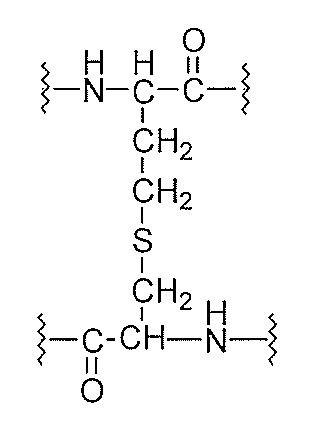
上部のシステイン残基が前記ペプチドにおけるN末端側のシステイン残基であり、且つ
下部のシステイン残基が前記ペプチドにおけるC末端側のシステイン残基である]
に示すように連結されている、
前記固相担体。
(2)前記ペプチドが、下記の式II:
(X1-3)-C-(Xaa3)-(Xaa4)-H-(Xaa1)-G-(Xaa2)-L-V-W-C-(X1-3) (II)
[式中、
Xの各々は独立的にシステイン以外の任意のアミノ酸残基であり、
Cはシステイン残基であり、
Hはヒスチジン残基であり、
Xaa1はアルギニン残基、リシン残基、ロイシン残基若しくはアスパラギン残基又はそれらの誘導体であり、
Gはグリシン残基であり、
Xaa2はグルタミン酸残基又はアスパラギン残基であり、
Lはロイシン残基であり、
Vはバリン残基であり、
Wはトリプトファン残基であり、
Xaa3はアラニン残基、セリン残基又はトレオニン残基であり、且つ
Xaa4はチロシン残基又はトリプトファン残基である]
によって表される、13〜17アミノ酸残基から成るアミノ酸配列を含む、(1)記載の固相担体。
(3)前記ペプチドが、下記の式III:
(X1-3)-C-A-Y-H-(Xaa1)-G-E-L-V-W-C-(X1-3) (III)
[式中、
Xの各々は独立的にシステイン以外の任意のアミノ酸残基であり、
Cはシステイン残基であり、
Aはアラニン残基であり、
Yはチロシン残基であり、
Hはヒスチジン残基であり、
Xaa1はアルギニン残基、リシン残基、ロイシン残基若しくはアスパラギン残基又はそれらの誘導体であり、
Gはグリシン残基であり、
Eはグルタミン酸残基であり、
Lはロイシン残基であり、
Vはバリン残基であり、且つ
Wはトリプトファン残基である]
によって表される、13〜17アミノ酸残基から成るアミノ酸配列を含む、(1)又は(2)記載の固相担体。
(4)17アミノ酸残基とした場合の、前記ペプチドのN末端から1〜3、15〜17番目の各アミノ酸残基が、
1番目のアミノ酸残基= S、G、F又は無し、
2番目のアミノ酸残基= D、G、A、S、P、ホモシステイン又は無し、
3番目のアミノ酸残基= S、D、T、N、E又はR、
15番目のアミノ酸残基= S、T又はD、
16番目のアミノ酸残基= H、G、Y、T、N、D、F、ホモシステイン又は無し、
17番目のアミノ酸残基= Y、F、H、M又は無し、
である、(1)〜(3)のいずれか1記載の固相担体。
(5)前記ペプチドが、以下の1)〜14)のいずれか1つのアミノ酸配列から成る、但し、Xaa1はアルギニン残基、リシン残基、ロイシン残基若しくはアスパラギン残基又はそれらの誘導体であり、且つXaa2はホモシステインである、(4)記載の固相担体:
1) DCAYH(Xaa1)GELVWCT(配列番号1)
2) GPDCAYH(Xaa1)GELVWCTFH(配列番号2)
3) RCAYH(Xaa1)GELVWCS(配列番号3)
4) GPRCAYH(Xaa1)GELVWCSFH(配列番号4)
5) SPDCAYH(Xaa1)GELVWCTFH(配列番号5)
6) GDDCAYH(Xaa1)GELVWCTFH(配列番号6)
7) GPSCAYH(Xaa1)GELVWCTFH(配列番号7)
8) GPDCAYH(Xaa1)GELVWCSFH(配列番号8)
9) GPDCAYH(Xaa1)GELVWCTHH(配列番号9)
10) GPDCAYH(Xaa1)GELVWCTFY(配列番号10)
11) SPDCAYH(Xaa1)GELVWCTFY(配列番号11)
12) SDDCAYH(Xaa1)GELVWCTFY(配列番号12)
13) RGNCAYH(Xaa1)GQLVWCTYH(配列番号13)
14) G(Xaa2)DCAYH(Xaa1)GELVWCT(Xaa2)H(配列番号14)。
(6)前記ペプチドが、下記の式IV:
D-C-(Xaa3)-(Xaa4)-H-(Xaa1)-G-(Xaa2)-L-V-W-C-T (IV)
[式中、
Dはアスパラギン酸残基であり、
Cはシステイン残基であり、
Hはヒスチジン残基であり、
Xaa1はアルギニン残基、リシン残基、ロイシン残基若しくはアスパラギン残基又はそれらの誘導体であり、
Gはグリシン残基であり、
Xaa2はグルタミン酸残基又はアスパラギン残基であり、
Lはロイシン残基であり、
Vはバリン残基であり、
Wはトリプトファン残基であり、
Tはトレオニン残基であり、
Xaa3はアラニン残基又はトレオニン残基であり、且つ、
Xaa4はチロシン残基又はトリプトファン残基である]
によって表される、13アミノ酸残基から成るアミノ酸配列を含む、(1)又は(2)記載の固相担体。
(7)前記ペプチドが、以下の1)〜4)のいずれか1つのアミノ酸配列から成る、但し、Xaa1はアルギニン残基、リシン残基、ロイシン残基若しくはアスパラギン残基又はそれらの誘導体である、(6)記載の固相担体:
1) DCTYH(Xaa1)GNLVWCT(配列番号15)
2) DCAYH(Xaa1)GNLVWCT(配列番号16)
3) DCTYH(Xaa1)GELVWCT(配列番号17)
4) DCAWH(Xaa1)GELVWCT(配列番号18)。
(8)IgGと結合可能であることを特徴とするペプチドを固定化した固相担体であって、 前記ペプチドが、下記の式V:
D-C-(Xaa2)-(Xaa3)-(Xaa4)-(Xaa1)-G-(Xaa5)-L-(Xaa6)-W-C-T (V)
[式中、
Dはアスパラギン酸残基であり、
Cはシステイン残基であり、
Gはグリシン残基であり、
Lはロイシン残基であり、
Wはトリプトファン残基であり、
Tはトレオニン残基であり、
Xaa1はアルギニン残基、リシン残基、ロイシン残基若しくはアスパラギン残基又はそれらの誘導体であり、
Xaa2はアラニン残基、セリン残基又はトレオニン残基であり、
Xaa3はトリプトファン残基又はチロシン残基であり、
Xaa4はヒスチジン残基、アルギニン残基、セリン残基又はトレオニン残基であり、
Xaa5はグルタミン酸残基、アスパラギン残基、アルギニン残基又はアスパラギン酸残基であり、且つ
Xaa6はイソロイシン残基又はバリン残基である]
によって表される、13アミノ酸残基から成るアミノ酸配列を含み、且つ
前記ペプチドの外側の2つのシステイン残基が、以下の式:
上部のシステイン残基が前記ペプチドにおけるN末端側のシステイン残基であり、且つ
下部のシステイン残基が前記ペプチドにおけるC末端側のシステイン残基である]
に示すように連結されている、
前記固相担体。
(9)Xaa1がアルギニン残基、リシン残基若しくはそのアシル化誘導体又はロイシン残基である、(1)〜(8)のいずれか1記載の固相担体。
(10)前記ペプチドが、以下のアミノ酸配列から成る、(1)記載の固相担体:
GPDCAYHRGELVWCTFH(配列番号31)。
(11)前記ペプチドのN末端がPEG化されている、(1)〜(10)のいずれか1記載の固相担体。
(12)前記ペプチドのC末端がアミド化されている、(1)〜(11)のいずれか1記載の固相担体。
(13)前記ペプチドが多量体化されている、(1)〜(12)のいずれか1記載の固相担体。
(14)前記ペプチドの多量体が、該ペプチド間にスペーサーを有する、(13)記載の固相担体。
(15)前記ペプチドと固相の間にスペーサーを有する、(1)〜(14)のいずれか1記載の固相担体。
(16)(1)〜(15)のいずれか1記載の固相担体を含むIgG分離用カラム。
(17)(1)〜(15)のいずれか1記載の固相担体又は(16)記載のIgG分離用カラムを含む、IgGの精製のためのキット。
(18)(1)〜(15)のいずれか1記載の固相担体又は(16)記載のIgG分離用カラムにIgGを結合させる工程、及び
結合したIgGを溶出させてIgGを回収する工程、
を含む、IgGの精製方法。That is, the present invention includes the following.
(1) A solid-phase carrier on which a peptide characterized by being capable of binding to IgG is immobilized, wherein the peptide is represented by the following formula I:
(X 1-3 ) -C- (X 2 ) -H- (Xaa1) -G- (Xaa2) -LVWC- (X 1-3 ) (I)
[During the ceremony,
Each of X is independently an amino acid residue other than cysteine,
C is a cysteine residue
H is a histidine residue,
Xaa1 is an arginine residue, a lysine residue, a leucine residue or an asparagine residue or a derivative thereof.
G is a glycine residue
Xaa2 is a glutamic acid residue or asparagine residue,
L is a leucine residue
V is a valine residue and
W is a tryptophan residue]
The two cysteine residues outside the peptide, which contain an amino acid sequence consisting of 13 to 17 amino acid residues, represented by the following formula:
The upper cysteine residue is the N-terminal cysteine residue in the peptide, and the lower cysteine residue is the C-terminal cysteine residue in the peptide].
Concatenated as shown in,
The solid phase carrier.
(2) The peptide is based on the following formula II:
(X 1-3 ) -C- (Xaa3)-(Xaa4) -H- (Xaa1) -G- (Xaa2) -LVWC- (X 1-3 ) (II)
[During the ceremony,
Each of X is independently an amino acid residue other than cysteine,
C is a cysteine residue
H is a histidine residue,
Xaa1 is an arginine residue, a lysine residue, a leucine residue or an asparagine residue or a derivative thereof.
G is a glycine residue
Xaa2 is a glutamic acid residue or asparagine residue,
L is a leucine residue
V is a valine residue
W is a tryptophan residue
Xaa3 is an alanine residue, a serine residue or a threonine residue, and
Xaa4 is a tyrosine residue or tryptophan residue]
The solid phase carrier according to (1), which comprises an amino acid sequence consisting of 13 to 17 amino acid residues represented by.
(3) The peptide is based on the following formula III:
(X 1-3 ) -CAYH- (Xaa1) -GELVWC- (X 1-3 ) (III)
[During the ceremony,
Each of X is independently an amino acid residue other than cysteine,
C is a cysteine residue
A is an alanine residue,
Y is a tyrosine residue
H is a histidine residue,
Xaa1 is an arginine residue, a lysine residue, a leucine residue or an asparagine residue or a derivative thereof.
G is a glycine residue
E is a glutamic acid residue,
L is a leucine residue
V is a valine residue and
W is a tryptophan residue]
The solid phase carrier according to (1) or (2), which comprises an amino acid sequence consisting of 13 to 17 amino acid residues represented by.
(4) When 17 amino acid residues are used, each amino acid residue at positions 1 to 3 and 15 to 17 from the N-terminal of the peptide is
1st amino acid residue = S, G, F or none,
Second amino acid residue = D, G, A, S, P, homocysteine or none,
Third amino acid residue = S, D, T, N, E or R,
15th amino acid residue = S, T or D,
16th amino acid residue = H, G, Y, T, N, D, F, homocysteine or none,
17th amino acid residue = Y, F, H, M or none,
The solid-phase carrier according to any one of (1) to (3).
(5) The peptide consists of any one of the following amino acid sequences 1) to 14), where Xaa1 is an arginine residue, a lysine residue, a leucine residue or an asparagine residue or a derivative thereof. And Xaa2 is a homocysteine, the solid phase carrier according to (4):
1) DCAYH (Xaa1) GELVWCT (SEQ ID NO: 1)
2) GPDCAYH (Xaa1) GELVWCTFH (SEQ ID NO: 2)
3) RCAYH (Xaa1) GELVWCS (SEQ ID NO: 3)
4) GPRCAYH (Xaa1) GELVWCSFH (SEQ ID NO: 4)
5) SPDCAYH (Xaa1) GELVWCTFH (SEQ ID NO: 5)
6) GDDCAYH (Xaa1) GELVWCTFH (SEQ ID NO: 6)
7) GPSCAYH (Xaa1) GELVWCTFH (SEQ ID NO: 7)
8) GPDCAYH (Xaa1) GELVWCSFH (SEQ ID NO: 8)
9) GPDCAYH (Xaa1) GELVWCTHH (SEQ ID NO: 9)
10) GPDCAYH (Xaa1) GELVWCTFY (SEQ ID NO: 10)
11) SPDCAYH (Xaa1) GELVWCTFY (SEQ ID NO: 11)
12) SDDCAYH (Xaa1) GELVWCTFY (SEQ ID NO: 12)
13) RGNCAYH (Xaa1) GQLVWCTYH (SEQ ID NO: 13)
14) G (Xaa2) DCAYH (Xaa1) GELVWCT (Xaa2) H (SEQ ID NO: 14).
(6) The peptide is based on the following formula IV:
DC- (Xaa3)-(Xaa4) -H- (Xaa1) -G- (Xaa2) -LVWCT (IV)
[During the ceremony,
D is an aspartic acid residue,
C is a cysteine residue
H is a histidine residue,
Xaa1 is an arginine residue, a lysine residue, a leucine residue or an asparagine residue or a derivative thereof.
G is a glycine residue
Xaa2 is a glutamic acid residue or asparagine residue,
L is a leucine residue
V is a valine residue
W is a tryptophan residue
T is a threonine residue
Xaa3 is an alanine residue or a threonine residue, and
Xaa4 is a tyrosine residue or tryptophan residue]
The solid phase carrier according to (1) or (2), which comprises an amino acid sequence consisting of 13 amino acid residues represented by.
(7) The peptide consists of any one of the following amino acid sequences 1) to 4), where Xaa1 is an arginine residue, a lysine residue, a leucine residue or an asparagine residue or a derivative thereof. (6) The solid phase carrier according to (6):
1) DCTYH (Xaa1) GNLVWCT (SEQ ID NO: 15)
2) DCAYH (Xaa1) GNLVWCT (SEQ ID NO: 16)
3) DCTYH (Xaa1) GELVWCT (SEQ ID NO: 17)
4) DCAWH (Xaa1) GELVWCT (SEQ ID NO: 18).
(8) A solid-phase carrier on which a peptide characterized by being capable of binding to IgG is immobilized, wherein the peptide has the following formula V:
DC- (Xaa2)-(Xaa3)-(Xaa4)-(Xaa1) -G- (Xaa5) -L- (Xaa6) -WCT (V)
[During the ceremony,
D is an aspartic acid residue,
C is a cysteine residue
G is a glycine residue
L is a leucine residue
W is a tryptophan residue
T is a threonine residue
Xaa1 is an arginine residue, a lysine residue, a leucine residue or an asparagine residue or a derivative thereof.
Xaa2 is an alanine residue, a serine residue or a threonine residue,
Xaa3 is a tryptophan residue or a tyrosine residue
Xaa4 is a histidine residue, arginine residue, serine residue or threonine residue,
Xaa5 is a glutamic acid residue, an asparagine residue, an arginine residue or an aspartic acid residue, and
Xaa6 is an isoleucine residue or a valine residue]
The two cysteine residues outside the peptide, which contain an amino acid sequence consisting of 13 amino acid residues, represented by the following formula:
The upper cysteine residue is the N-terminal cysteine residue in the peptide, and the lower cysteine residue is the C-terminal cysteine residue in the peptide].
Concatenated as shown in,
The solid phase carrier.
(9) The solid phase carrier according to any one of (1) to (8), wherein Xaa1 is an arginine residue, a lysine residue or an acylated derivative thereof, or a leucine residue.
(10) The solid-phase carrier according to (1), wherein the peptide comprises the following amino acid sequence:
GPDCAYHRGELVWCTFH (SEQ ID NO: 31).
(11) The solid-phase carrier according to any one of (1) to (10), wherein the N-terminal of the peptide is PEGylated.
(12) The solid-phase carrier according to any one of (1) to (11), wherein the C-terminal of the peptide is amidated.
(13) The solid-phase carrier according to any one of (1) to (12), wherein the peptide is multimerized.
(14) The solid-phase carrier according to (13), wherein the multimer of the peptide has a spacer between the peptides.
(15) The solid-phase carrier according to any one of (1) to (14), which has a spacer between the peptide and the solid phase.
(16) An IgG separation column containing the solid-phase carrier according to any one of (1) to (15).
(17) A kit for purifying IgG, which comprises the solid-phase carrier according to any one of (1) to (15) or the IgG separation column according to (16).
(18) A step of binding IgG to the solid-phase carrier according to any one of (1) to (15) or the IgG separation column according to (16), and a step of eluting the bound IgG to recover IgG.
A method for purifying IgG, including.
本明細書は本願の優先権の基礎となる日本国特許出願番号2018-192083号の開示内容を包含する。 This specification includes the disclosure of Japanese Patent Application No. 2018-192083, which is the basis of the priority of the present application.
本発明に係る固相担体に含まれるペプチドは、システイン残基におけるスルフィド基を、特定の構造を有するリンカーによって架橋することによって、アルカリ耐性及びIgG結合親和性が改善されている。従って、本発明に係る固相担体は、アルカリ洗浄工程等によってIgG結合能が低減されにくく、また、高いIgG結合親和性を有することで、効率的なIgG精製に用いることができる。 The peptide contained in the solid-phase carrier according to the present invention has improved alkali resistance and IgG-binding affinity by cross-linking the sulfide group at the cysteine residue with a linker having a specific structure. Therefore, the solid phase carrier according to the present invention can be used for efficient IgG purification because the IgG binding ability is not easily reduced by an alkaline washing step or the like and the IgG binding affinity is high.
以下、本発明を詳細に説明する。 Hereinafter, the present invention will be described in detail.
本発明に係る固相担体は、IgGと結合可能であることを特徴とするペプチド(IgG結合性ペプチド)を固定化した固相担体であって、該ペプチドの外側の2つのシステイン残基が、以下の式:
上部のシステイン残基がペプチドにおけるN末端側のシステイン残基であり、且つ
下部のシステイン残基がペプチドにおけるC末端側のシステイン残基である]
に示すように連結されている、固相担体である。本発明に係る固相担体によれば、当該固相担体上の、IgG精製後のアルカリ溶液洗浄の繰り返しに対して耐性を有し、且つIgG結合親和性が高いIgG結合性ペプチドにより、効率的にIgGを精製することができる。The solid phase carrier according to the present invention is a solid phase carrier on which a peptide (IgG-binding peptide) immobilized on an IgG-binding property is immobilized, and two cysteine residues outside the peptide are used. The following formula:
The upper cysteine residue is the N-terminal cysteine residue in the peptide, and the lower cysteine residue is the C-terminal cysteine residue in the peptide]
It is a solid phase carrier linked as shown in. According to the solid-phase carrier according to the present invention, an IgG-binding peptide having resistance to repeated washing with an alkaline solution after IgG purification and having a high IgG-binding affinity on the solid-phase carrier is efficient. IgG can be purified.
<IgG結合性ペプチドを含む固相担体>
一態様において、本発明は、IgG結合性ペプチドを含む固相担体に関する。本明細書における「固相担体」としては、限定するものではないが、ガラスビーズ、シリカゲル等の無機担体、架橋ポリビニルアルコール、架橋ポリアクリレート、架橋ポリアクリルアミド、架橋ポリスチレン等の合成高分子や結晶性セルロース、架橋セルロース、架橋アガロース、架橋デキストラン等の多糖類から成る有機担体、さらにはこれらの組み合わせによって得られる有機−有機、有機−無機等の複合担体等が挙げられるが、中でも親水性担体は非特異吸着が比較的少なく、IgG結合性ペプチドの選択性が良好であるため好ましい。ここでいう親水性担体とは、担体を構成する化合物を平板状にしたときの水との接触角が60度以下の担体を示す。この様な担体としてはセルロース、キトサン、デキストラン等の多糖類、ポリビニルアルコール、エチレン−酢酸ビニル共重合体けん化物、ポリアクリルアミド、ポリアクリル酸、ポリメタクリル酸、ポリメタクリル酸メチル、ポリアクリル酸グラフト化ポリエチレン、ポリアクリルアミドグラフト化ポリエチレン、ガラス等から成る担体が代表例として挙げられる。<Solid-phase carrier containing IgG-binding peptide>
In one aspect, the invention relates to a solid phase carrier containing an IgG binding peptide. The "solid phase carrier" in the present specification is not limited to, but is limited to inorganic carriers such as glass beads and silica gel, synthetic polymers such as crosslinked polyvinyl alcohol, crosslinked polysaccharides, crosslinked polysaccharides, and crosslinked polystyrene, and crystalline properties. Examples thereof include organic carriers composed of polysaccharides such as cellulose, crosslinked cellulose, crosslinked agarose, and crosslinked dextran, and composite carriers such as organic-organic and organic-inorganic obtained by combining these, but hydrophilic carriers are not among them. It is preferable because the specific adsorption is relatively small and the selectivity of the IgG-binding peptide is good. The term "hydrophilic carrier" as used herein refers to a carrier having a contact angle with water of 60 degrees or less when the compound constituting the carrier is flattened. Such carriers include polysaccharides such as cellulose, chitosan, and dextran, polyvinyl alcohol, ethylene-vinyl acetate copolymer saponified products, polyacrylamide, polyacrylic acid, polymethacrylic acid, polymethylmethacrylate, and polyacrylic acid grafting. A typical example is a carrier made of polyethylene, polyacrylamide grafted polyethylene, glass or the like.
固相担体の形態としては、ビーズ状、線維状、粒子条、膜状(中空糸も含む)、ゲル状等いずれも可能であり、任意の形態を選ぶことができる。特定の排除限界分子量を持つ担体作製の容易さからビーズ状が特に好ましく用いられる。ビーズ状の平均粒径は10〜2500μmのものが使いやすく、とりわけ、IgG結合性ペプチド固定化反応のしやすさの点から25μmから800μmの範囲が好ましい。固相担体としては、具体的には例えば、磁性ビーズ、ガラスビーズ、ポリスチレンビーズ、シリカゲルビーズ、及び多糖類ビーズ等が挙げられる。 The solid-phase carrier may be in the form of beads, fibers, particles, membranes (including hollow fibers), gels, or the like, and any form can be selected. Beads are particularly preferably used because of the ease of preparation of a carrier having a specific exclusion limit molecular weight. The average bead-shaped particle size of 10 to 2500 μm is easy to use, and the range of 25 μm to 800 μm is particularly preferable from the viewpoint of ease of IgG-binding peptide immobilization reaction. Specific examples of the solid phase carrier include magnetic beads, glass beads, polystyrene beads, silica gel beads, polysaccharide beads and the like.
さらに固相担体表面には、IgG結合性ペプチドの固定化反応に用いうる官能基が存在しているとIgG結合性ペプチドの固定化に好都合である。これらの官能基の代表例としては、水酸基、アミノ基、アルデヒド基、カルボキシル基、チオール基、シラノール基、エポキシ基、スクシンイミド基、N-ヒドロキシスクシンイミド基等、酸無水物基、ヨードアセチル基等が挙げられる。 Further, if a functional group that can be used for the immobilization reaction of the IgG-binding peptide is present on the surface of the solid-phase carrier, it is convenient for immobilization of the IgG-binding peptide. Typical examples of these functional groups include hydroxyl groups, amino groups, aldehyde groups, carboxyl groups, thiol groups, silanol groups, epoxy groups, succinimide groups, N-hydroxysuccinimide groups, acid anhydride groups, iodoacetyl groups and the like. Can be mentioned.
固相担体としては、市販品を用いることもできる。市販品としては、多孔質セルロースゲルであるGCL2000、GC700、アリルデキストランとメチレンビスアクリルアミドを共有結合で架橋したSephacryl S-1000、アクリレート系の担体であるToyopearl、アガロース系の架橋担体であるSepharoseCL4B、エポキシ基で活性化されたポリメタクリルアミドであるオイパーギットC250L、NHS基で活性化されたセファロース担体を含むNHS活性化プレパックカラム等を例示することができる。ただし、本実施態様においてはこれらの担体、活性化担体のみに限定されるものではない。 A commercially available product can also be used as the solid phase carrier. Commercially available products include GCL2000 and GC700, which are porous cellulose gels, Sephacryl S-1000, which is a covalently crosslinked allyldextran and methylenebisacrylamide, Toyopearl, which is an acrylate-based carrier, SepharoseCL4B, which is an agarose-based crosslinked carrier, and epoxy. Examples thereof include Eupergit C250L, which is a polymethacrylamide activated by a group, and an NHS-activated prepack column containing a sepharose carrier activated by an NHS group. However, the present embodiment is not limited to these carriers and activated carriers.
上述の固相担体はそれぞれ単独で用いてもよいし、任意の2種類以上を混合してもよい。また、固相担体としては、その使用目的及び方法からみて、表面積が大きいことが望ましく、適当な大きさの細孔を多数有する、すなわち、多孔質であることが好ましい。 The above-mentioned solid-phase carriers may be used alone, or any two or more kinds may be mixed. Further, the solid-phase carrier preferably has a large surface area and has a large number of pores having an appropriate size, that is, is preferably porous, in view of the purpose and method of use thereof.
上記固相担体には、本明細書に記載のIgG結合性ペプチドが固定化されていることが好ましく、ペプチドの固定化は、当業者に周知の方法を用いて行うことができ、例えば物理的吸着法、共有結合法、イオン結合法等によって行うことができる。固定化は、例えばIgG結合性ペプチドのN末端のアミノ基を、直接又はスペーサーを介して固相担体に共有結合させることによって行うことが好ましい。IgG結合性ペプチドの立体障害を小さくすることにより分離効率を向上させ、さらに非特異的な結合を抑えるために、親水性スペーサーを介して固定化することがより好ましい。親水性スペーサーは特に限定しないが、例えば、両末端をカルボキシル基、アミノ基、アルデヒド基、エポキシ基等で置換したポリアルキレンオキサイドの誘導体を用いるのが好ましい。 The IgG-binding peptide described in the present specification is preferably immobilized on the solid phase carrier, and the peptide can be immobilized by a method well known to those skilled in the art, for example, physically. It can be carried out by an adsorption method, a covalent bond method, an ionic bond method or the like. Immobilization is preferably carried out, for example, by covalently attaching the N-terminal amino group of the IgG-binding peptide to the solid-phase carrier directly or via a spacer. It is more preferable to immobilize the IgG-binding peptide via a hydrophilic spacer in order to improve the separation efficiency by reducing the steric hindrance and further suppress the non-specific binding. The hydrophilic spacer is not particularly limited, but for example, it is preferable to use a derivative of polyalkylene oxide in which both ends are substituted with a carboxyl group, an amino group, an aldehyde group, an epoxy group or the like.
上記固相担体へ導入されるIgG結合性ペプチド及びスペーサーとして用いられる有機化合物の固定化方法及び条件は特に限定されるものではないが、一般にタンパク質やペプチドを担体に固定化する場合に採用される方法を例示する。例えば、担体をアミノ基を含む化合物、N-ヒドロキシスクシンイミジル基を含む化合物、臭化シアン、エピクロロヒドリン、ジグリシジルエーテル、トシルクロライド、トレシルクロライド、ヒドラジン等と反応させて活性化し(担体が元々持っている官能基よりIgG結合性ペプチドが反応しやすい官能基に変え)、IgG結合性ペプチドと反応、固定化する方法、また、担体とIgG結合性ペプチドが存在する系にカルボジイミドのような縮合試薬、又は、グルタルアルデヒドのように分子中に複数の官能基を持つ試薬を加えて縮合、架橋することによる固定化方法が挙げられるが、固相担体の滅菌時又は利用時にIgG結合性ペプチドが固相担体より容易に脱離しない固定化方法を適用することがより好ましい。 The method and conditions for immobilizing the IgG-binding peptide introduced into the solid-phase carrier and the organic compound used as a spacer are not particularly limited, but are generally adopted when immobilizing a protein or peptide on the carrier. The method is illustrated. For example, the carrier is activated by reacting with a compound containing an amino group, a compound containing an N-hydroxysuccinimidyl group, cyanide bromide, epichlorohydrin, diglycidyl ether, tosilk lolide, tresilk lolide, hydrazine and the like. (Change to a functional group that the IgG-binding peptide is more likely to react with than the functional group originally possessed by the carrier), a method of reacting and immobilizing with the IgG-binding peptide, and carbodiimide in a system in which the carrier and the IgG-binding peptide are present Immobilization method by adding a condensing reagent such as Glutalaldehyde or a reagent having a plurality of functional groups in the molecule to condense and crosslink the solid phase carrier, but IgG is used when the solid phase carrier is sterilized or used. It is more preferred to apply an immobilization method in which the binding peptide is not more easily detached than the solid phase carrier.
本明細書に記載のIgG結合性ペプチドを含む固相担体は、クロマトグラフィーカラム等に充填して、IgGを精製又は分離するために用いることができる。 The solid-phase carrier containing the IgG-binding peptide described herein can be packed in a chromatography column or the like and used for purifying or separating IgG.
本発明に係る固相担体に含まれ得るIgG結合性ペプチドについて、以下詳細に説明する。 The IgG-binding peptide that can be contained in the solid-phase carrier according to the present invention will be described in detail below.
本明細書中で使用する「IgG」は、哺乳動物、例えばヒト及びチンパンジー等の霊長類、ラット、マウス、及びウサギ等の実験動物、ブタ、ウシ、ウマ、ヒツジ、及びヤギ等の家畜動物、並びにイヌ及びネコ等の愛玩動物のIgG、好ましくはヒトのIgG(IgG1、IgG2、IgG3又はIgG4)を指すものとする。本明細書におけるIgGは、さらに好ましくは、ヒトIgG1、IgG2、若しくはIgG4、又はウサギIgGであり、特に好ましくはヒトIgG1、IgG2、又はIgG4である。 As used herein, "IgG" refers to mammals such as primates such as humans and chimpanzees, experimental animals such as rats, mice, and rabbits, and domestic animals such as pigs, cows, horses, sheep, and goats. In addition, it refers to IgG of pet animals such as dogs and cats, preferably human IgG (IgG1, IgG2, IgG3 or IgG4). The IgG in the present specification is more preferably human IgG1, IgG2, or IgG4, or rabbit IgG, and particularly preferably human IgG1, IgG2, or IgG4.
一態様において、本発明に係る固相担体に含まれ得るIgG結合性ペプチドは、下記の式I:
(X1-3)-C-(X2)-H-(Xaa1)-G-(Xaa2)-L-V-W-C-(X1-3) (I)
[式中、
Xの各々は独立的にシステイン以外の任意のアミノ酸残基であり、
Cはシステイン残基であり、
Hはヒスチジン残基であり、
Xaa1はアルギニン残基、リシン残基、ロイシン残基若しくはアスパラギン残基又はそれらの誘導体であり、
Gはグリシン残基であり、
Xaa2はグルタミン酸残基又はアスパラギン残基であり、
Lはロイシン残基であり、
Vはバリン残基であり、且つ
Wはトリプトファン残基である]
によって表される、13〜17アミノ酸残基から成るアミノ酸配列を含み、且つ
該ペプチドの外側の2つのシステイン残基が、以下の式:
上部のシステイン残基がペプチドにおけるN末端側のシステイン残基であり、且つ
下部のシステイン残基がペプチドにおけるC末端側のシステイン残基である]
に示すように連結されている。In one aspect, the IgG-binding peptide that can be contained in the solid phase carrier according to the present invention is the following formula I:
(X 1-3 ) -C- (X 2 ) -H- (Xaa1) -G- (Xaa2) -LVWC- (X 1-3 ) (I)
[During the ceremony,
Each of X is independently an amino acid residue other than cysteine,
C is a cysteine residue
H is a histidine residue,
Xaa1 is an arginine residue, a lysine residue, a leucine residue or an asparagine residue or a derivative thereof.
G is a glycine residue
Xaa2 is a glutamic acid residue or asparagine residue,
L is a leucine residue
V is a valine residue and
W is a tryptophan residue]
The two cysteine residues outside the peptide, which contain an amino acid sequence consisting of 13-17 amino acid residues, represented by the following formula:
The upper cysteine residue is the N-terminal cysteine residue in the peptide, and the lower cysteine residue is the C-terminal cysteine residue in the peptide]
It is connected as shown in.
上記式で、N末端又はC末端のX1-3という表記は、システイン(C又はCys)以外の独立的に任意のアミノ酸残基Xが1〜3個連続していることを意味し、それを構成するアミノ酸残基は同じか又は異なる残基であるが、好ましくは3個全てが同じ残基でない配列から成る。同様に、X2もシステイン(C又はCys)以外の独立的に任意のアミノ酸残基Xが2個連続していることを意味し、それを構成するアミノ酸残基は同じか又は異なる残基であるが、好ましくは当該2個連続しているアミノ酸残基は同じ残基でない配列から成る。 In the above formula, the notation X 1-3 at the N-terminal or C-terminal means that 1 to 3 independently arbitrary amino acid residues X other than cysteine (C or Cys) are consecutive. The amino acid residues that make up the residue are the same or different residues, but preferably all three are composed of sequences that are not the same residue. Similarly, X 2 also means that two independently arbitrary amino acid residues X other than cysteine (C or Cys) are consecutive, and the amino acid residues that compose them are the same or different residues. However, preferably the two contiguous amino acid residues consist of sequences that are not the same residue.
式Iのペプチドのアミノ酸配列においてアミノ酸残基Xをさらに特定した式I'及び式I''で表されるペプチドを以下に示す。 The peptides represented by the formulas I'and I'' in which the amino acid residue X is further specified in the amino acid sequence of the peptide of the formula I are shown below.
すなわち、式I'で表されるペプチドは、
(X1-3)-C-(X1)-Y-H-(Xaa1)-G-N-L-V-W-C-(X1-3) (I')
[式中、
Xの各々は独立的にシステイン以外の任意のアミノ酸残基であり、
Cはシステイン残基であり、
Yはチロシン残基であり、
Hはヒスチジン残基であり、
Xaa1はアルギニン残基、リシン残基、ロイシン残基若しくはアスパラギン残基又はそれらの誘導体であり、
Gはグリシン残基であり、
Nはアスパラギン残基であり、
Lはロイシン残基であり、
Vはバリン残基であり、且つ
Wはトリプトファン残基である]
によって表される、13〜17アミノ酸残基から成るアミノ酸配列を含む。That is, the peptide represented by the formula I'is
(X 1-3 ) -C- (X 1 ) -YH- (Xaa1) -GNLVWC- (X 1-3 ) (I')
[During the ceremony,
Each of X is independently an amino acid residue other than cysteine,
C is a cysteine residue
Y is a tyrosine residue
H is a histidine residue,
Xaa1 is an arginine residue, a lysine residue, a leucine residue or an asparagine residue or a derivative thereof.
G is a glycine residue
N is an asparagine residue
L is a leucine residue
V is a valine residue and
W is a tryptophan residue]
Contains an amino acid sequence consisting of 13-17 amino acid residues, represented by.
式I''で表されるペプチドは、
(X1-3)-C-A-(X1)-H-(Xaa1)-G-E-L-V-W-C-(X1-3) (I'')
[式中、
Xの各々は独立的にシステイン以外の任意のアミノ酸残基であり、
Cはシステイン残基であり、
Aはアラニン残基であり、
Hはヒスチジン残基であり、
Xaa1はアルギニン残基、リシン残基、ロイシン残基若しくはアスパラギン残基又はそれらの誘導体であり、
Gはグリシン残基であり、
Eはグルタミン酸残基であり、
Lはロイシン残基であり、
Vはバリン残基であり、且つ
Wはトリプトファン残基である]
によって表される、13〜17アミノ酸残基から成るアミノ酸配列を含む。The peptide represented by the formula I'' is
(X 1-3 ) -CA- (X 1 ) -H- (Xaa1) -GELVWC- (X 1-3 ) (I'')
[During the ceremony,
Each of X is independently an amino acid residue other than cysteine,
C is a cysteine residue
A is an alanine residue,
H is a histidine residue,
Xaa1 is an arginine residue, a lysine residue, a leucine residue or an asparagine residue or a derivative thereof.
G is a glycine residue
E is a glutamic acid residue,
L is a leucine residue
V is a valine residue and
W is a tryptophan residue]
Contains an amino acid sequence consisting of 13-17 amino acid residues, represented by.
また、式Iのペプチドのアミノ酸配列においてアミノ酸残基Xをさらに特定した式IIで表されるペプチドを以下に示す。 Moreover, the peptide represented by the formula II in which the amino acid residue X is further specified in the amino acid sequence of the peptide of the formula I is shown below.
すなわち、式IIで表されるペプチドは、
(X1-3)-C-(Xaa3)-(Xaa4)-H-(Xaa1)-G-(Xaa2)-L-V-W-C-(X1-3) (II)
[式中、
Xの各々は独立的にシステイン以外の任意のアミノ酸残基であり、
Cはシステイン残基であり、
Hはヒスチジン残基であり、
Xaa1はアルギニン残基、リシン残基、ロイシン残基若しくはアスパラギン残基又はそれらの誘導体であり、
Gはグリシン残基であり、
Xaa2はグルタミン酸残基又はアスパラギン残基であり、
Lはロイシン残基であり、
Vはバリン残基であり、
Wはトリプトファン残基であり、
Xaa3はアラニン残基、セリン残基又はトレオニン残基であり、且つ
Xaa4はチロシン残基又はトリプトファン残基である]
によって表される、13〜17アミノ酸残基から成るアミノ酸配列を含む。That is, the peptide represented by the formula II is
(X 1-3 ) -C- (Xaa3)-(Xaa4) -H- (Xaa1) -G- (Xaa2) -LVWC- (X 1-3 ) (II)
[During the ceremony,
Each of X is independently an amino acid residue other than cysteine,
C is a cysteine residue
H is a histidine residue,
Xaa1 is an arginine residue, a lysine residue, a leucine residue or an asparagine residue or a derivative thereof.
G is a glycine residue
Xaa2 is a glutamic acid residue or asparagine residue,
L is a leucine residue
V is a valine residue
W is a tryptophan residue
Xaa3 is an alanine residue, a serine residue or a threonine residue, and
Xaa4 is a tyrosine residue or tryptophan residue]
Contains an amino acid sequence consisting of 13-17 amino acid residues, represented by.
上記の式I'、式I''及び式IIのペプチドのアミノ酸配列において、17アミノ酸残基とした場合の、N末端から1番目及び2番目並びに16番目及び17番目のアミノ酸残基Xは欠失していてもよく、そのようなペプチドは13アミノ酸長から成る。 In the amino acid sequences of the peptides of the above formulas I', formula I'' and formula II, the 1st and 2nd amino acid residues and the 16th and 17th amino acid residues X from the N-terminal are missing when 17 amino acid residues are used. May be lost, such peptides consist of 13 amino acids in length.
本明細書で使用する「17アミノ酸残基とした場合の」とは、ペプチドのアミノ酸残基をアミノ酸番号で呼ぶときに、式Iのペプチドについて最長のアミノ酸長である17残基のN末端から順番に1番目から17番目まで番号付けするために便宜的に表現した用語である。 As used herein, "when 17 amino acid residues are used" means that when the amino acid residues of a peptide are referred to by amino acid numbers, the N-terminal of 17 residues, which is the longest amino acid length for the peptide of formula I, is used. It is a term expressed for convenience to number the numbers from 1st to 17th in order.
また、式Iのペプチドのアミノ酸配列においてアミノ酸残基Xをさらに特定した式IIIで表されるペプチドを以下に示す。 Further, the peptide represented by the formula III in which the amino acid residue X is further specified in the amino acid sequence of the peptide of the formula I is shown below.
すなわち、式IIIで表されるペプチドは、
(X1-3)-C-A-Y-H-(Xaa1)-G-E-L-V-W-C-(X1-3) (III)
[式中、
Xの各々は独立的にシステイン以外の任意のアミノ酸残基であり、
Cはシステイン残基であり、
Aはアラニン残基であり、
Yはチロシン残基であり、
Hはヒスチジン残基であり、
Xaa1はアルギニン残基、リシン残基、ロイシン残基若しくはアスパラギン残基又はそれらの誘導体であり、
Gはグリシン残基であり、
Eはグルタミン酸残基であり、
Lはロイシン残基であり、
Vはバリン残基であり、且つ
Wはトリプトファン残基である]
によって表される、13〜17アミノ酸残基から成るアミノ酸配列を含む。That is, the peptide represented by the formula III is
(X 1-3 ) -CAYH- (Xaa1) -GELVWC- (X 1-3 ) (III)
[During the ceremony,
Each of X is independently an amino acid residue other than cysteine,
C is a cysteine residue
A is an alanine residue,
Y is a tyrosine residue
H is a histidine residue,
Xaa1 is an arginine residue, a lysine residue, a leucine residue or an asparagine residue or a derivative thereof.
G is a glycine residue
E is a glutamic acid residue,
L is a leucine residue
V is a valine residue and
W is a tryptophan residue]
Contains an amino acid sequence consisting of 13-17 amino acid residues, represented by.
上記の式IIIのペプチドのアミノ酸配列において、17アミノ酸残基とした場合の、N末端から1番目及び2番目、並びに16番目及び17番目のアミノ酸残基Xは欠失していてもよく、そのようなペプチドは13アミノ酸長からなってよい。 In the amino acid sequence of the peptide of the above formula III, when the 17 amino acid residue is used, the 1st and 2nd amino acid residues from the N-terminal, and the 16th and 17th amino acid residues X may be deleted. Such peptides may consist of 13 amino acids in length.
さらに、上記の各式のペプチドのアミノ酸配列のシステイン(C)以外のアミノ酸残基、すなわち、17アミノ酸残基とした場合のN末端から1〜3、5、6、15〜17番目の各アミノ酸残基は、以下のものから選択されることが好ましい。ここで、各大文字のアルファベットは、アミノ酸の一文字表記である:
1番目のアミノ酸残基= S、G、F又は無し、
2番目のアミノ酸残基= D、G、A、S、P、ホモシステイン又は無し、
3番目のアミノ酸残基= S、D、T、N、E又はR、
15番目のアミノ酸残基= S、T又はD、
16番目のアミノ酸残基= H、G、Y、T、N、D、F、ホモシステイン又は無し、
17番目のアミノ酸残基= Y、F、H、M又は無し、
5番目のアミノ酸残基= A又はT、
6番目のアミノ酸残基= Y又はW。Furthermore, amino acid residues other than cysteine (C) in the amino acid sequence of the peptides of each of the above formulas, that is, amino acids 1 to 3, 5, 6, 15 to 17 from the N-terminal when 17 amino acid residues are used. The residue is preferably selected from the following: Here, each uppercase alphabet is a one-letter notation for amino acids:
1st amino acid residue = S, G, F or none,
Second amino acid residue = D, G, A, S, P, homocysteine or none,
Third amino acid residue = S, D, T, N, E or R,
15th amino acid residue = S, T or D,
16th amino acid residue = H, G, Y, T, N, D, F, homocysteine or none,
17th amino acid residue = Y, F, H, M or none,
5th amino acid residue = A or T,
6th amino acid residue = Y or W.
また、式Iのペプチドのアミノ酸配列においてアミノ酸残基Xをさらに特定した式IVで表されるペプチドを以下に示す。 Moreover, the peptide represented by the formula IV in which the amino acid residue X is further specified in the amino acid sequence of the peptide of the formula I is shown below.
すなわち、式IVで表されるペプチドは、
D-C-(Xaa3)-(Xaa4)-H-(Xaa1)-G-(Xaa2)-L-V-W-C-T (IV)
[式中、
Dはアスパラギン酸残基であり、
Cはシステイン残基であり、
Hはヒスチジン残基であり、
Xaa1はアルギニン残基、リシン残基、ロイシン残基若しくはアスパラギン残基又はそれらの誘導体であり、
Gはグリシン残基であり、
Xaa2はグルタミン酸残基又はアスパラギン残基であり、
Lはロイシン残基であり、
Vはバリン残基であり、
Wはトリプトファン残基であり、
Tはトレオニン残基であり、
Xaa3はアラニン残基又はトレオニン残基であり、且つ、
Xaa4はチロシン残基又はトリプトファン残基である]
によって表される、13アミノ酸残基から成るアミノ酸配列を含む。That is, the peptide represented by the formula IV is
DC- (Xaa3)-(Xaa4) -H- (Xaa1) -G- (Xaa2) -LVWCT (IV)
[During the ceremony,
D is an aspartic acid residue,
C is a cysteine residue
H is a histidine residue,
Xaa1 is an arginine residue, a lysine residue, a leucine residue or an asparagine residue or a derivative thereof.
G is a glycine residue
Xaa2 is a glutamic acid residue or asparagine residue,
L is a leucine residue
V is a valine residue
W is a tryptophan residue
T is a threonine residue
Xaa3 is an alanine residue or a threonine residue, and
Xaa4 is a tyrosine residue or tryptophan residue]
Contains an amino acid sequence consisting of 13 amino acid residues, represented by.
式Iのペプチドの具体例のいくつかを以下の1)〜18)に列挙するが、これらに制限されないことはいうまでもない:
1) DCAYH(Xaa1)GELVWCT(配列番号1)、
2) GPDCAYH(Xaa1)GELVWCTFH(配列番号2)、
3) RCAYH(Xaa1)GELVWCS(配列番号3)、
4) GPRCAYH(Xaa1)GELVWCSFH(配列番号4)、
5) SPDCAYH(Xaa1)GELVWCTFH(配列番号5)、
6) GDDCAYH(Xaa1)GELVWCTFH(配列番号6)、
7) GPSCAYH(Xaa1)GELVWCTFH(配列番号7)、
8) GPDCAYH(Xaa1)GELVWCSFH(配列番号8)、
9) GPDCAYH(Xaa1)GELVWCTHH(配列番号9)、
10) GPDCAYH(Xaa1)GELVWCTFY(配列番号10)、
11) SPDCAYH(Xaa1)GELVWCTFY(配列番号11)、
12) SDDCAYH(Xaa1)GELVWCTFY(配列番号12)、
13) RGNCAYH(Xaa1)GQLVWCTYH(配列番号13)、
14) G(Xaa2)DCAYH(Xaa1)GELVWCT(Xaa2)H(配列番号14)、
15) DCTYH(Xaa1)GNLVWCT(配列番号15)、
16) DCAYH(Xaa1)GNLVWCT(配列番号16)、
17) DCTYH(Xaa1)GELVWCT(配列番号17)、及び
18) DCAWH(Xaa1)GELVWCT(配列番号18)
[式中、
Xaa1はアルギニン残基、リシン残基、ロイシン残基若しくはアスパラギン残基又はそれらの誘導体であり、
Xaa2はホモシステインであり、好ましくはホモシステイン同士は互いにジスルフィド結合を形成している]。Some specific examples of peptides of formula I are listed in 1) -18) below, but it goes without saying that they are not limited to these:
1) DCAYH (Xaa1) GELVWCT (SEQ ID NO: 1),
2) GPDCAYH (Xaa1) GELVWCTFH (SEQ ID NO: 2),
3) RCAYH (Xaa1) GELVWCS (SEQ ID NO: 3),
4) GPRCAYH (Xaa1) GELVWCSFH (SEQ ID NO: 4),
5) SPDCAYH (Xaa1) GELVWCTFH (SEQ ID NO: 5),
6) GDDCAYH (Xaa1) GELVWCTFH (SEQ ID NO: 6),
7) GPSCAYH (Xaa1) GELVWCTFH (SEQ ID NO: 7),
8) GPDCAYH (Xaa1) GELVWCSFH (SEQ ID NO: 8),
9) GPDCAYH (Xaa1) GELVWCTHH (SEQ ID NO: 9),
10) GPDCAYH (Xaa1) GELVWCTFY (SEQ ID NO: 10),
11) SPDCAYH (Xaa1) GELVWCTFY (SEQ ID NO: 11),
12) SDDCAYH (Xaa1) GELVWCTFY (SEQ ID NO: 12),
13) RGNCAYH (Xaa1) GQLVWCTYH (SEQ ID NO: 13),
14) G (Xaa2) DCAYH (Xaa1) GELVWCT (Xaa2) H (SEQ ID NO: 14),
15) DCTYH (Xaa1) GNLVWCT (SEQ ID NO: 15),
16) DCAYH (Xaa1) GNLVWCT (SEQ ID NO: 16),
17) DCTYH (Xaa1) GELVWCT (SEQ ID NO: 17), and
18) DCAWH (Xaa1) GELVWCT (SEQ ID NO: 18)
[During the ceremony,
Xaa1 is an arginine residue, a lysine residue, a leucine residue or an asparagine residue or a derivative thereof.
Xaa2 is homocysteine, preferably homocysteines form disulfide bonds with each other].
式Iのペプチドの好ましい具体例として、
1) DCAYH(Xaa1)GELVWCT(配列番号1、但し、Xaa1はアルギニン(R))、
2) GPDCAYH(Xaa1)GELVWCTFH(配列番号2、但し、Xaa1はR、L、リシン(K)又はアセチル化リシン)、及び
4) GPRCAYH(Xaa1)GELVWCSFH(配列番号4、但し、Xaa1はR)、
が挙げられ、特に好ましい例として、GPDCAYHRGELVWCTFH(配列番号31)が挙げられる。As a preferred specific example of the peptide of formula I,
1) DCAYH (Xaa1) GELVWCT (SEQ ID NO: 1, where Xaa1 is arginine (R)),
2) GPDCAYH (Xaa1) GELVWCTFH (SEQ ID NO: 2, where Xaa1 is R, L, lysine (K) or acetylated lysine), and
4) GPRCAYH (Xaa1) GELVWCSFH (SEQ ID NO: 4, where Xaa1 is R),
As a particularly preferable example, GPDCAYHRGELVWCTFH (SEQ ID NO: 31) can be mentioned.
また、一態様において、本明細書に記載のIgG結合性ペプチドは、広義の一次構造として、下記の式V:
D-C-(Xaa2)-(Xaa3)-(Xaa4)-(Xaa1)-G-(Xaa5)-L-(Xaa6)-W-C-T (V)
[式中、
Dはアスパラギン酸残基であり、
Cはシステイン残基であり、
Gはグリシン残基であり、
Lはロイシン残基であり、
Wはトリプトファン残基であり、
Tはトレオニン残基であり、
Xaa1はアルギニン残基、リシン残基、ロイシン残基若しくはアスパラギン残基又はそれらの誘導体であり、
Xaa2はアラニン残基、セリン残基又はトレオニン残基であり、
Xaa3はトリプトファン残基又はチロシン残基であり、
Xaa4はヒスチジン残基、アルギニン残基、セリン残基又はトレオニン残基であり、
Xaa5はグルタミン酸残基、アスパラギン残基、アルギニン残基又はアスパラギン酸残基であり、且つ
Xaa6はイソロイシン残基又はバリン残基である]
によって表される、13アミノ酸残基から成るアミノ酸配列を含み、且つ
該ペプチドの外側の2つのシステイン残基が、以下の式:
上部のシステイン残基がペプチドにおけるN末端側のシステイン残基であり、且つ
下部のシステイン残基がペプチドにおけるC末端側のシステイン残基である]
に示すように連結されている。Further, in one embodiment, the IgG-binding peptide described in the present specification has the following formula V: as a primary structure in a broad sense.
DC- (Xaa2)-(Xaa3)-(Xaa4)-(Xaa1) -G- (Xaa5) -L- (Xaa6) -WCT (V)
[During the ceremony,
D is an aspartic acid residue,
C is a cysteine residue
G is a glycine residue
L is a leucine residue
W is a tryptophan residue
T is a threonine residue
Xaa1 is an arginine residue, a lysine residue, a leucine residue or an asparagine residue or a derivative thereof.
Xaa2 is an alanine residue, a serine residue or a threonine residue,
Xaa3 is a tryptophan residue or a tyrosine residue
Xaa4 is a histidine residue, arginine residue, serine residue or threonine residue,
Xaa5 is a glutamic acid residue, an asparagine residue, an arginine residue or an aspartic acid residue, and
Xaa6 is an isoleucine residue or a valine residue]
The two cysteine residues outside the peptide, which contain an amino acid sequence consisting of 13 amino acid residues, represented by the following formula:
The upper cysteine residue is the N-terminal cysteine residue in the peptide, and the lower cysteine residue is the C-terminal cysteine residue in the peptide]
It is connected as shown in.
式Vのペプチドの具体例の幾つかを以下の19)〜30)に列挙するが、これらに制限されないことはいうまでもない:
19) DCTYT(Xaa1)GNLVWCT(配列番号19)、
20) DCAYT(Xaa1)GNLVWCT(配列番号20)、
21) DCSYT(Xaa1)GNLVWCT(配列番号21)、
22) DCTWT(Xaa1)GNLVWCT(配列番号22)、
23) DCTYH(Xaa1)GNLVWCT(配列番号23)、
24) DCTYR(Xaa1)GNLVWCT(配列番号24)、
25) DCTYS(Xaa1)GNLVWCT(配列番号25)、
26) DCTYT(Xaa1)GNLVWCT(配列番号26)、
27) DCTYT(Xaa1)GELVWCT(配列番号27)、
28) DCTYT(Xaa1)GRLVWCT(配列番号28)、
29) DCTYT(Xaa1)GDLVWCT(配列番号29)、及び
30) DCTYT(Xaa1)GNLIWCT(配列番号30)
[式中、Xaa1はアルギニン残基、リシン残基、ロイシン残基若しくはアスパラギン残基又はそれらの誘導体である]。Some specific examples of peptides of formula V are listed in 19) -30) below, but it goes without saying that they are not limited to these:
19) DCTYT (Xaa1) GNLVWCT (SEQ ID NO: 19),
20) DCAYT (Xaa1) GNLVWCT (SEQ ID NO: 20),
21) DCSYT (Xaa1) GNLVWCT (SEQ ID NO: 21),
22) DCTWT (Xaa1) GNLVWCT (SEQ ID NO: 22),
23) DCTYH (Xaa1) GNLVWCT (SEQ ID NO: 23),
24) DCTYR (Xaa1) GNLVWCT (SEQ ID NO: 24),
25) DCTYS (Xaa1) GNLVWCT (SEQ ID NO: 25),
26) DCTYT (Xaa1) GNLVWCT (SEQ ID NO: 26),
27) DCTYT (Xaa1) GELVWCT (SEQ ID NO: 27),
28) DCTYT (Xaa1) GRLVWCT (SEQ ID NO: 28),
29) DCTYT (Xaa1) GDLVWCT (SEQ ID NO: 29), and
30) DCTYT (Xaa1) GNLIWCT (SEQ ID NO: 30)
[In the formula, Xaa1 is an arginine residue, a lysine residue, a leucine residue or an asparagine residue or a derivative thereof].
上記の通り、本明細書に記載のIgG結合性ペプチドにおいて、Xaa1は、アルギニン残基、リシン残基、ロイシン残基、若しくはアスパラギン残基、又はそれらの誘導体、好ましくはアルギニン残基、リシン残基若しくはその誘導体、ロイシン残基若しくはアスパラギン残基、さらに好ましくはアルギニン残基、リシン残基若しくはその誘導体、又はロイシン残基である。本明細書において、誘導体の種類は特に限定しないが、アセチル基又はプロピニル基等のアシル化誘導体(アシル化誘導体は、一般式:R-CO-で表され、式中、Rは炭化水素、好ましくは炭素数1〜6のアルキル基である)が挙げられる。誘導体の例として、例えばリシン残基のεアミノ基がアシル化、例えばアセチル化された誘導体が挙げられる。 As described above, in the IgG-binding peptides described herein, Xaa1 is an arginine residue, a lysine residue, a leucine residue, or an asparagine residue, or a derivative thereof, preferably an arginine residue or a lysine residue. Alternatively, a derivative thereof, a leucine residue or an asparagine residue, more preferably an arginine residue, a lysine residue or a derivative thereof, or a leucine residue. In the present specification, the type of the derivative is not particularly limited, but an acylated derivative such as an acetyl group or a propynyl group (the acylated derivative is represented by the general formula: R-CO-, in which R is a hydrocarbon, preferably. Is an alkyl group having 1 to 6 carbon atoms). Examples of derivatives include derivatives in which the ε-amino group of a lysine residue is acylated, for example, acetylated.
前述の通り、本明細書に記載のIgG結合性ペプチドは、各アミノ酸配列の中に離間した少なくとも2つのシステイン(C)残基を有し、該システイン残基が、以下の式:
上部のシステイン残基がペプチドにおけるN末端側のシステイン残基であり、且つ
下部のシステイン残基がペプチドにおけるC末端側のシステイン残基である]
に示すように連結されていることを特徴としている。As described above, the IgG-binding peptides described herein have at least two cysteine (C) residues separated in each amino acid sequence, and the cysteine residues are represented by the following formula:
The upper cysteine residue is the N-terminal cysteine residue in the peptide, and the lower cysteine residue is the C-terminal cysteine residue in the peptide]
It is characterized by being connected as shown in.
上記リンカーを有するペプチドを調製する方法は特に限定されない。
リンカーの形成に関与する硫黄原子(S)はシステイン残基、あるいはホモシステイン残基に由来し、他方のアミノ酸側鎖の脱離基Xと置換反応することによってリンカーが形成される。The method for preparing the peptide having the above linker is not particularly limited.
The sulfur atom (S) involved in the formation of the linker is derived from a cysteine residue or a homocysteine residue, and the linker is formed by a substitution reaction with the leaving group X of the other amino acid side chain.
システイン残基と置換反応する場合、脱離基Xは他方のアミノ酸のβ位に結合し、ホモシステインと置換反応する場合、脱離基Xは他方のアミノ酸のγ位に結合する。 When substituting with a cysteine residue, the leaving group X binds to the β-position of the other amino acid, and when substituting with homocysteine, the leaving group X binds to the γ-position of the other amino acid.
脱離基Xは一般的な脱離基が利用可能であり、例えば、ハロゲン原子、スルフォニル化された水酸基などが挙げられる。本方法のリンカー形成における置換反応では、ハロゲン原子が好ましく、更に好ましくは塩素原子を用いることができる。 As the leaving group X, a general leaving group can be used, and examples thereof include a halogen atom and a sulfonylated hydroxyl group. In the substitution reaction in the linker formation of this method, a halogen atom is preferable, and a chlorine atom can be more preferably used.
該置換反応は原料ペプチドを適当なバッファー中において、室温(例えば約15℃〜30℃)または高温下(30℃〜70℃)で行うことができ、好ましくは40℃〜60℃、更に好ましくは50℃で行うことができる。 The substitution reaction can be carried out in a suitable buffer in a suitable buffer at room temperature (for example, about 15 ° C. to 30 ° C.) or at a high temperature (30 ° C. to 70 ° C.), preferably 40 ° C. to 60 ° C., more preferably. It can be done at 50 ° C.
該置換反応工程は、置換反応を促進する塩基(又はアルカリ)、例えば弱塩基性の無機又は有機(例えば、塩化グアニジウム、重炭酸ナトリウム、及びジエチルアミン等)を適量加えて行ってもよい。 The substitution reaction step may be carried out by adding an appropriate amount of a base (or alkali) that promotes the substitution reaction, for example, a weakly basic inorganic or organic substance (for example, guanididium chloride, sodium bicarbonate, diethylamine, etc.).
該置換反応工程における硫黄原子(S)と脱離基(X)の混合比率は、特に限定しない。硫黄原子(S)と脱離基(X)のモル比率は、例えば1:0.2〜1:5、好ましくは1:0.5〜1:2、更に好ましくは1:1とすることができる。 The mixing ratio of the sulfur atom (S) and the leaving group (X) in the substitution reaction step is not particularly limited. The molar ratio of the sulfur atom (S) to the leaving group (X) can be, for example, 1: 0.2 to 1: 5, preferably 1: 0.5 to 1: 2, and more preferably 1: 1.
該置換反応工程における反応時間は、硫黄原子(S)と脱離基(X)の間で置換反応が生じる限り限定するものではないが、例えば、1時間〜96時間、好ましくは10時間〜72時間、更に好ましくは24〜48時間とすることができる。 The reaction time in the substitution reaction step is not limited as long as the substitution reaction occurs between the sulfur atom (S) and the leaving group (X), but is, for example, 1 hour to 96 hours, preferably 10 hours to 72 hours. The time, more preferably 24-48 hours.
本方法は、必要に応じて、上記工程を行った後の混合物から、不純物、例えば、未反応のペプチド及び化合物等を分離し、置換反応によって連結されたペプチドを精製する工程をさらに含んでよい。該工程は、本分野で公知の方法、例えば、ゲルろ過クロマトグラフィー、イオン交換カラムクロマトグラフィー、アフィニティークロマトグラフィー、逆相カラムクロマトグラフィー、及びHPLC等のクロマトグラフィー等により行うことができる。 The method may further include, if necessary, the step of separating impurities, such as unreacted peptides and compounds, from the mixture after performing the above steps and purifying the peptides linked by the substitution reaction. .. The step can be performed by methods known in the art, such as gel filtration chromatography, ion exchange column chromatography, affinity chromatography, reverse phase column chromatography, chromatography such as HPLC, and the like.
また、本明細書に記載のIgG結合性ペプチドは、その安定性の向上等のため、例えば、N末端のPEG化(ポリエチレングリコール付加)、及びC末端のアミド化等により修飾されていても良い。PEG化を行う場合のPEGの分子数は特に限定されず、例えば、1〜50分子、1〜20分子、2〜10分子、2〜6分子、又は4分子のPEGを付加することができる。 Further, the IgG-binding peptide described in the present specification may be modified by, for example, N-terminal PEGylation (polyethylene glycol addition), C-terminal amidation, or the like in order to improve its stability. .. The number of molecules of PEG in the case of PEGylation is not particularly limited, and for example, 1 to 50 molecules, 1 to 20 molecules, 2 to 10 molecules, 2 to 6 molecules, or 4 molecules of PEG can be added.
また、本明細書に記載のIgG結合性ペプチドは、多量体化されていてもよい。本明細書において、IgG結合性ペプチドの「多量体化」とは、共有結合を介して2分子以上の上記IgG結合性ペプチドが連結されていることを指し、IgG結合性ペプチドの多量体は、例えば2〜6量体、2〜5量体、2〜4量体、2〜3量体、好ましくは2量体であってよい。 In addition, the IgG-binding peptides described herein may be multimerized. As used herein, the term "multimerization" of an IgG-binding peptide means that two or more molecules of the IgG-binding peptide are linked via a covalent bond, and the multimer of the IgG-binding peptide is defined as a multimer. For example, it may be a dimer, a dimer, a dimer, a tetramer, a dimer, a dimer, or a dimer, preferably a dimer.
前記ペプチドの多量体は、該ペプチド間にスペーサーを有していてもよい。多量体化は、当業者に公知の方法により行うことができ、例えば上記IgG結合性ペプチドのN末端のアミノ基を、スペーサーを介して2分子以上連結することによって行うことができる。スペーサーの種類は特に限定しないが、例えば両末端にカルボキシル基を有するアスパラギン酸及びグルタミン酸等のアミノ酸、並びに両末端をカルボキシル基、アルデヒド基、エポキシ基、N-ヒドロキシスクシンイミジル基等の官能基で置換したポリアルキレンオキサイドの誘導体が挙げられる。 The multimer of the peptide may have spacers between the peptides. Multimerization can be carried out by a method known to those skilled in the art, for example, by linking two or more molecules of the N-terminal amino group of the above IgG-binding peptide via a spacer. The type of spacer is not particularly limited, but for example, amino acids such as aspartic acid and glutamate having carboxyl groups at both ends, and functional groups such as carboxyl group, aldehyde group, epoxy group and N-hydroxysuccinimidyl group at both ends. Examples thereof include a derivative of polyalkylene oxide substituted with.
本明細書に記載のIgG結合性ペプチドは、ヒトIgGとの結合親和性が、他のヒト免疫グロブリン(IgA、IgE、IgM)と比較して約10倍以上、好ましくは約50倍以上、より好ましくは約200倍以上高いものであり得る。本明細書に記載のIgG結合性ペプチドとヒトIgGとの結合に関する解離定数(Kd)は、表面プラズモン共鳴スペクトル解析(例えばBIACOREシステム使用)により決定可能であり、例えば1×10⁻¹M未満、1×10⁻³M未満、好ましくは1×10⁻⁴M未満、より好ましくは1×10⁻⁵M未満である。本明細書に記載のIgG結合性ペプチドは、IgGのFcドメインに結合し得る。The IgG-binding peptides described herein have a binding affinity with human IgG of about 10 times or more, preferably about 50 times or more, as compared with other human immunoglobulins (IgA, IgE, IgM). It can preferably be about 200 times or more higher. The dissociation constant (Kd) for the binding of IgG-binding peptides described herein to human IgG can be determined by surface plasmon resonance spectrum analysis (eg, using the BIACORE system), eg, less than 1 × 10 -1 M. It is less than 1 × 10 -3 M, preferably less than 1 × 10 -4 M, more preferably less than 1 × 10 -5 M. The IgG-binding peptides described herein can bind to the Fc domain of IgG.
本明細書に記載のIgG結合性ペプチドは、慣用の液相合成法、固相合成法等のペプチド合成法、自動ペプチド合成機によるペプチド合成等(Kelley et al., Genetics Engineering Principles and Methods, Setlow, J.K. eds., Plenum Press NY. (1990) Vol.12, p.1-19;Stewart et al., Solid-Phase Peptide Synthesis (1989) W.H. Freeman Co.; Houghten, Proc. Natl. Acad. Sci. USA (1985) 82: p.5132;「新生化学実験講座1 タンパク質IV」(1992) 日本生化学会編,東京化学同人)によって製造することができる。あるいは、本明細書に記載のIgG結合性ペプチドをコードする核酸を用いた遺伝子組換え法やファージディスプレイ法等によって、IgG結合性ペプチドを製造してもよい。例えば本明細書に記載のIgG結合性ペプチドのアミノ酸配列をコードするDNAを発現ベクター中に組み込み、宿主細胞中に導入し培養することにより、目的のIgG結合性ペプチドを製造することができる。製造されたIgG結合性ペプチドは、常法により、例えば、ゲルろ過クロマトグラフィー、イオン交換カラムクロマトグラフィー、アフィニティークロマトグラフィー、逆相カラムクロマトグラフィー、HPLC等のクロマトグラフィー、硫安分画、限外ろ過、及び免疫吸着法等により、回収又は精製することができる。 The IgG-binding peptides described in the present specification include conventional liquid phase synthesis methods, peptide synthesis methods such as solid phase synthesis methods, peptide synthesis by an automatic peptide synthesizer, etc. (Kelley et al., Genetics Engineering Principles and Methods, Setlow). , JK eds., Plenum Press NY. (1990) Vol.12, p.1-19; Stewart et al., Solid-Phase Peptide Synthesis (1989) WH Freeman Co .; Houghten, Proc. Natl. Acad. Sci. USA (1985) 82: p.5132; It can be manufactured by "New Chemistry Experiment Course 1 Protein IV" (1992) edited by Japan Society of Biochemistry, Tokyo Chemistry Dojin). Alternatively, the IgG-binding peptide may be produced by a gene recombination method, a phage display method, or the like using a nucleic acid encoding the IgG-binding peptide described in the present specification. For example, the desired IgG-binding peptide can be produced by incorporating a DNA encoding the amino acid sequence of the IgG-binding peptide described in the present specification into an expression vector, introducing the DNA into a host cell, and culturing the DNA. The produced IgG-binding peptide is prepared by a conventional method, for example, gel filtration chromatography, ion exchange column chromatography, affinity chromatography, reverse phase column chromatography, chromatography such as HPLC, sulfur fractionation, ultrafiltration, It can be recovered or purified by an immunoadsorption method or the like.
ペプチド合成では、例えば、各アミノ酸(天然であるか非天然であるかを問わない)の、結合しようとするα−アミノ基とα−カルボキシル基以外の官能基を保護したアミノ酸類を用意し、それぞれのアミノ酸のα−アミノ基とα−カルボキシル基との間でペプチド結合形成反応を行う。通常、ペプチドのC末端に位置するアミノ酸残基のカルボキシル基を適当なスペーサー又はリンカーを介して固相に結合しておく。このようにして得られたジペプチドのアミノ末端の保護基を選択的に除去し、次のアミノ酸のα−カルボキシル基との間でペプチド結合を形成する。このような操作を連続して行い側基が保護されたペプチドを製造し、最後に、すべての保護基を除去し、固相から分離する。保護基の種類や保護方法、ペプチド結合法の詳細は、上記の文献に詳しく記載されている。 In peptide synthesis, for example, amino acids in which functional groups other than the α-amino group and α-carboxyl group to be bound of each amino acid (whether natural or unnatural) are protected are prepared. A peptide bond forming reaction is carried out between the α-amino group and the α-carboxyl group of each amino acid. Usually, the carboxyl group of the amino acid residue located at the C-terminal of the peptide is bonded to the solid phase via an appropriate spacer or linker. The protecting group at the amino terminal of the dipeptide thus obtained is selectively removed to form a peptide bond with the α-carboxyl group of the next amino acid. These operations are carried out in succession to produce a peptide with protected side groups, and finally all protecting groups are removed and separated from the solid phase. Details of the types of protecting groups, protection methods, and peptide bond methods are described in detail in the above documents.
遺伝子組換え法による製造は、例えば、本明細書に記載のIgG結合性ペプチドをコードするDNAを適当な発現ベクター中に挿入し、適当な宿主細胞にベクターを導入し、細胞を培養し、細胞内から又は細胞外液から目的のIgG結合性ペプチドを回収することを含む方法によりなされ得る。ベクターは、限定されないが、例えば、プラスミド、ファージ、コスミド、ファージミド、及びウイルス等のベクターである。プラスミドベクターとしては、限定するものではないが、大腸菌由来のプラスミド(例えばpET22b(+)、pBR322、pBR325、pUC118、pUC119、pUC18、pUC19、pBluescript等)、枯草菌由来のプラスミド(例えばpUB110、pTP5等)、及び酵母由来のプラスミド(例えばYEp13、YCp50等)等が挙げられる。ファージベクターとしては、限定するものではないが、T7ファージディスプレイベクター(T7Select10-3b、T7Select1-1b、T7Select1-2a、T7Select1-2b、T7Select1-2c等(Novagen))、及びλファージベクター(Charon4A、 Charon21A、EMBL3、EMBL4、λgt10、λgt11、λZAP、λZAPII等)が挙げられる。ウイルスベクターとしては、限定するものではないが、例えばレトロウイルス、アデノウイルス、アデノ随伴ウイルス、ワクシニアウイルス、及びセンダイウイルス等の動物ウイルス、並びにバキュロウイルス等の昆虫ウイルス等が挙げられる。コスミドベクターとしては、限定するものではないが、Lorist 6、Charomid9-20、及びCharomid9-42等が挙げられる。ファージミドベクターとしては、限定するものではないが、例えばpSKAN、pBluescript、pBK、及びpComb3H等が知られている。ベクターには、目的のDNAが発現可能なように調節配列や、目的DNAを含むベクターを選別するための選択マーカー、目的DNAを挿入するためのマルチクローニングサイト等が含まれ得る。そのような調節配列には、プロモーター、エンハンサー、ターミネーター、S-D配列又はリボソーム結合部位、複製開始点、及びポリAサイト等が含まれる。また、選択マーカーには、例えばアンピシリン耐性遺伝子、ネオマイシン耐性遺伝子、カナマイシン耐性遺伝子、及びジヒドロ葉酸還元酵素遺伝子、等が用いられ得る。ベクターを導入するための宿主細胞は、大腸菌や枯草菌等の細菌、酵母細胞、昆虫細胞、動物細胞(例えば、哺乳動物細胞)、及び植物細胞等であり、これらの細胞への形質転換又はトランスフェクションは、例えば、リン酸カルシウム法、エレクトロポレーション法、リポフェクション法、パーテイクル・ガン法、及びPEG法等を含む。形質転換細胞の培養は、宿主生物の培養に用いられる通常の方法に従って行われる。例えば、大腸菌や酵母細胞等の微生物の培養液は、宿主微生物が資化し得る炭素源、窒素源、及び無機塩類等を含有する。本明細書に記載のIgG結合性ペプチドの回収を容易にするために、発現によって生成したIgG結合性ペプチドを細胞外に分泌させることが好ましい。これは、その細胞からのIgG結合性ペプチドの分泌を可能にするペプチド配列をコードするDNAを、目的のIgG結合性ペプチドをコードするDNAの5'末端側に結合することにより行うことができる。細胞膜に移行した融合ペプチドがシグナルペプチダーゼによって切断されて、目的のIgG結合性ペプチドが培地に分泌放出される。あるいは、細胞内に蓄積された目的のIgG結合性ペプチドを回収することもできる。この場合、細胞を物理的又は化学的に破壊し、タンパク質精製技術を使用して目的のIgG結合性ペプチドを回収する。 For production by the gene recombination method, for example, the DNA encoding the IgG-binding peptide described herein is inserted into an appropriate expression vector, the vector is introduced into an appropriate host cell, the cells are cultured, and the cells are cultured. It can be done by methods that include recovering the IgG-binding peptide of interest from within or from extracellular fluid. Vectors are, but are not limited to, vectors such as plasmids, phages, cosmids, phagemids, and viruses. The plasmid vector is not limited, but is limited to Escherichia coli-derived plasmids (eg, pET22b (+), pBR322, pBR325, pUC118, pUC119, pUC18, pUC19, pBluescript, etc.), Bacillus subtilis-derived plasmids (eg, pUB110, pTP5, etc.). ), And plasmids derived from yeast (for example, YEp13, YCp50, etc.) and the like. Phage vectors include, but are not limited to, T7 phage display vectors (T7Select10-3b, T7Select1-1b, T7Select1-2a, T7Select1-2b, T7Select1-2c, etc. (Novagen)) and λ phage vectors (Charon4A, Charon21A). , EMBL3, EMBL4, λgt10, λgt11, λZAP, λZAPII, etc.). Examples of the virus vector include, but are not limited to, animal viruses such as retrovirus, adenovirus, adeno-associated virus, vaccinia virus, and Sendai virus, and insect viruses such as baculovirus. Examples of the cosmid vector include, but are not limited to, Lorist 6, Charomid 9-20, and Charomid 9-42. As the phagemid vector, for example, pSKAN, pBluescript, pBK, pComb3H and the like are known, but not limited to. The vector may include a regulatory sequence so that the DNA of interest can be expressed, a selectable marker for selecting a vector containing the DNA of interest, a multicloning site for inserting the DNA of interest, and the like. Such regulatory sequences include promoters, enhancers, terminators, S-D sequences or ribosome binding sites, replication origins, poly A sites and the like. Further, as the selectable marker, for example, an ampicillin resistance gene, a neomycin resistance gene, a kanamycin resistance gene, a dihydrofolate reductase gene, and the like can be used. Host cells for introducing the vector are bacteria such as Escherichia coli and Bacillus subtilis, yeast cells, insect cells, animal cells (for example, mammalian cells), plant cells and the like, and transformation or transfection into these cells. Ection includes, for example, calcium phosphate method, electroporation method, lipofection method, particle gun method, PEG method and the like. Culturing of transformed cells is carried out according to the usual method used for culturing a host organism. For example, a culture solution of a microorganism such as Escherichia coli or yeast cells contains a carbon source, a nitrogen source, inorganic salts and the like that can be assimilated by the host microorganism. In order to facilitate the recovery of the IgG-binding peptide described herein, it is preferable to secrete the IgG-binding peptide produced by expression extracellularly. This can be done by binding the DNA encoding the peptide sequence that allows the secretion of the IgG-binding peptide from the cell to the 5'end side of the DNA encoding the IgG-binding peptide of interest. The fusion peptide transferred to the cell membrane is cleaved by a signal peptidase, and the IgG-binding peptide of interest is secreted and released into the medium. Alternatively, the target IgG-binding peptide accumulated in the cell can be recovered. In this case, the cells are physically or chemically disrupted and protein purification techniques are used to recover the IgG-binding peptide of interest.
<IgG分離用カラム又はIgGの精製のためのキット>
一態様において、本発明は、上記のIgG結合性ペプチドを含む固相担体を含む、IgG(好ましくはヒトIgG)分離用カラムに関する。<Column for IgG separation or kit for purification of IgG>
In one aspect, the present invention relates to a column for IgG (preferably human IgG) separation, which comprises a solid phase carrier containing the above IgG-binding peptide.
上記IgG分離用カラムは、IgGの精製又は分離のための、クロマトグラフィーカラム、高速液体クロマトグラフィー(HPLC)カラム等のカラムを包含する。カラムのサイズは特に制限されないものとし、分析用、精製用、分取用等の用途、アプライ(搭載)又は注入する量、カラムの長さ又は内径等に応じて変化させうる。また、カラムの材質は、金属、プラスチック、ガラス等のカラムとして通常使用されるようなものでよい。 The IgG separation column includes columns such as a chromatography column and a high performance liquid chromatography (HPLC) column for purifying or separating IgG. The size of the column is not particularly limited, and can be changed according to applications such as analysis, purification, and preparative use, the amount to be applied (mounted) or injected, the length or inner diameter of the column, and the like. The material of the column may be one that is usually used as a column of metal, plastic, glass, or the like.
上記のカラムは、上記の本発明に係る固相担体(乾燥又は湿潤状態のいずれであってもよい)をカラムに密に充填することによって製造できる。 The above column can be produced by densely filling the column with the above-mentioned solid phase carrier (which may be in a dry state or a wet state) according to the present invention.
また、一態様において、本発明は、上記のIgG結合性ペプチドを含む固相担体又は上記のIgG分離用カラムを含む、IgG(好ましくはヒトIgG)の精製のためのキットに関する。 Further, in one aspect, the present invention relates to a kit for purifying IgG (preferably human IgG), which comprises a solid-phase carrier containing the above-mentioned IgG-binding peptide or the above-mentioned column for IgG separation.
本発明に係るキットは、IgGの分析手順や精製手順を記載した使用説明書、精製に必要な試薬やバッファー、固相担体の充填用カラムの少なくとも1つを含んでよい。 The kit according to the present invention may include at least one of an instruction manual describing an IgG analysis procedure and a purification procedure, reagents and buffers necessary for purification, and a column for filling a solid phase carrier.
<IgGの精製方法>
一態様において、本発明は、上記固相担体、又は上記IgG分離用カラムにIgGを結合させる工程、及び結合したIgGを溶出させてIgGを回収する工程を含む、IgG(好ましくはヒトIgG)の精製方法に関する。<Method for purifying IgG>
In one aspect, the present invention comprises the steps of binding IgG to the solid phase carrier or the IgG separation column, and eluting the bound IgG to recover IgG (preferably human IgG). Regarding purification method.
結合工程は、当業者に公知の方法により行うことができる。例えば、上記固相担体又はIgG分離用カラムを適当なバッファーで平衡化し、0℃〜室温、好ましくは0℃〜約10℃、更に好ましくは約4℃の低温でIgGを含有する液をアプライし、固相担体上のIgG結合性ペプチドにIgGを結合させる。例えば血清中のIgGを分離する場合には、中性域のpH、例えばpH6.0〜7.5のバッファーを使用してカラムにアプライし、結合工程を行うことができる。 The joining step can be performed by a method known to those skilled in the art. For example, the solid phase carrier or the IgG separation column is equilibrated with an appropriate buffer, and a solution containing IgG is applied at a low temperature of 0 ° C. to room temperature, preferably 0 ° C. to about 10 ° C., and more preferably about 4 ° C. , IgG is bound to an IgG-binding peptide on a solid phase carrier. For example, when separating IgG in serum, a buffer having a neutral pH, for example, pH 6.0 to 7.5, can be applied to the column to carry out the binding step.
溶出工程も、当業者に公知の方法より行うことができる。例えば、酸性域のpH、例えばpH2〜4のバッファー(例えば0.3MのNaClを含有するpH3.5〜pH2.5の0.2Mグリシン-HClバッファー又は20 mM クエン酸バッファー)をカラムに流して行ってもよいし、上記のIgG結合性ペプチドを用いて競合溶出により溶出させてもよい。特に、コストの点から酸により溶出を行うことが好ましい。この場合、固相担体又はカラムを、水酸化ナトリウム溶液、水酸化カリウム溶液、及び水酸化カリウム溶液等のアルカリ性の溶液(例えば、0.1 M 水酸化ナトリウム溶液)で洗浄することにより固相担体又はカラムを再生し、再度結合工程に用いることができる。溶液のアルカリ性の程度は当業者であれば容易に決定することができる。従って、本発明に係る方法は、任意に、アルカリ性の溶液により洗浄することにより固相担体又はカラムを再生する工程を含み得る。
The elution step can also be performed by a method known to those skilled in the art. For example, a buffer having an acidic pH range, for example,
IgGが回収されたか否かは、例えば、電気泳動による分子量の確認、及び任意にその後の抗IgG抗体を使用するウエスタンブロット法によって判定できる。例えば、電気泳動は、5〜20%アクリルアミドグラジエントゲルを用いたSDS-PAGEにより行ってよく、また、ウエスタンブロットは、泳動後のタンパク質をPVDF膜に転写し、スキムミルクでブロッキング後、抗IgGα鎖ヤギ抗体とHRP標識抗ヤギIgGマウス抗体で検出を行うことができる。 Whether or not IgG has been recovered can be determined by, for example, confirmation of the molecular weight by electrophoresis and optionally subsequent Western blotting using an anti-IgG antibody. For example, electrophoresis may be performed by SDS-PAGE using a 5-20% acrylamide gel, and Western blots are performed by transferring the migrated protein to a PVDF membrane, blocking with skim milk, and then anti-IgG α-chain goat. Detection can be performed with antibodies and HRP-labeled anti-goat IgG mouse antibodies.
本発明に係る方法は、種々の方法で生産されたIgG含有生産物からIgGを精製する工程において、IgGに富む画分を得る場合に有用である。それゆえに、アフィニティークロマトグラフィー、HPLC等のカラムクロマトグラフィーにおいて本発明に係る方法を使用することが好ましい。IgGの精製に際しては、このようなクロマトグラフィー法に加えて、タンパク質の慣用的な精製技術、例えばゲルろ過クロマトグラフィー、イオン交換カラムクロマトグラフィー、逆相カラムクロマトグラフィー等のクロマトグラフィー、硫安分画、限外ろ過等を適宜組み合わせることができる。 The method according to the present invention is useful in obtaining an IgG-rich fraction in the step of purifying IgG from IgG-containing products produced by various methods. Therefore, it is preferable to use the method according to the present invention in column chromatography such as affinity chromatography and HPLC. In purifying IgG, in addition to such a chromatography method, conventional purification techniques for proteins such as gel filtration chromatography, ion exchange column chromatography, reverse phase column chromatography and the like, chromatographic fractionation, Extrafacial filtration and the like can be combined as appropriate.
以下、実施例を用いて本発明をより詳細に説明するが、本発明の技術的範囲はこれら実施例に限定されるものではない。 Hereinafter, the present invention will be described in more detail with reference to Examples, but the technical scope of the present invention is not limited to these Examples.
〔実施例1:架橋環状ペプチドの調製及び結合親和性の測定〕
原料ペプチド[配列:H2N-PEG4-GPD(Hse)AYHRGELVWCTFH, Hse: ホモセリン(配列番号32)]を、自動ペプチド合成機Prelude(Protein Technologies, Inc.)を用いて、固相ペプチド合成法(Fmoc法)にて合成した。すなわち、Rink Amide-ChemMatrix樹脂にα-アミノ基がFmoc基で、側鎖官能基が一般的な保護基で保護されたアミノ酸をMSNT/NMI/DCM条件により縮合し、樹脂へのC末端アミノ酸の担持を完了した。これにFmoc基脱保護溶液(20%ピペリジン/DMF)を注入してFmoc基を除去した後に、α-アミノ基がFmoc基で、側鎖官能基が一般的な保護基で保護されたアミノ酸をHCTU/NMM/DMF条件によって縮合し、ジペプチドを合成した。Fmoc基脱保護溶液によるFmoc基の脱保護とHCTU/NMM/DMF条件によるアミノ酸の縮合操作を繰り返すことにより、目的とする配列のペプチドを合成した。[Example 1: Preparation of crosslinked cyclic peptide and measurement of binding affinity]
Solid peptide synthesis method (Sequence: H 2 N-PEG4-GPD (Hse) AYHRGELVWCTFH, Hse: Homoserine (SEQ ID NO: 32)] using the automated peptide synthesizer Prelude (Protein Technologies, Inc.) It was synthesized by the Fmoc method). That is, amino acids in which the α-amino group is an Fmoc group and the side chain functional group is a general protecting group are condensed with the Rink Amide-ChemMatrix resin under MSNT / NMI / DCM conditions, and the C-terminal amino acid is condensed into the resin. The carrying was completed. After removing the Fmoc group by injecting an Fmoc group deprotection solution (20% piperidine / DMF) into this, the amino acid in which the α-amino group is the Fmoc group and the side chain functional group is protected by a general protecting group is added. Dipeptides were synthesized by condensation under HCTU / NMM / DMF conditions. By repeating the deprotection of the Fmoc group with the Fmoc group deprotecting solution and the amino acid condensation operation under the HCTU / NMM / DMF conditions, the peptide having the desired sequence was synthesized.
保護ペプチド樹脂の合成完了後、N-末端Fmoc基の脱保護、二炭酸ジ-tert-ブチル、DIPEAによるN−末端アミノ基のBoc化を行った。続いて、Hseの水酸基を塩素化する為に、Hseの保護基であるTrt基のみを2%TFA/5%TIPS/93%DCMで脱保護した。脱保護されたHseの遊離水酸基をトリフォスゲン、トリフェニルホスフィンによって塩素化した。樹脂上でのHse水酸基の塩素化終了後、脱保護溶液(2.5%トリイソプロピルシラン、2.5%水、2.5%1,2-エタンジチオール、92.5%トリフルオロ酢酸)を保護ペプチド樹脂に加えて、4時間反応することによってペプチド側鎖保護基の除去と共に、樹脂から遊離ペプチドを切り出した。 After the synthesis of the protecting peptide resin was completed, the N-terminal Fmoc group was deprotected and the N-terminal amino group was Bocized with di-tert-butyl dicarbonate and DIPEA. Subsequently, in order to chlorinate the hydroxyl group of Hse, only the Trt group, which is the protecting group of Hse, was deprotected with 2% TFA / 5% TIPS / 93% DCM. The deprotected free hydroxyl group of Hse was chlorinated with trifosgen and triphenylphosphine. After chlorination of the Hse hydroxyl group on the resin, a deprotecting solution (2.5% triisopropylsilane, 2.5% water, 2.5% 1,2-ethanedithiol, 92.5% trifluoroacetic acid) was added to the protected peptide resin, and 4 The free peptide was excised from the resin along with the removal of the peptide side chain protecting group by the time reaction.
樹脂をろ去し、得られたろ液を冷エーテルに添加することにより、ペプチドを沈澱として回収した。得られたペプチドはProteonaviカラム(SHISEIDO)にて溶媒系に0.1%TFA水溶液及びアセトニトリルを用いて精製した。 The resin was removed by filtration, and the obtained filtrate was added to cold ether to recover the peptide as a precipitate. The obtained peptide was purified on a Proteinavi column (SHISEIDO) using a 0.1% TFA aqueous solution and acetonitrile in a solvent system.
最終精製ペプチドを、CAPCELL PAK UG120カラム(SHISEIDO)及びHPLCシステム(HITACHI)により純度を確認した。また、ESI-MSシステム(Synapt HDMS、WATERS)により分子量を確認し、凍結乾燥した。 The purity of the final purified peptide was confirmed by CAPCELL PAK UG120 column (SHISEIDO) and HPLC system (HITACHI). In addition, the molecular weight was confirmed by the ESI-MS system (Synapt HDMS, WATERS), and freeze-dried.
上記のように得られたHse側鎖水酸基が塩素化された原料ペプチドを6 M Gn・HCl, 0.2 M Tris・HCl, 1 mM TCEP水溶液に溶解し、50℃で反応させることによって環化した。反応開始から39時間後、HPLC分析によって環化生成物を確認した。目的とする環化ペプチドをProteonaviカラム(SHISEIDO)にて溶媒系に0.1%TFA水溶液及びアセトニトリルを用いて精製した。 The raw material peptide obtained as described above in which the Hse side chain hydroxyl group was chlorinated was dissolved in 6 M Gn · HCl, 0.2 M Tris · HCl, 1 mM TCEP aqueous solution and cyclized by reacting at 50 ° C. After 39 hours from the start of the reaction, the cyclization product was confirmed by HPLC analysis. The cyclized peptide of interest was purified on a Proteonavi column (SHISEIDO) using a 0.1% TFA aqueous solution and acetonitrile in a solvent system.
最終精製ペプチドを、CAPCELL PAK UG120カラム(SHISEIDO)及びHPLCシステム(HITACHI)により純度を確認した。また、ESI-MSシステム(Synapt HDMS、WATERS)により分子量を確認し、凍結乾燥した。 The purity of the final purified peptide was confirmed by CAPCELL PAK UG120 column (SHISEIDO) and HPLC system (HITACHI). In addition, the molecular weight was confirmed by the ESI-MS system (Synapt HDMS, WATERS), and freeze-dried.
なお、上記における略号は、以下の通りである:
DCM, dichloromethane; DMF, N,N-dimethylformamide; Fmoc, 9-fluorenylmethyl-oxycarbonyl; Boc, tert-buthoxycarbonyl; DIPEA, N,N'-diisopropylethylamine; HCTU, 1-[bis(dimethylamino)methylene]-5-chloro-1H-benzo-triazolium 3-oxide hexafluorophosphate; MSNT, 1-(mesitylene-2-sulfonyl)-3-nitro-1,2,4-triazole; NMI, N-methylimidazole; NMM, N-methylmorpholine。The abbreviations in the above are as follows:
DCM, diethyl; DMF, N, N-dimethylformamide; Fmoc, 9-fluorenylmethyl-oxycarbonyl; Boc, tert-buthoxycarbonyl; DIPEA, N, N'-diisopropylethylamine; HCTU, 1- [bis (dimethylamino) methylethylene] -5-chloro -1H-benzo-triazolium 3-oxide hexafluorophosphate; MSNT, 1- (mesitylene-2-sulfonyl) -3-nitro-1,2,4-triazole; NMI, N-methylimidazole; NMM, N-methylmorpholine.
以上の手順により、GPDCAYH(Xaa1)GELVWCTFH(配列番号2、Xaa1はアルギニンで、C末端はアミド化;配列番号31に示されるアミノ酸配列に相当する)で示されるアミノ酸配列を含み、且つペプチドの外側の2つのシステイン残基が、以下の式:
上部のシステイン残基がペプチドにおけるN末端側のシステイン残基であり、且つ
下部のシステイン残基がペプチドにおけるC末端側のシステイン残基である]
に示すように連結されている、N末端PEG4化及びC末端アミド化ペプチド(架橋環状ペプチド)を得た。By the above procedure, the amino acid sequence represented by GPDCAYH (Xaa1) GELVWCTFH (SEQ ID NO: 2, Xaa1 is arginine and the C-terminal is amidated; corresponding to the amino acid sequence shown in SEQ ID NO: 31) is contained, and the outside of the peptide is contained. The two cysteine residues in the formula are:
The upper cysteine residue is the N-terminal cysteine residue in the peptide, and the lower cysteine residue is the C-terminal cysteine residue in the peptide]
N-terminal PEG4ized and C-terminal amidated peptides (crosslinked cyclic peptides) linked as shown in the above were obtained.
親和性解析は、以下の方法で行った。先ず、BIAcoreT200(GE healthcare)にセットしたCM5センサーチップ上へ、等量混合した0.4 M EDC(1-ethyl-3-(3-dimethylaminopropyl)-carbodiimide、1-エチル-3-(3-ジメチルアミノプロピル)カルボジイミド)と0.1 M sulfo-NHS(sulfo-N-hydroxysuccinimide、スルホ-N-ヒドロキシスクシンイミド)溶液を10 μl/mlの流速でセンサーチップにインジェクトすることにより、センサーチップを活性化した。その後、pH 5.5(10 mM 酢酸Na)の条件下で、ヒトIgGをセンサーチップ上に固定化した。測定には、HBS-EP緩衝液(10 mM HEPES、150 mM NaCl、0.005% Tween 20、3 mM EDTA、pH 7.4)を用い、流速50 μl/mlにて、15.6、31.2、62.5、125、250、500、1000 nMの上述の精製した架橋環状ペプチドを180秒間インジェクトすることで結合反応をモニターした。解離反応測定の際は、緩衝液のみを600秒間インジェクトした。相互作用パラメータの解析は、BIAevalution T100ソフトウェアを用いて行った。
The affinity analysis was performed by the following method. First, 0.4 M EDC (1-ethyl-3- (3-dimethylaminopropyl) -carbodiimide, 1-ethyl-3- (3-dimethylaminopropyl) mixed in equal amounts on a CM5 sensor chip set in BIAcore T200 (GE healthcare). ) Carbodiimide) and 0.1 M sulfo-NHS (sulfo-N-hydroxysuccinimide, sulfo-N-hydroxysuccinimide) solution were injected into the sensor chip at a flow rate of 10 μl / ml to activate the sensor chip. Then, under the condition of pH 5.5 (10 mM Na acetate), human IgG was immobilized on the sensor chip. HBS-EP buffer (10 mM HEPES, 150 mM NaCl, 0.005
〔比較例1〕
比較例1として、特許文献2に記載の架橋環状ペプチドを合成し、実施例1と同様の方法で親和性の測定を行った。ペプチドの合成、及び架橋反応は以下の条件で行った。[Comparative Example 1]
As Comparative Example 1, the crosslinked cyclic peptide described in
NH2-PEG4化合成ペプチドGPDCAYH(Xaa1)GELVWCTFH(配列番号2、Xaa1はアルギニンで、C末端はアミド化)は、ペプチド合成ビーズ(Rink-amide-Chemmatrix resin、Biotage)上にて、Fmoc固相合成法により常法に従って合成した。 NH2-PEG4 synthetic peptide GPDCAYH (Xaa1) GELVWCTFH (SEQ ID NO: 2, Xaa1 is arginine, C-terminal is amidated) is Fmoc solid-phase synthesis on peptide synthesis beads (Rink-amide-Chemmatrix resin, Biotage). It was synthesized according to a conventional method by a method.
樹脂からのペプチドの切り出し、脱保護を行った後、ペプチドを得た。得られたペプチド65mg(15.6μmol)を6 M塩化グアニジウム(Gn・HCl)を含むリン酸緩衝液(pH =7.3)5 mLに溶解し、これにアセトニトリル120μLに溶解した1, 3-Dichloro-2-propanone(2.9 mg、23.4 μmol、1.5等量モル)を加えて、室温で攪拌した。1時間後、HPLC分析によって反応の終了を確認し、反応溶液を直接HPLCにて精製することによって、環化ペプチド(33 mg、7.8 μmol、収率50%)を得た。 After cutting out the peptide from the resin and deprotecting it, a peptide was obtained. 65 mg (15.6 μmol) of the obtained peptide was dissolved in 5 mL of phosphate buffer (pH = 7.3) containing 6 M guanididium chloride (Gn · HCl), and 1, 3-Dichloro-2 was dissolved in 120 μL of acetonitrile. -Propanone (2.9 mg, 23.4 μmol, 1.5 equimolar mol) was added and stirred at room temperature. After 1 hour, completion of the reaction was confirmed by HPLC analysis, and the reaction solution was directly purified by HPLC to obtain a cyclized peptide (33 mg, 7.8 μmol, yield 50%).
以上の手順により、GPDCAYH(Xaa1)GELVWCTFH(配列番号2、Xaa1はアルギニンで、C末端はアミド化)で示されるアミノ酸配列を含み、外側の2つのシステイン残基中のスルフィド基が、以下の式:
実施例1及び比較例1の親和性測定結果を表1に示す。 Table 1 shows the affinity measurement results of Example 1 and Comparative Example 1.
表1に示すように、実施例1に示す架橋構造の環状ペプチドはIgG結合機能を有し、特許文献2に記載の架橋環状ペプチドに比べてIgG親和性が高いことが明らかとなった。
As shown in Table 1, it was revealed that the cyclic peptide having a crosslinked structure shown in Example 1 has an IgG binding function and has a higher IgG affinity than the crosslinked cyclic peptide described in
〔実施例2:動的結合容量(DBC)測定〕
架橋環状ペプチドが、ヒト抗体精製アフィニティーリガンドとして利用可能か、NHS活性化プレパックカラム(GE Healthcare)に固定化し、吸着性能評価を実施した。ペプチド固定化カラムは以下の方法で作製した。なお、溶液の送液にはシリンジを用いた。[Example 2: Dynamic coupling capacity (DBC) measurement]
Whether the crosslinked cyclic peptide could be used as a human antibody purification affinity ligand was immobilized on an NHS-activated prepack column (GE Healthcare), and adsorption performance was evaluated. The peptide-immobilized column was prepared by the following method. A syringe was used to send the solution.
1 mL容量のNHS活性化プレパックカラムに、1 mM塩酸5 mLを送液し、カラム内のイソプロパノール溶液を除去した。次いで、1.0 mg/mLペプチド溶液(DMSOに溶解した100 mg/mLの実施例1で調製したペプチド溶液をカップリング溶液(20 mM 炭酸緩衝液、50 mM 塩化ナトリウム, pH8.3)で100倍に希釈)1 mLを送液し、室温で1時間固定化した。その後、1 M Tris (pH 8.0) 5 mLで、未反応のNHSを室温1時間ブロッキングした。最後に、吸着溶液(20 mM リン酸緩衝液、150 mM 塩化ナトリウム、pH 7.4)5 mLを送液し、クロマトグラフィー評価に用いた。 To a 1 mL volume of NHS activated prepack column, 5 mL of 1 mM hydrochloric acid was sent to remove the isopropanol solution in the column. Then, 1.0 mg / mL peptide solution (100 mg / mL dissolved in DMSO, the peptide solution prepared in Example 1 was multiplied by 100 with a coupling solution (20 mM carbonate buffer, 50 mM sodium chloride, pH 8.3). Dilution) 1 mL was sent and fixed at room temperature for 1 hour. The unreacted NHS was then blocked with 5 mL of 1 M Tris (pH 8.0) for 1 hour at room temperature. Finally, 5 mL of the adsorption solution (20 mM phosphate buffer, 150 mM sodium chloride, pH 7.4) was sent and used for chromatographic evaluation.
DBC測定は、液体クロマトグラフィー装置AKTAexplore(GE Healthcare)を用いて行った。作製したカラムを吸着溶液で平衡化した後、吸着溶液に溶解した1 mg/mLヒト血清由来γ-グロブリン(Sigma-Aldrich)を1 mL/minの流速で送液した。DBCは、280 nm吸光度において、非吸着成分を除いた値がサンプル全体の吸光度の10%に到達するまでに送液されたサンプル量から求めた。 DBC measurement was performed using a liquid chromatography device AKTA explore (GE Healthcare). After equilibrating the prepared column with an adsorption solution, 1 mg / mL human serum-derived γ-globulin (Sigma-Aldrich) dissolved in the adsorption solution was sent at a flow rate of 1 mL / min. DBC was determined from the amount of sample sent until the value excluding the non-adsorbed component reached 10% of the absorbance of the entire sample at 280 nm absorbance.
〔比較例2〕
比較例2として、比較例1で合成、架橋したペプチドを実施例2と同様に固定化したカラムを作製し、DBC測定を実施した。[Comparative Example 2]
As Comparative Example 2, a column in which the peptide synthesized and crosslinked in Comparative Example 1 was immobilized in the same manner as in Example 2 was prepared, and DBC measurement was carried out.
それぞれのDBC値は、実施例2:9.4 mg/mL-column、比較例2:2.3 mg/mL-columnであり、実施例1に示す架橋構造の環状ペプチドは、特許文献2に記載の架橋環状ペプチドに比べてIgG吸着性能が高いことが明らかとなった。
The respective DBC values are Example 2: 9.4 mg / mL-column and Comparative Example 2: 2.3 mg / mL-column, and the cyclic peptide having a crosslinked structure shown in Example 1 is a cyclic peptide having a crosslinked structure described in
〔実施例3:アルカリ耐性の評価〕
実施例2と同じ方法で作製した1 mgペプチド固定化1 mLカラムに、0.1 M 水酸化ナトリウム溶液を10 mL送液し、その後、吸着溶液10 mLで洗浄を行った。1、2、5、10回前記水酸化ナトリウム溶液洗浄/吸着溶液洗浄処理を行った後に、実施例2と同様に、流速1 mL/minでDBC測定を行った。水酸化ナトリウム処理を行う前のDBCを100%とし、DBC変動率を求めた。[Example 3: Evaluation of alkali resistance]
To a 1 mg peptide-immobilized 1 mL column prepared in the same manner as in Example 2, 10 mL of 0.1 M sodium hydroxide solution was sent, and then washing was performed with 10 mL of an adsorption solution. After the sodium hydroxide solution washing / adsorption solution washing treatment was performed 1, 2, 5, and 10 times, DBC measurement was performed at a flow velocity of 1 mL / min in the same manner as in Example 2. The DBC volatility was determined by setting the DBC before sodium hydroxide treatment to 100%.
〔比較例3〕
比較例3として、実施例2と同じ方法で、ジスルフィド結合で架橋されたNH2-PEG4化合成ペプチド(GPDCAYH(Xaa1)GELVWCTFH(配列番号2、Xaa1はアルギニンで、C末端はアミド化)で示されるアミノ酸配列を含み、外側の2つのシステイン残基がジスルフィド結合で架橋されたペプチド)を1 mg固定化したカラムを作製し、実施例3と同様にアルカリ耐性評価を実施した。[Comparative Example 3]
As Comparative Example 3, it is shown by a disulfide bond-crosslinked NH2-PEG4 synthetic peptide (GPDCAYH (Xaa1) GELVWCTFH (SEQ ID NO: 2, Xaa1 is arginine, C-terminal is amidated) in the same manner as in Example 2). A column containing 1 mg of a peptide containing an amino acid sequence and having two outer cysteine residues cross-linked by a disulfide bond) was prepared, and an alkali resistance evaluation was carried out in the same manner as in Example 3.
実施例3及び比較例3の測定結果を図1に示し、また実施例3及び比較例3におけるDBC変動率を図2に示す。また、実測値を表2にまとめた。 The measurement results of Example 3 and Comparative Example 3 are shown in FIG. 1, and the DBC volatility in Example 3 and Comparative Example 3 is shown in FIG. The measured values are summarized in Table 2.
図1及び2並びに表2に示すように、ジスルフィド結合で架橋されたペプチドでは、10回の水酸化ナトリウム処理により、DBCが45.2%にまで低下した(比較例3)。一方、実施例1に示す架橋構造を有する環状ペプチドでは、DBCの低下はほとんど認められず、高いアルカリ耐性を有することが明らかとなった。 As shown in FIGS. 1 and 2 and Table 2, the DBC of the disulfide bond-crosslinked peptide was reduced to 45.2% by 10 treatments with sodium hydroxide (Comparative Example 3). On the other hand, in the cyclic peptide having the crosslinked structure shown in Example 1, almost no decrease in DBC was observed, and it was clarified that the cyclic peptide had high alkali resistance.
本明細書で引用した全ての刊行物、特許及び特許出願はそのまま引用により本明細書に組み入れられるものとする。 All publications, patents and patent applications cited herein are incorporated herein by reference in their entirety.
Claims (18)
前記ペプチドが、下記の式I:
(X1-3)-C-(X2)-H-(Xaa1)-G-(Xaa2)-L-V-W-C-(X1-3) (I)
[式中、
Xの各々は独立的にシステイン以外の任意のアミノ酸残基であり、
Cはシステイン残基であり、
Hはヒスチジン残基であり、
Xaa1はアルギニン残基、リシン残基、ロイシン残基若しくはアスパラギン残基又はそれらの誘導体であり、
Gはグリシン残基であり、
Xaa2はグルタミン酸残基又はアスパラギン残基であり、
Lはロイシン残基であり、
Vはバリン残基であり、且つ
Wはトリプトファン残基である]
によって表される、13〜17アミノ酸残基から成るアミノ酸配列を含み、且つ
前記ペプチドの外側の2つのシステイン残基が、以下の式:
上部のシステイン残基が前記ペプチドにおけるN末端側のシステイン残基であり、且つ
下部のシステイン残基が前記ペプチドにおけるC末端側のシステイン残基である]
に示すように連結されている、
前記固相担体。A solid-phase carrier on which a peptide characterized by being capable of binding to IgG is immobilized.
The peptide is represented by the following formula I:
(X 1-3 ) -C- (X 2 ) -H- (Xaa1) -G- (Xaa2) -LVWC- (X 1-3 ) (I)
[During the ceremony,
Each of X is independently an amino acid residue other than cysteine,
C is a cysteine residue
H is a histidine residue,
Xaa1 is an arginine residue, a lysine residue, a leucine residue or an asparagine residue or a derivative thereof.
G is a glycine residue
Xaa2 is a glutamic acid residue or asparagine residue,
L is a leucine residue
V is a valine residue and
W is a tryptophan residue]
The two cysteine residues outside the peptide, which contain an amino acid sequence consisting of 13 to 17 amino acid residues, represented by the following formula:
The upper cysteine residue is the N-terminal cysteine residue in the peptide, and the lower cysteine residue is the C-terminal cysteine residue in the peptide].
Concatenated as shown in,
The solid phase carrier.
(X1-3)-C-(Xaa3)-(Xaa4)-H-(Xaa1)-G-(Xaa2)-L-V-W-C-(X1-3) (II)
[式中、
Xの各々は独立的にシステイン以外の任意のアミノ酸残基であり、
Cはシステイン残基であり、
Hはヒスチジン残基であり、
Xaa1はアルギニン残基、リシン残基、ロイシン残基若しくはアスパラギン残基又はそれらの誘導体であり、
Gはグリシン残基であり、
Xaa2はグルタミン酸残基又はアスパラギン残基であり、
Lはロイシン残基であり、
Vはバリン残基であり、
Wはトリプトファン残基であり、
Xaa3はアラニン残基、セリン残基又はトレオニン残基であり、且つ
Xaa4はチロシン残基又はトリプトファン残基である]
によって表される、13〜17アミノ酸残基から成るアミノ酸配列を含む、請求項1記載の固相担体。The peptide is represented by the following formula II:
(X 1-3 ) -C- (Xaa3)-(Xaa4) -H- (Xaa1) -G- (Xaa2) -LVWC- (X 1-3 ) (II)
[During the ceremony,
Each of X is independently an amino acid residue other than cysteine,
C is a cysteine residue
H is a histidine residue,
Xaa1 is an arginine residue, a lysine residue, a leucine residue or an asparagine residue or a derivative thereof.
G is a glycine residue
Xaa2 is a glutamic acid residue or asparagine residue,
L is a leucine residue
V is a valine residue
W is a tryptophan residue
Xaa3 is an alanine residue, a serine residue or a threonine residue, and
Xaa4 is a tyrosine residue or tryptophan residue]
The solid phase carrier according to claim 1, which comprises an amino acid sequence consisting of 13 to 17 amino acid residues represented by.
(X1-3)-C-A-Y-H-(Xaa1)-G-E-L-V-W-C-(X1-3) (III)
[式中、
Xの各々は独立的にシステイン以外の任意のアミノ酸残基であり、
Cはシステイン残基であり、
Aはアラニン残基であり、
Yはチロシン残基であり、
Hはヒスチジン残基であり、
Xaa1はアルギニン残基、リシン残基、ロイシン残基若しくはアスパラギン残基又はそれらの誘導体であり、
Gはグリシン残基であり、
Eはグルタミン酸残基であり、
Lはロイシン残基であり、
Vはバリン残基であり、且つ
Wはトリプトファン残基である]
によって表される、13〜17アミノ酸残基から成るアミノ酸配列を含む、請求項1又は2記載の固相担体。The peptide is represented by the following formula III:
(X 1-3 ) -CAYH- (Xaa1) -GELVWC- (X 1-3 ) (III)
[During the ceremony,
Each of X is independently an amino acid residue other than cysteine,
C is a cysteine residue
A is an alanine residue,
Y is a tyrosine residue
H is a histidine residue,
Xaa1 is an arginine residue, a lysine residue, a leucine residue or an asparagine residue or a derivative thereof.
G is a glycine residue
E is a glutamic acid residue,
L is a leucine residue
V is a valine residue and
W is a tryptophan residue]
The solid phase carrier according to claim 1 or 2, which comprises an amino acid sequence consisting of 13 to 17 amino acid residues represented by.
1番目のアミノ酸残基= S、G、F又は無し、
2番目のアミノ酸残基= D、G、A、S、P、ホモシステイン又は無し、
3番目のアミノ酸残基= S、D、T、N、E又はR、
15番目のアミノ酸残基= S、T又はD、
16番目のアミノ酸残基= H、G、Y、T、N、D、F、ホモシステイン又は無し、
17番目のアミノ酸残基= Y、F、H、M又は無し、
である、請求項1〜3のいずれか1項記載の固相担体。When 17 amino acid residues are used, each amino acid residue at positions 1 to 3 and 15 to 17 from the N-terminal of the peptide is
1st amino acid residue = S, G, F or none,
Second amino acid residue = D, G, A, S, P, homocysteine or none,
Third amino acid residue = S, D, T, N, E or R,
15th amino acid residue = S, T or D,
16th amino acid residue = H, G, Y, T, N, D, F, homocysteine or none,
17th amino acid residue = Y, F, H, M or none,
The solid-phase carrier according to any one of claims 1 to 3.
1) DCAYH(Xaa1)GELVWCT(配列番号1)
2) GPDCAYH(Xaa1)GELVWCTFH(配列番号2)
3) RCAYH(Xaa1)GELVWCS(配列番号3)
4) GPRCAYH(Xaa1)GELVWCSFH(配列番号4)
5) SPDCAYH(Xaa1)GELVWCTFH(配列番号5)
6) GDDCAYH(Xaa1)GELVWCTFH(配列番号6)
7) GPSCAYH(Xaa1)GELVWCTFH(配列番号7)
8) GPDCAYH(Xaa1)GELVWCSFH(配列番号8)
9) GPDCAYH(Xaa1)GELVWCTHH(配列番号9)
10) GPDCAYH(Xaa1)GELVWCTFY(配列番号10)
11) SPDCAYH(Xaa1)GELVWCTFY(配列番号11)
12) SDDCAYH(Xaa1)GELVWCTFY(配列番号12)
13) RGNCAYH(Xaa1)GQLVWCTYH(配列番号13)
14) G(Xaa2)DCAYH(Xaa1)GELVWCT(Xaa2)H(配列番号14)。The peptide consists of any one of the following amino acid sequences 1) to 14), where Xaa1 is an arginine residue, a lysine residue, a leucine residue or an asparagine residue or a derivative thereof, and Xaa2 is The solid phase carrier according to claim 4, which is homocysteine:
1) DCAYH (Xaa1) GELVWCT (SEQ ID NO: 1)
2) GPDCAYH (Xaa1) GELVWCTFH (SEQ ID NO: 2)
3) RCAYH (Xaa1) GELVWCS (SEQ ID NO: 3)
4) GPRCAYH (Xaa1) GELVWCSFH (SEQ ID NO: 4)
5) SPDCAYH (Xaa1) GELVWCTFH (SEQ ID NO: 5)
6) GDDCAYH (Xaa1) GELVWCTFH (SEQ ID NO: 6)
7) GPSCAYH (Xaa1) GELVWCTFH (SEQ ID NO: 7)
8) GPDCAYH (Xaa1) GELVWCSFH (SEQ ID NO: 8)
9) GPDCAYH (Xaa1) GELVWCTHH (SEQ ID NO: 9)
10) GPDCAYH (Xaa1) GELVWCTFY (SEQ ID NO: 10)
11) SPDCAYH (Xaa1) GELVWCTFY (SEQ ID NO: 11)
12) SDDCAYH (Xaa1) GELVWCTFY (SEQ ID NO: 12)
13) RGNCAYH (Xaa1) GQLVWCTYH (SEQ ID NO: 13)
14) G (Xaa2) DCAYH (Xaa1) GELVWCT (Xaa2) H (SEQ ID NO: 14).
D-C-(Xaa3)-(Xaa4)-H-(Xaa1)-G-(Xaa2)-L-V-W-C-T (IV)
[式中、
Dはアスパラギン酸残基であり、
Cはシステイン残基であり、
Hはヒスチジン残基であり、
Xaa1はアルギニン残基、リシン残基、ロイシン残基若しくはアスパラギン残基又はそれらの誘導体であり、
Gはグリシン残基であり、
Xaa2はグルタミン酸残基又はアスパラギン残基であり、
Lはロイシン残基であり、
Vはバリン残基であり、
Wはトリプトファン残基であり、
Tはトレオニン残基であり、
Xaa3はアラニン残基又はトレオニン残基であり、且つ、
Xaa4はチロシン残基又はトリプトファン残基である]
によって表される、13アミノ酸残基から成るアミノ酸配列を含む、請求項1又は2記載の固相担体。The peptide is represented by the following formula IV:
DC- (Xaa3)-(Xaa4) -H- (Xaa1) -G- (Xaa2) -LVWCT (IV)
[During the ceremony,
D is an aspartic acid residue,
C is a cysteine residue
H is a histidine residue,
Xaa1 is an arginine residue, a lysine residue, a leucine residue or an asparagine residue or a derivative thereof.
G is a glycine residue
Xaa2 is a glutamic acid residue or asparagine residue,
L is a leucine residue
V is a valine residue
W is a tryptophan residue
T is a threonine residue
Xaa3 is an alanine residue or a threonine residue, and
Xaa4 is a tyrosine residue or tryptophan residue]
The solid phase carrier according to claim 1 or 2, which comprises an amino acid sequence consisting of 13 amino acid residues represented by.
1) DCTYH(Xaa1)GNLVWCT(配列番号15)
2) DCAYH(Xaa1)GNLVWCT(配列番号16)
3) DCTYH(Xaa1)GELVWCT(配列番号17)
4) DCAWH(Xaa1)GELVWCT(配列番号18)。6. The peptide comprises the amino acid sequence of any one of 1) to 4) below, where Xaa1 is an arginine residue, a lysine residue, a leucine residue or an asparagine residue or a derivative thereof. Described solid phase carrier:
1) DCTYH (Xaa1) GNLVWCT (SEQ ID NO: 15)
2) DCAYH (Xaa1) GNLVWCT (SEQ ID NO: 16)
3) DCTYH (Xaa1) GELVWCT (SEQ ID NO: 17)
4) DCAWH (Xaa1) GELVWCT (SEQ ID NO: 18).
前記ペプチドが、下記の式V:
D-C-(Xaa2)-(Xaa3)-(Xaa4)-(Xaa1)-G-(Xaa5)-L-(Xaa6)-W-C-T (V)
[式中、
Dはアスパラギン酸残基であり、
Cはシステイン残基であり、
Gはグリシン残基であり、
Lはロイシン残基であり、
Wはトリプトファン残基であり、
Tはトレオニン残基であり、
Xaa1はアルギニン残基、リシン残基、ロイシン残基若しくはアスパラギン残基又はそれらの誘導体であり、
Xaa2はアラニン残基、セリン残基又はトレオニン残基であり、
Xaa3はトリプトファン残基又はチロシン残基であり、
Xaa4はヒスチジン残基、アルギニン残基、セリン残基又はトレオニン残基であり、
Xaa5はグルタミン酸残基、アスパラギン残基、アルギニン残基又はアスパラギン酸残基であり、且つ
Xaa6はイソロイシン残基又はバリン残基である]
によって表される、13アミノ酸残基から成るアミノ酸配列を含み、且つ
前記ペプチドの外側の2つのシステイン残基が、以下の式:
上部のシステイン残基が前記ペプチドにおけるN末端側のシステイン残基であり、且つ
下部のシステイン残基が前記ペプチドにおけるC末端側のシステイン残基である]
に示すように連結されている、
前記固相担体。A solid-phase carrier on which a peptide characterized by being capable of binding to IgG is immobilized.
The peptide has the following formula V:
DC- (Xaa2)-(Xaa3)-(Xaa4)-(Xaa1) -G- (Xaa5) -L- (Xaa6) -WCT (V)
[During the ceremony,
D is an aspartic acid residue,
C is a cysteine residue
G is a glycine residue
L is a leucine residue
W is a tryptophan residue
T is a threonine residue
Xaa1 is an arginine residue, a lysine residue, a leucine residue or an asparagine residue or a derivative thereof.
Xaa2 is an alanine residue, a serine residue or a threonine residue,
Xaa3 is a tryptophan residue or a tyrosine residue
Xaa4 is a histidine residue, arginine residue, serine residue or threonine residue,
Xaa5 is a glutamic acid residue, an asparagine residue, an arginine residue or an aspartic acid residue, and
Xaa6 is an isoleucine residue or a valine residue]
The two cysteine residues outside the peptide, which contain an amino acid sequence consisting of 13 amino acid residues, represented by the following formula:
The upper cysteine residue is the N-terminal cysteine residue in the peptide, and the lower cysteine residue is the C-terminal cysteine residue in the peptide].
Concatenated as shown in,
The solid phase carrier.
GPDCAYHRGELVWCTFH(配列番号31)。The solid-phase carrier according to claim 1, wherein the peptide comprises the following amino acid sequence:
GPDCAYHRGELVWCTFH (SEQ ID NO: 31).
結合したIgGを溶出させてIgGを回収する工程、
を含む、IgGの精製方法。A step of binding IgG to the solid phase carrier according to any one of claims 1 to 15 or the IgG separation column according to claim 16, and a step of eluting the bound IgG to recover IgG.
A method for purifying IgG, including.
Applications Claiming Priority (3)
| Application Number | Priority Date | Filing Date | Title |
|---|---|---|---|
| JP2018192083 | 2018-10-10 | ||
| JP2018192083 | 2018-10-10 | ||
| PCT/JP2019/039480 WO2020075670A1 (en) | 2018-10-10 | 2019-10-07 | SOLID-PHASE SUPPORT INCLUDING IgG-BINDING PEPTIDE, AND IgG SEPARATION METHOD |
Publications (2)
| Publication Number | Publication Date |
|---|---|
| JPWO2020075670A1 true JPWO2020075670A1 (en) | 2021-09-02 |
| JP7117741B2 JP7117741B2 (en) | 2022-08-15 |
Family
ID=70164928
Family Applications (1)
| Application Number | Title | Priority Date | Filing Date |
|---|---|---|---|
| JP2020551141A Active JP7117741B2 (en) | 2018-10-10 | 2019-10-07 | Solid-phase carrier containing IgG-binding peptide and method for separating IgG |
Country Status (5)
| Country | Link |
|---|---|
| US (1) | US12202858B2 (en) |
| EP (1) | EP3865515A4 (en) |
| JP (1) | JP7117741B2 (en) |
| CN (1) | CN112789295B (en) |
| WO (1) | WO2020075670A1 (en) |
Families Citing this family (4)
| Publication number | Priority date | Publication date | Assignee | Title |
|---|---|---|---|---|
| EP3299383B1 (en) * | 2015-05-20 | 2025-12-03 | Kagoshima University | Specific modification of antibody with igg-binding peptide |
| EP3831855A4 (en) * | 2018-08-01 | 2021-11-03 | Kagoshima University | PEPTIDE FUSION PROTEIN |
| KR20230107276A (en) | 2020-11-09 | 2023-07-14 | 가고시마 유니버시티 | Peptide cross-linking agent and cross-linked peptide cross-linked using the cross-linking agent |
| KR20250089506A (en) | 2022-10-26 | 2025-06-18 | 니혼 메디피직스 가부시키가이샤 | Method for preparing a radioactive pharmaceutical composition |
Citations (6)
| Publication number | Priority date | Publication date | Assignee | Title |
|---|---|---|---|---|
| US6207160B1 (en) * | 1995-06-07 | 2001-03-27 | La Jolla Pharmaceutical Company | aPL immunoreactive peptides, conjugates thereof and methods of treatment for aPL antibody-mediated pathologies |
| WO2013027796A1 (en) * | 2011-08-24 | 2013-02-28 | 大塚化学株式会社 | IgG-BINDING PEPTIDE AND METHOD FOR DETECTING AND PURIFYING IgG USING SAME |
| WO2016186206A1 (en) * | 2015-05-20 | 2016-11-24 | 国立大学法人鹿児島大学 | SPECIFIC MODIFICATION OF ANTIBODY BY IgG-BINDING PEPTIDE |
| WO2018092867A1 (en) * | 2016-11-18 | 2018-05-24 | 国立大学法人鹿児島大学 | Solid support containing igg-binding peptide, and method for separating igg |
| JP2018516913A (en) * | 2015-05-28 | 2018-06-28 | アルモ・バイオサイエンシーズ・インコーポレイテッド | Pegylated interleukin-10 for use in cancer therapy |
| US20180230184A1 (en) * | 2015-10-23 | 2018-08-16 | Fujifilm Corporation | Cyclic peptide, affinity chromatography support, labeled antibody, antibody drug conjugate, and pharmaceutical preparation |
Family Cites Families (5)
| Publication number | Priority date | Publication date | Assignee | Title |
|---|---|---|---|---|
| US4208479A (en) * | 1977-07-14 | 1980-06-17 | Syva Company | Label modified immunoassays |
| SE0200943D0 (en) * | 2002-03-25 | 2002-03-25 | Amersham Biosciences Ab | Mutant protein |
| WO2017069269A1 (en) * | 2015-10-23 | 2017-04-27 | 富士フイルム株式会社 | Cyclic peptide, affinity chromatography support, labeled antibody, antibody-drug conjugate, and pharmaceutical preparation |
| TWI787151B (en) * | 2016-07-25 | 2022-12-21 | 國立大學法人鹿兒島大學 | Specific decoration of antibodies by IgG-binding peptides |
| JP2018192083A (en) | 2017-05-19 | 2018-12-06 | 東芝ライフスタイル株式会社 | Autonomous vacuum cleaner |
-
2019
- 2019-10-07 EP EP19871361.2A patent/EP3865515A4/en active Pending
- 2019-10-07 US US17/284,309 patent/US12202858B2/en active Active
- 2019-10-07 WO PCT/JP2019/039480 patent/WO2020075670A1/en not_active Ceased
- 2019-10-07 CN CN201980064240.9A patent/CN112789295B/en active Active
- 2019-10-07 JP JP2020551141A patent/JP7117741B2/en active Active
Patent Citations (6)
| Publication number | Priority date | Publication date | Assignee | Title |
|---|---|---|---|---|
| US6207160B1 (en) * | 1995-06-07 | 2001-03-27 | La Jolla Pharmaceutical Company | aPL immunoreactive peptides, conjugates thereof and methods of treatment for aPL antibody-mediated pathologies |
| WO2013027796A1 (en) * | 2011-08-24 | 2013-02-28 | 大塚化学株式会社 | IgG-BINDING PEPTIDE AND METHOD FOR DETECTING AND PURIFYING IgG USING SAME |
| WO2016186206A1 (en) * | 2015-05-20 | 2016-11-24 | 国立大学法人鹿児島大学 | SPECIFIC MODIFICATION OF ANTIBODY BY IgG-BINDING PEPTIDE |
| JP2018516913A (en) * | 2015-05-28 | 2018-06-28 | アルモ・バイオサイエンシーズ・インコーポレイテッド | Pegylated interleukin-10 for use in cancer therapy |
| US20180230184A1 (en) * | 2015-10-23 | 2018-08-16 | Fujifilm Corporation | Cyclic peptide, affinity chromatography support, labeled antibody, antibody drug conjugate, and pharmaceutical preparation |
| WO2018092867A1 (en) * | 2016-11-18 | 2018-05-24 | 国立大学法人鹿児島大学 | Solid support containing igg-binding peptide, and method for separating igg |
Non-Patent Citations (1)
| Title |
|---|
| KRAJEWSKI, K., ET AL.: "Design and Synthesis of Dimeric HIV-1 Integrase Inhibitory Peptides", BIOORGANIC & MEDICINAL CHEMISTRY LETTERS, vol. 13, JPN6019048722, 2003, pages 3203 - 3205, ISSN: 0004685095 * |
Also Published As
| Publication number | Publication date |
|---|---|
| US12202858B2 (en) | 2025-01-21 |
| EP3865515A4 (en) | 2022-02-16 |
| WO2020075670A1 (en) | 2020-04-16 |
| JP7117741B2 (en) | 2022-08-15 |
| CN112789295A (en) | 2021-05-11 |
| US20210380637A1 (en) | 2021-12-09 |
| EP3865515A1 (en) | 2021-08-18 |
| CN112789295B (en) | 2023-08-15 |
Similar Documents
| Publication | Publication Date | Title |
|---|---|---|
| JP5994068B2 (en) | IgG-binding peptide and method for detecting and purifying IgG thereby | |
| JP7117741B2 (en) | Solid-phase carrier containing IgG-binding peptide and method for separating IgG | |
| JP7002733B2 (en) | Separation method of solid-phase carrier containing IgG-binding peptide and IgG | |
| CN102892885B (en) | Purification of IgA-binding peptide and IgA using the same | |
| US10450344B2 (en) | Antibody-binding polypeptide, antibody-binding fusion polypeptide, and adsorption material | |
| JP6892867B2 (en) | Cyclic peptides, affinity chromatography carriers, labeled antibodies, antibody drug conjugates and pharmaceutical formulations | |
| JP7202577B2 (en) | peptide fusion protein | |
| JP7370538B2 (en) | Separating agent | |
| JP7783585B2 (en) | Separating agent |
Legal Events
| Date | Code | Title | Description |
|---|---|---|---|
| A621 | Written request for application examination |
Free format text: JAPANESE INTERMEDIATE CODE: A621 Effective date: 20210125 |
|
| A131 | Notification of reasons for refusal |
Free format text: JAPANESE INTERMEDIATE CODE: A131 Effective date: 20220118 |
|
| A521 | Request for written amendment filed |
Free format text: JAPANESE INTERMEDIATE CODE: A523 Effective date: 20220316 |
|
| TRDD | Decision of grant or rejection written | ||
| A01 | Written decision to grant a patent or to grant a registration (utility model) |
Free format text: JAPANESE INTERMEDIATE CODE: A01 Effective date: 20220712 |
|
| A61 | First payment of annual fees (during grant procedure) |
Free format text: JAPANESE INTERMEDIATE CODE: A61 Effective date: 20220725 |
|
| R150 | Certificate of patent or registration of utility model |
Ref document number: 7117741 Country of ref document: JP Free format text: JAPANESE INTERMEDIATE CODE: R150 |
|
| R250 | Receipt of annual fees |
Free format text: JAPANESE INTERMEDIATE CODE: R250 |