JPWO2005122625A1 - Mobile terminal for receiving data from RFID tag and mobile terminal control policy specifying method - Google Patents
Mobile terminal for receiving data from RFID tag and mobile terminal control policy specifying method Download PDFInfo
- Publication number
- JPWO2005122625A1 JPWO2005122625A1 JP2006514532A JP2006514532A JPWO2005122625A1 JP WO2005122625 A1 JPWO2005122625 A1 JP WO2005122625A1 JP 2006514532 A JP2006514532 A JP 2006514532A JP 2006514532 A JP2006514532 A JP 2006514532A JP WO2005122625 A1 JPWO2005122625 A1 JP WO2005122625A1
- Authority
- JP
- Japan
- Prior art keywords
- policy
- mobile terminal
- control
- unit
- rfid tag
- Prior art date
- Legal status (The legal status is an assumption and is not a legal conclusion. Google has not performed a legal analysis and makes no representation as to the accuracy of the status listed.)
- Withdrawn
Links
Images




Classifications
-
- H—ELECTRICITY
- H04—ELECTRIC COMMUNICATION TECHNIQUE
- H04L—TRANSMISSION OF DIGITAL INFORMATION, e.g. TELEGRAPHIC COMMUNICATION
- H04L63/00—Network architectures or network communication protocols for network security
- H04L63/10—Network architectures or network communication protocols for network security for controlling access to devices or network resources
- H04L63/102—Entity profiles
-
- H—ELECTRICITY
- H04—ELECTRIC COMMUNICATION TECHNIQUE
- H04M—TELEPHONIC COMMUNICATION
- H04M1/00—Substation equipment, e.g. for use by subscribers
- H04M1/66—Substation equipment, e.g. for use by subscribers with means for preventing unauthorised or fraudulent calling
- H04M1/663—Preventing unauthorised calls to a telephone set
-
- H—ELECTRICITY
- H04—ELECTRIC COMMUNICATION TECHNIQUE
- H04M—TELEPHONIC COMMUNICATION
- H04M1/00—Substation equipment, e.g. for use by subscribers
- H04M1/66—Substation equipment, e.g. for use by subscribers with means for preventing unauthorised or fraudulent calling
- H04M1/667—Preventing unauthorised calls from a telephone set
- H04M1/67—Preventing unauthorised calls from a telephone set by electronic means
-
- H—ELECTRICITY
- H04—ELECTRIC COMMUNICATION TECHNIQUE
- H04M—TELEPHONIC COMMUNICATION
- H04M1/00—Substation equipment, e.g. for use by subscribers
- H04M1/72—Mobile telephones; Cordless telephones, i.e. devices for establishing wireless links to base stations without route selection
- H04M1/724—User interfaces specially adapted for cordless or mobile telephones
- H04M1/72448—User interfaces specially adapted for cordless or mobile telephones with means for adapting the functionality of the device according to specific conditions
- H04M1/72463—User interfaces specially adapted for cordless or mobile telephones with means for adapting the functionality of the device according to specific conditions to restrict the functionality of the device
-
- H—ELECTRICITY
- H04—ELECTRIC COMMUNICATION TECHNIQUE
- H04M—TELEPHONIC COMMUNICATION
- H04M1/00—Substation equipment, e.g. for use by subscribers
- H04M1/72—Mobile telephones; Cordless telephones, i.e. devices for establishing wireless links to base stations without route selection
- H04M1/724—User interfaces specially adapted for cordless or mobile telephones
- H04M1/72403—User interfaces specially adapted for cordless or mobile telephones with means for local support of applications that increase the functionality
- H04M1/72409—User interfaces specially adapted for cordless or mobile telephones with means for local support of applications that increase the functionality by interfacing with external accessories
- H04M1/72412—User interfaces specially adapted for cordless or mobile telephones with means for local support of applications that increase the functionality by interfacing with external accessories using two-way short-range wireless interfaces
-
- H—ELECTRICITY
- H04—ELECTRIC COMMUNICATION TECHNIQUE
- H04W—WIRELESS COMMUNICATION NETWORKS
- H04W48/00—Access restriction; Network selection; Access point selection
- H04W48/02—Access restriction performed under specific conditions
Landscapes
- Engineering & Computer Science (AREA)
- Computer Security & Cryptography (AREA)
- Signal Processing (AREA)
- Computer Networks & Wireless Communication (AREA)
- Human Computer Interaction (AREA)
- Computer Hardware Design (AREA)
- Computing Systems (AREA)
- General Engineering & Computer Science (AREA)
- Mobile Radio Communication Systems (AREA)
Abstract
該当領域において決められた制御ポリシーに従うことができる移動端末と移動端末の制御ポリシー特定システムとを提供する。RFIDタグ5a,bからデータを受信する移動端末3a,bを提供する。具体的には、移動端末3a,bは、記憶部33、判断部34及び制御部36を有する。記憶部33は、前記移動端末3a,bを制御させる制御ポリシーと、前記制御ポリシーを識別するポリシー識別子とを対応づけて記憶している。判断部34は、記憶部33が記憶しているポリシー識別子の何れかが、前記受信したデータに含まれているか否かを判断する。記憶しているポリシー識別子の何れかが、前記受信したデータに含まれていると判断部34が判断した場合、制御部36は、受信したポリシー識別子に対応づけられている制御ポリシーに基づいて自端末の制御を行う。Provided are a mobile terminal that can follow a control policy determined in a corresponding area and a control policy specifying system for the mobile terminal. Mobile terminals 3a and 3b that receive data from the RFID tags 5a and 5b are provided. Specifically, the mobile terminals 3a and 3b include a storage unit 33, a determination unit 34, and a control unit 36. The storage unit 33 stores a control policy for controlling the mobile terminals 3a and 3b and a policy identifier for identifying the control policy in association with each other. The determination unit 34 determines whether any of the policy identifiers stored in the storage unit 33 is included in the received data. When the determination unit 34 determines that any of the stored policy identifiers is included in the received data, the control unit 36 automatically determines based on the control policy associated with the received policy identifier. Control the terminal.
Description
本発明は、RFIDタグからデータを受信する移動端末、前記移動端末の制御ポリシー特定方法及びプログラムに関する。 The present invention relates to a mobile terminal that receives data from an RFID tag, a control policy specifying method for the mobile terminal, and a program.
携帯電話等の移動端末は、その優れた利便性により我々の生活に浸透している。移動端末を所有するユーザは、例えば映画館、美術館、病院、電車の車内等どのような場所でも通話を行うことができる。一方、病院や美術館、電車の車内のように、他の人々への迷惑行為を防止させるために、移動端末による通話を禁止している場所もある。しかし、これらの場所では、アナウンスにより移動端末の通話禁止を促したり、通話禁止である旨のポスターを掲示しているのみの場合が多い。従って、このような場所において実際に移動端末の通信を行うか否かは、そのユーザの判断に委ねられている。 Mobile terminals such as mobile phones have permeated our lives due to their excellent convenience. A user who owns a mobile terminal can make a call at any location such as a movie theater, a museum, a hospital, or a train. On the other hand, there are places such as hospitals, museums, and trains that prohibit calls by mobile terminals in order to prevent nuisance to other people. However, in these places, it is often the case that an announcement prompts the mobile terminal to prohibit calling or only a poster indicating that calling is prohibited. Therefore, it is left to the user's decision whether to actually communicate with the mobile terminal in such a place.
近年、移動端末の通話を禁止している場所では、通話を強制的に禁止させるように移動端末を制御する方法が用いられている場合がある。図17に、その一例を示す。図17は、移動端末を所有するユーザが通話可能区域及び通話禁止区域間を移動する場合を示している。ここで、図17の“通話禁止領域”は閉鎖空間である。以下より、閉鎖空間が例えば建物の内部であるとする。建物のゲートには、ユーザの出入りを検出するセンサと、センサからの検出信号に基づいてユーザの移動端末へ信号を送信する送信部とが設けられている。ユーザが通話可能領域から通話禁止領域へ移動した場合(A)、センサはユーザの移動方向を検出し、送信部はセンサの検出信号に基づいて移動端末に信号を送信する。移動端末はこの信号に基づいて、自端末を着信不可な状態に制御する。また、ユーザが通話禁止領域から通話可能領域へ移動した場合(B)、センサはユーザの移動方向を検出し、送信部はセンサの検出信号に基づいて移動端末に信号を送信する。移動端末はこの信号に基づいて、自端末を着信可能な状態に制御する。 In recent years, there are cases where a method of controlling a mobile terminal so as to forcibly prohibit a call is used in a place where the call of the mobile terminal is prohibited. An example is shown in FIG. FIG. 17 shows a case where a user who owns a mobile terminal moves between a callable area and a call prohibited area. Here, the “call prohibited area” in FIG. 17 is a closed space. From the following, it is assumed that the enclosed space is, for example, the inside of a building. The gate of the building is provided with a sensor that detects the user's entry and exit, and a transmission unit that transmits a signal to the user's mobile terminal based on a detection signal from the sensor. When the user moves from the callable area to the call prohibited area (A), the sensor detects the direction of movement of the user, and the transmission unit transmits a signal to the mobile terminal based on the detection signal of the sensor. Based on this signal, the mobile terminal controls its own terminal so that it cannot receive a call. When the user moves from the call prohibition area to the call enable area (B), the sensor detects the direction of movement of the user, and the transmission unit transmits a signal to the mobile terminal based on the detection signal of the sensor. Based on this signal, the mobile terminal controls its own terminal so that it can receive a call.
また、特許文献1は、携帯電話の通話を禁止する場所において、強制的に通話を禁止させるように携帯電話を制御するシステムを示している。図18は、特許文献1に係るシステム概念図である。図18のシステムでは、建物の入口等に設置された簡易基地局装置401が、建物内へ移動するユーザの携帯電話402に電源オフ信号を報知する。電源オフ信号を受信した携帯電話402は自端末の電話番号を簡易基地局装置401に通知する。そして、携帯電話402は、簡易基地局装置401から公衆基地局装置403を介して無線ネットワーク404内の位置管理サーバ405に電源オフした旨を通知及び登録する。携帯電話402への着信動作は位置管理サーバ405の登録内容を参照して行われる。
しかしながら、上述した方法には以下の問題点がある。 However, the above method has the following problems.
図17の方法は、ユーザの動作を検出するセンサが設置された出入口を、ユーザは必ず通過しなければならない。即ち、移動端末に対して制御ポリシーを強制させたい該当領域は、必ず壁で仕切られた閉鎖空間であって、この閉鎖空間にはゲートが設けられている必要がある。壁で仕切られていないような領域内では、ユーザがゲートを必ずしも通過するとは限らない。即ち、壁で仕切られていないような領域では、移動端末を強制的に制御ポリシーに従わせることは困難である。また、例えば1つの領域を通話可能領域と通話禁止領域とに分割する場合は、その分割した各領域を閉鎖空間にし、閉鎖空間にはゲートを設けなければならない。そして、その各ゲートにはセンサ及び送信部を設置する必要がある。従って、各区域に設置されるゲート、センサ及び送信部を設置するためのコストがかかってしまう。 In the method of FIG. 17, the user must pass through an entrance / exit provided with a sensor for detecting the user's movement. In other words, the corresponding area in which the control policy is to be enforced on the mobile terminal is always a closed space partitioned by a wall, and the gate needs to be provided in this closed space. In an area that is not partitioned by a wall, the user does not necessarily pass through the gate. That is, it is difficult to force the mobile terminal to follow the control policy in an area that is not partitioned by walls. For example, when one area is divided into a call-capable area and a call-prohibited area, each divided area must be a closed space, and a gate must be provided in the closed space. And it is necessary to install a sensor and a transmission part in each gate. Therefore, the cost for installing the gate, the sensor, and the transmitter installed in each area is increased.
また、特許文献1のシステムでは、簡易基地局装置401、公衆基地局装置403、無線ネットワーク404、位置管理サーバ405等の多数の機器を必要とする。即ち、特許文献1のシステムを用いる場合はコストがかかってしまう。 Further, the system of Patent Document 1 requires a large number of devices such as a simple
本発明は、これらの課題を解決したものであって、ユーザの意志に関わらず、該当領域において決められた制御ポリシーに従うことができる移動端末と移動端末の制御ポリシー特定システムとを提供することを目的とする。 The present invention solves these problems, and provides a mobile terminal capable of complying with a control policy determined in a corresponding area regardless of the user's intention and a control policy specifying system for the mobile terminal. Objective.
前記課題を解決するために、発明1は、RFID(Radio Frequency−IDentification)タグからデータを受信する移動端末を提供する。本発明1に係る移動端末は、記憶手段と、判断手段と、制御手段とを含む。記憶手段は、前記移動端末を制御する制御ポリシーと、前記制御ポリシーを識別するポリシー識別子と、を対応づけて記憶している。判断手段は、前記記憶手段が記憶しているポリシー識別子の何れかが、前記受信したデータに含まれているか否かを判断する。制御手段は、前記記憶しているポリシー識別子の何れかが前記受信したデータに含まれていると前記判断手段が判断した場合、受信したポリシー識別子に対応づけられている制御ポリシーに基づいて自端末の制御を行う。 In order to solve the above-mentioned problem, the invention 1 provides a mobile terminal that receives data from an RFID (Radio Frequency-IDentification) tag. The mobile terminal according to the first aspect of the present invention includes storage means, determination means, and control means. The storage means stores a control policy for controlling the mobile terminal and a policy identifier for identifying the control policy in association with each other. The determination unit determines whether any of the policy identifiers stored in the storage unit is included in the received data. When the determination unit determines that any of the stored policy identifiers is included in the received data, the control unit determines that the terminal itself is based on the control policy associated with the received policy identifier. Control.
この移動端末は、特定の領域内において決められた制御ポリシーに従って自端末を制御する。例えば、この移動端末のユーザが、病院や電車内等の移動端末の通話を禁止されている区域に侵入した場合を考える。そして、RFIDタグのデータが、例えば“移動端末の電源をオフする”旨の制御ポリシーと、前記制御ポリシーを識別するポリシー識別子とを記憶しているとする。この場合、移動端末は、通話禁止区域内に備えられているRFIDタグからデータを受信してポリシー識別子を検索する。そして、移動端末は、データ内の制御ポリシーを特定すると、制御ポリシーに基づいて電源をオフする。従って、この移動端末のユーザは、決められた社会秩序に反することなく、特定の領域内において決められた制御ポリシーに従うことができる。 This mobile terminal controls its own terminal according to a control policy determined in a specific area. For example, let us consider a case where the user of this mobile terminal enters an area where calls of mobile terminals such as hospitals and trains are prohibited. The RFID tag data stores, for example, a control policy “turning off the power of the mobile terminal” and a policy identifier for identifying the control policy. In this case, the mobile terminal receives the data from the RFID tag provided in the call prohibition area and searches for the policy identifier. When the mobile terminal specifies the control policy in the data, the mobile terminal turns off the power based on the control policy. Therefore, the user of this mobile terminal can follow the control policy determined in a specific area without violating the determined social order.
発明2は、前記発明1において、自端末に所定のイベントが生じた任意のタイミングで、前記ポリシー識別子の送信要求を前記RFIDタグに送信する送信手段を更に含む移動端末を提供する。 A second aspect of the present invention provides the mobile terminal according to the first aspect of the present invention, further comprising transmission means for transmitting a transmission request for the policy identifier to the RFID tag at an arbitrary timing when a predetermined event occurs in the own terminal.
移動端末が一斉にRFIDタグに対してポリシー識別子の送信要求を送信すると、送信要求同士の衝突が生じる。そこで、この移動端末は、自端末に所定のイベントが生じると、ポリシー識別子の送信要求をRFIDタグに送信する。自端末に所定のイベントが発生するタイミングは各々の移動端末により異なる。そのため、移動端末が一斉にRFIDタグにポリシー識別子の送信要求を送信する確率は減少する。即ち、移動端末がRFIDタグにポリシー識別子の送信要求を送信するタイミングはずれている。従って、ポリシー識別子の送信要求同士の衝突を回避することができる。 When mobile terminals transmit a policy identifier transmission request to the RFID tag all at once, a collision between the transmission requests occurs. Therefore, when a predetermined event occurs in the mobile terminal, the mobile terminal transmits a policy identifier transmission request to the RFID tag. The timing at which a predetermined event occurs in the own terminal differs depending on each mobile terminal. Therefore, the probability that the mobile terminals simultaneously transmit a policy identifier transmission request to the RFID tag decreases. That is, the timing at which the mobile terminal transmits a policy identifier transmission request to the RFID tag is shifted. Therefore, collision between policy identifier transmission requests can be avoided.
発明3は、前記発明2において、他の端末と通信を行う通信手段を更に含む。そして、発明3は、前記送信手段が、前記通信手段における通信を中断し、前記ポリシー識別子の送信要求を前記RFIDタグに送信することを特徴とする移動端末を提供する。 A third aspect of the present invention further includes communication means for performing communication with another terminal in the second aspect. According to a third aspect of the present invention, there is provided a mobile terminal characterized in that the transmission unit interrupts communication in the communication unit and transmits a transmission request for the policy identifier to the RFID tag.
移動端末が一斉にRFIDタグに対してポリシー識別子の送信要求を送信すると、送信要求同士の衝突が生じる。この移動端末は、例えば他の端末から着信があった場合、着信をユーザに知らせるための呼び出し音を鳴らす前に、ポリシー識別子の送信要求を送信する。即ち、送信部は、通信手段における他の端末の通信を中断し、ポリシー識別子の送信要求を送信する。自端末が他の端末からの着信を受信するタイミングは各々の移動端末により異なる。そのため、移動端末が一斉にRFIDタグにポリシー識別子の送信要求を送信する確率は減少する。即ち、移動端末のRFIDタグにポリシー識別子の送信要求を送信するタイミングがずれる。従って、ポリシー識別子の送信要求同士の衝突を回避することができる。 When mobile terminals transmit a policy identifier transmission request to the RFID tag all at once, a collision between the transmission requests occurs. For example, when there is an incoming call from another terminal, this mobile terminal transmits a policy identifier transmission request before sounding a ringing tone for notifying the user of the incoming call. That is, the transmission unit interrupts communication with other terminals in the communication means and transmits a request for transmitting a policy identifier. The timing at which the terminal receives an incoming call from another terminal differs depending on each mobile terminal. Therefore, the probability that the mobile terminals simultaneously transmit a policy identifier transmission request to the RFID tag decreases. That is, the timing for transmitting the transmission request for the policy identifier to the RFID tag of the mobile terminal is shifted. Therefore, collision between policy identifier transmission requests can be avoided.
発明4は、前記発明2において、他の端末と通信を行う通信手段を更に含む。そして、発明4は、前記送信手段が、前記通信手段における通信の終了を検出し、前記ポリシー識別子の送信要求を前記RFIDタグに送信することを特徴とする移動端末を提供する。 A fourth aspect of the present invention further includes communication means for performing communication with other terminals in the second aspect. According to a fourth aspect of the present invention, there is provided a mobile terminal characterized in that the transmission means detects an end of communication in the communication means and transmits a transmission request for the policy identifier to the RFID tag.
移動端末が一斉にRFIDタグに対してポリシー識別子の送信要求を送信すると、送信要求同士の衝突が生じる。この移動端末は、例えば他の端末からメールが送られてくると、移動端末はポリシー識別子の送信要求を送信する。自端末が他の端末からメールを受信するタイミングは各々の移動端末により異なる。そのため、移動端末が一斉にRFIDタグにポリシー識別子の送信要求を送信する確率は減少する。即ち、移動端末のRFIDタグにポリシー識別子の送信要求を送信するタイミングがずれる。従って、ポリシー識別子の送信要求同士の衝突を回避することができる。 When mobile terminals transmit a policy identifier transmission request to the RFID tag all at once, a collision between the transmission requests occurs. For example, when a mail is transmitted from another terminal, the mobile terminal transmits a request for transmitting a policy identifier. The timing at which the own terminal receives mail from other terminals differs depending on each mobile terminal. Therefore, the probability that the mobile terminals simultaneously transmit a policy identifier transmission request to the RFID tag decreases. That is, the timing for transmitting the transmission request for the policy identifier to the RFID tag of the mobile terminal is shifted. Therefore, collision between policy identifier transmission requests can be avoided.
発明5は、前記発明2において、自端末のユーザからの指示を検知する第1検知手段を更に含む。そして、発明5は、前記第1検知手段が前記ユーザからの指示を検知した場合、前記送信手段は前記ポリシー識別子の送信要求を前記RFIDタグに送信することを特徴とする移動端末を提供する。 A fifth aspect of the present invention further includes first detection means for detecting an instruction from the user of the terminal in the second aspect. According to a fifth aspect of the present invention, there is provided the mobile terminal, wherein when the first detection unit detects an instruction from the user, the transmission unit transmits a transmission request for the policy identifier to the RFID tag.
移動端末が一斉にRFIDタグに対してポリシー識別子の送信要求を送信すると、送信要求同士の衝突が生じる。この移動端末は、例えばTV機能を有した移動端末であるとする。TV機能を既に起動させている移動端末においてユーザがTV機能の音量を大きくするボタンを押下すると、移動端末のTV機能の音量が大きくなる前に、移動端末はポリシー識別子の送信要求を送信する。移動端末のユーザが音量ボタンを押下するタイミングは各々の移動端末により異なる。そのため、移動端末が一斉にRFIDタグにポリシー識別子の送信要求を送信する確率は減少する。従って、ポリシー識別子の送信要求同士の衝突を回避することができる。 When mobile terminals transmit a policy identifier transmission request to the RFID tag all at once, a collision between the transmission requests occurs. This mobile terminal is assumed to be a mobile terminal having a TV function, for example. When the user presses a button for increasing the volume of the TV function in the mobile terminal that has already activated the TV function, the mobile terminal transmits a policy identifier transmission request before the volume of the TV function of the mobile terminal increases. The timing at which the user of the mobile terminal presses the volume button is different for each mobile terminal. Therefore, the probability that the mobile terminals simultaneously transmit a policy identifier transmission request to the RFID tag decreases. Therefore, collision between policy identifier transmission requests can be avoided.
発明6は、前記発明2において、前記記憶手段は任意のアプリケーションを更に記憶し、前記記憶しているアプリケーションの起動を検知する第2検知手段を更に含む。そして、発明6は、前記第2検知手段が前記記憶しているアプリケーションの起動を検知した場合、前記送信手段は前記ポリシー識別子の送信要求を前記RFIDタグに送信することを特徴とする移動端末を提供する。 A sixth aspect of the present invention is the second aspect of the present invention, wherein the storage unit further includes a second detection unit that further stores an arbitrary application and detects activation of the stored application. According to a sixth aspect of the present invention, there is provided a mobile terminal characterized in that, when the second detection unit detects activation of the stored application, the transmission unit transmits a transmission request for the policy identifier to the RFID tag. provide.
移動端末が一斉にRFIDタグに対してポリシー識別子の送信要求を送信すると、送信要求同士の衝突が生じる。この移動端末は、例えば音楽機能を有した移動端末であるとする。移動端末のユーザが音楽機能を起動させて使用しようとすると、移動端末はポリシー識別子の送信要求を送信する。移動端末のユーザが音楽機能等の任意のアプリケーションを起動させるタイミングは各々の移動端末により異なる。そのため、移動端末が一斉にRFIDタグにポリシー識別子の送信要求を送信する確率は減少する。従って、ポリシー識別子の送信要求同士の衝突を回避することができる。 When mobile terminals transmit a policy identifier transmission request to the RFID tag all at once, a collision between the transmission requests occurs. This mobile terminal is assumed to be a mobile terminal having a music function, for example. When the user of the mobile terminal activates and uses the music function, the mobile terminal transmits a policy identifier transmission request. The timing at which a mobile terminal user activates an arbitrary application such as a music function differs depending on each mobile terminal. Therefore, the probability that the mobile terminals simultaneously transmit a policy identifier transmission request to the RFID tag decreases. Therefore, collision between policy identifier transmission requests can be avoided.
発明7は、前記発明1において、前記記憶手段は自端末の現在の制御ポリシーを識別する現在のポリシー識別子を判別しており、前記判断手段は、データを受信する度に、前記記憶手段が記憶しているポリシー識別子の何れかが新たに受信したデータに含まれているか否かを判断する。そして、前記判断部が、前記記憶しているポリシー識別子の何れかが前記新たに受信したデータに含まれていると判断した場合、前記新たに受信したポリシー識別子と前記現在のポリシー識別子とを比較する比較手段を更に含む。更に、前記新たに受信したポリシー識別子と前記現在のポリシー識別子とが異なる場合は、前記記憶手段は、前記新たに受信したポリシー識別子を現在のポリシー識別子として記憶することを特徴とする移動端末を提供する。 The invention 7 is the invention 1, wherein the storage means determines a current policy identifier for identifying a current control policy of the terminal itself, and the determination means stores the data every time data is received. It is determined whether any of the policy identifiers being included is included in the newly received data. When the determination unit determines that any of the stored policy identifiers is included in the newly received data, the newly received policy identifier is compared with the current policy identifier. And a comparison means. Furthermore, when the newly received policy identifier is different from the current policy identifier, the storage means stores the newly received policy identifier as a current policy identifier. To do.
移動端末は、現在の自端末の制御ポリシーとは異なるポリシー識別子を受信した場合は、新たに受信したポリシー識別子が示す制御ポリシーに基づいて自端末を制御する。即ち、移動端末は、常に最新の制御ポリシーに従うことができる。 If the mobile terminal receives a policy identifier different from the control policy of the current terminal, the mobile terminal controls the terminal based on the control policy indicated by the newly received policy identifier. That is, the mobile terminal can always follow the latest control policy.
また、前記課題を解決するために、発明8は、RFIDタグからデータを受信する移動端末のRFIDタグ制御ポリシー特定方法を提供する。具体的には、以下のステップを含む。
◎前記移動端末を制御する制御ポリシーと、前記制御ポリシーを識別するポリシー識別子と、を対応づけて記憶するステップ。
◎前記記憶しているポリシー識別子の何れかが、前記受信したデータに含まれているか否かを判断するステップ。
◎前記記憶しているポリシー識別子の何れかが前記受信したデータに含まれていると判断した場合、受信したポリシー識別子に対応づけられている制御ポリシーに基づいて自端末の制御を行うステップ。In order to solve the above-mentioned problems, the invention 8 provides a method for identifying an RFID tag control policy of a mobile terminal that receives data from an RFID tag. Specifically, the following steps are included.
A step of storing a control policy for controlling the mobile terminal and a policy identifier for identifying the control policy in association with each other.
A step of determining whether any of the stored policy identifiers is included in the received data.
A step of controlling the own terminal based on a control policy associated with the received policy identifier when it is determined that any of the stored policy identifiers is included in the received data.
この移動端末の制御ポリシー特定方法によると、移動端末は、特定の領域内において決められた制御ポリシーに従って自端末を制御する。例えば、この移動端末のユーザが、病院や電車内等の移動端末の通話を禁止されている区域に侵入した場合を考える。そして、RFIDタグのデータが、例えば“移動端末の電源をオフする”旨の制御ポリシーと、前記制御ポリシーを識別するポリシー識別子とを記憶しているとする。この場合、移動端末は、通話禁止区域内に備えられているRFIDタグからデータを受信してポリシー識別子を検索する。そして、移動端末は、データ内の制御ポリシーを特定すると、制御ポリシーに基づいて電源をオフする。従って、この移動端末のユーザは、決められた社会秩序に反することなく、特定の領域内において決められた制御ポリシーに従うことができる。 According to this mobile terminal control policy specifying method, the mobile terminal controls its own terminal according to a control policy determined in a specific area. For example, let us consider a case where the user of this mobile terminal enters an area where calls of mobile terminals such as hospitals and trains are prohibited. The RFID tag data stores, for example, a control policy “turning off the power of the mobile terminal” and a policy identifier for identifying the control policy. In this case, the mobile terminal receives the data from the RFID tag provided in the call prohibition area and searches for the policy identifier. When the mobile terminal specifies the control policy in the data, the mobile terminal turns off the power based on the control policy. Therefore, the user of this mobile terminal can follow the control policy determined in a specific area without violating the determined social order.
また、前記課題を解決するために、発明9は、複数のRFIDタグと前記複数のRFIDタグからデータを受信する移動端末とを備えた制御ポリシー特定システムを提供する。本システムに係る前記移動端末は、記憶手段と、判断手段と、制御手段とを含む。記憶手段は、前記移動端末を制御する制御ポリシーと、前記制御ポリシーを識別するポリシー識別子と、を対応づけて記憶している。判断手段は、前記記憶手段が記憶しているポリシー識別子の何れかが、前記受信したデータに含まれているか否かを判断する。制御手段は、前記記憶しているポリシー識別子の何れかが前記受信したデータに含まれていると前記判断手段が判断した場合、受信したポリシー識別子に対応づけられている制御ポリシーに基づいて自端末の制御を行う。そして、本システムに係る複数のRFIDタグの各々は、各RFIDタグを識別する固有情報に基づいて前記各RFIDタグのスロットを生成する生成手段と、前記生成手段が生成した前記スロットを用いて、前記ポリシー識別子を順次に時分割送信する送信手段と、を含む。 In order to solve the above-mentioned problem, the
RFIDタグは、ポリシー識別子を移動端末へ送信するタイミングを生成する。RFIDタグが移動端末に送信するポリシー識別子は、各RFIDタグが生成したスロットに基づいて時分割送信される。移動端末は、順次に送られてきたポリシー識別子を受信する。これにより、複数のRFIDタグから送信される各ポリシー識別子は重畳しない。従って、複数のRFIDタグから送信される各ポリシー識別子同士の衝突を回避することができる。 The RFID tag generates timing for transmitting the policy identifier to the mobile terminal. The policy identifier transmitted from the RFID tag to the mobile terminal is transmitted in a time division manner based on the slot generated by each RFID tag. The mobile terminal receives the policy identifiers sent sequentially. Thereby, each policy identifier transmitted from a plurality of RFID tags is not superimposed. Therefore, collision between policy identifiers transmitted from a plurality of RFID tags can be avoided.
発明10は、前記発明9において、前記移動端末は、前記ポリシー識別子の送信要求を前記RFIDタグに送信する送信手段を更に含む。そして、前記判断手段は、前記複数のRFIDタグのうち少なくとも1つのRFIDタグから前記ポリシー識別子を受信した場合、前記送信手段による前記ポリシー識別子の送信要求の送信を停止させることを特徴とする制御ポリシー特定システムを提供する。 A tenth aspect of the present invention is that, in the ninth aspect, the mobile terminal further includes transmission means for transmitting a transmission request for the policy identifier to the RFID tag. The determination unit stops transmission of the transmission request for the policy identifier by the transmission unit when the policy identifier is received from at least one RFID tag among the plurality of RFID tags. Provide specific systems.
複数のRFIDタグは同じ領域内に位置しており、同じポリシー識別子を有しているとする。この制御ポリシー特定システムによると、移動端末は、少なくとも1つのRFIDタグからポリシー識別子を受信すると、ポリシー識別子の送信要求を停止する。即ち、移動端末は、複数のRFIDタグから同一のポリシー識別子を複数回受信しなくて済む。従って、移動端末の消費電力を抑えることができる。 It is assumed that the plurality of RFID tags are located in the same area and have the same policy identifier. According to this control policy specifying system, when a mobile terminal receives a policy identifier from at least one RFID tag, the mobile terminal stops a policy identifier transmission request. That is, the mobile terminal does not need to receive the same policy identifier from a plurality of RFID tags a plurality of times. Therefore, power consumption of the mobile terminal can be suppressed.
また、前記課題を解決するために、発明11は、RFIDタグからデータを受信する移動端末に搭載されるコンピュータが実行する制御ポリシー特定プログラムを提供する。具体的には、以下の手段を含む。
◎前記移動端末を制御する制御ポリシーと、前記制御ポリシーを識別するポリシー識別子と、を対応づけて記憶する手段。
◎前記記憶手段が記憶しているポリシー識別子の何れかが、前記受信したデータに含まれているか否かを判断する判断手段。
◎前記記憶しているポリシー識別子の何れかが前記受信したデータに含まれていると前記判断手段が判断した場合、受信したポリシー識別子に対応づけられている制御ポリシーに基づいて自端末の制御を行う制御手段。In order to solve the above problem, the
A means for storing a control policy for controlling the mobile terminal and a policy identifier for identifying the control policy in association with each other.
A determination unit that determines whether any of the policy identifiers stored in the storage unit is included in the received data.
◎ If the determination means determines that any of the stored policy identifiers is included in the received data, control of the own terminal is performed based on the control policy associated with the received policy identifier. Control means to perform.
この制御ポリシー特定プログラムによると、移動端末は、特定の領域内において決められた制御ポリシーに従って自端末を制御する。例えば、この移動端末のユーザが、病院や電車内等の移動端末の通話を禁止されている区域に侵入した場合を考える。そして、RFIDタグのデータが、例えば“移動端末の電源をオフする”旨の制御ポリシーと、前記制御ポリシーを識別するポリシー識別子とを記憶しているとする。この場合、移動端末は、通話禁止区域内に備えられているRFIDタグからデータを受信してポリシー識別子を検索する。そして、移動端末は、データ内の制御ポリシーを特定すると、制御ポリシーに基づいて電源をオフする。従って、この移動端末のユーザは、決められた社会秩序に反することなく、特定の領域内において決められた制御ポリシーに従うことができる。 According to this control policy specifying program, the mobile terminal controls its own terminal according to a control policy determined in a specific area. For example, let us consider a case where the user of this mobile terminal enters an area where calls of mobile terminals such as hospitals and trains are prohibited. The RFID tag data stores, for example, a control policy “turning off the power of the mobile terminal” and a policy identifier for identifying the control policy. In this case, the mobile terminal receives the data from the RFID tag provided in the call prohibition area and searches for the policy identifier. When the mobile terminal specifies the control policy in the data, the mobile terminal turns off the power based on the control policy. Therefore, the user of this mobile terminal can follow the control policy determined in a specific area without violating the determined social order.
本発明によると、ユーザの意志に関わらず、移動端末は該当領域における制御ポリシーに従うことができる。 According to the present invention, regardless of the user's will, the mobile terminal can follow the control policy in the corresponding area.
<第1実施形態>
(1)システムの構成
図1は、本発明の第1実施形態に係る制御ポリシー特定システムの構成図である。制御ポリシーとは、任意の領域内において決められたルールに基づいて、移動端末を強制的に制御するための制御信号をいう。第1実施形態は、例えば電車2内の移動端末3a,bに、電車2内の制御ポリシーを強制するシステムを例にとる。図1の制御ポリシー特定システム1は、電車2内のポスター4とRFIDタグ5aとを含む。ポスター4は、電車2内の移動端末3a,bに、電車2内のマナーを強制するための制御ポリシーを掲示したものであって、RFIDタグ5aが貼付されている。RFIDタグ5aは、電車2内の制御ポリシーを特定するためのポリシーID等を含むポリシーコードを記憶しており、移動端末3a,bにポリシーコードを送信する。尚、本実施形態に係るRFIDタグ5a,bは、内部に電源を有さず、移動端末3a,b等の外部機器から送信される搬送波を電力に変換し、これを用いて移動端末にポリシーコードを提供する。即ち、本実施形態では、RFIDタグ5a,bがパッシブタグである場合を想定している。<First Embodiment>
(1) System Configuration FIG. 1 is a configuration diagram of a control policy specifying system according to the first embodiment of the present invention. A control policy refers to a control signal for forcibly controlling a mobile terminal based on a rule determined in an arbitrary area. In the first embodiment, for example, a system that forces a control policy in the
図2は、RFIDタグ5a,bが記憶しているポリシーコードの情報の説明図である。図2に示すように、RFIDタグ5a,bが記憶しているポリシーコードは、ポリシーIDと、該当機器コードと、シーケンスナンバーとを含む。ポリシーIDは、RFIDタグ5a,bが位置している領域内の制御ポリシーを識別する。該当機器コードは、制御ポリシーを強制する対象の機器を示す。シーケンスナンバーは、RFIDタグ5a,bを識別するための固有情報である。 FIG. 2 is an explanatory diagram of policy code information stored in the
移動端末3a,bは、RFIDタグ5aからポリシーコードを受信すると、これに基づいて電車2内の制御ポリシーを特定し、特定した制御ポリシーに基づいて自端末の制御を行う。 When receiving the policy code from the
尚、本実施形態では、RFIDタグ5はポスター4に貼付されているとしたが、これに限定されない。RFIDタグ5は、電車2内の制御ポリシーに対応するポリシーIDを、電車2内の移動端末3a,bに対し送信できる場所であれば、どこに設置されてもよい。 In the present embodiment, the RFID tag 5 is attached to the
(2)機能
次に、本発明の第1実施形態に係る移動端末3a,bの機能について説明する。ここで、移動端末3a,bは同じ機能構成を持つため、以下より移動端末3aについて説明する。図3は、本発明の第1実施形態に係る移動端末3aの機能構成図である。本実施形態に係る移動端末3aは、RFIDタグ5a,bからのデータを受信するリーダとしての機能を備えている。具体的には、図3の移動端末3aは、受信部31、送信部32、記憶部33、判断部34、比較部35、制御部36及び通信部37を含む。以下より、各機能について詳述する。(2) Function Next, functions of the
(2−1)受信部
受信部31は、RFIDタグ5a,bからポリシーコードを含むデータを受信する。(2-1) Receiving unit The receiving
(2−2)送信部
送信部32は、自端末に所定のイベントが生じた任意のタイミングで、ポリシーIDを含むポリシーコードの送信要求をRFIDタグ5a,bに送信する。そして、送信部32は、RFIDタグ5a,bに電力を供給する搬送波を送信する。“自端末の所定のイベント”については後述する。(2-2) Transmitter The
(2−3)記憶部
記憶部33は、ポリシー情報を記憶している。ポリシー情報は、移動端末を制御する制御ポリシーと、該制御ポリシーを識別するポリシーIDとを1レコードとして記憶している。図4は、記憶部33が記憶しているポリシー情報の概念図である。具体的には、記憶部33は、ポリシーID“01h”と制御ポリシー“電源をOFFにする”とを対応づけて記憶している。記憶部33は、ポリシーID“02h”と制御ポリシー“電源をONにする”とを対応づけて記憶している。記憶部33は、ポリシーID“03h”と制御ポリシー“着信拒否にする”とを対応づけて記憶している。記憶部33は、ポリシーID“04h”と制御ポリシー“着信可能にする”とを対応づけて記憶している。尚、記憶部33が記憶しているポリシーIDと制御ポリシーとの対応情報は、他の移動端末及びRFIDタグ5a,bにおいても共通である。記憶部33は、ポリシーIDと制御ポリシーとの対応情報を書き換えることは出来ない。記憶部33が記憶しているポリシーIDと制御ポリシーとの対応情報を書き換えると、ポリシーIDと制御ポリシーとの対応情報が移動端末毎に異なる場合が生じる。すると、各移動端末が同一のポリシーコードを受信しても、移動端末毎にポリシーIDに対応する制御ポリシーが異なるため、移動端末毎に異なった制御がなされる。従って、移動端末を統一した制御ポリシーに強制することができない場合が発生してしまう。(2-3) Storage Unit The
また、新たなポリシーIDと制御ポリシーとの対応情報を移動端末3aに追加する場合は、移動端末3aは、任意の方法を用いて該対応情報を外部装置から取得することができる。任意の方法には、例えばSDカードを用いた方法が挙げられる。移動端末3aのユーザは新たなポリシーIDと制御ポリシーとの対応情報を記憶しているSDカードを移動端末3aに差込み、移動端末3aの記憶部33はSDカード内の新たな対応情報を読み出して追記してもよい。また、移動端末3aの記憶部33は、自端末とネットワークを構築しているサーバ(図示せず)から新たな該対応情報をダウンロードしてもよい。ここで、新たに取得するポリシーIDと制御ポリシーとの対応情報は、書き換えることができないことが必須である。 In addition, when adding correspondence information between a new policy ID and a control policy to the
また、記憶部33は、自端末の現在の制御ポリシー(以下、カレント制御ポリシーと称する)を判別可能に記憶している。例えば、図4に示すように、記憶部33は、カレント制御ポリシーを識別するためのフラグを更に記憶する。フラグは、ポリシー情報のうち、どれがカレント制御ポリシーのレコードかを示す。フラグの位置は、カレント制御ポリシーの変更に伴い変化する。 In addition, the
(2−4)判断部
判断部34は、記憶部33が記憶しているポリシー識別子の何れかが、RFIDタグ5a,bから受信したデータに含まれているか否かを判断する。言い換えると、判断部34は、RFIDタグ5a,bから受信したデータ内に、記憶部33が記憶しているポリシー識別子と一致するポリシー識別子があるか否かを検索する。例えば、受信部31が受信したデータはポリシーコード内にポリシーID“01h”を有しているとする。判断部34は、記憶部33に記憶しているポリシーID“01h”“02h”“03h”“04h”のうちいづれかが、受信したデータ内にあるか否かを検索する。本実施形態では、記憶部33が記憶しているポリシーID“01h”と、受信部31が受信したデータ内のポリシーID“01h”とは一致する。この場合、判断部34は、記憶部33が記憶しているポリシー識別子“01h”が、受信部31が受信したデータ内に含まれていると判断する。そして、判断部34は、受信部31が受信したデータ内のポリシーID“01h”に対応する制御ポリシーを抽出する。(2-4) Determination Unit The
また、判断部34は、受信部31がデータを受信する度に、記憶部33が記憶しているポリシーIDの何れかが新たに受信したデータに含まれているか否かを判断する。 Further, every time the receiving
(2−5)比較部
判断部34が、記憶しているポリシー識別子のいずれかが新たに受信したデータに含まれていると判断すると、比較部35は新たに受信したポリシーIDと記憶部33が記憶しているカレント制御ポリシーのポリシーID(以下、カレントポリシーIDと称する)とを比較し、一致するか否かを判断する。例えば、受信部31が新たに受信したデータはポリシーコード内にポリシーID“02h”を有しており、判断部34がこれを特定したとする。比較部35は、記憶部33が記憶しているポリシー情報内からカレントポリシーID“01h”を抽出する。そして、比較部35は、新たに受信したポリシーID“02h”とカレントポリシーID“01h”とを比較する。比較部35は、“01h”と“02h”とが不一致であると判断し、判断結果を制御部36及び記憶部33へ送信する。このとき、記憶部33は、比較部35からの判断結果に基づいて、カレントポリシーIDを“01h”から“02h”へ更新する。例えば、記憶部33はフラグの位置を変更する。(2-5) Comparison Unit When the
(2−6)制御部
制御部36は、受信部31が受信したポリシーIDに対応づけられている制御ポリシーに基づいて自端末の制御を行う。例えば、受信したポリシーIDが“01h”である場合は、制御部36は自端末の電源をオフにする。受信したポリシーIDが“02h”である場合は、制御部36は自端末の電源をオンにする。受信したポリシーIDが“03h”である場合は、制御部36は自端末を着信拒否の状態にする。受信したポリシーIDが“04h”である場合は、制御部36は自端末を着信可能な状態にする。(2-6) Control Unit The
また、制御部36は、カレント制御ポリシーが更新される度に、更新後のカレント制御ポリシーに基づいて自端末を制御する。例えば、カレントポリシーIDが“01h”から“02h”に変化した場合は、制御部36は、新たなポリシーID“02h”が示す制御ポリシーを記憶部33のポリシー情報から抽出する。そして、制御部36は、ポリシーID“02h”が示す制御ポリシー“電源をONにする”に従い自端末を制御する。これにより、移動端末3aは常に最新のポリシーに従うことができる。 Further, every time the current control policy is updated, the
尚、記憶部33内のポリシーIDのいずれかが、受信したデータ内に含まれていないと判断部34が判断した場合、及び比較部35が受信したポリシーIDとカレントポリシーIDとが一致すると判断した場合は、制御部36はカレント制御ポリシーに係る制御を継続する。 When the
(2−7)通信部
通信部37は、他の通信端末との通信を行う。通信部37とは、電話やアプリケーション、メーラー、ブラウザ等である。また、“他の通信端末”とは、携帯電話やPDA、固定電話、FAX、PDA、PC等である。このように、他の通信端末は、移動端末3aと通信を行うことができる機器であればよい。(2-7) Communication unit The
(3)所定のイベント
次に、移動端末3aの送信部32は、自端末にどのようなイベントが生じた場合にポリシーコードの送信要求を送信するかについて説明する。移動端末3aにおける“所定のイベント”には、例えば以下の4つが挙げられる。(3) Predetermined Event Next, the
(3−1)送信部32が通信部37における通信を中断した場合
この場合の通信部37は、例えば電話及びインターネットブラウザが該当する。“通信を中断”とは、既に通信のためのコネクションが確立された状態においてその通信を中断させることを意味する。(3-1) When the
例えば、通信部37が電話用アプリケーションである場合について説明する。移動端末3aに他の通信端末から着信があったとする。この時点で、移動端末3aと他の通信端末との間のコネクションは確立されている。しかし、通信部37が着信音を鳴らす等して他の通信端末からの着信をユーザに知らせる動作を行う前に、送信部32は通信部37の通信を中断し、ポリシーコードの送信要求をRFIDタグ5a,bに送信する。そして、受信部31がRFIDタグ5a,bからデータを受信すると、判断部34はこのデータ内からポリシーIDを特定し、制御部36はこのポリシーIDに従い制御する。例えば、このデータ内のポリシーIDが示す制御ポリシーが、“電源をOFFする”であるとする。すると、制御部36は自端末の電源をオフにする。従って、移動端末3aと他の通信端末との間のコネクションは切断される。 For example, a case where the
また、通信部37がインターネットブラウザである場合について説明する。移動端末3aの通信部37は、例えばPCが有しているウェブページのサイトへアクセスしているとする。この時点で、移動端末3aとのPCとの間のコネクションは確立されている。通信部37が新たなウェブページのサイトへ更にアクセスしようとすると、送信部32はこれを中断し、ポリシーコードの送信要求をRFIDタグ5a,bに送信する。即ち、通信部37が新たなウェブページのサイトにアクセスする前に、送信部32は通信部37の通信を中断してポリシーコードの送信要求をRFIDタグ5a,bに送信する。 A case where the
このように、移動端末3aが他の通信端末との通信を中断するタイミングは移動端末3a毎に異なる。そのため、制御ポリシーが統一された領域内に複数の移動端末がある場合、複数の移動端末が一斉にRFIDタグ5a,bにポリシーコードの送信要求を要求する確率は減少する。即ち、移動端末3のRFIDタグ5a,bにポリシーコードの送信要求を送信するタイミングがずれる。従って、ポリシーコードの送信要求同士の衝突を回避することができる。 Thus, the timing at which the
(3−2)送信部32が、通信部37における通信の終了を検出した場合
この場合の通信部37は、例えばメーラーが該当する。“通信を終了”とは、既に通信のためのコネクションが確立された状態においてその通信の終了を検出した場合を意味する。(3-2) When the
例えば、移動端末3aの通信部37がメールを受信すると、移動端末3aの送信部32は通信部37がメールを受信したことを検出し、ポリシーコードの送信要求をRFIDタグ5a,bに送信する。 For example, when the
このようにメールを受信するタイミングは、移動端末3a毎に異なる。そのため、制御ポリシーが統一された領域内に複数の移動端末がある場合、複数の移動端末が一斉にRFIDタグ5a,bにポリシーコードの送信要求を要求する確率は減少する。即ち、移動端末3aのRFIDタグ5a,bにポリシーコードの送信要求を送信するタイミングがずれる。従って、ポリシーコードの送信要求同士の衝突を回避することができる。 As described above, the timing of receiving the mail differs for each
(3−3)ユーザからの指示を検知した場合
移動端末3aには、通話の発信ボタン、メールの送信ボタン及びカメラ機能のシャッターボタン等が設けられているとする。“ユーザからの指示”とは、これらのボタンがユーザにより押下された場合が該当する。移動端末3aは、これらのボタンがユーザにより押下されたことを検知する第1検知部(図示せず)を含む。第1検知部がユーザによるボタンの押下を検知すると、送信部32は各ボタンに該当する機能の動作が開始するのを中断し、ポリシーコードの送信要求をRFIDタグ5a,bに送信する。例えば、移動端末3aはTV機能を既に起動しているとする。ユーザがTV機能の音量を大きくするボタンを押下すると、送信部32はTV機能の音量を大きくさせる動作を中断させ、ポリシーコードの送信要求をRFIDタグ5a,bに送信する。RFIDタグ5a,bのデータ内のポリシーIDが示す制御ポリシーが“消音にする”である場合は、移動端末3aは音量ボタンが押下されても音が出ない状態に自端末を制御する。(3-3) When an instruction from the user is detected Assume that the
このように、移動端末3aのユーザが各ボタンを押下するタイミングは各々の移動端末により異なる。そのため、移動端末が一斉にRFIDタグ5a,bにポリシーコードの送信要求を送信する確率は減少する。従って、ポリシーコードの送信要求同士の衝突を回避することができる。 Thus, the timing at which the user of the
(3−4)移動端末3a内のアプリケーションの起動を検知した場合
この移動端末3aの記憶部33は、カメラ機能やTV機能、音楽機能、インターネット機能等のアプリケーションを更に記憶している。移動端末3aは、アプリケーションがユーザによりメニュー画面等において選択され起動したことを検知する第2検知部(図示せず)を含む。第2検知部がアプリケーションの起動を検知すると、送信部32はポリシーコードの送信要求をRFIDタグ5a,bに送信する。例えば、移動端末3aは音楽のアプリケーションを有しているとする。移動端末3aは音楽のアプリケーションを起動させると、第2検知部はこれを検知し、送信部32は、ポリシーコードの送信要求をRFIDタグ5a,bに送信する。RFIDタグ5a,bのデータ内のポリシーIDが示す制御ポリシーが“音楽の再生をオフする”であるとする。この場合は、移動端末3aは再生出来ない状態に自端末を制御する。(3-4) When the activation of the application in the
このように、移動端末3aのユーザがアプリケーションを起動させたタイミングは各々の移動端末により異なる。そのため、移動端末が一斉にRFIDタグ5a,bにポリシーコードの送信要求を送信する確率は減少する。従って、ポリシーコードの送信要求同士の衝突を回避することができる。 Thus, the timing at which the user of the
尚、上述では4つのイベントについて説明したが、これに限定されない。即ち、本発明は、自端末に所定のイベントが生じた任意のタイミングで、送信部32が送信要求をRFIDタグに送信すれば良い。 In the above description, four events have been described, but the present invention is not limited to this. That is, according to the present invention, the
(4)一連の動作フロー
次に、本発明の第1実施形態に係る移動端末を用いた制御ポリシー特定システムの一連の動作について説明する。図5は、第1実施形態に係る移動端末3aを用いた制御ポリシー特定システム1の動作フローチャートである。以下より、移動端末3aのユーザが、車内では移動端末の電源をオフにするよう促している電車2に乗車した場合を例にとる。尚、移動端末3aのユーザが電車2に乗車した際、移動端末3aは電源がオンの状態であるとする。(4) Series of Operation Flow Next, a series of operations of the control policy identification system using the mobile terminal according to the first embodiment of the present invention will be described. FIG. 5 is an operation flowchart of the control policy specifying system 1 using the
先ず、移動端末3aのユーザが、RFIDタグ5aが貼付されたポスター4が車内に掲示されている電車2に乗車したとする。 First, it is assumed that the user of the
電車2の車外に位置する通信端末が移動端末3aに向けて発呼すると(#1)、移動端末3aの通信部37は着信を検出する(#2)。すると、移動端末3aの送信部32は、通信部37による着信をユーザに知らせる処理を中断させて、電車2内のRFIDタグ5aへポリシーコードの送信要求を送信する(#3)。移動端末3aからポリシーコードの送信要求を受信したRFIDタグ5aは、ポリシーコードを送信する(#4)。ここで、ポリシーコードは、電車2内の制御ポリシーを識別するポリシーID“01h”を含むとする。移動端末3aの受信部31はこれを受信する(#5)。 When a communication terminal located outside the
移動端末3aの判断部34は、受信部31が受信したポリシーコード内に、記憶部33が記憶しているポリシー情報内のポリシーIDと一致するポリシーIDがあるか否かを検索する(#7)。受信したポリシーコード内のポリシーID“01h”は、記憶部33のポリシー情報内のポリシーID“01h”と一致する。従って、移動端末3aの判断部34は、記憶部33のポリシー情報の中からポリシーID“01h”が示す制御ポリシー“電源をOFFする”を抽出し、制御部36に送信する。 The
移動端末3aの制御部36は、記憶部33内から抽出した制御ポリシー“電源をOFFする”に基づいて、自端末の電源をオフさせる(#8)。すると、移動端末3aは通信部37の電源もオフの状態となるため、移動端末3aと通信端末との間のコネクションは切断される。通信端末は、移動端末3aが通話出来ない状態である旨を基地局から受信する(#9)。 The
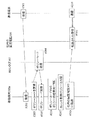
次いで、図6に示すように、電源をオフしている移動端末3aが電車2から下車した場合について、図7を用いて詳述する。図6は、本発明の第1実施形態に係る制御ポリシー特定システムの概略図であって、移動端末3aが電車2の車外に移動した場合を示している。図7は、図6に示す制御ポリシー特定システム1の動作フローチャートである。 Next, as shown in FIG. 6, the case where the
移動端末3aのユーザが電車2から下車し、RFIDタグ5bが設置されている領域へ移動したとする。移動端末3aの電源はオフであるため通信はできない状態にある。従って、電源がオフの状態時は、ポリシーコードの受信だけ常にできるようにするため、移動端末3aは送信要求及び受信を行うRFIDタグリーダの機能のみを別の電源を用いてオンさせるとする。また、RFIDタグ5bが設置されている領域は通話可能であって、RFIDタグ5bは制御ポリシー“電源をオンする”を示すポリシーID“02h”を含むポリシーコードを有しているとする。 It is assumed that the user of the
移動端末3aの送信部32は所定の時間が経過する度に(#11)、ポリシーコードの送信要求を送信する(#12)。移動端末3aからポリシーコードの送信要求を受信したRFIDタグ5bは、“電源をオンする”の制御ポリシーを識別するポリシーID“02h”を含んだポリシーコードを、移動端末3aへ送信する(#13)。移動端末3aの受信部31はこれを受信する(#14)。 The
移動端末の判断部34は、受信部31が受信したポリシーコード内に、記憶部33が記憶しているポリシー情報内のポリシーIDと一致するポリシーIDがあるか否かを検索する(#15)。受信したポリシーコードはポリシーID“02h”を有しており、記憶部33のポリシー情報内のポリシーID“02h”と一致する。従って、移動端末3aの判断部34は、記憶部33のポリシー情報の中からポリシーID“02h”が示す制御ポリシー“電源をONする”を抽出し、比較部36に送信する。 The
移動端末3aの比較部35は、記憶部33が記憶しているカレントポリシーIDと、抽出したポリシーID“02h”とを比較する(#16)。ここで、移動端末3aは電源をオフした状態であるため、カレントポリシーIDは“01h”である。従って、比較部35は、抽出されたポリシーID“02h”とカレントポリシーID“01h”とは異なると判断する。比較部35は、比較結果を記憶部33及び制御部36に送信する。記憶部33は、比較結果に基づいて、カレントポリシーIDを示すフラグの位置をカレントポリシーID“01h”から“02h”に変更する。 The
移動端末3aの制御部36は、ポリシーID“02h”に対応する制御ポリシー“電源をONする”に基づいて、自端末の電源をオンさせる(#17)。従って、移動端末3aと通信端末との間のコネクションは確立される。これにより、移動端末3aと通信端末とは通話を行うことができる(#18、19)。 The
尚、上述では、RFIDタグ5a,bはそれぞれ“電源をOFFする”“電源をONする”の制御ポリシーを識別するポリシーIDを記憶しているとしたが、これに限定されない。例えば、RFIDタグ5a,bはそれぞれ“マナーモードにする”“サイレントモードにする”の制御ポリシーを識別するポリシーIDを記憶していてもよい。この場合、移動端末3aの記憶部33は制御ポリシー“マナーモードにする”“サイレントモードにする”に対応するポリシーIDを記憶しているとする。これにより、移動端末3aはマナーモードやサイレントモードにすることで、電車2内において着信音を出さずに済む。 In the above description, the
(5)効果
この移動端末3a,bは、特定の領域内において決められた制御ポリシーに従って自端末を制御する。従って、この移動端末3a,bのユーザは、決められた社会秩序に反することなく、特定の領域内において決められた制御ポリシーに従うことができる。また、移動端末3a,bは、自端末に所定のイベントが生じた任意のタイミングで、ポリシーIDを含むポリシーコードの送信要求をRFIDタグ5a,bに送信する。自端末に所定のイベントが生じるタイミングは移動端末毎に異なる。そのため、移動端末3a,bが一斉にRFIDタグ5a,bのポリシーIDを含むポリシーコードを受信する確率が減少する。即ち、移動端末3a,bがRFIDタグ5a,bにポリシーコードの送信要求を送信するタイミングはずれる。従って、ポリシーコードの送信要求同士の衝突を回避することができる。(5) Effects The
尚、本実施形態の移動端末3aがRFIDタグのない領域に位置している場合は、例えば以下の動作を行う。RFIDタグが設置されていない領域では、移動端末3aの送信部32がポリシーIDを含むポリシーコードの送信要求を送信しても、受信部31はポリシーコードを取得することができない。そこで、移動端末3aの受信部31は、ポリシーコードの送信要求を送信してから所定の期間待機する。受信部31が所定の期間にポリシーコードを受信しない場合は、RFIDタグが自端末付近にいないと判断する。そして移動端末3aの記憶部33はカレント制御ポリシー及びカレントポリシーIDを示すフラグを消去し、制御部36はユーザからの指示を受け付ける状態に制御する。これにより、移動端末3aはユーザからの指示に基づいて、例えば電源をオンする等の制御を行う。 In addition, when the
<第2実施形態>
(1)システムの構成
図8は、本発明の第2実施形態に係る制御ポリシー特定システムの構成図である。第2実施形態は、コンサート会場102内のカメラ機能付き移動端末103a〜dに、撮影禁止を強制するシステムを例にとる。図8の制御ポリシー特定システム101は、コンサート会場102内のポスター104a〜cとRFIDタグ105a〜cとを含む。ポスター104a〜cは、コンサート会場102内の移動端末103a〜dに、コンサート会場102内のマナーを強制するための制御ポリシーを掲示したものであって、RFIDタグ105a〜cが貼付されている。ポスター104a〜cには、コンサート会場102内におけるマナー“撮影禁止”が掲載されている。RFIDタグ105a〜cは、コンサート会場102内の制御ポリシー“カメラ機能をオフする”を特定するためのポリシーID“05h”等を含むポリシーコードを記憶している。RFIDタグ105a〜cは、移動端末103a〜dそれぞれにポリシーコードを送信する。尚、本実施形態に係るRFIDタグ105a〜cは、内部に電源を備えており、自発的にポリシーコードを送信するアクティブタグである場合を例にとる。ここで、RFIDタグ105a〜cが記憶しているポリシーコードの情報の種類については、第1実施形態の図2と同様であるため省略する。Second Embodiment
(1) System Configuration FIG. 8 is a configuration diagram of a control policy specifying system according to the second embodiment of the present invention. The second embodiment takes an example of a system for forcibly prohibiting the
移動端末103a〜dは、RFIDタグ105a〜cからポリシーコードを受信すると、これに基づいてコンサート会場102内の制御ポリシーを特定し、特定した制御ポリシーに基づいて自端末の制御を行う。 When the
尚、本実施形態では、RFIDタグ105a〜cはポスター104a〜cに貼付されているとしたが、これに限定されない。RFIDタグ105a〜cは、コンサート会場102内の制御ポリシーに対応するポリシーIDを、コンサート会場102内の移動端末103a〜dに対し送信できる場所であれば、どこに設置されてもよい。 In the present embodiment, the
(2)機能
次に、本発明の第2実施形態に係る移動端末103a〜dの機能について説明する。ここで、移動端末103a〜dは同じ機能構成を持つため、以下より移動端末103aについて説明する。図9は、本発明の第2実施形態に係る移動端末103aの機能構成図である。本実施形態に係る移動端末103aは、第1実施形態に係る移動端末3aの機能において、送信部を含まない機能構成を有する。即ち、本発明の第2実施形態に係る移動端末103a〜dは、受信部131、記憶部133、判断部134、比較部135、制御部136及び通信部137を含む。(2) Function Next, functions of the
受信部131は、RFIDタグ105a〜cからポリシーコードを含むデータを受信する。 The receiving unit 131 receives data including a policy code from the
記憶部133は、ポリシー情報を記憶している。ポリシー情報は、移動端末を制御させる制御ポリシーと、該制御ポリシーを識別するポリシーIDとを1レコードとして記憶している。図10は、記憶部133が記憶しているポリシー情報の概念図である。図10の記憶部133は、第1実施形態の記憶部33が記憶しているポリシー情報に加え、ポリシーID“05h”と制御ポリシー“カメラ機能をOFFにする”とを対応づけて更に記憶している。また、記憶部133は、カレント制御ポリシーを判別可能に記憶している。例えば、図10に示すように、記憶部133は、カレント制御ポリシーを識別するためのフラグを更に記憶している。フラグは、ポリシー情報のうち、どれがカレント制御ポリシーのレコードかを示す。フラグの位置は、カレント制御ポリシーの変更に伴い変化する。 The
判断部134は、記憶部133が記憶しているポリシー識別子の何れかが、RFIDタグ105a,bから受信したデータに含まれているか否かを判断する。また、判断部134は、受信部131がデータを受信する度に、記憶部133が記憶しているポリシーIDのいずれかが新たに受信したデータに含まれているか否かを判断する。そして、判断部134は、判断結果を比較部135及び制御部136へ送信する。 The
判断部134が、記憶しているポリシー識別子のいずれかが新たに受信したデータに含まれていると判断すると、比較部135は、新たに受信したポリシーIDと記憶部133が記憶しているカレントポリシーIDとを比較し、一致するか否かを判断する。そして、比較部135は、比較結果を制御部136及び記憶部133へ送信する。例えば、比較結果が不一致である場合は、記憶部133はカレントポリシーIDを示すフラグの位置を変更する。 If the
制御部136は、受信部131が受信したポリシーIDに基づいて自端末の制御を行う。また、カレントポリシーIDが示す制御ポリシーが変更される度に、制御部136は更新後のカレント制御ポリシーに基づいて自端末を制御する。 The
通信部137は、他の通信端末との通信を行う。 The
(3)一連の動作フロー
次に、本発明の第2実施形態に係る移動端末を用いた制御ポリシー特定システムの一連の動作について説明する。図11は、第2実施形態に係る移動端末103a、bを用いた制御ポリシー特定システムの動作フローチャートである。以下より、説明を容易にするために、移動端末103a〜dのうち移動端末103a,bと、RFIDタグ105a〜cのうちRFIDタグ105a,bとの動作について説明する。始めに、ユーザの移動端末103a、bは電源がオンした状態であるとする。(3) A series of operation | movement flow Next, a series of operation | movement of the control policy specific system using the mobile terminal which concerns on 2nd Embodiment of this invention is demonstrated. FIG. 11 is an operation flowchart of the control policy specifying system using the
先ず、移動端末103aのユーザが、RFIDタグ105a,bが貼付されたポスター104a,bが館内に掲示されているコンサート会場102に入場したとする。尚、コンサート会場102内では、アクティブタグであるRFIDタグ105a,bが、制御ポリシー“カメラ機能をOFFにする”を識別するポリシーID“05h”を含むポリシーコードを常時送信しているとする(#101,102)。 First, it is assumed that the user of the
移動端末103aの受信部131は、RFIDタグ105aが常に送信しているポリシーコードを受信する(#103)。 The receiving unit 131 of the
移動端末103aの判断部134は、受信部131が受信したポリシーコード内に、記憶部133が記憶しているポリシー情報内のポリシーIDと一致するポリシーIDがあるか否かを判断する(#104)。受信したポリシーコード内のポリシーID“05h”は、記憶部133のポリシー情報内のポリシーID“05h”と一致する。従って、移動端末103aの判断部134は、記憶部133のポリシー情報の中からポリシーID“05h”が示す制御ポリシー“カメラ機能をOFFにする”を抽出し、制御部136に送信する。 The
移動端末103aの制御部136は、記憶部133内から抽出した制御ポリシー“カメラ機能をOFFにする”に基づいて、カメラ機能をオフさせる(#105)。“カメラ機能をオフさせる”とは、例えばユーザがカメラ機能のアプリケーションを起動させるためのボタンを押下しても、移動端末103aの制御部136はカメラ機能のアプリケーションを起動させないように制御する。また、既にカメラ機能が起動している移動端末103aでは、制御部136はカメラ機能のアプリケーションを閉じてもよい。または、制御部136は、既にカメラ機能が起動している移動端末103aでは、ユーザによりカメラのシャッターが押下されても撮影できないように制御してもよい。 The
次いで、移動端末103aの受信部131は、RFIDタグ105bが常に送信しているポリシーコードを受信したとする(#106)。 Next, it is assumed that the receiving unit 131 of the
移動端末103aの判断部134は、受信部131が受信したポリシーコード内に、記憶部133が記憶しているポリシー情報内のポリシーIDと一致するポリシーIDがあるか否かを判断する(#107)。受信したポリシーコード内のポリシーID“05h”は、記憶部133のポリシー情報内のポリシーID“05h”と一致する。従って、移動端末103aの判断部134は、記憶部133のポリシー情報の中からポリシーID“05h”と、これに該当する制御ポリシー“カメラ機能をOFFにする”とを抽出し、比較部136に送信する。 The
移動端末103aの比較部135は、記憶部133が記憶しているカレントポリシーIDと、抽出したポリシーID“05h”とを比較する(#108)。このとき、移動端末103aはカメラ機能をオフした状態であるため、カレントポリシーIDは“05h”である。従って、比較部135は、抽出されたポリシーID“05h”とカレントポリシーID“05h”とは同一であると判断する。比較部135は、同一である旨の比較結果を制御部136に送信する。制御部136は、比較結果を受信すると、移動端末103aの状態を維持する。 The
次に、移動端末103bのユーザが、RFIDタグ105a,bが貼付されたポスター104a,bが館内に掲示されているコンサート会場102に入場したとする。 Next, it is assumed that the user of the
移動端末103bの受信部131は、RFIDタグ105aが常に送信しているポリシーコードを受信する(#109)。 The receiving unit 131 of the
移動端末103bの判断部134は、受信部131が受信したポリシーコード内に、記憶部133が記憶しているポリシー情報内のポリシーIDと一致するポリシーIDがあるか否かを判断する(#110)。受信したポリシーコード内のポリシーID“05h”は、記憶部133のポリシー情報内のポリシーID“05h”と一致する。従って、移動端末103bの判断部134は、記憶部133のポリシー情報の中からポリシーID“05h”が示す制御ポリシー“カメラ機能をOFFにする”を抽出し、制御部136に送信する。 The
移動端末103bの制御部136は、記憶部133内から抽出した制御ポリシー“カメラ機能をOFFにする”に基づいて、カメラ機能をオフさせる(#111)。“カメラ機能をオフさせる”とは、例えばユーザがカメラ機能のアプリケーションを起動させるためのボタンを押下しても、移動端末103bの制御部136はカメラ機能のアプリケーションを起動させないように制御する。また、既にカメラ機能が起動している移動端末103bでは、制御部136はカメラ機能のアプリケーションを閉じてもよい。または、制御部136は、既にカメラ機能が起動している移動端末103bでは、ユーザによりカメラのシャッターが押下されても撮影できないように制御してもよい。 The
次いで、移動端末103bの受信部131は、RFIDタグ105aが常に送信しているポリシーコードを受信したとする(#112)。 Next, it is assumed that the receiving unit 131 of the
移動端末103bの判断部134は、受信部131が受信したポリシーコード内に、記憶部133が記憶しているポリシー情報内のポリシーIDと一致するポリシーIDがあるか否かを判断する(#113)。受信したポリシーコード内のポリシーID“05h”は、記憶部133のポリシー情報内のポリシーID“05h”と一致する。従って、移動端末103bの判断部134は、記憶部133のポリシー情報の中からポリシーID“05h”と、これに該当する制御ポリシー“カメラ機能をOFFにする”とを抽出し、比較部136に送信する。 The
移動端末103bの比較部135は、記憶部133が記憶しているカレントポリシーIDと、抽出したポリシーID“05h”とを比較する(#114)。このとき、移動端末103bはカメラ機能をオフした状態であるため、カレントポリシーIDは“05h”である。従って、比較部135は、抽出されたポリシーID子“05h”とカレントポリシーID“05h”とは同一であると判断する。比較部135は、同一である旨の比較結果を制御部136に送信する。制御部136は、比較結果を受信すると、移動端末103bの状態を維持する。 The
(4)効果
本実施形態に係る制御ポリシー特定システムは、RFIDタグ105a〜cがアクティブタグである場合でも適用できる。そして、本実施形態に係る制御ポリシー特定システムは、複数のRFIDタグ105a〜c及び複数の移動端末103a〜dに対して適用できる。本実施形態に係る移動端末103a〜dは、特定の領域内における決められた制御ポリシーに従って自端末を制御する。従って、移動端末103a〜dのユーザは、決められた社会秩序に反することなく、特定の領域内において決められた制御ポリシーに従うことができる。(4) Effect The control policy specifying system according to the present embodiment can be applied even when the
<第3実施形態>
(1)システムの構成
図12は、第3実施形態に係る制御ポリシー特定システムの構成図である。第3実施形態では、複数のRFIDタグ202a〜dは、受信可能エリアを考慮して図12に示すように配置されている。移動端末201は、複数のRFIDタグ202a〜dの受信可能エリアが重複するポイントに位置している。ここで、受信可能エリアとは、RFIDタグ202a〜dが送信したデータを移動端末201が受信可能な領域のことを言う。従って、移動端末201はRFIDタグ202a〜d全てからデータを受信することができる。また、説明を簡単にするため、複数のRFIDタグ202a〜dの受信可能エリアが重複するポイントに位置する移動端末は1つの場合を例にとる。<Third Embodiment>
(1) System Configuration FIG. 12 is a configuration diagram of a control policy specifying system according to the third embodiment. In the third embodiment, the plurality of
尚、本実施形態では、第1実施形態と同様に、RFIDタグ202a〜dが受信した搬送波を電力に変換してIDを送信するパッシブタグである場合を想定している。 In this embodiment, as in the first embodiment, it is assumed that the
(2)移動端末
次に、本発明の第3実施形態に係る移動端末201の機能について説明する。第3実施形態に係る移動端末201の機能構成は、第1実施形態に係る移動端末3aと同様である。即ち、移動端末201は、受信部、送信部、記憶部、判断部、比較部、制御部及び通信部を含む。(2) Mobile terminal Next, functions of the
受信部は、RFIDタグ202a〜dからポリシーコードを含むデータを受信する。 The receiving unit receives data including a policy code from the
送信部は、自端末に所定のイベントが生じた任意のタイミングで、ポリシーIDを含むポリシーコードの送信要求をRFIDタグ202a〜dに送信する。そして、送信部は、RFIDタグ202a〜dに電力を供給する搬送波を送信する。尚、本実施形態では、送信部はポリシーコードの送信要求を送信し、搬送波を任意の期間送信し続ける。 The transmission unit transmits a transmission request for a policy code including a policy ID to the
記憶部は、ポリシー情報を記憶している。ポリシー情報は、移動端末を制御させる制御ポリシーと、該制御ポリシーを識別するポリシーIDとを1レコードとして記憶している。また、記憶部は、カレント制御ポリシーを判別可能に記憶している。フラグは、ポリシー情報のうち、どれがカレント制御ポリシーのレコードかを示す。本実施形態は、カレント制御ポリシーの判別方法として、例えばフラグを用いている。フラグの位置は、カレント制御ポリシーの変更に伴い変化する。 The storage unit stores policy information. The policy information stores a control policy for controlling the mobile terminal and a policy ID for identifying the control policy as one record. In addition, the storage unit stores the current control policy so that it can be discriminated. The flag indicates which of the policy information is a record of the current control policy. In the present embodiment, for example, a flag is used as a method for determining the current control policy. The position of the flag changes as the current control policy is changed.
判断部は、記憶部が記憶しているポリシー識別子の何れかが、RFIDタグ202a〜dから受信したデータに含まれているか否かを判断する。また、判断部は、受信部がデータを受信する度に、記憶部が記憶しているポリシーIDのいずれかが新たに受信したデータに含まれているか否かを判断する。そして、判断部は、判断結果を比較部及び制御部へ送信する。 The determination unit determines whether any of the policy identifiers stored in the storage unit is included in the data received from the
判断部が、記憶しているポリシー識別子のいずれかが新たに受信したデータに含まれていると判断すると、比較部は、新たに受信したポリシーIDと記憶部が記憶しているカレントポリシーIDとを比較し、一致するか否かを判断する。そして、比較部は、比較結果を制御部及び記憶部へ送信する。例えば、比較結果が不一致である場合は、記憶部はカレントポリシーIDを示すフラグの位置を変更する。 When the determination unit determines that any of the stored policy identifiers is included in the newly received data, the comparison unit determines the newly received policy ID and the current policy ID stored in the storage unit. Are compared to determine whether they match. Then, the comparison unit transmits the comparison result to the control unit and the storage unit. For example, if the comparison results do not match, the storage unit changes the position of the flag indicating the current policy ID.
制御部は、受信部が受信したポリシーIDに基づいて自端末の制御を行う。また、カレントポリシーIDが示す制御ポリシーが変更される度に、制御部は更新後のカレント制御ポリシーに基づいて自端末を制御する。 The control unit controls its own terminal based on the policy ID received by the receiving unit. Each time the control policy indicated by the current policy ID is changed, the control unit controls the terminal itself based on the updated current control policy.
通信部は、他の通信端末との通信を行う。 The communication unit performs communication with other communication terminals.
(3)RFIDタグ
各RFIDタグ202a〜dはポリシーコードを記憶している。各ポリシーコード内の情報の種類は、第1実施形態の図2と同様である。即ち、各ポリシーコードは、ポリシーIDと、該当機器コードと、シーケンスナンバーとを含む。ポリシーIDは、RFIDタグ202a〜dが位置している領域内の制御ポリシーを識別する。該当機器コードは、制御ポリシーを強制する対象の機器を示す。シーケンスナンバーは、各RFIDタグ202a〜dを識別するための固有情報である。以下より、RFIDタグ202a〜dのシーケンスナンバーを、それぞれ“00”、“01”、“10”、“11”とする。(3) RFID tag Each
各RFIDタグ202a〜dは、各々のシーケンスナンバーに基づいて、ポリシーコードを送信するスロットを生成する生成部を含む。そして各RFIDタグ202a〜dは、生成部が生成したスロットを用いて、ポリシーコードを順次に時分割に送信する送信部を含む。即ち、各RFIDタグ202a〜dは、ポリシーコードの送信要求を受信してからポリシーコードを送信するまでの待機時間を、シーケンスナンバーに基づいて設定する。例えば、RFIDタグ202aでは、シーケンスナンバー“00”に基づいて、ポリシーコードの送信要求を受信してからポリシーコードを送信するまでの待機時間を“0”スロットと設定する。RFIDタグ202bでは、シーケンスナンバー“01”に基づいて、ポリシーコードの送信要求を受信してからポリシーコードを送信するまでの待機時間を“1”スロットと設定する。RFIDタグ202cでは、シーケンスナンバー“10”に基づいて、ポリシーコードの送信要求を受信してからポリシーコードを送信するまでの待機時間を“2”スロットと設定する。RFIDタグ202dでは、シーケンスナンバー“11”に基づいて、ポリシーコードの送信要求を受信してからポリシーコードを送信するまでの待機時間を“3”スロットと設定する。言い換えると、各RFIDタグ202a〜dは、他のRFIDタグがポリシーコードを送信している期間と重畳しないように送信期間を設定する。 Each
(3)動作フロー
次に、上述した移動端末201は複数のRFIDタグ202a〜dからポリシーコードを受信する動作について説明する。図13は、第3実施形態に係る移動端末201と複数のRFIDタグ202a〜dとの送受信の動作を示すタイミングチャートである。(3) Operation Flow Next, an operation in which the
先ず、移動端末201はポリシーコードの送信要求を送信し、搬送波を送信し続ける。RFIDタグ202aは、移動端末201からポリシーコードの送信要求を受信すると、待機せずにポリシーコードを送信する。RFIDタグ202bは、移動端末201からポリシーコードの送信要求を受信すると、1スロット待機してからポリシーコードを送信する。RFIDタグ202cは、移動端末201からポリシーコードの送信要求を受信すると、2スロット待機してからポリシーコードを送信する。RFIDタグ202dは、移動端末201からポリシーコードの送信要求を受信すると、3スロット待機してからポリシーコードを送信する。移動端末201は、RFIDタグ202a〜dの各ポリシーコードを順次に受信する。 First, the
次いで、移動端末201は、受信した各ポリシーコード内からポリシーIDを検索及び比較し、各ポリシーIDに対応する制御ポリシーに従い自端末を制御する。 Next, the
(4)効果
上述した方法によると、RFIDタグ202a〜dは順次にポリシーコードを送信し、移動端末201はこれを受信する。これにより、RFIDタグ202a〜dが送信するポリシーコード同士の衝突を回避することができる。(4) Effect According to the method described above, the
また、本実施形態では移動端末が1つの場合について述べたが、RFIDタグ202a〜dの受信機能エリア内には複数の移動端末が位置していてもよい。 Moreover, although this embodiment described the case where there was one mobile terminal, a plurality of mobile terminals may be located in the reception function area of the
本実施形態では、RFIDタグ202a〜dはパッシブタグを想定しているが、アクティブタグでも適用できる。この場合、移動端末202は、送信要求及び搬送波を送信する送信部がなくてもよい。尚、アクティブタグであるRFIDタグ202a〜dは、各々のRFIDタグ202a〜dと通信を行うための通信インターフェースを介して接続されている。RFIDタグ202a〜dは、通信インターフェースを介してポリシーコードを送信するタイミングを互いに決定し、決定されたタイミングに基づいてポリシーコードを送信するためのスロットを生成する。即ち、RFIDタグ202a〜dは、常に各ポリシーコードを生成したスロットで時分割送信している。 In the present embodiment, the
また、本実施形態に係るRFIDタグ202a〜dは、セミパッシブタグでも適用できる。セミパッシブタグは電源を内蔵している。セミパッシブタグであるRFIDタグ202a〜dは、移動端末202からの送信要求を受信すると、内蔵している電源を用いてポリシーコードを時分割に送信する。 The
また、RFIDタグ202a〜dが制御ポリシーの統一された領域内に位置しており、同一のポリシーIDを含むポリシーコードを記憶している場合は、以下のようなシステムを用いても良い。まず移動端末201は、ポリシーコードの送信要求を送信する。移動端末201からポリシーコード送信要求を受信したRFIDタグ202a〜dは、ポリシーコードを時分割に送信する。移動端末201は、受信部がRFIDタグ202a〜dのうち少なくとも1つのRFIDタグからポリシーコードを受信すると、判断部は送信部によるポリシーコードの送信要求を停止する。言い換えると、移動端末201は、最初に送られてきたポリシーコードを受信すると、それ以降に送られてきたポリシーコードを受信しない。尚、送信要求は搬送波であってもよい。これにより、移動端末201は複数のRFIDタグ202a〜dから同一のポリシーIDを含むポリシーコードを複数回受信しなくて済む。即ち、移動端末201は、同じポリシーコードを検索及び受信する必要がない。従って、移動端末201の消費電力を抑えることができる。 Further, when the
尚、上述したシステムは、同じ領域内に複数の移動端末が位置している場合にも好適である。この場合、各移動端末がポリシーコードを受信する時間は“1スロット分”である。各移動端末がポリシーコードを受信する時間は、RFIDタグ202a〜dからのポリシーコード全てを受信する時間に比べて短い。すると、複数の移動端末におけるポリシーコードの送信要求同士が衝突する確率が低くなる。従って、送信要求同士の衝突を回避することができる。 Note that the above-described system is also suitable when a plurality of mobile terminals are located in the same area. In this case, the time for each mobile terminal to receive the policy code is “one slot”. The time for each mobile terminal to receive the policy code is shorter than the time to receive all the policy codes from the
<第4実施形態>
(1)システムの構成
図14は、第4実施形態に係る制御ポリシー特定システムの構成図である。第4実施形態は、例えば会社用の移動端末303及び社内の固定電話305に、本発明の制御ポリシー特定システム301を用いた例である。会社の社内302には、移動端末303、社内PBX(Private Branch eXchange)304、固定電話305、基地局306及びRFIDタグ307が備えられている。社内PBX304は、社内の内線電話接続や公衆回線への接続を行う企業内の電話交換機である。社内PBX304には、固定電話305及び移動端末303と通信を行う基地局306が接続されている。また、会社の社内302にはパッシブタグであるRFIDタグ307が設置されている。RFIDタグ307は、会社の社内302の制御ポリシーを識別するためのポリシーIDを備えたポリシーコードを記憶している。ここで、RFIDタグ307が記憶しているポリシーコードは、制御ポリシー“移動端末の着信を固定電話305へ自動転送する”と、ポリシーID“06h”とを対応づけて記憶しているとする。また、第1実施形態と同様、本実施形態では、RFIDタグ307は受信した搬送波を電力に変換しIDを送信するパッシブタグである場合を想定している。<Fourth embodiment>
(1) System Configuration FIG. 14 is a configuration diagram of a control policy specifying system according to the fourth embodiment. The fourth embodiment is an example in which the control
移動端末303は、RFIDタグ307からポリシーコードを受信すると、これに基づいて会社の社内302の制御ポリシーを特定し、特定した制御ポリシーに基づいて自端末の制御を行う。 When the mobile terminal 303 receives the policy code from the
(2)移動端末
次に、本発明の第4実施形態に係る移動端末303の機能について説明する。移動端末303の機能構成は、第1実施形態に係る移動端末3aと同様である。即ち、移動端末303aは、受信部、送信部、記憶部、判断部、比較部、制御部及び通信部を含む。(2) Mobile terminal Next, functions of the mobile terminal 303 according to the fourth embodiment of the present invention will be described. The functional configuration of the mobile terminal 303 is the same as that of the
受信部は、RFIDタグ307からポリシーコードを含むデータを受信する。 The receiving unit receives data including a policy code from the
送信部は、自端末に着信が生じたタイミングで、ポリシーIDを含むポリシーコードの送信要求をRFIDタグ307に送信する。そして、送信部は、RFIDタグ307に電力を供給する搬送波を送信する。 The transmission unit transmits a transmission request for a policy code including a policy ID to the
記憶部は、ポリシー情報を記憶している。ポリシー情報は移動端末を制御させる制御ポリシーと、該制御ポリシーを識別するポリシーIDとを1レコードとして記憶している。図15は、本実施形態に係るポリシー情報の概念図である。図15のポリシー情報は、第2実施形態の記憶部33が記憶している対応情報に加え、更にポリシーID“06h”と制御ポリシー“着信を固定電話に自動転送する”とを対応づけて記憶している。また、記憶部は、カレント制御ポリシーを判別可能に記憶している。本実施形態は、カレント制御ポリシーの判別方法として、例えばフラグを用いている。フラグは、ポリシー情報のうち、どれがカレント制御ポリシーのレコードかを示す。フラグの位置は、カレント制御ポリシーの変更に伴い変化する。 The storage unit stores policy information. The policy information stores a control policy for controlling the mobile terminal and a policy ID for identifying the control policy as one record. FIG. 15 is a conceptual diagram of policy information according to the present embodiment. In addition to the correspondence information stored in the
判断部は、記憶部が記憶しているポリシー識別子の何れかが、RFIDタグ307から受信したデータに含まれているか否かを判断する。また、判断部は、受信部がデータを受信する度に、記憶部が記憶しているポリシーIDのいずれかが新たに受信したデータに含まれているか否かを判断する。そして、判断部は、判断結果を比較部及び制御部へ送信する。 The determination unit determines whether any of the policy identifiers stored in the storage unit is included in the data received from the
判断部が、記憶しているポリシー識別子のいずれかが新たに受信したデータに含まれていると判断すると、比較部は、新たに受信したポリシーIDと記憶部が記憶しているカレントポリシーIDとを比較し、一致するか否かを判断する。そして、比較部は、比較結果を制御部及び記憶部へ送信する。例えば、比較結果が不一致である場合は、記憶部はカレントポリシーIDを示すフラグの位置を変更する。 When the determination unit determines that any of the stored policy identifiers is included in the newly received data, the comparison unit determines the newly received policy ID and the current policy ID stored in the storage unit. Are compared to determine whether they match. Then, the comparison unit transmits the comparison result to the control unit and the storage unit. For example, if the comparison results do not match, the storage unit changes the position of the flag indicating the current policy ID.
制御部は、受信部が受信したポリシーIDに基づいて自端末の制御を行う。また、カレントポリシーIDが示す制御ポリシーが変更される度に、制御部は更新後のカレント制御ポリシーに基づいて自端末を制御する。 The control unit controls its own terminal based on the policy ID received by the receiving unit. Each time the control policy indicated by the current policy ID is changed, the control unit controls the terminal itself based on the updated current control policy.
通信部は、他の通信端末との通信を行う。 The communication unit performs communication with other communication terminals.
(3)一連の動作フロー
次に、第4実施形態に係る制御ポリシー特定システム301の一連の動作について説明する。図16は、第4実施形態に係る制御ポリシー特定システム301の動作フローチャートである。はじめに、移動端末303aのカレントポリシーID及びカレント制御ポリシーは、それぞれ“04h”“着信可能にする”であるとする。即ち、現在の移動端末303は“着信可能”な状態であるとする。(3) Series of Operation Flow Next, a series of operations of the control
先ず、移動端末303のユーザは、会社の社内302かつRFIDタグ307の領域内にいるとする。 First, it is assumed that the user of the mobile terminal 303 is in the
RFIDタグ307の領域外に位置する通信端末が移動端末303に向けて発呼すると(#201)、移動端末303の通信部は着信を検出する(#202)。すると、移動端末303の送信部は着信をユーザに知らせる処理を中断させて、会社の社内302のRFIDタグ307へポリシーコードの送信要求を送信する(#203)。移動端末303からポリシーコードの送信要求を受信したRFIDタグ307は、ポリシーコードを送信する(#204)。移動端末303の受信部はこれを受信する(#205)。 When a communication terminal located outside the area of the
移動端末303の判断部は、受信部が受信したポリシーコード内に、記憶部が記憶しているポリシー情報内のポリシーIDと一致するポリシーIDがあるか否かを判断する(#206)。受信したポリシーコードはポリシーID“06h”を有しており、記憶部のポリシー情報内のポリシーID“06h”と一致する。従って、移動端末303の判断部は、記憶部のポリシー情報の中からポリシーID“06h”が示す制御ポリシー“着信を固定電話に自動転送する”を抽出し、比較部に送信する。 The determination unit of the mobile terminal 303 determines whether there is a policy ID that matches the policy ID in the policy information stored in the storage unit in the policy code received by the reception unit (# 206). The received policy code has the policy ID “06h” and matches the policy ID “06h” in the policy information of the storage unit. Accordingly, the determination unit of the mobile terminal 303 extracts the control policy “automatically forwards the incoming call to the fixed telephone” indicated by the policy ID “06h” from the policy information in the storage unit, and transmits it to the comparison unit.
移動端末303の比較部は、記憶部が記憶しているカレントポリシーIDと、抽出したポリシーID“06h”とを比較する(#207)。ここで、移動端末303のカレントポリシーIDは“04h”であるため、比較部は、抽出されたポリシーID“06h”とカレントポリシーID“04h”とは異なると判断する。比較部は、比較結果を記憶部及び制御部に送信する。記憶部は、比較結果に基づいて、カレントポリシーIDを示すフラグの位置をカレントポリシーID“04h”から“06h”に変更する。 The comparison unit of the mobile terminal 303 compares the current policy ID stored in the storage unit with the extracted policy ID “06h” (# 207). Here, since the current policy ID of the mobile terminal 303 is “04h”, the comparison unit determines that the extracted policy ID “06h” is different from the current policy ID “04h”. The comparison unit transmits the comparison result to the storage unit and the control unit. The storage unit changes the position of the flag indicating the current policy ID from the current policy ID “04h” to “06h” based on the comparison result.
移動端末303の制御部は、ポリシーID“06h”に対応する制御ポリシー“着信を固定電話に自動転送する”に基づいて、通信端末からの着信を社内の固定電話305に自動転送する(#208)。すると、社内の固定電話305と通信端末との間のコネクションが確立される。これにより、社内の固定電話305と通信端末とは通話を行うことができる(#209、210)。 The control unit of the mobile terminal 303 automatically transfers the incoming call from the communication terminal to the in-house fixed
(4)効果
本発明に係るRFIDタグの制御ポリシー特定システムは、会社の社内302の固定電話への自動転送システムに適用できる。一般的に、固定電話や移動端末等の通信端末と移動端末303との通話料金は、通信端末と固定電話間の通話料金よりも高い。本実施形態のように、本発明の制御ポリシー特定システムを固定電話への自動転送システムとして利用すると、移動端末303への着信は固定電話305へ転送される。そのため、通信端末と固定電話305との間で通話が行われる。従って、通信端末の通話料金は移動端末303との通話の場合よりも安くなる。通信端末の所有者が移動端末303の所有者、即ち会社である場合は、会社の諸経費を削減することができる。(4) Effect The RFID tag control policy specifying system according to the present invention can be applied to an automatic transfer system to a fixed telephone in an in-
尚、本実施形態ではRFIDタグ307がパッシブタグである場合について述べたが、アクティブタグであっても適用できる。この場合、移動端末303はRFIDタグ307から常に送信されているIDを受信し検索及び比較を行い、ポリシーIDに対応する制御ポリシーに基づいて自端末を制御する。 In the present embodiment, the case where the
<その他の実施形態>
(1)第1例
1つの領域内に、パッシブタグであるRFIDタグ501と、複数の移動端末502a,bとがある場合を考える。この場合は、移動端末502a,bは、LBT(Listen Before Talk)法を用いてRFIDタグ501からポリシーコードを受信してもよい。LBT法とは、各移動端末502a,bが、着信等の所定のイベントが生じた任意のタイミングで他の移動端末がRFIDタグからポリシーコードを受信しているか否かを、電波を用いて調査する方法である。<Other embodiments>
(1) First Example Consider a case where an RFID tag 501 that is a passive tag and a plurality of mobile terminals 502a and 502b are present in one area. In this case, the mobile terminals 502a and 502b may receive a policy code from the RFID tag 501 using an LBT (Listen Before Talk) method. In the LBT method, each mobile terminal 502a, 502b uses radio waves to investigate whether another mobile terminal receives a policy code from an RFID tag at an arbitrary timing when a predetermined event such as an incoming call occurs. It is a method to do.
例えば、他の移動端末502bがRFIDタグ501からポリシーコードを受信していない場合は、移動端末502aはポリシーコードの送信要求をRFIDタグ501へ送信する。他の移動端末502bがRFIDタグ501からポリシーコードを受信している場合は、移動端末502aは他の移動端末502bが受信中のポリシーコードを傍受してもよい。そして、移動端末502aは、傍受したポリシーコード内のポリシーIDを判断・比較する。傍受したポリシーIDがカレントポリシーIDと異なれば、移動端末502aは傍受したポリシーIDが示す制御ポリシーに基づいて自端末を制御する。 For example, when the other mobile terminal 502 b has not received the policy code from the RFID tag 501, the mobile terminal 502 a transmits a policy code transmission request to the RFID tag 501. When another mobile terminal 502b receives the policy code from the RFID tag 501, the mobile terminal 502a may intercept the policy code being received by the other mobile terminal 502b. Then, the mobile terminal 502a determines and compares the policy IDs in the intercepted policy code. If the intercepted policy ID is different from the current policy ID, the mobile terminal 502a controls its own terminal based on the control policy indicated by the intercepted policy ID.
これにより、各移動端末502a,bの送信部がポリシーコードの送信要求を送信するタイミングが同一であっても、各移動端末502a,bはポリシーコードの送信要求をRFIDタグ501へ一斉に送信しない。即ち、各移動端末502a,bがポリシーコードの送信要求をRFIDタグ501へ送信するタイミングは重畳しない。従って、各移動端末502a,bが送信するポリシーコードの送信要求どうしの衝突を回避することができる。 Accordingly, even when the transmission units of the mobile terminals 502a and 502b transmit the policy code transmission request at the same timing, the mobile terminals 502a and 502b do not transmit the policy code transmission request to the RFID tag 501 at the same time. . That is, the timing at which each mobile terminal 502a, b transmits a policy code transmission request to the RFID tag 501 is not superimposed. Accordingly, it is possible to avoid a collision between transmission requests of policy codes transmitted by the mobile terminals 502a and 502b.
(2)第2例
1つの領域内に、パッシブタグであるRFIDタグ601と、複数の各移動端末602a,bとがある場合を考える。この場合、各移動端末602a,bがRFIDタグ601からポリシーコードを受信する際に、先ずポリシーコードの“該当機器コード”のみを検索してもよい。すると、各移動端末602a,bの判断部は、受信したポリシーコード内から該当機器コードを検索し、該当機器コードが自端末の機器コードであるか否かを判断する。受信したポリシーコード内の該当機器コードが自端末の機器コードと一致した場合のみ、受信部は残りのポリシーコードの内容、即ちポリシーIDを受信する。言い換えると、各移動端末602a,bは、RFIDタグ601からのポリシーコードが自端末向けであるものだけを受信する。これにより、各移動端末602a,bは自端末向け以外のポリシーコードを取得することがないため、各移動端末602a,bがRFIDタグ601からポリシーコードを受信する時間は短縮される。従って、複数の移動端末602a,bがRFIDタグ601からポリシーコードを受信する時間が重畳することを回避することができる。(2) Second Example Consider a case where an RFID tag 601 that is a passive tag and a plurality of mobile terminals 602a and 602b are present in one area. In this case, when each mobile terminal 602a, b receives a policy code from the RFID tag 601, only the “corresponding device code” of the policy code may be searched first. Then, the determination unit of each mobile terminal 602a, b searches for the corresponding device code from the received policy code, and determines whether the corresponding device code is the device code of its own terminal. Only when the corresponding device code in the received policy code matches the device code of the own terminal, the receiving unit receives the contents of the remaining policy code, that is, the policy ID. In other words, each mobile terminal 602a, b receives only the one whose policy code from the RFID tag 601 is for its own terminal. Thereby, since each mobile terminal 602a, b does not acquire a policy code other than that for its own terminal, the time for each mobile terminal 602a, b to receive the policy code from the RFID tag 601 is shortened. Therefore, it is possible to avoid the time when the plurality of mobile terminals 602a and 602b receive the policy code from the RFID tag 601 from overlapping.
(3)第3例
移動端末701を所有するユーザが、移動端末701におけるデータ受信部分をシールド等で遮蔽した場合を考える。この場合、移動端末701はRFIDタグ702からポリシーIDを含むポリシーコード等のデータを受信できない。このような場合を想定し、移動端末701のデータ受信部分にはセンサを埋め込むとよい。センサは、データ受信部分と該データ受信部分から一番近いものとの距離を検出する。センサの検出した距離が非常に短い場合は、移動端末701の制御部は、ユーザがデータ受信部分を遮蔽していると判断する。そして、移動端末701は、例えば着信/受信拒否の状態に自端末を制御する。自端末の制御の方法は、ユーザにデータ受信部分の遮蔽解除を促す方法であってもよい。これにより、ユーザが領域内のポリシーに従わない場合を防止することができる。(3) Third Example Consider a case where a user who owns a mobile terminal 701 shields a data reception portion in the mobile terminal 701 with a shield or the like. In this case, the mobile terminal 701 cannot receive data such as a policy code including a policy ID from the RFID tag 702. Assuming such a case, a sensor may be embedded in the data receiving portion of the mobile terminal 701. The sensor detects the distance between the data receiving part and the closest part from the data receiving part. When the distance detected by the sensor is very short, the control unit of the mobile terminal 701 determines that the user is blocking the data receiving portion. Then, the mobile terminal 701 controls its own terminal in a state of incoming / rejected reception, for example. The method of controlling the terminal itself may be a method of prompting the user to release the shielding of the data receiving part. Thereby, the case where a user does not follow the policy in an area | region can be prevented.
本発明は、携帯電話やPDA等の持ち運びが容易でかつ通信ができる移動端末に適用することができる。また、本発明に係る制御ポリシー特定システムは、病院やコンサート会場、映画館、美術館、電車の社内、会社の社内等の特定のポリシーを有する領域において使用するとよい。 The present invention can be applied to mobile terminals such as mobile phones and PDAs that are easy to carry and can communicate. The control policy specifying system according to the present invention may be used in areas having specific policies such as hospitals, concert venues, movie theaters, art museums, trains, and companies.
本発明は、RFIDタグからデータを受信する移動端末、前記移動端末の制御ポリシー特定方法及びプログラムに関する。 The present invention relates to a mobile terminal that receives data from an RFID tag, a control policy specifying method for the mobile terminal, and a program.
携帯電話等の移動端末は、その優れた利便性により我々の生活に浸透している。移動端末を所有するユーザは、例えば映画館、美術館、病院、電車の車内等どのような場所でも通話を行うことができる。一方、病院や美術館、電車の車内のように、他の人々への迷惑行為を防止させるために、移動端末による通話を禁止している場所もある。しかし、これらの場所では、アナウンスにより移動端末の通話禁止を促したり、通話禁止である旨のポスターを掲示しているのみの場合が多い。従って、このような場所において実際に移動端末の通信を行うか否かは、そのユーザの判断に委ねられている。 Mobile terminals such as mobile phones have permeated our lives due to their excellent convenience. A user who owns a mobile terminal can make a call at any location such as a movie theater, a museum, a hospital, or a train. On the other hand, there are places such as hospitals, museums, and trains that prohibit calls by mobile terminals in order to prevent nuisance to other people. However, in these places, it is often the case that an announcement prompts the mobile terminal to prohibit calling or only a poster indicating that calling is prohibited. Therefore, it is left to the user's decision whether to actually communicate with the mobile terminal in such a place.
近年、移動端末の通話を禁止している場所では、通話を強制的に禁止させるように移動端末を制御する方法が用いられている場合がある。図17に、その一例を示す。図17は、移動端末を所有するユーザが通話可能区域及び通話禁止区域間を移動する場合を示している。ここで、図17の“通話禁止領域”は閉鎖空間である。以下より、閉鎖空間が例えば建物の内部であるとする。建物のゲートには、ユーザの出入りを検出するセンサと、センサからの検出信号に基づいてユーザの移動端末へ信号を送信する送信部とが設けられている。ユーザが通話可能領域から通話禁止領域へ移動した場合(A)、センサはユーザの移動方向を検出し、送信部はセンサの検出信号に基づいて移動端末に信号を送信する。移動端末はこの信号に基づいて、自端末を着信不可な状態に制御する。また、ユーザが通話禁止領域から通話可能領域へ移動した場合(B)、センサはユーザの移動方向を検出し、送信部はセンサの検出信号に基づいて移動端末に信号を送信する。移動端末はこの信号に基づいて、自端末を着信可能な状態に制御する。 In recent years, there are cases where a method of controlling a mobile terminal so as to forcibly prohibit a call is used in a place where the call of the mobile terminal is prohibited. An example is shown in FIG. FIG. 17 shows a case where a user who owns a mobile terminal moves between a callable area and a call prohibited area. Here, the “call prohibited area” in FIG. 17 is a closed space. From the following, it is assumed that the enclosed space is, for example, the inside of a building. The gate of the building is provided with a sensor that detects the user's entry and exit, and a transmission unit that transmits a signal to the user's mobile terminal based on a detection signal from the sensor. When the user moves from the callable area to the call prohibited area (A), the sensor detects the direction of movement of the user, and the transmission unit transmits a signal to the mobile terminal based on the detection signal of the sensor. Based on this signal, the mobile terminal controls its own terminal so that it cannot receive a call. When the user moves from the call prohibition area to the call enable area (B), the sensor detects the direction of movement of the user, and the transmission unit transmits a signal to the mobile terminal based on the detection signal of the sensor. Based on this signal, the mobile terminal controls its own terminal so that it can receive a call.
また、特許文献1は、携帯電話の通話を禁止する場所において、強制的に通話を禁止させるように携帯電話を制御するシステムを示している。図18は、特許文献1に係るシステム概念図である。図18のシステムでは、建物の入口等に設置された簡易基地局装置401が、建物内へ移動するユーザの携帯電話402に電源オフ信号を報知する。電源オフ信号を受信した携帯電話402は自端末の電話番号を簡易基地局装置401に通知する。そして、携帯電話402は、簡易基地局装置401から公衆基地局装置403を介して無線ネットワーク404内の位置管理サーバ405に電源オフした旨を通知及び登録する。携帯電話402への着信動作は位置管理サーバ405の登録内容を参照して行われる。
しかしながら、上述した方法には以下の問題点がある。 However, the above method has the following problems.
図17の方法は、ユーザの動作を検出するセンサが設置された出入口を、ユーザは必ず通過しなければならない。即ち、移動端末に対して制御ポリシーを強制させたい該当領域は、必ず壁で仕切られた閉鎖空間であって、この閉鎖空間にはゲートが設けられている必要がある。壁で仕切られていないような領域内では、ユーザがゲートを必ずしも通過するとは限らない。即ち、壁で仕切られていないような領域では、移動端末を強制的に制御ポリシーに従わせることは困難である。また、例えば1つの領域を通話可能領域と通話禁止領域とに分割する場合は、その分割した各領域を閉鎖空間にし、閉鎖空間にはゲートを設けなければならない。そして、その各ゲートにはセンサ及び送信部を設置する必要がある。従って、各区域に設置されるゲート、センサ及び送信部を設置するためのコストがかかってしまう。 In the method of FIG. 17, the user must pass through an entrance / exit provided with a sensor for detecting the user's movement. In other words, the corresponding area in which the control policy is to be enforced on the mobile terminal is always a closed space partitioned by a wall, and the gate needs to be provided in this closed space. In an area that is not partitioned by a wall, the user does not necessarily pass through the gate. That is, it is difficult to force the mobile terminal to follow the control policy in an area that is not partitioned by walls. For example, when one area is divided into a call-capable area and a call-prohibited area, each divided area must be a closed space, and a gate must be provided in the closed space. And it is necessary to install a sensor and a transmission part in each gate. Therefore, the cost for installing the gate, the sensor, and the transmitter installed in each area is increased.
また、特許文献1のシステムでは、簡易基地局装置401、公衆基地局装置403、無線ネットワーク404、位置管理サーバ405等の多数の機器を必要とする。即ち、特許文献1のシステムを用いる場合はコストがかかってしまう。
Further, the system of Patent Document 1 requires a large number of devices such as a simple
本発明は、これらの課題を解決したものであって、ユーザの意志に関わらず、該当領域において決められた制御ポリシーに従うことができる移動端末と移動端末の制御ポリシー特定システムとを提供することを目的とする。 The present invention solves these problems, and provides a mobile terminal capable of complying with a control policy determined in a corresponding area regardless of the user's intention and a control policy specifying system for the mobile terminal. Objective.
前記課題を解決するために、発明1は、RFID(Radio Frequency-IDentification)タグからデータを受信する移動端末を提供する。本発明1に係る移動端末は、記憶手段と、判断手段と、制御手段とを含む。記憶手段は、前記移動端末を制御する制御ポリシーと、前記制御ポリシーを識別するポリシー識別子と、を対応づけて記憶している。判断手段は、前記記憶手段が記憶しているポリシー識別子の何れかが、前記受信したデータに含まれているか否かを判断する。制御手段は、前記記憶しているポリシー識別子の何れかが前記受信したデータに含まれていると前記判断手段が判断した場合、受信したポリシー識別子に対応づけられている制御ポリシーに基づいて自端末の制御を行う。 In order to solve the above problems, the invention 1 provides a mobile terminal that receives data from an RFID (Radio Frequency-IDentification) tag. The mobile terminal according to the first aspect of the present invention includes storage means, determination means, and control means. The storage means stores a control policy for controlling the mobile terminal and a policy identifier for identifying the control policy in association with each other. The determination unit determines whether any of the policy identifiers stored in the storage unit is included in the received data. When the determination unit determines that any of the stored policy identifiers is included in the received data, the control unit determines that the terminal itself is based on the control policy associated with the received policy identifier. Control.
この移動端末は、特定の領域内において決められた制御ポリシーに従って自端末を制御する。例えば、この移動端末のユーザが、病院や電車内等の移動端末の通話を禁止されている区域に侵入した場合を考える。そして、RFIDタグのデータが、例えば“移動端末の電源をオフする”旨の制御ポリシーと、前記制御ポリシーを識別するポリシー識別子とを記憶しているとする。この場合、移動端末は、通話禁止区域内に備えられているRFIDタグからデータを受信してポリシー識別子を検索する。そして、移動端末は、データ内の制御ポリシーを特定すると、制御ポリシーに基づいて電源をオフする。従って、この移動端末のユーザは、決められた社会秩序に反することなく、特定の領域内において決められた制御ポリシーに従うことができる。 This mobile terminal controls its own terminal according to a control policy determined in a specific area. For example, let us consider a case where the user of this mobile terminal enters an area where calls of mobile terminals such as hospitals and trains are prohibited. The RFID tag data stores, for example, a control policy “turning off the power of the mobile terminal” and a policy identifier for identifying the control policy. In this case, the mobile terminal receives the data from the RFID tag provided in the call prohibition area and searches for the policy identifier. When the mobile terminal specifies the control policy in the data, the mobile terminal turns off the power based on the control policy. Therefore, the user of this mobile terminal can follow the control policy determined in a specific area without violating the determined social order.
発明2は、前記発明1において、自端末に所定のイベントが生じた任意のタイミングで、前記ポリシー識別子の送信要求を前記RFIDタグに送信する送信手段を更に含む移動端末を提供する。 A second aspect of the present invention provides the mobile terminal according to the first aspect of the present invention, further comprising transmission means for transmitting a transmission request for the policy identifier to the RFID tag at an arbitrary timing when a predetermined event occurs in the own terminal.
移動端末が一斉にRFIDタグに対してポリシー識別子の送信要求を送信すると、送信要求同士の衝突が生じる。そこで、この移動端末は、自端末に所定のイベントが生じると、ポリシー識別子の送信要求をRFIDタグに送信する。自端末に所定のイベントが発生するタイミングは各々の移動端末により異なる。そのため、移動端末が一斉にRFIDタグにポリシー識別子の送信要求を送信する確率は減少する。即ち、移動端末がRFIDタグにポリシー識別子の送信要求を送信するタイミングはずれている。従って、ポリシー識別子の送信要求同士の衝突を回避することができる。 When mobile terminals transmit a policy identifier transmission request to the RFID tag all at once, a collision between the transmission requests occurs. Therefore, when a predetermined event occurs in the mobile terminal, the mobile terminal transmits a policy identifier transmission request to the RFID tag. The timing at which a predetermined event occurs in the own terminal differs depending on each mobile terminal. Therefore, the probability that the mobile terminals simultaneously transmit a policy identifier transmission request to the RFID tag decreases. That is, the timing at which the mobile terminal transmits a policy identifier transmission request to the RFID tag is shifted. Therefore, collision between policy identifier transmission requests can be avoided.
発明3は、前記発明2において、他の端末と通信を行う通信手段を更に含む。そして、発明3は、前記送信手段が、前記通信手段における通信を中断し、前記ポリシー識別子の送信要求を前記RFIDタグに送信することを特徴とする移動端末を提供する。 A third aspect of the present invention further includes communication means for performing communication with another terminal in the second aspect. According to a third aspect of the present invention, there is provided a mobile terminal characterized in that the transmission unit interrupts communication in the communication unit and transmits a transmission request for the policy identifier to the RFID tag.
移動端末が一斉にRFIDタグに対してポリシー識別子の送信要求を送信すると、送信要求同士の衝突が生じる。この移動端末は、例えば他の端末から着信があった場合、着信をユーザに知らせるための呼び出し音を鳴らす前に、ポリシー識別子の送信要求を送信する。即ち、送信部は、通信手段における他の端末の通信を中断し、ポリシー識別子の送信要求を送信する。自端末が他の端末からの着信を受信するタイミングは各々の移動端末により異なる。そのため、移動端末が一斉にRFIDタグにポリシー識別子の送信要求を送信する確率は減少する。即ち、移動端末のRFIDタグにポリシー識別子の送信要求を送信するタイミングがずれる。従って、ポリシー識別子の送信要求同士の衝突を回避することができる。 When mobile terminals transmit a policy identifier transmission request to the RFID tag all at once, a collision between the transmission requests occurs. For example, when there is an incoming call from another terminal, this mobile terminal transmits a policy identifier transmission request before sounding a ringing tone for notifying the user of the incoming call. That is, the transmission unit interrupts communication with other terminals in the communication means and transmits a request for transmitting a policy identifier. The timing at which the terminal receives an incoming call from another terminal differs depending on each mobile terminal. Therefore, the probability that the mobile terminals simultaneously transmit a policy identifier transmission request to the RFID tag decreases. That is, the timing for transmitting the transmission request for the policy identifier to the RFID tag of the mobile terminal is shifted. Therefore, collision between policy identifier transmission requests can be avoided.
発明4は、前記発明2において、他の端末と通信を行う通信手段を更に含む。そして、発明4は、前記送信手段が、前記通信手段における通信の終了を検出し、前記ポリシー識別子の送信要求を前記RFIDタグに送信することを特徴とする移動端末を提供する。 A fourth aspect of the present invention further includes communication means for performing communication with other terminals in the second aspect. According to a fourth aspect of the present invention, there is provided a mobile terminal characterized in that the transmission means detects an end of communication in the communication means and transmits a transmission request for the policy identifier to the RFID tag.
移動端末が一斉にRFIDタグに対してポリシー識別子の送信要求を送信すると、送信要求同士の衝突が生じる。この移動端末は、例えば他の端末からメールが送られてくると、移動端末はポリシー識別子の送信要求を送信する。自端末が他の端末からメールを受信するタイミングは各々の移動端末により異なる。そのため、移動端末が一斉にRFIDタグにポリシー識別子の送信要求を送信する確率は減少する。即ち、移動端末のRFIDタグにポリシー識別子の送信要求を送信するタイミングがずれる。従って、ポリシー識別子の送信要求同士の衝突を回避することができる。 When mobile terminals transmit a policy identifier transmission request to the RFID tag all at once, a collision between the transmission requests occurs. For example, when a mail is transmitted from another terminal, the mobile terminal transmits a request for transmitting a policy identifier. The timing at which the own terminal receives mail from other terminals differs depending on each mobile terminal. Therefore, the probability that the mobile terminals simultaneously transmit a policy identifier transmission request to the RFID tag decreases. That is, the timing for transmitting the transmission request for the policy identifier to the RFID tag of the mobile terminal is shifted. Therefore, collision between policy identifier transmission requests can be avoided.
発明5は、前記発明2において、自端末のユーザからの指示を検知する第1検知手段を更に含む。そして、発明5は、前記第1検知手段が前記ユーザからの指示を検知した場合、前記送信手段は前記ポリシー識別子の送信要求を前記RFIDタグに送信することを特徴とする移動端末を提供する。 A fifth aspect of the present invention further includes first detection means for detecting an instruction from the user of the terminal in the second aspect. According to a fifth aspect of the present invention, there is provided the mobile terminal, wherein when the first detection unit detects an instruction from the user, the transmission unit transmits a transmission request for the policy identifier to the RFID tag.
移動端末が一斉にRFIDタグに対してポリシー識別子の送信要求を送信すると、送信要求同士の衝突が生じる。この移動端末は、例えばTV機能を有した移動端末であるとする。TV機能を既に起動させている移動端末においてユーザがTV機能の音量を大きくするボタンを押下すると、移動端末のTV機能の音量が大きくなる前に、移動端末はポリシー識別子の送信要求を送信する。移動端末のユーザが音量ボタンを押下するタイミングは各々の移動端末により異なる。そのため、移動端末が一斉にRFIDタグにポリシー識別子の送信要求を送信する確率は減少する。従って、ポリシー識別子の送信要求同士の衝突を回避することができる。 When mobile terminals transmit a policy identifier transmission request to the RFID tag all at once, a collision between the transmission requests occurs. This mobile terminal is assumed to be a mobile terminal having a TV function, for example. When the user presses a button for increasing the volume of the TV function in the mobile terminal that has already activated the TV function, the mobile terminal transmits a policy identifier transmission request before the volume of the TV function of the mobile terminal increases. The timing at which the user of the mobile terminal presses the volume button is different for each mobile terminal. Therefore, the probability that the mobile terminals simultaneously transmit a policy identifier transmission request to the RFID tag decreases. Therefore, collision between policy identifier transmission requests can be avoided.
発明6は、前記発明2において、前記記憶手段は任意のアプリケーションを更に記憶し、前記記憶しているアプリケーションの起動を検知する第2検知手段を更に含む。そして、発明6は、前記第2検知手段が前記記憶しているアプリケーションの起動を検知した場合、前記送信手段は前記ポリシー識別子の送信要求を前記RFIDタグに送信することを特徴とする移動端末を提供する。 A sixth aspect of the present invention is the second aspect of the present invention, wherein the storage unit further includes a second detection unit that further stores an arbitrary application and detects activation of the stored application. According to a sixth aspect of the present invention, there is provided a mobile terminal characterized in that, when the second detection unit detects activation of the stored application, the transmission unit transmits a transmission request for the policy identifier to the RFID tag. provide.
移動端末が一斉にRFIDタグに対してポリシー識別子の送信要求を送信すると、送信要求同士の衝突が生じる。この移動端末は、例えば音楽機能を有した移動端末であるとする。移動端末のユーザが音楽機能を起動させて使用しようとすると、移動端末はポリシー識別子の送信要求を送信する。移動端末のユーザが音楽機能等の任意のアプリケーションを起動させるタイミングは各々の移動端末により異なる。そのため、移動端末が一斉にRFIDタグにポリシー識別子の送信要求を送信する確率は減少する。従って、ポリシー識別子の送信要求同士の衝突を回避することができる。 When mobile terminals transmit a policy identifier transmission request to the RFID tag all at once, a collision between the transmission requests occurs. This mobile terminal is assumed to be a mobile terminal having a music function, for example. When the user of the mobile terminal activates and uses the music function, the mobile terminal transmits a policy identifier transmission request. The timing at which a mobile terminal user activates an arbitrary application such as a music function differs depending on each mobile terminal. Therefore, the probability that the mobile terminals simultaneously transmit a policy identifier transmission request to the RFID tag decreases. Therefore, collision between policy identifier transmission requests can be avoided.
発明7は、前記発明1において、前記記憶手段は自端末の現在の制御ポリシーを識別する現在のポリシー識別子を判別しており、前記判断手段は、データを受信する度に、前記記憶手段が記憶しているポリシー識別子の何れかが新たに受信したデータに含まれているか否かを判断する。そして、前記判断部が、前記記憶しているポリシー識別子の何れかが前記新たに受信したデータに含まれていると判断した場合、前記新たに受信したポリシー識別子と前記現在のポリシー識別子とを比較する比較手段を更に含む。更に、前記新たに受信したポリシー識別子と前記現在のポリシー識別子とが異なる場合は、前記記憶手段は、前記新たに受信したポリシー識別子を現在のポリシー識別子として記憶することを特徴とする移動端末を提供する。 The invention 7 is the invention 1, wherein the storage means determines a current policy identifier for identifying a current control policy of the terminal itself, and the determination means stores the data every time data is received. It is determined whether any of the policy identifiers being included is included in the newly received data. When the determination unit determines that any of the stored policy identifiers is included in the newly received data, the newly received policy identifier is compared with the current policy identifier. And a comparison means. Furthermore, when the newly received policy identifier is different from the current policy identifier, the storage means stores the newly received policy identifier as a current policy identifier. To do.
移動端末は、現在の自端末の制御ポリシーとは異なるポリシー識別子を受信した場合は、新たに受信したポリシー識別子が示す制御ポリシーに基づいて自端末を制御する。即ち、移動端末は、常に最新の制御ポリシーに従うことができる。 If the mobile terminal receives a policy identifier different from the control policy of the current terminal, the mobile terminal controls the terminal based on the control policy indicated by the newly received policy identifier. That is, the mobile terminal can always follow the latest control policy.
また、前記課題を解決するために、発明8は、RFIDタグからデータを受信する移動端末のRFIDタグ制御ポリシー特定方法を提供する。具体的には、以下のステップを含む。
◎前記移動端末を制御する制御ポリシーと、前記制御ポリシーを識別するポリシー識別子と、を対応づけて記憶するステップ。
◎前記記憶しているポリシー識別子の何れかが、前記受信したデータに含まれているか否かを判断するステップ。
◎前記記憶しているポリシー識別子の何れかが前記受信したデータに含まれていると判断した場合、受信したポリシー識別子に対応づけられている制御ポリシーに基づいて自端末の制御を行うステップ。
In order to solve the above-mentioned problems, the invention 8 provides a method for identifying an RFID tag control policy of a mobile terminal that receives data from an RFID tag. Specifically, the following steps are included.
A step of storing a control policy for controlling the mobile terminal and a policy identifier for identifying the control policy in association with each other.
A step of determining whether any of the stored policy identifiers is included in the received data.
A step of controlling the own terminal based on a control policy associated with the received policy identifier when it is determined that any of the stored policy identifiers is included in the received data.
この移動端末の制御ポリシー特定方法によると、移動端末は、特定の領域内において決められた制御ポリシーに従って自端末を制御する。例えば、この移動端末のユーザが、病院や電車内等の移動端末の通話を禁止されている区域に侵入した場合を考える。そして、RFIDタグのデータが、例えば“移動端末の電源をオフする”旨の制御ポリシーと、前記制御ポリシーを識別するポリシー識別子とを記憶しているとする。この場合、移動端末は、通話禁止区域内に備えられているRFIDタグからデータを受信してポリシー識別子を検索する。そして、移動端末は、データ内の制御ポリシーを特定すると、制御ポリシーに基づいて電源をオフする。従って、この移動端末のユーザは、決められた社会秩序に反することなく、特定の領域内において決められた制御ポリシーに従うことができる。 According to this mobile terminal control policy specifying method, the mobile terminal controls its own terminal according to a control policy determined in a specific area. For example, let us consider a case where the user of this mobile terminal enters an area where calls of mobile terminals such as hospitals and trains are prohibited. The RFID tag data stores, for example, a control policy “turning off the power of the mobile terminal” and a policy identifier for identifying the control policy. In this case, the mobile terminal receives the data from the RFID tag provided in the call prohibition area and searches for the policy identifier. When the mobile terminal specifies the control policy in the data, the mobile terminal turns off the power based on the control policy. Therefore, the user of this mobile terminal can follow the control policy determined in a specific area without violating the determined social order.
また、前記課題を解決するために、発明9は、複数のRFIDタグと前記複数のRFIDタグからデータを受信する移動端末とを備えた制御ポリシー特定システムを提供する。本システムに係る前記移動端末は、記憶手段と、判断手段と、制御手段とを含む。記憶手段は、前記移動端末を制御する制御ポリシーと、前記制御ポリシーを識別するポリシー識別子と、を対応づけて記憶している。判断手段は、前記記憶手段が記憶しているポリシー識別子の何れかが、前記受信したデータに含まれているか否かを判断する。制御手段は、前記記憶しているポリシー識別子の何れかが前記受信したデータに含まれていると前記判断手段が判断した場合、受信したポリシー識別子に対応づけられている制御ポリシーに基づいて自端末の制御を行う。そして、本システムに係る複数のRFIDタグの各々は、各RFIDタグを識別する固有情報に基づいて前記各RFIDタグのスロットを生成する生成手段と、前記生成手段が生成した前記スロットを用いて、前記ポリシー識別子を順次に時分割送信する送信手段と、を含む。
In order to solve the above-mentioned problem, the
RFIDタグは、ポリシー識別子を移動端末へ送信するタイミングを生成する。RFIDタグが移動端末に送信するポリシー識別子は、各RFIDタグが生成したスロットに基づいて時分割送信される。移動端末は、順次に送られてきたポリシー識別子を受信する。これにより、複数のRFIDタグから送信される各ポリシー識別子は重畳しない。従って、複数のRFIDタグから送信される各ポリシー識別子同士の衝突を回避することができる。 The RFID tag generates timing for transmitting the policy identifier to the mobile terminal. The policy identifier transmitted from the RFID tag to the mobile terminal is transmitted in a time division manner based on the slot generated by each RFID tag. The mobile terminal receives the policy identifiers sent sequentially. Thereby, each policy identifier transmitted from a plurality of RFID tags is not superimposed. Therefore, collision between policy identifiers transmitted from a plurality of RFID tags can be avoided.
発明10は、前記発明9において、前記移動端末は、前記ポリシー識別子の送信要求を前記RFIDタグに送信する送信手段を更に含む。そして、前記判断手段は、前記複数のRFIDタグのうち少なくとも1つのRFIDタグから前記ポリシー識別子を受信した場合、前記送信手段による前記ポリシー識別子の送信要求の送信を停止させることを特徴とする制御ポリシー特定システムを提供する。 A tenth aspect of the present invention is that, in the ninth aspect, the mobile terminal further includes transmission means for transmitting a transmission request for the policy identifier to the RFID tag. The determination unit stops transmission of the transmission request for the policy identifier by the transmission unit when the policy identifier is received from at least one RFID tag among the plurality of RFID tags. Provide specific systems.
複数のRFIDタグは同じ領域内に位置しており、同じポリシー識別子を有しているとする。この制御ポリシー特定システムによると、移動端末は、少なくとも1つのRFIDタグからポリシー識別子を受信すると、ポリシー識別子の送信要求を停止する。即ち、移動端末は、複数のRFIDタグから同一のポリシー識別子を複数回受信しなくて済む。従って、移動端末の消費電力を抑えることができる。 It is assumed that the plurality of RFID tags are located in the same area and have the same policy identifier. According to this control policy specifying system, when a mobile terminal receives a policy identifier from at least one RFID tag, the mobile terminal stops a policy identifier transmission request. That is, the mobile terminal does not need to receive the same policy identifier from a plurality of RFID tags a plurality of times. Therefore, power consumption of the mobile terminal can be suppressed.
また、前記課題を解決するために、発明11は、RFIDタグからデータを受信する移動端末に搭載されるコンピュータが実行する制御ポリシー特定プログラムを提供する。具体的には、以下の手段を含む。
◎前記移動端末を制御する制御ポリシーと、前記制御ポリシーを識別するポリシー識別子と、を対応づけて記憶する手段。
◎前記記憶手段が記憶しているポリシー識別子の何れかが、前記受信したデータに含まれているか否かを判断する判断手段。
◎前記記憶しているポリシー識別子の何れかが前記受信したデータに含まれていると前記判断手段が判断した場合、受信したポリシー識別子に対応づけられている制御ポリシーに基づいて自端末の制御を行う制御手段。
In order to solve the above problem, the
A means for storing a control policy for controlling the mobile terminal and a policy identifier for identifying the control policy in association with each other.
A determination unit that determines whether any of the policy identifiers stored in the storage unit is included in the received data.
◎ If the determination means determines that any of the stored policy identifiers is included in the received data, control of the own terminal is performed based on the control policy associated with the received policy identifier. Control means to perform.
この制御ポリシー特定プログラムによると、移動端末は、特定の領域内において決められた制御ポリシーに従って自端末を制御する。例えば、この移動端末のユーザが、病院や電車内等の移動端末の通話を禁止されている区域に侵入した場合を考える。そして、RFIDタグのデータが、例えば“移動端末の電源をオフする”旨の制御ポリシーと、前記制御ポリシーを識別するポリシー識別子とを記憶しているとする。この場合、移動端末は、通話禁止区域内に備えられているRFIDタグからデータを受信してポリシー識別子を検索する。そして、移動端末は、データ内の制御ポリシーを特定すると、制御ポリシーに基づいて電源をオフする。従って、この移動端末のユーザは、決められた社会秩序に反することなく、特定の領域内において決められた制御ポリシーに従うことができる。 According to this control policy specifying program, the mobile terminal controls its own terminal according to a control policy determined in a specific area. For example, let us consider a case where the user of this mobile terminal enters an area where calls of mobile terminals such as hospitals and trains are prohibited. The RFID tag data stores, for example, a control policy “turning off the power of the mobile terminal” and a policy identifier for identifying the control policy. In this case, the mobile terminal receives the data from the RFID tag provided in the call prohibition area and searches for the policy identifier. When the mobile terminal specifies the control policy in the data, the mobile terminal turns off the power based on the control policy. Therefore, the user of this mobile terminal can follow the control policy determined in a specific area without violating the determined social order.
本発明によると、ユーザの意志に関わらず、移動端末は該当領域における制御ポリシーに従うことができる。 According to the present invention, regardless of the user's will, the mobile terminal can follow the control policy in the corresponding area.
<第1実施形態>
(1)システムの構成
図1は、本発明の第1実施形態に係る制御ポリシー特定システムの構成図である。制御ポリシーとは、任意の領域内において決められたルールに基づいて、移動端末を強制的に制御するための制御信号をいう。第1実施形態は、例えば電車2内の移動端末3a,bに、電車2内の制御ポリシーを強制するシステムを例にとる。図1の制御ポリシー特定システム1は、電車2内のポスター4とRFIDタグ5aとを含む。ポスター4は、電車2内の移動端末3a,bに、電車2内のマナーを強制するための制御ポリシーを掲示したものであって、RFIDタグ5aが貼付されている。RFIDタグ5aは、電車2内の制御ポリシーを特定するためのポリシーID等を含むポリシーコードを記憶しており、移動端末3a,bにポリシーコードを送信する。尚、本実施形態に係るRFIDタグ5a,bは、内部に電源を有さず、移動端末3a,b等の外部機器から送信される搬送波を電力に変換し、これを用いて移動端末にポリシーコードを提供する。即ち、本実施形態では、RFIDタグ5a,bがパッシブタグである場合を想定している。
<First Embodiment>
(1) System Configuration FIG. 1 is a configuration diagram of a control policy specifying system according to the first embodiment of the present invention. A control policy refers to a control signal for forcibly controlling a mobile terminal based on a rule determined in an arbitrary area. In the first embodiment, for example, a system that enforces a control policy in the
図2は、RFIDタグ5a,bが記憶しているポリシーコードの情報の説明図である。図2に示すように、RFIDタグ5a,bが記憶しているポリシーコードは、ポリシーIDと、該当機器コードと、シーケンスナンバーとを含む。ポリシーIDは、RFIDタグ5a,bが位置している領域内の制御ポリシーを識別する。該当機器コードは、制御ポリシーを強制する対象の機器を示す。シーケンスナンバーは、RFIDタグ5a,bを識別するための固有情報である。
FIG. 2 is an explanatory diagram of policy code information stored in the
移動端末3a,bは、RFIDタグ5aからポリシーコードを受信すると、これに基づいて電車2内の制御ポリシーを特定し、特定した制御ポリシーに基づいて自端末の制御を行う。
When the
尚、本実施形態では、RFIDタグ5はポスター4に貼付されているとしたが、これに限定されない。RFIDタグ5は、電車2内の制御ポリシーに対応するポリシーIDを、電車2内の移動端末3a,bに対し送信できる場所であれば、どこに設置されてもよい。
In the present embodiment, the RFID tag 5 is attached to the
(2)機能
次に、本発明の第1実施形態に係る移動端末3a,bの機能について説明する。ここで、移動端末3a,bは同じ機能構成を持つため、以下より移動端末3aについて説明する。図3は、本発明の第1実施形態に係る移動端末3aの機能構成図である。本実施形態に係る移動端末3aは、RFIDタグ5a,bからのデータを受信するリーダとしての機能を備えている。具体的には、図3の移動端末3aは、受信部31、送信部32、記憶部33、判断部34、比較部35、制御部36及び通信部37を含む。以下より、各機能について詳述する。
(2) Function Next, the function of the
(2−1)受信部
受信部31は、RFIDタグ5a,bからポリシーコードを含むデータを受信する。
(2-1) Receiving unit The receiving
(2−2)送信部
送信部32は、自端末に所定のイベントが生じた任意のタイミングで、ポリシーIDを含むポリシーコードの送信要求をRFIDタグ5a,bに送信する。そして、送信部32は、RFIDタグ5a,bに電力を供給する搬送波を送信する。“自端末の所定のイベント”については後述する。
(2-2) Transmitter The
(2−3)記憶部
記憶部33は、ポリシー情報を記憶している。ポリシー情報は、移動端末を制御する制御ポリシーと、該制御ポリシーを識別するポリシーIDとを1レコードとして記憶している。図4は、記憶部33が記憶しているポリシー情報の概念図である。具体的には、記憶部33は、ポリシーID“01h”と制御ポリシー“電源をOFFにする”とを対応づけて記憶している。記憶部33は、ポリシーID“02h”と制御ポリシー“電源をONにする”とを対応づけて記憶している。記憶部33は、ポリシーID“03h”と制御ポリシー“着信拒否にする”とを対応づけて記憶している。記憶部33は、ポリシーID“04h”と制御ポリシー“着信可能にする”とを対応づけて記憶している。尚、記憶部33が記憶しているポリシーIDと制御ポリシーとの対応情報は、他の移動端末及びRFIDタグ5a,bにおいても共通である。記憶部33は、ポリシーIDと制御ポリシーとの対応情報を書き換えることは出来ない。記憶部33が記憶しているポリシーIDと制御ポリシーとの対応情報を書き換えると、ポリシーIDと制御ポリシーとの対応情報が移動端末毎に異なる場合が生じる。すると、各移動端末が同一のポリシーコードを受信しても、移動端末毎にポリシーIDに対応する制御ポリシーが異なるため、移動端末毎に異なった制御がなされる。従って、移動端末を統一した制御ポリシーに強制することができない場合が発生してしまう。
(2-3) Storage Unit The
また、新たなポリシーIDと制御ポリシーとの対応情報を移動端末3aに追加する場合は、移動端末3aは、任意の方法を用いて該対応情報を外部装置から取得することができる。任意の方法には、例えばSDカードを用いた方法が挙げられる。移動端末3aのユーザは新たなポリシーIDと制御ポリシーとの対応情報を記憶しているSDカードを移動端末3aに差込み、移動端末3aの記憶部33はSDカード内の新たな対応情報を読み出して追記してもよい。また、移動端末3aの記憶部33は、自端末とネットワークを構築しているサーバ(図示せず)から新たな該対応情報をダウンロードしてもよい。ここで、新たに取得するポリシーIDと制御ポリシーとの対応情報は、書き換えることができないことが必須である。
In addition, when adding correspondence information between a new policy ID and a control policy to the
また、記憶部33は、自端末の現在の制御ポリシー(以下、カレント制御ポリシーと称する)を判別可能に記憶している。例えば、図4に示すように、記憶部33は、カレント制御ポリシーを識別するためのフラグを更に記憶する。フラグは、ポリシー情報のうち、どれがカレント制御ポリシーのレコードかを示す。フラグの位置は、カレント制御ポリシーの変更に伴い変化する。
In addition, the
(2−4)判断部
判断部34は、記憶部33が記憶しているポリシー識別子の何れかが、RFIDタグ5a,bから受信したデータに含まれているか否かを判断する。言い換えると、判断部34は、RFIDタグ5a,bから受信したデータ内に、記憶部33が記憶しているポリシー識別子と一致するポリシー識別子があるか否かを検索する。例えば、受信部31が受信したデータはポリシーコード内にポリシーID“01h”を有しているとする。判断部34は、記憶部33に記憶しているポリシーID“01h”“02h”“03h”“04h”のうちいづれかが、受信したデータ内にあるか否かを検索する。本実施形態では、記憶部33が記憶しているポリシーID“01h”と、受信部31が受信したデータ内のポリシーID“01h”とは一致する。この場合、判断部34は、記憶部33が記憶しているポリシー識別子“01h”が、受信部31が受信したデータ内に含まれていると判断する。そして、判断部34は、受信部31が受信したデータ内のポリシーID“01h”に対応する制御ポリシーを抽出する。
(2-4) Determination Unit The
また、判断部34は、受信部31がデータを受信する度に、記憶部33が記憶しているポリシーIDの何れかが新たに受信したデータに含まれているか否かを判断する。
Further, every time the receiving
(2−5)比較部
判断部34が、記憶しているポリシー識別子のいずれかが新たに受信したデータに含まれていると判断すると、比較部35は新たに受信したポリシーIDと記憶部33が記憶しているカレント制御ポリシーのポリシーID(以下、カレントポリシーIDと称する)とを比較し、一致するか否かを判断する。例えば、受信部31が新たに受信したデータはポリシーコード内にポリシーID“02h”を有しており、判断部34がこれを特定したとする。比較部35は、記憶部33が記憶しているポリシー情報内からカレントポリシーID“01h”を抽出する。そして、比較部35は、新たに受信したポリシーID“02h”とカレントポリシーID“01h”とを比較する。比較部35は、“01h”と“02h”とが不一致であると判断し、判断結果を制御部36及び記憶部33へ送信する。このとき、記憶部33は、比較部35からの判断結果に基づいて、カレントポリシーIDを“01h”から“02h”へ更新する。例えば、記憶部33はフラグの位置を変更する。
(2-5) Comparison Unit When the
(2−6)制御部
制御部36は、受信部31が受信したポリシーIDに対応づけられている制御ポリシーに基づいて自端末の制御を行う。例えば、受信したポリシーIDが“01h”である場合は、制御部36は自端末の電源をオフにする。受信したポリシーIDが“02h”である場合は、制御部36は自端末の電源をオンにする。受信したポリシーIDが“03h”である場合は、制御部36は自端末を着信拒否の状態にする。受信したポリシーIDが“04h”である場合は、制御部36は自端末を着信可能な状態にする。
(2-6) Control Unit The
また、制御部36は、カレント制御ポリシーが更新される度に、更新後のカレント制御ポリシーに基づいて自端末を制御する。例えば、カレントポリシーIDが“01h”から“02h”に変化した場合は、制御部36は、新たなポリシーID“02h”が示す制御ポリシーを記憶部33のポリシー情報から抽出する。そして、制御部36は、ポリシーID“02h”が示す制御ポリシー“電源をONにする”に従い自端末を制御する。これにより、移動端末3aは常に最新のポリシーに従うことができる。
Further, every time the current control policy is updated, the
尚、記憶部33内のポリシーIDのいずれかが、受信したデータ内に含まれていないと判断部34が判断した場合、及び比較部35が受信したポリシーIDとカレントポリシーIDとが一致すると判断した場合は、制御部36はカレント制御ポリシーに係る制御を継続する。
When the
(2−7)通信部
通信部37は、他の通信端末との通信を行う。通信部37とは、電話やアプリケーション、メーラー、ブラウザ等である。また、“他の通信端末”とは、携帯電話やPDA、固定電話、FAX、PDA、PC等である。このように、他の通信端末は、移動端末3aと通信を行うことができる機器であればよい。
(2-7) Communication unit The
(3)所定のイベント
次に、移動端末3aの送信部32は、自端末にどのようなイベントが生じた場合にポリシーコードの送信要求を送信するかについて説明する。移動端末3aにおける“所定のイベント”には、例えば以下の4つが挙げられる。
(3) Predetermined Event Next, the
(3−1)送信部32が通信部37における通信を中断した場合
この場合の通信部37は、例えば電話及びインターネットブラウザが該当する。“通信を中断”とは、既に通信のためのコネクションが確立された状態においてその通信を中断させることを意味する。
(3-1) When the
例えば、通信部37が電話用アプリケーションである場合について説明する。移動端末3aに他の通信端末から着信があったとする。この時点で、移動端末3aと他の通信端末との間のコネクションは確立されている。しかし、通信部37が着信音を鳴らす等して他の通信端末からの着信をユーザに知らせる動作を行う前に、送信部32は通信部37の通信を中断し、ポリシーコードの送信要求をRFIDタグ5a,bに送信する。そして、受信部31がRFIDタグ5a,bからデータを受信すると、判断部34はこのデータ内からポリシーIDを特定し、制御部36はこのポリシーIDに従い制御する。例えば、このデータ内のポリシーIDが示す制御ポリシーが、“電源をOFFする”であるとする。すると、制御部36は自端末の電源をオフにする。従って、移動端末3aと他の通信端末との間のコネクションは切断される。
For example, a case where the
また、通信部37がインターネットブラウザである場合について説明する。移動端末3aの通信部37は、例えばPCが有しているウェブページのサイトへアクセスしているとする。この時点で、移動端末3aとのPCとの間のコネクションは確立されている。通信部37が新たなウェブページのサイトへ更にアクセスしようとすると、送信部32はこれを中断し、ポリシーコードの送信要求をRFIDタグ5a,bに送信する。即ち、通信部37が新たなウェブページのサイトにアクセスする前に、送信部32は通信部37の通信を中断してポリシーコードの送信要求をRFIDタグ5a,bに送信する。
A case where the
このように、移動端末3aが他の通信端末との通信を中断するタイミングは移動端末3a毎に異なる。そのため、制御ポリシーが統一された領域内に複数の移動端末がある場合、複数の移動端末が一斉にRFIDタグ5a,bにポリシーコードの送信要求を要求する確率は減少する。即ち、移動端末3のRFIDタグ5a,bにポリシーコードの送信要求を送信するタイミングがずれる。従って、ポリシーコードの送信要求同士の衝突を回避することができる。
Thus, the timing at which the
(3−2)送信部32が、通信部37における通信の終了を検出した場合
この場合の通信部37は、例えばメーラーが該当する。“通信を終了”とは、既に通信のためのコネクションが確立された状態においてその通信の終了を検出した場合を意味する。
(3-2) When the
例えば、移動端末3aの通信部37がメールを受信すると、移動端末3aの送信部32は通信部37がメールを受信したことを検出し、ポリシーコードの送信要求をRFIDタグ5a,bに送信する。
For example, when the
このようにメールを受信するタイミングは、移動端末3a毎に異なる。そのため、制御ポリシーが統一された領域内に複数の移動端末がある場合、複数の移動端末が一斉にRFIDタグ5a,bにポリシーコードの送信要求を要求する確率は減少する。即ち、移動端末3aのRFIDタグ5a,bにポリシーコードの送信要求を送信するタイミングがずれる。従って、ポリシーコードの送信要求同士の衝突を回避することができる。
As described above, the timing of receiving the mail differs for each
(3−3)ユーザからの指示を検知した場合
移動端末3aには、通話の発信ボタン、メールの送信ボタン及びカメラ機能のシャッターボタン等が設けられているとする。“ユーザからの指示”とは、これらのボタンがユーザにより押下された場合が該当する。移動端末3aは、これらのボタンがユーザにより押下されたことを検知する第1検知部(図示せず)を含む。第1検知部がユーザによるボタンの押下を検知すると、送信部32は各ボタンに該当する機能の動作が開始するのを中断し、ポリシーコードの送信要求をRFIDタグ5a,bに送信する。例えば、移動端末3aはTV機能を既に起動しているとする。ユーザがTV機能の音量を大きくするボタンを押下すると、送信部32はTV機能の音量を大きくさせる動作を中断させ、ポリシーコードの送信要求をRFIDタグ5a,bに送信する。RFIDタグ5a,bのデータ内のポリシーIDが示す制御ポリシーが“消音にする”である場合は、移動端末3aは音量ボタンが押下されても音が出ない状態に自端末を制御する。
(3-3) When an instruction from the user is detected Assume that the
このように、移動端末3aのユーザが各ボタンを押下するタイミングは各々の移動端末により異なる。そのため、移動端末が一斉にRFIDタグ5a,bにポリシーコードの送信要求を送信する確率は減少する。従って、ポリシーコードの送信要求同士の衝突を回避することができる。
Thus, the timing at which the user of the
(3−4)移動端末3a内のアプリケーションの起動を検知した場合
この移動端末3aの記憶部33は、カメラ機能やTV機能、音楽機能、インターネット機能等のアプリケーションを更に記憶している。移動端末3aは、アプリケーションがユーザによりメニュー画面等において選択され起動したことを検知する第2検知部(図示せず)を含む。第2検知部がアプリケーションの起動を検知すると、送信部32はポリシーコードの送信要求をRFIDタグ5a,bに送信する。例えば、移動端末3aは音楽のアプリケーションを有しているとする。移動端末3aは音楽のアプリケーションを起動させると、第2検知部はこれを検知し、送信部32は、ポリシーコードの送信要求をRFIDタグ5a,bに送信する。RFIDタグ5a,bのデータ内のポリシーIDが示す制御ポリシーが“音楽の再生をオフする”であるとする。この場合は、移動端末3aは再生出来ない状態に自端末を制御する。
(3-4) When the activation of the application in the
このように、移動端末3aのユーザがアプリケーションを起動させたタイミングは各々の移動端末により異なる。そのため、移動端末が一斉にRFIDタグ5a,bにポリシーコードの送信要求を送信する確率は減少する。従って、ポリシーコードの送信要求同士の衝突を回避することができる。
Thus, the timing at which the user of the
尚、上述では4つのイベントについて説明したが、これに限定されない。即ち、本発明は、自端末に所定のイベントが生じた任意のタイミングで、送信部32が送信要求をRFIDタグに送信すれば良い。
In the above description, four events have been described, but the present invention is not limited to this. That is, according to the present invention, the
(4)一連の動作フロー
次に、本発明の第1実施形態に係る移動端末を用いた制御ポリシー特定システムの一連の動作について説明する。図5は、第1実施形態に係る移動端末3aを用いた制御ポリシー特定システム1の動作フローチャートである。以下より、移動端末3aのユーザが、車内では移動端末の電源をオフにするよう促している電車2に乗車した場合を例にとる。尚、移動端末3aのユーザが電車2に乗車した際、移動端末3aは電源がオンの状態であるとする。
(4) Series of Operation Flow Next, a series of operations of the control policy identification system using the mobile terminal according to the first embodiment of the present invention will be described. FIG. 5 is an operation flowchart of the control policy specifying system 1 using the
先ず、移動端末3aのユーザが、RFIDタグ5aが貼付されたポスター4が車内に掲示されている電車2に乗車したとする。
First, it is assumed that the user of the
電車2の車外に位置する通信端末が移動端末3aに向けて発呼すると(#1)、移動端末3aの通信部37は着信を検出する(#2)。すると、移動端末3aの送信部32は、通信部37による着信をユーザに知らせる処理を中断させて、電車2内のRFIDタグ5aへポリシーコードの送信要求を送信する(#3)。移動端末3aからポリシーコードの送信要求を受信したRFIDタグ5aは、ポリシーコードを送信する(#4)。ここで、ポリシーコードは、電車2内の制御ポリシーを識別するポリシーID“01h”を含むとする。移動端末3aの受信部31はこれを受信する(#5)。
When a communication terminal located outside the
移動端末3aの判断部34は、受信部31が受信したポリシーコード内に、記憶部33が記憶しているポリシー情報内のポリシーIDと一致するポリシーIDがあるか否かを検索する(#7)。受信したポリシーコード内のポリシーID“01h”は、記憶部33のポリシー情報内のポリシーID“01h”と一致する。従って、移動端末3aの判断部34は、記憶部33のポリシー情報の中からポリシーID“01h”が示す制御ポリシー“電源をOFFする”を抽出し、制御部36に送信する。
The
移動端末3aの制御部36は、記憶部33内から抽出した制御ポリシー“電源をOFFする”に基づいて、自端末の電源をオフさせる(#8)。すると、移動端末3aは通信部37の電源もオフの状態となるため、移動端末3aと通信端末との間のコネクションは切断される。通信端末は、移動端末3aが通話出来ない状態である旨を基地局から受信する(#9)。
The
次いで、図6に示すように、電源をオフしている移動端末3aが電車2から下車した場合について、図7を用いて詳述する。図6は、本発明の第1実施形態に係る制御ポリシー特定システムの概略図であって、移動端末3aが電車2の車外に移動した場合を示している。図7は、図6に示す制御ポリシー特定システム1の動作フローチャートである。
Next, as shown in FIG. 6, the case where the
移動端末3aのユーザが電車2から下車し、RFIDタグ5bが設置されている領域へ移動したとする。移動端末3aの電源はオフであるため通信はできない状態にある。従って、電源がオフの状態時は、ポリシーコードの受信だけ常にできるようにするため、移動端末3aは送信要求及び受信を行うRFIDタグリーダの機能のみを別の電源を用いてオンさせるとする。また、RFIDタグ5bが設置されている領域は通話可能であって、RFIDタグ5bは制御ポリシー“電源をオンする”を示すポリシーID“02h”を含むポリシーコードを有しているとする。
It is assumed that the user of the
移動端末3aの送信部32は所定の時間が経過する度に(#11)、ポリシーコードの送信要求を送信する(#12)。移動端末3aからポリシーコードの送信要求を受信したRFIDタグ5bは、“電源をオンする”の制御ポリシーを識別するポリシーID“02h”を含んだポリシーコードを、移動端末3aへ送信する(#13)。移動端末3aの受信部31はこれを受信する(#14)。
The
移動端末の判断部34は、受信部31が受信したポリシーコード内に、記憶部33が記憶しているポリシー情報内のポリシーIDと一致するポリシーIDがあるか否かを検索する(#15)。受信したポリシーコードはポリシーID“02h”を有しており、記憶部33のポリシー情報内のポリシーID“02h”と一致する。従って、移動端末3aの判断部34は、記憶部33のポリシー情報の中からポリシーID“02h”が示す制御ポリシー“電源をONする”を抽出し、比較部36に送信する。
The
移動端末3aの比較部35は、記憶部33が記憶しているカレントポリシーIDと、抽出したポリシーID“02h”とを比較する(#16)。ここで、移動端末3aは電源をオフした状態であるため、カレントポリシーIDは“01h”である。従って、比較部35は、抽出されたポリシーID“02h”とカレントポリシーID“01h”とは異なると判断する。比較部35は、比較結果を記憶部33及び制御部36に送信する。記憶部33は、比較結果に基づいて、カレントポリシーIDを示すフラグの位置をカレントポリシーID“01h”から“02h”に変更する。
The
移動端末3aの制御部36は、ポリシーID“02h”に対応する制御ポリシー“電源をONする”に基づいて、自端末の電源をオンさせる(#17)。従って、移動端末3aと通信端末との間のコネクションは確立される。これにより、移動端末3aと通信端末とは通話を行うことができる(#18、19)。
The
尚、上述では、RFIDタグ5a,bはそれぞれ“電源をOFFする”“電源をONする”の制御ポリシーを識別するポリシーIDを記憶しているとしたが、これに限定されない。例えば、RFIDタグ5a,bはそれぞれ“マナーモードにする”“サイレントモードにする”の制御ポリシーを識別するポリシーIDを記憶していてもよい。この場合、移動端末3aの記憶部33は制御ポリシー“マナーモードにする”“サイレントモードにする”に対応するポリシーIDを記憶しているとする。これにより、移動端末3aはマナーモードやサイレントモードにすることで、電車2内において着信音を出さずに済む。
In the above description, the
(5)効果
この移動端末3a,bは、特定の領域内において決められた制御ポリシーに従って自端末を制御する。従って、この移動端末3a,bのユーザは、決められた社会秩序に反することなく、特定の領域内において決められた制御ポリシーに従うことができる。また、移動端末3a,bは、自端末に所定のイベントが生じた任意のタイミングで、ポリシーIDを含むポリシーコードの送信要求をRFIDタグ5a,bに送信する。自端末に所定のイベントが生じるタイミングは移動端末毎に異なる。そのため、移動端末3a,bが一斉にRFIDタグ5a,bのポリシーIDを含むポリシーコードを受信する確率が減少する。即ち、移動端末3a,bがRFIDタグ5a,bにポリシーコードの送信要求を送信するタイミングはずれる。従って、ポリシーコードの送信要求同士の衝突を回避することができる。
(5) Effects The
尚、本実施形態の移動端末3aがRFIDタグのない領域に位置している場合は、例えば以下の動作を行う。RFIDタグが設置されていない領域では、移動端末3aの送信部32がポリシーIDを含むポリシーコードの送信要求を送信しても、受信部31はポリシーコードを取得することができない。そこで、移動端末3aの受信部31は、ポリシーコードの送信要求を送信してから所定の期間待機する。受信部31が所定の期間にポリシーコードを受信しない場合は、RFIDタグが自端末付近にいないと判断する。そして移動端末3aの記憶部33はカレント制御ポリシー及びカレントポリシーIDを示すフラグを消去し、制御部36はユーザからの指示を受け付ける状態に制御する。これにより、移動端末3aはユーザからの指示に基づいて、例えば電源をオンする等の制御を行う。
In addition, when the
<第2実施形態>
(1)システムの構成
図8は、本発明の第2実施形態に係る制御ポリシー特定システムの構成図である。第2実施形態は、コンサート会場102内のカメラ機能付き移動端末103a〜dに、撮影禁止を強制するシステムを例にとる。図8の制御ポリシー特定システム101は、コンサート会場102内のポスター104a〜cとRFIDタグ105a〜cとを含む。ポスター104a〜cは、コンサート会場102内の移動端末103a〜dに、コンサート会場102内のマナーを強制するための制御ポリシーを掲示したものであって、RFIDタグ105a〜cが貼付されている。ポスター104a〜cには、コンサート会場102内におけるマナー“撮影禁止”が掲載されている。RFIDタグ105a〜cは、コンサート会場102内の制御ポリシー“カメラ機能をオフする”を特定するためのポリシーID“05h”等を含むポリシーコードを記憶している。RFIDタグ105a〜cは、移動端末103a〜dそれぞれにポリシーコードを送信する。尚、本実施形態に係るRFIDタグ105a〜cは、内部に電源を備えており、自発的にポリシーコードを送信するアクティブタグである場合を例にとる。ここで、RFIDタグ105a〜cが記憶しているポリシーコードの情報の種類については、第1実施形態の図2と同様であるため省略する。
Second Embodiment
(1) System Configuration FIG. 8 is a configuration diagram of a control policy specifying system according to the second embodiment of the present invention. The second embodiment takes an example of a system for forcibly prohibiting the
移動端末103a〜dは、RFIDタグ105a〜cからポリシーコードを受信すると、これに基づいてコンサート会場102内の制御ポリシーを特定し、特定した制御ポリシーに基づいて自端末の制御を行う。
When the
尚、本実施形態では、RFIDタグ105a〜cはポスター104a〜cに貼付されているとしたが、これに限定されない。RFIDタグ105a〜cは、コンサート会場102内の制御ポリシーに対応するポリシーIDを、コンサート会場102内の移動端末103a〜dに対し送信できる場所であれば、どこに設置されてもよい。
In the present embodiment, the
(2)機能
次に、本発明の第2実施形態に係る移動端末103a〜dの機能について説明する。ここで、移動端末103a〜dは同じ機能構成を持つため、以下より移動端末103aについて説明する。図9は、本発明の第2実施形態に係る移動端末103aの機能構成図である。本実施形態に係る移動端末103aは、第1実施形態に係る移動端末3aの機能において、送信部を含まない機能構成を有する。即ち、本発明の第2実施形態に係る移動端末103a〜dは、受信部131、記憶部133、判断部134、比較部135、制御部136及び通信部137を含む。
(2) Function Next, functions of the
受信部131は、RFIDタグ105a〜cからポリシーコードを含むデータを受信する。
The receiving unit 131 receives data including a policy code from the
記憶部133は、ポリシー情報を記憶している。ポリシー情報は、移動端末を制御させる制御ポリシーと、該制御ポリシーを識別するポリシーIDとを1レコードとして記憶している。図10は、記憶部133が記憶しているポリシー情報の概念図である。図10の記憶部133は、第1実施形態の記憶部33が記憶しているポリシー情報に加え、ポリシーID“05h”と制御ポリシー“カメラ機能をOFFにする”とを対応づけて更に記憶している。また、記憶部133は、カレント制御ポリシーを判別可能に記憶している。例えば、図10に示すように、記憶部133は、カレント制御ポリシーを識別するためのフラグを更に記憶している。フラグは、ポリシー情報のうち、どれがカレント制御ポリシーのレコードかを示す。フラグの位置は、カレント制御ポリシーの変更に伴い変化する。
The
判断部134は、記憶部133が記憶しているポリシー識別子の何れかが、RFIDタグ105a,bから受信したデータに含まれているか否かを判断する。また、判断部134は、受信部131がデータを受信する度に、記憶部133が記憶しているポリシーIDのいずれかが新たに受信したデータに含まれているか否かを判断する。そして、判断部134は、判断結果を比較部135及び制御部136へ送信する。
The
判断部134が、記憶しているポリシー識別子のいずれかが新たに受信したデータに含まれていると判断すると、比較部135は、新たに受信したポリシーIDと記憶部133が記憶しているカレントポリシーIDとを比較し、一致するか否かを判断する。そして、比較部135は、比較結果を制御部136及び記憶部133へ送信する。例えば、比較結果が不一致である場合は、記憶部133はカレントポリシーIDを示すフラグの位置を変更する。
If the
制御部136は、受信部131が受信したポリシーIDに基づいて自端末の制御を行う。また、カレントポリシーIDが示す制御ポリシーが変更される度に、制御部136は更新後のカレント制御ポリシーに基づいて自端末を制御する。
The
通信部137は、他の通信端末との通信を行う。
The
(3)一連の動作フロー
次に、本発明の第2実施形態に係る移動端末を用いた制御ポリシー特定システムの一連の動作について説明する。図11は、第2実施形態に係る移動端末103a、bを用いた制御ポリシー特定システムの動作フローチャートである。以下より、説明を容易にするために、移動端末103a〜dのうち移動端末103a,bと、RFIDタグ105a〜cのうちRFIDタグ105a,bとの動作について説明する。始めに、ユーザの移動端末103a、bは電源がオンした状態であるとする。
(3) A series of operation | movement flow Next, a series of operation | movement of the control policy specific system using the mobile terminal which concerns on 2nd Embodiment of this invention is demonstrated. FIG. 11 is an operation flowchart of the control policy specifying system using the
先ず、移動端末103aのユーザが、RFIDタグ105a,bが貼付されたポスター104a,bが館内に掲示されているコンサート会場102に入場したとする。尚、コンサート会場102内では、アクティブタグであるRFIDタグ105a,bが、制御ポリシー“カメラ機能をOFFにする”を識別するポリシーID“05h”を含むポリシーコードを常時送信しているとする(#101,102)。
First, it is assumed that the user of the
移動端末103aの受信部131は、RFIDタグ105aが常に送信しているポリシーコードを受信する(#103)。
The receiving unit 131 of the
移動端末103aの判断部134は、受信部131が受信したポリシーコード内に、記憶部133が記憶しているポリシー情報内のポリシーIDと一致するポリシーIDがあるか否かを判断する(#104)。受信したポリシーコード内のポリシーID“05h”は、記憶部133のポリシー情報内のポリシーID“05h”と一致する。従って、移動端末103aの判断部134は、記憶部133のポリシー情報の中からポリシーID“05h”が示す制御ポリシー“カメラ機能をOFFにする”を抽出し、制御部136に送信する。
The
移動端末103aの制御部136は、記憶部133内から抽出した制御ポリシー“カメラ機能をOFFにする”に基づいて、カメラ機能をオフさせる(#105)。“カメラ機能をオフさせる”とは、例えばユーザがカメラ機能のアプリケーションを起動させるためのボタンを押下しても、移動端末103aの制御部136はカメラ機能のアプリケーションを起動させないように制御する。また、既にカメラ機能が起動している移動端末103aでは、制御部136はカメラ機能のアプリケーションを閉じてもよい。または、制御部136は、既にカメラ機能が起動している移動端末103aでは、ユーザによりカメラのシャッターが押下されても撮影できないように制御してもよい。
The
次いで、移動端末103aの受信部131は、RFIDタグ105bが常に送信しているポリシーコードを受信したとする(#106)。
Next, it is assumed that the receiving unit 131 of the
移動端末103aの判断部134は、受信部131が受信したポリシーコード内に、記憶部133が記憶しているポリシー情報内のポリシーIDと一致するポリシーIDがあるか否かを判断する(#107)。受信したポリシーコード内のポリシーID“05h”は、記憶部133のポリシー情報内のポリシーID“05h”と一致する。従って、移動端末103aの判断部134は、記憶部133のポリシー情報の中からポリシーID“05h”と、これに該当する制御ポリシー“カメラ機能をOFFにする”とを抽出し、比較部136に送信する。
The
移動端末103aの比較部135は、記憶部133が記憶しているカレントポリシーIDと、抽出したポリシーID“05h”とを比較する(#108)。このとき、移動端末103aはカメラ機能をオフした状態であるため、カレントポリシーIDは“05h”である。従って、比較部135は、抽出されたポリシーID“05h”とカレントポリシーID“05h”とは同一であると判断する。比較部135は、同一である旨の比較結果を制御部136に送信する。制御部136は、比較結果を受信すると、移動端末103aの状態を維持する。
The
次に、移動端末103bのユーザが、RFIDタグ105a,bが貼付されたポスター104a,bが館内に掲示されているコンサート会場102に入場したとする。
Next, it is assumed that the user of the
移動端末103bの受信部131は、RFIDタグ105aが常に送信しているポリシーコードを受信する(#109)。
The receiving unit 131 of the
移動端末103bの判断部134は、受信部131が受信したポリシーコード内に、記憶部133が記憶しているポリシー情報内のポリシーIDと一致するポリシーIDがあるか否かを判断する(#110)。受信したポリシーコード内のポリシーID“05h”は、記憶部133のポリシー情報内のポリシーID“05h”と一致する。従って、移動端末103bの判断部134は、記憶部133のポリシー情報の中からポリシーID“05h”が示す制御ポリシー“カメラ機能をOFFにする”を抽出し、制御部136に送信する。
The
移動端末103bの制御部136は、記憶部133内から抽出した制御ポリシー“カメラ機能をOFFにする”に基づいて、カメラ機能をオフさせる(#111)。“カメラ機能をオフさせる”とは、例えばユーザがカメラ機能のアプリケーションを起動させるためのボタンを押下しても、移動端末103bの制御部136はカメラ機能のアプリケーションを起動させないように制御する。また、既にカメラ機能が起動している移動端末103bでは、制御部136はカメラ機能のアプリケーションを閉じてもよい。または、制御部136は、既にカメラ機能が起動している移動端末103bでは、ユーザによりカメラのシャッターが押下されても撮影できないように制御してもよい。
The
次いで、移動端末103bの受信部131は、RFIDタグ105aが常に送信しているポリシーコードを受信したとする(#112)。
Next, it is assumed that the receiving unit 131 of the
移動端末103bの判断部134は、受信部131が受信したポリシーコード内に、記憶部133が記憶しているポリシー情報内のポリシーIDと一致するポリシーIDがあるか否かを判断する(#113)。受信したポリシーコード内のポリシーID“05h”は、記憶部133のポリシー情報内のポリシーID“05h”と一致する。従って、移動端末103bの判断部134は、記憶部133のポリシー情報の中からポリシーID“05h”と、これに該当する制御ポリシー“カメラ機能をOFFにする”とを抽出し、比較部136に送信する。
The
移動端末103bの比較部135は、記憶部133が記憶しているカレントポリシーIDと、抽出したポリシーID“05h”とを比較する(#114)。このとき、移動端末103bはカメラ機能をオフした状態であるため、カレントポリシーIDは“05h”である。従って、比較部135は、抽出されたポリシーID子“05h”とカレントポリシーID“05h”とは同一であると判断する。比較部135は、同一である旨の比較結果を制御部136に送信する。制御部136は、比較結果を受信すると、移動端末103bの状態を維持する。
The
(4)効果
本実施形態に係る制御ポリシー特定システムは、RFIDタグ105a〜cがアクティブタグである場合でも適用できる。そして、本実施形態に係る制御ポリシー特定システムは、複数のRFIDタグ105a〜c及び複数の移動端末103a〜dに対して適用できる。本実施形態に係る移動端末103a〜dは、特定の領域内における決められた制御ポリシーに従って自端末を制御する。従って、移動端末103a〜dのユーザは、決められた社会秩序に反することなく、特定の領域内において決められた制御ポリシーに従うことができる。
(4) Effect The control policy specifying system according to the present embodiment can be applied even when the
<第3実施形態>
(1)システムの構成
図12は、第3実施形態に係る制御ポリシー特定システムの構成図である。第3実施形態では、複数のRFIDタグ202a〜dは、受信可能エリアを考慮して図12に示すように配置されている。移動端末201は、複数のRFIDタグ202a〜dの受信可能エリアが重複するポイントに位置している。ここで、受信可能エリアとは、RFIDタグ202a〜dが送信したデータを移動端末201が受信可能な領域のことを言う。従って、移動端末201はRFIDタグ202a〜d全てからデータを受信することができる。また、説明を簡単にするため、複数のRFIDタグ202a〜dの受信可能エリアが重複するポイントに位置する移動端末は1つの場合を例にとる。
<Third Embodiment>
(1) System Configuration FIG. 12 is a configuration diagram of a control policy specifying system according to the third embodiment. In the third embodiment, the plurality of
尚、本実施形態では、第1実施形態と同様に、RFIDタグ202a〜dが受信した搬送波を電力に変換してIDを送信するパッシブタグである場合を想定している。
In this embodiment, as in the first embodiment, it is assumed that the
(2)移動端末
次に、本発明の第3実施形態に係る移動端末201の機能について説明する。第3実施形態に係る移動端末201の機能構成は、第1実施形態に係る移動端末3aと同様である。即ち、移動端末201は、受信部、送信部、記憶部、判断部、比較部、制御部及び通信部を含む。
(2) Mobile terminal Next, functions of the
受信部は、RFIDタグ202a〜dからポリシーコードを含むデータを受信する。
The receiving unit receives data including a policy code from the
送信部は、自端末に所定のイベントが生じた任意のタイミングで、ポリシーIDを含むポリシーコードの送信要求をRFIDタグ202a〜dに送信する。そして、送信部は、RFIDタグ202a〜dに電力を供給する搬送波を送信する。尚、本実施形態では、送信部はポリシーコードの送信要求を送信し、搬送波を任意の期間送信し続ける。
The transmission unit transmits a transmission request for a policy code including a policy ID to the
記憶部は、ポリシー情報を記憶している。ポリシー情報は、移動端末を制御させる制御ポリシーと、該制御ポリシーを識別するポリシーIDとを1レコードとして記憶している。また、記憶部は、カレント制御ポリシーを判別可能に記憶している。フラグは、ポリシー情報のうち、どれがカレント制御ポリシーのレコードかを示す。本実施形態は、カレント制御ポリシーの判別方法として、例えばフラグを用いている。フラグの位置は、カレント制御ポリシーの変更に伴い変化する。 The storage unit stores policy information. The policy information stores a control policy for controlling the mobile terminal and a policy ID for identifying the control policy as one record. In addition, the storage unit stores the current control policy so that it can be discriminated. The flag indicates which of the policy information is a record of the current control policy. In the present embodiment, for example, a flag is used as a method for determining the current control policy. The position of the flag changes as the current control policy is changed.
判断部は、記憶部が記憶しているポリシー識別子の何れかが、RFIDタグ202a〜dから受信したデータに含まれているか否かを判断する。また、判断部は、受信部がデータを受信する度に、記憶部が記憶しているポリシーIDのいずれかが新たに受信したデータに含まれているか否かを判断する。そして、判断部は、判断結果を比較部及び制御部へ送信する。
The determination unit determines whether any of the policy identifiers stored in the storage unit is included in the data received from the
判断部が、記憶しているポリシー識別子のいずれかが新たに受信したデータに含まれていると判断すると、比較部は、新たに受信したポリシーIDと記憶部が記憶しているカレントポリシーIDとを比較し、一致するか否かを判断する。そして、比較部は、比較結果を制御部及び記憶部へ送信する。例えば、比較結果が不一致である場合は、記憶部はカレントポリシーIDを示すフラグの位置を変更する。 When the determination unit determines that any of the stored policy identifiers is included in the newly received data, the comparison unit determines the newly received policy ID and the current policy ID stored in the storage unit. Are compared to determine whether they match. Then, the comparison unit transmits the comparison result to the control unit and the storage unit. For example, if the comparison results do not match, the storage unit changes the position of the flag indicating the current policy ID.
制御部は、受信部が受信したポリシーIDに基づいて自端末の制御を行う。また、カレントポリシーIDが示す制御ポリシーが変更される度に、制御部は更新後のカレント制御ポリシーに基づいて自端末を制御する。 The control unit controls its own terminal based on the policy ID received by the receiving unit. Each time the control policy indicated by the current policy ID is changed, the control unit controls the terminal itself based on the updated current control policy.
通信部は、他の通信端末との通信を行う。 The communication unit performs communication with other communication terminals.
(3)RFIDタグ
各RFIDタグ202a〜dはポリシーコードを記憶している。各ポリシーコード内の情報の種類は、第1実施形態の図2と同様である。即ち、各ポリシーコードは、ポリシーIDと、該当機器コードと、シーケンスナンバーとを含む。ポリシーIDは、RFIDタグ202a〜dが位置している領域内の制御ポリシーを識別する。該当機器コードは、制御ポリシーを強制する対象の機器を示す。シーケンスナンバーは、各RFIDタグ202a〜dを識別するための固有情報である。以下より、RFIDタグ202a〜dのシーケンスナンバーを、それぞれ“00”、 “01”、“10”、“11”とする。
(3) RFID tag Each
各RFIDタグ202a〜dは、各々のシーケンスナンバーに基づいて、ポリシーコードを送信するスロットを生成する生成部を含む。そして各RFIDタグ202a〜dは、生成部が生成したスロットを用いて、ポリシーコードを順次に時分割に送信する送信部を含む。即ち、各RFIDタグ202a〜dは、ポリシーコードの送信要求を受信してからポリシーコードを送信するまでの待機時間を、シーケンスナンバーに基づいて設定する。例えば、RFIDタグ202aでは、シーケンスナンバー“00”に基づいて、ポリシーコードの送信要求を受信してからポリシーコードを送信するまでの待機時間を“0”スロットと設定する。RFIDタグ202bでは、シーケンスナンバー“01”に基づいて、ポリシーコードの送信要求を受信してからポリシーコードを送信するまでの待機時間を“1”スロットと設定する。RFIDタグ202cでは、シーケンスナンバー“10”に基づいて、ポリシーコードの送信要求を受信してからポリシーコードを送信するまでの待機時間を“2”スロットと設定する。RFIDタグ202dでは、シーケンスナンバー“11”に基づいて、ポリシーコードの送信要求を受信してからポリシーコードを送信するまでの待機時間を“3”スロットと設定する。言い換えると、各RFIDタグ202a〜dは、他のRFIDタグがポリシーコードを送信している期間と重畳しないように送信期間を設定する。
Each
(3)動作フロー
次に、上述した移動端末201は複数のRFIDタグ202a〜dからポリシーコードを受信する動作について説明する。図13は、第3実施形態に係る移動端末201と複数のRFIDタグ202a〜dとの送受信の動作を示すタイミングチャートである。
(3) Operation Flow Next, an operation in which the
先ず、移動端末201はポリシーコードの送信要求を送信し、搬送波を送信し続ける。RFIDタグ202aは、移動端末201からポリシーコードの送信要求を受信すると、待機せずにポリシーコードを送信する。RFIDタグ202bは、移動端末201からポリシーコードの送信要求を受信すると、1スロット待機してからポリシーコードを送信する。RFIDタグ202cは、移動端末201からポリシーコードの送信要求を受信すると、2スロット待機してからポリシーコードを送信する。RFIDタグ202dは、移動端末201からポリシーコードの送信要求を受信すると、3スロット待機してからポリシーコードを送信する。移動端末201は、RFIDタグ202a〜dの各ポリシーコードを順次に受信する。
First, the
次いで、移動端末201は、受信した各ポリシーコード内からポリシーIDを検索及び比較し、各ポリシーIDに対応する制御ポリシーに従い自端末を制御する。
Next, the
(4)効果
上述した方法によると、RFIDタグ202a〜dは順次にポリシーコードを送信し、移動端末201はこれを受信する。これにより、RFIDタグ202a〜dが送信するポリシーコード同士の衝突を回避することができる。
(4) Effect According to the method described above, the
また、本実施形態では移動端末が1つの場合について述べたが、RFIDタグ202a〜dの受信機能エリア内には複数の移動端末が位置していてもよい。
Moreover, although this embodiment described the case where there was one mobile terminal, a plurality of mobile terminals may be located in the reception function area of the
本実施形態では、RFIDタグ202a〜dはパッシブタグを想定しているが、アクティブタグでも適用できる。この場合、移動端末202は、送信要求及び搬送波を送信する送信部がなくてもよい。尚、アクティブタグであるRFIDタグ202a〜dは、各々のRFIDタグ202a〜dと通信を行うための通信インターフェースを介して接続されている。RFIDタグ202a〜dは、通信インターフェースを介してポリシーコードを送信するタイミングを互いに決定し、決定されたタイミングに基づいてポリシーコードを送信するためのスロットを生成する。即ち、RFIDタグ202a〜dは、常に各ポリシーコードを生成したスロットで時分割送信している。
In the present embodiment, the
また、本実施形態に係るRFIDタグ202a〜dは、セミパッシブタグでも適用できる。セミパッシブタグは電源を内蔵している。セミパッシブタグであるRFIDタグ202a〜dは、移動端末202からの送信要求を受信すると、内蔵している電源を用いてポリシーコードを時分割に送信する。
The
また、RFIDタグ202a〜dが制御ポリシーの統一された領域内に位置しており、同一のポリシーIDを含むポリシーコードを記憶している場合は、以下のようなシステムを用いても良い。まず移動端末201は、ポリシーコードの送信要求を送信する。移動端末201からポリシーコード送信要求を受信したRFIDタグ202a〜dは、ポリシーコードを時分割に送信する。移動端末201は、受信部がRFIDタグ202a〜dのうち少なくとも1つのRFIDタグからポリシーコードを受信すると、判断部は送信部によるポリシーコードの送信要求を停止する。言い換えると、移動端末201は、最初に送られてきたポリシーコードを受信すると、それ以降に送られてきたポリシーコードを受信しない。尚、送信要求は搬送波であってもよい。これにより、移動端末201は複数のRFIDタグ202a〜dから同一のポリシーIDを含むポリシーコードを複数回受信しなくて済む。即ち、移動端末201は、同じポリシーコードを検索及び受信する必要がない。従って、移動端末201の消費電力を抑えることができる。
Further, when the
尚、上述したシステムは、同じ領域内に複数の移動端末が位置している場合にも好適である。この場合、各移動端末がポリシーコードを受信する時間は“1スロット分”である。各移動端末がポリシーコードを受信する時間は、RFIDタグ202a〜dからのポリシーコード全てを受信する時間に比べて短い。すると、複数の移動端末におけるポリシーコードの送信要求同士が衝突する確率が低くなる。従って、送信要求同士の衝突を回避することができる。
Note that the above-described system is also suitable when a plurality of mobile terminals are located in the same area. In this case, the time for each mobile terminal to receive the policy code is “one slot”. The time for each mobile terminal to receive the policy code is shorter than the time to receive all the policy codes from the
<第4実施形態>
(1)システムの構成
図14は、第4実施形態に係る制御ポリシー特定システムの構成図である。第4実施形態は、例えば会社用の移動端末303及び社内の固定電話305に、本発明の制御ポリシー特定システム301を用いた例である。会社の社内302には、移動端末303、社内PBX(Private Branch eXchange)304、固定電話305、基地局306及びRFIDタグ307が備えられている。社内PBX304は、社内の内線電話接続や公衆回線への接続を行う企業内の電話交換機である。社内PBX304には、固定電話305及び移動端末303と通信を行う基地局306が接続されている。また、会社の社内302にはパッシブタグであるRFIDタグ307が設置されている。RFIDタグ307は、会社の社内302の制御ポリシーを識別するためのポリシーIDを備えたポリシーコードを記憶している。ここで、RFIDタグ307が記憶しているポリシーコードは、制御ポリシー“移動端末の着信を固定電話305へ自動転送する”と、ポリシーID“06h”とを対応づけて記憶しているとする。また、第1実施形態と同様、本実施形態では、RFIDタグ307は受信した搬送波を電力に変換しIDを送信するパッシブタグである場合を想定している。
<Fourth embodiment>
(1) System Configuration FIG. 14 is a configuration diagram of a control policy specifying system according to the fourth embodiment. The fourth embodiment is an example in which the control
移動端末303は、RFIDタグ307からポリシーコードを受信すると、これに基づいて会社の社内302の制御ポリシーを特定し、特定した制御ポリシーに基づいて自端末の制御を行う。
When the mobile terminal 303 receives the policy code from the
(2)移動端末
次に、本発明の第4実施形態に係る移動端末303の機能について説明する。移動端末303の機能構成は、第1実施形態に係る移動端末3aと同様である。即ち、移動端末303aは、受信部、送信部、記憶部、判断部、比較部、制御部及び通信部を含む。
(2) Mobile terminal Next, functions of the mobile terminal 303 according to the fourth embodiment of the present invention will be described. The functional configuration of the mobile terminal 303 is the same as that of the
受信部は、RFIDタグ307からポリシーコードを含むデータを受信する。
The receiving unit receives data including a policy code from the
送信部は、自端末に着信が生じたタイミングで、ポリシーIDを含むポリシーコードの送信要求をRFIDタグ307に送信する。そして、送信部は、RFIDタグ307に電力を供給する搬送波を送信する。
The transmission unit transmits a transmission request for a policy code including a policy ID to the
記憶部は、ポリシー情報を記憶している。ポリシー情報は移動端末を制御させる制御ポリシーと、該制御ポリシーを識別するポリシーIDとを1レコードとして記憶している。図15は、本実施形態に係るポリシー情報の概念図である。図15のポリシー情報は、第2実施形態の記憶部33が記憶している対応情報に加え、更にポリシーID“06h”と制御ポリシー“着信を固定電話に自動転送する”とを対応づけて記憶している。また、記憶部は、カレント制御ポリシーを判別可能に記憶している。本実施形態は、カレント制御ポリシーの判別方法として、例えばフラグを用いている。フラグは、ポリシー情報のうち、どれがカレント制御ポリシーのレコードかを示す。フラグの位置は、カレント制御ポリシーの変更に伴い変化する。
The storage unit stores policy information. The policy information stores a control policy for controlling the mobile terminal and a policy ID for identifying the control policy as one record. FIG. 15 is a conceptual diagram of policy information according to the present embodiment. In addition to the correspondence information stored in the
判断部は、記憶部が記憶しているポリシー識別子の何れかが、RFIDタグ307から受信したデータに含まれているか否かを判断する。また、判断部は、受信部がデータを受信する度に、記憶部が記憶しているポリシーIDのいずれかが新たに受信したデータに含まれているか否かを判断する。そして、判断部は、判断結果を比較部及び制御部へ送信する。
The determination unit determines whether any of the policy identifiers stored in the storage unit is included in the data received from the
判断部が、記憶しているポリシー識別子のいずれかが新たに受信したデータに含まれていると判断すると、比較部は、新たに受信したポリシーIDと記憶部が記憶しているカレントポリシーIDとを比較し、一致するか否かを判断する。そして、比較部は、比較結果を制御部及び記憶部へ送信する。例えば、比較結果が不一致である場合は、記憶部はカレントポリシーIDを示すフラグの位置を変更する。 When the determination unit determines that any of the stored policy identifiers is included in the newly received data, the comparison unit determines the newly received policy ID and the current policy ID stored in the storage unit. Are compared to determine whether they match. Then, the comparison unit transmits the comparison result to the control unit and the storage unit. For example, if the comparison results do not match, the storage unit changes the position of the flag indicating the current policy ID.
制御部は、受信部が受信したポリシーIDに基づいて自端末の制御を行う。また、カレントポリシーIDが示す制御ポリシーが変更される度に、制御部は更新後のカレント制御ポリシーに基づいて自端末を制御する。 The control unit controls its own terminal based on the policy ID received by the receiving unit. Each time the control policy indicated by the current policy ID is changed, the control unit controls the terminal itself based on the updated current control policy.
通信部は、他の通信端末との通信を行う。 The communication unit performs communication with other communication terminals.
(3)一連の動作フロー
次に、第4実施形態に係る制御ポリシー特定システム301の一連の動作について説明する。図16は、第4実施形態に係る制御ポリシー特定システム301の動作フローチャートである。はじめに、移動端末303aのカレントポリシーID及びカレント制御ポリシーは、それぞれ“04h”“着信可能にする”であるとする。即ち、現在の移動端末303は“着信可能”な状態であるとする。
(3) Series of Operation Flow Next, a series of operations of the control
先ず、移動端末303のユーザは、会社の社内302かつRFIDタグ307の領域内にいるとする。
First, it is assumed that the user of the mobile terminal 303 is in the
RFIDタグ307の領域外に位置する通信端末が移動端末303に向けて発呼すると(#201)、移動端末303の通信部は着信を検出する(#202)。すると、移動端末303の送信部は着信をユーザに知らせる処理を中断させて、会社の社内302のRFIDタグ307へポリシーコードの送信要求を送信する(#203)。移動端末303からポリシーコードの送信要求を受信したRFIDタグ307は、ポリシーコードを送信する(#204)。移動端末303の受信部はこれを受信する(#205)。
When a communication terminal located outside the area of the
移動端末303の判断部は、受信部が受信したポリシーコード内に、記憶部が記憶しているポリシー情報内のポリシーIDと一致するポリシーIDがあるか否かを判断する(#206)。受信したポリシーコードはポリシーID“06h”を有しており、記憶部のポリシー情報内のポリシーID“06h”と一致する。従って、移動端末303の判断部は、記憶部のポリシー情報の中からポリシーID“06h”が示す制御ポリシー“着信を固定電話に自動転送する”を抽出し、比較部に送信する。 The determination unit of the mobile terminal 303 determines whether there is a policy ID that matches the policy ID in the policy information stored in the storage unit in the policy code received by the reception unit (# 206). The received policy code has the policy ID “06h” and matches the policy ID “06h” in the policy information of the storage unit. Accordingly, the determination unit of the mobile terminal 303 extracts the control policy “automatically forwards the incoming call to the fixed telephone” indicated by the policy ID “06h” from the policy information in the storage unit, and transmits it to the comparison unit.
移動端末303の比較部は、記憶部が記憶しているカレントポリシーIDと、抽出したポリシーID“06h”とを比較する(#207)。ここで、移動端末303のカレントポリシーIDは“04h”であるため、比較部は、抽出されたポリシーID“06h”とカレントポリシーID“04h”とは異なると判断する。比較部は、比較結果を記憶部及び制御部に送信する。記憶部は、比較結果に基づいて、カレントポリシーIDを示すフラグの位置をカレントポリシーID“04h”から“06h”に変更する。 The comparison unit of the mobile terminal 303 compares the current policy ID stored in the storage unit with the extracted policy ID “06h” (# 207). Here, since the current policy ID of the mobile terminal 303 is “04h”, the comparison unit determines that the extracted policy ID “06h” is different from the current policy ID “04h”. The comparison unit transmits the comparison result to the storage unit and the control unit. The storage unit changes the position of the flag indicating the current policy ID from the current policy ID “04h” to “06h” based on the comparison result.
移動端末303の制御部は、ポリシーID“06h”に対応する制御ポリシー“着信を固定電話に自動転送する”に基づいて、通信端末からの着信を社内の固定電話305に自動転送する(#208)。すると、社内の固定電話305と通信端末との間のコネクションが確立される。これにより、社内の固定電話305と通信端末とは通話を行うことができる(#209、210)。
The control unit of the mobile terminal 303 automatically transfers the incoming call from the communication terminal to the in-house fixed
(4)効果
本発明に係るRFIDタグの制御ポリシー特定システムは、会社の社内302の固定電話への自動転送システムに適用できる。一般的に、固定電話や移動端末等の通信端末と移動端末303との通話料金は、通信端末と固定電話間の通話料金よりも高い。本実施形態のように、本発明の制御ポリシー特定システムを固定電話への自動転送システムとして利用すると、移動端末303への着信は固定電話305へ転送される。そのため、通信端末と固定電話305との間で通話が行われる。従って、通信端末の通話料金は移動端末303との通話の場合よりも安くなる。通信端末の所有者が移動端末303の所有者、即ち会社である場合は、会社の諸経費を削減することができる。
(4) Effect The RFID tag control policy specifying system according to the present invention can be applied to an automatic transfer system to a fixed telephone in an in-
尚、本実施形態ではRFIDタグ307がパッシブタグである場合について述べたが、アクティブタグであっても適用できる。この場合、移動端末303はRFIDタグ307から常に送信されているIDを受信し検索及び比較を行い、ポリシーIDに対応する制御ポリシーに基づいて自端末を制御する。
In the present embodiment, the case where the
<その他の実施形態>
(1)第1例
1つの領域内に、パッシブタグであるRFIDタグ501と、複数の移動端末502a,bとがある場合を考える。この場合は、移動端末502a,bは、LBT(Listen Before Talk)法を用いてRFIDタグ501からポリシーコードを受信してもよい。LBT法とは、各移動端末502a,bが、着信等の所定のイベントが生じた任意のタイミングで他の移動端末がRFIDタグからポリシーコードを受信しているか否かを、電波を用いて調査する方法である。
<Other embodiments>
(1) First Example Consider a case where an RFID tag 501 that is a passive tag and a plurality of mobile terminals 502a and 502b are present in one area. In this case, the mobile terminals 502a and 502b may receive a policy code from the RFID tag 501 using an LBT (Listen Before Talk) method. In the LBT method, each mobile terminal 502a, 502b uses radio waves to investigate whether another mobile terminal receives a policy code from an RFID tag at an arbitrary timing when a predetermined event such as an incoming call occurs. It is a method to do.
例えば、他の移動端末502bがRFIDタグ501からポリシーコードを受信していない場合は、移動端末502aはポリシーコードの送信要求をRFIDタグ501へ送信する。他の移動端末502bがRFIDタグ501からポリシーコードを受信している場合は、移動端末502aは他の移動端末502bが受信中のポリシーコードを傍受してもよい。そして、移動端末502aは、傍受したポリシーコード内のポリシーIDを判断・比較する。傍受したポリシーIDがカレントポリシーIDと異なれば、移動端末502aは傍受したポリシーIDが示す制御ポリシーに基づいて自端末を制御する。 For example, when the other mobile terminal 502 b has not received the policy code from the RFID tag 501, the mobile terminal 502 a transmits a policy code transmission request to the RFID tag 501. When another mobile terminal 502b receives the policy code from the RFID tag 501, the mobile terminal 502a may intercept the policy code being received by the other mobile terminal 502b. Then, the mobile terminal 502a determines and compares the policy IDs in the intercepted policy code. If the intercepted policy ID is different from the current policy ID, the mobile terminal 502a controls its own terminal based on the control policy indicated by the intercepted policy ID.
これにより、各移動端末502a,bの送信部がポリシーコードの送信要求を送信するタイミングが同一であっても、各移動端末502a,bはポリシーコードの送信要求をRFIDタグ501へ一斉に送信しない。即ち、各移動端末502a,bがポリシーコードの送信要求をRFIDタグ501へ送信するタイミングは重畳しない。従って、各移動端末502a,bが送信するポリシーコードの送信要求どうしの衝突を回避することができる。 Accordingly, even when the transmission units of the mobile terminals 502a and 502b transmit the policy code transmission request at the same timing, the mobile terminals 502a and 502b do not transmit the policy code transmission request to the RFID tag 501 at the same time. . That is, the timing at which each mobile terminal 502a, b transmits a policy code transmission request to the RFID tag 501 is not superimposed. Accordingly, it is possible to avoid a collision between transmission requests of policy codes transmitted by the mobile terminals 502a and 502b.
(2)第2例
1つの領域内に、パッシブタグであるRFIDタグ601と、複数の各移動端末602a,bとがある場合を考える。この場合、各移動端末602a,bがRFIDタグ601からポリシーコードを受信する際に、先ずポリシーコードの“該当機器コード”のみを検索してもよい。すると、各移動端末602a,bの判断部は、受信したポリシーコード内から該当機器コードを検索し、該当機器コードが自端末の機器コードであるか否かを判断する。受信したポリシーコード内の該当機器コードが自端末の機器コードと一致した場合のみ、受信部は残りのポリシーコードの内容、即ちポリシーIDを受信する。言い換えると、各移動端末602a,bは、RFIDタグ601からのポリシーコードが自端末向けであるものだけを受信する。これにより、各移動端末602a,bは自端末向け以外のポリシーコードを取得することがないため、各移動端末602a,bがRFIDタグ601からポリシーコードを受信する時間は短縮される。従って、複数の移動端末602a,bがRFIDタグ601からポリシーコードを受信する時間が重畳することを回避することができる。
(2) Second Example Consider a case where an RFID tag 601 that is a passive tag and a plurality of mobile terminals 602a and 602b are present in one area. In this case, when each mobile terminal 602a, b receives a policy code from the RFID tag 601, only the “corresponding device code” of the policy code may be searched first. Then, the determination unit of each mobile terminal 602a, b searches for the corresponding device code from the received policy code, and determines whether the corresponding device code is the device code of its own terminal. Only when the corresponding device code in the received policy code matches the device code of the own terminal, the receiving unit receives the contents of the remaining policy code, that is, the policy ID. In other words, each mobile terminal 602a, b receives only the one whose policy code from the RFID tag 601 is for its own terminal. Thereby, since each mobile terminal 602a, b does not acquire a policy code other than that for its own terminal, the time for each mobile terminal 602a, b to receive the policy code from the RFID tag 601 is shortened. Therefore, it is possible to avoid the time when the plurality of mobile terminals 602a and 602b receive the policy code from the RFID tag 601 from overlapping.
(3)第3例
移動端末701を所有するユーザが、移動端末701におけるデータ受信部分をシールド等で遮蔽した場合を考える。この場合、移動端末701はRFIDタグ702からポリシーIDを含むポリシーコード等のデータを受信できない。このような場合を想定し、移動端末701のデータ受信部分にはセンサを埋め込むとよい。センサは、データ受信部分と該データ受信部分から一番近いものとの距離を検出する。センサの検出した距離が非常に短い場合は、移動端末701の制御部は、ユーザがデータ受信部分を遮蔽していると判断する。そして、移動端末701は、例えば着信/受信拒否の状態に自端末を制御する。自端末の制御の方法は、ユーザにデータ受信部分の遮蔽解除を促す方法であってもよい。これにより、ユーザが領域内のポリシーに従わない場合を防止することができる。
(3) Third Example Consider a case where a user who owns a mobile terminal 701 shields a data reception portion in the mobile terminal 701 with a shield or the like. In this case, the mobile terminal 701 cannot receive data such as a policy code including a policy ID from the RFID tag 702. Assuming such a case, a sensor may be embedded in the data receiving portion of the mobile terminal 701. The sensor detects the distance between the data receiving part and the closest part from the data receiving part. When the distance detected by the sensor is very short, the control unit of the mobile terminal 701 determines that the user is blocking the data receiving portion. Then, the mobile terminal 701 controls its own terminal in a state of incoming / rejected reception, for example. The method of controlling the terminal itself may be a method of prompting the user to release the shielding of the data receiving part. Thereby, the case where a user does not follow the policy in an area | region can be prevented.
本発明は、携帯電話やPDA等の持ち運びが容易でかつ通信ができる移動端末に適用することができる。また、本発明に係る制御ポリシー特定システムは、病院やコンサート会場、映画館、美術館、電車の社内、会社の社内等の特定のポリシーを有する領域において使用するとよい。 The present invention can be applied to mobile terminals such as mobile phones and PDAs that are easy to carry and can communicate. The control policy specifying system according to the present invention may be used in areas having specific policies such as hospitals, concert venues, movie theaters, art museums, trains, and companies.
Claims (11)
前記移動端末を制御する制御ポリシーと、前記制御ポリシーを識別するポリシー識別子と、を対応づけて記憶している記憶手段と、
前記記憶手段が記憶しているポリシー識別子の何れかが、前記受信したデータに含まれているか否かを判断する判断手段と、
前記記憶しているポリシー識別子の何れかが前記受信したデータに含まれていると前記判断手段が判断した場合、受信したポリシー識別子に対応づけられている制御ポリシーに基づいて自端末の制御を行う制御手段と、
を含むことを特徴とする、移動端末。A mobile terminal that receives data from an RFID (Radio Frequency-IDentification) tag,
Storage means for storing a control policy for controlling the mobile terminal and a policy identifier for identifying the control policy in association with each other;
Determination means for determining whether any of the policy identifiers stored in the storage means is included in the received data;
When the determination unit determines that any one of the stored policy identifiers is included in the received data, it controls the terminal based on a control policy associated with the received policy identifier. Control means;
A mobile terminal comprising:
前記送信手段は、前記通信手段における通信を中断し、前記ポリシー識別子の送信要求を前記RFIDタグに送信することを特徴とする、請求項2に記載の移動端末。It further includes communication means for communicating with other terminals,
The mobile terminal according to claim 2, wherein the transmission unit interrupts communication in the communication unit and transmits a transmission request for the policy identifier to the RFID tag.
前記送信手段は、前記通信手段における通信の終了を検出し、前記ポリシー識別子の送信要求を前記RFIDタグに送信することを特徴とする、請求項2に記載の移動端末。It further includes communication means for communicating with other terminals,
The mobile terminal according to claim 2, wherein the transmission unit detects an end of communication in the communication unit, and transmits a transmission request for the policy identifier to the RFID tag.
前記第1検知手段が前記ユーザからの指示を検知した場合、前記送信手段は前記ポリシー識別子の送信要求を前記RFIDタグに送信することを特徴とする、請求項2に記載の移動端末。A first detecting means for detecting an instruction from the user of the terminal;
The mobile terminal according to claim 2, wherein when the first detection unit detects an instruction from the user, the transmission unit transmits a transmission request for the policy identifier to the RFID tag.
前記記憶しているアプリケーションの起動を検知する第2検知手段を更に含み、
前記第2検知手段が前記記憶しているアプリケーションの起動を検知した場合、前記送信手段は前記ポリシー識別子の送信要求を前記RFIDタグに送信することを特徴とする、請求項2に記載の移動端末。The storage means further stores an arbitrary application,
Further comprising second detection means for detecting activation of the stored application;
3. The mobile terminal according to claim 2, wherein when the second detection unit detects activation of the stored application, the transmission unit transmits a transmission request for the policy identifier to the RFID tag. 4. .
前記判断手段は、データを受信する度に、前記記憶手段が記憶しているポリシー識別子の何れかが新たに受信したデータに含まれているか否かを判断し、
前記判断部が、前記記憶しているポリシー識別子の何れかが前記新たに受信したデータに含まれていると判断した場合、前記新たに受信したポリシー識別子と前記現在のポリシー識別子とを比較する比較手段を更に含み、
前記新たに受信したポリシー識別子と前記現在のポリシー識別子とが異なる場合は、前記記憶手段は、前記新たに受信したポリシー識別子を現在のポリシー識別子として記憶することを特徴とする、請求項1に記載の移動端末。The storage means determines a current policy identifier for identifying a current control policy of the terminal itself;
The determination unit determines whether any of the policy identifiers stored in the storage unit is included in the newly received data every time data is received;
When the determination unit determines that any of the stored policy identifiers is included in the newly received data, the comparison compares the newly received policy identifier with the current policy identifier. Further comprising means,
The storage unit stores the newly received policy identifier as a current policy identifier when the newly received policy identifier is different from the current policy identifier. Mobile terminals.
前記移動端末を制御する制御ポリシーと、前記制御ポリシーを識別するポリシー識別子と、を対応づけて記憶するステップと、
前記記憶しているポリシー識別子の何れかが、前記受信したデータに含まれているか否かを判断するステップと、
前記記憶しているポリシー識別子の何れかが前記受信したデータに含まれていると判断した場合、受信したポリシー識別子に対応づけられている制御ポリシーに基づいて自端末の制御を行うステップと、
を含むことを特徴とする、移動端末の制御ポリシー特定方法。An RFID tag control policy specifying method of a mobile terminal that receives data from an RFID tag,
Storing a control policy for controlling the mobile terminal and a policy identifier for identifying the control policy in association with each other;
Determining whether any of the stored policy identifiers are included in the received data;
If it is determined that any of the stored policy identifiers is included in the received data, the step of controlling the terminal based on a control policy associated with the received policy identifier;
A method for specifying a control policy of a mobile terminal, comprising:
前記移動端末は、
前記移動端末を制御する制御ポリシーと、前記制御ポリシーを識別するポリシー識別子と、を対応づけて記憶している記憶手段と、
前記記憶手段が記憶しているポリシー識別子の何れかが、前記受信したデータに含まれているか否かを判断する判断手段と、
前記記憶しているポリシー識別子の何れかが前記受信したデータに含まれていると前記判断手段が判断した場合、受信したポリシー識別子に対応づけられている制御ポリシーに基づいて自端末の制御を行う制御手段と、を含み、
前記複数のRFIDタグの各々は、
各RFIDタグを識別する固有情報に基づいて前記各RFIDタグのスロットを生成する生成手段と、
前記生成手段が生成した前記スロットを用いて、前記ポリシー識別子を順次に時分割送信する送信手段と、
を含むことを特徴とする、制御ポリシー特定システム。A control policy specifying system comprising a plurality of RFID tags and a mobile terminal that receives data from the plurality of RFID tags,
The mobile terminal
Storage means for storing a control policy for controlling the mobile terminal and a policy identifier for identifying the control policy in association with each other;
Determination means for determining whether any of the policy identifiers stored in the storage means is included in the received data;
When the determination unit determines that any one of the stored policy identifiers is included in the received data, it controls the terminal based on a control policy associated with the received policy identifier. Control means,
Each of the plurality of RFID tags is
Generating means for generating a slot of each RFID tag based on unique information identifying each RFID tag;
Using the slot generated by the generation means, a transmission means for sequentially time-sharing the policy identifier;
A control policy identification system comprising:
前記判断手段は、前記複数のRFIDタグのうち少なくとも1つのRFIDタグから前記ポリシー識別子を受信した場合、前記送信手段による前記ポリシー識別子の送信要求の送信を停止させることを特徴とする、請求項9に記載の制御ポリシー特定システム。The mobile terminal further includes transmission means for transmitting a transmission request for the policy identifier to the RFID tag,
The said determination means stops the transmission of the transmission request of the said policy identifier by the said transmission means, when the said policy identifier is received from at least 1 RFID tag among these RFID tags. Control policy identification system described in.
前記移動端末を制御する制御ポリシーと、前記制御ポリシーを識別するポリシー識別子と、を対応づけて記憶する手段、
前記記憶手段が記憶しているポリシー識別子の何れかが、前記受信したデータに含まれているか否かを判断する判断手段、及び
前記記憶しているポリシー識別子の何れかが前記受信したデータに含まれていると前記判断手段が判断した場合、受信したポリシー識別子に対応づけられている制御ポリシーに基づいて自端末の制御を行う制御手段、
として前記コンピュータを機能させるための制御ポリシー特定プログラム。A control policy specifying program executed by a computer mounted on a mobile terminal that receives data from an RFID tag,
Means for storing a control policy for controlling the mobile terminal and a policy identifier for identifying the control policy in association with each other;
Determination means for determining whether any of the policy identifiers stored in the storage means is included in the received data, and any of the stored policy identifiers included in the received data Control means for controlling the own terminal based on the control policy associated with the received policy identifier when the determination means determines that
A control policy specifying program for causing the computer to function as:
Applications Claiming Priority (3)
| Application Number | Priority Date | Filing Date | Title |
|---|---|---|---|
| JP2004172133 | 2004-06-10 | ||
| JP2004172133 | 2004-06-10 | ||
| PCT/JP2005/010462 WO2005122625A1 (en) | 2004-06-10 | 2005-06-08 | Mobile terminal receiving data from rfid tag and mobile terminal control policy identification method |
Publications (1)
| Publication Number | Publication Date |
|---|---|
| JPWO2005122625A1 true JPWO2005122625A1 (en) | 2008-04-10 |
Family
ID=35503536
Family Applications (1)
| Application Number | Title | Priority Date | Filing Date |
|---|---|---|---|
| JP2006514532A Withdrawn JPWO2005122625A1 (en) | 2004-06-10 | 2005-06-08 | Mobile terminal for receiving data from RFID tag and mobile terminal control policy specifying method |
Country Status (5)
| Country | Link |
|---|---|
| US (1) | US20080009313A1 (en) |
| EP (1) | EP1761093A4 (en) |
| JP (1) | JPWO2005122625A1 (en) |
| CN (1) | CN1969579A (en) |
| WO (1) | WO2005122625A1 (en) |
Families Citing this family (38)
| Publication number | Priority date | Publication date | Assignee | Title |
|---|---|---|---|---|
| US7826835B2 (en) * | 2004-12-16 | 2010-11-02 | Intel Corporation | Mobile phone policy management |
| US7643798B2 (en) * | 2005-12-09 | 2010-01-05 | Sony Ericsson Mobile Communications Ab | Passive NFC activation of short distance wireless communication |
| KR100785793B1 (en) * | 2006-09-14 | 2007-12-13 | 한국전자통신연구원 | Method and apparatus for determining whether to provide service using RDF tag identifier in RDF system |
| US7654348B2 (en) | 2006-10-06 | 2010-02-02 | Irobot Corporation | Maneuvering robotic vehicles having a positionable sensor head |
| US8063888B2 (en) | 2007-02-20 | 2011-11-22 | Microsoft Corporation | Identification of devices on touch-sensitive surface |
| CN101321311B (en) * | 2007-06-07 | 2013-07-31 | 中国移动通信集团公司 | Information issuance method and system |
| US8422944B2 (en) | 2008-08-12 | 2013-04-16 | Sony Corporation | Personal function pad |
| US8014721B2 (en) * | 2008-10-20 | 2011-09-06 | Sony Ericsson Mobile Communications Ab | Setting mobile device operating mode using near field communication |
| KR101176879B1 (en) * | 2008-12-18 | 2012-08-24 | 한국전자통신연구원 | Portable terminal with RFID tag and method for providing local service using RFID tag thereof |
| JP2010154049A (en) * | 2008-12-24 | 2010-07-08 | Renesas Electronics Corp | Mobile terminal, ic tag, control system, and program |
| KR100911032B1 (en) | 2009-04-01 | 2009-08-05 | (주)애니쿼터스 | Apparatus and method for controlling the ringtone, camera, and communication functions of a mobile phone terminal through an NFC chip module and an external RF reader |
| US9258408B2 (en) | 2009-06-04 | 2016-02-09 | Nokia Technologies Oy | Method and apparatus for third-party control of device behavior |
| WO2011022095A1 (en) * | 2009-08-19 | 2011-02-24 | Opanga Networks, Inc | Enhanced data delivery based on real time analysis of network communications quality and traffic |
| WO2011037626A1 (en) * | 2009-09-23 | 2011-03-31 | Telecommunication Systems, Inc. | Carrier based in-network location triggered managed processing of wireless communications |
| FR2951299B1 (en) * | 2009-10-12 | 2015-10-30 | Anthoine Laetitia Caroline Edmee Gazel | DEVICE FOR OPERATING A PORTABLE TERMINAL USING A SINGLE IDENTIFIER LABEL ASSEMBLY |
| US20110099271A1 (en) * | 2009-10-22 | 2011-04-28 | Park Joo Sang | System and method for enforcing rfid event management policy |
| US9072052B2 (en) | 2010-08-09 | 2015-06-30 | Blackberry Limited | Communication system providing context-based mobile wireless communications device power consumption management and related methods |
| EP2418780B1 (en) * | 2010-08-09 | 2014-05-21 | BlackBerry Limited | Communication system providing context-based mobile wireless communications device power consumption management and related methods |
| US9094532B2 (en) * | 2011-02-14 | 2015-07-28 | Lenovo (Singapore) Pte. Ltd. | Manners reminder |
| CN102694933B (en) * | 2011-03-24 | 2014-12-31 | 鸿富锦精密工业(深圳)有限公司 | Call transfer system and call transfer method |
| EP2518982A1 (en) * | 2011-04-28 | 2012-10-31 | Nxp B.V. | Mobile device, transponder, near field communication system and method for configuring a mobile device |
| CN108289154A (en) * | 2011-06-16 | 2018-07-17 | Aq株式会社 | The mobile communication terminal and control method of NFC communication mode |
| US9064111B2 (en) * | 2011-08-03 | 2015-06-23 | Samsung Electronics Co., Ltd. | Sandboxing technology for webruntime system |
| US8893225B2 (en) | 2011-10-14 | 2014-11-18 | Samsung Electronics Co., Ltd. | Method and apparatus for secure web widget runtime system |
| FR2988948A1 (en) * | 2012-03-30 | 2013-10-04 | France Telecom | METHODS FOR APPLYING SESSION PROCESSING RULES BASED ON A CARD FOR PRESENCE OF MOBILE TERMINALS IN SPECIAL AREAS |
| KR101913733B1 (en) * | 2012-11-01 | 2018-10-31 | 삼성전자주식회사 | System and method for protecting private information by using nfc tag |
| US9307492B2 (en) * | 2012-11-12 | 2016-04-05 | Htc Corporation | Operating mode switching method |
| CN105432022A (en) * | 2012-12-27 | 2016-03-23 | 赛奎特实验室 | Utilizations and applications of near field communications in mobile device management and security |
| CN103067554B (en) * | 2013-01-29 | 2018-10-30 | 周万荣 | A kind of terminal for supporting prompt operation |
| US9552472B2 (en) * | 2013-05-29 | 2017-01-24 | Blackberry Limited | Associating distinct security modes with distinct wireless authenticators |
| CN104239817A (en) * | 2013-06-22 | 2014-12-24 | 章玺 | Method for disabling tablet computer camera |
| CN104243677A (en) * | 2013-06-22 | 2014-12-24 | 章玺 | Method for disabling camera of mobile phone |
| JP6361321B2 (en) * | 2014-06-27 | 2018-07-25 | 富士通株式会社 | Mobile terminal device, function restriction method, program |
| EA201790411A1 (en) * | 2014-09-18 | 2017-07-31 | Буз Аллен Энд Гамильтон | SYSTEM AND METHOD FOR PROTECTION BASED ON LOCATION |
| US10061933B1 (en) | 2018-01-09 | 2018-08-28 | Booz Allen Hamilton Inc. | System and method for controlling the power states of a mobile computing device |
| CN110049485B (en) | 2018-01-15 | 2022-03-29 | 华为技术有限公司 | Method, device and system for configuring strategy of UE |
| CN109165107A (en) * | 2018-08-30 | 2019-01-08 | 四川爱创科技有限公司 | Electronic tag data transmission method based on browser |
| US20220271939A1 (en) * | 2021-02-25 | 2022-08-25 | Booz Allen Hamilton Inc. | Controlling power states and operation of mobile computing devices |
Family Cites Families (14)
| Publication number | Priority date | Publication date | Assignee | Title |
|---|---|---|---|---|
| JPH0951576A (en) * | 1995-08-07 | 1997-02-18 | Fujitsu Ltd | Mobile station use restriction method for mobile communication system, base station apparatus, and mobile station apparatus |
| US6108563A (en) * | 1996-03-29 | 2000-08-22 | Kabushiki Kaishi Toshiba | Communication control apparatus for providing management and call control of mobile stations in radio communication system |
| JPH09322261A (en) * | 1996-03-29 | 1997-12-12 | Toshiba Corp | Communication control device |
| JP2002135838A (en) * | 2000-10-19 | 2002-05-10 | Ofaa Sekkei Jimusho:Kk | An automatic control system for a portable electric device, a portable electric device, and a control signal transmitting device. |
| US7451157B2 (en) * | 2001-10-16 | 2008-11-11 | Microsoft Corporation | Scoped metadata in a markup language |
| JP2003152628A (en) * | 2001-11-14 | 2003-05-23 | Nec Saitama Ltd | Portable telephone set and method for limiting use thereof |
| JP2003169381A (en) * | 2001-12-04 | 2003-06-13 | Sharp Corp | Mobile phone system |
| JP3851554B2 (en) * | 2001-12-11 | 2006-11-29 | 株式会社日立製作所 | Control method for controlling cellular phone device |
| JP3719659B2 (en) * | 2001-12-26 | 2005-11-24 | 株式会社日立製作所 | Information receiving system and information receiving terminal |
| US7123126B2 (en) * | 2002-03-26 | 2006-10-17 | Kabushiki Kaisha Toshiba | Method of and computer program product for monitoring person's movements |
| US7551930B2 (en) * | 2002-05-06 | 2009-06-23 | Nokia Corporation | Location-based services for mobile stations using short range wireless technology |
| US7107009B2 (en) * | 2002-06-26 | 2006-09-12 | Nokia Corporation | Method, system and computer program product for personalizing the functionality of a personal communication device |
| US20040075675A1 (en) * | 2002-10-17 | 2004-04-22 | Tommi Raivisto | Apparatus and method for accessing services via a mobile terminal |
| US7154409B2 (en) * | 2004-06-05 | 2006-12-26 | Alcatel | System and method for importing location information and policies as part of a rich presence environment |
-
2005
- 2005-06-08 JP JP2006514532A patent/JPWO2005122625A1/en not_active Withdrawn
- 2005-06-08 CN CNA2005800191370A patent/CN1969579A/en active Pending
- 2005-06-08 US US11/628,752 patent/US20080009313A1/en not_active Abandoned
- 2005-06-08 EP EP05748914A patent/EP1761093A4/en not_active Withdrawn
- 2005-06-08 WO PCT/JP2005/010462 patent/WO2005122625A1/en not_active Ceased
Also Published As
| Publication number | Publication date |
|---|---|
| CN1969579A (en) | 2007-05-23 |
| EP1761093A4 (en) | 2009-01-21 |
| WO2005122625A1 (en) | 2005-12-22 |
| EP1761093A1 (en) | 2007-03-07 |
| US20080009313A1 (en) | 2008-01-10 |
Similar Documents
| Publication | Publication Date | Title |
|---|---|---|
| JPWO2005122625A1 (en) | Mobile terminal for receiving data from RFID tag and mobile terminal control policy specifying method | |
| CN101438617B (en) | System and method for storing near field communication tags in an electronic phonebook | |
| KR101350692B1 (en) | Mobile terminal and direct service providing method thereof | |
| US8750841B2 (en) | System and method for automatically leaving an outgoing caller message | |
| US20120322370A1 (en) | Near field communication-enabled mobile communication terminal and method of controlling the same | |
| CN100438479C (en) | Establishing user accounts for RFID-based telecommunications routing | |
| CN104270727A (en) | Information transmission method and device | |
| KR101834937B1 (en) | Apparatus and method for obtaining information of user equipment in communication system | |
| JPWO2002071786A1 (en) | Mobile communication system and apparatus constituting the system | |
| CN101213796B (en) | Method and user equipment for processing context-related data | |
| KR101874087B1 (en) | Call Function Control Method using RFID, apparatus and system therefor | |
| US20070181665A1 (en) | Mobile communication terminal and method for providing rfid technique | |
| KR20230101183A (en) | Digital door lock based on composite signal and the method for operating the same | |
| KR20100006869A (en) | Ring signal mode control device and method for mobilecommunication terminal using rfid reader and usim card | |
| KR101379296B1 (en) | Event service method and event service server performing the same | |
| CN101984641A (en) | Mobile terminal and backlight control method thereof | |
| KR100607645B1 (en) | Text message transmission and reception system and method using display device installed in subscriber's house | |
| JP4506603B2 (en) | Terminal automatic setting system, control area information transmitting device, server device, portable terminal device, and program | |
| KR101649363B1 (en) | Mobile Terminal and Method Thereof for call receiver | |
| KR100643521B1 (en) | Function control system and method of mobile communication terminal | |
| JP2009232421A (en) | Intercom system | |
| KR101603165B1 (en) | Digital device management method and system thereof | |
| KR101945781B1 (en) | Method for delivering a message between device, apparatus and system for the same | |
| JP2025092235A (en) | Intercom System | |
| KR20050061169A (en) | Method for restricting photography of built-in camera of mobile communication terminal |
Legal Events
| Date | Code | Title | Description |
|---|---|---|---|
| A621 | Written request for application examination |
Free format text: JAPANESE INTERMEDIATE CODE: A621 Effective date: 20080513 |
|
| A761 | Written withdrawal of application |
Free format text: JAPANESE INTERMEDIATE CODE: A761 Effective date: 20090721 |