JP7691183B2 - Computing system, method, non-transitory computer-readable medium and computer program for determining sequential order of blocks in a DAG-structured blockchain - Google Patents
Computing system, method, non-transitory computer-readable medium and computer program for determining sequential order of blocks in a DAG-structured blockchain Download PDFInfo
- Publication number
- JP7691183B2 JP7691183B2 JP2022515660A JP2022515660A JP7691183B2 JP 7691183 B2 JP7691183 B2 JP 7691183B2 JP 2022515660 A JP2022515660 A JP 2022515660A JP 2022515660 A JP2022515660 A JP 2022515660A JP 7691183 B2 JP7691183 B2 JP 7691183B2
- Authority
- JP
- Japan
- Prior art keywords
- blocks
- nodes
- blockchain
- block
- dag
- Prior art date
- Legal status (The legal status is an assumption and is not a legal conclusion. Google has not performed a legal analysis and makes no representation as to the accuracy of the status listed.)
- Active
Links
Images




Classifications
-
- G—PHYSICS
- G06—COMPUTING OR CALCULATING; COUNTING
- G06F—ELECTRIC DIGITAL DATA PROCESSING
- G06F16/00—Information retrieval; Database structures therefor; File system structures therefor
- G06F16/90—Details of database functions independent of the retrieved data types
- G06F16/901—Indexing; Data structures therefor; Storage structures
- G06F16/9024—Graphs; Linked lists
-
- G—PHYSICS
- G06—COMPUTING OR CALCULATING; COUNTING
- G06F—ELECTRIC DIGITAL DATA PROCESSING
- G06F21/00—Security arrangements for protecting computers, components thereof, programs or data against unauthorised activity
- G06F21/60—Protecting data
- G06F21/64—Protecting data integrity, e.g. using checksums, certificates or signatures
-
- H—ELECTRICITY
- H04—ELECTRIC COMMUNICATION TECHNIQUE
- H04L—TRANSMISSION OF DIGITAL INFORMATION, e.g. TELEGRAPHIC COMMUNICATION
- H04L67/00—Network arrangements or protocols for supporting network services or applications
- H04L67/01—Protocols
- H04L67/10—Protocols in which an application is distributed across nodes in the network
-
- H—ELECTRICITY
- H04—ELECTRIC COMMUNICATION TECHNIQUE
- H04L—TRANSMISSION OF DIGITAL INFORMATION, e.g. TELEGRAPHIC COMMUNICATION
- H04L67/00—Network arrangements or protocols for supporting network services or applications
- H04L67/01—Protocols
- H04L67/10—Protocols in which an application is distributed across nodes in the network
- H04L67/104—Peer-to-peer [P2P] networks
- H04L67/1061—Peer-to-peer [P2P] networks using node-based peer discovery mechanisms
- H04L67/1065—Discovery involving distributed pre-established resource-based relationships among peers, e.g. based on distributed hash tables [DHT]
-
- H—ELECTRICITY
- H04—ELECTRIC COMMUNICATION TECHNIQUE
- H04L—TRANSMISSION OF DIGITAL INFORMATION, e.g. TELEGRAPHIC COMMUNICATION
- H04L9/00—Cryptographic mechanisms or cryptographic arrangements for secret or secure communications; Network security protocols
- H04L9/06—Cryptographic mechanisms or cryptographic arrangements for secret or secure communications; Network security protocols the encryption apparatus using shift registers or memories for block-wise or stream coding, e.g. DES systems or RC4; Hash functions; Pseudorandom sequence generators
- H04L9/0618—Block ciphers, i.e. encrypting groups of characters of a plain text message using fixed encryption transformation
- H04L9/0637—Modes of operation, e.g. cipher block chaining [CBC], electronic codebook [ECB] or Galois/counter mode [GCM]
-
- H—ELECTRICITY
- H04—ELECTRIC COMMUNICATION TECHNIQUE
- H04L—TRANSMISSION OF DIGITAL INFORMATION, e.g. TELEGRAPHIC COMMUNICATION
- H04L9/00—Cryptographic mechanisms or cryptographic arrangements for secret or secure communications; Network security protocols
- H04L9/06—Cryptographic mechanisms or cryptographic arrangements for secret or secure communications; Network security protocols the encryption apparatus using shift registers or memories for block-wise or stream coding, e.g. DES systems or RC4; Hash functions; Pseudorandom sequence generators
- H04L9/0643—Hash functions, e.g. MD5, SHA, HMAC or f9 MAC
-
- H—ELECTRICITY
- H04—ELECTRIC COMMUNICATION TECHNIQUE
- H04L—TRANSMISSION OF DIGITAL INFORMATION, e.g. TELEGRAPHIC COMMUNICATION
- H04L9/00—Cryptographic mechanisms or cryptographic arrangements for secret or secure communications; Network security protocols
- H04L9/08—Key distribution or management, e.g. generation, sharing or updating, of cryptographic keys or passwords
- H04L9/0816—Key establishment, i.e. cryptographic processes or cryptographic protocols whereby a shared secret becomes available to two or more parties, for subsequent use
- H04L9/0852—Quantum cryptography
- H04L9/0855—Quantum cryptography involving additional nodes, e.g. quantum relays, repeaters, intermediate nodes or remote nodes
-
- H—ELECTRICITY
- H04—ELECTRIC COMMUNICATION TECHNIQUE
- H04L—TRANSMISSION OF DIGITAL INFORMATION, e.g. TELEGRAPHIC COMMUNICATION
- H04L9/00—Cryptographic mechanisms or cryptographic arrangements for secret or secure communications; Network security protocols
- H04L9/32—Cryptographic mechanisms or cryptographic arrangements for secret or secure communications; Network security protocols including means for verifying the identity or authority of a user of the system or for message authentication, e.g. authorization, entity authentication, data integrity or data verification, non-repudiation, key authentication or verification of credentials
- H04L9/3236—Cryptographic mechanisms or cryptographic arrangements for secret or secure communications; Network security protocols including means for verifying the identity or authority of a user of the system or for message authentication, e.g. authorization, entity authentication, data integrity or data verification, non-repudiation, key authentication or verification of credentials using cryptographic hash functions
- H04L9/3239—Cryptographic mechanisms or cryptographic arrangements for secret or secure communications; Network security protocols including means for verifying the identity or authority of a user of the system or for message authentication, e.g. authorization, entity authentication, data integrity or data verification, non-repudiation, key authentication or verification of credentials using cryptographic hash functions involving non-keyed hash functions, e.g. modification detection codes [MDCs], MD5, SHA or RIPEMD
-
- H—ELECTRICITY
- H04—ELECTRIC COMMUNICATION TECHNIQUE
- H04L—TRANSMISSION OF DIGITAL INFORMATION, e.g. TELEGRAPHIC COMMUNICATION
- H04L9/00—Cryptographic mechanisms or cryptographic arrangements for secret or secure communications; Network security protocols
- H04L9/32—Cryptographic mechanisms or cryptographic arrangements for secret or secure communications; Network security protocols including means for verifying the identity or authority of a user of the system or for message authentication, e.g. authorization, entity authentication, data integrity or data verification, non-repudiation, key authentication or verification of credentials
- H04L9/3247—Cryptographic mechanisms or cryptographic arrangements for secret or secure communications; Network security protocols including means for verifying the identity or authority of a user of the system or for message authentication, e.g. authorization, entity authentication, data integrity or data verification, non-repudiation, key authentication or verification of credentials involving digital signatures
-
- H—ELECTRICITY
- H04—ELECTRIC COMMUNICATION TECHNIQUE
- H04L—TRANSMISSION OF DIGITAL INFORMATION, e.g. TELEGRAPHIC COMMUNICATION
- H04L9/00—Cryptographic mechanisms or cryptographic arrangements for secret or secure communications; Network security protocols
- H04L9/32—Cryptographic mechanisms or cryptographic arrangements for secret or secure communications; Network security protocols including means for verifying the identity or authority of a user of the system or for message authentication, e.g. authorization, entity authentication, data integrity or data verification, non-repudiation, key authentication or verification of credentials
- H04L9/3263—Cryptographic mechanisms or cryptographic arrangements for secret or secure communications; Network security protocols including means for verifying the identity or authority of a user of the system or for message authentication, e.g. authorization, entity authentication, data integrity or data verification, non-repudiation, key authentication or verification of credentials involving certificates, e.g. public key certificate [PKC] or attribute certificate [AC]; Public key infrastructure [PKI] arrangements
-
- H—ELECTRICITY
- H04—ELECTRIC COMMUNICATION TECHNIQUE
- H04L—TRANSMISSION OF DIGITAL INFORMATION, e.g. TELEGRAPHIC COMMUNICATION
- H04L9/00—Cryptographic mechanisms or cryptographic arrangements for secret or secure communications; Network security protocols
- H04L9/50—Cryptographic mechanisms or cryptographic arrangements for secret or secure communications; Network security protocols using hash chains, e.g. blockchains or hash trees
Landscapes
- Engineering & Computer Science (AREA)
- Computer Security & Cryptography (AREA)
- Computer Networks & Wireless Communication (AREA)
- Signal Processing (AREA)
- Theoretical Computer Science (AREA)
- Physics & Mathematics (AREA)
- Software Systems (AREA)
- General Engineering & Computer Science (AREA)
- General Physics & Mathematics (AREA)
- Databases & Information Systems (AREA)
- Power Engineering (AREA)
- Health & Medical Sciences (AREA)
- Bioethics (AREA)
- General Health & Medical Sciences (AREA)
- Computer Hardware Design (AREA)
- Electromagnetism (AREA)
- Data Mining & Analysis (AREA)
- Information Retrieval, Db Structures And Fs Structures Therefor (AREA)
Description
本出願は、一般に、ブロックチェーンを介してデータを格納するためのシステムに関し、より特定的には、有向非巡回グラフ(directed acyclic graph)形式のブロックチェーン台帳からブロックの連続的順序(sequential order)を決定するためのコンセンサス・プロトコルに関する。 This application relates generally to a system for storing data via a blockchain, and more particularly to a consensus protocol for determining a sequential order of blocks from a blockchain ledger in the form of a directed acyclic graph.
集中型(centralized)データベースは、1つの場所にある単一のデータベース(例えば、データベース・サーバ)にデータを格納して維持する。集中型データベースは、その単一の場所のため、特にセキュリティ上、管理、維持及び制御が容易である。しかしながら、集中型データベースは、著しい欠点を有する。例えば、集中型データベースは、単一障害点(single point of failure)を有する。ハードウェアの故障が生じた場合、データベース内の全てのデータが失われ、全てのユーザの作業が中断される。さらに、集中型データベースは、ネットワーク接続に大きく依存することがある。従って、接続が遅くなるほど、各データベース・アクセスに必要とされる時間が長くなる。さらに、集中型データベースは、作業しているデータのコピーがいつでも1つしかないため、データへのアクセスが制限される。さらに、データベース・ストレージ・システムは、データ冗長性がほとんどないため、予期せず失われたデータは、バックアップ・ストレージから手作業の操作による以外にデータを取り戻すことが非常に難しい。 A centralized database stores and maintains data in a single database in one location (e.g., a database server). Because of its single location, a centralized database is easier to manage, maintain, and control, especially in terms of security. However, centralized databases have significant drawbacks. For example, a centralized database has a single point of failure. In the event of a hardware failure, all data in the database is lost and all users are interrupted. In addition, a centralized database may be highly dependent on a network connection. Thus, the slower the connection, the longer each database access requires. Furthermore, a centralized database limits access to data because there is only one copy of the data you are working with at any time. Furthermore, database storage systems have little data redundancy, so data that is unexpectedly lost is very difficult to recover except by manual intervention from backup storage.
近年、組織では、従来のデータベースに優る改善されたストレージ・システムとして、ブロックチェーンに注目している。ブロックチェーンは、データ冗長性を提供し、中央当局(central authority)がなく、複数のアクセス・ノードなどを提供する。従来のブロックチェーンは、各ブロックが前のブロックにハッシュ・リンクされる線形シーケンスでデータ・ブロックを格納する。新しいブロックをシーケンスに追加するためには、コンセンサス・プロトコルを実行して台帳の完全性を検証する必要がある。自由参加型(permissionless)ブロックチェーンでは、コンセンサス・プロトコルは「プルーフ・オブ・ワーク(proof of work)」とすることができるが、許可型(permissioned)ブロックチェーンでは、コンセンサス・プロトコルは、エンドースメント/投票プロセスとすることができる。これらのプロセスは、一般的に時間がかかる。ブロックを追加するプロセスの速度を上げるため、ブロックチェーンは、有向非巡回グラフ(DAG)形式を実装することができる。これは、余分な計算(プルーフ・オブ・ワーク又は投票/エンドースメントなど)に妨害されずにブロックを追加することを可能にすることによって、達成することができる。しかしながら、結果として得られるブロックチェーンは、ブロックがランダムに織り込まれたタングル・リボンであり、そこからコンセンサスの順序を得ることは難しい場合がある。 In recent years, organizations have turned to blockchains as an improved storage system over traditional databases. Blockchains offer data redundancy, no central authority, multiple access nodes, and more. Traditional blockchains store data blocks in a linear sequence where each block is hash-linked to the previous block. To add a new block to the sequence, a consensus protocol must be run to verify the integrity of the ledger. In a permissionless blockchain, the consensus protocol can be a "proof of work," while in a permissioned blockchain, the consensus protocol can be an endorsement/voting process. These processes are generally time-consuming. To speed up the process of adding blocks, blockchains can implement a directed acyclic graph (DAG) format. This can be achieved by allowing blocks to be added without being hindered by extra computations (such as proof of work or voting/endorsement). However, the resulting blockchain is a tangled ribbon of randomly woven blocks from which it can be difficult to obtain a consensus order.
従って、必要とされるのは、DAGベースのブロックチェーンのコンセンサス・プロトコルを改善し、これらの欠点及び制限を克服する解決法である。 What is needed, therefore, is a solution that improves the consensus protocols of DAG-based blockchains and overcomes these shortcomings and limitations.
1つの例示的な実施形態は、ブロックが複数のブロックに独立してハッシュ・リンクされる有向非巡回グラフ(DAG)形式を含むブロックチェーンからブロックのチェーンを受け取ること、DAG形式のブロックのチェーンの構造に基づいて、ブロックのチェーン内のブロック間の時間的関係を識別すること、及び識別された時間的関係に基づいてDAG形式のブロックのチェーンの連続的な線形順序(sequential linear order)を決定することのうちの1つ又は複数を行うように構成された1つ又は複数のプロセッサと、ブロックのチェーンの連続的な線形順序を格納するように構成されたストレージとを含むシステムを提供する。 One exemplary embodiment provides a system that includes one or more processors configured to do one or more of the following: receive a chain of blocks from a blockchain that includes a directed acyclic graph (DAG) format in which blocks are independently hash-linked to multiple blocks; identify temporal relationships between blocks in the chain of blocks based on a structure of the chain of blocks in the DAG format; and determine a sequential linear order of the chain of blocks in the DAG format based on the identified temporal relationships; and storage configured to store the sequential linear order of the chain of blocks.
別の例示的な実施形態は、ブロックが複数のブロックに独立してハッシュ・リンクされる有向非巡回グラフ(DAG)形式を含むブロックチェーンからブロックのチェーンを受け取ること、DAG形式のブロックのチェーンの構造に基づいてブロックのチェーン内のブロック間の時間的関係を識別すること、識別した時間的関係に基づいてDAG形式のブロックのチェーンの連続的な線形順序を決定すること、及びブロックのチェーンの連続的な線形順序を格納することのうちの1つ又は複数を含む方法を提供する。 Another exemplary embodiment provides a method that includes one or more of receiving a chain of blocks from a blockchain that includes a directed acyclic graph (DAG) format in which blocks are independently hash-linked to multiple blocks, identifying temporal relationships between blocks in the chain of blocks based on a structure of the chain of blocks in the DAG format, determining a sequential linear order of the chain of blocks in the DAG format based on the identified temporal relationships, and storing the sequential linear order of the chain of blocks.
さらに別の例示的な実施形態は、プロセッサに読み出されたとき、プロセッサに、ブロックが複数のブロックに独立してハッシュ・リンクされる有向非巡回グラフ(DAG)形式を含むブロックチェーンからブロックのチェーンを受け取ることと、DAG形式のブロックのチェーンの構造に基づいてブロックのチェーン内のブロック間の時間的関係を識別することと、識別された時間的関係に基づいてDAG形式のブロックのチェーンの連続的な線形順序を決定することと、ブロックのチェーンの連続的な線形順序を格納することとのうちの1つ又は複数を実行させる命令を含む非一時的コンピュータ可読媒体を提供する。 Yet another exemplary embodiment provides a non-transitory computer-readable medium including instructions that, when read into a processor, cause the processor to perform one or more of: receiving a chain of blocks from a blockchain having a directed acyclic graph (DAG) format in which blocks are independently hash-linked to multiple blocks; identifying temporal relationships between blocks in the chain of blocks based on a structure of the chain of blocks in the DAG format; determining a sequential linear order of the chain of blocks in the DAG format based on the identified temporal relationships; and storing the sequential linear order of the chain of blocks.
第1の態様から見ると、本発明は、ブロックが複数のブロックに独立してハッシュ・リンクされる有向非巡回グラフ(DAG)形式を含むブロックチェーンからブロックのチェーンを受け取り、DAG形式のブロックのチェーンの構造に基づいてブロックのチェーン内のブロック間の時間的関係を識別し、識別された時間的関係に基づいて、DAG形式のブロックのチェーンの連続的な線形順序を決定するように構成されたプロセッサと、ブロックのチェーンの連続的な線形順序を格納するように構成されたストレージとを含む、コンピューティング・システムを提供する。 Viewed from a first aspect, the present invention provides a computing system including a processor configured to receive a chain of blocks from a blockchain having a directed acyclic graph (DAG) format in which blocks are independently hash-linked to multiple blocks, identify temporal relationships between blocks in the chain of blocks based on a structure of the chain of blocks in the DAG format, and determine a sequential linear order of the chain of blocks in the DAG format based on the identified temporal relationships; and a storage configured to store the sequential linear order of the chain of blocks.
好ましくは、本発明は、プロセッサが、ブロックのチェーンの連続的な線形順序に基づいて、複数のピア・ノードでブロックチェーン・コンセンサス・プロセスを行うようにさらに構成される、コンピューティング・システムを提供する。 Preferably, the present invention provides a computing system, wherein the processor is further configured to perform a blockchain consensus process with a plurality of peer nodes based on a sequential linear ordering of the chain of blocks.
好ましくは、本発明は、DAG形式のブロックのチェーンが、複数のピアのブロックの線形チェーンの複数のサブセットを含み、ブロックの線形チェーンの複数のサブセットは、それらの間の相互接続を含む、コンピューティング・システムを提供する。 Preferably, the present invention provides a computing system in which a chain of blocks in DAG format includes multiple subsets of a linear chain of blocks of multiple peers, the multiple subsets of the linear chain of blocks including interconnections between them.
好ましくは、本発明は、プロセッサが、ハッシュ・リンクに対応するエッジを間に有するブロックに対応するノードを含むDAG形式のグラフを生成し、グラフ上のノード間のエッジの構造に基づいて時間的関係を識別するように構成される、コンピューティング・システムを提供する。 Preferably, the present invention provides a computing system in which a processor is configured to generate a graph in the form of a DAG with nodes corresponding to blocks having edges between them corresponding to hash links, and to identify temporal relationships based on the structure of the edges between the nodes on the graph.
好ましくは、本発明は、子ノードからのエッジを子ノードの親ノードにリンクされたノードに追加し、子ノードと親ノードとの間のエッジを除去することを介して、グラフ上の親関係を変換するように構成される、コンピューティング・システムを提供する。 Preferably, the present invention provides a computing system configured to transform parent relationships on a graph by adding edges from child nodes to nodes linked to the child nodes' parent nodes and removing edges between child nodes and parent nodes.
好ましくは、本発明は、プロセッサが、同じ相対的時間的関係を有するノードを集約して、集約されたノードを包含する単一のサイクル・ノードにすることを介して、グラフ上の巡回型ノード(cyclical node)を変換するように構成される、コンピューティング・システムを提供する。 Preferably, the present invention provides a computing system in which a processor is configured to transform cyclical nodes on a graph by aggregating nodes that have the same relative temporal relationship into a single cycle node that encompasses the aggregated nodes.
好ましくは、本発明は、プロセッサが、所定のプロトコルに基づいて、単一のサイクル・ノード内に包含される集約されたノードの中の順序を作成するようにさらに構成される、コンピューティング・システムを提供する。 Preferably, the present invention provides a computing system in which the processor is further configured to create an order among the aggregated nodes contained within a single cycle node based on a predetermined protocol.
好ましくは、本発明は、プロセッサが、グラフ上のノードのペア間の2つの異なるパスを識別し、2つの異なるパスのうちノードのペア間の短い方のパスを除去するように構成される、コンピューティング・システムを提供する。 Preferably, the present invention provides a computing system in which a processor is configured to identify two distinct paths between a pair of nodes on a graph and to eliminate the shorter of the two distinct paths between the pair of nodes.
第2の態様から見ると、本発明は、ブロックが複数のブロックに独立してハッシュ・リンクされる有向非巡回グラフ(DAG)形式を含むブロックチェーンからブロックのチェーンを受け取ることと、DAG形式のブロックのチェーンの構造に基づいて、ブロックのチェーン内のブロック間の時間的関係を識別することと、識別された時間的関係に基づいて、DAG形式のブロックのチェーンの連続的な線形順序を決定することと、ブロックのチェーンの連続的な線形順序を格納することとを含む方法を提供する。 Viewed from a second aspect, the present invention provides a method including receiving a chain of blocks from a blockchain having a directed acyclic graph (DAG) format in which blocks are independently hash-linked to multiple blocks, identifying temporal relationships between blocks in the chain of blocks based on a structure of the chain of blocks in the DAG format, determining a sequential linear order of the chain of blocks in the DAG format based on the identified temporal relationships, and storing the sequential linear order of the chain of blocks.
好ましくは、本発明は、ブロックのチェーンの連続的な線形順序に基づいて、複数のピア・ノードでブロックチェーン・コンセンサス・プロセスを行うことをさらに含む、請求項9に記載の方法を提供する。 Preferably, the present invention provides a method as claimed in claim 9, further comprising performing a blockchain consensus process with a plurality of peer nodes based on a sequential linear ordering of the chain of blocks.
好ましくは、本発明は、DAG形式のブロックのチェーンが、複数のピアのブロックの線形チェーンの複数のサブセットを含み、ブロックの線形チェーンの複数のサブセットは、それらの間の相互接続を含む、方法を提供する。 Preferably, the present invention provides a method in which the chain of blocks in DAG format comprises a plurality of subsets of the linear chain of blocks of a plurality of peers, the plurality of subsets of the linear chain of blocks comprising interconnections between them.
好ましくは、本発明は、識別することが、ハッシュ・リンクに対応するエッジを間に有するブロックに対応するノードを含むDAG形式のグラフを生成することを含み、時間的関係を識別することが、グラフ上のノード間のエッジの構造に基づいて時間的関係を識別することを含む方法を提供する。 Preferably, the present invention provides a method in which identifying includes generating a graph in the form of a DAG including nodes corresponding to blocks having edges between them corresponding to hash links, and identifying the temporal relationships includes identifying the temporal relationships based on a structure of edges between nodes on the graph.
好ましくは、本発明は、識別することが、子ノードからのエッジを子ノードの親ノードにリンクされたノードに追加し、子ノードと親ノードとの間のエッジを除去することを介して、グラフ上の親関係を変換することを含む、方法を提供する。 Preferably, the present invention provides a method in which identifying includes transforming parent relationships on the graph by adding edges from child nodes to nodes linked to the child node's parent node and removing edges between the child node and the parent node.
好ましくは、本発明は、識別することが、同じ相対的時間的関係を有するノードを集約して、集約されたノードを包含する単一のサイクル・ノードにすることを介して、グラフ上の巡回型ノードを変換することを含む方法を提供する。 Preferably, the present invention provides a method in which identifying includes transforming cyclic nodes on the graph via aggregating nodes that have the same relative temporal relationship into a single cycle node that encompasses the aggregated nodes.
好ましくは、本発明は、サイクル・ノードを変換することが、所定のプロトコルに基づいて、単一のサイクル・ノード内に包含される集約されたノードの中の順序を作成することをさらに含む、方法を提供する。 Preferably, the present invention provides a method in which converting the cycle nodes further includes creating an order among the aggregated nodes contained within a single cycle node based on a predetermined protocol.
好ましくは、本発明は、識別することが、グラフ上のノードのペア間の2つの異なるパスを識別し、2つの異なるパスのうちノードのペア間の短い方のパスを除去することを含む、方法を提供する。 Preferably, the invention provides a method, wherein identifying comprises identifying two distinct paths between the pair of nodes on the graph and removing the shorter of the two distinct paths between the pair of nodes.
第3の態様から見ると、本発明は、プロセッサに読み出されたとき、プロセッサに方法を実行させる命令を含む非一時的コンピュータ可読媒体であって、方法は、ブロックが複数のブロックに独立してハッシュ・リンクされる有向非巡回グラフ(DAG)形式を含むブロックチェーンからブロックのチェーンを受け取ることと、DAG形式のブロックのチェーンの構造に基づいて、ブロックのチェーン内のブロック間の時間的関係を識別することと、識別された時間的関係に、DAG形式のブロックのチェーンの連続的な線形順序を決定することと、ブロックのチェーンの連続的な線形順序を格納することとを含む、非一時的コンピュータ可読媒体を提供する。 Viewed from a third aspect, the present invention provides a non-transitory computer-readable medium including instructions that, when read by a processor, cause the processor to execute a method, the method including: receiving a chain of blocks from a blockchain having a directed acyclic graph (DAG) format in which blocks are independently hash-linked to multiple blocks; identifying temporal relationships between blocks in the chain of blocks based on a structure of the chain of blocks in the DAG format; determining a sequential linear order of the chain of blocks in the DAG format for the identified temporal relationships; and storing the sequential linear order of the chain of blocks.
好ましくは、本発明は、ブロックのチェーンの連続的な線形順序に基づいて、複数のピア・ノードでブロックチェーン・コンセンサス・プロセスを行うことをさらに含む、非一時的コンピュータ可読媒体を提供する。 Preferably, the present invention provides a non-transitory computer-readable medium, further comprising performing a blockchain consensus process with a plurality of peer nodes based on a sequential linear ordering of the chain of blocks.
好ましくは、本発明は、DAG形式のブロックのチェーンが、複数のピアのブロックの線形チェーンの複数のサブセットを含み、ブロックの線形チェーンの複数のサブセットは、それらの間の相互接続を含む、非一時的コンピュータ可読媒体を提供する。 Preferably, the present invention provides a non-transitory computer-readable medium in which a chain of blocks in a DAG format includes multiple subsets of a linear chain of blocks of multiple peers, the multiple subsets of the linear chain of blocks including interconnections therebetween.
好ましくは、本発明は、識別することが、ハッシュ・リンクに対応するエッジを間に有するブロックに対応するノードを含むDAG形式のグラフを生成することを含み、時間的関係を識別することが、グラフ上のノード間のエッジの構造に基づいて時間的関係を識別することを含む、非一時的コンピュータ可読媒体を提供する。 Preferably, the present invention provides a non-transitory computer-readable medium, in which identifying includes generating a graph in the form of a DAG that includes nodes corresponding to blocks having edges between them that correspond to hash links, and identifying the temporal relationships includes identifying the temporal relationships based on a structure of edges between nodes on the graph.
本明細書において一般的に説明され図に示されている本発明のコンポーネントは、様々な異なる構成で配置及び設計され得ることが容易に理解されるであろう。従って、添付図面に示される方法、装置、非一時的コンピュータ可読媒体、及びシステムのうちの少なくとも1つの実施形態の以下の詳細な説明は、特許請求されている本出願の範囲を限定することを意図するものではなく、選択された実施形態を表すに過ぎない。 It will be readily understood that the components of the present invention, as generally described and illustrated in the Figures herein, could be arranged and designed in a wide variety of different configurations. Thus, the following detailed description of at least one embodiment of a method, apparatus, non-transitory computer-readable medium, and system, as illustrated in the accompanying drawing figures, is not intended to limit the scope of the present application as claimed, but is merely representative of selected embodiments.
本明細書の全体を通じて記載される本発明の特徴、構造、又は特性は、1つ又は複数の実施形態において任意の適切な手法で組み合わせること又は除去することが可能である。例えば、「例示的な実施形態(example embodiments)」、「幾つかの実施形態(some embodiments)」という句、又は他の類似の言葉の本明細書の全体を通じた使用は、その実施形態に関連して記載される特定の特徴、構造、又は特性が、少なくとも1つの実施形態に含まれ得るという事実を指している。従って、「例示的な実施形態」、「幾つかの実施形態において(in some embodiments)」、「他の実施形態において(in other embodiments)」という句、又は他の類似の言葉の本明細書を通じた出現は、必ずしも全てが実施形態の同じグループを指しているわけではなく、記載される特徴、構造、又は特性は、1つ又は複数の実施形態において任意の適切な手法で組み合わせること又は除去することが可能である。さらに、図において、要素間のいずれの接続も、示される接続が一方向又双方向の矢印であっても、一方向もしくは双方向又はその両方の通信が可能である。また、図に示されるいずれの出刃も、異なるデバイスとすることができる。例えば、モバイル機器が情報を送るように示される場合、有線デバイスを用いて情報を送ることもできる。 The features, structures, or characteristics of the invention described throughout this specification may be combined or removed in any suitable manner in one or more embodiments. For example, the use throughout this specification of the phrase "example embodiment," "some embodiments," or other similar language refers to the fact that a particular feature, structure, or characteristic described in connection with that embodiment may be included in at least one embodiment. Thus, the appearance throughout this specification of the phrase "example embodiment," "in some embodiments," "in other embodiments," or other similar language does not necessarily all refer to the same group of embodiments, and the described features, structures, or characteristics may be combined or removed in any suitable manner in one or more embodiments. Furthermore, in the figures, any connections between elements may be capable of one-way or two-way communication, or both, even if the connections shown are one-way or two-way arrows. Also, any of the deba shown in the figures may be different devices. For example, where a mobile device is shown to send information, a wired device may also be used to send information.
さらに、「メッセージ」という用語が実施形態の説明において使用されていることがあるが、本出願は、多くのタイプのネットワーク及びデータに適用することができる。さらに、特定のタイプの接続、メッセージ及び信号伝達(signaling)が例示的な実施形態に示されていることがあるが、本出願は、特定のタイプの接続、メッセージ及び信号伝達に限定されない。 Furthermore, although the term "message" may be used in describing the embodiments, the present application may apply to many types of networks and data. Furthermore, although particular types of connections, messages, and signaling may be shown in the exemplary embodiments, the present application is not limited to the particular types of connections, messages, and signaling.
例示的な実施形態は、ブロックチェーン・ネットワーク(ここでは、ブロックチェーンとも呼ばれる)を構成するためのセキュリティ層を提供する方法、システム、コンポーネント、非一時的コンピュータ可読媒体、デバイス、もしくはネットワーク、又はそれらの組み合わせを提供する。 Exemplary embodiments provide methods, systems, components, non-transitory computer-readable media, devices, or networks, or combinations thereof, that provide a security layer for configuring a blockchain network (also referred to herein as a blockchain).
一実施形態において、システムは、互いに通信する複数のノードを含む分散型ストレージ・システムである非集中型(decentralized)データベース(ブロックチェーンなど)をデプロイし、構成する。非集中型データベースは、互いに信頼できない当事者(untrusted party)間のレコードを維持することができる分散型台帳に似ている追記専用(append-only)の変更不能なデータ構造を含む。信頼できない当事者は、本明細書では、ピア又はピア・ノードと呼ばれる。各ピアは、データベース・レコードのコピーを維持し、どの単一のピアも、分散したピアの間でコンセンサスが得られない限り、データベース・レコードを修正することができない。例えば、ピアは、コンセンサス・プロトコルを実行して、ブロックチェーンのストレージ・トランザクションを検証し、ストレージ・トランザクションをブロックにグループ化し、ブロックに対してハッシュ・チェーンを構築することができる。このプロセスにより、一貫性を保つために、必要に応じてストレージ・トランザクションを順序付けることによって、台帳が形成される。種々の実施形態において、許可型ブロックチェーンもしくは自由参加型ブロックチェーン又はその両方を使用することができる。パブリック・ブロックチェーン又は自由参加型ブロックチェーンでは、誰もが、特定のアイデンティティを持たずに参加することができる。パブリック・ブロックチェーンは、ネイティブな暗号通貨を含むことができ、プルーフ・オブ・ワーク(Proof of Work、PoW)などの様々なプロトコルに基づいてコンセンサスを使用することができる。一方、許可型ブロックチェーン・データベースは、資金、商品、情報などを交換する企業など、共通の目的を共有するが互いに完全には信頼していないエンティティのグループ間の安全な相互作用を提供する。 In one embodiment, the system deploys and configures a decentralized database (such as a blockchain) that is a distributed storage system that includes multiple nodes that communicate with each other. A decentralized database includes an append-only immutable data structure that resembles a distributed ledger that can maintain records between untrusted parties. The untrusted parties are referred to herein as peers or peer nodes. Each peer maintains a copy of the database record, and no single peer can modify the database record unless consensus is reached among the distributed peers. For example, peers can run a consensus protocol to validate storage transactions in the blockchain, group the storage transactions into blocks, and build a hash chain for the blocks. This process forms a ledger by ordering the storage transactions as necessary to ensure consistency. In various embodiments, a permissioned blockchain or a permissioned blockchain or both can be used. In a public blockchain or a permissioned blockchain, anyone can participate without having a specific identity. Public blockchains can include native cryptocurrencies and use consensus based on various protocols such as Proof of Work (PoW), while permissioned blockchain databases provide secure interactions between groups of entities that share a common purpose but do not fully trust each other, such as businesses exchanging funds, goods, information, etc.
ブロックチェーンは、非集中型ストレージ・スキームに合わせられた、「スマート・コントラクト」又は「チェーンコード」と呼ばれる任意のプログラム可能論理を動作させることができる。場合によっては、システム・チェーンコードと呼ばれる、管理機能及びパラメータのための専用チェーンコードが存在し得る。このアプリケーションは、ブロックチェーン・データベースの改ざん防止(tamper-proof)特性と、エンドースメント(endorsement)又はエンドースメント・ポリシーと呼ばれるノード間の基礎をなす合意を利用する、信頼できる分散型アプリケーションであるスマート・コントラクトをさらに利用することができる。このアプリケーションと関連付けられたブロックチェーン・トランザクションは、ブロックチェーンにコミットされる前に「エンドース」することができるが、エンドースされていないものは無視される。エンドースメント・ポリシーにより、チェーンコードが、エンドースメントに必要なピア・ノードのセットの形のトランザクションのためのエンドーサを指定することが可能になる。クライアントが、エンドースメント・ポリシーで指定されたピアにトランザクションを送ると、トランザクションを検証するためにそのトランザクションが実行される。検証後、トランザクションは、順序付け段階に入り、そこで、コンセンサス・プロトコルを用いて、ブロックにグループ化されたエンドースされたトランザクションの順序付けられたシーケンスが生成される。 Blockchains can run arbitrary programmable logic, called "smart contracts" or "chaincodes", tailored to a decentralized storage scheme. In some cases, there may be dedicated chaincodes for managing functions and parameters, called system chaincodes. The application can further utilize smart contracts, which are trusted decentralized applications that take advantage of the tamper-proof properties of the blockchain database and the underlying agreement between nodes, called endorsement or endorsement policies. Blockchain transactions associated with the application can be "endorsed" before being committed to the blockchain, while those that are not endorsed are ignored. The endorsement policy allows the chaincode to specify endorsers for the transaction in the form of a set of peer nodes required for endorsement. When a client sends a transaction to a peer specified in the endorsement policy, the transaction is executed to validate the transaction. After validation, the transaction enters the ordering phase, where a consensus protocol is used to generate an ordered sequence of endorsed transactions grouped into blocks.
ブロックチェーンは、ブロックチェーン・システムの通信エンティティである、内部に構成されたノードを含むことができる。「ノード」は、異なるタイプの複数のノードが同じ物理サーバ上で動作可能であるという意味で、論理機能を実行することができる。ノードは、信頼ドメインにグループ化され、それらのノードを様々な方法で制御する論理エンティティと関連付けられる。ノードは、トランザクション呼び出しをエンドーサ(例えば、ピア)にサブミットし、トランザクション提案を順序付けサービス(例えば、順序付けノード)にブロードキャストする、クライアント又はサブミット・クライアント・ノードなどの異なるタイプを含むことができる。別のタイプのノードは、クライアントがサブミットしたトランザクションを受け取り、トランザクションをコミットし、ブロックチェーン・トランザクションの台帳の状態及びコピーを維持することができるピア・ノードである。ピアは、エンドーサの役割を持つこともできるが、それは必須要件でない。順序付けサービス・ノード又はオーダラ(orderer)は、全てのノードに対する通信サービスを実行するノードであり、トランザクションをコミットし、通常制御及び設定情報を含む初期ブロックチェーン・トランザクションについての別名である、ブロックチェーンのワールド状態(world state)を修正する際に、システム内のピア・ノードの各々へのブロードキャストなどの配信保証を実施する。 A blockchain can include nodes configured within it, which are the communicating entities of the blockchain system. A "node" can perform a logical function in the sense that multiple nodes of different types can run on the same physical server. Nodes can be grouped into trust domains and associated with logical entities that control them in various ways. Nodes can include different types, such as client or submit client nodes, which submit transaction calls to endorsers (e.g., peers) and broadcast transaction proposals to an ordering service (e.g., ordering node). Another type of node is a peer node, which can receive client-submitted transactions, commit transactions, and maintain the state and copy of the ledger of blockchain transactions. Peers can also have the role of endorser, but that is not a requirement. An ordering service node or orderer is a node that performs communication services for all nodes and enforces delivery guarantees, such as broadcasting to each of the peer nodes in the system, when committing transactions and modifying the blockchain's world state, which is another name for the initial blockchain transaction that usually contains control and configuration information.
ブロックチェーンは、ブロックチェーンの全ての状態遷移の順序付けられた耐改ざん性(tamper-resistant)レコードである台帳を含むことができる。状態遷移は、参加している当事者(例えば、クライアント・ノード、順序付けノード、エンドーサ・ノード、ピア・ノードなど)によってサブミットされたチェーンコード呼び出し(すなわち、トランザクション)から生じ得る。参加している当事者(ピア・ノードなど)の各々は、台帳のコピーを維持することができる。トランザクションは、作成、更新、削除などの1つ又は複数のオペランドとして台帳にコミットされているアセットのキー・値ペアのセットをもたらすことができる。台帳は、変更不能な順序付けられたレコードをブロックに格納するために使用されるブロックチェーン(チェーンとも呼ばれる)を含む。また、台帳は、ブロックチェーンの現在の状態を維持する状態データベースも含む。 A blockchain can include a ledger, which is an ordered, tamper-resistant record of all state transitions of the blockchain. State transitions can result from chaincode invocations (i.e., transactions) submitted by participating parties (e.g., client nodes, ordering nodes, endorser nodes, peer nodes, etc.). Each participating party (e.g., peer node) can maintain a copy of the ledger. A transaction can result in a set of key-value pairs of assets being committed to the ledger as one or more operands, such as create, update, delete, etc. The ledger includes a blockchain (also called a chain) that is used to store immutable, ordered records in blocks. The ledger also includes a state database that maintains the current state of the blockchain.
(ブロックチェーンの)チェーンは、ハッシュ・リンクされたブロックとして構造化されるトランザクション・ログであり、各ブロックは、N個のトランザクション・シーケンスを含み、ここでNは1に等しいか又はそれより大きい。ブロック・ヘッダは、ブロックのトランザクションのハッシュ、並びに前のブロックのヘッダのハッシュを含む。別の例として、DAG構造では、ブロックは、親ブロックのヘッダのハッシュと、ソース・ブロックのヘッダのハッシュとを含む。このようにして、台帳上の全てのトランザクションを順序付け、暗号によって互いにリンクすることができる。従って、ハッシュ・リンクを壊さずに台帳データを改ざんすることは不可能である。直近に追加されたブロックチェーン内のブロックのハッシュは、それ以前に発生したチェーン上の全てのトランザクションを表し、全てのピア・ノードが、一貫性があり信頼できる状態にあることを保証することを可能にする。チェーンは、ピア・ノードのファイル・システム(すなわち、ローカルの取り付けられたストレージ、クラウドなど)に格納することができ、ブロックチェーン・ワークロードの追記専用の性質を効率的にサポートする。 A (blockchain) chain is a transaction log structured as hash-linked blocks, where each block contains a sequence of N transactions, where N is equal to or greater than 1. The block header contains a hash of the block's transactions as well as a hash of the previous block's header. As another example, in a DAG structure, a block contains a hash of the parent block's header and a hash of the source block's header. In this way, all transactions on the ledger can be ordered and cryptographically linked to each other. Thus, it is impossible to tamper with the ledger data without breaking the hash links. The hash of the most recently added block in the blockchain represents all transactions on the chain that occurred before it, allowing all peer nodes to guarantee that they are in a consistent and trustworthy state. The chain can be stored in the file systems of the peer nodes (i.e., locally attached storage, cloud, etc.), efficiently supporting the append-only nature of blockchain workloads.
変更不能な台帳の現在の状態は、チェーンのトランザクション・ログに含まれる全てのキーについての最新の値を表す。現在の状態は、チャネルに知られている最新のキーの値を表すため、ワールド状態と呼ばれることもある。チェーンコード呼び出しは、台帳の現在の状態データに対してトランザクションを実行する。これらのチェーンコードの相互作用を効率的にするために、最新のキーの値を状態データベースに格納することができる。状態データベースは、単にチェーンのトランザクション・ログへのインデックス付きビューであってもよく、従って、いつでもチェーンから再生成することができる。状態データベースは、ピア・ノードの起動時に、及びトランザクションが受け入れられる前に、自動的に回復すること(又は、必要に応じて、生成すること)が可能である。 The current state of the immutable ledger represents the latest values for all keys contained in the chain's transaction log. The current state is sometimes called the world state, as it represents the most recent key values known to the channel. Chaincode invocations execute transactions against the ledger's current state data. To make these chaincode interactions efficient, the most recent key values can be stored in a state database. The state database may simply be an indexed view into the chain's transaction log, and thus can be regenerated from the chain at any time. The state database can be automatically restored (or generated, if necessary) at peer node startup and before transactions are accepted.
例示的な実施形態は、有向非巡回グラフ(DAG)形式を有するブロックチェーンのためのコンセンサス・プロトコルに向けられる。特に、プロトコルは、DAG形式のブロックをアンタングルし(untangle)、ブロックチェーン・ネットワーク内のピア・ノード間のコンセンサスのために使用することができるブロックの連続的な線形順序を生成することができる。しかしながら、このプロトコルは、(偽造が容易な)タイムスタンプに依存するのではなく、DAGの構造を分析して、グラフ内の暗黙的な関係、冗長な関係、任意の関係を解決する。 The exemplary embodiment is directed to a consensus protocol for blockchains having a directed acyclic graph (DAG) form. In particular, the protocol can untangle blocks in the DAG form and generate a continuous linear order of blocks that can be used for consensus among peer nodes in a blockchain network. However, rather than relying on timestamps (which are easy to forge), the protocol analyzes the structure of the DAG to resolve implicit, redundant, and arbitrary relationships in the graph.
この手法は、ブロックのDAG構造を、DAGの構造のみを調べることにより、線形構造に変換することができるため、特徴的なものである。ブロックは、従来のブロックチェーンにおけるように、互いにハッシュ・リンクされている。しかしながら、DAG構造では、複数のブロックのハッシュをブロック・ヘッダに含ませることによって、ブロックをより多くの複数のブロックに直接/独立してリンクさせることができる。本明細書で説明されるシステムは、DAGブロック構造を、ブロックがノードで表され、リンクがノード間のエッジで表される対応するグラフ(本明細書では、順序グラフと呼ぶ)に変換することができる。順序グラフを介して、ノードに対する変換を、様々な変換に基づいて行うことができる。 This approach is unique because it can convert the DAG structure of blocks into a linear structure by looking only at the structure of the DAG. Blocks are hash-linked to each other, as in traditional blockchains. However, in a DAG structure, blocks can be directly/independently linked to more blocks by including hashes of multiple blocks in the block header. The system described herein can convert the DAG block structure into a corresponding graph (herein called an ordered graph) where blocks are represented by nodes and links are represented by edges between nodes. Through the ordered graph, transformations on the nodes can be performed based on various transformations.
例示的な実施形態は、ブロックが最初から連続的な線形順序である従来のブロックチェーンよりも、ブロックチェーンへのブロックの追加をはるかに高速に行うことができる。これは、複数のピア・ノードが並列に何の障害もなくブロックを追加できるようにすることによって、達成される。障害がないということは、(ビットコインなどの従来型ブロックチェーンのように)、プロセスの速度を落とす余分な「プルーフ・オブ・ワーク」計算がプロセスに追加されないことを意味する。さらに、追加を行うことに対して、コンピュータが「投票」する必要もない。代わりに、並列に動作しているコンピュータのセットが、それらの間で「ゴシップ(gossip)」、つまりランダムなペアワイズ接続を互いの間で平行して行うことを意味する。こうした接続のたびに、1つのブロックが作成され、ブロックのDAGに追加される。このプロセスは、プルーフ・オブ・ワーク又はエンドースメント・プロトコルに依存するよりもはるかに高速であるが、最終的には、ブロックの「リボン」が完全にランダムな方法で織り込まれ、ブロックが作成された時間的な順序を決定することが困難になる。この順序は「コンセンサス全順序(consensus total order)」と呼ばれ、ブロックチェーンのコアにおけるトランザクション(ブロックに格納された)の順序を指定する。 Exemplary embodiments allow blocks to be added to a blockchain much faster than traditional blockchains, where blocks are in a sequential linear order from the beginning. This is achieved by allowing multiple peer nodes to add blocks in parallel without any failure. No failure means that there are no extra "proof-of-work" calculations added to the process that slow it down (as in traditional blockchains such as Bitcoin). Furthermore, there is no need for computers to "vote" for an addition. Instead, a set of computers working in parallel "gossip" between themselves, i.e. make random pairwise connections between each other in parallel. Each such connection creates a block and adds it to the DAG of blocks. This process is much faster than relying on proof-of-work or endorsement protocols, but eventually the "ribbons" of blocks are woven together in a completely random manner, making it difficult to determine the order in time in which the blocks were created. This order is called the "consensus total order" and specifies the order of transactions (stored in blocks) at the core of the blockchain.
DAG構造のブロックをアンタングルするプロセスに対処するための別の手法は、各ブロックのタイムスタンプを使用して時間的順序を把握することである。しかしながら、タイムスタンプは、不正に作成、偽造、操作することなどが容易である。従って、タイムスタンプの「良好な」セットを識別する追加の/複雑なプロセスを実施しない限り、タイムスタンプを完全に信頼することはできない。これに対して、例示的な実施形態は、DAG自体の構造のみを用いてブロックの連続的な順序を識別するものであり、これは偽造できるものではない。 Another approach to addressing the process of untangling blocks in a DAG structure is to use the timestamps of each block to understand their temporal order. However, timestamps are easy to tamper with, forge, manipulate, etc. Therefore, they cannot be fully trusted unless an additional/complex process of identifying a "good" set of timestamps is implemented. In contrast, the exemplary embodiment uses only the structure of the DAG itself to identify the sequential order of blocks, which cannot be forged.
例えば、ピア・ノードは、ブロックのDAGチェーンを格納することができる。コンセンサス要求を受け取ると、ピア・ノードは、DAGの最新構造を、ブロックがノードで表され、ハッシュ・リンクがノード間のエッジで表される順序グラフに変換することができる。順序グラフはDAGではなく、サイクルを含むことができかつサイクルを含むことに留意されたい。ピア・ノードは、ブロック/ノード間の対応する時間的関係を保持する順序グラフに対する変換(例えば、エッジの追加又は除去)を行うことができるが、これもまた、ノード間のエッジの数を体系的に削減する。DAG内のブロックは、2つの他のブロックへの2つのエッジ(1つは親ノードへ、1つは相互関係ノード/ソースへ)を含み得る。しかしながら、コンセンサス全順序では、それらの2つの状態の間には1つのエッジしか残らない。順序グラフ構造に対して変換を行って、そのノードの順序が、DAG内の各ノードの対応するブロックの時間的/線形順序を表す線形構造に変換することができる。さらに、これが確立されると、その時点で順序正しくなっているノードは、もはや目的を果たさないため、順序グラフから除去することができる。順序付けられたノードを除去することで、順序グラフが必要以上に大きくなることが防止される。 For example, a peer node may store a DAG chain of blocks. Upon receiving a consensus request, the peer node may convert the latest structure of the DAG into an order graph where blocks are represented by nodes and hash links are represented by edges between nodes. Note that an order graph is not a DAG, but can and does contain cycles. The peer node may perform transformations on the order graph (e.g., adding or removing edges) that preserve the corresponding temporal relationships between blocks/nodes, but also systematically reduce the number of edges between nodes. A block in the DAG may contain two edges to two other blocks (one to the parent node and one to the interrelated node/source). However, in the consensus total order, only one edge remains between those two states. A transformation may be performed on the order graph structure to convert it into a linear structure whose order of nodes represents the temporal/linear order of the corresponding blocks of each node in the DAG. Furthermore, once this is established, nodes that are in order at that point can be removed from the order graph as they no longer serve a purpose. Removing ordered nodes prevents the ordered graph from becoming unnecessarily large.
例示的な実施形態の利点の幾つかには、ブロックチェーンの処理速度を向上させることが含まれる。特に、ブロックチェーン(DAG)への新しいブロックの追加は、ブロックのコンセンサス全順序を決定するプロセス(すなわち、順序グラフを変換することによる)から分離することができる。特に、ブロックを必要に応じて(複数の異なるピアによって一度に)高速に追加することができ、順序付けプロセスは、順序グラフの構造の静的分析を用いて、別個に及び並行して行うことができる。この組み合わせは、ブロックをブロックチェーンに追加できる前に、プルーフ・オブ・ワーク又はエンドースメント・プロトコルを必要とするよりもはるかに高速である。 Some of the advantages of the exemplary embodiments include improving the processing speed of the blockchain. In particular, the addition of new blocks to the blockchain (DAG) can be separated from the process of determining a consensus total order of the blocks (i.e., by transforming the order graph). In particular, blocks can be added quickly (by multiple different peers at once) as needed, and the ordering process can be done separately and in parallel using static analysis of the structure of the order graph. This combination is much faster than requiring a proof-of-work or endorsement protocol before a block can be added to the blockchain.
ピア・ノードは、ブロックチェーンを管理するプロセス全体を通して、コンセンサス・プロトコルを実行することができる。ピア・ノードは、トランザクションを受け入れる、トランザクションを束ねてブロックにする、全員が作成しているブロックの順序をどうすべきかについて、同じことを並行して行っている他のピアと合意(すなわち、コンセンサス)するなどの異なるジョブを含む。そのコンセンサスは、コンセンサス・プロトコルの実行を必要とする。実際に/実施において、新しいブロックがDAGに追加され、次に、それが順序グラフの新しい対応するブロックを直接もたらすときにのみ、何かが起こる。新しい順序グラフのブロックが変換を行う場合、その変換が適用され、順序グラフが変更される。変更の結果、そのノードに先行するノードがなく(つまり、時間的にその前に来るものがなく)、かつその後に来るノードが1つしかない場合、そのノードを順序グラフから除去することができ、除去されたノードのシーケンスにおけるその位置は、コンセンサス全順序におけるその位置となる(これは、コンセンサス全順序において、そのノードが表すDAGのブロックの位置に直接変換される)。 Peer nodes can run a consensus protocol throughout the process of managing the blockchain. Peer nodes have different jobs such as accepting transactions, bundling them into blocks, and agreeing with other peers who are doing the same thing in parallel (i.e., consensus) on what the order of the blocks that everyone is creating should be. That consensus requires the execution of a consensus protocol. In practice/implementation, something only happens when a new block is added to the DAG, which then directly results in a new corresponding block in the order graph. If a block in the new order graph has a transformation, that transformation is applied and the order graph is modified. If the result of the modification is that the node has no predecessors (i.e., nothing that comes before it in time) and only one node that comes after it, then the node can be removed from the order graph and its position in the sequence of the removed node will be its position in the consensus total order (which translates directly into the position of the block of the DAG that the node represents in the consensus total order).
上述のように、ブロックチェーンは、一般的に、2つのタイプ、すなわち自由参加型及び許可型に分類することができる。最初に広く使用されたブロックチェーンでるBitcoin及びEthereumは、どちらも自由参加型であり、これは、ブロックチェーンを維持するピア・ツー・ピア・ネットワークを管理する中央機関がなく、事実上あらゆるピアがいつでもネットワークに参加してその維持に参加できることを意味する。これに対して、許可型ブロックチェーンでは、通常、ブロックチェーンを維持しているピアの数が非常に限られ、おそらく1ダース程度であり、特定の既知の当事者によって所有及び運営され、何らかの中央機関によって、ブロックチェーンを維持するための「許可」が与えられる。これらの2つのタイプのブロックチェーンは、コンセンサスの形成のための手法が非常に異なる傾向があり、その結果、性能プロファイルも大きく異なる。しかしながら、どちらのタイプのネットワークのコンセンサス・プロトコルも、新しいブロックが台帳に格納される前に、著しいオーバーヘッド作業を必要とする。 As mentioned above, blockchains can generally be categorized into two types: open-ended and permissioned. The first widely used blockchains, Bitcoin and Ethereum, are both open-ended, meaning that there is no central authority that manages the peer-to-peer network that maintains the blockchain, and virtually any peer can join the network at any time and participate in maintaining it. In contrast, permissioned blockchains typically have a very limited number of peers maintaining the blockchain, perhaps a dozen or so, owned and operated by certain known parties, and given "permission" to maintain the blockchain by some central authority. These two types of blockchains tend to have very different approaches to reaching consensus, and as a result, very different performance profiles. However, the consensus protocols of both types of networks require significant overhead work before new blocks can be stored in the ledger.
自由参加型及び許可型ブロックチェーンの両方に適用可能な、ブロックチェーンにおけるコンセンサスを判断するための第3の手法は、コンセンサスの決定からブロックチェーンの拡張を分離することである。この考えは、人為的な時間遅延又は制約があったとしても、殆どなく、「チェーン」へのブロックの並列追加を可能にすることによって、より高い性能を達成するというものである。この例では、コンセンサスは、ブロック間の関係を静的に分析することによって、並行して及び僅かに事後的に決定することができる。これは、ブロックを編成するために、純粋なブロックチェーンとは僅かに異なるデータ構造、すなわち、一般化された有向非巡回グラフ(DAG)を採用することによって容易になる。図1Aは、例示的な実施形態による、DAG形式のブロックチェーン台帳120を示す。 A third approach to determining consensus in a blockchain, applicable to both permissioned and open-ended blockchains, is to separate the extension of the blockchain from the consensus determination. The idea is to achieve higher performance by allowing parallel addition of blocks to the "chain" with few, if any, artificial time delays or constraints. In this example, consensus can be determined in parallel and slightly a posteriori by statically analyzing the relationships between blocks. This is facilitated by employing a slightly different data structure than a pure blockchain to organize the blocks: a generalized directed acyclic graph (DAG). FIG. 1A shows a blockchain ledger 120 in DAG form, according to an example embodiment.
図1Aを参照すると、ブロックチェーン・ネットワーク100が、それぞれピアA、B、C、及びDで表される複数のピア・ノード111~114を含む。本明細書に説明されるコンセンサス・プロトコルを使用して、ブロックチェーン台帳120A上のDAG形式のブロックのチェーンをアンタングルすることができる。DAGプロトコルは、従来のブロックチェーンと同じように、ブロックを互いにリンクするために依然として暗号チェックサムを使用するが、直前のブロックへのリンクだけではなく、2つ又はそれより多いブロックへのリンクを組み込むことができる。例えば、新しいブロックをDAGの「最も外側」のブロックに追記し、静的分析を容易にする安定した不変のブロックの「コア」を作成することができる。図1Aの例では、各ピアは、自身のブロックをDAGに追加する。この例では、ピア114(ピアDとも呼ばれる)は、D1、D2、D3、及びD4を含む4つのブロックをブロックチェーン台帳120Aに追加する。同様に、ピア113(ピアC)は、ブロックC1、C2、及びC3を追加し、ピア112(ピアB)は、ブロックB1、B2、及びB3を追加し、ピア111(ピアA)は、ブロックA1、A2、及びA3を追加している。
With reference to FIG. 1A, a
ピア111~114は、非常に少ないオーバーヘッド、典型的にはプルーフ・オブ・ワークも、ピア111~114間のいかなる投票もなく、新しいブロックをDAGに追加することができる。限定されない例として、「最も単純な」アルゴリズムにおいて、ピア111~114は、その追加を追記し、ピア111~114の中の他のピアに伝搬することができる。この構成により、複数のピアによるDAGの同時並列拡張が可能となり、はるかに高い性能を発揮することができる。ここで、静的分析を使用して、DAGの安定部分をその「空き時間(leisure)」に処理し、拡張順序を分類して、コンセンサス全順序を生成することができる。この手法には、幾らかの待ち時間(秒単位の)があるが、非常に高い性能を可能にする。 Peers 111-114 can add new blocks to the DAG with very little overhead, typically without proof of work or any voting between peers 111-114. As a non-limiting example, in the "simplest" algorithm, peers 111-114 can append their additions and propagate them to other peers among peers 111-114. This configuration allows for parallel extension of the DAG by multiple peers at the same time, which can provide much higher performance. Static analysis can then be used to process the stable parts of the DAG at their "leisure", sort the extension order, and generate a consensus total order. This approach has some latency (in the order of seconds), but allows for very high performance.
ブロックの連続的なチェーンではなく、ブロックチェーン台帳120Aに対して制約のないDAGを使用することで、ピア111~114が、最適と考えられる場所に事実上ブロックを取り付けることが可能になる。また、DAGは、非常に高い、潜在的にさらに理論的な最大の拡張性能へのパスを提供する。しかしながら、この手法には、2つの著しい欠点があり、第1の欠点は、そのように作成されたDAGが非常に複雑なブロック関係のセットを有し得ることであり、第2の、より深刻な欠点は、そうした構造を利用する台帳を攻撃に対してより脆弱にする可能性があることである。DAGの複雑さが増すほど、静的分析を行うことも困難になる。これにより、DAGからコンセンサス順序を計算する際の待ち時間が長くなり得る。また、特にアルゴリズム自体の問題ではないが、複雑な静的分析アルゴリズムの正しい実装も大変な作業となる。最後に、複雑さが増すと、セキュリティ面で予期せぬ問題が発生する可能性が高くなる。
The use of an unconstrained DAG for the
そうした問題の1つは、DAGを拡張するピアの間に何らかの種類の調整の強制がないことにより、悪意のあるピアが、気付かれることなく、それらのピアの間で協働する可能性が生じることである。危険なのは、ピアが各自の利益のためにDAGの一部の拡張に協力し合うことである(例えば、「二重支払い(double spend)」を永続させるために)。制約のないDAGでは、この拡張を残りのピアに直ちに伝搬する必要がないため、影響が最大化する際に悪意をもってキュレートし、導入する(つまり、ピア・ツー・ピア・ネットワークの残りの部分に伝搬させる)ことができる。これらのタイプの攻撃を軽減させようとする試みは、DAGの設計及びオペレーションに深い意味があり、一部の非集中型(すなわち、自由参加型)台帳を集中型(つまり、許可型)台帳に効果的に変換する。DAGがより多くの構造を含むようにしながらも自由な拡張を可能にするように、DAGの拡張を制限することは、これらの問題に対処するのに役立つ。 One such problem is that the lack of enforcement of any kind of coordination among peers extending the DAG allows for the possibility of malicious peers cooperating among themselves without being noticed. The danger is that peers cooperate to extend parts of the DAG for their own benefit (e.g., to perpetuate a "double spend"). In an unconstrained DAG, this extension does not need to be immediately propagated to the rest of the peers, so it can be maliciously curated and introduced (i.e., propagated to the rest of the peer-to-peer network) when it will have the greatest impact. Attempting to mitigate these types of attacks has profound implications for the design and operation of DAGs, effectively transforming some decentralized (i.e., open-ended) ledgers into centralized (i.e., permissioned) ledgers. Restricting the extension of the DAG so that it contains more structure but still allows free extension helps address these issues.
図1Bは、ブロックが、対応するブロックをブロックチェーン台帳120Bに追加したピアに対応して配置される、ブロックチェーン台帳120Bの別の視点を示す。図1Bに示すように、ゴシップDAGは、ゴシップ・プロトコルに参加しているピアA~Dのセットの間でなされたランダムな接続を記録する(すなわち、各ピアが別のピアをランダムに選択し、次いで、それらに連絡を取って、それぞれのデータ・セットを同期させる)。ゴシップDAGのブロックには、ブロックを作成するピアによってそこに配置されたトランザクションが含まれる。ピア間の接続は安全であり、交換されたデータ(すなわち、ブロック)は署名されている。DAGは、あたかも従来のブロックチェーンの並列セットで構成され、1つのブロックチェーンが、ピアA~Dのそれぞれにより「所有」されているように編成されたものとして見えるかもしれない。
Figure 1B shows another view of the
ここで、ピアCはブロックC1、C2、及びC3からなる「チェーン」を所有する一方で、ピアAはブロックA1、A2、及びA3からなるチェーンを所有する。特定のピアのチェーン内のブロックの各々は、そのチェーン内の直前にあるブロックへのリンクを有する。このブロックはその親と呼ばれ、一方、該ブロックは該関係において子である。全てのブロックが親を持つわけではない。例えば、ブロックチェーン台帳120BのノードD1、C1、B1、及びA1に対応するブロックは、親ブロックを持たない。
Here, peer C owns a "chain" consisting of blocks C1, C2, and C3, while peer A owns a chain consisting of blocks A1, A2, and A3. Each block in a particular peer's chain has a link to the block immediately preceding it in that chain. This block is called its parent, while the block is the child in the relationship. Not all blocks have parents. For example, the blocks corresponding to nodes D1, C1, B1, and A1 in
各ブロックは、典型的には、異なるピアのチェーン内のブロックへの別のリンクを有する。他のチェーンのリンク・ブロックは、ソース・ブロックと呼ばれる。ブロックは、1つの他のブロックの親になることしかできないが、1つより多くのもののソース・ブロックになることもでき、例えば、ブロックチェーン台帳120BのブロックB2は、ブロックB3の親であり、ブロックA3及びC3のソース・ブロックである。上述したように、ゴシップDAG内のブロックは、1つのピアが別のピアに連絡を取ったときに作成され、例えば、ブロックD2は、ピアAがピアDに連絡を取ったときに作成された。その接続がなされたときに、ピアAは、ブロックA1(ソース・ブロック)の暗号ハッシュ値をピアDに送ることができ、次に、ピアDは、ブロックD2を作成し、ブロックD2内に、ブロックA1及びブロックD1(親ブロック)についての暗号ハッシュ値を含ませる。
Each block typically has another link to a block in a different peer's chain. The linking block of the other chain is called a source block. A block can only be the parent of one other block, but can also be the source block of more than one, e.g., block B2 of
2つのピアが通信する場合、これらは他のピアに欠落しているDAGのブロックを交換することができる。これは、開始ピアが、各ピアに属するブロックの最大インデックスを要約するブロック・カウント・ベクトル(BCV)のインスタンスを送ることによって達成することができる。受信側のピアは、値を自身の値と比較し、相手が持っていない、自身が持つ全てのブロック及び自身のBCV値で応答し、可能な場合は、欠落している適切なブロックで応答する。例として、ピアAからピアBへの最初の同期により送られた一番最初のBCVは、ゴシップDAGのピアAのビューを要約し、それは、ピアAが単一のブロック(A1、後述する作成されたばかりのジェネシス・ブロック)を持っており、知っている限りでは、他の3つのピアはブロックがゼロ(「0」)である(真)というものである。BCVに加えて、ピアAは、ソース・ブロックであるブロックA1をピアBにプロアクティブに送ることもできる。一般的に、受信側ピアがソース・ブロックを既に持っていることはあり得るが、まれであり、それは、自身が2回の交換の間に連絡を取らなかった同じピアにより続けて2回連絡を受けた場合であることに留意されたい。 When two peers communicate, they can exchange blocks of the DAG that are missing from the other peer. This can be accomplished by the initiating peer sending an instance of a Block Count Vector (BCV) that summarizes the maximum index of blocks belonging to each peer. The receiving peer compares the value with its own and responds with all blocks it has that the other does not have, along with its own BCV value, and, if possible, with the appropriate blocks that are missing. As an example, the very first BCV sent with the first synchronization from peer A to peer B summarizes peer A's view of the gossip DAG, which is that peer A has a single block (A1, the just-created genesis block described below) and, to the best of its knowledge, the other three peers have zero blocks ("0") (true). In addition to the BCV, peer A can also proactively send block A1, the source block, to peer B. Note that in general it is possible, but rare, for the receiving peer to already have the source block, especially if it has been contacted twice in a row by the same peer that it has not contacted during the two exchanges.
ピアBは、ピアAからBCV及びブロックA1を受け取ると、ブロックA1をそのコレクションに追加し、次に、ブロックB1を作成する。次に、ピアBは、自身のBCVを作成し、ゴシップDAGのビューを要約し、それを、ピアAから受け取ったものと比較する。2つのBCVの間の差(基本的にはベクトル減算)により、ゴシップDAGにおいてピアBが持っていてピアAが持っていないブロック(答え:ブロックB1)を特定する。この例では、ピアBは、そのBCV及びブロックB1でピアAに返信する。ピアAがピアBから応答を受け取ると、ピアAは、ピアBから受け取るあらゆるブロックを統合し(今回はブロックB1のみ)、次に、新しいブロックでBCVを再計算する。その後、応答を準備するが、その目的は、ピアAが持っていてピアBが持っていないあらゆるゴシップDAGブロックをピアBに提供することである。この場合も、これは、2つのBCVベクトル間の差を計算することにより明らかになるが、この場合は差がないので、ピアBに送るブロックはない。転送するブロックがないことは、ピアAのアクションに影響を与えず、依然として、ピアAは、ブロックがないだけの状態でピアBに応答を送る。その応答の完了後、2つのピア間のゴシップ交換が完了する。 When peer B receives the BCV and block A1 from peer A, it adds block A1 to its collection and then creates block B1. Peer B then creates its own BCV, summarizing its view of the gossip DAG and comparing it to the one it received from peer A. The difference between the two BCVs (basically a vector subtraction) identifies the blocks in the gossip DAG that peer B has and peer A does not (answer: block B1). In this example, peer B replies to peer A with its BCV and block B1. When peer A receives a response from peer B, peer A consolidates any blocks it receives from peer B (this time only block B1) and then recalculates the BCV with the new blocks. It then prepares a response, the purpose of which is to provide peer B with any gossip DAG blocks that peer A has and peer B does not. Again, this is made clear by calculating the difference between the two BCV vectors, but in this case there is no difference, so there are no blocks to send to peer B. The lack of blocks to forward does not affect Peer A's actions, and Peer A still sends a response to Peer B simply stating that it has no blocks. After that response is complete, the gossip exchange between the two peers is complete.
本明細書に説明されるブロックチェーン・コンセンサス・アルゴリズムは、ゴシップDAGの特性を利用するが、幾つかのカスタマイズが施されている。例えば、ゴシップDAG内のブロックの全ては、単一のジェネシス・ブロック(A1)へのパスを追跡することができる。このブロックは、指定された単一のピア(ピアA)による初期化プロセスの一部として作成される。一方、初期化後、他のピアは、依然として他のいずれのブロックも参照しない。ゴシップは、ジェネシス・ブロックを作成したピアから始まり、そのピアだけが別のピアにランダムに連絡を取る。そのピアは、ゴシップ・プロトコルに沿って、ジェネシス・ブロックをソースとして参照する新しいブロックを作成するが、親の参照は空のまま残す(参照する親ブロックがないため)。同期後、第2のピアはこの時点でそれ自身のブロックを持ち、他のピアへのゴシップ接続の開始において第1のピアを参加させることができる。各ピアに連絡を取り、その後、ソース・ブロックとして機能する新しいブロックを作成すると、他のピアをゴシップに参加させることができる。 The blockchain consensus algorithm described herein takes advantage of the properties of the gossip DAG, but with some customizations. For example, all of the blocks in the gossip DAG can trace a path to a single genesis block (A1). This block is created as part of the initialization process by a single designated peer (peer A). Meanwhile, after initialization, other peers still do not reference any other blocks. Gossip starts with the peer that created the genesis block, and only that peer randomly contacts another peer. That peer creates a new block that references the genesis block as the source, in line with the gossip protocol, but leaves the parent reference empty (since there is no parent block to reference). After synchronization, the second peer now has its own block and can join the first peer in initiating a gossip connection to other peers. Once each peer has been contacted and a new block that will then serve as the source block has been created, other peers can join the gossip.
ジェネシス・ブロックへのパスは、ゴシップDAGの構造から直接抽出することができるため、実際の第1のブロック、つまりコンセンサス全順序において全ての他のブロックよりも前に来るものが必要となる。ブロックが作成された実際の時間は、順序付けプロセスの一部ではないことに留意されたい。言い換えれば、ここでのプロトコルは、タイムスタンプ情報を必要としない。一見したところ、ゴシップDAGは、ランダムかつ未編成に見える。これは比較的正確な評価であり、各々の新しいブロックが常にその親ピア及びソース・ピアの両方の最新のブロックを参照することを除いて、ブロック及びその相互接続エッジはランダムに作成され、特定のパターンに従わない。この1つの特徴により、ゴシップDAG内のブロックの意味的に一貫性のある時間的順序を、その構造から直接抽出することが可能になる。これは、ゴシップDAG構造でエンコードされる相対的な時間的関係の全範囲を認識し、それを用いてそれらの相対的関係と一致する全てのブロックの全順序付けを生成することによって達成される。 The path to the genesis block can be extracted directly from the structure of the gossip DAG, so we need the actual first block, i.e., the one that comes before all other blocks in the consensus total order. Note that the actual time the block was created is not part of the ordering process. In other words, our protocol does not require timestamp information. At first glance, the gossip DAG appears random and unorganized. This is a relatively accurate assessment, as the blocks and their interconnecting edges are created randomly and do not follow any particular pattern, except that each new block always references the most recent block of both its parent peer and its source peer. This one feature makes it possible to extract a semantically consistent temporal order of the blocks in the gossip DAG directly from its structure. This is achieved by recognizing the full range of relative temporal relationships encoded in the gossip DAG structure and using it to generate a total ordering of all blocks that are consistent with those relative relationships.
ゴシップDAGでエンコードされる相対的な時間的順序関係には、明示的なもの、暗黙的なもの、任意のもの、冗長なものの4種類がある。明示的な関係とは、あるブロックから別のブロックへのエッジによって直接表わされる関係である。例えば、図1Bでは、ブロックD2は、ブロックD2から他の2つのブロックのそれぞれへの有向エッジがあるので、時間的にブロックD1及びA1の後にある。 There are four kinds of relative temporal ordering relationships encoded in a gossip DAG: explicit, implicit, optional, and redundant. An explicit relationship is one that is directly represented by an edge from one block to another. For example, in Figure 1B, block D2 is chronologically after blocks D1 and A1 because there is a directed edge from block D2 to each of the other two blocks.
暗黙的な時間的関係は、当然のことながら、より微妙であり、最も明白なものは推移的な時間的関係であり、例えば、ブロックAがブロックBへのエッジを有し、ブロックBがブロックCへのエッジを有する場合(すなわち、A→B→C)、ブロックAとブロックCとの間に暗黙的関係が存在する(ブロックAは、ブロックCの後に作成された)。一例として、図1Bでは、ブロックD3とブロックD1との間に暗黙的な時間的関係がある。また、ゴシップDAGは、親及びソースの両方として機能するブロックが果たす二重の役割に関連した別のタイプの暗黙的な時間的関係も含む。この関係は、親変換(parent transform)を議論する際に、図4A~図4Eを参照してさらに説明される。 Implicit temporal relationships are, of course, more subtle, the most obvious being transitive temporal relationships; for example, if block A has an edge to block B, which has an edge to block C (i.e., A → B → C), then there is an implicit relationship between block A and block C (block A was created after block C). As an example, in FIG. 1B there is an implicit temporal relationship between block D3 and block D1. Gossip DAGs also contain another type of implicit temporal relationship related to the dual role played by blocks that act as both parents and sources. This relationship is further explained with reference to FIGS. 4A-4E when discussing parent transforms.
ゴシップDAG内の2つのブロック間の任意の時間的関係とは、明示的又は暗黙的な時間的順序が表されていないものである。これらの任意の関係は、関係を単純化するために利用できるある程度の柔軟性を許容するので、ブロックの全順序を決定する際に有用である。任意の時間的関係は、ゴシップDAG内で直接見分けるのは困難であり、通常、それらがより明白になる前に、順序グラフにおける変換によって暗黙的な関係を明示的にする必要があり得る。 Arbitrary temporal relationships between two blocks in a gossip DAG are those for which no explicit or implicit temporal ordering is represented. These arbitrary relationships are useful in determining the total ordering of blocks because they allow some flexibility that can be exploited to simplify the relationships. Arbitrary temporal relationships are difficult to discern directly in the gossip DAG, and it may be necessary to make the implicit relationships explicit, usually by transformations in the ordering graph, before they become more obvious.
冗長な時間的関係とは、ブロック間に1つより多いパスが存在するものであり、例えば、ブロックAはブロックBへのエッジを有し、ブロックBはブロックCへのエッジを有し、さらに、ブロックAはブロックCへの(冗長な)エッジも有する(すなわち、A→B→C&A→C)。この例では、AとCとの間の冗長なエッジを除去することができる。全順序と比較すると、ゴシップDAGはエッジの数は大体ちょうど2倍となる(各ピアの第1のブロックは親ブロックを持たないため、削除されないエッジはそれぞれ1つだけなので、ちょうど2倍ではない)。特に、新しいブロックは、同じピアのチェーン内の親ブロックと、別のピアのチェーン内のソース・ブロックとを参照する。そのため、ブロックの連続的な順序を作成する際、コンセンサス全順序を作成する前に、エッジのほぼ半分を除去する必要がある。 A redundant temporal relationship is one where there is more than one path between blocks, e.g., block A has an edge to block B, which has an edge to block C, and block A also has a (redundant) edge to block C (i.e., A → B → C & A → C). In this example, the redundant edge between A and C can be removed. Compared to the total order, the gossip DAG has roughly exactly twice the number of edges (not exactly twice as many, since the first block of each peer has no parent block, so there is only one edge that is not removed). In particular, a new block references its parent block in the same peer's chain and its source block in another peer's chain. Therefore, when creating a sequential order of blocks, it is necessary to remove roughly half of the edges before creating a consensus total order.
協働するピアのセット間の記録されたゴシップ・プロトコル交換から、トランザクションのセットについてのコンセンサス全順序を効率的に抽出する問題に対する解決法は、ブロックのゴシップDAGを使用して、行われたゴシップ接続のレコードを作成し、次に、第2の修正可能なグラフ(本明細書では順序グラフと呼ぶ)を使用して、その中に含まれる時間的関係のセマティクスを保持しながら、そのレコードの構造を線形のものに変更することである。 A solution to the problem of efficiently extracting a consensus total order on a set of transactions from the recorded gossip protocol exchanges between a set of cooperating peers is to use the gossip DAG of blocks to create a record of the gossip connections that have been made, and then use a second modifiable graph (herein called the order graph) to restructure that record to a linear one while preserving the semantics of the temporal relationships contained therein.
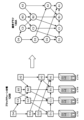
図1Cは、例示的な実施形態による、図1Bのブロックチェーン上のDAG形式のブロックのブロックチェーン台帳120Bを、DAG形式の順序グラフ130Aに変換するプロセスを示す。この例では、順序グラフ130Aは、ノードをブロックに置き換える。さらに、ブロック間のリンクはエッジで表わされる。順序グラフ130Aは、本質的には、ブロックチェーン台帳120B上のブロックのDAG形式のクローンである。しかしながら、順序グラフ130Aは、ブロックチェーン上のブロックの位置とは異なり、変換を行うように操作することが可能である。順序グラフ130Aは、修正可能なグラフであり、そのコンテンツは、ゴシップDAGと、変換のアクセサリ・セットと、それらの変換を用いて順序グラフ130Aの構造を繰り返し変更し、第2のグラフのノードが、ゴシップDAG内のブロックのコンセンサス全順序に対応する、図1Dに示される順序グラフ130Bに示されるような線形シーケンスを形成するまで、順序グラフ130Aの構造を連続的により線形にする方法とから抽出される。
1C illustrates a process of converting the
ゴシップDAGから全順序を抽出するプロセスは、ランダムに織られたリボンから単一の糸を引き出すことに類似しており、リボンはゴシップDAGであり、糸は、図1Dに示すような、順序グラフ130Bにおけるコンセンサス全順序である。図4A~図4Eに関して以下でさらに説明するように、順序グラフに多数の変換が行われ、ゴシップDAGのブロック及びエッジは、作成時に一方の端に入り、全順序が他方から出てくる「アンタングリング・パイプライン(untangling pipeline)」が作成される
The process of extracting a total order from a gossip DAG is similar to pulling a single thread from a randomly woven ribbon, where the ribbon is the gossip DAG and the thread is the consensus total order in the
このパイプラインの形式は、ゴシップDAG内のブロックのプロキシとして機能するノード(ブロックではない)で構成される、順序グラフと呼ばれる第2の派生グラフのものである。順序グラフの一方の「端」は、ゴシップDAGに各々の新しいブロックが追加されるごとに、新しいノード及び適切なエッジを作成することによって、ゴシップDAGの拡張を追跡する。順序グラフの他方の「端」は、ゴシップDAGの時間的関係と一致するコンセンサス全順序で配置されたノードの線形シーケンスである。その間において、順序グラフは、暗黙的な関係を明示的なものにし、任意の関係を利用し、冗長性を除去する、時間的関係を維持した体系的な変換を受ける。 The form of this pipeline is that of a second derived graph, called the order graph, which consists of nodes (not blocks) that act as proxies for blocks in the gossip DAG. One "end" of the order graph tracks the expansion of the gossip DAG by creating new nodes and appropriate edges as each new block is added to the gossip DAG. The other "end" of the order graph is a linear sequence of nodes arranged in a consensus total order that matches the temporal relationships of the gossip DAG. In between, the order graph undergoes a systematic transformation that preserves temporal relationships, making implicit relationships explicit, exploiting arbitrary relationships, and removing redundancies.
実際には、コンセンサスの全順序は、順序グラフ130Bから完全なまま現れるように示されるような完全なリストとしては保持されない。代わりに、ノードが全順序に配置されると、ゴシップDAG内の対応するブロックの位置が決定されているので、対応する順序グラフのノードはそれ以上必要ない。従って、それを廃棄することができる。その結果、実際には、ひとたびコンセンサス全順序にノードが配置されるとノードを除去するので、順序グラフは、DAG内のブロックの数に対して少数のノードしか含まないことになる。
In practice, the consensus total order is not kept as a complete list as it appears intact from the
ゴシップ・プロトコルは、本質的に「許可型ブロックチェーン」であるピアの間で生じ得る。ゴシップDAGは、各ピアについて1つずつの、それらの間に(ランダムな)相互接続を有するブロックチェーンの並列セットと考えることができる。これらの並列ブロックチェーンの各々は、ピアの各々の1つによって排他的に拡張されるが、各ピアは並列ブロックチェーンの全てのコピーを有する(それがゴシップDAGを構成するものである)。ブロックは、別のピアがそのブロックへの(ランダムな)接続を行うと、その排他的変更でそのピアによって作成される。その際、ピアは、ピアがキャッシュに入れたトランザクションのセットを選択してブロックを作成し、ブロックのヘッダに2つのハッシュ値を入れ、1つは、ピアの排他的ブロックチェーンでこのブロックを進行させるブロックについてのハッシュ値(そのハッシュ値はブロックを効果的にチェーンでつなぐ)であり、もう1つは、(ランダムに)連絡を取ったピアからそれに送られたハッシュ値である。そのハッシュ値は、発信元ピアの排他的ブロックチェーンにおいて最も新しいブロックのものである。このように、ピアは、別のピアがそのピアに連絡を取るまで、ブロックを作成することができない。 A gossip protocol can occur between peers that is essentially a "permissioned blockchain". The gossip DAG can be thought of as a parallel set of blockchains, one for each peer, with (random) interconnections between them. Each of these parallel blockchains is extended exclusively by each one of the peers, but each peer has a copy of all of the parallel blockchains (that's what the gossip DAG consists of). A block is created by another peer with its exclusive modifications when that peer makes a (random) connection to that block. A peer then creates a block by selecting a set of transactions that it has cached, and puts two hash values in the block's header, one for the block that advances this block in the peer's exclusive blockchain (the hash value effectively chains the blocks together), and one hash value sent to it by the peer that it has (randomly) contacted. The hash value is that of the newest block in the originating peer's exclusive blockchain. In this way, a peer cannot create a block until another peer contacts it.
このプロセスは、ピアの一方を「開始ピア」として指定することにより、「ブート・ストラップ」することができ、これは、連絡を取らずにそれ自身で最初のブロック(ジェネシス・ブロック)を作成し、その後、他のピアの1つをランダムに選択して他のピアに連絡を取り、そのプロセスにおいてジェネシス・ブロックのハッシュ値を提供することを意味する。他方のピアは、ブロックを作成し、必要に応じて、そのブロックに任意のトランザクションを追加し(全く追加しないことも含む)、排他的ブロックチェーン内の前のブロックについてのヌルのハッシュ値(ハッシュ値がないため)及び受け取ったジェネシス・ブロックのハッシュ値を格納することができる。この時点で、両方のピアは、このプロセスを繰り返すことができるが、まだその排他的ブロックチェーン内にブロックを持っていないピアは、その最初のブロックを作成するまで、連絡を取り得る何らかの他のピアにハッシュ値を提供できないため、連絡を取るのを待つことがある。 The process can be "bootstrapped" by designating one of the peers as the "initiating peer", which means that it creates its first block (the genesis block) by itself without any contact, and then randomly selects one of the other peers to contact the other peers, providing the hash value of the genesis block in the process. The other peer can create a block, add any transactions to it if necessary (including none at all), and store a null hash value for the previous block in its exclusive blockchain (because it has no hash value) and the hash value of the genesis block it received. At this point, both peers can repeat the process, but the peer that does not yet have a block in its exclusive blockchain may wait to contact any other peers it may be contacting, since it cannot provide the hash value to any other peers it may be contacting until it has created its first block.
2つのピアが互いに連絡を取るときはいつでも、両者が同じブロックのセットを持つように、必要とされるだけのゴシップDAGも交換する。このようにして、ゴシップDAGはピアの間で伝播する。各ピアは、ゴシップDAGのそれ自身の進化した(evolving)コピーと、順序グラフのそれ自身の進化したコピーとを有することは明らかである。明らかではないかもしれないが、DAGは、全てのピアに瞬時に伝搬されるわけではない新しいブロックの追加で並行して拡張されるため、各ピアは、どの時点においても、ゴシップDAGの僅かに不完全なバージョンを有すると予想される。 Whenever two peers contact each other, they also exchange as many gossip DAGs as necessary so that they both have the same set of blocks. In this way, the gossip DAG propagates between peers. It is clear that each peer has its own evolving copy of the gossip DAG and its own evolving copy of the ordering graph. Although it may not be obvious, each peer is expected to have a slightly incomplete version of the gossip DAG at any given time, since the DAG is expanded in parallel with the addition of new blocks that are not instantly propagated to all peers.
図2は、例示的な実施形態による、ブロックチェーン・アーキテクチャ構成200を示す。図2を参照すると、ブロックチェーン・アーキテクチャ200は、特定のブロックチェーン要素、例えば、ブロックチェーン・ノード202のグループを含むことができる。ブロックチェーン・ノード202は、1つ又は複数のノード204~210を含むことができる(これらの4つのノードは、単なる例示として示される)。これらのノードは、ブロックチェーン・トランザクションの追加及び検証プロセス(コンセンサス)などの多数の活動に参加する。ブロックチェーン・ノード204~210のうちの1つ又は複数は、エンドースメント・ポリシーに基づいて、トランザクションをエンドースし、アーキテクチャ200内の全てのブロックチェーン・ノードに順序付けサービスを提供することができる。ブロックチェーン・ノードは、ブロックチェーン認証を開始し、ブロックチェーン層216に格納されたブロックチェーン変更不能台帳に書き込もうとすることができ、そのコピーを、基礎をなす物理インフラストラクチャ214上に格納することもできる。ブロックチェーン構成は、格納されたプログラム/アプリケーション・コード220(例えば、チェーンコード、スマート・コントラクトなど)にアクセス及び実行するためにアプリケーション・プログラム・インタフェース(API)222にリンクされた1つ又は複数のアプリケーション224を含むことができ、それは、参加者によって求められたカスタマイズ化構成に従って作成されてもよく、それ自身の状態を維持し、それ自身のアセットを制御し、外部情報を受け取ることもできる。これは、トランザクションとしてデプロイされ、分散型台帳への追記を介して、全てのブロックチェーン・ノード204~210上にインストールすることができる。
2 illustrates a
ブロックチェーン・ベース又はプラットフォーム212は、ブロックチェーンのデータ、サービス(例えば、暗号トラスト・サービス、仮想実行環境など)、及び基礎をなす物理コンピュータ・インフラストラクチャの種々の層を含むことができ、これらの層を使用して、新しいトランザクションを受け取って格納し、データ・エントリにアクセスしようとしている監査者(auditor)にアクセスを提供することができる。ブロックチェーン層216は、プログラム・コードを処理し、物理インフラストラクチャ214に関与するために必要な仮想実行環境へのアクセスを提供するインターフェースを公開することができる。暗号トラスト・サービス218を使用して、アセット交換取引などのトランザクションを検証して、情報を非公開にしておくことができる。
The blockchain base or
図2のブロックチェーン・アーキテクチャ構成は、ブロックチェーン・プラットフォーム212により、1つ又は複数の公開されるインターフェース及び提供されるサービスを介してプログラム/アプリケーション・コード220を処理し、実行することができる。コード220は、ブロックチェーン・アセットを制御することができる。例えば、コード220は、データを格納し、転送することができ、また、スマート・コントラクト及びその実行の対象となる条件又は他のコード要素と関連付けられたチェーンコードの形態で、ノード204~210によって実行することもできる。限定されない例として、スマート・コントラクトは、リマインダ、更新、もしくは変更、更新などを対象とする他の通知、又はそれらの組み合わせを実行するために作成することができる。スマート・コントラクトは、それ自身を使用して、権限付与及びアクセス要件、並びに台帳の使用と関連付けられた規則を特定することができる。例えば、読み出しセット226は、ブロックチェーン層216内に含まれる1つ又は複数の処理エンティティ(例えば、仮想マシン)によって処理することができる。書き込みセット228は、1つ又は複数のスマート・コントラクトを介して読み出しセット226を処理した結果を含むことができる。物理インフラストラクチャ214を利用して、本明細書に説明されるデータ又は情報のうちのいずれかを取り出すことができる。
The blockchain architecture configuration of FIG. 2 may process and execute program/
スマート・コントラクトを、高レベル・アプリケーション及びプログラミング言語によって作成し、次いで、ブロックチェーン内のブロックに書き込むことができる。スマート・コントラクトは、ブロックチェーン(例えば、ブロックチェーン・ピアの分散型ネットワーク)により、登録、格納、もしくは複製、又はそれらの組み合わせを行う実行可能コードを含むことができる。トランザクションは、スマート・コントラクトと関連付けられた条件が満たされたことに応じて実行できるスマート・コントラクト・コードの実行である。スマート・コントラクトの実行は、デジタル・ブロックチェーン台帳の状態への信頼できる修正をトリガすることができる。スマート・コントラクトの実行によってもたらされたブロックチェーン台帳への修正は、1つ又は複数のコンセンサス・プロトコルを通してブロックチェーン・ピアの分散型ネットワークの全体にわたって自動的に複製され得る。 Smart contracts can be created with high-level application and programming languages and then written into blocks in the blockchain. Smart contracts can include executable code that is registered, stored, and/or replicated by the blockchain (e.g., a decentralized network of blockchain peers). A transaction is the execution of smart contract code that can be executed in response to a condition associated with the smart contract being met. Execution of a smart contract can trigger trusted modifications to the state of the digital blockchain ledger. Modifications to the blockchain ledger resulting from the execution of a smart contract can be automatically replicated across the decentralized network of blockchain peers through one or more consensus protocols.
スマート・コントラクトは、キー値ペア(key-value pair)の形式でブロックチェーンにデータを書き込むことができる。さらに、スマート・コントラクトのコードは、ブロックチェーンに格納された値を読み出し、それをアプリケーション操作で使用することができる。スマート・コントラクトのコードは、様々な論理演算の出力をブロックチェーンに書き込むことができる。コードを使用して、仮想マシン又は他のコンピューティング・プラットフォーム内に一時的なデータ構造を作成することができる。ブロックチェーンに書き込まれたデータは、公開とすることができ、もしくは暗号化し非公開にしておくことができ、又はその組み合わせを行うことができる。スマート・コントラクトによって使用/生成された一時データは、与えられた実行環境によってメモリに保持され、次いで、ブロックチェーンで必要とされるデータが特定されると、削除される。 Smart contracts can write data to the blockchain in the form of key-value pairs. Additionally, smart contract code can read values stored in the blockchain and use them in application operations. Smart contract code can write the output of various logical operations to the blockchain. Code can be used to create temporary data structures within a virtual machine or other computing platform. Data written to the blockchain can be public, or encrypted and kept private, or a combination thereof. The temporary data used/generated by smart contracts is kept in memory by a given execution environment and then deleted once the data needed by the blockchain is identified.
チェーンコードは、追加の機能とともに、スマート・コントラクトのコード解釈を含むことができる。本明細書で説明するように、チェーンコードは、コンセンサス・プロセスの間にチェーン検証ソフト(validator)によって一緒に実行及び検証される、コンピューティング・ネットワーク上にデプロイされたプログラム・コードとすることができる。チェーンコードは、ハッシュを受け取り、以前に格納された特徴抽出器の使用によって作成されたデータ・テンプレートと関連付けられたハッシュをブロックチェーンから取り出す。ハッシュ識別子のハッシュと、格納された識別子テンプレート・データから作成されたハッシュとが一致した場合、チェーンコードは、認証キーを要求されたサービスに送る。チェーンコードは、暗号の詳細と関連付けられたブロックチェーン・データに書き込むことができる。 Chaincode may include code interpretation of smart contracts along with additional functionality. As described herein, chaincode may be program code deployed on a computing network that is executed together and verified by a chain validator during a consensus process. The chaincode receives the hash and retrieves the hash from the blockchain associated with the data template created by use of a previously stored feature extractor. If the hash of the hash identifier and the hash created from the stored identifier template data match, the chaincode sends an authentication key to the requested service. The chaincode may write cryptographic details to the associated blockchain data.
図3Aは、分散型、非集中型ピア・ツー・ピア・アーキテクチャを特徴とする許可型ブロックチェーン・ネットワーク300の一例を示す。この例では、ブロックチェーン・ユーザ302が、許可型ブロックチェーン304に対するトランザクションを開始することができる。この例では、トランザクションは、デプロイ、呼び出し、又は照会とすることができ、SDKを利用するクライアント側アプリケーションを通じて、APIなどを介して直接、発行することができる。ネットワークは、監査者などのレギュレータ306へのアクセスを提供することができる。ブロックチェーン・ネットワーク・オペレータ308は、レギュレータ306を「監査者」として登録し、ブロックチェーン・ユーザ302を「クライアント」として登録するなど、メンバーの許可を管理する。監査者は台帳の照会のみに制限され得るのに対し、クライアントは、特定のタイプのチェーンコードをデプロイし、呼び出し、及び照会する権限が付与され得る。
Figure 3A shows an example of a
ブロックチェーン開発者310は、チェーンコード及びクライアント側アプリケーションを書くことができる。ブロックチェーン開発者310は、インターフェースを通して、チェーンコードをネットワークに直接デプロイすることができる。従来のデータ・ソース312からの信任状(credential)をチェーンコード内に含ませるために、開発者310は、帯域外(out-of-band)接続を使用してデータにアクセスすることができる。この例では、ブロックチェーン・ユーザ302は、ピア・ノード314を通して、許可型ブロックチェーン304に接続する。ピア・ノード314は、任意のトランザクションを進める前に、ユーザの役割と許可を管理する認証局316から、ユーザの登録及びトランザクション証明書を取り出す。場合によっては、ブロックチェーン・ユーザは、許可型ブロックチェーン304上で取引を行うために、これらのデジタル証明書を所有しなければならない。一方、チェーンコードを利用しようとするユーザは、従来のデータ・ソース312上でその認証情報を検証することが求められる場合がある。ユーザの権限付与を確認するために、チェーンコードは、従来の処理プラットフォーム318を通して、このデータへの帯域外接続を使用することができる。
A
図3Bは、分散型、非集中型ピア・ツー・ピア・アーキテクチャを特徴とする、許可型ブロックチェーン・ネットワーク320の別の例を示す。この例では、ブロックチェーン・ユーザ322は、トランザクションを許可型ブロックチェーン324にサブミットすることができる。この例では、トランザクションは、デプロイ、呼び出し、又は照会とすることができ、SDKを利用するクライアント側アプリケーションを通じて、APIなどを介して直接、発行することができる。ネットワークは、監査者などのレギュレータ326へのアクセスを提供することができる。ブロックチェーン・ネットワーク・オペレータ328は、レギュレータ326を「監査者」として登録し、ブロックチェーン・ユーザ322を「クライアント」として登録するなど、メンバーの許可を管理する。監査者は台帳の照会のみに制限され得るのに対し、クライアントは、特定のタイプのチェーンコードをデプロイし、呼び出し、及び照会する権限が付与され得る。
Figure 3B shows another example of a
ブロックチェーン開発者330は、チェーンコード及びクライアント側アプリケーションを書く。ブロックチェーン開発者330は、インターフェースを介してチェーンコードをネットワークに直接デプロイすることができる。従来のデータ・ソース332からの認証情報をチェーンコードに含ませるために、開発者330は、帯域外接続を使用してデータにアクセスすることができる。本例では、ブロックチェーン・ユーザ322は、ピア・ノード334を通してネットワークに接続する。ピア・ノード334は、任意のトランザクションを進める前に、認証局336からユーザの登録及びトランザクション証明書を取り出す。場合によっては、ブロックチェーン・ユーザは、許可型ブロックチェーン324上で取引を行うために、これらのデジタル証明書を所有していなければならない。一方、チェーンコードを利用しようとするユーザは、従来のデータ・ソース332上でその認証情報を検証することが求められる場合がある。ユーザの権限付与を確認するために、チェーンコードは、従来の処理プラットフォーム338を通して、このデータへの帯域外接続を使用することができる。
A
幾つかの実施形態において、本明細書でのブロックチェーンは、自由参加型ブロックチェーンとすることができる。参加するのに許可を必要とする許可型ブロックチェーンとは対照的に、誰でも自由参加型ブロックチェーンに参加することができる。例えば、自由参加型ブロックチェーンに参加するために、ユーザは個人アドレスを作成し、トランザクションをサブミットすることによって、従って、エントリを台帳に追加することによって、ネットワークとの対話を開始することができる。さらに、全ての当事者は、システム上でノードを実行し、トランザクションの検証を助けるために、マイニング・プロトコルを採用する選択肢をもつ。 In some embodiments, the blockchain herein may be a permissioned blockchain. In contrast to a permissioned blockchain, which requires permission to participate, anyone can participate in a permissioned blockchain. For example, to participate in a permissioned blockchain, a user can create a personal address and begin interacting with the network by submitting transactions, thus adding entries to the ledger. Additionally, all parties have the option to run a node on the system and adopt a mining protocol to help validate transactions.
図3Cは、トランザクションが、複数のノード354を含む自由参加型ブロックチェーン352によって処理されるプロセス350を示す。送信者(sender)356は、自由参加型ブロックチェーン352を介して、受信者358に支払い又は何らかの他の形の価値(例えば、証書、医療記録、契約、商品、サービス、又はデジタル記録にカプセル化することができる何らかの他のアセット)を送りたいと願う。一実施形態では、送信者デバイス356及び受信者デバイス358の各々は、ユーザ・インタフェース制御及びトランザクション・パラメータの表示を提供する(ブロックチェーン352と関連付けられた)デジタル・ウォレットを有することができる。これに応答して、トランザクションは、ブロックチェーン352全体にわたって、ノード354にブロードキャストされる。ブロックチェーン352のネットワーク・パラメータに応じて、ノードは、自由参加型ブロックチェーン352の作成者によって確立された規則(事前に定義されたものであっても、又は動的に割り当てられたものであってもよい)に基づいて、トランザクションを検証360する。例えば、これは、関与する当事者のアイデンティティを検証することなどを含むことができる。トランザクションは直ちに検証することができ、又は他のトランザクションと共にキューに入れてもよく、ノード354は、ネットワーク規則のセットに基づいてトランザクションが有効かどうかを判断することができる。
3C illustrates a
構造化362では、有効なトランザクションがブロックに形成され、ロック(ハッシュ)でシールされる。このプロセスは、ノード354の中のマイニング・ノードによって実行することができる。マイニング・ノードは、自由参加型ブロックチェーン352のためのブロックのマイニング及び作成専用の追加のソフトウェアを利用することができる。各ブロックは、ネットワークによってコンセンサスが得られたアルゴリズムを用いて作成されたハッシュ(例えば、256ビット数など)によって識別することができる。各ブロックは、ヘッダ、チェーン内の前のブロックのヘッダのハッシュへのポインタ又は参照、及び有効なトランザクションのグループを含むことができる。前のブロックのハッシュへの参照は、ブロックの安全な独立したチェーンの作成と関連付けられる。
In structuring 362, valid transactions are formed into blocks and sealed with a lock (hash). This process may be performed by mining nodes among
ブロックをブロックチェーンに追加できる前に、ブロックを検証しなければならない。自由参加型ブロックチェーン352に対する検証は、ブロックのヘッダから得られるパズルに対する解決法であるプルーフ・オブ・ワーク(PoW)を含むことができる。図3Cの例では示されないが、ブロックを検証するための別のプロセスは、プルーフ・オブ・ステーク(proof-of stake)である。アルゴリズムが数学的問題を解決するマイナに報酬を与えるプルーフ・オブ・ワークとは異なり、プルーフ・オブ・ステークでは、新しいブロックの作成者は、「ステーク」としても定義される富に応じて、決定論的な方法で選ばれる。次いで、選択された/選ばれたノードにより、類似の証明が行われる。 Before a block can be added to the blockchain, it must be verified. Verification for an open-ended blockchain 352 can include a proof-of-work (PoW), which is a solution to a puzzle obtained from the block's header. Another process for validating a block, not shown in the example of FIG. 3C, is proof-of-stake. Unlike proof-of-work, where an algorithm rewards miners who solve a mathematical problem, in proof-of-stake, the creator of a new block is chosen in a deterministic way according to their wealth, also defined as "stake". A similar proof is then performed by the selected/elected node.
マイニング364では、ノードは、解決法がネットワーク全体の目標を満たすまで、1つの変数にインクリメンタルな変更を加えることによって、ブロックを解決しようと試みる。これにより、PoWが作成され、それにより、正しい解答が保証される。言い換えれば、潜在的な解決法は、問題を解決する際にコンピューティング・リソースが消耗したことを証明しなければならない。幾つかのタイプの自由参加型ブロックチェーンでは、ブロックを正しくマイニングすることによって、マイナーに報酬(例えば、コインなど)を与えることができる。
In
ここで、PoWプロセスでは、ブロックの連鎖と比べて、攻撃者が1つのブロックの修正を受け入れるために、全ての後続のブロックを修正しなければならないため、ブロックチェーンの修正が極めて困難になる。さらに、新しいブロックがマイニングされると、ブロックを修正する困難さが増し、後続のブロックの数も増加する。配布366では、正常に検証されたブロックが、自由参加型ブロックチェーン352を通して配布され、全てのノード354は、自由参加型ブロックチェーン352の監査可能な台帳である大多数のチェーンにブロックを追加する。さらに、送信者356によってサブミットされたトランザクションの価値は、受信者デバイス358のデジタル・ウォレットに入金されるか、又は他の方法で転送される。
Now, in the PoW process, compared to chaining of blocks, it becomes extremely difficult to modify the blockchain because an attacker must modify all subsequent blocks to accept a modification of one block. Furthermore, as new blocks are mined, the difficulty of modifying the block increases, and the number of subsequent blocks also increases. In
図4Aは、図1C及び図1Dに示される順序グラフ130Aに対応する順序グラフ400Aを示す。図4B~図4Eに関して説明される変換は、図4Aに示される順序グラフ400Aが、どのようにして図4Eに示されるような連続的な線形順序を有する順序グラフ400Eになるかを示す。変換は、それぞれDAGブロックチェーン内のブロック及びブロック間のハッシュ・リンクを表すノード402及びエッジ404を含む順序グラフ400Aの構造に基づいている。
Figure 4A shows an
順序グラフは、親変換、サイクル変換、及びパス変換を含む、相対的な時間的順序を保持する3つの変換を適用することによって修正することができる。親変換は、暗黙的関係を明示的にする役割を担う。サイクル変換は、ゴシップ・プロトコルによって引き起こされる任意の順序関係(例えば、2つのピアが互いに同時に連絡を取り、2つのブロックが作成された場合などに、どのブロックが最初に配置されるべきかを特定するなど)を除去する役割を担う。サイクル変換と同様に、パス変換は、グラフ内の無関係だが並行するパスから生じる任意の時間的関係を除去する役割を担う。また、パス変換は、ノード間の複数のパスを特定し、除去することにより、冗長エッジを除去する役割も担う。 The ordering graph can be modified by applying three transformations that preserve the relative temporal order, including the parent transformation, the cycle transformation, and the path transformation. The parent transformation is responsible for making implicit relationships explicit. The cycle transformation is responsible for removing any ordering relationships caused by the gossip protocol (e.g., identifying which block should be placed first when two peers contact each other at the same time and two blocks are created, etc.). Similar to the cycle transformation, the path transformation is responsible for removing any temporal relationships that arise from unrelated but parallel paths in the graph. The path transformation is also responsible for removing redundant edges by identifying and removing multiple paths between nodes.
図4Bは、例示的な実施形態による、順序グラフ400A内のノードに対して親変換を行って、修正された順序グラフ400Bを作成するプロセス410を示す。ゴシップDAGでは、ゴシップ・プロトコルの結果として作成されたブロック間の関係が明示的に表される。例えば、あるピアへのゴシップ接続を記録するために作成されたブロックは、その親ブロック(このピアへの以前の接続のために作成されたもの)へのエッジと、そのソース・ブロック(開始ピアが所有する)へのエッジとを有する。図4A及び図4Bを参照すると、1つのブロックが親ブロック及びソース・ブロックの両方として機能することができる。例えば、順序グラフ400A内のブロックB2は、ブロックB3の親であり、ブロックC3及びA3のソースである。この場合、親ブロックB2は、それを参照する他のノードよりも(明らかに)古い。しかしながら、子ブロック(B3)と、その子ブロックの親ブロック(B2)をソース・ブロックとして有するブロック(C3及びA3)の各々との間には、ゴシップDAGでは表わされない時間的関係が存在する。
Figure 4B illustrates a
ソース・ブロックであるブロックは、1つだけでなく、多くの別個のゴシップ接続のためのソース・ブロックとすることができる。しかしながら、別のピアが親ブロックのピアへの接続を開始したときにのみ、親ブロックになる。この接続により、その親の子ブロックが作成される。子ブロックが作成されると、親ブロックはもはや将来の接続のためのソース・ノードにはならず、作成されたばかりの子ブロックがその役割に置き換わる。つまり、全ての子ブロックは、親ブロックをソース・ブロックとして使用するブロックの後に暗黙的に作成される(すなわち、ブロックB3は、ブロックC3及びA3の後に作成される)。 A block that is a source block can be the source block for many separate gossip connections, not just one. However, it only becomes a parent block when another peer initiates a connection to the parent block's peer. This connection creates a child block of that parent. Once a child block is created, the parent block is no longer a source node for future connections; the just-created child block takes over that role. That is, all child blocks are implicitly created after blocks that use the parent block as a source block (i.e., block B3 is created after blocks C3 and A3).
図4Bに示される親変換は、この暗黙的な時間的関係を明示的なものにするように順序グラフを修正する。ここで、親変換は、各々の子ノードからのエッジ414を、子ノードの親ノードをそのソース・ノードとして参照する各々の他のノードに追加することができる。冗長性の導入を避けるために、親変換は、子ノードからその親ノードへのエッジ412を除去することによっても順序グラフを修正するが、それは、それらの時間的関係(子が親の後に来る)が、順序グラフにおいて、子から、新しいエッジを通って、親をそのソースとして使用するノード、そして親ノードへのパスによって依然として(暗黙的に)推移的に表されるからである。図4Bは、子ノードCが親ノードPと関係を有し、ノードXが親ノードPと関係を有する(Pはそのソース・ノードである)親変換を示す。親変換では、ノードCからノードPへのエッジ412が除去され、ノードCからノードXへのエッジ414に置き換えられる。さらに、親変換を、図4Aに示す元の順序グラフ400Aに適用した結果が、図4Bに示す修正された順序グラフ400Bに示される。ここでは、新たに追加された水平方向エッジが破線で表され、D2~D1間、C3~C2間、B3~B2間、A3~A2間、及びA2~A1間のような、親・子ノードのペア間のエッジが除去される。元の順序グラフ400Aに変更を加える際に、親変換は、ノードC3とB3との間にサイクル(すなわち、ループ)を作成/顕在化している。さらに、エッジのタングルの中であまり明白ではないが、ノードD2、C2、B2、及びA2をリンクする親変換によって作成された別のサイクルがある。
The parent transformation shown in FIG. 4B modifies the order graph to make this implicit temporal relationship explicit. Here, the parent transformation can add an
図4Cは、例示的な実施形態による、順序グラフ400Bにおけるノードにサイクル変換を行って修正された順序グラフ400Cを作成するプロセス420を示す。有向非巡回グラフであるゴシップDAGは、当然のことながらいずれのサイクルも含まず、ゴシップDAGの拡張に合わせて新しいノード及びエッジを順序グラフに作成しても、サイクルは順序グラフ内に直接的には導入されない。しかしながら、順序グラフは、変換プロセスの一部として作成されたサイクルを有することができる。順序グラフ内のサイクルは、暗黙的な時間的関係を明示的なものにする、前述の親変換の適用によってもたらされる。サイクルを形成する背景にある知識は、同時接続を行うピアによってもたらされる、DAG内のブロックの並行作成を捕捉することである。親変換の適用により、親/ソース・ノードと同じ相対関係を有する順序グラフ内のノード間に新しいエッジが作成され、従って、周期的な時間的依存関係を顕在化させる。
Figure 4C illustrates a
図4Cを参照すると、サイクルは、相対的順序が任意であるノードのセットから構成され、2つのピアが互いにゴシップ接続を同時に開始したとき(すなわち、A→B&B→A)、又は2つより多いピアが「循環」するように(in a "circular manner")ゴシップ接続を開始したときに生じ、4つのノードのサイクル、すなわちA→B→C→D→Aを有する後者のシナリオの例が、図4Cに示される。順序グラフ内のサイクルにおけるノードは、本質的には時間的に等しく、それは、互いに対してその順序が任意であることを意味する。サイクル変換は、サイクル内のノードを、順序グラフから「除去」し、単一のサイクル・ノード422に置き換えられるように集約することによって、この状況を処理する。サイクル内のノードのいずれか1つに対する順序グラフ内のエッジは、今や新しいサイクル・ノード422を参照するように変更される。
Referring to FIG. 4C, a cycle consists of a set of nodes whose relative order is arbitrary, and arises when two peers initiate gossip connections with each other simultaneously (i.e., A→B&B→A) or when more than two peers initiate gossip connections in a "circular manner"; an example of the latter scenario is shown in FIG. 4C with a cycle of four nodes, i.e., A→B→C→D→A. The nodes in a cycle in the order graph are essentially equal in time, which means that their order with respect to each other is arbitrary. The cycle transformation handles this situation by aggregating the nodes in the cycle so that they are "removed" from the order graph and replaced by a
新しいサイクル・ノード422は、サイクルを形成するノードへの参照を維持するので、サイクル・ノードの位置が全順序で決定されるときに後で利用可能であり、その時点で、サイクル内のノードは、互いに対して相対的な順序で決定論的に配置され、その後、その順序において、全順序におけるサイクル・ノードに取って代わる。この例は、図4Cに示されており、ここでは、ノードC3及びB3がサイクル・ノード424に変換され、ノードD2、C2、B2、及びA2はサイクル・ノード426に変換されて、修正された順序グラフ400Cが作成される。これらのサイクル・ノード424及び426によってカプセル化されたノードの順序を最終的に解決する前に、ピアは、サイクル・ノード424及び426への冗長パスが除去されるまで、追加の変換を行うことができる。その時点で、サイクル・ノード424及び426によってカプセル化されたノードは、図4Eに関してさらに説明されるように、相対的順序に配置し、次いで、コンセンサス全順序に挿入することができる。
Because the
図4Dは、例示的な実施形態による、順序グラフ400C内のノードにパス変換を行って、修正された順序グラフ400Dを作成するプロセス430を示す。パス変換は、順序グラフから、冗長な時間的関係及び任意の時間的関係の両方を除去する役割を担う。冗長な時間的関係とは、2つのノードXとZとの間の時間的順序を明示的に指定し(すなわち、XからZへのエッジを有することによって)、ノードXとZとの間の順序グラフ内に存在するより長いパスによっても推移的に表されるものである(より長いパスは、最も多くの時間的関係情報を含むので保持される)。任意の時間的関係は、ゴシップ・ピアによってなされた接続のランダム性の結果生じるノード間のパラレル・パス(parallel path)によって表される。図4Dの例では、ノードXとZとの間に2つの冗長パスがある。特に、エッジ431を通るパスと、エッジ432、433、及びノードYを通る第2のパスとがある。
Figure 4D illustrates a
この例では、ノードXからノードZへのエッジ431は、ノードXが時間的にノードZの後にあることを示す。同様に、ノードYからノードZへのエッジ433は、ノードYも時間的にノードZの後であることを示し、ノードXからノードYへのエッジ432は、ノードXが時間的にノードYの後であることを示す。ノードXからノードZへのエッジ431は、時間的にXがZの後である(すなわち、X→Y→Z)という情報を失うことなく除去することができる。この変換は、基本的に、親ノードと子ノードとの間の冗長エッジを除去する親変換の半分であり、残りの半分は、子ノードとその親をそのソース・ノードとして参照するノードとの間のエッジを追加するので、見覚えがあるはずである。親変換は、後でパス変換が除去するように、子から親へのエッジを完全なまま残すことによって「単純化」することができるが、冗長性を再発見するために、パス変換で順序グラフを再処理するのではなく単にそれを除去することは、明らかな最適化である。
In this example, edge 431 from node X to node Z indicates that node X is after node Z in time. Similarly, edge 433 from node Y to node Z indicates that node Y is also after node Z in time, and edge 432 from node X to node Y indicates that node X is after node Y in time.
図4Dのプロセス430において、パス変換を適用して、順序グラフ400Cに示される全ての冗長パスを除去して、修正された順序グラフ400Dを作成することができる。特に、サイクル変換後、順序グラフ400Cは、パス変換が直接除去するかなりの数の冗長な関係を有していた。例えば、サイクル・ノード426→A1のエッジは、サイクル・ノード426→B1→A1のパスのために冗長であり、従って、除去することができる。同時に、サイクル・ノード426→B1も、サイクル・ノード426→C1→B1のパスのために冗長であり、従って、除去することができる。それだけでなく、サイクル・ノード426→C1の間のエッジも、サイクル・ノード426→D1→C1のパスのために冗長であり、同様に除去することができる。これにより、冗長でないサイクル・ノード426→D1から単一のエッジが残り、それらのノード間の時間的関係の全てを具体化するサイクル・ノード426→D1→C1→B1→A1のパスを保持する。同様の変換は、サイクル・ノード424及び他の冗長パスに対して行うことができ、その結果、修正された順序グラフ400Dが得られる。
In
順序グラフ400Dの結果は、ノードD4から開始し、ノードA1まで続くノードの線形シーケンスであり、これは、ほぼコンセンサス全順序である。残る唯一のステップは、2つのサイクル・ノード424及び426内のノードの順序を解決することである。例えば、サイクル・ノード426内のノードD2、C2、B2、A2の全てがノードD1の後にかつノードD3の前に来るので、システムは、それらを任意に相対的なチェックサムの番号順に並べて(最小のものが最初)、ノードをサイクル・ノード426の場所に戻すことができる。同様のことを、サイクル・ノード424内のノードC3及びB3に対しても行うことができる。結果は、図4Eに示されており、結果として、コンセンサス全順序を表す修正された順序グラフ400Eが得られる。
The result of the order graph 400D is a linear sequence of nodes starting from node D4 and continuing to node A1, which is approximately the consensus total order. The only remaining step is to resolve the order of the nodes in the two
サイクル内のノードを任意に順序付けするアルゴリズムは、デフォルトで、単にブロックをそのハッシュ値で「ソート」するように指定することができる。これは、任意であり、操作が困難であり、全く同じ結果を得るために異なるピアによって再現可能であるが、他の技術を使用することもできる。幾つかの実施形態では、使用されるアルゴリズムは、任意のピアを実行する前に構成時に選択することができる(そして、全てのピアが同じ構成を有する)。これを行う1つの方法は、「依存性注入(dependency injection」をサポートするプログラミング・フレームワークを使用することである。この考えは、コードの実行開始時に、フレームワークからの初期化コードのビットを実行し、現在の構成を調べ、次いで、選択されたアルゴリズムのインスタンスを作成するというものである。その後、特別な技術を用いて、アルゴリズムを使用するコードを修正し、構成によって選択され、フレームワークによって作成されたアルゴリズムへの参照を得る。これは、「依存性」(アルゴリズム)が、それを使用するコードに「注入」されることから、依存性注入と呼ばれる。これは極めて柔軟で強力な技術である。 An algorithm that arbitrarily orders the nodes in a cycle can be specified by default to simply "sort" blocks by their hash value. This is arbitrary, difficult to manipulate, and reproducible by different peers to get exactly the same results, but other techniques can be used. In some embodiments, the algorithm used can be selected at configuration time before any peer runs (and all peers have the same configuration). One way to do this is to use a programming framework that supports "dependency injection". The idea is that when your code starts running, it runs a bit of initialization code from the framework, looks up the current configuration, and then creates an instance of the selected algorithm. Then, using a special technique, you modify the code that uses the algorithm to get a reference to the algorithm that was selected by configuration and created by the framework. This is called dependency injection because the "dependency" (the algorithm) is "injected" into the code that uses it. This is an extremely flexible and powerful technique.
図4A~図4Eに示されないが、場合によっては、ゴシップ・プロトコルは、独立した並列の時間的依存関係を作成することができ、これは、ブロックのコレクションの間にいずれの関係も持たないブロックのシーケンスがゴシップDAGに存在することができ、従って、シーケンスの順序は任意であることを意味する。これは、基本的に、最終的に順序グラフ内のサイクルをもたらす同時並列ゴシップ接続のシナリオの拡張バージョンであるが、この場合を除いて、順序グラフ内に独立したパラレル・パスをもたらす。 Although not shown in Figures 4A-4E, in some cases, the gossip protocol can create independent parallel temporal dependencies, meaning that there can be sequences of blocks in the gossip DAG that do not have any relationship between the collections of blocks, and therefore the ordering of the sequences is arbitrary. This is essentially an extended version of the concurrent parallel gossip connections scenario that ultimately results in a cycle in the ordering graph, except in this case it results in independent parallel paths in the ordering graph.
順序グラフ内のパラレル・パスは冗長性を表し、最終的なコンセンサス全順序を決定するために解決する必要がある。パラレル・パスは時間的等価性を表すこともでき、これはゴシップDAGにブロックが実質的に「同時に」作成されることを意味する。2つの異なるパラレル・パス上のブロックは、それらの間にエッジがないため、コンセンサス全順序の相対的な位置のためにそれらを直接関連付ける方法がなく、時間的に同等であると考える必要がある。これは、サイクル内のブロックが、先に来た1つのブロックを選択することができない場合と同じ状況である。 Parallel paths in the ordering graph represent redundancy and must be resolved to determine the final consensus total order. Parallel paths can also represent temporal equivalence, meaning that blocks are created in the gossip DAG effectively "at the same time". Blocks on two different parallel paths must be considered equivalent in time since there is no edge between them and therefore no way to directly relate them due to their relative position in the consensus total order. This is the same situation as when blocks in a cycle cannot choose one block that came earlier.
パラレル・パスを処理する1つの方法は、順序グラフ内でそれらを積極的に検出し(すなわち、検索し)、次に、最も単純な場合には、最短のパスを表す単一のエッジを除去するか、又は、サイクルに対して行われるように、ノード/パスを抽出し、それらを単一の集約ノードに置き換えることである。しかしながら、これは、順序グラフ内に存在し得る異なるパスをトラバースして、たまたまパラレルであるパスを探すために、著しい処理サイクルを消費し、パラレル・パスがあった場合には、解決が複雑になることがある。別のより効率的な手法は、ブロックがコンセンサス全順序でグラフから放出される時点まで、パラレル・パスを順序グラフに残すことである。その時点で、パラレル・パスの性質に起因して、どのブロックが時間的に等価であり、どのブロックがそうでないかが単純化して明らかになる。同じ(不確定な)時間的位置にあるブロックを抽出し、単一の集約ブロックに置き換えることができる(サイクルに対して行われるように)。その集約ブロックが順序グラフから放出されると、それが表すブロックは、集約されたサイクル・ブロックと同じ方法で、コンセンサス全順序に入れられる。 One way to handle parallel paths is to actively detect them (i.e., search for them) in the order graph and then, in the simplest case, remove the single edge that represents the shortest path, or extract the nodes/paths and replace them with a single aggregate node, as is done for cycles. However, this consumes significant processing cycles to traverse the different paths that may exist in the order graph looking for paths that happen to be parallel, and may complicate the solution if there are parallel paths. Another, more efficient approach is to leave the parallel paths in the order graph until the point at which the blocks are emitted from the graph in a consensus total order. At that point, due to the nature of the parallel paths, it becomes trivially clear which blocks are equivalent in time and which are not. Blocks at the same (indeterminate) time position can be extracted and replaced with a single aggregate block (as is done for cycles). When that aggregate block is emitted from the order graph, the blocks it represents are put into a consensus total order in the same way as the cycle blocks that it aggregates.
ブロックを順序グラフからコンセンサス全順序における次のブロックとして放出するプロセスは、順序グラフにおいてそれに入るエッジのみを有する単一のブロックである指定されたコンセンサス候補を有することから始まり、これは、コンセンサス時間的順序において全ての他のブロックがそれの後に来ることを意味する。ブロックは、それへのエッジを有する順序グラフ内に単一のブロックだけがあるときに、順序グラフから放出することができる。次に、そのブロックは、新しいコンセンサス候補となる。順序グラフ内にパラレル・パスがある場合、複数の入力エッジを持つコンセンサス候補が存在することになる。この時点で、パラレル・パスを解決することができる。 The process of releasing a block from the order graph as the next block in the consensus total order begins with having a designated consensus candidate that is a single block with only incoming edges to it in the order graph, meaning that all other blocks come after it in the consensus temporal order. A block can be released from the order graph when there is only a single block in the order graph with edges to it. That block then becomes the new consensus candidate. If there are parallel paths in the order graph, then there will be consensus candidates with multiple incoming edges. At this point, the parallel paths can be resolved.
単純な観察に基づいて行動することにより、解決を達成することができる。例えば、コンセンサス候補へのエッジを有するブロックは、1つの単一エッジ(コンセンサス候補へのもの)のみを有するものと、1つより多いエッジを有するものとの2つのグループに分割することができる。1つより多いブロックへのエッジを有するブロックも、(それらの他のエッジに従うことにより)コンセンサス候補ブロックへの1つより多いパスを有する。それらのエッジのうち、コンセンサス候補に直接入射するエッジは、最短のもの(長さ1)でなければならないので、それは冗長であり(より長いパスが好ましい)、それを順序グラフから除去することができる。前者のグループ内のブロック、つまりコンセンサス候補に入射する単一のエッジしかないブロックは、時間的に等価なブロックである。これらのブロックは、順序グラフから抽出され、サイクル内のブロックに利用されたのと同じ方法で集約される。 A solution can be achieved by acting on a simple observation. For example, blocks with edges to consensus candidates can be divided into two groups: those with only one single edge (to the consensus candidate) and those with more than one edge. Blocks with edges to more than one block also have more than one path to the consensus candidate block (by following their other edges). Of those edges, the edge that directly enters the consensus candidate must be the shortest one (length 1), so it is redundant (longer paths are preferred) and can be removed from the order graph. Blocks in the former group, i.e., those with only a single edge that enters the consensus candidate, are time-equivalent blocks. These blocks are extracted from the order graph and aggregated in the same way as was used for blocks in cycles.
抽出及び置換が完了し、順序グラフ内の全てのエッジが変更を反映するように更新されると、その時点でコンセンサス候補ブロックの後には、単一のブロック、すなわち新しい集約ブロックだけが続き、それをグラフから放出することができる。そうなると、次に、新しい集約ブロックは新しいコンセンサス候補ブロックとなり、このプロセスが繰り返される。 Once the extraction and replacement is complete and all edges in the ordering graph have been updated to reflect the changes, the consensus candidate block is now followed by only a single block, the new aggregated block, which can be released from the graph. The new aggregated block then becomes the new consensus candidate block, and the process is repeated.
図5は、例示的な実施形態による、DAG形式のブロックチェーンからコンセンサス順序を決定する方法500を示す。図5を参照すると、510において、方法は、ブロックが複数のブロックに独立してハッシュ・リンクされる有向非巡回グラフ(DAG)形式を含むブロックチェーンから、ブロックのチェーンを受け取ることを含むことができる。各ブロックは、親ブロックにリンクすることができる。さらに、ブロックは、DAG形式を有するブロックチェーン内の親ではない他のブロックにもリンクすることができる。ここで、ブロックは、親ブロックのハッシュ値と、他のブロックのハッシュ値とを含み、それにより、ブロックをチェーン内の複数の他のブロックに独立してリンクすることができる。ブロックの順序を操作するために、システムは、DAG形式で配置されたブロックを、対応するブロック間のリンクされた関係を表すようにエッジによりノードが接続されたDAG形式のノードの対応するグラフに変換することができる。幾つかの実施形態では、DAG形式のブロックのチェーンは、複数のピアのブロックの線形チェーンの複数のサブセットを含むことができ、ブロックの線形チェーンの複数のサブセットは、それらの間の相互接続を含む。
5 illustrates a
520において、方法は、DAG形式のブロックのチェーンの構造に基づいて、ブロックのチェーン内のブロック間の時間的関係を識別することを含むことができる。例えば、時間的関係は、ノード間の暗黙的な関係に基づいたノードのグラフ内の構造変換に基づいて決定することができる。暗黙的な関係は、一貫性に欠け、偽造されやすいタイムスタンプに頼るのではなく、ノード自体の構造から検出することができる。ノードのDAGグラフは、親変換、サイクル変換、及びパス変換を含む種々の変換に基づいて、ノードの線形グラフに変換することができる。 At 520, the method may include identifying temporal relationships between blocks in the chain of blocks based on the structure of the chain of blocks in DAG format. For example, the temporal relationships may be determined based on structural transformations in the graph of nodes based on implicit relationships between the nodes. The implicit relationships may be detected from the structure of the nodes themselves, rather than relying on timestamps, which may be inconsistent and prone to forgery. The DAG graph of nodes may be transformed into a linear graph of nodes based on various transformations, including parent transformations, cycle transformations, and path transformations.
幾つかの実施形態において、識別することは、ブロックのチェーンをクローンすること、さもなければブロックのチェーンを、ノードがブロック間のハッシュ・リンクを表すエッジを間に有するDAG形式のグラフ上のノードのチェーンに変換することを含むことができる。この例では、時間的関係を識別することは、グラフ上のノード間のエッジの構造に基づいて時間的関係を識別することを含むことができる。幾つかの実施形態では、識別することは、子ノードからのエッジを、子ノードの親ノードにリンクされたノードに追加し、子ノードと親ノードとの間のエッジを除去することを介して、グラフ上の親関係を変換することを含むことができる。 In some embodiments, identifying can include cloning or otherwise converting the chain of blocks into a chain of nodes on a DAG-style graph in which nodes have edges between them that represent hash links between blocks. In this example, identifying the temporal relationships can include identifying the temporal relationships based on a structure of edges between nodes on the graph. In some embodiments, identifying can include converting parent relationships on the graph via adding edges from child nodes to nodes linked to the child node's parent node and removing edges between the child node and the parent node.
幾つかの実施形態において、識別することは、同じ相対的な時間的関係を有するノードを集約して、集約されたノードを包含する単一のサイクル・ノードにすることを介して、グラフ上の巡回型ノード(cyclical node)(完全なループを作成するエッジを有する)を変換することを含むことができる。幾つかの実施形態において、サイクル・ノードを変換することは、予め定義されたプロトコルに基づいて、単一のサイクル・ノード内に包含される集約されたノードの中の順序を作成することを含むことができる。幾つかの実施形態では、識別することは、グラフ上のノードのペア間の2つの異なるパスを識別し、2つの異なるパスのうちノードのペア間のより短い方のパスを除去することとを含むことができる。 In some embodiments, identifying may include transforming cyclical nodes (having edges that create a complete loop) on the graph via aggregating nodes with the same relative temporal relationship into a single cycle node that encompasses the aggregated nodes. In some embodiments, transforming the cycle nodes may include creating an order among the aggregated nodes that are encompassed within the single cycle node based on a predefined protocol. In some embodiments, identifying may include identifying two distinct paths between a pair of nodes on the graph and removing the shorter of the two distinct paths between the pair of nodes.
530において、方法は、識別された時間的関係に基づいて、DAG形式のブロックのチェーンの連続的な線形順序を決定することを含むことができ、540において、方法は、ブロックのチェーンの連続的な線形順序を格納することを含むことができる。従って、方法は、DAG形式を、ブロックチェーン上の従来のブロック・シーケンスにおけるような線形形式にアンタングルすることができる。幾つかの実施形態では、方法は、ブロックのチェーンの連続的な線形順序に基づいて、複数のピア・ノードでブロックチェーン・コンセンサス・プロセスを行うことをさらに含むことができる。例えば、方法500を行うブロックチェーン・ノードは、コンセンサス・プロセスを行い、ブロックのチェーンの線形順序を提供して、ブロックチェーン・ノードがブロックチェーンの一部であり、その台帳が完全性を有することを検証することができる。
At 530, the method may include determining a sequential linear order of the chain of blocks in the DAG format based on the identified temporal relationship, and at 540, the method may include storing the sequential linear order of the chain of blocks. Thus, the method may untangle the DAG format into a linear format as in a traditional block sequence on a blockchain. In some embodiments, the method may further include performing a blockchain consensus process with multiple peer nodes based on the sequential linear order of the chain of blocks. For example, a blockchain
図6Aは、例示的な実施形態による、種々のオペレーションを実行するように構成された物理インフラストラクチャ610を含む例示的なシステム600を示す。図6Aを参照すると、物理インフラストラクチャ610は、モジュール612及びモジュール614を含む。モジュール614は、ブロックチェーン620及びスマート・コントラクト630(ブロックチェーン620上に常駐してもよい)を含み、例示的な実施形態のいずれかに含まれる(モジュール612内の)動作ステップ608のいずれかを実行することができる。ステップ/オペレーション608は、説明される又は図示される実施形態のうちの1つ又は複数を含むことができ、1つ又は複数のスマート・コントラクト630もしくはブロックチェーン620又はその両方との間で読み書きされる出力又は書き込まれた情報を表すことができる。物理インフラストラクチャ610、モジュール612、及びモジュール614は、1つ又は複数のコンピュータ、サーバ、プロセッサ、メモリ、もしくは無線通信デバイス、又はそれらの組み合わせを含むことができる。さらに、モジュール612及びモジュール614は、同じモジュールとすることができる。
6A illustrates an
図6Bは、例示的な実施形態による、種々のオペレーションを実行するように構成された別の例示的なシステム640を示す。図6Bを参照すると、システム640は、モジュール612及びモジュール614を含む。モジュール614は、ブロックチェーン620及びスマート・コントラクト630(ブロックチェーン620上に常駐してもよい)を含み、例示的な実施形態のいずれかに含まれる(モジュール612内の)動作ステップ608のいずれかを実行することができる。ステップ/オペレーション608は、説明される又は示される実施形態のうちの1つ又は複数を含むことができ、1つ又は複数のスマート・コントラクト630もしくはブロックチェーン620又はその両方との間で読み書きされる出力又は書き込まれた情報を表すことができる。物理インフラストラクチャ610、モジュール612、及びモジュール614は、1つ又は複数のコンピュータ、サーバ、プロセッサ、メモリ、もしくは無線通信デバイス又はその組み合わせを含むことができる。さらに、モジュール612及びモジュール614は、同じモジュールとすることができる。
6B illustrates another
図6Cは、例示的な実施形態による、契約当事者間のスマート・コントラクト構成と、ブロックチェーン上でスマート・コントラクト条項を強制するように構成された調停サーバとを利用するように構成された例示的なシステムを示す。図6Cを参照すると、構成650は、通信セッション、アセット移転セッション、又は1つ又は複数のユーザ・デバイス652もしくは656又はその両方を明示的に特定するスマート・コントラクト630によって推進されるプロセス又は手順を表すことができる。スマート・コントラクト実行の実行、オペレーション、及び結果は、サーバ654によって管理することができる。スマート・コントラクト630のコンテンツは、スマート・コントラクト・トランザクションの関係者であるエンティティ652及び656の1又は複数によるデジタル署名を必要とすることがある。スマート・コントラクト実行の結果は、ブロックチェーン・トランザクションとしてブロックチェーン620に書き込むことができる。スマート・コントラクト630は、ブロックチェーン620上に常駐し、ブロックチェーン620は、1つ又は複数のコンピュータ、サーバ、プロセッサ、メモリ、もしくは無線通信デバイス又はそれらの組み合わせ上に常駐することができる。
6C illustrates an exemplary system configured to utilize a smart contract configuration between contracting parties and an arbitration server configured to enforce the smart contract terms on a blockchain, according to an exemplary embodiment. With reference to FIG. 6C, the
図6Dは、例示的な実施形態による、ブロックチェーンを含むシステム660を示す。図6Dの例を参照すると、アプリケーション・プログラミング・インターフェース(API)ゲートウェイ662は、ブロックチェーン論理(例えば、スマート・コントラクト630又は他のチェーンコード)及びデータ(例えば、分散型台帳など)にアクセスするための共通のインターフェースを提供する。この例では、APIゲートウェイ662は、1つ又は複数のエンティティ652及び656をブロックチェーン・ピア(すなわち、サーバ654)に接続することによって、ブロックチェーン上でトランザクション(呼び出し、照会など)を行うための共通のインターフェースである。ここで、サーバ654は、ワールド状態のコピーと、クライアント652及び656がワールド状態のデータを照会することを可能にする分散型台帳とを保持するだけでなく、スマート・コントラクト630及びエンドースメント・ポリシーに応じて、エンドースメント・ピアがスマート・コントラクト630を実行するブロックチェーン・ネットワークにトランザクションをサブミットするブロックチェーン・ネットワーク・ピア・コンポーネントである。
Figure 6D illustrates a
上記の実施形態は、ハードウェアで、プロセッサによって実行されるコンピュータ・プログラムで、ファームウェアで、又は上記の組み合わせで実施することができる。コンピュータ・プログラムは、ストレージ媒体などのコンピュータ可読媒体上に具体化することができる。例えば、コンピュータ・プログラムは、ランダムア・アクセス・メモリ(「RAM」)、フラッシュ・メモリ、読み出し専用メモリ(「ROM」)、消去可能なプログラム可能読み出し専用メモリ(「EPROM」)、電気的に消去可能なプログラム可能読み出し専用メモリ(「EEPROM」)、レジスタ、ハードディスク、取り外し可能ディスク、コンパクト・ディスク読み出し専用メモリ(「CD-ROM」)、又は当技術分野で知られているいずれかの他の形態のストレージ媒体内に常駐することができる。 The above embodiments may be implemented in hardware, in a computer program executed by a processor, in firmware, or in a combination of the above. The computer program may be embodied on a computer-readable medium, such as a storage medium. For example, the computer program may reside in a random access memory ("RAM"), a flash memory, a read-only memory ("ROM"), an erasable programmable read-only memory ("EPROM"), an electrically erasable programmable read-only memory ("EEPROM"), a register, a hard disk, a removable disk, a compact disk read-only memory ("CD-ROM"), or any other form of storage medium known in the art.
例示的なストレージ媒体は、プロセッサがストレージ媒体から情報を読み出し、ストレージ媒体に情報を書き込むことができるように、プロセッサに結合することができる。代案として、ストレージ媒体はプロセッサと一体であってもよい。プロセッサ及びストレージ媒体は、特定用途向け集積回路(ASIC)内に存在してもよい。代案として、プロセッサ及びストレージ媒体は、個別のコンポーネントとして存在してもよい。 An exemplary storage medium may be coupled to the processor such that the processor can read information from, and write information to, the storage medium. Alternatively, the storage medium may be integral to the processor. The processor and the storage medium may reside in an application specific integrated circuit (ASIC). Alternatively, the processor and the storage medium may reside as discrete components.
図7Aは、例示的な実施形態による、新しいブロックが分散型台帳720に追加されるプロセス700を示し、図7Bは、例示的な実施形態による、ブロックチェーンのための新しいデータ・ブロック構造730のコンテンツを示す。図7Aを参照すると、クライアント(図示せず)は、ブロックチェーン・ノード711、712もしくは713又はそれらの組み合わせにトランザクションをサブミットすることができる。クライアントは、ブロックチェーン720上で活動を実行するために任意のソースから受け取った命令であってもよい。一例として、クライアントは、ブロックチェーンに対してトランザクションを提案するための、デバイス、人、又はエンティティなどの要求者の代わりに行動するアプリケーションであってもよい。複数のブロックチェーン・ピア(例えば、ブロックチェーン・ノード711、712、及び713)は、ブロックチェーン・ネットワークの状態及び分散型台帳720のコピーを保持することができる。クライアントによって提案されたトランザクションをシミュレートし、エンドースするエンドース・ピアと、エンドースメントを確認し、トランザクションを検証し、分散型台帳720にトランザクションをコミットするコミット・ピアとを含む、異なるタイプのブロックチェーン・ノード/ピアが、ブロックチェーン・ネットワーク内に存在し得る。この例では、ブロックチェーン・ノード711、712、及び713は、エンドーサ・ノード、コミッタ・ノード、又はその両方の役割を果たすことができる。
7A illustrates a
分散型台帳720は、変更不能な順序付けられたレコードをブロックに格納するブロックチェーン、及びブロックチェーン722の現在の状態を維持する状態データベース724(現在のワールド状態)を含む。チャネルごとに、1つの分散型台帳720が存在してもよく、各ピアは、自分がメンバーである各チャネルについて分散型台帳720のそれ自身のコピーを保持する。ブロックチェーン722は、各ブロックがN個のトランザクションのシーケンスを含むハッシュ・リンク・ブロックとして構造化されたトランザクション・ログである。ブロックは、図7Bに示されるような、様々なコンポーネントを含むことができる。ブロックのリンク(図7Aに矢印で示される)は、親ブロックのヘッダのハッシュ及びソース・ブロックのヘッダのハッシュを、現在のブロックのブロック・ヘッダ内に追加することによって生成することができる。図7Aの例において、親ブロックの関係は、「P」で表され、ソース・ブロックの関係は、「S」で表される。この例では、ブロックチェーン722上の全てのトランザクションは、順序付けられ、暗号によってDAG構造で互いにリンクされており、ハッシュ・リンクを壊さずにブロックチェーン・データが改ざんされることを防止している。さらに、リンクにより、ブロックチェーン722内の最新ブロックは、その前に来るあらゆるトランザクションを表す。ブロックチェーン722は、追記専用のブロックチェーン・ワークロードをサポートするピア・ファイル・システム(ローカル又はアタッチト・ストレージ)上に格納されてもよい。
The distributed
ブロックチェーン722及び分散型台帳720の現在の状態は、状態データベース724に格納することができる。ここで、現在の状態データは、ブロックチェーン722のチェーン・トランザクション・ログ内にこれまで含まれていた全てのキーの最新の値を表す。チェーンコード呼び出しは、状態データベース724における現在の状態に対してトランザクションを実行する。これらのチェーンコードの相互作用を極めて効率的にするために、全てのキーの最新の値が状態データベース724に格納される。状態データベース724は、ブロックチェーン722のトランザクション・ログへのインデックス付きビューを含むことができ、従って、いつでもチェーンから再生成することができる。状態データベース724は、ピアの起動時、トランザクションが受け入れられる前に、自動的に回復する(必要な場合は生成する)ことができる。
The current state of the
エンドース・ノードは、クライアントからトランザクションを受け取り、シミュレートされた結果に基づいてトランザクションをエンドースする。エンドース・ノードは、トランザクションの提案をシミュレートするスマート・コントラクトを保持する。エンドース・ノードがトランザクションをエンドースすると、エンドース・ノードは、トランザクション・エンドースメントを作成し、これは、シミュレートされたトランザクションのエンドースメントを示す、エンドース・ノードからクライアント・アプリケーションに対する署名された応答である。トランザクションをエンドースする方法は、チェーンコード内で指定することができるエンドースメント・ポリシーによって決まる。エンドースメント・ポリシーの例は、「エンドース・ピアの大多数がトランザクションをエンドースしなければならない」というものである。異なるチャネルは、異なるエンドースメント・ポリシーを有し得る。エンドースされたトランザクションは、クライアント・アプリケーションによって、順序付けサービ710に転送される。
Endorsing nodes receive transactions from clients and endorse transactions based on simulated results. Endorsing nodes hold smart contracts that simulate transaction proposals. When an endorsing node endorses a transaction, it creates a transaction endorsement, which is a signed response from the endorsing node to the client application indicating the endorsement of the simulated transaction. The manner in which a transaction is endorsed is determined by an endorsement policy that can be specified in the chaincode. An example of an endorsement policy is "a majority of endorsing peers must endorse the transaction." Different channels may have different endorsement policies. The endorsed transaction is forwarded by the client application to the
順序付けサービス710は、エンドースされたトランザクションを受け入れ、それらをブロックに順序付け、ブロックをコミット・ピアに配信する。例えば、順序付けサービス710は、トランザクションの閾値に達したとき、タイマーがタイムアウトしたとき、又は別の条件で、新たなブロックを開始することができる。図7Aの例において、ブロックチェーン・ノード712は、ブロックチェーン720上に格納するための新しいデータ・ブロック730を受け取ったコミット・ピアである。ブロックチェーン内の最初のブロックは、ジェネシス・ブロックと呼ばれることがあり、これは、ブロックチェーン、そのメンバー、内部に格納されたデータ等についての情報を含む。
The
順序付けサービス710は、オーダラのクラスタで構成され得る。順序付けサービス710は、トランザクションもスマート・コントラクトも処理せず、共有台帳も維持しない。どちらかと言うと、順序付けサービス710は、エンドースされたトランザクションを受け入れ、それらのトランザクションが分散型台帳720にコミットされる順序を指定することができる。ブロックチェーン・ネットワークのアーキテクチャは、「順序付け」の特定の実装(例えば、Solo、Kafka、BFTなど)がプラグイン可能なコンポーネントになるように設計することができる。
The
トランザクションは、一貫した順序で分散型台帳720に書き込まれる。トランザクションの順序は、状態データベース724の更新が、ネットワークにコミットされるときに有効であることを保証するように確立される。暗号パズルを解くこと、すなわちマイニングによって順序付けが行われる暗号通貨ブロックチェーン・システム(例えば、ビットコインなど)とは異なり、本例では、分散型台帳720の関係者が、そのネットワークに最も適合する順序付け機構を選ぶことができる。
Transactions are written to the distributed
順序付けサービス710が新しいデータ・ブロック730を初期化すると、新しいデータ・ブロック730をコミット・ピア(例えば、ブロックチェーン・ノード711、712及び713)にブロードキャストすることができる。それに応答して、各コミット・ピアは、読み出しセット及び書き込みセットが依然として状態データベース724における現在のワールド状態と一致することを確認するためのチェックを行うことによって、新しいデータ・ブロック730内のトランザクションを検証する。具体的には、コミット・ピアは、エンドーサがトランザクションをシミュレートしたときに存在した読み出しデータが、状態データベース724における現在のワールド状態と同一であるかどうかを判断することができる。コミット・ピアがトランザクションを検証すると、トランザクションは分散型台帳720上のブロックチェーン722に書き込まれ、状態データベース724は読み出し・書き込みセットからの書き込みデータで更新される。トランザクションが失敗した場合、つまり、コミット・ピアが、読み出し・書き込みセットが状態データベース724における現在のワールド状態と一致しないことを発見した場合、ブロック内に順序付けられたトランザクションは依然としてブロック内に含められるが、それは無効としてマーク付けされ、状態データベース724は更新されない。
Once the
図7Bを参照すると、分散型台帳720のブロックチェーン722上に格納される新しいデータ・ブロック730(データ・ブロックとも呼ばれる)は、ブロック・ヘッダ740、ブロック・データ750、及びブロック・メタデータ760などの複数のデータ・セグメントを含むことができる。図7Bに示される、新しいデータ・ブロック730及びそのコンテンツなどの種々の示されるブロック及びそれらのコンテンツは、単なる例示であり、例示的な実施形態の範囲を限定することを意図していないことを理解されたい。新しいデータ・ブロック730は、ブロック・データ750内にN個のトランザクション(例えば1、10、100、500、1000、2000、3000など)のトランザクション情報を格納することができる。新しいデータ・ブロック730は、ブロック・ヘッダ740内にDAG構造の親ブロック及びソース・ブロックへのリンクを含むこともできる。特に、ブロック・ヘッダ740は、親ブロックのヘッダのハッシュと、ソース・ブロックのヘッダのハッシュとを含むことができる。ブロック・ヘッダ740は、一意のブロック番号、新しいデータ・ブロック730のブロック・データ750のハッシュ等を含むこともできる。新しいデータ・ブロック730のブロック番号は一意のものとすることができ、ゼロから始まる増分順序/連続的な順序など、様々な順序で割り当てることができる。
7B, the new data block 730 (also referred to as a data block) stored on the
ブロック・データ750は、新しいデータ・ブロック730内に記録される各トランザクションのトランザクション情報を格納することができる。例えば、トランザクション・データは、トランザクションのタイプ、バージョン、タイムスタンプ、分散型台帳720のチャネルID、トランザクションID、エポック、ペイロードの可視性、チェーンコード・パス(デプロイtx)、チェーンコード名、チェーンコード・バージョン、入力(チェーンコード及び関数)、公開鍵及び証明書などのクライアント(作成者)のアイデンティティ、クライアントの署名、エンドーサのアイデンティティ(ある場合)、エンドーサの署名(ある場合)、提案ハッシュ、チェーンコード・イベント、応答状況、名前空間、読み出しセット(トランザクションによって読み出されたキー及びバージョンのリストなど)、書き込みセット(キー及び値のリストなど)、開始キー、終了キー、キーのリスト、Merkelツリー・クエリ・サマリ、及び同様のもののうちの1つ又は複数を含むことができる。トランザクション・データは、N個のトランザクションの各々について格納することができる。
The block data 750 may store transaction information for each transaction recorded in the new data block 730. For example, the transaction data may include one or more of the following: transaction type, version, timestamp, distributed
ブロック・メタデータ760は、(例えばバイト・アレイ等として)メタデータの複数のフィールドを格納することができる。メタデータ・フィールドは、ブロック作成に対する署名、最後の構成ブロックへの参照、ブロック内の有効なトランザクション及び無効なトランザクションを識別するトランザクション・フィルタ、ブロックを順序付けした順序付けサービスの存続した最後のオフセットなどを含むことができる。署名、最後の構成ブロック、及びオーダラ・メタデータは、順序付けサービス710によって追加することができる。一方、ブロックのコミッタ(ブロックチェーン・ノード712など)は、エンドースメント・ポリシー、読み出し/書き込みセットの検証などに基づいて有効性/無効性情報を追加することができる。トランザクション・フィルタは、ブロック・データ750内のトランザクションの数と等しいサイズのバイト・アレイ、及びトランザクションが有効/無効のいずれであったかを識別する検証コードを含むことができる。
Block metadata 760 can store multiple fields of metadata (e.g., as a byte array, etc.). The metadata fields can include a signature for the block creation, a reference to the last constituent block, a transaction filter that identifies valid and invalid transactions in the block, the last surviving offset of the ordering service that ordered the block, etc. The signature, last constituent block, and orderer metadata can be added by the
図7Cは、本明細書に説明される実施形態による、デジタル・コンテンツについてのブロックチェーン770の実施形態を示す。デジタル・コンテンツは1つ又は複数のファイル及び関連情報を含むことができる。ファイルは、媒体、画像、ビデオ、音声、テキスト、リンク、グラフィックス、動画、ウェブページ、文書、又は他の形態のデジタル・コンテンツを含むことができる。ブロックチェーンの変更不能な追加専用の側面は、デジタル・コンテンツの完全性、有効性、及び真正性を保護するセーフガードの役割を果たし、これにより、許容性規則が適用される法的手続き、又は証拠が考慮に入れられ、もしくはデジタル情報の提示及び使用が他の点で関心事となる他の設定での使用に適している。この場合、デジタル・コンテンツは、デジタル証拠と呼ばれることがある。
Figure 7C illustrates an embodiment of a
ブロックチェーンは、種々の方法で形成することができる。一実施形態において、デジタル・コンテンツは、ブロックチェーン自体に含まれ、ブロックチェーン自体からアクセスされ得る。例えば、ブロックチェーンの各ブロックは、関連したデジタル・コンテンツに沿った参照情報(例えば、ヘッダ、値など)のハッシュ値を格納することができる。次に、ハッシュ値及び関連したデジタル・コンテンツを一緒に暗号化することができる。従って、各ブロックのデジタル・コンテンツは、ブロックチェーン内の各ブロックを復号することによってアクセスすることができ、各ブロックのハッシュ値は、前のブロックを参照するための基準として使用することができる。これは、以下のように説明することができる。:
ブロック1 ブロック2.......ブロックN
親ハッシュ値1 親ハッシュ値2 親ハッシュ値N
ソース・ハッシュ値1 ソース・ハッシュ値2 ソース・ハッシュ値N
デジタル・コンテンツ1 デジタル・コンテンツ2 デジタル・コンテンツN
A blockchain can be formed in a variety of ways. In one embodiment, digital content can be contained in and accessed from the blockchain itself. For example, each block of the blockchain can store a hash value of reference information (e.g., headers, values, etc.) along with the associated digital content. The hash value and the associated digital content can then be encrypted together. Thus, the digital content of each block can be accessed by decrypting each block in the blockchain, and the hash value of each block can be used as a reference to reference the previous block. This can be explained as follows:
一実施形態において、デジタル・コンテンツは、ブロックチェーン内に含まれない場合がある。例えば、ブロックチェーンは、デジタル・コンテンツを一切持たずに、各ブロックのコンテンツの暗号化ハッシュを格納することができる。デジタル・コンテンツは、元のファイルのハッシュ値と関連付けて、別のストレージ領域又はメモリ・アドレスに格納することができる。別のストレージ領域は、ブロックチェーンを格納するために使用されるストレージ・デバイスと同じであってもよく、又は異なるストレージ領域、さらには別個のリレーショナル・データベースであってもよい。各ブロックのデジタル・コンテンツは、関心のあるブロックのハッシュ値を取得又は照会し、次いで、実際のデジタル・コンテンツと対応して格納されたストレージ領域内の値を検索することによって、参照又はアクセスすることができる。このオペレーションは、例えば、データベース・ゲートキーパによって実行することができる。これは以下のように説明することができる。:
ブロックチェーン ストレージ領域
ブロック1のハッシュ値 ブロック1のハッシュ値...コンテンツ
・ ・
・ ・
・ ・
ブロックNのハッシュ値 ブロックNのハッシュ値...コンテンツ
In one embodiment, the digital content may not be included in the blockchain. For example, the blockchain may store a cryptographic hash of the content of each block without any digital content. The digital content may be stored in a separate storage area or memory address in association with the hash value of the original file. The separate storage area may be the same as the storage device used to store the blockchain, or may be a different storage area or even a separate relational database. The digital content of each block may be referenced or accessed by obtaining or querying the hash value of the block of interest and then looking up the value in the storage area stored corresponding to the actual digital content. This operation may be performed, for example, by a database gatekeeper. This may be described as follows:
Blockchain Storage Area
Hash value of
・ ・
・ ・
・ ・
Hash value of block N Hash value of block N... Contents
図7Cの例示的な実施形態では、ブロックチェーン770は、N≧1である場合に、順序付けられたシーケンスで暗号的にリンクされた多数のブロック7781、7782、..・778Nを含む。ブロック7781、7782、...778Nをリンクするために使用される暗号化は、多数の鍵付き又は鍵なしハッシュ関数のいずれかとすることができる。一実施形態では、ブロック7781、7782、...778Nには、ブロック内の情報に基づく入力からnビットの英文字数字の出力(ここで、nは、256又は別の数)を生成するハッシュ関数が適用される。こうしたハッシュ関数の例としては、これらに限定されるものではないが、SHA型(SHAは、Secured Hash Algorithmを表す)アルゴリズム、Merkle-Damgardアルゴリズム、HAIFAアルゴリズム、Merkleツリー・アルゴリズム、ナンス(nonce)ベースのアルゴリズム、及び非衝突耐性(non-collision-resistant)PRFアルゴリズムが挙げられる。別の実施形態では、ブロック7781、7782、...778Nは、ハッシュ関数とは異なる関数によって暗号的にリンクすることができる。説明のために、以下の説明は、ハッシュ関数、例えば、SHA-2を参照して行われる。
In the exemplary embodiment of Figure 7C, the
ブロックチェーン内のブロック7781、7782、...778Nの各々は、ヘッダ、ファイルのバージョン、及び値を含む。ヘッダ及び値は、ブロックチェーンにおけるハッシュ化の結果として、各ブロックについて異なる。一実施形態では、値はヘッダ内に含まれ得る。以下でより詳細に説明するように、ファイルのバージョンは、元のファイルであってもよく、又は元のファイルの異なるバージョンであってもよい。 Each of the blocks 778 1 , 778 2 , ... 778 N in the blockchain includes a header, a version of the file, and a value. The header and value are different for each block as a result of hashing in the blockchain. In one embodiment, the value may be included in the header. As described in more detail below, the version of the file may be the original file or a different version of the original file.
ブロックチェーン内の第1のブロック7781は、ジェネシス・ブロックと呼ばれ、ヘッダ7721、元のファイル7741、及び初期値7761を含む。ジェネシス・ブロックに使用され、実際に全ての後続のブロックで使用されるハッシュ・スキームは、異なる場合がある。例えば、第1のブロック7781内の全ての情報を一緒にかつ一度にハッシュしてもよく、又は第1のブロック7781内の情報の各々もしくは一部を別個にハッシュして、その後、別個にハッシュされた部分のハッシュを行ってもよい。
The first block 778 1 in a blockchain is called the genesis block and contains a
ヘッダ7721は、1つ又は複数の初期パラメータを含むことができ、例えば、バージョン番号、タイムスタンプ、ノンス、ルート情報、難易度、コンセンサス・プロトコル、持続期間、媒体の形式、ソース、記述的キーワード、及び/又は元のファイル7741及び/又はブロックチェーンと関連付けられた他の情報を含むことができる。ヘッダ7721は、(例えば、ブロックチェーン・ネットワーク管理ソフトウェアによって)自動的に生成することができ、又はブロックチェーン参加者によって手動で生成することができる。ブロックチェーン内の他のブロック7782~778Nにおけるヘッダとは異なり、ジェネシス・ブロック内のヘッダ7721は、単に前のブロックが存在しないため、前のブロックを参照しない。
The
ジェネシス・ブロック内の元のファイル7741は、例えば、ブロックチェーン内に含ませる前の処理の有無にかかわらず、デバイスによってキャプチャされたままのデータとすることができる。元のファイル7741は、デバイス、媒体ソース、又はノードからシステムのインターフェースを通じて受け取られる。元のファイル7741は、例えば、ユーザ、デバイス、もしくはシステム・プロセッサ、又はそれらの組み合わせによって手動又は自動のいずれかで生成することができるメタデータと関連付けられる。メタデータは、元のファイル7741と関連して、第1のブロック7781内に含ませることができる。
The
ジェネシス・ブロック内の値7761は、元のファイル7741の1つ又は複数の一意の属性に基づいて生成された初期値である。一実施形態では、1つ又は複数の一意の属性は、元のファイル7741のハッシュ値、元のファイル7741についてのメタデータ、及びファイルと関連した他の情報を含むことができる。1つの実装では、初期値7761は、以下の一意の属性に基づくことができる。:
1)元のファイルについてのSHA-2計算ハッシュ値
2)送信元のデバイスID
3)元のファイルについての開始タイムスタンプ
4)元のファイルの初期記憶場所
5)元のファイル及び関連したメタデータを現在制御するソフトウェアについてのブロックチェーン・ネットワーク・メンバーID
The
1) The SHA-2 calculated hash value of the original file. 2) The device ID of the sender.
3) A beginning timestamp for the original file; 4) An initial storage location for the original file; 5) A blockchain network member ID for the software that currently controls the original file and associated metadata.
ブロックチェーン内の他のブロック7782~778Nも、ヘッダ、ファイル及び値を有する。しかしながら、第1のブロック7721とは異なり、他のブロック内のヘッダ7722~772Nの各々は、DAG構造の親ブロック及びソース・ブロックのハッシュ値を含む。ハッシュ値は、そのブロックのヘッダのハッシュだけであってもよく、又はブロック全体のハッシュ値であってもよい。矢印780で示されるように、残りのブロックの各々内に親ブロック及びソース・ブロックのハッシュ値を含ませることによって、N番目のブロックからジェネシス・ブロック(及び関連した元のファイル)への追跡をブロックごとに行って、監査可能で変更不能なチェーン・オブ・カストディ(chain-of-custody、証拠保全の継続性)を確立することができる。
The other blocks 778 2 -778 N in the blockchain also have headers, files, and values. However, unlike the
また、他のブロック内のヘッダ7722~772Nの各々は、他の情報、例えば、バージョン番号、タイムスタンプ、ノンス、ルート情報、難易度、コンセンサス・プロトコル、及び/又は一般に対応するファイル及び/又はブロックチェーンと関連した他のパラメータ又は情報を含むこともできる。 Each of the headers 772 2 -772 N in the other blocks may also include other information, such as a version number, a timestamp, a nonce, root information, difficulty, a consensus protocol, and/or other parameters or information associated with the corresponding file and/or blockchain in general.
他のブロック内のファイル7742~774Nは、例えば行われる処理のタイプに応じて、元のファイルと等しくてもよく、又はジェネシス・ブロック内の元のファイルの修正されたバージョンであってもよい。行われる処理のタイプは、ブロックごとに異なり得る。処理は、例えば、情報を編集する、又はそのコンテンツを他の方法で変更する、情報を取り除く、又は情報をファイルに追加もしくは追記するなど、先行するブロック内のファイルのあらゆる修正を含むことができる。 The files 774 2 -774 N in the other blocks may be identical to the original file or may be modified versions of the original file in the genesis block, depending, for example, on the type of processing performed. The type of processing performed may vary from block to block. Processing may include any modification of the file in the preceding block, such as, for example, editing information or otherwise changing its content, removing information, or adding or appending information to the file.
付加的に又は代替的に、処理は、単に先行するブロックからファイルをコピーすること、ファイルの記憶場所を変更すること、1つ又は複数の先行するブロックからのファイルを分析すること、ファイルをある記憶もしくはメモリ場所から別の場所に移動すること、又はブロックチェーンのファイルもしくはその関連したメタデータ又はその両方に対してアクションを実行することを含むことができる。ファイルを分析することを含む処理は、例えば、ファイルと関連した様々な分析、統計、又は他の情報を追記する、含ませる、又は他の方法で関連付けることを含むことができる。 Additionally or alternatively, processing may include simply copying a file from a previous block, changing the storage location of a file, analyzing a file from one or more previous blocks, moving a file from one storage or memory location to another, or performing an action on a file or its associated metadata or both in the blockchain. Processing that includes analyzing a file may include, for example, appending, including, or otherwise associating various analytical, statistical, or other information associated with the file.
他のブロック内の他のブロック7762~776Nの各々の値は、一意の値であり、行われる処理の結果として全て異なる。例えば、任意の1つのブロックの値は、前のブロック内の値の更新バージョンに対応する。その更新は、値が割り当てられたブロックのハッシュに反映される。従って、ブロックの値は、そのブロック内でどのような処理が行われたかを示し、ブロックチェーンを通して元のファイルに遡って追跡することも可能にする。この追跡により、ブロックチェーン全体にわたってファイルのチェーン・オブ・カストディが確認される。 The values of each of the other blocks 776 2 -776 N in the other blocks are unique values, all different as a result of the processing that has taken place. For example, the value of any one block corresponds to an updated version of the value in the previous block. The update is reflected in the hash of the block to which the value was assigned. Thus, the value of a block indicates what processing has taken place in that block, and also allows tracing back through the blockchain to the original file. This tracing confirms the chain of custody of the file across the blockchain.
例えば、前のブロックのファイルの一部が、ファイルに表示されている人のアイデンティティを保護するために、編集、遮断、又はピクセル化されている場合を考える。この場合、編集されたファイルを含むブロックには、編集されたファイルと関連付けられたメタデータ、例えば、どのように編集が行われたか、誰が編集を行ったか、編集が行われたタイムスタンプなどが含まれる。メタデータは、値を形成するためにハッシュすることができる。ブロックのメタデータは、前のブロックの値を形成するためにハッシュされた情報とは異なるため、値は互いに異なり、復号されたときに復元することができる。 For example, consider the case where portions of a file in a previous block have been redacted, blocked, or pixelated to protect the identities of people who appear in the file. In this case, the block containing the edited file will include metadata associated with the edited file, such as how the edits were made, who made the edits, and the timestamp when the edits were made. The metadata can be hashed to form a value. Because the metadata for a block is different from the information hashed to form the value of the previous block, the values will be different from each other and can be restored when decrypted.
一実施形態において、以下のいずれか1つ又は複数が発生した場合、前のブロックの値を更新し(例えば、新しいハッシュ値が計算される)、現在のブロックの値を形成することができる。新しいハッシュ値は、この例示的な実施形態では、以下に記される情報の全て又は一部をハッシュすることによって計算することができる。
a)ファイルが何らかの方法で処理された場合(例えば、ファイルが編集、コピー、変更、アクセスされる、又は何らかの他のアクションが行われた場合)の、新しいSHA-2計算ハッシュ値
b)ファイルについての新しい記憶場所
c)ファイルと関連付けられた新しいメタデータ
d)1つのブロックチェーン参加者から別のブロックチェーン参加者へのファイルのアクセス又は制御の移転
In one embodiment, the value of the previous block may be updated (e.g., a new hash value is calculated) to form the value of the current block if any one or more of the following occurs: The new hash value, in this example embodiment, may be calculated by hashing all or part of the information set forth below:
a) a new SHA-2 calculated hash value when the file is processed in any way (e.g., when the file is edited, copied, modified, accessed, or any other action is taken); b) a new storage location for the file; c) new metadata associated with the file; and d) the transfer of access to or control of the file from one blockchain participant to another.
図7Dは、一実施形態による、ブロックチェーン790内のブロックの構造を表すことができるブロックの実施形態を示す。ブロック、すなわちブロックiは、ヘッダ772i、ファイル774i、及び値776iを含む。
7D illustrates an embodiment of a block that may represent the structure of a block in a
ヘッダ772iは、親ブロックであるブロックi-1のハッシュ値、並びにソース・ブロック、及び例えば本明細書で説明される何れかのタイプの情報(例えば、参照、特性、パラメータ等を含むヘッダ情報)とすることができる追加の参照情報を含む。全てのブロックは、もちろん、ジェネシス・ブロック、及び場合によっては、ジェネシス・ブロックの後に追加された最初のブロックの幾つかを除いて、DAG構造の親ブロック及びソース・ブロックのハッシュを参照することができる。ハッシュ値は、前のブロック内のヘッダのハッシュだけとすることができ、又はファイル及びメタデータを含む前のブロックの情報の全てもしくは一部のハッシュとすることもできる。
ファイル774iは、データ1、データ2、...、データNのような複数のデータを順に含む。データには、そのデータと関連付けられたコンテンツもしくは特性又はその両方を記述するメタデータ、メタデータ1、メタデータ2、...、メタデータNがタグ付けされている。例えば後述する実施形態に関連して説明するように、例えば各データについてのメタデータは、データについてのタイムスタンプを示す情報、データを処理する情報、データ内に示される人又は他のコンテンツを示すキーワード、及び/又は、ファイル全体の有効性及びコンテンツ、特にデジタル証拠としての使用を確立するのに役立ち得る他の特徴を含むことができる。メタデータに加えて、各データには、改ざん、ファイル内のギャップ、及びファイルの連続的な参照を防ぐために、前のデータへの参照、REF1、REF2、...、REFNをタグ付けすることができる。
File 774i includes multiple data, such as
ひとたびメタデータが(例えば、スマート・コントラクトによって)データに割り当てられると、メタデータは、無効化について容易に識別できるハッシュの変更がない限り、変更することはできない。従って、メタデータは、ブロックチェーンの参加者による使用のためにアクセスすることができる情報のデータ・ログを作成する。 Once metadata is assigned to data (e.g., by a smart contract), it cannot be changed without an easily identifiable hash change that invalidates it. Thus, the metadata creates a data log of information that can be accessed for use by participants in the blockchain.
値776iは、前述した何れかのタイプの情報に基づいて計算されたハッシュ値又は他の値である。例えば、任意の与えられたブロック、ブロックiについて、そのブロックについての値は、そのブロックに対して実行された処理、例えば、新しいハッシュ値、新しい記憶場所、関連したファイルの新しいメタデータ、制御もしくはアクセスの移転、識別子、又は追加される他のアクションもしくは情報を反映するように更新することができる。各ブロックの値は、ファイル及びヘッダのデータについてのメタデータとは別のものであるように示されるが、別の実施形態では、値は、部分的に又は全体的にこのメタデータに基づくことができる。 Value 776i is a hash value or other value calculated based on any of the types of information described above. For example, for any given block, block i , the value for that block may be updated to reflect operations performed on the block, such as a new hash value, a new storage location, new metadata for the associated file, a transfer of control or access, an identifier, or other action or information added. Although the value for each block is shown to be separate from the metadata about the file and header data, in alternative embodiments the value may be based in part or in whole on this metadata.
ひとたびブロックチェーン770が形成されると、任意の時点で、ブロックにわたる値のトランザクション履歴についてブロックチェーンに照会することによって、ファイルについての変更不能なチェーン・オブ・カストディを取得することができる。この照会、又は追跡手順は、最も最近含まれたブロック(例えば、最後の(N番目の)ブロック)の値を復号することから始まり、次いで、ジェネシス・ブロックに到達し、元のファイルを復元するまで、他のブロックの値の復号を続行することができる。復号は、各ブロックにおけるヘッダ及びファイル、並びに関連したメタデータを復号することを含むこともできる。
Once the
復号は、各ブロックで行われた暗号化のタイプに基づいて行われる。これは、秘密鍵、公開鍵、又は公開鍵・秘密鍵のペアの使用を含むことができる。例えば、非対称暗号化が使用される場合、ブロックチェーン参加者又はネットワーク内のプロセッサは、所定のアルゴリズムを用いて、公開鍵・秘密鍵のペアを生成することができる。公開鍵及び秘密鍵は、何らかの数学的関係によって互いに関連付けられる。公開鍵は、他のユーザからのメッセージを受け取るためのアドレス、例えば、IPアドレス又はホーム・アドレスなどとして機能するように、公的に配布することができる。秘密鍵は秘密にされ、他のブロックチェーン参加者に送られるメッセージにデジタル署名するために使用される。署名は、メッセージ内に含まれるので、受信者は送信者の公開鍵を使用して検証することができる。このようにして、受信者は、送信者だけがこのメッセージを送ることができたと確信することができる。 Decryption is based on the type of encryption performed on each block. This can include the use of a private key, a public key, or a public-private key pair. For example, if asymmetric encryption is used, a blockchain participant or a processor in the network can generate a public-private key pair using a predefined algorithm. The public key and the private key are related to each other by some mathematical relationship. The public key can be distributed publicly to serve as an address for receiving messages from other users, such as an IP address or a home address. The private key is kept secret and is used to digitally sign messages sent to other blockchain participants. The signature is included in the message so that the recipient can verify it using the sender's public key. In this way, the recipient can be sure that only the sender could have sent this message.
鍵ペアの生成は、ブロックチェーン上にアカウントを作成することに類似し得るが、実際にどこかに登録する必要はない。また、ブロックチェーン上で実行される全てのトランザクションは、送信者によってその秘密鍵を使用してデジタル署名される。この署名により、アカウントの所有者のみがブロックチェーンのファイルを追跡し、処理できる(スマート・コントラクトにより決定された許可の範囲内であれば)ことが保証される。 Generating a key pair can be similar to creating an account on the blockchain, but without the need to actually register anywhere. Also, every transaction performed on the blockchain is digitally signed by the sender using their private key. This signature ensures that only the account owner can track and transact on files on the blockchain (within the scope of permissions determined by the smart contract).
図8A及び図8Bは、本明細書に組み込み、使用することができるブロックチェーンの使用事例の付加的な例を示す。特に、図8Aは、機械学習(人工知能)データを格納するブロックチェーン810の例800を示す。機械学習は、膨大な量の履歴データ(又は、訓練データ)に依存して、新しいデータに対する正確な予測のための予測モデルを構築する。機械学習ソフトウェア(例えば、ニューラル・ネットワークなど)は、多くの場合、何百万ものレコードから探して、直感的でないパターンを発掘することができる。
Figures 8A and 8B show additional examples of blockchain use cases that can be incorporated and used herein. In particular, Figure 8A shows an example 800 of a
図8Aの例において、ホスト・プラットフォーム820が、アセット830の予測監視のための機械学習モデルを構築し、デプロイする。ここで、ホスト・プラットフォーム820は、クラウド・プラットフォーム、産業用サーバ、ウェブ・サーバ、パーソナル・コンピュータ、ユーザ・デバイス等とすることができる。アセット830は、航空機、機関車、タービン、医療機械及び機器、石油及びガス機器、船、船舶、車両等のような任意のタイプのアセット(例えば、機械又は機器等)とすることができる。別の例として、アセット830は、株式、通貨、デジタル・コイン、保険などの非有形アセットとすることができる。
In the example of FIG. 8A, a
ブロックチェーン810を使用して、機械学習モデルの訓練プロセス802及び訓練された機械学習モデルに基づいた予測プロセス804の両方を大幅に改善することができる。例えば、802において、データ科学者/エンジニア、又は他のユーザにデータの収集を要求するのではなく、アセット830自体によって(又は図示されていない仲介者を介して)履歴データをブロックチェーン810上に格納することができる。これにより、予測モデルの訓練を行う際にホスト・プラットフォーム820が必要とする収集時間を大幅に短縮することができる。例えば、スマート・コントラクトを用いて、データをその発信地からブロックチェーン810に直接かつ確実にまっすぐ転送することができる。ブロックチェーン810を用いて収集されたデータのセキュリティ及び所有権を確実にすることにより、スマート・コントラクトは、アセットからのデータを、機械学習モデルを構築するためにデータを使用する個人に直接送信することができる。これにより、アセット830の間でデータを共有することが可能になる。
The
収集されたデータは、コンセンサス機構に基づいて、ブロックチェーン810に格納することができる。コンセンサス機構は、記録されるデータが検証され、正確であることを保証するために、(許可されたノードに)引き込む。記録されたデータは、タイムスタンプを付与され、暗号化された署名が行われ、変更不能である。従って、監査可能でトランスペアレントであり、かつ安全である。ブロックチェーンに直接書き込むIoTデバイスを追加することで、特定の場合(すなわち、サプライチェーン、健康管理、物流など)には、記録されるデータの頻度及び精度の両方を高めることができる。
The collected data can be stored in the
さらに、収集されたデータに対する機械学習モデルの訓練は、ホスト・プラットフォーム820による改良及び試験をラウンドすることができる。各ラウンドは、機械学習モデルの知識の拡大に役立つように、追加のデータ又は以前には考慮されなかったデータに基づくことができる。802において、異なる訓練及び試験ステップ(及びそれと関連したデータ)は、ホスト・プラットフォーム820によってブロックチェーン810上に格納することができる。機械学習モデルの各々の改良(例えば、変数、重みなどの変更)を、ブロックチェーン810上に格納することができる。これにより、モデルがどのように訓練されたか、モデルを訓練するためにどのようなデータが使用されたかの、検証可能な証明が与えられる。さらに、ホスト・プラットフォーム820が最終的に訓練モデルを実現したとき、結果として得られるモデルをブロックチェーン810上に格納することができる。
Furthermore, the training of the machine learning model on the collected data can go through rounds of refinement and testing by the
モデルが訓練された後、最終的に訓練された機械学習モデルの実行に基づいて、予測/決定を行うことができるライブ環境にデプロイすることができる。例えば、804では、機械学習モデルは、航空機、風力タービン、健康器具などのアセットについての条件ベースの保守(condition-based maintenance、CBM)のために使用することができる。この例では、アセット830からフィードバックされたデータを機械学習モデルに入力し、故障イベント、エラー・コード等といったイベント予測を行うために使用することができる。監査可能/検証可能な証拠を提供するために、ホスト・プラットフォーム820における機械学習モデルの実行によってなされた決定を、ブロックチェーン810上に格納することができる。限定されない例として、機械学習モデルは、アセット830の部品に対する将来の機能停止/故障を予測し、その部品を交換するための警告又は通知を作成することができる。この決定の背後にあるデータは、ホスト・プラットフォーム820によってブロックチェーン810上に格納することができる。一実施形態では、本明細書に説明されるもしくは示される又はその両方が行われる特徴もしくはアクション又はその両方は、ブロックチェーン810上で、又はブロックチェーン810に対して行うことができる。
After the model is trained, it can be deployed to a live environment where predictions/decisions can be made based on the execution of the final trained machine learning model. For example, at 804, the machine learning model can be used for condition-based maintenance (CBM) for assets such as aircraft, wind turbines, fitness equipment, etc. In this example, data fed back from the
ブロックチェーンの新しいトランザクションは、新しいブロックに集められ、既存のハッシュ値に追加することができる。次に、これを暗号化して、新しいブロックについての新しいハッシュを作成する。これは、暗号化されるとき、トランザクションの次のリストに追加されるなどである。結果として、各々が前のブロックのハッシュ値を含むブロックのチェーンがもたらされる。これらのブロックを格納するコンピュータは、定期的にそのハッシュ値を比較し、それらが全て合意していることを保証する。合意しないコンピュータは、問題の原因となっているレコードを破棄する。この手法は、ブロックチェーンの耐改ざん性を確実にするのに優れているが、完全ではない。 New transactions on the blockchain can be collected into a new block and added to the existing hash value. This is then encrypted to create a new hash for the new block, which, when encrypted, is added to the next list of transactions, and so on. The result is a chain of blocks, each containing the hash value of the previous block. The computers that store these blocks periodically compare their hash values to ensure that they all agree; any that do not will discard the record that is causing the problem. This approach is good at ensuring the blockchain is tamper-resistant, but it is not perfect.
このシステムを悪用する1つの方法は、不正なユーザが有利に、しかしハッシュ値は変更されないままにトランザクションのリストを変更することである。これはブルート・フォース(brute force、総当たり)により行うことができ、言い換えれば、レコードを変更し、その結果を暗号化し、ハッシュ値が同じかどうかを確認することによって行うことができる。そして、同じでなければ、一致するハッシュを見つけるまで何度も試みる。ブロックチェーンのセキュリティは、通常のコンピュータは、宇宙の年齢のような全く現実的ではない時間規模にわたって、この種のブルート・フォース攻撃を行うことしかできないという信念に基づいている。これとは対照的に、量子コンピュータは、はるかに高速であり(数千倍速い)、結果的に、はるかに大きい脅威を与える。 One way to exploit the system is for a malicious user to change the list of transactions to their advantage, but without changing the hash value. This can be done by brute force, in other words by modifying the record, encrypting the result, and checking if the hash value is the same. If not, try again and again until you find a matching hash. The security of the blockchain is based on the belief that ordinary computers can only perform this kind of brute force attack over completely unrealistic timescales, such as the age of the universe. Quantum computers, in contrast, are much faster (thousands of times faster) and consequently pose a much greater threat.
図8Bは、量子コンピューティング攻撃から保護するために量子鍵配布(quantum key distribution、QKD)を実装する量子セキュア・ブロックチェーン852の例850を示す。この例では、ブロックチェーン・ユーザは、QKDを用いて互いのアイデンティティを検証することができる。これは、それらを破壊しなければ盗聴者がコピーできない、光子などの量子粒子を用いて情報を送るものである。このようにして、ブロックチェーンを介した送信者と受信者は、互いのアイデンティティを確認することができる。
Figure 8B shows an example 850 of a quantum
図8Bの例では、4人のユーザ854、856、858、及び860が存在する。ユーザのペアの各々は、自分たちの間で秘密鍵862(すなわち、QKD)を共有することができる。この例では、4つのノードが存在するので、6つのノードのペアが存在し、従って、QKDAB、QKDAC、QKDAD、QKDBC、QKDBD、及びQKDCDを含む6つの異なる秘密鍵862が使用される。各ペアは、それらを破壊しなければ盗聴者がコピーできない、光子などの量子粒子を用いて情報を送ることによって、QKDを作成することができる。このようにして、ユーザのペアは互いのアイデンティティを確認することができる。
In the example of FIG. 8B, there are four
ブロックチェーン852のオペレーションは、2つの手順(i)トランザクションの作成、及び(ii)新しいトランザクションを集約するブロックの構築に基づいている。新しいトランザクションは、従来のブロックチェーン・ネットワークと同様に作成することができる。各トランザクションは、送信者、受信者、作成時刻、転送される量(又は値)、送信者がオペレーションのための資金を有することを正当化する参照トランザクションのリストなどに関する情報を含むことができる。次に、このトランザクション・レコードは、他の全てのノードに送られ、未確認トランザクションのプールに入力される。ここで、2人の当事者(すなわち、854~860の中からのユーザのペア)が、共有の秘密鍵862(QKD)を提供することによって、トランザクションを認証する。この量子署名は、あらゆるトランザクションに添付することができ、改ざんを非常に困難にする。各ノードは、ブロックチェーン852のローカル・コピーに関してそのエントリをチェックし、各トランザクションが十分な資金を有することを検証する。しかしながら、トランザクションはまだ確認されていない。
The operation of the
ブロックに対して従来のマイニング・プロセスを行うのではなく、ブロックは、ブロードキャスト・プロトコルを用いて、非集中方式で作成することができる。所定の期間(例えば、秒、分、時間など)、ネットワークは、ブロードキャスト・プロトコルをあらゆる未確認トランザクションに適用し、それによりトランザクションの正しいバージョンに関するビザンチン合意(コンセンサス)を達成することができる。例えば、各ノードは秘密値(その特定のノードのトランザクション・データ)を保有することができる。最初のラウンドにおいて、ノードはその秘密値を互いに伝送する。後のラウンドでは、ノードは、前のラウンドで他のノードから受け取った情報を伝達する。ここで、正直なノード(honest node)は、新しいブロック内にトランザクションの完全なセットを作成することができる。この新しいブロックをブロックチェーン852に追加することができる。一実施形態では、本明細書に説明される及び/又は示される特徴及び/又はアクションは、ブロックチェーン852上で、又はブロックチェーン852に関して行うことができる。
Instead of going through a traditional mining process for blocks, blocks can be created in a decentralized manner using a broadcast protocol. For a given period of time (e.g., seconds, minutes, hours, etc.), the network can apply the broadcast protocol to every unconfirmed transaction, thereby achieving Byzantine consensus on the correct version of the transaction. For example, each node can possess a secret value (that particular node's transaction data). In the first round, the nodes transmit their secret values to each other. In later rounds, the nodes communicate information they received from other nodes in previous rounds. Now, an honest node can create a complete set of transactions in a new block. This new block can be added to the
図9は、本明細書で説明されるもしくは示される又はその両方が行われる例示的な実施形態の1つ又は複数をサポートする例示的なシステム900を示す。システム900は、多数の他の汎用又は専用コンピューティング・システム環境又は構成で動作可能なコンピュータ・システム/サーバ902を含む。コンピュータ・システム/サーバ902と共に用いるのに好適であり得る周知のコンピューティング・システム、環境もしくは構成又はそれらの組み合わせの例として、これらに限定されるものではないが、パーソナル・コンピュータ・システム、サーバ・コンピュータ・システム、シン・クライアント、シック・クライアント、手持ち式又はラップトップ・デバイス、マルチプロセッサ・システム、マイクロプロセッサ・ベースのシステム、セット・トップ・ボックス、プログラム可能民生電子機器、ネットワークPC、ミニコンピュータ・システム、メインフレーム・コンピュータ・システム、及び、上述のシステムもしくはデバイスのいずれかを含む分散型クラウド・コンピューティング環境等が含まれる。
9 illustrates an
コンピュータ・システム/サーバ902は、コンピュータ・システムによって実行される、プログラム・モジュールなどのコンピュータ・システム実行可能命令の一般的な文脈で説明することができる。一般に、プログラム・モジュールは、特定のタスクを実行する又は特定の抽象データ型を実装する、ルーチン、プログラム、オブジェクト、コンポーネント、論理、データ構造などを含むことができる。コンピュータ・システム/サーバ902は、通信ネットワークを通じてリンクされた遠隔処理デバイスによってタスクが実行される分散型クラウド・コンピューティング環境で実施することができる。分散型クラウド・コンピューティング環境において、プログラム・モジュールは、メモリ・ストレージ・デバイスを含む、ローカル及び遠隔両方のコンピュータ・システム・ストレージ媒体内に配置することができる。
The computer system/
図9に示されるように、クラウド・コンピューティング・ノード900におけるコンピュータ・システム/サーバ902は、汎用コンピューティング・デバイスの形で示される。コンピュータ・システム/サーバ902のコンポーネントは、これらに限定されるものではないが、1つ又は複数のプロセッサ又は処理ユニット904、システム・メモリ906、及びシステム・メモリ906を含む種々のシステム・コンポーネントをプロセッサ904に結合するバスを含むことができる。
As shown in FIG. 9, the computer system/
バスは、メモリ・バス又はメモリ・コントローラ、周辺バス、アクセラレーテッド・グラフィックス・ポート、及び種々のバス・アーキテクチャのいずれかを用いるプロセッサ又はローカル・バスを含む、幾つかのタイプのバス構造のいずれかの1つ又は複数を表す。限定ではなく例として、このようなアーキテクチャは、業界標準アーキテクチャ(Industry Standard Architecture、ISA)バス、マイクロ・チャネル・アーキテクチャ(Micro Channel Architecture、MCA)バス、Enhanced ISA(EISA)バス、Video Electronics Standards Association(VESA)ローカル・バス、Peripheral Component Interconnect(PCI)バスを含む。 The bus may represent one or more of any of several types of bus structures, including a memory bus or memory controller, a peripheral bus, an accelerated graphics port, and a processor or local bus using any of a variety of bus architectures. By way of example and not limitation, such architectures include Industry Standard Architecture (ISA) bus, Micro Channel Architecture (MCA) bus, Enhanced ISA (EISA) bus, Video Electronics Standards Association (VESA) local bus, and Peripheral Component Interconnect (PCI) bus.
コンピュータ・システム/サーバ902は、典型的には、種々のコンピュータ・システム可読媒体を含む。こうした媒体は、コンピュータ・システム/サーバ902によってアクセス可能な任意の利用可能媒体とすることができ、揮発性媒体及び不揮発性媒体の両方と、取り外し可能媒体及び取り外し不能媒体の両方とを含む。一実施形態において、システム・メモリ906は、他の図のフロー図を実装する。システム・メモリ906は、ランダム・アクセス・メモリ(RAM)910もしくはキャッシュ・メモリ912又はその両方など、揮発性メモリの形のコンピュータ・システム可読媒体を含むことができる。コンピュータ・システム/サーバ902は、他の取り外し可能/取り外し不能、揮発性/不揮発性のコンピュータ・システム・ストレージ媒体をさらに含むことができる。単なる例として、取り外し不能の不揮発性磁気媒体(図示されておらず、典型的には「ハード・ドライブ」と呼ばれる)との間の読み出し及び書き込みのために、ストレージ・システム914を設けることができる。図示されていないが、取り外し可能な不揮発性磁気ディスク(例えば、「フロッピー・ディスク」)との間の読み出し及び書き込みのための磁気ディスク・ドライブと、CD-ROM、DVD-ROM又は他の光媒体などの取り外し可能な不揮発性光ディスクとの間の読み出し及び書き込みのための光ディスク・ドライブとを設けることができる。こうした事例においては、それぞれを、1つ又は複数のデータ媒体インターフェースによってバスに接続することができる。以下でさらに示され説明されるように、メモリ906は、本開示の実施形態の機能を実行するように構成されたプログラム・モジュールのセット(例えば、少なくとも1つ)を有する少なくとも1つのプログラム製品を含むことができる。
The computer system/
限定ではなく例として、メモリ906内に、プログラム・モジュール918のセット(少なくとも1つ)を有するプログラム/ユーティリティ916、並びにオペレーティング・システム、1つ又は複数のアプリケーション・プログラム、他のプログラム・モジュール、及びプログラム・データを格納することができる。オペレーティング・システム、1つ又は複数のアプリケーション・プログラム、他のプログラム・モジュール、及びプログラム・データ、又はそれらの何らかの組み合わせの各々は、ネットワーキング環境の実装を含むことができる。プログラム・モジュール918は、一般に、本明細書で説明される本出願の種々の実施形態の機能もしくは方法又はその両方を実行する。
By way of example and not limitation, stored within
当業者には理解されるように、本出願の実施形態は、システム、方法、又はコンピュータ・プログラム製品として具体化することができる。従って、本出願の実施形態は、完全にハードウェアの実施形態、完全にソフトウェアの実施形態(ファームウェア、常駐ソフトウェア、マイクロコードなどを含む)又はソフトウェアの態様とハードウェアの態様とを組み合わせた実施形態の形を取ることができ、本明細書では、これらをまとめて「回路」、「モジュール」、又は「システム」と呼ぶことができる。さらに、本出願の態様は、コンピュータ可読プログラム・コードが具体化された1つ又は複数のコンピュータ可読媒体内に具体化されたコンピュータ・プログラム製品の形を取ることができる。 As will be appreciated by those skilled in the art, embodiments of the present application may be embodied as a system, method, or computer program product. Accordingly, embodiments of the present application may take the form of entirely hardware embodiments, entirely software embodiments (including firmware, resident software, microcode, etc.), or embodiments combining software and hardware aspects, which may be collectively referred to herein as a "circuit," "module," or "system." Additionally, aspects of the present application may take the form of a computer program product embodied in one or more computer readable medium(s) having computer readable program code embodied therein.
コンピュータ・システム/サーバ902は、キーボード、ポインティング・デバイス、ディスプレイ922等といった1つ又は複数の外部デバイス920、ユーザがコンピュータ・システム/サーバ902と対話することを可能にする1つ又は複数のデバイス、もしくはコンピュータ・システム/サーバ902が1つ又は複数の他のコンピューティング・デバイスと通信することを可能にするいずれかのデバイス(例えば、ネットワーク・カード、モデムなど)、又はそれらの組み合わせと通信することもできる。こうした通信は、入力/出力(I/O)インターフェース924を経由して行うことができる。さらにまた、コンピュータ・システム/サーバ902は、ネットワーク・アダプタ926を介して、ローカル・エリア・ネットワーク(LAN)、汎用広域ネットワーク(WAN)、もしくはパブリック・ネットワーク(例えば、インターネット)、又はそれらの組み合わせのような、1つ又は複数のネットワークと通信することもできる。示されるように、ネットワーク・アダプタ926は、バスを介して、コンピュータ・システム/サーバ902の他のコンポーネントと通信する。図示されていないが、コンピュータ・システム/サーバ902と共に他のハードウェア及び/又はソフトウェア・コンポーネントを使用できることを理解されたい。例としては、これらに限定されるものではないが、マイクロコード、デバイス・ドライバ、冗長処理ユニット、外部ディスク・ドライブ・アレイ、RAIDシステム、テープ・ドライブ、及びデータ・アーカイブ・ストレージ・システムなどが含まれる。
The computer system/
システム、方法及び非一時的コンピュータ可読媒体の少なくとも1つの例示的な実施形態が添付図面に示され、前述の詳細な説明に記載されているが、本出願は、開示される実施形態に限定されるものではなく、以下の特許請求の範囲により明記され定義されるように、多数の再構成、修正及び置換が可能であることが理解されるであろう。例えば、様々な図のシステムの能力は、本明細書に説明されるモジュール又はコンポーネントのうちの1つ又は複数によって、又は分散アーキテクチャにおいて実行することができ、送信機、受信機、又はその両方の対を含んでもよい。例えば、個々のモジュールによって実行される機能の全て又は一部が、これらのモジュールのうちの1つ又は複数によって実行され得る。さらに、本明細書に説明される機能は、何度も、かつ様々なイベントに関連して、モジュール又はコンポーネントの内部又は外部で実行され得る。また、種々のモジュール間で送信される情報は、データ・ネットワーク、インターネット、音声ネットワーク、インターネット・プロトコル・ネットワーク、無線デバイス、有線デバイスのうちの少なくとも1つを介して、もしくは複数のプロトコルを介して、又はその両方を介して、モジュール間で送信することができる。また、モジュールのいずれかによって送信又は受信されるメッセージは、直接、もしくは他のモジュールの1つ又は複数を介して、又はその両方で、送信又は受信することができる。 At least one exemplary embodiment of the system, method, and non-transitory computer-readable medium is illustrated in the accompanying drawings and described in the detailed description above, but it will be understood that the present application is not limited to the disclosed embodiments, but is capable of numerous rearrangements, modifications, and substitutions, as set forth and defined by the following claims. For example, the capabilities of the various illustrated systems may be performed by one or more of the modules or components described herein, or in a distributed architecture, and may include pairs of transmitters, receivers, or both. For example, all or part of the functions performed by individual modules may be performed by one or more of these modules. Furthermore, the functions described herein may be performed inside or outside the modules or components at various times and in conjunction with various events. Also, information transmitted between the various modules may be transmitted between the modules via at least one of a data network, the Internet, a voice network, an Internet Protocol network, a wireless device, a wired device, or via multiple protocols, or both. Also, messages sent or received by any of the modules may be sent or received directly, or via one or more of the other modules, or both.
「システム」は、パーソナル・コンピュータ、サーバ、コンソール、携帯情報端末(PDA)、携帯電話、タブレット・コンピューティング・デバイス、スマートフォン、又は任意の他の適切なコンピューティング・デバイス、又はデバイスの組み合わせとして具体化できることを、当業者であれば理解するであろう。「システム」によって実行される上述の機能を提示することは、いかなる方法でも本出願の範囲を限定することを意図しておらず、多くの実施形態のうちの一例を提供することを意図している。実際に、本明細書に開示された方法、システム、及び装置は、コンピューティング技術と一貫した局所型及び分散型の形態で実施することができる。 Those skilled in the art will appreciate that the "system" may be embodied as a personal computer, a server, a console, a personal digital assistant (PDA), a mobile phone, a tablet computing device, a smartphone, or any other suitable computing device or combination of devices. Presenting the above-described functions performed by the "system" is not intended to limit the scope of the present application in any manner, but is intended to provide one example of many embodiments. Indeed, the methods, systems, and apparatus disclosed herein may be implemented in localized and distributed forms consistent with computing technology.
本明細書において説明されるシステム特徴の幾つかが、より詳細にはそれらの実施の独立性を強調するために、モジュールとして提示されていることに留意されたい。例えば、モジュールは、カスタム超大規模集積(VLSI)回路又はゲート・アレイ、論理チップなどのオフ・ザ・シェルフ半導体、トランジスタ、又は他の個別のコンポーネントを含むハードウェア回路として実施することができる。モジュールはまた、フィールド・プログラマブル・ゲート・アレイ、プログラマブル・アレイ論理、プログラマブル論理デバイス、グラフィックス処理ユニットなどのプログラマブル・ハードウェア・デバイスで実施することができる。 It should be noted that some of the system features described herein are presented as modules, more particularly to emphasize their implementation independence. For example, a module may be implemented as a hardware circuit including custom very large scale integrated (VLSI) circuits or gate arrays, off-the-shelf semiconductors such as logic chips, transistors, or other discrete components. A module may also be implemented in programmable hardware devices such as field programmable gate arrays, programmable array logic, programmable logic devices, graphics processing units, etc.
モジュールはまた、種々のタイプのプロセッサによる実行のためにソフトウェアにおいて少なくとも部分的に実施することもできる。例えば、実行可能コードの識別されたユニットは、例えば、オブジェクト、手続き、又は関数として編成され得るコンピュータ命令の1つ又は複数の物理又は論理ブロックを含むことができる。それにもかかわらず、識別されるモジュールの実行可能ファイルは、物理的に一緒に配置される必要はないが、論理的に結合されるときに、モジュールを含み、モジュールについて述べられた目的を達成する、異なる場所に格納された異なる命令を含むことができる。さらに、モジュールは、コンピュータ可読媒体上に格納することができ、コンピュータ可読媒体は、例えば、ハード・ディスク・ドライブ、フラッシュ・デバイス、ランダム・アクセス・メモリ(RAM)、テープ、又はデータを格納するために使用される任意の他のそうした媒体とすることができる。 Modules may also be implemented at least partially in software for execution by various types of processors. For example, an identified unit of executable code may include one or more physical or logical blocks of computer instructions, which may be organized, for example, as an object, procedure, or function. Nevertheless, executable files of an identified module need not be physically located together, but may include different instructions stored in different locations that, when logically combined, comprise a module and achieve the stated purpose of the module. Furthermore, a module may be stored on a computer-readable medium, which may be, for example, a hard disk drive, a flash device, a random access memory (RAM), a tape, or any other such medium used to store data.
実際に、実行可能コードのモジュールは、単一の命令又は多数の命令とすることができ、複数の異なるコード・セグメントにわたって、異なるプログラムの間に、及び複数のメモリ・デバイスにわたって分散することさえ可能である。同様に、動作データは、モジュール内において本明細書に識別し、示すことができ、任意の適当な形で具体化し、任意の適切なタイプのデータ構造内に編成することができる。動作データは、単一のデータ・セットとして収集されてもよく、又は異なるストレージ・デバイスを含む異なる場所にわたって分散されてもよく、かつ単にシステム又はネットワーク上の電子信号として少なくとも部分的に存在してもよい。 In fact, a module of executable code may be a single instruction or many instructions, and may even be distributed across several different code segments, among different programs, and across several memory devices. Similarly, operational data may be identified and illustrated herein within modules, and may be embodied in any suitable manner and organized within any suitable type of data structure. Operational data may be collected as a single data set or may be distributed across different locations, including different storage devices, and may simply exist at least in part as electronic signals on a system or network.
本出願のコンポーネントは、本明細書に概ね説明され図面に示されるように、種々の異なる構成で配置し設計できることが、容易に理解されるであろう。従って、実施形態の詳細な説明は、特許請求される本出願の範囲を限定することを意図しておらず、単に本出願の選択された実施形態を表している。 It will be readily understood that the components of the present application, as generally described herein and illustrated in the figures, can be arranged and designed in a wide variety of different configurations. Thus, the detailed description of the embodiments is not intended to limit the scope of the present application as claimed, but merely represents selected embodiments of the present application.
上記は、異なる順序のステップで実施されてもよく、もしくは開示されたものとは異なる構成におけるハードウェア要素で実施されてもよく、又はその両方であってもよいことを、当業者であれば容易に理解するであろう。従って、本出願は、これらの好ましい実施形態に基づいて説明されているが、特定の修正、変形、及び代替的な構造が明らかであることは、当業者には明らかであろう。 Those skilled in the art will readily appreciate that the above may be performed in a different order of steps and/or with hardware elements in different configurations than those disclosed. Accordingly, while the present application has been described based on these preferred embodiments, certain modifications, variations, and alternative constructions will be apparent to those skilled in the art.
本出願の好ましい実施形態が説明されているが、説明される実施形態は単なる例示であり、本出願の範囲は、均等物及びそれに対する修正(例えば、プロトコル、ハードウェア・デバイス、ソフトウェア・プラットフォーム等)の全範囲と共に考慮される時、添付の特許請求の範囲のみによって定義されるものと理解されたい。 While preferred embodiments of the present application have been described, it should be understood that the described embodiments are merely exemplary, and that the scope of the present application is defined solely by the appended claims when considered along with the full range of equivalents and modifications thereto (e.g., protocols, hardware devices, software platforms, etc.).
Claims (10)
前記DAG形式の前記ブロックのチェーンの構造に基づいて前記ブロックのチェーン内のブロック間の時間的関係を識別し、
前記識別された時間的関係に基づいて、前記DAG形式の前記ブロックのチェーンの連続的な線形順序を決定する
ように構成されたプロセッサと、
前記ブロックのチェーンの前記連続的な線形順序を格納するように構成されたストレージと、
を含み、
前記プロセッサは、ハッシュ・リンクに対応するエッジを間に有する前記ブロックに対応するノードを含む前記DAG形式のグラフを生成し、前記グラフ上のノード間のエッジの構造に基づいて前記時間的関係を識別するように構成され、
前記プロセッサは、子ノードからのエッジを前記子ノードの親ノードにリンクされたノードに追加し、前記子ノードと前記親ノードとの間のエッジを除去することを介して、前記グラフ上の親関係を変換すること、同じ相対的時間的関係を有するノードを集約して、前記集約されたノードを包含する単一のサイクル・ノードにすることを介して、前記グラフ上の巡回型ノードを変換すること、若しくは、前記グラフ上のノードのペア間の2つの異なるパスを識別し、前記2つの異なるパスのうちノードのペア間の短い方のパスを除去することのいずれか、又はこれらの組み合わせを行うように構成された、
コンピューティング・システム。 receiving a chain of blocks from a blockchain that includes a directed acyclic graph (DAG) format in which blocks are independently hash-linked to multiple blocks;
identifying temporal relationships between blocks in the chain of blocks based on a structure of the chain of blocks in the DAG format;
a processor configured to determine a sequential linear ordering of the chain of blocks in the DAG format based on the identified temporal relationships;
a storage configured to store the successive linear ordering of the chain of blocks;
Including,
the processor is configured to generate the DAG-type graph including nodes corresponding to the blocks having edges between them corresponding to hash links, and to identify the temporal relationships based on a structure of edges between nodes on the graph;
the processor is configured to either transform parent relationships on the graph by adding edges from child nodes to nodes linked to the child nodes' parent nodes and removing edges between the child nodes and the parent nodes, transform cyclic nodes on the graph by aggregating nodes with the same relative temporal relationship into a single cycle node that encompasses the aggregated nodes, or identify two distinct paths between a pair of nodes on the graph and remove the shorter of the two distinct paths between the pair of nodes, or a combination thereof.
Computing systems.
前記コンピューティング・デバイスにより、前記DAG形式の前記ブロックのチェーンの構造に基づいて、前記ブロックのチェーン内のブロック間の時間的関係を識別することと、
前記コンピューティング・デバイスにより、前記識別された時間的関係に基づいて、前記DAG形式の前記ブロックのチェーンの連続的な線形順序を決定することと、
前記コンピューティング・デバイスにより、前記ブロックのチェーンの前記連続的な線形順序を格納することと
を含み、
前記識別することは、ハッシュ・リンクに対応するエッジを間に有する前記ブロックに対応するノードを含む前記DAG形式のグラフを生成し、前記グラフ上の前記ノード間の前記エッジの構造に基づいて前記時間的関係を識別することを含み、
前記識別することは、子ノードからのエッジを前記子ノードの親ノードにリンクされたノードに追加し、前記子ノードと前記親ノードとの間のエッジを除去することを介して、前記グラフ上の親関係を変換すること、同じ相対的時間的関係を有するノードを集約して、前記集約されたノードを包含する単一のサイクル・ノードにすることを介して、前記グラフ上の巡回型ノードを変換すること、若しくは、前記グラフ上のノードのペア間の2つの異なるパスを識別し、前記2つの異なるパスのうち前記ノードのペア間の短い方のパスを除去することのいずれか、又はこれらの組み合わせを含む、
方法。 receiving, by a computing device, a chain of blocks from a blockchain that includes a directed acyclic graph (DAG) format in which blocks are hash-linked independently into multiple blocks;
identifying, by the computing device, temporal relationships between blocks in the chain of blocks based on a structure of the chain of blocks in the DAG format;
determining, by the computing device, a sequential linear ordering of the chain of blocks in the DAG format based on the identified temporal relationships;
storing, by the computing device, the successive linear ordering of the chain of blocks ;
said identifying includes generating a graph in the form of a DAG including nodes corresponding to the blocks having edges between them corresponding to hash links, and identifying the temporal relationships based on a structure of the edges between the nodes on the graph;
The identifying includes either or a combination of: transforming parent relationships on the graph by adding edges from child nodes to nodes linked to the child nodes' parent nodes and removing edges between the child nodes and the parent nodes; transforming cyclic nodes on the graph by aggregating nodes with the same relative temporal relationship into a single cycle node that encompasses the aggregated nodes; or identifying two distinct paths between a pair of nodes on the graph and removing the shorter of the two distinct paths between the pair of nodes.
method.
A computer program comprising instructions for causing a computer to carry out the method according to any one of claims 5 to 8 .
Applications Claiming Priority (3)
| Application Number | Priority Date | Filing Date | Title |
|---|---|---|---|
| US16/583,239 | 2019-09-25 | ||
| US16/583,239 US11336455B2 (en) | 2019-09-25 | 2019-09-25 | Consensus protocol for blockchain DAG structure |
| PCT/EP2020/075398 WO2021058298A1 (en) | 2019-09-25 | 2020-09-10 | Consensus protocol for blockchain dag structure |
Publications (2)
| Publication Number | Publication Date |
|---|---|
| JP2022549581A JP2022549581A (en) | 2022-11-28 |
| JP7691183B2 true JP7691183B2 (en) | 2025-06-11 |
Family
ID=72473564
Family Applications (1)
| Application Number | Title | Priority Date | Filing Date |
|---|---|---|---|
| JP2022515660A Active JP7691183B2 (en) | 2019-09-25 | 2020-09-10 | Computing system, method, non-transitory computer-readable medium and computer program for determining sequential order of blocks in a DAG-structured blockchain |
Country Status (5)
| Country | Link |
|---|---|
| US (1) | US11336455B2 (en) |
| EP (1) | EP4035050B1 (en) |
| JP (1) | JP7691183B2 (en) |
| CN (1) | CN114514732B (en) |
| WO (1) | WO2021058298A1 (en) |
Families Citing this family (28)
| Publication number | Priority date | Publication date | Assignee | Title |
|---|---|---|---|---|
| CN112236987A (en) * | 2018-06-01 | 2021-01-15 | 诺基亚技术有限公司 | Method and apparatus for decentralized trust assessment in a distributed network |
| CN111183622B (en) * | 2018-08-31 | 2022-11-15 | 重庆小雨点小额贷款有限公司 | Block chain system, information sharing method and related equipment |
| CN110659284A (en) * | 2019-08-20 | 2020-01-07 | 北京清红微谷技术开发有限责任公司 | Block sequencing method and system based on tree graph structure and data processing terminal |
| US11606426B1 (en) * | 2019-10-23 | 2023-03-14 | Architecture Technology Corporation | Database access gateway through distributed network nodes |
| US11711220B1 (en) * | 2019-11-08 | 2023-07-25 | Alicorn Systems, Inc. | System and methods for computation, storage, and consensus in distributed systems |
| GB2594231A (en) * | 2019-12-24 | 2021-10-27 | Nchain Holdings Ltd | Mapping keys to a blockchain overlay network |
| CN111506783B (en) * | 2020-04-08 | 2023-12-22 | 百度在线网络技术(北京)有限公司 | Transaction request processing method, device, equipment and medium in blockchain |
| US11556517B2 (en) * | 2020-05-17 | 2023-01-17 | International Business Machines Corporation | Blockchain maintenance |
| JP6811504B2 (en) * | 2020-08-01 | 2021-01-13 | 柴田 直樹 | A blockchain system and computer program with a consensus building protocol that utilizes the search for solutions to optimization problems. |
| JP2022070579A (en) * | 2020-10-27 | 2022-05-13 | 株式会社日立製作所 | Distributed ledger management method, distributed ledger system, and node |
| KR102680140B1 (en) * | 2021-02-23 | 2024-07-01 | (주)제이앤피메디 | System and method for collecting of clinical trial data based on block-chain |
| US11868950B2 (en) | 2021-02-25 | 2024-01-09 | Coupa Software Incorporated | Systems and methods for determining duty costs associated with a supply chain network |
| US11769093B2 (en) | 2021-03-31 | 2023-09-26 | Coupa Software Incorporated | Systems and methods for determining path solutions associated with a supply chain network |
| US12069180B1 (en) * | 2021-10-27 | 2024-08-20 | Genetec Inc. | Systems and methods for retrieving data from a chain data structure |
| JP7522507B2 (en) * | 2021-10-28 | 2024-07-25 | 株式会社ナンバーワンソリューションズ | Information Processing System |
| CN116074327B (en) * | 2021-11-01 | 2025-09-02 | 腾讯科技(深圳)有限公司 | Blockchain consensus method, device, computer-readable medium, and electronic device |
| CN114169009B (en) * | 2021-12-07 | 2024-12-20 | 中国联合网络通信集团有限公司 | Precision information processing method, device, equipment and storage medium |
| CN114237775A (en) * | 2022-02-21 | 2022-03-25 | 众连智能科技有限公司 | Parallel execution method and device, electronic equipment and storage medium |
| CN114547203B (en) * | 2022-02-25 | 2025-02-28 | 蚂蚁区块链科技(上海)有限公司 | Methods for executing transactions, blockchain, master nodes and slave nodes |
| KR102875515B1 (en) * | 2022-05-02 | 2025-10-24 | 한국과학기술원 | Method and Apparatus for Analysis of Static Data-Flow on Ethereum Bytecode |
| US20230396658A1 (en) * | 2022-06-03 | 2023-12-07 | Apple Inc. | Cryptographic participant vouching |
| WO2024035849A1 (en) * | 2022-08-11 | 2024-02-15 | The Regents Of The University Of Colorado, A Body Corporate | Time-ordered cryptographic ledgers |
| US20240193610A1 (en) * | 2022-12-09 | 2024-06-13 | Assurant, Inc. | Electronic data management for an asset associated with a property identifier based on a distributed ledger |
| CN116170388A (en) * | 2022-12-30 | 2023-05-26 | 蚂蚁区块链科技(上海)有限公司 | A forwarding table generation method and data transmission method of a block chain network |
| KR102695624B1 (en) * | 2023-07-03 | 2024-08-16 | 인하대학교 산학협력단 | Deletion Based Tangle System for Edge Computing and Operating Method thereof |
| US11928612B1 (en) * | 2023-07-20 | 2024-03-12 | Spideroak, Inc. | Fixing a changing weave using a finalize node |
| US11902832B1 (en) | 2023-07-20 | 2024-02-13 | Spideroak, Inc. | Ordering multiple commands issued by multiple computing devices in a network, when chronological ordering is not possible |
| CN117668121B (en) * | 2023-12-25 | 2024-07-16 | 北京大学长沙计算与数字经济研究院 | Block chain consensus, block quotation method and parallel graph block chain system |
Citations (6)
| Publication number | Priority date | Publication date | Assignee | Title |
|---|---|---|---|---|
| US20170364552A1 (en) | 2016-06-16 | 2017-12-21 | The Bank Of New York Mellon | Ensuring Data Integrity of Executed Transactions |
| WO2018118930A1 (en) | 2016-12-19 | 2018-06-28 | Swirlds, Inc. | Methods and apparatus for a distributed database that enables deletion of events |
| CN108769154A (en) | 2018-05-15 | 2018-11-06 | 北京工业大学 | Date storage method based on directed acyclic graph and distributed account book |
| CN109299338A (en) | 2018-10-31 | 2019-02-01 | 山东云息网络科技有限公司 | Transregional piece of chain data management system of one kind and method |
| CN109377232A (en) | 2018-12-20 | 2019-02-22 | 众安信息技术服务有限公司 | DAG-based blockchain transaction sequencing method and device |
| US20190287200A1 (en) | 2018-03-14 | 2019-09-19 | Motorola Solutions, Inc | System for validating and appending incident-related data records in a distributed electronic ledger |
Family Cites Families (19)
| Publication number | Priority date | Publication date | Assignee | Title |
|---|---|---|---|---|
| US8677336B2 (en) | 2008-01-17 | 2014-03-18 | Microsoft Corporation | Block count based procedure layout and splitting |
| US9332083B2 (en) * | 2012-11-21 | 2016-05-03 | International Business Machines Corporation | High performance, distributed, shared, data grid for distributed Java virtual machine runtime artifacts |
| US10747753B2 (en) | 2015-08-28 | 2020-08-18 | Swirlds, Inc. | Methods and apparatus for a distributed database within a network |
| US10810583B2 (en) * | 2016-04-29 | 2020-10-20 | Digital Asset Holdings | Digital asset modeling |
| WO2017220115A1 (en) * | 2016-06-20 | 2017-12-28 | Rwe International Se | Software defined networking system |
| US10445698B2 (en) * | 2016-06-30 | 2019-10-15 | Clause, Inc. | System and method for forming, storing, managing, and executing contracts |
| US11139957B2 (en) * | 2016-12-08 | 2021-10-05 | Telefonaktiebolaget Lm Ericsson (Publ) | Method and apparatus for creating a finite blockchain |
| CN108323232B (en) | 2017-05-16 | 2020-01-24 | 北京大学深圳研究生院 | A maintenance method of index and chain topology between multi-level blockchain systems |
| WO2019173700A2 (en) * | 2018-03-08 | 2019-09-12 | Borsetta, Inc. | Decentralized title transfer and validation of assets |
| US20200013027A1 (en) * | 2018-07-06 | 2020-01-09 | Decentralized Finance Labs, Inc. | Hybrid proof of work and proof of stake consensus to reduce circulating tokens in a blockchain system |
| CN109150972B (en) | 2018-07-17 | 2021-07-23 | 湖南宸瀚信息科技有限责任公司 | Working method of consensus mechanism of double-layer partitioned efficient block chain |
| CN109413202B (en) | 2018-11-29 | 2021-07-09 | 北京京东尚科信息技术有限公司 | Sorting system and method of blockchain transaction information |
| CN109710387B (en) | 2018-12-06 | 2020-12-15 | 成都佰纳瑞信息技术有限公司 | A policy engine for blockchain transaction prioritization and method of using the same |
| CN109672733B (en) | 2018-12-20 | 2022-06-07 | 众安信息技术服务有限公司 | DAG-based blockchain ledger synchronization method and device |
| US10965527B2 (en) * | 2019-03-08 | 2021-03-30 | Ciena Corporation | Registering collaborative configuration changes of a network element in a blockchain ledger |
| US20200294152A1 (en) * | 2019-03-11 | 2020-09-17 | Intellectual Property Control Corporation | Method of Placing Insurance Coverage With Several Insurers |
| US11431486B2 (en) * | 2019-05-22 | 2022-08-30 | Salesforce.Com, Inc. | System or method to implement consensus on read on distributed ledger/blockchain |
| US20200374340A1 (en) * | 2019-05-25 | 2020-11-26 | International Business Machines Corporation | Optimization of delivery of blocks |
| US11157899B1 (en) * | 2019-05-28 | 2021-10-26 | Hiro Systems Pbc | System and method for bootstrapping a separate proof of work chain |
-
2019
- 2019-09-25 US US16/583,239 patent/US11336455B2/en active Active
-
2020
- 2020-09-10 CN CN202080067698.2A patent/CN114514732B/en active Active
- 2020-09-10 EP EP20771543.4A patent/EP4035050B1/en active Active
- 2020-09-10 WO PCT/EP2020/075398 patent/WO2021058298A1/en not_active Ceased
- 2020-09-10 JP JP2022515660A patent/JP7691183B2/en active Active
Patent Citations (6)
| Publication number | Priority date | Publication date | Assignee | Title |
|---|---|---|---|---|
| US20170364552A1 (en) | 2016-06-16 | 2017-12-21 | The Bank Of New York Mellon | Ensuring Data Integrity of Executed Transactions |
| WO2018118930A1 (en) | 2016-12-19 | 2018-06-28 | Swirlds, Inc. | Methods and apparatus for a distributed database that enables deletion of events |
| US20190287200A1 (en) | 2018-03-14 | 2019-09-19 | Motorola Solutions, Inc | System for validating and appending incident-related data records in a distributed electronic ledger |
| CN108769154A (en) | 2018-05-15 | 2018-11-06 | 北京工业大学 | Date storage method based on directed acyclic graph and distributed account book |
| CN109299338A (en) | 2018-10-31 | 2019-02-01 | 山东云息网络科技有限公司 | Transregional piece of chain data management system of one kind and method |
| CN109377232A (en) | 2018-12-20 | 2019-02-22 | 众安信息技术服务有限公司 | DAG-based blockchain transaction sequencing method and device |
Also Published As
| Publication number | Publication date |
|---|---|
| US20210091957A1 (en) | 2021-03-25 |
| WO2021058298A1 (en) | 2021-04-01 |
| US11336455B2 (en) | 2022-05-17 |
| JP2022549581A (en) | 2022-11-28 |
| CN114514732B (en) | 2023-08-01 |
| CN114514732A (en) | 2022-05-17 |
| EP4035050A1 (en) | 2022-08-03 |
| EP4035050B1 (en) | 2024-06-05 |
Similar Documents
| Publication | Publication Date | Title |
|---|---|---|
| JP7691183B2 (en) | Computing system, method, non-transitory computer-readable medium and computer program for determining sequential order of blocks in a DAG-structured blockchain | |
| JP7592089B2 (en) | Efficient threshold storage of data objects | |
| JP7499852B2 (en) | Random Node Selection for Permissioned Blockchains | |
| JP7710448B2 (en) | Partially Ordered Blockchain | |
| JP7672429B2 (en) | Cross-Network Identity Provisioning | |
| JP7573645B2 (en) | Faster view changes of the blockchain | |
| JP7549426B2 (en) | Indexing Structure for Blockchain Ledgers | |
| US11489663B2 (en) | Correlation-based hash tree verification | |
| US20200409952A1 (en) | Sql processing engine for blockchain ledger | |
| US11251938B2 (en) | Blockchain verification using non-consecutive blocks | |
| JP2023551458A (en) | Key regeneration in blockchain networks via OPRF | |
| JP7762485B2 (en) | Privacy protection status reference | |
| JP7611930B2 (en) | Maintaining contextual integrity | |
| JP7630621B2 (en) | Automated Merging of DLT Networks | |
| JP7607672B2 (en) | Authorized event processing in a distributed database. | |
| US11048693B2 (en) | Resolution of ordering inversions |
Legal Events
| Date | Code | Title | Description |
|---|---|---|---|
| A521 | Request for written amendment filed |
Free format text: JAPANESE INTERMEDIATE CODE: A523 Effective date: 20220414 Free format text: JAPANESE INTERMEDIATE CODE: A523 Effective date: 20220328 |
|
| RD04 | Notification of resignation of power of attorney |
Free format text: JAPANESE INTERMEDIATE CODE: A7424 Effective date: 20220518 |
|
| A621 | Written request for application examination |
Free format text: JAPANESE INTERMEDIATE CODE: A621 Effective date: 20230224 |
|
| A131 | Notification of reasons for refusal |
Free format text: JAPANESE INTERMEDIATE CODE: A131 Effective date: 20240430 |
|
| A521 | Request for written amendment filed |
Free format text: JAPANESE INTERMEDIATE CODE: A523 Effective date: 20240708 |
|
| A131 | Notification of reasons for refusal |
Free format text: JAPANESE INTERMEDIATE CODE: A131 Effective date: 20241022 |
|
| A521 | Request for written amendment filed |
Free format text: JAPANESE INTERMEDIATE CODE: A523 Effective date: 20250108 |
|
| TRDD | Decision of grant or rejection written | ||
| A01 | Written decision to grant a patent or to grant a registration (utility model) |
Free format text: JAPANESE INTERMEDIATE CODE: A01 Effective date: 20250507 |
|
| RD14 | Notification of resignation of power of sub attorney |
Free format text: JAPANESE INTERMEDIATE CODE: A7434 Effective date: 20250507 |
|
| A61 | First payment of annual fees (during grant procedure) |
Free format text: JAPANESE INTERMEDIATE CODE: A61 Effective date: 20250527 |
|
| R150 | Certificate of patent or registration of utility model |
Ref document number: 7691183 Country of ref document: JP Free format text: JAPANESE INTERMEDIATE CODE: R150 |