JP7657362B2 - Augmented Reality: How to Extend Users' Own Perception with AI - Google Patents
Augmented Reality: How to Extend Users' Own Perception with AI Download PDFInfo
- Publication number
- JP7657362B2 JP7657362B2 JP2024503598A JP2024503598A JP7657362B2 JP 7657362 B2 JP7657362 B2 JP 7657362B2 JP 2024503598 A JP2024503598 A JP 2024503598A JP 2024503598 A JP2024503598 A JP 2024503598A JP 7657362 B2 JP7657362 B2 JP 7657362B2
- Authority
- JP
- Japan
- Prior art keywords
- user
- scene
- physical
- virtual
- physical feature
- Prior art date
- Legal status (The legal status is an assumption and is not a legal conclusion. Google has not performed a legal analysis and makes no representation as to the accuracy of the status listed.)
- Active
Links
Images




Classifications
-
- G—PHYSICS
- G06—COMPUTING OR CALCULATING; COUNTING
- G06T—IMAGE DATA PROCESSING OR GENERATION, IN GENERAL
- G06T19/00—Manipulating 3D models or images for computer graphics
- G06T19/006—Mixed reality
-
- A—HUMAN NECESSITIES
- A63—SPORTS; GAMES; AMUSEMENTS
- A63F—CARD, BOARD, OR ROULETTE GAMES; INDOOR GAMES USING SMALL MOVING PLAYING BODIES; VIDEO GAMES; GAMES NOT OTHERWISE PROVIDED FOR
- A63F13/00—Video games, i.e. games using an electronically generated display having two or more dimensions
- A63F13/25—Output arrangements for video game devices
-
- A—HUMAN NECESSITIES
- A63—SPORTS; GAMES; AMUSEMENTS
- A63F—CARD, BOARD, OR ROULETTE GAMES; INDOOR GAMES USING SMALL MOVING PLAYING BODIES; VIDEO GAMES; GAMES NOT OTHERWISE PROVIDED FOR
- A63F13/00—Video games, i.e. games using an electronically generated display having two or more dimensions
- A63F13/50—Controlling the output signals based on the game progress
- A63F13/52—Controlling the output signals based on the game progress involving aspects of the displayed game scene
-
- A—HUMAN NECESSITIES
- A63—SPORTS; GAMES; AMUSEMENTS
- A63F—CARD, BOARD, OR ROULETTE GAMES; INDOOR GAMES USING SMALL MOVING PLAYING BODIES; VIDEO GAMES; GAMES NOT OTHERWISE PROVIDED FOR
- A63F13/00—Video games, i.e. games using an electronically generated display having two or more dimensions
- A63F13/50—Controlling the output signals based on the game progress
- A63F13/53—Controlling the output signals based on the game progress involving additional visual information provided to the game scene, e.g. by overlay to simulate a head-up display [HUD] or displaying a laser sight in a shooting game
-
- A—HUMAN NECESSITIES
- A63—SPORTS; GAMES; AMUSEMENTS
- A63F—CARD, BOARD, OR ROULETTE GAMES; INDOOR GAMES USING SMALL MOVING PLAYING BODIES; VIDEO GAMES; GAMES NOT OTHERWISE PROVIDED FOR
- A63F13/00—Video games, i.e. games using an electronically generated display having two or more dimensions
- A63F13/60—Generating or modifying game content before or while executing the game program, e.g. authoring tools specially adapted for game development or game-integrated level editor
- A63F13/65—Generating or modifying game content before or while executing the game program, e.g. authoring tools specially adapted for game development or game-integrated level editor automatically by game devices or servers from real world data, e.g. measurement in live racing competition
- A63F13/655—Generating or modifying game content before or while executing the game program, e.g. authoring tools specially adapted for game development or game-integrated level editor automatically by game devices or servers from real world data, e.g. measurement in live racing competition by importing photos, e.g. of the player
-
- G—PHYSICS
- G02—OPTICS
- G02B—OPTICAL ELEMENTS, SYSTEMS OR APPARATUS
- G02B27/00—Optical systems or apparatus not provided for by any of the groups G02B1/00 - G02B26/00, G02B30/00
- G02B27/01—Head-up displays
- G02B27/017—Head mounted
-
- G—PHYSICS
- G06—COMPUTING OR CALCULATING; COUNTING
- G06F—ELECTRIC DIGITAL DATA PROCESSING
- G06F3/00—Input arrangements for transferring data to be processed into a form capable of being handled by the computer; Output arrangements for transferring data from processing unit to output unit, e.g. interface arrangements
- G06F3/01—Input arrangements or combined input and output arrangements for interaction between user and computer
- G06F3/011—Arrangements for interaction with the human body, e.g. for user immersion in virtual reality
-
- G—PHYSICS
- G06—COMPUTING OR CALCULATING; COUNTING
- G06F—ELECTRIC DIGITAL DATA PROCESSING
- G06F3/00—Input arrangements for transferring data to be processed into a form capable of being handled by the computer; Output arrangements for transferring data from processing unit to output unit, e.g. interface arrangements
- G06F3/01—Input arrangements or combined input and output arrangements for interaction between user and computer
- G06F3/011—Arrangements for interaction with the human body, e.g. for user immersion in virtual reality
- G06F3/014—Hand-worn input/output arrangements, e.g. data gloves
-
- G—PHYSICS
- G06—COMPUTING OR CALCULATING; COUNTING
- G06F—ELECTRIC DIGITAL DATA PROCESSING
- G06F3/00—Input arrangements for transferring data to be processed into a form capable of being handled by the computer; Output arrangements for transferring data from processing unit to output unit, e.g. interface arrangements
- G06F3/16—Sound input; Sound output
-
- G—PHYSICS
- G06—COMPUTING OR CALCULATING; COUNTING
- G06T—IMAGE DATA PROCESSING OR GENERATION, IN GENERAL
- G06T17/00—Three dimensional [3D] modelling, e.g. data description of 3D objects
- G06T17/20—Finite element generation, e.g. wire-frame surface description, tesselation
-
- G—PHYSICS
- G06—COMPUTING OR CALCULATING; COUNTING
- G06T—IMAGE DATA PROCESSING OR GENERATION, IN GENERAL
- G06T19/00—Manipulating 3D models or images for computer graphics
- G06T19/20—Editing of 3D images, e.g. changing shapes or colours, aligning objects or positioning parts
-
- G—PHYSICS
- G06—COMPUTING OR CALCULATING; COUNTING
- G06T—IMAGE DATA PROCESSING OR GENERATION, IN GENERAL
- G06T7/00—Image analysis
- G06T7/40—Analysis of texture
-
- G—PHYSICS
- G06—COMPUTING OR CALCULATING; COUNTING
- G06T—IMAGE DATA PROCESSING OR GENERATION, IN GENERAL
- G06T7/00—Image analysis
- G06T7/50—Depth or shape recovery
-
- A—HUMAN NECESSITIES
- A63—SPORTS; GAMES; AMUSEMENTS
- A63F—CARD, BOARD, OR ROULETTE GAMES; INDOOR GAMES USING SMALL MOVING PLAYING BODIES; VIDEO GAMES; GAMES NOT OTHERWISE PROVIDED FOR
- A63F2300/00—Features of games using an electronically generated display having two or more dimensions, e.g. on a television screen, showing representations related to the game
- A63F2300/80—Features of games using an electronically generated display having two or more dimensions, e.g. on a television screen, showing representations related to the game specially adapted for executing a specific type of game
- A63F2300/8082—Virtual reality
-
- G—PHYSICS
- G02—OPTICS
- G02B—OPTICAL ELEMENTS, SYSTEMS OR APPARATUS
- G02B27/00—Optical systems or apparatus not provided for by any of the groups G02B1/00 - G02B26/00, G02B30/00
- G02B27/01—Head-up displays
- G02B27/0101—Head-up displays characterised by optical features
- G02B2027/0138—Head-up displays characterised by optical features comprising image capture systems, e.g. camera
-
- G—PHYSICS
- G02—OPTICS
- G02B—OPTICAL ELEMENTS, SYSTEMS OR APPARATUS
- G02B27/00—Optical systems or apparatus not provided for by any of the groups G02B1/00 - G02B26/00, G02B30/00
- G02B27/01—Head-up displays
- G02B27/0179—Display position adjusting means not related to the information to be displayed
- G02B2027/0187—Display position adjusting means not related to the information to be displayed slaved to motion of at least a part of the body of the user, e.g. head, eye
-
- G—PHYSICS
- G06—COMPUTING OR CALCULATING; COUNTING
- G06F—ELECTRIC DIGITAL DATA PROCESSING
- G06F2203/00—Indexing scheme relating to G06F3/00 - G06F3/048
- G06F2203/01—Indexing scheme relating to G06F3/01
- G06F2203/011—Emotion or mood input determined on the basis of sensed human body parameters such as pulse, heart rate or beat, temperature of skin, facial expressions, iris, voice pitch, brain activity patterns
-
- G—PHYSICS
- G06—COMPUTING OR CALCULATING; COUNTING
- G06T—IMAGE DATA PROCESSING OR GENERATION, IN GENERAL
- G06T2207/00—Indexing scheme for image analysis or image enhancement
- G06T2207/30—Subject of image; Context of image processing
- G06T2207/30196—Human being; Person
-
- G—PHYSICS
- G06—COMPUTING OR CALCULATING; COUNTING
- G06T—IMAGE DATA PROCESSING OR GENERATION, IN GENERAL
- G06T2219/00—Indexing scheme for manipulating 3D models or images for computer graphics
- G06T2219/20—Indexing scheme for editing of 3D models
- G06T2219/2016—Rotation, translation, scaling
-
- G—PHYSICS
- G06—COMPUTING OR CALCULATING; COUNTING
- G06T—IMAGE DATA PROCESSING OR GENERATION, IN GENERAL
- G06T2219/00—Indexing scheme for manipulating 3D models or images for computer graphics
- G06T2219/20—Indexing scheme for editing of 3D models
- G06T2219/2021—Shape modification
Landscapes
- Engineering & Computer Science (AREA)
- Theoretical Computer Science (AREA)
- Physics & Mathematics (AREA)
- General Physics & Mathematics (AREA)
- General Engineering & Computer Science (AREA)
- Multimedia (AREA)
- Human Computer Interaction (AREA)
- Computer Graphics (AREA)
- Software Systems (AREA)
- Computer Hardware Design (AREA)
- Computer Vision & Pattern Recognition (AREA)
- Optics & Photonics (AREA)
- Architecture (AREA)
- General Health & Medical Sciences (AREA)
- Audiology, Speech & Language Pathology (AREA)
- Health & Medical Sciences (AREA)
- Geometry (AREA)
- Processing Or Creating Images (AREA)
- User Interface Of Digital Computer (AREA)
Description
本開示は、一般に、拡張現実(AR)シーンを生成することに関し、さらに特に、ユーザの身体特徴の画像の少なくとも一部を修正して、サイズ及び形状で変化させることができる身体特徴の仮想メッシュを生成するようにARシーンを調整するための方法及びシステムに関する。 The present disclosure relates generally to generating augmented reality (AR) scenes, and more particularly to methods and systems for adjusting the AR scene to modify at least a portion of an image of a user's physical features to generate a virtual mesh of the physical features that can vary in size and shape.
拡張現実(AR)技術は、長年にわたって前例のない成長を遂げており、年平均成長率で成長し続けると予想されている。AR技術は、実世界のビューをコンピュータ生成素子(例えば、仮想オブジェクト)とリアルタイムで組み合わせるインタラクティブ3次元(3D)エクスペリエンスである。ARシミュレーションでは、実世界に仮想オブジェクトがインフュージョンされ、インタラクティブエクスペリエンスを提供する。AR技術の人気の高まりに伴い、様々な業界は、AR技術を実装して、ユーザエクスペリエンスを向上させた。業界の一部は、例えば、ビデオゲーム、ショッピング&小売り、教育、娯楽、医療、不動産、仮想支援などを含む。 Augmented Reality (AR) technology has seen unprecedented growth over the years and is expected to continue to grow at a compound annual growth rate. AR technology is an interactive three-dimensional (3D) experience that combines a view of the real world with computer-generated elements (e.g., virtual objects) in real time. In an AR simulation, the real world is infused with virtual objects to provide an interactive experience. With the growing popularity of AR technology, various industries have implemented AR technology to enhance user experience. Some of the industries include, for example, video games, shopping & retail, education, entertainment, healthcare, real estate, virtual assistance, etc.
例えば、ビデオゲーム業界における成長傾向は、ARゲームがユーザの実際の環境の上に予め作成された環境を重ね合わせるARゲームを組み込むことである。ARゲームは、ユーザの実世界環境に基づいて新しいARシーンを生成することができるため、ユーザのゲームエクスペリエンスを向上させ、ゲームの面白さを維持する。別の例では、成長傾向は、ユーザの様々な個人タスク、例えばナビゲーション&視覚ガイダンスなどを支援し得る精巧なツール及び動作にAR技術を組み込むことである。残念ながら、一部のユーザは、ユーザがゲームプレイ中の特定の課題またはオブジェクトによって落胆したときに、現在のAR技術をゲームで使用して、ユーザが自分のゲームプレイを続行するように促すことができないと気づく場合がある。 For example, a growing trend in the video game industry is to incorporate AR games where the AR game overlays a pre-created environment on top of the user's real-world environment. AR games can generate new AR scenes based on the user's real-world environment, thus enhancing the user's gaming experience and keeping the game interesting. In another example, a growing trend is to incorporate AR technology into elaborate tools and actions that can assist users with various personal tasks, such as navigation & visual guidance. Unfortunately, some users may find that current AR technology cannot be used in games to encourage the user to continue their gameplay when the user is discouraged by a particular challenge or object during gameplay.
本開示の実施態様が生じるのはこのような状況においてである。 It is in these circumstances that embodiments of the present disclosure arise.
本開示の実施態様は、拡張現実(AR)グラスを装着するユーザのディスプレイ上にレンダリングするためのARシーンを生成することに関連する方法、システム、及びデバイスを含む。いくつかの実施形態では、ARシーンを調整して、ユーザの身体特徴の画像を実質的にリアルタイムで修正して、ユーザの身体特徴の仮想メッシュを生成することを可能にする方法が開示される。いくつかの実施形態では、仮想メッシュは、AR環境中のユーザのアバターの知覚を拡張させるために、サイズ及び形状で変化させることができる。例えば、ユーザは、ARグラス(例えば、ARヘッドマウントディスプレイ)を装着しており、実世界オブジェクト及び仮想オブジェクトの両方を含むAR環境内に没入していることができる。AR環境の様々なARシーンとインタラクトしている間、システムは、ユーザの視野がユーザの身体特徴の少なくとも一部に向けられる場合、AR環境中のユーザ(または他のユーザ)の身体特徴(例えば、手、腕、肩、胸部、脚、身長、体重など)の画像を検出するように構成され得る。一実施形態では、システムは、ユーザの身体特徴の画像の少なくとも一部を修正して、身体特徴の外観を拡張させるように構成される。一実施形態では、身体特徴の画像を修正することにより、身体特徴のサイズ及び形状が変化し得、例えば、ARシーン内のユーザのアバターの身体の身長が高くなるように、例えば腕が筋肉質になる、脚が筋肉質になる、肩が広くなるように、身体特徴を見せる。ARシーンには、ユーザの外観を向上させるように修正されるユーザの様々な身体特徴が含まれることができるため、本明細書で開示される方法は、ユーザがAR環境中で様々なゲームタスクとインタラクトする場合、ユーザの自己評価が向上することで、ユーザがより自信に満ちて、あまり密接でなくなることができるように、ARシーン内でユーザの外観を拡張させる方法の概要を述べる。ゲーム中またはコンピュータシステムとのインタフェース中にユーザを励ます、及び/またはユーザの自己評価を高めると、ポジティブな効果がユーザの生理的マインドセット及び場合によっては全体的なメンタルヘルスを改善するように作用し得ると信じられている。 Implementations of the present disclosure include methods, systems, and devices related to generating an AR scene for rendering on a display of a user wearing augmented reality (AR) glasses. In some embodiments, a method is disclosed that allows for adjusting the AR scene to modify images of the user's physical features in substantially real time to generate a virtual mesh of the user's physical features. In some embodiments, the virtual mesh can be varied in size and shape to enhance the perception of the user's avatar in the AR environment. For example, a user can be wearing AR glasses (e.g., an AR head mounted display) and be immersed in an AR environment that includes both real-world objects and virtual objects. While interacting with various AR scenes of the AR environment, the system can be configured to detect images of the user's (or other users') physical features (e.g., hands, arms, shoulders, chest, legs, height, weight, etc.) in the AR environment when the user's field of view is directed toward at least a portion of the user's physical features. In one embodiment, the system is configured to modify at least a portion of the images of the user's physical features to enhance the appearance of the physical features. In one embodiment, the image of the physical feature may be modified to change the size and shape of the physical feature, e.g., to make the user's avatar's body appear taller, with more muscular arms, more muscular legs, and broader shoulders, within the AR scene. Since the AR scene may include various physical features of the user that are modified to enhance the user's appearance, the method disclosed herein outlines a method of enhancing the user's appearance within the AR scene, such that the user's self-esteem may be improved, making the user more confident and less intimate, as the user interacts with various gaming tasks within the AR environment. It is believed that encouraging the user and/or increasing the user's self-esteem during gaming or interfacing with a computer system may have a positive effect on improving the user's physiological mindset and possibly overall mental health.
従って、ユーザがAR環境中のARシーンとインタラクトする場合、ARシーン内にあると検出されるユーザ(または他のユーザ)の身体特徴を、ユーザのディスプレイ上にレンダリングするためにサイズ及び形状を変化させることができる仮想メッシュを生成するために、実質的にリアルタイムで修正することができる。このようにして、ユーザがARシーンとインタラクトする場合、ユーザの自己知覚が改善されることにより、ユーザが自信を持って自分のゲームプレイを進めることが可能になる。従って、ARシーン中のユーザの外観がロバストなゲームキャラクタ、例えば、より強い、より背の高い、より速い、より健康であるなどのように見えるように修正されるため、ユーザは、落胆を感じることなく、ゲームプレイ中に自信を持って進むことができる。いくつかの実施形態では、他のユーザ(例えば、チームメイト)の身体特徴は修正されることができる。他の実施形態では、困難なゲームタスクまたは脅迫的環境の知覚は、その描写された強度を低下させて、あまり脅迫的でないように見せるように修正されることができる。このようにして、ユーザは、ゲームプレイが親しみやすく、達成が難しいように見えるため、ゲームプレイをやめようとしても、ゲームプレイを続けるように動機が与えられる。 Thus, when a user interacts with an AR scene in an AR environment, the physical characteristics of the user (or other users) detected to be in the AR scene can be modified substantially in real-time to generate a virtual mesh that can change size and shape for rendering on the user's display. In this way, when a user interacts with an AR scene, the user's self-perception is improved, allowing the user to proceed confidently in his/her gameplay. Thus, the user can proceed confidently in gameplay without feeling discouraged because the user's appearance in the AR scene is modified to appear as a robust game character, e.g., stronger, taller, faster, healthier, etc. In some embodiments, the physical characteristics of other users (e.g., teammates) can be modified. In other embodiments, the perception of a difficult game task or a threatening environment can be modified to reduce its depicted intensity to make it appear less threatening. In this way, the user is motivated to continue gameplay even when he/she would like to quit because the gameplay appears familiar and difficult to accomplish.
一実施形態では、コンピュータ実装方法が提供される。方法は、拡張現実(AR)グラスを装着するユーザのディスプレイ上にレンダリングするためのARシーンを生成することを含み、ARシーンは、実世界空間と、実世界空間内にオーバーレイされた仮想オブジェクトとを含む。方法は、ARグラスからARシーン内への視野を分析することを含み、分析することは、視野がユーザの身体特徴の少なくとも一部に向けられる場合、ユーザの身体特徴の画像を検出するように構成される。方法は、ユーザの身体特徴がARグラスの視野から見たARシーン内にあると検出される場合、実質的にリアルタイムで、ARシーンを調整して、ユーザの身体特徴の画像の少なくとも一部を修正することを含み、修正することは、身体特徴から奥行きデータ及び元のテクスチャデータを検出して、身体特徴の仮想メッシュを生成することを含み、仮想メッシュはサイズ及び形状で変化し、元のテクスチャデータとブレンドする修正されたテクスチャデータを使用してレンダリングされる。一実施形態では、ユーザの修正された身体特徴は、ARグラスを介して見られる場合、実世界空間内に存在しているようにユーザに現れる。このようにして、ユーザの身体特徴がARシーン内にあると検出される場合、身体特徴はARシーン内で拡張されるため、ユーザの自己知覚が改善され、ユーザのゲームプレイ中に困難なタスクまたは障害物を克服するための自信がユーザに与えられることができる。 In one embodiment, a computer-implemented method is provided. The method includes generating an AR scene for rendering on a display of a user wearing augmented reality (AR) glasses, the AR scene including a real-world space and a virtual object overlaid within the real-world space. The method includes analyzing a field of view from the AR glasses into the AR scene, the analyzing being configured to detect an image of the user's physical feature when the field of view is directed toward at least a portion of the user's physical feature. The method includes adjusting the AR scene to modify at least a portion of the image of the user's physical feature when the user's physical feature is detected to be within the AR scene from the field of view of the AR glasses, substantially in real time, the modifying including detecting depth data and original texture data from the physical feature to generate a virtual mesh of the physical feature, the virtual mesh changing in size and shape and rendered using the modified texture data blended with the original texture data. In one embodiment, the modified physical feature of the user appears to the user as being present in the real-world space when viewed through the AR glasses. In this way, if the user's physical features are detected to be within the AR scene, the physical features are augmented within the AR scene, improving the user's self-perception and giving the user confidence to overcome difficult tasks or obstacles during the user's gameplay.
別の実施形態では、ARシーンを表示するためのシステムが提供される。システムはARヘッドマウントディスプレイ(HMD)を含み、このAR HMDはARグラスを装着するユーザにARシーンをレンダリングするためのディスプレイを含む。一実施形態では、ARシーンは、実世界空間と、実世界空間内にオーバーレイされた仮想オブジェクトとを含み、AR HMDは、ARグラスからARシーン内への視野を分析するように構成される。一実施形態では、視野がユーザの身体特徴の少なくとも一部に向けられる場合、分析することはユーザの身体特徴の画像を検出するように構成される。システムは、ユーザの身体特徴がARグラスの視野から見たARシーン内にあると検出される場合、実質的にリアルタイムでARシーンを調整して、ユーザの身体特徴の画像の少なくとも一部を修正するためのAR HMDに関連する処理ユニットを含む。一実施形態では、修正することは、身体特徴から奥行きデータ及び元のテクスチャデータを検出して、身体特徴の仮想メッシュを生成することを含み、仮想メッシュは、サイズ及び形状で変化し、元のテクスチャデータとブレンドする修正されたテクスチャデータを使用してレンダリングされる。一実施形態では、ユーザの修正された身体特徴は、ARグラスを介して見られる場合、実世界空間内に存在しているようにユーザに現れる。システムは、ARグラスからARシーン内への視野を追跡するためのAR HMDに関連する追跡ユニットを含み、追跡することは、ユーザの身体特徴の運動を識別して、実質的にリアルタイムでARシーンをさらに調整して、調整されたARシーン内に身体特徴の運動を組み込むように構成される。 In another embodiment, a system for displaying an AR scene is provided. The system includes an AR head mounted display (HMD), the AR HMD including a display for rendering the AR scene to a user wearing AR glasses. In one embodiment, the AR scene includes a real world space and a virtual object overlaid within the real world space, and the AR HMD is configured to analyze a field of view from the AR glasses into the AR scene. In one embodiment, the analyzing is configured to detect an image of the user's physical feature when the field of view is directed to at least a portion of the user's physical feature. The system includes a processing unit associated with the AR HMD for adjusting the AR scene substantially in real time to modify at least a portion of the image of the user's physical feature when the user's physical feature is detected to be within the AR scene from the field of view of the AR glasses. In one embodiment, the modifying includes detecting depth data and original texture data from the physical feature to generate a virtual mesh of the physical feature, the virtual mesh being rendered using the modified texture data that changes in size and shape and blends with the original texture data. In one embodiment, the user's modified physical features appear to the user as present in real-world space when viewed through the AR glasses. The system includes a tracking unit associated with the AR HMD for tracking a field of view from the AR glasses into the AR scene, the tracking being configured to identify a movement of the user's physical features and further adjust the AR scene in substantially real time to incorporate the movement of the physical features in the adjusted AR scene.
本開示の他の態様及び利点は、添付の図面と併せて、本開示の原理を例として示す下記の詳細な説明から明らかになるであろう。 Other aspects and advantages of the present disclosure will become apparent from the following detailed description, taken in conjunction with the accompanying drawings, illustrating by way of example the principles of the present disclosure.
本開示は、添付の図面と併せて以下の説明を参照することによって、一層よく理解することができる。
。
The present disclosure may be better understood by reference to the following description taken in conjunction with the accompanying drawings.
.
本開示の以下の実施態様は、拡張現実(AR)ヘッドマウントディスプレイ(HMD)のユーザの身体特徴がARシーン内にあると検出される場合、ユーザにARシーンを生成し、実質的にリアルタイムでARシーンを調整して、ユーザの身体特徴の画像を修正するための方法、システム、及びデバイスを提供する。いくつかの実施形態では、ユーザの身体特徴は、ユーザの体格、身長、体重、筋肉組成、顔貌、年齢、性別、生理学的測定値などに対応し得る。一実施形態では、身体特徴の修正は、身体特徴から奥行きデータ及び元のデータを検出して、身体特徴の仮想メッシュを生成することを含み得、仮想メッシュをサイズ及び形状で変化させて、ユーザのディスプレイ上にレンダリングすることができる。 The following embodiments of the present disclosure provide methods, systems, and devices for generating an AR scene for a user of an augmented reality (AR) head mounted display (HMD) and adjusting the AR scene substantially in real time to modify an image of the user's physical features when the user's physical features are detected within the AR scene. In some embodiments, the user's physical features may correspond to the user's build, height, weight, muscle composition, facial features, age, sex, physiological measurements, and the like. In one embodiment, modifying the physical features may include detecting depth data and original data from the physical features to generate a virtual mesh of the physical features, which can be varied in size and shape to render on the user's display.
例えば、ユーザがARシーンとインタラクトしている間、ユーザのARグラスの視野がユーザの腕をキャプチャする場合、システムはユーザの腕を、動的に修正して、ARシーン中のその外観を変化させることにより、ユーザの実世界の腕と比較して、より大きく、より筋肉質に見せることができる。従って、ARシーンがユーザの身体特徴を修正するために実質的にリアルタイムで調整される場合、これにより、ユーザがAR環境中で様々なゲームタスク及び他のゲームキャラクタとインタラクトする際、自分の身体属性に関してより自信のある状態でユーザ自身を知覚し得るため、ユーザのARゲームエクスペリエンスが向上して改善されることが可能になる。これにより、ユーザは、以前にユーザにとって親しみやすかった可能性があるゲームシーン内の他のゲームキャラクタまたは障害物に落胆することなく、ARシーンを通じてより自信を持って進むことが可能になる。次に、これは、自信が欠如している可能性があるユーザのARエクスペリエンスを向上させることができ、ユーザが落胆することなく、AR環境の没入感のあるエクスペリエンスを完全に楽しむことを可能にする。 For example, if the field of view of the user's AR glasses captures the user's arm while the user is interacting with the AR scene, the system may dynamically modify the user's arm to appear larger and more muscular compared to the user's real-world arm by changing its appearance in the AR scene. Thus, if the AR scene is adjusted substantially in real time to modify the user's physical characteristics, this may enhance and improve the user's AR gaming experience, as the user may perceive themselves as more confident in their physical attributes as they interact with various game tasks and other game characters in the AR environment. This allows the user to progress more confidently through the AR scene without being discouraged by other game characters or obstacles in the game scene that may have been familiar to the user previously. This, in turn, may improve the AR experience of users who may lack confidence, allowing the user to fully enjoy the immersive experience of the AR environment without being discouraged.
例として、一実施態様では、ユーザの身体特徴がARシーン内にあると検出される場合、ARシーンを生成し、実質的にリアルタイムでARシーンを調整して、ユーザの身体特徴の画像を修正することを可能にする方法が開示される。方法は、ARグラスを装着するユーザのディスプレイ上にレンダリングするために拡張されたARシーンを生成することを含み、ARシーンは、実世界空間と、実世界空間内にオーバーレイされた仮想オブジェクトとを含む。一実施形態では、方法は、ARグラスからARシーン内への視野を分析することをさらに含み得る。一例では、視野がユーザの身体特徴の少なくとも一部に向けられる場合、分析することはユーザの身体特徴の画像を検出するように構成される。別の実施形態では、方法は、ユーザの身体特徴がARグラスの視野から見たARシーン内にあると検出される場合、実質的にリアルタイムでARシーンを調整して、ユーザの身体特徴の画像の少なくとも一部を修正することを含み得る。一例では、身体特徴の画像を修正することは、身体特徴から奥行きデータ及び元のテクスチャデータを検出して、身体特徴の仮想メッシュを生成することを含む。一実施形態では、仮想メッシュは、サイズ及び形状で変化し、元のテクスチャデータとブレンドする修正されたテクスチャデータを使用してレンダリングされる。別の実施形態では、ユーザの修正された身体特徴は、ARグラスを介して見られる場合、実世界空間内に存在しているようにユーザに現れる。 By way of example, in one embodiment, a method is disclosed for generating an AR scene and adjusting the AR scene in substantially real time to modify an image of a user's physical feature when a physical feature of a user is detected within the AR scene. The method includes generating an augmented AR scene for rendering on a display of a user wearing AR glasses, the AR scene including a real world space and a virtual object overlaid within the real world space. In one embodiment, the method may further include analyzing a field of view from the AR glasses into the AR scene. In one example, the analyzing is configured to detect an image of the user's physical feature when the field of view is directed toward at least a portion of the user's physical feature. In another embodiment, the method may include adjusting the AR scene in substantially real time to modify at least a portion of the image of the user's physical feature when the user's physical feature is detected within the AR scene from the field of view of the AR glasses. In one example, modifying the image of the physical feature includes detecting depth data and original texture data from the physical feature to generate a virtual mesh of the physical feature. In one embodiment, the virtual mesh is rendered using modified texture data that changes in size and shape and blends with the original texture data. In another embodiment, the user's modified physical features appear to the user as they exist in real-world space when viewed through the AR glasses.
一実施形態によれば、ユーザの身体特徴がARシーン内にあると検出される場合、ARシーンを生成し、実質的にリアルタイムでARシーンを調整して、ユーザの身体特徴の画像の少なくとも一部を修正するためのシステムが開示される。例えば、ユーザは、クラウドコンピューティング及びゲームシステムによって生成される様々なARシーンを含むAR環境中でインタラクトするためにARゴーグルを使用していてもよい。ARゴーグルのディスプレイを通してARシーンを見ながら、インタラクトしている間、システムは、ARグラスからARシーン内への視野を分析し、ユーザまたは視野内にある任意の追加のユーザの身体特徴の画像を検出するように構成される。 According to one embodiment, a system is disclosed for generating an AR scene and adjusting the AR scene in substantially real-time to modify at least a portion of an image of a user's physical features when a user's physical features are detected within the AR scene. For example, a user may be using AR goggles to interact in an AR environment that includes various AR scenes generated by a cloud computing and gaming system. While viewing and interacting with the AR scene through a display of the AR goggles, the system is configured to analyze a field of view from the AR glasses into the AR scene and detect an image of the user or any additional user's physical features that are within the field of view.
一実施形態では、システムは、ユーザの身体特徴がARグラスの視野から見たARシーン内にあると検出される場合、ユーザの身体特徴の画像の少なくとも一部を修正するように構成される。例えば、身体特徴は、ARグラスの視野から見られるユーザまたは任意の他のユーザに関連付けられ得る。一実施形態では、ユーザの身体特徴の修正は、身体特徴から奥行きデータ及び元のテクスチャデータを検出して、仮想メッシュを生成することを含み得る。いくつかの実施形態では、仮想メッシュはサイズ及び形状で変化させることができ、サイズ及び形状はモデルに基づいて選択される。いくつかの実施形態では、モデルは、ユーザのプロファイル、ユーザキャプチャ生理学的測定値、及びゲームプレイデータを入力として受信することができてもよい。他の実施形態では、システムは、ユーザの生理学的測定値(例えば、心拍数、体温、血圧など)を監視してキャプチャし、ARシーンの描写された強度を動的に調整して、ARシーン内で困難なタスクまたは目的のユーザの知覚を変化させるように構成される。このようにして、ユーザの自信が改善されることができると、ユーザは、最初に親しみやすく見え得るARシーンとインタラクトする場合、より自信に満ちている可能性がある。 In one embodiment, the system is configured to modify at least a portion of the image of the user's physical features when the user's physical features are detected within the AR scene as viewed from the field of view of the AR glasses. For example, the physical features may be associated with the user or any other user as viewed from the field of view of the AR glasses. In one embodiment, modifying the user's physical features may include detecting depth data and original texture data from the physical features to generate a virtual mesh. In some embodiments, the virtual mesh may be varied in size and shape, where the size and shape are selected based on the model. In some embodiments, the model may be capable of receiving as inputs the user's profile, user-captured physiological measurements, and gameplay data. In other embodiments, the system is configured to monitor and capture the user's physiological measurements (e.g., heart rate, body temperature, blood pressure, etc.) and dynamically adjust the depicted intensity of the AR scene to change the user's perception of a challenging task or objective within the AR scene. In this way, the user's confidence may be improved and the user may be more confident when interacting with an AR scene that may initially appear familiar.
一部の実施形態では、拡張現実(AR)を使用して、人が自身を他者にどのように知覚させるかのアイデアを変化させる。例えば、これは、例えば、拡張現実または複合現実の形式を使用して、ユーザ自身のi)生理学的メトリクス(例えば、血流もしくは温度が変化することから皮膚の色がわずかに変化すること、または汗の液滴を追加することによる、呼吸パターン、心拍数または体温)、ii)固有感覚(例えば、身体部位の位置、追加の体肢など)を変化させること、iii)ユーザが自身の声及び他人の声を聞く方法を変化させることを含むことができる。一実施形態では、これらのコンピュータが生成した修正をゲームに適用することができる。一例では、ユーザは、自身を非常に強いゲームキャラクタとして知覚することができる。場合によっては、これらの修正は、ユーザ(例えば、摂食障害、喫煙者、身体運動の欠如などを有する人)のビヘイビアを促すことを支援することができる。 In some embodiments, augmented reality (AR) is used to change the idea of how a person perceives themselves to others. For example, this can include, for example, using a form of augmented or mixed reality to change the user's own i) physiological metrics (e.g., slight changes in skin color from altered blood flow or temperature, or by adding sweat droplets), ii) proprioception (e.g., body part location, additional limbs, etc.), and iii) how the user hears their own voice and the voices of others. In one embodiment, these computer-generated modifications can be applied to the game. In one example, the user can perceive themselves as an overly strong game character. In some cases, these modifications can help encourage behaviors in the user (e.g., someone with an eating disorder, a smoker, lack of physical activity, etc.).
別の実施形態では、ローカルマルチプレイヤゲームにおいて、ユーザはキャラクタを選択することができる。システムは、ARを使用して、ユーザ及び/またはチームメイトの外観を変化させることができる。場合によっては、チームメイトは、長距離バスでユーザの隣に着席している場合があるが、適用されたAR修正に基づいて異なって見える。あなたのチームメイトは、見た目、服装、声などをゲームのキャラクタの1人にすることができる。 In another embodiment, in a local multiplayer game, a user can select a character. The system can use AR to change the appearance of the user and/or teammates. In some cases, a teammate may be sitting next to the user on a coach, but look different based on the AR modifications applied. Your teammate can look, dress, sound, etc. like one of the characters in the game.
さらに別の実施形態では、ARを使用して、ユーザが困難なタスクまたは環境をどのように知覚するかを変化させることができる。例えば、ユーザが丘を登っている場合、AR及び/または複合現実またはVRを使用して、その丘をあまり急峻でないように、またはユーザが丘の上により近づいているように見せることができる。1つのコンフィグレーションでは、ユーザ及び/またはシステムは、ゲーム及び/またはプログラムとのインタラクティビティで異なる時間にユーザが自身を知覚する方法を動的に変化させることができる。本明細書に記載の実施形態がゲーム技術及び非ゲーム技術に適用することができることを理解されたい。 In yet another embodiment, AR can be used to change how a user perceives a difficult task or environment. For example, if a user is climbing a hill, AR and/or mixed reality or VR can be used to make the hill appear less steep or the user closer to the top of the hill. In one configuration, the user and/or the system can dynamically change how the user perceives themselves at different times of interactivity with the game and/or program. It should be understood that the embodiments described herein can be applied to gaming and non-gaming technologies.
上記の概要を念頭に置いて、以下では、例示的実施形態の理解を容易にするために、いくつかの例示的な図を提供する。 With the above overview in mind, the following provides some illustrative diagrams to facilitate understanding of example embodiments.
図1Aは、本開示の実施態様による、ARヘッドマウントディスプレイ(HMD)102を介した拡張現実環境とのインタラクションのためのシステムの実施形態を示す。本明細書で使用される場合、「拡張現実」という用語は、一般に、実世界環境がコンピュータ生成知覚情報(例えば、仮想オブジェクト)によって拡張されるAR環境とのユーザインタラクションを指す。AR環境は、ユーザ100のエクスペリエンスを向上させるために仮想オブジェクトが実世界環境上にオーバーレイされる実世界オブジェクトと仮想オブジェクトとの両方を含み得る。一実施形態では、AR環境のARシーンは、AR HMD、携帯電話、または任意の他のデバイスなどのデバイスのディスプレイを通して、AR HMDの運動(ユーザによって制御される)にリアルタイムで応答して、AR環境中にあるという感覚をユーザに与える方法で見られることができる。例えば、ユーザは、所与の方向に向いている場合にAR環境の3次元(3D)ビューを見ることができ、ユーザが横を向くことにより、AR HMDも同様に向く場合、その横へのAR環境中でのビューはAR HMD上にレンダリングされる。
FIG. 1A illustrates an embodiment of a system for interaction with an augmented reality environment via an AR head-mounted display (HMD) 102 according to an embodiment of the present disclosure. As used herein, the term "augmented reality" generally refers to user interaction with an AR environment in which the real-world environment is augmented by computer-generated perceptual information (e.g., virtual objects). The AR environment may include both real-world objects and virtual objects, where the virtual objects are overlaid on the real-world environment to enhance the experience of the
図1Aに示されるように、ユーザ100は、AR HMD102を装着し、インタフェースオブジェクト104を操作し、ビデオゲームに入力を提供するように、実世界空間110内に物理的に位置しているように示されている。一実施形態では、AR HMD102は、グラス、ゴーグル、またはヘルメットと同様の方法で装着され、ARシーン、ビデオゲームコンテンツ、または他のコンテンツをユーザ100に表示するように構成される。AR HMD102は、ユーザの目に近接して、表示機構を提供することにより、ユーザに非常に没入感のあるエクスペリエンスをもたらす。従って、AR HMD102は、ユーザの視野の大部分、または全体さえも占める表示領域をユーザの目のそれぞれに提供することができ、3次元的な奥行き及び遠近感を伴う視聴を提供することもできる。
As shown in FIG. 1A, a
いくつかの実施形態では、AR HMD102は、ユーザ100の実世界空間110に配置され得る実世界オブジェクトなど、ユーザの実世界空間の画像をキャプチャするように構成された、外向きカメラを含んでもよい。いくつかの実施形態では、外向きカメラによってキャプチャされた画像を分析して、AR HMD102に対する実世界オブジェクトの位置/向きを判定することができる。AR HMD102の既知の位置/向きを用いて、実世界オブジェクト、ならびにAR HMD、ユーザの身体活動及び運動からの慣性センサデータを、ユーザインタラクションの間、継続的に監視及び追跡することができる。いくつかの実施形態では、外向きカメラは、3次元(3D)モデルを作成することができるように、奥行き感知及びテクスチャ感知を含む、RGB奥行き感知カメラまたは3Dカメラであることができる。RGB奥行き検知カメラは、キャプチャされた画像の3次元マッピングを容易にし得るカラー画像及び高密度奥行き画像の両方を提供できる。
In some embodiments, the
いくつかの実施形態では、AR HMD102は、ユーザにARシーン中での視野(FOV)108を提供し得る。従って、ユーザ100が自分の頭を回して実世界空間110内の異なる領域の方を見る場合、ARシーンは、ユーザ100のFOV108内に存在し得る任意の追加の仮想オブジェクト及び実世界オブジェクトを含むように更新される。一実施形態では、AR HMD102は視線追跡カメラを含み得、この視線追跡カメラは、ユーザ100の目の画像をキャプチャして、ユーザ100の視線方向と、ユーザ100が焦点を合わせている特定の仮想オブジェクトまたは実世界オブジェクトとを決定するように構成される。従って、FOV108及びユーザ100の視線方向に基づいて、システムは、ユーザが焦点を合わせ得る特定のオブジェクト、例えば、ゲームキャラクタ、チームメイト、障害物などを検出し得る。
In some embodiments, the
図示の実施態様では、AR HMD102は、ネットワーク112を介してクラウドコンピューティング及びゲームシステム114に無線で接続される。一実施形態では、クラウドコンピューティング及びゲームシステム114は、ユーザ100がプレイしているARシーン及びビデオゲームを維持し、実行する。いくつかの実施形態では、クラウドコンピューティング及びゲームシステム114は、ネットワーク112を介してAR HMD102から入力を受信するように構成される。クラウドコンピューティング及びゲームシステム114は、AR環境のARシーンの状態に影響を与えるように入力を処理するように構成される。仮想オブジェクト、実世界オブジェクト、ビデオデータ、オーディオデータ、及びユーザインタラクションデータなど、実行するARシーンからの出力は、AR HMD102に送信される。他の実施態様では、AR HMD102は、セルラネットワークなどの代替メカニズムまたはチャネルを介してワイヤレスでクラウドコンピューティング及びゲームシステム114と通信することができる。
In the illustrated implementation, the
図1Bは、本開示の実施態様による、AR HMD102を介したAR環境とのインタラクションのためのシステムの別の実施形態を示す。図示のように、ユーザ100は、AR環境のARシーンとインタラクトしている間、AR HMD102を装着し、インタフェースオブジェクト104を操作するように、実世界空間110内に物理的に位置しているように示されている。図示の実施態様では、AR HMD102は、コンピュータ106に無線接続されている。他の実施態様では、AR HMD102は、有線接続を介してコンピュータ106に接続される。コンピュータ106は、ゲーム機、パーソナルコンピュータ、ラップトップ、タブレットコンピュータ、モバイルデバイス、携帯電話、タブレット、シンクライアント、セットトップボックス、メディアストリーミングデバイスなどを含むがこれらに限定されない、当技術分野で知られている任意の汎用または専用のコンピュータであってもよい。ある実施態様では、コンピュータ106は、ビデオゲームを実行し、このビデオゲームからビデオ及びオーディオを出力して、AR HMD102によるレンダリングが行われるように構成され得る。ある実施態様では、コンピュータ106は、HMDを通して視聴することができる仮想空間/仮想環境を提供する他の任意のタイプのインタラクティブアプリケーションを実行するように構成されている。ある実施態様では、AR HMD102は、例えば、HMD102とコンピュータ106の両方が接続されているネットワーク112を介してなど、代替メカニズムまたはチャネルを介してコンピュータ106と通信する場合もある。
FIG. 1B illustrates another embodiment of a system for interaction with an AR environment via an
上述のように、AR HMD102は、ユーザ100の実世界空間110に配置され得る実世界オブジェクトなど、ユーザの実世界空間の画像をキャプチャするように構成された、外向きカメラを含んでもよい。いくつかの実施形態では、AR HMD102は、ユーザにARシーン中での視野(FOV)108を提供し得る。このようにして、FOV108が様々な実世界オブジェクト及び仮想オブジェクトに向けられる場合、システムは、FOV108内でキャプチャされる画像のタイプを分析して決定するように構成される。例えば、ユーザ100が自分の腕及び脚に向かう方向を見る場合、システムは、ユーザの腕と脚との間を検出して区別し、ユーザの様々な身体特徴、例えば腕、脚、腹部などに関連している奥行きデータ及びテクスチャを分析することができる。
As mentioned above, the
いくつかの実施形態では、ユーザ100は、インタフェースオブジェクト104を操作して、ビデオゲームに入力を提供してもよい。様々な実施態様では、インタフェースオブジェクト104は、インタフェースオブジェクトの位置及び向きの判定、ならびに動きの追跡を可能にするために、追跡され得るライト、及び/または慣性センサ(複数可)を含む。他の実施態様では、様々な種類の片手用コントローラ、及び両手用コントローラを使用してもよい。ある実施態様では、コントローラに含まれるライトを追跡することによって、またはコントローラに関連する形状、センサ、及び慣性データを追跡することによって、コントローラ自体を追跡することができる。これらの各種のコントローラ、または実行されて1つ以上のカメラでキャプチャされる単純な手のジェスチャさえも使用することによって、AR HMD102上に提示された仮想現実環境をインタフェースすること、制御すること、操作すること、この仮想現実環境とインタラクトすること、及びこの仮想現実環境に参加することが可能になる。
In some embodiments, the
いくつかの実施形態では、AR HMD102及び実世界空間110は、ユーザ100が位置している物理的環境から音をキャプチャするための1つまたは複数のマイクロフォンを含むことができる。マイクロフォンアレイによってキャプチャされた音は、音源の位置を識別するよう処理されてもよい。識別された位置からの音は、識別された位置からでない他の音を排除するために選択的に利用または処理されてもよい。他の実施形態では、マイクロフォンがキャプチャする音は、ユーザ100に関連する生理学的測定値、例えば、心拍数、血圧、呼吸などを決定するように処理され得る。
In some embodiments, the
さらに、本開示の実施態様は、AR HMD102に関して記載され得るが、他の実施態様では、本実施態様に従って、ビデオをレンダリングし、及び/またはインタラクティブなシーンまたは仮想環境の表示を提供するように構成され得る、ポータブルデバイス画面(例えば、タブレット、スマートフォン、ラップトップなど)または他の任意のタイプのディスプレイを含むがこれに限定されない、非ヘッドマウントディスプレイを代わりに使ってもよいことが理解されよう。
Furthermore, although embodiments of the present disclosure may be described with respect to an
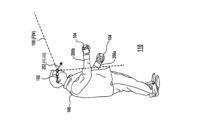
図2A~図2Bは、ARシーン、及び実質的にリアルタイムで生成されてユーザ100の現実の腕206a~206bの修正された画像を含む調整されたARシーン204aとインタラクトするようにインタフェースオブジェクト104を操作している間、ARグラス102を装着するユーザ100の実施形態を示す。図2Aに示されるように、ユーザ100は、AR HMD102を装着し、インタフェースオブジェクト104を操作し、AR環境のARシーンとインタラクトするための入力を提供するように、実世界空間110内に物理的に位置しているように示されている。いくつかの実施形態では、システムは、ARシーン内のFOV108を分析して、実世界空間110内の実世界オブジェクトの画像を検出するように構成される。他の実施形態では、システムは、FOV108がユーザに向けられる場合、ARシーン中でのFOVを分析して、ユーザの身体特徴(例えば、腕、手、二頭筋、腹部、脚など)の画像を検出するように構成される。例えば、図2Aに示されるように、ユーザ100の視線方向202は、ユーザ100の現実の腕206a~206bに向けられる。従って、システムは、ARシーンがユーザ100の現実の腕206a~206bを含むと決定することができる。
2A-2B show an embodiment of a
いくつかの実施形態では、図2Bを参照すると、システムは、ユーザ100のARグラス102のディスプレイ216上で見える調整されたARシーン204aを実質的にリアルタイムで生成するように構成される。図示のように、調整されたARシーン204aは、ユーザの視線方向202がユーザの腕に向けられる場合のユーザ100のディスプレイ216からのビューである。一実施形態では、調整されたARシーン204aは、ユーザの身体特徴がARシーン内にあると検出される場合のユーザの身体特徴の修正された画像を含み得る。例えば、図2Aを参照すると、ARシーンがユーザ100の現実の腕206a~206bを含むとシステムが決定した後、システムは、ARシーンを調整して、仮想腕206a’~206b’を含む調整されたARシーン204aを生成するように構成される。一実施形態では、仮想腕206a’~206b’は、修正されており、ARグラスを介して見える現実の腕206a~206bの仮想表現である。
2B, in some embodiments, the system is configured to generate an adjusted
図2Bに示される図示の例では、仮想腕206a’~206b’のサイズ及び形状は現実の腕206a~206bの修正であり、仮想腕206a’~206b’は、ユーザの現実の腕206a~206bに対してより大きく筋骨たくましくなる。例えば、仮想腕206a’~206b’は、ユーザの現実の腕206a~206bよりも、筋肉量が多くなっても、筋肉が非常に際立っていても、胴回りが大きくなっても、体脂肪率が低くなっても、長くなってもよい。このように、ユーザがAR HMDを介して自身を観察する場合、ユーザ100は、敵ゲームキャラクタと交戦するときに、自分の仮想腕206a’~206b’がARシーン内の他者にはより威圧的に見えるため、より自信に満ちていることができる。
In the illustrated example shown in FIG. 2B, the size and shape of the
一実施形態では、ユーザの身体特徴(例えば、現実の腕206a~206b)の修正は、身体特徴から奥行きデータ及び元のテクスチャデータを検出して、身体特徴の仮想メッシュを生成することを含み得る。いくつかの実施形態では、外向きカメラは、そのFOV内の身体特徴及び他のオブジェクトに関連する奥行きデータ及び元のテクスチャデータを検出するように構成される。一実施形態では、仮想メッシュは、サイズ及び形状で変化させることができ、元のテクスチャデータとブレンドする修正されたテクスチャデータを使用して、仮想オブジェクトとしてレンダリングされることができる。例えば、図2A及び図2Bを同時に参照すると、AR HMD102の外向きカメラがユーザ100の現実の腕206a~206bに関連する奥行きデータ及び元のテクスチャを検出した後、システムは、現実の腕206a~206bの仮想メッシュを生成する。現実の腕206a~206bの仮想メッシュを使用して、システムは、仮想メッシュのサイズ及び形状を変化させて、元のテクスチャデータと修正されたテクスチャデータとのブレンドを含む仮想腕206a’~206b’を生成することができる。
In one embodiment, modifying a user's physical features (e.g.,
いくつかの実施形態では、身体特徴及び実世界オブジェクトは、奥行きデータなどの3次元特徴を含み得る。一実施形態では、奥行きデータは、対応する身体特徴及び実世界オブジェクトのワイヤフレームモデルを生成するために使用されることができる。いくつかの実施形態では、ユーザの身体特徴を修正する場合、システムは、元の奥行きデータをベースラインとして使用して、身体特徴の修正された画像を生成するように構成される。他の実施形態では、身体特徴及び実世界オブジェクトは元のテクスチャデータ、サーフェス輪郭、しわ、たるみ、縦じわなど、様々なサーフェスパラメータを含み得る。例えば、各ユーザ100は、視覚的及び物理的に区別可能な自分の皮膚に関連する一意で異なるテクスチャ、例えば柔らかい、滑らか、粗い、乾いた、鱗状の割れなどを有し得る。いくつかの実施形態では、ユーザの修正された身体特徴は、元のテクスチャデータを修正されたテクスチャデータとブレンドして、元のテクスチャ及び修正されたテクスチャの境界に沿った遷移がシームレスであり、互いに動的に統合されて見える仮想メッシュを生成する。
In some embodiments, the physical features and real-world objects may include three-dimensional features, such as depth data. In one embodiment, the depth data may be used to generate wireframe models of the corresponding physical features and real-world objects. In some embodiments, when modifying a user's physical features, the system is configured to generate modified images of the physical features using the original depth data as a baseline. In other embodiments, the physical features and real-world objects may include original texture data, various surface parameters, such as surface contours, wrinkles, sagging, vertical lines, etc. For example, each
いくつかの実施形態では、仮想メッシュは、3Dモデルの高さ、幅、及び奥行きを定義するために、X、Y、及びZの地理座標での基準点を使用するデータを含み得る。いくつかの実施形態では、仮想メッシュは、3Dでユーザの身体特徴を表すようにARシーン中でレンダリングされることができる。いくつかの実施形態では、仮想メッシュは、サイズ及び形状を変化させて、特定のコンフィグレーションを達成するように変形されることができる。 In some embodiments, the virtual mesh may include data that uses reference points in X, Y, and Z geographic coordinates to define the height, width, and depth of a 3D model. In some embodiments, the virtual mesh can be rendered in an AR scene to represent the user's physical features in 3D. In some embodiments, the virtual mesh can be deformed to change size and shape to achieve a particular configuration.
図2C~図2Dは、ARシーン、及び実質的にリアルタイムで生成されてユーザの身体の修正された画像を含む調整されたARシーン204bとインタラクトするようにインタフェースオブジェクト104を操作している間、ARグラス102を装着するユーザ100の実施形態を示す。図2Cに示されるように、ユーザ100は、AR HMD102を装着し、インタフェースオブジェクト104を操作し、AR環境のARシーンとインタラクトするための入力を提供するように、実世界空間110内に物理的に位置しているように示されている。図2Cに示されるように、ユーザ100の視線方向202は、ユーザの中央部及び下肢に向けられる。従って、システムは、ARシーンがユーザの現実の腕、脇部、及び脚を含むと決定することができる。
2C-2D show an embodiment of a
いくつかの実施形態では、図2Dを参照すると、システムは、ユーザ100のARグラス102のディスプレイ216上で見える調整されたARシーン204bを実質的にリアルタイムで生成するように構成される。図示のように、調整されたARシーン204bは、ARグラス102のディスプレイ216を介したユーザのFOVからのビューである。一実施形態では、調整されたARシーン204bは、ユーザの身体特徴がARシーン内にあると検出される場合のユーザの身体特徴の修正された画像を含み得る。特に、調整されたARシーン204bは、仮想腕206a’~206b’、仮想腹部208’、及び仮想脚210a’~210b’を含むユーザ100の身体を表す仮想身体103’を含む。図2Dに示される図示の例では、仮想腕206a’~206b’は、現実の腕206a~206bの修正であり、現実の腕のサイズ及び形状は、現実の腕206a~206bに対してより大きく、より筋骨たくましく見える仮想腕206a’~206b’を生成するように修正される。
In some embodiments, referring to FIG. 2D, the system is configured to generate in substantially real time an adjusted
別の例では、仮想腹部208’は、ユーザの腹部208の修正であり、腹部のサイズ及び形状を調整し、ユーザの現実の腹部208に対してより筋骨たくましく際立って見える仮想腹部208’を生成する。さらに別の例では、仮想脚210a’~210b’は、現実の脚210a~210bの修正であり、現実の脚のサイズ及び形状を調整し、現実の脚210a~210bに対してより大きく、より筋骨たくましく見える仮想脚210a’~210b’を生成する。このようにして、アバターがARシーン内のユーザを表すと、アバターは、ユーザ100の身体よりもがっしりして、強く見える仮想身体103’を有する。この結果、ユーザ100がより自信に満ちることにより、ユーザ100が自信をなくしている可能性のあるARシーン内での課題及びタスクをユーザ100に受けるように促し得る。
In another example, the virtual abdomen 208' is a modification of the user's
図2E~図2Fは、ARシーン、及び実質的にリアルタイムで生成されてユーザの身体の修正された画像を含む調整されたARシーン204cとインタラクトするように、ARグラス102を装着するユーザ100の実施形態を示す。図2Eに示されるように、ユーザ100は、AR HMD102を装着し、インタフェースオブジェクト104を操作し、AR環境のARシーンとインタラクトするための入力を提供するように、実世界空間110内に物理的に位置しているように示されている。特に、ユーザ100は、実世界の鏡212の前に立って示され、鏡上に自分の姿を見ることができる。
2E-2F show an embodiment of a
いくつかの実施形態では、図2Fを参照すると、システムは、ユーザ100のARグラス102のディスプレイ216を介して見える調整されたARシーン204cを実質的にリアルタイムで生成するように構成される。図示のように、調整されたARシーン204cは、ユーザの身体特徴がARシーン内にあると検出される場合、ユーザの身体特徴の修正された画像をさらに含み得る、ユーザのアバター100’を示す。特に、調整されたARシーン204cは、ユーザの仮想腕206a’~206b’、仮想腹部208’、仮想脚210a’~210b’、及び仮想毛髪214’を含む。
2F, in some embodiments, the system is configured to generate an adjusted
上述のように、ユーザの身体特徴(例えば、現実の腕、現実の脚、現実の腹部など)の修正は、身体特徴から奥行きデータ及び元のテクスチャデータを検出して、身体特徴の仮想メッシュを生成することを含み得、仮想メッシュはサイズ及び形状を変化させることができる。図2Fに示されるように、生成された仮想メッシュは、ユーザの仮想腕206a’~206b’、仮想腹部208’、仮想脚210a’~210b’、及び仮想毛髪214’を含む、ユーザのアバター100’の仮想身体を表す。従って、ARシーン中のユーザの身体特徴の修正により、ARシーン中の目標、任務、障害物、またはタスクを達成する場合、ユーザが自分自身に自信が満ちていることができるような特定の方法で見える、または現れるように修正されることができる。
As described above, modifying the user's physical features (e.g., real arms, real legs, real abdomen, etc.) may include detecting depth data and original texture data from the physical features to generate a virtual mesh of the physical features, which may vary in size and shape. As shown in FIG. 2F, the generated virtual mesh represents the virtual body of the user's
図3は、AR HMD102を装着しており、ARシーンに入力を提供するためにインタフェースオブジェクト104を操作している間、ARシーンとインタラクトするユーザ100を示すユーザ100のAR環境でのビューの実施形態を示す。図示の例では、AR HMD102のディスプレイ216は、ユーザが丘を駆け上がることを伴うビデオゲームのARシーン204nを示す。一実施形態では、AR HMD102及びインタフェースオブジェクト104上のカメラを使用して、ユーザがHMDを装着しており、ゲームプレイ中にARシーン204nとインタラクトしている間、ユーザの身体活動を監視することができる。例えば、ユーザの身体活動は、ユーザの身体運動、身体運動の速度、表情、ユーザの音声出力、ユーザの視線方向、ユーザのジェスチャ、ユーザのコントローラ入力、コントローラクリック速度などを含み得る。他の実施形態では、AR HMD102及びインタフェースオブジェクト104のセンサは、ゲームプレイ中にユーザ100の生理学的測定値をキャプチャするように構成される。一実施形態では、生理学的測定値は、心拍数、血圧、酸素飽和度、体温など、ユーザに対応する様々な測定値を含み得る。
FIG. 3 illustrates an embodiment of a view of a
例えば、図3に示されるユーザ100は、体をほとんど動かさない生活を送っており、AR関連ビデオゲームに関心がある可能性がある。ユーザのゲームプレイの間、ユーザは大量に発汗していることがあり、システムはユーザの生理学的測定値をキャプチャし得、これら生理学的測定値は、ユーザの心拍数、呼吸、及び体温が平均的なユーザよりも著しく高いことを指示し得る。一部の実施形態では、システムは、ユーザの感情を決定して、ユーザが自分のゲームプレイを楽しんでいるかどうかを決定するように構成される。一実施形態では、AR HMD102のカメラは、ゲームプレイ中のユーザ100の表情を追跡してキャプチャするように構成されてもよく、これら表情を分析して、表情に伴う感情を決定する。いくつかの実施形態では、ユーザの身体活動と生理学的測定値との両方を使用して、ユーザの感情を決定することができる。図3に示される図示の例では、システムは、ユーザが疲労していることを指示する表情をユーザがしていると決定し得る。ユーザ100は、著しく高い心拍数を経験しており、ユーザが疲労しているように見えるため、ユーザが苦闘しており、ゲームプレイを続ける気をなくしている可能性があると推論されることができる。
For example, the
従って、いくつかの実施形態では、システムは、ゲームプレイの描写された強度を調整して、ユーザがビデオゲームをプレイし続けることを促すように構成される。図3でのディスプレイ216を参照すると、ARシーン204nは、ユーザのアバター100’が取り得る対応する経路と共に3つの描写された強度302a~302nに沿ってユーザのアバター100’が丘を駆け上がることを示す。図示の例では、ARシーン204nは、ゲームプレイ中の任意の時点でユーザ100に導入されることができる合計3つの描写された強度302a~302nを示す。一実施形態では、描写された強度302a~302nのそれぞれは、ARシーン内のゲームタスクがユーザにとってどの程度困難である、または難しい可能性があるかという知覚をユーザ100に提供し得る。
Thus, in some embodiments, the system is configured to adjust the depicted intensity of the gameplay to encourage the user to continue playing the video game. Referring to the
例えば、最も大きい勾配を有する経路を含む描写された強度302aは、描写された強度302b及び描写された強度302nに関連する経路よりも大きい勾配を有するため、ユーザ100にとって最も困難であるように見える場合がある。いくつかの実施形態では、描写された強度302a~302nごとに、ユーザにとってゲームタスクがどの程度困難に見えるかという知覚のみが変化し(例えば、経路勾配に対して変化し)、ユーザ100が描写された強度ごとのゲームタスクを達成するために用いる、身体強度及び労力の量は同じままである。言い換えれば、丘が描写された強度302aに関連する丘と比較してあまり困難ではないと知覚される、描写された強度302nがユーザ100に提示される場合、描写された強度302a及び描写された強度302nで丘を登ることを達成するためにユーザ100’にかかる身体労力の量は実質的に同じままである。このように、ゲームプレイに見切りをつける間際にあるユーザに、より低い勾配(例えば、描写された強度302n)を有する丘を登るゲームタスクが提示される場合、より低い勾配を有する丘が登り易く見えるため、ユーザは自分のゲームプレイを継続する可能性がより高くなり得る。
For example, the depicted intensity 302a, which includes the path with the greatest gradient, may appear to be the most difficult for the
図3にさらに示されるように、ユーザ100がARシーン204nとインタラクトする場合、システムは、ユーザの身体活動及び生理学的測定値を連続的に追跡して監視するように構成される。一部の実施形態では、ユーザのゲームプレイ中の任意の時点で、ユーザ100がゲームプレイに苦闘しており、見切りをつける間際にあると決定される場合、システムは、ARシーン204nの描写された強度302aを動的に調整することができる。例えば、ディスプレイ216上に図示されるように、時間t1では、システムは、ユーザ100が激しく呼吸しており、大量に発汗しており、ユーザが動揺していることをユーザの表情が指示すると決定し得る。従って、時間t1では、システムは、描写された強度302aを、勾配が低くなった丘を含み、そのうえ登り易く見える、描写された強度302bに動的に調整するように構成される。別の例では、時間t2では、システムは、描写された強度302bを、さらに勾配が低くなった丘を含み、そのうえ経路が最も登り易く見える、描写された強度302nにさらに調整してもよい。その結果、システムは、描写された強度の強度を下げて、その知覚を変化させ、ユーザが見切りをつけないように促すように構成される。代替に、他の実施形態では、システムは、ゲームタスクが簡単すぎると感じ得るユーザが挑戦するために、描写された強度の強度を増加させるように構成される。
As further shown in FIG. 3, when the
他の実施形態では、ユーザがゲームプレイに対して興奮しており肯定的であることをユーザの表情または他のインジケータが示す場合、システムは、描写された強度に対していかなる変化または調整も行うことなく、対応する描写された強度に関連する経路に沿ってユーザが継続することを可能にする。例えば、時間t2に示されるように、描写された強度302aの経路に沿って、ユーザ100及びユーザのアバター100’は、「はい!もうすぐ頂上です」という言葉を笑顔で表している。従って、ユーザの生理学的測定値のレベルが高まり得るが、ユーザ100は丘の頂上に到達する気になっており、システムは描写された強度302aに対していかなる調整も行わない。
In other embodiments, if the user's facial expression or other indicator indicates that the user is excited and positive about the gameplay, the system allows the user to continue along the path associated with the corresponding depicted intensity without making any changes or adjustments to the depicted intensity. For example, as shown at time t2, along the path of depicted intensity 302a,
いくつかの実施形態では、モデルを使用して、ゲームプレイの描写された強度302を、知覚される難易度レベルが高くなっている描写された強度から、知覚される難易度レベルが低くなっている(例えば、丘の勾配を低下させている)描写された強度まで、動的に調整することができる。逆に、他の実施形態では、モデルを使用して、知覚される難易度がユーザ100にとってより困難に見えるように描写された強度302を動的に調整することができる。例えば、生理学的測定値及びゲームプレイデータを入力として使用して、このモデルは、ユーザがゲームに退屈しており、見切りをつけ始めていると決定するために使用され得る。ユーザ100がプレイし続けるように促すために、モデルを使用して、ARシーン内のゲームタスクまたは障害物がより困難で、ユーザにとってより難しく見えるように、描写された強度302を動的に調整する。いくつかの実施形態では、システムは、ゲームコードを動的に調整することで、ARシーン内の障害物または課題の知覚を変化させることによって、描写された強度302を変化させるように構成される。他の実施形態では、描写された強度302の調整は、ゲーム状態パラメータ及びゲームエンジングラフィックスを変化させることにより、対応する強度または難易度の設定でゲームコンテンツをレンダリングすることを必要とする。従って、モデルは、ARシーン204の描写された強度302を動的に変化させるために使用されることができ、ユーザの身体特徴がARシーン内で拡張される自己拡張フィルタを実装するために使用されることができる。従って、ビデオゲームの描写された強度における変化がユーザにとってあまり威圧的に見えなくし得るため、ユーザ100の自己評価及び自信を改善することができ、ユーザはゲームプレイとインタラクトし続けるように促され得る。
In some embodiments, the model can be used to dynamically adjust the depicted intensity 302 of the gameplay from a depicted intensity that is increasing the perceived difficulty level to a depicted intensity that is decreasing the perceived difficulty level (e.g., decreasing the slope of a hill). Conversely, in other embodiments, the model can be used to dynamically adjust the depicted intensity 302 so that the perceived difficulty appears more difficult to the
図4は、ユーザ100a~100bがそれぞれのAR HMD102及びインタフェースオブジェクト104を介してAR環境中でインタラクトしている実施形態を示す。示されるように、ユーザ100a及び100bは、AR HMD102及びインタフェースオブジェクト104を使用して、AR環境内で互いにインタラクトするように、実世界空間110内に物理的に位置している。特に、ユーザ100a~100bは、自宅の居間で、戦闘シーンを含むゲームタスクをどのように達成するかについて互いに戦略を入念にたてていることが示されている。図示の例では、ユーザ100aのAR HMD102aのディスプレイ216aは、ユーザ100aのFOVからの調整されたARシーン204nを示す。特に、ディスプレイ216aは、仮想オブジェクト404a(例えば、銃)及び実世界オブジェクト402(例えば、長椅子)を保持するユーザ100bを表すアバター100b’を示す。いくつかの実施形態では、ユーザ100bのアバター100b’は、修正された様々な身体特徴、例えば、仮想腕、仮想脚などを含む、ユーザ100bの身体を表す仮想身体103b’を含む。図示の例では、仮想腕及び仮想脚のサイズ及び形状は、ユーザ100bの現実の腕及び脚の修正形態であるため、仮想腕及び仮想脚はより大きく、非常に筋肉質な特徴になる。その結果、システムは、ARシーン内のチームメイトまたは他のユーザの外観を変化させるように構成されるため、チームメイトは、実際の実生活での見た目と比較して、より威圧的であるように、またはより大胆であるように見える。
4 illustrates an embodiment in which
いくつかの実施形態では、システムは、ユーザの音声の音を変化させるように構成される。例えば、ディスプレイ上に示されるように、アバター100b’が「戦闘準備ができた」と明言する場合、システムは、アバター100b’がARシーンではより親しみやすい、自信に満ちている、または興奮しているように思われるように、ユーザ100bの音声の音(例えば、ピッチ、トーン、音量、強度、速度など)に調整を行うように構成される。図4にさらに示されるように、ユーザ100bのAR HMD102bのディスプレイ216bは、ユーザ100bのFOVからの調整されたARシーン204nを示す。特に、ディスプレイ216bは、実世界のドアの前に立っている間、仮想オブジェクト404b(例えば、銃)を保持しているユーザ100aのアバター100a’を示す。いくつかの実施形態では、ユーザ100aのアバター100a’は、形状及びサイズが調整されているユーザ100aの様々な身体特徴を含む、ユーザ100aの身体を表す仮想身体103a’を含む。図示の例では、ユーザ100aの仮想身体103a’のサイズ及び形状は、ユーザ100aの現実の身体よりも大きく、筋骨たくましい。
In some embodiments, the system is configured to change the sound of the user's voice. For example, if
一部の実施形態では、モデルを使用して、ユーザ100a~100bの身体特徴を動的に修正して、ユーザの身体特徴の仮想メッシュを生成することができ、この仮想メッシュは、それぞれのユーザのディスプレイ上にレンダリングするためにサイズ及び形状を変化させることができる。一実施形態では、モデルは、ユーザの身体特徴を修正するために、ユーザのプロファイル、ユーザキャプチャ生理学的測定値、ユーザキャプチャ身体測定値、及びゲームプレイデータを入力として受信することができてもよい。例えば、図4を参照すると、ユーザ100bに関連する身体測定値は、ユーザが105lbであり、たくましくない身体構造を有することを示し得る。ゲームプレイデータは、ユーザ100a~100bが戦闘シーンで敵兵士とインタラクトしていることを示し得る。前述の入力に基づいて、モデルを使用して、例えばユーザがよりたくましく見せるようにサイズ、形状、幾何学的形状などを調整する、調整されたARシーン内で見た場合、よりたくましく、親しみやすく見える身体特徴を有するユーザ100bのアバター100b’を生成することができる。このようにして、ユーザ100aが戦闘シーン中にユーザ100bと並んで戦う場合、ユーザ100bのアバター100b’がより攻撃的で威圧的であるように見えるため、ユーザ100aはユーザ100bと並んで戦う場合により大胆な気持ちになり得る。
In some embodiments, the model can be used to dynamically modify the physical characteristics of
図5は、AR環境のARシーンとのユーザインタラクション中にユーザ100に対応する様々なキャプチャされた測定値504を含む表502の実施形態を示す。示されるように、キャプチャされた測定値504は、ユーザ100の生理学的測定値及び身体測定値と、それに対応する調整値506とを含む。一実施形態では、ユーザ100がARインタラクティブコンテンツとインタラクトしている間、システムは、ゲームプレイ中にユーザに関連する様々な生理学的測定値をキャプチャするように構成される。一例では、生理学的測定値は心拍数、血圧、酸素飽和度、呼吸、体温などを含み得る。さらに示されるように、キャプチャされた測定値504は、身長、体重、体脂肪率など、ユーザ100に関連する様々な身体測定値を含み得る。
5 illustrates an embodiment of a table 502 including various captured
いくつかの実施形態では、システムは、仮想環境中のユーザ100のアバター100’の生理学的測定値及び身体測定値を表すために使用され得る、対応する調整値506を決定するように構成される。ユーザ100のキャプチャされた測定値504及びその対応する調整値506の例示を提供するために、一例では、システムは、ゲームプレイデータに基づいて、ユーザ100が敵ゲームキャラクタとの戦闘シーンを含むARシーンとインタラクトしていると決定し得る。さらに、ユーザのキャプチャされた測定値に基づいて、ユーザは、身長5’2"及び体重260lbであり、体脂肪率45%を有する。さらに示されるように、システムは、ユーザの心拍数が120(BPM)であり、ユーザが過度に呼吸して発汗していると決定することができる。従って、ユーザの自己評価を引き上げ、ユーザが敵ゲームキャラクタに打ち勝つことができるという自信をユーザに与えるために、システムは、ユーザ100のアバター100’に対応する調整値506を生成して、アバター100’が現実の生活でのユーザ100よりもたくましく、体型で優れているように見せるように構成される。
In some embodiments, the system is configured to determine corresponding adjustment values 506 that may be used to represent physiological and physical measurements of the
図示のように、ユーザのアバター100’の身体測定値に対応する調整値506は、アバター100’が身長6’2”及び体重205lbであり、体脂肪率18%を有することを示す。さらに、アバター100’の生理学的測定値に対応する調整値506は、ユーザの心拍数が85(BPM)であることを示す。一実施形態では、システムは、ユーザの発汗量を調整し得る。例えば、ユーザ100が過度に発汗している場合、システムは、アバターの発汗強度をより低い強度まで調整し得る。いくつかの実施形態では、システムは、アバター100’によって作られる音、例えばその呼吸を調整して、アバター100’の呼吸に関連する音を低減させるように、例えば、苦しそうにあえがせるのではなく、より制御して、安定して呼吸させるように構成される。従って、調整値506は、ユーザ100に、ユーザの実世界に対してAR環境中のユーザがより高いレベルの持久力及び体力を有するという知覚を与えることができる。このようにして、ユーザ100は、強い身体運動及び活動を必要とし得るARシーン内でインタラクトする場合、より自信に満ちていることができる。参照として、図5に示される表は、健康なユーザの様々な生理学的測定値及び身体測定値の範囲508をさらに含み得る。一実施形態では、範囲508は、調整値506を生成する際の参照として使用されることができる。
As shown, adjustments 506 corresponding to the body measurements of the user's
図6は、ユーザプロファイル602、ユーザキャプチャ測定値604、及びゲームプレイデータ606を入力として使用して、ユーザのディスプレイ上でのレンダリングのためにARシーンを動的に調整するためのモデル620を使用するための方法の実施形態を示す。上述のように、ARシーンを調整することは、実質的にリアルタイムで実行され得、自己拡張フィルタを実装して、ユーザの身体特徴を修正することができる。また上述のように、いくつかの実施形態では、ARシーンを調整することは、ゲームタスクまたは課題を、達成するのがより実現可能であると知覚するように、対応するARシーンの描写された強度を調整することを含み得る。このようにして、これにより、ユーザは自分の身体特徴がARシーン内でよりたくましく見えて、ARシーンがユーザにあまり脅威的でなく見える場合、ユーザが自分自身により自信を持ち得るため、自己評価が低いユーザのARエクスペリエンスを向上させて改善させることが容易になる。次に、これは、ユーザがARインタラクションセッションに見切りをつけ、それを終了させるのではなく、自分のゲームプレイを継続するように促す。
6 illustrates an embodiment of a method for using a
図6に示されるように、一実施形態では、システムは、ユーザプロファイル602、ユーザキャプチャ測定値604、及びゲームプレイデータ606内の様々な特徴量を識別するように構成される特徴量抽出動作(例えば、608、610、612)を含み得る。特徴量抽出動作が入力に関連する特徴量を識別した後、分類器動作(例えば、614、616、618)は、1つ以上の分類器を使用して特徴量を分類するように構成され得る。いくつかの実施形態では、システムは、分類器動作から分類された特徴量を受信するように構成されるユーザモデル620を含む。分類された特徴量を使用して、モデル620は、自己拡張フィルタを実装することによってユーザの身体特徴を修正し、ARシーンの描写された強度を調整するために使用されることができる。いくつかの実施形態では、動作622は、モデル620を使用して、ユーザのどの身体特徴を修正すべきか、そしてどの調整をARシーンの描写された強度に行うべきかを決定することができる。
As shown in FIG. 6, in one embodiment, the system may include feature extraction operations (e.g., 608, 610, 612) configured to identify various features within the
別の実施形態では、サーバ628に位置しているクラウドコンピューティング及びゲームシステム114は、ユーザの修正された身体特徴及びARシーンの調整された描写された強度を、処理のために動作622から受信し得る。いくつかの実施形態では、クラウドコンピューティング及びゲームシステム114は、ARユーザインタラクションプロセッサ630と協働して、ユーザの修正された身体特徴及びARシーンの調整された描写された強度を処理して、ARインタラクティブコンテンツを含む調整されたARシーンを生成し得る。一実施形態では、動作624では、ユーザは、ARグラスを装着しているユーザのディスプレイ上にレンダリングされることができるARインタラクティブコンテンツを受信するように構成される。
In another embodiment, the cloud computing and
一実施形態では、システムは、ユーザプロファイル602を処理することがある。ユーザプロファイル602は、パーソナリティ特性(例えば、大胆、臆病、低い自己評価、楽観的、悲観的、リスクテイカーなど)ゲームプレイ傾向、ビヘイビア傾向、視聴履歴、プリファレンス、関心、無関心など、ユーザ100に関連する様々な属性及び情報を含み得る。他の実施形態では、ユーザプロファイル602は、身長、体重、体脂肪率、肌の色、肌のきめ、及びユーザの身体特徴に関連する任意の他の属性など、ユーザに関連する様々な身体測定値を含み得る。いくつかの実施形態では、ユーザプロファイル抽出608動作は、ユーザプロファイル602を処理して、ユーザ100のプロファイルに関連する特徴量を識別し、抽出するように構成される。ユーザプロファイル抽出608動作がユーザプロファイル602からの特徴量を処理して識別した後に、ユーザプロファイル分類器614動作は、1つ以上の分類器を使用して特徴量を分類するように構成される。一実施形態では、特徴量は、モデル620によってさらに洗練するための分類アルゴリズムを使用してラベル付けされる。
In one embodiment, the system may process a
別の実施形態では、システムは、ユーザキャプチャ生理学的測定値604を処理することができる。いくつかの実施形態では、ユーザキャプチャ測定値604は、心拍数、血圧、酸素飽和度、呼吸、体温など、ユーザに関連する様々な生理学的測定値を含み得る。上述のように、ユーザの身体活動は、AR環境とのユーザインタラクション中に連続的に監視され、追跡される。ユーザがAR環境とインタラクトしている間、システムは、ゲームプレイ中の任意の時点でユーザの生理学的測定値を追跡し、キャプチャするように構成される。他の実施形態では、ユーザキャプチャ測定値604は、身体運動データ、表情データ、視線データ、音声キャプチャデータ、フェイスキャプチャデータ、コントローラ入力データなど、ユーザ活動に関連する様々なキャプチャされた属性及び情報も含み得る。例えば、ユーザ100は、ユーザよりも大柄で身体的に強く見える敵キャラクタとユーザが戦闘していることを伴う、ARシーンとインタラクトしている可能性がある。ユーザプロファイル、キャプチャされた心拍数データ、及びフェイスキャプチャデータに基づいて、システムは、ユーザが敵キャラクタを恐れており、敵キャラクタによって威嚇されていると決定し得る。従って、システムは、ARシーン内のユーザのアバターが敵キャラクタよりも大柄で身体的に強く見えるように、ユーザの身体特徴を修正して、現すことができる。
In another embodiment, the system can process user captured
いくつかの実施形態では、ユーザキャプチャ測定値特徴量抽出610動作は、ユーザキャプチャ測定値604を処理して、ユーザのユーザキャプチャ測定値に関連する特徴量を識別し、抽出するように構成される。ユーザキャプチャ測定値特徴量抽出610の動作がユーザキャプチャ測定値604から特徴量を処理して識別した後、ユーザキャプチャ測定値分類器616の動作は、1つ以上の分類器を使用して特徴量を分類するように構成される。一実施形態では、特徴量は、モデル620によってさらに洗練するための分類アルゴリズムを使用してラベル付けされる。
In some embodiments, the user captured
別の実施形態では、システムは、ゲームプレイデータ606を処理することがある。一実施形態では、ゲームプレイデータ606は、実世界空間、実世界オブジェクト、仮想オブジェクト、日付、時間、インタラクションに関するコンテキストデータなどで、ユーザがインタラクトしているAR環境のコンテキストに関連する様々な情報を含み得る。いくつかの実施形態では、ゲームプレイデータ特徴量抽出612の動作は、ゲームプレイデータ606を処理して、ユーザのゲームプレイデータに関連する特徴量を識別して抽出するように構成される。ゲームプレイデータ特徴量抽出612がゲームプレイデータ606からの特徴量を処理して識別した後に、ゲームプレイデータ分類器618の動作は、1つ以上の分類器を使用して特徴量を分類するように構成される。いくつかの実施形態では、特徴量は、モデル620によってさらに洗練するための分類アルゴリズムを使用してラベル付けされる。
In another embodiment, the system may process
いくつかの実施形態では、モデル620は、分類特徴量(例えば、ユーザプロファイル分類特徴量、ユーザキャプチャ測定値分類特徴量、ゲームプレイデータ分類特徴量)を入力として受信するように構成される。別の実施形態では、直接入力ではない、または入力/フィードバックの欠如である他の入力もまた、モデル620への入力として取得されてもよい。モデル620は、自己拡張フィルタを実装することによってユーザの身体特徴を修正し、ARシーンの描写された強度を調整するために使用されることができる機械学習モデルを使用し得る。他の実施形態では、モデル620は、調整されたARシーンに応答する、ユーザキャプチャ測定値に対する更新に関連するデータなどのフィードバックデータを入力として受信することができる。
In some embodiments,
一例では、ユーザに関連するユーザプロファイル602は、ゲームタスクが困難すぎる、または難しすぎるように見える場合、ユーザが自分のゲームプレイセッションに見切りをつけて、それを終了させる傾向を有することを示し得る。さらに、ゲームプレイデータ606は、ユーザが複数の敵兵士との戦闘シーンを含むARインタラクティブコンテンツとインタラクトしていることを示し得る。ARインタラクティブコンテンツとインタラクトしている間、ユーザに関連するユーザキャプチャ測定値604に基づいて、システムは、ユーザが圧倒されていること、そしてユーザの血圧が過度であることを示す表情をユーザが有すると決定し得る。その結果、システムは、ARインタラクティブコンテンツに関連する描写された強度302が強すぎること、そしてユーザがゲームプレイセッションを終了させる可能性があることを推論し得る。従って、ユーザプロファイル602、ユーザキャプチャ測定値604、及びゲームプレイデータ606を使用して、モデル620は、ARインタラクティブコンテンツに関連する描写された強度302を調整するために使用され得る。一例では、システムは、ユーザがARコンテンツによって圧倒されないように、敵兵士の数を最小にすること、敵兵士の身体特徴を修正してあまり親しみやすく見せないこと、またはARインタラクティブコンテンツの強度に関連する任意の他の変化によって、描写された強度302を調整し得る。他の実施形態では、モデル620を使用して、ユーザの身体特徴を調整して修正し得る。例えば、このモデルを使用して、ユーザのアバターにさらなる体肢(例えば、腕、脚など)を追加し、ユーザの音声の音を変化させて、ユーザがより身体的に威圧的で、自信に満ちているように見え、また聞こえるという知覚をユーザに提供することができる。
In one example, the
いくつかの実施形態では、動作622は、ユーザの身体特徴を修正するために、モデル620を使用して、ARシーンの描写された強度302に行うべき調整のタイプと、実装すべき自己拡張フィルタのタイプとを決定することができる。描写された強度302に対する調整及び自己拡張フィルタに関連するデータが決定されると、このデータは、処理のためにサーバ628によって受信される。いくつかの実施形態では、サーバ628は、クラウドコンピューティング及びゲームシステム114と、ARユーザインタラクションプロセッサ630とを含み得る。一実施形態では、クラウドコンピューティング及びゲームシステム114は、処理のために描写された強度に対する調整及びユーザの身体特徴に対する調整を受信し得る。一実施形態では、クラウドコンピューティング及びゲームシステム114は、様々なARシーンを含み得る環境のARインタラクティブコンテンツ及びコンテキストを生成するように構成される。一実施形態では、ARシーンは、ユーザインタラクションと、ユーザインタラクティビティの進行とに基づいて連続的に更新される。
In some embodiments,
いくつかの実施形態では、クラウドコンピューティング及びゲームシステム114は、ARユーザインタラクションプロセッサ630と協働して、調整されたARシーン内のユーザの調整された描出された強度及び修正された身体特徴をレンダリングし得る。例えば、ARユーザインタラクションプロセッサ630は、勾配が急な丘をユーザが登ることによって自信をなくしていることをユーザの表情が指示すると決定し得る。従って、クラウドコンピューティング及びゲームシステム114は、丘が急に見えず、勾配が低い丘を含む、描写された強度が低い丘をレンダリングした場合、ユーザがより楽しいARエクスペリエンスを有すると推論し得る。
In some embodiments, the cloud computing and
クラウドコンピューティング及びゲームシステム114、ARユーザインタラクションプロセッサ630がARインタラクティブコンテンツを生成した後、動作624は、ARインタラクティブコンテンツを受信するように構成されるため、ユーザ100は、ARインタラクティブコンテンツとインタラクトすることができる。一実施形態では、ARインタラクティブコンテンツは、ARシーンの描写された強度302に対して行われた様々な調整と、ユーザの身体特徴を修正するための自己拡張フィルタの実装とを有する、調整されたARシーンを含み得る。いくつかの実施形態では、ユーザが調整されたARシーンとインタラクトしている間、ユーザが修正されたARシーンに応答する場合、動作604は、ユーザキャプチャ測定値に対するフィードバック及び更新を連続的に受信することができる。このフィードバックは、ARシーンに対して行われる調整へのユーザ応答を評価するように構成されることができる。フィードバックは、ユーザによって明示されても、または黙示されてもよい。例えば、ARシーン内の丘の勾配があまり急でない勾配を有するように低下し、ユーザが圧倒されていることを示す表情をユーザが表し続ける場合、丘の勾配をさらに低下させることができる。従って、様々な推論は、ユーザのフィードバックによってキャプチャされることができ、ユーザキャプチャ測定値604及びユーザプロファイル602に組み込まれることができることにより、描写された強度及びユーザの身体特徴に対する調整がより正確になるのに役立つことができる。
After the cloud computing and
図7は、ユーザのARシーンを生成し、ユーザの身体特徴の修正画像を含むようにARシーンを調整するための方法を示す。一実施形態では、図7に記載の方法は、ユーザの身体特徴を修正して、AR環境中でユーザをよりたくましく、強く見せることができるため、ユーザに大きい自信感を与える。この結果、ユーザは、AR環境中の障害物または課題によって自信に満ちているようになり得、またあまり自信をなくしていなくなり得るため、ユーザのARエクスペリエンスが向上し、改善されることができる。一実施形態では、方法は、拡張現実(AR)グラスを装着しているユーザのディスプレイ上にレンダリングするためのARシーンを生成するように構成される動作702を含む。いくつかの実施形態では、ARシーンは、実世界空間と、実世界空間にオーバーレイされた仮想オブジェクトとを含む。例えば、ユーザは、ディスプレイを含むARゴーグルを装着していてもよい。実世界オブジェクトと仮想オブジェクトとの両方を含むAR環境中に没入している間、ユーザは、ユーザに表示される様々な仮想オブジェクト及び実世界オブジェクトとインタラクトすることができる。
7 illustrates a method for generating an AR scene for a user and adjusting the AR scene to include a modified image of the user's physical features. In one embodiment, the method of FIG. 7 modifies the user's physical features to make the user appear more muscular and stronger in the AR environment, thereby providing the user with a greater sense of confidence. As a result, the user may become more confident and less challenged by obstacles or challenges in the AR environment, thereby enhancing and improving the user's AR experience. In one embodiment, the method includes an
図7に示される方法は、次いで、動作704に進み、この動作は、ARグラスからARシーン内への視野を分析して、ユーザの身体特徴の画像を検出するように構成される。一実施形態では、動作704は、視野がユーザ(または他のユーザ)の身体特徴の少なくとも一部に向けられる場合、ユーザの身体特徴の画像を検出するように構成される。例えば、ユーザがAR環境内で様々な方向で動き回り、見回る場合、AR HMD102のFOV108は、ユーザの手、腕、腹部、脚、足などのユーザの身体特徴を検出し得る。別の例では、AR HMD102のFOV108は、AR環境内のその他のユーザ及びゲームキャラクタの身体特徴を検出し得る。一部の実施形態では、動作704は、外向きカメラを使用して、身体運動データ、視線データ、音声キャプチャデータ、フェイスキャプチャデータ、及びコントローラ入力データなど、ユーザの様々な身体活動を検出するように構成される。
7 then proceeds to
方法は動作706に進み、この動作は、ARシーンを実質的にリアルタイムで調整して、ARグラスの視野から見たARシーン内にあると検出されるユーザの身体特徴または他のユーザの身体特徴の画像の少なくとも一部を修正するように構成される。いくつかの実施形態では、動作706は、身体特徴から奥行きデータ及び元のテクスチャデータを検出してこの身体特徴の仮想メッシュを生成することを含む、ユーザの身体特徴の画像を修正するように構成される。一実施形態では、仮想メッシュは、3Dでユーザの身体特徴を表すようにARシーン中でレンダリングされることができる。いくつかの実施形態では、仮想メッシュは、サイズ及び形状を変化させて、特定のコンフィグレーションを達成するように変形されることができる。例えば、システムは、仮想メッシュを生成するための大きさによって、またはユーザが好むいずれかの要因によって、身体特徴のサイズ及び形状を増加させても、または減少させてもよい。他の実施形態では、仮想メッシュは、元のテクスチャデータとブレンドする修正されたテクスチャデータを使用してレンダリングされることができる。例えば、修正されたテクスチャデータと元のテクスチャデータとのブレンドにより、仮想メッシュは、修正されたテクスチャデータと元のテクスチャデータとの間の境界に沿って連続的に現れて統合され得る。
The method proceeds to
図8は、本開示の様々な実施形態の態様を実行するために使用できる例示的なデバイス800の構成要素を示す。このブロック図は、本開示の実施形態を実施するのに好適なパーソナルコンピュータ、ビデオゲームコンソール、パーソナルデジタルアシスタント、サーバ、または他のデジタルデバイスを組み込むことができる、またはこれらであり得る、デバイス800を示す。デバイス800は、ソフトウェアアプリケーション及び任意選択的にオペレーティングシステムを動作させる中央処理装置(CPU)802を含む。CPU802は、1つまたは複数の同種または異種の処理コアで構成され得る。例えば、CPU802は、1つまたは複数の処理コアを有する1つまたは複数の汎用マイクロプロセッサである。さらなる実施形態は、クエリの解釈、文脈的に関連するリソースの識別、及び文脈的に関連するリソースのビデオゲーム内での即時実施及びレンダリングなどの処理操作を、高並列及び計算集約的なアプリケーションに特に適合したマイクロプロセッサアーキテクチャを有する1つ以上のCPUを使用して、実施することができる。デバイス800は、ゲームセグメントをプレイするプレーヤにローカライズされたもの(例えば、ゲームコンソール)、またはプレーヤからリモートであるもの(例えば、バックエンドサーバプロセッサ)、またはクライアントへのゲームプレイのリモートストリーミングのためにゲームクラウドシステムで仮想化を使用する多くのサーバの1つであってもよい。
FIG. 8 illustrates components of an
メモリ804は、CPU802が使用するアプリケーション及びデータを格納する。ストレージ806は、アプリケーション及びデータ用の不揮発性ストレージ及び他のコンピュータ可読媒体を提供し、かつ、固定ディスクドライブ、取り外し可能ディスクドライブ、フラッシュメモリデバイス、及びCD-ROM、DVD-ROM、Blu-ray(登録商標)、HD-DVD、または他の光学記憶デバイス、ならびに信号伝送及び記憶媒体を含み得る。ユーザ入力デバイス808は、1人以上のユーザからのユーザ入力をデバイス800へ通信するものであり、その例には、キーボード、マウス、ジョイスティック、タッチパッド、タッチスクリーン、スチルレコーダ/カメラもしくはビデオレコーダ/カメラ、ジェスチャを認識する追跡デバイス、及び/またはマイクロフォンが挙げられ得る。ネットワークインターフェース814は、デバイス800が電子通信ネットワークを介して他のコンピュータシステムと通信することを可能にし、かつ、ローカルエリアネットワーク、及びインターネットなどの広域ネットワークを介する有線または無線通信を含み得る。オーディオプロセッサ812は、CPU802、メモリ804、及び/またはストレージ806によって提供される命令及び/またはデータから、アナログまたはデジタルのオーディオ出力を生成するように適合されている。CPU802、メモリ804、データストレージ806、ユーザ入力デバイス808、ネットワークインターフェース810、及びオーディオプロセッサ812を含むデバイス800の構成要素は、1つ以上のデータバス822を介して接続されている。
グラフィックスサブシステム820がさらに、データバス822及びデバイス800の構成要素と接続されている。グラフィックスサブシステム820は、グラフィックス処理装置(GPU)816及びグラフィックスメモリ818を含む。グラフィックスメモリ818は、出力画像の各画素の画素データを格納するために使用される表示メモリ(例えばフレームバッファ)を含む。グラフィックスメモリ818は、GPU808と同じデバイスに統合する、GPU816に別個のデバイスとして接続する、かつ/またはメモリ804内に実装することができる。画素データは、CPU802から直接グラフィックスメモリ818へ提供することができる。代替として、CPU802は、所望の出力画像を定義するデータ及び/または命令をGPU816に提供し、GPU816は、そこから、1つ以上の出力画像の画素データを生成する。所望の出力画像を定義するデータ及び/または命令は、メモリ804及び/またはグラフィックスメモリ818に格納することができる。実施形態において、GPU816は、シーンの形状、照明、陰影、質感、動き、及び/またはカメラのパラメータを定義する命令及びデータから、出力画像の画素データを生成する3Dレンダリング機能を含む。GPU816はさらに、シェーダプログラムを実行可能な1つまたは複数のプログラム可能実行ユニットを含み得る。
A
グラフィックスサブシステム814は、グラフィックスメモリ818から画像の画素データを定期的に出力して、ディスプレイデバイス810に表示させる。ディスプレイデバイス810は、デバイス800からの信号に応じて視覚情報を表示可能である任意のデバイスであり得、これにはCRT、LCD、プラズマ、及びOLEDディスプレイが含まれる。デバイス800は、ディスプレイデバイス810に、例えばアナログ信号またはデジタル信号を提供することができる。
The graphics subsystem 814 periodically outputs image pixel data from the
現在の実施形態のゲームへのアクセス提供など、広範囲な地域にわたり配信されるアクセスサービスは、多くの場合、クラウドコンピューティングを使用することに留意されたい。クラウドコンピューティングとは、動的にスケーラブルで多くの場合仮想化されたリソースがインターネットを介したサービスとして提供されるコンピューティング様式である。ユーザは、ユーザをサポートする「クラウド」の技術的インフラストラクチャのエキスパートである必要はない。クラウドコンピューティングは、サービスとしてのインフラストラクチャ(IaaS)、サービスとしてのプラットフォーム(PaaS)、サービスとしてのソフトウェア(SaaS)などの異なるサービスに分類することができる。クラウドコンピューティングサービスは、多くの場合、ビデオゲームなどの共通のアプリケーションを、ウェブブラウザからアクセスするオンラインで提供するが、ソフトウェア及びデータは、クラウド内のサーバに記憶される。クラウドという用語は、コンピュータネットワーク図におけるインターネットの描かれ方に基づいたインターネットの隠喩として使用され、複雑なインフラストラクチャを隠し持つことの抽象的概念である。 It should be noted that access services distributed over a wide geography, such as providing access to games in the current embodiment, often use cloud computing. Cloud computing is a computing modality in which dynamically scalable, often virtualized resources are provided as a service over the Internet. Users do not need to be experts in the technical infrastructure of the "cloud" that supports them. Cloud computing can be categorized into different services such as Infrastructure as a Service (IaaS), Platform as a Service (PaaS), and Software as a Service (SaaS). Cloud computing services often provide common applications, such as video games, online, accessed from a web browser, but the software and data are stored on servers in the cloud. The term cloud is used as a metaphor for the Internet based on the way the Internet is depicted in computer network diagrams, and is an abstract concept that hides a complex infrastructure.
ゲームサーバは、いくつかの実施形態では、ビデオゲームプレーヤのための持続的情報プラットフォームの動作を実行するために使用され得る。インターネット上でプレイされる大抵のビデオゲームは、ゲームサーバへの接続を介して動作する。通常、ゲームは、プレーヤからデータを収集し、収集したデータを他のプレーヤに配信する専用サーバアプリケーションを使用する。他の実施形態では、ビデオゲームは、分散型ゲームエンジンによって実行されてよい。これらの実施形態では、分散型ゲームエンジンは、複数の処理エンティティ(PE)上で実行されてよく、その結果、各PEは、ビデオゲームが実行される所与のゲームエンジンの機能セグメントを実行する。各処理エンティティは、ゲームエンジンからは単なる計算ノードと見なされる。ゲームエンジンは通常、機能的に多様な一連の動作を行って、ユーザが体験する追加のサービスと共にビデオゲームアプリケーションを実行する。例えば、ゲームエンジンは、ゲームロジックを実装し、ゲーム計算、物理的過程、ジオメトリ変換、レンダリング、ライティング、シェーディング、音声、及び追加のゲーム内またはゲーム関連サービスを実行する。追加のサービスは、例えば、メッセージング、ソーシャルユーティリティ、音声通信、ゲームプレイ再生機能、ヘルプ機能などを含み得る。ゲームエンジンは、特定のサーバのハイパーバイザによって仮想化されたオペレーティングシステム上で実行されてよいが、他の実施形態では、ゲームエンジン自体が複数の処理エンティティに分散され、各エンティティはデータセンタの異なるサーバユニットに常駐してよい。 A game server may be used in some embodiments to perform the operation of a persistent information platform for video game players. Most video games played on the Internet operate through a connection to a game server. Typically, the game uses a dedicated server application that collects data from the player and distributes the collected data to other players. In other embodiments, the video game may be executed by a distributed game engine. In these embodiments, the distributed game engine may run on multiple processing entities (PEs), such that each PE executes a functional segment of the given game engine on which the video game is executed. Each processing entity is viewed by the game engine as simply a computational node. The game engine typically performs a functionally diverse set of operations to execute the video game application along with additional services experienced by the user. For example, the game engine implements the game logic and performs game calculations, physics, geometry transformations, rendering, lighting, shading, audio, and additional in-game or game-related services. The additional services may include, for example, messaging, social utilities, voice communication, gameplay playback functions, help functions, and the like. The game engine may run on an operating system virtualized by a hypervisor on a particular server, but in other embodiments the game engine itself may be distributed across multiple processing entities, each of which may reside on a different server unit in a data center.
この実施形態によると、実行のために各処理エンティティは、各ゲームエンジンセグメントのニーズに応じて、サーバユニット、仮想マシン、またはコンテナであってよい。例えば、ゲームエンジンセグメントがカメラの変換を担当する場合、比較的単純な数学演算(例えば、行列変換)を多数行うことになるので、その特定のゲームエンジンセグメントは、グラフィックス処理装置(GPU)に関連付けられた仮想マシンとともにプロビジョニングされてよい。より少ないがより複雑な操作を必要とする他のゲームエンジンセグメントは、1つ以上のより高出力の中央処理装置(CPU)に関連付けられた処理エンティティとともにプロビジョニングされてよい。 According to this embodiment, for execution, each processing entity may be a server unit, a virtual machine, or a container, depending on the needs of each game engine segment. For example, if a game engine segment is responsible for camera transformations, which involve a lot of relatively simple mathematical operations (e.g., matrix transformations), that particular game engine segment may be provisioned with a virtual machine associated with a graphics processing unit (GPU). Other game engine segments, which require fewer but more complex operations, may be provisioned with processing entities associated with one or more higher-powered central processing units (CPUs).
ゲームエンジンを分散することにより、ゲームエンジンは、物理サーバユニットの能力に拘束されない弾力性のある計算特性を備える。代わりに、ゲームエンジンは、必要に応じて、ビデオゲームの要求を満たすためにより多いまたは少ない計算ノードとともにプロビジョニングされる。ビデオゲーム及びビデオゲームプレーヤの観点からは、複数の計算ノードに分散されているゲームエンジンは、ゲームエンジンマネージャまたはスーパーバイザがワークロードを分散し、結果をシームレスに統合して、エンドユーザにビデオゲーム出力構成要素を提供するので、単一の処理エンティティで実行される非分散ゲームエンジンと区別できない。 By distributing the game engine, the game engine has elastic computational characteristics that are not bound by the capabilities of a physical server unit. Instead, the game engine is provisioned with more or fewer computational nodes as needed to meet the demands of the video game. From the perspective of the video game and the video game player, a game engine that is distributed across multiple computational nodes is indistinguishable from a non-distributed game engine running on a single processing entity, as the game engine manager or supervisor distributes the workload and seamlessly integrates the results to provide the video game output component to the end user.
ユーザは、少なくともCPU、ディスプレイ、及びI/Oを含むクライアントデバイスにより遠隔サービスにアクセスする。クライアントデバイスは、PC、携帯電話、ネットブック、PDAなどであってよい。一実施形態では、ゲームサーバ上で実行するネットワークは、クライアントが使用するデバイスの種類を認識し、採用される通信方法を調整する。別の事例では、クライアントデバイスは、HTMLなどの標準的な通信方法を使用して、インターネットを介してゲームサーバ上のアプリケーションにアクセスする。 Users access remote services through a client device that includes at least a CPU, display, and I/O. The client device may be a PC, a cell phone, a netbook, a PDA, etc. In one embodiment, a network running on the game server recognizes the type of device used by the client and adjusts the communication method employed. In another case, the client device accesses the application on the game server over the Internet using a standard communication method such as HTML.
所与のビデオゲームまたはゲームアプリケーションは、特定のプラットフォーム及び特定の関連コントローラデバイス用に開発され得ることを、理解されたい。しかしながら、本明細書に提示されるようなゲームクラウドシステムを介してこのようなゲームを利用可能にするときに、ユーザは、異なるコントローラデバイスによってビデオゲームにアクセスすることができる。例えば、ゲームは、ゲームコンソール及びその関連したコントローラのために開発されている可能性があるが、ユーザは、キーボード及びマウスを利用してパーソナルコンピュータからゲームのクラウドベースのバージョンにアクセスしている可能性がある。このようなシナリオにおいて、入力パラメータ構成は、ユーザの利用可能なコントローラデバイス(この事例において、キーボード及びマウス)により生成されることが可能である入力から、ビデオゲームの実行のために許容可能である入力へのマッピングを定義することが可能である。 It should be understood that a given video game or game application may be developed for a particular platform and a particular associated controller device. However, when making such games available through a game cloud system as presented herein, users may access the video game with different controller devices. For example, a game may be developed for a game console and its associated controller, but a user may be accessing a cloud-based version of the game from a personal computer utilizing a keyboard and mouse. In such a scenario, the input parameter configuration may define a mapping from inputs that can be generated by the user's available controller device (in this case, a keyboard and mouse) to inputs that are acceptable for execution of the video game.
別の実施例では、ユーザは、タブレットコンピューティングデバイス、タッチスクリーンスマートフォン、または他のタッチスクリーン駆動デバイスを介して、クラウドゲームシステムにアクセスし得る。この場合、クライアントデバイス及びコントローラデバイスは、同じデバイス内に一緒に統合され、検出されたタッチスクリーン入力/ジェスチャにより入力が提供される。このようなデバイスについて、入力パラメータ構成は、ビデオゲームについてのゲーム入力に対応する特定のタッチスクリーン入力を定義することができる。例えば、ボタン、指向性パッド、または他のタイプの入力要素は、ビデオゲームの実行中に表示またはオーバーレイされて、ユーザがゲーム入力を生成するためにタッチできるタッチスクリーン上の位置を示す可能性がある。特定の向きにおけるスワイプなどのジェスチャ、または特定のタッチモーションもゲーム入力として検出され得る。一実施形態では、タッチスクリーン上での制御操作にユーザを慣れさせるために、例えばビデオゲームのゲームプレイを始める前に、タッチスクリーンを介してゲームプレイに入力する方法を示すチュートリアルが、ユーザに提供できる。 In another example, a user may access the cloud gaming system via a tablet computing device, a touchscreen smartphone, or other touchscreen driven device. In this case, the client device and the controller device are integrated together in the same device, and input is provided by detected touchscreen input/gestures. For such devices, the input parameter configuration may define a particular touchscreen input that corresponds to game input for the video game. For example, a button, a directional pad, or other type of input element may be displayed or overlaid during the execution of the video game to indicate locations on the touchscreen that the user can touch to generate game input. Gestures such as swipes in a particular orientation, or particular touch motions may also be detected as game input. In one embodiment, to familiarize the user with control operations on a touchscreen, a tutorial may be provided to the user showing how to input gameplay via the touchscreen, for example before beginning gameplay of the video game.
いくつかの実施形態では、クライアントデバイスは、コントローラデバイスについての接続ポイントとして機能する。すなわち、コントローラデバイスは、無線接続または有線接続を介してクライアントデバイスと通信し、コントローラデバイスからクライアントデバイスへ入力を送信する。次に、クライアントデバイスは、これらの入力を処理して、その後入力データを、ネットワーク(例えばルータなどのローカルネットワークデバイスを介してアクセスされるネットワーク)を介して、クラウドゲームサーバへ送信し得る。しかしながら、他の実施形態において、コントローラ自体は、ネットワークを介してクラウドゲームサーバへ直接に入力を通信する能力を有し、これらのような入力を最初にクライアントデバイスを通して通信する必要がなく、ネットワーク化されたデバイスであることが可能である。例えば、コントローラは、ローカルネットワークデバイス(上述のルータなど)に接続し、クラウドゲームサーバへデータを送信し、このクラウドゲームサーバからデータを受信する可能性がある。したがって、クライアントデバイスは、クラウドベースのビデオゲームからビデオ出力を受信し、それをローカルディスプレイにレンダリングすることを必要とされたままであることができながら、入力レイテンシは、コントローラがクラウドゲームサーバへネットワーク経由で直接に入力を送信することを可能にし、クライアントデバイスをバイパスすることにより減少することが可能である。 In some embodiments, the client device serves as a connection point for the controller device. That is, the controller device communicates with the client device via a wireless or wired connection and transmits inputs from the controller device to the client device. The client device may then process these inputs and then transmit the input data to the cloud gaming server over a network (e.g., a network accessed via a local network device such as a router). However, in other embodiments, the controller itself may be a networked device that has the ability to communicate inputs directly to the cloud gaming server over a network, without the need for such inputs to be communicated through the client device first. For example, the controller may connect to a local network device (such as the router mentioned above) and transmit data to and receive data from the cloud gaming server. Thus, input latency may be reduced by allowing the controller to transmit inputs directly over the network to the cloud gaming server, bypassing the client device, while the client device may still be required to receive video output from the cloud-based video game and render it on a local display.
一実施形態では、ネットワーク化されたコントローラ及びクライアントデバイスは、特定のタイプの入力をコントローラからクラウドゲームサーバへ直接的に、また他のタイプの入力をクライアントデバイスを介して送信するように構成できる。例えば、コントローラ自体は別として、任意の追加のハードウェアまたは処理に依存しない検出による入力は、クライアントデバイスを迂回して、ネットワークを介して直接コントローラからクラウドゲームサーバへ送信することができる。このような入力は、ボタン入力、ジョイスティック入力、埋め込み型動き検出入力(例えば、加速度計、磁力計、ジャイロスコープ)などを含み得る。しかしながら、追加のハードウェアを利用する、またはクライアントデバイスによる処理を必要とする入力は、クライアントデバイスによりクラウドゲームサーバへ送信できる。これらは、クラウドゲームサーバへ送信する前に、クライアントデバイスにより処理されることができるゲーム環境からキャプチャされたビデオまたは音声を含むことができる。加えて、コントローラの動き検出ハードウェアからの入力は、キャプチャされたビデオと併せてクライアントデバイスにより処理され、コントローラの位置及び動きを検出することができ、その後、クライアントデバイスによりクラウドゲームサーバへ通信される。様々な実施形態によるコントローラデバイスはまた、クライアントデバイスから、または直接クラウドゲームサーバから、データ(例えばフィードバックデータ)を受信し得ることを理解されたい。 In one embodiment, the networked controller and client devices can be configured to transmit certain types of inputs directly from the controller to the cloud gaming server and other types of inputs via the client device. For example, inputs whose detection does not rely on any additional hardware or processing, apart from the controller itself, can be transmitted directly from the controller to the cloud gaming server over the network, bypassing the client device. Such inputs can include button inputs, joystick inputs, embedded motion detection inputs (e.g., accelerometers, magnetometers, gyroscopes), and the like. However, inputs that utilize additional hardware or require processing by the client device can be transmitted by the client device to the cloud gaming server. These can include video or audio captured from the game environment that can be processed by the client device before transmission to the cloud gaming server. In addition, inputs from the controller's motion detection hardware can be processed by the client device in conjunction with the captured video to detect the position and movement of the controller, which is then communicated by the client device to the cloud gaming server. It should be understood that the controller device according to various embodiments can also receive data (e.g., feedback data) from the client device or directly from the cloud gaming server.
本明細書で定義される様々な実施形態は、本明細書で開示される様々な特徴を使用する特定の実施態様に組み合わされてもよい、または組み立てられ得ることを、理解されたい。従って、提供される例は、可能な例の一部にすぎず、様々な要素を組み合わせることでより多くの実施態様を規定することが可能な様々な実施態様に制限を加えるものではない。ある例では、ある実施態様は、開示されたまたは同等の実施態様の趣旨から逸脱することなく、より少ない要素を含んでもよい。 It should be understood that the various embodiments defined herein may be combined or assembled into specific implementations that use various features disclosed herein. Thus, the examples provided are only some of the possible examples and are not intended to limit the various implementations that may be defined by combining various elements. In some examples, an implementation may include fewer elements without departing from the spirit of the disclosed or equivalent implementations.
本開示の実施形態は、ハンドヘルドデバイス、マイクロプロセッサシステム、マイクロプロセッサベースまたはプログラマブル民生用エレクトロニクス、ミニコンピュータ、メインフレームコンピュータなどを含む種々のコンピュータシステム構成によって実施してもよい。本開示の実施形態はまた、有線ベースネットワークまたは無線ネットワークを介してリンクされる遠隔処理デバイスによりタスクが行われる分散コンピューティング環境においても、実施することができる。 Embodiments of the present disclosure may be practiced with a variety of computer system configurations including handheld devices, microprocessor systems, microprocessor-based or programmable consumer electronics, minicomputers, mainframe computers, and the like. Embodiments of the present disclosure may also be practiced in distributed computing environments where tasks are performed by remote processing devices that are linked through a wire-based or wireless network.
方法の操作は特定の順序で記載したが、修正されたゲーム状態を生成するためのテレメトリ及びゲーム状態データの処理が所望の方法で実行される限り、操作間に他のハウスキーピング操作が実行されてもよく、または操作がわずかに異なる時間に起こるように調整されてもよく、またはシステム内に操作を分散することで、処理に関連する様々な間隔で処理操作が起こることを可能にしてもよいことを、理解されたい。 Although the operations of the method are described in a particular order, it should be understood that other housekeeping operations may be performed between operations, or operations may be coordinated to occur at slightly different times, or operations may be distributed within the system to allow processing operations to occur at various intervals relative to processing, so long as the processing of telemetry and game state data to generate modified game state is performed in the desired manner.
1つ以上の実施形態は、コンピュータ可読媒体上のコンピュータ可読コードとして作ることもできる。コンピュータ可読媒体は、データを記憶することができる任意のデータ記憶装置とすることができる。データはその後にコンピュータシステムによって読み取ることができる。コンピュータ可読媒体の例は、ハードドライブ、ネットワーク接続ストレージ(NAS)、読み出し専用メモリ、ランダムアクセスメモリ、CD-ROM、CD-R、CD-RW、磁気テープ、並びに他の光学及び非光学データストレージデバイスを含む。コンピュータ可読媒体には、コンピュータ可読コードが分散方式で記憶され実行されるように、ネットワーク接続されたコンピュータシステムにわたり分散されたコンピュータ可読有形媒体が含まれ得る。 One or more embodiments may also be fabricated as computer readable code on a computer readable medium. The computer readable medium may be any data storage device capable of storing data which may then be read by a computer system. Examples of computer readable media include hard drives, network attached storage (NAS), read only memory, random access memory, CD-ROMs, CD-Rs, CD-RWs, magnetic tapes, and other optical and non-optical data storage devices. The computer readable medium may include computer readable tangible media distributed across network connected computer systems such that the computer readable code is stored and executed in a distributed fashion.
一実施形態では、ビデオゲームは、ゲーム機、パーソナルコンピュータ、またはサーバ上でローカルに実行される。いくつかの場合、ビデオゲームは、データセンタの1つ以上のサーバによって実行される。ビデオゲームが実行されるとき、ビデオゲームのいくつかのインスタンスは、ビデオゲームのシミュレーションであり得る。例えば、ビデオゲームは、ビデオゲームのシミュレーションを生成する環境またはサーバによって実行され得る。シミュレーションは、いくつかの実施形態では、ビデオゲームのインスタンスである。他の実施形態では、シミュレーションはエミュレータによって生成されてもよい。いずれの場合でも、ビデオゲームがシミュレーションとして表現されている場合、そのシミュレーションは、ユーザ入力によってインタラクティブにストリーミング、実行、及び/または制御できるインタラクティブコンテンツをレンダリングするために実行することができる。 In one embodiment, the video game is executed locally on a game console, personal computer, or server. In some cases, the video game is executed by one or more servers in a data center. When the video game is executed, some instances of the video game may be a simulation of the video game. For example, the video game may be executed by an environment or server that generates a simulation of the video game. The simulation, in some embodiments, is an instance of the video game. In other embodiments, the simulation may be generated by an emulator. In either case, when the video game is represented as a simulation, the simulation may be executed to render interactive content that can be interactively streamed, executed, and/or controlled by user input.
前述の実施形態は、理解を明確にするためにある程度詳細に説明されたが、添付の特許請求の範囲内で特定の変更及び修正を実施できることは明らかであろう。したがって、本実施形態は、限定ではなく例示としてみなされるべきであり、本実施形態は、本明細書に記載される詳細に限定されるべきではなく、添付の特許請求の範囲及び均等物の中で変更されてもよい。 Although the foregoing embodiments have been described in some detail for clarity of understanding, it will be apparent that certain changes and modifications can be practiced within the scope of the appended claims. Thus, the present embodiments should be considered as illustrative and not limiting, and the present embodiments should not be limited to the details set forth herein, but may be modified within the scope of the appended claims and their equivalents.
Claims (20)
前記ARグラスから前記ARシーン内への視野を分析することであって、前記視野が前記ユーザの身体特徴の少なくとも一部に向けられる場合、前記分析することは前記ユーザの前記身体特徴の画像を検出するように構成される、前記分析することと、
前記ユーザの前記身体特徴が前記ARグラスの前記視野から見た前記ARシーン内にあると検出される場合、実質的にリアルタイムで、前記ARシーンを調整して、前記ユーザの前記身体特徴の前記画像の少なくとも一部を修正することと、
を含み、
前記修正することは、前記身体特徴から奥行きデータ及び元のテクスチャデータを検出して、前記身体特徴の仮想メッシュを生成することを含み、前記仮想メッシュはサイズ及び形状で変化し、前記元のテクスチャデータとブレンドする修正されたテクスチャデータを使用してレンダリングされ、
前記ユーザの前記修正された身体特徴は、前記ARグラスを介して見られる場合、前記実世界空間内に存在しているように前記ユーザに現れる、コンピュータ実装方法。 generating an augmented reality (AR) scene for rendering on a display of a user wearing AR glasses, the AR scene including a real world space and a virtual object overlaid within the real world space;
analyzing a field of view from the AR glasses into the AR scene, the analyzing being configured to detect an image of the physical feature of the user when the field of view is directed toward at least a portion of the physical feature of the user;
adjusting the AR scene to modify, in substantially real-time, at least a portion of the image of the user's physical feature if the physical feature of the user is detected to be within the AR scene as viewed from the field of view of the AR glasses;
Including,
The modifying includes detecting depth data and original texture data from the physical feature to generate a virtual mesh of the physical feature, the virtual mesh varying in size and shape and being rendered using modified texture data that blends with the original texture data;
A computer-implemented method, wherein the modified physical features of the user, when viewed through the AR glasses, appear to the user as being present in the real world space.
前記ARシーンの描写された強度を調整して、前記ARシーンのユーザインタラクティビティ中に前記ユーザの前記1つ以上の測定値に応答して、前記調整されたARシーンを生成することと、
をさらに含む、請求項1に記載のコンピュータ実装方法。 capturing one or more measurements of the user during user interactivity with the AR scene;
adjusting a depicted intensity of the AR scene to generate the adjusted AR scene in response to the one or more measurements of the user during user interactivity of the AR scene;
The computer-implemented method of claim 1 , further comprising:
前記音に関連する特徴を調整して、前記調整されたARシーン内の前記ユーザのアバターによって生成された音を表すための仮想音を生成することであって、前記特徴はピッチ、トーン、音量、強度、速度、またはそれらの2つ以上の組み合わせを含む、前記生成すること、
をさらに含む、請求項1に記載のコンピュータ実装方法。 capturing sounds generated by the user during user interactivity with the AR scene;
adjusting characteristics associated with the sound to generate a virtual sound to represent a sound generated by an avatar of the user within the adjusted AR scene, the characteristics including pitch, tone, volume, intensity, speed, or a combination of two or more thereof;
The computer-implemented method of claim 1 , further comprising:
前記モデルは、前記ユーザの前記プロファイル、前記ユーザの前記キャプチャされた測定値、及び前記ゲームプレイデータから特徴を識別して、前記ユーザの属性を分類するように構成され、前記ユーザの前記属性を使用して、前記身体特徴を修正し、前記ARシーンの描写された強度を調整する、請求項1に記載のコンピュータ実装方法。 modifying the image of the physical characteristics further includes processing a profile of the user, the captured measurements of the user, and game play data with a model of the user;
2. The computer-implemented method of claim 1, wherein the model is configured to identify features from the profile of the user, the captured measurements of the user, and the gameplay data to classify attributes of the user, and wherein the attributes of the user are used to modify the physical features and adjust a depicted intensity of the AR scene.
ARヘッドマウントディスプレイ(HMD)であって、前記AR HMDはARグラスを装着するユーザに前記ARシーンをレンダリングするためのディスプレイを含み、前記ARシーンは実世界空間と、前記実世界空間内にオーバーレイされた仮想オブジェクトとを含み、前記AR HMDは前記ARグラスから前記ARシーン内への視野を分析するように構成され、前記分析することは前記ユーザの身体特徴の画像を、前記視野が前記ユーザの前記身体特徴の少なくとも一部に向けられる場合に検出するように構成される、前記AR HMDと、
前記ユーザの前記身体特徴が前記ARグラスの前記視野から見た前記ARシーン内にあると検出される場合、実質的にリアルタイムで前記ARシーンを調整して、前記ユーザの前記身体特徴の前記画像の少なくとも一部を修正するための前記AR HMDに関連する処理ユニットであって、前記修正することは、前記身体特徴から奥行きデータ及び元のテクスチャデータを検出して、前記身体特徴の仮想メッシュを生成することを含み、前記仮想メッシュはサイズ及び形状で変化し、前記元のテクスチャデータとブレンドする修正されたテクスチャデータを使用してレンダリングされ、前記ユーザの前記修正された身体特徴は前記ARグラスを介して見られる場合、前記実世界空間内に存在しているように前記ユーザに現れる、前記処理ユニットと、
前記ARグラスから前記ARシーン内への前記視野を追跡するための前記AR HMDに関連する追跡ユニットであって、前記追跡することは前記ユーザの前記身体特徴の運動を識別して、実質的にリアルタイムで前記ARシーンをさらに調整して、前記調整されたARシーン内に前記身体特徴の前記運動を組み込むように構成される、前記追跡ユニットと、
を含む、システム。 1. A system for displaying an augmented reality (AR) scene, comprising:
an AR head mounted display (HMD), the AR HMD including a display for rendering the AR scene to a user wearing AR glasses, the AR scene including a real world space and a virtual object overlaid within the real world space, the AR HMD configured to analyze a field of view from the AR glasses into the AR scene, the analyzing being configured to detect an image of a physical feature of the user when the field of view is directed toward at least a portion of the physical feature of the user;
a processing unit associated with the AR HMD for adjusting the AR scene in substantially real time to modify at least a portion of the image of the user's physical feature when the user's physical feature is detected to be within the AR scene as viewed from the field of view of the AR glasses, the modifying including detecting depth data and original texture data from the physical feature to generate a virtual mesh of the physical feature, the virtual mesh changing in size and shape and being rendered using modified texture data that blends with the original texture data, such that the modified physical feature of the user appears to the user as being present in the real world space when viewed through the AR glasses;
a tracking unit associated with the AR HMD for tracking the field of view from the AR glasses into the AR scene, the tracking being configured to identify a movement of the body feature of the user and to further adjust the AR scene substantially in real time to incorporate the movement of the body feature in the adjusted AR scene;
Including, the system.
Applications Claiming Priority (3)
| Application Number | Priority Date | Filing Date | Title |
|---|---|---|---|
| US17/382,250 | 2021-07-21 | ||
| US17/382,250 US12039673B2 (en) | 2021-07-21 | 2021-07-21 | Augmented reality artificial intelligence enhance ways user perceive themselves |
| PCT/US2022/036411 WO2023003697A1 (en) | 2021-07-21 | 2022-07-07 | Augmented reality artificial intelligence enhance ways user perceive themselves |
Publications (2)
| Publication Number | Publication Date |
|---|---|
| JP2024527833A JP2024527833A (en) | 2024-07-26 |
| JP7657362B2 true JP7657362B2 (en) | 2025-04-04 |
Family
ID=82942951
Family Applications (1)
| Application Number | Title | Priority Date | Filing Date |
|---|---|---|---|
| JP2024503598A Active JP7657362B2 (en) | 2021-07-21 | 2022-07-07 | Augmented Reality: How to Extend Users' Own Perception with AI |
Country Status (5)
| Country | Link |
|---|---|
| US (1) | US12039673B2 (en) |
| EP (1) | EP4373593A1 (en) |
| JP (1) | JP7657362B2 (en) |
| CN (1) | CN117940196A (en) |
| WO (1) | WO2023003697A1 (en) |
Families Citing this family (3)
| Publication number | Priority date | Publication date | Assignee | Title |
|---|---|---|---|---|
| US12477639B2 (en) * | 2023-03-30 | 2025-11-18 | Electronic Arts Inc. | System and methods for automated light rigging in virtual interactive environments |
| CN116492675B (en) * | 2023-04-13 | 2024-04-16 | 因子(深圳)艺术科技有限公司 | Real-time rendering method for 3D model, computer equipment and storage medium |
| US20250209747A1 (en) * | 2023-12-21 | 2025-06-26 | Lenovo (Singapore) Pte. Ltd. | System and method for providing a display screen in augmented reality |
Citations (6)
| Publication number | Priority date | Publication date | Assignee | Title |
|---|---|---|---|---|
| JP2014523040A (en) | 2011-07-05 | 2014-09-08 | サウジ アラビアン オイル カンパニー | System, computer medium, and computer-implemented method for teaching employees based on health status monitored using an avatar |
| WO2015183621A1 (en) | 2014-05-30 | 2015-12-03 | Sony Computer Entertainment America Llc | Head mounted display (hmd) system having interface with mobile computing device for rendering virtual reality content |
| WO2018030453A1 (en) | 2016-08-09 | 2018-02-15 | 株式会社コロプラ | Information processing method, program for causing computer to execute said information processing method, and computer |
| US20180096519A1 (en) | 2016-09-30 | 2018-04-05 | Sony Interactive Entertainment Inc. | Using a Portable Device and a Head-Mounted Display to View a Shared Virtual Reality Space |
| WO2019217177A1 (en) | 2018-05-07 | 2019-11-14 | Google Llc | Puppeteering a remote avatar by facial expressions |
| WO2020023421A1 (en) | 2018-07-23 | 2020-01-30 | Mvi Health Inc. | Systems and methods for physical therapy |
Family Cites Families (13)
| Publication number | Priority date | Publication date | Assignee | Title |
|---|---|---|---|---|
| US5485172A (en) | 1993-05-21 | 1996-01-16 | Sony Corporation | Automatic image regulating arrangement for head-mounted image display apparatus |
| US5800337A (en) | 1996-01-22 | 1998-09-01 | Gavish; Benjamin | Systems and methods for modification of biorythmic activity |
| US20160267720A1 (en) * | 2004-01-30 | 2016-09-15 | Electronic Scripting Products, Inc. | Pleasant and Realistic Virtual/Augmented/Mixed Reality Experience |
| US20110213197A1 (en) | 2010-02-26 | 2011-09-01 | Robertson Bruce D | Computer augmented therapy |
| US20120249797A1 (en) | 2010-02-28 | 2012-10-04 | Osterhout Group, Inc. | Head-worn adaptive display |
| US9990774B2 (en) | 2014-08-08 | 2018-06-05 | Sony Interactive Entertainment Inc. | Sensory stimulus management in head mounted display |
| US10078917B1 (en) * | 2015-06-26 | 2018-09-18 | Lucasfilm Entertainment Company Ltd. | Augmented reality simulation |
| EP3328267B1 (en) | 2015-07-31 | 2022-10-19 | Universitat de Barcelona | System for provoking a physiological response |
| US10388071B2 (en) | 2016-03-25 | 2019-08-20 | Sony Interactive Entertainment Inc. | Virtual reality (VR) cadence profile adjustments for navigating VR users in VR environments |
| JP6857980B2 (en) * | 2016-08-02 | 2021-04-14 | キヤノン株式会社 | Information processing equipment, control methods and programs for information processing equipment |
| US11217024B2 (en) * | 2019-12-26 | 2022-01-04 | Facebook Technologies, Llc | Artificial reality system with varifocal display of artificial reality content |
| US11579752B1 (en) * | 2021-07-20 | 2023-02-14 | Sony Interactive Entertainment Inc. | Augmented reality placement for user feedback |
| US12148102B2 (en) * | 2021-08-25 | 2024-11-19 | Sony Interactive Entertainment Inc. | Dynamic augmentation of stimuli based on profile of user |
-
2021
- 2021-07-21 US US17/382,250 patent/US12039673B2/en active Active
-
2022
- 2022-07-07 JP JP2024503598A patent/JP7657362B2/en active Active
- 2022-07-07 CN CN202280062628.7A patent/CN117940196A/en active Pending
- 2022-07-07 WO PCT/US2022/036411 patent/WO2023003697A1/en not_active Ceased
- 2022-07-07 EP EP22757391.2A patent/EP4373593A1/en active Pending
Patent Citations (6)
| Publication number | Priority date | Publication date | Assignee | Title |
|---|---|---|---|---|
| JP2014523040A (en) | 2011-07-05 | 2014-09-08 | サウジ アラビアン オイル カンパニー | System, computer medium, and computer-implemented method for teaching employees based on health status monitored using an avatar |
| WO2015183621A1 (en) | 2014-05-30 | 2015-12-03 | Sony Computer Entertainment America Llc | Head mounted display (hmd) system having interface with mobile computing device for rendering virtual reality content |
| WO2018030453A1 (en) | 2016-08-09 | 2018-02-15 | 株式会社コロプラ | Information processing method, program for causing computer to execute said information processing method, and computer |
| US20180096519A1 (en) | 2016-09-30 | 2018-04-05 | Sony Interactive Entertainment Inc. | Using a Portable Device and a Head-Mounted Display to View a Shared Virtual Reality Space |
| WO2019217177A1 (en) | 2018-05-07 | 2019-11-14 | Google Llc | Puppeteering a remote avatar by facial expressions |
| WO2020023421A1 (en) | 2018-07-23 | 2020-01-30 | Mvi Health Inc. | Systems and methods for physical therapy |
Also Published As
| Publication number | Publication date |
|---|---|
| CN117940196A (en) | 2024-04-26 |
| EP4373593A1 (en) | 2024-05-29 |
| WO2023003697A1 (en) | 2023-01-26 |
| US12039673B2 (en) | 2024-07-16 |
| US20230025585A1 (en) | 2023-01-26 |
| JP2024527833A (en) | 2024-07-26 |
Similar Documents
| Publication | Publication Date | Title |
|---|---|---|
| JP7041763B2 (en) | Technology for controlling a virtual image generation system using the user's emotional state | |
| JP7657362B2 (en) | Augmented Reality: How to Extend Users' Own Perception with AI | |
| US11833430B2 (en) | Menu placement dictated by user ability and modes of feedback | |
| US11600188B2 (en) | Sensory determinative adaptive audio rendering | |
| US12002179B2 (en) | Augmented image adjustment of user based on possible actions or non-actions | |
| US11417042B2 (en) | Animating body language for avatars | |
| JP2024502824A (en) | Data display overlay for esports streams | |
| US20250229185A1 (en) | Systems and methods for modifying user sentiment for playing a game | |
| US20250058227A1 (en) | Systems and methods for providing assistance to a user during gameplay | |
| US12447409B2 (en) | Reporting and crowd-sourced review whether game activity is appropriate for user | |
| Peña Pérez Negrón et al. | Cutting-Edge Technology for Video Games | |
| US20250058228A1 (en) | Custom character creation based on body movement and user input data | |
| US20240123352A1 (en) | Affective gaming system and method | |
| US20240123351A1 (en) | Affective gaming system and method | |
| US12168175B2 (en) | Method and system for automatically controlling user interruption during game play of a video game | |
| US20260000981A1 (en) | Interrupt notification provided to communicator indicating player receptiveness to communication | |
| US12539468B2 (en) | AI streamer with feedback to AI streamer based on spectators | |
| US20250083051A1 (en) | Game Scene Recommendation With AI-Driven Modification | |
| Lages | Nine Challenges for Immersive |
Legal Events
| Date | Code | Title | Description |
|---|---|---|---|
| A621 | Written request for application examination |
Free format text: JAPANESE INTERMEDIATE CODE: A621 Effective date: 20240319 |
|
| A977 | Report on retrieval |
Free format text: JAPANESE INTERMEDIATE CODE: A971007 Effective date: 20250129 |
|
| TRDD | Decision of grant or rejection written | ||
| A01 | Written decision to grant a patent or to grant a registration (utility model) |
Free format text: JAPANESE INTERMEDIATE CODE: A01 Effective date: 20250304 |
|
| A61 | First payment of annual fees (during grant procedure) |
Free format text: JAPANESE INTERMEDIATE CODE: A61 Effective date: 20250325 |
|
| R150 | Certificate of patent or registration of utility model |
Ref document number: 7657362 Country of ref document: JP Free format text: JAPANESE INTERMEDIATE CODE: R150 |