JP7536489B2 - Power transmitting device, power receiving device, control method, and program - Google Patents
Power transmitting device, power receiving device, control method, and program Download PDFInfo
- Publication number
- JP7536489B2 JP7536489B2 JP2020064204A JP2020064204A JP7536489B2 JP 7536489 B2 JP7536489 B2 JP 7536489B2 JP 2020064204 A JP2020064204 A JP 2020064204A JP 2020064204 A JP2020064204 A JP 2020064204A JP 7536489 B2 JP7536489 B2 JP 7536489B2
- Authority
- JP
- Japan
- Prior art keywords
- power
- receiving device
- power receiving
- value
- transmitting device
- Prior art date
- Legal status (The legal status is an assumption and is not a legal conclusion. Google has not performed a legal analysis and makes no representation as to the accuracy of the status listed.)
- Active
Links
Images


Classifications
-
- G—PHYSICS
- G01—MEASURING; TESTING
- G01R—MEASURING ELECTRIC VARIABLES; MEASURING MAGNETIC VARIABLES
- G01R31/00—Arrangements for testing electric properties; Arrangements for locating electric faults; Arrangements for electrical testing characterised by what is being tested not provided for elsewhere
- G01R31/28—Testing of electronic circuits, e.g. by signal tracer
- G01R31/282—Testing of electronic circuits specially adapted for particular applications not provided for elsewhere
- G01R31/2822—Testing of electronic circuits specially adapted for particular applications not provided for elsewhere of microwave or radiofrequency circuits
- G01R31/2824—Testing of electronic circuits specially adapted for particular applications not provided for elsewhere of microwave or radiofrequency circuits testing of oscillators or resonators
-
- H—ELECTRICITY
- H02—GENERATION; CONVERSION OR DISTRIBUTION OF ELECTRIC POWER
- H02J—CIRCUIT ARRANGEMENTS OR SYSTEMS FOR SUPPLYING OR DISTRIBUTING ELECTRIC POWER; SYSTEMS FOR STORING ELECTRIC ENERGY
- H02J50/00—Circuit arrangements or systems for wireless supply or distribution of electric power
- H02J50/60—Circuit arrangements or systems for wireless supply or distribution of electric power responsive to the presence of foreign objects, e.g. detection of living beings
-
- G—PHYSICS
- G01—MEASURING; TESTING
- G01R—MEASURING ELECTRIC VARIABLES; MEASURING MAGNETIC VARIABLES
- G01R19/00—Arrangements for measuring currents or voltages or for indicating presence or sign thereof
- G01R19/12—Measuring rate of change
-
- H—ELECTRICITY
- H02—GENERATION; CONVERSION OR DISTRIBUTION OF ELECTRIC POWER
- H02J—CIRCUIT ARRANGEMENTS OR SYSTEMS FOR SUPPLYING OR DISTRIBUTING ELECTRIC POWER; SYSTEMS FOR STORING ELECTRIC ENERGY
- H02J50/00—Circuit arrangements or systems for wireless supply or distribution of electric power
- H02J50/10—Circuit arrangements or systems for wireless supply or distribution of electric power using inductive coupling
- H02J50/12—Circuit arrangements or systems for wireless supply or distribution of electric power using inductive coupling of the resonant type
-
- H—ELECTRICITY
- H02—GENERATION; CONVERSION OR DISTRIBUTION OF ELECTRIC POWER
- H02J—CIRCUIT ARRANGEMENTS OR SYSTEMS FOR SUPPLYING OR DISTRIBUTING ELECTRIC POWER; SYSTEMS FOR STORING ELECTRIC ENERGY
- H02J50/00—Circuit arrangements or systems for wireless supply or distribution of electric power
- H02J50/80—Circuit arrangements or systems for wireless supply or distribution of electric power involving the exchange of data, concerning supply or distribution of electric power, between transmitting devices and receiving devices
-
- H—ELECTRICITY
- H02—GENERATION; CONVERSION OR DISTRIBUTION OF ELECTRIC POWER
- H02J—CIRCUIT ARRANGEMENTS OR SYSTEMS FOR SUPPLYING OR DISTRIBUTING ELECTRIC POWER; SYSTEMS FOR STORING ELECTRIC ENERGY
- H02J7/00—Circuit arrangements for charging or depolarising batteries or for supplying loads from batteries
- H02J7/02—Circuit arrangements for charging or depolarising batteries or for supplying loads from batteries for charging batteries from AC mains by converters
-
- H02J7/42—
Landscapes
- Engineering & Computer Science (AREA)
- Power Engineering (AREA)
- Computer Networks & Wireless Communication (AREA)
- Physics & Mathematics (AREA)
- General Physics & Mathematics (AREA)
- General Engineering & Computer Science (AREA)
- Charge And Discharge Circuits For Batteries Or The Like (AREA)
Description
本発明は、無線電力伝送における異物検出技術に関する。 The present invention relates to foreign object detection technology in wireless power transmission.
無線電力伝送システムの技術開発が広く行われており、標準化団体Wireless Power Consortium(WPC)が無線充電規格として策定した規格(WPC規格)が広く知られている。このような無線電力伝送では、送電装置が電力を伝送可能な範囲に異物が存在する場合に、その異物を検出して送受電を制御することが肝要になる。異物とは、受電装置とは異なる物体である。特許文献1では、WPC規格に準拠した送受電装置の近傍に異物が存在する場合に、その異物を検出して送受電を制限する手法が記載されている。特許文献2には、無線電力伝送システムのコイルを短絡させて異物検出を行う技術が開示されている。また、特許文献3には、無線電力伝送システムの送電コイルに一定期間高周波信号を印加して測定したそのコイルのQ値(Quality factor)の変化によって異物を検出する技術が記載されている。
Technical development of wireless power transmission systems is being widely carried out, and the standard (WPC standard) established by the standardization organization Wireless Power Consortium (WPC) as a wireless charging standard is widely known. In such wireless power transmission, when a foreign object is present within the range where a power transmitting device can transmit power, it is essential to detect the foreign object and control power transmission and reception. A foreign object is an object different from a power receiving device.
本発明は、WPC規格に準拠した送電装置および受電装置において、受電装置とは異なる物体の検出をより高精度に実行可能とする技術を提供する。 The present invention provides a technology that enables detection of objects other than the power receiving device with higher accuracy in a power transmitting device and a power receiving device that comply with the WPC standard.
本発明の一態様による送電装置は、受電装置に無線で電力を送る送電手段と、前記受電装置と通信する通信手段と、前記送電装置から前記受電装置へ送電を行うフェーズにおいて、当該送電を制限する期間で測定されるQuality factorに基づいて、異物の検出処理を行う検出手段と、前記通信手段によって前記受電装置から受信した情報に基づいて、前記Quality factorに基づく前記検出処理を実行するかを決定する決定手段と、を有し、前記決定手段は、前記情報が前記検出処理に関する所定の処理を前記受電装置が実行可能でないことを示す場合、前記検出処理を実行しないことを決定する。
A power transmission device according to one embodiment of the present invention comprises a power transmission means for wirelessly transmitting power to a power receiving device, a communication means for communicating with the power receiving device, a detection means for performing a foreign object detection process based on a quality factor measured during a period in which power transmission is restricted during a phase in which power is transmitted from the power transmitting device to the power receiving device, and a decision means for deciding whether to perform the detection process based on the quality factor based on information received from the power receiving device by the communication means, wherein the decision means decides not to perform the detection process when the information indicates that the power receiving device is not capable of performing a specified process related to the detection process .
本発明によれば、WPC規格に準拠した送電装置および受電装置において、受電装置とは異なる物体の検出をより高精度に実行することができる。 According to the present invention, in a power transmitting device and a power receiving device that comply with the WPC standard, it is possible to detect an object different from the power receiving device with a higher degree of accuracy.
以下、添付図面を参照して実施形態を詳しく説明する。なお、以下の実施形態は特許請求の範囲に係る発明を限定するものでない。実施形態には複数の特徴が記載されているが、これらの複数の特徴の全てが発明に必須のものとは限らず、また、複数の特徴は任意に組み合わせられてもよい。さらに、添付図面においては、同一若しくは同様の構成に同一の参照番号を付し、重複した説明は省略する。 The following embodiments are described in detail with reference to the attached drawings. Note that the following embodiments do not limit the invention according to the claims. Although the embodiments describe multiple features, not all of these multiple features are necessarily essential to the invention, and multiple features may be combined in any manner. Furthermore, in the attached drawings, the same reference numbers are used for the same or similar configurations, and duplicate explanations are omitted.
(システム構成)
図1に、本実施形態に係る無線電力伝送システムの構成例を示す。本無線電力伝送システムは、一例において、送電装置100と受電装置102とを含んで構成される。送電装置100と受電装置102は、WPC(Wireless Power Consortium)規格に準拠しているものとする。送電装置100は、例えば自装置上に載置された受電装置102に対して無線で送電する電子機器である。送電装置100は、送電コイル101を介して受電装置102へ無線で電力を送る。受電装置102は、例えば、送電装置100から受電して内蔵バッテリに充電を行う電子機器である。また、受電装置102は、他の装置(カメラ、スマートフォン、タブレットPC、ラップトップ、自動車、ロボット、医療機器、プリンター)に内蔵され、それらの装置に電力を供給するように構成されてもよい。送電装置100がスマートフォンなどであってもよい。この場合、例えば受電装置102は、別のスマートフォンであってもよいし、無線イヤホンであってもよい。また、受電装置102は、自動車等の車両や輸送機であってもよいし、送電装置100は自動車等の車両や輸送機のコンソール等に設置される充電器であってもよい。
(System Configuration)
FIG. 1 shows an example of the configuration of a wireless power transmission system according to the present embodiment. In one example, the wireless power transmission system includes a
また、図1は、導電性の異物103が、送電コイル101から出力される無線電力が影響を及ぼす範囲(operating volume)に存在している状況を例示している。このような異物103がoperating volume内に存在すると、送受電の効率が劣化し、場合によっては発熱等の問題が生じうる。このため、送電装置100と受電装置102は、このような異物103を検出して、送受電制御を実行することが重要となる。そこで、本実施形態では、送電装置100および受電装置102が、WPC規格に準拠する制御の範囲内で、送電コイル内部の電圧の時間変化からQ値(Quality factor)を測定して、このような異物103を検出して、送受電の制御を行う。以下では、このような手順を実行する装置の構成と処理の流れの例について詳細に説明する。なお、異物103は、受電装置とは異なる物体である。異物103としては、例えば、金属片やICカードのような導電性の物体である。
Also, FIG. 1 illustrates a situation in which a conductive
(装置の構成)
図2に、受電装置102の構成例を示す。受電装置102は、例えば、制御部200、受電コイル201、整流部202、電圧制御部203、通信部204、充電部205、バッテリ206、共振コンデンサ207、および、スイッチ208を含んで構成される。制御部200は、受電装置102の全体を制御する。制御部200は、例えばCPU(Central Processing Unit)やMPU(Micro Processing Unit)等の1つ以上のプロセッサを含んで構成される。なお、制御部200は、例えば、RAM(Random Access Memory)やROM(Read Only Memory)等の1つ以上の記憶装置を含んでもよい。そして、制御部200は、例えば、記憶装置に記憶されたプログラムをプロセッサによって実行することにより、後述の各処理を実行するように構成されうる。受電コイル201は、送電装置100の送電コイル101から電力を受電する際に用いられるコイルである。整流部202は、受電コイル201を介して受電した交流電圧および交流電流を、直流電圧および直流電流に変換する。電圧制御部203は、整流部202から入力された直流電圧のレベルを、制御部200および充電部205などが動作するのに適した(過大でもなく過少でもない)直流電圧のレベルに変換する。また、電圧制御部203は、変換されたレベルの電圧を充電部205へ供給する。充電部205は、電圧制御部203から供給された電圧によりバッテリ206を充電する。通信部204は、送電装置100との間で、WPC規格に基づいた無線充電の制御通信を行う。この制御通信は、受電コイル201で受電した交流電圧および交流電流を負荷変調することにより行われる。
(Device Configuration)
FIG. 2 shows a configuration example of the
また、受電コイル201は、共振コンデンサ207と接続され、特定の周波数F2で共振するように構成される。スイッチ208は、受電コイル201と共振コンデンサ207を短絡するためのスイッチであり、制御部200によって制御される。スイッチ208がオンとされると、受電コイル201と共振コンデンサ207が直列共振回路を構成する。このとき、受電コイル201と共振コンデンサ207およびスイッチ208の閉回路にのみ電流が流れ、整流部202や電圧制御部203には電流が流れなくなる。これに対して、スイッチ208がオフとされると、受電コイル201および共振コンデンサ207を介して、整流部202および電圧制御部203に電流が流れるようになる。
The
図3に、送電装置100の構成例を示す、送電装置100は、例えば、制御部300、電源部301、送電部302、送電コイル303、通信部304、メモリ305、共振コンデンサ306、およびスイッチ307を含んで構成される。制御部300は、送電装置100の全体を制御する。制御部300は、例えばCPUやMPU等の1つ以上のプロセッサを含んで構成される。なお、制御部300は、例えば、後述のメモリ305や制御部300に内蔵された記憶装置に記憶されたプログラムをプロセッサによって実行することにより、後述の各処理を実行するように構成されうる。電源部301は、各機能ブロックに電源を供給する。電源部301は、例えば、商用電源又はバッテリである。バッテリには、例えば、商用電源から供給される電力が蓄電されうる。
Figure 3 shows an example of the configuration of the
送電部302は、電源部301から入力された直流又は交流電力を、無線電力伝送に用いる周波数帯の交流電力に変換し、その交流電力を送電コイル303へ入力し、これにより受電装置102に受電させるための電磁波を送電コイル303から発生させる。例えば、送電部302は、電源部301により供給される直流電圧を、FET(Field Effect Transister)を使用したハーフブリッジ又はフルブリッジ構成のスイッチング回路で交流電圧に変換する。この場合、送電部302は、FETのON/OFFを制御するゲ-トドライバを含む。また、送電部302は、送電コイル303に入力する電圧(送電電圧)と電流(送電電流)との少なくともいずれか、または、周波数を調節することにより、出力させる電磁波の強度や周波数を制御する。例えば、送電部302は、送電電圧又は送電電流を大きくすることにより電磁波の強度を強くし、送電電圧又は送電電流を小さくすることにより電磁波の強度を弱くする。ここで、送電部302は、WPC規格に対応した受電装置102の充電部205に対して15ワット(W)の電力を出力するだけの電力を供給する能力があるものとする。また、送電部302は、制御部300の指示に基づいて、送電コイル303による電磁波の出力が開始又は停止されるように、交流電力の出力制御を行う。
The
通信部304は、送電コイル303を介して、受電装置102との間で、WPC規格に基づく送電制御のための通信を行う。通信部304は、送電部302から出力される交流電圧および交流電流を周波数変調(FSK(Frequency Shift Keying))を用いて変調し、受電装置102へ情報を伝送する。また、通信部304は、受電装置102の通信部204による負荷変調で変調された交流電圧および交流電流を復調して、受電装置102が送信した情報を取得する。すなわち、通信部304は、送電部302から送電される電磁波に受電装置102へ送信すべき情報を重畳し、その電磁波に対して受電装置102によって重畳された受信信号を検出することによって、受電装置102と通信する。また、通信部304は、送電コイル303とは異なるコイル(又はアンテナ)を用いて、WPC規格とは異なる規格に従って受電装置102と通信を行ってもよい。また、通信部304は、複数の通信機能を選択的に用いて受電装置102と通信してもよい。メモリ305は、例えば、制御部300によって実行される制御プログラムや、送電装置100及び受電装置102の状態などの情報を記憶する。例えば、送電装置100の状態は制御部300により取得される。また、受電装置102の状態は、受電装置102の制御部200により取得されて通信部205から送信され、送電装置100は、通信部304を介してこの状態を示す情報を取得する。
The
また、送電コイル303は、共振コンデンサ306と接続され、特定の周波数F1で共振するように構成される。スイッチ307は、送電コイル303と共振コンデンサ306とを短絡するためのスイッチであり、制御部300によって制御される。スイッチ307がオンとされると、送電コイル303と共振コンデンサ306が直列共振回路を構成する。このとき、送電コイル303と共振コンデンサ306およびスイッチ307の閉回路にのみ電流が流れる。スイッチ208がオフとされると、送電コイル303および共振コンデンサ306には、送電部302から電力が供給される。
The
図4は、送電装置100の制御部300によって実現される機能構成例を示している。制御部300は、例えば、第1Q値測定部400、第2Q値測定部401、Calibration処理部402、第1異物検出処理部403、第2異物検出処理部404、第3異物検出処理部405、および送電処理部406の各機能部として動作しうる。第1Q値測定部400は、後述のようにして、周波数領域におけるQ値の測定(第1Q値測定)を行う。第2Q値測定部401は、後述のようにして、時間領域におけるQ値の測定(第2Q値測定)を行う。Calibration処理部402は、後述のようにして、Calibration data Pointの取得およびCalibrationカーブの作成処理を行う。第1異物検出処理部403は、第1Q値測定部400により測定された第1Q値に基づく異物検出処理(第1異物検出処理)を実行する。第2異物検出処理部404は、後述するパワーロス手法に基づく異物検出処理(第2異物検出処理)を実行する。第3異物検出処理部405は、第2Q値測定部401により測定された第2Q値に基づく異物検出処理(第3異物検出処理)を実行する。送電処理部406は、送電部302の送電開始、送電停止、送電電力の増減に関する処理を行う。図4に示される各処理部は、例えば、それぞれが独立した複数のプログラムとして構成され、イベント処理等により、これらの複数のプログラム間の同期をとりながら並行して動作しうる。
Figure 4 shows an example of a functional configuration realized by the
図5は、受電装置102の制御部200によって実現される機能構成例を示している。制御部200は、例えば、第2Q値測定部500と受電処理部501の各機能部として動作しうる。第2Q値測定部500は、後述のようにして、時間領域におけるQ値の測定(第2Q値測定)を行う。受電処理部501は、受電部303の受電開始、受電停止、送電装置100に対して要求する電力の増減に関する処理を行う。図5に示す各処理部は、それぞれが独立したプログラムとして構成され、イベント処理等によりプログラム間の同期をとりながら並行して動作しうる。
Figure 5 shows an example of a functional configuration realized by the
(WPC規格における異物検出方法)
続いて、WPC(Wireless Power Consortium)規格で規定されている異物検出方法について、送電装置100と受電装置102を例として用いて説明する。ここでは、周波数領域で測定されたQ値に基づく異物検出方法(第1異物検出方法)と、パワーロス手法に基づく異物検出方法(第2異物検出方法)について説明する。
(Foreign object detection method in WPC standard)
Next, foreign object detection methods defined in the Wireless Power Consortium (WPC) standard will be described using the
(1)周波数領域で測定されたQ値に基づく異物検出方法(第1異物検出方法)
第1異物検出方法では、まず、送電装置100が、異物の影響によって変化するQ値の周波数領域における測定(第1Q値測定)を行う。この測定は、送電装置100がAnalog Pingを送電してから、Digital Pingを送電するまでの間に実行される(図6AのF601を参照)。例えば、送電部302は、Q値を測定するために、送電コイル303が出力する無線電力の周波数を掃引し、第1Q値測定部400は送電コイルと直列(または並列)に接続される共振コンデンサ306の端部の電圧値を測定する。そして、第1Q値測定部400は、その電圧値がピークとなる共振周波数を探索し、共振周波数で測定されるピークの電圧値から3dB下がった電圧値を示す周波数と、その共振周波数とから、送電コイル303のQ値を算出する。
(1) Foreign object detection method based on Q value measured in the frequency domain (first foreign object detection method)
In the first foreign object detection method, first, the
また、別の方法でQ値を測定してもよい。例えば、送電部302は、送電コイル303が出力する無線電力の周波数を掃引し、第1Q値測定部400は送電コイル303と直列に接続される共振コンデンサ306の端部の電圧値を測定して、その電圧値がピークとなる共振周波数を探索する。そして、第1Q値測定部400は、その共振周波数においてその共振コンデンサ306の両端の電圧値を測定し、その両端の電圧値の比から送電コイル303のQ値を算出する。
The Q value may also be measured using a different method. For example, the
送電コイル303のQ値を算出した後、送電装置100の第1異物検出処理部403は、通信部304を介して、異物検出の判断基準となるQ値を受電装置102から取得する。例えば、第1異物検出処理部403は、WPC規格で規定された送電コイル上に受電装置が置かれた場合の送電コイルのQ値(第1の特性値)を、受電装置102から受信する。このQ値は、受電装置102が送信するFOD(Foreign Object Detection) Statusパケットに格納されて、送電装置100は、このFOD Statusパケットを受信することによりこのQ値を取得する。第1異物検出処理部403は、取得したQ値から、送電装置100上に受電装置102が置かれた場合の、送電コイル303のQ値を推定する。本実施形態では、推定されたQ値を第1基準Q値と呼ぶ。なお、FOD Statusパケットに格納されるQ値は、あらかじめ受電装置102の不揮発メモリ(不図示)に記憶されうる。すなわち、受電装置102は、事前に記憶していたQ値を送電装置100へ通知しうる。なお、このQ値は、後述するQ1に対応する。
After calculating the Q value of the
送電装置100の第1異物検出処理部403は、第1基準Q値と、第1Q値測定部400により測定されたQ値とを比較し、比較結果に基づいて異物の有無を判定する。例えば、第1異物検出処理部403は、第1基準Q値に対して、a%(第1の割合)低下したQ値を閾値として、測定されたQ値がその閾値より低い場合に、異物がある可能性が高いと判定し、そうでない場合は異物がない可能性が高いと判定する。
The first foreign object
(2)パワーロス手法に基づく異物検出方法(第2異物検出方法)
続いて、WPC規格で規定されているパワーロス手法に基づく異物検出方法について、図11を参照して説明する。図11は、パワーロス手法による異物検出の概念図であり、横軸は送電装置100の送電電力を示し、縦軸は受電装置102の受電電力を示す。なお、送電装置100の送電部302による送電電力の制御は、送電処理部406により行われうる。
(2) Foreign object detection method based on power loss technique (second foreign object detection method)
Next, a foreign object detection method based on the power loss method defined in the WPC standard will be described with reference to Fig. 11. Fig. 11 is a conceptual diagram of foreign object detection using the power loss method, in which the horizontal axis indicates the transmitted power of the
まず、送電装置100の送電部302は、受電装置102に対してDigital Pingを送電する。そして、送電装置100の通信部304は、受電装置102における受電電力値Pr1(Light Loadという)を、Received Power Packet(mode1)により受信する。なお、以下では、Received Power Packet(mode1)を「RP1」と呼ぶ。Pr1は、受電装置102が受電電力を負荷(充電部205とバッテリ206など)に供給していない場合の受電電力値である。送電装置100の制御部300は、受信したPr1と、Pr1が得られたときの送電電力値Pt1との関係(図11の点1100)を、メモリ305に記憶する。これにより、送電装置100は、送電電力としてPt1を送電したときの、送電装置100と受電装置102との間の電力損失量がPt1-Pr1(Ploss1)であることを認識することができる。
First, the
次に、送電装置100の通信部304は、受電装置102における受電電力値Pr2(Connected Loadという)の値を、Received Power Packet(mode2)で受電装置102から受信する。なお、以下では、Received Power Packet(mode2)を「RP2」と呼ぶ。Pr2は、受電装置102が受電電力を負荷に供給している場合の受電電力値である。そして送電装置100の制御部300は、受信したPr2と、Pr2が得られたときの送電電力値Pt2との関係(図11の点1101)を、メモリ305に記憶する。これにより、送電装置100は、送電電力としてPt2を送電したときの、送電装置100と受電装置102との間の電力損失量がPt2-Pr2(Ploss2)であることを認識することができる。
Next, the
そして送電装置100のCalibration処理部402は、点1100と点1101とを直線補間し、直線1102を作成する。直線1102は、送電装置100と受電装置102の周辺に異物が存在しない状態における、送電電力と受電電力の関係に対応する。このため、送電装置100は、送電電力値と直線1102とから、異物がない可能性が高い状態における受電電力を予想することができる。例えば、送電装置100は、送電電力値がPt3の場合について、送電電力値がPt3である場合に対応する直線1102上の点1103から、受電電力値がPr3であると予想することができる。
Then, the
ここで、送電装置100の送電部302が、Pt3の送電電力で受電装置102に対して送電した場合に、通信部304が受電装置102から受電電力値Pr3’という値を受信したとする。送電装置100の第2異物検出処理部404は、異物が存在しない状態における受電電力値Pr3から、実際に受電装置102から受信した受電電力値Pr3’を引いた値Pr3-Pr3’(=Ploss_FO)を算出する。このPloss_FOは、送電装置100と受電装置102との間に異物が存在する場合に、その異物で消費される電力損失と考えることができる。このため、第2異物検出処理部404は、異物で消費されたであろう電力Ploss_FOがあらかじめ決められた閾値を超えた場合に、異物が存在すると判断することができる。この閾値は、例えば、点1100と点1101との関係に基づいて導出される。
Here, assume that when the
また、送電装置100の第2異物検出処理部404は、事前に、異物が存在しない状態における受電電力値Pr3から、送電装置100と受電装置102間の電力損失量Pt3-Pr3(Ploss3)を求めておく。そして、第2異物検出処理部404は、異物が存在するか不明な状態において受電装置102から受信した受電電力値Pr3’から、異物が存在する状態での送電装置100と受電装置102間の電力損失量Pt3-Pr3’(Ploss3’)を算出する。そして、第2異物検出処理部404は、Ploss3’-Ploss3を算出し、この値があらかじめ決められた閾値を超えた場合に、異物が存在すると判断することができる。なお、Ploss3’-Ploss3=Pt3-Pr3’-Pt3+Pr3=Pr3-Pr3’である。このため、電力損失量の比較により、異物で消費されたと予測される電力Ploss_FOを推定することもできる。
The second foreign object
以上のように、異物で消費されたであろう電力Ploss_FOは、受電電力の差Pr3-Pr3’として算出されてもよいし、電力損失の差Ploss3’-Ploss3(=Ploss_FO)として算出されてもよい。 As described above, the power that would have been consumed by the foreign object Ploss_FO may be calculated as the difference in received power Pr3-Pr3', or as the difference in power loss Ploss3'-Ploss3 (=Ploss_FO).
Calibration処理部402により直線1102が取得されたのち、送電装置100の第2異物検出処理部404は、通信部304を介して、受電装置102から定期的に現在の受電電力値(例えば上記のPr3’)を受信する。受電装置102が定期的に送信する現在の受電電力値は、Received Power Packet(mode0)として送電装置100に送信される。送電装置100の第2異物検出処理部404は、Received Power Packet(mode0)に格納されている受電電力値と、直線1102とに基づいて異物検出を行う。なお、以下では、Received Power Packet(mode0)を「RP0」と呼ぶ。
After the
なお、送電装置100と受電装置102の周辺に異物が存在しない状態における送電電力と受電電力の関係である直線1102を取得するための点1100および点1101を、本実施形態では「Calibration data Point」と呼ぶ。また、少なくとも2つのCalibration data Pointを補間して取得される線分(直線1102)を「Calibrationカーブ」と呼ぶ。Calibration data PointおよびCalibrationカーブ(第2の基準)は、第2異物検出処理部404による異物検出処理のために使用される。
In this embodiment, points 1100 and 1101 for obtaining
(時間領域におけるQ値測定方法)
時間領域におけるQ値の測定方法について、図12(A)及び図12(B)を用いて説明する。図12(A)及び図12(B)は、時間領域におけるQ値の測定(第2Q値測定)の方法を説明するための概念図である。本実施形態では、第2Q値に基づく異物検出方法を第3異物検出方法と呼ぶ。第2Q値測定は、第2Q値測定部401により行われる。また、送電装置100の送電部302による送電電力の制御は、送電処理部406により行われる。第2Q値測定では、送電装置100と受電装置102が、同じ期間にスイッチをオンとして、送電を瞬断させたうえで、受電電力を負荷に届けないようにする。これによれば、例えばコイルに印加される電圧が徐々に減少する。そして、この減少の仕方によって第2Q値が算出される。
(Method of measuring Q-factor in the time domain)
A method for measuring the Q value in the time domain will be described with reference to FIG. 12(A) and FIG. 12(B). FIG. 12(A) and FIG. 12(B) are conceptual diagrams for explaining a method for measuring the Q value in the time domain (second Q value measurement). In this embodiment, the foreign object detection method based on the second Q value is called the third foreign object detection method. The second Q value measurement is performed by the second Q
図12(A)における波形1200は、送電装置100の送電コイル303又は共振コンデンサ306の端部に印加される高周波電圧の値(以下では、単に「送電コイルの電圧値」と呼ぶ。)の時間経過を示している。なお、図12(A)及び図12(B)において、横軸は時間を示しており、縦軸は電圧値を示している。時間T0において高周波電圧の印加(送電)が停止される。点1201は、高周波電圧の包絡線上の一点であり、時間T1における高周波電圧である。図12(A)における(T1、A1)は、時間T1における電圧値がA1であることを示す。同様に、点1202は、高周波電圧の包絡線上の一点であり、時間T2における高周波電圧である。図12(A)における(T2、A2)は、時間T2における電圧値がA2であることを示す。
A
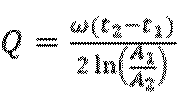
Q値測定は、時間T0以降の電圧値の時間変化に基づいて実行される。例えば、Q値は、電圧値の包絡線である点1201および点1202の時間、電圧値、および、高周波電圧の角速度ω(ω=2πf、fは高周波電圧の動作周波数)に基づいて、(式1)により算出される。
次に、本実施形態で送電装置100が時間領域でQ値を測定するための処理について図12(B)を参照して説明する。波形1203は、送電コイル303に印加される高周波電圧の値を示しており、その周波数は、Qi規格で使用される110kHzから148.5kHzの間の周波数である。また、点1204および点1205は、電圧値の包絡線の一部である。送電装置100の送電部302は、時間T0からT5の区間、送電を停止する。送電装置100の第2Q値測定部401は、時間T3における電圧値A3(点1204)、時間T4における電圧値A4(点1205)および高周波電圧の動作周波数と(式1)に基づいて、Q値を測定する。なお、送電装置100の送電部302は、時間T5において送電を再開する。このように、第2Q値測定は、送電装置100が送電を瞬断し時間経過と電圧値および動作周波数に基づいてQ値を測定することにより行われる。
Next, the process for the
なお、第3異物検出方法において、(T3、A3)、(T4、A4)を測定すればよく、第2Q値を測定しなくてもよい。すなわち、(式1)で示すように、T4-T3の値と、A3に対するA4の比率(A4/A3)またはA3のA4に対する比率(A3/A4)の値に基づく指標を用いることで、異物の有無を検出するようにしてもよい。具体的には、その指標と閾値とを比較することにより、異物の有無を検出すればよい。 In the third foreign object detection method, it is only necessary to measure ( T3 , A3 ) and ( T4 , A4 ), and it is not necessary to measure the second Q value. That is, as shown in (Equation 1), the presence or absence of a foreign object may be detected by using an index based on the value of T4 - T3 and the ratio of A4 to A3 ( A4 / A3 ) or the ratio of A3 to A4 ( A3 / A4 ). Specifically, the presence or absence of a foreign object may be detected by comparing the index with a threshold value.
また、第3異物検出方法において、電圧値の代わりに電流値を測定し、その電流値の比に基づく指標を用いて、異物の有無を検出してもよい。すなわち、T3における電流値、及び、時間T4における電流値を測定すればよい。また、電流値に基づいて第2Q値を取得してもよい。 In the third foreign object detection method, the current value may be measured instead of the voltage value, and the presence or absence of a foreign object may be detected using an index based on the ratio of the current values. That is, the current value at time T3 and the current value at time T4 may be measured. The second Q value may be obtained based on the current value.
(従来の送電装置および受電装置の動作)
従来の送電装置100と受電装置102の動作について図6Aを用いて説明する。図6Aの説明では、送電装置100と受電装置102は、それぞれ、WPC規格v1.2.3に準拠した送電装置および受電装置であるとする。
(Operation of conventional power transmitting device and power receiving device)
The operation of the conventional
送電装置100は、送電コイル303の近傍に存在する物体を検出する為にAnalog Pingを送電する(F600)。Analog Pingは、パルス状の電力で、物体を検出するための電力である。また、Analog Pingは、受電装置102がこれを受電したとしても、制御部200を起動することができない程度の微小な電力である。送電装置100は、Analog Pingにより、送電コイル303の近傍に存在する物体に起因する送電コイル303内部の電圧値の共振周波数のシフトや、送電コイル303を流れる電圧値・電流値の変化によって物体を検出する。送電装置100は、Analog Pingにより物体を検出すると、上述の第1Q値測定により送電コイル303のQ値を測定する(F601)。そして、送電装置100は、第1Q値測定に続いて、Digital Pingの送電を開始する(F602)。Digital Pingは、受電装置102の制御部200を起動させるための電力であり、Analog Pingよりも大きい電力である。また、Digital Pingは、以降、連続的に送電される。すなわち、送電装置100は、Digital Pingの送電を開始してから(F602)、受電装置102から後述のEPT(End Power Transfer)パケットの受信(F622)まで、Digital Ping以上の電力を送電し続ける。
The
受電装置102は、Digital Pingを受電して起動すると、受電したDigital Pingの電圧値をSignal Strengthパケットに格納して送電装置100へ送信する(F603)。続いて、受電装置102は、受電装置102が準拠しているWPC規格のバージョン情報やデバイス識別情報を含むIDを格納したIDパケットを送電装置100へ送信する(F604)。さらに、受電装置102は、電圧制御部203が負荷(充電部205)へ供給する電力の最大値等の情報を含んだConfigurationパケットを送電装置100へ送信する(F605)。送電装置100は、IDパケットおよびConfigurationパケットを受信する。そして、送電装置100は、これらのパケットによって受電装置102がWPC規格v1.2以降の(後述のNegotiationを含む)拡張プロトコルに対応していると判定すると、ACKで応答する(F606)。
When the
受電装置102は、ACKを受信すると、送受電する電力の交渉などを行うNegotiationフェーズに遷移する。まず、受電装置102は、送電装置100に対してFOD Statusパケットを送信する(F607)。本実施形態では、このFOD Statusパケットを「FOD(Q1)」と呼ぶ。送電装置100は、受信したFOD(Q1)に格納されているQ値(周波数領域で測定されたQ値)と第1Q値測定で測定したQ値とに基づいて、第1異物検出方法により異物検出を行う。そして、送電装置100は、異物がない可能性が高いと判定した場合に、その判定結果を示すACKを受電装置102に送信する(F608)。
When the
受電装置102は、ACKを受信すると、受電装置102が受電を要求する電力値の最大値であるGuaranteed Power(GP)の交渉を行う。Guaranteed Powerは、送電装置100との間で合意された、受電装置102の負荷電力(バッテリ206が消費する電力)を示す。この交渉は、WPC規格で規定されているSpecific Requestのうち、受電装置102が、要求するGuaranteed Powerの値を格納したパケットを送電装置100へ送信することにより実現される(F609)。本実施形態では、このパケットを「SRQ(GP)」と呼ぶ。送電装置100は、自装置の送電能力等を考慮して、SRQ(GP)に応答する。送電装置100は、Guaranteed Powerを受け入れ可能であると判断した場合、その要求を受入れたことを示すACKを送信する(F610)。本実施形態では、受電装置102が、SRQ(GP)により、Guaranteed Powerとして15ワットを要求したものとする。受電装置102は、Guaranteed Powerを含む複数のパラメータの交渉が終了すると、Specific Requestのうち、交渉の終了(End Negotiation)を要求する「SRQ(EN)」を送電装置に送信する(F611)。そして、送電装置100は、SRQ(EN)に対してACKを送信し(F612)、Negotiationを終了して、Guaranteed Powerで定められた電力の送受電を行うPower Transferフェーズに遷移する。
When the
続いて、送電装置100は、上述したパワーロス手法に基づく異物検出(第2異物検出方法)を実行する。まず、送電装置100は、RP1を受電装置102から受信する(F613)。送電装置100は、RP1に格納されている受電電力値と、その受電電力が得られたときの送電装置100の送電電力値を、Calibration data Point(図11の点1100に対応)として受け入れる。そして、送電装置100は、Calibration data Pointの受け入れを示すACKを、受電装置102へ送信する(F614)。
Then, the
受電装置102は、ACKを受信後、送電装置100に対して受電電圧(または受電電流、受電電力)の増減を要求するControl Error(以後、CEと表現する)を送電装置100に送信する。CEには、符号および数値が格納され、符号がプラスであれば、電力を上げることを要求することを、マイナスであれば電力を下げることを要求することを、数値がゼロであれば電力の維持を要求することを、それぞれ意味する。ここでは、受電装置102は、電力を上げることを示すCE(+)を、送電装置100に送信する(F615)。
After receiving the ACK, the
送電装置100は、CE(+)を受信すると、送電部302の設定値を変更して、送電電力を上げる(F616)。受電装置102は、CE(+)に応答して受電電力が上昇すると、受電した電力を負荷(充電部205やバッテリ206)に供給し、RP2を送電装置100に送信する(F617)。送電装置100は、RP2に格納されている受電電力値とその時の送電装置100の送電電力値を、Calibration data Point(図11の点1101に対応)として受け入れる。そして、送電装置100は、Calibration data Pointの受け入れを示すACKを、受電装置102へ送信する(F618)。この時点で、送電装置100は、2つのCalibration data Point(図11の点1100と点1101)を取得しているため、Calibrationカーブ(図11の直線1102)を導出することができる。
When the
送電装置100および受電装置102は、この時点でPower Transferフェーズに遷移しており、送電装置100は、受電装置102がNegotiationフェーズで交渉した最大15ワットを受電可能な電力を送電している。受電装置102は、送電装置100に対して、送電電力の維持を要求するCEおよび現在の受電電力値を格納したRP0を送電装置100に定期的に送信する(F619、F620)。送電装置100は、受電装置102からRP0を受信すると、上述の第2異物検出方法に基づいて、異物検出を行う。送電装置100は、異物検出の結果、異物がない可能性が高いと判定した場合、ACKを受電装置102に送信する(F621)。その後、受電装置102は、バッテリ206への充電が終了すると、送電装置100に対して送電を停止することを要求するEPT(End Power Transfer)パケットを送信する(F622)。
At this point, the
以上のようにして、WPC規格v1.2.3に準拠した送電装置100と受電装置102との間で無線電力伝送が行われる。
In this manner, wireless power transmission is performed between the
図6Aの処理例に示すように、Power Transferフェーズの間は、Power Loss法による異物検出が行われる。しかし、1つの異物検出方法のみでは、異物がないにも関わらず異物があると誤検出することや、反対に異物があるにも関わらず異物がないと判定されてしまう可能性が一定程度残ってしまう。これに対して、複数の異物検出方法を組み合わせて実行すれば、異物検出の精度向上が期待できる。特に、Power Transferフェーズは、TXが送電を行うフェーズであり、送電中に、TXとRXの間に異物があすると、異物からの発熱等が大きくなる。なお、異物はTXとRXの間になくても、送電可能範囲に存在することで、電力を受けて発熱してしまう。このため、このフェーズにおいて複数の異物検出を実行して、異物検出精度を向上させるメリットは大きい。そこで、本実施形態では、Power Transferフェーズにおいて、Power Loss法とは異なる異物検出方法を導入する。 As shown in the processing example of FIG. 6A, foreign object detection is performed by the Power Loss method during the Power Transfer phase. However, with only one foreign object detection method, there is a certain degree of possibility that a foreign object may be erroneously detected as being present when there is no foreign object, or conversely, that a foreign object may be determined to be absent when there is a foreign object. In contrast, by combining and executing multiple foreign object detection methods, it is possible to expect an improvement in the accuracy of foreign object detection. In particular, the Power Transfer phase is a phase in which the TX transmits power, and if a foreign object is present between the TX and the RX during power transmission, the heat generated by the foreign object increases. Note that even if a foreign object is not between the TX and the RX, it will receive power and generate heat if it is present within the range in which power can be transmitted. For this reason, there is a great advantage in improving the accuracy of foreign object detection by performing multiple foreign object detections in this phase. Therefore, in this embodiment, a foreign object detection method different from the Power Loss method is introduced in the Power Transfer phase.
ここで、周波数領域において測定されたQ値(第1Q値)に基づく異物検出(第1異物検出方法)は、測定のたびに共振周波数を探すために周波数を掃引する。送電装置100がDigital PingやPower Transferフェーズのなど比較的大きな電力を送電中にこのような掃引が実行されると、送電部302のスイッチングノイズの増大の原因となりうる。一方で、時間領域において測定されたQ値(第2Q値)に基づく異物検出(第3異物検出方法)は、単一の周波数で実行可能であり、周波数を掃引する必要がない。このため、Digital PingやPower Transferフェーズの送電時の動作周波数で実行可能であり、スイッチングノイズへの影響が少ない。本実施形態では、第2Q値測定において、送電装置が送電を停止した際に、スイッチ208をオンにし、受電コイル201と共振コンデンサ207を含む閉回路を構成する制御を行う。これにより、受電装置102における負荷の変動の影響を取り除いた状態で、第2Q値の測定を行う。
Here, in the foreign object detection based on the Q value (first Q value) measured in the frequency domain (first foreign object detection method), the frequency is swept to search for the resonant frequency each time the measurement is performed. If such a sweep is performed while the
第3異物検出方法をWPC規格に適用する場合、受電装置102の装置構成は様々な態様が想定されるため、送電装置100が、受電装置102の能力に応じて行う処理を適切に制御する必要がある。例えば、送電装置100が閉回路を構成する制御ができない受電装置102に対して第2Q値測定を実行すると、その測定が、受電装置102の負荷の変動の影響を受けて、Q値を正しく測定することができない。また、第2Q値の測定は、受電装置102側において実行されることも想定されうるが、送電装置100は、受電装置102の能力がわからないと、自装置において第2Q値の測定を行うべきか否かを判定することができない。例えば、受電装置102が閉回路を構成可能であるが第2Q値の測定を実行することができない場合、送電装置100が第2Q値の測定を行わないと、異物の有無を判定することができない。同様に、受電装置102の能力がわからないと、送電装置100は、第2Q値の測定結果を受電装置102から受信する否かを判定することができない。例えば、受電装置102が第2Q値の測定を実行できないにも関わらず送電装置100が受電装置102から測定結果を受信しようとすると、不要な待機時間が発生してしまう。一方で、受電装置102が第2Q値の測定ができるにも関わらず、送電装置100が測定結果を受電装置102から受信しないと、送電装置100と受電装置102の間に状態ずれが発生してしまう。このため、本実施形態では、第2Q値の測定に基づく第3異物検出方法を適切にWPC規格に適用するための制御手法を使用する。以下では、この制御手法について説明する。
When applying the third foreign object detection method to the WPC standard, various configurations of the
(第3異物検出方法をWPC規格に適用した場合の動作説明)
図6Bに本実施形態に係る送電装置100及び受電装置102によって実行される処理の流れの例を示す。なお、図6Aと同じ処理については同じ符号を付して説明を省略する。F600~F604の処理の実行後、受電装置102は、Configurationパケットを送電装置100に送信する(F623)。本実施形態では、このConfiguration Packetにおいて、受電装置102の能力情報が送電装置100へ通知される。通知される能力情報として、本実施形態では、Configuration Packet内に、Short Ability bitとMeasure Ability bitとを定義する。Short Ability bitは、受電装置102が第2Q値測定のために受電コイル201と共振コンデンサ207を含む閉回路を構成する制御が可能であるか否かを示す情報である。受電装置102は、例えば、自装置が第2Q値測定のために閉回路を構成する制御を行う能力を持っている場合はShort Ability bitに「1」を、そうでない場合は「0」を格納する。また、Measure Ability bitは、受電装置102が受電回路の第2Q値の測定を実行可能であるか否かを示す情報である。受電装置102は、例えば、自装置が受電回路の第2Q値の測定する能力を持っている場合はMeasure Ability bitに「1」を、そうでない場合は「0」を格納する。なお、これらの情報は、送電装置100によって実行される第2Q値の測定に基づく異物判定に関連付けられた所定の処理を、受電装置102が実行可能であるかを示す情報でありうる。すなわち、閉回路が構成可能であるか否かや、受電回路の第2Q値の測定を実行可能であるかは、この所定の処理の一類型に過ぎず、これら以外の処理についての情報ビットが受電装置102から送電装置100へ送信されてもよい。
(Description of operation when the third foreign object detection method is applied to the WPC standard)
6B shows an example of the flow of processing executed by the
図13に、WPC規格v1.2.3のConfiguration Packetの構成を示す。なお、ここでは、本実施形態と関連しない部分の説明については省略する。WPC規格v1.2.3のConfiguration Packetは、複数のReserved領域を含んでいる。すなわち、Bank1のbit0からbit7の領域1300、Bank2のbit4からbit6の領域1301、Bank4のbit0からbit2の領域1302が、それぞれReserved領域である。本実施形態では、一例として、Short Ability bitをBank4のbit2に配置し、Measure Ability bitをBank4のbit1に配置する。なお、他のReserved領域にこれらのビットが配置されてもよい。また、これらのビットに代えて、WPC規格のバージョンを示す情報などがReserved領域に配置されてもよい。この場合、バージョンによって、受電装置102が第2Q値測定のために受電コイル201と共振コンデンサ207を含む閉回路を構成する制御が可能であるか否か、及び、受電装置102が受電回路の第2Q値の測定を実行可能であるか否か、が示されうる。例えば、将来のWPC規格のバージョンにおいて、そのバージョン準拠の受電装置102がこれらの機能を有することが必須であると規定されうる。この場合、Configuration Packetで、受電装置102のバージョン情報が通知されることによって、送電装置100は、その受電装置102がこれらの機能を有するか否かを特定することができる。なお、WPC規格v1.2.3では、上述のReserved領域のビットはいずれも0である。また、第3異物検出方法を使用できない送電装置100は、これらのReserved領域に格納されている値については無視する。
Figure 13 shows the configuration of the Configuration Packet of the WPC standard v1.2.3. Note that the description of the parts that are not related to this embodiment will be omitted here. The Configuration Packet of the WPC standard v1.2.3 includes multiple Reserved areas. That is, the
なお、ここでは、Short Ability bitおよびMeasure Ability bitがConfiguration Packetに設定されて受電装置102から送電装置100に送信される場合について説明するが、これに限られない。例えば、WPC規格に規定されていない新たなパケットにこれらの情報が含められて送受信されてもよい。また、WPC規格に規定されている他のパケットにこれらの情報が含められて送受信されてもよい。
Here, a case will be described in which the Short Ability bit and the Measure Ability bit are set in the Configuration Packet and transmitted from the
本実施形態では、受電装置102が、第2Q値測定のために受電コイル201と共振コンデンサ207を含む閉回路を構成する制御が可能であり、かつ、受電回路の第2Q値の測定を実行可能であるものとする。このため、受電装置102は、Short Ability bitに「1」を設定すると共に、Measure Ability bitにも「1」を設定したConfiguration Packetを、F623において送信する。送電装置100は、受信したConfiguration Packetに含まれるShort Ability bitおよびMeasure Ability bitを参照し、それらの値をメモリ305に記憶する。
In this embodiment, the
送電装置100は、Configuration Packetの受信後、ACKで応答する(F606)。そして、受電装置102は、Configuration Packetに対するACKを受信すると、Negotiationフェーズに遷移する。そして、送電装置100および受電装置102は、Negotiationフェーズにおいて、第3異物検出に関する交渉を行う。受電装置102は、第2Q値測定において、送電装置100の送電部302が送電を停止までの時間である測定開始時間の交渉を行う。この交渉は、WPC規格で規定されているSpecific Requestのうち、要求する測定開始時間の値が格納されたパケットを受電装置102が送電装置100に送信することにより行われる(F631)。受電装置102は、自身の処理能力等に基づいて、要求する測定開始時間の値を決定して、送電装置100に対してその測定開始時間の値を格納したパケットを送信する。ここでは、このパケットを「SRQ(M1)」と呼ぶ。送電装置100は、自装置の処理能力等を考慮して、SRQ(M1)に応答する。送電装置100は、SRQ(M1)で示された値の測定開始時間を受け入れられると判定した場合はACKを、その測定開始時間を受け入れられないと判定した場合はNAKを、それぞれ送信する。ここでは、送電装置100が測定開始時間を受け入れられると判定してACKを送信したものとする(F632)。なお、ここでは、一例として、受電装置102が、SRQ(M1)においてQ値の測定開始時間として50msを要求したものとする。
After receiving the Configuration Packet, the
受電装置102は、第2Q値測定において送電装置100の送電部302が送電を停止する区間(時間T0から時間T5までの区間)の区間長であるWindow長の交渉を行う。この交渉は、WPC規格で規定されているSpecific Requestのうち、受電装置102が、要求するWindow長の値が格納されたパケットを送電装置100に送信することにより行われる(F633)。ここでは、このパケットを「SRQ(M2)」と呼ぶ。受電装置102は、自装置の処理能力等に基づいてWindow長の値を決定して、送電装置100に対して、決定したWindow長の値を格納したパケットを送信する。送電装置100は、自装置の処理能力等を考慮して、SRQ(M2)に応答する。送電装置100は、SRQ(M2)において示された値のWindow長を受け入れられると判定した場合はACKを、そのWindow長を受け入れられないと判定した場合はNAKを、それぞれ送信する。ここで、送電装置100は、Window長を受け入れられると判定してACKを送信したものとする(F634)。なお、ここでは、一例として、受電装置102が、SRQ(M2)においてWindow長として100msを要求したものとする。
The
また、受電装置102は、第2Q値測定において受電装置102が計測したQ値を送電装置100が受電装置102から受け付ける時間である、タイムアウト長に関する交渉を行う。この交渉は、WPC規格で規定されているSpecific Requestのうち、要求するタイムアウト長の値が格納されたパケットを受電装置102が送電装置100に送信することにより行われる(F635)。ここでは、このパケットを「SRQ(M3)」と呼ぶ。受電装置102は、自装置の処理能力等に基づいてタイムアウト長の値を決定して、送電装置100に対して、そのタイムアウト長の値を格納したパケットを送信する。送電装置100は、自装置の処理能力等を考慮して、SRQ(M3)に応答する。送電装置100は、タイムアウト長を受け入れられると判定した場合はACKを、タイムアウト長を受け入れられないと判定した場合はNAKを、それぞれ送信する。ここで送電装置100は、タイムアウト長を受け入れられると判断し、ACKを送信する(F636)。本実施形態では、受電装置102がSRQ(M3)でタイムアウト長として500msを要求したとする。
In addition, the
ここで、一例において、Specific Requestのうちのv1.2.3で定義されていないTypeを、測定開始時間、Window長、タイムアウト長のそれぞれのネゴシエーションに割り当てうる。Measure Delay Reqは、測定開始時間の変更を送電装置100に要求するパケットである。Window Length Reqは、Window長の変更を送電装置100に要求するパケットである。Timeout Reqは、タイムアウト長の変更を送電装置100に要求するパケットである。これらの3つのパケットは、WPC規格v1.2.3においてパケットタイプが規定されていないReserved Packetである。本実施形態では、これらのReserved Packetのうち、パケットヘッダが0x40のパケットをMeasure Delay Reqパケットとして定義する。同様に、パケットヘッダが0x41のパケットをWindow Length Reqパケットとして定義し、パケットヘッダが0x42のパケットをTimeout Reqパケットとして定義する。
Here, in one example, a Type of Specific Request that is not defined in v1.2.3 may be assigned to each negotiation of the measurement start time, window length, and timeout length. Measure Delay Req is a packet that requests the
また、WPC規格v1.2.3で定義されているパケットのうちSpecific RequestやGeneral Requestではなく、タイプが定義されていないパケットを、上述の3つのパケットとして定義してもよい。例えば、Specific RequestやGeneral Requestではなく、Packet typeが未定義のReserved PacketやProprietary Packetパケットが、上述の3つのパケットとして定義されうる。また、WPC規格v1.2.3で定義されているGeneral RequestやSpecific Requestのうち、Packet typeが未定義のパケットを、上述の3つのパケットとして定義してもよい。すなわち、General RequestやSpecific RequestのうちのPacket typeが未定義のReserved PacketやProprietary Packetが、上述の3つのパケットとして定義されうる。 In addition, among the packets defined in the WPC standard v1.2.3, packets whose type is not defined, other than Specific Request or General Request, may be defined as the above three packets. For example, instead of Specific Request or General Request, packets whose packet type is not defined, such as Reserved Packet or Proprietary Packet, may be defined as the above three packets. In addition, among the packets defined in the WPC standard v1.2.3, packets whose packet type is not defined, such as General Request or Specific Request, may be defined as the above three packets. In other words, General Request and Specific Request, which have an undefined packet type, such as Reserved Packet or Proprietary Packet, can be defined as the three packets mentioned above.
図6Bに戻り、Negotiationフェーズにおいて、F607からF612までの処理が実行されると、Negotiationフェーズが終了し、Power Transferフェーズに遷移する。Power Transferフェーズでは、上述のF613からF617までの処理が実行される。ここで、受電装置102がF618でACKを受信した直後に、Operating Volumeに異物が置かれたものとする。受電装置102は、送電装置100に対して、送電電力の維持を要求するCEおよび現在の受電電力値を格納したRP0を送電装置100に送信する(F619、F620)。
Returning to FIG. 6B, when the processes from F607 to F612 are executed in the Negotiation phase, the Negotiation phase ends and the system transitions to the Power Transfer phase. In the Power Transfer phase, the processes from F613 to F617 described above are executed. Here, it is assumed that a foreign object is placed on the Operating Volume immediately after the
送電装置100は、受電装置102からRP0を受信すると、上述の第2異物検出方法に基づいて異物検出を行う。送電装置100は、異物検出の結果、異物がある可能性が高いと判定し、NAKを受電装置102に送信する(F624)。受電装置102は、送電装置100からNAKを受信すると、異物の有無をより詳細に測定するため、第3異物検出の開始を要求するパケットであるQ2Rを送電装置100に送信する(F625)。Q2Rパケットは、例えば、WPC規格におけるReceived PowerパケットのReservedビットにQ2Rパケットであることを示す値を設定したパケットであるが、これに限られない。例えば、受電装置102は、未定義のReceived Powerパケットのモードを用いて第3異物検出の開始を要求してもよいし、新たなパケットを定義して第3異物検出の開始を要求してもよい。また、本実施形態では、受電装置102がQ2Rパケットを用いて第3異物検出の開始を要求する場合について説明しているが、Q2Rパケットを用いずに、RP2に対するNAK応答を契機に第3異物検出が開始されてもよい。
When the
送電装置100は、Q2Rを受信すると、第3異物検出を実行するか否かを判定し、実行すると判定した場合はACKを、実行しないと判定した場合はNAKを、受電装置102に対して送信する。ここでは、送電装置100は、第3異物検出を行うと判定したものとする。この場合、送電装置100は、受電装置102へACKを送信する(F626)。ACKの送信が完了すると、送電装置100及び受電装置102は、第3異物検出を開始する。第3異物検出において、送電装置100および受電装置102は、第2Q値の測定を行う(F629、F630)。受電装置102は、第2Q値の測定後、自装置において測定した第2Q値をパケット(QRS)に格納し、送電装置100に対してこのQRSを送信する(F627)。なお、QRSは、少なくとも受電装置102が測定した第2Q値を含むパケットであるが、現在の受電電力値など他の情報を含んでもよい。送電装置100は、受電装置102からQRSを受信すると、受信した受電装置102の第2Q値と、自装置において測定した第2Q値とに基づいて、異物の有無を判定する。送電装置100で測定された第2Q値に加え、受電装置102で測定された第2Q値を加えて異物の有無を判定することにより、より高い精度で異物の有無を判断することができる。送電装置100は異物があると判定した場合は受電装置102に対してNAKを送信し、異物がないと判定した場合は受電装置102に対してACKを送信する。ここでは、送電装置100は異物があると判定したものとする。この場合、送電装置100は、受電装置102へ、NAKを送信する(F628)。その後、送電装置100は、送電を停止する。
When the
(送電装置100における第3異物検出処理の流れ)
続いて、送電装置100における第3異物検出処理の流れの例について、図7を用いて説明する。送電装置100は、第3異物検出要求を受信した後、受電装置102が第2Q値測定のために受電コイル201と共振コンデンサ207とを含む閉回路を構成する制御を実行可能であるか否かを判定する(S701)。送電装置100は、例えば、Configurationフェーズにおいてメモリに保存したShort Ability bitを参照し、値が1であった場合、そのような制御が可能であると判定し(S701でYES)、処理をS702へ進める。一方、送電装置100は、Short Ability bitの値が0であった場合、そのような制御が可能でないと判定し(S701でNO)、NAKを送信して(S708)、処理を終了する。
(Flow of third foreign object detection process in power transmitting device 100)
Next, an example of the flow of the third foreign object detection process in the
送電装置100は、S702において、受電装置102が受電回路の第2Q値の測定を実行可能であるか否かを判定する。送電装置100は、例えば、Configurationフェーズにおいてメモリに保存したMeasure Ability bitを参照し、値が0であった場合、第2Q値の測定が可能でないと判定し(S702でNO)、処理をS709へ進める。そして、送電装置100は、自装置において第2Q値を測定し(S709)、処理をS706へ進める。一方、送電装置100は、Measure Ability bitの値が1であった場合、第2Q値の測定が可能であると判定し(S702でYES)、処理をS703へ進める。
In S702, the
送電装置100は、S703において、自装置が送電回路の第2Q値の測定を行うか否かを判定する。送電装置100は、自装置が測定を行うと判定した場合(S703でYES)、第2Q値の測定を実行し(S704)、処理をS705に進める。一方、送電装置100は、自装置が測定を行わないと判定した場合(S703でNO)、第2Q値の測定を実行せずに、処理をS705に進める。送電装置100は、S705において、受電装置から第2Q値を受信し、処理をS706に進める。この時、送電装置100は、F626においてACKを送信してから、タイムアウト長時間が経過するまでに受電装置から第2Q値を受信できなかった場合、処理を終了し送電を停止する。タイムアウト長を設定することにより、受電装置102から第2Q値が送られてこない場合に適切に処理を進行させ又は停止させることができる。また、このときに、上述のようにして交渉によって受電装置102の処理能力に応じた適切なタイムアウト長が決定されて設定されることにより、処理能力が低い受電装置102であっても、タイムアウトまでに第2Q値の送信を完了することが可能になる。
In S703, the
送電装置100は、S706において、S704で測定した第2Q値とS705で受信した第2Q値との少なくともいずれかを利用して、異物の有無を判定する。送電装置100は、異物が存在すると判定した場合(S706でYES)、受電装置102へNAKを送信し(S708)、一方で、異物が存在しないと判定した場合(S706でNO)、受電装置102へACKを送信して(S707)、処理を終了する。
In S706, the
図6Bで説明した処理例においては、送電装置100は、S701において、Short Ability bitの値が1であることを確認し、受電装置102が閉回路を構成する制御を実行可能であると判定して、処理をS702へ進める。そして、送電装置100は、S702において、Measure Ability bitの値が1であることを確認し、受電装置102が第2Q値を測定可能であると判定して、処理をS703へ進める。そして、送電装置100は、S703において、自装置においても第2Q値を測定することを決定して処理をS704へ進める。送電装置100は、S704において自装置が第2Q値を測定すると共に、S705において受電装置102によって測定された第2Q値を受信して、処理をS706へ進める。続いて、送電装置100は、S706において、受電装置102から受信した第2Q値と自装置が測定した第2Q値とを用いて、異物があると判断して、S708において、受電装置102に対してNAKを送信し、処理を終了する。
In the processing example described in FIG. 6B, the
図7の処理では、S701において、送電装置100が、閉回路を構成する制御を受電装置102が実行可能であるか否かを判定することによって、そのような制御を実行できない受電装置102に対して第2Q値を測定することを防ぐことができる。この結果、送電装置100は、適切でない条件でQ値を測定してしまうことにより誤った制御を実行してしまうことを防ぐことができる。
In the process of FIG. 7, in S701, the
なお、本実施形態では、受電装置102が閉回路を構成する制御を実行可能でないとS701において判定された場合に、送電装置100がNAKを送信して処理を終了すると説明したが、これに限られない。例えば、送電装置100は、受電装置102が閉回路を構成していない状態において第2Q値を測定し、測定した第2Q値に基づいて異物の有無を判定するようにしてもよい。ただし、閉回路を構成しない状態で第2Q値を測定した場合、測定された値は受電装置の負荷の変動の影響を受けることが想定される。このため、このような第2Q値の測定が用いられる場合、閉回路が構成可能な場合の第2Q値の測定結果による異物の有無の判定基準とは異なる基準を用いて、異物の有無が判定される。
In the present embodiment, when it is determined in S701 that the
また、S702において、送電装置100が、送電回路の第2Q値の測定を行う能力を受電装置102が有しているか否かを判定する。これにより、送電装置100は、受電装置102が第2Q値を測定することができないにも関わらず、自装置が第2Q値の測定を行わずに、異物検出のフローが失敗することを防ぐことができる。また、送電装置100は、受電装置102が第2Q値を測定することができないにも関わらず、受電装置102から第2Q値の測定結果が送られてくるのを不必要に待機することを防ぐことができる。また、送電装置100は、受電装置102が第2Q値を測定できる場合に、受電装置102から送信される第2Q値を受信せず、状態ずれが発生することを防ぐことができる。
In addition, in S702, the
さらに、S704において、送電装置100は、受電装置102に加え自装置においても第2Q値を測定することにより、ノイズなどの影響を低減した、精度の高い異物検出を行うことができる。また、送電装置100は、S703において、自装置が第2Q値の測定を行わないと決定することにより、自装置における第2Q値の測定を省略し、受電装置102から受信した第2Q値を用いて異物の判定を行いうる。これによれば、送電装置100と受電装置102とで、同時にQ値を測定することによる不要な計測の発生を抑制することができる。
Furthermore, in S704, the
(受電装置102における第3異物検出処理の流れ)
続いて、受電装置102における第3異物検出処理の流れの例について、図8を用いて説明する。受電装置102は、受電装置102が第2Q値の測定のために受電コイル201と共振コンデンサ207を含む閉回路を構成する制御が可能か否かを判定する(S801)。受電装置102は、閉回路を構成する制御が可能であると判定した場合(S801でYES)、処理をS802に進め、閉回路を構成する制御が可能でないと判定した場合(S801でNO)、処理をS805に進める。受電装置102は、S802において、自装置が受電回路の第2Q値の測定が可能であるか否かを判定する。そして、受電装置102は、第2Q値の測定が可能である場合(S802でYES)は、処理をS803に進め、第2Q値の測定が可能でない場合(S802でNO)は、処理をS805に進める。受電装置102は、S803において第2Q値を測定し、その後、S804においてS803で測定したQ値を送電装置100に送信し、処理をS805に進める。そして、受電装置102は、S805において、送電装置100から異物検出の結果を受信し処理を終了する。
(Flow of Third Foreign Object Detection Process in Power Receiving Device 102)
Next, an example of the flow of the third foreign object detection process in the
図6Bで説明した処理例においては、受電装置102は、S801において、第2Q値の測定のために受電コイル201と共振コンデンサ207を含む閉回路を構成する制御が可能であると判定する。また、受電装置102は、S802において、自装置が受電回路の第2Q値を測定可能であると判定する。そして、受電装置102は、S803からS805までの処理を実行して、図8の処理を終了する。
In the processing example described in FIG. 6B, the
(送電装置100における第2Q値測定処理の流れ)
上述のS704又はS709において実行される、送電装置100の第2Q値の測定処理の流れの例について図9を用いて説明する。送電装置100は、例えばF626でACKを送信完了して(ACKの時間領域における後端の送出を完了して)から、測定開始時間の交渉で交渉された値である50ms以内に送電を停止する(S901)。送電装置100は、時間T3で送電コイルの電圧値A3を測定し(S902)、また、時間T4で送電コイルの電圧値A4を測定する(S903)。送電装置100は、動作周波数、計測を行った時間及び電圧値から、上述のようにしてQ値を算出する(S904)。そして、送電装置100は、S901の送電の停止から、Window長の交渉で交渉された値である100ms以上時間が経過した後に送電を再開し(S905)、処理を終了する。
(Flow of second Q value measurement process in power transmitting device 100)
An example of the flow of the measurement process of the second Q value of the
(受電装置102における第2Q値測定処理の流れ)
S803において実行される、受電装置102の第2Q値の測定処理の流れの例について図10を用いて説明する。受電装置102は、F626でACKを受信完了して(ACKの時間領域における後端を受信して)から、測定開始時間の交渉で交渉された値である50ms以内に送電を停止したことを検出する。そして、受電装置102は、受電コイル201と共振コンデンサ207とを含む閉回路を構成する制御を実行する(S1001)。受電装置102は、時間T3で受電コイルの電圧値A3を測定し(S1002)、また、時間T4で受電コイルの電圧値A4を測定する(S1003)。そして、受電装置102は、動作周波数、計測を行った時間及び電圧値からQ値を算出する(S1004)。その後、受電装置102は、S1001で検出された送電の停止から、Window長の交渉で交渉された値である100msが経過する前に負荷を再接続して(S1005)、処理を終了する。なお、負荷の再接続は、スイッチ208をオフにすることによって行われる。
(Flow of second Q value measurement process in power receiving device 102)
An example of the flow of the measurement process of the second Q value of the
図7~図10の処理は、例えば、送電装置100の制御部300や受電装置102の制御部200が、事前に記憶されたプログラムを読み出して実行することによって実現されうる。ただし、これに限られず、これらの処理の少なくとも一部が、ハードウェアにより実現されてもよい。ハードウェアにより実現する場合、例えば、所定のコンパイラを用いることにより、各処理ステップを実現するためのプログラムからFPGA上に自動的に専用回路が生成されうる。ここで、FPGAとは、Field Programmable Gate Arrayの頭字語である。また、FPGAと同様にして、Gate Array回路を形成し、上述の処理の少なくとも一部を実行するハードウェアが実現されるようにしてもよい。
The processes in Figures 7 to 10 can be realized, for example, by the
本実施形態では、あらかじめ測定開始時間の交渉が行われるため、受電装置102は、送電装置100が送電を停止するタイミングを認識することができ、適切に第2Q値の測定を開始することができる。このとき、測定開始時間の交渉によって、受電装置102が実行する処理やその処理能力に応じて適切な測定開始時間が設定されるため、受電装置102に適したタイミングで第2Q値の測定を開始することができるようになる。例えば、受電装置102が第2Q値の測定を行う時間付近で他のパケットを送信する必要がある場合、パケットの送信が始まる前までに第2Q値測定を完了できるように測定開始時間が交渉されうる。これにより、受電装置102が他のパケットを送信中に、第2Q値の測定のための送電の瞬断が行われてしまうことを回避し、送電の効率劣化を防ぐことができる。また、受電装置102のハードウェア構成や処理能力に起因して受電装置102が第2Q値の測定を開始するのに時間がかかる場合は、受電装置102の能力に応じて、測定開始時間が後のタイミングとなるように決定される。これにより、例えば、受電装置102が閉回路の構成等を完了して第2Q値の測定処理を開始できるようになったタイミングにおいて、送電装置100が送電を停止することができる。
In this embodiment, since the measurement start time is negotiated in advance, the
また、本実施形態では、あらかじめWindow長の交渉が行われるため、受電装置102は、適切なタイミングで受電コイル201を負荷に再接続できるようになる。すなわち、受電装置102において、閉回路が構成されている間に送電が再開されると、受電コイル201および共振コンデンサ207に過大な電流が流れてしまいうる。これに対して、本実施形態では、Window長が交渉によって事前決定されるため、このような事態が生じることを防ぐことができる。また、第2Q値の測定のために必要な時間は、受電装置102の性能や求められる測定精度によって異なりうる。これに対して、本実施形態の受電装置102は、自装置の性能や求められる測定精度に応じてWindow長の交渉を行うことにより、十分な測定期間を確保して、測定の失敗や、測定精度の低下を防ぐことができる。
In addition, in this embodiment, the window length is negotiated in advance, so that the
なお、上述の説明では、測定の開始タイミングと、測定の期間長と、受電装置における第2Q値の測定報告までの期間(タイムアウト時間)とが全て交渉によって決定されるとしたが、これらのうちの少なくともいずれかが交渉されるようにしてもよい。すなわち、例えばいずれか1つの交渉だけが行われてもよいし、これらのうちの2つの交渉のみが行われてもよい。すなわち、これらの要素は、それぞれ独立して使用されてもよく、常にこれらの全てが使用されなければならないわけではない。 In the above description, the timing to start the measurement, the length of the measurement period, and the period until the measurement report of the second Q value in the power receiving device (timeout time) are all determined by negotiation, but at least any of these may be negotiated. That is, for example, only one of these may be negotiated, or only two of these may be negotiated. That is, each of these elements may be used independently, and it is not necessary that all of them must be used at all times.
(その他の実施形態)
本発明は、上述の実施形態の1以上の機能を実現するプログラムを、ネットワーク又は記憶媒体を介してシステム又は装置に供給し、そのシステム又は装置のコンピュータにおける1つ以上のプロセッサがプログラムを読出し実行する処理でも実現可能である。また、1以上の機能を実現する回路(例えば、ASIC)によっても実現可能である。
Other Embodiments
The present invention can also be realized by a process in which a program for implementing one or more of the functions of the above-described embodiments is supplied to a system or device via a network or a storage medium, and one or more processors in a computer of the system or device read and execute the program. The present invention can also be realized by a circuit (e.g., ASIC) that implements one or more of the functions.
300:制御部、303:送電コイル、304:通信部、401:第2Q値測定部、403:Calibration処理部、405:第3異物検出処理部 300: control unit, 303: power transmission coil, 304: communication unit, 401: second Q value measurement unit, 403: calibration processing unit, 405: third foreign object detection processing unit
Claims (12)
受電装置に無線で電力を送る送電手段と、
前記受電装置と通信する通信手段と、
前記送電装置から前記受電装置へ送電を行うフェーズにおいて、当該送電を制限する期間で測定されるQuality factorに基づいて、異物の検出処理を行う検出手段と、
前記通信手段によって前記受電装置から受信した情報に基づいて、前記Quality factorに基づく前記検出処理を実行するかを決定する決定手段と、
を有し、
前記決定手段は、前記情報が前記検出処理に関する所定の処理を前記受電装置が実行可能でないことを示す場合、前記検出処理を実行しないことを決定する、ことを特徴とする送電装置。 A power transmitting device, comprising: a power transmitting unit for wirelessly transmitting power to a power receiving device;
A communication means for communicating with the power receiving device;
a detection unit that performs a foreign object detection process based on a quality factor measured during a period in which the power transmission is restricted in a phase in which the power transmission device transmits power to the power receiving device;
a determination means for determining whether to execute the detection process based on the Quality factor based on information received from the power receiving device by the communication means;
having
The power transmitting device , wherein the decision means decides not to execute the detection process when the information indicates that the power receiving device is not capable of executing a predetermined process related to the detection process.
受電装置に無線で電力を送る送電手段と、
前記受電装置と通信する通信手段と、
前記送電装置から前記受電装置へ送電を行うフェーズにおいて、当該送電を制限する期間で測定されるQuality factorに基づいて、異物の検出処理を行う検出手段と、
前記通信手段によって前記受電装置から受信した情報に基づいて、前記Quality factorに基づく前記検出処理を実行するかを決定する決定手段と、
を有し、
前記決定手段は、前記情報が前記検出処理に関する所定の処理を前記受電装置が実行可能であることを示す場合、前記検出処理を実行することを決定する、ことを特徴とする送電装置。 A power transmission device
A power transmitting means for wirelessly transmitting power to a power receiving device;
A communication means for communicating with the power receiving device;
a detection unit that performs a foreign object detection process based on a quality factor measured during a period in which the power transmission is restricted in a phase in which the power transmission device transmits power to the power receiving device;
a determination means for determining whether to execute the detection process based on the Quality factor based on information received from the power receiving device by the communication means;
having
The power transmitting device, wherein the decision means decides to execute the detection process when the information indicates that the power receiving device is capable of executing a predetermined process related to the detection process.
送電装置から無線で電力を受ける受電手段と、
前記送電装置から前記受電装置へ送電を行うフェーズにおいて、所定の処理を前記受電装置が実行可能か否かを示す情報を前記送電装置へ送信する通信手段と、
を有し、
前記所定の処理は、前記送電を行うフェーズにおいて前記送電を制限する期間で前記送電装置が測定するQuality factorに基づいて行う異物の検出処理である、
ことを特徴とする受電装置。 A power receiving device having power receiving means for wirelessly receiving power from a power transmitting device;
a communication means for transmitting information indicating whether the power receiving device is capable of executing a predetermined process to the power transmitting device in a phase in which the power transmitting device transmits power to the power receiving device;
having
the predetermined process is a process of detecting a foreign object based on a quality factor measured by the power transmitting device during a period in which the power transmission is restricted in the power transmission phase;
A power receiving device comprising:
前記送電装置から前記受電装置へ送電を行うフェーズにおいて、当該送電を制限する期間で測定されるQuality factorに基づいて、異物の検出処理を行うことができるように構成され、
前記制御方法は、
前記受電装置から受信した情報に基づいて、前記Quality factorに基づく前記検出処理を実行するかを決定することであって、前記情報が前記検出処理に関する所定の処理を前記受電装置が実行可能でないことを示す場合、前記検出処理を実行しないことを決定することを含むことを特徴とする制御方法。 1. A control method executed by a power transmitting device capable of wirelessly transmitting power to a power receiving device and communicating with the power receiving device, comprising:
In a phase in which power is transmitted from the power transmitting device to the power receiving device, a foreign object detection process can be performed based on a quality factor measured during a period in which the power transmission is restricted,
The control method includes:
A control method comprising: determining whether to execute the detection process based on the Quality factor based on information received from the power receiving device , and deciding not to execute the detection process if the information indicates that the power receiving device is not capable of executing a specified process related to the detection process .
前記送電装置から前記受電装置へ送電を行うフェーズにおいて、当該送電を制限する期間で測定されるQuality factorに基づいて、異物の検出処理を行うことができるように構成され、In a phase in which power is transmitted from the power transmitting device to the power receiving device, a foreign object detection process can be performed based on a quality factor measured during a period in which the power transmission is restricted,
前記制御方法は、The control method includes:
前記受電装置から受信した情報に基づいて、前記Quality factorに基づく前記検出処理を実行するかを決定することであって、前記情報が前記検出処理に関する所定の処理を前記受電装置が実行可能であることを示す場合、前記検出処理を実行することを決定することを含むことを特徴とする制御方法。A control method comprising: determining whether to execute the detection process based on the Quality factor based on information received from the power receiving device, and determining to execute the detection process if the information indicates that the power receiving device is capable of executing a specified process related to the detection process.
前記送電装置から前記受電装置へ送電を行うフェーズにおいて、所定の処理を前記受電装置が実行可能か否かを示す情報を前記送電装置へ送信することを含み、
前記所定の処理は、前記送電を行うフェーズにおいて前記送電を制限する期間で前記送電装置が測定するQuality factorに基づいて行う異物の検出処理である、ことを特徴とする制御方法。 A control method executed by a power receiving device that wirelessly receives power from a power transmitting device, comprising:
transmitting, to the power transmitting device, information indicating whether or not the power receiving device is capable of executing a predetermined process in a phase in which power is transmitted from the power transmitting device to the power receiving device;
The control method according to claim 1, wherein the predetermined process is a foreign object detection process that is performed based on a quality factor that is measured by the power transmitting device during a period in which the power transmission is restricted in the power transmission phase.
Priority Applications (11)
| Application Number | Priority Date | Filing Date | Title |
|---|---|---|---|
| JP2020064204A JP7536489B2 (en) | 2020-03-31 | 2020-03-31 | Power transmitting device, power receiving device, control method, and program |
| KR1020227036328A KR102805037B1 (en) | 2020-03-31 | 2021-03-03 | Transmission device, receiving device, control method, and computer-readable storage medium |
| KR1020257014438A KR20250069967A (en) | 2020-03-31 | 2021-03-03 | Power transmission apparatus, method for power transmission apparatus, and non-transitory computer-readable storage medium |
| PCT/JP2021/008184 WO2021199867A1 (en) | 2020-03-31 | 2021-03-03 | Power transmission device, power reception device, control method, and program |
| CN202510891992.XA CN120638685A (en) | 2020-03-31 | 2021-03-03 | Power transmission device, method used by power transmission device, storage medium and computer program product |
| CN202180026730.7A CN115428298B (en) | 2020-03-31 | 2021-03-03 | Power transmitting apparatus, power receiving apparatus, control method, and computer-readable storage medium |
| EP21781832.7A EP4131723A4 (en) | 2020-03-31 | 2021-03-03 | Power transmission device, power reception device, control method, and program |
| US17/935,417 US12074456B2 (en) | 2020-03-31 | 2022-09-26 | Power transmission apparatus, power reception apparatus, control method, and computer-readable storage medium |
| US18/774,183 US20240372409A1 (en) | 2020-03-31 | 2024-07-16 | Power transmission apparatus, power reception apparatus, control method, and computer-readable storage medium |
| JP2024129115A JP7756766B2 (en) | 2020-03-31 | 2024-08-05 | Power transmission device, method, and program |
| JP2025169643A JP2025188143A (en) | 2020-03-31 | 2025-10-07 | Power transmission device, method, and program |
Applications Claiming Priority (1)
| Application Number | Priority Date | Filing Date | Title |
|---|---|---|---|
| JP2020064204A JP7536489B2 (en) | 2020-03-31 | 2020-03-31 | Power transmitting device, power receiving device, control method, and program |
Related Child Applications (1)
| Application Number | Title | Priority Date | Filing Date |
|---|---|---|---|
| JP2024129115A Division JP7756766B2 (en) | 2020-03-31 | 2024-08-05 | Power transmission device, method, and program |
Publications (3)
| Publication Number | Publication Date |
|---|---|
| JP2021164283A JP2021164283A (en) | 2021-10-11 |
| JP2021164283A5 JP2021164283A5 (en) | 2023-04-04 |
| JP7536489B2 true JP7536489B2 (en) | 2024-08-20 |
Family
ID=77930297
Family Applications (3)
| Application Number | Title | Priority Date | Filing Date |
|---|---|---|---|
| JP2020064204A Active JP7536489B2 (en) | 2020-03-31 | 2020-03-31 | Power transmitting device, power receiving device, control method, and program |
| JP2024129115A Active JP7756766B2 (en) | 2020-03-31 | 2024-08-05 | Power transmission device, method, and program |
| JP2025169643A Pending JP2025188143A (en) | 2020-03-31 | 2025-10-07 | Power transmission device, method, and program |
Family Applications After (2)
| Application Number | Title | Priority Date | Filing Date |
|---|---|---|---|
| JP2024129115A Active JP7756766B2 (en) | 2020-03-31 | 2024-08-05 | Power transmission device, method, and program |
| JP2025169643A Pending JP2025188143A (en) | 2020-03-31 | 2025-10-07 | Power transmission device, method, and program |
Country Status (6)
| Country | Link |
|---|---|
| US (2) | US12074456B2 (en) |
| EP (1) | EP4131723A4 (en) |
| JP (3) | JP7536489B2 (en) |
| KR (2) | KR20250069967A (en) |
| CN (2) | CN115428298B (en) |
| WO (1) | WO2021199867A1 (en) |
Families Citing this family (5)
| Publication number | Priority date | Publication date | Assignee | Title |
|---|---|---|---|---|
| US20230246483A1 (en) * | 2020-05-22 | 2023-08-03 | Lg Electronics Inc. | Wireless power transmission device, wireless power transmission method by wireless power transmission device, wireless power reception device, and wireless power reception method by wireless power reception device |
| US11081911B1 (en) * | 2020-08-21 | 2021-08-03 | Apple Inc. | Enhanced wireless power transfer |
| US12431745B2 (en) * | 2021-03-29 | 2025-09-30 | Lg Electronics Inc. | Calibration method and apparatus in wireless power transmission system |
| US20230163635A1 (en) * | 2021-11-19 | 2023-05-25 | Samsung Electronics Co., Ltd. | Wireless power transmission device and operating method of wireless power transmitter |
| JP7707088B2 (en) * | 2022-01-14 | 2025-07-14 | キヤノン株式会社 | Power receiving device and method |
Citations (10)
| Publication number | Priority date | Publication date | Assignee | Title |
|---|---|---|---|---|
| JP5071574B1 (en) | 2011-07-05 | 2012-11-14 | ソニー株式会社 | Sensing device, power receiving device, non-contact power transmission system, and sensing method |
| JP2013027255A (en) | 2011-07-25 | 2013-02-04 | Sony Corp | Detection device, electricity receiver, electricity transmitter, contactless power transmission system, and detection method |
| JP2013070580A (en) | 2011-09-26 | 2013-04-18 | Sony Corp | Power receiving device, power transmitting device, wireless power transfer system, and wireless power transfer method |
| JP2015165761A (en) | 2014-02-10 | 2015-09-17 | ローム株式会社 | Wireless power receiving apparatus and control circuit thereof, electronic device using the same, and abnormality detection method |
| JP2016007124A (en) | 2014-05-27 | 2016-01-14 | パナソニックIpマネジメント株式会社 | Wireless power transmission system and power transmission device for wireless power transmission system |
| JP2018117483A (en) | 2017-01-20 | 2018-07-26 | キヤノン株式会社 | Power supply apparatus, control method, and program |
| JP2018133993A (en) | 2013-08-28 | 2018-08-23 | ソニー株式会社 | Power feeding device, power receiving device, power feeding system, and method for controlling power feeding device |
| JP2019097383A (en) | 2019-01-09 | 2019-06-20 | ソニー株式会社 | Power reception device and power transmission system |
| JP2019187043A (en) | 2018-04-06 | 2019-10-24 | キヤノン株式会社 | Power reception device, power transmission device, wireless power transmission system, and method for controlling the same |
| WO2019221532A1 (en) | 2018-05-16 | 2019-11-21 | 엘지이노텍(주) | Wireless power transmission control method and apparatus |
Family Cites Families (20)
| Publication number | Priority date | Publication date | Assignee | Title |
|---|---|---|---|---|
| JP2010104097A (en) * | 2008-10-21 | 2010-05-06 | Seiko Epson Corp | Authentication processing apparatus, power transmitter, power receiver and electronic apparatus |
| JP2012135127A (en) | 2010-12-22 | 2012-07-12 | Panasonic Corp | Wireless power transmission system, power transmission apparatus and power reception apparatus used for the same, and wireless power transmission method |
| TWI570427B (en) * | 2015-10-28 | 2017-02-11 | 富達通科技股份有限公司 | Inductive power supply and metal foreign matter detecting method thereof |
| JP6029278B2 (en) | 2011-12-21 | 2016-11-24 | ソニー株式会社 | Power receiving device and non-contact power transmission system |
| JP6019581B2 (en) * | 2011-12-26 | 2016-11-02 | ソニー株式会社 | Detection device, detection system, power transmission device, non-contact power transmission system, and detection method |
| CN105191060B (en) | 2013-03-26 | 2018-12-25 | 富士通株式会社 | Wireless power transmission system and wireless power transmission method |
| JP6497614B2 (en) * | 2014-05-26 | 2019-04-10 | パナソニックIpマネジメント株式会社 | Power transmission device and wireless power transmission system |
| CN106410991B (en) | 2015-07-30 | 2021-08-27 | 松下知识产权经营株式会社 | Foreign object detection device, wireless power transmission device, and wireless power transmission system |
| CN106451815B (en) * | 2015-08-06 | 2021-06-11 | 松下知识产权经营株式会社 | Power transmission device and wireless power transmission system |
| JP6632299B2 (en) | 2015-09-29 | 2020-01-22 | ローム株式会社 | Wireless power transmission device, control circuit thereof, charger, and method of calibrating foreign object detection by power loss method |
| JP6569810B2 (en) * | 2016-06-06 | 2019-09-04 | 富士通株式会社 | Power transmission system |
| CN109952503B (en) * | 2016-07-01 | 2022-09-09 | Lg伊诺特有限公司 | Method and apparatus and system for detecting foreign objects |
| JP7136693B2 (en) * | 2016-07-29 | 2022-09-13 | ソニーセミコンダクタソリューションズ株式会社 | power supply |
| KR102248264B1 (en) | 2016-11-15 | 2021-05-06 | 엘지전자 주식회사 | Wireless power transmission method and apparatus therefor |
| KR101897646B1 (en) | 2017-01-09 | 2018-09-12 | 엘지이노텍 주식회사 | Wireless charging apparatus and method thereof |
| JP7037276B2 (en) | 2017-02-08 | 2022-03-16 | キヤノン株式会社 | Power receiving equipment, power transmission equipment, methods, and programs |
| US10770921B2 (en) * | 2017-02-10 | 2020-09-08 | Apple Inc. | Wireless charging system with start-up negotiation |
| WO2019088760A1 (en) | 2017-11-02 | 2019-05-09 | 엘지이노텍 주식회사 | Wireless charging method and apparatus therefor |
| KR20200028593A (en) | 2018-09-07 | 2020-03-17 | 엘지이노텍 주식회사 | Method and Apparatus for Wireless Power Transmission |
| JP7317487B2 (en) | 2018-10-18 | 2023-07-31 | ショーボンド建設株式会社 | Sound absorbing structure and installation method of sound absorbing structure |
-
2020
- 2020-03-31 JP JP2020064204A patent/JP7536489B2/en active Active
-
2021
- 2021-03-03 CN CN202180026730.7A patent/CN115428298B/en active Active
- 2021-03-03 KR KR1020257014438A patent/KR20250069967A/en active Pending
- 2021-03-03 CN CN202510891992.XA patent/CN120638685A/en active Pending
- 2021-03-03 KR KR1020227036328A patent/KR102805037B1/en active Active
- 2021-03-03 EP EP21781832.7A patent/EP4131723A4/en active Pending
- 2021-03-03 WO PCT/JP2021/008184 patent/WO2021199867A1/en not_active Ceased
-
2022
- 2022-09-26 US US17/935,417 patent/US12074456B2/en active Active
-
2024
- 2024-07-16 US US18/774,183 patent/US20240372409A1/en active Pending
- 2024-08-05 JP JP2024129115A patent/JP7756766B2/en active Active
-
2025
- 2025-10-07 JP JP2025169643A patent/JP2025188143A/en active Pending
Patent Citations (10)
| Publication number | Priority date | Publication date | Assignee | Title |
|---|---|---|---|---|
| JP5071574B1 (en) | 2011-07-05 | 2012-11-14 | ソニー株式会社 | Sensing device, power receiving device, non-contact power transmission system, and sensing method |
| JP2013027255A (en) | 2011-07-25 | 2013-02-04 | Sony Corp | Detection device, electricity receiver, electricity transmitter, contactless power transmission system, and detection method |
| JP2013070580A (en) | 2011-09-26 | 2013-04-18 | Sony Corp | Power receiving device, power transmitting device, wireless power transfer system, and wireless power transfer method |
| JP2018133993A (en) | 2013-08-28 | 2018-08-23 | ソニー株式会社 | Power feeding device, power receiving device, power feeding system, and method for controlling power feeding device |
| JP2015165761A (en) | 2014-02-10 | 2015-09-17 | ローム株式会社 | Wireless power receiving apparatus and control circuit thereof, electronic device using the same, and abnormality detection method |
| JP2016007124A (en) | 2014-05-27 | 2016-01-14 | パナソニックIpマネジメント株式会社 | Wireless power transmission system and power transmission device for wireless power transmission system |
| JP2018117483A (en) | 2017-01-20 | 2018-07-26 | キヤノン株式会社 | Power supply apparatus, control method, and program |
| JP2019187043A (en) | 2018-04-06 | 2019-10-24 | キヤノン株式会社 | Power reception device, power transmission device, wireless power transmission system, and method for controlling the same |
| WO2019221532A1 (en) | 2018-05-16 | 2019-11-21 | 엘지이노텍(주) | Wireless power transmission control method and apparatus |
| JP2019097383A (en) | 2019-01-09 | 2019-06-20 | ソニー株式会社 | Power reception device and power transmission system |
Non-Patent Citations (1)
| Title |
|---|
| WIRELESS POWER CONSORTIUM,The Qi Wireless Power Transfer System, Power Class 0 Specification,Parts 1 and 2: Interface Definitions,Version 1.2.3,2017年02月,pp. 129-139,インターネット <URL:https://faculty-web.msoe.edu/johnsontimoj/EE4980/files4980/Qi-PC0-part1&2-v1.2.3a.pdf> |
Also Published As
| Publication number | Publication date |
|---|---|
| JP7756766B2 (en) | 2025-10-20 |
| JP2025188143A (en) | 2025-12-25 |
| US20240372409A1 (en) | 2024-11-07 |
| KR102805037B1 (en) | 2025-05-12 |
| WO2021199867A1 (en) | 2021-10-07 |
| US12074456B2 (en) | 2024-08-27 |
| KR20220156885A (en) | 2022-11-28 |
| KR20250069967A (en) | 2025-05-20 |
| CN120638685A (en) | 2025-09-12 |
| CN115428298B (en) | 2025-07-18 |
| JP2021164283A (en) | 2021-10-11 |
| CN115428298A (en) | 2022-12-02 |
| EP4131723A4 (en) | 2024-11-06 |
| US20230198315A1 (en) | 2023-06-22 |
| EP4131723A1 (en) | 2023-02-08 |
| JP2024149690A (en) | 2024-10-18 |
Similar Documents
| Publication | Publication Date | Title |
|---|---|---|
| JP7536489B2 (en) | Power transmitting device, power receiving device, control method, and program | |
| JP7565692B2 (en) | Power transmission device, method performed by the power transmission device, and program | |
| US12142943B2 (en) | Power reception apparatus, control method, and computer-readable storage medium | |
| JP7802811B2 (en) | Power transmitting device and power receiving device | |
| JP7749402B2 (en) | Power receiving device, power transmitting device, wireless power transmission method, and program | |
| EP4510423A1 (en) | Power-receiving device and method for controlling same, power-feeding device and method for controlling same, program, and storage medium | |
| JP2021164284A (en) | Transmission equipment, power receiving equipment, control methods, and programs | |
| JP2022135501A (en) | Power receiving device, control method for the same, and program | |
| JP7581088B2 (en) | Power transmission device, power transmission device control method, and program | |
| JP2023156217A (en) | Power receiving device and control method of the same, power transmitting device and control method of the same, and program | |
| JP2023016438A (en) | Power receiving device, method for controlling power receiving device, and program | |
| WO2023090126A1 (en) | Power receiving device, wireless power transmission system, and power receiving device control method |
Legal Events
| Date | Code | Title | Description |
|---|---|---|---|
| RD01 | Notification of change of attorney |
Free format text: JAPANESE INTERMEDIATE CODE: A7421 Effective date: 20210103 |
|
| A521 | Request for written amendment filed |
Free format text: JAPANESE INTERMEDIATE CODE: A523 Effective date: 20210113 |
|
| A521 | Request for written amendment filed |
Free format text: JAPANESE INTERMEDIATE CODE: A523 Effective date: 20230327 |
|
| A621 | Written request for application examination |
Free format text: JAPANESE INTERMEDIATE CODE: A621 Effective date: 20230327 |
|
| A131 | Notification of reasons for refusal |
Free format text: JAPANESE INTERMEDIATE CODE: A131 Effective date: 20240510 |
|
| A521 | Request for written amendment filed |
Free format text: JAPANESE INTERMEDIATE CODE: A523 Effective date: 20240702 |
|
| TRDD | Decision of grant or rejection written | ||
| A01 | Written decision to grant a patent or to grant a registration (utility model) |
Free format text: JAPANESE INTERMEDIATE CODE: A01 Effective date: 20240708 |
|
| A61 | First payment of annual fees (during grant procedure) |
Free format text: JAPANESE INTERMEDIATE CODE: A61 Effective date: 20240807 |
|
| R150 | Certificate of patent or registration of utility model |
Ref document number: 7536489 Country of ref document: JP Free format text: JAPANESE INTERMEDIATE CODE: R150 |