JP7390349B2 - Compositions and methods of using the same for treating pathological calcification conditions - Google Patents
Compositions and methods of using the same for treating pathological calcification conditions Download PDFInfo
- Publication number
- JP7390349B2 JP7390349B2 JP2021202984A JP2021202984A JP7390349B2 JP 7390349 B2 JP7390349 B2 JP 7390349B2 JP 2021202984 A JP2021202984 A JP 2021202984A JP 2021202984 A JP2021202984 A JP 2021202984A JP 7390349 B2 JP7390349 B2 JP 7390349B2
- Authority
- JP
- Japan
- Prior art keywords
- seq
- asj
- pharmaceutical composition
- enpp1
- administration
- Prior art date
- Legal status (The legal status is an assumption and is not a legal conclusion. Google has not performed a legal analysis and makes no representation as to the accuracy of the status listed.)
- Active
Links
Images


Classifications
-
- A—HUMAN NECESSITIES
- A61—MEDICAL OR VETERINARY SCIENCE; HYGIENE
- A61K—PREPARATIONS FOR MEDICAL, DENTAL OR TOILETRY PURPOSES
- A61K38/00—Medicinal preparations containing peptides
- A61K38/16—Peptides having more than 20 amino acids; Gastrins; Somatostatins; Melanotropins; Derivatives thereof
- A61K38/17—Peptides having more than 20 amino acids; Gastrins; Somatostatins; Melanotropins; Derivatives thereof from animals; from humans
- A61K38/1703—Peptides having more than 20 amino acids; Gastrins; Somatostatins; Melanotropins; Derivatives thereof from animals; from humans from vertebrates
- A61K38/1709—Peptides having more than 20 amino acids; Gastrins; Somatostatins; Melanotropins; Derivatives thereof from animals; from humans from vertebrates from mammals
- A61K38/1741—Peptides having more than 20 amino acids; Gastrins; Somatostatins; Melanotropins; Derivatives thereof from animals; from humans from vertebrates from mammals alpha-Glycoproteins
-
- C—CHEMISTRY; METALLURGY
- C12—BIOCHEMISTRY; BEER; SPIRITS; WINE; VINEGAR; MICROBIOLOGY; ENZYMOLOGY; MUTATION OR GENETIC ENGINEERING
- C12N—MICROORGANISMS OR ENZYMES; COMPOSITIONS THEREOF; PROPAGATING, PRESERVING, OR MAINTAINING MICROORGANISMS; MUTATION OR GENETIC ENGINEERING; CULTURE MEDIA
- C12N9/00—Enzymes; Proenzymes; Compositions thereof; Processes for preparing, activating, inhibiting, separating or purifying enzymes
- C12N9/14—Hydrolases (3)
-
- A—HUMAN NECESSITIES
- A01—AGRICULTURE; FORESTRY; ANIMAL HUSBANDRY; HUNTING; TRAPPING; FISHING
- A01K—ANIMAL HUSBANDRY; AVICULTURE; APICULTURE; PISCICULTURE; FISHING; REARING OR BREEDING ANIMALS, NOT OTHERWISE PROVIDED FOR; NEW BREEDS OF ANIMALS
- A01K67/00—Rearing or breeding animals, not otherwise provided for; New or modified breeds of animals
- A01K67/027—New or modified breeds of vertebrates
- A01K67/0271—Chimeric vertebrates, e.g. comprising exogenous cells
-
- A—HUMAN NECESSITIES
- A61—MEDICAL OR VETERINARY SCIENCE; HYGIENE
- A61K—PREPARATIONS FOR MEDICAL, DENTAL OR TOILETRY PURPOSES
- A61K38/00—Medicinal preparations containing peptides
- A61K38/02—Peptides of undefined number of amino acids; Derivatives thereof
-
- A—HUMAN NECESSITIES
- A61—MEDICAL OR VETERINARY SCIENCE; HYGIENE
- A61K—PREPARATIONS FOR MEDICAL, DENTAL OR TOILETRY PURPOSES
- A61K38/00—Medicinal preparations containing peptides
- A61K38/04—Peptides having up to 20 amino acids in a fully defined sequence; Derivatives thereof
-
- A—HUMAN NECESSITIES
- A61—MEDICAL OR VETERINARY SCIENCE; HYGIENE
- A61K—PREPARATIONS FOR MEDICAL, DENTAL OR TOILETRY PURPOSES
- A61K38/00—Medicinal preparations containing peptides
- A61K38/16—Peptides having more than 20 amino acids; Gastrins; Somatostatins; Melanotropins; Derivatives thereof
- A61K38/43—Enzymes; Proenzymes; Derivatives thereof
- A61K38/46—Hydrolases (3)
-
- A—HUMAN NECESSITIES
- A61—MEDICAL OR VETERINARY SCIENCE; HYGIENE
- A61K—PREPARATIONS FOR MEDICAL, DENTAL OR TOILETRY PURPOSES
- A61K38/00—Medicinal preparations containing peptides
- A61K38/16—Peptides having more than 20 amino acids; Gastrins; Somatostatins; Melanotropins; Derivatives thereof
- A61K38/43—Enzymes; Proenzymes; Derivatives thereof
- A61K38/46—Hydrolases (3)
- A61K38/465—Hydrolases (3) acting on ester bonds (3.1), e.g. lipases, ribonucleases
-
- A—HUMAN NECESSITIES
- A61—MEDICAL OR VETERINARY SCIENCE; HYGIENE
- A61K—PREPARATIONS FOR MEDICAL, DENTAL OR TOILETRY PURPOSES
- A61K48/00—Medicinal preparations containing genetic material which is inserted into cells of the living body to treat genetic diseases; Gene therapy
- A61K48/005—Medicinal preparations containing genetic material which is inserted into cells of the living body to treat genetic diseases; Gene therapy characterised by an aspect of the 'active' part of the composition delivered, i.e. the nucleic acid delivered
- A61K48/0058—Nucleic acids adapted for tissue specific expression, e.g. having tissue specific promoters as part of a contruct
-
- A—HUMAN NECESSITIES
- A61—MEDICAL OR VETERINARY SCIENCE; HYGIENE
- A61P—SPECIFIC THERAPEUTIC ACTIVITY OF CHEMICAL COMPOUNDS OR MEDICINAL PREPARATIONS
- A61P13/00—Drugs for disorders of the urinary system
- A61P13/12—Drugs for disorders of the urinary system of the kidneys
-
- A—HUMAN NECESSITIES
- A61—MEDICAL OR VETERINARY SCIENCE; HYGIENE
- A61P—SPECIFIC THERAPEUTIC ACTIVITY OF CHEMICAL COMPOUNDS OR MEDICINAL PREPARATIONS
- A61P19/00—Drugs for skeletal disorders
-
- A—HUMAN NECESSITIES
- A61—MEDICAL OR VETERINARY SCIENCE; HYGIENE
- A61P—SPECIFIC THERAPEUTIC ACTIVITY OF CHEMICAL COMPOUNDS OR MEDICINAL PREPARATIONS
- A61P43/00—Drugs for specific purposes, not provided for in groups A61P1/00-A61P41/00
-
- A—HUMAN NECESSITIES
- A61—MEDICAL OR VETERINARY SCIENCE; HYGIENE
- A61P—SPECIFIC THERAPEUTIC ACTIVITY OF CHEMICAL COMPOUNDS OR MEDICINAL PREPARATIONS
- A61P9/00—Drugs for disorders of the cardiovascular system
- A61P9/10—Drugs for disorders of the cardiovascular system for treating ischaemic or atherosclerotic diseases, e.g. antianginal drugs, coronary vasodilators, drugs for myocardial infarction, retinopathy, cerebrovascula insufficiency, renal arteriosclerosis
-
- C—CHEMISTRY; METALLURGY
- C07—ORGANIC CHEMISTRY
- C07K—PEPTIDES
- C07K14/00—Peptides having more than 20 amino acids; Gastrins; Somatostatins; Melanotropins; Derivatives thereof
- C07K14/435—Peptides having more than 20 amino acids; Gastrins; Somatostatins; Melanotropins; Derivatives thereof from animals; from humans
- C07K14/745—Blood coagulation or fibrinolysis factors
-
- C—CHEMISTRY; METALLURGY
- C07—ORGANIC CHEMISTRY
- C07K—PEPTIDES
- C07K7/00—Peptides having 5 to 20 amino acids in a fully defined sequence; Derivatives thereof
- C07K7/04—Linear peptides containing only normal peptide links
- C07K7/06—Linear peptides containing only normal peptide links having 5 to 11 amino acids
-
- C—CHEMISTRY; METALLURGY
- C12—BIOCHEMISTRY; BEER; SPIRITS; WINE; VINEGAR; MICROBIOLOGY; ENZYMOLOGY; MUTATION OR GENETIC ENGINEERING
- C12N—MICROORGANISMS OR ENZYMES; COMPOSITIONS THEREOF; PROPAGATING, PRESERVING, OR MAINTAINING MICROORGANISMS; MUTATION OR GENETIC ENGINEERING; CULTURE MEDIA
- C12N15/00—Mutation or genetic engineering; DNA or RNA concerning genetic engineering, vectors, e.g. plasmids, or their isolation, preparation or purification; Use of hosts therefor
- C12N15/09—Recombinant DNA-technology
- C12N15/11—DNA or RNA fragments; Modified forms thereof; Non-coding nucleic acids having a biological activity
- C12N15/52—Genes encoding for enzymes or proenzymes
-
- C—CHEMISTRY; METALLURGY
- C12—BIOCHEMISTRY; BEER; SPIRITS; WINE; VINEGAR; MICROBIOLOGY; ENZYMOLOGY; MUTATION OR GENETIC ENGINEERING
- C12N—MICROORGANISMS OR ENZYMES; COMPOSITIONS THEREOF; PROPAGATING, PRESERVING, OR MAINTAINING MICROORGANISMS; MUTATION OR GENETIC ENGINEERING; CULTURE MEDIA
- C12N15/00—Mutation or genetic engineering; DNA or RNA concerning genetic engineering, vectors, e.g. plasmids, or their isolation, preparation or purification; Use of hosts therefor
- C12N15/09—Recombinant DNA-technology
- C12N15/11—DNA or RNA fragments; Modified forms thereof; Non-coding nucleic acids having a biological activity
- C12N15/62—DNA sequences coding for fusion proteins
- C12N15/625—DNA sequences coding for fusion proteins containing a sequence coding for a signal sequence
-
- C—CHEMISTRY; METALLURGY
- C12—BIOCHEMISTRY; BEER; SPIRITS; WINE; VINEGAR; MICROBIOLOGY; ENZYMOLOGY; MUTATION OR GENETIC ENGINEERING
- C12N—MICROORGANISMS OR ENZYMES; COMPOSITIONS THEREOF; PROPAGATING, PRESERVING, OR MAINTAINING MICROORGANISMS; MUTATION OR GENETIC ENGINEERING; CULTURE MEDIA
- C12N15/00—Mutation or genetic engineering; DNA or RNA concerning genetic engineering, vectors, e.g. plasmids, or their isolation, preparation or purification; Use of hosts therefor
- C12N15/09—Recombinant DNA-technology
- C12N15/63—Introduction of foreign genetic material using vectors; Vectors; Use of hosts therefor; Regulation of expression
- C12N15/79—Vectors or expression systems specially adapted for eukaryotic hosts
- C12N15/85—Vectors or expression systems specially adapted for eukaryotic hosts for animal cells
-
- C—CHEMISTRY; METALLURGY
- C12—BIOCHEMISTRY; BEER; SPIRITS; WINE; VINEGAR; MICROBIOLOGY; ENZYMOLOGY; MUTATION OR GENETIC ENGINEERING
- C12N—MICROORGANISMS OR ENZYMES; COMPOSITIONS THEREOF; PROPAGATING, PRESERVING, OR MAINTAINING MICROORGANISMS; MUTATION OR GENETIC ENGINEERING; CULTURE MEDIA
- C12N9/00—Enzymes; Proenzymes; Compositions thereof; Processes for preparing, activating, inhibiting, separating or purifying enzymes
- C12N9/96—Stabilising an enzyme by forming an adduct or a composition; Forming enzyme conjugates
-
- C—CHEMISTRY; METALLURGY
- C12—BIOCHEMISTRY; BEER; SPIRITS; WINE; VINEGAR; MICROBIOLOGY; ENZYMOLOGY; MUTATION OR GENETIC ENGINEERING
- C12Q—MEASURING OR TESTING PROCESSES INVOLVING ENZYMES, NUCLEIC ACIDS OR MICROORGANISMS; COMPOSITIONS OR TEST PAPERS THEREFOR; PROCESSES OF PREPARING SUCH COMPOSITIONS; CONDITION-RESPONSIVE CONTROL IN MICROBIOLOGICAL OR ENZYMOLOGICAL PROCESSES
- C12Q1/00—Measuring or testing processes involving enzymes, nucleic acids or microorganisms; Compositions therefor; Processes of preparing such compositions
- C12Q1/68—Measuring or testing processes involving enzymes, nucleic acids or microorganisms; Compositions therefor; Processes of preparing such compositions involving nucleic acids
- C12Q1/6876—Nucleic acid products used in the analysis of nucleic acids, e.g. primers or probes
- C12Q1/6883—Nucleic acid products used in the analysis of nucleic acids, e.g. primers or probes for diseases caused by alterations of genetic material
-
- C—CHEMISTRY; METALLURGY
- C12—BIOCHEMISTRY; BEER; SPIRITS; WINE; VINEGAR; MICROBIOLOGY; ENZYMOLOGY; MUTATION OR GENETIC ENGINEERING
- C12Y—ENZYMES
- C12Y301/00—Hydrolases acting on ester bonds (3.1)
- C12Y301/04—Phosphoric diester hydrolases (3.1.4)
- C12Y301/04001—Phosphodiesterase I (3.1.4.1)
-
- C—CHEMISTRY; METALLURGY
- C12—BIOCHEMISTRY; BEER; SPIRITS; WINE; VINEGAR; MICROBIOLOGY; ENZYMOLOGY; MUTATION OR GENETIC ENGINEERING
- C12Y—ENZYMES
- C12Y306/00—Hydrolases acting on acid anhydrides (3.6)
- C12Y306/01—Hydrolases acting on acid anhydrides (3.6) in phosphorus-containing anhydrides (3.6.1)
- C12Y306/01009—Nucleotide diphosphatase (3.6.1.9), i.e. nucleotide-pyrophosphatase
-
- A—HUMAN NECESSITIES
- A01—AGRICULTURE; FORESTRY; ANIMAL HUSBANDRY; HUNTING; TRAPPING; FISHING
- A01K—ANIMAL HUSBANDRY; AVICULTURE; APICULTURE; PISCICULTURE; FISHING; REARING OR BREEDING ANIMALS, NOT OTHERWISE PROVIDED FOR; NEW BREEDS OF ANIMALS
- A01K2207/00—Modified animals
- A01K2207/15—Humanized animals
-
- A—HUMAN NECESSITIES
- A01—AGRICULTURE; FORESTRY; ANIMAL HUSBANDRY; HUNTING; TRAPPING; FISHING
- A01K—ANIMAL HUSBANDRY; AVICULTURE; APICULTURE; PISCICULTURE; FISHING; REARING OR BREEDING ANIMALS, NOT OTHERWISE PROVIDED FOR; NEW BREEDS OF ANIMALS
- A01K2207/00—Modified animals
- A01K2207/20—Animals treated with compounds which are neither proteins nor nucleic acids
-
- A—HUMAN NECESSITIES
- A01—AGRICULTURE; FORESTRY; ANIMAL HUSBANDRY; HUNTING; TRAPPING; FISHING
- A01K—ANIMAL HUSBANDRY; AVICULTURE; APICULTURE; PISCICULTURE; FISHING; REARING OR BREEDING ANIMALS, NOT OTHERWISE PROVIDED FOR; NEW BREEDS OF ANIMALS
- A01K2227/00—Animals characterised by species
- A01K2227/10—Mammal
- A01K2227/105—Murine
-
- A—HUMAN NECESSITIES
- A01—AGRICULTURE; FORESTRY; ANIMAL HUSBANDRY; HUNTING; TRAPPING; FISHING
- A01K—ANIMAL HUSBANDRY; AVICULTURE; APICULTURE; PISCICULTURE; FISHING; REARING OR BREEDING ANIMALS, NOT OTHERWISE PROVIDED FOR; NEW BREEDS OF ANIMALS
- A01K2267/00—Animals characterised by purpose
- A01K2267/03—Animal model, e.g. for test or diseases
- A01K2267/035—Animal model for multifactorial diseases
- A01K2267/0387—Animal model for diseases of the immune system
-
- C—CHEMISTRY; METALLURGY
- C07—ORGANIC CHEMISTRY
- C07K—PEPTIDES
- C07K2319/00—Fusion polypeptide
- C07K2319/01—Fusion polypeptide containing a localisation/targetting motif
-
- C—CHEMISTRY; METALLURGY
- C07—ORGANIC CHEMISTRY
- C07K—PEPTIDES
- C07K2319/00—Fusion polypeptide
- C07K2319/30—Non-immunoglobulin-derived peptide or protein having an immunoglobulin constant or Fc region, or a fragment thereof, attached thereto
-
- C—CHEMISTRY; METALLURGY
- C07—ORGANIC CHEMISTRY
- C07K—PEPTIDES
- C07K2319/00—Fusion polypeptide
- C07K2319/31—Fusion polypeptide fusions, other than Fc, for prolonged plasma life, e.g. albumin
-
- C—CHEMISTRY; METALLURGY
- C07—ORGANIC CHEMISTRY
- C07K—PEPTIDES
- C07K2319/00—Fusion polypeptide
- C07K2319/33—Fusion polypeptide fusions for targeting to specific cell types, e.g. tissue specific targeting, targeting of a bacterial subspecies
-
- C—CHEMISTRY; METALLURGY
- C07—ORGANIC CHEMISTRY
- C07K—PEPTIDES
- C07K2319/00—Fusion polypeptide
- C07K2319/70—Fusion polypeptide containing domain for protein-protein interaction
-
- C—CHEMISTRY; METALLURGY
- C12—BIOCHEMISTRY; BEER; SPIRITS; WINE; VINEGAR; MICROBIOLOGY; ENZYMOLOGY; MUTATION OR GENETIC ENGINEERING
- C12N—MICROORGANISMS OR ENZYMES; COMPOSITIONS THEREOF; PROPAGATING, PRESERVING, OR MAINTAINING MICROORGANISMS; MUTATION OR GENETIC ENGINEERING; CULTURE MEDIA
- C12N2840/00—Vectors comprising a special translation-regulating system
- C12N2840/007—Vectors comprising a special translation-regulating system cell or tissue specific
Landscapes
- Health & Medical Sciences (AREA)
- Life Sciences & Earth Sciences (AREA)
- Chemical & Material Sciences (AREA)
- Engineering & Computer Science (AREA)
- Organic Chemistry (AREA)
- Bioinformatics & Cheminformatics (AREA)
- Genetics & Genomics (AREA)
- General Health & Medical Sciences (AREA)
- Zoology (AREA)
- Medicinal Chemistry (AREA)
- Wood Science & Technology (AREA)
- Animal Behavior & Ethology (AREA)
- Pharmacology & Pharmacy (AREA)
- Public Health (AREA)
- Veterinary Medicine (AREA)
- General Engineering & Computer Science (AREA)
- Biochemistry (AREA)
- Proteomics, Peptides & Aminoacids (AREA)
- Biomedical Technology (AREA)
- Molecular Biology (AREA)
- Biotechnology (AREA)
- Immunology (AREA)
- Epidemiology (AREA)
- Gastroenterology & Hepatology (AREA)
- Biophysics (AREA)
- Microbiology (AREA)
- Chemical Kinetics & Catalysis (AREA)
- General Chemical & Material Sciences (AREA)
- Nuclear Medicine, Radiotherapy & Molecular Imaging (AREA)
- Physics & Mathematics (AREA)
- Urology & Nephrology (AREA)
- Plant Pathology (AREA)
- Environmental Sciences (AREA)
- Hematology (AREA)
- Toxicology (AREA)
- Marine Sciences & Fisheries (AREA)
- Cardiology (AREA)
- Heart & Thoracic Surgery (AREA)
- Vascular Medicine (AREA)
- Analytical Chemistry (AREA)
Description
関連出願の相互参照
本願は、35U.S.C.119条(e)に基づいて、2015年5月19日に出願された米国特許仮出願第62/163,500号に係る優先権を主張する。米国特許仮出願第62/163,500号は、その全体が参照により本明細書に組み入れられる。
CROSS-REFERENCE TO RELATED APPLICATIONS This application claims priority under 35 U.S.C. 119(e) to U.S. Provisional Application No. 62/163,500, filed May 19, 2015. US Provisional Patent Application No. 62/163,500 is incorporated herein by reference in its entirety.
発明の背景
乳児全身性動脈石灰化症(GACI)は、大型血管および中型血管における広範囲の動脈石灰化が乳児期に発症し、その結果として、新生児期に心血管虚脱および死亡が起こることを特徴とする極めてまれな新生児疾患である。この疾患は、臨床面では、心不全、呼吸困難、高血圧、チアノーゼ、および心臓肥大が現れる。予後は重篤であり、6ヶ月での死亡率が85%という古い報告があるのに対して、最近では、ビスホスホネートによる集中治療によって6ヶ月での死亡率が55%まで低下している。この明らかな進歩を抑えているのは、GACI患者におけるエトリドネート(etridonate)の長期使用に関連する重篤な骨格毒性である。利用可能なデータが限られているために、ビスホスホネート処置が本当に保護をするのか、またはあまり効かなかった患者では疾患の自然史を反映し、初期に開始した場合でも一部の患者では死亡を阻止するのにビスホスホネートの効果が無かったことを反映しているのかどうか確かめることが難しいという意見がある。
BACKGROUND OF THE INVENTION Systemic arterial calcification of infants (GACI) is characterized by the onset of extensive arterial calcification in large and medium-sized vessels during infancy, resulting in cardiovascular collapse and death in the neonatal period. It is an extremely rare neonatal disease. Clinically, the disease manifests as heart failure, dyspnea, hypertension, cyanosis, and cardiac hypertrophy. The prognosis is grave, with older reports showing a 6-month mortality rate of 85%, whereas intensive treatment with bisphosphonates has recently reduced the 6-month mortality rate to 55%. Limiting this apparent progress is the severe skeletal toxicity associated with long-term use of etridonate in GACI patients. Limited data available make it difficult to determine whether bisphosphonate treatment is truly protective or reflects the natural history of the disease in patients where it is less effective and prevents death in some patients even when started early. There is an opinion that it is difficult to confirm whether this reflects the lack of effect of bisphosphonates.
GACIの全発生率はまれであり、医学文献では200件の症例が報告されており、疾患頻度は391,000人に1人である。この疾患は1901年にBryantとWhiteによって初めて述べられたが、血清PPiレベルとENPP1酵素活性がGACI患者では著しく低下しているとRutschと同僚らが気付いたのは2000年になってからだった。ENPP1(NPP1またはPC-1とも知られる)は、ホスホジエステラーゼ活性を特徴とするエクトヌクレオチドピロホスファターゼ/ホスホジエステラーゼ(ENPPまたはNPPとも知られる)酵素ファミリーのメンバーであり、骨芽細胞および軟骨細胞の無機質沈着マトリックス小胞(mineral-depositing matrix vesicle)上に、ならびに脳毛細血管の血管表面に位置するII型細胞外膜結合糖タンパク質である。ENPP1は細胞外ATPをAMPとPPiに分解する。PPiは、おそらく、新生ヒドロキシアパタイト(HA)結晶または成長中のヒドロキシアパタイト(HA)結晶の表面にあるPi部位の一部を占有し、それによって、結晶成長の拡大を遅らせるか、または終わらせる不規則さを作り出すことによって異所性の組織石灰化を阻害する。ENPP1の不活性化変異はGACI患者の75%を占め、残りの患者のかなり多くの部分は、abcc6遺伝子によってコードされるATP依存性膜輸送体MRP6の不活性化変異に起因する。abcc6変異は、ヌクレオシド三リン酸の細胞外濃度を低下させ、それによって、ENPP1によるATPから細胞外PPiへの代謝を制限することと結び付けられている。 The overall incidence of GACI is rare, with 200 cases reported in the medical literature and a disease frequency of 1 in 391,000 people. The disease was first described by Bryant and White in 1901, but it was not until 2000 that Rutsch and colleagues noticed that serum PPi levels and ENPP1 enzyme activity were significantly reduced in patients with GACI. . ENPP1 (also known as NPP1 or PC-1) is a member of the ectonucleotide pyrophosphatase/phosphodiesterase (also known as ENPP or NPP) enzyme family, which is characterized by phosphodiesterase activity and is involved in the mineral deposition matrix of osteoblasts and chondrocytes. It is a type II extracellular membrane-bound glycoprotein located on mineral-depositing matrix vesicles and on the blood vessel surfaces of brain capillaries. ENPP1 degrades extracellular ATP into AMP and PPi. PPi probably occupies some of the Pi sites on the surface of nascent or growing hydroxyapatite (HA) crystals, thereby slowing down or terminating the expansion of crystal growth. Inhibits ectopic tissue calcification by creating regularity. Inactivating mutations in ENPP1 account for 75% of GACI patients, and a significantly larger proportion of the remaining patients are due to inactivating mutations in the ATP-dependent membrane transporter MRP6, encoded by the abcc6 gene. The abcc6 mutation has been linked to reducing the extracellular concentration of nucleoside triphosphates, thereby limiting the metabolism of ATP to extracellular PPi by ENPP1.
腎臓は、リン酸排出を含む正常な骨と無機質の代謝の維持に不可欠である。腎不全患者は血清中無機質のバランスを適切に調節することができず、様々な食物成分から吸収したリン酸を保持する傾向がある。高い血清中リン酸レベルは、副甲状腺ホルモンが過剰に分泌されることと、血管を含む軟部組織が石灰化する傾向に関連する。 The kidneys are essential for maintaining normal bone and mineral metabolism, including phosphate excretion. Patients with renal failure are unable to properly regulate serum mineral balance and tend to retain phosphate absorbed from various dietary components. High serum phosphate levels are associated with excessive secretion of parathyroid hormone and a tendency for soft tissues, including blood vessels, to calcify.
腎不全患者では、血液透析中または腹膜透析中にリン酸イオンとピロリン酸イオンが過剰に除去されることがある。これらの陰イオンが組織および血漿から枯渇すると、骨軟化症および軟部組織石灰化および骨疾患を含む、骨と無機質の代謝の障害が起こる。ピロリン酸欠損症は、皮膚の小さな血管にカルシウムが沈着して、皮膚と、基礎をなす組織の壊疽をまねいて重篤な慢性疼痛の原因となり得るカルシフィラキシスと呼ばれる炎症性血管炎を引き起こす危険因子になる場合がある。カルシフィラキシスは、冒された手足の切断を必要とする場合があり、この状態には有効な治療法が無く、一般的に致死性である。異所性石灰化は無処置のままにしておいたら罹患および死亡の上昇の原因となる。系においてピロリン酸量を調節し、患者においてカルシフィラキシスの発生を抑えることが重要である。 In patients with renal failure, excessive phosphate and pyrophosphate ions may be removed during hemodialysis or peritoneal dialysis. Depletion of these anions from tissue and plasma results in disorders of bone and mineral metabolism, including osteomalacia and soft tissue mineralization and bone disease. Pyrophosphate deficiency can lead to calcium deposits in small blood vessels in the skin, leading to an inflammatory vasculitis called calciphylaxis that can lead to gangrene of the skin and underlying tissues, causing severe chronic pain. It may be a factor. Calciphylaxis may require amputation of the affected limb, and the condition has no effective treatment and is generally fatal. Ectopic calcifications cause increased morbidity and mortality if left untreated. It is important to control the amount of pyrophosphate in the system to suppress the occurrence of calciphylaxis in patients.
National Kidney Foundation Kidney Disease Outcomes Quality Initiative(NKFK/DOQI)が明らかにしたように、2003年には1950万人の米国成人が慢性腎臓病(CKD)にかかり、1360万人がステージ2~5のCKDにかかった。慢性腎臓病の有害なアウトカムは、多くの場合、早期の検出および処置によって予防することができるか、または遅らせることができる。 As found by the National Kidney Foundation Kidney Disease Outcomes Quality Initiative (NKFK/DOQI), in 2003, 19.5 million U.S. adults had chronic kidney disease (CKD), and 13.6 million had stage 2-5 CKD. It took. The adverse outcomes of chronic kidney disease can often be prevented or delayed through early detection and treatment.
末期腎臓病(ESRD)の羅患率は驚くべき速度で増加している。2000年には米国において90,000人超が末期腎臓病を発症した。透析療法を受けているか、または移植を必要としている患者集団は2003年には380,000人で、2010年には651,000人の患者になった。米国では、ESRD患者の治療に、毎年、180億ドル超がすでに費やされており、これは医療制度にとって大きな負担である。 The prevalence of end-stage renal disease (ESRD) is increasing at an alarming rate. In 2000, more than 90,000 people in the United States developed end-stage renal disease. The patient population receiving dialysis therapy or requiring a transplant increased from 380,000 in 2003 to 651,000 patients in 2010. In the United States, more than $18 billion is already spent each year treating patients with ESRD, which is a significant burden on the health care system.
石灰沈着性尿毒症性動脈病(calcific uremic arteriolopathy)(CUAとも知られる)は、透析を受けている慢性腎臓病(CKD)患者において見られる致死性の疾患である。小さな動脈が石灰化すると組織および皮膚の虚血、梗塞、ならびに血栓症が起こり、患者の死亡率は80%に近い。現在、米国には、CUAにかかるリスクのある透析患者が450,000人おり、FDAにより承認された、この疾患の治療法は無い。CUAには、GACIおよび他の石灰化障害に似た顕著な特徴があり、低レベルのPPiと高レベルの線維芽細胞増殖因子23(すなわちFGF23)を示す。透析を必要とするESRD患者では、この石灰化プロセスはもっと速まり、平均余命は5~6年である。 Calcific uremic arteriolopathy (also known as CUA) is a fatal disease seen in chronic kidney disease (CKD) patients undergoing dialysis. Calcification of small arteries causes tissue and skin ischemia, infarction, and thrombosis, with patient mortality approaching 80%. Currently, there are 450,000 dialysis patients in the United States at risk for developing CUA, and there is no FDA-approved treatment for the disease. CUA has hallmark features similar to GACI and other calcifying disorders, exhibiting low levels of PPi and high levels of fibroblast growth factor 23 (i.e., FGF23). In ESRD patients who require dialysis, this calcification process is even more rapid, with a life expectancy of 5 to 6 years.
弾力線維性仮性黄色腫(PXE)は、弛緩と弾力性喪失が付随する皮膚病変、動脈不全、心血管疾患、および黄斑変性につながる網膜出血をもたらす、皮膚、動脈、および網膜における弾性線維石灰化を特徴とする遺伝性障害である。PXEに関連する変異もabcc6遺伝子に位置している。PXEの最もよくある特徴の中に皮膚症状があるが、眼症状および心血管症状が、この疾患の病的状態を担っている。一般的に、特徴的な皮膚病変部(典型的には顔、首、腋窩、前肘窩、膝窩、鼡径部、および臍周囲領域に見られる、黄色がかった丘疹およびプラーク、ならびに弛緩と弾力性喪失)がPXEの初期徴候であり、真皮中央における異常な石灰化弾性線維の蓄積に起因する。皮膚病変部は、通常、小児期または青年期に検出され、ゆっくりと、多くの場合は予測不可能に進行する。PXE診断は、真皮の中央および下部に、断片化した弾性線維の石灰化を示す皮膚生検によって確定することができる。 Pseudoxanthoma elastoma (PXE) is elastic fibrocalcification in the skin, arteries, and retina that results in skin lesions with accompanying laxity and loss of elasticity, arterial insufficiency, cardiovascular disease, and retinal hemorrhage leading to macular degeneration. It is a genetic disorder characterized by PXE-related mutations are also located in the abcc6 gene. Although cutaneous manifestations are among the most common features of PXE, ocular and cardiovascular symptoms contribute to the pathology of the disease. Generally, characteristic skin lesions (yellowish papules and plaques, as well as laxity and elasticity, typically found on the face, neck, axilla, antecubital fossa, popliteal fossa, groin, and periumbilical area) loss of sex) is an early sign of PXE and is due to the accumulation of abnormal calcified elastic fibers in the central dermis. Skin lesions are usually detected in childhood or adolescence and progress slowly and often unpredictably. PXE diagnosis can be confirmed by skin biopsy showing fragmented elastic fiber calcifications in the middle and lower dermis.
PXEの一般的な心血管合併症は、異常な石灰化弾性線維が中型動脈の内部弾性板に存在することによるものである。広範囲の表現型には、時期尚早なアテローム動脈硬化性変化、アンギナもしくは間欠性跛行またはその両方を引き起こす内膜性線維増殖、早期の心筋梗塞、および高血圧が含まれる。心内膜および房室弁の線維性肥厚によって拘束型心筋症も引き起こされることがある。PXE患者の約10%は全身動脈壁石灰化の結果として胃腸出血ならびに中枢神経系合併症(例えば、脳卒中および認知症)も発症する。さらに、PXE患者では腎血管性高血圧および心房中隔動脈瘤を認めることができる。 A common cardiovascular complication of PXE is due to the presence of abnormal calcified elastic fibers in the internal elastic lamina of medium-sized arteries. The wide range of phenotypes includes premature atherosclerotic changes, intimal fibroplasia causing angina and/or intermittent claudication, early myocardial infarction, and hypertension. Restrictive cardiomyopathy may also be caused by fibrotic thickening of the endocardium and atrioventricular valves. Approximately 10% of PXE patients also develop gastrointestinal bleeding and central nervous system complications (eg, stroke and dementia) as a result of systemic artery wall calcification. Additionally, renovascular hypertension and atrial septal artery aneurysms can be seen in patients with PXE.
血清中リン酸レベルが低い状態は低リン酸血症と呼ばれ、血清中リン酸レベルが高い状態は高リン酸血症と呼ばれる。低リン酸血症は、腎臓リン酸消耗に起因することが多く、X染色体低リン血症性くる病(XLH)、高カルシウム尿症を伴う遺伝性低リン血症性くる病(HHRH)、低リン血症性骨疾患(HBD)、および常染色体優性低リン血症性くる病(ADHR)を含む多数の遺伝障害によって引き起こされる。適切な血清中リン酸濃度が維持される正確な分子機構は十分に理解されていないが、前述の疾患の症状を軽減するために血清中リン酸レベルを維持することは重要である。 A condition in which serum phosphate levels are low is called hypophosphatemia, and a condition in which serum phosphate levels are high is called hyperphosphatemia. Hypophosphatemia is often caused by renal phosphate depletion, including X-linked hypophosphatemic rickets (XLH), hereditary hypophosphatemic rickets with hypercalciuria (HHRH), It is caused by a number of genetic disorders including hypophosphatemic bone disease (HBD) and autosomal dominant hypophosphatemic rickets (ADHR). Although the exact molecular mechanisms by which adequate serum phosphate levels are maintained are not well understood, maintaining serum phosphate levels is important to alleviate the symptoms of the aforementioned diseases.
従って、病的石灰化および/または病的骨化に関連する疾患および障害を治療するための新規の組成物および方法が当技術分野において必要とされている。このような組成物および方法は他の生理学的プロセスを不必要に乱してはならない。本発明は、この必要性を満たす。 Accordingly, there is a need in the art for new compositions and methods for treating diseases and disorders associated with pathological calcification and/or pathological ossification. Such compositions and methods should not unnecessarily disrupt other physiological processes. The present invention meets this need.
本発明は、式(I)の化合物またはその塩もしくは溶媒和化合物を提供する。さらに、本発明は、病的石灰化または病的骨化に関連する疾患または障害の治療または予防を必要とする対象において、病的石灰化または病的骨化に関連する疾患または障害を治療または予防する方法を提供する。さらに、本発明は、GACIおよびPXEからなる群より選択される少なくとも1つの疾患または障害にかかっている乳児において心臓石灰化、動脈石灰化、および/または弾性線維石灰化を低減または予防する方法を提供する。 The present invention provides a compound of formula (I) or a salt or solvate thereof. Furthermore, the present invention provides treatment or prevention of diseases or disorders associated with pathological calcification or pathological ossification in a subject in need of treatment or prevention of diseases or disorders associated with pathological calcification or pathological ossification. Provide a way to prevent it. Additionally, the present invention provides a method for reducing or preventing cardiac calcification, arterial calcification, and/or elastic fibrocalcification in an infant suffering from at least one disease or disorder selected from the group consisting of GACI and PXE. provide.
ある特定の態様では、式(I)の化合物はタンパク質-Z-ドメイン-X-Y (I)であり、(I)において、タンパク質は、SEQ ID NO:15、SEQ ID NO:17、SEQ ID NO:19、およびSEQ ID NO:24からなる群より選択され、ドメインは、ヒトIgG Fcドメイン(Fcとも呼ばれる)、ヒト血清アルブミンタンパク質(ALBとも呼ばれる)およびそれらの断片からなる群より選択され、XおよびZは、独立して、存在しないか、または1~20個のアミノ酸を含むポリペプチドであり、Yは存在しないか、または

ある特定の態様では、ドメインはFcまたはその断片である。他の態様では、ドメインはALBまたはその断片である。 In certain embodiments, the domain is Fc or a fragment thereof. In other embodiments, the domain is ALB or a fragment thereof.
ある特定の態様では、Yは存在せず、前記化合物は、負に荷電している骨標的化配列を欠いている。 In certain embodiments, Y is absent and the compound lacks a negatively charged bone targeting sequence.
ある特定の態様では、タンパク質は、SEQ ID NO:1と比べて、Ser532、Tyr529、Tyr451、Ile450、Ser381、Tyr382、Ser377、Phe346、Gly531、Ser289、Ser287、Ala454、Gly452、Gln519、Glu526、Lys448、Glu508、Arg456、Asp276、Tyr434、Gln519、Ser525、Gly342、Ser343、およびGly536からなる群より選択される少なくとも1つの位置に変異を有する。他の態様では、タンパク質またはその変異体のヌクレアーゼドメインは存在しない。さらに他の態様では、タンパク質またはその変異体には、SEQ ID NO:1と比べて約524番目~約885番目の残基のヌクレアーゼドメインが存在しない。さらに他の態様では、タンパク質またはその変異体には、NPP2の細胞外領域の、フューリンまたはシグナルペプチド切断部位を含有するセグメントが、置換によって導入されているかまたは導入されていない。 In certain embodiments, the protein has Ser532, Tyr529, Tyr451, Ile450, Ser381, Tyr382, Ser377, Phe346, Gly531, Ser289, Ser287, Ala454, Gly452, Gln519, Glu526, Lys448, It has a mutation in at least one position selected from the group consisting of Glu508, Arg456, Asp276, Tyr434, Gln519, Ser525, Gly342, Ser343, and Gly536. In other embodiments, the nuclease domain of the protein or variant thereof is absent. In yet other embodiments, the protein or variant thereof lacks a nuclease domain from about residues 524 to about 885 compared to SEQ ID NO:1. In still other embodiments, the protein or variant thereof has a segment of the extracellular region of NPP2 containing a furin or signal peptide cleavage site introduced by substitution or not.
ある特定の態様では、ドメインはFcまたはその断片であり、タンパク質-Z-ドメインは、(SEQ ID NO:15)-Z-(Fcもしくはその断片)、(SEQ ID NO:17)-Z-(Fcもしくはその断片)、(SEQ ID NO:19)-Z-(Fcもしくはその断片)、(SEQ ID NO:24)-Z-(Fcもしくはその断片)、またはそれらの変異体であって、SEQ ID NO:1と比べて、Ser532、Tyr529、Tyr451、Ile450、Ser381、Tyr382、Ser377、Phe346、Gly531、Ser289、Ser287、Ala454、Gly452、Gln519、Glu526、Lys448、Glu508、Arg456、Asp276、Tyr434、Gln519、Ser525、Gly342、Ser343、およびGly536からなる群より選択される少なくとも1つの位置に少なくとも1つの変異を含む変異体を含む。
In certain embodiments, the domain is Fc or a fragment thereof, and the protein-Z-domain is (SEQ ID NO:15)-Z-(Fc or fragment thereof), (SEQ ID NO:17)-Z-( Fc or a fragment thereof), (SEQ ID NO:19)-Z-(Fc or a fragment thereof), (SEQ ID NO:24)-Z-(Fc or a fragment thereof), or a variant thereof, which Compared to ID NO:1, Ser532, Tyr529, Tyr451, Ile450, Ser381, Tyr382, Ser377, Phe346, Gly531, Ser289, Ser287, Ala454, Gly452, Gln519, Glu526, Lys448, Glu508, Arg456,
ある特定の態様では、タンパク質-Z-ドメインは、SEQ ID NO:16、SEQ ID NO:18、SEQ ID NO:20、(SEQ ID NO:24)-Z-(SEQ ID NO:26)、またはそれらの変異体であって、SEQ ID NO:1と比べて、Ser532、Tyr529、Tyr451、Ile450、Ser381、Tyr382、Ser377、Phe346、Gly531、Ser289、Ser287、Ala454、Gly452、Gln519、Glu526、Lys448、Glu508、Arg456、Asp276、Tyr434、Gln519、Ser525、Gly342、Ser343、およびGly536からなる群より選択される少なくとも1つの位置に少なくとも1つの変異を含む変異体を含む。 In certain embodiments, the protein-Z-domain is SEQ ID NO:16, SEQ ID NO:18, SEQ ID NO:20, (SEQ ID NO:24)-Z-(SEQ ID NO:26), or Those variants, compared to SEQ ID NO:1, Ser532, Tyr529, Tyr451, Ile450, Ser381, Tyr382, Ser377, Phe346, Gly531, Ser289, Ser287, Ala454, Gly452, Gln519, Glu526, Lys448, Glu508 , Arg456, Asp276, Tyr434, Gln519, Ser525, Gly342, Ser343, and Gly536.
ある特定の態様では、ドメインはALBまたはその断片であり、タンパク質-Z-ドメインは、(SEQ ID NO:15)-Z-(ALBもしくはその断片)、(SEQ ID NO:17)-Z-(ALBもしくはその断片)、(SEQ ID NO:19)-Z-(ALBもしくはその断片)、(SEQ ID NO:24)-Z-(ALBもしくはその断片)、またはそれらの変異体であって、SEQ ID NO:1と比べて、Ser532、Tyr529、Tyr451、Ile450、Ser381、Tyr382、Ser377、Phe346、Gly531、Ser289、Ser287、Ala454、Gly452、Gln519、Glu526、Lys448、Glu508、Arg456、Asp276、Tyr434、Gln519、Ser525、Gly342、Ser343、およびGly536からなる群より選択される少なくとも1つの位置に少なくとも1つの変異を含む変異体を含む。
In certain embodiments, the domain is ALB or a fragment thereof, and the protein-Z-domain is (SEQ ID NO:15)-Z-(ALB or fragment thereof), (SEQ ID NO:17)-Z-( ALB or a fragment thereof), (SEQ ID NO:19)-Z-(ALB or a fragment thereof), (SEQ ID NO:24)-Z-(ALB or a fragment thereof), or a variant thereof, wherein SEQ Compared to ID NO:1, Ser532, Tyr529, Tyr451, Ile450, Ser381, Tyr382, Ser377, Phe346, Gly531, Ser289, Ser287, Ala454, Gly452, Gln519, Glu526, Lys448, Glu508, Arg456,
ある特定の態様では、タンパク質-Z-ドメインは、SEQ ID NO:21、(SEQ ID N:17)-Z-(SEQ ID NO:27)、SEQ ID NO:22、SEQ ID NO:25、またはそれらの変異体であって、SEQ ID NO:1と比べて、Ser532、Tyr529、Tyr451、Ile450、Ser381、Tyr382、Ser377、Phe346、Gly531、Ser289、Ser287、Ala454、Gly452、Gln519、Glu526、Lys448、Glu508、Arg456、Asp276、Tyr434、Gln519、Ser525、Gly342、Ser343、およびGly536からなる群より選択される少なくとも1つの位置に少なくとも1つの変異を含む変異体を含む。 In certain embodiments, the protein-Z-domain is SEQ ID NO:21, (SEQ ID N:17)-Z-(SEQ ID NO:27), SEQ ID NO:22, SEQ ID NO:25, or Those variants, compared to SEQ ID NO:1, Ser532, Tyr529, Tyr451, Ile450, Ser381, Tyr382, Ser377, Phe346, Gly531, Ser289, Ser287, Ala454, Gly452, Gln519, Glu526, Lys448, Glu508 , Arg456, Asp276, Tyr434, Gln519, Ser525, Gly342, Ser343, and Gly536.
ある特定の態様では、前記化合物は、約3.4(±0.4)s-1酵素-1より大きいか、またはこれに等しいkcat値を有し、kcatは、化合物のATP加水分解速度を測定することによって求められる。 In certain embodiments, the compound has a k cat value greater than or equal to about 3.4 (±0.4) s -1 enzyme -1 , where k cat measures the rate of ATP hydrolysis of the compound. required by.
ある特定の態様では、前記化合物は、約2μMより小さいか、またはこれに等しいKM値を有し、KMは、化合物のATP加水分解速度を測定することによって求められる。 In certain embodiments, the compound has a K M value of less than or equal to about 2 μM, where K M is determined by measuring the rate of ATP hydrolysis of the compound.
ある特定の態様では、NPP1ポリペプチドは、エクトヌクレオチドピロリン酸/ホスホジエステラーゼ-2(NPP2)膜貫通ドメインを含む前駆体NPP1ポリペプチドの切断産物である。 In certain embodiments, the NPP1 polypeptide is a cleavage product of a precursor NPP1 polypeptide that includes an ectonucleotide pyrophosphate/phosphodiesterase-2 (NPP2) transmembrane domain.
ある特定の態様では、NPP2膜貫通ドメインは、SEQ ID NO:23に相当する、NCBIアクセッション番号NP_001124335(SEQ ID NO:2)の12~30番目の残基である。 In certain embodiments, the NPP2 transmembrane domain is residues 12-30 of NCBI Accession Number NP_001124335 (SEQ ID NO:2), corresponding to SEQ ID NO:23.
ある特定の態様では、前記方法は、本発明の少なくとも1つの化合物の治療的有効量を対象に投与する工程を含む。 In certain embodiments, the method comprises administering to a subject a therapeutically effective amount of at least one compound of the invention.
ある特定の態様では、疾患は、乳児全身性動脈石灰化症(GACI)、特発性乳児動脈石灰化症(Idiopathic Infantile Arterial Calcification)(IIAC)、後縦靭帯骨化症(Ossification of the Posterior Longitudinal Ligament)(OPLL)、低リン血症性くる病、変形性関節症、およびアテローム性動脈硬化プラークの石灰化(calcification of atherosclerotic plaques)からなる群より選択される少なくとも1つを含む。 In certain embodiments, the disease is Generalized Arterial Calcification of Infantile (GACI), Idiopathic Infantile Arterial Calcification (IIAC), Ossification of the Posterior Longitudinal Ligament. ) (OPLL), hypophosphatemic rickets, osteoarthritis, and calcification of atherosclerotic plaques.
ある特定の態様では、疾患は、PXE、遺伝性および非遺伝性の変形性関節症、強直性脊椎炎、加齢と共に発生する動脈の硬化、末期腎臓病に起因するカルシフィラキシス、および早老症からなる群より選択される少なくとも1つを含む。 In certain embodiments, the disease includes PXE, hereditary and non-hereditary osteoarthritis, ankylosing spondylitis, hardening of the arteries that occurs with age, calciphylaxis resulting from end-stage renal disease, and progeria. At least one selected from the group consisting of:
ある特定の態様では、Yは存在せず、前記化合物は、負に荷電している骨標的化配列を欠いている。 In certain embodiments, Y is absent and the compound lacks a negatively charged bone targeting sequence.
ある特定の態様では、前記方法は、エクトヌクレオチドピロリン酸/ホスホジエステラーゼ-1(NPP1)ポリペプチドとIgG Fcドメインとを含む所定のポリペプチドの治療的有効量を乳児に投与する工程を含み、所定のポリペプチドはポリアスパラギン酸ドメインを欠いており、所定のポリペプチドの投与によって乳児において細胞外ピロリン酸(PPi)濃度が上昇する。 In certain embodiments, the method comprises administering to an infant a therapeutically effective amount of a predetermined polypeptide comprising an ectonucleotide pyrophosphate/phosphodiesterase-1 (NPP1) polypeptide and an IgG Fc domain, The polypeptides lack polyaspartic acid domains, and administration of certain polypeptides increases extracellular pyrophosphate (PPi) concentrations in infants.
ある特定の態様では、前記方法は、エクトヌクレオチドピロリン酸/ホスホジエステラーゼ-1(NPP1)ポリペプチドとALBとを含む所定のポリペプチドの治療的有効量を乳児に投与する工程を含み、所定のポリペプチドはポリアスパラギン酸ドメインを欠いており、所定のポリペプチドの投与によって乳児において細胞外ピロリン酸(PPi)濃度が上昇する。 In certain embodiments, the method comprises administering to an infant a therapeutically effective amount of a predetermined polypeptide comprising an ectonucleotide pyrophosphate/phosphodiesterase-1 (NPP1) polypeptide and an ALB, wherein the predetermined polypeptide lacks polyaspartic acid domains, and administration of certain polypeptides increases extracellular pyrophosphate (PPi) concentrations in infants.
ある特定の態様では、投与は、吸入投与、経口投与、鼻投与、直腸投与、非経口投与、舌下投与、経皮投与、経粘膜投与(例えば、舌下投与、舌投与、(経)頬投与、(経)尿道投与、腟投与(例えば、経腟投与および膣周囲投与)、鼻(鼻腔内)投与、ならびに(経)直腸投与)、膀胱内投与、肺内投与、十二指腸内投与、胃内投与、くも膜下腔内投与、皮下投与、筋肉内投与、皮内投与、動脈内投与、静脈内投与、気管支内投与、吸入投与、ならびに局所投与からなる群より選択される少なくとも1つである。他の態様において、投与は皮下投与である。 In certain embodiments, administration includes inhalation, oral, nasal, rectal, parenteral, sublingual, transdermal, transmucosal administration (e.g., sublingual, lingual, (trans)buccal) administration. administration, (trans)urethral administration, vaginal administration (e.g., transvaginal and perivaginal administration), nasal (intranasal) administration, and (trans)rectal administration), intravesical administration, intrapulmonary administration, intraduodenal administration, gastric administration. At least one selected from the group consisting of intrathecal administration, intrathecal administration, subcutaneous administration, intramuscular administration, intradermal administration, intraarterial administration, intravenous administration, intrabronchial administration, inhalation administration, and local administration. . In other embodiments, the administration is subcutaneous.
ある特定の態様では、投与によって、乳児の細胞外ピロリン酸濃度が、GACIおよび/またはPXEにかかっていない乳児において見出される範囲内のレベルまで回復する。 In certain embodiments, administration restores extracellular pyrophosphate concentrations in the infant to levels within the range found in infants who do not have GACI and/or PXE.
ある特定の態様では、乳児は投与の前に「成長障害」を示し、かつ/または「成長障害」と診断されている。
[本発明1001]
式(I):
タンパク質-Z-ドメイン-X-Y (I)
の化合物またはその塩であって、
(I)において、
タンパク質は、SEQ ID NO:15、SEQ ID NO:17、SEQ ID NO:19、およびSEQ ID NO:24からなる群より選択され;
ドメインは、ヒトIgG Fcドメイン(Fc)、ヒト血清アルブミンタンパク質(ALB)、およびそれらの断片からなる群より選択され;
XおよびZは、独立して、存在しないか、または1~20個のアミノ酸を含むポリペプチドであり;かつ
Yは、存在しないか、または

前記化合物またはその塩。
[本発明1002]
前記ドメインが、Fcまたはその断片である、本発明1001の化合物。
[本発明1003]
前記ドメインが、ALBまたはその断片である、本発明1001の化合物。
[本発明1004]
Yが存在せず、前記化合物が、負に荷電している骨標的化配列を欠いている、本発明1001の化合物。
[本発明1005]
前記タンパク質が、SEQ ID NO:1と比べて、Ser532、Tyr529、Tyr451、Ile450、Ser381、Tyr382、Ser377、Phe346、Gly531、Ser289、Ser287、Ala454、Gly452、Gln519、Glu526、Lys448、Glu508、Arg456、Asp276、Tyr434、Gln519、Ser525、Gly342、Ser343、およびGly536からなる群より選択される少なくとも1つの位置に変異を有する、本発明1001の化合物。
[本発明1006]
前記タンパク質またはその変異体のヌクレアーゼドメインが存在しない、本発明1001の化合物。
[本発明1007]
前記タンパク質またはその変異体において、SEQ ID NO:1と比べて約524番目~約885番目の残基のヌクレアーゼドメインが存在しない、本発明1001の化合物。
[本発明1008]
NPP2の細胞外領域の、フューリンまたはシグナルペプチド切断部位を含有するセグメントが、置換によって前記タンパク質またはその変異体に導入されているかまたは導入されていない、本発明1001の化合物。
[本発明1009]
前記ドメインがFcまたはその断片であり、前記タンパク質-Z-ドメインが、
(SEQ ID NO:15)-Z-(Fcもしくはその断片)、(SEQ ID NO:17)-Z-(Fcもしくはその断片)、(SEQ ID NO:19)-Z-(Fcもしくはその断片)、(SEQ ID NO:24)-Z-(Fcもしくはその断片)、またはそれらの変異体であって、SEQ ID NO:1と比べて、Ser532、Tyr529、Tyr451、Ile450、Ser381、Tyr382、Ser377、Phe346、Gly531、Ser289、Ser287、Ala454、Gly452、Gln519、Glu526、Lys448、Glu508、Arg456、Asp276、Tyr434、Gln519、Ser525、Gly342、Ser343、およびGly536からなる群より選択される少なくとも1つの位置に少なくとも1つの変異を含む変異体
を含む、本発明1001の化合物。
[本発明1010]
前記タンパク質-Z-ドメインが、
SEQ ID NO:16、SEQ ID NO:18、SEQ ID NO:20、(SEQ ID NO:24)-Z-(SEQ ID NO:26)、またはそれらの変異体であって、SEQ ID NO:1と比べて、Ser532、Tyr529、Tyr451、Ile450、Ser381、Tyr382、Ser377、Phe346、Gly531、Ser289、Ser287、Ala454、Gly452、Gln519、Glu526、Lys448、Glu508、Arg456、Asp276、Tyr434、Gln519、Ser525、Gly342、Ser343、およびGly536からなる群より選択される少なくとも1つの位置に少なくとも1つの変異を含む変異体
を含む、本発明1009の化合物。
[本発明1011]
前記ドメインがALBまたはその断片であり、前記タンパク質-Z-ドメインが、
(SEQ ID NO:15)-Z-(ALBもしくはその断片)、(SEQ ID NO:17)-Z-(ALBもしくはその断片)、(SEQ ID NO:19)-Z-(ALBまもしくはその断片)、(SEQ ID NO:24)-Z-(ALBもしくはその断片)、またはそれらの変異体であって、SEQ ID NO:1と比べて、Ser532、Tyr529、Tyr451、Ile450、Ser381、Tyr382、Ser377、Phe346、Gly531、Ser289、Ser287、Ala454、Gly452、Gln519、Glu526、Lys448、Glu508、Arg456、Asp276、Tyr434、Gln519、Ser525、Gly342、Ser343、およびGly536からなる群より選択される少なくとも1つの位置に少なくとも1つの変異を含む変異体
を含む、本発明1001の化合物。
[本発明1012]
前記タンパク質-Z-ドメインが、
SEQ ID NO:21、(SEQ ID N:17)-Z-(SEQ ID NO:27)、SEQ ID NO:22、SEQ ID NO:25、またはそれらの変異体であって、SEQ ID NO:1と比べて、Ser532、Tyr529、Tyr451、Ile450、Ser381、Tyr382、Ser377、Phe346、Gly531、Ser289、Ser287、Ala454、Gly452、Gln519、Glu526、Lys448、Glu508、Arg456、Asp276、Tyr434、Gln519、Ser525、Gly342、Ser343、およびGly536からなる群より選択される少なくとも1つの位置に少なくとも1つの変異を含む変異体
を含む、本発明1011の化合物。
[本発明1013]
前記化合物が、3.4(±0.4)s-1酵素-1以上のkcat値を有し、該kcatが、該化合物のATP加水分解速度を測定することによって求められる、本発明1001の化合物。
[本発明1014]
前記化合物が、2μM以下のKM値を有し、該KMが、該化合物のATP加水分解速度を測定することによって求められる、本発明1001の化合物。
[本発明1015]
病的石灰化または病的骨化に関連する疾患または障害の治療または予防を必要とする対象において、病的石灰化または病的骨化に関連する疾患または障害を治療または予防する方法であって、本発明1001~1014のいずれかの少なくとも1つの化合物の治療的有効量を該対象に投与する工程を含み、該疾患が、乳児全身性動脈石灰化症(GACI)、特発性乳児動脈石灰化症(IIAC)、後縦靭帯骨化症(OPLL)、低リン血症性くる病、変形性関節症、およびアテローム性動脈硬化プラークの石灰化からなる群より選択される少なくとも1つを含む、前記方法。
[本発明1016]
Yが存在せず、前記化合物が、負に荷電している骨標的化配列を欠いている、本発明1015の方法。
[本発明1017]
病的石灰化または病的骨化に関連する疾患または障害の治療または予防を必要とする対象において、病的石灰化または病的骨化に関連する疾患または障害を治療または予防する方法であって、本発明1001~1014のいずれかの少なくとも1つの化合物の治療的有効量を該対象に投与する工程を含み、該疾患が、PXE、遺伝性および非遺伝性の変形性関節症、強直性脊椎炎、加齢と共に発生する動脈の硬化、末期腎臓病に起因するカルシフィラキシス、および早老症からなる群より選択される少なくとも1つを含む、前記方法。
[本発明1018]
Yが存在せず、前記化合物が、負に荷電している骨標的化配列を欠いている、本発明1017の方法。
[本発明1019]
GACIおよびPXEからなる群より選択される少なくとも1つの疾患または障害にかかっている乳児において心臓石灰化、動脈石灰化、および/または弾性線維石灰化を低減または予防する方法であって、エクトヌクレオチドピロリン酸/ホスホジエステラーゼ-1(NPP1)ポリペプチドとFcとを含む所定のポリペプチドの治療的有効量を該乳児に投与する工程を含み、該所定のポリペプチドがポリアスパラギン酸ドメインを欠いており、該所定のポリペプチドの投与によって該乳児における細胞外ピロリン酸(PPi)濃度が上昇し、それによって、該乳児において心臓石灰化、動脈石灰化、および/または弾性線維石灰化が低減または予防される、前記方法。
[本発明1020]
前記投与が皮下投与である、本発明1019の方法。
[本発明1021]
前記投与によって、前記乳児の細胞外ピロリン酸濃度が、GACIおよび/またはPXEにかかっていない乳児において見出される範囲内のレベルまで回復する、本発明1019の方法。
[本発明1022]
前記乳児が前記投与の前に「成長障害」を示し、かつ/または「成長障害」と診断されている、本発明1019の方法。
[本発明1023]
前記NPP1ポリペプチドが、エクトヌクレオチドピロリン酸/ホスホジエステラーゼ-2(NPP2)膜貫通ドメインを含む前駆体NPP1ポリペプチドの切断産物である、本発明1019の方法。
[本発明1024]
NPP2膜貫通ドメインが、SEQ ID NO:23に相当する、NCBIアクセッション番号NP_001124335(SEQ ID NO:2)の12~30番目の残基である、本発明1019の方法。
[本発明1025]
GACIおよびPXEからなる群より選択される少なくとも1つの疾患または障害にかかっている乳児において心臓石灰化、動脈石灰化、および/または弾性線維石灰化を低減または予防する方法であって、NPP1ポリペプチドとALBとを含む所定のポリペプチドの治療的有効量を該乳児に投与する工程を含み、該所定のポリペプチドがポリアスパラギン酸ドメインを欠いており、該投与によって該乳児における細胞外PPi濃度が上昇し、それによって、該乳児において心臓石灰化、動脈石灰化、および/または弾性線維石灰化が低減または予防される、前記方法。
[本発明1026]
前記投与が皮下投与を含む、本発明1025の方法。
[本発明1027]
前記投与によって、前記乳児の細胞外ピロリン酸濃度が、GACIおよび/またはPXEにかかっていない乳児において見出される範囲内のレベルまで回復する、本発明1025の方法。
[本発明1028]
前記乳児が前記投与の前に「成長障害」を示し、かつ/または「成長障害」と診断されている、本発明1025の方法。
In certain embodiments, the infant exhibits "failure to thrive" and/or has been diagnosed with "failure to thrive" prior to administration.
[Present invention 1001]
Formula (I):
Protein-Z-domain-XY (I)
A compound or a salt thereof,
In (I),
the protein is selected from the group consisting of SEQ ID NO:15, SEQ ID NO:17, SEQ ID NO:19, and SEQ ID NO:24;
the domain is selected from the group consisting of human IgG Fc domain (Fc), human serum albumin protein (ALB), and fragments thereof;
X and Z are independently absent or a polypeptide containing 1 to 20 amino acids; and
Y does not exist or
The above compound or a salt thereof.
[Present invention 1002]
The compound of the present invention 1001, wherein the domain is Fc or a fragment thereof.
[Present invention 1003]
The compound of the invention 1001, wherein the domain is ALB or a fragment thereof.
[Present invention 1004]
A compound of the invention 1001, wherein Y is absent and said compound lacks a negatively charged bone targeting sequence.
[Present invention 1005]
Compared to SEQ ID NO:1, the protein is Ser532, Tyr529, Tyr451, Ile450, Ser381, Tyr382, Ser377, Phe346, Gly531, Ser289, Ser287, Ala454, Gly452, Gln519, Glu526, Lys448, Glu508, Arg4 56, Asp276 , Tyr434, Gln519, Ser525, Gly342, Ser343, and Gly536.
[Present invention 1006]
A compound of the invention 1001, wherein the nuclease domain of said protein or variant thereof is absent.
[Present invention 1007]
The compound of the present invention 1001, wherein the nuclease domain of residues from about 524th to about 885th residues compared to SEQ ID NO:1 is absent in the protein or its variant.
[Present invention 1008]
A compound according to the invention 1001, wherein a segment of the extracellular region of NPP2 containing a furin or signal peptide cleavage site has or has not been introduced into said protein or a variant thereof by substitution.
[Present invention 1009]
The domain is Fc or a fragment thereof, and the protein-Z-domain is
(SEQ ID NO:15)-Z-(Fc or a fragment thereof), (SEQ ID NO:17)-Z-(Fc or a fragment thereof), (SEQ ID NO:19)-Z-(Fc or a fragment thereof) , (SEQ ID NO:24)-Z-(Fc or a fragment thereof), or a variant thereof, compared to SEQ ID NO:1, Ser532, Tyr529, Tyr451, Ile450, Ser381, Tyr382, Ser377, at least one position selected from the group consisting of Phe346, Gly531, Ser289, Ser287, Ala454, Gly452, Gln519, Glu526, Lys448, Glu508, Arg456, Asp276, Tyr434, Gln519, Ser525, Gly342, Ser343, and Gly536 at least 1 A compound of the invention 1001, comprising a variant comprising two mutations.
[Present invention 1010]
The protein-Z-domain is
SEQ ID NO:16, SEQ ID NO:18, SEQ ID NO:20, (SEQ ID NO:24)-Z-(SEQ ID NO:26), or a variant thereof, wherein SEQ ID NO:1 Compared to Ser532, Tyr529, Tyr451, Ile450, Ser381, Tyr382, Ser377, Phe346, Gly531, Ser289, Ser287, Ala454, Gly452, Gln519, Glu526, Lys448, Glu508, Arg456, Asp276, T yr434, Gln519, Ser525, Gly342, A compound of the present invention 1009, comprising a variant comprising at least one mutation at at least one position selected from the group consisting of Ser343 and Gly536.
[Present invention 1011]
the domain is ALB or a fragment thereof, and the protein-Z-domain is
(SEQ ID NO:15)-Z-(ALB or a fragment thereof), (SEQ ID NO:17)-Z-(ALB or a fragment thereof), (SEQ ID NO:19)-Z-(ALB or a fragment thereof) ), (SEQ ID NO:24)-Z-(ALB or a fragment thereof), or a variant thereof, compared to SEQ ID NO:1, at Ser532, Tyr529, Tyr451, Ile450, Ser381, Tyr382, Ser377 , at least one selected from the group consisting of at least in position Compounds of the invention 1001, including variants containing one mutation.
[Invention 1012]
The protein-Z-domain is
SEQ ID NO:21, (SEQ ID N:17)-Z-(SEQ ID NO:27), SEQ ID NO:22, SEQ ID NO:25, or a variant thereof, wherein SEQ ID NO:1 Compared to Ser532, Tyr529, Tyr451, Ile450, Ser381, Tyr382, Ser377, Phe346, Gly531, Ser289, Ser287, Ala454, Gly452, Gln519, Glu526, Lys448, Glu508, Arg456, Asp276, T yr434, Gln519, Ser525, Gly342, A compound of the present invention 1011, comprising a variant comprising at least one mutation at at least one position selected from the group consisting of Ser343 and Gly536.
[Present invention 1013]
The compound of the present invention 1001, wherein the compound has a k cat value of 3.4 (±0.4) s -1 enzyme -1 or more, and the k cat is determined by measuring the ATP hydrolysis rate of the compound.
[Present invention 1014]
A compound of the invention 1001, wherein said compound has a K M value of 2 μM or less, said K M determined by measuring the rate of ATP hydrolysis of said compound.
[Present invention 1015]
A method for treating or preventing a disease or disorder associated with pathological calcification or pathological ossification in a subject in need of treatment or prevention of the disease or disorder associated with pathological calcification or pathological ossification, , administering to the subject a therapeutically effective amount of at least one compound of any of the inventions 1001-1014, wherein the disease is systemic arterial calcification of infants (GACI), idiopathic infantile arterial calcification. disease (IIAC), ossification of the posterior longitudinal ligament (OPLL), hypophosphatemic rickets, osteoarthritis, and atherosclerotic plaque calcification, Said method.
[Invention 1016]
1015. The method of the invention 1015, wherein Y is absent and said compound lacks a negatively charged bone targeting sequence.
[Invention 1017]
A method for treating or preventing a disease or disorder associated with pathological calcification or pathological ossification in a subject in need of treatment or prevention of the disease or disorder associated with pathological calcification or pathological ossification, , administering to the subject a therapeutically effective amount of at least one compound of any of the inventions 1001-1014, wherein the disease is PXE, hereditary and non-hereditary osteoarthritis, ankylosing spine. The method comprises at least one selected from the group consisting of inflammation, arterial sclerosis that occurs with aging, calciphylaxis caused by end-stage renal disease, and progeria.
[Invention 1018]
1017. The method of the invention 1017, wherein Y is absent and said compound lacks a negatively charged bone targeting sequence.
[Invention 1019]
A method for reducing or preventing cardiac calcification, arterial calcification, and/or elastic fibrocalcification in an infant suffering from at least one disease or disorder selected from the group consisting of GACI and PXE, the method comprising: ectonucleotide pyrroline; administering to the infant a therapeutically effective amount of a predetermined polypeptide comprising an acid/phosphodiesterase-1 (NPP1) polypeptide and an Fc, the predetermined polypeptide lacking a polyaspartic acid domain; administration of a given polypeptide increases extracellular pyrophosphate (PPi) concentration in the infant, thereby reducing or preventing cardiac calcification, arterial calcification, and/or elastic fibrocalcification in the infant; Said method.
[Invention 1020]
1019. The method of invention 1019, wherein said administration is subcutaneous administration.
[Invention 1021]
1019. The method of the invention 1019, wherein said administration restores extracellular pyrophosphate concentrations in said infant to levels within the range found in infants who do not have GACI and/or PXE.
[Invention 1022]
1019. The method of the invention 1019, wherein said infant exhibits "failure to thrive" and/or has been diagnosed with "failure to thrive" prior to said administration.
[Invention 1023]
1019. The method of the invention 1019, wherein said NPP1 polypeptide is a cleavage product of a precursor NPP1 polypeptide comprising an ectonucleotide pyrophosphate/phosphodiesterase-2 (NPP2) transmembrane domain.
[Invention 1024]
The method of the invention 1019, wherein the NPP2 transmembrane domain is residues 12-30 of NCBI accession number NP_001124335 (SEQ ID NO:2), corresponding to SEQ ID NO:23.
[Invention 1025]
A method of reducing or preventing cardiac calcification, arterial calcification, and/or elastic fibrocalcification in an infant suffering from at least one disease or disorder selected from the group consisting of GACI and PXE, the method comprising: and ALB, wherein the predetermined polypeptide lacks a polyaspartic acid domain, and the administration increases extracellular PPi levels in the infant. said method, whereby cardiac calcification, arterial calcification, and/or elastic fibrocalcification is reduced or prevented in said infant.
[Invention 1026]
1025. The method of the invention 1025, wherein said administration comprises subcutaneous administration.
[Invention 1027]
1025. The method of the invention 1025, wherein said administration restores extracellular pyrophosphate concentrations in said infant to levels within the range found in infants who do not have GACI and/or PXE.
[Invention 1028]
1025. The method of the invention 1025, wherein said infant exhibits "failure to thrive" and/or has been diagnosed with "failure to thrive" prior to said administration.
本発明の例示的な態様の以下の詳細な説明は、添付の図面と組み合わせて読めばさらに深く理解されるだろう。本発明を例示するために、特定の態様を図面に示した。しかしながら、本発明は、図面に示した態様の正確な配置および手段に限定されないことが理解されるはずである。 The following detailed description of exemplary embodiments of the invention will be better understood when read in conjunction with the accompanying drawings. For the purpose of illustrating the invention, certain embodiments are shown in the drawings. It is to be understood, however, that the invention is not limited to the precise arrangement and instrumentality of the embodiments shown in the drawings.
発明の詳細な説明
本発明は、ある特定のNPP1含有ポリペプチド、その変異体、または変異体断片が、血漿中ピロリン酸アンバランス、病的石灰化、および/または病的骨化を伴う疾患および障害の治療に有用だという発見に関する。本発明の組成物および方法によって治療可能な病的石灰化および/または病的骨化を伴う疾患および障害には、乳児全身性動脈石灰化症(GACI)、慢性腎臓病(CKD)、末期腎臓病(ESRD)、特発性乳児動脈石灰化症(IIAC)、後縦靭帯骨化症(OPLL)、低リン血症性くる病、アテローム性動脈硬化プラークの石灰化、弾力線維性仮性黄色腫(PXE)、遺伝性および非遺伝性の変形性関節症、強直性脊椎炎、加齢と共に発生する動脈の硬化、カルシフィラキシス(例えば、末期腎臓病に起因する)、および早老症が含まれるが、これに限定されない。
DETAILED DESCRIPTION OF THE INVENTION The present invention provides that a certain NPP1-containing polypeptide, a variant thereof, or a variant fragment thereof can be used to treat diseases associated with plasma pyrophosphate imbalance, pathological calcification, and/or pathological ossification. Concerning discoveries that are useful in treating disorders. Diseases and disorders involving pathological calcification and/or pathological ossification that can be treated by the compositions and methods of the present invention include systemic arterial calcification of infants (GACI), chronic kidney disease (CKD), and end-stage renal disease. disease (ESRD), idiopathic infantile arterial calcification (IIAC), ossification of the posterior longitudinal ligament (OPLL), hypophosphatemic rickets, atherosclerotic plaque calcification, elastic fibrous pseudoxanthoma ( PXE), hereditary and non-hereditary osteoarthritis, ankylosing spondylitis, hardening of the arteries that occurs with age, calciphylaxis (e.g., due to end-stage renal disease), and progeria. , but not limited to.
このような疾患は無数にある原因の結果である。遺伝子変異であるものもあり、糖尿病、心不全、または大規模な透析の結果としての合併症であるものもある。だが、ある特定の態様では、このような疾患には、共通して、血漿中ピロリン酸アンバランスおよび/または広範囲にわたる石灰化の症状がある。 Such diseases are the result of a myriad of causes. Some are genetic mutations, while others are complications of diabetes, heart failure, or as a result of extensive dialysis. However, in certain embodiments, such diseases have in common symptoms of plasma pyrophosphate imbalance and/or extensive calcification.
定義
特に定義のない限り、本明細書で使用する技術用語および科学用語は全て、本発明が属する当業者に一般的に理解されているものと同じ意味を有する。本明細書に記載のものと同様のまたは等価な任意の方法および材料を本発明の実施または試験において使用することができるが、例示的な方法および材料を説明する。
Definitions Unless otherwise defined, all technical and scientific terms used herein have the same meaning as commonly understood by one of ordinary skill in the art to which this invention belongs. Although any methods and materials similar or equivalent to those described herein can be used in the practice or testing of the present invention, exemplary methods and materials are described.
本明細書で使用する、以下の用語はそれぞれ、このセクションにおいて、それぞれの用語に関連する意味を有する。 As used herein, each of the following terms has the meaning associated with it in this section.
冠詞「1つの(a)」および「1つの(an)」は、冠詞の文法上の目的語の1つまたは複数(すなわち、少なくとも1つ)を指すために本明細書において用いられる。例として、「要素」とは1つの要素または複数の要素を意味する。 The articles "a" and "an" are used herein to refer to one or more (ie, at least one) of the grammatical object of the article. By way of example, "element" means an element or multiple elements.
本明細書で使用する「約」とは、測定可能な値、例えば、量、期間などを指している場合には、指定値からの±20%または±10%、ある特定の態様では±5%、ある特定の態様では±1%、ある特定の態様では±0.1%のばらつきが、開示された方法を実施するのに適している場合に、このようなばらつきを包含することを意味する。 As used herein, "about" refers to a measurable value, e.g., an amount, a period of time, etc., of ±20% or ±10% from the specified value, and in certain embodiments ±5%. %, in certain embodiments ±1%, and in certain embodiments ±0.1%, are meant to encompass such variations when appropriate to practice the disclosed method.
「異常な」という用語は、生物、組織、細胞、またはその成分の文脈において用いられた場合は、少なくとも1つの観察可能または検出可能な特徴(例えば、年齢、処置、時刻など)の点で、「正常な」(期待された)それぞれの特徴を示す生物、組織、細胞、またはその成分とは異なる、生物、組織、細胞、またはその成分を指す。ある細胞または組織タイプにとって正常な、または期待される特徴は、異なる細胞または組織タイプにとっては異常であるかもしれない。 The term "abnormal" when used in the context of an organism, tissue, cell, or component thereof, in terms of at least one observable or detectable characteristic (e.g., age, treatment, time of day, etc.) Refers to an organism, tissue, cell, or component thereof that differs from an organism, tissue, cell, or component thereof that exhibits "normal" (expected) respective characteristics. Characteristics that are normal or expected for one cell or tissue type may be abnormal for a different cell or tissue type.
本明細書で使用する「ALB」という用語はヒト血清アルブミンタンパク質を指す。 As used herein, the term "ALB" refers to human serum albumin protein.
疾患もしくは障害の症状の重篤度、このような症状を患者が経験する頻度、またはその両方が低下すれば、疾患または障害は「軽減」されている。 A disease or disorder is "reduced" if the severity of the symptoms of the disease or disorder, the frequency with which a patient experiences such symptoms, or both are reduced.
本明細書で使用する「変化」、「欠損」、「バリエーション」、または「変異」という用語は、遺伝子がコードするポリペプチドの機能、活性、発現(転写もしくは翻訳)、またはコンホメーションに影響を及ぼす、細胞にある遺伝子の変異を指す。本発明に含まれる変異は、コードされるタンパク質の発現の完全な非存在を含む、コードされるポリペプチドの機能、活性、発現、またはコンホメーションの強化または破壊をもたらす、細胞にある遺伝子の任意の変異でよく、例えば、ミスセンス変異およびナンセンス変異、挿入、欠失、フレームシフト、ならびに早すぎる終結を含んでもよい。本発明に含まれる変異は、次に言うように限定されることはないが、mRNAのスプライシングを変えてもよく(スプライス部位変異)、読み枠のシフトを引き起こしてもよい(フレームシフト)。 As used herein, the terms "alteration," "deletion," "variation," or "mutation" refer to changes that affect the function, activity, expression (transcription or translation), or conformation of the polypeptide encoded by a gene. Refers to mutations in genes in cells that cause Mutations included in the invention are mutations of genes in a cell that result in enhanced or disrupted function, activity, expression, or conformation of the encoded polypeptide, including complete absence of expression of the encoded protein. Any mutation may be used, including, for example, missense and nonsense mutations, insertions, deletions, frameshifts, and premature termination. Mutations included in the present invention are not limited to the following, but may alter the splicing of mRNA (splice site mutations) or may cause a shift in the reading frame (frameshift).
「アミノ酸配列バリアント」という用語は、天然配列ポリペプチドとある程度まで異なるアミノ酸配列を有するポリペプチドを指す。通常、アミノ酸配列バリアントは、天然ポリペプチドに対して少なくとも約70%の相同性、少なくとも約80%の相同性、少なくとも約90%の相同性、または少なくとも約95%の相同性を有する。アミノ酸配列バリアントは、天然アミノ酸配列のアミノ酸配列内にある、ある特定の位置に置換、欠失、および/または挿入を有する。 The term "amino acid sequence variant" refers to a polypeptide that has an amino acid sequence that differs to some extent from a native sequence polypeptide. Typically, amino acid sequence variants have at least about 70% homology, at least about 80% homology, at least about 90% homology, or at least about 95% homology to the naturally occurring polypeptide. Amino acid sequence variants have substitutions, deletions, and/or insertions at certain positions within the amino acid sequence of a native amino acid sequence.
本明細書で使用する「抗体」という用語は、抗原上にある特定のエピトープに特異的に結合することができる免疫グロブリン分子を指す。抗体は天然供給源または組換え供給源に由来するインタクトな免疫グロブリンでもよく、インタクトな免疫グロブリンの免疫反応性部分でもよい。本発明における抗体は、例えば、ポリクローナル抗体、モノクローナル抗体、細胞内抗体(「イントラボディ(intrabody)」)、Fv、FabおよびF(ab)2、ならびに単鎖抗体(scFv)、重鎖抗体、例えば、ラクダ科の動物の抗体、合成抗体、キメラ抗体、ならびにヒト化抗体を含む様々な形式で存在してもよい(Harlow, et al., 1999, Using Antibodies: A Laboratory Manual, Cold Spring Harbor Laboratory Press, NY; Harlow, et al., 1989, Antibodies: A Laboratory Manual, Cold Spring Harbor, New York; Houston, et al., 1988, Proc. Natl. Acad. Sci. USA 85:5879-5883; Bird, et al., 1988, Science 242:423-426)。 The term "antibody" as used herein refers to an immunoglobulin molecule that is capable of specifically binding to a particular epitope on an antigen. Antibodies may be intact immunoglobulins derived from natural or recombinant sources, or may be immunoreactive portions of intact immunoglobulins. Antibodies in the present invention include, for example, polyclonal antibodies, monoclonal antibodies, intracellular antibodies ("intrabodies"), Fv, Fab and F(ab)2, as well as single chain antibodies (scFv), heavy chain antibodies, e.g. , may exist in a variety of forms including camelid antibodies, synthetic antibodies, chimeric antibodies, and humanized antibodies (Harlow, et al., 1999, Using Antibodies: A Laboratory Manual, Cold Spring Harbor Laboratory Press , NY; Harlow, et al., 1989, Antibodies: A Laboratory Manual, Cold Spring Harbor, New York; Houston, et al., 1988, Proc. Natl. Acad. Sci. USA 85:5879-5883; Bird, et al. al., 1988, Science 242:423-426).
本明細書で使用する「Ap3P」という用語は、アデノシン-(5')-トリホスホ-(5')-アデノシンまたはその塩を指す。 The term "Ap3P" as used herein refers to adenosine-(5')-triphospho-(5')-adenosine or a salt thereof.
本明細書で使用する「小児」および「乳児」という用語は同義に用いられる。 As used herein, the terms "child" and "infant" are used interchangeably.
本明細書で使用する「コード配列」という用語は、mRNAおよび/もしくはポリペプチドまたはその断片を産生するように転写および/または翻訳することができる、核酸もしくはその相補鎖の配列またはその一部を意味する。コード配列には、ゲノムDNAまたは未熟な一次RNA転写物にあるエキソンが含まれ、エキソンは、成熟mRNAを生じるように細胞の生化学的機構によってつなぎ合わされる。アンチセンス鎖は、このような核酸の相補鎖であり、アンチセンス鎖からコード配列を推定することができる。対照的に、本明細書で使用する「ノンコード配列」という用語は、インビボでアミノ酸に翻訳されないか、またはアミノ酸を配置するようにtRNAが相互作用しないか、もしくはアミノ酸を配置しようとしない核酸もしくはその相補鎖またはその一部の配列を意味する。ノンコード配列には、ゲノムDNAまたは未熟な一次RNA転写物にあるイントロン配列と、遺伝子に関連する配列、例えば、プロモーター、エンハンサー、サイレンサーなどが含まれる。 As used herein, the term "coding sequence" refers to a sequence of a nucleic acid or its complementary strand, or a portion thereof, that can be transcribed and/or translated to produce an mRNA and/or polypeptide or fragment thereof. means. The coding sequence includes exons found in genomic DNA or immature primary RNA transcripts that are strung together by the cell's biochemical machinery to produce mature mRNA. The antisense strand is a complementary strand of such a nucleic acid, and the coding sequence can be deduced from the antisense strand. In contrast, the term "non-coding sequence" as used herein refers to a nucleic acid or It means the sequence of its complementary strand or a part thereof. Non-coding sequences include intron sequences found in genomic DNA or immature primary RNA transcripts and sequences associated with genes, such as promoters, enhancers, silencers, and the like.
本明細書で使用する「相補的な」または「相補性」という用語は、塩基対合の規則によって関係付けられるポリヌクレオチド(すなわち、ヌクレオチド配列)に関して用いられる。例えば、配列「A-G-T」は配列「T-C-A」に相補的である。相補性は「部分的」であってもよく、この場合、塩基対合の規則に従って核酸塩基の一部しか一致しない。または、核酸間には「完全な」または「全体の」相補性があってもよい。核酸鎖間の相補性の程度は核酸鎖間のハイブリダイゼーションの効率および強度に大きな影響を及ぼす。このことは、核酸間の結合に左右される増幅反応ならびに検出方法において特に重要である。 As used herein, the terms "complementary" or "complementarity" are used in reference to polynucleotides (ie, nucleotide sequences) that are related by the rules of base pairing. For example, the sequence "A-G-T" is complementary to the sequence "T-C-A." Complementarity may be "partial," in which only some of the nucleobases match according to the rules of base pairing. Alternatively, there may be "perfect" or "total" complementarity between nucleic acids. The degree of complementarity between nucleic acid strands has a large effect on the efficiency and strength of hybridization between nucleic acid strands. This is particularly important in amplification reactions and detection methods that depend on binding between nucleic acids.
本明細書で使用する「保存的バリエーション」または「保存的置換」という用語は、アミノ酸残基と別の生物学的に類似する残基との交換を指す。保存的バリエーションまたは保存的置換はペプチド鎖の形状を変える可能性が低い。保存的バリエーションまたは保存的置換の例には、ある疎水性残基、例えば、イソロイシン、バリン、ロイシン、もしくはメチオニンと別の疎水性残基との交換、またはある極性残基と別の極性残基との交換、例えば、リジンからアルギニンへの置換、アスパラギン酸からグルタミン酸への置換、またはアスパラギンからグルタミンへの置換が含まれる。 The terms "conservative variation" or "conservative substitution" as used herein refer to the exchange of an amino acid residue with another biologically similar residue. Conservative variations or substitutions are unlikely to alter the shape of the peptide chain. Examples of conservative variations or substitutions include exchanging one hydrophobic residue, such as isoleucine, valine, leucine, or methionine, for another hydrophobic residue, or one polar residue for another. For example, lysine to arginine, aspartic acid to glutamic acid, or asparagine to glutamine.
「疾患」とは、動物がホメオスタシス維持することができない、動物の健康状態であり、疾患が良くならなければ、動物の健康は悪化し続ける。 A "disease" is a state of health in an animal in which the animal is unable to maintain homeostasis, and unless the disease improves, the animal's health will continue to deteriorate.
動物における「障害」とは、動物がホメオスタシス維持することができる健康状態であるが、障害が存在しない場合より動物の健康状態は好ましくない。無処置のままにしておいたら、障害は、必ず、動物の健康状態をさらに低下させるとは限らない。 A "disorder" in an animal is a state of health in which the animal is able to maintain homeostasis, but the state of health of the animal is less favorable than if the disorder were not present. If left untreated, the disorder does not necessarily result in further deterioration of the animal's health status.
本明細書で使用する「ドメイン」という用語は、疎水性、極性、球状、およびヘリックスのドメインまたは特性などがあるが、これに限定されない、共通の物理化学的特徴を有する、分子または構造の一部を指す。結合ドメインの具体的な例には、DNA結合ドメインおよびATP結合ドメインが含まれるが、これに限定されない。 As used herein, the term "domain" refers to a group of molecules or structures that have common physicochemical characteristics, such as, but not limited to, hydrophobic, polar, globular, and helical domains or properties. refers to the department. Specific examples of binding domains include, but are not limited to, DNA binding domains and ATP binding domains.
本明細書で使用する「有効量」、「薬学的有効量」、および「治療的有効量」という用語は、望ましい生物学的結果をもたらすのに無毒であるが十分な薬剤の量を指す。この結果は、疾患の徴候、症状、もしくは原因の低減および/もしくは軽減でもよく、生物系の他の任意の望ましい変化でもよい。任意の個々の症例における適切な治療上の量は日常的な実験方法を用いて当業者によって決定することができる。 As used herein, the terms "effective amount," "pharmaceutically effective amount," and "therapeutically effective amount" refer to an amount of an agent that is nontoxic but sufficient to produce the desired biological result. This result may be a reduction and/or alleviation of the signs, symptoms, or causes of a disease, or any other desirable change in a biological system. The appropriate therapeutic amount in any individual case can be determined by one of skill in the art using routine experimentation.
「コードする」とは、生物学的プロセスにおいて、規定されたヌクレオチド配列(すなわち、rRNA、tRNA、およびmRNA)または規定されたアミノ酸配列を有し、結果として生じる生物学的特性を有する他のポリマーおよび高分子を合成するためのテンプレートとして働くようなポリヌクレオチド、例えば、遺伝子、cDNA、またはmRNAにおける特定のヌクレオチド配列の固有の性質を指す。従って、遺伝子は、その遺伝子に対応するmRNAの転写および翻訳によって細胞または他の生物系においてタンパク質が産生されるのであればタンパク質をコードする。mRNA配列と同一であり、通常、配列表に示されているヌクレオチド配列であるコード鎖と、遺伝子またはcDNAの転写用のテンプレートとして用いられる非コード鎖はいずれも、その遺伝子またはcDNAのタンパク質または他の産物をコードすると言うことができる。 "Encodes", in a biological process, a defined nucleotide sequence (i.e., rRNA, tRNA, and mRNA) or other polymer that has a defined amino acid sequence and has a resulting biological property. and refers to the unique property of a particular nucleotide sequence in a polynucleotide, such as a gene, cDNA, or mRNA, to serve as a template for the synthesis of macromolecules. Thus, a gene encodes a protein if the protein is produced in a cell or other biological system by transcription and translation of the mRNA corresponding to the gene. The coding strand, which is the nucleotide sequence that is identical to the mRNA sequence and is usually shown in a sequence listing, and the non-coding strand, which is used as a template for transcription of a gene or cDNA, are both proteins or other molecules of that gene or cDNA. can be said to code the product of
本明細書で使用する「Fc」という用語は、ヒトIgG Fcドメインを指す。 The term "Fc" as used herein refers to a human IgG Fc domain.
本明細書で使用する「成長障害」という用語は、現在の体重または体重増加速度が、年齢および性別が似ている他の小児の体重または体重増加速度より少ない小児または乳児を指す。小児または乳児が「成長障害」を示す状況は、医療専門家に相談することによって、および/または小児もしくは乳児の体重もしくは体重増加速度を既知の年齢別の体重もしくは体重増加速度データの平均と比較することによって特定することができる。 As used herein, the term "failure to thrive" refers to a child or infant whose current weight or rate of weight gain is less than the weight or rate of weight gain of other children of similar age and sex. Situations in which a child or infant exhibits "failure to thrive" can be determined by consulting a medical professional and/or by comparing the child's or infant's weight or rate of weight gain with known average age-specific weight or rate of weight gain data. It can be specified by
本明細書で使用する「断片」という用語は、核酸に適用される場合には、さらに大きな核酸の部分配列を指す。核酸の「断片」は、長さが少なくとも約15ヌクレオチド、例えば、少なくとも約50ヌクレオチド~約100ヌクレオチド;少なくとも約100~約500ヌクレオチド、少なくとも約500~約1000ヌクレオチド;少なくとも約1000ヌクレオチド~約1500ヌクレオチド;約1500ヌクレオチド~約2500ヌクレオチド;または約2500ヌクレオチド(およびその間の任意の整数値)でもよい。本明細書で使用する「断片」という用語は、タンパク質またはペプチドに適用される場合には、さらに大きなタンパク質またはペプチドの部分配列を指す。タンパク質またはペプチドの「断片」は、長さが少なくとも約20アミノ酸、例えば、長さが少なくとも約50アミノ酸;長さが少なくとも約100アミノ酸;長さが少なくとも約200アミノ酸;長さが少なくとも約300アミノ酸;または長さが少なくとも約400アミノ酸(およびその間の任意の整数値)でもよい。 As used herein, the term "fragment" when applied to a nucleic acid refers to a subsequence of a larger nucleic acid. A "fragment" of a nucleic acid is at least about 15 nucleotides in length, such as at least about 50 nucleotides to about 100 nucleotides; at least about 100 to about 500 nucleotides; at least about 500 to about 1000 nucleotides; at least about 1000 nucleotides to about 1500 nucleotides ; from about 1500 nucleotides to about 2500 nucleotides; or about 2500 nucleotides (and any integer value therebetween). As used herein, the term "fragment" when applied to a protein or peptide refers to a subsequence of a larger protein or peptide. A "fragment" of a protein or peptide is at least about 20 amino acids in length, such as at least about 50 amino acids in length; at least about 100 amino acids in length; at least about 200 amino acids in length; at least about 300 amino acids in length ; or at least about 400 amino acids in length (and any integer value therebetween).
「相同の」とは、2つのポリペプチド間または2つの核酸分子間の配列類似性または配列同一性を指す。2つの比較分子の両方にある位置が同じ塩基またはアミノ酸単量体サブ単位によって占められている場合、例えば、2つのDNA分子のそれぞれにある位置がアデニンによって占められているのであれば、当該分子はその位置において相同である。2つの配列間の相同性の割合(%)は、2つの配列が共有する一致する位置または相同な位置の数/比較した位置の数X100の関数である。例えば、2つの配列中にある位置の10個のうち6個が一致しているか、または相同であれば、2つの配列は60%相同である。例として、DNA配列ATTGCCおよびTATGGCは50%相同である。一般的に、相同性が最大になるように2つの配列がアラインメントされた場合に比較が行われる。 "Homologous" refers to sequence similarity or identity between two polypeptides or two nucleic acid molecules. If a position in both of the two comparison molecules is occupied by the same base or amino acid monomer subunit, for example, if a position in each of the two DNA molecules is occupied by an adenine, then that molecule are homologous at that position. The percent homology between two sequences is a function of the number of matching or homologous positions the two sequences share/number of compared positions times 100. For example, two sequences are 60% homologous if 6 out of 10 positions in the sequences match or are homologous. As an example, the DNA sequences ATTGCC and TATGGC are 50% homologous. Comparisons are generally made when two sequences are aligned for maximum homology.
本明細書で使用する「イムノアッセイ」とは、標的分子を検出および定量するために、標的分子に特異的に結合することができる抗体を使用する任意の結合アッセイを指す。 As used herein, "immunoassay" refers to any binding assay that uses antibodies that can specifically bind to a target molecule to detect and quantify the target molecule.
本明細書で使用する「免疫グロブリン」または「Ig」という用語は、抗体として機能するタンパク質のクラスと定義される。B細胞が発現する抗体は、BCR(B細胞受容体)または抗原受容体と呼ばれることもある。このクラスのタンパク質に含まれる5つのメンバーは、IgA、IgG、IgM、IgD、およびIgEである。IgAは、身体分泌物、例えば、唾液、涙、母乳、胃腸分泌物、ならびに気道および尿生殖器管の粘液分泌物に存在する一次抗体である。IgGは最も一般的な循環抗体である。IgMは、ほとんどの対象において一次免疫応答で産生される主要な免疫グロブリンである。IgMは、凝集、補体結合、および他の抗体応答において最も効率的な免疫グロブリンであり、細菌およびウイルスに対する防御において重要である。IgDは、抗体機能が分かっていないが、抗原受容体として役立つ可能性がある免疫グロブリンである。IgEは、アレルゲンに曝露されたときマスト細胞および好塩基球からのメディエーターの放出を引き起こすことによって即時型過敏症を媒介する免疫グロブリンである。 The term "immunoglobulin" or "Ig" as used herein is defined as a class of proteins that function as antibodies. Antibodies expressed by B cells are sometimes called BCRs (B cell receptors) or antigen receptors. The five members of this class of proteins are IgA, IgG, IgM, IgD, and IgE. IgA is the primary antibody present in body secretions such as saliva, tears, breast milk, gastrointestinal secretions, and mucus secretions of the respiratory and genitourinary tracts. IgG is the most common circulating antibody. IgM is the major immunoglobulin produced in the primary immune response in most subjects. IgM is the most efficient immunoglobulin in agglutination, complement fixation, and other antibody responses and is important in defense against bacteria and viruses. IgD is an immunoglobulin that has no known antibody function but may serve as an antigen receptor. IgE is an immunoglobulin that mediates immediate hypersensitivity by causing the release of mediators from mast cells and basophils when exposed to allergens.
「教材」とは、この用語が本明細書において用いられる場合には、本明細書において列挙された様々な疾患または障害を特定または軽減または治療するためのキットの中にある、本発明の核酸、ペプチド、および/または化合物の有用性を伝えるのに使用することができる刊行物、記録、図、または他の任意の表現媒体を含む。任意で、または代わりに、教材は、対象の細胞または組織における疾患または障害を特定または軽減する1つまたは複数の方法を説明してもよい。キットの教材は、例えば、本発明の核酸、ポリペプチド、および/または化合物を収める容器に貼り付けられてもよく、核酸、ポリペプチド、および/または組成物を収める容器と一緒に発送されてもよい。または、教材は、教材および化合物がレシピエントによって協同して用いられる意図をもって、容器とは別々に発送されてもよい。 "Educational materials," as that term is used herein, refers to the nucleic acids of the invention that are present in kits for identifying or alleviating or treating various diseases or disorders listed herein. , peptides, and/or compounds that may be used to communicate the usefulness of the peptides, peptides, and/or compounds. Optionally, or in the alternative, the educational materials may describe one or more methods of identifying or alleviating a disease or disorder in a subject's cells or tissues. Kit materials may, for example, be affixed to containers containing nucleic acids, polypeptides, and/or compounds of the invention, or may be shipped together with containers containing nucleic acids, polypeptides, and/or compositions. good. Alternatively, the educational materials may be shipped separately from the container, with the intent that the educational materials and the compound are used cooperatively by the recipient.
「単離された」とは、自然状態から変えられている、または取り出されていることを意味する。例えば、生きている動物に天然で存在する核酸またはポリペプチドは「単離されて」いないが、自然状態の同時に存在する材料から部分的または完全に分離されている同じ核酸またはポリペプチドは「単離され」ている。単離された核酸またはタンパク質は実質的に精製された形で存在してもよく、例えば、宿主細胞などの自然ではない環境に存在してもよい。 "Isolated" means altered or removed from its natural state. For example, a nucleic acid or polypeptide that occurs naturally in a living animal is not "isolated," but the same nucleic acid or polypeptide that is partially or completely separated from coexisting material in its natural state is "single." “separated”. An isolated nucleic acid or protein may exist in a substantially purified form, eg, in a non-natural environment such as a host cell.
「単離された核酸」とは、天然状態で隣接する配列から分離されている、核酸セグメントまたは断片、例えば、DNA断片に通常隣接する配列、例えば、DNA断片が天然で生じるゲノム内でDNA断片に隣接する配列から除去されているDNA断片を指す。この用語はまた、天然で付随する他の成分、例えば、細胞内で天然で付随するRNAもしくはDNAまたはタンパク質から実質的に精製されている核酸にも適用される。従って、この用語は、例えば、ベクター、自己複製プラスミドもしくはウイルス、または原核生物もしくは真核生物のゲノムDNAに組み込まれたか、あるいは他の配列とは独立した別々の分子として(例えば、PCRまたは制限酵素消化によって生じたcDNAまたはゲノム断片もしくはcDNA断片として)存在する組換えDNAを含む。この用語はまた、さらなるポリペプチド配列をコードするハイブリッド遺伝子の一部である組換えDNAも含む。 "Isolated nucleic acid" means a nucleic acid segment or fragment that is separated from adjacent sequences in its natural state, e.g., the sequences that normally flank the DNA fragment, e.g., a DNA fragment within the genome in which the DNA fragment naturally occurs. refers to a DNA fragment that has been removed from the adjacent sequence. The term also applies to nucleic acids that have been substantially purified from other components with which they naturally accompany, for example, RNA or DNA or proteins that naturally accompany them within a cell. Thus, the term refers to, for example, vectors, self-replicating plasmids or viruses, or integrated into the genomic DNA of prokaryotes or eukaryotes, or as a separate molecule independent of other sequences (e.g. PCR or restriction enzymes). Contains recombinant DNA present (as cDNA or genomic fragments or cDNA fragments produced by digestion). The term also includes recombinant DNA that is part of a hybrid gene encoding additional polypeptide sequences.
本明細書で使用する「NPP」または「ENPP」という用語は、エクトヌクレオチドピロホスファターゼ/ホスホジエステラーゼを指す。 The term "NPP" or "ENPP" as used herein refers to ectonucleotide pyrophosphatase/phosphodiesterase.
「核酸」とはポリヌクレオチドを指し、ポリリボヌクレオチドおよびポリデオキシリボヌクレオチドを含む。本発明による核酸は、ピリミジン塩基、好ましくは、シトシン、チミン、およびウラシルと、プリン塩基、好ましくは、グアニンの任意のポリマーまたはオリゴマーを含んでもよい。全ての目的のために、その全体が本明細書に組み入れられる、Albert L. Lehninger, Principles of Biochemistry, 793-800 (Worth Pub. 1982)を参照されたい。実際に、本発明は、任意のデオキシリボヌクレオチド、リボヌクレオチド、またはペプチド核酸成分、およびその任意の化学的バリアント、例えば、これらの塩基のメチル化型、ヒドロキシメチル型、またはグルコシル化型などを意図する。これらのポリマーまたはオリゴマーは組成が不均一でも均一でもよく、天然供給源から単離されてもよく、人工的にまたは合成により生成されてもよい。さらに、核酸はDNAもしくはRNA、またはその混合物でもよく、ホモ二重鎖、ヘテロ二重鎖、およびハイブリッド状態を含めて一本鎖または二本鎖の形で永久に、または一過的に(transitionally)存在してもよい。 "Nucleic acid" refers to polynucleotides and includes polyribonucleotides and polydeoxyribonucleotides. Nucleic acids according to the invention may comprise any polymer or oligomer of pyrimidine bases, preferably cytosine, thymine, and uracil, and purine bases, preferably guanine. See Albert L. Lehninger, Principles of Biochemistry, 793-800 (Worth Pub. 1982), which is incorporated herein in its entirety for all purposes. Indeed, the present invention contemplates any deoxyribonucleotide, ribonucleotide, or peptide nucleic acid component, and any chemical variant thereof, such as methylated, hydroxymethyl, or glucosylated forms of these bases. . These polymers or oligomers may be heterogeneous or homogeneous in composition and may be isolated from natural sources or produced artificially or synthetically. Additionally, the nucleic acid may be DNA or RNA, or a mixture thereof, permanently or transitionally in single-stranded or double-stranded form, including homoduplexes, heteroduplexes, and hybrid states. ) may exist.
「オリゴヌクレオチド」または「ポリヌクレオチド」は、長さが少なくとも2ヌクレオチド、ある特定の態様では少なくとも8ヌクレオチド、15ヌクレオチド、または25ヌクレオチドの核酸であるが、50ヌクレオチド長、100ヌクレオチド長、1000ヌクレオチド長、または5000ヌクレオチド長まででもよく、ポリヌクレオチドに特異的にハイブリダイズする化合物でもよい。ポリヌクレオチドには、天然供給源から単離されてもよく、組換えにより生成されてもよく、人工的に合成されてもよい、デオキシリボ核酸(DNA)もしくはリボ核酸(RNA)またはそのミメティックの配列が含まれる。本発明のポリヌクレオチドのさらなる例はペプチド核酸(PNA)でもよい(その全体が参照により本明細書に組み入れられる米国特許第6,156,501号を参照されたい)。本発明はまた、ある特定のtRNA分子において特定されており、三重らせんに存在すると想定されている、フーグスティーン塩基対合などの普通ではない塩基対合がある状況も包含する。「ポリヌクレオチド」および「オリゴヌクレオチド」は本明細書において同義に用いられる。ヌクレオチド配列が本明細書においてDNA配列(例えば、A、T、G、およびC)で表される場合には、これは、「U」が「T」の代わりに用いられる、対応するRNA配列(例えば、A、U、G、C)も含むことが理解される。 An "oligonucleotide" or "polynucleotide" is a nucleic acid that is at least 2 nucleotides in length, and in certain embodiments at least 8 nucleotides, 15 nucleotides, or 25 nucleotides, but 50 nucleotides in length, 100 nucleotides in length, 1000 nucleotides in length. , or up to 5000 nucleotides in length, and may be a compound that specifically hybridizes to the polynucleotide. Polynucleotides include sequences of deoxyribonucleic acid (DNA) or ribonucleic acid (RNA) or mimetics thereof, which may be isolated from natural sources, recombinantly produced, or artificially synthesized. is included. A further example of a polynucleotide of the invention may be a peptide nucleic acid (PNA) (see US Pat. No. 6,156,501, herein incorporated by reference in its entirety). The present invention also encompasses situations in which there are unusual base pairings, such as Hoogsteen base pairing, which have been identified in certain tRNA molecules and are assumed to exist in triple helices. "Polynucleotide" and "oligonucleotide" are used interchangeably herein. When a nucleotide sequence is represented herein as a DNA sequence (e.g., A, T, G, and C), this means For example, it is understood that A, U, G, C) are also included.
本明細書で使用する「患者」、「個体」、または「対象」という用語は、ヒトまたは非ヒト哺乳動物を指す。非ヒト哺乳動物には、例えば、家畜およびペット、例えば、ヒツジ、ウシ、ブタ、イヌ、ネコ、およびマウスの哺乳動物が含まれる。ある特定の態様では、患者、個体、または対象はヒトである。 As used herein, the term "patient," "individual," or "subject" refers to a human or non-human mammal. Non-human mammals include, for example, domestic and pet animals, such as sheep, cows, pigs, dogs, cats, and mice. In certain embodiments, the patient, individual, or subject is a human.
本明細書で使用する「予防する」または「予防」という用語は、何も起こっていなければ、障害の発症も疾患の発症も無いこと、または障害もしくは疾患が既に発症していれば、これ以上の障害の発症も疾患の発症も無いことを意味する。障害または疾患に関連する症状の一部または全てを予防できることも考慮される。 As used herein, the term "prevent" or "prevention" refers to the fact that if nothing is happening, there will be no development of a disorder or disease, or if the disorder or disease has already developed, there will be no further development of the disorder or disease. This means that there is no development of any disorder or disease. It is also contemplated that some or all of the symptoms associated with the disorder or disease may be prevented.
本明細書で使用する「薬学的組成物」または「組成物」という用語は、薬学的に許容される担体との、本発明において有用な少なくとも1種類の化合物の混合物を指す。薬学的組成物は、患者への化合物の投与を容易にする。静脈内投与、経口投与、エアロゾル投与、吸入投与、直腸投与、腟投与、経皮投与、鼻腔内投与、頬投与、舌下投与、非経口投与、くも膜下腔内投与、胃内投与、眼投与、肺投与、および局所投与を含むが、これに限定されない、化合物を投与する複数の技法が当技術分野において存在する。 The term "pharmaceutical composition" or "composition" as used herein refers to a mixture of at least one compound useful in the invention with a pharmaceutically acceptable carrier. Pharmaceutical compositions facilitate administration of the compound to a patient. Intravenous administration, oral administration, aerosol administration, inhalation administration, rectal administration, vaginal administration, transdermal administration, intranasal administration, buccal administration, sublingual administration, parenteral administration, intrathecal administration, intragastric administration, ocular administration Multiple techniques exist in the art for administering compounds, including, but not limited to, pulmonary administration, and topical administration.
本明細書で使用する「薬学的に許容される」という用語は、化合物の生物学的活性または生物学的特性を無くさない、比較的無毒の材料、例えば、担体または希釈剤を指す。すなわち、この材料は、望ましくない生物学的効果を引き起こすことなく、またはこの材料が含まれる組成物のどの成分とも有害に相互作用することなく個体に投与することができる。 As used herein, the term "pharmaceutically acceptable" refers to relatively non-toxic materials, such as carriers or diluents, that do not eliminate the biological activity or properties of the compound. That is, the material can be administered to an individual without causing undesirable biological effects or adversely interacting with any component of the composition in which it is included.
本明細書で使用する「薬学的に許容される担体」という用語は、本発明において有用な化合物が、意図された機能を果たすことができるように、本発明において有用な化合物を患者の中に、または患者に運搬もしくは輸送することに関与する、薬学的に許容される材料、組成物、または担体、例えば、液体または固体の増量剤、安定剤、分散剤、懸濁剤、希釈剤、賦形剤、増粘剤、溶媒、またはカプセル化材料を意味する。典型的には、このような構築物は、ある臓器または身体の一部から別の臓器または身体の一部に運搬または輸送される。それぞれの担体は、本発明において有用な化合物を含む、製剤の他の成分と適合し、患者に害を及ぼさないという意味で「許容」されなければならない。薬学的に許容される担体として役立ち得る材料のいくつかの例には、糖、例えば、ラクトース、グルコース、およびスクロース;デンプン、例えば、トウモロコシデンプンおよびバレイショデンプン;セルロースおよびその誘導体、例えば、カルボキシメチルセルロースナトリウム、エチルセルロース、および酢酸セルロース;粉末トラガカントゴム;麦芽;ゼラチン;タルク;賦形剤、例えば、カカオ脂および坐剤ろう;油、例えば、ピーナッツ油、綿実油、ベニバナ油、ゴマ油、オリーブ油、トウモロコシ油、およびダイズ油;グリコール、例えば、プロピレングリコール;ポリオール、例えば、グリセリン、ソルビトール、マンニトール、およびポリエチレングリコール;エステル、例えば、オレイン酸エチルおよびラウリン酸エチル;寒天;緩衝剤、例えば、水酸化マグネシウムおよび水酸化アルミニウム;界面活性剤;アルギン酸;発熱物質を含まない水;等張性食塩水;リンガー液、エチルアルコール;リン酸緩衝液;ならびに薬学的製剤において用いられる他の無毒の適合性物質が含まれる。本明細書で使用する「薬学的に許容される担体」はまた、本発明において有用な化合物の活性と適合し、患者に生理学的に許容される、任意のおよび全てのコーティング、抗菌剤および抗真菌剤、および吸収遅延剤なども含む。補助的な活性化合物も組成物に組み込まれてもよい。「薬学的に許容される担体」は、本発明において有用な化合物の薬学的に許容される塩をさらに含んでもよい。本発明の実施において用いられる薬学的組成物に含まれ得る他のさらなる成分は当技術分野において公知であり、例えば、参照により本明細書に組み入れられる、Remington's Pharmaceutical Sciences (Genaro, Ed., Mack Publishing Co., 1985, Easton, PA)に記載されている。 As used herein, the term "pharmaceutically acceptable carrier" refers to the term "pharmaceutically acceptable carrier" that is used to transport the compounds useful in the invention into a patient so that the compounds useful in the invention can perform their intended function. , or pharmaceutically acceptable materials, compositions, or carriers involved in the delivery or delivery to the patient, such as liquid or solid fillers, stabilizers, dispersants, suspending agents, diluents, excipients, etc. means excipient, thickener, solvent, or encapsulating material. Typically, such constructs are transported or transported from one organ or body part to another. Each carrier must be "acceptable" in the sense of being compatible with the other ingredients of the formulation, including the compounds useful in the invention, and not injurious to the patient. Some examples of materials that can serve as pharmaceutically acceptable carriers include sugars, such as lactose, glucose, and sucrose; starches, such as corn starch and potato starch; cellulose and its derivatives, such as sodium carboxymethylcellulose. , ethylcellulose, and cellulose acetate; powdered gum tragacanth; malt; gelatin; talc; excipients, such as cocoa butter and suppository waxes; oils, such as peanut oil, cottonseed oil, safflower oil, sesame oil, olive oil, corn oil, and soybean oil. oils; glycols, such as propylene glycol; polyols, such as glycerin, sorbitol, mannitol, and polyethylene glycol; esters, such as ethyl oleate and ethyl laurate; agar; buffers, such as magnesium hydroxide and aluminum hydroxide; Surfactants; alginic acid; pyrogen-free water; isotonic saline; Ringer's solution, ethyl alcohol; phosphate buffer; and other non-toxic compatible materials used in pharmaceutical formulations. As used herein, "pharmaceutically acceptable carrier" also includes any and all coatings, antibacterial and antimicrobial agents that are compatible with the activity of the compounds useful in this invention and that are physiologically acceptable to the patient. Also includes fungal agents and absorption delaying agents. Supplementary active compounds can also be incorporated into the compositions. A "pharmaceutically acceptable carrier" may further include a pharmaceutically acceptable salt of the compound useful in the present invention. Other additional ingredients that may be included in the pharmaceutical compositions used in the practice of the invention are known in the art and are available from Remington's Pharmaceutical Sciences (Genaro, Ed., Mack Publishing), which is incorporated herein by reference. Co., 1985, Easton, PA).
本明細書で使用する「薬学的に許容される塩」という言葉は、無機酸、無機塩基、有機酸、無機塩基、その溶媒和化合物、水和物、および包接化合物を含む、薬学的に許容される無毒の酸および塩基から調製された、投与される化合物の塩を指す。適切な薬学的に許容される酸添加塩は無機酸から調製されてもよく、有機酸から調製されてもよい。無機酸の例には、硫酸塩、硫酸水素塩、塩酸、臭化水素酸、ヨウ化水素酸、硝酸、炭酸、硫酸、ならびにリン酸(リン酸一水素塩およびリン酸二水素塩を含む)が含まれる。適切な有機酸は、有機酸の脂肪族クラス、脂環式クラス、芳香族クラス、アリール芳香族(araliphatic)クラス、複素環式クラス、カルボキシル基を含むクラス、およびスルホン基を含むクラスより選択されてもよい。この例には、ギ酸、酢酸、プロピオン酸、コハク酸、グリコール酸、グルコン酸、乳酸、リンゴ酸、酒石酸、クエン酸、アスコルビン酸、グルクロン酸、マレイン酸、フマル酸、ピルビン酸、アスパラギン酸、グルタミン酸、安息香酸、アントラニル酸、4-ヒドロキシ安息香酸、フェニル酢酸、マンデル酸、エンボン酸(embonic acid)(パモ酸)、メタンスルホン酸、エタンスルホン酸、ベンゼンスルホン酸、パントテン酸、トリフルオロメタンスルホン酸、2-ヒドロキシエタンスルホン酸、p-トルエンスルホン酸、スルファニル酸、シクロヘキシルアミノスルホン酸、ステアリン酸、アルギン酸、β-ヒドロキシ酪酸、サリチル酸、ガラクタル酸、およびガラクツロン酸が含まれる。本発明の化合物の適切な薬学的に許容される塩基添加塩には、例えば、アルカリ金属塩、アルカリ土類金属塩、および遷移金属塩、例えば、カルシウム塩、マグネシウム塩、カリウム塩、ナトリウム塩、および亜鉛塩を含む金属塩が含まれる。薬学的に許容される塩基添加塩にはまた、例えば、N,N'-ジベンジルエチレン-ジアミン、クロロプロカイン、コリン、ジエタノールアミン、エチレンジアミン、メグルミン(N-メチルグルカミン)、およびプロカインなどの塩基性アミンから作られた有機塩も含まれる。これらの塩は全て、対応する化合物から、例えば、適切な酸または塩基と化合物を反応させることによって調製することができる。 As used herein, the term "pharmaceutically acceptable salts" includes pharmaceutically acceptable salts, including inorganic acids, inorganic bases, organic acids, inorganic bases, solvates, hydrates, and clathrates thereof. Refers to salts of the administered compound prepared from acceptable non-toxic acids and bases. Suitable pharmaceutically acceptable acid addition salts may be prepared from inorganic or organic acids. Examples of inorganic acids include sulfate, hydrogen sulfate, hydrochloric acid, hydrobromic acid, hydroiodic acid, nitric acid, carbonic acid, sulfuric acid, and phosphoric acid (including monohydrogen phosphate and dihydrogen phosphate). is included. Suitable organic acids are selected from the aliphatic, cycloaliphatic, aromatic, araliphatic, heterocyclic, carboxyl-containing, and sulfonic-containing classes of organic acids. It's okay. Examples include formic acid, acetic acid, propionic acid, succinic acid, glycolic acid, gluconic acid, lactic acid, malic acid, tartaric acid, citric acid, ascorbic acid, glucuronic acid, maleic acid, fumaric acid, pyruvic acid, aspartic acid, glutamic acid. , benzoic acid, anthranilic acid, 4-hydroxybenzoic acid, phenylacetic acid, mandelic acid, embonic acid (pamoic acid), methanesulfonic acid, ethanesulfonic acid, benzenesulfonic acid, pantothenic acid, trifluoromethanesulfonic acid, Includes 2-hydroxyethanesulfonic acid, p-toluenesulfonic acid, sulfanilic acid, cyclohexylaminosulfonic acid, stearic acid, alginic acid, beta-hydroxybutyric acid, salicylic acid, galactaric acid, and galacturonic acid. Suitable pharmaceutically acceptable base addition salts of compounds of the invention include, for example, alkali metal salts, alkaline earth metal salts, and transition metal salts, such as calcium salts, magnesium salts, potassium salts, sodium salts, and metal salts, including zinc salts. Pharmaceutically acceptable base addition salts also include basic salts such as, for example, N,N'-dibenzylethylene-diamine, chloroprocaine, choline, diethanolamine, ethylenediamine, meglumine (N-methylglucamine), and procaine. Also included are organic salts made from amines. All of these salts can be prepared from the corresponding compounds, for example by reacting the compounds with appropriate acids or bases.
本明細書で使用する「ポリヌクレオチド」とは、cDNA、RNA、DNA/RNAハイブリッド、アンチセンスRNA、リボザイム、ゲノムDNA、合成型、および混合ポリマー、センス鎖およびアンチセンス鎖の両方を含み、非天然の、または誘導体化された、合成の、もしくは半合成のヌクレオチド塩基を含有するように化学的または生化学的に改変されてもよい。1つもしくは複数のヌクレオチドの欠失、挿入、置換、または他のポリヌクレオチド配列との融合を含むが、これに限定されない野生型遺伝子または合成遺伝子の変化も意図される。 As used herein, "polynucleotide" includes cDNA, RNA, DNA/RNA hybrids, antisense RNA, ribozymes, genomic DNA, synthetic, and mixed polymers, both sense and antisense strands, and includes non-sense and antisense strands. It may be chemically or biochemically modified to contain natural or derivatized, synthetic, or semi-synthetic nucleotide bases. Alterations in wild-type or synthetic genes are also contemplated, including, but not limited to, deletions, insertions, substitutions, or fusions of one or more nucleotides with other polynucleotide sequences.
本明細書で使用する「ポリペプチド」という用語は、ペプチド結合を介して連結したアミノ酸残基、その関連する天然構造バリアント、および合成の非天然類似体で構成されるポリマー化合物を指す。合成ポリペプチドは、例えば、自動ポリペプチド合成機を用いて合成することができる。本明細書で使用する「タンパク質」という用語は、典型的には、大きなポリペプチドを指す。本明細書で使用する「ペプチド」という用語は、典型的には、短いポリペプチドを指す。ポリペプチド配列を表すために本明細書では従来の表記法が用いられる。すなわち、ポリペプチド配列の左側の末端がアミノ末端であり、ポリペプチド配列の右側の末端がカルボキシル末端である。 As used herein, the term "polypeptide" refers to a polymeric compound composed of amino acid residues linked via peptide bonds, their related natural structural variants, and synthetic non-natural analogs. Synthetic polypeptides can be synthesized using, for example, an automatic polypeptide synthesizer. The term "protein" as used herein typically refers to large polypeptides. The term "peptide" as used herein typically refers to a short polypeptide. Conventional notation is used herein to represent polypeptide sequences. That is, the left end of the polypeptide sequence is the amino terminus and the right end of the polypeptide sequence is the carboxyl terminus.
本明細書で使用するアミノ酸は、以下:アスパラギン酸(Asp/D);グルタミン酸(Glu/E);リジン( Lys/K);アルギニン(Arg/R);ヒスチジン(His/H);チロシン(Tyr/Y);システイン(Cys/C);アスパラギン(Asn/N);グルタミン(Gln/Q);セリン(Ser/S);スレオニン(Thr/T);グリシン(Gly/G);アラニン(Ala/A);バリン(Val/V);ロイシン(Leu/L);イソロイシン(Ile/I);メチオニン(Met/M);プロリン(Pro/P);フェニルアラニン(Phe/F);トリプトファン(Trp/W)に示したように、そのフルネームで表されるか、それに対応する三文字表記で表されるか、それに対応する一文字表記で表される。 As used herein, the amino acids are: aspartic acid (Asp/D); glutamic acid (Glu/E); lysine (Lys/K); arginine (Arg/R); histidine (His/H); tyrosine (Tyr). /Y); Cysteine (Cys/C); Asparagine (Asn/N); Glutamine (Gln/Q); Serine (Ser/S); Threonine (Thr/T); Glycine (Gly/G); Alanine (Ala/ A); Valine (Val/V); Leucine (Leu/L); Isoleucine (Ile/I); Methionine (Met/M); Proline (Pro/P); Phenylalanine (Phe/F); Tryptophan (Trp/W) ), by its full name, its corresponding three-letter notation, or its corresponding one-letter notation.
本明細書で使用する「試料」または「生物学的試料」とは、対象から単離された生物学的材料を意味する。生物学的試料は、対象においてmRNA、ポリペプチド、または生理学的プロセスもしくは病的プロセスの他のマーカーを検出するのに適した任意の生物学的材料を含有してよく、個体から得られた流体、組織、細胞材料、および/または非細胞材料を含んでもよい。 "Sample" or "biological sample" as used herein refers to biological material isolated from a subject. A biological sample may contain any biological material suitable for detecting mRNA, polypeptides, or other markers of a physiological or pathological process in a subject and includes fluid obtained from an individual. , tissue, cellular material, and/or non-cellular material.
抗体に関して、本明細書で使用する「特異的に結合する」という用語は、特定の抗原を認識するが、試料中にある他の分子を実質的に認識も結合もしない抗体を意味する。例えば、ある種に由来する抗原に特異的に結合する抗体は、1種類または複数種の種に由来する抗原にも結合することがある。しかし、このような異種間反応性は、それだけでは、抗体が特異的だと分類されるのを変えない。別の例では、抗原に特異的に結合する抗体はまた、抗原の異なる対立遺伝子型にも結合することがある。しかしながら、このような交差反応性は、それだけでは、抗体が特異的だと分類されるのを変えない。場合によっては、「特異的結合」または「特異的に結合する」という用語は、相互作用が、化学種に特定の構造(例えば、抗原決定基またはエピトープ)が存在することに依存することを意味するために、抗体、タンパク質、またはペプチドと別の化学種との相互作用に関して使用することができる。例えば、抗体は、タンパク質全体ではなく特定のタンパク質構造を認識し、これに結合する。抗体がエピトープ「A」に特異的であれば、標識された「A」と抗体を含有する反応物に、エピトープAを含有する分子(または遊離の、標識されていないA)が存在すると、抗体に結合する、標識されたAの量は少なくなる。 With respect to antibodies, the term "specifically binds" as used herein means an antibody that recognizes a particular antigen but does not substantially recognize or bind other molecules present in the sample. For example, an antibody that specifically binds an antigen from one species may also bind antigens from one or more species. However, such cross-species reactivity alone does not change an antibody's classification as specific. In another example, an antibody that specifically binds an antigen may also bind different allelic forms of the antigen. However, such cross-reactivity alone does not change the classification of the antibody as specific. In some cases, the term "specific binding" or "specifically binds" means that the interaction is dependent on the presence of a particular structure (e.g., an antigenic determinant or epitope) on the chemical species. It can be used in conjunction with the interaction of an antibody, protein, or peptide with another chemical species to do so. For example, antibodies recognize and bind to specific protein structures rather than the entire protein. If the antibody is specific for epitope "A," then the presence of a molecule containing epitope A (or free, unlabeled A) in a reaction containing labeled "A" and antibody The amount of labeled A that binds to is reduced.
本明細書で使用する「実質的に精製された」とは、他の成分を本質的に含まないことを指す。例えば、実質的に精製されたポリペプチドは、天然状態で通常関連する他の成分から分離されているポリペプチドである。 As used herein, "substantially purified" refers to essentially free of other components. For example, a substantially purified polypeptide is one that is separated from other components with which it is normally associated in nature.
本明細書で使用する「治療/処置」または「治療/処置する」という用語は、疾患もしくは障害、疾患もしくは障害の症状、または疾患もしくは障害を発症する可能性を治すか、治癒するか、軽減するか、緩和するか、変えるか、いやすか、寛解させるか、改善するか、またはこれに影響を及ぼす目的で、疾患もしくは障害を有するか、疾患もしくは障害の症状を有するか、または疾患もしくは障害を発症する可能性を有する患者への、治療剤、すなわち、本発明において有用な化合物の(単独で、もしくは別の薬学的な薬剤と組み合わせた)適用もしくは投与、または患者に由来する単離された組織もしくは細胞株への治療剤の適用もしくは投与(例えば、診断もしくはエクスビボ適用の場合)と定義される。このような治療/処置は、ファーマコゲノミクスの分野から得られた知識に基づいて個別に合わせられてもよく、変更されてもよい。 As used herein, the term "therapy/treatment" or "treating/treating" refers to curing, curing, or alleviating a disease or disorder, symptoms of a disease or disorder, or the likelihood of developing a disease or disorder. having, having symptoms of, or having symptoms of a disease or disorder for the purpose of treating, alleviating, altering, curing, ameliorating, ameliorating, or affecting any disease or disorder; The application or administration of a therapeutic agent, i.e., a compound useful in the invention (alone or in combination with another pharmaceutical agent), to a patient who is likely to develop is defined as the application or administration of a therapeutic agent to a tissue or cell line (eg, for diagnostic or ex vivo applications). Such treatments/treatments may be individualized and modified based on knowledge gained from the field of pharmacogenomics.
本明細書で使用する「野生型」という用語は、天然供給源から単離された遺伝子または遺伝子産物を指す。野生型遺伝子は、集団内で最も頻繁に観察され、従って、任意で、遺伝子の「正常」型または「野生」型だと指定された遺伝子である。対照的に、「改変された」または「変異体」という用語は、野生型遺伝子または遺伝子産物と比較した場合に配列および/または機能的特性の改変(すなわち、特徴の変化)を示す遺伝子または遺伝子産物を指す。天然変異体は単離することができる。これらは、野生型遺伝子または遺伝子産物と比較した場合に特徴の変化(核酸配列の変化を含む)を有するという事実によって特定される。 The term "wild type" as used herein refers to a gene or gene product isolated from a natural source. A wild-type gene is a gene that is most frequently observed within a population and is therefore optionally designated as the "normal" or "wild" form of the gene. In contrast, the term "modified" or "variant" refers to a gene or genes that exhibit altered sequence and/or functional properties (i.e., changes in characteristics) when compared to the wild-type gene or gene product. Refers to products. Natural variants can be isolated. These are identified by the fact that they have altered characteristics (including changes in nucleic acid sequence) when compared to the wild-type gene or gene product.
範囲: 本願全体を通じて、本発明の様々な局面を範囲の形で提示することができる。範囲の形での説明は単なる便宜および簡略のためのものであり、本発明の範囲に対する融通の利かない限定として解釈してはならないことが理解されるはずである。従って、範囲の説明は、可能性のある全ての部分範囲(subrange)ならびにその範囲内にある個々の数値を具体的に開示したとみなされるはずである。例えば、1~6などの範囲の説明は、1~3、1~4、1~5、2~4、2~6、3~6などの部分範囲、ならびにその範囲内にある個々の数値、例えば、1、2、2.7、3、4、5、5.3、および6を具体的に開示したとみなされるはずである。これは範囲の幅に関係なく適用される。 Ranges: Throughout this application, various aspects of the invention may be presented in the form of ranges. It is to be understood that the description in range form is merely for convenience and brevity and is not to be construed as an inflexible limitation on the scope of the invention. Accordingly, a range description is to be considered as specifically disclosing all possible subranges as well as individual numerical values falling within that range. For example, a description of a range such as 1 to 6 may include subranges such as 1 to 3, 1 to 4, 1 to 5, 2 to 4, 2 to 6, 3 to 6, and the individual numbers within that range. For example, 1, 2, 2.7, 3, 4, 5, 5.3, and 6 would be considered to have been specifically disclosed. This applies regardless of the width of the range.
説明
ENPP1は体内にある細胞外PPiの主な供給源である。GACIの複数の遺伝的病因と、発現、進行、および重篤度の多因性があるのにもかかわらず、本発明の結果から、NPP1の細胞外プリン代謝の破壊が、GACIに関連する病理学的続発症と死亡を説明し、ENPP1を用いた酵素補充療法が扱いやすい治療アプローチであることが証明される。このことは、「アクセラレーションダイエット」を与えたGACIのENPP1-asjマウスモデルを用いて証明された。
explanation
ENPP1 is the main source of extracellular PPi in the body. Despite the multiple genetic etiologies of GACI and the multifactorial nature of expression, progression, and severity, our results demonstrate that disruption of NPP1 extracellular purine metabolism contributes to the pathogenesis associated with GACI. We explain the physical sequelae and mortality and demonstrate that enzyme replacement therapy using ENPP1 is a tractable therapeutic approach. This was demonstrated using GACI's ENPP1-asj mouse model fed an "acceleration diet."
異所性組織石灰化の疾患は、GACIなどの極めてまれな疾患から、動脈の硬化および変形性関節症などの加齢集団にほぼ普遍的にある病気まで多岐にわたる。ヒトGACIの遺伝的病因から、致死性の動脈石灰化が、ENPP1の機能喪失型変異、またはENPP1によって細胞外PPiに代謝されるヌクレオチド三リン酸の上流低減のいずれかによる細胞外プリン代謝の機能低下に起因することが示唆される。本明細書において証明されたように、非標的化ENPP1または非標的化ENPP1-Fcによる皮下補充は、GACIの動物モデルにおいて死亡ならびに心臓石灰化および動脈石灰化を無くすのに十分に細胞外PPi濃度を増加させる。これらの結果から、非標的化酵素補充療法は、GACIと、制御されない血管石灰化の原因となる他の疾患に効果があり得ることが分かる。 Diseases of ectopic tissue calcification range from extremely rare diseases such as GACI to diseases that are almost universal in aging populations such as arteriosclerosis and osteoarthritis. The genetic etiology of human GACI suggests that lethal arterial calcification is a function of extracellular purine metabolism due to either loss-of-function mutations in ENPP1 or upstream reduction of nucleotide triphosphates metabolized by ENPP1 to extracellular PPi. It is suggested that this is due to a decrease in As demonstrated herein, subcutaneous supplementation with non-targeted ENPP1 or non-targeted ENPP1-Fc is sufficient to eliminate extracellular PPi concentrations sufficient to abolish mortality and cardiac and arterial calcification in an animal model of GACI. increase. These results demonstrate that non-targeted enzyme replacement therapy can be effective in GACI and other diseases that cause uncontrolled vascular calcification.
本発明の結果は、効力を得るには骨標的化モチーフが必要だと主張した、遺伝性低ホスファターゼ血症(HPP)を処置した以前の研究を考慮すれば驚くべきことである。HPPは、骨石灰化が少ない/骨石灰化が無い、くる病に似た疾患であり、組換えTNAPを用いた処置は、臨床効果を得るために骨標的化の必要性を呼び起こした(Millan, et al., 2008, J. Bone Mineral Res. 23:777-787; Whyte, et al., 2012, New Engl. J. Med. 366:904-913)。非標的化TNAPで強化した血清を用いてHPPを処置することを試みた臨床試験は失敗した(Whyte, et al., 1982, J. Pediatrics 101:379-386; Whyte, et al., 1984, J. Pediatrics 105:926-933; Weninger, et al., 1989, Acta Paediatrica Scandinavica Suppl. 360:154-160)。さらに、本発明の時点の文献から、非標的化NPP1はインビトロ石灰化アッセイでは効力を示さなかったことが示され(QuinnらへのWO2012/125182、例えば、その中にある図23)、従って、骨標的化はNPP1含有生物製剤のインビボでの生物学的活性に必要不可欠なことが示された。しかしながら、ある特定の態様では、本発明の結果は骨標的化が治療効力に必要でないことを示す。 The results of the present invention are surprising in light of previous studies treating hereditary hypophosphatasia (HPP) that argued that bone targeting motifs are required for efficacy. HPP is a rickets-like disease with low/no bone mineralization, and treatment with recombinant TNAP evoked the need for bone targeting for clinical efficacy (Millan , et al., 2008, J. Bone Mineral Res. 23:777-787; Whyte, et al., 2012, New Engl. J. Med. 366:904-913). Clinical trials attempting to treat HPP with serum fortified with non-targeted TNAP have failed (Whyte, et al., 1982, J. Pediatrics 101:379-386; Whyte, et al., 1984, J. Pediatrics 105:926-933; Weninger, et al., 1989, Acta Paediatrica Scandinavica Suppl. 360:154-160). Furthermore, the literature at the time of the present invention shows that non-targeted NPP1 showed no efficacy in in vitro mineralization assays (WO2012/125182 to Quinn et al., e.g., Figure 23 therein), and thus Bone targeting was shown to be essential for the in vivo biological activity of NPP1-containing biologics. However, in certain embodiments, the results of the present invention indicate that bone targeting is not required for therapeutic efficacy.
GACIの動脈石灰化は、別のまれな疾患PXEの典型である、皮膚および網膜での血管外石灰化を伴うことがある。PXEはGACIと密接に関連しているが、そうではなく、皮膚、眼、および心臓血管系に影響を及ぼす異所性の弾性線維組織石灰化の原因となる。PXEは進行が遅発型でゆっくりとしており、GACIよりも比較的よくみられ、発生率は1/25,000~1/75,000である。臨床症状は皮膚では小さな黄色がかった丘疹の発症から始まり、丘疹は合体して、さらに大きな革のような皮膚のプラークになり、その後に、眼には、出血、瘢痕、血管新生、進行性の視力喪失、および失明につながる網膜色素線条が生じる。心臓血管系も、進行性の中型動脈血管石灰化の影響を受ける場合があり、これは高血圧、跛行、不定期の腸動脈出血、および(まれに)早すぎる心筋梗塞の原因となる。PXEの遺伝的基盤はabcc6遺伝子の機能喪失型変異である。この変異によってMRP6タンパク質の機能が損なわれ、インビトロおよびインビボでの細胞外ヌクレオ三リン酸(nucleotriphosphate)(NTP)濃度が低下する。これによって、ENPP1基質濃度は低下し、PPiの細胞外産生は制限される。 Arterial calcification in GACI may be accompanied by extravascular calcification in the skin and retina, typical of another rare disease, PXE. Although closely related to GACI, PXE instead causes ectopic elastic fibrous tissue calcifications that affect the skin, eyes, and cardiovascular system. PXE is late-onset and slowly progressive, and is relatively more common than GACI, with an incidence of 1/25,000 to 1/75,000. Clinical symptoms begin on the skin with the development of small yellowish papules that coalesce into larger leathery skin plaques, followed by bleeding, scarring, neovascularization, and progressive swelling in the eyes. Vision loss and retinal pigment streaks occur that lead to blindness. The cardiovascular system may also be affected by progressive medium-sized artery vascular calcification, which causes hypertension, claudication, irregular enteric artery bleeding, and (rarely) premature myocardial infarction. The genetic basis of PXE is a loss-of-function mutation in the abcc6 gene. This mutation impairs the function of the MRP6 protein and reduces extracellular nucleotriphosphate (NTP) concentrations in vitro and in vivo. This reduces ENPP1 substrate concentration and limits extracellular production of PPi.
GACIのNPP1-asjマウスモデルはヒトGACIの遺伝的病因と病理学的特徴を両方とも有するが、このマウスは、GACIに特徴的ではないが、変形性関節症および後縦靭帯骨化症(OPLL)などの無秩序な関節周囲石灰化のヒト疾患を思い出させる関節周囲石灰化も発症する。当初、ENPP1ミスセンス変異(V246D)を有するマウスは、マウスの前肢に進行性の関節周囲石灰化が発症することを表す「associated with stiffened joints」にちなんで「asj」マウスと呼ばれた。マウスのENPP1変異は、OPLLへの洞察を得るためにttw/ttwマウスにおいて傍脊柱石灰化をモデル化するのに用いられるが、GACIにおいてENPP1変異が特定されたことで、これらの動物における血管石灰化の存在が再評価された。Uittoと共同研究者らは、NPP1-asjマウスが、Ca+2が多く、Mg+2が少ない特殊な飼料が与えられたときに、ヒトGACIの必須の特徴の多くを再現したことに気付いた。ENPP1タンパク質レベルは、ヒトにおける軟骨石灰化および変形性関節症の重篤度と逆の相関関係があり、ENPP1遺伝子バリアントは、遺伝性の当該疾患になりやすい患者集団における変形性手関節症のかなりの割合の説明となる。ある特定の態様では、ENPP1酵素補充療法は、ENPP1欠損症および/または細胞外PPi濃度の低減に起因する、いくつかの種類の変形性関節症に対する実行可能な治療戦略である。このような状態には、PXE、遺伝性および非遺伝性の変形性関節症、強直性脊椎炎、加齢と共に発生する動脈の硬化、および末期腎臓病に起因するカルシフィラキシスが含まれるが、これに限定されない。 Although the NPP1-asj mouse model of GACI has both the genetic etiology and pathological features of human GACI, this mouse has osteoarthritis and posterior longitudinal ligament ossification (OPLL) that are not characteristic of GACI. Periarticular calcifications, reminiscent of human diseases of disorganized periarticular calcification such as ), also occur. Initially, mice carrying the ENPP1 missense mutation (V246D) were called "asj" mice, after the term "associated with stiffened joints," which refers to the progressive periarticular calcification that develops in the forelimbs of the mice. Mouse ENPP1 mutations are used to model paravertebral calcification in ttw/ttw mice to gain insight into OPLL, but the identification of ENPP1 mutations in GACI suggests that vascular calcification in these animals The existence of Uitto and colleagues noticed that NPP1-asj mice recapitulated many of the essential features of human GACI when fed a specialized diet high in Ca +2 and low in Mg +2 . . ENPP1 protein levels are inversely correlated with cartilage mineralization and severity of osteoarthritis in humans, and ENPP1 gene variants are associated with a significant risk of wrist osteoarthritis in patient populations predisposed to the inherited disease. This explains the proportion of In certain embodiments, ENPP1 enzyme replacement therapy is a viable therapeutic strategy for some types of osteoarthritis due to ENPP1 deficiency and/or reduction of extracellular PPi concentrations. These conditions include PXE, hereditary and non-hereditary osteoarthritis, ankylosing spondylitis, hardening of the arteries that occurs with age, and calciphylaxis caused by end-stage renal disease. It is not limited to this.
組成物
ある特定の態様では、本発明の組成物は、式(I):
タンパク質-Z-ドメイン-X-Y (I)
の少なくとも1つの化合物またはその溶媒和化合物もしくは塩(例えば、薬学的に許容される塩)を含み、(I)において、
タンパク質は、NPP121(SEQ ID NO:15)、NPP71(SEQ ID NO:17)、NPP1 N末端GLKを欠くNPP71(SEQ ID NO:19)、およびNPP51(SEQ ID NO:24)からなる群より選択される少なくとも1つであり;
ドメインは、ヒトIgG Fcドメイン(Fc)、ヒト血清アルブミンタンパク質(ALB)、およびそれらの断片からなる群より選択される少なくとも1つであり;
XおよびZは、独立して、存在しないか、または1~20個のアミノ酸を含むポリペプチドであり;かつ
Yは、存在しないか、または

Protein-Z-domain-XY (I)
or a solvate or salt thereof (e.g., a pharmaceutically acceptable salt), in (I)
The protein is selected from the group consisting of NPP121 (SEQ ID NO:15), NPP71 (SEQ ID NO:17), NPP71 (SEQ ID NO:19) lacking the NPP1 N-terminal GLK, and NPP51 (SEQ ID NO:24) at least one that is;
the domain is at least one selected from the group consisting of human IgG Fc domain (Fc), human serum albumin protein (ALB), and fragments thereof;
X and Z are independently absent or a polypeptide containing 1 to 20 amino acids; and
Y does not exist or
ある特定の態様では、本発明の組成物は、式(II):
タンパク質-Z-ドメイン-X-Y (II)
の少なくとも1つの化合物またはその薬学的な塩を含み、(II)において、
タンパク質は、NPP121(SEQ ID NO:15)、NPP71(SEQ ID NO:17)、NPP1 N末端GLKを欠くNPP71(SEQ ID NO:19)、およびNPP51(SEQ ID NO:24)からなる群より選択される少なくとも1つであり;
ドメインは、ヒトIgG Fcドメイン(Fc)、ヒト血清アルブミンタンパク質(ALB)、およびそれらの断片からなる群より選択される少なくとも1つであり;
XおよびZは、独立して、存在しないか、または1~20個のアミノ酸を含むポリペプチドであり;かつ
Yは、

Protein-Z-domain-XY (II)
or a pharmaceutical salt thereof; in (II),
The protein is selected from the group consisting of NPP121 (SEQ ID NO:15), NPP71 (SEQ ID NO:17), NPP71 (SEQ ID NO:19) lacking the NPP1 N-terminal GLK, and NPP51 (SEQ ID NO:24) at least one that is;
the domain is at least one selected from the group consisting of human IgG Fc domain (Fc), human serum albumin protein (ALB), and fragments thereof;
X and Z are independently absent or a polypeptide containing 1 to 20 amino acids; and
Y is
ある特定の態様では、ドメインは、ヒトIgG Fcドメインまたはその断片を含む。他の態様では、ドメインはヒトIgG Fcドメインまたはその断片から本質的になる。さらに他の態様では、ドメインはヒトIgG Fcドメインまたはその断片からなる。 In certain embodiments, the domain comprises a human IgG Fc domain or a fragment thereof. In other embodiments, the domain consists essentially of a human IgG Fc domain or a fragment thereof. In yet other embodiments, the domain consists of a human IgG Fc domain or a fragment thereof.
ある特定の態様では、ドメインは、ヒト血清アルブミンタンパク質またはその断片を含む。他の態様では、ドメインは、ヒト血清アルブミンタンパク質またはその断片から本質的になる。さらに他の態様では、ドメインは、ヒト血清アルブミンタンパク質またはその断片からなる。 In certain embodiments, the domain comprises human serum albumin protein or a fragment thereof. In other embodiments, the domain consists essentially of human serum albumin protein or a fragment thereof. In yet other embodiments, the domain consists of human serum albumin protein or a fragment thereof.
ある特定の態様では、Yは、負に荷電している骨標的化配列である。ある特定の態様では、Yは存在しない。ある特定の態様では、Yは存在せず、式(I)または(II)の化合物は、負に荷電している骨標的化配列を欠いている。さらに他の態様では、ポリアスパラギン酸ドメインおよびSEQ ID NO:4~14は、負に荷電している骨標的化配列の非限定的な例である。 In certain embodiments, Y is a negatively charged bone targeting sequence. In certain embodiments, Y is absent. In certain embodiments, Y is absent and the compound of formula (I) or (II) lacks a negatively charged bone targeting sequence. In yet other embodiments, polyaspartic acid domains and SEQ ID NO:4-14 are non-limiting examples of negatively charged bone targeting sequences.
ある特定の態様では、タンパク質は、SEQ ID NO:1と比べて、Ser532、Tyr529、Tyr451、Ile450、Ser381、Tyr382、Ser377、Phe346、Gly531、Ser289、Ser287、Ala454、Gly452、Gln519、Glu526、Lys448、Glu508、Arg456、Asp276、Tyr434、Gln519、Ser525、Gly342、Ser343、およびGly536からなる群より選択される少なくとも1つの位置に変異を有する。他の態様では、タンパク質またはその変異体はヌクレアーゼドメインを除去するように切断されている。さらに他の態様では、タンパク質またはその変異体は、タンパク質の触媒活性を保存するのに役立つ、SEQ ID NO:1と比べて約186番目~約586番目の残基の触媒ドメインだけを残して、SEQ ID NO:1と比べて約524番目~約885番目の残基のヌクレアーゼドメインを除去するように切断されている。 In certain embodiments, the protein has Ser532, Tyr529, Tyr451, Ile450, Ser381, Tyr382, Ser377, Phe346, Gly531, Ser289, Ser287, Ala454, Gly452, Gln519, Glu526, Lys448, It has a mutation in at least one position selected from the group consisting of Glu508, Arg456, Asp276, Tyr434, Gln519, Ser525, Gly342, Ser343, and Gly536. In other embodiments, the protein or variant thereof is truncated to remove the nuclease domain. In yet other embodiments, the protein or variant thereof retains only the catalytic domain from about residues 186 to about 586 relative to SEQ ID NO:1, which helps preserve the catalytic activity of the protein. It has been truncated to remove the nuclease domain from residues about 524th to about 885th compared to SEQ ID NO:1.
ある特定の態様では、(I)または(II)において、タンパク質-Z-ドメインは、(SEQ ID NO:15)-Z-(Fcもしくはその断片)、またはその変異体であって、SEQ ID NO:1と比べて、Ser532、Tyr529、Tyr451、Ile450、Ser381、Tyr382、Ser377、Phe346、Gly531、Ser289、Ser287、Ala454、Gly452、Gln519、Glu526、Lys448、Glu508、Arg456、Asp276、Tyr434、Gln519、Ser525、Gly342、Ser343、およびGly536からなる群より選択される少なくとも1つの位置に少なくとも1つの変異を含む変異体を含む。他の態様では、Zはトリペプチドである。さらに他の態様では、ZはLINである。さらに他の態様では、(I)または(II)において、タンパク質-Z-ドメインは、SEQ ID NO:16、またはその変異体であって、SEQ ID NO:1と比べて、Ser532、Tyr529、Tyr451、Ile450、Ser381、Tyr382、Ser377、Phe346、Gly531、Ser289、Ser287、Ala454、Gly452、Gln519、Glu526、Lys448、Glu508、Arg456、Asp276、Tyr434、Gln519、Ser525、Gly342、Ser343、およびGly536からなる群より選択される少なくとも1つの位置に少なくとも1つの変異を含む変異体を含む。 In certain embodiments, in (I) or (II), the protein-Z-domain is (SEQ ID NO:15)-Z-(Fc or fragment thereof), or a variant thereof, :1 compared to Ser532, Tyr529, Tyr451, Ile450, Ser381, Tyr382, Ser377, Phe346, Gly531, Ser289, Ser287, Ala454, Gly452, Gln519, Glu526, Lys448, Glu508, Arg456, Asp276, Tyr434, Gln519, Ser525, Includes mutants containing at least one mutation at at least one position selected from the group consisting of Gly342, Ser343, and Gly536. In other embodiments, Z is a tripeptide. In yet other embodiments, Z is LIN. In yet other embodiments, in (I) or (II), the protein-Z-domain is SEQ ID NO:16, or a variant thereof, wherein compared to SEQ ID NO:1 Ser532, Tyr529, Tyr451 , Ile450, Ser381, Tyr382, Ser377, Phe346, Gly531, Ser289, Ser287, Ala454, Gly452, Gln519, Glu526, Lys448, Glu508, Arg456, Asp276, Tyr434, Gln519, Ser525, Gly3 Selected from the group consisting of 42, Ser343, and Gly536 mutants containing at least one mutation in at least one position.
ある特定の態様では、(I)または(II)において、タンパク質-Z-ドメインは、(SEQ ID NO:17)-Z-(Fcもしくはその断片)、またはその変異体であって、SEQ ID NO:1と比べて、Ser532、Tyr529、Tyr451、Ile450、Ser381、Tyr382、Ser377、Phe346、Gly531、Ser289、Ser287、Ala454、Gly452、Gln519、Glu526、Lys448、Glu508、Arg456、Asp276、Tyr434、Gln519、Ser525、Gly342、Ser343、およびGly536からなる群より選択される少なくとも1つの位置に少なくとも1つの変異を含む変異体を含む。他の態様では、Zはトリペプチドである。さらに他の態様では、ZはLINである。さらに他の態様では、(I)または(II)において、タンパク質-Z-ドメインは、SEQ ID NO:18、またはその変異体であって、SEQ ID NO:1と比べて、Ser532、Tyr529、Tyr451、Ile450、Ser381、Tyr382、Ser377、Phe346、Gly531、Ser289、Ser287、Ala454、Gly452、Gln519、Glu526、Lys448、Glu508、Arg456、Asp276、Tyr434、Gln519、Ser525、Gly342、Ser343、およびGly536からなる群より選択される少なくとも1つの位置に少なくとも1つの変異を含む変異体を含む。 In certain embodiments, in (I) or (II), the protein-Z-domain is (SEQ ID NO:17)-Z-(Fc or fragment thereof), or a variant thereof, :1 compared to Ser532, Tyr529, Tyr451, Ile450, Ser381, Tyr382, Ser377, Phe346, Gly531, Ser289, Ser287, Ala454, Gly452, Gln519, Glu526, Lys448, Glu508, Arg456, Asp276, Tyr434, Gln519, Ser525, Includes mutants containing at least one mutation at at least one position selected from the group consisting of Gly342, Ser343, and Gly536. In other embodiments, Z is a tripeptide. In yet other embodiments, Z is LIN. In yet other embodiments, in (I) or (II), the protein-Z-domain is SEQ ID NO:18, or a variant thereof, wherein compared to SEQ ID NO:1 Ser532, Tyr529, Tyr451 , Ile450, Ser381, Tyr382, Ser377, Phe346, Gly531, Ser289, Ser287, Ala454, Gly452, Gln519, Glu526, Lys448, Glu508, Arg456, Asp276, Tyr434, Gln519, Ser525, Gly3 Selected from the group consisting of 42, Ser343, and Gly536 mutants containing at least one mutation in at least one position.
ある特定の態様では、(I)または(II)において、タンパク質-Z-ドメインは、(SEQ ID NO:19)-Z-(Fcもしくはその断片)、またはその変異体であって、SEQ ID NO:1と比べて、Ser532、Tyr529、Tyr451、Ile450、Ser381、Tyr382、Ser377、Phe346、Gly531、Ser289、Ser287、Ala454、Gly452、Gln519、Glu526、Lys448、Glu508、Arg456、Asp276、Tyr434、Gln519、Ser525、Gly342、Ser343、およびGly536からなる群より選択される少なくとも1つの位置に少なくとも1つの変異を含む変異体を含む。他の態様では、Zはトリペプチドである。さらに他の態様では、ZはLINである。さらに他の態様では、(I)または(II)において、タンパク質-Z-ドメインは、SEQ ID NO:20、またはその変異体であって、SEQ ID NO:1と比べて、Ser532、Tyr529、Tyr451、Ile450、Ser381、Tyr382、Ser377、Phe346、Gly531、Ser289、Ser287、Ala454、Gly452、Gln519、Glu526、Lys448、Glu508、Arg456、Asp276、Tyr434、Gln519、Ser525、Gly342、Ser343、およびGly536からなる群より選択される少なくとも1つの位置に少なくとも1つの変異を含む変異体を含む。 In certain embodiments, in (I) or (II), the protein-Z-domain is (SEQ ID NO:19)-Z-(Fc or fragment thereof), or a variant thereof, :1 compared to Ser532, Tyr529, Tyr451, Ile450, Ser381, Tyr382, Ser377, Phe346, Gly531, Ser289, Ser287, Ala454, Gly452, Gln519, Glu526, Lys448, Glu508, Arg456, Asp276, Tyr434, Gln519, Ser525, Includes mutants containing at least one mutation at at least one position selected from the group consisting of Gly342, Ser343, and Gly536. In other embodiments, Z is a tripeptide. In yet other embodiments, Z is LIN. In yet other embodiments, in (I) or (II), the protein-Z-domain is SEQ ID NO:20, or a variant thereof, wherein compared to SEQ ID NO:1 Ser532, Tyr529, Tyr451 , Ile450, Ser381, Tyr382, Ser377, Phe346, Gly531, Ser289, Ser287, Ala454, Gly452, Gln519, Glu526, Lys448, Glu508, Arg456, Asp276, Tyr434, Gln519, Ser525, Gly3 Selected from the group consisting of 42, Ser343, and Gly536 mutants containing at least one mutation in at least one position.
ある特定の態様では、(I)または(II)において、タンパク質-Z-ドメインは、(SEQ ID NO:24)-Z-(Fcもしくはその断片)、またはその変異体であって、SEQ ID NO:1と比べて、Ser532、Tyr529、Tyr451、Ile450、Ser381、Tyr382、Ser377、Phe346、Gly531、Ser289、Ser287、Ala454、Gly452、Gln519、Glu526、Lys448、Glu508、Arg456、Asp276、Tyr434、Gln519、Ser525、Gly342、Ser343、およびGly536からなる群より選択される少なくとも1つの位置に少なくとも1つの変異を含む変異体を含む。他の態様では、Zはトリペプチドである。さらに他の態様では、ZはLINである。さらに他の態様では、(I)または(II)において、タンパク質-Z-ドメインは、(SEQ ID NO:24)-Z-(SEQ ID NO:26)、またはその変異体であって、SEQ ID NO:1と比べて、Ser532、Tyr529、Tyr451、Ile450、Ser381、Tyr382、Ser377、Phe346、Gly531、Ser289、Ser287、Ala454、Gly452、Gln519、Glu526、Lys448、Glu508、Arg456、Asp276、Tyr434、Gln519、Ser525、Gly342、Ser343、およびGly536からなる群より選択される少なくとも1つの位置に少なくとも1つの変異を含む変異体を含む。 In certain embodiments, in (I) or (II), the protein-Z-domain is (SEQ ID NO:24)-Z-(Fc or fragment thereof), or a variant thereof, :1 compared to Ser532, Tyr529, Tyr451, Ile450, Ser381, Tyr382, Ser377, Phe346, Gly531, Ser289, Ser287, Ala454, Gly452, Gln519, Glu526, Lys448, Glu508, Arg456, Asp276, Tyr434, Gln519, Ser525, Includes mutants containing at least one mutation at at least one position selected from the group consisting of Gly342, Ser343, and Gly536. In other embodiments, Z is a tripeptide. In yet other embodiments, Z is LIN. In yet other embodiments, in (I) or (II), the protein-Z-domain is (SEQ ID NO:24)-Z-(SEQ ID NO:26), or a variant thereof; Compared to NO:1, Ser532, Tyr529, Tyr451, Ile450, Ser381, Tyr382, Ser377, Phe346, Gly531, Ser289, Ser287, Ala454, Gly452, Gln519, Glu526, Lys448, Glu508, Arg456, Asp276 , Tyr434, Gln519, Ser525 , Gly342, Ser343, and Gly536.
ある特定の態様では、(I)または(II)において、タンパク質-Z-ドメインは、(SEQ ID NO:15)-Z-(ALBもしくはその断片)、またはその変異体であって、SEQ ID NO:1と比べて、Ser532、Tyr529、Tyr451、Ile450、Ser381、Tyr382、Ser377、Phe346、Gly531、Ser289、Ser287、Ala454、Gly452、Gln519、Glu526、Lys448、Glu508、Arg456、Asp276、Tyr434、Gln519、Ser525、Gly342、Ser343、およびGly536からなる群より選択される少なくとも1つの位置に少なくとも1つの変異を含む変異体を含む。他の態様では、Zはトリペプチドである。さらに他の態様では、Zは、SEQ ID NO:28~30からなる群より選択される1つである。さらに他の態様では、(I)または(II)において、タンパク質-Z-ドメインは、SEQ ID NO:21、またはその変異体であって、SEQ ID NO:1と比べて、Ser532、Tyr529、Tyr451、Ile450、Ser381、Tyr382、Ser377、Phe346、Gly531、Ser289、Ser287、Ala454、Gly452、Gln519、Glu526、Lys448、Glu508、Arg456、Asp276、Tyr434、Gln519、Ser525、Gly342、Ser343、およびGly536からなる群より選択される少なくとも1つの位置に少なくとも1つの変異を含む変異体を含む。 In certain embodiments, in (I) or (II), the protein-Z-domain is (SEQ ID NO:15)-Z-(ALB or a fragment thereof), or a variant thereof, :1 compared to Ser532, Tyr529, Tyr451, Ile450, Ser381, Tyr382, Ser377, Phe346, Gly531, Ser289, Ser287, Ala454, Gly452, Gln519, Glu526, Lys448, Glu508, Arg456, Asp276, Tyr434, Gln519, Ser525, Includes mutants containing at least one mutation at at least one position selected from the group consisting of Gly342, Ser343, and Gly536. In other embodiments, Z is a tripeptide. In yet other embodiments, Z is one selected from the group consisting of SEQ ID NO:28-30. In yet other embodiments, in (I) or (II), the protein-Z-domain is SEQ ID NO:21, or a variant thereof, wherein compared to SEQ ID NO:1 Ser532, Tyr529, Tyr451 , Ile450, Ser381, Tyr382, Ser377, Phe346, Gly531, Ser289, Ser287, Ala454, Gly452, Gln519, Glu526, Lys448, Glu508, Arg456, Asp276, Tyr434, Gln519, Ser525, Gly3 Selected from the group consisting of 42, Ser343, and Gly536 mutants containing at least one mutation in at least one position.
ある特定の態様では、(I)または(II)において、タンパク質-Z-ドメインは、(SEQ ID NO:17)-Z-(ALBもしくはその断片)、またはその変異体であって、SEQ ID NO:1と比べて、Ser532、Tyr529、Tyr451、Ile450、Ser381、Tyr382、Ser377、Phe346、Gly531、Ser289、Ser287、Ala454、Gly452、Gln519、Glu526、Lys448、Glu508、Arg456、Asp276、Tyr434、Gln519、Ser525、Gly342、Ser343、およびGly536からなる群より選択される少なくとも1つの位置に少なくとも1つの変異を含む変異体を含む。他の態様では、Zはトリペプチドである。さらに他の態様では、Zは、SEQ ID NO:28~30からなる群より選択される1つである。さらに他の態様では、(I)または(II)において、タンパク質-Z-ドメインは、(SEQ ID NO:17)-Z-(SEQ ID NO:27)、またはその変異体であって、SEQ ID NO:1と比べて、Ser532、Tyr529、Tyr451、Ile450、Ser381、Tyr382、Ser377、Phe346、Gly531、Ser289、Ser287、Ala454、Gly452、Gln519、Glu526、Lys448、Glu508、Arg456、Asp276、Tyr434、Gln519、Ser525、Gly342、Ser343、およびGly536からなる群より選択される少なくとも1つの位置に少なくとも1つの変異を含む変異体を含み、Zは、SEQ ID NO:28~30からなる群より選択される1つである。 In certain embodiments, in (I) or (II), the protein-Z-domain is (SEQ ID NO:17)-Z-(ALB or a fragment thereof), or a variant thereof, :1 compared to Ser532, Tyr529, Tyr451, Ile450, Ser381, Tyr382, Ser377, Phe346, Gly531, Ser289, Ser287, Ala454, Gly452, Gln519, Glu526, Lys448, Glu508, Arg456, Asp276, Tyr434, Gln519, Ser525, Includes mutants containing at least one mutation at at least one position selected from the group consisting of Gly342, Ser343, and Gly536. In other embodiments, Z is a tripeptide. In yet other embodiments, Z is one selected from the group consisting of SEQ ID NO:28-30. In yet other embodiments, in (I) or (II), the protein-Z-domain is (SEQ ID NO:17)-Z-(SEQ ID NO:27), or a variant thereof; Compared to NO:1, Ser532, Tyr529, Tyr451, Ile450, Ser381, Tyr382, Ser377, Phe346, Gly531, Ser289, Ser287, Ala454, Gly452, Gln519, Glu526, Lys448, Glu508, Arg456, Asp276 , Tyr434, Gln519, Ser525 , Gly342, Ser343, and Gly536, and Z is one selected from the group consisting of SEQ ID NO: 28 to 30. be.
ある特定の態様では、(I)または(II)において、タンパク質-Z-ドメインは、(SEQ ID NO:19)-Z-(ALBもしくはその断片)、またはその変異体であって、SEQ ID NO:1と比べて、Ser532、Tyr529、Tyr451、Ile450、Ser381、Tyr382、Ser377、Phe346、Gly531、Ser289、Ser287、Ala454、Gly452、Gln519、Glu526、Lys448、Glu508、Arg456、Asp276、Tyr434、Gln519、Ser525、Gly342、Ser343、およびGly536からなる群より選択される少なくとも1つの位置に少なくとも1つの変異を含む変異体を含む。他の態様では、Zはトリペプチドである。さらに他の態様では、Zは、SEQ ID NO:28~30からなる群より選択される1つである。さらに他の態様では、(I)または(II)において、タンパク質-Z-ドメインは、SEQ ID NO:22、またはその変異体であって、SEQ ID NO:1と比べて、Ser532、Tyr529、Tyr451、Ile450、Ser381、Tyr382、Ser377、Phe346、Gly531、Ser289、Ser287、Ala454、Gly452、Gln519、Glu526、Lys448、Glu508、Arg456、Asp276、Tyr434、Gln519、Ser525、Gly342、Ser343、およびGly536からなる群より選択される少なくとも1つの位置に少なくとも1つの変異を含む変異体を含む。 In certain embodiments, in (I) or (II), the protein-Z-domain is (SEQ ID NO:19)-Z-(ALB or a fragment thereof), or a variant thereof, :1 compared to Ser532, Tyr529, Tyr451, Ile450, Ser381, Tyr382, Ser377, Phe346, Gly531, Ser289, Ser287, Ala454, Gly452, Gln519, Glu526, Lys448, Glu508, Arg456, Asp276, Tyr434, Gln519, Ser525, Includes mutants containing at least one mutation at at least one position selected from the group consisting of Gly342, Ser343, and Gly536. In other embodiments, Z is a tripeptide. In yet other embodiments, Z is one selected from the group consisting of SEQ ID NO:28-30. In yet other embodiments, in (I) or (II), the protein-Z-domain is SEQ ID NO:22, or a variant thereof, wherein compared to SEQ ID NO:1 Ser532, Tyr529, Tyr451 , Ile450, Ser381, Tyr382, Ser377, Phe346, Gly531, Ser289, Ser287, Ala454, Gly452, Gln519, Glu526, Lys448, Glu508, Arg456, Asp276, Tyr434, Gln519, Ser525, Gly3 Selected from the group consisting of 42, Ser343, and Gly536 mutants containing at least one mutation in at least one position.
ある特定の態様では、(I)または(II)において、タンパク質-Z-ドメインは、(SEQ ID NO:24)-Z-(ALBもしくはその断片)、またはその変異体であって、SEQ ID NO:1と比べて、Ser532、Tyr529、Tyr451、Ile450、Ser381、Tyr382、Ser377、Phe346、Gly531、Ser289、Ser287、Ala454、Gly452、Gln519、Glu526、Lys448、Glu508、Arg456、Asp276、Tyr434、Gln519、Ser525、Gly342、Ser343、およびGly536からなる群より選択される少なくとも1つの位置に少なくとも1つの変異を含む変異体を含む。他の態様では、Zはトリペプチドである。さらに他の態様では、Zは、SEQ ID NO:28~30からなる群より選択される1つである。さらに他の態様では、(I)または(II)において、タンパク質-Z-ドメインは、SEQ ID NO:25、またはその変異体であって、SEQ ID NO:1と比べて、Ser532、Tyr529、Tyr451、Ile450、Ser381、Tyr382、Ser377、Phe346、Gly531、Ser289、Ser287、Ala454、Gly452、Gln519、Glu526、Lys448、Glu508、Arg456、Asp276、Tyr434、Gln519、Ser525、Gly342、Ser343、およびGly536からなる群より選択される少なくとも1つの位置に少なくとも1つの変異を含む変異体を含む。 In certain embodiments, in (I) or (II), the protein-Z-domain is (SEQ ID NO:24)-Z-(ALB or a fragment thereof), or a variant thereof, :1 compared to Ser532, Tyr529, Tyr451, Ile450, Ser381, Tyr382, Ser377, Phe346, Gly531, Ser289, Ser287, Ala454, Gly452, Gln519, Glu526, Lys448, Glu508, Arg456, Asp276, Tyr434, Gln519, Ser525, Includes mutants containing at least one mutation at at least one position selected from the group consisting of Gly342, Ser343, and Gly536. In other embodiments, Z is a tripeptide. In yet other embodiments, Z is one selected from the group consisting of SEQ ID NO:28-30. In yet other embodiments, in (I) or (II), the protein-Z-domain is SEQ ID NO:25, or a variant thereof, wherein compared to SEQ ID NO:1 Ser532, Tyr529, Tyr451 , Ile450, Ser381, Tyr382, Ser377, Phe346, Gly531, Ser289, Ser287, Ala454, Gly452, Gln519, Glu526, Lys448, Glu508, Arg456, Asp276, Tyr434, Gln519, Ser525, Gly3 Selected from the group consisting of 42, Ser343, and Gly536 mutants containing at least one mutation in at least one position.
ある特定の態様では、XおよびZは、独立して、存在しないか、または1~18個のアミノ酸を含むポリペプチドである。他の態様では、XおよびZは、独立して、存在しないか、または1~16個のアミノ酸を含むポリペプチドである。さらに他の態様では、XおよびZは、独立して、存在しないか、または1~14個のアミノ酸を含むポリペプチドである。さらに他の態様では、XおよびZは、独立して、存在しないか、または1~12個のアミノ酸を含むポリペプチドである。さらに他の態様では、XおよびZは、独立して、存在しないか、または1~10個のアミノ酸を含むポリペプチドである。さらに他の態様では、XおよびZは、独立して、存在しないか、または1~8個のアミノ酸を含むポリペプチドである。さらに他の態様では、XおよびZは、独立して、存在しないか、または1~6個のアミノ酸を含むポリペプチドである。さらに他の態様では、XおよびZは、独立して、存在しないか、または1~5個のアミノ酸を含むポリペプチドである。さらに他の態様では、XおよびZは、独立して、存在しないか、または1~4個のアミノ酸を含むポリペプチドである。さらに他の態様では、XおよびZは、独立して、存在しないか、または1~3個のアミノ酸を含むポリペプチドである。さらに他の態様では、XおよびZは、独立して、存在しないか、または1~2個のアミノ酸を含むポリペプチドである。さらに他の態様では、XおよびZは、独立して、存在しないか、または1個のアミノ酸である。 In certain embodiments, X and Z are independently absent or a polypeptide containing 1-18 amino acids. In other embodiments, X and Z are independently absent or are polypeptides containing 1-16 amino acids. In yet other embodiments, X and Z are independently absent or a polypeptide containing 1-14 amino acids. In yet other embodiments, X and Z are independently absent or are polypeptides containing 1-12 amino acids. In yet other embodiments, X and Z are independently absent or are polypeptides containing 1-10 amino acids. In yet other embodiments, X and Z are independently absent or are polypeptides containing 1-8 amino acids. In yet other embodiments, X and Z are independently absent or a polypeptide containing 1-6 amino acids. In yet other embodiments, X and Z are independently absent or are polypeptides containing 1-5 amino acids. In yet other embodiments, X and Z are independently absent or a polypeptide containing 1-4 amino acids. In yet other embodiments, X and Z are independently absent or a polypeptide containing 1-3 amino acids. In yet other embodiments, X and Z are independently absent or are polypeptides containing 1-2 amino acids. In yet other embodiments, X and Z are independently absent or one amino acid.
ある特定の態様では、mは1である。他の態様では、mは2である。さらに他の態様では、mは3である。さらに他の態様では、mは4である。さらに他の態様では、mは5である。さらに他の態様では、mは6である。さらに他の態様では、mは7である。さらに他の態様では、mは8である。さらに他の態様では、mは9である。さらに他の態様では、mは10である。さらに他の態様では、mは11である。さらに他の態様では、mは12である。さらに他の態様では、mは13である。さらに他の態様では、mは14である。さらに他の態様では、mは15である。さらに他の態様では、mのそれぞれの出現は、独立して、1~15、2~15、3~15、4~15、5~15、6~15、7~15、8~15、9~15、10~15、11~15、12~15、13~15、14~15、1~14、2~14、3~14、4~14、5~14、6~14、7~14、8~14、9~14、10~14、11~14、12~14、13~14、1~13、2~13、3~13、4~13、5~13、6~13、7~13、8~13、9~13、10~13、11~13、12~13、1~12、2~12、3~12、4~12、5~12、6~12、7~12、8~12、9~12、10~12、11~12、1~11、2~11、3~11、4~11、5~11、6~11、7~11、8~11、9~11、10~11、1~10、2~10、3~10、4~10、5~10、6~10、7~10、8~10、9~10、1~9、2~9、3~9、4~9、5~9、6~9、7~9、8~9、1~8、2~8、3~8、4~8、5~8、6~8、7~8、1~7、2~7、3~7、4~7、5~7、6~7、1~6、2~6、3~6、4~6、5~6、1~5、2~5、3~5、4~5、1~4、2~4、3~4、1~3、2~3、および1~2の整数からなる群より選択される。 In certain embodiments, m is 1. In other embodiments, m is 2. In yet other embodiments, m is 3. In yet other embodiments, m is 4. In yet other embodiments, m is 5. In yet other embodiments, m is 6. In yet other embodiments, m is 7. In yet other embodiments, m is 8. In yet other embodiments, m is 9. In yet other embodiments, m is 10. In yet other embodiments, m is 11. In yet other embodiments, m is 12. In yet other embodiments, m is 13. In yet other embodiments, m is 14. In yet other embodiments, m is 15. In yet other embodiments, each occurrence of m is independently 1-15, 2-15, 3-15, 4-15, 5-15, 6-15, 7-15, 8-15, 9 ~15, 10~15, 11~15, 12~15, 13~15, 14~15, 1~14, 2~14, 3~14, 4~14, 5~14, 6~14, 7~14 , 8-14, 9-14, 10-14, 11-14, 12-14, 13-14, 1-13, 2-13, 3-13, 4-13, 5-13, 6-13, 7 ~13, 8~13, 9~13, 10~13, 11~13, 12~13, 1~12, 2~12, 3~12, 4~12, 5~12, 6~12, 7~12 , 8-12, 9-12, 10-12, 11-12, 1-11, 2-11, 3-11, 4-11, 5-11, 6-11, 7-11, 8-11, 9 ~11, 10~11, 1~10, 2~10, 3~10, 4~10, 5~10, 6~10, 7~10, 8~10, 9~10, 1~9, 2~9 , 3-9, 4-9, 5-9, 6-9, 7-9, 8-9, 1-8, 2-8, 3-8, 4-8, 5-8, 6-8, 7 ~8, 1~7, 2~7, 3~7, 4~7, 5~7, 6~7, 1~6, 2~6, 3~6, 4~6, 5~6, 1~5 , 2-5, 3-5, 4-5, 1-4, 2-4, 3-4, 1-3, 2-3, and an integer of 1-2.
ある特定の態様では、nは1である。他の態様では、nは2である。さらに他の態様では、nは3である。さらに他の態様では、nは4である。さらに他の態様では、nは5である。さらに他の態様では、nは6である。さらに他の態様では、nは7である。さらに他の態様では、nは8である。さらに他の態様では、nは9である。さらに他の態様では、nは10である。さらに他の態様では、nのそれぞれの出現は、独立して、1~10、2~10、3~10、4~10、5~10、6~10、7~10、8~10、9~10、1~9、2~9、3~9、4~9、5~9、6~9、7~9、8~9、1~8、2~8、3~8、4~8、5~8、6~8、7~8、1~7、2~7、3~7、4~7、5~7、6~7、1~6、2~6、3~6、4~6、5~6、1~5、2~5、3~5、4~5、1~4、2~4、3~4、1~3、2~3、および1~2の整数からなる群より選択される。 In certain embodiments, n is 1. In other embodiments, n is 2. In yet other embodiments, n is 3. In yet other embodiments, n is 4. In yet other embodiments, n is 5. In yet other embodiments, n is 6. In yet other embodiments, n is 7. In yet other embodiments, n is 8. In yet other embodiments, n is 9. In yet other embodiments, n is 10. In yet other embodiments, each occurrence of n is independently 1-10, 2-10, 3-10, 4-10, 5-10, 6-10, 7-10, 8-10, 9 ~10, 1~9, 2~9, 3~9, 4~9, 5~9, 6~9, 7~9, 8~9, 1~8, 2~8, 3~8, 4~8 , 5-8, 6-8, 7-8, 1-7, 2-7, 3-7, 4-7, 5-7, 6-7, 1-6, 2-6, 3-6, 4 From an integer of ~6, 5-6, 1-5, 2-5, 3-5, 4-5, 1-4, 2-4, 3-4, 1-3, 2-3, and 1-2 selected from the group.
ある特定の態様では、タンパク質またはその変異体は、SEQ ID NO:1と比較して、NPP2の細胞外領域におけるフューリン切断部位を含有するセグメントを用いて改変されている。他の態様では、タンパク質またはその変異体は、SEQ ID NO:1と比較して、NPP2の細胞外領域におけるフューリン切断部位を含有するセグメントを用いて改変されていない。 In certain embodiments, the protein or variant thereof is modified with a segment containing a furin cleavage site in the extracellular region of NPP2 compared to SEQ ID NO:1. In other embodiments, the protein or variant thereof is not modified with a segment containing a furin cleavage site in the extracellular region of NPP2 compared to SEQ ID NO:1.
ある特定の態様では、タンパク質またはその変異体は、SEQ ID NO:1と比較して、NPP2の細胞外領域におけるシグナルペプチダーゼ切断部位を含有するセグメントを用いて改変されている。他の態様では、タンパク質またはその変異体は、SEQ ID NO:1と比較して、NPP2の細胞外領域におけるシグナルペプチダーゼ切断部位を含有するセグメントを用いて改変されていない。 In certain embodiments, the protein or variant thereof is modified with a segment containing a signal peptidase cleavage site in the extracellular region of NPP2 compared to SEQ ID NO:1. In other embodiments, the protein or variant thereof is not modified with a segment containing a signal peptidase cleavage site in the extracellular region of NPP2 compared to SEQ ID NO:1.
ある特定の態様では、式(I)または(II)の化合物は可溶性である。他の態様では、式(I)または(II)の化合物は組換えポリペプチドである。さらに他の態様では、式(I)または(II)の化合物は、NPP1膜貫通ドメインを欠く、NPP1ポリペプチドまたはその変異体を含む。さらに他の態様では、式(I)または(II)の化合物は、NPP1膜貫通ドメインまたはその変異体が除去(および/または切断)されて別のポリペプチド(例えば、非限定的な例としてNPP2)の膜貫通ドメインと交換されている、NPP1ポリペプチドまたはその変異体を含む。 In certain embodiments, the compound of formula (I) or (II) is soluble. In other embodiments, the compound of formula (I) or (II) is a recombinant polypeptide. In yet other embodiments, the compound of formula (I) or (II) comprises an NPP1 polypeptide or variant thereof that lacks the NPP1 transmembrane domain. In still other embodiments, the compound of formula (I) or (II) is a polypeptide in which the NPP1 transmembrane domain or a variant thereof has been removed (and/or cleaved) (e.g., as a non-limiting example, NPP2 ), the NPP1 polypeptide or a variant thereof is replaced with the transmembrane domain of the NPP1 polypeptide.
ある特定の態様では、式(I)または(II)の化合物は、複数の膜貫通ドメインをさらに含む、NPP1ポリペプチドまたはその変異体を含む。 In certain embodiments, the compound of formula (I) or (II) comprises an NPP1 polypeptide or variant thereof that further comprises multiple transmembrane domains.
ある特定の態様では、NPP1のC末端はヒト免疫グロブリン1(IgG1)のFcドメインと融合される。 In certain embodiments, the C-terminus of NPP1 is fused to the Fc domain of human immunoglobulin 1 (IgG1).
ある特定の態様では、NPP1のC末端はヒト血清アルブミンと融合される。 In certain embodiments, the C-terminus of NPP1 is fused to human serum albumin.
ある特定の態様では、NPP1の断片および/またはバリアントはヒト血清アルブミンまたはそのバリアントおよび/もしくは断片と融合される。ヒト血清アルブミンは、天然の、または操作されたジスルフィド結合を含むが、これに限定されない化学リンカーを介して、あるいはNPP1またはその断片および/もしくはバリアントとの遺伝子融合によってNPP1タンパク質に結合体化されてもよい。 In certain embodiments, fragments and/or variants of NPP1 are fused to human serum albumin or variants and/or fragments thereof. Human serum albumin is conjugated to the NPP1 protein through chemical linkers, including but not limited to natural or engineered disulfide bonds, or by genetic fusion with NPP1 or its fragments and/or variants. Good too.
ある特定の態様では、式(I)または(II)の化合物は、NPP1および別のポリペプチド(例えば、非限定的な例としてNPP2)の膜貫通ドメインを含む、NPP1ポリペプチドまたはその変異体を含む。 In certain embodiments, the compound of formula (I) or (II) binds to an NPP1 polypeptide or a variant thereof, which comprises a transmembrane domain of NPP1 and another polypeptide (e.g., as a non-limiting example, NPP2). include.
ある特定の態様では、式(I)の化合物は、SEQ ID NO:21、22、および25からなる群より選択される配列を有する。 In certain embodiments, the compound of formula (I) has a sequence selected from the group consisting of SEQ ID NO:21, 22, and 25.
ある特定の態様では、式(I)の化合物は、SEQ ID NO:21、22、25、(SEQ ID NO:17)-Z-(SEQ ID NO:27)からなる群より選択される配列を有する。 In certain embodiments, the compound of formula (I) has a sequence selected from the group consisting of SEQ ID NO:21, 22, 25, (SEQ ID NO:17)-Z-(SEQ ID NO:27). have
ある特定の態様では、式(I)の化合物は、SEQ ID NO:16、18、20、および(SEQ ID NO:24)-Z-(SEQ ID NO:26)からなる群より選択される配列を有する。 In certain embodiments, the compound of formula (I) has a sequence selected from the group consisting of SEQ ID NO: 16, 18, 20, and (SEQ ID NO: 24)-Z-(SEQ ID NO: 26). has.
ある特定の態様では、本発明の化合物は複数の膜貫通ドメインを有する。他の態様では、さらに、本発明の化合物はペグ化される。さらに他の態様では、本発明の化合物は複数の膜貫通ドメインを有し、さらに、ペグ化される。 In certain embodiments, compounds of the invention have multiple transmembrane domains. In other embodiments, the compounds of the invention are further pegylated. In yet other embodiments, the compounds of the invention have multiple transmembrane domains and are further pegylated.
ある特定の態様では、式(I)または(II)の化合物は、約3.4(±0.4)s-1酵素-1より大きいか、またはこれに等しいkcat値を有し、kcatは、化合物のATP加水分解速度を測定することによって求められる。 In certain embodiments, the compound of formula (I) or (II) has a k cat value greater than or equal to about 3.4 (±0.4) s -1 enzyme -1 , where k cat is It is determined by measuring the rate of ATP hydrolysis.
ある特定の態様では、式(I)または(II)の化合物は、約2μMより小さいか、またはこれに等しいKM値を有し、KMは、化合物のATP加水分解速度を測定することによって求められる。 In certain embodiments, the compound of formula (I) or (II) has a K M value of less than or equal to about 2 μM, and K M is determined by measuring the rate of ATP hydrolysis of the compound. Desired.
ある特定の態様では、式(I)または(II)の化合物は液体製剤として処方される。 In certain embodiments, a compound of formula (I) or (II) is formulated as a liquid formulation.
さらに、本発明は、治療量の式(I)または(II)の化合物を含む薬学的組成物の乾燥製品形態を提供し、乾燥製品は、液体の形をとる化合物の溶液に再構成することができる。 Additionally, the present invention provides a dry product form of a pharmaceutical composition comprising a therapeutic amount of a compound of formula (I) or (II), wherein the dry product can be reconstituted into a solution of the compound in liquid form. Can be done.
方法
本発明は、NPP1ポリペプチド、その断片、誘導体、変異体、または変異体断片の活性またはレベルの増加が望ましい対象において障害および疾患を治療または予防する方法を提供する。ある特定の態様では、対象には、本発明の少なくとも1つの化合物の治療的有効量が投与される。
Methods The present invention provides methods for treating or preventing disorders and diseases in a subject in which increased activity or levels of an NPP1 polypeptide, fragment, derivative, variant, or variant fragment thereof is desired. In certain embodiments, a subject is administered a therapeutically effective amount of at least one compound of the invention.
さらに、本発明は、病的石灰化または病的骨化に関連する疾患または障害の治療または予防を必要とする対象において、病的石灰化または病的骨化に関連する疾患または障害を治療または予防する方法であって、式(I)または(II)の少なくとも1つの化合物の治療的有効量を対象に投与する工程を含み、疾患が、GACI、IIAC、OPLL、低リン血症性くる病、変形性関節症、およびアテローム性動脈硬化プラークの石灰化を含む、方法を提供する。 Furthermore, the present invention provides treatment or prevention of diseases or disorders associated with pathological calcification or pathological ossification in a subject in need of treatment or prevention of diseases or disorders associated with pathological calcification or pathological ossification. A method for preventing GACI, IIAC, OPLL, hypophosphatemic rickets, comprising administering to a subject a therapeutically effective amount of at least one compound of formula (I) or (II), wherein the disease is GACI, IIAC, OPLL, hypophosphatemic rickets , osteoarthritis, and atherosclerotic plaque calcification.
さらに、本発明は、病的石灰化または病的骨化に関連する疾患または障害の治療または予防を必要とする対象において、病的石灰化または病的骨化に関連する疾患または障害を治療または予防する方法であって、式(I)または(II)の少なくとも1つの化合物の治療的有効量を対象に投与する工程を含み、疾患が、PXE、遺伝性および非遺伝性の変形性関節症、強直性脊椎炎、加齢と共に発生する動脈の硬化、または末期腎臓病に起因するカルシフィラキシスを含む、方法を提供する。 Furthermore, the present invention provides treatment or prevention of diseases or disorders associated with pathological calcification or pathological ossification in a subject in need of treatment or prevention of diseases or disorders associated with pathological calcification or pathological ossification. A method of prophylaxis comprising administering to a subject a therapeutically effective amount of at least one compound of formula (I) or (II), wherein the disease is PXE, hereditary and non-hereditary osteoarthritis. , ankylosing spondylitis, hardening of the arteries that occurs with age, or calciphylaxis resulting from end-stage renal disease.
さらに、本発明は、乳児全身性動脈石灰化症(GACI)にかかっている乳児において心臓石灰化および/または動脈石灰化を低減または予防する方法を提供する。ある特定の態様では、前記方法は、IgG Fcドメインを含む(またはこれと融合した)エクトヌクレオチドピロリン酸/ホスホジエステラーゼ-1(NPP1)ポリペプチドを含む(またはこれからなる)化合物の治療的有効量を乳児に投与する工程を含み、前記化合物はポリアスパラギン酸ドメインを欠いており、化合物の投与によって細胞外ピロリン酸(PPi)濃度が上昇し、それによって、乳児における心臓石灰化および/または動脈石灰化は低減または予防される。 Additionally, the present invention provides methods of reducing or preventing cardiac and/or arterial calcification in infants with systemic arterial calcification of infants (GACI). In certain embodiments, the method comprises administering to an infant a therapeutically effective amount of a compound comprising (or consisting of) an ectonucleotide pyrophosphate/phosphodiesterase-1 (NPP1) polypeptide comprising (or fused to) an IgG Fc domain. wherein the compound lacks a polyaspartic acid domain, and administration of the compound increases extracellular pyrophosphate (PPi) concentrations, thereby causing cardiac and/or arterial calcification in the infant. reduced or prevented.
さらに、本発明は、乳児全身性動脈石灰化症(GACI)にかかっている乳児において心臓石灰化および/または動脈石灰化を低減または予防する方法を提供する。ある特定の態様では、前記方法は、ヒト血清アルブミンドメインまたはその断片を含む(またはこれと融合した)エクトヌクレオチドピロリン酸/ホスホジエステラーゼ-1(NPP1)ポリペプチドを含む(またはこれからなる)化合物の治療的有効量を乳児に投与する工程を含み、前記化合物はポリアスパラギン酸ドメインを欠いており、投与によって細胞外ピロリン酸(PPi)濃度が上昇し、それによって、乳児における心臓石灰化および/または動脈石灰化が低減または予防される。 Additionally, the present invention provides methods of reducing or preventing cardiac and/or arterial calcification in infants with systemic arterial calcification of infants (GACI). In certain embodiments, the method provides therapeutic administration of a compound comprising (or consisting of) an ectonucleotide pyrophosphate/phosphodiesterase-1 (NPP1) polypeptide comprising (or fused to) a human serum albumin domain or fragment thereof. administering to the infant an effective amount of the compound, wherein said compound lacks a polyaspartic acid domain, administration increases extracellular pyrophosphate (PPi) concentration, thereby causing cardiac calcification and/or arterial calcification in the infant. reduction or prevention.
ある特定の態様では、障害および疾患は、GACI、IIAC、OPLL、低リン血症性くる病、変形性関節症、早老症、およびアテローム性動脈硬化プラークの石灰化からなる群より選択される少なくとも1つを含む。他の態様では、障害または疾患は、PXE、遺伝性および非遺伝性の変形性関節症、強直性脊椎炎、加齢と共に発生する動脈の硬化、早老症、および末期腎臓病に起因するカルシフィラキシスからなる群より選択される少なくとも1つを含む。 In certain embodiments, the disorders and diseases include at least one selected from the group consisting of GACI, IIAC, OPLL, hypophosphatemic rickets, osteoarthritis, progeria, and atherosclerotic plaque calcification. Including one. In other aspects, the disorder or disease includes calcification due to PXE, hereditary and non-hereditary osteoarthritis, ankylosing spondylitis, hardening of the arteries that occurs with age, progeria, and end-stage renal disease. Contains at least one selected from the group consisting of Raxis.
ある特定の態様では、前記化合物は対象に短期間または長期間にわたって投与される。他の態様では、前記化合物は対象に局所に、局部に、または全身に投与される。さらに他の態様では、投与は皮下投与である。さらに他の態様では、対象は哺乳動物である。さらに他の態様では、哺乳動物はヒトである。 In certain embodiments, the compound is administered to a subject over a short or long term period. In other embodiments, the compound is administered locally, regionally, or systemically to a subject. In yet other embodiments, the administration is subcutaneous. In yet other embodiments, the subject is a mammal. In yet other embodiments, the mammal is a human.
ある特定の態様では、式(I)もしくは(II)の化合物、それらの断片または変異体は、対応する野生型NPP1ポリペプチドまたはその断片と比較して低いAp3A加水分解活性を有する。他の態様では、式(I)または(II)の化合物、それらの断片または変異体は、対応する野生型NPP1ポリペプチドまたはその断片と比較して実質的に同じATP加水分解活性を有する。さらに他の態様では、式(I)または(II)の化合物、それらの断片または変異体は、対応する野生型NPP1ポリペプチドまたはその断片と比較して低いAp3A加水分解活性と、実質的に同じATP加水分解活性を有する。 In certain embodiments, a compound of formula (I) or (II), a fragment or variant thereof, has reduced Ap3A hydrolytic activity compared to the corresponding wild-type NPP1 polypeptide or fragment thereof. In other embodiments, the compound of formula (I) or (II), fragment or variant thereof has substantially the same ATP hydrolysis activity as compared to the corresponding wild-type NPP1 polypeptide or fragment thereof. In yet other embodiments, the compounds of formula (I) or (II), fragments or variants thereof have reduced Ap3A hydrolysis activity compared to the corresponding wild-type NPP1 polypeptide or fragment thereof, and substantially the same Has ATP hydrolysis activity.
ある特定の態様では、NPP1ポリペプチドは、NPP2膜貫通ドメインを含む前駆体NPP1ポリペプチドの切断産物を含む。 In certain embodiments, the NPP1 polypeptide comprises a cleavage product of a precursor NPP1 polypeptide that includes the NPP2 transmembrane domain.
ある特定の態様では、NPP2膜貫通ドメインは、NCBIアクセッション番号NP_001124335(SEQ ID NO:2)の12~30番目の残基を含み、これは

ある特定の態様では、治療的有効量の投与は約3~15mg/kg 1日1回のNPP1-Fcポリペプチドを含む。 In certain embodiments, administration of a therapeutically effective amount comprises about 3-15 mg/kg of NPP1-Fc polypeptide once daily.
ある特定の態様では、投与によって、乳児の細胞外ピロリン酸濃度が、GACIにかかっていない乳児において見出される範囲内のレベルまで低減する。ある特定の態様では、乳児は投与の前に「成長障害」を示し、かつ/または「成長障害」と診断されている。 In certain embodiments, administration reduces extracellular pyrophosphate concentrations in the infant to levels within the range found in infants who do not have GACI. In certain embodiments, the infant exhibits "failure to thrive" and/or has been diagnosed with "failure to thrive" prior to administration.
当業者は、本明細書において提供される開示に基づいて、本発明が、病的石灰化または病的骨化に対して全部(例えば、全身)または一部(例えば、局所、組織、臓器)が治療されているか、または治療されることになっている対象において有用なことを理解するだろう。ある特定の態様では、本発明は、病的石灰化または病的骨化の治療または予防において有用である。当業者は、本明細書において提供される教示に基づいて、本明細書に記載の組成物および方法によって治療可能な疾患および障害が、石灰化または骨化の減少が正の治療アウトカムを促進する任意の疾患または障害を包含することを認める。 Based on the disclosure provided herein, those skilled in the art will appreciate that the present invention can be applied to pathological calcification or ossification in whole (e.g., whole body) or in part (e.g., local, tissue, organ). will find it useful in subjects who are being treated or are to be treated. In certain embodiments, the invention is useful in treating or preventing pathological calcification or pathological ossification. Based on the teachings provided herein, those skilled in the art will recognize that the diseases and disorders treatable by the compositions and methods described herein are those in which reduced calcification or ossification promotes positive therapeutic outcomes. Acknowledge to include any disease or disorder.
本明細書において詳述される方法を含む本開示を得た場合に、本発明は、確立されたら疾患の治療にも障害の治療にも限定されないことが当業者によって認められる。特に、疾患または障害の症状は対象を害する程度まで現れている必要はない。実際に、治療剤が投与される前に、疾患または障害は対象において検出される必要はない。すなわち、本発明が利益を与える可能性がある前に、疾患または障害による目立った病状が生じる必要はない。従って、本明細書の他の場所で議論されるように、式(I)もしくは(II)の化合物またはその変異体は、疾患または障害が発症する前に対象に投与することができ、それによって、疾患または障害が発症しないようにすることができるので、本発明は、本明細書においてさらに完全に説明されるように、対象において疾患および障害を予防するための方法を含む。 It will be appreciated by those skilled in the art, given this disclosure, including the methods detailed herein, that the invention is not limited to the treatment of diseases or disorders once established. In particular, the symptoms of the disease or disorder need not be manifest to the extent that they harm the subject. In fact, a disease or disorder need not be detected in a subject before a therapeutic agent is administered. That is, there is no need for significant pathology of the disease or disorder to occur before the present invention may provide benefit. Thus, as discussed elsewhere herein, a compound of formula (I) or (II) or a variant thereof can be administered to a subject before the onset of the disease or disorder, thereby The present invention includes methods for preventing diseases and disorders in a subject, as described more fully herein, so that the disease or disorder can be prevented from developing.
本明細書における開示を得た場合に、当業者は、対象における疾患または障害の予防が、疾患または障害に対する予防的措置として式(I)もしくは(II)の化合物またはその変異体を対象に投与する工程を包含することを認めるだろう。 Given the disclosure herein, those skilled in the art will appreciate that prevention of a disease or disorder in a subject involves administration of a compound of formula (I) or (II) or a variant thereof to a subject as a prophylactic measure against the disease or disorder. It will be recognized that it includes the process of
本発明は、本発明の方法を実施するための式(I)もしくは(II)の化合物またはその変異体の投与を包含する。当業者は、本明細書において提供される開示に基づいて、式(I)もしくは(II)の化合物またはその変異体を処方し、対象に投与するやり方を理解するだろう。しかしながら、本発明は、任意の特定の投与方法にも治療レジメンにも限定されない。このことは、当技術分野において認められている病的石灰化または病的骨化のモデルを用いた具体化(reduction to practice)を含む本明細書において提供される開示が授けられた場合に、本発明の化合物を投与する方法が薬理学分野の当業者によって決定できることが当業者によって認められる場合に特に当てはまる。 The invention encompasses the administration of a compound of formula (I) or (II) or a variant thereof to carry out the methods of the invention. One of ordinary skill in the art will know how to formulate and administer a compound of formula (I) or (II) or a variant thereof to a subject based on the disclosure provided herein. However, the invention is not limited to any particular method of administration or treatment regimen. This is true given the disclosure provided herein, including reduction to practice using art-recognized models of pathological calcification or pathological ossification. This is particularly the case as those skilled in the art will appreciate that the methods of administering the compounds of the invention can be determined by those skilled in the art of pharmacology.
薬学的組成物および製剤
本発明は、本発明の方法の中にある式(I)または(II)の化合物を含む薬学的組成物を提供する。
Pharmaceutical Compositions and Formulations The present invention provides pharmaceutical compositions comprising a compound of formula (I) or (II) within the methods of the invention.
このような薬学的組成物は対象への投与に適した形をとる。または、薬学的組成物は、1種類もしくは複数種の薬学的に許容される担体、1種類もしくは複数種のさらなる成分、またはこれらの何らかの組み合わせをさらに含んでもよい。薬学的組成物の様々な成分は、当技術分野において周知のように、生理学的に許容される塩の形で、例えば、生理学的に許容されるカチオンまたはアニオンと組み合わせて存在してもよい。 Such pharmaceutical compositions are in a form suitable for administration to a subject. Alternatively, the pharmaceutical composition may further comprise one or more pharmaceutically acceptable carriers, one or more additional ingredients, or some combination thereof. The various components of the pharmaceutical composition may be present in the form of physiologically acceptable salts, eg, in combination with physiologically acceptable cations or anions, as is well known in the art.
態様において、本発明の方法を実施するのに有用な薬学的組成物は、1ng/kg/day~100mg/kg/dayの用量を送達するために投与されてもよい。他の態様では、本発明を実施するのに有用な薬学的組成物は1ng/kg/day~500mg/kg/dayの用量を送達するために投与されてもよい。 In embodiments, pharmaceutical compositions useful in practicing the methods of the invention may be administered to deliver doses of 1 ng/kg/day to 100 mg/kg/day. In other embodiments, pharmaceutical compositions useful in practicing the invention may be administered to deliver doses of 1 ng/kg/day to 500 mg/kg/day.
本発明の薬学的組成物中にある活性成分、薬学的に許容される担体、および任意のさらなる成分の相対量は、処置される対象の身元(identity)、大きさ、および状態に応じて、さらには、組成物が投与される経路に応じて変化する。例として、前記組成物は約0.1%~約100%(w/w)の活性成分を含んでもよい。 The relative amounts of active ingredient, pharmaceutically acceptable carrier, and any additional ingredients present in the pharmaceutical compositions of the invention will depend on the identity, size, and condition of the subject being treated. Furthermore, it will vary depending on the route by which the composition is administered. By way of example, the composition may contain from about 0.1% to about 100% (w/w) active ingredient.
本発明の方法において有用な薬学的組成物は、投与の吸入経路用、経口経路用、直腸経路用、腟経路用、非経口経路用、局所経路用、経皮経路用、肺経路用、鼻腔内経路用、頬経路用、眼経路用、くも膜下腔内経路用、静脈内経路用、または別の経路用に適宜、開発されてもよい。他の意図される製剤は、射出されるナノ粒子、リポソーム調製物、活性成分を含有する再封入された赤血球、および免疫に基づく製剤を含む。投与経路は当業者に容易に明らかであり、治療される疾患のタイプおよび重篤度、治療される獣医学患畜またはヒト患者のタイプおよび年齢などを含む任意の数の要因に左右される。 Pharmaceutical compositions useful in the methods of the invention may be suitable for the inhalation route of administration, for the oral route, for the rectal route, for the vaginal route, for the parenteral route, for the topical route, for the transdermal route, for the pulmonary route, and for the nasal route. They may be developed for internal, buccal, ocular, intrathecal, intravenous, or other routes as appropriate. Other contemplated formulations include injected nanoparticles, liposome preparations, re-encapsulated red blood cells containing active ingredients, and immune-based formulations. The route of administration will be readily apparent to those skilled in the art and will depend on any number of factors, including the type and severity of the disease being treated, the type and age of the veterinary or human patient being treated, and the like.
本明細書に記載の薬学的組成物の製剤は、薬理学の分野において公知の任意の方法によって調製されてもよく、薬理学の分野において将来開発される任意の方法によって調製されてもよい。一般的に、このような準備方法は、活性成分を担体または1種類もしくは複数種の他のアクセサリー成分と結合させる工程、次いで、必要であれば、または所望であれば、生成物を望ましい単回投与単位または多回(複数回)投与単位に成型または包装する工程を含む。 The formulations of the pharmaceutical compositions described herein may be prepared by any method known or hereafter developed in the art of pharmacology. In general, such methods of preparation include the step of bringing into association the active ingredient with the carrier or one or more other accessory ingredients, and then, if necessary or desired, transferring the product into the desired single dose. forming or packaging into dosage units or multi-dose units.
本明細書で使用する「単位用量」とは、活性成分の予め決められた量を含む、薬学的組成物の別々の量である。活性成分の量は、一般的に、対象に投与される活性成分の投与量に等しいか、またはこのような投与量の便利な一部分、例えば、このような投与量の1/2もしくは1/3である。単位剤形は単回一日量用の単位剤形でもよく、複数回一日量(例えば、1日につき約1~4回またはそれより多い回数)のうちの1つの単位剤形でもよい。複数回一日量が用いられる場合、単位剤形は各用量について同じでもよく異なってもよい。 As used herein, a "unit dose" is a discrete amount of a pharmaceutical composition containing a predetermined amount of active ingredient. The amount of active ingredient will generally be equal to the dose of active ingredient administered to the subject, or a convenient fraction of such dose, such as 1/2 or 1/3 of such dose. It is. The unit dosage form may be for a single daily dose, or one for multiple daily doses (eg, about 1 to 4 or more times per day). When multiple daily doses are used, the unit dosage form may be the same or different for each dose.
本明細書において提供される薬学的組成物の説明は、主に、ヒトへの倫理的投与に適した薬学的組成物に向けられるが、このような組成物は、一般的に、全種類の動物に投与するのに適していることが当業者に理解される。組成物を様々な動物に投与するのに適するようにするために、ヒトに投与するのに適した薬学的組成物を改良することは良く理解されており、通常の知識を有する獣医薬理学者(veterinary pharmacologist)が、もしあれば普通の実験だけで、このような改良を設計および実施することができる。本発明の薬学的組成物の投与が意図される対象には、ヒトおよび他の霊長類、商業的に関連する哺乳動物、例えば、ウシ、ブタ、ウマ、ヒツジ、ネコ、およびイヌを含む哺乳動物が含まれるが、これに限定されない。 Although the description of pharmaceutical compositions provided herein is primarily directed to pharmaceutical compositions suitable for ethical administration to humans, such compositions generally include all types of It will be understood by those skilled in the art that it is suitable for administration to animals. The modification of pharmaceutical compositions suitable for administration to humans in order to make the compositions suitable for administration to a variety of animals is well understood and can be done by a veterinary pharmacologist of ordinary skill ( A veterinary pharmacologist can design and implement such improvements using only routine experimentation. Subjects to which the pharmaceutical compositions of the present invention are intended include humans and other primates, commercially relevant mammals including, for example, cows, pigs, horses, sheep, cats, and dogs. including, but not limited to.
ある特定の態様では、前記組成物は、1種類または複数種の薬学的に許容される賦形剤または担体を用いて処方される。ある特定の態様では、薬学的組成物は、活性薬剤の治療的有効量と、薬学的に許容される担体を含む。有用な薬学的に許容される担体には、グリセロール、水、食塩水、エタノール、ならびに他の薬学的に許容される塩溶液、例えば、リン酸塩および有機酸の塩が含まれるが、これに限定されない。これらの、および他の薬学的に許容される担体の例は、Remington's Pharmaceutical Sciences, 1991, Mack Publication Co., New Jerseyに記載されている。 In certain embodiments, the compositions are formulated with one or more pharmaceutically acceptable excipients or carriers. In certain embodiments, a pharmaceutical composition comprises a therapeutically effective amount of an active agent and a pharmaceutically acceptable carrier. Useful pharmaceutically acceptable carriers include glycerol, water, saline, ethanol, and other pharmaceutically acceptable salt solutions, such as phosphates and salts of organic acids. Not limited. Examples of these and other pharmaceutically acceptable carriers are described in Remington's Pharmaceutical Sciences, 1991, Mack Publication Co., New Jersey.
担体は、例えば、水、エタノール、ポリオール(例えば、グリセロール、プロピレングリコール、および液体ポリエチレングリコールなど)、その適切な混合物、ならびに植物油を含有する溶媒または分散媒でもよい。例えば、レシチンなどのコーティングを使用することによって、分散液の場合では必要とされる粒径を維持することによって、および界面活性剤を使用することによって適切な流動性を維持することができる。微生物の活動は、様々な抗菌剤および抗真菌剤、例えば、パラベン、クロロブタノール、フェノール、アスコルビン酸、チメロサールなどによって阻止することができる。多くの場合、等張剤、例えば、糖、塩化ナトリウム、または多価アルコール、例えば、マンニトールおよびソルビトールが組成物中に用いられる。注射用組成物の長期吸収は、吸収遅延剤、例えば、モノステアリン酸アルミニウムおよびゼラチンを組成物に含めることによって可能になる。 The carrier can be a solvent or dispersion medium containing, for example, water, ethanol, polyols (such as glycerol, propylene glycol, and liquid polyethylene glycol), suitable mixtures thereof, and vegetable oils. For example, proper fluidity can be maintained by using coatings such as lecithin, by maintaining the required particle size in the case of dispersions, and by using surfactants. Microbial activity can be inhibited by various antibacterial and antifungal agents, such as parabens, chlorobutanol, phenol, ascorbic acid, thimerosal, etc. Isotonic agents, for example, sugars, sodium chloride, or polyhydric alcohols such as mannitol and sorbitol are often used in the composition. Prolonged absorption of the injectable compositions is made possible by including in the composition an agent that delays absorption, for example, aluminum monostearate and gelatin.
製剤は、従来の賦形剤、すなわち、当業者に公知の経口投与、非経口投与、鼻投与、静脈内投与、皮下投与、経腸投与、または他の任意の適切な投与方法に適した、薬学的に許容される有機担体物質または無機担体物質と混合して用いられてもよい。薬学的調製物は滅菌されてもよく、所望であれば、補助剤、例えば、潤滑剤、防腐剤、安定剤、湿潤剤、乳化剤、浸透圧に影響を及ぼすための塩、緩衝液、着色物質、着香物質、および/または芳香物質などと混合されてもよい。これらは、所望の場合、他の活性薬剤、例えば、他の鎮痛剤と組み合わされてもよい。 The formulations include conventional excipients suitable for oral, parenteral, nasal, intravenous, subcutaneous, enteral, or any other suitable method of administration known to those skilled in the art. They may be used in admixture with pharmaceutically acceptable organic or inorganic carrier materials. The pharmaceutical preparations may be sterile and, if desired, contain auxiliary agents, such as lubricants, preservatives, stabilizers, wetting agents, emulsifiers, salts for influencing the osmotic pressure, buffers, coloring substances. , flavoring substances, and/or aroma substances, and the like. They may be combined with other active agents, for example other analgesics, if desired.
本明細書で使用する「さらなる成分」には、以下:賦形剤;界面活性剤;分散剤;不活性希釈剤;造粒剤および崩壊剤;結合剤;潤滑剤;甘味剤;着香剤;着色剤;防腐剤;生理学的に分解性の組成物、例えば、ゼラチン;水性のビヒクルおよび溶媒;油性のビヒクルおよび溶媒;懸濁剤;分散剤または湿潤剤;乳化剤、粘滑薬;緩衝液;塩;増粘剤;増量剤;乳化剤;酸化防止剤;抗生物質;抗真菌剤;安定剤;ならびに薬学的に許容されるポリマー材料または疎水性材料の1つまたは複数が含まれるが、これに限定されない。本発明の薬学的組成物において含まれ得る他の「さらなる成分」は当技術分野において公知であり、例えば、参照により本明細書に組み入れられる、Genaro, ed., 1985, Remington's Pharmaceutical Sciences, Mack Publishing Co., Easton, PAに記載されている。 As used herein, "further ingredients" include: excipients; surfactants; dispersants; inert diluents; granulating and disintegrating agents; binders; lubricants; sweetening agents; flavoring agents. Colorants; Preservatives; Physiologically degradable compositions, such as gelatin; Aqueous vehicles and solvents; Oily vehicles and solvents; Suspending agents; Dispersing or wetting agents; Emulsifying agents, demulcents; Buffers salts; thickeners; bulking agents; emulsifiers; antioxidants; antibiotics; antifungals; stabilizers; and one or more of pharmaceutically acceptable polymeric or hydrophobic materials. but not limited to. Other "additional ingredients" that may be included in the pharmaceutical compositions of the invention are known in the art and are described, for example, in Genaro, ed., 1985, Remington's Pharmaceutical Sciences, Mack Publishing, incorporated herein by reference. Co., Easton, PA.
本発明の組成物は、組成物の総重量に対して約0.005%~2.0%の防腐剤を含んでもよい。防腐剤は、環境にある汚染物質に曝露された場合に劣化するのを防ぐために用いられる。本発明に従って有用な防腐剤の例には、ベンジルアルコール、ソルビン酸、パラベン、イミドウレア(imidurea)、およびその組み合わせからなる群より選択される防腐剤が含まれるが、これに限定されない。特定の防腐剤は、約0.5%~2.0%のベンジルアルコールと0.05%~0.5%のソルビン酸の組み合わせである。 The compositions of the present invention may contain about 0.005% to 2.0% preservative, based on the total weight of the composition. Preservatives are used to prevent deterioration when exposed to environmental contaminants. Examples of preservatives useful in accordance with the present invention include, but are not limited to, preservatives selected from the group consisting of benzyl alcohol, sorbic acid, parabens, imidureas, and combinations thereof. A particular preservative is a combination of about 0.5% to 2.0% benzyl alcohol and 0.05% to 0.5% sorbic acid.
前記組成物は、化合物の分解を阻害する抗酸化物質およびキレート剤を含んでもよい。一部の化合物に例示的な抗酸化物質は、組成物の総重量に対して約0.01重量%~0.3重量%の例示的な範囲にあるBHT、BHA、α-トコフェロール、およびアスコルビン酸、例えば、0.03重量%~0.1重量%の範囲にあるBHTである。キレート剤は、組成物の総重量に対して0.01重量%~0.5重量%の量で存在してもよい。例示的なキレート剤には、組成物の総重量に対して約0.01重量%~0.20重量%の重量範囲にある、例えば、0.02重量%~0.10重量%の範囲にあるエデト酸塩(例えば、エデト酸二ナトリウム)およびクエン酸が含まれる。キレート剤は、製剤の貯蔵寿命に有害な場合がある、組成物中にある金属イオンをキレート化するのに有用である。BHTおよびエデト酸二ナトリウムが、それぞれ、一部の化合物のための例示的な抗酸化物質およびキレート剤であるが、他の適切で等価な抗酸化物質およびキレート剤が、当業者に公知のように代用されてもよい。 The composition may include antioxidants and chelating agents that inhibit degradation of the compound. Exemplary antioxidants for some compounds include BHT, BHA, alpha-tocopherol, and ascorbic acid, for example, in an exemplary range of about 0.01% to 0.3% by weight based on the total weight of the composition. BHT in the range of 0.03% to 0.1% by weight. The chelating agent may be present in an amount of 0.01% to 0.5% by weight relative to the total weight of the composition. Exemplary chelating agents include edetate salts (e.g., edetate) in the weight range of about 0.01% to 0.20% by weight, such as in the range of 0.02% to 0.10% by weight, based on the total weight of the composition. acid disodium) and citric acid. Chelating agents are useful to chelate metal ions present in the composition, which may be detrimental to the shelf life of the formulation. Although BHT and edetate disodium, respectively, are exemplary antioxidants and chelators for some compounds, other suitable equivalent antioxidants and chelators are known to those skilled in the art. may be substituted.
液体懸濁液は、活性成分を水性または油性のビヒクルに懸濁する従来の方法を用いて調製することができる。水性ビヒクルには、例えば、水および等張性食塩水が含まれる。油性ビヒクルには、例えば、扁桃油、油性エステル、エチルアルコール、植物油、例えば、落花生油、オリーブ油、ゴマ油、またはヤシ油、分留した植物油、および鉱油、例えば、流動パラフィンが含まれる。液体懸濁液は、懸濁剤、分散剤または湿潤剤、乳化剤、粘滑薬、防腐剤、緩衝液、塩、香料、着色剤、および甘味剤を含むが、これに限定されない1種類または複数種のさらなる成分をさらに含んでもよい。油性懸濁液は増粘剤をさらに含んでもよい。公知の懸濁剤には、ソルビトールシロップ、水素添加された食用脂、アルギン酸ナトリウム、ポリビニルピロリドン、トラガカントゴム、アラビアゴム、およびセルロース誘導体(例えば、カルボキシメチルセルロースナトリウム、ヒドロキシプロピルメチルセルロース、メチルセルロース)が含まれるが、これに限定されない。公知の分散剤または湿潤剤には、天然のホスファチド、例えば、レシチン、またはアルキレンオキシドと脂肪酸の縮合生成物、アルキレンオキシドと長鎖脂肪族アルコールとの縮合生成物、アルキレンオキシドと、脂肪酸およびヘキシトールに由来する部分エステルとの縮合生成物、またはアルキレンオキシドと、脂肪酸とヘキシトール無水物に由来する部分エステルとの縮合生成物(例えば、それぞれ、ポリオキシエチレンステアレート、ヘプタデカエチレンオキシセタノール(heptadecaethyleneoxycetanol)、ポリオキシエチレンソルビトールモノオレエート、およびポリオキシエチレンソルビタンモノオレエート)が含まれるが、これに限定されない。公知の乳化剤にはレシチンおよびアラビアゴムが含まれるが、これに限定されない。公知の防腐剤には、パラヒドロキシ安息香酸メチル、パラヒドロキシ安息香酸エチル、またはパラヒドロキシ安息香酸n-プロピル、アスコルビン酸、およびソルビン酸が含まれるが、これに限定されない。公知の甘味剤には、例えば、グリセロール、プロピレングリコール、ソルビトール、スクロース、およびサッカリンが含まれる。油性懸濁液用の公知の増粘剤には、例えば、蜜ろう、固形パラフィン、およびセチルアルコールが含まれる。 Liquid suspensions can be prepared using conventional methods of suspending the active ingredients in aqueous or oily vehicles. Aqueous vehicles include, for example, water and isotonic saline. Oily vehicles include, for example, almond oil, oily esters, ethyl alcohol, vegetable oils such as peanut oil, olive oil, sesame oil, or coconut oil, fractionated vegetable oils, and mineral oils such as liquid paraffin. Liquid suspensions contain one or more suspending, dispersing or wetting agents, emulsifying agents, demulcents, preservatives, buffers, salts, flavoring, coloring, and sweetening agents. Additional components of seeds may also be included. The oily suspensions may further contain a thickening agent. Known suspending agents include sorbitol syrup, hydrogenated edible fats, sodium alginate, polyvinylpyrrolidone, gum tragacanth, gum arabic, and cellulose derivatives (e.g., sodium carboxymethylcellulose, hydroxypropylmethylcellulose, methylcellulose). It is not limited to this. Known dispersants or wetting agents include natural phosphatides, such as lecithin, or condensation products of alkylene oxides with fatty acids, alkylene oxides with long-chain fatty alcohols, alkylene oxides with fatty acids and hexitols. or condensation products of alkylene oxides with partial esters derived from fatty acids and hexitol anhydride (e.g., polyoxyethylene stearate, heptadecaethyleneoxycetanol, respectively) polyoxyethylene sorbitol monooleate, and polyoxyethylene sorbitan monooleate). Known emulsifiers include, but are not limited to, lecithin and gum arabic. Known preservatives include, but are not limited to, methyl parahydroxybenzoate, ethyl parahydroxybenzoate, or n-propyl parahydroxybenzoate, ascorbic acid, and sorbic acid. Known sweetening agents include, for example, glycerol, propylene glycol, sorbitol, sucrose, and saccharin. Known thickening agents for oily suspensions include, for example, beeswax, hard paraffin and cetyl alcohol.
水性溶媒または油性溶媒に溶解した活性成分の液体溶液は、液体懸濁液と実質的に同じやり方で調製することができ、主な違いは、活性成分が溶媒に懸濁されるのではなく溶解されることである。本明細書で使用する「油性」液体とは、炭素を含有する液体分子を含み、水より極性の低い特徴を示す液体である。本発明の薬学的組成物の液体溶液は、液体懸濁液について述べられた各成分を含んでもよく、懸濁剤は、必ずしも、活性成分を溶媒に溶解するのを助けるというわけではないと理解される。水性溶媒には、例えば、水および等張性食塩水が含まれる。油性溶媒には、例えば、扁桃油、油性エステル、エチルアルコール、植物油、例えば、落花生油、オリーブ油、ゴマ油、またはヤシ油、分留した植物油、および鉱油、例えば、流動パラフィンが含まれる。 Liquid solutions of active ingredients dissolved in aqueous or oily solvents can be prepared in substantially the same way as liquid suspensions, the main difference being that the active ingredient is dissolved rather than suspended in the solvent. Is Rukoto. As used herein, an "oily" liquid is a liquid that contains carbon-containing liquid molecules and exhibits less polar characteristics than water. It is understood that liquid solutions of the pharmaceutical compositions of the invention may contain each of the ingredients described for liquid suspensions, and that a suspending agent does not necessarily assist in dissolving the active ingredient in a solvent. be done. Aqueous solvents include, for example, water and isotonic saline. Oily solvents include, for example, almond oil, oily esters, ethyl alcohol, vegetable oils such as peanut oil, olive oil, sesame oil, or coconut oil, fractionated vegetable oils, and mineral oils such as liquid paraffin.
本発明の薬学的組成物の粉末状および顆粒状の製剤は公知の方法を用いて調製することができる。このような製剤は、直接、対象に投与されてもよく、例えば、錠剤を形成するのに、カプセルを充填するのに、または水性もしくは油性のビヒクルを添加することによって水性もしくは油性の懸濁液もしくは溶液を調製するのに使用されてもよい。これらの製剤はそれぞれ、分散剤または湿潤剤、懸濁剤、および防腐剤の1つまたは複数をさらに含んでもよい。これらの製剤には、増量剤および甘味剤、香料、または着色剤などの、さらなる賦形剤も含まれてもよい。 Powdered and granular formulations of the pharmaceutical compositions of the present invention can be prepared using known methods. Such formulations may be administered directly to a subject, for example, by forming tablets, filling capsules, or by adding an aqueous or oily vehicle into an aqueous or oily suspension. Alternatively, it may be used to prepare solutions. Each of these formulations may further contain one or more of a dispersing or wetting agent, a suspending agent, and a preservative. These formulations may also contain additional excipients, such as fillers and sweetening, flavoring, or coloring agents.
本発明の薬学的組成物はまた、水中油型エマルジョンまたは油中水型エマルジョンの形で調製、包装、または販売されてもよい。油相は、植物油、例えば、オリーブ油もしくは落花生油、鉱油、例えば、流動パラフィン、またはこれらの組み合わせでもよい。このような組成物は、1種類または複数種の乳化剤、例えば、天然ゴム、例えば、アラビアゴムまたはトラガカントゴム、天然ホスファチド、例えば、ダイズホスファチドまたはレシチンホスファチド、脂肪酸とヘキシトール無水物の組み合わせに由来するエステルまたは部分エステル、例えば、ソルビタンモノオレエート、およびこのような部分エステルと酸化エチレンの縮合生成物、例えば、ポリオキシエチレンソルビタンモノオレエートをさらに含んでもよい。これらのエマルジョンはまた、例えば、甘味剤または着香剤を含む、さらなる成分を含有してもよい。 Pharmaceutical compositions of the invention may also be prepared, packaged, or sold in the form of oil-in-water or water-in-oil emulsions. The oil phase may be a vegetable oil, such as olive oil or peanut oil, a mineral oil, such as liquid paraffin, or a combination thereof. Such compositions include one or more emulsifiers, such as natural gums, such as gum arabic or gum tragacanth, natural phosphatides, such as soybean phosphatide or lecithin phosphatide, a combination of fatty acids and hexitol anhydride. esters or partial esters derived therefrom, such as sorbitan monooleate, and condensation products of such partial esters with ethylene oxide, such as polyoxyethylene sorbitan monooleate. These emulsions may also contain additional ingredients, including, for example, sweetening or flavoring agents.
材料を化学的組成物で含浸する、またはコーティングさせるための方法は当技術分野において公知であり、化学的組成物を表面に付着または結合する方法、材料の合成中に(すなわち、例えば、生理学的に分解性の材料と共に)化学的組成物を材料の構造に組み入れる方法、および後で乾燥させて、または後で乾燥させることなく、水性または油性の溶液または懸濁液を吸収材料に吸収させる方法を含むが、これに限定されない。 Methods for impregnating or coating materials with chemical compositions are known in the art, including methods for attaching or bonding chemical compositions to surfaces, during the synthesis of materials (i.e., methods of incorporating chemical compositions into the structure of materials (with degradable materials) and methods of absorbing aqueous or oily solutions or suspensions into absorbent materials with or without subsequent drying. including but not limited to.
投与/投薬
投与計画は、有効量を構成するものに影響を及ぼす可能性がある。例えば、いくつかの分割投与量ならびに時間をずらした(staggered)投与量が毎日または連続して投与されてもよい。または、用量は連続注入されてもよく、ボーラス注射でもよい。さらに、治療状況または予防状況の切迫した要件により示されるように、治療用製剤の投与量は比例して増やしてもよく減らしてもよい。
Administration/Dosing Administration regimen can affect what constitutes an effective amount. For example, several divided doses as well as staggered doses may be administered daily or sequentially. Alternatively, the dose may be a continuous infusion or a bolus injection. Additionally, the dosage of the therapeutic formulation may be increased or decreased proportionately as indicated by the exigencies of the therapeutic or prophylactic situation.
本発明の組成物は、公知の手順を用いて、患者にある疾患または障害を治療するのに有効な投与量および期間で、患者、例えば、哺乳動物、例えば、ヒトに投与することができる。治療効果を実現するのに必要な治療用化合物の有効量は、使用される特定の化合物の活性、投与時間、化合物の排出速度、処置期間、化合物と併用される他の薬物、化合物、または材料、疾患または障害の状態、処置される患者の年齢、性別、体重、状態、身体全体の健康、および前病歴などの要因、ならびに医学分野において周知の同様の要因に従って変化することがある。最適な治療応答を提供するように投与計画が調整されてもよい。例えば、いくつかの分割量が毎日投与されてもよい。または、治療状況の切迫した要件により示されるように用量が比例して減らされてもよい。本発明の治療用化合物の有効な用量範囲の非限定的な例は約0.01~50mg/体重kg/日である。当業者であれば、関連する要因を研究し、過度の実験なく治療用化合物の有効量に関する決定を下すことができるだろう。 Compositions of the invention can be administered to a patient, eg, a mammal, eg, a human, using known procedures at a dosage and for a period of time effective to treat the disease or disorder present in the patient. The effective amount of a therapeutic compound required to achieve a therapeutic effect will depend on the activity of the particular compound used, the time of administration, the rate of elimination of the compound, the duration of treatment, and any other drugs, compounds, or materials with which the compound is used. , the state of the disease or disorder, the age, sex, weight, condition, general health, and prior medical history of the patient being treated, and similar factors well known in the medical field. Dosage regimens may be adjusted to provide the optimal therapeutic response. For example, several divided doses may be administered daily. Alternatively, the dose may be reduced proportionately as indicated by the exigencies of the therapeutic situation. A non-limiting example of an effective dosage range for therapeutic compounds of the invention is about 0.01-50 mg/kg body weight/day. One of ordinary skill in the art will be able to study the relevant factors and make decisions regarding the effective amount of a therapeutic compound without undue experimentation.
前記化合物は、1日に数回もの頻度で動物に投与されてもよく、1日に1回、1週間に1回、2週間に1回、1ヶ月に1回などのもっと少ない頻度で、あるいは数ヶ月に1回もしくは1年に1回、またはそれ未満などのさらにもっと少ない頻度で投与されてもよい。1日あたりに投薬される量の化合物は、非限定的な例では、毎日、1日おきに、2日ごとに、3日ごとに、4日ごとに、または5日ごとに投与されてもよいことが理解される。例えば、1日おきに投与する場合、月曜日に1日あたり5mgの用量が開始し、水曜日に、その後の1日あたり5mgの第1の用量が投与され、金曜日に、その後の1日あたり5mgの第2の用量が投与されてもよい。投薬の頻度は当業者に容易に明らかであり、処置されている疾患のタイプおよび重篤度ならびに動物のタイプおよび年齢などがあるが、これに限定されない任意の数の要因に左右される。 The compound may be administered to the animal as often as several times a day, or less frequently, such as once a day, once a week, once every two weeks, once a month, etc. Alternatively, it may be administered even less frequently, such as once every few months or once a year, or less. Amounts of the compound administered per day may be administered, by way of non-limiting example, every day, every other day, every two days, every three days, every four days, or every five days. Good things are understood. For example, if dosing every other day, a dose of 5 mg per day starts on Monday, on Wednesday the first dose of 5 mg per subsequent day is administered, and on Friday, a dose of 5 mg per subsequent day is administered. A second dose may be administered. The frequency of dosing will be readily apparent to those skilled in the art and will depend on any number of factors including, but not limited to, the type and severity of the disease being treated and the type and age of the animal.
本発明の薬学的組成物中の活性成分の実際の投与量レベルは、患者への毒性が無く、特定の患者、組成物、および投与方法について望ましい治療応答を実現するのに有効な活性成分の量を得るように変えられてもよい。 The actual dosage level of the active ingredient in the pharmaceutical compositions of the invention will be such that it is not toxic to the patient and is effective to achieve the desired therapeutic response for the particular patient, composition, and method of administration. May be changed to obtain the amount.
当技術分野において通常の知識を有する医師(medical doctor)、例えば、医師(physician)または獣医師は、必要とされる薬学的組成物の有効量を容易に決定し、薬学的組成物の有効量を処方することができる。例えば、医師または獣医師は、望ましい治療効果を実現するために必要なレベルより少ないレベルで、薬学的組成物において用いられる本発明の化合物の投薬を開始し、望ましい効果が実現するまで投与量を除去に増やすことができるだろう。 A medical doctor of ordinary skill in the art, such as a physician or veterinarian, can readily determine the effective amount of the pharmaceutical composition required and can be prescribed. For example, a physician or veterinarian may begin dosing a compound of the invention used in a pharmaceutical composition at a level lower than that required to achieve the desired therapeutic effect and increase the dosage until the desired effect is achieved. It could be increased by removal.
特定の態様では、投与を容易にするために、および投与量を均一にするために化合物を単位剤形で処方することが特に有利である。本明細書で使用する単位剤形とは、処置しようとする患者への単位投与として適した物理的に別個の単位を指す。それぞれの単位は、必要とされる薬学的ビヒクルに結合して望ましい治療効果を生じるように計算された所定量の治療用化合物を含有する。本発明の単位剤形は、(a)治療用化合物の独特の特徴と、実現しようとする特定の治療効果と、(b)患者にある疾患または障害を治療するために、このような治療用化合物を配合/処方する分野に固有にある制約によって決められ、かつこれらに直接左右される。 In certain embodiments, it is especially advantageous to formulate compounds in dosage unit form for ease of administration and uniformity of dosage. Unit dosage form, as used herein, refers to physically discrete units suitable for unitary administration to the patient to be treated. Each unit contains a predetermined amount of therapeutic compound calculated to produce the desired therapeutic effect in association with the required pharmaceutical vehicle. The unit dosage forms of the present invention are characterized by: (a) the unique characteristics of the therapeutic compound and the particular therapeutic effect sought to be achieved; It is determined by and directly dependent on the constraints inherent in the field of compounding/formulation.
ある特定の態様では、本発明の組成物は、1日に1~5回またはそれより多い投薬で患者に投与される。他の態様では、本発明の組成物は、1日1回、2日に1回、3日に1回から1週間に1回、および2週間に1回を含むが、これに限定されない投薬の範囲で患者に投与される。年齢、治療される疾患または障害、性別、健康全般、および他の要因を含むが、これに限定されない多くの要因に応じて、本発明の様々な組み合わせ組成物の投与の頻度が対象ごとに異なることは当業者に容易に明らかである。従って、本発明は、任意の特定の投与計画に限定されると解釈してはならず、任意の患者に投与される正確な投与量および組成物は、患者についての他の全ての要因を考慮に入れて、主治医によって決定される。 In certain embodiments, the compositions of the invention are administered to a patient in one to five or more doses per day. In other embodiments, the compositions of the invention can be administered for dosing including, but not limited to, once a day, once every two days, once every three days to once a week, and once every two weeks. be administered to the patient within the range of The frequency of administration of the various combination compositions of the present invention will vary from subject to subject depending on many factors, including, but not limited to, age, disease or disorder being treated, gender, general health, and other factors. This is readily apparent to those skilled in the art. Accordingly, this invention should not be construed as limited to any particular dosing regimen; the precise dosage and composition to be administered to any patient will be determined taking into account all other factors regarding the patient. to be determined by the attending physician.
投与用の本発明の化合物は、約1μg~約7,500mg、約20μg~約7,000mg、約40μg~約6,500mg、約80μg~約6,000mg、約100μg~約5,500mg、約200μg~約5,000mg、約400μg~約4,000mg、約800μg~約3,000mg、約1mg~約2,500mg、約2mg~約2,000mg、約5mg~約1,000mg、約10mg~約750mg、約20mg~約600mg、約30mg~約500mg、約40mg~約400mg、約50mg~約300mg、約60mg~約250mg、約70mg~約200mg、約80mg~約150mg、ならびにその間の任意の、および全ての全増加分または部分的な増加分の範囲でもよい。 Compounds of the invention for administration may be about 1 μg to about 7,500 mg, about 20 μg to about 7,000 mg, about 40 μg to about 6,500 mg, about 80 μg to about 6,000 mg, about 100 μg to about 5,500 mg, about 200 μg to about 5,000 mg. , about 400μg to about 4,000mg, about 800μg to about 3,000mg, about 1mg to about 2,500mg, about 2mg to about 2,000mg, about 5mg to about 1,000mg, about 10mg to about 750mg, about 20mg to about 600mg, about 30mg to about 500 mg, about 40 mg to about 400 mg, about 50 mg to about 300 mg, about 60 mg to about 250 mg, about 70 mg to about 200 mg, about 80 mg to about 150 mg, and any and all total or partial increments therebetween. It may be within the range of the increase.
一部の態様では、本発明の化合物の用量は約0.5μg~約5,000mgである。一部の態様では、本明細書に記載の組成物において用いられる本発明の化合物の用量は、約5,000mg未満、または約4,000mg未満、または約3,000mg未満、または約2,000mg未満、または約1,000mg未満、または約800mg未満、または約600mg未満、または約500mg未満、または約200mg未満、または約50mg未満である。同様に、一部の態様では、本明細書に記載の第2の化合物の用量は、約1,000mg未満、または約800mg未満、または約600mg未満、または約500mg未満、または約400mg未満、または約300mg未満、または約200mg未満、または約100mg未満、または約50mg未満、または約40mg未満、または約30mg未満、または約25mg未満、または約20mg未満、または約15mg未満、または約10mg未満、または約5mg未満、または約2mg未満、または約1mg未満、または約0.5mg未満、ならびにその任意の、および全ての全増加分または部分的な増加分である。 In some embodiments, the dose of a compound of the invention is about 0.5 μg to about 5,000 mg. In some embodiments, the dose of a compound of the invention used in the compositions described herein is less than about 5,000 mg, or less than about 4,000 mg, or less than about 3,000 mg, or less than about 2,000 mg, or about less than 1,000 mg, or less than about 800 mg, or less than about 600 mg, or less than about 500 mg, or less than about 200 mg, or less than about 50 mg. Similarly, in some embodiments, the dose of a second compound described herein is less than about 1,000 mg, or less than about 800 mg, or less than about 600 mg, or less than about 500 mg, or less than about 400 mg, or about less than 300 mg, or less than about 200 mg, or less than about 100 mg, or less than about 50 mg, or less than about 40 mg, or less than about 30 mg, or less than about 25 mg, or less than about 20 mg, or less than about 15 mg, or less than about 10 mg, or about less than 5 mg, or less than about 2 mg, or less than about 1 mg, or less than about 0.5 mg, and any and all total or partial increments thereof.
ある特定の態様では、本発明は、単独で、または第2の薬学的薬剤と組み合わせて、本発明の化合物の治療的有効量を収容するための容器と、患者において疾患または障害の1つまたは複数の症状を治療、予防、または低減するために前記化合物を使用するための説明書を備える、包装された薬学的組成物に関する。 In certain embodiments, the invention provides a container for containing a therapeutically effective amount of a compound of the invention, alone or in combination with a second pharmaceutical agent, and a patient suffering from one or more diseases or disorders. The present invention relates to a packaged pharmaceutical composition comprising instructions for using the compound to treat, prevent, or reduce a plurality of conditions.
「容器」という用語は、薬学的組成物を収容するための任意の入れ物を含む。例えば、ある特定の態様では、容器は、薬学的組成物を収める包装容器である。他の態様では、容器は、薬学的組成物を収める包装容器でない。すなわち、容器は、包装された薬学的組成物または包装されていない薬学的組成物と、薬学的組成物を使用するための説明書を収める入れ物、例えば、箱またはバイアルである。さらに、包装する技法は当技術分野において周知である。薬学的組成物を使用するための説明書は、薬学的組成物を収める包装容器の表面に収められてもよいことが理解されるはずである。従って、説明書は、包装された製品と増大した機能的関係を築く。しかしながら、説明書は、化合物が、意図された機能、例えば、患者における疾患または障害の治療、予防、または低減を果たす能力に関する情報を収めてもよいことが理解されるはずである。 The term "container" includes any container for containing a pharmaceutical composition. For example, in certain embodiments, the container is a packaging container containing a pharmaceutical composition. In other embodiments, the container is not a packaging container containing a pharmaceutical composition. That is, a container is a container, such as a box or a vial, that contains a packaged or unpackaged pharmaceutical composition and instructions for using the pharmaceutical composition. Additionally, packaging techniques are well known in the art. It should be understood that instructions for using the pharmaceutical composition may be included on the surface of the packaging containing the pharmaceutical composition. The instructions thus establish an increased functional relationship with the packaged product. However, it is to be understood that the instructions may contain information regarding the ability of the compound to perform its intended function, such as treating, preventing, or reducing a disease or disorder in a patient.
投与経路
本発明の任意の組成物の投与経路には、吸入投与、経口投与、鼻投与、直腸投与、非経口投与、舌下投与、経皮投与、経粘膜投与(例えば、舌下投与、舌投与、(経)頬投与、(経)尿道投与、腟投与(例えば、経腟投与および膣周囲投与)、鼻(鼻腔内)投与、ならびに(経)直腸投与)、膀胱内投与、肺内投与、十二指腸内投与、胃内投与、くも膜下腔内投与、皮下投与、筋肉内投与、皮内投与、動脈内投与、静脈内投与、気管支内投与、吸入投与、ならびに局所投与が含まれる。
Routes of Administration Routes of administration for any of the compositions of the invention include inhalation, oral, nasal, rectal, parenteral, sublingual, transdermal, transmucosal (e.g., sublingual, lingual) administration, (trans)buccal administration, (trans)urethral administration, vaginal administration (e.g., transvaginal and perivaginal administration), nasal (intranasal) administration, and (trans)rectal administration), intravesical administration, intrapulmonary administration , intraduodenal administration, intragastric administration, intrathecal administration, subcutaneous administration, intramuscular administration, intradermal administration, intraarterial administration, intravenous administration, intrabronchial administration, inhalation administration, and topical administration.
適切な組成物および剤形には、例えば、錠剤、カプセル、カプレット、丸剤、ゲルキャップ(gel cap)、トローチ、分散液、懸濁液、溶液、シロップ、顆粒、ビーズ、経皮パッチ、ゲル、散剤、ペレット、マグマ剤、ロゼンジ、クリーム、パスタ剤、硬膏剤、ローション剤、ディスク(disc)、坐剤、鼻投与用または経口投与用の液体スプレー、吸入用の乾燥粉末またはエアロゾル化製剤、膀胱内投与用の組成物および製剤などが含まれる。本発明において有用な製剤および組成物は、本明細書に記載の特定の製剤および組成物に限定されないことが理解されるはずである。 Suitable compositions and dosage forms include, for example, tablets, capsules, caplets, pills, gel caps, troches, dispersions, suspensions, solutions, syrups, granules, beads, transdermal patches, gels. , powders, pellets, magmas, lozenges, creams, pastes, plasters, lotions, discs, suppositories, liquid sprays for nasal or oral administration, dry powders or aerosolized preparations for inhalation, Included are compositions and formulations for intravesical administration. It is to be understood that formulations and compositions useful in the present invention are not limited to the particular formulations and compositions described herein.
経口投与
経口適用の場合、錠剤、糖衣錠、液体、ドロップ、坐剤、またはカプセル、カプレットおよびゲルキャップが特に適している。経口投与に適した他の製剤には、粉末状もしくは顆粒状の製剤、水性もしくは油性の懸濁液、水性もしくは油性の溶液、パスタ剤、ゲル、練り歯磨き、口腔洗浄薬、コーティング、オーラルリンス(oral rinse)、またはエマルジョンが含まれるが、これに限定されない。経口使用を目的とした組成物は、当技術分野において公知の任意の方法に従って調製することができ、このような組成物は、錠剤の製造に適した不活性な無毒の薬学的賦形剤からなる群より選択される1種類または複数種の薬剤を含有してもよい。このような賦形剤には、例えば、不活性希釈剤、例えば、ラクトース;造粒剤および崩壊剤、例えば、コーンスターチ;結合剤、例えば、デンプン;ならびに潤滑剤、例えば、ステアリン酸マグネシウムが含まれる。
Oral Administration For oral application, tablets, dragees, liquids, drops, suppositories, or capsules, caplets and gelcaps are particularly suitable. Other preparations suitable for oral administration include powdered or granular preparations, aqueous or oily suspensions, aqueous or oily solutions, pastes, gels, toothpastes, mouthwashes, coatings, oral rinses ( oral rinses), or emulsions. Compositions intended for oral use may be prepared according to any method known in the art, and such compositions may be prepared from inert, non-toxic pharmaceutical excipients suitable for the manufacture of tablets. It may contain one or more drugs selected from the group consisting of: Such excipients include, for example, inert diluents such as lactose; granulating and disintegrants such as corn starch; binders such as starch; and lubricants such as magnesium stearate. .
錠剤はコーティングされなくてもよく、対象の胃腸管内での崩壊を遅らせ、それによって、活性成分を持続的に放出および吸収するように公知の方法を用いてコーティングされてもよい。例として、錠剤をコーティングするために、モノステアリン酸グリセリンまたはジステアリン酸グリセリンなどの材料が用いられてもよい。さらに、例として、錠剤は、浸透圧により制御される放出錠剤を形成するために、米国特許第4,256,108号;同第4,160,452号;および同第4,265,874号に記載の方法を用いてコーティングされてもよい。錠剤は、薬学的にすばらしく、かつ味のよい調製物を提供するために、甘味剤、着香剤、着色剤、防腐剤、またはこれらの何らかの組み合わせをさらに含んでもよい。 Tablets may be uncoated or may be coated using known methods to delay disintegration in the gastrointestinal tract of a subject, thereby providing sustained release and absorption of the active ingredient. By way of example, materials such as glyceryl monostearate or glyceryl distearate may be used to coat the tablets. Additionally, by way of example, tablets may be coated using the methods described in U.S. Pat. No. 4,256,108; U.S. Pat. No. 4,160,452; . The tablets may further contain sweetening agents, flavoring agents, coloring agents, preservatives, or any combination thereof to provide a pharmaceutically appealing and palatable preparation.
活性成分を含む硬カプセルは、ゼラチンなどの生理学的に分解性の組成物を用いて作られてもよい。このような硬カプセルは活性成分を含み、例えば、不活性な固体希釈剤、例えば、炭酸カルシウム、リン酸カルシウム、またはカオリンを含む、さらなる成分をさらに含んでもよい。 Hard capsules containing the active ingredients may be made using physiologically degradable compositions such as gelatin. Such hard capsules contain the active ingredients and may further contain further ingredients, including, for example, inert solid diluents such as calcium carbonate, calcium phosphate, or kaolin.
活性成分を含む軟ゼラチンカプセルは、ゼラチンなどの生理学的に分解性の組成物を用いて作られてもよい。このような軟カプセルは活性成分を含み、活性成分は、水または油媒体、例えば、ピーナッツ油、流動パラフィン、またはオリーブ油と混合されてもよい。 Soft gelatin capsules containing active ingredients may be made using physiologically degradable compositions such as gelatin. Such soft capsules contain the active ingredient, which may be mixed with an aqueous or oil medium, such as peanut oil, liquid paraffin, or olive oil.
経口投与の場合、本発明の化合物は、薬学的に許容される賦形剤、例えば、結合剤;増量剤;潤滑剤;崩壊剤;または湿潤剤を用いて従来の手段によって調製された錠剤またはカプセルの形をとってもよい。所望であれば、錠剤は、適切な方法およびコーティング材料、例えば、Colorcon, West Point,Paから入手可能なOPADRY(商標)フィルムコーティングシステム(例えば、OPADRY(商標) OY Type, OYC Type, Organic Enteric OY-P Type, Aqueous Enteric OY-A Type, OY-PM TypeおよびOPADRY(商標) White, 32K18400)を用いてコーティングされてもよい。 For oral administration, the compounds of the invention may be prepared by conventional means in tablets or tablets prepared with pharmaceutically acceptable excipients such as binders; fillers; lubricants; disintegrants; or wetting agents. It may also take the form of a capsule. If desired, the tablets can be coated using suitable methods and coating materials, such as the OPADRY™ film coating system available from Colorcon, West Point, Pa. (e.g., OPADRY™ OY Type, OYC Type, Organic Enteric OY -P Type, Aqueous Enteric OY-A Type, OY-PM Type and OPADRY(TM) White, 32K18400).
経口投与用の液体調製物は溶液、シロップ、または懸濁液の形をとってもよい。液体調製物は、薬学的に許容される添加物、例えば、懸濁剤(例えば、ソルビトールシロップ、メチルセルロース、または水素添加された食用脂);乳化剤(例えば、レシチンまたはアラビアゴム);非水性ビヒクル(例えば、扁桃油、油性エステル、またはエチルアルコール);および防腐剤(例えば、パラヒドロキシ安息香酸メチルもしくはパラヒドロキシ安息香酸プロピルまたはソルビン酸)を用いて従来の手段によって調製されてもよい。経口投与に適した本発明の薬学的組成物の液体製剤は、液体の形で、または使用前に水もしくは別の適切なビヒクルで再構成することを目的とした乾燥製品の形で調製、包装、または販売されてもよい。 Liquid preparations for oral administration may take the form of solutions, syrups, or suspensions. Liquid preparations may contain pharmaceutically acceptable excipients, such as suspending agents (e.g. sorbitol syrup, methylcellulose, or hydrogenated edible fats); emulsifiers (e.g. lecithin or gum arabic); non-aqueous vehicles ( (eg, tonsil oil, oily esters, or ethyl alcohol); and preservatives (eg, methyl or propyl parahydroxybenzoate or sorbic acid). Liquid formulations of the pharmaceutical compositions of the invention suitable for oral administration may be prepared and packaged in liquid form or as a dry product for reconstitution with water or another suitable vehicle before use. , or may be sold.
活性成分を含む錠剤は、例えば、任意で、1種類または複数種のさらなる成分と共に、活性成分を圧縮または成型することによって作られてもよい。散剤または顆粒状調製物などの自由に流動することができる形をした活性成分を、任意で、結合剤、潤滑剤、賦形剤、界面活性剤、および分散剤の1つまたは複数と混合して適切な機械の中で圧縮することによって圧縮錠が調製されてもよい。活性成分と、薬学的に許容される担体と、少なくとも、混合物を湿らせるのに十分な液体の混合物を適切な機械の中で成型することによって湿製錠が作られてもよい。錠剤の製造において用いられる薬学的に許容される賦形剤には、不活性な希釈剤、造粒剤および崩壊剤、結合剤、ならびに潤滑剤が含まれるが、これに限定されない。公知の分散剤には、バレイショデンプンおよびデンプングリコール酸ナトリウムが含まれるが、これに限定されない。公知の界面活性剤にはラウリル硫酸ナトリウムが含まれるが、これに限定されない。公知の希釈剤には、炭酸カルシウム、炭酸ナトリウム、ラクトース、結晶セルロース、リン酸カルシウム、リン酸一水素カルシウム、およびリン酸ナトリウムが含まれるが、これに限定されない。公知の造粒剤および崩壊剤にはトウモロコシデンプンおよびアルギン酸が含まれるが、これに限定されない。公知の結合剤には、ゼラチン、アラビアゴム、予め糊化した(pre-gelatinized)トウモロコシデンプン、ポリビニルピロリドン、およびヒドロキシプロピルメチルセルロースが含まれるが、これに限定されない。公知の潤滑剤には、ステアリン酸マグネシウム、ステアリン酸、シリカ、およびタルクが含まれるが、これに限定されない。 A tablet containing the active ingredient may be made, for example, by compressing or molding the active ingredient, optionally with one or more additional ingredients. The active ingredient in a free-flowing form, such as a powder or granular preparation, is optionally mixed with one or more of binders, lubricants, excipients, surfactants, and dispersants. Compressed tablets may be prepared by compression in a suitable machine. Molded tablets may be made by molding in a suitable machine a mixture of the active ingredient, a pharmaceutically acceptable carrier, and at least sufficient liquid to moisten the mixture. Pharmaceutically acceptable excipients used in the manufacture of tablets include, but are not limited to, inert diluents, granulating and disintegrants, binders, and lubricants. Known dispersants include, but are not limited to, potato starch and sodium starch glycolate. Known surfactants include, but are not limited to, sodium lauryl sulfate. Known diluents include, but are not limited to, calcium carbonate, sodium carbonate, lactose, microcrystalline cellulose, calcium phosphate, calcium monohydrogen phosphate, and sodium phosphate. Known granulating and disintegrating agents include, but are not limited to, corn starch and alginic acid. Known binders include, but are not limited to, gelatin, gum acacia, pre-gelatinized corn starch, polyvinylpyrrolidone, and hydroxypropyl methylcellulose. Known lubricants include, but are not limited to, magnesium stearate, stearic acid, silica, and talc.
活性成分の出発粉末または他の粒子状物質を改変するために造粒法が薬学分野において周知である。この粉末は典型的には結合剤材料と混合されて、「造粒」と呼ばれる、さらに大きな、長持ちのする、自由に流動することができる集塊物または顆粒になる。例えば、溶媒を用いた「湿式」造粒プロセスは、一般的に、粉末を結合剤材料と混合し、湿った粒状塊を形成する条件下で水または有機溶媒で湿らし、次いで、湿った粒状塊から溶媒を蒸発させなければならない点を特徴とする。 Granulation methods are well known in the pharmaceutical art for modifying starting powders or other particulate materials of active ingredients. This powder is typically mixed with a binder material into larger, long-lasting, free-flowing agglomerates or granules called "granulations." For example, a "wet" granulation process using a solvent generally involves mixing the powder with a binder material, moistening it with water or an organic solvent under conditions that form a moist granulated mass, and then It is characterized by the fact that the solvent must be evaporated from the mass.
一般的に、溶融造粒は、本質的に、添加される水または他の液体溶媒の非存在下で、粉末状材料または他の材料の造粒を促進するために、室温で固体または半固体の(すなわち、比較的低い軟化点または融点範囲を有する)材料を使用することにある。低融点固体は融点範囲の温度まで加熱されると液化して結合剤または造粒媒体として働く。液化した固体は、そのままで、接触している粉末状材料の表面に広がり、冷却されると、初期材料が結び付けられた固体の粒状塊を形成する。次いで、結果として生じた溶融造粒は打錠機に供給されてもよく、経口剤形を調製するためにカプセルに入れられてもよい。溶融造粒は、固体分散体(solid dispersion)または固溶体(solid solution)を形成することによって活性成分(すなわち、薬物)の溶出速度およびバイオアベイラビリティを改善する。 Generally, melt granulation is essentially a solid or semi-solid material at room temperature to facilitate the granulation of powdered materials or other materials in the absence of added water or other liquid solvents. (i.e. with a relatively low softening point or melting point range). Low melting point solids liquefy when heated to temperatures in the melting point range and serve as binders or granulating media. The liquefied solid remains and spreads over the surface of the powdered material with which it is in contact, and upon cooling forms a solid granular mass with bound initial material. The resulting melt granulation may then be fed to a tablet press and placed into capsules to prepare oral dosage forms. Melt granulation improves the dissolution rate and bioavailability of the active ingredient (ie, drug) by forming a solid dispersion or solid solution.
米国特許第5,169,645号は、改善された流動特性を有する、直接圧縮可能な、ろう含有顆粒を開示する。ろうが溶解状態で、ある特定の流動改善添加物と混合され、その後に、混合物の冷却と造粒が行われた場合に、顆粒が得られる。ある特定の態様では、ろうそれ自体は、ろうと添加物を溶融して組み合わせた場合にしか溶融せず、他の場合では、ろうと添加物は両方とも溶融する。 US Pat. No. 5,169,645 discloses directly compressible, wax-containing granules with improved flow properties. Granules are obtained when the wax is mixed in a molten state with certain flow improving additives, followed by cooling and granulation of the mixture. In certain embodiments, the wax itself melts only when the wax and additive are melted together; in other cases, the wax and additive are both melted.
本発明はまた、本発明の方法において有用な1種類または複数種の化合物を遅延放出する層と、本発明の方法において有用な1種類または複数種の化合物を即時放出するさらなる層を含む多層錠剤を含む。ろう/pH感受性ポリマー混合物を用いて、活性成分を閉じ込めて、活性成分の遅延放出を確かなものにする、胃の中で不溶性の組成物を得ることができる。 The invention also provides multilayer tablets comprising a layer that provides a delayed release of one or more compounds useful in the methods of the invention and a further layer that provides an immediate release of one or more compounds useful in the methods of the invention. including. Wax/pH-sensitive polymer mixtures can be used to obtain compositions that are insoluble in the stomach, entrapping the active ingredient and ensuring delayed release of the active ingredient.
非経口投与
本明細書で使用する、薬学的組成物の「非経口投与」は、対象の組織に物理的に穴を作り、組織にある穴を通して薬学的組成物を投与することを特徴とする任意の投与経路を含む。従って、非経口投与には、薬学的組成物の注射、外科的切開部を通した薬学的組成物の適用、組織を貫通する非外科的創傷を通した薬学的組成物の適用などによる薬学的組成物の投与が含まれるが、これに限定されない。特に、非経口投与は、皮下注射、静脈内注射、腹腔内注射、筋肉内注射、胸骨内注射、および腎臓透析注入法を含むが、これに限定されないことが意図される。
Parenteral Administration As used herein, "parenteral administration" of a pharmaceutical composition is characterized by physically creating a hole in the tissue of interest and administering the pharmaceutical composition through the hole in the tissue. Including any route of administration. Thus, parenteral administration includes administering the pharmaceutical composition by injection of the pharmaceutical composition, application of the pharmaceutical composition through a surgical incision, application of the pharmaceutical composition through a non-surgical wound penetrating tissue, etc. including, but not limited to, administering the composition. In particular, parenteral administration is intended to include, but not be limited to, subcutaneous injection, intravenous injection, intraperitoneal injection, intramuscular injection, intrasternal injection, and renal dialysis infusion techniques.
非経口投与に適した薬学的組成物の製剤は、薬学的に許容される担体、例えば、滅菌水または滅菌した等張性食塩水と組み合わされた活性成分を含む。このような製剤は、大量瞬時投与または連続投与に適した形で調製、包装、または販売されてもよい。注射用製剤は、単位剤形で、例えば、アンプルに入れられて、または防腐剤を含有する多回投与容器に入れられて調製、包装、または販売されてもよい。非経口投与用の製剤には、懸濁液、溶液、油性ビヒクルまたは水性ビヒクルに溶解したエマルジョン、パスタ剤、および移植可能な持続放出製剤または生分解性製剤が含まれるが、これに限定されない。このような製剤は、懸濁剤、安定剤、または分散剤を含むが、これに限定されない1種類または複数種のさらなる成分をさらに含んでもよい。非経口投与用の製剤の一態様において、再構成された組成物を非経口投与する前に適切なビヒクル(例えば、滅菌した、発熱物質を含まない水)を用いて再構成するために、活性成分は乾燥した形(すなわち、粉末状または顆粒状)で提供される。 Formulations of pharmaceutical compositions suitable for parenteral administration include the active ingredient in combination with a pharmaceutically acceptable carrier, such as sterile water or sterile isotonic saline. Such formulations may be prepared, packaged, or sold in a form suitable for bolus or continuous administration. Formulations for injection may be prepared, packaged, or sold in unit dosage form, eg, in ampoules or in multi-dose containers containing a preservative. Formulations for parenteral administration include, but are not limited to, suspensions, solutions, emulsions in oily or aqueous vehicles, pastes, and implantable sustained release or biodegradable formulations. Such formulations may further contain one or more additional ingredients including, but not limited to, suspending, stabilizing, or dispersing agents. In one embodiment of a formulation for parenteral administration, the active agent is added for reconstitution with a suitable vehicle (e.g., sterile, pyrogen-free water) prior to parenteral administration of the reconstituted composition. The ingredients are provided in dry form (ie, powder or granules).
薬学的組成物は、滅菌した注射用の水性または油性の懸濁液または溶液の形で調製、包装、または販売されてもよい。この懸濁液または溶液は公知の技術に従って処方されてもよく、活性成分に加えて、本明細書に記載の分散剤、湿潤剤、または懸濁剤などの、さらなる成分を含んでもよい。このような滅菌した注射用製剤は、無毒の非経口的に許容される希釈剤または溶媒、例えば、水または1,3-ブタンジオールを用いて調製されてもよい。他の許容される希釈剤および溶媒には、リンガー液、等張性塩化ナトリウム溶液、および不揮発性油、例えば、合成のモノグリセリドまたはジグリセリドが含まれるが、これに限定されない。有用な他の非経口(parentally)投与可能な製剤には、微結晶の形をとるか、リポソーム調製物に入れられているか、または生分解性ポリマー系の成分として活性成分を含む製剤が含まれる。持続放出または移植のための組成物は、薬学的に許容されるポリマー材料または疎水性材料、例えば、エマルジョン、イオン交換樹脂、やや溶けにくいポリマー、またはやや溶けにくい塩を含んでもよい。 Pharmaceutical compositions may be prepared, packaged, or sold in the form of sterile injectable aqueous or oleaginous suspensions or solutions. This suspension or solution may be formulated according to known techniques and may contain, in addition to the active ingredient, further ingredients such as dispersing, wetting agents, or suspending agents as described herein. Such sterile injectable preparations may be prepared using a non-toxic parenterally acceptable diluent or solvent, such as water or 1,3-butanediol. Other acceptable diluents and solvents include, but are not limited to, Ringer's solution, isotonic sodium chloride solution, and fixed oils such as synthetic mono- or diglycerides. Other parenterally administrable formulations that are useful include those containing the active ingredient in microcrystalline form, in liposomal preparations, or as a component of a biodegradable polymer system. . Compositions for sustained release or implantation may include pharmaceutically acceptable polymeric or hydrophobic materials, such as emulsions, ion exchange resins, sparingly soluble polymers, or sparingly soluble salts.
さらなる投与形態
本発明のさらなる剤形には、米国特許第6,340,475号、同第6,488,962号、同第6,451,808号、同第5,972,389号、同第5,582,837号、および同第5,007,790号に記載の剤形が含まれる。本発明のさらなる剤形はまた、米国特許出願第20030147952号、同第20030104062号、同第20030104053号、同第20030044466号、同第20030039688号、および同第20020051820号に記載の剤形も含む。本発明のさらなる剤形はまた、PCT出願番号WO03/35041、WO03/35040、WO03/35029、WO03/35177、WO03/35039、WO02/96404、WO02/32416、WO01/97783、WO01/56544、WO01/32217、WO98/55107、WO98/11879、WO97/47285、WO93/18755、およびWO90/11757に記載の剤形も含む。
Additional Dosage Forms Additional dosage forms of the present invention include those described in U.S. Patent Nos. 6,340,475; 6,488,962; 6,451,808; It will be done. Further dosage forms of the invention also include those described in US Patent Application Nos. 20030147952, 20030104062, 20030104053, 20030044466, 20030039688, and 20020051820. Further dosage forms of the invention are also PCT application numbers WO03/35041, WO03/35040, WO03/35029, WO03/35177, WO03/35039, WO02/96404, WO02/32416, WO01/97783, WO01/56544, WO01/ 32217, WO98/55107, WO98/11879, WO97/47285, WO93/18755, and WO90/11757.
徐放製剤および薬物送達系
本発明の薬学的組成物の徐放製剤または持続放出製剤は従来の技術を用いて作製することができる。場合によっては、使用される剤形は、例えば、望ましい放出プロファイルを提供するために、比率の異なる、ヒドロプロピルメチル(hydropropylmethyl)セルロース、他のポリマーマトリックス、ゲル、透析膜、浸透圧系、多層コーティング、微粒子、リポソーム、もしくはマイクロスフェア、またはその組み合わせを用いて、その中にある1種類または複数種の活性成分をゆっくりと放出するか、または徐放するものとして提供することができる。本明細書に記載の徐放製剤を含む、当業者に公知の適切な徐放製剤は、本発明の薬学的組成物と共に使用するために容易に選択することができる。従って、徐放用に合わせられた、経口投与に適した単一単位剤形、例えば、錠剤、カプセル、ゲルキャップ、およびカプレットが本発明に含まれる。
Sustained Release Formulations and Drug Delivery Systems Sustained or sustained release formulations of the pharmaceutical compositions of the present invention can be made using conventional techniques. In some cases, the dosage forms used include, for example, hydropropylmethyl cellulose, other polymer matrices, gels, dialysis membranes, osmotic systems, multilayer coatings in different proportions to provide the desired release profile. , microparticles, liposomes, or microspheres, or combinations thereof, can be used to provide slow or sustained release of the active ingredient or ingredients therein. Suitable sustained release formulations known to those skilled in the art, including those described herein, can be readily selected for use with the pharmaceutical compositions of the present invention. Accordingly, single unit dosage forms suitable for oral administration, such as tablets, capsules, gelcaps, and caplets, adapted for sustained release are included in the invention.
ほとんどの徐放薬学的製品には、制御されていない対応物よって成し遂げられるものよりも薬物療法を改善するという共通の目標がある。理想的には、医学的処置における、最適に設計された徐放調製物の使用は、最短時間で状態を治すか、または管理するために最小量の原薬が用いられることを特徴とする。徐放製剤の利点には、薬物活性が長期間にわたること、投与頻度が少ないこと、および患者コンプライアンスが高いことが含まれる。さらに、徐放製剤は、作用の開始時間または他の特徴、例えば、薬物の血中濃度に影響を及ぼすのに使用することができ、従って、副作用の発生に影響を及ぼすことができる。 Most sustained release pharmaceutical products have a common goal of improving drug therapy over that achieved by their non-controlled counterparts. Ideally, the use of optimally designed sustained release preparations in medical treatment is characterized by the use of the least amount of drug substance to cure or manage the condition in the shortest amount of time. Advantages of sustained release formulations include extended periods of drug activity, less frequent dosing, and increased patient compliance. Additionally, sustained release formulations can be used to influence the time of onset of action or other characteristics, such as the blood concentration of the drug, and thus the occurrence of side effects.
ほとんどの徐放製剤は、最初に、望ましい治療効果を迅速に生じる量の薬物を放出し、このレベルの治療効果を長期間にわたって維持する他の量の薬物を徐々に、かつ継続して放出するように設計される。体内で、この一定の薬物レベルを維持するためには、身体から代謝および排泄される薬物の量の代わりを補う速度で、剤形から薬物を放出しなければならない。 Most sustained-release formulations initially release an amount of drug that rapidly produces the desired therapeutic effect, followed by a gradual and continuous release of other amounts that maintain this level of therapeutic effect over an extended period of time. Designed to be. To maintain this constant drug level in the body, the drug must be released from the dosage form at a rate that replaces the amount of drug being metabolized and excreted from the body.
活性成分の徐放は、様々な誘導因子、例えば、pH、温度、酵素、水、または他の生理状態もしくは化合物によって刺激することができる。「徐放成分」という用語は、本発明の文脈では、活性成分の徐放を容易にする、ポリマー、ポリマーマトリックス、ゲル、透析膜、リポソーム、もしくはマイクロスフェア、またはその組み合わせを含むが、これに限定されない化合物と本明細書において定義される。 Sustained release of the active ingredient can be stimulated by various inducers such as pH, temperature, enzymes, water, or other physiological conditions or compounds. The term "sustained release component" in the context of the present invention includes, but includes, polymers, polymeric matrices, gels, dialysis membranes, liposomes, or microspheres, or combinations thereof, that facilitate sustained release of the active ingredient. Defined herein as a non-limiting compound.
ある特定の態様では、本発明の製剤は、短期製剤、急速作用消失(rapid-offset)製剤、ならびに徐放製剤、例えば、持続放出製剤、遅延放出製剤、および拍動放出(pulsatile release)製剤でもよいが、これに限定されない。 In certain embodiments, the formulations of the invention can be used in short-term formulations, rapid-offset formulations, and sustained-release formulations, such as sustained-release formulations, delayed-release formulations, and pulsatile release formulations. Good, but not limited to this.
持続放出という用語は、長期間にわたって薬物を徐々に放出し、必ずしもそうであるとは限らないが、長期間にわたって実質的に一定の薬物血中濃度をもたらし得る薬物製剤を指すために従来の意味で用いられる。期間は1ヶ月以上と長くてもよく、ボーラスの形で投与される等量の薬剤より長い放出になるはずである。持続放出の場合、化合物は、化合物に持続放出特性を付与する適切なポリマー材料または疎水性材料を用いて処方されてもよい。従って、本発明の方法を使用するための化合物は、微粒子の形で、例えば、注射によって投与されてもよく、カシェ剤またはディスクの形で移植によって投与されてもよい。本発明のある特定の態様では、本発明の化合物は、持続放出製剤を用いて、単独で、または別の薬学的薬剤と組み合わせて患者に投与される。 The term sustained release has its traditional meaning to refer to drug formulations that release drug gradually over an extended period of time and may, but not necessarily, result in substantially constant drug blood levels over extended periods of time. used in The duration may be as long as one month or more, and should result in a longer release than an equivalent amount of drug administered in bolus form. For sustained release, the compound may be formulated with suitable polymeric or hydrophobic materials that impart sustained release properties to the compound. Thus, compounds for use in the methods of the invention may be administered in the form of microparticles, for example by injection, or by implantation in the form of cachets or discs. In certain embodiments of the invention, the compounds of the invention are administered to a patient alone or in combination with another pharmaceutical agent using a sustained release formulation.
遅延放出という用語は、本明細書では、薬物が投与された後に、いくらかの遅延の後に薬物を初めて放出し、必ずしもそうであるとは限らないが、約10分から約12時間までの遅延を含んでもよい薬物製剤を指すために従来の意味で用いられる。拍動放出という用語は、本明細書では、薬物が投与された後に、薬物パルス血漿プロファイルを生じるように薬物を放出する薬物製剤を指すために従来の意味で用いられる。即時放出という用語は、薬物が投与された直後に薬物を放出する薬物製剤を指すために従来の意味で用いられる。 The term delayed release is used herein to release the drug only after some delay after the drug has been administered, and includes, but does not necessarily include, a delay of about 10 minutes to about 12 hours. used in the conventional sense to refer to drug formulations that may be The term pulsatile release is used herein in its conventional sense to refer to drug formulations that release drug after the drug is administered in a manner that produces a drug pulse plasma profile. The term immediate release is used in the conventional sense to refer to drug formulations that release the drug immediately after it is administered.
本明細書で使用する短期とは、薬物が投与された後の、約8時間、約7時間、約6時間、約5時間、約4時間、約3時間、約2時間、約1時間、約40分、約20分、または約10分、ならびにその任意の、および全ての全増加分または部分的な増加分までの、またはこれらを含む任意の期間を指す。 As used herein, short term refers to about 8 hours, about 7 hours, about 6 hours, about 5 hours, about 4 hours, about 3 hours, about 2 hours, about 1 hour, after the drug is administered. Refers to any period of time up to or including about 40 minutes, about 20 minutes, or about 10 minutes, and any and all full or partial increments thereof.
本明細書で使用する急速作用消失とは、薬物が投与された後の、約8時間、約7時間、約6時間、約5時間、約4時間、約3時間、約2時間、約1時間、約40分、約20分、または約10分、ならびにその任意の、および全ての全増加分および部分的な増加分までの、またはこれらを含む任意の期間を指す。 As used herein, rapid-onset means about 8 hours, about 7 hours, about 6 hours, about 5 hours, about 4 hours, about 3 hours, about 2 hours, about 1 hour after the drug is administered. Refers to any period of time up to or including about 40 minutes, about 20 minutes, or about 10 minutes, and any and all full and partial increments thereof.
当業者は、本明細書に記載の特定の手順、態様、クレーム、および実施例に対する非常に多くの等価物を認識しているか、または日常的な実験法だけを用いて認めることができる。このような等価物は本発明の範囲内だとみなされ、添付の特許請求の範囲によってカバーされた。例えば、当技術分野において認められている代案による、および日常的な実験法だけを用いた、反応時間、反応サイズ/容積、および実験試薬、例えば、溶媒、触媒、圧力、雰囲気条件、例えば、窒素雰囲気、および還元剤/酸化剤を含むが、これに限定されない反応条件の変更は本願の範囲内であると理解されるはずである。 Those skilled in the art will recognize, or be able to ascertain using no more than routine experimentation, numerous equivalents to the specific procedures, embodiments, claims, and examples described herein. Such equivalents were considered to be within the scope of this invention and covered by the following claims. For example, reaction times, reaction sizes/volumes, and experimental reagents, e.g., solvents, catalysts, pressures, atmospheric conditions, e.g., nitrogen, according to art-recognized alternatives and using only routine experimentation. It is to be understood that variations in reaction conditions including, but not limited to, atmosphere and reducing/oxidizing agents are within the scope of this application.
値および範囲が本明細書において提供される場合は必ず、これらの値および範囲に含まれる全ての値および範囲は本発明の範囲内に含まれることが意図されると理解されなければならない。さらに、これらの範囲内にある値は全て、ならびに値の範囲の上限または下限も本願に含まれる。 It is to be understood that whenever values and ranges are provided herein, all values and ranges subsumed within these values and ranges are intended to be included within the scope of the invention. Additionally, all values within these ranges, as well as the upper or lower limits of the range of values, are included in the application.
以下の実施例は本発明の局面をさらに例示する。しかしながら、以下の実施例は、本明細書において示された本発明の教示も開示も限定するものではない。 The following examples further illustrate aspects of the invention. However, the following examples are not intended to limit the teaching or disclosure of the invention presented herein.
これより、以下の実施例に関連して本発明を説明する。これらの実施例は例示目的のためだけに提供される。本発明は、これらの実施例に限定されず、本明細書において提供される教示の結果として明らかな全てのバリエーションを包含する。 The invention will now be described in connection with the following examples. These examples are provided for illustrative purposes only. The invention is not limited to these examples, but includes all variations that become apparent as a result of the teachings provided herein.
方法および材料:
ENPP1-asj GACIマウスモデル:
子宮内でアクセラレーションダイエット(acceleration diet)(TD00.442, Harlan Laboratories, Madison WI)に曝露されたENPP1-WTおよびENPP1-asj/asj同胞ペアを作製するために、実験全体を通してヘテロ接合性ENPP1-asj/+繁殖ペアに「アクセラレーションダイエット」を与えて飼育した。8日目に同腹仔(liter)の遺伝子型を同定し、21日目に離乳させた。離乳後に、同胞ペアを実験コホートに分け、研究が終了するまで全実験動物にアクセラレーションダイエットを与えて飼育した。
Method and materials:
ENPP1-asj GACI mouse model:
The heterozygous ENPP1- ASJ/+ breeding pairs were fed an "acceleration diet" and reared. Liters were genotyped on
ENPP1-Fc設計:
可溶性組換えタンパク質を発現するように改変した改変ヒトNPP1および改変マウスNPP1(ヒト:NCBIアクセッションNP_006199;マウス:NCBIアクセッションNP_03839)をサブクローニングによってIgG1と融合させて、それぞれ、pFUSE-hIgG1-Fc1またはpFUSE-mIgG1-Fc1プラスミド(InvivoGen, San Diego CA)を得た。
ENPP1-Fc design:
Modified human NPP1 and modified mouse NPP1 (human: NCBI accession NP_006199; mouse: NCBI accession NP_03839) modified to express soluble recombinant proteins were fused with IgG1 by subcloning to create pFUSE-hIgG1-Fc1 or The pFUSE-mIgG1-Fc1 plasmid (InvivoGen, San Diego CA) was obtained.
タンパク質産生:
振盪フラスコ: ENPP1-Fcの安定トランスフェクションをHEK293細胞においてゼオシン(zeocin)選択下で確立し、付着性のHEK293細胞を懸濁増殖に適合させた。適合した細胞を用いて、37℃および5%CO2で、振盪フラスコの中に入っているFreeStyle培地(Gibco#12338-018)に溶解した液体培養増殖物に播種し、高湿度で120rpmで攪拌した。培養物を望ましい目標体積まで段階的に拡大し、次いで、細胞外タンパク質を蓄積するために、さらに12日間維持した。維持期の間に、タンパク質産生を強化するために培養物にCD EfficientFeed C AGT(Gibco#A13275-05)を補充した。
Protein production:
Shake flask: Stable transfection of ENPP1-Fc was established in HEK293 cells under zeocin selection to adapt adherent HEK293 cells to suspension growth. Compatible cells were used to seed liquid culture growth in FreeStyle medium (Gibco #12338-018) in shake flasks at 37 °C and 5% CO2 and agitated at 120 rpm with high humidity. did. Cultures were expanded stepwise to the desired target volume and then maintained for an additional 12 days to accumulate extracellular proteins. During the maintenance phase, cultures were supplemented with CD EfficientFeed C AGT (Gibco#A13275-05) to enhance protein production.
バイオリアクター: 溶存酸素およびpHの制御装置を備える10リットルバイオリアクターの中で細胞を増殖させた。80RPMの攪拌速度で、3リットル/分を超えない空気と酸素の混合物を培養物に供給することで、溶存酸素を40%空気飽和に保った。pHが7.4を超えたらCO2を散布することでpHを7.4に制御した。培養増殖の後に、細胞数、細胞生存率、グルコース濃度および乳酸濃度の測定を行った。両産生方法の最終収率は、培養物1リットルあたり約5mgの精製ENPP1-Fcであった。 Bioreactor: Cells were grown in a 10 liter bioreactor equipped with dissolved oxygen and pH controls. Dissolved oxygen was maintained at 40% air saturation by feeding the culture with a mixture of air and oxygen not exceeding 3 liters/min at a stirring speed of 80 RPM. When pH exceeded 7.4, CO 2 was sprayed to control the pH to 7.4. After culture growth, cell number, cell viability, glucose concentration, and lactate concentration were measured. The final yield for both production methods was approximately 5 mg of purified ENPP1-Fc per liter of culture.
タンパク質精製:
液体培養液を4300xgで15分間、遠心分離し、上清を0.2μm膜で濾過し、Pellicon(登録商標)3 0.11m2 Ultracell(登録商標)30kDカセット(Millipore, Billerica MA)を用いてタンジェンシャルフローで濃縮した。次いで、濃縮した上清を多段階プロセスでクロマトグラフィー法の組み合わせによって精製した。これらの技法は連続して行われ、以下:プロテインAまたはプロテインGを用いたアフィニティクロマトグラフィー、陽イオン交換クロマトグラフィー、陰イオン交換クロマトグラフィー、サイズ排除クロマトグラフィー、疎水性交換クロマトグラフィー、高圧液体クロマトグラフィー(HPLC)、沈殿工程、抽出工程、凍結乾燥工程、および/または結晶化工程のどれを含んでもよい。タンパク質化学分野において教育を受けた者は、これらの工程のいずれか1つを連続して用いて、銀染色ゲル上に汚染タンパク質バンドが無くなるように(非限定的な例示では図10)、述べられた組成物を均一になるまで精製することができる。次いで、全てにエンドトキシンが無いことを確かめるために、結果として生じたタンパク質試料を、Pierce LAL Chromogenic Endotoxin Quantitation Kit(cat.88282)を用いて試験した。
Protein purification:
The liquid culture was centrifuged at 4300xg for 15 min, the supernatant filtered through a 0.2 μm membrane, and tangentially transfected using a
酵素学:
ヒトNPP1によるATPの定常状態加水分解をHPLCによって確かめた。簡単に述べると、酵素反応は、20mM Tris, pH7.4、150mM NaCl、4.5mM KCl、14μM ZnCl2、1mM MgCl2、および1mM CaCl2を含有する反応緩衝液に溶解した様々な濃度のATPに10nM NPP1を添加することによって開始した。様々な時点で、50μL反応溶液を取り出し、等量の3Mギ酸を用いてクエンチした。クエンチした反応溶液を、15mM酢酸アンモニウム(pH6.0)溶液で平衡化したC-18(5μm 250X4.6mm)カラム(Higgins Analytical)にロードし、0%~20%メタノール勾配で溶出させた。基質と生成物を259nmでのUV吸光度によってモニタリングし、これらの対応するピークの積分と検量線に従って定量した。
Enzymology:
Steady-state hydrolysis of ATP by human NPP1 was confirmed by HPLC. Briefly, the enzymatic reaction was performed with various concentrations of ATP dissolved in reaction buffer containing 20mM Tris, pH 7.4, 150mM NaCl, 4.5mM KCl, 14μM ZnCl2 , 1mM MgCl2 , and 1mM CaCl2 . Started by adding 10 nM NPP1. At various time points, 50 μL reaction solutions were removed and quenched with an equal volume of 3M formic acid. The quenched reaction solution was loaded onto a C-18 (5μm 250X4.6mm) column (Higgins Analytical) equilibrated with 15mM ammonium acetate (pH 6.0) solution and eluted with a 0% to 20% methanol gradient. Substrate and product were monitored by UV absorbance at 259 nm and quantified according to the integration and calibration curve of their corresponding peaks.
ビヒクル:
送達されるビヒクルの体積が体重1グラムあたり16μlのビヒクルになるように、mENPP1-Fcをビヒクルに溶解して処方した。ビヒクルは、エンドトキシンフリー水で1xまで希釈し、14μM CaCl2と14μM ZnCl2を補ったamericanBio 10X PBS(Stock#AB11072)からなった。
Vehicle:
mENPP1-Fc was formulated in vehicle such that the volume of vehicle delivered was 16 μl of vehicle per gram of body weight. Vehicle consisted of americanBio 10X PBS (Stock #AB11072) diluted to 1x with endotoxin-free water and supplemented with 14 μM CaCl 2 and 14 μM ZnCl 2 .
投薬:
動物にビヒクルを投薬したか、またはビヒクルで処方したマウスENPP1-Fc(mENPP1-Fc)を投薬した。14日目から始めて、マウスに500au/Kg mENPP1-Fcの用量レベルの毎日皮下注射を投薬した。
dosage:
Animals were dosed with vehicle or mouse ENPP1-Fc (mENPP1-Fc) formulated in vehicle. Starting on
酵素活性:
ある特定の態様では、本発明において有用な酵素には、Albright, et al., 2015, Nature Comm. 6:10006に記載のようなミカエリスメンテン(Michaelis Menton)定数で酵素活性がある(ATP加水分解の場合、KM約2μM; kcat3.46(±0.44)s-1)。
Enzyme activity:
In certain embodiments, enzymes useful in the present invention have enzymatic activity (ATP hydrolysis) with the Michaelis Menton constant as described in Albright, et al., 2015, Nature Comm. 6:10006 for K M about 2 μM; k cat 3.46(±0.44)s -1 ).
血漿中PPiの定量:
最後に、ENPP1-WTおよび投薬したENPP1-asj/asj動物を、ヘパリン処理マイクロピペット(micropiptte)を用いて後眼窩から採血し、すぐに、血液をヘパリン処理エッペンドルフチューブに分配し、ぬれた氷の上に置いた。試料を、4℃に予め冷却した微量遠心機で4000rpmで5分間、回転させ、血漿を収集し、ある体積の50mM Tris-酢酸pH=8.0で希釈し、-80℃で凍結した。血清PPiの定量を以前に述べられたように行った(Cheung & Suhadolnik, 1977, Anal Biochem 83:61-63)。
Determination of plasma PPi:
Finally, ENPP1-WT and dosed ENPP1-asj/asj animals were bled retroorbitally using a heparinized micropipette, and the blood was immediately distributed into heparinized Eppendorf tubes and placed on wet ice. placed on top. Samples were spun for 5 minutes at 4000 rpm in a microcentrifuge pre-chilled to 4°C, plasma was collected, diluted in a volume of 50mM Tris-acetic acid pH=8.0, and frozen at -80°C. Quantification of serum PPi was performed as previously described (Cheung & Suhadolnik, 1977, Anal Biochem 83:61-63).
マイクロ-CTスキャン:
インビボ99mPYP画像化: 動物コホートにおいて、骨画像化剤である99mTc-ピロリン酸(Pharmalucence, Inc)を、デュアル1mmピンホールコリメータ(X-SPECT, Gamma Medica-Ideas)を備える前臨床マイクロSPECT/CTハイブリッドイメージングシステムを用いて評価した。各動物に2~5mCiの放射性標識トレーサーをip注射し、注射して1~1.5時間後に画像化した。SPECT画像との解剖学的共存のために、CTスキャン(50kVp、800uAで512回の投影および1.25の拡大係数(magnification factor))を取得した。SPECT画像化は、逆時計回りの回転で180°/コリメータヘッド(collimator head)、32回の投影、60秒/投影、ROR 7.0cm、FOV 8.95cm、およびエネルギーウィンドウ140keV±20を用いて取得した。CT画像は、フィルタ補正逆投影(filtered back-projection)アルゴリズムを用いたFLEX X-O CTソフトウェア(Gamma Medica-Ideas)によって再構築した。SPECT画像は、FLEX SPECTソフトウェア(5反復(iteration)、4サブセット(subset))を用いて再構築し、その後にCT画像と融合し、AMIRAソフトウェアとオフラインの社内スクリプトを用いて分析した。注射量に対する割合(%ID)を得るために減衰および注射量に対してデータを補正した。
Micro-CT scan:
In vivo 99m PYP imaging: In animal cohorts, the bone imaging agent 99m Tc-pyrophosphate (Pharmalucence, Inc) was analyzed using a preclinical micro-SPECT/ It was evaluated using a CT hybrid imaging system. Each animal was injected ip with 2-5 mCi of radiolabeled tracer and imaged 1-1.5 hours after injection. CT scans (512 projections at 50 kVp, 800 uA and a magnification factor of 1.25) were acquired for anatomical coexistence with SPECT images. SPECT imaging was acquired using a 180°/collimator head with counterclockwise rotation, 32 projections, 60 s/projection, ROR 7.0 cm, FOV 8.95 cm, and energy window 140 keV ± 20. . CT images were reconstructed by FLEX XO CT software (Gamma Medica-Ideas) using a filtered back-projection algorithm. SPECT images were reconstructed using FLEX SPECT software (5 iterations, 4 subsets), then fused with CT images and analyzed using AMIRA software and an offline in-house script. Data were corrected for attenuation and injection volume to obtain percentage of injection volume (% ID).
99mPYP取り込みの定量: 99mPYPマウススキャンのために、注射して2時間後に動物を画像化した。結果として生じたSPECTスキャンをNIHのImageJ画像処理ソフトウェアにインポートし、各動物の頭部(標的臓器)および全身を囲んでROIを描いた。注射した放射能に対する割合(%)(percent injected activity:PIA)は「注射量に対する割合(%)(percent injected dose)」(%ID)と呼ばれることが多く、放射性トレーサーがROI(頭部)に吸収される親和性を測定するために、頭部のカウントと全身のカウントの比を比較することによって計算し、%IDで表した。スキャンごとの全カウントを注射量の全身尺度とみなした。 Quantification of 99m PYP uptake: Animals were imaged 2 hours post-injection for 99m PYP mouse scans. The resulting SPECT scans were imported into NIH's ImageJ image processing software and ROIs were drawn around the head (target organ) and whole body of each animal. The percentage injected activity (PIA) is often referred to as the "percent injected dose" (%ID), and the percentage of injected radioactivity (PIA) is often referred to as "percent injected dose" (%ID). To measure the affinity absorbed, it was calculated by comparing the ratio of head counts to whole body counts and expressed as % ID. The total count per scan was considered a systemic measure of injected volume.
配列:
NPP1アミノ酸配列(NCBIアクセッションNP_006199)(SEQ ID NO:1)

NPP1 amino acid sequence (NCBI accession NP_006199) (SEQ ID NO:1)
NPP2アミノ酸配列(NCBIアクセッションNP_001124335)(SEQ ID NO:2)

NPP4アミノ酸配列(NCBIアクセッションAAH18054.1)(SEQ ID NO:3)
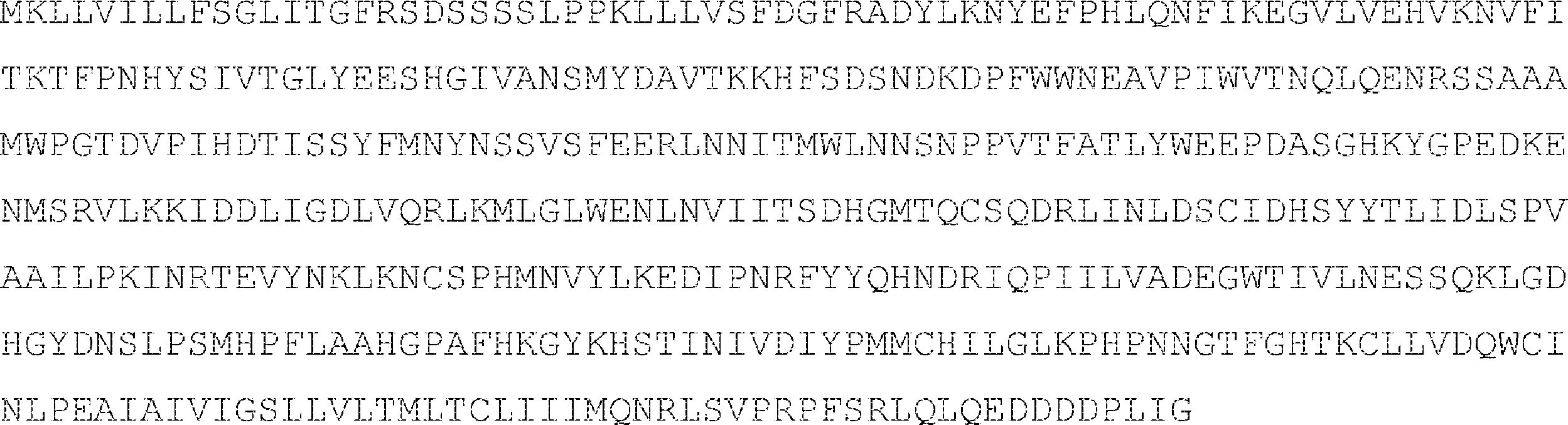
(ESS)n(SEQ ID NO:5)。nは1~10の整数である。
(RQQ)n(SEQ ID NO:6)。nは1~10の整数である。
(KR)n(SEQ ID NO:7)。nは1~10の整数である。
Rm(SEQ ID NO:8)。mは1~15の整数である。
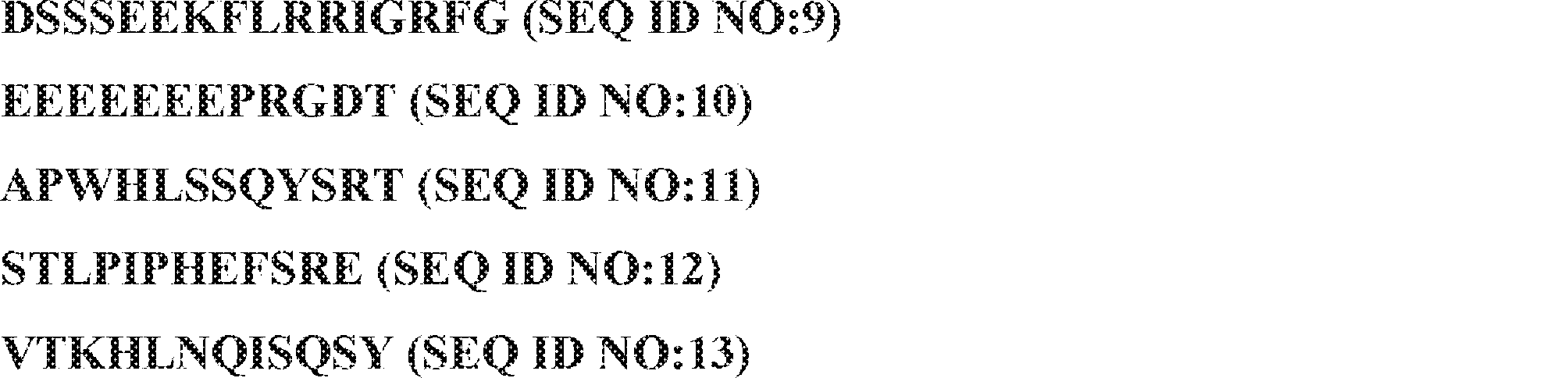
(ESS) n (SEQ ID NO:5). n is an integer from 1 to 10.
(RQQ) n (SEQ ID NO:6). n is an integer from 1 to 10.
(KR) n (SEQ ID NO:7). n is an integer from 1 to 10.
R m (SEQ ID NO:8). m is an integer from 1 to 15.
NPP121アミノ酸配列(SEQ ID NO:15)


一重下線:移行位置(**)で切断するためにNPP2の1~27番目の残基と交換した残基;二重下線:NPP1タンパク質(始まりと終わり) Single underline : Residues exchanged with residues 1-27 of NPP2 for cleavage at the transition position ( ** ); Double underline : NPP1 protein (start and end)
NPP121-Fcアミノ酸配列(SEQ ID NO:16)


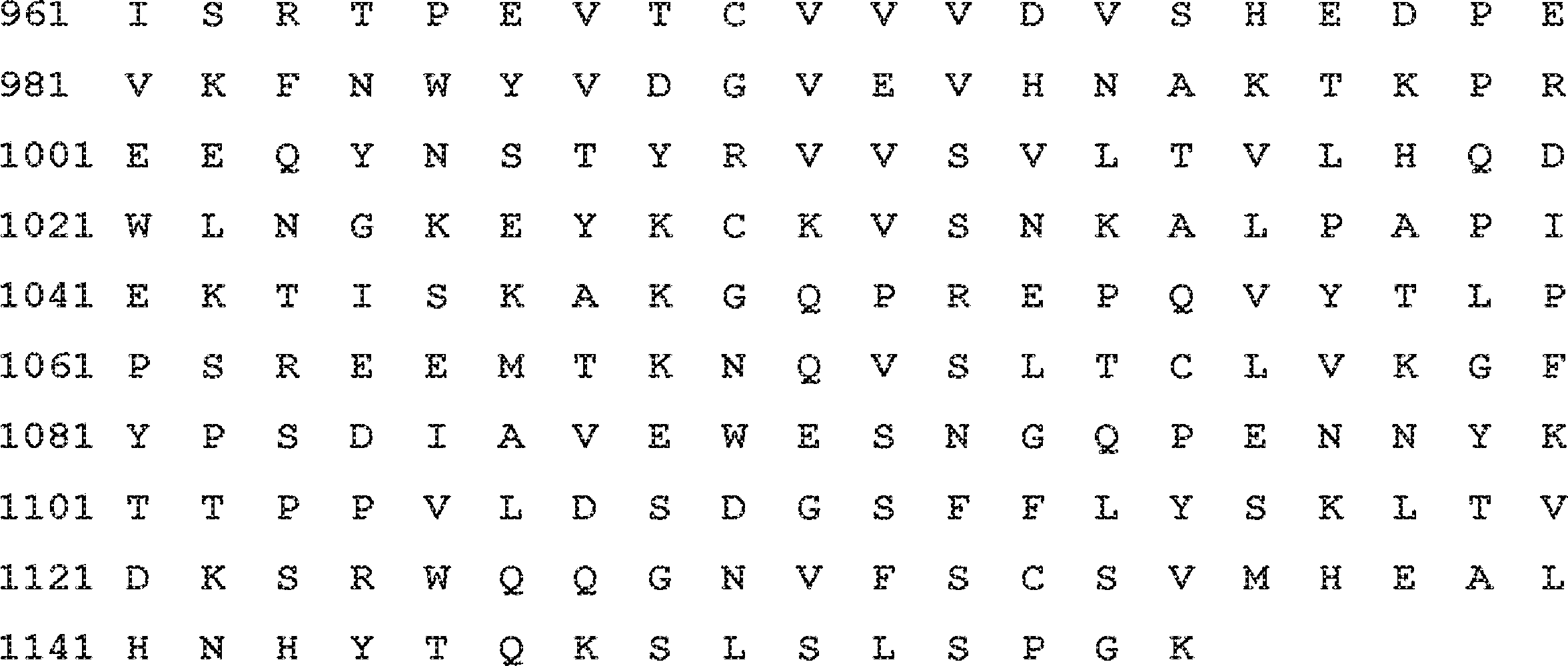
NPP71アミノ酸配列(SEQ ID NO:17)

NPP71-Fcアミノ酸配列(SEQ ID NO:18)

(NPP1 N末端GLKを欠くNPP71)アミノ酸配列(SEQ ID NO:19)

(NPP1 N末端GLKを欠くNPP71)-Fcアミノ酸配列(SEQ ID NO:20)

NPP121-ALBアミノ酸配列(SEQ ID NO:21)

(NPP1 N末端GLKを欠くNPP71)-ALBアミノ酸配列(SEQ ID NO:22)
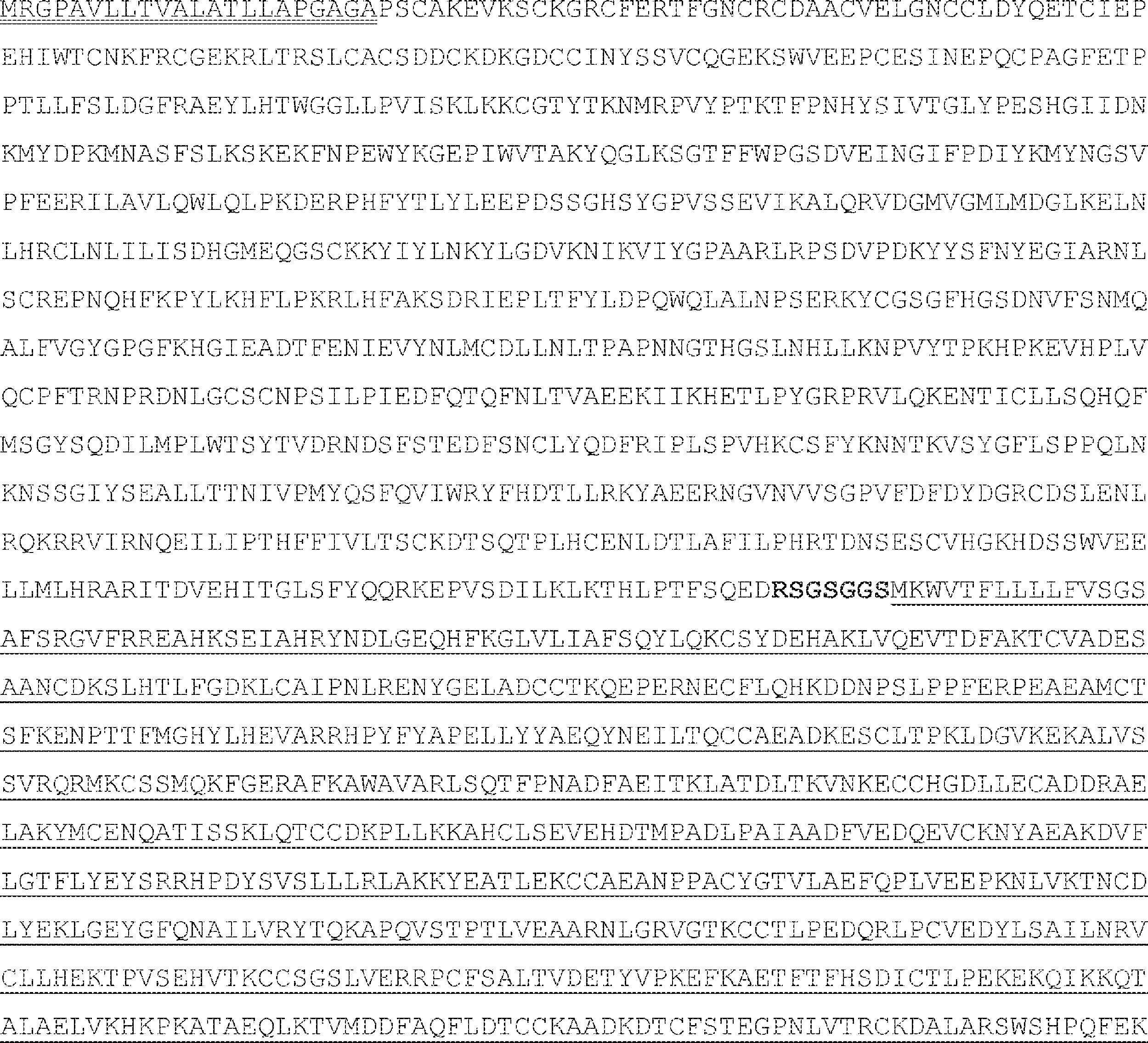
IISLFTFAVGVNICLGFTA(SEQ ID NO:23) IISLFTFAVGVNICLGFTA(SEQ ID NO:23)
NPP51アミノ酸配列(SEQ ID NO:24)

NPP51-ALBアミノ酸配列(SEQ ID NO:25)

ヒトIgG Fcドメイン、Fc(SEQ ID NO:26)

実施例1:ENPP1-asj PXEマウスモデル
本発明のある特定のポリペプチド(例えば、ENPP1-Fc)をPXEおよび変形性関節症(OA)のマウスモデルにおいて試験した。PXEがあるヒトと同様に、PXEマウスはマルチパス(multi-pass)膜輸送体ABCC6に機能喪失型変異を示す。OAの哺乳動物モデルとしてANKマウスを使用した。
Example 1: ENPP1-asj PXE Mouse Model Certain polypeptides of the invention (eg, ENPP1-Fc) were tested in mouse models of PXE and osteoarthritis (OA). Similar to humans with PXE, PXE mice exhibit loss-of-function mutations in the multi-pass membrane transporter ABCC6. ANK mice were used as a mammalian model of OA.
子宮内で「アクセラレーションダイエット(TD00.442, Harlan Laboratories, Madison WI)に曝露されたENPP1-WTおよびENPP1-asj/asj同胞ペアを作製するために、実験全体を通して、ヘテロ接合性ENPP1-asj/+繁殖ペアに「アクセラレーションダイエット」を与えて飼育した。8日目に同腹仔の遺伝子型を同定し、21日目に離乳させた。離乳後に、同胞ペアを実験コホートに分け、研究が終了するまで全実験動物にアクセラレーションダイエットを与えて飼育した。本明細書に記載のように、動物を研究するために、本発明の選択されたポリペプチドを投与し、骨を分析した。
Throughout the experiment, heterozygous ENPP1-asj/ + Breeding pairs were fed an "acceleration diet" and reared. Litters were genotyped on
図7に図示したように、最初のうち、PXEマウスおよびANKマウスはいずれも、文献においてPXEの発病を説明するために報告されたバイオマーカーであるPPiが低い(Jansen, et al., 2014, Arterioscler. Thromb. Vasc. Biol. 34:1985-1989)。 As illustrated in Figure 7, both PXE and ANK mice initially have low PPi, a biomarker reported to explain the pathogenesis of PXE in the literature (Jansen, et al., 2014, Arterioscler. Thromb. Vasc. Biol. 34:1985-1989).
2匹のPXEマウスにENPP1-Fcを1週間投薬した。これらの動物における血漿中PPiの平均は約4μMまで増加した。このことから、本発明のポリペプチドを哺乳動物に投与するとPPiの細胞外レベルが上昇し、PXEが処置されることが分かる。 Two PXE mice were dosed with ENPP1-Fc for 1 week. The average plasma PPi in these animals increased to approximately 4 μM. This shows that when the polypeptide of the present invention is administered to a mammal, the extracellular level of PPi increases and PXE is treated.
低PPiの生物学的機構は低ATP濃度と関連していると考えられていたので、このポリペプチドがPPiを増やす能力は予想されていなかった(Jansen, et al., 2013, PNAS U S A 110(50):20206-20211)。実際に、PXEを処置するには、この疾患において血漿中PPiを補正することで十分だと先行技術において提案された(Jansen, et al., 2013, PNAS U S A 110(50):20206-20211)。本発明の時点の先行技術に基づけば、細胞外空間に十分な基質が無いので、PXEの状況ではENPP1酵素はPPiを生じることができないと当業者は考えるだろう。本明細書において証明されたように、明らかに、これは本当のことではない。 The ability of this polypeptide to increase PPi was not expected since the biological mechanisms of low PPi were thought to be associated with low ATP concentrations (Jansen, et al., 2013, PNAS U S A 110( 50):20206-20211). Indeed, to treat PXE, it has been proposed in the prior art that correcting plasma PPi in this disease is sufficient (Jansen, et al., 2013, PNAS U S A 110(50):20206-20211) . Based on the prior art at the time of the present invention, one skilled in the art would believe that the ENPP1 enzyme is unable to generate PPi in the context of PXE, since there is not enough substrate in the extracellular space. Clearly, this is not the case, as evidenced herein.
実施例2:
アクセラレーションダイエットを与えた時に、26日目にENPP1-asj/asjマウスの毎日の体重はWT同胞ペアから分かれた。この時、ENPP1-asj/asjマウスは「成長障害」事象を経験し、体重が減り始めた(図1A)。26日目より後では、ENPP1-asj/asj動物は、進行性のこわばりと、身体活動の低下を示した。35~71日目にENPP1-asj/asj動物は全て死亡し、寿命の中央値は58日であった(図1G)。ENPP1-asj/asjおよびENPP1-WTマウスにおける石灰化の存在を、マイクロ-CTスキャンと、心臓、大動脈、および腎臓から採取した組織切片によって死後に評価した。マイクロ-CT画像化によって、ENPP1-asj/asjマウスの約1/3には心臓に、目に見える石灰化があり、2/3には大動脈に、目に見える石灰化があった(表2)。組織検査時には、これらの割合は100%まで増加した。組織検査から、動物の多くの大動脈壁には、著しい、ほぼ全周性の石灰化があることも分かった(図1D~1E)。組織検査から、冠状動脈の100%に動脈壁石灰化があり、動物の70%に、心筋梗塞と一致する局所性または融合性の心筋壊死領域があったことも明らかになった(図1F~1G)。反対に、ENPP1-WTマウスは、これらの異常をいずれも示さなかった。これらの所見から、この動物モデルは、大型動脈および中型動脈の顕著な石灰化と心臓の死(demise)を特徴とするヒトのGACIを再現すると証明される。
Example 2:
On day 26, the daily body weights of ENPP1-asj/asj mice diverged from their WT sibling pairs when fed an accelerated diet. At this time, ENPP1-asj/asj mice experienced a "growth failure" event and began to lose weight (Figure 1A). After day 26, ENPP1-asj/asj animals showed progressive stiffness and decreased physical activity. All ENPP1-asj/asj animals died between days 35 and 71, with a median lifespan of 58 days (Figure 1G). The presence of calcification in ENPP1-asj/asj and ENPP1-WT mice was assessed postmortem by micro-CT scan and tissue sections taken from the heart, aorta, and kidney. Micro-CT imaging revealed that approximately one-third of ENPP1-asj/asj mice had visible calcifications in the heart, and two-thirds had visible calcifications in the aorta (Table 2 ). At the time of histological examination, these percentages increased to 100%. Histological examination also revealed that the aortic walls of many of the animals had significant, nearly circumferential calcification (Figures 1D-1E). Histological examination also revealed that 100% of the coronary arteries had arterial wall calcification, and 70% of the animals had areas of focal or confluent myocardial necrosis consistent with myocardial infarction (Figure 1F- 1G). In contrast, ENPP1-WT mice did not exhibit any of these abnormalities. These findings demonstrate that this animal model reproduces human GACI, which is characterized by significant calcification of large and medium-sized arteries and cardiac demise.
インビボで使用するための可溶性組換えENPP1を産生するために、ENPP1をIgG1のFcドメインに融合し(以下、ENPP1-Fcと呼ぶ、図2B)、当該融合タンパク質を、安定哺乳動物(HEK293)細胞株において発現させた。タンパク質発現を昆虫細胞から哺乳動物細胞に切り替えたことと、ENPP1をIgG1のFcドメインに融合したことの複合効果によって、ATP基質に対するENPP1の親和性が2桁超増加したと同時に、Kcatも1/4~1/3低減したことで、ミカエリスメンテン反応速度が変化した(図2C~2E)。ENPP1-Fcの活性は4℃で保管された時には30日間にわたって減少することが認められたが、この酵素は-80℃で凍結することができ、解凍した時には、ほぼ完全な活性を保持することができた(図2C)。従って、この酵素は、精製後に必要になるまで凍結原液として保管された。 To produce soluble recombinant ENPP1 for in vivo use, ENPP1 was fused to the Fc domain of IgG1 (hereinafter referred to as ENPP1-Fc, Figure 2B), and the fusion protein was transferred to stable mammalian (HEK293) cells. It was expressed in a strain. The combined effect of switching protein expression from insect cells to mammalian cells and fusing ENPP1 to the Fc domain of IgG1 increased the affinity of ENPP1 for ATP substrates by more than two orders of magnitude, while at the same time increasing the K cat by 1. The Michaelis-Menten reaction rate changed with a reduction of /4 to 1/3 (Figures 2C to 2E). Although the activity of ENPP1-Fc was observed to decrease over 30 days when stored at 4°C, the enzyme can be frozen at -80°C and retains almost full activity when thawed. was completed (Figure 2C). Therefore, the enzyme was stored as a frozen stock solution until needed after purification.
精製後に、ENPP1-Fcを、ZnおよびMgを補ったPBS(PBSplus)に対して透析し、5~7mg/mlまで濃縮し、200~500μlのアリコートで-80℃で凍結した。使用直前にアリコートを解凍し、PBSplusで希釈することで溶液の比活性を31.25au/ml(または調製物に応じて約0.7mg/ml)に調整した。 After purification, ENPP1-Fc was dialyzed against PBS supplemented with Zn and Mg (PBS plus ), concentrated to 5-7 mg/ml, and frozen at -80°C in 200-500 μl aliquots. Immediately before use, an aliquot was thawed and the specific activity of the solution was adjusted to 31.25 au/ml (or approximately 0.7 mg/ml depending on the preparation) by diluting with PBS plus .
投薬は、異なるタンパク質調製物における比活性のばらつきを説明するために動物体重1Kgあたりの活性単位(au)に従って行った。酵素の比活性はタンパク質調製物ごとに異なり、臨床応答が酵素比活性に大きく依存することが認められたので、比活性が40au/mg未満のタンパク質調製物を不合格にした。概念実証試験用の初期投薬レベルを確かめるために、限られた数の動物(1~2匹/用量レベル)において用量漸増試験を行った。用量漸増試験ではヒトバージョンとマウスバージョンのENPP1を両方とも使用したが、概念実証試験はENPP1-Fcのマウスアイソフォーム(mENPP1-Fc)を用いて行った。生後14日目のENPP1-asj/asjマウスに、mENPP1-Fcの皮下注射を毎日投薬し、GK1.5の腹腔内(I.P.)注射を毎週投薬した。組換えタンパク質の免疫拒絶反応を最小限にするために後者を加えた。500au/Kg 1日1回のmEnpp1-Fcを皮下投薬すると、未投薬のENPP1-asj/asj動物において観察された「成長障害」危機が観察されることなく、体重に強い初期応答が起こることが証明された。 Dosing was done according to activity units (au) per Kg of animal body weight to account for variations in specific activity in different protein preparations. We rejected protein preparations with a specific activity of less than 40 au/mg because the specific activity of the enzyme varied between protein preparations and it was observed that the clinical response was highly dependent on the enzyme specific activity. Dose escalation studies were performed in a limited number of animals (1-2 animals/dose level) to confirm initial dosing levels for proof-of-concept studies. Dose escalation studies used both human and mouse versions of ENPP1, whereas proof-of-concept studies were conducted with the mouse isoform of ENPP1-Fc (mENPP1-Fc). 14-day-old ENPP1-asj/asj mice were dosed daily with subcutaneous injections of mENPP1-Fc and weekly with intraperitoneal (I.P.) injections of GK1.5. The latter was added to minimize immune rejection of the recombinant protein. Subcutaneous dosing of mEnpp1-Fc at 500au/Kg once daily resulted in a strong initial response to body weight without the observed 'growth failure' crisis observed in unmedicated ENPP1-asj/asj animals. Proven.
用量漸増試験の結果に基づいて、8匹のNPP1-asj/asj動物のコホートに、500au/Kg 1日1回のmNPP1-Fcと、GK1.5を用いた毎週1回のIP注射を投薬した(図3)。投薬したコホートと同じやり方で、対照群(NPP1-WT+ビヒクルおよびNPP1-asj/asj+ビヒクル)にビヒクルを毎日投薬し、GK1.5を毎週投薬した。試験期間を55日に短縮した。8匹の処置したENPP1-asj/asj動物は全て全55日の試験を生き残った。この治療試験では、処置したNPP1 asj/asj動物では著しい臨床応答が観察されたのに対して、無処置のNPP1 asj/asj動物の寿命の中央値は58日から37日に短くなった。これは、おそらく、GK1.5免疫抑制剤を毎週、IP注射したことに起因する。無処置のENPP1-asj/asj動物は全て26日目に、体重減少と、次の30日にわたって麻痺および死亡へと不定に進行する移動性の制約を特徴とする成長障害危機も経験した。55日の試験にわたって、1匹を除く全ての無処置のENPP1-asj/asj動物が死んだが、対照的に、処置したENPP1-asj/asjマウスは全てENPP1-WTマウスと比較して体重が増加し、移動性の低下の徴候もこわばりの徴候も示さなかった。 Based on the results of the dose escalation study, a cohort of 8 NPP1-asj/asj animals was dosed with 500 au/Kg once daily mNPP1-Fc and once weekly IP injection with GK1.5 (Figure 3). Control groups (NPP1-WT+vehicle and NPP1-asj/asj+vehicle) were dosed with vehicle daily and GK1.5 weekly in the same manner as the dosed cohorts. The test period was shortened to 55 days. All eight treated ENPP1-asj/asj animals survived the entire 55-day study. In this therapeutic trial, a significant clinical response was observed in treated NPP1 asj/asj animals, whereas the median lifespan of untreated NPP1 asj/asj animals was reduced from 58 to 37 days. This is probably due to weekly IP injections of GK1.5 immunosuppressant. All untreated ENPP1-asj/asj animals also experienced a growth failure crisis on day 26, characterized by weight loss and limited mobility that progressively progressed to paralysis and death over the next 30 days. Over the 55-day study, all but one untreated ENPP1-asj/asj animal died, but in contrast, all treated ENPP1-asj/asj mice gained weight compared to ENPP1-WT mice. However, he showed no signs of decreased mobility or stiffness.
試験の終了時に、ビヒクルで処置したENPP1-asj/asjマウスの100%が心臓、大動脈、および冠状動脈に石灰化を示し、動物の77%が心筋梗塞の組織学的証拠を示した(表1)。ほとんどの場合で、これは小さな心筋細胞壊死領域の形をとり、心臓石灰化の近くで無くなったが(図3C~3D、図4C~4E)、2匹の動物(22%)では、右心室の自由壁に大きな全層(full thickness)心筋梗塞があった(図4C~4D)。冠状動脈石灰化に隣接する心筋組織の心筋線維症は、よくある所見であった(図4E)。このことは、冠状動脈石灰化による虚血が心筋疾患を説明する可能性が高いことを示している。対照的に、ENPP1-Fcで処置したENPP1-asj/asj動物はどれも、組織学によっても死後マイクロ-CTによっても心臓石灰化も動脈石灰化も大動脈石灰化も示さなかった(表1ならびに図3Dおよび図4D)。 At the end of the study, 100% of vehicle-treated ENPP1-asj/asj mice showed calcification in the heart, aorta, and coronary arteries, and 77% of animals showed histological evidence of myocardial infarction (Table 1 ). In most cases, this took the form of small areas of cardiomyocyte necrosis that disappeared near the cardiac calcification (Figures 3C-3D, Figures 4C-4E), but in two animals (22%), the right ventricular There was a large full-thickness myocardial infarction in the free wall of the tumor (Figures 4C-4D). Myocardial fibrosis in myocardial tissue adjacent to coronary artery calcification was a common finding (Figure 4E). This indicates that ischemia due to coronary artery calcification is likely to explain myocardial disease. In contrast, none of the ENPP1-asj/asj animals treated with ENPP1-Fc showed cardiac, arterial, or aortic calcification by histology or postmortem micro-CT (Table 1 and Fig. 3D and Figure 4D).
生存、動物の毎日の体重、および末端組織構造に加えて、処置に対する応答性を、血管石灰化、血漿中[PPi]濃度、およびTc99PPi(99mPYP)取り込みを画像化する死後高分解能マイクロ-CTスキャンでも評価した(図5および表1)。これらのパラメータの全てによって測定された時に生化学的応答および生理学的応答は終了した。無処置のENPP1-asj/asjコホートの大動脈、冠状動脈、および心臓に著しい石灰化が認められたこととは対照的に、WTにも、処置したENPP1-asj/asj動物にもマイクロ-CTによって血管石灰化があると認められなかった(図5A)。さらに、処置したENPP1-asj/asj動物の血清PPi濃度はWT動物を上回って上昇し(処置したENPP1-asj/asjでは約30μMに対して、WTでは約10μM)、無処置のENPP1-asj/asjレベル(<0.5μM)をかなり上回って上昇した(図5B)。さらに、処置したENPP1-asj/asj動物の血清PPi濃度(約30μM)は、無処置のENPP1-asj/asjレベル(<0.5μM)をかなり上回って上昇し、WT動物の血清PPi濃度(約10μM)を上回って上昇した(図5B)。 Postmortem high-resolution micro-CT to image survival, animal daily body weight, and terminal histology, as well as response to treatment, vascular calcification, plasma [PPi] concentration, and Tc99PPi ( 99m PYP) uptake. Scans were also evaluated (Figure 5 and Table 1). The biochemical and physiological responses were complete when measured by all of these parameters. In contrast to the significant calcification observed in the aorta, coronary arteries, and heart of the untreated ENPP1-asj/asj cohort, both WT and treated ENPP1-asj/asj animals showed significant calcification by micro-CT. No vascular calcification was observed (Figure 5A). Furthermore, serum PPi concentrations in treated ENPP1-asj/asj animals were elevated above those in WT animals (approximately 30 μM in treated ENPP1-asj/asj vs. approximately 10 μM in WT) and in untreated ENPP1-asj/asj animals. asj levels (<0.5 μM) (Fig. 5B). Furthermore, serum PPi concentrations in treated ENPP1-asj/asj animals (approximately 30 μM) were significantly elevated above untreated ENPP1-asj/asj levels (<0.5 μM), and serum PPi concentrations in WT animals (approximately 10 μM ) (Figure 5B).
99mPYPは心臓画像化および骨リモデリングにおいて一般的に用いられる画像化剤であり、処置に対する応答性のマーカーとして使用した。なぜなら、血漿中[PPi]が低減し、異所性石灰化部位にある「開いている(open)」PPi結合部位が増えると予想されたために、機能的なENPP1が無い動物では99mPYP取り込みは増えるはずだと予想されたためである。この仮説を試験する目的で、同胞ペア間のPYP取り込みの違いを検出するために、ENPP1-WTおよび未投薬のENPP1-asj/asj動物においてインビボ99mPYP画像化を毎週行った(図5C~5D)。99mPYP取り込みの分析は、軟骨性骨(頭蓋)および軟部組織(震毛)の両方で構成される頭部に限定された。頭部は、このGACIのマウスモデルにおける公知の異所性石灰化部位である。さらに、データ収集を簡単にするために分析は頭部に限定された。なぜなら、頭部は、データ収集中に起こる180°カメラ回転の間に一過的な99mPYP取り込みを示した内部臓器(例えば、膀胱、心臓、および横隔膜)と重複しないからである。 99m PYP is a commonly used imaging agent in cardiac imaging and bone remodeling and was used as a marker of responsiveness to treatment. This is because 99mPYP uptake is reduced in animals lacking functional ENPP1, as plasma [PPi] is expected to decrease and the number of "open" PPi binding sites at sites of ectopic calcification increases. This is because it was expected that the number would increase. To test this hypothesis, in vivo 99m PYP imaging was performed weekly in ENPP1-WT and unmedicated ENPP1-asj/asj animals to detect differences in PYP uptake between sib pairs (Figures 5C-5D ). Analysis of 99m PYP uptake was restricted to the head, which is composed of both cartilaginous bone (cranial bone) and soft tissue (conciliaria). The head is a known site of ectopic calcification in this murine model of GACI. Additionally, analysis was limited to the head to simplify data collection. This is because the head does not overlap with internal organs (e.g., bladder, heart, and diaphragm) that showed transient 99m PYP uptake during the 180° camera rotation that occurs during data collection.
ENPP1-WTおよび無処置のENPP1-asj/asj動物を毎週、連続画像化することによって、ENPP1-asj/asj動物の頭蓋における99mPYPの注射量に対する取り込み率(%)はENPP1-WT動物より多く、実験群内での99mPYP取り込みは試験中に大きく変化しないことが証明された(図5C~5D)。処置したENPP1-asj/asj動物および無処置のENPP1-asj/asj動物における99mPYP取り込みを30~35日目と試験の終了時(50~65日目)の2つの時点で比較した。これらの実験群の比較によって、ENPP1-Fc処置はGACIマウスにおける99mPYP取り込みをWTレベルに戻したことが証明される(図5E~5F)。このことから、ENPP1-Fc処置は、開いているPPi結合部位を、おそらく、治療剤によって誘導された血漿中PPi濃度の増加から生じた「非放射性(cold)の」PPiで飽和させることによって、ENPP1-asj/asjマウスにおける無秩序な組織石灰化および頭蓋石灰化を抑止できることが示唆される。 By serially imaging ENPP1-WT and untreated ENPP1-asj/asj animals every week, we found that the uptake (%) of the injected dose of 99m PYP in the cranium of ENPP1-asj/asj animals was higher than that of ENPP1-WT animals. , it was demonstrated that 99m PYP uptake within the experimental groups did not change significantly during the study (Figures 5C-5D). 99m PYP uptake in treated and untreated ENPP1-asj/asj animals was compared at two time points: days 30-35 and at the end of the study (days 50-65). Comparison of these experimental groups demonstrates that ENPP1-Fc treatment returned 99m PYP uptake to WT levels in GACI mice (Figures 5E-5F). From this, ENPP1-Fc treatment appears to be able to stimulate open PPi binding sites by saturating them with "cold" PPi, presumably resulting from the increase in plasma PPi concentration induced by the therapeutic agent. It is suggested that disordered tissue calcification and cranial calcification in ENPP1-asj/asj mice can be suppressed.
(表1)心血管病態、概念実証試験

(表2)心血管病態、自然史研究

実施例3:アルブミン融合タンパク質の発現
ヒト血清アルブミン(HSA)は585アミノ酸のタンパク質であり、血清浸透圧のかなりの割合を担っており、内因性リガンドおよび外因性リガンドの担体としても機能する。現在、臨床使用のためのHSAはヒト血液から抽出することによって生成される。微生物における組換えHSA(rHSA)の産生はEP0330451およびEP0361991に開示されている。
Example 3: Expression of Albumin Fusion Proteins Human serum albumin (HSA) is a 585 amino acid protein that is responsible for a significant proportion of serum osmolarity and also functions as a carrier for endogenous and exogenous ligands. Currently, HSA for clinical use is produced by extraction from human blood. Production of recombinant HSA (rHSA) in microorganisms is disclosed in EP0330451 and EP0361991.
担体分子としてのアルブミンの役割と、その不活性な性質は、ポリペプチドの安定剤および輸送体として使用するのに望ましい特性である。他のタンパク質を安定化するために、アルブミンを融合タンパク質の成分として使用することはWO93/15199、WO93/15200、およびEP0413622に開示されている。ポリペプチドに融合するためにHSAのN末端断片を使用することも開示されている(EP0399666)。ポリペプチドとの融合は、HSAをコードするDNAまたはその断片が、ポリペプチドをコードするDNAとつなげられるように遺伝子操作によって成し遂げられる。次いで、融合ポリペプチドを発現するように適切なプラスミド上で並べられた融合ヌクレオチド配列を用いて、適切な宿主が形質転換またはトランスフェクトされる。Nomura, et al., 1995, Biosci. Biotechnol. Biochem. 59(3):532-4は、S.セレビジエ(S.cerevisae)において、分泌を誘導するHSAプレ配列を用いて、ヒトアポリポタンパク質EをHSAまたはHSA断片との融合タンパク質として発現させることを試みた。完全長HSAと融合すると低レベルのタンパク質が培地に分泌されるのに対して(6.3mg/リットルの最大収率)、HSA(1-198)またはHSA(1-390)と融合しても培地への分泌は起こらない。 Albumin's role as a carrier molecule and its inert nature are desirable properties for use as a polypeptide stabilizer and transporter. The use of albumin as a component of fusion proteins to stabilize other proteins is disclosed in WO93/15199, WO93/15200 and EP0413622. The use of the N-terminal fragment of HSA for fusion to polypeptides has also been disclosed (EP0399666). Fusion with a polypeptide is accomplished by genetic engineering such that the DNA encoding HSA or a fragment thereof is joined to the DNA encoding the polypeptide. A suitable host is then transformed or transfected with the fusion nucleotide sequence arrayed on a suitable plasmid to express the fusion polypeptide. Nomura, et al., 1995, Biosci. Biotechnol. Biochem. 59(3):532-4, used an HSA presequence to induce secretion of human apolipoprotein E in S. cerevisae. We attempted to express it as a fusion protein with HSA or HSA fragment. Fusion with full-length HSA results in low levels of protein secreted into the medium (maximum yield of 6.3 mg/liter), whereas fusion with HSA(1-198) or HSA(1-390) No secretion occurs.
ヒト血清アルブミンは正常HSA(以下「HSA」と呼ぶ)のバリアントでもよい。本明細書で使用する「バリアント」は保存的または非保存的な挿入、欠失、および置換を含み、このような変化は、アルブミンの膨張の(oncotic)有用なリガンド結合特性および非免疫原特性の1つまたは複数を実質的に変えない。特に、「バリアント」は、ヒトアルブミンおよびヒトアルブミン断片の天然の多型バリアント、例えば、EP0322094に開示された断片(すなわち、HA(1-n)、式中、nは369~419である)を含む。アルブミンまたは成長ホルモン(GH)は、任意の脊椎動物、特に、任意の哺乳動物、例えば、ヒト、ウシ、ヒツジ、ブタ、雌鶏、またはサケに由来してもよい。融合のアルブミンおよびGH部分は異なる動物に由来してもよい。 Human serum albumin may be a variant of normal HSA (hereinafter referred to as "HSA"). As used herein, "variant" includes conservative or non-conservative insertions, deletions, and substitutions, and such changes confer beneficial oncotic ligand-binding and non-immunogenic properties to albumin. does not materially alter one or more of the following: In particular, "variant" refers to naturally occurring polymorphic variants of human albumin and human albumin fragments, such as the fragments disclosed in EP0322094 (i.e. HA(1-n), where n is from 369 to 419). include. Albumin or growth hormone (GH) may be derived from any vertebrate, especially any mammal, such as humans, cows, sheep, pigs, hens, or salmon. The albumin and GH portions of the fusion may be derived from different animals.
「保存的置換」は、Gly/Ala;Val/Ile/Leu;Asp/Glu;Asn/Gln;Ser/Thr;Lys/Arg;およびPhe/Tyrなどのグループ内での意図された交換である。バリアントは、通常、バリアントと同じ長さである、ある長さの正常HSAと少なくとも75%(例えば、少なくとも80%、90%、95%、または99%)の配列同一性を有し、この技術分野において従来通り欠失および挿入が許されたら、他のどの長さの正常HSAよりも同一性が高い。一般的に言って、HSAバリアントは少なくとも100アミノ酸長であり、一部の態様では少なくとも150アミノ酸長である。HSAバリアントは、少なくとも1つのHSAドメイン全体、例えばドメイン1(1-194)、2(195-387)、3(388-585)、1+2(1-387)、2+3(195-585)、または1+3(1-194、+388-585)からなってもよく、これを含んでもよい。各ドメインそのものは、2つの相同サブドメイン、すなわち、1-105、120-194、195-291、316-387、388-491、および512-585と、残基Lys106~Glu199、Glu292~Val315、およびGlu492~Ala511を含む可動性のあるサブドメイン間リンカー領域からできた。一部の態様では、NPP1融合のHSA部分は、HAの少なくとも1つのサブドメインもしくはドメインまたはその保存的改変を含む。 "Conservative substitutions" are intended exchanges within groups such as Gly/Ala; Val/Ile/Leu; Asp/Glu; Asn/Gln; Ser/Thr; Lys/Arg; and Phe/Tyr. The variant has at least 75% (e.g., at least 80%, 90%, 95%, or 99%) sequence identity with a length of normal HSA that is typically the same length as the variant, and this technique If deletions and insertions are allowed as is customary in the field, it is more identical than any other length of normal HSA. Generally speaking, HSA variants are at least 100 amino acids long, and in some embodiments at least 150 amino acids long. HSA variants include at least one entire HSA domain, e.g. ), or 1+3 (1-194, +388-585). Each domain itself has two homologous subdomains, namely 1-105, 120-194, 195-291, 316-387, 388-491, and 512-585, and residues Lys106-Glu199, Glu292-Val315, and It consists of a flexible intersubdomain linker region containing Glu492 to Ala511. In some embodiments, the HSA portion of the NPP1 fusion comprises at least one subdomain or domain of HA or a conservative modification thereof.
細菌(例えば、大腸菌(E.coli)および枯草菌(Bacillus subtilis))、酵母(例えば、サッカロマイセス・セレビシエ(Saccharomyces cerevisiae)、クルイベロミセス・ラクチス(Kluyveronmyces lactis)、およびピキア・パストリス(Pichia pastoris))、糸状菌(例えば、アスペルギルス属)、植物細胞、動物細胞、ならびに昆虫細胞を含む多くの発現系が公知である。 Bacteria (e.g. E. coli and Bacillus subtilis), yeasts (e.g. Saccharomyces cerevisiae, Kluyveronmyces lactis, and Pichia pastoris) Many expression systems are known, including , filamentous fungi (eg, Aspergillus), plant cells, animal cells, and insect cells.
望ましいタンパク質は、従来のやり方で、例えば、宿主染色体の中に挿入されたコード配列から、または遊離プラスミド上にあるコード配列から産生することができる。 The desired protein can be produced in conventional manner, for example, from coding sequences inserted into the host chromosome or from coding sequences residing on free plasmids.
有用な任意のやり方、例えば、エレクトロポレーションで、酵母を、望ましいタンパク質のコード配列で形質転換することができる。エレクトロポレーションによって酵母を形質転換する方法は、Becker & Guarente, 1990, Methods Enzymol. 194:182に開示されている。首尾良く形質転換された細胞、すなわち、本発明のDNA構築物を含有する細胞は周知の技法によって特定することができる。例えば、発現構築物の導入に起因した細胞を増殖させて、望ましいポリペプチドを産生することができる。細胞を収集および溶解し、Southern, 1975, J. Mol. Biol. 98:503および/またはBerent, et al., 1985, Biotech 3:208に記載の方法などの方法を用いて、DNAが存在するかどうかDNA内容物を調べることができる。または、上清中のタンパク質の存在は、抗体を用いて検出することができる。 Yeast can be transformed with the desired protein coding sequence in any useful manner, such as electroporation. Methods for transforming yeast by electroporation are disclosed in Becker & Guarente, 1990, Methods Enzymol. 194:182. Successfully transformed cells, ie, cells containing a DNA construct of the invention, can be identified by well-known techniques. For example, cells resulting from the introduction of the expression construct can be expanded to produce the desired polypeptide. Harvest and lyse the cells and determine the presence of DNA using methods such as those described in Southern, 1975, J. Mol. Biol. 98:503 and/or Berent, et al., 1985, Biotech 3:208. DNA content can be examined to determine whether Alternatively, the presence of protein in the supernatant can be detected using antibodies.
有用な酵母プラスミドベクターはpRS403-406およびpRS413-416を含み、一般的に、Stratagene Cloning Systems, La Jolla, CA, USAから入手可能である。プラスミドpRS403、pRS404、pRS405、およびpRS406は酵母組み込みプラスミド(Yeast Integrating plasmid)(YIp)であり、酵母選択マーカーHIS3、TRP1、LEU2、およびURA3を組み込んでいる。プラスミドpRS413-416は酵母セントロメアプラスミド(YCp)である。 Useful yeast plasmid vectors include pRS403-406 and pRS413-416 and are generally available from Stratagene Cloning Systems, La Jolla, Calif., USA. Plasmids pRS403, pRS404, pRS405, and pRS406 are Yeast Integrating plasmids (YIp) and incorporate yeast selection markers HIS3, TRP1, LEU2, and URA3. Plasmid pRS413-416 is a yeast centromere plasmid (YCp).
相補的な付着末端を介してDNAをベクターに機能的に連結するために、様々な方法が開発されてきた。例えば、相補的なホモポリマートラクトを、ベクターDNAに挿入しようとするDNAセグメントに付加することができる。次いで、相補的なホモポリマーテール間の水素結合によってベクターおよびDNAセグメントをつないで、組換えDNA分子を形成する。 Various methods have been developed to operably link DNA to vectors via complementary cohesive ends. For example, a complementary homopolymer tract can be added to the DNA segment to be inserted into the vector DNA. The vector and DNA segment are then joined by hydrogen bonds between complementary homopolymer tails to form a recombinant DNA molecule.
1つまたは複数の制限部位を含有する合成リンカーは、DNAセグメントをベクターにつなげるための代替方法となる。エンドヌクレアーゼ制限消化によって作製したDNAセグメントを、3'-5'-エキソヌクレアーゼ活性で突出3'-一本鎖末端を除去し、重合活性で陥凹3'-末端をフィルインする酵素であるバクテリオファージT4 DNAポリメラーゼまたは大腸菌DNAポリメラーゼIで処理する。 Synthetic linkers containing one or more restriction sites provide an alternative method for joining DNA segments to vectors. Bacteriophage is an enzyme that removes protruding 3'-single-stranded ends with 3'-5'-exonuclease activity and fills in recessed 3'-ends with polymerization activity of DNA segments created by endonuclease restriction digestion. Treat with T4 DNA polymerase or E. coli DNA polymerase I.
従って、これらの活性を組み合わせることで平滑末端DNAセグメントが生じる。次いで、平滑末端セグメントを、平滑末端DNA分子の連結を触媒することができる酵素、例えば、バクテリオファージT4 DNAリガーゼの存在下で、多量のモル過剰のリンカー分子とインキュベートする。従って、反応の生成物は、末端にポリマーリンカー配列を有するDNAセグメントである。次いで、これらのDNAセグメントを適切な制限酵素で切断し、DNAセグメントの末端と適合する末端を生じる酵素で切断されている発現ベクターに連結する。 Thus, the combination of these activities results in blunt-ended DNA segments. The blunt-ended segments are then incubated with a large molar excess of linker molecules in the presence of an enzyme capable of catalyzing the ligation of blunt-ended DNA molecules, such as bacteriophage T4 DNA ligase. The product of the reaction is therefore a DNA segment with a polymeric linker sequence at the end. These DNA segments are then cut with appropriate restriction enzymes and ligated into expression vectors that have been cut with enzymes that produce ends that are compatible with the ends of the DNA segments.
様々な制限エンドヌクレアーゼ部位を含有する合成リンカーは、International Biotechnologies Inc, New Haven, CT, USAを含む多数の供給元から市販されている。 Synthetic linkers containing various restriction endonuclease sites are commercially available from a number of sources, including International Biotechnologies Inc, New Haven, Conn., USA.
本発明に従ってDNAを改変する望ましい手法は、例えば、HAバリアントを調製しようとするのであれば、Saiki, et al., 1988, Science 239:487-491に開示されたようにポリメラーゼ連鎖反応を使用する手法である。この方法では、酵素的に増幅しようとするDNAを、増幅DNAに組み込まれる2つの特異的なオリゴヌクレオチドに隣接させる。特異的プライマーは、当技術分野において公知の方法を用いて発現ベクターにクローニングするのに使用することができる制限エンドヌクレアーゼ認識部位を含有してもよい。 A preferred technique for modifying DNA according to the present invention is, for example, if HA variants are to be prepared, using the polymerase chain reaction as disclosed in Saiki, et al., 1988, Science 239:487-491. It is a method. In this method, the DNA to be enzymatically amplified is flanked by two specific oligonucleotides that are incorporated into the amplified DNA. Specific primers may contain restriction endonuclease recognition sites that can be used to clone into expression vectors using methods known in the art.
ENPP1-ALB設計:
可溶性組換えタンパク質を発現するように改変した、改変ヒトNPP1および改変マウスNPP1(ヒト:NCBIアクセッションNP_006199;マウス:NCBIアクセッションNP_03839)をサブクローニングによってヒト血清アルブミン(HSA)と融合させて、それぞれ、pFUSEプラスミド(InvivoGen, San Diego CA)を得た。
ENPP1-ALB design:
Modified human NPP1 and modified mouse NPP1 (human: NCBI accession NP_006199; mouse: NCBI accession NP_03839), modified to express soluble recombinant proteins, were fused with human serum albumin (HSA) by subcloning, respectively. The pFUSE plasmid (InvivoGen, San Diego CA) was obtained.
タンパク質産生:
振盪フラスコ: ENPP1-ALBの安定トランスフェクションをHEK293細胞においてゼオシン選択下で確立する。付着性のHEK293細胞を懸濁増殖に適合することができる。適合した細胞を用いて、37℃および5%CO2で、振盪フラスコの中に入っているFreeStyle培地(Gibco#12338-018)に溶解した液体培養増殖物に播種し、高湿度で120rpmで攪拌する。培養物を望ましい目標体積まで段階的に拡大し、次いで、細胞外タンパク質を蓄積するために、さらに12日間維持する。維持期の間にタンパク質産生を強化するために培養物にCD EfficientFeed C AGT(Gibco #A13275-05)を補充する。
Protein production:
Shake flask: Stable transfection of ENPP1-ALB is established in HEK293 cells under Zeocin selection. Adherent HEK293 cells can be adapted to suspension growth. Compatible cells were used to seed liquid culture growth in FreeStyle medium (Gibco #12338-018) in shake flasks at 37 °C and 5% CO2 and agitated at 120 rpm with high humidity. do. Cultures are expanded stepwise to the desired target volume and then maintained for an additional 12 days to accumulate extracellular proteins. Supplement the culture with CD EfficientFeed C AGT (Gibco #A13275-05) to enhance protein production during the maintenance phase.
バイオリアクター: 溶存酸素およびpHの制御装置を備える10リットルバイオリアクターの中で細胞を増殖させる。80RPMの攪拌速度で、3リットル/分を超えない空気と酸素の混合物を培養物に供給することで、溶存酸素を40%空気飽和に保つ。pHが7.4を超えたらCO2を散布することでpHを7.4に制御する。培養増殖の後に、細胞数、細胞生存率、グルコース濃度および乳酸濃度の測定を行う。 Bioreactor: Cells are grown in a 10 liter bioreactor equipped with dissolved oxygen and pH controls. Maintain dissolved oxygen at 40% air saturation by feeding the culture with a mixture of air and oxygen not exceeding 3 L/min at a stirring speed of 80 RPM. If the pH exceeds 7.4, control the pH to 7.4 by spraying CO2 . After culture growth, measurements of cell number, cell viability, glucose concentration, and lactate concentration are performed.
タンパク質精製:
液体培養液を4300xgで15分間、遠心分離し、上清を0.2μm膜で濾過し、Pellicon(登録商標)3 0.11m2Ultracell(登録商標)30kDカセット(Millipore, Billerica MA)を用いてタンジェンシャルフローで濃縮する。濃縮した上清をプロテイン-AGカラムにロードする。濃縮した上清は、50mMクエン酸ナトリウム、150mM NaCl、3mM ZnCl2、3mM CaCl2、pH=3.5を含む緩衝液で溶出することができる。酵素活性を含有する画分をプールし、IXPBS緩衝液pH7.4、11μM ZnCl2、20μM CaCl2に対して透析し、次いで、6mg/mlまで濃縮し、小さなアリコートに分配し、-80℃で保管する。
Protein purification:
The liquid culture was centrifuged at 4300xg for 15 min, the supernatant was filtered through a 0.2 μm membrane, and the supernatant was filtered with tangential flow using a
全てにエンドトキシンが無いことを確かめるために、結果として生じたタンパク質試料を、Pierce LAL Chromogenic Endotoxin Quantitation Kit(cat.88282)を用いて試験する。 The resulting protein samples are tested using the Pierce LAL Chromogenic Endotoxin Quantitation Kit (cat.88282) to ensure that all are free of endotoxin.
酵素学
本明細書の他の場所に記載した実施例1および実施例2で議論した実験プロトコールに従って、精製後のNPP1-アルブミン融合タンパク質を特徴付ける。
Enzymology Characterize the purified NPP1-albumin fusion protein according to the experimental protocols discussed in Example 1 and Example 2 described elsewhere herein.
本明細書において引用された全ての特許、特許出願、および刊行物の開示は、その全体が参照により本明細書に組み入れられる。本発明は特定の態様に関連して開示されたが、本発明の他の態様およびバリエーションが、本発明の真の精神および範囲から逸脱することなく当業者によって考案され得ることは明らかである。添付の特許請求の範囲は、全てのこのような態様および等価なバリエーションを含むと解釈されることが意図される。 The disclosures of all patents, patent applications, and publications cited herein are incorporated by reference in their entirety. Although the invention has been disclosed with respect to particular embodiments, it will be apparent that other embodiments and variations of the invention can be devised by those skilled in the art without departing from the true spirit and scope of the invention. It is intended that the appended claims be construed to include all such aspects and equivalent variations.
Claims (13)
タンパク質-Z-ドメイン (I)
の可溶性エクトヌクレオチドピロホスファターゼ/ホスホジエステラーゼ-1 (ENPP1)ポリペプチドを含み、
式中、
タンパク質は、SEQ ID NO: 20の23~849番目の残基、またはSEQ ID NO: 18の23~852番目の残基、またはSEQ ID NO: 16の93~925番目の残基を含み;
ドメインは、ヒトIgG1のFcドメインを含み;
Zは、トリペプチドリンカーLIN(SEQ ID NO: 28)であり;かつ
該ポリペプチドが、負に荷電している骨標的化配列を欠いている、
前記薬学的組成物。 A pharmaceutical composition for use in treating or preventing pseudoxanthoma elasticum (PXE) in a subject in need thereof, the composition having the formula (I):
Protein-Z-domain (I)
soluble ectonucleotide pyrophosphatase/phosphodiesterase-1 (ENPP1) polypeptide;
During the ceremony,
The protein comprises residues 23-849 of SEQ ID NO: 20, or residues 23-852 of SEQ ID NO: 18, or residues 93-925 of SEQ ID NO: 16;
the domain comprises the Fc domain of human IgG1;
Z is the tripeptide linker LIN (SEQ ID NO: 28); and the polypeptide lacks a negatively charged bone targeting sequence.
Said pharmaceutical composition.
Priority Applications (2)
| Application Number | Priority Date | Filing Date | Title |
|---|---|---|---|
| JP2023196352A JP7778392B2 (en) | 2015-05-19 | 2023-11-20 | Compositions for treating pathological calcification conditions and methods of using same |
| JP2025191616A JP2026015456A (en) | 2015-05-19 | 2025-11-12 | Compositions for treating pathological calcification conditions and methods of using same |
Applications Claiming Priority (4)
| Application Number | Priority Date | Filing Date | Title |
|---|---|---|---|
| US201562163500P | 2015-05-19 | 2015-05-19 | |
| US62/163,500 | 2015-05-19 | ||
| PCT/US2016/033236 WO2016187408A1 (en) | 2015-05-19 | 2016-05-19 | Compositions for treating pathological calcification conditions, and methods using same |
| JP2017560327A JP6995627B2 (en) | 2015-05-19 | 2016-05-19 | Compositions for treating pathological calcification conditions and methods of using them |
Related Parent Applications (1)
| Application Number | Title | Priority Date | Filing Date |
|---|---|---|---|
| JP2017560327A Division JP6995627B2 (en) | 2015-05-19 | 2016-05-19 | Compositions for treating pathological calcification conditions and methods of using them |
Related Child Applications (1)
| Application Number | Title | Priority Date | Filing Date |
|---|---|---|---|
| JP2023196352A Division JP7778392B2 (en) | 2015-05-19 | 2023-11-20 | Compositions for treating pathological calcification conditions and methods of using same |
Publications (2)
| Publication Number | Publication Date |
|---|---|
| JP2022046545A JP2022046545A (en) | 2022-03-23 |
| JP7390349B2 true JP7390349B2 (en) | 2023-12-01 |
Family
ID=57320640
Family Applications (4)
| Application Number | Title | Priority Date | Filing Date |
|---|---|---|---|
| JP2017560327A Active JP6995627B2 (en) | 2015-05-19 | 2016-05-19 | Compositions for treating pathological calcification conditions and methods of using them |
| JP2021202984A Active JP7390349B2 (en) | 2015-05-19 | 2021-12-15 | Compositions and methods of using the same for treating pathological calcification conditions |
| JP2023196352A Active JP7778392B2 (en) | 2015-05-19 | 2023-11-20 | Compositions for treating pathological calcification conditions and methods of using same |
| JP2025191616A Pending JP2026015456A (en) | 2015-05-19 | 2025-11-12 | Compositions for treating pathological calcification conditions and methods of using same |
Family Applications Before (1)
| Application Number | Title | Priority Date | Filing Date |
|---|---|---|---|
| JP2017560327A Active JP6995627B2 (en) | 2015-05-19 | 2016-05-19 | Compositions for treating pathological calcification conditions and methods of using them |
Family Applications After (2)
| Application Number | Title | Priority Date | Filing Date |
|---|---|---|---|
| JP2023196352A Active JP7778392B2 (en) | 2015-05-19 | 2023-11-20 | Compositions for treating pathological calcification conditions and methods of using same |
| JP2025191616A Pending JP2026015456A (en) | 2015-05-19 | 2025-11-12 | Compositions for treating pathological calcification conditions and methods of using same |
Country Status (11)
| Country | Link |
|---|---|
| US (10) | US10583170B2 (en) |
| EP (2) | EP3298140B1 (en) |
| JP (4) | JP6995627B2 (en) |
| KR (2) | KR20250078598A (en) |
| AU (3) | AU2016264364B2 (en) |
| CA (2) | CA3176123A1 (en) |
| ES (1) | ES2983910T3 (en) |
| MX (2) | MX391074B (en) |
| PL (1) | PL3298140T3 (en) |
| RU (2) | RU2757417C2 (en) |
| WO (1) | WO2016187408A1 (en) |
Cited By (1)
| Publication number | Priority date | Publication date | Assignee | Title |
|---|---|---|---|---|
| JP2024009116A (en) * | 2015-05-19 | 2024-01-19 | イエール ユニバーシティ | Compositions and methods of using the same for treating pathological calcification conditions |
Families Citing this family (21)
| Publication number | Priority date | Publication date | Assignee | Title |
|---|---|---|---|---|
| WO2011091065A2 (en) | 2010-01-19 | 2011-07-28 | Northwestern University | Synthetic nanostructures including nucleic acids and/or other entities |
| ES3014398T3 (en) | 2013-02-13 | 2025-04-22 | Univ Yale | Compositions for treating pathological calcification and ossification |
| US10434064B2 (en) | 2014-06-04 | 2019-10-08 | Exicure, Inc. | Multivalent delivery of immune modulators by liposomal spherical nucleic acids for prophylactic or therapeutic applications |
| HK1245662A1 (en) * | 2014-12-19 | 2018-08-31 | Alexion Pharmaceuticals, Inc. | Methods of treating tissue calcification |
| CA3005142A1 (en) | 2015-11-20 | 2017-05-26 | Yale University | Compositions for treating ectopic calcification disorders, and methods using same |
| EP3471747A1 (en) | 2016-06-16 | 2019-04-24 | Alexion Pharmaceuticals, Inc. | Methods of treating myointimal proliferation |
| JP2019532915A (en) | 2016-08-05 | 2019-11-14 | イエール ユニバーシティ | Compositions and methods for preventing stroke in pediatric sickle cell anemia patients |
| WO2018201090A1 (en) | 2017-04-28 | 2018-11-01 | Exicure, Inc. | Synthesis of spherical nucleic acids using lipophilic moieties |
| WO2019067502A1 (en) * | 2017-09-27 | 2019-04-04 | Alexion Pharmaceuticals, Inc. | Methods of improving cardiovascular function and treating cardiovascular disease using a recombinant ectonucleotide pyrophosphatase phosphodiesterase (npp1) |
| JP2021523139A (en) | 2018-05-08 | 2021-09-02 | イエール ユニバーシティ | Compositions and methods for slowing the progression of nephrolithiasis |
| CN112930397B (en) * | 2018-08-31 | 2025-05-09 | 耶鲁大学 | ENPP1 polypeptides and methods of use thereof |
| EP3911153A4 (en) * | 2019-01-18 | 2022-12-21 | Inozyme Pharma, Inc. | TREATMENT OF DISEASES INVOLVING ENPP1 OR ENPP3 DEFICIENCY |
| AU2020210881A1 (en) | 2019-01-24 | 2021-07-22 | Northwestern University | High-density lipoprotein mimetic nanoparticles using lipid conjugated core scaffolds |
| BR112021020037A2 (en) * | 2019-04-05 | 2021-12-07 | Univ Yale | enpp1 polypeptides and methods for using them |
| TW202212570A (en) * | 2020-05-27 | 2022-04-01 | 美商伊諾臻醫藥公司 | Compositions and methods for treating peripheral artery disease |
| WO2021252549A1 (en) | 2020-06-09 | 2021-12-16 | Inozyme Pharma, Inc. | Soluble enpp1 or enpp3 proteins and uses thereof |
| CA3195071A1 (en) * | 2020-10-08 | 2022-04-14 | Inozyme Pharma, Inc. | Liver specific production of enpp1 or enpp3 |
| MX2023005836A (en) * | 2020-11-19 | 2023-08-17 | Inozyme Pharma Inc | Treatment of enpp1 deficiency and abcc6 deficiency. |
| JP2024536821A (en) * | 2021-09-24 | 2024-10-08 | イノザイム ファーマ インク. | Lyophilized ENPP1 polypeptide formulations and uses thereof |
| WO2025042995A1 (en) * | 2023-08-22 | 2025-02-27 | Inozyme Pharma, Inc. | Treatment of enpp1 deficiency and abcc6 deficiency in children |
| WO2025255052A1 (en) * | 2024-06-03 | 2025-12-11 | Inozyme Pharma, Inc. | Treatment of enpp1 deficiency and abcc6 deficiency in infants |
Family Cites Families (52)
| Publication number | Priority date | Publication date | Assignee | Title |
|---|---|---|---|---|
| US4160452A (en) | 1977-04-07 | 1979-07-10 | Alza Corporation | Osmotic system having laminated wall comprising semipermeable lamina and microporous lamina |
| US4256108A (en) | 1977-04-07 | 1981-03-17 | Alza Corporation | Microporous-semipermeable laminated osmotic system |
| US4265874A (en) | 1980-04-25 | 1981-05-05 | Alza Corporation | Method of delivering drug with aid of effervescent activity generated in environment of use |
| GB8725529D0 (en) | 1987-10-30 | 1987-12-02 | Delta Biotechnology Ltd | Polypeptides |
| JPH01215289A (en) | 1988-02-22 | 1989-08-29 | Toa Nenryo Kogyo Kk | Production of normal human serum albumin a through gene recombination |
| FR2649991B2 (en) | 1988-08-05 | 1994-03-04 | Rhone Poulenc Sante | USE OF STABLE DERIVATIVES OF PLASMID PKD1 FOR THE EXPRESSION AND SECRETION OF HETEROLOGOUS PROTEINS IN YEASTS OF THE GENUS KLUYVEROMYCES |
| US5225538A (en) | 1989-02-23 | 1993-07-06 | Genentech, Inc. | Lymphocyte homing receptor/immunoglobulin fusion proteins |
| US5007790A (en) | 1989-04-11 | 1991-04-16 | Depomed Systems, Inc. | Sustained-release oral drug dosage form |
| ATE92107T1 (en) | 1989-04-29 | 1993-08-15 | Delta Biotechnology Ltd | N-TERMINAL FRAGMENTS OF HUMAN SERUM ALBUMIN-CONTAINING FUSION PROTEINS. |
| FR2650598B1 (en) | 1989-08-03 | 1994-06-03 | Rhone Poulenc Sante | DERIVATIVES OF ALBUMIN WITH THERAPEUTIC FUNCTION |
| US5169645A (en) | 1989-10-31 | 1992-12-08 | Duquesne University Of The Holy Ghost | Directly compressible granules having improved flow properties |
| FR2686899B1 (en) | 1992-01-31 | 1995-09-01 | Rhone Poulenc Rorer Sa | NOVEL BIOLOGICALLY ACTIVE POLYPEPTIDES, THEIR PREPARATION AND PHARMACEUTICAL COMPOSITIONS CONTAINING THEM. |
| FR2686901A1 (en) | 1992-01-31 | 1993-08-06 | Rhone Poulenc Rorer Sa | NOVEL ANTITHROMBOTIC POLYPEPTIDES, THEIR PREPARATION AND PHARMACEUTICAL COMPOSITIONS CONTAINING THEM. |
| US5582837A (en) | 1992-03-25 | 1996-12-10 | Depomed, Inc. | Alkyl-substituted cellulose-based sustained-release oral drug dosage forms |
| ATE173159T1 (en) | 1992-03-25 | 1998-11-15 | Depomed Systems Inc | ORAL MEDICINAL DOSAGE FORMS BASED ON HYDROXYETHYL CELLULOSE WITH DELAYED RELEASE |
| US6156501A (en) | 1993-10-26 | 2000-12-05 | Affymetrix, Inc. | Arrays of modified nucleic acid probes and methods of use |
| JPH09507578A (en) | 1994-01-14 | 1997-07-29 | ジェネンテク,インコーポレイテッド | Antagonist for insulin receptor tyrosine kinase inhibitor |
| AU3290397A (en) | 1996-06-10 | 1998-01-07 | Depomed, Inc. | Gastric-retentive oral controlled drug delivery system with enhanced retention properties |
| US5972389A (en) | 1996-09-19 | 1999-10-26 | Depomed, Inc. | Gastric-retentive, oral drug dosage forms for the controlled-release of sparingly soluble drugs and insoluble matter |
| WO1998055107A1 (en) | 1997-06-06 | 1998-12-10 | Depomed, Inc. | Gastric-retentive oral drug dosage forms for controlled release of highly soluble drugs |
| US6635280B2 (en) | 1997-06-06 | 2003-10-21 | Depomed, Inc. | Extending the duration of drug release within the stomach during the fed mode |
| US6043056A (en) | 1998-11-06 | 2000-03-28 | Incyte Pharmaceuticals, Inc. | Cell surface glycoproteins |
| IL149421A0 (en) | 1999-11-02 | 2002-11-10 | Depomed Inc | Pharmaceutical compositions containing fed mode inducing agents |
| EP1251832B1 (en) | 2000-02-04 | 2006-09-27 | Depomed, Inc. | Shell-and-core dosage form approaching zero-order drug release |
| US6488962B1 (en) | 2000-06-20 | 2002-12-03 | Depomed, Inc. | Tablet shapes to enhance gastric retention of swellable controlled-release oral dosage forms |
| US6451808B1 (en) | 2000-10-17 | 2002-09-17 | Depomed, Inc. | Inhibition of emetic effect of metformin with 5-HT3 receptor antagonists |
| WO2002039994A2 (en) | 2000-11-20 | 2002-05-23 | University Of Kansas Medical Center | Methods for the treatment and prevention of urinary stone disease |
| US7888372B2 (en) | 2001-03-23 | 2011-02-15 | National Institutes Of Health (Nih) | Compositions and methods for modulating bone mineral deposition |
| WO2002092020A2 (en) | 2001-03-23 | 2002-11-21 | The Burnham Institute | Compositions and methods for modulating bone mineral deposition |
| US20030191073A1 (en) | 2001-11-07 | 2003-10-09 | Challita-Eid Pia M. | Nucleic acid and corresponding protein entitled 161P2F10B useful in treatment and detection of cancer |
| EP1401423A4 (en) | 2001-05-29 | 2006-08-16 | Depomed Dev Ltd | Method of treating gastroesophageal reflux disease and nocturnal acid breakthrough |
| WO2003016475A2 (en) * | 2001-08-14 | 2003-02-27 | The General Hospital Corporation | Nucleic acid and amino acid sequences involved in pain |
| US6723340B2 (en) | 2001-10-25 | 2004-04-20 | Depomed, Inc. | Optimal polymer mixtures for gastric retentive tablets |
| US20030091630A1 (en) | 2001-10-25 | 2003-05-15 | Jenny Louie-Helm | Formulation of an erodible, gastric retentive oral dosage form using in vitro disintegration test data |
| CA2409552A1 (en) | 2001-10-25 | 2003-04-25 | Depomed, Inc. | Gastric retentive oral dosage form with restricted drug release in the lower gastrointestinal tract |
| TWI312285B (en) | 2001-10-25 | 2009-07-21 | Depomed Inc | Methods of treatment using a gastric retained gabapentin dosage |
| WO2003035039A1 (en) | 2001-10-25 | 2003-05-01 | Depomed, Inc. | Methods of treatment using a gastric retained losartan dosage |
| JP4200100B2 (en) | 2001-11-07 | 2008-12-24 | アジェンシス,インコーポレイテッド | Nucleic acids and corresponding proteins referred to as 161P2F10B useful in cancer treatment and detection |
| US6682759B2 (en) | 2002-02-01 | 2004-01-27 | Depomed, Inc. | Manufacture of oral dosage forms delivering both immediate-release and sustained-release drugs |
| AU2003213246A1 (en) | 2002-02-21 | 2003-09-09 | University Of Virginia Patent Foundation | Bone targeting peptides |
| JP5199077B2 (en) | 2005-06-10 | 2013-05-15 | アルタス ファーマシューティカルズ インコーポレイテッド | Method for reducing oxalate concentration by administration of oxalate oxidase crystals |
| US7985839B2 (en) * | 2006-03-31 | 2011-07-26 | Baxter International Inc. | Factor VIII polymer conjugates |
| PT2046373E (en) | 2006-08-02 | 2013-05-06 | Althea Technologies Inc | Crystallized oxalate decarboxylase and methods of use |
| WO2009030254A1 (en) | 2007-09-04 | 2009-03-12 | Curevac Gmbh | Complexes of rna and cationic peptides for transfection and for immunostimulation |
| GB0803352D0 (en) | 2008-02-22 | 2008-04-02 | Ntnu Technology Transfer As | Oligopeptidic compounds and uses thereof |
| WO2012125182A1 (en) | 2011-03-11 | 2012-09-20 | Synageva Biopharma Corp | Npp1 fusion proteins |
| KR100986619B1 (en) * | 2010-03-12 | 2010-10-08 | 이상훈 | The apparatus and method of multi input and output with mobile telecommunication terminal |
| WO2011113027A2 (en) * | 2010-03-12 | 2011-09-15 | Synageva Biopharma Corp | Npp1 fusion proteins |
| ES3014398T3 (en) | 2013-02-13 | 2025-04-22 | Univ Yale | Compositions for treating pathological calcification and ossification |
| JP6397479B2 (en) | 2013-03-15 | 2018-09-26 | エータイアー ファーマ, インコーポレイテッド | Histidyl-tRNA synthetase Fc conjugate |
| HK1245662A1 (en) * | 2014-12-19 | 2018-08-31 | Alexion Pharmaceuticals, Inc. | Methods of treating tissue calcification |
| EP3298140B1 (en) * | 2015-05-19 | 2024-04-24 | Yale University | Compositions for treating pathological calcification conditions, and methods using same |
-
2016
- 2016-05-19 EP EP16797290.0A patent/EP3298140B1/en active Active
- 2016-05-19 RU RU2017144183A patent/RU2757417C2/en active
- 2016-05-19 ES ES16797290T patent/ES2983910T3/en active Active
- 2016-05-19 RU RU2021129201A patent/RU2021129201A/en unknown
- 2016-05-19 KR KR1020257016455A patent/KR20250078598A/en active Pending
- 2016-05-19 AU AU2016264364A patent/AU2016264364B2/en active Active
- 2016-05-19 KR KR1020177036279A patent/KR102811896B1/en active Active
- 2016-05-19 CA CA3176123A patent/CA3176123A1/en active Pending
- 2016-05-19 JP JP2017560327A patent/JP6995627B2/en active Active
- 2016-05-19 CA CA2984947A patent/CA2984947A1/en active Pending
- 2016-05-19 EP EP24171629.9A patent/EP4414028A3/en active Pending
- 2016-05-19 MX MX2017014805A patent/MX391074B/en unknown
- 2016-05-19 PL PL16797290.0T patent/PL3298140T3/en unknown
- 2016-05-19 WO PCT/US2016/033236 patent/WO2016187408A1/en not_active Ceased
-
2017
- 2017-08-09 US US15/672,899 patent/US10583170B2/en active Active
- 2017-08-09 US US15/672,791 patent/US10064917B2/en active Active
- 2017-11-14 US US15/812,553 patent/US10357541B2/en active Active
- 2017-11-14 US US15/812,456 patent/US10960049B2/en active Active
- 2017-11-14 US US15/812,342 patent/US10213484B2/en active Active
- 2017-11-17 MX MX2022003467A patent/MX2022003467A/en unknown
-
2019
- 2019-04-10 US US16/380,557 patent/US10517927B2/en active Active
- 2019-12-27 US US16/728,129 patent/US11090359B2/en active Active
-
2020
- 2020-03-25 US US16/829,966 patent/US10960050B2/en active Active
-
2021
- 2021-07-07 US US17/369,830 patent/US12128087B2/en active Active
- 2021-12-15 JP JP2021202984A patent/JP7390349B2/en active Active
-
2022
- 2022-09-23 AU AU2022235636A patent/AU2022235636B2/en active Active
-
2023
- 2023-11-20 JP JP2023196352A patent/JP7778392B2/en active Active
-
2024
- 2024-10-16 US US18/916,911 patent/US20250295733A1/en active Pending
-
2025
- 2025-08-14 AU AU2025217333A patent/AU2025217333A1/en active Pending
- 2025-11-12 JP JP2025191616A patent/JP2026015456A/en active Pending
Cited By (2)
| Publication number | Priority date | Publication date | Assignee | Title |
|---|---|---|---|---|
| JP2024009116A (en) * | 2015-05-19 | 2024-01-19 | イエール ユニバーシティ | Compositions and methods of using the same for treating pathological calcification conditions |
| JP7778392B2 (en) | 2015-05-19 | 2025-12-02 | イエール ユニバーシティ | Compositions for treating pathological calcification conditions and methods of using same |
Also Published As
Similar Documents
| Publication | Publication Date | Title |
|---|---|---|
| JP7390349B2 (en) | Compositions and methods of using the same for treating pathological calcification conditions | |
| KR102833432B1 (en) | Methods of treating tissue calcification | |
| JP2022046619A (en) | Compositions for treating ectopic calcification disorders, and methods of using the same | |
| JP2021523139A (en) | Compositions and methods for slowing the progression of nephrolithiasis | |
| HK1252797B (en) | Compositions for treating pathological calcification conditions, and methods using same | |
| BR112017024141B1 (en) | COMPOUND COMPRISING A SOLUBLE ECTONUCLEOTIDE PYROPHOSPHATE/PHOSPHODIESTERASE-1 (ENPP1) POLYPEPTIDE, AND ITS USE | |
| BR122025001586A2 (en) | COMPOUND COMPRISING A SOLUBLE ECTONUCLEOTIDE PYROPHOSPHATE/PHOSPHODIESTERASE-1 (ENPP1) POLYPEPTIDE, AND ITS USE |
Legal Events
| Date | Code | Title | Description |
|---|---|---|---|
| A521 | Request for written amendment filed |
Free format text: JAPANESE INTERMEDIATE CODE: A523 Effective date: 20220113 |
|
| A621 | Written request for application examination |
Free format text: JAPANESE INTERMEDIATE CODE: A621 Effective date: 20220113 |
|
| A521 | Request for written amendment filed |
Free format text: JAPANESE INTERMEDIATE CODE: A523 Effective date: 20220131 |
|
| A521 | Request for written amendment filed |
Free format text: JAPANESE INTERMEDIATE CODE: A523 Effective date: 20220420 |
|
| A131 | Notification of reasons for refusal |
Free format text: JAPANESE INTERMEDIATE CODE: A131 Effective date: 20230111 |
|
| A601 | Written request for extension of time |
Free format text: JAPANESE INTERMEDIATE CODE: A601 Effective date: 20230331 |
|
| A521 | Request for written amendment filed |
Free format text: JAPANESE INTERMEDIATE CODE: A523 Effective date: 20230707 |
|
| TRDD | Decision of grant or rejection written | ||
| A01 | Written decision to grant a patent or to grant a registration (utility model) |
Free format text: JAPANESE INTERMEDIATE CODE: A01 Effective date: 20230921 |
|
| A601 | Written request for extension of time |
Free format text: JAPANESE INTERMEDIATE CODE: A601 Effective date: 20231017 |
|
| A61 | First payment of annual fees (during grant procedure) |
Free format text: JAPANESE INTERMEDIATE CODE: A61 Effective date: 20231120 |
|
| R150 | Certificate of patent or registration of utility model |
Ref document number: 7390349 Country of ref document: JP Free format text: JAPANESE INTERMEDIATE CODE: R150 |