JP7376850B2 - Method for producing terminal carboxyl group-containing polyethylene glycol and method for producing activated polyethylene glycol - Google Patents
Method for producing terminal carboxyl group-containing polyethylene glycol and method for producing activated polyethylene glycol Download PDFInfo
- Publication number
- JP7376850B2 JP7376850B2 JP2020053731A JP2020053731A JP7376850B2 JP 7376850 B2 JP7376850 B2 JP 7376850B2 JP 2020053731 A JP2020053731 A JP 2020053731A JP 2020053731 A JP2020053731 A JP 2020053731A JP 7376850 B2 JP7376850 B2 JP 7376850B2
- Authority
- JP
- Japan
- Prior art keywords
- polyethylene glycol
- group
- carboxyl group
- formula
- terminal carboxyl
- Prior art date
- Legal status (The legal status is an assumption and is not a legal conclusion. Google has not performed a legal analysis and makes no representation as to the accuracy of the status listed.)
- Active
Links
Images

Classifications
-
- C—CHEMISTRY; METALLURGY
- C08—ORGANIC MACROMOLECULAR COMPOUNDS; THEIR PREPARATION OR CHEMICAL WORKING-UP; COMPOSITIONS BASED THEREON
- C08G—MACROMOLECULAR COMPOUNDS OBTAINED OTHERWISE THAN BY REACTIONS ONLY INVOLVING UNSATURATED CARBON-TO-CARBON BONDS
- C08G65/00—Macromolecular compounds obtained by reactions forming an ether link in the main chain of the macromolecule
- C08G65/02—Macromolecular compounds obtained by reactions forming an ether link in the main chain of the macromolecule from cyclic ethers by opening of the heterocyclic ring
- C08G65/32—Polymers modified by chemical after-treatment
- C08G65/329—Polymers modified by chemical after-treatment with organic compounds
- C08G65/331—Polymers modified by chemical after-treatment with organic compounds containing oxygen
- C08G65/332—Polymers modified by chemical after-treatment with organic compounds containing oxygen containing carboxyl groups, or halides, or esters thereof
- C08G65/3322—Polymers modified by chemical after-treatment with organic compounds containing oxygen containing carboxyl groups, or halides, or esters thereof acyclic
-
- C—CHEMISTRY; METALLURGY
- C08—ORGANIC MACROMOLECULAR COMPOUNDS; THEIR PREPARATION OR CHEMICAL WORKING-UP; COMPOSITIONS BASED THEREON
- C08G—MACROMOLECULAR COMPOUNDS OBTAINED OTHERWISE THAN BY REACTIONS ONLY INVOLVING UNSATURATED CARBON-TO-CARBON BONDS
- C08G65/00—Macromolecular compounds obtained by reactions forming an ether link in the main chain of the macromolecule
- C08G65/02—Macromolecular compounds obtained by reactions forming an ether link in the main chain of the macromolecule from cyclic ethers by opening of the heterocyclic ring
- C08G65/32—Polymers modified by chemical after-treatment
- C08G65/329—Polymers modified by chemical after-treatment with organic compounds
- C08G65/331—Polymers modified by chemical after-treatment with organic compounds containing oxygen
- C08G65/332—Polymers modified by chemical after-treatment with organic compounds containing oxygen containing carboxyl groups, or halides, or esters thereof
-
- C—CHEMISTRY; METALLURGY
- C08—ORGANIC MACROMOLECULAR COMPOUNDS; THEIR PREPARATION OR CHEMICAL WORKING-UP; COMPOSITIONS BASED THEREON
- C08G—MACROMOLECULAR COMPOUNDS OBTAINED OTHERWISE THAN BY REACTIONS ONLY INVOLVING UNSATURATED CARBON-TO-CARBON BONDS
- C08G65/00—Macromolecular compounds obtained by reactions forming an ether link in the main chain of the macromolecule
- C08G65/02—Macromolecular compounds obtained by reactions forming an ether link in the main chain of the macromolecule from cyclic ethers by opening of the heterocyclic ring
- C08G65/32—Polymers modified by chemical after-treatment
- C08G65/329—Polymers modified by chemical after-treatment with organic compounds
- C08G65/337—Polymers modified by chemical after-treatment with organic compounds containing other elements
-
- C—CHEMISTRY; METALLURGY
- C08—ORGANIC MACROMOLECULAR COMPOUNDS; THEIR PREPARATION OR CHEMICAL WORKING-UP; COMPOSITIONS BASED THEREON
- C08G—MACROMOLECULAR COMPOUNDS OBTAINED OTHERWISE THAN BY REACTIONS ONLY INVOLVING UNSATURATED CARBON-TO-CARBON BONDS
- C08G65/00—Macromolecular compounds obtained by reactions forming an ether link in the main chain of the macromolecule
- C08G65/34—Macromolecular compounds obtained by reactions forming an ether link in the main chain of the macromolecule from hydroxy compounds or their metallic derivatives
- C08G65/48—Polymers modified by chemical after-treatment
Landscapes
- Chemical & Material Sciences (AREA)
- General Chemical & Material Sciences (AREA)
- Health & Medical Sciences (AREA)
- Chemical Kinetics & Catalysis (AREA)
- Medicinal Chemistry (AREA)
- Polymers & Plastics (AREA)
- Organic Chemistry (AREA)
- Polyethers (AREA)
Description
本発明は、末端カルボキシル基含有ポリエチレングリコールの製造方法および活性化ポリエチレングリコールの製造方法に関するものである。 The present invention relates to a method for producing polyethylene glycol containing terminal carboxyl groups and a method for producing activated polyethylene glycol.
近年、タンパク質や抗体などのバイオ医薬品の開発が盛んに進められている。これらバイオ医薬品はその特異性や有効性の観点から薬剤として高い効能を持つ一方で、腎臓からの排泄、細網内皮系への取り込み、血中での分解等に挙げられる体内動態の悪さから、生体内半減期が短いことが問題となっている。この問題は薬剤の臨床応用を困難とするだけでなく、上市後においては患者への投与量および回数の増加によって、患者のQOLを著しく低下させる原因となる。 In recent years, the development of biopharmaceuticals such as proteins and antibodies has been actively progressing. Although these biopharmaceuticals have high efficacy as drugs in terms of their specificity and effectiveness, they have poor pharmacokinetics such as excretion from the kidneys, uptake into the reticuloendothelial system, and decomposition in the blood. The problem is that it has a short half-life in the body. This problem not only makes it difficult to clinically apply the drug, but also causes a significant decline in QOL of patients due to an increase in the amount and frequency of administration to patients after the drug is launched on the market.
上記問題を解決するために、ポリエチレングリコール(以下、PEG)などの水溶性高分子を薬剤に修飾することが検討されている。PEGのような高分子を修飾し薬剤にステルス性を持たせることで、腎臓からの排泄、血中での分解を抑制でき、薬剤の血中滞留性が向上することから生体内半減期を伸ばすことが可能であり、これらの特性を応用したPEG化バイオ医薬品が開発・上市されるようになった。 In order to solve the above-mentioned problems, it is being considered to modify drugs with water-soluble polymers such as polyethylene glycol (hereinafter referred to as PEG). By modifying polymers such as PEG to give drugs stealth properties, it is possible to suppress excretion from the kidneys and decomposition in the blood, increasing the drug's retention in the blood and extending its half-life in the body. PEGylated biopharmaceuticals that take advantage of these properties are now being developed and marketed.
バイオ医薬品をPEG修飾するためには、PEG末端を、バイオ医薬品に存在するアミノ基、チオール基等と選択的に反応する反応性官能基へ変換する必要がある。このような官能基変換の1つに、PEG末端の水酸基をカルボキシル基とし、さらにスクシンイミジルエステルへと変換する方法がある。スクシンイミジルエステルは生理的条件において第一級アミンと反応し、安定なアミドを形成することから、タンパク質修飾において最も広く用いられている活性化基の1つである。 In order to modify a biopharmaceutical with PEG, it is necessary to convert the PEG terminal into a reactive functional group that selectively reacts with amino groups, thiol groups, etc. present in the biopharmaceutical. One such functional group conversion is a method in which the hydroxyl group at the end of PEG is converted into a carboxyl group, and further converted into a succinimidyl ester. Succinimidyl esters are one of the most widely used activating groups in protein modification because they react with primary amines to form stable amides under physiological conditions.
しかし、上記のようなPEG末端水酸基の反応性官能基への変換、例としてカルボキシル基への変換を挙げると、末端官能基の水酸基からカルボキシル基への変換において末端水酸基の化合物が残存した場合、次工程のカルボン酸末端にスクシンイミジルエステルを導入する反応において、末端水酸基は反応を受けずに水酸基のまま残存する。その結果、残存した水酸基とスクシンイミジルエステル基とが反応し、多量体PEG不純物の副生原因となる。 However, when converting the terminal hydroxyl group of PEG to a reactive functional group as described above, such as the conversion to a carboxyl group, if a compound of the terminal hydroxyl group remains during the conversion from the terminal hydroxyl group to a carboxyl group, In the next step, a reaction in which a succinimidyl ester is introduced into the carboxylic acid terminal, the terminal hydroxyl group remains as a hydroxyl group without undergoing any reaction. As a result, the remaining hydroxyl groups and succinimidyl ester groups react with each other, causing by-product of multimeric PEG impurities.
また、PEGのような高分子化合物においては、末端官能基が分子全体の物性に与える影響が小さいことにより、末端カルボン酸化合物の中から末端水酸基化合物を除去することは、カラム精製等の生産性の低い精製工程を経なければ一般的に困難である。このため、水酸基からカルボキシル基への変換率は高いことが好ましい。 In addition, in polymeric compounds such as PEG, the terminal functional groups have little effect on the physical properties of the entire molecule, so removing the terminal hydroxyl group from the terminal carboxylic acid compounds is important for productivity such as column purification. It is generally difficult to do so without going through a purification process with low levels. Therefore, it is preferable that the conversion rate of hydroxyl groups to carboxyl groups is high.
末端に水酸基を有する化合物(以下、化合物X)にカルボキシル基を導入する方法として、Williamsonエーテル化反応が知られおり、分子内にエステル基および脱離基を有する化合物(以下化合物Y)を反応させ、続いてエステル基の加水分解を行う方法が応用されている。 The Williamson etherification reaction is known as a method for introducing a carboxyl group into a compound having a hydroxyl group at the end (hereinafter referred to as compound , followed by hydrolysis of the ester group.
以下の特許文献1および特許文献2では、Williamsonエーテル化反応の合成例が示されている。
特許文献1では、化合物Xがステアリルアルコール、化合物Yがアリルハライドであり、溶剤として非プロトン性溶剤であるトルエン、無機塩基としてNaOH、KOHを用いてエーテル化を行っている。
In Patent Document 1 and Patent Document 2 below, synthetic examples of the Williamson etherification reaction are shown.
In Patent Document 1, compound X is stearyl alcohol, compound Y is allyl halide, and etherification is performed using toluene, an aprotic solvent, as a solvent, and NaOH or KOH as an inorganic base.
また、特許文献2では、化合物Xがフェニルフェノール誘導体、化合物Yが末端トシル基の低分子メトキシPEGであり、層間移動触媒の存在下、トルエンと水酸化ナトリウム水溶液からなる2層系で反応を行うことで化合物Xへの化合物Yの導入を行い、シリカゲルカラムを用いた精製を行うことで、目的物を48%の収率で得ている。 Furthermore, in Patent Document 2, compound X is a phenylphenol derivative, compound Y is a low molecular weight methoxy PEG with a terminal tosyl group, and the reaction is carried out in a two-layer system consisting of toluene and an aqueous sodium hydroxide solution in the presence of an interlayer transfer catalyst. By introducing compound Y into compound X and purifying it using a silica gel column, the target compound was obtained with a yield of 48%.
特許文献1記載のようなWilliamsonエーテル化反応では、反応混合物に水が存在すると水と化合物Yとの反応などの望まない副反応が生じるため、反応系中から共沸脱水によって水分の除去を行っており、かつ共沸後の系中水分を0.05wt%未満とするのが好ましく、実質的に全ての水が留去されなければ反応が進行しない、と記載されている。 In the Williamson etherification reaction as described in Patent Document 1, the presence of water in the reaction mixture causes undesired side reactions such as the reaction between water and compound Y. Therefore, water is removed from the reaction system by azeotropic dehydration. It is also stated that the water content in the system after azeotroping is preferably less than 0.05 wt%, and that the reaction does not proceed unless substantially all of the water is distilled off.
Williamsonエーテル化反応の条件では、特許文献1の内容にあるように、不要な副反応を抑えるためにトルエンに代表される非プロトン性溶剤中で、水分量を極めて低く管理した条件において、水酸化カリウムや炭酸カリウムなどの無機塩基を触媒として用いる反応が知られている。 As stated in Patent Document 1, the conditions for the Williamson etherification reaction include hydroxylation in an aprotic solvent such as toluene and under conditions where the water content is controlled to be extremely low in order to suppress unnecessary side reactions. Reactions using inorganic bases such as potassium and potassium carbonate as catalysts are known.
不要な副反応とは、特許文献1を例にすると、アリルハライドが系内の水によって加水分解してアリルアルコールとなる反応、さらに副生したアリルアルコールがアリルハライドとエーテル化する反応などである。 Taking Patent Document 1 as an example, unnecessary side reactions include a reaction in which allyl halide is hydrolyzed by water in the system to become allyl alcohol, and a reaction in which by-produced allyl alcohol is further etherified with allyl halide. .
しかしながら、一般的に行われるこの反応方法では、無機塩基が非プロトン性溶剤に溶解せず不均一系での反応となるため、反応の律速であるアルコラート化が進行しにくいことが課題として挙げられる。 However, in this commonly used reaction method, the inorganic base does not dissolve in the aprotic solvent and the reaction occurs in a heterogeneous system, so the problem is that alcoholation, which is the rate-limiting factor in the reaction, is difficult to proceed. .
無機塩基を溶解させるために、特許文献2の内容にあるように、水などのプロトン性溶媒を大量に用いる例も実施されるが、上述のように系内の水に起因する望まない副反応が多く生成し、シリカゲルカラム精製後の収率が48%であることから、反応で得られる目的のエーテル化物純度は相応に低いと考えられる。 In order to dissolve the inorganic base, as described in Patent Document 2, a large amount of protic solvent such as water is used, but as mentioned above, undesired side reactions caused by water in the system can occur. Since a large amount of is produced and the yield after silica gel column purification was 48%, it is thought that the purity of the desired etherified product obtained in the reaction is correspondingly low.
このように、末端カルボキシル基含有PEGは、バイオ医薬品用途において重要な素材であるにも関わらず、従来の末端カルボキシル化製法では、工業的に高純度なものを収率よく得るための課題を多く有している。 As described above, although PEG containing a terminal carboxyl group is an important material for biopharmaceutical applications, the conventional terminal carboxylation manufacturing method has many problems in obtaining industrially highly purified products in good yields. have.
本発明の課題は、末端水酸基のPEGから、収率良く、高いカルボキシル基純度のPEGを製造することにある。 An object of the present invention is to produce PEG with high carboxyl group purity in good yield from PEG with a terminal hydroxyl group.
さらなる本発明の課題は、高いカルボキシル基純度のPEGを使用することで、高純度でバイオ医薬品用途の活性化PEGを製造することにある。 A further object of the present invention is to use PEG with high carboxyl group purity to produce highly purified activated PEG for biopharmaceutical applications.
本発明者らは、上記目的を達成するために鋭意研究を重ねた結果、末端水酸基PEGを非プロトン性溶剤に溶解させた後、従来は水分を低く(実質的には無水条件)管理して行うWilliamsonエーテル化反応について、意外にも無機塩基に対して特定の範囲の量の水分存在下でエーテル化反応を行うことで、有意に高いエーテル化率、すなわちカルボン酸純度のPEGが得られることを見出した。 As a result of extensive research to achieve the above object, the present inventors discovered that after dissolving PEG with a terminal hydroxyl group in an aprotic solvent, conventionally the water content was controlled at a low level (substantially anhydrous conditions). Regarding the Williamson etherification reaction, surprisingly, by performing the etherification reaction on an inorganic base in the presence of a specific range of water, a significantly higher etherification rate, that is, PEG with carboxylic acid purity, can be obtained. I found out.
すなわち、本発明は、以下のものである。
(1) 下記の工程1および工程2を有することを特徴とする、重量平均分子量が2000以上、80000以下の末端カルボキシル基含有ポリエチレングリコールの製造方法。
工程1:
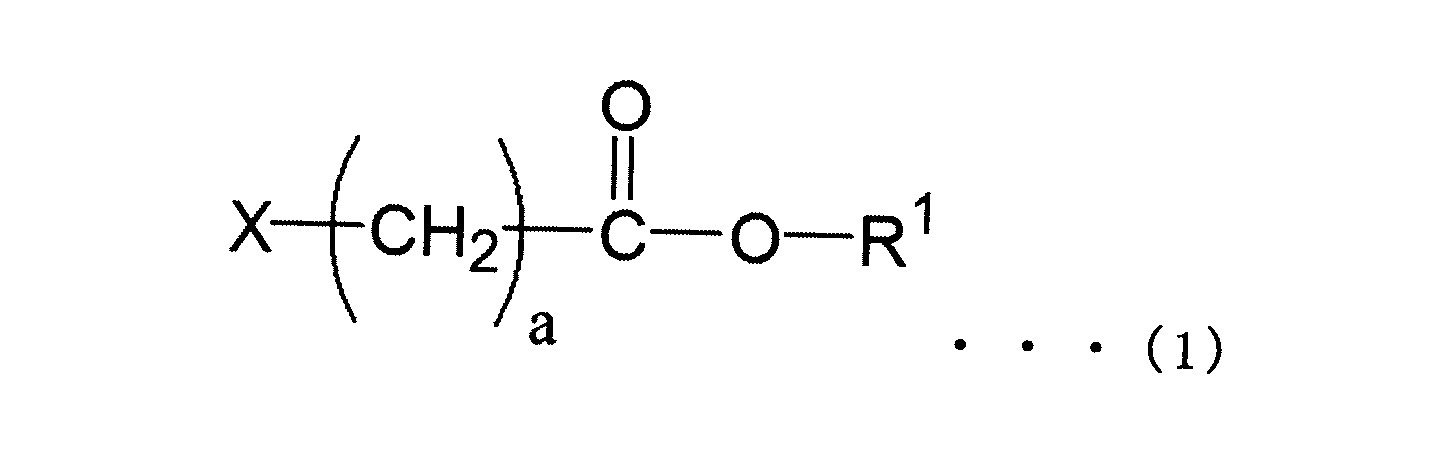
水酸基を1、2、3、4または8つ有するポリエチレングリコール、前記ポリエチレングリコールに対して1~3質量倍の無機塩基、非プロトン性溶剤および水分を含有する溶液であって、前記水分の質量が前記無機塩基に対して5~20meqであり、かつ前記溶液における前記水分の質量が2000ppm以下である溶液中で、下記式(1)の化合物を前記ポリエチレングリコールと反応させてポリエチレングリコールエステルを得る工程

Xは脱離基を表し、
aは4~9の整数を表し、
R1は炭素数1~4の炭化水素基を表す。)
工程2:
前記ポリエチレングリコールエステルを加水分解し、末端カルボキシル基含有ポリエチレングリコールを得る工程
That is, the present invention is as follows.
(1) A method for producing a terminal carboxyl group-containing polyethylene glycol having a weight average molecular weight of 2,000 or more and 80,000 or less, which comprises the following steps 1 and 2.
Process 1:
A solution containing polyethylene glycol having 1, 2, 3, 4 or 8 hydroxyl groups, an inorganic base in an amount of 1 to 3 times the mass of the polyethylene glycol, an aprotic solvent, and water, wherein the mass of the water is A step of reacting a compound of the following formula (1) with the polyethylene glycol in a solution having an amount of 5 to 20 meq relative to the inorganic base and a mass of water in the solution of 2000 ppm or less to obtain a polyethylene glycol ester.
X represents a leaving group,
a represents an integer from 4 to 9,
R 1 represents a hydrocarbon group having 1 to 4 carbon atoms. )
Process 2:
A step of hydrolyzing the polyethylene glycol ester to obtain a terminal carboxyl group-containing polyethylene glycol.
(2) 下記の工程1、工程2および工程3を有することを特徴とする、活性化ポリエチレングリコールの製造方法。
工程1:
水酸基を1、2、3、4または8つ有するポリエチレングリコール、前記ポリエチレングリコールに対して1~3質量倍の無機塩基、非プロトン性溶剤および水分を含有する溶液であって、前記水分の質量が前記無機塩基に対して5~20meqであり、かつ前記溶液における前記水分の質量が2000ppm以下である溶液中で、下記式(1)の化合物を前記ポリエチレングリコールと反応させてポリエチレングリコールエステルを得る工程

Xは脱離基を表し、
aは4~9の整数を表し、
R1は炭素数1~4の炭化水素基を表す。)
工程2:
前記ポリエチレングリコールエステルを加水分解し、重量平均分子量が2000以上、80000以下の末端カルボキシル基含有ポリエチレングリコールを得る工程
工程3:
前記末端カルボキシル基含有ポリエチレングリコールの末端カルボキシル基を活性化基に変換することによって、前記活性化基を有する活性化ポリエチレングリコールを得る工程
(2) A method for producing activated polyethylene glycol, which comprises the following steps 1, 2, and 3.
Process 1:
A solution containing polyethylene glycol having 1, 2, 3, 4 or 8 hydroxyl groups, an inorganic base in an amount of 1 to 3 times the mass of the polyethylene glycol, an aprotic solvent, and water, wherein the mass of the water is A step of reacting a compound of the following formula (1) with the polyethylene glycol in a solution having an amount of 5 to 20 meq relative to the inorganic base and a mass of water in the solution of 2000 ppm or less to obtain a polyethylene glycol ester.
X represents a leaving group,
a represents an integer from 4 to 9,
R 1 represents a hydrocarbon group having 1 to 4 carbon atoms. )
Process 2:
Hydrolyzing the polyethylene glycol ester to obtain a terminal carboxyl group-containing polyethylene glycol having a weight average molecular weight of 2,000 or more and 80,000 or less Step 3:
A step of converting the terminal carboxyl group of the terminal carboxyl group-containing polyethylene glycol into an activated group to obtain an activated polyethylene glycol having the activated group.
本発明は、バイオ医薬品用途等を目的とした末端カルボキシル基含有PEGを収率よく、高純度に得るための製造法である。この製造法では、従来の製造法において要求された無水条件を必要とせず、またシリカゲルカラム精製のような工業的製造には不適な精製を行わずに、高純度な末端カルボキシル基含有PEGおよび、高純度な活性化PEGを収率よく得ることが可能である。 The present invention is a production method for obtaining high-yield, high-purity PEG containing a terminal carboxyl group for use in biopharmaceuticals and the like. This production method does not require anhydrous conditions required in conventional production methods, nor does it require purification unsuitable for industrial production, such as silica gel column purification, to produce highly pure PEG containing a terminal carboxyl group. It is possible to obtain highly purified activated PEG in good yield.
本発明で得られる末端カルボキシル基含有ポリエチレングリコールの原料となる、水酸基を有するポリエチレングリコールは、下記式(2)または式(3)で表されるものであることが好ましい。 The polyethylene glycol having a hydroxyl group, which is a raw material for the terminal carboxyl group-containing polyethylene glycol obtained in the present invention, is preferably represented by the following formula (2) or formula (3).

式(2)において、R2はメトキシ基または水酸基を表し、nは45~1819である。 In formula (2), R 2 represents a methoxy group or a hydroxyl group, and n is 45 to 1819.

式(3)において、Zは3~8の活性水素を持つ化合物の残基であり、
L1、L2は-O-、-O-CONH-(CH2)3-O-のいずれかを表し、
b、cは0~8の整数であり、かつb+c = 3~8であり、
lは0または46~606、mは12~909の整数を表す。
In formula (3), Z is a residue of a compound having 3 to 8 active hydrogens,
L 1 and L 2 represent either -O- or -O-CONH-(CH 2 ) 3 -O-,
b and c are integers from 0 to 8, and b+c = 3 to 8,
l represents 0 or an integer from 46 to 606, and m represents an integer from 12 to 909.
式(2)の水酸基を有するポリエチレングリコールの好適な様態において、式(2)中のR2はメトキシ基である。
また、式(2)の水酸基を有するポリエチレングリコールの好適な様態において、式(2)中のR2は水酸基である。
In a preferred embodiment of the polyethylene glycol having a hydroxyl group of formula (2), R 2 in formula (2) is a methoxy group.
Further, in a preferred embodiment of the polyethylene glycol having a hydroxyl group of formula (2), R 2 in formula (2) is a hydroxyl group.
式(3)の水酸基を有するポリエチレングリコールの好適な様態のひとつである以下の式(4)において、式(3)中のZはグリセリン残基であり、bが3であり、cが0であり、L1が-O-であり、lが15~606である。

式(3)の水酸基を有するポリエチレングリコールの好適な様態のひとつである以下の式(5)において、式(3)中のZはグリセリン残基であり、bが1であり、cが2であり、L1、L2が-O-であり、lが0であり、mが23~909である。あるいは、bが1であり、cが2であり、L1が-O-CONH-(CH2)3-O-であり、L2が-O-であり、lが45~272であり、mが23~773である。 In the following formula (5), which is one of the preferred embodiments of polyethylene glycol having a hydroxyl group of formula (3), Z in formula (3) is a glycerin residue, b is 1, c is 2, , L 1 and L 2 are -O-, l is 0, and m is 23 to 909. Alternatively, b is 1, c is 2, L 1 is -O-CONH-(CH 2 ) 3 -O-, L 2 is -O-, l is 45 to 272, m is 23 to 773.

また、式(3)の水酸基を有するポリエチレングリコールの好適な様態において、式(3)のZはペンタエリスリトール残基であり、bが4であり、cが0であり、L1が-O-であり、lが12~454である。 Furthermore, in a preferred embodiment of the polyethylene glycol having a hydroxyl group of formula (3), Z in formula (3) is a pentaerythritol residue, b is 4, c is 0, and L 1 is -O- and l is 12 to 454.
また、式(3)の水酸基を有するポリエチレングリコールの好適な様態のひとつである以下の式(6)において、式(3)中のZはキシリトール残基であり、bが1であり、cが4であり、L1、L2が-O-であり、lが0であり、mが12~454である。 Further, in the following formula (6), which is one of the preferred embodiments of polyethylene glycol having a hydroxyl group of formula (3), Z in formula (3) is a xylitol residue, b is 1, and c is 4, L 1 and L 2 are -O-, l is 0, and m is 12 to 454.

また、式(3)の水酸基を有するポリエチレングリコールの好適な様態において、式(3)中のZはヘキサグリセロール残基であり、bが8であり、cが0であり、L1が-O-であり、lが46~227である。 Further, in a preferred embodiment of the polyethylene glycol having a hydroxyl group of formula (3), Z in formula (3) is a hexaglycerol residue, b is 8, c is 0, and L 1 is -O -, and l is 46 to 227.
また、式(3)の水酸基を有するポリエチレングリコールの好適な様態において、式(3)中のZは式(7)で表される化合物の残基であり、bが8であり、cが0であり、L1が-O-であり、lが46~227である。

式(3)中のZである3~8の活性水素を持つ化合物の残基は、グリセリン、ペンタエリスリトール、キシリトール、ポリグリセリン、式(7)で表される化合物中の、ポリオキシエチレン鎖との結合反応に寄与した水酸基が除かれた残基のことである。 The residue of a compound having 3 to 8 active hydrogen atoms, which is Z in formula (3), is a polyoxyethylene chain in the compound represented by glycerin, pentaerythritol, xylitol, polyglycerin, or formula (7). This is a residue from which the hydroxyl group that contributed to the bonding reaction has been removed.
(式(1)の化合物)
本発明の、水酸基を有するポリエチレングリコールと反応させて、末端カルボン酸を有するポリエチレングリコールエステルを得るための化合物は、式(1)で表せられる。
(Compound of formula (1))
The compound of the present invention, which is reacted with polyethylene glycol having a hydroxyl group to obtain a polyethylene glycol ester having a terminal carboxylic acid, is represented by formula (1).

式(1)の化合物の構造内に含まれるXは脱離基を、―(CH2)a-は炭化水素基を、R1はエステル基末端の炭化水素基を表す。
式(1)の化合物の構造内に含まれる脱離基:Xは、エステル化反応時に脱離する性質を有する官能基であるが、ヨウ素原子、臭素原子、塩素原子、メタンスルホニルオキシ基、p-トルエンスルホニルオキシ基、トリフルオロメタンスルホニルオキシ基であることが好ましい。脱離基としてはヨウ素原子、臭素原子、塩素原子が特に好ましい。
X contained in the structure of the compound of formula (1) represents a leaving group, --(CH 2 )a- represents a hydrocarbon group, and R 1 represents a hydrocarbon group at the end of the ester group.
The leaving group contained in the structure of the compound of formula (1): -Toluenesulfonyloxy group and trifluoromethanesulfonyloxy group are preferred. As the leaving group, an iodine atom, a bromine atom, and a chlorine atom are particularly preferred.
式(1)の化合物の構造内に含まれる炭化水素基:―(CH2)a-のaはメチレン鎖数を表し、aは4から9であり、好ましくは4から6である。 In the hydrocarbon group --(CH2)a-- contained in the structure of the compound of formula (1), a represents the number of methylene chains, and a is from 4 to 9, preferably from 4 to 6.
式(1)の化合物の構造内に含まれるR1は、エステル基末端の炭化水素基である。R1を構成する炭化水素基の炭素数は1~4が好ましく、1~2が更に好ましい。R1の具体例としては、好ましくはメチル基、エチル基、プロピル基、イソプロピル基、ブチル基、イソブチル基、sec-ブチル基、tert-ブチル基であり、特に好ましくはメチル基、エチル基であり、さらに好ましくはエチル基である。 R 1 included in the structure of the compound of formula (1) is an ester-terminated hydrocarbon group. The hydrocarbon group constituting R 1 preferably has 1 to 4 carbon atoms, more preferably 1 to 2 carbon atoms. Specific examples of R 1 are preferably a methyl group, an ethyl group, a propyl group, an isopropyl group, a butyl group, an isobutyl group, a sec-butyl group, and a tert-butyl group, and particularly preferably a methyl group and an ethyl group. , more preferably an ethyl group.
本発明で得られる、末端カルボキシル基含有ポリエチレングリコールは好ましくは下記の式(8)または式(9)で表される。 The terminal carboxyl group-containing polyethylene glycol obtained in the present invention is preferably represented by the following formula (8) or formula (9).

式(8)において、R3はメトキシ基または-O-(CH2)a-COOHであり、a、nは前記と同義である。
式(8)の末端カルボキシル基含有ポリエチレングリコールの好適な様態においては、式中のR3がメトキシ基、aが5である。
また、式(8)の末端カルボキシル基含有ポリエチレングリコールの好適な様態においては、式中のR3が-O-(CH2)a-COOHであり、aが5である。
In formula (8), R 3 is a methoxy group or -O-(CH 2 )a-COOH, and a and n are as defined above.
In a preferred embodiment of the terminal carboxyl group-containing polyethylene glycol of formula (8), R 3 in the formula is a methoxy group and a is 5.
Further, in a preferred embodiment of the terminal carboxyl group-containing polyethylene glycol of formula (8), R 3 in the formula is -O-(CH2)a-COOH, and a is 5.

式(9)において、a、b、c、l、m、L1、L2、Zは前記と同義である。
式(9)の末端カルボキシル基含有ポリエチレングリコールの好適な様態においては、式中のZはグリセリン残基であり、aが5であり、bが3であり、cが0であり、L1が-O-であり、lが15~606である。
また、式(9)の末端カルボキシル基含有ポリエチレングリコールの好適な様態においては、式中のZはグリセリン残基であり、aが5であり、bが1であり、cが2であり、lが0であり、L1、L2が-O-であり、mが23~909である。
In formula (9), a, b, c, l, m, L 1 , L 2 and Z have the same meanings as above.
In a preferred embodiment of the terminal carboxyl group-containing polyethylene glycol of formula (9), Z in the formula is a glycerin residue, a is 5, b is 3, c is 0, and L 1 is -O-, and l is 15 to 606.
Further, in a preferred embodiment of the terminal carboxyl group-containing polyethylene glycol of formula (9), Z in the formula is a glycerin residue, a is 5, b is 1, c is 2, and l is 0, L 1 and L 2 are -O-, and m is 23 to 909.
また、式(9)の末端カルボキシル基含有ポリエチレングリコールの好適な様態においては、式中のZはグリセリン残基であり、aが5であり、bが1であり、cが2であり、L1が-O-CONH-(CH2)3-O-であり、L2が-O-であり、lが45~272であり、mが23~773である。
また、式(9)の末端カルボキシル基含有ポリエチレングリコールの好適な様態においては、式中のZはペンタエリスリトール残基であり、aが5であり、bが4であり、cが0であり、L1が-O-であり、lが12~454である。
また、式(9)の末端カルボキシル基含有ポリエチレングリコールの好適な様態においては、式中のZはキシリトール残基であり、aが5であり、bが1であり、cが4であり、L1、L2が-O-であり、lが0であり、mが12~454である。
Further, in a preferred embodiment of the terminal carboxyl group-containing polyethylene glycol of formula (9), Z in the formula is a glycerin residue, a is 5, b is 1, c is 2, and L 1 is -O-CONH-(CH 2 ) 3 -O-, L 2 is -O-, l is 45-272, and m is 23-773.
Further, in a preferred embodiment of the terminal carboxyl group-containing polyethylene glycol of formula (9), Z in the formula is a pentaerythritol residue, a is 5, b is 4, c is 0, L1 is -O- and l is 12-454.
Furthermore, in a preferred embodiment of the terminal carboxyl group-containing polyethylene glycol of formula (9), Z in the formula is a xylitol residue, a is 5, b is 1, c is 4, and L 1 , L 2 is -O-, l is 0, and m is 12 to 454.
また、式(9)の末端カルボキシル基含有ポリエチレングリコールの好適な様態においては、式中のZはヘキサグリセロール残基であり、aが5であり、bが8であり、cが0であり、L1が-O-であり、lが6~227である。
また、式(9)の末端カルボキシル基含有ポリエチレングリコールの好適な様態においては、式中のZは式(7)で表される化合物の残基であり、aが5であり、bが8であり、cが0であり、L1が-O-であり、lが6~227である。
Further, in a preferred embodiment of the terminal carboxyl group-containing polyethylene glycol of formula (9), Z in the formula is a hexaglycerol residue, a is 5, b is 8, c is 0, L 1 is -O-, and l is 6-227.
Furthermore, in a preferred embodiment of the terminal carboxyl group-containing polyethylene glycol of formula (9), Z in the formula is a residue of a compound represented by formula (7), a is 5, b is 8, and , c is 0, L 1 is -O-, and l is 6 to 227.
本発明で得られる末端カルボキシル基含有ポリエチレングリコールの分子内のエチレンオキシドユニットの合計平均付加モル数は、45以上が好ましく、更に好ましくは113以上であり、より好ましくは450以上である。また、本発明の末端にカルボキシル基を有するポリエチレングリコールの分子内のエチレンオキシドユニットの合計平均付加モル数は1819以下が好ましく、より好ましくは1023以下である。 The total average number of moles of ethylene oxide units added in the molecule of the terminal carboxyl group-containing polyethylene glycol obtained in the present invention is preferably 45 or more, more preferably 113 or more, and even more preferably 450 or more. Further, the total average number of moles of ethylene oxide units added within the molecule of the polyethylene glycol having a carboxyl group at the terminal of the present invention is preferably 1819 or less, more preferably 1023 or less.
本発明で得られる末端カルボキシル基含有ポリエチレングリコールの重量平均分子量は2000以上が好ましく、更に好ましくは5000以上であり、より好ましくは20000以上である。また、本発明の末端にカルボキシル基を有するポリエチレングリコールの重量平均分子量は80000以下が好ましく、より好ましくは45000以下である。 The weight average molecular weight of the terminal carboxyl group-containing polyethylene glycol obtained in the present invention is preferably 2,000 or more, more preferably 5,000 or more, and even more preferably 20,000 or more. Further, the weight average molecular weight of the polyethylene glycol having a carboxyl group at the terminal of the present invention is preferably 80,000 or less, more preferably 45,000 or less.
本発明で得られる末端カルボキシル基含有ポリエチレングリコールは、直鎖型もしくは分岐型の構造を有している。分岐型は、グリセリン骨格、リジン骨格、ペンタエリスリトール骨格、キシリトール骨格、ポリグリセリン骨格、式(4)で表される化合物の骨格であり、より好ましくはグリセリン骨格、ペンタエリスリトール骨格である。 The terminal carboxyl group-containing polyethylene glycol obtained in the present invention has a linear or branched structure. The branched type is a glycerin skeleton, a lysine skeleton, a pentaerythritol skeleton, a xylitol skeleton, a polyglycerin skeleton, or a skeleton of a compound represented by formula (4), and more preferably a glycerin skeleton or a pentaerythritol skeleton.
本発明で得られる直鎖型末端カルボキシル基含有ポリエチレングリコールが構造中に有するカルボキシル基の数は、直鎖型は1つ、または2つであり、分岐型は1つ、2つ、3つ、4つ、または8つである。 The number of carboxyl groups that the linear terminal carboxyl group-containing polyethylene glycol obtained in the present invention has in its structure is 1 or 2 for the linear type, 1, 2, 3 for the branched type, 4 or 8.
(工程1)
水酸基を有するポリエチレングリコール、前記ポリエチレングリコールに対して0.5~4質量倍の無機塩基、非プロトン性溶剤および水分を含有する溶液であって、前記水分の質量が前記無機塩基に対して5~20meqであり、かつ前記溶液における前記水分の質量が2000ppm以下である溶液中で、下記式(1)の化合物を前記ポリエチレングリコールと反応させてポリエチレングリコールエステルを得る工程である。
(Process 1)
A solution containing polyethylene glycol having a hydroxyl group, an inorganic base in an amount of 0.5 to 4 times the mass of the polyethylene glycol, an aprotic solvent, and water, wherein the mass of the water is 5 to 20 meq relative to the inorganic base. This is a step of reacting a compound of the following formula (1) with the polyethylene glycol in a solution in which the mass of water in the solution is 2000 ppm or less to obtain a polyethylene glycol ester.
(工程1)で使用される無機塩基としては、水酸化ナトリウム、水酸化カリウム、水素化ナトリウム、t-ブトキシカリウムなどが挙げられ、好ましくは水酸化ナトリウム、水酸化カリウムである。また、無機塩基は組み合わせて用いても良い。 Examples of the inorganic base used in (Step 1) include sodium hydroxide, potassium hydroxide, sodium hydride, potassium t-butoxy, and the like, with sodium hydroxide and potassium hydroxide being preferred. Further, inorganic bases may be used in combination.
(工程1)で使用する無機塩基の質量は、水酸基を有するポリエチレングリコールの質量に対して1~3質量倍である。これが1質量倍より少ない場合は、水酸基を有するポリエチレングリコールのアルコラート化が十分に進行せず、カルボン酸純度が低くなるおそれがあるので、1質量倍以上が好ましい。また、これが3質量倍より多いと、エーテル化工程において塩基性が強くなりすぎ、式(1)で表される化合物中の脱離基が反応前に分解するおそれがあること、さらにエーテル化、加水分解後に行う中和操作において使用する酸の量が多くなり、釜効率を下げるおそれがあるので、3質量倍以下が好ましい。
The mass of the inorganic base used in (Step 1) is 1 to 3 times the mass of the polyethylene glycol having a hydroxyl group. If this is less than 1 time by mass, alcoholation of polyethylene glycol having a hydroxyl group may not proceed sufficiently and the carboxylic acid purity may be lowered , so it is preferably 1 time by mass or more. In addition, if the amount is more than 3 times by mass, the basicity becomes too strong in the etherification step, and the leaving group in the compound represented by formula (1) may be decomposed before the reaction. The amount of acid used in the neutralization operation performed after hydrolysis increases, which may lower the efficiency of the pot , so it is preferably 3 times the mass or less.
(工程1)で使用する溶剤は、非プロトン性溶剤であれば特に限定されないが、本発明における反応温度の範囲内においてポリエチレングリコールが溶解し、かつ反応に影響を与えないものという観点から、トルエン、キシレン、メチル-tert-ブチルエーテルなどの炭化水素系溶剤の使用が好ましい。また、これら複数の非プロトン性溶剤を組み合わせて用いても良い。 The solvent used in (Step 1) is not particularly limited as long as it is an aprotic solvent, but from the viewpoint of dissolving polyethylene glycol within the reaction temperature range of the present invention and not affecting the reaction, toluene , xylene, methyl-tert-butyl ether and the like are preferably used. Further, a combination of these plurality of aprotic solvents may be used.
(工程1)で使用する非プロトン性溶剤とは、プロトン供与性官能基を有しない溶剤である。非プロトン性溶剤の量は、特に限定されないが、本反応において非プロトン性溶剤に溶解するのは主原料である水酸基を有するポリエチレングリコールと式(1)で表される化合物のみで、無機塩基は溶解しないことから、不均一系での反応となる。そのため、エーテル化率を進行させるためには、無機塩基が十分に流動する条件が必要となる。非プロトン性溶剤量が少ない場合は十分な流動性が得られず、反応の律速段階であるポリエチレングリコールのアルコラート化が進行せず、エーテル化率が低くなることでカルボン酸純度も低下するおそれがある。 The aprotic solvent used in (Step 1) is a solvent that does not have a proton-donating functional group. The amount of the aprotic solvent is not particularly limited, but in this reaction, only the polyethylene glycol having a hydroxyl group, which is the main raw material, and the compound represented by formula (1) are dissolved in the aprotic solvent, and the inorganic base is Since it does not dissolve, the reaction occurs in a heterogeneous system. Therefore, in order to advance the etherification rate, conditions are required in which the inorganic base can sufficiently flow. If the amount of aprotic solvent is small, sufficient fluidity may not be obtained, and alcoholation of polyethylene glycol, which is the rate-limiting step in the reaction, will not proceed, resulting in a lower etherification rate and a risk of lower carboxylic acid purity. be.
一方、溶剤量が多いと水酸基を有するポリエチレングリコールおよび式(1)で表される化合物の濃度が下がることでエーテル化反応速度が遅くなるだけでなく、反応の長時間化に伴って式(1)で表される化合物の脱離基:Xが分解して反応に寄与しなくなり、エーテル化率の低下が生じるおそれがある。 On the other hand, when the amount of solvent is large, the concentration of polyethylene glycol having a hydroxyl group and the compound represented by formula (1) decreases, which not only slows down the etherification reaction rate, but also increases the reaction time and causes the compound represented by formula (1) to decrease. ) The leaving group of the compound represented by:
以上の観点から、使用する非プロトン性溶剤の量は、原料の水酸基を有するポリエチレングリコールの質量に対して、5質量倍以上、30質量倍以下が好ましく、10質量倍以上、20質量倍以下が更に好ましい。 From the above viewpoint, the amount of the aprotic solvent to be used is preferably 5 times or more and 30 times or less by mass, and 10 times or more and 20 times or less by mass, relative to the mass of polyethylene glycol having hydroxyl groups as a raw material. More preferred.
(工程1)で使用する式(1)で表される化合物使用量は、原料となる水酸基を有するポリエチレングリコールの1水酸基に対して5から80モル当量が好ましく、更に好ましくは10から30モル当量である。 The amount of the compound represented by formula (1) used in (Step 1) is preferably 5 to 80 molar equivalents, more preferably 10 to 30 molar equivalents per 1 hydroxyl group of the raw material polyethylene glycol having hydroxyl groups. It is.
(工程1)中の溶液の水分質量は、非プロトン性溶剤と分離せずに相溶する量に管理する必要がある。非プロトン性溶剤中に水を相溶させることで、無機塩基が非プロトン性溶剤中の水への溶解を介して系中に供給され、非プロトン性溶剤に溶解しているPEG末端のアルコラート化、およびエーテル化反応を促進させることが可能となる。 The water mass of the solution in (Step 1) needs to be controlled to an amount that allows it to be compatible with the aprotic solvent without separating. By dissolving water in the aprotic solvent, the inorganic base is supplied into the system through dissolution in the water in the aprotic solvent, and the PEG terminal dissolved in the aprotic solvent is alcoholated. , and it becomes possible to promote the etherification reaction.
溶液の水分質量が無機塩基に対して5meqより少ない場合は、無機塩基の非プロトン性溶剤への供給を介する水が少なくなることから、アルコラート化反応が進行しにくくなり、カルボン酸純度を低下させるおそれがある。このため、非プロトン性溶剤の溶液の水分質量を5meq以上とするが、6meq以上とすることが更に好ましい。 If the water mass of the solution is less than 5 meq relative to the inorganic base, less water will be supplied to the aprotic solvent from the inorganic base, making it difficult for the alcoholation reaction to proceed and reducing carboxylic acid purity. There is a risk. For this reason, the water mass of the solution of the aprotic solvent is set to 5 meq or more, and more preferably 6 meq or more.
溶液の水分質量が無機塩基に対して20meqより多い場合は、非プロトン性溶剤と水が分離し、非プロトン性溶剤への無機塩基の供給量が少なくなることでアルコラート化およびエーテル化が妨げられる。このため、溶液の水分質量を20meq以下とするが、18meq以下とすることが更に好ましい。 If the water mass of the solution is more than 20 meq relative to the inorganic base, the aprotic solvent and water will separate, and the amount of inorganic base supplied to the aprotic solvent will be reduced, which will prevent alcoholation and etherification. . For this reason, the water mass of the solution is set to 20 meq or less, and more preferably to 18 meq or less.
さらに、前記溶液における前記水分の質量が2000ppmより多くなるにつれて、無機塩基表面の潮解が進むことで反応容器に固着し、反応系の流動性がなくなり、アルコラート化およびエーテル化が進行しにくくなるおそれがある。この観点からは、溶液における前記水分の質量を2000ppm以下とするが、1500ppm以下とすることが更に好ましい。また、溶液における前記水分の質量の下限は限定されないが、100ppm以上であることが好ましく、200ppm以上であることが更に好ましい。 Furthermore, as the mass of water in the solution increases to more than 2000 ppm, the surface of the inorganic base will deliquesce and stick to the reaction vessel, causing the reaction system to lose fluidity and making it difficult for alcoholation and etherification to proceed. There is. From this point of view, the mass of the water in the solution is set to 2000 ppm or less, and more preferably 1500 ppm or less. Further, the lower limit of the mass of water in the solution is not limited, but it is preferably 100 ppm or more, and more preferably 200 ppm or more.
本発明の製造方法では、従来禁水反応であるエーテル化反応において、系内に水を存在させることにより、カルボキシル基純度の高い、カルボキシル基含有PEGを収率良く得ることができる。 In the production method of the present invention, a carboxyl group-containing PEG with high carboxyl group purity can be obtained in good yield by allowing water to be present in the system in the etherification reaction, which is a conventional water-prohibitive reaction.
(工程1)の反応温度は、原料となる水酸基を有するポリエチレングリコールが非プロトン性溶剤に溶解する温度であれば特に限定されないが、反応温度が低い場合は、目的であるポリエチレングリコールと式(1)で表される化合物とのエーテル化反応(以下、反応A)速度が遅くなり、本反応と協奏的に生じる副反応である、系中の水と式(1)で表される化合物とのエーテル化反応(以下、反応B)が進行し、目的とする反応Aが妨げられるおそれがある。一方、反応温度が高い場合は、上述の目的とする反応Aよりも、副反応である反応Bが早くなることで、同様に反応Aの進行が妨げられるおそれがある。以上の観点から、好ましい反応温度は30℃から80℃であり、より好ましくは30℃から50℃である。 The reaction temperature in (Step 1) is not particularly limited as long as the raw material polyethylene glycol having a hydroxyl group dissolves in the aprotic solvent. However, if the reaction temperature is low, the target polyethylene glycol and the formula (1 ) The rate of the etherification reaction (hereinafter referred to as reaction A) with the compound represented by formula (1) becomes slower, and the reaction between the water in the system and the compound represented by formula (1), which is a side reaction that occurs in concert with the main reaction, decreases. There is a possibility that the etherification reaction (hereinafter referred to as reaction B) will proceed and the desired reaction A may be hindered. On the other hand, if the reaction temperature is high, reaction B, which is a side reaction, will occur faster than the desired reaction A, which may similarly hinder the progress of reaction A. From the above viewpoint, the reaction temperature is preferably 30°C to 80°C, more preferably 30°C to 50°C.
(工程2)
工程1で得られた前記ポリエチレングリコールエステルを加水分解し、末端カルボキシル含有ポリエチレングリコールを得る工程である。
(工程2)のポリエチレングリコールエステルの加水分解は、(工程1)のエステル化後の反応溶液に水を加えて加熱することで行う。(工程2)で使用する水の量は特に限定されないが、少ない場合は系の濃度が高くなり、十分な撹拌性が得られないことで加水分解反応が不十分となり、エステル化物が残存することで、カルボン酸化率を低下させるおそれがある。水が多い場合には、系中の塩基性が弱くなることで塩基性加水分解反応が進行しにくくなり、エステル化物が残存することでカルボン酸化率が低下するおそれがある。以上から、(工程2)で使用する水の量は、好ましくは水酸基を有するポリエチレングリコールに対して1~20質量倍である。
(Step 2)
This is a step of hydrolyzing the polyethylene glycol ester obtained in step 1 to obtain terminal carboxyl-containing polyethylene glycol.
Hydrolysis of the polyethylene glycol ester in (Step 2) is performed by adding water to the reaction solution after esterification in (Step 1) and heating it. The amount of water used in (Step 2) is not particularly limited, but if it is small, the concentration of the system will be high, and sufficient stirring performance will not be obtained, resulting in insufficient hydrolysis reaction and esterified products will remain. This may reduce the carboxylic oxidation rate. If there is a large amount of water, the basicity in the system will be weakened, making it difficult for the basic hydrolysis reaction to proceed, and there is a risk that the carboxylic oxidation rate will decrease as esterified products remain. From the above, the amount of water used in (Step 2) is preferably 1 to 20 times the weight of polyethylene glycol having hydroxyl groups.
(工程2)の加水分解の温度は、加水分解が十分に進行する条件であれば特に限定されないが、好ましくは40から100℃である。 The temperature for hydrolysis in (Step 2) is not particularly limited as long as the conditions allow hydrolysis to proceed sufficiently, but it is preferably 40 to 100°C.
(工程2)の加水分解によって末端カルボキシル基含有PEGを得た後は、有機層への抽出、濃縮、吸着処理、結晶化、乾燥などのいずれかを含む工程によって末端カルボキシル基含有PEGを回収する。 After obtaining the terminal carboxyl group-containing PEG by hydrolysis in step 2, the terminal carboxyl group-containing PEG is recovered by a process including extraction into an organic layer, concentration, adsorption treatment, crystallization, drying, etc. .
(工程3)
(工程1)および(工程2)で得られた末端カルボキシル基含有ポリエチレングリコールの末端カルボキシル基を活性化基に変換することによって、活性化ポリエチレングリコールを製造することを特徴とする、活性化ポリエチレングリコールの製造方法である。
(Step 3)
Activated polyethylene glycol, characterized in that activated polyethylene glycol is produced by converting the terminal carboxyl group of the terminal carboxyl group-containing polyethylene glycol obtained in (Step 1) and (Step 2) into an activated group. This is a manufacturing method.
活性化ポリエチレングリコールの定義を記載しておく。
本発明における活性化ポリエチレングリコールとは、ポリエチレングリコールの末端カルボキシル基を化学的に変換し、ターゲットとなるバイオ医薬品中に存在する水酸基、チオール基、アミノ基などの活性基と反応可能にしたものである。
The definition of activated polyethylene glycol will be described below.
Activated polyethylene glycol in the present invention refers to polyethylene glycol whose terminal carboxyl group has been chemically converted so that it can react with active groups such as hydroxyl groups, thiol groups, and amino groups present in target biopharmaceuticals. be.
(工程3)での末端カルボキシル基から変換する活性化基としては、スクシンイミジルエステル基、酸ハロゲン化物基、ジアゾアセチル基、アクリルイミダゾール基などが挙げられ、好ましくはスクシンイミジルエステル基である。 Examples of the activating group to be converted from the terminal carboxyl group in (Step 3) include a succinimidyl ester group, an acid halide group, a diazoacetyl group, an acrylimidazole group, and a succinimidyl ester group is preferable. .
(工程3)での末端カルボキシル基の活性化基への変換方法は特に限定されないが、末端カルボキシル基含有PEG 2分子を酸性条件で脱水縮合して酸無水物化して活性化基を導入する方法、または縮合剤を用いて活性エステルへ変換した後、活性化基を導入する方法などが挙げられ、好ましくは縮合剤を用いる方法である。 The method for converting the terminal carboxyl group into an activating group in step 3 is not particularly limited, but a method is to dehydrate and condense two PEG molecules containing a terminal carboxyl group under acidic conditions to form an acid anhydride and introduce an activating group. or a method in which an activated group is introduced after conversion into an active ester using a condensing agent, and preferably a method using a condensing agent.
(工程3)での活性化基への変換に用いられる縮合剤は、カルボジイミド系縮合剤、イミダゾール系縮合剤、トリアジン系縮合剤、ホスホニウム系縮合剤、ウロニウム系縮合剤、ハロウロニウム系縮合剤などが挙げられ、これらは特に限定されずに使用することができる。 The condensing agents used for conversion into activated groups in step 3 include carbodiimide condensing agents, imidazole condensing agents, triazine condensing agents, phosphonium condensing agents, uronium condensing agents, and halouronium condensing agents. These can be used without particular limitation.
(工程3)での末端カルボキシル基への変換反応後は、有機層への抽出、濃縮、吸着処理、結晶化、乾燥などのいずれかを含む工程によって活性化ポリエチレングリコールを回収する。 After the conversion reaction to the terminal carboxyl group in step 3, activated polyethylene glycol is recovered by a step including extraction into an organic layer, concentration, adsorption treatment, crystallization, drying, or the like.
本発明の末端カルボキシル基含有ポリエチレングリコールとは、ポリエチレングリコールの末端に炭素数4~9のアルキレン基を介してカルボキシル基が結合した化合物であり、低分子薬剤やタンパク質等の修飾のために用いられる。 The terminal carboxyl group-containing polyethylene glycol of the present invention is a compound in which a carboxyl group is bonded to the terminal of polyethylene glycol via an alkylene group having 4 to 9 carbon atoms, and is used for modifying low-molecular drugs, proteins, etc. .
以下に、実施例を挙げて本発明をより詳細に説明する。
末端カルボキシル基含有ポリエチレングリコールの純度測定には以下の装置、試薬を用いて行った。
LC装置:
alliance (Waters)
カラム: 陰イオン交換カラム ES-502N(Asahipak)、φ7.5mm×100mm
流速: 1.0mL/min
カラム温度:30℃
検出器: RI
移動相: ギ酸アンモニウム緩衝液
EXAMPLES The present invention will be explained in more detail below with reference to Examples.
The purity of polyethylene glycol containing a terminal carboxyl group was measured using the following equipment and reagents.
LC device:
alliance (Waters)
Column: Anion exchange column ES-502N (Asahipak), φ7.5mm x 100mm
Flow rate: 1.0mL/min
Column temperature: 30℃
Detector: RI
Mobile phase: Ammonium formate buffer
(実施例1)
分子量5千、片末端が水酸基、片末端がメトキシ基の直鎖型PEG(日油品、MEH-50H)101gとトルエン1800gを、5Lの4つ口フラスコに仕込み、窒素雰囲気下で昇温し、45℃にて溶解させた。系中の水分を調製したところ、318ppmであることを確認した(KOHに対する水の量:9.42meq)。溶液にKOH(東亜工業品、フレーク)200gを仕込んだ後、溶液温度40℃で6-ブロモヘキサン酸エチル(東京化成工業品)89.2gを滴下した。滴下終了後、40℃にて1.5h熟成した。熟成終了後、水 700gを仕込み、70℃に昇温して1時間撹拌し加水分解を行った。加水分解後、塩酸酸性条件にて分層後、水層から有機溶剤を用いて末端カルボン酸PEGを回収して、溶剤を留去後、結晶化による精製で低分子不純物を除去して結晶を得た。
得られた末端カルボキシル基含有ポリエチレングリコールの純度は95.8%、収量は85.8g(歩留まり:85.8%)であった。
(Example 1)
101 g of linear PEG (NOF, MEH-50H) with a molecular weight of 5,000 and one end being a hydroxyl group and one end being a methoxy group and 1,800 g of toluene were placed in a 5 L four-necked flask and heated under a nitrogen atmosphere. , dissolved at 45°C. When the water content in the system was adjusted, it was confirmed to be 318 ppm (amount of water relative to KOH: 9.42 meq). After 200 g of KOH (Toa Kogyo, flakes) was added to the solution, 89.2 g of ethyl 6-bromohexanoate (Tokyo Kasei Kogyo) was added dropwise at a solution temperature of 40°C. After the dropwise addition was completed, the mixture was aged at 40°C for 1.5 hours. After aging, 700 g of water was charged, the temperature was raised to 70°C, and the mixture was stirred for 1 hour to perform hydrolysis. After hydrolysis, after separating the layers under acidic conditions with hydrochloric acid, the terminal carboxylic acid PEG is recovered from the aqueous layer using an organic solvent, the solvent is distilled off, and low-molecular impurities are removed by crystallization purification to form crystals. Obtained.
The purity of the obtained terminal carboxyl group-containing polyethylene glycol was 95.8%, and the yield was 85.8 g (yield: 85.8%).
(実施例2)
分子量2万、片末端が水酸基、片末端がメトキシ基の直鎖型ポリエチレングリコール(日油品、MEH-20T)41gとトルエン323gを、1Lの4つ口フラスコに仕込み、窒素雰囲気下で110±5℃で1h還流させた後に、系中の水分を298ppmに調製した(KOHに対する水の量:5.11meq)。水分調製後の溶液にKOH 82gを仕込み、40℃にて6-ブロモヘキサン酸エチル9.15gを滴下ロートを用いて滴下した。滴下終了後、40℃にて4h熟成した。熟成終了後、水287gを仕込み、70℃に昇温して1hr加水分解を行った。以降、実施例1と同様の操作で末端カルボキシル基含有ポリエチレングリコールを得た。
得られた末端カルボキシル基含有ポリエチレングリコールの純度は97.3%、収量は36.1g(歩留まり:88.0%)であった。
(Example 2)
41 g of linear polyethylene glycol (NOF, MEH-20T) with a molecular weight of 20,000 and one end being a hydroxyl group and one end being a methoxy group and 323 g of toluene were placed in a 1 L four-necked flask and heated to 110 ± After refluxing at 5° C. for 1 hour, the water content in the system was adjusted to 298 ppm (amount of water relative to KOH: 5.11 meq). After adjusting the water content, 82 g of KOH was added to the solution, and 9.15 g of ethyl 6-bromohexanoate was added dropwise at 40° C. using a dropping funnel. After completion of the dropwise addition, the mixture was aged at 40°C for 4 hours. After aging, 287 g of water was charged, the temperature was raised to 70°C, and hydrolysis was carried out for 1 hour. Thereafter, a terminal carboxyl group-containing polyethylene glycol was obtained in the same manner as in Example 1.
The purity of the obtained terminal carboxyl group-containing polyethylene glycol was 97.3%, and the yield was 36.1 g (yield: 88.0%).
(実施例3)
分子量2万、片末端が水酸基、片末端がメトキシ基の直鎖型ポリエチレングリコール(日油品、MEH-20T)41gとトルエン323gを、1Lの4つ口フラスコに仕込み、窒素雰囲気下で110±5℃で1h還流させた後に、系中の水分を513ppmに調製した(KOHに対する水の量:8.57meq)。水分調製後の溶液にKOH 82gを仕込み、40℃にて6-ブロモヘキサン酸エチル9.15gを滴下ロートを用いて滴下した。滴下終了後、40℃にて4h熟成した。熟成終了後、水 287gを仕込み、70℃に昇温して1hr加水分解を行った。以降、実施例1と同様の操作で末端カルボキシル基含有ポリエチレングリコールを得た。
得られた末端カルボキシル基含有ポリエチレングリコールの純度は95.3%、収量は35.3g(歩留まり:86.2%)であった。
(Example 3)
41 g of linear polyethylene glycol (NOF, MEH-20T) with a molecular weight of 20,000 and one end being a hydroxyl group and one end being a methoxy group and 323 g of toluene were placed in a 1 L four-necked flask and heated to 110 ± After refluxing at 5° C. for 1 hour, the water content in the system was adjusted to 513 ppm (amount of water relative to KOH: 8.57 meq). After adjusting the water content, 82 g of KOH was added to the solution, and 9.15 g of ethyl 6-bromohexanoate was added dropwise at 40° C. using a dropping funnel. After completion of the dropwise addition, the mixture was aged at 40°C for 4 hours. After the aging was completed, 287 g of water was charged, the temperature was raised to 70°C, and hydrolysis was carried out for 1 hour. Thereafter, a terminal carboxyl group-containing polyethylene glycol was obtained in the same manner as in Example 1.
The purity of the obtained terminal carboxyl group-containing polyethylene glycol was 95.3%, and the yield was 35.3 g (yield: 86.2%).
(比較例1)
分子量2万、片末端が水酸基、片末端がメトキシ基の直鎖型ポリエチレングリコール(日油品、MEH-20T)41gとトルエン323gを、1Lの4つ口フラスコに仕込み、窒素雰囲気下で110±5℃で1h還流させた後に系中の水分を測定したところ102ppm(KOHに対する水の量:1.75meq)であった。溶液にKOH 82gを仕込み、40℃にて6-ブロモヘキサン酸エチル9.15gを滴下ロートを用いて滴下した。滴下終了後、40℃にて4h熟成した。熟成終了後、水 287gを仕込み、70℃に昇温して1hr加水分解を行った。以降、実施例1と同様の操作で末端カルボキシル基含有ポリエチレングリコールを得た。
得られた末端カルボキシル基含有ポリエチレングリコールの純度は61.7%、収量は34.7g(歩留まり:84.8%)であった。
(Comparative example 1)
41 g of linear polyethylene glycol (NOF, MEH-20T) with a molecular weight of 20,000 and one end being a hydroxyl group and one end being a methoxy group and 323 g of toluene were placed in a 1 L four-necked flask and heated to 110 ± After refluxing at 5°C for 1 hour, the water content in the system was measured and found to be 102 ppm (amount of water relative to KOH: 1.75 meq). 82 g of KOH was charged into the solution, and 9.15 g of ethyl 6-bromohexanoate was added dropwise at 40° C. using a dropping funnel. After completion of the dropwise addition, the mixture was aged at 40°C for 4 hours. After aging, 287 g of water was charged, the temperature was raised to 70°C, and hydrolysis was carried out for 1 hour. Thereafter, a terminal carboxyl group-containing polyethylene glycol was obtained in the same manner as in Example 1.
The purity of the obtained terminal carboxyl group-containing polyethylene glycol was 61.7%, and the yield was 34.7 g (yield: 84.8%).
以下、同様に、水酸基を有するポリエチレングリコールを表1のように表記し、表1記載の条件にて実施例4~6および比較例2、3を行った。また、その結果を表2に記載した。 Hereinafter, polyethylene glycols having hydroxyl groups are similarly described as shown in Table 1, and Examples 4 to 6 and Comparative Examples 2 and 3 were carried out under the conditions listed in Table 1. The results are also listed in Table 2.


※1 水酸基を有するポリエチレングリコールの仕込量に対する値
※2 比較例3では、系中の水分質量が多いためにKOHがフラスコ壁面に固着し流動性が全く得られない状態となったため、操作を中止した。
*1 Value for the charged amount of polyethylene glycol with hydroxyl groups *2 In Comparative Example 3, KOH stuck to the flask wall due to the large amount of water in the system, making it impossible to obtain any fluidity, so the operation was stopped. did.
(実施例7)
実施例1で得た末端カルボキシル基含有ポリエチレングリコール 40gを用い、40℃にてトルエン120gに溶解させた。N-ヒドロキシコハク酸イミド 2.03g、ジシクロヘキシルカルボジイミド 3.30gを用い、40℃で3時間反応を行うことで、活性化基への変換を行った。結晶化による精製で低分子不純物を除去し、活性化ポリエチレングリコールを35g得た。
得られた活性化ポリエチレングリコールの純度を1H-NMR(600MHz、CDCl3)にて測定したところ、95.8%であった。
(Example 7)
Using 40 g of the terminal carboxyl group-containing polyethylene glycol obtained in Example 1, it was dissolved in 120 g of toluene at 40°C. Using 2.03 g of N-hydroxysuccinimide and 3.30 g of dicyclohexylcarbodiimide, a reaction was performed at 40° C. for 3 hours to perform conversion to an activated group. Low molecular weight impurities were removed by crystallization purification to obtain 35 g of activated polyethylene glycol.
The purity of the obtained activated polyethylene glycol was measured by 1 H-NMR (600 MHz, CDCl 3 ) and was found to be 95.8%.
(実施例8)
実施例5で得た末端カルボキシル基含有ポリエチレングリコール 25gを用い、45℃にてトルエン75gに溶解させた。N-ヒドロキシコハク酸イミド 0.3g、ジシクロヘキシルカルボジイミド 0.5gを用い、40℃で3時間反応を行うことで、活性化基への変換を行った。結晶化による精製で低分子不純物を除去し、活性化ポリエチレングリコールを35g得た。
得られた活性化ポリエチレングリコールの純度を1H-NMR(600MHz、CDCl3)にて測定したところ94.3%であった。
(Example 8)
25 g of the terminal carboxyl group-containing polyethylene glycol obtained in Example 5 was dissolved in 75 g of toluene at 45°C. Conversion to an activated group was carried out using 0.3 g of N-hydroxysuccinimide and 0.5 g of dicyclohexylcarbodiimide at 40° C. for 3 hours. Low molecular weight impurities were removed by crystallization purification to obtain 35 g of activated polyethylene glycol.
The purity of the obtained activated polyethylene glycol was measured by 1 H-NMR (600 MHz, CDCl 3 ) and was found to be 94.3%.
(実施例9)
実施例6で得た末端カルボキシル基含有ポリエチレングリコール 30gを用い、40℃にてトルエン90gに溶解させた。N-ヒドロキシコハク酸イミド 1.38g、ジシクロヘキシルカルボジイミド 2.48gを用い、40℃で2時間反応を行うことで、活性化基への変換を行った。結晶化による精製で低分子不純物を除去し、活性化ポリエチレングリコールを25.6g得た。
得られた活性化ポリエチレングリコールの純度を1H-NMR(600MHz、CDCl3)にて測定したところ96.3%であった。
(Example 9)
Using 30 g of the terminal carboxyl group-containing polyethylene glycol obtained in Example 6, it was dissolved in 90 g of toluene at 40°C. Conversion to an activated group was carried out using 1.38 g of N-hydroxysuccinimide and 2.48 g of dicyclohexylcarbodiimide at 40° C. for 2 hours. Low molecular weight impurities were removed by crystallization purification to obtain 25.6 g of activated polyethylene glycol.
The purity of the obtained activated polyethylene glycol was measured by 1 H-NMR (600 MHz, CDCl 3 ) and was found to be 96.3%.
実施例1、5、6で製造した末端カルボキシル基含有ポリエチレングリコールを用いて活性化ポリエチレングリコールを製造した結果を表3に示す。 Table 3 shows the results of producing activated polyethylene glycol using the terminal carboxyl group-containing polyethylene glycols produced in Examples 1, 5, and 6.

実施例1~3および表2に示すように、本発明の方法で得られる末端カルボキシル基含有ポリエチレングリコールのカルボン酸純度は、比較例1の一般的な水分値を低く管理して反応を行った場合、および比較例2の水分を好適な範囲よりも多く管理して反応を行った場合のいずれと比較しても、有意に高い結果となった。 As shown in Examples 1 to 3 and Table 2, the carboxylic acid purity of the terminal carboxyl group-containing polyethylene glycol obtained by the method of the present invention was determined by controlling the general moisture value of Comparative Example 1 to a low level. The results were significantly higher than those of Comparative Example 2, in which the water content was controlled to be higher than the appropriate range.
表3に示すように、本発明の方法で得られる末端カルボキシル基含有PEGを用いることで、高純度な活性化PEGを得ることができる。 As shown in Table 3, highly pure activated PEG can be obtained by using the terminal carboxyl group-containing PEG obtained by the method of the present invention.
以上より、本発明は、末端カルボキシル基含有ポリエチレングリコール高純度で、収率良く、工業的に製造することができる。また、本発明は、本発明で得られる高純度な末端カルボキシル基含有PEGを用いることで、高純度な末端活性化PEGを得ることができる有用な方法である。
As described above, according to the present invention, terminal carboxyl group-containing polyethylene glycol can be produced industrially with high purity and good yield. Furthermore, the present invention is a useful method for obtaining a highly pure terminal-activated PEG by using the highly purified terminal carboxyl group-containing PEG obtained by the present invention.
Claims (2)
工程1:
水酸基を1、2、3、4または8つ有するポリエチレングリコール、前記ポリエチレングリコールに対して1~3質量倍の無機塩基、非プロトン性溶剤および水分を含有する溶液であって、前記水分の質量が前記無機塩基に対して5~20meqであり、かつ前記溶液における前記水分の質量が2000ppm以下である溶液中で、下記式(1)の化合物を前記ポリエチレングリコールと反応させてポリエチレングリコールエステルを得る工程
Xは脱離基を表し、
aは4~9の整数を表し、
R1は炭素数1~4の炭化水素基を表す。)
工程2:
前記ポリエチレングリコールエステルを加水分解し、末端カルボキシル基含有ポリエチレングリコールを得る工程
A method for producing a terminal carboxyl group-containing polyethylene glycol having a weight average molecular weight of 2,000 or more and 80,000 or less, which comprises the following steps 1 and 2.
Process 1:
A solution containing polyethylene glycol having 1, 2, 3, 4 or 8 hydroxyl groups, an inorganic base in an amount of 1 to 3 times the mass of the polyethylene glycol, an aprotic solvent, and water, wherein the mass of the water is A step of reacting a compound of the following formula (1) with the polyethylene glycol in a solution having an amount of 5 to 20 meq relative to the inorganic base and a mass of water in the solution of 2000 ppm or less to obtain a polyethylene glycol ester.
X represents a leaving group,
a represents an integer from 4 to 9,
R 1 represents a hydrocarbon group having 1 to 4 carbon atoms. )
Process 2:
A step of hydrolyzing the polyethylene glycol ester to obtain a terminal carboxyl group-containing polyethylene glycol.
工程1:
水酸基を1、2、3、4または8つ有するポリエチレングリコール、前記ポリエチレングリコールに対して1~3質量倍の無機塩基、非プロトン性溶剤および水分を含有する溶液であって、前記水分の質量が前記無機塩基に対して5~20meqであり、かつ前記溶液における前記水分の質量が2000ppm以下である溶液中で、下記式(1)の化合物を前記ポリエチレングリコールと反応させてポリエチレングリコールエステルを得る工程

Xは脱離基を表し、
aは4~9の整数を表し、
R1は炭素数1~4の炭化水素基を表す。)
工程2:
前記ポリエチレングリコールエステルを加水分解し、重量平均分子量が2000以上、80000以下の末端カルボキシル基含有ポリエチレングリコールを得る工程
工程3:
前記末端カルボキシル基含有ポリエチレングリコールの末端カルボキシル基を活性化基に変換することによって、前記活性化基を有する活性化ポリエチレングリコールを得る工程
A method for producing activated polyethylene glycol, comprising the following steps 1, 2, and 3.
Process 1:
A solution containing polyethylene glycol having 1, 2, 3, 4 or 8 hydroxyl groups, an inorganic base in an amount of 1 to 3 times the mass of the polyethylene glycol, an aprotic solvent, and water, wherein the mass of the water is A step of reacting a compound of the following formula (1) with the polyethylene glycol in a solution having an amount of 5 to 20 meq relative to the inorganic base and a mass of water in the solution of 2000 ppm or less to obtain a polyethylene glycol ester.
X represents a leaving group,
a represents an integer from 4 to 9,
R 1 represents a hydrocarbon group having 1 to 4 carbon atoms. )
Process 2:
A step of hydrolyzing the polyethylene glycol ester to obtain a terminal carboxyl group-containing polyethylene glycol having a weight average molecular weight of 2,000 or more and 80,000 or less.
Step 3:
A step of converting the terminal carboxyl group of the terminal carboxyl group-containing polyethylene glycol into an activated group to obtain an activated polyethylene glycol having the activated group.
Applications Claiming Priority (2)
| Application Number | Priority Date | Filing Date | Title |
|---|---|---|---|
| JP2019066253 | 2019-03-29 | ||
| JP2019066253 | 2019-03-29 |
Publications (2)
| Publication Number | Publication Date |
|---|---|
| JP2020164841A JP2020164841A (en) | 2020-10-08 |
| JP7376850B2 true JP7376850B2 (en) | 2023-11-09 |
Family
ID=72668329
Family Applications (1)
| Application Number | Title | Priority Date | Filing Date |
|---|---|---|---|
| JP2020053731A Active JP7376850B2 (en) | 2019-03-29 | 2020-03-25 | Method for producing terminal carboxyl group-containing polyethylene glycol and method for producing activated polyethylene glycol |
Country Status (6)
| Country | Link |
|---|---|
| US (1) | US12018120B2 (en) |
| EP (1) | EP3950783B1 (en) |
| JP (1) | JP7376850B2 (en) |
| KR (1) | KR102777739B1 (en) |
| CN (1) | CN113631631B (en) |
| WO (1) | WO2020203583A1 (en) |
Families Citing this family (1)
| Publication number | Priority date | Publication date | Assignee | Title |
|---|---|---|---|---|
| EP4692166A1 (en) * | 2023-03-28 | 2026-02-11 | NOF Corporation | Method for producing activated polyethylene glycol derivative |
Citations (6)
| Publication number | Priority date | Publication date | Assignee | Title |
|---|---|---|---|---|
| JP2005538226A (en) | 2002-09-09 | 2005-12-15 | ネクター セラピューティックス エイエル,コーポレイション | Method for preparing water-soluble polymer derivative having terminal carboxylic acid or ester thereof |
| JP2006502250A (en) | 2002-07-24 | 2006-01-19 | エフ.ホフマン−ラ ロシュ アーゲー | Polyalkylene glycolic acid additive |
| JP2007538111A (en) | 2004-01-21 | 2007-12-27 | ネクター セラピューティクス アラバマ,コーポレイション | Method for preparing propionic acid-terminated polymer |
| JP2013075975A (en) | 2011-09-30 | 2013-04-25 | Nof Corp | Branched heteropolyfunctional polyoxyalkylene compound, and intermediate thereof |
| JP2017095565A (en) | 2015-11-20 | 2017-06-01 | 日油株式会社 | Manufacturing method of polyethylene glycol having terminal carboxyl group |
| JP2018172649A (en) | 2017-03-31 | 2018-11-08 | 日油株式会社 | Production method of polyoxyethylene derivative having a plurality of hydroxyl groups at the terminal |
Family Cites Families (7)
| Publication number | Priority date | Publication date | Assignee | Title |
|---|---|---|---|---|
| DE3678648D1 (en) | 1985-08-12 | 1991-05-16 | Allied Colloids Ltd | MAKING A MONOMER. |
| US5605976A (en) * | 1995-05-15 | 1997-02-25 | Enzon, Inc. | Method of preparing polyalkylene oxide carboxylic acids |
| AU6134699A (en) | 1998-09-02 | 2000-03-21 | University Of Utah Research Foundation | Method for preparation of low molecular weight polyethylene glycol-carboxylic acids |
| US20050214250A1 (en) * | 2003-11-06 | 2005-09-29 | Harris J M | Method of preparing carboxylic acid functionalized polymers |
| JP5364532B2 (en) | 2009-10-14 | 2013-12-11 | 株式会社センカファーマシー | Polyethylene glycol derivatives and antitumor agents containing them as active ingredients |
| CN103044676B (en) * | 2013-01-17 | 2015-12-02 | 厦门赛诺邦格生物科技有限公司 | A kind of polyethyleneglycol modified bio-related substance |
| JP2019066253A (en) | 2017-09-29 | 2019-04-25 | 日立オートモティブシステムズ株式会社 | Flow rate measuring device |
-
2020
- 2020-03-25 JP JP2020053731A patent/JP7376850B2/en active Active
- 2020-03-25 KR KR1020217031330A patent/KR102777739B1/en active Active
- 2020-03-25 EP EP20785409.2A patent/EP3950783B1/en active Active
- 2020-03-25 CN CN202080025492.3A patent/CN113631631B/en active Active
- 2020-03-25 WO PCT/JP2020/013438 patent/WO2020203583A1/en not_active Ceased
- 2020-03-25 US US17/436,738 patent/US12018120B2/en active Active
Patent Citations (6)
| Publication number | Priority date | Publication date | Assignee | Title |
|---|---|---|---|---|
| JP2006502250A (en) | 2002-07-24 | 2006-01-19 | エフ.ホフマン−ラ ロシュ アーゲー | Polyalkylene glycolic acid additive |
| JP2005538226A (en) | 2002-09-09 | 2005-12-15 | ネクター セラピューティックス エイエル,コーポレイション | Method for preparing water-soluble polymer derivative having terminal carboxylic acid or ester thereof |
| JP2007538111A (en) | 2004-01-21 | 2007-12-27 | ネクター セラピューティクス アラバマ,コーポレイション | Method for preparing propionic acid-terminated polymer |
| JP2013075975A (en) | 2011-09-30 | 2013-04-25 | Nof Corp | Branched heteropolyfunctional polyoxyalkylene compound, and intermediate thereof |
| JP2017095565A (en) | 2015-11-20 | 2017-06-01 | 日油株式会社 | Manufacturing method of polyethylene glycol having terminal carboxyl group |
| JP2018172649A (en) | 2017-03-31 | 2018-11-08 | 日油株式会社 | Production method of polyoxyethylene derivative having a plurality of hydroxyl groups at the terminal |
Also Published As
| Publication number | Publication date |
|---|---|
| JP2020164841A (en) | 2020-10-08 |
| WO2020203583A1 (en) | 2020-10-08 |
| EP3950783A1 (en) | 2022-02-09 |
| CN113631631A (en) | 2021-11-09 |
| EP3950783A4 (en) | 2023-01-04 |
| KR20210148151A (en) | 2021-12-07 |
| US20220185957A1 (en) | 2022-06-16 |
| US12018120B2 (en) | 2024-06-25 |
| EP3950783B1 (en) | 2023-11-08 |
| KR102777739B1 (en) | 2025-03-10 |
| CN113631631B (en) | 2023-04-18 |
Similar Documents
| Publication | Publication Date | Title |
|---|---|---|
| JP5843172B2 (en) | Purification method of high molecular weight polyethylene glycol compound | |
| CN110078644B (en) | preparation method of [2- [1- (Fmoc-amino) ethoxy ] acetic acid | |
| JP7376850B2 (en) | Method for producing terminal carboxyl group-containing polyethylene glycol and method for producing activated polyethylene glycol | |
| JP3855344B2 (en) | Process for producing polyoxyalkylene carboxylic acid | |
| US7781563B2 (en) | Preparing method of methoxypolyethyleneglycol and its derivatives | |
| KR102542987B1 (en) | Method for purifying trityl group-containing monodisperse polyethylene glycol | |
| CN104710605A (en) | Methoxypolyethylene glycol with single-end amino (mPEG-NH2) and preparation method thereof | |
| CN108350167B (en) | Production method of polyethylene glycol with terminal carboxyl group | |
| JP7688818B2 (en) | Purification method for branched polyethylene glycol | |
| JP6008600B2 (en) | Method for producing 4-hydroxybutyl acrylate | |
| KR20240161641A (en) | Method for producing polyethylene glycol derivatives | |
| EP0545774A1 (en) | Silica supports modified by grafting polyalkylguanidinium groups, process for their preparation and their use as catalysts | |
| TWI496770B (en) | Method for producing hydroxyalkyl (meth) acrylic acid ester | |
| KR100922113B1 (en) | Method for producing high purity benzyloxy polyethylene glycol and its derivatives | |
| JP2025059030A (en) | Method for producing polyethylene glycol derivatives having a carboxyl group at the end | |
| JPH11263834A (en) | Production of polyoxyalkylenemonoamine | |
| JP2014224069A (en) | Method for producing polyglyceryl group-containing (meth)acrylate compound |
Legal Events
| Date | Code | Title | Description |
|---|---|---|---|
| AA64 | Notification of invalidation of claim of internal priority (with term) |
Free format text: JAPANESE INTERMEDIATE CODE: A241764 Effective date: 20200409 |
|
| A521 | Request for written amendment filed |
Free format text: JAPANESE INTERMEDIATE CODE: A523 Effective date: 20200410 |
|
| A621 | Written request for application examination |
Free format text: JAPANESE INTERMEDIATE CODE: A621 Effective date: 20220927 |
|
| A977 | Report on retrieval |
Free format text: JAPANESE INTERMEDIATE CODE: A971007 Effective date: 20230630 |
|
| A131 | Notification of reasons for refusal |
Free format text: JAPANESE INTERMEDIATE CODE: A131 Effective date: 20230803 |
|
| A521 | Request for written amendment filed |
Free format text: JAPANESE INTERMEDIATE CODE: A523 Effective date: 20230912 |
|
| TRDD | Decision of grant or rejection written | ||
| A01 | Written decision to grant a patent or to grant a registration (utility model) |
Free format text: JAPANESE INTERMEDIATE CODE: A01 Effective date: 20230927 |
|
| A61 | First payment of annual fees (during grant procedure) |
Free format text: JAPANESE INTERMEDIATE CODE: A61 Effective date: 20231010 |
|
| R150 | Certificate of patent or registration of utility model |
Ref document number: 7376850 Country of ref document: JP Free format text: JAPANESE INTERMEDIATE CODE: R150 |