JP4816994B2 - Information processing apparatus and method, recording medium, and program - Google Patents
Information processing apparatus and method, recording medium, and program Download PDFInfo
- Publication number
- JP4816994B2 JP4816994B2 JP2001223163A JP2001223163A JP4816994B2 JP 4816994 B2 JP4816994 B2 JP 4816994B2 JP 2001223163 A JP2001223163 A JP 2001223163A JP 2001223163 A JP2001223163 A JP 2001223163A JP 4816994 B2 JP4816994 B2 JP 4816994B2
- Authority
- JP
- Japan
- Prior art keywords
- content
- storage
- executed
- information
- target
- Prior art date
- Legal status (The legal status is an assumption and is not a legal conclusion. Google has not performed a legal analysis and makes no representation as to the accuracy of the status listed.)
- Expired - Lifetime
Links
Images


Landscapes
- Testing, Inspecting, Measuring Of Stereoscopic Televisions And Televisions (AREA)
- Two-Way Televisions, Distribution Of Moving Picture Or The Like (AREA)
Description
【0001】
【発明の属する技術分野】
本発明は、情報処理装置および方法、記録媒体、並びにプログラムに関し、特に、コンテンツに対する操作内容を視聴履歴として記録するようにした情報処理装置および方法、記録媒体、並びにプログラムに関する。
【0002】
【従来の技術】
従来、サンプル対象となる世帯を抽出し、「何時に、どのチャンネルを視聴したか」といった視聴率を調査する記録装置が存在する。
【0003】
例えば、特開2000−307530号公報には、ユーザ毎の詳細な(例えば、シーン毎の)視聴率を調査する方法が提案されている。
【0004】
【発明が解決しようとする課題】
しかしながら、従来の記録装置においては、あくまで放送された番組をリアルタイムで視聴することが前提にあり、ハードディスクレコーダなどの録画装置に録画された番組(コンテンツ)を後から視聴したものに関しては、調査対象とされていなかった。
【0005】
また、上記公報の方法においても、調査対象は、オンエアされている放送番組であり、録画された番組に関する調査は対象外とされている。
【0006】
さらに従来の録画装置においては、「早送り」や「巻戻し」などの操作を実行して、「このシーンは、流し見をした(早送りしながら見た)」、「このシーンを繰り返し見た」、もしくは、「このシーンを飛ばした」などの操作および詳しい視聴内容を得ることができなかった。
【0007】
そこで例えば、特開2000−224617号公報には、放送以外のメディアの視聴動向を調査する方法が提案されているが、その調査に関して、ユーザからの入力が必要であり、調査方法が煩雑になる課題があった。
【0008】
本発明はこのような状況に鑑みてなされたものであり、記録されたコンテンツの利用状況も検出することができるようにするものである。
【0009】
【課題を解決するための手段】
本発明の情報処理装置は、所定の操作が実行されたか否かを判定する判定手段と、判定手段による判定の結果、所定の操作が実行されたと判定された場合、操作に関する操作内容、操作が実行された操作時刻、並びに操作の対象となる操作対象に関する情報を取得し、記憶する記憶手段とを備え、操作対象は、コンテンツであり、操作対象に関する情報は、コンテンツ内の再生位置であることを特徴とする。
【0010】
記憶手段は、操作内容、操作時刻、および操作対象に関する情報を一時的に記憶する第1の記憶手段と、第1の記憶手段に記憶された情報の転送を受け、恒久的に記憶する第2の記憶手段とを設けることができる。
【0011】
所定の操作が、電源オンもしくは電源オフの場合、記憶手段には、操作内容および操作時刻を取得し、記憶させることができる。
【0012】
記憶手段に記憶されている操作内容、操作時刻、および操作対象に関する情報を送信する送信手段をさらに設けることができる。
【0013】
判定手段には、所定の操作が、ユーザにより実行された操作であるか、もしくは、情報処理装置により実行された操作であるかをさらに判定させることができる。
【0014】
記憶手段には、操作対象に関する情報の特定情報をさらに記憶させることができる。
【0015】
特定情報は、メタデータであるものとすることができる。
【0016】
本発明の情報処理方法は、所定の操作が実行されたか否かを判定する判定ステップと、判定ステップの処理による判定の結果、所定の操作が実行されたと判定された場合、操作に関する操作内容、操作が実行された操作時刻、並びに操作の対象となる操作対象に関する情報を取得し、その記憶を制御する記憶制御ステップとを含み、操作対象は、コンテンツであり、操作対象に関する情報は、コンテンツ内の再生位置であることを特徴とする。
【0017】
本発明の記録媒体に記録されているプログラムは、所定の操作が実行されたか否かを判定する判定ステップと、判定ステップの処理による判定の結果、所定の操作が実行されたと判定された場合、操作に関する操作内容、操作が実行された操作時刻、並びに操作の対象となる操作対象に関する情報を取得し、その記憶を制御する記憶制御ステップとを含み、操作対象は、コンテンツであり、操作対象に関する情報は、コンテンツ内の再生位置であることを特徴とする。
【0018】
本発明のプログラムは、所定の操作が実行されたか否かを判定する判定ステップと、判定ステップの処理による判定の結果、所定の操作が実行されたと判定された場合、操作に関する操作内容、操作が実行された操作時刻、並びに操作の対象となる操作対象に関する情報を取得し、その記憶を制御する記憶制御ステップとをコンピュータに実行させ、操作対象は、コンテンツであり、操作対象に関する情報は、コンテンツ内の再生位置であることを特徴とする。
【0019】
本発明の情報処理装置および方法、並びにプログラムにおいては、所定の操作が実行されたか否かが判定され、所定の操作が実行されたと判定された場合、操作に関する操作内容、操作が実行された操作時刻、並びに操作の対象となる操作対象に関する情報が取得されて記憶される。そして、操作対象は、コンテンツであり、操作対象に関する情報は、コンテンツ内の再生位置である。
【0020】
【発明の実施の形態】
以下、図を参照して、本発明の実施の形態について説明する。
【0021】
図1は、本発明を適用した視聴履歴送信システムの構成例を示している。この視聴履歴送信システムにおいては、インターネット1に、ハードディスクレコーダ2−1乃至2−N(以下、ハードディスクレコーダ2−1乃至2−Nを個々に区別する必要がない場合、単にハードディスクレコーダ2と称する)、サーバ3、および放送装置5が接続されている。
【0022】
ハードディスクレコーダ2は、放送装置5が放送した電波を受信し、放送コンテンツを録画する機能を有しており、後述するように、録画された放送コンテンツに対する操作内容およびその操作が行われた時刻を視聴履歴データとして、インターネット1を介してサーバ3に送信するようになされている。
【0023】
サーバ3は、インターネット1を介してハードディスクレコーダ2から送信されてくる視聴履歴データを受信し、その視聴履歴データを解析する。サーバ3はは、ユーザID毎に、解析結果を視聴履歴データベース4に記憶させる。
【0024】
放送装置5は、番組を放送している放送局であり、放送番組(放送コンテンツ)に対応する電波を送信するとともに、その番組に関するメタデータをインターネット1を介して送信する。
【0025】
なお、サーバ3と放送装置5が、それぞれ1台ずつインターネット1に接続されるようにしたが、接続される台数は任意である。
【0026】
図2は、ハードディスクレコーダ2の構成例を示すブロック図である。
【0027】
チューナ11は、地上波、通信衛星あるいは放送衛星からのテレビジョン信号を受信し、抽出した映像信号を、映像信号処理回路13に出力し、音声信号を音声信号処理回路12に出力する。また、チューナ11は、受信された映像信号と音声信号を、MPEG(Moving Picture Expert Group)エンコーダ/デコーダ/VRAM(Video Random Access Memory)14に供給する。MPEGエンコーダ/デコーダ/VRAM14は、入力された信号をMPEG方式でエンコードし、ハードディスクで構成されるストレージ22に供給し、記録させる。
【0028】
また、チューナ11は、番組に関するEPG(Electrical Program Guide)を(コンテンツのインデックスやセグメントに関する情報を含むメタデータも含まれる場合は、メタデータも)受信し、ストレージ22に供給し、記憶させる。ストレージ22には、この他、チューナ11で受信した信号を録画するとき、その録画開始時刻や録画時間の長さ、受信録画した放送チャンネル、その番組の属するジャンルなども記憶される。
【0029】
なお、メタデータは、インデックスとセグメントを含んでおり、インデックスは、そのコンテンツの所定の時刻と対応しており、その時刻のコンテンツに関するコメントやアイコンが付加されている。セグメントは、そのコンテンツの、例えば、ハイライトシーンなどのような、所定の期間に対応しており、その開始時刻、終了時刻、コメント、およびアイコンなどが付加されている。
【0030】
任意の数のセグメントにより、ストーリが構成されている場合には、このストーリもストレージ22に蓄積される。
【0031】
また、MPEGエンコーダ/デコーダ/VRAM14は、ストレージ22より再生された信号を、MPEG方式でデコードし、映像データを、内蔵するVRAMに一旦書き込み、そこから再び読み出して、映像信号処理回路13に出力する。また、再生された音声データは、デコードされた後、音声信号処理回路12に出力される。
【0032】
映像信号処理回路13は、入力された映像信号に所定の処理を施した後、それをアナログ信号に変換し、ディスプレイ33に出力し、表示させる。音声信号処理回路12は、入力された音声信号に対して所定の処理を施した後、アナログ信号に変換してスピーカ32に出力する。
【0033】
ストレージ22には、また、映像または音声のコンテンツ以外に、映像信号が記録される際の情報データ(例えば、放送日時、チャンネルなど)も記録される。ストレージ22には、さらに、OS(Operation System)、アプリケーションプログラム、アプリケーションプログラム固有のデータなども保存されている。
【0034】
不揮発性RAM(Random Access Memory)21には、このハードディスクレコーダの固有のID情報、ユーザのID情報、ユーザの居住している地域情報などが格納される。ROM(Read Only Memory)20には、OS起動のためのモジュールとしてのブートストラップモジュール、その他のプログラムやパラメータデータなどが記憶されている。RAM19には、ROM20やストレージ22からブートストラップモジュール、OS、アプリケーションプログラムなどが必要に応じて展開され、CPU(Central Processing Unit)18により実行される。
【0035】
なお、ストレージ22に蓄積するデータは、例えば、RAM19もしくは不揮発性RAM21などに記録することも可能である。
【0036】
ユーザが、キーボード23またはマウス24を操作して、所定の指令を入力すると、CPU18は、この指令に対応する処理を実行する。時計25は、計時動作を行い、時刻情報を出力する。
【0037】
このハードディスクレコーダには、リモコン受光部17が設けられており、このリモコン受光部17は、リモートコントローラ31の発光部61(図3)がユーザの操作に対応して発生した赤外線信号を受光すると、その赤外線信号に対応する信号をCPU18に出力する。
【0038】
ユーザ操作用のGUI(Graphical User Interface)画面(例えば、再生するビデオコンテンツを一覧表示されたビデオコンテンツの中から選択させるための画面)を表示する場合、CPU18がGUI処理プログラムを実行することにより生成されたGUI表示のイメージデータが、MPEGエンコーダ/デコーダ/VRAM14に供給され、映像信号処理回路13を介してディスプレイ33に出力され、表示される。
【0039】
モデム16は、インターネット1と通信する処理を行う。このモデム16は、OSやアプリケーションプログラムの更新情報を受信したり、ユーザから放送局あるいはデータサーバなどへデータを送信するとき用いられる。また、メタデータがインターネット1より配信される場合には、モデム16はこれを受信する。
【0040】
広帯域ネットワークインターフェース15は、インターネット1のうちの、DSL(Digital Subscribe Line)/CATV(Cable Television)/光ファイバなどの広帯域ネットワークに接続される。広帯域ネットワークインターフェース15は、OSやアプリケーションプログラムの更新情報を受信したり、ユーザから放送局、あるいはデータサーバなどへデータを送信するとき使用される。メタデータが広帯域ネットワークを介して送信される場合にも、広帯域ネットワークインターフェース15が用いられる。
【0041】
このハードディスクレコーダにおいては、入出力インターフェース26を介して、必要に応じて、磁気ディスク41、光ディスク42、光磁気ディスク43、半導体メモリ44が接続されている。
【0042】
図3は、リモートコントローラ31の主にボタンの構成例を表している。
【0043】
後方スキップボタン51と前方スキップボタン57は、それぞれ再生するセグメント(またはインデックス)を後方(時間的に後方)へスキップさせるとき、または前方(時間的に前方)へスキップさせるとき、ユーザにより操作される。巻き戻しボタン52は、再生位置を後方に高速に移動させるとき、操作される。停止ボタン53は、再生を停止させるとき、操作される。一時停止ボタン54は、再生または録画状態を一時的に停止するとき、操作される。再生ボタン55は、再生を開始するとき、操作される。早送りボタン56は、再生位置を前方に早送りするとき、操作される。
【0044】
発光部61は、赤外線発光素子を内部に内蔵しており、これらのボタンが操作されたとき、その操作に対応する赤外線信号をリモコン受光部7に向けて出射する。
【0045】
なお、図示は省略されているが、リモートコントローラ31は、これらのボタン以外にもテンキー、その他の各種のボタンが設けられている。
【0046】
図4は、サーバ3の構成例を示すブロック図である。
【0047】
CPU71は、ROM72に記憶されているプログラムまたは記憶部78からRAM73にロードされたプログラムに従って各種の処理を実行する。RAM73にはまた、CPU71が各種の処理を実行する上において必要なデータなども適宜記憶される。
【0048】
CPU71、ROM72、およびRAM73は、バス74を介して相互に接続されている。このバス74にはまた、入出力インターフェース75も接続されている。
【0049】
入出力インターフェース75には、キーボードやマウスなどで構成される入力部76、CRTやLCDなどのディスプレイ、並びにスピーカなどで構成される出力部77、ハードディスクなどで構成される記憶部79、モデムやターミナルアダプタなどで構成される通信部79が接続されている。通信部79は、インターネット1を含むネットワークを介して通信処理を行う。
【0050】
入出力インターフェース75にはまた、必要に応じてドライブ80が接続され、磁気ディスク91、光ディスク92、光磁気ディスク93、あるいは半導体メモリ94などが適宜装着され、そこから読み出されたコンピュータプログラムが、必要に応じて記憶部79にインストールされる。
【0051】
次に、上述したハードディスクレコーダ2の基本的な動作について説明する。
【0052】
ユーザが、リモートコントローラ31、キーボード23、またはマウス34を操作して所定のコンテンツの受信を指令すると、CPU18は、チューナ11を制御し、指定された放送チャンネルを受信させる。チューナ11は、CPU18の制御に基づいて、指定されたチャンネルの電波を受信し、その復調信号をMPEGエンコーダ/デコーダ/VRAM14に出力する。MPEGエンコーダ/デコーダ/VRAM14は、チューナ11より供給された信号をMPEG方式でエンコードし、ストレージ22に供給し、記憶させる。
【0053】
このようにして、ストレージ22には、コンテンツが記憶される。また、対応するメタデータが、放送装置5からインターネット1を介して伝送され、モデム16により受信され、ストレージ22に記憶される。メタデータはまた、ユーザが独自に生成し、ストレージ22に記憶させておくこともできる。
【0054】
ユーザが、リモートコントローラ31、キーボード23、またはマウス24を操作してストレージ22に蓄積されているコンテンツの再生を指令すると、CPU18は、ストレージ22に蓄積されている所定のコンテンツを読み出し、MPEGエンコーダ/デコーダ/VRAM14に供給する。MPEGエンコーダ/デコーダ/VRAM14は、供給された信号をデコードし、映像信号を、映像信号処理回路13を介してディスプレイ33に出力し、表示させるとともに、音声信号を、音声信号処理回路12を介してスピーカ32に出力させる。
【0055】
ユーザは、このようにして、ストレージ22に記録したコンテンツを、任意のタイミングにおいて視聴することができる。また、任意のタイミングにおいて視聴されたコンテンツに対する操作内容およびその操作時刻が視聴履歴として記録される。
【0056】
図5は、操作内容およびその操作時刻などを記録する際のデータ記述フォーマット(DTD:Document Type Definition)の例を示している。この例の場合、データがXML(eXtensible Markup Language)形式で記述されている。
【0057】
第1番目にエントリされている<!ATTLIST WatchLog UserID CDATA #IMPLIED>は、視聴者のID(UserID)を属性にもつ視聴履歴(WatchLog)を示している。第2番目にエントリされている<!ELEMENT WatchLog(Operation*)>は、視聴履歴が1つ以上の操作(Operation)からなることを示している。第3番目にエントリされている<!ELEMENT Operation(Operator,Operand?)>は、操作が、1つの操作内容(Operator)、および0または1つの操作対象(Operand)からなることを示している。
【0058】
第4番目にエントリされている<!ATTLIST Operation MetadataId CDATA #IMPLIED>は、操作のオプション属性として、操作を行う際、視聴に使用していたメタデータのIDを示している。第5番目にエントリされている<!ELEMENT Operator(PowerOn|PowerOff|Play|Pause|Stop|FF|RF|JumpToSegment|JumpToIndex)>は、操作の内容(種類)が、電源オン、電源オフ、再生、一時停止、停止、早送り、巻戻し、セグメントへのジャンプ、もしくはインデックスへのジャンプのいずれかであることを示している。
【0059】
第6番目にエントリされている<!ATTLIST Operator DateTime CDATA #REQUIRED>は、操作内容の属性として、操作を行った時間を示している。第7番目にエントリされている<!ATTLIST Operator UserOperation(Yes/No) #REQUIRED>は、操作内容の属性として、操作がユーザによるものか、もしくはシステムによるものかを示している。
【0060】
第8番目にエントリされている<!ATTLIST JumpToSegment StoryID NMTOKEN #IMPLIED>は、どのストーリのセグメントにジャンプしたかを示している。第9番目にエントリされている<!ATTLIST JumpToSegment SceneNo NMTOKEN #IMPLIED>は、どのシーンのセグメントにジャンプしたかを示している。第10番目にエントリされている<!ATTLIST JumpToIndex IndexNo NMTOKEN #IMPLIED>は、どのインデックスにジャンプしたかを示している。
【0061】
第11番目にエントリされている<!ELEMENT Operand(Channel|MediaTime)>は、操作対象(コンテンツ)が、放送されたチャンネルとその操作対象(メディア)が放送された時刻からなることを示している。第12番目にエントリされている<!ATTLIST Channel network(terrestrial|BS-a|BS-d|CS|CS-110)"terrestrial">は、放送されたチャンネルの属性として、放送されたチャンネルの放送形態を示している。第13番目にエントリされている<!ELEMENT Channel(#PCDATA)>は、操作対象が放送されたチャンネルを示している。第14番目にエントリされている<!ELEMENT MediaTime(#PCDATA)>は、操作対象が放送された時刻を示している。
【0062】
この他、<!ELEMENT PowerOn EMPTY>、<!ELEMENT PowerOff EMPTY>、もしくは<!ELEMENT Play EMPTY>などのように、操作内容に続いて「EMPTY」が記述されている場合は、その操作が、それ以上の要素および属性を持たない末端ノードであることを示している。
【0063】
図6乃至図8は、上述したデータ記述フォーマットで記録された視聴履歴データの例を示している。これらの例においては、複数の視聴履歴データ101−1乃至101−9が例示されており、<Operation>から</Operation>までの範囲に、それぞれの操作内容に関する記述がなされている。さらに、<Operator>から</Operator>までの範囲に、操作内容に関する記述がなされ、<Operand>から</Operand>までの範囲に、操作対象(コンテンツ)に関する記述がなされている。
【0064】
視聴履歴データ101−1の<Operator UserOperation="Yes"DateTime="2001-04-24T16:59:00.00+09:00">は、操作が「ユーザ」によるものであり、操作された時刻が「2001年4月24日16時59分00秒」であることを示している。<PowerOn/>は、その操作内容が、「電源オン」であることを示している。
【0065】
視聴履歴データ101−2の<Operator UserOperation="Yes"DateTime="2001-04-24T17:00:00.00+09:00">は、操作が「ユーザ」によるものであり、操作された時刻が「2001年4月24日17時00分00秒」であることを示している。<Play/>は、その操作内容が、「再生」であることを示している。<Channel network="BS-a">7</Channel>は、この放送コンテンツが、「衛星波Bs-a(aはアナログを意味する)の第7チャンネル」で放送されたコンテンツであることを示している。<MediaTime>2001-01-01T10:00:00.00+09:00</MediaTime>は、この放送コンテンツが放送された時刻が「2001年1月1日10時00分00秒」であることを示している。
【0066】
視聴履歴データ101−3の<Operator UserOperation="No"DateTime="2001-04-24T17:30:00.00+90:00">は、操作が「システム」によるものであり、操作された時刻が「2001年4月24日17時30分00秒」であることを示している。<Stop/>は、その操作内容が、「停止」であることを示している。<Channel network="BS-a">7</Channel>は、この放送コンテンツが「衛星波Bs-aの第7チャンネル」で放送されたコンテンツであることを示している。<MediaTime>2001-01-01T10:00:30.00+09:00</MediaTime>は、この放送コンテンツが放送された時刻が「2001年1月1日10時30分00秒」であることを示している。
【0067】
すなわち、視聴履歴データ101−2および101−3は、2001年1月1日10時00分00秒に衛星波Bs-aの第7チャンネルで放送され、ストレージ22に録画(記録)されていたコンテンツの再生が、2001年4月24日17時00分00秒に指示され、2001年4月24日17時30分00秒にそのコンテンツが終了したので、システムにより再生が停止されたことを示している。
【0068】
視聴履歴データ101−4の<Operation MetadataID="Metadata001">は、メタデータのIDが「001」であることを示している。<Operator UserOperation="Yes"DateTime="2001-04-25T10:00:00.00+09:00">は、操作が「ユーザ」によるものであり、操作された時刻が「2001年4月25日10時00分00秒」であることを示している。<JumpToIndex IndexNo="5"/>は、その操作内容が、「インデックスナンバ5のインデックスへのジャンプ」であることを示している。<Channel>1</Channel>は、この放送コンテンツが、「地上波の第1チャンネル」で放送されたコンテンツであることを示している。<MediaTime>2001-01-01T17:03:20.22+09:00</MediaTime>は、この放送コンテンツが放送された時刻が「2001年1月1日17時3分20秒」であることを示している。
【0069】
視聴履歴データ101−5の<Operator UserOperation="Yes"DateTime="2001-04-25T10:03:10.00+09:00">は、操作が「ユーザ」によるものであり、操作された時刻が「2001年4月25日10時3分10秒」であることを示している。<JumpToIndex IndexNo="10"/>は、その操作内容が、「インデックスナンバ10のインデックスへのジャンプ」であることを示している。<Channel>1</Channel>は、この放送コンテンツが、「地上波の第1チャンネル」で放送されたコンテンツであることを示している。<MediaTime>2001-01-01T17:23:20.22+09:00</MediaTime>は、放送コンテンツが放送された時刻が「2001年1月1日17時23分20秒」であることを示している。
【0070】
すなわち、視聴履歴データ101−4および101−5は、2001年1月1日17時3分20秒に地上波の第1チャンネルで放送され、ストレージ22に録画されていたコンテンツ(インデックスナンバ5のインデックス)へのジャンプが2001年4月25日10時00分00秒に指示され、2001年1月1日17時23分20秒に地上波の第1チャンネルで放送され、ストレージ22に録画されていたコンテンツ(インデックスナンバ10のインデックス)へのジャンプが2001年4月25日10時3分10秒に指示されたことを示している。
【0071】
視聴履歴データ101−6の<Operation MetadataID="Metadata002">は、メタデータのIDが「002」であることを示している。<Operator UserOperation="Yes"DateTime="2001-04-25T18:15:00.00T+09:00">は、操作が「ユーザ」によるものであり、操作された時刻が「2001年4月25日18時15分00秒」であることを示している。<JumpToSegment StoryID="time@MACaddrr"SceneNo="0"/>は、その操作内容が、「ストーリIDがtime@MACaddrrのストーリのシーンナンバ0のセグメントへのジャンプ」であることを示している。<Channel>3</Channel>は、この放送コンテンツが、「地上波の第3チャンネル」で放送されたコンテンツであることを示している。<MediaTime>2001-04-01T10:02:10.00+09:00</MediaTime>は、この放送コンテンツが放送された時刻が「2001年4月1日10時2分10秒」であることを示している。
【0072】
視聴履歴データ101−7の<Operation MetadataID="Metadata002">は、メタデータのIDが「002」であることを示している。<Operator UserOperation="No"DateTime="2001-04-25T18:17:00.00T+09:00">は、操作が「システム」によるものであり、操作された時刻が「2001年4月25日18時17分00秒」であることを示している。<JumpToSegment StoryID="time@MACaddrr"SceneNo="1"/>は、その操作内容が、「ストーリIDがtime@MACaddrrのストーリのシーンナンバ1のセグメントへのジャンプ」であることを示している。<Channel>3</Channel>は、この放送コンテンツが、「地上波の第3チャンネル」で放送されたコンテンツであることを示している。<MediaTime>2001-04-01T10:17:10.00+09:00</MediaTime>は、この放送コンテンツが放送された時刻が「2001年4月1日10時17分10秒」であることを示している。
【0073】
視聴履歴データ101−8の<Operation MetadataID="Metadata002">は、メタデータのIDが「002」であることを示している。<Operator UserOperation="No"DateTime="2001-04-25T18:20:00.00T+09:00">は、操作が「ユーザ」によるものであり、操作された時刻が「2001年4月25日18時20分00秒」であることを示している。<JumpToSegment StoryID="time@MACaddrr"SceneNo="2"/>は、その操作内容「ストーリIDがtime@MACaddrrのストーリのシーンナンバ2のセグメントへのジャンプ」であることを示している。<Channel>3</Channel>は、この放送コンテンツが、「地上波の第3チャンネル」で放送されたコンテンツであることを示している。<MediaTime>2001-04-01T10:39:10.00+09:00</MediaTime>は、この放送コンテンツが放送された時刻が「2001年4月1日10時39分10秒」であることを示している。
【0074】
すなわち、視聴履歴データ101−6乃至101−8は、2001年4月1日10時2分10秒に地上波の第3チャンネルで放送され、ストレージ22に録画されていたコンテンツ(ストーリIDがtime@MACaddrrのストーリのシーンナンバ0のセグメント)へのジャンプが2001年4月25日18時15分00秒に指示され、2001年4月1日10時17分10秒に地上波の第3チャンネルで放送され、ストレージ22に録画されていたコンテンツ(ストーリIDがtime@MACaddrrのストーリのシーンナンバ1のセグメント)へのジャンプが2001年4月25日18時17分00秒に指示され、2001年4月1日10時39分10秒に地上波の第3チャンネルで放送され、ストレージ22に録画されていたコンテンツ(ストーリIDがtime@MACaddrrのストーリのシーンナンバ2のセグメント)へのジャンプが2001年4月25日18時20分00秒に指示されたことを示している。
【0075】
視聴履歴データ101−9の<Operator UserOperation="Yes"DateTime="2001-04-25T23:59:00.00T+09:00">は、操作が「ユーザ」によるものであり、操作された時刻が「2001年4月25日23時59分00秒」であることを示している。<poweroff/>は、その操作内容が、「電源オフ」であることを示している。
【0076】
このように、ユーザもしくはシステムによって、何らかの操作が実行される毎に、その操作内容、操作時刻、および操作対象(コンテンツ情報や使用中のメタデータなど)が、視聴履歴データとして、ストレージ22に記録される。
【0077】
この場合の処理について、図9のフローチャートを参照して説明する。
【0078】
ステップS1において、CPU18は、ユーザにより所定の操作が指令されたか否か、すなわち、リモートコントローラ31、キーボード23もしくはマウス24からの入力信号を受けたか否かを判定し、ユーザにより所定の操作が指令されたと判定した場合、ステップS3に進む。
【0079】
ステップS1において、ユーザにより所定の操作が指令されていないと判定された場合、ステップS2に進み、CPU18は、システムにより操作が実行されたか否かを判定し、システムにより操作が実行されていないと判定した場合、ステップS1に戻り、上述した処理を繰り返し実行する。
【0080】
ステップS2において、システムにより操作が実行されたと判定された場合、ステップS3に進む。
【0081】
ステップS3において、CPU18は、ユーザもしくはシステムにより実行された操作内容(電源オン、電源オフ、再生、一時停止、停止、早送り、巻戻し、セグメントへのジャンプ、もしくはインデックスへのジャンプなど)を取得し、RAM19の一時記憶領域に保存する。
【0082】
ステップS4において、CPU18は、操作が実行された現在時刻(年月日を含む)を時計25より取得し、RAM19の一時記憶領域に保存する。ステップS5において、CPU18は、現在再生中のコンテンツおよび再生中のコンテンツ内の再生位置を取得し、すなわち、操作対象(コンテンツ)に関する情報を取得し、RAM19の一時記憶領域に保存する。
【0083】
例えば、図6に示した視聴履歴データ101−2の場合、「衛星波Bs-aの第7チャンネル」で放送されたコンテンツの「2001年1月1日10時00分00秒」の時刻が取得されており、取得されたデータが、後述するステップS8の処理によって、RAM19からストレージ22に転送され、そこに記録される。
【0084】
ステップS6において、CPU18は、現在再生中のコンテンツが、メタデータを利用しているか否かを判定し、メタデータを利用していると判定した場合、ステップS7に進み、利用しているメタデータをストレージ22から取得し、RAM19の一時記憶領域に保存する。
【0085】
例えば、図7に示した視聴履歴データ101−4の場合、「001」のメタデータのIDが取得されており、取得されたデータが、後述するステップS8の処理によって、RAM19からストレージ22に転送され、そこに記録される。
【0086】
ステップS6において、現在再生中のコンテンツがメタデータを利用していないと判定された場合、ステップS7の処理はスキップされ、ステップS8に進む。
【0087】
ステップS8において、CPU18は、RAM19の一時記憶領域に保存されたデータを永続記憶領域であるストレージ22に転送する。これにより、ストレージ22には、操作内容、操作時刻、操作対象、およびメタデータなどからなる視聴履歴データが記録される。ステップS9において、CPU18は、RAM19の一時記憶領域に保存されていたデータを破棄し、メモリを解放する。
【0088】
ステップS10において、CPU18は、データをサーバに送信するか否かを判定し、データをサーバに未だ転送しないと判定された場合、ステップS1に戻り、上述したそれ以降の処理を繰り返し実行する。
【0089】
ここで、サーバ3にデータを送信するタイミングは、例えば、所定の時間毎、もしくはストレージ22に所定容量の視聴履歴データが記録された場合に送信するようにしてもよいし、ストレージ22に新たなデータが記録される毎に送信するようにしてもよい。
【0090】
ステップS10において、データをサーバに送信すると判定された場合、ステップS11に進み、CPU18は、ストレージ22に記録されている視聴履歴データをインターネット1を介してサーバ3に送信し、処理は終了される。
【0091】
このように、視聴履歴データは、ユーザもしくはシステムによる操作が実行されると、一旦、操作内容、操作時刻、操作対象、もしくはメタデータなどが一時記憶領域(RAM19)に記憶されるが、そこから永続記憶領域(ストレージ22)に速やかに転送されて記録されるため、ハードディスクレコーダ2のシステムダウン時、もしくはアプリケーションソフトウェアの異常終了時などにおいても、視聴履歴データの整合性を保つことができる。
【0092】
以上においては、操作内容、操作時刻、操作対象、もしくはメタデータなどをRAM19に一時記憶させるものとしたが、これに限らず、例えば、不揮発性RAM21に一時記憶させるようにしてもよい。
【0093】
次に、図10のフローチャートを参照して、サーバ3の受信処理について説明する。
【0094】
ステップS31において、CPU71は、通信部79を制御し、インターネット1を介して送信されてくる視聴履歴データを受信させる。ステップS32において、CPU71は、通信部79で受信された視聴履歴データを取得し、それを解析する。具体的には、視聴履歴データから、「どのシーンを繰り返し何回見たか」、「どのシーンをスキップしたか」、もしくは「どのシーンを早送りしながら流し見したか」などの情報が解析結果として得られる。
【0095】
ステップS33において、CPU71は、ステップS32の処理による解析結果をユーザIDに対応付けて、視聴履歴データベース4に記録させ、処理は終了される。
【0096】
このように、サーバ3は、ハードディスクレコーダ2から送信されてくる視聴履歴データを解析し、それを記録しておくことにより、ユーザ毎の嗜好に応じた番組情報の提供など、個人向けサービスのための基礎情報として利用することができる。
【0097】
上述した一連の処理は、ハードウェアにより実行させることもできるが、ソフトウェアにより実行させることもできる。一連の処理をソフトウェアにより実行させる場合には、そのソフトウェアを構成するプログラムが、専用のハードウェアに組み込まれているコンピュータ、または、各種のプログラムをインストールすることで、各種の機能を実行することが可能な、例えば汎用のパーソナルコンピュータなどに、記録媒体からインストールされる。
【0098】
コンピュータにインストールされ、コンピュータによって実行可能な状態とされるプログラムを記録する記録媒体は、図2に示されるように、磁気ディスク41(フレキシブルディスクを含む)、光ディスク42(CD-ROM(Compact Disc-Read Only Memory)、DVD(Digital Versatile Disc)を含む)、光磁気ディスク43(MD(Mini-Disc)(登録商標)を含む)、もしくは半導体メモリ44などよりなるパッケージメディア、または、プログラムが一時的もしくは永続的に記録されるFlash ROMやハードディスクなどにより構成される。記録媒体へのプログラムの記録は、必要に応じてルータ、モデムなどのインターフェースを介して、公衆回線網、ローカルエリアネットワーク、インターネット、デジタル衛星放送といった、有線または無線の通信媒体を利用して行われる。
【0099】
なお、本明細書において、記録媒体に記録されるプログラムを記述するステップは、記載された順序に沿って時系列的に行われる処理はもちろん、必ずしも時系列的に処理されなくとも、並列的あるいは個別に実行される処理をも含むものである。
【0100】
また、本明細書において、システムとは、複数の装置により構成される装置全体を表わすものである。
【0101】
【発明の効果】
本発明の情報処理装置および方法、並びにプログラムによれば、コンテンツに対する操作内容を視聴履歴として確実に記録することができる。
【図面の簡単な説明】
【図1】本発明を適用した視聴履歴送信システムの構成例を示すブロック図である。
【図2】図1のハードディスクレコーダの構成例を示すブロック図である。
【図3】図2のリモートコントローラの構成例を示す図である。
【図4】図1のサーバの構成例を示すブロック図である。
【図5】データ記述フォーマットの例を示す図である。
【図6】視聴履歴データの例を示す図である。
【図7】図6に続く視聴履歴データの例を示す図である。
【図8】図7に続く視聴履歴データの例を示す図である。
【図9】ハードディスクレコーダの記録処理を説明するフローチャートである。
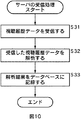
【図10】サーバの受信処理を説明するフローチャートである。
【符号の説明】
1 インターネット, 2−1乃至2−N ハードディスクレコーダ, 3 サーバ, 4 視聴履歴データベース, 5 放送装置,11 チューナ, 12 音声信号処理回路, 13 映像信号処理回路, 14 MPEGエンコーダ/デコーダ/VRAM, 18 CPU, 19 RAM, 21 不揮発性RAM, 22 ストレージ, 23 キーボード, 24 マウス, 31 リモートコントローラ, 71 CPU, 79 通信部[0001]
BACKGROUND OF THE INVENTION
The present invention relates to an information processing apparatus and method, a recording medium, and a program, and more particularly, to an information processing apparatus and method, a recording medium, and a program that record operation details for content as a viewing history.
[0002]
[Prior art]
2. Description of the Related Art Conventionally, there is a recording device that extracts households to be sampled and investigates the audience rating such as “what time and which channel was viewed”.
[0003]
For example, Japanese Patent Laid-Open No. 2000-307530 proposes a method for investigating a detailed audience rating for each user (for example, for each scene).
[0004]
[Problems to be solved by the invention]
However, in the conventional recording device, it is premised that the broadcasted program is viewed in real time, and the program (content) recorded on the recording device such as a hard disk recorder is viewed later. It was not.
[0005]
Also in the method of the above publication, the survey target is a broadcast program that is on the air, and the survey regarding the recorded program is excluded.
[0006]
Furthermore, in the conventional recording device, operations such as “fast forward” and “rewind” are executed, and “this scene was seen while watching (fast forward)”, “I saw this scene repeatedly” Or, operations such as “I skipped this scene” and detailed viewing contents could not be obtained.
[0007]
Therefore, for example, Japanese Patent Laid-Open No. 2000-224617 proposes a method for investigating the viewing trend of media other than broadcasting. However, the investigation requires complicated input from the user. There was a problem.
[0008]
The present invention has been made in view of such a situation, and makes it possible to detect a use situation of recorded content.
[0009]
[Means for Solving the Problems]
The information processing apparatus according to the present invention includes: a determination unit that determines whether or not a predetermined operation has been performed; and, as a result of determination by the determination unit, if it is determined that the predetermined operation has been performed, Storage means for acquiring and storing information on the operation time executed and the operation target to be operated;The operation target is content, and the information related to the operation target is the reproduction position in the content.It is characterized by that.
[0010]
The storage means is a first storage means for temporarily storing information related to the operation content, operation time, and operation target, and a second storage that receives the transfer of the information stored in the first storage means and stores it permanently. Storage means.
[0011]
When the predetermined operation is power-on or power-off, the operation content and operation time can be acquired and stored in the storage means.
[0012]
A transmission unit that transmits information on the operation content, operation time, and operation target stored in the storage unit can be further provided.
[0013]
The determination unit can further determine whether the predetermined operation is an operation executed by the user or an operation executed by the information processing apparatus.
[0014]
The storage unit can further store specific information on information related to the operation target.
[0015]
SpecialThe fixed information may be metadata.
[0016]
The information processing method of the present invention includes a determination step for determining whether or not a predetermined operation has been performed, and, as a result of determination by the processing of the determination step, if it is determined that the predetermined operation has been performed, A storage control step for acquiring information on an operation time when the operation was performed and information on the operation target to be operated and controlling the storage thereof.The operation target is the content, and the information related to the operation target is the playback position in the content.It is characterized by that.
[0017]
The program recorded in the recording medium of the present invention is a determination step for determining whether or not a predetermined operation has been executed, and when it is determined that the predetermined operation has been executed as a result of the determination by the processing of the determination step, And a storage control step for acquiring information on the operation content, operation time at which the operation was performed, and information on the operation target to be operated and controlling the storage thereof.The operation target is the content, and the information related to the operation target is the playback position in the content.It is characterized by that.
[0018]
The program according to the present invention includes a determination step for determining whether or not a predetermined operation has been executed, and if it is determined that the predetermined operation has been executed as a result of the determination by the processing of the determination step, Acquires information related to the operation time executed and the operation target to be operated, and causes the computer to execute a storage control step for controlling the storageThe operation target is content, and the information related to the operation target is the reproduction position in the content.It is characterized by that.
[0019]
In the information processing apparatus, method, and program of the present invention, it is determined whether or not a predetermined operation has been executed, and if it is determined that the predetermined operation has been executed, the operation content related to the operation and the operation that has been executed Information about the time and the operation target to be operated is acquired and stored.The operation target is content, and the information related to the operation target is a reproduction position in the content.
[0020]
DETAILED DESCRIPTION OF THE INVENTION
Hereinafter, embodiments of the present invention will be described with reference to the drawings.
[0021]
FIG. 1 shows a configuration example of a viewing history transmission system to which the present invention is applied. In this viewing history transmission system, hard disk recorders 2-1 to 2-N (hereinafter simply referred to as
[0022]
The
[0023]
The
[0024]
The
[0025]
Note that one
[0026]
FIG. 2 is a block diagram illustrating a configuration example of the
[0027]
The tuner 11 receives a television signal from a terrestrial wave, a communication satellite, or a broadcast satellite, outputs the extracted video signal to the video
[0028]
Further, the tuner 11 receives an EPG (Electrical Program Guide) related to a program (if metadata including information related to a content index and a segment is also included), supplies it to the
[0029]
Note that the metadata includes an index and a segment. The index corresponds to a predetermined time of the content, and a comment and an icon regarding the content at the time are added. A segment corresponds to a predetermined period, such as a highlight scene, of the content, and a start time, an end time, a comment, an icon, and the like are added to the segment.
[0030]
When a story is configured by an arbitrary number of segments, this story is also stored in the
[0031]
The MPEG encoder / decoder /
[0032]
The video
[0033]
In addition to video or audio content, the
[0034]
A non-volatile RAM (Random Access Memory) 21 stores unique ID information of the hard disk recorder, user ID information, area information where the user resides, and the like. A ROM (Read Only Memory) 20 stores a bootstrap module as a module for starting the OS, other programs, parameter data, and the like. In the RAM 19, a bootstrap module, an OS, an application program, and the like are expanded from the
[0035]
The data stored in the
[0036]
When the user operates the keyboard 23 or the
[0037]
The hard disk recorder is provided with a remote control
[0038]
When displaying a GUI (Graphical User Interface) screen for user operation (for example, a screen for selecting a video content to be reproduced from a list of displayed video content), the
[0039]
The
[0040]
The
[0041]
In this hard disk recorder, a
[0042]
FIG. 3 mainly illustrates a configuration example of buttons of the
[0043]
The backward skip button 51 and the forward skip button 57 are operated by the user when the segment (or index) to be reproduced is skipped backward (temporally backward) or skipped forward (temporally forward), respectively. . The
[0044]
The
[0045]
In addition, although illustration is abbreviate | omitted, the
[0046]
FIG. 4 is a block diagram illustrating a configuration example of the
[0047]
The
[0048]
The
[0049]
The input /
[0050]
A
[0051]
Next, the basic operation of the
[0052]
When the user operates the
[0053]
In this way, the content is stored in the
[0054]
When the user operates the
[0055]
In this way, the user can view the content recorded in the
[0056]
FIG. 5 shows an example of a data description format (DTD: Document Type Definition) when recording the operation content and the operation time. In this example, data is described in XML (eXtensible Markup Language) format.
[0057]
The first entry <! ATTLIST WatchLog UserID CDATA #IMPLIED> indicates a viewing history (WatchLog) having a viewer ID (UserID) as an attribute. The second entry <! ELEMENT WatchLog (Operation *)> indicates that the viewing history is composed of one or more operations. The third entry <! ELEMENT Operation (Operator, Operand?)> Indicates that the operation consists of one operation content (Operator) and 0 or one operation target (Operand).
[0058]
The fourth entry <! ATTLIST Operation MetadataId CDATA #IMPLIED> indicates the metadata ID used for viewing when the operation is performed as an optional attribute of the operation. <! ELEMENT Operator (PowerOn | PowerOff | Play | Pause | Stop | FF | RF | JumpToSegment | JumpToIndex)> is the fifth entry. It indicates that it is one of pause, stop, fast forward, rewind, jump to segment, or jump to index.
[0059]
The sixth entry <! ATTLIST Operator DateTime CDATA #REQUIRED> indicates the time of operation as an attribute of the operation content. The seventh entry <! ATTLIST Operator UserOperation (Yes / No) #REQUIRED> indicates whether the operation is performed by the user or the system as an attribute of the operation content.
[0060]
The eighth entry <! ATTLIST JumpToSegment StoryID NMTOKEN #IMPLIED> indicates which story segment the jump was made to. The ninth entry <! ATTLIST JumpToSegment SceneNo NMTOKEN #IMPLIED> indicates which scene segment the jump was made to. The tenth entry <! ATTLIST JumpToIndex IndexNo NMTOKEN #IMPLIED> indicates which index the jump has been made to.
[0061]
The eleventh entry <! ELEMENT Operand (Channel | MediaTime)> indicates that the operation target (content) consists of the broadcast channel and the time when the operation target (media) was broadcast. . <! ATTLIST Channel network (terrestrial | BS-a | BS-d | CS | CS-110) "terrestrial">, which is entered as the twelfth entry, broadcasts the broadcast channel as an attribute of the broadcast channel. The form is shown. The 13th entry <! ELEMENT Channel (#PCDATA)> indicates the channel on which the operation target is broadcast. The 14th entry <! ELEMENT MediaTime (#PCDATA)> indicates the time when the operation target was broadcast.
[0062]
In addition, if "EMPTY" is described after the operation content, such as <! ELEMENT PowerOn EMPTY>, <! ELEMENT PowerOff EMPTY>, or <! ELEMENT Play EMPTY>, the operation is It indicates that the terminal node does not have the above elements and attributes.
[0063]
6 to 8 show examples of viewing history data recorded in the data description format described above. In these examples, a plurality of viewing history data 101-1 to 101-9 are illustrated, and descriptions regarding each operation content are made in the range from <Operation> to </ Operation>. Further, description about the operation content is made in the range from <Operator> to </ Operator>, and description about the operation target (content) is made in the range from <Operand> to </ Operand>.
[0064]
<Operator UserOperation = "Yes" DateTime = "2001-04-24T16: 59: 00.00 + 09: 00"> in the viewing history data 101-1 is that the operation is performed by the “user”, and the operation time is “ “April 24, 2001, 16:59:00”. <PowerOn /> indicates that the operation content is “power on”.
[0065]
<Operator UserOperation = "Yes" DateTime = "2001-04-24T17: 00: 00.00 + 09: 00"> in the viewing history data 101-2 is that the operation is performed by the "user", and the operation time is " “April 24, 2001, 17:00:00”. <Play /> indicates that the operation content is “reproduction”. <Channel network = "BS-a"> 7 </ Channel> indicates that this broadcast content is the content broadcast on "seventh channel of satellite wave Bs-a (a means analog)" Show. <MediaTime> 2001-01-01T10: 00: 00.00 + 09: 00 </ MediaTime> indicates that the time when this broadcast content was broadcast is “1 January 2001, 10:00:00” ing.
[0066]
<Operator UserOperation = "No" DateTime = "2001-04-24T17: 30: 00.00 + 90: 00"> in the viewing history data 101-3 indicates that the operation is based on "system", and the operated time is " “April 24, 2001, 17:30:30”. <Stop /> indicates that the operation content is “stop”. <Channel network = "BS-a"> 7 </ Channel> indicates that this broadcast content is a content broadcast on "seventh channel of satellite wave Bs-a". <MediaTime> 2001-01-01T10: 00: 30.00 + 09: 00 </ MediaTime> indicates that the time at which this broadcast content was broadcast is “01.01.2001 10:30:30” ing.
[0067]
That is, the viewing history data 101-2 and 101-3 were broadcast on the seventh channel of the satellite wave Bs-a on January 1, 2001 at 10:00:00 and recorded (recorded) in the
[0068]
<Operation MetadataID = "Metadata001"> in the viewing history data 101-4 indicates that the metadata ID is "001". <Operator UserOperation = "Yes" DateTime = "2001-04-25T10: 00: 00.00 + 09: 00"> indicates that the operation is performed by the “user”, and the time when the operation is performed is “April 25, 2001 10 "00
[0069]
<Operator UserOperation = "Yes" DateTime = "2001-04-25T10: 03: 10.00 + 09: 00"> in the viewing history data 101-5 indicates that the operation is performed by the "user", and the operation time is " April 25, 2001, 10: 3: 10 ”. <JumpToIndex IndexNo = "10" /> indicates that the operation content is "jump to
[0070]
That is, the viewing history data 101-4 and 101-5 are broadcasted on the first channel of the terrestrial broadcast at 17: 3: 20 on January 1, 2001 and recorded in the storage 22 (index number 5). Jump to index) is instructed at 10:00:00 on April 25, 2001, broadcast on the first channel of terrestrial broadcast at 17:23:20 on January 1, 2001, and recorded in the
[0071]
<Operation MetadataID = "Metadata002"> in the viewing history data 101-6 indicates that the metadata ID is "002". <Operator UserOperation = "Yes" DateTime = "2001-04-25T18: 15: 00.00T + 09: 00"> indicates that the operation is performed by the “user” and the operation time is “April 25, 2001” 18:15:00 ”. <JumpToSegment StoryID = "time @ MACaddrr" SceneNo = "0" /> indicates that the operation content is "jump to segment of scene number 0 of story with story ID time @ MACaddrr". <Channel> 3 </ Channel> indicates that this broadcast content is the content broadcast on the “terrestrial third channel”. <MediaTime> 2001-04-01T10: 02: 10.00 + 09: 00 </ MediaTime> indicates that the time when this broadcast content was broadcast is “01:02:10 on April 1, 2001” ing.
[0072]
<Operation MetadataID = "Metadata002"> in the viewing history data 101-7 indicates that the metadata ID is "002". <Operator UserOperation = "No" DateTime = "2001-04-25T18: 17: 00.00T + 09: 00"> indicates that the operation is based on the “system” and the operation time is “April 25, 2001” 18:17:00 ”. <JumpToSegment StoryID = "time @ MACaddrr" SceneNo = "1" /> indicates that the operation content is "jump to the segment of the
[0073]
<Operation MetadataID = "Metadata002"> in the viewing history data 101-8 indicates that the metadata ID is "002". <Operator UserOperation = "No" DateTime = "2001-04-25T18: 20: 00.00T + 09: 00"> indicates that the operation is performed by the “user” and the operation time is “April 25, 2001” 18:20:00 ". <JumpToSegment StoryID = "time @ MACaddrr" SceneNo = "2" /> indicates that the operation content is “jump to the segment of the
[0074]
That is, the viewing history data 101-6 to 101-8 are broadcast on the third channel of the terrestrial wave at 10: 2: 10 on April 1, 2001 and recorded in the storage 22 (story ID is time ID @ MACaddrr's story scene number 0 segment) was instructed on April 25, 2001 at 18:15:00, and on April 1, 2001 at 10:17:10 Was jumped to the content (
[0075]
<Operator UserOperation = "Yes" DateTime = "2001-04-25T23: 59: 00.00T + 09: 00"> in the viewing history data 101-9 is that the operation is performed by the "user", and the operation time is This indicates that it is “April 25, 2001, 23:59:00”. <poweroff /> indicates that the operation content is “power off”.
[0076]
In this way, every time an operation is performed by the user or the system, the operation content, operation time, and operation target (content information, metadata in use, etc.) are recorded in the
[0077]
The processing in this case will be described with reference to the flowchart of FIG.
[0078]
In step S1, the
[0079]
If it is determined in step S1 that a predetermined operation is not instructed by the user, the process proceeds to step S2, and the
[0080]
If it is determined in step S2 that the operation has been executed by the system, the process proceeds to step S3.
[0081]
In step S3, the
[0082]
In step S <b> 4, the
[0083]
For example, in the case of the viewing history data 101-2 shown in FIG. 6, the time of “1 Jan 2001 10:00:00” of the content broadcast on “the seventh channel of the satellite wave Bs-a” is The acquired data is transferred from the RAM 19 to the
[0084]
In step S6, the
[0085]
For example, in the case of the viewing history data 101-4 shown in FIG. 7, the metadata ID “001” has been acquired, and the acquired data is transferred from the RAM 19 to the
[0086]
If it is determined in step S6 that the currently reproduced content does not use metadata, the process of step S7 is skipped and the process proceeds to step S8.
[0087]
In step S8, the
[0088]
In step S10, the
[0089]
Here, the transmission timing of the data to the
[0090]
If it is determined in step S10 that the data is to be transmitted to the server, the process proceeds to step S11, where the
[0091]
As described above, the viewing history data is stored in the temporary storage area (RAM 19) once the operation content, the operation time, the operation target, or the metadata is once operated by the user or the system. Since the
[0092]
In the above description, the operation content, operation time, operation target, or metadata is temporarily stored in the RAM 19. However, the present invention is not limited to this, and may be temporarily stored in the
[0093]
Next, the reception process of the
[0094]
In step S <b> 31, the
[0095]
In step S33, the
[0096]
As described above, the
[0097]
The series of processes described above can be executed by hardware, but can also be executed by software. When a series of processing is executed by software, a program constituting the software may execute various functions by installing a computer incorporated in dedicated hardware or various programs. For example, it is installed from a recording medium in a general-purpose personal computer or the like.
[0098]
As shown in FIG. 2, a recording medium for recording a program that is installed in a computer and can be executed by the computer includes a magnetic disk 41 (including a flexible disk), an optical disk 42 (CD-ROM (Compact Disc- Package media, such as Read Only Memory (DVD) (including Digital Versatile Disc), magneto-optical disk 43 (including MD (Mini-Disc) (registered trademark)), or
[0099]
In the present specification, the step of describing the program recorded on the recording medium is not limited to the processing performed in chronological order according to the described order, but is not necessarily performed in chronological order. It also includes processes that are executed individually.
[0100]
Further, in this specification, the system represents the entire apparatus composed of a plurality of apparatuses.
[0101]
【The invention's effect】
According to the information processing apparatus and method and the program of the present invention,It is possible to reliably record the operation content for the content as a viewing history.
[Brief description of the drawings]
FIG. 1 is a block diagram showing a configuration example of a viewing history transmission system to which the present invention is applied.
FIG. 2 is a block diagram showing a configuration example of the hard disk recorder of FIG.
FIG. 3 is a diagram illustrating a configuration example of a remote controller in FIG. 2;
4 is a block diagram illustrating a configuration example of a server in FIG. 1. FIG.
FIG. 5 is a diagram illustrating an example of a data description format.
FIG. 6 is a diagram illustrating an example of viewing history data.
FIG. 7 is a diagram illustrating an example of viewing history data following FIG. 6;
FIG. 8 is a diagram illustrating an example of viewing history data following FIG.
FIG. 9 is a flowchart illustrating recording processing of a hard disk recorder.
FIG. 10 is a flowchart illustrating a server reception process.
[Explanation of symbols]
1 Internet, 2-1 to 2-N hard disk recorder, 3 server, 4 viewing history database, 5 broadcasting device, 11 tuner, 12 audio signal processing circuit, 13 video signal processing circuit, 14 MPEG encoder / decoder / VRAM, 18 CPU , 19 RAM, 21 Non-volatile RAM, 22 Storage, 23 Keyboard, 24 Mouse, 31 Remote controller, 71 CPU, 79 Communication unit
Claims (10)
前記判定手段による判定の結果、前記所定の操作が実行されたと判定された場合、前記操作に関する操作内容、前記操作が実行された操作時刻、並びに前記操作の対象となる操作対象に関する情報を取得し、記憶する記憶手段と
を備え、
前記操作対象は、コンテンツであり、前記操作対象に関する情報は、前記コンテンツ内の再生位置である
ことを特徴とする情報処理装置。Determining means for determining whether or not a predetermined operation has been performed;
As a result of the determination by the determination unit, when it is determined that the predetermined operation has been executed, the operation content related to the operation, the operation time when the operation was executed, and information related to the operation target to be operated are acquired. Storage means for storing , and
The information processing apparatus according to claim 1, wherein the operation target is content, and the information regarding the operation target is a reproduction position in the content .
前記第1の記憶手段に記憶された情報の転送を受け、恒久的に記憶する第2の記憶手段と
を備えることを特徴とする請求項1に記載の情報処理装置。The storage means temporarily stores information related to the operation content, the operation time, and the operation target;
The information processing apparatus according to claim 1, further comprising: a second storage unit that receives the transfer of the information stored in the first storage unit and stores the information permanently.
ことを特徴とする請求項1に記載の情報処理装置。The information processing apparatus according to claim 1, wherein when the predetermined operation is power on or power off, the storage unit acquires and stores the operation content and the operation time.
ことを特徴とする請求項1に記載の情報処理装置。The information processing apparatus according to claim 1, further comprising a transmission unit configured to transmit information regarding the operation content, the operation time, and the operation target stored in the storage unit.
ことを特徴とする請求項1に記載の情報処理装置。2. The determination unit according to claim 1, wherein the determination unit further determines whether the predetermined operation is an operation executed by a user or an operation executed by the information processing apparatus. Information processing device.
ことを特徴とする請求項1に記載の情報処理装置。The information processing apparatus according to claim 1, wherein the storage unit further stores specific information on information related to the operation target.
ことを特徴とする請求項1に記載の情報処理装置。 Before SL particular information processing apparatus according to claim 1, characterized in that the meta-data.
前記判定ステップの処理による判定の結果、前記所定の操作が実行されたと判定された場合、前記操作に関する操作内容、前記操作が実行された操作時刻、並びに前記操作の対象となる操作対象に関する情報を取得し、その記憶を制御する記憶制御ステップと
を含み、
前記操作対象は、コンテンツであり、前記操作対象に関する情報は、前記コンテンツ内の再生位置である
ことを特徴とする情報処理方法。A determination step of determining whether or not a predetermined operation has been performed;
If it is determined that the predetermined operation has been executed as a result of the determination in the determination step, the operation content related to the operation, the operation time when the operation was executed, and the information related to the operation target to be operated are displayed. acquired viewing contains a storage control step of controlling the storage,
The information processing method , wherein the operation target is content, and the information related to the operation target is a reproduction position in the content .
前記判定ステップの処理による判定の結果、前記所定の操作が実行されたと判定された場合、前記操作に関する操作内容、前記操作が実行された操作時刻、並びに前記操作の対象となる操作対象に関する情報を取得し、その記憶を制御する記憶制御ステップと
を含み、
前記操作対象は、コンテンツであり、前記操作対象に関する情報は、前記コンテンツ内の再生位置である
ことを特徴とするコンピュータが読み取り可能なプログラムが記録されている記録媒体。A determination step of determining whether or not a predetermined operation has been performed;
If it is determined that the predetermined operation has been executed as a result of the determination in the determination step, the operation content related to the operation, the operation time when the operation was executed, and the information related to the operation target to be operated are displayed. acquired viewing contains a storage control step of controlling the storage,
A recording medium on which a computer-readable program is recorded , wherein the operation target is content, and the information related to the operation target is a reproduction position in the content .
前記判定ステップの処理による判定の結果、前記所定の操作が実行されたと判定された場合、前記操作に関する操作内容、前記操作が実行された操作時刻、並びに前記操作の対象となる操作対象に関する情報を取得し、その記憶を制御する記憶制御ステップと
をコンピュータに実行させ、
前記操作対象は、コンテンツであり、前記操作対象に関する情報は、前記コンテンツ内の再生位置である
プログラム。A determination step of determining whether or not a predetermined operation has been performed;
If it is determined that the predetermined operation has been executed as a result of the determination in the determination step, the operation content related to the operation, the operation time when the operation was executed, and the information related to the operation target to be operated are displayed. And having the computer execute a storage control step for acquiring and controlling the storage ,
The operation target is a content, and the information related to the operation target is a reproduction position in the content .
Priority Applications (1)
| Application Number | Priority Date | Filing Date | Title |
|---|---|---|---|
| JP2001223163A JP4816994B2 (en) | 2001-07-24 | 2001-07-24 | Information processing apparatus and method, recording medium, and program |
Applications Claiming Priority (1)
| Application Number | Priority Date | Filing Date | Title |
|---|---|---|---|
| JP2001223163A JP4816994B2 (en) | 2001-07-24 | 2001-07-24 | Information processing apparatus and method, recording medium, and program |
Publications (2)
| Publication Number | Publication Date |
|---|---|
| JP2003037856A JP2003037856A (en) | 2003-02-07 |
| JP4816994B2 true JP4816994B2 (en) | 2011-11-16 |
Family
ID=19056539
Family Applications (1)
| Application Number | Title | Priority Date | Filing Date |
|---|---|---|---|
| JP2001223163A Expired - Lifetime JP4816994B2 (en) | 2001-07-24 | 2001-07-24 | Information processing apparatus and method, recording medium, and program |
Country Status (1)
| Country | Link |
|---|---|
| JP (1) | JP4816994B2 (en) |
Families Citing this family (8)
| Publication number | Priority date | Publication date | Assignee | Title |
|---|---|---|---|---|
| JP4261997B2 (en) * | 2003-06-26 | 2009-05-13 | 日本放送協会 | Data broadcasting production equipment |
| JP4243862B2 (en) | 2004-10-26 | 2009-03-25 | ソニー株式会社 | Content utilization apparatus and content utilization method |
| JP4595555B2 (en) | 2005-01-20 | 2010-12-08 | ソニー株式会社 | Content playback apparatus and content playback method |
| JP4741267B2 (en) | 2005-03-28 | 2011-08-03 | ソニー株式会社 | Content recommendation system, communication terminal, and content recommendation method |
| JP2007011928A (en) | 2005-07-04 | 2007-01-18 | Sony Corp | Content providing system, content providing device, content distribution server, content receiving terminal, and content providing method |
| JP5133508B2 (en) | 2005-07-21 | 2013-01-30 | ソニー株式会社 | Content providing system, content providing device, content distribution server, content receiving terminal, and content providing method |
| JP4403415B2 (en) | 2005-09-20 | 2010-01-27 | ソニー株式会社 | Content reproduction method and content reproduction apparatus |
| JP4811046B2 (en) | 2006-02-17 | 2011-11-09 | ソニー株式会社 | Content playback apparatus, audio playback device, and content playback method |
Family Cites Families (4)
| Publication number | Priority date | Publication date | Assignee | Title |
|---|---|---|---|---|
| JP3339538B2 (en) * | 1995-03-31 | 2002-10-28 | 松下電器産業株式会社 | Two-way CATV system |
| JPH1091689A (en) * | 1996-09-19 | 1998-04-10 | Matsushita Electric Ind Co Ltd | Digital information supply management system |
| JP4164709B2 (en) * | 1998-01-31 | 2008-10-15 | ソニー株式会社 | Program selection history information acquisition apparatus, program selection history information acquisition method, and reception apparatus |
| JP3928367B2 (en) * | 2001-04-05 | 2007-06-13 | 日本電気株式会社 | Advertising insertion area determination device and program |
-
2001
- 2001-07-24 JP JP2001223163A patent/JP4816994B2/en not_active Expired - Lifetime
Also Published As
| Publication number | Publication date |
|---|---|
| JP2003037856A (en) | 2003-02-07 |
Similar Documents
| Publication | Publication Date | Title |
|---|---|---|
| KR101382135B1 (en) | Apparatus and method for playing back network contents | |
| JP3747884B2 (en) | Content recording / reproducing apparatus, content recording / reproducing method, and computer program | |
| JP3823422B2 (en) | Program management apparatus and program management method | |
| WO2001082601A1 (en) | Broadcast program recording programming device and method | |
| JP2008118654A (en) | Digital broadcast media recording apparatus and recording method | |
| US7620965B2 (en) | Information processing apparatus and method, information providing apparatus and method, and program storage medium | |
| JP4816994B2 (en) | Information processing apparatus and method, recording medium, and program | |
| US20080022313A1 (en) | Program table generator and a method for quickly displaying a program table in response to user's request | |
| US20030052794A1 (en) | Method and apparatus to select content | |
| JP2006217343A (en) | Signal processor and videotape recording method | |
| US8689262B2 (en) | Broadcast receiving device | |
| US7735110B2 (en) | Information processing apparatus, information processing method, and program storage medium | |
| KR100937690B1 (en) | Method and apparatus for providing virtual channel service | |
| JP2003339006A (en) | Content recording / reproducing device or content recording / reproducing method, information processing device or information processing method, and computer program | |
| US20100215336A1 (en) | Administering a time-shifting cache in a media playback device | |
| US20090033806A1 (en) | Control device and method, program, and recording medium | |
| JPH11220666A (en) | Receiver and control method thereof | |
| CN100421450C (en) | Systems and methods for assigning local channels | |
| JP4533408B2 (en) | Receiving apparatus and receiving method | |
| US20060088290A1 (en) | Controller device connected via IEEE 1394 serial bus to device having tuner function and digital recording device | |
| JP3782014B2 (en) | Television broadcast recording / playback apparatus and information providing service system | |
| KR100797105B1 (en) | How to sync multifunction composite media devices | |
| JP4426622B2 (en) | Data relay device | |
| JP2018074470A (en) | Television device | |
| CN100525394C (en) | Personal videocorder control system and its controlling method |
Legal Events
| Date | Code | Title | Description |
|---|---|---|---|
| A621 | Written request for application examination |
Free format text: JAPANESE INTERMEDIATE CODE: A621 Effective date: 20080723 |
|
| A977 | Report on retrieval |
Free format text: JAPANESE INTERMEDIATE CODE: A971007 Effective date: 20100812 |
|
| A131 | Notification of reasons for refusal |
Free format text: JAPANESE INTERMEDIATE CODE: A131 Effective date: 20100928 |
|
| A521 | Request for written amendment filed |
Free format text: JAPANESE INTERMEDIATE CODE: A523 Effective date: 20101117 |
|
| TRDD | Decision of grant or rejection written | ||
| A01 | Written decision to grant a patent or to grant a registration (utility model) |
Free format text: JAPANESE INTERMEDIATE CODE: A01 Effective date: 20110804 |
|
| A01 | Written decision to grant a patent or to grant a registration (utility model) |
Free format text: JAPANESE INTERMEDIATE CODE: A01 |
|
| A61 | First payment of annual fees (during grant procedure) |
Free format text: JAPANESE INTERMEDIATE CODE: A61 Effective date: 20110817 |
|
| FPAY | Renewal fee payment (event date is renewal date of database) |
Free format text: PAYMENT UNTIL: 20140909 Year of fee payment: 3 |
|
| R151 | Written notification of patent or utility model registration |
Ref document number: 4816994 Country of ref document: JP Free format text: JAPANESE INTERMEDIATE CODE: R151 |
|
| FPAY | Renewal fee payment (event date is renewal date of database) |
Free format text: PAYMENT UNTIL: 20140909 Year of fee payment: 3 |
|
| R250 | Receipt of annual fees |
Free format text: JAPANESE INTERMEDIATE CODE: R250 |
|
| R250 | Receipt of annual fees |
Free format text: JAPANESE INTERMEDIATE CODE: R250 |
|
| R250 | Receipt of annual fees |
Free format text: JAPANESE INTERMEDIATE CODE: R250 |
|
| R250 | Receipt of annual fees |
Free format text: JAPANESE INTERMEDIATE CODE: R250 |
|
| R250 | Receipt of annual fees |
Free format text: JAPANESE INTERMEDIATE CODE: R250 |
|
| R250 | Receipt of annual fees |
Free format text: JAPANESE INTERMEDIATE CODE: R250 |
|
| R250 | Receipt of annual fees |
Free format text: JAPANESE INTERMEDIATE CODE: R250 |
|
| EXPY | Cancellation because of completion of term |