JP4684583B2 - Dialogue device - Google Patents
Dialogue device Download PDFInfo
- Publication number
- JP4684583B2 JP4684583B2 JP2004202060A JP2004202060A JP4684583B2 JP 4684583 B2 JP4684583 B2 JP 4684583B2 JP 2004202060 A JP2004202060 A JP 2004202060A JP 2004202060 A JP2004202060 A JP 2004202060A JP 4684583 B2 JP4684583 B2 JP 4684583B2
- Authority
- JP
- Japan
- Prior art keywords
- difference
- search
- recognition
- response
- candidate
- Prior art date
- Legal status (The legal status is an assumption and is not a legal conclusion. Google has not performed a legal analysis and makes no representation as to the accuracy of the status listed.)
- Expired - Fee Related
Links
Images




Landscapes
- Navigation (AREA)
- Traffic Control Systems (AREA)
Description
本発明は、ユーザの入力に基づき認識または検索を実施し、画面または音声によりユーザへ応答を提示する技術分野に関する。 The present invention relates to a technical field in which recognition or search is performed based on user input, and a response is presented to the user by a screen or voice.
近年、音声認識マンマシンインタフェースを採用した電子機器が増えている。一例としてカーナビゲーションが挙げられる。カーナビゲーションは、所望の地点を指定して目的地として設定し、車両の現在位置から目的地までの経路を探索し、その経路をその現在位置を含む地図とともに表示させることにより、目的地までの誘導を行う機能を有している。 In recent years, an increasing number of electronic devices employ a voice recognition man-machine interface. One example is car navigation. Car navigation specifies a desired point, sets it as a destination, searches for a route from the current position of the vehicle to the destination, displays the route together with a map including the current position, and displays the route to the destination. It has a function to perform guidance.
カーナビゲーションにおける音声操作による地点の指定は、所望の目的地の固有名称、例えば「関内駅」という施設名を発声することで行われている。 The designation of a point by voice operation in car navigation is performed by uttering a unique name of a desired destination, for example, a facility name “Kannai Station”.
音声認識装置は、現在設定されている認識対象語彙と「関内駅」といった発声の類似度合いをスコアとして点数化し、一番スコアの高い認識語を第一候補として出力していた。また、二番目以降の認識候補、例えば「関内ホール」「関内署」などを同時、あるいは順次、ユーザへ提示し、ユーザは認識結果の候補中から発声あるいはボタン操作などにより、所望の施設を選択するものである。音声対話装置に関しては例えば「音声認識の基礎」L.RABINER、B.H.JUANG、古井貞煕 監訳、1995年11月、NTTアドバンステクノロジ(以下文献1とする)に詳細が記されているので説明を省略する。 The speech recognition apparatus scores the degree of similarity between the currently set recognition target vocabulary and utterance such as “Kannai Station” as a score, and outputs the recognition word with the highest score as the first candidate. Also, the second and subsequent recognition candidates, such as “Kannai Hall” and “Kannai Station”, are presented to the user simultaneously or sequentially, and the user selects a desired facility by speaking or operating a button from among the recognition result candidates. To do. The details of the spoken dialogue device are omitted because they are described in detail in "Basics of Speech Recognition", directed by L.RABINER, BHJUANG, Satoshi Furui, November 1995, NTT Advanced Technology (hereinafter referred to as Reference 1). To do.
候補を提示する際、ユーザが候補を選択するために候補の表示形態を変える方法として、特開平11-231891号公報では、認識結果それぞれの類似度(尤度)に応じて表示形態を変える方法を開示している。また、特開2003-167600号公報、特開平09-114491号公報では、入力された音声の認識結果をそれぞれに付与された属性に応じて表示を変える方法を開示している。 As a method for changing the display form of a candidate for the user to select a candidate when presenting the candidate, Japanese Patent Laid-Open No. 11-231891 discloses a method for changing the display form according to the similarity (likelihood) of each recognition result. Is disclosed. Japanese Patent Laid-Open No. 2003-167600 and Japanese Patent Laid-Open No. 09-114491 disclose a method for changing the display of the input speech recognition result according to the attribute assigned to each.
さらに、上記と同様の状況として、検索を実施した際に多数の候補が生じる場合がある。例えば「札幌市・北六条」という検索語に対して、「北海道・札幌市・東区・北六条東」「北海道・札幌市・北区・北六条西」「北海道・札幌市・北区・拓北六条」が候補としてユーザへ提示される。これに対して、検索対象語彙をテキスト中でハイライトするなどの機能が提供されている場合がある。 Furthermore, as a situation similar to the above, there are cases where a large number of candidates are generated when a search is performed. For example, for the search term “Sapporo City / Kokurokujo”, “Hokkaido / Sapporo City / Higashi Ward / Kitarokujo East”, “Hokkaido / Sapporo City / Kita Ward / Kitarokujo West”, “Hokkaido / Sapporo City / Kitakujo / “Takuhoku Rokujo” is presented to the user as a candidate. On the other hand, there is a case where a function such as highlighting a search target vocabulary in a text is provided.
上述のように、候補の表示形態を変える従来の方法は複数の候補を提示する際に、個々の候補のスコアや属性に応じて表示を変えるものであった。このため、付与された属性によっては、両者の差異が明確にならない場合がある。例えば、カーナビゲーションシステムの認識語彙において、操作コマンドと、施設名称という属性がある場合、両者を区別して色分けしても、属性が同じ「関内ホール」と「関内駅」の差異は明確とならない。 As described above, the conventional method for changing the display form of candidates changes the display according to the scores and attributes of individual candidates when presenting a plurality of candidates. For this reason, depending on the assigned attribute, the difference between the two may not be clear. For example, in the recognition vocabulary of the car navigation system, if there are attributes such as operation commands and facility names, the difference between “Kannai hall” and “Kannai station” having the same attributes is not clear even if they are distinguished and color-coded.
検索の場合も、特に検索結果が類似している場合、検索キーワードをハイライトしても、差異の明確化とならず、ユーザは差異を自ら認識して、所望の検索対象を選択する必要がある。 Also in the case of search, particularly when the search results are similar, highlighting a search keyword does not clarify the difference, and the user needs to recognize the difference himself and select a desired search target. is there.
本発明に係る対話装置は、入力された音声を認識して、言語単位又は認識単位であるシンボルの系列からなる認識結果の認識候補を複数リスト化した候補リストを出力する認識手段と、
前記認識候補の各シンボルに対し、全ての認識候補数と当該シンボルの出現した認識候補数に基づく関数で定義された差異情報を付与する差異抽出手段と、
前記認識結果の各認識候補の各シンボルに付与した差異情報に基づき、差異を有する他の認識候補のシンボルと該差異が明確になるよう当該シンボルの文字の表示形態又は音声合成による当該シンボルの音声の韻律を変化させる応答を生成する差異明確化応答生成手段を備える。
The interactive apparatus according to the present invention recognizes input speech, and outputs a candidate list in which a plurality of recognition results recognition candidates including a sequence of symbols that are language units or recognition units are output;
Difference extraction means for assigning difference information defined by a function based on the number of all recognition candidates and the number of recognition candidates in which the symbol appears , for each symbol of the recognition candidates ;
The recognition based on the grant the difference information to each symbol of the recognition candidates of the result, the voice of the symbol by the display mode or voice synthesis character of the symbol as the symbol and the differences in other recognition candidates become clear with the difference Difference clarification response generation means for generating a response that changes the prosody of.
本発明によれば、差異抽出手段により認識結果に差異情報を付与し、差異明確化応答生成手段が付与された差異情報に基づいて認識結果の差異を明確化した応答を生成し、応答提示手段により、差異明確化応答生成手段により生成された応答をユーザへ提示するので、ユーザは容易に候補間の差異を認識できる。 According to the present invention, the difference extraction unit adds difference information to the recognition result, the difference clarification response generation unit generates a response that clarifies the difference in the recognition result based on the difference information, and the response presentation unit. Thus, since the response generated by the difference clarification response generation means is presented to the user, the user can easily recognize the difference between candidates.
以下、本発明に係る対話装置について、図面を参照して詳細に説明する。
実施の形態1.
図1は、実施の形態1に係る対話装置の構成を示すブロック図である。同図において、1001は認識手段、1002は差異抽出手段、1003は差異明確化応答生成手段、1004は応答提示手段を表す。以下、各機能ブロックの動作を説明する。
Hereinafter, an interactive apparatus according to the present invention will be described in detail with reference to the drawings.
FIG. 1 is a block diagram illustrating a configuration of the interactive apparatus according to the first embodiment. In the figure,
認識手段1001は、マイクから入力した音声を認識し、認識結果の候補リストを出力する。認識結果の候補リストとは、認識手段が認識結果としてある一定の妥当性があると判断した認識結果の候補を列挙したものである。それぞれの認識結果は、シンボルの系列と認識結果の確からしさを表すスコアからなる。シンボルとは、単語・文字・音素のような言語単位や認識単位である。
The
差異抽出手段1002は、認識手段1001によって得られた候補間で差異のあるシンボルを抽出し、各候補のシンボルに差異情報である差異指標値を付与する。
差異明確化応答生成手段1003は、差異情報に基づき差異が明確になるユーザへの応答を生成する。
応答提示手段1004は、差異明確化応答生成手段1003により生成された応答をユーザへ提示する。
The
The difference clarification
The
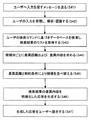
次に図2のフローチャートを参照し、実施の形態1の動作フローを説明する。ここでは、認識対象が施設名であり、「○○百貨店・横浜・店」、「○×百貨店・横浜・店」という2個の認識候補が得られた場合を例に、両者の差異を明確化した応答を返す手順を説明する。 Next, the operation flow of the first embodiment will be described with reference to the flowchart of FIG. Here, the object of recognition is the name of the facility, and the difference between the two is clarified, taking as an example the case where two recognition candidates “XX department store / Yokohama / store” and “XX department store / Yokohama / store” are obtained. The procedure for returning a response that has been converted is described.
まず、応答提示手段1004は認識手段1001にユーザよりの入力がないことを確認して、ユーザに対し、「目的地を発声、入力してください」というガイダンス等によるユーザへ入力を促す(ステップS11)。
ユーザが目的地を発声により入力すると、次に、認識手段1001はユーザの入力を受理し、解析・認識処理をする(ステップS12)。具体的には、入力音声を時間周期Tでサンプリングし、離散化された時刻tに対する信号系列x[t] を得る。これを10ms単位で特徴ベクトル(例えば12次元のメルケプストラム)に変換する。さらに、得られた特徴ベクトルを対話装置内に設けられた図示しない音響辞書および言語辞書と照合して、照合の尤度が高いn個の認識結果の候補r[1]〜r[n]を得る。認識結果の候補は、それぞれ認識単位であるシンボルの列である。また、認識結果の候補それぞれについて、妥当性を表すスコアs[1]〜s[n] を得る。
First, the response presenting means 1004 confirms that there is no input from the user in the recognizing means 1001, and prompts the user to input by the guidance such as “Please speak and input the destination” (step S11). ).
When the user inputs the destination by speaking, the
ここでは認識結果として2個の候補r[1]=「○○百貨店・横浜・店」、r[2]=「○×百貨店・横浜・店」が得られ、差異抽出手段1002の入力とされる。ただし、中点「・」は、シンボルの区切りである。 Here, as a recognition result, two candidates r [1] = “XX department store / Yokohama / store” and r [2] = “XX department store / Yokohama / store” are obtained and input to the difference extraction means 1002. The However, the middle point “·” is a symbol delimiter.
次に、差異抽出手段1002では、得られた候補間で差異のあるシンボルを抽出し、各候補のシンボルに差異指標値を付与する(ステップS13)。差異指標値は、例えば、n個の候補のうちk個の候補で出現したシンボルcにd(c ; r[1]..r[n]) = n-k を付与する。この場合、全ての候補で出現したシンボル(共通要素)は0、特定の1候補でのみ出現したシンボルには n-1 が付与される。前述の例は n=2であり、シンボル「横浜」「店」は2つの候補で出現(k=2),「○○百貨店」「○×百貨店」は1つの候補で出現している(k=1)。よって、下記のようになる。
d(○○百貨店 ; r[1], r[2]) = 2-1 = 1
d(○×百貨店 ; r[1], r[2]) = 2-1 = 1
d(横浜店 ; r[1], r[2]) = 2-2 = 0
Next, the
d (XX Department Store; r [1], r [2]) = 2-1 = 1
d (○ × Department store; r [1], r [2]) = 2-1 = 1
d (Yokohama store; r [1], r [2]) = 2-2 = 0
得られた数値は、適当なしきい値を決めて 0または1に離散化するといった、適当な後処理を追加しても良い。 Appropriate post-processing such as determining the appropriate threshold value and discretizing it into 0 or 1 may be added to the obtained numerical value.
次に、差異明確化応答生成手段1003は、認識結果の候補と、候補を構成するシンボルに付与された差異指標値を読み込み、差異指標値に基づいて認識結果の差異を明確化した応答を生成する(ステップS14)。前述の例では、シンボルの差異指標値を参照し、差異指標値が1である「○○百貨店」「○×百貨店」の出力形態を変えて明確化する。文字により画面出力する場合では、字体の変化や、括弧などによる修飾の付加により強調を行う。字体を変えるとは、例えば、対象文字列の色・背景色・下線・斜体字・太字・フォントなどを変えて強調するものである。
Next, the difference clarification
この結果、「認識結果:(1)『○○百貨店』横浜店、(2)『○×百貨店』横浜店」のように括弧『・』で囲むことにより差異を明確化して応答できる。また、差異抽出の結果、同一となる部分の表現や表示位置を変えることで差異を明確化することもできる。参照例において、「認識結果:(1)○○百貨店横浜店、(2)○×百貨店〃」のように差異指標値が0である「横浜店」は2度目以降の同一であることを表す記号等へ置換してもよい。また、「〃」の表示を「横浜店」と対応付けて、位置を揃えて表示することで、差異を一層明確化できる。 As a result, it is possible to respond by clarifying the difference by enclosing it in parentheses “·”, such as “recognition result: (1)“ XX department store ”Yokohama store, (2)“ XX department store ”Yokohama store”. Further, as a result of the difference extraction, the difference can be clarified by changing the expression and display position of the same part. In the reference example, “recognition result: (1) XX department store Yokohama store, (2) XX department store 〃” “Yokohama store” with a difference index value of 0 indicates that it is the same after the second time. It may be replaced with a symbol or the like. In addition, the difference can be further clarified by displaying “〃” in correspondence with “Yokohama store” and displaying the same positions.
また、音声合成等で生成した音声による応答の場合は、本手法によって、音声の高さ・大きさ・発話の速度・ポーズ付与などの韻律情報を音声合成装置へ入力するテキスト上で指示し、差異を明確化する。例えば、前述の例で「○×百貨店」の前でいったんポーズをおき、声の高さを上げてゆっくり発話することで強調を行うことができる。テキスト音声合成の場合は、上記音声を出力するために、応答音声のテキストへピッチ上げなどのマークアップを追加する。差異の付与は、2値的であっても、差異の大きさに応じて、多値・連続的としてもよい。 In addition, in the case of a response by speech generated by speech synthesis or the like, this method indicates on the text to be input to the speech synthesizer, prosodic information such as speech height, loudness, utterance speed, pose provision, etc. Clarify the differences. For example, in the above-mentioned example, it is possible to emphasize by posing once in front of “○ × Department Store” and speaking slowly while raising the voice. In the case of text-to-speech synthesis, markup such as pitch increase is added to the text of the response speech in order to output the speech. The addition of the difference may be binary or may be multi-valued or continuous depending on the magnitude of the difference.
最後に、応答提示手段1004は、差異明確化応答生成手段1003により生成された応答をユーザへ提示する(ステップS15)。
Finally, the
以上のように本実施の形態によれば、差異抽出手段1002により認識結果の候補と、候補を構成するシンボルに差異指標値を付与し、差異明確化応答生成手段1003が付与された差異指標値を読み込み、差異指標値に基づいて認識結果の差異を明確化した応答を生成し、応答提示手段1004により、差異明確化応答生成手段1003により生成された応答をユーザへ提示するので、ユーザは容易に候補間の差異を認識できる。
As described above, according to the present embodiment, the difference index value is assigned to the recognition result candidate and the symbols constituting the candidate by the difference extraction means 1002, and the difference clarification response generation means 1003 is assigned. Is generated, a response that clarifies the difference in the recognition result is generated based on the difference index value, and the response generated by the difference clarified
実施の形態2.
図3は、実施の形態2に係る対話装置の構成を示すブロック図である。同図において、2001は名称データベース、2002は名称データベース2001を検索する検索手段、1002は差異抽出手段、1003は差異明確化応答生成手段、1004は応答提示手段を表す。以下、各機能ブロックの動作を説明する。ただし、既に説明したものは同じ番号を付与して説明を省略する。
FIG. 3 is a block diagram showing a configuration of the interactive apparatus according to the second embodiment. In the figure, 2001 is a name database, 2002 is a search means for searching the
名称データベース2001は、入力されたキーワードから対応付けられた情報を取り出すためのデータベースである。図4は、施設名に関するデータベースの検索キーワードと検索結果の例である。検索キーワードは施設名の正式名称の一部あるいは言い換えた通称表現であり、検索結果として、正式名称を得る。正式名称は、中点「・」で区切られた、シンボルの並びとして格納されている。
The
検索手段2002は、入力された検索式または検索キーワードにより名称データベース2001を検索し、検索結果のリストを検索候補として出力する。検索は、正式名称との部分一致でも、あらかじめ作成したテーブルの参照であっても良い。また、検索式は複数の検索条件を組み合わせたものであっても良い。
The search means 2002 searches the
次に、図5のフローチャートを参照し、本実施の形態の動作フローを説明する。なお、本実施の形態では図4に示すデータベースの検索例について、名称データベース2002を参照して検索結果リスト内の差異を明確化した応答を返す手順を説明する。
Next, the operation flow of the present embodiment will be described with reference to the flowchart of FIG. In the present embodiment, for the database search example shown in FIG. 4, a procedure for returning a response that clarifies the difference in the search result list with reference to the
まず、応答提示手段1004により、「検索条件を入力してください」というガイダンス等によるユーザへ入力を促す処理をする(ステップS21)。 First, the response presentation means 1004 performs a process of prompting the user to input based on a guidance such as “Please enter search conditions” (step S21).
次に検索手段2002は、ステップS21に応じてユーザが入力した検索コマンドr[0]=「○○百貨店」を受理し、名称データベース2001を検索して検索結果のリストを取得する(ステップS22)。
Next, the search means 2002 receives the search command r [0] = “XX department store” input by the user in accordance with step S21, searches the
例えば、施設の正式名称を調べるために施設の通称から正式名称を得られるデータベース2001にアクセスして、あり得る施設の正式名称を返す。図4の例では、「○○百貨店」というキーワードに対して、r[1]=「○○百貨店・横浜店」、r[2]=「川崎・○○百貨店」という正式名称を得る。
For example, in order to check the official name of the facility, the
次に、差異抽出手段1002では得られた候補間で差異のあるシンボルを抽出し、各候補のシンボルに差異指標値を付与する(ステップS23)。例えば、差異指標値として、n個の候補のうちk個の候補で出現したシンボルcにd(c ; r[1]..r[n]) = n-k を付与する。この場合、下記のようになる。
d(○○百貨店 ; r[1], r[2]) = 2-2 = 0
d(横浜店 ; r[1], r[2]) = 2-1 = 1
d(川崎 ; r[1], r[2]) = 2-1 = 1
Next, the difference extraction means 1002 extracts symbols that differ between the obtained candidates, and assigns a difference index value to each candidate symbol (step S23). For example, as a difference index value, d (c; r [1] .. r [n]) = nk is assigned to a symbol c that appears in k candidates among n candidates. In this case, it becomes as follows.
d (XX Department Store; r [1], r [2]) = 2-2 = 0
d (Yokohama store; r [1], r [2]) = 2-1 = 1
d (Kawasaki; r [1], r [2]) = 2-1 = 1
次に、差異明確化応答生成手段1003は、候補となる検索結果と、候補を構成するシンボルに付与された差異指標値を読み込み、差異指標値に基づいて検索結果の差異を明確化した応答を生成する(ステップS24)。この結果、例えば「検索結果:(1)○○百貨店『横浜店』、(2)『川崎』○○百貨店」のように括弧『・』で囲むことで差異を明確化することができる。
Next, the difference clarification
最後に、応答提示手段1004は、差異明確化応答生成手段により生成された応答をユーザへ提示する(ステップS25)。
Finally, the
この結果、生成された応答は、検索結果の差異が明確化されている。このため、ユーザは所望の候補を選択することが容易となる。 As a result, the difference in search results is clarified in the generated response. For this reason, the user can easily select a desired candidate.
なお、上記の例では検索結果間の差異を明確化したが、差異抽出手段1002の入力として検索キーワードを与えても良い。
この場合、r[0]=「○○百貨店」が差異抽出手段1002の入力になり、上述の差異指標値付与方法により、シンボルに付与される差異指標値は下記のようになる。この結果、入力した検索キーワードr[0]=「○○百貨店」以外が一層明確になる。
d(○○百貨店 ; r[0, r[1], r[2]) = 3-3 = 0
d(横浜店 ; r[0], r[1], r[2]) = 3-1 = 2
d(川崎 ; r[0], r[1], r[1]) = 3-1 = 2
Although the difference between the search results has been clarified in the above example, a search keyword may be given as an input to the
In this case, r [0] = “XX department store” is input to the
d (XX department store; r [0, r [1], r [2]) = 3-3 = 0
d (Yokohama store; r [0], r [1], r [2]) = 3-1 = 2
d (Kawasaki; r [0], r [1], r [1]) = 3-1 = 2
また、データベースの検索結果は、意味的に区切られた複数のフィールドから構成されていても良い。この場合、フィールドごとにシンボルの差異を求めて応答を生成することができる。フィールドに優先順位を付与し、優先順位の高いフィールドに差異があれば、優先順位の低いフィールドの差異内容を提示しないようにしても良い。 The database search result may be composed of a plurality of semantically separated fields. In this case, a response can be generated by obtaining a symbol difference for each field. If priority is given to a field and there is a difference in a field with a high priority, the difference contents of a field with a low priority may not be presented.
実施の形態3.
図6は、実施の形態3に係る対話装置の構成を示すブロック図である。同図において、1001は認識手段、2001は名称データベース、2002は検索手段、1002は差異抽出手段、1003は差異明確化応答生成手段、1004は応答提示手段を表す。各機能ブロックについては、既に説明の通りである。次に、図7に示すフローチャートを参照し、「○○百貨店」という発声が行われた場合を例として動作を説明する。
FIG. 6 is a block diagram showing a configuration of the interactive apparatus according to the third embodiment. In the figure, 1001 is a recognition means, 2001 is a name database, 2002 is a search means, 1002 is a difference extraction means, 1003 is a difference clarification response generation means, and 1004 is a response presentation means. Each functional block has already been described. Next, the operation will be described with reference to the flowchart shown in FIG.
まず、応答提示手段1004により、「発声をどうぞ」という文字や音声ガイダンス等によるユーザへ入力を促すメッセージを送る(ステップS31)。 First, the response presenting means 1004 sends a message prompting the user to input using the text “Please speak” or voice guidance (step S31).
次に、認識手段1001はユーザの発声した入力を受理し、入力音声を解析・認識する(ステップS32)。具体的には、入力音声を時間周期Tでサンプリングし、時刻tに対する信号系列x[t] を得る。これを10ms単位で特徴ベクトル(例えば12次元のメルケプストラム)に変換する。さらに、得られた特徴ベクトルを対話装置内に設けられた図示しない音響辞書および言語辞書と照合して、照合の尤度が高いn個の認識結果の候補r[1]〜r[n]を得る。
認識結果の候補は、それぞれ認識単位であるシンボルの列である。また、認識結果の候補それぞれについて、妥当性を表すスコアs[1]〜s[n] を得る。ここでは、2個の認識結果「○○百貨店」「○×百貨店」が得られたとする。
Next, the recognizing
Each recognition result candidate is a string of symbols that is a recognition unit. For each recognition result candidate, scores s [1] to s [n] representing validity are obtained. Here, it is assumed that two recognition results “XX department store” and “XX department store” are obtained.
次に、検索手段2002は、認識手段1001が得た認識結果の候補の出力を入力として、名称データベース2001を検索して検索結果のリストを取得する(ステップS33)。検索は、認識結果の候補数だけ実施する。例えば、正しい施設名を調べるために、名称データベース2001をアクセスして、ユーザが入力したキーワードに部分照合する施設の登録名称のリストを返す。その結果、図4に示したように、例えば「○○百貨店」という認識結果候補を検索キーワードとすると、r[1]=「○○百貨店・横浜・店」、r[2]=「川崎・○○百貨店」という正式名称を得る。また、「○×百貨店」という認識結果候補を検索キーワードとすると、r[3]=「○×百貨店・横浜・店」という正式名称を得る。
Next, the search means 2002 uses the recognition result candidate output obtained by the recognition means 1001 as an input and searches the
次に、差異抽出手段1002では、得られた候補間で差異のあるシンボルを抽出し、各候補のシンボルに差異指標値を付与する(ステップS34)。差異指標値として、n個の候補のうち、k個の候補で出現したシンボルcにd(c ; r[1]..r[n]) = n-k を付与した場合、下記のようになる。
d(○○百貨店 ; r[1], r[2], r[3]) = 3-2 = 1
d(○×百貨店 ; r[1], r[2], r[3]) = 3-1 = 2
d(横浜店 ; r[1], r[2],r [3]) = 3-2 = 1
d(川崎 ; r[1], r[2], r[3]) = 3-1 = 2
Next, the
d (XX Department Store; r [1], r [2], r [3]) = 3-2 = 1
d (○ × Department store; r [1], r [2], r [3]) = 3-1 = 2
d (Yokohama store; r [1], r [2], r [3]) = 3-2 = 1
d (Kawasaki; r [1], r [2], r [3]) = 3-1 = 2
次に、差異明確化応答生成手段1003は、認識結果の候補と、候補を構成するシンボルに付与された差異指標値を読み込み、差異指標値に基づいて検索結果の差異を明確化した応答を生成する(ステップS35)。この結果、例えば、検索結果:(1)○○百貨店『横浜店』、(2)『川崎』○○百貨店、(3)『○×百貨店』横浜店」のように差異を明確化した表示による応答を生成する。音声による応答生成の場合も実施の形態1と同様の手順により差異を明確化した応答を生成できる。
Next, the difference clarification
最後に、応答提示手段1004は、差異明確化応答生成手段1003により生成された応答をユーザへ提示する(ステップS36)。
Finally, the
実施の形態4.
図8は、実施の形態4に係る対話装置の構成を示すブロック図である。同図において、1001は認識手段、2001は名称データベース、2002は検索手段、4001は差異抽出手段としての候補対差異抽出手段、4002は候補並べ替え手段、1003は差異明確化応答生成手段、1004は応答提示手段を表す。本実施の形態では、隣接する2候補間の差異が少なくなるように並べ替えて、応答を提示することで、ユーザに差異が明確になる応答を返すことができる。以下、各機能ブロックについて説明する。ただし、既に説明した機能ブロックについては、同一の番号を付し説明を省略する。
FIG. 8 is a block diagram showing a configuration of the interactive apparatus according to the fourth embodiment. In the figure, 1001 is a recognition means, 2001 is a name database, 2002 is a search means, 4001 is a candidate-to-difference extraction means as a difference extraction means, 4002 is a candidate rearrangement means, 1003 is a difference clarification response generation means, and 1004 is Represents response presentation means. In the present embodiment, by rearranging so that the difference between two adjacent candidates is reduced and presenting the response, a response that makes the difference clear can be returned to the user. Hereinafter, each functional block will be described. However, the functional blocks that have already been described are assigned the same numbers, and descriptions thereof are omitted.
候補対差異抽出手段4001は、1つ以上のシンボル系列からなる候補のリストを読み込み、候補が複数の場合、適当な2候補間の差異の度合いを表す差異距離と差異内容を求め出力する。
The candidate pair
候補並べ替え手段4002は、候補リスト、候補間の差異距離、差異内容を読み込み、制約条件の下で隣接する候補対ごとの差異距離の総和を最小化するように候補リストの順序を並べ替える。 Candidate rearranging means 4002 reads the candidate list, the difference distance between candidates, and the content of the difference, and rearranges the order of the candidate list so as to minimize the sum of the difference distances for adjacent candidate pairs under the constraint conditions.
次に、図9のフローチャートを参照し、本実施の形態の動作フローを説明する。ここでは、図4の通り認識手段1001の出力として、認識結果候補「○○百貨店」「○×百貨店」を得、それらを検索手段2002の入力として正式名称を得たとする。
Next, the operation flow of the present embodiment will be described with reference to the flowchart of FIG. Here, it is assumed that recognition result candidates “XX department store” and “XX department store” are obtained as outputs of the
まず、応答提示手段1004により、「発声をどうぞ」という文字や音声ガイダンス等によるユーザへ入力を促すメッセージを送る(ステップS41)。 First, the response presenting means 1004 sends a message prompting the user to input using the text “Please speak” or voice guidance (step S41).
次に、認識手段1001はユーザの発声した入力を受理し、入力音声を解析・認識する(ステップS42)。ここでは、入力音声に対して、2個の認識結果「○○百貨店」「○×百貨店」が得られたとする。
Next, the recognizing
次に、検索手段2002は、認識手段1001から得た認識結果の候補を入力として、名称データベース2001を検索して検索結果のリストを取得する(ステップS43)。検索手段2002による検索は認識結果の候補数だけ実施する。例えば、正しい施設名を調べるために、、名称データベース2001をアクセスして、ユーザが入力したキーワードに部分照合するあり得る施設の登録名称のリストを返す。その結果、図4に示したように「○○百貨店」という認識結果候補を検索キーワードとすると、r[1]=「○○百貨店・横浜店」、r[2]=「川崎・○○百貨店」という正式名称を得る。また、「○×百貨店」という認識結果候補を検索キーワードとすると、r[3]=「○×百貨店・横浜店」という正式名称を得る。
Next, the search means 2002 uses the recognition result candidate obtained from the recognition means 1001 as an input and searches the
次に、候補対差異抽出手段4001では、適当な2候補間の差異距離および差異内容を求める(ステップS44)。差異距離および差異内容の算出は、例えば、2個の候補のうち、一方でのみ出現したシンボルcにd(c ; r[1], r[2]) = 1 を付与し、両方で出現したシンボルcにd(c;r[1], r[2]) = 0を付与し、d(c; r[1], r[2]) = 1となるシンボルの数を差異距離、そのシンボルを差異内容とおくことができる。r[1]=「○○百貨店・横浜店」、r[2]=「○×百貨店・横浜店」の場合、下記のようになる。
d(○○百貨店 ; r[1], r[2]) = 2-1 = 1
d(○×百貨店 ; r[1], r[2]) = 2-1 = 1
d(横浜店 ; r[1], r[2]) = 2-2 = 0
よって、差異距離D(r[1], r[2])=2,差異内容{○○百貨店、○×百貨店}となる。同様に図10に示すように候補対の差異距離および差異内容を求める。
Next, the candidate pair
d (XX Department Store; r [1], r [2]) = 2-1 = 1
d (○ × Department store; r [1], r [2]) = 2-1 = 1
d (Yokohama store; r [1], r [2]) = 2-2 = 0
Therefore, the difference distance D (r [1], r [2]) = 2, the difference content {XX department store, XX department store}. Similarly, as shown in FIG. 10, the difference distance and difference contents of the candidate pair are obtained.
候補対は、n個の候補に対して順序を考慮するとn(n-1)存在する。図10の例は、D(X, Y)=D(Y, X)となっているため、半数を削減可能である。また、候補並べ替え手段4002において、例えば認識結果1位の検索結果を最初に提示するといった順序制約がある場合、必要な候補対についてのみ計算すればよい。異なる認識結果に対する認識結果候補とは順序を入れ替えないとしても良い。さらに、並べ替えを全く行わなくても良い。この場合、差異距離は算出不要であり、隣接候補間の差異明確化のみ行う。 There are n (n-1) candidate pairs in consideration of the order of n candidates. In the example of FIG. 10, since D (X, Y) = D (Y, X), half can be reduced. In addition, in the candidate rearranging means 4002, for example, when there is an order restriction such that the search result of the first recognition result is presented first, it is only necessary to calculate a necessary candidate pair. The order of recognition result candidates for different recognition results may not be changed. Furthermore, it is not necessary to rearrange at all. In this case, the difference distance does not need to be calculated, and only the difference between adjacent candidates is clarified.
次に、候補並べ替え手段4002は、得られた候補対の差異距離に基づき、並べ替えた後の隣接候補対の差異距離の総和が最小となるように、候補対を並べ替える(ステップS45)。図10の例では、「r[2]・r[1]・r[3]」と並べた場合、隣接する候補対の差異距離の総和は、D(r[2], r[1]) + D(r[1], r[3])=4となる。本例では差異距離が最小となるのは、上記例とその逆順の場合である。同じ距離となる場合はどちらを選んでも良い。また、提示順序に制約があり、認識結果1位のr[1]またはr[2]を先に表示するのであれば前者が選ばれる。 Next, the candidate rearranging means 4002 rearranges the candidate pairs based on the obtained difference distances of the candidate pairs so that the sum of the difference distances of the adjacent candidate pairs after the rearrangement is minimized (step S45). . In the example of FIG. 10, when “r [2] · r [1] · r [3]” are arranged, the sum of the difference distances between adjacent candidate pairs is D (r [2], r [1]). + D (r [1], r [3]) = 4. In this example, the difference distance is the smallest in the above example and in the reverse order. If the distance is the same, you can choose either one. In addition, if the presentation order is limited and r [1] or r [2] of the first recognition result is displayed first, the former is selected.
次に、差異明確化応答生成手段1003は、認識結果の候補と、候補を構成するシンボルに付与された差異指標値を読み込み、差異内容に基づいて検索結果の差異を明確化した応答を生成する(ステップS46)。この結果、例えば、検索結果:(1)『川崎』○○百貨店、(2)○○百貨店『横浜店』、(3)『○×百貨店』横浜店」のように差異が明確化され、かつ隣接する候補での差異が最小化するように並べられた、応答を生成する。音声による応答生成の場合も実施の形態1と同様の手順により差異を明確化した応答を生成できる。 Next, the difference clarification response generation means 1003 reads the recognition result candidate and the difference index value given to the symbols constituting the candidate, and generates a response that clarifies the difference in the search results based on the difference contents. (Step S46). As a result, for example, the search results: (1) “Kawasaki” XX department store, (2) XX department store “Yokohama store”, (3) “XX department store” Yokohama store ” Produce responses that are ordered to minimize differences between adjacent candidates. In the case of generating a response by voice, a response in which the difference is clarified can be generated by the same procedure as in the first embodiment.
最後に、応答提示手段1004は、差異明確化応答生成手段により生成された応答をユーザへ提示する(ステップS47)。
Finally, the
この結果、認識候補として得られた複数の候補に基づく検索結果について、差異を明確化した応答をユーザへ示すことができる。このため、ユーザは所望の候補の選択することが容易となる。 As a result, it is possible to show the user a response that clarifies the difference in the search results based on the plurality of candidates obtained as recognition candidates. For this reason, the user can easily select a desired candidate.
実施の形態5.
図11は、実施の形態5に係る対話装置の構成を示すブロック図である。同図において、1001は認識手段、2001は階層構造データベース、2002は検索手段、5001は差異抽出手段としての候補対階層構造差異抽出手段、4002は候補並べ替え手段、1003は差異明確化応答生成手段、1004は応答提示手段を表す。本実施の形態では、データベースの検索結果が階層構造を有する場合について、隣接する2候補間の差異が少なくなるように並べ替えて、応答を提示することで、ユーザに差異が明確になる応答を返すことができる。以下、各機能ブロックについて説明する。ただし、既に説明した機能ブロックについては、同一の番号を付し説明を省略する。
FIG. 11 is a block diagram illustrating a configuration of the interactive apparatus according to the fifth embodiment. In the figure, 1001 is a recognition means, 2001 is a hierarchical structure database, 2002 is a search means, 5001 is a candidate versus hierarchical structure difference extraction means as a difference extraction means, 4002 is a candidate rearranging means, and 1003 is a difference clarification response generation means , 1004 represents response presentation means. In the present embodiment, when the search result of the database has a hierarchical structure, rearranging so that the difference between two adjacent candidates is reduced and presenting the response, a response that makes the difference clear to the user Can return. Hereinafter, each functional block will be described. However, the functional blocks that have already been described are assigned the same numbers, and descriptions thereof are omitted.
候補対階層構造差異抽出手段5001は、1つ以上のシンボル系列からなる候補のリストを読み込み、候補が複数の場合、適当な2候補間の階層構造を想定した差異の度合いを表す差異距離と差異内容を求めて出力する。 Candidate-to-hierarchical structure difference extraction means 5001 reads a candidate list consisting of one or more symbol sequences, and if there are multiple candidates, a difference distance and difference representing the degree of difference assuming a hierarchical structure between two appropriate candidates Find and output the contents.
次に、図12のフローチャートを参照し、本実施の形態の動作フローを説明する。ここでは、図13に示すように、認識手段1001の出力を検索手段2002の入力として階層構造データベース2001を検索した結果、階層構造の一例である住所情報を得たとする。
Next, the operation flow of this embodiment will be described with reference to the flowchart of FIG. Here, as shown in FIG. 13, it is assumed that address information, which is an example of a hierarchical structure, is obtained as a result of searching the
まず、応答提示手段1004により、「発声をどうぞ」という文字や音声ガイダンス等によるユーザへ入力を促すメッセージを送る(ステップS51)。 First, the response presenting means 1004 sends a message prompting the user to input using the text “Please speak” or voice guidance (step S51).
次に、認識手段1001はユーザの発声した入力を受理し、解析・認識する(ステップS52)。ここでは、2個の認識結果「○○百貨店」「○×百貨店」が得られたとする。
Next, the recognizing
次に、候補対階層構造差異抽出手段5001では、適当な2候補間の差異距離および差異内容を求める(ステップS54)。差異抽出において、検索結果は図14に示すような階層構造が仮定されている。このため、階層構造の差異が生じたシンボルより後の階層は差異の明確化に有効でない。そこで、2つの住所の差異距離を例えば、(最大の階層数L)−(差異が生じた階層番号)+1とする。また、差異内容として差異が生じた階層番号のシンボルの内容とする。例えば最大の階層数L=3としたとき、r[1]=「神奈川県・横浜市・西区」とr[2]=「神奈川県・川崎市・川崎区」の差異距離は2、差異内容は(横浜市、川崎市)となる。
Next, the candidate-to-hierarchical structure
候補対は、n個の候補に対して順序を考慮するとn(n-1)存在する。図10の例は、D(X, Y)=D(Y, X)となっているため、半数を削減可能である。また、候補並べ替え手段4002において、認識結果1位の検索結果を最初に提示するというような、順序制約がある場合、必要な候補対についてのみ計算すればよい。異なる認識結果に対する認識結果候補とは順序を入れ替えないとしても良い。さらに、並べ替えを全く行わなくても良い。この場合、差異距離は算出不要であり、隣接候補間の差異明確化のみ行う。 There are n (n-1) candidate pairs in consideration of the order of n candidates. In the example of FIG. 10, since D (X, Y) = D (Y, X), half can be reduced. Further, if there is an order restriction such that the candidate rearranging means 4002 presents the search result of the first recognition result first, it is sufficient to calculate only the necessary candidate pairs. The order of recognition result candidates for different recognition results may not be changed. Furthermore, it is not necessary to rearrange at all. In this case, the difference distance does not need to be calculated, and only the difference between adjacent candidates is clarified.
次に、候補並べ替え手段4002は、得られた候補対の差異距離に基づき、並べ替えた後の隣接候補対の差異距離の総和が最小となるように、候補対を並べ替える(ステップS55)。ここでは、異なる認識結果の住所を並べ替えることはせず、r[1]〜r[3]のみに適用する。この例では、r[1]とr[3]が隣接していれば良く、例えばr[3]・r[1]・r[2]の順序とする。 Next, the candidate rearranging means 4002 rearranges the candidate pairs based on the obtained difference distances of the candidate pairs so that the sum of the difference distances of the adjacent candidate pairs after the rearrangement is minimized (step S55). . Here, the addresses of different recognition results are not rearranged, and are applied only to r [1] to r [3]. In this example, it is sufficient that r [1] and r [3] are adjacent to each other. For example, the order is r [3] · r [1] · r [2].
次に、差異明確化応答生成手段1003は、認識結果の候補と、候補を構成するシンボルに付与された差異指標値を読み込み、差異指標値に基づいて検索結果の差異を明確化した応答を生成する(ステップS46)。この結果、例えば、「検索結果:○○百貨店(1)神奈川県・横浜市・戸塚区、(2)西区、(3)川崎市・川崎区、○×百貨店(4)神奈川県・横浜市・西区」のように部分差異を明確にし、かつ隣接する候補での差異が最小化するように並べられた応答を生成する。音声による応答生成の場合も同様の手順により差異を明確化でき。例えば「○○百貨店は、3件ございます。住所は、神奈川県・横浜市・戸塚区および西区、川崎市・川崎区です。○×百貨店は1件ございます。住所は、神奈川県・横浜市・西区です。」のような応答を生成できる。
Next, the difference clarification
最後に、応答提示手段1004は、差異明確化応答生成手段1003により生成された応答をユーザへ提示する(ステップS57)。
Finally, the
この結果、認識候補として得られた複数の候補に基づく階層的なデータベースの検索結果について、差異を明確化した応答をユーザへ示すことができる。このため、ユーザは所望の候補の選択することが容易となる。 As a result, it is possible to show the user a response that clarifies the difference in the hierarchical database search results based on the plurality of candidates obtained as recognition candidates. For this reason, the user can easily select a desired candidate.
なお、上記実施の形態1〜5において、データベース2001は対話装置に備えられたものでなく、通信回線等によって接続された外部のデータベースであってもよい。
In the first to fifth embodiments, the
差異抽出手段が認識結果の候補間の差異を抽出して認識結果へ差異情報を付与し、差異明確化応答生成手段が、認識結果へ付与した差異情報に基づき差異が明確になる応答を生成するので、ユーザは認識結果候補間の差異が容易く見分けることができ、カーナビゲーション等に適用することでユーザの操作性が向上する。 The difference extraction means extracts the difference between the recognition result candidates and gives difference information to the recognition result, and the difference clarification response generation means generates a response that makes the difference clear based on the difference information given to the recognition result. Therefore, the user can easily distinguish the difference between the recognition result candidates, and the operability of the user is improved by applying it to car navigation or the like.
1001:認識手段、1002:差異抽出手段、1003:差異明確化応答生成手段、1004:応答提示手段、2001:名称データベース、2002:検索手段、4001:候補対差異抽出手段、4002:候補並べ替え手段、5001:候補対階層構造差異抽出手段。 1001: Recognition means, 1002: Difference extraction means, 1003: Difference clarification response generation means, 1004: Response presentation means, 2001: Name database, 2002: Search means, 4001: Candidate versus difference extraction means, 4002: Candidate rearrangement means 5001: Candidate versus hierarchical structure difference extraction means.
Claims (7)
前記認識候補の各シンボルに対し、全ての認識候補数と当該シンボルの出現した認識候補数に基づく関数で定義された差異情報を付与する差異抽出手段と、
前記認識結果の各認識候補の各シンボルに付与した差異情報に基づき、差異を有する他の認識候補のシンボルと該差異が明確になるよう当該シンボルの文字の表示形態又は音声合成による当該シンボルの音声の韻律を変化させる応答を生成する差異明確化応答生成手段と、
生成した応答を提示する応答提示手段を備えることを特徴とする対話装置。 Recognizing means for recognizing input speech and outputting a candidate list in which a plurality of recognition candidates of recognition results consisting of a sequence of symbols that are language units or recognition units are output;
Difference extraction means for assigning difference information defined by a function based on the number of all recognition candidates and the number of recognition candidates in which the symbol appears, for each symbol of the recognition candidates;
Based on the difference information given to each symbol of each recognition candidate of the recognition result, the character display form of the symbol or the voice of the symbol by speech synthesis so that the difference is clear from the other recognition candidate symbols having a difference A difference clarification response generating means for generating a response that changes the prosody of
A dialogue apparatus comprising response presentation means for presenting a generated response.
差異抽出手段は請求項1記載の差異抽出手段に替え、前記検索手段の複数の検索候補の各シンボルに対して全ての検索候補数と当該シンボルが出現した検索候補数に基づく関数で定義された差異情報を付与する構成にされたことを特徴とする請求項1記載の対話装置。 The search means further includes a search means that uses a symbol in the candidate list of recognition results by the recognition means as a search keyword, searches a separately provided database using the search keyword, and outputs the search results as a plurality of search candidates.
The difference extraction unit is replaced with the difference extraction unit according to claim 1 and is defined by a function based on the number of all search candidates and the number of search candidates in which the symbol appears for each of the plurality of search candidates of the search unit. The interactive apparatus according to claim 1, wherein the interactive apparatus is configured to add difference information.
Priority Applications (1)
| Application Number | Priority Date | Filing Date | Title |
|---|---|---|---|
| JP2004202060A JP4684583B2 (en) | 2004-07-08 | 2004-07-08 | Dialogue device |
Applications Claiming Priority (1)
| Application Number | Priority Date | Filing Date | Title |
|---|---|---|---|
| JP2004202060A JP4684583B2 (en) | 2004-07-08 | 2004-07-08 | Dialogue device |
Publications (2)
| Publication Number | Publication Date |
|---|---|
| JP2006023572A JP2006023572A (en) | 2006-01-26 |
| JP4684583B2 true JP4684583B2 (en) | 2011-05-18 |
Family
ID=35796869
Family Applications (1)
| Application Number | Title | Priority Date | Filing Date |
|---|---|---|---|
| JP2004202060A Expired - Fee Related JP4684583B2 (en) | 2004-07-08 | 2004-07-08 | Dialogue device |
Country Status (1)
| Country | Link |
|---|---|
| JP (1) | JP4684583B2 (en) |
Families Citing this family (8)
| Publication number | Priority date | Publication date | Assignee | Title |
|---|---|---|---|---|
| JP2007213112A (en) * | 2006-02-07 | 2007-08-23 | Oki Electric Ind Co Ltd | Data entry processing system |
| JP4790024B2 (en) | 2006-12-15 | 2011-10-12 | 三菱電機株式会社 | Voice recognition device |
| JP5526396B2 (en) | 2008-03-11 | 2014-06-18 | クラリオン株式会社 | Information search apparatus, information search system, and information search method |
| JP5004863B2 (en) * | 2008-04-30 | 2012-08-22 | 三菱電機株式会社 | Voice search apparatus and voice search method |
| JP2010139826A (en) * | 2008-12-12 | 2010-06-24 | Toyota Motor Corp | Voice recognition system |
| JP6221301B2 (en) * | 2013-03-28 | 2017-11-01 | 富士通株式会社 | Audio processing apparatus, audio processing system, and audio processing method |
| JP6427755B2 (en) * | 2014-02-24 | 2018-11-28 | パナソニックIpマネジメント株式会社 | Data input device, data input method, program, and in-vehicle device |
| WO2017168543A1 (en) * | 2016-03-29 | 2017-10-05 | 三菱電機株式会社 | Speech guidance device and speech guidance method |
Family Cites Families (7)
| Publication number | Priority date | Publication date | Assignee | Title |
|---|---|---|---|---|
| JPH04232997A (en) * | 1990-12-28 | 1992-08-21 | Sharp Corp | System for displaying result of recognition in speech recognition device |
| JPH0720979A (en) * | 1993-07-02 | 1995-01-24 | Mitsubishi Electric Corp | Command input support system |
| JP3677833B2 (en) * | 1995-10-16 | 2005-08-03 | ソニー株式会社 | Navigation device, navigation method, and automobile |
| JPH11242582A (en) * | 1998-02-25 | 1999-09-07 | Sharp Corp | Character input device and recording medium recording character input program |
| JPH11250077A (en) * | 1998-02-27 | 1999-09-17 | Minolta Co Ltd | Information processor, information processing method and record medium |
| JP2002358309A (en) * | 2001-06-04 | 2002-12-13 | Hitachi Software Eng Co Ltd | Profile database and profile preparing method |
| JP2003186491A (en) * | 2001-12-13 | 2003-07-04 | Telecommunication Advancement Organization Of Japan | Computerized text creation support system |
-
2004
- 2004-07-08 JP JP2004202060A patent/JP4684583B2/en not_active Expired - Fee Related
Also Published As
| Publication number | Publication date |
|---|---|
| JP2006023572A (en) | 2006-01-26 |
Similar Documents
| Publication | Publication Date | Title |
|---|---|---|
| US7949524B2 (en) | Speech recognition correction with standby-word dictionary | |
| US8380505B2 (en) | System for recognizing speech for searching a database | |
| KR100679042B1 (en) | Speech recognition method and apparatus, navigation system using same | |
| EP2259252B1 (en) | Speech recognition method for selecting a combination of list elements via a speech input | |
| JP5189874B2 (en) | Multilingual non-native speech recognition | |
| JP3935844B2 (en) | Transcription and display of input audio | |
| JP2008262279A (en) | Voice search device | |
| JP2008097082A (en) | Spoken dialogue device | |
| JP5073024B2 (en) | Spoken dialogue device | |
| JP4684583B2 (en) | Dialogue device | |
| KR100467590B1 (en) | Apparatus and method for updating a lexicon | |
| JP2007041319A (en) | Speech recognition apparatus and speech recognition method | |
| JP4600706B2 (en) | Voice recognition apparatus, voice recognition method, and recording medium | |
| JP5004863B2 (en) | Voice search apparatus and voice search method | |
| JP2006189730A (en) | Voice dialogue method and voice dialogue apparatus | |
| JP2002532763A (en) | Automatic inquiry system operated by voice | |
| JP4661239B2 (en) | Voice dialogue apparatus and voice dialogue method | |
| JP2000056795A (en) | Speech recognition device | |
| JP3663012B2 (en) | Voice input device | |
| JP3790038B2 (en) | Subword type speakerless speech recognition device | |
| JP4600705B2 (en) | Voice recognition apparatus, voice recognition method, and recording medium | |
| JP2001005483A (en) | Word voice recognizing method and word voice recognition device | |
| KR20040008546A (en) | revision method of continuation voice recognition system | |
| JP2005070330A (en) | Speech recognition apparatus and program | |
| JP2000276189A (en) | Japanese dictation system |
Legal Events
| Date | Code | Title | Description |
|---|---|---|---|
| A621 | Written request for application examination |
Free format text: JAPANESE INTERMEDIATE CODE: A621 Effective date: 20070604 |
|
| A977 | Report on retrieval |
Free format text: JAPANESE INTERMEDIATE CODE: A971007 Effective date: 20100414 |
|
| A131 | Notification of reasons for refusal |
Free format text: JAPANESE INTERMEDIATE CODE: A131 Effective date: 20100427 |
|
| A521 | Request for written amendment filed |
Free format text: JAPANESE INTERMEDIATE CODE: A523 Effective date: 20100624 |
|
| A131 | Notification of reasons for refusal |
Free format text: JAPANESE INTERMEDIATE CODE: A131 Effective date: 20100727 |
|
| A521 | Request for written amendment filed |
Free format text: JAPANESE INTERMEDIATE CODE: A523 Effective date: 20100917 |
|
| A131 | Notification of reasons for refusal |
Free format text: JAPANESE INTERMEDIATE CODE: A131 Effective date: 20101026 |
|
| A521 | Request for written amendment filed |
Free format text: JAPANESE INTERMEDIATE CODE: A523 Effective date: 20101208 |
|
| TRDD | Decision of grant or rejection written | ||
| A01 | Written decision to grant a patent or to grant a registration (utility model) |
Free format text: JAPANESE INTERMEDIATE CODE: A01 Effective date: 20110208 |
|
| A01 | Written decision to grant a patent or to grant a registration (utility model) |
Free format text: JAPANESE INTERMEDIATE CODE: A01 |
|
| A61 | First payment of annual fees (during grant procedure) |
Free format text: JAPANESE INTERMEDIATE CODE: A61 Effective date: 20110209 |
|
| FPAY | Renewal fee payment (event date is renewal date of database) |
Free format text: PAYMENT UNTIL: 20140218 Year of fee payment: 3 |
|
| R150 | Certificate of patent or registration of utility model |
Ref document number: 4684583 Country of ref document: JP Free format text: JAPANESE INTERMEDIATE CODE: R150 Free format text: JAPANESE INTERMEDIATE CODE: R150 |
|
| R250 | Receipt of annual fees |
Free format text: JAPANESE INTERMEDIATE CODE: R250 |
|
| R250 | Receipt of annual fees |
Free format text: JAPANESE INTERMEDIATE CODE: R250 |
|
| R250 | Receipt of annual fees |
Free format text: JAPANESE INTERMEDIATE CODE: R250 |
|
| LAPS | Cancellation because of no payment of annual fees |