JP4063418B2 - Auto white balance device - Google Patents
Auto white balance device Download PDFInfo
- Publication number
- JP4063418B2 JP4063418B2 JP25772398A JP25772398A JP4063418B2 JP 4063418 B2 JP4063418 B2 JP 4063418B2 JP 25772398 A JP25772398 A JP 25772398A JP 25772398 A JP25772398 A JP 25772398A JP 4063418 B2 JP4063418 B2 JP 4063418B2
- Authority
- JP
- Japan
- Prior art keywords
- block
- light source
- white balance
- luminance
- color
- Prior art date
- Legal status (The legal status is an assumption and is not a legal conclusion. Google has not performed a legal analysis and makes no representation as to the accuracy of the status listed.)
- Expired - Lifetime
Links
- 238000004364 calculation method Methods 0.000 claims description 132
- 238000012937 correction Methods 0.000 claims description 79
- 238000005286 illumination Methods 0.000 claims description 23
- 238000012935 Averaging Methods 0.000 claims description 8
- 235000019557 luminance Nutrition 0.000 description 132
- WFKWXMTUELFFGS-UHFFFAOYSA-N tungsten Chemical compound [W] WFKWXMTUELFFGS-UHFFFAOYSA-N 0.000 description 75
- 229910052721 tungsten Inorganic materials 0.000 description 75
- 239000010937 tungsten Substances 0.000 description 75
- 238000000034 method Methods 0.000 description 41
- 238000012545 processing Methods 0.000 description 32
- 240000007320 Pinus strobus Species 0.000 description 26
- 230000008859 change Effects 0.000 description 21
- 229920006395 saturated elastomer Polymers 0.000 description 19
- 230000008569 process Effects 0.000 description 15
- 238000010586 diagram Methods 0.000 description 13
- 229910010038 TiAl Inorganic materials 0.000 description 7
- 239000003086 colorant Substances 0.000 description 7
- 230000007423 decrease Effects 0.000 description 7
- 230000000694 effects Effects 0.000 description 4
- 238000013459 approach Methods 0.000 description 3
- 238000007796 conventional method Methods 0.000 description 3
- 230000007246 mechanism Effects 0.000 description 3
- 230000002093 peripheral effect Effects 0.000 description 3
- 230000009466 transformation Effects 0.000 description 3
- 230000002411 adverse Effects 0.000 description 2
- 238000002474 experimental method Methods 0.000 description 2
- 238000003384 imaging method Methods 0.000 description 2
- 239000011159 matrix material Substances 0.000 description 2
- 238000006243 chemical reaction Methods 0.000 description 1
- 238000013480 data collection Methods 0.000 description 1
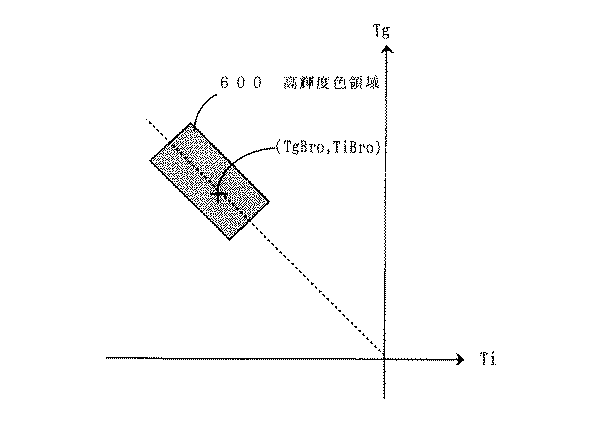
- 238000001514 detection method Methods 0.000 description 1
- 230000006866 deterioration Effects 0.000 description 1
- 238000012886 linear function Methods 0.000 description 1
- 230000007257 malfunction Effects 0.000 description 1
- 238000012986 modification Methods 0.000 description 1
- 230000004048 modification Effects 0.000 description 1
- 230000003287 optical effect Effects 0.000 description 1
- 238000002360 preparation method Methods 0.000 description 1
Images


Classifications
-
- H—ELECTRICITY
- H04—ELECTRIC COMMUNICATION TECHNIQUE
- H04N—PICTORIAL COMMUNICATION, e.g. TELEVISION
- H04N23/00—Cameras or camera modules comprising electronic image sensors; Control thereof
- H04N23/80—Camera processing pipelines; Components thereof
- H04N23/84—Camera processing pipelines; Components thereof for processing colour signals
- H04N23/88—Camera processing pipelines; Components thereof for processing colour signals for colour balance, e.g. white-balance circuits or colour temperature control
Landscapes
- Engineering & Computer Science (AREA)
- Multimedia (AREA)
- Signal Processing (AREA)
- Color Television Image Signal Generators (AREA)
- Processing Of Color Television Signals (AREA)
Description
【0001】
【発明の属する技術分野】
本発明は、電子スチルカメラやビデオカメラなどに用いられるオートホワイトバランス装置に関する。
【0002】
【従来の技術】
ビデオカメラやデジタルスチルカメラでは、白い被写体を白く再現するために、オートホワイトバランス調整が行われている。従来のオートホワイトバランス方式としては、画像全体の平均が無彩色となるように各画素の信号のRGB成分(赤、緑、青の三原色成分)のバランスを調整する方式がよく知られている。しかしながらこの方式では、有彩色が画像の大部分の領域を占めている場合、誤ったホワイトバランス調整を行うことになりやすいという欠点があった。
【0003】
このような誤ったホワイトバランス調整はカラーフェイリアと呼ばれる。このカラーフェイリアを軽減するオートホワイトバランス調整方式として、特開平5−292533号公報に示される技術が知られている。この技術では、画像を複数のブロックに分割し、各ブロックのRGBの平均値を計算し、その平均値が予め定めた範囲に属しているブロックのみを抽出する。そして、抽出したブロック群のRGBの平均値が無彩色になるように、RGB各成分の調整を行う。
【0004】
また、カラーフェイリアを軽減する別のオートホワイトバランス方式として、特開平5−7369号公報に示されるものがある。この方式では、ホワイトバランス調整信号のとりうる値の範囲を制限し、過度のホワイトバランス調整が行われることを避けている。
【0005】
ところが、これらの方式は、被写体を照明する光源が限定されている場合には効果が得られたが、想定外の光源で照明される場合や複数種類の光源により同時照明される場合などには十分なホワイトバランス調整を行うことができなかった。
【0006】
そこで、本出願人は、特開平8−289314号にて、改良されたオートホワイトバランス調整装置を提案した。この装置では、画像を複数のブロックに分割し、蛍光灯下で白い対象物を撮影したと判定されるブロック群、太陽光又はタングステン光下で白い対象物を撮影したと判定されるブロック群、画像中で最も明るいブロックに近い色を持つブロック群、をそれぞれ抽出する。そして、それら各ブロック群ごとにRGB各成分の平均値を求め、それらを予め定めた規則に従って混合した値をホワイトバランス調整信号として用いる。この装置では、画像中で最も明るいブロックに近似した色のブロック群のRGBの平均値をホワイトバランス信号に反映させることにより、想定外の光源下や複数種類の光源下でも、適切なホワイトバランス調整を行うことができる。
【0007】
また、オートホワイトバランスとは別に、ユーザから指定された光源に対応して固定的なホワイトバランス調整を行う機能を持つ装置は、従来よりよく知られている。
【0008】
【発明が解決しようとする課題】
上記特開平8−289314号に示した方式は、上記のメリットはあるものの、次に示すような問題もあった。
【0009】
すなわち、この従来方式では、色のみに基づき上記各ブロック群を抽出していたため、各ブロック群の平均値を求める際に暗いブロックの値も用いられていた。画像として現れる色には、物体自体の色と物体を照明する光源の色の双方の影響がある。ここで、暗いブロックは光源の色を反映していない可能性が高いので、暗いブロックの情報をオートホワイトバランスの調整信号に反映させることは、誤差の要因となり兼ねない。したがって、最も明るいブロックに色が近いというだけで暗いブロックの情報を調整信号に反映させる上記従来方式では、性能のよいホワイトバランスが得られない場合があった。
【0010】
本発明は、この問題を解決するためになされたものであり、光源の色を強く反映しているブロックのみ抽出してホワイトバランス調整を行うことができるオートホワイトバランス装置を提供することを目的とする。
【0011】
【課題を解決するための手段】
本発明の基礎となるオートホワイトバランス装置は、入力された画像を複数のブロックに分割するブロック分割手段と、分割した各ブロック毎に、ブロック内の画素の各色値に基づき、ブロックを代表する輝度及び色差を含む代表値を算出する代表値計算手段と、各ブロックの代表値に基づき、各ブロックの中から最高輝度のブロックを求める最高輝度ブロック探索手段と、各ブロックの代表値における輝度に基づき、輝度閾値を決定する輝度閾値計算手段と、最高輝度ブロックの代表値に基づき、色空間において最高輝度ブロックの代表値と類似した色を示す領域として高輝度領域を定め、ブロック群の中の前記輝度閾値より高い輝度を持つブロックの中から、高輝度領域に含まれる代表値を有するブロックを高輝度色ブロックとして抽出し、抽出した高輝度色ブロックの代表値の平均値を求める高輝度色ブロック平均値計算手段と、想定した各光源に対応してそれぞれ設けられ、ブロック群の中の前記輝度閾値より高い輝度を持つブロックの中から、色空間において当該光源下での白色物体の色を示す領域として定められた当該光源領域に含まれる代表値を有するブロックを、当該光源に対応する光源ブロックとして抽出し、抽出した当該光源ブロックの代表値の平均値を求める光源ブロック平均値計算手段と、高輝度色ブロックの代表値の平均値と、各光源ごとの光源ブロックの代表値の平均値と、に基づき、ホワイトバランス調整信号を算出するホワイトバランス調整信号計算手段と、前記ホワイトバランス調整信号計算手段で求めたホワイトバランス調整信号を用いて、前記入力された画像の各画素に対してホワイトバランス調整を行うホワイトバランス手段とを有することを特徴とする。
【0012】
この構成によれば、ホワイトバランス調整信号が、輝度閾値より高い輝度を持つブロックのみの値に基づき求められるので、光源の色を反映していない可能性の高い暗いブロックの値がホワイトバランス調整信号に悪影響を及ぼすことを防止できる。
【0013】
本発明の別の参考例では、輝度閾値を、最高輝度ブロックの輝度と全ブロックの平均輝度とに基づき決定する。これにより、個々の画像の状況に対応して輝度閾値を変化させることができる。
【0014】
また、別の参考例の態様では、各光源についての代表値の平均値を、予め定めた当該光源の標準値により修正することにより、各平均値の値をより光源の光の色に近くすることができ、光源の光の色に対する適切なホワイトバランスが可能となる。
【0015】
また、別の参考例の態様では、被写体輝度を検出する手段を更に有し、前記ホワイトバランス調整信号計算手段は、室内光源として用いられる種類の光源に対応する光源ブロックの代表値の平均値を、被写体輝度が高いほど小さい重みを掛けて修正し、この修正した平均値に基づきホワイトバランス調整信号を算出する。この態様によれば、被写体輝度が高いときに室内光源に対するホワイトバランスが行われることを防ぐことができる。
【0016】
また別の参考例の態様では、ブロックの画素のうち飽和画素を除いた画素の値に基づきブロックの代表値を計算することにより、光源の光の色をよりよく表していると考えられる代表値を得ることができる。
【0017】
また別の参考例の態様では、飽和画素が所定基準以上多いブロックを除いたブロックの代表値のみから平均値を求めることにより、光源の光の色によりよく対応したホワイトバランス調整信号を得ることができる。
【0018】
また別の参考例の態様では、ブロック中の所定画素の値が当該ブロックの代表値と所定値以上差がある場合、ブロックの代表値の平均値の計算において当該ブロックの代表値を所定の割合まで小さくする。この態様によれば、平均処理の結果偶然ある光源領域に属することになったブロックが、ホワイトバランス調整信号に与える影響を低減することができる。
【0019】
また別の参考例の態様では、ブロックの代表値の平均値の計算において、各ブロックの代表値に対し画面中央のブロックほど大きい重みを重みづけした上で、平均値を求める。これにより、一般に重要と考えられる画面中央部に対して適切なホワイトバランスを行うことができる。
【0020】
また別の参考例の態様は、ブロックの代表値を、入力された画像の全ブロックについて平均した全ブロック平均値を算出する全ブロック平均値計算手段を更に含み、ホワイトバランス調整信号計算手段は、全ブロック平均値も考慮に入れてホワイトバランス調整信号を求める。この態様では、光源の光の色に近いことが多い全ブロック平均値を考慮することにより、ちょっとした構図の変化によってホワイトバランスが急激に変化してしまうようなことを防ぐことができる。
【0021】
本発明では、全ブロック平均値がいずれの光源領域にも属さない場合は、全ブロック平均値を所定の小さい値に修正した上でホワイトバランス調整信号の計算に用いるようにすることも好適である。これによれば、全ブロック平均値が光源の光の色を反映しない不適切な値である場合は、その値のホワイトバランス調整信号に対する寄与を小さくすることができる。
【0022】
また本発明の別の態様は、被写体輝度を検出する手段を更に有するとともに、光源ブロック平均値計算手段の一つとして、太陽を光源として想定した太陽光ブロック平均値計算手段を有し、前記太陽光ブロック平均値計算手段は、被写体輝度が所定の閾値より高い場合は、太陽光に対応する前記光源領域を高色温度部分を含まないよう狭め、被写体輝度が前記閾値より低い場合は、太陽光に対応する前記光源領域を高色温度部分を含むように広げる。この態様によれば、色温度が似通っている昼間の青空のシーンと日陰等のシーンとに、自動的に適切なホワイトバランスを行うことができる。
【0023】
また本発明の別の態様は、ストロボが発光した場合は、太陽を光源として想定した光源ブロックの代表値の平均値を、太陽光に対応して定めた標準値の代わりに、予め定めたストロボ標準値を用いて修正し、これをホワイトバランス調整信号の計算に用いる。この態様によれば、太陽光とストロボ光とを共通のユニットで処理することができ、装置構成の単純化を図ることができる。
【0024】
また別の参考例の態様は、指定された光源のみを考慮したホワイトバランスを行う光源指定モードを有し、ホワイトバランス調整信号計算手段は、光源指定モードの場合、指定された光源に対応する光源ブロックの平均値のみに基づきホワイトバランス調整信号を求める。この態様によれば、指定された光源に対応する光源ブロックの平均値に基づきホワイトバランス調整信号を求めることにより、光源指定によるホワイトバランスについてもシーンの状況を反映した動的な調整を行うことができる。
【0025】
また別の参考例の態様は、入力された画像について求めたホワイトバランス調整信号と、直前の画像についてのホワイトバランス調整信号との比較に基づき、直前と現在とで照明環境が変化したか否かを判定する判定手段と、照明環境が変化しないと判定されている間、求めたホワイトバランス調整信号を蓄積する記憶手段とを有し、前記ホワイトバランス調整信号計算手段は、前記判定手段で照明環境が変化していないと判定された場合、入力された画像について求めたホワイトバランス調整信号を、前記記憶手段に蓄積されたホワイトバランス調整信号を用いて補正した上で前記ホワイトバランス手段に出力する。この態様によれば、照明環境が変化していないと判定される間は、過去に蓄積したホワイトバランス調整信号により現在の調整信号が平滑化される。これにより、照明環境が変わらない間は、ホワイトバランスが急激に変化することが無くなる。
【0026】
また本発明の別の態様では、前記ホワイトバランス調整信号計算手段は、予め想定したすべての光源について、当該光源ブロックの数に基づき当該光源が照明光源である可能性を示す指標値を求め、その指標値が予め想定したすべての光源について所定の閾値より小さい場合は、入力された画像について求めたホワイトバランス調整信号の信頼性が低いと判定し、そのホワイトバランス調整信号を、過去に求めた信頼性が高いと判定されたホワイトバランス信号により補正した上で前記ホワイトバランス手段に出力する。この態様によれば、求めたホワイトバランス調整信号の信頼性が低い場合は、信頼性の高い過去のホワイトバランス調整信号により補正を行うので、信頼性の低いホワイトバランス調整信号しか得られない難しいシーンでもある程度良好なホワイトバランスを実現することができる。
【0027】
【発明の実施の形態】
以下、本発明の実施の形態(以下実施形態という)について、図面に基づいて説明する。
【0028】
[実施形態1]
図1は、本発明に係るオートホワイトバランス装置の全体構成を示す機能ブロック図である。
【0029】
本実施形態の装置は、図示しない撮像装置から入力された画像信号からホワイトバランス調整信号を生成し、この信号により画像信号にホワイトバランス調整を施す。ここで、本実施形態では、被写体を照明する光源の色を推定し、この推定結果に基づきホワイトバランス調整信号を生成する。光源の色の推定は、画像の中で輝度の高い色に近い色を持つ画像領域と、予め想定した各種光源の色に近い色を持つ画像領域の情報に基づいて行う。本実施形態では、光源として、一般的と考えられる蛍光灯、太陽、タングステンランプ(白熱灯)を想定している。
【0030】
以下、本装置各部について説明する。
【0031】
<ブロック代表値計算部>
撮像装置からの画像信号は、ブロック代表値計算部10に入力される。ブロック代表値計算回路10は、入力された画像を、予め定めたブロックに分割する。図2は、画面のブロック分割の仕方の一例である。この例では、1フレームの画像500は、n×m画素のブロック510に等分割される。そして、ブロック代表値計算回路10は、それら各ブロック毎に、そのブロックの代表値を計算する。この計算の方式は以下の通りである。
【0032】
すなわち、まずブロック内の全画素のRGB値の平均値(R,G,B)を求める。その平均値に対し、次の線形変換を施すことにより、代表値(Tl,Tg,Ti)が求められる。
【0033】
【数1】
【0034】
求められた各ブロックの代表値は、最高輝度ブロック探索部12、輝度閾値計算部14、高輝度色ブロック平均値計算部16、蛍光灯ブロック平均値計算部18、太陽光ブロック平均値計算部20、タングステン光ブロック平均値計算部22に入力される。
【0035】
<最高輝度ブロック探索部>
最高輝度ブロック探索部12は、入力された各ブロックの代表値(Tl,Tg,Ti)のデータに基づき、輝度Tlの最も高いブロックを探索する。この探索では、飽和画素(すなわちR、G又はBの値が上限値に達している画素)の多いブロックや、非常に暗い(輝度の低い)ブロックが最高輝度ブロックに選ばれることを防ぐため、探索対象を、
【数2】
TlMin<Tl≦TlMax ・・・(2)
を満足するブロックのみに限定する。ここで、TlMin及びTlMaxは、予め定めた閾値である。飽和画素が多いブロックは、全体的に輝度が高いので、この条件により、探索対象から除くことができる。
【0036】
このような限定を行うのは次のような理由からである。すなわち、最高輝度ブロックは、最も明るいブロックであるから被写体を照明する光源の色をよく反映しているものと考えられるので、本実施形態では、最高輝度ブロックの色の情報を、被写体を照明する光源の色を推定する重要なファクターとして用いている。この目的からすれば、最高輝度ブロックとしては、被写体を照明する光源の色をよく反映したものを選ぶ必要がある。ところが、飽和画素は、色値の上限値を超える部分がカットされていることになるので、対象物の正しい色を表しておらず、光源の色をよく反映しているとはいえない。したがって、このような飽和画素が多いブロックは、最高輝度ブロックに選ぶには適切ではない。同様に、非常に暗いブロックは、一般に光源の色をあまり反映していないと考えられるので、これも最高輝度ブロックとしては適切ではない。
【0037】
このように限定された範囲のブロックから、Tlの値が最大のブロックが最高輝度ブロックとして選択される。そして、最高輝度ブロック探索部12は、選択した最高輝度ブロックの代表値(TlBr0,TgBr0,TiBr0)を、輝度閾値計算部14及び高輝度色ブロック平均値計算部16に出力する。
【0038】
<輝度閾値計算部>
輝度閾値計算部14は、ブロック代表値計算部10から入力される各ブロックの代表値と、最高輝度ブロック探索部12から入力される最高輝度ブロックの代表値に基づき、輝度閾値を計算する。
【0039】
輝度閾値は、光源の色をあまり反映していないと考えられる暗いブロックを、後段の各種演算処理から除くために用いる閾値である。
【0040】
ここでは、各ブロックの輝度Tlの平均値TlAvrを求め、これと最高輝度ブロックの輝度TlBr0とに基づき輝度閾値を求める。
【0041】
輝度閾値TlThrの算出式の一例を次式に示す。
【0042】
【数3】
TlThr=P0*TlAvr+P1*TlBr0 ・・・(3)
ここでP0及びP1は、予め定めた0以上1以下の定数であり、P0+P1=1を満たす。この例では、輝度閾値TlThrは、平均輝度TlAvrと最高輝度ブロックの輝度TlBr0の中間の値となる。P0及びP1の値は、様々な光源において撮影した画像のデータをもとに予め求めておく。
【0043】
なお、輝度閾値の算出式はこれに限られるものではない。いずれにしても、対象画像の平均輝度TlAvrと最高輝度ブロックの輝度TlBr0に基づき輝度閾値を定めることにより、光源の色を反映している可能性の低いブロックが後段の処理において使われないよう、シーンの状況に応じて適切に輝度閾値を定めることができる。
【0044】
このようにして求められた輝度閾値TlThrは、高輝度色ブロック平均値計算部16、蛍光灯ブロック平均値計算部18、太陽光ブロック平均値計算部20、タングステン光ブロック平均値計算部22にそれぞれ入力される。
【0045】
<高輝度色ブロック平均値計算部>
高輝度色ブロック平均値計算部16には、各ブロックの代表値(Tl,Tg,Ti)、輝度閾値TlThr、及び最高輝度ブロックの代表値(TlBr0,TgBr0,TiBr0)が入力される。
【0046】
高輝度色ブロック平均値計算部16は、まず各ブロックの中から輝度Tlが輝度閾値TlThrより高いブロックを選択し、これら選択したブロックの中から、最高輝度ブロックの色差(TgBr0,TiBr0)に近い色差(Tg,Ti)を持つブロックを抽出する。抽出したブロックを高輝度色ブロックと呼ぶ。ここで、ブロックの色差(Tg,Ti)が、最高輝度ブロックの色差(TgBr0,TiBr0)に応じて定めた高輝度色領域に含まれる場合、ブロックの色差が最高輝度ブロックの色差に“近い”とみなす。
【0047】
図3に高輝度色領域の一例を示す。この例では、高輝度色領域600は、Tg−Ti平面において、原点と点(TgBr0,TiBr0)とを結ぶ直線に沿い、点(TgBr0,TiBr0)を含む予め定められた大きさの長方形である。なお、この領域の形状は、長方形以外でももちろんよい。いずれにしても、高輝度色領域は、最高輝度ブロックの色差情報(TgBr0,TiBr0)に基づき、一定の規則の下に決定される。
【0048】
すべての高輝度色ブロックを抽出すると、高輝度色ブロック平均値計算部16は、高輝度色ブロックの数CntBrと、高輝度色ブロックの代表値の平均値(TlBr,TgBr,TiBr)を求める。求めた高輝度色ブロック数CntTl及び高輝度色ブロック平均値(TlBr,TgBr,TiBr)は、平均値修正部24及び重み係数計算部26に入力される。
【0049】
<蛍光灯ブロック平均値計算部>
蛍光灯ブロック平均値計算部18には、各ブロックの代表値(Tl,Tg,Ti)及び輝度閾値TlThrが入力される。
【0050】
蛍光灯ブロック平均値計算部18は、まず各ブロックの中から輝度Tlが輝度閾値TlThrより高いブロックを選択し、更にその中から、蛍光灯下での白い物体に近い色をもつブロック(蛍光灯ブロックと呼ぶ)を抽出する。ここで、ブロックの色差(Tg,Ti)が、蛍光灯下の白色物体の色に近い色の範囲として予め定められた蛍光灯領域に含まれる場合、そのブロックの色が蛍光灯下の白色物体の色に近いと判定する。図4に蛍光灯領域610の一例を示す。蛍光灯領域610は、様々な蛍光灯下で様々な白色物体を撮影してデータ収集を行い、その結果に基づき予め定めたものである。
【0051】
すべての蛍光灯ブロックを抽出すると、蛍光灯ブロック平均値計算部18は、蛍光灯ブロックの数CntFlと、蛍光灯ブロックの代表値の平均値(TlFl,TgFl,TiFl)(蛍光灯ブロック平均値と呼ぶ)を求め、これらを平均値修正部24、重み係数計算部26に入力する。
【0052】
<太陽光ブロック平均値計算部>
太陽光ブロック平均値計算部20には、各ブロックの代表値(Tl,Tg,Ti)及び輝度閾値TlThrが入力される。
【0053】
太陽光ブロック平均値計算部20は、まず各ブロックの中から輝度Tlが輝度閾値TlThrより高いブロックを選択し、これら選択したブロックの中から、太陽光下での白い物体に近い色をもつブロック(太陽光ブロックと呼ぶ)を抽出する。ブロックの色差(Tg,Ti)が、太陽光下の白色物体の色に近い色の範囲である太陽光領域に含まれる場合、そのブロックの色が太陽光下の白色物体の色に近いと判定する。図5に太陽光領域620の一例を示す。太陽光領域620は、様々な太陽光下で様々な白色物体を撮影してデータ収集を行い、その結果に基づき予め定めたものである。
【0054】
すべての太陽光ブロックを抽出すると、太陽光ブロック平均値計算部20は、太陽光ブロックの数CntDyと、太陽光ブロックの代表値の平均値(TlDy,TgDy,TiDy)(太陽光ブロック平均値と呼ぶ)を求め、これらを平均値修正部24、重み係数計算部26に入力する。
【0055】
<タングステン光ブロック平均値計算部>
タングステン光ブロック平均値計算部22には、各ブロックの代表値(Tl,Tg,Ti)及び輝度閾値TlThrが入力される。
【0056】
タングステン光ブロック平均値計算部22は、まず各ブロックの中から輝度Tlが輝度閾値TlThrより高いブロックを選択し、これら選択したブロックの中から、タングステン光下での白い物体に近い色をもつブロック(タングステン光ブロックと呼ぶ)を抽出する。ブロックの色差(Tg,Ti)が、タングステン光下の白色物体の色に近い色の範囲であるタングステン光領域に含まれる場合、そのブロックの色がタングステン光下の白色物体の色に近いと判定する。図5にタングステン光領域630の一例を示す。タングステン光領域630は、様々なタングステン光下で様々な白色物体を撮影してデータ収集を行い、その結果に基づき予め定めたものである。
【0057】
すべてのタングステン光ブロックを抽出すると、タングステン光ブロック平均値計算部22は、タングステン光ブロックの数CntTuと、タングステン光ブロックの代表値の平均値(TlTu,TgTu,TiTu)(タングステン光ブロック平均値と呼ぶ)を求め、これらを平均値修正部24、重み係数計算部26に入力する。
【0058】
<平均値修正部>
本実施形態では、以上に説明した各ブロック平均値計算部16〜22で求めた各ブロック平均値を基にホワイトバランス調整信号(ホワイトバランスゲイン)を生成する。ここで、本実施形態では、各ブロック平均値をそのまま利用するのではなく、平均値修正部24により修正を施してから利用する。この修正は、主として次の2つの目的のためのものである。
【0059】
第一の目的は、ブロック平均値に含まれる物体色の影響を低減することである。画像に現れる色は、光源からの照明光の色と、物体それ自体の色の両方から影響を受ける。前者を光源色、後者を物体色と呼ぶ。ホワイトバランスは光源からの照明光の色温度に合わせて白いものが白く見えるように画像を色補正することであり、光源色が正確に分かれば理想的なホワイトバランスが行える。しかしながら、実際のホワイトバランスは、白色以外の物体を多く含んだシーンの画像を基に行うものであり、物体色をも含んだ画像情報からどこまで正確に光源色を推定できるかがホワイトバランスの品質を決めることになる。そこで、本実施形態では、各ブロック平均値計算部16〜22で求められた各ブロック平均値に対し、物体色の影響を相対的に低減させる補正を行うことにより、ホワイトバランスの品質向上を目指す。
【0060】
第二の目的は、各光源についての経験的知識を利用してきめの細かいホワイトバランスを行うことである。ここでいう光源についての経験的知識の例としては、例えば被写体の輝度が非常に高ければ照明が蛍光灯である可能性は低い、などがある。
【0061】
本実施形態では、上記第一の目的のために、ブロック平均値とこれに対応する光源の標準値(予め求めた各光源の光の色を示す典型的な値)とを加重平均することにより、ブロック平均値における光源色の比率を高め、物体色の影響を減らす。
【0062】
第二の目的のための処理は、光源の種類によって異なり多岐に渡るので、次の各光源ごとの修正処理の説明において個別に説明する。
【0063】
平均値修正部24は、各ブロック平均値計算部16〜22から入力された各ブロック平均値を、同様に入力される高輝度色ブロック数、蛍光灯ブロック数、太陽光ブロック数、タングステン光ブロック数と、図示しない被写体輝度検出手段から入力される被写体輝度の情報とに基づき、上記目的に沿うように修正する。
【0064】
以下、各光源についてのブロック平均値の修正処理について説明する。
【0065】
(1)蛍光灯ブロック平均値の修正
まず、蛍光灯ブロック平均値を、予め定めておいた蛍光灯標準値と加重平均する。これは、上記第一の目的のための処理である。
【0066】
ここで、蛍光灯標準値(TgStdFl,TiStdFl)は、色差Tg及びTi成分についての標準値であり、蛍光灯の光の典型的な色合いを表すものと捉えることができる。この標準値は、蛍光灯で照明したシーンを多数撮影して収集したデータから予め定めておく。
【0067】
蛍光灯ブロック平均値(TlFl,TgFl,TiFl)のうち、色差成分TgFl,TiFlについては、それぞれ蛍光灯標準値TgStdFl,TiStdFlと所定の比率で加重平均する。この処理によるTgFl、TiFlの修正結果TgFlNew、TiFlNewは、次のように求められる。
【0068】
【数4】
TgFlNew=A*TgFl+B*TgStdFl
TiFlNew=A*TiFl+B*TiStdFl ・・・(4)
加重平均の際の平均値と標準値の係数A及びBは、蛍光灯で照明した多くのシーンの撮影データから予め定めておく。
【0069】
輝度成分TlFlは、この例では基本的に修正しないが、修正を行うことももちろん可能である。例えば、色差成分との組合せにおいて、表す色がRGB系で表現可能な範囲を外れる場合には、これを避けるよう輝度成分に調整を加えてもよい。
【0070】
次に、平均値修正部24は、別途入力された被写体輝度の情報を用いて、上記加重平均による修正結果を更に修正する。この修正は、被写体輝度が高い場合、蛍光灯で照明されている可能性が低いという経験的知識に基づく処理である。
【0071】
すなわち、被写体輝度がかなり高い場合、その画像は屋外シーンの画像である可能性が高いので、ブロックが蛍光灯ブロックと判定されたとしてもそれは蛍光灯の光によるものばかりとは考えにくく、むしろ物体色その他の影響で蛍光灯ブロックと判定された場合が多いと考えられる。したがって、このような場合、仮に蛍光灯ブロックが多かったとしても、蛍光灯照明に対するホワイトバランスを行ったのでは、色が不自然になるおそれがある。
【0072】
そこでここでは、被写体輝度が高くなるほど、蛍光灯ブロックのホワイトバランス調整信号への影響を低減するよう、蛍光灯ブロック平均値の修正を行う。具体的には、例えば図7に示すような被写体輝度が高くなるにつれて重みが小さくなる重み関数を用意し、被写体輝度の値に対応する重みWFlを求め、この重みを上述の加重平均による修正結果TgFlNew、TiFlNewに乗算することにより、修正結果TgFlNew、TiFlNewの値を更新する。すなわち、
【数5】
WFl*TgFlNew→TgFlNew
WFl*TiFlNew→TiFlNew ・・・(5)
重み関数は、被写体輝度が小さいときは1であり、被写体輝度が高くなるにつれて0に近づくような関数である。図7に示す重み関数はあくまで一例である。実際の装置を構築するに当たっては、重み関数を様々に変えながら多くのシーンを撮影し、その結果から、最適な重み関数を見つけて利用する。
【0073】
なお、ここで、蛍光灯ブロック数CntFlと太陽光ブロック数CntDyとの比較に基づき更なる修正を加えることも好適である。すなわち、太陽光ブロック数の方が蛍光灯ブロック数よりも所定以上多いと、屋外シーンである可能性が高いので、蛍光灯ブロック数平均値のホワイトバランスへの影響を減らすよう、これまでの修正結果TgFlNew、TiFlNewに対して、1より小さい所定の重みを更に乗じて修正を行う。
【0074】
このように更新されたTgFlNew,TiFlNewが、蛍光灯ブロック平均値の色差成分の本実施形態における最終的な修正結果である。この修正によれば、被写体輝度が高いほど、蛍光灯ブロック平均値の色差成分が0に近くなり、蛍光灯ブロックの色はグレイ(無彩色)に近づく。したがって、ホワイトバランスに対する蛍光灯ブロックの影響は低く抑えられることになる。
【0075】
このようにして求められた値が、修正蛍光灯ブロック平均値(TlFlNew,TgFlNew,TiFlNew)として、重み係数計算部26及びホワイトバランスゲイン計算部28に入力される。なお、TlFlNewは、輝度成分について修正を行わなかった場合は、入力されたTlFlと同じ値である。
【0076】
(2)タングステン光ブロック平均値の修正
タングステン光ブロック平均値についても、蛍光灯ブロックの場合と同様、予め色差成分についてタングステン光標準値(TgStdTu,TiStdTu)を定めておき、まず上記平均値を、標準値との加重平均により修正する。計算式は蛍光灯ブロックの場合と同様なので割愛する。ただし、この計算における係数の値は、タングステン光について別個に求めておいたものを用いるのはいうまでもない。
【0077】
そして、加重平均による修正結果TgTuNew,TiTuNewに対して、経験的知識を利用して次のような修正を更に加える。
【0078】
よく知られているように、タングステン光照明は、蛍光灯よりも、「暖かみ」を重視する場合に用いられる。まず、この知識を利用した修正を行う。「暖かみ」を重視する場合、白が完全に白に見えるようにホワイトバランスを行うよりも、若干赤みを残すようにした方が、見る者により良い印象を与える。そこで、画像が暖かみを重視するタングステン光シーンの画像と考えられる場合、タングステン光ブロック平均値を若干青めに修正する。すなわち、例えば平均値のTi成分TiTuNewの値が所定の閾値よりも小さい場合(すなわち青みよりも赤みが強い場合。Tiの定義を参照されたい。)、タングステン光シーンである可能性が高いものと判断し、TiTuNewの値を大きくする(すなわち青みを強める)。ホワイトバランスは、色がグレイ(無彩色)に近づくように行うものなので、青めに修正することにより、ホワイトバランス結果はそのような修正を行わない場合よりも若干赤みが増すことになる。
【0079】
次に、この修正結果に対して、更に、夕焼けシーンの場合は赤みが好まれるという知識を利用した修正を行う。すなわち、画像が夕焼けシーンを示していると判断される場合は、タングステン光ブロック平均値を青めに修正することにより、ホワイトバランスの結果が赤くなるようにする。より具体的には、太陽光ブロックの数CntDyがタングステン光ブロックの数CntTuよりも所定数以上多く、かつ太陽光ブロック平均値の色差TiDyの値が負(すなわち青よりも赤が強い)の場合、画像が夕焼けシーンであると判定し、TiTuNewの値を大きく(すなわち青みを強く)する。このような修正により、夕焼けシーンの場合、画像の色の傾向を赤めにし、夕焼けらしい印象を増すことができる。
【0080】
夕焼けシーンではないと判断される場合、すなわち上記夕焼けシーンの判定基準が満たされない場合には、青みを増すという夕焼けシーンの修正の代わりに、蛍光灯ブロック平均値と同様の被写体輝度に基づく修正を更に行う。すなわち、タングステン光も一般的に室内照明であり屋外より暗いことが多いので、被写体の輝度が高ければタングステン光で照明されている可能性は低くなる。したがって、被写体輝度が高くなるほど色みを弱める(すなわち色差を小さく(0に近く)する)よう、タングステン光ブロック平均値を修正する。より具体的には、蛍光灯の場合と同様、図8に示すような被写体輝度が高くなるにつれて重みが小さくなる重み関数を用意し、被写体輝度の値に対応する重みWTuを求め、この重みを上述の加重平均による修正結果TgTuNew、TiTuNewに乗算することにより、修正結果TgTuNew、TiTuNewの値を更新する。この処理は、蛍光灯ブロックの場合の式(5)と同様の計算でよい。このような修正により、被写体輝度が高いほど、タングステン光ブロック平均値の色差成分が0に近くなり、ホワイトバランスに対するタングステン光ブロックの影響は低く抑えられることになる。
【0081】
なお、以上の説明から明らかなように、夕焼けシーンの場合の修正と被写体輝度に基づく修正とは二者択一である。
【0082】
以上のような処理による修正結果(TlTuNew,TgTuNew,TiTuNew)が、修正タングステン光ブロック平均値として、重み係数計算部26及びホワイトバランスゲイン計算部28に入力される。なお、TlTuNewは、輝度成分について修正を行わなかった場合は、入力されたTlTuと同じ値である。
【0083】
(3)太陽光ブロック平均値の修正
太陽光ブロック平均値についても、蛍光灯ブロックの場合と同様、予め色差成分について太陽光標準値(TgStdDy,TiStdDy)を定めておき、平均値を、標準値との加重平均により修正する。計算式は蛍光灯ブロックの場合と同様なので割愛する。ただし、この計算における係数の値は、太陽光について別個に求めておいたものを用いるのはいうまでもない。
【0084】
そして、加重平均による修正結果TgDyNew,TiDyNewに対して、経験的知識を利用して次のような修正を更に加える。
【0085】
ここで基礎とする知識は、太陽光で照明されたシーンの画像では、被写体が明るい場合(すなわち太陽光による照明が十分強い場合)は、ホワイトバランスの必要は少ないという知識である。すなわち、このような場合、白い物体は強いホワイトバランスをかけなくても一般に白く写る。逆に、ホワイトバランスが必要となるのは、例えば日陰で色温度が低い(シーンが赤っぽい)場合や夕方で色温度が高い(シーンが青っぽい)場合など、一般に暗いシーンが多い。
【0086】
本実施形態では、このような経験的知識に基づき、被写体輝度が高いほど、太陽光ブロック平均値がグレイに近づくような修正を行う。すなわち、図9に示すような重み関数を用意し、被写体輝度の値に対応する重みWDyを求め、この重みを上述の加重平均による修正結果TgDyNew、TiDyNewに乗算することにより、修正結果TgDyNew、TiDyNewの値を更新する。この処理は、蛍光灯ブロックの場合の式(5)と同様の計算でよい。このような修正により、被写体輝度が低い場合は、ホワイトバランスに対して太陽光ブロック平均値の色みを十分に反映させることができる。
【0087】
以上のような処理による修正結果(TlDyNew,TgDyNew,TiDyNew)が、修正太陽光ブロック平均値として、重み係数計算部26及びホワイトバランスゲイン計算部28に入力される。なお、TlDyNewは、輝度成分について修正を行わなかった場合は、入力されたTlDyと同じ値である。
【0088】
(4)高輝度色ブロック平均値の修正
高輝度色ブロック平均値の修正は、高輝度色ブロック平均値の色み(色差成分(TgBr,TiBr))が蛍光灯光、太陽光、タングステン光のいずれの下での白色物体の色に近いかに応じ、その近い光源についてのブロック平均値の修正処理と同様の処理により行う。
【0089】
すなわち、まず高輝度色ブロック標準値を、予め用意した標準値と加重平均し、その結果に対して経験的知識に基づく処理(例えば被写体輝度が高くなるほど小さくなる重みを平均値に乗ずるなど)を行う。このとき、高輝度色ブロック平均値の色みがどの光源下での白色物体の色に近いかに応じて、加重平均の際の標準値や係数を変えたり、経験的知識に基づく処理の内容を変えたりする。
【0090】
例えば、高輝度色ブロック平均値の色みが蛍光灯下の白色物体の色に最も近いと判断される場合は、上述の蛍光灯ブロック平均値の修正処理と同様の処理を高輝度色ブロック平均値に適用する。このとき、加重平均の際の標準値や係数としては、蛍光灯ブロック平均値修正の際の標準値、係数そのものを用いてもよいし、これと一定の関係を持つ別の値を用いてもよい。また、被写体輝度についての重み関数も、蛍光灯ブロック平均値修正の場合と同じものを用いてよい。
【0091】
なお、高輝度色ブロック平均値の色みがどの光源下での白色物体の色に近いかは、色差(Tg-Ti)平面上に、各光源(蛍光灯、太陽、タングステン灯)毎に、近いとみなす色差の領域を予め設定しておき、高輝度色ブロック平均値の色差成分がどの領域に含まれるかで定めればよい。
【0092】
以上のような処理による修正結果(TlBrNew,TgBrNew,TiBrNew)が、修正高輝度色ブロック平均値として、重み係数計算部26及びホワイトバランスゲイン計算部28に入力される。なお、TlBrNewは、輝度成分について修正を行わなかった場合は、入力されたTlBrと同じ値である。
【0093】
以上、平均値修正部24の処理について説明した。なお、平均値修正部24は、以上の処理によって求めた各ブロック平均値の修正結果に加え、各ブロック数の値をホワイトバランスゲイン計算部28に入力する。
【0094】
<重み係数計算部>
重み係数計算部26は、各ブロック平均値についての重み係数を算出する。この重み係数は、後述するホワイトバランスゲイン計算部28において用いられる。すなわち、ホワイトバランスゲイン計算部28では、各ブロック平均値を加重平均することによりシーンを照明する光源の色を推定し、これに基づきホワイトバランス調整信号(ゲイン)を求めるわけであるが、その加重平均のための重みを求めるのが重み係数計算部26である。
【0095】
重み係数計算部26には、各ブロック平均計算部16〜22から各ブロック平均値及び各ブロック数が入力されると共に、平均値修正部24から修正された各ブロック平均値が入力され、更に図示しない被写体輝度検出手段で求められた被写体輝度が入力される。
【0096】
(1)蛍光灯ブロック重み係数WgtFlの算出
蛍光灯ブロックについての重み係数WgtFlは、基本的に被写体輝度に基づき定める。これには、例えば平均値修正部24で用いた重み関数(図7)と同様、被写体輝度が高くなるほど値が小さくなる重み関数を用いる。この関数は、平均値修正部24で用いたものと全く同じでもよいし、異なるものでもよい。重み関数は、被写体輝度の変化に応じて滑らかに変化するものが好ましい。
【0097】
なお、このように求めた重み係数と蛍光灯ブロック数との積が予め定めた閾値より小さい場合は、シーンが蛍光灯で照明されている可能性が低いと考えられるので、重み係数WgtFlを、1より小さい所定値を掛けることにより更新する。
【0098】
(2)タングステン光ブロック重み係数WgtTuの算出
タングステン光ブロックについての重み係数WgtTuも、基本的には被写体輝度に基づき求めるが、夕焼けシーンの場合だけは被写体輝度を用いず、特別の方法により求める。すなわち、まず夕焼けシーンか否かの判定を行い、夕焼けシーンであると判定される場合は、重み係数WgtTuを予め定めた正の小さい値とする。こうすることにより、赤みを多く含んだタングステン光ブロック平均値の重み係数を小さくすることができるので、夕焼けシーンのホワイトバランス結果において赤みを強く残すことができる。
【0099】
夕焼けシーンか否かの判定は、平均値修正部24のタングステン光ブロックの修正のところで説明したのと同様の方法で行えばよい。そして、夕焼けシーンでないと判定された場合は、被写体輝度に基づき重み係数WgtTuを決定する。この場合も、平均値修正部24で用いたのと同様(図8参照)の、被写体輝度が高くなるほど徐々に値が小さくなる重み関数を用いることが好適である。
【0100】
そして、このように求めた重み係数WgtTuを、照明光におけるタングステン光と蛍光灯光の比率に応じて調整する。この調整では、蛍光灯ブロックがタングステン光ブロックより優勢(例えばブロック数が多いなど)の場合に、重み係数WgtTuに1より小さい所定数を掛けて、その値を小さくする。その他の場合には調整を行わない。
【0101】
この調整は、主としてタングステン光で照明された部分と主として蛍光灯光で照明された部分とが混在するシーンでは、蛍光灯光の色が補正されずに残る場合(この場合色が緑がかる)よりも、タングステン光の色が補正されずに残る(この場合色が赤みがかる)方が、人間の目にとって不快感が少ない、という経験的知識を利用したものである。
【0102】
例えば、右側が主としてタングステン光で照明され、左側が主として蛍光灯光で照明されているシーンなどでは、タングステン光ブロック平均値と蛍光灯ブロック平均値とを等しい重み付けで加重平均した値を光源の色と推定してホワイトバランスを行うと、中途半端なホワイトバランスになってしまい、画像の右側も左側も色が不自然になってしまう。これに対し、上記のような調整を行えば、そのような不自然さを低減することができる。
【0103】
なお、このように求めた重み係数とタングステン光ブロック数との積が予め定めた閾値より小さい場合は、シーンがタングステン灯で照明されている可能性が低いと考えられるので、重み係数WgtTuを、1より小さい所定値を掛けることにより更新する。
【0104】
(3)太陽光ブロック重み係数WgtDyの算出
タングステン光ブロックの数CntTuが太陽光ブロックの数CntDyよりも所定数以上多い場合、画像がタングステン光シーンである可能性が高いものと判断し、太陽光ブロックの重み係数WgtDyを1より小さい所定値にする。それ以外の場合は、1とする。
【0105】
(4)高輝度色ブロック重み係数WgtBrの算出
高輝度色ブロック重み係数WgtBrは、修正高輝度色ブロック平均値の色差成分(TgBrNew,TiBrNew)が蛍光灯光、太陽光、タングステン光のいずれの下での白色物体の色に近いかに応じ、その近い光源の場合と同様の方法で求める。ここで、どの光源に近いかは、色差(Tg-Ti)平面上に、各光源(蛍光灯、太陽、タングステン灯)毎に、近いとみなす色差の領域を予め設定しておき、修正高輝度色ブロック平均値の色差成分がどの領域に含まれるかで定めればよい。どの領域にも含まれない場合は、重み係数WgtBrは1とする。
【0106】
なお、この場合の各領域は、例えば次のように定めればよい。すなわち、予め各光源ごとに、当該光源のみの照明によるシーンを多数撮影し、それら各シーンでの高輝度色ブロックの平均値の色差成分の分布を求める。そして、各光源についての上記高輝度色ブロック平均値の分布に対応するように、各領域を定める。
【0107】
以上のようにして求められた各ブロックに対する重み係数は、ホワイトバランスゲイン計算部28に入力される。
【0108】
<ホワイトバランスゲイン計算部>
ホワイトバランスゲイン計算部28は、平均値修正部24から入力された各ブロック平均値の修正値及びブロック数と、重み係数計算部26から入力された各ブロックについての重み係数とに基づき、ホワイトバランス調整信号としてのホワイトバランスゲインを計算する。ホワイトバランスゲインは、被写体を照明する光源の光の色を推定し、この光の色をグレイ(無彩色)に補正するような値として求める。被写体を照明する光源の色は、各ブロック平均値(修正値)を、対応光源のブロック数及び重み係数を用いて加重平均することにより求める。以下に、ホワイトバランスゲインの計算式の一例を示す。
【0109】
【数6】
Twc=WgtFl*CntFl+WgtTu*CntTu+WgtDy*CntDy+WgtBr*CntBr・・・(6)
【数7】
MaxMix=max(RMix,GMix,BMix) ・・・(9)
【数10】
Rgain=MaxMix/RMix
Ggain=MaxMix/GMix
Bgain=MaxMix/BMix ・・・(10)
すなわち、上記計算手順で求められた(RMix,GMix,BMix)が、被写体を照明する光源の色であり、ホワイトバランスゲイン(Rgain,Ggain,Bgain)は、この光源色(RMix,GMix,BMix)が白色物体で反射されたときの色(すなわち(RMix,GMix,BMix)そのもの)をグレイに補正するよう(すなわちR=G=Bとなるよう)に定められる。
【0110】
<ホワイトバランス調整部>
ホワイトバランス調整部30は、撮像装置から入力された画像の各画素値R,G,Bに対し、ホワイトバランスゲイン計算部28で求めたゲインRgain,Ggain,Bgainをそれぞれ乗じることにより画像のホワイトバランスを調整し、その結果を出力する。
【0111】
<実施形態1の効果>
以上説明した実施形態1の装置によれば、各種光源(蛍光灯、太陽など)の影響を強く受けていると考えられるブロックの色(すなわちブロック平均値)に加え、最も輝度の高いブロックの色も反映させてホワイトバランスを行うことができるので、シーンが複数種類の光源によって照明されている場合や、想定していなかった光源により照明されている場合にも、良好なホワイトバランスを行うことができる。
【0112】
また、本実施形態では、所定の方法により定めた輝度閾値以上の輝度を持つブロックのみを選択して、これらブロックのみからホワイトバランスの基礎となるブロック平均値を定めるので、光源の色をあまり反映していないと考えられる暗いブロックの情報をホワイトバランスに反映させることがなくなり、より適切なホワイトバランスが可能となる。
【0113】
また本実施形態では、輝度閾値を最高輝度ブロックの輝度と全ブロックの平均輝度とに基づき決定することにより、各々のシーンに応じた適切な輝度閾値を定めることができる。
【0114】
また本実施形態では、太陽光とタングステン光の特性を吟味し、太陽とタングステンとを別の光源区分として取り扱った。すなわち、タングステン光は太陽光より赤みが強いという特性を考慮し、図5及び図6に示したように太陽光領域620とタングステン光領域630とを重ならないように別々に設け、これにより太陽光ブロックとタングステン光ブロックとを区別した。これにより、太陽光とタングステン光をまとめて1つの光として扱っていた従来技術に比べて、より適切なホワイトバランスゲインを得ることができる。
【0115】
また本実施形態では、各種光源に対応するブロック平均値に対し、当該光源の標準値を用いて光源色を強めるよう修正を加えることにより、ブロックの色における物体色の影響を低減し、より適切なホワイトバランスゲインを得ることができる。
【0116】
また本実施形態では、光源と被写体輝度との関係についての知識を生かして、被写体輝度に連動して各ブロック平均値を修正するようにしたので、より適切なホワイトバランスゲインを得ることができる。
【0117】
また本実施形態では、最高輝度ブロックを求めるに当たり、光をあまり受けていないと考えられる暗すぎるブロック、及び飽和画素が多いと考えられる明るすぎるブロックを探索対象から外したことにより、光源の色をよく反映しているブロックの中から最高輝度ブロックを選ぶことができる。したがって、ホワイトバランスにも光源の情報がよく反映されることになる。
【0118】
[実施形態2]
この実施形態では、ブロック代表値を求める際、飽和している画素を除くことにより、より適切なホワイトバランスを実現する。
【0119】
以下、図10に示すベイヤー(Bayer)パターンのカラーフィルタを有するCCDから得られる画像を例にとって、本実施形態の処理内容を説明する。この図において、R,G,Bはそれぞれ3原色の各色である。
【0120】
本実施形態では、ブロック代表値計算部10におけるブロック代表値の計算に当たり、まずブロックを、G,R,B,Gの4つの画素からなる2×2画素の画素グループ650に分割する。そして、各画素グループごとにその中の各画素の値を調べる。そのうち1画素でも予め定めた閾値SatPixより大きい値を持つものがあれば、その画素グループの全画素の値をブロック代表値の計算から除く。
【0121】
閾値SatPixより大きい値を持つ画素は飽和している画素と考えられ、その値は物体の正しい色成分の値を示していない。このような画素をブロック代表値の計算から除くことにより、ブロックの色傾向をより正しく反映したブロック代表値を得ることができる。また、この処理では、単に飽和した画素だけでなく、被写体のある点の色を表す(すなわちRGBすべてを含む)2×2画素のグループを単位として計算から除くので、正しい色を示している点のみから代表値を求めることができる。
【0122】
なお、この例では、ベイヤーパターンのカラーフィルタを持つCCDの画像を例にとって説明したが、本実施形態の方法は、他のタイプの画像にももちろん適用可能である。
【0123】
[実施形態3]
実施形態2では、各ブロック代表値を求める際に、飽和した画素の値を計算から除くことにより飽和画素の影響を低減したが、この実施形態では、各ブロックの代表値を平均してブロック平均値を求める際に、飽和画素の多いブロックを平均計算から除くことにより、飽和画素の影響を低減する。
【0124】
この実施形態では、予め1ブロック中で許容可能な飽和画素の上限値を定めておく。そして、ブロック代表値計算部10は、実施形態2と同様、各ブロックをRGBすべての成分を含む2×2画素の画素グループに分割する。そして、各ブロック毎に飽和画素(すなわち 予め定めた閾値SatPixより大きい値を持つ画素)を含む画素グループの数を求める。ブロック代表値計算部10は、飽和画素を含む画素グループの数が前記上限値を超えるブロックの代表値は破棄し、後段に出力しない。
【0125】
これにより、飽和画素が多いブロックはブロック平均値の計算に用いられないので、飽和画素によるホワイトバランスの性能の劣化を防止することができる。
【0126】
[実施形態4]
ブロックの色の傾向をブロック内での色の平均(すなわち代表値)で判断する方法では、ブロックの個々の点の色はいずれの光源下での白色からもほど遠いのに、その平均が偶然いずれかの光源下での白色に近くなる場合も起こり得る。そのようなブロックは、いずれかの光源に対応するブロックとして抽出されることになるが、そのブロックがその光源で照明されていない可能性も高い。したがって、そのようなブロックの代表値をそのまま用いると、適切なホワイトバランスゲインが得られない場合も考えられる。そこで、本実施形態では、そのような場合の発生を効果的に抑制することができる構成を提供する。
【0127】
本実施形態では、ブロックの中の所定画素を参照画素とし、その参照画素近傍の色とそのブロックの代表値の色とを比較し、両者の差が大きい場合に、そのブロックを“擬似的な”光源ブロックとみなし、そのブロックの代表値には1より小さい重みを掛けることにより、ホワイトバランスゲインに与える影響を小さくする。
【0128】
参照画素としては、例えばブロックの中央画素や、ブロック代表値を求める際の平均演算で最後に値を読み込んだ画素などを用いればよい。特に後者は、代表値の計算が完了したその時点で、手持ちのデータとして残っている画素値なので、比較が容易である。
【0129】
より具体的には、ブロック代表値計算部10は、各ブロック毎に、ブロック中の参照画素の周囲所定範囲のR、G、Bの各画素の値から、参照画素近傍での画像の色(Rr,Gr,Br)を求め、これを式(1)の線形変換により輝度成分及び色差成分(Tlr,Tgr,Tir)に変換し、これを代表値(Tl,Tg,Ti)とともに出力する。各ブロック平均値計算部16〜22では、平均値を求めるために抽出したブロックの中で、参照画素近傍の値(Tlr,Tgr,Tir)と代表値(Tl,Tg,Ti)との差が予め定めておいた閾値を超えるものがあれば、そのブロックを擬似的光源ブロックと判定し、このブロックの代表値に小さい重み付けを行った上で平均処理を行う。参照画素の値とブロック代表値との差は、例えば各成分毎の差の二乗和や、各成分毎の差の絶対値を総和したものを用いればよい。
【0130】
また、参照画素近傍とブロック代表値の差とで、輝度成分を無視して色差成分(Tg,Ti)のみの比較をすることも好適である。また、線形変換を施さないRGB値同士の比較でも、同様に不適切なブロックを判別することができる。
【0131】
このように、本実施形態によれば、擬似的光源ブロックがホワイトバランスゲインに与える悪影響を、比較的簡単な処理により低減することができる。
【0132】
[実施形態5]
シーンによっては、画面の中央部と周辺部とが異なる光源により照明されている場合がある。室内から窓を撮影した場合がその一例である。室内は例えば蛍光灯で照明され、窓を通して見える屋外は太陽光で照明されている。このようなシーンにおいて、周辺部の光源で照明された部分の方が面積が大きい場合は、何も工夫しなければ、周辺部の光源に重きをおいたホワイトバランスが行われることになる。しかし、写真撮影においては、最も注目しているもの(被写体)が画面中央になるように構図取りを行うことが一般的であり、周辺部の光源を重視したホワイトバランスでは、画面中央の重要な被写体の色が不自然になってしまいかねないという問題がある。本実施形態はこのような問題を解決するためのものである。
【0133】
本実施形態では、画面上に、画面中央ほど大きく、周辺部にいくほど小さくなるような重み分布を設定し、各ブロック平均値計算部16〜22でブロック平均値を求める際、各ブロックの代表値に対し当該ブロックの画面内での位置に応じて重み付けを行った上で平均処理を行う。
【0134】
この処理により、一般に重要度の高い画面中央部のブロックの色の情報をホワイトバランスに強く反映させることができ、画面中央部に対するホワイトバランスを適切に行うことが可能となる。
【0135】
[実施形態6]
同じ照明環境下で撮影しているにもかかわらず、カメラの位置や向きを変えるなどして撮影シーンが変わると、各ブロックが蛍光灯ブロック、太陽光ブロック等のいずれに属するかが変化し、その結果ホワイトバランスが大きく変化することがある。ホワイトバランスが大きく変化すると、全体的な色の印象が異なってくる。
【0136】
本実施形態では、このような問題を解決するために、同じ照明環境下と考えられる状況ではシーンが変わってもホワイトバランスが大きく変化しないこと(「ホワイトバランスの安定性」と呼ぶ)を実現する制御方式を提供する。
【0137】
ホワイトバランスの安定性を得るため、本実施形態では、「通常のシーンでは、画像全体の全平均の色は、光源の色に近い」という経験的知識を利用する。すなわち、画像全平均の色の情報をホワイトバランスに反映させることにより、シーンの変化によるホワイトバランスゲインの変化を和らげる。
【0138】
図11は、この実施形態の装置構成を示す機能ブロック図である。この構成は、図1に示す実施形態1の構成に全ブロック平均値計算部32を加えたものである。この装置が実施形態1の装置と異なる点は、全ブロック平均値計算部32を加えた点と、それに伴い平均値修正部24、重み係数計算部26及びホワイトバランスゲイン計算部28の計算処理が一部変わる点のみである。実施形態1と同様の部分については説明を省略する。
【0139】
全ブロック平均値計算部32は、ブロック代表値計算部10から画像の各ブロックの代表値(Tl,Tg,Ti)の入力を受け、それら全ブロックの代表値の平均値を求める。この結果を全ブロック平均値(TlAl,TgAl,TiAl)と呼ぶ。
【0140】
平均値修正部24は、前述した各ブロック平均値の修正処理に加え、全ブロック平均値の修正処理及び全ブロック平均値に対応するブロック数CntAlの計算を行う。ここで、全ブロック平均値に対応するブロック数CntAlは、ホワイトバランスゲイン算出の際の他のブロック平均値との混合(加重平均)比率を調整するためのものである。以下、これら本実施形態特有の平均値修正部24の処理内容について説明する。
【0141】
まず、平均値修正部24は、全ブロック平均値の色差成分(TgAl,TiAl)が、蛍光灯光、太陽光、タングステン光のいずれの照明下での白色物体の色に近いかを判別する。この判別は、色差(Tg-Ti)平面上に、蛍光灯領域、太陽光領域、タングステン光領域の3つの領域を互いに重複がないように設定し、全ブロック平均値の色差成分(TgAl,TiAl)がそのいずれに含まれるかにより行う。
【0142】
ここで用いる各領域は次のようにして予め実験的に定めておく。蛍光灯のみで照明されたシーンを多数撮影し、それら各シーンの全ブロック平均値の分布を求める。太陽光及びタングステン光についても同様の実験を行う。そして、それら各光源についての分布に対応するように、かつ互いに重ならないように、各領域を定める。なお、全ブロック平均値の分布と高輝度色ブロック平均値の分布とはよく似ている場合が多いので、高輝度色ブロック重み係数の算出処理で用いた各光源の領域をここで共用することもできる。
【0143】
このようにして全ブロック平均値の色差成分がいずれの光源の下での白色物体の色に近いかが判別できると、次に近いと判別された光源についての平均値修正処理と同様の平均値修正を全ブロック平均値に対して施す。ただし、ここでは、標準値との加重平均処理は行わず、それ以外の平均値修正処理を行う。
【0144】
また、平均値修正部24は、近いと判別された光源についてのブロック数(蛍光灯ブロック数CntFl、太陽光ブロック数CntDy、タングステン光ブロック数CntTuのいずれか)に基づき、全ブロック平均値に対応するブロック数CntAlを定める。CntAlは、近いと判別された光源のブロック数(仮にNとする)が増えればCntAlも増え、逆にNが減ればCntAlも減るという条件を満足するような関数を利用して定める。例えば、
【数11】
CntAl=a×N+b(a,bは0以上の定数) ・・・(11)
なる一次関数によりCntAlを求めてもよい。
【0145】
なお、全ブロック平均値が、蛍光灯領域、太陽光領域、タングステン光領域のいずれにも属さない場合は、全ブロック平均値を0に近い所定の小さい値に修正すると共に、CntAlを予め定めた極めて少ない個数に設定する。
【0146】
このような平均値修正及びCntAl決定は、次のような考察に基づくものである。
【0147】
全ブロック平均値は、画像全体の色の平均に近く、一般にはシーンを照明する光源の色に近いと考えられる。このことから、照明環境が同一のとき、シーンが変わった場合の全ブロック平均値の変化は、蛍光灯ブロック等の各光源に対応するブロック平均値の変化よりも少ないものと期待できる。したがって、全ブロック平均値をホワイトバランスゲインに反映させれば、同一照明環境下でホワイトバランスゲインが急激に変化することを防止することができる。
【0148】
ただし、全ブロック平均値は必ずしも常に照明光源の色に近いとは言えず、例えば赤い物体をアップで撮影した場合などには全ブロック平均値は赤色の方に偏り、光源の色とかけ離れたものとなる。すなわち、全ブロック平均値の色差成分(TgAl,TiAl)が蛍光灯領域、太陽光領域、タングステン光領域のいずれにも含まれない場合は、全ブロック平均値は光源の色に近いとは考えられず、従ってそれをホワイトバランスに強く反映させることは好ましくない。
【0149】
逆に、全ブロック平均値の色差成分(TgAl,TiAl)がそれらいずれかの光源の領域に含まれていれば、その光源でシーンが照明されている可能性がある程度高い。このため、全ブロック平均値がいずれかの光源の領域に含まれている場合は、その光源と同様の平均値修正処理を行う。
【0150】
ただし、この場合でも、全ブロック平均値は偶然その光源の色に近くなっただけで、個々のブロックは光源の色からかけ離れている場合も考えられる。そのような場合、全ブロック平均値をホワイトバランスに強く反映させることは好ましくない。そこで、本実施形態では、全ブロック平均値が光源の光の色を反映しているか否かに応じて全ブロック平均値のホワイトバランスへの影響の度合いを調整する目的のために、全ブロック平均値に対応するブロック数CntAlを利用する。すなわち、全ブロック平均値が光源の光の色を反映している可能性が高いと判断される場合ほど、CntAlの値を大きくするのである。CntAlを大きくすれば、ホワイトバランスゲインにおける全ブロック平均値の重みを増すことができる。全ブロック平均値が光源の光の色を反映している可能性が高いか否かは、その光源のブロック数から判断できる。すなわち、全ブロック平均値がある光源の色に近いと判定され、その上更にその光源のブロック数が多ければ、その光源がシーンの照明光源である可能性は高いといえる。また、その可能性は、その光源のブロック数が多ければ多いほど、高くなると考えられる。以上の考察から、本実施形態が、全ブロック平均値が近いと判定された光源のブロック数Nが大きいほどCntAlを大きくするという方法を採用した。
【0151】
なお、CntAlの計算式として、式(11)を採用した場合、各定数a,bは、ホワイトバランスの安定性とホワイトバランスの適正さ(ホワイトバランス処理後の画像の色の自然さ)のトレードオフを考慮して、多数のシーンの撮影結果から試行錯誤的に定めればよい。ホワイトバランスの安定性を重視するならばa,bは大きい値とし、ホワイトバランスの適正さを重視するならばa,bは小さい値とする。
【0152】
次に、重み係数計算部26は、実施形態1で述べた各ブロック平均値に対する重み係数の計算に加え、全ブロック平均値に対する重み係数WgtAlを計算する。この手順は以下の通りである。
【0153】
すなわち、まず全ブロック平均値の色差成分(TgAl,TiAl)が蛍光灯領域、太陽光領域、タングステン光領域のいずれに含まれるかを判定し、その領域に対応する光源についての重み係数の計算方式(実施形態1参照)を利用して全ブロック平均値に対する重み係数WgtAlを求める。例えば、(TgAl,TiAl)が蛍光灯領域に含まれる場合は、重み係数WgtAlは、蛍光灯ブロック重み係数WgtFlと同じ方法で求める。
【0154】
そして、ホワイトバランスゲイン計算部28は、修正された全ブロック平均値(TlAlNew,TgAlNew,TiAlNew)、ブロック数CntAl及び重み係数WgtAlを反映したホワイトバランスゲインを計算する。その計算式の一例を以下に示す。
【0155】
【数12】
Twc=WgtFl*CntFl+WgtTu*CntTu+WgtDy*CntDy+WgtBr*CntBr
+WgtAl*CntAl
【数13】
MaxMix=max(RMix,GMix,BMix)
【数16】
Rgain=MaxMix/RMix
Ggain=MaxMix/GMix
Bgain=MaxMix/BMix
以上説明したように、本実施形態によれば、照明光の色に近いと考えられる全ブロック平均値をホワイトバランスゲインに反映させることにより、ホワイトバランスゲインの安定性を向上させることができる。同一照明下ではシーンが変わっても全ブロック平均値はそれほど変わらないと考えられるので、ホワイトバランスのゲインが急激に変わることを防ぐことができる。
【0156】
[実施形態7]
日陰や暗い夕方のシーンは、一般に色温度が高い(すなわち青みがかっている)。したがって、このようなシーンの画像は、色温度を下げるべくホワイトバランスを行う必要がある。一方、明るい昼間の屋外シーンの画像は色温度の補正をほとんど必要としない。昼間の屋外での色がすべての基準となる色だからである。
【0157】
これら日陰や暗い夕方のシーンと明るい昼間のシーンとの両方に対し良好なオートホワイトバランスを実現するのに、1つの事実が障害となっている。それは、昼間の青空も、日陰等のシーンと同様色温度が高いという事実である。色温度(色差成分と一定の関係にある)に基づく単純なホワイトバランスを行っていたのでは、日陰等のシーンと昼間の青空を多く含むシーンとが同じホワイトバランスが行われることになる。この場合、日陰等のシーンの青みを除くようにホワイトバランスの程度が調節されていると、そのホワイトバランスでは昼間の青空が赤っぽく補正されてしまうことになる。
【0158】
本実施形態は、このような問題を解決するためのものである。その解決策として、本実施形態では、太陽光ブロックを抽出する際の太陽光領域(実施形態1参照)の大きさを、被写体輝度に応じて動的に変更する。すなわち、被写体輝度がある閾値より高いときは、日陰や暗い夕方ではないと考えられるので、青空によるホワイトバランスの誤動作を防ぐため、太陽光領域を色温度の高い領域を含まないように狭める。これにより、青空の画像を多く含むブロックが太陽光ブロックに選ばれなくなるので、色温度が高い青空の色の情報がホワイトバランスゲインに反映されなくなり、青空を赤く補正してしまうことが防げる。逆に、被写体輝度がある閾値より低いときは、太陽光領域を色温度が高い領域を含むように広げる。これにより、日陰や暗い夕方のシーンにおける色温度の高いブロックがホワイトバランスに反映されることになるので、そのような色温度の高さを補正することができる。
【0159】
なお、日陰・暗い夕方か否かを判別する被写体輝度の閾値は、実験により予め定めておく。
【0160】
[実施形態8]
以上の例では、光源として蛍光灯、太陽、タングステン灯を想定した。ところが、電子スチルカメラなどを考えると、これらの他にストロボが光源として用いられる場合も多い。本実施形態は、実施形態1のオートホワイトバランス装置において、ストロボ発光時のホワイトバランスの適正化を目指したものである。
【0161】
単純には、ストロボ光についても蛍光灯光、太陽光などと同様、独立の光源として取り扱えばよいのであるが、そうすると処理が複雑になりがちである。そこで、本実施形態では、ストロボ光の色が太陽光にかなり近いことを利用する。すなわち、太陽光ブロック平均値及び太陽光ブロック数に対して補正を加えることによりストロボ光用の平均値、ブロック数を求め、これをホワイトバランスゲインの計算に用いることにより、ストロボ発光の場合のホワイトバランスの適正化を図る。
【0162】
本実施形態では、オートホワイトバランス装置は、ストロボ装置からストロボが発光したか否かを示す信号を受ける。
【0163】
ストロボ発光時の太陽光ブロック平均値等の補正は、平均値修正部24により行う。平均値修正部24は、ストロボ発光を示す信号を受けた場合、太陽光標準値の代わりに予め定めたストロボ標準値を用いて、太陽光ブロック平均値と標準値の加重平均を行う。このときの計算式は、前述の式(4)と同じでよい。すなわち、ストロボ光標準値(TgStdSt,TiStdSt)とすると、
【数17】
TgDyNew=A*TgDy+B*TgStdSt
TiDyNew=A*TiDy+B*TiStdSt
により、太陽光ブロック平均値(TgDy,TiDy)を修正する。このとき、標準値だけでなく係数A,Bについてもストロボ用の値を用いるのが好適である。この場合、係数Bの方を係数Aより大きな値とすることにより、ストロボ標準値の方が重視されるようにする。これにより、太陽光ブロック平均値をストロボ光の色に近くなるように修正することができる。このような係数設定によれば、ホワイトバランスがストロボ光に対してより強く作用することになる。
【0164】
また、平均値修正部24は、ストロボ発光時には、太陽光ブロック数に対して所定の数を加える。この操作により、蛍光灯ブロック平均値やタングステン光ブロック平均値よりも太陽光ブロック平均値(この場合の太陽光ブロック平均値はストロボ光の影響を表している)の方が重視されることになる。
【0165】
このような操作により、本実施形態の装置では、ストロボ光が発光したときには、ストロボ光の色を重視したホワイトバランスが実現される。
【0166】
なお、カメラに装備されるストロボには、自動発光モードと強制発光モードの2つのモードを持つものが多い。前者はストロボが被写体輝度に応じて発光するモードであり、後者は被写体輝度によらずシャッター操作に応じて強制的にストロボが発光するモードである。これらストロボのモードに応じて、上記操作におけるストロボ光標準値や係数A,B、太陽光ブロック数に加える数を変更する構成とすれば、モードに応じたきめの細かいホワイトバランスが実現できる。
【0167】
[実施形態9]
以上説明してきたオートホワイトバランス装置は、画像や被写体輝度の情報から自動的にホワイトバランスを行うものであるが、このような自動的な処理には自ずと限界がある。例えば、蛍光灯照明下では、蛍光灯に対応したホワイトバランスが行われるべきである。しかしながら、蛍光灯照明下であっても、撮影対象が真っ赤な壁であったら、そのシーンの画像から蛍光灯ブロックを検出することはできない。したがって、この場合、上述のオートホワイトバランス処理では、蛍光灯に対するホワイトバランスを行うことはできない。
【0168】
このような特殊な場合に対応できるよう、オートホワイトバランス装置には光源指定モードが設けられている。例えば、予め蛍光灯で照明されていると分かっているならば、ユーザが蛍光灯モードを指定することにより、蛍光灯対応のホワイトバランスが行われる。従来の光源指定によるホワイトバランスは、シーンによらず一定の色補正を行うものであった。しかしながら、同じ蛍光灯照明といってもその色温度は様々であり、一律的な色補正では高品質のホワイトバランスは望めない。
【0169】
そこで、本実施形態では、実施形態1のオートホワイトバランス装置の機構を利用して、光源指定モードでも、シーンに応じてホワイトバランスの程度が調節できる方式を提供する。
【0170】
本実施形態のオートホワイトバランス装置には、実施形態1で説明したホワイトバランス処理を行う自動モードに加え、光源指定モードとして蛍光灯モード、太陽光モード、タングステン光モードを設ける。そして、光源指定モードのいずれかが指定された場合、重み係数計算部26は、指定された光源以外の光源の重み係数を0とし、指定された光源のみ実施形態1に示した方法で計算した重み係数を出力する。その他は、実施形態1で説明したのと同様の処理を行う。
【0171】
このような構成により、実施形態1のオートホワイトバランス装置で、光源指定モードでのホワイトバランス処理が可能になる。そして、この光源指定モードでのホワイトバランスは、画像から得た平均値や重み係数に基づき行われるので、個々のシーンに対応した動的なホワイトバランスの調整も実現される。
【0172】
なお、平均値修正部24において、指定された光源のブロック平均値をその光源の標準値と加重平均する際の標準値の方の係数を自動モードの場合より大きくしておけば、その光源のブロック平均値を標準値に近づけることができ、よりその光源に適したホワイトバランスが可能となる。
【0173】
また、本実施形態において、指定された光源の数が0である場合に備え、各ブロック平均値計算部16〜22に、そのような場合のためのブロック平均値とブロック数のデフォルト値を設定しておくことも好適である。光源指定モードで、指定された光源のブロックが画像になかった場合、指定された光源に対応するブロック平均値計算部は、ブロック平均値及びブロック数としてそのデフォルト値を出力し、以降の各ユニットではこの情報に基づき計算が行われる。
【0174】
[実施形態10]
ビデオカメラ等において、同じ照明環境下で連続して撮影した場合、構図が少し変わっただけでホワイトバランスゲインが微妙に変化することがある。そのような場合、たとえその変化が小さいものであっても、それによって引き起こされる画像の色合いの変化が人の目にとまりやすい。
【0175】
本実施形態では、そのような問題に鑑み、連続撮影時において同一照明環境下と考えられる場合に、連続した画像間でのホワイトバランスゲインの変化を和らげる仕組みを提供する。
【0176】
本実施形態の装置の基本的な構成は、実施形態1のものと同じでよい。ただし、ホワイトバランスゲイン計算部28に次の機能を追加する。
【0177】
すなわち、ホワイトバランスゲイン計算部28に、過去の画像についてのホワイトバランスゲインの履歴を保持する履歴記憶部を設ける。履歴記憶部には、順次入力された画像について求めたホワイトバランスゲインが記憶されていくが、照明環境が変わったと判断されると、それまで記憶していたホワイトバランスゲインがクリアされる。
【0178】
ホワイトバランスゲイン計算部28は、入力された画像に対し、実施形態1で説明した手順でホワイトバランスゲインを求めた後、そのゲインの値を履歴記憶部に記憶された1つ前のフレームの画像のホワイトバランスゲインと比較する。比較の結果、両者の差が小さい場合は、同一照明下で連続撮影されているものと判断して、現在のホワイトバランスゲインを履歴記憶部に記憶されている過去のホワイトバランスゲインと平均した上で出力する。ここでは、現在の画像と1つ前の画像とで、R,G,Bそれぞれについてのゲインの絶対値同士の差のすべてが所定の閾値より小さい場合に、「ゲインの差が小さい」と判定し、それ以外の場合はゲインの差が大きいと判定する。この代わりに、R,G,Bそれぞれについてのゲインの二乗和が所定の閾値より小さい場合を、「ゲインの差が小さい」と判定してもよい。また、平均処理としては、例えば現在に近いフレームのゲインほど高い重みづけを与えて平均する加重平均処理が好適である。なお、このようにして求められたゲインは、それまで記憶していたゲインに加えて履歴記憶部に記憶される。
【0179】
このような構成により、現在の画像が以前の画像と同一照明環境下にあると判定される場合には、ホワイトバランスゲインが過去の値を用いて平滑化されるので、ホワイトバランスゲインの急激な変化が抑えられ、画像の色合いの急激な変化を抑制することができる。
【0180】
なお、現在の画像について求めたホワイトバランスゲインと1つ前の画像のそれとの差が大きい場合は、ホワイトバランスゲイン計算部28は、現在の画像について求めたホワイトバランスゲインをそのまま出力する。そして、履歴記憶部に記憶された過去のホワイトバランスゲインをクリアして、出力したホワイトバランスゲインを新たに記憶する。
【0181】
[実施形態11]
実施形態1の装置では、画像中から各光源下での白色物体の色に近いブロックを抽出し、それらブロックの色からホワイトバランスゲインを求めるものであった。しかしながら、シーンによっては、いずれの光源に対応するブロックもほとんど存在しない場合がある。例えば、真っ赤な壁を写した画像では、それを照明している光源が蛍光灯であっても太陽であっても、蛍光灯ブロック、太陽光ブロック、タングステン光ブロックどれもほとんど存在しないであろうと考えられる。このような画像から求めたホワイトバランスゲインは、信頼性が低い。すなわち、画像から光源の色の情報があまり得られないので、そのような画像から得たホワイトバランスゲインでは、光源の色を正しく補正できる可能性が低い。このようなシーンは、自動的なホワイトバランスは本質的に困難だと言える。
【0182】
本実施形態では、実施形態1のオートホワイトバランス装置において、このような場合にもある程度良好なホワイトバランスを行える仕組みを提供するものである。
【0183】
実施形態1の装置では、ある光源についてのブロック数(蛍光灯ブロック数など)が非常に少なければ、シーンがその光源で照明されている可能性は少ないものと考えられる。また、実施形態1の装置は、ある光源についてのブロック数がある程度多くても、その光源が照明している可能性が少ない場合は、その光源について重み係数計算部26で求められる重み係数の値が小さくなるようになっている。例えば、明るい屋外で緑の木々を撮影した画像の場合、緑色の部分のブロックが蛍光灯ブロックと判定され蛍光灯ブロックの数が多くなることがあるが、この場合、被写体輝度が高いため蛍光灯ブロック重み係数は非常に小さい値となる。これにより、蛍光灯で照明されている可能性が低いことが分かる。
【0184】
本実施形態では、このような考察に基づき、シーンがある光源で照明されている可能性をその光源のブロック数と重み係数とに基づき決定する。そして、この可能性がいずれの光源についても低い場合は、そのとき求めたホワイトバランスゲインは信頼性が低いものと判断する。
【0185】
光源が照明している可能性を示す指標値としては、その光源のブロック数と重み係数との積を用いるのが好適である。ある光源のブロック数も重み係数も共に小さければ、両者の積は極めて小さくなるが、このような場合はその光源で照明されている可能性も非常に低いと考えられる。処理としては、予めその積の値について小さい値を閾値と定めておき、各光源ごとにブロック数と重み係数との積を求めて各々その閾値と比較し、すべての光源についてその積が閾値より小さければ、そのときの画像について求めたホワイトバランスゲインは信頼性の低いものと判定する。なお、この方法は一例であり、ブロック数と重み係数とを他の方法で組み合わせた別の指標値を用いてももちろんよい。
【0186】
ホワイトバランスゲイン計算部28には、過去に求めたホワイトバランスゲインを記憶する記憶部を設ける。ホワイトバランスゲイン計算部28は、求めたホワイトバランスゲインの信頼性が低いと判定されなかった場合、そのゲインを記憶部に記憶する。そして、あるとき求めたホワイトバランスゲインの信頼性が低いものと判定した場合は、そのホワイトバランスゲインと、記憶部に記憶している最新のホワイトバランスゲインとを予め定めた重み付けで加重平均し、その結果を最終的なホワイトバランスゲインとして出力する。
【0187】
このような構成によれば、自動的はホワイトバランスが難しいシーンに対しても過去のホワイトバランスゲインの情報を利用して比較的良好なホワイトバランスを行うことができる。
【0188】
以上、本発明の好適な実施形態について説明した。以上の例では、画像信号がRGB信号である場合の例を説明したが、RGB信号以外の形式の画像信号に対しても本発明が同様に適用可能であり、同様の効果を奏することは、以上の説明から明らかであろう。
【0189】
また、上記各実施形態では、ホワイトバランス調整信号として、画像信号に対するゲイン(ホワイトバランスゲイン)の形式のものを用いたが、ホワイトバランス調整信号がこれ以外の形式のものでも、本発明は同様に適用可能であり、同様の効果を奏する。
【図面の簡単な説明】
【図1】 本発明に係るオートホワイトバランス装置の全体構成を示す機能ブロック図である。
【図2】 画像のブロック分割の一例を示す図である。
【図3】 高輝度色領域の一例を示す図である。
【図4】 蛍光灯領域の一例を示す図である。
【図5】 太陽光領域の一例を示す図である。
【図6】 タングステン光領域の一例を示す図である。
【図7】 蛍光灯ブロック平均値に対する、被写体輝度に応じた重み関数の一例を示す図である。
【図8】 タングステン光ブロック平均値に対する、被写体輝度に応じた重み関数の一例を示す図である。
【図9】 太陽光ブロック平均値に対する、被写体輝度に応じた重み関数の一例を示す図である。
【図10】 画素グループを説明するための図である。
【図11】 別の実施形態に係る装置の構成を示す機能ブロック図である。
【符号の説明】
10 ブロック代表値計算部、12 最高輝度ブロック探索部、14 輝度閾値計算部、16 高輝度色ブロック平均値計算部、18 蛍光灯ブロック平均値計算部、20 太陽光ブロック平均値計算部、22 タングステン光ブロック平均値計算部、24 平均値修正部、26 重み係数計算部、28 ホワイトバランスゲイン計算部、30 ホワイトバランス調整部、32 全ブロック平均値計算部。[0001]
BACKGROUND OF THE INVENTION
The present invention relates to an auto white balance device used for an electronic still camera, a video camera, and the like.
[0002]
[Prior art]
In video cameras and digital still cameras, auto white balance adjustment is performed in order to reproduce a white subject white. As a conventional auto white balance method, a method of adjusting the balance of the RGB components (the three primary color components of red, green, and blue) of each pixel signal so that the average of the entire image becomes an achromatic color is well known. However, this method has a drawback in that when the chromatic color occupies most of the area of the image, erroneous white balance adjustment is likely to be performed.
[0003]
Such an erroneous white balance adjustment is called color failure. As an auto white balance adjustment method for reducing this color failure, a technique disclosed in Japanese Patent Laid-Open No. 5-292533 is known. In this technique, an image is divided into a plurality of blocks, an RGB average value of each block is calculated, and only blocks whose average value belongs to a predetermined range are extracted. Then, the RGB components are adjusted so that the average RGB value of the extracted block group becomes an achromatic color.
[0004]
Another auto white balance method for reducing color failure is disclosed in JP-A-5-7369. In this method, the range of values that the white balance adjustment signal can take is limited to avoid excessive white balance adjustment.
[0005]
However, these methods are effective when the light source for illuminating the subject is limited, but when illuminating with an unexpected light source or simultaneously illuminating with multiple types of light sources, etc. Sufficient white balance adjustment could not be performed.
[0006]
Therefore, the present applicant has proposed an improved auto white balance adjusting device in Japanese Patent Application Laid-Open No. 8-289314. In this device, the image is divided into a plurality of blocks, a block group determined to have photographed a white object under a fluorescent lamp, a block group determined to have photographed a white object under sunlight or tungsten light, A block group having a color close to the brightest block in the image is extracted. Then, an average value of each RGB component is obtained for each block group, and a value obtained by mixing them according to a predetermined rule is used as a white balance adjustment signal. In this device, appropriate white balance adjustment is possible even under unexpected light sources or multiple types of light sources by reflecting the average value of RGB of the block group of the color approximated to the brightest block in the image in the white balance signal. It can be performed.
[0007]
In addition to automatic white balance, an apparatus having a function of performing fixed white balance adjustment corresponding to a light source designated by a user is well known.
[0008]
[Problems to be solved by the invention]
Although the method disclosed in the above-mentioned Japanese Patent Application Laid-Open No. 8-289314 has the above-mentioned advantages, it has the following problems.
[0009]
That is, in this conventional method, since each block group is extracted based on only the color, dark block values are also used when obtaining the average value of each block group. The color that appears as an image has the influence of both the color of the object itself and the color of the light source that illuminates the object. Here, since there is a high possibility that the dark block does not reflect the color of the light source, reflecting the dark block information in the auto white balance adjustment signal may cause an error. Therefore, the above-described conventional method in which the dark block information is reflected in the adjustment signal just because the color is close to the brightest block may not provide a high-performance white balance.
[0010]
The present invention has been made to solve this problem, and an object of the present invention is to provide an auto white balance device that can perform white balance adjustment by extracting only blocks that strongly reflect the color of a light source. To do.
[0011]
[Means for Solving the Problems]
Book invention The basis of The auto white balance device includes a block dividing unit that divides an input image into a plurality of blocks, and a representative value that includes a luminance and a color difference representing a block based on each color value of a pixel in the block for each divided block. Representative value calculation means for calculating the maximum luminance block search means for obtaining the highest luminance block from each block based on the representative value of each block, and the luminance threshold value is determined based on the luminance in the representative value of each block. Based on the luminance threshold calculation means and the representative value of the highest luminance block, a high luminance region is defined as an area showing a color similar to the representative value of the highest luminance block in the color space, and a luminance higher than the luminance threshold in the block group is set. The blocks with representative values included in the high-brightness area are extracted as high-brightness color blocks from the blocks that have high brightness. High luminance color block average value calculating means for obtaining an average value of the representative values of the block, and a color from among blocks provided corresponding to each assumed light source and having a luminance higher than the luminance threshold in the block group. A block having a representative value included in the light source area defined as an area indicating the color of the white object under the light source in space is extracted as a light source block corresponding to the light source, and the extracted representative value of the light source block A white balance adjustment signal is calculated based on a light source block average value calculating means for obtaining an average value of the light source block, an average value of the representative value of the high-luminance color block, and an average value of the representative value of the light source block for each light source. Using the balance adjustment signal calculation means and the white balance adjustment signal obtained by the white balance adjustment signal calculation means, the input image And having a white balance unit for performing white balance adjustment for each pixel.
[0012]
According to this configuration, since the white balance adjustment signal is obtained based on the value of only the block having a luminance higher than the luminance threshold, the value of the dark block that is unlikely to reflect the color of the light source is the white balance adjustment signal. Can be prevented from adversely affecting.
[0013]
Of the present invention Another reference example Then, the luminance threshold is determined based on the luminance of the highest luminance block and the average luminance of all blocks. Thereby, a brightness | luminance threshold value can be changed corresponding to the condition of each image.
[0014]
Also, Another reference example In this aspect, by correcting the average value of the representative values for each light source with the predetermined standard value of the light source, the value of each average value can be made closer to the light color of the light source. Appropriate white balance for the color of light is possible.
[0015]
Also, Another reference example In this aspect, the apparatus further includes means for detecting subject brightness, and the white balance adjustment signal calculation means calculates an average value of representative values of light source blocks corresponding to a type of light source used as an indoor light source as the subject brightness increases. Correction is performed by applying a small weight, and a white balance adjustment signal is calculated based on the corrected average value. According to this aspect, it is possible to prevent white balance with respect to the indoor light source when the subject brightness is high.
[0016]
Also Another reference example In this aspect, by calculating the representative value of the block based on the pixel values excluding the saturated pixels among the pixels of the block, it is possible to obtain a representative value that is considered to better represent the light color of the light source. .
[0017]
Also Another reference example In this aspect, by obtaining the average value only from the representative values of the blocks excluding the blocks having a larger number of saturated pixels than the predetermined reference, it is possible to obtain a white balance adjustment signal that better corresponds to the light color of the light source.
[0018]
Also Another reference example In this aspect, when the value of the predetermined pixel in the block is different from the representative value of the block by a predetermined value or more, the representative value of the block is reduced to a predetermined ratio in calculating the average value of the representative value of the block. According to this aspect, it is possible to reduce the influence on the white balance adjustment signal by a block that accidentally belongs to a certain light source region as a result of the averaging process.
[0019]
Also Another reference example In this aspect, in the calculation of the average value of the representative values of the blocks, the average value is obtained after weighting the representative value of each block with a larger weight in the center block of the screen. Thereby, appropriate white balance can be performed for the central portion of the screen that is generally considered to be important.
[0020]
Also Another reference example The aspect further includes an all block average value calculating means for calculating an average value of all blocks obtained by averaging the representative values of the blocks with respect to all blocks of the input image, and the white balance adjustment signal calculating means also includes an average value of all blocks. Take the white balance adjustment signal into account. In this aspect, by considering the average value of all blocks that are often close to the color of light from the light source, it is possible to prevent the white balance from changing suddenly due to a slight change in composition.
[0021]
In the present invention If the average value of all blocks does not belong to any light source region, it is also preferable that the average value of all blocks is corrected to a predetermined small value and used for calculation of the white balance adjustment signal. According to this, when the average value of all blocks is an inappropriate value that does not reflect the light color of the light source, the contribution of the value to the white balance adjustment signal can be reduced.
[0022]
Another aspect of the present invention further includes means for detecting subject luminance, and includes, as one of the light source block average value calculating means, sunlight block average value calculating means assuming the sun as a light source, The light block average value calculation means narrows the light source region corresponding to sunlight so as not to include a high color temperature portion when the subject brightness is higher than a predetermined threshold, and when the subject brightness is lower than the threshold, The light source region corresponding to is expanded so as to include a high color temperature portion. According to this aspect, it is possible to automatically perform appropriate white balance between a daytime blue sky scene and a shaded scene having similar color temperatures.
[0023]
According to another aspect of the present invention, when the strobe emits light, the average value of the representative value of the light source block assuming the sun as the light source is replaced with a predetermined strobe instead of the standard value determined corresponding to sunlight. The standard value is used for correction, and this is used to calculate the white balance adjustment signal. According to this aspect, sunlight and strobe light can be processed by a common unit, and the configuration of the apparatus can be simplified.
[0024]
Also Another reference example Has a light source designation mode for performing white balance in consideration of only the designated light source, and the white balance adjustment signal calculation means is only the average value of the light source block corresponding to the designated light source in the light source designation mode. The white balance adjustment signal is obtained based on the above. According to this aspect, by obtaining the white balance adjustment signal based on the average value of the light source blocks corresponding to the designated light source, the white balance by the light source designation can be dynamically adjusted to reflect the scene situation. it can.
[0025]
Also Another reference example The determination means determines whether or not the lighting environment has changed between immediately before and based on the comparison between the white balance adjustment signal obtained for the input image and the white balance adjustment signal for the immediately preceding image. And a storage means for accumulating the obtained white balance adjustment signal while it is determined that the illumination environment does not change, and the white balance adjustment signal calculation means does not change the illumination environment by the determination means If it is determined, the white balance adjustment signal obtained for the input image is corrected using the white balance adjustment signal stored in the storage means and then output to the white balance means. According to this aspect, while it is determined that the illumination environment has not changed, the current adjustment signal is smoothed by the white balance adjustment signal accumulated in the past. As a result, the white balance does not change abruptly while the lighting environment does not change.
[0026]
In another aspect of the present invention, the white balance adjustment signal calculation means obtains an index value indicating the possibility that the light source is an illumination light source based on the number of the light source blocks for all the light sources assumed in advance. If the index value is smaller than a predetermined threshold value for all the light sources assumed in advance, it is determined that the reliability of the white balance adjustment signal obtained for the input image is low, and the white balance adjustment signal obtained from the reliability obtained in the past is determined. After correcting with the white balance signal determined to be high, output to the white balance means. According to this aspect, when the obtained white balance adjustment signal is low in reliability, correction is performed using a past white balance adjustment signal with high reliability, so that it is difficult to obtain only a white balance adjustment signal with low reliability. However, good white balance can be achieved to some extent.
[0027]
DETAILED DESCRIPTION OF THE INVENTION
Hereinafter, embodiments of the present invention (hereinafter referred to as embodiments) will be described with reference to the drawings.
[0028]
[Embodiment 1]
FIG. 1 is a functional block diagram showing the overall configuration of an auto white balance apparatus according to the present invention.
[0029]
The apparatus according to the present embodiment generates a white balance adjustment signal from an image signal input from an imaging device (not shown), and performs white balance adjustment on the image signal using this signal. In this embodiment, the color of the light source that illuminates the subject is estimated, and a white balance adjustment signal is generated based on the estimation result. The estimation of the color of the light source is performed based on information of an image region having a color close to a high luminance color in the image and an image region having a color close to the colors of various light sources assumed in advance. In the present embodiment, a fluorescent lamp, the sun, and a tungsten lamp (incandescent lamp) considered to be general are assumed as light sources.
[0030]
Hereafter, each part of this apparatus is demonstrated.
[0031]
<Block representative value calculator>
An image signal from the imaging device is input to the block representative
[0032]
That is, first, an average value (R, G, B) of RGB values of all pixels in the block is obtained. A representative value (Tl, Tg, Ti) is obtained by performing the following linear transformation on the average value.
[0033]
[Expression 1]
[0034]
The representative values of the obtained blocks are the maximum luminance block searching unit 12, the luminance
[0035]
<Highest luminance block search unit>
The highest luminance block search unit 12 searches for a block having the highest luminance Tl based on the input representative value data (Tl, Tg, Ti) of each block. In this search, in order to prevent a block with many saturated pixels (that is, a pixel whose R, G, or B value has reached the upper limit) or a very dark (low luminance) block from being selected as the highest luminance block, Search target
[Expression 2]
TlMin <Tl ≦ TlMax (2)
Limit to blocks that satisfy Here, TlMin and TlMax are predetermined threshold values. A block having many saturated pixels has a high luminance as a whole, and therefore can be excluded from search targets under this condition.
[0036]
This limitation is performed for the following reason. That is, since the highest luminance block is the brightest block, it is considered that the color of the light source that illuminates the subject is well reflected, and in this embodiment, the color information of the highest luminance block is used to illuminate the subject. It is used as an important factor for estimating the color of the light source. For this purpose, it is necessary to select the highest luminance block that reflects the color of the light source that illuminates the subject. However, the saturated pixel is cut at a portion exceeding the upper limit value of the color value, and therefore does not represent the correct color of the object and cannot be said to reflect the color of the light source well. Therefore, such a block with many saturated pixels is not suitable for selecting the highest luminance block. Similarly, a very dark block is generally not considered appropriate as the highest luminance block because it is generally considered not to reflect the color of the light source very much.
[0037]
From the blocks in such a limited range, the block having the maximum value of Tl is selected as the highest luminance block. Then, the highest luminance block search unit 12 outputs the representative value (TlBr0, TgBr0, TiBr0) of the selected highest luminance block to the luminance threshold
[0038]
<Luminance threshold calculation unit>
The luminance
[0039]
The luminance threshold value is a threshold value used for removing dark blocks that are considered not to reflect the color of the light source so much from various calculation processes in the subsequent stage.
[0040]
Here, the average value TlAvr of the luminance Tl of each block is obtained, and the luminance threshold value is obtained based on this and the luminance TlBr0 of the highest luminance block.
[0041]
An example of a formula for calculating the brightness threshold TlThr is shown below.
[0042]
[Equation 3]
TlThr = P0 * TlAvr + P1 * TlBr0 (3)
Here, P0 and P1 are predetermined constants of 0 to 1 and satisfy P0 + P1 = 1. In this example, the luminance threshold value TlThr is an intermediate value between the average luminance TlAvr and the luminance TlBr0 of the highest luminance block. The values of P0 and P1 are obtained in advance based on data of images taken with various light sources.
[0043]
Note that the formula for calculating the brightness threshold is not limited to this. In any case, by setting the luminance threshold based on the average luminance TlAvr of the target image and the luminance TlBr0 of the highest luminance block, blocks that are unlikely to reflect the color of the light source are not used in subsequent processing. A brightness threshold value can be appropriately determined according to the situation of the scene.
[0044]
The luminance threshold value TlThr thus determined is sent to the high luminance color block average value calculation unit 16, the fluorescent lamp block average value calculation unit 18, the sunlight block average
[0045]
<High brightness color block average value calculation section>
The high luminance color block average value calculation unit 16 receives the representative value (Tl, Tg, Ti) of each block, the luminance threshold value TlThr, and the representative value (TlBr0, TgBr0, TiBr0) of the highest luminance block.
[0046]
The high luminance color block average value calculation unit 16 first selects a block having a luminance Tl higher than the luminance threshold TlThr from each block, and is close to the color difference (TgBr0, TiBr0) of the highest luminance block from these selected blocks. A block having a color difference (Tg, Ti) is extracted. The extracted block is called a high luminance color block. Here, when the color difference (Tg, Ti) of the block is included in the high luminance color region determined according to the color difference (TgBr0, TiBr0) of the highest luminance block, the color difference of the block is “close” to the color difference of the highest luminance block. It is considered.
[0047]
FIG. 3 shows an example of the high brightness color region. In this example, the high luminance color region 600 is a rectangle having a predetermined size including a point (TgBr0, TiBr0) along a straight line connecting the origin and the point (TgBr0, TiBr0) on the Tg-Ti plane. . Of course, the shape of this region may be other than a rectangle. In any case, the high luminance color region is determined under a certain rule based on the color difference information (TgBr0, TiBr0) of the highest luminance block.
[0048]
When all the high luminance color blocks are extracted, the high luminance color block average value calculation unit 16 obtains the number CntBr of the high luminance color blocks and the average value (TlBr, TgBr, TiBr) of the representative values of the high luminance color blocks. The obtained high luminance color block number CntTl and high luminance color block average values (TlBr, TgBr, TiBr) are input to the average
[0049]
<Fluorescent light block average value calculator>
A representative value (Tl, Tg, Ti) and a luminance threshold value TlThr of each block are input to the fluorescent lamp block average value calculation unit 18.
[0050]
The fluorescent lamp block average value calculation unit 18 first selects a block having a luminance Tl higher than the luminance threshold TlThr from each block, and further selects a block (fluorescent lamp) having a color close to a white object under the fluorescent lamp. (Referred to as a block). Here, when the color difference (Tg, Ti) of a block is included in a fluorescent lamp region that is predetermined as a color range close to the color of the white object under the fluorescent lamp, the color of the block is the white object under the fluorescent lamp. It is determined that the color is close. FIG. 4 shows an example of the fluorescent lamp area 610. The fluorescent lamp area 610 is predetermined based on the result of collecting data by photographing various white objects under various fluorescent lamps.
[0051]
When all the fluorescent lamp blocks are extracted, the fluorescent lamp block average value calculation unit 18 calculates the number CntFl of the fluorescent lamp blocks and the average value (TlFl, TgFl, TiFl) of the representative values of the fluorescent lamp blocks (the fluorescent lamp block average value and These are input to the average
[0052]
<Sunlight block average value calculator>
The representative value (Tl, Tg, Ti) of each block and the luminance threshold value TlThr are input to the sunlight block average
[0053]
The sunlight block average
[0054]
When all the sunlight blocks are extracted, the sunlight block average
[0055]
<Tungsten light block average value calculator>
The tungsten light block average
[0056]
The tungsten light block average
[0057]
When all the tungsten light blocks are extracted, the tungsten light block average
[0058]
<Average correction part>
In the present embodiment, a white balance adjustment signal (white balance gain) is generated based on the block average values obtained by the block average value calculation units 16 to 22 described above. Here, in this embodiment, each block average value is not used as it is, but is used after being corrected by the average
[0059]
The first purpose is to reduce the influence of the object color included in the block average value. The color that appears in the image is affected by both the color of the illumination light from the light source and the color of the object itself. The former is called the light source color, and the latter is called the object color. White balance is color correction of an image so that white objects appear white according to the color temperature of illumination light from the light source. If the light source color is accurately known, ideal white balance can be achieved. However, the actual white balance is based on images of scenes that contain many objects other than white, and how accurately the light source color can be estimated from image information that also contains object colors. Will be decided. Therefore, in the present embodiment, the correction of reducing the influence of the object color relative to each block average value obtained by each block average value calculation unit 16 to 22 is aimed at improving the white balance quality. .
[0060]
The second purpose is to perform fine white balance using empirical knowledge about each light source. As an example of the empirical knowledge about the light source here, for example, if the luminance of the subject is very high, the possibility that the illumination is a fluorescent lamp is low.
[0061]
In the present embodiment, for the first purpose, the block average value and the standard value of the light source corresponding to the block average value (a typical value indicating the light color of each light source obtained in advance) are weighted averaged. Increase the ratio of the light source color in the block average value and reduce the influence of the object color.
[0062]
Since the processing for the second purpose varies depending on the type of light source and varies, it will be described individually in the following description of the correction processing for each light source.
[0063]
The average
[0064]
Hereinafter, the process of correcting the block average value for each light source will be described.
[0065]
(1) Correction of fluorescent block average value
First, the fluorescent lamp block average value is weighted averaged with a predetermined fluorescent lamp standard value. This is a process for the first purpose.
[0066]
Here, the fluorescent lamp standard values (TgStdFl, TiStdFl) are standard values for the color difference Tg and Ti components, and can be considered to represent typical shades of fluorescent light. This standard value is determined in advance from data collected by photographing a large number of scenes illuminated with a fluorescent lamp.
[0067]
Of the fluorescent lamp block average values (TlFl, TgFl, TiFl), the color difference components TgFl, TiFl are weighted and averaged at predetermined ratios with the fluorescent lamp standard values TgStdFl, TiStdFl, respectively. The correction results TgFlNew and TiFlNew of TgFl and TiFl by this processing are obtained as follows.
[0068]
[Expression 4]
TgFlNew = A * TgFl + B * TgStdFl
TiFlNew = A * TiFl + B * TiStdFl (4)
The coefficients A and B of the average value and the standard value in the weighted average are determined in advance from shooting data of many scenes illuminated with a fluorescent lamp.
[0069]
The luminance component TlFl is basically not corrected in this example, but can of course be corrected. For example, in the combination with the color difference component, when the color to be expressed is out of the range that can be expressed in the RGB system, the luminance component may be adjusted to avoid this.
[0070]
Next, the average
[0071]
That is, if the subject brightness is quite high, the image is likely to be an outdoor scene image, so even if the block is determined to be a fluorescent light block, it is unlikely that it is only due to the light of the fluorescent light, rather it is an object. It is considered that there are many cases where it is determined as a fluorescent light block due to the influence of color or the like. Therefore, in such a case, even if there are many fluorescent lamp blocks, the color may become unnatural if white balance is performed for the fluorescent lamp illumination.
[0072]
Therefore, here, the fluorescent lamp block average value is corrected so as to reduce the influence of the fluorescent lamp block on the white balance adjustment signal as the subject brightness increases. Specifically, for example, as shown in FIG. 7, a weight function is prepared in which the weight decreases as the subject brightness increases, the weight WFl corresponding to the subject brightness value is obtained, and this weight is corrected by the above-described weighted average. By multiplying TgFlNew and TiFlNew, the values of the correction results TgFlNew and TiFlNew are updated. That is,
[Equation 5]
WFl * TgFlNew → TgFlNew
WFl * TiFlNew → TiFlNew (5)
The weight function is 1 when the subject brightness is low, and is a function that approaches 0 as the subject brightness increases. The weight function shown in FIG. 7 is merely an example. In constructing an actual device, many scenes are photographed while changing the weight function in various ways, and the optimum weight function is found and used from the result.
[0073]
In addition, it is also suitable to add further correction here based on the comparison with the number CntFl of fluorescent lamp blocks, and the number CntDy of sunlight. In other words, if the number of sunlight blocks is more than the number of fluorescent lamp blocks, the possibility of an outdoor scene is high. The results TgFlNew and TiFlNew are corrected by further multiplying by a predetermined weight smaller than 1.
[0074]
TgFlNew and TiFlNew updated in this way are final correction results in the present embodiment of the color difference component of the fluorescent lamp block average value. According to this correction, the higher the subject brightness, the closer the color difference component of the fluorescent lamp block average value is to 0, and the color of the fluorescent lamp block approaches gray (achromatic color). Therefore, the influence of the fluorescent lamp block on the white balance can be kept low.
[0075]
The values obtained in this way are input to the weighting coefficient calculator 26 and the white
[0076]
(2) Tungsten light block average value correction
For the tungsten light block average value, as in the case of the fluorescent lamp block, the tungsten light standard values (TgStdTu, TiStdTu) are previously determined for the color difference components, and the average value is first corrected by a weighted average with the standard value. Since the calculation formula is the same as that of the fluorescent light block, it is omitted. However, it goes without saying that the coefficient values used in this calculation are those obtained separately for tungsten light.
[0077]
Then, the following correction is further added to the correction results TgTuNew and TiTuNew by the weighted average using empirical knowledge.
[0078]
As is well known, tungsten light illumination is used when “warmth” is more important than fluorescent lamps. First, correction using this knowledge is performed. When “warmth” is emphasized, it is better to leave a slight redness than to perform white balance so that white looks completely white, giving a better impression to the viewer. Therefore, when the image is considered to be an image of a tungsten light scene in which warmth is important, the average value of the tungsten light block is corrected to be slightly blue. That is, for example, when the value of the average Ti component TiTuNew is smaller than a predetermined threshold (that is, when redness is stronger than blueness, see the definition of Ti), it is highly likely that the scene is a tungsten light scene. Judgment is made and the value of TiTuNew is increased (that is, the bluishness is increased). Since the white balance is performed so that the color approaches gray (achromatic color), by correcting the color to blue, the white balance result is slightly more reddish than when the correction is not performed.
[0079]
Next, the correction result is further corrected using the knowledge that redness is preferred in the case of a sunset scene. That is, when it is determined that the image shows a sunset scene, the white balance result is made red by correcting the tungsten light block average value to be blue. More specifically, the number CntDy of sunlight blocks is more than a predetermined number more than the number CntTu of tungsten light blocks, and the value of the color difference TiDy of the sunlight block average value is negative (that is, red is stronger than blue). Then, it is determined that the image is a sunset scene, and the value of TiTuNew is increased (that is, the blueness is increased). By such a correction, in the case of a sunset scene, the color tendency of the image can be made red, and the impression of sunset can be increased.
[0080]
If it is determined that the scene is not a sunset scene, i.e. if the above-mentioned sunset scene criteria are not met, a correction based on the subject brightness similar to the average value of the fluorescent light block is used instead of correcting the sunset scene to increase bluishness. Do more. That is, tungsten light is also generally indoor lighting and is often darker than outdoors. Therefore, if the brightness of the subject is high, the possibility of being illuminated with tungsten light is low. Accordingly, the average value of the tungsten light block is corrected so that the color tone is weakened (that is, the color difference is reduced (close to 0)) as the subject brightness increases. More specifically, as in the case of a fluorescent lamp, a weight function is prepared that decreases in weight as the subject brightness increases, as shown in FIG. 8, and a weight WTu corresponding to the value of the subject brightness is obtained. By multiplying the correction results TgTuNew and TiTuNew by the above-mentioned weighted average, the values of the correction results TgTuNew and TiTuNew are updated. This processing may be the same calculation as the equation (5) in the case of the fluorescent lamp block. With such correction, the higher the subject luminance, the closer the color difference component of the tungsten light block average value is to 0, and the influence of the tungsten light block on the white balance can be kept low.
[0081]
As is clear from the above description, the correction in the case of a sunset scene and the correction based on the subject brightness are two alternatives.
[0082]
The correction results (TlTuNew, TgTuNew, TiTuNew) by the above processing are input to the weighting coefficient calculator 26 and the white
[0083]
(3) Correction of solar block average value
As for the sunlight block average value, as in the case of the fluorescent light block, a sunlight standard value (TgStdDy, TiStdDy) is previously determined for the color difference component, and the average value is corrected by a weighted average with the standard value. Since the calculation formula is the same as that of the fluorescent light block, it is omitted. However, it goes without saying that the coefficient values used in this calculation are those obtained separately for sunlight.
[0084]
Then, the following corrections are further added to the correction results TgDyNew and TiDyNew by the weighted average using empirical knowledge.
[0085]
The basic knowledge here is that in a scene image illuminated with sunlight, when the subject is bright (that is, when illumination with sunlight is sufficiently strong), there is little need for white balance. That is, in such a case, a white object generally appears white without applying a strong white balance. Conversely, white balance is generally required in many dark scenes, such as when the color temperature is low in the shade (scene is reddish) or when the color temperature is high in the evening (scene is bluish).
[0086]
In the present embodiment, based on such empirical knowledge, correction is performed such that the higher the subject brightness is, the closer the sunlight block average value is to gray. That is, a weight function as shown in FIG. 9 is prepared, a weight WDy corresponding to the value of the subject luminance is obtained, and the correction results TgDyNew and TiDyNew are multiplied by the weighted average correction results TgDyNew and TiDyNew. Update the value of. This processing may be the same calculation as the equation (5) in the case of the fluorescent lamp block. By such correction, when the subject brightness is low, the color of the sunlight block average value can be sufficiently reflected on the white balance.
[0087]
The correction results (TlDyNew, TgDyNew, TiDyNew) by the above processing are input to the weighting coefficient calculation unit 26 and the white balance
[0088]
(4) Correction of high brightness color block average value
The correction of the high luminance color block average value is based on whether the color of the high luminance color block average value (color difference components (TgBr, TiBr)) is close to the color of a white object under fluorescent light, sunlight, or tungsten light. Accordingly, the same processing as the block average correction processing for the near light source is performed.
[0089]
That is, first, a high-luminance color block standard value is weighted and averaged with a standard value prepared in advance, and processing based on empirical knowledge (for example, multiplying the average value by a weight that decreases as the subject luminance increases) is performed. Do. At this time, depending on which light source the color of the high-luminance color block average value is close to the color of the white object, the standard value and coefficient at the time of the weighted average are changed, or the contents of processing based on empirical knowledge are changed Change it.
[0090]
For example, if it is determined that the color of the high-intensity color block average value is closest to the color of the white object under the fluorescent lamp, the same process as the above-described fluorescent lamp block average value correction process is performed. Applies to values. At this time, as the standard value or coefficient in the weighted average, the standard value or coefficient itself in the fluorescent lamp block average correction may be used, or another value having a certain relationship with this may be used. Good. Also, the same weighting function for the subject luminance may be used as in the case of correcting the fluorescent lamp block average value.
[0091]
It should be noted that under which light source the color of the high-luminance color block average value is close to the color of the white object, for each light source (fluorescent lamp, sun, tungsten lamp) on the color difference (Tg-Ti) plane, A region of color difference regarded as close may be set in advance, and it may be determined in which region the color difference component of the high-luminance color block average value is included.
[0092]
The correction results (TlBrNew, TgBrNew, TiBrNew) by the above processing are input to the weighting coefficient calculator 26 and the white
[0093]
The processing of the average
[0094]
<Weight coefficient calculation unit>
The weighting coefficient calculation unit 26 calculates a weighting coefficient for each block average value. This weight coefficient is used in the white balance
[0095]
Each block average value and the number of blocks are input from the block average calculation units 16 to 22 to the weighting coefficient calculation unit 26, and the corrected block average values are input from the average
[0096]
(1) Calculation of fluorescent lamp block weight coefficient WgtFl
The weighting factor WgtFl for the fluorescent lamp block is basically determined based on the subject luminance. For this purpose, for example, as with the weight function (FIG. 7) used in the average
[0097]
When the product of the weighting coefficient and the number of fluorescent lamp blocks obtained in this way is smaller than a predetermined threshold value, it is considered that the scene is unlikely to be illuminated with a fluorescent lamp, so the weighting coefficient WgtFl is Update by multiplying by a predetermined value less than 1.
[0098]
(2) Calculation of tungsten light block weight coefficient WgtTu
The weighting factor WgtTu for the tungsten light block is basically obtained based on the subject brightness, but is obtained by a special method without using the subject brightness only in the case of a sunset scene. That is, it is first determined whether or not the scene is a sunset scene. If it is determined that the scene is a sunset scene, the weighting factor WgtTu is set to a predetermined small positive value. By doing so, the weight coefficient of the tungsten light block average value containing a lot of redness can be reduced, so that redness can be strongly left in the white balance result of the sunset scene.
[0099]
The determination as to whether or not it is a sunset scene may be performed by the same method as described in the description of the correction of the tungsten light block in the average
[0100]
Then, the weight coefficient WgtTu obtained in this way is adjusted according to the ratio of tungsten light to fluorescent lamp light in the illumination light. In this adjustment, when the fluorescent lamp block is more dominant than the tungsten light block (for example, the number of blocks is larger), the weight coefficient WgtTu is multiplied by a predetermined number smaller than 1 to reduce the value. In other cases, no adjustment is made.
[0101]
This adjustment is more effective in a scene where a portion illuminated mainly with tungsten light and a portion illuminated mainly with fluorescent light are mixed than when the color of fluorescent light remains uncorrected (in this case, the color turns green). This is based on empirical knowledge that the color of the tungsten light remains uncorrected (in this case, the color is reddish) has less discomfort for the human eye.
[0102]
For example, in a scene where the right side is mainly illuminated with tungsten light and the left side is mainly illuminated with fluorescent light, the weighted average of the tungsten light block average value and the fluorescent light block average value with equal weighting is used as the color of the light source. If the white balance is estimated, the white balance becomes halfway, and the colors on both the right and left sides of the image become unnatural. On the other hand, if the above adjustment is performed, such unnaturalness can be reduced.
[0103]
If the product of the weighting coefficient thus obtained and the number of tungsten light blocks is smaller than a predetermined threshold, it is considered that the scene is unlikely to be illuminated with a tungsten lamp, so the weighting coefficient WgtTu is Update by multiplying by a predetermined value less than 1.
[0104]
(3) Calculation of sunlight block weight coefficient WgtDy
If the number of tungsten light blocks CntTu is more than a predetermined number greater than the number of sunlight blocks CntDy, it is determined that the image is likely to be a tungsten light scene, and the weighting factor WgtDy of the sunlight block is a predetermined value smaller than 1. To. 1 otherwise.
[0105]
(4) Calculation of high luminance color block weight coefficient WgtBr
The high-luminance color block weight coefficient WgtBr is close depending on whether the color difference component (TgBrNew, TiBrNew) of the corrected high-luminance color block average is close to the color of the white object under fluorescent light, sunlight, or tungsten light It calculates | requires by the method similar to the case of a light source. Here, to determine which light source is close, an area of color difference that is considered to be close is set in advance for each light source (fluorescent lamp, sun, tungsten lamp) on the color difference (Tg-Ti) plane, and the corrected high brightness is set. It suffices to determine in which region the color difference component of the color block average value is included. If it is not included in any region, the weighting factor WgtBr is set to 1.
[0106]
In addition, what is necessary is just to determine each area | region in this case as follows, for example. That is, for each light source, a large number of scenes with only the light source are photographed in advance, and the distribution of the color difference component of the average value of the high-luminance color block in each scene is obtained. Then, each region is determined so as to correspond to the distribution of the high luminance color block average value for each light source.
[0107]
The weight coefficient for each block obtained as described above is input to the white
[0108]
<White balance gain calculator>
The white balance
[0109]
[Formula 6]
Twc = WgtFl * CntFl + WgtTu * CntTu + WgtDy * CntDy + WgtBr * CntBr (6)
[Expression 7]
MaxMix = max (RMix, GMix, BMix) (9)
[Expression 10]
Rgain = MaxMix / RMix
Ggain = MaxMix / GMix
Bgain = MaxMix / BMix (10)
That is, (RMix, GMix, Bmix) obtained by the above calculation procedure is the color of the light source that illuminates the subject, and the white balance gain (Rgain, Ggain, Bgain) is the light source color (RMix, GMix, BMix). Is determined so as to correct the color (that is, (RMix, GMix, BMix) itself) when reflected by a white object to gray (that is, R = G = B).
[0110]
<White balance adjustment section>
The white balance adjustment unit 30 multiplies the pixel values R, G, and B of the image input from the image pickup device by the gains Rgain, Ggain, and Bgain obtained by the white balance
[0111]
<Effect of
According to the apparatus of the first embodiment described above, the color of the block having the highest luminance in addition to the color of the block (that is, the block average value) that is considered to be strongly influenced by various light sources (fluorescent lamp, sun, etc.). The white balance can also be reflected, so even when the scene is illuminated by multiple types of light sources or when the scene is illuminated by an unexpected light source, good white balance can be achieved. it can.
[0112]
Further, in this embodiment, only blocks having luminances equal to or higher than the luminance threshold determined by a predetermined method are selected, and the block average value serving as the basis of white balance is determined only from these blocks, so the color of the light source is not reflected much. Information on dark blocks that are considered not to be reflected is not reflected in the white balance, and more appropriate white balance can be achieved.
[0113]
Further, in the present embodiment, by determining the luminance threshold based on the luminance of the highest luminance block and the average luminance of all the blocks, it is possible to determine an appropriate luminance threshold corresponding to each scene.
[0114]
In this embodiment, the characteristics of sunlight and tungsten light are examined, and the sun and tungsten are handled as separate light source categories. That is, in consideration of the characteristic that tungsten light is more reddish than sunlight, the sunlight region 620 and the
[0115]
In this embodiment, the influence of the object color on the block color is reduced by modifying the block average value corresponding to various light sources by using the standard value of the light source so as to enhance the light source color. White balance gain can be obtained.
[0116]
In the present embodiment, since the knowledge about the relationship between the light source and the subject brightness is utilized to correct each block average value in conjunction with the subject brightness, a more appropriate white balance gain can be obtained.
[0117]
Further, in this embodiment, when determining the highest luminance block, the block of the light source that is considered to be too dark and the block that is too bright that is considered to have a lot of saturated pixels is excluded from the search target. The highest luminance block can be selected from the blocks that reflect well. Therefore, the light source information is also well reflected in the white balance.
[0118]
[Embodiment 2]
In this embodiment, when obtaining the block representative value, more appropriate white balance is realized by removing saturated pixels.
[0119]
Hereinafter, the processing content of the present embodiment will be described by taking an image obtained from a CCD having a Bayer pattern color filter shown in FIG. 10 as an example. In this figure, R, G, and B are each of the three primary colors.
[0120]
In the present embodiment, in calculating the block representative value in the block representative
[0121]
A pixel having a value larger than the threshold value SatPix is considered a saturated pixel, and the value does not indicate the correct color component value of the object. By removing such pixels from the calculation of the block representative value, a block representative value that more accurately reflects the color tendency of the block can be obtained. In this processing, not only a saturated pixel but also a group of 2 × 2 pixels representing the color of a certain point of the subject (that is, including all RGB) is excluded from the calculation, so that the correct color is indicated. The representative value can be obtained only from
[0122]
In this example, a CCD image having a Bayer pattern color filter has been described as an example. However, the method according to the present embodiment is naturally applicable to other types of images.
[0123]
[Embodiment 3]
In the second embodiment, when determining the representative value of each block, the influence of the saturated pixel is reduced by removing the value of the saturated pixel from the calculation. However, in this embodiment, the representative value of each block is averaged to obtain a block average. When obtaining a value, the influence of saturated pixels is reduced by removing blocks with many saturated pixels from the average calculation.
[0124]
In this embodiment, an upper limit value of saturated pixels allowed in one block is determined in advance. Then, similarly to the second embodiment, the block representative
[0125]
Thereby, since a block with many saturated pixels is not used for calculation of a block average value, it is possible to prevent deterioration of white balance performance due to saturated pixels.
[0126]
[Embodiment 4]
In the method of judging the color tendency of a block by the average (ie, representative value) of the colors in the block, the color of each point of the block is far from white under any light source, but the average is accidentally changed. It may also be close to white under such a light source. Such a block is extracted as a block corresponding to one of the light sources, but there is a high possibility that the block is not illuminated by the light source. Therefore, there may be a case where an appropriate white balance gain cannot be obtained if the representative value of such a block is used as it is. Therefore, the present embodiment provides a configuration that can effectively suppress the occurrence of such a case.
[0127]
In this embodiment, a predetermined pixel in a block is used as a reference pixel, and the color in the vicinity of the reference pixel is compared with the color of the representative value of the block. “It is regarded as a light source block, and the influence on the white balance gain is reduced by multiplying the representative value of the block by a weight smaller than 1.
[0128]
As the reference pixel, for example, the center pixel of the block or the pixel whose value was read last in the average calculation when obtaining the block representative value may be used. In particular, the latter is easy to compare because it is a pixel value remaining as hand-held data at the time when the calculation of the representative value is completed.
[0129]
More specifically, for each block, the block representative
[0130]
It is also preferable to compare only the color difference components (Tg, Ti) by ignoring the luminance component based on the difference between the reference pixel neighborhood and the block representative value. In addition, an inappropriate block can be similarly determined by comparing RGB values not subjected to linear conversion.
[0131]
As described above, according to the present embodiment, the adverse effect of the pseudo light source block on the white balance gain can be reduced by a relatively simple process.
[0132]
[Embodiment 5]
Depending on the scene, the central portion and the peripheral portion of the screen may be illuminated by different light sources. One example is when a window is photographed from the room. The interior of the room is illuminated with, for example, a fluorescent lamp, and the outdoor view through the window is illuminated with sunlight. In such a scene, if the area illuminated by the light source in the peripheral portion has a larger area, white balance will be performed with emphasis on the light source in the peripheral portion unless anything is devised. However, in photography, it is common to compose the picture so that the most noticeable subject (subject) is in the center of the screen. There is a problem that the color of the subject may become unnatural. The present embodiment is for solving such a problem.
[0133]
In the present embodiment, a weight distribution is set on the screen so as to be larger at the center of the screen and smaller at the periphery, and when the block average value is calculated by each of the block average value calculation units 16 to 22, the representative of each block. An averaging process is performed after weighting the value according to the position of the block in the screen.
[0134]
By this processing, it is possible to strongly reflect the color information of the block in the central portion of the screen, which is generally highly important, in the white balance, and it is possible to appropriately perform the white balance for the central portion of the screen.
[0135]
[Embodiment 6]
Despite shooting in the same lighting environment, if the shooting scene changes due to changing the position or orientation of the camera, it changes whether each block belongs to a fluorescent light block, a sunlight block, etc. As a result, the white balance may change significantly. If the white balance changes greatly, the overall color impression will be different.
[0136]
In this embodiment, in order to solve such a problem, it is realized that the white balance does not change greatly even if the scene changes in a situation considered to be under the same lighting environment (referred to as “white balance stability”). Provide a control method.
[0137]
In order to obtain the stability of the white balance, this embodiment uses empirical knowledge that “in a normal scene, the overall average color of the entire image is close to the color of the light source”. That is, by reflecting the information on the color average of the image in the white balance, the change in white balance gain due to the change in the scene is moderated.
[0138]
FIG. 11 is a functional block diagram showing the apparatus configuration of this embodiment. This configuration is obtained by adding an all block average
[0139]
The all block average
[0140]
In addition to the above-described correction processing for each block average value, the average
[0141]
First, the average
[0142]
Each region used here is experimentally determined in advance as follows. A large number of scenes illuminated only with fluorescent lamps are photographed, and the distribution of the average values of all blocks in each scene is obtained. The same experiment is performed for sunlight and tungsten light. Then, each region is determined so as to correspond to the distribution of each light source and not to overlap each other. Note that the distribution of all block average values and the distribution of high-brightness color block average values are often similar, so the areas of each light source used in the calculation process of the high-brightness color block weighting coefficient should be shared here. You can also.
[0143]
In this way, when it can be determined whether the color difference component of the average value of all blocks is close to the color of the white object under which light source, the average value correction similar to the average value correction processing for the light source determined to be the next closest Is applied to all block average values. However, here, the weighted average processing with the standard value is not performed, and other average value correction processing is performed.
[0144]
Further, the average
[Expression 11]
CntAl = a × N + b (a and b are constants of 0 or more) (11)
CntAl may be obtained by a linear function as follows.
[0145]
When the average value of all blocks does not belong to any of the fluorescent light region, the sunlight region, and the tungsten light region, the total block average value is corrected to a predetermined small value close to 0 and CntAl is determined in advance. Set to a very small number.
[0146]
Such average value correction and CntAl determination are based on the following consideration.
[0147]
The average value of all blocks is close to the average of the colors of the entire image, and is generally considered to be close to the color of the light source that illuminates the scene. From this, when the lighting environment is the same, it can be expected that the change in the average value of all blocks when the scene changes is smaller than the change in the block average value corresponding to each light source such as a fluorescent light block. Therefore, if the average value of all blocks is reflected in the white balance gain, it is possible to prevent the white balance gain from changing suddenly under the same illumination environment.
[0148]
However, the average value of all blocks is not always close to the color of the illumination light source.For example, when shooting a red object up, the average value of all blocks is biased toward red and is far from the color of the light source. It becomes. That is, when the color difference components (TgAl, TiAl) of the average value of all blocks are not included in any of the fluorescent lamp region, the sunlight region, and the tungsten light region, the average value of all blocks is considered to be close to the color of the light source. Therefore, it is not preferable to reflect it strongly in white balance.
[0149]
On the other hand, if the color difference components (TgAl, TiAl) of the average value of all blocks are included in any one of the light source regions, there is a high possibility that the scene is illuminated with the light source. For this reason, when the average value of all blocks is included in one of the light source regions, the same average value correction processing as that of the light source is performed.
[0150]
However, even in this case, the average value of all blocks may be close to the color of the light source by chance, and the individual blocks may be far from the color of the light source. In such a case, it is not preferable to strongly reflect the average value of all blocks in the white balance. Therefore, in this embodiment, for the purpose of adjusting the degree of influence on the white balance of the average value of all blocks according to whether or not the average value of all blocks reflects the light color of the light source, the average of all blocks is determined. The number of blocks CntAl corresponding to the value is used. That is, the value of CntAl is increased as it is determined that there is a high possibility that the average value of all blocks reflects the light color of the light source. If CntAl is increased, the weight of all block average values in the white balance gain can be increased. Whether there is a high possibility that the average value of all blocks reflects the light color of the light source can be determined from the number of blocks of the light source. That is, if it is determined that the average value of all blocks is close to the color of a certain light source, and if the number of blocks of the light source is further large, it is highly possible that the light source is an illumination light source for the scene. In addition, the possibility is considered to increase as the number of blocks of the light source increases. From the above consideration, the present embodiment employs a method in which CntAl is increased as the number N of light source blocks determined that the average value of all blocks is close.
[0151]
In addition, when formula (11) is adopted as a calculation formula of CntAl, each constant a and b is a trade-off between the stability of white balance and the appropriateness of white balance (the natural color of the image after white balance processing). Considering off, it may be determined by trial and error from the shooting results of a large number of scenes. If importance is attached to the stability of white balance, a and b are set to large values, and if importance is attached to appropriateness of white balance, a and b are set to small values.
[0152]
Next, in addition to the calculation of the weighting factor for each block average value described in the first embodiment, the weighting factor calculation unit 26 calculates the weighting factor WgtAl for all block average values. This procedure is as follows.
[0153]
That is, first, it is determined whether the color difference components (TgAl, TiAl) of the average value of all blocks are included in the fluorescent light region, the sunlight region, or the tungsten light region, and the calculation method of the weighting factor for the light source corresponding to the region. The weight coefficient WgtAl for all block average values is obtained using (see Embodiment 1). For example, when (TgAl, TiAl) is included in the fluorescent lamp region, the weighting coefficient WgtAl is obtained by the same method as the fluorescent lamp block weighting coefficient WgtFl.
[0154]
Then, the white balance
[0155]
[Expression 12]
Twc = WgtFl * CntFl + WgtTu * CntTu + WgtDy * CntDy + WgtBr * CntBr
+ WgtAl * CntAl
[Formula 13]
MaxMix = max (RMix, GMix, BMix)
[Expression 16]
Rgain = MaxMix / RMix
Ggain = MaxMix / GMix
Bgain = MaxMix / BMix
As described above, according to the present embodiment, the stability of the white balance gain can be improved by reflecting the average value of all blocks considered to be close to the color of the illumination light in the white balance gain. Even if the scene changes under the same illumination, the average value of all blocks is considered not to change so much, so that the white balance gain can be prevented from changing rapidly.
[0156]
[Embodiment 7]
Shade and dark evening scenes generally have a high color temperature (ie, bluish). Therefore, it is necessary to perform white balance for the image of such a scene in order to lower the color temperature. On the other hand, bright daytime outdoor scene images require little color temperature correction. This is because the daytime outdoor color is the standard color.
[0157]
One fact is an obstacle to achieving good auto white balance for both shaded and dark evening scenes and bright daytime scenes. That is the fact that the blue sky in the daytime has a high color temperature as in the shaded scenes. If simple white balance is performed based on the color temperature (having a certain relationship with the color difference component), the same white balance is performed between a scene such as a shade and a scene including a lot of blue sky in the daytime. In this case, if the degree of white balance is adjusted so as to remove the blueness of a scene such as a shade, the blue sky during the daytime is corrected reddish with the white balance.
[0158]
The present embodiment is for solving such a problem. As a solution, in this embodiment, the size of the sunlight region (see Embodiment 1) when extracting the sunlight block is dynamically changed according to the subject brightness. That is, when the subject brightness is higher than a certain threshold value, it is considered that it is not a shade or a dark evening. Therefore, in order to prevent a white balance malfunction due to a blue sky, the sunlight region is narrowed so as not to include a region having a high color temperature. As a result, a block containing a lot of blue sky images is not selected as the sunlight block, so that the blue sky color information having a high color temperature is not reflected in the white balance gain, and the blue sky can be prevented from being corrected to red. On the other hand, when the subject brightness is lower than a certain threshold value, the sunlight region is expanded so as to include a region having a high color temperature. As a result, a block having a high color temperature in a shaded or dark evening scene is reflected in the white balance, so that such a high color temperature can be corrected.
[0159]
It should be noted that the subject luminance threshold value for determining whether the image is shaded or dark evening is determined in advance by experiment.
[0160]
[Eighth embodiment]
In the above example, a fluorescent lamp, the sun, and a tungsten lamp are assumed as the light source. However, considering an electronic still camera or the like, a strobe is often used as a light source in addition to these. The present embodiment aims at optimizing the white balance during strobe light emission in the auto white balance apparatus of the first embodiment.
[0161]
Simply speaking, strobe light may be handled as an independent light source, like fluorescent lamp light and sunlight, but this tends to complicate processing. Therefore, in this embodiment, the fact that the color of the strobe light is quite close to sunlight is used. That is, by correcting the sunlight block average value and the number of sunlight blocks, the average value and the number of blocks for the strobe light are obtained and used for calculating the white balance gain. Optimize balance.
[0162]
In the present embodiment, the auto white balance device receives a signal indicating whether or not the strobe has emitted light from the strobe device.
[0163]
Correction of the average value of the sunlight block at the time of flash emission is performed by the average
[Expression 17]
TgDyNew = A * TgDy + B * TgStdSt
TiDyNew = A * TiDy + B * TiStdSt
Thus, the sunlight block average values (TgDy, TiDy) are corrected. At this time, it is preferable to use strobe values for the coefficients A and B as well as the standard values. In this case, by setting the coefficient B to a value larger than the coefficient A, the strobe standard value is more important. Thereby, the sunlight block average value can be corrected so as to be close to the color of the strobe light. According to such coefficient setting, white balance acts more strongly on strobe light.
[0164]
Moreover, the average value correction |
[0165]
By such an operation, in the apparatus according to the present embodiment, when the strobe light is emitted, the white balance in which the color of the strobe light is emphasized is realized.
[0166]
Many strobes equipped in the camera have two modes, an automatic flash mode and a forced flash mode. The former is a mode in which the strobe emits light in accordance with the subject brightness, and the latter is a mode in which the strobe is forcibly emitted in accordance with the shutter operation regardless of the subject brightness. If the strobe light standard value, the coefficients A and B, and the number added to the number of sunlight blocks in the above operation are changed according to the strobe mode, fine white balance according to the mode can be realized.
[0167]
[Embodiment 9]
The auto white balance apparatus described above automatically performs white balance based on image and subject luminance information, but such automatic processing is naturally limited. For example, under fluorescent lamp illumination, white balance corresponding to a fluorescent lamp should be performed. However, even under fluorescent light illumination, if the subject to be photographed is a red wall, the fluorescent light block cannot be detected from the scene image. Therefore, in this case, the above-described auto white balance processing cannot perform white balance for the fluorescent lamp.
[0168]
In order to cope with such a special case, the auto white balance device is provided with a light source designation mode. For example, if it is known in advance that the lamp is illuminated with a fluorescent lamp, white balance corresponding to the fluorescent lamp is performed by the user specifying the fluorescent lamp mode. Conventional white balance by specifying a light source performs constant color correction regardless of the scene. However, even with the same fluorescent lamp illumination, the color temperature varies, and high-quality white balance cannot be expected with uniform color correction.
[0169]
Therefore, the present embodiment provides a method that can adjust the degree of white balance according to the scene even in the light source designation mode by using the mechanism of the auto white balance device of the first embodiment.
[0170]
In addition to the automatic mode for performing the white balance processing described in the first embodiment, the auto white balance device of the present embodiment is provided with a fluorescent lamp mode, a sunlight mode, and a tungsten light mode as a light source designation mode. When any one of the light source designation modes is designated, the weight coefficient calculation unit 26 sets the weight coefficient of the light source other than the designated light source to 0, and calculates only the designated light source by the method described in the first embodiment. Output weighting factor. The other processes are the same as those described in the first embodiment.
[0171]
With such a configuration, the auto white balance device of
[0172]
In the mean
[0173]
In this embodiment, in preparation for the case where the number of designated light sources is 0, the block average value calculation unit 16 to 22 is set with a block average value and a default number of blocks for such a case. It is also suitable to keep it. When the specified light source block is not in the image in the light source specification mode, the block average value calculation unit corresponding to the specified light source outputs the default value as the block average value and the number of blocks, and the subsequent units Then, the calculation is performed based on this information.
[0174]
[Embodiment 10]
When shooting continuously in the same lighting environment in a video camera or the like, the white balance gain may slightly change even if the composition changes slightly. In such a case, even if the change is small, the change in the hue of the image caused by the change is likely to be caught by human eyes.
[0175]
In the present embodiment, in view of such a problem, a mechanism is provided that softens a change in white balance gain between consecutive images when it is considered that the lighting environment is the same during continuous shooting.
[0176]
The basic configuration of the apparatus of the present embodiment may be the same as that of the first embodiment. However, the following function is added to the white
[0177]
That is, the white balance
[0178]
The white balance
[0179]
With such a configuration, when it is determined that the current image is in the same illumination environment as the previous image, the white balance gain is smoothed using the past value, and thus the white balance gain is rapidly increased. The change is suppressed, and a sudden change in the hue of the image can be suppressed.
[0180]
When the difference between the white balance gain obtained for the current image and that of the previous image is large, the white balance
[0181]
[Embodiment 11]
In the apparatus of the first embodiment, blocks close to the color of the white object under each light source are extracted from the image, and the white balance gain is obtained from the colors of these blocks. However, depending on the scene, there may be few blocks corresponding to any light source. For example, in an image of a bright red wall, there will be almost no fluorescent light block, solar light block, or tungsten light block, regardless of whether the light source illuminating it is a fluorescent light or the sun. Conceivable. The white balance gain obtained from such an image has low reliability. That is, since information on the color of the light source cannot be obtained from the image, it is unlikely that the white balance gain obtained from such an image can correct the color of the light source correctly. In such a scene, it can be said that automatic white balance is inherently difficult.
[0182]
In the present embodiment, the auto white balance apparatus of the first embodiment provides a mechanism that can achieve a somewhat good white balance even in such a case.
[0183]
In the apparatus of the first embodiment, if the number of blocks for a certain light source (such as the number of fluorescent lamp blocks) is very small, the possibility that the scene is illuminated with the light source is considered to be small. In addition, even if the number of blocks for a certain light source is large to some extent, the apparatus according to the first embodiment is less likely to be illuminated by the light source, and the weighting factor value obtained by the weighting factor calculation unit 26 for that light source. Has become smaller. For example, in the case of an image obtained by photographing green trees in a bright outdoors, the block in the green part may be determined as a fluorescent lamp block, and the number of fluorescent lamp blocks may increase. The block weight coefficient is a very small value. Thereby, it turns out that possibility that it is illuminated with the fluorescent lamp is low.
[0184]
In the present embodiment, based on such consideration, the possibility that the scene is illuminated with a certain light source is determined based on the number of blocks of the light source and the weighting factor. If this possibility is low for any light source, it is determined that the white balance gain obtained at that time has low reliability.
[0185]
As an index value indicating the possibility that a light source is illuminating, it is preferable to use the product of the number of blocks of the light source and a weighting factor. If the number of blocks and the weighting factor of a certain light source are both small, the product of both is extremely small. In such a case, it is considered that the possibility that the light source is illuminated is very low. As a process, a small value for the product value is set in advance as a threshold value, the product of the number of blocks and the weighting factor is obtained for each light source, and each product is compared with the threshold value. If it is smaller, the white balance gain obtained for the image at that time is determined to have low reliability. Note that this method is an example, and another index value obtained by combining the number of blocks and the weighting coefficient by another method may be used.
[0186]
The white balance
[0187]
According to such a configuration, it is possible to perform relatively good white balance by using past white balance gain information even for a scene in which white balance is difficult automatically.
[0188]
The preferred embodiments of the present invention have been described above. In the above example, an example in which the image signal is an RGB signal has been described. However, the present invention can be similarly applied to an image signal of a format other than the RGB signal, and the same effect can be obtained. It will be clear from the above explanation.
[0189]
In each of the above embodiments, the white balance adjustment signal is in the form of a gain (white balance gain) with respect to the image signal. However, the present invention is similarly applied even if the white balance adjustment signal is in other forms. Applicable and produces similar effects.
[Brief description of the drawings]
FIG. 1 is a functional block diagram showing an overall configuration of an auto white balance apparatus according to the present invention.
FIG. 2 is a diagram showing an example of block division of an image.
FIG. 3 is a diagram illustrating an example of a high luminance color region.
FIG. 4 is a diagram illustrating an example of a fluorescent lamp region.
FIG. 5 is a diagram illustrating an example of a sunlight region.
FIG. 6 is a diagram illustrating an example of a tungsten light region.
FIG. 7 is a diagram illustrating an example of a weighting function according to subject brightness with respect to a fluorescent lamp block average value.
FIG. 8 is a diagram illustrating an example of a weighting function according to subject brightness with respect to an average value of tungsten light blocks.
FIG. 9 is a diagram illustrating an example of a weighting function according to subject brightness with respect to the sunlight block average value.
FIG. 10 is a diagram for explaining a pixel group;
FIG. 11 is a functional block diagram illustrating a configuration of an apparatus according to another embodiment.
[Explanation of symbols]
10 block representative value calculation unit, 12 maximum luminance block search unit, 14 luminance threshold value calculation unit, 16 high luminance color block average value calculation unit, 18 fluorescent light block average value calculation unit, 20 sunlight block average value calculation unit, 22 tungsten Optical block average value calculation unit, 24 average value correction unit, 26 weight coefficient calculation unit, 28 white balance gain calculation unit, 30 white balance adjustment unit, 32 all block average value calculation unit.
Claims (4)
分割した各ブロック毎に、ブロック内の画素の各色値に基づき、ブロックを代表する輝度及び色差を含む代表値を算出する代表値計算手段と、
各ブロックの代表値に基づき、各ブロックの中から最高輝度のブロックを求める最高輝度ブロック探索手段と、
各ブロックの代表値における輝度に基づき、輝度閾値を決定する輝度閾値計算手段と、
最高輝度ブロックの代表値に基づき、色空間において最高輝度ブロックの代表値と類似した色を示す領域として高輝度領域を定め、ブロック群の中の前記輝度閾値より高い輝度を持つブロックの中から、高輝度領域に含まれる代表値を有するブロックを高輝度色ブロックとして抽出し、抽出した高輝度色ブロックの代表値の平均値を求める高輝度色ブロック平均値計算手段と、
想定した各光源に対応してそれぞれ設けられ、ブロック群の中の前記輝度閾値より高い輝度を持つブロックの中から、色空間において当該光源下での白色物体の色を示す領域として定められた当該光源領域に含まれる代表値を有するブロックを、当該光源に対応する光源ブロックとして抽出し、抽出した当該光源ブロックの代表値の平均値を求める光源ブロック平均値計算手段と、
高輝度色ブロックの代表値の平均値と、各光源ごとの光源ブロックの代表値の平均値と、に基づき、ホワイトバランス調整信号を算出するホワイトバランス調整信号計算手段と、
前記ホワイトバランス調整信号計算手段で求めたホワイトバランス調整信号を用いて、前記入力された画像の各画素に対してホワイトバランス調整を行うホワイトバランス手段と、
ブロックの代表値を、入力された画像の全ブロックについて平均した全ブロック平均値を算出する全ブロック平均値計算手段と、
を有し、
前記ホワイトバランス調整信号計算手段は、全ブロック平均値も考慮に入れてホワイトバランス調整信号を求め、全ブロック平均値がいずれの光源領域にも属さない場合は、前記全ブロック平均値を所定の小さい値に修正した上でホワイトバランス調整信号の計算に用いる、
ことを特徴とするオートホワイトバランス装置。A block dividing means for dividing the input image into a plurality of blocks;
For each divided block, based on each color value of the pixels in the block, representative value calculation means for calculating a representative value including luminance and color difference representing the block;
Based on the representative value of each block, the highest luminance block search means for obtaining the highest luminance block from each block,
A luminance threshold value calculation means for determining a luminance threshold value based on the luminance in the representative value of each block;
Based on the representative value of the highest luminance block, a high luminance region is defined as a region showing a color similar to the representative value of the highest luminance block in the color space, and from among blocks having luminance higher than the luminance threshold in the block group, A high luminance color block average value calculating means for extracting a block having a representative value included in the high luminance area as a high luminance color block and obtaining an average value of the representative values of the extracted high luminance color block;
Each of the blocks is provided corresponding to each assumed light source, and is defined as an area indicating the color of a white object under the light source in a color space from among blocks having a luminance higher than the luminance threshold in the block group. A light source block average value calculating means for extracting a block having a representative value included in the light source region as a light source block corresponding to the light source, and obtaining an average value of the extracted representative values of the light source block;
A white balance adjustment signal calculating means for calculating a white balance adjustment signal based on the average value of the representative value of the high luminance color block and the average value of the representative value of the light source block for each light source;
White balance means for performing white balance adjustment on each pixel of the input image using the white balance adjustment signal obtained by the white balance adjustment signal calculation means;
An all block average value calculating means for calculating an average value of all blocks obtained by averaging the representative values of the blocks with respect to all blocks of the input image;
I have a,
The white balance adjustment signal calculation means obtains a white balance adjustment signal in consideration of an average value of all blocks, and if the average value of all blocks does not belong to any light source region, the average value of all blocks is reduced by a predetermined value. Used to calculate the white balance adjustment signal after correcting the value.
An auto white balance device characterized by that .
分割した各ブロック毎に、ブロック内の画素の各色値に基づき、ブロックを代表する輝度及び色差を含む代表値を算出する代表値計算手段と、
各ブロックの代表値に基づき、各ブロックの中から最高輝度のブロックを求める最高輝度ブロック探索手段と、
各ブロックの代表値における輝度に基づき、輝度閾値を決定する輝度閾値計算手段と、
最高輝度ブロックの代表値に基づき、色空間において最高輝度ブロックの代表値と類似した色を示す領域として高輝度領域を定め、ブロック群の中の前記輝度閾値より高い輝度を持つブロックの中から、高輝度領域に含まれる代表値を有するブロックを高輝度色ブロックとして抽出し、抽出した高輝度色ブロックの代表値の平均値を求める高輝度色ブロック平均値計算手段と、
想定した各光源に対応してそれぞれ設けられ、ブロック群の中の前記輝度閾値より高い輝度を持つブロックの中から、色空間において当該光源下での白色物体の色を示す領域として定められた当該光源領域に含まれる代表値を有するブロックを、当該光源に対応する光源ブロックとして抽出し、抽出した当該光源ブロックの代表値の平均値を求める光源ブロック平均値計算手段と、
高輝度色ブロックの代表値の平均値と、各光源ごとの光源ブロックの代表値の平均値と、に基づき、ホワイトバランス調整信号を算出するホワイトバランス調整信号計算手段と、
前記ホワイトバランス調整信号計算手段で求めたホワイトバランス調整信号を用いて、前記入力された画像の各画素に対してホワイトバランス調整を行うホワイトバランス手段と、
被写体輝度を検出する手段と、
を有し、
前記光源ブロック平均値計算手段の一つとして、太陽を光源として想定した太陽光ブロック平均値計算手段を有し、
前記太陽光ブロック平均値計算手段は、被写体輝度が所定の閾値より高い場合は、太陽光に対応する前記光源領域を高色温度部分を含まないよう狭め、被写体輝度が前記閾値より低い場合は、太陽光に対応する前記光源領域を高色温度部分を含むように広げることを特徴とするオートホワイトバランス装置。 A block dividing means for dividing the input image into a plurality of blocks;
For each divided block, based on each color value of the pixels in the block, representative value calculation means for calculating a representative value including luminance and color difference representing the block;
Based on the representative value of each block, the highest luminance block search means for obtaining the highest luminance block from each block,
A luminance threshold value calculation means for determining a luminance threshold value based on the luminance in the representative value of each block;
Based on the representative value of the highest luminance block, a high luminance region is defined as a region showing a color similar to the representative value of the highest luminance block in the color space, and from among blocks having luminance higher than the luminance threshold in the block group, A high luminance color block average value calculating means for extracting a block having a representative value included in the high luminance area as a high luminance color block and obtaining an average value of the representative values of the extracted high luminance color block;
Each of the blocks is provided corresponding to each assumed light source, and is defined as an area indicating the color of a white object under the light source in a color space from among blocks having a luminance higher than the luminance threshold in the block group. A light source block average value calculating means for extracting a block having a representative value included in the light source region as a light source block corresponding to the light source, and obtaining an average value of the extracted representative values of the light source block;
A white balance adjustment signal calculating means for calculating a white balance adjustment signal based on the average value of the representative value of the high luminance color block and the average value of the representative value of the light source block for each light source;
White balance means for performing white balance adjustment on each pixel of the input image using the white balance adjustment signal obtained by the white balance adjustment signal calculation means;
Means for detecting subject brightness;
Have
As one of the light source block average value calculating means, it has a sunlight block average value calculating means assuming the sun as a light source,
The sunlight block average value calculating means narrows the light source area corresponding to sunlight so as not to include a high color temperature portion when the subject brightness is higher than a predetermined threshold, and when the subject brightness is lower than the threshold, An auto white balance device, wherein the light source region corresponding to sunlight is expanded so as to include a high color temperature portion .
分割した各ブロック毎に、ブロック内の画素の各色値に基づき、ブロックを代表する輝度及び色差を含む代表値を算出する代表値計算手段と、
各ブロックの代表値に基づき、各ブロックの中から最高輝度のブロックを求める最高輝度ブロック探索手段と、
各ブロックの代表値における輝度に基づき、輝度閾値を決定する輝度閾値計算手段と、
最高輝度ブロックの代表値に基づき、色空間において最高輝度ブロックの代表値と類似した色を示す領域として高輝度領域を定め、ブロック群の中の前記輝度閾値より高い輝度を持つブロックの中から、高輝度領域に含まれる代表値を有するブロックを高輝度色ブロックとして抽出し、抽出した高輝度色ブロックの代表値の平均値を求める高輝度色ブロック平均値計算手段と、
想定した各光源に対応してそれぞれ設けられ、ブロック群の中の前記輝度閾値より高い輝度を持つブロックの中から、色空間において当該光源下での白色物体の色を示す領域として定められた当該光源領域に含まれる代表値を有するブロックを、当該光源に対応する光源ブロックとして抽出し、抽出した当該光源ブロックの代表値の平均値を求める光源ブロック平均値計算手段と、
高輝度色ブロックの代表値の平均値と、各光源ごとの光源ブロックの代表値の平均値と、に基づき、ホワイトバランス調整信号を算出するホワイトバランス調整信号計算手段と、
前記ホワイトバランス調整信号計算手段で求めたホワイトバランス調整信号を用いて、前記入力された画像の各画素に対してホワイトバランス調整を行うホワイトバランス手段と、
ストロボ発光を通知する信号を受信する受信手段と、
を有し、
前記ホワイトバランス調整信号計算手段は、各光源についてのブロックの代表値の平均値を、当該光源について予め定めた標準値を用いて修正する第1の修正手段を有し、この第1の修正手段により修正した平均値を用いてホワイトバランス調整信号を算出すると共に、前記受信手段によりストロボ発光の通知を受けた場合は、前記第1の修正手段は、太陽を光源として想定した光源ブロックの代表値の平均値を、太陽光に対応して定めた標準値の代わりに、予め定めたストロボ標準値を用いて修正することを特徴とするオートホワイトバランス装置。 A block dividing means for dividing the input image into a plurality of blocks;
For each divided block, based on each color value of the pixels in the block, representative value calculation means for calculating a representative value including luminance and color difference representing the block;
Based on the representative value of each block, the highest luminance block search means for obtaining the highest luminance block from each block,
A luminance threshold value calculation means for determining a luminance threshold value based on the luminance in the representative value of each block;
Based on the representative value of the highest luminance block, a high luminance region is defined as a region showing a color similar to the representative value of the highest luminance block in the color space, and from among blocks having luminance higher than the luminance threshold in the block group, A high luminance color block average value calculating means for extracting a block having a representative value included in the high luminance area as a high luminance color block and obtaining an average value of the representative values of the extracted high luminance color block;
Each of the blocks is provided corresponding to each assumed light source, and is defined as an area indicating the color of a white object under the light source in a color space from among blocks having a luminance higher than the luminance threshold in the block group. A light source block average value calculating means for extracting a block having a representative value included in the light source region as a light source block corresponding to the light source, and obtaining an average value of the extracted representative values of the light source block;
A white balance adjustment signal calculating means for calculating a white balance adjustment signal based on the average value of the representative value of the high luminance color block and the average value of the representative value of the light source block for each light source;
White balance means for performing white balance adjustment on each pixel of the input image using the white balance adjustment signal obtained by the white balance adjustment signal calculation means;
Receiving means for receiving a signal for notifying strobe emission;
Have
The white balance adjustment signal calculation means includes first correction means for correcting an average value of the representative values of the blocks for each light source by using a standard value determined in advance for the light source, and the first correction means. When the white balance adjustment signal is calculated using the average value corrected by the above and the strobe emission notification is received by the receiving means, the first correcting means is a representative value of the light source block assuming the sun as a light source. An automatic white balance device that corrects the average value using a predetermined strobe standard value instead of the standard value determined corresponding to sunlight .
分割した各ブロック毎に、ブロック内の画素の各色値に基づき、ブロックを代表する輝度及び色差を含む代表値を算出する代表値計算手段と、
各ブロックの代表値に基づき、各ブロックの中から最高輝度のブロックを求める最高輝度ブロック探索手段と、
各ブロックの代表値における輝度に基づき、輝度閾値を決定する輝度閾値計算手段と、
最高輝度ブロックの代表値に基づき、色空間において最高輝度ブロックの代表値と類似した色を示す領域として高輝度領域を定め、ブロック群の中の前記輝度閾値より高い輝度 を持つブロックの中から、高輝度領域に含まれる代表値を有するブロックを高輝度色ブロックとして抽出し、抽出した高輝度色ブロックの代表値の平均値を求める高輝度色ブロック平均値計算手段と、
想定した各光源に対応してそれぞれ設けられ、ブロック群の中の前記輝度閾値より高い輝度を持つブロックの中から、色空間において当該光源下での白色物体の色を示す領域として定められた当該光源領域に含まれる代表値を有するブロックを、当該光源に対応する光源ブロックとして抽出し、抽出した当該光源ブロックの代表値の平均値を求める光源ブロック平均値計算手段と、
高輝度色ブロックの代表値の平均値と、各光源ごとの光源ブロックの代表値の平均値と、に基づき、ホワイトバランス調整信号を算出するホワイトバランス調整信号計算手段と、
前記ホワイトバランス調整信号計算手段で求めたホワイトバランス調整信号を用いて、前記入力された画像の各画素に対してホワイトバランス調整を行うホワイトバランス手段と、
を有し、前記ホワイトバランス調整信号計算手段は、予め想定したすべての光源について、当該光源ブロックの数に基づき当該光源が照明光源である可能性を示す指標値を求め、その指標値が予め想定したすべての光源について所定の閾値より小さい場合は、入力された画像について求めたホワイトバランス調整信号の信頼性が低いと判定し、そのホワイトバランス調整信号を、過去に求めた信頼性が高いと判定されたホワイトバランス信号により補正した上で前記ホワイトバランス手段に出力することを特徴とするオートホワイトバランス装置。 A block dividing means for dividing the input image into a plurality of blocks;
For each divided block, based on each color value of the pixels in the block, representative value calculation means for calculating a representative value including luminance and color difference representing the block;
Based on the representative value of each block, the highest luminance block search means for obtaining the highest luminance block from each block,
A luminance threshold value calculation means for determining a luminance threshold value based on the luminance in the representative value of each block;
Based on the representative value of the highest luminance block, a high luminance region is defined as an area showing a color similar to the representative value of the highest luminance block in the color space, and from among blocks having a luminance higher than the luminance threshold in the block group , A high luminance color block average value calculating means for extracting a block having a representative value included in the high luminance area as a high luminance color block and obtaining an average value of the representative values of the extracted high luminance color block;
Each of the blocks is provided corresponding to each assumed light source, and is defined as an area indicating the color of a white object under the light source in a color space from among blocks having a luminance higher than the luminance threshold in the block group. A light source block average value calculating means for extracting a block having a representative value included in the light source region as a light source block corresponding to the light source, and obtaining an average value of the extracted representative values of the light source block;
A white balance adjustment signal calculating means for calculating a white balance adjustment signal based on the average value of the representative value of the high luminance color block and the average value of the representative value of the light source block for each light source;
White balance means for performing white balance adjustment on each pixel of the input image using the white balance adjustment signal obtained by the white balance adjustment signal calculation means;
The white balance adjustment signal calculation means obtains an index value indicating the possibility that the light source is an illumination light source based on the number of the light source blocks for all light sources assumed in advance, and the index value is assumed in advance. If all the light sources are smaller than the predetermined threshold, it is determined that the reliability of the white balance adjustment signal obtained for the input image is low, and the white balance adjustment signal is determined to have high reliability obtained in the past. An automatic white balance apparatus , wherein the white balance signal is corrected by the white balance signal and output to the white balance means .
Priority Applications (2)
| Application Number | Priority Date | Filing Date | Title |
|---|---|---|---|
| JP25772398A JP4063418B2 (en) | 1998-09-11 | 1998-09-11 | Auto white balance device |
| US09/391,007 US6727942B1 (en) | 1998-09-11 | 1999-09-07 | Auto white balance apparatus |
Applications Claiming Priority (1)
| Application Number | Priority Date | Filing Date | Title |
|---|---|---|---|
| JP25772398A JP4063418B2 (en) | 1998-09-11 | 1998-09-11 | Auto white balance device |
Publications (2)
| Publication Number | Publication Date |
|---|---|
| JP2000092509A JP2000092509A (en) | 2000-03-31 |
| JP4063418B2 true JP4063418B2 (en) | 2008-03-19 |
Family
ID=17310215
Family Applications (1)
| Application Number | Title | Priority Date | Filing Date |
|---|---|---|---|
| JP25772398A Expired - Lifetime JP4063418B2 (en) | 1998-09-11 | 1998-09-11 | Auto white balance device |
Country Status (2)
| Country | Link |
|---|---|
| US (1) | US6727942B1 (en) |
| JP (1) | JP4063418B2 (en) |
Families Citing this family (85)
| Publication number | Priority date | Publication date | Assignee | Title |
|---|---|---|---|---|
| JP3849834B2 (en) * | 1999-02-02 | 2006-11-22 | 富士写真フイルム株式会社 | Auto white balance control method |
| JP3991543B2 (en) | 2000-01-11 | 2007-10-17 | 株式会社日立製作所 | Imaging device |
| CA2309002A1 (en) * | 2000-05-23 | 2001-11-23 | Jonathan Martin Shekter | Digital film grain reduction |
| JP4543514B2 (en) * | 2000-07-18 | 2010-09-15 | 株式会社ニコン | Electronic camera |
| JP2002095005A (en) * | 2000-09-14 | 2002-03-29 | Olympus Optical Co Ltd | Electronic camera |
| JP2002095004A (en) * | 2000-09-14 | 2002-03-29 | Olympus Optical Co Ltd | Electronic camera |
| JP3746432B2 (en) * | 2001-03-01 | 2006-02-15 | 株式会社牧野フライス製作所 | Bonding surface processing method and apparatus |
| JP2002374539A (en) * | 2001-06-15 | 2002-12-26 | Olympus Optical Co Ltd | Camera capable of correcting white balance |
| US7148922B2 (en) * | 2001-08-02 | 2006-12-12 | Olympus Optical Co., Ltd. | Electronic camera which detects flash influence on an image and controls white balance in accordance with the flash influence |
| JP2003102022A (en) * | 2001-09-21 | 2003-04-04 | Canon Inc | Imaging device and imaging method |
| KR100499130B1 (en) * | 2001-11-27 | 2005-07-04 | 삼성전자주식회사 | Image retrieval method and apparatus independent of the illumination change |
| JP3903093B2 (en) * | 2002-01-29 | 2007-04-11 | 富士フイルム株式会社 | White balance control method and digital camera |
| JP4320998B2 (en) * | 2002-02-01 | 2009-08-26 | 株式会社ニコン | Electronic camera |
| JP3513506B2 (en) * | 2002-02-20 | 2004-03-31 | キヤノン株式会社 | WHITE BALANCE CORRECTION DEVICE, IMAGING DEVICE WITH THE SAME, AND WHITE BALANCE CORRECTION METHOD |
| JP2003310554A (en) * | 2002-04-19 | 2003-11-05 | Topcon Corp | Ophthalmic imaging equipment |
| JP4269780B2 (en) | 2003-05-26 | 2009-05-27 | 株式会社ニコン | Image processing apparatus, electronic camera, and image processing program |
| JP2005027033A (en) | 2003-07-02 | 2005-01-27 | Nikon Corp | Color imaging device |
| US7551207B2 (en) * | 2003-08-26 | 2009-06-23 | Casio Computer Co., Ltd. | Image pickup apparatus, white balance control method, and white balance control program |
| US8055063B2 (en) | 2003-09-30 | 2011-11-08 | Sharp Laboratories Of America, Inc. | Methods and systems for improving robustness of color balance correction |
| US7555165B2 (en) * | 2003-11-13 | 2009-06-30 | Eastman Kodak Company | Method for semantic scene classification using camera metadata and content-based cues |
| JP2005190473A (en) * | 2003-12-05 | 2005-07-14 | Sharp Corp | System and method for illuminant model estimation |
| JP4467988B2 (en) * | 2004-01-08 | 2010-05-26 | キヤノン株式会社 | IMAGING DEVICE, IMAGING METHOD AND PROGRAM FOR IMAGING DEVICE |
| JP4497955B2 (en) * | 2004-02-27 | 2010-07-07 | キヤノン株式会社 | Image pickup apparatus and color balance control method thereof |
| US7636473B2 (en) * | 2004-03-12 | 2009-12-22 | Seiko Epson Corporation | Image color adjustment |
| US7126610B2 (en) * | 2004-07-28 | 2006-10-24 | Honeywell International Inc. | System and method for image luminance transformation |
| US7286703B2 (en) * | 2004-09-30 | 2007-10-23 | Fujifilm Corporation | Image correction apparatus, method and program |
| JP4740602B2 (en) * | 2005-01-19 | 2011-08-03 | イーストマン コダック カンパニー | Auto white balance device and white balance adjustment method |
| JP4754227B2 (en) * | 2005-01-31 | 2011-08-24 | イーストマン コダック カンパニー | Auto white balance device and white balance adjustment method |
| JP2006287362A (en) * | 2005-03-31 | 2006-10-19 | Eastman Kodak Co | Digital camera and white balance adjustment method |
| JP4849818B2 (en) * | 2005-04-14 | 2012-01-11 | イーストマン コダック カンパニー | White balance adjustment device and color identification device |
| JP4670465B2 (en) * | 2005-05-11 | 2011-04-13 | ソニー株式会社 | White balance control device |
| JP4434073B2 (en) * | 2005-05-16 | 2010-03-17 | ソニー株式会社 | Image processing apparatus and imaging apparatus |
| JP4707450B2 (en) | 2005-05-18 | 2011-06-22 | イーストマン コダック カンパニー | Image processing apparatus and white balance adjustment apparatus |
| JP4759332B2 (en) * | 2005-07-01 | 2011-08-31 | Hoya株式会社 | Image signal processing device |
| JP4955235B2 (en) * | 2005-07-29 | 2012-06-20 | イーストマン コダック カンパニー | Digital camera and gain calculation method |
| JP4500229B2 (en) * | 2005-08-01 | 2010-07-14 | 富士フイルム株式会社 | Imaging device |
| JP4887680B2 (en) * | 2005-08-03 | 2012-02-29 | カシオ計算機株式会社 | White balance adjusting device and white balance adjusting method |
| JP4731248B2 (en) * | 2005-08-25 | 2011-07-20 | Hoya株式会社 | Electronic endoscope system |
| US20070046787A1 (en) * | 2005-08-30 | 2007-03-01 | Micron Technology, Inc. | Chrominance filter for white balance statistics |
| US20070047803A1 (en) * | 2005-08-30 | 2007-03-01 | Nokia Corporation | Image processing device with automatic white balance |
| US8064110B2 (en) * | 2005-12-08 | 2011-11-22 | Qualcomm Incorporated | Adaptive auto white balance |
| US7808531B2 (en) | 2005-12-14 | 2010-10-05 | Samsung Electronics Co., Ltd. | Method and apparatus for auto white controlling |
| KR100801085B1 (en) | 2005-12-14 | 2008-02-11 | 삼성전자주식회사 | Automatic white adjustment method and device |
| JP4832899B2 (en) * | 2006-01-05 | 2011-12-07 | イーストマン コダック カンパニー | Gain calculation device |
| JP2008042617A (en) * | 2006-08-08 | 2008-02-21 | Eastman Kodak Co | Digital camera |
| KR100834638B1 (en) * | 2006-10-13 | 2008-06-02 | 삼성전자주식회사 | Image color adjustment method of image projector and its device |
| TW200820797A (en) * | 2006-10-23 | 2008-05-01 | Benq Corp | Photographing methods and systems, and machine readable medium thereof |
| CN101193316B (en) * | 2006-11-21 | 2011-02-02 | 安凯(广州)微电子技术有限公司 | A self-adapted white balance correction method |
| JP2008153768A (en) | 2006-12-14 | 2008-07-03 | Eastman Kodak Co | Imaging apparatus, and white balance processor |
| JP5162905B2 (en) * | 2007-01-10 | 2013-03-13 | 株式会社ニコン | Imaging device |
| KR100839093B1 (en) | 2007-01-31 | 2008-06-19 | 한국과학기술원 | Method and device for measuring luminance and color of input image |
| US7974487B2 (en) * | 2007-04-17 | 2011-07-05 | Kabushiki Kaisha Toshiba | System and method for image white balance adjustment |
| US7800783B2 (en) * | 2007-05-25 | 2010-09-21 | Hong Kong Applied Science And Technology Research Institute Co. Ltd. | Auto white balancing by modified grey world and geometric distortion measurement |
| JP5194566B2 (en) * | 2007-05-30 | 2013-05-08 | 富士ゼロックス株式会社 | Image processing apparatus, image processing system, and control program |
| KR100950465B1 (en) * | 2007-12-21 | 2010-03-31 | 손승남 | Camera Control Method for Vehicle Access Control System |
| KR100978659B1 (en) | 2008-07-17 | 2010-08-30 | 삼성전기주식회사 | Color signal gain control device and method |
| JP5259291B2 (en) * | 2008-07-30 | 2013-08-07 | オリンパス株式会社 | White balance correction device and signal processing program |
| WO2010024824A1 (en) * | 2008-08-30 | 2010-03-04 | Hewlett-Packard Development Company, L.P. | Color constancy method and system |
| JP4982510B2 (en) * | 2009-01-23 | 2012-07-25 | 株式会社日立製作所 | Video display device |
| JP5225137B2 (en) * | 2009-02-16 | 2013-07-03 | キヤノン株式会社 | Imaging apparatus, image processing method, and program |
| KR101590771B1 (en) * | 2009-08-27 | 2016-02-02 | 삼성전자주식회사 | Apparatus and method for adjusting auto white balance by detecting effective area |
| JP5761946B2 (en) | 2010-09-02 | 2015-08-12 | キヤノン株式会社 | Image processing apparatus, image processing method, and storage medium |
| WO2012073657A1 (en) * | 2010-11-30 | 2012-06-07 | 富士フイルム株式会社 | Image processing device, imaging device, image processing method, and white balance adjustment method |
| JP5791274B2 (en) * | 2010-12-20 | 2015-10-07 | キヤノン株式会社 | Image processing apparatus, method, and program |
| JP5225403B2 (en) * | 2011-02-02 | 2013-07-03 | イーストマン コダック カンパニー | White balance adjustment device and color identification device |
| KR101971535B1 (en) * | 2011-07-20 | 2019-08-14 | 삼성전자주식회사 | Apparatus and method for adjusting auto focus in image taking device |
| JP5804857B2 (en) * | 2011-09-07 | 2015-11-04 | キヤノン株式会社 | Image processing apparatus, image processing method, and program |
| JP5911241B2 (en) * | 2011-09-07 | 2016-04-27 | キヤノン株式会社 | Image processing apparatus, image processing method, and program |
| JP5804856B2 (en) * | 2011-09-07 | 2015-11-04 | キヤノン株式会社 | Image processing apparatus, image processing method, and program |
| JP5915242B2 (en) * | 2012-02-21 | 2016-05-11 | 株式会社リコー | Image processing apparatus, image processing method, image processing program, and recording medium recording the image processing program on a computer |
| JP5482850B2 (en) * | 2012-09-05 | 2014-05-07 | 株式会社ニコン | Imaging device |
| CN102892010B (en) * | 2012-10-22 | 2015-05-06 | 浙江宇视科技有限公司 | White balance processing method and device under multiple light sources |
| KR102211862B1 (en) | 2014-04-09 | 2021-02-03 | 삼성전자주식회사 | Image sensor and image sensor system including the same |
| JP6569263B2 (en) * | 2015-03-27 | 2019-09-04 | カシオ計算機株式会社 | Image processing apparatus, image processing method, and program |
| US9767386B2 (en) | 2015-06-23 | 2017-09-19 | Adobe Systems Incorporated | Training a classifier algorithm used for automatically generating tags to be applied to images |
| US9940577B2 (en) * | 2015-07-07 | 2018-04-10 | Adobe Systems Incorporated | Finding semantic parts in images |
| JP6521776B2 (en) * | 2015-07-13 | 2019-05-29 | オリンパス株式会社 | Image processing apparatus, image processing method |
| US9787893B1 (en) * | 2016-04-11 | 2017-10-10 | Microsoft Technology Licensing, Llc | Adaptive output correction for digital image capture processing |
| CN106851121B (en) * | 2017-01-05 | 2019-07-05 | Oppo广东移动通信有限公司 | Control method and control device |
| US10616511B2 (en) * | 2017-06-08 | 2020-04-07 | Intel Corporation | Method and system of camera control and image processing with a multi-frame-based window for image data statistics |
| US10430649B2 (en) | 2017-07-14 | 2019-10-01 | Adobe Inc. | Text region detection in digital images using image tag filtering |
| JP2017208867A (en) * | 2017-08-31 | 2017-11-24 | 株式会社ニコン | Imaging apparatus and program |
| CN109120895B (en) * | 2018-08-24 | 2020-12-04 | 浙江大丰实业股份有限公司 | Device for verifying running state of safety channel indicator lamp |
| JP7307541B2 (en) * | 2018-12-19 | 2023-07-12 | キヤノン株式会社 | IMAGE PROCESSING DEVICE, IMAGING DEVICE, IMAGE PROCESSING METHOD, AND PROGRAM |
| CN112954290B (en) * | 2021-03-04 | 2022-11-11 | 重庆芯启程人工智能芯片技术有限公司 | White balance correction device and method based on image smoothness |
Family Cites Families (11)
| Publication number | Priority date | Publication date | Assignee | Title |
|---|---|---|---|---|
| DE2448505C3 (en) * | 1974-10-11 | 1978-03-09 | Robert Bosch Gmbh, 7000 Stuttgart | System for the automatic correction of the color balance |
| US5283635A (en) * | 1988-06-03 | 1994-02-01 | Canon Kabushiki Kaisha | White balance adjusting device with plural thresholds for range control |
| US5270802A (en) * | 1989-04-14 | 1993-12-14 | Hitachi, Ltd. | White balance adjusting device for video camera |
| US5282022A (en) * | 1989-11-17 | 1994-01-25 | Sanyo Electric Co., Ltd. | White balance adjusting apparatus for automatically adjusting white balance in response to luminance information signal and color information signal obtained from image sensing device |
| US5177599A (en) * | 1990-07-23 | 1993-01-05 | Hitachi, Ltd. | White balance controller for an image pick-up apparatus including an abnormality detector |
| US5319449A (en) | 1991-04-17 | 1994-06-07 | Fuji Photo Film Company, Limited | White balance control device and video camera with a white balance control device |
| JPH05292533A (en) | 1992-04-10 | 1993-11-05 | Matsushita Electric Ind Co Ltd | Auto white balance device |
| JPH06165189A (en) * | 1992-11-25 | 1994-06-10 | Nikon Corp | White balance adjustment device |
| JPH07143513A (en) * | 1993-11-16 | 1995-06-02 | Matsushita Electric Ind Co Ltd | Color imaging device |
| JPH08251620A (en) * | 1995-03-07 | 1996-09-27 | Eastman Kodak Japan Kk | Automatic white balance device |
| JP3550440B2 (en) * | 1995-04-13 | 2004-08-04 | イーストマン・コダックジャパン株式会社 | Auto white balance adjustment device |
-
1998
- 1998-09-11 JP JP25772398A patent/JP4063418B2/en not_active Expired - Lifetime
-
1999
- 1999-09-07 US US09/391,007 patent/US6727942B1/en not_active Expired - Lifetime
Also Published As
| Publication number | Publication date |
|---|---|
| US6727942B1 (en) | 2004-04-27 |
| JP2000092509A (en) | 2000-03-31 |
Similar Documents
| Publication | Publication Date | Title |
|---|---|---|
| JP4063418B2 (en) | Auto white balance device | |
| US7084907B2 (en) | Image-capturing device | |
| EP2426928B1 (en) | Image processing apparatus, image processing method and program | |
| JP7057221B2 (en) | Imaging device, its control method, and control program | |
| US6995791B2 (en) | Automatic white balance for digital imaging | |
| US6952225B1 (en) | Method and apparatus for automatic white balance adjustment based upon light source type | |
| US7358988B1 (en) | Image signal processor for performing image processing appropriate for an output device and method therefor | |
| KR100478064B1 (en) | Illumination light color estimating method of obtaining white balance and image sensing apparatus | |
| US9749546B2 (en) | Image processing apparatus and image processing method | |
| US8614751B2 (en) | Image processing apparatus and image processing method | |
| US20070085911A1 (en) | Apparatus for color correction of subject-image data, and method of controlling same | |
| JPH06253147A (en) | Film picture reproduction device | |
| CN107533756B (en) | Image processing device, imaging device, image processing method, and storage medium storing image processing program for image processing device | |
| JPH09322191A (en) | Image input device | |
| US8300930B2 (en) | Method for statistical analysis of images for automatic white balance of color channel gains for image sensors | |
| US20100321523A1 (en) | Method, apparatus, and system for selecting pixels for automatic white balance processing | |
| JP2008104009A (en) | Imaging apparatus and imaging method | |
| US8810681B2 (en) | Image processing apparatus and image processing method | |
| JP4081213B2 (en) | Auto white balance apparatus and method | |
| JP4029206B2 (en) | Imaging device | |
| JP3469305B2 (en) | Video camera white balance device | |
| US20060177128A1 (en) | White balance with zone weighting | |
| JP3958700B2 (en) | Digital camera | |
| JPH09160103A (en) | Color adjusting device for image by stroboscope | |
| CN114071106B (en) | Cold start fast white balance method for low-power-consumption equipment |
Legal Events
| Date | Code | Title | Description |
|---|---|---|---|
| A621 | Written request for application examination |
Free format text: JAPANESE INTERMEDIATE CODE: A621 Effective date: 20050628 |
|
| A711 | Notification of change in applicant |
Free format text: JAPANESE INTERMEDIATE CODE: A711 Effective date: 20050628 Free format text: JAPANESE INTERMEDIATE CODE: A712 Effective date: 20050628 |
|
| A521 | Request for written amendment filed |
Free format text: JAPANESE INTERMEDIATE CODE: A821 Effective date: 20050628 |
|
| A977 | Report on retrieval |
Free format text: JAPANESE INTERMEDIATE CODE: A971007 Effective date: 20070727 |
|
| A131 | Notification of reasons for refusal |
Free format text: JAPANESE INTERMEDIATE CODE: A131 Effective date: 20070807 |
|
| A521 | Request for written amendment filed |
Free format text: JAPANESE INTERMEDIATE CODE: A523 Effective date: 20071102 |
|
| TRDD | Decision of grant or rejection written | ||
| A01 | Written decision to grant a patent or to grant a registration (utility model) |
Free format text: JAPANESE INTERMEDIATE CODE: A01 Effective date: 20071204 |
|
| A61 | First payment of annual fees (during grant procedure) |
Free format text: JAPANESE INTERMEDIATE CODE: A61 Effective date: 20071225 |
|
| R150 | Certificate of patent or registration of utility model |
Free format text: JAPANESE INTERMEDIATE CODE: R150 |
|
| FPAY | Renewal fee payment (event date is renewal date of database) |
Free format text: PAYMENT UNTIL: 20110111 Year of fee payment: 3 |
|
| FPAY | Renewal fee payment (event date is renewal date of database) |
Free format text: PAYMENT UNTIL: 20110111 Year of fee payment: 3 |
|
| FPAY | Renewal fee payment (event date is renewal date of database) |
Free format text: PAYMENT UNTIL: 20120111 Year of fee payment: 4 |
|
| FPAY | Renewal fee payment (event date is renewal date of database) |
Free format text: PAYMENT UNTIL: 20130111 Year of fee payment: 5 |
|
| S111 | Request for change of ownership or part of ownership |
Free format text: JAPANESE INTERMEDIATE CODE: R313113 |
|
| R371 | Transfer withdrawn |
Free format text: JAPANESE INTERMEDIATE CODE: R371 |
|
| S111 | Request for change of ownership or part of ownership |
Free format text: JAPANESE INTERMEDIATE CODE: R313113 |
|
| R350 | Written notification of registration of transfer |
Free format text: JAPANESE INTERMEDIATE CODE: R350 |
|
| R250 | Receipt of annual fees |
Free format text: JAPANESE INTERMEDIATE CODE: R250 |
|
| R250 | Receipt of annual fees |
Free format text: JAPANESE INTERMEDIATE CODE: R250 |
|
| R250 | Receipt of annual fees |
Free format text: JAPANESE INTERMEDIATE CODE: R250 |
|
| R250 | Receipt of annual fees |
Free format text: JAPANESE INTERMEDIATE CODE: R250 |
|
| R250 | Receipt of annual fees |
Free format text: JAPANESE INTERMEDIATE CODE: R250 |
|
| EXPY | Cancellation because of completion of term |