JP4034782B2 - Ring connection device and data transfer control method - Google Patents
Ring connection device and data transfer control method Download PDFInfo
- Publication number
- JP4034782B2 JP4034782B2 JP2004571095A JP2004571095A JP4034782B2 JP 4034782 B2 JP4034782 B2 JP 4034782B2 JP 2004571095 A JP2004571095 A JP 2004571095A JP 2004571095 A JP2004571095 A JP 2004571095A JP 4034782 B2 JP4034782 B2 JP 4034782B2
- Authority
- JP
- Japan
- Prior art keywords
- ring
- network
- packet
- topology
- station
- Prior art date
- Legal status (The legal status is an assumption and is not a legal conclusion. Google has not performed a legal analysis and makes no representation as to the accuracy of the status listed.)
- Expired - Fee Related
Links
Images




Classifications
-
- H—ELECTRICITY
- H04—ELECTRIC COMMUNICATION TECHNIQUE
- H04Q—SELECTING
- H04Q11/00—Selecting arrangements for multiplex systems
- H04Q11/04—Selecting arrangements for multiplex systems for time-division multiplexing
- H04Q11/0428—Integrated services digital network, i.e. systems for transmission of different types of digitised signals, e.g. speech, data, telecentral, television signals
- H04Q11/0478—Provisions for broadband connections
-
- H—ELECTRICITY
- H04—ELECTRIC COMMUNICATION TECHNIQUE
- H04J—MULTIPLEX COMMUNICATION
- H04J2203/00—Aspects of optical multiplex systems other than those covered by H04J14/05 and H04J14/07
- H04J2203/0001—Provisions for broadband connections in integrated services digital network using frames of the Optical Transport Network [OTN] or using synchronous transfer mode [STM], e.g. SONET, SDH
- H04J2203/0028—Local loop
- H04J2203/0039—Topology
- H04J2203/0042—Ring
-
- H—ELECTRICITY
- H04—ELECTRIC COMMUNICATION TECHNIQUE
- H04J—MULTIPLEX COMMUNICATION
- H04J2203/00—Aspects of optical multiplex systems other than those covered by H04J14/05 and H04J14/07
- H04J2203/0001—Provisions for broadband connections in integrated services digital network using frames of the Optical Transport Network [OTN] or using synchronous transfer mode [STM], e.g. SONET, SDH
- H04J2203/0051—Network Node Interface, e.g. tandem connections, transit switching
- H04J2203/0055—Network design, dimensioning, topology or optimisation
-
- H—ELECTRICITY
- H04—ELECTRIC COMMUNICATION TECHNIQUE
- H04J—MULTIPLEX COMMUNICATION
- H04J2203/00—Aspects of optical multiplex systems other than those covered by H04J14/05 and H04J14/07
- H04J2203/0001—Provisions for broadband connections in integrated services digital network using frames of the Optical Transport Network [OTN] or using synchronous transfer mode [STM], e.g. SONET, SDH
- H04J2203/0057—Operations, administration and maintenance [OAM]
- H04J2203/006—Fault tolerance and recovery
-
- H—ELECTRICITY
- H04—ELECTRIC COMMUNICATION TECHNIQUE
- H04J—MULTIPLEX COMMUNICATION
- H04J2203/00—Aspects of optical multiplex systems other than those covered by H04J14/05 and H04J14/07
- H04J2203/0001—Provisions for broadband connections in integrated services digital network using frames of the Optical Transport Network [OTN] or using synchronous transfer mode [STM], e.g. SONET, SDH
- H04J2203/0064—Admission Control
- H04J2203/0066—Signalling, e.g. protocols, reference model
Landscapes
- Engineering & Computer Science (AREA)
- Computer Networks & Wireless Communication (AREA)
- Small-Scale Networks (AREA)
- Data Exchanges In Wide-Area Networks (AREA)
Description
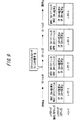
本発明は、複数のパケットリングによってネットワークを構築する際のリング間接続装置,及びデータ転送制御方法に関する。 The present invention relates to an inter-ring connection device and a data transfer control method when a network is constructed by a plurality of packet rings.
メトロエリアネットワークにおいて、従来のSONET(Synchronous Optical Network)/SDH(Synchronous Digital Hierarchy)リングに対して、近年では、イーサネット(Ethernet(登録商標):IEEE802.3に準拠するネットワーク)パケット等を直接リング上で転送するパケットリング(RPR:Resilient Packet Ring)が注目されている。現在、パケットリングについては、IEEE802.17委員会において、2003年6月を目処に標準化作業を行っている。
パケットリングは、インナーリング(Inner ring)とアウターリング(Outer ring)を持ちパケット単位でデータの行き先(インナー側またはアウター側)を決めてデータを転送するリング型ネットワークである。パケットリングでは、リングを構成する各ネットワーク装置(「ステーション」と呼ばれる)において、パケットに設定されている宛先をその都度見ながらデータの転送方向を決めている。
パケットリングでは、リングに属する各ネットワーク装置が自装置の情報を含むトポロジ構築用パケットをリング内の他のネットワーク装置に伝達することにより、各ネットワーク装置がリング全体のトポロジ構成を知る。パケットリングにおいて、トポロジ構築用パケットを用いてトポロジを構築する方法を説明すると次のようになる。
図1に示す例では、まず、ステーション2は、ステーション2のMACアドレスを含むトポロジ構築用パケットをインナー(Inner)側にTTL(Time To Live)=255(初期値)に設定してブロードキャストする。最初にトポロジ構築用パケットを受信したステーション3は、受信したパケットのTTLが255(初期値)であるため、自分から見てアウター(Outer)側のホップ(Hop)数が1となる位置にステーション2が存在することを知る。ステーション3は、ステーション2から受け取ったトポロジ構築用パケットのTTLを−1、即ちTTL=254としてステーション4に送信する。
続いて、TTL=254のトポロジ構築用パケットを受信したステーション4は、自分から見てアウター側のホップ数が2となる位置にステーション2が存在することを知る。その後、インナーリングにおいてステーション4以降に位置する全ステーション(ステーション5〜10,1)は、同様の手順によりステーション2の存在と、さらにステーション2までのアウター側のホップ数を知ることになる。同様に、ステーション2は、アウター側に対してもトポロジ構築用パケットを送出する。これによって、パケットリング内の各ステーション1,3〜10は、ステーション2のMACアドレスと、ステーション2までのインナー側におけるホップ数とを認識することができる。従って、各ステーション1,3〜10は、それぞれステーション2について、MACアドレス、インナー及びアウター側における位置(Hop数)を認識することができる。
さらに、トポロジ構築用パケットは、ステーション2だけでなくリング上の全ステーションから送信される。このため、各ステーションは、リング上の全ステーションの情報(MACアドレス,インナー及びアウター側のHop数)を収集することができる。
図2は、図1のステーション2が保持することができるトポロジマップの例を示す図である。パケットリング上の各ステーションは、上述した手順でトポロジマップを構築することにより、リング上の他のステーションへ転送するパケットに対し、リングのどちらの方向にパケット転送をすれば最短距離で転送することができるかということを判断することができる。
図3には、パケットリングにおいて、ステーション2からパケットが挿入(Packet Add)されステーション6から抽出(Packet Drop)される場合が示されている。この場合、ステーション2は、トポロジマップを用いてインナー方向にデータパケットを転送した方がステーション6までの距離が近いことを判断することができる。
また、パケットリングでは、構築されたトポロジマップを用いて、リング内で発生した障害から、転送されるパケットを保護する障害プロテクション方式を実施できる。障害プロテクション方式には、一般に次の二つがある。
一つは、パケットリング内において障害が発生している場合に、その障害箇所を避ける様にパケット転送方向を即座に変える方式であり、「ステアリング」と呼ばれる。図4は、ステアリングの実施例を示す図である。図4において、ステーション2はステーション4−ステーション5間に障害が発生した際には、他のステーションから送信される障害通知用パケットを受け取り、これによってステーション4−5間の障害発生を認識することができる。この場合、ステーション2は、障害前にパケットリングのインナーリング(Inner Ring)に送出していたデータパケットをアウターリング(Outer Ring)に送出するように切り替えを行うことができる。ステアリングにより、ステーション2に挿入されるパケットはアウターリングを通ってステーション6に到達するようになる。
もう一つは、リング内に発生した障害の障害発生区間の両側においてパケットの転送を折り返すことにより障害プロテクションを実施する方式であり、「ラッピング」と呼ばれる。図5は、図3に示されるパケットリングにおいて、ステーション4−ステーション5間に障害が発生した場合のラッピング動作を示す。図5に示す例では、ステーション2から挿入されたデータパケット(Data Packet)に対し、ステーション4は、インナーリング(Inner Ring)からアウターリング(Outer Ring)に折り返す。データパケット(Data Packet)は、アウターリング(Outer Ring)上でステーション6を通るがこの時は抽出(Drop)されず、ステーション5でインナーリング(Inner Ring)にラッピング(折り返し)された後、ステーション6で抽出(Drop)される。ラッピングを行わないステーションについては、プロテクション処理を行う必要がない。
これらのステアリングやラッピングと呼ばれるリングプロテクション手段を用いることにより、パケットリングは、物理的なパケットリング(物理リング)内であれば、50ms以内の非常に高速な障害プロテクション切り替えが保証されるように構成することができる。
ところで、上述したようなパケットリングを2以上用意し、パケットリング間を一つのネットワーク装置で相互に接続し、データパケットが複数のリングに跨って転送されるようなネットワークを構築する場合を考える。この場合、リング間の相互接続部分となるネットワーク装置に障害が発生した場合には、リング間を跨がって転送されるパケットを救済することが不可能となる。
この様なケースに対応するため、図6に示すように、リング間において相互接続部分(ステーション)を複数持たせ、相互接続部分に障害が発生した時には、スパニングツリープロトコルを複数のリングに跨がって走らせることにより、プロテクション切り替えを行う方法が一般的に採用されている。
その他、本発明に係る先行技術として、特許文献1及び特許文献2に開示された技術がある。
The packet ring is a ring network that has an inner ring and an outer ring and determines the data destination (inner side or outer side) and transfers the data in packet units. In the packet ring, each network device (referred to as a “station”) constituting the ring determines the data transfer direction while looking at the destination set in the packet each time.
In the packet ring, each network device knows the topology configuration of the entire ring by each network device belonging to the ring transmitting a topology construction packet including information of the own device to other network devices in the ring. A method of constructing a topology using packet for constructing topology in packet ring will be described as follows.
In the example shown in FIG. 1, first, the
Subsequently, the
Further, the topology building packet is transmitted not only from the
FIG. 2 is a diagram showing an example of a topology map that can be held by the
FIG. 3 shows a case where a packet is inserted (Packet Add) from the
In the packet ring, it is possible to implement a failure protection method that protects a transferred packet from a failure that occurs in the ring by using the constructed topology map. There are generally two types of failure protection methods:
One is a method in which when a failure occurs in the packet ring, the packet transfer direction is immediately changed so as to avoid the failure portion, which is called “steering”. FIG. 4 is a diagram showing an embodiment of steering. In FIG. 4, when a failure occurs between the
The other is a method in which failure protection is performed by returning packet transfer on both sides of a failure occurrence section of a failure that has occurred in the ring, which is called “wrapping”. FIG. 5 shows a wrapping operation when a failure occurs between
By using these ring protection means called steering and wrapping, the packet ring is configured so as to guarantee a very fast failure protection switching within 50 ms within the physical packet ring (physical ring). can do.
Now, consider a case where two or more packet rings as described above are prepared, the packet rings are connected to each other by a single network device, and a network is constructed in which data packets are transferred across a plurality of rings. In this case, when a failure occurs in a network device that is an interconnection part between rings, it is impossible to relieve a packet transferred across the rings.
In order to deal with such a case, as shown in FIG. 6, when a plurality of interconnection parts (stations) are provided between the rings and a failure occurs in the interconnection parts, the spanning tree protocol is extended over the plurality of rings. In general, a method of switching protection by running is used.
In addition, there are technologies disclosed in
上記したようなスパニングツリーを用いる方法では、複数のパケットリングを構成する全ネットワーク装置において、スパニングツリープロトコルの様なリングプロテクション以外の障害切り替え用プロトコルを実装する必要がある。また、当該方法では、ステアリングやラッピングと同等の高速な障害プロテクション切り替えをすることが困難であるという問題があった。
本発明は、以上のような問題を解決し、複数のパケットリングで構成されるネットワークにおいても、高速なプロテクション切り替えを実現することができるリング間の接続装置,及び転送されるデータの制御方法を提供することを目的とする。
上記問題を解決するため、本発明は以下のような構成をとる。即ち、本発明の第一の態様は、複数のネットワーク装置がリング状に接続されてなり、各ネットワーク装置が自装置のアドレスと自装置の位置を示す情報とを含むトポロジ構築用データをリング上に送出するとともに、他のネットワーク装置のそれぞれからのトポロジ構築用データを受信してトポロジマップを生成する物理リング間を相互接続するために接続対象のリング間に少なくとも二つ設けられ、各物理リングに属するネットワーク装置として機能するリング間接続装置であって、物理リングのトポロジマップを作成する設定情報と物理リング間に跨る仮想リングのトポロジマップを作成する設定情報との一方を格納する設定情報格納手段と、隣接ネットワーク装置から受信するトポロジ構築用データを他の隣接ネットワーク装置に転送する場合に上記設定情報格納手段に格納されている設定情報が物理リングのトポロジマップを作成する設定情報であれば、当該トポロジ構築用データをその送信元のネットワーク装置が属する物理リング上の他の隣接ネットワーク装置へ送出し、上記設定情報が仮想リングのトポロジマップを作成する設定情報であれば、当該トポロジ構築用データをその送信元のネットワーク装置が属する物理リングと異なる物理リングに属する他の隣接ネットワーク装置へ転送する転送手段とを含むリング間接続装置である。
好ましくは、本発明の第一の態様は、自装置が相互接続する各物理リングのトポロジマップを保持する手段と、上記仮想リングのトポロジマップに基づいて送出され送信元と宛先とが物理リング間を跨るデータを受信した場合に、宛先のネットワーク装置が属する物理リングのトポロジマップを参照し、この物理リング上における自装置と宛先のネットワーク装置との最短ルートを決定するルート決定手段とをさらに含み、上記転送手段は、ルート決定手段の決定結果に基づいて、最短ルート上に位置する隣接ネットワーク装置へ当該データを転送するように構成してもよい。
好ましくは、第一の態様におけるルート決定手段は、自装置と宛先のネットワーク装置との間のホップ数に基づいて、ホップ数が最小となるルートを最短ルートとして決定するように構成してもよい。
好ましくは、第一の態様におけるルート決定手段は、物理リング上のネットワーク装置間,及びネットワーク装置とリング間接続装置との間のコスト値の総和が最小となるルートを最短ルートとして決定するように構成してもよい。
好ましくは、本発明の第一の態様は、ネットワーク装置から当該ネットワーク装置の輻輳を示す輻輳通知を受信する輻輳通知受信手段をさらに含み、上記ルート決定手段は、上記輻輳通知を受信した場合には、この輻輳通知の送信元のネットワーク装置が属する物理リングへ転送されるデータについて、輻輳箇所を通過しないルートを決定するように構成してもよい。
本発明の第一の態様によれば、リング間接続装置が、リング間を跨って転送されるデータを物理リング内で転送するか仮想リング内で転送するかを判断して転送ルートを決定することができる。さらに、この転送ルートの決定に際し、転送先までのホップ数、コスト値の総和、及び転送ルート上にあるステーションの輻輳状況を考慮した転送ルートを決定することができる。
また、本発明の第二の態様は、複数のネットワーク装置がリング状に接続されてなり、各ネットワーク装置が自装置のアドレスと自装置の位置を示す情報とを含むトポロジ構築用データをリング上に送出するとともに、他のネットワーク装置のそれぞれからのトポロジ構築用データを受信してトポロジマップを生成する物理リング間を相互接続するために接続対象のリング間に少なくとも一つ設けられ、各物理リングに属するネットワーク装置として機能するリング間接続装置であって、物理リングのトポロジマップを作成する設定情報と物理リング間に跨る仮想リングのトポロジマップを作成する設定情報との一方を格納する設定情報格納手段と、隣接ネットワーク装置から受信するトポロジ構築用データを他の隣接ネットワーク装置に転送する場合に上記設定情報格納手段に格納されている設定情報が物理リングのトポロジマップを作成する設定情報であれば、当該トポロジ構築用データをその送信元のネットワーク装置が属する物理リング上の他の隣接ネットワーク装置へ送出し、上記設定情報が仮想リングのトポロジマップを作成する設定情報であれば、当該トポロジ構築用データをその送信元のネットワーク装置が属する物理リングと異なる物理リングに属する他の隣接ネットワーク装置へ転送する転送手段と、物理リング間に跨ってデータを転送するための自装置内におけるデータの転送ルートとしての、データがデータパスのスイッチを経由する第1のルート、及びデータが前記スイッチを経由することなく自装置内を通過する第2のルートと、自装置をリング間接続装置として機能させるためのソフトウエアを実行する制御手段の障害を検出する障害検出手段と、上記障害検出手段で障害が検出された場合に、物理リング間に跨ってデータを転送するための自装置内のデータの転送ルートを、上記第1のルートから前記第2のルートへ切り替える切替手段とを含むリング間接続装置である。
本発明の第二の態様によれば、リング間接続装置が、リング間に一つしか設けられていない場合であってその装置の障害が検出された場合でも、データ転送するためのルートを切り替えることにより、データを強制的に他のリング上へ送出させることができる。
また、本発明の第三の態様は、複数のネットワーク装置がリング状に接続されてなり、各ネットワーク装置が自装置のアドレスと自装置の位置を示す情報とを含むトポロジ構築用データをリング上に送出するとともに、他のネットワーク装置のそれぞれからのトポロジ構築用データを受信してトポロジマップを生成する物理リングに設けられ、この物理リングに属するネットワーク装置として機能するとともに、他の物理リングに属する所定のネットワーク装置との間でデータ通信を行うリング間接続装置であって、物理リングのトポロジマップを作成する設定情報と物理リング間に跨る仮想リングのトポロジマップを作成する設定情報との一方を格納する設定情報格納手段と、隣接ネットワーク装置から受信するトポロジ構築用データを他のネットワーク装置に転送する場合に上記設定情報格納手段に格納されている設定情報が物理リングのトポロジマップを作成する設定情報であれば、当該トポロジ構築用データを自装置が属する物理リング上の他のネットワーク装置へ送出し、上記設定情報が仮想リングのトポロジマップを作成する設定情報であれば、当該トポロジ構築用データを上記所定のネットワーク装置へ向けて転送する転送手段とを含むリング間接続装置である。
好ましくは、本発明の第三の様態は、上記リング間接続装置と上記所定のネットワーク装置との間が、物理リング上のデータ転送に使用されるプロトコルと異なるプロトコルを用いる中継ネットワークで接続されており、上記リング間接続装置は、隣接ネットワーク装置から受信したトポロジ構築用データを、上記中継ネットワークに応じた形式に変換して上記所定のネットワーク装置へ送信するように構成してもよい。
本発明の第三の態様によれば、データがリング上のプロトコルと異なるプロトコルを用いる中継ネットワークを通過する場合であっても、その中継ネットワークに応じてそのデータの形式を変換してデータを送信することができる。
本発明は、上記リング間接続装置が、データ転送を制御するために、以上のいずれかの処理を実行する方法であってもよい。In the method using the spanning tree as described above, it is necessary to implement a failure switching protocol other than ring protection, such as the spanning tree protocol, in all the network devices constituting a plurality of packet rings. In addition, this method has a problem that it is difficult to perform high-speed fault protection switching equivalent to steering and lapping.
The present invention solves the above problems, and provides a connection device between rings that can realize high-speed protection switching, and a method for controlling transferred data, even in a network composed of a plurality of packet rings. The purpose is to provide.
In order to solve the above problems, the present invention has the following configuration. That is, according to the first aspect of the present invention, a plurality of network devices are connected in a ring shape, and each network device transmits topology construction data including the address of the own device and information indicating the position of the own device on the ring. At least two between the rings to be connected to interconnect the physical rings that generate topology maps by receiving topology construction data from each of the other network devices. An inter-ring connecting device that functions as a network device belonging to the group, and stores setting information for storing one of setting information for creating a topology map of a physical ring and setting information for creating a topology map of a virtual ring that spans between physical rings Means and the topology construction data received from the adjacent network device are transferred to other adjacent network devices. If the setting information stored in the setting information storage means is setting information for creating a topology map of the physical ring, the topology construction data is transferred to another physical ring on the physical ring to which the network device of the transmission source belongs. If the setting information is sent to an adjacent network device and the setting information is setting information for creating a topology map of the virtual ring, the topology building data is transferred to another neighbor belonging to a physical ring different from the physical ring to which the network device of the transmission source belongs. An inter-ring connecting device including transfer means for transferring to a network device.
Preferably, according to the first aspect of the present invention, the means for holding the topology map of each physical ring to which the device itself is interconnected, and the transmission source and the destination transmitted based on the topology map of the virtual ring are connected between the physical rings. And route determination means for determining the shortest route between the own device and the destination network device on the physical ring, referring to the topology map of the physical ring to which the destination network device belongs when receiving data across the network. The transfer unit may be configured to transfer the data to an adjacent network device located on the shortest route based on the determination result of the route determination unit.
Preferably, the route determination means in the first aspect may be configured to determine a route having the smallest number of hops as the shortest route based on the number of hops between the own device and the destination network device. .
Preferably, the route determining means in the first aspect determines a route that minimizes the sum of cost values between network devices on the physical ring and between the network device and the inter-ring connecting device as the shortest route. It may be configured.
Preferably, the first aspect of the present invention further includes a congestion notification receiving unit that receives a congestion notification indicating congestion of the network device from the network device, and the route determination unit receives the congestion notification when the congestion notification is received. The route that does not pass through the congestion point may be determined for the data transferred to the physical ring to which the network device that has transmitted the congestion notification belongs.
According to the first aspect of the present invention, the inter-ring connecting device determines whether the data transferred across the rings is transferred within the physical ring or the virtual ring and determines the transfer route. be able to. Furthermore, when determining the transfer route, it is possible to determine the transfer route in consideration of the number of hops to the transfer destination, the sum of the cost values, and the congestion status of the stations on the transfer route.
Further, according to a second aspect of the present invention, a plurality of network devices are connected in a ring shape, and each network device transmits topology construction data including the address of the own device and information indicating the position of the own device on the ring. And at least one physical ring that is connected to the physical rings that receive the topology construction data from each of the other network devices and generate a topology map. An inter-ring connecting device that functions as a network device belonging to the group, and stores setting information for storing one of setting information for creating a topology map of a physical ring and setting information for creating a topology map of a virtual ring that spans between physical rings Means and the topology construction data received from the adjacent network device are transferred to other adjacent network devices. If the setting information stored in the setting information storage means is setting information for creating a topology map of the physical ring, the topology construction data is transferred to another physical ring on the physical ring to which the network device of the transmission source belongs. If the setting information is sent to an adjacent network device and the setting information is setting information for creating a topology map of the virtual ring, the topology building data is transferred to another neighbor belonging to a physical ring different from the physical ring to which the network device of the transmission source belongs. A transfer means for transferring to a network device; a first route through which data passes through a data path switch as a data transfer route in the own device for transferring data across physical rings; and A second route that passes through the device without going through the switch, and the device itself is ring indirectly Fault detecting means for detecting a fault of a control means for executing software for functioning as a device, and a local apparatus for transferring data across physical rings when a fault is detected by the fault detecting means And a switching means for switching the data transfer route from the first route to the second route.
According to the second aspect of the present invention, even if only one inter-ring connecting device is provided between the rings and a failure of the device is detected, the route for transferring data is switched. As a result, the data can be forcibly transmitted onto another ring.
According to a third aspect of the present invention, a plurality of network devices are connected in a ring shape, and each network device transmits topology construction data including the address of the own device and information indicating the position of the own device on the ring. Is provided in the physical ring that receives the topology construction data from each of the other network devices and generates a topology map, functions as a network device belonging to this physical ring, and belongs to the other physical ring An inter-ring connection device that performs data communication with a predetermined network device, and includes one of setting information for creating a topology map for a physical ring and setting information for creating a topology map for a virtual ring that spans between physical rings. Configuration information storage means to store, topology construction data received from neighboring network devices, etc. If the setting information stored in the setting information storage means when transferring to the network device is the setting information for creating the topology map of the physical ring, the topology construction data is transferred to other physical rings on the physical ring to which the own device belongs. If the setting information is sent to the network device and the setting information is setting information for creating a topology map of the virtual ring, an inter-ring connecting device including transfer means for transferring the topology construction data to the predetermined network device. is there.
Preferably, in the third aspect of the present invention, the inter-ring connecting device and the predetermined network device are connected by a relay network using a protocol different from the protocol used for data transfer on the physical ring. The inter-ring connection device may be configured to convert the topology construction data received from the adjacent network device into a format corresponding to the relay network and transmit the data to the predetermined network device.
According to the third aspect of the present invention, even when data passes through a relay network using a protocol different from the protocol on the ring, the data format is converted according to the relay network and the data is transmitted. can do.
The present invention may be a method in which the inter-ring connecting device executes any one of the processes described above in order to control data transfer.
図1は、パケットリングにおけるトポロジ構築処理を示す図であり、
図2は、図1のステーション2におけるトポロジマップの例を示す図であり、
図3は、パケットリングにおけるパケット転送例を示す図であり、
図4は、ステアリングの実施例を示す図であり、
図5は、ラッピングの実施例を示す図であり、
図6は、複数のパケットリングで構成されるネットワークの一例を示す図であり、
図7は、図6に示すネットワーク構成におけるパケットの転送ルート例を示す図であり、
図8は、図6に示すネットワーク構成におけるステーションAが保持するトポロジマップを示す図であり、
図9は、図6に示すネットワーク構成における転送方法及びパケットフォーマット例を示す図であり、
図10は、図6に示すネットワーク構成においてリング間を接続する一方の装置に障害が発生した時のパケットの転送ルート例を示す図であり、
図11は、本発明の第一実施形態におけるトポロジ構築例を示す図であり、
図12は、従来のステーションのシステム構成及び他のステーションから受信したパケットの転送ルートを示す図であり、
図13は、本発明の第一実施形態におけるリング間を接続するステーションのシステム構成及び他のステーションから受信したパケットの転送ルートを示す図であり、
図14は、本発明の第一実施形態においてステーションAが保持するトポロジマップを示す図であり、
図15は、本発明の第一実施形態における転送方法及びパケットフォーマットを示す図であり、
図16は、変形例1におけるネットワーク構成を示す図であり、
図17は、変形例1においてステーションCが保持するトポロジマップを示す図であり、
図18は、変形例1におけるパケットの転送ルート例を示す図であり、
図19は、変形例1においてステーションCが保持する物理リングのトポロジマップを示す図であり、
図20は、変形例2におけるネットワーク構成を示す図であり、
図21は、変形例2においてステーションCが保持する物理リングのトポロジマップを示す図であり、
図22は、ステーションIが輻輳状態である場合のパケットの転送ルートを示す例であり、
図23は、変形例4におけるネットワーク構成を示す図であり、
図24は、本発明の第二実施形態におけるネットワーク構成を示す図であり、
図25は、本発明の第二実施形態におけるパケットの転送ルート例を示す図であり、
図26は、本発明の第二実施形態においてステーションFが保持するトポロジマップを示す図であり、
図27は、本発明の第二実施形態における転送方法及びパケットフォーマットを示す図であり、
図28は、図24に示すネットワーク構成においてステーションCに障害が発生した場合のパケットの転送ルートを示す図であり、
図29は、図28に示すステーションCのシステム構成を示す図である。FIG. 1 is a diagram showing a topology construction process in packet ring.
FIG. 2 is a diagram showing an example of a topology map in the
FIG. 3 is a diagram showing an example of packet transfer in the packet ring.
FIG. 4 is a diagram showing an example of steering,
FIG. 5 is a diagram showing an example of wrapping.
FIG. 6 is a diagram illustrating an example of a network including a plurality of packet rings.
FIG. 7 is a diagram showing an example of a packet transfer route in the network configuration shown in FIG.
FIG. 8 is a diagram showing a topology map held by station A in the network configuration shown in FIG.
FIG. 9 is a diagram showing a transfer method and a packet format example in the network configuration shown in FIG.
FIG. 10 is a diagram illustrating an example of a packet transfer route when a failure occurs in one of the apparatuses that connect the rings in the network configuration illustrated in FIG.
FIG. 11 is a diagram showing an example of topology construction in the first embodiment of the present invention.
FIG. 12 is a diagram showing a system configuration of a conventional station and a transfer route of a packet received from another station.
FIG. 13 is a diagram showing a system configuration of stations connecting between rings and a transfer route of packets received from other stations in the first embodiment of the present invention,
FIG. 14 is a diagram showing a topology map held by the station A in the first embodiment of the present invention,
FIG. 15 is a diagram showing a transfer method and a packet format in the first embodiment of the present invention,
FIG. 16 is a diagram showing a network configuration in
FIG. 17 is a diagram showing a topology map held by the station C in
FIG. 18 is a diagram illustrating an example of a packet transfer route in
FIG. 19 is a diagram showing a topology map of the physical ring held by the station C in the first modification.
FIG. 20 is a diagram showing a network configuration in
FIG. 21 is a diagram showing a topology map of the physical ring held by the station C in the second modification.
FIG. 22 is an example showing a packet transfer route when the station I is in a congested state.
FIG. 23 is a diagram showing a network configuration in
FIG. 24 is a diagram showing a network configuration in the second embodiment of the present invention,
FIG. 25 is a diagram illustrating an example of a packet transfer route in the second embodiment of the present invention.
FIG. 26 is a diagram showing a topology map held by the station F in the second embodiment of the present invention,
FIG. 27 is a diagram showing a transfer method and a packet format in the second embodiment of the present invention.
FIG. 28 is a diagram showing a packet transfer route when a failure occurs in station C in the network configuration shown in FIG.
FIG. 29 is a diagram showing a system configuration of the station C shown in FIG.
以下、図面を用いて本発明の実施形態について説明する。なお、本実施形態の説明は例示であり、本発明の構成は以下の説明に限定されない。
《第一実施形態》
次に、本発明を実現するための第一実施形態について図6から図15を用いて説明する。
〈概要〉
本実施形態の概要について説明する。
まず、本発明を実現するための第一実施形態におけるネットワーク構成について図6を用いて説明する。図6は、複数のパケットリング(RPRリング)で構成されるネットワークの一例を示す。図6に示すネットワークは、物理的なパケットリング(物理リング)“#1”と“#2”とを有する。パケットリング“#1”と“#2”は、それぞれ複数のステーション(RPRノード)をリング状(環状)に接続して構成される。このパケットリング“#1”と“#2”とをそれぞれ構成する各ステーションは、それぞれ物理リングとしてのトポロジマップを構築し保持することができる。
各ステーションは、ネットワーク装置(リングを構成できる装置)に含まれて構成され、それぞれイーサネットをサポートする端末を収容することができる。図6に示す例では、ステーションAは、端末aを収容し、ステーションGは、端末gを収容している。また、ステーションC,及びDは、パケットリング“#1”と“#2”とを相互に接続する役割を担うリング間の接続装置である。本実施形態では、リングを構成する装置をステーションと表記して説明する。
図6に示す複数のパケットリングにより構成されるネットワークにおいて端末aから端末gへパケットを転送する場合には、例えば通常のパケット転送ルートとして、図7に示すようなルートを採用することができる。図6に示すネットワーク構成において、ステーションAが構築するトポロジマップは、図8に示すようにリング“#1”に属する各ステーションの情報からなる。さらに、図6に示すネットワーク構成では、端末aから端末gへパケット転送される場合、転送されるパケットのパケットフォーマットは図9に示すようになる。通常、ステーションDが障害になった時は、リング“#1”内のみで転送されるパケット(例えばステーションEからCの転送パケット)であれば、従来のリングプロテクションによって高速なプロテクション切り替えが実施される。
しかし、図6に示される複数のリング間に跨ってパケットを転送する場合、例えば、ステーションAからGへのリング間に跨る転送パケットに対して、従来のリングプロテクションと同等に高速にプロテクションを切り替えることは困難である。
パケットは、端末aから端末gへ転送される際にリング“#1”と“#2”間を相互接続しているステーションDを通過する。ステーションDが障害により運用を継続できない状況に陥った場合には、ステーションAは、パケットがステーションDを通過しないようにパケットの転送ルートを切り替えることが必要になる。具体的には、図10に示すように、ステーションDが障害になった時は、ステーションAは、パケットの宛先MACアドレス(MAC DA)をステーションDからステーションCに切り替えなければならない。
しかし、現状のパケットリングのプロテクション仕様(ステアリングやラッピング)では、この様な状況で宛先MACアドレス(MAC DA)を変更することに対応することができない。これは、現状のパケットリングのプロテクション仕様(ステアリングやラッピング)は、基本的に宛先は同じで、通り道を変えるだけの機能しか備えていないためである。従って、2以上のパケットリングを用いて構成されたネットワークには、パケットリングを構成する全ステーションにスパニングツリープロトコルや、RPRレイヤよりも上位レイヤ(例えば、IPレイヤ)のプロテクション切り替え機能などを実装することが必要になってしまう。加えて、従来のリングプロテクションと同等の高速なプロテクションを実現することが非常に困難になる。
本実施形態では、図6に示すようなネットワーク構成において、本発明を実現するために、図11に示すような仮想的なパケットリング(仮想リング)についてのトポロジマップを生成する。
図11に示す例では、リング間接続を行うステーションC,及びDにおいて、トポロジ構築用パケットがリング間に跨がって送受信(転送)される。ステーションCは、あたかも自身がステーションBとFとに物理リング上で隣接しているかのようにトポロジ構築用パケットを扱い、ステーションDは、あたかも自身が物理リング上でステーションEとGとに隣接しているかのようにトポロジ構築用パケットを扱う。そして、ステーションC,及びD以外の他のステーションは今まで通りの処理(トポロジマップの構築)を行う。このようにして、図11に示す全ステーションは、各リング“#1”,“#2”における物理リングのトポロジマップとは別に、各リング“#1”と“#2”とをステーションA−B−C−F−G−D−E−Aのように一つの仮想リングとみなしたネットワークとしての仮想リングのトポロジマップを持つことができる。
〈ステーションのシステム構成とトポロジの構築〉
次に、ステーションのシステム構成とそれに伴うトポロジの構築処理について図12及び13を用いて説明する。図12は、従来におけるステーションのシステム構成と他のステーションから受信したパケットの転送ルートを示す。図13は、本実施形態における各ステーションC,及びD(リング間の接続装置)のシステム構成と他のステーションから受信したパケットの転送ルートを示す。
図13に示すように、ステーションC,及びDは、パケット受信部11と,トポロジマップ生成部12と,リング間接続情報13と,パケット転送先選択部14と,パケット送信部15とを含み構成される。ここで、図13に示すステーションのシステム構成は、図6で示されるリング間接続を行うステーションC,及びDが対象となる。一方、リング間接続を行うステーション(図6でいうステーションC,及びD)以外のステーションは、パケット受信部11と,トポロジマップ生成部12と,パケット送信部15とを含み構成される。
パケット受信部11は、ステーション内部に4つ設けられ、他のステーションから転送されてくるパケットを識別して受信する。パケットの識別は、例えば、トポロジ構築用パケットであるかデータパケットであるかを識別する。さらに、パケット受信部11は、転送されてきたパケットを一時的に蓄積させるバッファを含んでおり、バッファ内の容量が一定量に達した場合には、自ステーションが輻輳状態にあるとして隣接ステーションへ輻輳を通知するための輻輳検出手段としても機能する。
トポロジマップ生成部12は、パケット受信部11で受信したトポロジ構築用パケットに含まれる情報(トポロジ構築用パケットに含まれる送信元ステーションのMACアドレス,及びホップ数)に基づいてトポロジマップを生成する。さらに、トポロジマップ生成部12は、生成したトポロジマップを保持する。そして、パケット受信部11で受信されたパケットがデータパケットであると識別された場合には、トポロジマップが参照されてそのパケットに応じた転送ルートが決定される。
リング間接続情報13は、リングを形成するための情報を保持する。このリング間接続情報13は、どの様なリングを形成したいかというネットワーク管理者の意志に基づいて設定される。例えば、図11のようにリング“#1”とリング“#2”とをステーションA−B−C−F−G−D−E−Aのように一つの仮想リングとしたトポロジマップを構築したい場合には、ネットワーク管理者は、図13におけるパケットの転送ルートが▲1▼−▲5▼,▲8▼−▲4▼となるように接続情報を設定する。
パケット転送先選択部14は、パケット受信部11で受信されたパケットに応じてそのパケットの転送ルートを選択(決定)する。例えば、パケット受信部11で受信されたパケットがトポロジ構築用パケットであると識別された場合には、パケット転送先選択部14は、リング間接続情報13を参照して設定されている情報からパケットの転送ルートを決定する。この転送ルートには、次に説明する数パターンが考えられる。ステーションにおいて、パケットの入力ポイントを図13に示すように▲1▼から▲8▼まで割り振った場合を想定する。通常、物理リング内でトポロジを構築する場合(トポロジ構築用パケットを転送する場合)には、リング“#1”におけるアウター側のルートは▲1▼−▲4▼となり、インナー側のルートは▲3▼−▲2▼となる。また、リング“#2”におけるアウター側のルートは▲8▼−▲5▼となり、インナー側のルートはルート▲6▼−▲7▼となる。一方、仮想リング内でトポロジを構築する場合のルートとして、▲1▼−▲5▼,▲6▼−▲2▼,▲3▼−▲7▼,▲8▼−▲4▼,▲1▼−▲7▼,▲8▼−▲2▼,▲3▼−▲5▼,▲6▼−▲4▼を採ることができる。トポロジ構築用パケット以外のパケット(例えば、データパケット)を転送する場合についても、同様の転送ルートが考えられる。
また、パケット受信部11で受信されたパケットがデータパケットであると識別された場合には、パケット転送先選択部14は、トポロジマップを参照してパケットに応じた転送ルートを決定(選択)する。例えば、転送ルートは、宛先のステーションまでのホップ数が最小となるルートが選択される。
パケット送信部15は、ステーション内部に4つ設けられ、転送されてきたパケットを隣接ステーションに送信する。パケット送信部15は、パケットをパケット転送先選択部14により選択された転送ルートに従って送信する。さらに、パケット送信部15は、データを送信可能な形式に生成するための生成手段としても機能する。例えば、パケット送信部15は、パケット受信部11において自ステーションの輻輳が検出された場合には、輻輳通知用パケットを生成し自ステーションを輻輳状態にする原因と考えられる隣接ステーションに送信される。つまり、インナー側のパケット受信部11で輻輳を検出した場合は、同一リングのアウター側のパケット送信部15から輻輳通知用パケットを送信する。
従って、図13に示すステーション(図11に示される物理リング間を相互接続するステーションC,及びD)では、パケット受信部11において受信したパケットが識別されるため、トポロジ構築用パケットであるのかデータパケットであるのかを認識することが可能となる。さらに、パケット受信部11においてトポロジ構築用パケットであると識別された場合には、パケット転送先選択部14においてリング間接続情報に設定されている接続情報(仮想リング内で転送するのか、又は物理リング内で転送するのかを示すルート情報)に基づいた転送ルートが選択されるため、仮想リング(ステーションA−B−C−F−G−D−E−A)内で転送されるパケットと物理リング(ステーションA−B−C−D−E−A,またはG−D−C−F−G)内で転送されるパケットとを区別(判断)してトポロジ構築用パケットを転送することが可能となる。一方、パケット受信部11においてデータパケットであると識別された場合には、トポロジ生成部12に保持されるトポロジマップの情報(例えば、宛先となるステーションまでのホップ数)に基づいて転送ルートを決定することが可能となる。
〈トポロジマップ〉
次に、図11に示すように複数のリング間で仮想的にトポロジマップを生成した場合のトポロジマップについて説明する。
トポロジマップは、各ステーション毎に自装置を基準とした時の他のステーションのアドレス(MACアドレス)とそのステーションに対するインナー側のホップ数とアウター側のホップ数との対応を保持する。
図11に示すネットワークにおいて、リング“#1”及び#2”に図11に示すような一つの仮想リングが設定される場合には、仮想リングを構成する全てのステーション(A〜G)の情報を含むトポロジマップが構築される。例えば、ステーションAが保持するトポロジマップは、図14に示すようになる。
〈パケットフォーマットとデータパケット転送例〉
次に、図11に示すネットワークにおいて、端末a−端末g間でデータパケットが転送される際のパケットフォーマットとデータパケットの転送例について図15を用いて説明する。図15は、第一実施形態における転送方法及びパケットフォーマットを示す。図15は、端末aから端末gへデータパケットが転送される場合を想定したフォーマット例である。
図15に示すように、端末−ステーション間で転送されるパケットフォーマット101は、データ本体となるペイロードにレイヤ3ヘッダ(IPヘッダ)とレイヤ2ヘッダとしてMACヘッダが付いた形式となる。IPヘッダには、宛先IPアドレス(IP DA)と送信元IPアドレス(IP SA)とが設定される。MACヘッダには、宛先MACアドレス(MAC DA)と送信元MACアドレス(MAC SA)とが設定される。また、ステーション間で転送されるパケットフォーマット101は、データ本体となるペイロードにレイヤ3ヘッダ(IPヘッダ)とレイヤ2ヘッダとしてRPRヘッダが付いた形式となる。RPRヘッダには、宛先RPRアドレス(RPR DA)と送信元RPRアドレス(RPR SA)とが設定される。
端末aは、IPヘッダの宛先IPアドレスを“端末g”に設定し、送信元IPアドレスを“端末a”に設定し、且つMACヘッダの宛先MACアドレスを“ステーションA”に設定し、送信元MACアドレスを“端末a”に設定したパケットをステーションAに送信する。ステーション間で転送されるパケットのレイヤ2ヘッダはRPRヘッダとなるため、ステーションAは、転送されてきたパケットのレイヤ2ヘッダをRPRヘッダに付け替えて、宛先RPRアドレスを“ステーションG”に設定し(ステーションAは、宛先IPアドレス“g”から端末gがステーションGのリング外にあることを予め知っている)送信元RPRアドレスを“ステーションA”に設定してステーションGに送信する。転送されるパケットは、ステーションA−G間においてステーションE及びステーションDを経由する。この時、ステーションEは、スルーでパケット中継する。また、リング間を相互接続するステーションDは、宛先RPRアドレス(ステーションG)が属する物理リング(#2)にパケット中継する。ステーションGは、転送されてきたパケットを受け取るとMACヘッダのレイヤ2ヘッダを、宛先MACアドレスを“端末g”に設定し送信元MACアドレスを“ステーションG”に設定したMACヘッダに付け替えて端末gに送信する。
以上のように、複数のリングを一つの仮想的なリングとするトポロジマップを構築することにより、各ステーション(上記例では、ステーションA)は、送信するパケットの宛先RPRアドレス(RPRリング上の宛先アドレス)を異なる物理リング内にあるステーションGに設定したパケットを送信することが可能となる。即ち、ステーションAは、ダイレクトに隣接リング内のステーションGを宛先としたパケットを送信することができる。従って、本実施形態によれば、リング上の送信元となるステーションは、宛先としてリング間接続を行うステーションではなく隣接リング内のステーションのアドレスをダイレクトに設定することができる。このため、リング間接続を行うステーションが障害になった場合でも、パケットリング上で宛先RPRアドレスを変えることなく、ステアリングやラッピングを行うことができる。
〈作用・効果〉
本発明の第一実施形態によれば、複数のリングを接続するステーションC,及びDを図13のように構成することにより、該ステーションは、複数のリングを一つの仮想的なリングとしたトポロジマップを構築することができる。通常、パケットリングにおいては、MACアドレスのような自装置情報を、リング内の各ステーションがトポロジ構築用パケットを用いてリング内の他のステーションに伝達することにより、リングのトポロジ構成を共有する。本実施形態では、物理的なパケットリング(物理リング)と仮想的なパケットリング(仮想リング)の分岐点にあたる相互接続部分となるステーションC及びDが、上記のトポロジ構築用パケットを仮想的なパケットリングが構築されるようにの物理リングが異なる隣接ステーションに対して送受信する。従って、全ステーションにおいて一つの仮想的なパケットリングのトポロジマップを共有することが可能になり、異なる物理リング上のステーションを同一の物理リング上のステーションとして認識することができる。その結果、ステアリングやラッピングのようなリングプロテクションを一つの仮想的なパケットリングにおいて適用することが可能になる。
以上から、第一実施形態によると、複数のパケットリングから構成されるネットワークにおいて、上位レイヤのプロテクション機能(スパニングツリー等)を実装することなく、パケットリングにおける従来のリングプロテクション(ステアリングやラッピング)を適用することにより、レイヤ2のレベルだけで高速なプロテクション切り替えを可能にすることができる。
〈変形例1〉
第一実施形態において、リング間接続を行うステーションはデータパケットを転送する際、仮想リングのトポロジマップに基づいて転送ルートを決定してもよいが、自身の属するそれぞれの物理リング(パケットリング)のトポロジマップを保持することにより適切な転送ルートを決定するように構成してもよい。
リング間を相互に接続するステーションにおいて、パケットを常に仮想リングトポロジに基づいて転送してしまうと、本来の物理リングトポロジに基づいてパケット転送を行う場合に比べ通過するステーションが多くなり、リング帯域の使用効率が落ちてしまうケースが考えられる。
そこで、変形例1では、リング間を相互接続するステーションは、自身の属する複数の物理リングのトポロジマップを保持し、ホップ数が最小となるルートでパケット転送を行うように構成する。即ち、リング間の相互接続を行うステーションは、パケットヘッダの宛先アドレスと複数の物理リングトポロジとに基づいて、何れのルートにパケット転送すれば最も少ないホップ数でパケット転送できるか否かを判断するように構成する。この時、宛先アドレスが物理リングトポロジに存在しなければ、仮想リングトポロジに基づいてパケットを転送するように制御すればよい。
図16に示すネットワークを一つの仮想リングとみなしてトポロジ構築用パケットを転送した場合、ステーションCは、図17に示すようなトポロジマップを構築する。ここで図18に示すように、ステーションDからステーションIにパケットを転送する場合を考える。ステーションCが物理リングトポロジを意識しない場合、転送ルートは、ステーションD→C→B→A→J→Iとなる。この時、ステーションCは、仮想リングのみのトポロジを考慮するのではなく実際の物理リングトポロジを考慮することができれば、ステーションD→C→H→Iの転送ルートを使ってデータパケットを転送することができる。
具体的には、ステーションCは、図17に示す仮想リングのトポロジマップとは別に、図19に示すような自身の属する物理リング“#1”,“#2”のそれぞれのトポロジマップを構築し保持しておくことにより、ステーションI宛のデータパケットをリング“#1”のアウター(Outer)側に転送すれば、最小のホップ数でステーションIに到達させることができるということを判断することが可能となる。ここで、図19の(A)は、リング#1のトポロジマップを示し、図19の(B)は、リング#2のトポロジマップを示す。例えば、図19(A)に示す物理リング“#1”のトポロジマップでは、ステーションIまでのインナー側のホップ数が“4”であり、アウター側のホップ数が“2”である。一方、図17に示す仮想リングのトポロジマップでは、インナー側のホップ数は“4”であり、アウター側のホップ数が“6”である。従って、ステーションCは、ホップ数が最小となるルートがステーションIに対して物理リング“#1”のアウター側であることが分かる。
ステーションCは、データパケットが転送されてきた場合、上記のような判断をトポロジマップ生成部12に保持されている物理リングと仮想リングとのトポロジマップに基づいてパケット転送先選択部14で行いデータパケットの転送ルートを決定してデータパケットを転送する。なお、リング間を接続するステーションHも同様に、自身が属する物理リング“#1”と“#2”のそれぞれのトポロジを構築し保持させることにより、ステーションCと同様に、物理リングのトポロジを考慮したパケットの転送ルートを決定することが可能となる。
変形例1によれば、リング間を相互接続するステーションは、自身が属する全ての物理リングのトポロジマップを保持することにより、データパケットがリング間を相互接続するステーションを通過する際に、物理リングと仮想リングとのトポロジマップに基づいてホップ数が最小となるルートが判断されてデータパケットが転送される。従って、変形例1によれば、仮想リングのトポロジマップのみに基づいてパケットの転送ルートを決定する場合に比べて、通過するステーションを少なくすることができるため、リング帯域の使用効率を向上させることができる。
〈変形例2〉
第一実施形態は、最短ルートでパケットを転送する際、ホップ数という概念の代わりに各ステーション間に任意に定義可能なパスコストという概念を使用してもよい。変形例2では、このパスコストが最小値となるルートを使用してパケットを転送できるように構成する。
第一実施形態では、ホップ数という値は、各ステーション間を全て1として計算しているが、この代わりに変形例2では、各ステーション間に任意に定義可能なパスコストという概念を使用する。パスコストは、トポロジ構築用パケットで各ステーションに広告することにより図21に示すようにトポロジマップに構築される。図21の(A)は、リング#1のトポロジマップを示し、図21の(B)は、リング#2のトポロジマップを示す。
まず、全てのステーション間の各パス(上り/下り)に対して、図20に示すようにパスコストを定義し、リング間を相互接続するステーションにおいてパスコストの情報が共有できればよい。例えば、ステーションCは、C→B(パスコスト=1)と、C→H(パスコスト=2)などの情報、即ち、自ステーションが起点となるパスのパスコスト値を定義する。パスコストは、トポロジ構築用パケットによりTTL値と共に他のステーションに対して広告される。例えば、パスコストは、各ステーションが自身が出発点となるパスコストをTTL値と共に併せて通知して各ステーションにおいて加算(演算)していけばよい。
その結果、ステーションCでは、各ステーションに到達するまでにどれだけのパスコストが必要になるかという情報を含むトポロジマップが物理及び仮想について構築される。ステーションCでは、例えば、図21に示すような物理リングトポロジマップがそれぞれ構築される。
図20に示す例では、パケットは、端末dから端末iに転送される。この時、リング間を接続するステーションCは、端末i(ステーションI)宛のパケットを受信すると、パケット転送先選択部14において、図20に示すリング“#1”のトポロジマップから、リング“#1”のインナー(Inner)側に転送するとパスコスト=5、リング“#1”のアウター(Outer)側に転送するとパスコスト=6が必要であると判断する。従って、ステーションCは、リング“#1”のアウター(Outer)側に転送すれば最小のパスコストでデータパケットを転送することができると判断して転送ルートを決定することができる。
変形例1では、転送ルートが最小となるための判断として、ホップ数を用いている。そのため、変形例1では、リング“#1”のアウター(Outer)側のルートが選択されている。一方で、変形例2では、転送ルートが最小となるための判断として、パスコストを用いている。そのため、変形例2では、リング“#1”のインナー(Inner)側のルートが選択されている。
また、パスコストは、任意に定義してもよい。例えば、各ステーション間の帯域幅に比例した値を定義してもよい。これは、ステーション間の帯域幅に応じた通信速度毎の値を定義するようにすればよい。これにより、ステーション間の通信速度を考慮したデータ転送をすることができる。
その他、遅延時間や課金値を定義することが考えられる。遅延時間は、ステーション間で発生する遅延時間を予め測定しておき、その測定値を定義した値を設定するようにすればよい。これにより、ステーション間のルート上で発生する遅延時間を考慮したデータ転送をすることができる。課金値は、ステーション間毎のルートを使用する際に係る使用料金を定義した値を設定すればよい。これにより、ステーション間のパス毎の使用料金を考慮したデータ転送を行うことができる。
変形例2によれば、各ステーション間にパスコストを任意に定義しておき、リング間を相互接続するステーションにおいて、各ステーション間に定義したパスコストの総和が最小になるルートを使用してパケット転送を行うことができる。
〈変形例3〉
第一実施形態は、リング間を接続するステーションが、輻輳状態にあるステーションを検出し、そのステーションを経由しないようにパケットを転送するルートを決定するように構成してもよい。
次に、変形例3として、トラフィックが輻輳した時の回避手段を説明する。ここでは、変形例1の図18に示したように端末dから端末iにパケットを転送中に、図22に示すようにステーションIのアウター側のパケット受信部11で輻輳が検出された場合を想定する。
ステーションIのパケット受信部11は、バッファ内の容量が一定量に達した時点で、自ステーションが輻輳状態であるとして隣接ステーションHへ輻輳を通知するため、パケット送信部15から輻輳通知用パケットを送信する。次に、ステーションHでは、ステーションIから受信した輻輳通知用パケットに基づいて、自ステーションからステーションIへのパケット送信量を抑制する。その結果、ステーションHにおいてもパケット受信部11が輻輳を検出し、パケット送信部15からステーションCに輻輳通知用パケットを送信して輻輳状態を通知する。ステーションCは、輻輳通知用パケットを受け取ることにより自身が輻輳状態にあることを認識することができる。輻輳通知用パケットを受け取ったステーションCは、輻輳が検出されたという情報を一定期間保持させておけばよい。例えば、トポロジマップに輻輳が検出されたという情報を輻輳通知用パケットを受信した時刻と共に設定しておくことが考えられる。これにより、ステーションHは、データパケットの転送ルートを逆回り(ステーションC−B−A−J−I経由)に切り替ることが可能となる。この時一定時間が経過しても、再度輻輳通知用パケットが受信されないようなら元の転送ルートに戻してもよい。従って、リング間を接続するステーションは、輻輳状態になった場合には、ホップ数やパスコスト値に関わらず宛先ステーションに対するパケットの転送ルートを切り替えるように制御することが可能となる。
変形例3によれば、輻輳が発生しているステーションを通過しないルートを用いてパケットを転送することにより輻輳箇所を回避することができる。従って、変形例3によれば、より効率的でパケット廃棄率の低いパケット転送を実現することができる。
〈変形例4〉
第一実施形態は、図23に示すようにネットワーク内に存在する全てのステーションを管理するための上位のネットワーク管理装置を設置するように構成してもよい。上位のネットワーク管理装置は、パーソナルコンピュータやワークステーション等の情報処理装置を用いて構成され、配下のネットワークを管理する制御装置として機能する。
これまでに説明した例では、仮想リングや物理リングのトポロジ構築の手段としては、ステーション間でトポロジ構築用パケットを送受信することを想定している。変形例4では、上位のネットワーク管理装置が全ステーションにおける仮想リングや物理リングのトポロジ情報を管理して、全ステーションにトポロジ情報およびそれに付随する情報を分配する。即ち、変形例4は、仮想リングや物理リングのトポロジマップをトポロジ構築用パケットを用いて作成するのではなく、上位のネットワーク管理装置が全ステーションの接続形態を把握して全ステーションにトポロジ情報及びそれに付随する情報を配布する。各ステーションは、配布されたトポロジ情報及びそれに付随する情報に基づいて転送ルートを決定する。
変形例4によれば、複数のパケットリングの上位にネットワーク管理装置を配置して、相互接続をした複数のパケットリング全体を制御することができる。また、複数のパケットリングの上位にネットワーク管理装置を配置することにより、リング間を相互接続していない他のステーションの物理リングトポロジを管理させて、パケットリング内に存在する全てのステーションにおける物理リングトポロジを考慮して最短ルートによるデータ転送をすることも考えられる。
《第二実施形態》
次に、本発明を実現するための第二実施形態について図24から図29を用いて説明する。
〈概要〉
本発明を実現するための第二実施形態におけるネットワーク構成について図24を用いて説明する。図24は、複数のパケットリングと中継装置とで構成されるネットワーク構成の一例を示す。第二実施形態は、ネットワーク構成において物理的なパケットリング(物理リング)間の接続に異なるプロトコルを用いる中継装置を介している点が、第一実施形態と異なる。以下、異なる点を主に説明する。
図24に示すネットワークは、パケットリング“#1”と“#2”と“#3”とを有する。パケットリング“#1”と“#2”は、ステーションCにより相互に接続される。パケットリング“#2”と“#3”は、中継装置Mを介しステーションFとIにより接続され、さらにステーションGとLによっても接続される。パケットリング“#2”と“#3”の接続に関しては、全てイーサネット(Ethernet)によって接続されているものとする。
第二実施形態では、リング間の接続を行う一方のステーションが、他のリング上のもう一方のステーションに対して転送するトポロジ構築用パケットやデータパケットをリング間を接続している回線の種別に応じたフレームにカプセル化したパケットを送信する。図24に示すネットワークでは、ステーションFと中継装置MとステーションIの間と、ステーションGとステーションLの間において、転送されるトポロジ構築用パケットやデータパケットがイーサネット(Ethernet)フレームによりカプセル化される。
図25は、図24に示すネットワーク構成において、端末f−端末jルートでパケットを転送する例を示す。この時、ステーションFでは、例えば図26に示すようなトポロジマップが生成される。なお、ステーションのシステム構成、及びトポロジマップの構築方法については、第一実施形態と同じであるため、説明は省略する。
また、第二実施形態では、パケットリング“#2”と“#3”の接続に際し、中継装置Mを介しているが、この中継装置Mの変わりに複数の中継装置を接続して構成する中継ネットワークを用いて構成することもできる。
〈パケットフォーマットとパケット転送例〉
次に、図25に示すネットワーク構成において、端末f−端末j間でデータパケットが転送される際のパケットフォーマットとパケットの転送例について図27を用いて説明する。図27は、第二実施形態における転送方法及びパケットフォーマットを示す。図27は、端末fから端末jへデータパケットが転送される場合を想定したフォーマット例である。第二実施形態において、図27に示す例では、ステーションF−I間において転送されるパケットフォーマットとその転送方法とが第一実施形態と異なる。以下、第一実施形態と異なる点を主に説明する。
図27に示すように、中継装置Mを介して接続されているステーションF−I間で転送されるパケットフォーマット101は、データ本体となるペイロードにレイヤ3ヘッダ(IPヘッダ)とレイヤ2ヘッダとしてRPRヘッダとが付加され、さらにMACヘッダによりカプセル化される。即ち、ステーションF−I間で転送されるデータパケットは、その回線に応じて転送可能なフレームにカプセル化される。MACヘッダには、宛先MACアドレス(MAC DA)と送信元MACアドレス(MAC SA)とが設定される。
端末fから端末jへデータパケットが転送される場合において、ステーションFは、転送されてきたデータパケットをMACフレームでカプセル化する。データパケットのカプセル化は、ステーション内のパケット送信部15に備わる生成手段により行われる。この時、ステーションFは、MACヘッダの宛先MCAアドレスを“ステーションI”に設定し、送信元MACアドレスを“ステーションF”に設定したパケットをステーションIに送信する。即ち、ステーションFからは、宛先が隣接リング内のステーションIに設定されたパケットが送信される。ステーションF−ステーションI間で転送されるデータパケットは、中継装置Mを経由する。中継装置Mは、ステーションFから転送されてきたデータパケットをそのままステーションIにスルーしてフレーム中継をするように機能する。ステーションIでは、転送されてきたデータパケットのMACヘッダを取り外したデータパケットをステーションJに転送する。以降の処理は、第一実施形態と同様となる。
〈パケットの救済〉
次に、パケットリングを構成するステーションにおいて、ソフトウェア障害などの発生により隣接するステーションにより検出が不可能である障害、即ち、リングプロテクションを実施することが困難な障害が発生した場合に特に有効となるパケットの救済方法について説明する。
また、隣接するステーションにおいて検出可能な障害であっても、第二実施形態におけるネットワーク構成のように、リング間接続を行うステーションが一つであり、プロテクション切り替えを実施することが困難な場合に対しても有効となるパケットの救済方法について説明する。
複数のパケットリング(物理リング)で構成されるネットワークにおいて、仮想的なパケットリングのトポロジを共有することなく、物理リングトポロジのみによりパケットを転送する場合を想定する。この時、複数の物理リングを跨って転送されるパケットの宛先は、リング間を接続するステーションのアドレスとなる。リング間を接続するステーションは、パケットを受信した後、パケットの宛先を次の物理リングに存在する宛先ステーションのアドレスに付け替えて、物理リングにパケット転送する必要がある。ここで、リング間を接続するステーションが障害になり異なる物理リング間を強制的にパススルーさせるように設定した場合には、パケットの宛先は、リング間接続を行うステーションのまま付け変わることがなく、そのまま次の物理リングにパケット転送されてしまう。その後、パケットは、宛先不明となり到達不能で廃棄されてしまう可能性がある。
従って、第二実施形態では、リング間を接続するステーションが自装置の障害検出時に、仮想リングトポロジに基づいた転送ルートを用いて強制的にスルー設定を行うことにより、リング間を接続するステーションを経由するパケットを廃棄することなく救済することを実現させる。パケットの救済は、全ステーションにおいて一つの仮想的なパケットリングのトポロジマップを共有し、各ステーションが異なる物理リング内のステーションを宛先としたパケットをダイレクトに送信するという、複数の物理リングに跨ったデータ転送を行う本発明において効力を発揮する。
具体的に、リング間接続を行うステーションCの内部において、ソフトウェア障害などの発生により隣接するステーションにおいて検出が困難な障害が発生した場合の救済方法について図28及び29を用いて説明する。
ソフトウェア障害が発生した場合、ステーションCは、ハードウエアが自律的に図28に示すようなパススルーを設定することによりリング間で転送されるパケットを救済する。図28に示すパススルールートとは、リング間を強制的に接続したルートのことである。図28に示すRPRライン上に存在する4つのカードは、リング間のインタフェースとして機能する。また、図28に示す4つのカード部分は、図29に示されるシステムにおいて、それぞれの強制パスセレクタ25とパケット処理・パケット交換部24の一部として機能する。
このパススルーを実現するためのステーションCにおけるシステム構成例を図29に示す。ステーションCは、ソフトウエアを制御するCPU21と、ソフト障害検出用カウンタ22と、カウンタオーバーフロー検出回路23と、パケット処理・パケット交換部24と、4つの強制パスセレクタ25とを含み構成される。
ソフト障害検出用カウンタ22は、ソフトウエアの障害を検出する。ソフト障害検出用カウンタ22は、常時カウントアップされ、このカウンタがオーバーフローする前にCPU21がソフトウエアを制御することにより周期的にカウンタクリア指示をする。即ち、カウンタ値は、一定周期で必ずゼロになる。カウンタオーバーフロー検出回路23は、ソフト障害検出用カウンタ22のカウンタ値を監視する。ソフトウエア障害が発生した場合には、カウンタがクリアされなくなり、カウンタ値がオーバーフローする。例えば、カウンタ値が全て(all)1になった場合(カウンタ値がオーバーフローした場合)には、カウンタオーバーフロー検出回路23は、ソフトウエア障害によりカウンタのクリア指示が停止したものと判断して、強制パスセレクタ25に対して、強制的(ハード的)にパススルールートを選択させるセレクタ指示を行う。強制パスセレクタ25は、各リングのインタフェースに存在しており、スイッチにより構成されるパケット処理・パケット交換部24を経由する通常ルートを仮想リングトポロジに沿ったパススルールートへと切り替える。
これにより、リング“#1”とリング“#2”とを仮想リングトポロジに沿ってハード的に強制接続することができ、リング間を通過するパケットを救済することができる。また、図28に示されるステーションCのように、リング間を単一ステーションにより接続している場合であっても、リング間に跨って転送されるパケットを救済することができる。
〈作用・効果〉
本発明の第二実施形態によれば、複数の物理的なパケットリング(物理リング)の接続に際し、複数のリングに属するステーションを使用することなく、それぞれの物理リングに属する各ステーション同士を直接もしくはネットワーク中継装置を介して接続して、一つの仮想的なパケットリング(仮想リング)を構築することができる。従って、第二実施形態によれば、パケットリング上に存在するステーション以外の装置を用いて物理リング間を接続でき、第一実施形態に比べて、より柔軟な仮想リングの構築が実現できる。
さらに、第二実施形態によれば、パケットリング(物理リング)の接続を行うステーションがソフトウェア障害など隣接する装置において検出が不可能でありリングプロテクションを実施することが不可能な障害が発生した場合や、リング間接続を行うステーションが一つでありパケットの転送ルートの切り替えが不可能な場合であっても、リング間を跨って転送されるパケットを救済することができる。Hereinafter, embodiments of the present invention will be described with reference to the drawings. The description of the present embodiment is an exemplification, and the configuration of the present invention is not limited to the following description.
<< first embodiment >>
Next, a first embodiment for realizing the present invention will be described with reference to FIGS.
<Overview>
An outline of the present embodiment will be described.
First, a network configuration in the first embodiment for realizing the present invention will be described with reference to FIG. FIG. 6 shows an example of a network composed of a plurality of packet rings (RPR rings). The network shown in FIG. 6 includes physical packet rings (physical rings) “# 1” and “# 2”. The packet rings “# 1” and “# 2” are configured by connecting a plurality of stations (RPR nodes) in a ring shape (ring shape). Each station constituting each of the packet rings “# 1” and “# 2” can construct and hold a topology map as a physical ring.
Each station is configured to be included in a network device (device that can form a ring), and can accommodate a terminal that supports Ethernet. In the example illustrated in FIG. 6, the station A accommodates the terminal a, and the station G accommodates the terminal g. Stations C and D are connecting devices between rings that play a role of connecting packet rings “# 1” and “# 2” to each other. In the present embodiment, a device constituting a ring will be described as a station.
When a packet is transferred from the terminal a to the terminal g in a network constituted by a plurality of packet rings shown in FIG. 6, for example, a route as shown in FIG. 7 can be adopted as a normal packet transfer route. In the network configuration shown in FIG. 6, the topology map constructed by the station A includes information on each station belonging to the ring “# 1” as shown in FIG. Furthermore, in the network configuration shown in FIG. 6, when a packet is transferred from the terminal a to the terminal g, the packet format of the transferred packet is as shown in FIG. Normally, when station D fails, if it is a packet that is transferred only within ring “# 1” (for example, a transfer packet from station E to C), high-speed protection switching is performed by conventional ring protection. The
However, when a packet is transferred across a plurality of rings shown in FIG. 6, for example, a protection packet is switched at a high speed as in the conventional ring protection for a transfer packet straddling between rings from station A to G. It is difficult.
When the packet is transferred from the terminal a to the terminal g, the packet passes through the station D interconnecting the rings “# 1” and “# 2”. When the station D falls into a situation where the operation cannot be continued due to a failure, the station A needs to switch the packet transfer route so that the packet does not pass through the station D. Specifically, as shown in FIG. 10, when station D fails, station A must switch the destination MAC address (MAC DA) of the packet from station D to station C.
However, the current packet ring protection specifications (steering and wrapping) cannot cope with changing the destination MAC address (MAC DA) in such a situation. This is because the current packet ring protection specifications (steering and wrapping) basically have the same destination and only a function to change the path. Therefore, in a network configured using two or more packet rings, a spanning tree protocol, a protection switching function of an upper layer (for example, IP layer) than the RPR layer, and the like are implemented in all stations constituting the packet ring. It becomes necessary. In addition, it becomes very difficult to realize high-speed protection equivalent to conventional ring protection.
In the present embodiment, in order to realize the present invention in a network configuration as shown in FIG. 6, a topology map for a virtual packet ring (virtual ring) as shown in FIG. 11 is generated.
In the example shown in FIG. 11, at stations C and D that perform inter-ring connection, topology construction packets are transmitted and received (transferred) across the rings. Station C handles topology building packets as if it were adjacent to stations B and F on the physical ring, and station D was adjacent to stations E and G on the physical ring. Treat the topology building packet as if it were. Stations other than the stations C and D perform the same processing as before (construction of a topology map). In this way, all the stations shown in FIG. 11 connect each ring “# 1” and “# 2” to the station A− separately from the topology map of the physical ring in each ring “# 1” and “# 2”. It is possible to have a topology map of a virtual ring as a network regarded as one virtual ring like B-C-F-G-D-E-A.
<Station system configuration and topology construction>
Next, the system configuration of the station and the topology construction process associated therewith will be described with reference to FIGS. FIG. 12 shows a conventional system configuration of a station and a transfer route of a packet received from another station. FIG. 13 shows the system configuration of each station C and D (connecting device between rings) and the transfer route of packets received from other stations in this embodiment.
As shown in FIG. 13, the stations C and D include a
Four
The topology
The
The packet transfer
When the packet received by the
Four
Accordingly, in the stations shown in FIG. 13 (stations C and D interconnecting the physical rings shown in FIG. 11), the packet received by the
<Topology map>
Next, a topology map when a topology map is virtually generated between a plurality of rings as shown in FIG. 11 will be described.
The topology map holds the correspondence between the address (MAC address) of another station and the number of hops on the inner side and the number of hops on the outer side for each station when the own device is used as a reference for each station.
In the network shown in FIG. 11, when one virtual ring as shown in FIG. 11 is set in the rings “# 1” and # 2 ”, information on all stations (A to G) constituting the virtual ring. For example, the topology map held by the station A is as shown in FIG.
<Example of packet format and data packet transfer>
Next, a packet format and a data packet transfer example when data packets are transferred between the terminals a and g in the network shown in FIG. 11 will be described with reference to FIG. FIG. 15 shows a transfer method and a packet format in the first embodiment. FIG. 15 is a format example assuming a case where a data packet is transferred from the terminal a to the terminal g.
As shown in FIG. 15, the
The terminal a sets the destination IP address of the IP header to “terminal g”, sets the source IP address to “terminal a”, sets the destination MAC address of the MAC header to “station A”, and sets the source A packet whose MAC address is set to “terminal a” is transmitted to station A. Since the
As described above, by constructing a topology map having a plurality of rings as one virtual ring, each station (station A in the above example) can send a destination RPR address of a packet to be transmitted (a destination on the RPR ring). It is possible to transmit a packet having an address) set to a station G in a different physical ring. That is, the station A can directly transmit a packet destined for the station G in the adjacent ring. Therefore, according to the present embodiment, a station serving as a transmission source on a ring can directly set an address of a station in an adjacent ring rather than a station that performs inter-ring connection as a destination. For this reason, even when a station performing inter-ring connection becomes a failure, steering and wrapping can be performed without changing the destination RPR address on the packet ring.
<Action and effect>
According to the first embodiment of the present invention, the stations C and D that connect a plurality of rings are configured as shown in FIG. 13, so that the station has a topology in which the plurality of rings are one virtual ring. You can build a map. Normally, in a packet ring, each station in the ring uses its topology construction packet to transmit its own device information such as a MAC address to other stations in the ring, thereby sharing the topology configuration of the ring. In the present embodiment, the stations C and D, which are interconnected portions corresponding to the branch points of the physical packet ring (physical ring) and the virtual packet ring (virtual ring), transfer the topology building packet to a virtual packet. As the ring is constructed, the physical ring transmits and receives to different neighboring stations. Accordingly, it becomes possible to share a topology map of one virtual packet ring among all stations, and stations on different physical rings can be recognized as stations on the same physical ring. As a result, ring protection such as steering and wrapping can be applied to one virtual packet ring.
As described above, according to the first embodiment, conventional ring protection (steering or wrapping) in packet ring can be performed without implementing an upper layer protection function (spanning tree or the like) in a network composed of a plurality of packet rings. By applying, it is possible to enable high-speed protection switching only at the
<
In the first embodiment, a station performing inter-ring connection may determine a transfer route based on a topology map of a virtual ring when transferring a data packet, but each physical ring (packet ring) to which it belongs is determined. An appropriate transfer route may be determined by holding a topology map.
If the packets are always forwarded based on the virtual ring topology at the stations that connect the rings to each other, the number of stations that pass through is larger than when packets are forwarded based on the original physical ring topology. There may be cases where usage efficiency falls.
Therefore, in the first modification, the stations interconnecting the rings are configured to hold the topology maps of a plurality of physical rings to which the rings belong and perform packet transfer using a route having the minimum number of hops. That is, a station that interconnects between rings determines whether or not a packet can be transferred with the smallest number of hops if the packet is transferred to any route based on the destination address of the packet header and a plurality of physical ring topologies. Configure as follows. At this time, if the destination address does not exist in the physical ring topology, the packet may be controlled to be transferred based on the virtual ring topology.
When the network shown in FIG. 16 is regarded as one virtual ring and the topology construction packet is transferred, the station C constructs a topology map as shown in FIG. Here, consider a case where a packet is transferred from station D to station I as shown in FIG. When station C is not aware of the physical ring topology, the transfer route is station D → C → B → A → J → I. At this time, if the station C can consider the actual physical ring topology instead of considering the topology of only the virtual ring, the station C can transfer the data packet using the transfer route of the stations D → C → H → I. Can do.
Specifically, the station C constructs a topology map for each of the physical rings “# 1” and “# 2” to which the station C belongs, as shown in FIG. 19, separately from the topology map of the virtual ring shown in FIG. By holding this, it is possible to determine that if the data packet addressed to the station I is transferred to the outer side of the ring “# 1”, the station I can be reached with the minimum number of hops. It becomes possible. Here, FIG. 19A shows a topology map of
When the data packet has been transferred, the station C makes the above determination by the packet transfer
According to the first modification, the stations interconnecting the rings maintain the topology map of all the physical rings to which they belong, so that when the data packet passes through the stations interconnecting the rings, the physical ring Based on the topology map of the virtual ring and the virtual ring, the route with the minimum number of hops is determined and the data packet is transferred. Therefore, according to the first modification, compared to the case where the packet transfer route is determined based only on the topology map of the virtual ring, it is possible to reduce the number of passing stations, thereby improving the ring band usage efficiency. Can do.
<
The first embodiment may use the concept of path cost that can be arbitrarily defined between stations instead of the concept of the number of hops when transferring a packet with the shortest route. In the second modification, the packet is transferred using the route having the minimum path cost.
In the first embodiment, the value of the number of hops is calculated as 1 between all stations. Instead, in the second modification, the concept of a path cost that can be arbitrarily defined between the stations is used. The path cost is constructed in a topology map as shown in FIG. 21 by advertising each station with a topology construction packet. FIG. 21A shows a topology map of
First, for each path (up / down) between all stations, it is only necessary to define a path cost as shown in FIG. 20 and share the path cost information at stations interconnecting the rings. For example, the station C defines information such as C → B (path cost = 1) and C → H (path cost = 2), that is, a path cost value of a path starting from the own station. The path cost is advertised to other stations together with the TTL value by the topology construction packet. For example, the path cost may be added (calculated) at each station by each station notifying the path cost from which it is the starting point together with the TTL value.
As a result, in the station C, a topology map including information on how much path cost is required to reach each station is constructed for physical and virtual. In the station C, for example, a physical ring topology map as shown in FIG. 21 is constructed.
In the example shown in FIG. 20, the packet is transferred from the terminal d to the terminal i. At this time, when the station C connecting the rings receives a packet addressed to the terminal i (station I), the packet transfer
In the first modification, the number of hops is used as a judgment for minimizing the transfer route. Therefore, in the first modification, the route on the outer side of the ring “# 1” is selected. On the other hand, in
Further, the path cost may be arbitrarily defined. For example, a value proportional to the bandwidth between the stations may be defined. This can be achieved by defining a value for each communication speed in accordance with the bandwidth between stations. As a result, data transfer can be performed in consideration of the communication speed between stations.
In addition, it is possible to define a delay time and a charge value. For the delay time, a delay time generated between stations may be measured in advance, and a value defining the measured value may be set. As a result, data transfer can be performed in consideration of the delay time generated on the route between stations. The charging value may be set to a value that defines a usage fee for using a route for each station. As a result, data transfer can be performed in consideration of the usage fee for each path between stations.
According to the second modification, a path cost is arbitrarily defined between the stations, and a packet that uses a route that minimizes the sum of the path costs defined between the stations is used in a station that interconnects the rings. You can transfer.
<
The first embodiment may be configured such that a station connecting between rings detects a station in a congested state and determines a route for transferring a packet so as not to go through the station.
Next, as a third modified example, a means for avoiding traffic congestion will be described. Here, when the packet is being transferred from the terminal d to the terminal i as shown in FIG. 18 of the
When the capacity in the buffer reaches a certain amount, the
According to the third modification, a congestion point can be avoided by transferring a packet using a route that does not pass through a station in which congestion occurs. Therefore, according to
<
In the first embodiment, as shown in FIG. 23, a higher-level network management apparatus for managing all stations existing in the network may be installed. The host network management device is configured using an information processing device such as a personal computer or a workstation, and functions as a control device that manages the subordinate network.
In the examples described so far, it is assumed that topology building packets are transmitted and received between stations as a means for constructing a virtual ring or physical ring topology. In the fourth modification, the host network management device manages the topology information of the virtual ring and the physical ring in all stations, and distributes the topology information and information accompanying it to all the stations. That is, in the fourth modification, the topology map of the virtual ring or the physical ring is not created using the topology construction packet, but the host network management device grasps the connection form of all the stations, and the topology information and Distribute the accompanying information. Each station determines a forwarding route based on the distributed topology information and information accompanying it.
According to the fourth modification, a network management device can be arranged above a plurality of packet rings to control the plurality of interconnected packet rings. In addition, by arranging a network management device above a plurality of packet rings, it is possible to manage the physical ring topology of other stations that are not interconnected between the rings, so that the physical rings in all stations existing in the packet ring Considering the topology, it may be possible to transfer data using the shortest route.
<< Second Embodiment >>
Next, a second embodiment for realizing the present invention will be described with reference to FIGS.
<Overview>
A network configuration in the second embodiment for realizing the present invention will be described with reference to FIG. FIG. 24 shows an example of a network configuration including a plurality of packet rings and a relay device. The second embodiment differs from the first embodiment in that a relay apparatus using a different protocol is used for connection between physical packet rings (physical rings) in the network configuration. Hereinafter, different points will be mainly described.
The network shown in FIG. 24 includes packet rings “# 1”, “# 2”, and “# 3”. Packet rings “# 1” and “# 2” are connected to each other by station C. The packet rings “# 2” and “# 3” are connected by the stations F and I via the relay device M, and are also connected by the stations G and L. It is assumed that the packet rings “# 2” and “# 3” are all connected by Ethernet.
In the second embodiment, one station performing connection between rings transmits the topology building packet and data packet transferred to the other station on the other ring to the type of line connecting the rings. A packet encapsulated in a corresponding frame is transmitted. In the network shown in FIG. 24, the topology building packet and the data packet transferred between the station F, the relay apparatus M, and the station I, and between the station G and the station L are encapsulated by an Ethernet frame. .
FIG. 25 shows an example in which a packet is transferred through the route of terminal f-terminal j in the network configuration shown in FIG. At this time, in the station F, for example, a topology map as shown in FIG. 26 is generated. Note that the system configuration of the station and the construction method of the topology map are the same as those in the first embodiment, and a description thereof will be omitted.
In the second embodiment, the packet rings “# 2” and “# 3” are connected via the relay device M, but a relay configured by connecting a plurality of relay devices instead of the relay device M. It can also be configured using a network.
<Packet format and packet transfer example>
Next, in the network configuration shown in FIG. 25, a packet format and a packet transfer example when a data packet is transferred between the terminal f and the terminal j will be described with reference to FIG. FIG. 27 shows a transfer method and a packet format in the second embodiment. FIG. 27 is a format example assuming a case where a data packet is transferred from the terminal f to the terminal j. In the second embodiment, in the example shown in FIG. 27, the packet format transferred between the stations FI and the transfer method thereof are different from those in the first embodiment. Hereinafter, differences from the first embodiment will be mainly described.
As shown in FIG. 27, the
When a data packet is transferred from the terminal f to the terminal j, the station F encapsulates the transferred data packet with a MAC frame. Encapsulation of the data packet is performed by a generation unit provided in the
<Packet relief>
Next, it becomes particularly effective when a failure that cannot be detected by an adjacent station due to the occurrence of a software failure or the like, that is, a failure that makes it difficult to implement ring protection, occurs in a station that constitutes a packet ring. A packet relief method will be described.
In addition, even if a failure can be detected in an adjacent station, as in the network configuration in the second embodiment, there is only one station for inter-ring connection, and it is difficult to switch protection. A description will be given of a packet relieving method that is still effective.
Assume that in a network composed of a plurality of packet rings (physical rings), packets are transferred only by the physical ring topology without sharing the virtual packet ring topology. At this time, the destination of the packet transferred across the plurality of physical rings is the address of the station connecting the rings. After receiving the packet, the stations connecting the rings need to transfer the packet to the physical ring by changing the destination of the packet to the address of the destination station existing in the next physical ring. Here, if the station connecting the rings becomes a failure and it is set to force pass-through between different physical rings, the destination of the packet remains the same as the station that connects the rings, The packet is transferred to the next physical ring as it is. Thereafter, the packet may be unknown and unreachable and discarded.
Therefore, in the second embodiment, when a station connecting between rings detects a failure of its own device, a station that connects between rings is forcibly set by using a transfer route based on a virtual ring topology. This makes it possible to relieve packets that have passed through without being discarded. Packet relief spans multiple physical rings in which all stations share a single virtual packet ring topology map, and each station directly sends a packet destined for a station in a different physical ring. This is effective in the present invention for transferring data.
Specifically, a repair method when a failure that is difficult to detect in an adjacent station due to the occurrence of a software failure or the like in the station C that performs inter-ring connection will be described with reference to FIGS.
When a software failure occurs, the station C rescues the packet transferred between the rings by the hardware autonomously setting the pass-through as shown in FIG. The pass-through route shown in FIG. 28 is a route forcibly connecting the rings. The four cards existing on the RPR line shown in FIG. 28 function as an interface between the rings. 28 functions as a part of each forced
FIG. 29 shows a system configuration example in the station C for realizing this pass-through. The station C includes a CPU 21 that controls software, a software
The software
As a result, the ring “# 1” and the ring “# 2” can be forcibly connected along the virtual ring topology, and packets passing between the rings can be relieved. Further, even when the rings are connected by a single station as in the station C shown in FIG. 28, the packet transferred across the rings can be relieved.
<Action and effect>
According to the second embodiment of the present invention, when connecting a plurality of physical packet rings (physical rings), the stations belonging to the respective physical rings are directly or directly connected to each other without using the stations belonging to the plurality of rings. A single virtual packet ring (virtual ring) can be constructed by connecting via a network relay device. Therefore, according to the second embodiment, the physical rings can be connected using devices other than the stations existing on the packet ring, and a more flexible virtual ring can be constructed as compared with the first embodiment.
Furthermore, according to the second embodiment, when a station that connects packet rings (physical rings) cannot be detected in an adjacent device such as a software fault and a ring protection cannot be performed occurs. In addition, even if there is one station that performs inter-ring connection and switching of the packet transfer route is impossible, it is possible to relieve a packet transferred across the rings.
本発明は、RPRリングを用いてネットワークを構築するシステムに適応可能である。 The present invention is applicable to a system that constructs a network using an RPR ring.
Claims (14)
前記第一リングネットワークと第二リングネットワークとの間を相互接続させるリング間接続装置と、An inter-ring connecting device for interconnecting the first ring network and the second ring network;
を有するリングネットワークシステムにおいて、In a ring network system having
前記リング間接続装置が、The inter-ring connecting device is
前記第一リングネットワーク以外の他のリングネットワークを構成する外部ネットワーク装置のアドレスとこの外部ネットワーク装置の位置を示す情報とを含むトポロジ構築用パケットを前記第二リングネットワークから受信した場合に、リング間接続情報に基づいてこのトポロジ構築用パケットを前記第一リングネットワーク上に転送する転送手段を、備え、When a topology construction packet including an address of an external network device constituting another ring network other than the first ring network and information indicating the position of the external network device is received from the second ring network, Transfer means for transferring the topology building packet on the first ring network based on the connection information,
前記ネットワーク装置が、The network device is
前記トポロジ構築用パケットを受信した場合に、前記第一リングネットワークを構成する他のネットワーク装置の物理リングトポロジ情報を含むトポロジマップに、この物理リングトポロジ情報と区別することなく、前記外部ネットワーク装置への仮想リングトポロジ情報を含めるマップ生成手段と、When the topology construction packet is received, the topology map including the physical ring topology information of other network devices constituting the first ring network is transferred to the external network device without being distinguished from the physical ring topology information. A map generation means for including virtual ring topology information of
前記外部ネットワーク装置宛にデータパケットを送信する際に、前記トポロジマップを参照して、前記外部ネットワーク装置までの経路上に位置する隣接ネットワーク装置方向へ該データパケットを送信する送信手段と、を備えるA transmission unit configured to transmit the data packet toward an adjacent network device located on a route to the external network device with reference to the topology map when transmitting the data packet to the external network device;
リングネットワークシステム。Ring network system.
トポロジ構築用パケットに基づいて生成される、前記第一リングネットワークの物理リングトポロジ情報の格納される第一物理リングトポロジマップと、前記第二リングネットワークの物理リングトポロジ情報の格納される第二物理リングトポロジマップと、前記第一リングネットワーク及び前記第二リングネットワークを少なくとも跨ぐ仮想リングトポロジ情報の格納される仮想リングトポロジマップと、を保持するマップ保持手段と、A first physical ring topology map that stores physical ring topology information of the first ring network and a second physical that stores physical ring topology information of the second ring network, which are generated based on a topology construction packet. Map holding means for holding a ring topology map, and a virtual ring topology map in which virtual ring topology information is stored which at least straddles the first ring network and the second ring network;
前記データパケットを転送する際に、このデータパケットの宛先のネットワーク装置の属するリングネットワークに対応する前記第一物理リングトポロジマップ及び前記第二物理リングトポロジマップのいずれか一方と、前記仮想リングトポロジマップとを参照するWhen transferring the data packet, one of the first physical ring topology map and the second physical ring topology map corresponding to the ring network to which the network device that is the destination of the data packet belongs, and the virtual ring topology map And refer to
ことにより、宛先のネットワーク装置までの最短経路を決定し、この最短経路上に位置する前記第一リングネットワーク又は前記第二リングネットワーク上の隣接ネットワーク装置へ前記データパケットを転送するデータ転送手段と、A data transfer means for determining a shortest route to the destination network device and transferring the data packet to the first ring network or the adjacent network device on the second ring network located on the shortest route;
を更に備える請求項1に記載のリングネットワークシステム。The ring network system according to claim 1, further comprising:
請求項2に記載のリングネットワークシステム。 The data transfer means of the inter-ring connecting device determines a route that minimizes the sum of cost values between network devices on the physical ring of the ring network and between the network device and the inter-ring connecting device as the shortest route .
Ring network system according to claim 2.
前記ネットワーク装置からこのネットワーク装置の輻輳を示す輻輳通知を受信する輻輳通知受信手段を更に備え、
前記データ転送手段は、前記輻輳通知を受信した場合には、この輻輳通知の送信元のネットワーク装置が属するリングネットワークへ転送されるデータについて、輻輳箇所を通過しない経路を決定する、
請求項2から4のいずれか1項に記載のリングネットワークシステム。 The inter-ring connecting device is
Further comprising a congestion notification receiving means for receiving a congestion notice indicating the congestion of the network device from the network device,
Said data transfer means, when receiving the congestion notification, the data to be transferred to the azure ring network to which the transmission source of the network device of the congestion notification belongs, determining a path which does not pass through the congestion point,
Ring network system according to any one of claims 2 to 4.
前記転送手段は、前記第一リングネットワークから受信されたトポロジ構築用パケットを前記リング間接続情報に基づいて前記第二リングネットワーク方向へ転送する場合に、このトポロジ構築用パケットを前記中継ネットワークで利用されるプロトコルに応じた形式に変換して前記外部リング間接続装置へ転送する、The forwarding means uses the topology construction packet in the relay network when forwarding the topology construction packet received from the first ring network toward the second ring network based on the inter-ring connection information. Converted into a format according to the protocol to be transferred and transferred to the external ring connecting device,
請求項1に記載のリングネットワークシステム。The ring network system according to claim 1.
前記ネットワーク装置のアドレスとこのネットワーク装置の位置を示す情報とを含むトポロジ構築用パケットを受信し、リング間接続情報に基づいてこのトポロジ構築用パケットを前記第二リングネットワーク方向へ転送することを決定した場合に、このトポロジ構築用パケットを前記中継ネットワークで利用されるプロトコルに応じた形式に変換して前記外部リング間接続装置へ転送する転送手段を、A topology construction packet including an address of the network device and information indicating the position of the network device is received, and the topology construction packet is determined to be transferred in the direction of the second ring network based on inter-ring connection information. In this case, transfer means for converting the topology construction packet into a format according to the protocol used in the relay network and transferring the packet to the external ring connecting device,
備えるリング間接続装置。An inter-ring connecting device provided.
前記リング間接続装置が、The inter-ring connecting device is
前記第一リングネットワーク以外の他のリングネットワークを構成する外部ネットワーク装置のアドレスとこの外部ネットワーク装置の位置を示す情報とを含むトポロジ構築用パケットを前記第二リングネットワークから受信した場合に、リング間接続情報に基づWhen a topology construction packet including an address of an external network device constituting another ring network other than the first ring network and information indicating the position of the external network device is received from the second ring network, Based on connection information
いてこのトポロジ構築用パケットを前記第一リングネットワーク上に転送する転送ステップを、実行し、A transfer step of transferring the topology building packet onto the first ring network,
前記ネットワーク装置が、The network device is
前記トポロジ構築用パケットを受信した場合に、前記第一リングネットワークを構成する他のネットワーク装置の物理リングトポロジ情報を含むトポロジマップに、この物理リングトポロジ情報と区別することなく、前記外部ネットワーク装置への仮想リングトポロジ情報を含めるマップ生成ステップと、When the topology construction packet is received, the topology map including the physical ring topology information of other network devices constituting the first ring network is transferred to the external network device without being distinguished from the physical ring topology information. A map generation step to include virtual ring topology information for
前記外部ネットワーク装置宛にデータパケットを送信する際に、前記トポロジマップを参照して、前記外部ネットワーク装置までの経路上に位置する隣接ネットワーク装置方向へ該データパケットを送信する送信ステップと、を実行するWhen transmitting a data packet addressed to the external network device, a transmission step of referring to the topology map and transmitting the data packet toward an adjacent network device located on a route to the external network device is executed. Do
データ転送制御方法。Data transfer control method.
トポロジ構築用パケットに基づいて生成される、前記第一リングネットワークの物理リングトポロジ情報の格納される第一物理リングトポロジマップと、前記第二リングネットワークの物理リングトポロジ情報の格納される第二物理リングトポロジマップと、前記第一リングネットワーク及び前記第二リングネットワークを少なくとも跨ぐ仮想リングトポロジ情報の格納される仮想リングトポロジマップと、を保持し、前記データパケットを転送する際に、このデータパケットの宛先のネットワーク装置の属するリングネットワークに対応する前記第一物理リングトポロジマップ及び前記第二物理リングトポロジマップのいずれか一方と、前記仮想リングトポロジマップとを参照することにより、宛先のネットワーク装置までの最短経路を決定し、この最短経路上に位置する前記第一リングネットワーク又は前記第二リングネットワーク上の隣接ネットワーク装置へ前記データパケットを転送するデータ転送ステップ、A first physical ring topology map that stores physical ring topology information of the first ring network and a second physical that stores physical ring topology information of the second ring network, which are generated based on a topology construction packet. A ring topology map, and a virtual ring topology map in which virtual ring topology information stored at least across the first ring network and the second ring network is stored, and when the data packet is transferred, By referring to either the first physical ring topology map or the second physical ring topology map corresponding to the ring network to which the destination network device belongs, and the virtual ring topology map, Determine the shortest path And, the data transfer step of transferring the data packet to the adjacent network device on the first ring network or the second ring network located on the shortest path,
を更に実行する請求項8に記載のデータ転送制御方法。The data transfer control method according to claim 8, further comprising:
前記データ転送ステップにおいて、自装置と宛先のネットワーク装置との間のホップ数に基づいて、ホップ数が最小となる経路を最短経路として決定する、
請求項9に記載のデータ転送制御方法。Before cutting ring between the connecting device,
In the data transfer step, based on the number of hops between the own device and the destination network device, the route with the smallest number of hops is determined as the shortest route .
The data transfer control method according to claim 9 .
前記データ転送ステップにおいて、リングネットワークの物理リング上のネットワーク装置間、及びネットワーク装置とリング間接続装置との間のコスト値の総和が最小となる経路を最短経路として決定する、
請求項9に記載のデータ転送制御方法。Before cutting ring between the connecting device,
In the data transfer step, a route that minimizes the sum of cost values between network devices on the physical ring of the ring network and between the network device and the inter-ring connecting device is determined as the shortest route .
The data transfer control method according to claim 9 .
前記ネットワーク装置からこのネットワーク装置の輻輳を示す輻輳通知を受信する輻輳通知受信ステップを更に実行し、
前記データ転送ステップにおいて、前記輻輳通知を受信した場合には、この輻輳通知の送信元のネットワーク装置が属するリングネットワークへ転送されるデータについて、輻輳箇所を通過しない経路を決定する、
請求項9から11のいずれか1項に記載のデータ転送制御方法。Before cutting ring between the connecting device,
Further perform congestion notification reception step of receiving a congestion notice indicating the congestion of the network device from the network device,
In the data transfer step, when receiving the congestion notification, the data to be transferred to the azure ring network to which the transmission source of the network device of the congestion notification belongs, determining a path which does not pass through the congestion point,
The data transfer control method according to any one of claims 9 11.
前記転送ステップにおいて、前記第一リングネットワークから受信されたトポロジ構築Topology construction received from the first ring network in the forwarding step
用パケットを前記リング間接続情報に基づいて前記第二リングネットワーク方向へ転送する場合に、このトポロジ構築用パケットを前記中継ネットワークで利用されるプロトコルに応じた形式に変換して前記外部リング間接続装置へ転送する、When transferring a packet for use in the direction of the second ring network based on the inter-ring connection information, the topology building packet is converted into a format according to a protocol used in the relay network, and the external inter-ring connection Transfer to device,
請求項8に記載のデータ転送制御方法。The data transfer control method according to claim 8.
前記リング間接続装置が、The inter-ring connecting device is
前記ネットワーク装置のアドレスとこのネットワーク装置の位置を示す情報とを含むトポロジ構築用パケットを受信し、リング間接続情報に基づいてこのトポロジ構築用パケットを前記第二リングネットワーク方向へ転送することを決定した場合に、このトポロジ構築用パケットを前記中継ネットワークで利用されるプロトコルに応じた形式に変換して前記外部リング間接続装置へ転送する転送ステップを、A topology construction packet including an address of the network device and information indicating the position of the network device is received, and the topology construction packet is determined to be transferred in the direction of the second ring network based on inter-ring connection information. The transfer step of converting the topology building packet into a format according to the protocol used in the relay network and transferring the packet to the external ring connecting device,
実行するデータ転送制御方法。Data transfer control method to be executed.
Applications Claiming Priority (1)
| Application Number | Priority Date | Filing Date | Title |
|---|---|---|---|
| PCT/JP2003/005269 WO2004095779A1 (en) | 2003-04-24 | 2003-04-24 | Inter-ring connection device and data transfer control method |
Publications (2)
| Publication Number | Publication Date |
|---|---|
| JPWO2004095779A1 JPWO2004095779A1 (en) | 2006-07-13 |
| JP4034782B2 true JP4034782B2 (en) | 2008-01-16 |
Family
ID=33307236
Family Applications (1)
| Application Number | Title | Priority Date | Filing Date |
|---|---|---|---|
| JP2004571095A Expired - Fee Related JP4034782B2 (en) | 2003-04-24 | 2003-04-24 | Ring connection device and data transfer control method |
Country Status (3)
| Country | Link |
|---|---|
| US (1) | US20050226265A1 (en) |
| JP (1) | JP4034782B2 (en) |
| WO (1) | WO2004095779A1 (en) |
Cited By (1)
| Publication number | Priority date | Publication date | Assignee | Title |
|---|---|---|---|---|
| US8130779B2 (en) | 2008-06-03 | 2012-03-06 | Fujitsu Limited | Switch device, storage system, and routing method determining output port for a frame based on hop count |
Families Citing this family (35)
| Publication number | Priority date | Publication date | Assignee | Title |
|---|---|---|---|---|
| US7283465B2 (en) * | 2003-01-07 | 2007-10-16 | Corrigent Systems Ltd. | Hierarchical virtual private LAN service protection scheme |
| US7706282B2 (en) * | 2003-06-25 | 2010-04-27 | Leping Huang | Bluetooth personal area network routing protocol optimization using connectivity metric |
| US7551599B2 (en) * | 2004-03-29 | 2009-06-23 | Corrigent Systems Ltd. | Layer-3 network routing with RPR layer-2 visibility |
| US7974223B2 (en) * | 2004-11-19 | 2011-07-05 | Corrigent Systems Ltd. | Virtual private LAN service over ring networks |
| CA2599326A1 (en) | 2005-02-28 | 2006-09-08 | Nec Corporation | Packet ring network system, method of connecting packet rings, and inter-ring connnecting node |
| JP4526423B2 (en) | 2005-03-17 | 2010-08-18 | 富士通株式会社 | Ring connection method and apparatus |
| JP4687176B2 (en) * | 2005-03-22 | 2011-05-25 | 富士通株式会社 | Packet relay device |
| JP4627205B2 (en) | 2005-03-28 | 2011-02-09 | 富士通株式会社 | Ring network system and failure recovery method |
| US7898942B2 (en) * | 2005-03-31 | 2011-03-01 | Nec Corporation | Ring network system, failure recovery method, failure detection method, node and program for node |
| JP2006287425A (en) * | 2005-03-31 | 2006-10-19 | Fujitsu Ltd | RPR ring network system |
| JP2006345339A (en) | 2005-06-10 | 2006-12-21 | Fujitsu Ltd | Node device and data frame control method constituting ring network |
| CN100466582C (en) * | 2005-06-20 | 2009-03-04 | 杭州华三通信技术有限公司 | Cross interconnection method for RPR and cross site, cross RPR |
| US7907549B2 (en) * | 2005-07-14 | 2011-03-15 | Fujitsu Limited | Modeling a ring network using a ring object |
| JP4883317B2 (en) * | 2005-08-05 | 2012-02-22 | 日本電気株式会社 | COMMUNICATION SYSTEM, NODE, TERMINAL, PROGRAM, AND COMMUNICATION METHOD |
| US7675931B1 (en) * | 2005-11-08 | 2010-03-09 | Altera Corporation | Methods and apparatus for controlling multiple master/slave connections |
| US7983150B2 (en) | 2006-01-18 | 2011-07-19 | Corrigent Systems Ltd. | VPLS failure protection in ring networks |
| JP4637021B2 (en) * | 2006-01-19 | 2011-02-23 | 富士通株式会社 | Transmission apparatus, transmission line ring connection method, and transmission line ring connection program |
| US7596088B2 (en) | 2006-01-24 | 2009-09-29 | Corrigent Systems Ltd. | Route selection with bandwidth sharing optimization over rings |
| CN101128041B (en) * | 2006-08-15 | 2010-05-12 | 华为技术有限公司 | Method and system for processing failure of downlink data tunnel between access network and core network |
| US7660303B2 (en) * | 2006-08-22 | 2010-02-09 | Corrigent Systems Ltd. | Point-to-multipoint functionality in a bridged network |
| EP2079195B1 (en) * | 2006-11-02 | 2014-08-27 | NEC Corporation | Packet ring network system, packet transfer method and interlink node |
| JP4848254B2 (en) * | 2006-11-29 | 2011-12-28 | アラクサラネットワークス株式会社 | Devices that make up a ring network |
| US8072900B2 (en) * | 2006-12-29 | 2011-12-06 | Telefonaktiebolaget Lm Ericsson (Publ) | Automatic distribution of server and gateway information for pool configuration |
| CN101534232B (en) * | 2008-03-10 | 2012-12-19 | 中兴通讯股份有限公司 | Method for preventing internet storm occurring in Ether multi-ring network |
| WO2010087308A1 (en) * | 2009-02-02 | 2010-08-05 | 日本電気株式会社 | Communication network management system, method, program, and management computer |
| JP2010263321A (en) * | 2009-04-30 | 2010-11-18 | Fujitsu Semiconductor Ltd | Data communication method and communication apparatus |
| US8621057B2 (en) * | 2011-03-07 | 2013-12-31 | International Business Machines Corporation | Establishing relationships among elements in a computing system |
| JP5618946B2 (en) * | 2011-08-22 | 2014-11-05 | 三菱電機株式会社 | Communication apparatus and communication system |
| US20130067069A1 (en) * | 2011-09-13 | 2013-03-14 | International Business Machines Corporation | Flow topology of computer transactions |
| DE102013100603B3 (en) * | 2013-01-22 | 2014-05-15 | Dspace Digital Signal Processing And Control Engineering Gmbh | Circuit arrangement for connecting electronic control unit to controller area network bus to test correct function of e.g. magnetic sensor of motor vehicle, has interface, where arrangement is bus-terminatingly configured at input or output |
| US20170085475A1 (en) * | 2015-09-23 | 2017-03-23 | Qualcomm Incorporated | Configurable and scalable bus interconnect for multi-core, multi-threaded wireless baseband modem architecture |
| JP6586864B2 (en) * | 2015-11-26 | 2019-10-09 | 株式会社明電舎 | Node connection configuration method |
| CN106527982B (en) * | 2016-10-25 | 2019-04-12 | 西安交通大学 | A kind of object distribution algorithm for the object storage system being made of heterogeneous storage devices |
| WO2022162773A1 (en) * | 2021-01-27 | 2022-08-04 | 日本電信電話株式会社 | Optical access network |
| CN114125982B (en) * | 2021-11-10 | 2023-12-01 | 浙江大学 | Ring directed routing method and storage medium for unmanned system self-organizing network |
Family Cites Families (14)
| Publication number | Priority date | Publication date | Assignee | Title |
|---|---|---|---|---|
| WO1991011869A1 (en) * | 1990-01-26 | 1991-08-08 | Fujitsu Limited | Communication system between lans having different kinds of equipment |
| JP3224963B2 (en) * | 1994-08-31 | 2001-11-05 | 株式会社東芝 | Network connection device and packet transfer method |
| US5802056A (en) * | 1995-07-12 | 1998-09-01 | Bay Networks, Inc. | Configuration of virtual rings in a token ring local area network |
| US5729527A (en) * | 1995-12-29 | 1998-03-17 | Tellabs Operations, Inc. | Fault management in a multichannel transmission system |
| EP0871309B1 (en) * | 1997-04-07 | 2005-10-19 | Kabushiki Kaisha Toshiba | Router device and frame transfer method using datalink layer frame switching |
| US7274656B2 (en) * | 2001-07-10 | 2007-09-25 | Tropic Networks Inc. | Protection system and method for resilient packet ring (RPR) interconnection |
| US7126908B1 (en) * | 2001-07-31 | 2006-10-24 | Ciena Corporation | Method of protecting as against span failures in a communication network |
| JP3887195B2 (en) * | 2001-09-21 | 2007-02-28 | 富士通株式会社 | Ring switching method and apparatus |
| JP2003143169A (en) * | 2001-11-01 | 2003-05-16 | Nec Corp | Routing bridge system, node, connection node, and routing program |
| US7010595B2 (en) * | 2001-12-14 | 2006-03-07 | D-Link Corp. | Apparatus for multi-level loopback test in a community network system and method therefor |
| US20040032826A1 (en) * | 2002-08-02 | 2004-02-19 | Kamakshi Sridhar | System and method for increasing fairness in packet ring networks |
| US7260064B2 (en) * | 2002-10-11 | 2007-08-21 | Lucent Technologies Inc. | Method and apparatus for performing network routing based on queue lengths |
| US20040076166A1 (en) * | 2002-10-21 | 2004-04-22 | Patenaude Jean-Marc Guy | Multi-service packet network interface |
| US7599315B2 (en) * | 2002-12-16 | 2009-10-06 | Alcatel-Lucent Canada Inc. | Topology discovery in a dual ring network |
-
2003
- 2003-04-24 JP JP2004571095A patent/JP4034782B2/en not_active Expired - Fee Related
- 2003-04-24 WO PCT/JP2003/005269 patent/WO2004095779A1/en not_active Ceased
-
2005
- 2005-05-27 US US11/140,373 patent/US20050226265A1/en not_active Abandoned
Cited By (1)
| Publication number | Priority date | Publication date | Assignee | Title |
|---|---|---|---|---|
| US8130779B2 (en) | 2008-06-03 | 2012-03-06 | Fujitsu Limited | Switch device, storage system, and routing method determining output port for a frame based on hop count |
Also Published As
| Publication number | Publication date |
|---|---|
| JPWO2004095779A1 (en) | 2006-07-13 |
| WO2004095779A1 (en) | 2004-11-04 |
| US20050226265A1 (en) | 2005-10-13 |
Similar Documents
| Publication | Publication Date | Title |
|---|---|---|
| JP4034782B2 (en) | Ring connection device and data transfer control method | |
| US7619987B2 (en) | Node device | |
| US7957324B2 (en) | Utilizing bandwidth in ring network using path cost and protection techniques | |
| JP4031500B2 (en) | Node redundancy method, interface card, interface device, node device, and packet ring network system | |
| AU607571B2 (en) | Distributed load sharing | |
| JP5158369B2 (en) | Communication system, node, terminal, communication method, and program | |
| US6865149B1 (en) | Dynamically allocated ring protection and restoration technique | |
| US6532088B1 (en) | System and method for packet level distributed routing in fiber optic rings | |
| EP1262042B1 (en) | Routing switch for dynamically rerouting traffic due to detection of faulty link | |
| US7230915B2 (en) | Upper and lower relays and network system | |
| CN103098425A (en) | Communication network system and method of configuring communication network | |
| JP2011019092A (en) | Communication apparatus and communication path providing method | |
| JP2008131395A (en) | Rpr network system, rpr node device, its redundant method, program and record medium | |
| CN108206759A (en) | A kind of method to E-Packet, equipment and system | |
| JP4109693B2 (en) | Node, RPR interface card and optical network system | |
| US20080316919A1 (en) | Trunk interface in resilient packet ring, method and apparatus for realizing the trunk interface | |
| CN101542982B (en) | Packet ring network system, packet transfer method and interlink node | |
| JP4588501B2 (en) | Communication card and communication method | |
| Suhaimy et al. | Analysis of MPLS-TP network for different applications | |
| US7710878B1 (en) | Method and system for allocating traffic demands in a ring network | |
| CN101194473B (en) | Method for achieving link aggregation between the interconnected RPR | |
| CN100349441C (en) | Device and method for realizing RPR looped network interconnection based on multi service transmission platform | |
| JP2007243288A (en) | Communication system, node, communication method, and program for node | |
| Chen et al. | Analysis of PTN Mobile Return Network Architecture and Network Protection Mode | |
| CN106941436A (en) | Message transmitting method and device |
Legal Events
| Date | Code | Title | Description |
|---|---|---|---|
| A131 | Notification of reasons for refusal |
Free format text: JAPANESE INTERMEDIATE CODE: A131 Effective date: 20070724 |
|
| A521 | Request for written amendment filed |
Free format text: JAPANESE INTERMEDIATE CODE: A523 Effective date: 20070925 |
|
| TRDD | Decision of grant or rejection written | ||
| A01 | Written decision to grant a patent or to grant a registration (utility model) |
Free format text: JAPANESE INTERMEDIATE CODE: A01 Effective date: 20071016 |
|
| A61 | First payment of annual fees (during grant procedure) |
Free format text: JAPANESE INTERMEDIATE CODE: A61 Effective date: 20071025 |
|
| FPAY | Renewal fee payment (event date is renewal date of database) |
Free format text: PAYMENT UNTIL: 20101102 Year of fee payment: 3 |
|
| R150 | Certificate of patent or registration of utility model |
Free format text: JAPANESE INTERMEDIATE CODE: R150 |
|
| LAPS | Cancellation because of no payment of annual fees |